
Loose gravel can spread into lawns, collect in wheel ruts, or wash downhill when the driveway lacks support and drainage. The best fix combines a properly prepared base, stable gravel, firm edge restraints, and a layout that moves rainwater away from traveled areas. Gravel grids, geotextile fabric, compacted crushed stone, curbs, aprons, and drainage channels can all help, but each must suit the driveway’s slope, soil, traffic, and house style. A successful design should look attractive from the street while remaining practical during storms, snow removal, and everyday parking. This guide to **20 How To Keep Gravel In Place Driveways Ideas** covers complete driveway looks rather than isolated fixes. Use these **20 How To Keep Gravel In Place Driveways Ideas** to plan a cleaner, stronger entrance. ()

1. Gravel Driveway With Stabilization Grid
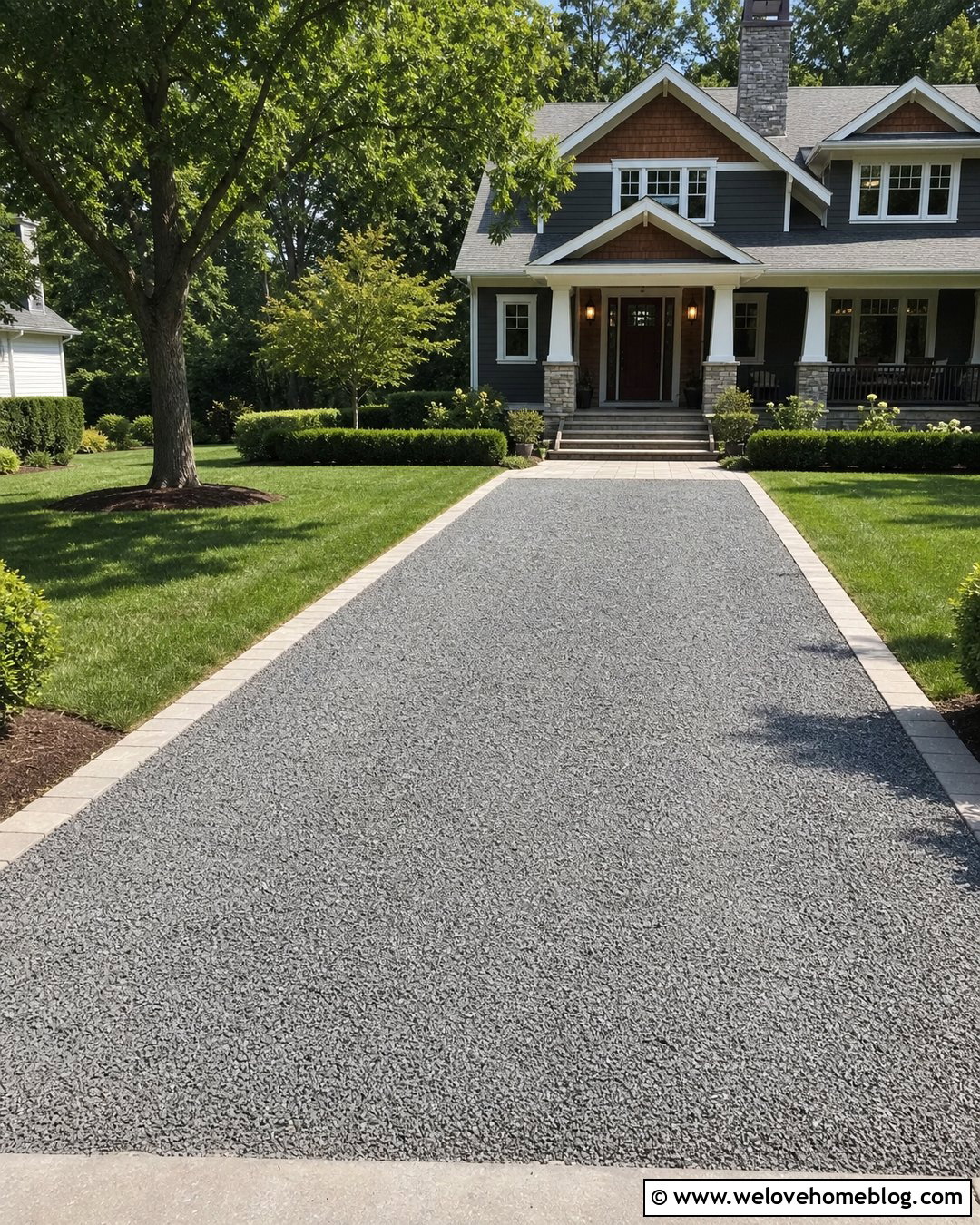
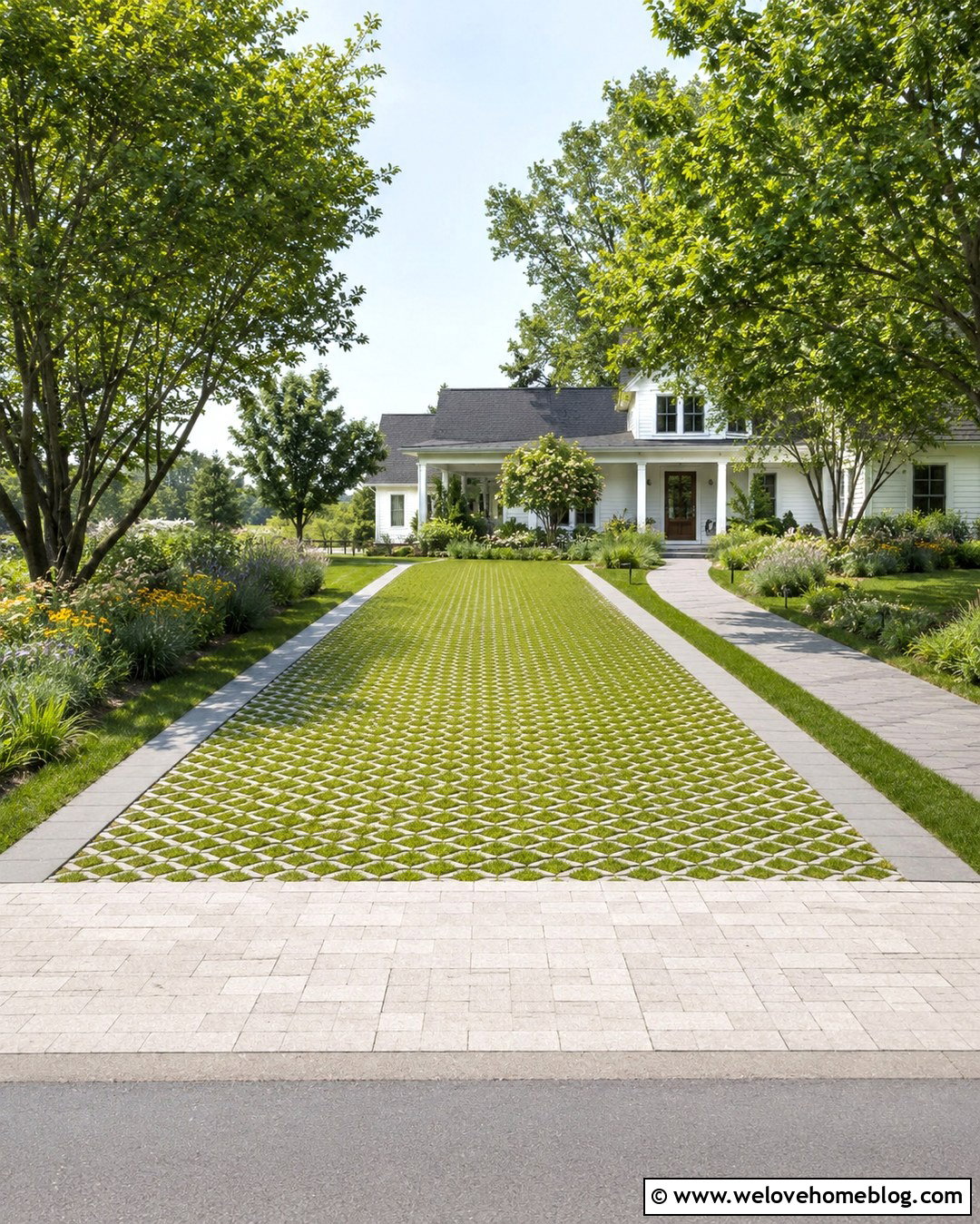
A stabilization grid creates one of the cleanest gravel driveway designs for a busy suburban home. The interlocking cells divide the surface into small compartments, preventing stones from moving freely under tires. Start with a compacted aggregate base, add geotextile where soil separation is needed, and install a driveway-rated grid according to its load specifications. Fill the cells with angular gravel rather than overly smooth stones. A straight layout with concrete paver edging gives the driveway a crisp shape, while low planting beds soften the sides. Keep the gravel slightly above the grid according to the manufacturer’s directions so the plastic remains concealed without leaving a deep, loose layer that can scatter. ()
2. Crowned Gravel Driveway With Crushed Stone
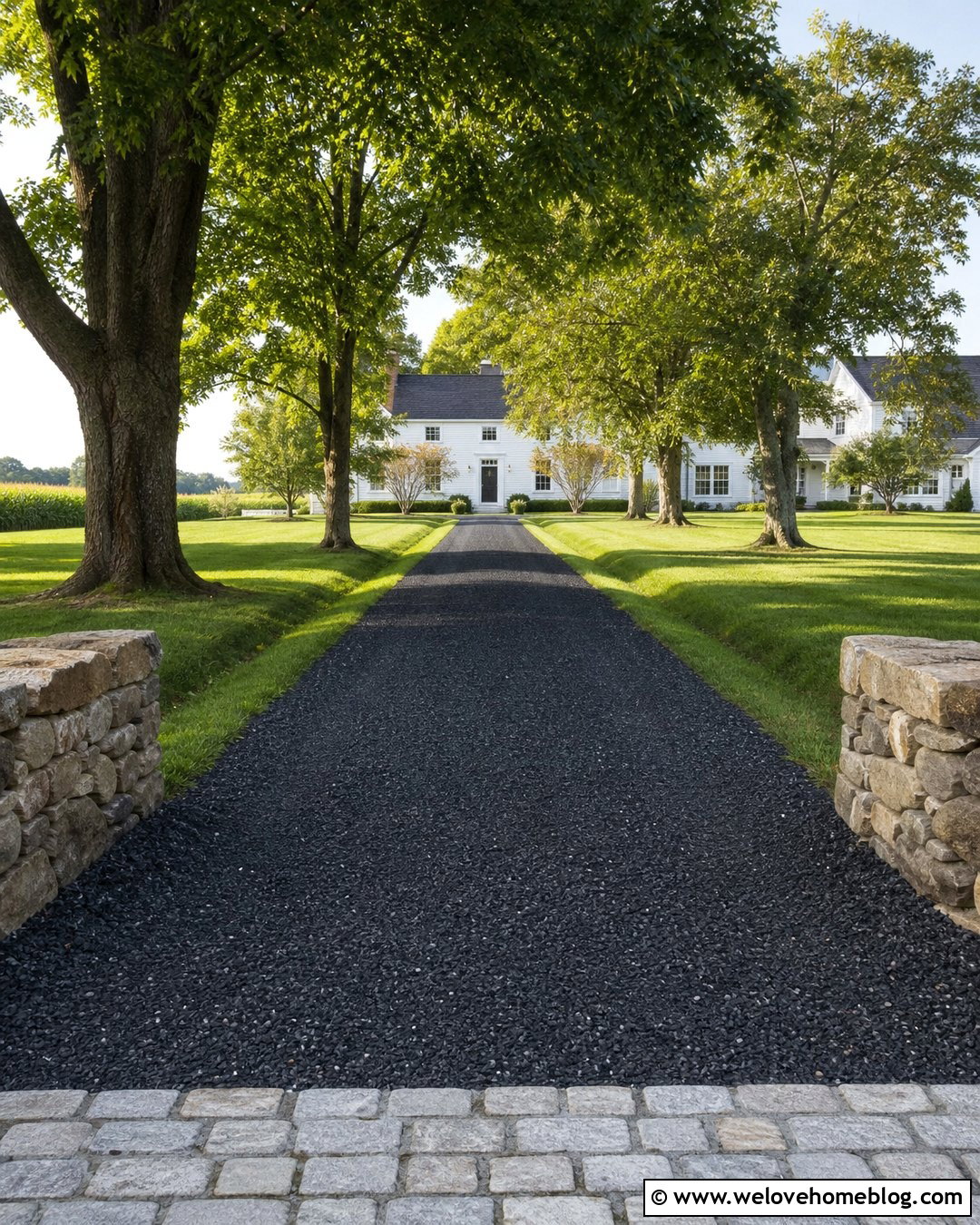
Notice how water follows wheel tracks when a driveway is flat or sunken in the middle. A gently crowned gravel driveway solves this problem by raising the center and encouraging runoff to move toward both sides. Use dense-grade crushed stone in the lower layers and angular driveway gravel on top. Compact each layer before adding the next so the surface does not feel soft under traffic. Shallow grass swales along the edges can receive runoff without interrupting the clean country look. Stone borders near the entrance provide additional containment, while the remaining sides can transition naturally into lawn. Regrade the crown whenever ruts begin channeling water lengthwise, especially after heavy rain or repeated vehicle traffic. ()
3. Gravel Driveway With Geotextile Fabric
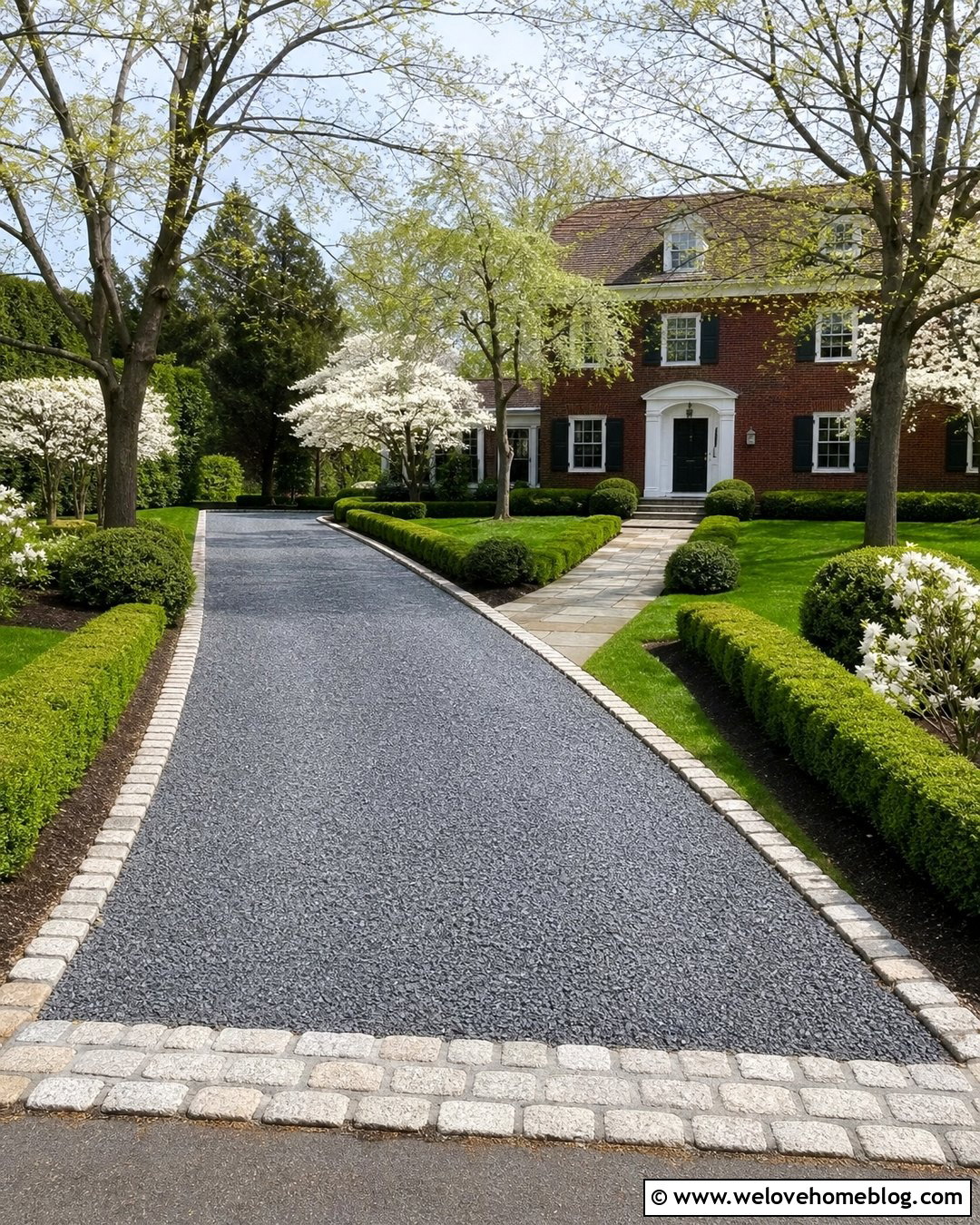
Soft soil can swallow gravel surprisingly quickly, leaving mud, depressions, and an uneven driving surface. A geotextile-supported driveway creates separation between the native ground and the compacted aggregate above it. Excavate organic material first, address soft spots, and place the correct driveway-grade fabric over the prepared subgrade. Build the driveway with multiple compacted layers rather than pouring decorative gravel directly onto the fabric. A straight gray gravel surface with cobblestone edging suits a colonial home and keeps the finished design neat. Boxwood beds and a paved walkway can frame the approach. Geotextile is not a substitute for drainage, proper grading, or sufficient base depth, but it helps prevent soil and aggregate from mixing over time. ()
4. Gravel Driveway With Concrete Curbs
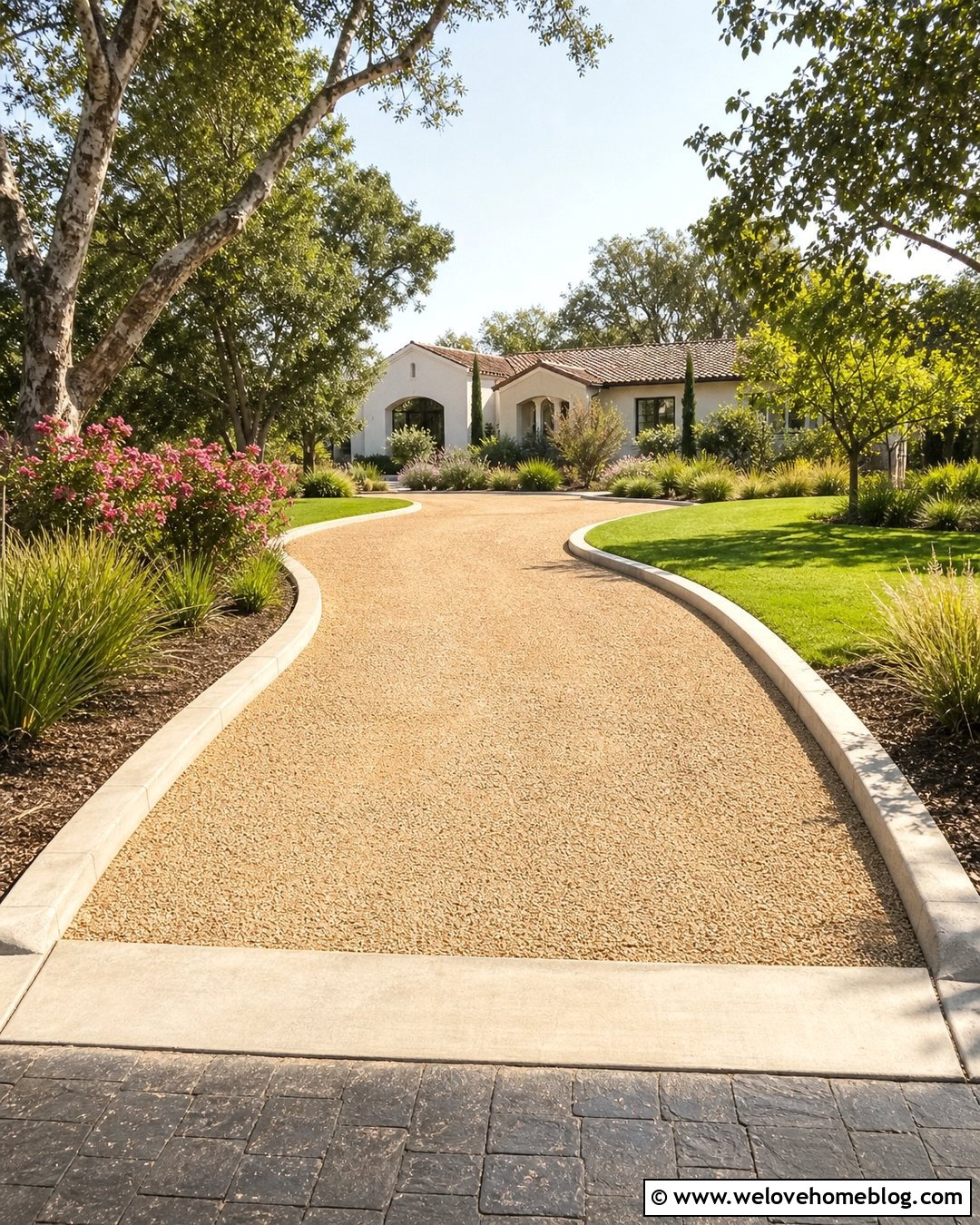
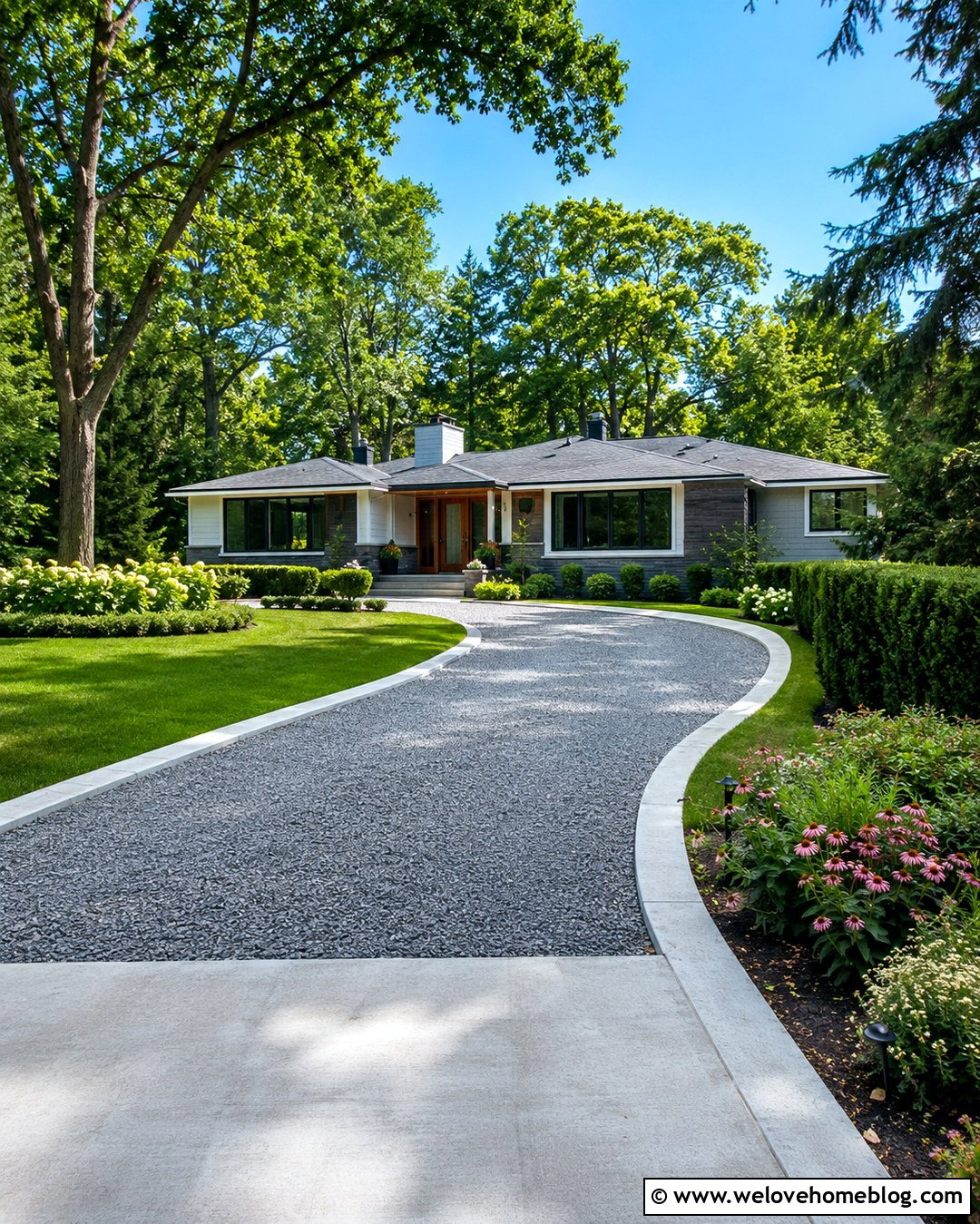
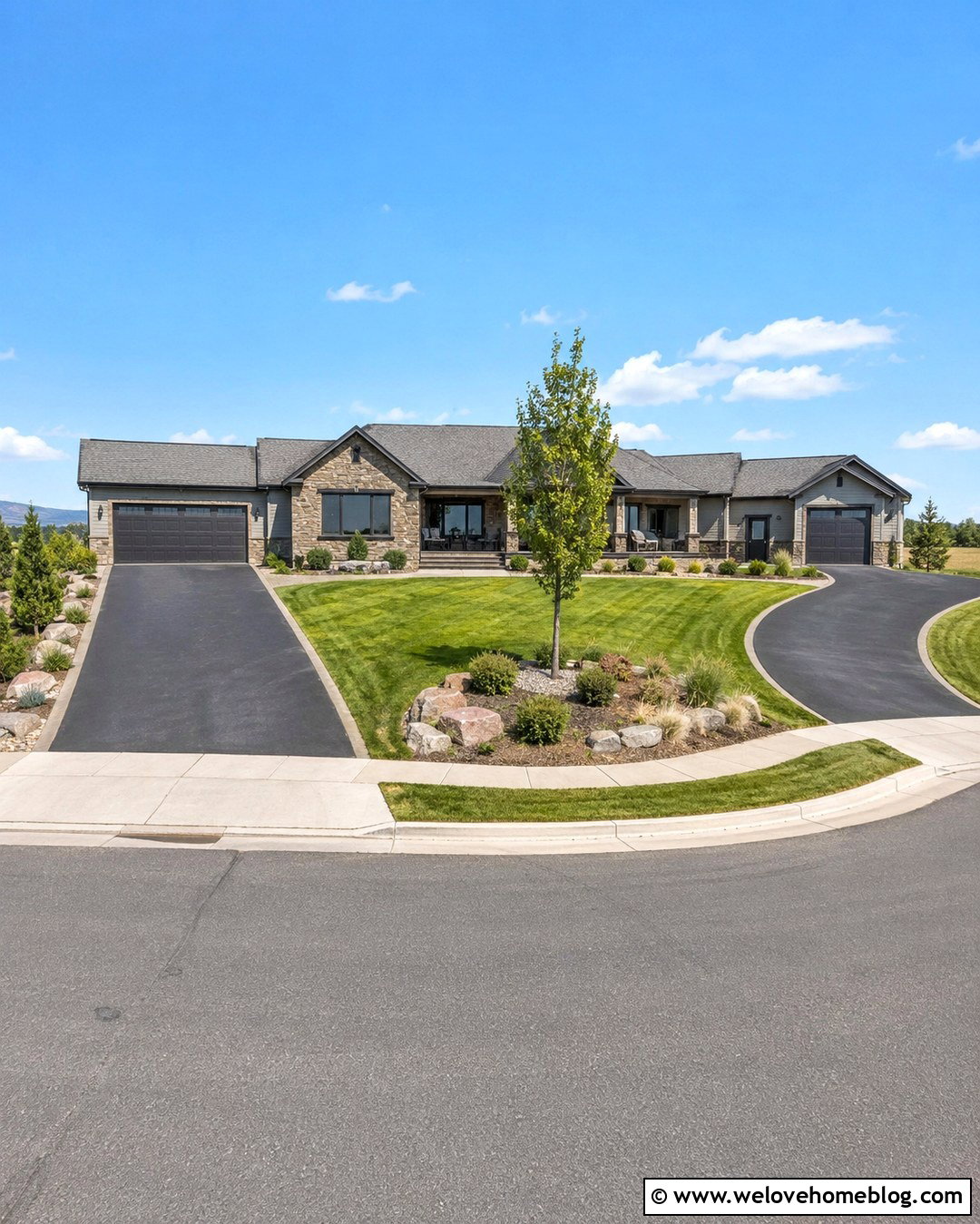
Concrete curbs create a strong physical barrier where gravel repeatedly spills into lawns or planting beds. This complete look works especially well on a curved driveway because the continuous edge clearly defines every bend. Choose warm tan crushed gravel for contrast against light gray curbing, then compact the driving surface so loose material does not sit too deeply. The curbs should be securely installed and high enough to contain the gravel without becoming awkward near walkways or garage doors. Add broad lawn panels, ornamental grasses, and neatly spaced trees outside the curb line. At the street, lower the edge or connect it to a paved apron for a smoother entrance. Drainage openings may be necessary where curbs would otherwise trap runoff. ()
5. Sloped Gravel Driveway With Geocell
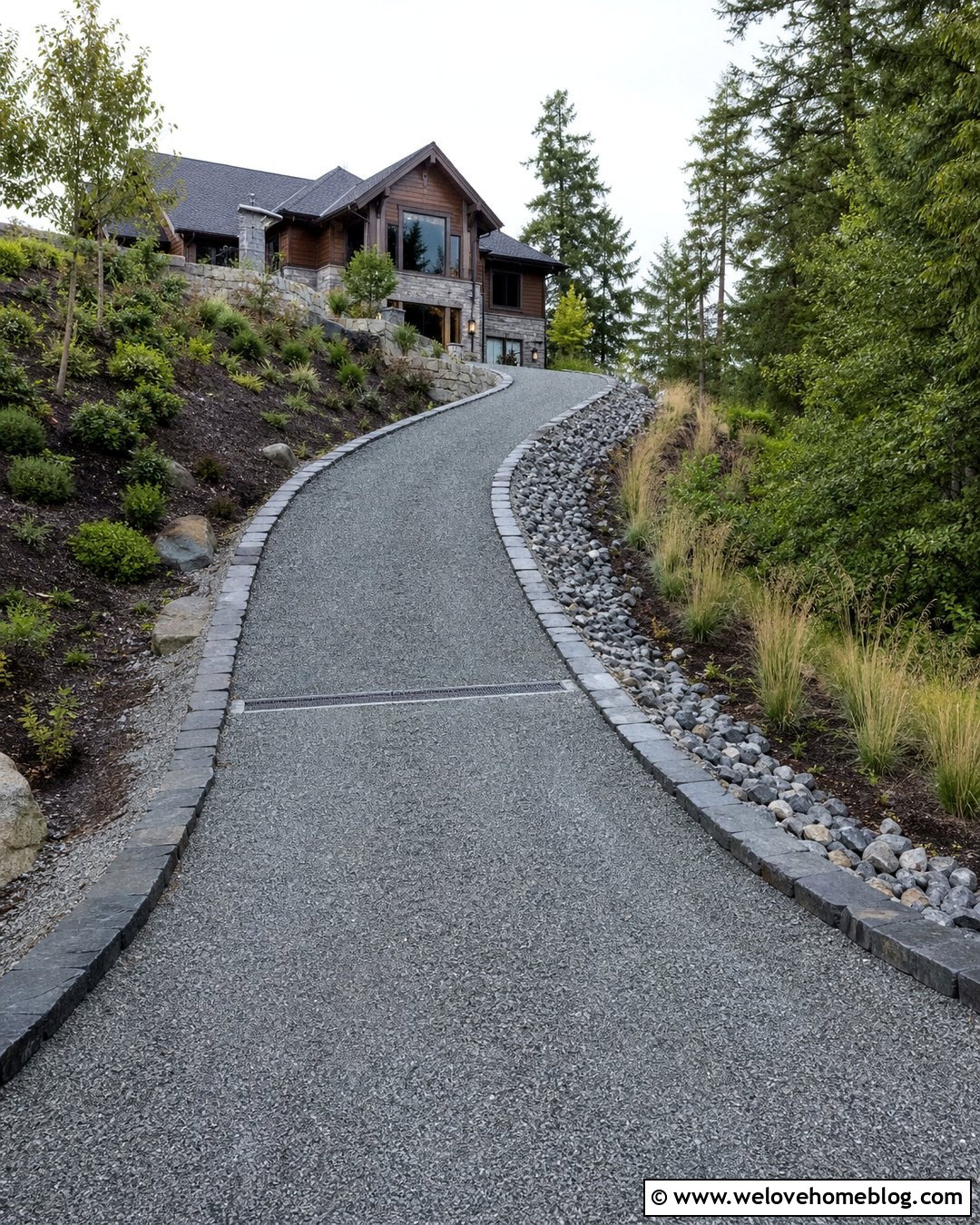
A steep approach needs more than decorative edging because gravity, braking, and flowing water all push gravel downhill. A deep cellular confinement system, often called geocell, can stabilize the aggregate across the slope. Prepare and compact the subgrade, add the specified geotextile and base, anchor the system as required, and fill every cell completely with suitable angular stone. Strong curbs or stone restraints should protect the outer edges. Pair the driveway with uphill drainage that intercepts water before it runs down the driving surface. Planted side slopes can help create an attractive transition into the yard. Because slope limits, anchoring, base depth, and load ratings vary by product and site, this design benefits from professional grading and manufacturer-specific installation guidance. ()
6. Pea Gravel Driveway With Honeycomb Grid
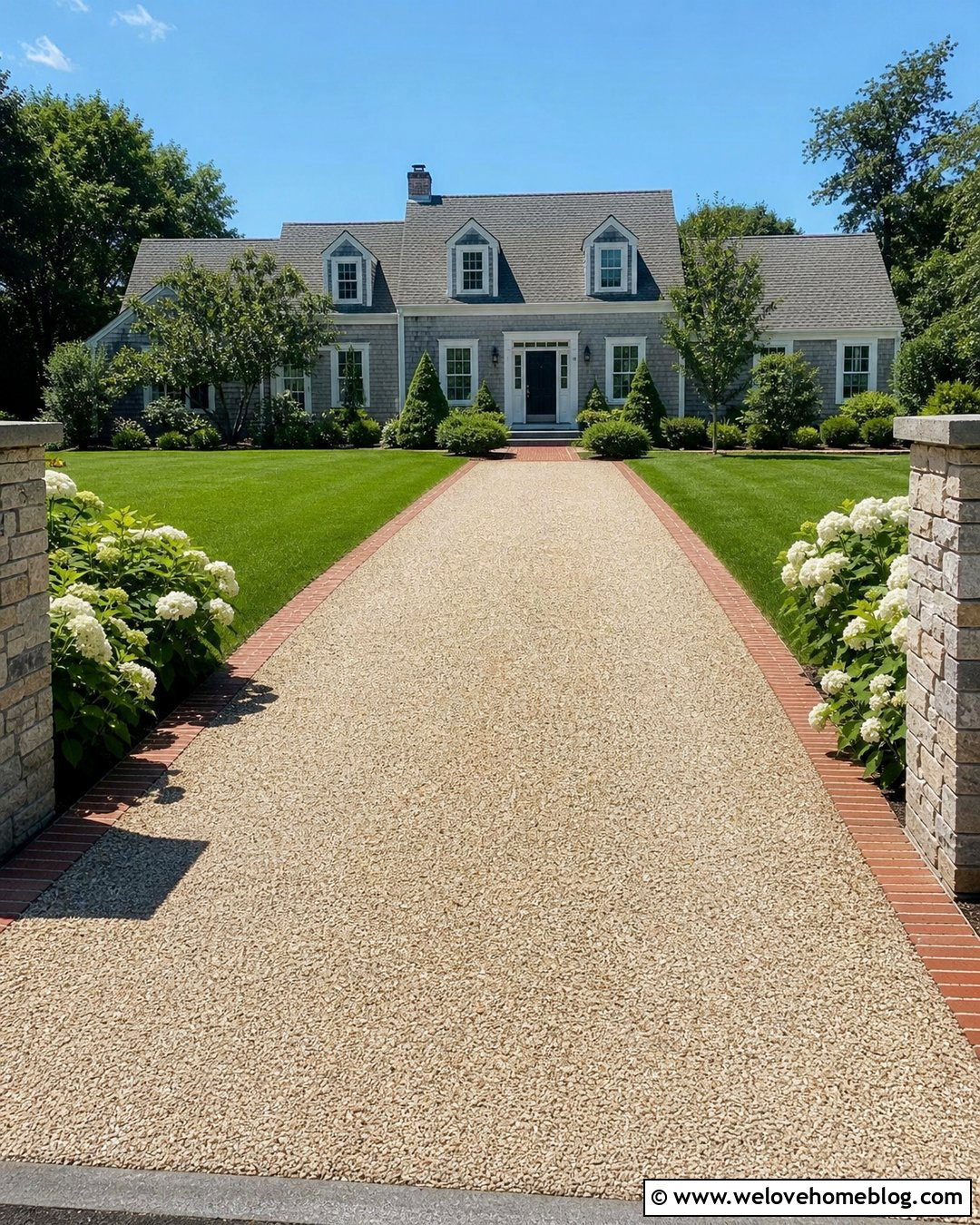
Love the soft, rounded appearance of pea gravel but dislike how easily it rolls? A honeycomb grid can make this material more manageable by confining the small stones inside individual cells. Use a structurally prepared and compacted base, then choose a grid approved for residential vehicle loads. A brick ribbon around the perimeter provides an elegant second layer of containment and creates a finished transition to the lawn. The straight driveway can lead to a Cape Cod house with hydrangeas, clipped shrubs, and a brick walkway. Avoid spreading a thick blanket of pea gravel above the grid, since unconstrained surface stones can still move. Regularly sweep escaped gravel away from sidewalks and return it to low areas before the cells become visible. ()
7. Long Gravel Driveway With Timber Edging
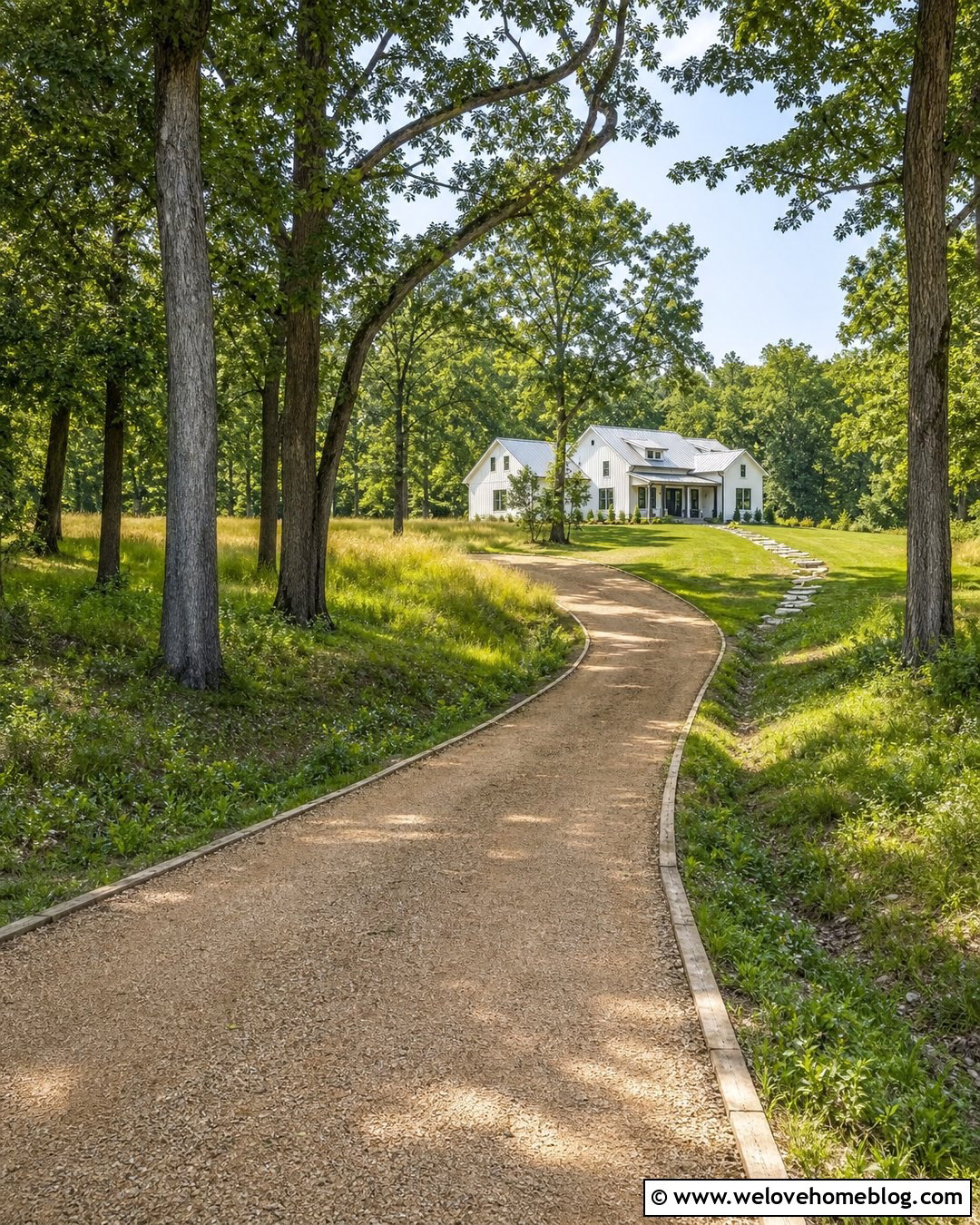
Timber edging brings order to a long rural driveway without making it look overly formal. Use compacted brown crushed gravel with enough angular particles and fines to knit together under pressure. Secure ground-contact-rated timbers firmly along the sides rather than laying boards loosely on the surface. The finished edge should contain the gravel while allowing runoff to reach shallow vegetated swales. A gentle curve through shade trees can lead toward a modern farmhouse, with occasional widened passing or parking areas built on the same stable base. Keep soil and mulch below the timber tops so they do not spill onto the driveway. Inspect for movement, decay, or damaged anchors, and replace failing sections before gravel starts spreading into the surrounding grass. ()
8. Circular Gravel Driveway With Metal Edging
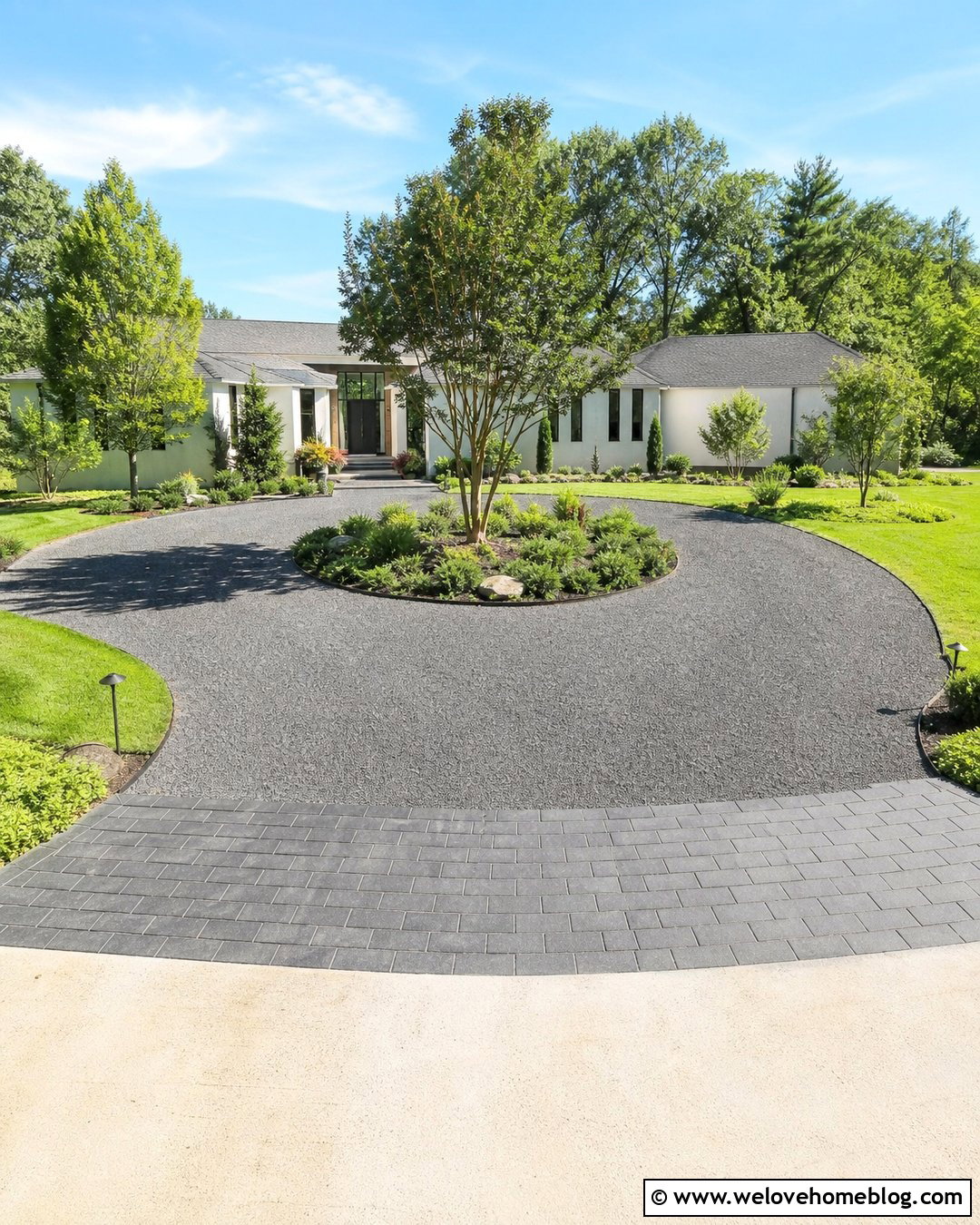
A circular gravel driveway receives turning forces from several directions, making continuous edge restraint especially valuable. Powder-coated steel or aluminum edging can follow the outer curve while maintaining a slim, understated profile. Fill the drive with compacted charcoal crushed gravel and create a carefully graded surface that sends water toward appropriate drainage areas rather than the center island. A second metal edge can define the island, where a small ornamental tree, low shrubs, and ground cover provide curb appeal without blocking sightlines. Place the edging deeply and anchor it according to the product instructions so tires cannot push it outward. A paved street apron and garage transition will catch gravel at the two locations where vehicle movement is usually strongest. ()
9. Gravel Driveway With Garage Trench Drain
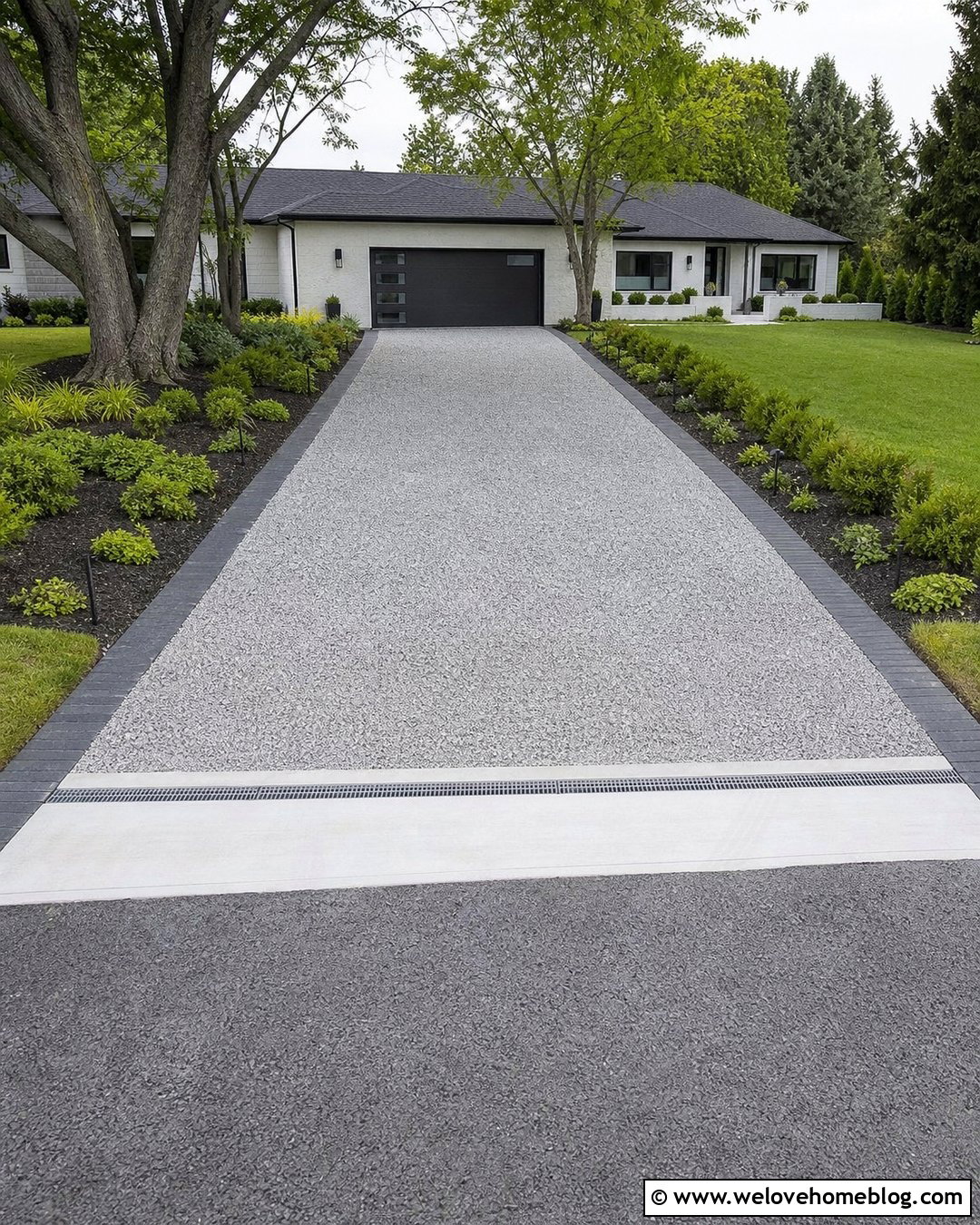
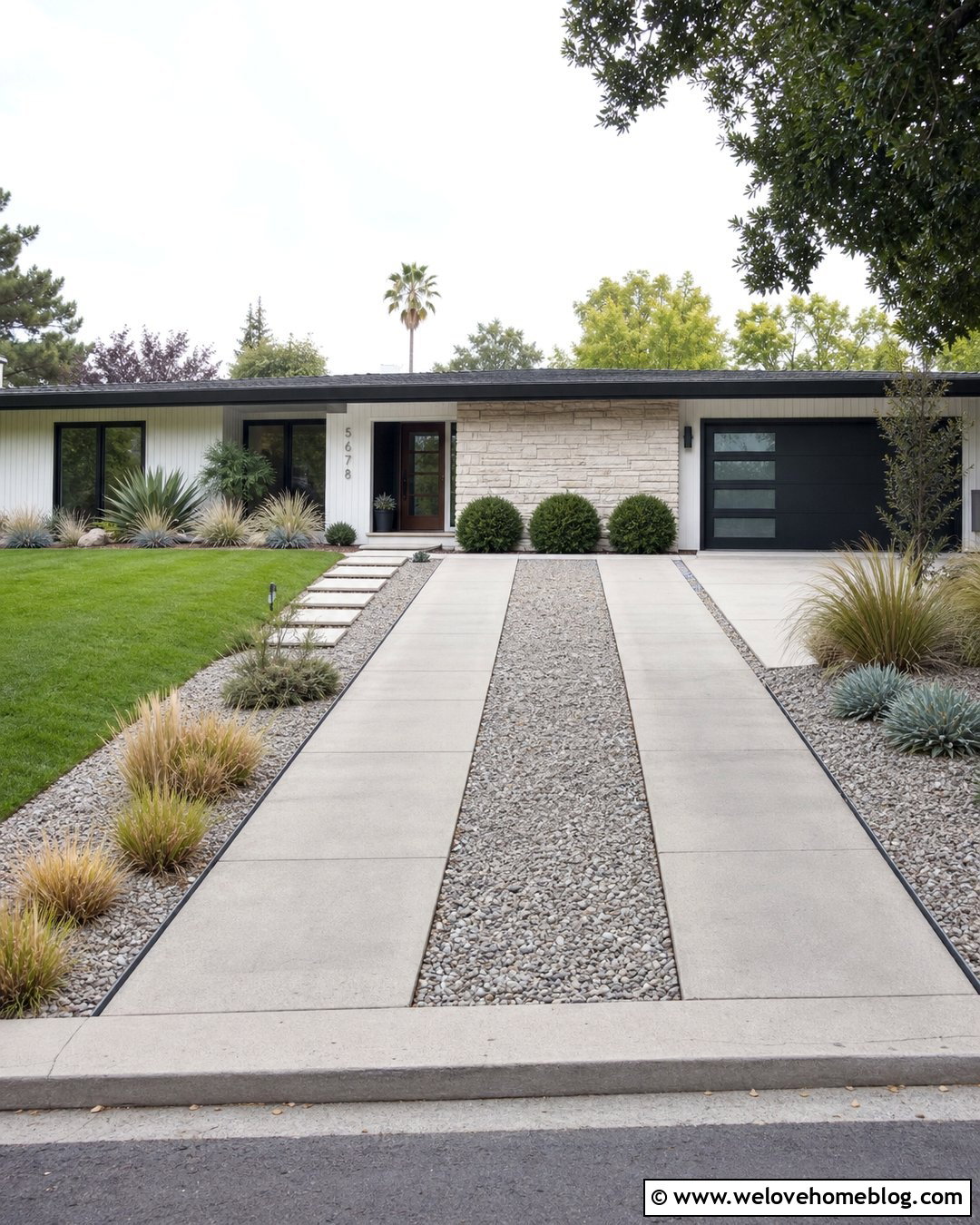
Water flowing from a gravel driveway toward the garage can carry loose stones directly to the door. A linear trench drain installed across the approach intercepts runoff before it reaches the slab. Design the surrounding driveway with compacted angular gravel, firm paver borders, and a slight grade that directs water toward the drain without creating a deep channel. A short concrete or paver transition around the drain protects its edges and makes the grate easier to clean. This practical layout complements a contemporary ranch home with simple foundation plantings and a broad walkway. The drain must discharge to an approved location and be sized for local runoff conditions. Clear sediment and trapped gravel regularly so the channel continues working during intense rain. ()
10. Gravel Driveway With Roadside Culvert
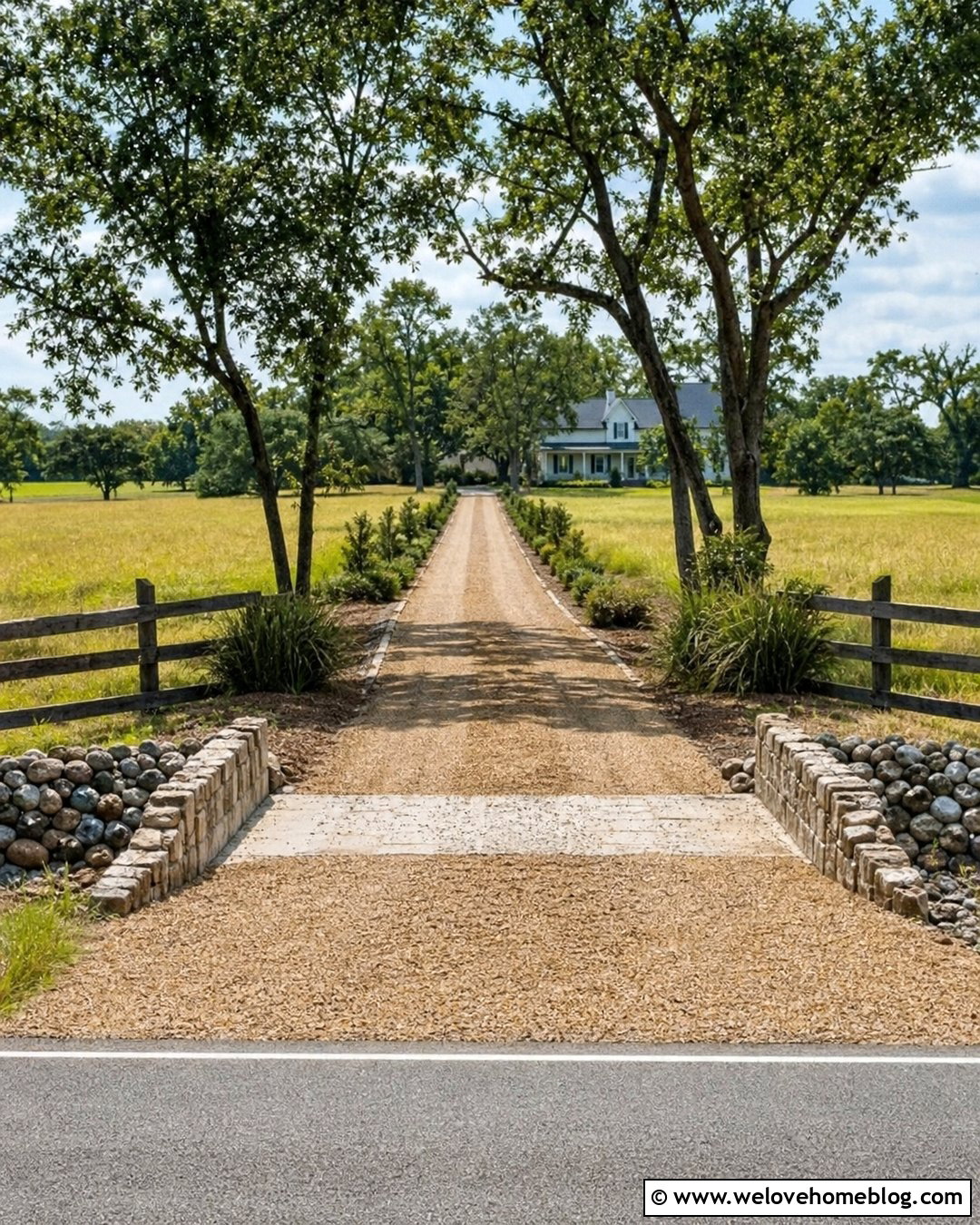
Picture a country entrance after a downpour: the gravel remains intact because roadside water passes beneath it instead of cutting across it. A properly sized culvert can carry ditch flow under the driveway while protecting the entrance from repeated washouts. Build the crossing with suitable pipe bedding, compacted aggregate, stable side slopes, and erosion-resistant material around the inlet and outlet. Continue the driveway with dense-grade crushed gravel and stone edging near the gate. Native grasses and low shrubs can soften the culvert area without obstructing water. Since pipe diameter, cover depth, end treatments, and permits depend on the site and local authority, consult the responsible road or drainage department before installation. Keep both openings clear of sediment, leaves, and branches. ()
11. Gravel Driveway With French Drains
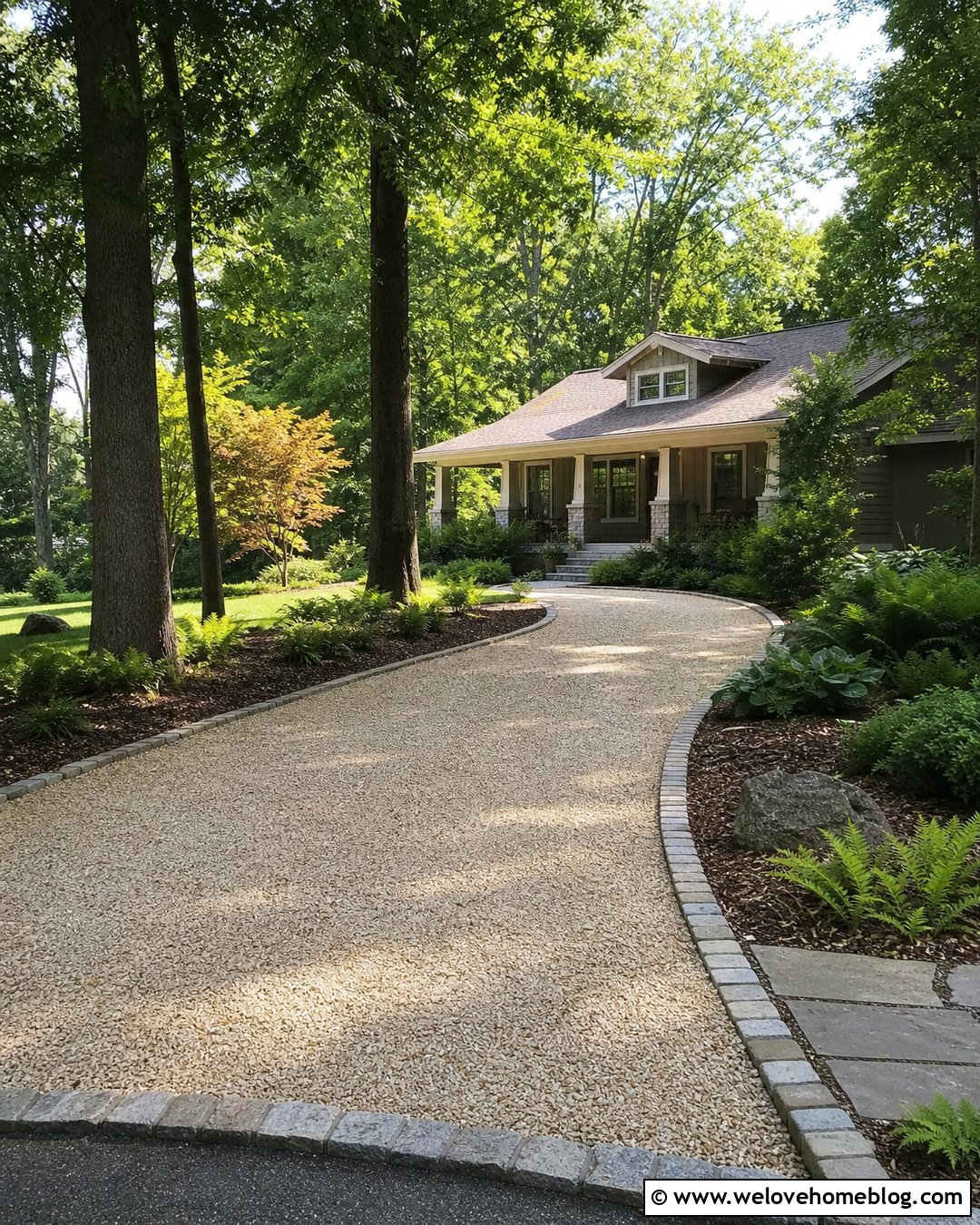
Persistent wet spots along a driveway often indicate subsurface water rather than simple surface runoff. A French drain beside the drive can collect that moisture and direct it away from the base. Combine the drain with a crowned cream-colored gravel surface, compacted aggregate layers, and granite block edging. The result suits a craftsman home surrounded by ferns, shade trees, and mulched planting beds. Keep the drain outside the primary wheel path whenever possible, and separate its clean drainage stone from surrounding soil with the appropriate filter fabric. Surface grading must still guide rainwater toward safe outlets. Before excavating, identify underground utilities and determine where collected water may legally discharge. A contractor should evaluate sites with foundations, retaining walls, severe slopes, or complicated groundwater problems. ()
12. Resin-Bound Gravel Driveway
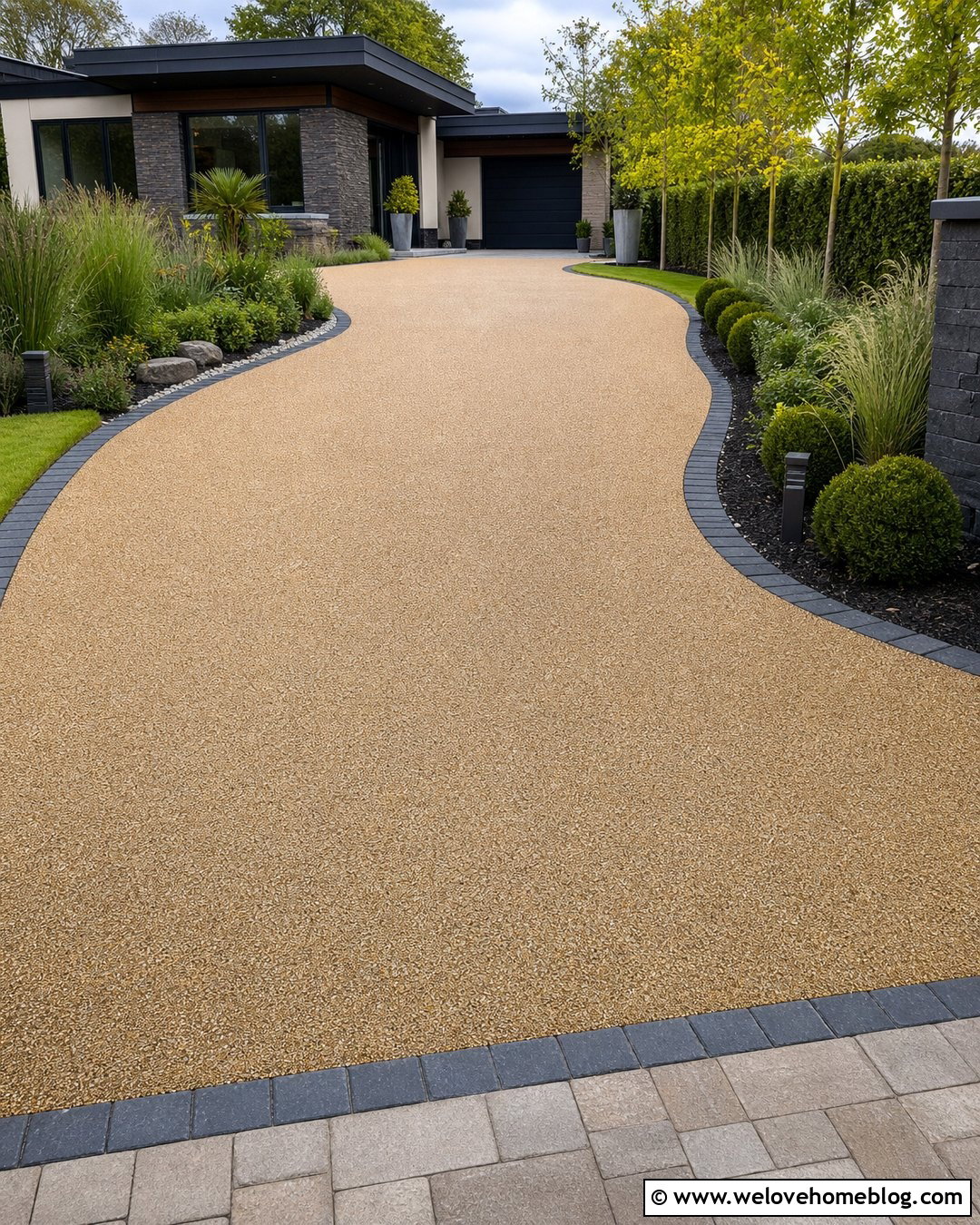
For homeowners who want the appearance of small stones without a loose surface, resin-bound gravel offers a more fixed alternative. Clean, dry aggregate is mixed with a compatible resin and installed over a suitable stable base, producing a smooth finish in which the stones are bonded together. A curved honey-toned resin-bound gravel driveway with dark stone borders creates a polished approach to a modern home. Add structured grasses, evergreen shrubs, and a wide paved entrance for a balanced design. This is a specialized surfacing system rather than ordinary gravel covered with a household adhesive. Drainage behavior, base requirements, resin selection, weather conditions, and installation thickness affect performance. Use a qualified installer and confirm that the complete system is intended for vehicle traffic and local conditions.
13. Crusher Run Gravel Driveway
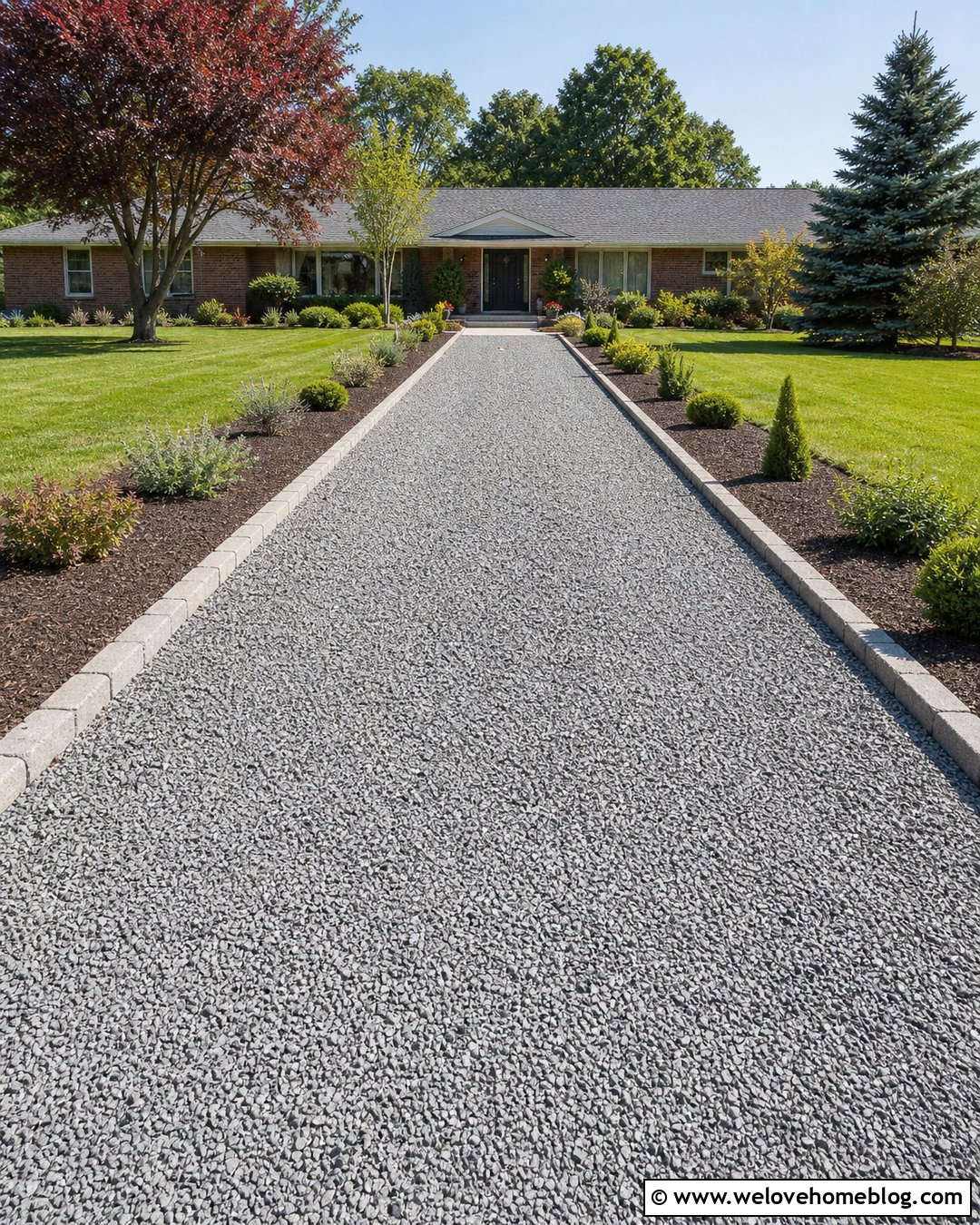
The textured gray surface of crusher run feels more secure than a deep layer of rounded decorative stone. Its mixture of crushed particles and fines can compact into a dense driving layer when installed at the proper moisture level. Use it over a well-prepared aggregate base, shape a modest crown, and compact the driveway in manageable lifts. Concrete landscape blocks can define the edges, while bands of lawn and drought-tolerant shrubs frame a simple ranch house. Crusher run still needs drainage because moving water can remove fines and create ruts. It may also produce dust during dry weather, depending on the material and climate. Refresh low spots with matching aggregate, restore the crown, and compact repaired areas rather than covering potholes with loose stone alone. ()
14. Gravel Driveway With Paver Apron
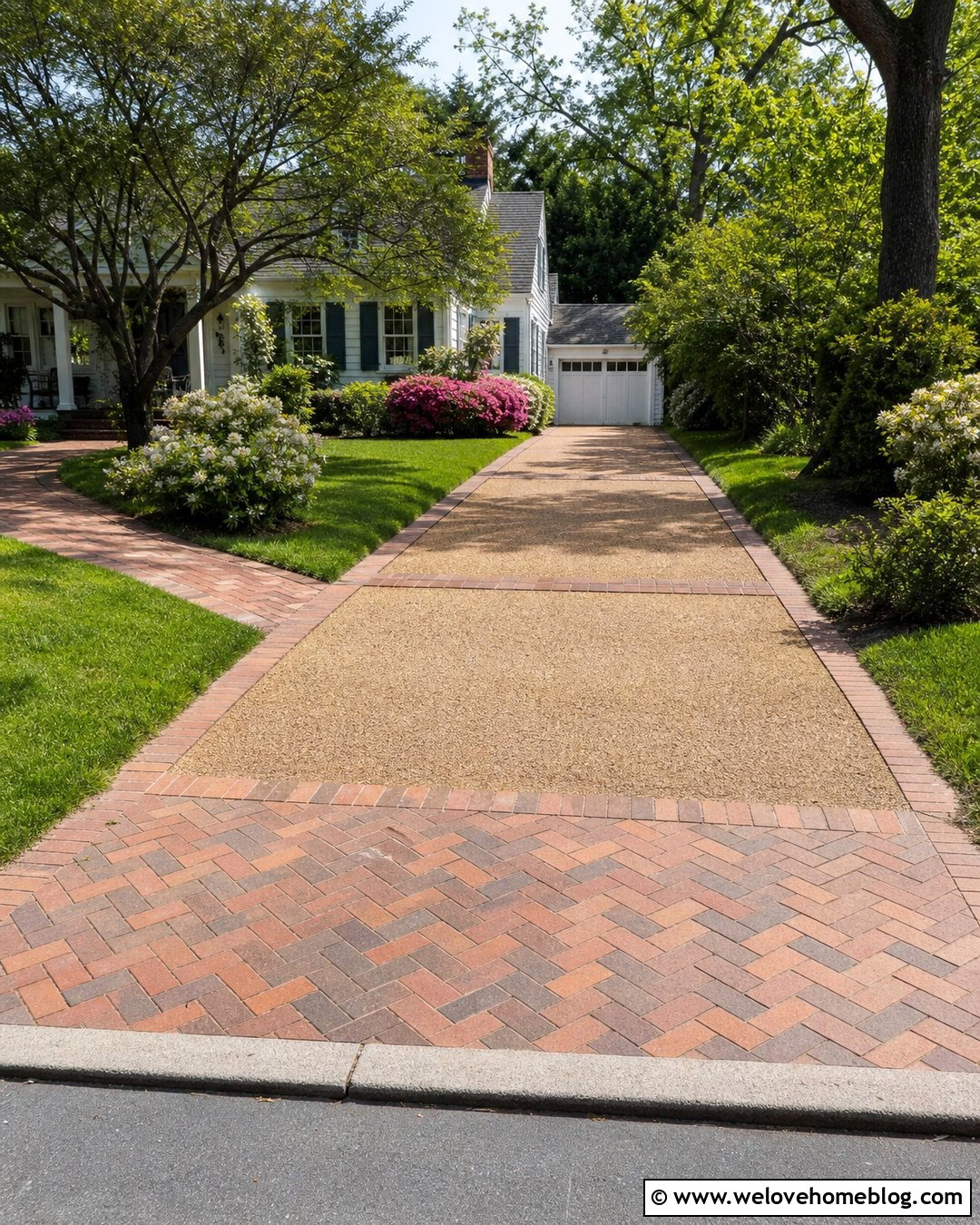
Gravel often escapes where vehicles turn in from the street or enter the garage. A paver apron creates a stable transition at these high-movement points and catches stones before they reach pavement. Build the main driveway from compacted tan angular gravel with matching brick or concrete paver borders. Install a wide herringbone paver apron across the entrance, using the correct base and edge restraints for vehicle loads. Repeat a smaller paver band near the garage for a coordinated finish. Flowering shrubs, lawn, and a walkway can surround the design without crowding the driving area. Sweep loose gravel back promptly, since stones left on pavers may shift under tires. Grade the apron and gravel surface together so runoff does not collect at their junction.

15. Gravel Parking Area With Grid Pavers
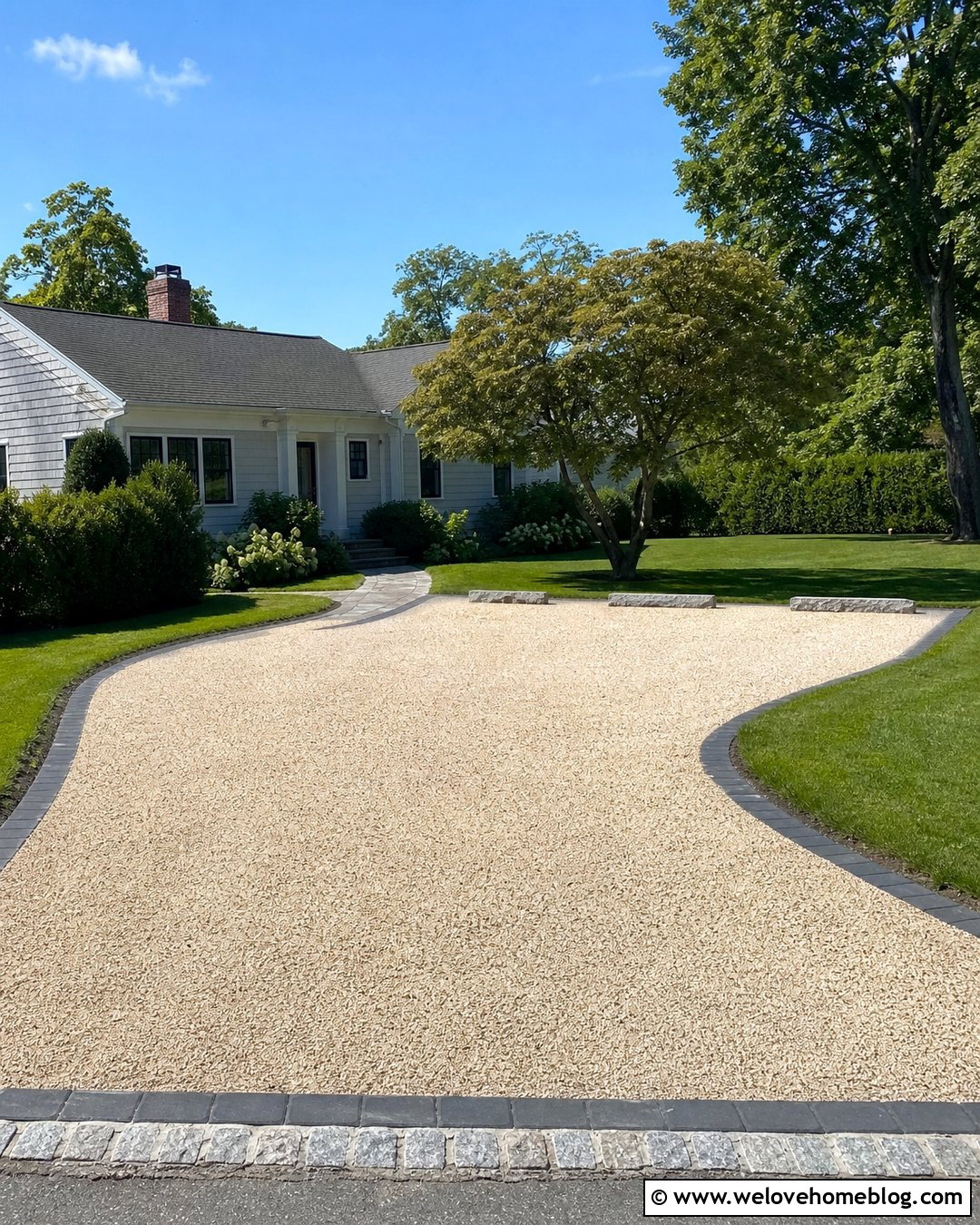
A widened parking area can develop deep turning ruts even when the connecting driveway stays smooth. Stabilization grid pavers beneath the entire parking zone help hold gravel during steering, reversing, and repeated stops. Use angular beige gravel in the cells, with a compacted base engineered for the expected vehicles. Define the parking pad with a dark paver ribbon and connect it to a gently curved gravel approach. Low wheel stops can protect nearby planting beds, but they should remain visible and positioned away from drainage routes. A bungalow, small lawn, ornamental tree, and direct walkway complete the space. Avoid using grid only beneath the wheel tracks because tires may move beyond those narrow strips and damage unsupported edges. ()
16. Snow-Friendly Gravel Driveway With Stone Edging
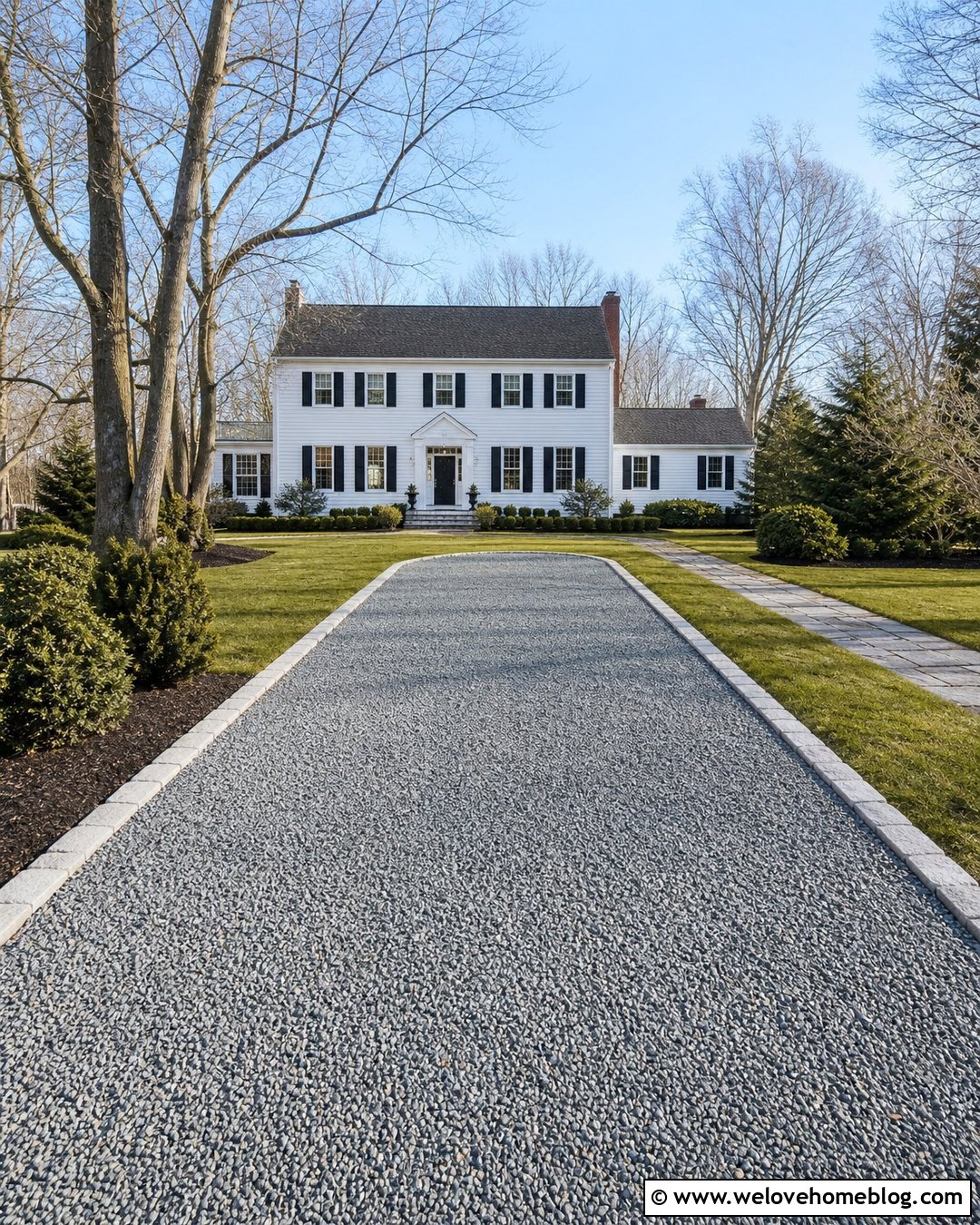
Winter maintenance can remove gravel along with snow, especially when the surface is loose and uneven. A snow-friendly layout uses well-compacted angular gravel, a clearly defined crown, and continuous stone edging that makes the driveway boundaries easy to see. Keep decorative gravel shallow over the structural surface and mark vulnerable curves before the first storm. Broad granite setts can outline a straight approach to a colonial house, while evergreen shrubs and bare-canopy trees leave room for snow storage. Set plow blades slightly above the gravel until the ground is firmly frozen, based on local conditions and equipment guidance. In spring, rake displaced material inward, repair plow scars, restore drainage, and compact loosened areas before seasonal rain enlarges them.
17. Gravel Driveway With An Uphill Drainage Channel
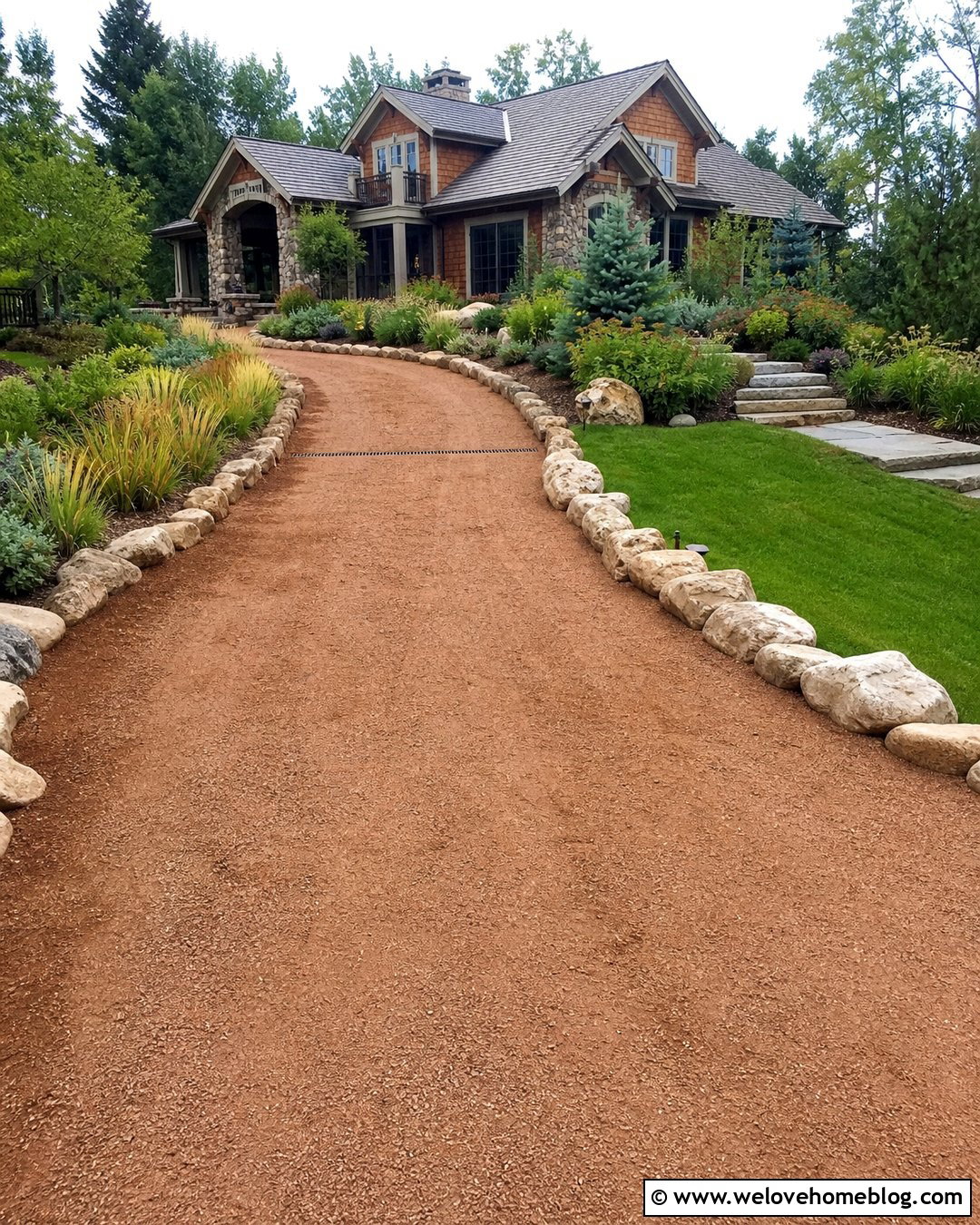
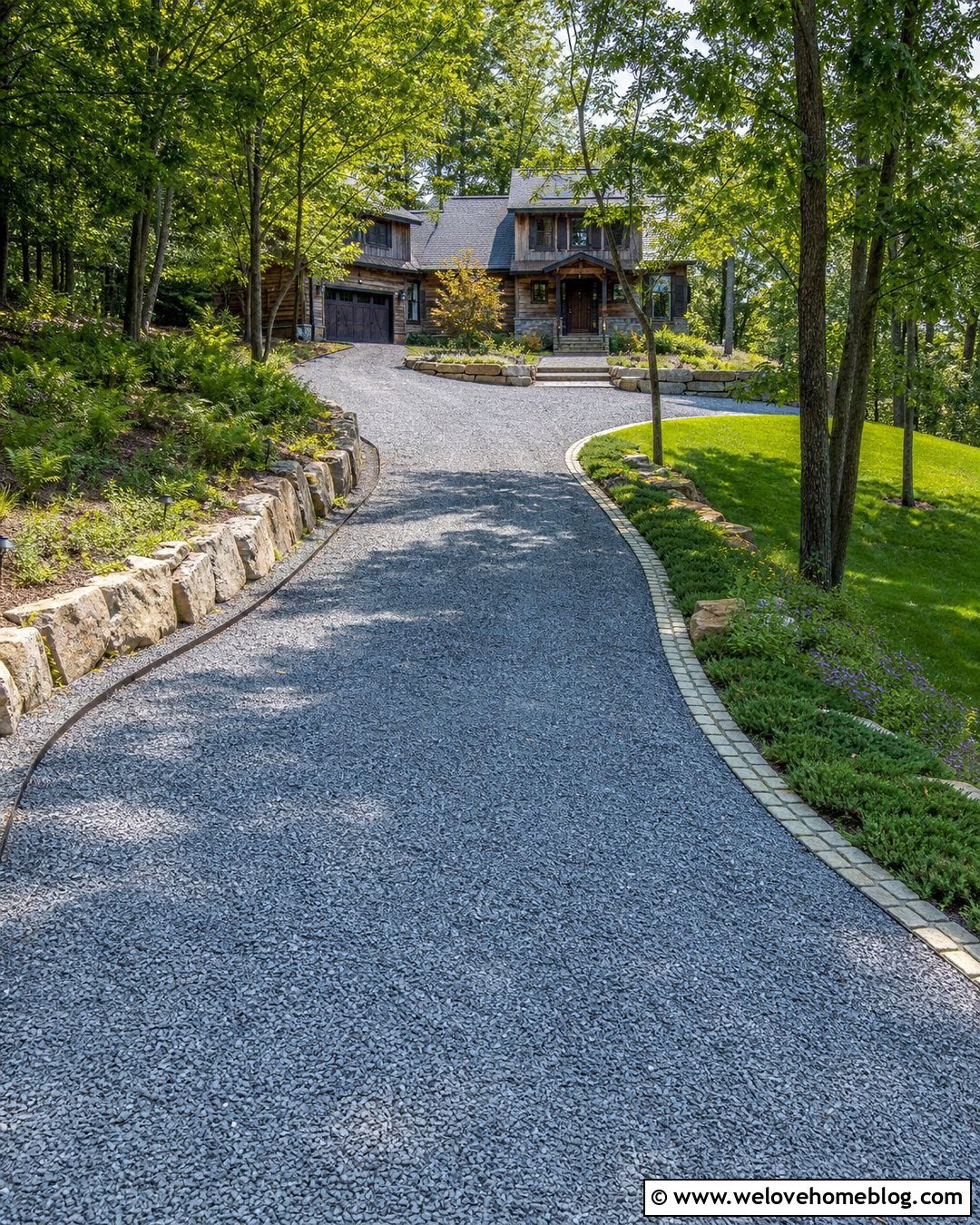
When stormwater enters from higher ground, fixing the driveway surface alone may not stop erosion. An uphill interception channel can direct runoff toward a stable outlet before it reaches the gravel. Pair this feature with a compacted reddish crushed-stone driveway, heavy stone curbs, and a gentle curve leading to a rustic craftsman home. Plant the upper bank with regionally suitable grasses and shrubs, while keeping roots and soil away from the drain. The channel may take the form of a lined swale, trench drain, or another site-appropriate system. Never direct concentrated water toward neighboring property, a foundation, or an unstable slope. A drainage professional can determine the correct route, capacity, lining, and outlet protection for challenging terrain. ()
18. Rural Gravel Driveway With Side Ditches
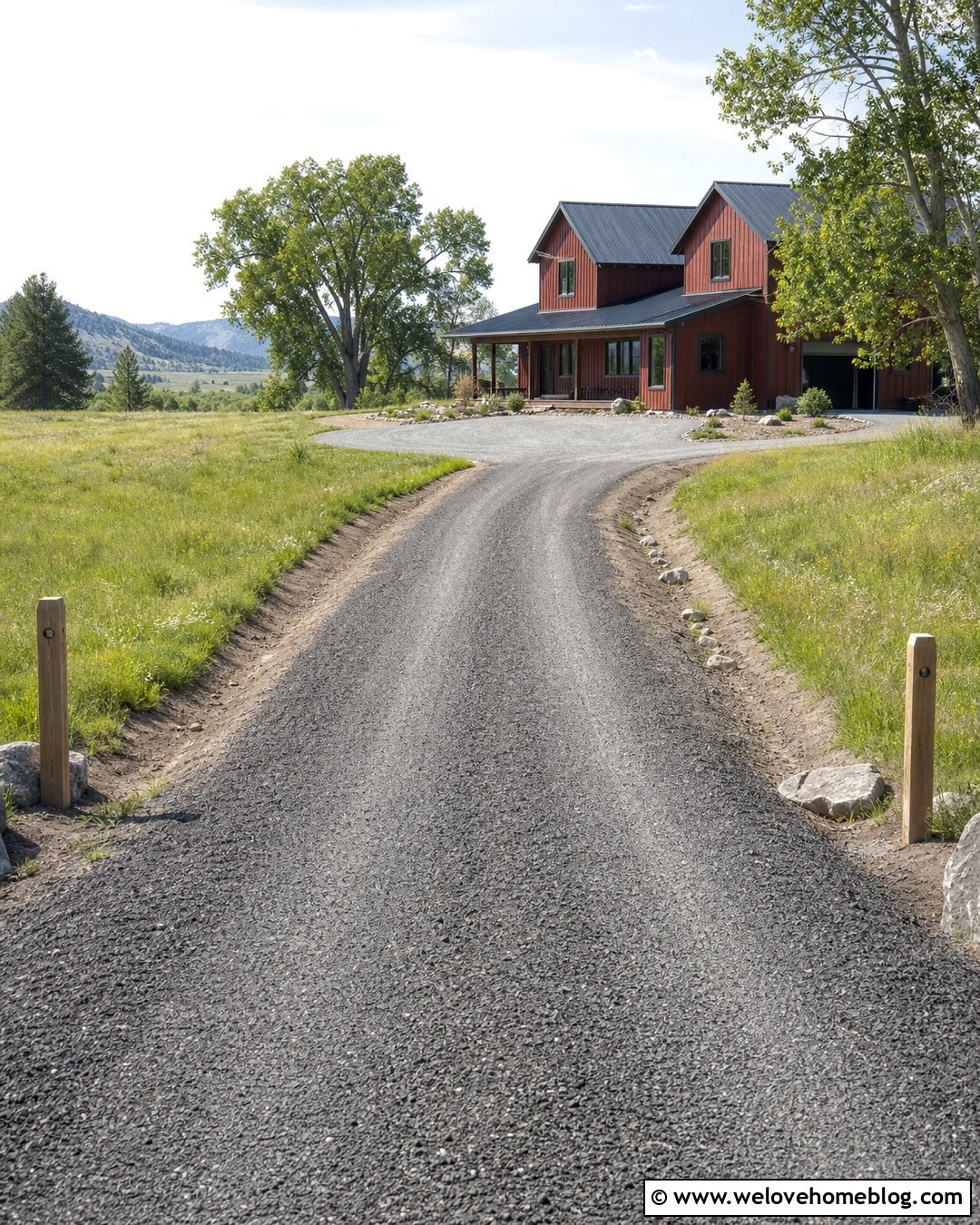
A long rural driveway needs space for water to leave the traveled surface without cutting new channels. Raised construction, a modest crown, and shallow side ditches create a durable profile when the surrounding terrain allows it. Build the drive with layered, compacted crushed aggregate and use larger stone only where outlet protection is required. Timber posts or occasional boulders can visually mark the boundaries without forming a continuous barrier that traps water. Meadow grasses, mature trees, and a farmhouse at the end create a natural setting. Maintain ditch slopes so water keeps moving, but protect exposed soil from erosion. Clear blocked outlets, repair soft shoulders, and reshape the crown as part of routine maintenance. Seek professional help where wetlands, streams, steep slopes, or road permits are involved. ()
19. Gravel Driveway With Granite Block Borders
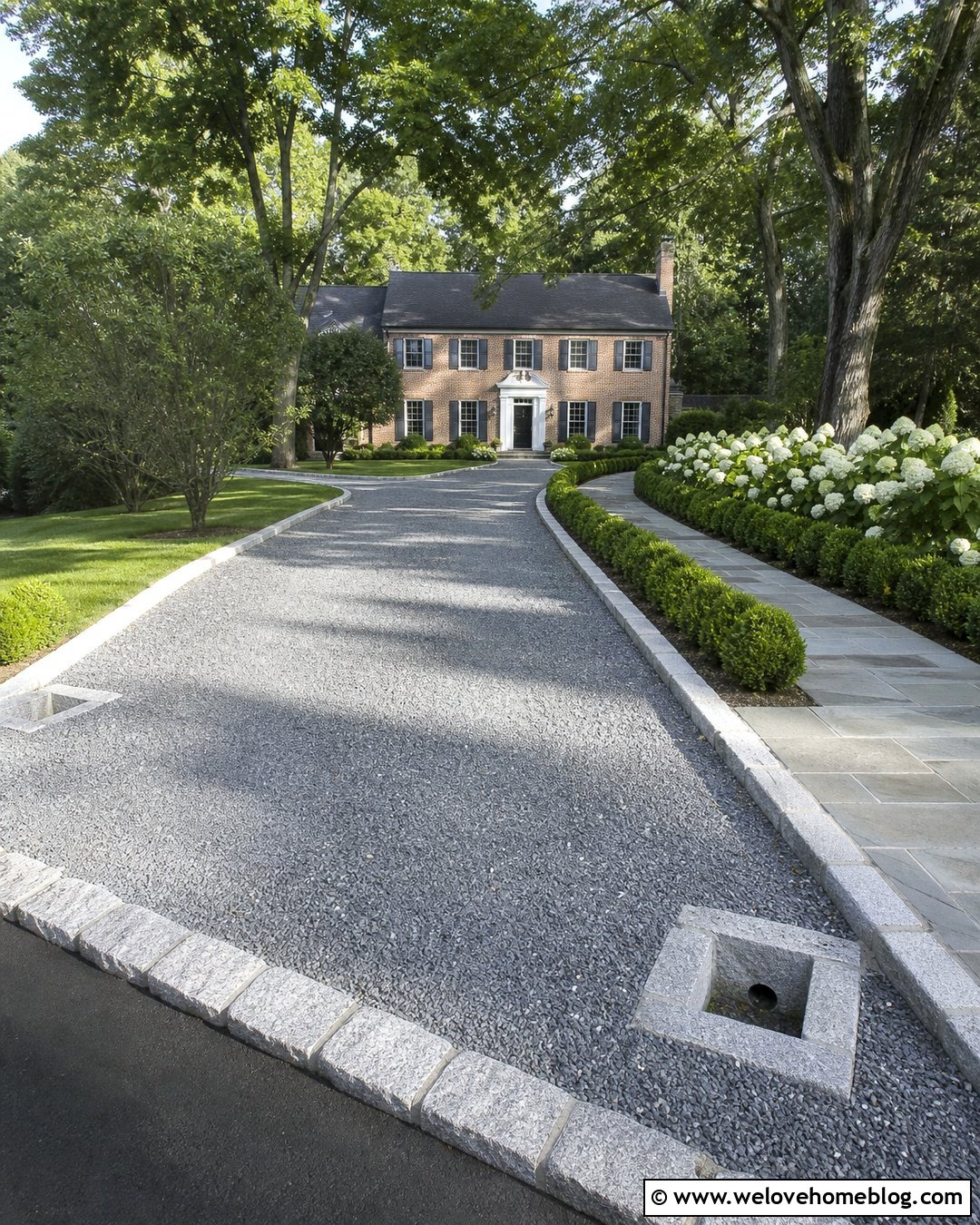
Granite blocks combine substantial gravel containment with a traditional, high-quality appearance. Install the blocks on a stable base along a gently curved driveway, keeping their alignment consistent through bends and transitions. Fill the drive with compacted blue-gray angular gravel that complements the natural variation in the stone. A brick colonial or shingle-style home makes an attractive background, especially when the border connects visually to a flagstone walkway. Use low boxwoods, hydrangeas, and lawn outside the blocks so the entire approach feels intentional. The border must be restrained securely enough to withstand tire pressure and seasonal soil movement. Leave planned drainage paths where needed instead of building an uninterrupted edge that holds water on the gravel surface. ()
20. Regraded Gravel Driveway With Compacted Edges
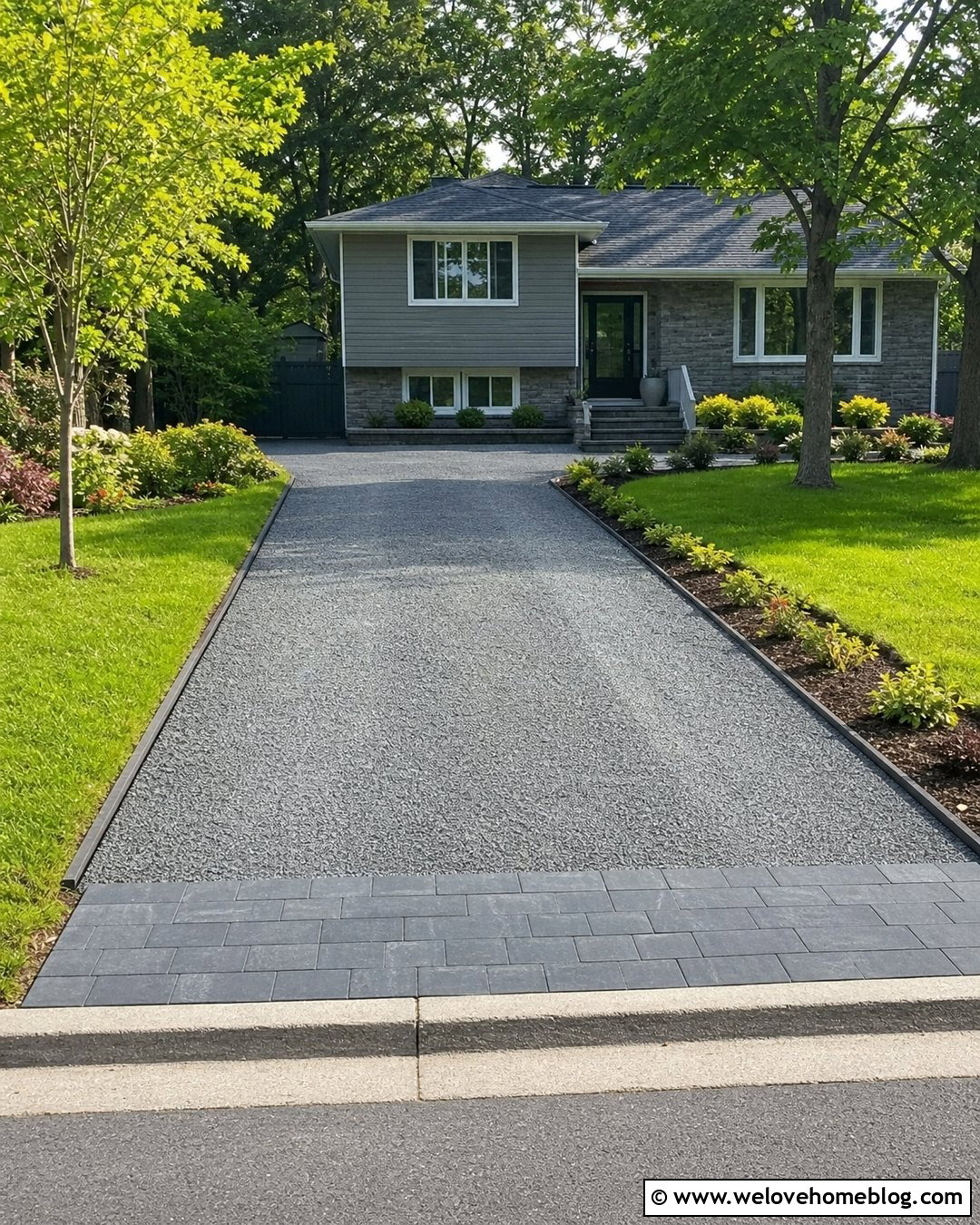
Sometimes the most effective design begins with repairing the driveway already in place. Pull escaped gravel back from the lawn, loosen compacted ridges, fill potholes with compatible crushed aggregate, and restore the correct cross-slope or crown. Add fresh angular gravel only where the surface lacks adequate material, then compact it instead of leaving a thick, fluffy layer. Finish the makeover with steel edging, a small paver apron, and refreshed planting beds around a suburban split-level home. Address drainage damage before resurfacing, or the same ruts will return. Inspect the driveway after major storms and correct small channels early. Periodic regrading, replenishment, and compaction keep the complete surface working together and can delay a more expensive reconstruction. ()
Conclusion:
The strongest gravel driveway is not created by one border, drain, or layer of stone. It depends on a complete system that supports vehicle weight, contains the aggregate, and controls water. Begin with the soil and base, then select angular gravel, dependable edging, and drainage suited to the property. Stabilization grids are especially useful in turning areas, on slopes, and beneath rounded gravel. Crowns, swales, culverts, aprons, and drains solve different runoff problems, so evaluate the site before choosing a solution. These **20 How To Keep Gravel In Place Driveways Ideas** can inspire an entrance that looks polished, stays easier to maintain, and performs reliably through changing seasons. ()

Related posts:



Leave a Reply