
A well-designed driveway does more than provide a place to park. It frames the home, guides visitors, supports daily traffic, and shapes the entire front yard. These **35 Beautiful Driveways Ideas** explore practical combinations of materials, layouts, borders, entrances, and landscaping for many house styles and property sizes. You will find affordable gravel surfaces, timeless brick patterns, modern concrete slabs, elegant pavers, circular layouts, and permeable options. Each design treats the driveway as one complete landscape rather than an isolated strip of pavement. Before choosing a look, consider your climate, drainage, maintenance needs, vehicle access, and local requirements. Whether you are renovating an existing surface or planning from scratch, use these **35 Beautiful Driveways Ideas** to create an entrance that feels attractive, useful, and connected to your home.

1. Straight Concrete Driveway With Brick Border
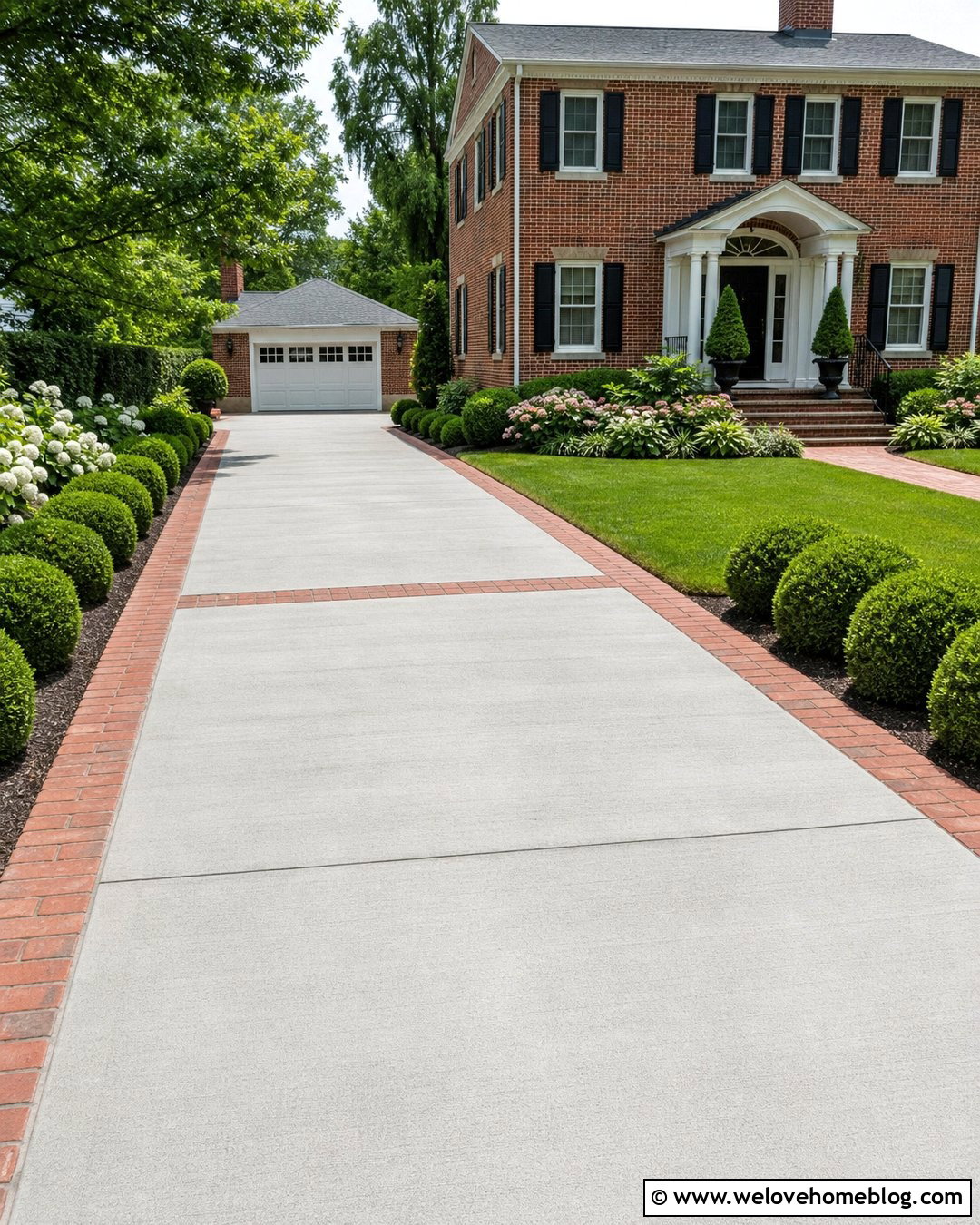
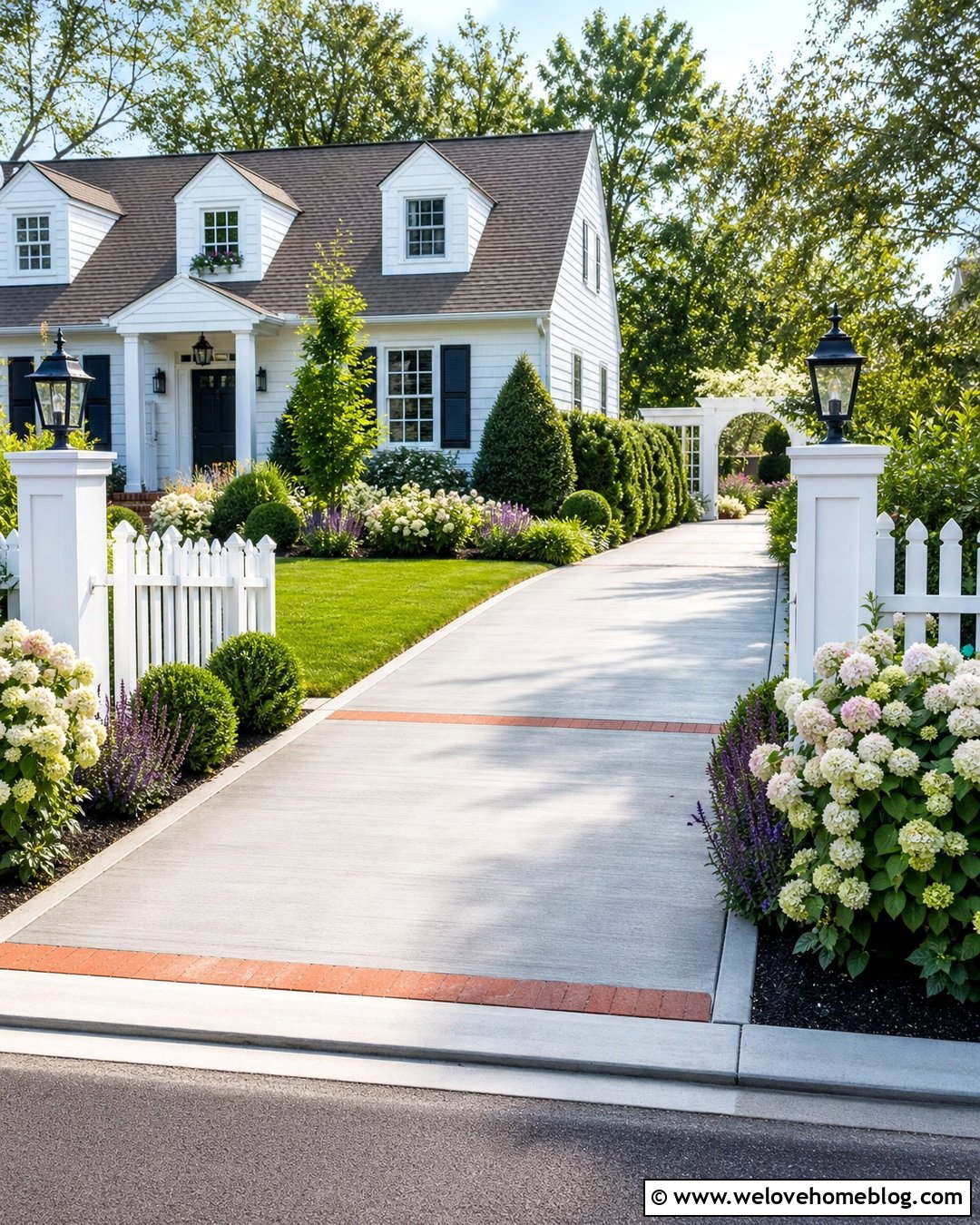
A straight concrete driveway offers a clean, practical route from the street to the garage. Give this familiar layout more character by framing gray broom-finished concrete with a narrow red or brown brick border. The warm brick defines the edges, connects the driveway to a traditional facade, and makes the concrete look more intentional. Continue the same brick around nearby planting beds or across the driveway as a decorative ribbon. Neatly clipped shrubs, a green lawn, and a matching brick walkway complete the design without making it busy. This combination works particularly well with ranch, colonial, and Craftsman homes. Keep plants low near the street so drivers have clear visibility, and plan the surface slope carefully to direct rainwater away from the house.
2. Modern Concrete Slab Driveway With Grass Joints
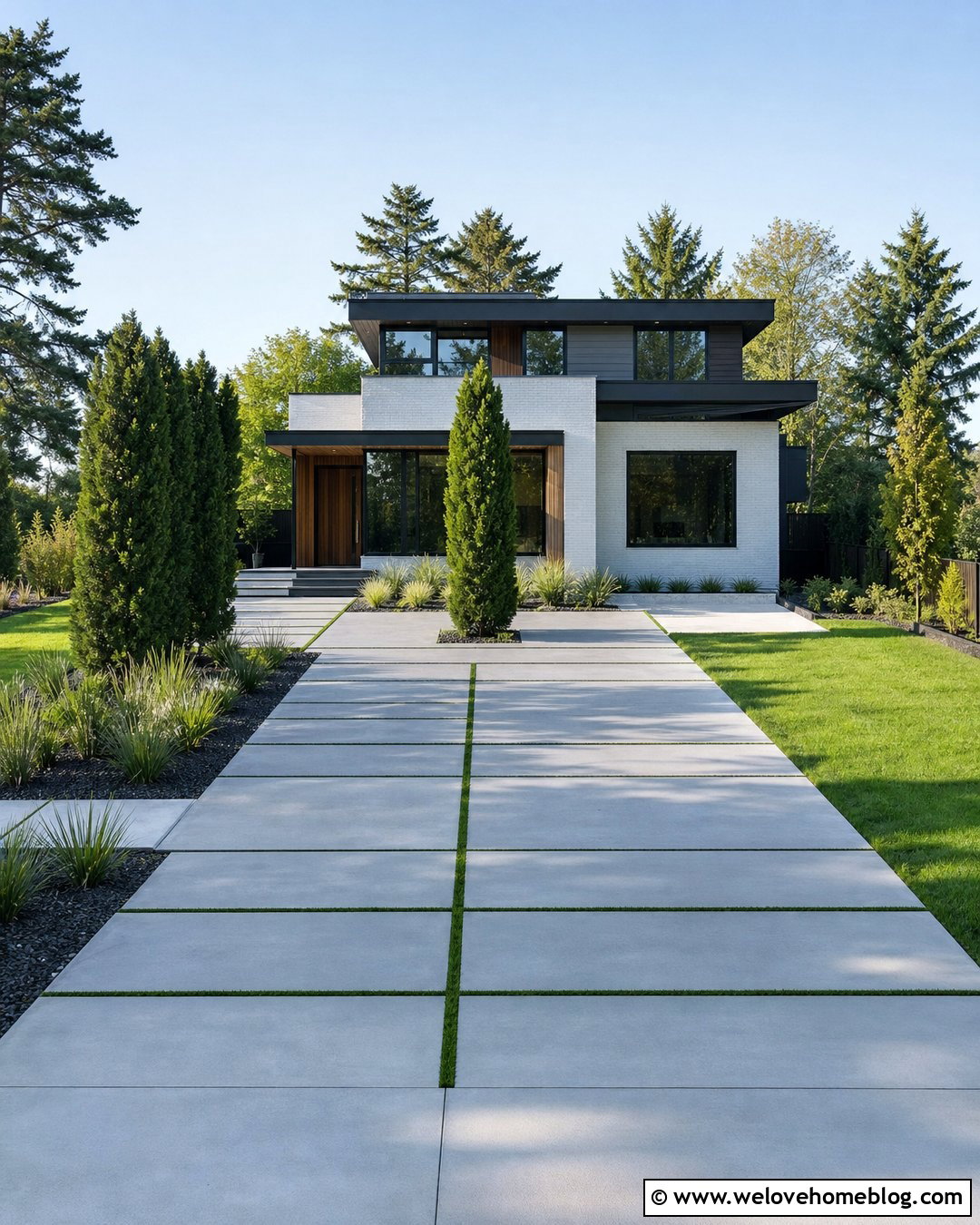
Large concrete slabs separated by narrow grass joints create a crisp driveway for a modern home. The visible grid breaks up the hard surface while introducing natural color between the pale gray panels. Choose rectangular slabs that follow the lines of the garage, windows, and front walkway for a coordinated appearance. The joints can contain durable turf, low-growing ground cover, or dark decorative gravel when regular trimming is not practical. Surround the driveway with restrained landscaping, such as ornamental grasses, sculptural evergreens, and simple gravel beds. A straight or gently offset layout usually supports the modern look best. Properly prepared joints and a strong base are essential because every slab must stay level under vehicle traffic. The result feels open, organized, and comfortably connected to the yard.
3. Curved Exposed Aggregate Driveway
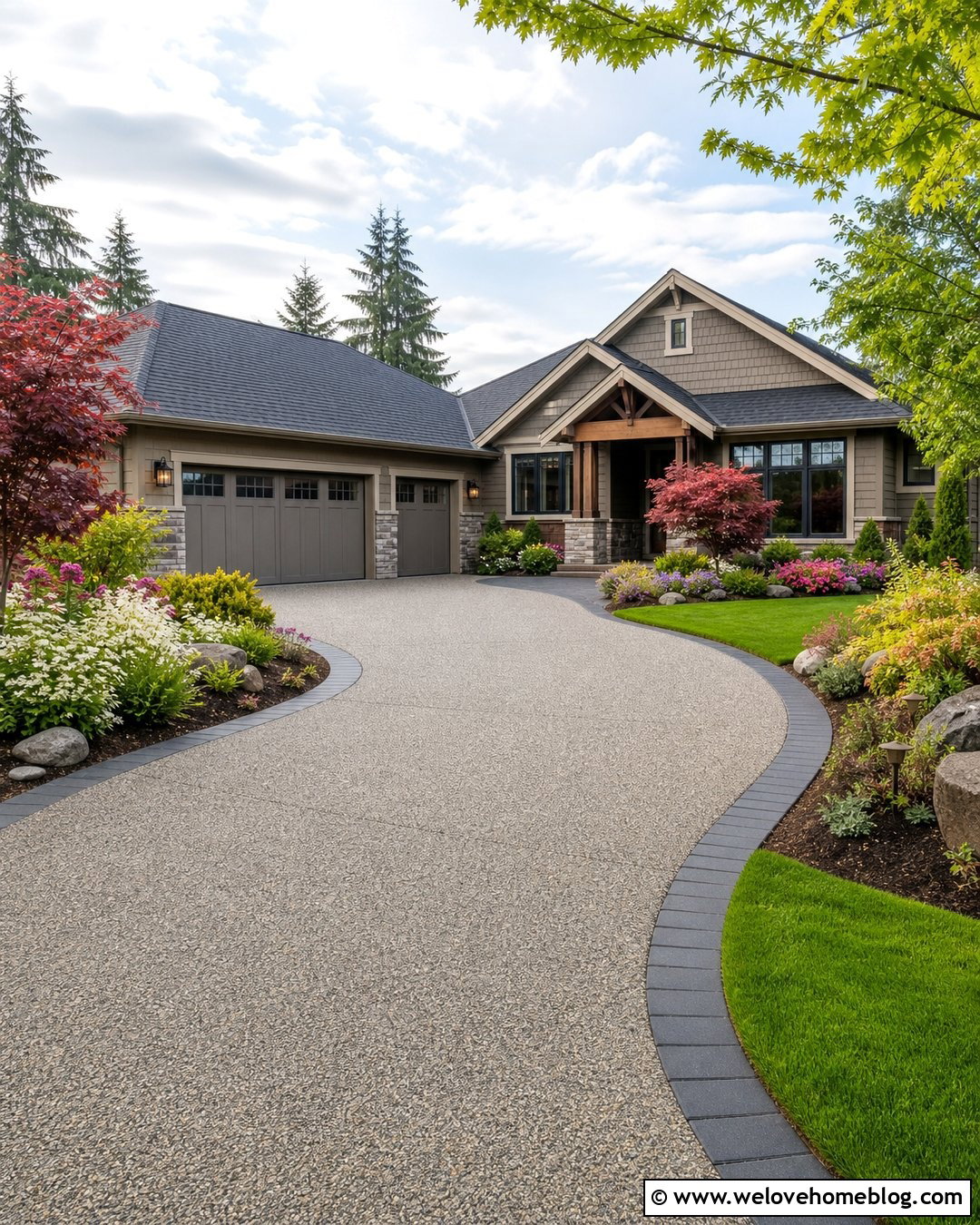
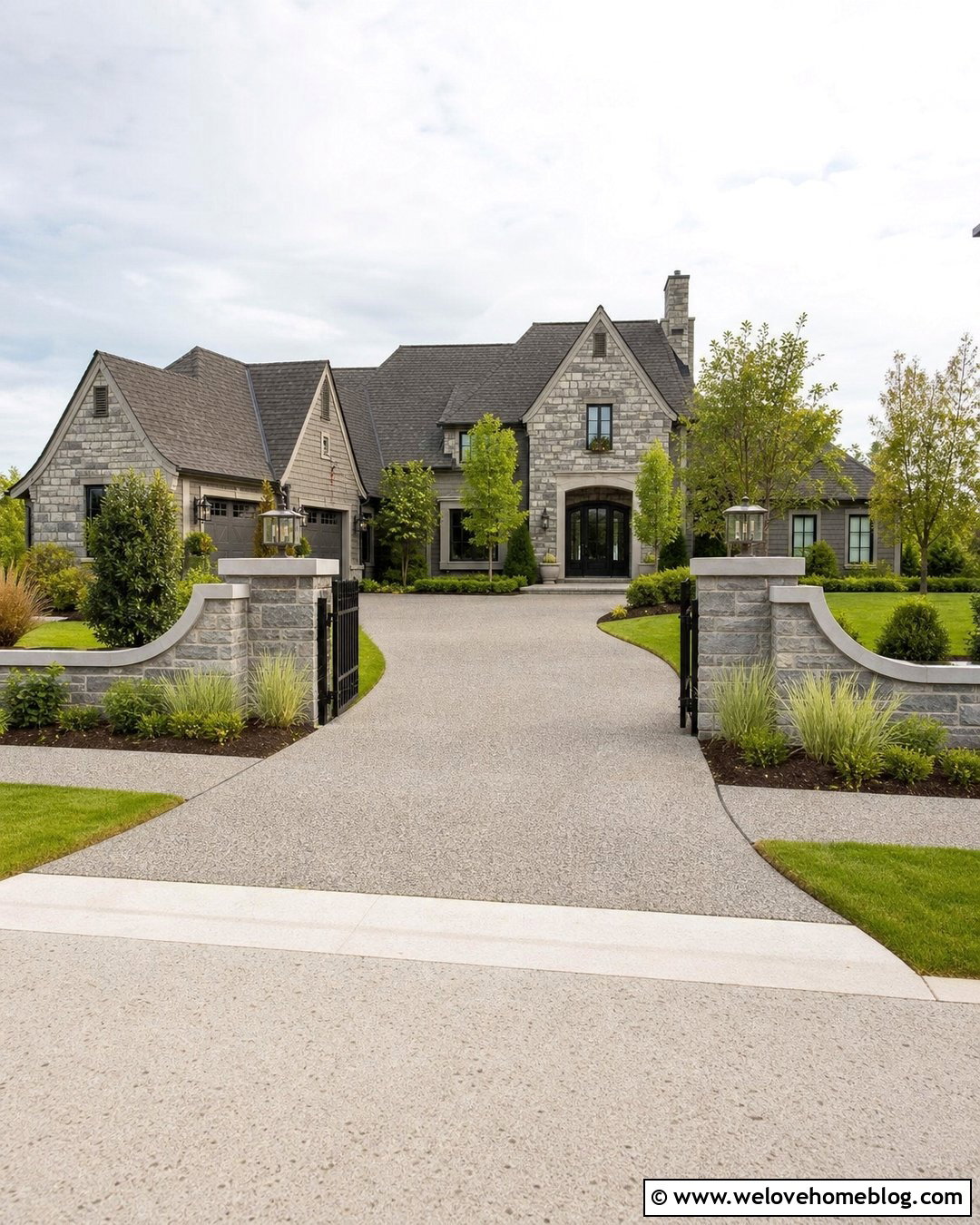
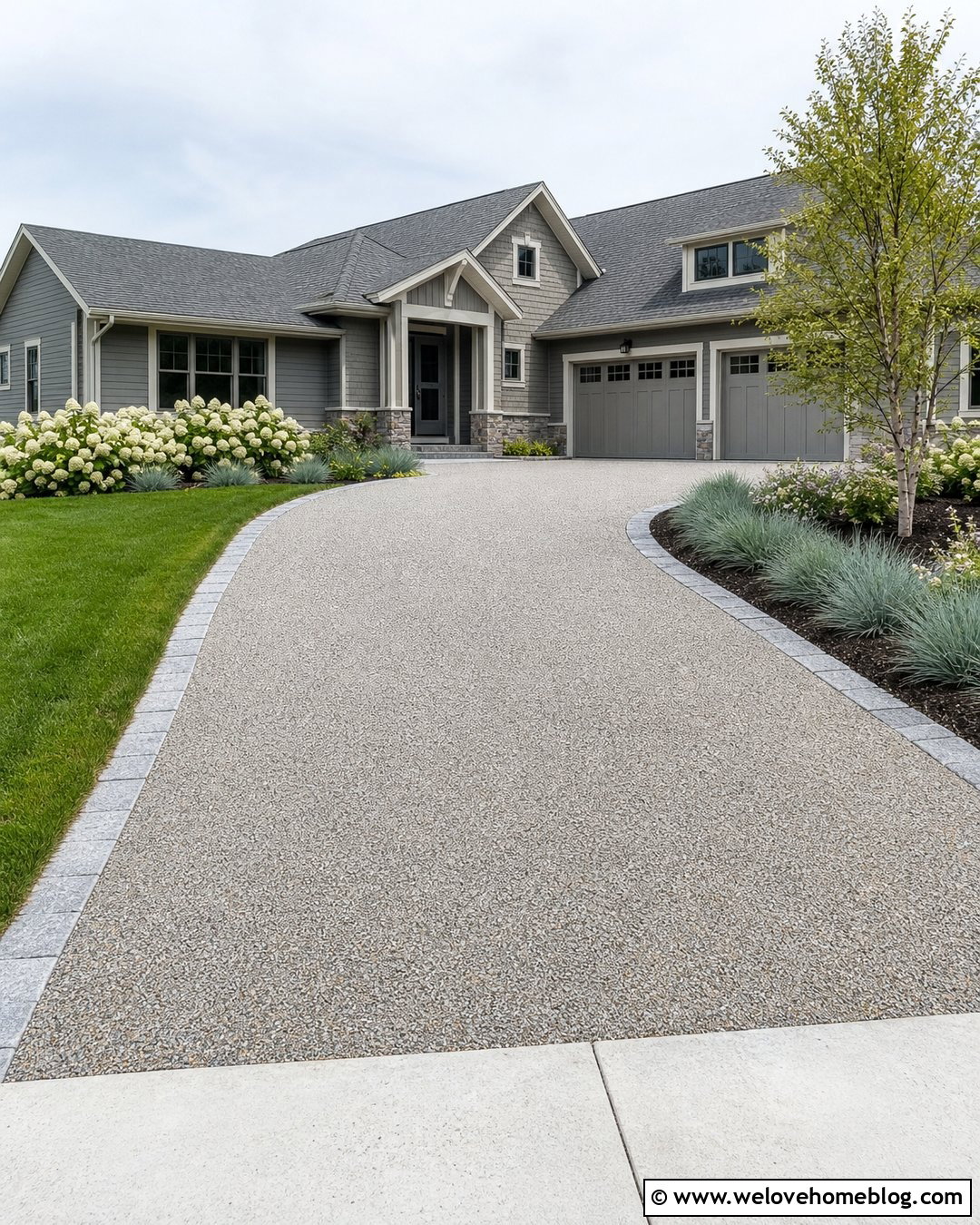
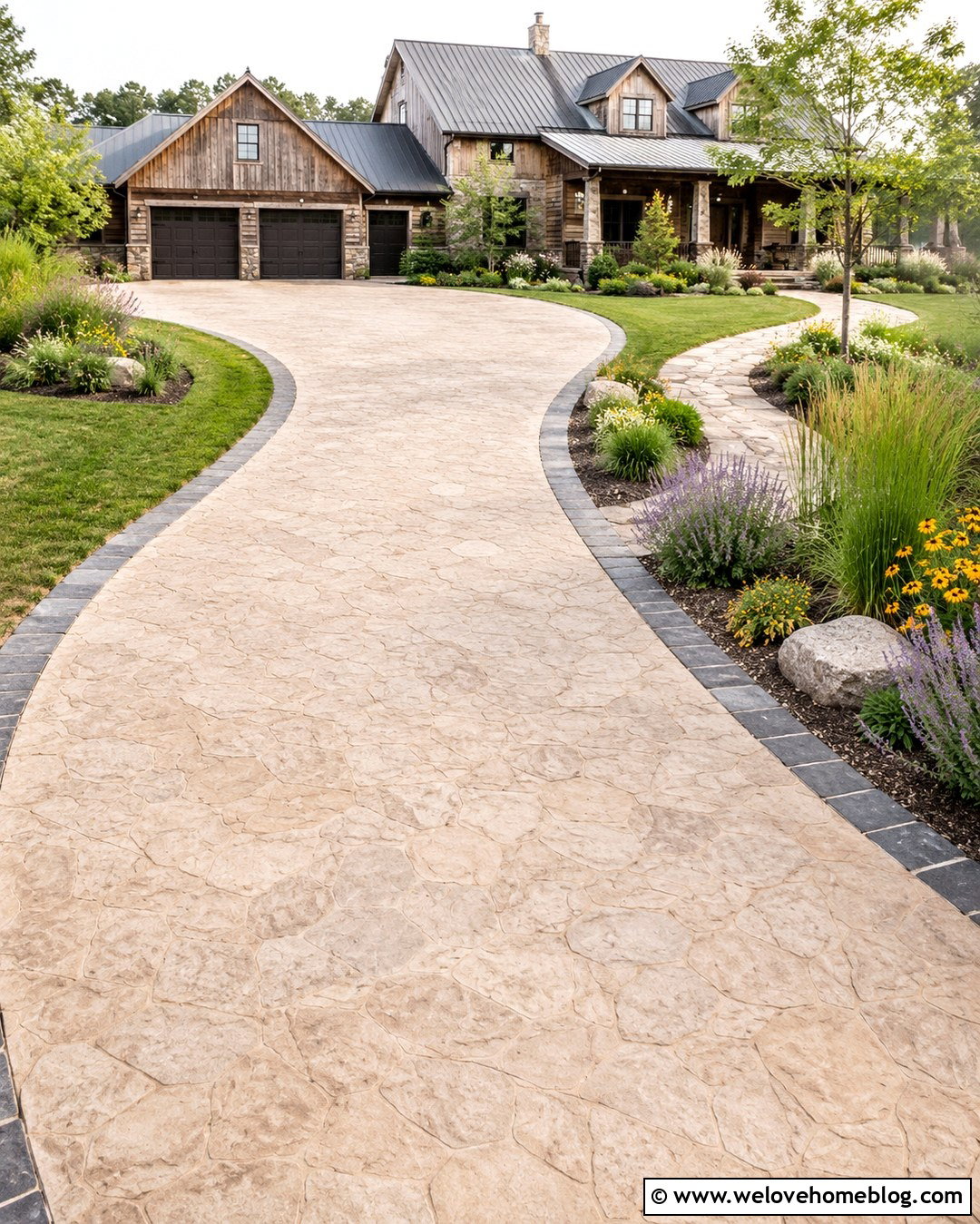
The natural texture of exposed aggregate can make a broad curved driveway feel softer and more inviting. Small stones visible within the concrete add color and visual depth without creating an uneven driving surface. Select an aggregate blend that echoes the home’s stonework, roof, or surrounding landscape. A dark paver edge can sharpen the sweeping outline and help separate the drive from lawn and planting beds. Follow the outer curve with layered shrubs, flowering perennials, and several small ornamental trees. Keep the inside of the bend more open to protect sightlines and make turning easier. This complete look suits suburban homes with generous front yards, especially Craftsman and transitional facades. Use a slip-resistant finish and gentle curves rather than sudden bends so the driveway remains comfortable to navigate.
4. Stamped Concrete Driveway With Stone Landscaping
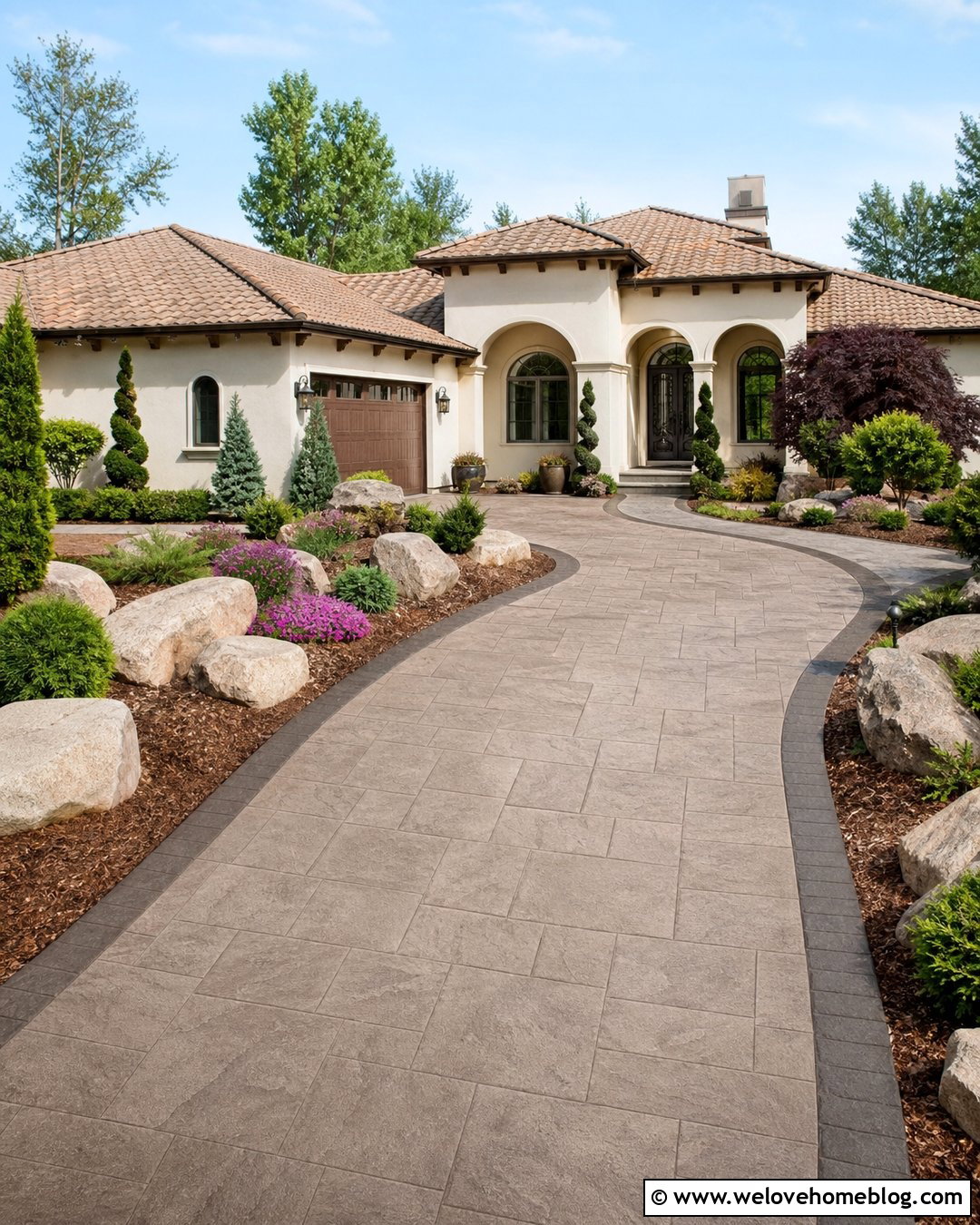
Stamped concrete can deliver the patterned appearance of stone while maintaining a continuous paved surface. A soft ashlar slate pattern in warm gray, taupe, or sandstone tones creates a versatile base for traditional and Mediterranean homes. Use a darker stamped border to outline the driveway and emphasize its straight or gently curved shape. Nearby landscape beds filled with natural boulders, evergreen shrubs, and flowering ground cover will reinforce the stone-inspired finish. Avoid combining too many patterns or colors, since an overly detailed surface may compete with the house. A simple walkway in the same finish can connect the driveway to the front entrance. Carefully chosen release colors and realistic joint spacing are important. The final surface should complement real masonry rather than attempting to imitate an unrelated material.
5. Broom-Finished Concrete Driveway With Black Paver Bands
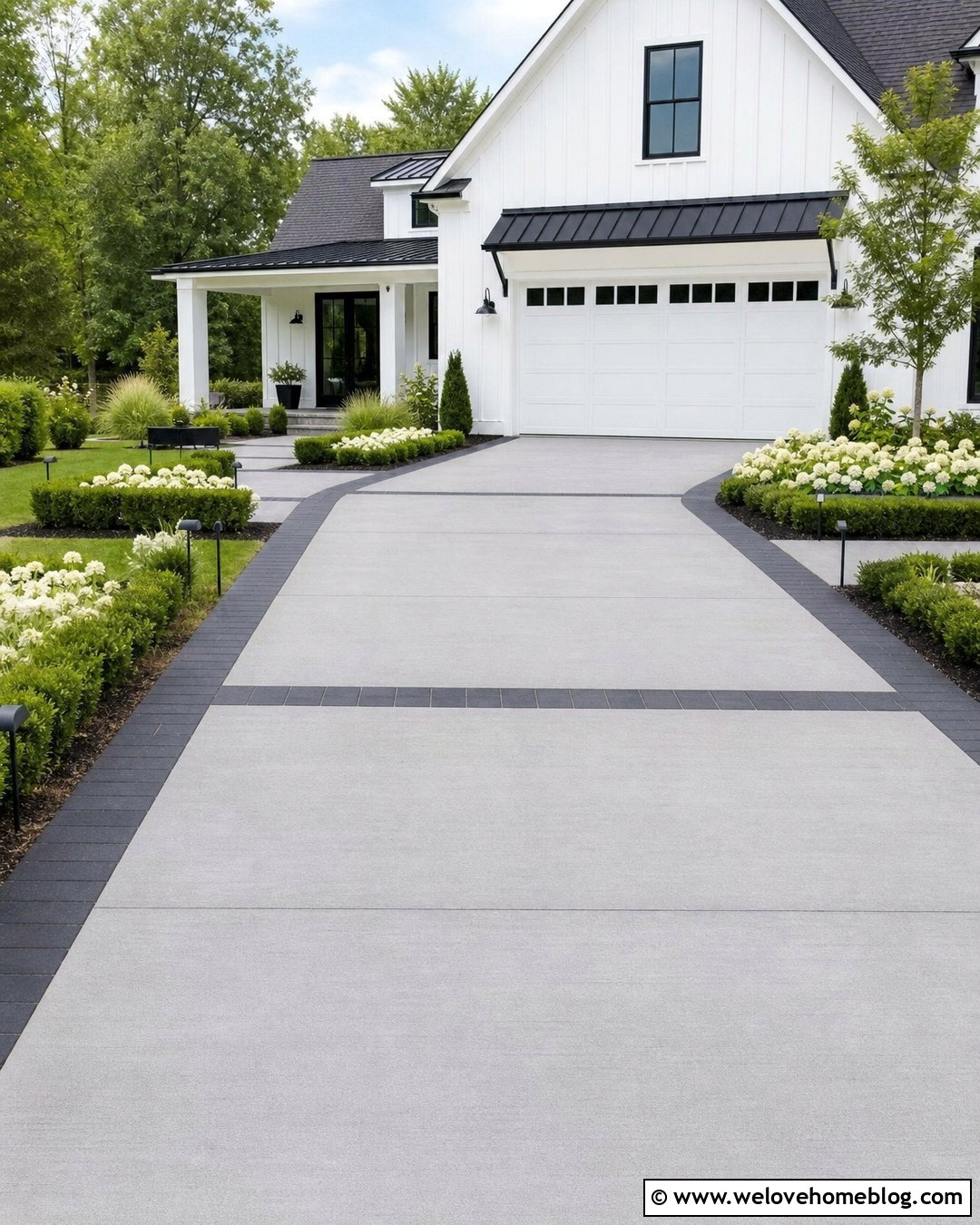
Broom-finished concrete gains a polished, contemporary edge when narrow black paver bands cross and frame the surface. The subtle texture provides a practical finish, while charcoal pavers create strong lines that organize a large driveway. Place the bands around the perimeter, at the garage threshold, and across wider areas to divide the concrete into balanced sections. This approach looks especially cohesive beside white, gray, or black modern farmhouse exteriors. Add rectangular planting beds with compact boxwood, ornamental grasses, and white flowering perennials. Black metal path lights can repeat the dark accent without overwhelming the front yard. Keep the driveway layout simple and allow the contrasting bands to provide the detail. Aligning every band with architectural features makes the complete design appear planned rather than purely decorative.
6. Black Asphalt Driveway With Belgian Block Edging
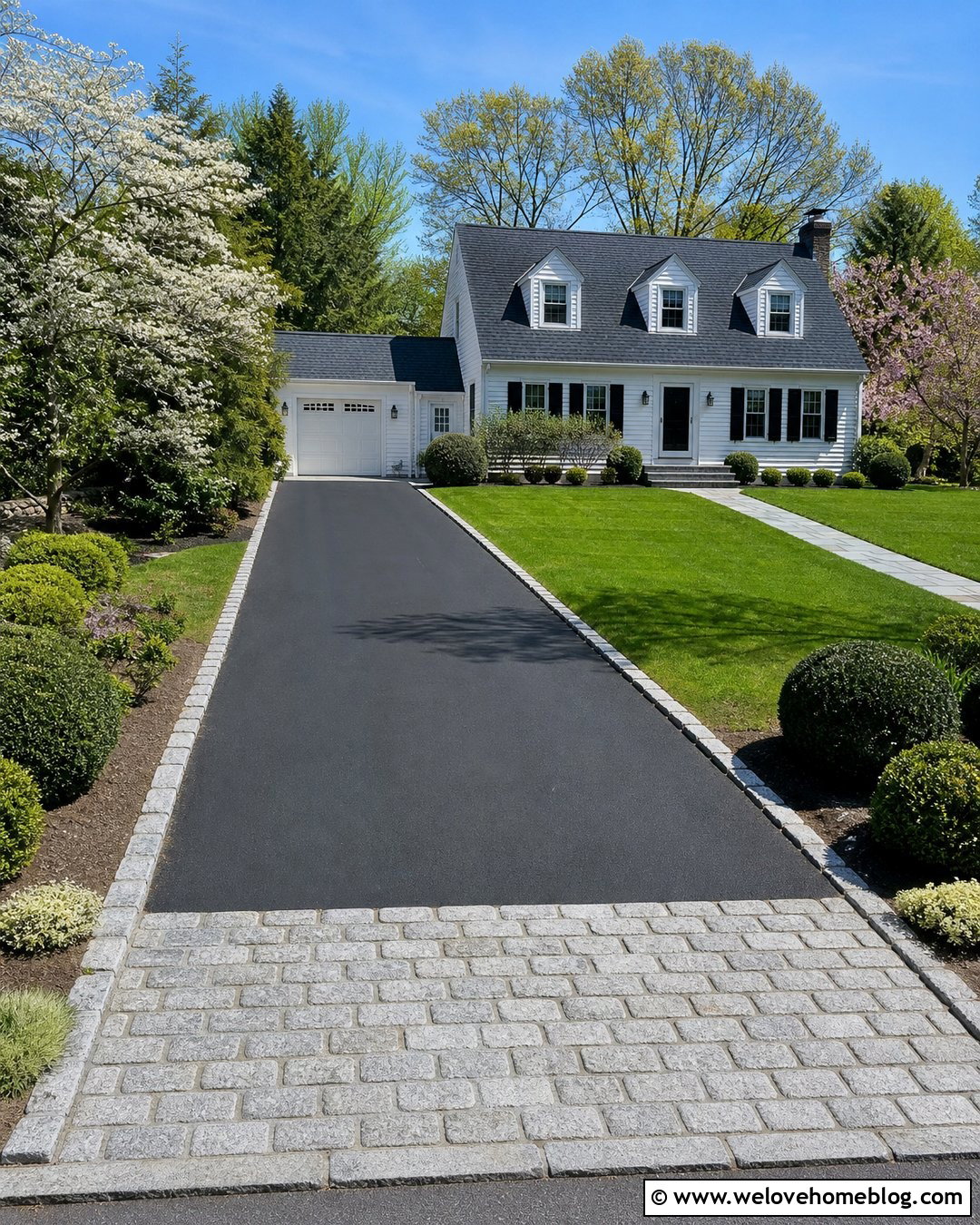
Fresh black asphalt becomes much more refined when bordered by rows of gray Belgian block. The stone edging creates a durable-looking transition between the dark pavement and surrounding lawn while giving an everyday material a high-end finish. A straight driveway can use evenly aligned blocks, while a curved drive benefits from carefully fitted pieces that follow the arc. At the street, widen the stone border into a substantial apron for a stronger entrance. Frame the approach with low evergreen shrubs, flowering trees, and a simple walkway leading toward the front door. This combination complements colonial, Cape Cod, and traditional brick homes. Choose block colors that relate to the foundation or facade. A crisp asphalt surface, secure edging, and controlled landscaping produce an attractive driveway without relying on elaborate patterns.
7. Curved Asphalt Driveway With Layered Landscaping

A curved asphalt driveway can look graceful when its dark surface is balanced by generous landscaping. Let the drive sweep gradually across the front yard rather than taking a sharp route toward the garage. The curve reveals the house in stages and creates room for a deep planting bed along the outside edge. Layer small trees, rounded evergreen shrubs, flowering perennials, and ground cover from tallest to shortest. A narrow cobblestone or concrete paver border keeps mulch and soil away from the asphalt. On the inside curve, maintain open lawn or low planting for better visibility. This design works well on wide suburban properties and wooded lots. Repeat several plant varieties throughout the beds for continuity. The combination of smooth black pavement and soft planting creates a practical entrance with an established landscape feel.
8. Asphalt Driveway With Light Paver Apron
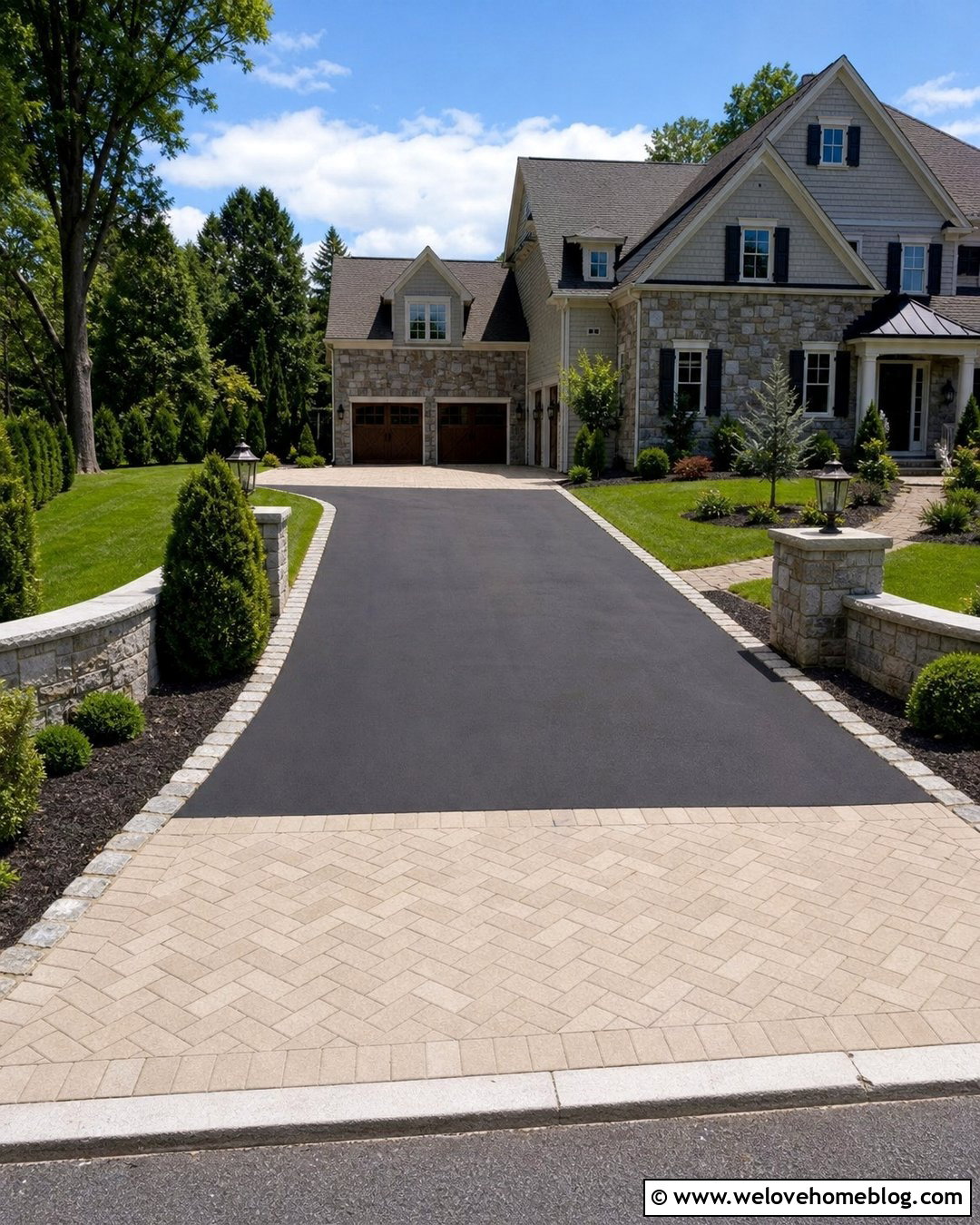
If a full paver driveway is beyond the budget, combine black asphalt with a light-colored paver apron at the street. The contrasting entrance creates a finished first impression while keeping the main driving surface simple and economical. Choose beige, gray, or weathered concrete pavers that coordinate with the house, then lay them in a herringbone pattern for stability and visual interest. Repeat a narrower band of the same pavers near the garage doors to connect both ends. Low stone walls, address pillars, or symmetrical planting beds can frame the apron without narrowing vehicle access. This mixed-material design suits many traditional and transitional homes. Make every transition flush and secure so tires move smoothly between surfaces. The paver sections should feel integrated with the asphalt, not like unrelated decorative patches.
9. Herringbone Brick Driveway For A Colonial House
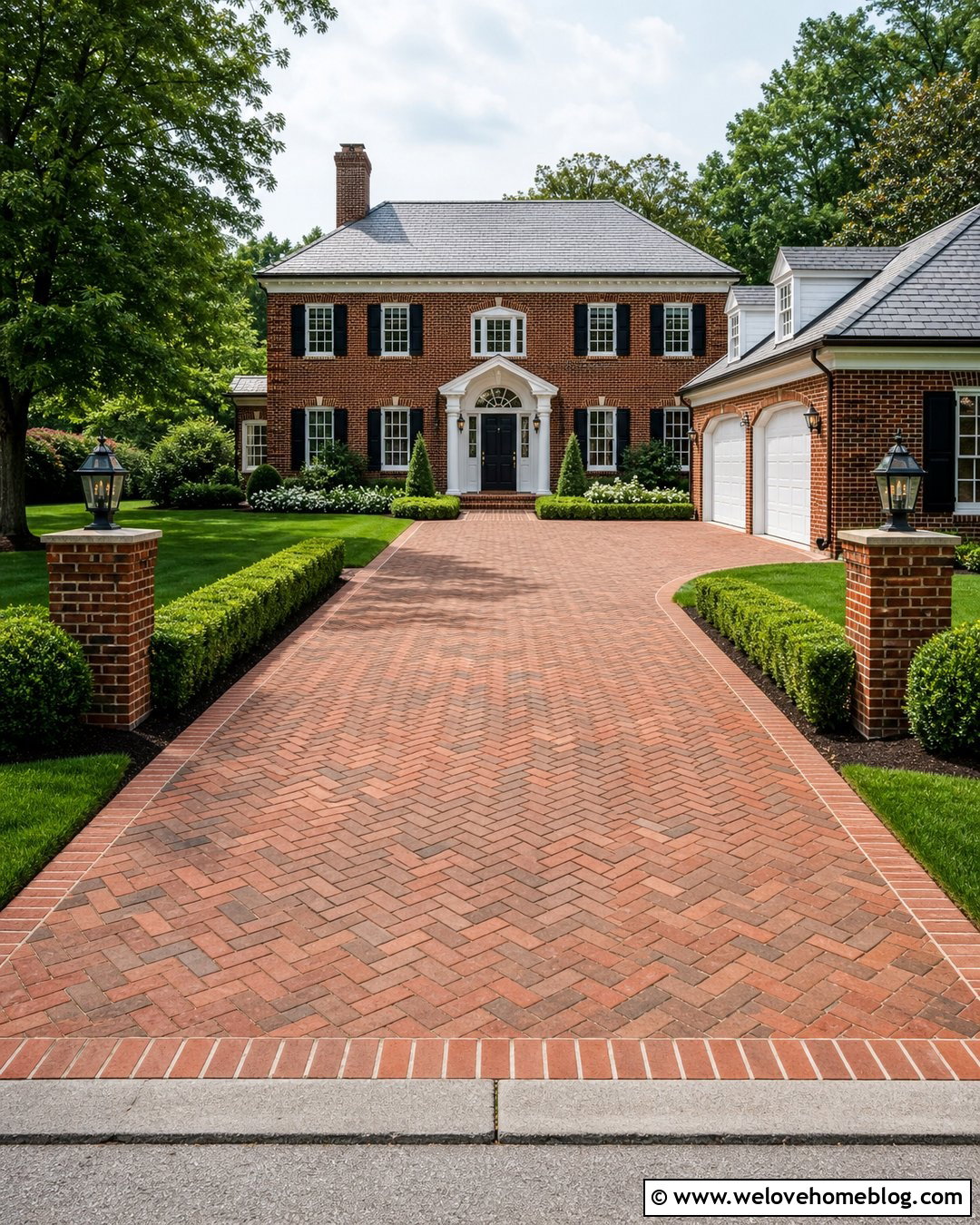
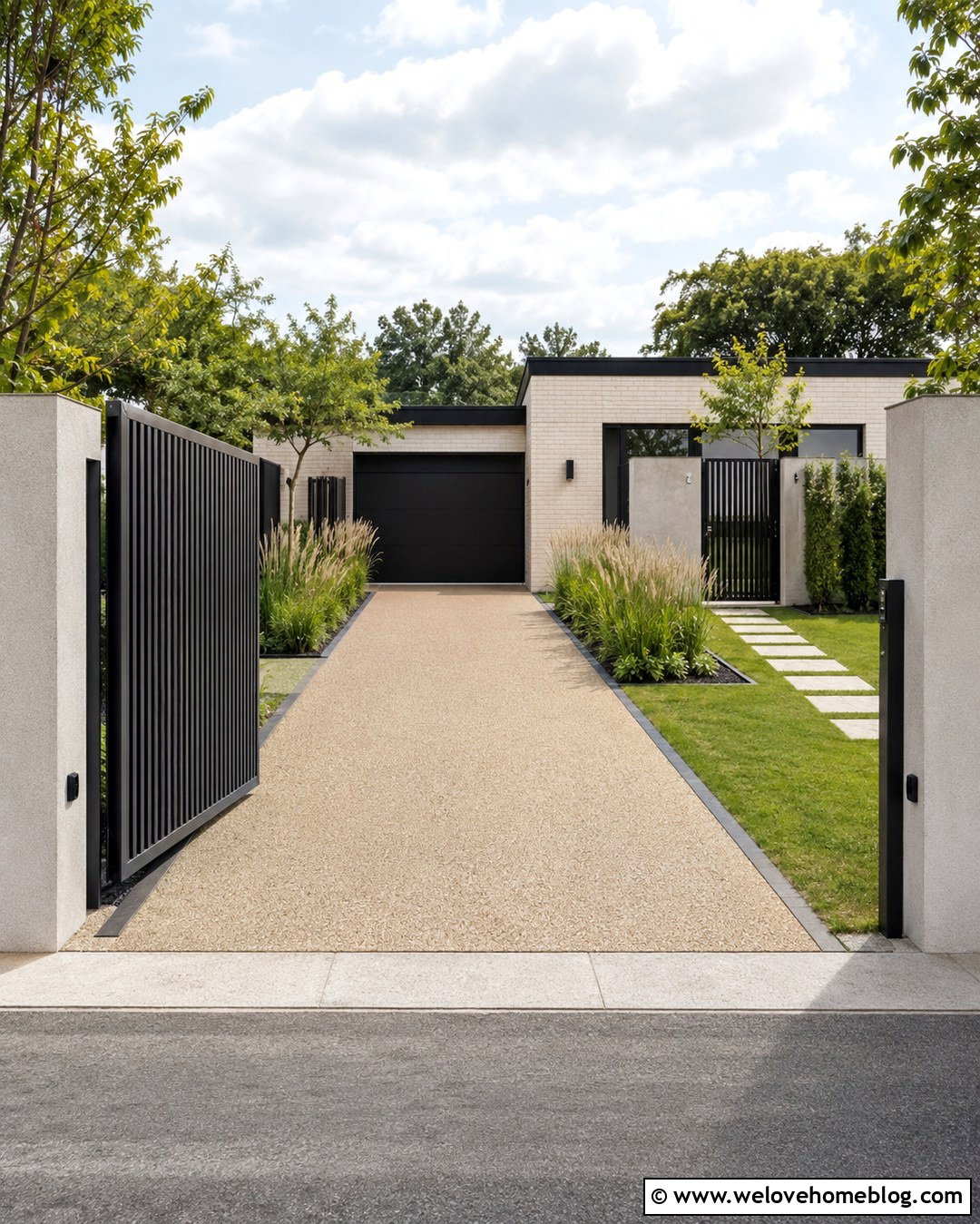
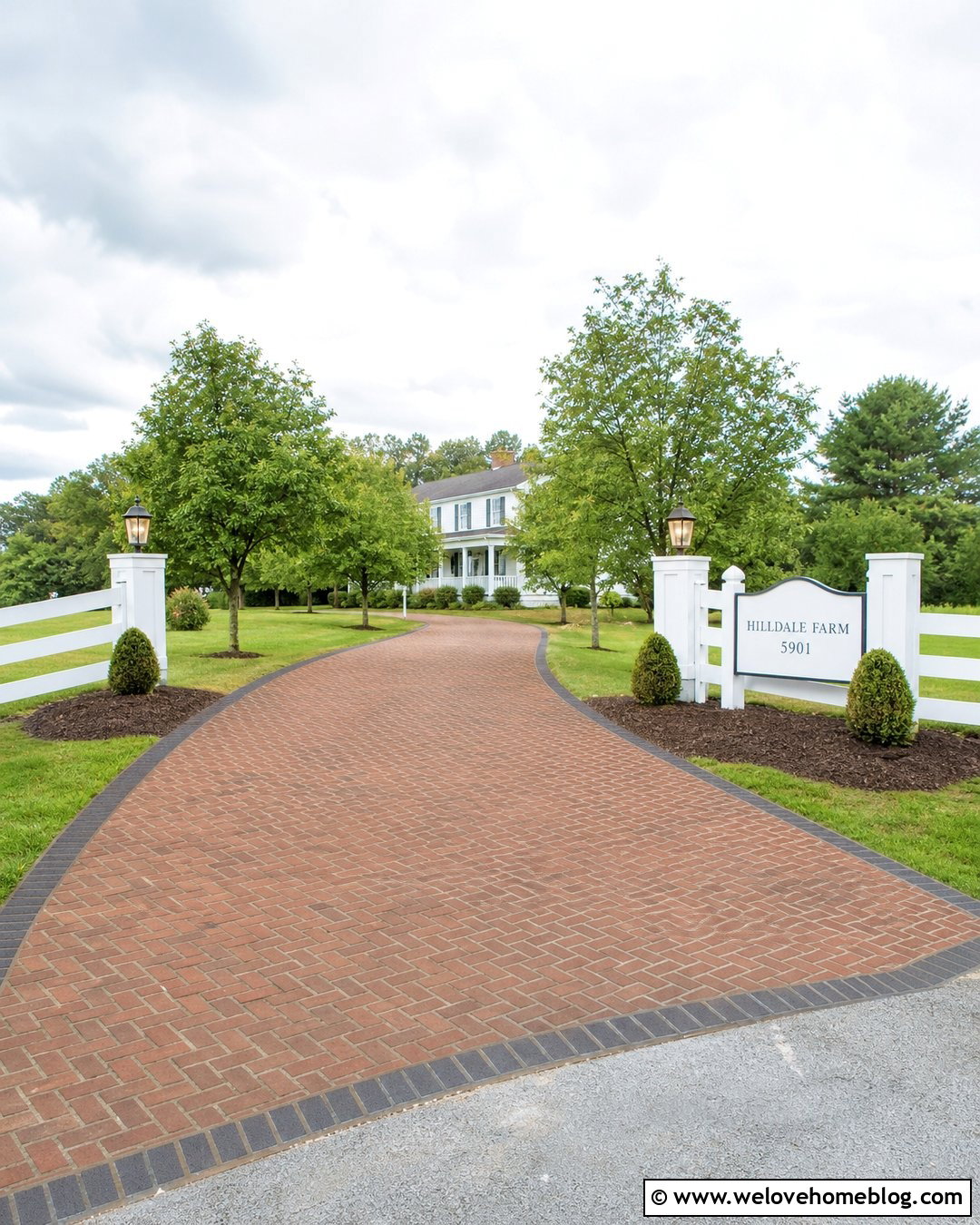
Clay brick pavers laid in a herringbone pattern create a driveway that naturally suits a colonial house. The interlocking arrangement adds movement while the red, brown, and charcoal tones relate beautifully to brick facades and dark shutters. Border the pattern with straight soldier-course bricks to give the driveway a neat outline. A symmetrical layout leading toward a central or side garage reinforces the formal character of the architecture. Complete the scene with clipped hedges, green lawn, traditional lanterns, and a brick walkway to the entrance. Use a slightly wider paved area near the garage for comfortable parking and turning. Select driveway-rated bricks rather than thin decorative units. When the colors, pattern, edging, and landscape remain restrained, the finished driveway feels historic and welcoming instead of overly ornate.
10. Basketweave Brick Driveway For A Cottage
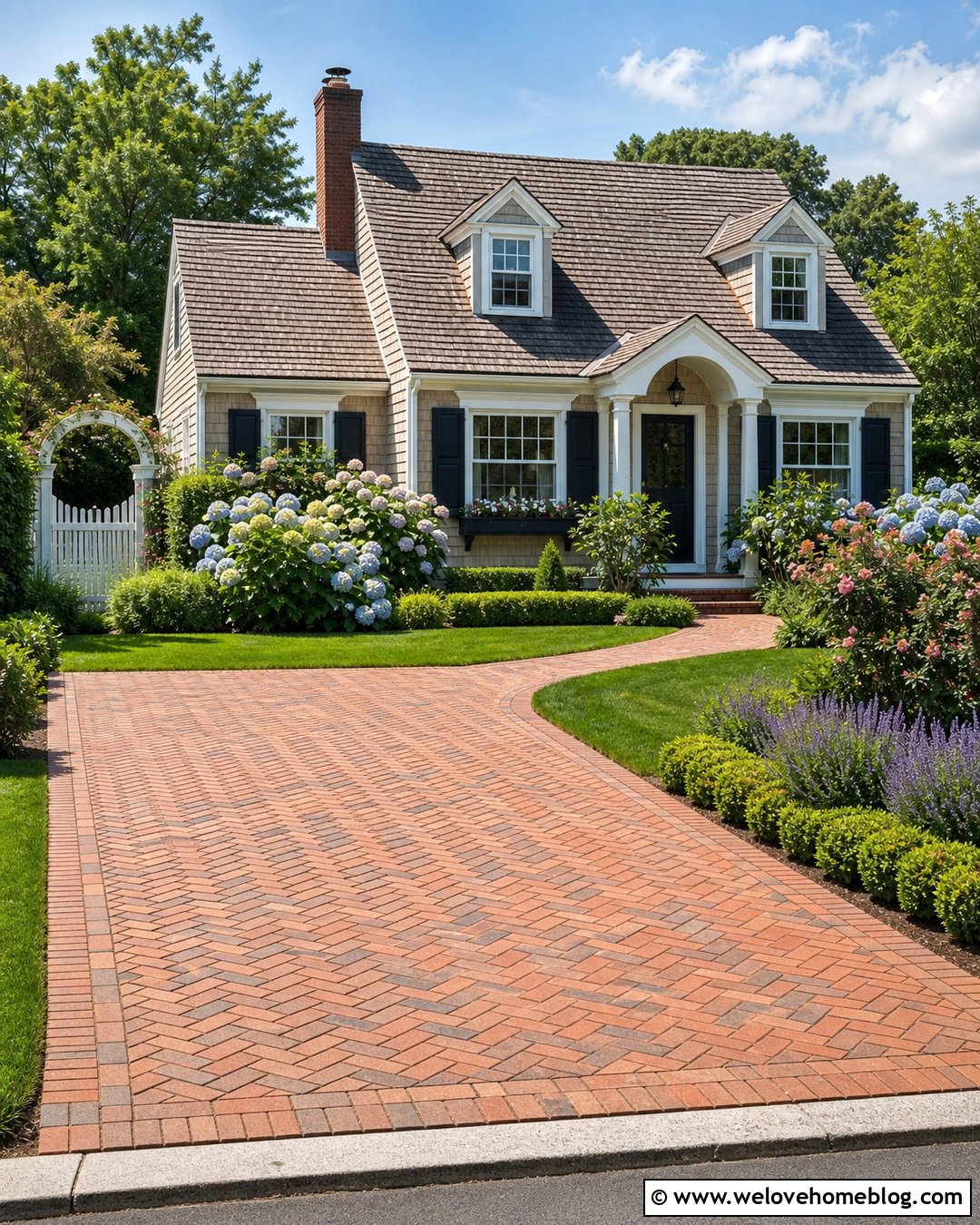
A basketweave brick driveway brings warmth and gentle pattern to a cottage-style home. Alternating pairs of clay brick pavers create a handcrafted appearance that works especially well on a short, straight driveway or small parking court. Blend muted red, terracotta, and brown bricks for natural variation rather than using one uniform color. A simple rowlock border can contain the pattern and make curved corners look finished. Surround the driveway with informal planting beds filled with hydrangeas, roses, lavender, and low evergreen shrubs. A matching brick path leading to the porch will visually connect parking and entry areas. Keep the plant growth trimmed back from the pavement so the usable width remains clear. This complete design feels established, welcoming, and appropriate for cottages, Cape Cod houses, and smaller traditional homes.
11. Two-Tone Concrete Paver Driveway
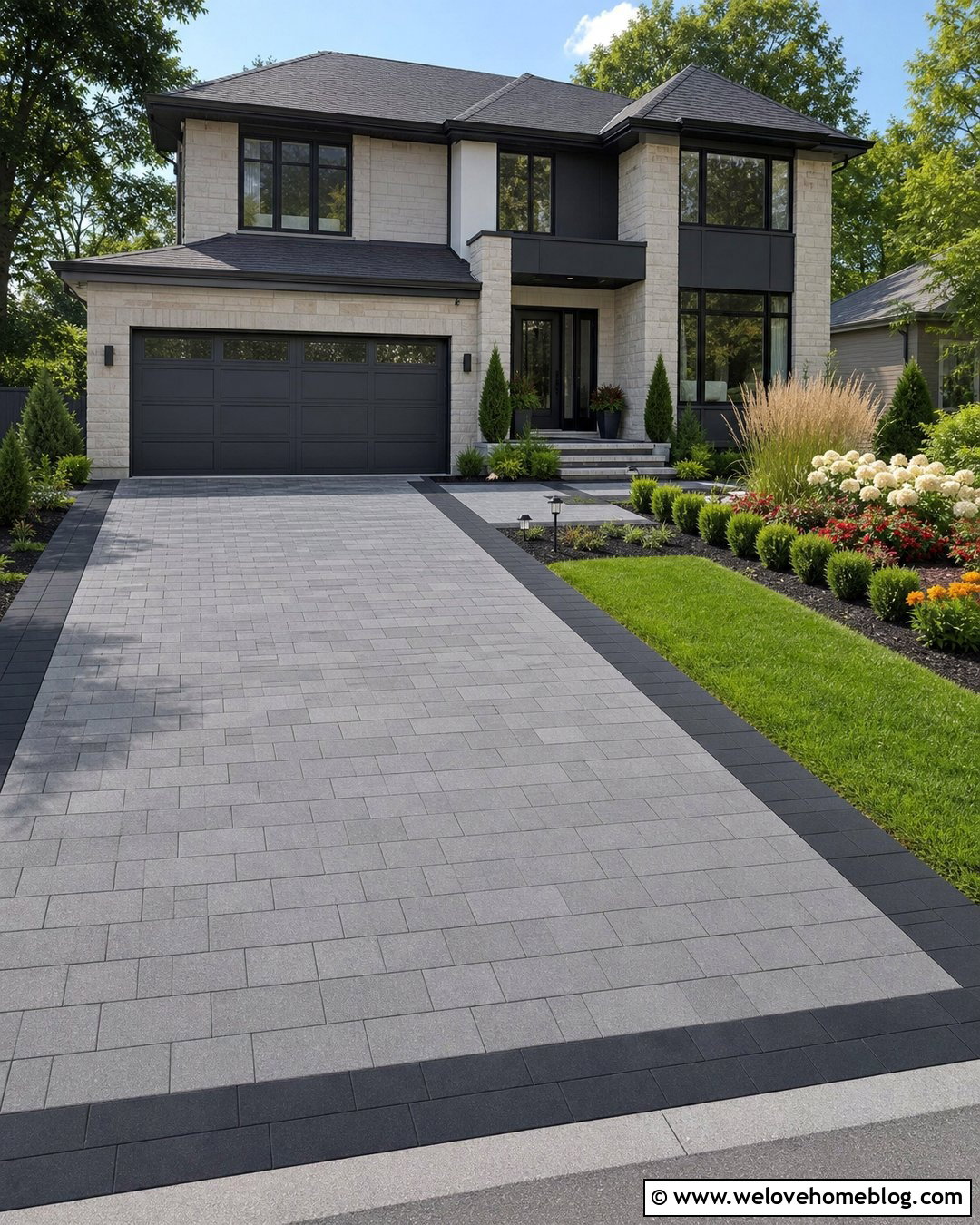
Two-tone concrete pavers can define a driveway clearly without covering it in complicated patterns. Use a medium-gray paver across the main field and a darker charcoal paver around the perimeter. A second dark band can outline the walkway or mark the transition into a parking court. Rectangular pavers in a running bond or simple modular pattern create a balanced appearance for transitional and contemporary homes. Match the darker accent to the roof, window frames, or garage doors to connect the driveway with the facade. Nearby planting beds should use a limited palette of evergreen shrubs, grasses, and seasonal flowers. Gentle curves can soften a wide property, while straight edges suit compact lots. Keeping the colors related allows the border to add definition without visually reducing the driveway’s size.
12. Permeable Paver Driveway With Green Joints
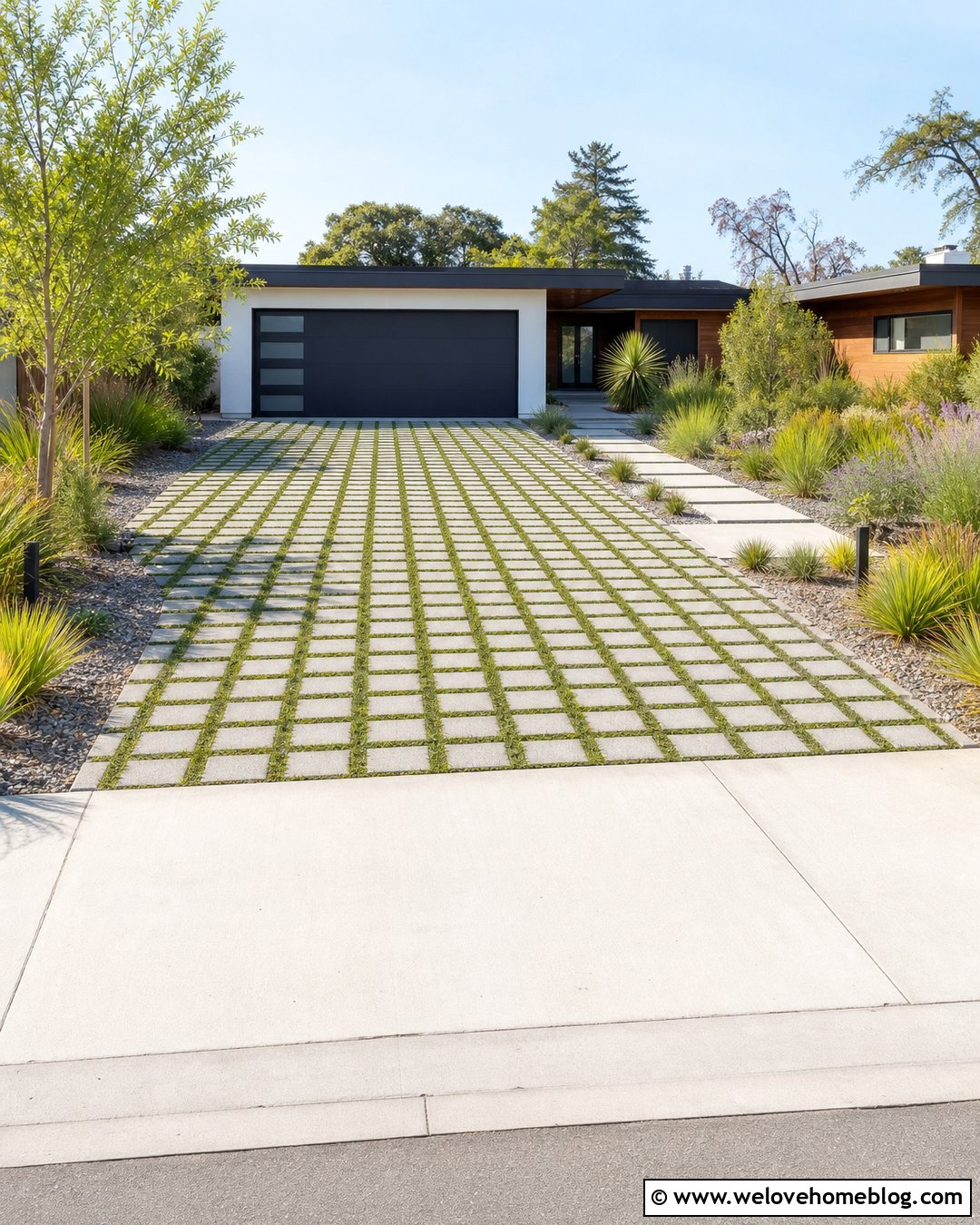
Permeable concrete pavers with planted joints create a driveway that feels lighter within the landscape. Choose grid-shaped or widely spaced pavers designed for vehicle loads, then fill the openings with suitable turf or small gravel. The alternating hard and green surfaces work best on straight driveways, parking pads, and gently curved approaches. Frame the pavement with low ornamental grasses and drought-tolerant planting rather than dense formal hedges. A simple concrete or stone walkway can provide a smoother route to the front door. This design complements contemporary, mid-century, and environmentally focused homes. The base, joint fill, and drainage plan must suit local soil and weather conditions. When installed correctly, the green pattern should look purposeful across the complete driveway instead of resembling grass that has accidentally grown through damaged pavement.
13. Large Concrete Paver Driveway With Gravel Joints
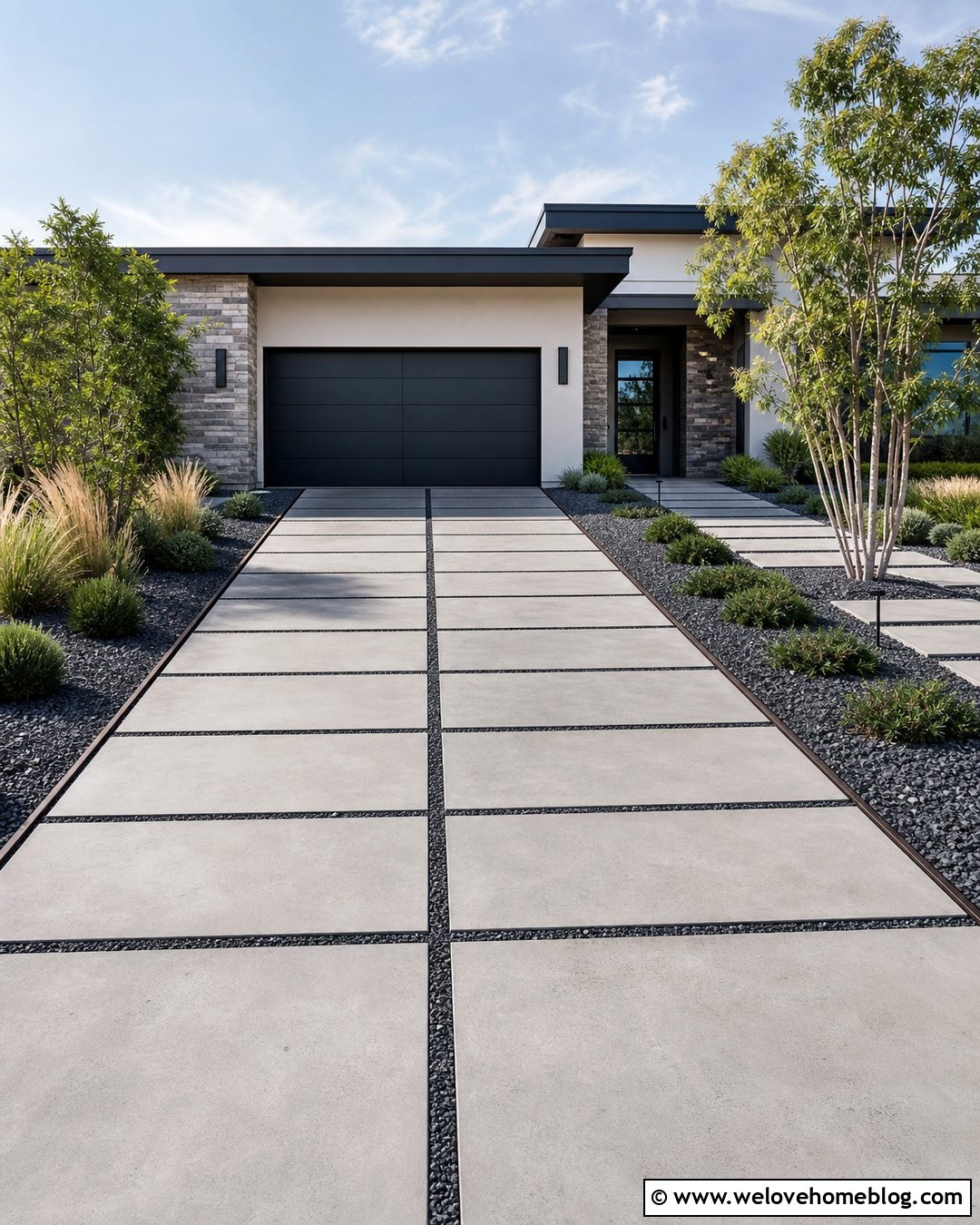
Oversized concrete pavers separated by dark gravel joints deliver a strong geometric look. The large rectangular units reduce visual clutter and make a short driveway appear broader and more organized. Choose pale gray or warm greige pavers, then fill narrow joints with black pebbles or crushed granite for contrast. Align the panels with the garage doors and extend a matching sequence toward the front walkway. Minimal planting works best with this design. Consider sculptural shrubs, compact grasses, a specimen tree, and broad beds of decorative stone. Steel or concrete edging can contain the gravel at lawn boundaries. This driveway is a natural fit for modern and mid-century homes with simple facades. Careful spacing is essential because irregular joints will be easy to notice within such a clean, structured layout.
14. Circular Cobblestone Driveway With Center Garden
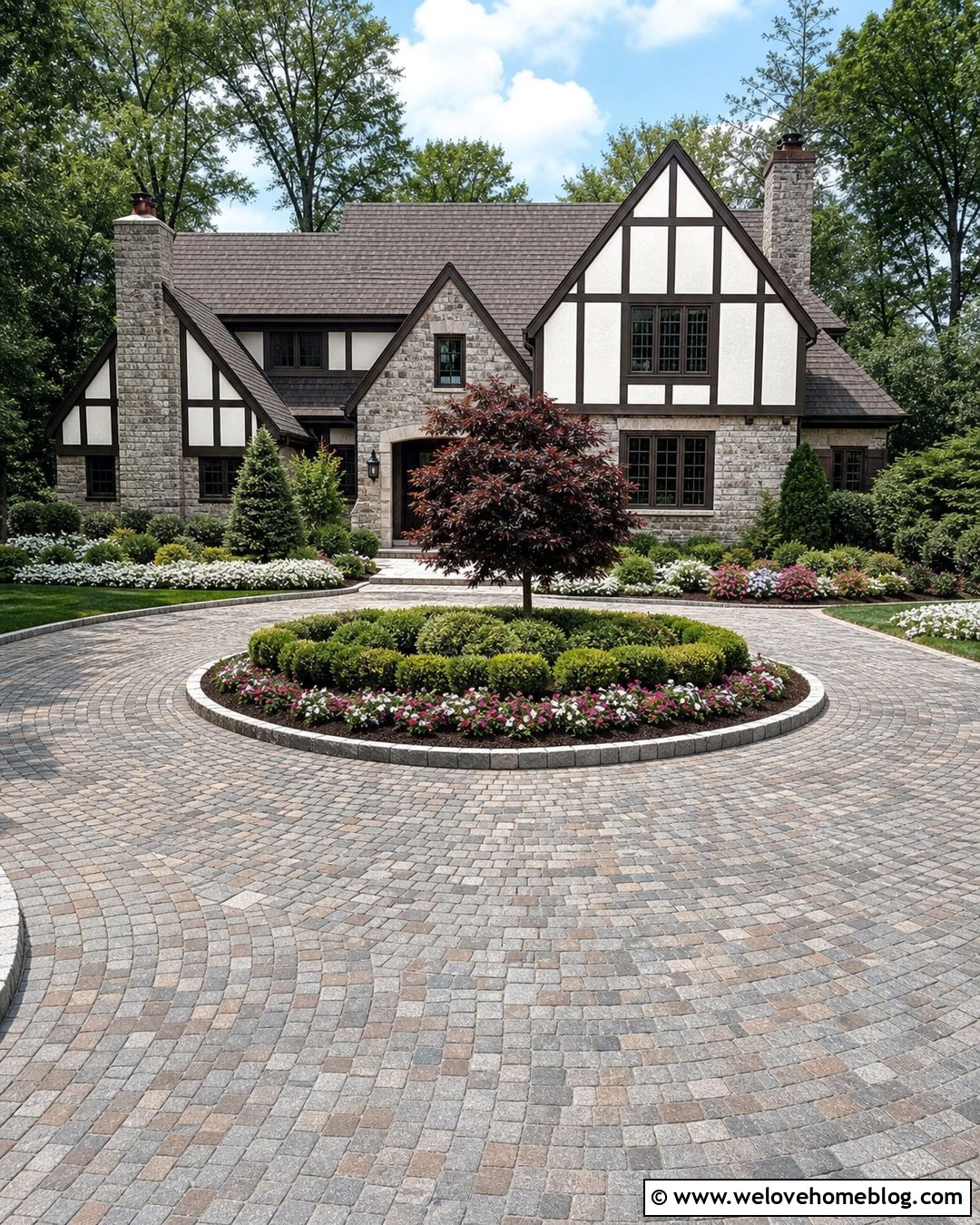
A circular cobblestone driveway can turn a large front yard into a memorable and functional entrance. Gray and brown cobblestones laid in gentle arcs reinforce the circular movement while creating an old-world surface. In the center, install a raised or ground-level garden containing one ornamental tree, clipped shrubs, and seasonal flowers. Keep the planting compact enough to preserve views across the circle. Stone curbing around the island and outer driveway edge will contain the pattern and protect adjacent lawn. This design looks especially appropriate with Tudor, European-inspired, and substantial traditional homes. Provide clearly defined entry and exit points at the street, with enough space for comfortable turning. The stone colors should relate to the home’s masonry so the circular driveway and architecture feel like parts of the same property.
15. Granite Sett Driveway With Formal Hedges
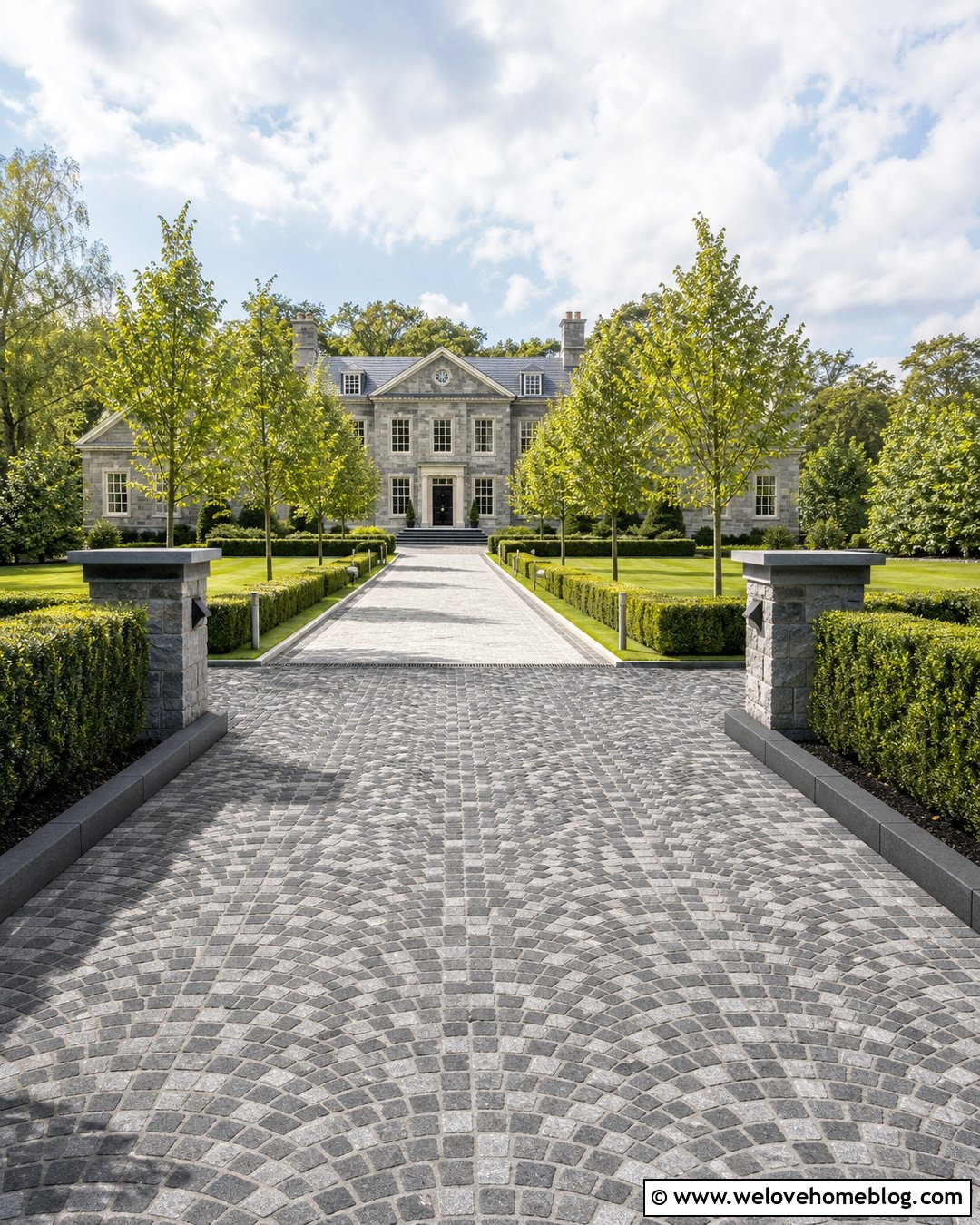
Granite setts create a strong, textural driveway for a formal house and front garden. Their smaller scale allows them to follow straight edges, broad curves, and detailed entrance aprons with a tailored appearance. Choose a blend of charcoal, silver, and warm gray stone, then arrange the setts in fan patterns or simple rows. Dark granite curbing can frame the pavement and hold the shape firmly against surrounding beds. Pair the driveway with symmetrical hedges, evenly spaced trees, and a wide path leading to the front door. Traditional lanterns or low bollard lights can emphasize the approach in a restrained way. This look works beautifully with stone colonials, Georgian houses, and European-style homes. Because the surface already contains rich variation, keep nearby planting organized and the color palette controlled.
16. Pea Gravel Driveway With Cobblestone Edging
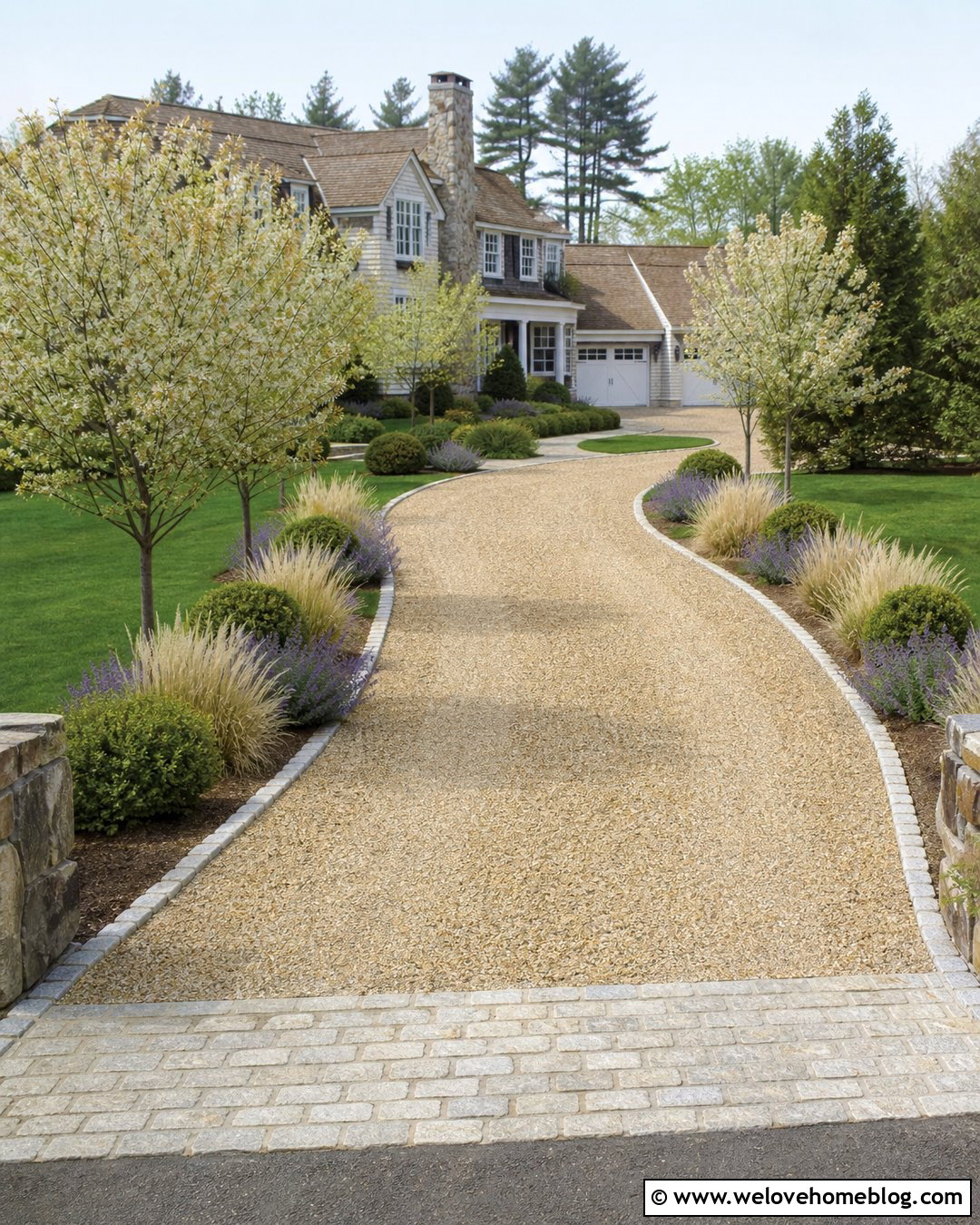
Warm pea gravel paired with cobblestone edging creates a relaxed driveway with a clearly defined shape. Select tan, cream, and soft gray gravel that complements the house, and contain it with a continuous border of larger gray cobblestones. A straight or gently curved approach works well, especially on country properties and traditional suburban lots. Add deep planting beds containing lavender, rounded shrubs, ornamental grasses, and small flowering trees. At the garage and public road, install stable paved aprons to reduce loose stone migration and create clean transitions. The gravel layer should sit over a properly prepared base rather than directly on soil. Regular raking will help maintain an even appearance. With firm edging and thoughtful landscaping, pea gravel can look intentionally elegant instead of unfinished or temporary.
17. Crushed Stone Driveway For A Modern Farmhouse
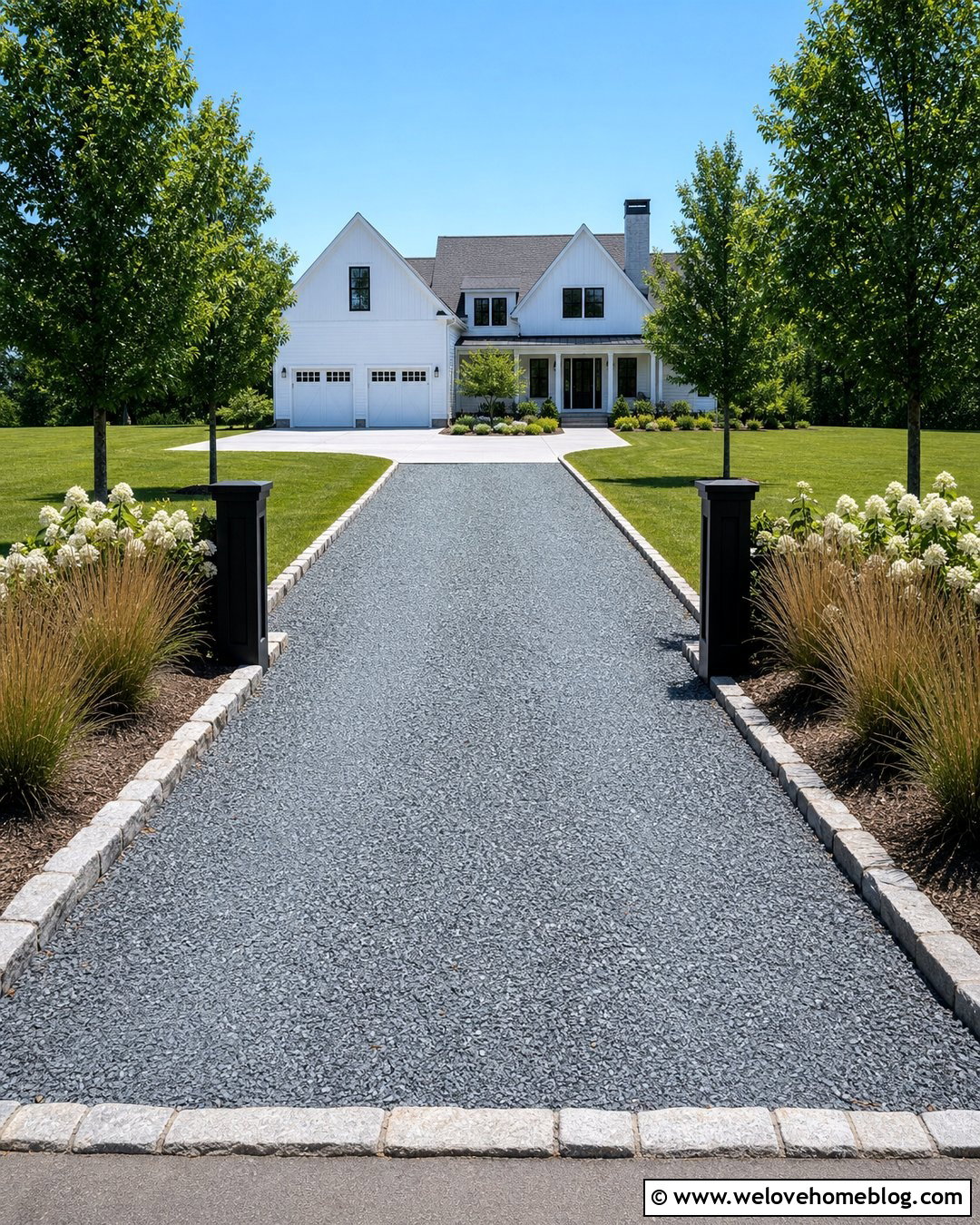
A crushed stone driveway gives a modern farmhouse an attractive country setting without requiring elaborate paving. Use angular gray or blue-gray stone that compacts more firmly than rounded gravel. Define the straight approach with weathered granite curbing or dark timber edging, depending on the architecture. Near the house, transition to a rectangular concrete or paver parking pad for a tidy garage entrance. Frame the long view with lawn, white flowering shrubs, native grasses, and several evenly spaced shade trees. Black entrance posts and simple lanterns can repeat details from the windows and roof. This complete design balances rural texture with modern order. Keep the driveway crown and drainage routes in mind so water does not create ruts. Occasional replenishment and grading will preserve the crisp, well-maintained surface.
18. Curved Gray Gravel Driveway With Lavender Borders
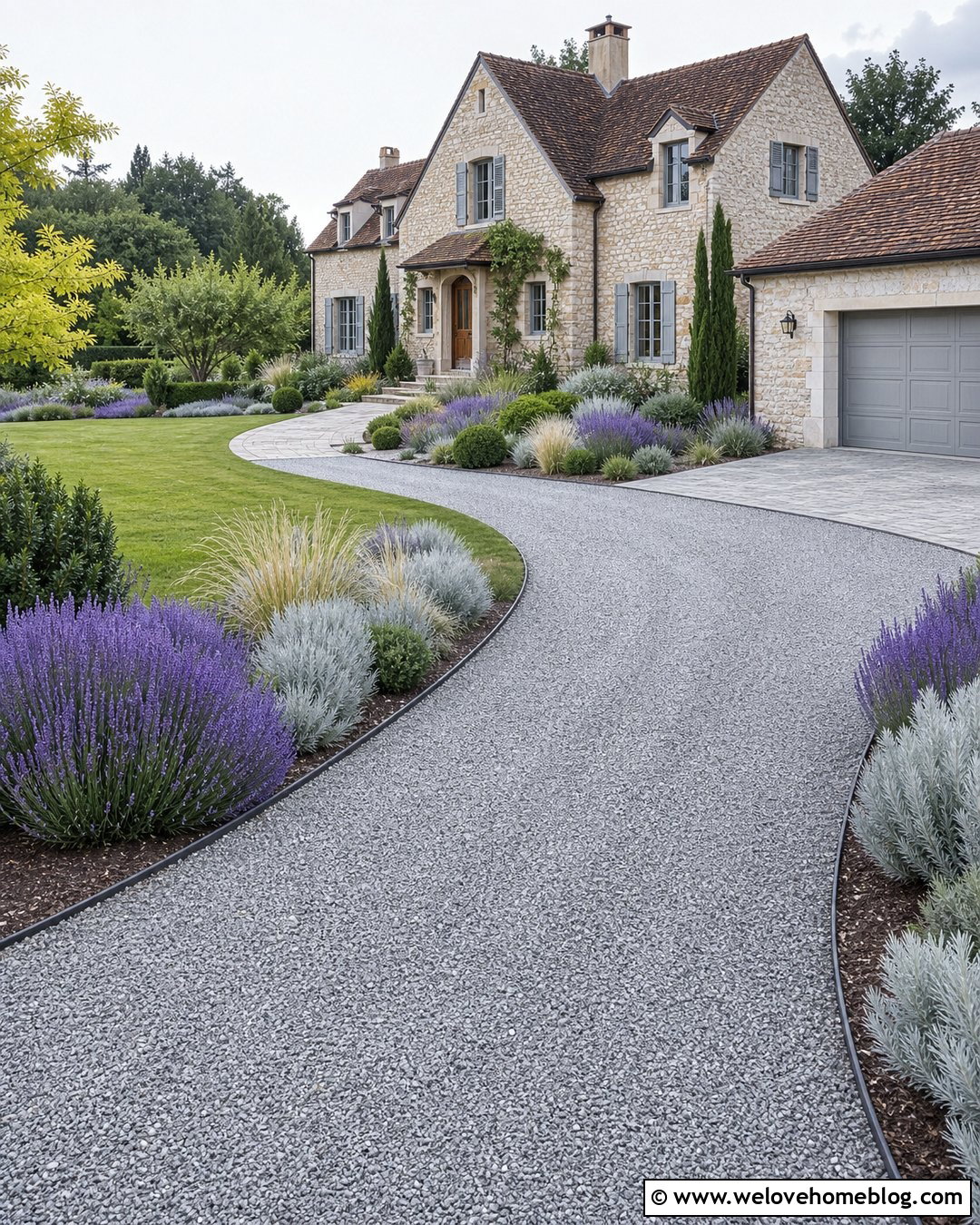
Picture a soft gray gravel driveway curving through wide borders of lavender and silvery foliage. The cool surface color supports the purple flowers while complementing stone, stucco, and painted brick homes. Use compacted angular gravel rather than loose round pebbles, and hold it in place with steel, granite, or concrete edging. Follow the outside curve with a broad lavender bed, then mix in ornamental grasses and small evergreen shrubs for year-round structure. Keep the inner curve low and open for safe visibility. A paver apron near the garage can prevent gravel from spreading onto adjacent surfaces. This driveway feels particularly suited to Mediterranean, French country, and cottage-style architecture. Repeating the same plants along the curve creates rhythm and makes the entire approach feel longer, softer, and thoughtfully landscaped.
19. Decomposed Granite Driveway With Desert Landscaping
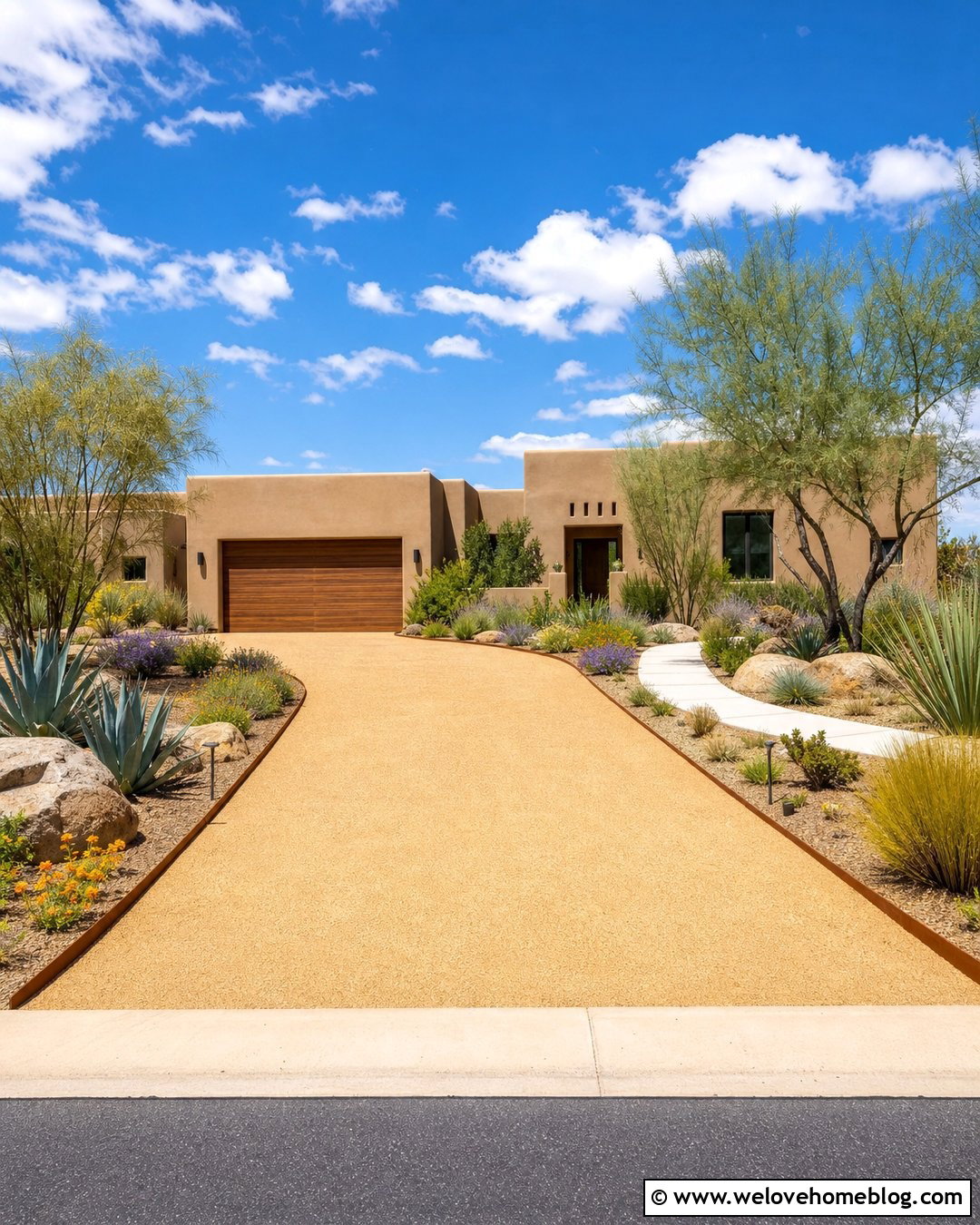
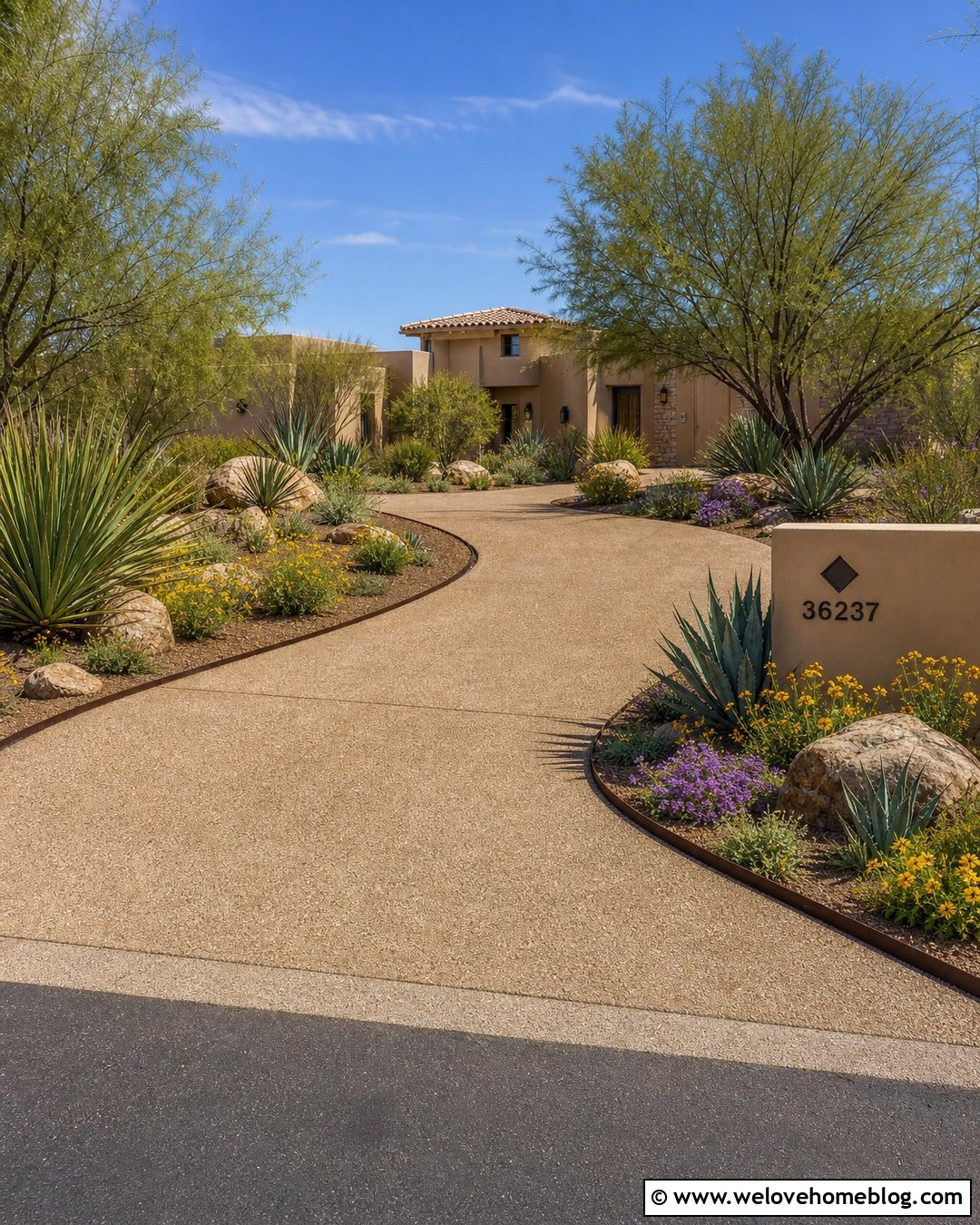
Decomposed granite creates a warm, natural-looking driveway for homes surrounded by dry-climate landscaping. Choose stabilized material in gold, rust, tan, or muted gray so the surface remains visually connected to the local soil and stone. A broad straight driveway with slightly curved corners feels clean without looking rigid. Use steel edging or low concrete curbs to separate the compacted surface from planting zones. Complete the design with agaves, yuccas, desert grasses, flowering perennials, and carefully placed boulders. Leave open gravel mulch between plants to avoid crowding the driveway. A smooth concrete walkway can offer an accessible route to the front entrance. This combination suits Southwestern, adobe, ranch, and contemporary houses. Proper compaction and runoff planning are important, particularly where sudden heavy rain may cross the property.
20. Resin-Bound Gravel Driveway With Stone Border
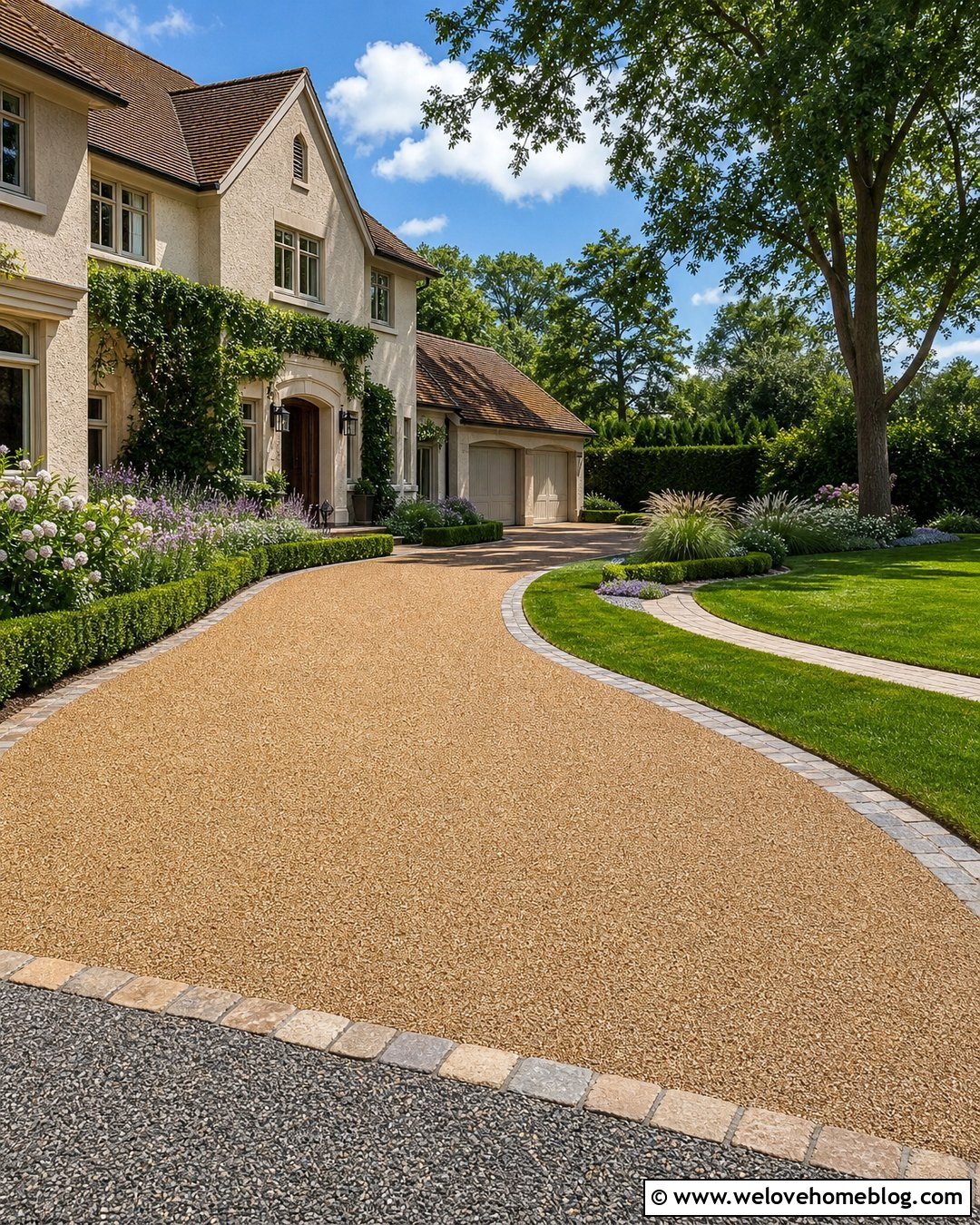
A resin-bound gravel driveway provides the appearance of small decorative stones within a smooth, unified surface. Choose a blend of tan, gold, or silver aggregate that supports the home’s exterior palette. A curved driveway can be outlined with natural stone setts, while a straight contemporary layout may use charcoal concrete pavers. Create a contrasting apron at the street and repeat the border near the garage for a complete composition. Low hedges, ornamental grasses, and neatly shaped planting beds will complement the refined finish. This surface works with both modern and traditional homes because the aggregate color can be adjusted to suit the architecture. Keep decorative patterns limited to a few functional areas. A restrained border and well-proportioned layout allow the subtle stone texture to remain the main visual feature.
21. Circular Paver Driveway With A Tree Island
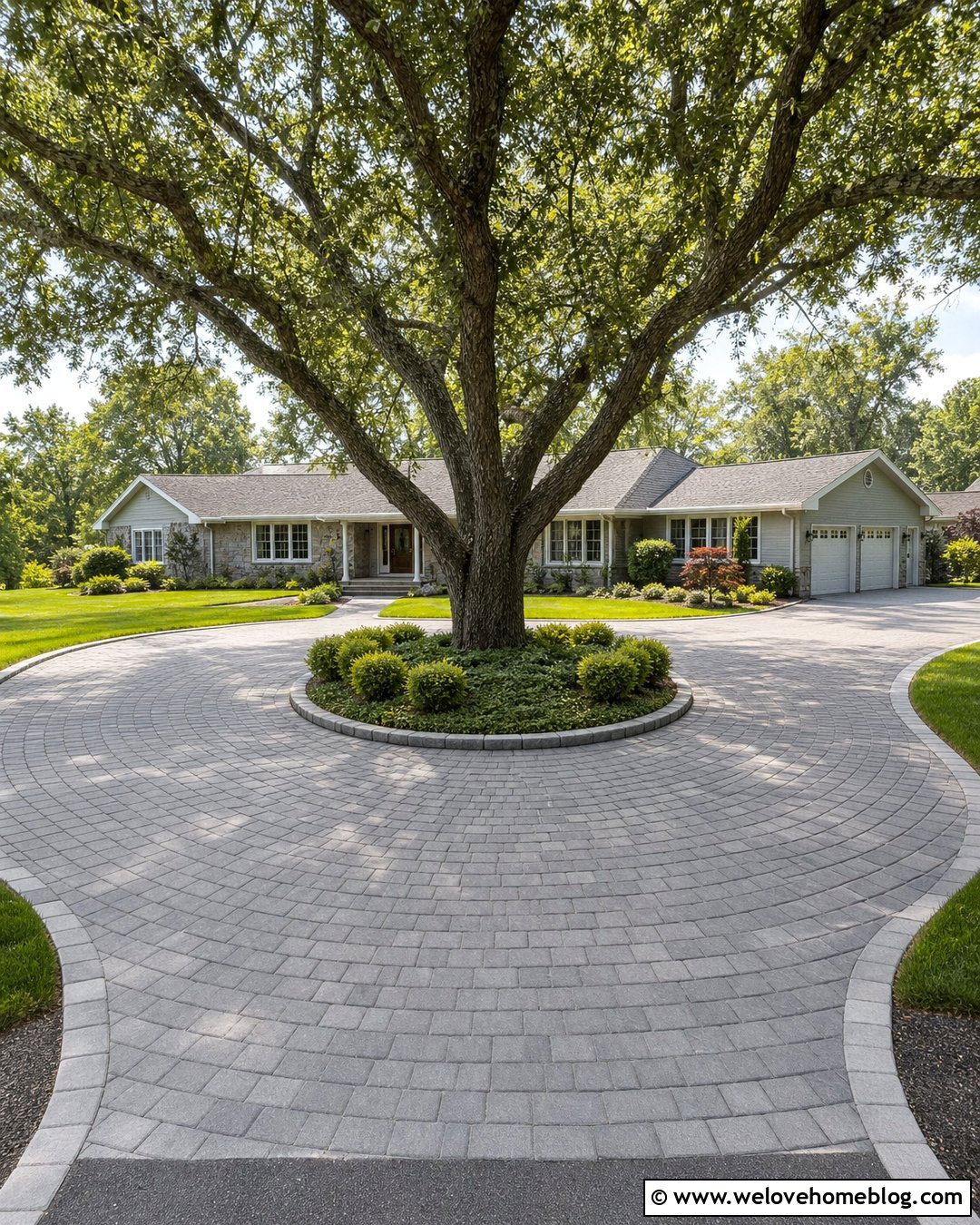
A circular concrete paver driveway built around a mature tree can preserve greenery while improving vehicle movement. Use warm gray or sand-colored pavers in a fan or modular pattern that follows the curve naturally. Protect the tree with a generous central planting island rather than paving close to its trunk. A low stone border can define the bed, while shade-tolerant ground cover and compact shrubs soften the base. Match the outer driveway edging to the center border for a coordinated result. This layout works well for large ranch, colonial, and traditional homes with deep front yards. Two clearly marked street openings allow vehicles to enter and leave without reversing. Before construction, have the tree’s roots and long-term health considered so the driveway and living centerpiece can coexist successfully.
22. Horseshoe Gravel Driveway With Brick Aprons
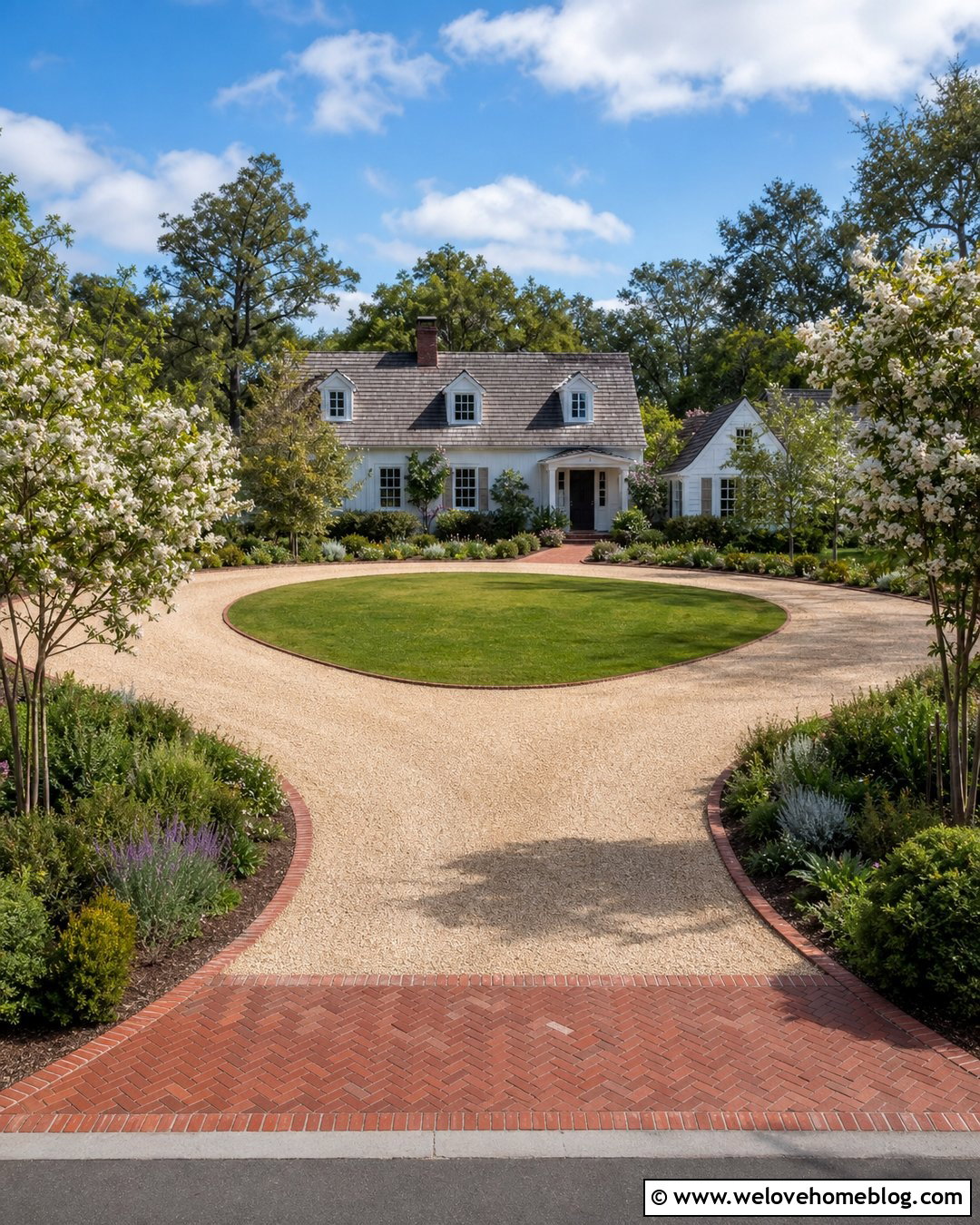
A horseshoe gravel driveway creates convenient circulation while bringing relaxed country character to a broad front yard. Use compacted tan or gray crushed gravel for the main loop, then install herringbone brick aprons at both street entrances. The brick sections create visual anchors and help keep loose material away from the road. Border the horseshoe with matching brick, stone curbing, or sturdy metal edging. An open lawn or simple garden can occupy the center, allowing clear views of the house. Along the outside edge, add native shrubs, flowering trees, and informal perennial beds. This layout works naturally with farmhouses, cottages, and traditional rural homes. Make both entrances wide enough for comfortable turns, and avoid planting tall shrubs where drivers need to see approaching traffic.
23. Curved Natural Stone Driveway
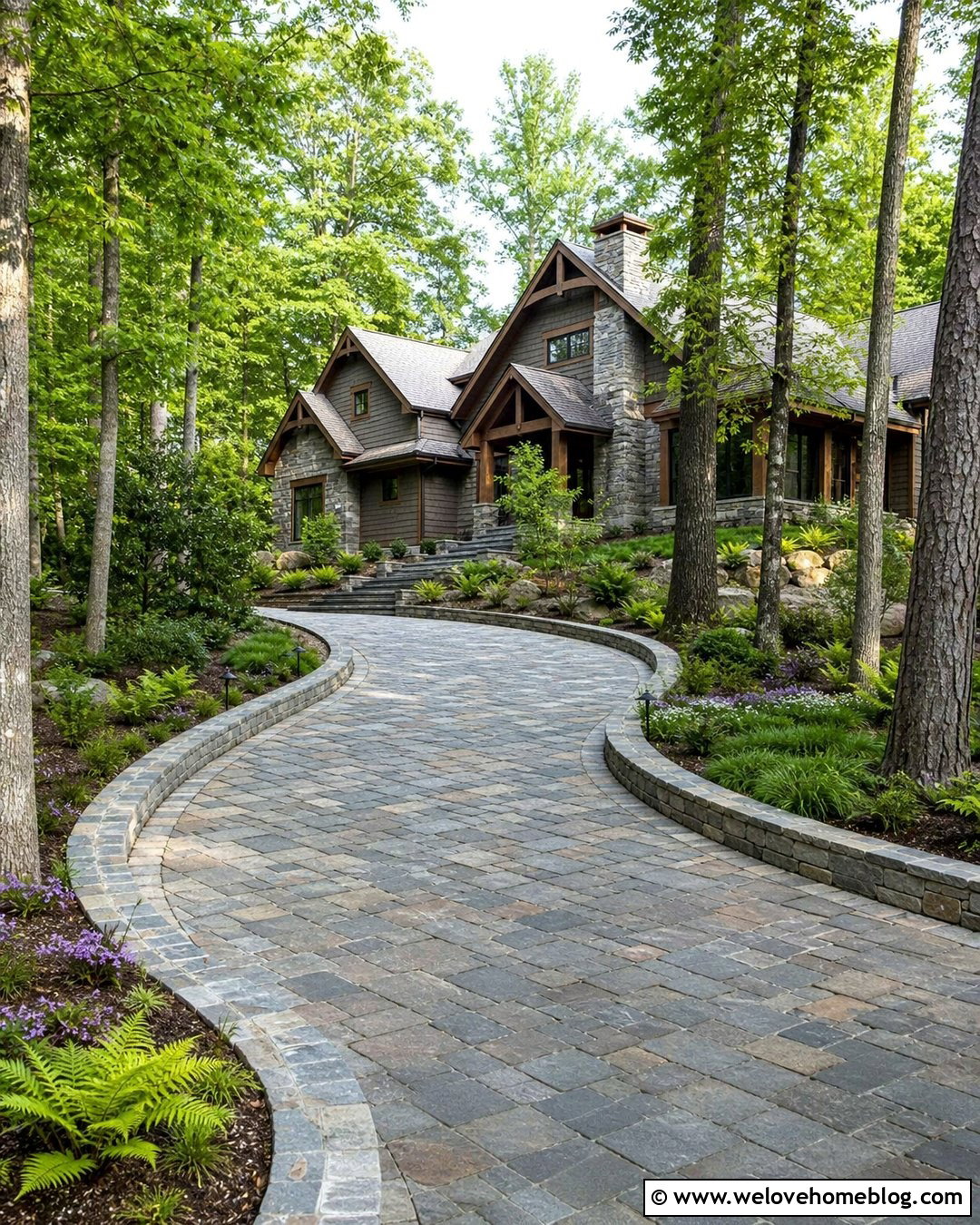
Irregular natural stone pavers can transform a curved driveway into an organic extension of the landscape. Select durable stone in compatible thicknesses and a blend of gray, brown, and muted beige tones. Lay the pieces with controlled joints so the surface feels handcrafted but remains suitable for vehicles. A stone curb or concealed structural edge will maintain the sweeping outline. Surround the drive with woodland planting, ferns, native shrubs, flowering ground cover, and existing mature trees. This design works particularly well on wooded properties with Craftsman, mountain, or rustic contemporary homes. Use the same stone on porch steps or the front walkway to create continuity. Since the pavement is visually active, avoid adding multiple decorative borders. Let the curved shape, natural material, and layered greenery define the complete entrance.
24. Concrete Ribbon Driveway With Grass Center
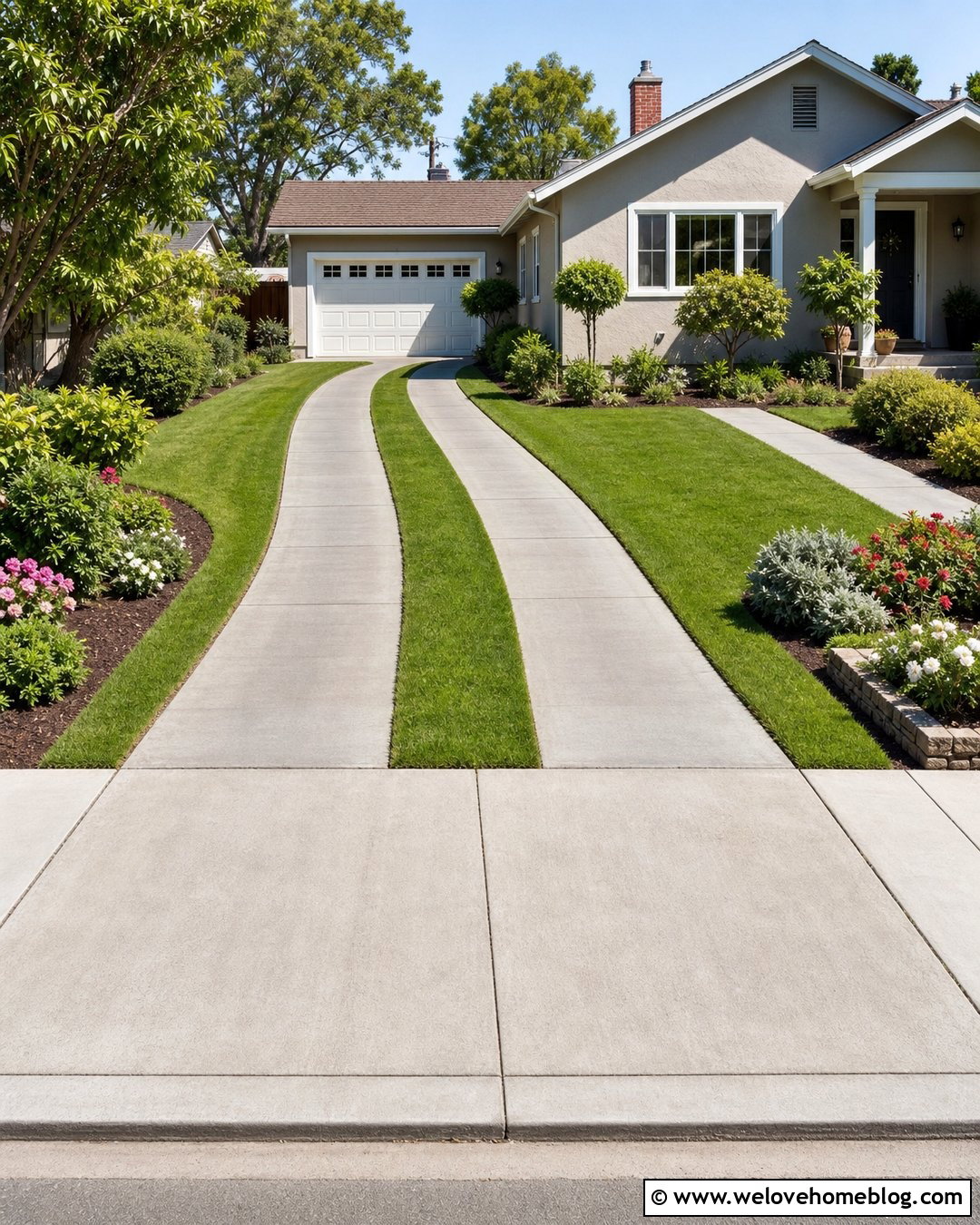
A concrete ribbon driveway uses two paved tire tracks with a planted strip running between them. This simple layout reduces the visual width of the hard surface and gives a small front yard more greenery. Choose broom-finished gray concrete tracks with clean, straight edges, or let them curve gently toward a detached garage. Fill the center with durable turf or a low ground cover suited to occasional contact. A matching concrete apron at the street provides a stable transition and connects both tracks. Frame the drive with simple flower beds, a narrow walkway, and low shrubs. Ribbon driveways suit cottages, bungalows, and older urban homes where a full slab might feel too dominant. Accurate track spacing, a strong base, and proper drainage are essential for practical everyday vehicle access.
25. Asphalt Driveway With A Paver Parking Court
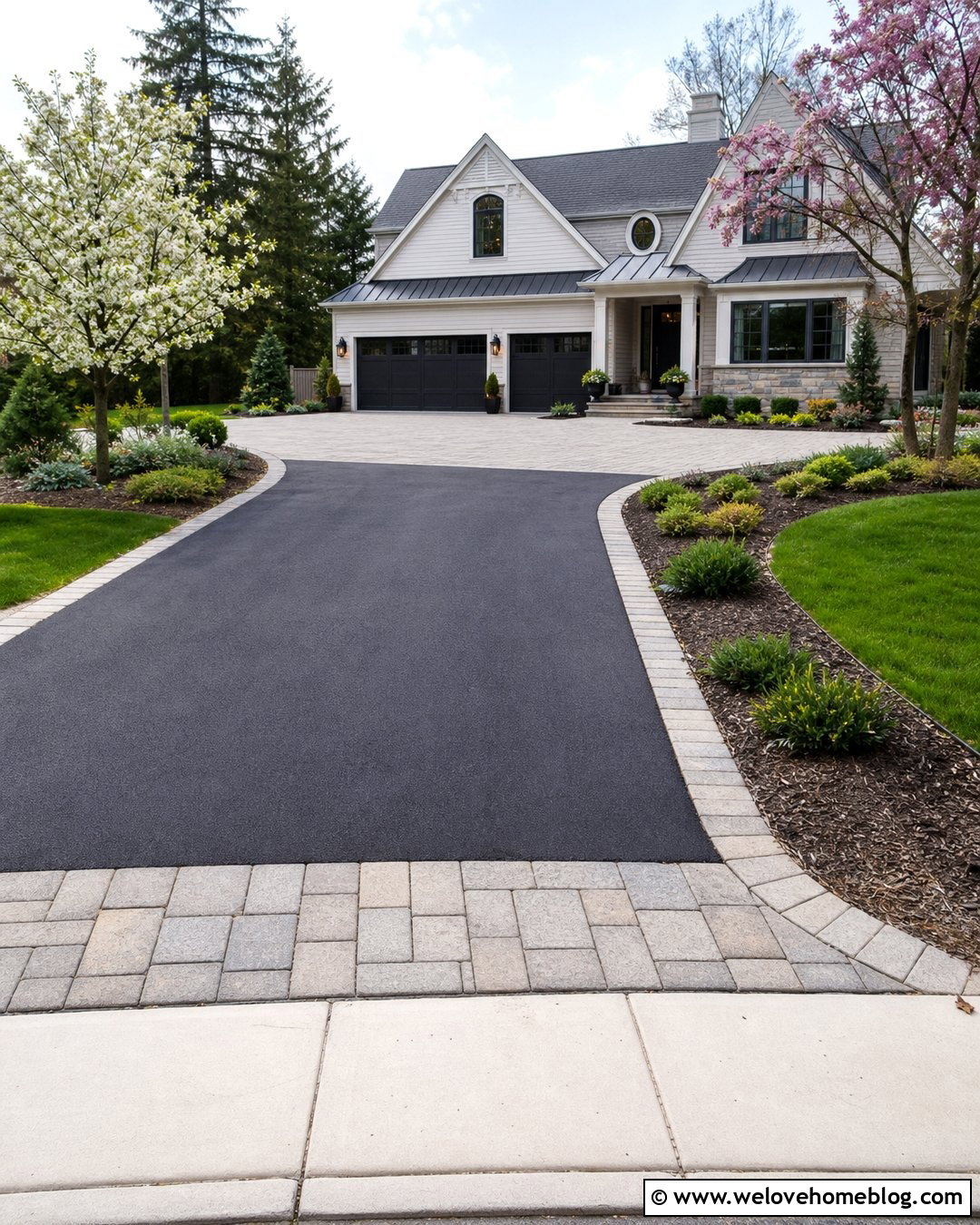
Mixing black asphalt with a paver parking court allows each material to serve a clear purpose. Use asphalt for the longer approach, then transition into a wide area of gray or tan concrete pavers near the garage and front entrance. A matching paver apron at the street will make the design feel connected from end to end. Curved stone edging can guide the asphalt through the yard, while the more formal paver court organizes guest parking and turning. Add a central planting bed or a row of low shrubs to soften the wider paved area. This combination suits large suburban, transitional, and country properties. Keep the material transitions flush and align paver bands with doors or walkways. The completed driveway offers practicality on its longest section and greater detail where visitors experience it closely.
26. Flagstone Driveway With Ground Cover Joints
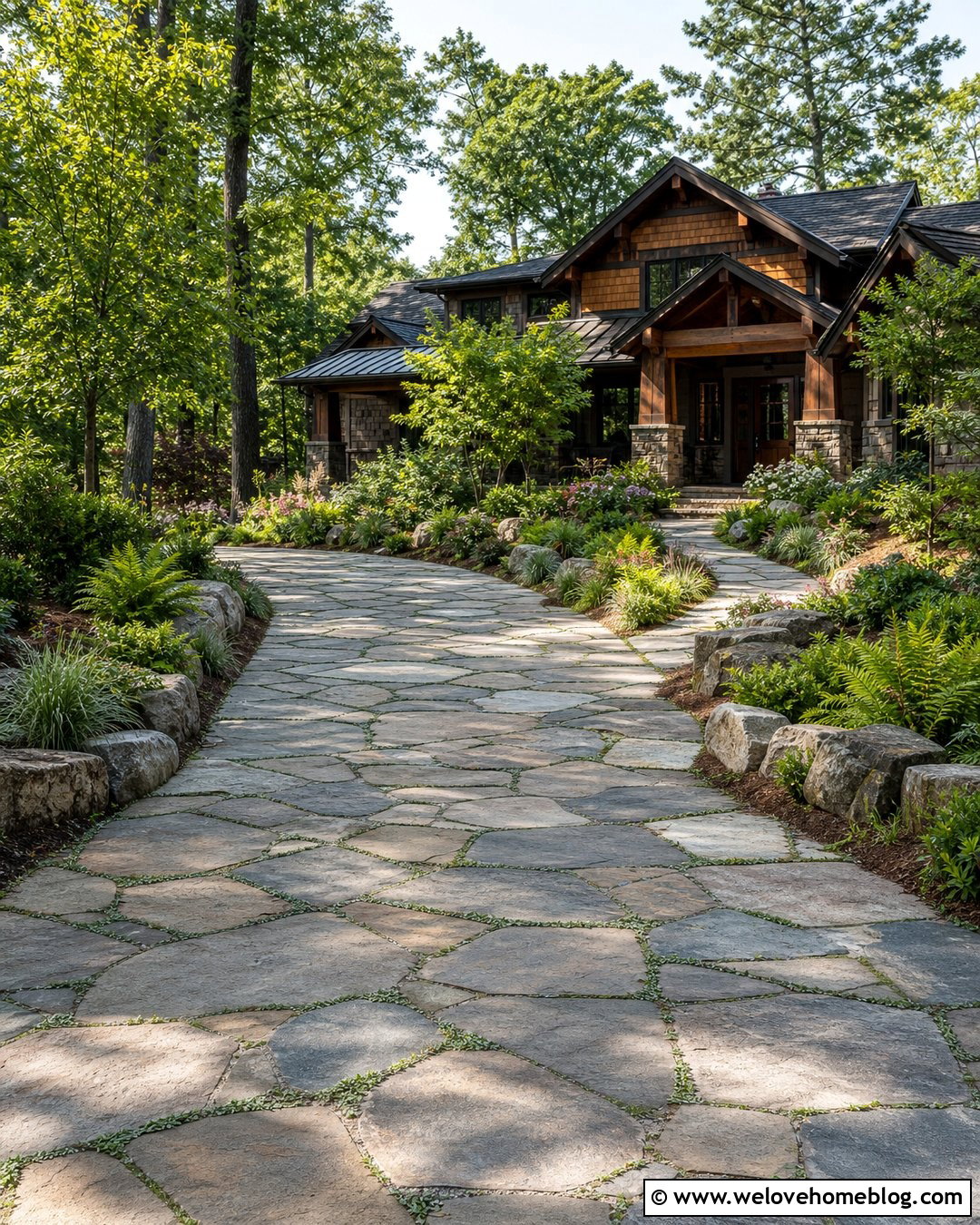
A flagstone driveway with planted joints can feel like a garden path enlarged for vehicle access. Select thick, driveway-rated stone in broad irregular shapes and muted gray, buff, or brown tones. Fill carefully sized joints with durable low ground cover where conditions allow, or use compacted gravel for easier maintenance. A gently curved layout will reinforce the natural appearance. Edge the driveway with larger matching stones, then frame it with ferns, ornamental grasses, flowering shrubs, and one or two specimen trees. This look complements rustic homes, cottages, and Craftsman architecture. Continue the same flagstone toward the porch, but reduce its width to distinguish the walkway. The supporting base must carry vehicle weight evenly so individual stones do not shift, settle, or create uncomfortable changes in surface height.
27. Crushed Shell Driveway For A Coastal House
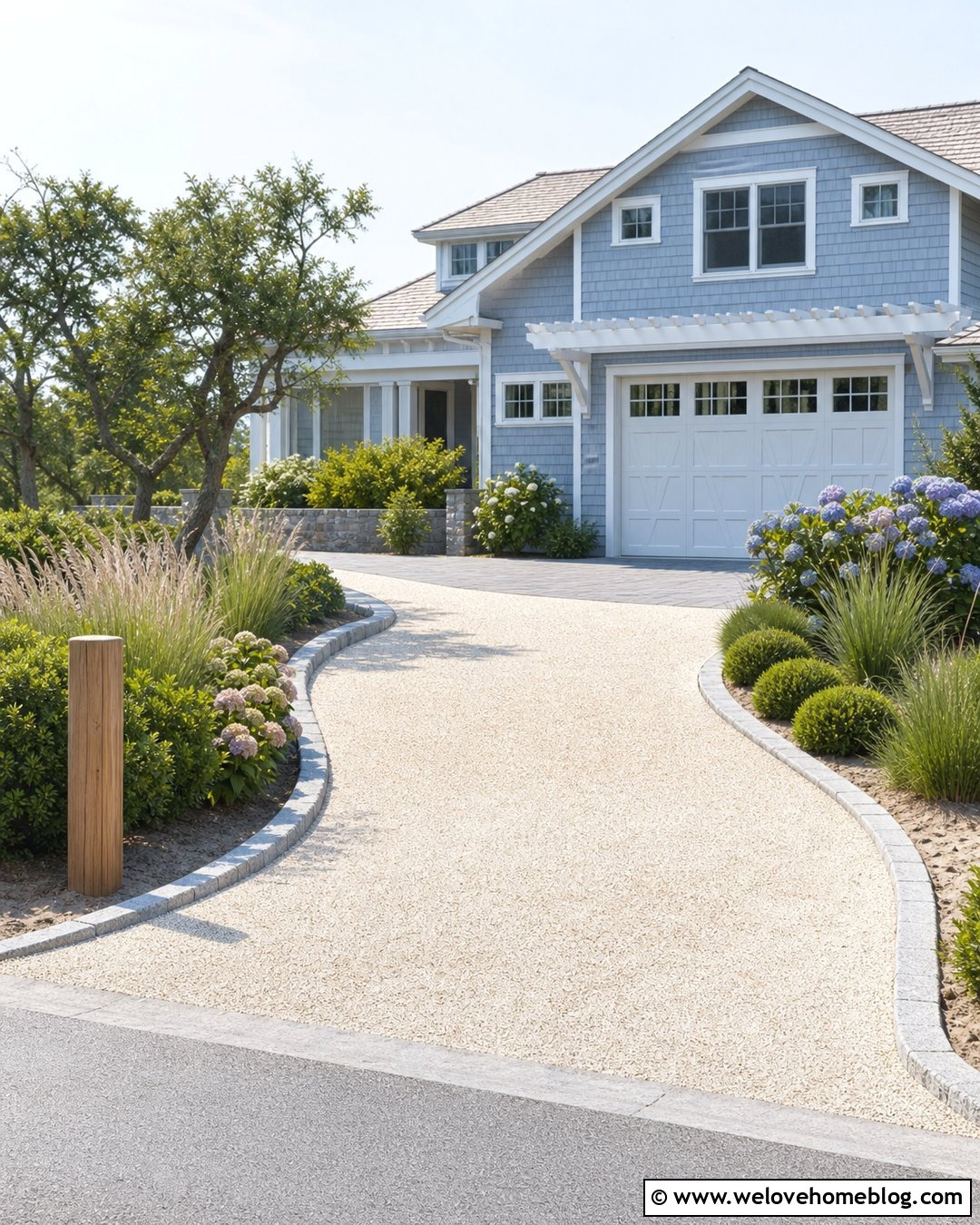
A pale crushed shell driveway reflects the relaxed character of a coastal home. Its cream and off-white tones pair naturally with light siding, blue-gray shutters, and weathered wood details. Use a straight or softly curved layout contained by concrete, stone, or durable recycled-plastic edging. Near the garage, add a light gray paver apron for a cleaner parking surface and a clear transition. Surround the driveway with salt-tolerant grasses, rounded evergreen shrubs, hydrangeas, and sandy planting beds suited to the property. Simple wooden address posts or low stone entrance pillars can mark the approach. Crushed shell is regionally appropriate in some coastal areas, but availability and local installation requirements vary. A properly built base and regular raking help the driveway remain even, bright, and intentionally maintained.
28. Grass Paver Driveway With Concrete Borders
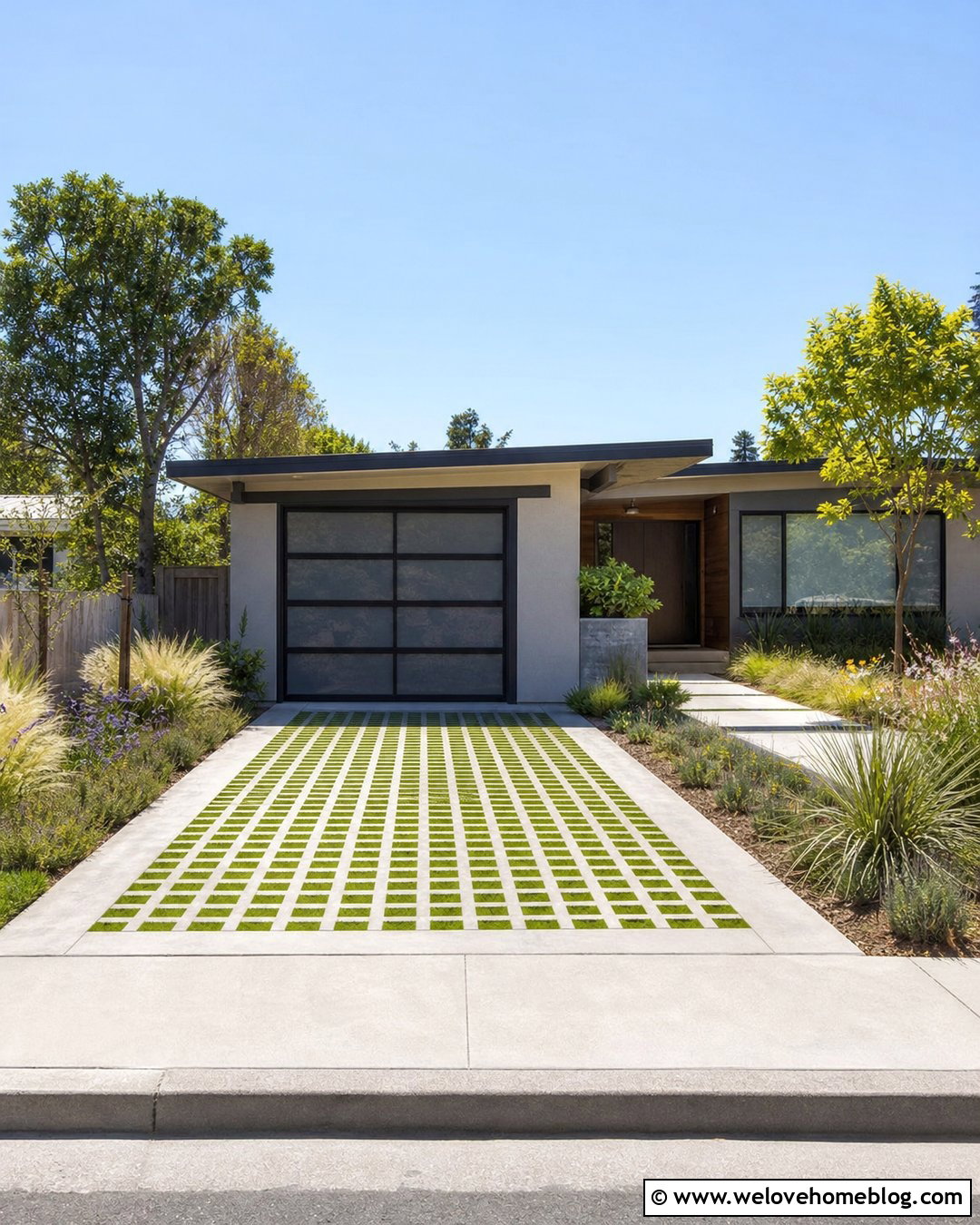
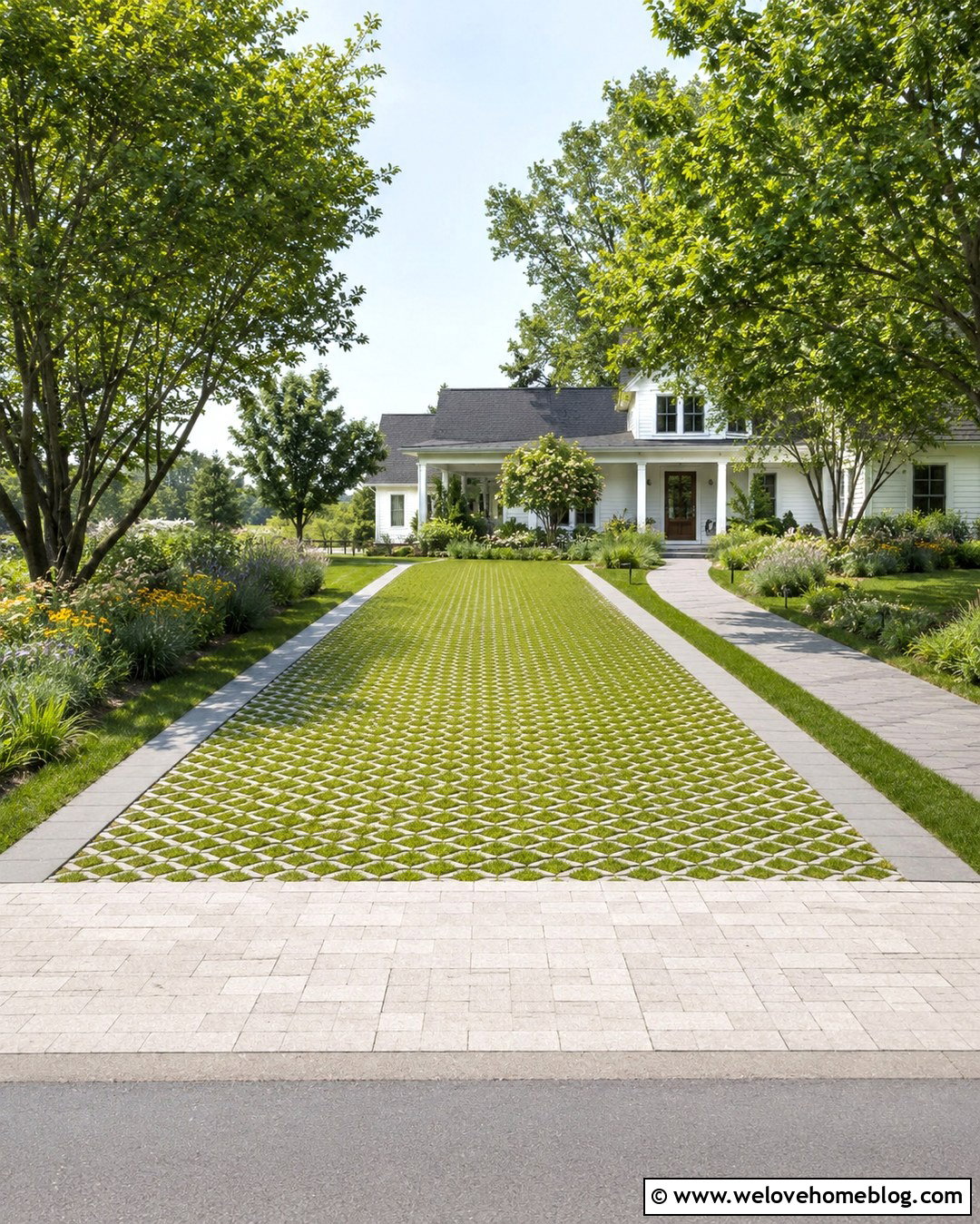
Grass pavers create a green driveway while maintaining an organized structural grid beneath the surface. Frame the paver field with smooth concrete borders to define the usable area and provide stable edges near walkways and planting beds. A straight layout leading to a modern or mid-century home keeps the green pattern looking controlled. Use conventional concrete at the sidewalk crossing and garage threshold for comfortable transitions. Surround the driveway with low ornamental grasses, native perennials, and simple trees rather than a highly formal planting scheme. The grass variety should suit local sunlight, climate, and expected traffic. This design is most successful when vehicles do not remain in exactly the same position every day for long periods. Crisp boundaries and healthy, evenly maintained turf make the driveway feel deliberate rather than overgrown.
29. Modern Concrete Driveway With River Rock Bands
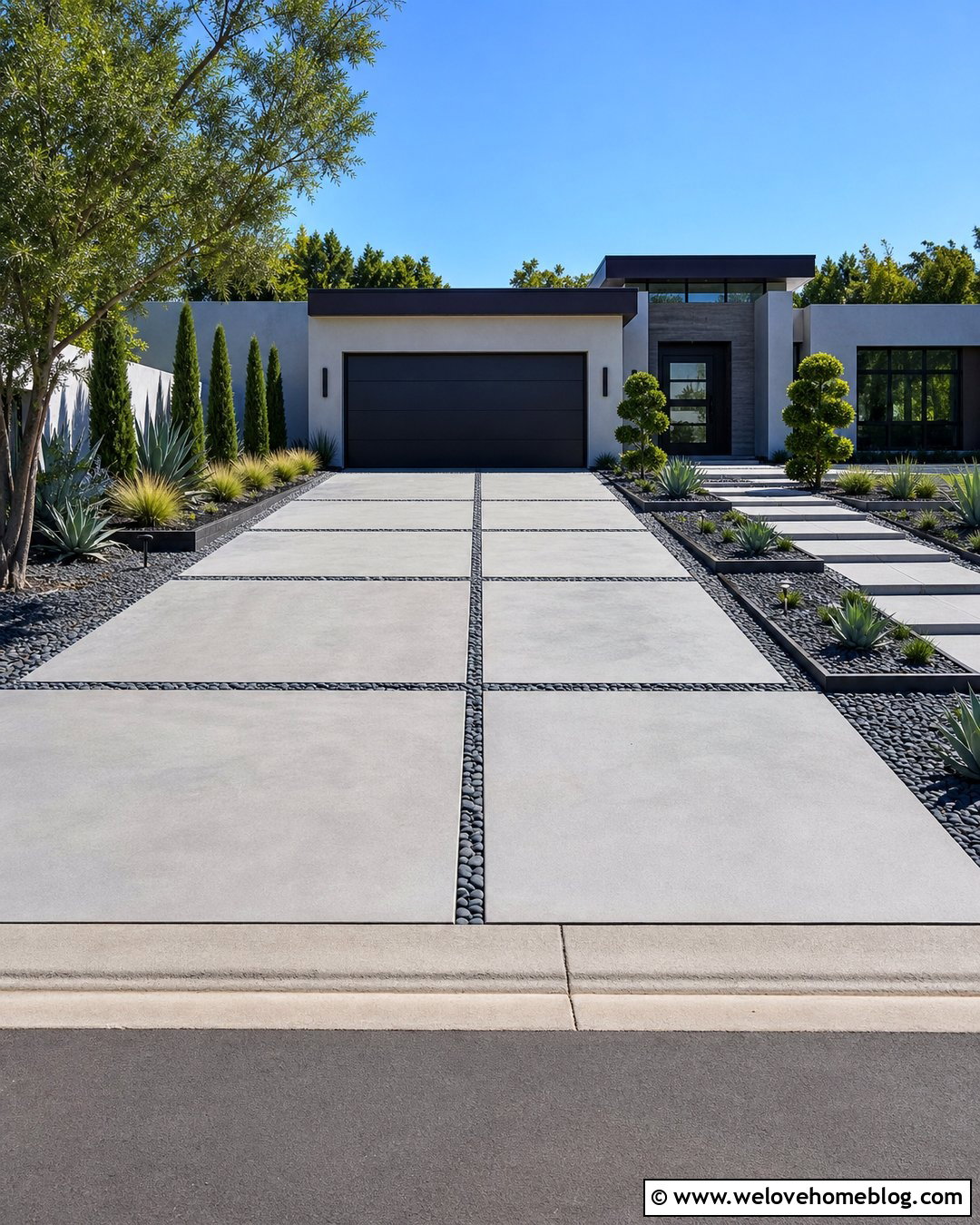
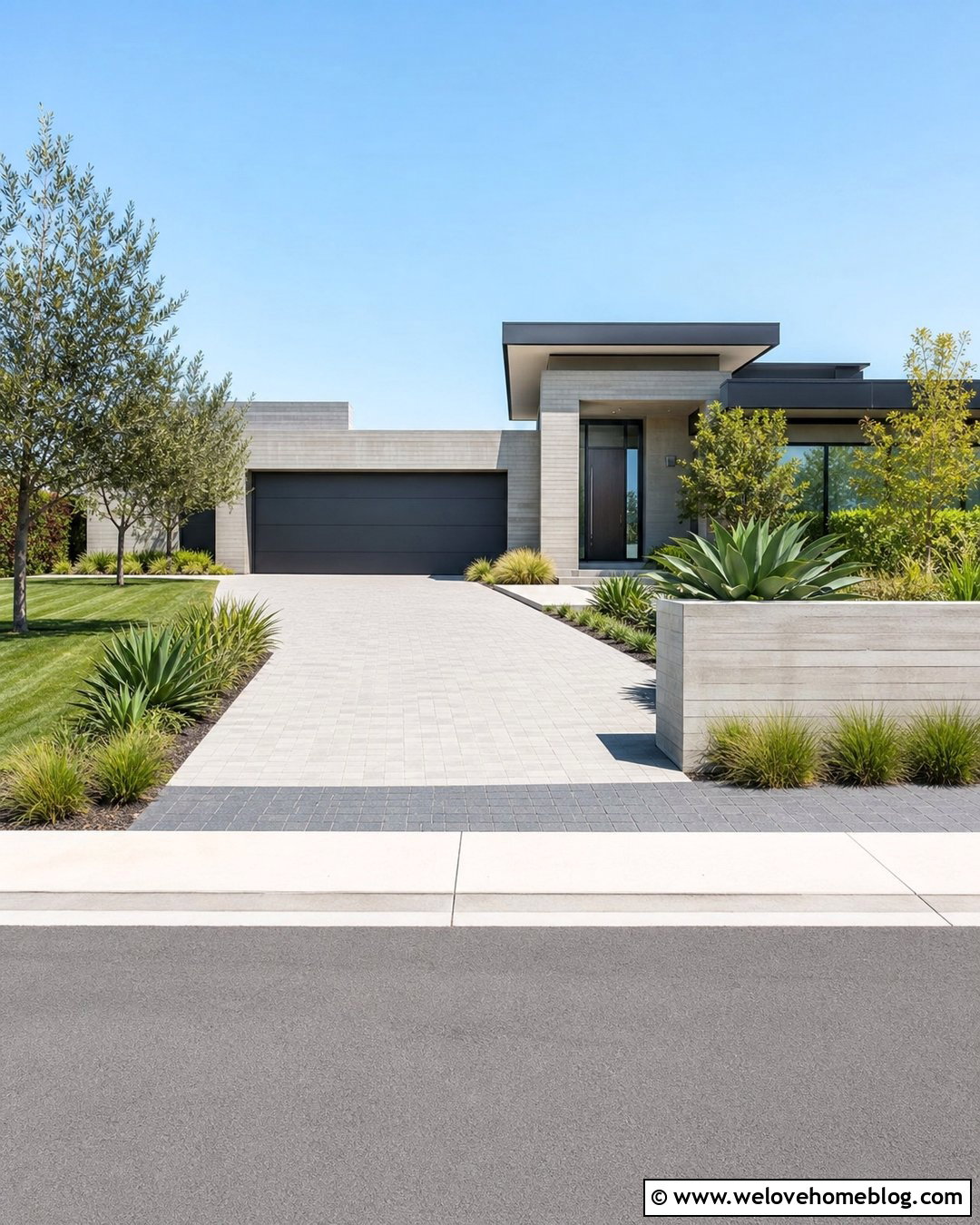
Wide bands of river rock can divide a modern concrete driveway into bold, easy-to-read sections. Use smooth light gray concrete slabs and place narrow channels of dark charcoal pebbles between selected panels. A hidden grid or stabilizing system can keep the stones contained and reduce movement. Align each band with the garage doors, entry path, or major lines in the facade. Surround the driveway with rectangular beds containing sculptural agaves, ornamental grasses, and clipped evergreen forms. Concrete curbs or black steel edging will maintain sharp boundaries. This combination works especially well with flat-roofed, contemporary, and desert-modern homes. Limit the number of rock bands so they remain practical around tires and foot traffic. The strongest result comes from repeating a few clear materials across the driveway, walkway, and front landscape.
30. Gravel Driveway With Farmhouse Gate And Pillars
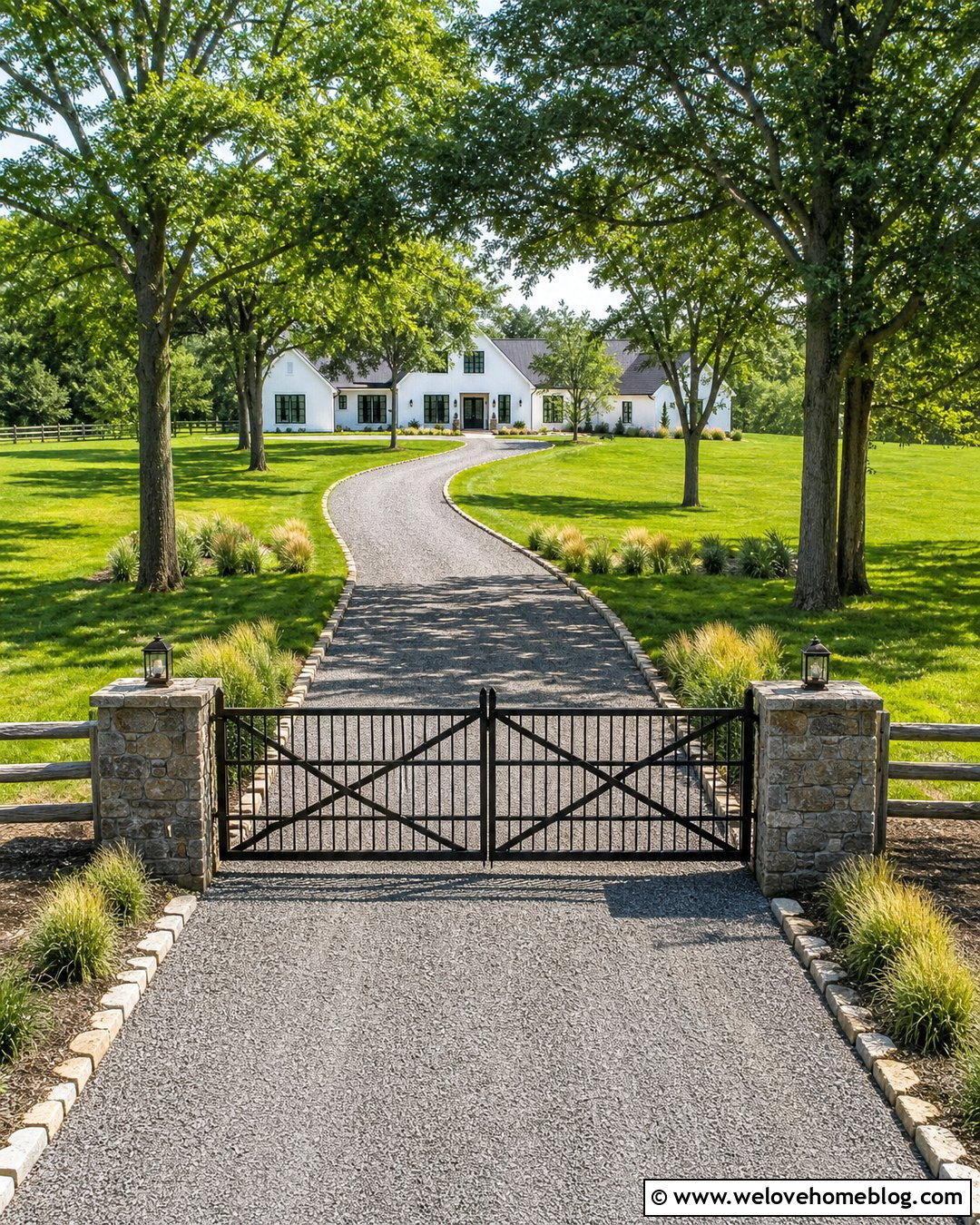
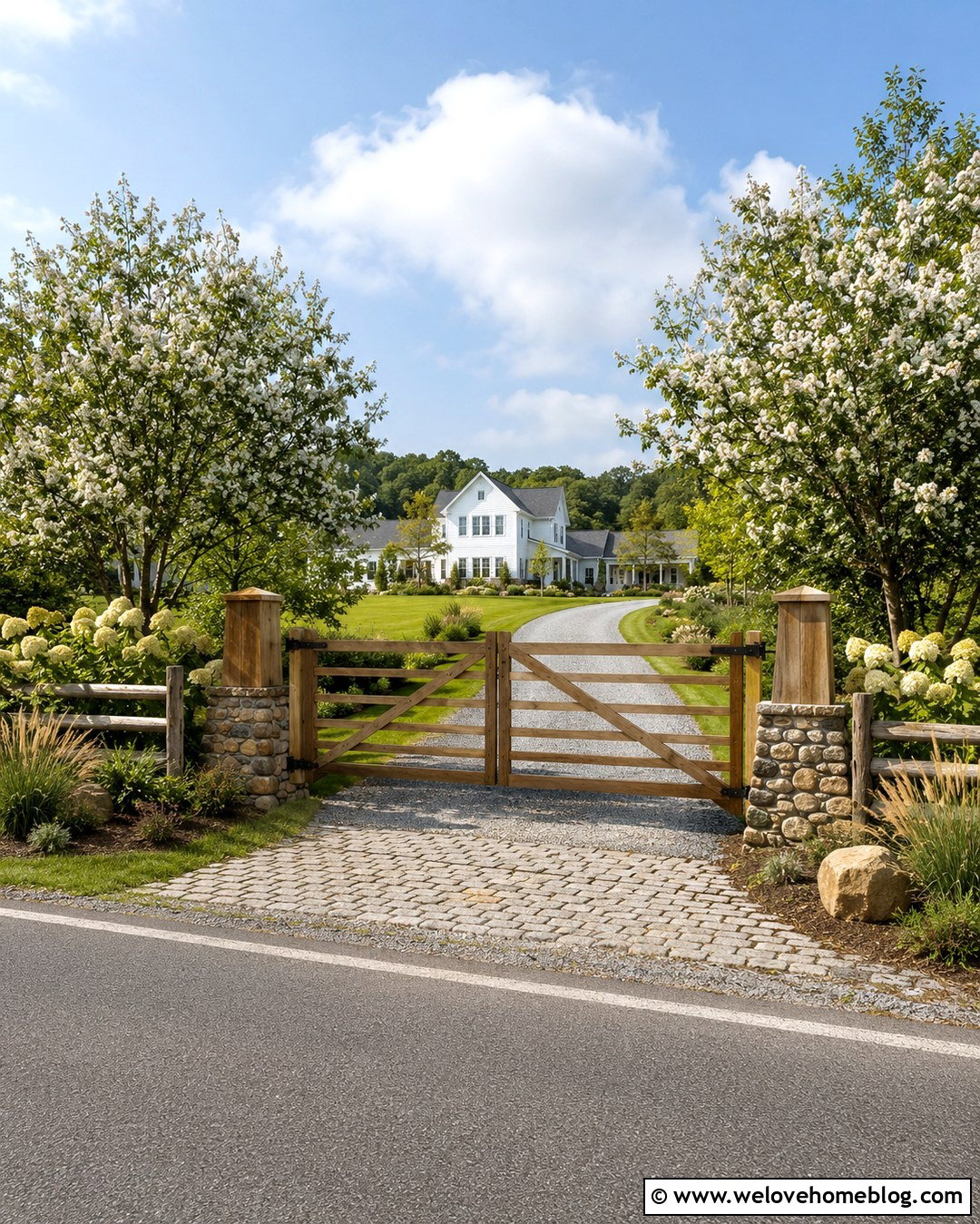
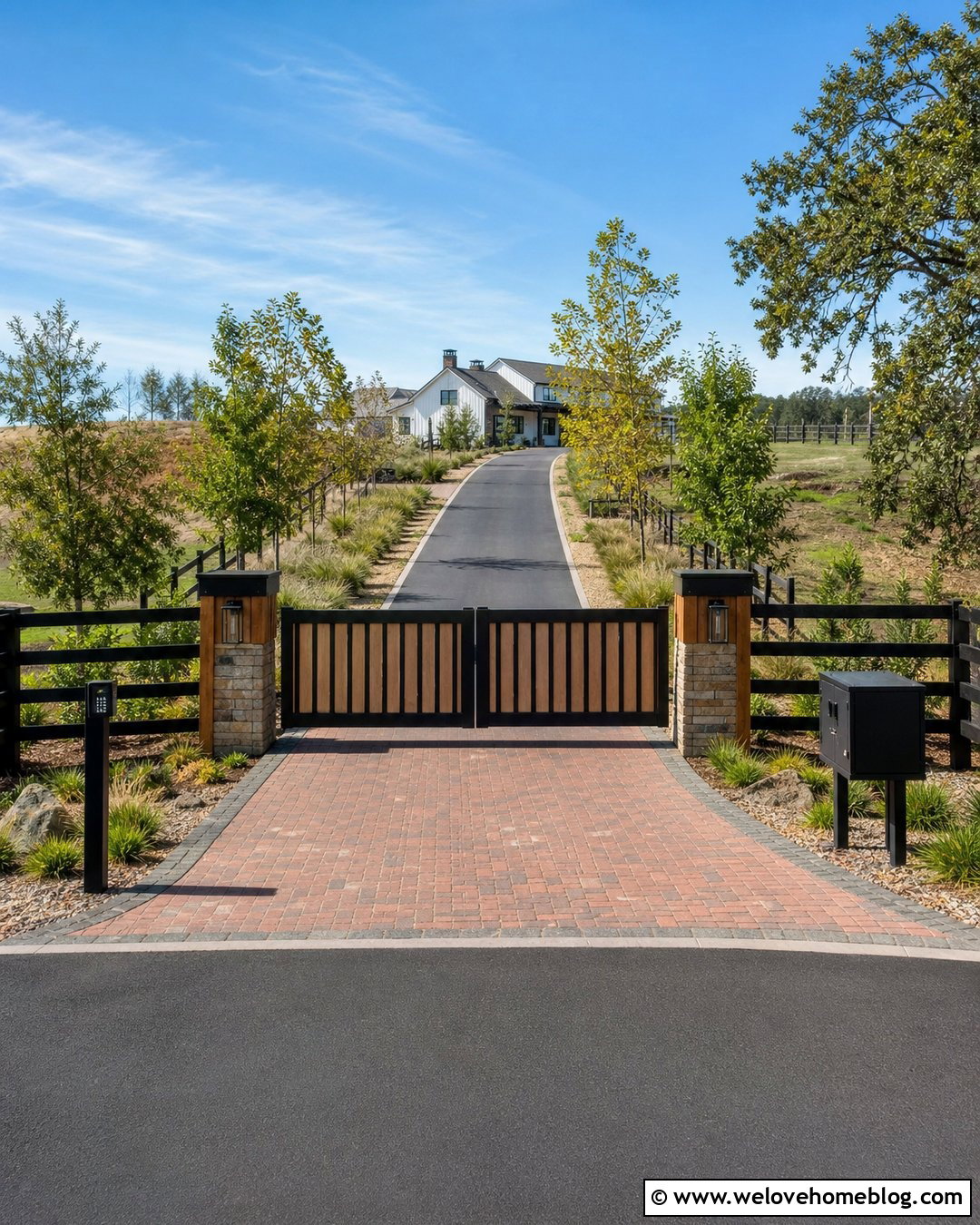
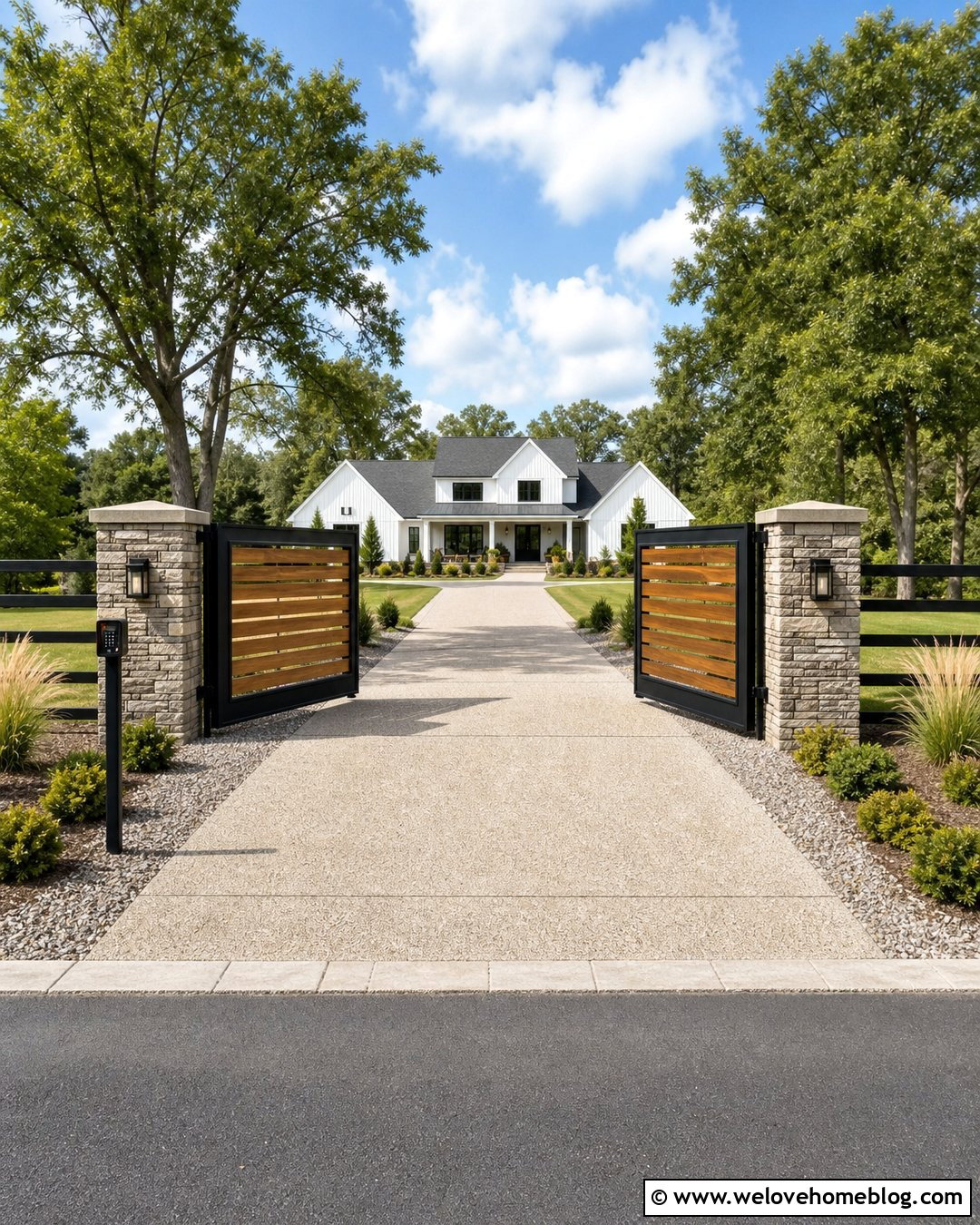
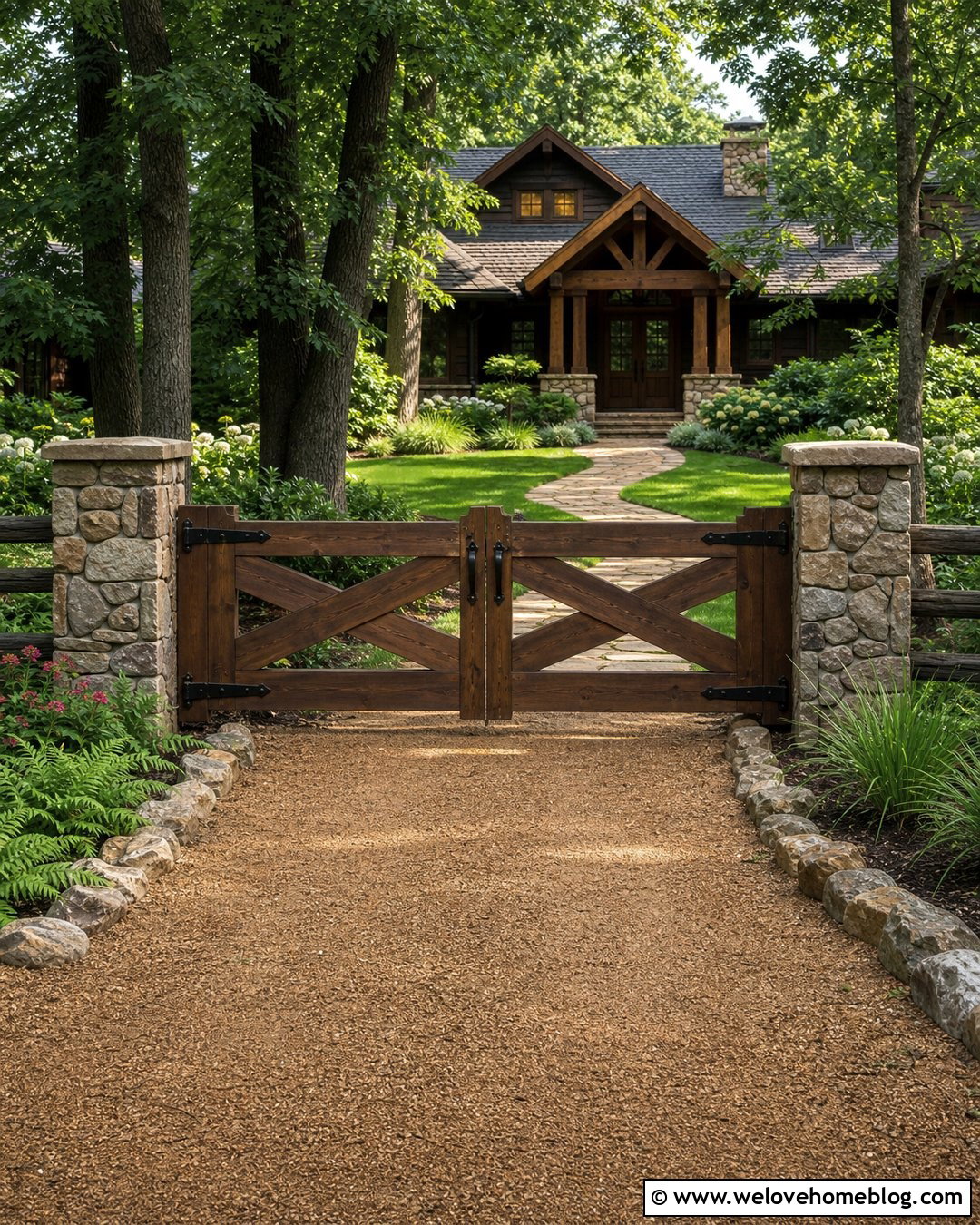
A long gravel driveway gains a welcoming focal point from a simple farmhouse gate set between substantial pillars. Use compacted gray crushed stone for the straight or gently curved approach. Build the pillars from weathered brick, fieldstone, or painted masonry that coordinates with the house. A black metal or white timber gate can mark the entrance while preserving broad views across the property. Continue low stone edging past the pillars, then line the driveway with lawn, split-rail fencing, native grasses, and occasional shade trees. Set the gate far enough inside the property to provide a safe vehicle waiting area. This complete design suits modern farmhouses, country homes, and rural estates. Keep signs, lights, and hardware simple so the gate enhances the architecture without making the entrance feel crowded or overly formal.
31. Asphalt Driveway With Brick Entrance Pillars
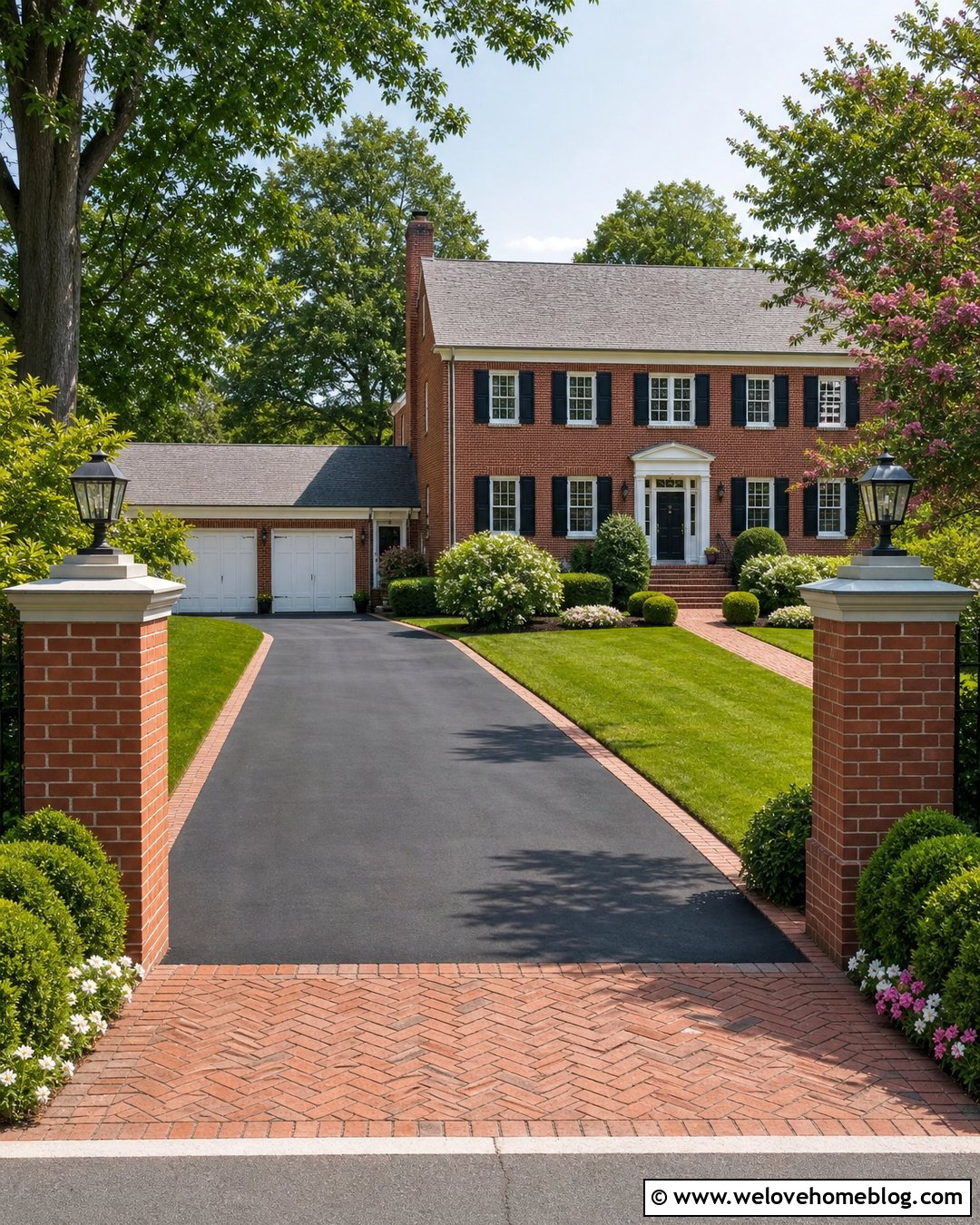
Brick entrance pillars can give a straightforward asphalt driveway a clear identity from the street. Choose brick that matches or closely complements the house, then position the pillars outside the required driving width. Add simple stone caps and understated lanterns for a finished appearance. A short herringbone brick apron between the pillars creates a smooth visual transition into the black asphalt surface. Continue a narrow brick edge along the first section of driveway, gradually ending it near the landscaped front yard. Symmetrical shrubs, low flowering plants, and small ornamental trees can frame the entrance without blocking visibility. This look works well for colonial, Georgian, and traditional brick homes. Carefully scaled pillars feel connected to the property, while oversized structures may overwhelm a standard residential driveway and make vehicle access unnecessarily difficult.
32. Narrow Concrete Driveway With Side Landscaping
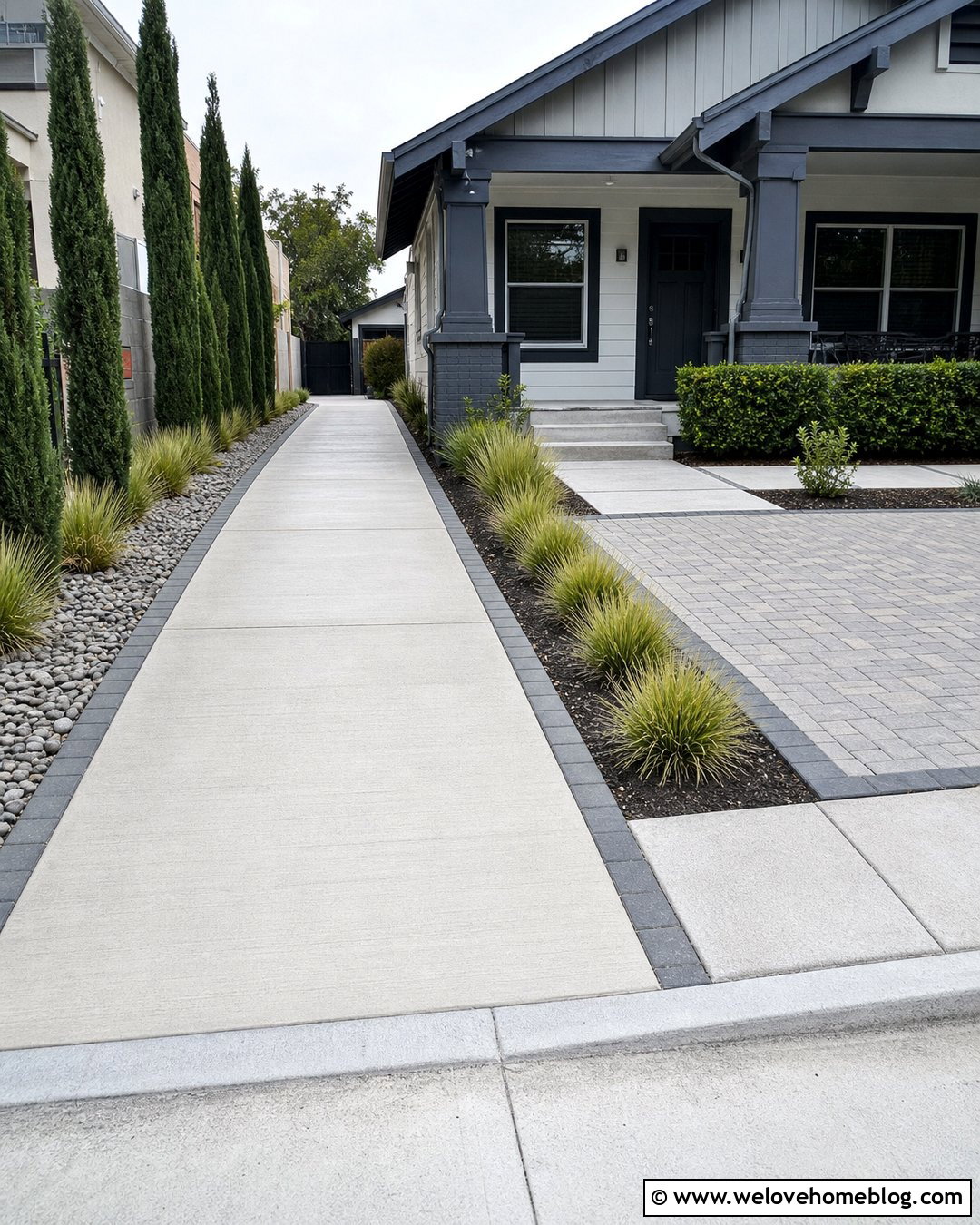
A narrow driveway can feel attractive and comfortable when the pavement and landscaping are planned together. Use light gray poured concrete with a simple broom finish to keep the space visually open. A thin charcoal paver border will define the edges without consuming much width. On the house side, install a slim walkway or gravel drainage strip. Along the opposite edge, create a narrow planting bed with upright grasses, compact shrubs, and columnar trees. Avoid thorny or spreading plants that could scratch vehicles or obstruct doors. A small paver parking pad near the garage can provide extra maneuvering room. This design suits urban cottages, bungalows, and compact suburban homes. Bright materials, controlled planting, and an uncluttered route help the limited driveway appear wider and better connected to the entrance.
33. Long Gravel Driveway With Tree-Lined Borders
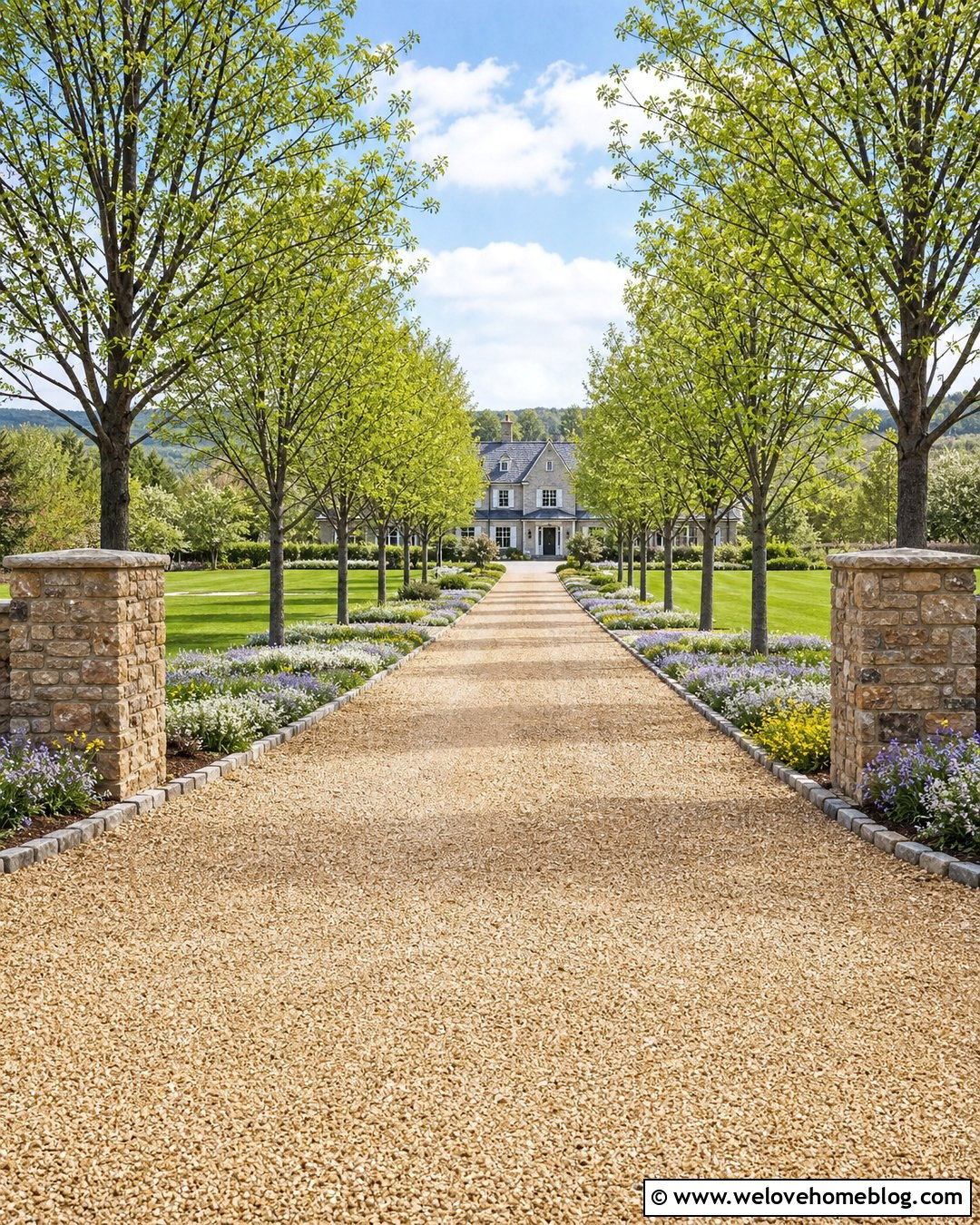
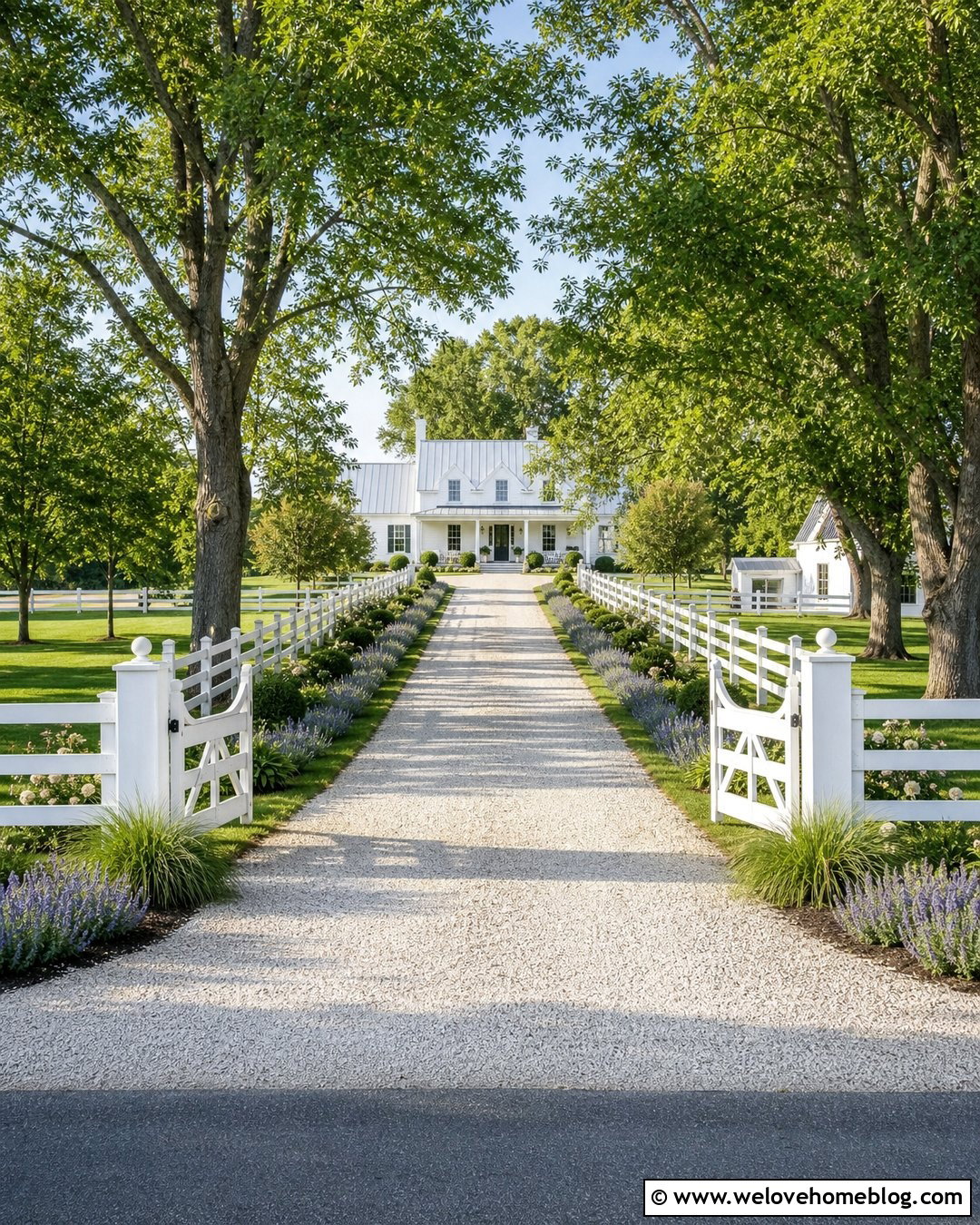
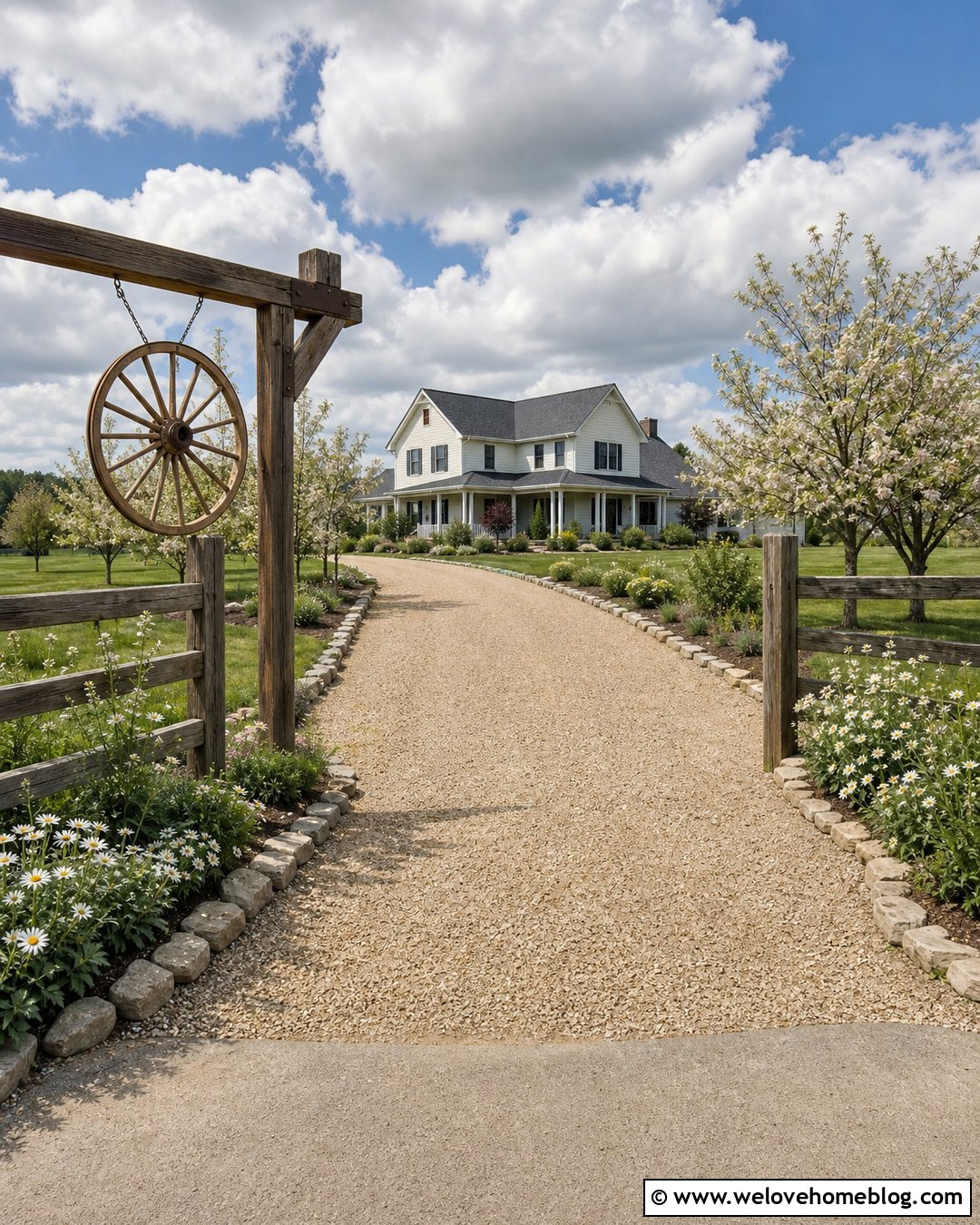
Few approaches feel as established as a long gravel driveway framed by evenly spaced trees. Use compacted gray or warm beige crushed stone in a straight layout that creates a strong view toward the house. Natural stone curbing or discreet metal edging will keep the gravel contained along nearby lawn. Plant matched deciduous trees at generous intervals, leaving enough distance for future trunk and root growth. Beneath them, use simple grass, low ground cover, or broad sweeps of spring bulbs rather than dense shrubs. Stone pillars and a gravel apron can mark the entrance without interrupting the long perspective. This design is ideal for farmhouses, country residences, and large traditional homes. A well-crowned surface, drainage ditches, and occasional grading will help the extended driveway remain neat and usable.
34. Sloped Concrete Driveway With Retaining Walls
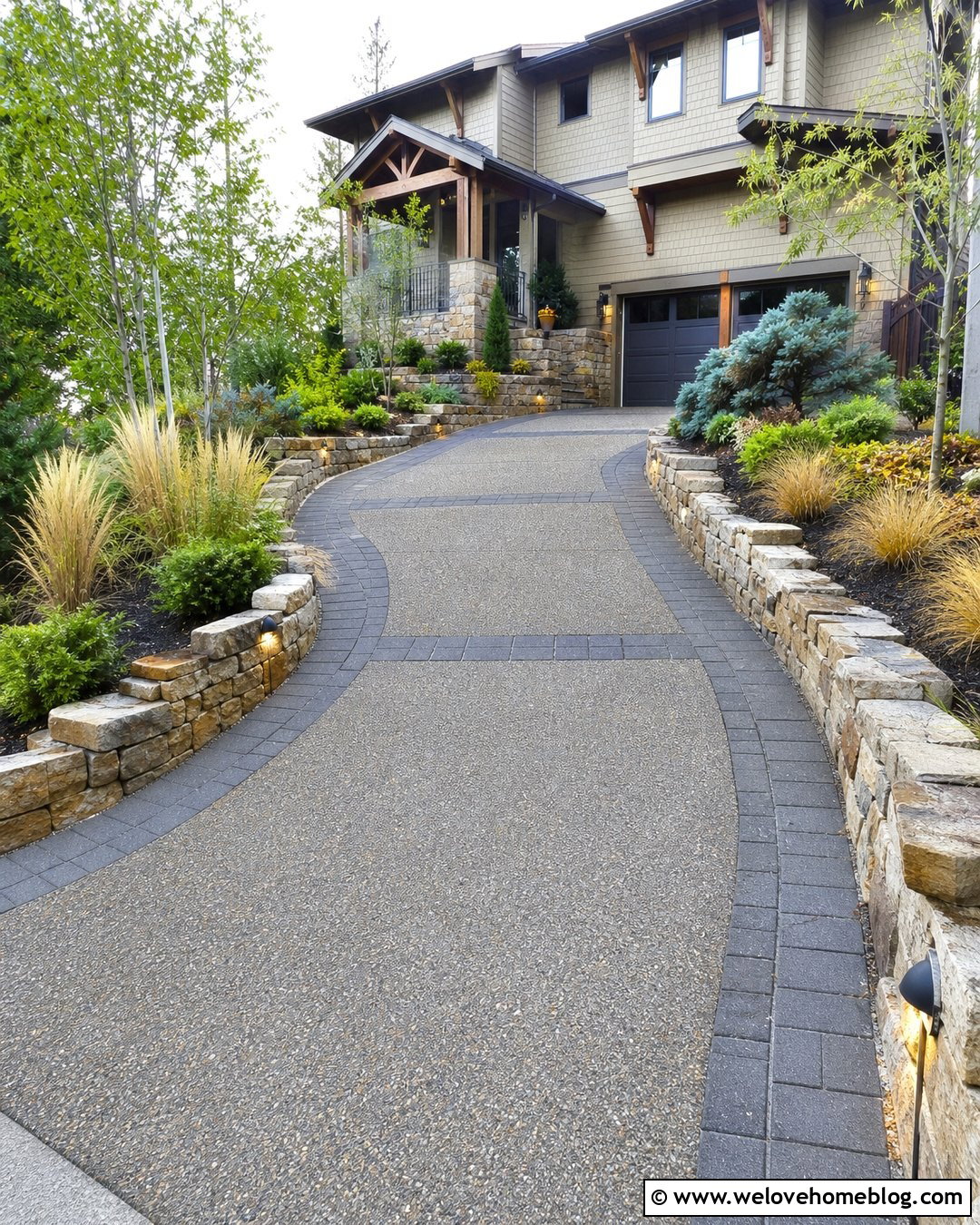
A sloped driveway needs strong visual structure and careful control of surrounding grades. Use textured poured concrete or exposed aggregate to create a practical surface with a clean appearance. Low retaining walls made from natural stone or concrete block can hold back planting beds on either side. Step the walls gradually with the slope instead of creating one overpowering vertical structure. Add deep-rooted shrubs, ornamental grasses, and ground cover above the walls to soften the masonry. Contrasting paver bands across the concrete can visually divide a long incline, while wall-mounted or low landscape lights define the edges. This complete design works with hillside contemporary, Craftsman, and split-level homes. Professional grading and drainage planning are particularly important so runoff is controlled before it reaches the garage, sidewalk, or neighboring property.
35. Small Permeable Paver Driveway
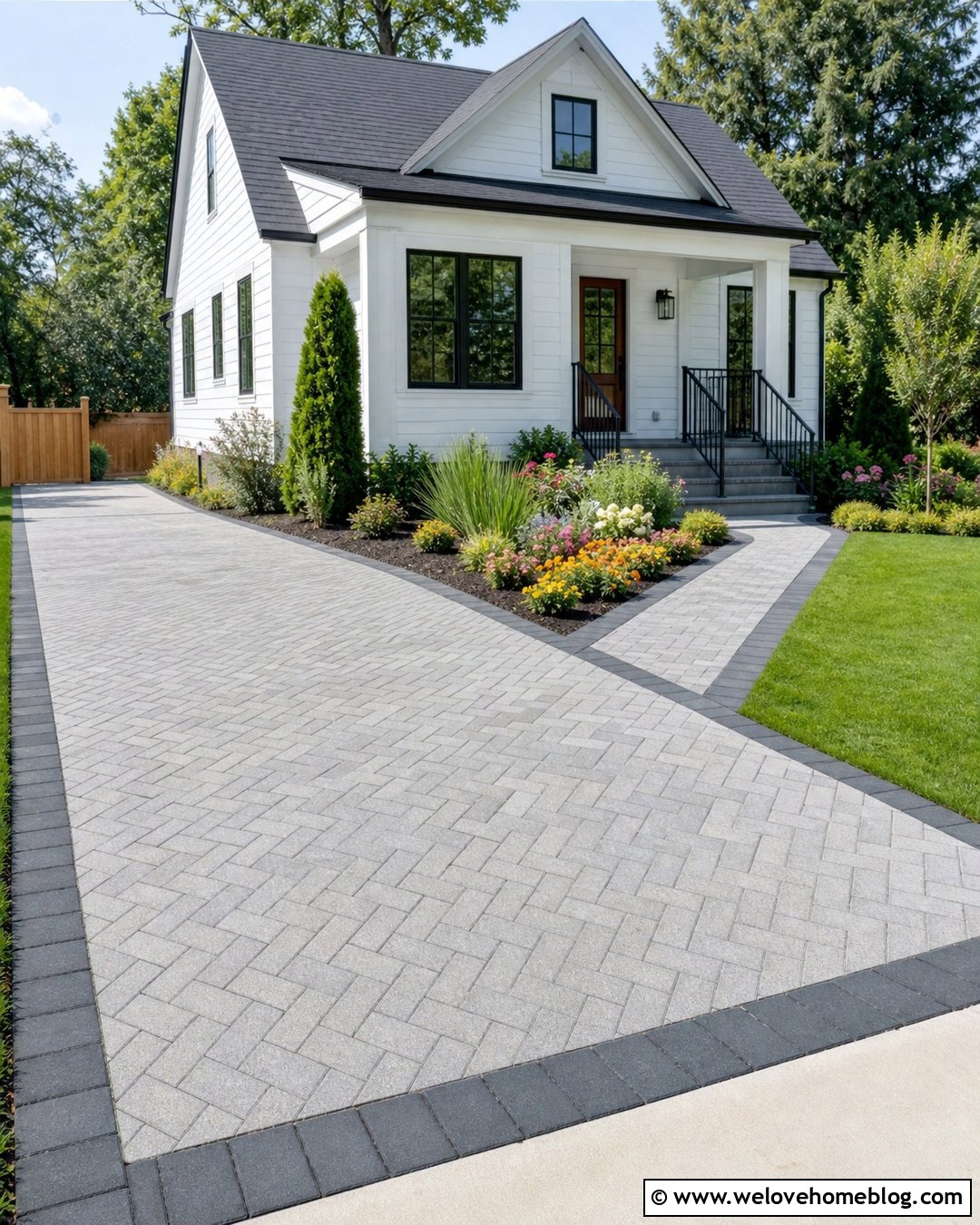
A small permeable paver driveway can combine parking, drainage, and curb appeal within a compact front yard. Choose medium-gray concrete pavers with narrow aggregate-filled joints, then arrange them in a simple running bond or herringbone pattern. A darker border will clearly separate the parking area from the walkway and garden. Keep the layout rectangular, but soften one corner with a curved planting bed containing compact shrubs, ornamental grass, and seasonal flowers. Continue the same pavers along a narrower path to the front door for a unified appearance. This design works well with townhouses, cottages, and small contemporary homes. Avoid oversized patterns that make the limited area feel crowded. Accurate dimensions, strong edge restraints, and a correctly prepared permeable base help every part of the driveway work efficiently.
Conclusion:
The most successful driveway combines an appropriate surface with a practical layout, secure edging, effective drainage, and landscaping that complements the house. Concrete can feel modern or traditional, while gravel, brick, stone, asphalt, resin, and permeable pavers offer distinct benefits and appearances. Consider how vehicles will enter, turn, park, and leave before selecting decorative details. It is also wise to check local requirements and discuss major grading or drainage work with qualified professionals. Use these **35 Beautiful Driveways Ideas** as a starting point rather than a fixed formula. By coordinating the material, border, shape, entrance, and planting, you can build a driveway that improves daily function and gives the entire property a more welcoming first impression.

Related posts:

Leave a Reply