
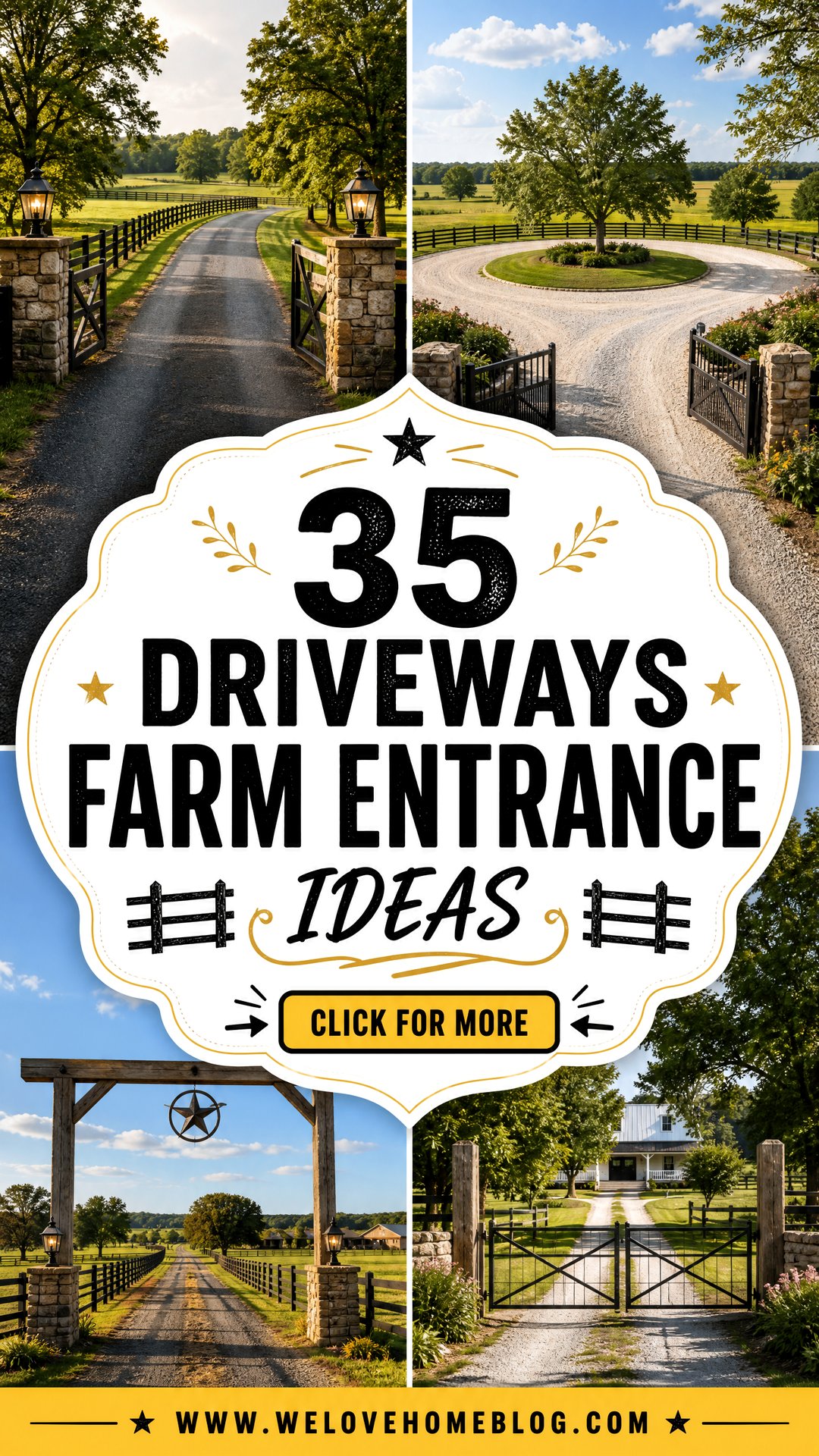
A well-planned farm driveway entrance should feel welcoming, practical, and connected to the land around it. If you are searching for **35 driveways farm entrance ideas**, think beyond the gate itself. The best entrances combine a durable driveway surface, an easy vehicle approach, clear boundaries, visible address markers, and landscaping that suits the farmhouse. Gravel lanes with timber gates remain popular, while stone pillars, metal gates, native planting, and softly curved layouts create a more finished arrival. Current rural design guidance also favors simple materials, restrained widths, natural curves, and landscaping that preserves country character. () Whether your property is a working farm or a quiet country home, the complete looks below offer practical inspiration through these **35 driveways farm entrance ideas**.
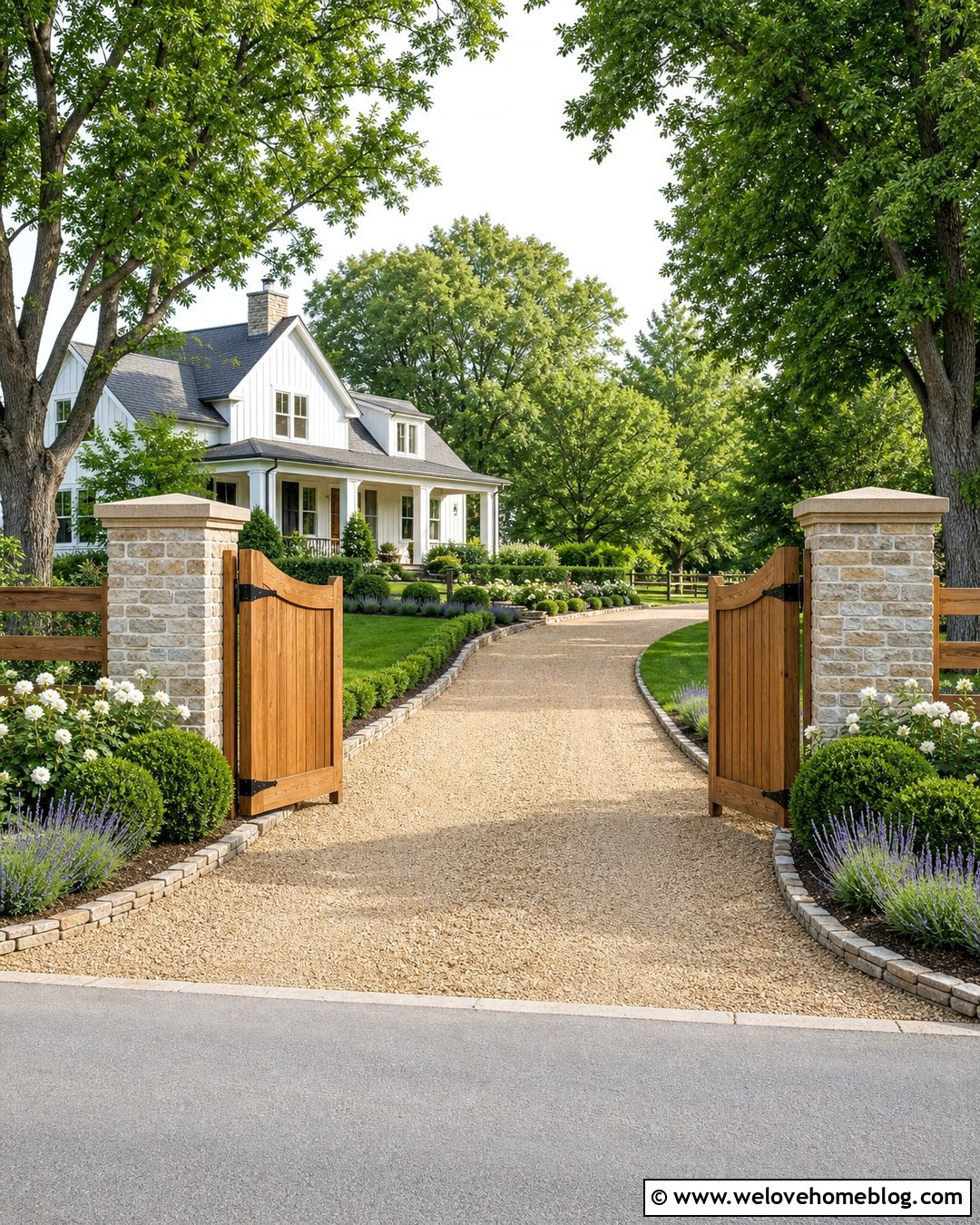
1. Gravel Farm Driveway Entrance With Wooden Gate
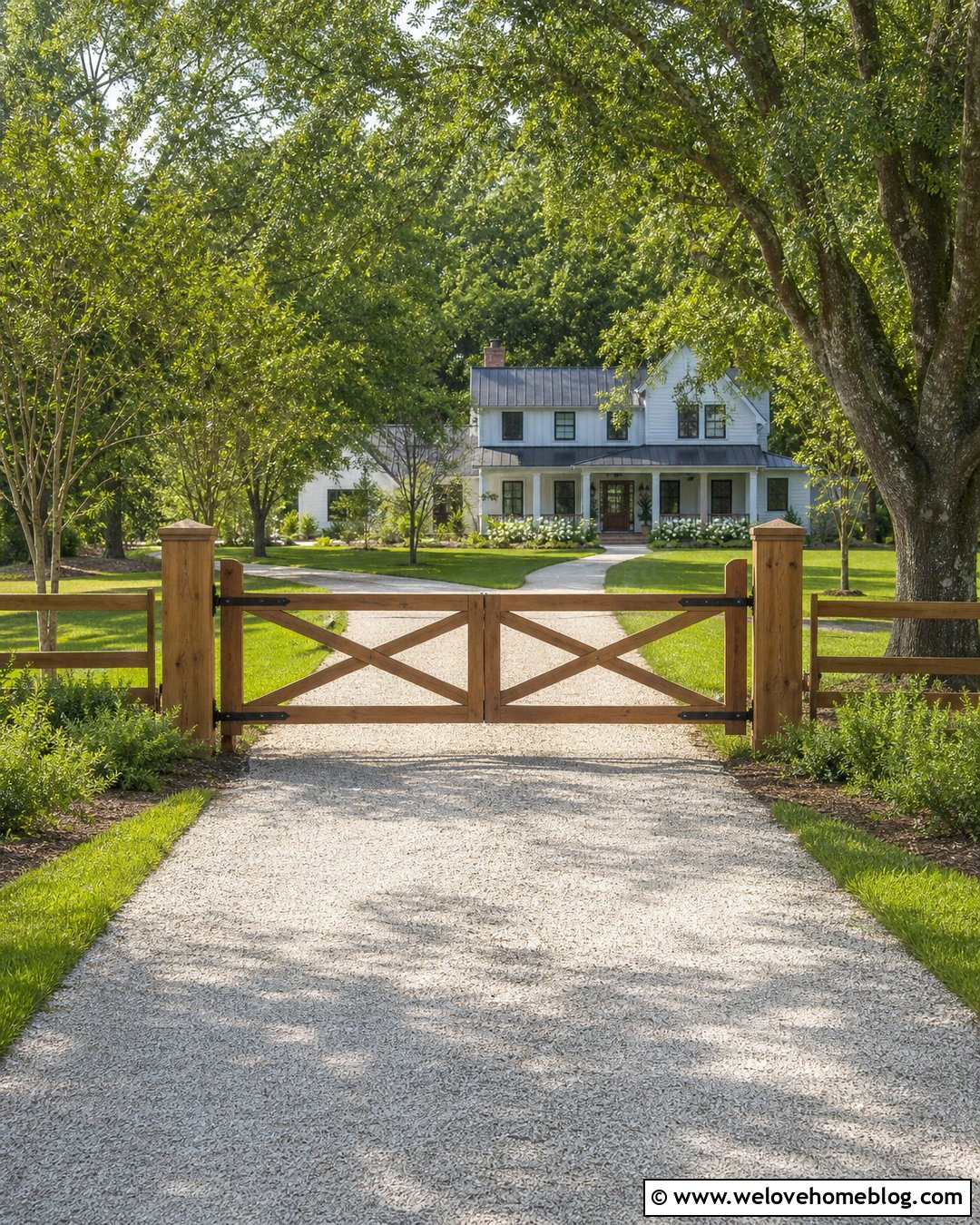
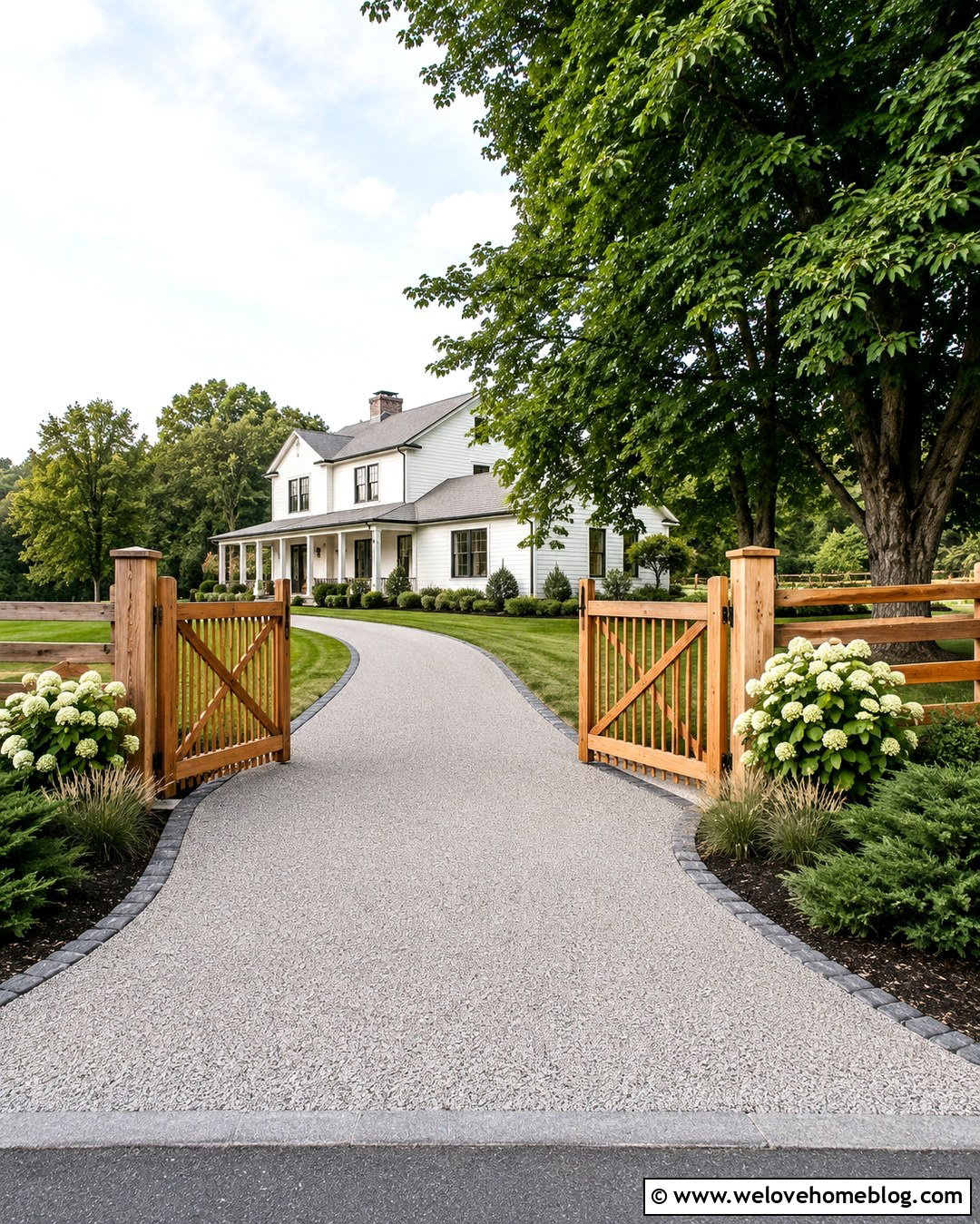
A warm timber gate and a pale gravel surface create one of the most recognizable farm entrances. Choose compacted crushed gravel for the main driveway rather than relying entirely on loose decorative stone. Frame the entrance with substantial cedar or pressure-treated wood posts, then continue matching post-and-rail fencing along both sides. A gently curved layout will make the approach feel natural while slowing vehicles near the gate. Add narrow grass shoulders and groups of low-maintenance native shrubs without blocking roadside visibility. Black hinges, latches, and gate hardware provide useful contrast against the wood. Allow enough space between the road and gate for vehicles to pull completely off the street before stopping. Timber field gates naturally complement gravel driveways and rural properties. ()
2. Limestone Farm Driveway Entrance With White Fence
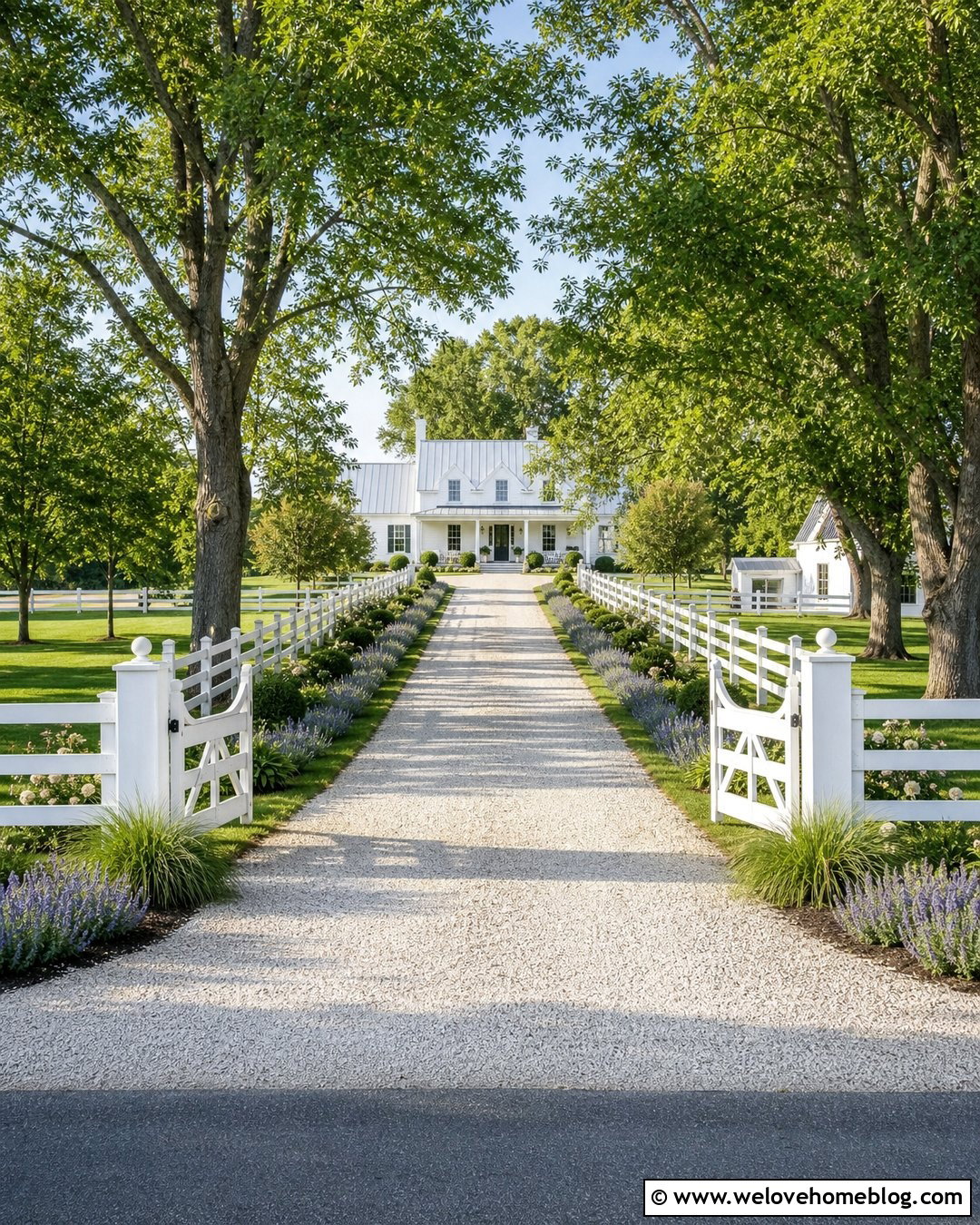
Bright crushed limestone gives a country driveway a clean appearance without making it look overly formal. Pair a straight limestone lane with a white three-rail fence and a matching double farm gate. The light materials work especially well beside a white farmhouse, red barn, or neutral board-and-batten home. Install a wider compacted apron where the driveway meets the road to reduce scattered stone and define the turning area. Continue the white fencing far enough along each side to make the entrance feel intentional rather than temporary. Simple planting beds filled with catmint, ornamental grasses, or hardy roses can soften the posts. Keep plants low around the road, and reserve taller trees for farther inside the property where they will frame the view safely.
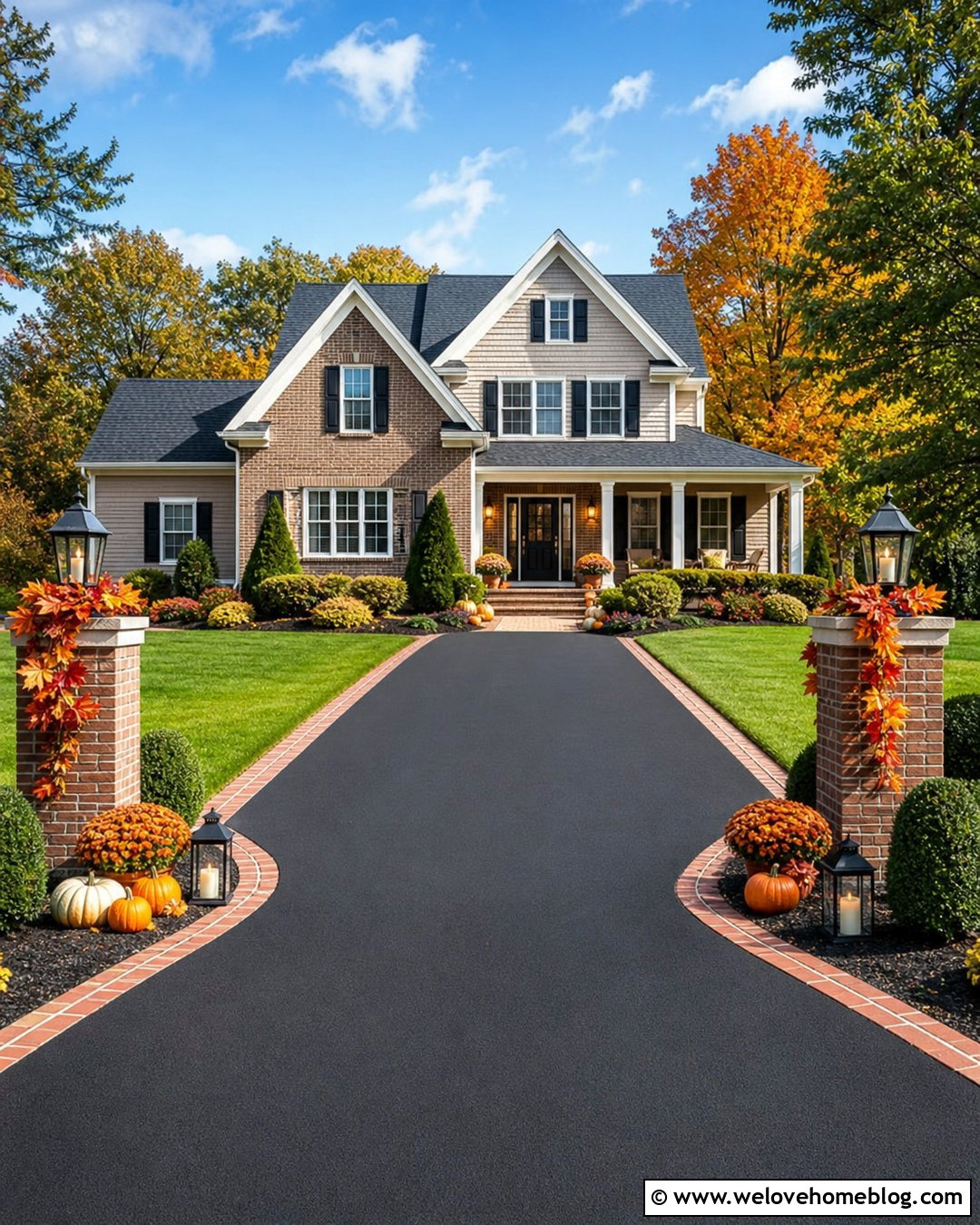
3. Asphalt Farm Driveway Entrance With Stone Pillars
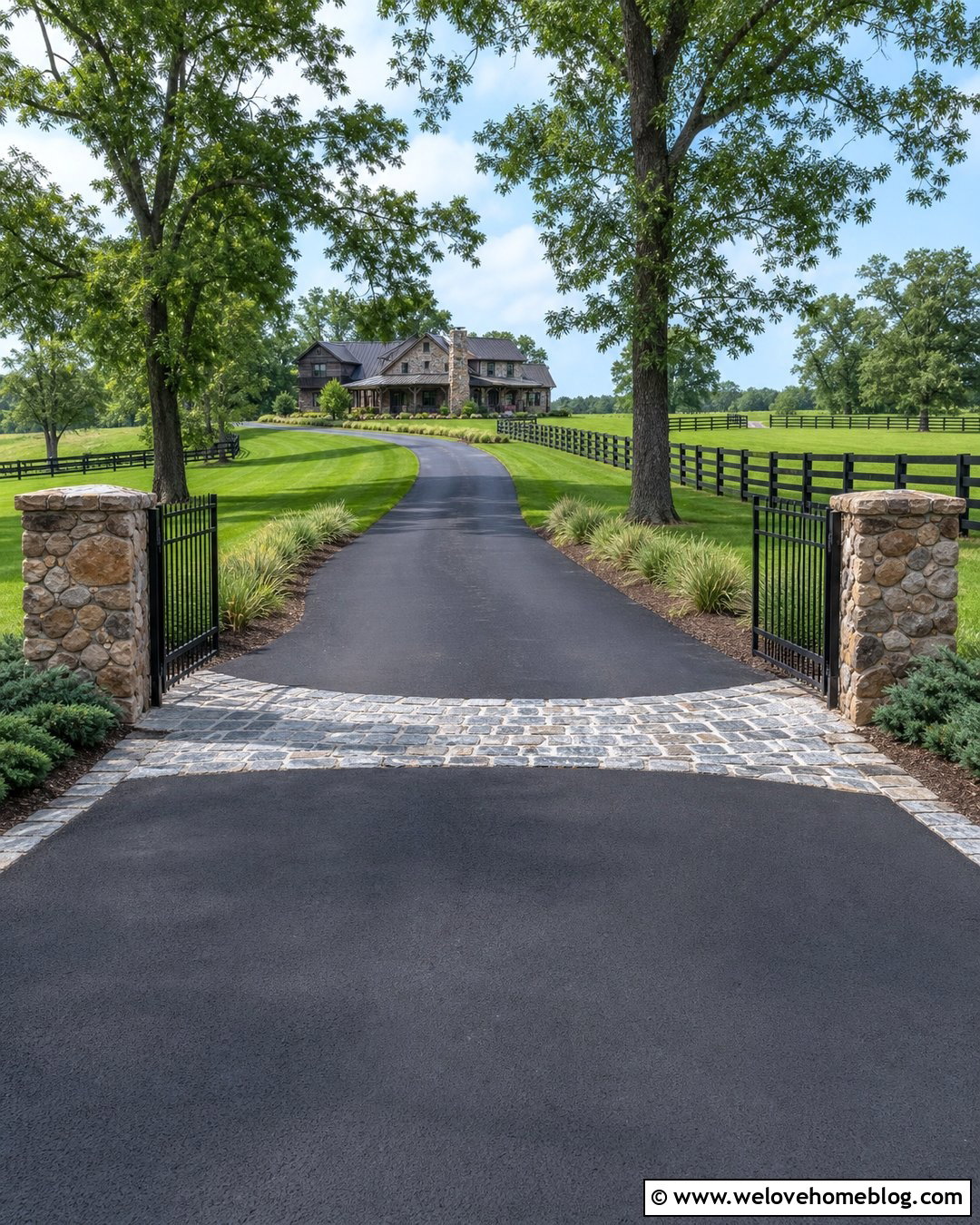
Black asphalt offers a smooth, practical approach for farms that receive frequent deliveries or need easy snow removal. Prevent the surface from feeling too suburban by framing it with chunky fieldstone pillars and a simple black metal gate. A flared entrance gives trucks and trailers more turning room, while a narrower lane beyond the pillars maintains a rural scale. Use a cobblestone or granite border at the apron to create a durable transition between the road and asphalt. Low junipers, native grasses, and broad lawn areas will keep the surroundings neat without introducing fussy maintenance. Match the pillar stone to the farmhouse foundation, chimney, or retaining walls. This visual repetition connects the roadside entrance to the home, even when the house sits far back from view.
4. Chip Seal Farm Driveway Entrance With Split Rail Fence
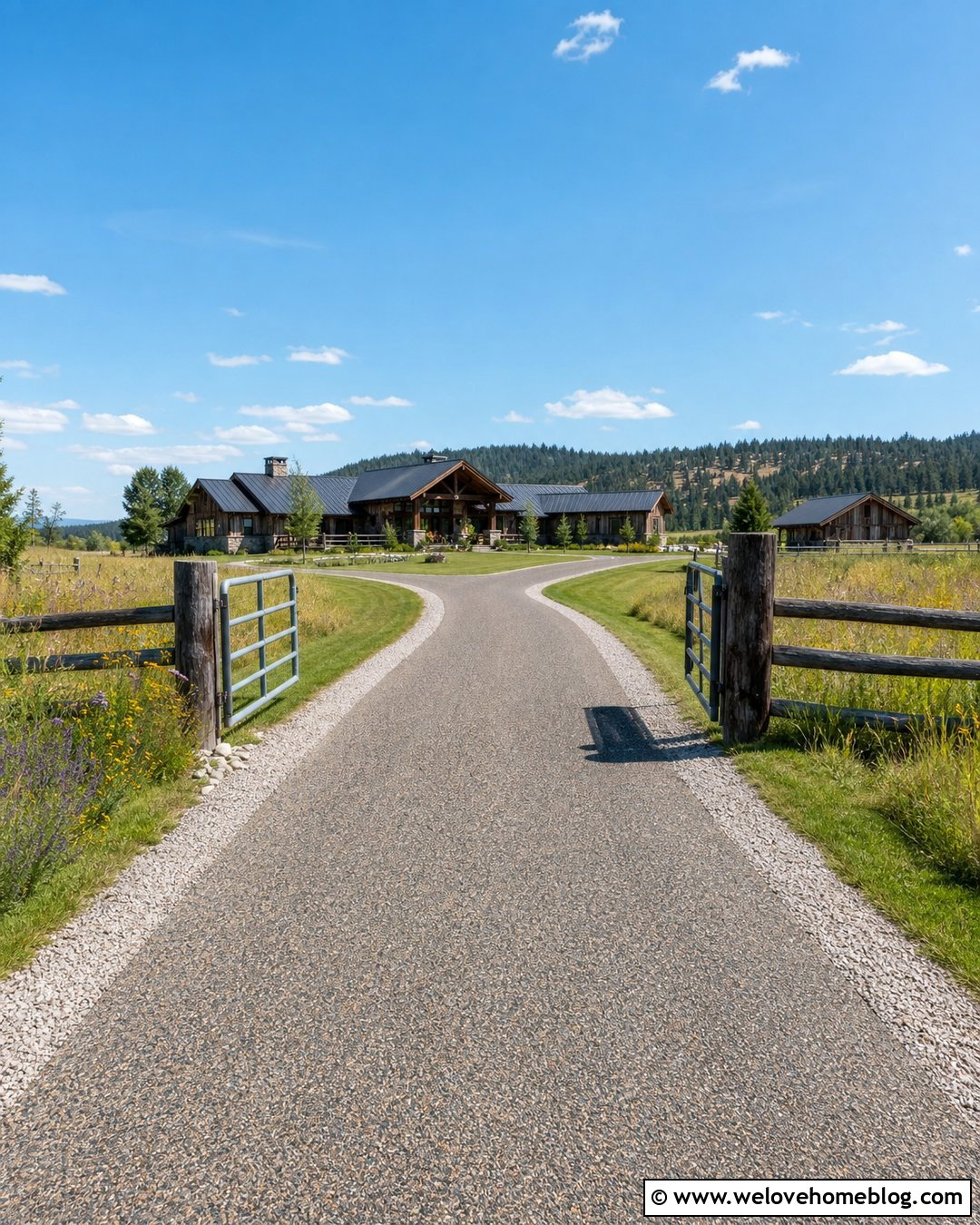
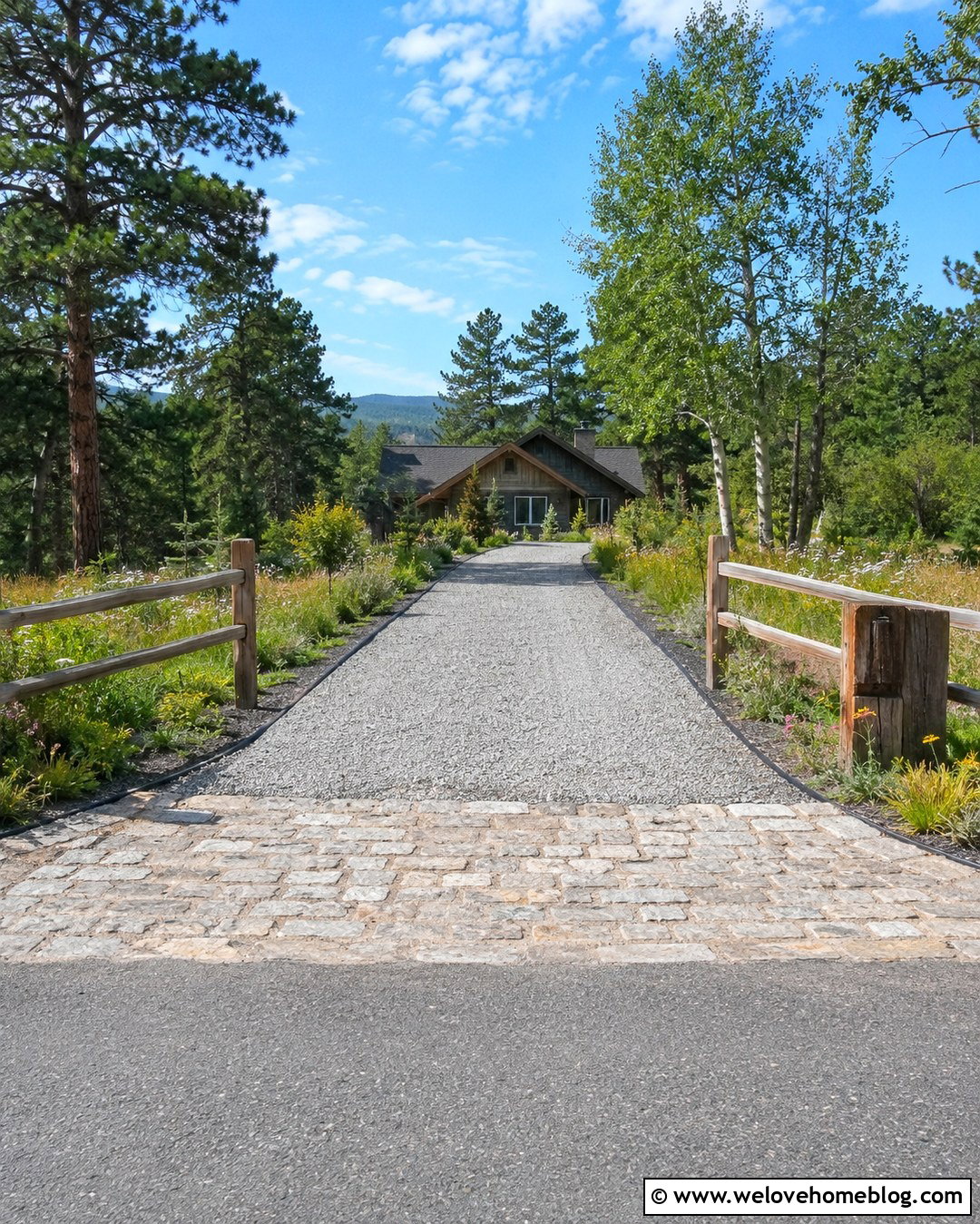
Chip seal has a textured country appearance that sits comfortably between loose gravel and smooth asphalt. Its speckled surface works beautifully with a gently winding farm lane, weathered split rail fencing, and simple timber gateposts. Choose aggregate colors that echo the soil, nearby stone, or farmhouse exterior. At the roadside, create a broad, level apron with clearly defined gravel shoulders so vehicles do not damage the grass while turning. Plant native meadow grasses and wildflowers behind the fence, but maintain a closely cut strip near the pavement for a tidy edge. A traditional metal tube gate can add working-farm practicality without overpowering the landscape. Continue the split rail fence around the first curve so the entrance guides the eye naturally toward the house, barn, or pasture beyond.
5. Concrete Farm Driveway Apron With Gravel Lane
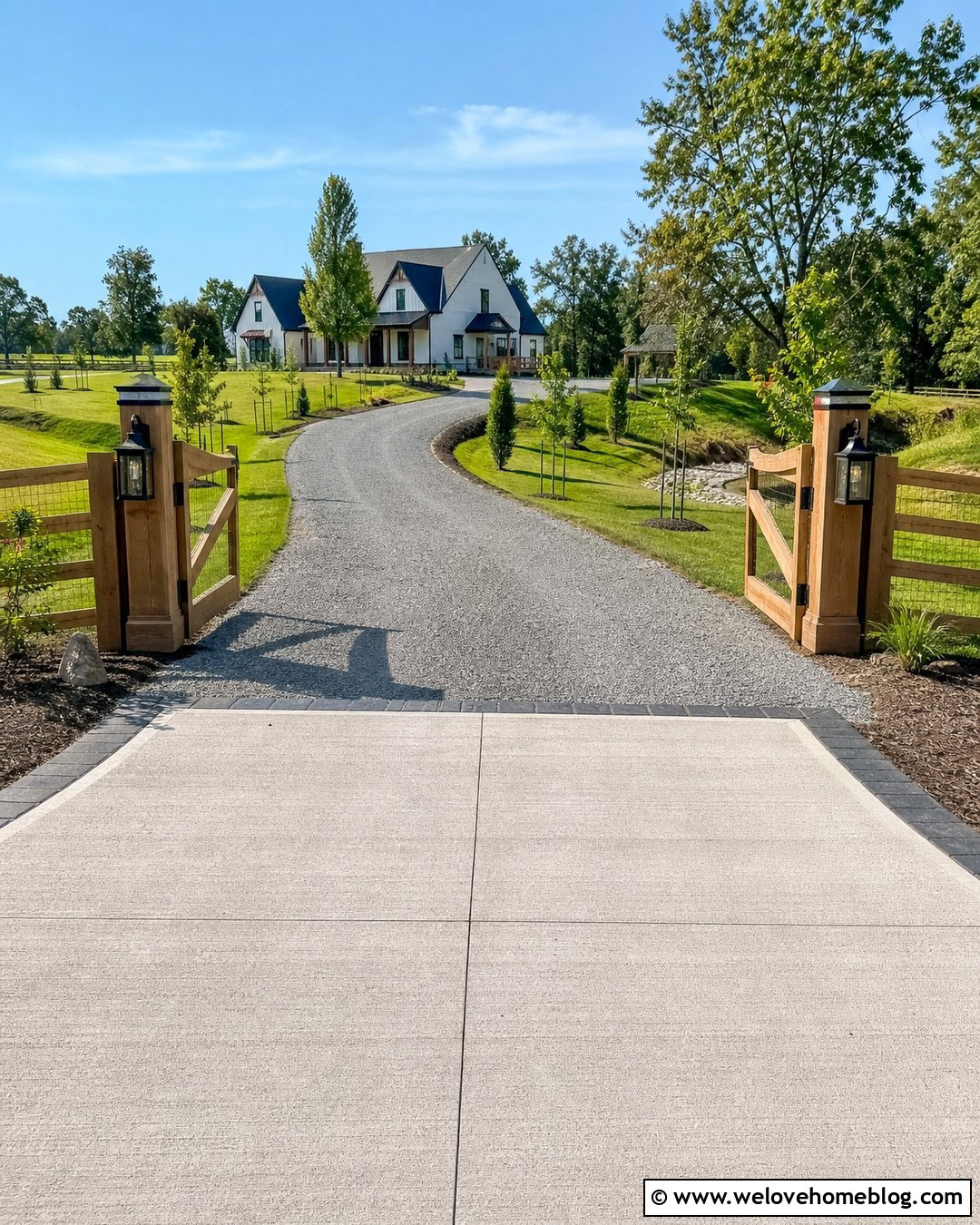
A poured concrete apron can solve a common visual problem at gravel entrances: loose stone spreading toward the public road. Use broom-finished concrete across the first section, then transition into a compacted gray gravel lane. A shallow arc or straight band of dark pavers can mark the change between materials. Pair the practical surface with timber posts, black lanterns, and a wide wooden gate for a complete farmhouse look. The concrete should be broad enough to support turning tires and long enough to contain the most heavily traveled entrance area. Grade the adjoining lawn gently away from the pavement and include discreet drainage where runoff collects. This mixed-material approach places a stable surface where wear is greatest while preserving the softer, more relaxed appearance of gravel throughout the rest of the property.
6. Brick Farm Driveway Entrance With Gravel Interior
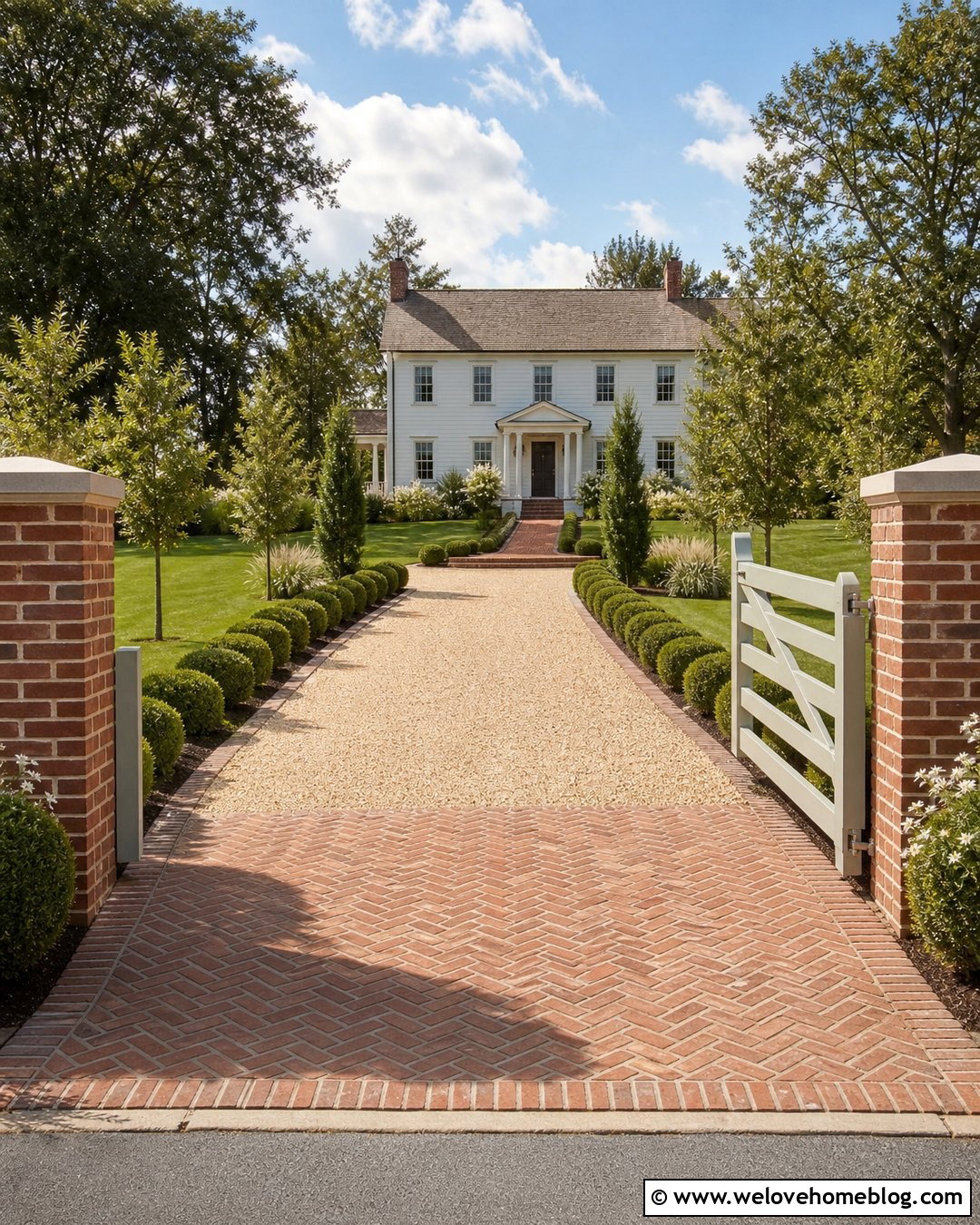
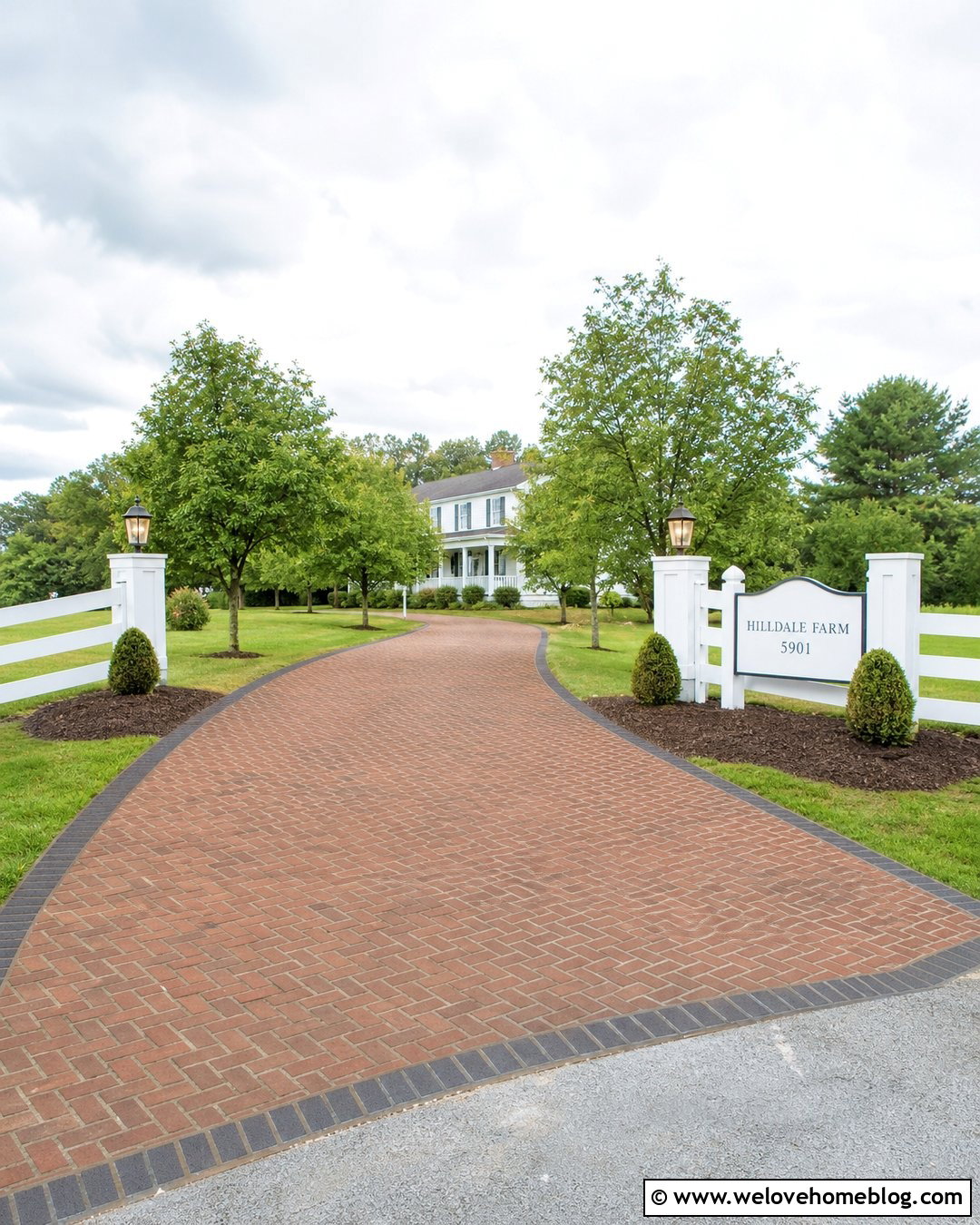
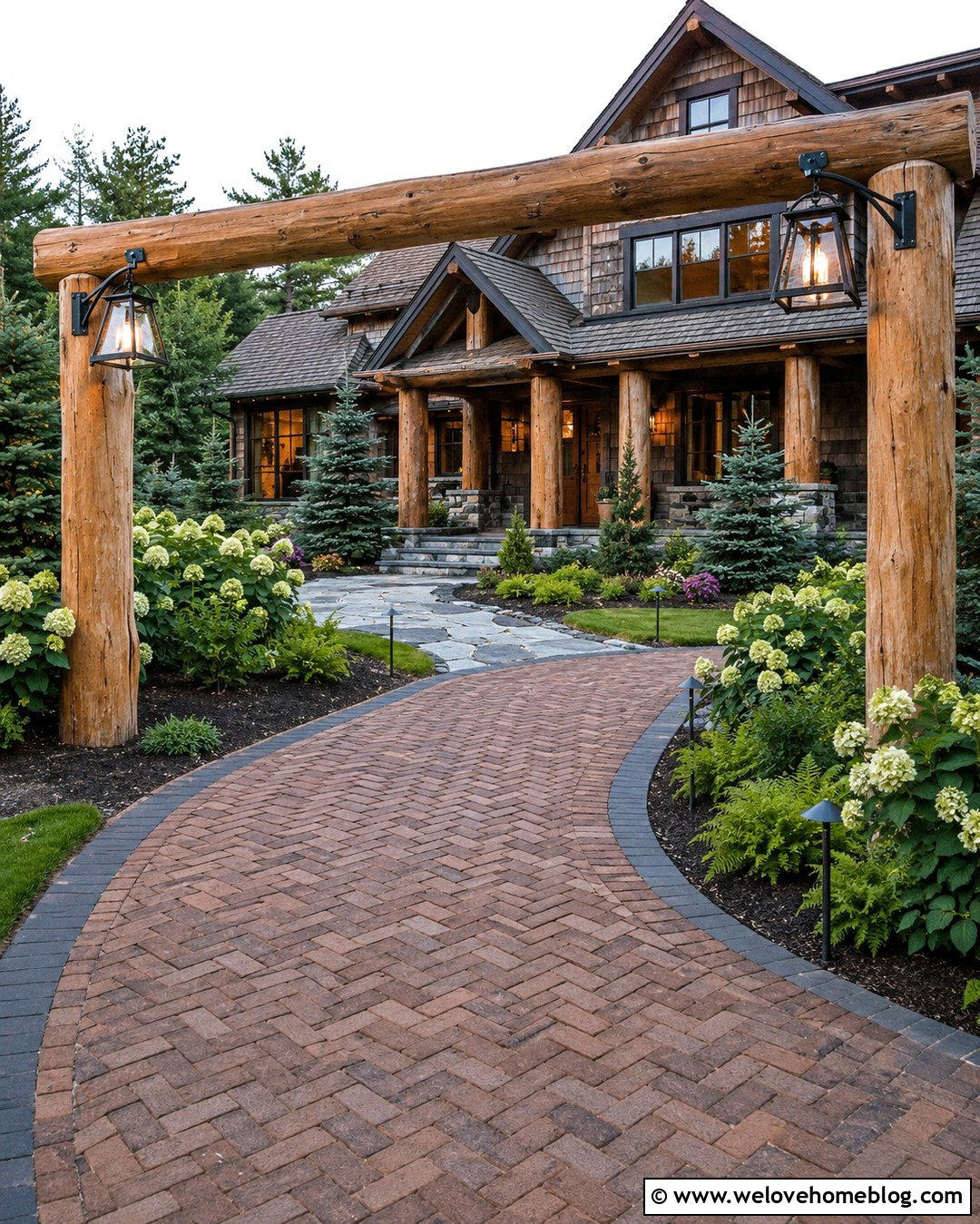
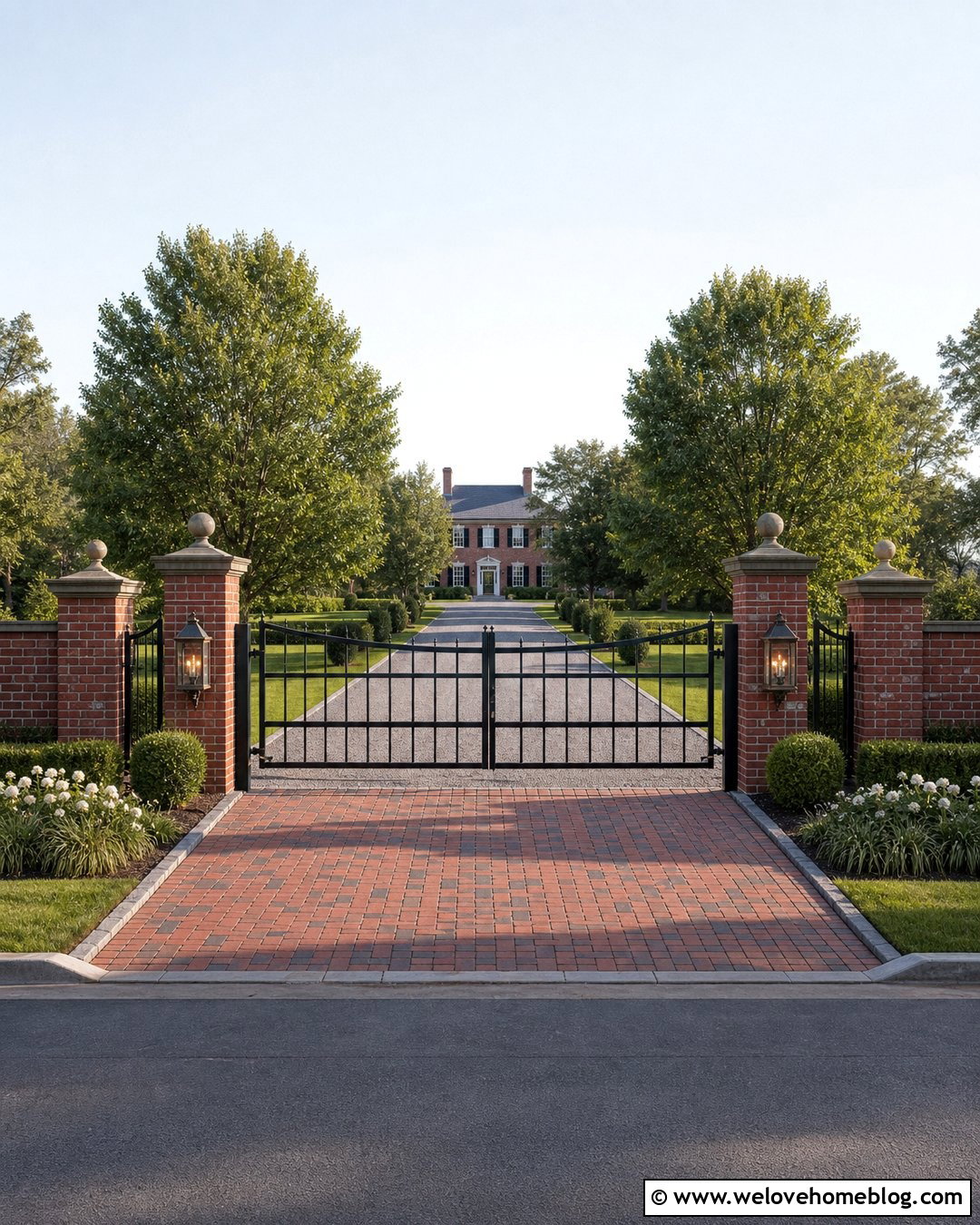
Clay brick pavers can form an attractive entrance apron without covering an entire long farm driveway. Lay red or weathered brown brick in a herringbone pattern across the gateway, then continue with warm beige gravel toward the farmhouse. Brick pillars on either side will reinforce the material connection and support a painted timber gate. A gentle flare at the road creates comfortable turning space, while brick soldier-course edges keep the gravel contained. Frame the pillars with clipped boxwood, dwarf evergreens, or sweeping ornamental grass rather than crowded flower beds. Matching brick can also be repeated in the walkway leading from the parking court to the front door. The result feels established and traditional, yet it remains practical for a large rural property where a fully paved driveway may be unnecessary.
7. Cobblestone Farm Driveway Entrance With Stone Walls
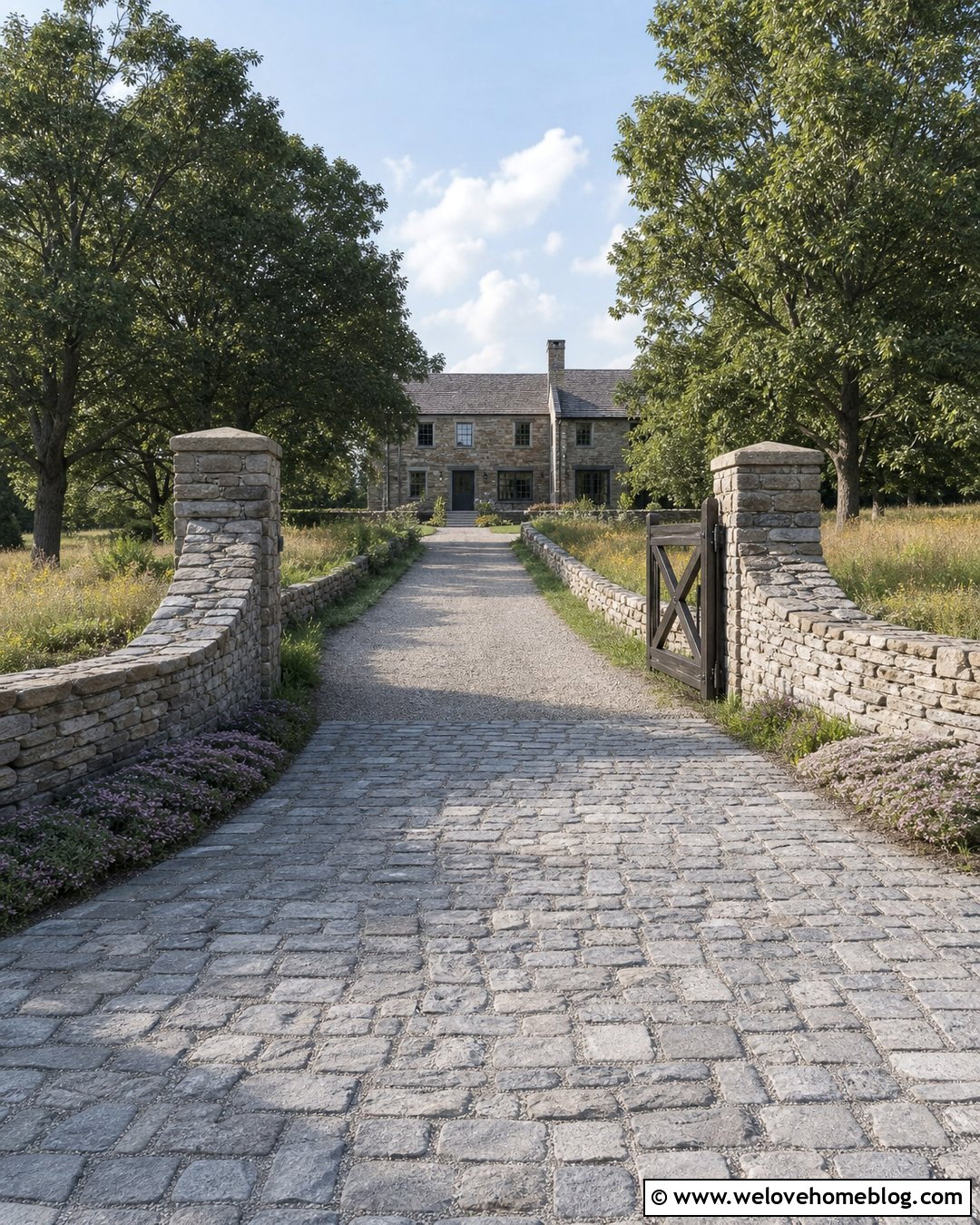
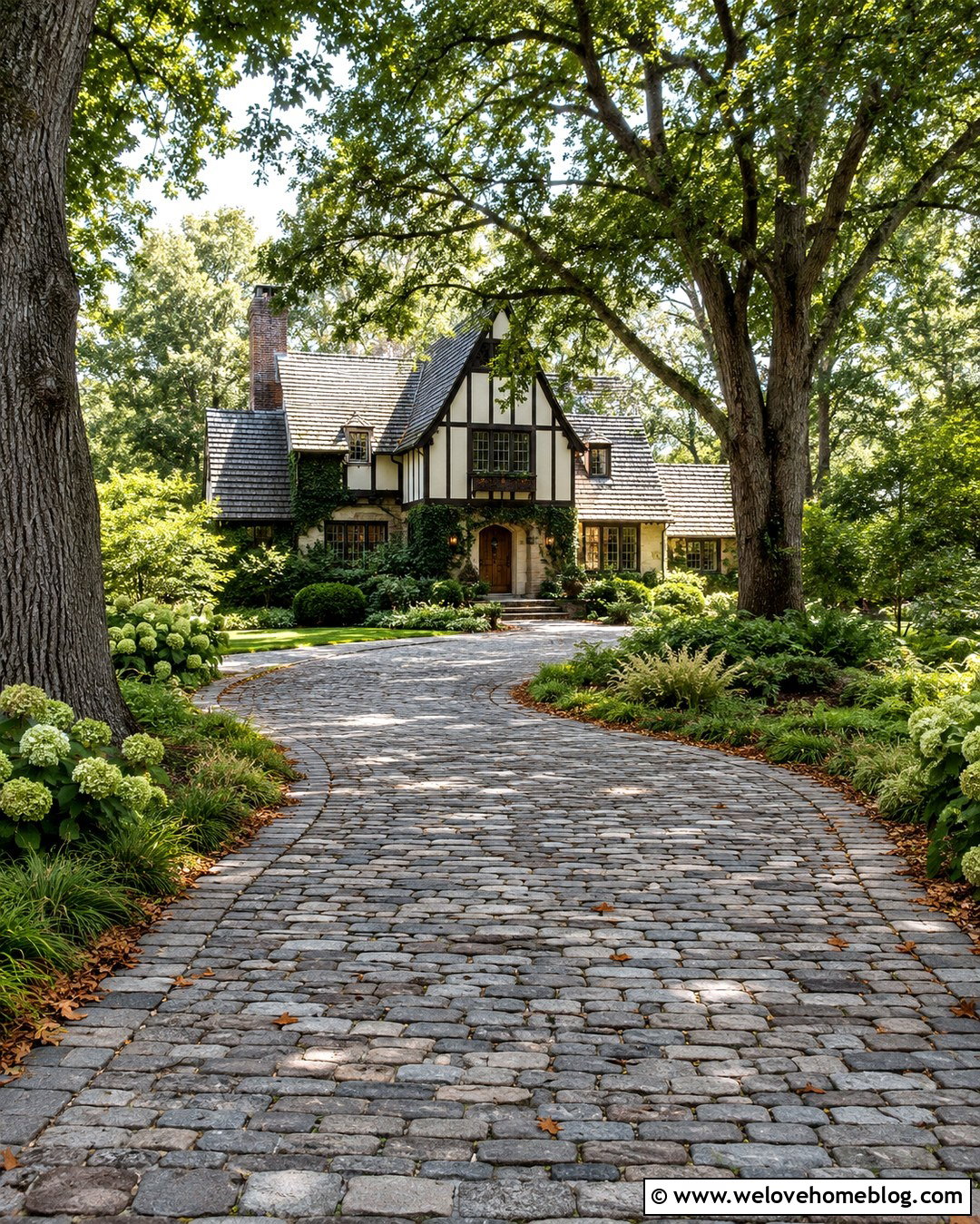
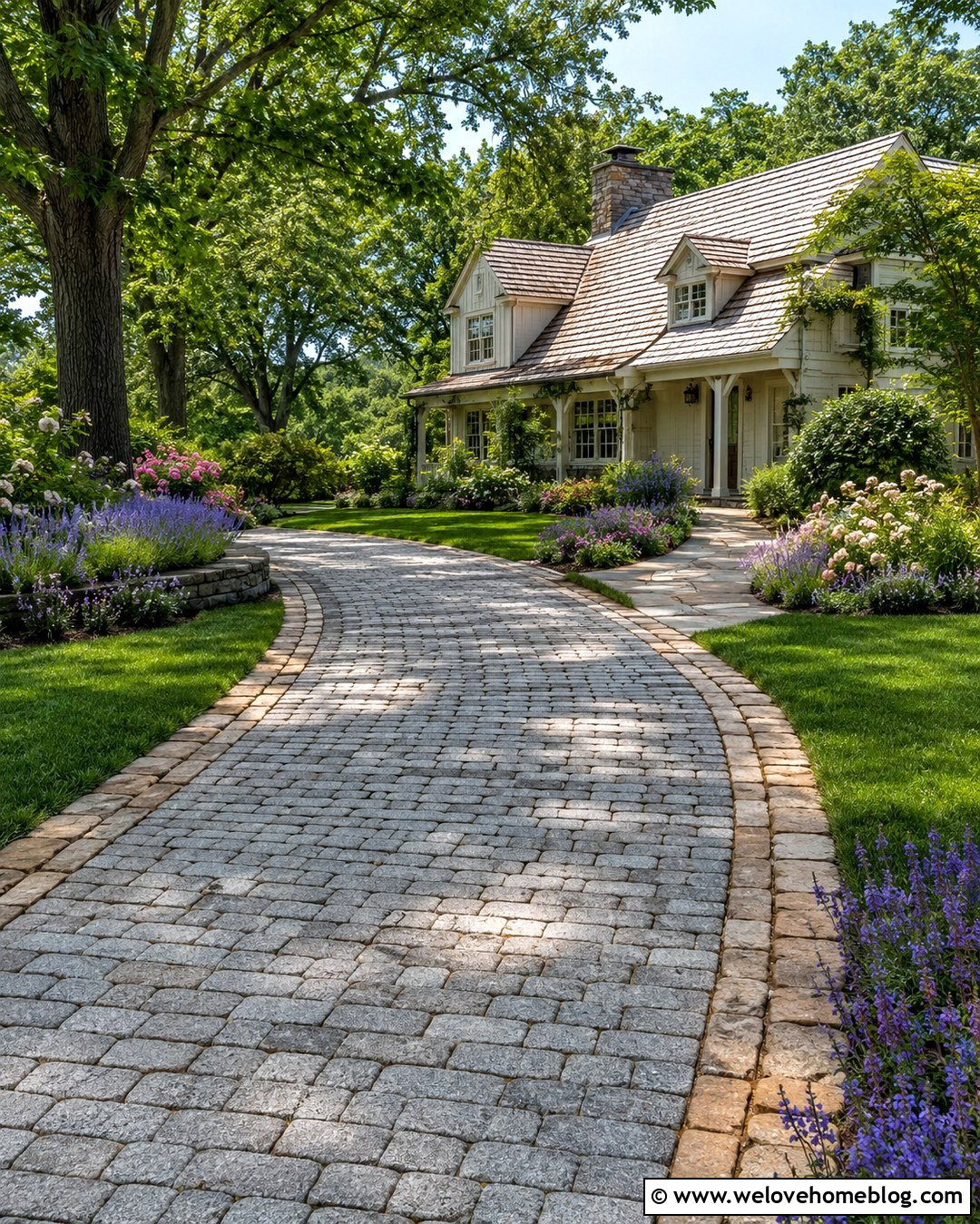
Cobblestone provides a strong sense of age and permanence at the beginning of a country drive. Use it as a wide entrance apron that transitions into compacted gravel after the gate. Low dry-stacked stone walls can curve outward toward the road, helping define the driveway without relying on tall fencing. Finish the walls with larger capstones and place simple timber or wrought-iron gates between taller end pillars. Let thyme, sedum, or other low ground covers soften selected spaces around the stones while keeping the actual driving surface clear. This entrance works particularly well with an older farmhouse, stone cottage, or renovated barn home. Because cobblestones create a highly textured surface, keep the pattern straightforward and use a flatter installation through the main tire paths for a more comfortable approach.
8. Resin-Bound Farm Driveway Entrance With Modern Gate
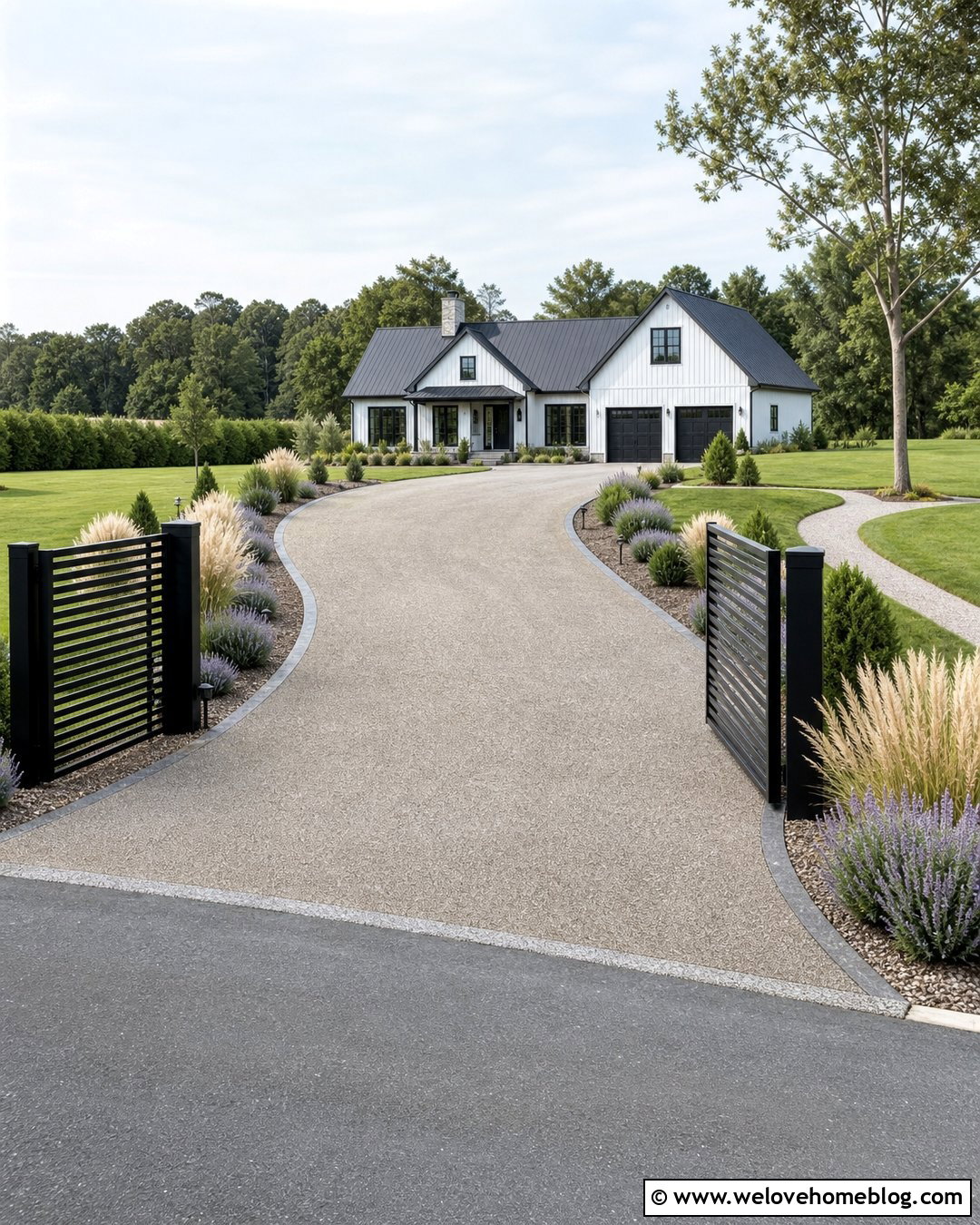
For a modern farmhouse, resin-bound gravel creates a clean surface while retaining the natural color and texture associated with aggregate. Choose warm gray or sandy stone and shape the driveway into a broad, subtle curve. Matte-black steel pillars and a horizontal slat gate will give the entrance crisp definition. Narrow steel edging can separate the resin surface from low planting beds filled with feather reed grass, lavender, and rounded evergreen shrubs. Add a matching pedestrian gate if visitors need a safe route away from moving vehicles. The farmhouse in the distance can repeat black metal accents through windows, roofing, or exterior lights. Keep the roadside design uncluttered and symmetrical, but loosen the landscaping farther along the drive. This balance creates a polished entrance without losing the openness expected in a rural setting.
9. Circular Gravel Farm Driveway Entrance
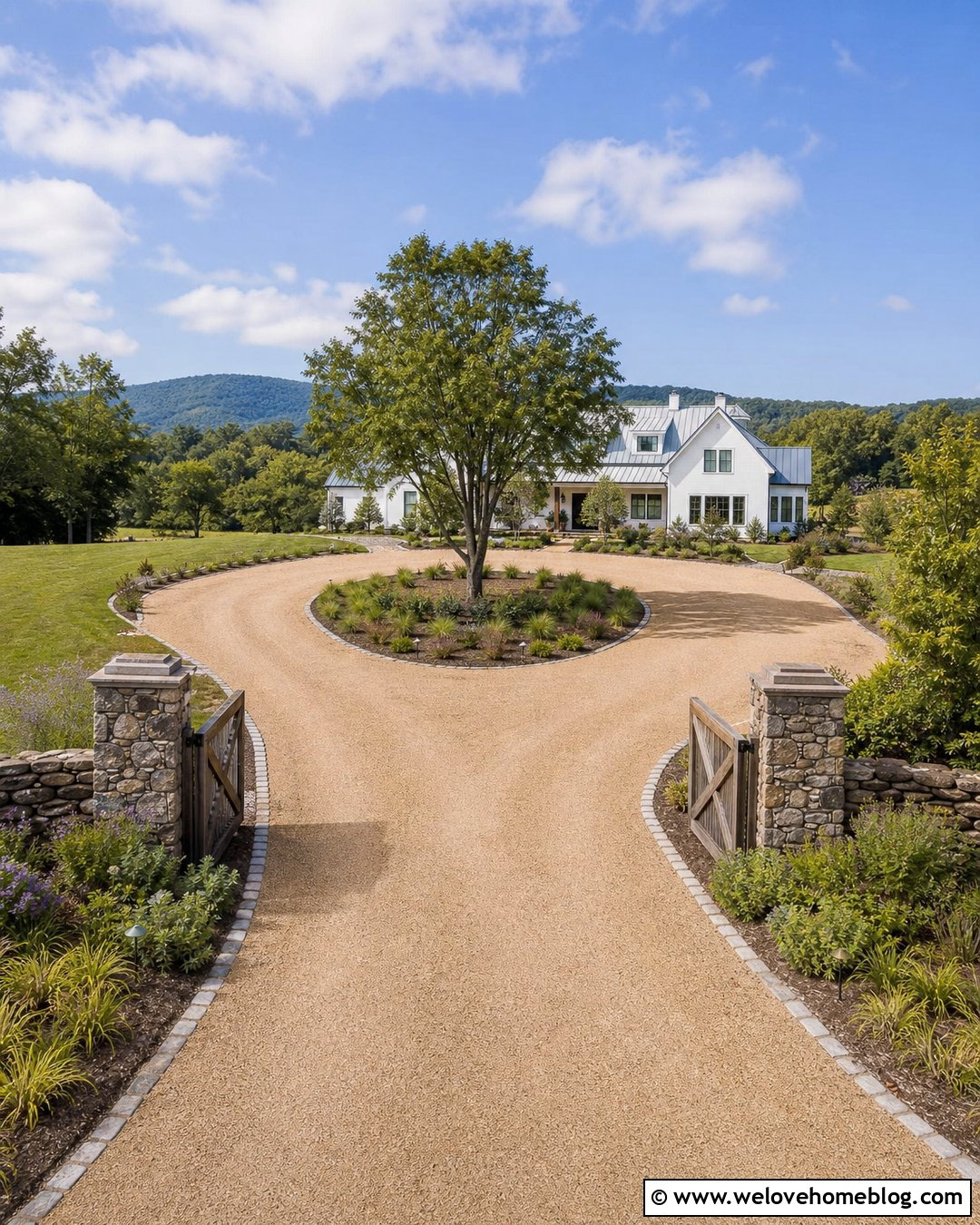
A circular gravel driveway can create an impressive arrival while making it easier for guests, trailers, and service vehicles to leave without reversing. Begin with a generous farm entrance framed by stone pillars and open timber gates. Use compacted tan gravel throughout the loop, with cobblestone edging controlling spread around the curves. A large central island can contain a mature shade tree, simple lawn, and a ring of low native shrubs. Keep the planting open enough to preserve views between the road, farmhouse, and parking areas. The driveway should split naturally after passing the gate and reconnect near the front of the house. Avoid placing delicate plants close to tire paths. Instead, use durable ground covers and broad stone margins where turning vehicles may occasionally cross the edge.
10. Curved Farm Driveway Entrance With Tree Border
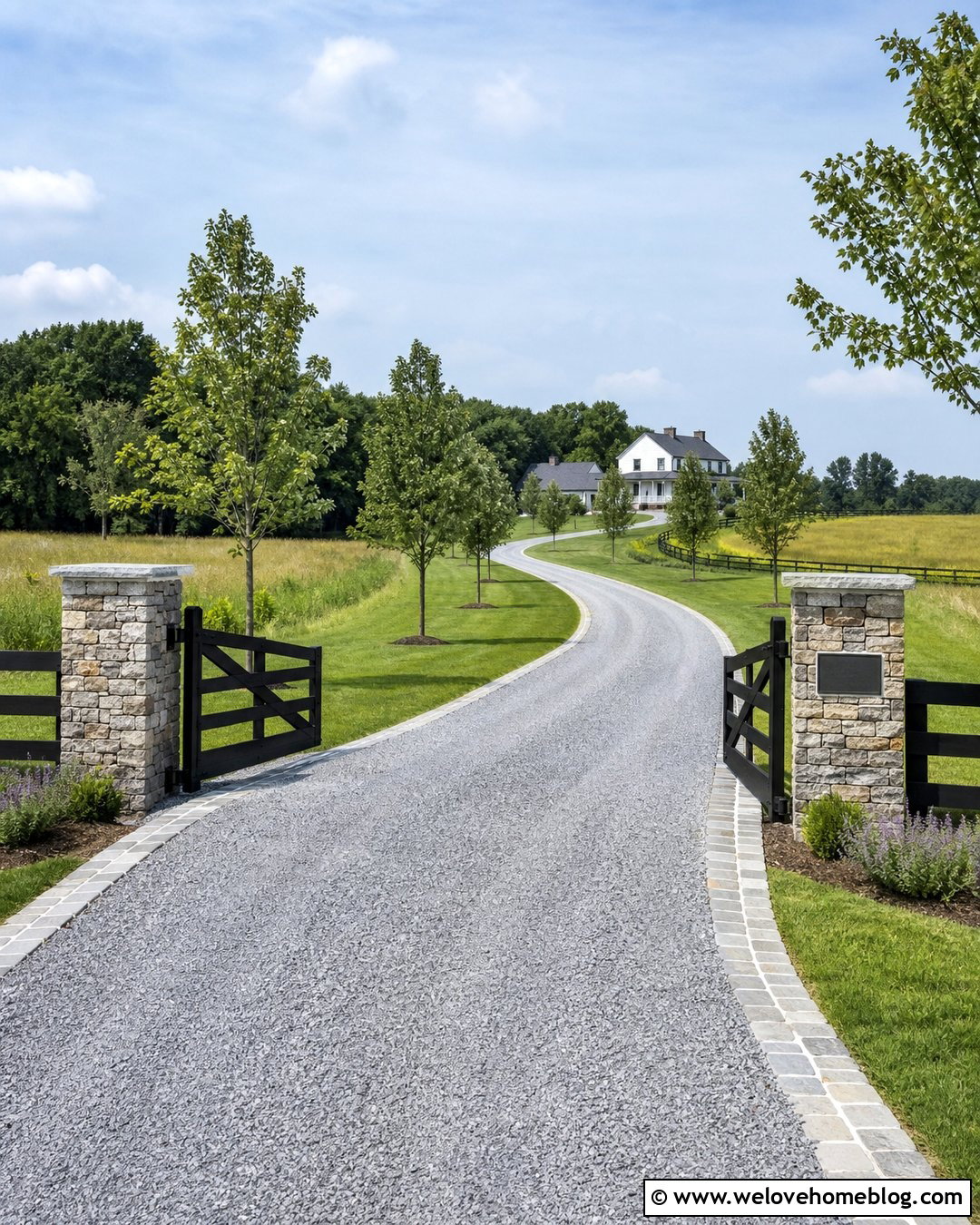
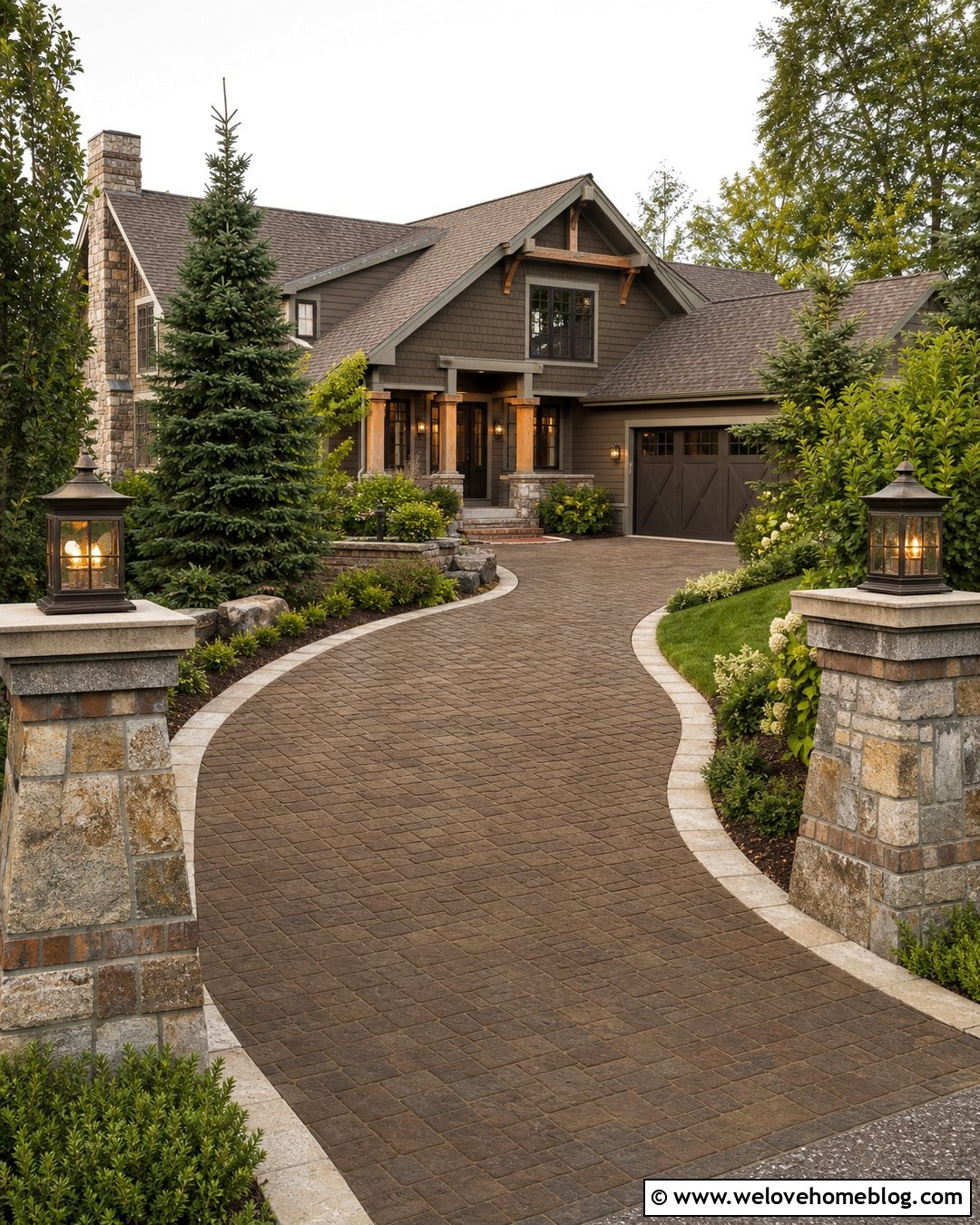
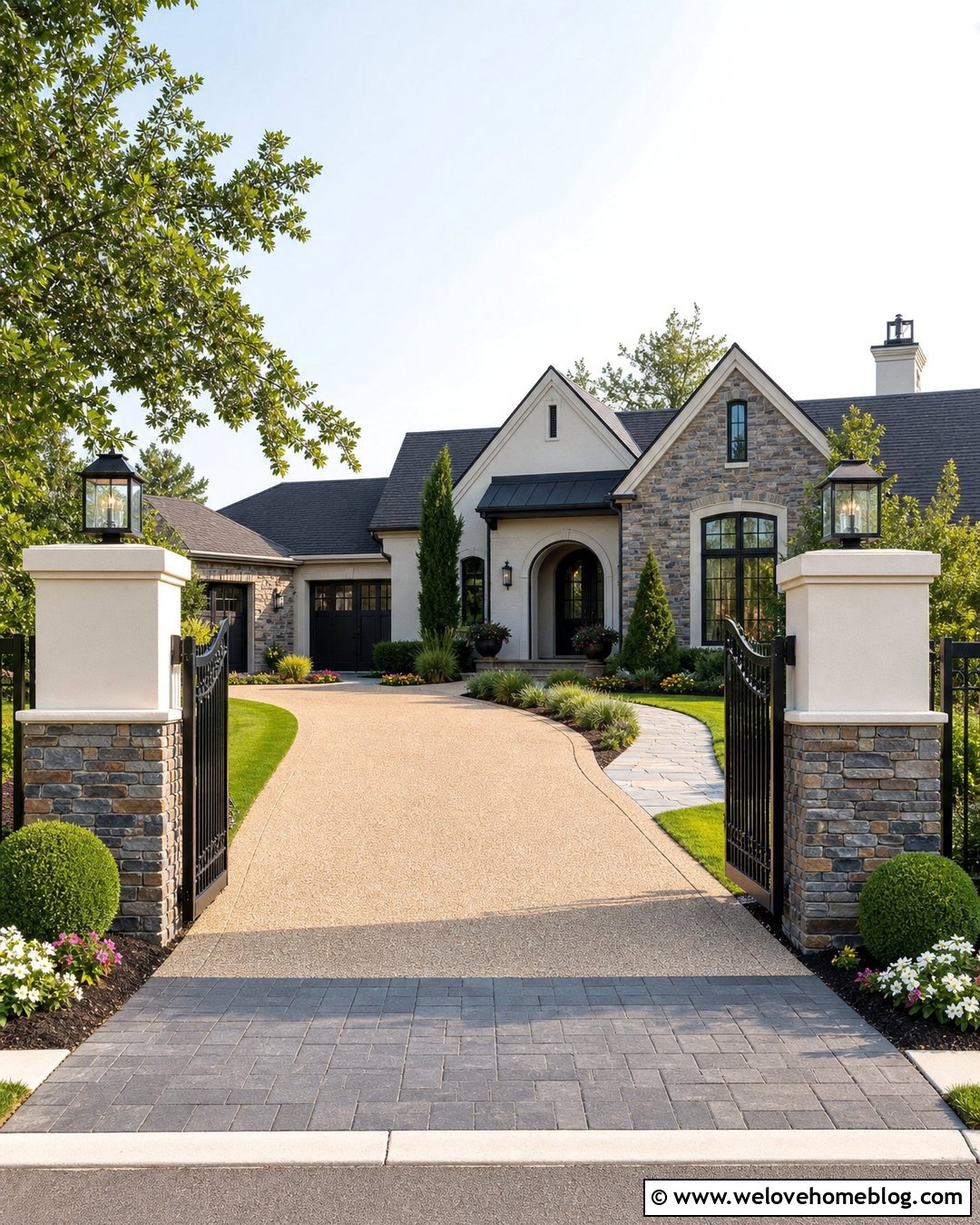
A sweeping curved driveway adds anticipation by revealing the farmhouse gradually rather than showing everything from the road. Surface the lane with compacted gray gravel and define its outer curves with flush granite setts. At the entrance, use understated fieldstone posts and a wide black farm gate. Plant evenly spaced native trees farther back from the road, allowing their canopies to frame the drive as they mature. Between the trees, maintain lawn or a simple meadow instead of narrow, high-maintenance beds. The curve should follow the land’s natural contours and avoid unnecessarily sharp turns. Rural design guidance often recommends following existing landforms to preserve the character of the setting. () Add a discreet address marker near the first pillar and place entrance lighting where it will not compete with the landscape.
11. Long Farm Driveway Entrance With Tree-Lined Lane
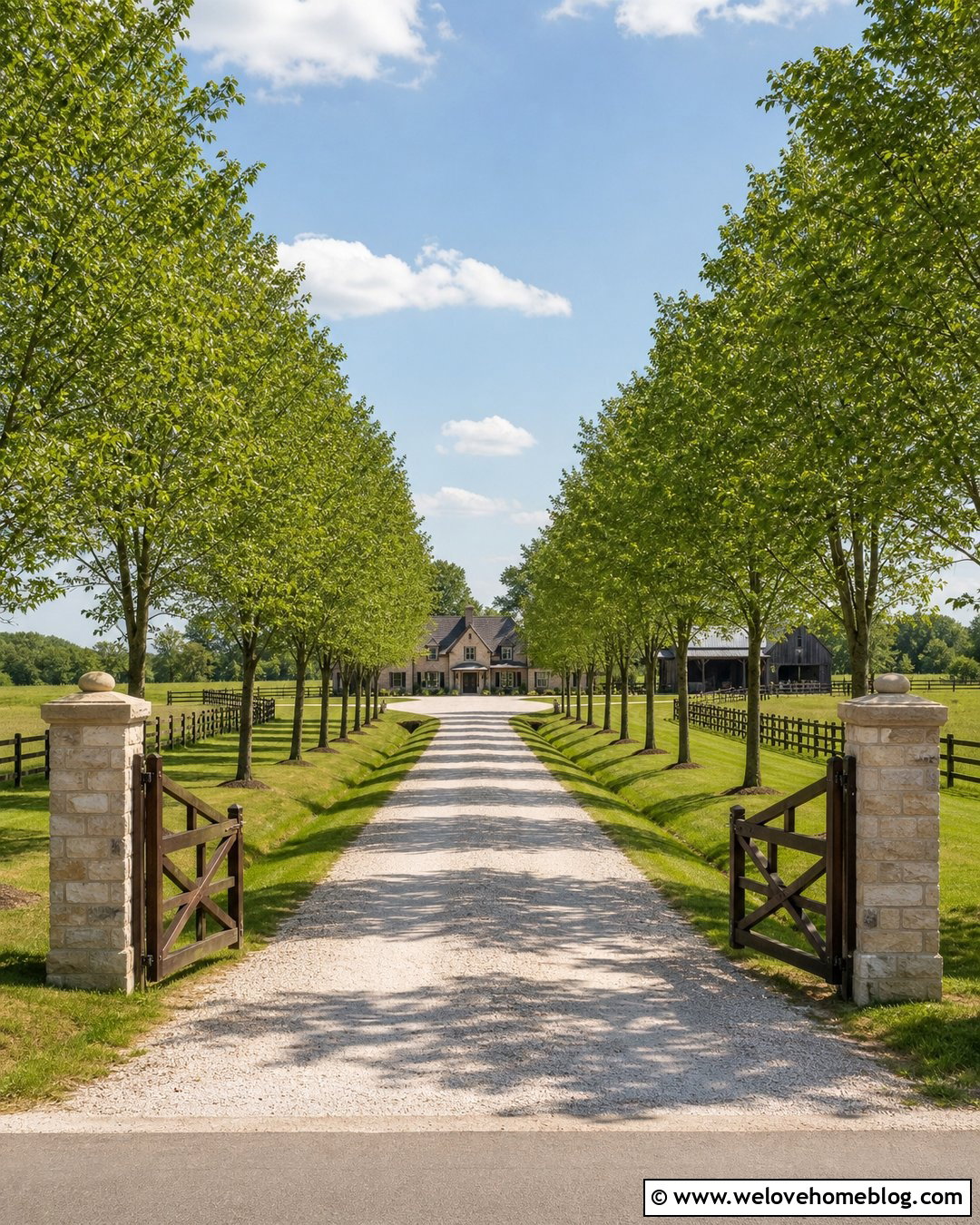
A long driveway becomes more memorable when the entrance introduces a strong view toward the farmhouse. Start with a broad crushed-limestone apron, stone gateposts, and a traditional stained-wood gate. Beyond it, continue a straight gravel lane bordered by rows of deciduous trees. Space the trees generously so their mature branches will form a light canopy without interfering with large farm vehicles. A mown grass strip between the driveway and trunks protects the root zones and creates a clean visual edge. Use drainage swales outside the tree rows where needed instead of allowing water to cross the driving surface. The straight alignment feels formal, but gravel, field fencing, and open pasture keep it rural. At the house, widen the lane into a turning court that repeats the same stone and landscape materials.
12. Farm Driveway Entrance With Cattle Guard
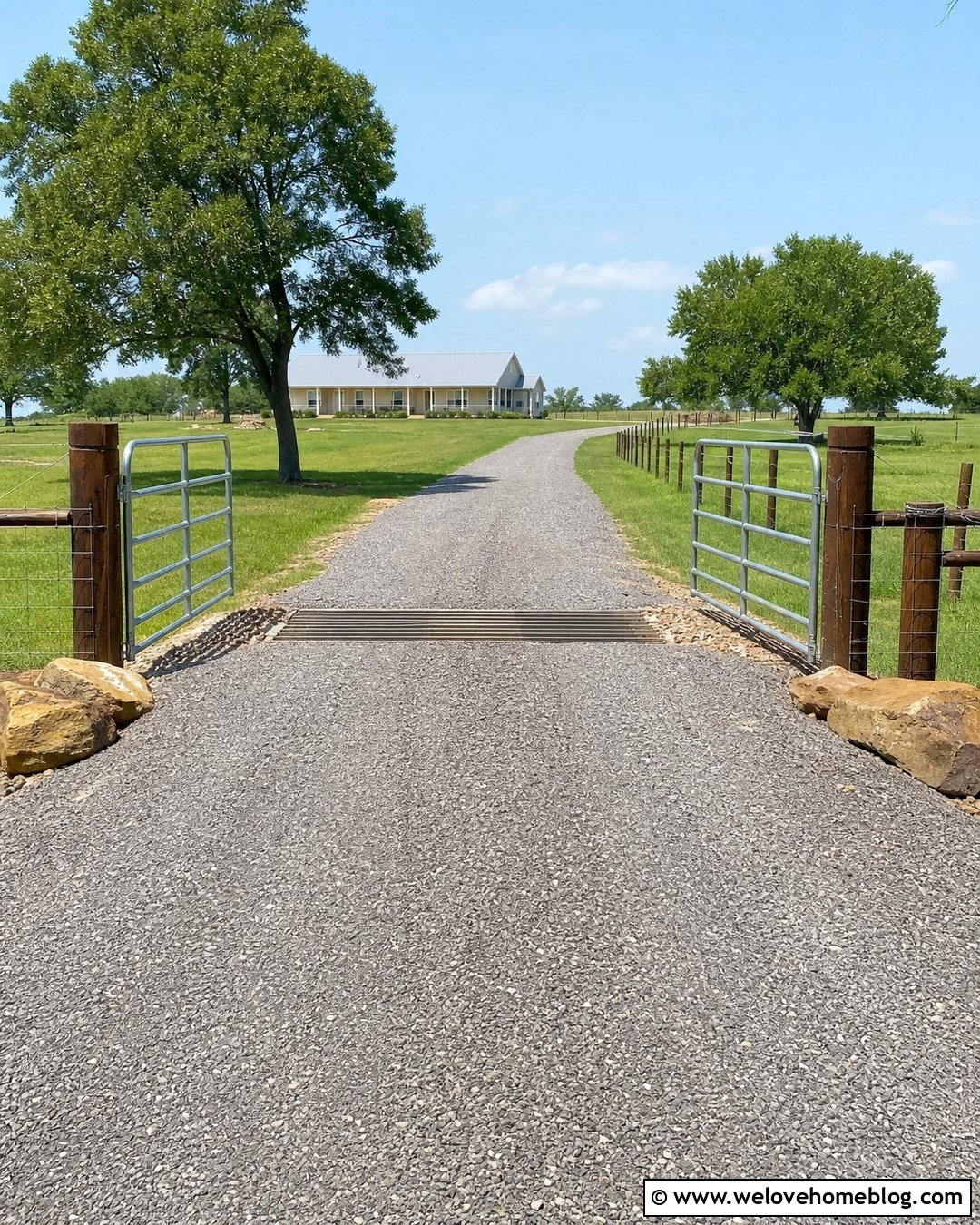
A cattle guard entrance can look organized and attractive when every functional component is treated as part of the overall design. Pair the cattle guard with a compacted gravel driveway, heavy timber posts, and a galvanized steel farm gate positioned to one side for alternate access. Extend post-and-wire fencing neatly from the entrance so there are no awkward gaps. A broad crushed-stone apron will support trailers and farm equipment, while large edge stones can protect the grass at the corners. Keep landscaping minimal around the working area. Use mown turf, native pasture grass, and perhaps two well-spaced shade trees beyond the fence. Install a clearly visible address sign on a separate post rather than attaching decorative objects to essential equipment. The completed entrance will feel capable, uncluttered, and authentic to a working farm.
13. Ranch Farm Driveway Entrance With Overhead Arch
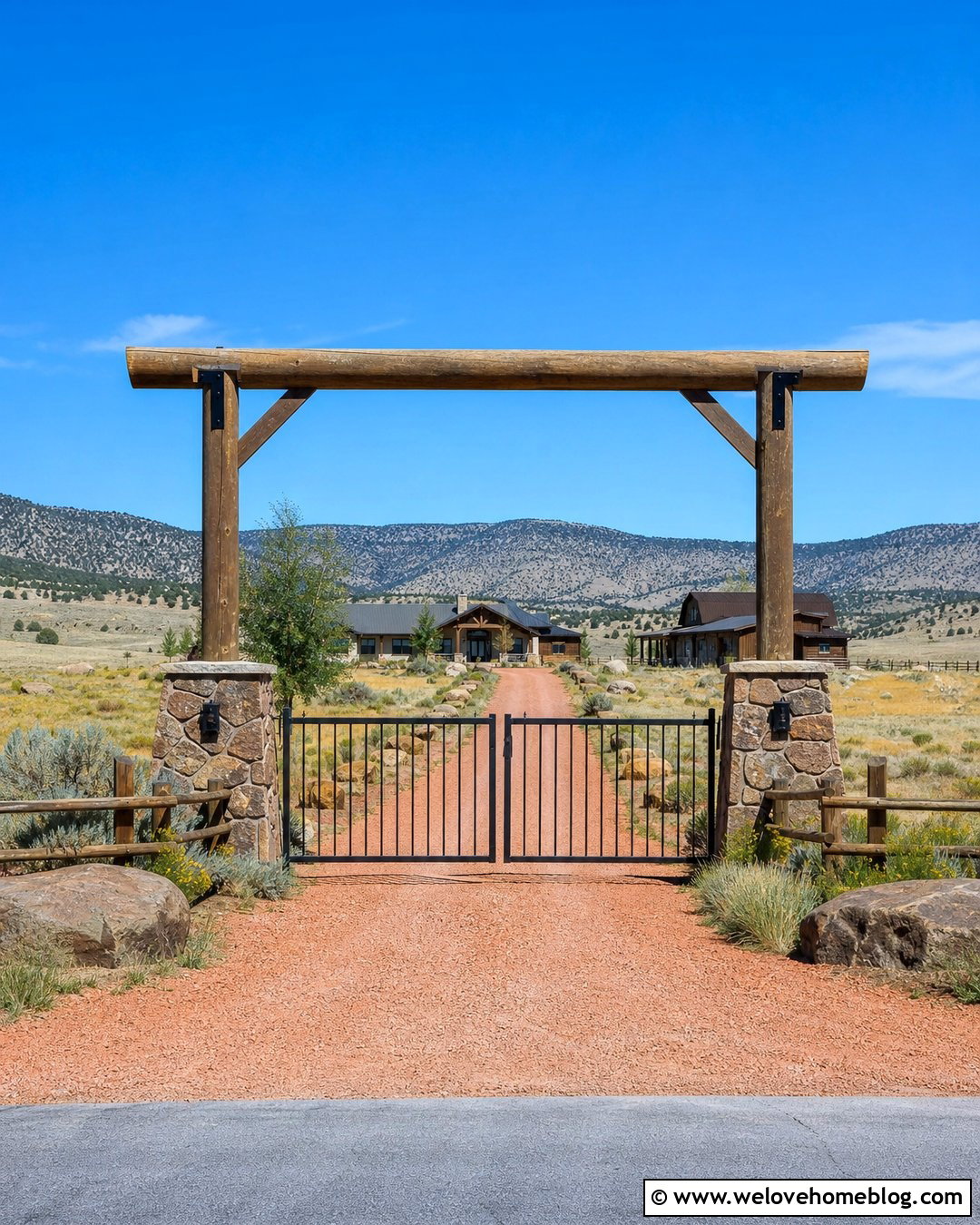
An overhead ranch arch can identify a large property while giving the driveway a strong focal point. Set tall timber or steel posts well outside the vehicle clearance area and span them with a simple horizontal beam. Below, use a compacted reddish gravel driveway and a wide metal ranch gate. Continue sturdy post-and-rail fencing on both sides to integrate the structure with the fields. Native bunch grasses, low sage-colored shrubs, and large weathered boulders complement the rugged materials without narrowing the approach. Keep lettering understated if the beam includes a farm name, and confirm that the structure provides safe clearance for hay trucks, horse trailers, and emergency vehicles. A straight lane works well here because it emphasizes the overhead frame and creates a clear view toward the ranch house or barns beyond.
14. Timber Farm Driveway Entrance With Covered Gateway
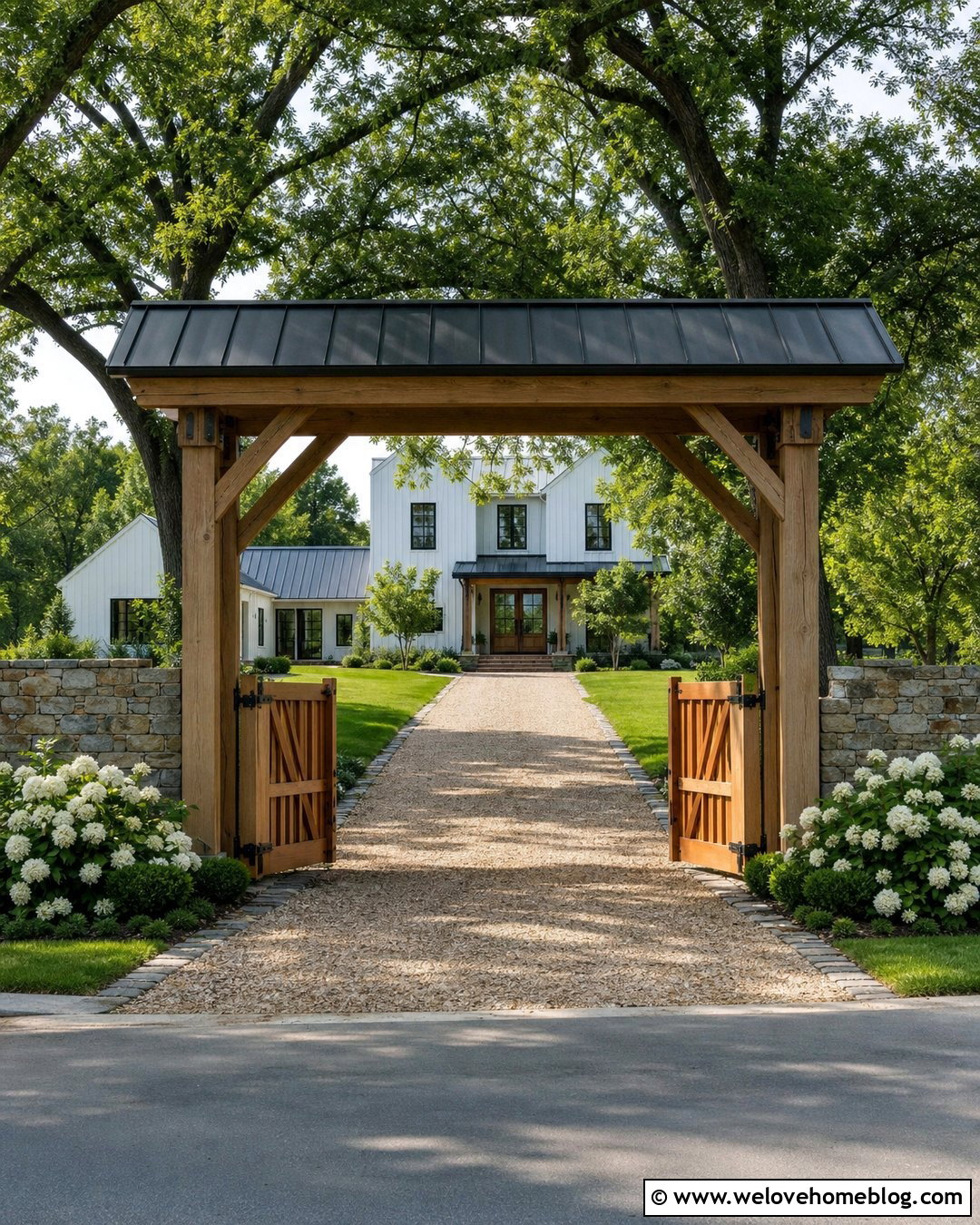
A covered timber gateway creates farmhouse character without requiring ornate materials. Build the structure with heavy square posts, angled braces, and a small standing-seam metal roof. Pair it with a beige gravel driveway and double cedar gates featuring simple cross-bracing. The roof color can match the farmhouse, barn, or nearby outbuildings for a coordinated look. Low stone walls extending from the posts will visually anchor the tall gateway and provide space for discreet address numbers. Surround the entrance with lawn, white flowering shrubs, and a few shade trees placed safely beyond the roadside sight triangle. Keep the structure wide and high enough for delivery vehicles and agricultural equipment. Used thoughtfully, the covered gateway feels like a natural extension of the farm buildings rather than a separate ornamental feature placed at the road.
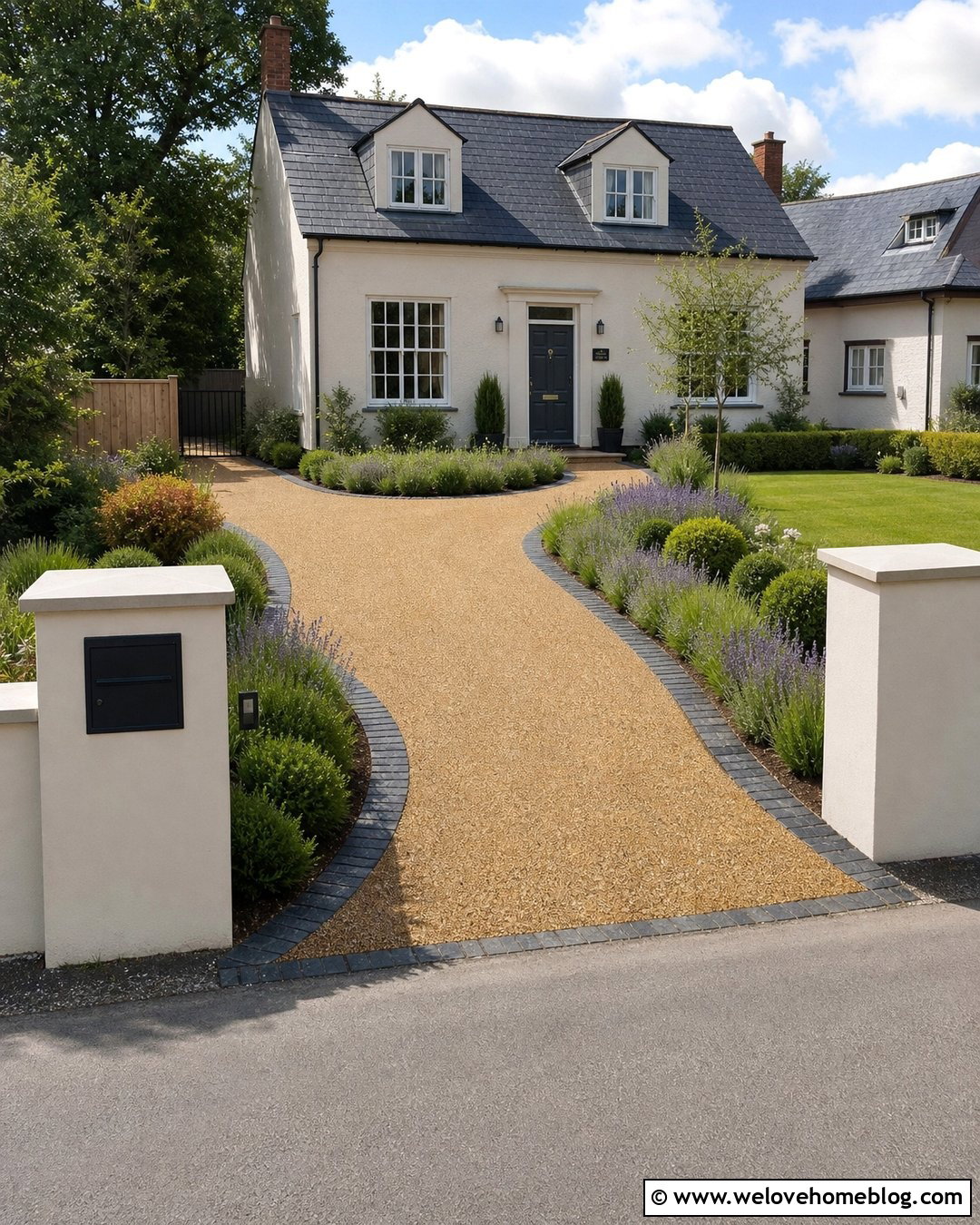
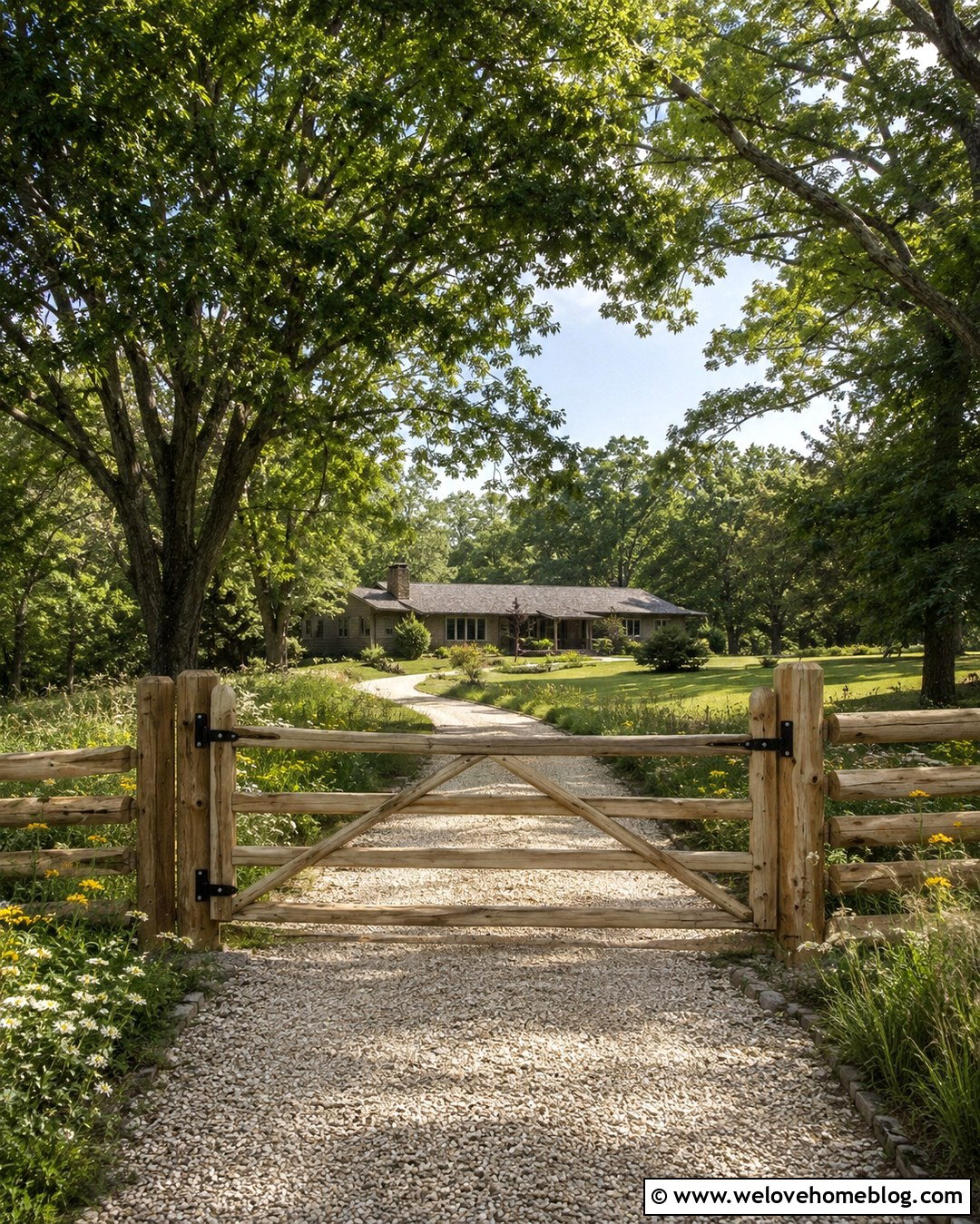
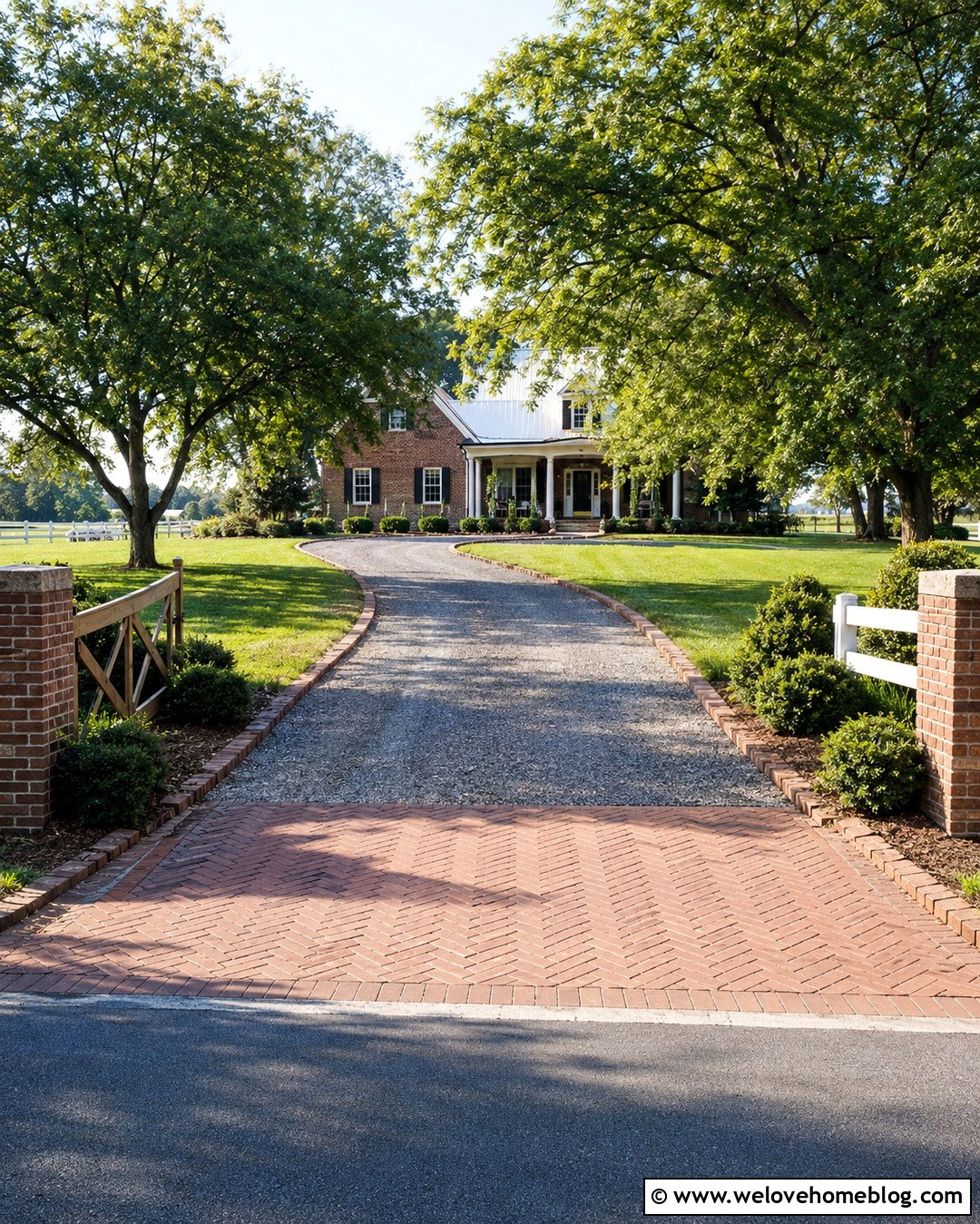
15. Stone Wall Farm Driveway Entrance
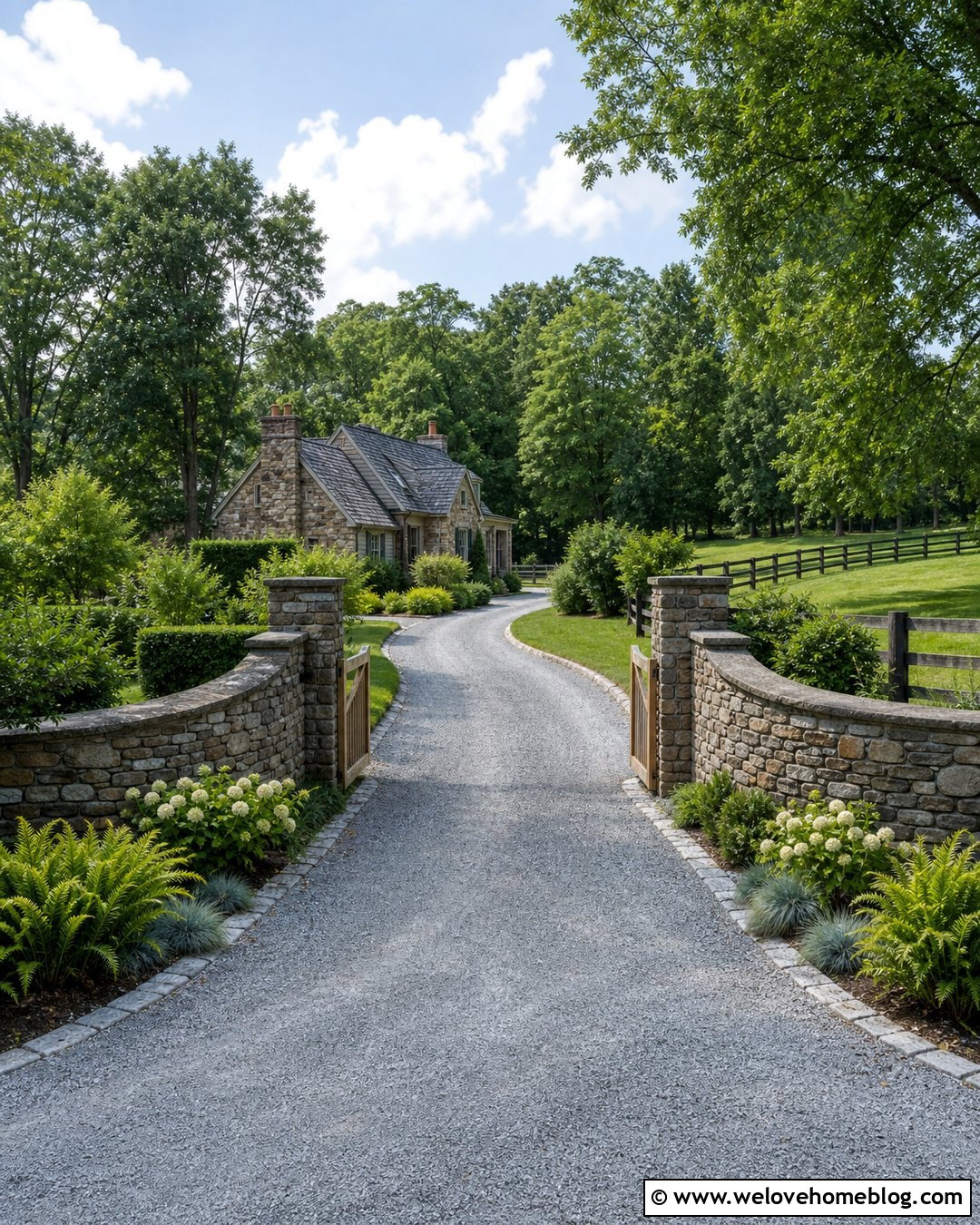
Low stone walls can make a rural driveway feel established while blending naturally into fields and woodland. Use locally appropriate fieldstone and curve each wall gently away from a gray gravel entrance. Taller square pillars at the inner ends can hold a simple wooden or black metal gate. Continue the stone as edging for the first section of the drive, then let it transition into grass shoulders. Behind the walls, plant loose groups of ferns, hydrangeas, native grasses, or evergreen shrubs suited to the local conditions. Avoid filling every gap with plants; open areas allow the masonry to remain visible. Natural stone boundaries are particularly compatible with rural homes and stone-clad farmhouses. () Matching the entrance stone to the home’s chimney or foundation will make the entire property feel more cohesive.
16. Brick Pillar Farm Driveway Entrance
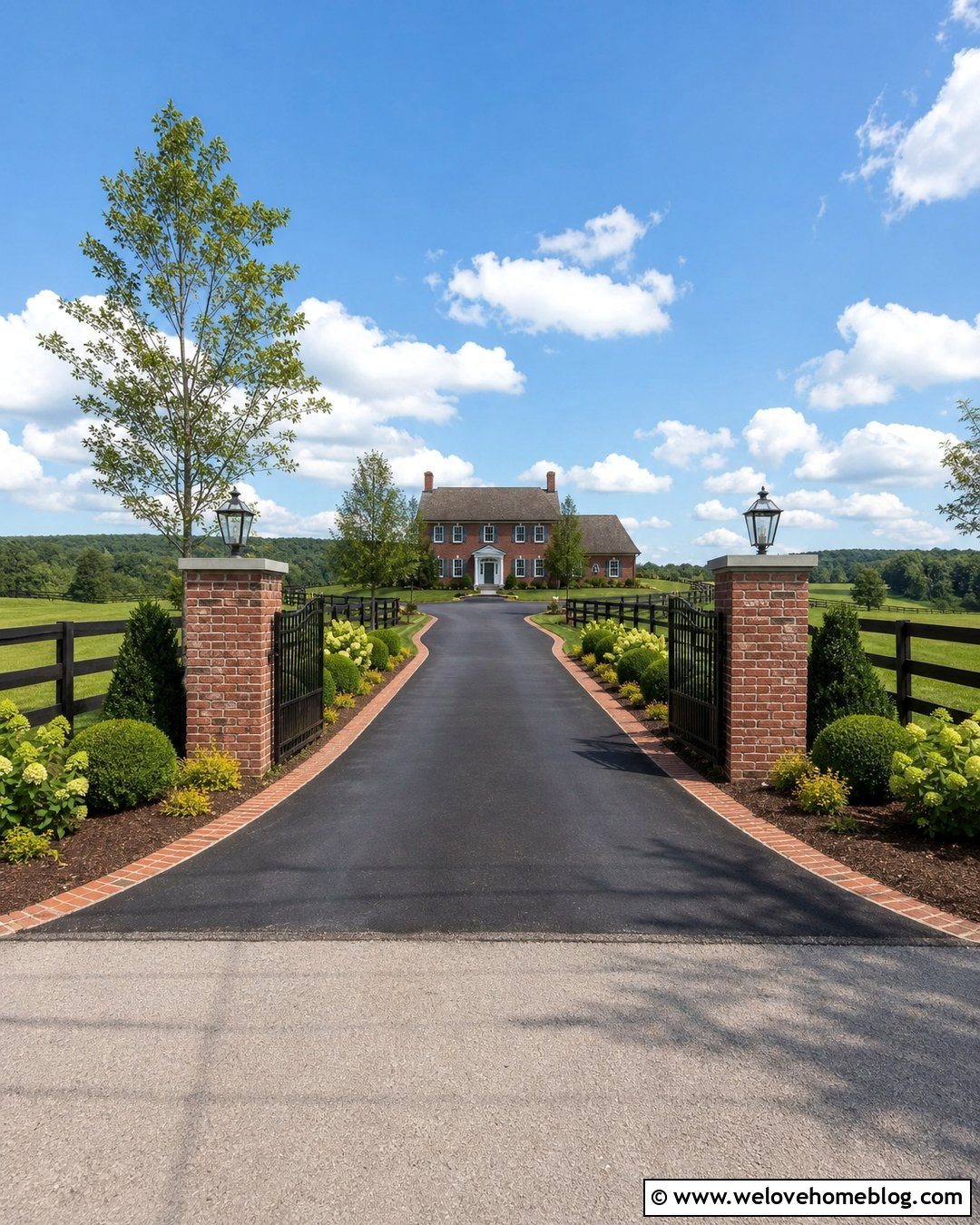
Brick pillars provide a handsome choice for properties with red barns, colonial farmhouses, or brick exterior details. Use substantial square pillars with concrete or stone caps, then place a black steel gate between them. A dark asphalt driveway edged with a narrow brick soldier course will carry the pillar material into the overall layout. Flare the entrance slightly toward the road, and continue low black fencing behind the pillars to define the property line. Formal shrubs can sit near the masonry, while relaxed meadow planting farther away prevents the design from feeling too suburban. Mount address numbers on one pillar and a simple lantern on each cap. Keep fixtures proportional to the masonry and avoid excessive decoration. The combination of brick, black metal, and green fields creates a clear, durable entrance with traditional farmhouse character.
17. Gabion Farm Driveway Entrance With Metal Gate
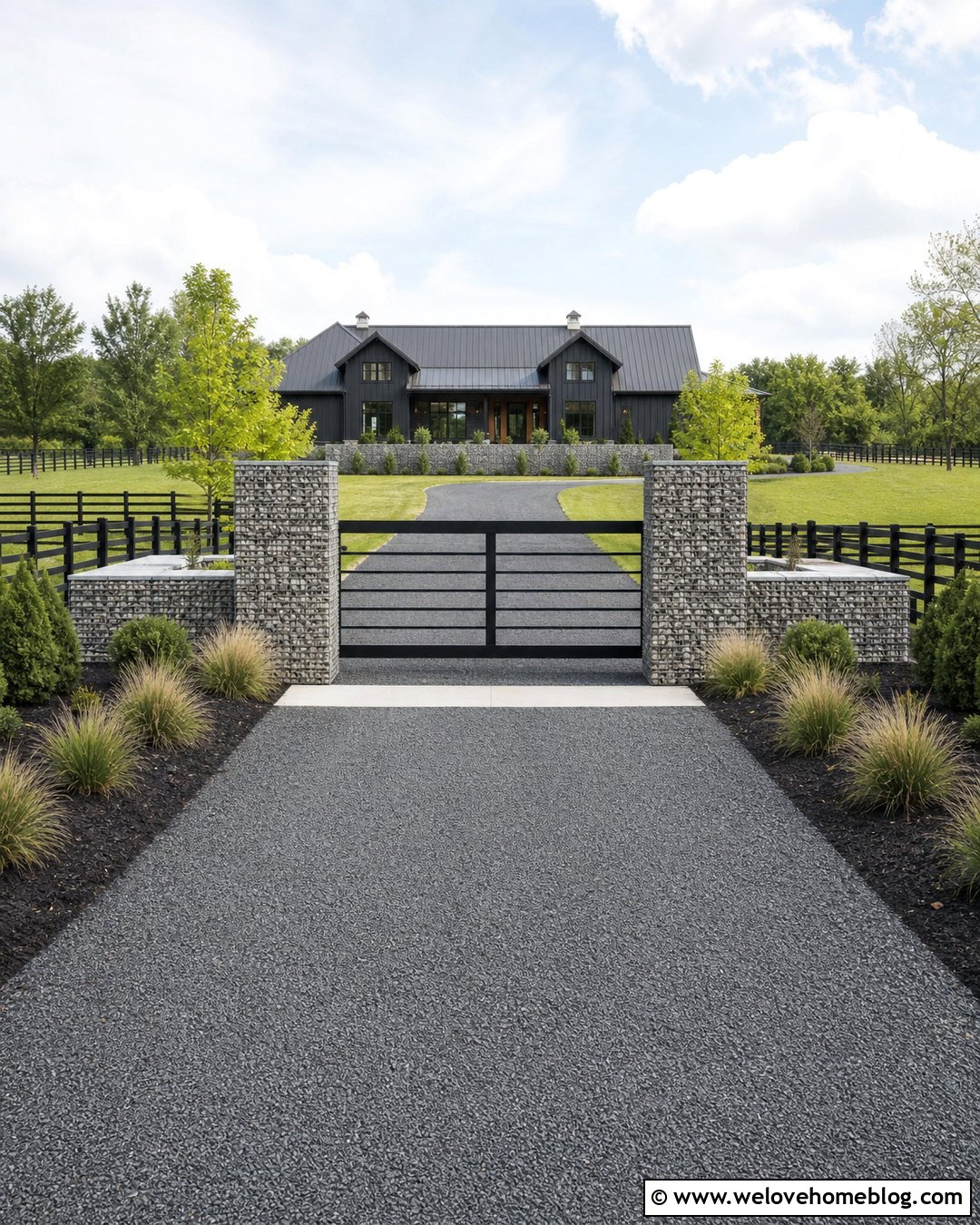
Gabion pillars offer a more contemporary version of the rustic stone entrance. Fill galvanized wire cages with angular stone that matches the surrounding landscape, then pair them with a flat black metal gate. A wide driveway surfaced in dark gray crushed stone will complement the industrial texture. Continue shorter gabion walls along the entrance curves or use black ranch fencing to create a lighter boundary. Plant tough ornamental grasses around the pillar bases, leaving enough open gravel to prevent plants from crowding the gate mechanism. This design suits a modern farmhouse, converted agricultural building, or rural home with metal siding. Repeat the gabion stone in a nearby retaining wall or house walkway. The entrance should remain broad and simple, allowing the contrast among loose stone, structured wire, dark metal, and soft planting to provide the visual interest.
18. White Farm Driveway Entrance With Double Gate
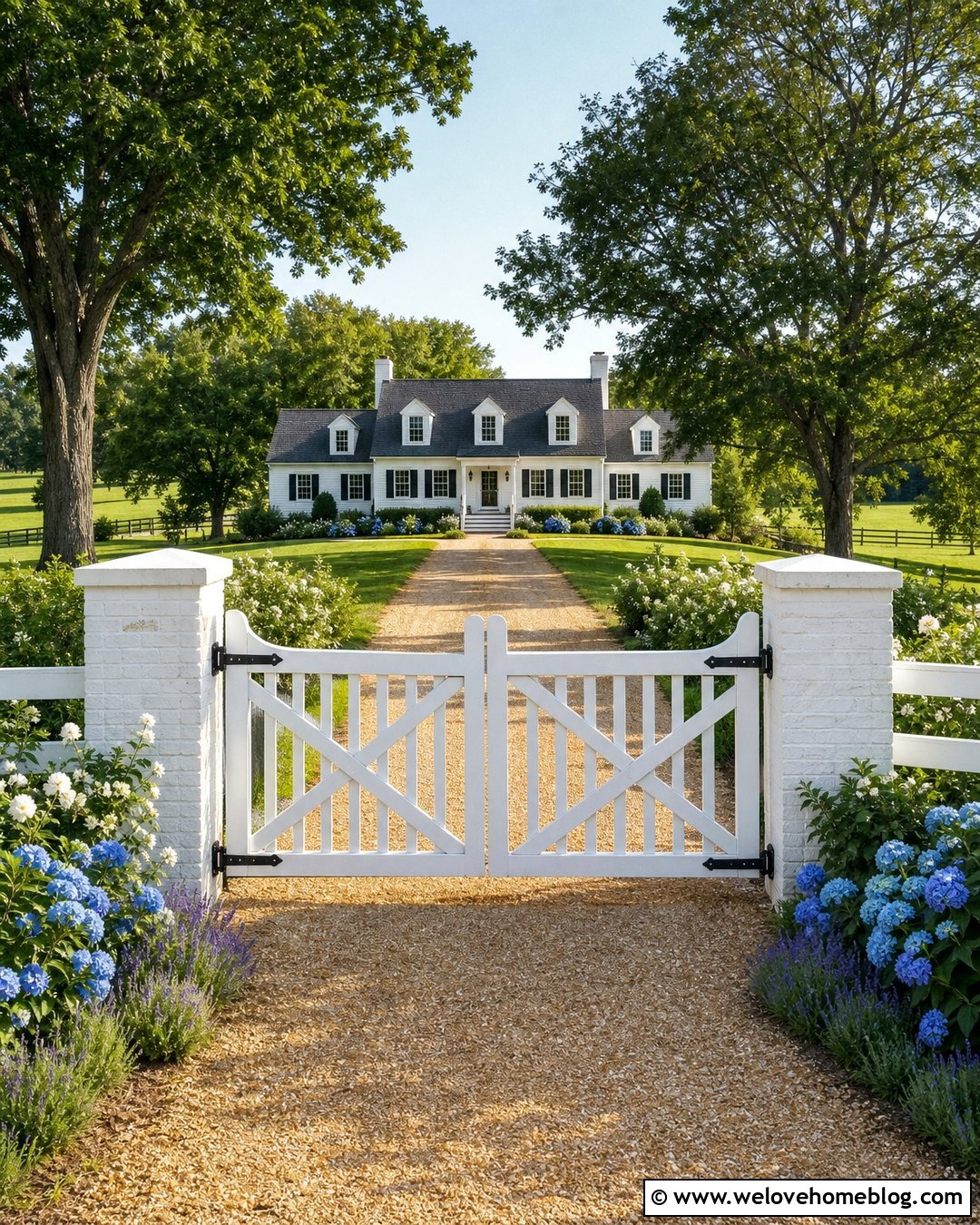
Few combinations feel as welcoming as a white gate, green fields, and a softly colored gravel lane. Choose a double-swing gate with diagonal bracing and connect it to white square posts or short whitewashed brick pillars. Continue matching three-rail fencing along the road, allowing it to curve gently into the property. Warm beige pea gravel can cover the visible top layer, supported by a properly prepared compacted base underneath. Add blue hydrangeas, white roses, or catmint near the fence, but keep the roadside corners low and open. A straight approach suits the tidy symmetry of the entrance and gives visitors a clear view toward the farmhouse. Black gate hardware, lanterns, and address numbers create crisp contrast. This look is especially effective for white farmhouses, Cape Cod homes, and traditional horse properties.
19. Black Metal Farm Driveway Entrance
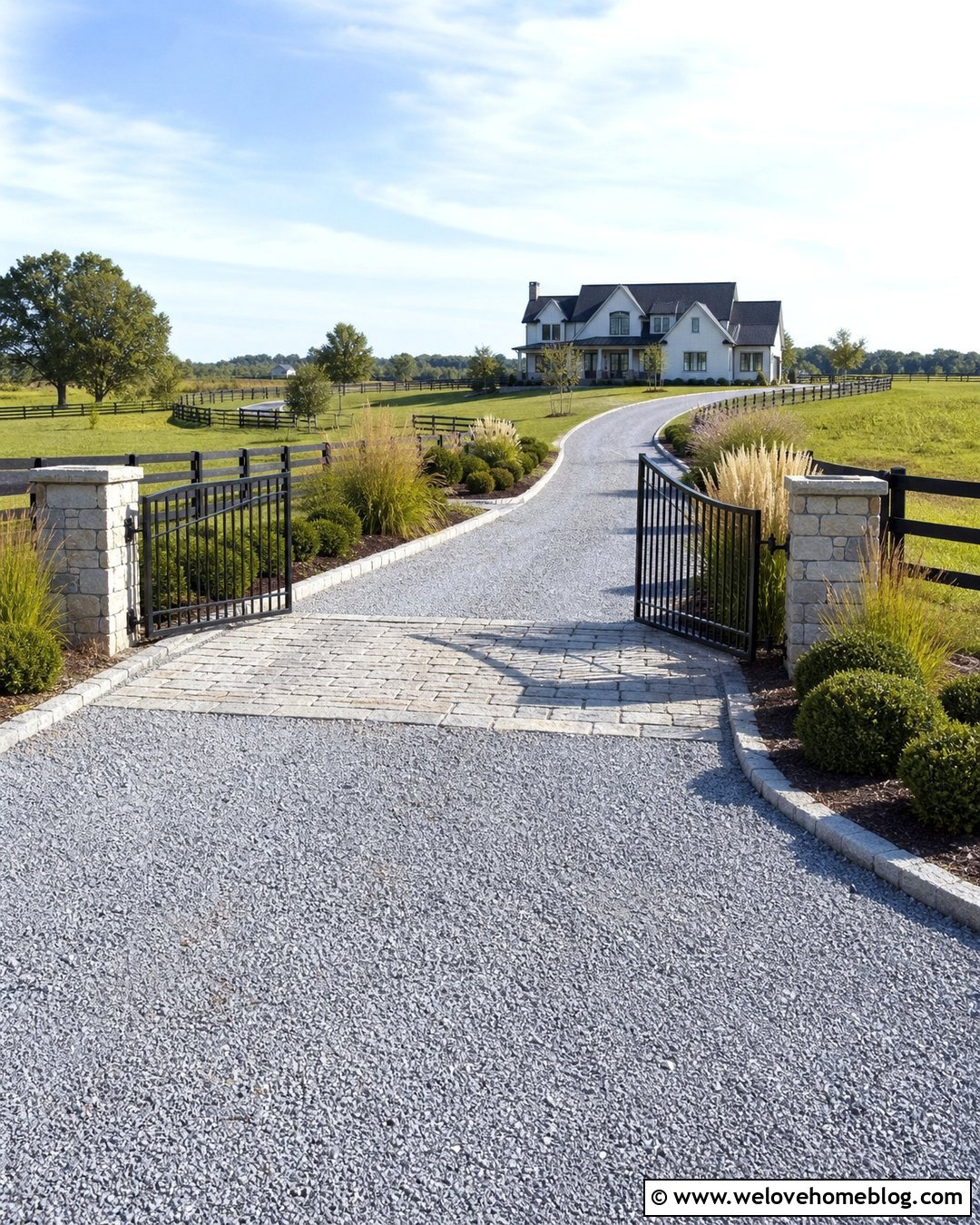
A black metal gate creates a clean silhouette against pasture, lawn, and pale driveway stone. Use a restrained gate design with vertical bars or simple horizontal rails rather than elaborate scrollwork. Anchor it with natural limestone pillars and connect black post-and-rail fencing on either side. The driveway can begin with a rectangular concrete paver apron before transitioning into compacted gray gravel. This combination provides a neat roadside surface without sacrificing rural texture farther inside. Place rounded evergreen shrubs near the pillars and mass ornamental grasses behind them to soften the metal. A gently curving approach will help the gate feel integrated with the land. If automation is included, plan conduit, controls, drainage, and access before installing the finished surfaces. Conceal operating equipment behind planting or pillars while keeping it reachable for maintenance.
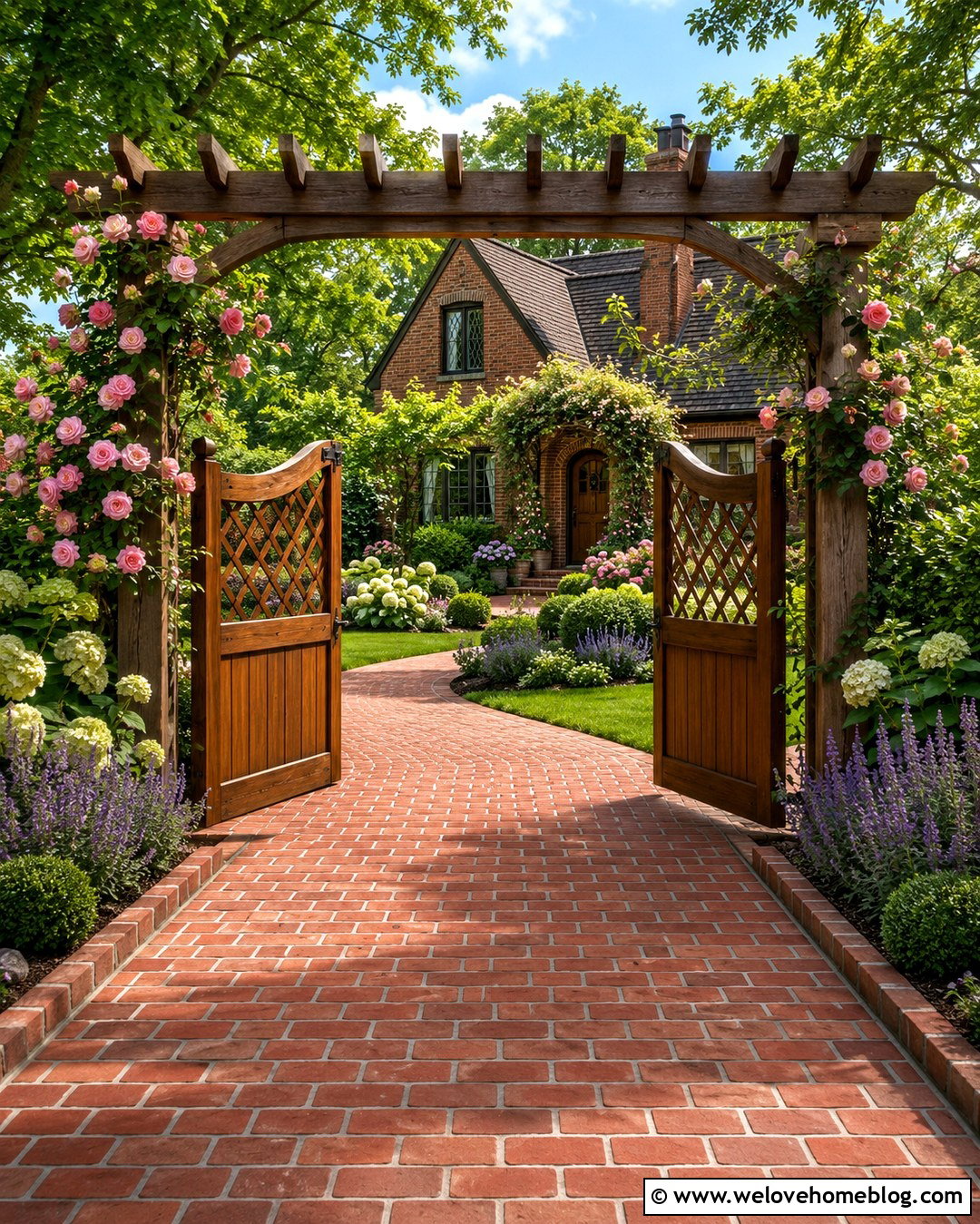
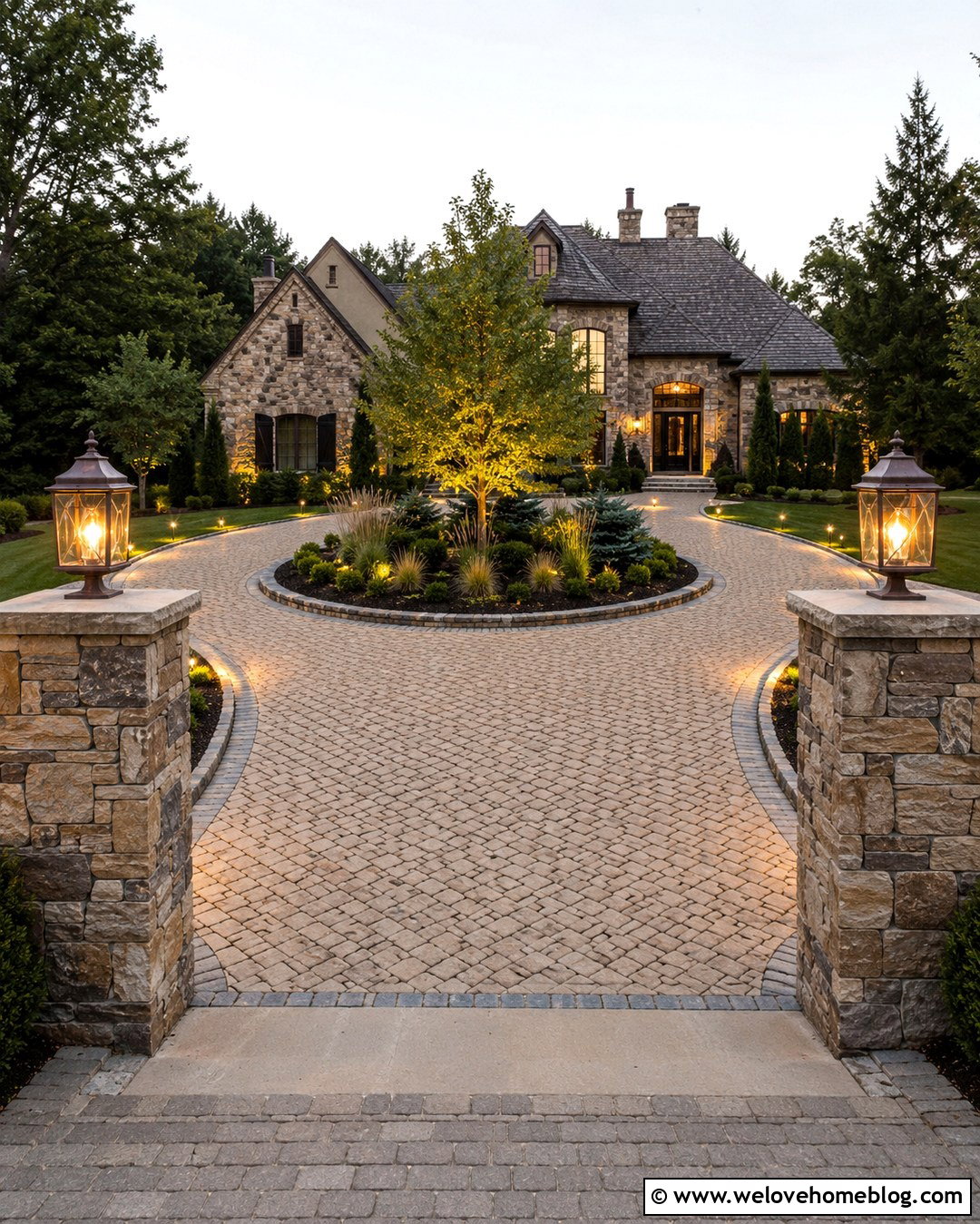
20. Cedar Sliding Farm Driveway Gate
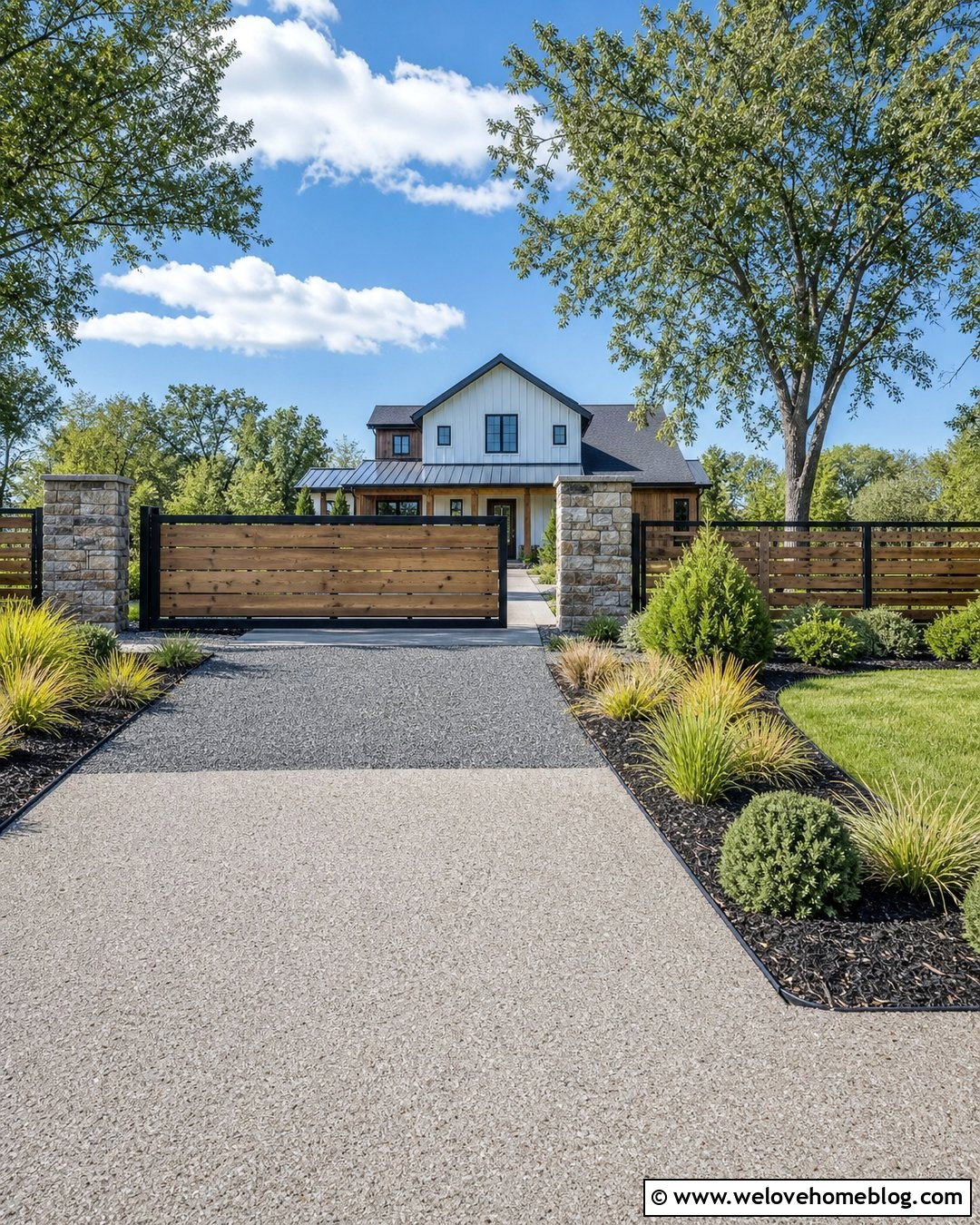
A sliding gate is useful where sloping ground or limited swing space makes traditional hinged gates difficult. Choose horizontal cedar boards mounted on a dark steel frame, and pair them with board-formed concrete or stacked-stone pillars. A smooth exposed-aggregate driveway provides a stable track area and can transition into gravel beyond the gate. Keep the entrance mostly level and allow clear space beside the opening for the entire gate panel. Use linear planting beds with native grasses, compact junipers, and a single specimen tree to complement the horizontal design. The house in the distance can be a modern farmhouse with cedar accents and black windows. Because sliding equipment requires accurate installation, build the complete entrance around its operating needs. The result should look streamlined while still reflecting the natural materials of the rural property.
21. Double-Swing Farm Driveway Gate With Gravel Apron
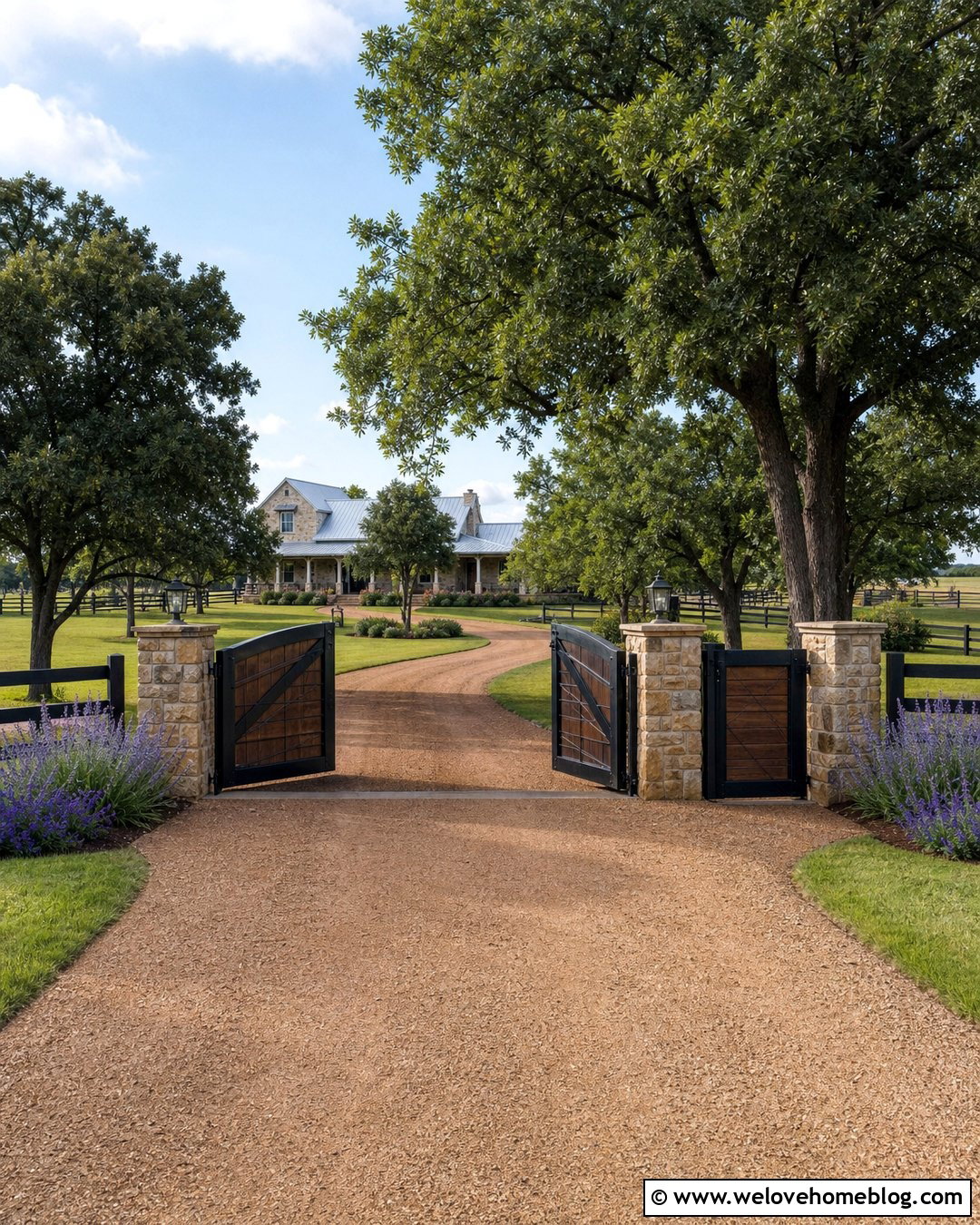
Double-swing gates create a balanced entrance and require less side clearance than one very large gate leaf. Combine stained timber panels with black steel frames, then hang them from sturdy stone pillars. Cover the approach with compacted brown gravel and include a wider apron before the gates so vehicles can align comfortably. Beyond the entrance, allow the driveway to curve between pasture fencing and mature trees. Low lavender or salvia beds can soften the pillars, while broad grass shoulders leave room for trailers. Determine the gate swing direction carefully so it does not interfere with roadside space, slopes, snow, or queued vehicles. A separate pedestrian gate can sit beside one pillar where needed. Repeating the gate’s timber tone on the farmhouse door, porch columns, or barn siding will connect the entrance visually to the buildings.
22. Farm Driveway Entrance With Pillar Lights
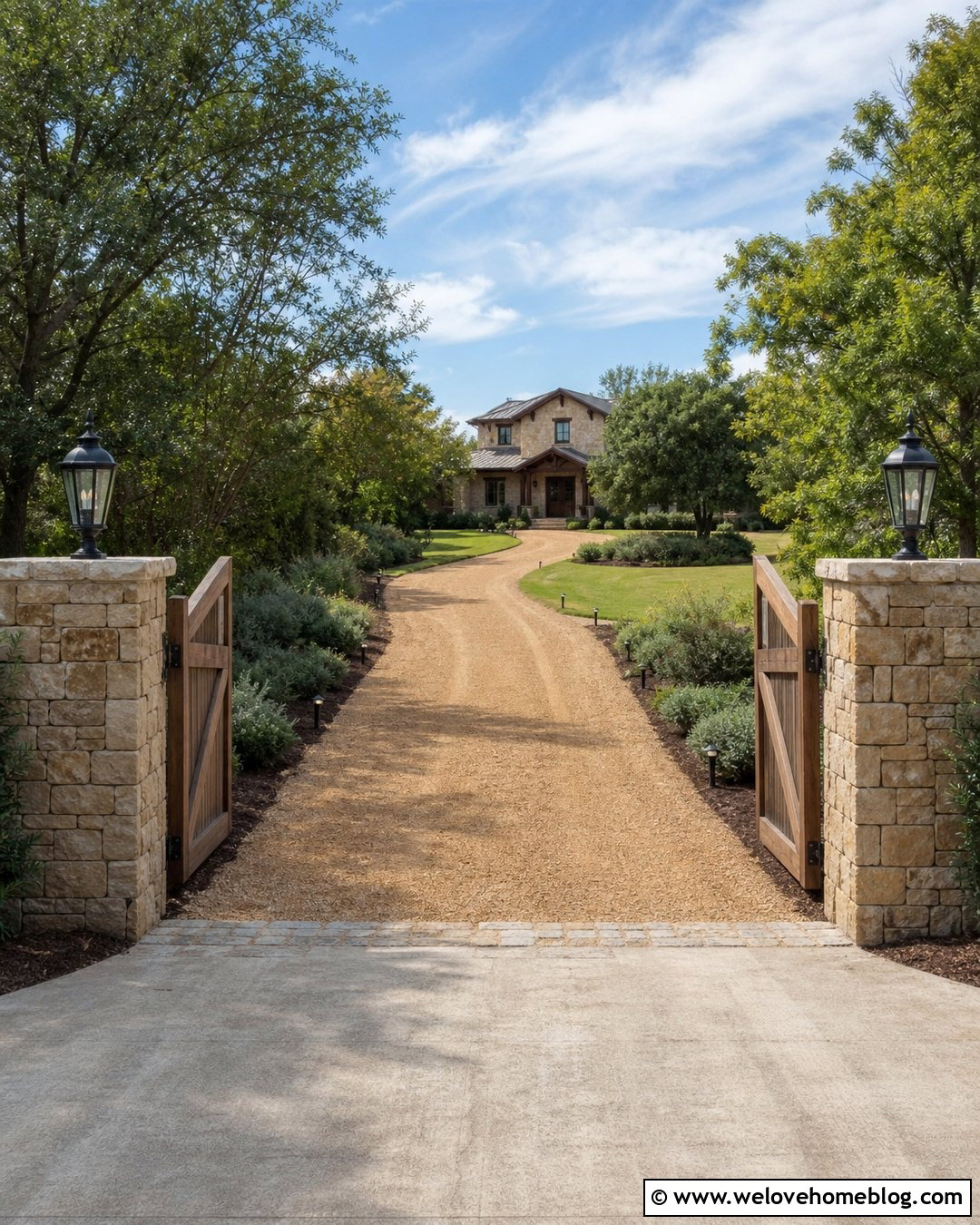
Pillar lighting should improve visibility while remaining secondary to the farm landscape. Start with a warm gravel driveway, square fieldstone columns, and an open timber gate. Mount simple black lanterns on the pillar caps, sized so they do not overwhelm the masonry. Add low-level marker lights along the first curve rather than creating a continuous bright runway toward the house. During daylight, the complete entrance should still look balanced through stone, wood, lawn, and native shrubs. Use broad planting beds to ground the columns and conceal any electrical boxes or conduit access points. Position lights so they clarify gate edges, address numbers, and changes in driveway direction. For the brightest and safest result, combine decorative fixtures with practical planning instead of relying on one lantern to illuminate the entire entrance and roadside turning area.
23. Farm Driveway Entrance With Low-Voltage Lighting
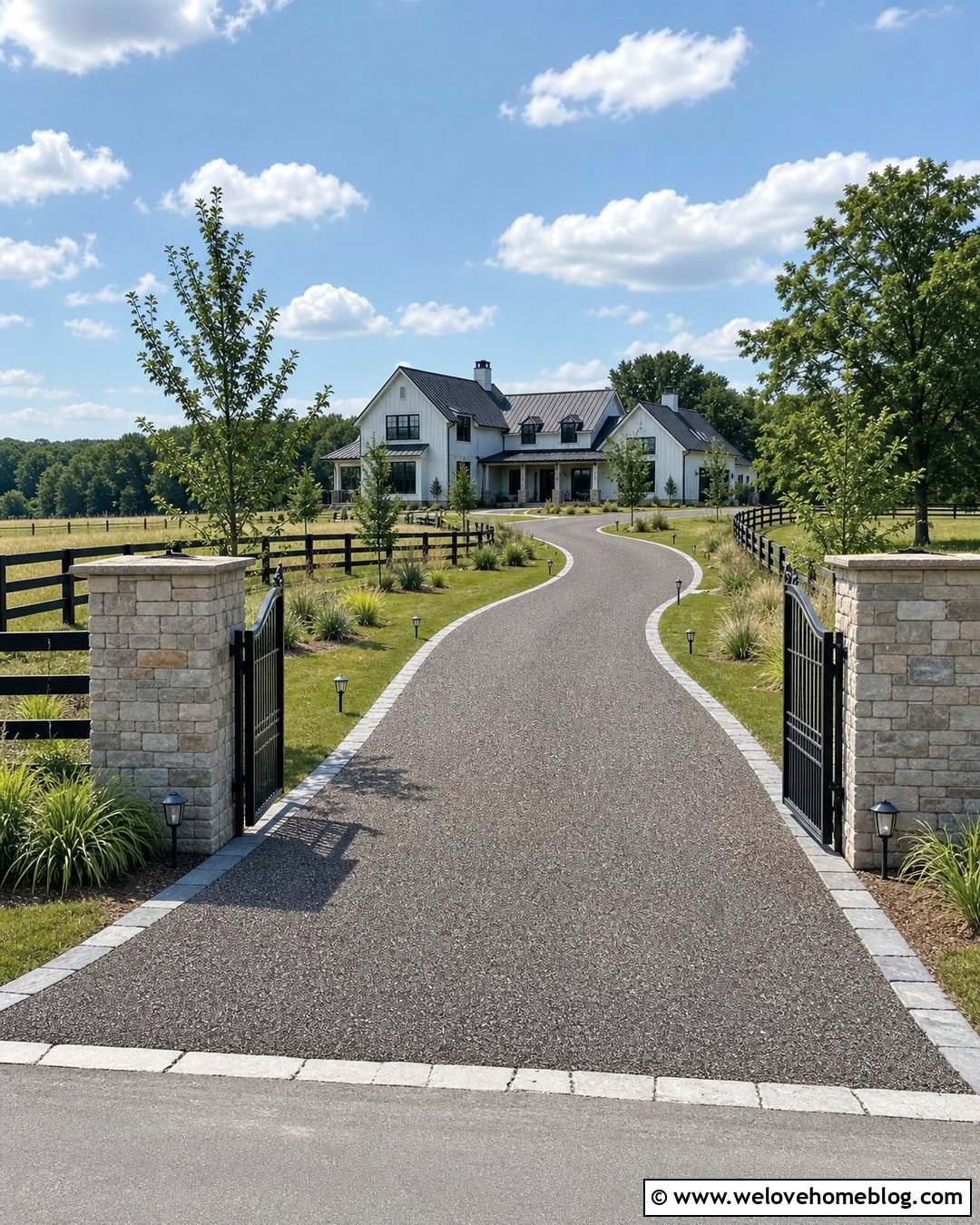
A long country driveway benefits from lighting that identifies the route without dominating the nighttime view. During the day, the design can feature a charcoal chip-seal surface, granite edging, black farm fencing, and loose drifts of native grasses. Place low-voltage fixtures selectively at the entrance, major curves, bridge edges, and intersections. Avoid lining every foot of the driveway with identical lights. The entrance itself can include low stone pillars and an open steel gate, allowing clear views into the property. Keep fixtures below the top of nearby grasses so the hardware remains discreet in daylight. Downward-facing light reduces distracting glare and focuses illumination on the driving surface. A few carefully chosen fixtures will support the shape of the driveway while preserving the peaceful, open atmosphere that makes a farm approach appealing.
24. Farm Driveway Entrance With Address Sign
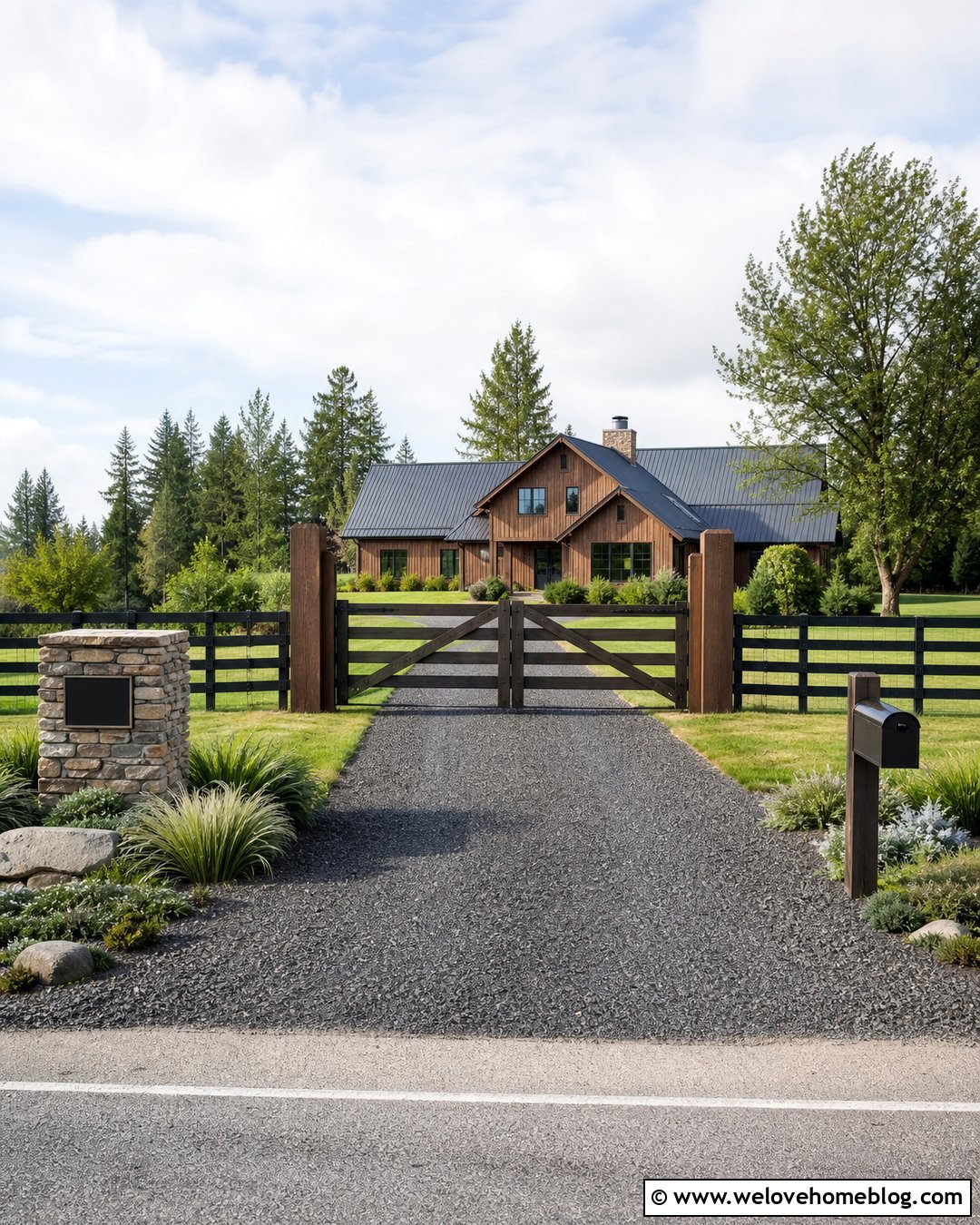
An address sign should be easy to find, easy to read, and integrated into the entrance rather than treated as an afterthought. Pair a dark gray gravel lane with timber posts, black ranch fencing, and a broad wooden gate. Install the sign on a separate masonry monument or a thick timber post outside the gate’s moving area. Match its stone, wood, and metal colors to the farmhouse exterior. A simple mailbox can stand nearby, but allow visual space between the two features to prevent clutter. Frame the sign with low ornamental grass and evergreen ground cover, keeping plants below the numbers. Reflective or illuminated numerals can make the property easier to identify after dark. Place the sign where approaching visitors can see it without stopping abruptly or blocking the road while checking the address.
25. Farm Driveway Entrance With Wildflower Borders
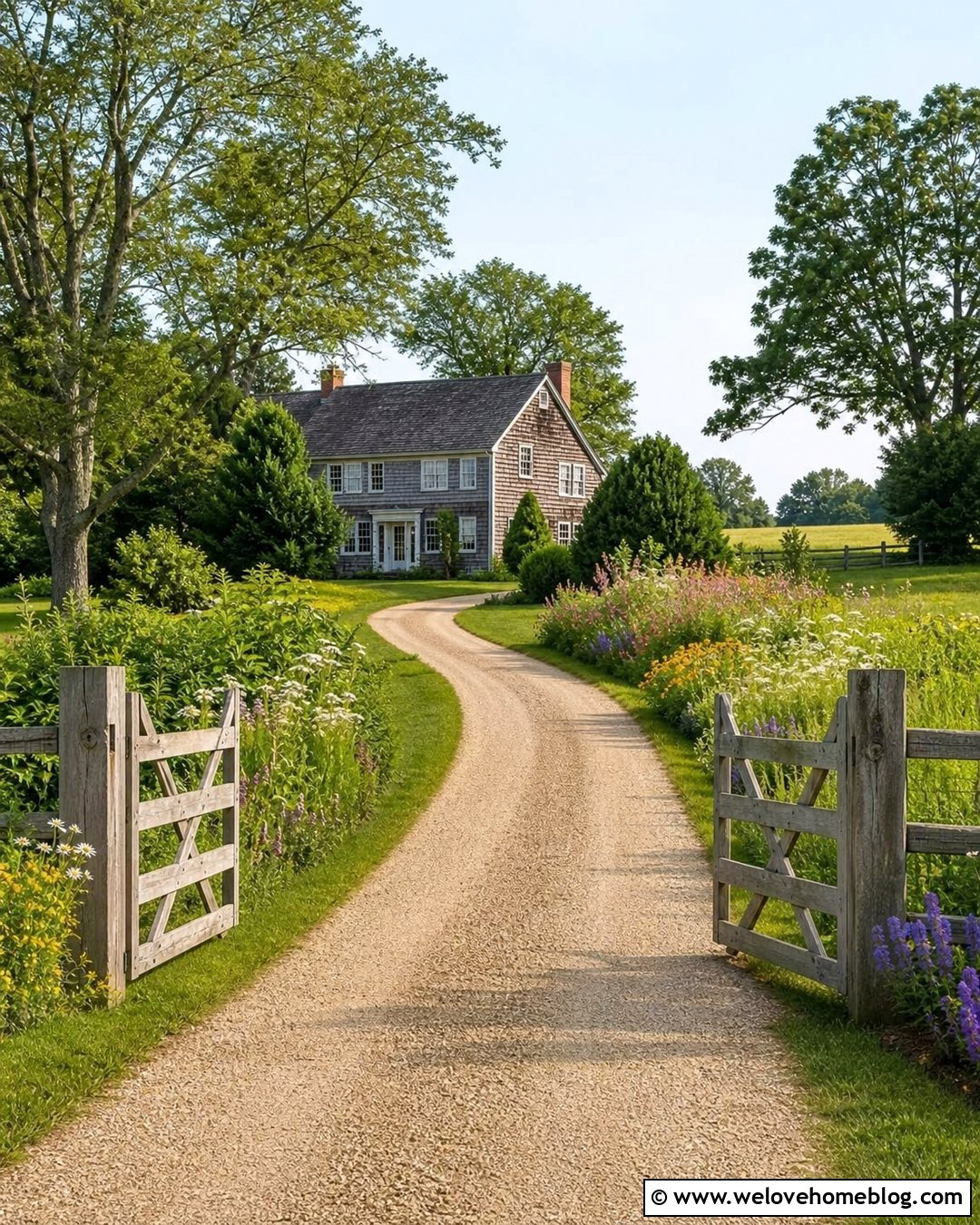
Wildflower borders can make a gravel farm entrance feel connected to the surrounding fields, especially when the planting follows broad, natural shapes. Begin with a curved tan gravel driveway, weathered timber posts, and a simple open farm gate. Maintain short grass at the immediate roadside, then introduce wider meadow beds farther inside the property. Select regionally appropriate flowers and grasses that provide a long season of color without growing into vehicle sightlines. A defined mown edge will prevent the landscape from appearing neglected. Add two or three structural shrubs near the gateposts to give the entrance year-round form. Continue the wildflower planting along only selected sections of the drive, leaving open pasture views between them. The balance of controlled edges and loose planting creates a relaxed entrance that still looks cared for.
26. Farm Driveway Entrance With Ornamental Grass
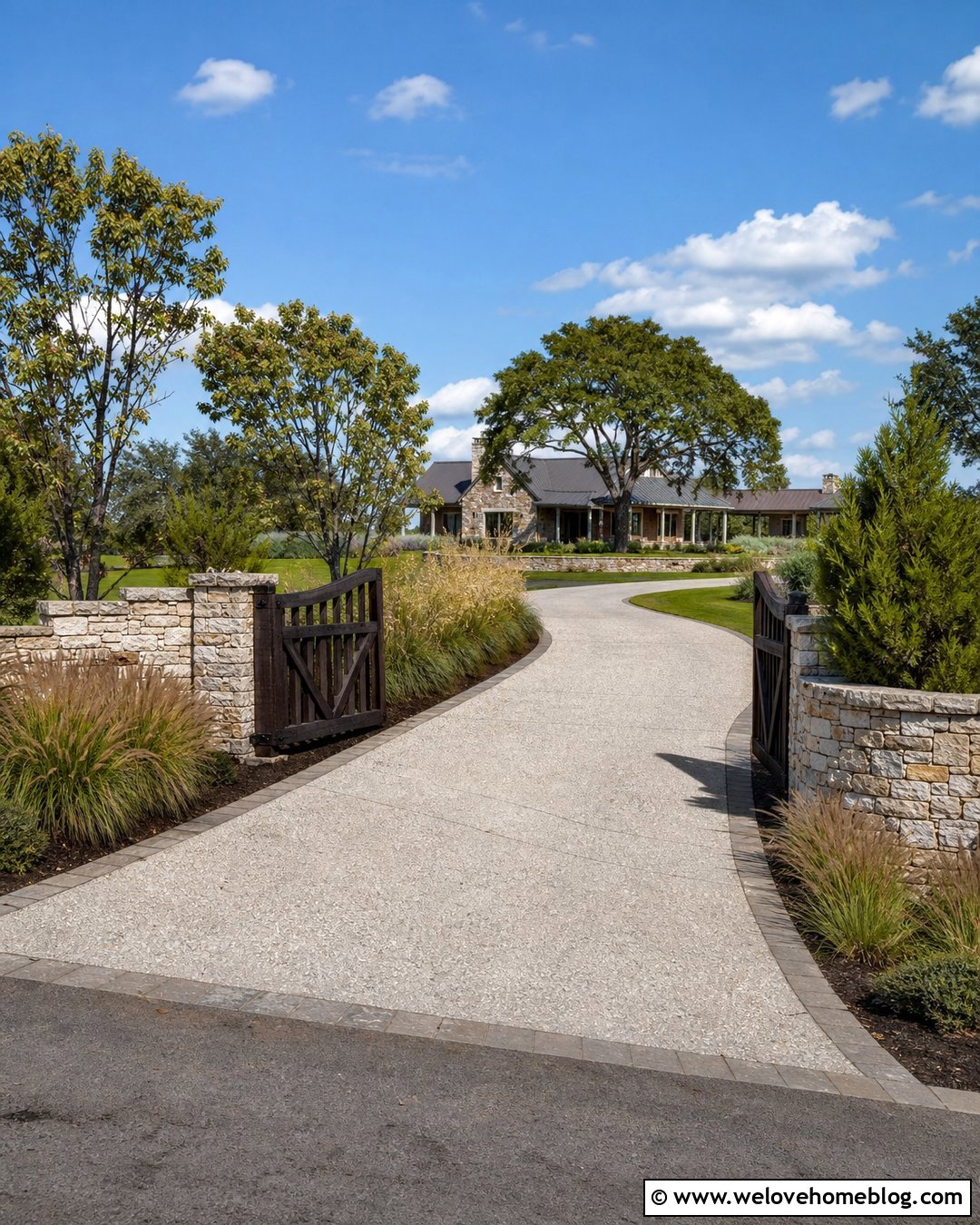
Ornamental grasses bring movement and texture to a farm entrance while requiring less visual structure than formal hedges. Pair soft green and bronze grasses with a light gray exposed-aggregate driveway, dark timber gate, and low limestone walls. Arrange the grasses in broad repeated groups behind the walls rather than placing individual plants in a narrow row. Keep varieties near the road short, saving taller selections for farther inside the property. A slightly curved driveway will allow each planting mass to appear gradually as visitors approach the farmhouse. Include evergreen shrubs at the pillars so the entrance retains structure after grasses are cut back. Flush stone edging can separate the beds from the driving surface. Together, the textured concrete, natural stone, dark wood, and flowing plants create a polished but unmistakably rural welcome.
27. Farm Driveway Entrance With Hydrangeas
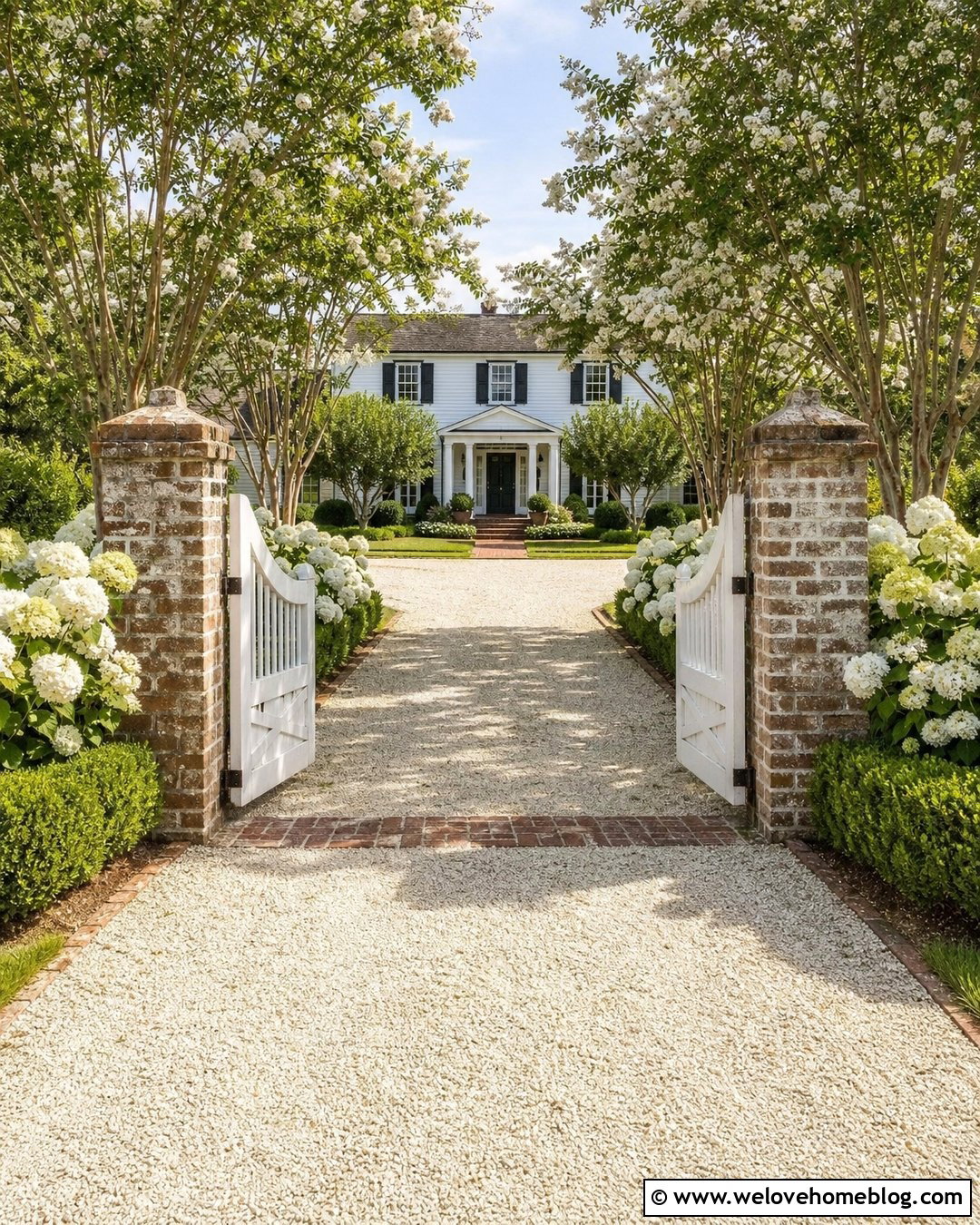
Large hydrangea borders can soften masonry and create an inviting approach to a traditional farmhouse. Use warm white crushed limestone for the driveway, aged brick pillars, and a white double gate. Plant hydrangeas in deep beds behind low boxwood or a simple grass edge, leaving open space around gate hinges and roadside sightlines. Choose varieties suited to the local climate, sun exposure, and mature planting space. Repeating the shrubs along the first section of the driveway will guide the eye toward the house, while intermittent shade trees add height. A brick ribbon across the limestone entrance can echo the pillars and keep the palette connected. This complete look works best when the planting is generous but controlled. Allow enough distance between blooms and the gravel to prevent branches from obstructing vehicles after rain or heavy growth.
28. Farm Driveway Entrance With Native Prairie Planting
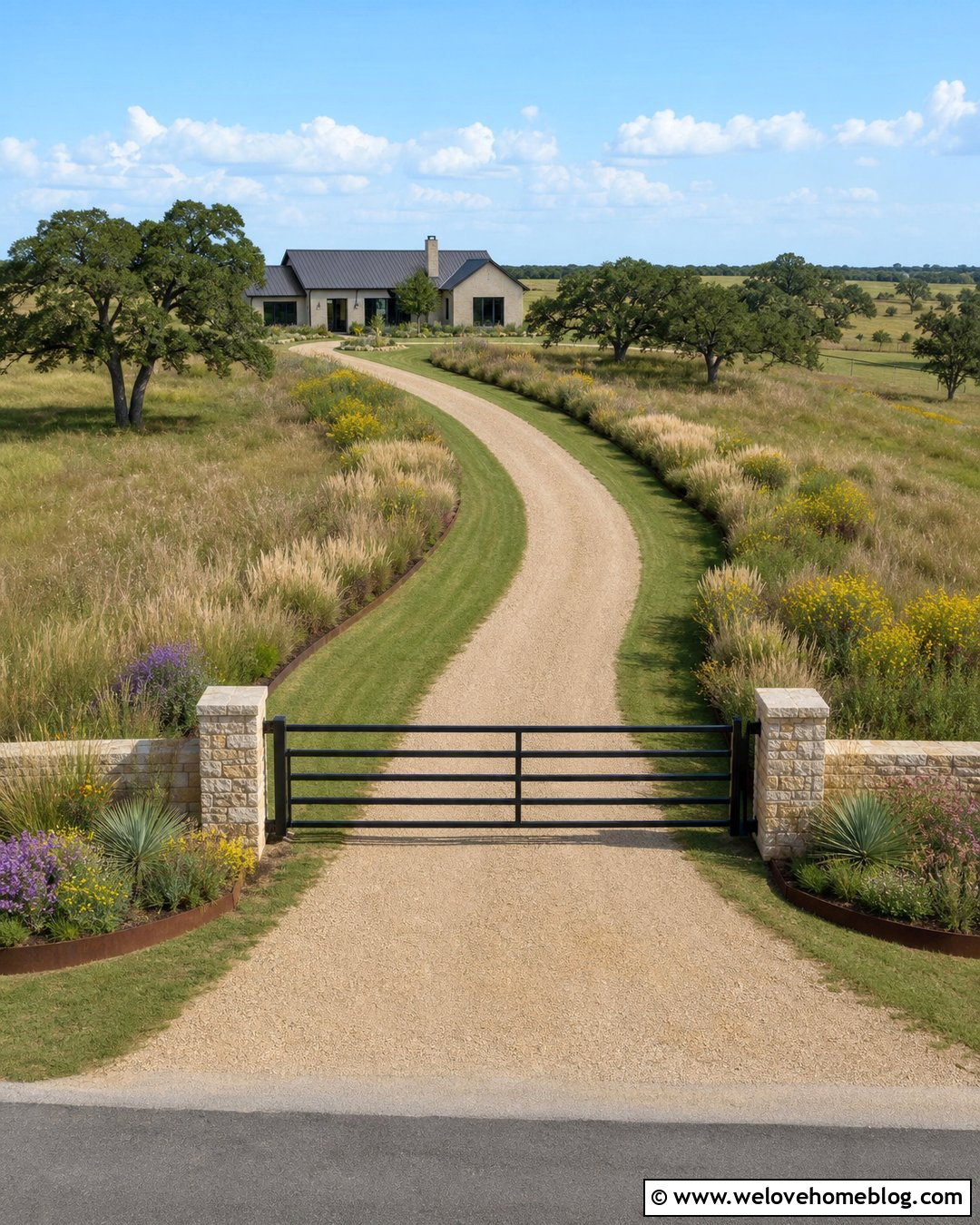
Native prairie planting creates a resilient visual transition between a farm driveway and open acreage. Choose a gently curving driveway surfaced with compacted buff gravel and bordered by weathered steel edging. Frame the entrance with limestone pillars and a simple black horizontal gate. Beyond the gate, use broad sweeps of native grasses and flowering perennials, leaving a clearly mown verge beside the driving surface. Scattered oak or other regional trees can provide distant structure without turning the lane into a formal allée. The farmhouse should remain visible through openings in the planting. Select species according to local conditions rather than copying a generic plant list. A restrained entrance palette lets seasonal changes become the main decoration. The result feels natural and site-specific while maintaining a defined, practical route for daily vehicles and farm equipment.
29. Farm Driveway Entrance With Evergreen Screening
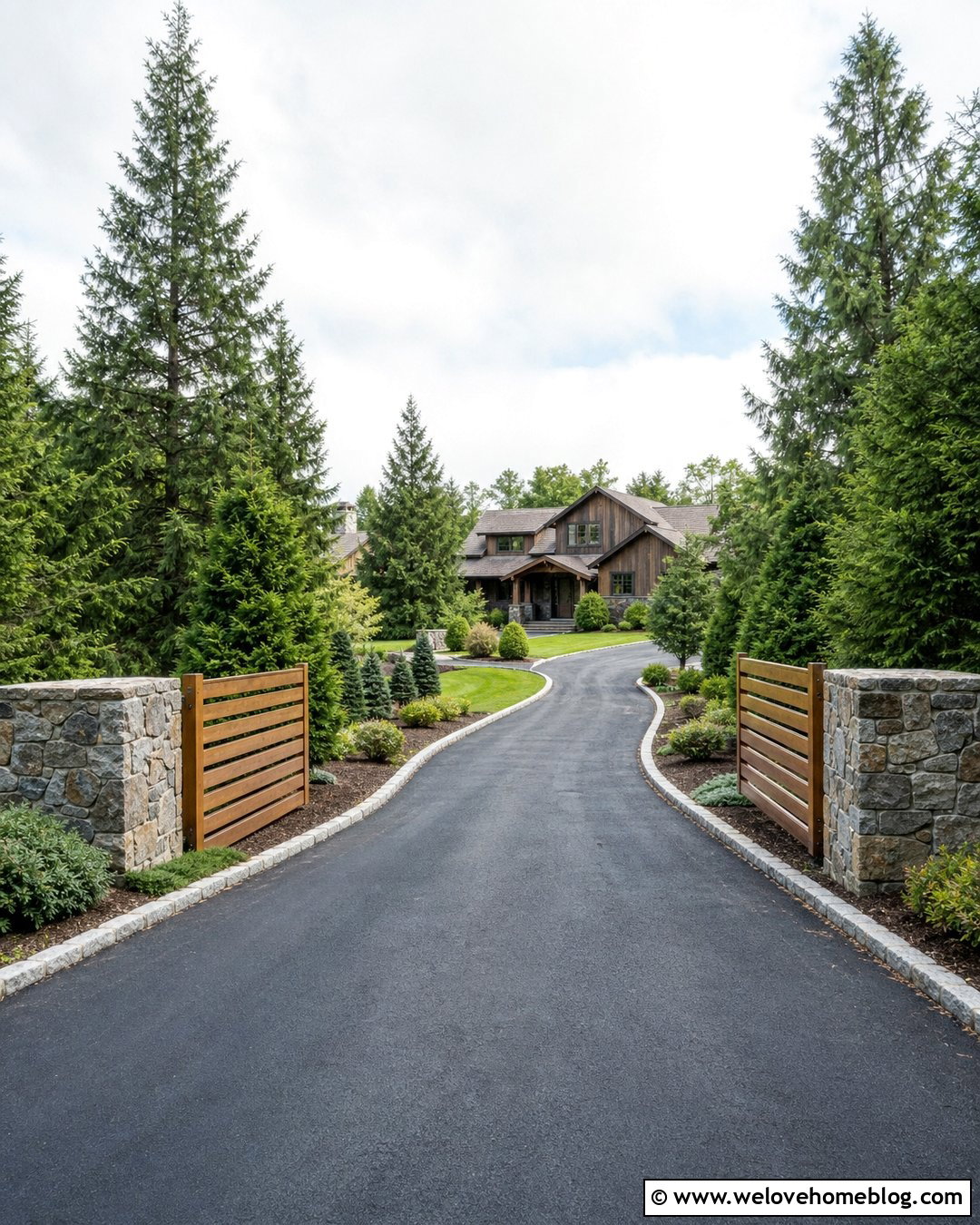
Evergreen screening can provide privacy without closing the farm entrance behind a solid wall. Start with a dark asphalt driveway, natural stone gateposts, and a slatted cedar gate that allows partial views through the entrance. Plant evergreens in staggered groups beyond the roadside corners rather than creating one dense, straight hedge. Mix upright trees with rounded shrubs and low ground covers to produce depth. Keep enough distance from the driveway for mature branches, snow storage, and safe visibility. A narrow granite curb will define the asphalt edge and protect nearby planting beds. Allow the lane to curve gently behind the screening before opening toward the house. This arrangement shields private areas while keeping the gate welcoming. Repeating cedar and stone on the farmhouse exterior will help the entrance read as the first part of one coordinated property.
30. Farm Driveway Entrance With Orchard Trees
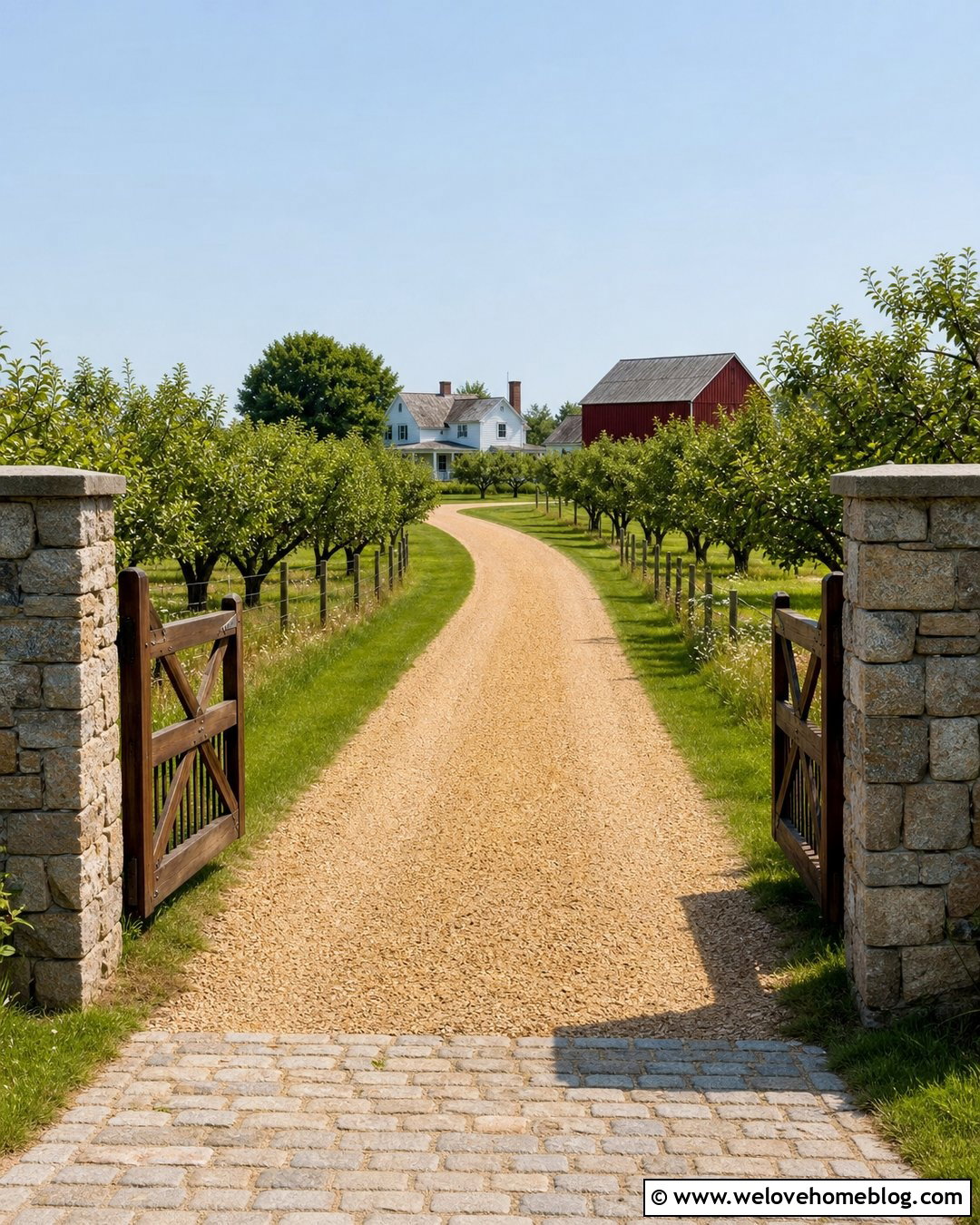
An orchard-lined entrance gives a farm driveway purpose, rhythm, and seasonal interest. Begin with a compacted golden gravel lane between simple stone pillars and an open wooden gate. Plant fruit trees in relaxed rows beyond the roadside visibility area, spacing them according to their mature size. Maintain broad grass strips around the trunks for mowing and access, and use low fencing where wildlife protection is needed. The driveway can curve gently through the orchard before reaching a farmhouse and barn complex. Add a cobblestone apron at the gate to contain gravel and create a stronger turning surface. Keep the entrance planting simple so the tree rows remain the main feature. Orchard layouts can feel formal when perfectly aligned or more historic when rows are slightly irregular, echoing the appearance of an older working farm landscape.
31. Farm Driveway Entrance With Creek Crossing
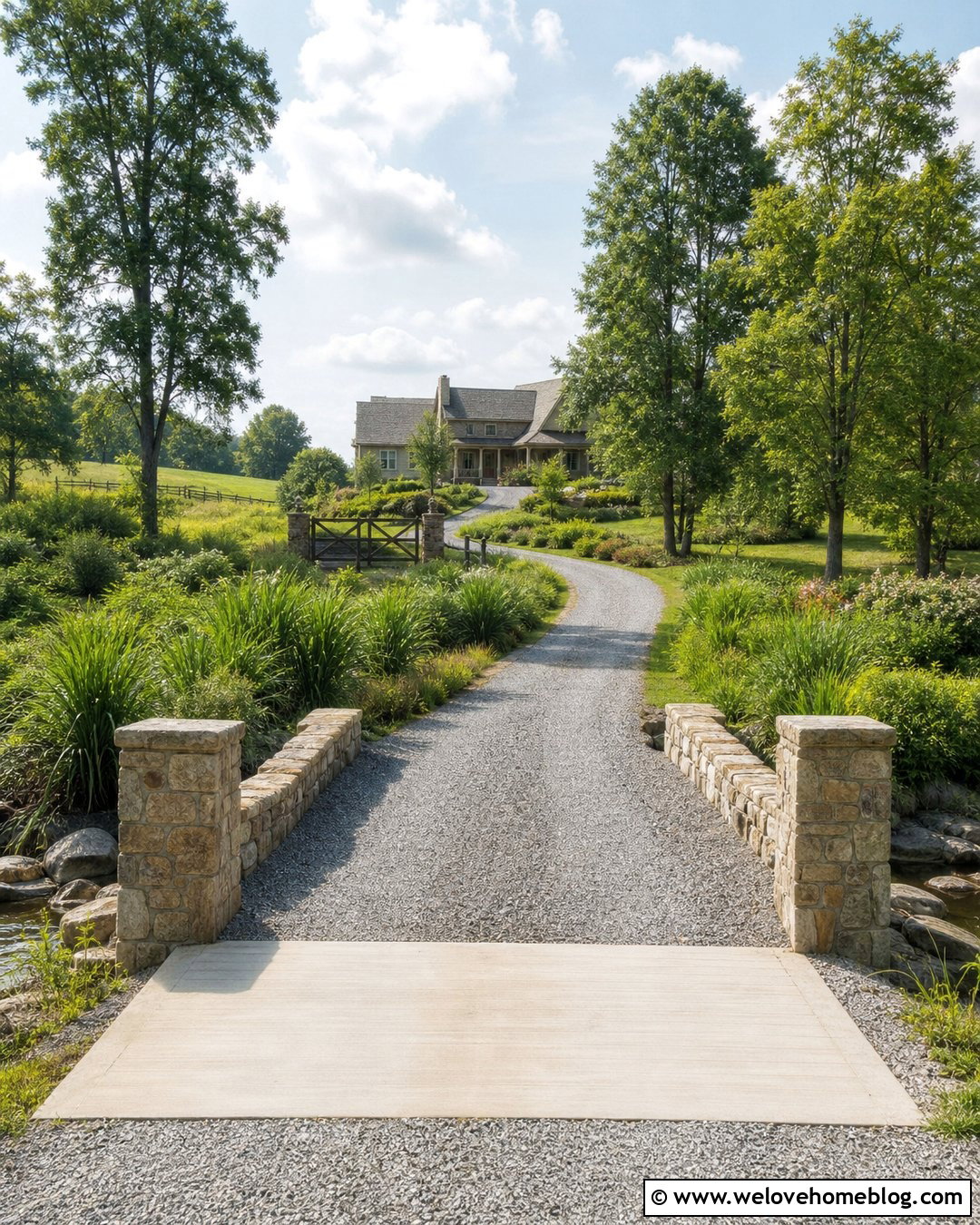
A small bridge or culvert can become part of the entrance design when a driveway crosses a drainage channel or creek. Use a compacted gravel driveway with a concrete apron at the road and a gently curved route toward the crossing. Low stone parapets can mark the bridge edges, while matching stone pillars and a timber gate establish the main entrance farther back. Plant moisture-tolerant native grasses and shrubs around the water, keeping roots and branches away from drainage openings. Include clear shoulders and sturdy edge protection where required. The farmhouse should appear beyond the bridge, framed by pasture and trees. Because water movement and load capacity are critical, the structure needs professional site-specific planning. Visually, repeating the same fieldstone at the culvert, gate, and house foundation will tie the entire approach together.
32. Sloped Farm Driveway Entrance With Retaining Walls
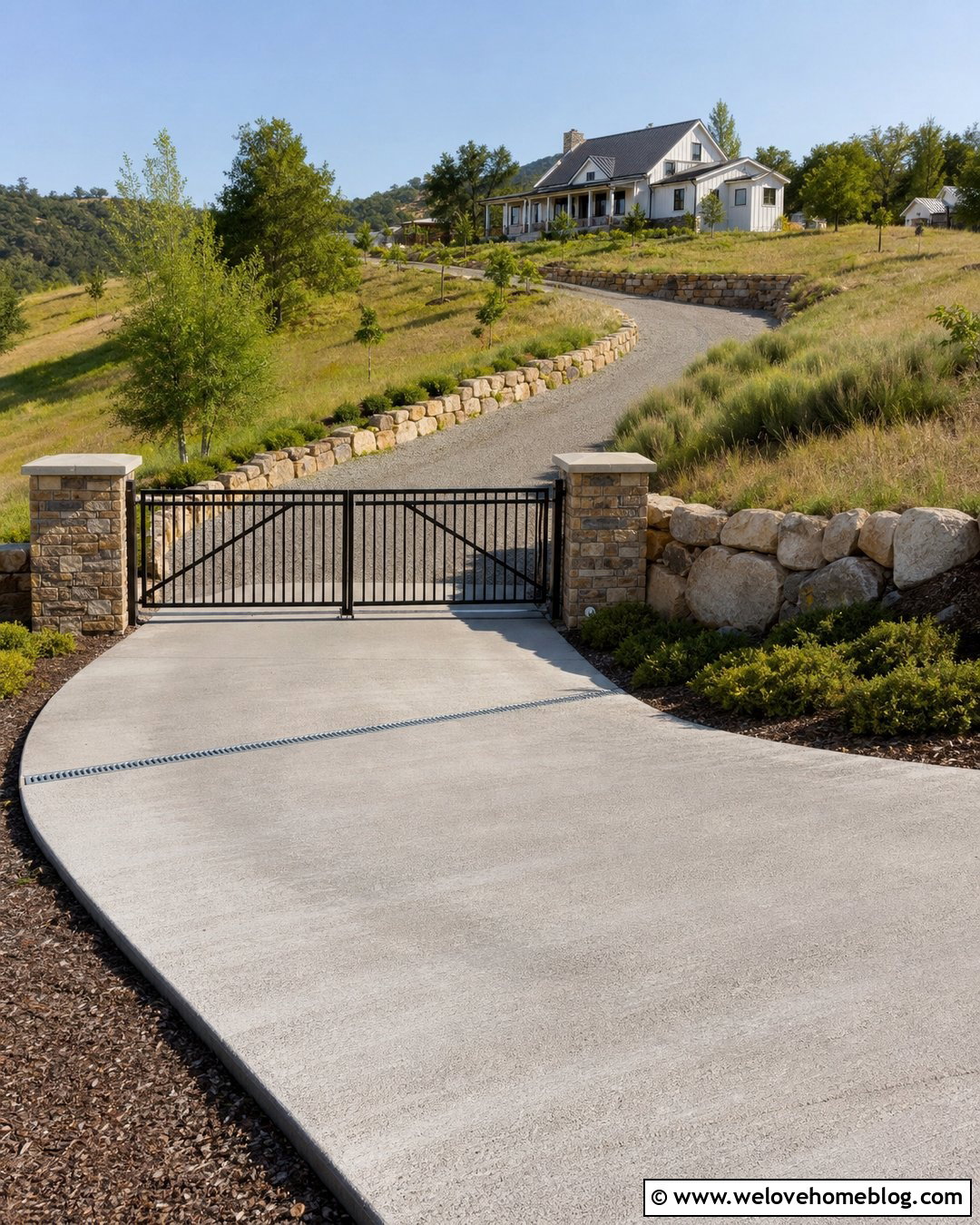
A sloped entrance needs a clear layout that manages elevation without looking heavily engineered. Choose textured concrete for the steepest roadside section, then transition into compacted gravel where the grade becomes gentler. Low retaining walls made from natural fieldstone can hold back planting beds on both sides. Place a black metal gate on a level landing rather than directly across the slope. Use ground-cover junipers, native grasses, and spreading shrubs to soften exposed soil while preserving driver visibility. A curved alignment may follow the hillside more comfortably than a steep straight climb. Incorporate drainage channels and stable shoulders as part of the design from the beginning. Match the retaining-wall stone to entrance pillars near the road. This combination creates a secure approach while preserving the layered, natural appearance of a hillside farm.
33. Budget Farm Driveway Entrance With Recycled Gravel
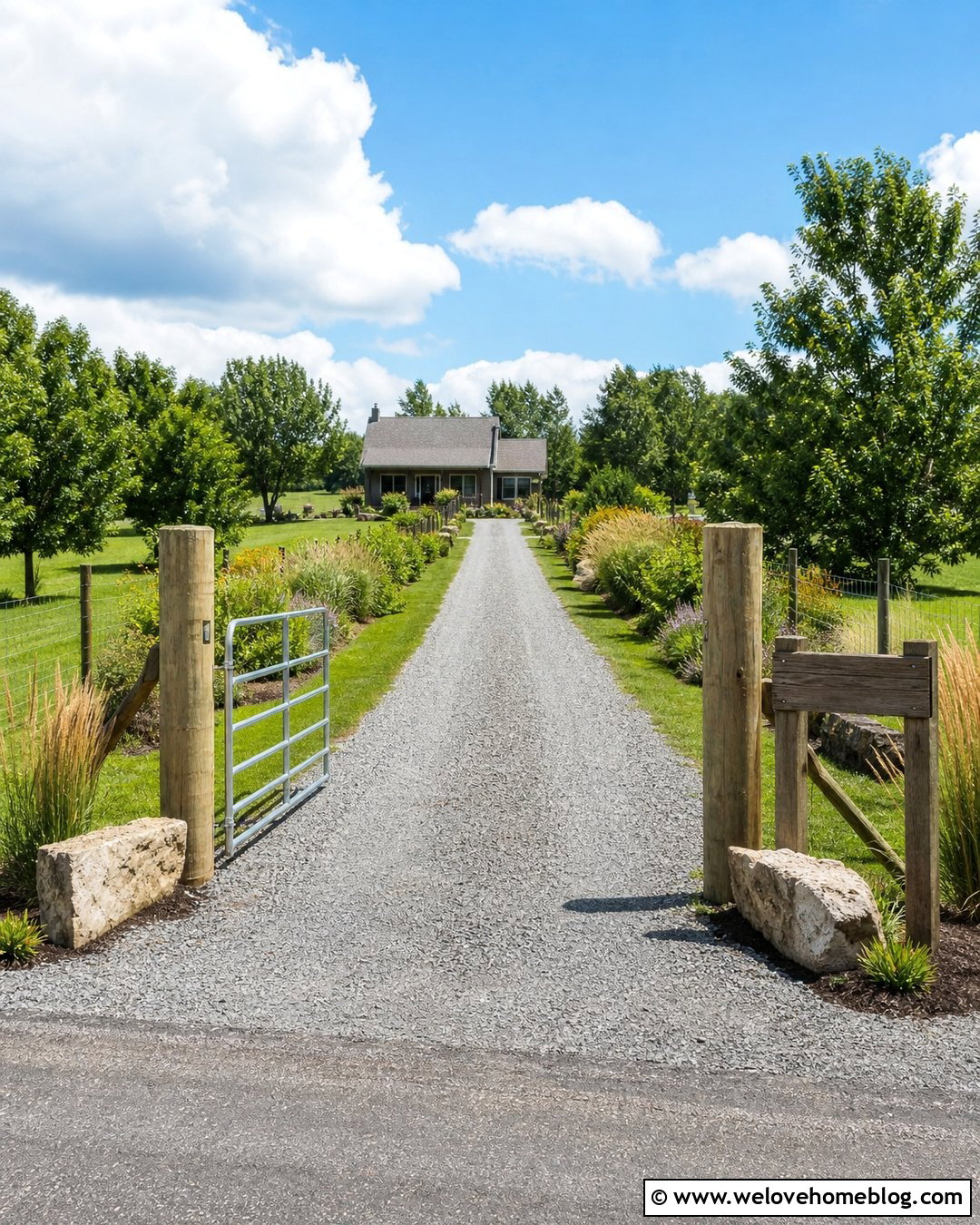
An attractive farm entrance does not need elaborate masonry or custom metalwork. Resurface the approach with well-graded recycled crushed stone, focusing first on the base, drainage, and heavily traveled tire paths. Add thick treated-timber posts and a standard galvanized farm gate for a simple working-country look. Reclaimed fieldstone can form low markers at the driveway corners without becoming full pillars. Continue affordable wire-and-post fencing along both sides, and maintain a wide mown grass verge for a clean finish. Groups of divided native perennials or ornamental grasses can provide color at minimal cost. A handmade wooden address marker completes the entrance, provided the numbers remain clear and durable. Keeping the materials consistent, the edges neat, and the layout uncluttered will make this modest design feel intentional rather than unfinished.
34. Small Farm Driveway Entrance With Compact Gate
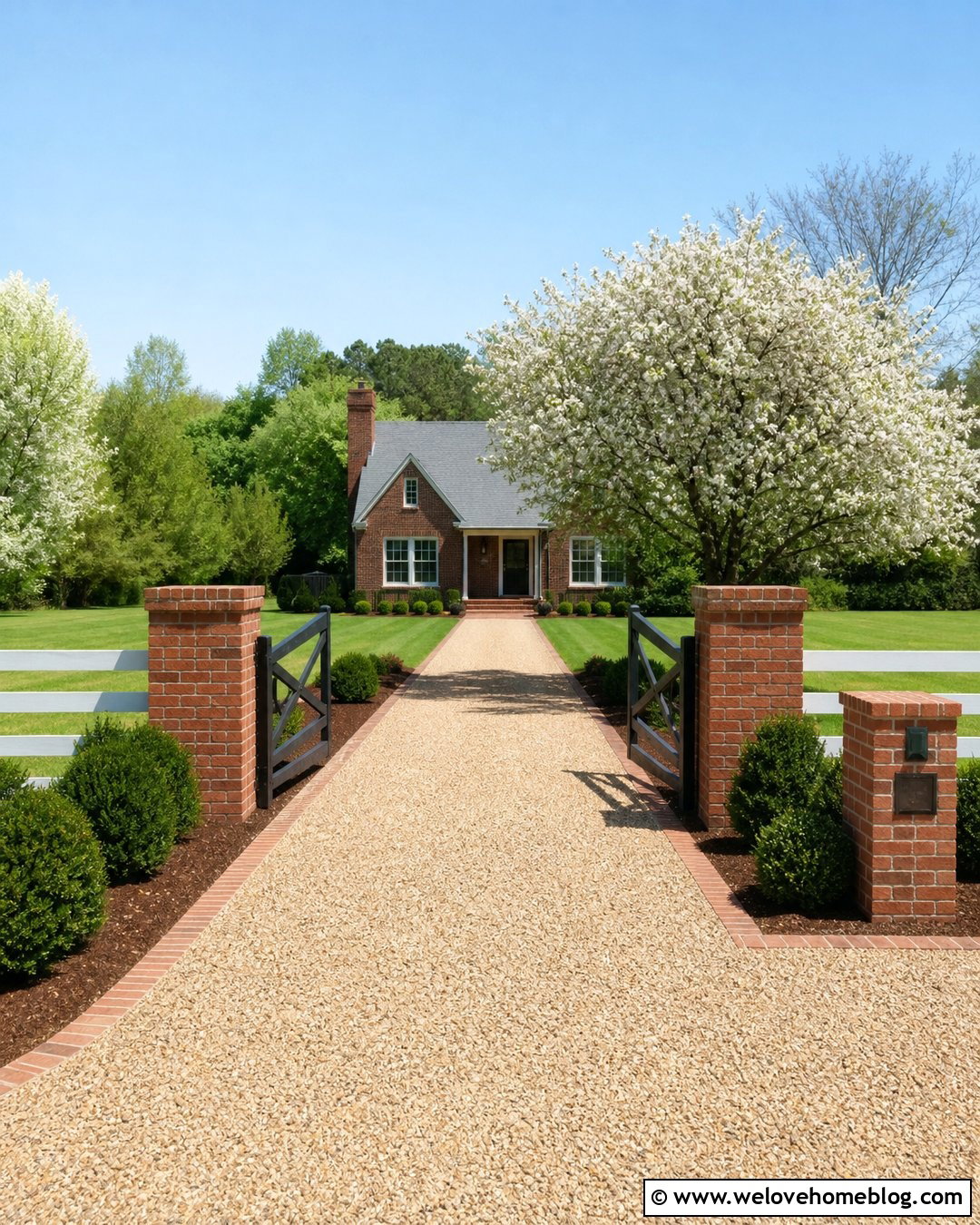
A small country lot needs a farm entrance that provides character without occupying too much frontage. Use a narrow, straight driveway made from compacted pea gravel over a stable base. Frame it with short brick pillars and a simple black double gate that opens fully without crowding the lawn. Low white fencing can extend a short distance on each side, visually widening the entrance without consuming valuable yard space. Place compact evergreen shrubs behind the pillars and add one flowering tree farther inside the property. A brick apron or border will keep the gravel organized near the street and connect the design to a brick farmhouse or cottage. Combine the mailbox and address marker into one tidy feature. The complete entrance remains practical for everyday vehicles while creating the welcoming appearance of a larger rural property.
35. Grand Farm Driveway Entrance With Stone Gatehouse Look
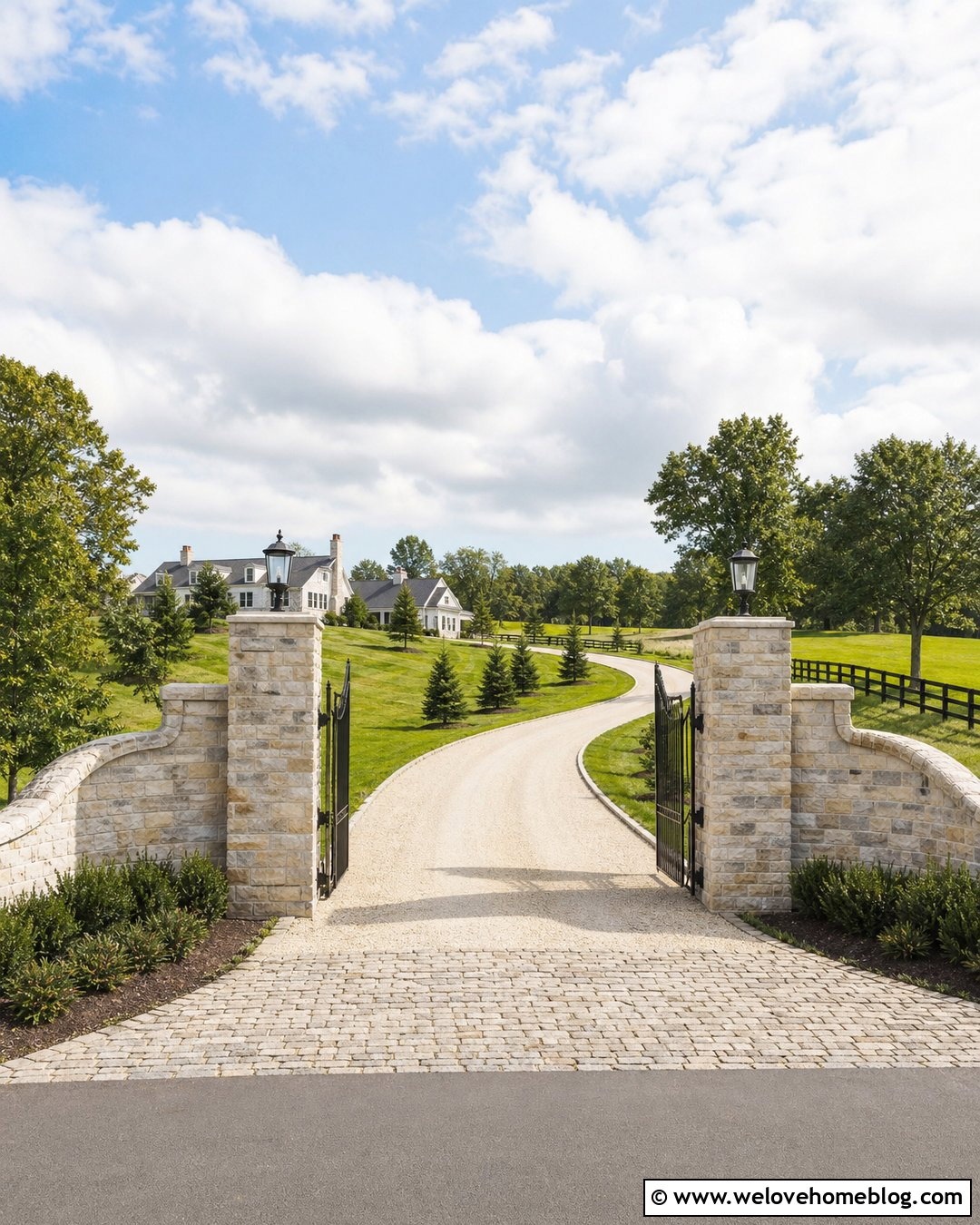
For a large farm estate, a substantial entrance can create presence without becoming overly ornate. Build broad limestone pillars connected to low curved walls, and place an arched black iron gate between them. Continue a wide, pale gravel driveway into a sweeping curve that reveals the farmhouse gradually. Formal evergreen shrubs near the masonry can transition into looser native trees, pasture, and meadow farther along the lane. Install a cobblestone apron across the entrance and repeat cobblestone edging around the arrival court near the house. Integrated lanterns and a discreet address plaque complete the pillars. Maintain generous clearance for trailers and service vehicles, even if the gate appears residential. The strongest design will repeat the property’s stone, metal, and landscape materials while keeping the overall composition open, balanced, and connected to the countryside.
Conclusion:
The best farm entrance is more than a decorative gate at the roadside. It is a complete arrival sequence that brings together the driveway material, shape, boundaries, lighting, drainage, landscaping, and architecture of the home. These **35 driveways farm entrance ideas** cover everything from affordable recycled-gravel approaches to grand stone entrances, compact country gates, working cattle guards, and tree-lined lanes. Before choosing a design, consider vehicle clearance, trailer access, visibility, local requirements, water movement, maintenance, and the mature size of nearby plants. Then select a limited palette of materials that already appears on the farmhouse or land. A thoughtful entrance will remain practical for daily use while giving the entire property a distinctive and welcoming identity.

Related posts:
Leave a Reply