
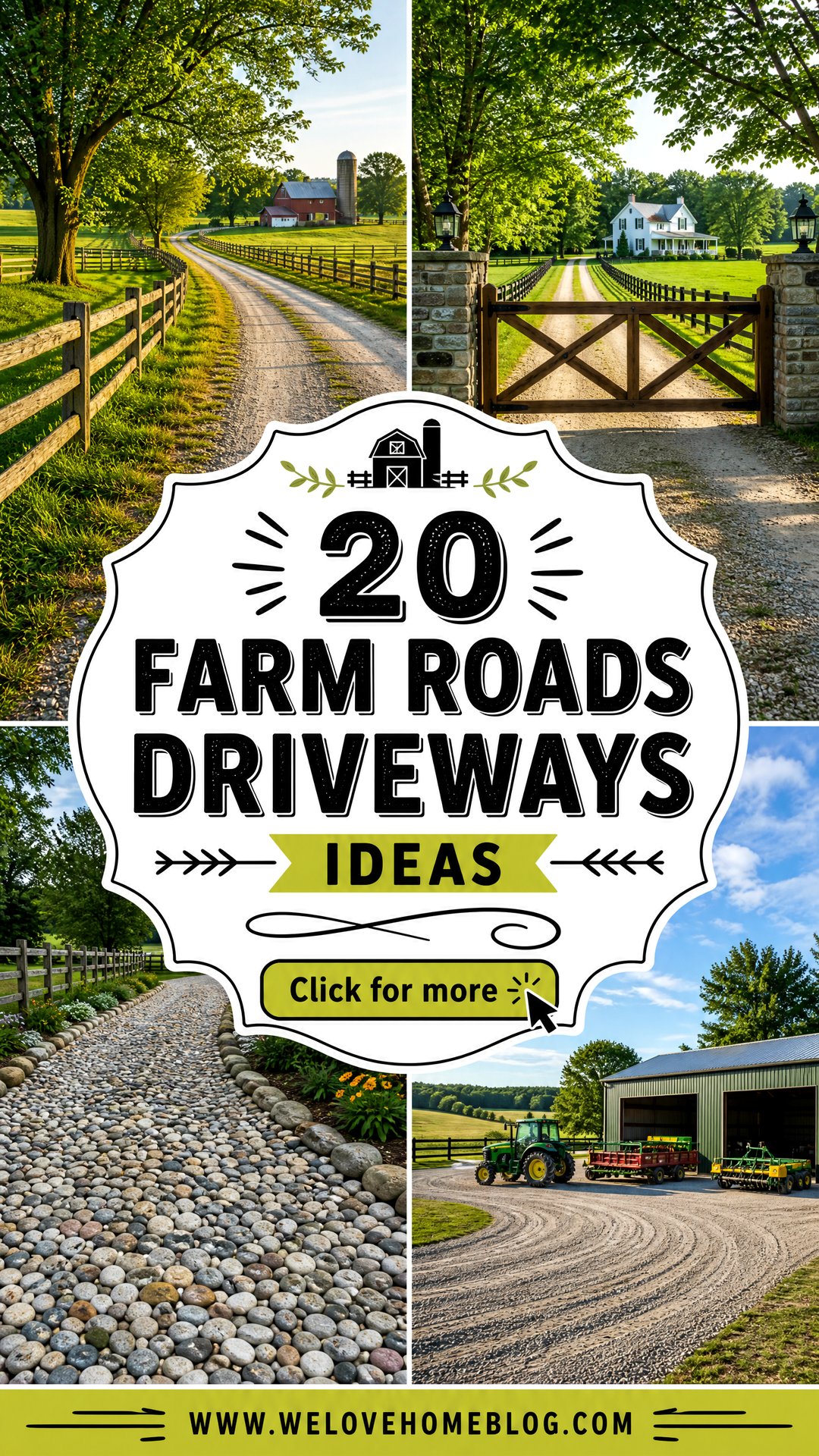
Farm roads and driveways should feel connected to the land while providing a dependable route to the house, barn, garage, or workshop. The best designs combine a suitable surface with gentle curves, strong borders, practical drainage, and landscaping that fits the surrounding fields. Gravel remains a natural favorite, but crushed limestone, chip seal, asphalt, concrete ribbons, brick, and regional stone can also create an authentic rural approach. Gates, fences, trees, wildflowers, and entrance pillars make the journey feel intentional rather than unfinished. Current farmhouse landscapes often pair these practical materials with circular layouts, native planting, and clearly defined entrances. () Use the complete looks below as a practical starting point for **20 farm roads driveways ideas**.
1. Gravel Farm Road With Split Rail Fence
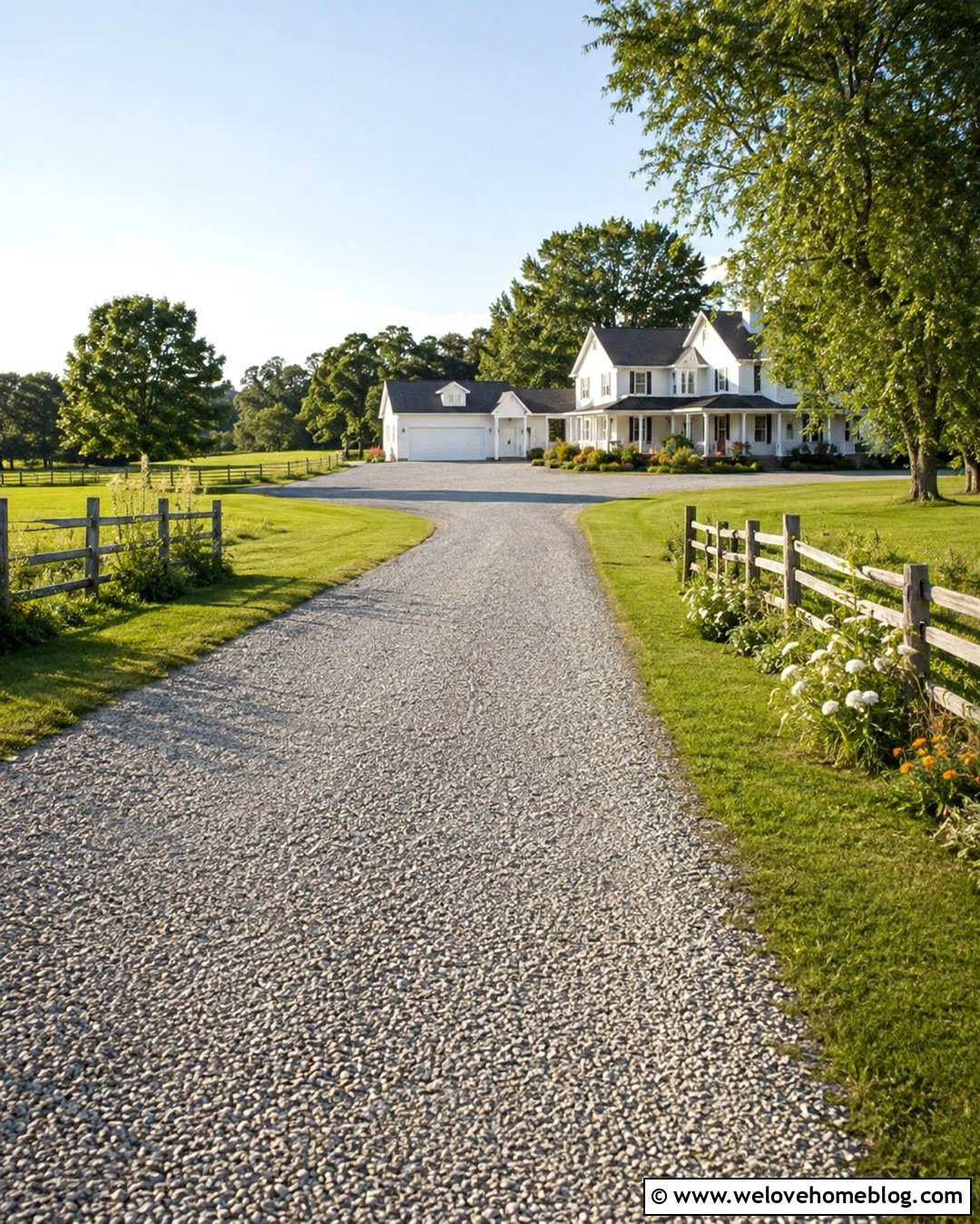
A long gravel farm road looks instantly more established when it follows a simple split rail fence. Use compacted gray or warm tan gravel for the driving surface, then keep the layout straight or add a gradual curve that follows the property line. A narrow grass shoulder provides a soft transition between the gravel and fence. Place native grasses, black-eyed Susans, or low-maintenance shrubs in occasional groups rather than creating continuous formal beds. This keeps the entrance open for tractors and delivery vehicles. At the house, widen the driveway into a practical parking court finished with the same gravel. A white farmhouse, red barn, or weathered ranch house completes this recognizable rural setting without making the landscape feel overly decorated.
2. Crushed Limestone Farm Driveway
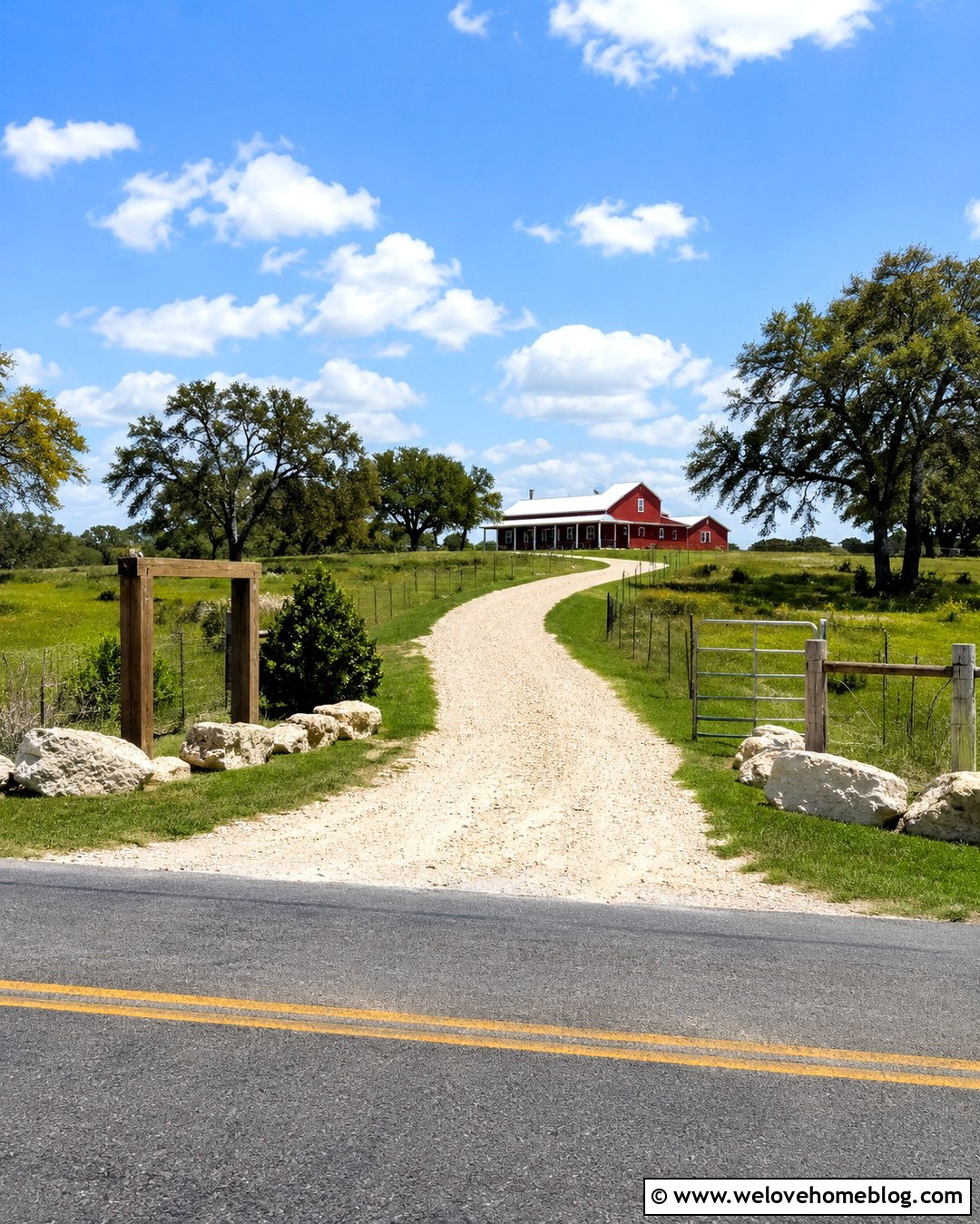
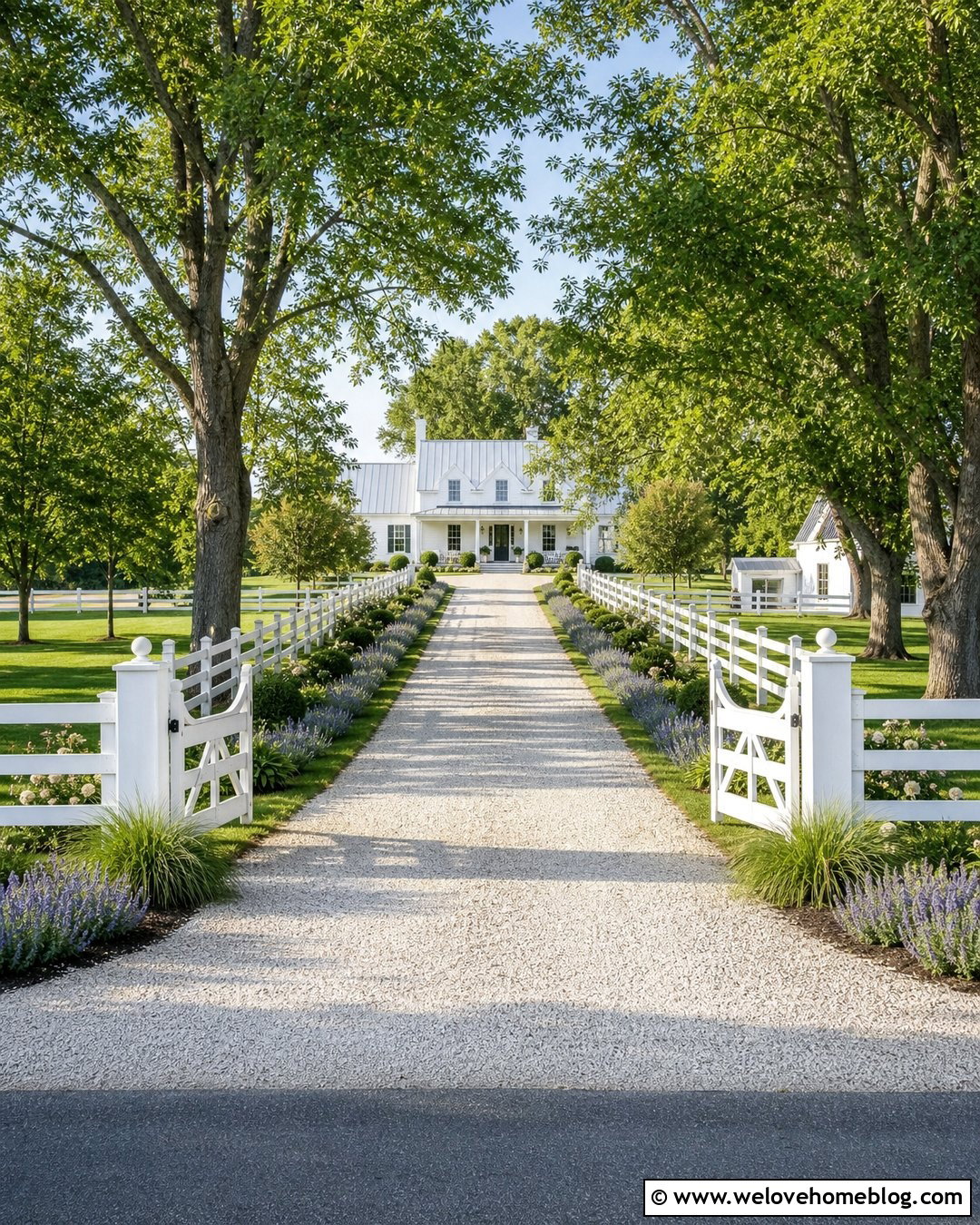
Bright crushed limestone creates a clean farm driveway that still feels relaxed and rural. Its pale cream color works especially well beside green fields, dark fencing, and white farmhouse siding. Design the driveway with a gently crowned center and clearly defined grassy shoulders, allowing the route to appear neat without adding formal curbing. A straight approach emphasizes an open property, while one broad curve can screen the house until visitors move farther along the road. Near the entrance, use limestone boulders, a timber farm sign, and a basic galvanized gate. Repeat the limestone in a wider arrival court near the garage or barn. Small shade trees placed well beyond the driving edge can frame the route while preserving visibility and clearance for farm equipment.
3. Curved Gravel Driveway Through Pasture
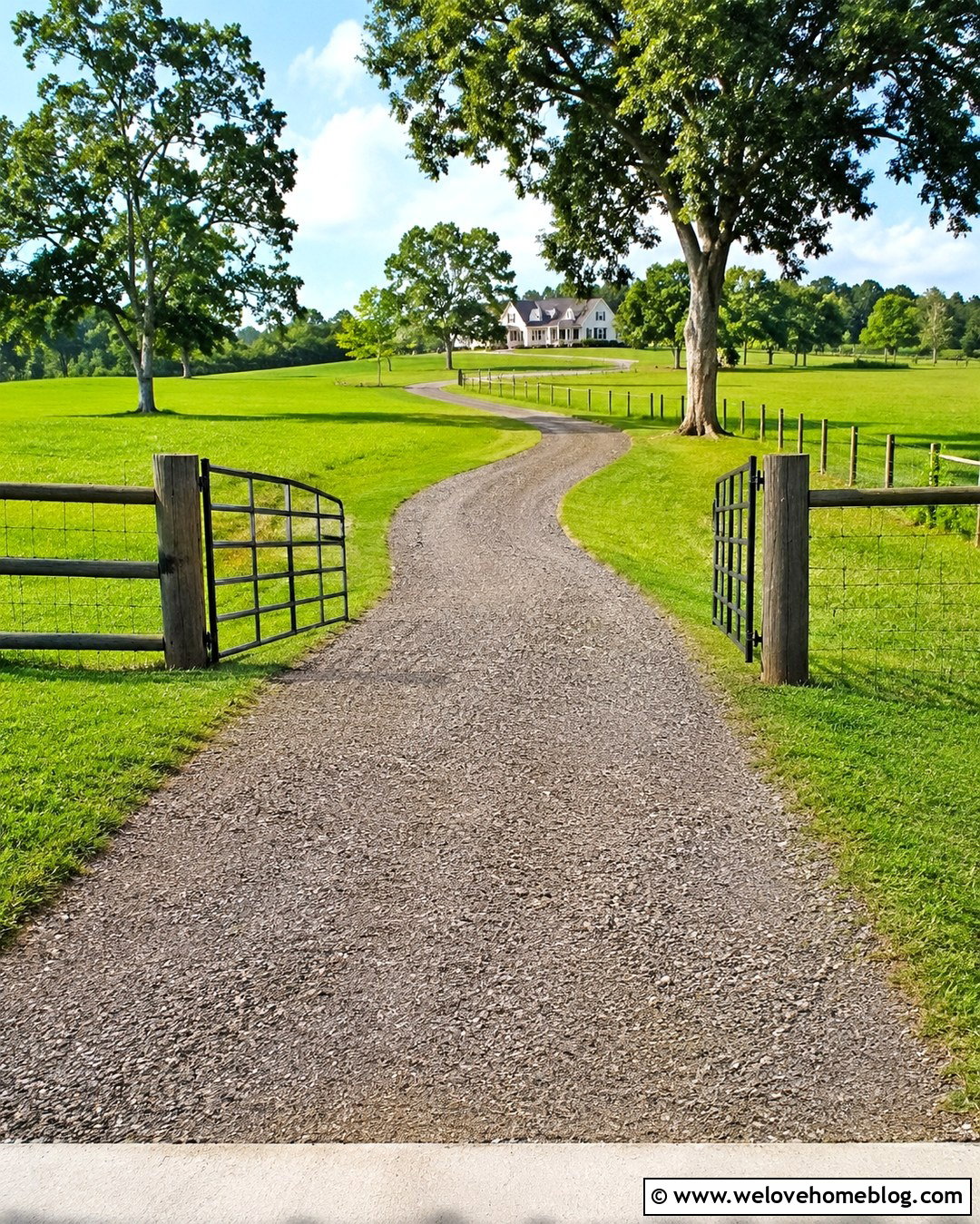
What could feel more welcoming than a gravel driveway sweeping gently through an open pasture? A curved route slows the visual approach and creates changing views of the house, barn, fencing, and surrounding land. Choose compacted brown-gray gravel that blends with the soil rather than standing out sharply. Follow the curve with post-and-wire pasture fencing, leaving generous grass shoulders on both sides. A few mature shade trees can anchor the bends, but branches and roots should remain clear of the travel surface. Finish the entrance with simple timber posts and a dark metal farm gate. As the driveway reaches the house, widen it into a teardrop turnaround or informal parking area. The consistent gravel makes the entire property feel connected and thoughtfully planned.
4. Tree-Lined Farm Road Driveway
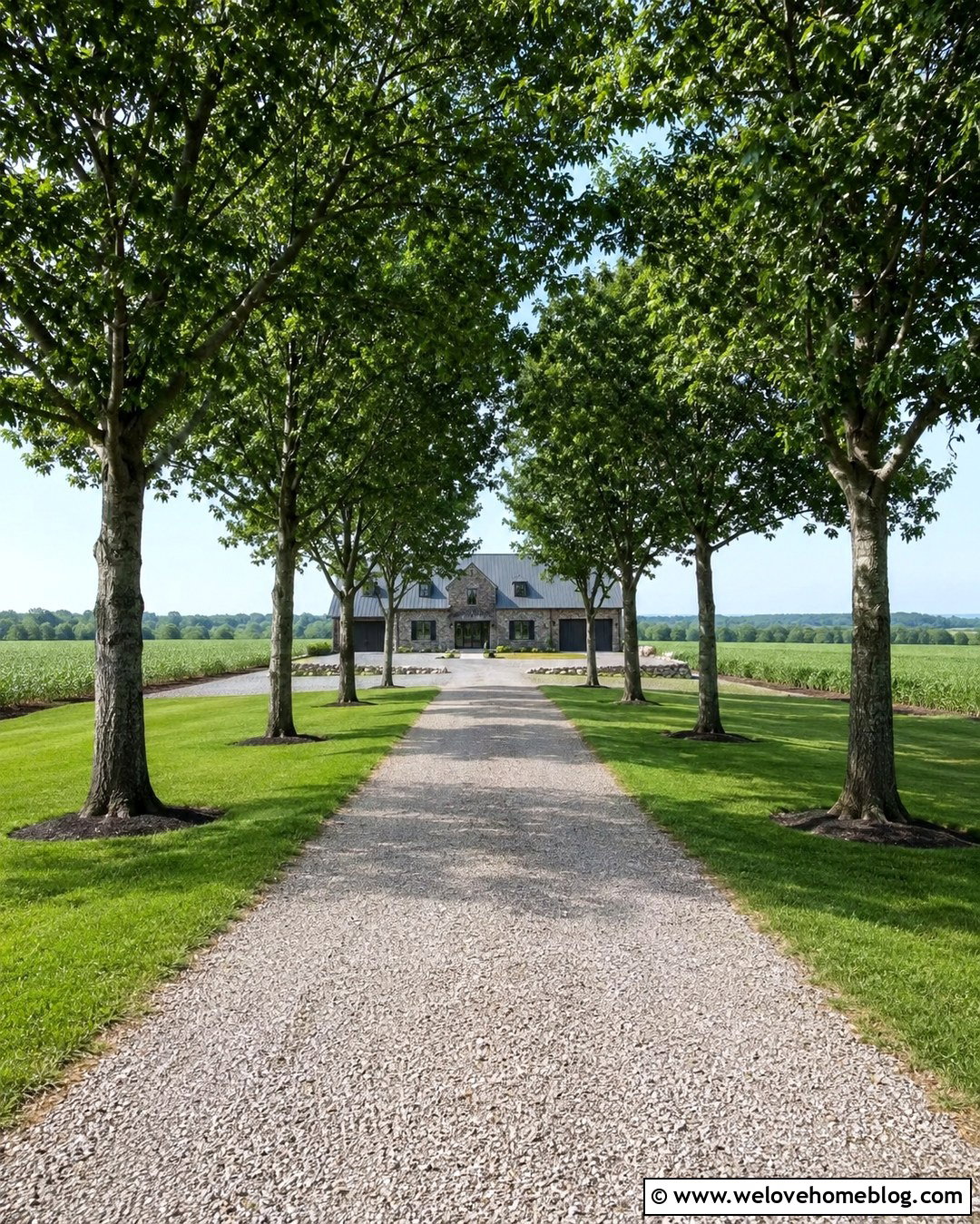
Rows of trees can transform a basic farm road into a structured and memorable approach. Begin with a straight compacted gravel driveway in a warm gray tone, bordered by broad grass strips that protect the trees from passing vehicles. Oaks, maples, elms, or regionally appropriate evergreens can create the desired rhythm, but spacing should allow each canopy room to mature. Keep the first trees set back from the road entrance so drivers have clear sightlines. Low fieldstone edging near the house can provide a more finished transition without lining the entire rural road. At the far end, let the tree rows frame a traditional farmhouse, converted barn, or ranch home. The result feels orderly and impressive while remaining grounded in the surrounding agricultural landscape.
5. Farm Driveway With Wooden Gate
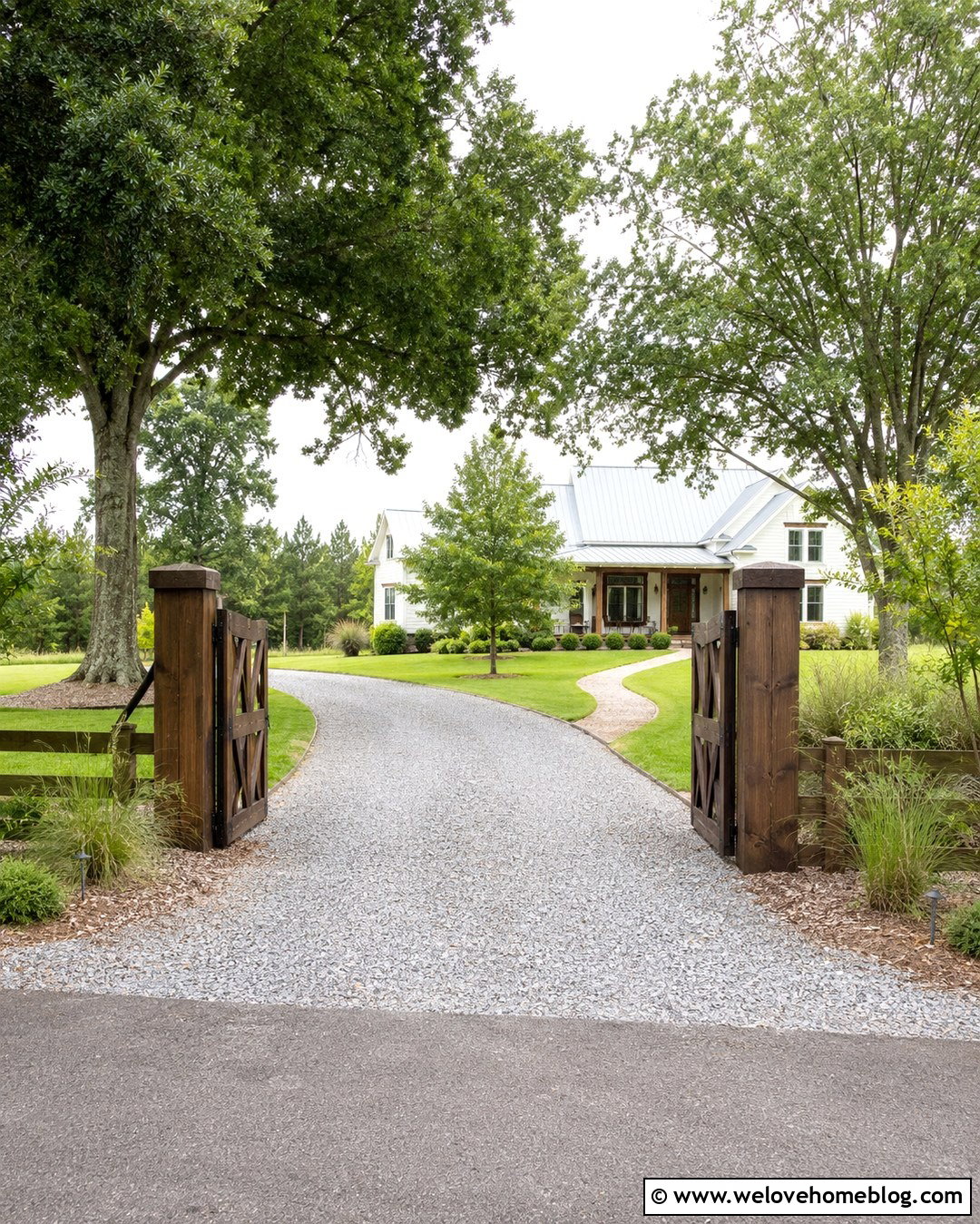
A sturdy wooden gate gives a farm driveway a clear beginning and creates an immediate sense of arrival. Pair a natural cedar or dark-stained timber gate with a compacted gravel road wide enough for everyday vehicles and occasional equipment. Support the gate with substantial wood posts or low fieldstone pillars that visually balance its weight. Continue board fencing for a short distance along both sides, then allow it to merge into pasture fencing. The driveway can curve gently beyond the entrance, revealing the farmhouse gradually. Use mown grass, native shrubs, and one or two canopy trees instead of dense planting that could block visibility. A matching pedestrian gate and gravel walkway can guide visitors safely toward the front porch without interfering with the main driving route.
6. Farm Road With Stone Entrance Pillars
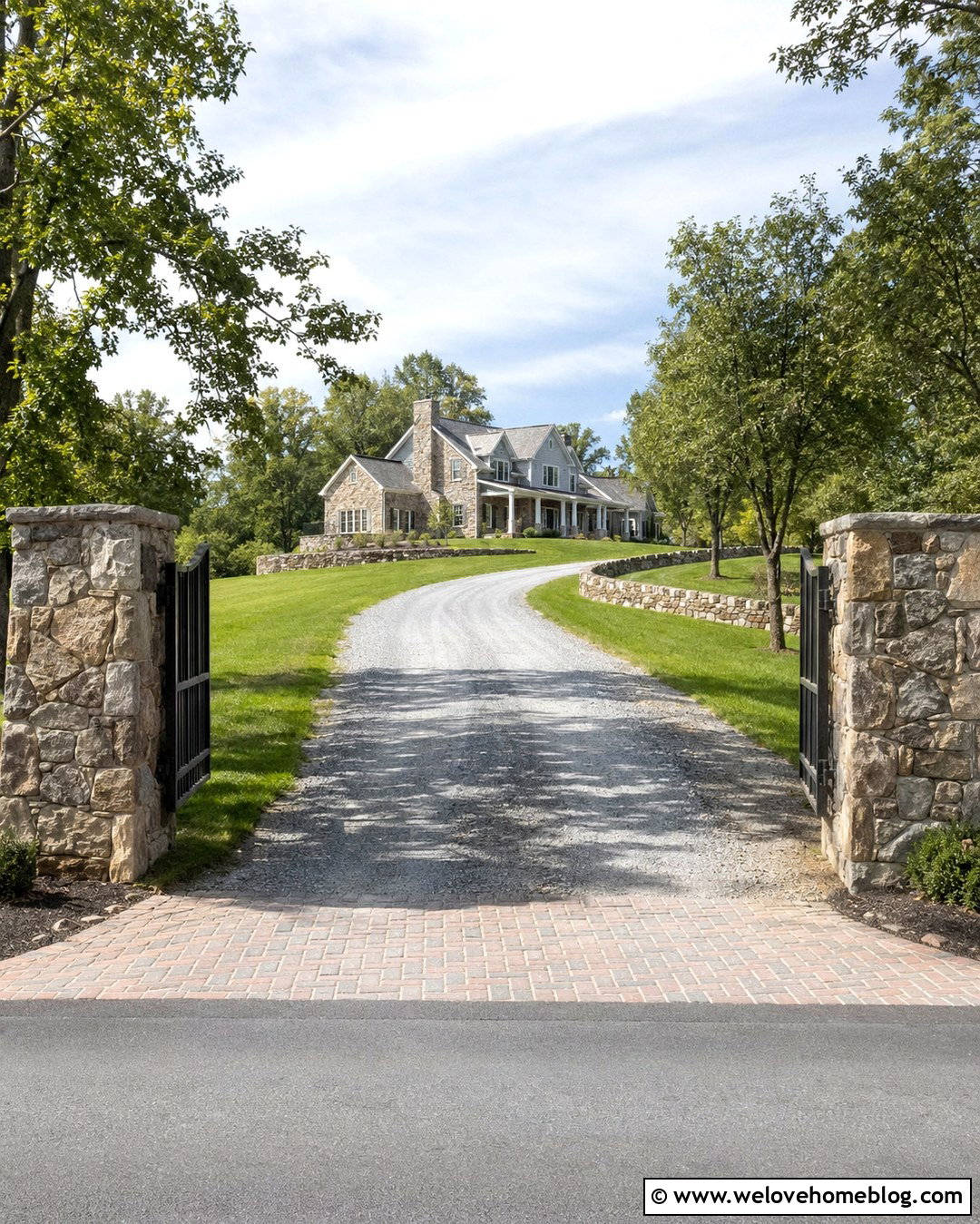
Stone pillars bring permanence to a long rural driveway without making it feel too formal. Select fieldstone, limestone, or ledgestone that reflects materials already found on the house, barn foundation, or property walls. Between the pillars, install a wide gravel entrance with a subtle cobblestone or brick apron where it meets the public road. A black metal gate can be included, although an open entrance often looks equally attractive. Continue the driveway as a gently curving gray gravel road bordered by mown grass and scattered native trees. Keep plants around the pillars low so house numbers and approaching traffic remain visible. Repeating the stone in a small retaining wall or front walkway near the house ties the entrance and destination together as one complete farm driveway design.
7. Circular Gravel Farmhouse Driveway
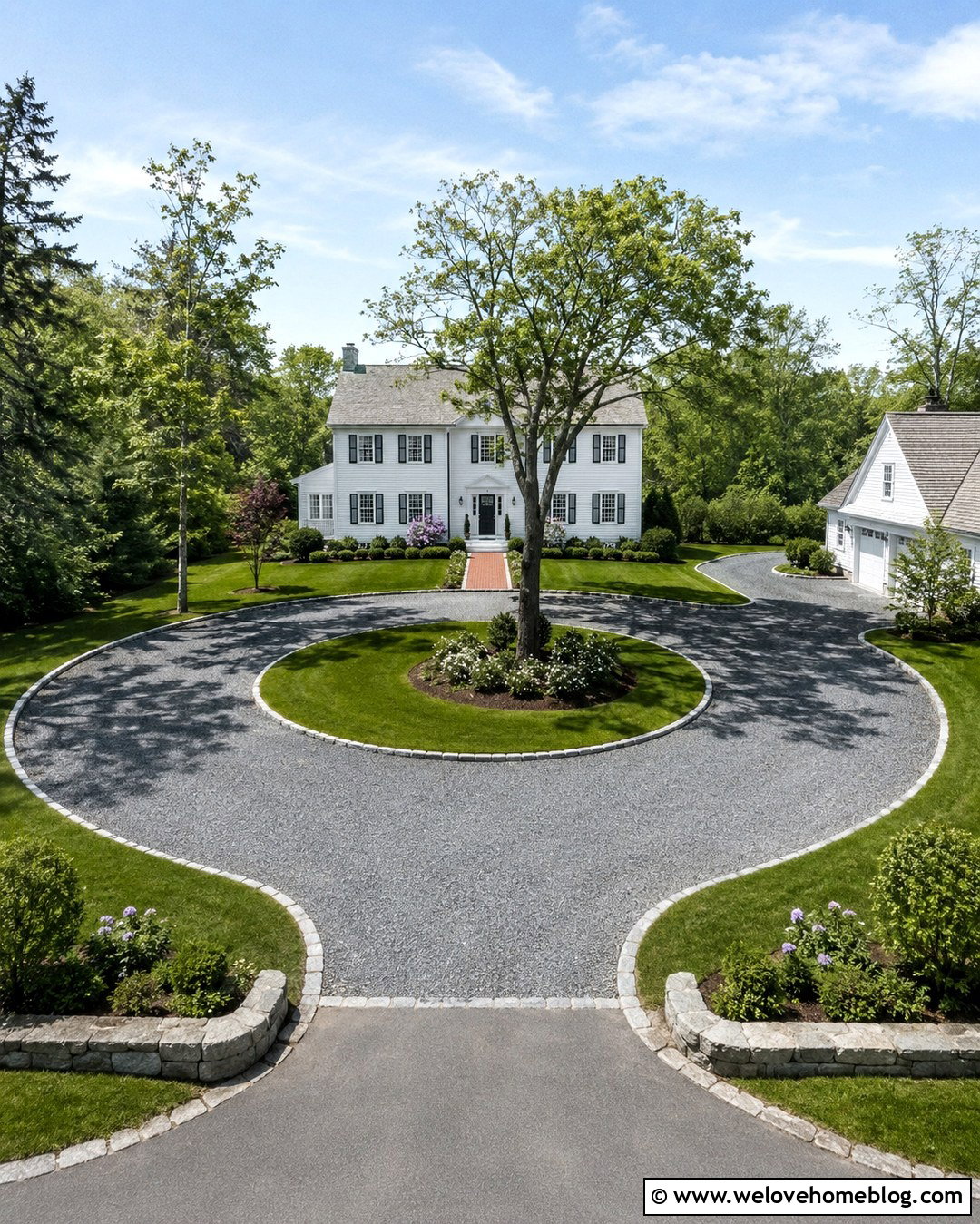
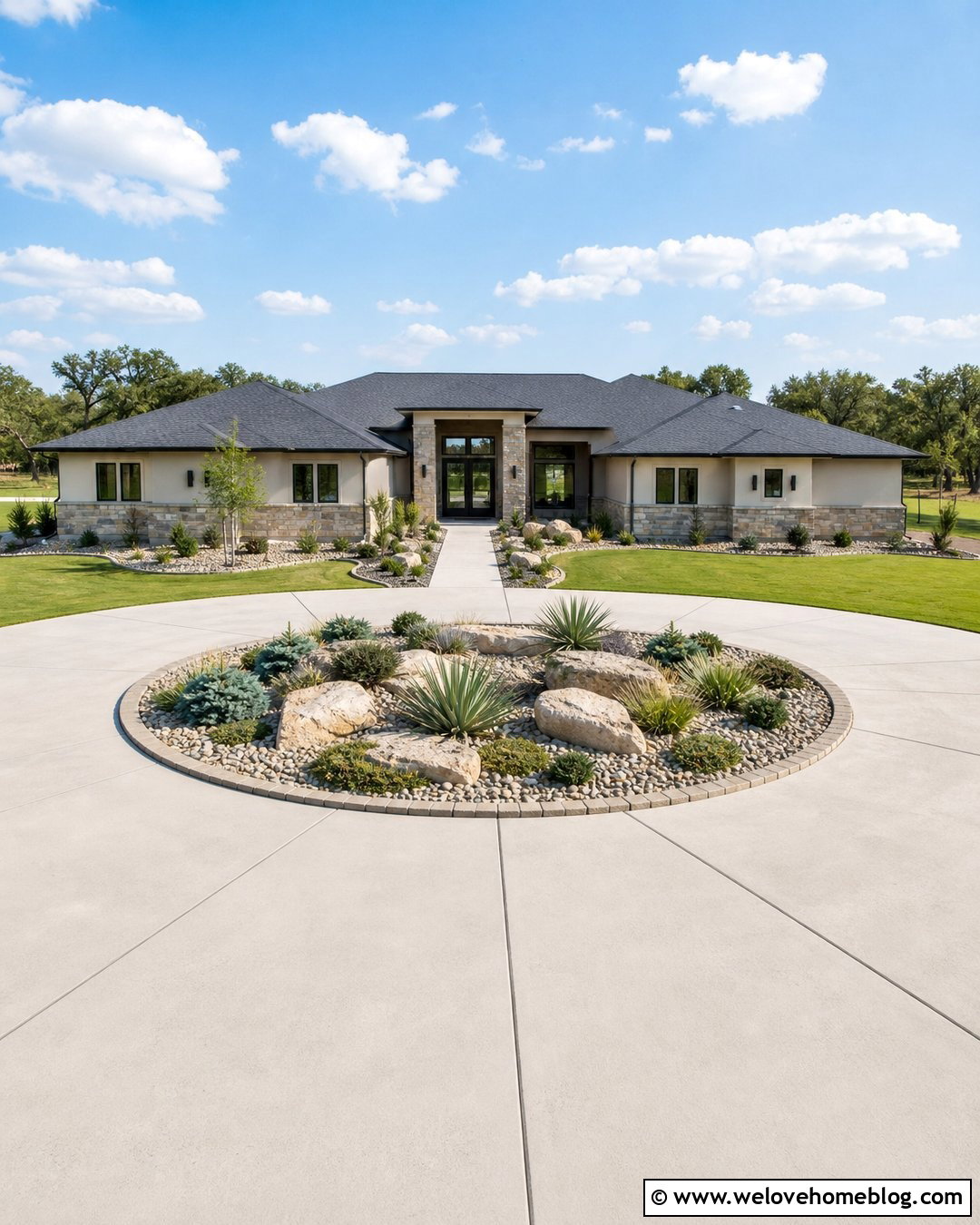
A circular gravel driveway provides a graceful arrival while giving visitors an easy way to turn around. Use compacted pea gravel or angular gray gravel for the loop, with cobblestone edging to hold the loose material in place near landscaped areas. The center island can feature a mature shade tree, a simple lawn, or a restrained group of ornamental grasses and flowering shrubs. Avoid filling the island with tall plants that hide the house or interrupt visibility. Connect one side of the circle to the garage and the other to the main farm road. A brick or stone walkway can cross the inner edge and lead directly to the porch. This layout works particularly well for a symmetrical farmhouse with a centered front door and broad front lawn.
8. Grass Center Farm Track Driveway
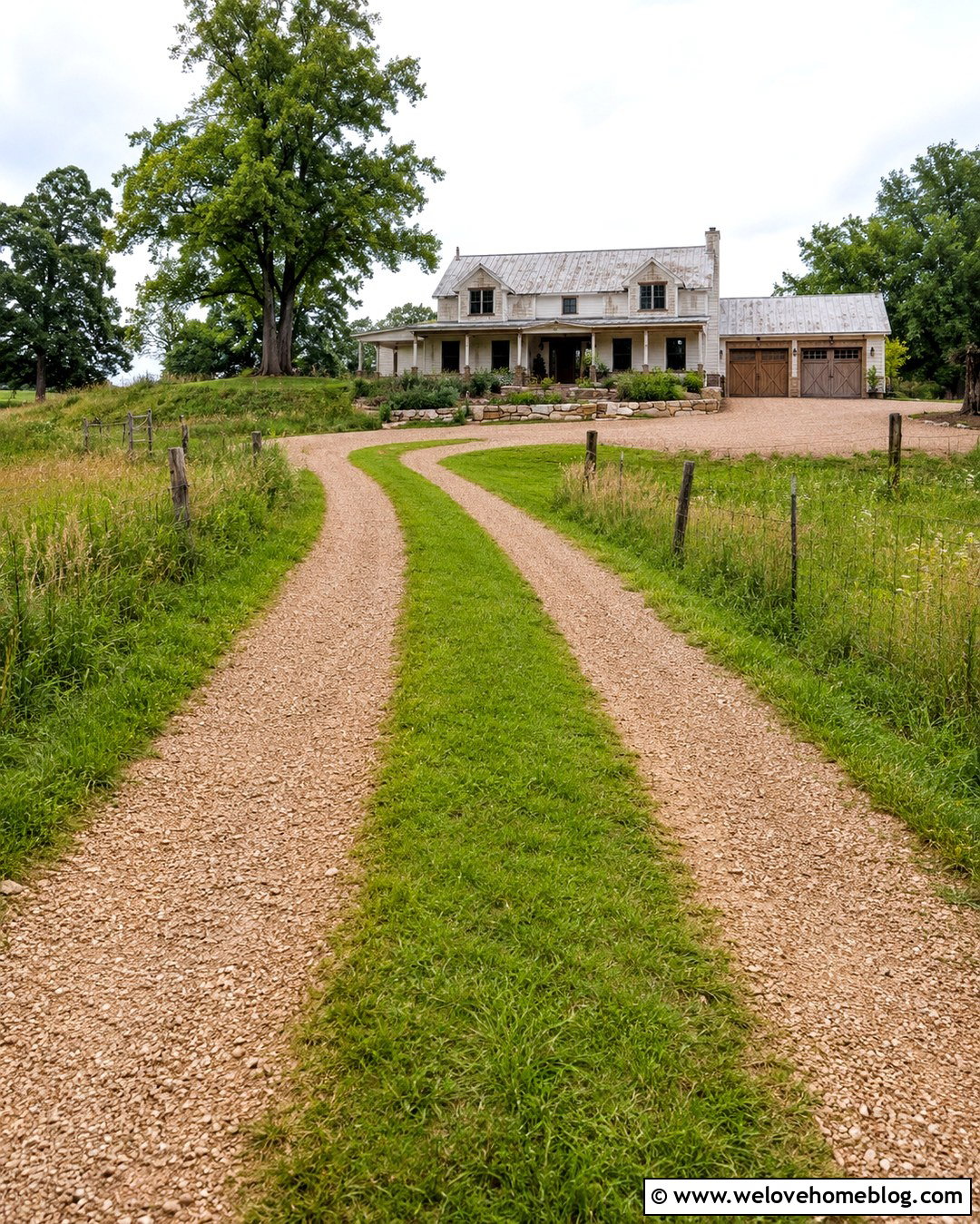
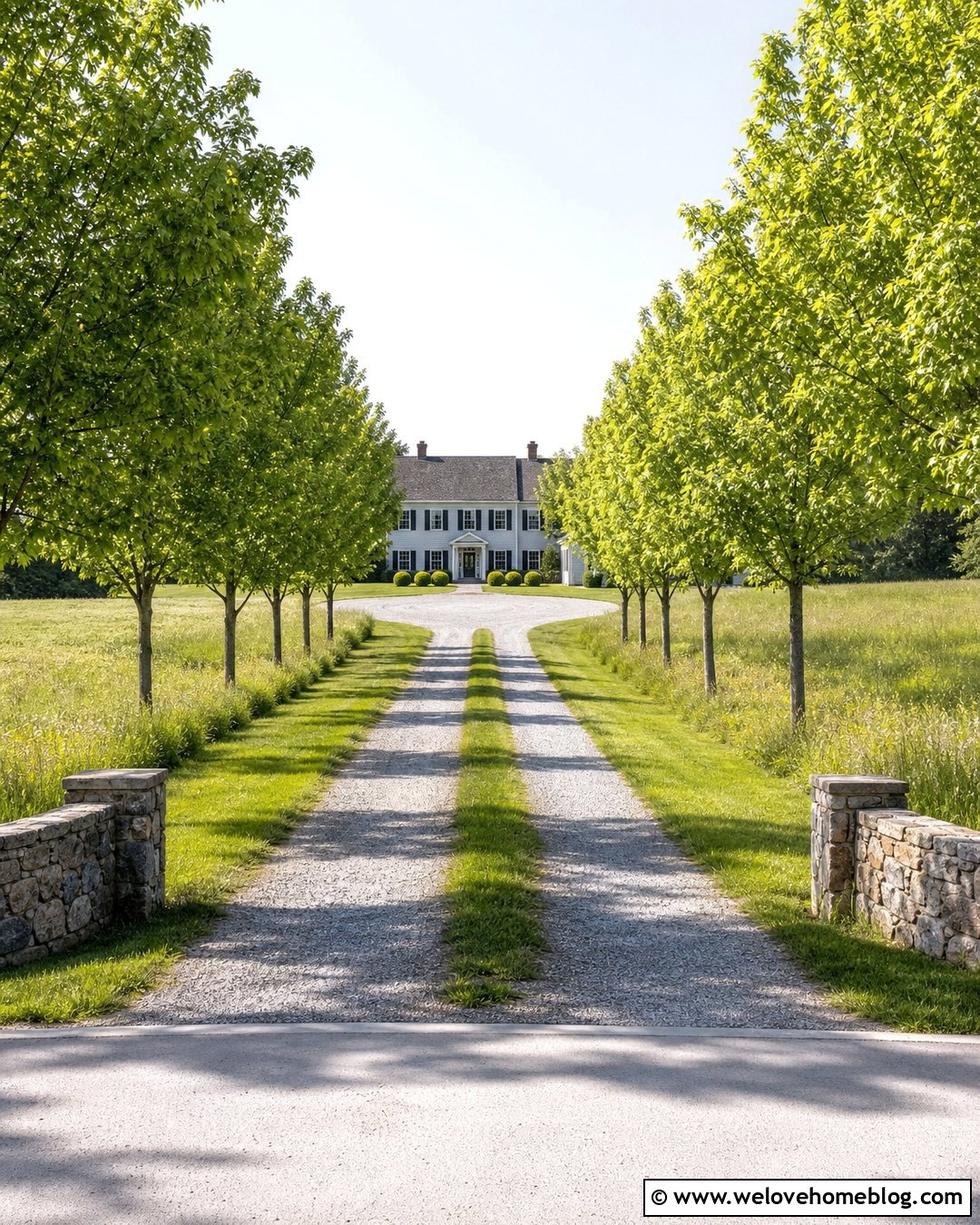
A grass center strip gives a farm track an informal, old-country appearance while keeping the vehicle path clearly visible. Build two compacted gravel wheel lanes with a wide, neatly trimmed grass strip between them. The driveway can follow a straight route beside a pasture or curve between existing trees. Use flush stone edging only where gravel could spread into planting beds near the house. Along the outer edges, meadow grasses and simple post-and-wire fencing maintain the rural character. This design looks best on lightly traveled private drives where the center can receive enough sunlight and routine mowing. Near the garage, transition into a full-width gravel parking pad to simplify turning and parking. The combination feels natural, understated, and closely connected to the surrounding fields.
9. Black Asphalt Farm Driveway
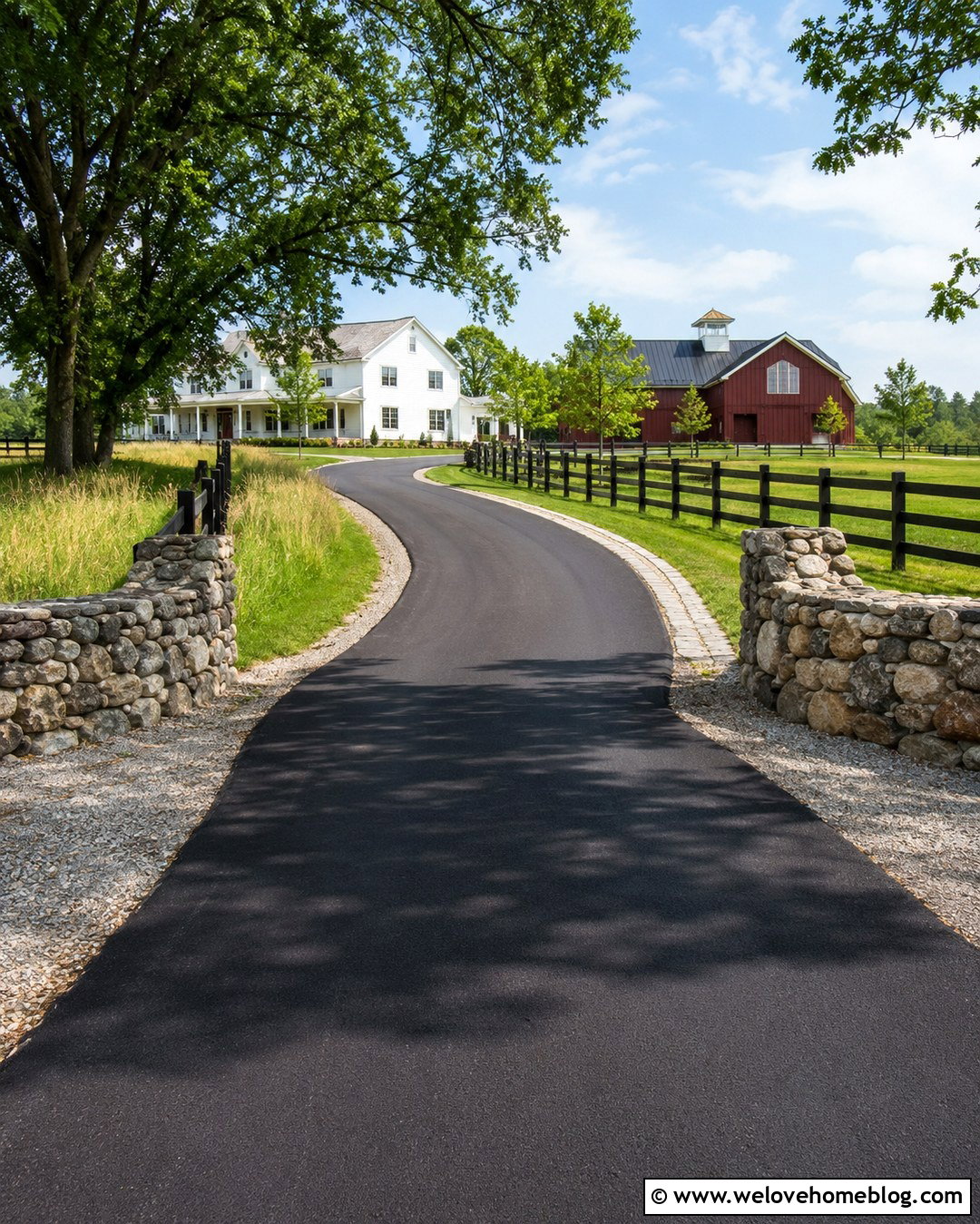
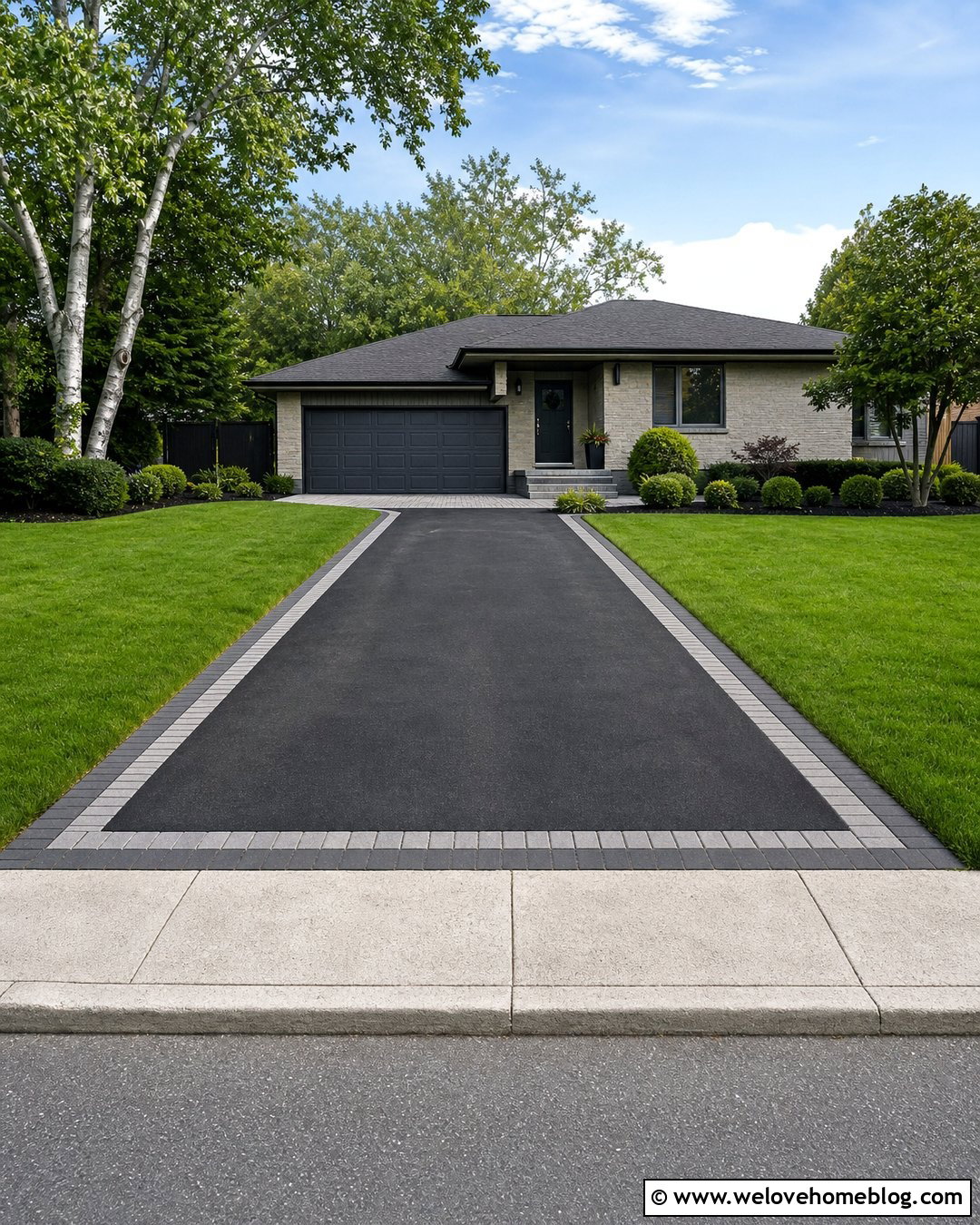
Black asphalt offers a smoother, more defined surface for a farm property with frequent daily traffic. To keep it from feeling too suburban, use a long, gently curved layout with informal gravel shoulders and native grass borders. Fieldstone entrance walls, timber fencing, or galvanized gates can soften the dark pavement and connect it to the agricultural setting. Near the house, add a narrow brick or cobblestone border that coordinates with the facade. Avoid continuous concrete curbs along the rural portion because open shoulders generally create a more natural appearance. A white modern farmhouse or red barn provides strong contrast against the black surface. Carefully placed deciduous trees and open lawn complete the look while leaving adequate room for trailers, service vehicles, and seasonal farm activity.
10. Chip Seal Farm Road Driveway
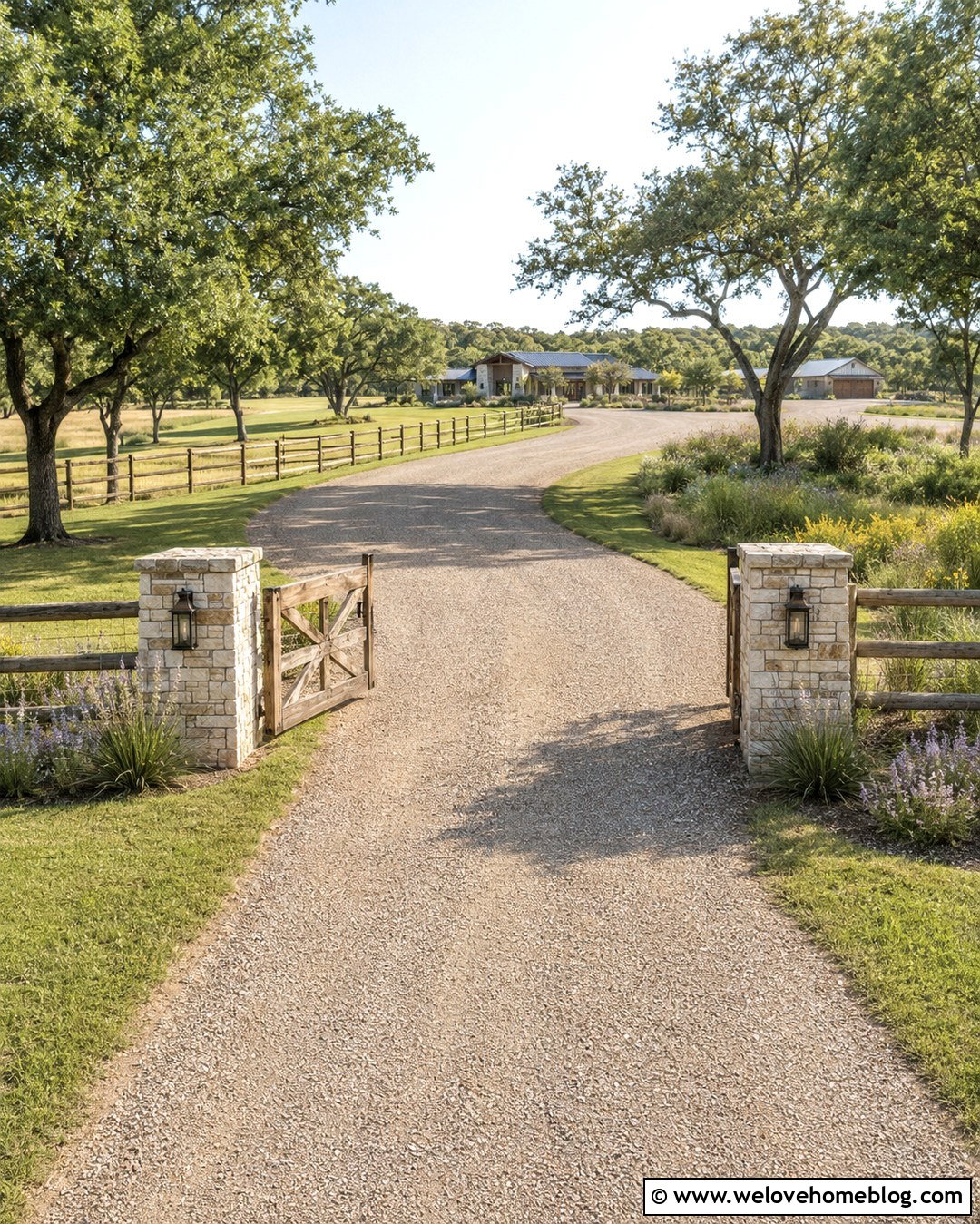
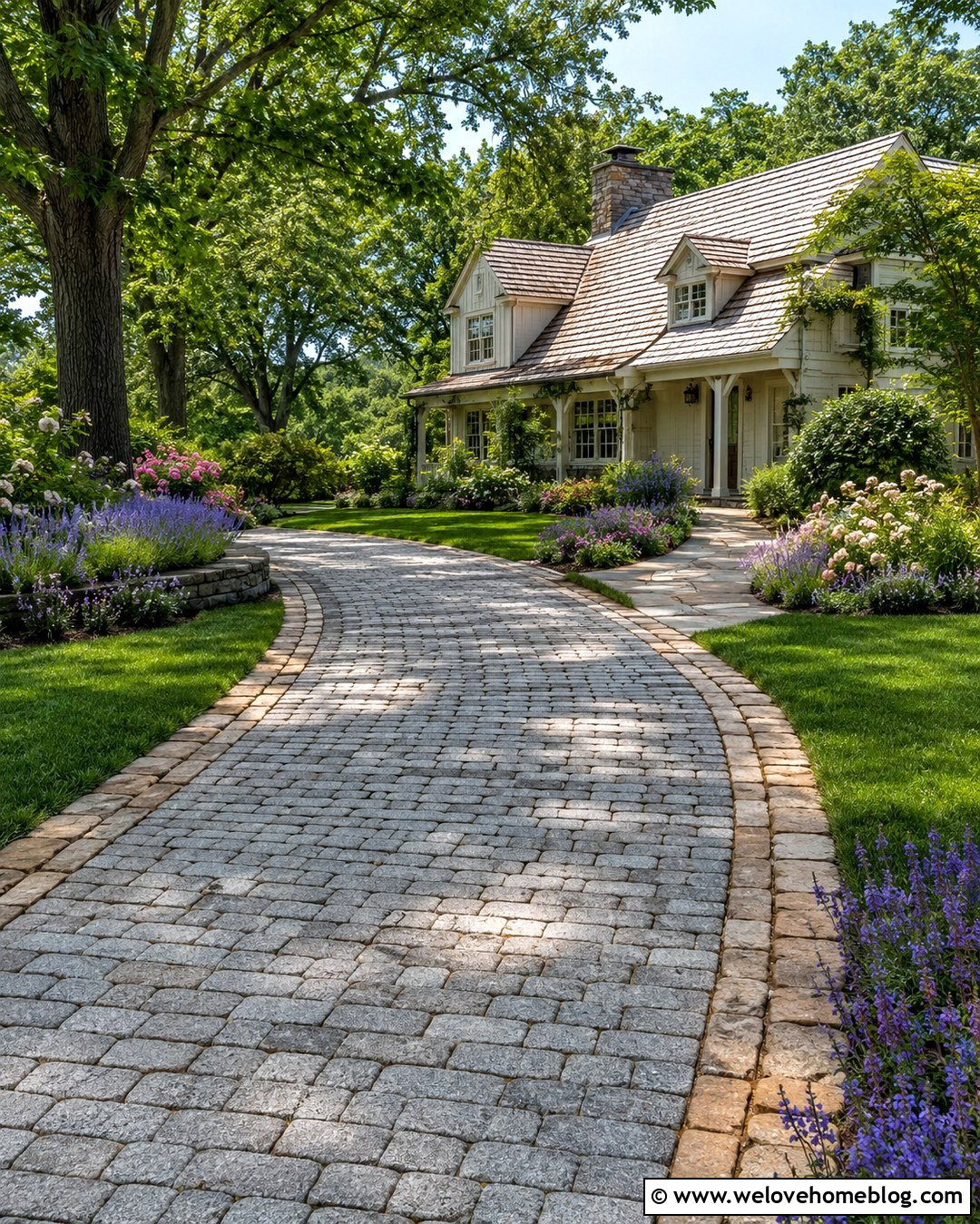
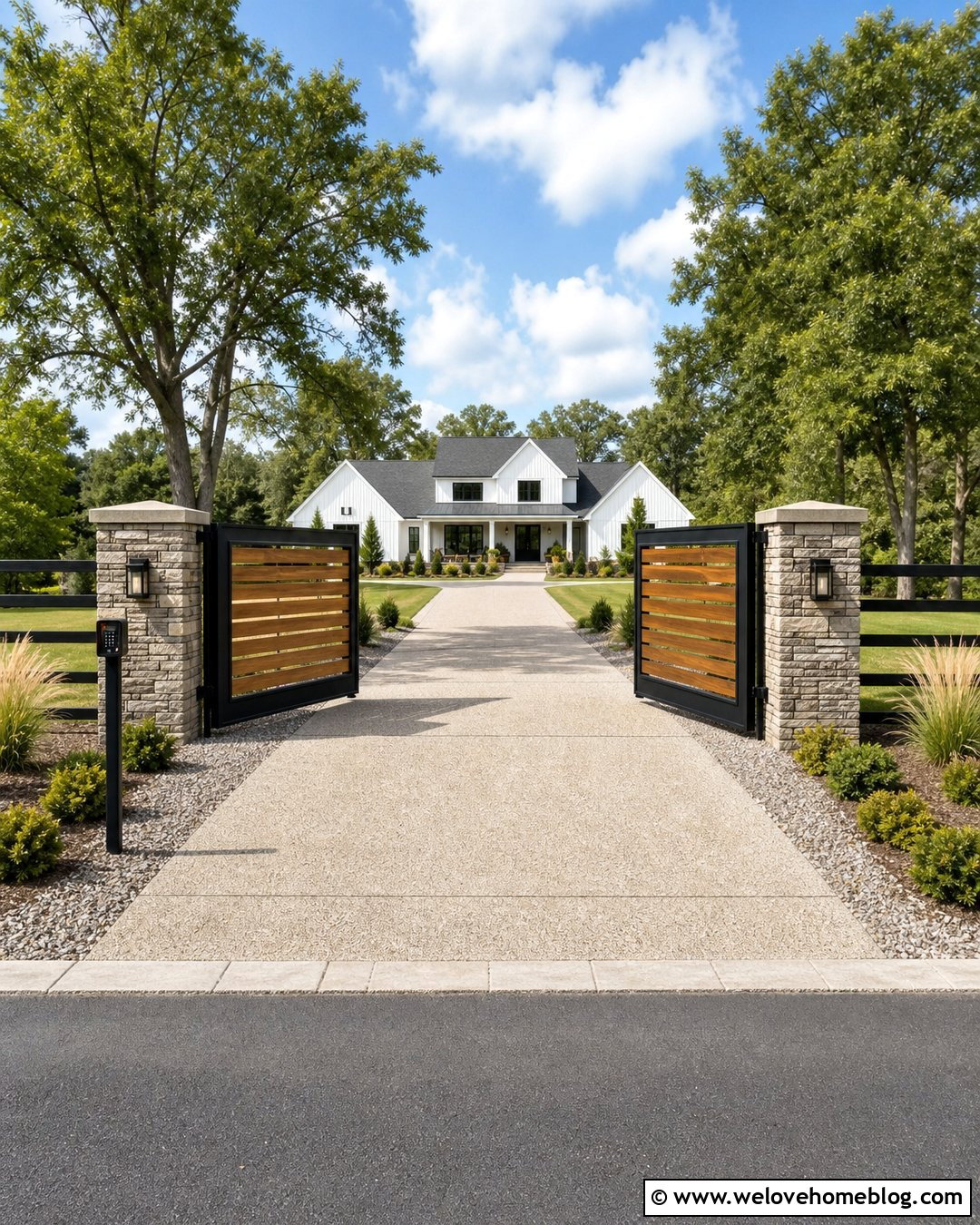
Chip seal can create the appearance of a traditional gravel road while giving the driveway a more unified surface. Choose tan, brown, or gray aggregate that complements the local soil and surrounding buildings. A broad curved layout works well across open acreage, especially when paired with simple grass shoulders and timber pasture fencing. At the road entrance, add natural stone posts, an understated ranch gate, and a widened apron that visually welcomes larger vehicles. Continue the same surface into a turnaround beside the farmhouse or equipment building. Native trees can be positioned near key bends, while low meadow planting keeps the roadside relaxed. The finished driveway should look durable but not overly polished, providing a practical middle ground between loose country gravel and solid black asphalt.
11. Concrete Ribbon Farm Driveway
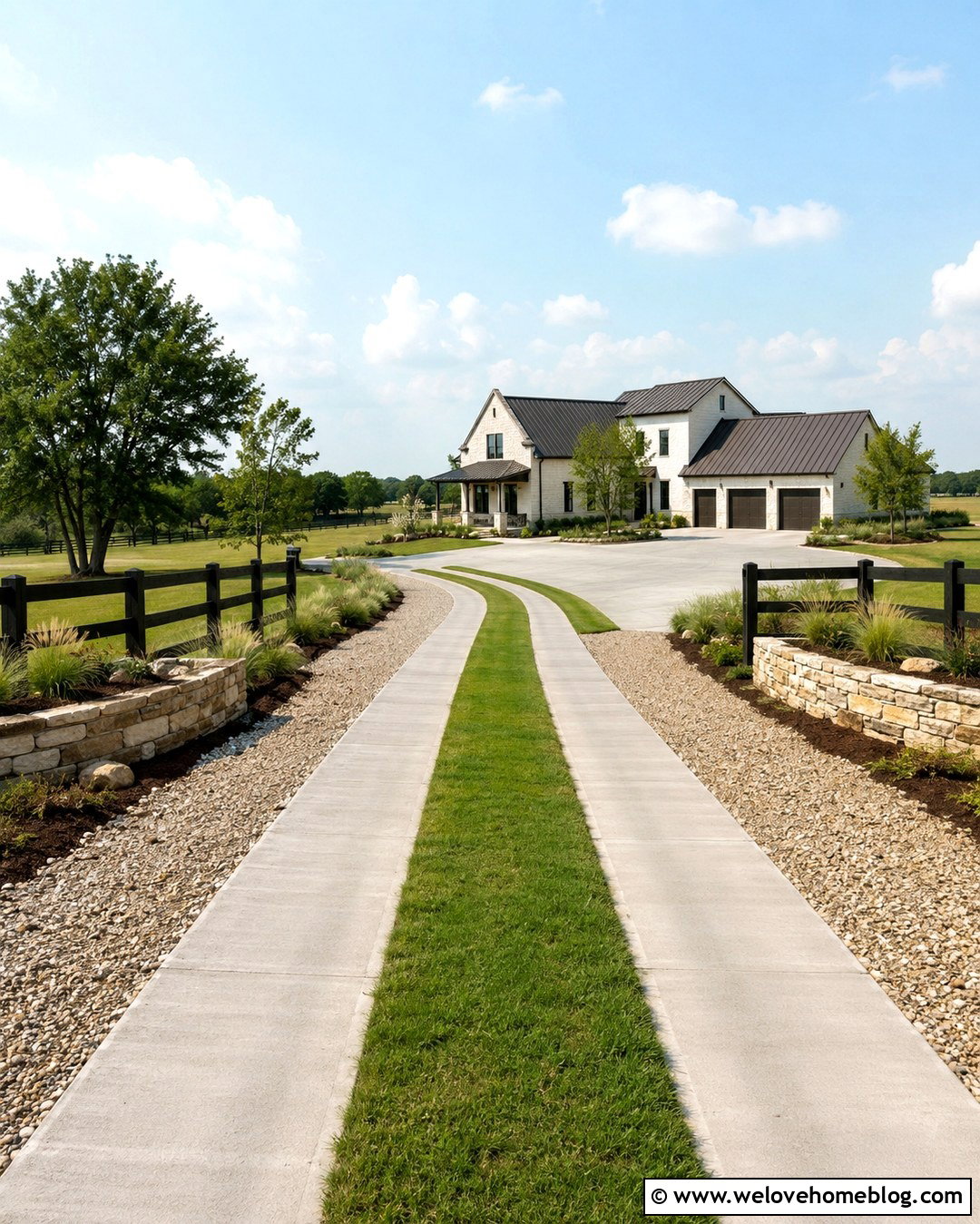
Two concrete driving ribbons offer a clean solution for a farm driveway while leaving plenty of visible greenery. Pour parallel strips of light gray concrete and plant a durable grass center between them. The route can remain straight for a minimalist modern farmhouse or curve gently toward a renovated barn home. Use gravel shoulders to create drainage transitions and prevent the concrete from appearing isolated in the landscape. Near the house, expand the ribbons into a full concrete parking court or connect them to a gravel turnaround. Low stone walls, native grasses, and a black board fence add structure without crowding the drive. This combination is especially attractive when the concrete color echoes a metal roof, pale stone foundation, or other contemporary farmhouse details.
12. Brick Apron Gravel Farm Driveway
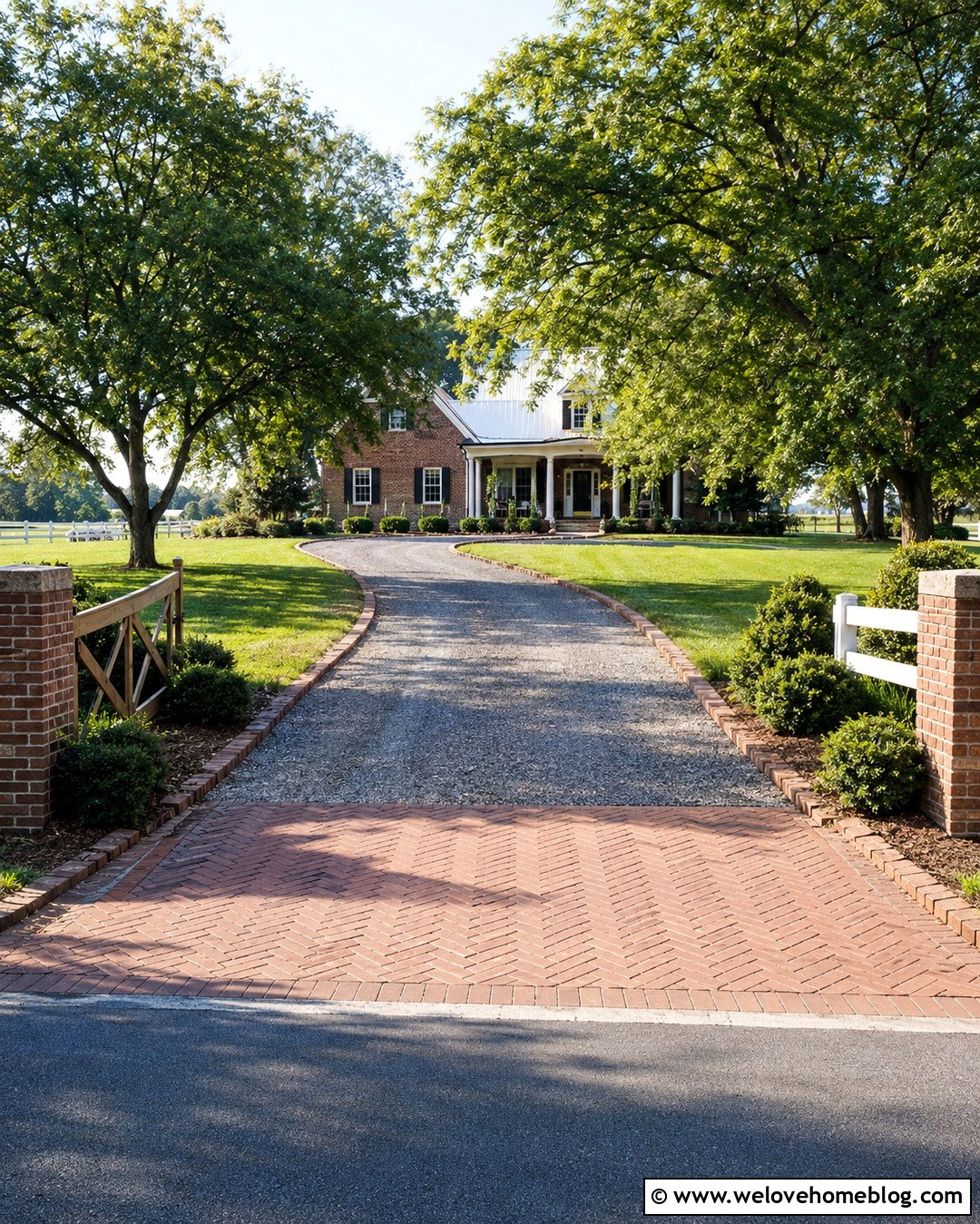
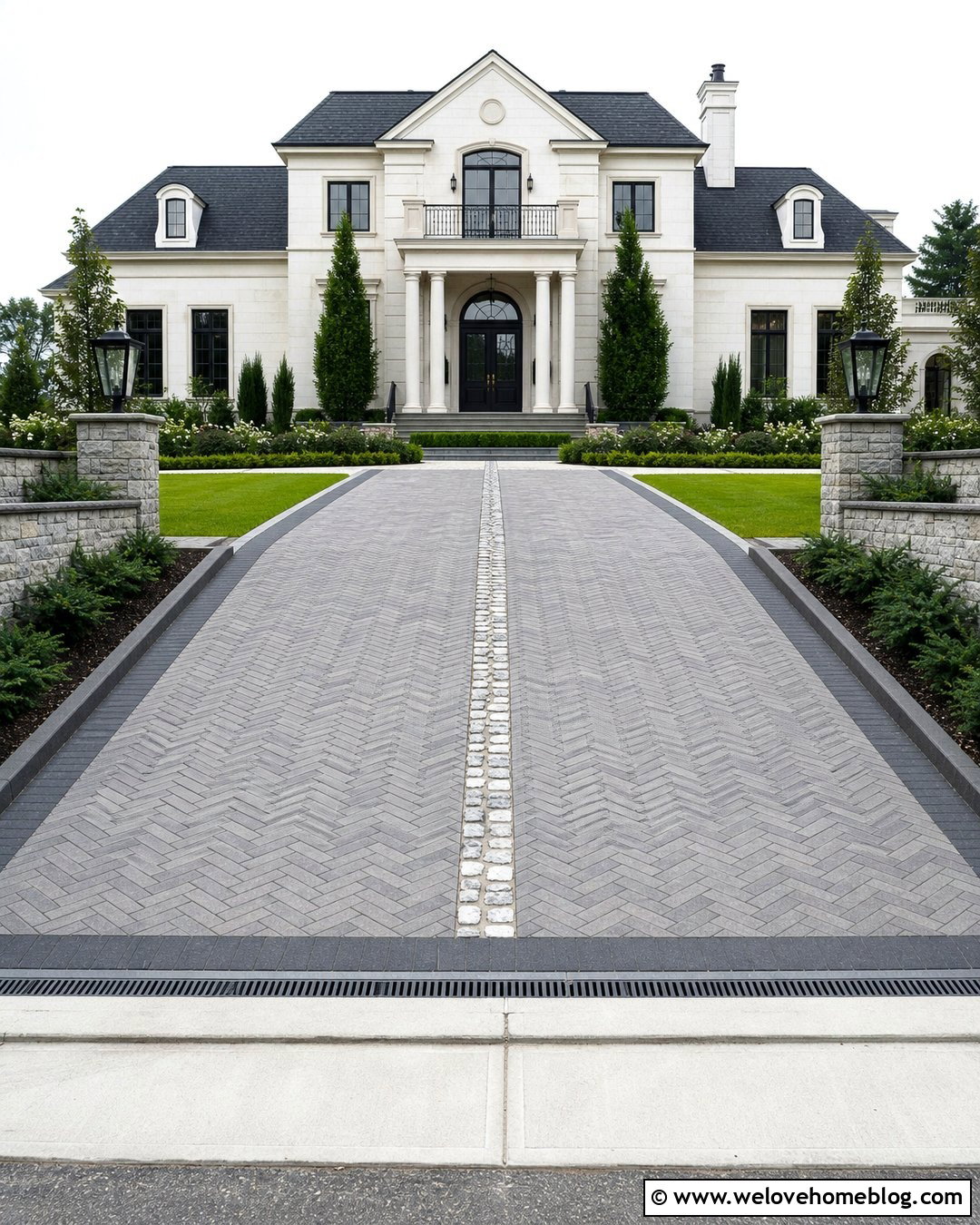
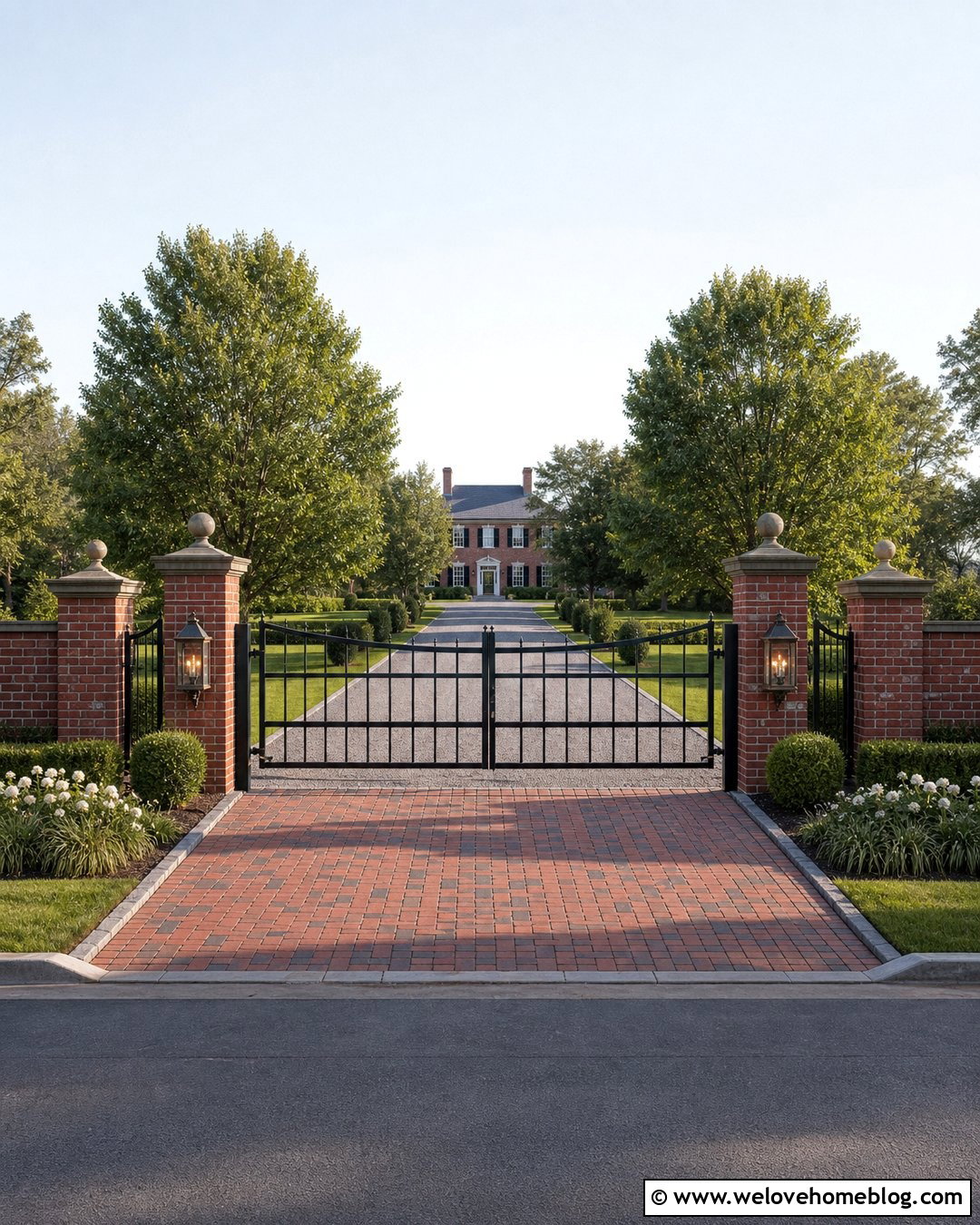
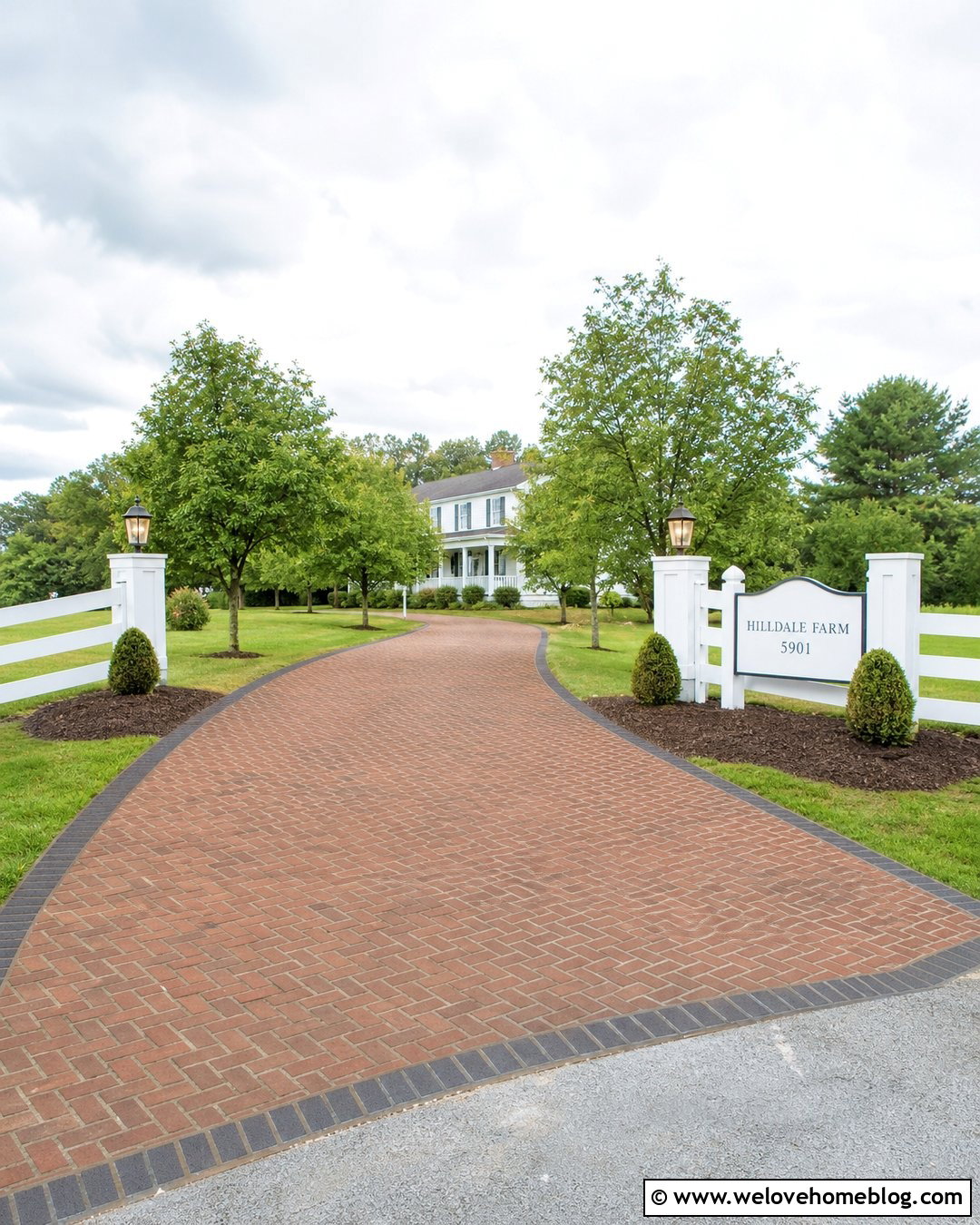
A brick apron gives a loose gravel farm driveway a polished connection to the public road. Choose red or weathered clay brick pavers in a herringbone pattern, then extend the apron far enough to read as a deliberate entrance feature. Continue the main drive in compacted warm-gray gravel with brick edging for only a short distance beyond the entry. This controlled transition prevents the design from becoming too formal. Add white fence posts, a wooden gate, and low evergreen shrubs around the entrance while maintaining open sightlines. The gravel road can then curve through lawn or pasture toward a traditional brick farmhouse. Repeat the same brick around the front walkway or parking court so the entrance detail feels connected to the architecture rather than added as an afterthought.
13. Cobblestone Border Farm Road
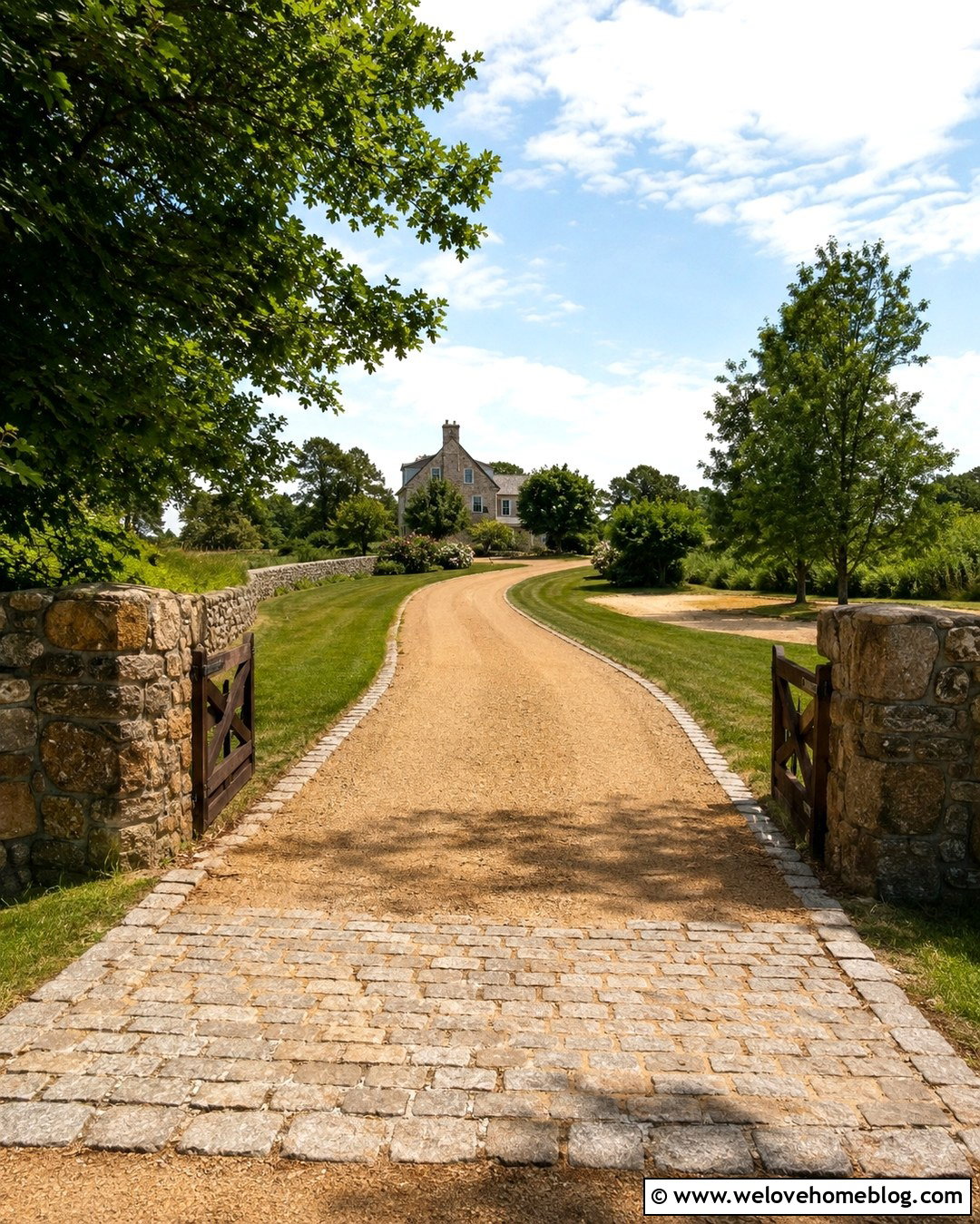
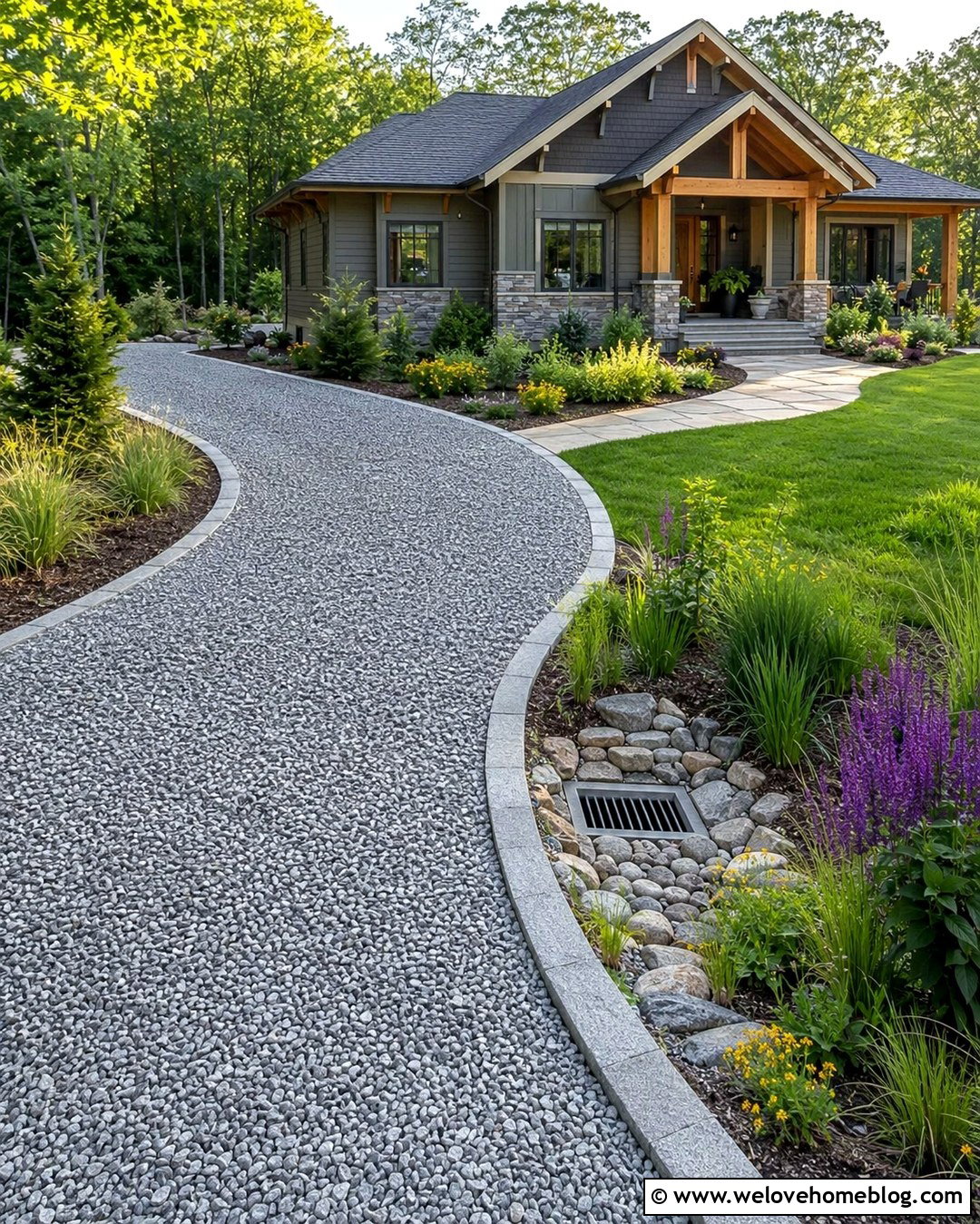
Cobblestone borders can sharpen the edges of a gravel farm road while preserving its traditional character. Use chunky gray or brown cobbles along a straight or softly curving driveway surfaced with compacted tan gravel. Set the stones low enough that the border feels integrated rather than forming a raised obstacle. Along the country portion, pair the drive with wide grass shoulders, mature trees, and occasional native shrubs. Near the farmhouse, the cobblestone can widen into a decorative apron or define a guest parking bay. A fieldstone wall and simple timber gate make a natural entrance combination. Because cobblestone has a strong visual texture, keep the nearby planting informal and restrained. The completed approach feels detailed and historic without losing the practical simplicity expected from a working farm road.
14. Decomposed Granite Ranch Driveway
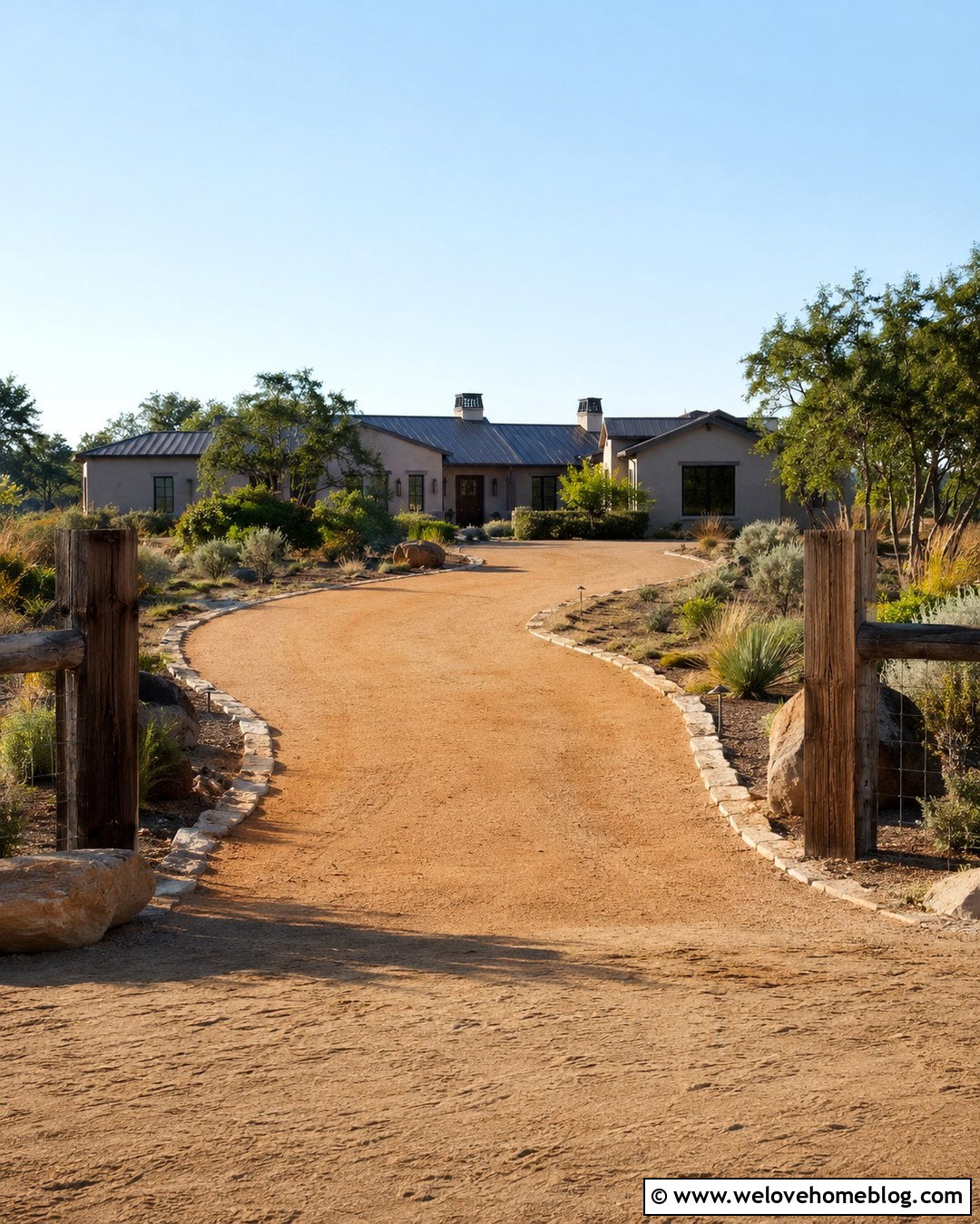
Warm decomposed granite suits dry ranch landscapes and farm properties surrounded by golden grass, sage, or rocky terrain. Choose a stabilized rust, buff, or sandy-colored finish for the driveway, then shape it into a wide curve that follows the natural contours of the land. Large regional boulders can mark the edges at key points without creating continuous hard borders. Frame the entrance with weathered timber posts, wire fencing, and drought-tolerant native planting. Closer to the ranch house, introduce a flagstone walkway and a slightly wider parking court in the same decomposed granite. The repeated earth tones help the driveway settle naturally into the site. This look pairs especially well with stucco ranch homes, metal-roof farmhouses, and rustic wood-sided buildings.
15. River Rock Farm Driveway
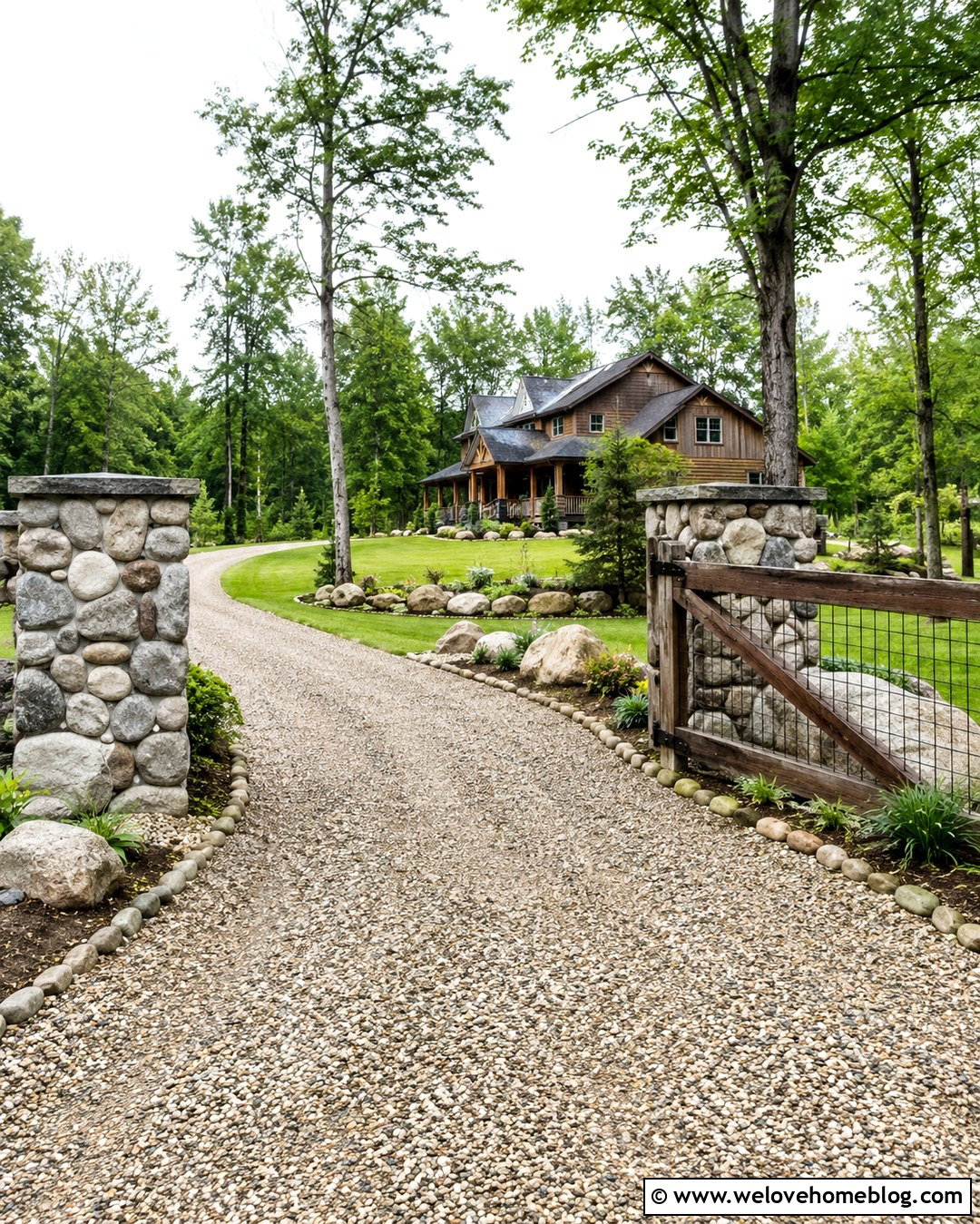
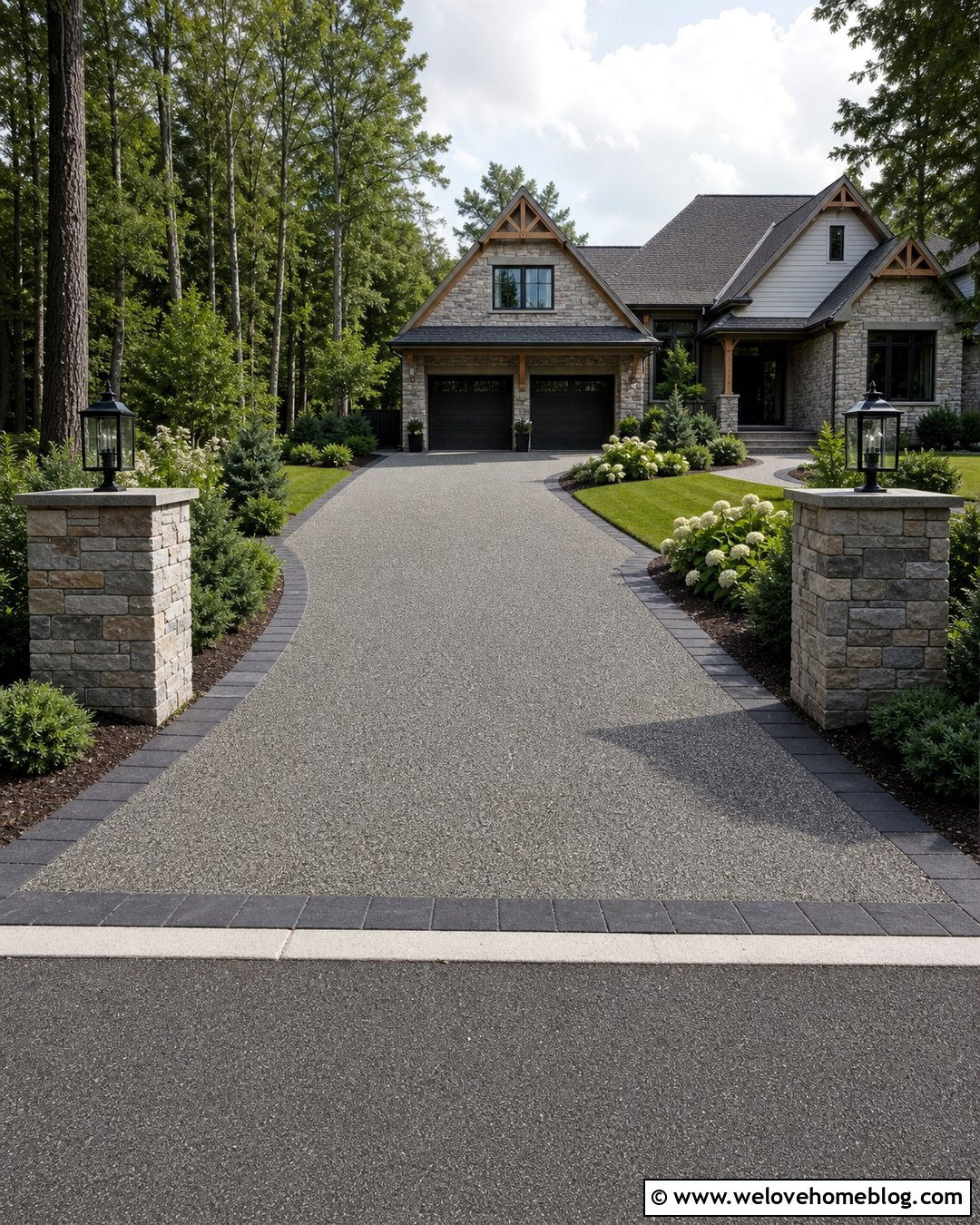
Rounded river rock gives a rural driveway varied color and a softer visual texture, but it works best when contained within strong borders. Use a compactable mix of small gray, tan, and brown stones rather than oversized loose rock. Design the driveway as a gently curved route with timber, steel, or embedded stone edging along vulnerable sections. Mown grass and clusters of moisture-tolerant native plants can connect the road to a nearby creek, pond, or wooded setting. At the entrance, add chunky stone pillars and a simple wood-and-wire gate. Continue the river rock into a broad arrival area beside a cabin-style farmhouse or rustic ranch home. A flagstone walkway and natural boulder planting beds can repeat the driveway colors, creating a cohesive landscape from the road to the porch.
16. Shell Farm Road Driveway
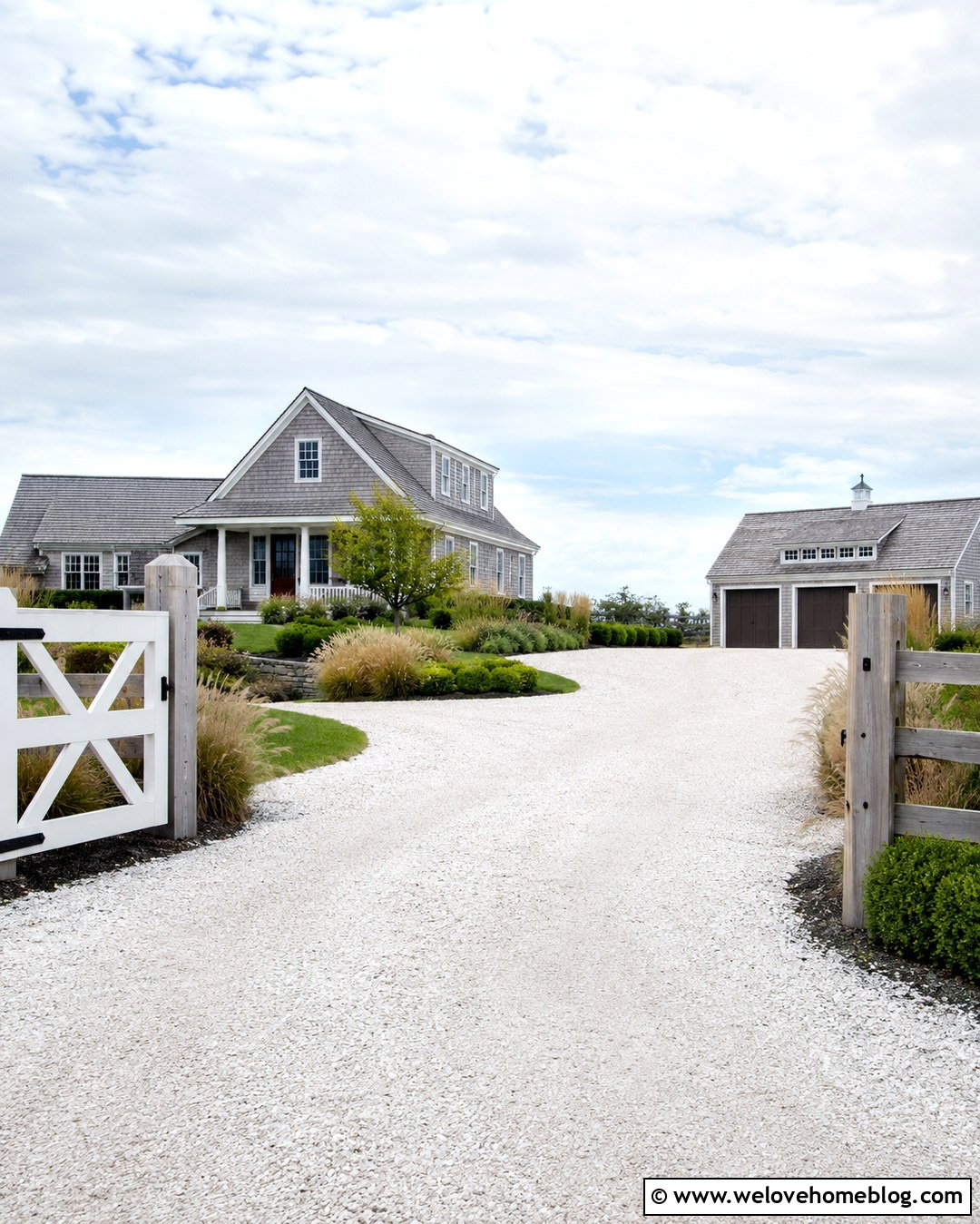
A crushed shell driveway creates a bright coastal farm look that pairs beautifully with weathered wood and pale siding. Use compacted white or cream shell for a straight or horseshoe-shaped drive leading to a Cape Cod farmhouse, low-country cottage, or coastal ranch. Define the edges with salt-tolerant grass, low evergreen shrubs, and simple timber fencing rather than formal curbs. At the entrance, weathered cedar posts and a white farm gate reinforce the light, breezy palette. A crushed shell parking court can wrap around the house or connect to a detached barn-style garage. Keep planting beds broad and informal, using ornamental grasses and regionally appropriate shrubs. Repeating the shell in the front walkway creates a unified property while allowing the driveway to remain distinctly rural.
17. Farm Driveway With Equipment Turnaround
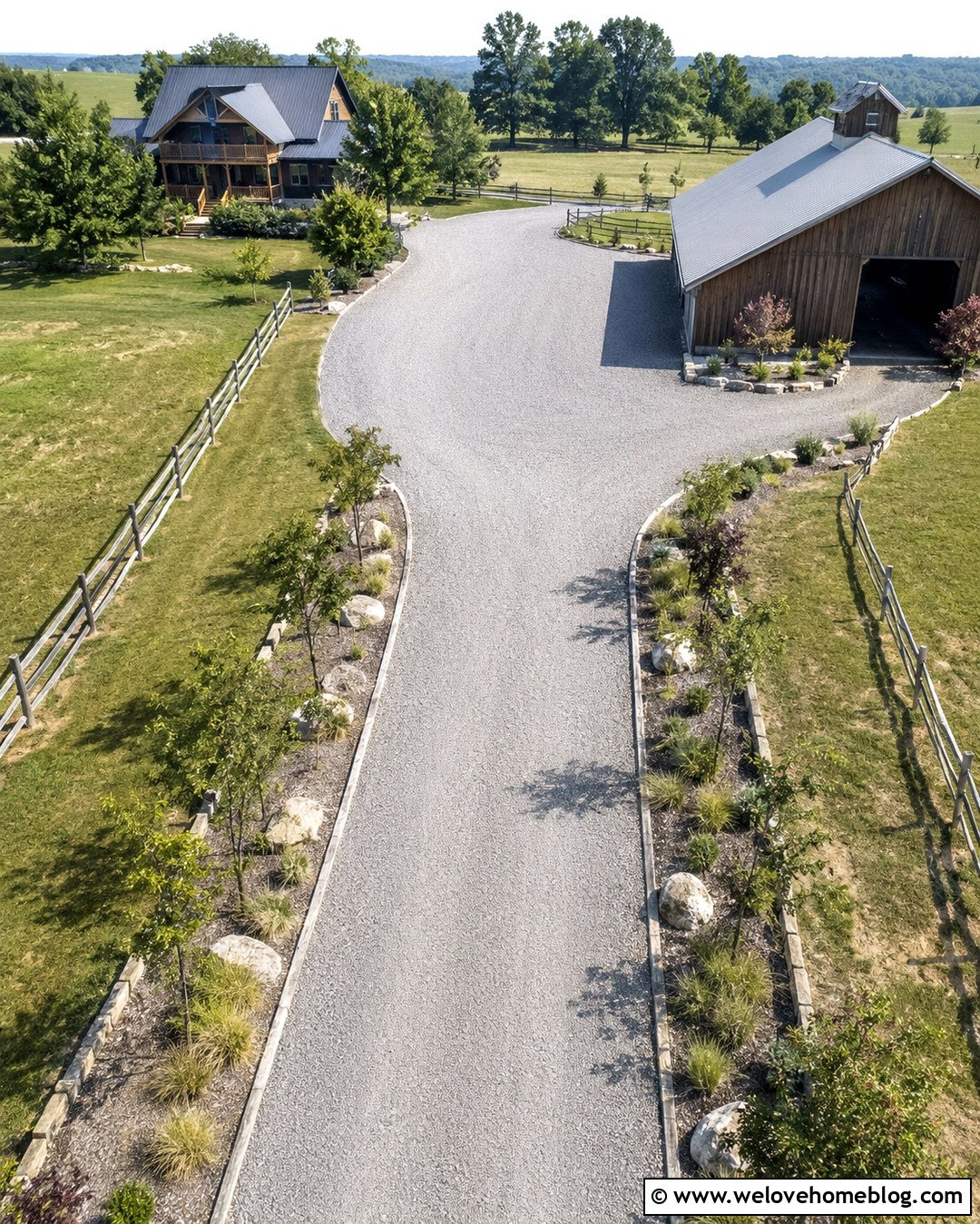
A working farm driveway needs enough room for trailers, deliveries, tractors, and emergency access. Create a compacted gray gravel road that widens into a large teardrop or hammerhead turnaround near the barn and house. Place the turnaround where vehicles can maneuver without crossing front lawns, garden beds, or livestock areas. Timber edging or embedded fieldstone can define the nearby landscaping while leaving the outer working edges simple. Use a split rail fence, shade trees, and low grasses to make the expanded surface feel like part of the property rather than an oversized parking lot. Entrance dimensions and turning geometry may be affected by local access requirements, so plans should be checked with the relevant road or permitting authority. ()
18. Farm Road With Wildflower Borders
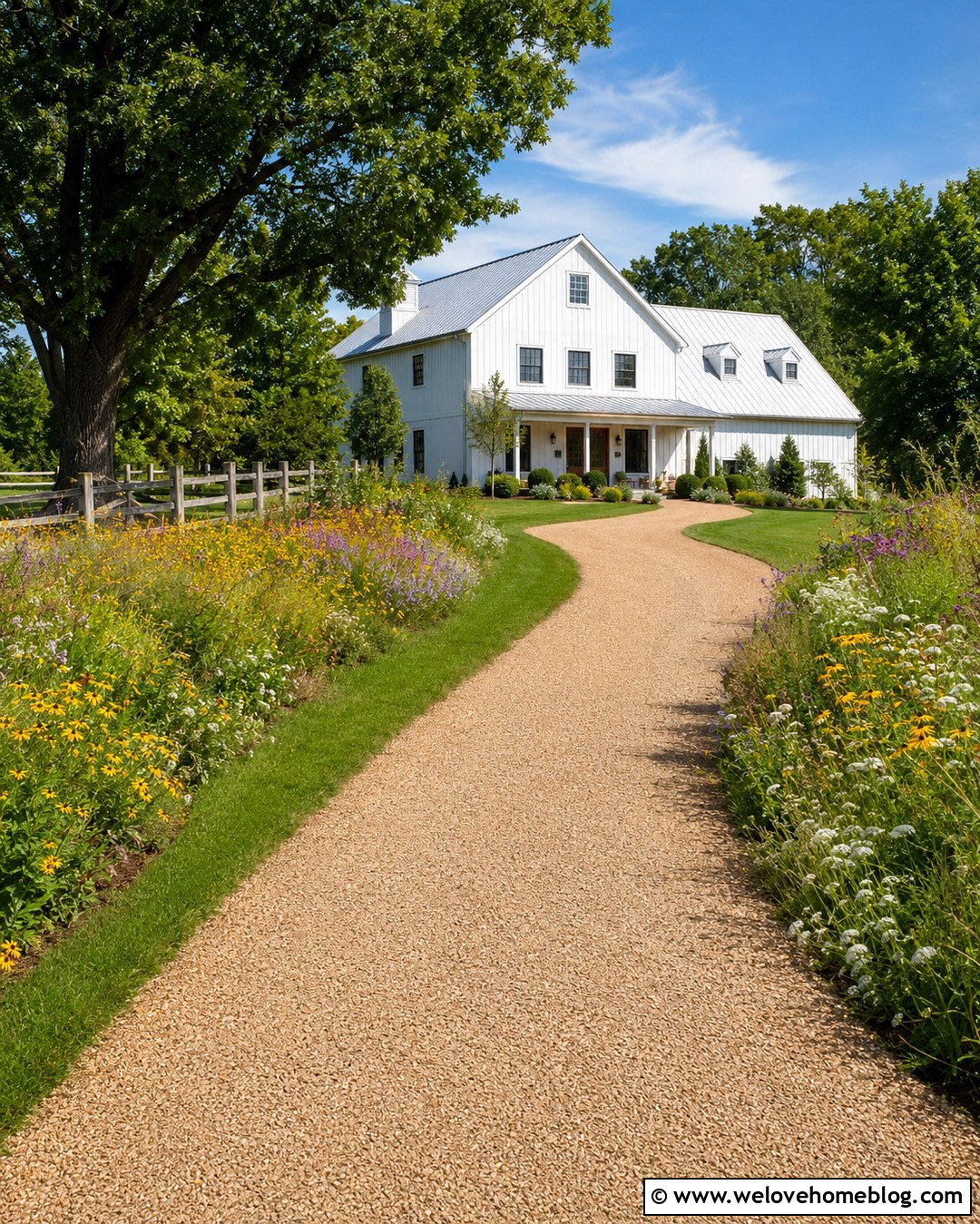
Colorful wildflowers can soften a long gravel farm road and connect it naturally to surrounding meadows. Surface the driveway with compacted tan or gray gravel, then create broad planting strips beyond the mown shoulders. Use regionally appropriate flowers and grasses in loose drifts rather than narrow, formal rows. Keep vegetation shorter near the public road, gates, curves, and intersections to preserve visibility. A gently winding layout makes the planting appear gradually, leading visitors toward a white farmhouse or restored barn. Simple timber fencing can run behind the flowers and provide structure throughout the seasons. Near the house, transition the meadow into more organized beds with ornamental grasses, flowering shrubs, and a stone walkway. The finished drive feels colorful and welcoming without losing its agricultural identity.
19. Raised Gravel Farm Driveway With Swales
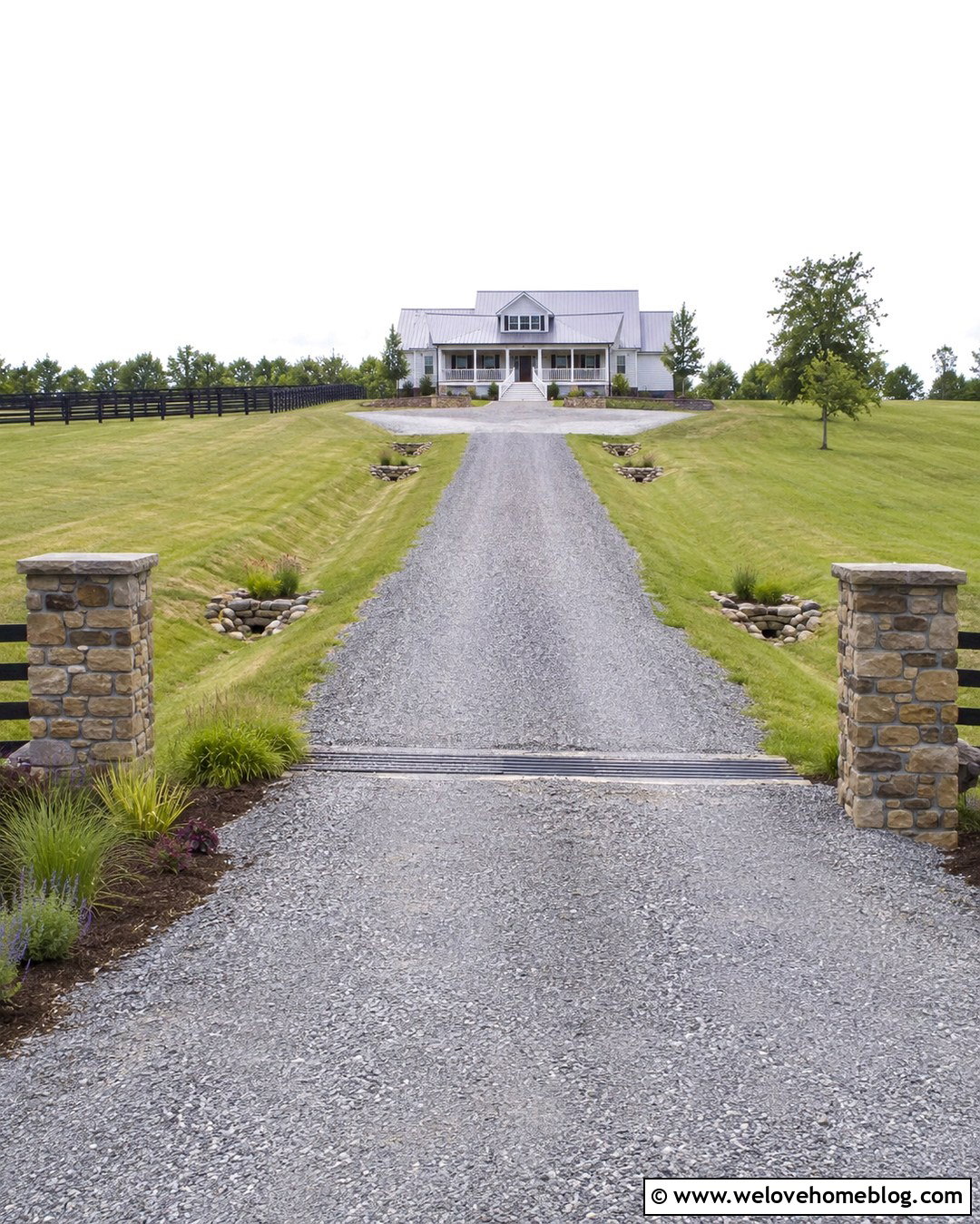
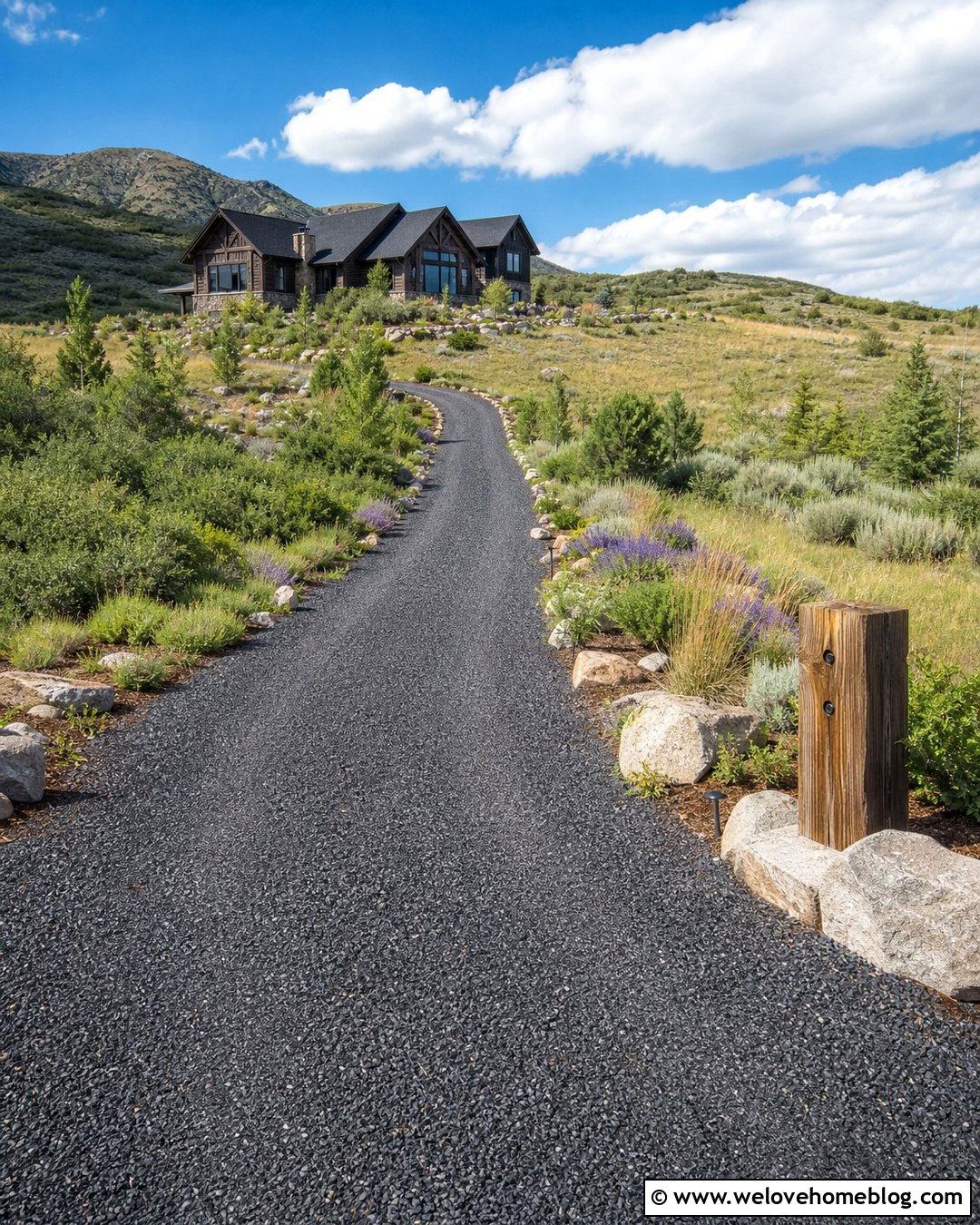
Low or wet ground calls for a driveway design that treats drainage as part of the overall look. Build a raised, compacted gravel route with a visible crown and shallow vegetated swales along both sides. Gray crushed stone creates a dependable driving surface, while grass-lined channels help the road blend into pastures and open fields. Culvert areas can be marked with natural stone headwalls that coordinate with entrance pillars or nearby retaining walls. Keep trees away from the swales, using moisture-tolerant grasses and low native plants instead. The driveway can rise gradually toward an elevated farmhouse, barn, or country home. Proper road shape and water management are central considerations for maintaining an unpaved rural route, especially where runoff crosses or follows the driveway. ()
20. Modern Farm Road to a Barndominium
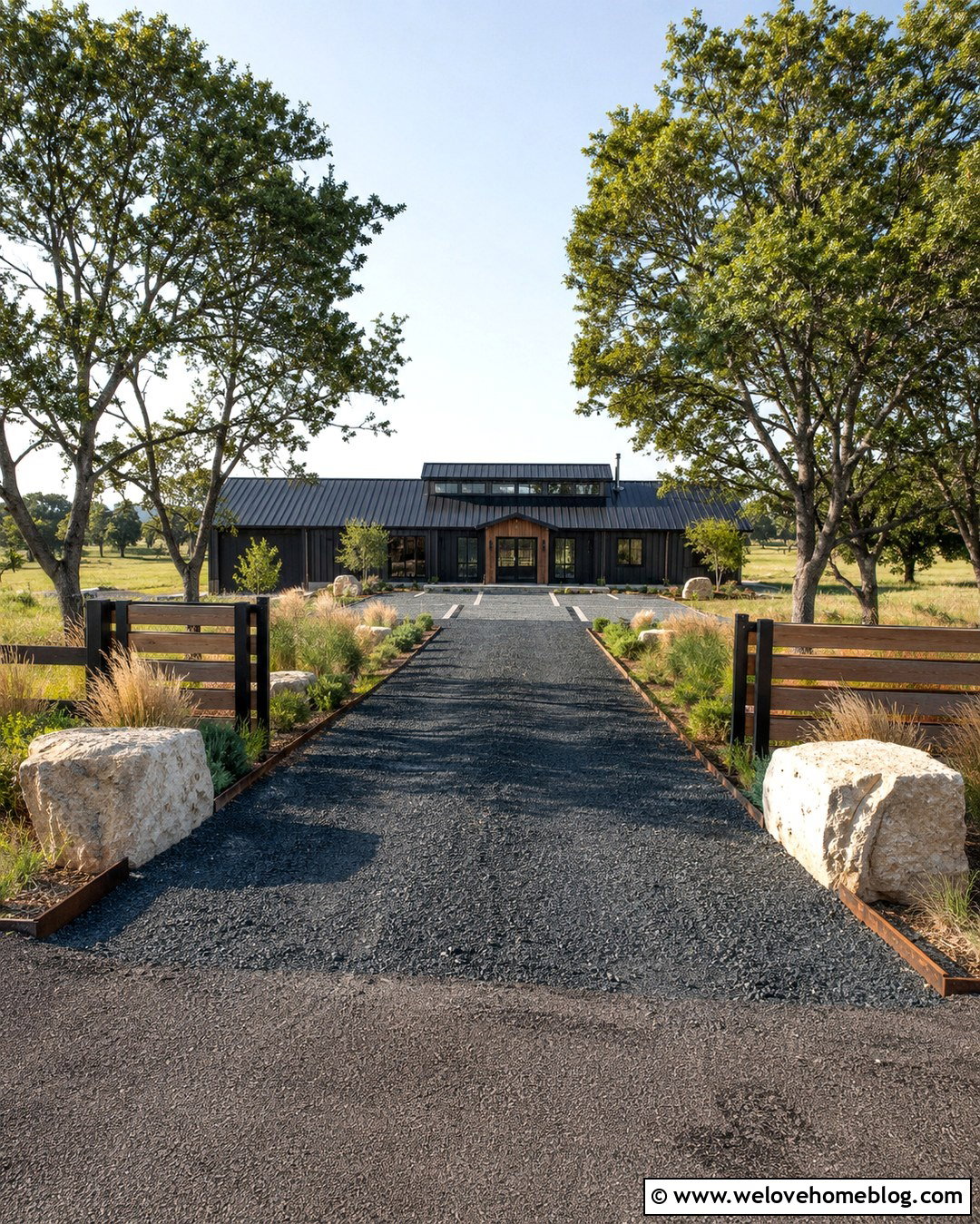
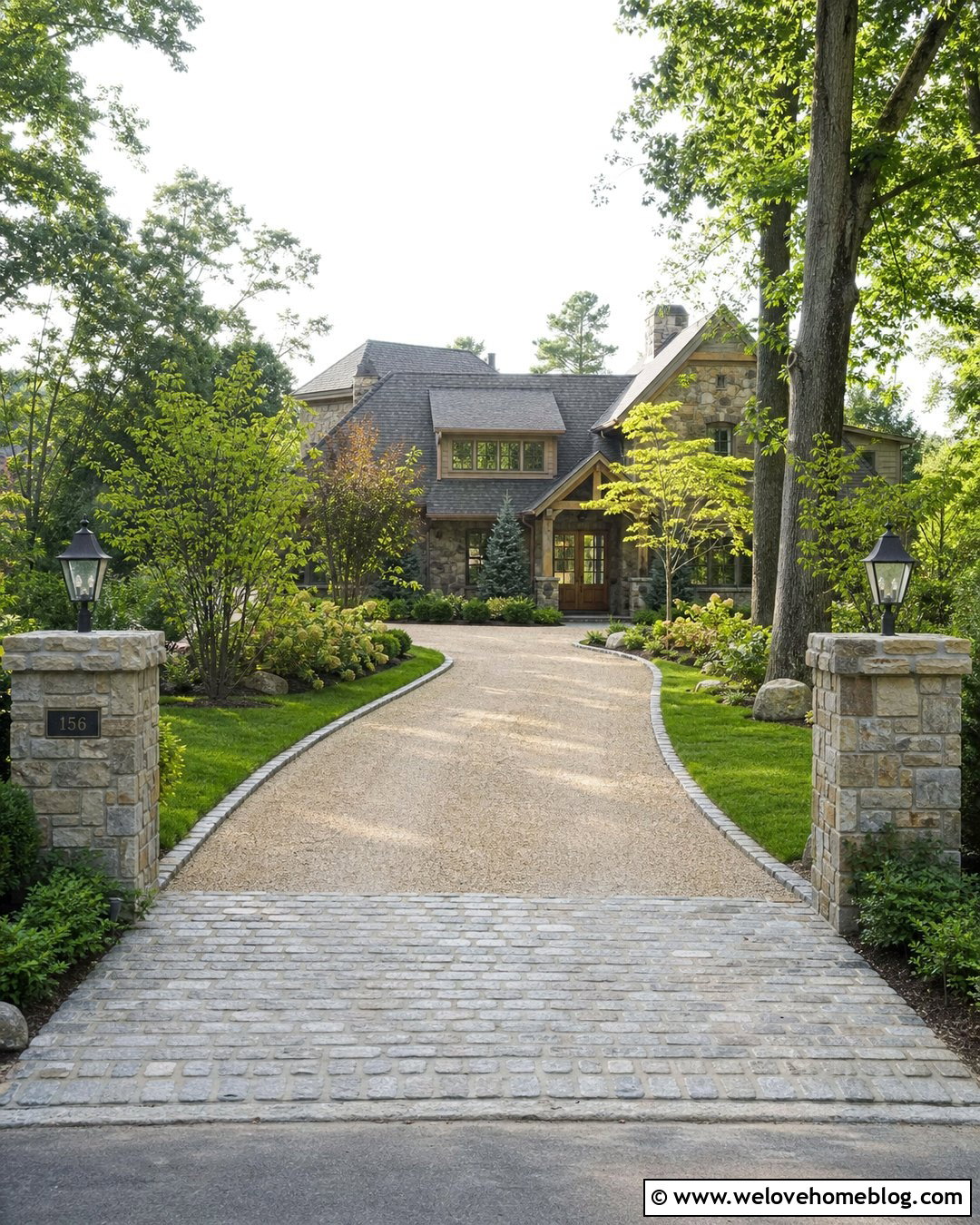
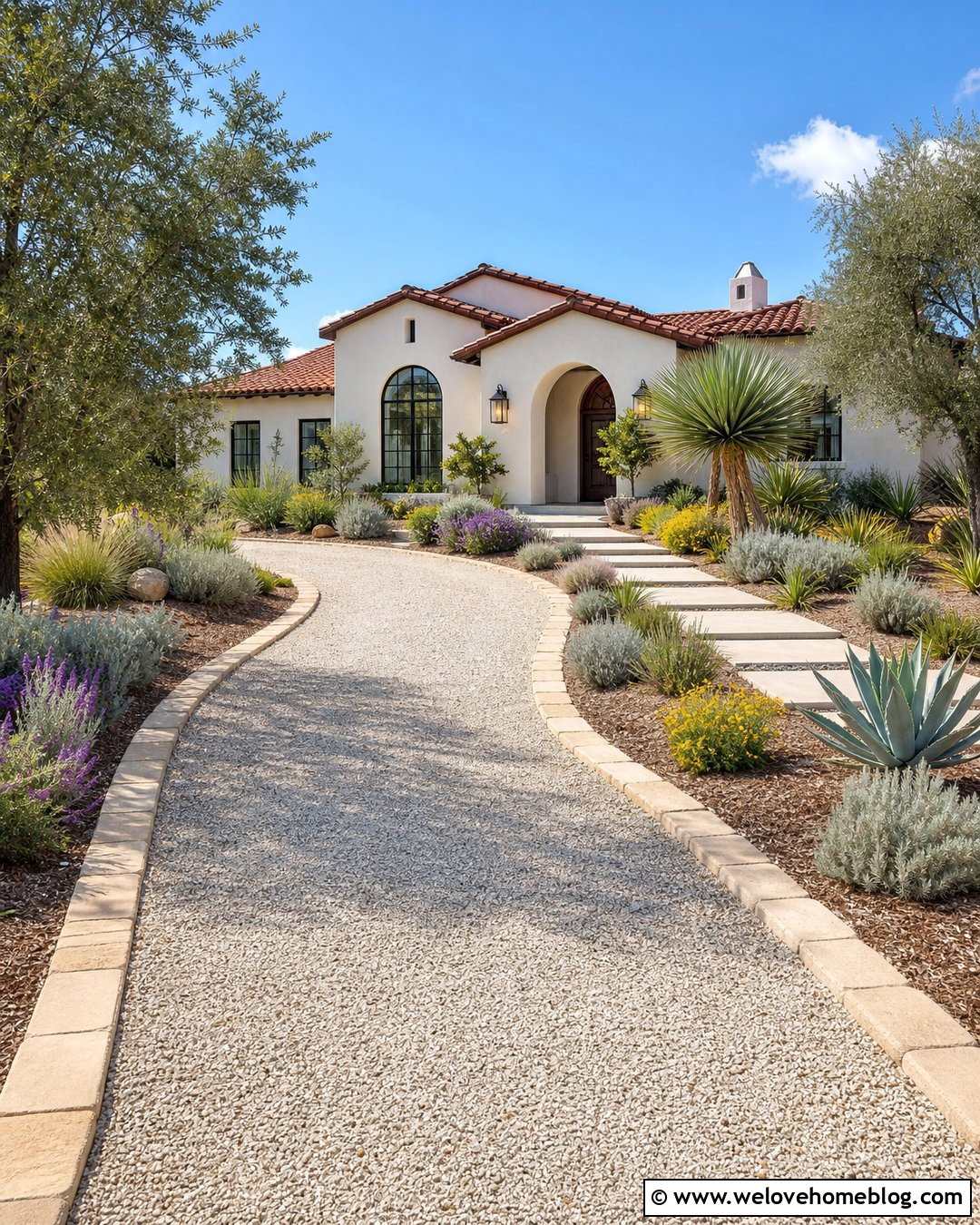
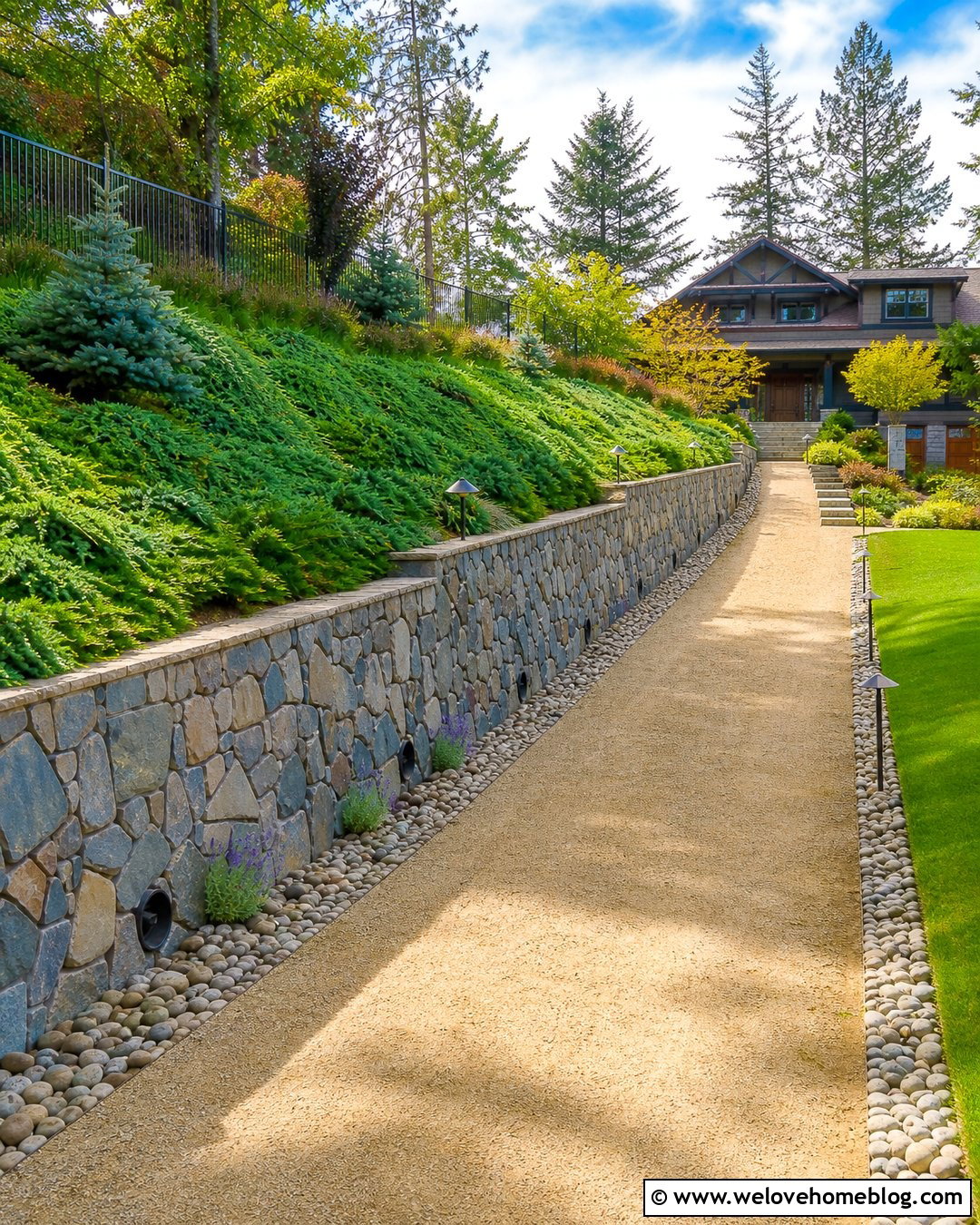
A modern farm road can feel streamlined without losing its connection to the land. Use charcoal-gray crushed gravel in a broad straight layout leading toward a black, white, or natural wood barndominium. Edge the entrance with low weathered steel strips, large limestone blocks, and a horizontal wood-and-metal gate. Along the driveway, alternate mown grass with controlled groups of native ornamental grasses. A few sculptural shade trees can frame the approach without creating a formal avenue. Near the building, transition the gravel into a large rectangular parking court with concrete paver bands that organize parking and guide visitors to the door. Black post lighting, a simple address monument, and matching fencing complete the design. The result feels practical, rural, and distinctly contemporary.
Conclusion:
The strongest **20 farm roads driveways ideas** balance visual character with the everyday needs of rural living. Gravel, limestone, chip seal, asphalt, concrete ribbons, shell, and regional stone can all work when the surface fits the property and expected traffic. Shape is equally important. Gentle curves, circular arrival areas, wide aprons, and equipment turnarounds make a long approach more functional and attractive. Complete the design with fencing, gates, trees, grass shoulders, native planting, and materials that connect to the house or barn. Before construction, consider drainage, maintenance, vehicle clearance, and local entrance requirements. A thoughtfully planned farm driveway should look natural from the road while providing a clear, welcoming journey across the property.

Related posts:

Leave a Reply