
A long driveway should feel like a scenic transition from the country road to the home, not simply a wide strip for vehicles. The best 35 long driveway landscaping country roads ideas combine a durable surface with practical drainage, strong borders, layered planting, and a welcoming entrance. Trees can establish rhythm, while native grasses, wildflowers, stone walls, and split-rail fencing help the drive settle naturally into rural surroundings. The design should also preserve clear sightlines, allow snow removal, and provide enough space for guests, deliveries, and farm equipment. Whether your property has open fields, mature woodland, rolling terrain, or a farmhouse garden, the complete looks below offer useful inspiration. Explore these 35 long driveway landscaping country roads ideas to create an attractive and functional approach.

1. Long Gravel Driveway With Wildflower Borders
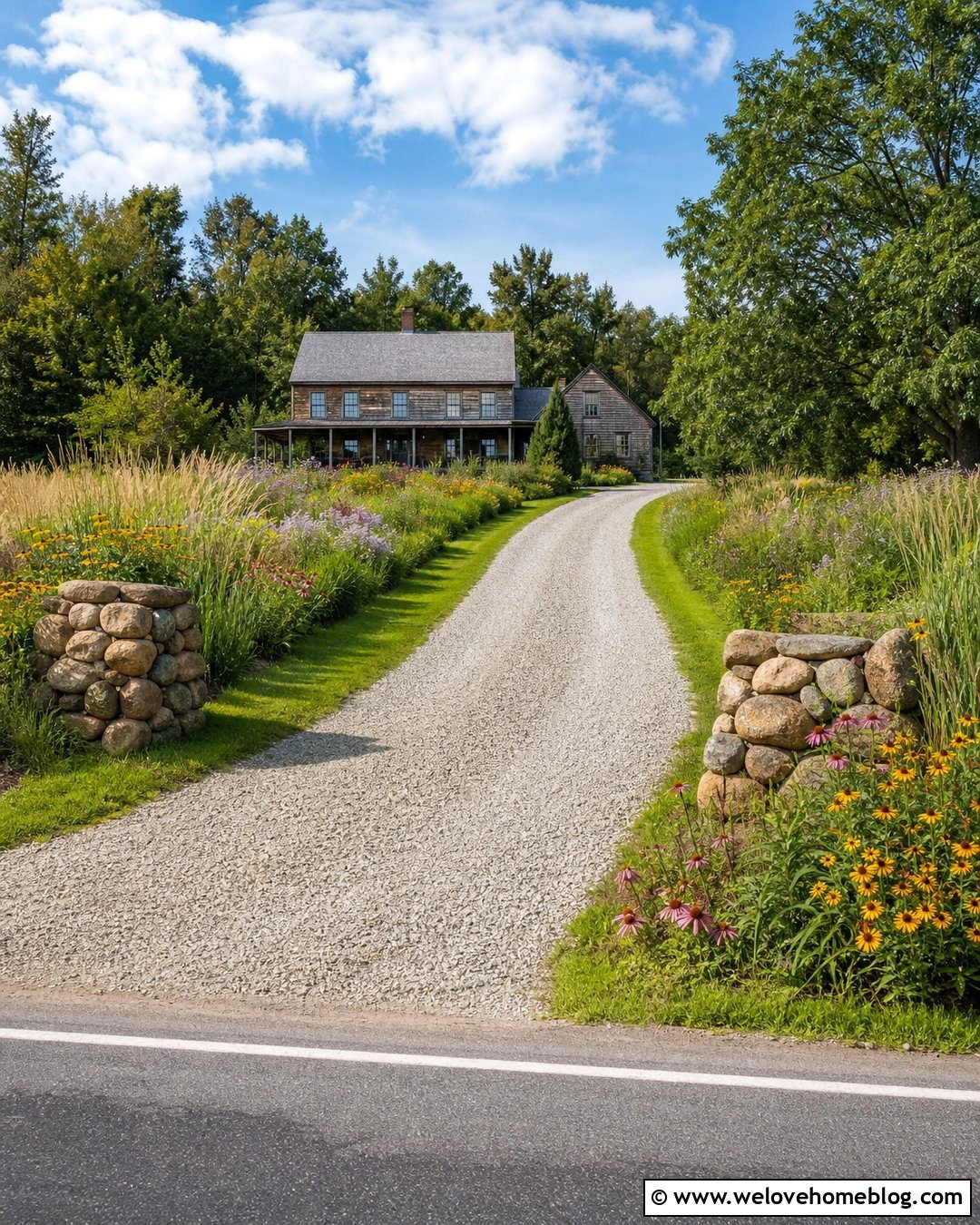
A pale gravel driveway bordered by native wildflowers creates a relaxed entrance that belongs in the countryside. Use compacted crushed stone beneath the decorative top layer so the surface stays stable under regular traffic. Gentle curves can follow the land rather than cutting across it unnaturally. Along both sides, plant broad drifts of black-eyed Susans, coneflowers, asters, coreopsis, and ornamental grasses suited to your region. Keep taller flowers farther from the driving edge to protect visibility and prevent stems from brushing vehicles. A narrow mowed strip between the gravel and planting bed makes maintenance easier. At the road, simple fieldstone markers can define the entrance without making the setting feel formal or overdesigned.
2. Long Tree-Lined Driveway With Crushed Stone
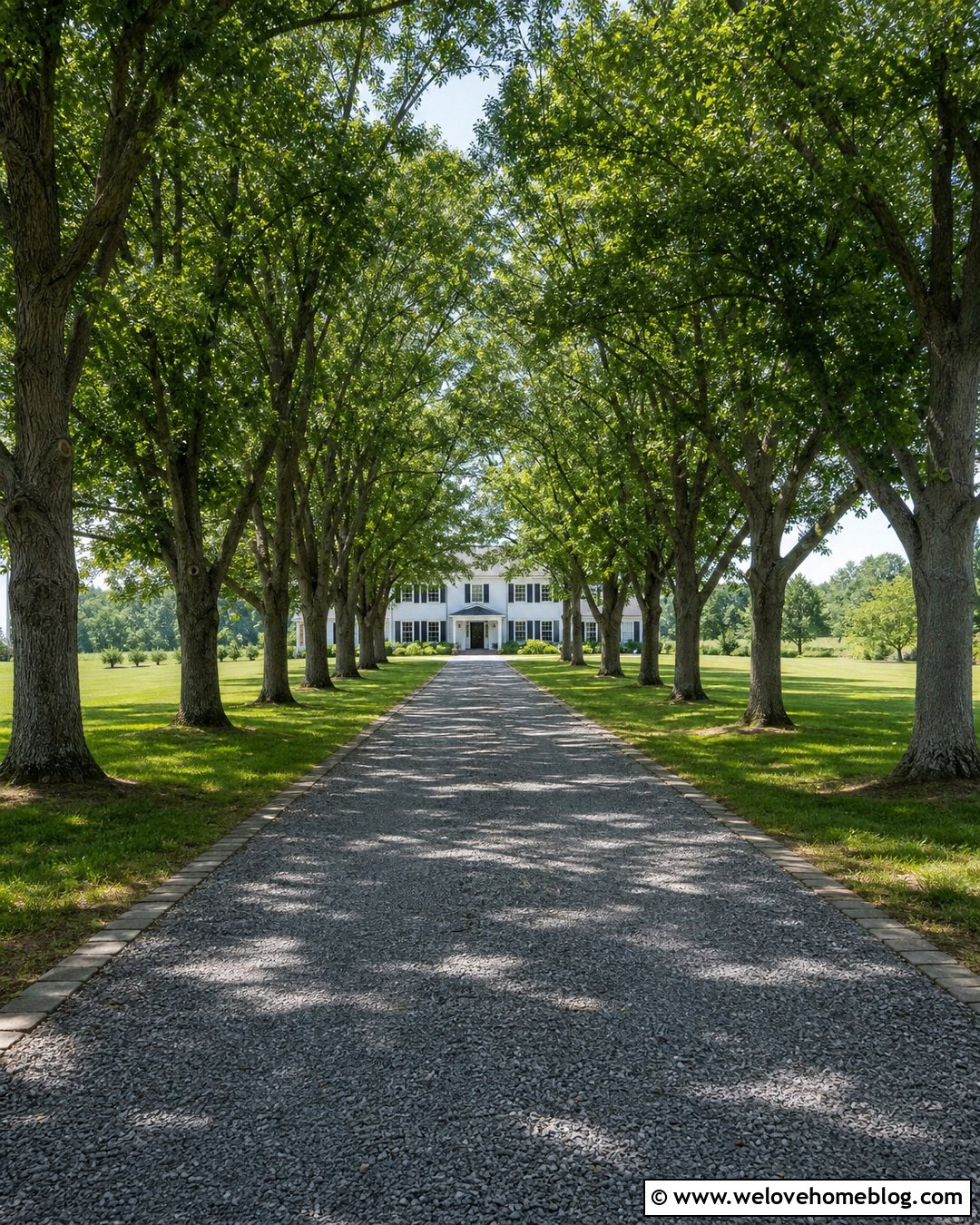
Few arrangements frame a country home as effectively as a long, tree-lined driveway. Begin with a compacted gray crushed-stone surface that complements bark, foliage, and weathered rural architecture. Plant trees in evenly spaced rows, but position them far enough from the driveway to accommodate mature trunks, branches, roots, and maintenance equipment. Oaks, maples, elms, or regionally appropriate native trees can create a generous canopy over time. A low grass verge between the stone and tree line keeps the route open and uncluttered. Instead of planting one fragile variety throughout, consider mixing compatible species with similar forms. This preserves the visual rhythm while making the landscape more resilient if pests, disease, storms, or drought affect individual trees.
3. Long Curved Driveway With Split-Rail Fencing
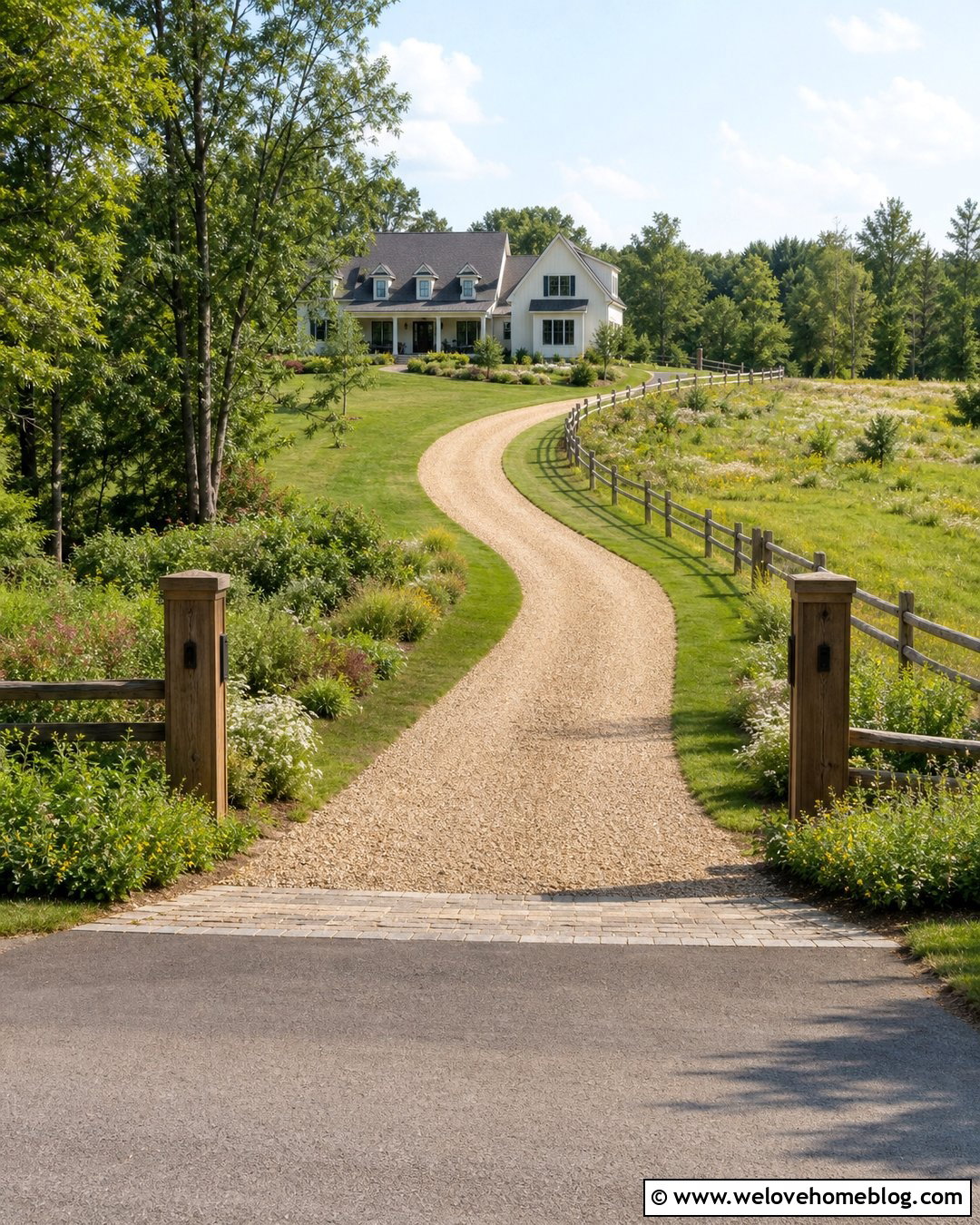
A sweeping driveway beside split-rail fencing can make an open property feel organized without losing its rural character. Use warm-toned pea gravel or compacted crushed limestone to create a softly textured surface. Follow the natural contours of the property with one or two broad curves instead of several tight bends. Run the fence along the outside edge, leaving a generous grassy shoulder for drainage and mowing. Clusters of native shrubs can highlight turns, while low meadow planting fills wider spaces between the drive and fence. Avoid tall vegetation near the country road entrance because drivers need clear views in both directions. Matching timber gateposts, a discreet address marker, and a gravel apron complete the entrance while maintaining an approachable farmhouse appearance.
4. Long Farmhouse Driveway With White Fence Borders
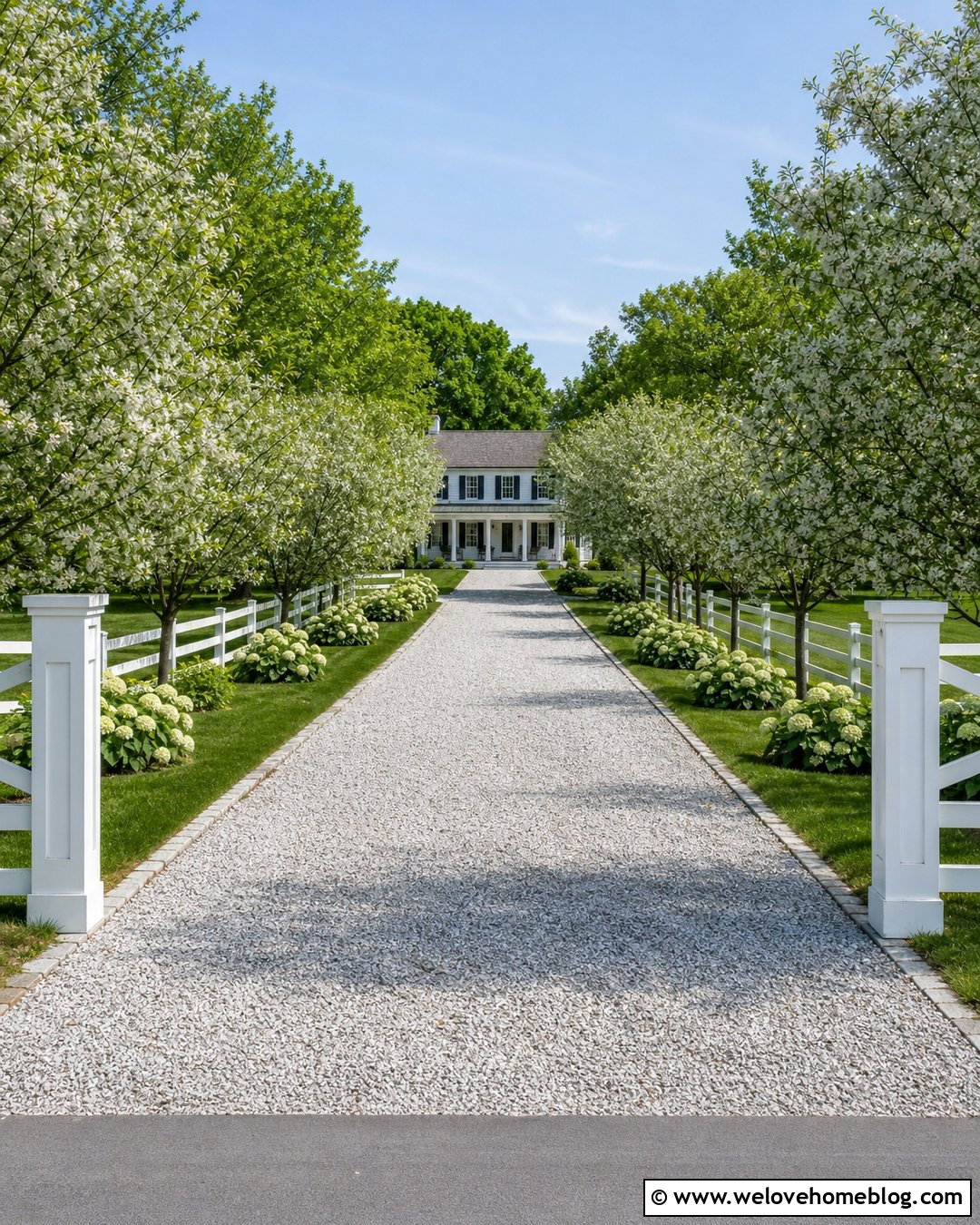
White fencing gives a long country driveway a bright, recognizable outline, especially when it leads to a classic farmhouse. Pair the fence with a light-gray gravel surface and broad strips of neatly maintained lawn. The combination feels clean and traditional without requiring elaborate planting along the entire route. Add flowering crabapples, serviceberries, or dogwoods at carefully spaced intervals to provide seasonal color. Low hydrangeas and ornamental grasses can form larger planting groups near the house, where greater detail will be noticed. Set the fence back from the driving surface to protect it from gravel spray, snowplows, and wide vehicles. White entrance posts and a simple farm gate can repeat the home’s trim, connecting the roadside entrance with the distant architecture.
5. Long Country Driveway With Stone Wall Edging
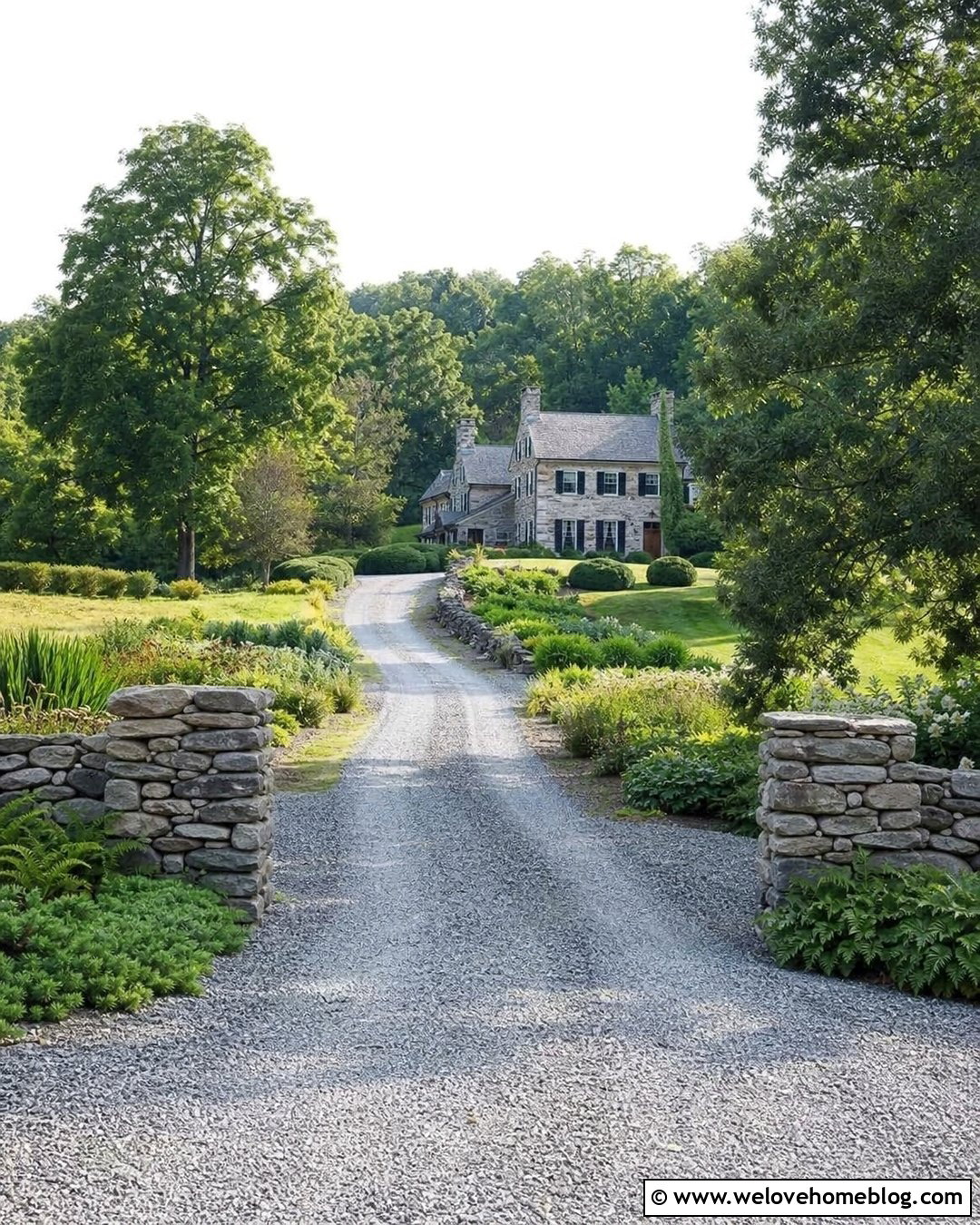
Low stone walls can give a long driveway definition while reflecting the materials found in old fields and rural buildings. This approach works especially well with a winding gravel drive leading to a stone farmhouse, cottage, or renovated barn. Build walls along selected stretches rather than enclosing every foot, which could make the route feel narrow. Wider wall sections can emphasize the entrance, a curve, or the final approach to the home. Use locally appropriate fieldstone in varied sizes for a natural appearance. Behind the walls, plant ferns, low grasses, spreading junipers, and flowering perennials that tolerate the site’s light and moisture. Proper drainage openings are important, particularly where the wall holds back soil on a sloped section of the property.
6. Long Asphalt Driveway With Native Grass Borders
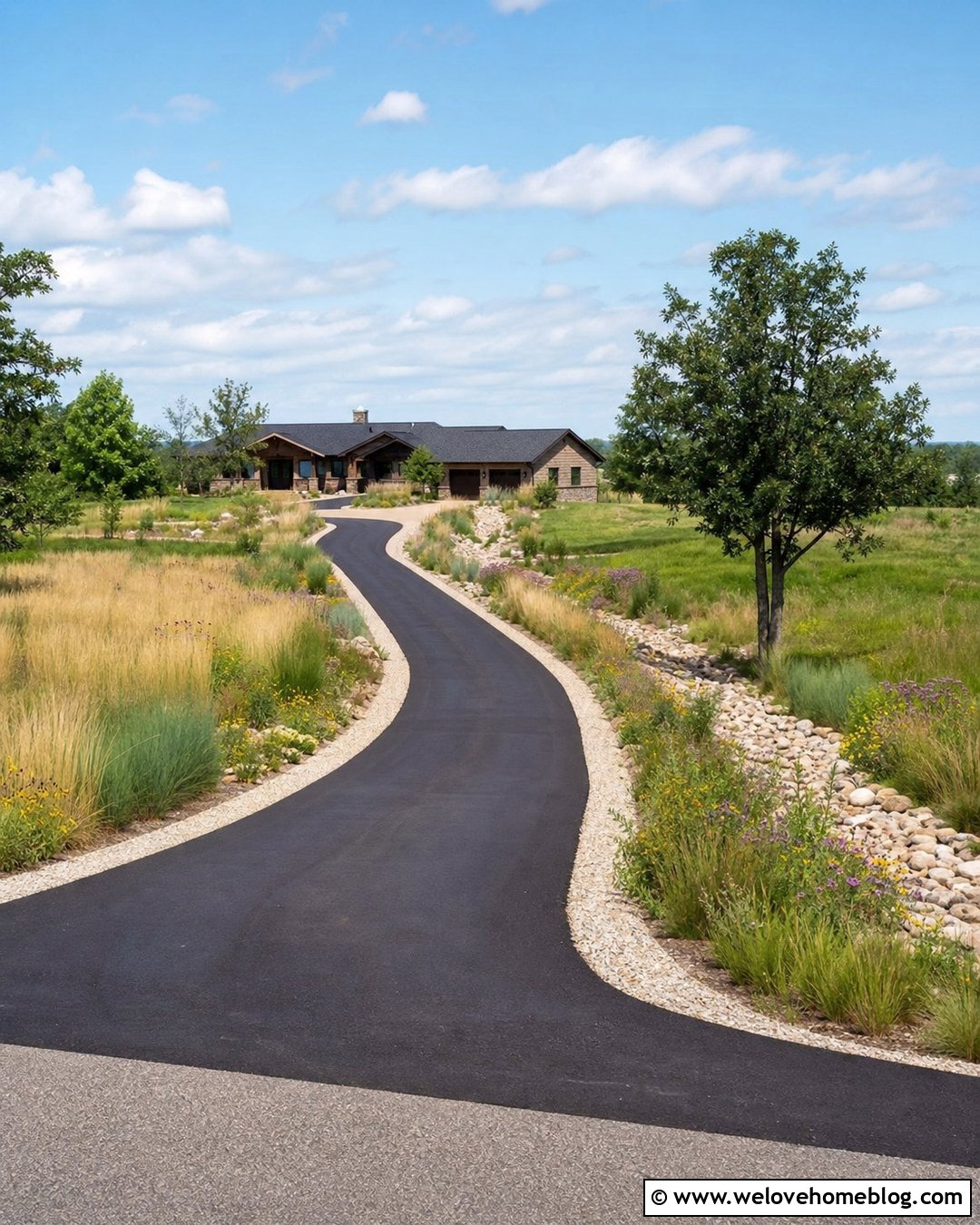
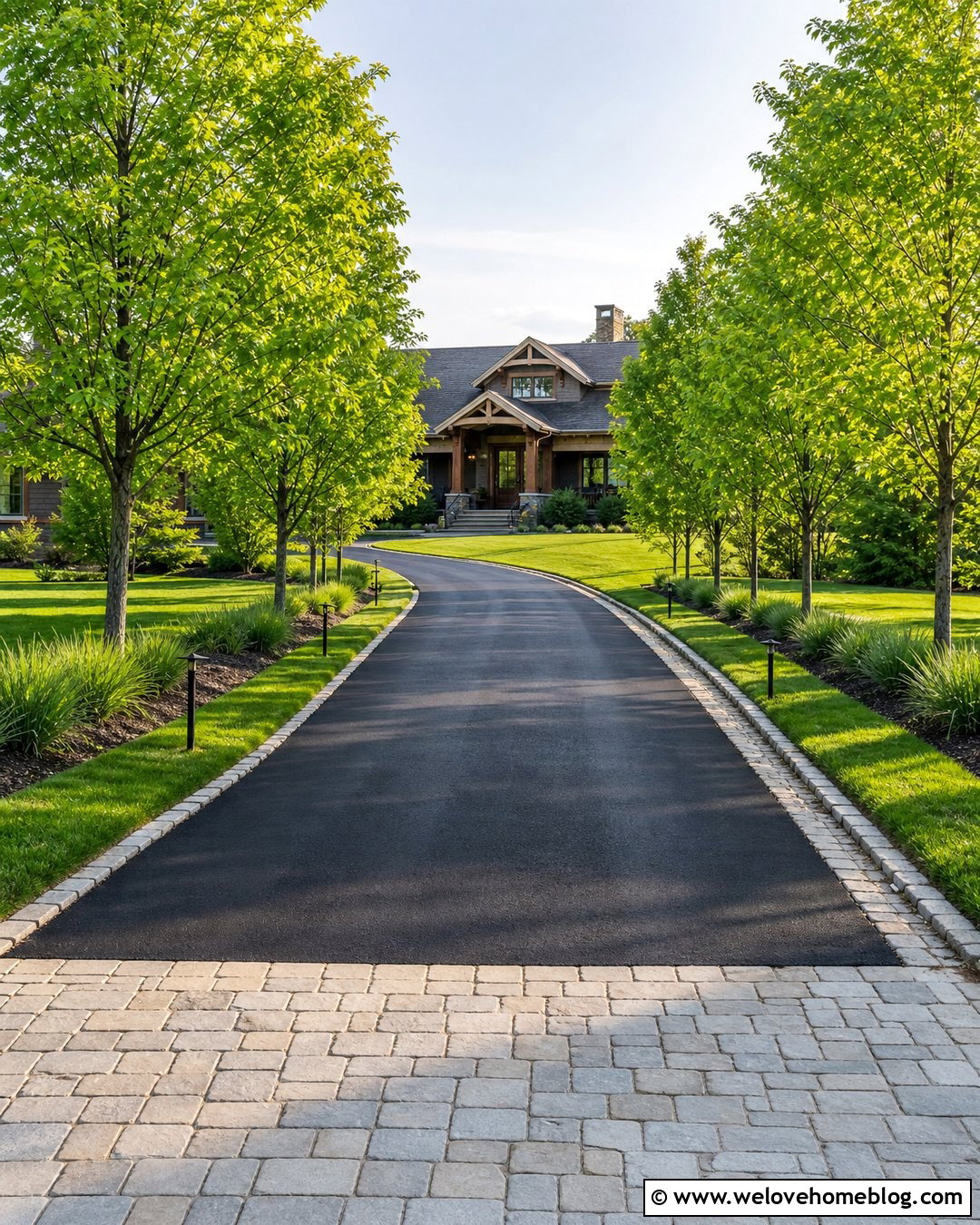
Black asphalt offers a smooth, practical surface for a heavily used country driveway, but its dark color can look severe without landscaping. Soften both sides with broad ribbons of native grasses, sedges, and low flowering perennials. Switchgrass, little bluestem, prairie dropseed, and other regionally suitable plants provide movement while connecting the pavement to nearby fields. Keep a narrow gravel maintenance strip beside the asphalt to prevent soil from washing onto the surface. Planting masses should be repeated down the driveway rather than changed every few feet. That creates visual continuity across a long distance. Near the road, use shorter vegetation to maintain visibility. A stone-lined drainage swale can manage runoff while looking like an intentional part of the rural landscape.
7. Long Country Driveway With Lavender Edging
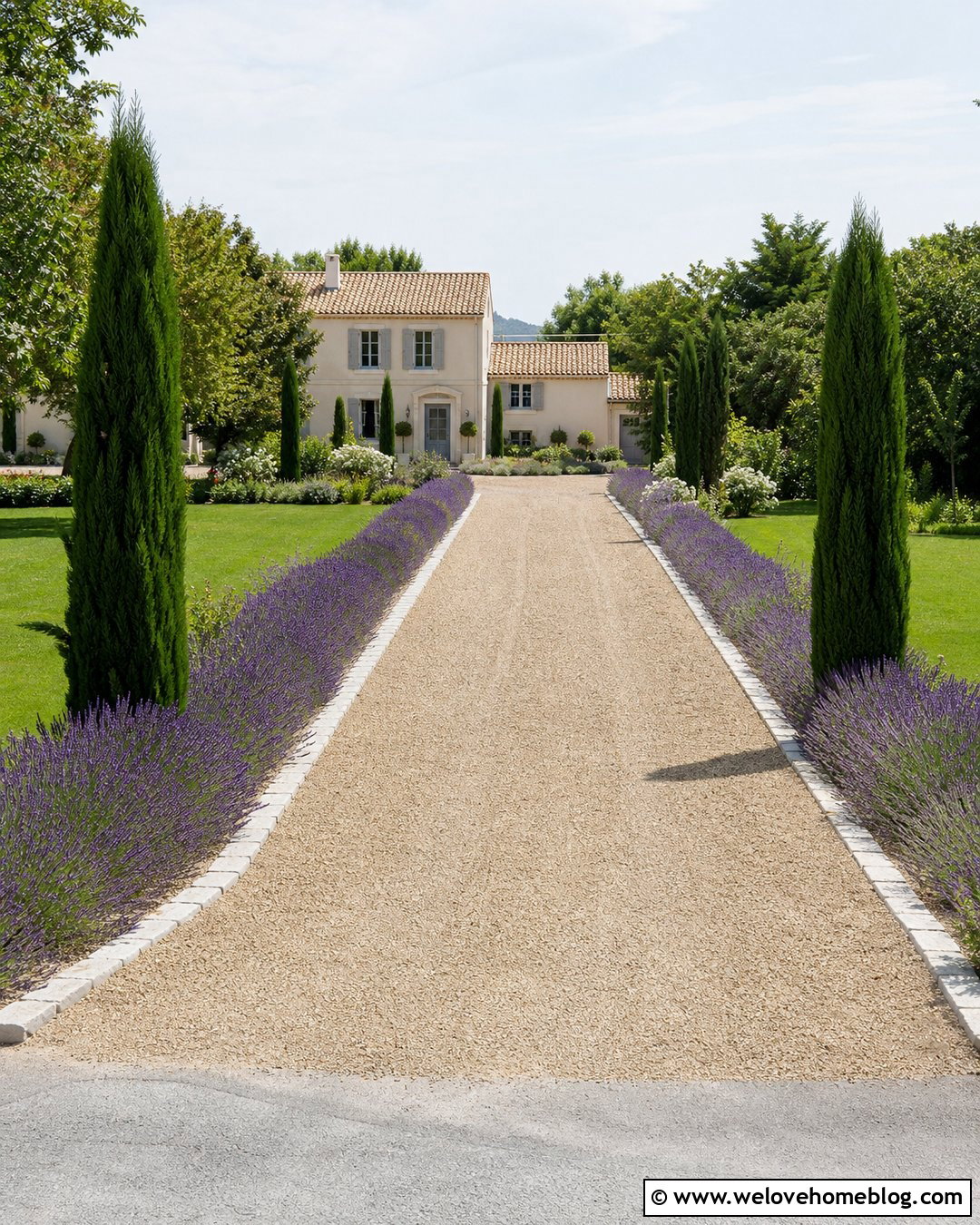
Lavender can turn a sunny country driveway into a fragrant, colorful approach with a strong sense of order. Pair long lavender borders with warm beige gravel, limestone edging, and a cream stucco or stone country house. The straight planting lines emphasize the length of the drive, while the soft foliage keeps the layout from feeling rigid. Lavender performs best in sunny areas with fast-draining soil, so avoid low sections that remain wet after storms. Leave space between the plants and gravel to protect them from vehicle tires and simplify trimming. If local conditions do not suit lavender, choose a similar low-growing plant adapted to your climate. Add a few upright evergreens near the house to provide structure after the flowering season ends.
8. Long Woodland Driveway With Fern Landscaping
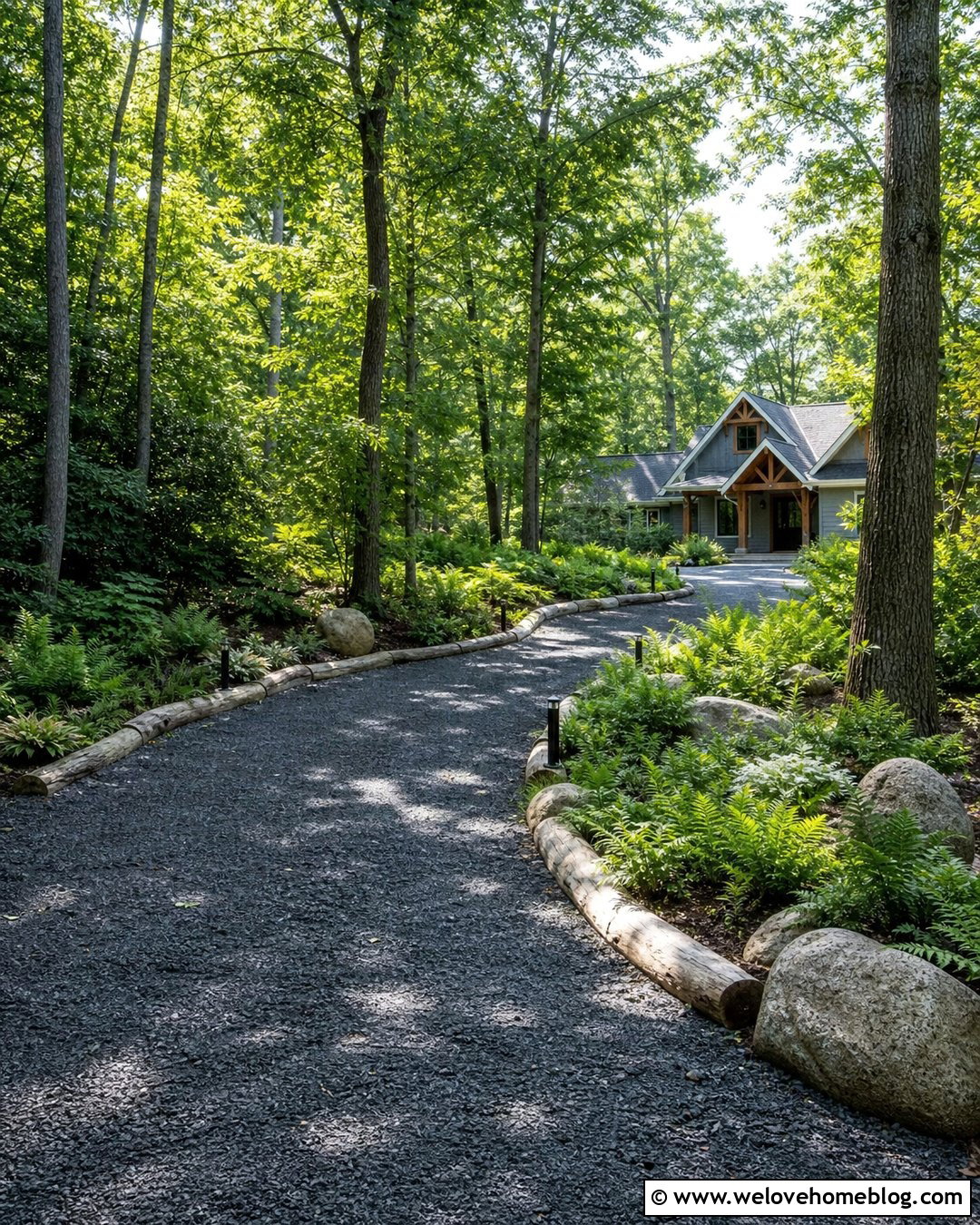
A driveway passing through mature woods needs a restrained plan that protects the peaceful setting. Dark gray crushed stone works well because it blends with tree trunks, shadows, and exposed rock. Preserve established trees wherever practical, then use broad curves to move around valuable root zones. Ferns, woodland sedges, foamflower, heuchera, and other shade-tolerant plants can cover disturbed soil along the edges. Install them in loose groups instead of narrow, formal rows. Natural log borders or partially buried fieldstones will hold mulch without looking suburban. Drainage is especially important under tree cover, where wet leaves and organic debris can collect. Low bollard lights placed at major curves improve nighttime guidance while keeping the long woodland driveway visually quiet during the day.
9. Long Circular Driveway With a Meadow Island
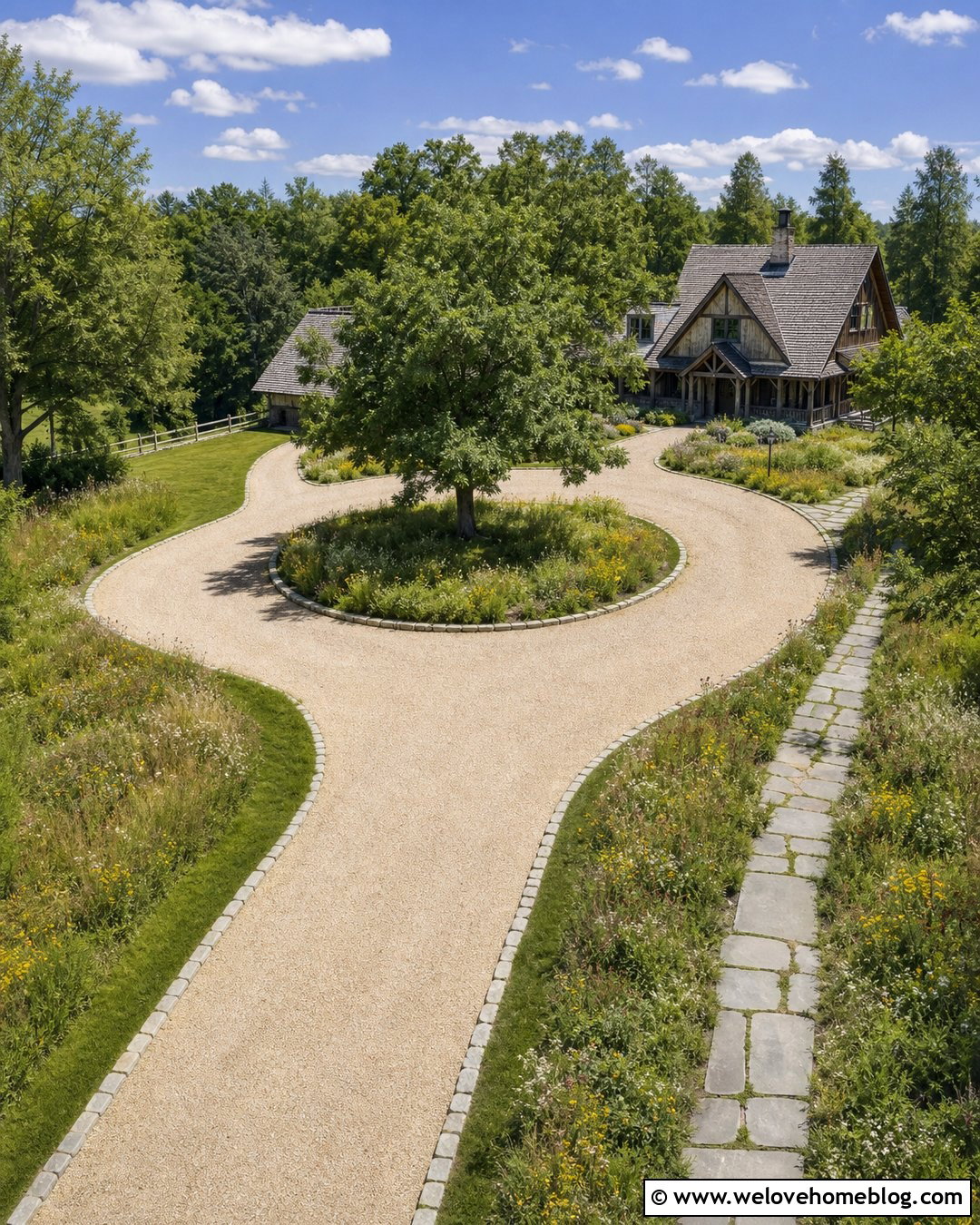
A circular turnaround can become a landscape feature instead of a large empty area near the house. Surface the long approach and circular loop with buff-colored gravel, then define the center island with stone curbing. Fill the island with a small meadow of native grasses, flowering perennials, and one well-positioned specimen tree. Keep plants closest to the driveway low enough to preserve sightlines around the loop. Repeating a few meadow plants along the incoming drive visually connects the island to the surrounding acreage. The circle should provide enough space for comfortable turning without encouraging vehicles to cross the planted center. Near the front door, a separate stone walkway can guide guests safely from the driveway while protecting the planting from foot traffic.

10. Long Gravel Driveway With Hydrangea Borders
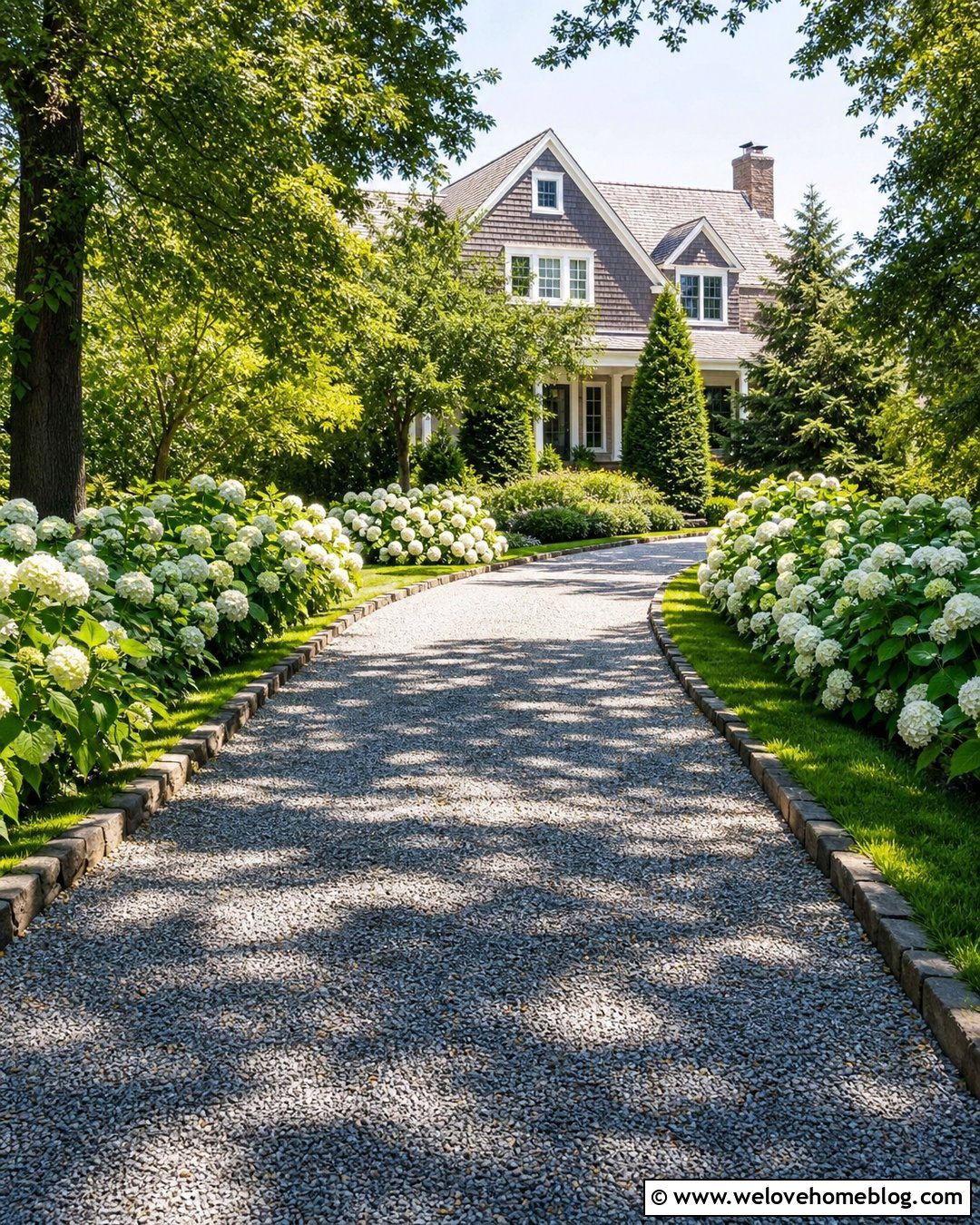
Large hydrangea groups bring softness and seasonal color to a substantial country driveway. Use them near the final third of the approach, where the landscaping can transition from open countryside to a more cultivated farmhouse garden. A medium-gray gravel surface and dark stone edging create a neutral foundation for white, pink, blue, or green flowers. Position the shrubs well back from the driving lane because mature hydrangeas can spread considerably. Between the gravel and plants, include a narrow strip of lawn or low ground cover to catch loose stones. Underplant with shade-tolerant perennials where suitable. Repeating the same hydrangea variety on both sides creates unity, while staggered spacing prevents the border from looking overly formal. Confirm that the chosen type matches your climate and sunlight.
11. Long Country Driveway With Rustic Gateposts
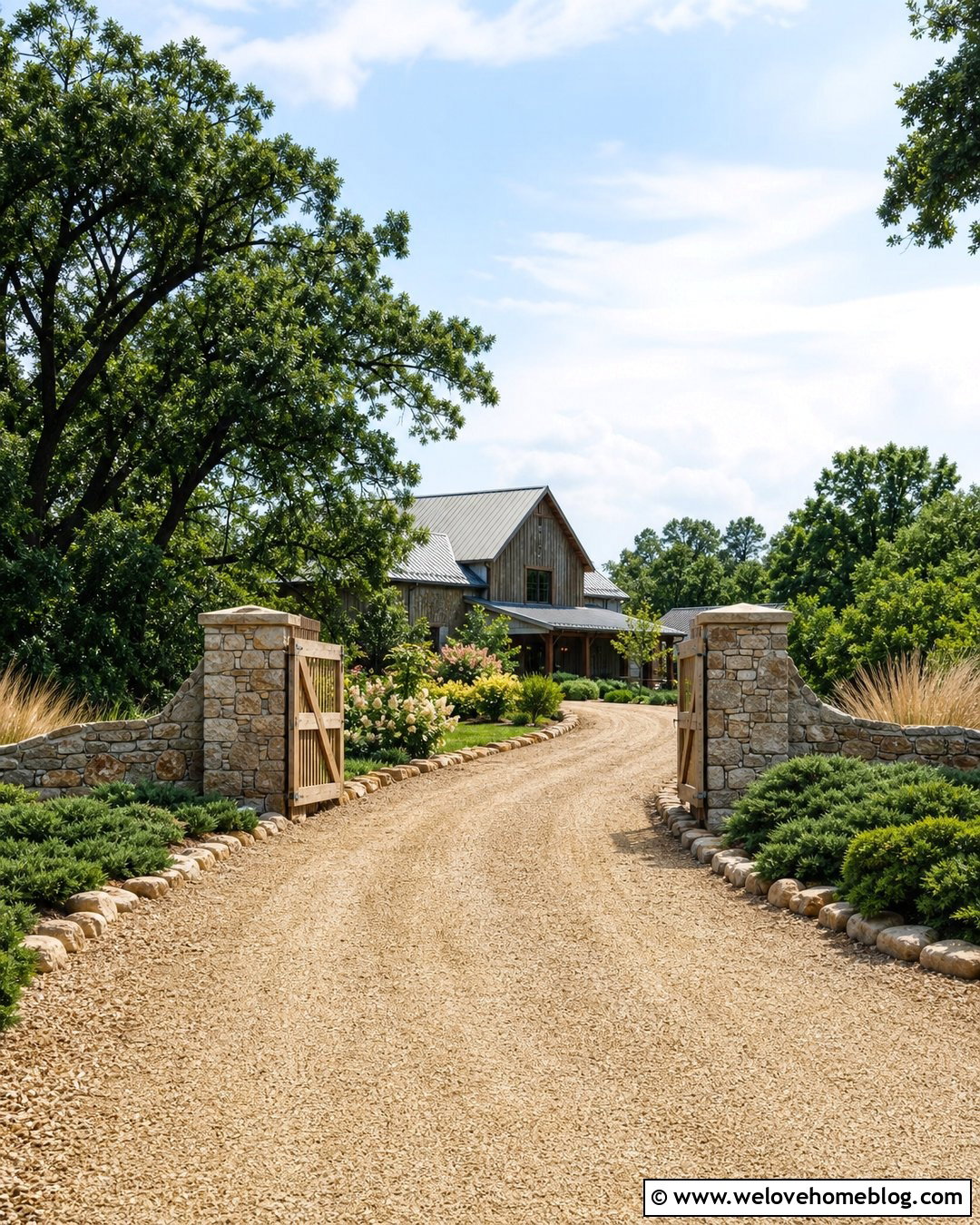
Substantial gateposts make a long driveway visible from the country road and establish the property’s character immediately. Combine rough-cut stone pillars with a compacted gravel driveway, timber gates, and simple native planting. The pillars should feel proportional to the width of the entrance rather than oversized. Set them far enough back to allow safe turns, deliveries, trailers, and maintenance vehicles. Low junipers, ornamental grasses, and flowering shrubs can soften the stone without hiding the structure or address marker. Continue the same stone in a short entrance wall or gravel border for a coordinated appearance. Beyond the gate, let the driveway curve gently through open lawn or meadow. This creates privacy by preventing a direct view of the house from the road.
12. Long Country Driveway With Flowering Trees
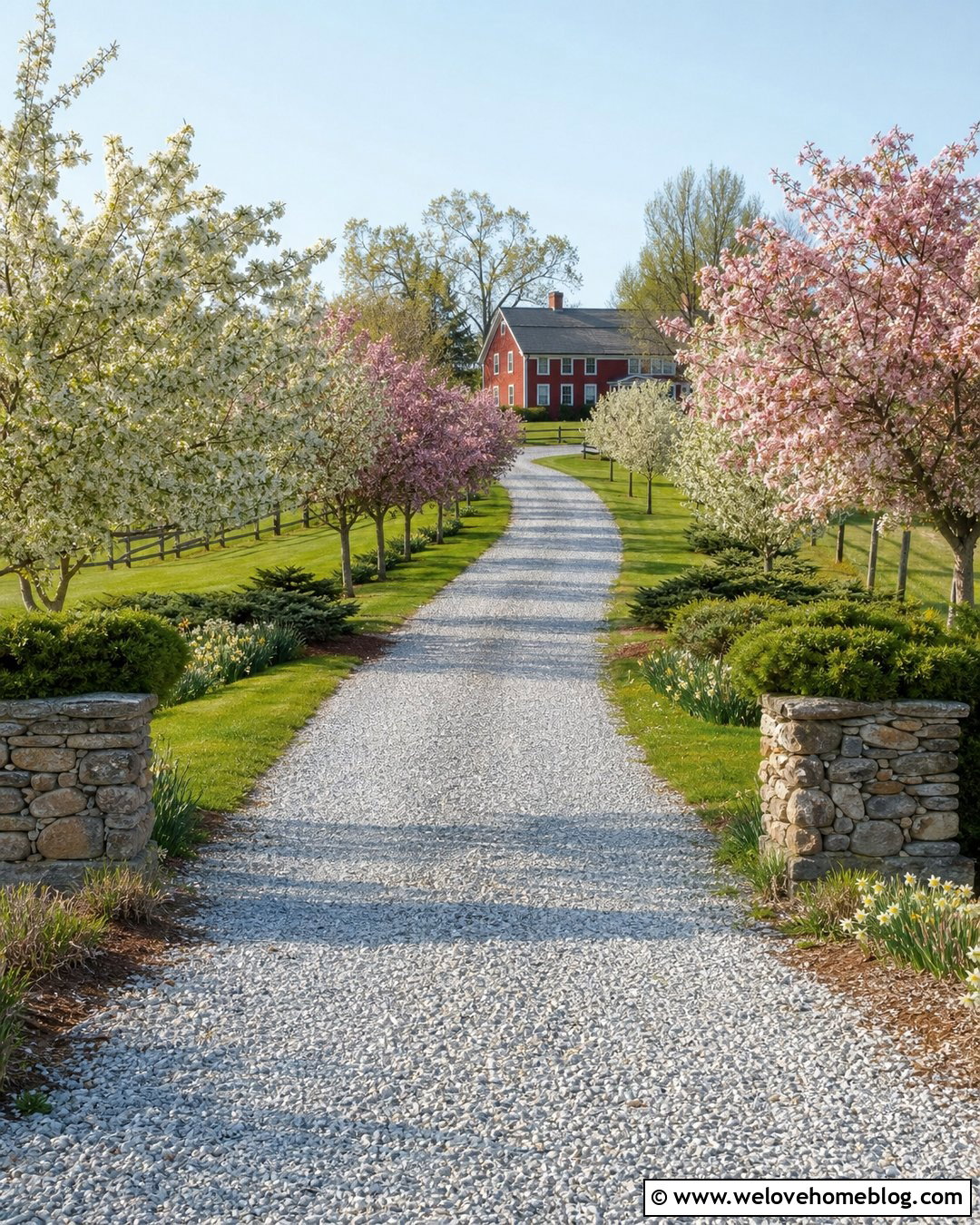
Flowering trees can create memorable spring color without filling every driveway edge with high-maintenance flower beds. Line a long, light-gray gravel drive with staggered redbuds, serviceberries, crabapples, or other trees suited to your region. Their mature width should guide the spacing, allowing airflow and keeping branches away from vehicles. A simple grass verge beneath the trees provides a calm background and makes mowing straightforward. At the entrance, repeat one or two trees beside stone pillars or a wooden address sign. Closer to the house, add larger beds with bulbs, flowering shrubs, and evergreen structure. The driveway may remain mostly straight, but a broad curve near the home can reveal the facade gradually and produce a more inviting sense of arrival.
13. Long Concrete Driveway With Country Garden Borders
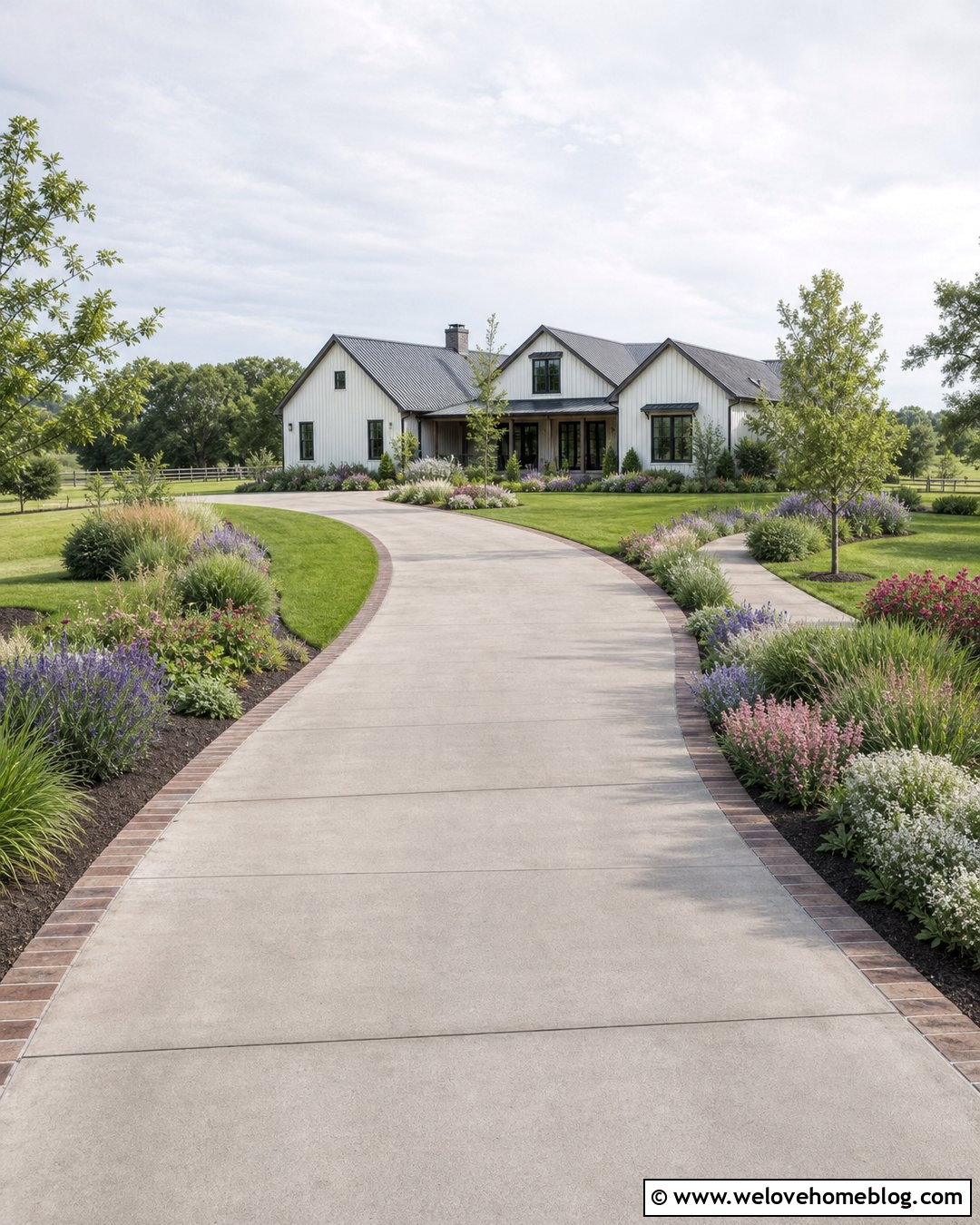
Concrete can suit a rural property when its scale and color are balanced with generous planting. Choose warm gray brushed concrete divided into large, simple sections instead of a glossy or highly decorative finish. Wide country garden beds along selected portions can include catmint, salvia, coneflowers, roses, grasses, and clipped evergreen shrubs. Curving bed lines will soften the driveway’s long straight edges. Use reclaimed-brick ribbons at the entrance and near the house to connect the concrete with farmhouse architecture. Leave open lawn between major planted areas so maintenance remains manageable. Since concrete can reflect heat, choose tough plants and provide adequate soil volume. A matching walkway, restrained lighting, and a planted turnaround complete the design without making the rural setting feel too polished.
14. Long Driveway With Dry Creek Drainage
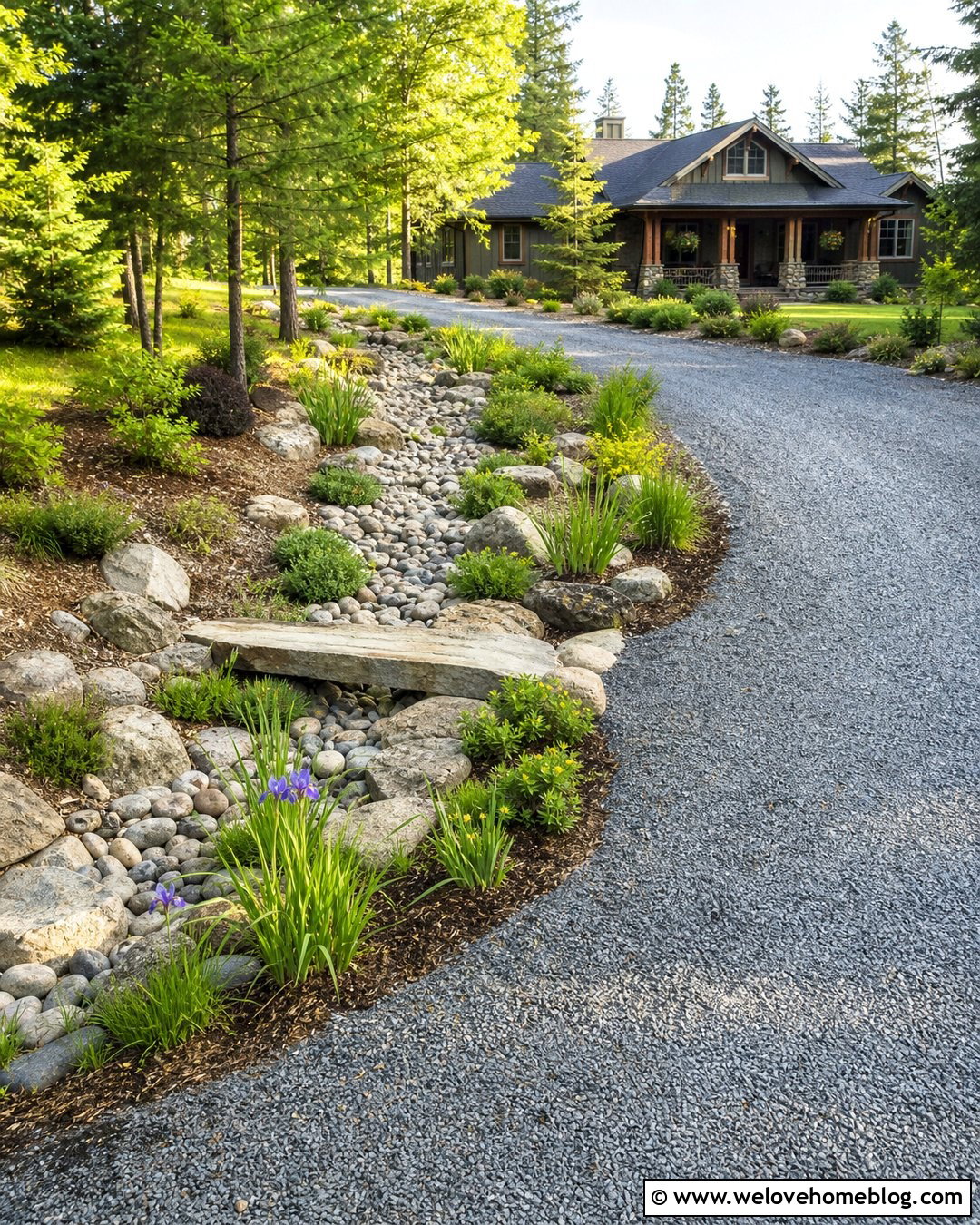
Drainage can become part of the landscape rather than an unattractive utility feature. Along a sloped country driveway, construct a dry creek bed using rounded river rock, larger boulders, and moisture-tolerant plants. Pair it with a compacted crushed-stone drive that follows the natural grade. The creek should sit where runoff naturally travels and direct water toward an appropriate discharge area. Plant sedges, rushes, irises, and low native shrubs around wider sections, while keeping culvert openings clear. A small stone bridge or reinforced crossing can mark the entrance to a walkway near the house. The dry creek’s irregular shape contrasts beautifully with the driveway’s practical surface, creating a complete design that addresses erosion, water movement, and country curb appeal together.
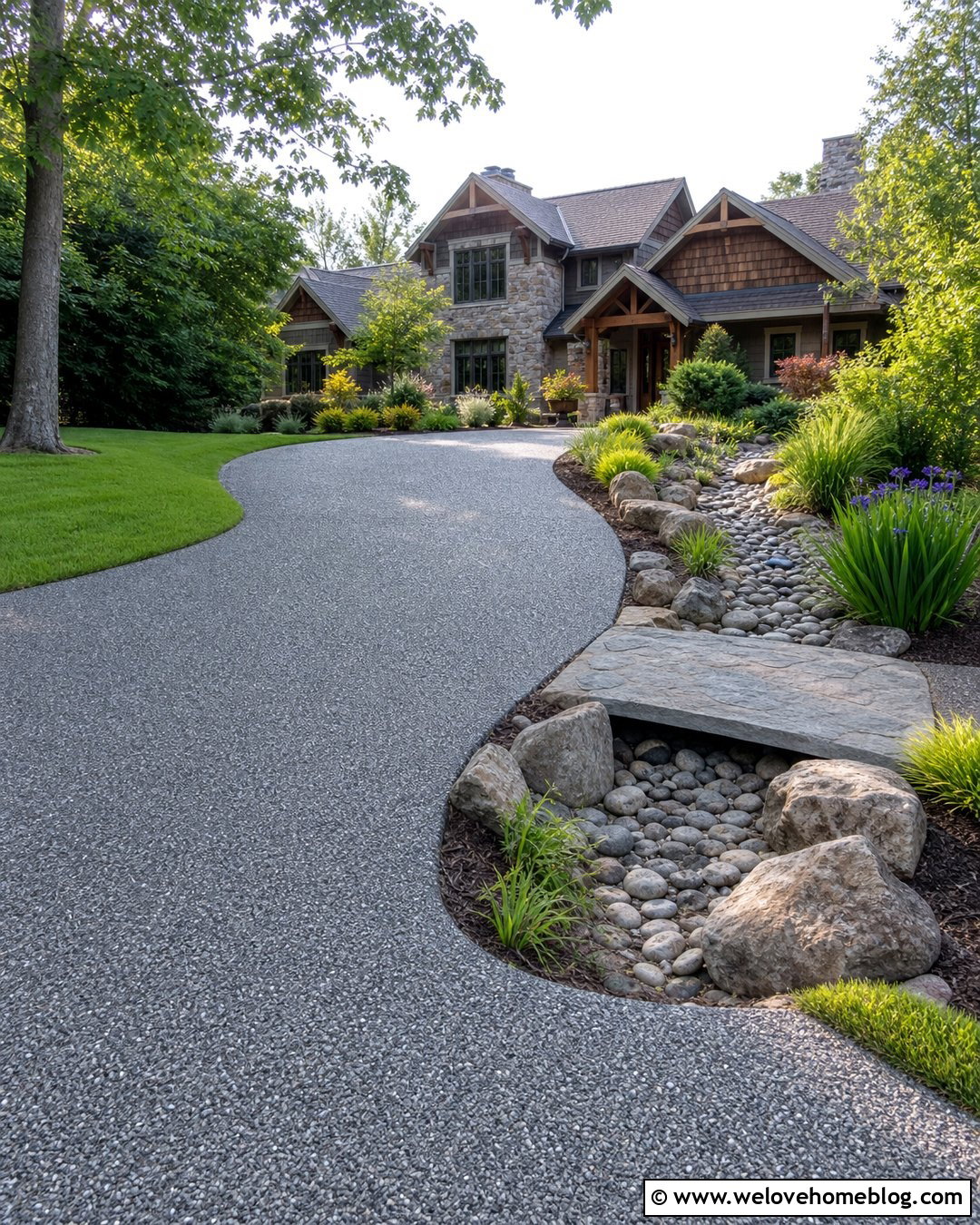
15. Long Driveway With Evergreen Tree Rows
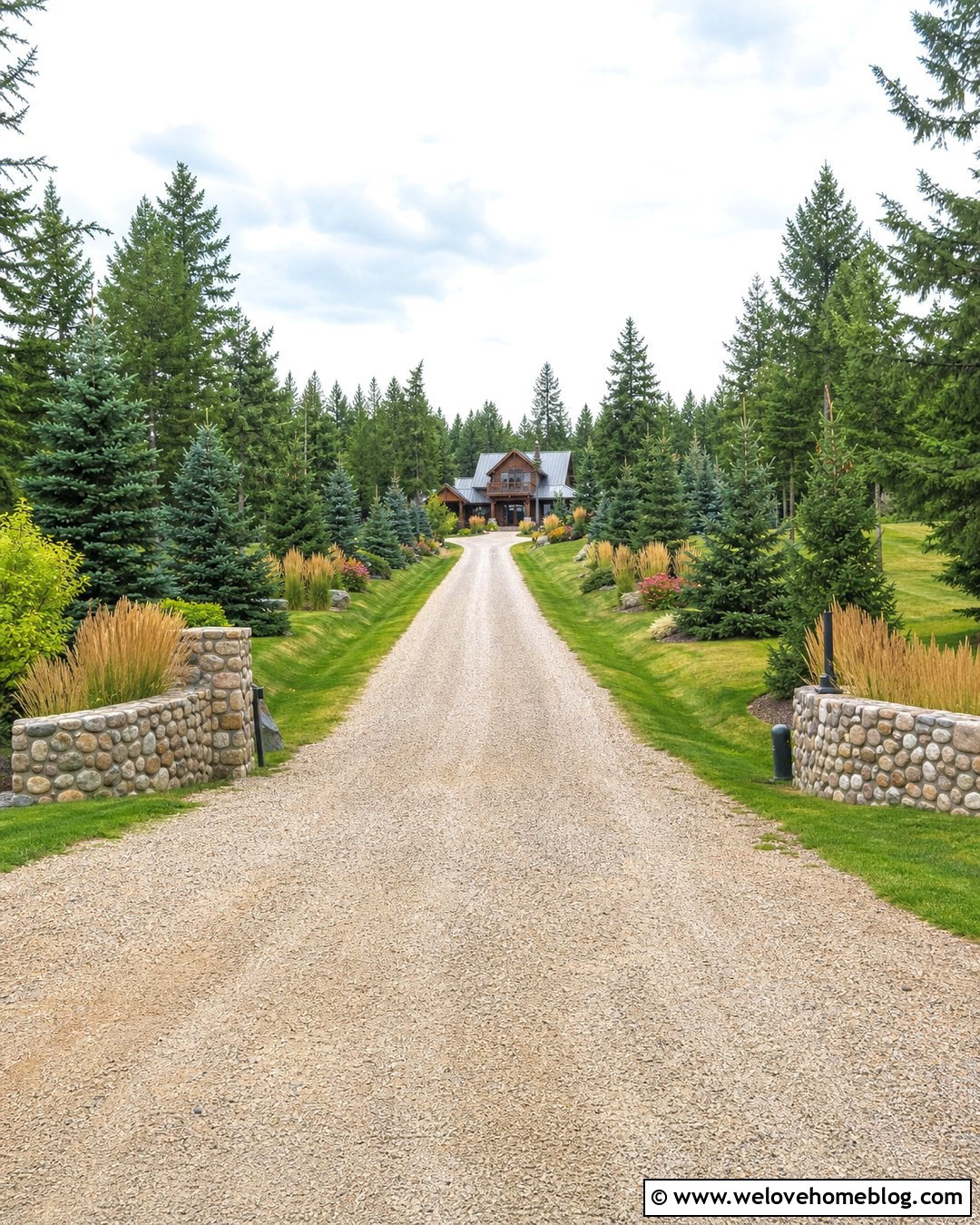
Evergreen rows provide year-round definition and can screen a long driveway from neighboring land or harsh weather. Use a tan gravel surface with broad grass shoulders, then plant spruces, cedars, hollies, or other climate-appropriate evergreens beyond the drainage area. Staggering the trees in informal groups usually looks more natural than creating a dense wall. It also allows individual plants room to develop their characteristic shapes. Keep the entrance more open so drivers can see traffic along the country road. Low ornamental grasses can bridge the space between the gravel and larger trees. Near the house, transition to smaller evergreens and flowering shrubs. This gradual change in scale keeps the route visually interesting and prevents the tall planting from overwhelming the building at the end.
16. Long Driveway With Post and Rail Fencing
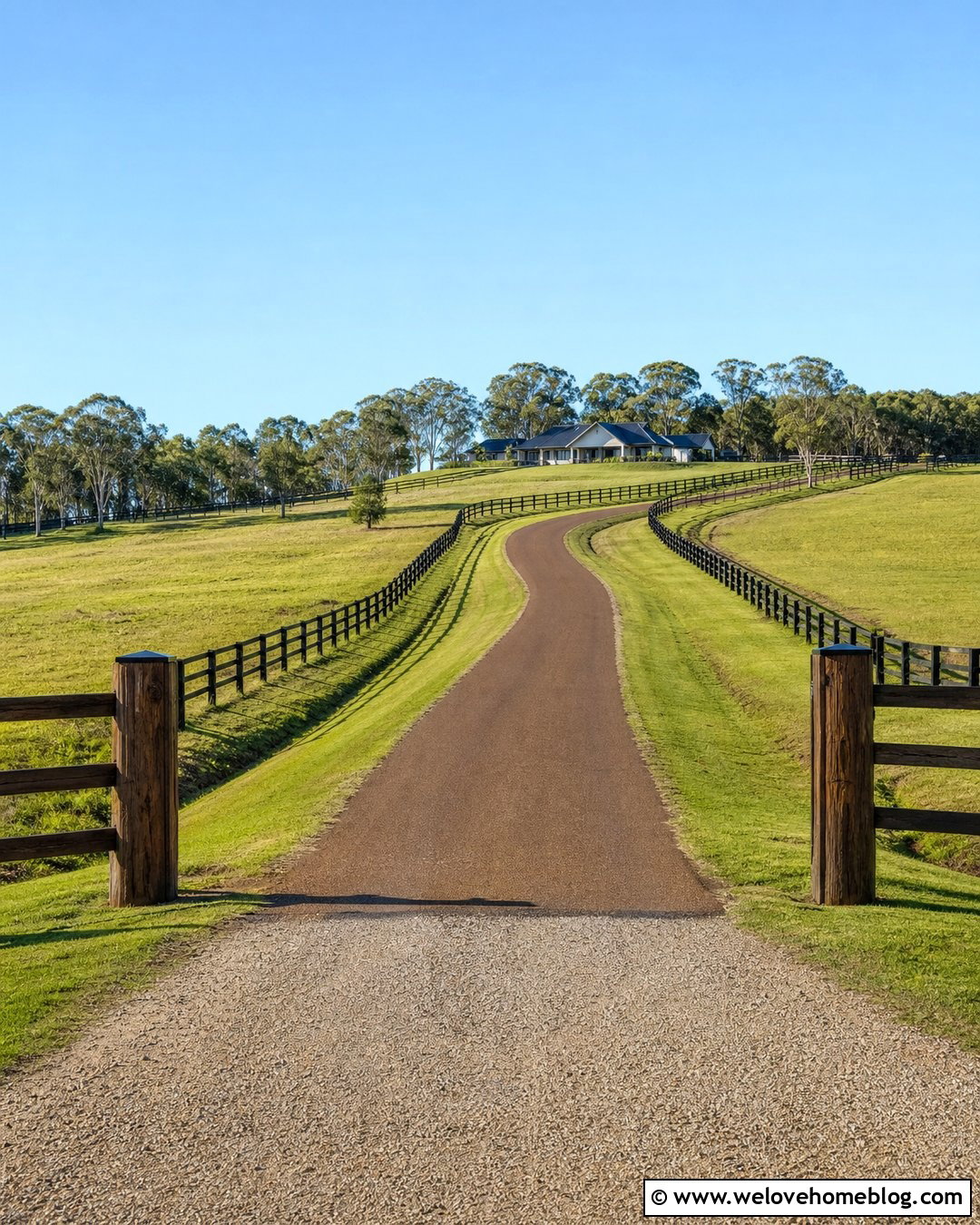
Post and rail fencing is a natural companion to a country driveway bordered by pasture or open meadow. A brown chip-seal surface provides better stability than loose stone while retaining a textured, rural appearance. Position the fence beyond a mowed verge and drainage swale so vehicles have a forgiving shoulder. Let the fence follow the land’s gentle rises and curves rather than forcing a perfectly level line. Plant small groups of native trees outside key bends to create depth without blocking views across the fields. At the entrance, widen the drive and use matching timber gateposts with simple black hardware. A gravel transition apron can reduce the contrast between the public road and the private drive while visually introducing the country materials used throughout the property.
17. Long Brick Driveway With Cottage Planting
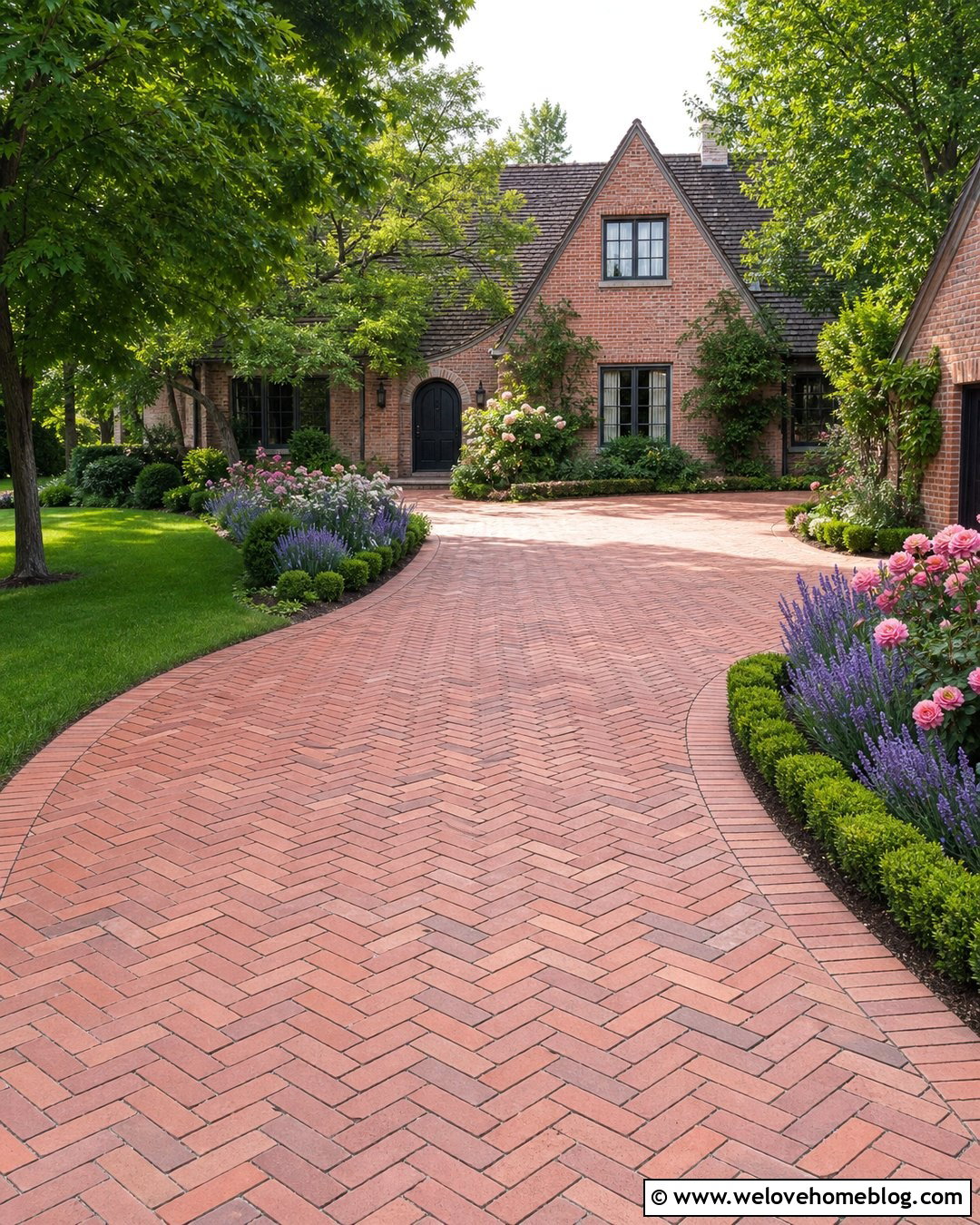
A full brick driveway creates rich color and texture for a long approach to a country cottage. Choose clay brick pavers in a herringbone pattern for the main surface, with a straight soldier-course border holding the edges securely. Because brick is visually active, keep the landscape loose but coordinated. Sweeping beds of roses, catmint, lavender, boxwood, and spring bulbs can frame the final approach, while lawn and scattered trees simplify the longer roadside section. A broad curve helps the driveway feel graceful and reduces the appearance of an uninterrupted brick runway. Use permeable joints or planned drainage where site conditions allow. Near the home, connect the driveway to a brick walkway and small parking court using the same paving pattern for a unified cottage setting.
18. Long Driveway With White Birch Trees
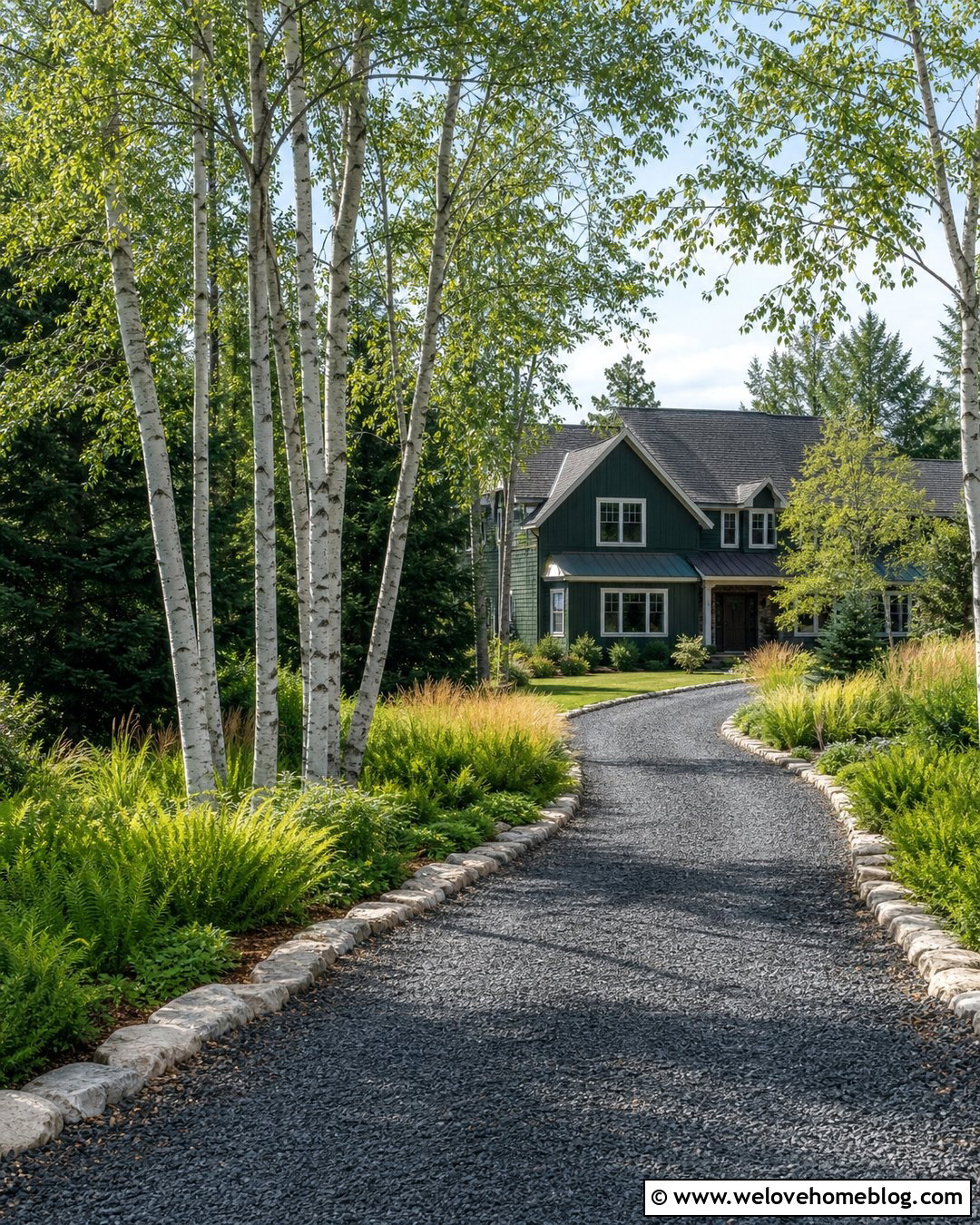
The pale bark of birch trees can brighten a long country driveway and create strong winter interest. Pair small groves of birch with charcoal-gray gravel, native ferns, and flowing ornamental grasses. Instead of placing single trees in strict rows, arrange three- or five-tree clusters at intervals along a gently curved drive. This approach feels more natural and reduces the visual impact if one tree is lost. Birch species vary in their tolerance for heat, moisture, and pests, so choose a locally suitable type. Maintain enough distance from the driveway for mature trunks and branches. A light stone border can separate gravel from planting beds, while dark evergreen groups in the background emphasize the white bark and guide attention toward the country home.
19. Long Driveway With Low Boxwood Hedges
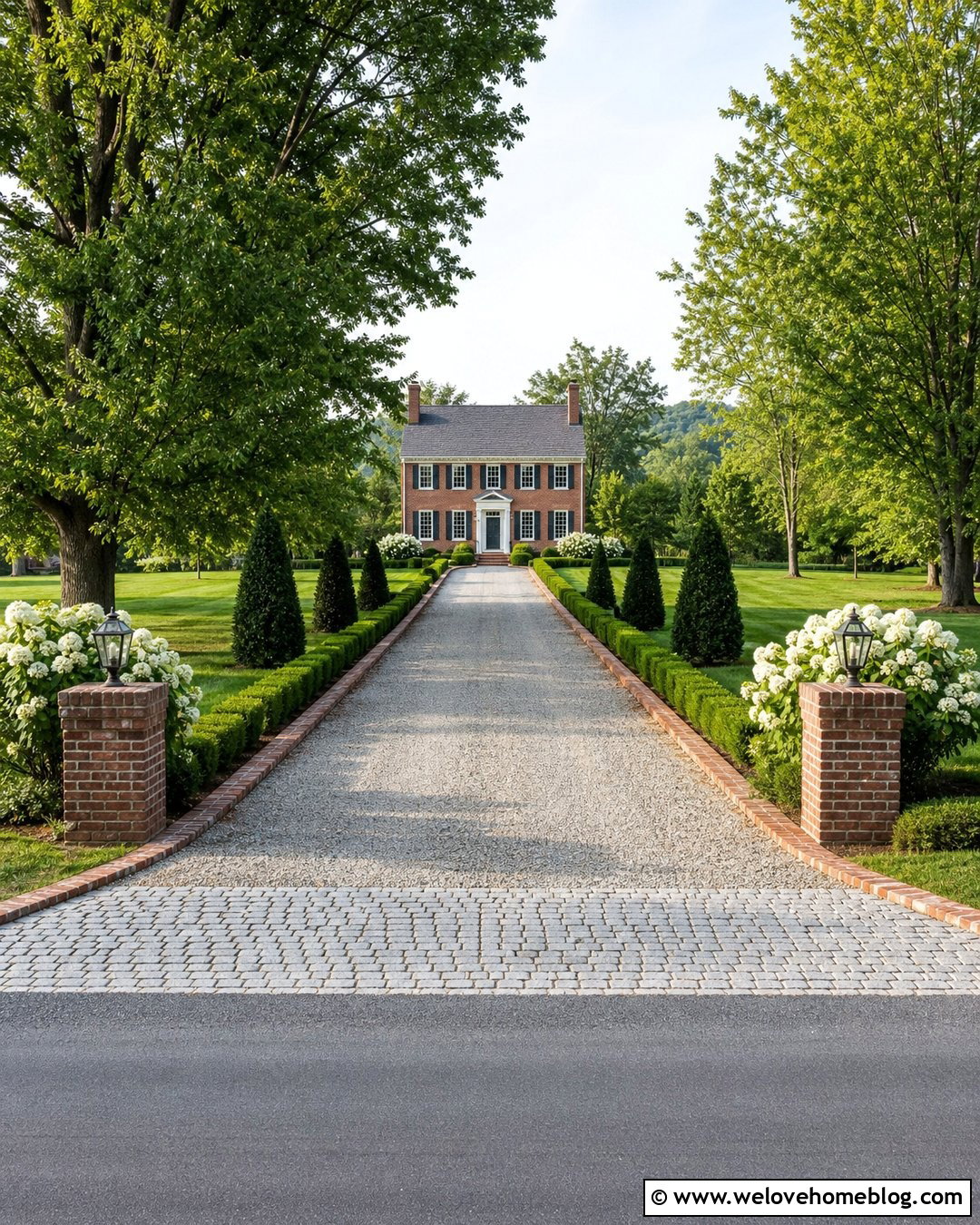
Low boxwood hedges can give a long country driveway a neat framework without hiding the surrounding landscape. This treatment suits a colonial farmhouse, Georgian-inspired home, or symmetrical country estate. Use fine gray gravel edged with brick, then run clipped hedges along the final approach rather than the entire driveway. The roadside section can remain open with lawn, mature shade trees, and simple fencing. Around the entrance court, combine boxwood with white flowering shrubs and a pair of upright evergreens. Keep hedges low enough to preserve views and allow passengers to open doors comfortably. Select a boxwood alternative if disease pressure or climate conditions make traditional varieties unreliable. Regular but restrained trimming will preserve the clean shape while maintaining a softer rural character.
20. Long Gravel Driveway With Boulder Borders
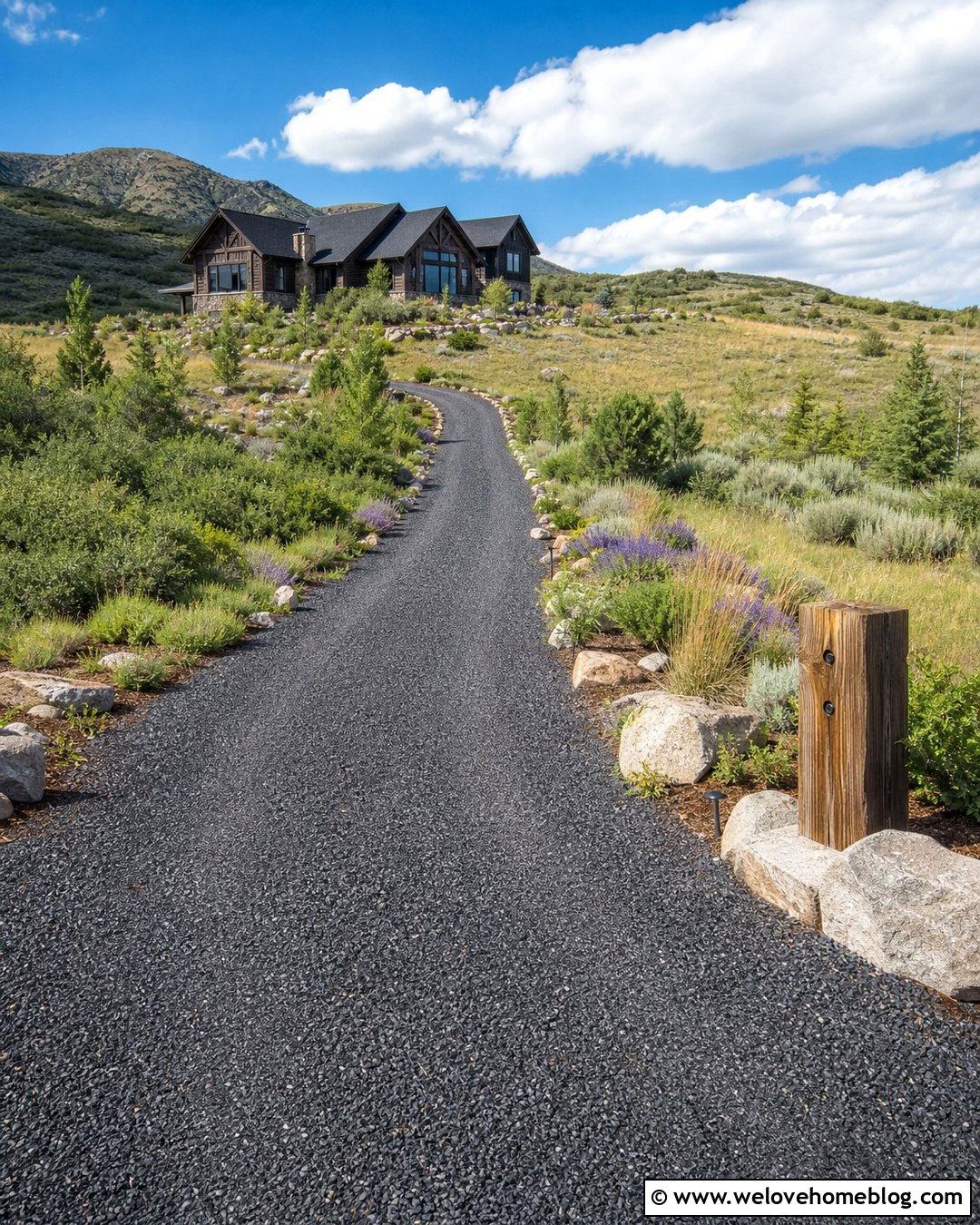
Large boulders can define the edge of a long gravel driveway on a wooded, mountainous, or rolling country property. Select stones that resemble local geology, then partially bury them so they appear settled rather than placed on the surface. Use dark crushed granite for the driveway and arrange boulders in irregular groups along wider curves, drainage areas, and the entrance. Avoid creating a continuous barrier that could make snow removal or vehicle recovery difficult. Between the rocks, plant spreading junipers, native grasses, sedums, and low flowering shrubs. Maintain open shoulders where drivers may need extra turning room. A few larger boulders beside a timber address marker create a clear roadside focal point. Repeating smaller stones near the house ties the full landscape together.
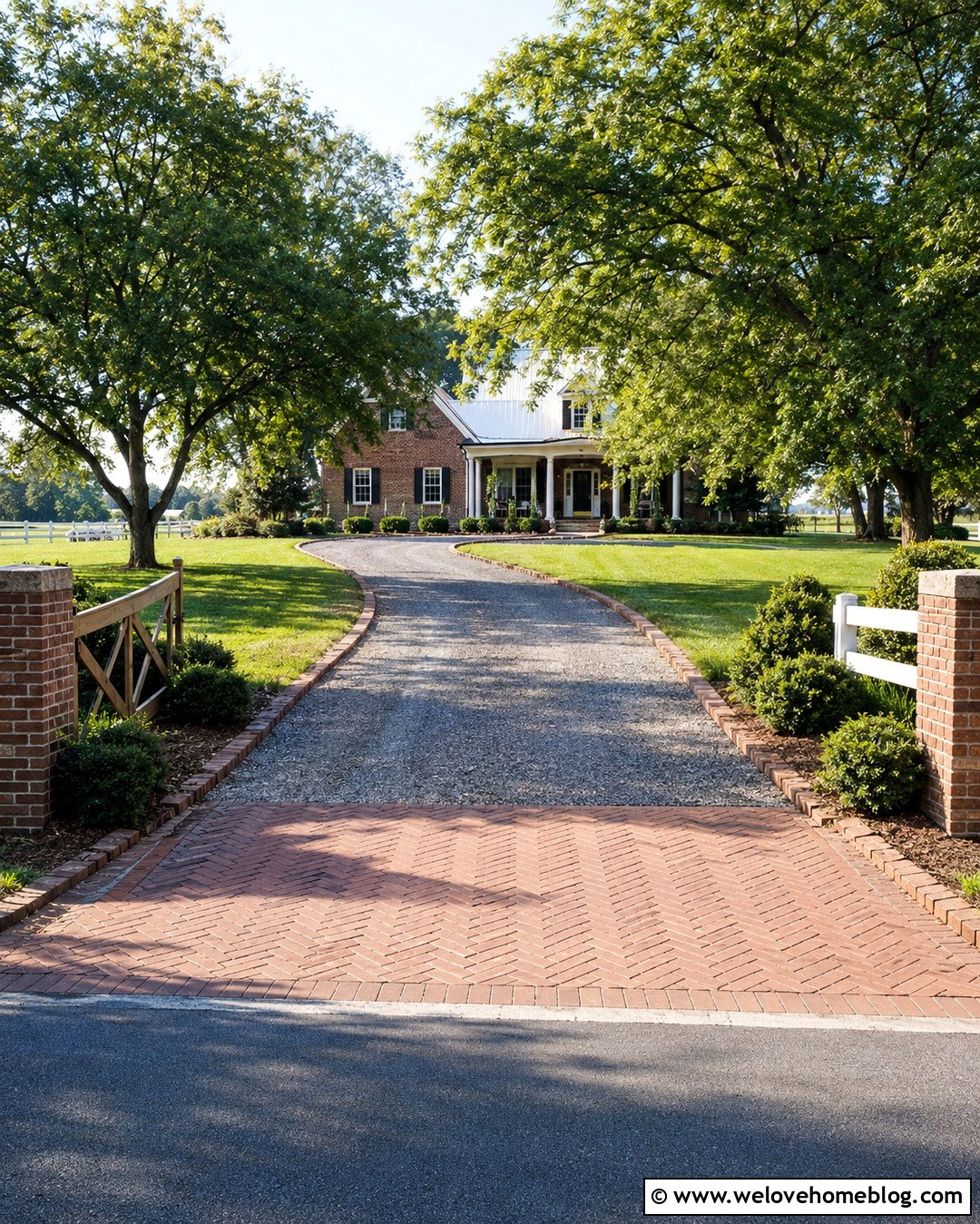
21. Long Country Driveway With Paver Aprons
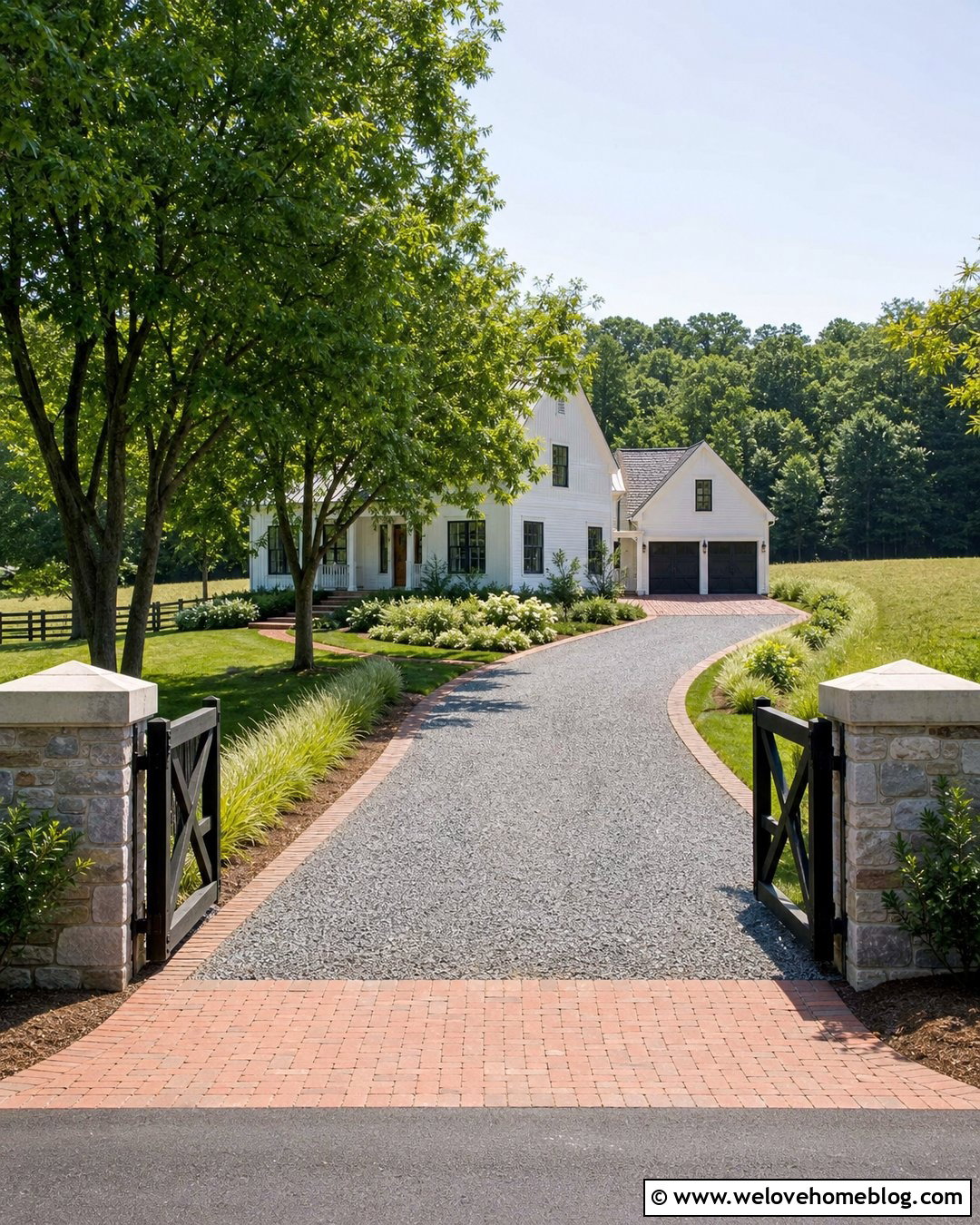
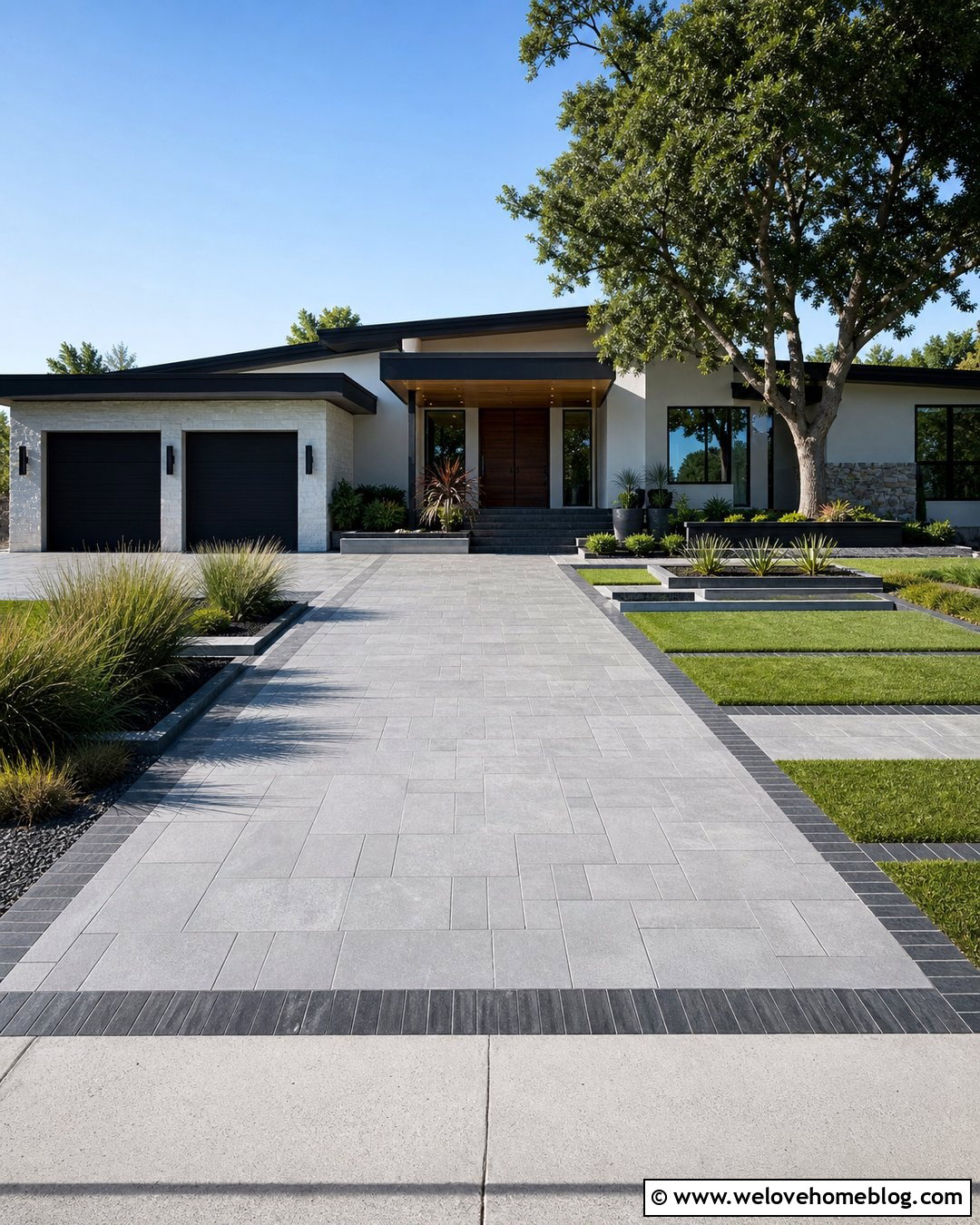
Paver aprons add a finished transition at important points without requiring pavers across the entire long driveway. Begin with a durable gray gravel or crushed-stone lane, then install clay brick or concrete paver bands at the country road entrance, gate, garage, and parking court. These sections help visually divide the route and can reduce loose gravel movement at transitions. Match the paver color to the home’s masonry, roof, or trim for a connected design. Edge the drive with lawn and repeated clusters of grasses, flowering shrubs, and small trees. A slightly wider entrance apron makes turning easier and gives the gateposts breathing room. Keep patterns simple so they remain readable from a distance and complement, rather than compete with, the rural surroundings.
22. Long Driveway With Native Shrub Borders
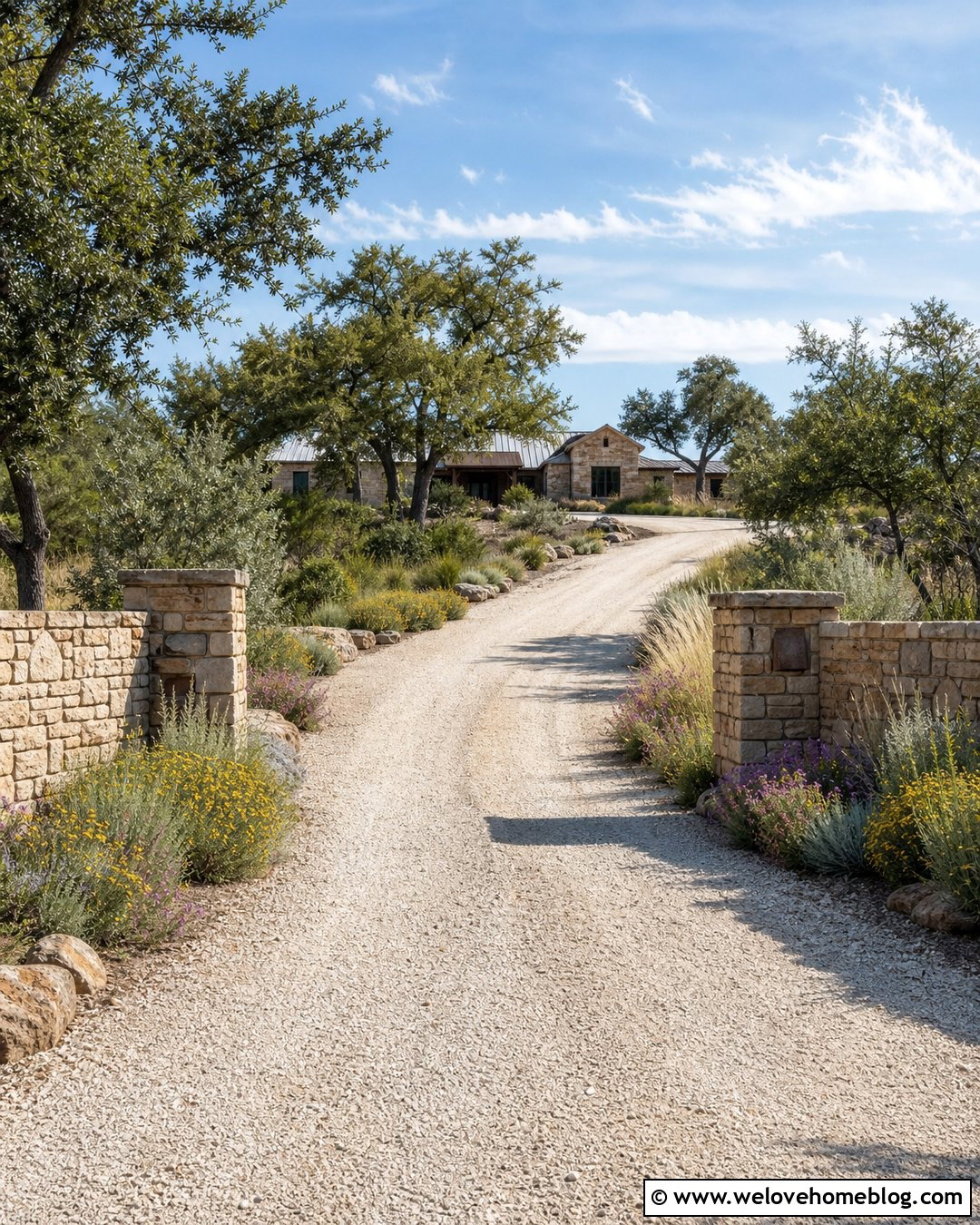
Native shrubs offer a practical way to landscape a long driveway while supporting the broader character of the property. Use them in deep, staggered groups beside a pale crushed-limestone surface. Depending on the region, appropriate choices might provide spring flowers, summer berries, autumn color, or evergreen foliage. Arrange taller shrubs toward the field or property boundary and lower varieties near the driving edge. Repeating the same small plant palette down the route creates consistency and simplifies maintenance. Leave breaks for drainage access, views, and utility lines. At the entrance, combine shrubs with a low stone wall and a clear address marker. Closer to the house, introduce ornamental grasses and perennials that share similar colors, making the natural roadside planting feel connected to the home garden.
23. Long Driveway Through an Open Meadow
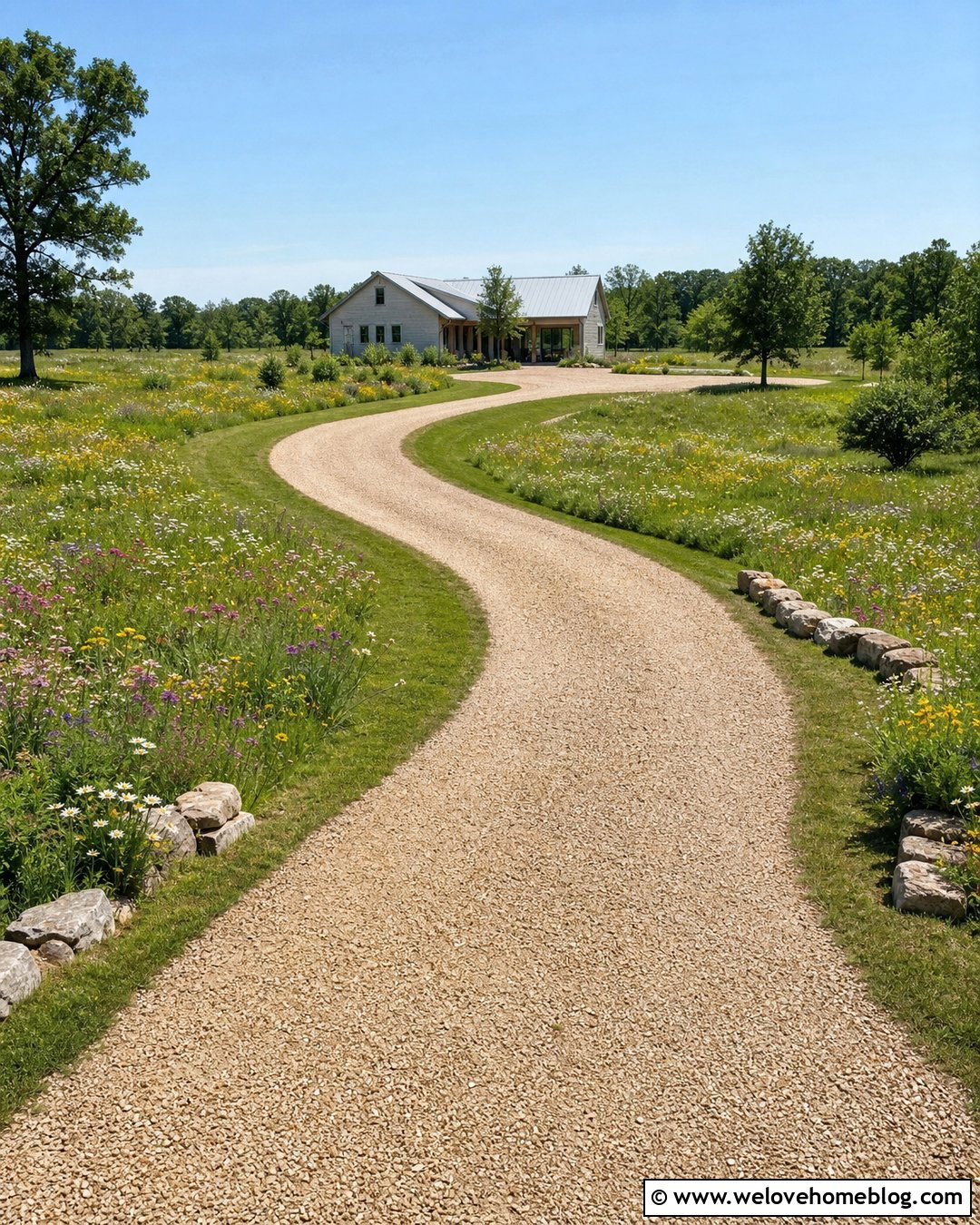
An open meadow can provide all the scenery a long driveway needs when the route is carefully positioned. A narrow tan gravel drive with wide, gently mowed shoulders allows wild grasses and seasonal flowers to remain the dominant feature. Curve the driveway around the meadow’s edge or through a shallow S-shape to create changing views of the house. Keep vegetation short at the entrance and inside curves so visibility remains clear. One or two shade trees placed near the final approach can mark the transition from meadow to residential landscape. Avoid lining the entire drive with decorative objects or unrelated plant beds. Simple fieldstone edging near the parking area and a gravel turnaround will provide necessary structure while preserving the expansive, uncluttered country-road atmosphere.
24. Long Driveway With Wooden Address Sign
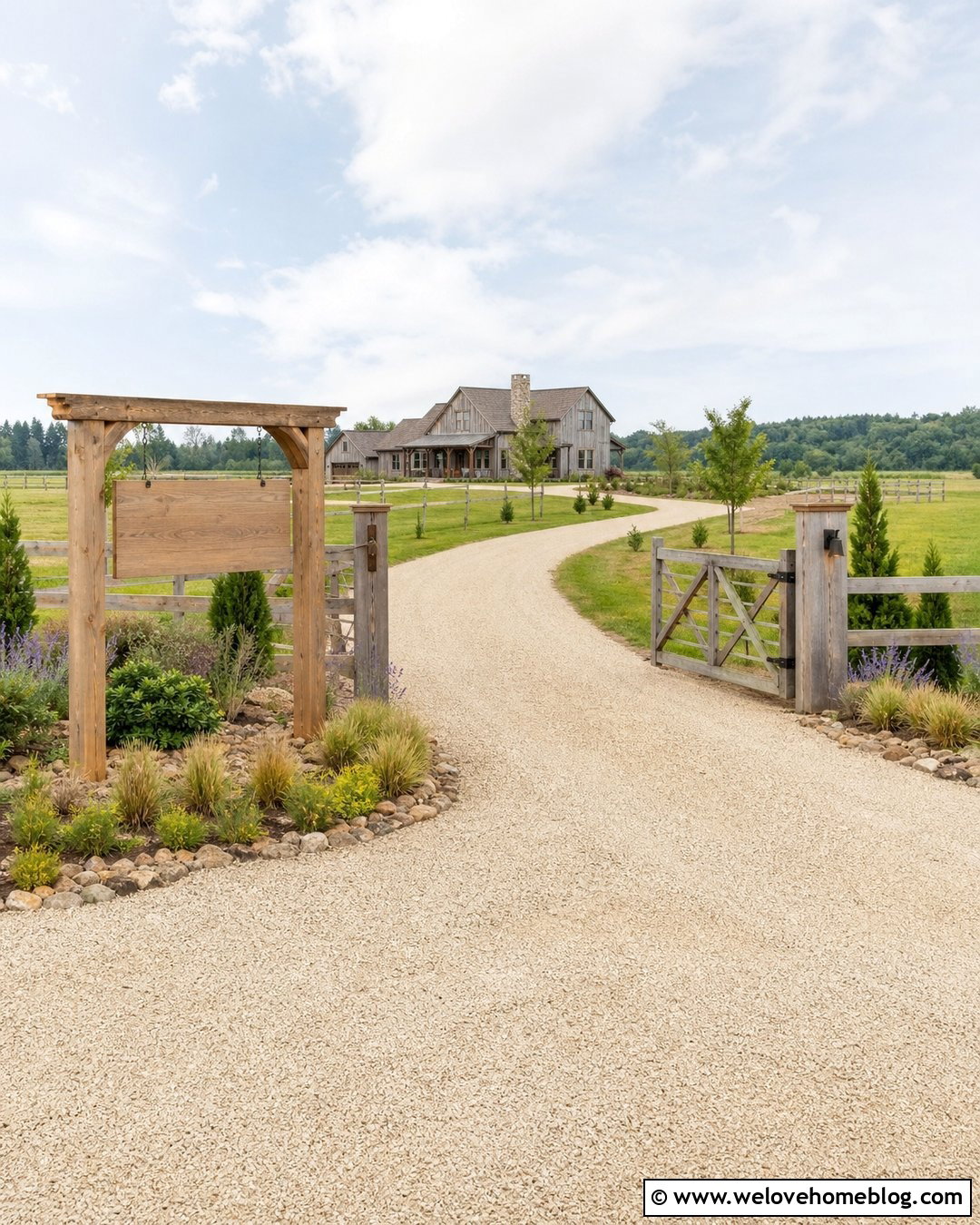
A wooden address sign can become the focal point of a welcoming rural entrance when it is integrated into the complete driveway landscape. Pair a compacted gravel drive with timber posts, a low split-rail fence, and groups of native grasses. Place the sign where it is easy to see from the country road without blocking the driver’s view. A small bed of low evergreen shrubs, flowering perennials, and stone mulch can anchor the base. Use a matching wood species or stain for the gate and fence to create consistency. Beyond the entrance, let the long drive sweep through lawn or meadow before reaching the house. Modest post lights or reflective markers can improve visibility, but they should remain secondary to the simple, handcrafted character of the sign and landscape.
25. Long Driveway With Ornamental Grass Borders
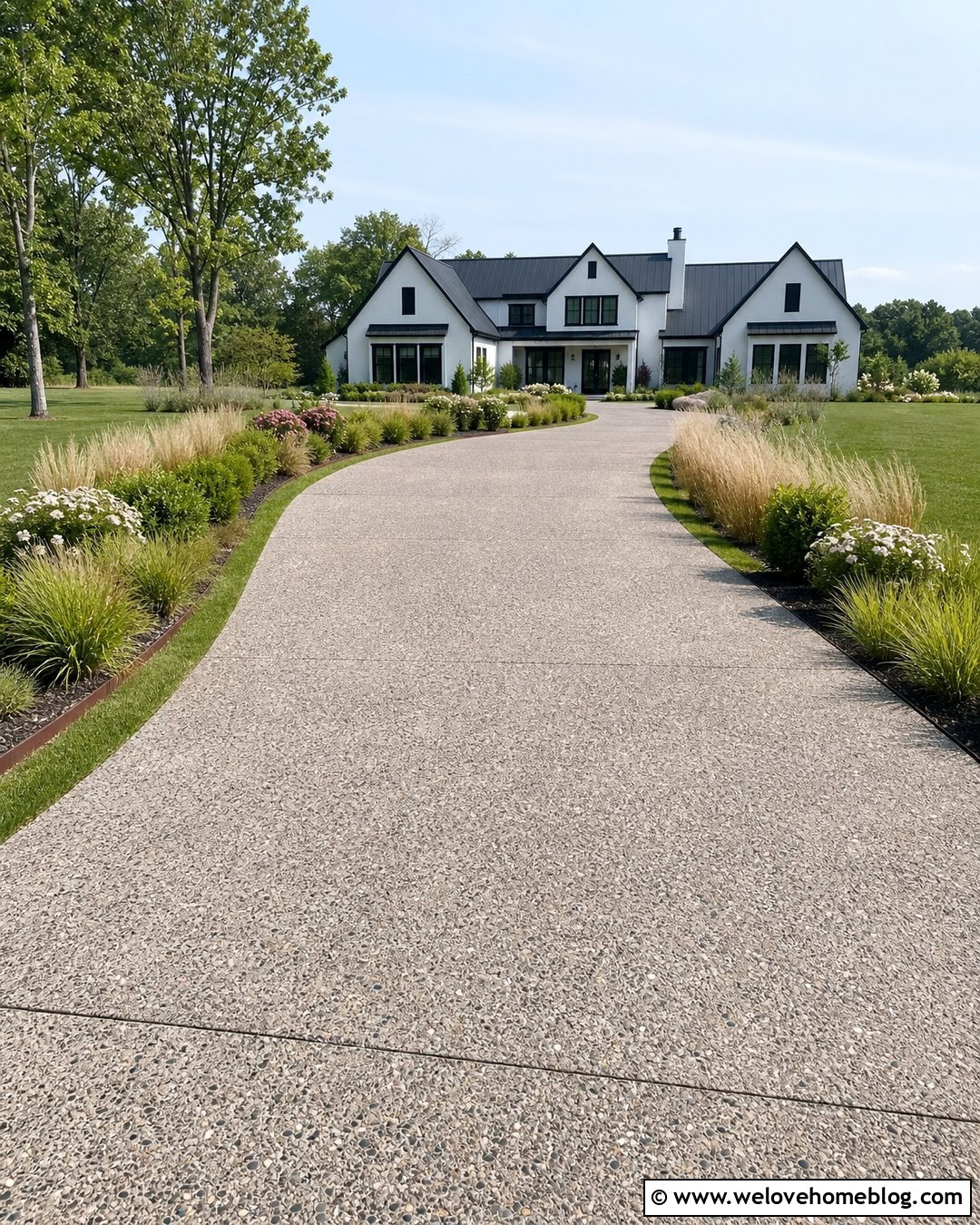
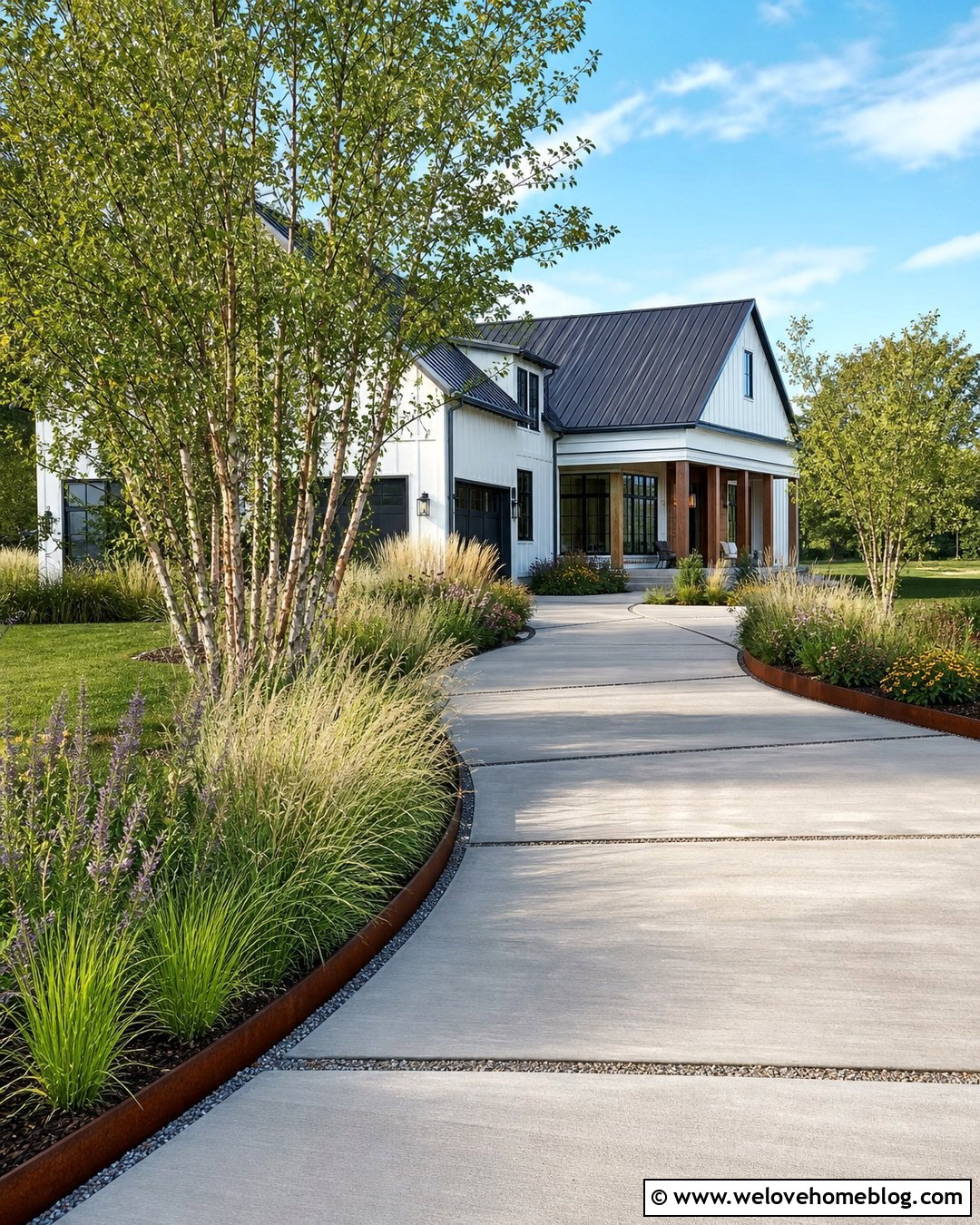
Ornamental grasses bring movement and texture to a long driveway without creating a fussy garden. Pair a warm gray exposed-aggregate concrete surface with broad planting strips of fountain grass, prairie dropseed, switchgrass, or locally appropriate alternatives. Use one primary variety in repeated masses, then introduce smaller flowering groups at the entrance and near the home. Grasses should be placed far enough from the pavement that mature foliage does not flop into the driving lane. Metal or stone edging can keep soil and mulch off the concrete. A straight layout suits an open modern farmhouse, while a subtle curve helps the drive blend into rolling land. Include evergreen shrubs at major turns to provide visible structure when deciduous grasses are cut back or dormant.
26. Long Driveway With Reclaimed Brick Edging
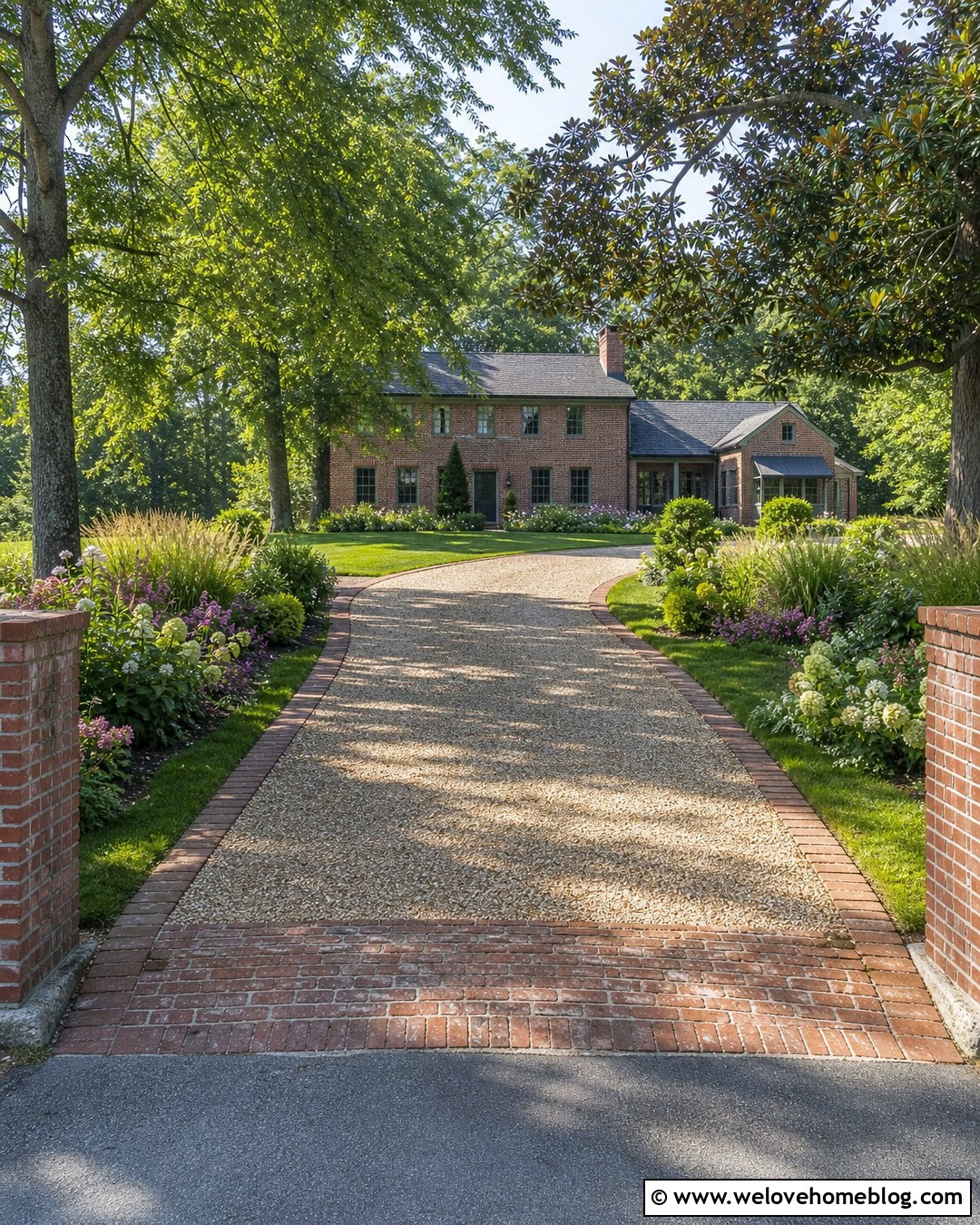
Reclaimed brick edging adds warmth and historical character to a long gravel driveway without the expense of paving the whole route. Install the bricks flush in a soldier course along compacted buff gravel, making sure the base supports both the border and surrounding surface. Slight color variations enhance the aged country appearance. Use broad curves so the edging remains smooth and easy to maintain. Along the roadside portion, pair the brick with lawn, meadow grasses, and occasional shade trees. Near the farmhouse, introduce cottage beds containing roses, salvia, hydrangeas, and clipped evergreens. Repeat the reclaimed brick in a walkway or entrance apron to make the border feel purposeful. Flush installation also reduces interference with tires, mowers, snowplows, and drainage.
27. Long Driveway With a Country Gate
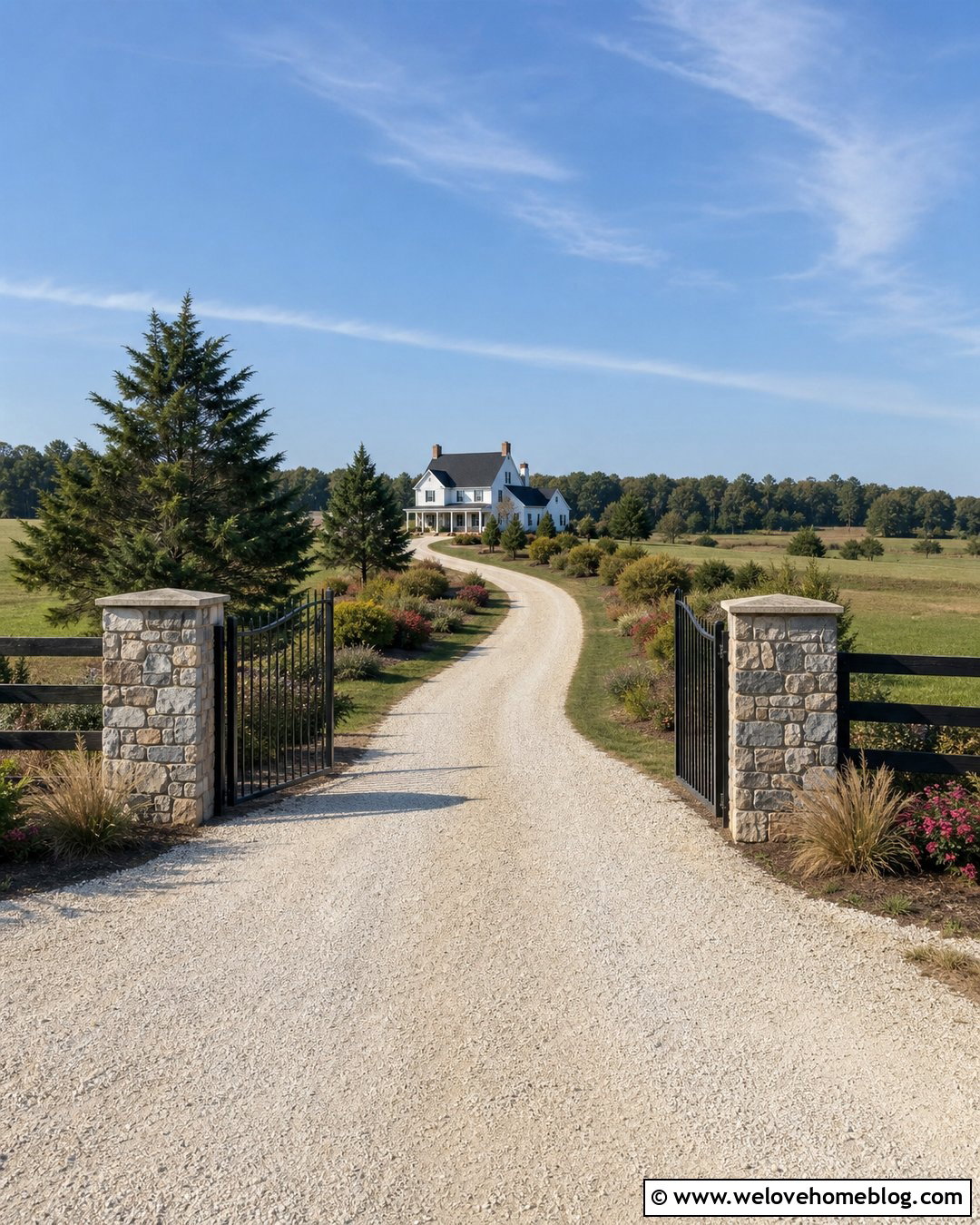
A simple country gate creates a clear threshold between the public road and private landscape. Use a long, gently winding crushed-limestone driveway framed by timber fencing and broad pasture views. The gate can be natural wood or black metal, supported by stone pillars or substantial wood posts. Position the entire entrance far enough from the road for a vehicle to wait safely without blocking traffic. Low grasses, spreading evergreens, and a few flowering shrubs can soften the posts while preserving clear visibility. Continue the fence for a short distance on both sides so the gate does not appear isolated. Beyond it, repeated tree groups and mowed verges guide the eye toward the house. Keep security equipment discreet and coordinate it with the gate hardware.
28. Long Driveway With Apple Tree Rows
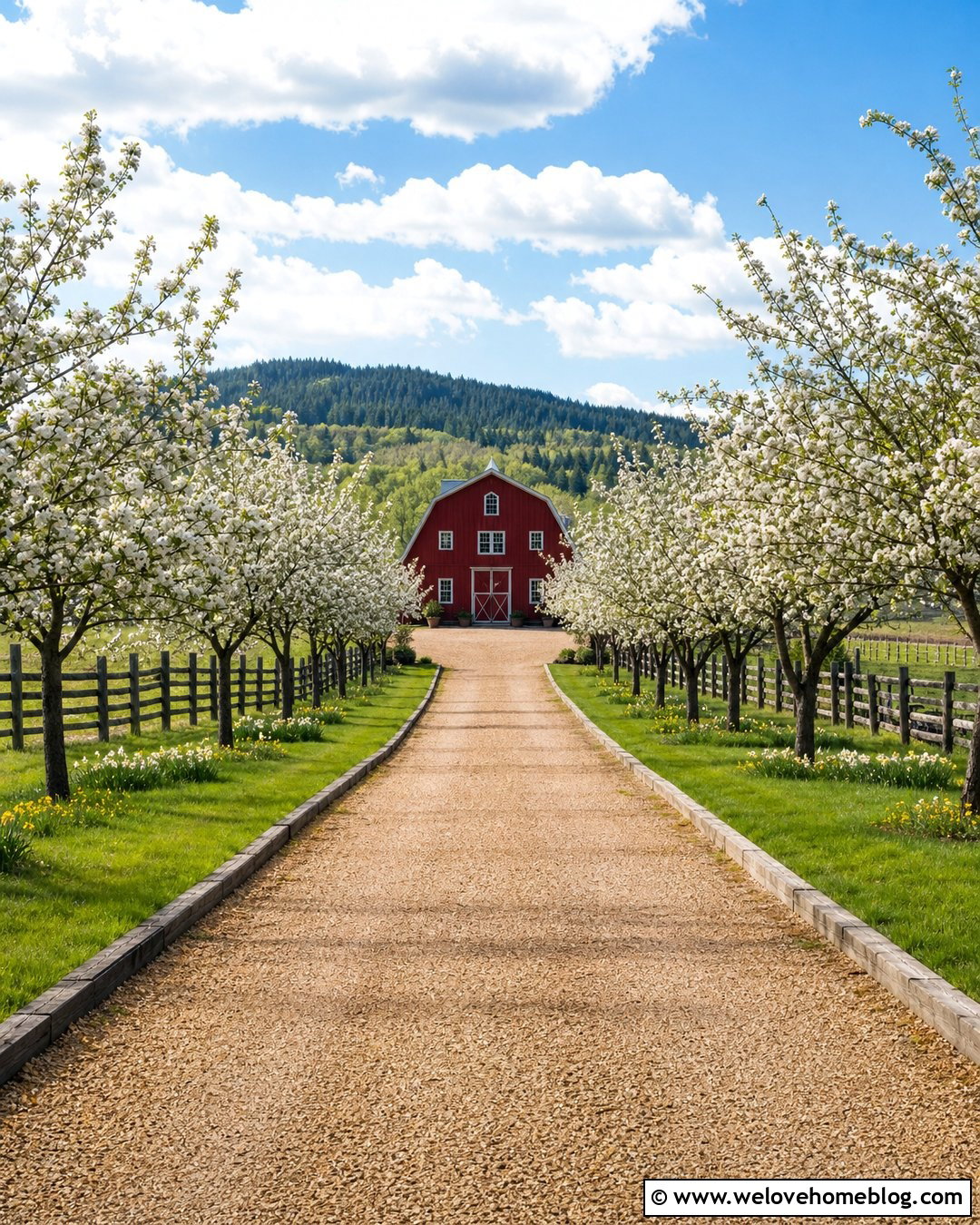
Rows of apple trees can give a long farmhouse driveway the productive charm of a small orchard. Pair the trees with beige pea gravel, grass verges, and low timber edging near the entrance. Space the trees according to their mature size and rootstock rather than placing them too close for an immediate effect. Offset the rows slightly if a perfectly formal arrangement feels too rigid for the property. Spring blossom, summer foliage, and autumn fruit provide changing seasonal interest. However, fallen fruit should not land on the driving surface, so maintain a generous setback. A split-rail fence behind the trees can separate the orchard from pasture. Near the home, repeat apple trees around a gravel parking court to connect the full driveway with the farmhouse garden.
29. Long Driveway With Raised Country Beds
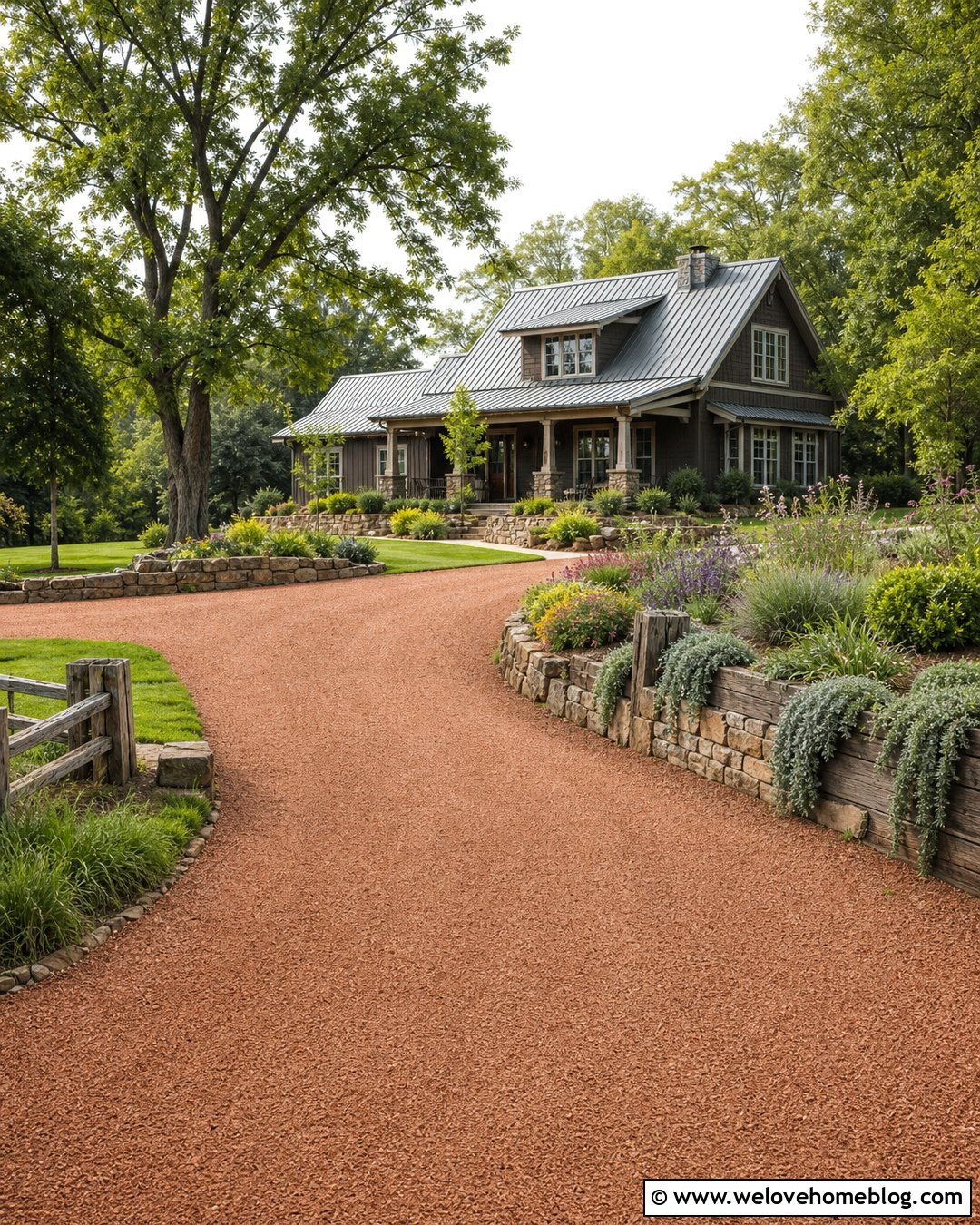
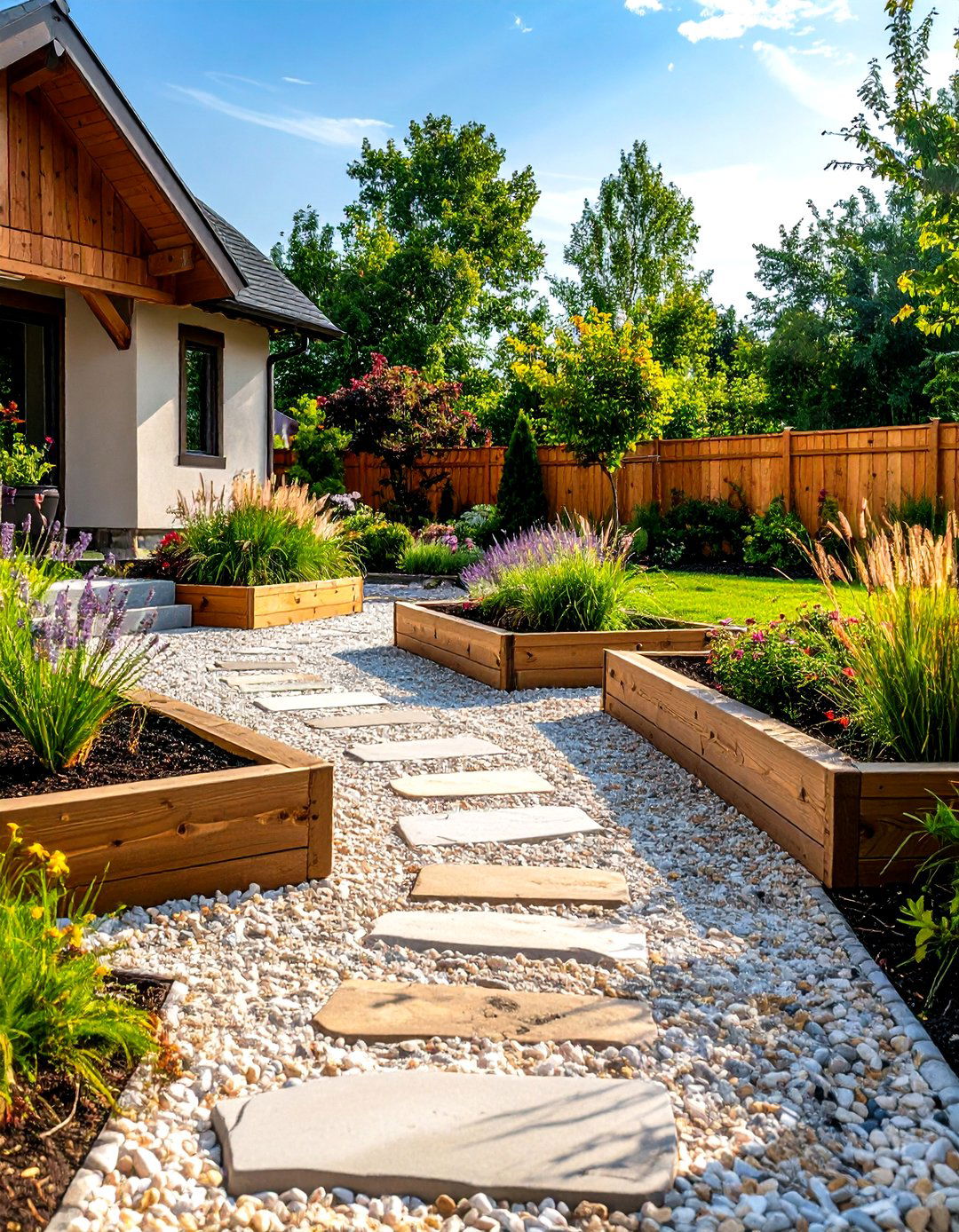
Raised planting beds are useful where poor soil, steep grades, or drainage problems make conventional borders difficult. Along a long crushed-granite driveway, construct low beds from fieldstone or weathered timber. Place them at the entrance, broad curves, and final parking area rather than running them continuously. Fill the beds with hardy grasses, flowering perennials, small shrubs, and trailing ground covers suited to the exposure. Keep retaining structures low near the driving lane and avoid sharp corners that could interfere with wide vehicles. The repeated materials create visual rhythm while leaving open grass shoulders between planted sections. At the house, larger raised beds can frame a stone walkway and porch. This produces a coordinated country landscape that feels substantial but remains practical to maintain.
30. Long Driveway With Solar Bollard Lighting
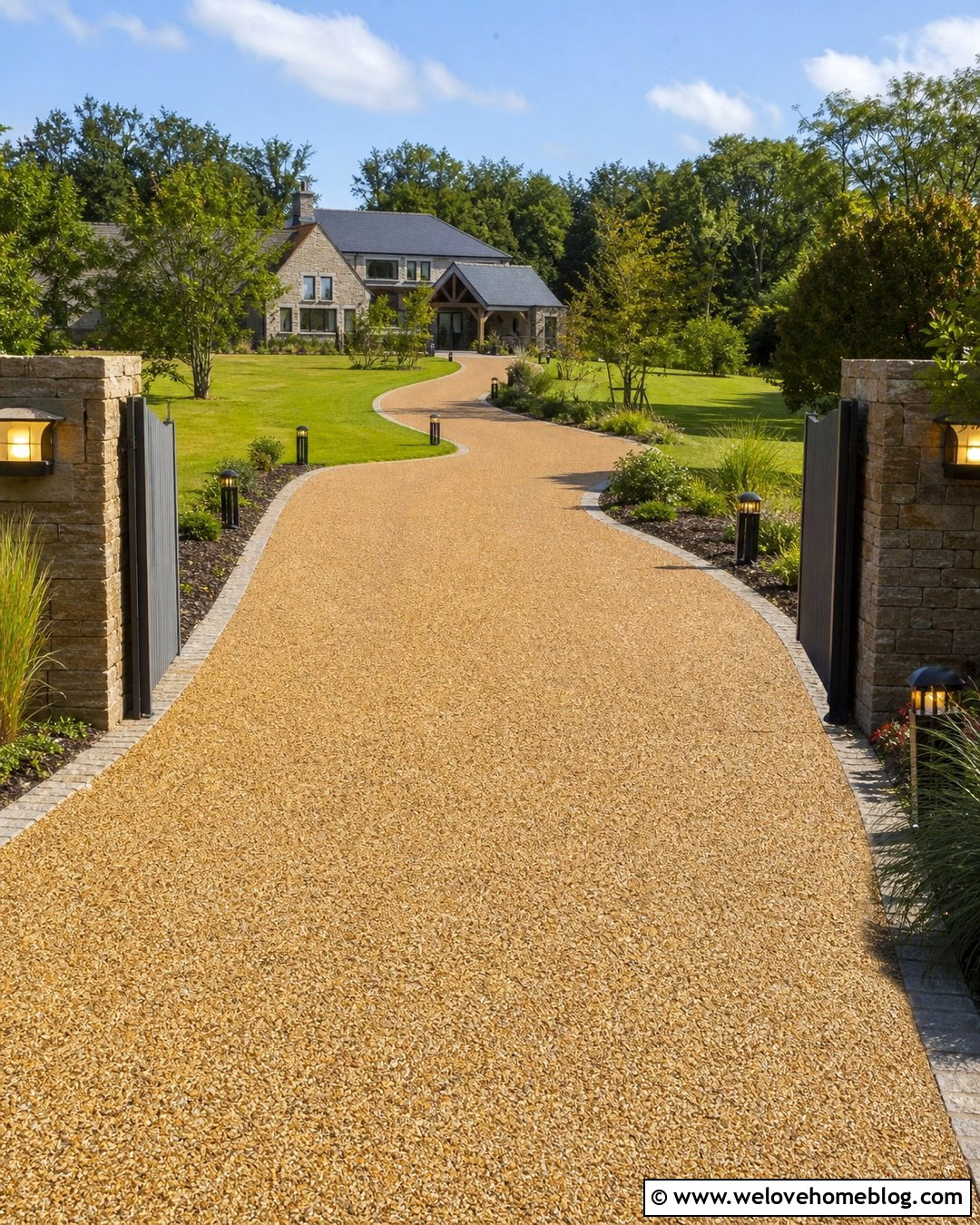
Lighting a long country driveway requires balance. The route should be visible at night without looking like an airport runway during the day. Pair a smooth resin-bound gravel surface with low, dark-finished bollards placed at the entrance, major curves, bridge crossings, and parking area. Avoid spacing lights evenly along every foot of the driveway. Strategic pools of light are usually enough to guide drivers and reveal important landscape features. During daylight, native grasses, low shrubs, and broad lawn shoulders keep the fixtures visually quiet. Stone edging can define the resin-bound surface and protect planting beds. Use downcast fixtures to limit glare toward neighboring properties and the road. Matching porch and gate lighting will connect the entire approach to the country home.
31. Long Driveway With a Farmhouse Turnaround
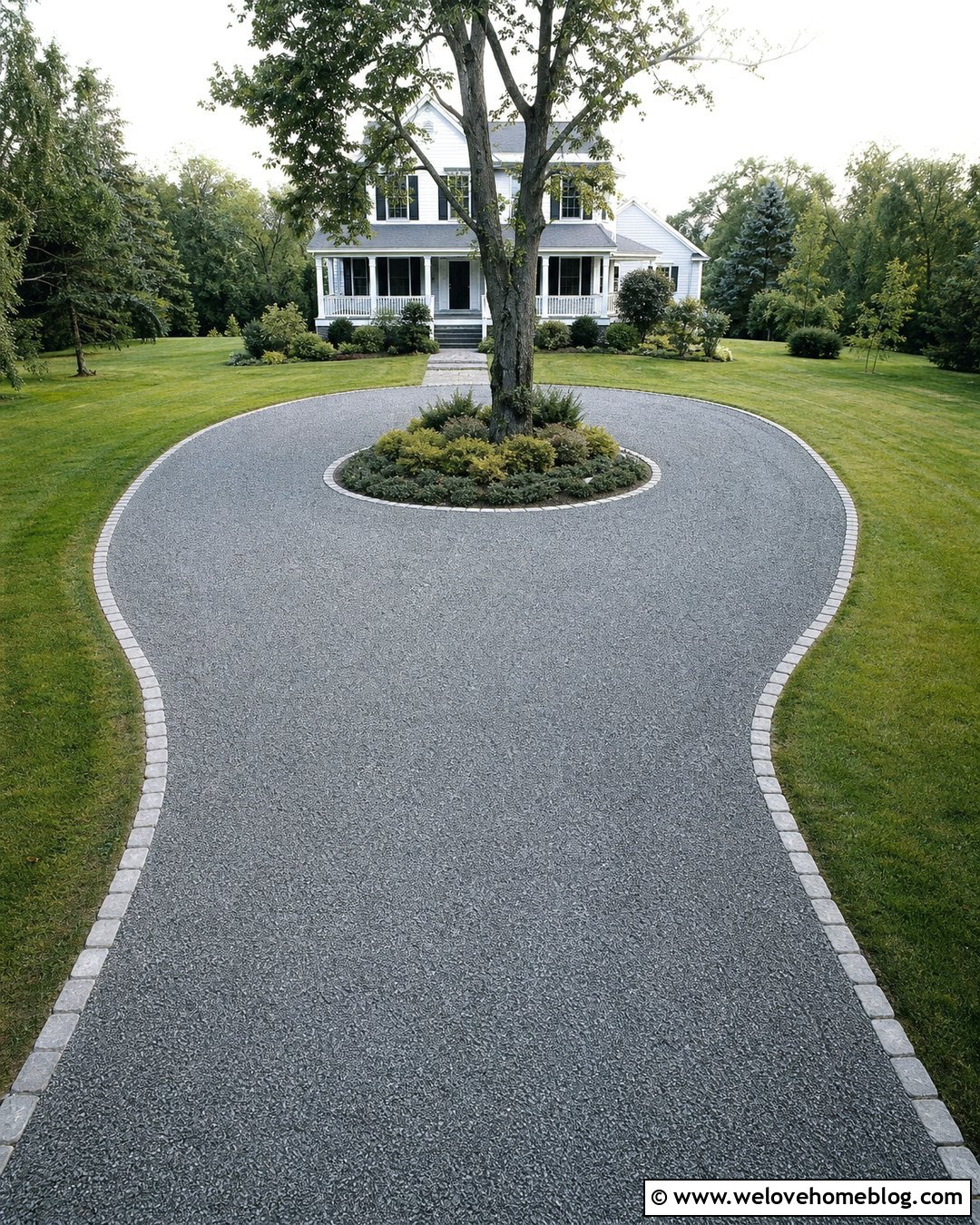
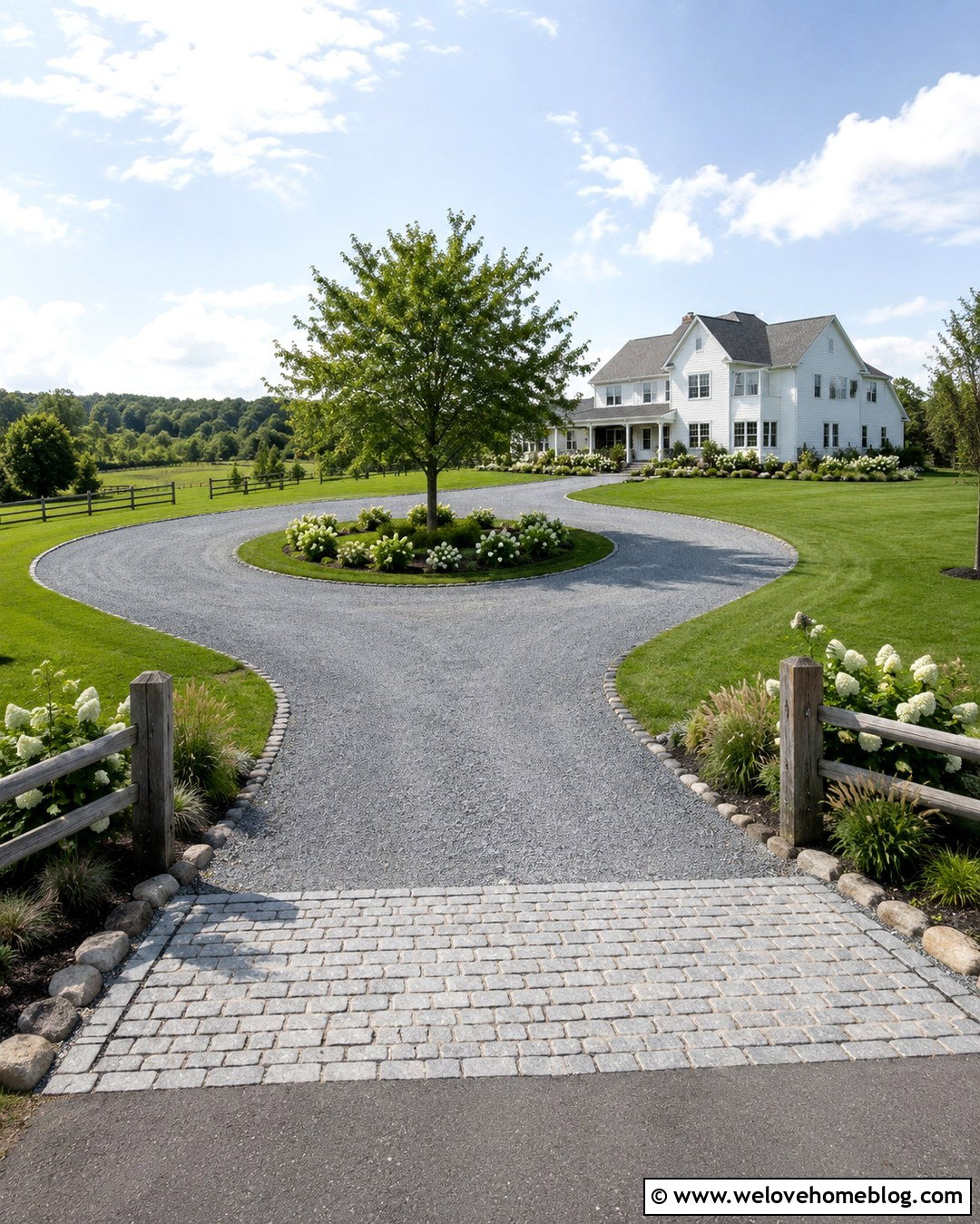
A well-planned turnaround makes a long driveway safer and more convenient for guests, deliveries, and service vehicles. Create a broad teardrop or circular area near the farmhouse using compacted gray gravel with a cobblestone border. A central island planted with one shade tree, low shrubs, and tough ground cover can organize traffic while adding greenery. Keep the planting low around the island’s outer edge so drivers can see across the space. Connect a flagstone walkway from the turnaround to the front porch, clearly separating pedestrians from moving vehicles. Continue simple lawn and tree landscaping along the long approach. The turnaround should look like an intentional courtyard rather than an oversized parking lot, with materials and planting that relate directly to the home.
32. Long Cobblestone Driveway With Formal Trees
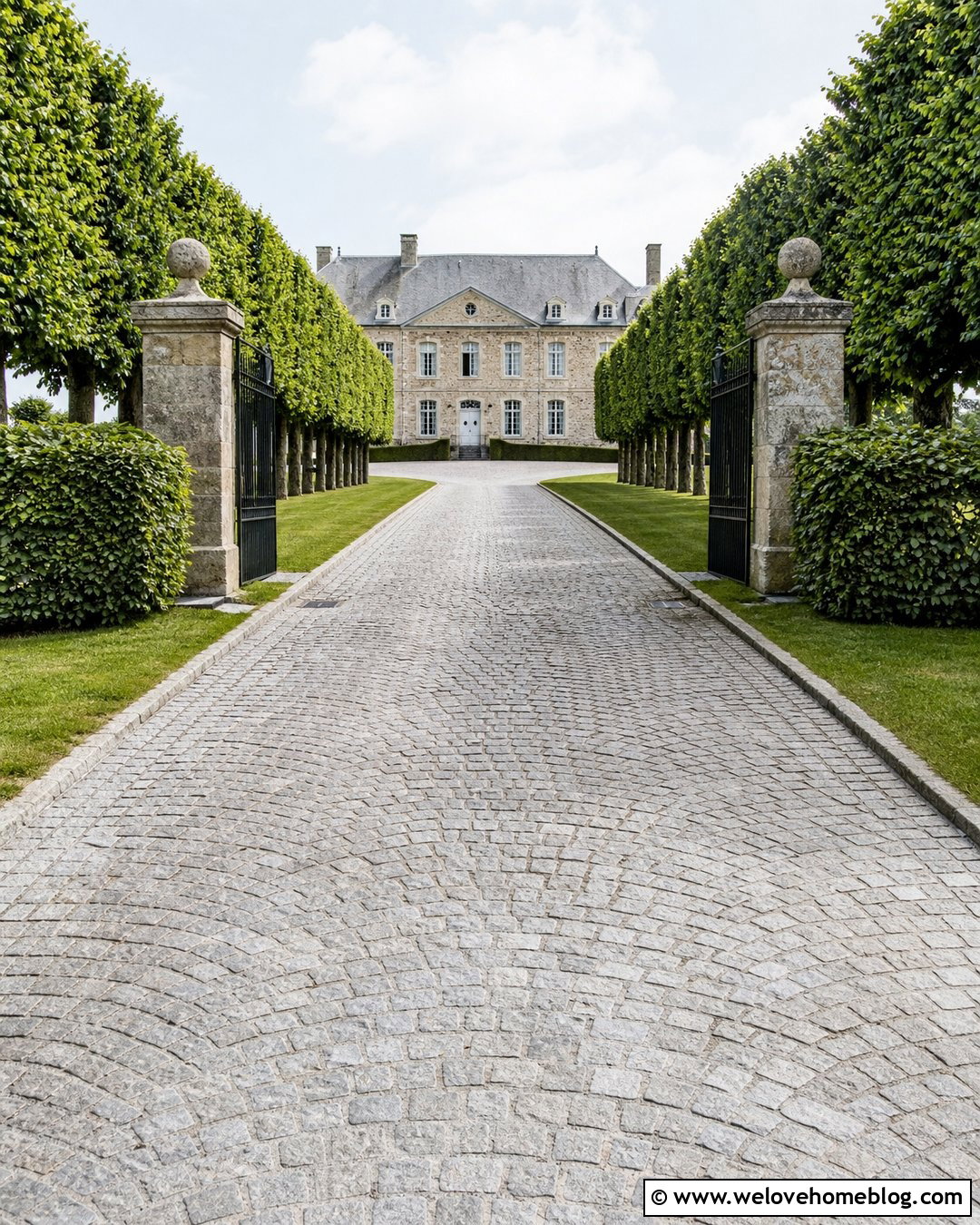
Cobblestone creates an impressive long driveway for a stone manor, French country home, or historic rural property. Use weathered gray cobbles laid in gentle arcs, with granite curbs securing the edges. Formal rows of hornbeams, lindens, or upright evergreens can reinforce the drive’s central axis. Set the trees behind broad grass strips to provide root space and keep falling leaves away from the main surface. Near the country road, stone pillars and understated metal gates establish a coordinated entrance. As the driveway reaches the home, expand it into a cobblestone arrival court with symmetrical planting beds. Because both the paving and tree rows have strong visual structure, keep the remaining landscape simple. Open lawn and restrained hedges will prevent the full composition from feeling crowded.
33. Long Driveway With Rustic Timber Edging
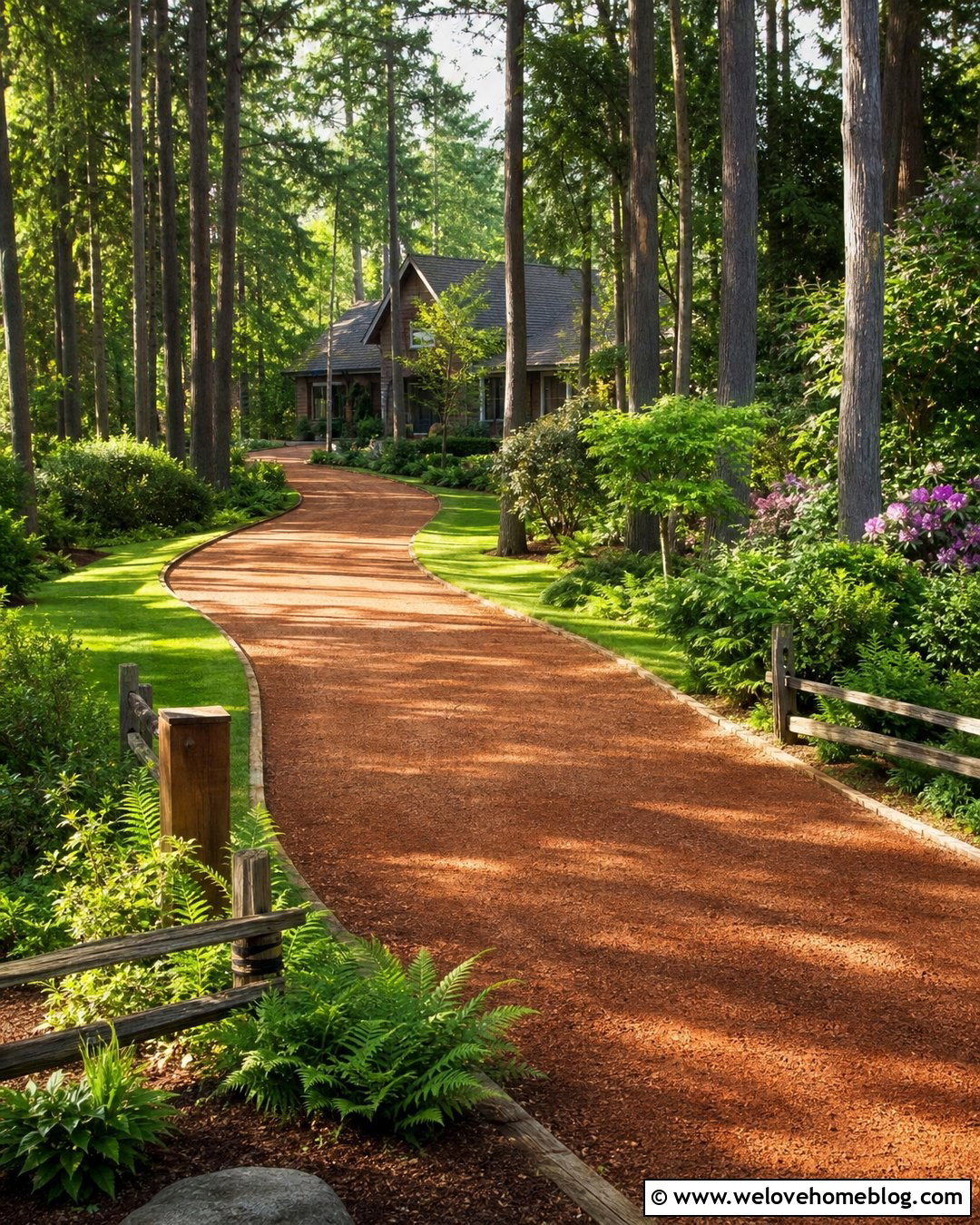
Timber edging gives an informal boundary to a long driveway passing through a wooded or pastoral property. Pair pressure-treated or naturally durable wood with reddish-brown decomposed granite for a warm, earthy surface. Install the edging securely and nearly flush so it retains material without becoming a vehicle hazard. On the outer side, use mowed grass, woodland ground covers, and informal groups of ferns and flowering shrubs. Sections of split-rail fence can emphasize the entrance or protect planting near sharp curves. Timber is especially effective for gently winding layouts because it visually follows the land. Repeat the wood in an address sign, small footbridge, or farmhouse gate. Check the edging periodically for movement or decay, particularly in damp and shaded areas.
34. Long Ribbon Driveway With Grass Center
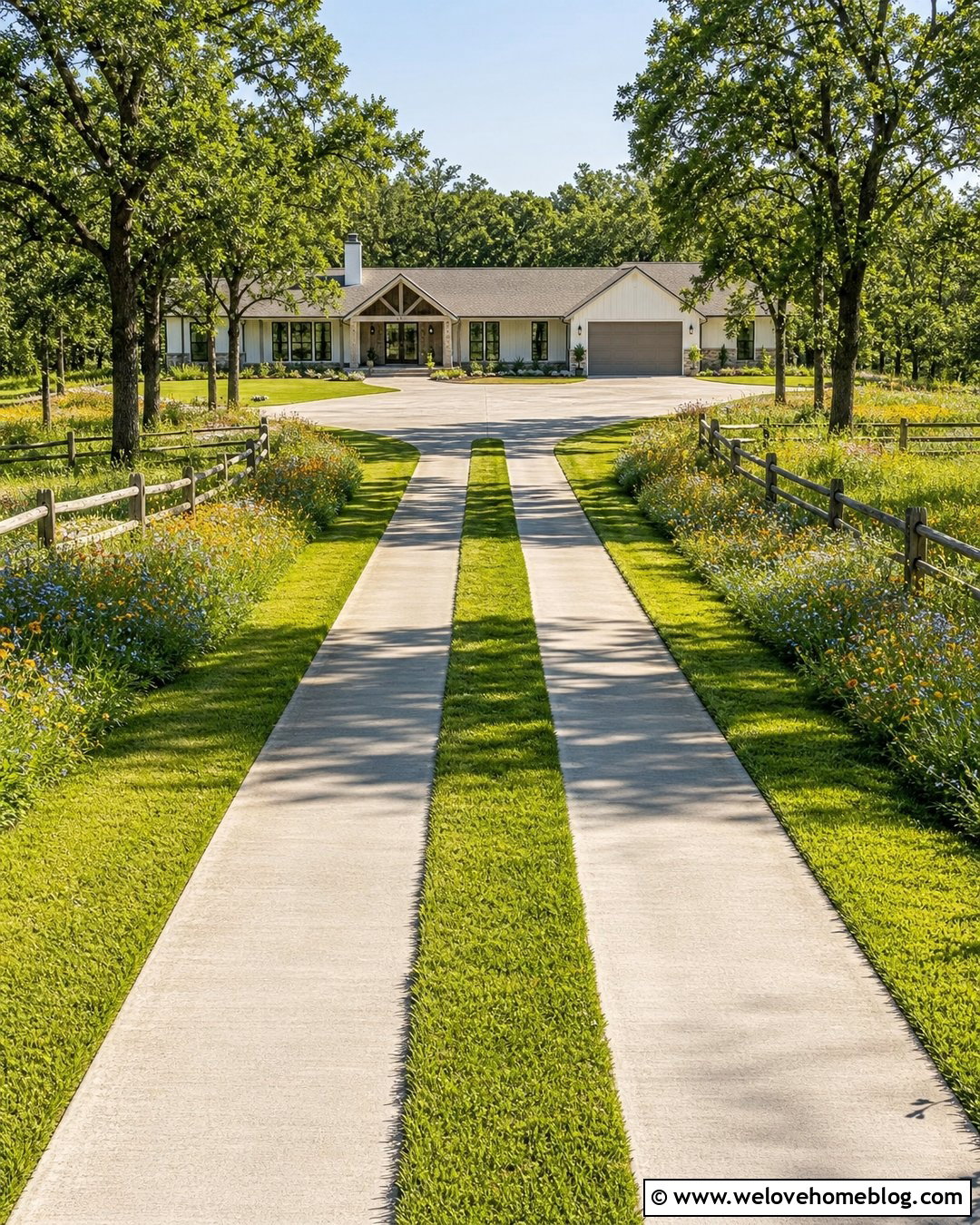
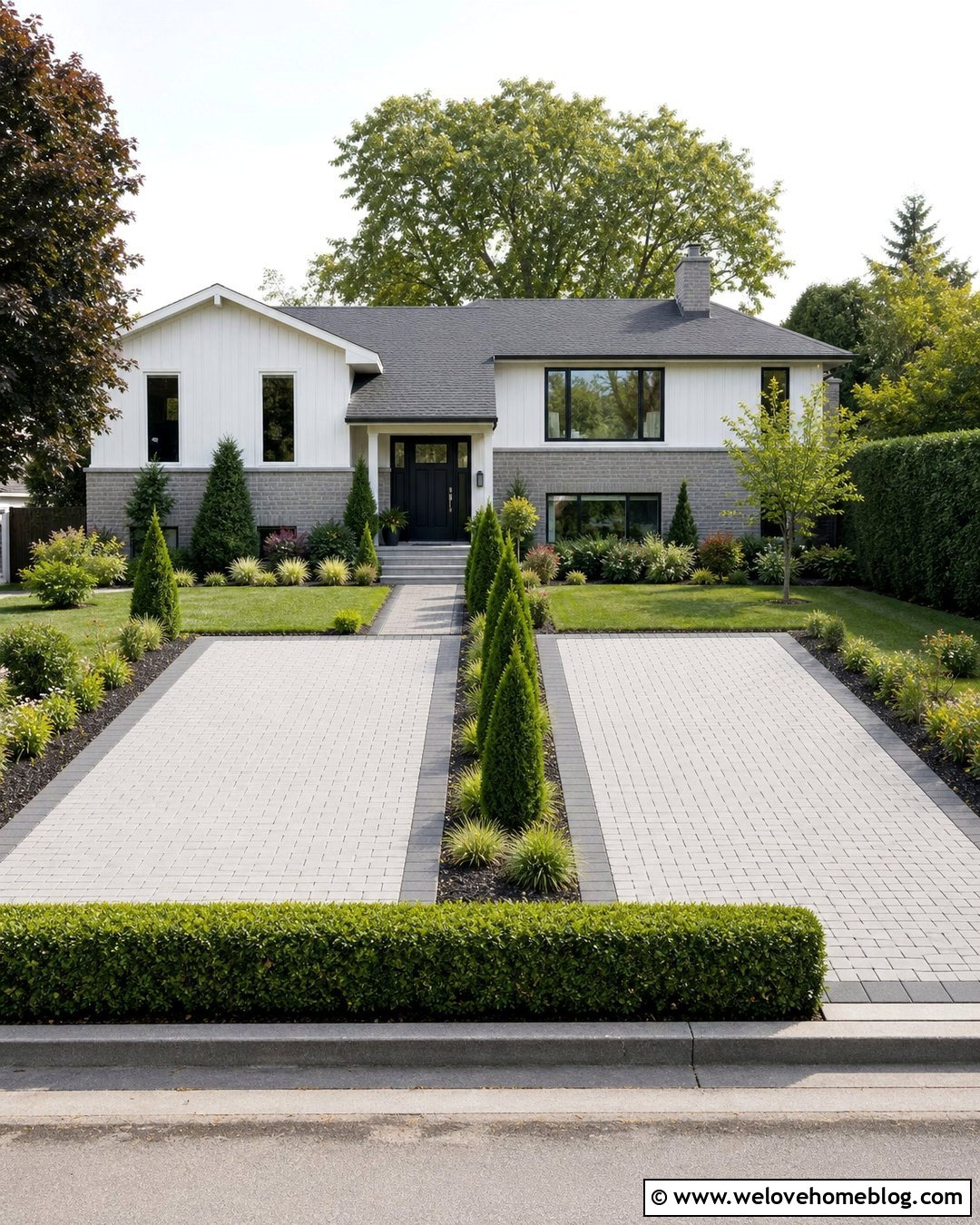
A ribbon driveway reduces the visual width of a long paved route by using two durable wheel tracks with grass between them. For a rural property, build the tracks from brushed concrete, permeable concrete pavers, or compacted stone designed to support regular traffic. Keep the center strip level enough to avoid vehicle clearance problems and choose a tough grass suitable for local conditions. Broad meadow borders, scattered shade trees, and a split-rail fence can reinforce the country setting. Near the garage or turnaround, transition into a full-width surface for easier maneuvering. Proper base preparation and drainage remain essential because the narrow tracks carry concentrated loads. This complete layout works particularly well for lightly traveled drives where a softer, greener appearance is more important than formal paving.
35. Long Driveway With Layered Country Landscaping
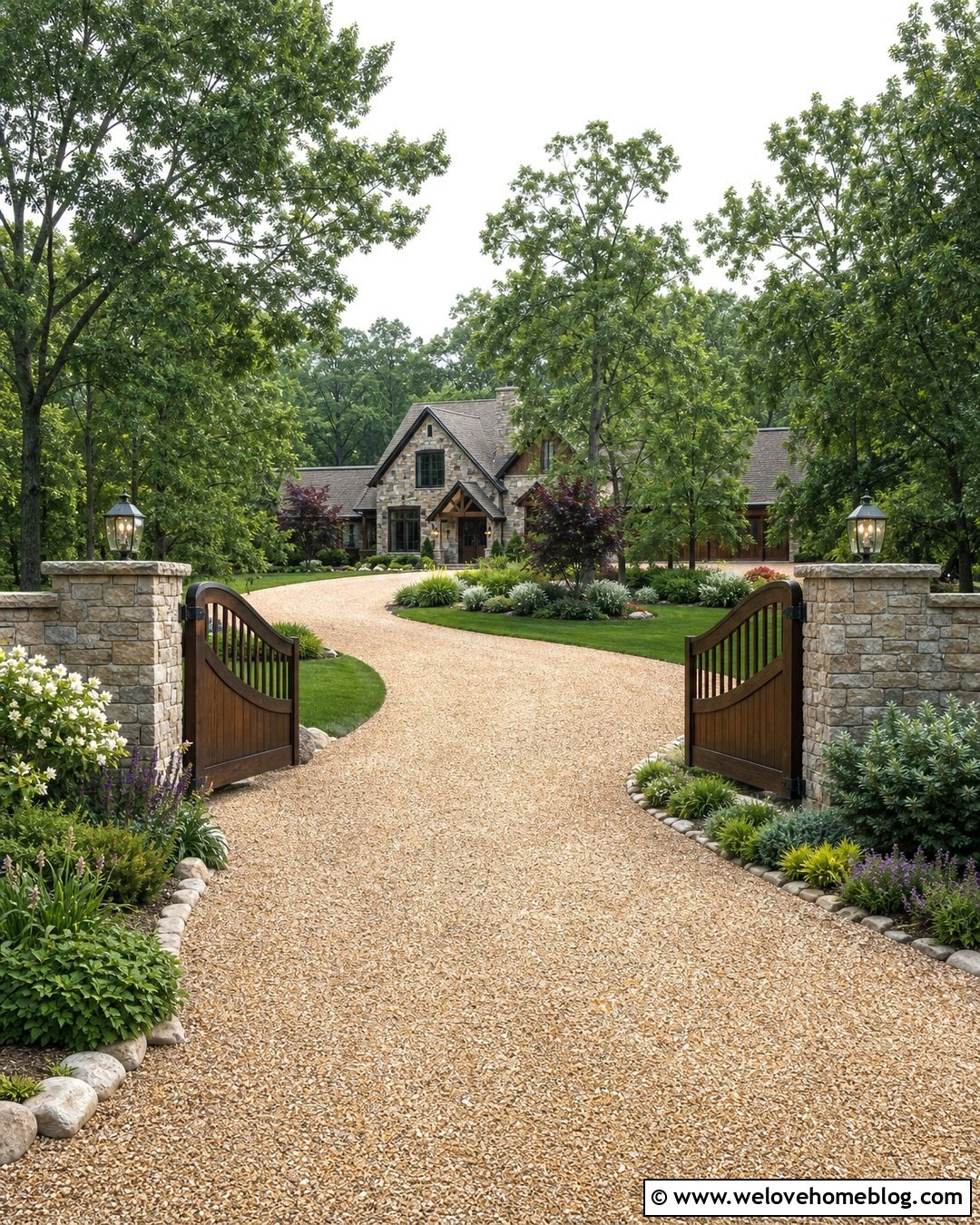
Layered planting can make a very long driveway feel complete without relying on one continuous row of identical plants. Begin with low ground covers and grasses beside a buff gravel surface. Add flowering shrubs in repeated groups behind them, followed by small ornamental trees and taller native canopy trees farther from the drive. This gradual increase in height creates depth while maintaining open sightlines. Use fieldstone edging around selected beds and leave mowed lawn breaks between major planting zones. At the entrance, introduce a wooden gate, stone pillars, and shorter versions of the same plants. Near the country house, make the beds fuller and more detailed. Repeating colors and materials from beginning to end connects the driveway, road entrance, landscape, and architecture as one thoughtful design.
Conclusion:
The most successful 35 long driveway landscaping country roads ideas balance scenery with everyday function. A beautiful entrance still needs durable construction, clear road visibility, dependable drainage, safe turning space, and room for maintenance equipment. Start by choosing a surface that suits your traffic, climate, and budget. Then use repeated trees, native shrubs, grasses, fencing, walls, or flower borders to connect the long route with the surrounding land. More detailed planting can be saved for the gate, curves, turnaround, and house, where it will have the greatest impact. Whether you prefer a loose meadow approach or a structured tree-lined lane, coordinated materials and sensible spacing will create welcoming country curb appeal.

Related posts:

Leave a Reply