
A well-planned driveway should feel like part of the landscape, not a wide paved strip placed beside it. These 25 front yard landscaping with driveway ideas combine practical parking with attractive planting, defined walkways, polished borders, and welcoming entrances. The strongest designs consider the entire view from the curb. Driveway material, shape, house architecture, drainage, lawn, and garden beds should all work together. You can create a formal approach with brick and clipped shrubs, soften concrete with flowing flowers, or make gravel feel intentional with crisp stone edging. There are also solutions for small lots, slopes, dry climates, shade, and limited budgets. Use the complete looks below to explore 25 front yard landscaping with driveway ideas.

1. Concrete Driveway With Layered Foundation Beds
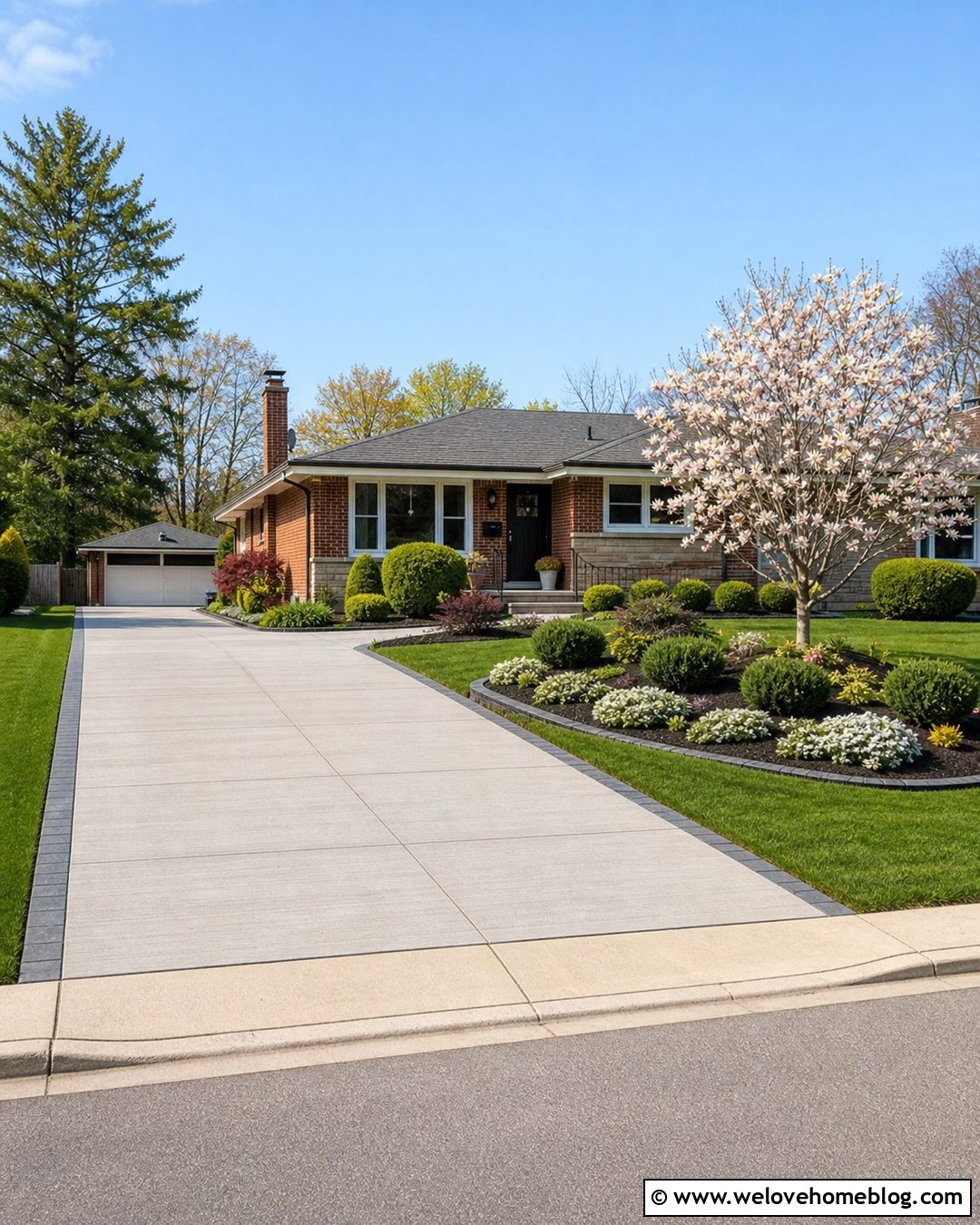
A straight concrete driveway feels more welcoming when the planting gradually leads your eye toward the house. Use smooth light-gray poured concrete with a narrow brick or charcoal paver border for definition. Beside it, create curved foundation beds that become wider near the porch. Arrange plants in layers, placing compact ground covers at the driveway edge, rounded shrubs behind them, and one small ornamental tree near the house. Repeating the same two or three plants along the route keeps the front yard from looking cluttered. Connect the driveway to the front steps with a clearly visible walkway in a matching material. This complete design works especially well with ranch, colonial, and suburban homes that need a cleaner, more connected entrance.
2. Asphalt Driveway With Curved Flower Borders
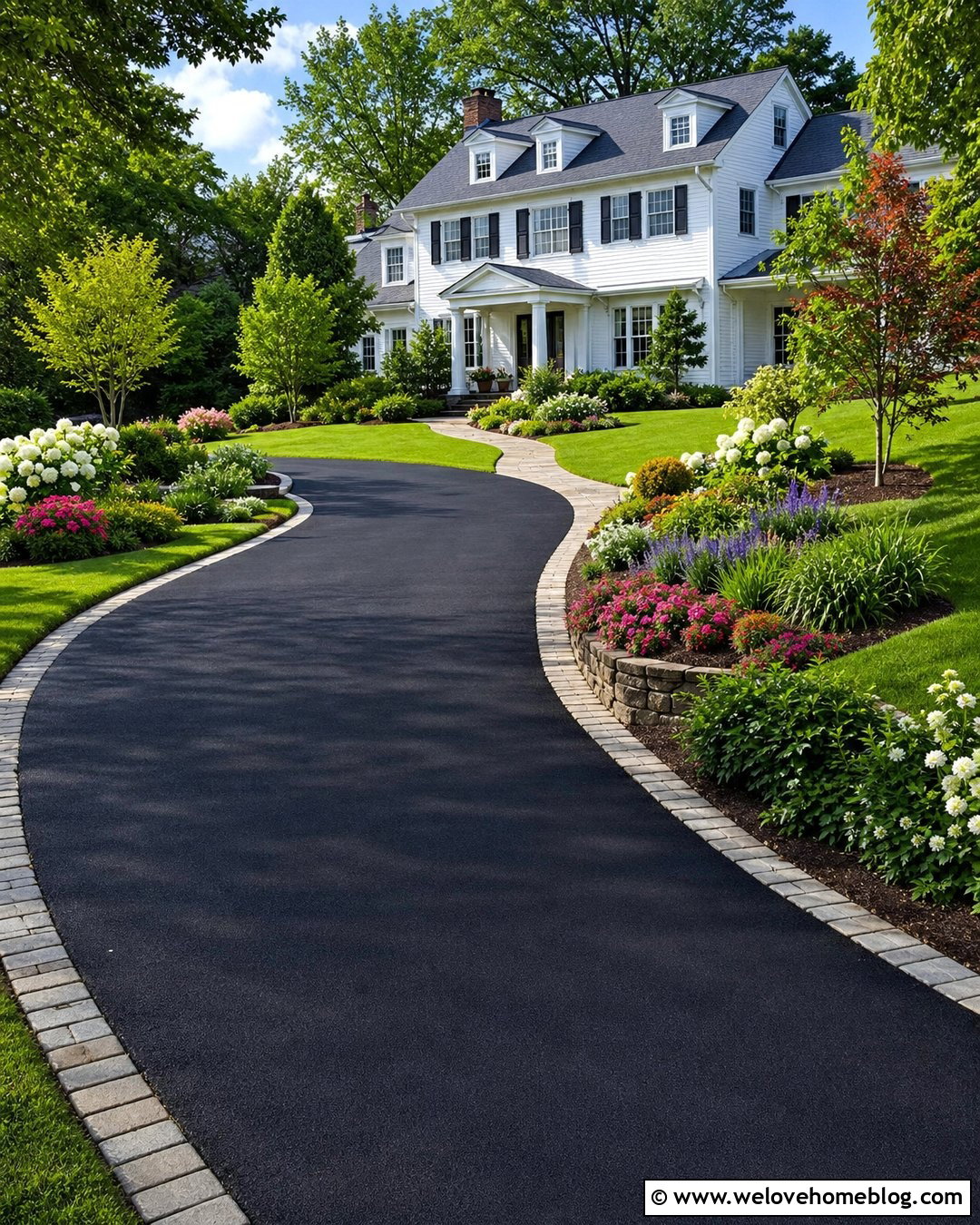
Black asphalt offers a simple backdrop for colorful landscaping and softly curved garden beds. Instead of running a narrow planting strip along the entire driveway, create several broad planting pockets separated by open lawn. This makes maintenance easier and gives the yard a more natural rhythm. Edge the asphalt with pale cobblestones or concrete curbing so soil and mulch stay out of the driving area. Fill the beds with compact flowering shrubs, long-blooming perennials, and low ornamental grasses that will not block sightlines. A curved flagstone walkway can branch from the driveway and guide visitors toward the porch. Choose flower colors that complement the home’s siding or front door. The dark driveway, bright edging, green lawn, and layered flowers create balanced curb appeal.
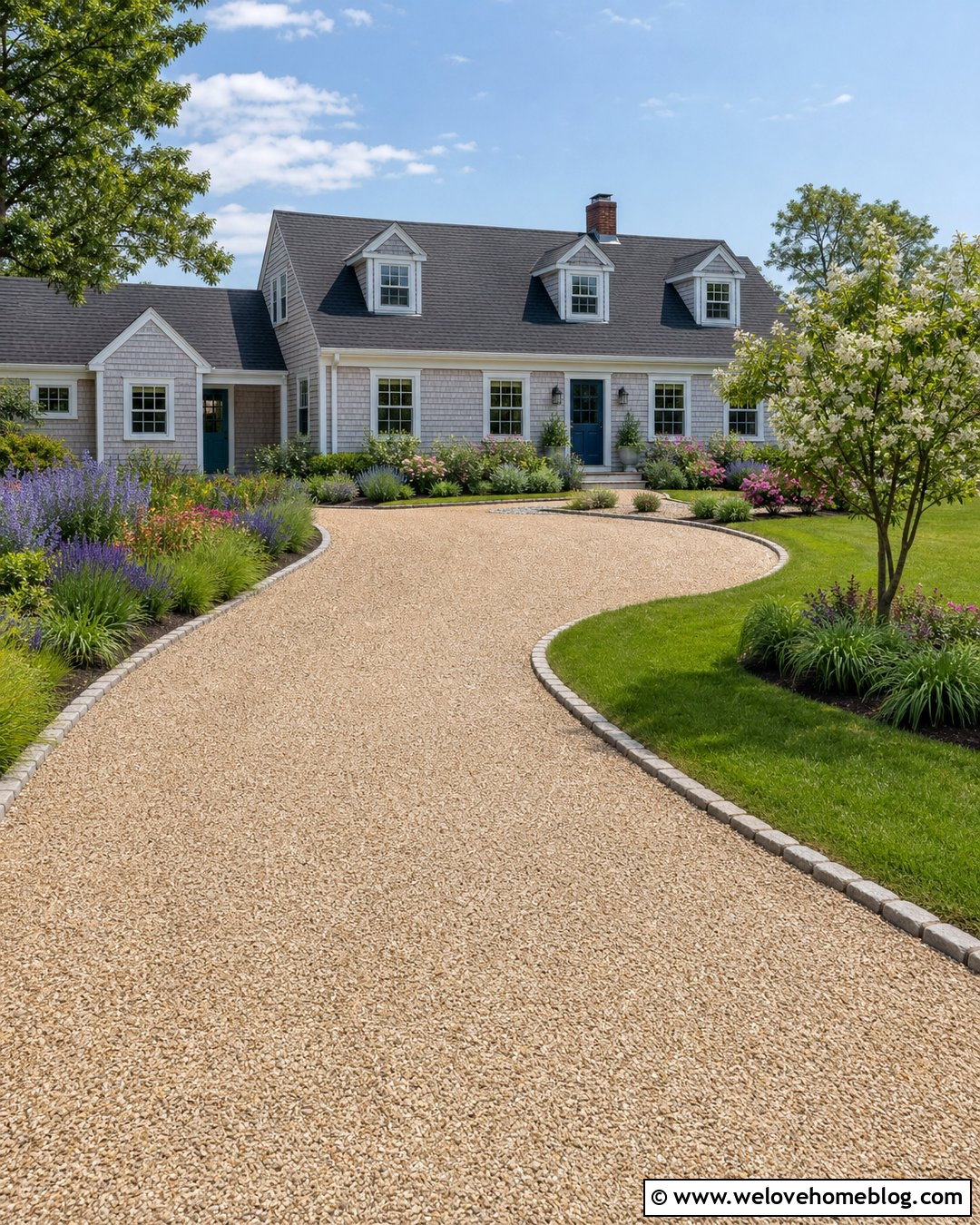
3. Gravel Driveway With Cottage Garden Planting
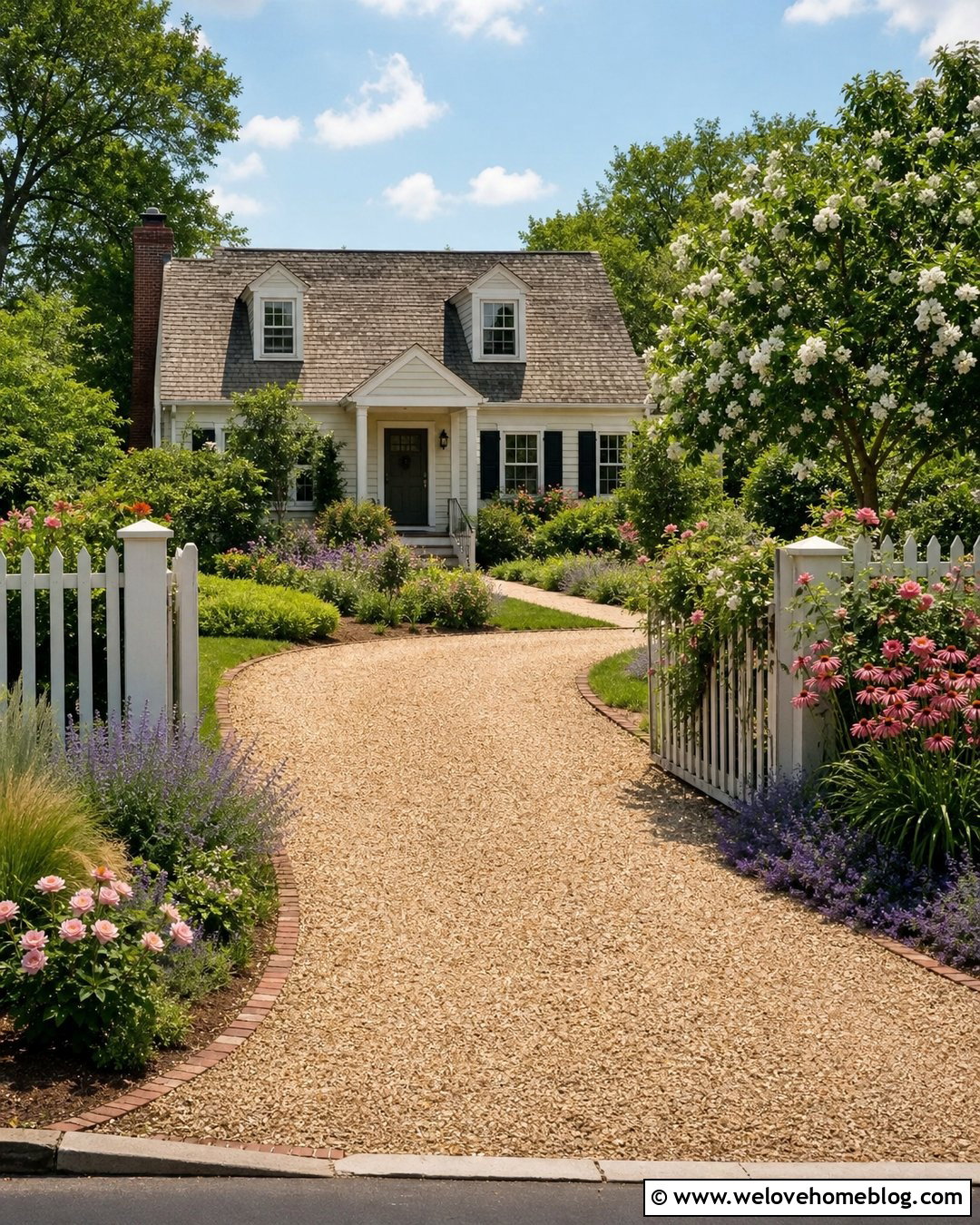
The gentle crunch of gravel pairs naturally with a relaxed cottage garden. Choose warm beige pea gravel or compacted crushed stone for a driveway that curves slightly toward a cottage, Cape Cod, or traditional home. Define both sides with reclaimed brick, cobblestone, or steel edging to keep the loose material contained. Plant generous borders filled with roses, catmint, salvia, coneflowers, and soft ornamental grasses. Allow the beds to look abundant, but keep plants trimmed back from vehicle doors and turning areas. A matching gravel walkway can lead to the porch through a simple garden gate. Add one small flowering tree near the driveway entrance to anchor the view. This design feels charming and established while still providing a practical, clearly organized parking surface.
4. Paver Driveway With Evergreen Landscaping
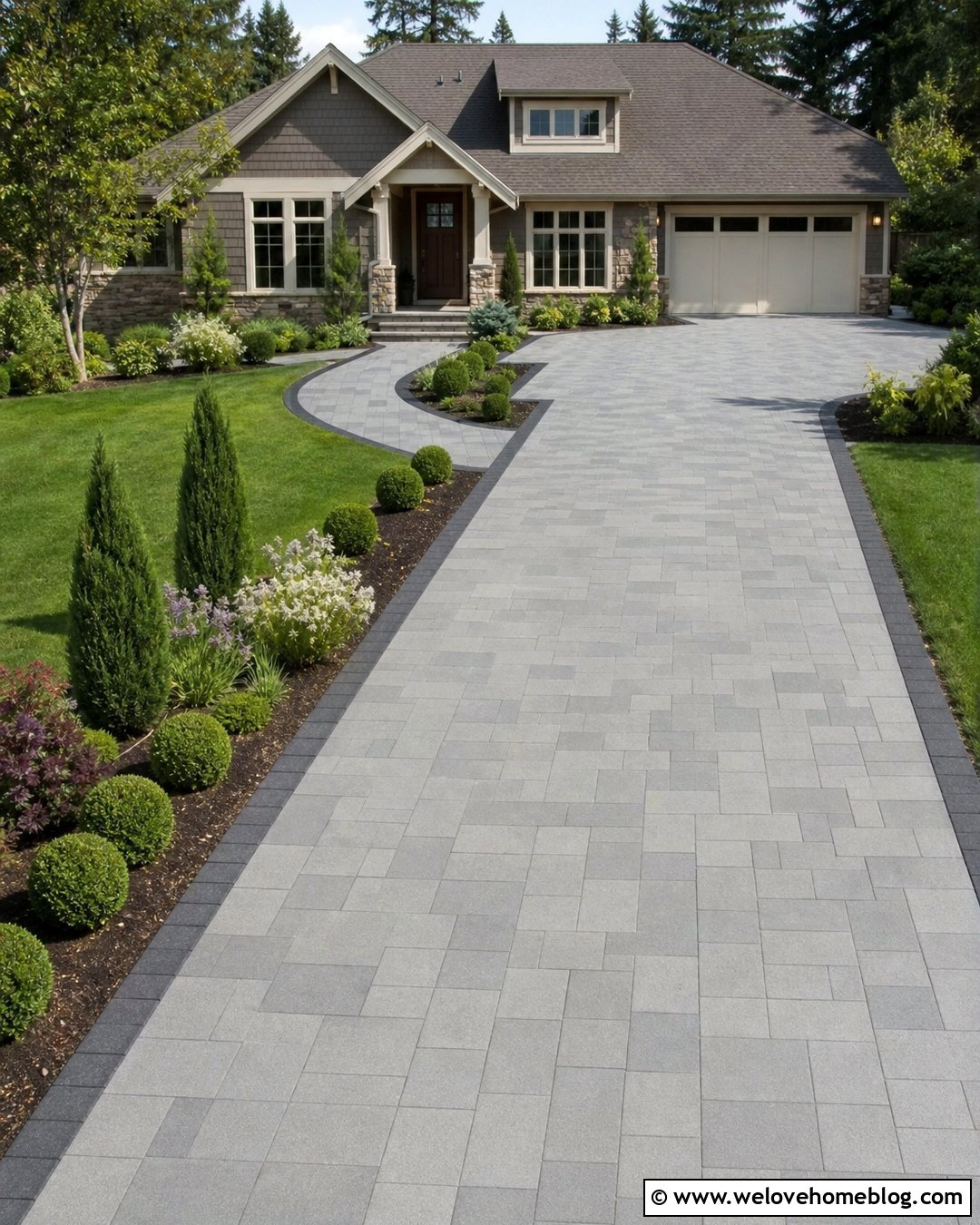
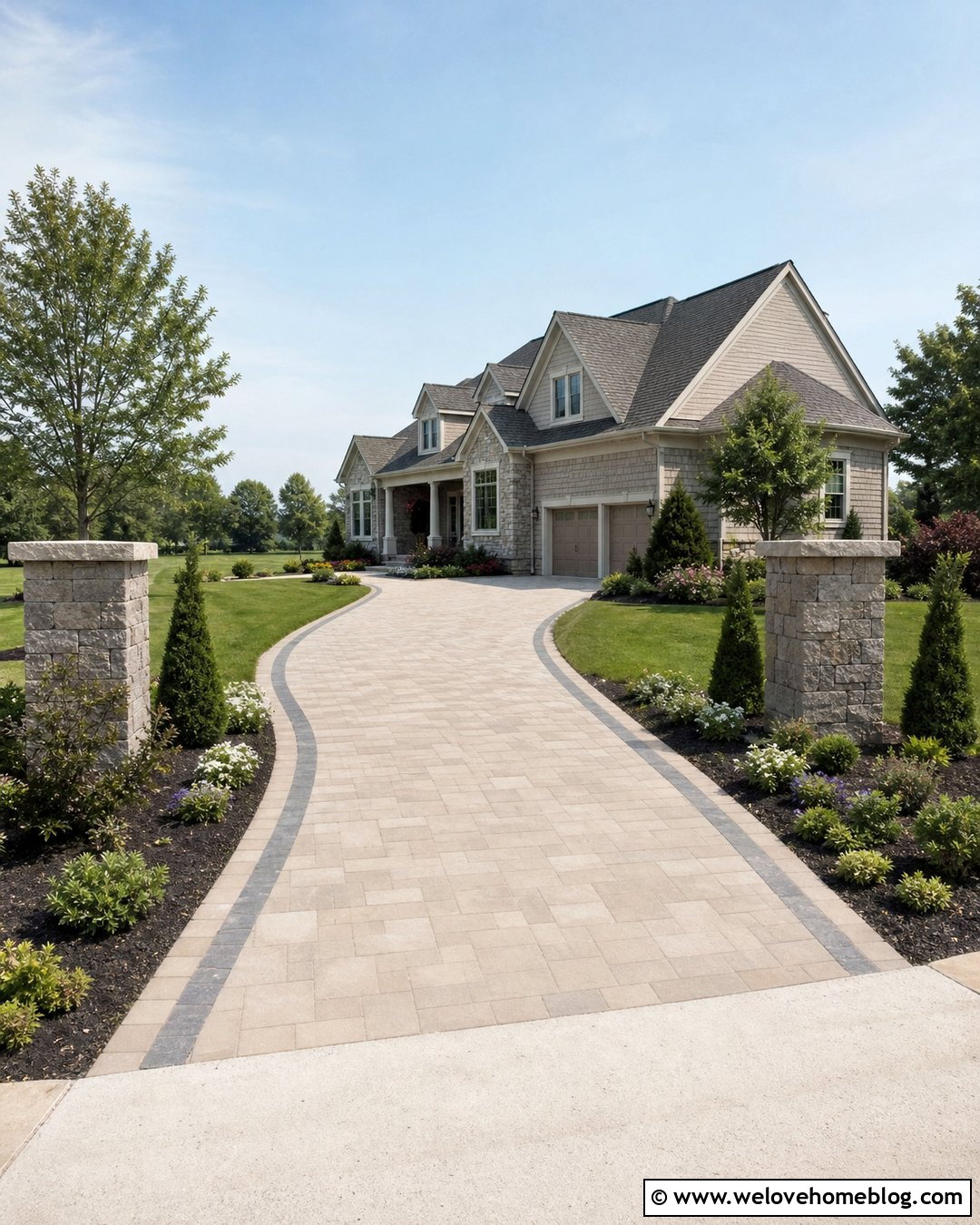
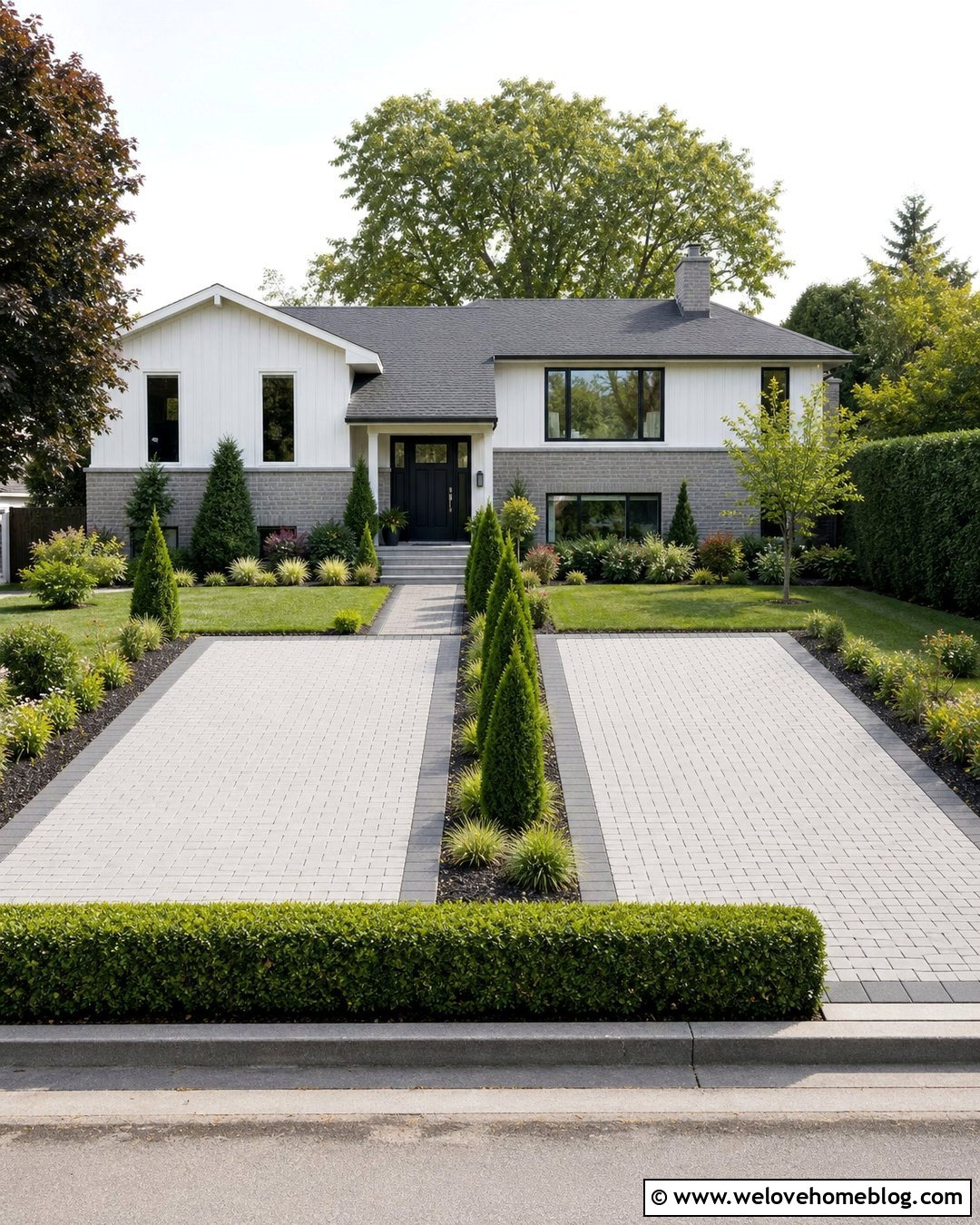
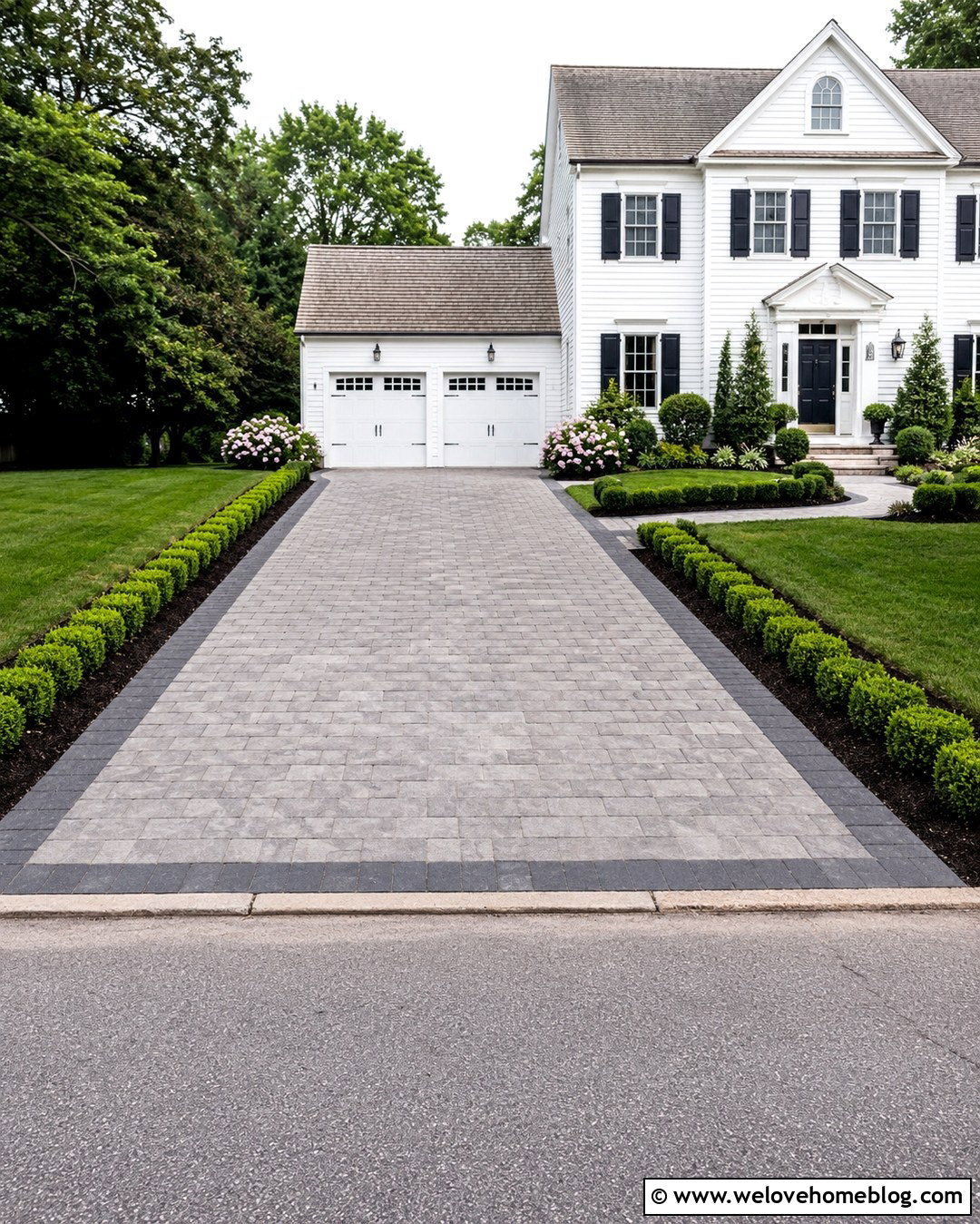
Concrete pavers and evergreen shrubs create a polished front yard that looks structured in every season. Select medium-gray pavers in a running bond or modular pattern, then add a darker paver ribbon around the perimeter. Keep the driveway straight or gently flared at the garage to make the layout feel intentional. Along the sides, use broad beds containing rounded boxwoods, upright junipers, dwarf conifers, and a few flowering perennials for seasonal color. Vary the plant heights without hiding windows or crowding the pavement. A paver walkway in the same color family should connect the driveway to the front door. This coordinated hardscape works particularly well with craftsman and transitional homes. The limited material palette creates order, while the evergreen structure prevents the yard from appearing empty during colder months.
5. Circular Driveway With Center Island Garden

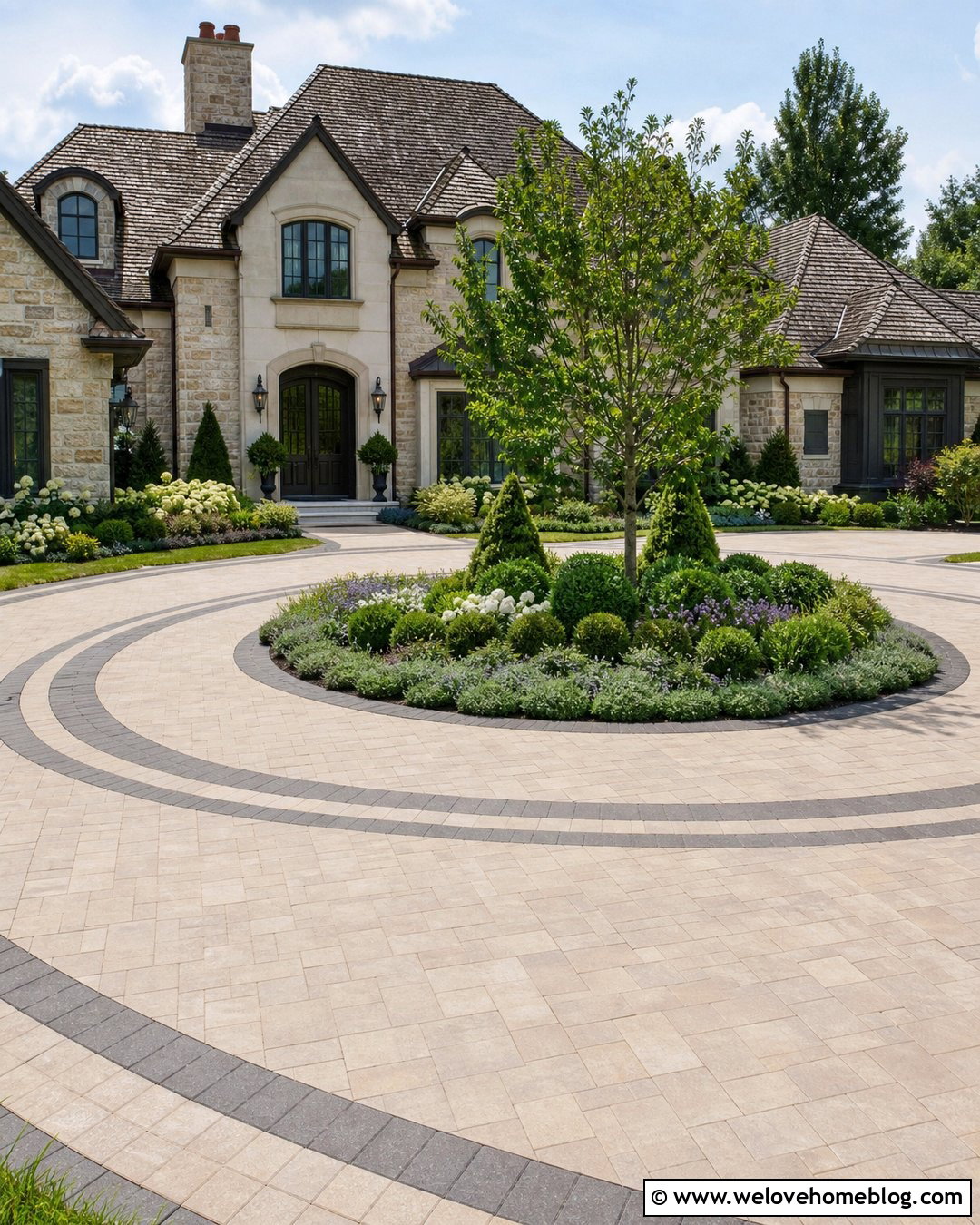
A circular driveway becomes a major front yard feature when its center island is designed as a complete garden. Use light exposed-aggregate concrete, asphalt with paver edging, or warm-toned pavers for the looping surface. Inside the circle, place a small ornamental tree slightly off-center and surround it with low shrubs, ornamental grasses, and seasonal flowers. Keep plants near the driveway edge short so drivers retain a clear view across the loop. A low stone border can protect the bed and visually connect it to the home’s facade. Repeat a few island plants in foundation beds near the porch. Symmetrical entry pillars or matching trees can mark the two driveway openings. This arrangement gives larger properties an elegant arrival sequence without making the landscaping feel overly formal.
6. Modern Driveway With Ornamental Grasses
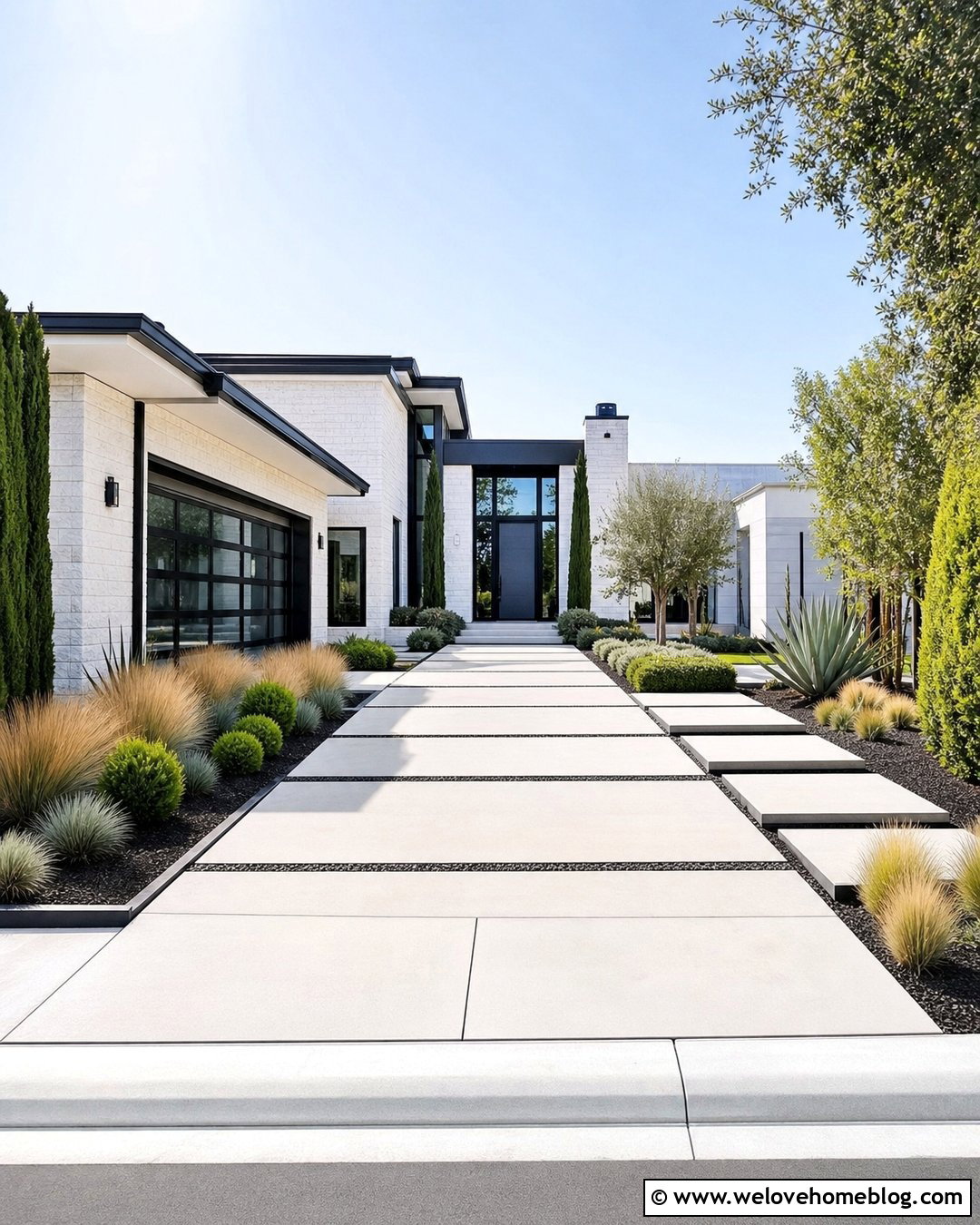
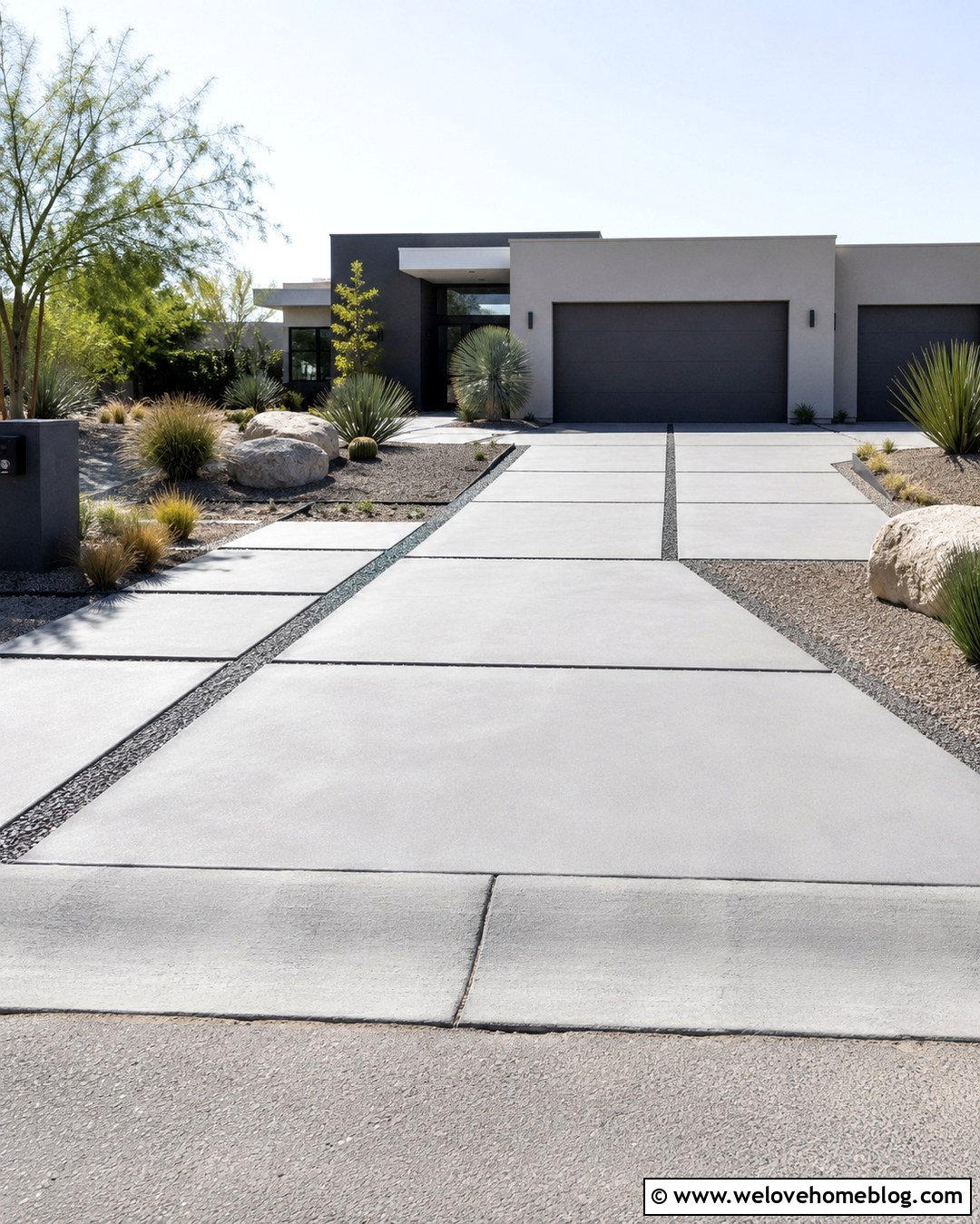
Crisp lines and restrained planting can turn an ordinary driveway into a modern front yard. Use large rectangular concrete slabs, charcoal concrete pavers, or pale poured-concrete bands separated by narrow gravel joints. Keep the layout straight and align it with the garage, walkway, and architecture. Create linear beds along one side using feather reed grass, blue fescue, compact evergreen shrubs, and sculptural accent plants suited to the local climate. Dark steel edging gives gravel and planting beds a sharp finish. Rather than mixing many flower colors, repeat a limited palette of green, silver, and one seasonal accent. Add a wide stepping-stone walkway that clearly points toward the entrance. The clean geometry and moving grasses soften the hard surface while preserving the uncluttered appearance associated with contemporary homes.
7. Farmhouse Driveway With Split Rail Fence
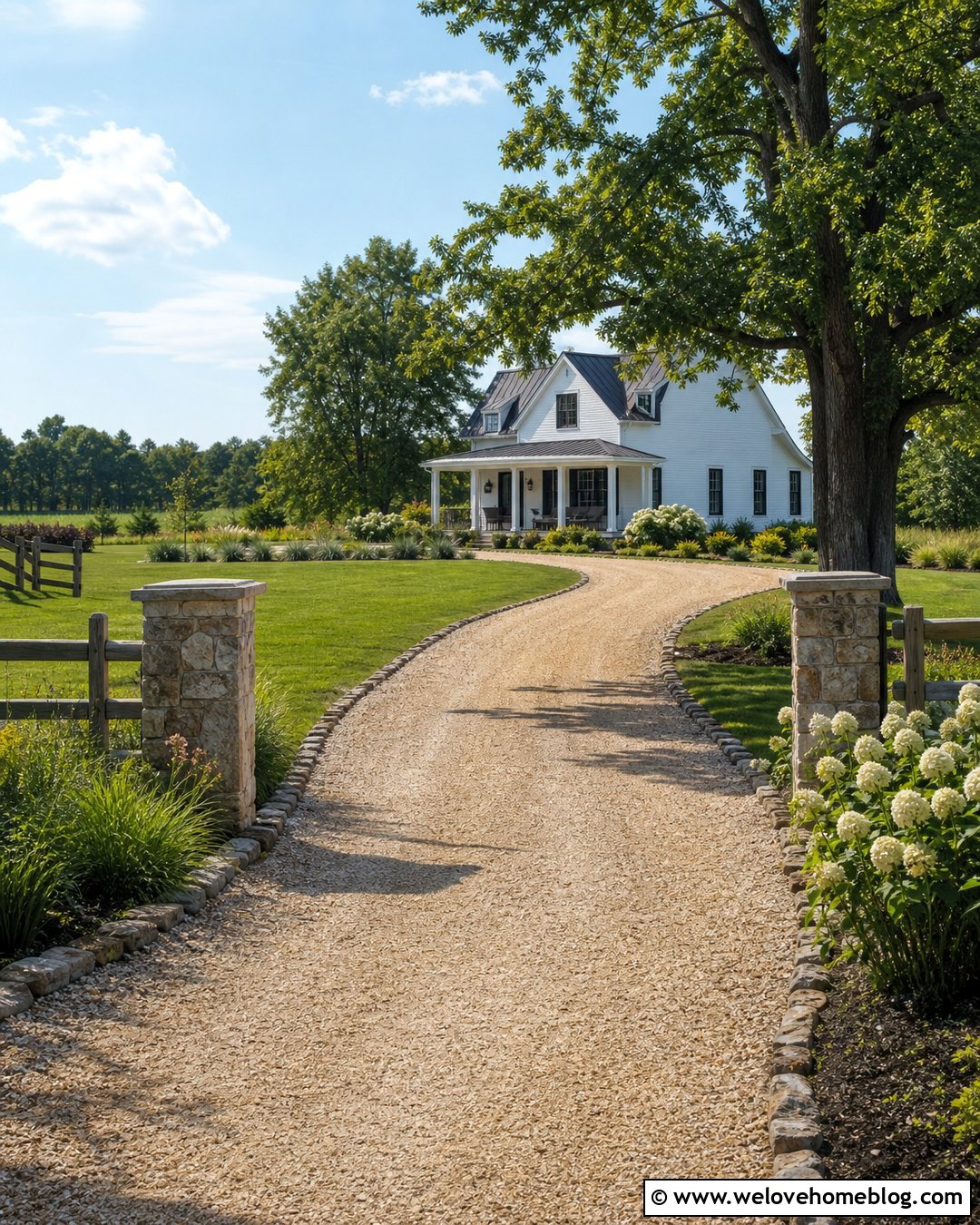
A farmhouse driveway should feel open, practical, and connected to the surrounding land. Install a gently curved crushed-limestone or tan gravel driveway leading toward a modern farmhouse or country home. Use a split rail fence along one side rather than enclosing the entire front yard. Plant groups of hydrangeas, panicle shrubs, ornamental grasses, and native wildflowers near the fence posts. A pair of simple stone or timber pillars can frame the entrance without appearing too formal. Edge the driveway with large fieldstones or heavy steel strips to prevent gravel from spreading into the lawn. Near the house, transition into wider beds containing evergreen foundation shrubs and one shade tree. This complete look combines rural character with enough structure to keep the front yard tidy, readable, and easy to navigate.
8. Small Front Yard Driveway With Narrow Beds
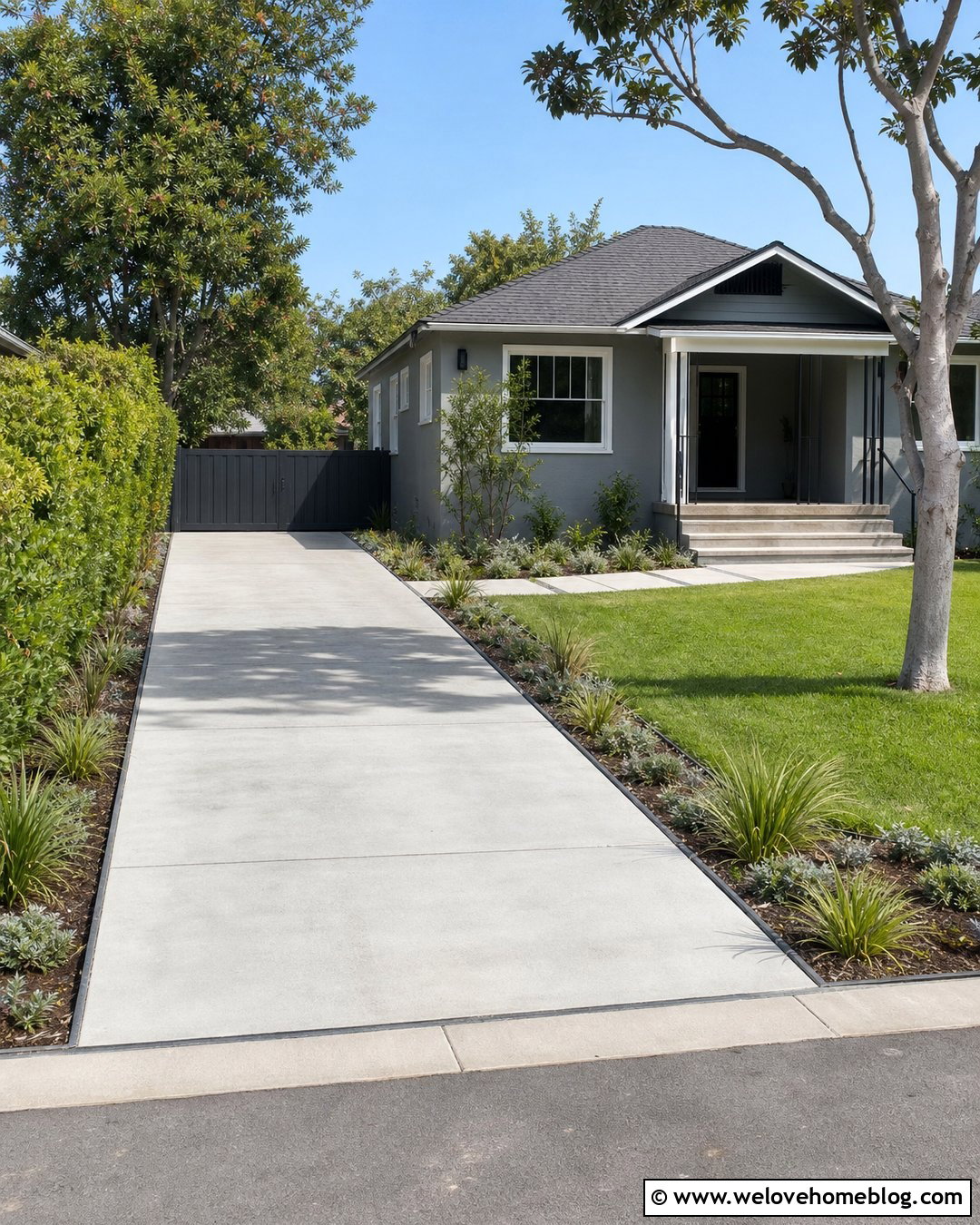
Limited frontage calls for simple landscaping that improves the driveway without making the yard feel crowded. Choose a narrow poured-concrete or concrete paver driveway with clean edges and a slightly wider parking pad near the garage. Along the property line, install one continuous planting bed filled with compact shrubs, ground covers, and upright grasses. Keep the opposite side more open with lawn or low gravel landscaping. A walkway branching directly from the driveway can eliminate unnecessary hardscaping and provide a clear route to the door. Use vertical plants selectively near blank walls, but avoid tall hedges that visually shrink the space. Repeating one edging material around the driveway, walkway, and beds creates unity. This efficient layout gives a small front yard greenery, definition, and functional circulation without sacrificing valuable parking room.
9. Long Driveway With Tree-Lined Landscaping
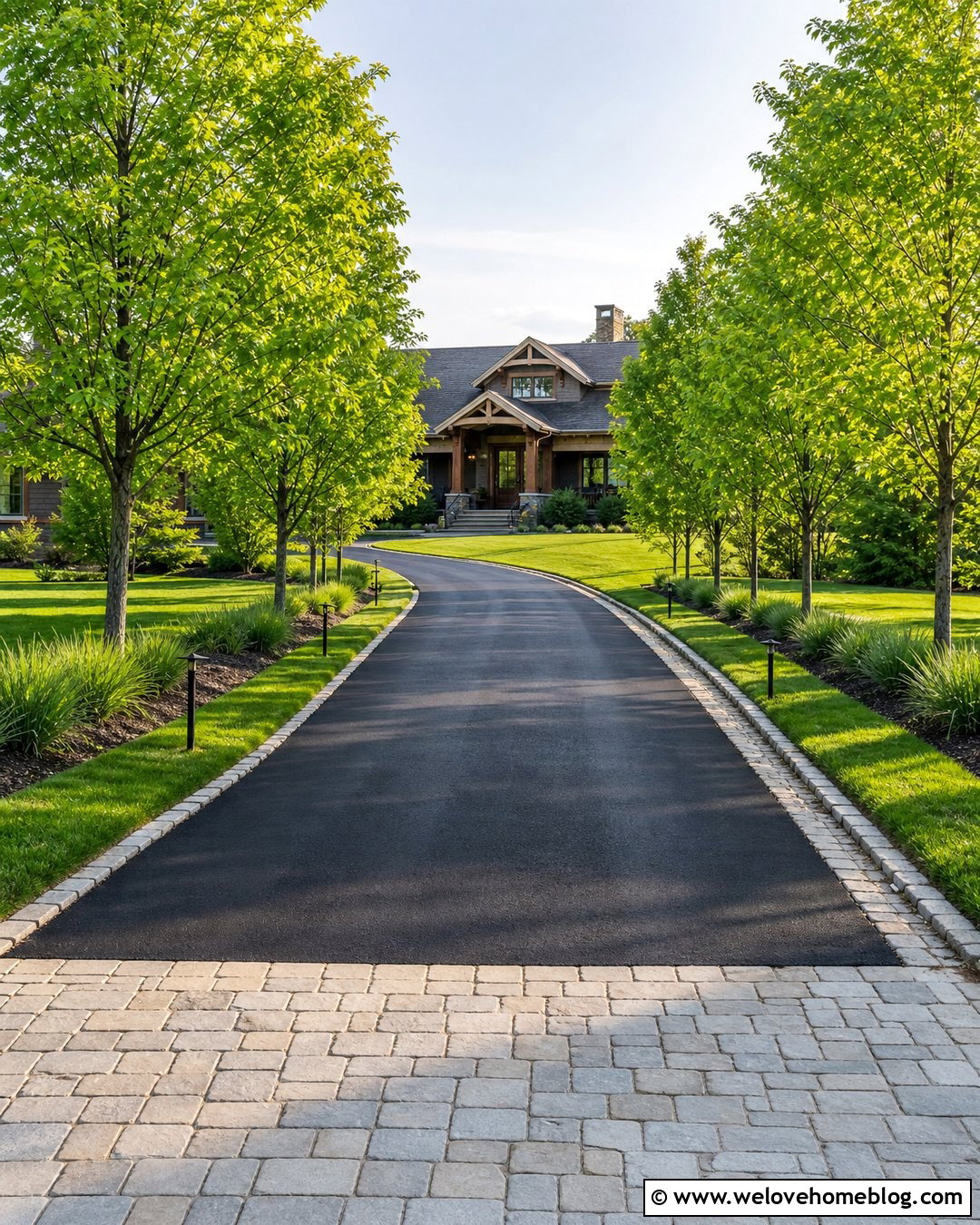
A long driveway can become an impressive approach when trees and lower plants are arranged with consistent spacing. Use smooth asphalt, compacted gray gravel, or exposed-aggregate concrete for a straight or gently curving route. Plant medium-size deciduous trees far enough from the pavement to allow healthy growth and comfortable vehicle clearance. Beneath them, use a continuous strip of lawn, low ground cover, or repeated ornamental grasses rather than complicated flower beds. Low-voltage lights can sit between the trees to define the route without dominating the daytime view. Near the house, widen the planting into larger beds that frame the garage and front entrance. Matching stone edging or a paver apron can provide a finished transition at the street. The repeated tree canopy gives the property scale while directing attention toward the home.
10. Sloped Driveway With Retaining Wall Planting
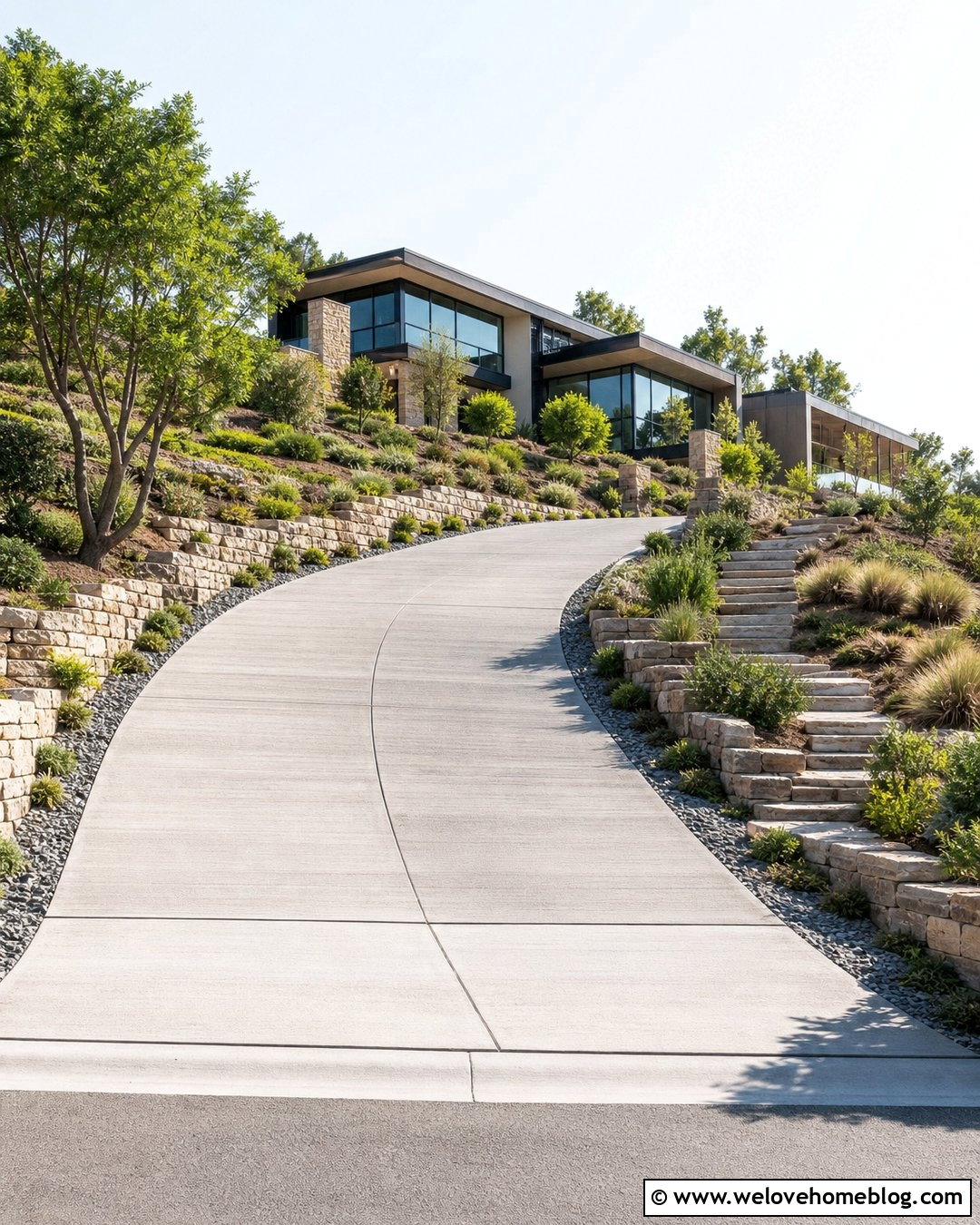
When a driveway climbs toward the house, retaining walls can become attractive garden features instead of purely structural necessities. Pair a broom-finished concrete or asphalt driveway with low walls made from natural stone or concrete blocks that complement the facade. Step the walls with the slope rather than creating one tall, overwhelming barrier. Plant trailing ground covers along the upper edges, then add compact shrubs and ornamental grasses in wider terraces. Keep plants low near the street and driveway bends to preserve visibility. Include drainage openings and a gravel strip behind or beside the wall as required by the site plan. A stairway or gently sloped walkway can run parallel to the driveway. Repeating wall stone near the porch ties the elevated landscape and driving surface into one cohesive front yard.
11. Wide Driveway With Paver Apron And Shrubs
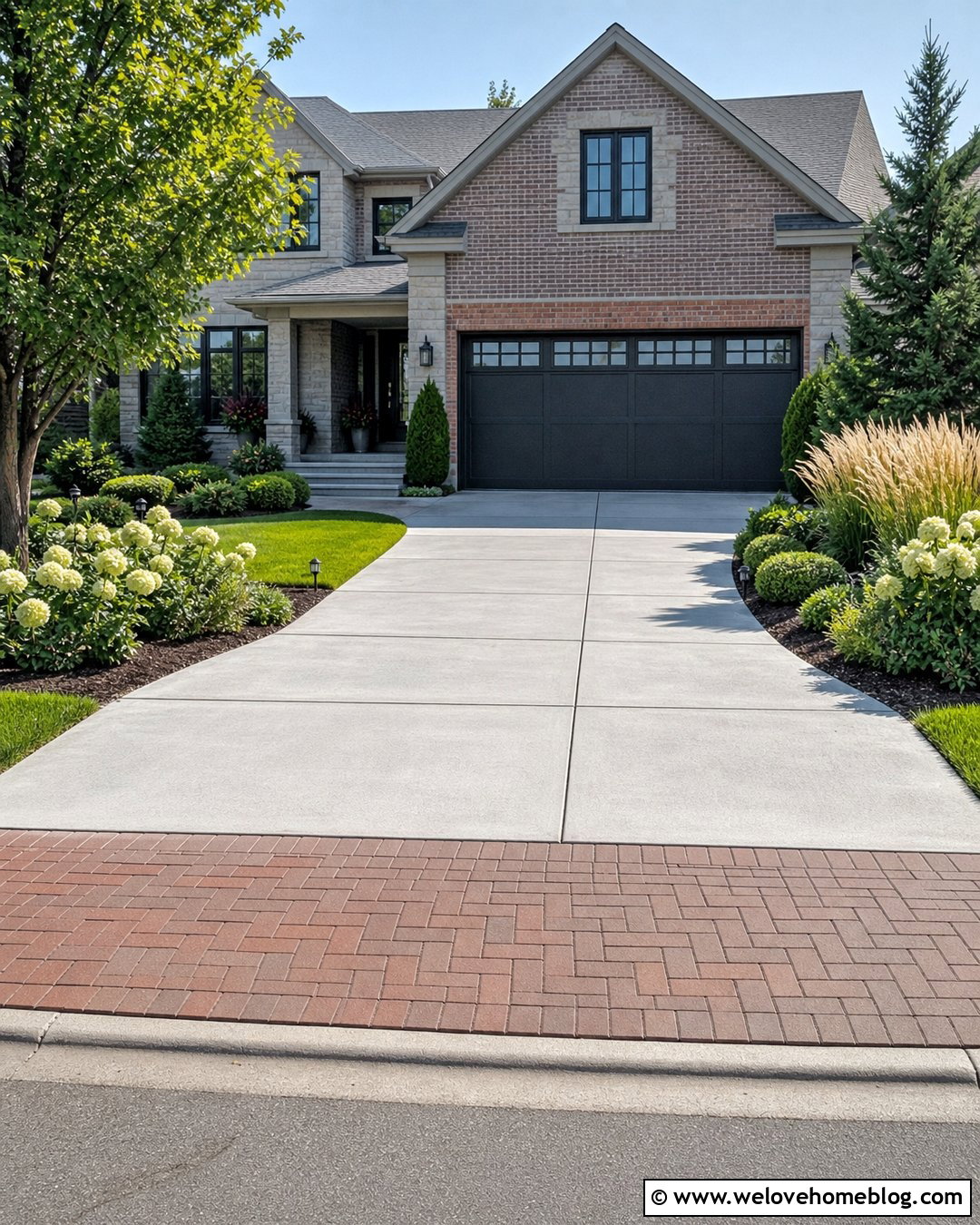
A broad driveway can overpower a front yard unless its edges and transitions are carefully defined. Break up a large gray concrete surface with a contrasting brick or concrete paver apron near the street and a matching band near the garage. Curved planting beds at the outer corners soften the driveway’s width without interfering with parking. Use medium-size evergreen shrubs, hydrangeas, and ornamental grasses arranged in generous groups rather than scattered individual plants. Preserve open lawn or a planted island between the driveway and front walkway where space allows. A shade tree positioned away from vehicle clearance areas can balance the garage visually. Repeat the apron material in the walkway or porch border. These details make the hardscape look intentionally designed while giving the landscaping enough scale to stand beside a wide parking area.
12. Curved Driveway With Native Plant Borders
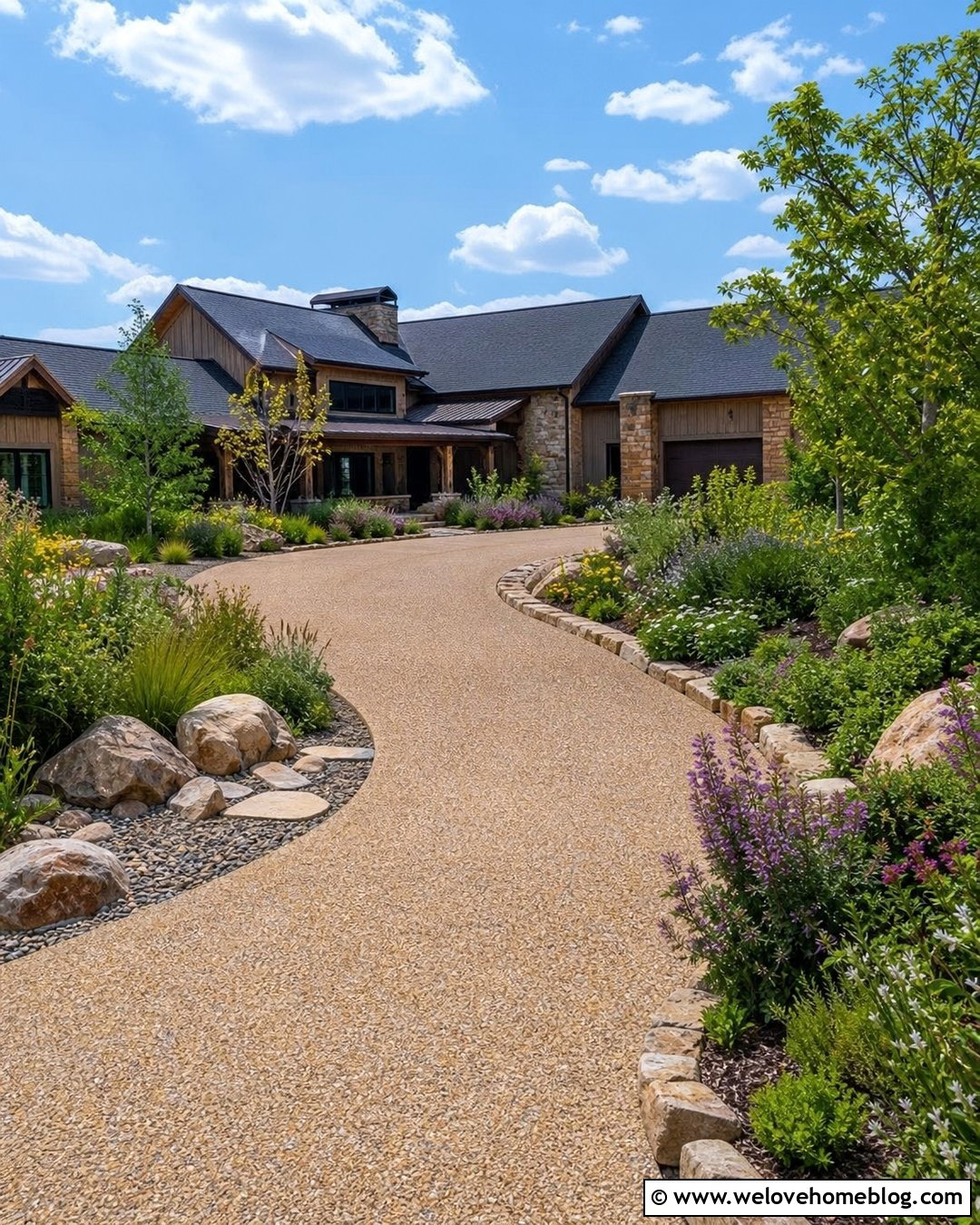
A curved driveway naturally guides the eye through the front landscape, especially when its planting follows the same sweeping lines. Use warm asphalt, tan gravel, or exposed-aggregate concrete edged with local stone. On the outside of the curve, create a wide border filled with native grasses, flowering perennials, and compact shrubs suited to the site’s sun and soil. Keep the inside curve lower and more open so drivers can see approaching vehicles and pedestrians. Repeat several plant groups instead of introducing a different variety every few feet. A small native tree near the middle of the curve can act as a focal point without blocking the house. Connect the driveway to the porch with a simple stone walkway. This design feels relaxed and regional while giving the curved layout clear structure.
13. Brick Driveway With Formal Boxwood Beds
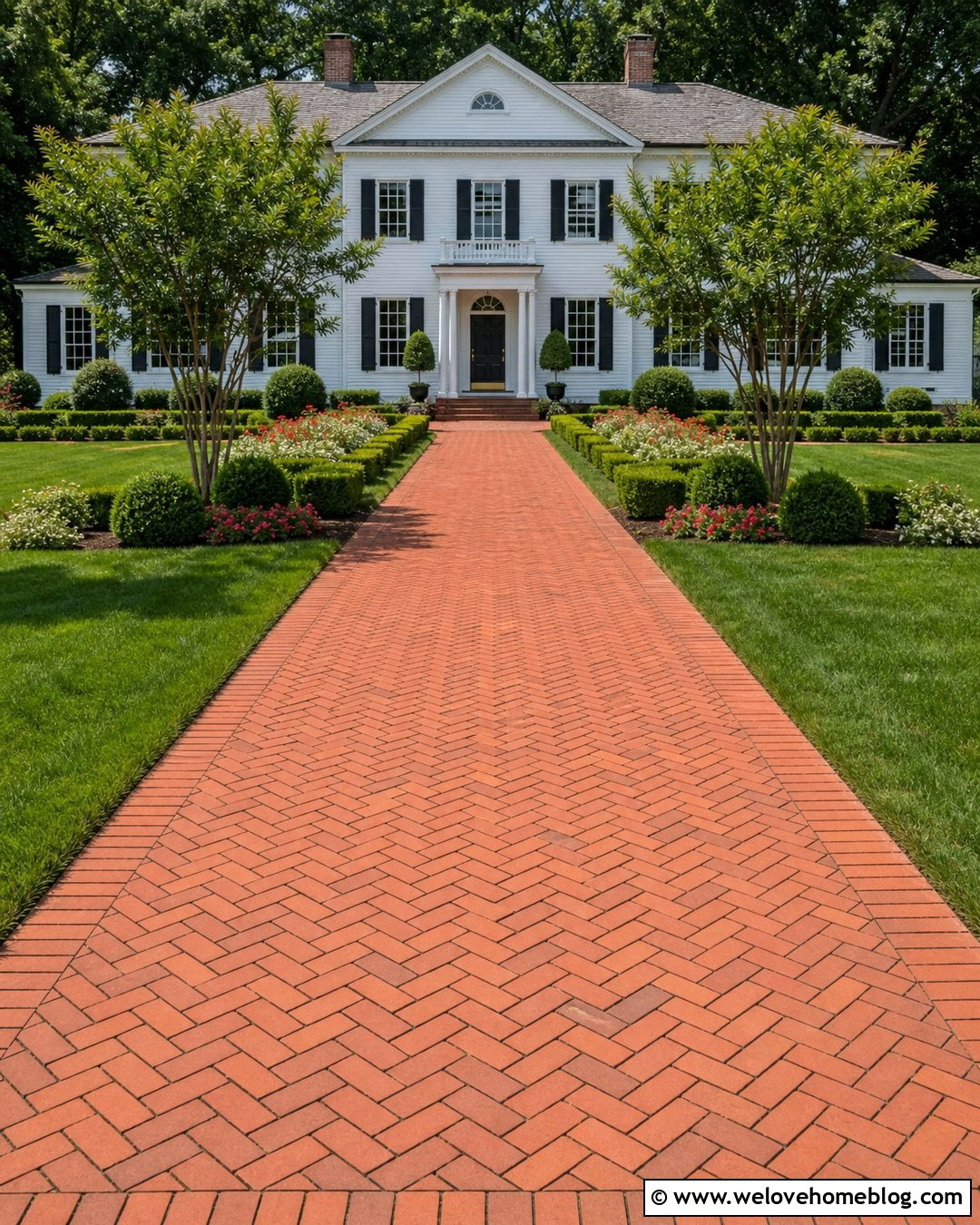
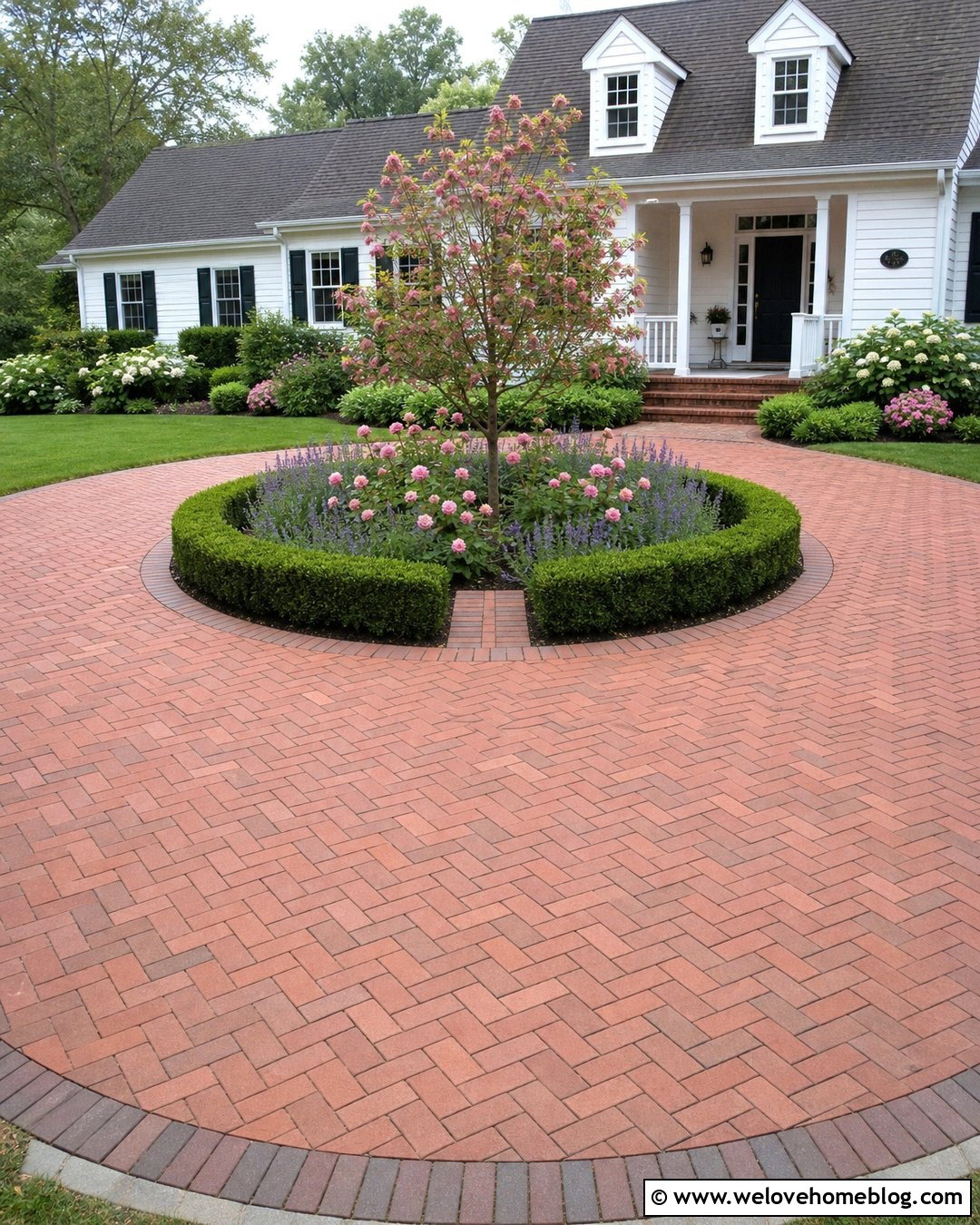
Clay brick pavers create a traditional surface that pairs beautifully with symmetrical front yard landscaping. Lay red or brown brick in a herringbone pattern and add a soldier-course border to strengthen the driveway’s visual edges. Place matching rectangular beds on both sides of the approach, using clipped boxwood, compact flowering shrubs, and seasonal flowers arranged in clear rows. Two small ornamental trees can frame the front walkway or driveway entrance. Keep the driveway straight and align its pattern with the garage and front steps for a balanced appearance. A brick walkway should branch from the parking area and lead directly to the door. This complete layout complements colonial, Georgian, and traditional brick homes. Formal structure provides year-round order, while carefully chosen flowers prevent the front yard from feeling too rigid.
14. Resin-Bound Driveway With Contemporary Planting
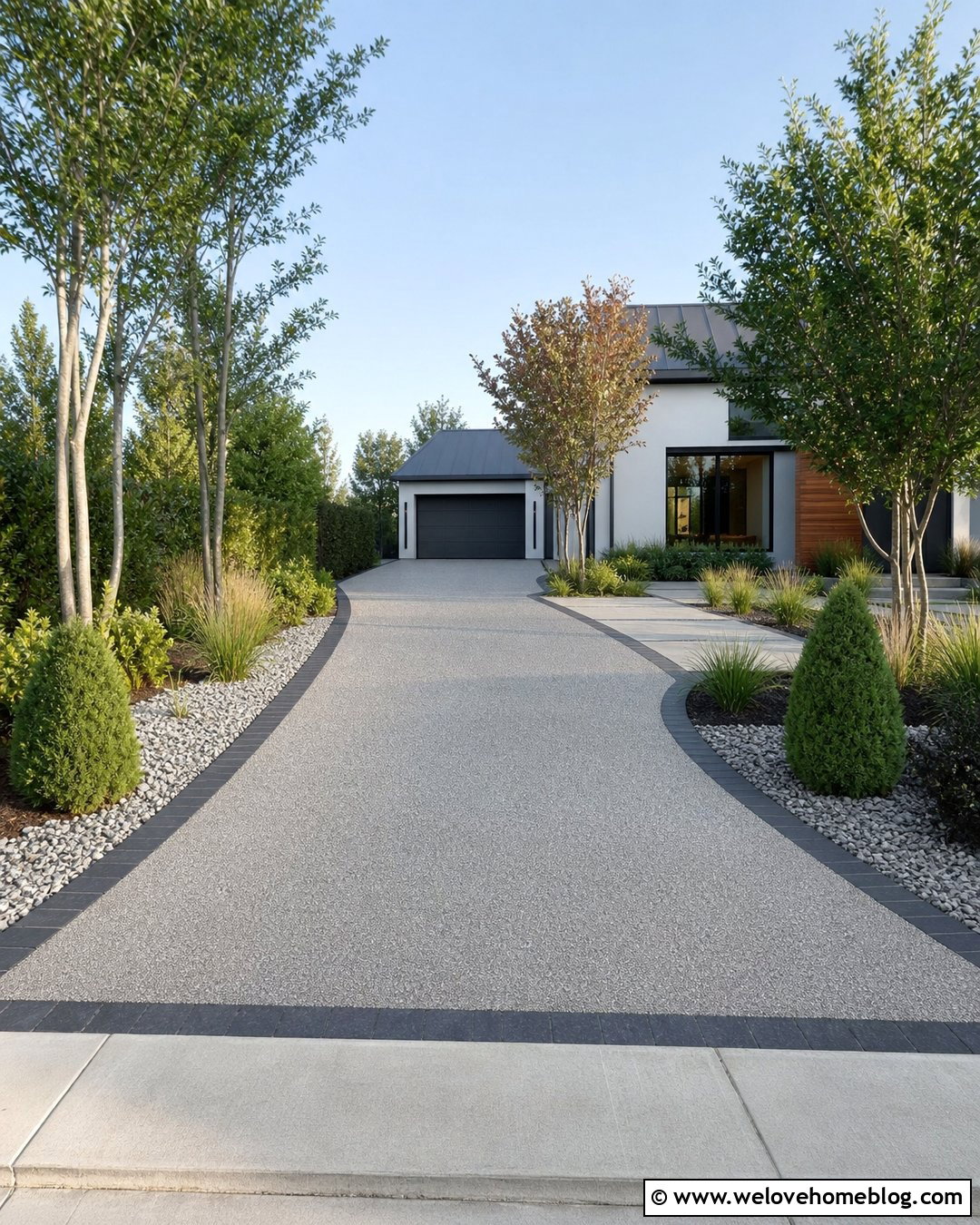
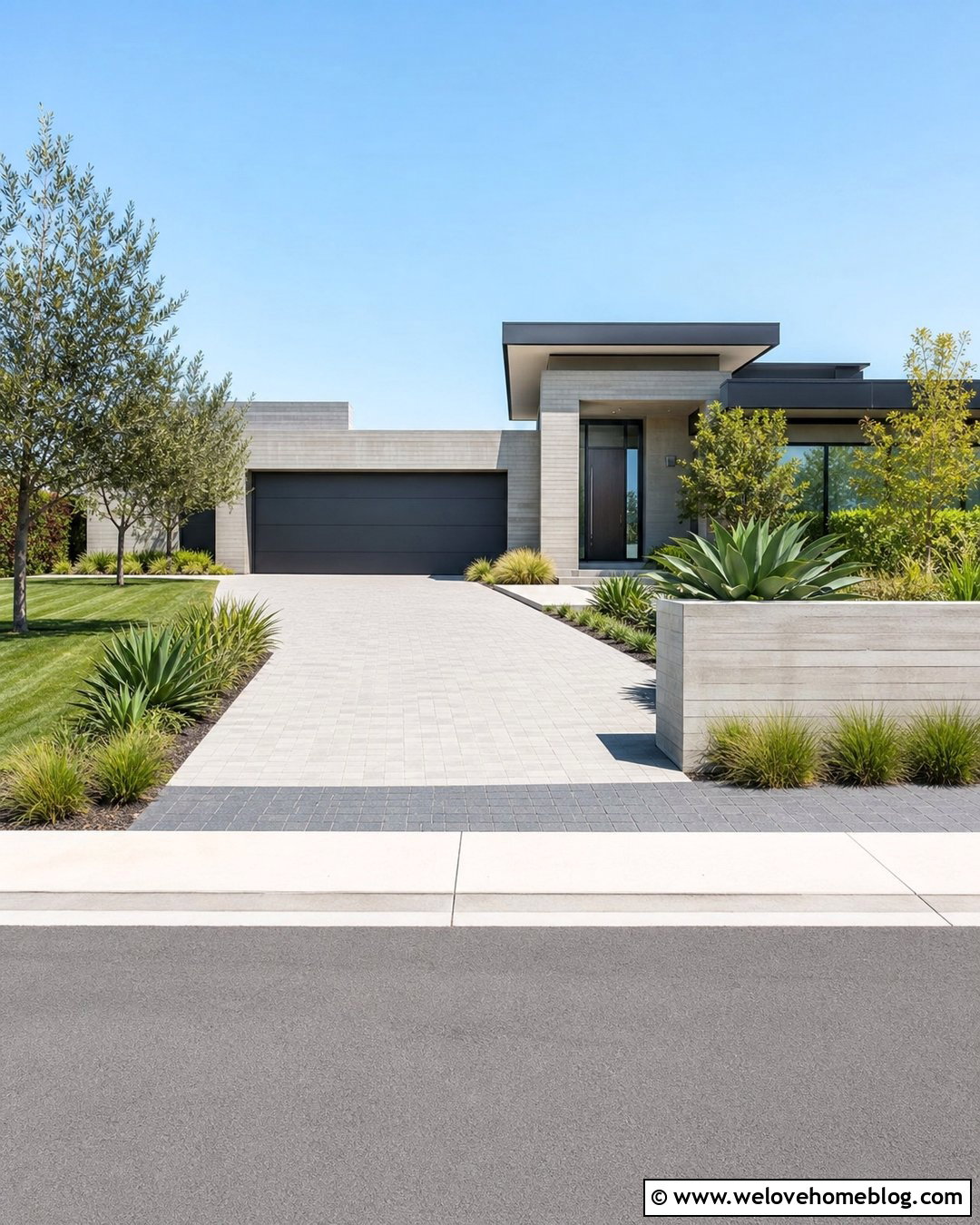
A smooth resin-bound gravel driveway provides a refined surface for a clean contemporary landscape. Choose a warm buff, silver-gray, or natural stone blend that complements the exterior finishes. Form a straight driveway with a subtle curve near the entrance, then define it with flush steel or charcoal paver edging. Beside the surface, create geometric planting beds filled with clipped evergreens, airy grasses, and a few multi-stem ornamental trees. Use decorative gravel between plants to continue the driveway’s textured appearance without making every area look identical. Large concrete stepping pads can connect the drive to a modern front door. Keep the plant palette controlled and repeat each variety in groups. The seamless driveway finish, precise borders, and layered contemporary greenery create a sophisticated front yard without requiring elaborate ornamentation.
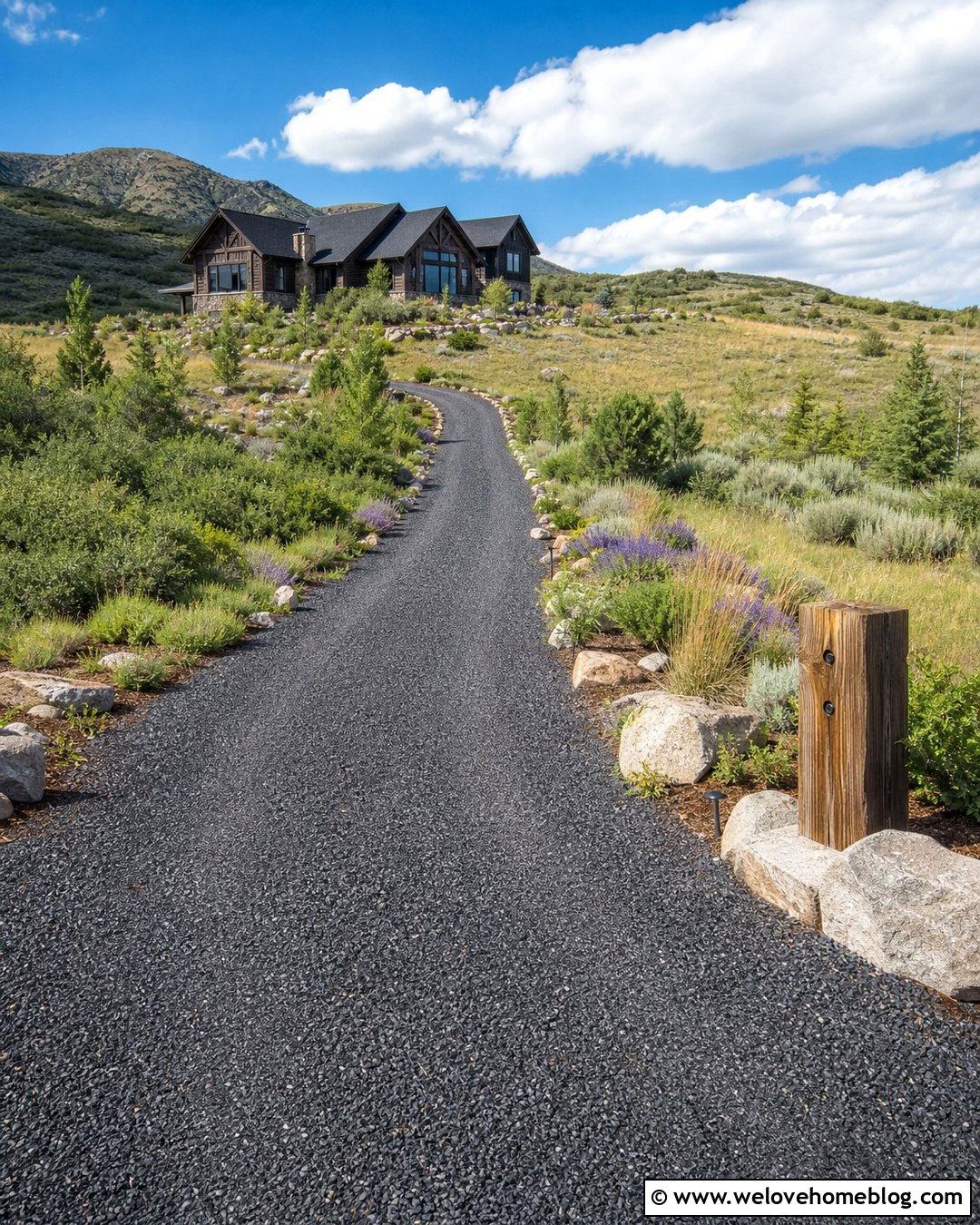
15. Driveway With Rain Garden Drainage
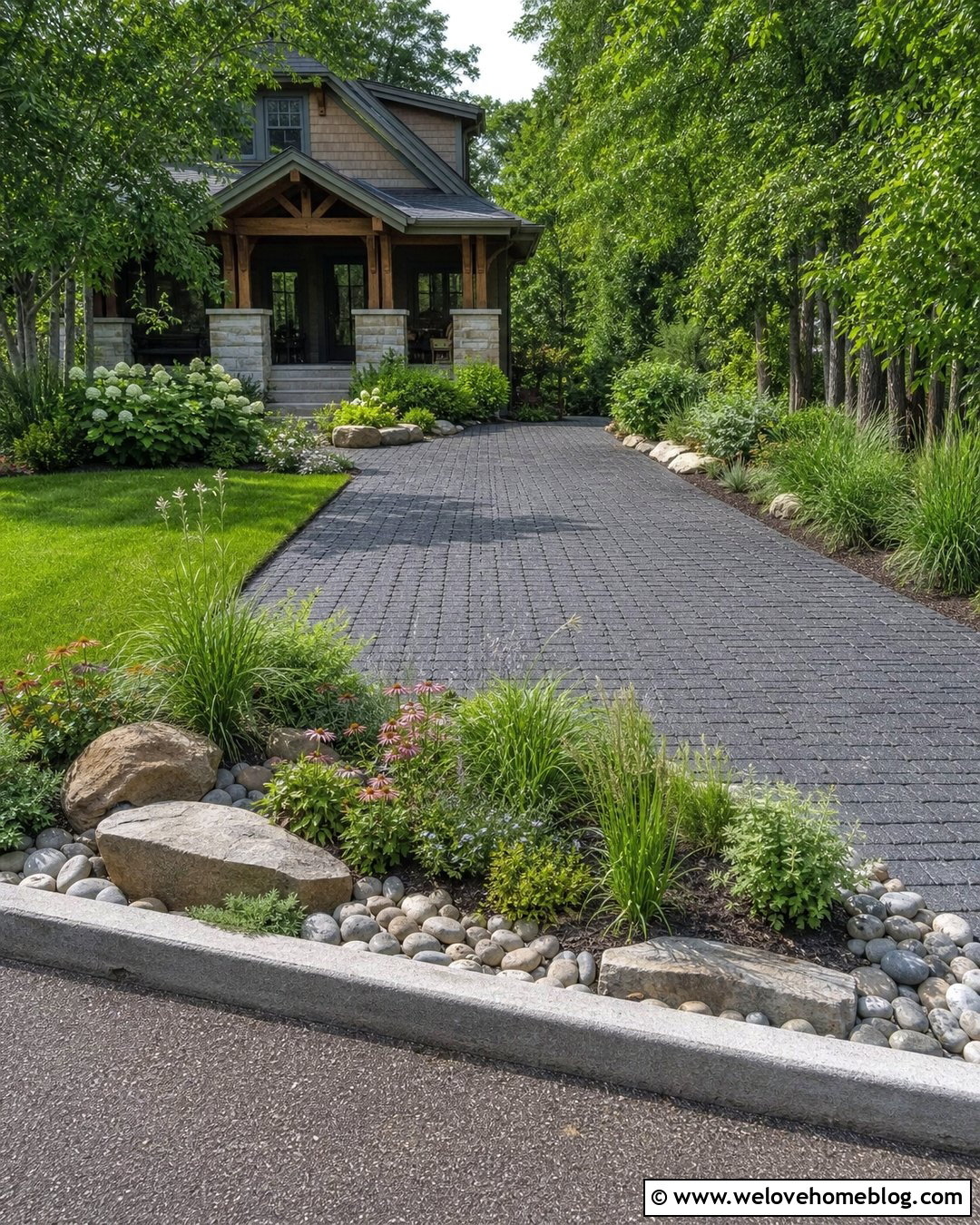
A low area beside the driveway can become an attractive rain garden that looks integrated with the front yard. Pair a permeable paver or porous asphalt driveway with a shallow, gently shaped planting basin along its lower edge. Use river rock at the water entry point, then arrange moisture-tolerant grasses, flowering perennials, and compact shrubs in repeated groups. The basin should appear like a natural garden bed rather than a drainage ditch. A stone or metal edge can separate it from the driving surface while allowing runoff to reach the planted area through planned openings. Keep taller plants away from the driveway entrance and front walkway. Continue a few of the same species in drier foundation beds. This approach connects stormwater management, planting, and hardscape into one visually appealing landscape composition.
16. Driveway With Dry Creek Landscaping
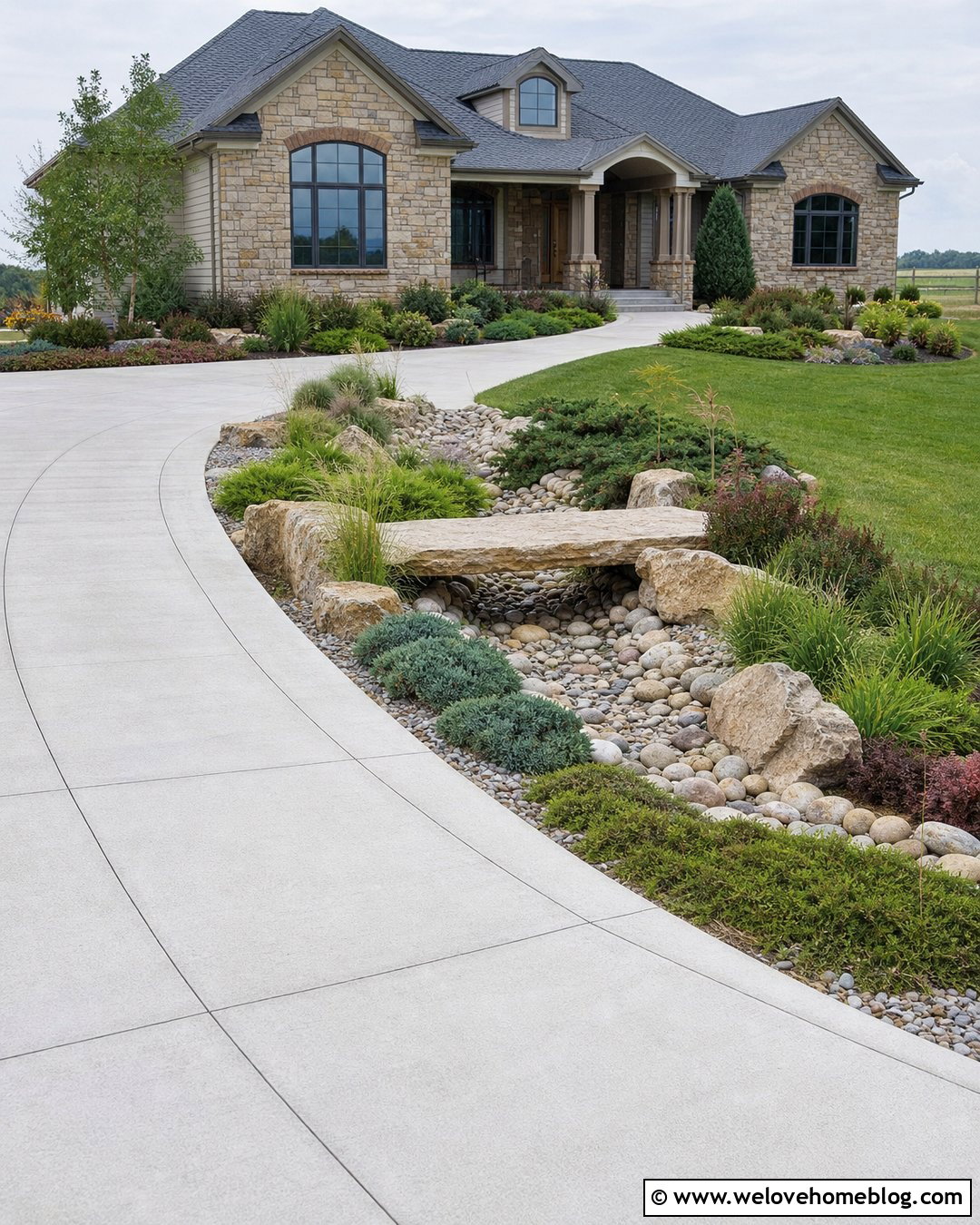
A dry creek adds texture and movement to a front yard while giving driveway runoff a defined route. Use a light-gray concrete or dark asphalt driveway with a curved stone-lined channel positioned along the natural low side. Build the creek with mixed river rocks, several larger boulders, and a few wider pockets that look like natural pools. Plant ornamental grasses, low evergreen shrubs, and spreading ground covers along the banks. A flat stone bridge can carry the front walkway across the channel and make the entrance more memorable. Keep stones contained below the driveway edge so they do not roll onto the pavement. Match several boulders with stone accents on the house or porch. The finished landscape feels natural and intentional, even during dry weather, while reducing the visual dominance of the driveway.
17. Driveway With Raised Planter Borders
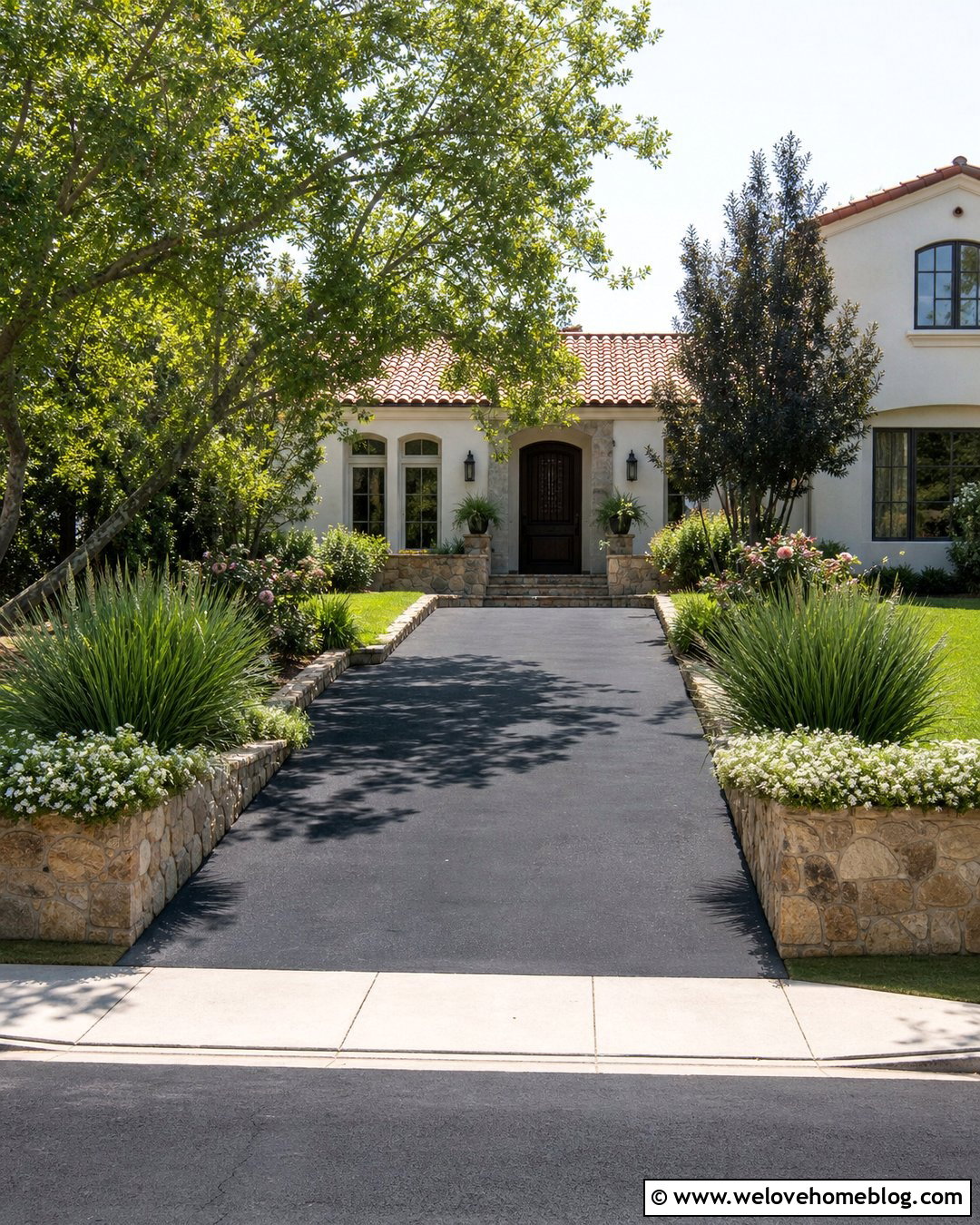
Raised beds can give a flat driveway stronger definition and add planting where soil conditions are difficult. Frame a straight concrete paver or asphalt driveway with low planters built from brick, natural stone, or smooth stucco that matches the house. Keep the walls around seat height or lower so they do not obstruct vehicle doors and sightlines. Fill the planters with trailing ground covers at the edges, compact flowering shrubs in the middle, and a few upright grasses for height. Make the beds wider near the porch and shorter near the street. Integrate wide openings wherever people need to step from parked cars onto the walkway or lawn. Repeating the planter material around the front steps helps connect the hardscape. This design makes a narrow or plain front yard feel more architectural and organized.
18. Driveway With Entry Pillars And Hydrangeas
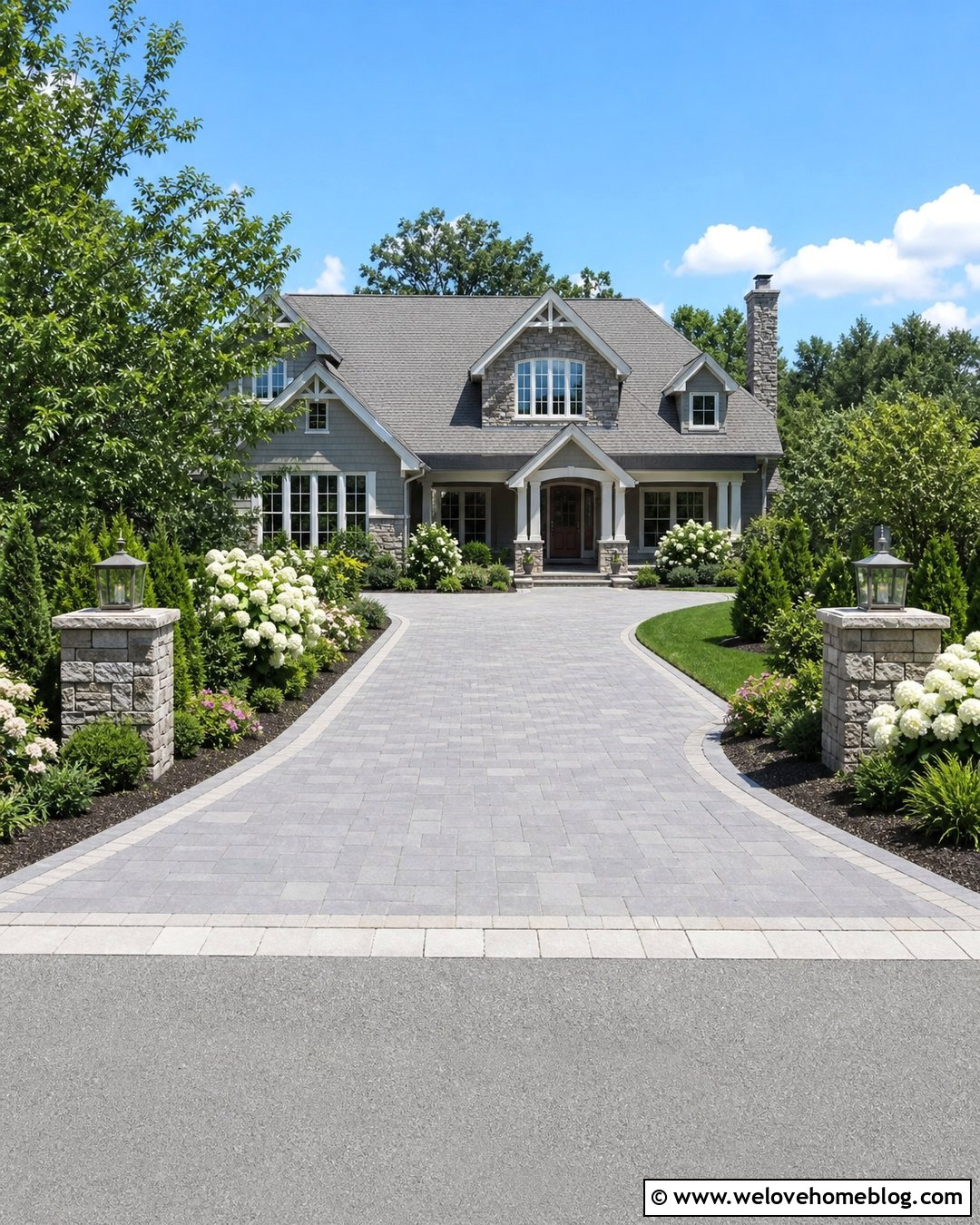
Driveway pillars create a clear sense of arrival when they match the scale and architecture of the property. Place two brick, stone, or stucco pillars at the entrance of a concrete, asphalt, or paver driveway, leaving generous clearance for vehicles. Curve planting beds outward from each pillar to blend them into the lawn. Large hydrangeas can form the main planting mass, supported by compact evergreens and low perennials near the pavement. Keep shrubs far enough back that mature growth will not narrow the entrance. Simple lanterns or address plaques may be added to the pillars, but avoid excessive decoration. Repeat the pillar material in driveway edging or porch details. The combination of structured masonry, abundant flowers, and a clearly defined surface gives traditional and craftsman homes a polished, welcoming frontage.
19. Driveway With Mailbox Garden
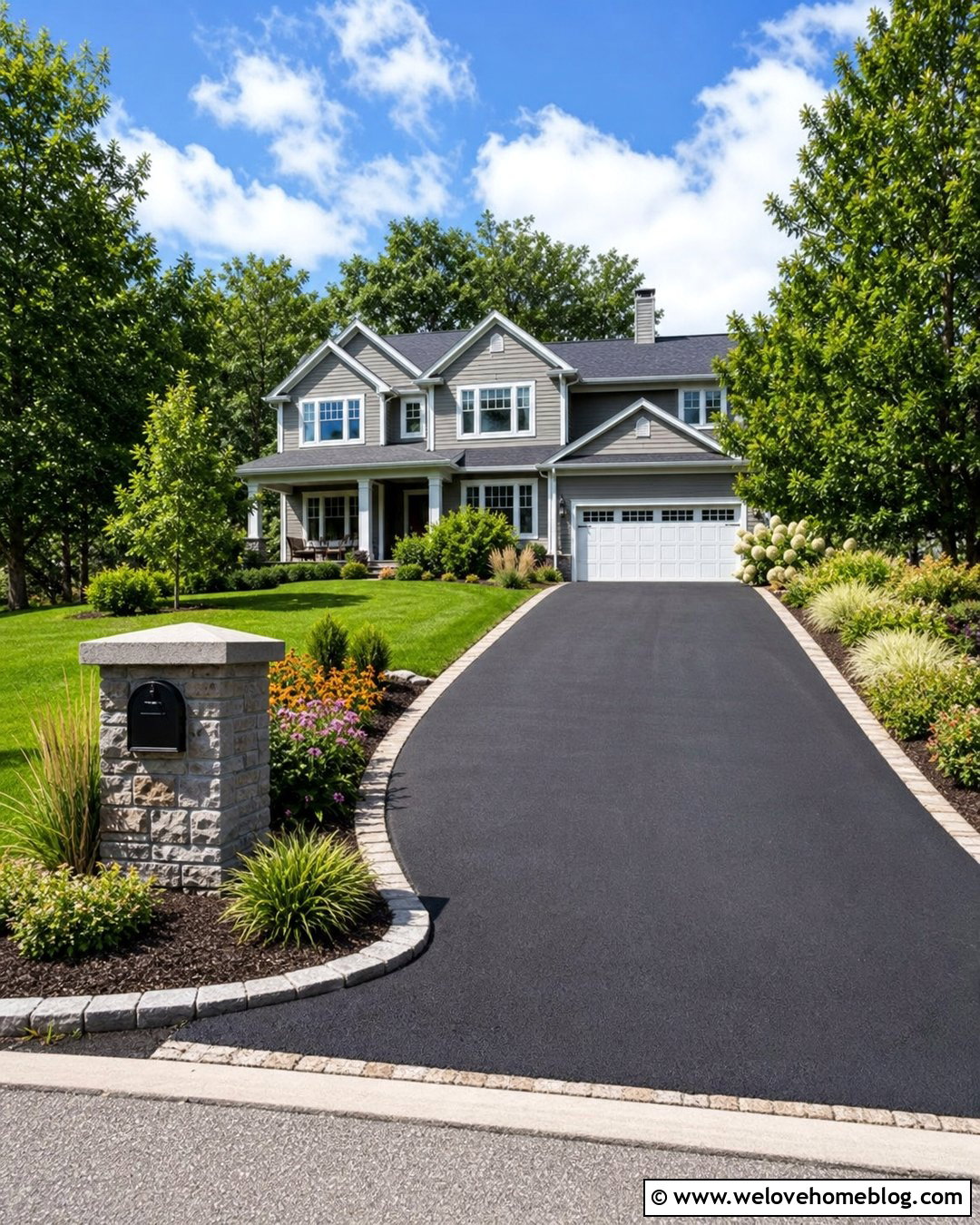
A mailbox garden can make the street-facing end of the driveway feel finished instead of forgotten. Begin with a compact brick, stone, or painted wood mailbox structure that complements the house. Surround it with a curved bed that follows the edge of a poured-concrete, asphalt, or gravel driveway. Choose low plants that tolerate roadside conditions and will not hide the mailbox or block visibility. Ornamental grasses, sturdy ground covers, compact shrubs, and long-blooming perennials can provide texture without constant trimming. Use stone, metal, or brick edging to keep mulch away from the driving surface. Repeat one or two mailbox-bed plants near the front porch so the design feels connected. This small landscape feature works best when it serves as the opening note for the larger driveway and front yard composition.
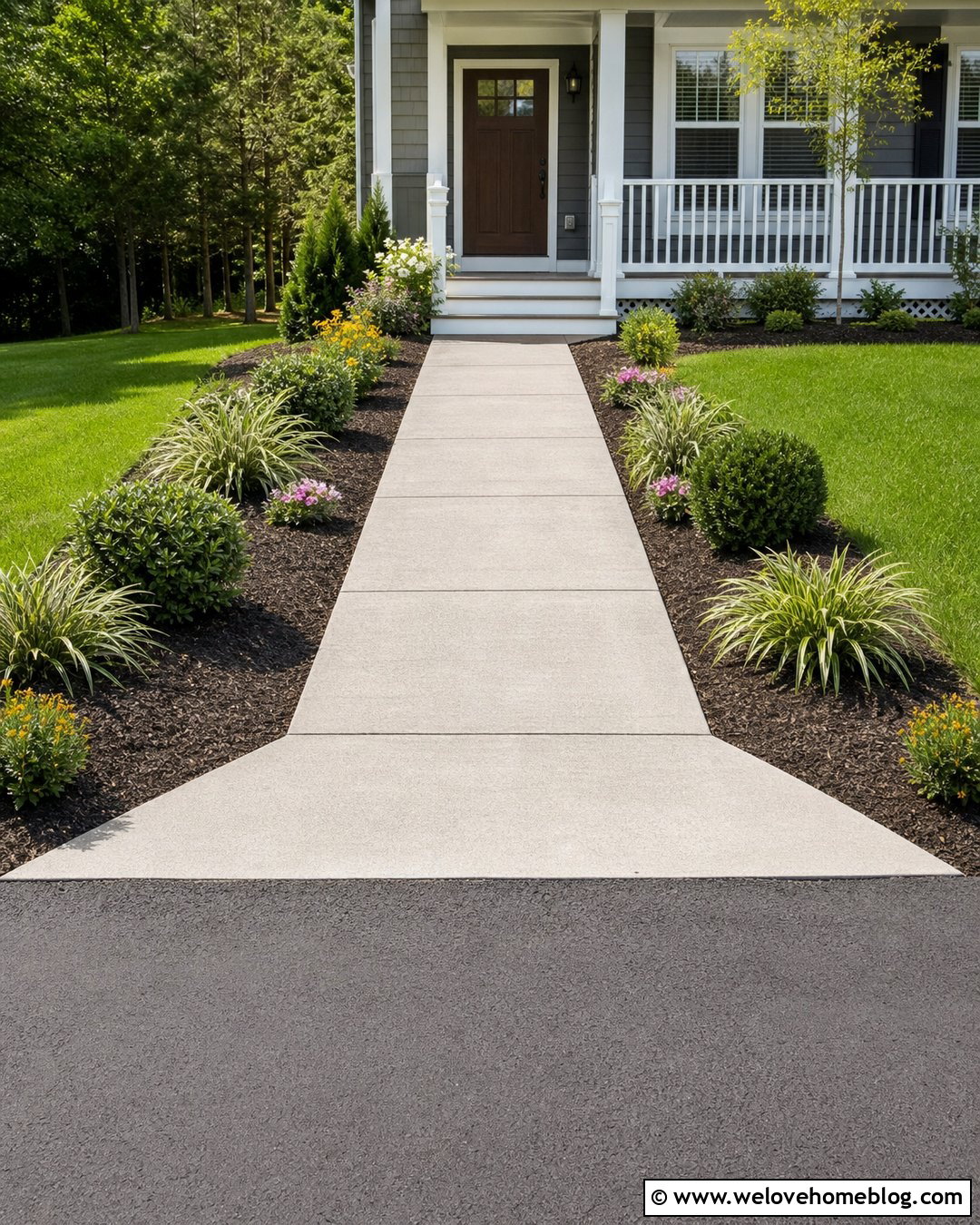


20. Driveway With Front Walk Connection
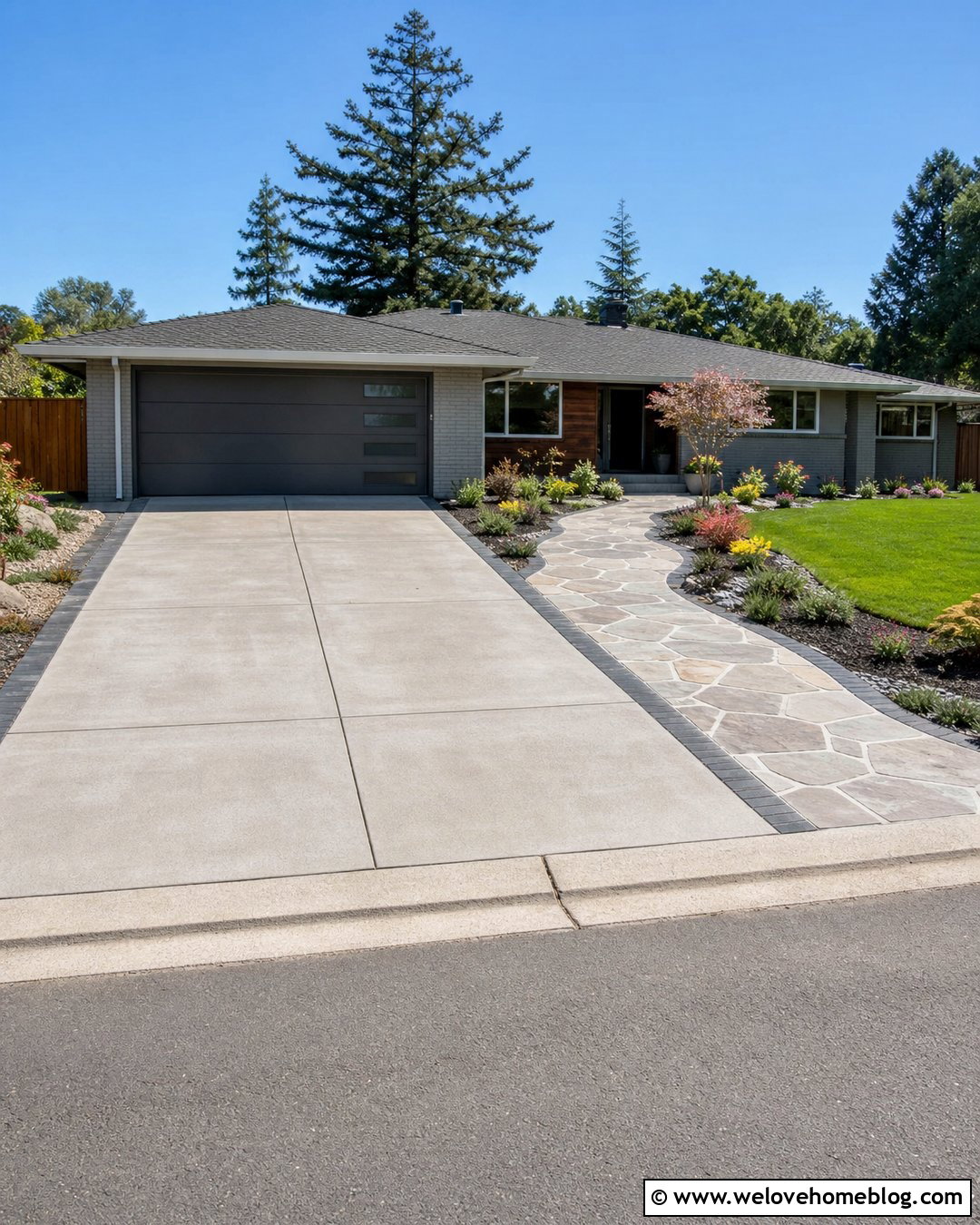
Can visitors immediately tell how to reach the front door? A strong walkway connection is essential when the driveway points toward the garage instead of the main entrance. Use a broad paver, brick, or flagstone path that branches from the driveway at a natural parking point. Contrast the walkway slightly with the driveway so it remains easy to recognize, but repeat an edging color to create unity. Frame the junction with low shrubs, flowers, or a small ornamental tree rather than a tall planting that hides the route. Curved beds can guide the eye from the street toward the porch. Keep the path open and comfortably scaled near vehicle doors. When the driveway, walkway, and planting lines work together, the entire front yard becomes easier to understand and more welcoming.
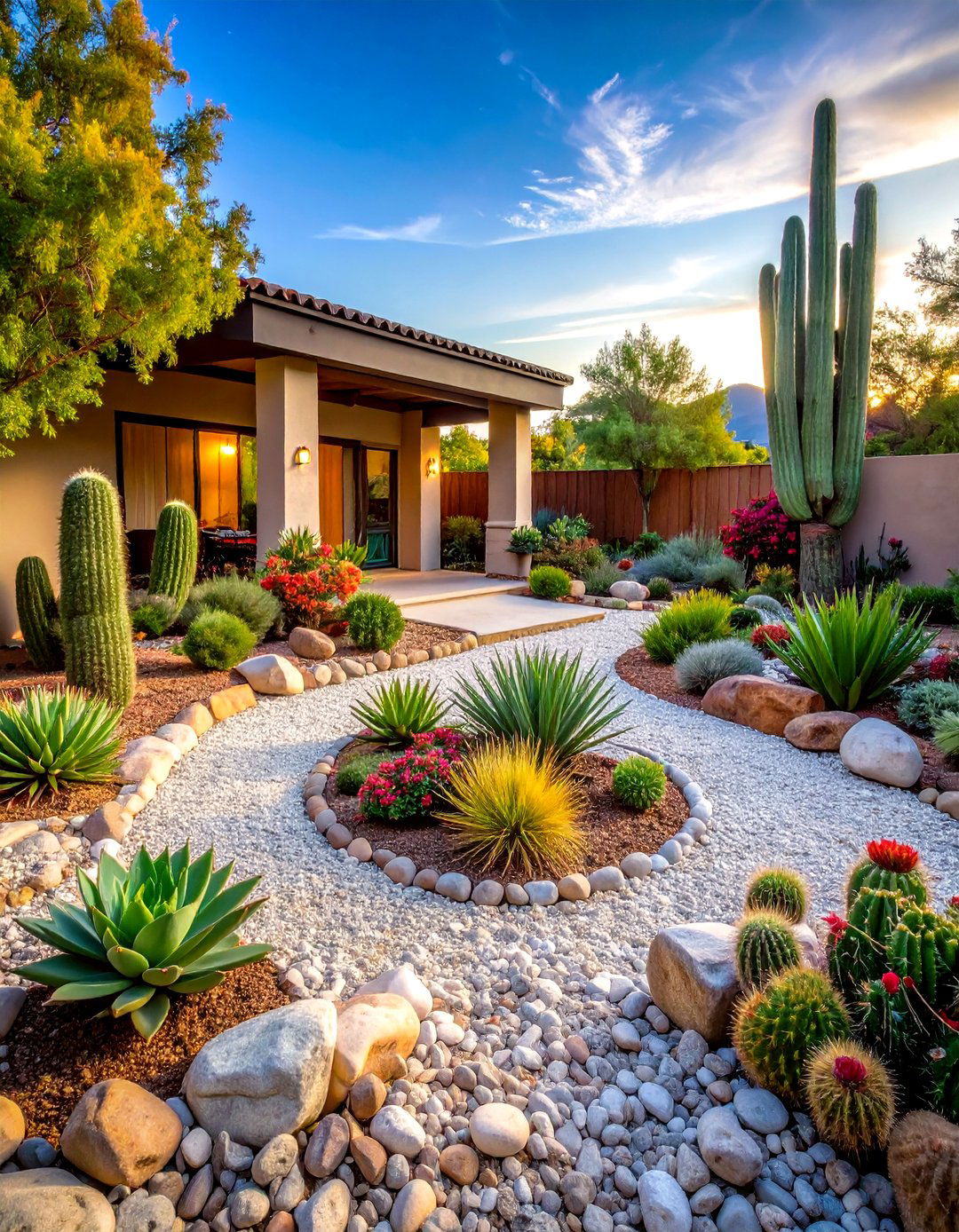
21. Desert Driveway With Drought-Tolerant Landscaping
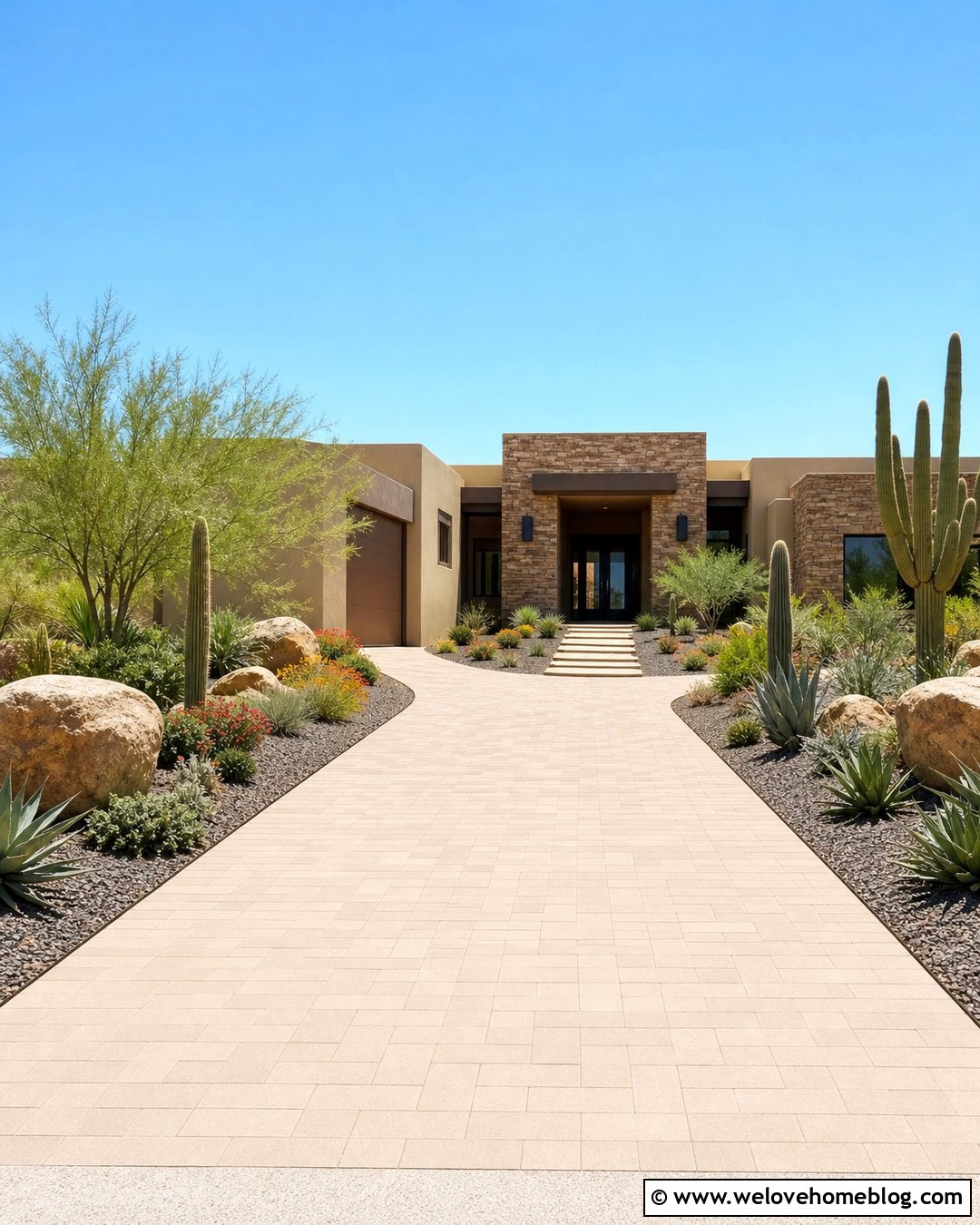
A desert front yard can feel colorful and layered without relying on a large lawn. Pair a pale concrete, decomposed granite, or warm paver driveway with broad beds of crushed stone in contrasting earth tones. Arrange agave, yucca, desert spoon, flowering shrubs, and sculptural cacti in spaced groups, leaving open gravel between them. Add several large boulders that reflect the colors of the home and surrounding landscape. Steel edging can separate the driveway from decorative gravel and reduce material migration. A stepping-stone walkway should remain visually clear as it crosses the planted area toward the front door. Place taller plants near the house and lower specimens at driveway corners. This complete xeric composition works well with Southwestern, ranch, and modern architecture while providing strong shape, texture, and curb appeal.
22. Woodland Driveway With Shade Planting
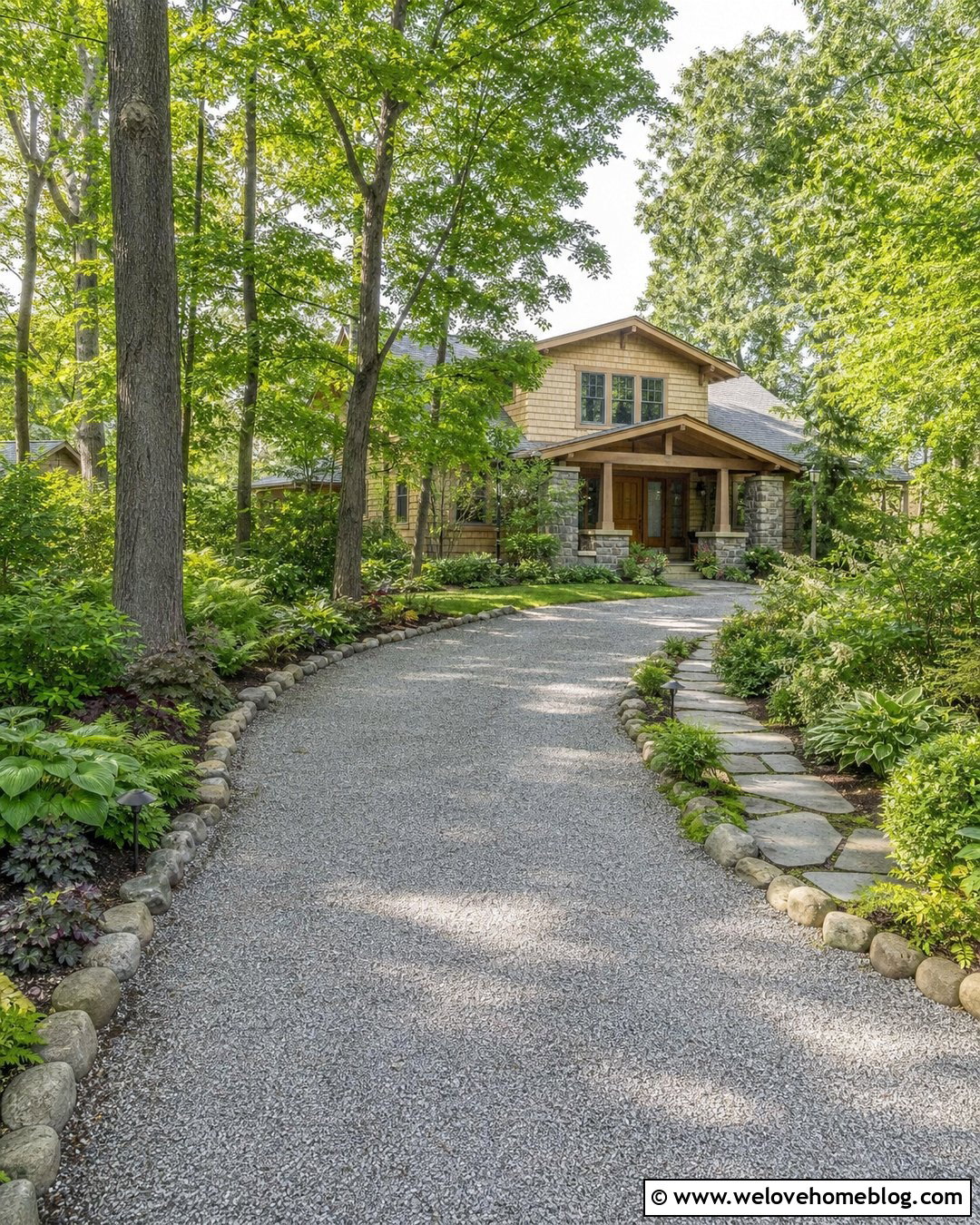
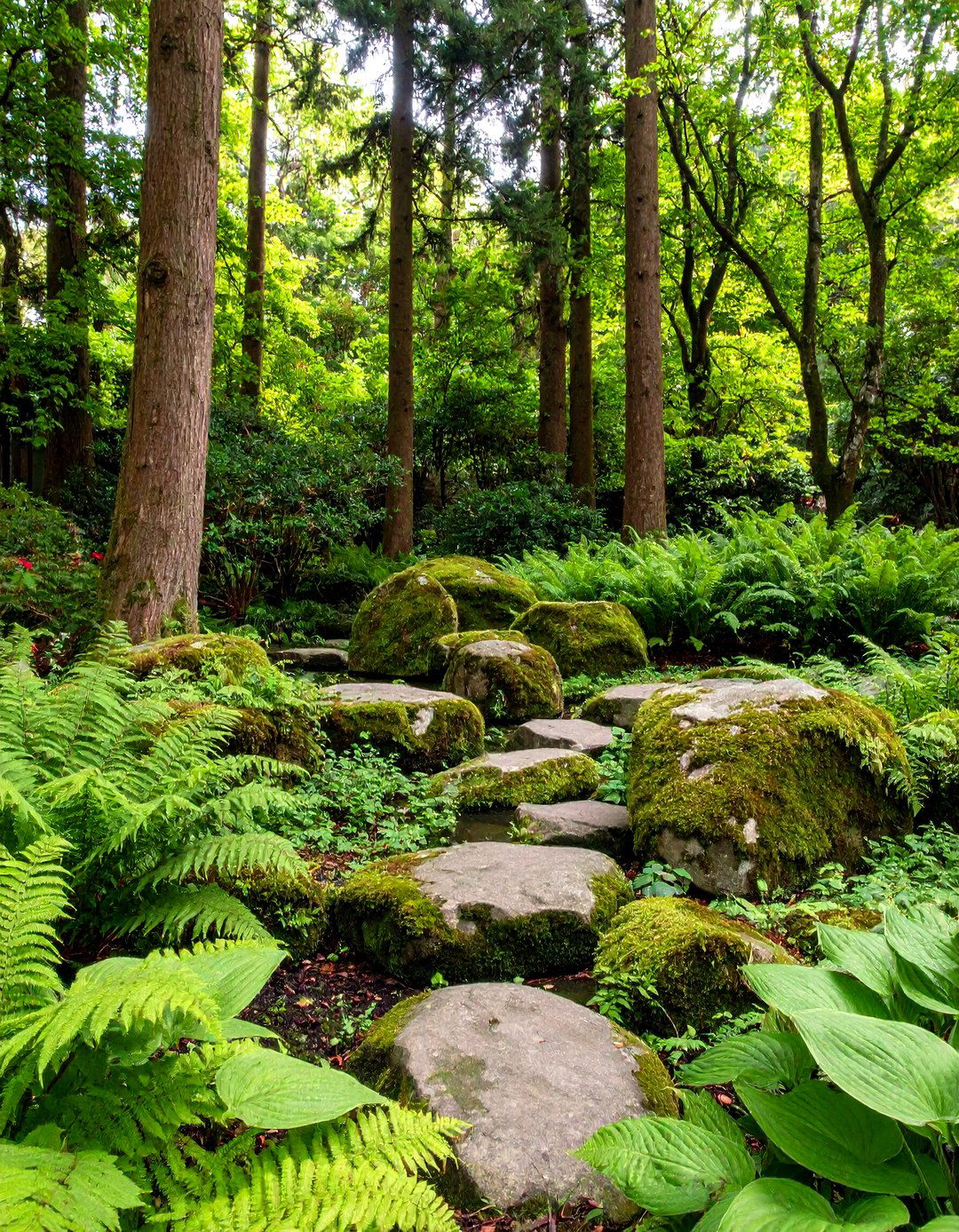
A driveway beneath mature trees needs planting that embraces shade rather than struggling against it. Use compacted gray gravel, dark asphalt, or permeable pavers for a gently curved surface leading to a craftsman or wooded contemporary home. Preserve generous space around established tree trunks and avoid raising soil over major roots. Along the driveway, create naturalistic beds filled with ferns, hostas, sedges, heuchera, and shade-tolerant shrubs appropriate for the region. Natural stone edging can contain gravel while blending into the setting. Add low path lights where the driveway meets the walkway, but keep the daytime design simple. A woodland path of irregular flagstones can lead toward the porch. Repeating foliage textures and limiting bright flower colors helps the driveway feel comfortably settled within the existing tree canopy.
23. Coastal Driveway With Salt-Tolerant Landscaping
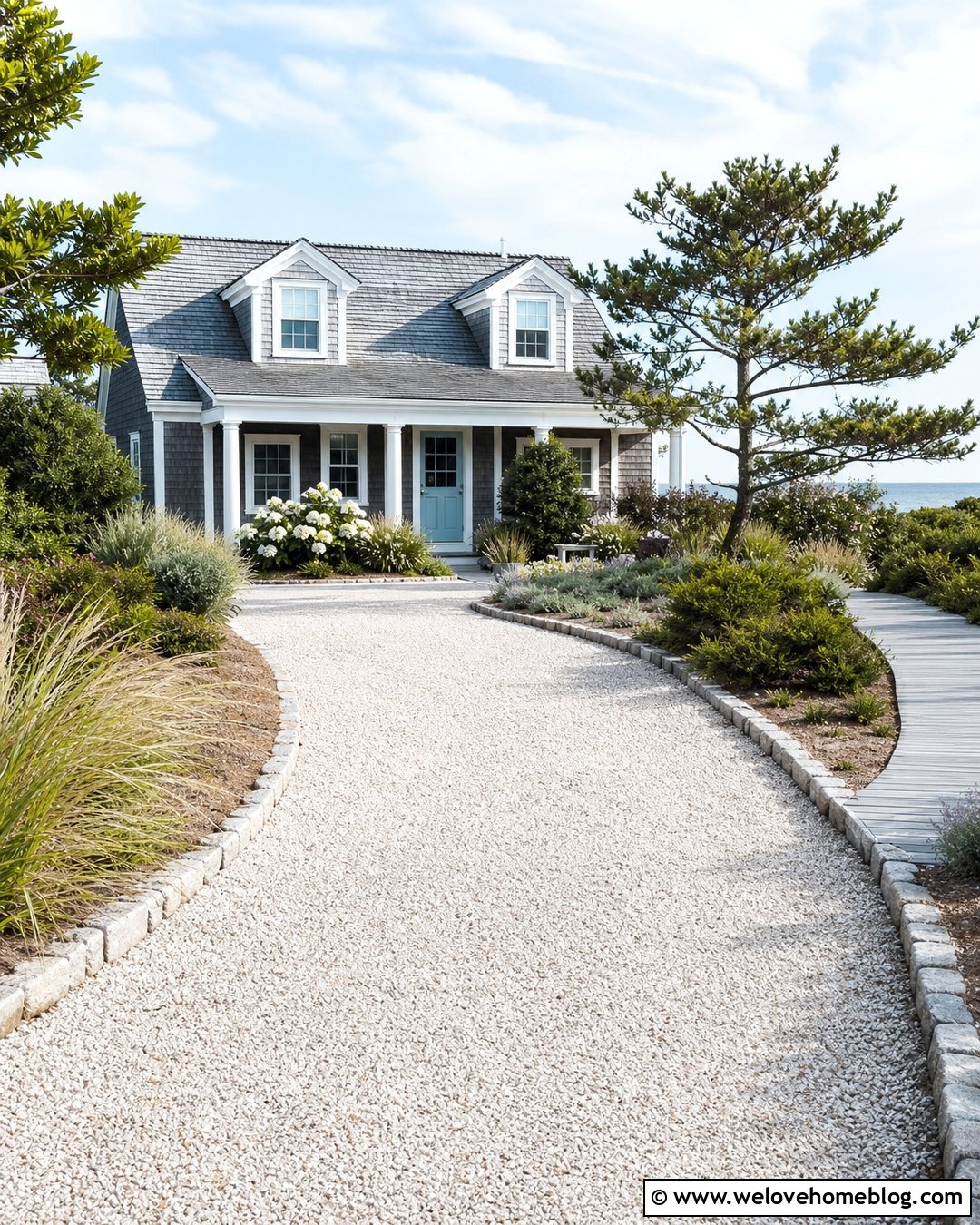
Coastal driveway landscaping should look relaxed while standing up to wind, sandy soil, and exposed conditions. Choose shell gravel, pale concrete pavers, or light exposed-aggregate concrete for a straight or gently curved driveway. Define it with weathered granite, natural stone, or a narrow band of darker pavers. Plant broad drifts of salt-tolerant ornamental grasses, low evergreen shrubs, and hardy flowering perennials suited to the local coastline. Keep the arrangement airy so wind can move through it without damaging tightly packed plants. A boardwalk-inspired timber path or pale paver walkway can connect the driveway to a coastal cottage. Add one wind-shaped ornamental tree if space permits. The soft colors, durable planting, and casual layout create an inviting front yard that complements rather than competes with the seaside setting.
24. Low-Maintenance Driveway With Rock Beds
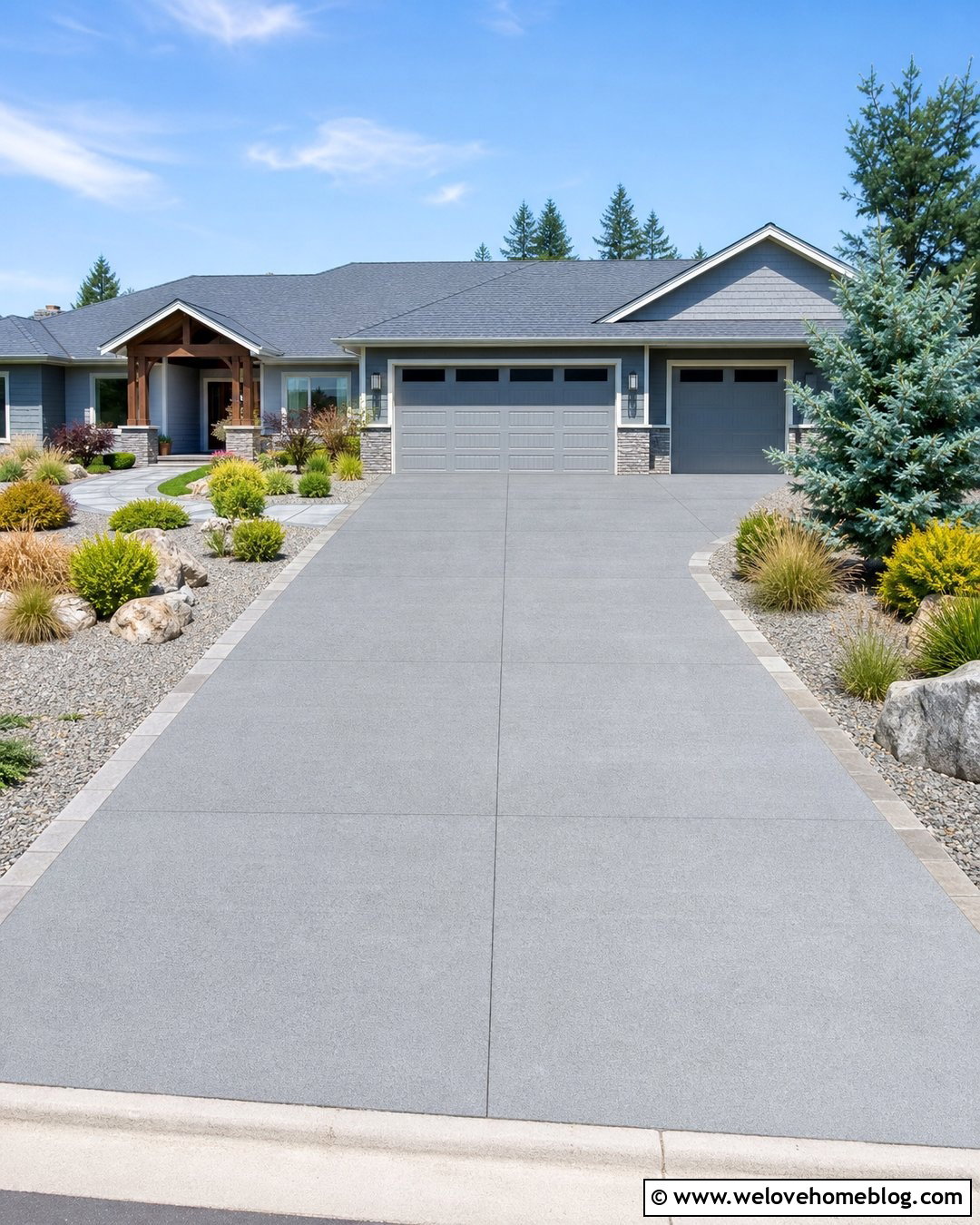
For a tidy front yard with fewer routine tasks, combine a durable driveway with simple rock-mulched planting beds. Use broom-finished concrete, black asphalt, or interlocking concrete pavers edged with flush stone curbing. Replace narrow strips of difficult lawn beside the driveway with broad beds of washed gravel or crushed rock. Add compact evergreen shrubs, tough ornamental grasses, and several larger accent plants rather than many small varieties. Space plants according to their mature size so the design remains open and manageable. A few boulders can add height and connect the rock color to the house facade. Include a clearly edged walkway leading from the driveway to the porch. This approach creates clean lines and year-round structure while avoiding the empty appearance that can result from using decorative stone without enough planting.
25. Budget Driveway With Mulch And Perennials
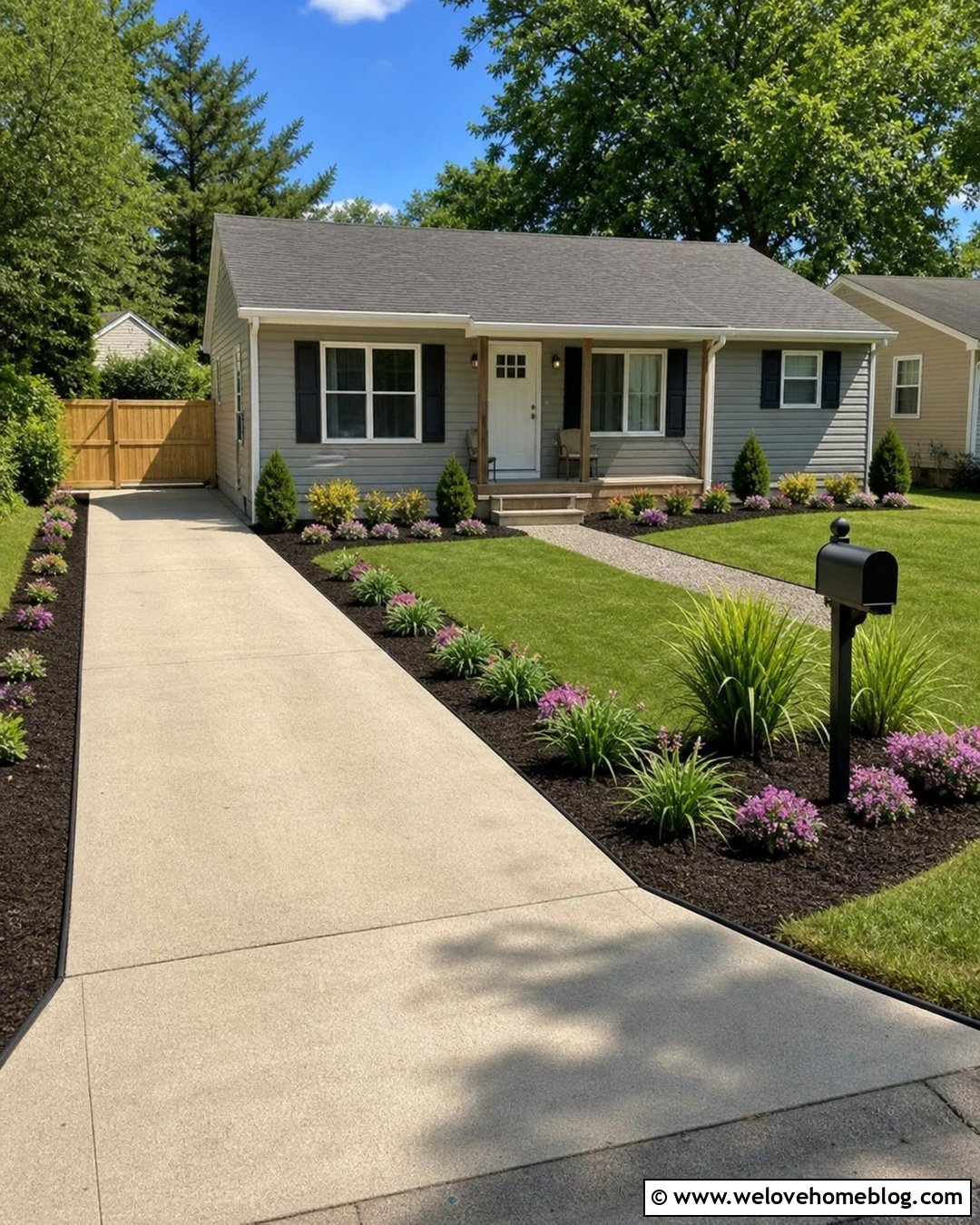
An attractive front yard does not require replacing an existing driveway. Refresh a plain concrete or asphalt surface by repairing obvious edges, cleaning the pavement, and defining it with an affordable metal or plastic landscape border. Create wide, simple beds beside the driveway using mulch and repeated groups of reliable perennials. Add a few small shrubs near the house for permanent structure, then divide and repeat flowering plants as they grow. A curved bed at the driveway entrance can hold a mailbox, ornamental grass, and seasonal color. Connect the parking area to the front door with basic concrete stepping stones or compacted gravel. Preserve healthy lawn rather than redesigning the entire yard. Concentrating improvements at the entrance, walkway, and foundation produces a cohesive driveway landscape while keeping materials and installation manageable.
Conclusion:
The best 25 front yard landscaping with driveway ideas treat parking, planting, circulation, and architecture as parts of one complete design. Start by studying the driveway’s material, width, drainage, and connection to the front door. Then select borders and plants that suit the available space, sunlight, climate, and level of maintenance you prefer. Large yards may support circular drives, tree-lined approaches, and entrance pillars, while compact properties often benefit from narrow beds and a clearly defined walkway. You do not have to replace the entire driveway to improve curb appeal. Better edging, repeated plants, fresh mulch, and one strong focal point can make the whole front yard feel more intentional.

Related posts:


Leave a Reply