
A well-designed walkway does more than keep shoes off the lawn. It creates a clear, welcoming route from the parking area to the entry while helping the front yard feel connected and complete. These 20 concrete walkway from driveway to front door ideas explore straight, curved, wide, and space-saving layouts for many home styles. You will also find practical combinations featuring brick borders, stone edging, planted beds, lighting, decorative finishes, and expanded landings. Concrete is especially versatile because its color, texture, joint pattern, and shape can be customized to complement the driveway and house. A stable surface, readable route, and coordinated materials can improve both everyday function and curb appeal. () Explore these 20 concrete walkway from driveway to front door ideas to find a complete look for your property.

1. Straight Concrete Walkway With Brick Border
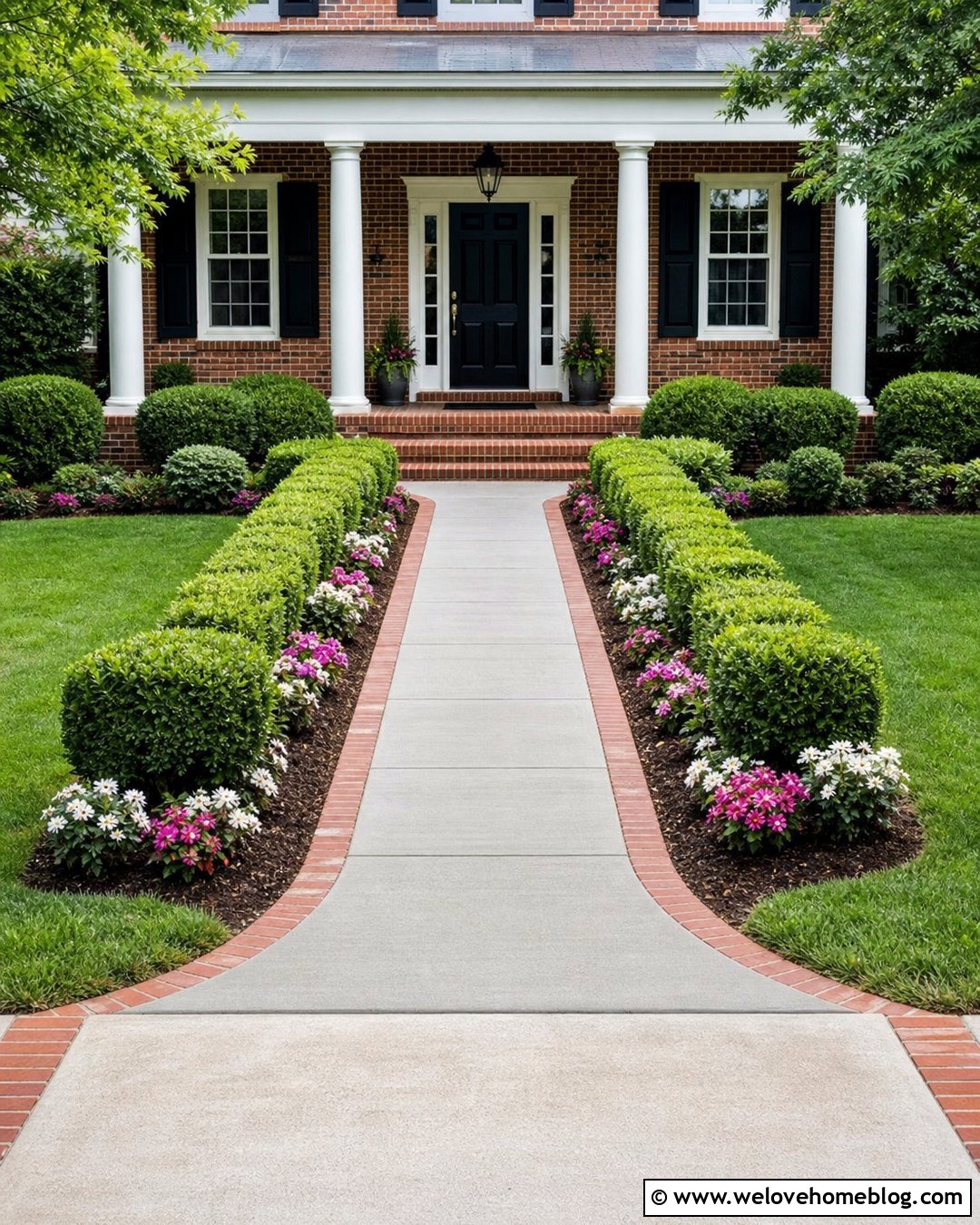
A straight broom-finished concrete walkway offers a clean and practical connection between the driveway and front door. This layout works especially well when the entrance is already visible from the parking area. Add a red or charcoal brick border to distinguish the walkway from the driveway and introduce color near the lawn. A slightly flared opening makes the starting point easier to recognize, while a wider landing near the porch creates a comfortable transition. Frame the path with clipped boxwoods, seasonal flowers, and a narrow mulch bed. Aligning the walkway with the front steps strengthens the direct visual route. This complete design feels particularly natural beside a Colonial, Cape Cod, or traditional brick house.
2. Curved Concrete Walkway With Stone Edging
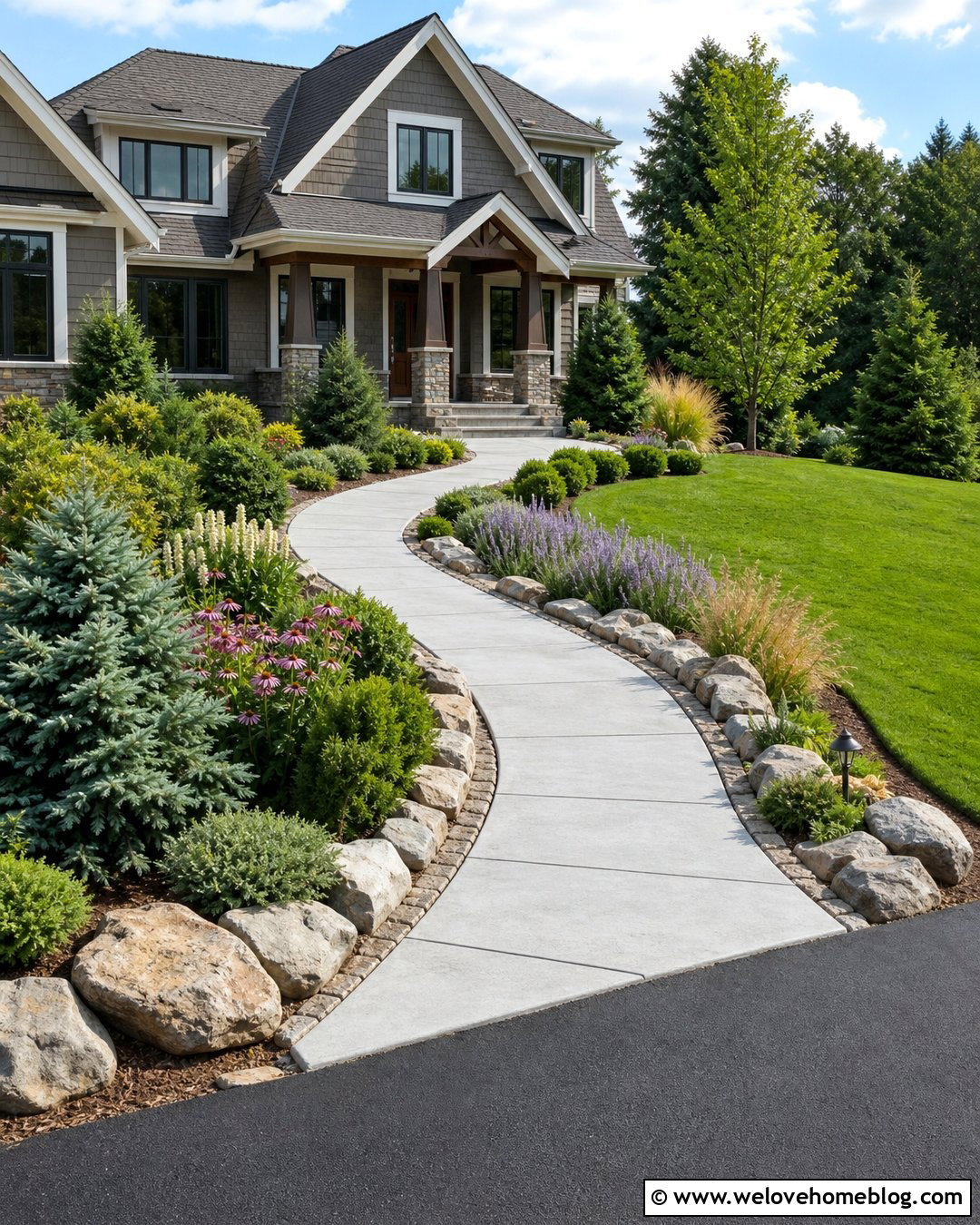
Soft curves can make a short front-yard route feel more relaxed without sending visitors in the wrong direction. Use light gray poured concrete with a fine broom finish, then outline the walkway with natural fieldstone or dark granite set close to the surface. The curve should respond to an existing feature, such as a planting bed, ornamental tree, or projecting porch. Repeating low shrubs along the outside edge helps emphasize the route toward the door. On the inside curve, use an open lawn or a simple bed of ornamental grasses and flowering perennials. Keep the bend broad rather than winding. This combination gives a ranch, cottage, or craftsman home an inviting garden-focused entrance while maintaining a stable walking surface.
3. Large Concrete Slab Walkway With Grass Joints
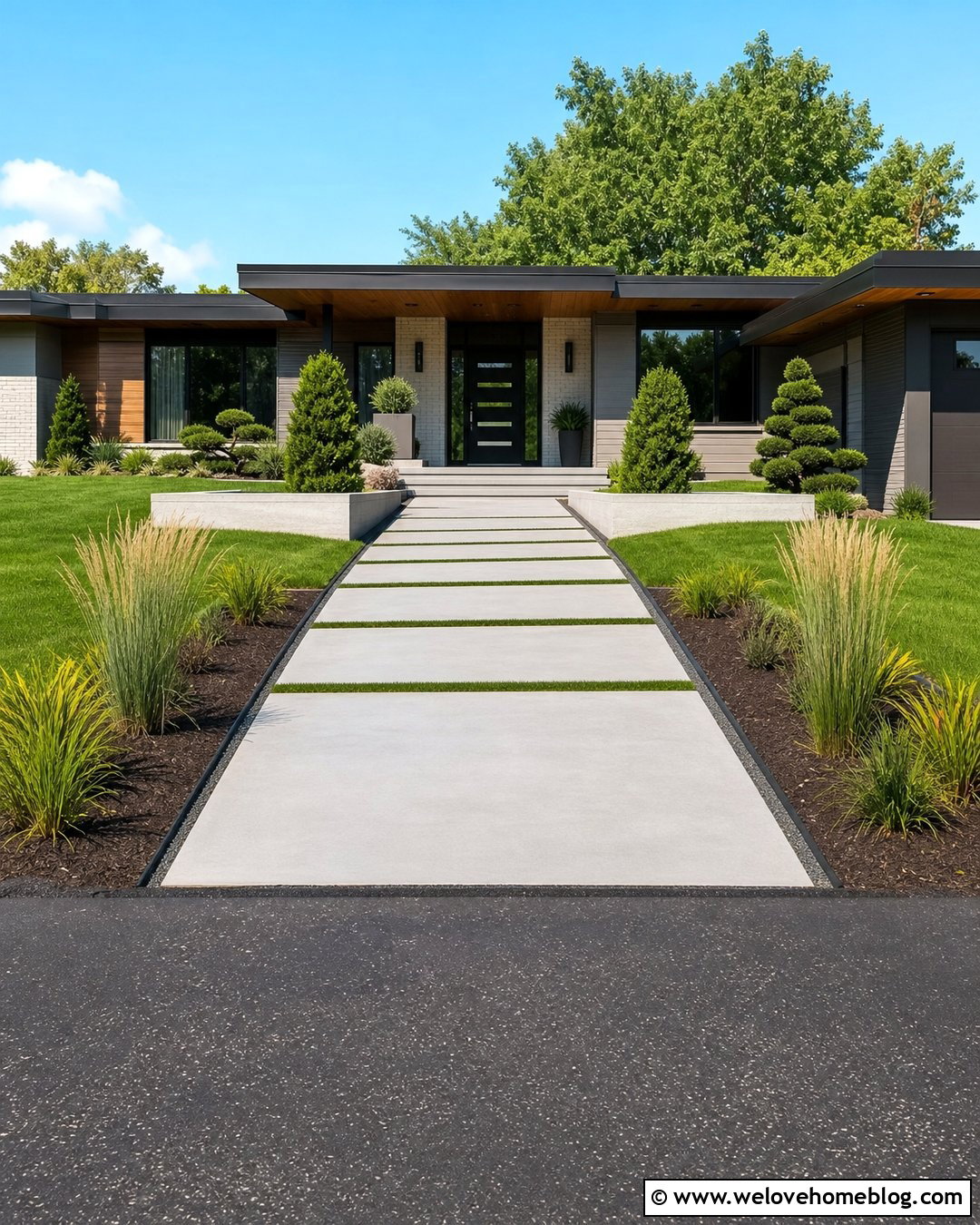
Large rectangular concrete slabs create a modern walkway that feels lighter than one continuous strip. Space the panels evenly and fill the narrow joints with closely cut turf or durable ground cover. The slabs should form a direct, comfortable route from the driveway to a broad concrete porch landing. Use smooth light gray concrete for a minimalist appearance, or choose a subtle sand finish for added surface texture. Keep the surrounding landscape simple with geometric planting beds, upright grasses, and one sculptural evergreen. Black metal edging can contain the grass joints and prevent uneven growth along the concrete. This complete walkway works best with modern, mid-century, or contemporary houses that already feature strong horizontal and vertical architectural lines.
4. Stamped Concrete Walkway With Rock Beds
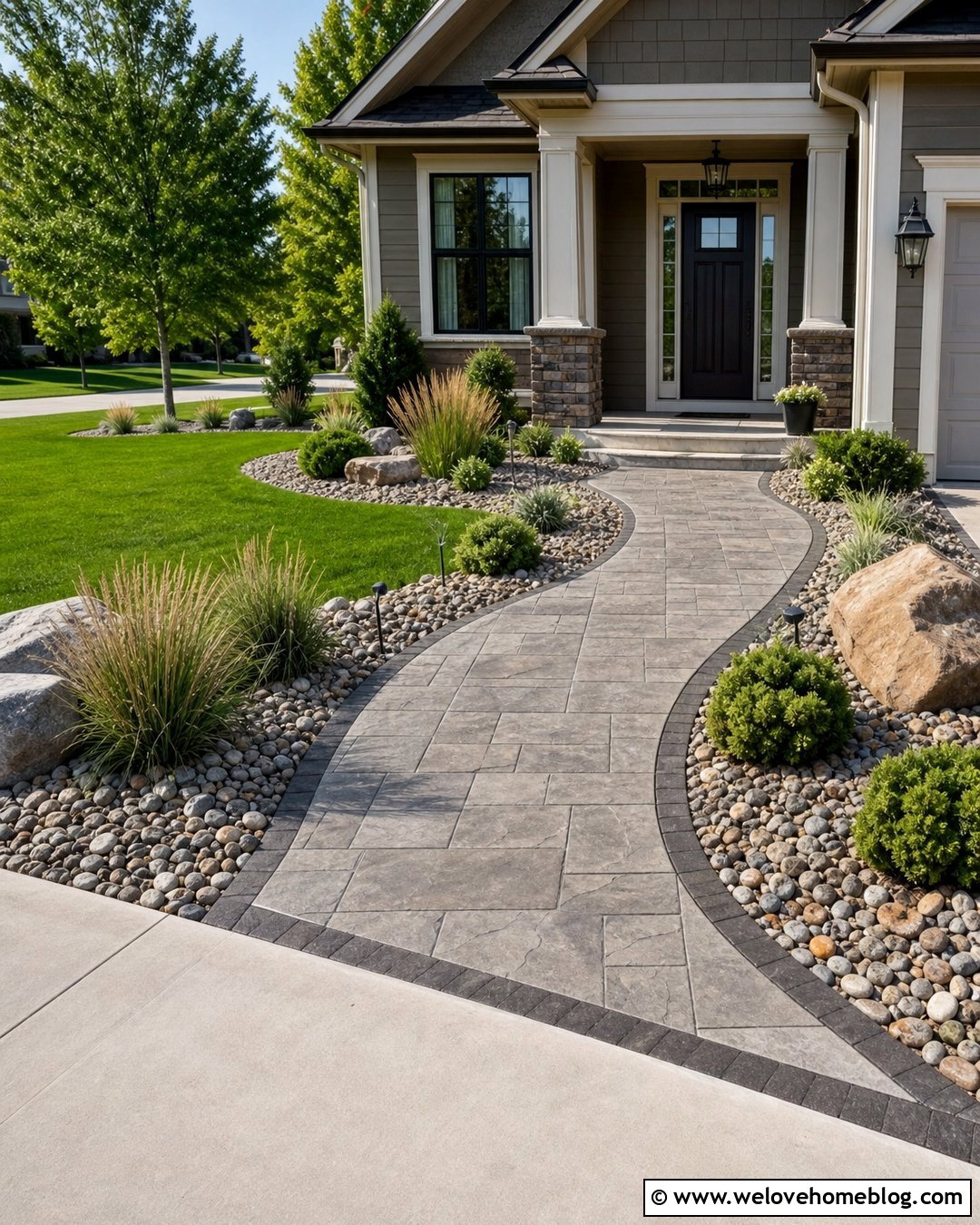
Stamped concrete can introduce the appearance of stone while retaining a continuous concrete surface. Choose a large slate pattern in a warm gray or muted taupe instead of a highly contrasting multicolor finish. A gently curved layout can connect the driveway to the porch while wrapping around a dry rock bed. Use smooth river rock, compact evergreen shrubs, and a few ornamental grasses to create an organized, low-maintenance setting. A dark soldier-course border stamped into the concrete gives the edges greater definition. Coordinate the walkway color with the home’s masonry, roof, or front steps rather than matching every surface exactly. This complete look suits transitional, craftsman, and rustic suburban homes without making the entrance appear overly decorative.
5. Exposed Aggregate Walkway With Drought-Tolerant Landscaping
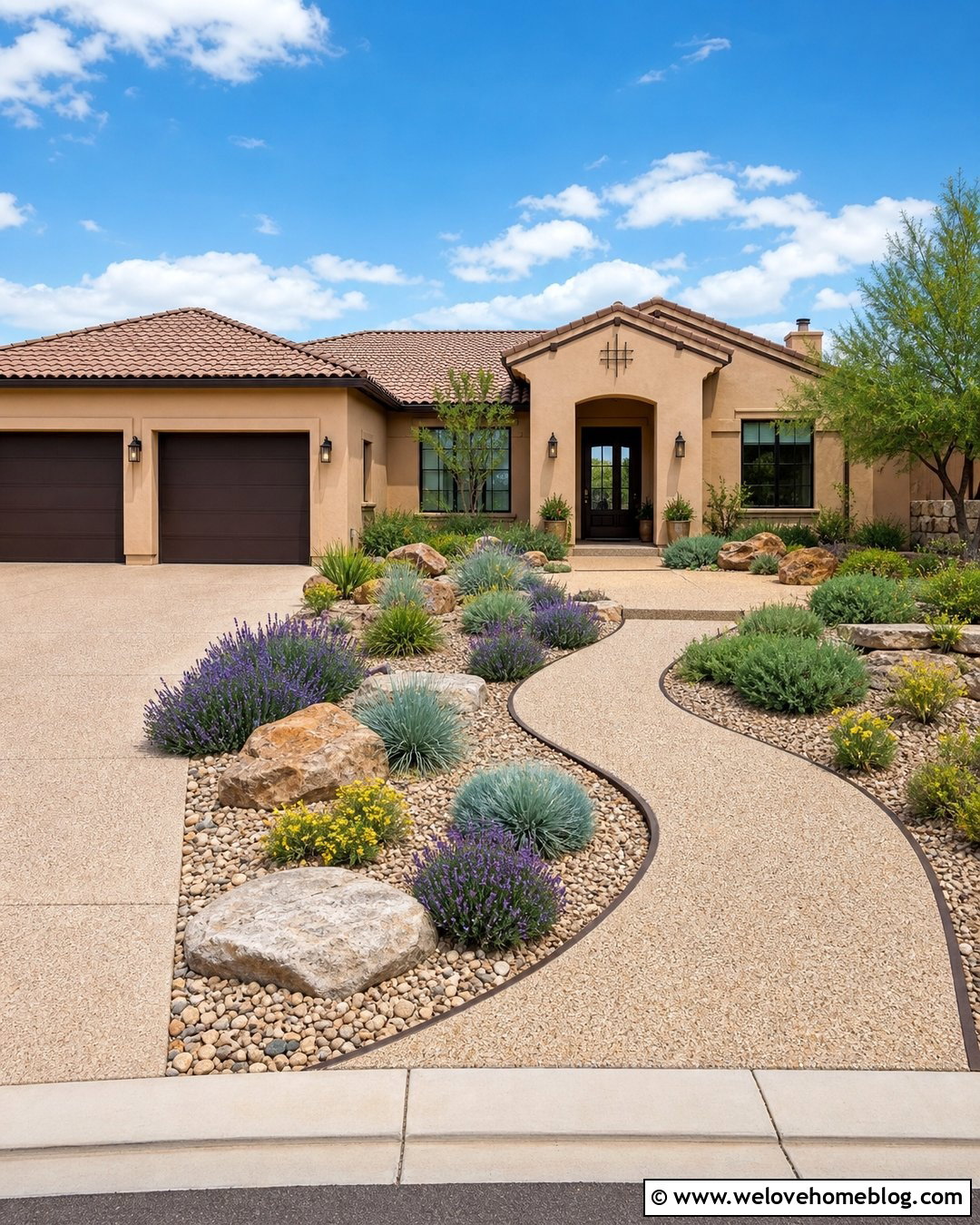
Exposed aggregate provides visible texture and natural color that can bridge the visual gap between a plain driveway and a landscaped entrance. Select an aggregate mix with tan, cream, and charcoal stones, then shape the walkway into a gentle curve leading to the porch. Use steel or concrete edging to create crisp boundaries. On both sides, install drought-tolerant planting beds with lavender, blue fescue, compact sage, sedum, and decorative gravel mulch. A few larger boulders can anchor the wider bend without crowding the walking area. Repeat one or two aggregate colors in the porch steps or driveway border. The result feels warm, durable, and well suited to a Southwestern, California ranch, contemporary, or water-conscious suburban property.
6. Wide Concrete Walkway With Flared Driveway Entrance
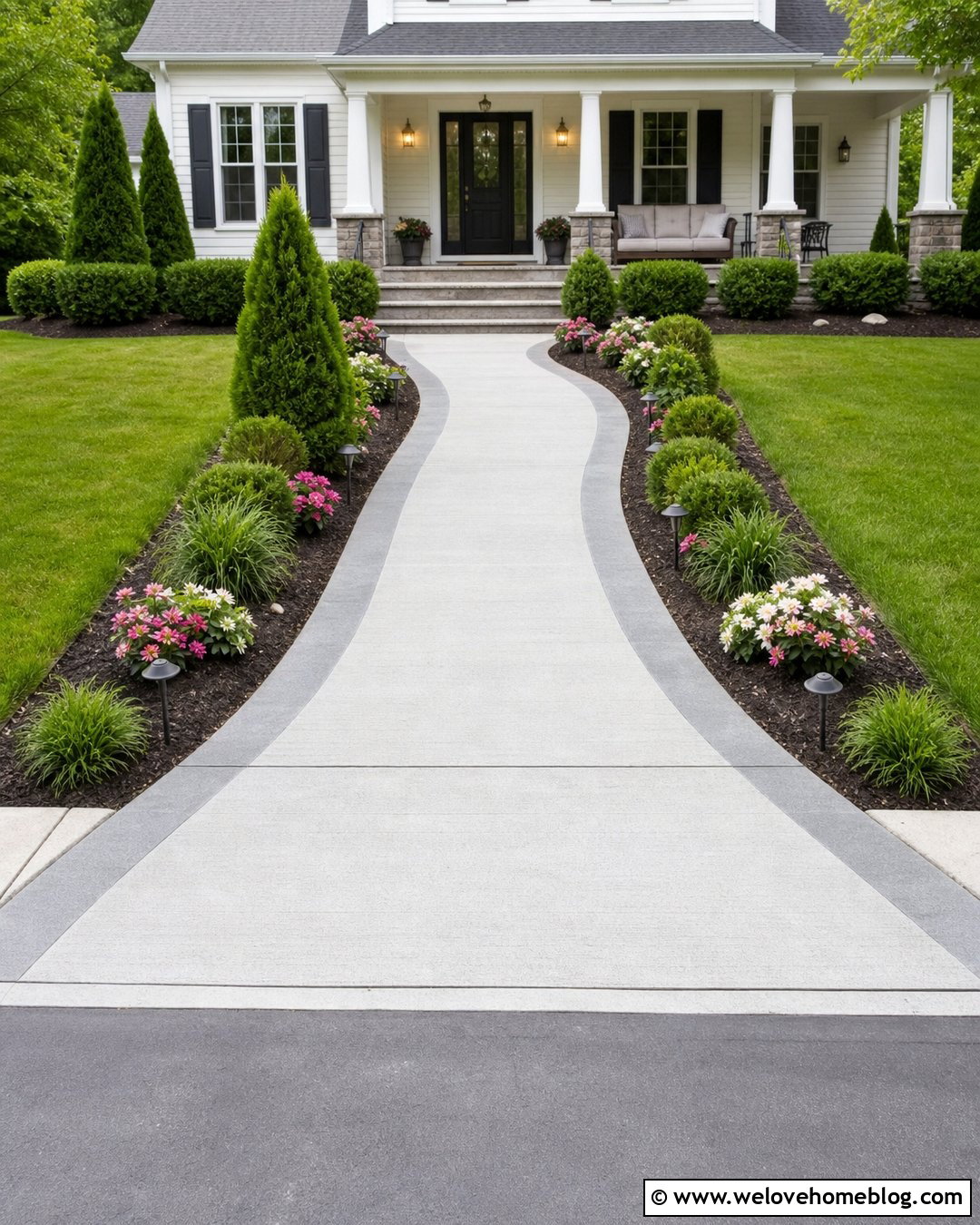
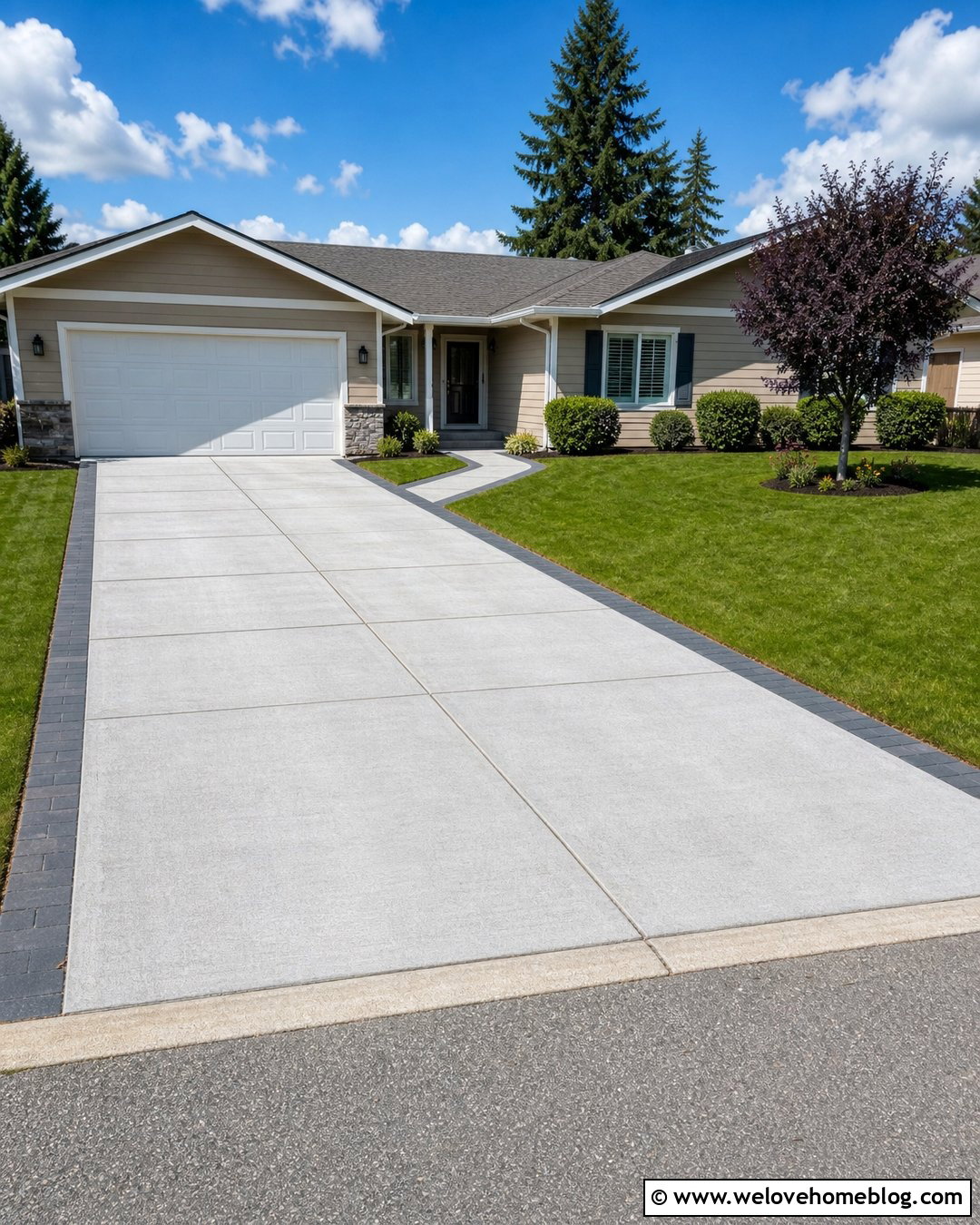
A flared walkway entrance provides extra standing room where passengers step out of a vehicle. Begin with a broad concrete connection at the driveway, then gradually narrow the path as it approaches the house. Continue the same light broom finish throughout so the transition looks intentional rather than patched together. A brick or dark concrete ribbon can separate the walkway from the driveway while showing exactly where the pedestrian route begins. Add symmetrical planting beds with low shrubs, flowers, and compact path lights. Near the front door, widen the concrete again to create an entry landing that matches the porch steps. This practical configuration improves circulation and makes the entrance easier to identify, especially when the garage visually dominates the facade. ()
7. Stained Concrete Walkway With Matching Front Steps
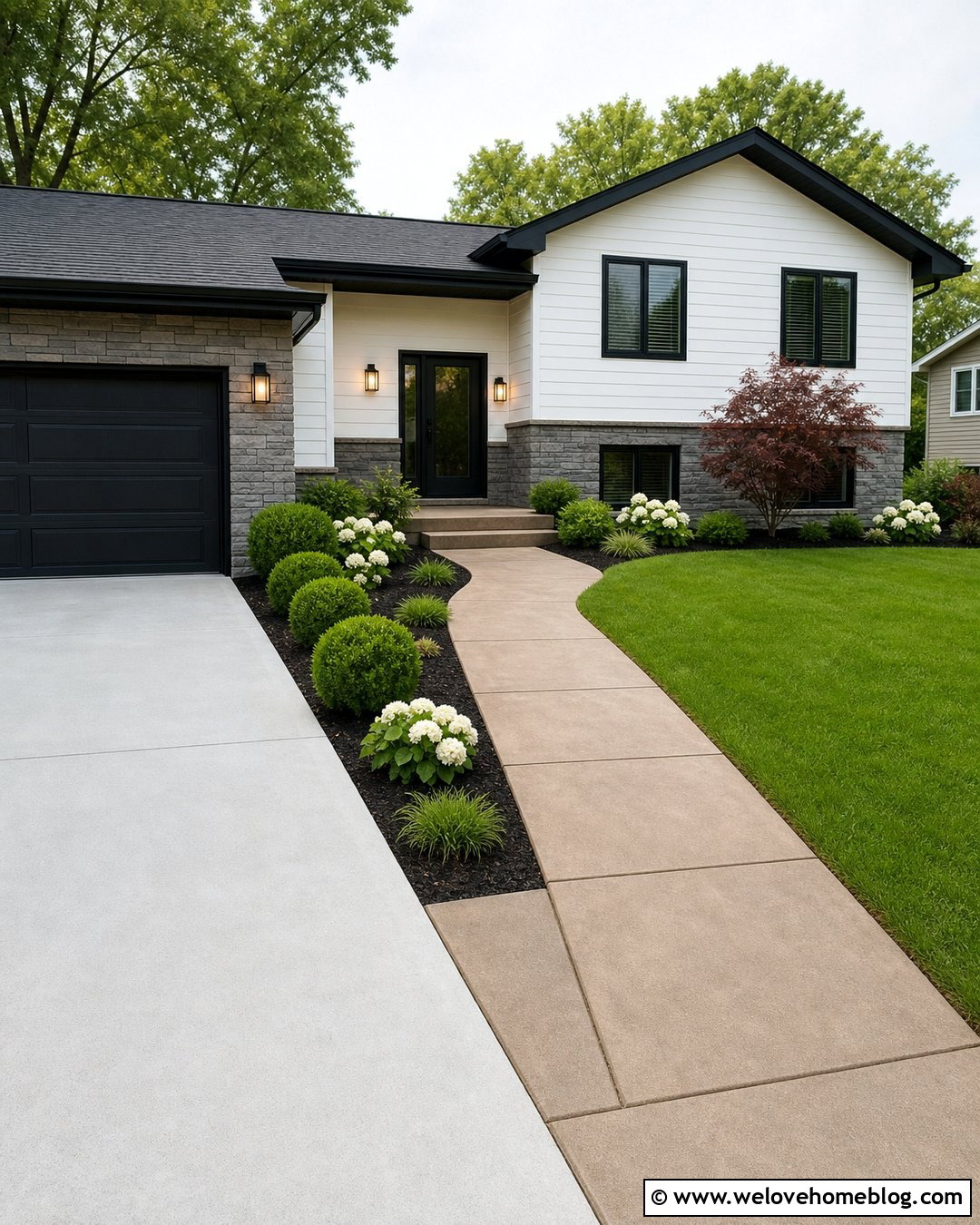
A stained concrete walkway can connect mismatched hardscape elements through one controlled color palette. Consider a warm greige, soft brown, or muted charcoal stain that complements the driveway, porch, and exterior siding. Use a straight or slightly offset route depending on the location of the front door. Saw-cut rectangular joints create a tailored pattern without imitating another material. Finish the edges with dark mulch beds containing rounded shrubs, white flowering plants, and one small ornamental tree. Carry the same stain onto the front steps or landing, but vary the border color slightly to prevent the surfaces from looking flat. This coordinated design can refresh an older walkway and works beautifully with ranch, craftsman, traditional, and updated split-level homes.
8. Concrete Walkway With Brick Ribbon Border
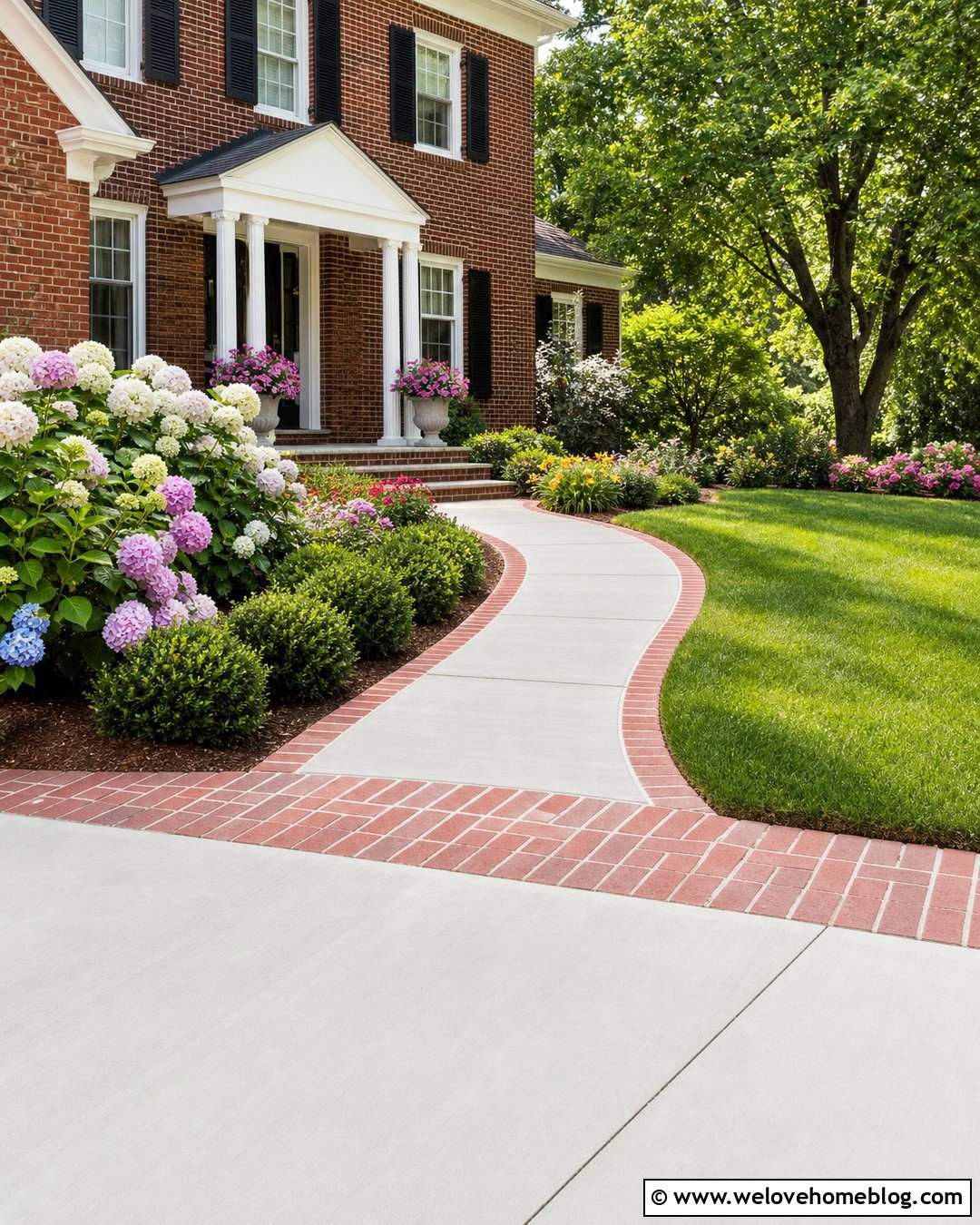
A narrow brick ribbon brings definition and traditional character to a simple poured concrete walkway. Run the brick along both sides of a straight or gently curved path, using colors already present in the house facade. Red clay brick feels natural beside Colonial architecture, while dark brown or charcoal brick suits a contemporary exterior. At the driveway, form a small brick apron that clearly marks the walkway entrance. Plant compact hydrangeas, dwarf hollies, or flowering perennials behind the border, leaving enough open space to keep growth away from the walking surface. Repeat the brick around the porch landing or front steps for continuity. The concrete remains the practical foundation, while the brick helps the driveway, landscape, and house read as one planned composition.
9. Stepped Concrete Walkway For a Sloped Front Yard
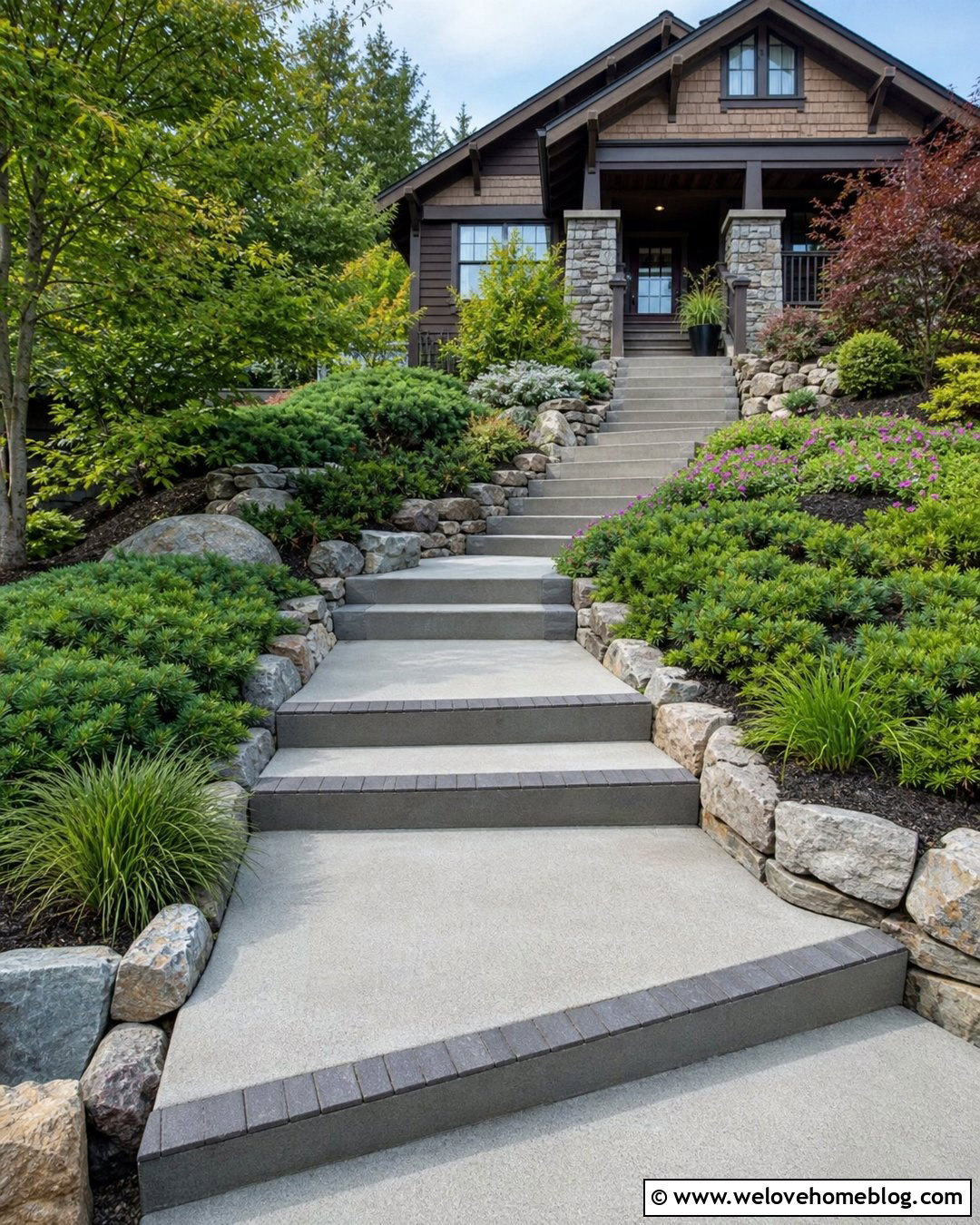
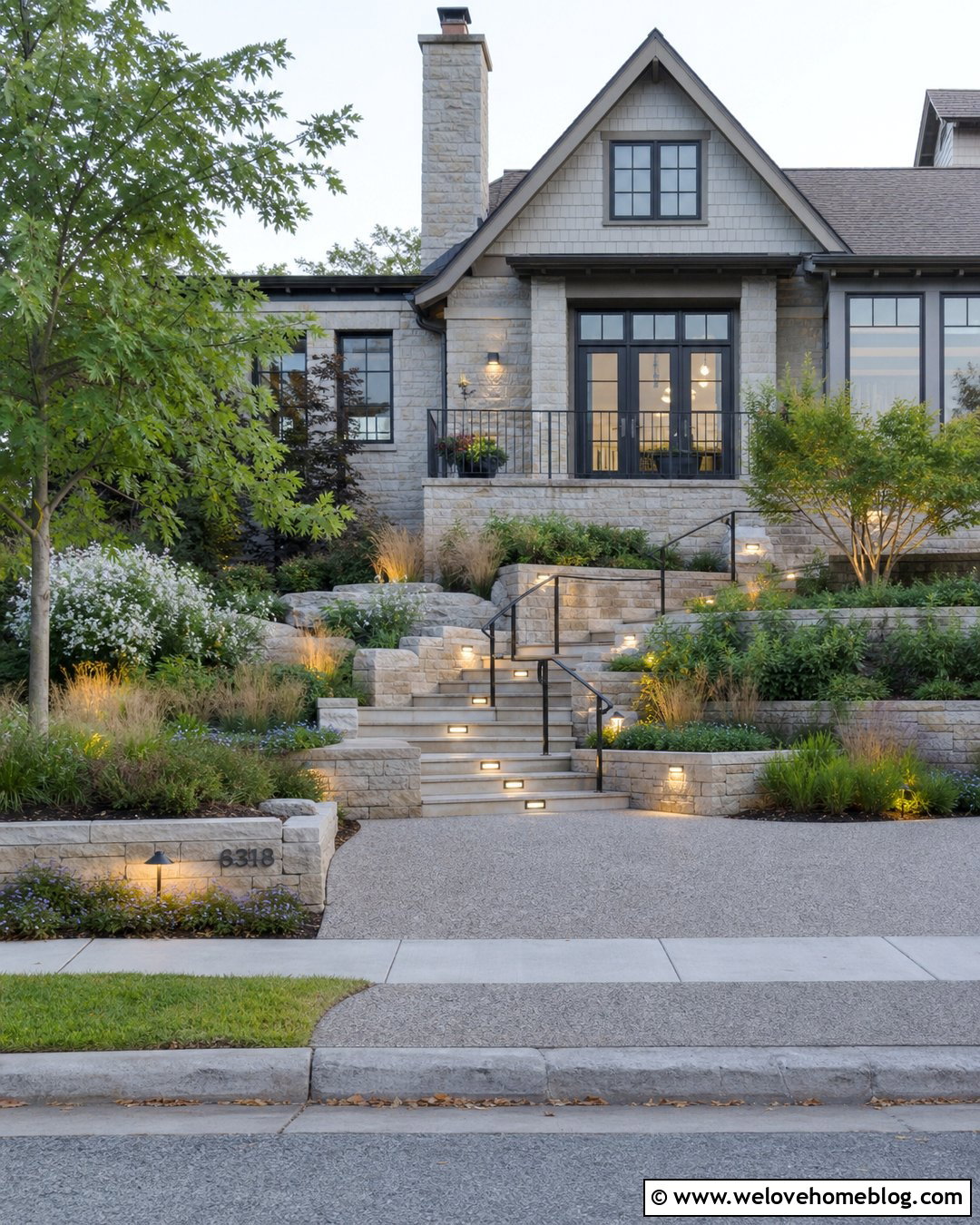
A sloping yard needs a route that looks deliberate and feels comfortable underfoot. Instead of pouring one steep concrete ramp, divide the approach into broad landings with shallow concrete steps. Use medium gray concrete with a sand or broom finish, and highlight each step with a darker concrete edge or contrasting paver band. Low retaining walls can hold the planting beds while framing the path. Fill those beds with spreading juniper, ornamental grasses, flowering ground cover, and small shrubs that will not obstruct the steps. Direct runoff away from the landings and house foundation through thoughtful grading and drainage planning. This structured walkway transforms a difficult incline into an attractive entrance for hillside ranch, craftsman, contemporary, and split-level homes.


10. Curved Concrete Walkway Around a Front Yard Tree
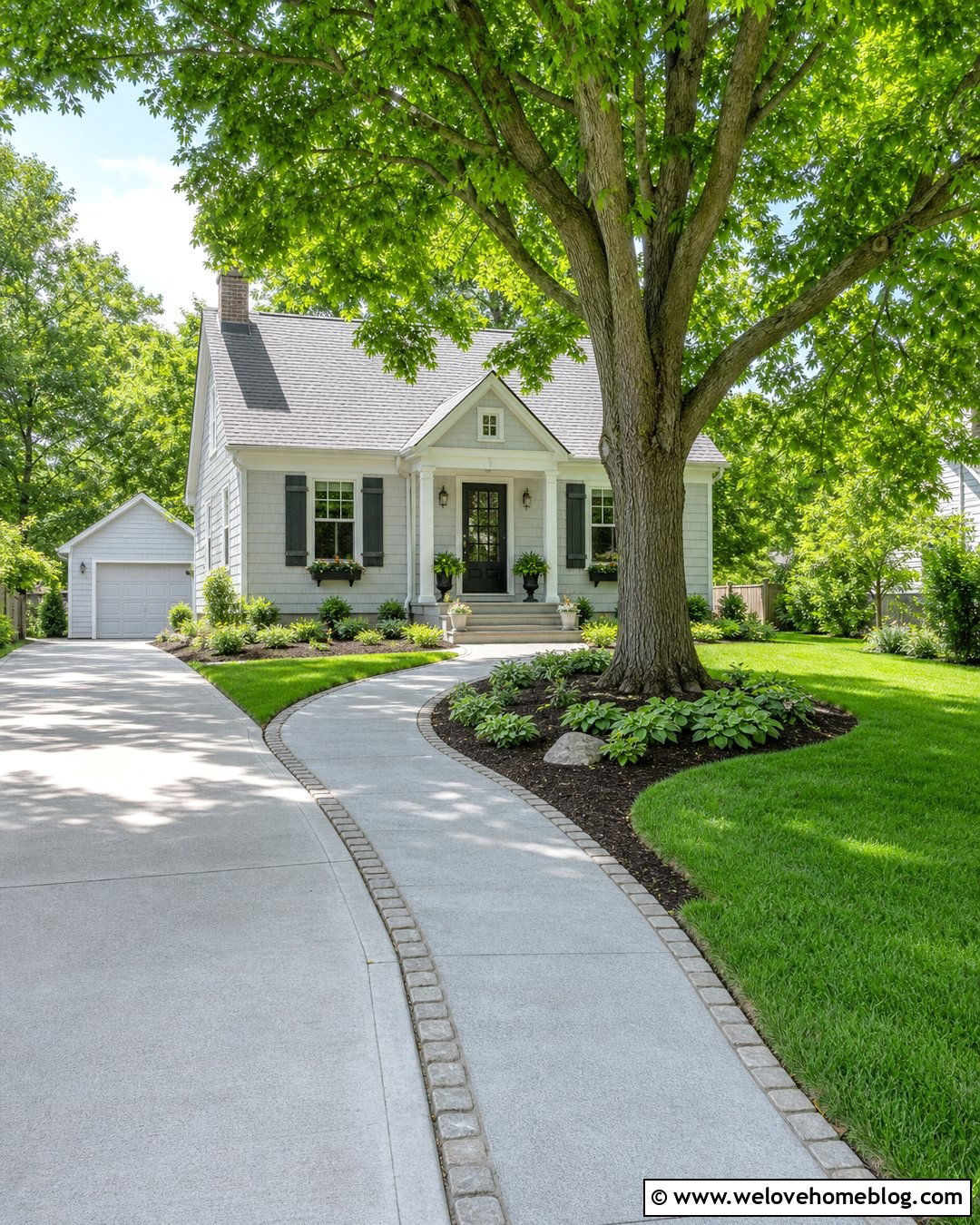
An established tree can become the feature that shapes the entire walkway. Create a broad concrete curve that moves around the outer edge of the canopy without crowding the trunk or major roots. Use a light salt-finished or broom-finished surface that contrasts with the shaded planting area beneath the tree. Define the path with a flush cobblestone border, then fill the surrounding bed with mulch and shade-tolerant ground cover. Keep the driveway connection wide and visible so people do not cut across the lawn. The curve should return naturally to a centered porch landing or front steps. This complete arrangement preserves a valuable landscape feature while giving traditional, cottage, ranch, and craftsman homes a softer, established front-yard appearance.
11. Accessible Concrete Walkway With a Gentle Slope
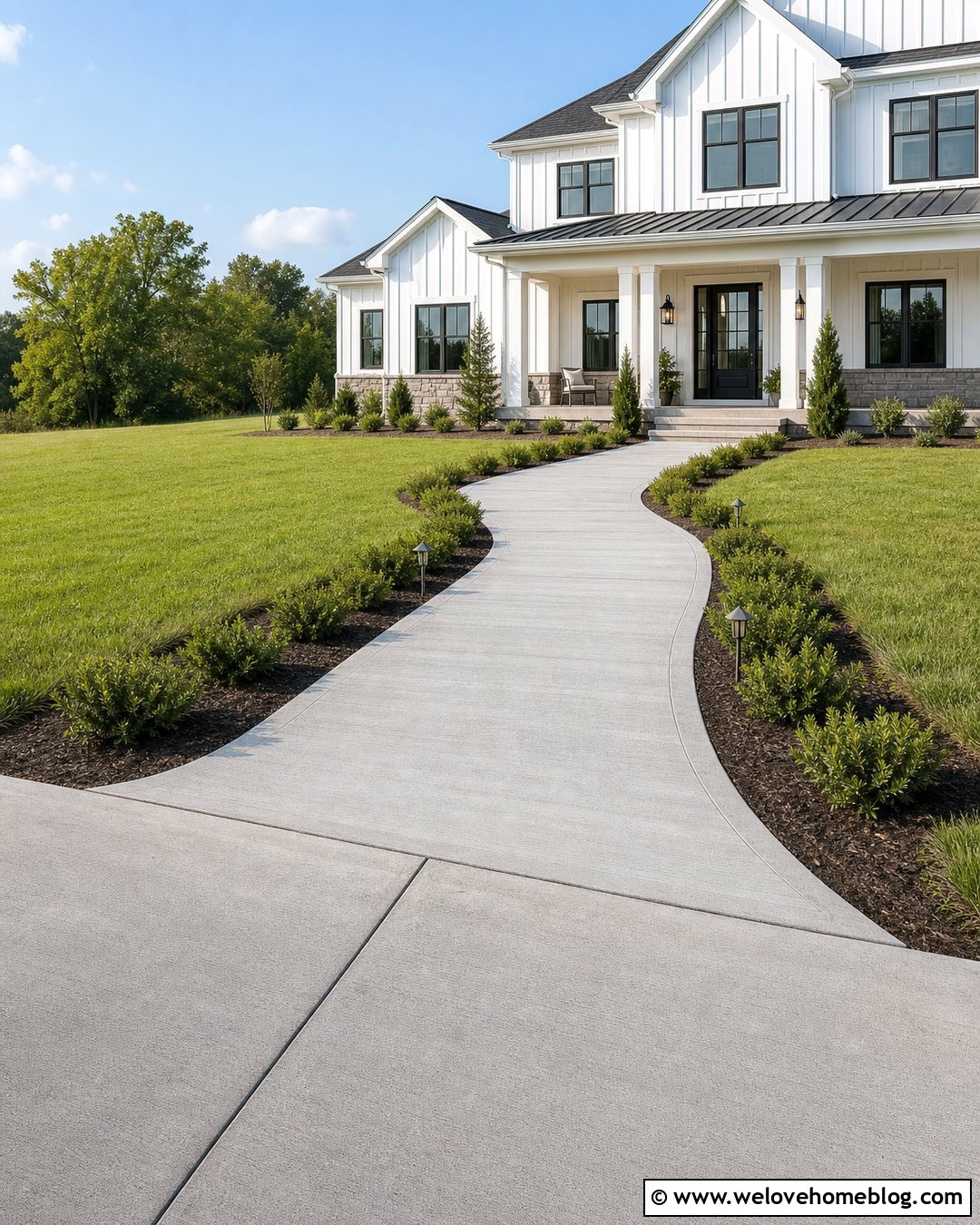
A broad, unobstructed walkway can make the front entrance easier for children, older adults, strollers, and mobility devices to use. Choose smooth, continuous concrete with a light broom texture and a gradual route from the driveway to the porch. Avoid abrupt joints, loose borders, and plants that may lean into the travel area. If the elevation changes, use a gentle slope with level resting areas rather than unnecessary steps where site conditions allow. A flared driveway connection offers more room for turning and unloading. Frame the walkway with low evergreen shrubs, simple lawn edges, and bright path lighting. Before construction, have local professionals check grading, drainage, building codes, and accessibility requirements because property conditions and regulations can vary.
12. Narrow Concrete Walkway Beside the Garage
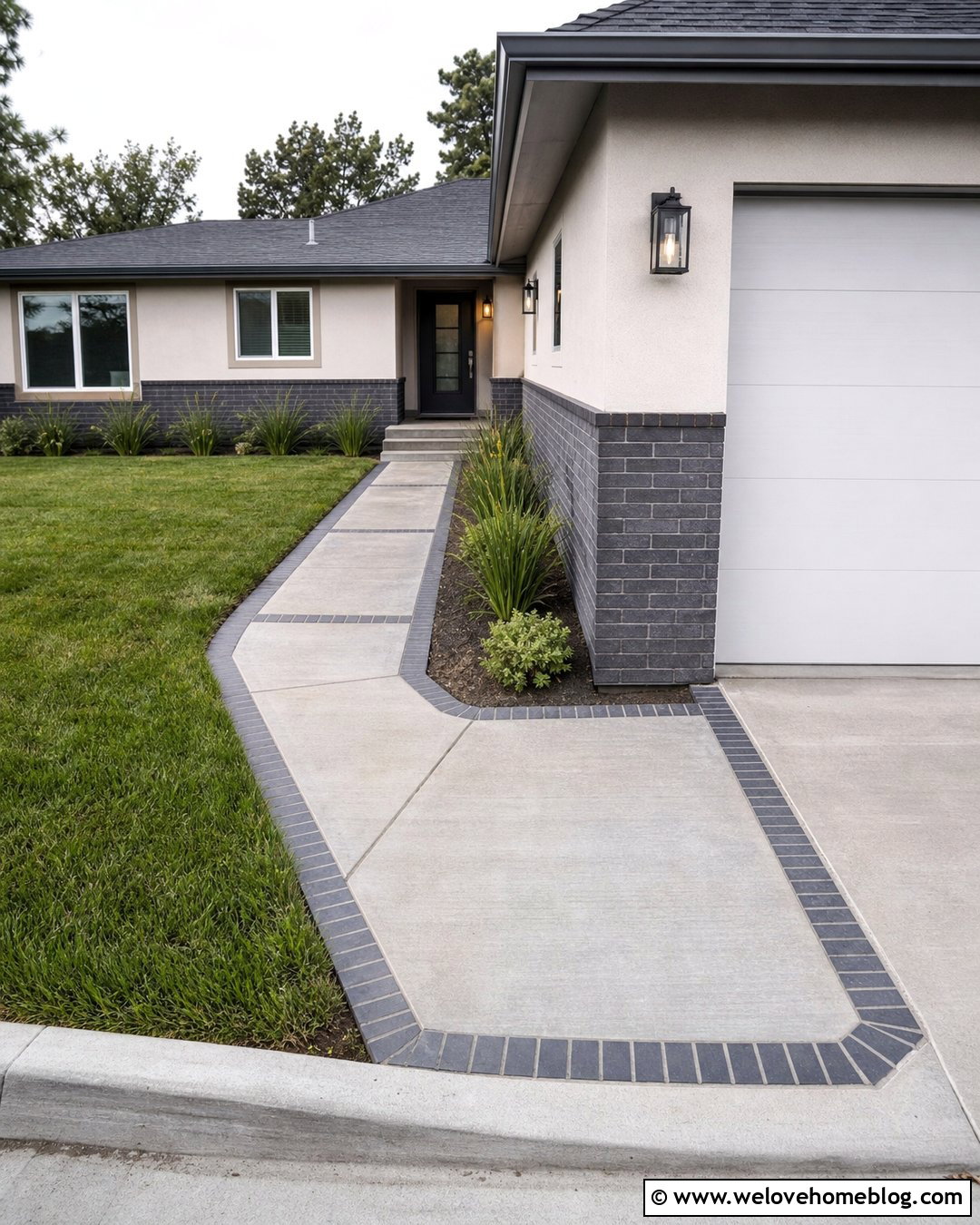
A small side yard between the driveway and garage can still support a polished route to the front door. Use a narrow poured concrete walkway that begins near the parking area and runs beside the house before turning toward the porch. A light broom finish keeps the surface simple, while a dark brick ribbon separates it from the driveway. On the yard side, install one slim planting bed with upright grasses, dwarf shrubs, or columnar evergreens. Wall-mounted lighting can illuminate the enclosed portion without consuming ground space. At the turn, widen the concrete slightly to create a visual pause and a comfortable corner. This layout is useful for compact ranch homes, townhouses, and suburban properties with side-facing or recessed entrances.
13. Geometric Concrete Walkway With Saw-Cut Joints
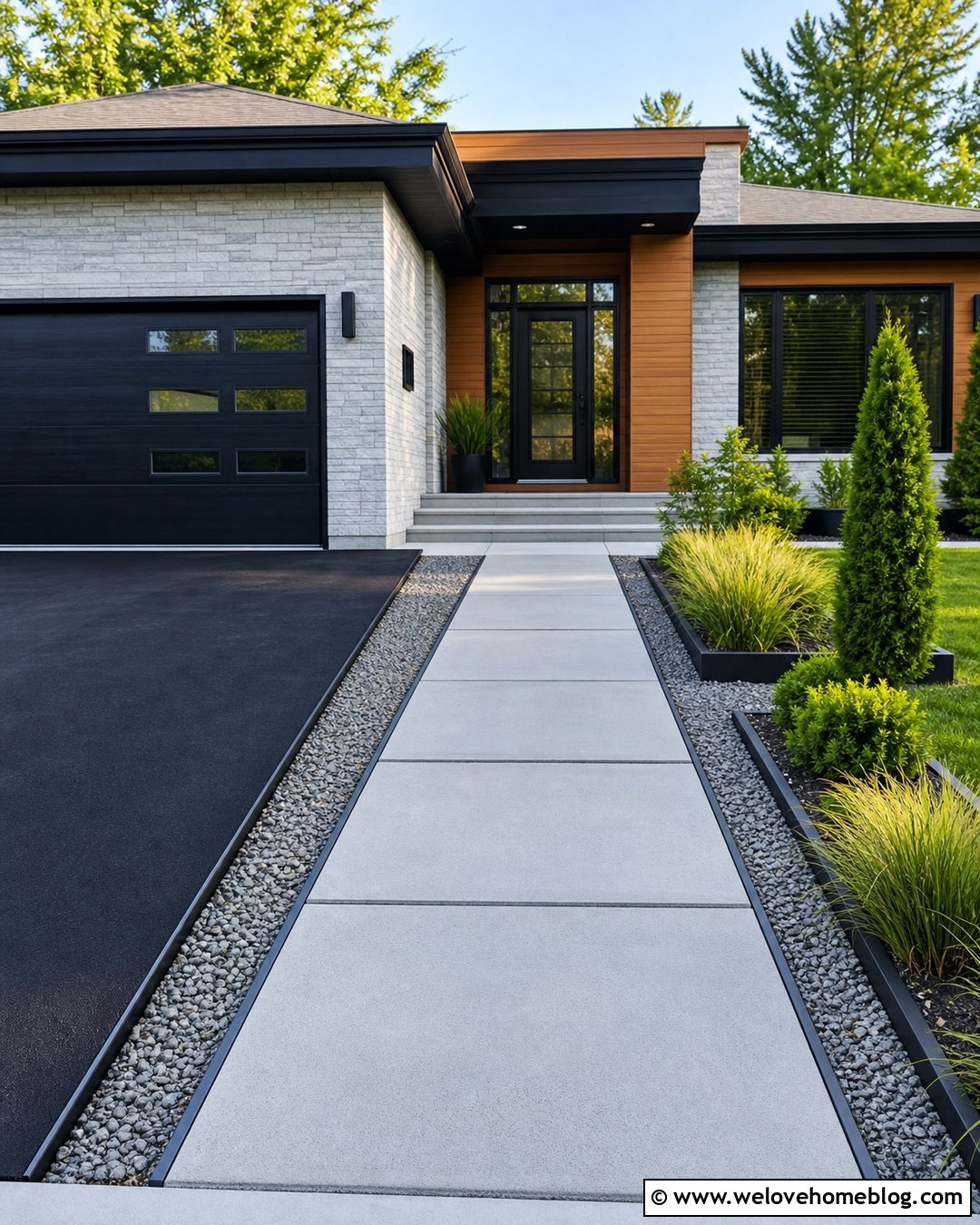
Crisp joint lines can turn ordinary poured concrete into a strong architectural feature. Design a straight walkway with evenly spaced square or rectangular saw-cut panels leading from the driveway to the entrance. Continue one joint line into the driveway apron or porch landing to create visual alignment. Use medium gray concrete beside white, black, or natural wood siding for a clean modern contrast. Surround the path with rectangular planting beds, black metal edging, ornamental grasses, and neatly clipped evergreen forms. A narrow strip of decorative gravel can provide separation between the concrete and plants. This full design suits modern farmhouse, contemporary, and mid-century homes because the walkway’s geometry reinforces the proportions of windows, doors, rooflines, and facade details.
14. Concrete Walkway With Pebble Accent Bands
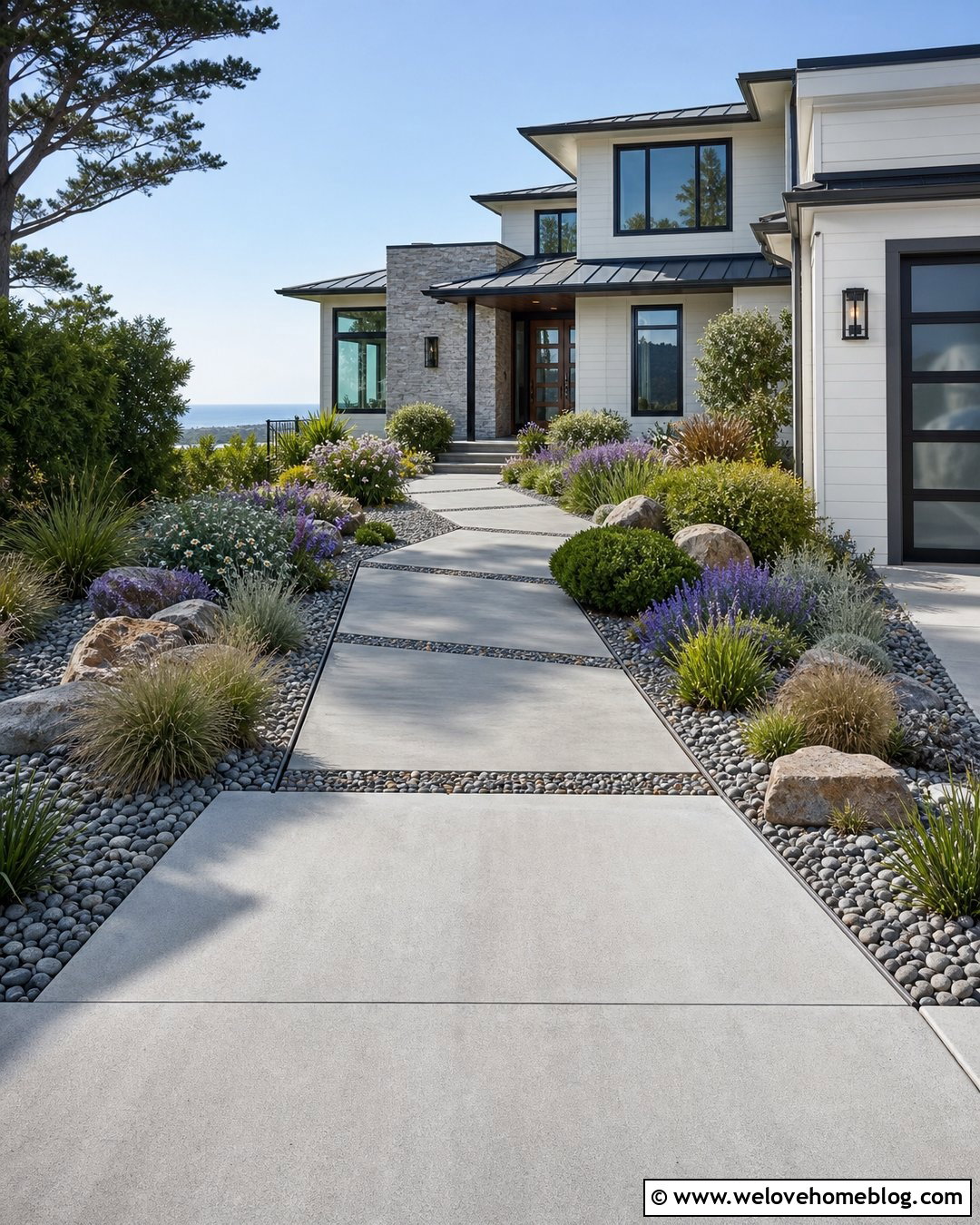
Pebble accent bands can break up a long concrete walkway and connect it to natural landscaping. Pour the main path in warm gray concrete, then place narrow bands of smooth river pebbles between selected concrete sections. Keep the pebble strips contained with metal edging so the stones remain separate from the walking surface. Use the bands at regular intervals or where the walkway changes direction. Continue similar stones into the adjacent planting beds for a unified appearance. Low grasses, flowering perennials, and rounded shrubs soften the hard lines without hiding the route. A slightly wider concrete landing at the driveway makes the beginning obvious. This combination feels especially appropriate for contemporary, coastal, desert-modern, and updated ranch homes.


15. Sand-Finished Concrete Walkway With Natural Stone Border
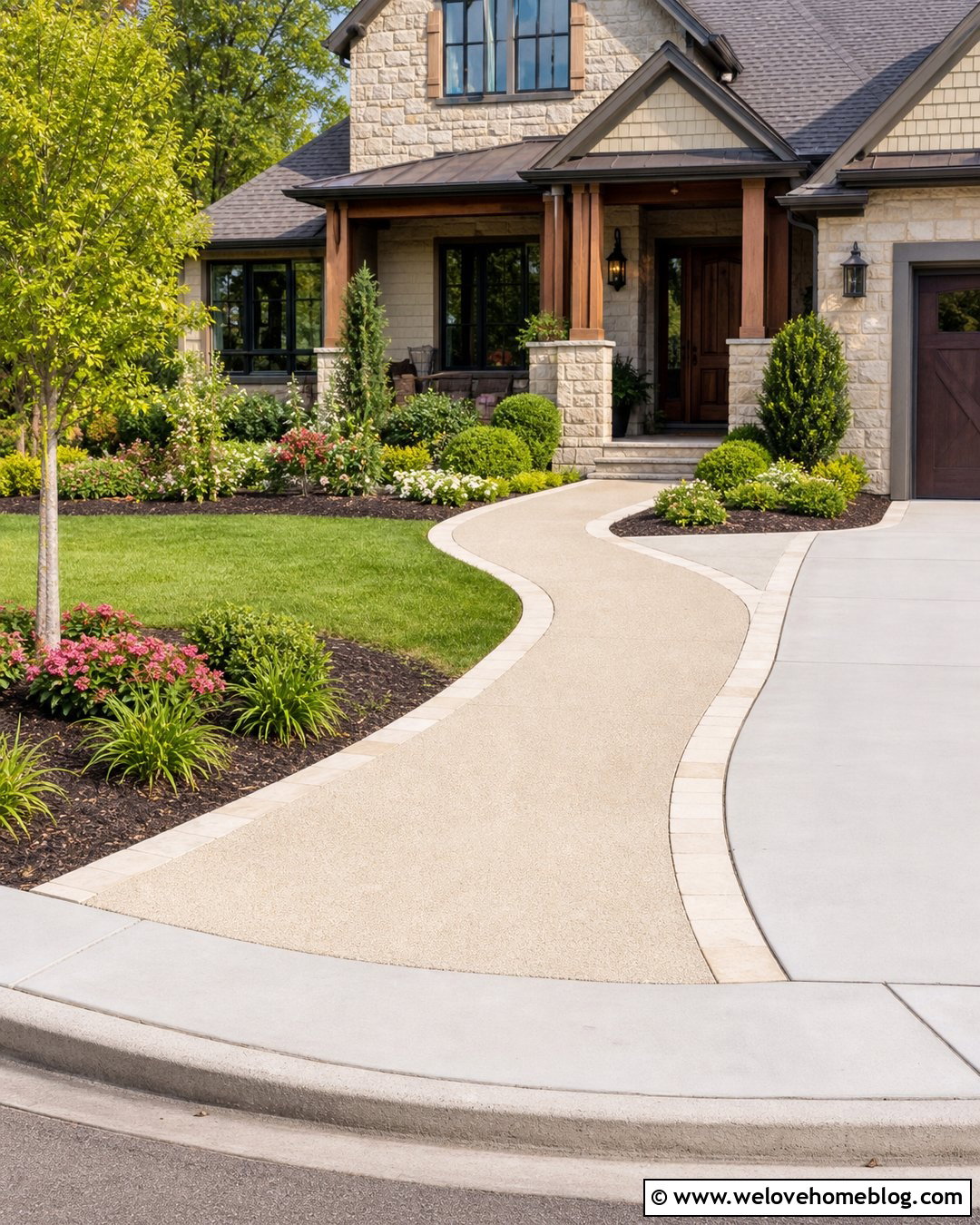
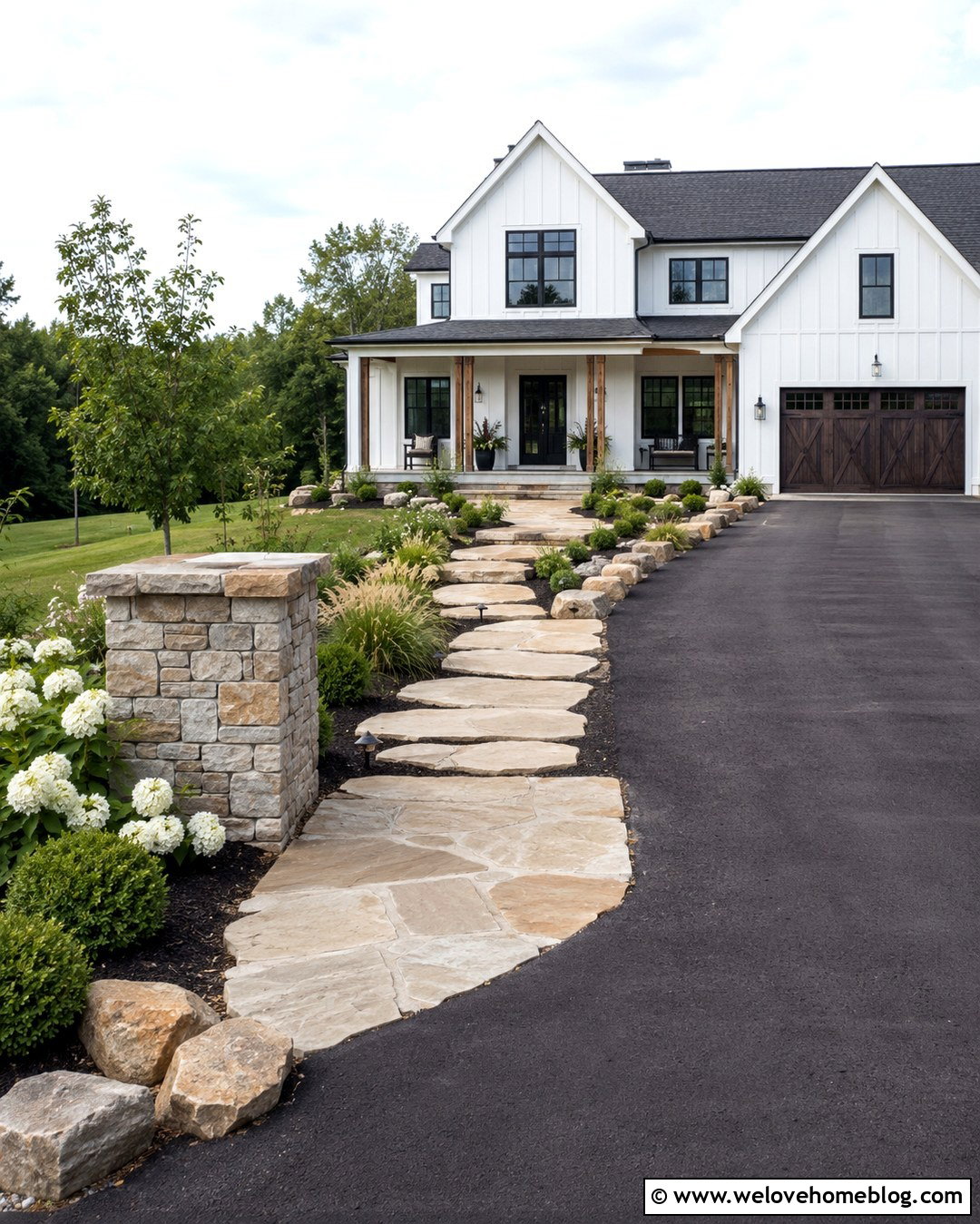
Sand-finished concrete offers a refined texture that feels softer than a heavy broom finish. Pair a warm beige or pale gray walkway with a border of limestone, bluestone, or irregular fieldstone chosen to coordinate with the house. A gentle curve can lead visitors past layered planting beds before arriving at a matching concrete landing. Use taller shrubs near the house and lower flowers beside the path to maintain an open view of the front door. Repeat the border stone on the porch columns, retaining wall, or foundation for a connected design. At the driveway junction, widen the walkway and continue the stone border across the threshold. This balanced combination complements craftsman, cottage, farmhouse, and natural stone-clad homes.
16. Concrete Walkway With a Circular Garden Bed
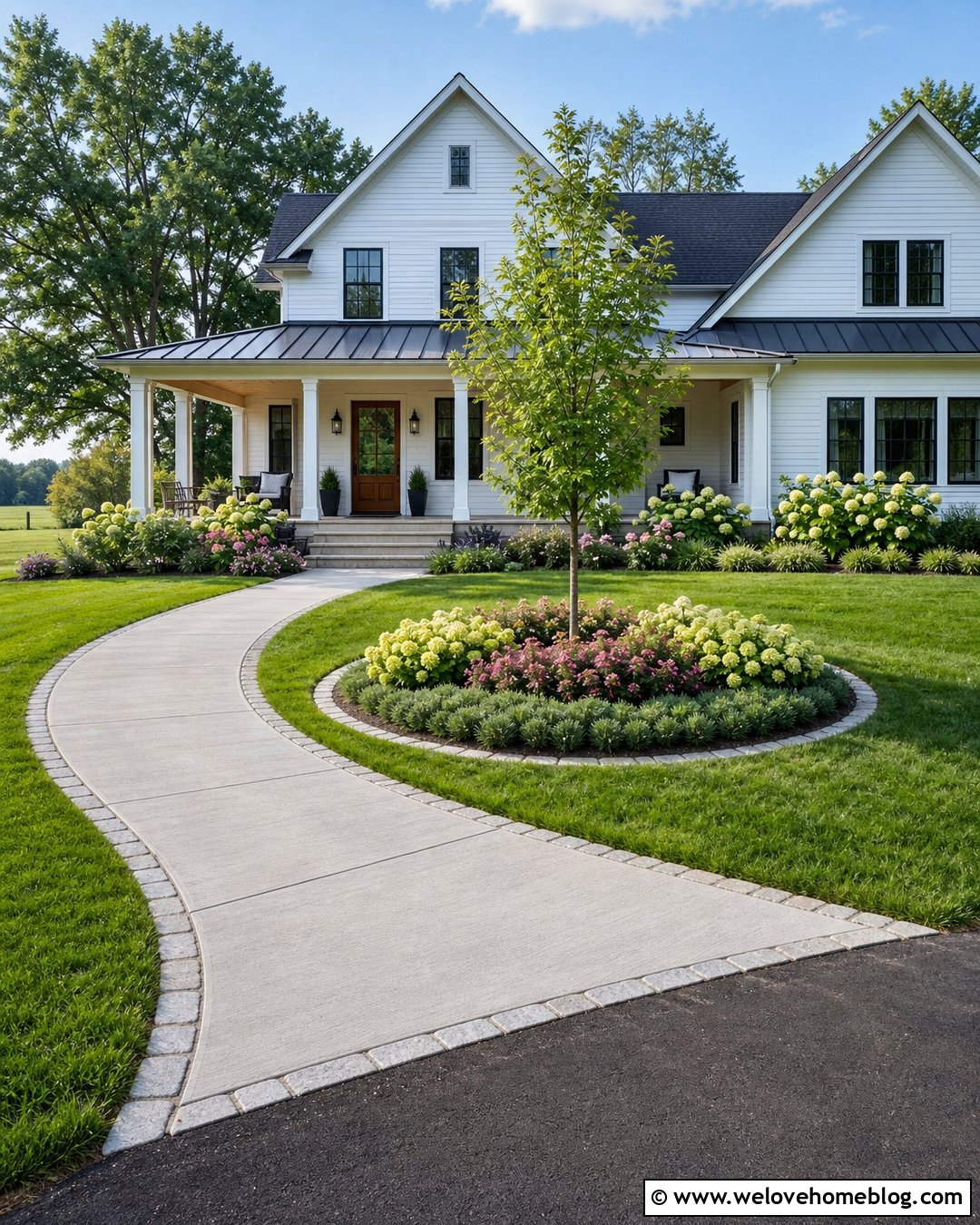
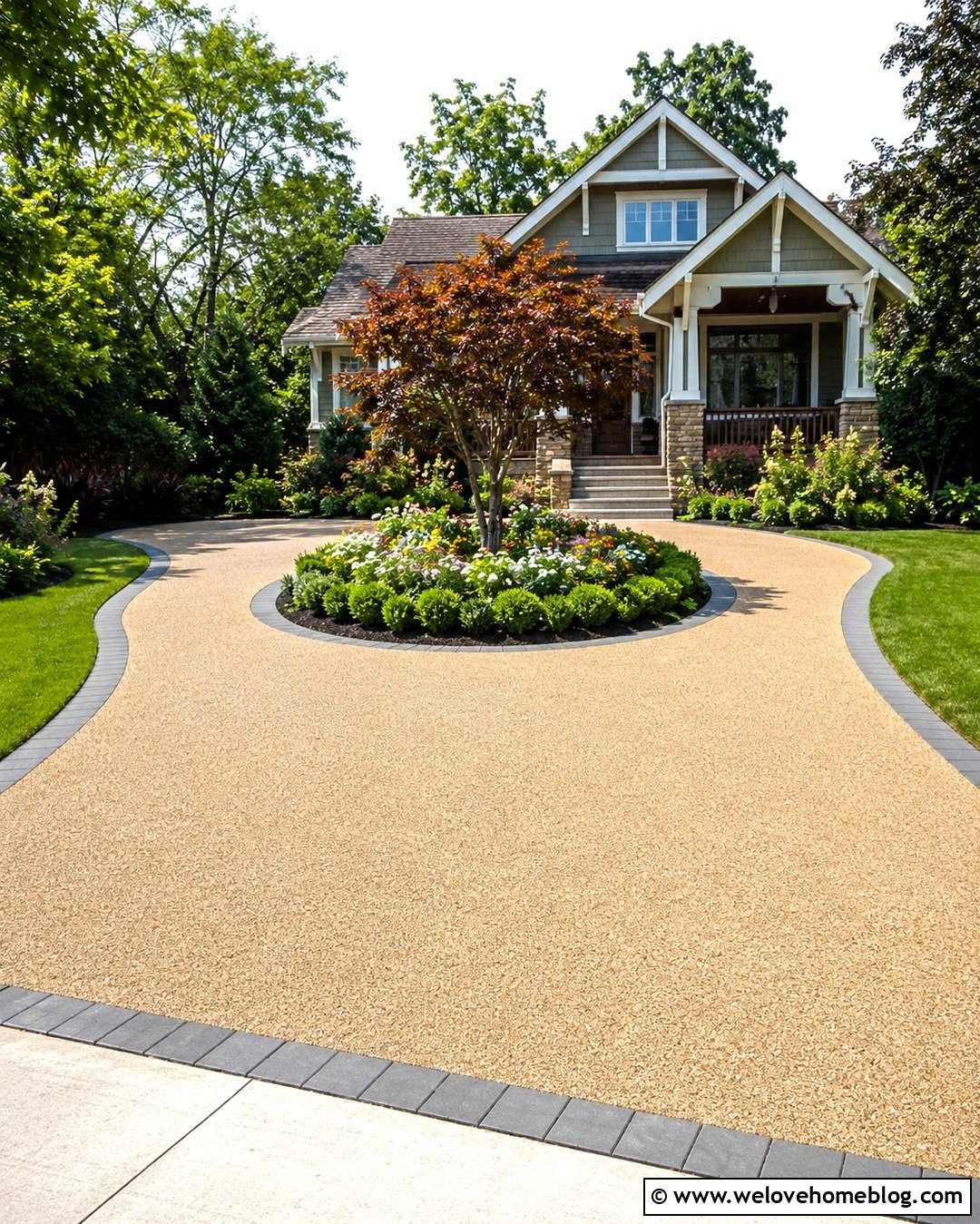
A circular garden bed can give a long, open front yard a focal point while keeping the walking route clear. Shape the poured concrete walkway into a wide arc around one side of the bed rather than creating an unnecessary full circle. Fill the center with a small ornamental tree, low flowering shrubs, and an orderly ground-cover layer. Use a flush brick or cobblestone edge around both the path and garden for continuity. Light gray broom-finished concrete keeps attention on the landscaping and front entrance. The walkway should begin with a generous driveway apron and end at a broad porch landing. This complete arrangement works well with Colonial, traditional, farmhouse, and large ranch homes that need more visual structure between the driveway and door.
17. Concrete Walkway With Low Path Lighting
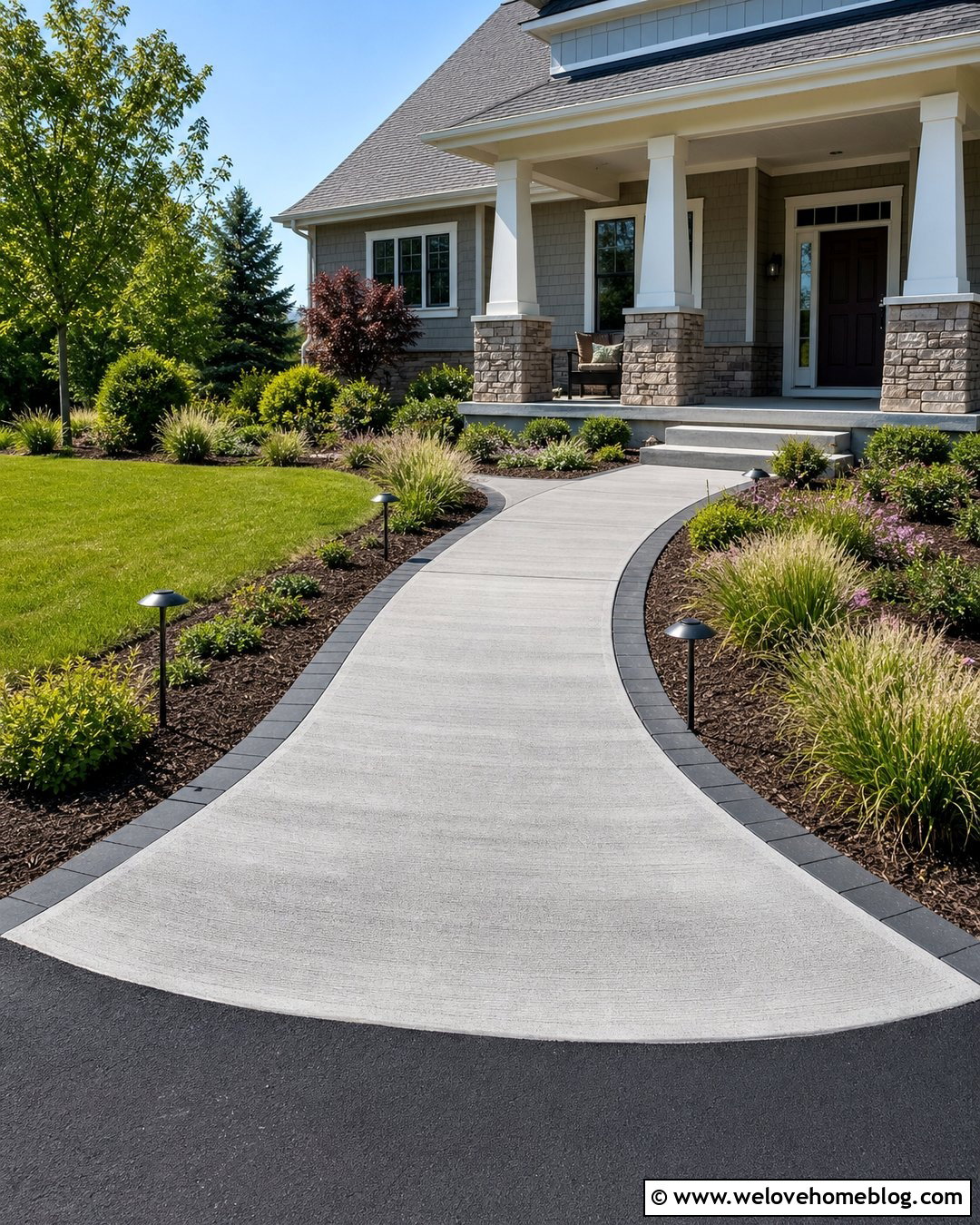
Lighting should support the full daytime design rather than functioning as an isolated addition. Start with a gently curved, broom-finished concrete walkway bordered by dark pavers or natural stone. Install low-profile fixtures at consistent intervals, placing them beside the border rather than directly against the walking surface. During the day, the dark fixtures should blend into beds filled with ornamental grasses, compact shrubs, and flowering ground cover. At the driveway entrance, use a wider concrete pad and a pair of matching lights to identify the route. Add a brighter fixture near the porch landing to reinforce the destination. This coordinated walkway feels secure, polished, and welcoming beside contemporary, craftsman, farmhouse, and traditional suburban homes without cluttering the landscape.
18. Concrete Walkway With an Entry Arbor
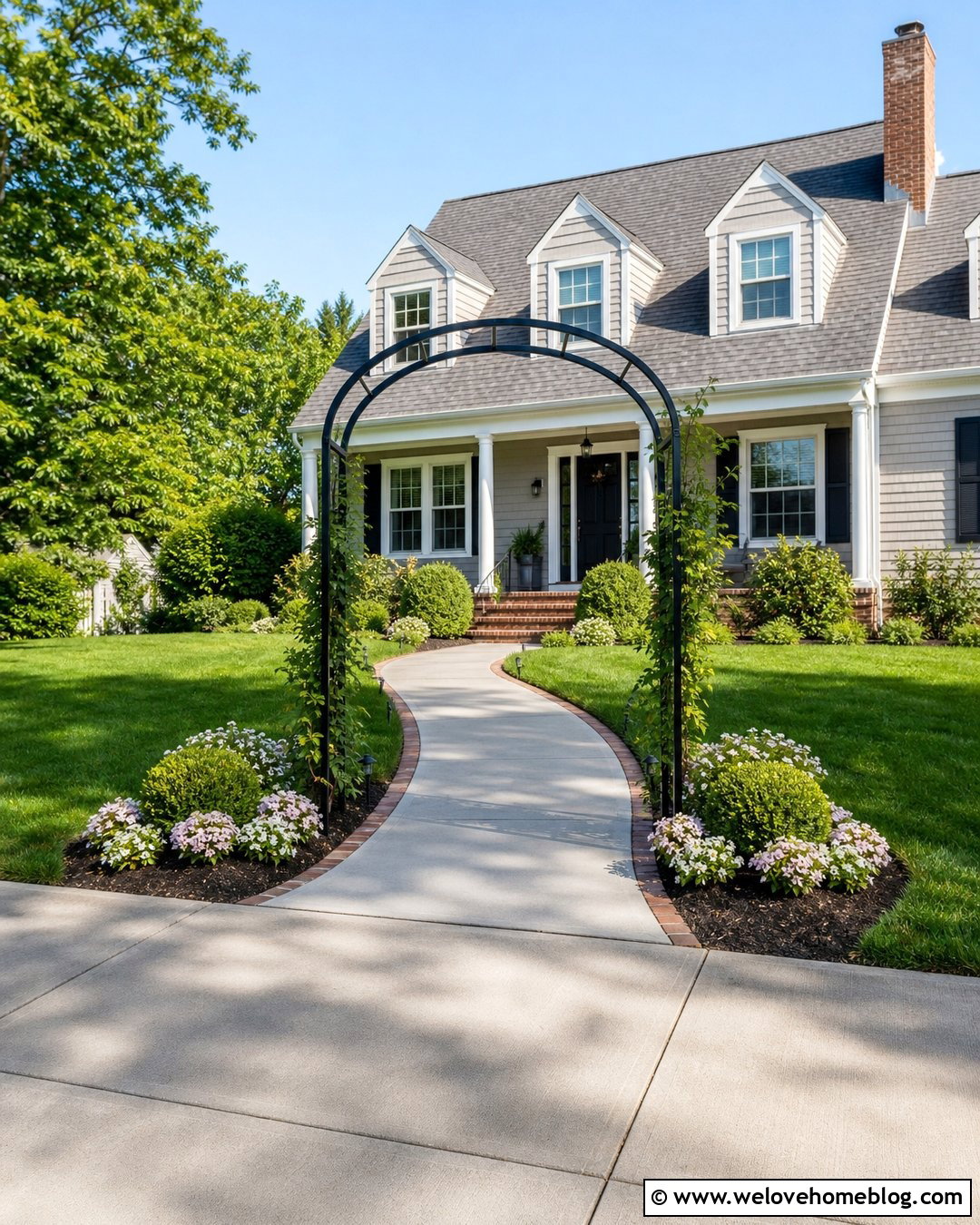
An arbor can establish a memorable transition from the driveway into the front garden. Position a simple wood or black metal structure over the beginning of a straight or curved concrete walkway. Use light gray poured concrete with a fine broom finish, then define the edges with brick or cobblestone. Plant restrained climbing greenery around the arbor, making sure mature growth will not narrow the route. Continue the garden effect with low flowering plants, clipped shrubs, and a small lawn area leading toward the porch. Match the arbor color to the front door, shutters, or porch railing. This complete entrance works especially well for cottages, Cape Cod homes, traditional farmhouses, and craftsman houses with visible front gardens.
19. Concrete Walkway With a Front Patio Landing
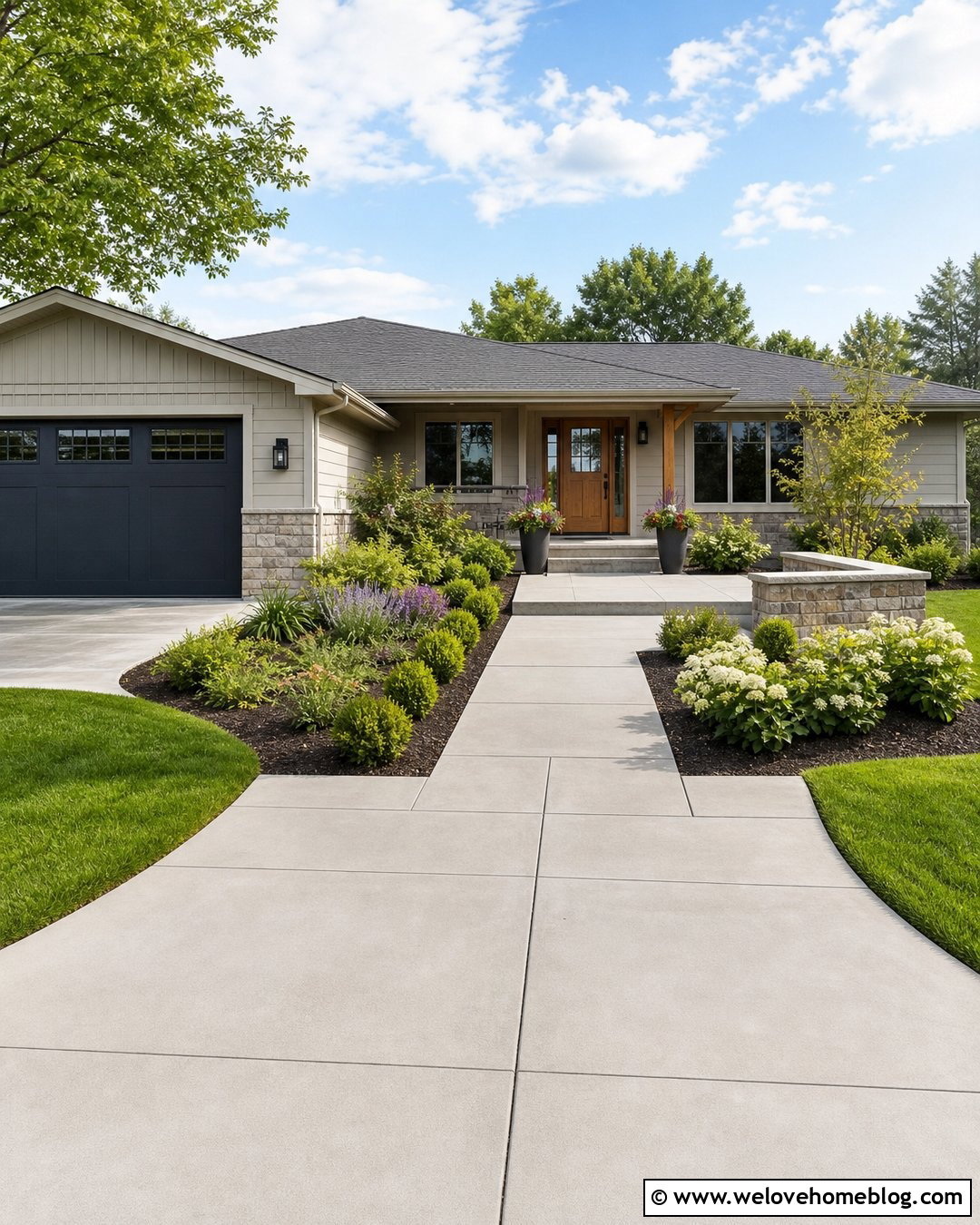
Why end the walkway at a narrow set of steps when the entry can include a useful landing? Extend the concrete near the front door to create a small patio-like area that connects the path, porch, and planting beds. Use one consistent poured concrete finish, but change the joint pattern on the landing to define it as a separate zone. A low seat wall, large planters, or a simple bench can add function without blocking circulation. Border the path with shrubs and flowers that continue around the landing. At the driveway, create a subtle flare that mirrors the wider entry area. This welcoming configuration fits ranch, farmhouse, craftsman, and transitional homes with enough space beside the porch for a modest gathering spot.

20. Simple Concrete Walkway With Mulch Beds
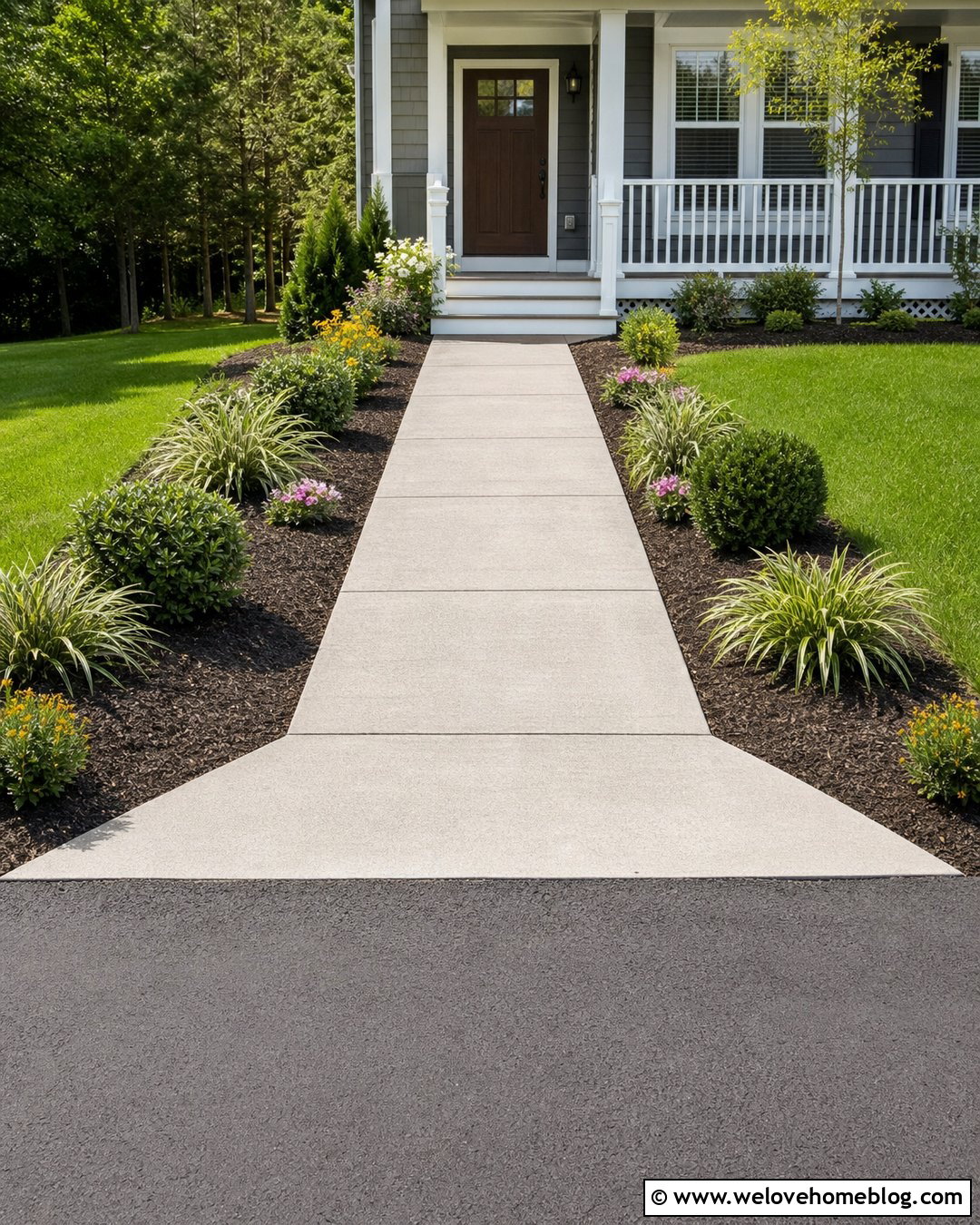
A straightforward concrete path can still create strong curb appeal on a limited budget. Choose standard light gray concrete with a neat broom finish and run it directly from the driveway to the front steps. Instead of adding expensive masonry, shape clean planting beds along both sides and cover them with dark brown mulch. Use a repeated mix of compact evergreen shrubs, affordable ornamental grasses, and seasonal flowers. A crisp spade-cut lawn edge can keep the design tidy without requiring a separate border material. Widen the concrete slightly where it meets the driveway and porch to improve the transition. This easy-to-understand layout works with nearly any suburban house and can be upgraded later with lighting, paver accents, or additional planting.
Conclusion:
The best walkway should make the front door easy to find while fitting naturally into the driveway, landscape, and architecture. These 20 concrete walkway from driveway to front door ideas demonstrate how much variety can come from one dependable material. Concrete can be straight, curved, stepped, stained, stamped, textured, or divided into modern panels. Borders, planting beds, wider landings, and lighting add character without compromising function. Before selecting a look, consider the route people already use, the yard’s slope, drainage, mature plant sizes, and the architectural details of the house. A thoughtfully planned walkway does not need to be elaborate. It simply needs to provide a clear, attractive, and comfortable approach from the driveway to the entrance.

Related posts:
Leave a Reply