
A driveway should do more than provide a place to park. It should create a clear, attractive approach that naturally guides attention toward the main entrance. The best **Front Door Driveway Ideas** coordinate the driveway surface, walkway, borders, planting, and house facade as one complete design. Whether you have a narrow suburban lot, a broad country yard, or a compact front garden, thoughtful materials and strong visual lines can make the entrance feel easier to find and more welcoming. You can also use contrasting pavers, lighting, greenery, or a curved layout to keep the garage from overpowering the front door. Explore these complete, practical, and stylish **Front Door Driveway Ideas**.
1. Concrete Driveway With Paver Walkway To Front Door
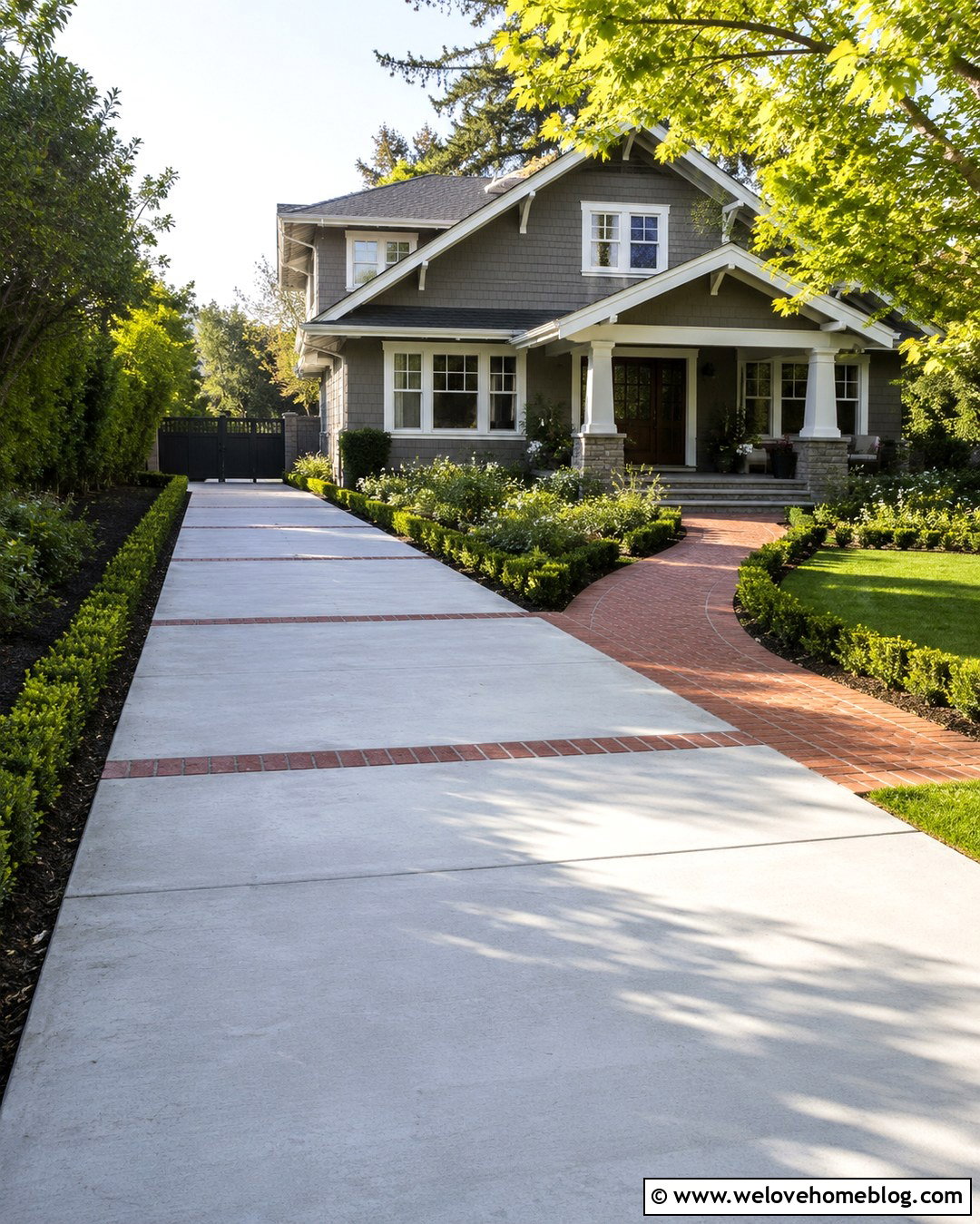
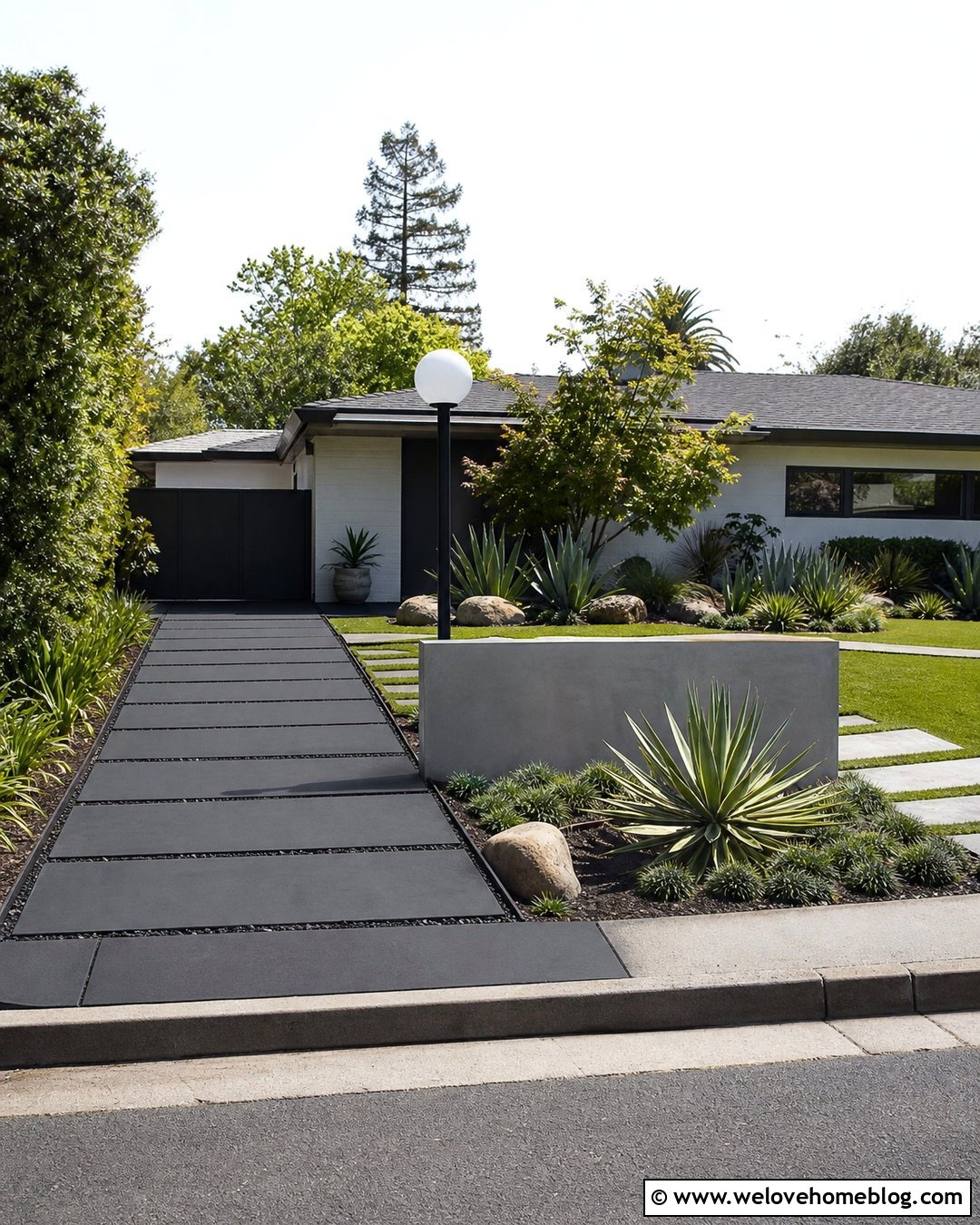
A smooth concrete driveway becomes much more inviting when a contrasting paver walkway clearly points toward the front door. Choose warm red brick for a traditional home or charcoal concrete pavers for a contemporary exterior. Begin the path near the natural parking area rather than forcing visitors to walk around vehicles. A gentle curve can soften the large concrete surface, while a straight walkway creates a formal appearance. Continue the pavers across the driveway as a decorative band so the pedestrian route remains visually connected. Low planting beds, compact shrubs, and ornamental grasses can frame the path without hiding the entrance. Finish the design with matching porch steps and simple pathway lights for a coordinated arrival.
2. Gravel Driveway With Stone Path To Front Door
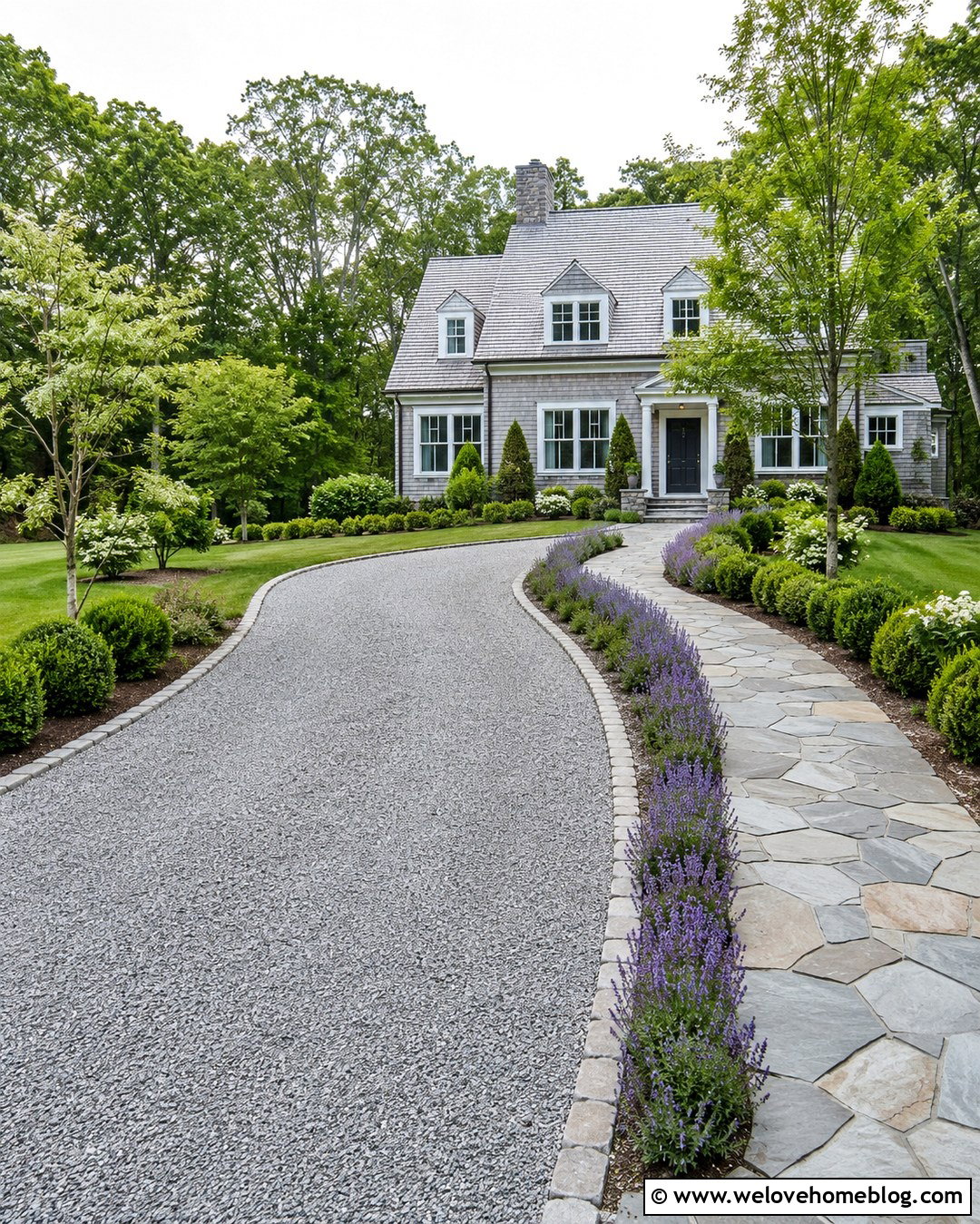
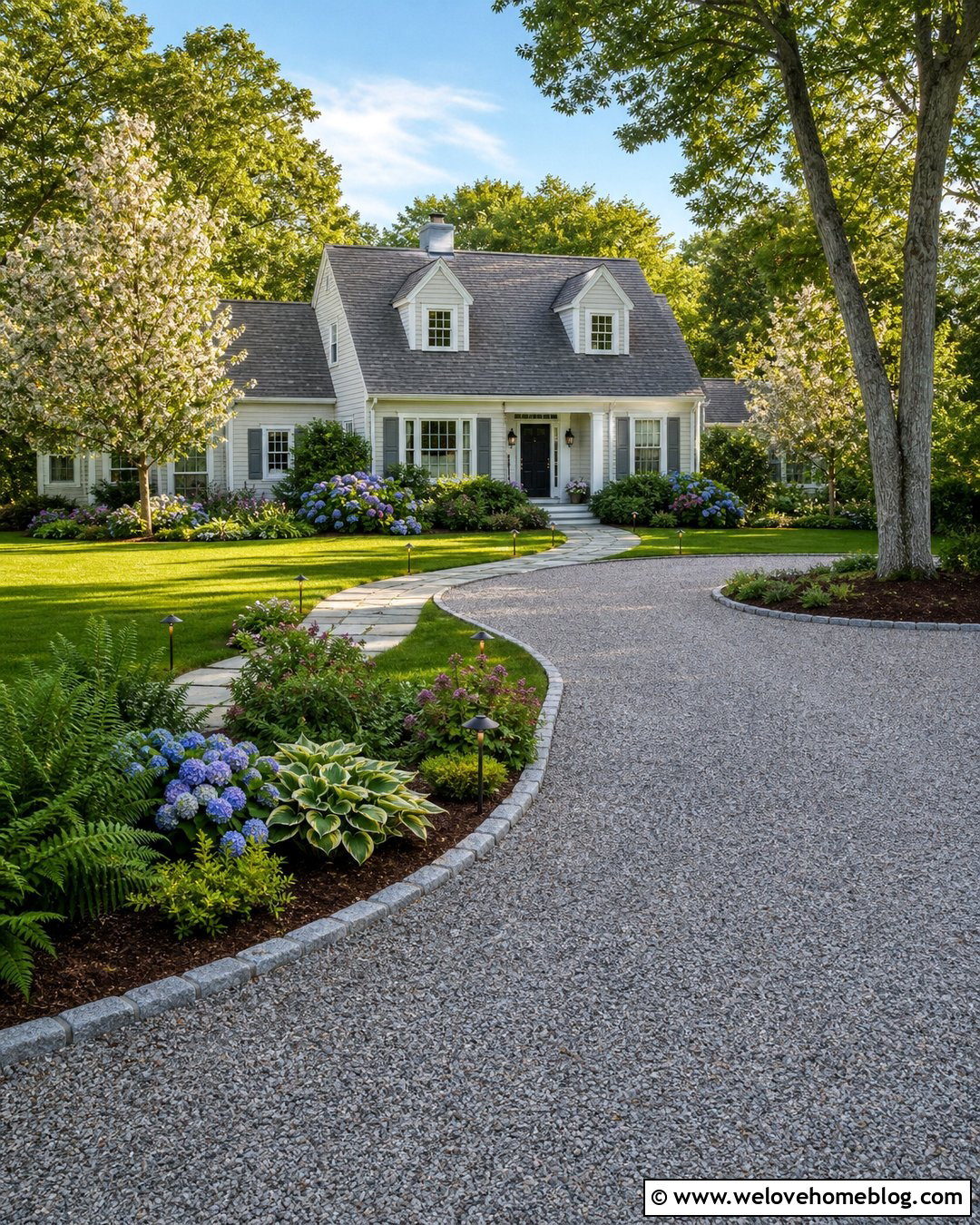
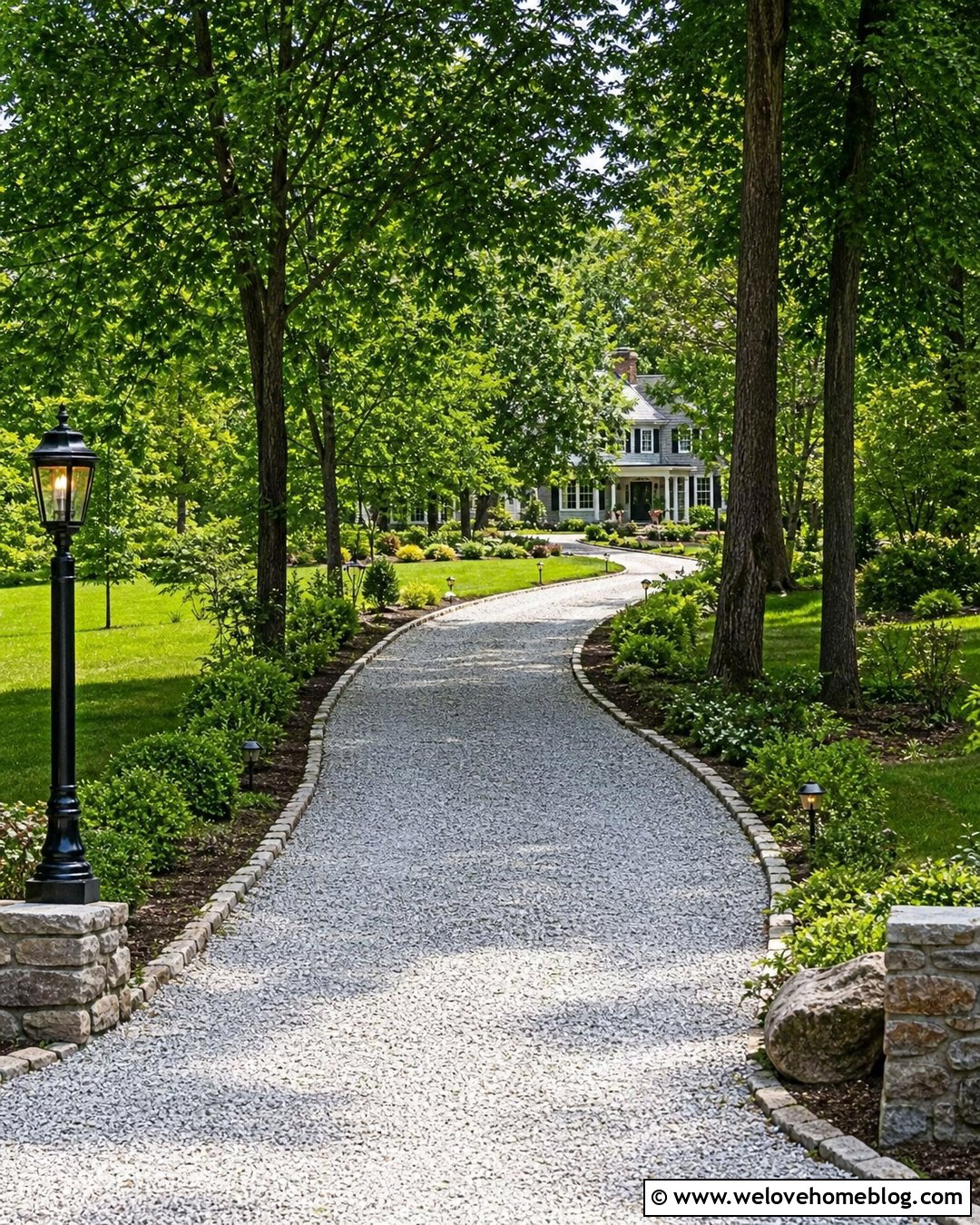
Can a relaxed gravel driveway still create a polished entrance? Pair compacted gray gravel with a broad natural stone path leading directly to the porch. Large flagstone slabs give pedestrians a stable, distinct route while preserving the driveway’s casual character. Use steel or cobblestone edging to contain the gravel and maintain a crisp shape. On a curved driveway, position the walkway near the inner bend so the front door becomes visible as visitors approach. Lavender, catmint, boxwood, and low ornamental grasses can soften the stone without spilling into walking areas. Repeating the home’s exterior stone around the driveway border or porch creates an intentional connection between the road, landscape, and architecture.
3. Circular Driveway With Center Garden And Front Door View
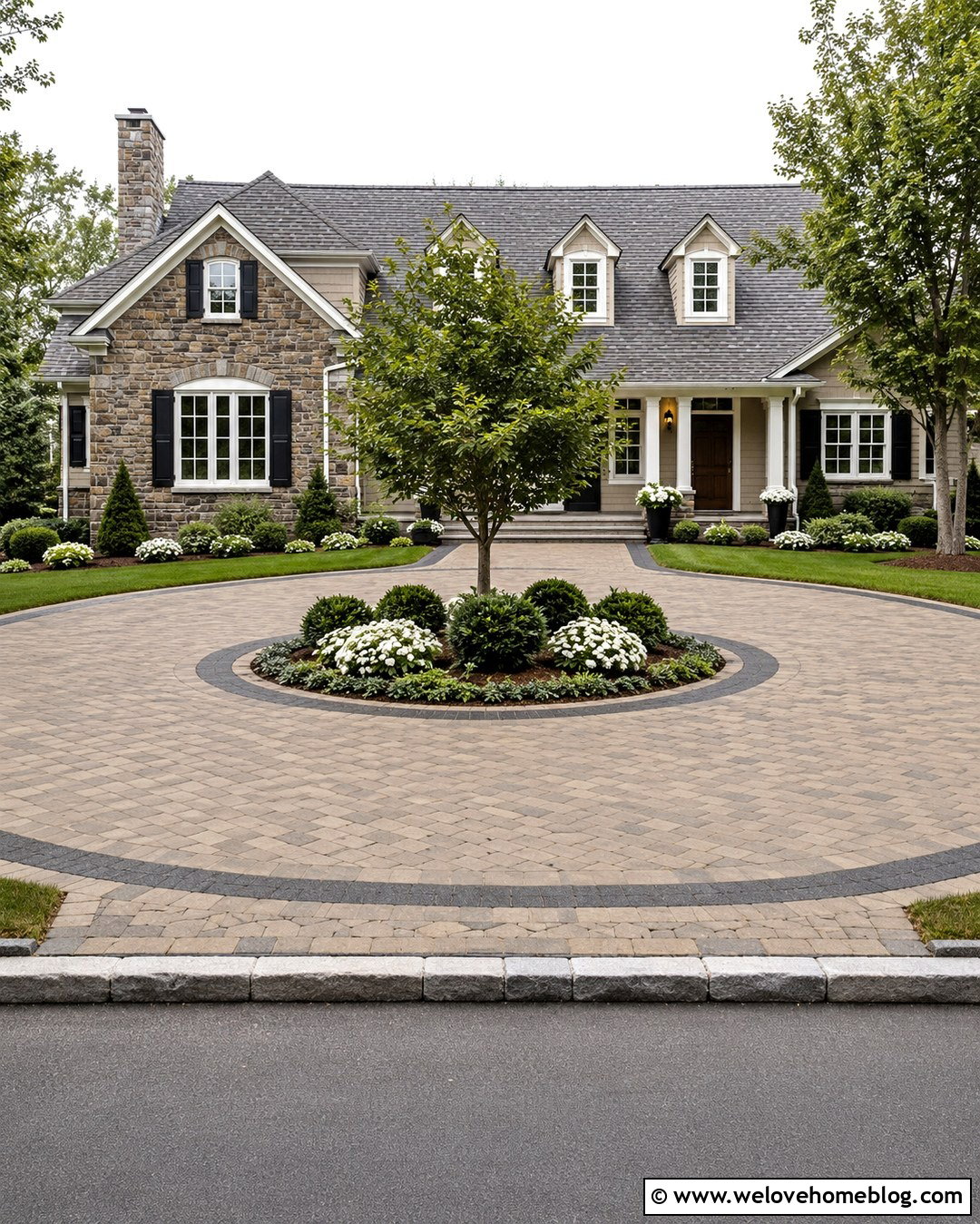
A circular driveway works best when its center island frames the house without blocking the front door. Build the surface with warm-toned concrete pavers and outline both edges with a darker paver border. In the center, combine a small ornamental tree with layered evergreen shrubs, seasonal flowers, and a neat ground cover. Keep the tallest planting slightly off-center so guests can still see the entrance from the street. A wide walkway should connect the circular drop-off area to the porch, ideally using the same pavers as the driveway border. This repeated material makes the full approach feel unified. Balanced foundation planting and matching porch planters can further strengthen the front door as the visual destination.
4. Brick Driveway Leading To A Colonial Front Door
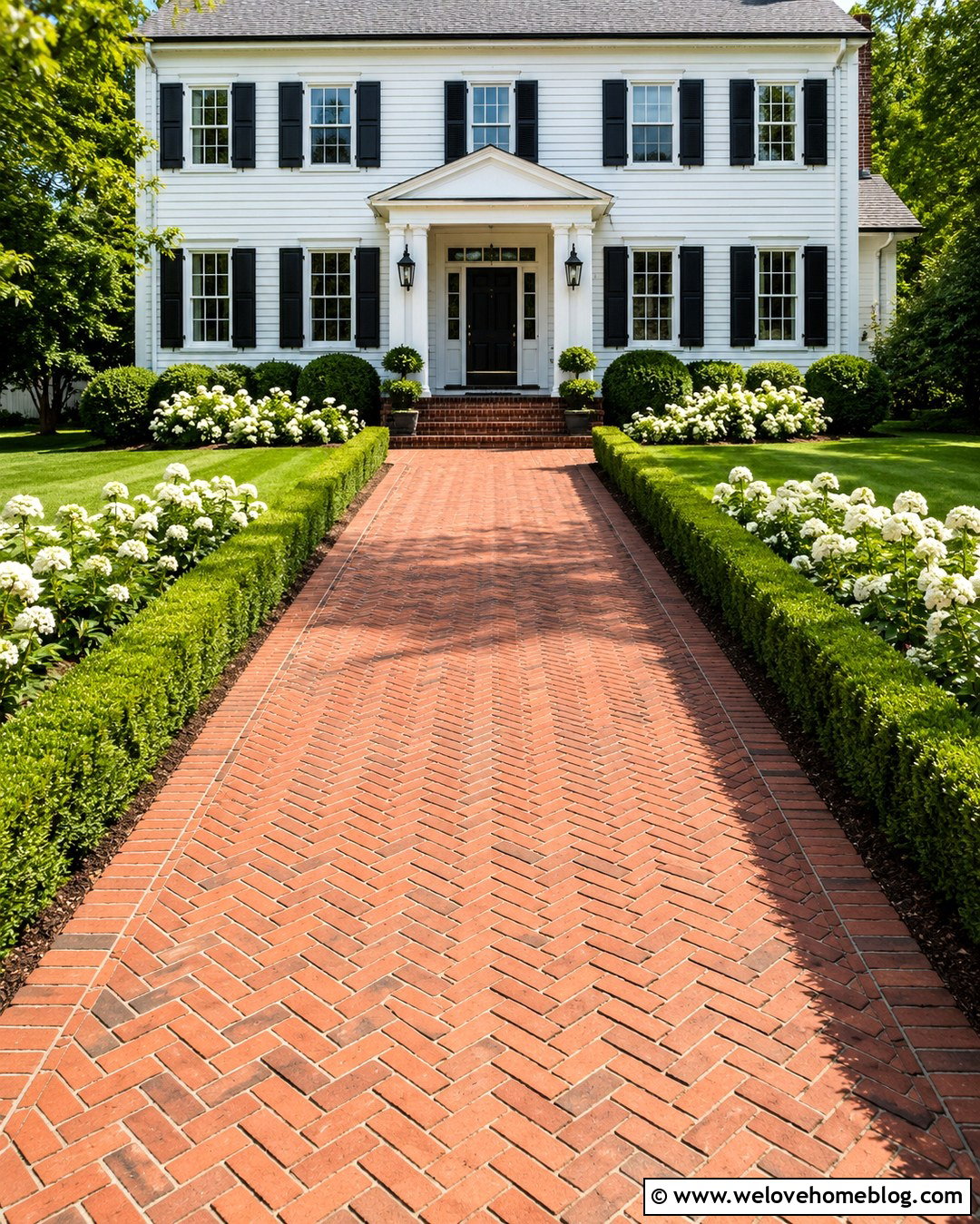
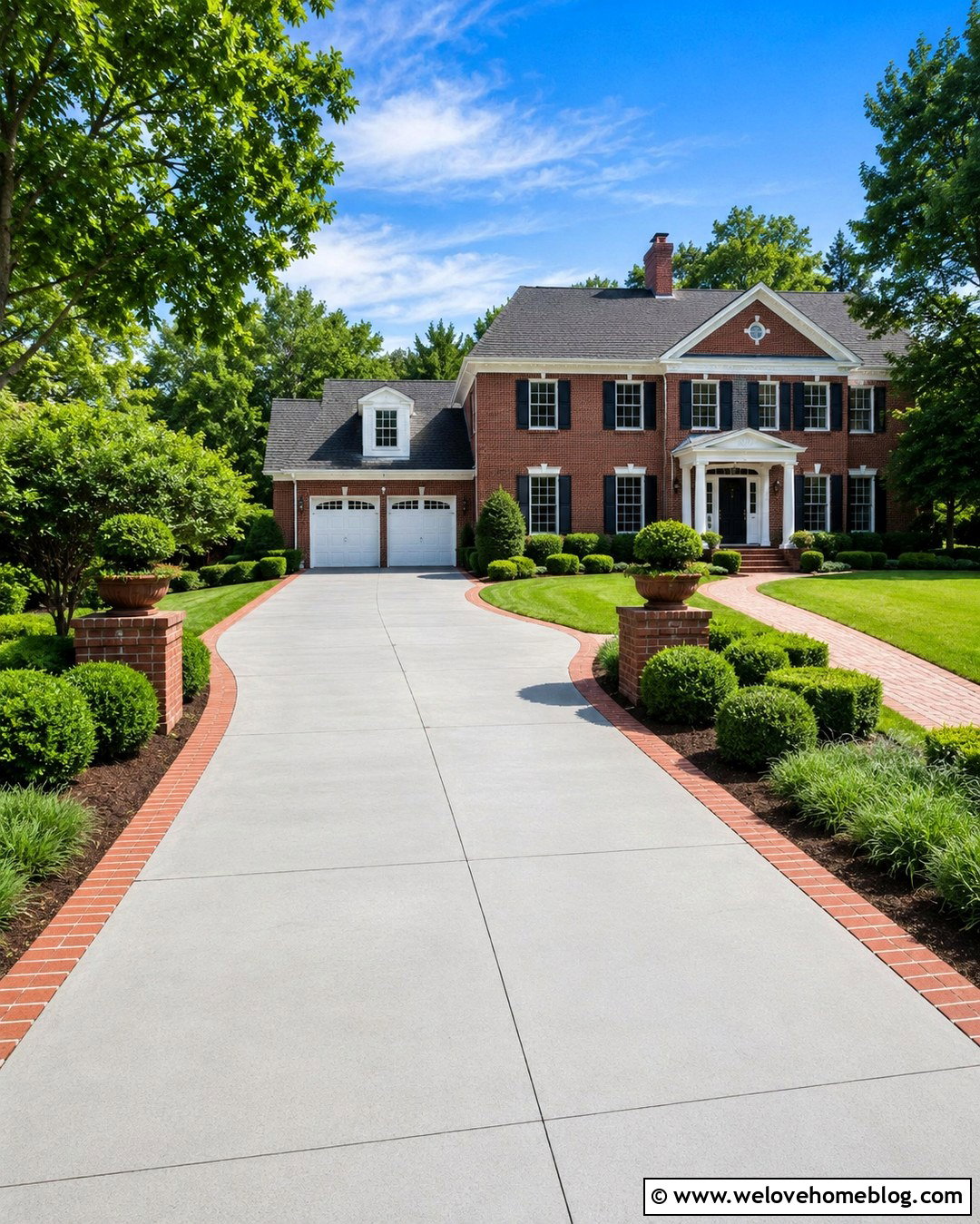
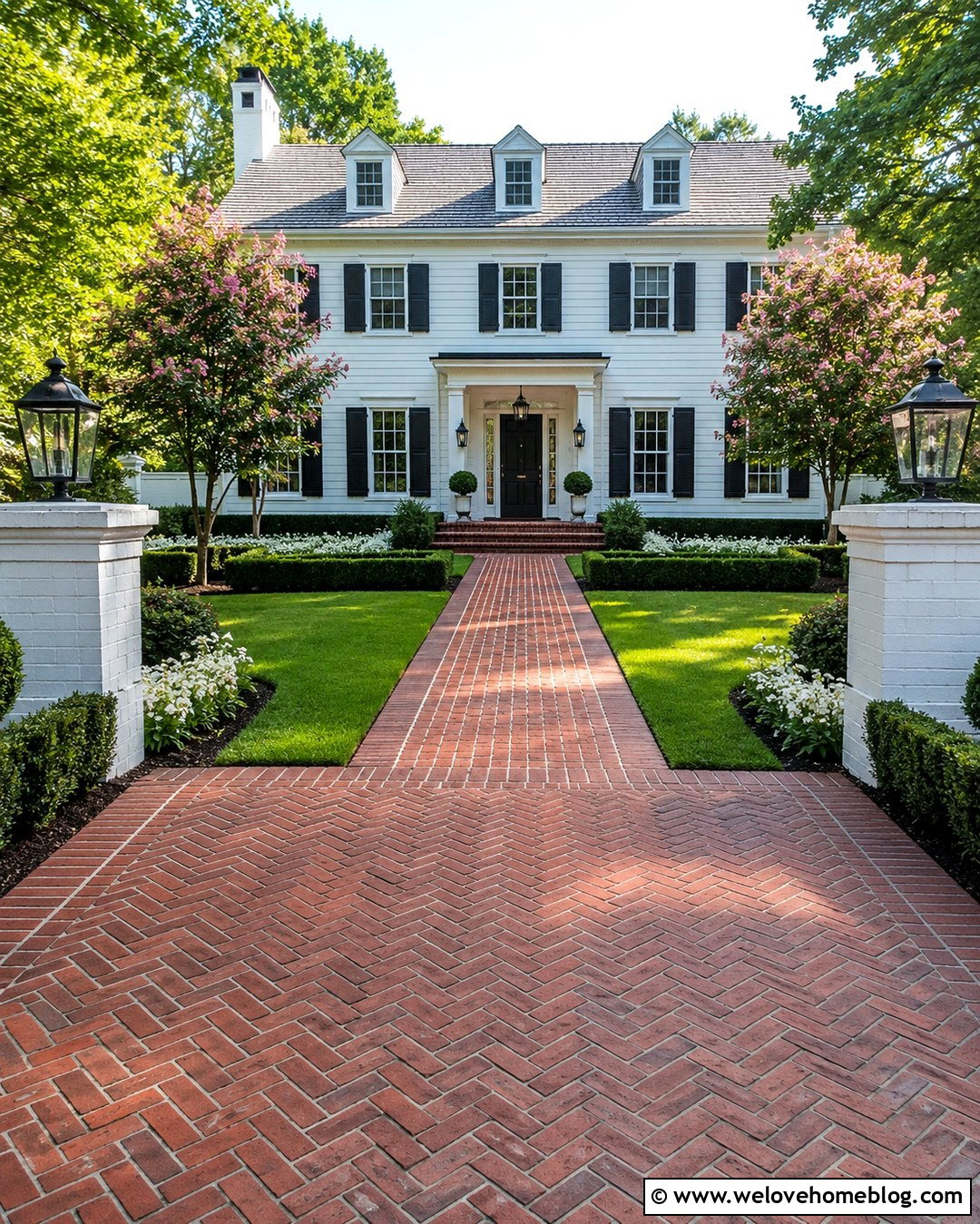
The rich color of a clay brick driveway naturally complements the balanced facade of a Colonial home. Lay the main driveway in a herringbone pattern, then add a straight running-bond border for a clean finished edge. A centered brick walkway can continue from the parking area to the front steps, reinforcing the home’s formal symmetry. Frame the route with clipped boxwood, white flowering shrubs, and a level lawn rather than tall, distracting plants. Brick porch steps and simple black lanterns help connect the hardscape to the entrance. If the driveway is wide, incorporate a subtle contrasting brick band near the walkway junction. This breaks up the paved area and makes the route to the front door immediately understandable.
5. Modern Concrete Driveway With Floating Front Door Steps
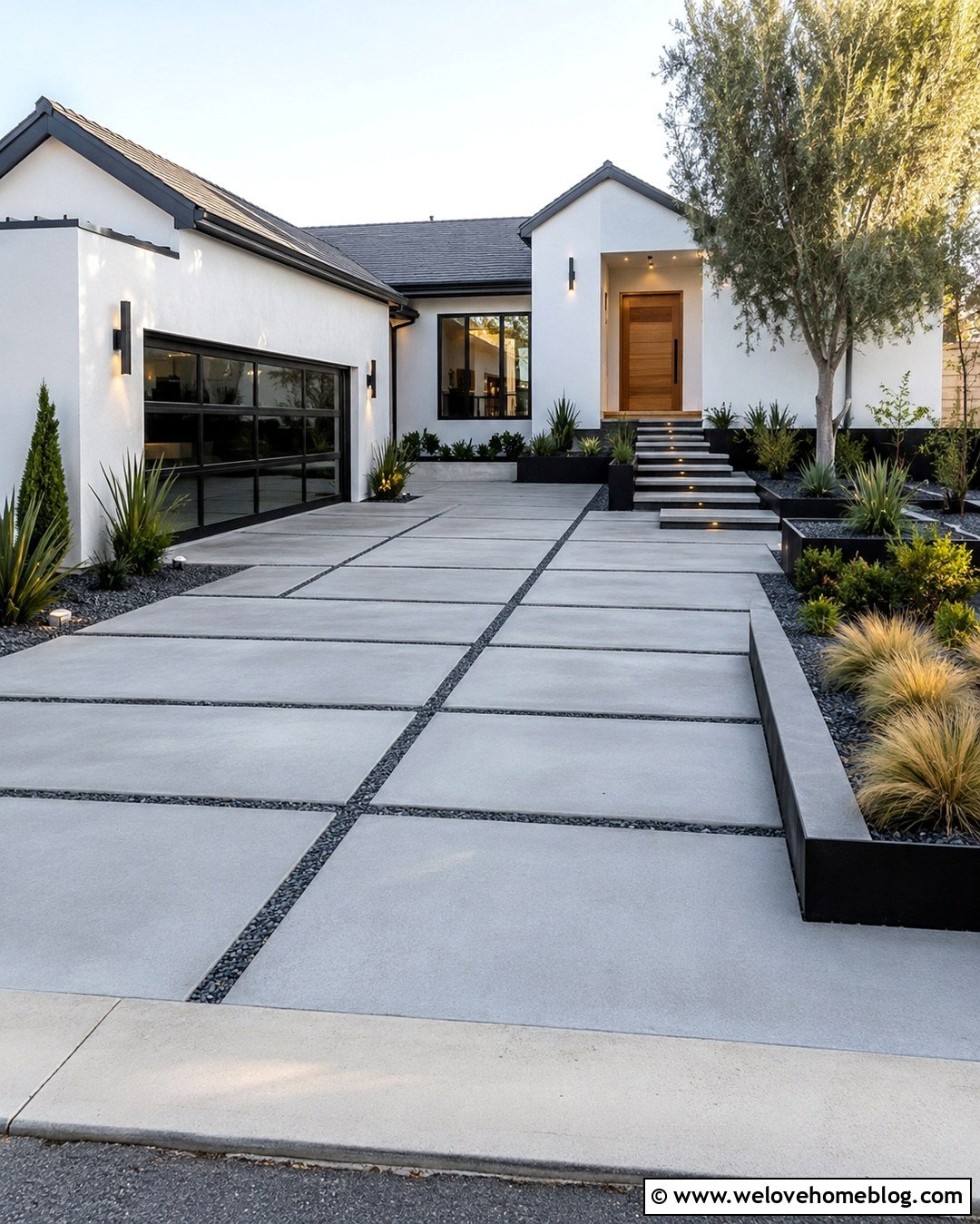
Clean lines can turn a basic driveway into a striking modern entrance. Use large-format light gray concrete slabs separated by narrow gravel joints or dark ground-cover strips. Beside the parking lane, install broad floating concrete steps that rise gradually toward the front door. The walkway should feel like an extension of the driveway while remaining visually separate from vehicle space. Black steel edging, rectangular planting beds, and a restrained mix of ornamental grasses and evergreen shrubs maintain the geometric layout. A wood front door adds warmth against white stucco, dark siding, or concrete walls. Keep decorations minimal and use integrated step lights to emphasize the approach without cluttering the architecture or overwhelming a compact front yard.
6. Asphalt Driveway With Brick Border And Entry Walk
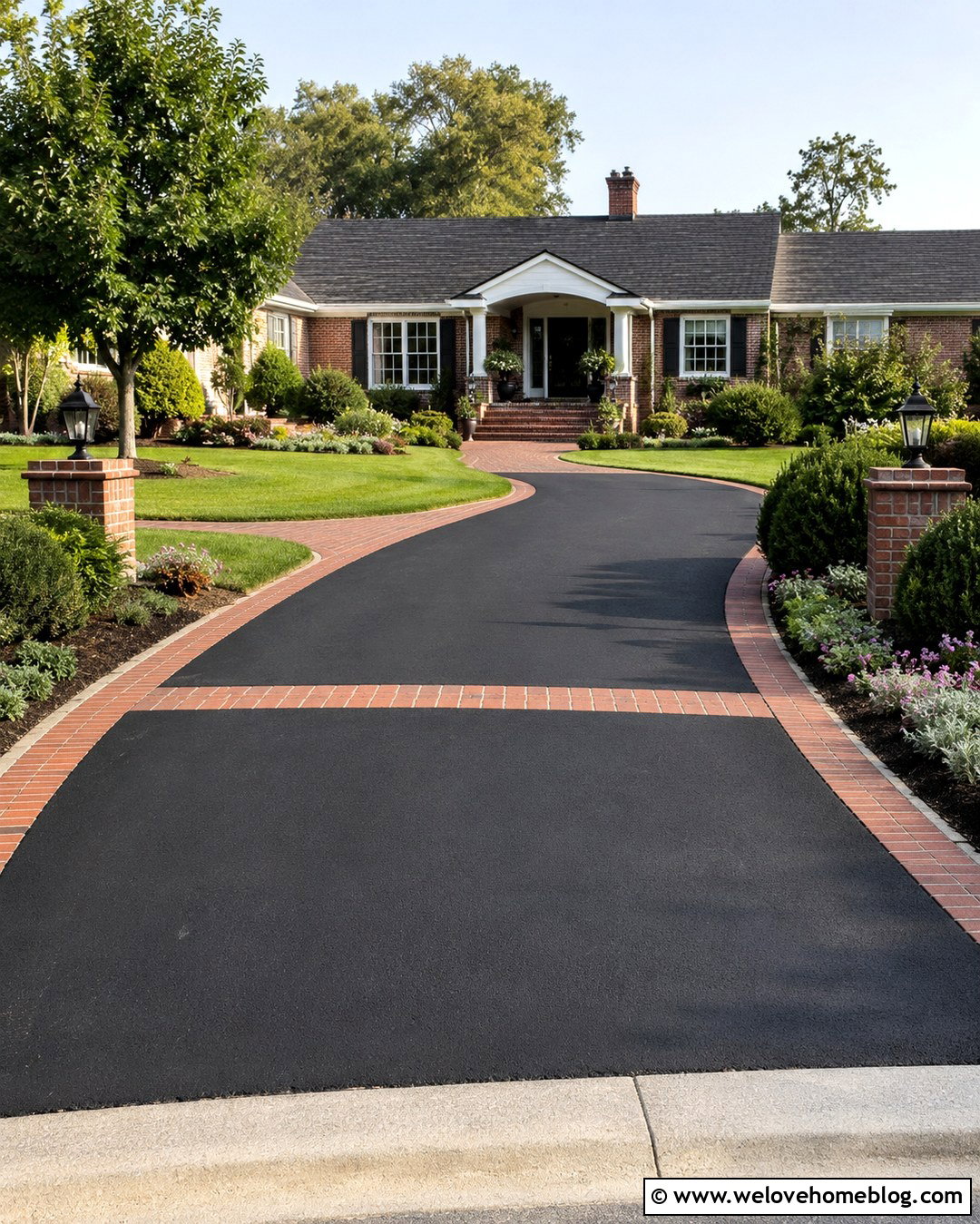
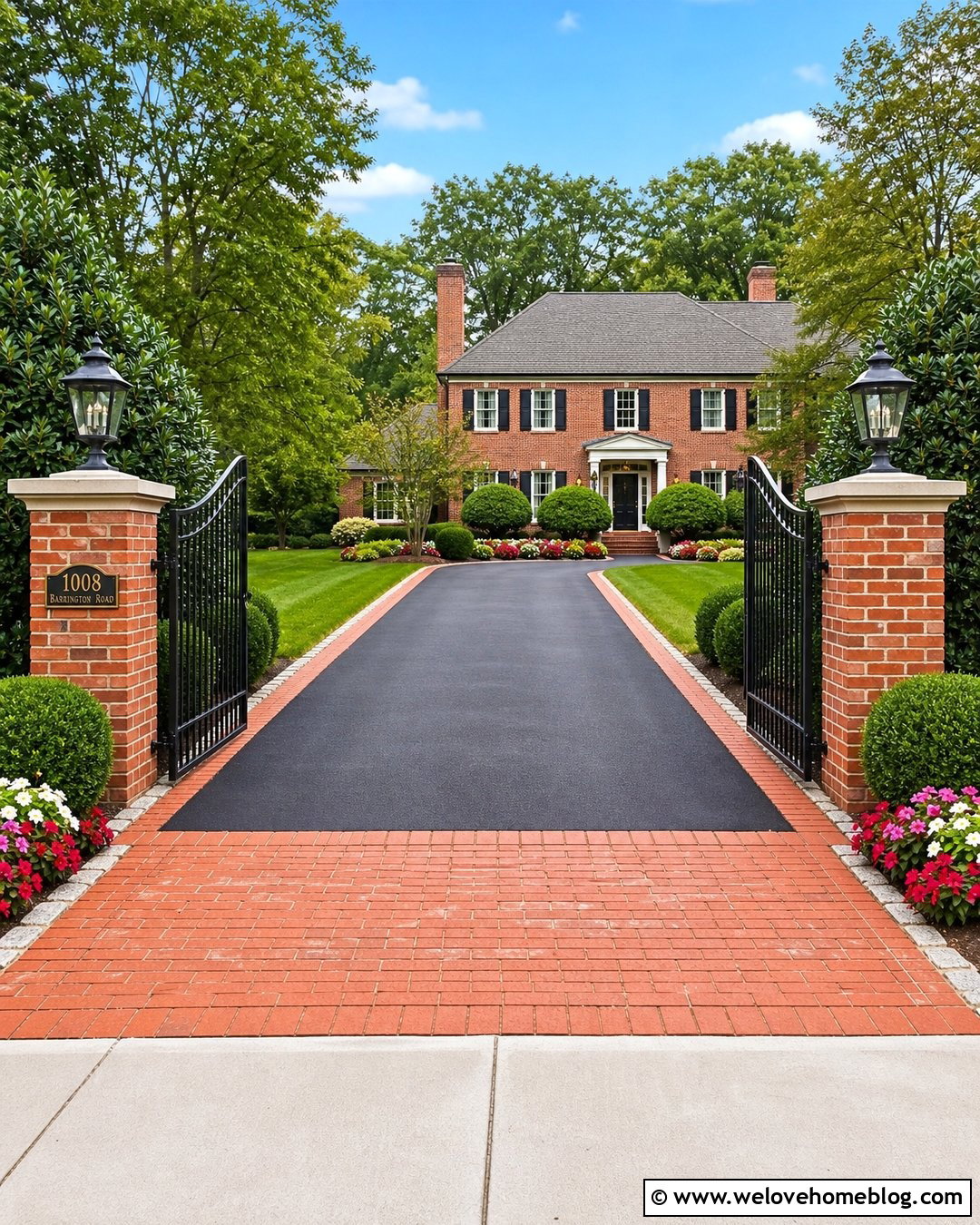
Black asphalt offers a practical foundation that can look more finished with a warm brick frame. Install a single or double row of clay brick pavers along the driveway edges and repeat that brick in a dedicated walkway to the front door. A curved path can reduce the visual dominance of a front-facing garage, especially when it passes through a small lawn or planting bed. Add low evergreen shrubs near the driveway and taller flowering plants closer to the house to create gradual visual movement. Where the walkway crosses the asphalt, continue a full-width brick band for easy recognition. Matching brick porch steps, foundation accents, or columns will tie the surface treatment into the home instead of making it feel added later.
7. Curved Driveway With A Direct Front Door Walkway
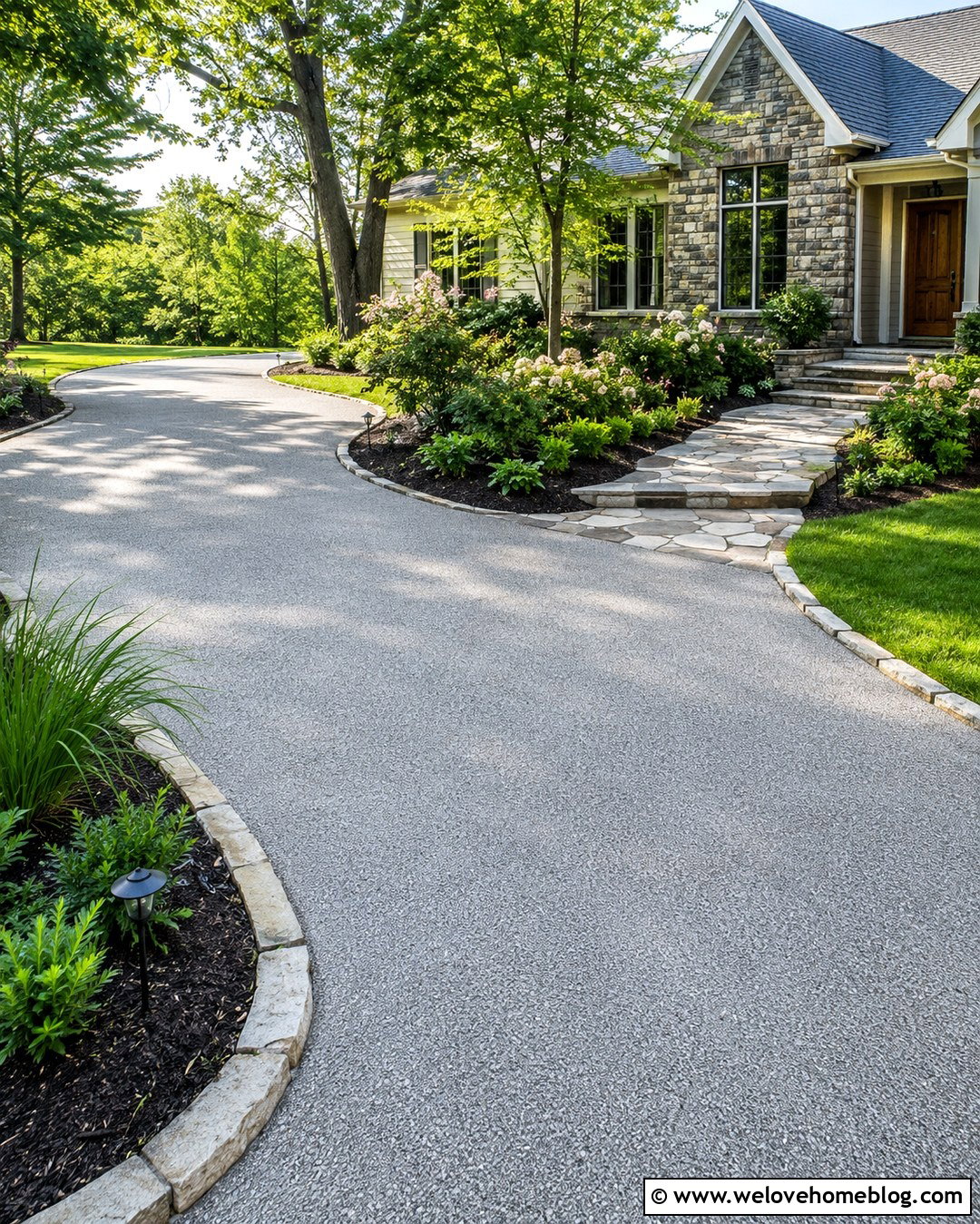
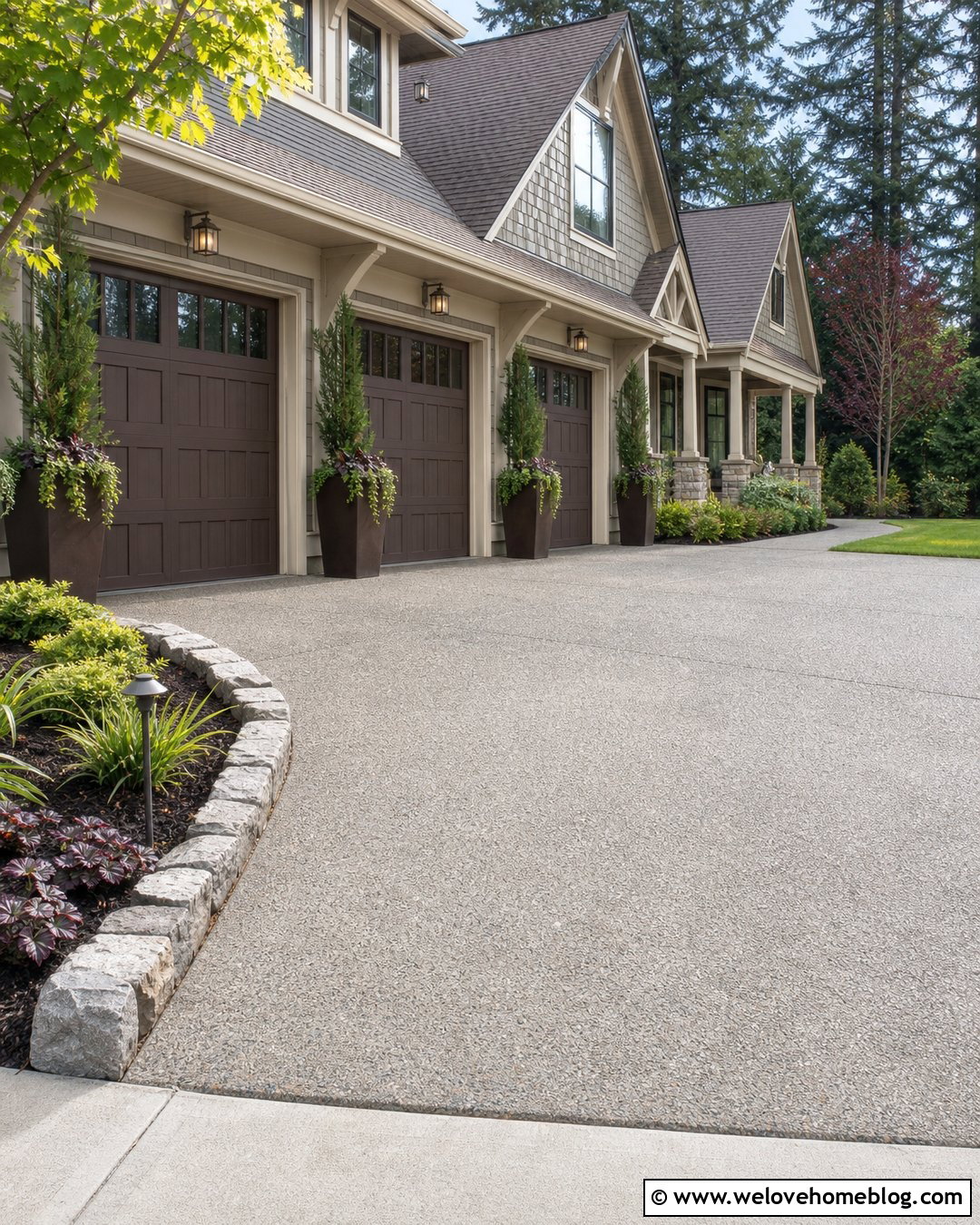
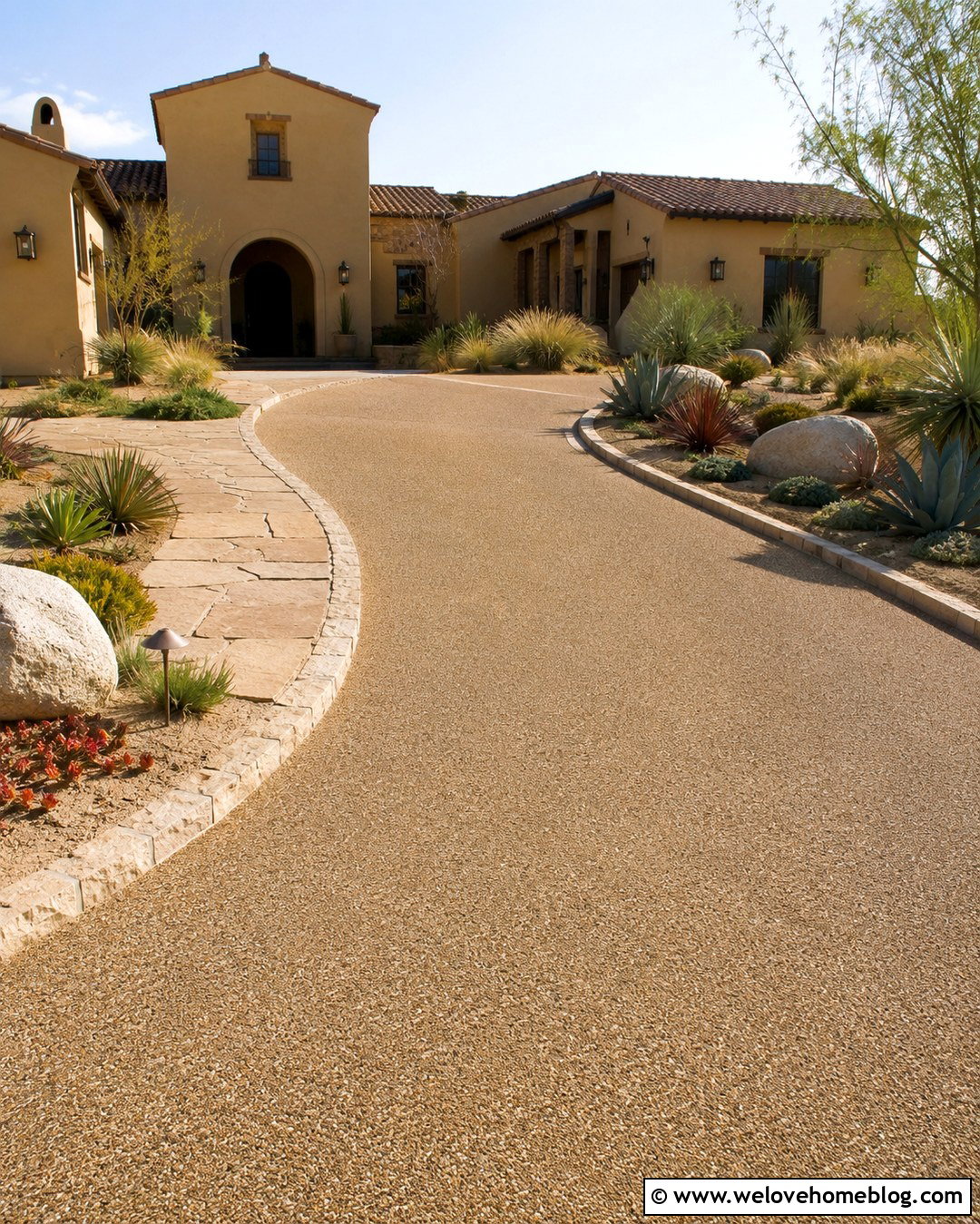
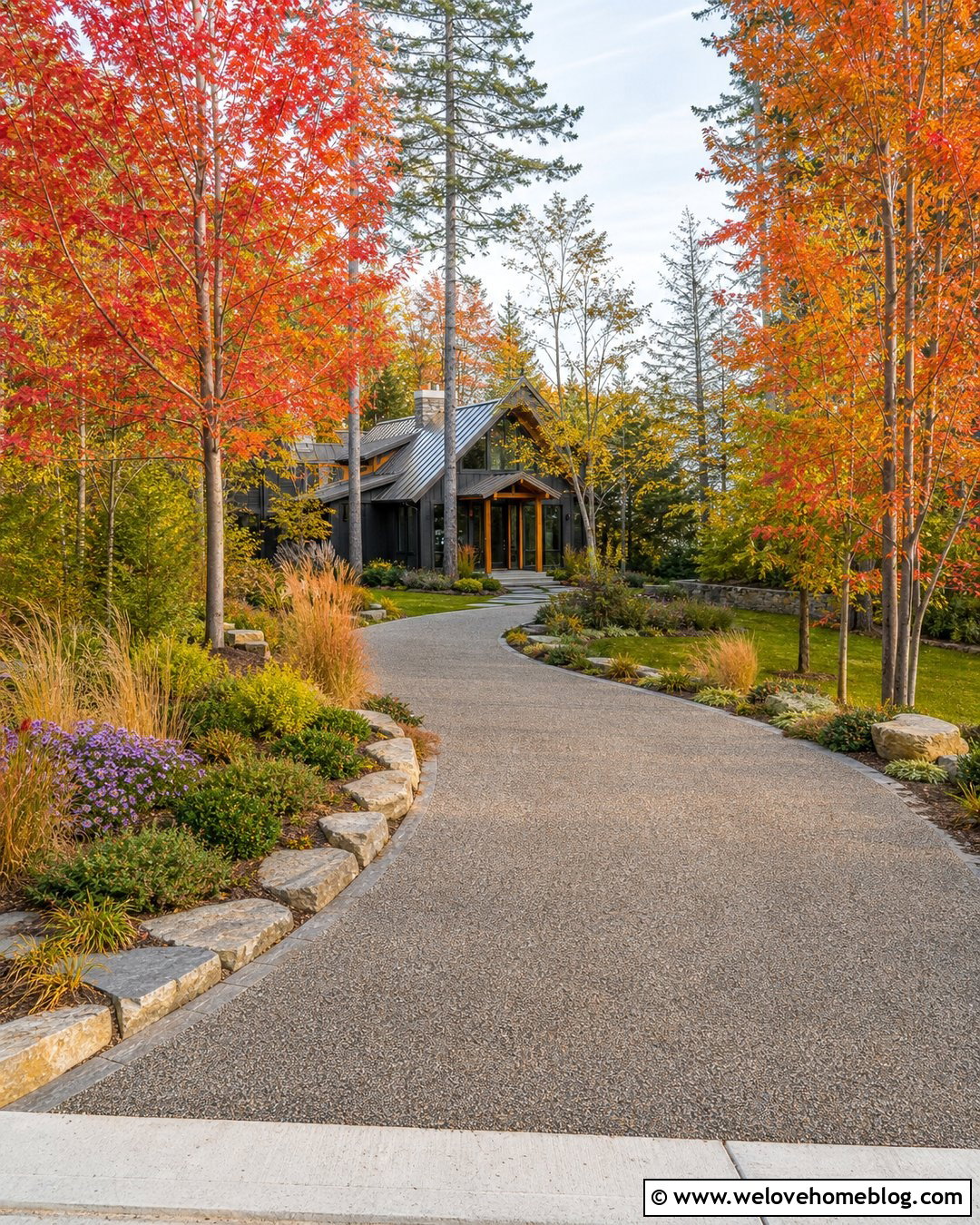
A sweeping driveway can create graceful curb appeal, but guests still need an obvious route to the entrance. Use exposed aggregate concrete for the curved driving surface and add a straight-cut flagstone walkway from the nearest parking point to the front door. This contrast between the curved vehicle route and direct pedestrian path makes the layout easy to understand. Line the driveway’s outside curve with shade trees or flowering shrubs, while keeping planting lower near the house. A stone-edged garden bed can fill the space between the driveway and walkway without making it feel crowded. Repeat the flagstone on the porch landing, then add low path lights and matching planters to visually pull the entrance forward.
8. Small Front Yard Driveway With Side Door Path
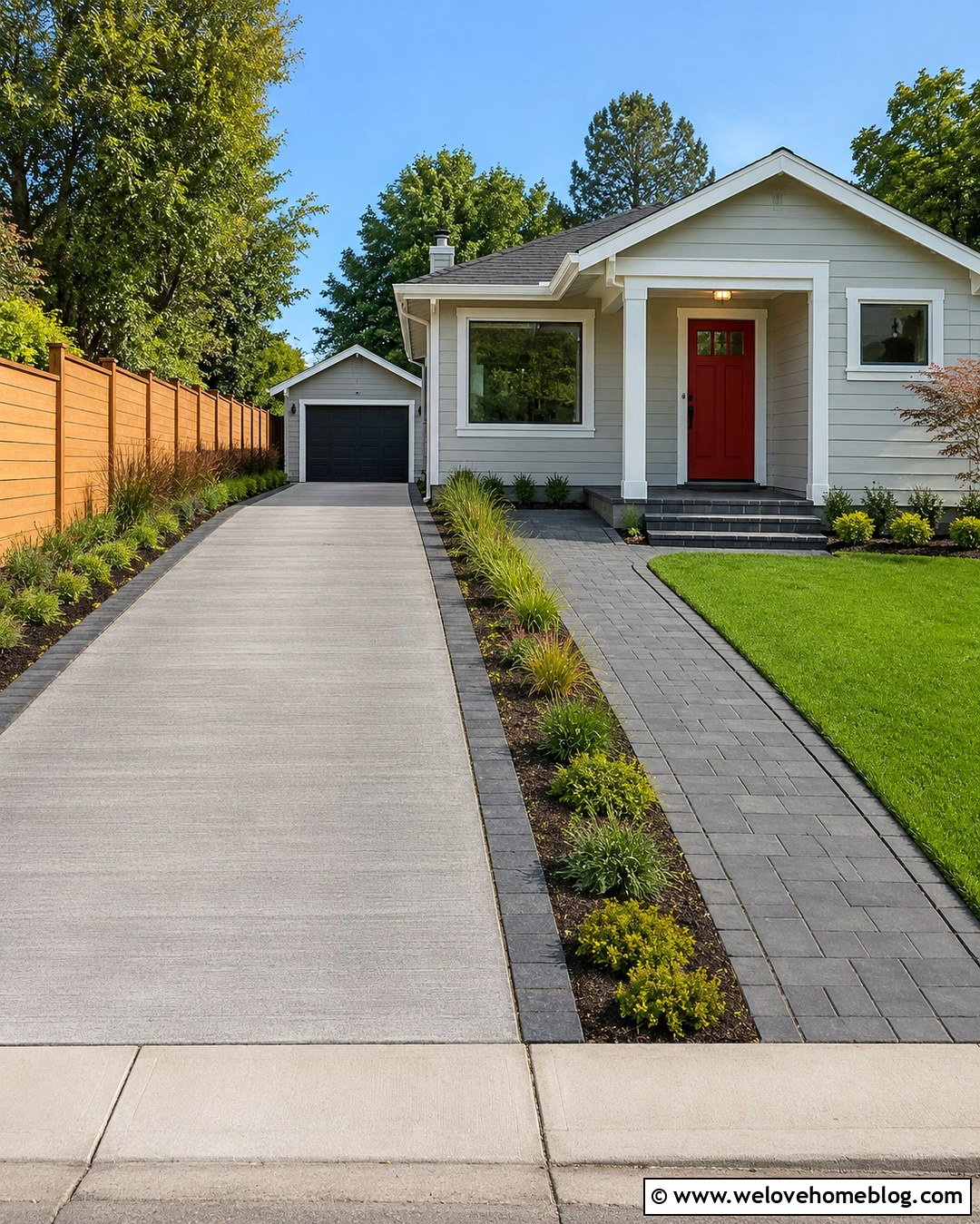
Limited space calls for a driveway and walkway that share materials without becoming one oversized paved area. Install a narrow broom-finished concrete driveway with a slim charcoal paver border. Along one side, create a matching paver path that branches toward the front door before reaching the garage. A narrow planting strip between the two surfaces can provide separation where space allows. Fill it with dwarf grasses, ground covers, or compact evergreen shrubs that remain clear of car doors. Using a brighter front door color also helps the entrance compete with the garage. Keep the path wide enough to feel deliberate, and repeat its pavers on the porch landing. This compact arrangement preserves parking while giving pedestrians a recognizable route.
9. Farmhouse Gravel Driveway With Brick Front Walk
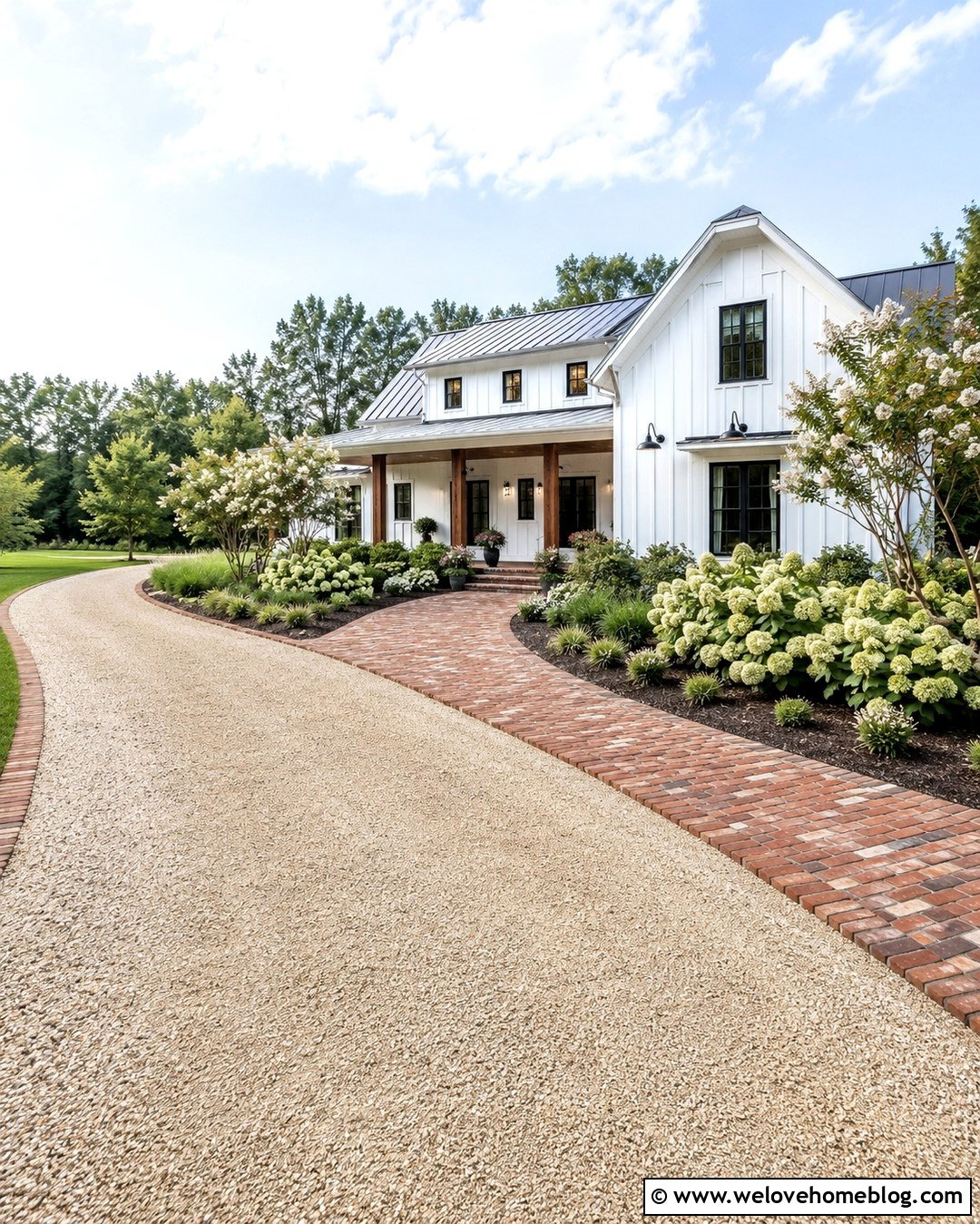
Crunchy beige gravel, aged brick, and relaxed planting create a natural approach to a modern farmhouse. Shape the driveway with a gentle curve and contain the gravel using reclaimed-looking clay brick laid in a simple soldier-course edge. Near the house, branch off a broad brick walkway that leads to the front porch. The brick introduces a stable pedestrian surface and adds warm color against white siding. Frame the driveway with native grasses, hydrangeas, and small flowering trees, leaving open lawn near the entrance for a spacious feeling. Black barn-style porch lights and simple timber posts can echo other exterior details. Avoid overly formal hedges; loose, layered landscaping better suits the farmhouse character and softens the gravel surface.
10. Cobblestone Driveway With A Formal Front Entrance
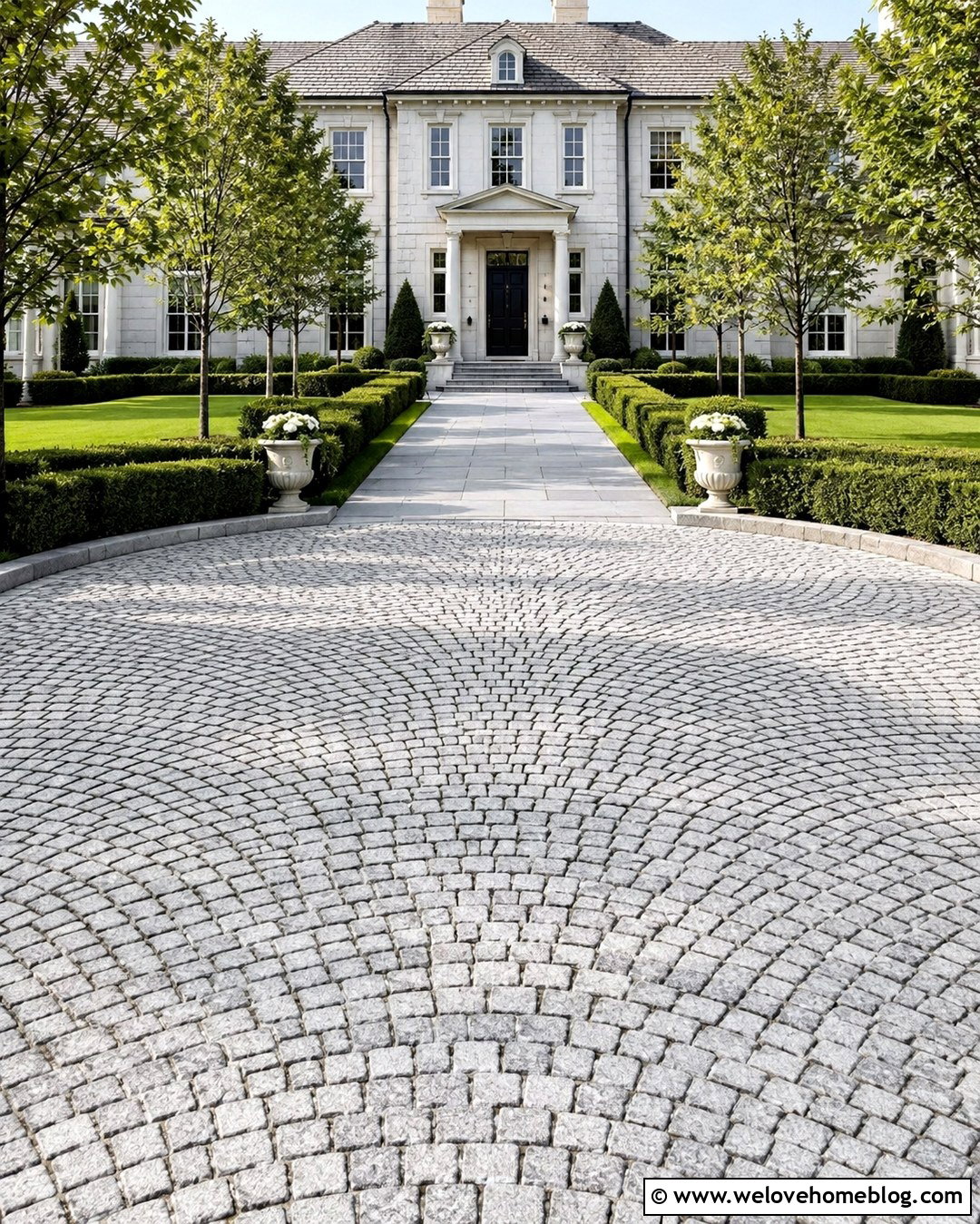
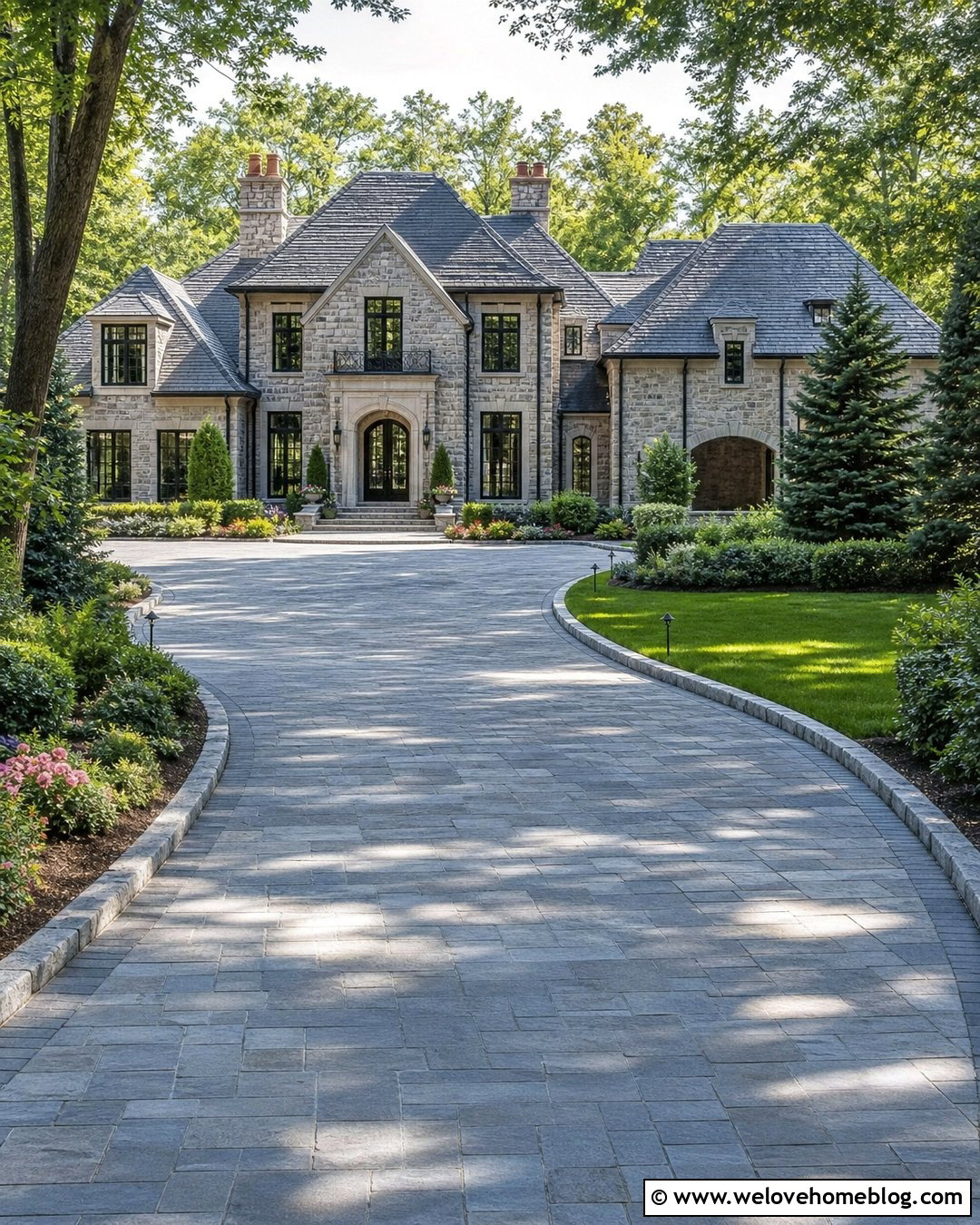
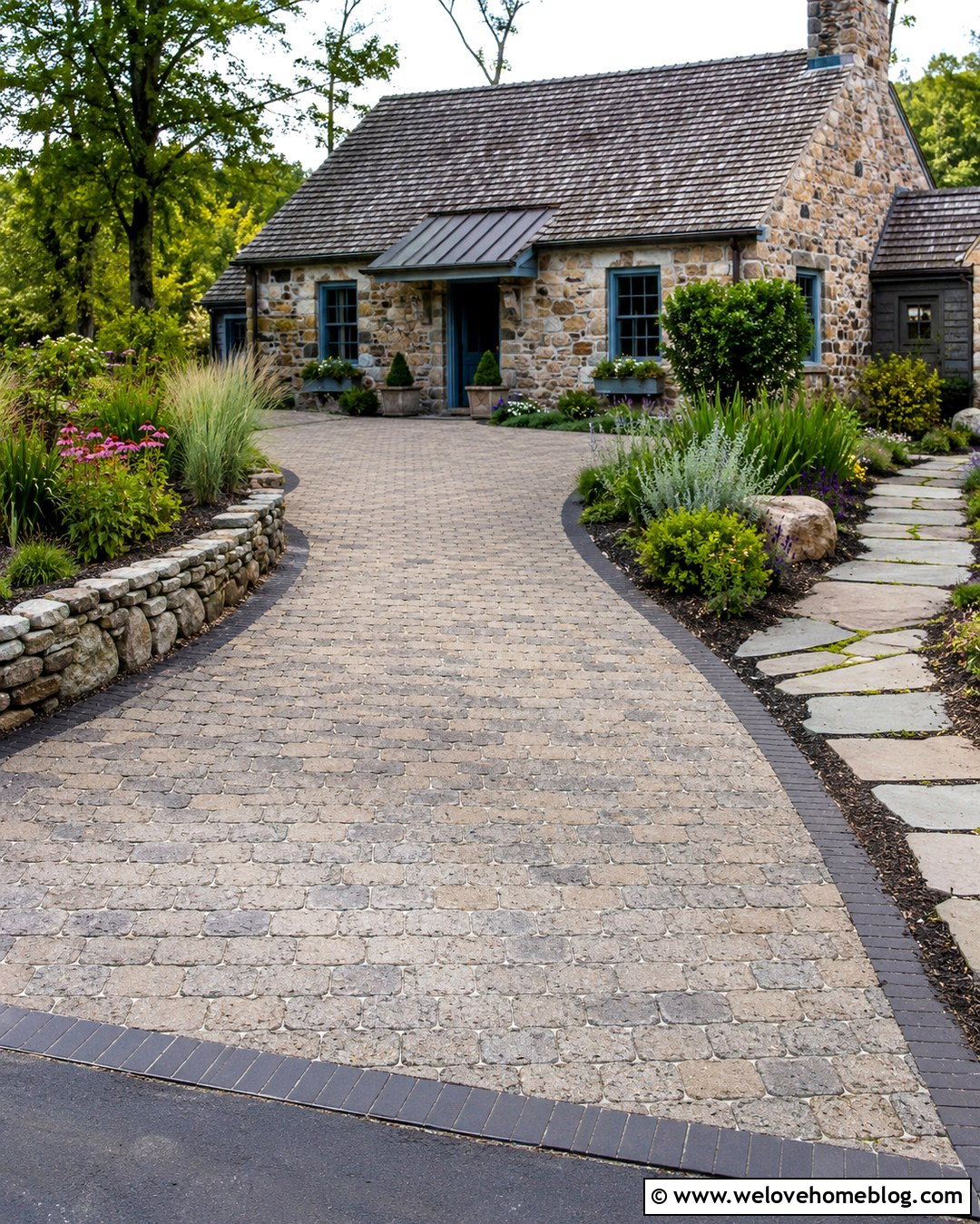
Few materials create a stronger traditional approach than a full cobblestone driveway. Use gray granite cobblestones in a fan or running pattern, framed by straight-cut stone curbs. A broad central walkway can continue from the driveway to symmetrical porch steps, allowing the entrance to remain the main focal point. On either side, clipped evergreen hedges, matching urn planters, and evenly spaced small trees reinforce the formal arrangement. Keep the driveway shape straight or gently flared near the house rather than adding unnecessary curves. For a more comfortable walking route, use flatter stone slabs within the walkway while maintaining the same gray tones. Repeating granite in the porch landing or foundation creates a cohesive, substantial appearance.
11. Paver Driveway With A Front Door Accent Pattern
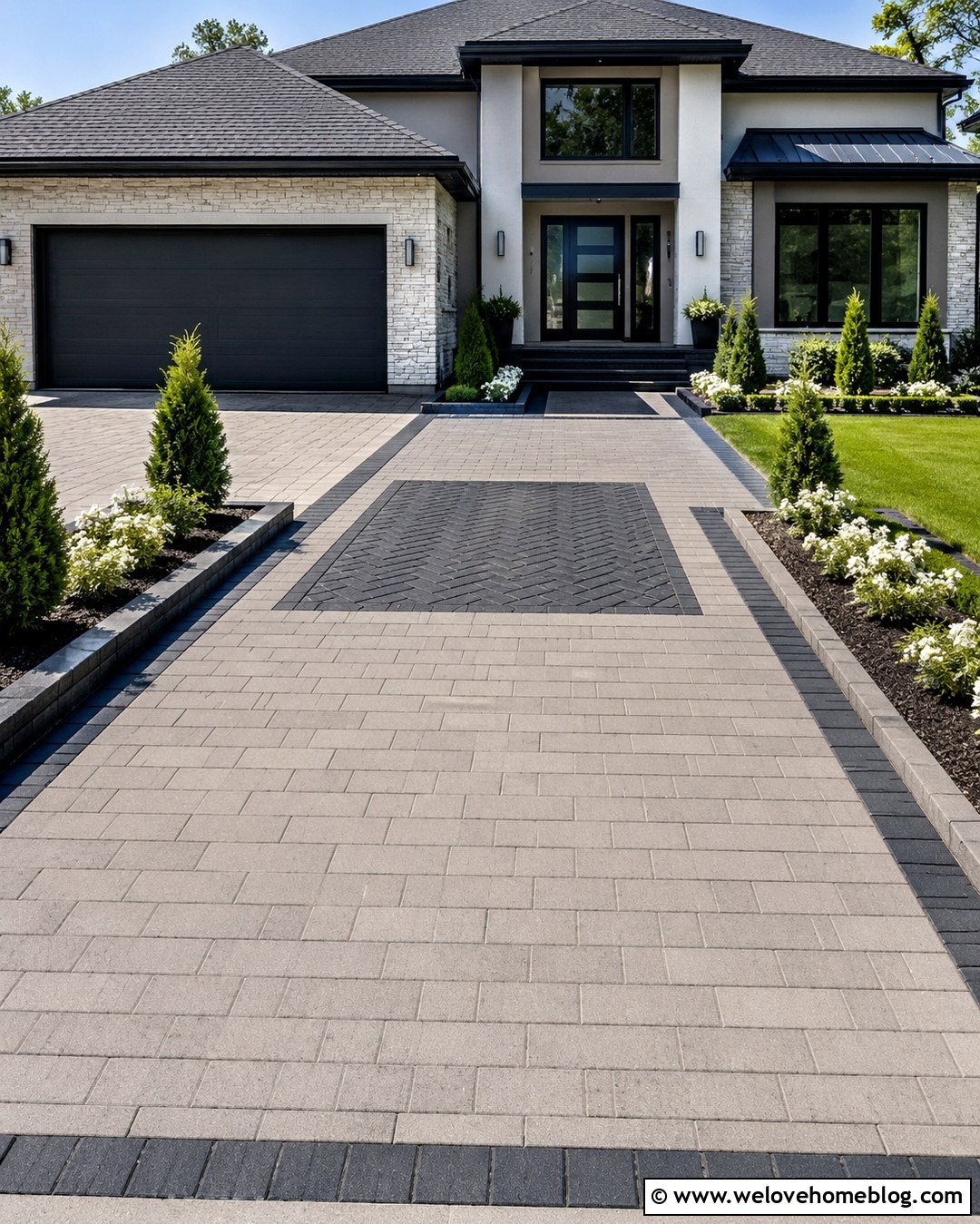
A patterned area near the entrance can distinguish pedestrian space without changing the entire driveway material. Build the main surface with taupe concrete pavers in a running bond, then create a darker herringbone panel where the front walkway begins. Continue those charcoal pavers toward the porch as a clear visual guide. The accent should be large enough to read as an intentional transition rather than a small decorative patch. Outline the driveway with a matching dark border and use rectangular planting beds to support the orderly design. Evergreen shrubs, white flowers, and a neatly edged lawn keep attention on the paving pattern. Coordinate the front door color with the accent pavers for a subtle connection between the driveway and home.
12. Driveway With Grass Strips Leading To Front Door
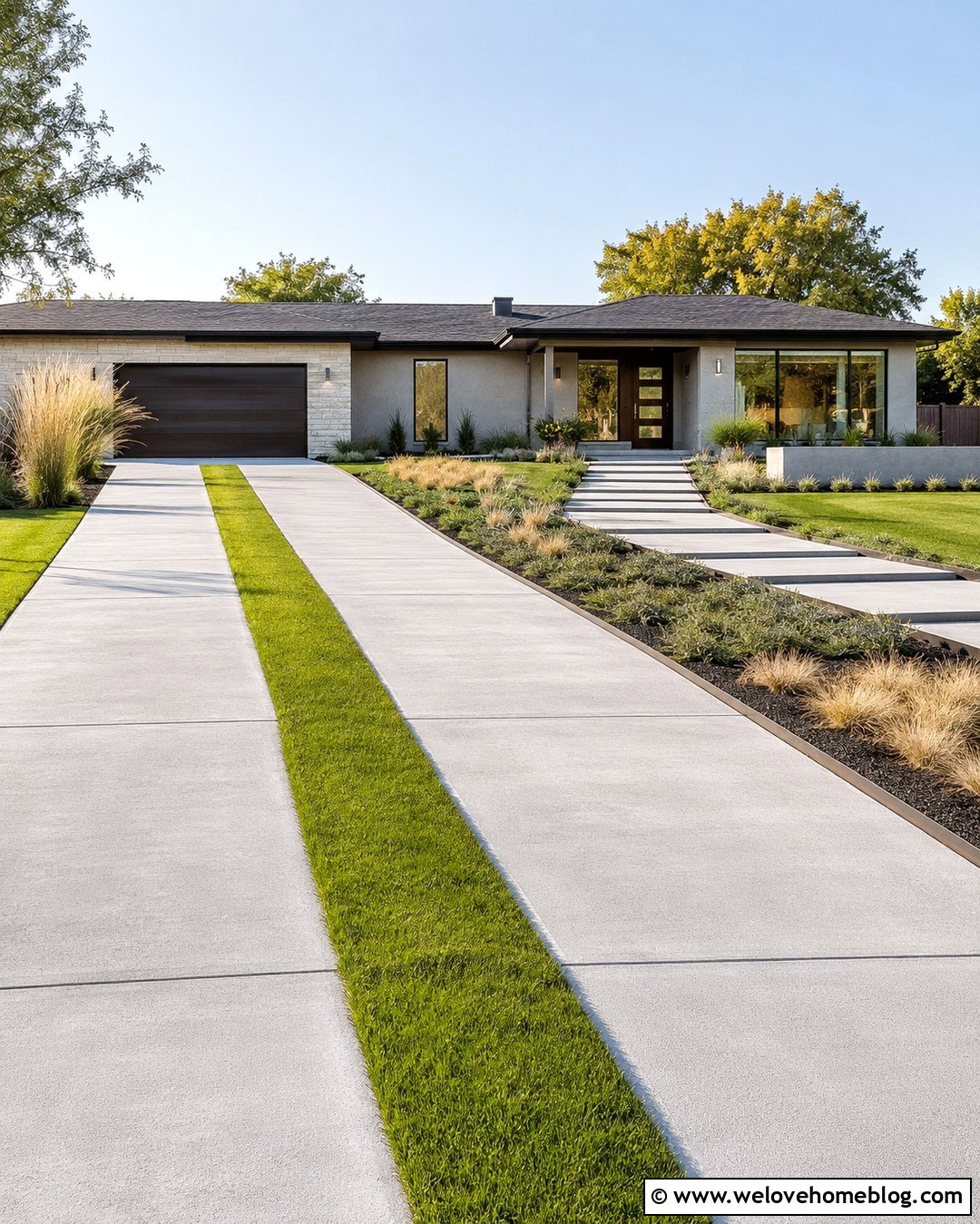
Green strips can visually reduce a broad paved surface and make the approach feel more connected to the yard. Create two concrete wheel tracks with a maintained grass strip in the center, then transition into a full concrete parking pad near the house. Add a wide stepping-stone walkway from the driveway to the front door using rectangular slabs that match the concrete tone. This layout suits a contemporary ranch, cottage, or low-profile modern home with a relatively level yard. Define the driveway edges with steel edging and low ground cover to maintain clean lines. Make sure the planted areas suit local conditions and regular traffic. Repeating grass joints around the front walk helps the entire entrance feel deliberately integrated.
13. Resin-Bound Driveway With A Curved Front Walk
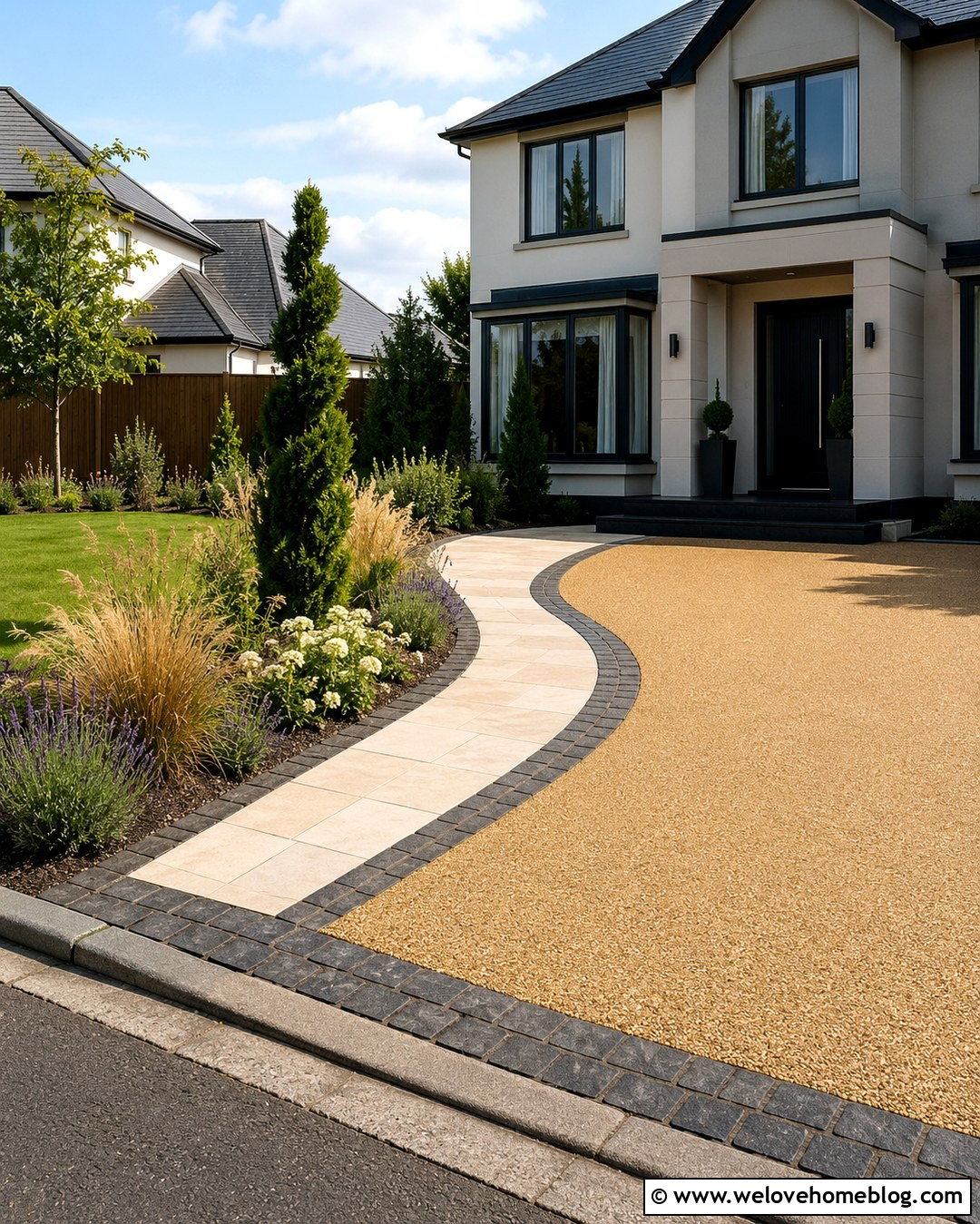
A resin-bound gravel surface provides a smooth, uniform background that pairs beautifully with a sweeping pedestrian path. Choose a warm golden or light beige aggregate and outline the driveway with dark charcoal pavers. From the parking area, curve a broad walkway toward the front door using larger porcelain or concrete slabs. A planted bed can occupy the inside curve, creating separation without making the route feel isolated. Combine low grasses, flowering perennials, and one sculptural evergreen for year-round structure. Repeat the charcoal border around the walkway and porch landing to unite each surface. This design works particularly well with contemporary homes, rendered facades, and simple architecture because the restrained material palette keeps the overall frontage calm and organized.
14. Driveway With Front Door Pergola And Garden Path
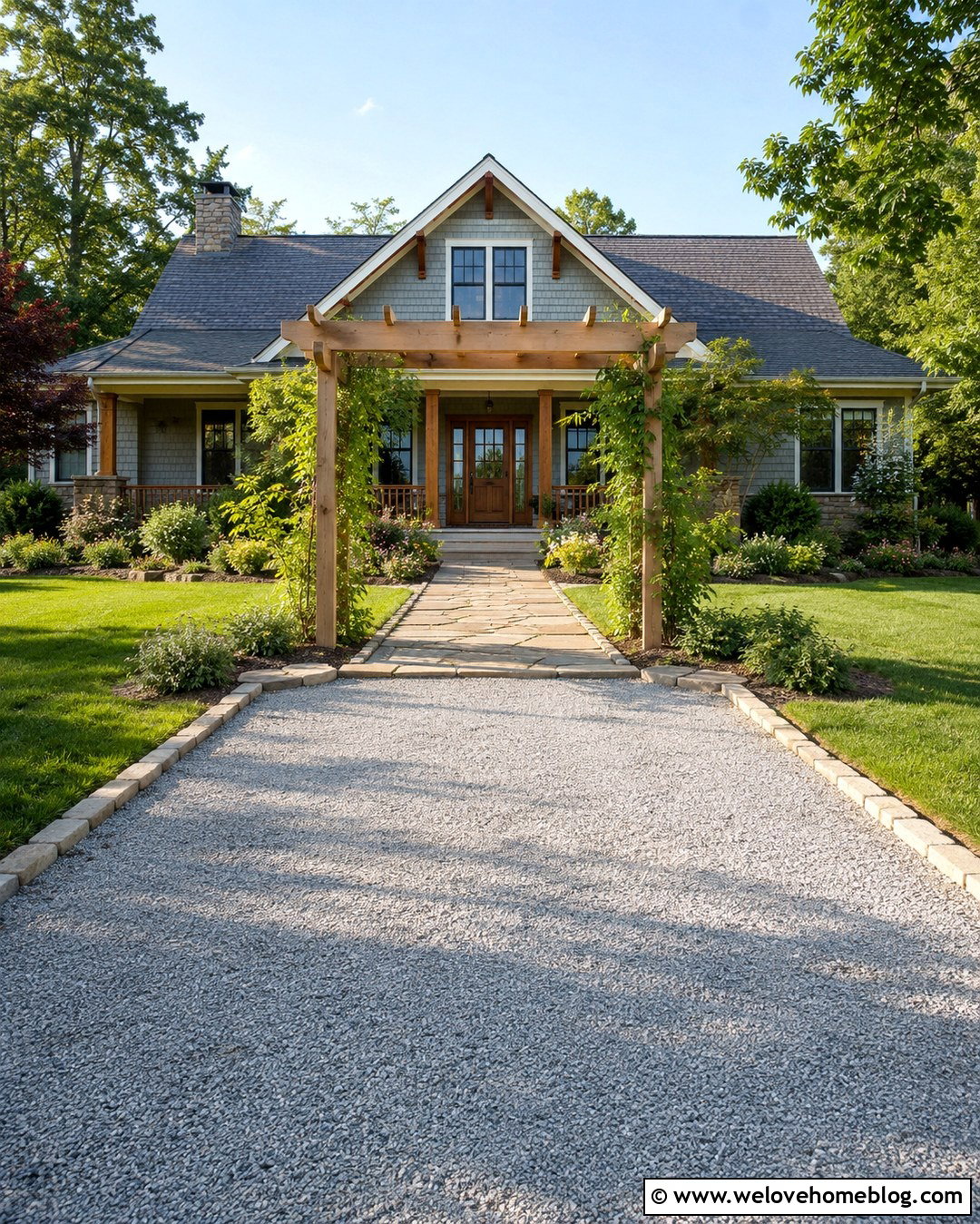
An open pergola can create a visible transition from vehicle space to the front entrance. Pair a light gray gravel driveway with a wide sandstone walkway that begins beneath a simple wood or painted structure. Position the pergola beside the parking area rather than over the driveway, allowing it to frame the pedestrian route. Train a restrained climbing plant along the posts while keeping the opening bright and easy to navigate. Sandstone edging and curved planting beds can soften the gravel driveway and carry the garden toward the porch. Repeat the pergola’s wood tone in the front door or porch columns. This design gives cottages and Craftsman homes an especially welcoming approach without relying on a large or expensive entrance feature.
15. Driveway With Stone Pillars Framing The Front Door Approach
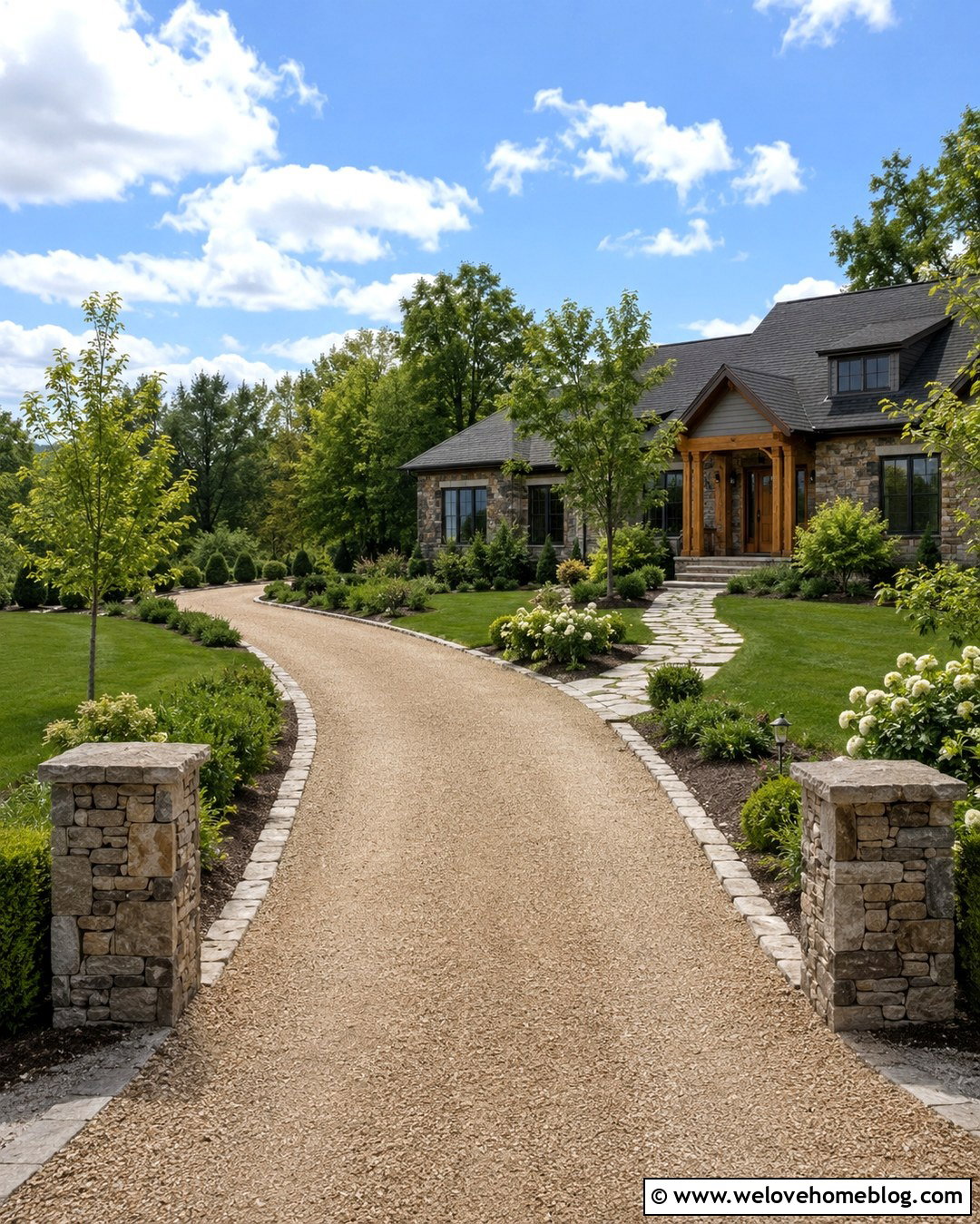
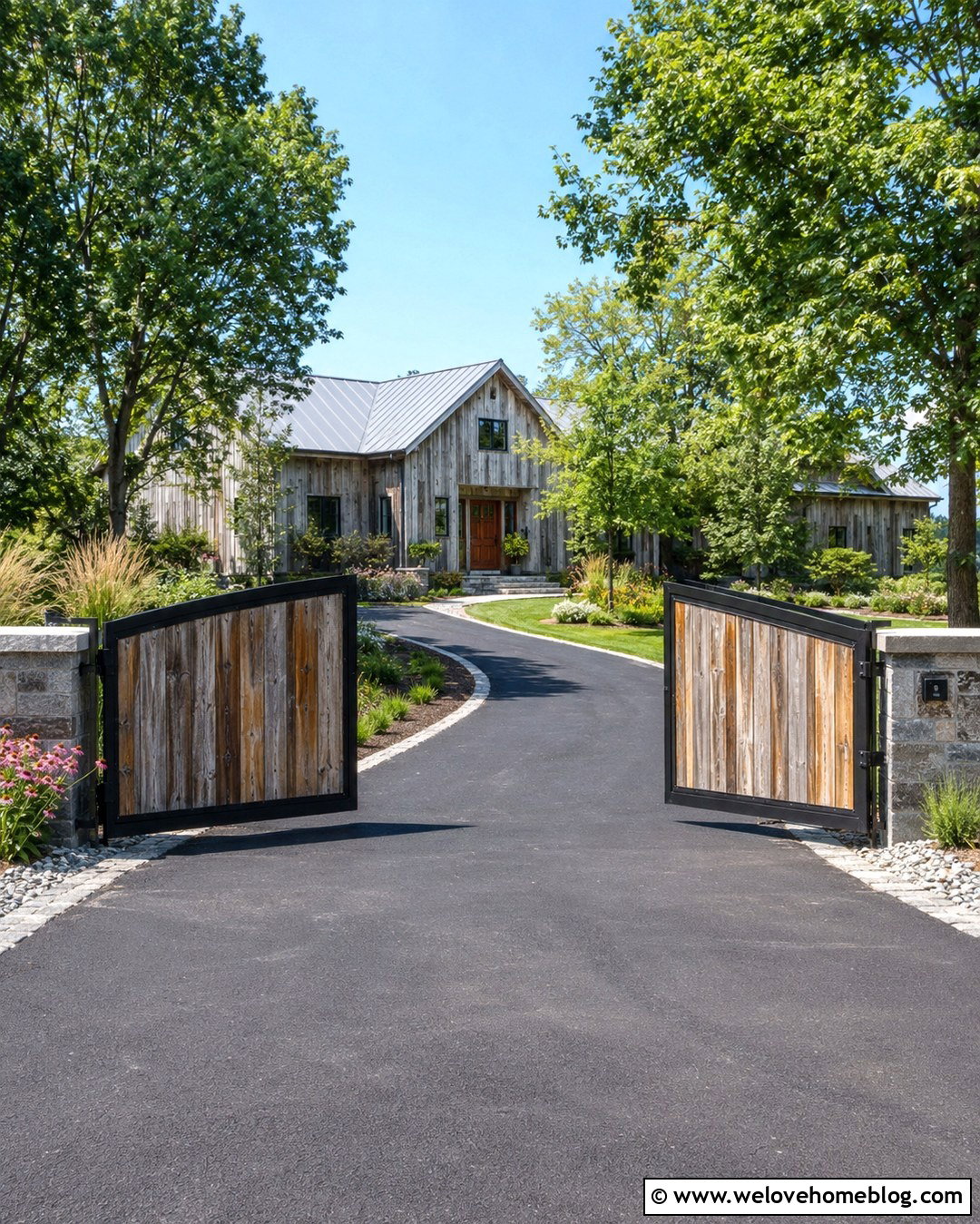
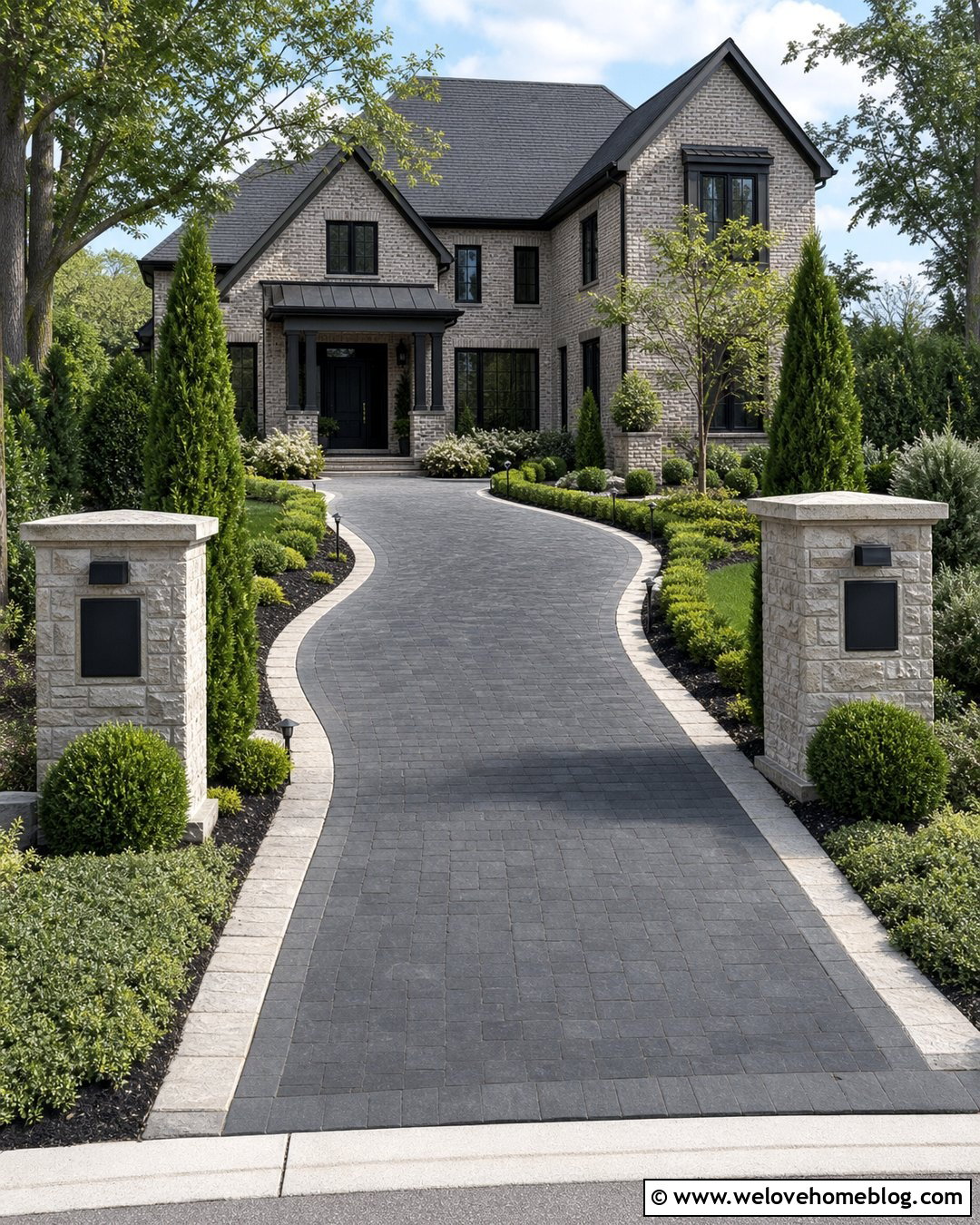
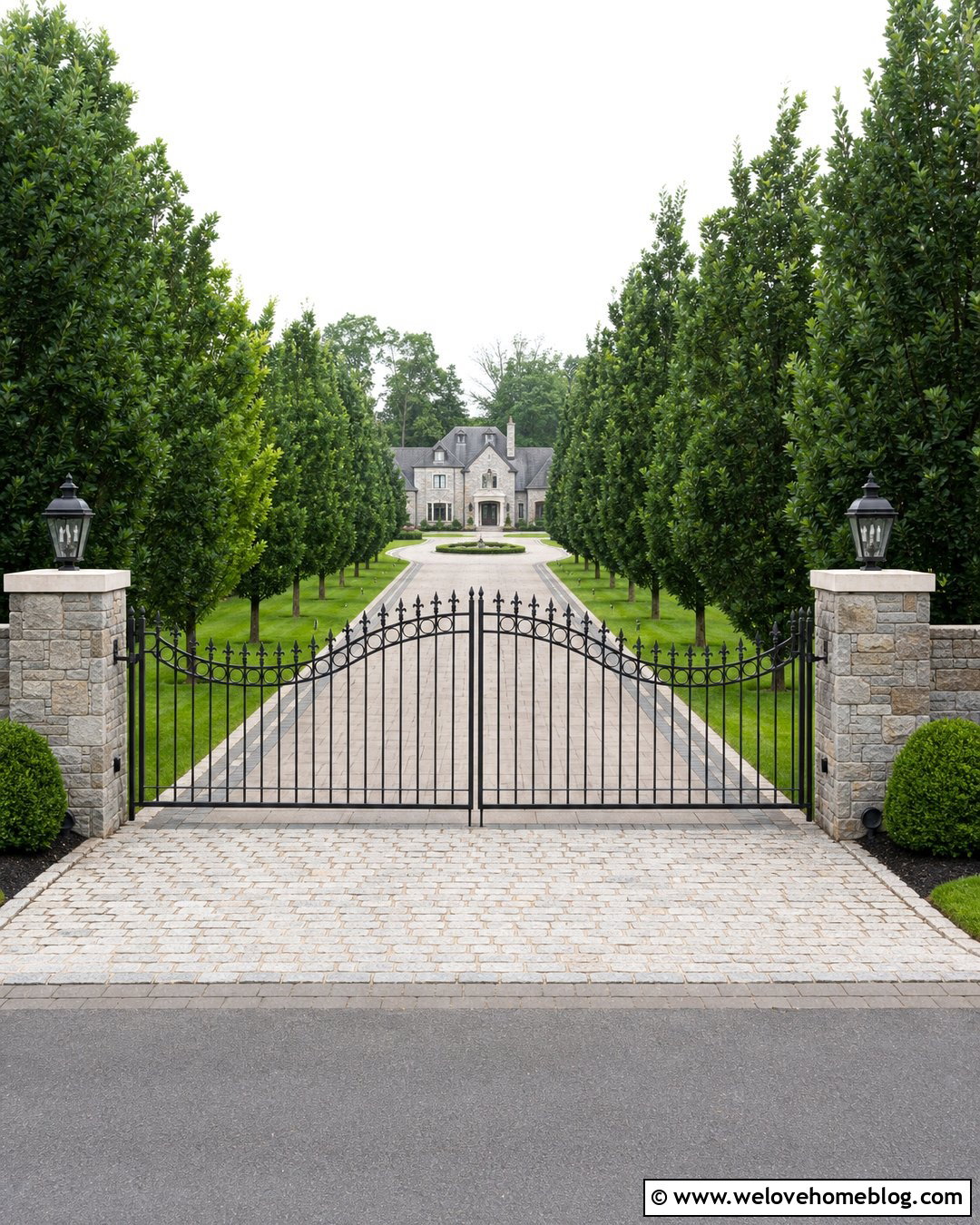
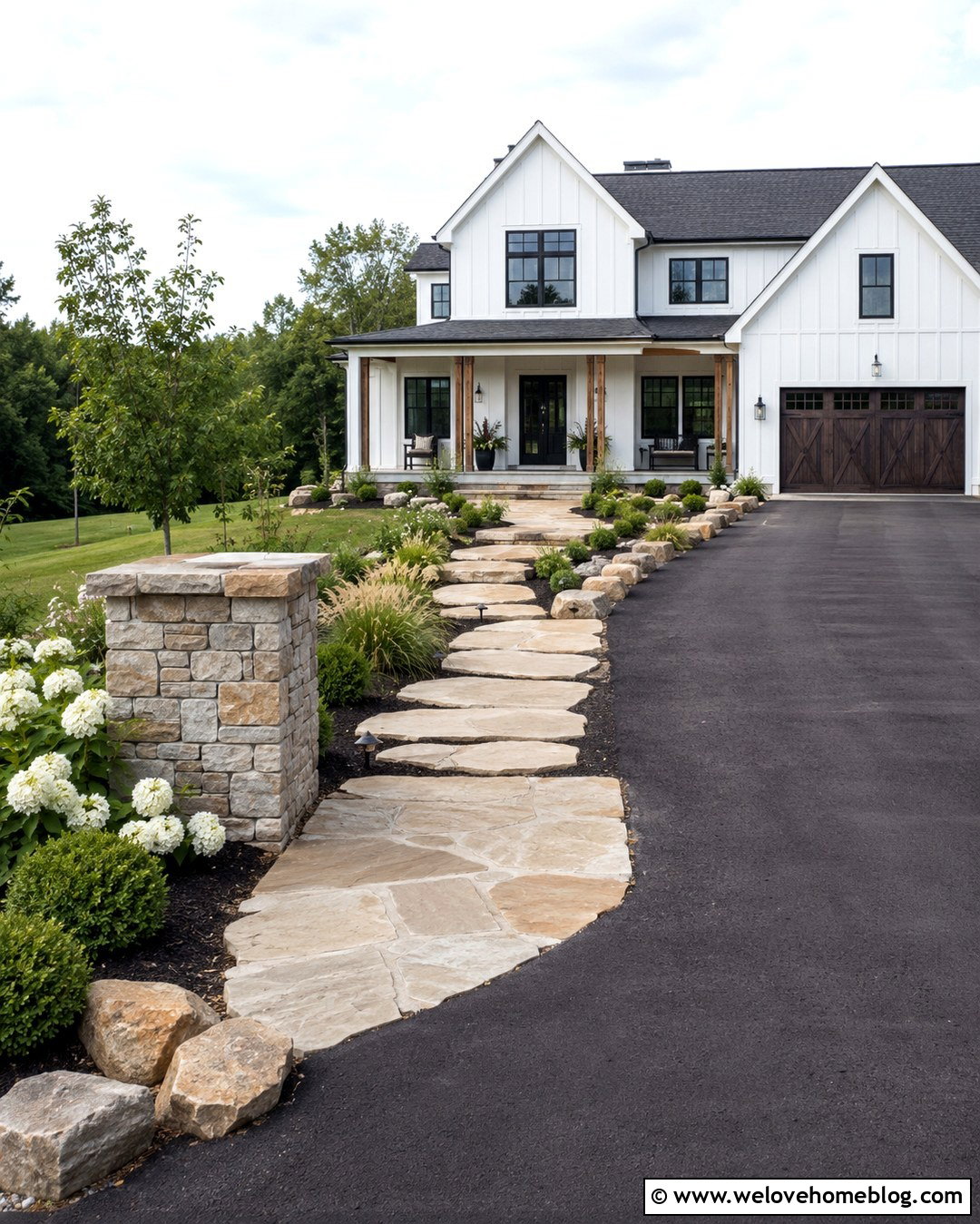
Stone pillars can mark the beginning of the property while establishing a material that continues toward the house. Use a curved tan gravel driveway between low fieldstone pillars, then repeat the same stone as edging around the parking area and front walkway. A line of small trees or layered shrubs can guide the eye inward without creating a closed corridor. Near the house, transition to broad stone slabs that lead from the driveway to the front door. Keep the entrance pillars proportional to the yard and avoid covering them with oversized gates or dense plants. Coordinated porch columns, foundation stone, and warm exterior lighting allow the entire route to feel connected, from the street entrance to the final front step.
16. Side Garage Driveway With A Visible Front Door Path
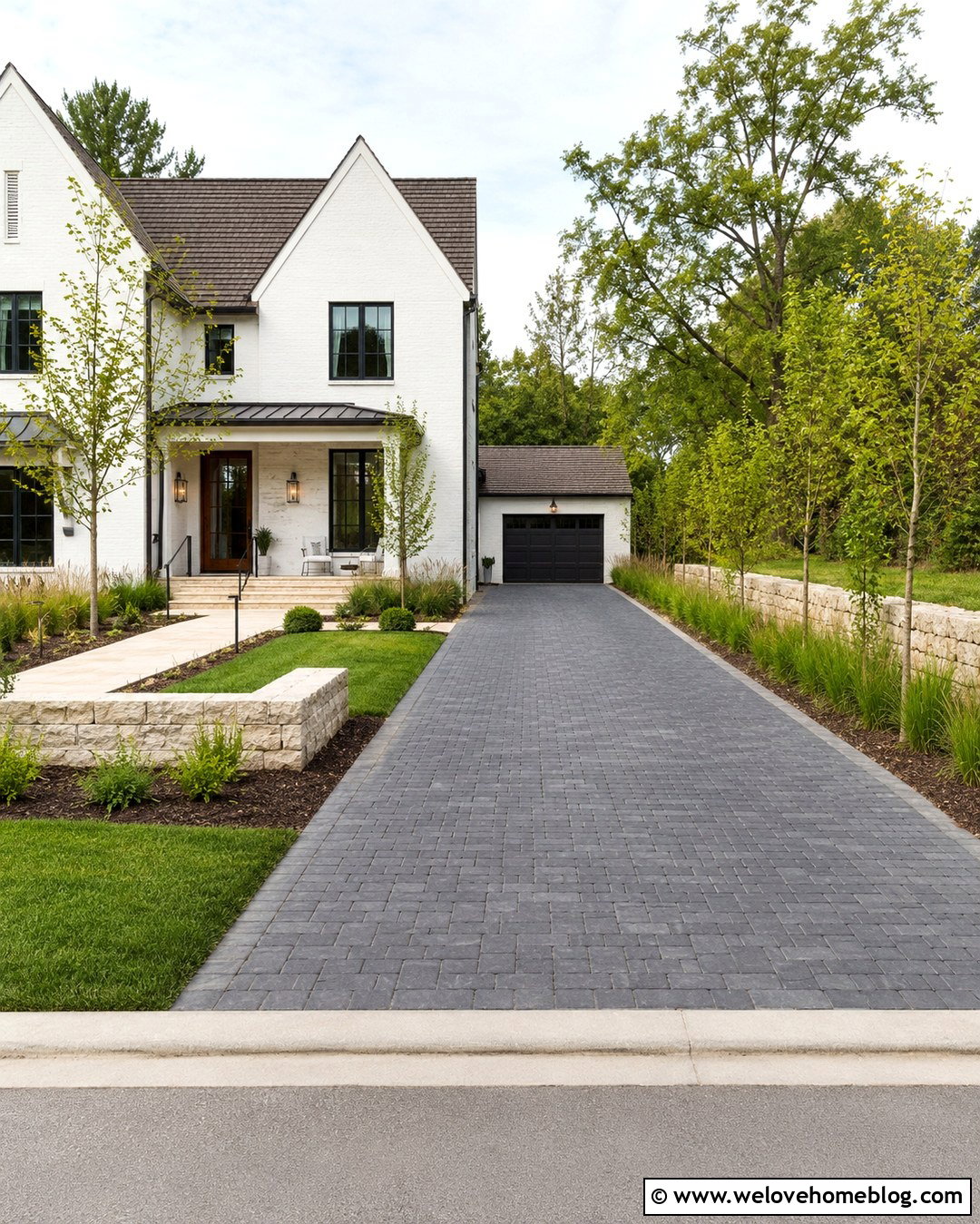
When the garage sits beside or behind the house, the driveway can easily pull attention away from the main entrance. Solve this with a charcoal paver driveway and a lighter limestone walkway that branches off early and heads directly toward the front door. Make the walkway broad, well edged, and visually brighter than the vehicle surface. A low garden wall or linear planting bed can separate the two routes while preserving open sightlines. Repeat the limestone on the porch steps and use a strong front door color to create a clear destination. Trees can frame the driveway farther from the house, but planting near the walkway should stay lower. The finished layout makes both driving and walking routes feel purposeful.
17. Front Door Driveway With A Central Paver Walk
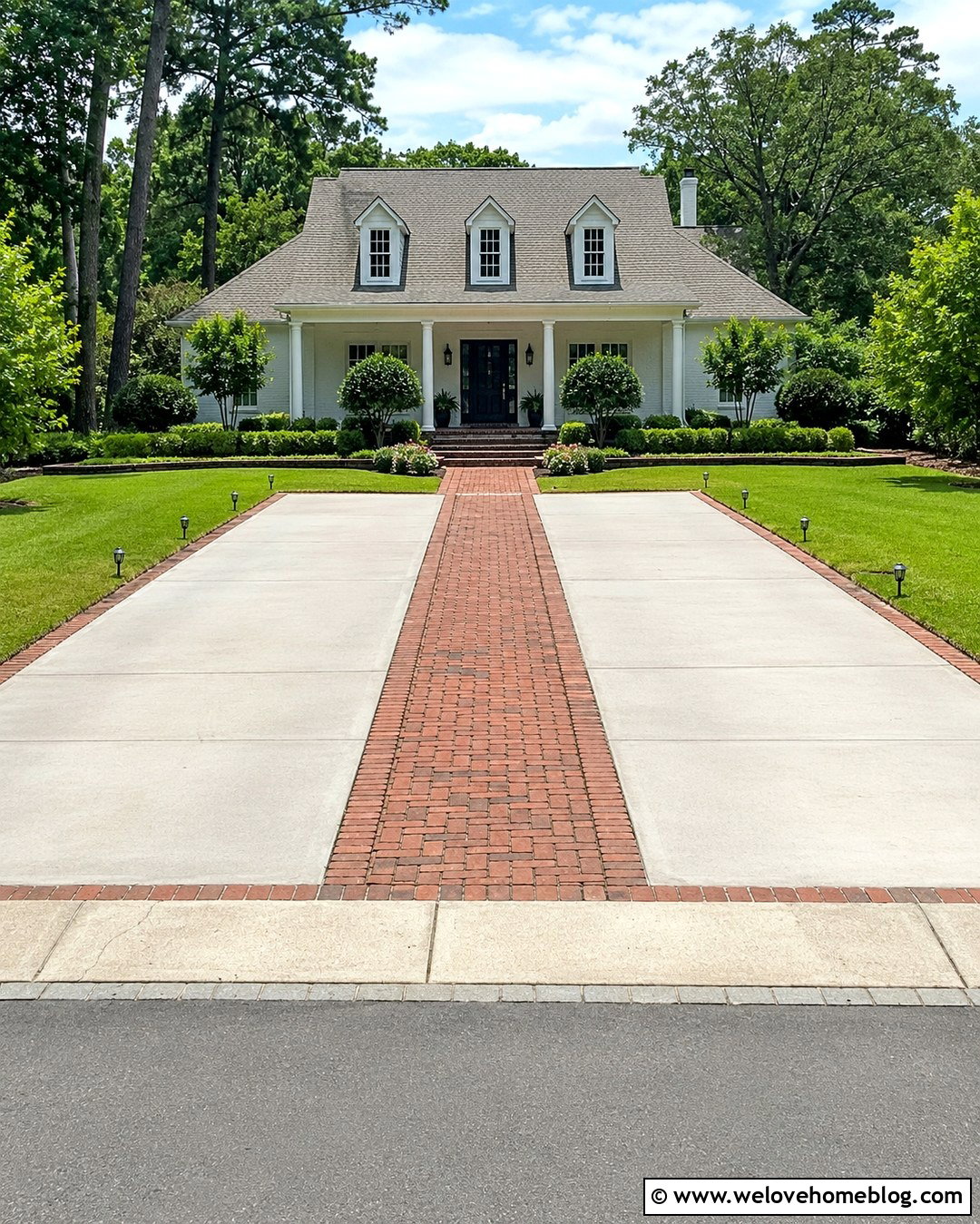
A central walkway can transform an unusually wide driveway into a more balanced, pedestrian-friendly entrance. Use light gray poured concrete on both parking sides and place a broad strip of brick pavers through the middle, leading straight to the front steps. Protect the pedestrian route with narrow planting pockets, low bollard lights, or a slightly raised edge where practical. Near the curb, begin the walkway with a contrasting apron that clearly signals the entrance. This arrangement works especially well when two parking bays sit in front of a centered front door. Repeat the brick around the concrete perimeter and porch landing. Balanced foundation shrubs on both sides complete the symmetry while preventing the hardscape from feeling like one uninterrupted slab.
18. Front Door Driveway With Raised Planting Beds
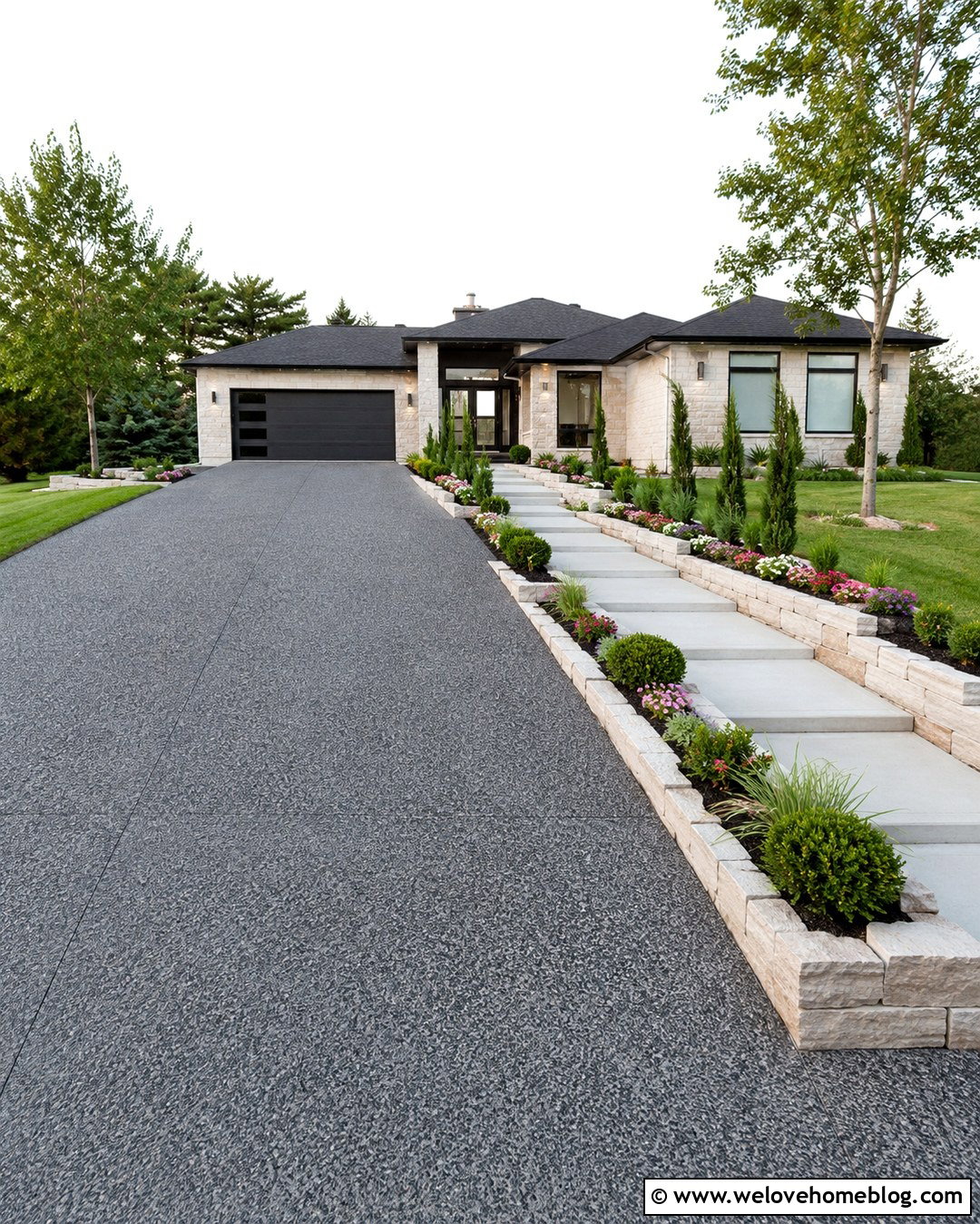
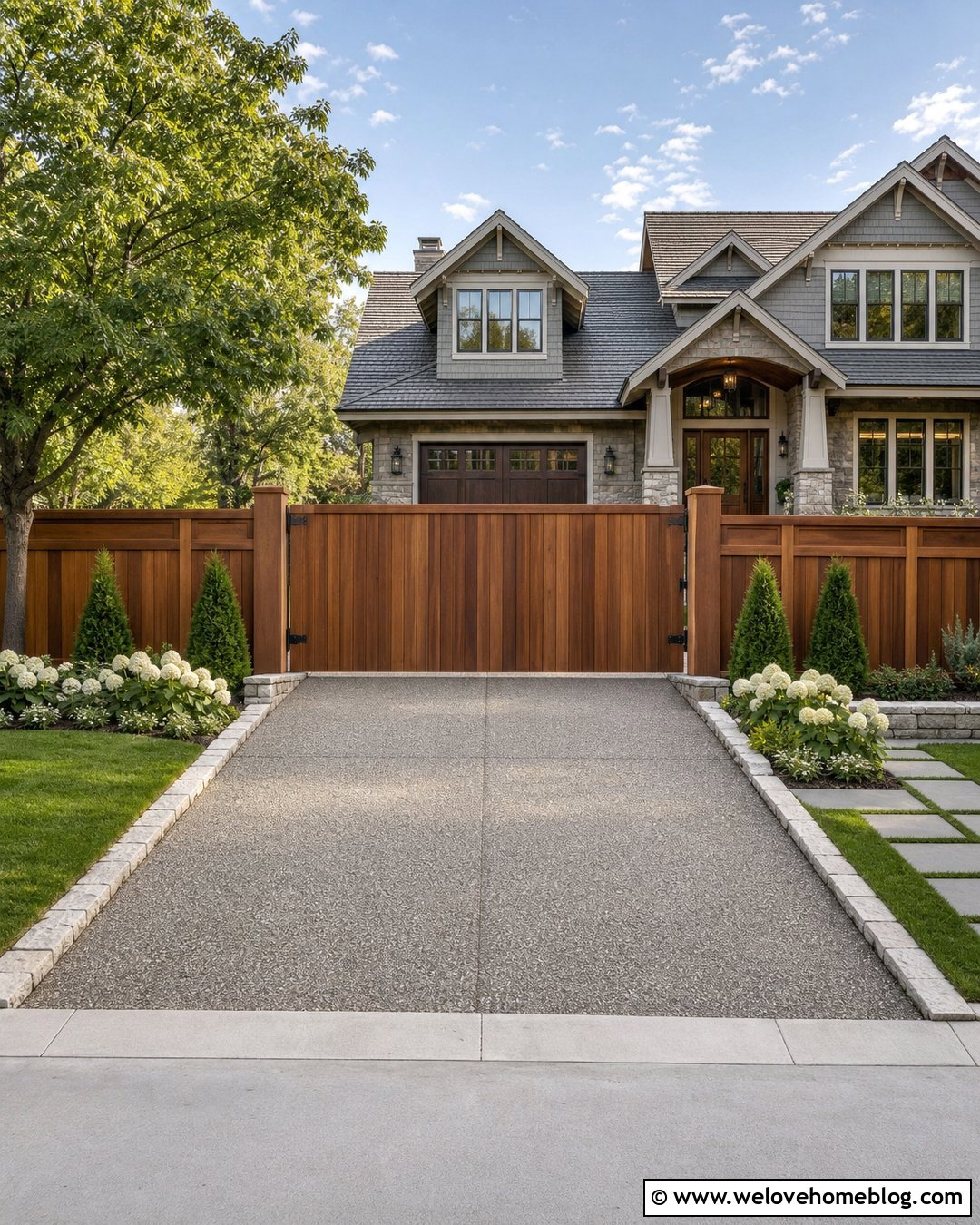
Raised beds can separate a driveway from the entrance walkway while adding structure to a flat front yard. Begin with a dark exposed aggregate driveway and install low, light-colored stone planters along the side closest to the front door. Run a matching concrete slab walkway behind the beds, allowing greenery to buffer pedestrians from parked vehicles. Fill the planters with layered evergreen shrubs, ornamental grasses, and seasonal flowers rather than tall plants that hide the porch. Keep the walls low enough to preserve views and provide comfortable driveway access. Repeat the planter stone around the porch steps or facade for continuity. On a modern house, use straight beds; for a cottage or ranch, a gentle curve may feel more natural.
19. Horseshoe Driveway With A Front Door Drop-Off
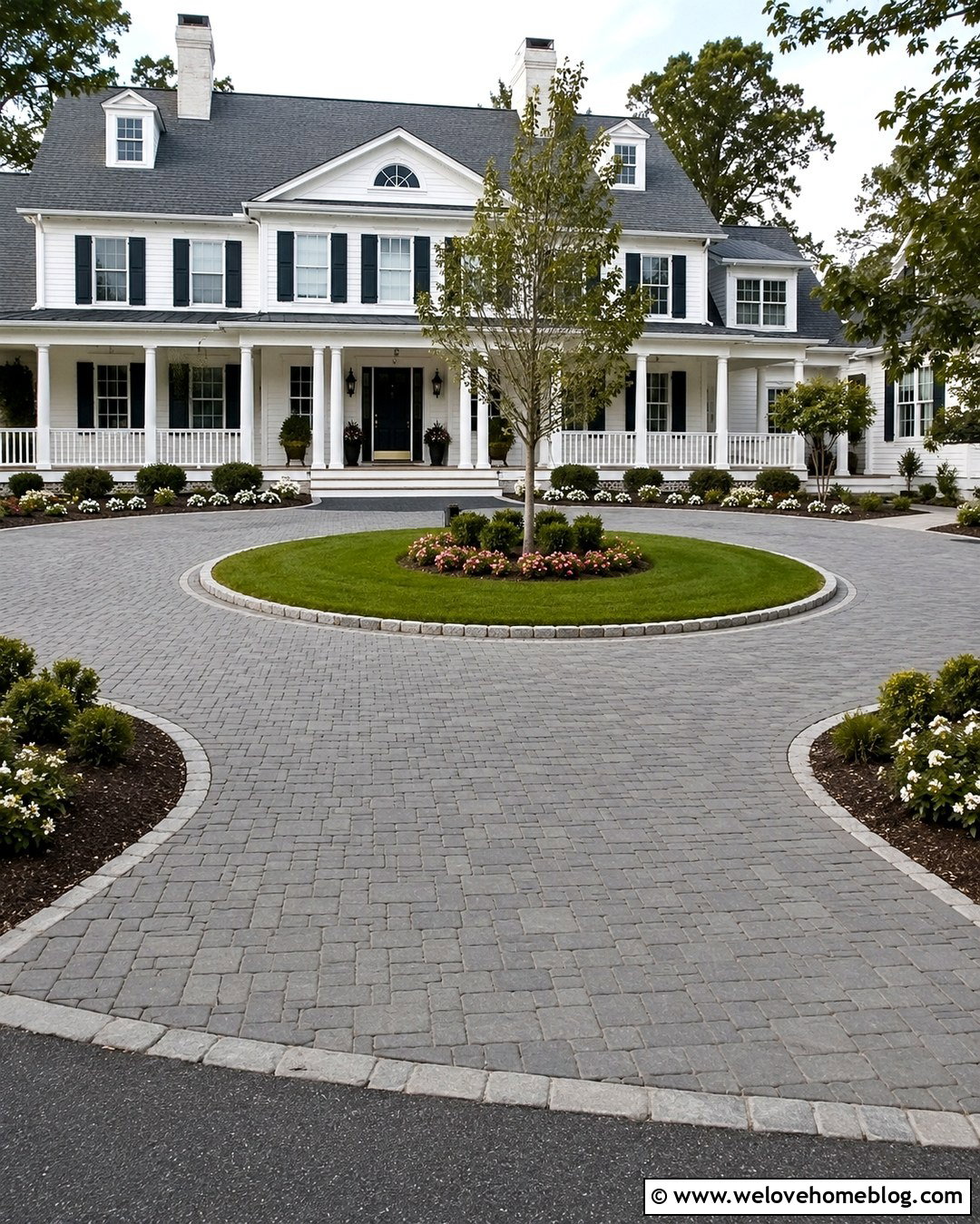
A horseshoe layout creates an easy arrival sequence when the front yard has enough width. Install warm gray interlocking concrete pavers and widen the section nearest the front door to form a clear drop-off zone. Mark this area with a contrasting paver circle, border, or rectangular inset instead of treating the entire surface alike. A short, broad walkway should connect the drop-off directly to the porch. In the center lawn, use low foundation-style planting, one ornamental tree, and curved flower beds that follow the driveway shape. Keep the view to the entrance open from both driveway openings. Coordinated stone edging and balanced porch planters will make the full design feel composed rather than simply shaped around vehicle movement.
20. Budget Driveway With Stepping Stones To Front Door
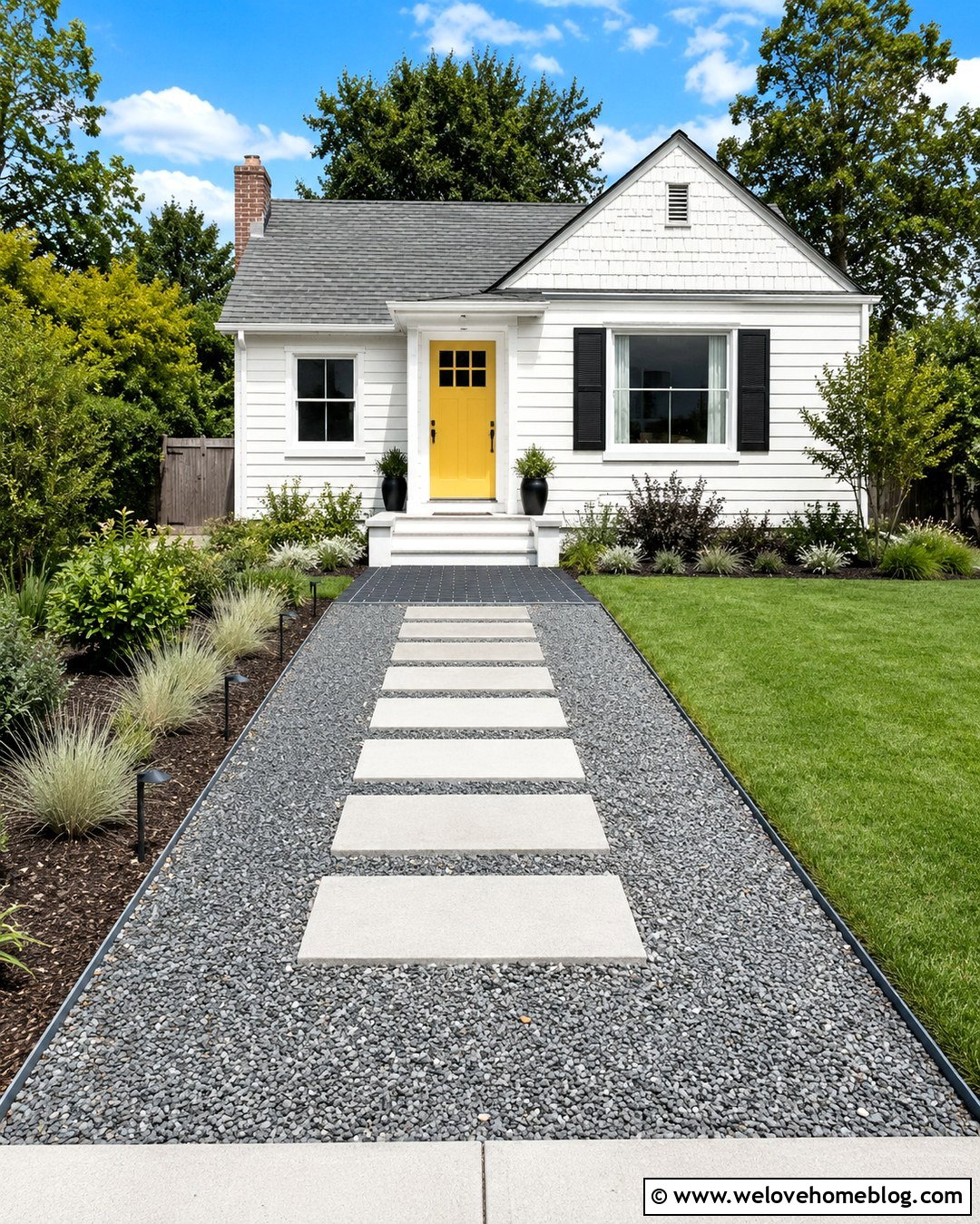
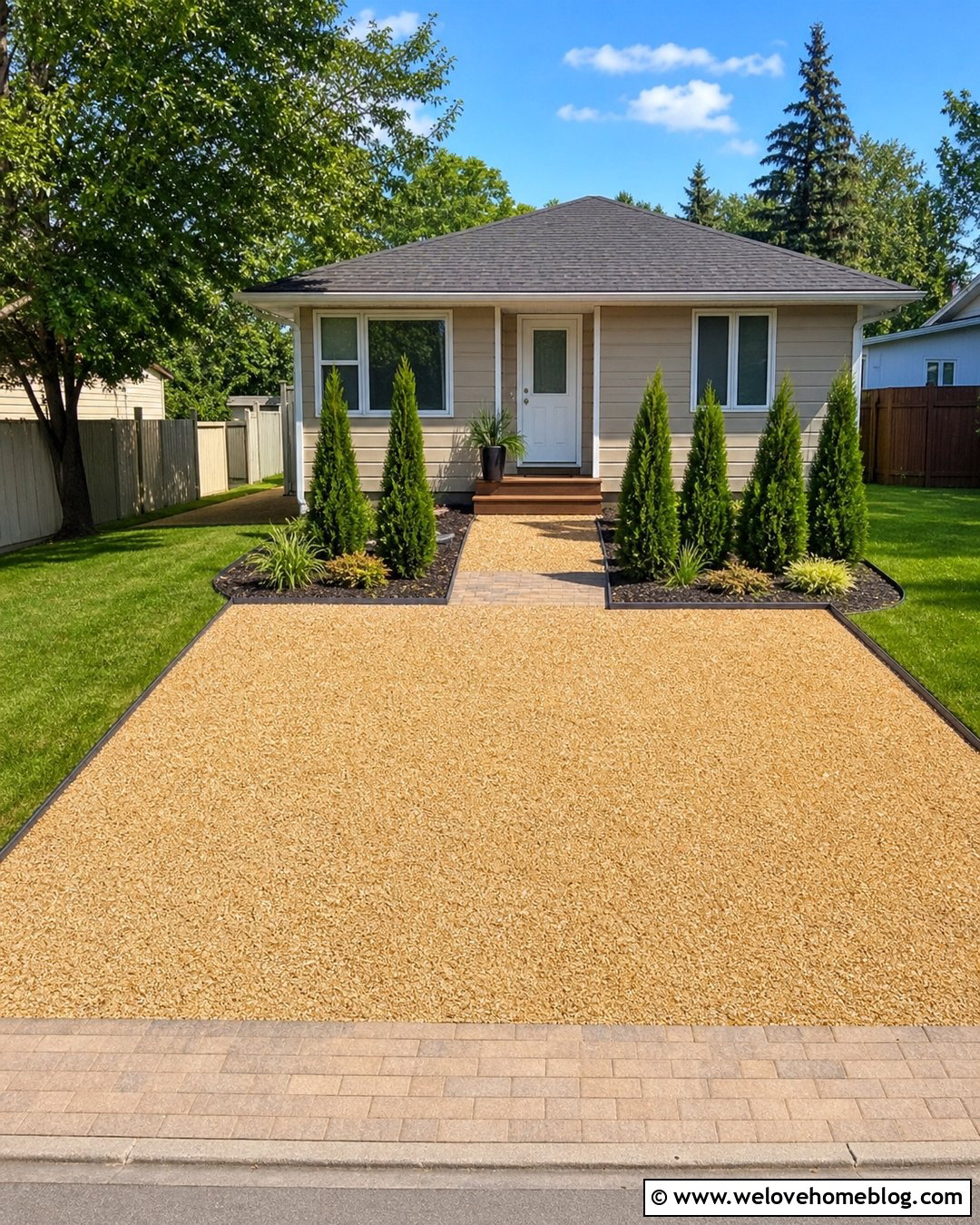
A welcoming front approach does not require replacing every existing surface. Refresh a basic compacted gravel driveway with clean metal edging, an even layer of angular gray stone, and a stepping-stone path to the entrance. Use large precast concrete slabs spaced closely enough to create a clear walking route. Where the path meets the driveway, add a small paver landing so the transition looks deliberate. Mulched beds filled with hardy shrubs and ornamental grasses can frame the route without requiring elaborate masonry. Paint the front door in a color that stands out from the facade, then repeat that color in simple porch planters. This affordable combination improves organization, strengthens the entrance, and keeps the complete design easy to update later.
Conclusion:
Successful **Front Door Driveway Ideas** make the journey from the curb to the entrance feel clear, comfortable, and visually connected. Start by choosing a driveway material that suits the home, climate, maintenance needs, and available budget. Then give the front door its own recognizable route through contrasting paving, thoughtful borders, balanced landscaping, or a carefully positioned walkway. Keep plants away from driving areas and preserve open views of steps, paths, and porch features. Repeating one or two materials across the driveway, walkway, and house facade will help everything feel intentional. Whether you prefer gravel, concrete, brick, asphalt, or pavers, design the full approach as one coordinated outdoor space.

Related posts:
Leave a Reply