
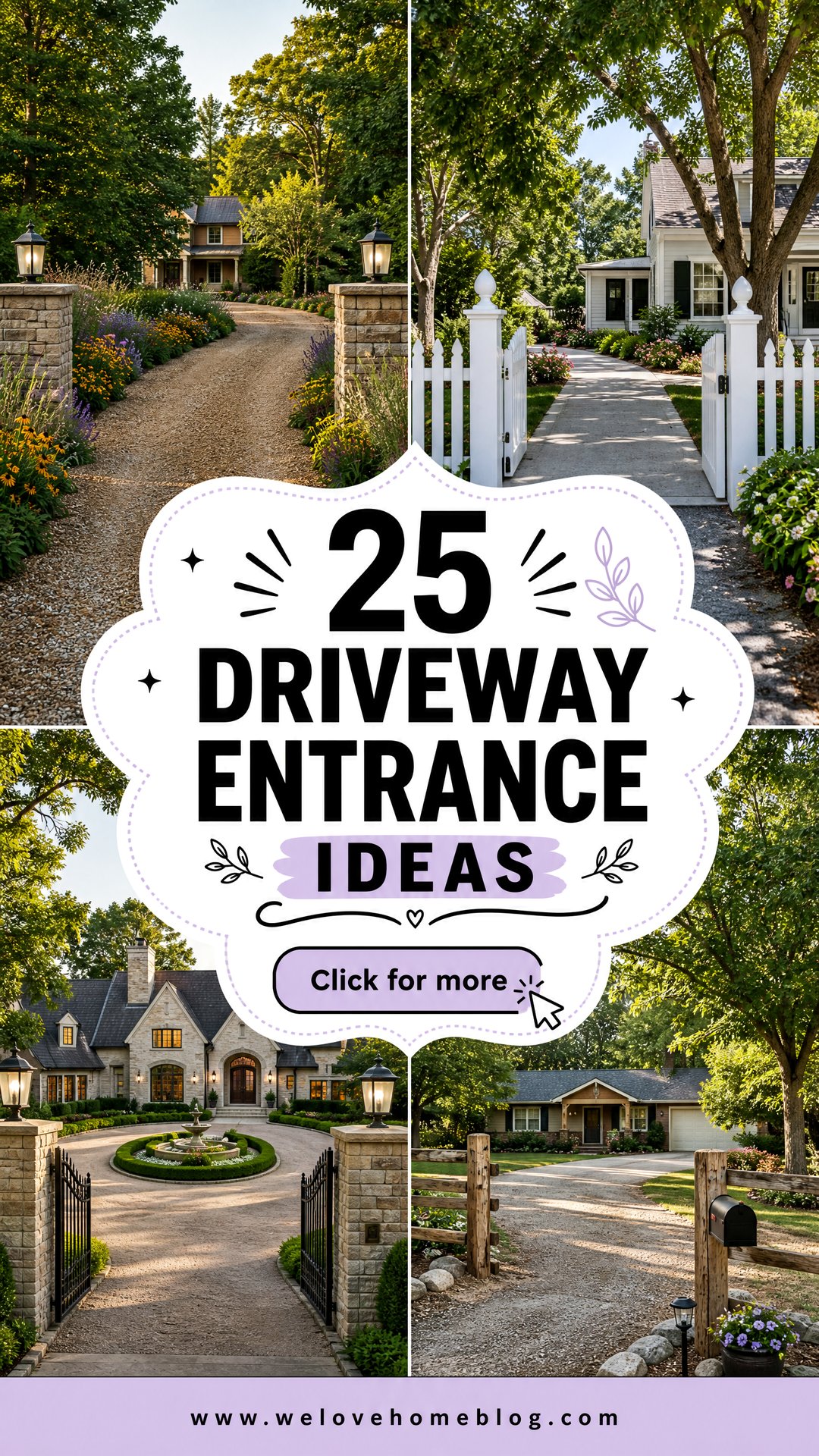
The best **25 driveway entrance ideas** combine the driveway surface, entrance features, landscaping, and home architecture into one cohesive view. Instead of treating a gate, pillar, border, or planting bed as a separate decoration, consider how every detail frames the approach from the street. A successful entrance should also provide clear vehicle access, good visibility, sensible drainage, and enough room for gates to operate safely. Matching materials to the home helps the driveway feel original to the property rather than added later. Current entrance designs often blend practical surfaces with masonry columns, simple gates, layered planting, and integrated lighting. () Whether you have a narrow suburban lot or a sweeping country property, the following complete looks offer **25 driveway entrance ideas**.
1. Stone Pillar Driveway Entrance
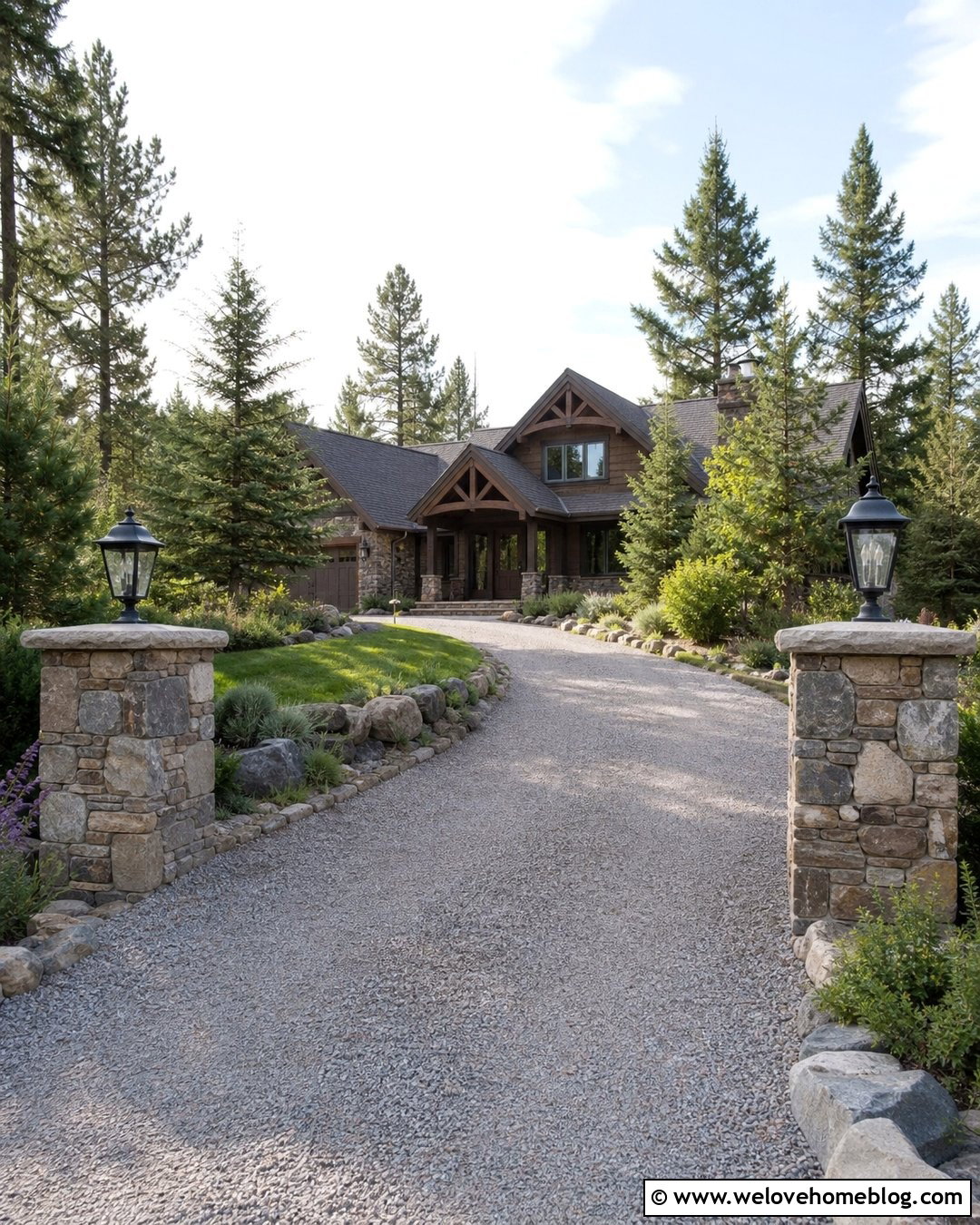
Natural stone pillars create a substantial entrance that works especially well with traditional, craftsman, and mountain-style homes. Start with a gently curved driveway made from warm gray gravel or exposed aggregate concrete. Place two broad fieldstone pillars at the street, keeping their proportions consistent with the house. Flat capstones and simple black lanterns provide a finished appearance without becoming overly decorative. Continue the stone through low retaining walls or a narrow driveway border so the pillars do not look isolated. Around the bases, use evergreen shrubs, ornamental grasses, and spreading ground cover that will soften the masonry. A clear opening between the pillars preserves visibility while giving the property a defined, permanent entrance that looks attractive in every season.
2. Brick Pillar Driveway Entrance
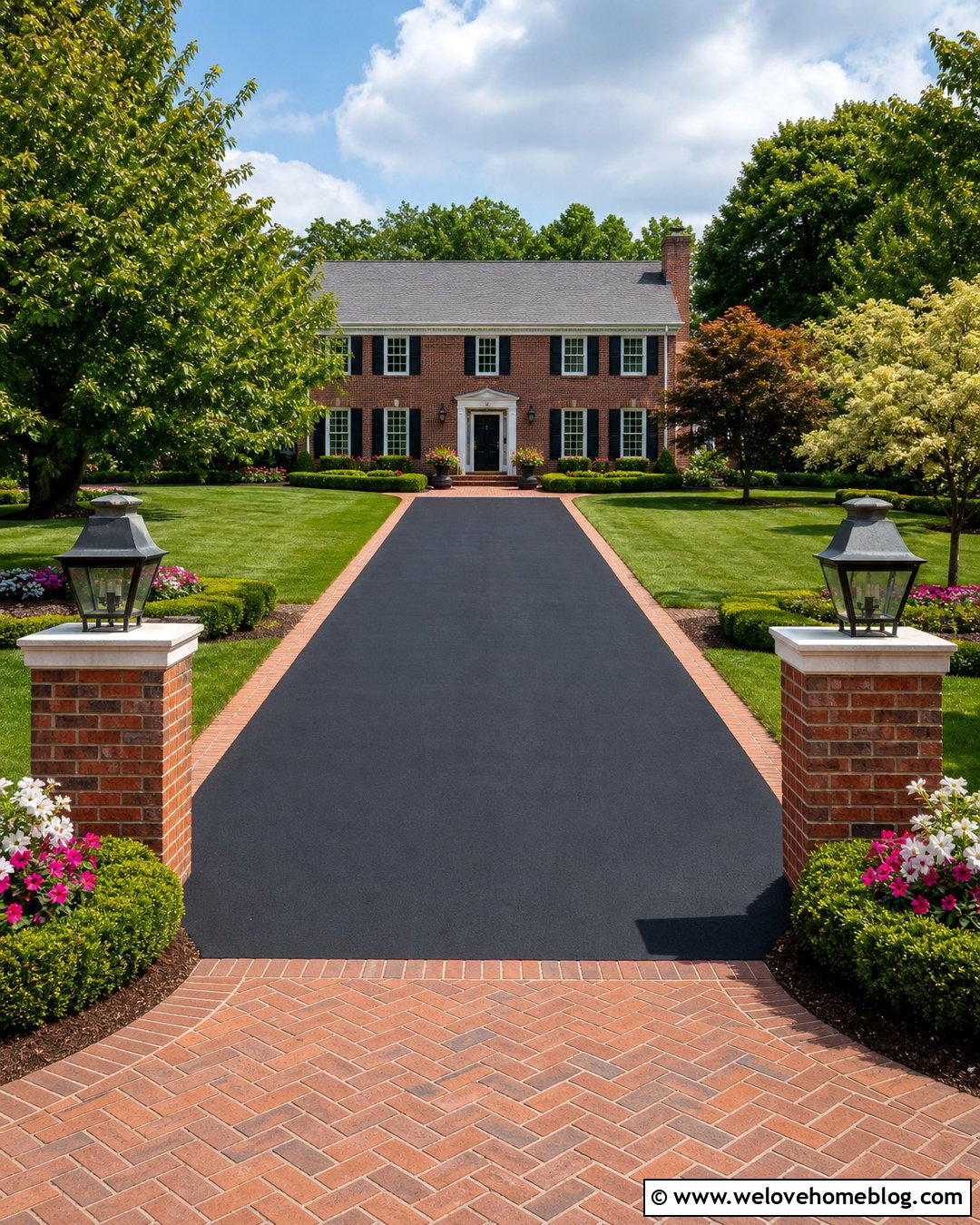
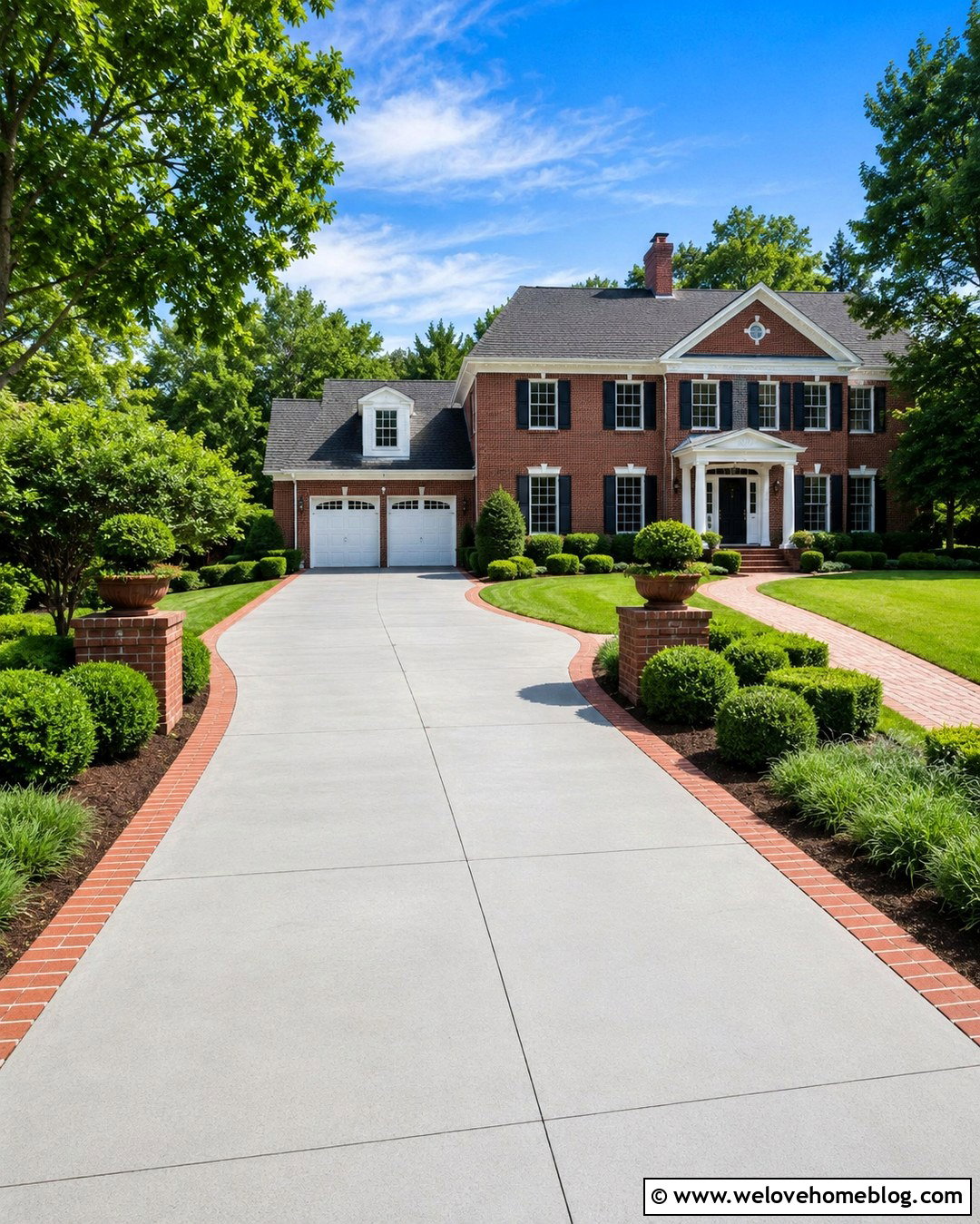
A brick pillar entrance can make a colonial, Georgian, or traditional suburban home feel more established. Choose brick that closely coordinates with the house instead of introducing an unrelated red or brown tone. A straight asphalt driveway becomes more polished when finished with a matching brick apron and narrow brick edge. Build symmetrical pillars on either side, then top them with cast-stone caps and restrained lantern fixtures. Low boxwood hedges can extend outward from the pillars, while seasonal flowers add color near the street. Keep the planting beds curved and deep enough to separate the masonry from the lawn. This complete entrance works because the brick apron, borders, columns, and home facade repeat the same material palette from the curb to the garage.
3. Wooden Farm Gate Driveway Entrance
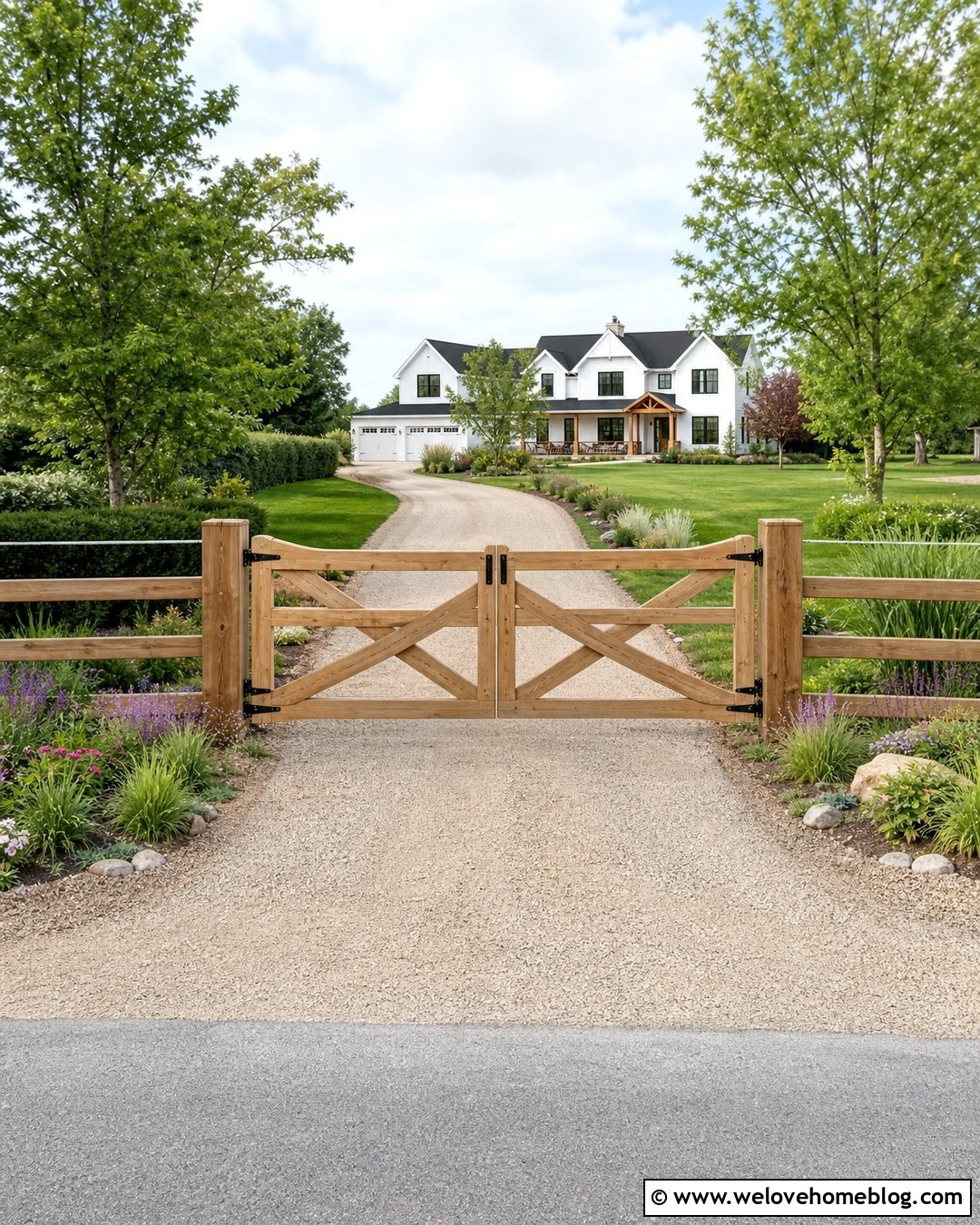
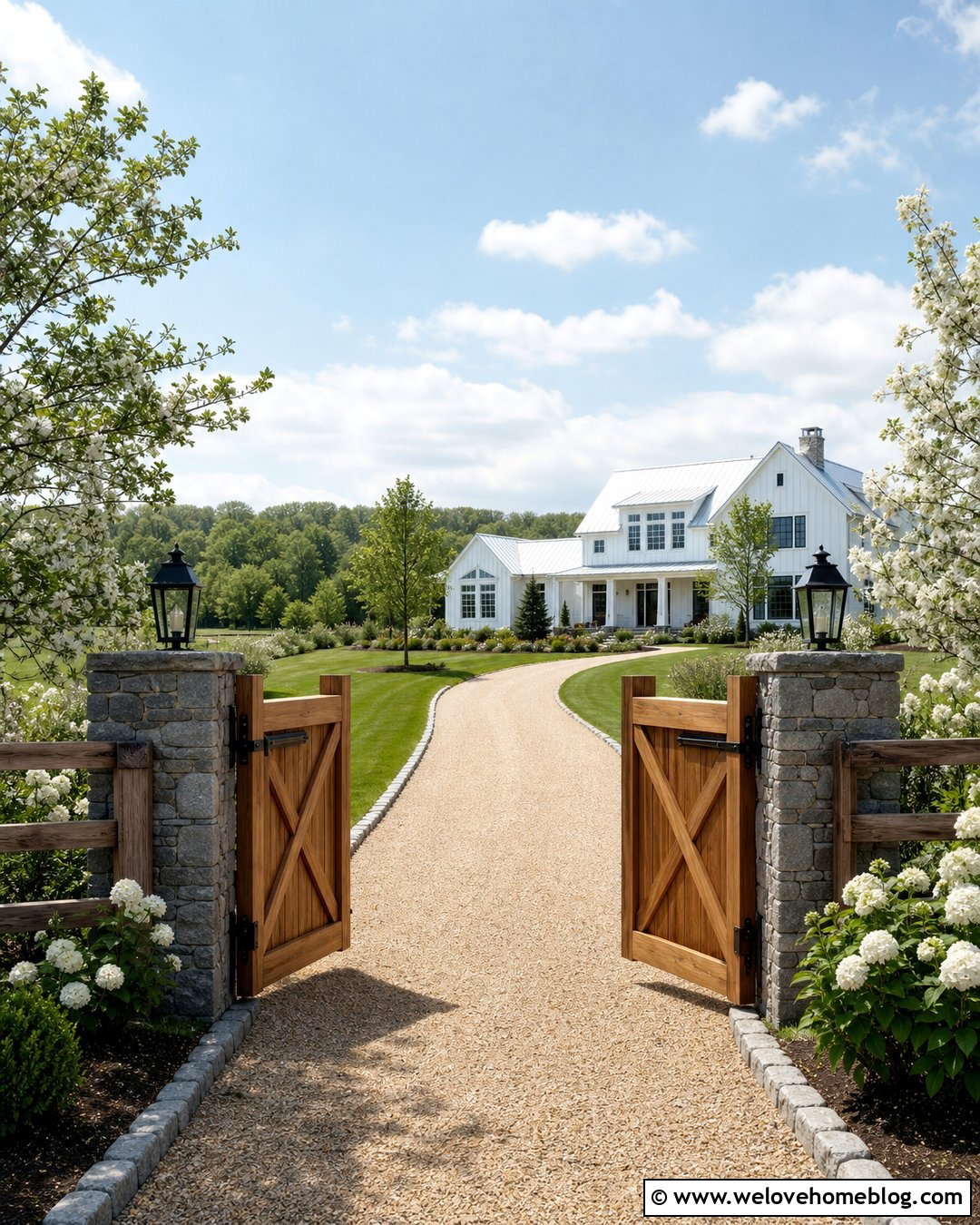
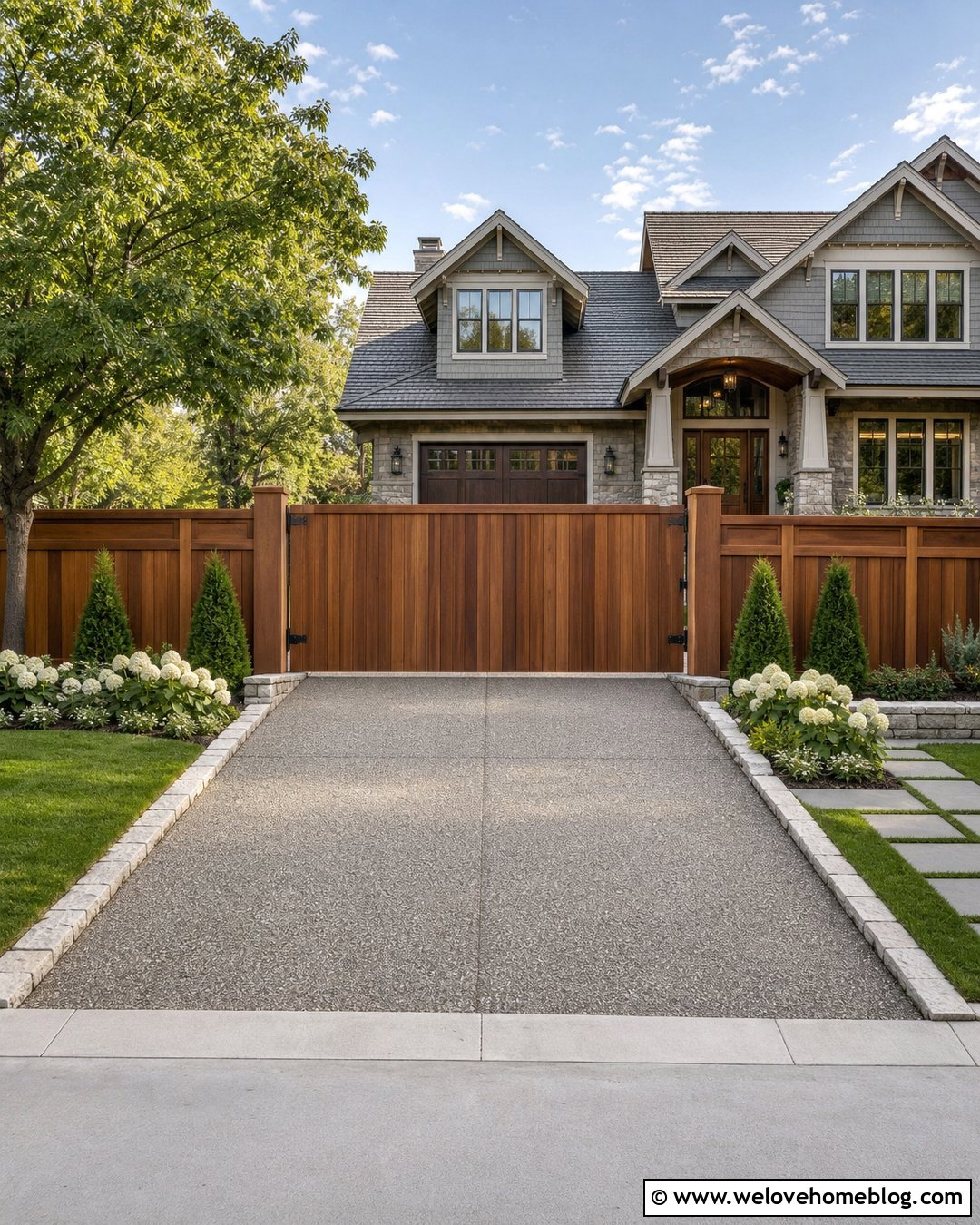
Imagine a pale gravel driveway passing through a simple wooden farm gate and continuing toward a modern farmhouse. This relaxed entrance looks best when the gate is framed by sturdy timber posts rather than formal masonry columns. Use a wide double gate with diagonal bracing, stained cedar, and black metal hardware. Continue the rustic character with timber driveway edging, split-rail fencing, and broad beds filled with native grasses and flowering perennials. Small deciduous trees placed beyond the gate can frame the approach without restricting sightlines. The pale gravel brightens the entrance and provides a pleasing contrast against the warm wood. Allow enough level space for the gates to swing completely away from the vehicle path, or select an automatic configuration suited to the available clearance.
4. Black Metal Gate Driveway Entrance
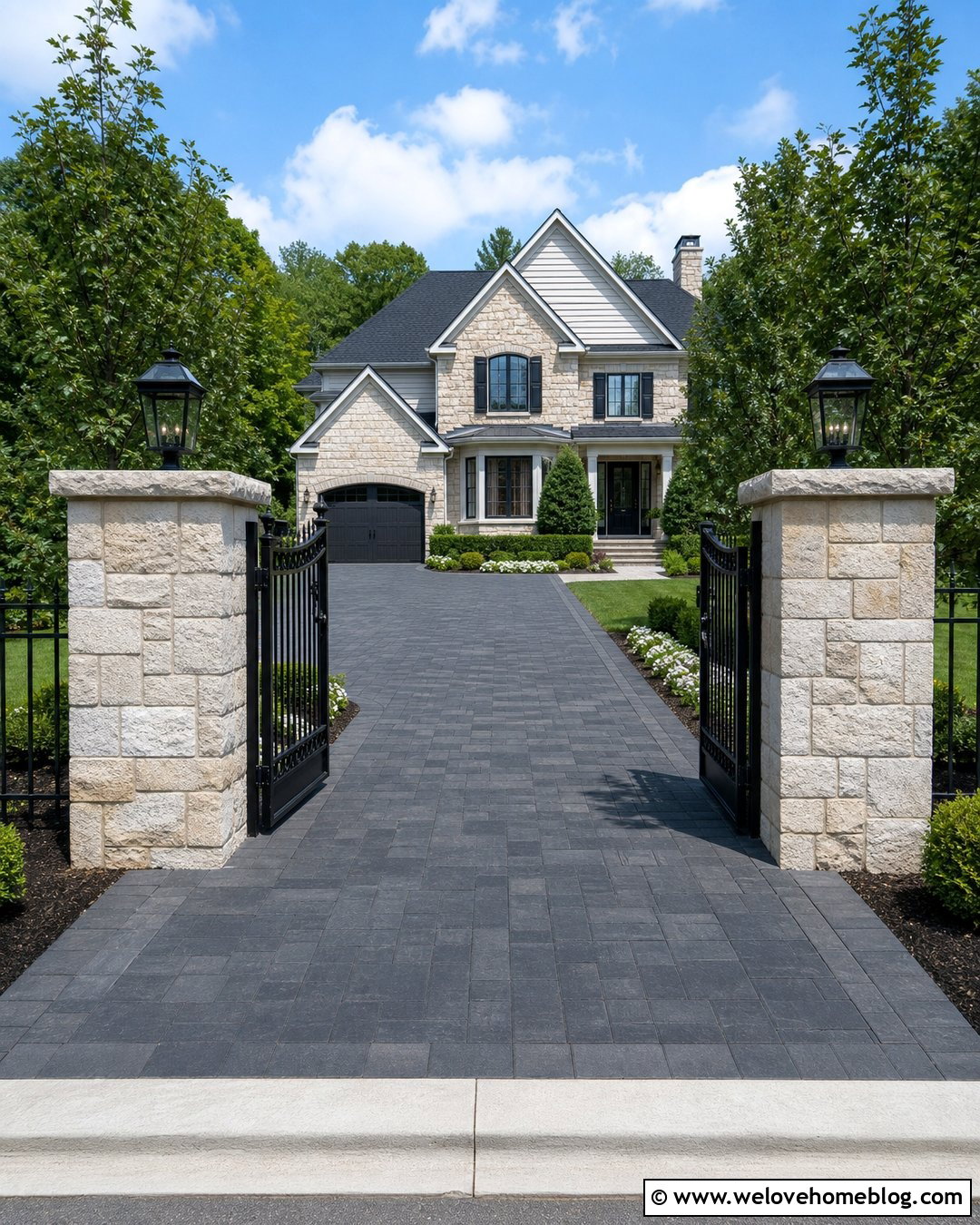
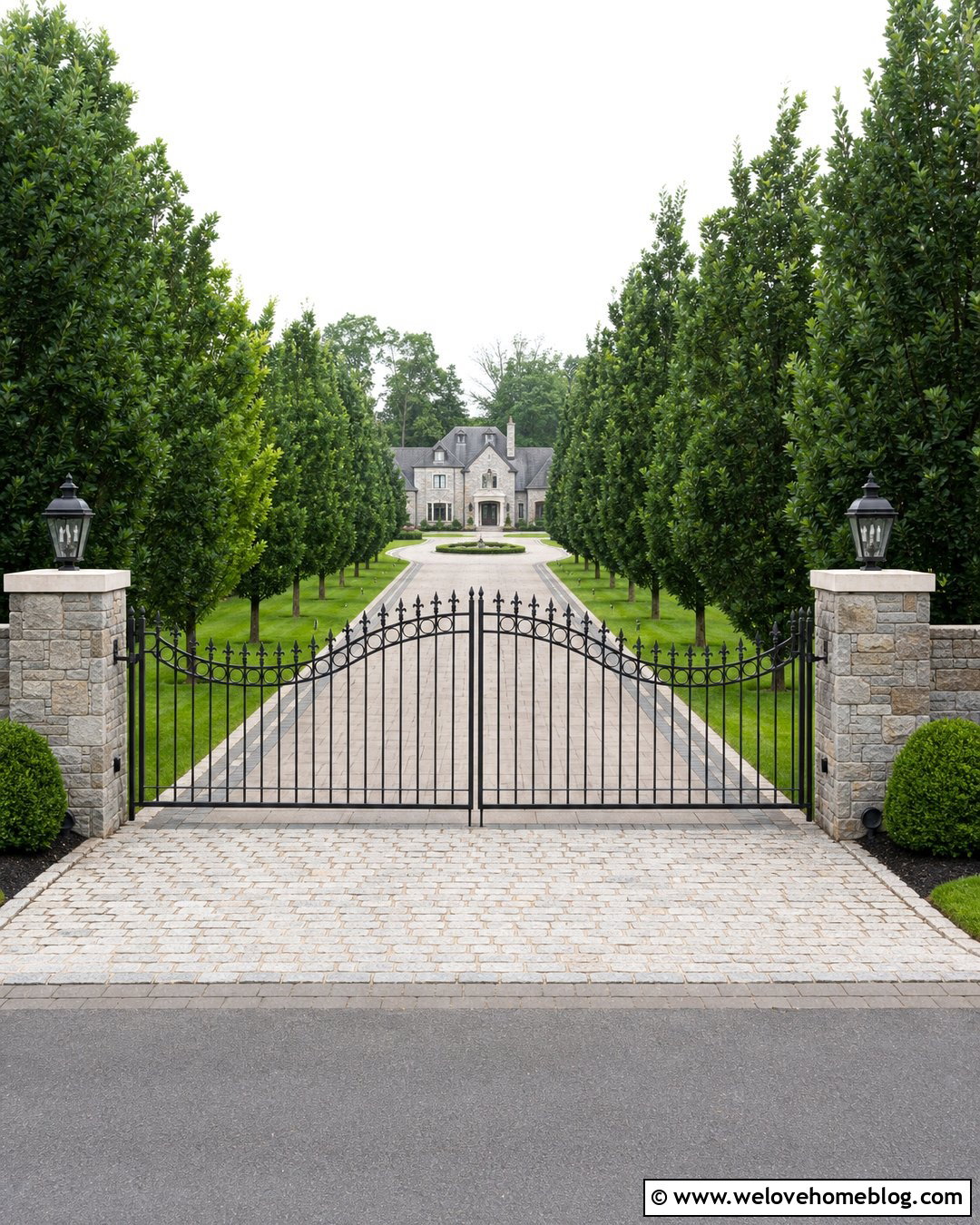
A black metal gate offers definition without visually closing off the property. Pair a slender, open-pattern gate with a straight driveway surfaced in charcoal concrete pavers. Low limestone pillars can anchor both sides while keeping the composition clean and balanced. For a traditional house, choose vertical bars and a subtle arched top. A modern home looks better with square framing and minimal ornament. Repeat black details through the pillar lights, address numbers, fencing, and front-door hardware. Neatly clipped shrubs and low white flowers will soften the dark metal without hiding it. Because an open gate preserves views through the entrance, the driveway, landscape, and house remain connected. The result feels secure and formal, but not heavy or unwelcoming.
5. Modern Horizontal Gate Driveway Entrance
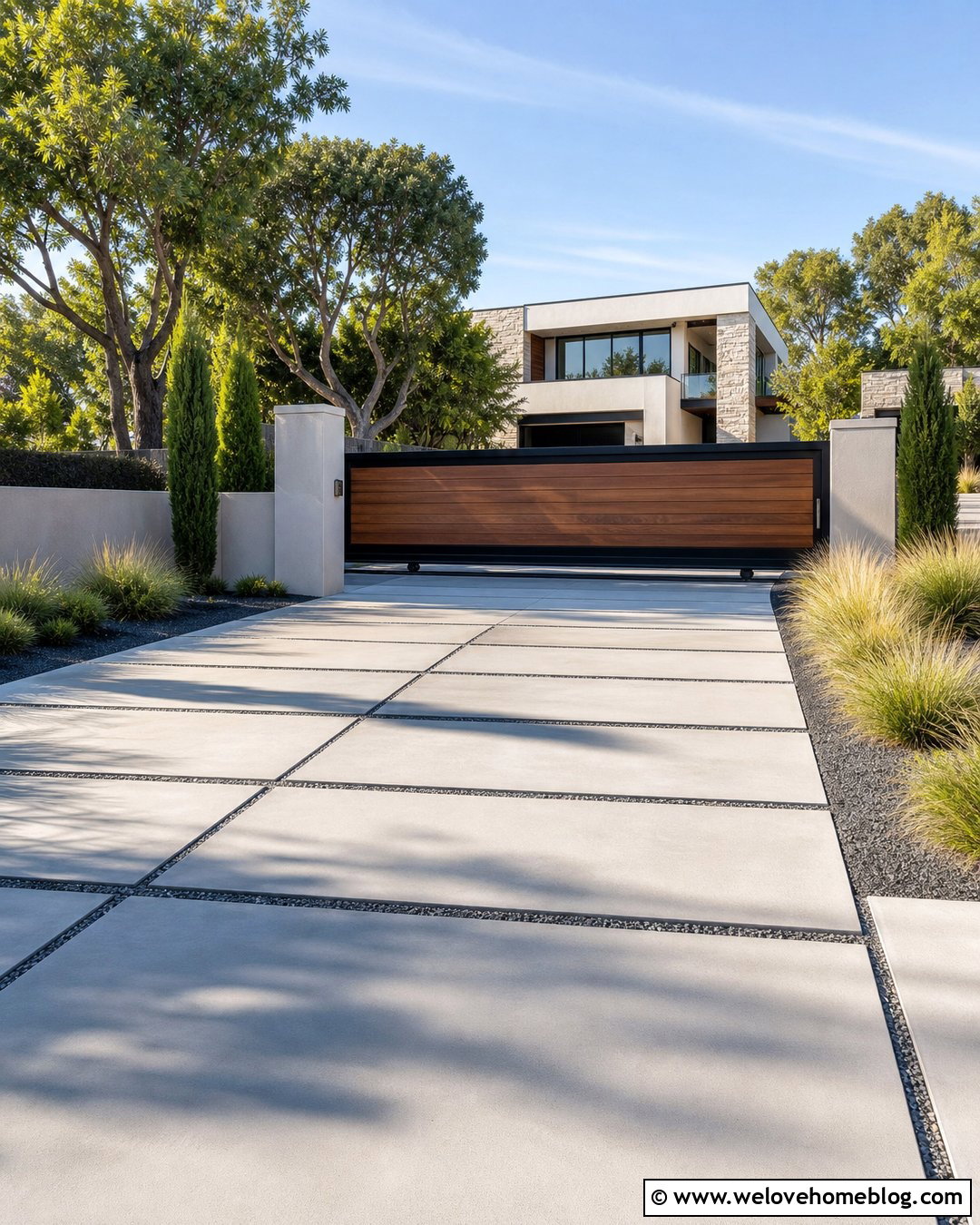
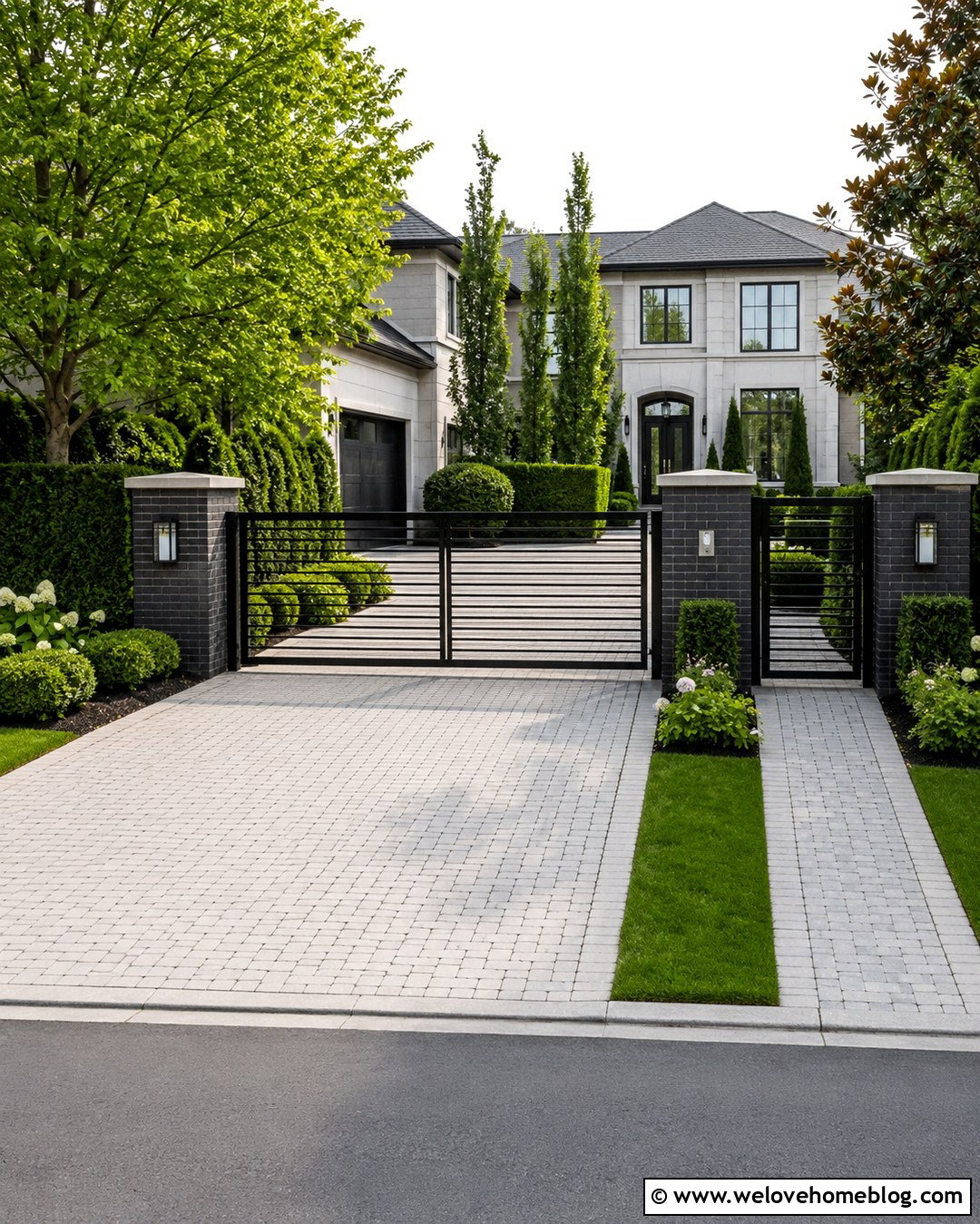
Clean horizontal lines can turn a basic driveway entrance into a strong feature for a contemporary home. Use a flat, straight driveway made from large-format light gray concrete pavers with dark gravel joints. At the curb, install a sliding gate with horizontal cedar boards inside a slim powder-coated steel frame. Rectangular concrete pillars and low rendered walls continue the modern geometry. Keep the surrounding landscape equally simple with architectural grasses, compact evergreens, and one sculptural tree on each side. Avoid crowded flower beds or overly decorative lighting. Narrow recessed fixtures can illuminate the pillars while preserving the uncluttered appearance. Modern gate designs are most cohesive when their lines, materials, and colors relate directly to the home’s architecture and surrounding landscape. ()
6. Open Gravel Driveway Entrance
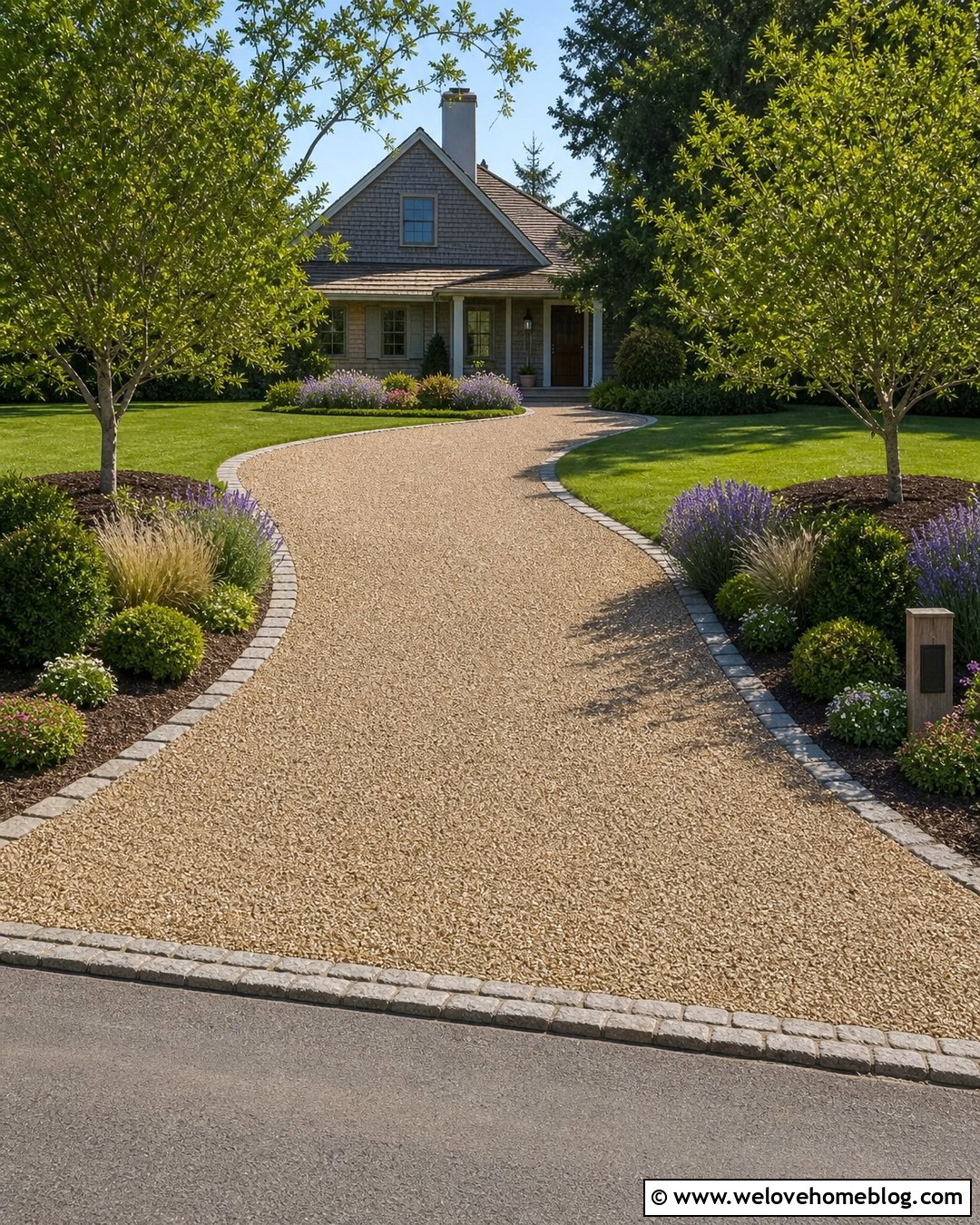
Not every entrance needs a gate or large columns. An open gravel driveway can feel welcoming when its shape, edging, and planting clearly mark the transition from road to property. Begin with a wide pea gravel apron that narrows gently before curving toward a cottage or ranch house. Use cobblestone edging to contain loose stones and create a crisp boundary beside the lawn. Place matching planting beds on both sides of the entrance, using lavender, dwarf evergreens, flowering grasses, and a pair of small ornamental trees. A low wooden address marker can add identity without blocking the view. The combination of a generous apron, defined edges, and balanced landscaping gives the entrance structure while preserving an informal, accessible character.
7. Curved Paver Driveway Entrance
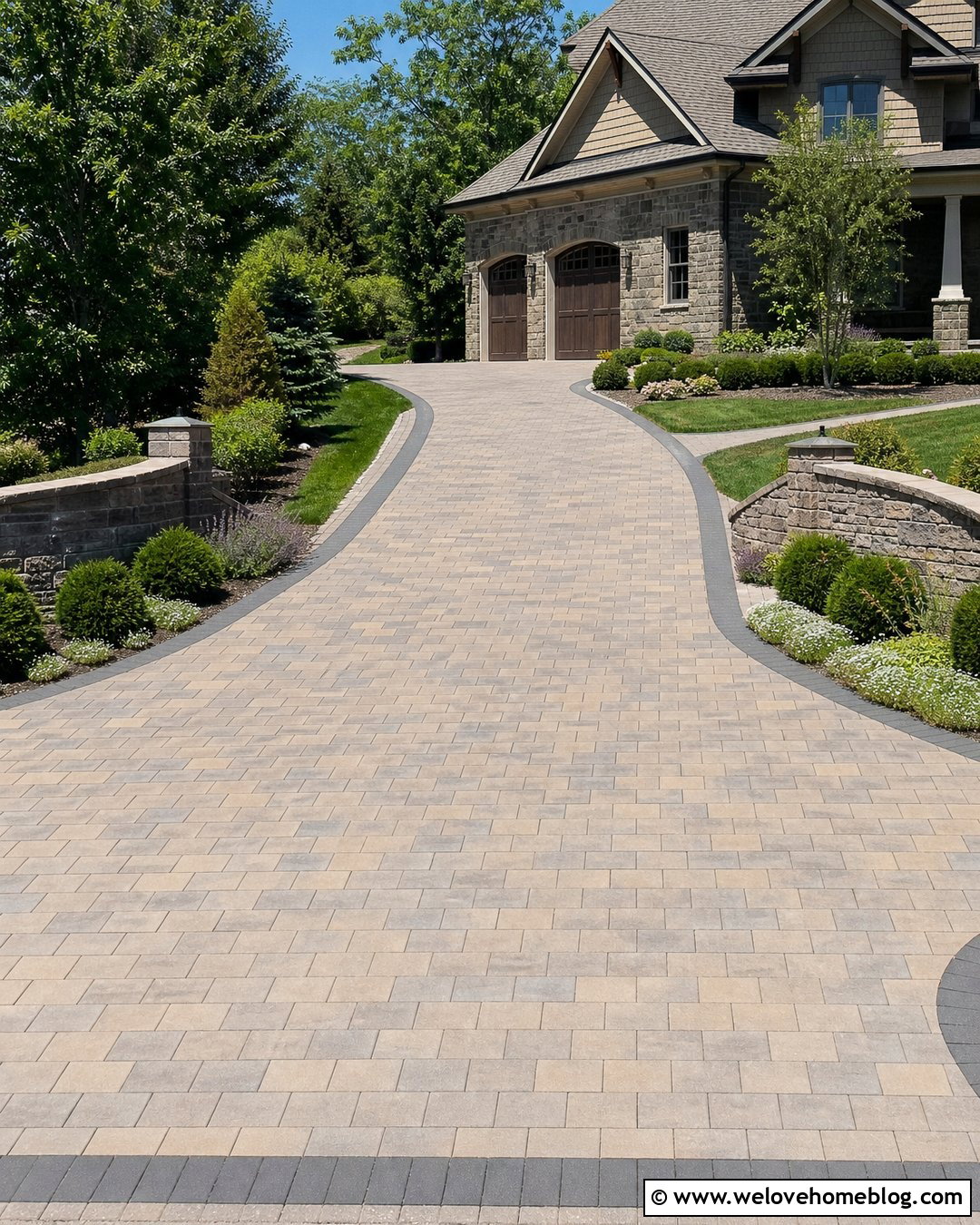
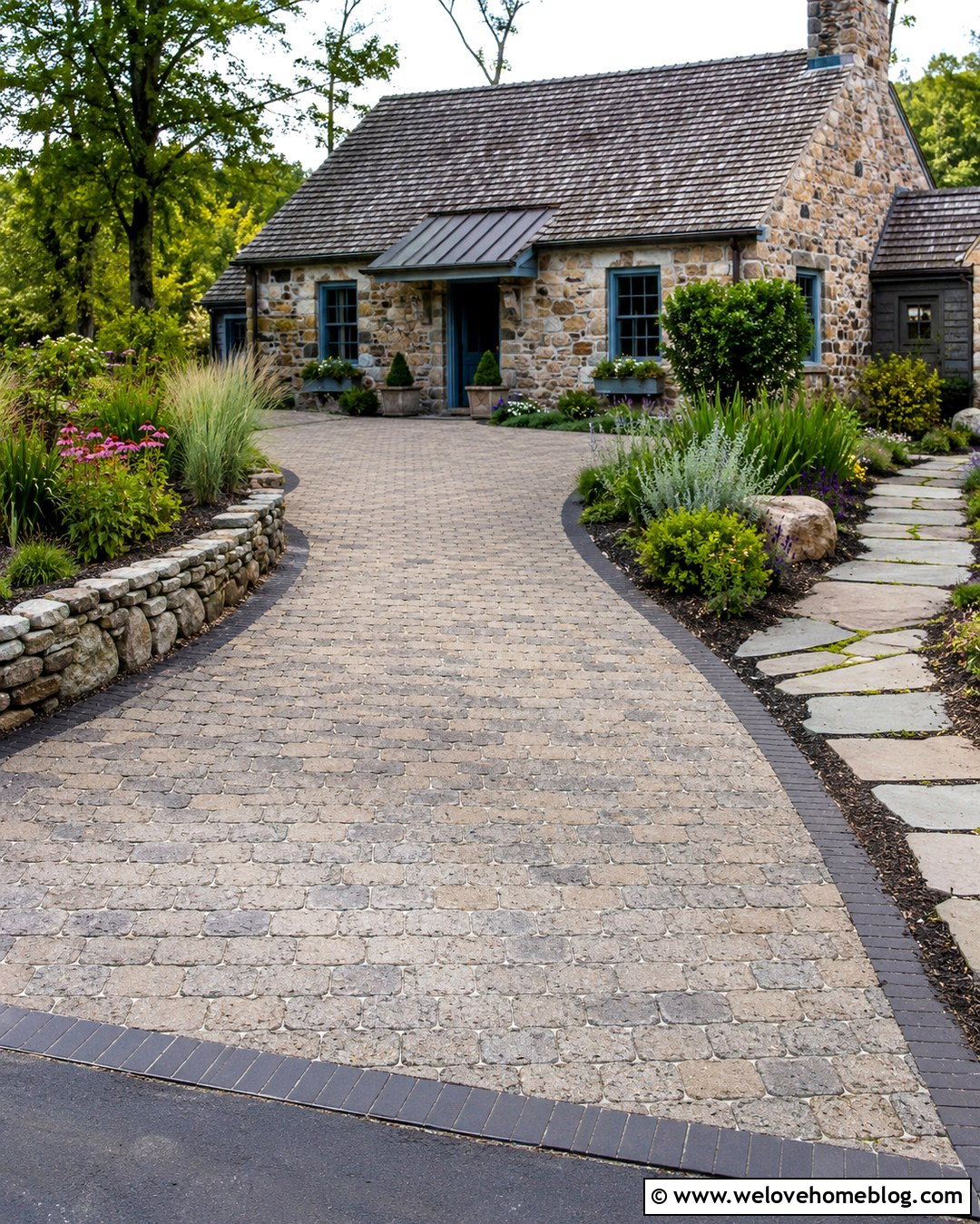
A curved paver entrance guides the eye naturally toward the home and makes the approach feel more spacious. Choose blended tan and gray concrete pavers laid in a running bond or gentle fan pattern. A dark charcoal paver border should follow the curve, emphasizing the shape and containing the lighter field pavers. At the street, widen the driveway slightly to create a practical entrance apron. Frame this opening with low stone walls that sweep inward rather than ending abruptly. Layer compact shrubs, ornamental grasses, and flowering ground cover behind the walls. A craftsman house with stone porch details will tie the entire look together. The controlled curve, contrasting border, and layered greenery create movement while keeping the vehicle route easy to understand.
8. Cobblestone Driveway Entrance
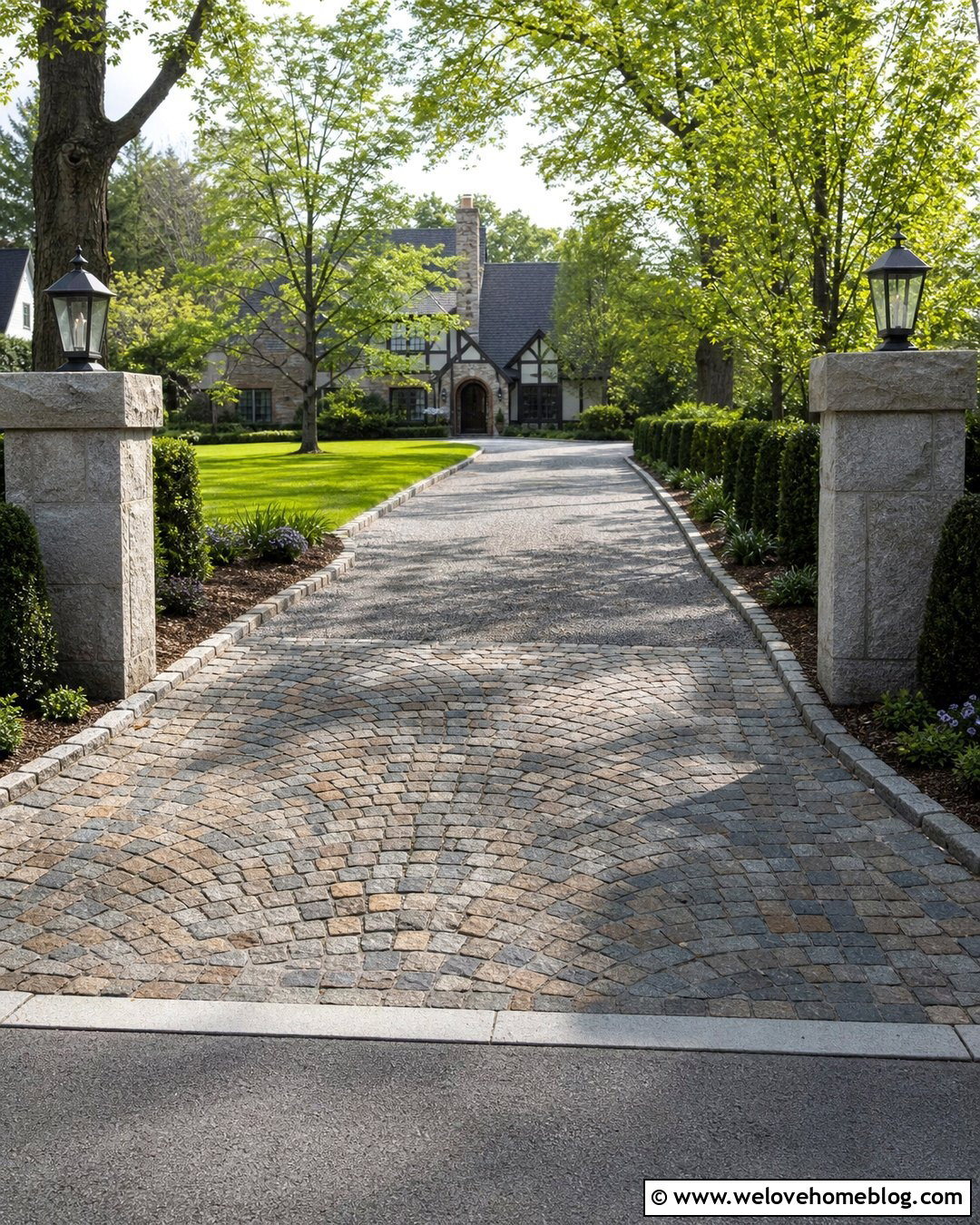
Cobblestone gives a driveway entrance rich texture and a sense of permanence. Because paving an entire long driveway can be expensive, use authentic or concrete cobblestones across the entrance apron, then transition into compacted gravel farther inside the property. Install the stones in a fan pattern to make the material change feel intentional. Low granite posts, clipped hedges, and traditional lanterns can frame the apron without competing with its texture. For a Tudor or European-inspired home, choose mixed gray and warm brown stones rather than a perfectly uniform color. Continue a single row of cobblestone along the gravel edges to connect both surfaces. This approach concentrates the strongest visual material where it will have the greatest impact from the street.
9. Concrete Driveway With Grass Strip Entrance
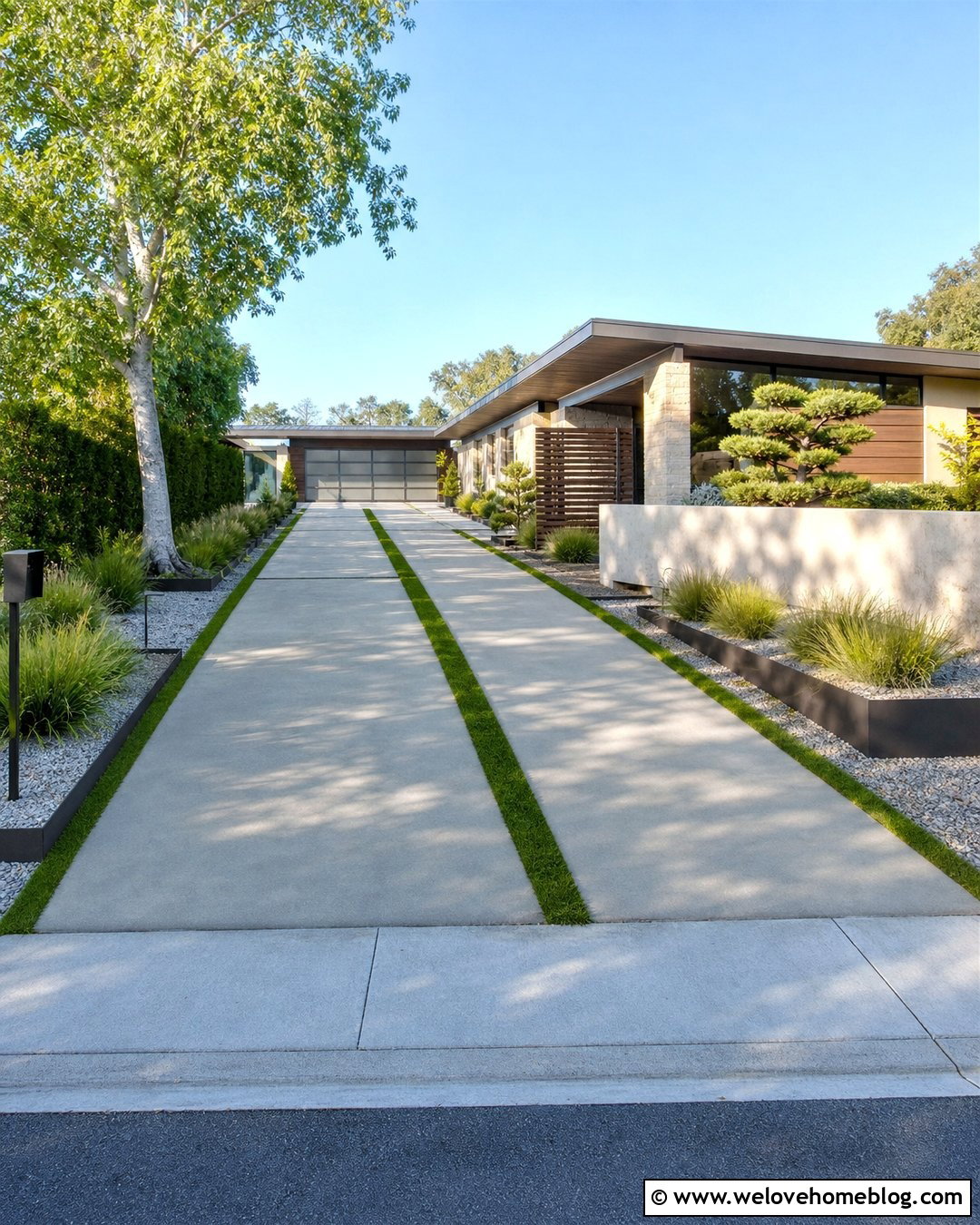
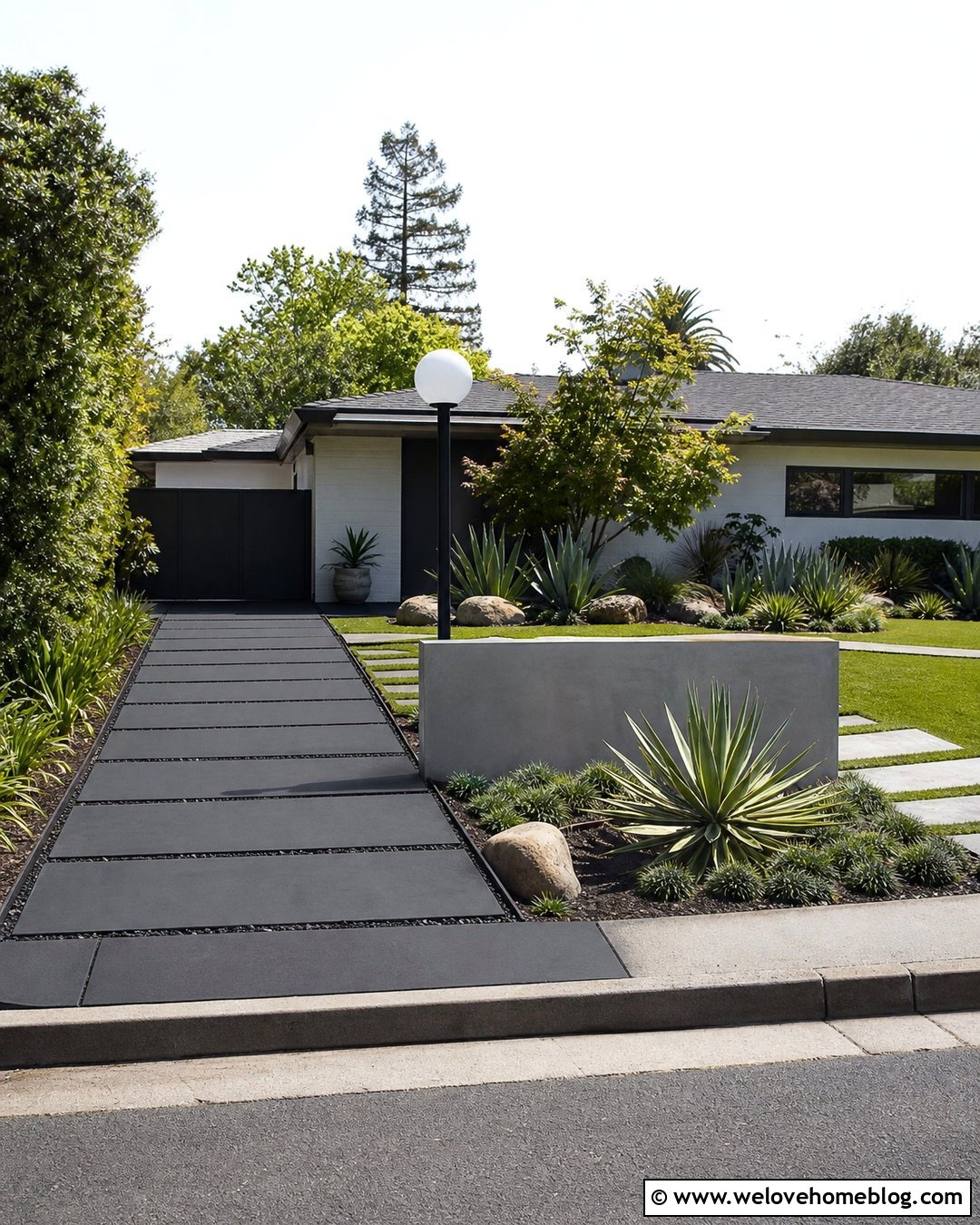
A concrete driveway with grass strips creates a softer entrance for modern, midcentury, and minimalist homes. Form two broad lanes from smooth light gray poured concrete, leaving narrow green strips between selected slabs. At the curb, use a full-width concrete apron so tires can enter easily before the planted joints begin. Low steel edging keeps the lawn or durable ground cover contained. Frame the entrance with rectangular beds containing ornamental grasses, sculptural shrubs, and pale gravel mulch. A simple concrete address wall can sit to one side without narrowing the driveway. Keep every line parallel to the home and garage for a calm, organized appearance. The greenery breaks up the hard surface while the concrete maintains a crisp, practical route.
10. Asphalt Driveway With Brick Border Entrance
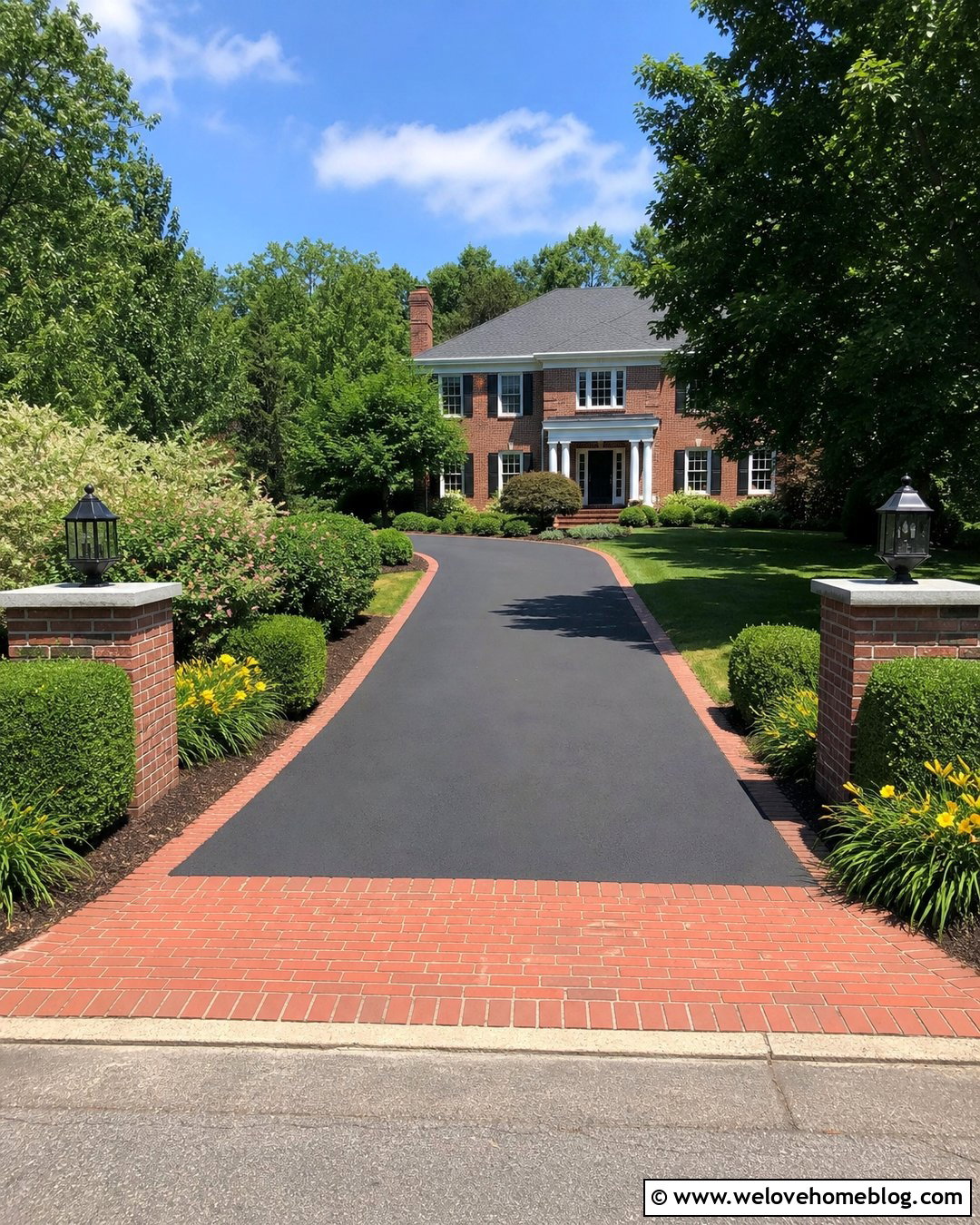
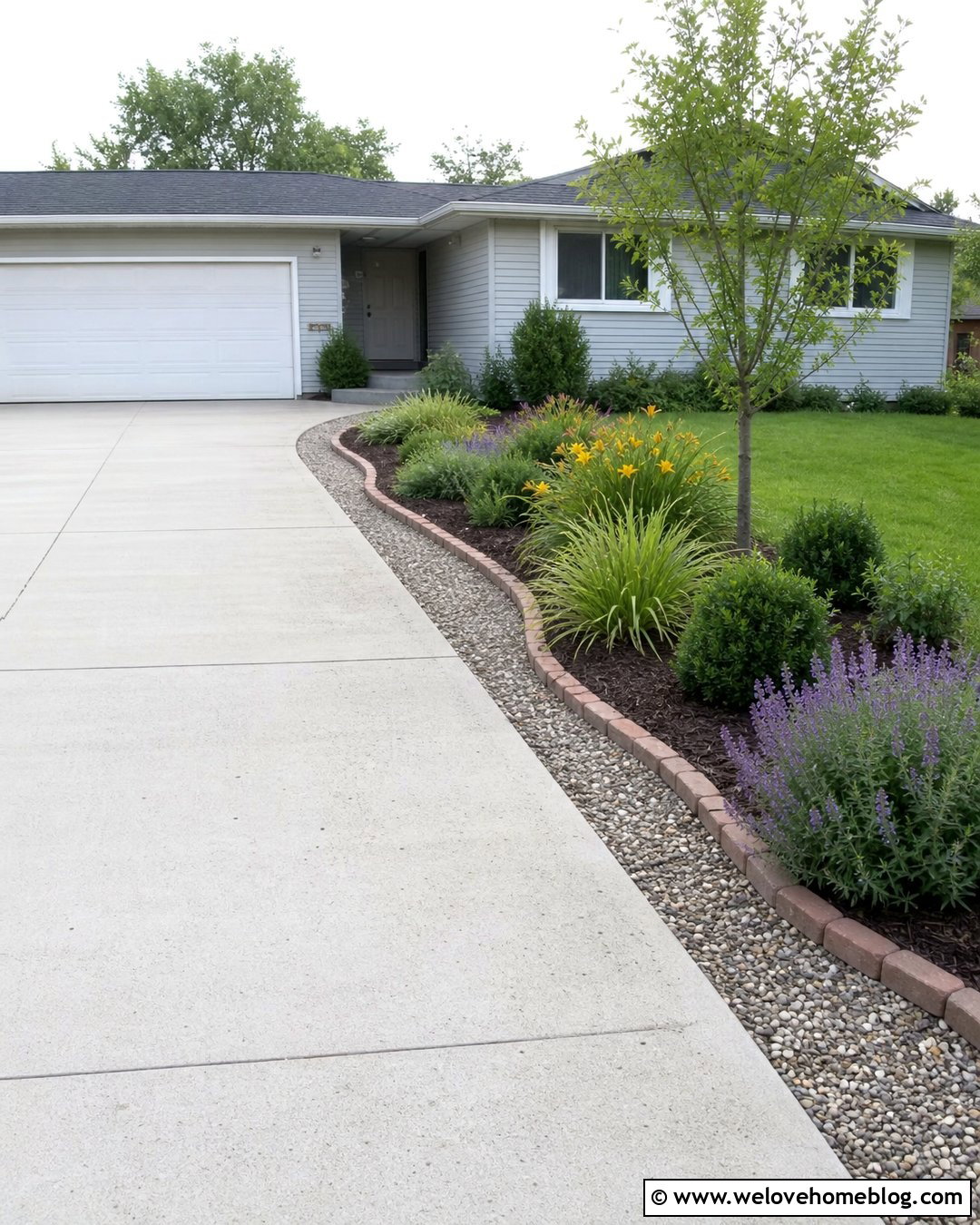
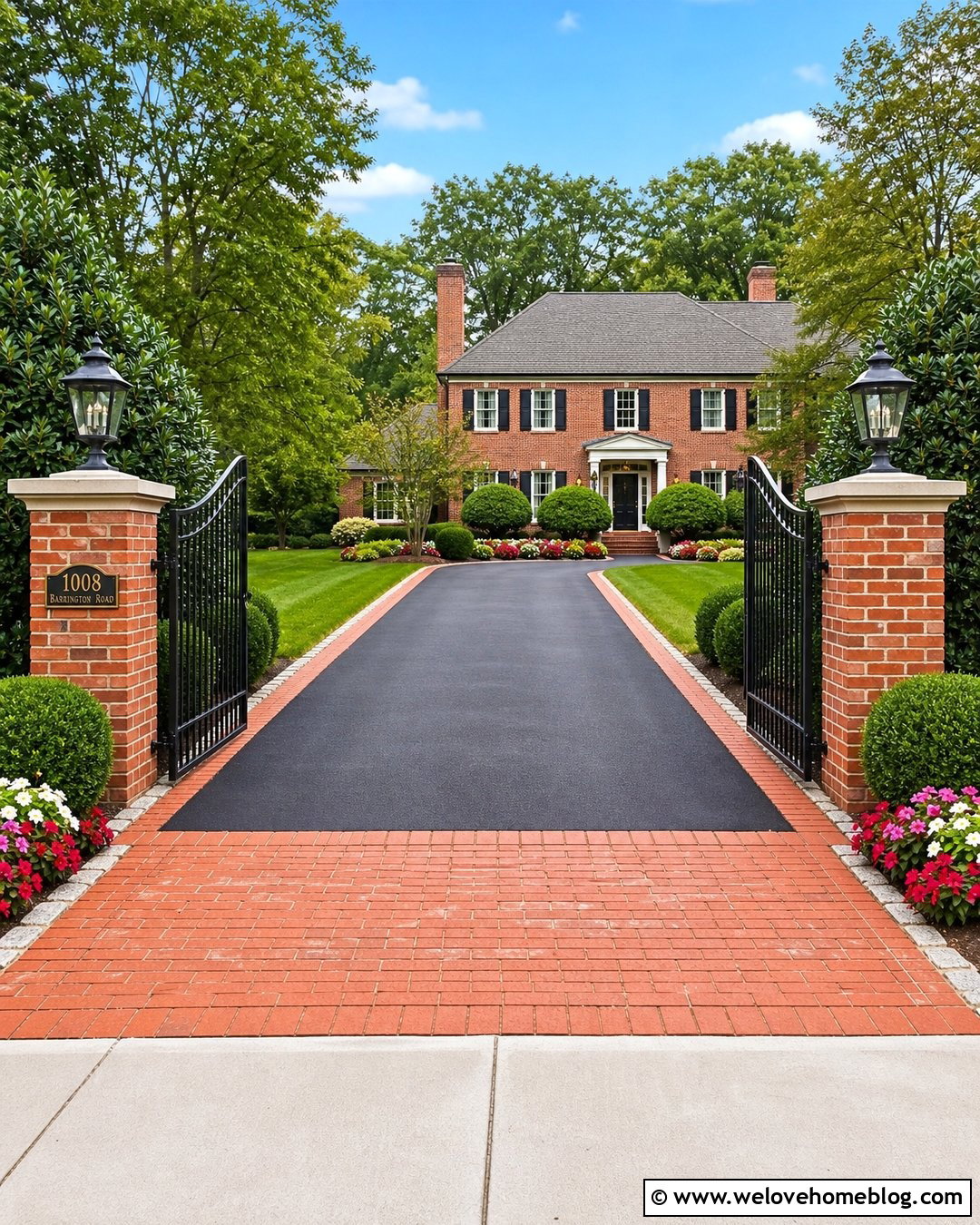
Black asphalt becomes much more distinctive when it is paired with warm brick detailing. Create a broad asphalt driveway entrance with a red-brown clay brick ribbon running across the apron and continuing along both edges. Brick pillars can mark the opening, but keep them low enough to preserve clear views of approaching traffic. Add cast-stone caps and understated black lanterns for a traditional finish. Curved beds of boxwood, daylilies, and compact flowering shrubs will soften the strong contrast between the black surface and red brick. This combination is especially appropriate for a brick colonial or suburban home. Repeating the same brick in the facade, driveway border, apron, and pillars makes an economical asphalt surface look custom and thoughtfully integrated.
11. Tree-Lined Driveway Entrance
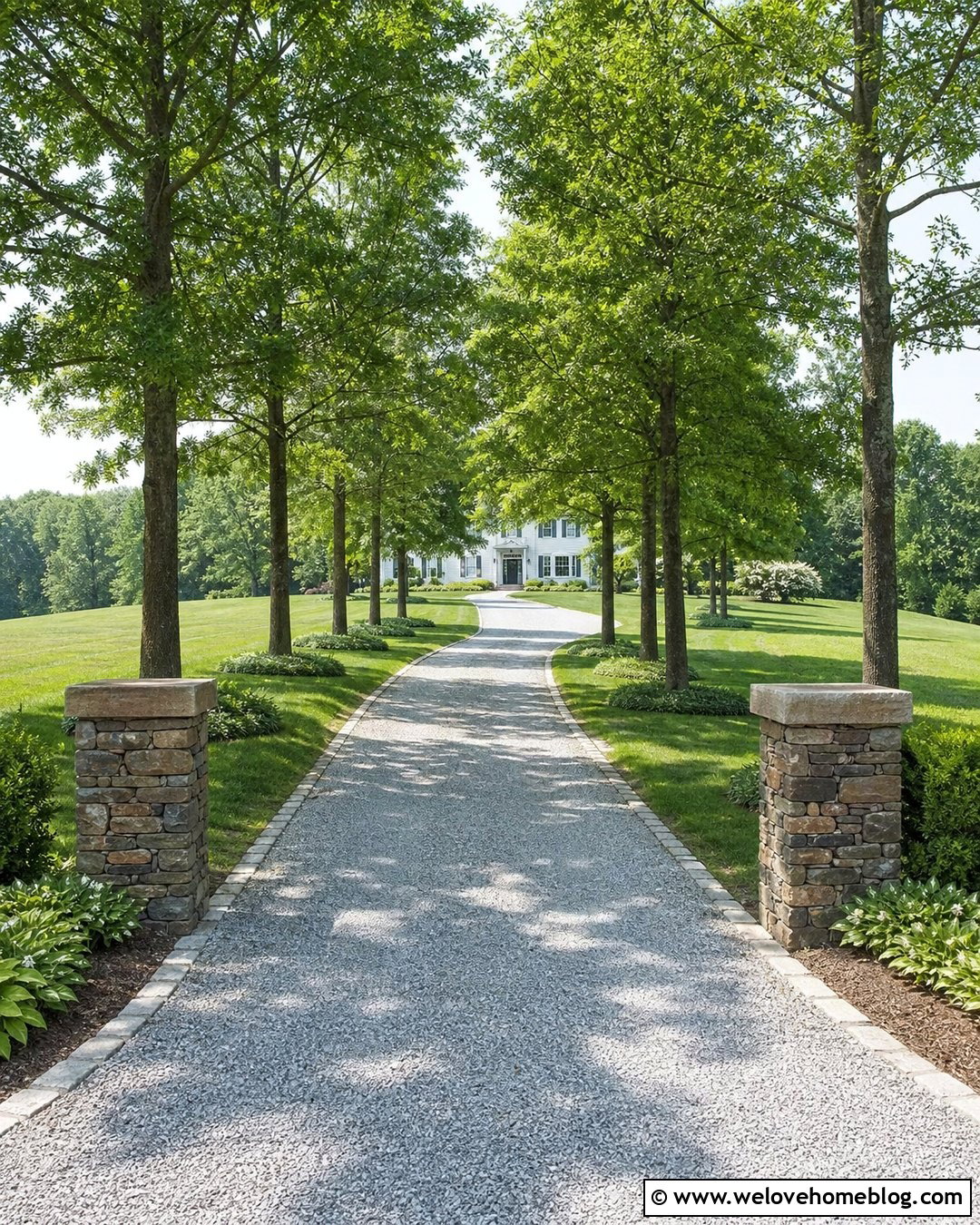
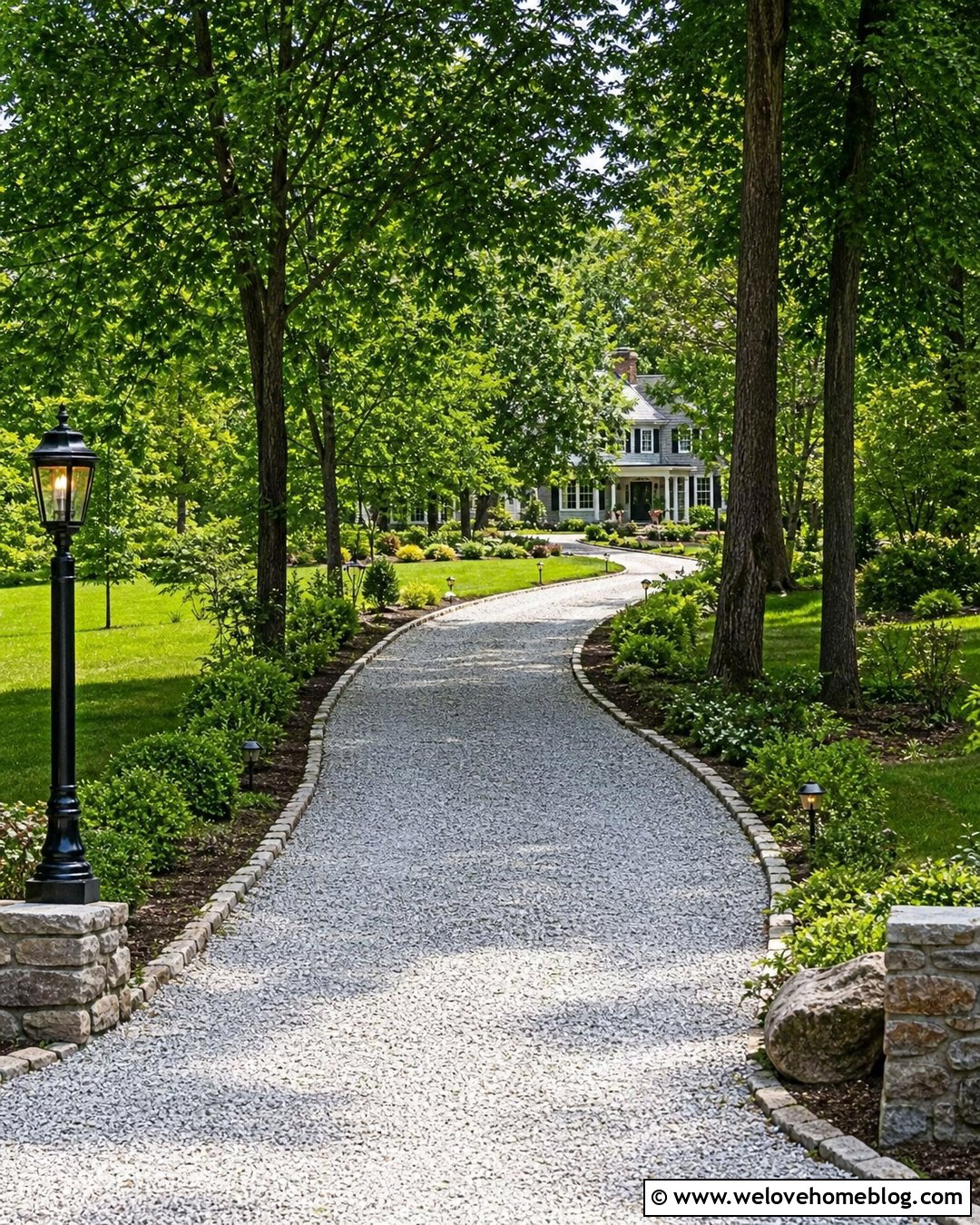
A tree-lined entrance creates a memorable approach on a long driveway, but the full design should begin with a clearly defined opening at the street. Use a light gray crushed-stone driveway with natural stone edging and a gentle curve leading toward a country or colonial home. Place two stone piers at the entrance, then continue evenly spaced deciduous trees along both sides. Set the trees back far enough that mature trunks, roots, and branches will not interfere with vehicles or visibility. Beneath them, use mown grass or simple ground cover rather than complicated flower beds. Low entry plantings preserve the view into the property. The repeated trees establish rhythm, while the gravel, stone piers, and open lawn keep the entrance relaxed and cohesive.
12. Hydrangea Driveway Entrance
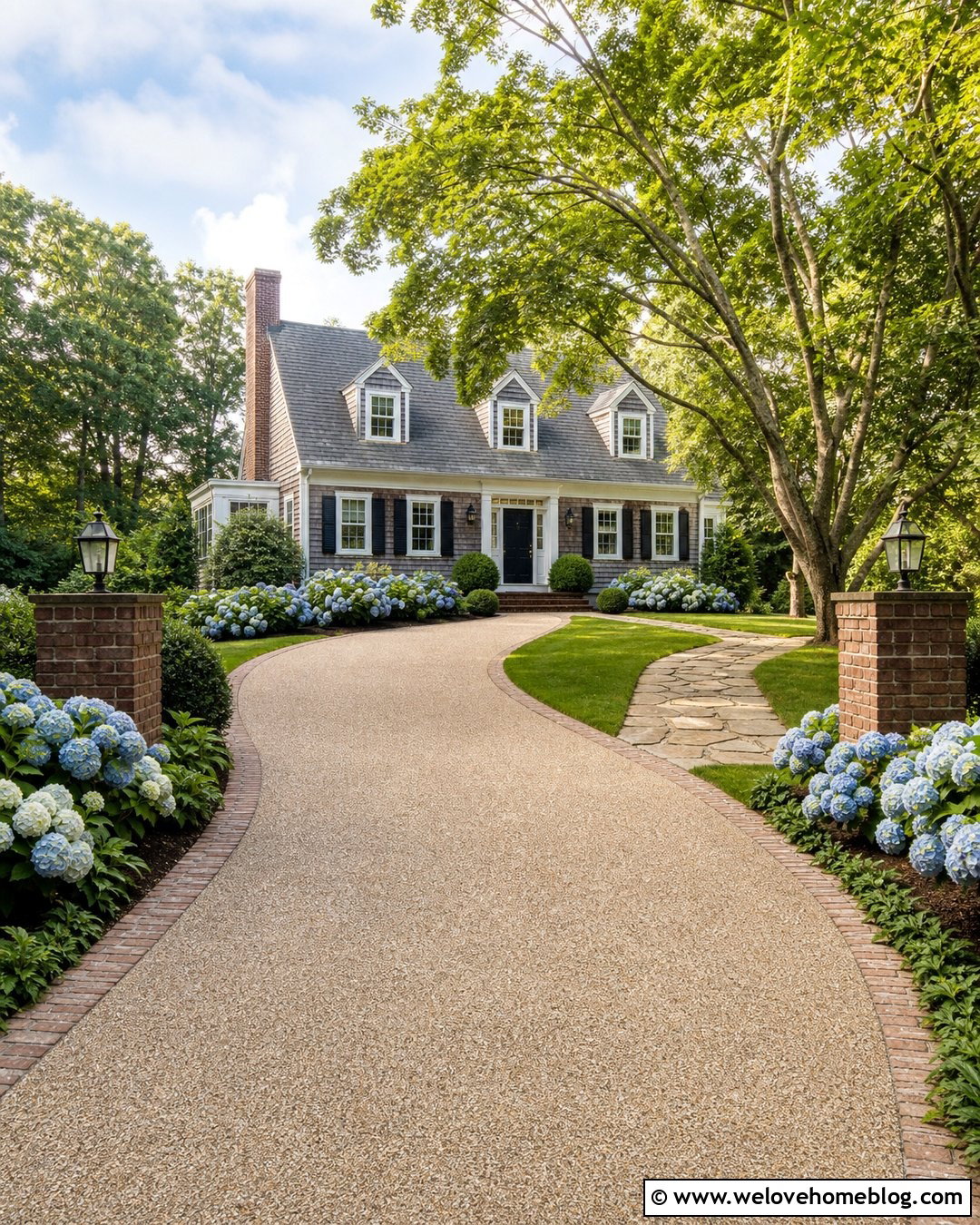
Large hydrangea beds can give a driveway entrance an inviting cottage character. Pair them with a curved driveway surfaced in warm beige resin-bound gravel, which creates a smooth background for blue, white, or blush flowers. Edge the driveway with aged clay brick to add definition and coordinate with a cape cod or shingle-style house. At the street, widen the beds around two low brick pillars topped with simple lanterns. Plant compact hydrangea varieties where they will not grow into the vehicle path, then fill the front edges with low evergreen ground cover. A narrow flagstone walkway can branch from the driveway toward the front door. The soft planting, warm border, and gently curved surface create a complete entrance that feels colorful without becoming disorderly.
13. Native Plant Driveway Entrance
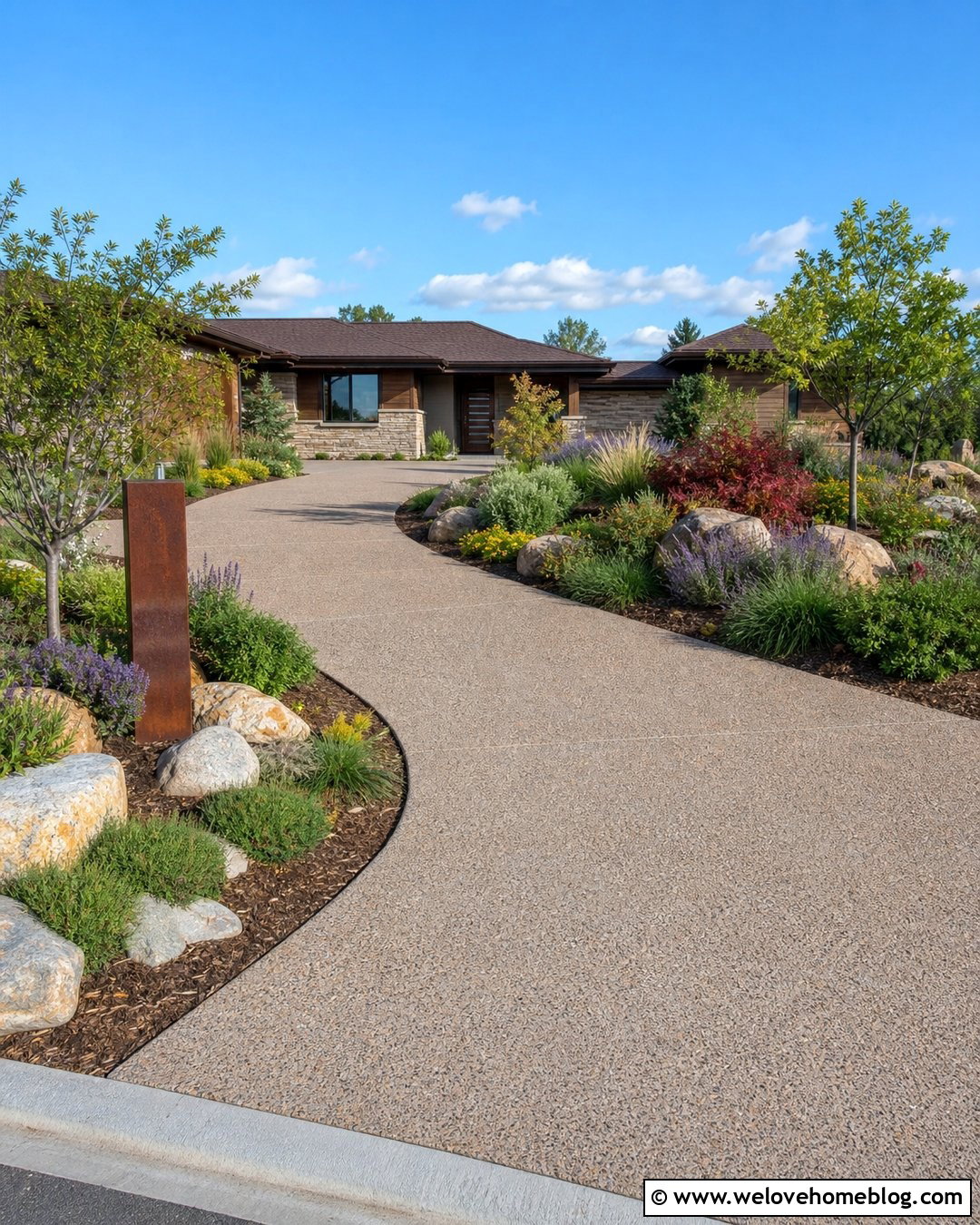
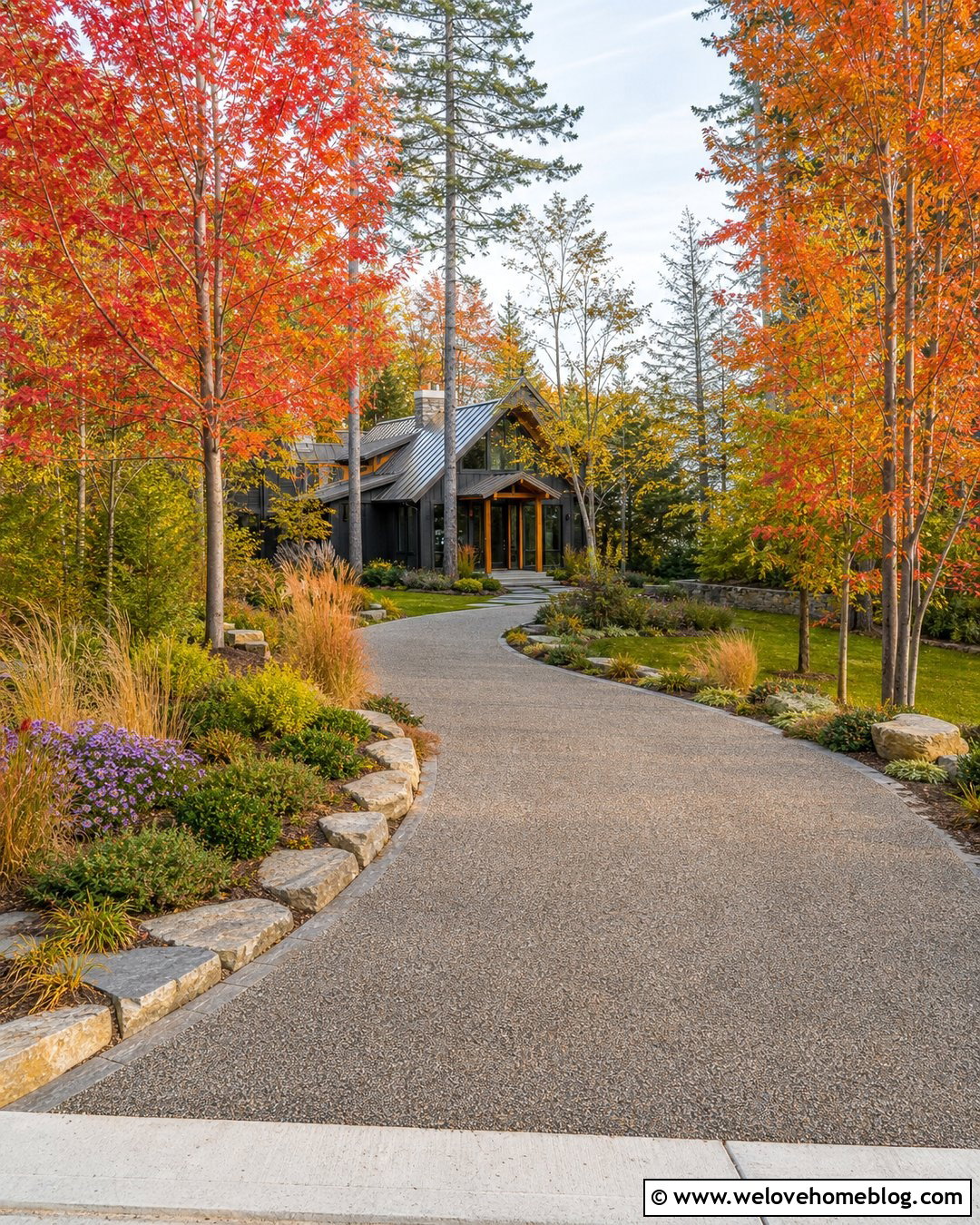
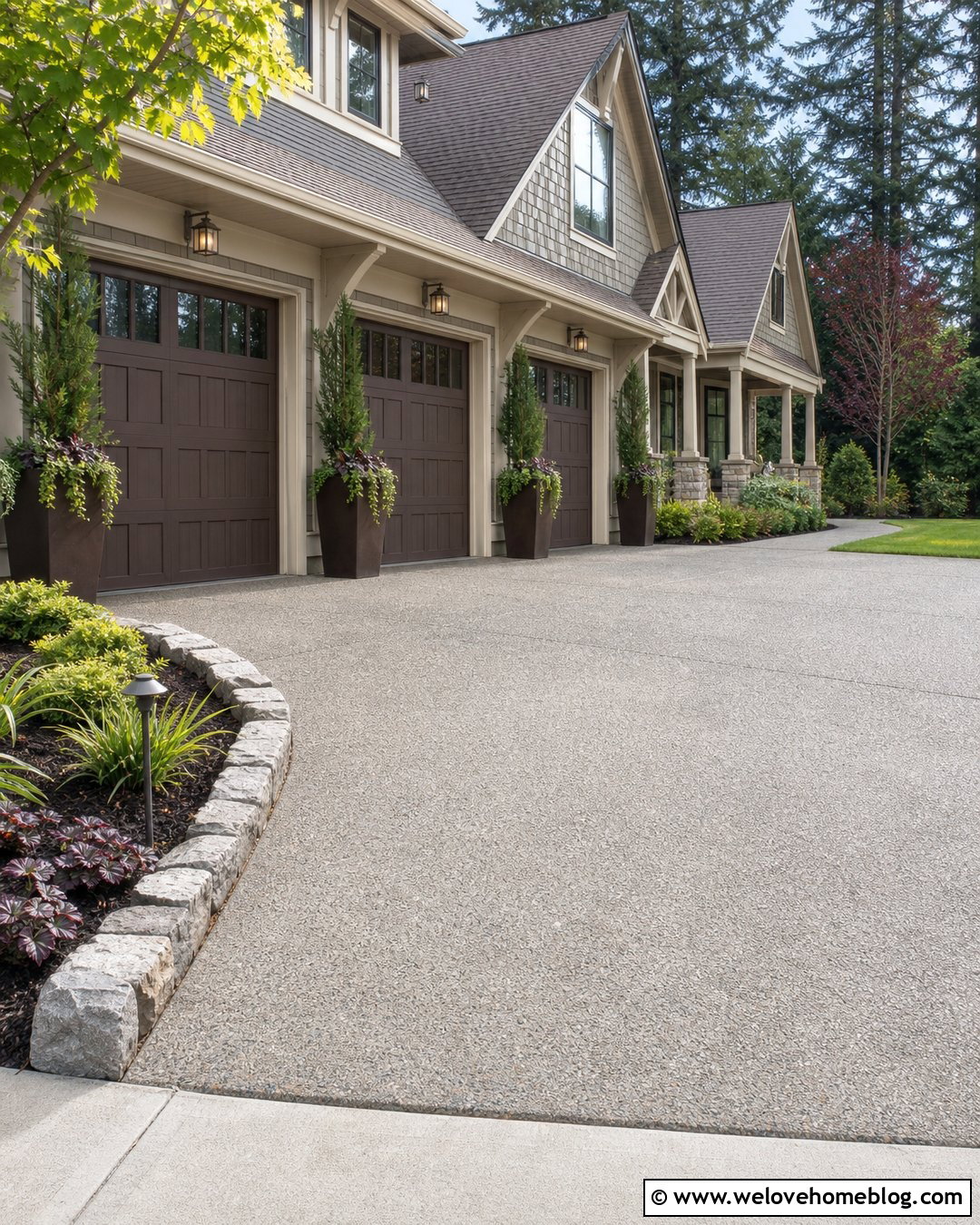
Native planting can make a driveway entrance feel connected to its regional landscape. Begin with a gently curved exposed aggregate concrete driveway whose natural stone tones complement the surrounding vegetation. Use broad, asymmetrical beds at the curb instead of matching formal borders. Fill them with regionally appropriate grasses, flowering perennials, compact shrubs, and one or two small native trees. Natural boulder edging can separate the beds from the driveway while allowing the arrangement to remain relaxed. A weathered steel address sign adds a clean focal point among the plants. This entrance is particularly effective beside a ranch, prairie, or contemporary house. Select plants according to mature size, sunlight, soil, and moisture so the driveway remains visible and the beds stay manageable.
14. Low-Maintenance Driveway Entrance
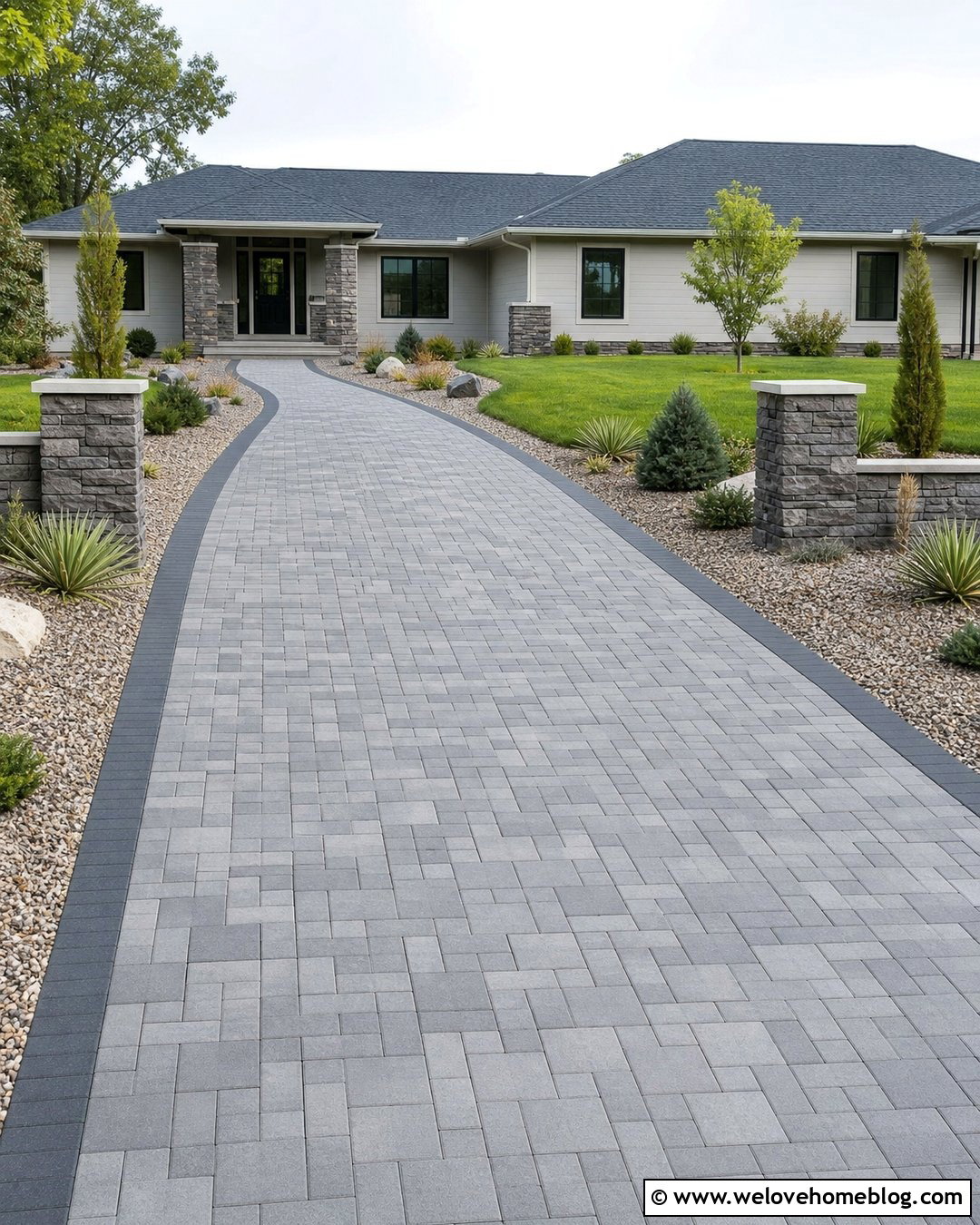
For an entrance that stays neat with less routine work, combine durable hardscaping with a restrained plant palette. Use medium gray interlocking concrete pavers in a straight driveway layout, finished with a darker soldier-course border. Place two compact stone columns at the curb and connect them to low walls that angle away from the driveway. Surround the walls with gravel-mulched beds containing dwarf evergreens, yucca, ornamental grasses, and other plants suited to the local climate. Avoid narrow lawn strips that are difficult to mow and fast-growing hedges that require frequent trimming. Integrated drip irrigation can help keep the planting consistent. Repeating only a few materials and plant varieties produces a clean entrance that complements modern ranch, craftsman, and transitional homes.
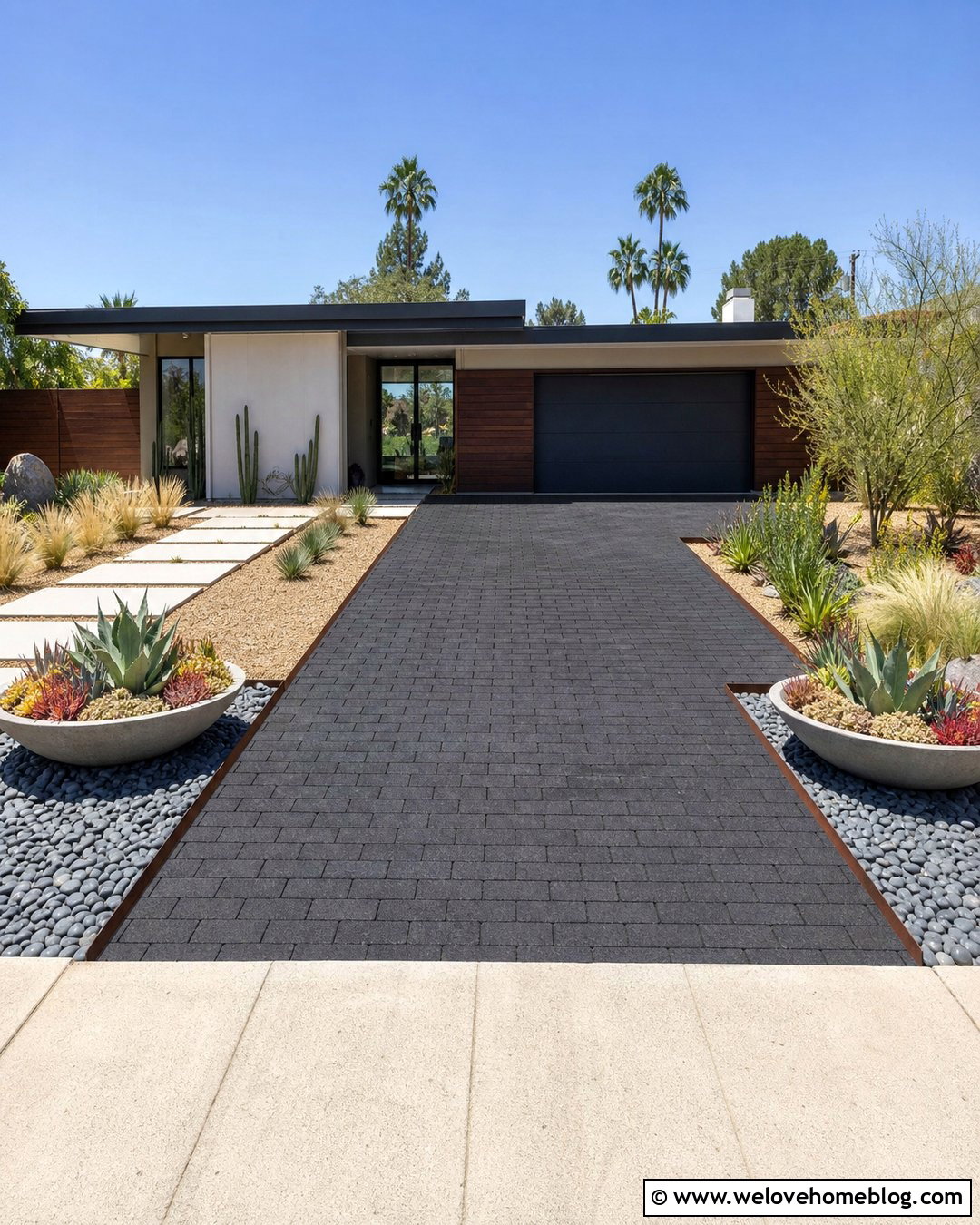
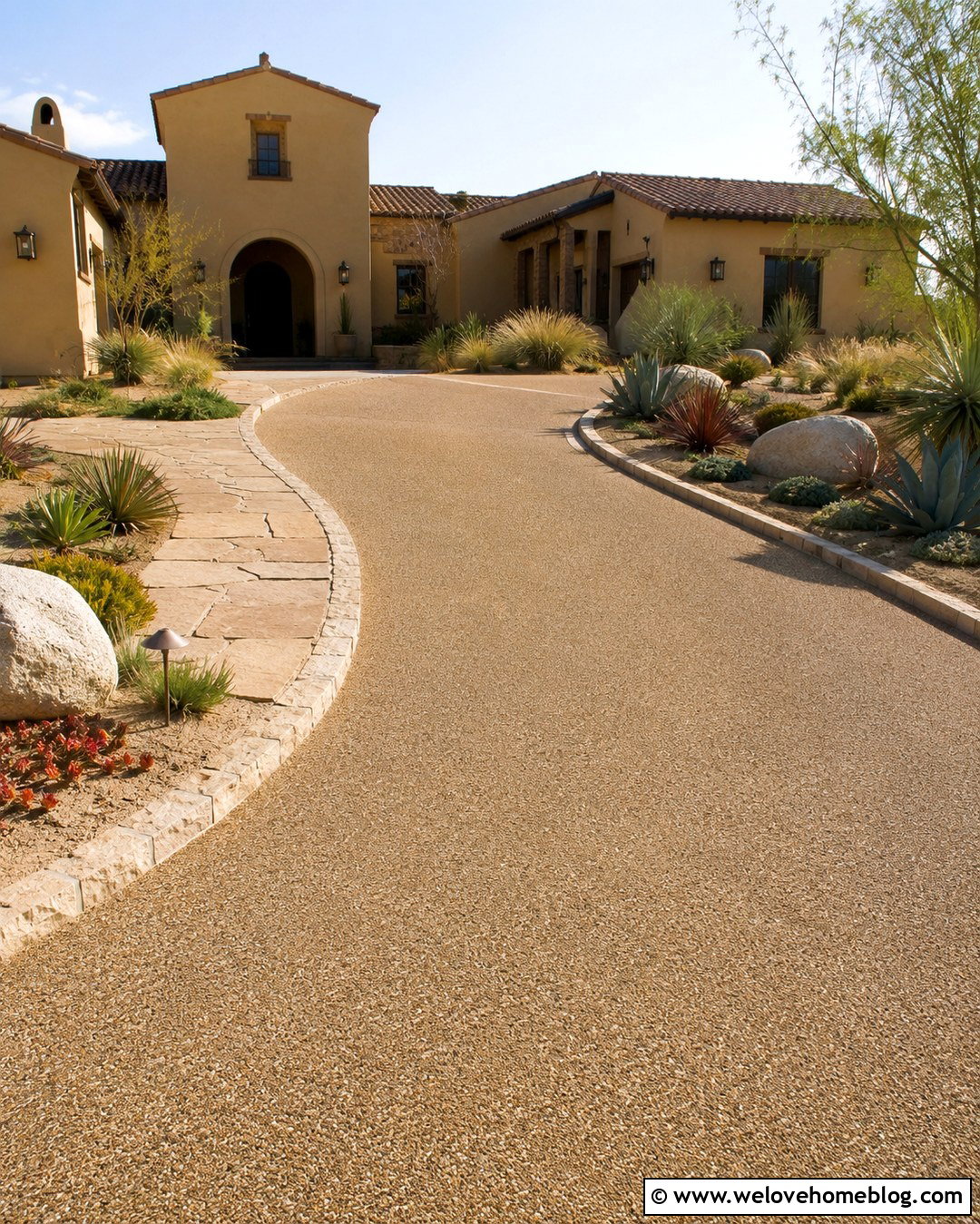
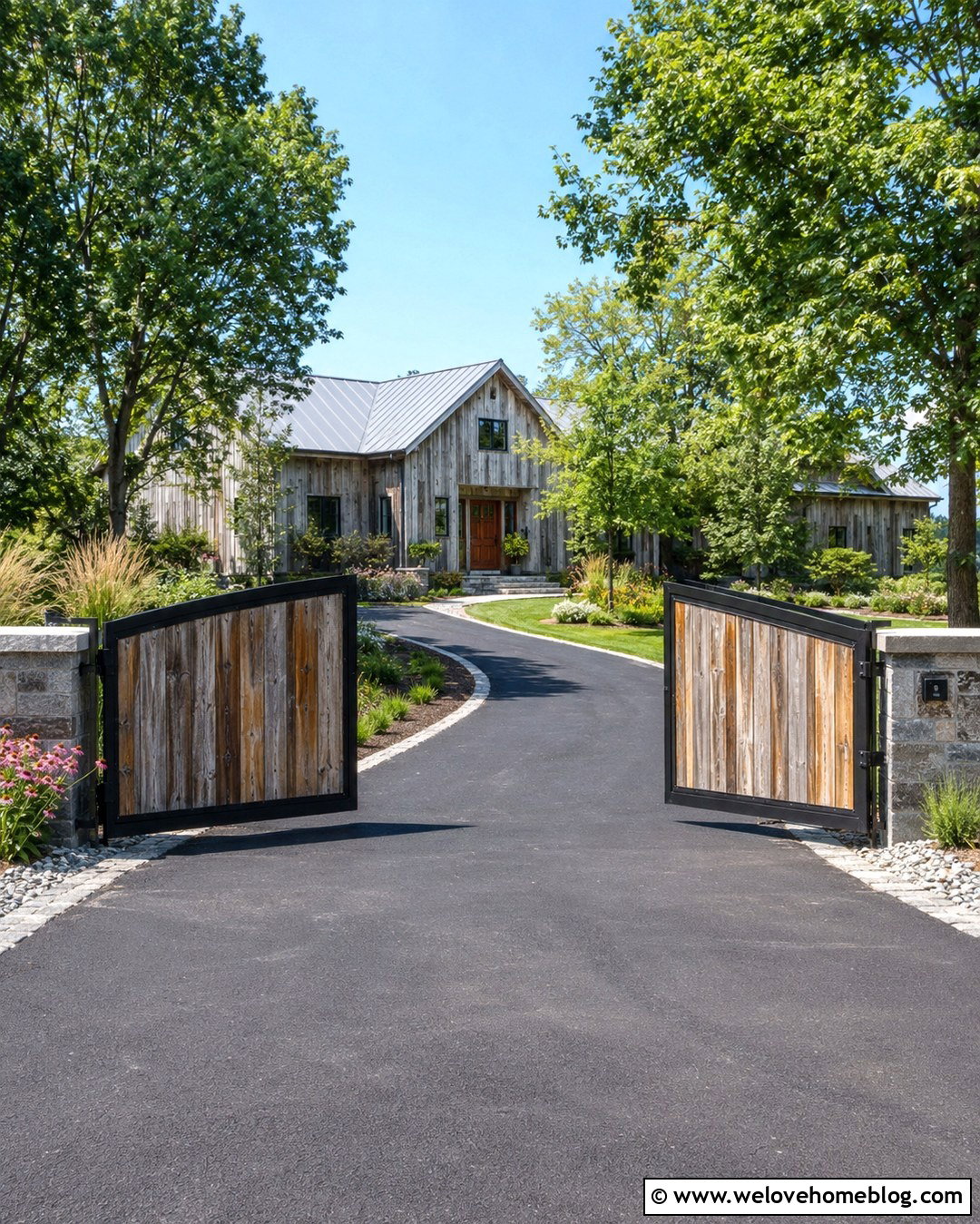
15. Driveway Entrance With Lantern Pillars
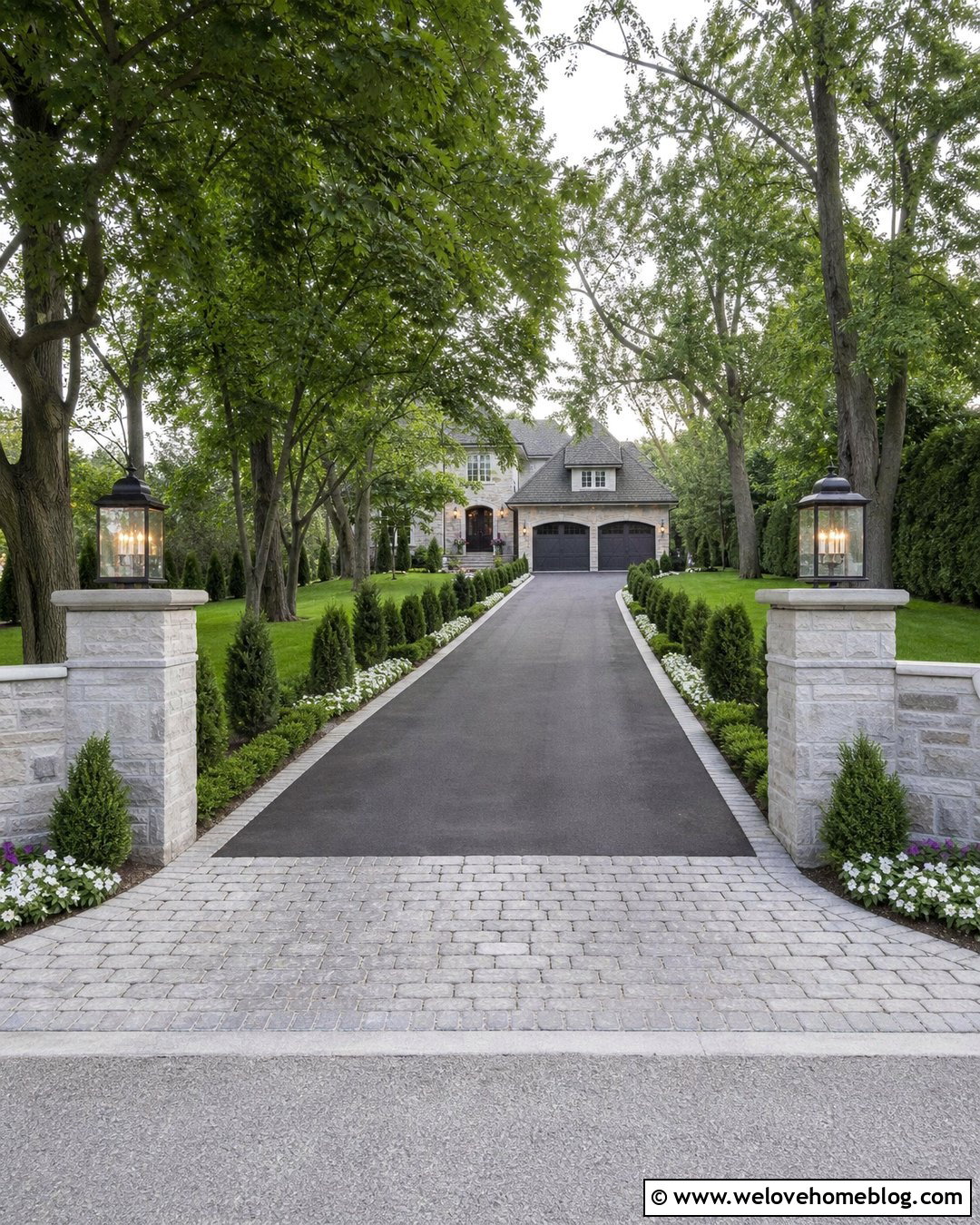
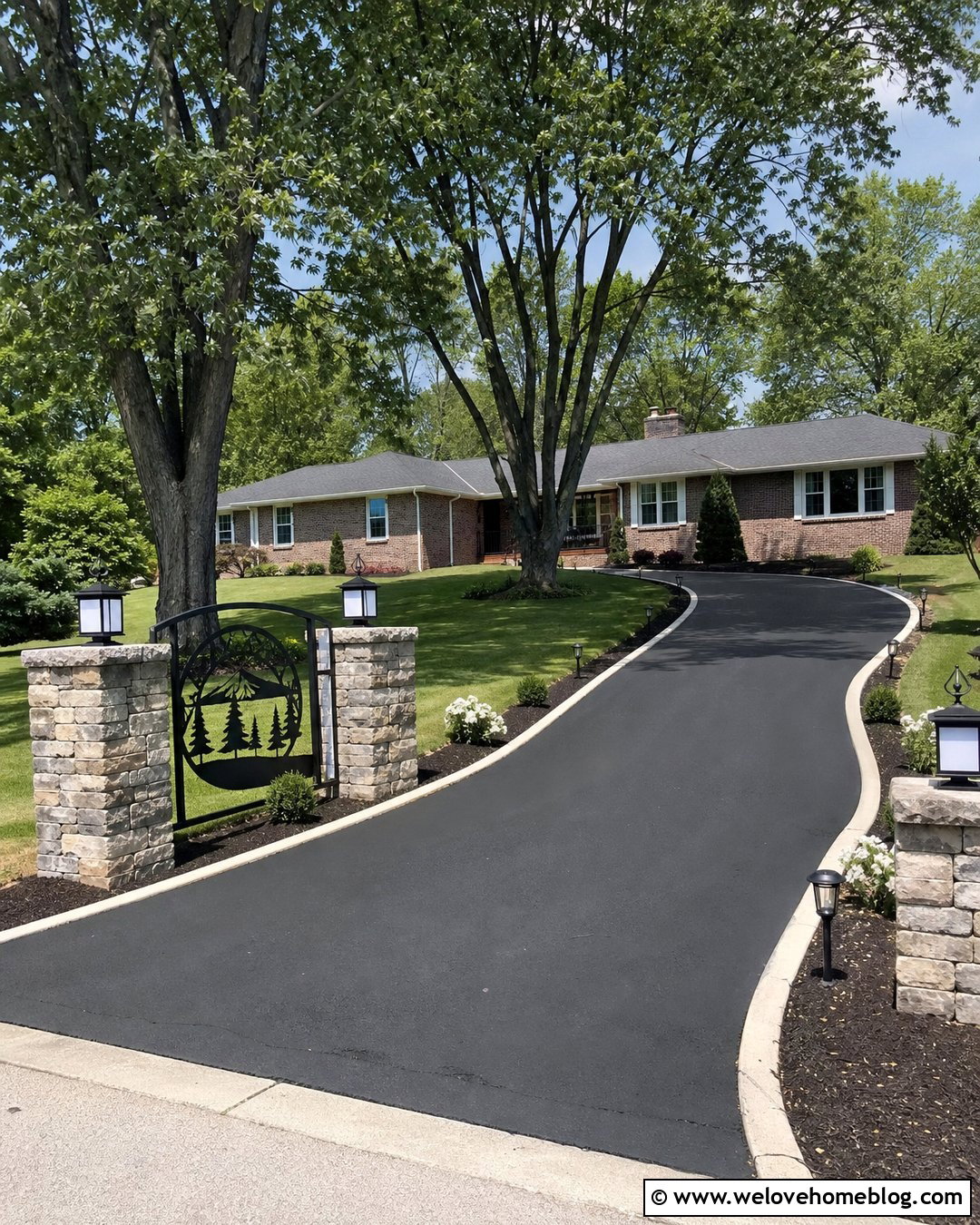
Lantern-topped pillars create an attractive daytime focal point while helping define the driveway after sunset. For a traditional look, combine a warm gray cobblestone apron with a smooth asphalt driveway and two limestone-clad columns. Choose lanterns that are proportional to the pillars and repeat the finish used on the home’s exterior fixtures. Low curved walls can extend from each column, directing attention toward the opening. Plant compact evergreens near the masonry and lower flowers toward the road so the landscaping does not cover the lights. Continue cobblestone as a narrow edge along the asphalt to connect the entrance with the rest of the driveway. The coordinated pillars, apron, borders, lighting, and planting create a polished entrance rather than two freestanding light posts.
16. Solar-Lit Driveway Entrance
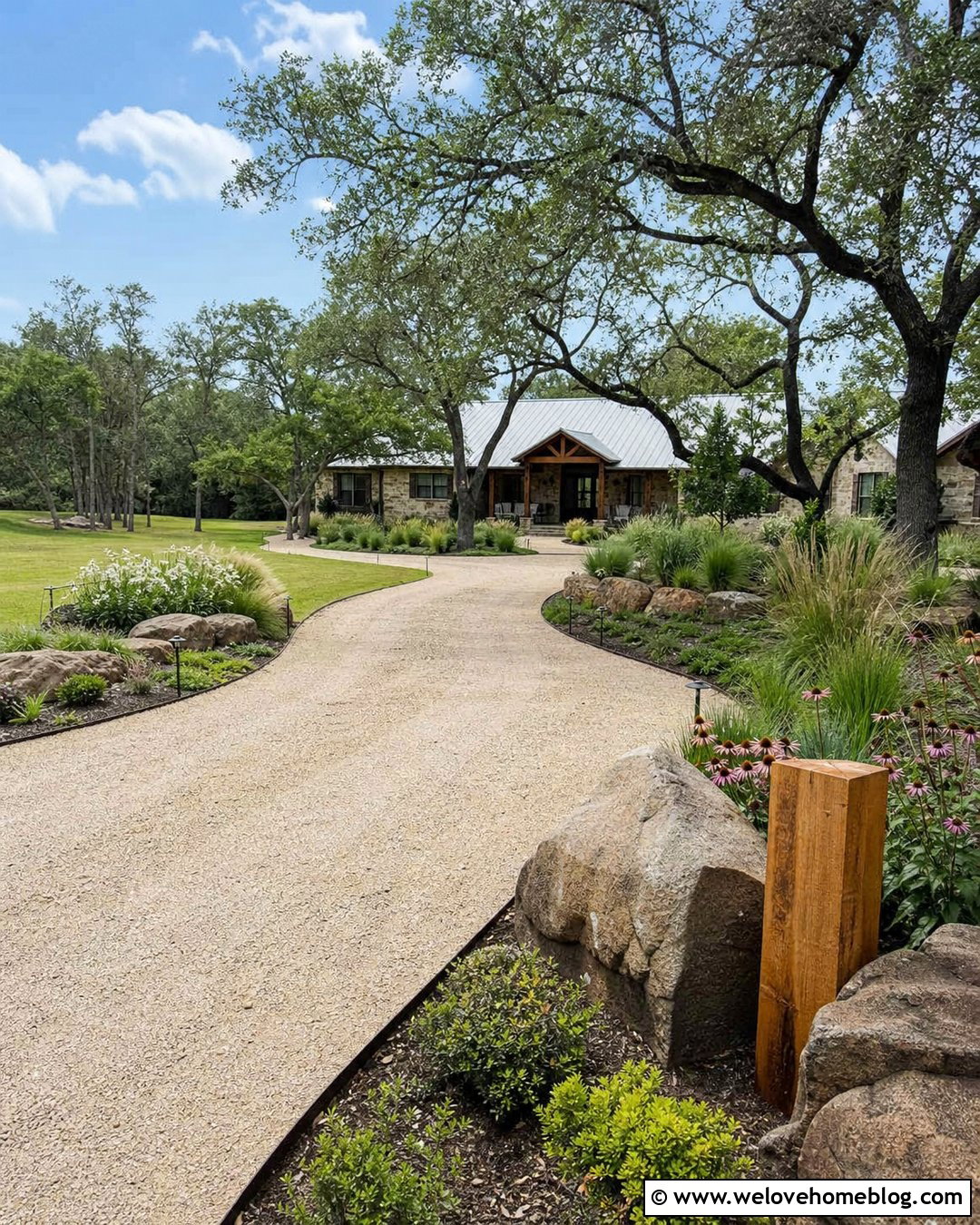
A solar-lit entrance can improve definition without requiring a row of conspicuous fixtures. Start with a pale crushed-granite driveway that curves through a natural landscape toward a ranch or country home. Edge it with dark steel or larger granite setts to prevent gravel from spreading. Install compact solar fixtures inside the planting beds, positioning them to highlight the entrance stones, address marker, and first part of the curve. Use two low boulder groupings instead of formal pillars, then surround them with ornamental grasses, flowering perennials, and ground cover. Select lighting designed for the site’s available sunlight and avoid placing fixtures where tires, snow removal, or lawn equipment can damage them. During the day, the landscape remains natural and uncluttered.
17. Driveway Entrance With Address Sign
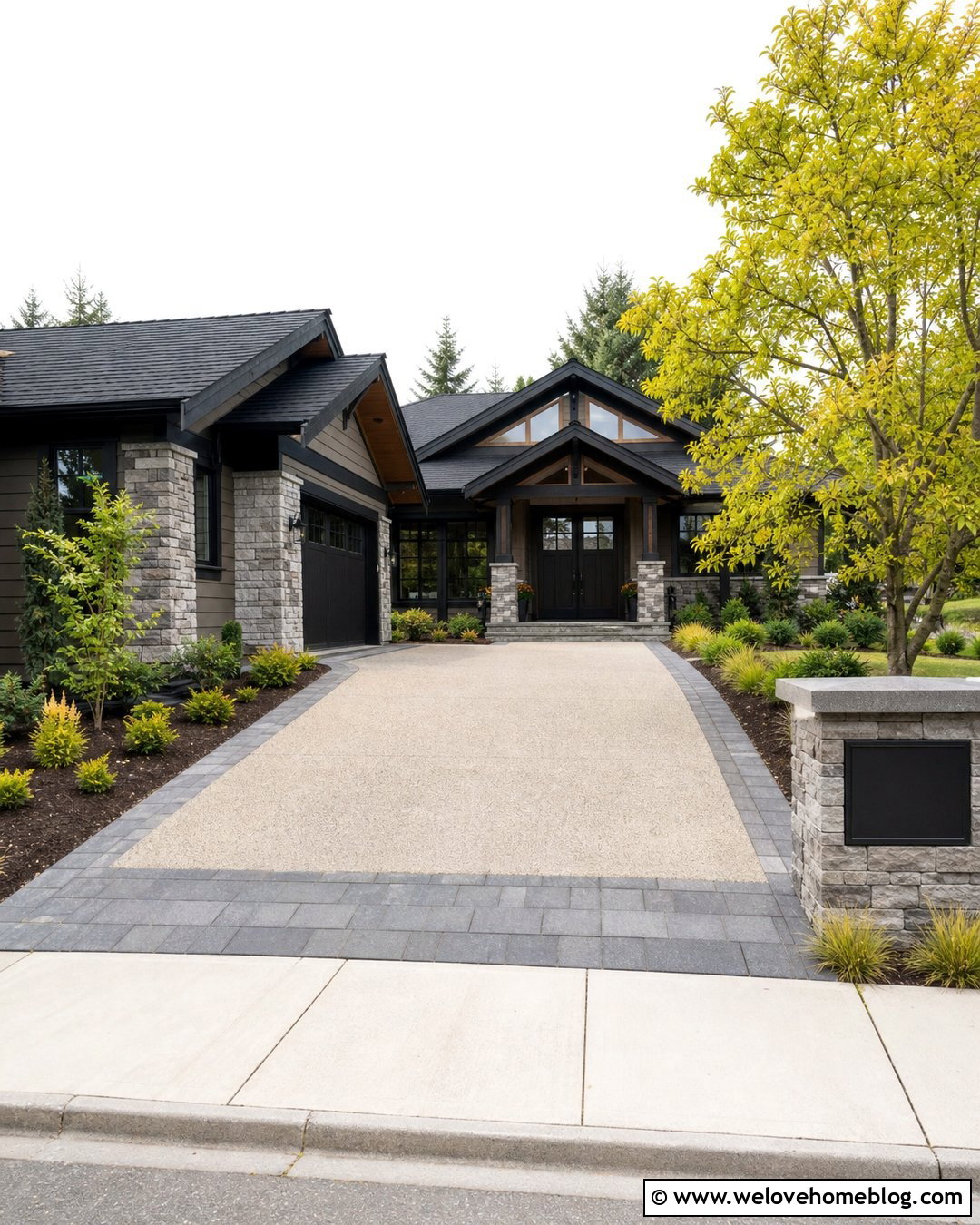
A well-placed address sign can serve as the visual anchor for the entire driveway entrance. Pair a straight exposed aggregate driveway with a charcoal concrete paver apron and matching edge bands. On one side, build a low stone monument holding large, simple address numbers that are easy to distinguish from the street. Balance the opposite side with a small ornamental tree and a similarly shaped planting bed. Use low shrubs and ground cover around the sign so foliage does not conceal the numbers as it matures. A narrow path from the driveway to the front walk can repeat the charcoal pavers. By coordinating the sign base with the driveway border, house stonework, and planting layout, the entrance appears intentional while providing a useful identifying feature.
18. Driveway Entrance With Mailbox
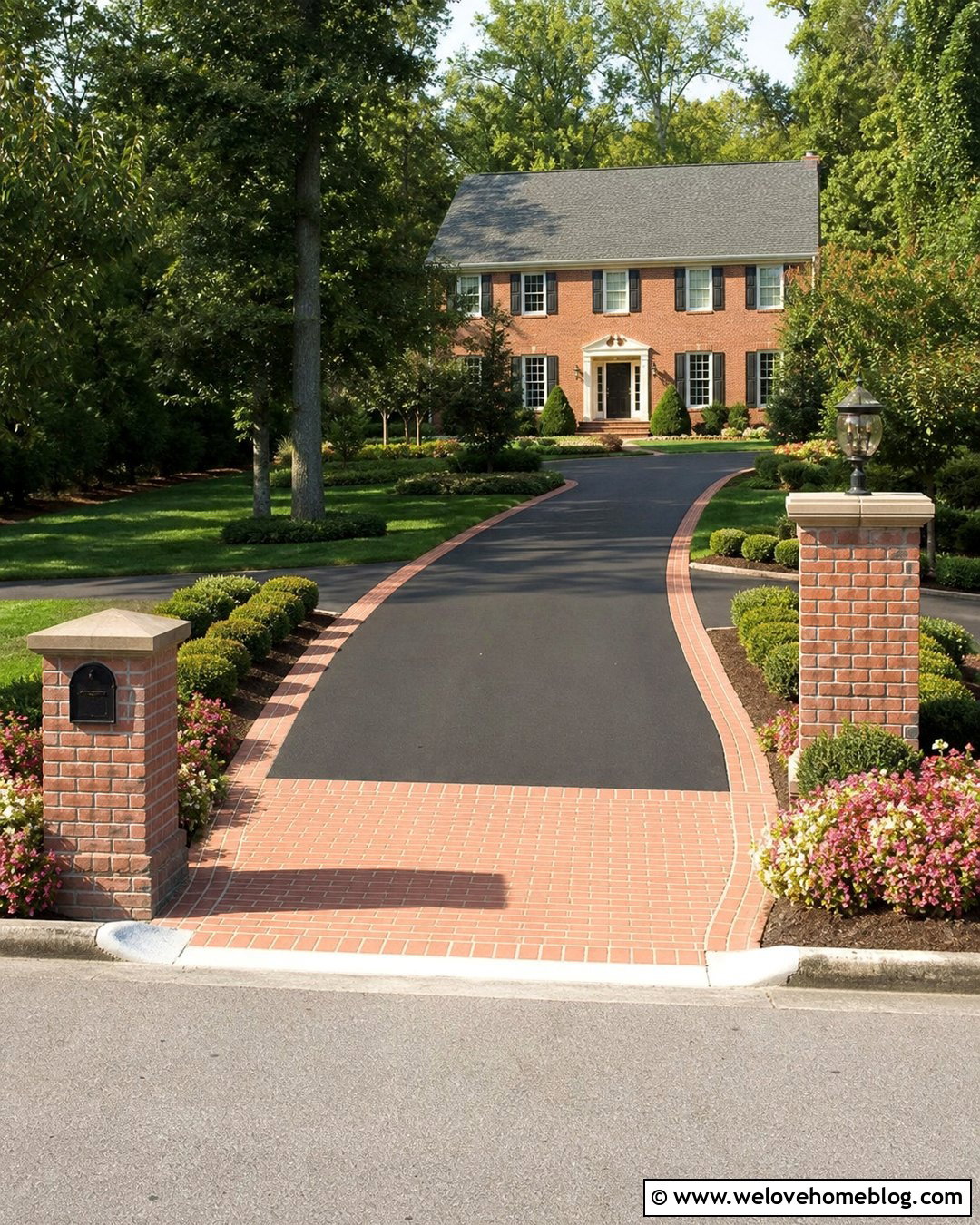
The mailbox can become part of a complete entrance rather than an unrelated object beside the road. Use a smooth black asphalt driveway with a warm clay brick apron and matching brick edging. Build a compact brick mailbox structure on one side, matching its height and detailing to a lower decorative pier on the other. Cast-stone caps can repeat trim found on a traditional or colonial home. Create curved planting beds around both structures with dwarf boxwood, seasonal flowers, and low ground cover. Leave a stable, accessible area near the mailbox and avoid plants that could obstruct road visibility. The repeated brick balances the two sides of the opening, while the asphalt provides a clean central surface. This solution works particularly well on established suburban properties.
19. Split-Rail Fence Driveway Entrance
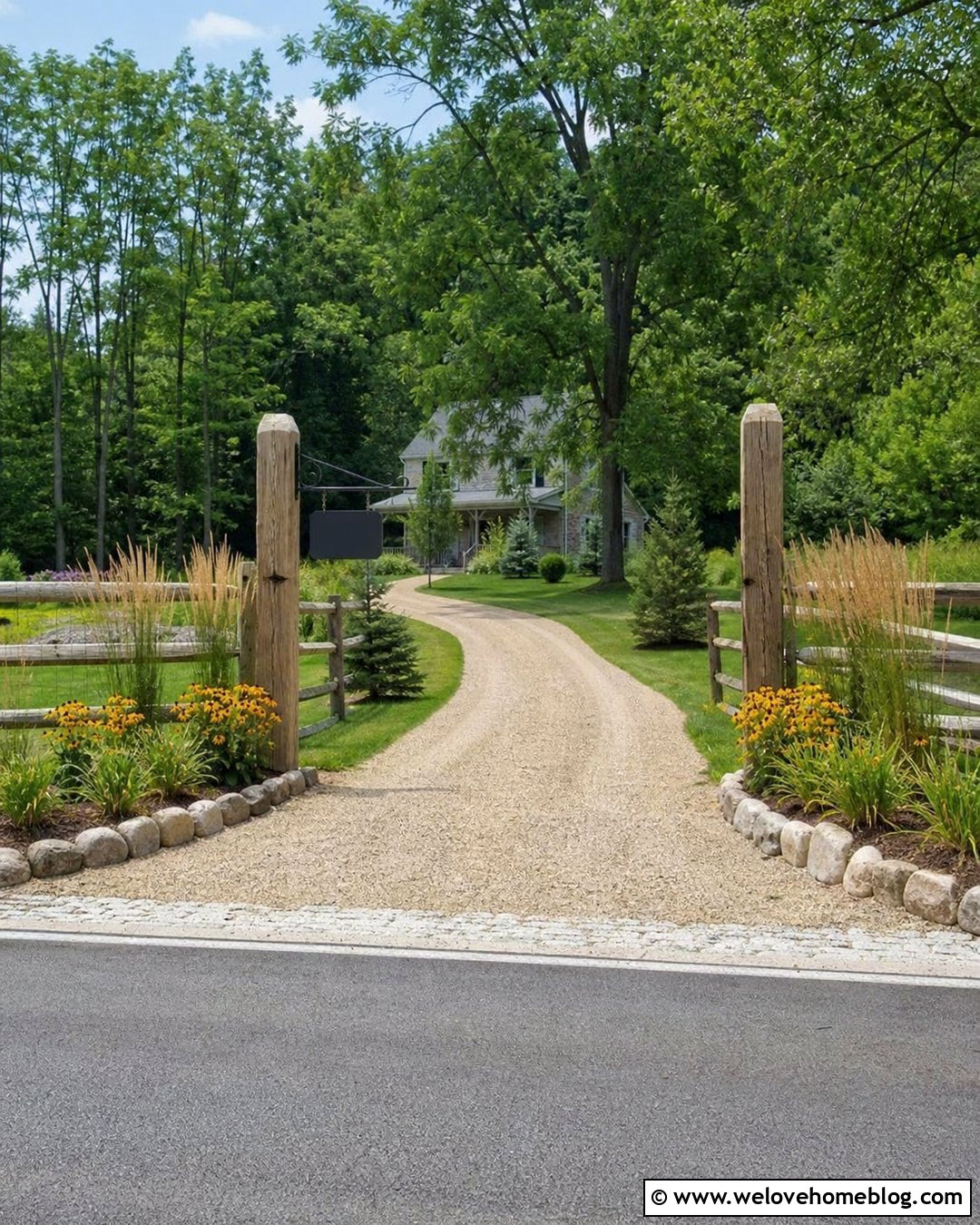
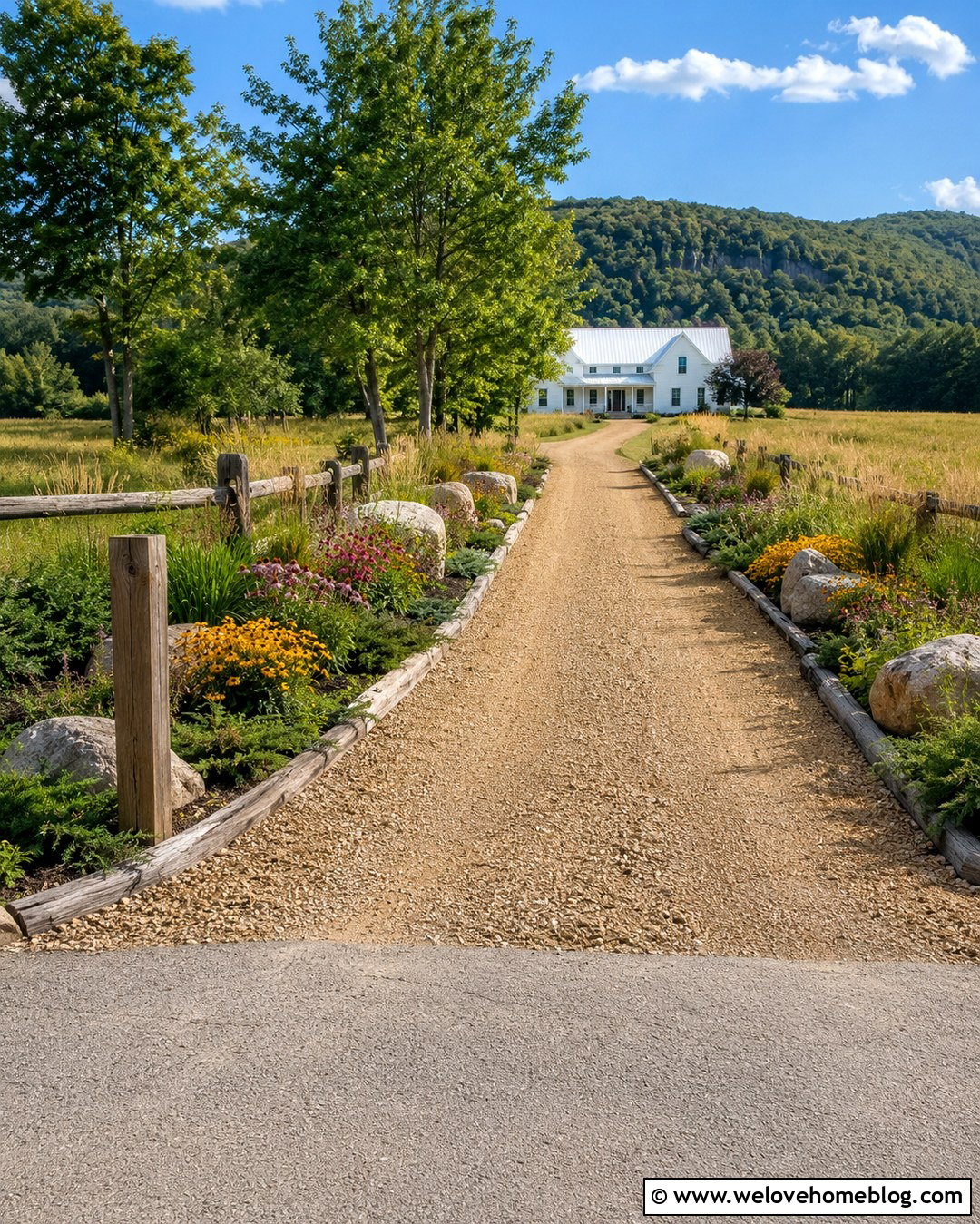
A split-rail fence gives a wide rural entrance definition while keeping views open. Pair it with a tan gravel driveway that enters straight from the road and then bends gently toward a farmhouse or ranch home. Run the timber fence along both sides of the frontage, turning the end sections inward to guide the eye toward the driveway. Mark the opening with taller wood posts and a simple hanging address sign rather than heavy columns. Use native grasses, black-eyed Susans, and small evergreen shrubs along the fence line. A fieldstone edge can contain the gravel and relate to the natural setting. This complete design feels casual and spacious, yet the inward fence lines, taller posts, and landscaping make the vehicle entrance immediately recognizable.
20. White Picket Fence Driveway Entrance
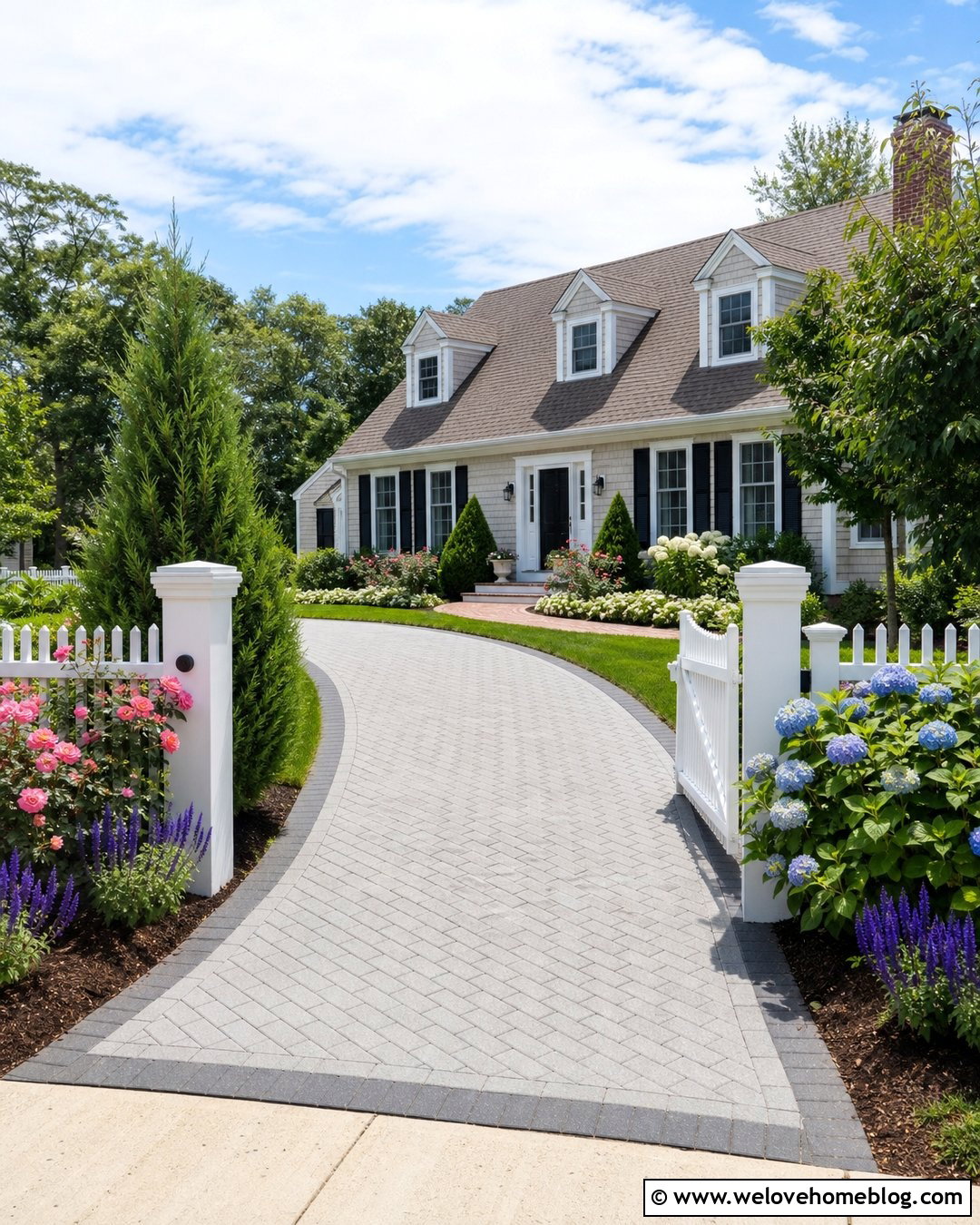
A white picket fence can frame a charming entrance for a cottage, cape cod, or traditional bungalow. Begin with a softly curved driveway made from light gray concrete pavers and add a narrow charcoal border for contrast. Install short sections of white picket fencing on both sides, ending each run at a square post with a simple cap. A matching pedestrian gate can connect the driveway to a brick or flagstone front walkway. Surround the fence with layered beds of hydrangeas, roses, salvia, and compact evergreen shrubs, keeping taller plants away from the driving opening. The fence should follow the front property line while gently turning toward the driveway. Repeated white details on the house trim and porch complete the bright, coordinated curb view.
21. Hedge-Framed Driveway Entrance
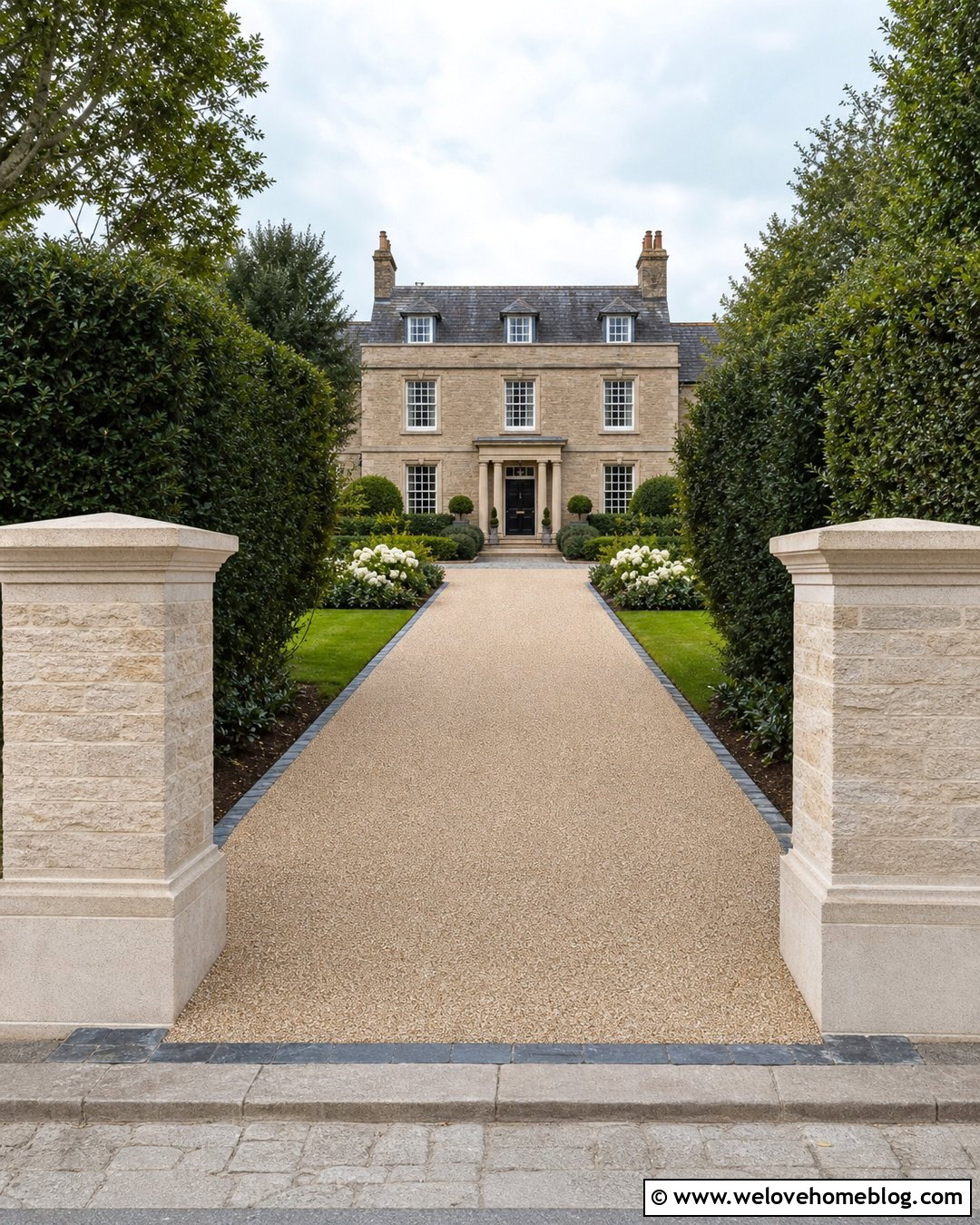
Clipped hedges can provide structure and privacy without requiring a solid gate. Use a straight resin-bound gravel driveway in a warm natural stone tone, bordered by dark granite setts. Place two low limestone pillars at the entrance and extend dense evergreen hedges outward along the property boundary. Allow the hedges to return slightly along the driveway while maintaining a generous opening and clear visibility near the road. Layer lower flowering shrubs in front of the hedge to prevent the design from looking flat. For a Georgian, colonial, or formal ranch home, keep both sides symmetrical and repeat the same planting near the front walk. The smooth driveway, dark border, pale stone, and deep green hedge create a composed entrance in every season.
22. Driveway Arbor Entrance
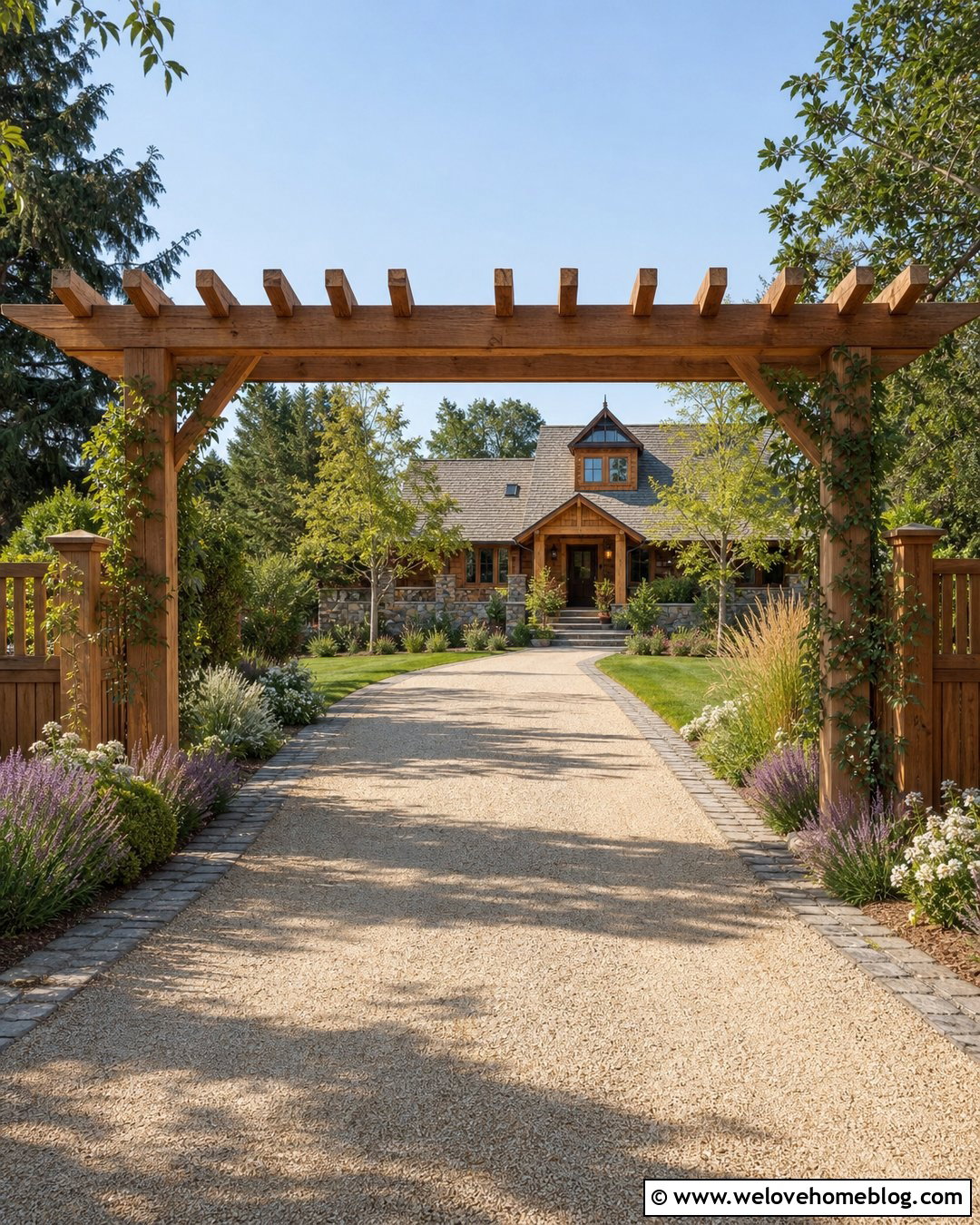
An arbor can create a garden-focused entrance when it is scaled for vehicles and integrated with the surrounding design. Pair a straight buff gravel driveway with a substantial cedar post-and-beam structure placed just inside the property line. The arbor should be wide and tall enough to provide comfortable clearance, with supports protected from turning vehicles. Continue cedar fencing outward on both sides and use cobblestone edging along the gravel. Train restrained climbing plants around the outer posts rather than allowing dense growth to hang into the opening. Cottage-style beds filled with lavender, ornamental grasses, and flowering shrubs can soften the structure. A craftsman or country home in the background will reinforce the natural wood, while the strong rectangular opening clearly frames the approach.
23. Circular Driveway Entrance
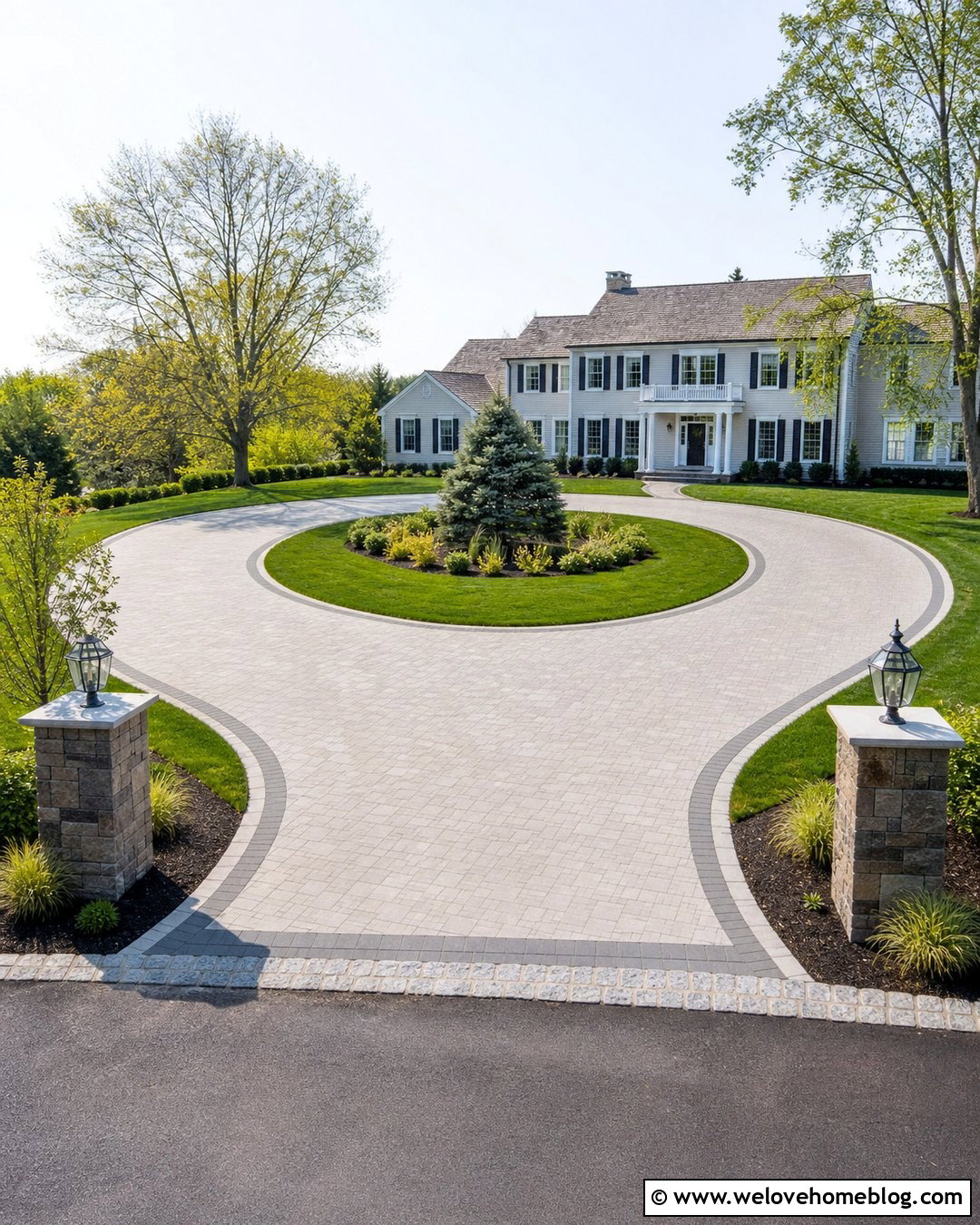
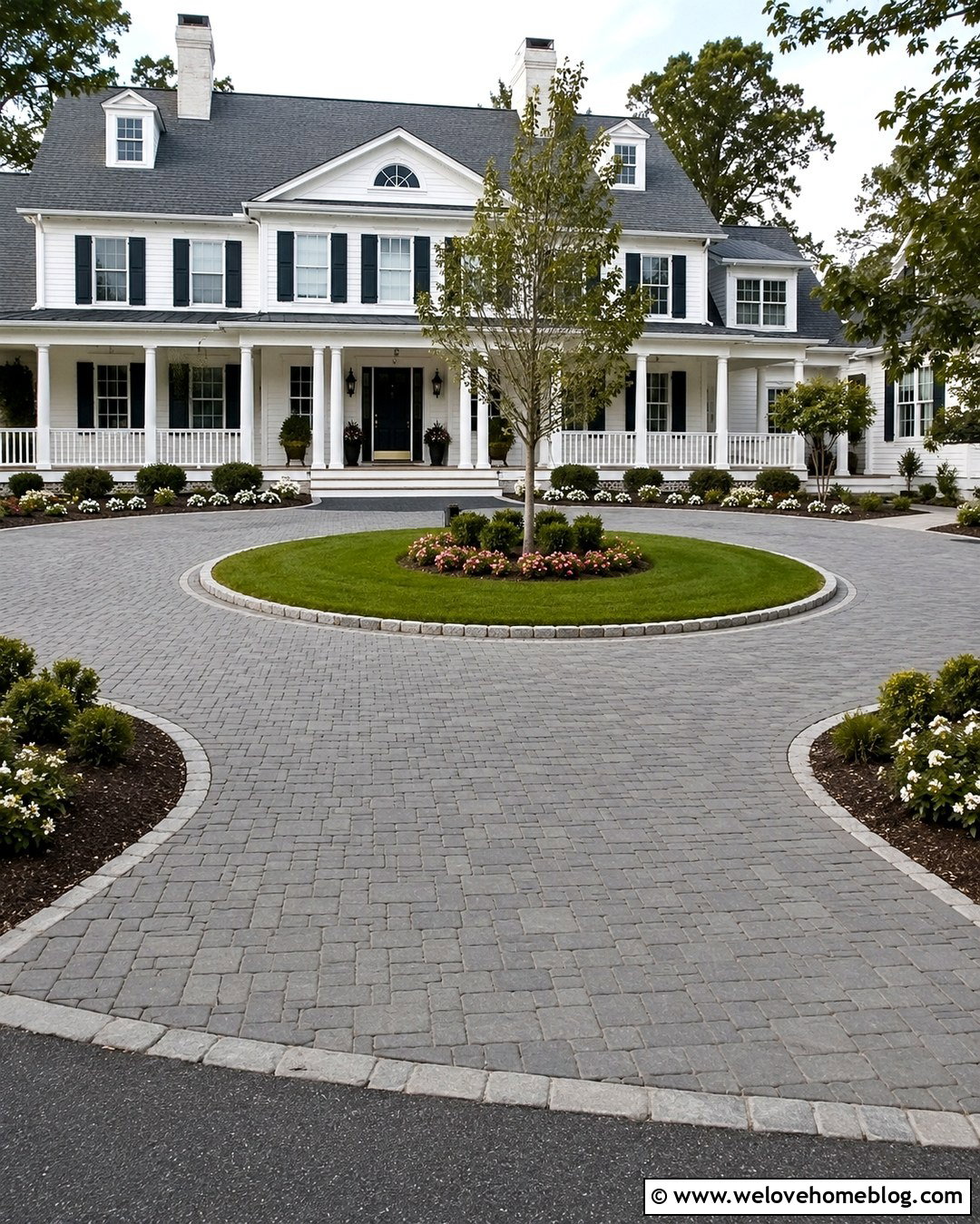
A circular driveway benefits from two coordinated entrances that make entry and exit easy to understand. Use pale gray concrete pavers for the full horseshoe layout, with a darker paver border outlining both openings and the center lawn. Mark each street entrance with a low stone pillar and matching lantern rather than enclosing the drive with gates. Plant compact shrubs and low ornamental grasses around the pillars, keeping the road-facing corners open for visibility. In the center island, use one sculptural tree surrounded by ground cover and a simple curved walkway to the front door. A colonial, ranch, or large craftsman house can anchor the composition. Repeating the same pillars, borders, and planting at both openings gives the circular layout a balanced appearance.
24. Small Driveway Entrance
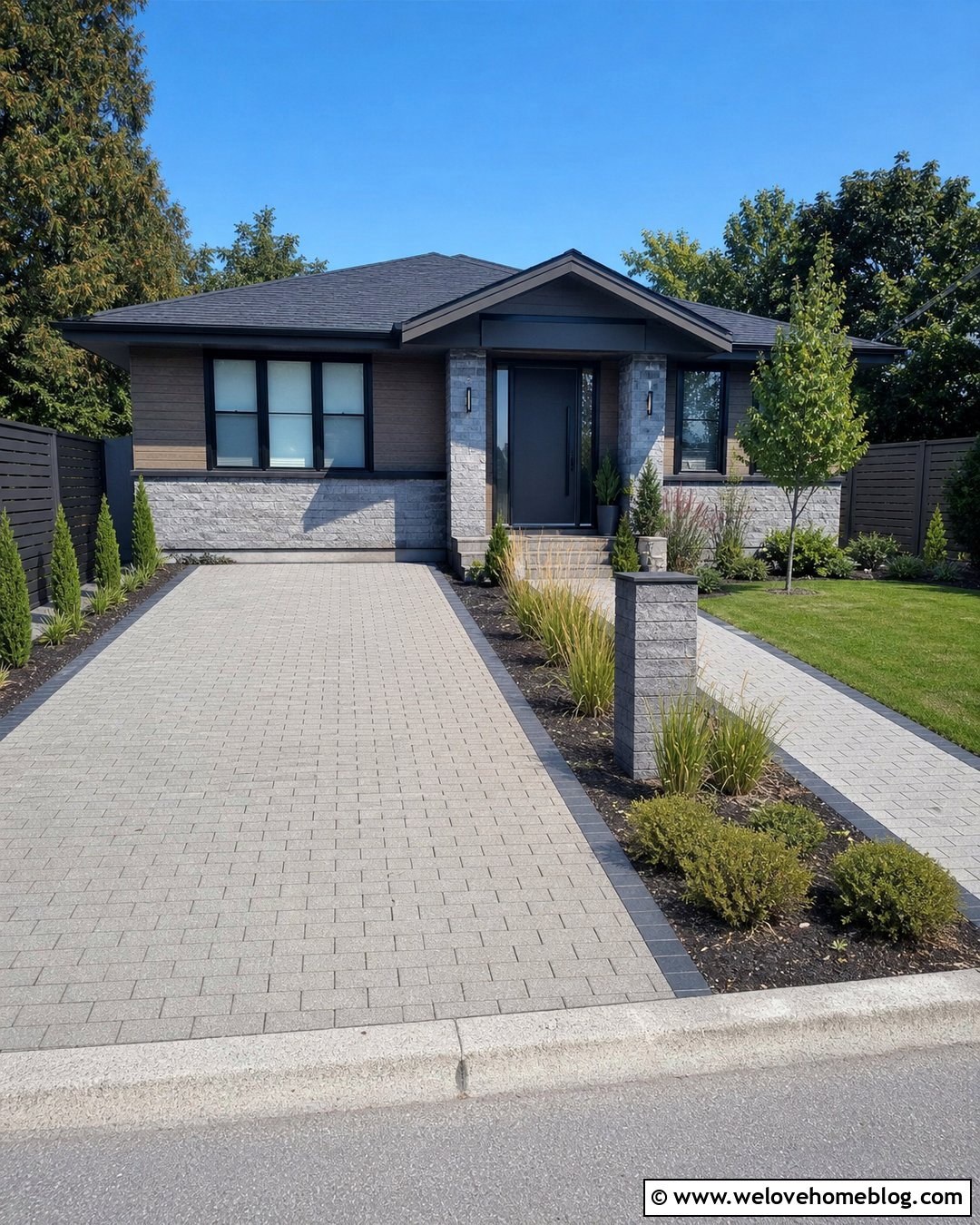
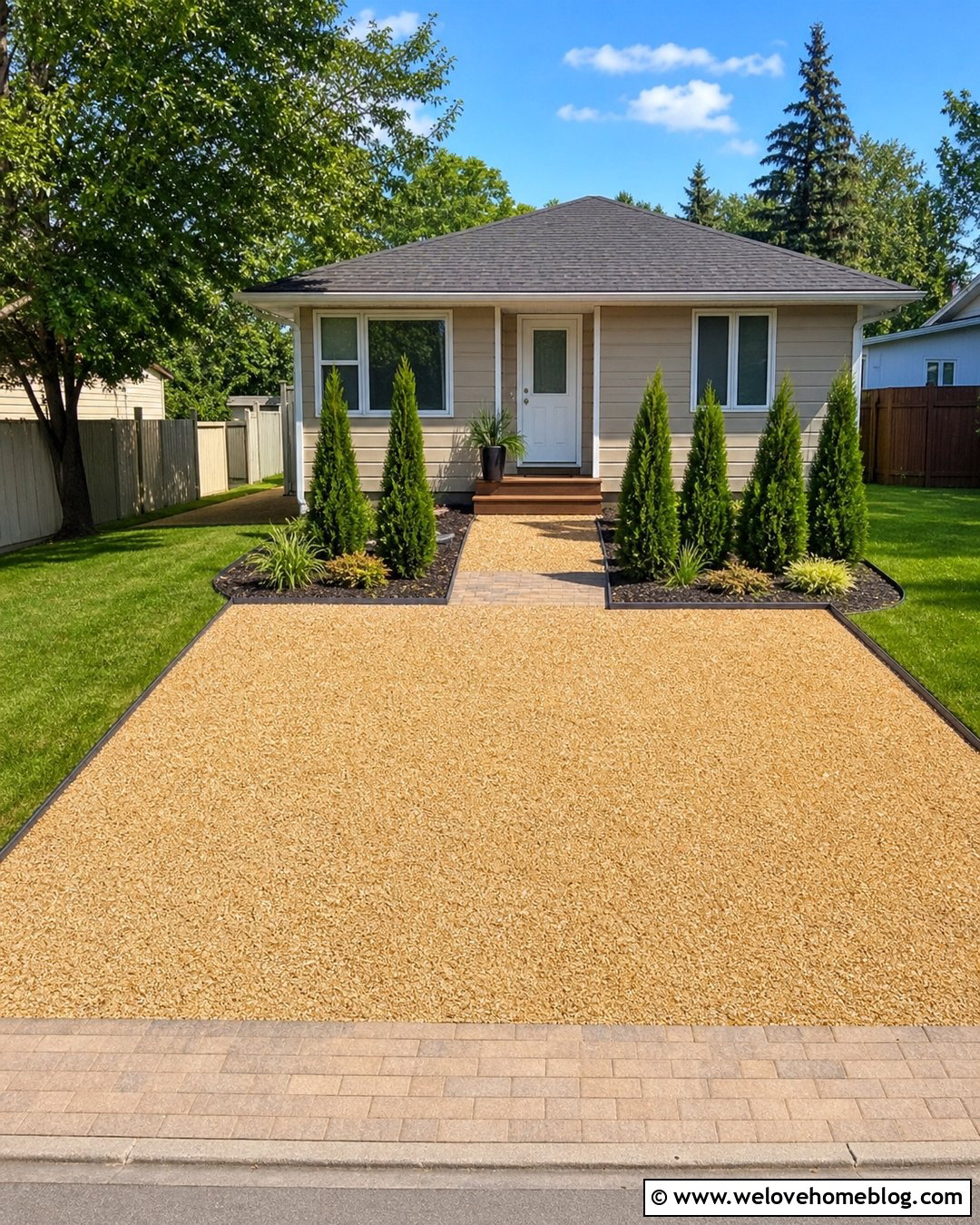
A narrow property can still have a distinctive entrance without sacrificing valuable driving space. Choose a straight driveway made from warm gray permeable pavers and define it with a single row of darker pavers rather than wide borders. Place one slim address pillar beside the entrance and balance it with a narrow planting bed on the opposite side. Use upright grasses, compact shrubs, and a small ornamental tree that will not spread into the driveway. A low fence can continue behind the planting while leaving the opening completely clear. Connect the driveway to the front door with a matching paver walkway, creating a unified surface across the small yard. The restrained materials and vertical landscaping make the entrance feel finished without crowding vehicles.
25. Budget Driveway Entrance
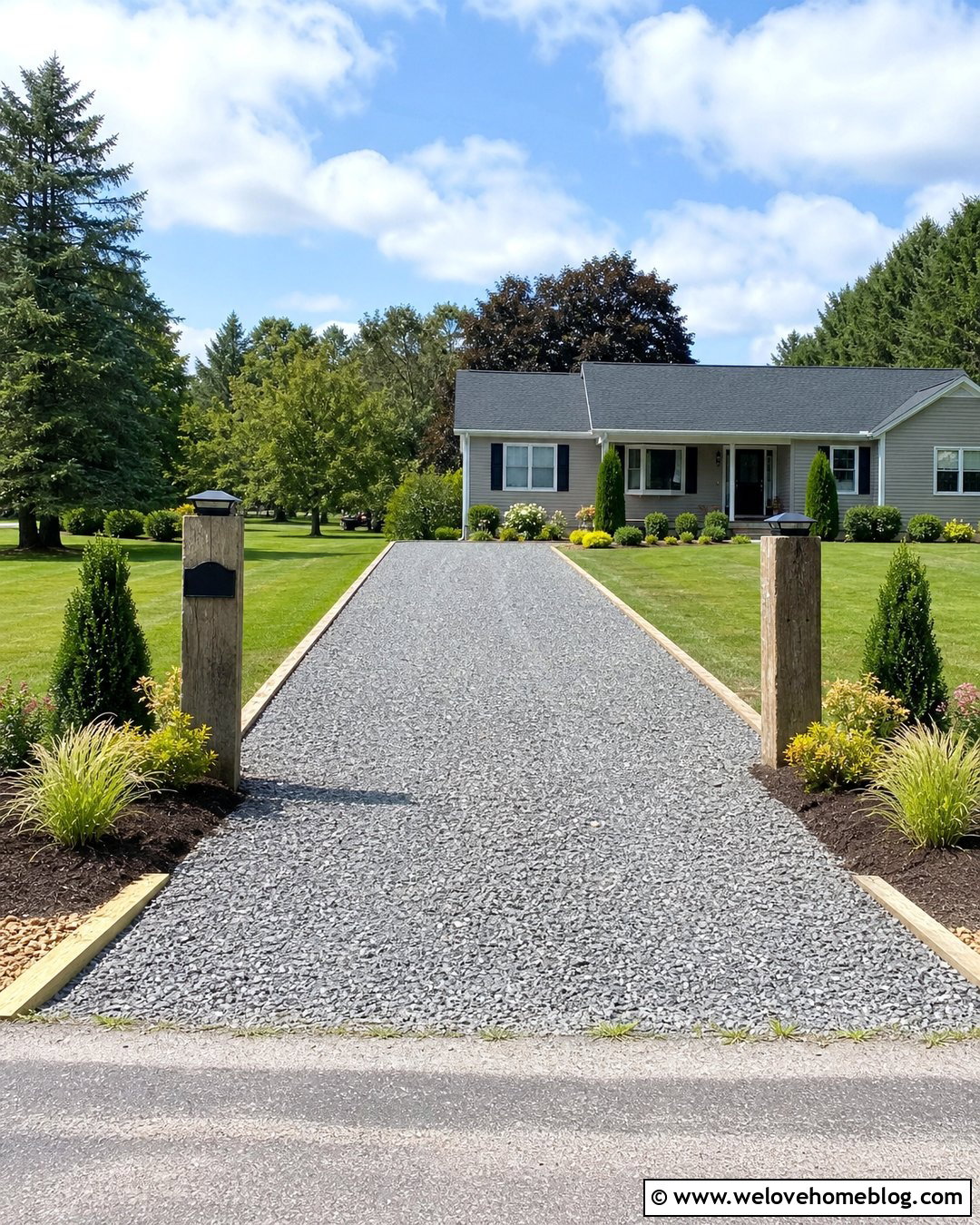
A budget-friendly entrance can look cohesive when a few simple improvements are planned together. Refresh an existing gravel driveway with a new layer of compacted gray crushed stone, then install pressure-treated timber edging along the most visible section. At the street, widen the gravel slightly and place two sturdy wood posts on either side. Add a simple address plaque to one post and solar cap lights to both. Create matching mulch beds around the posts using ornamental grasses, compact shrubs, and affordable perennial divisions. The rest of the frontage can remain lawn, reducing material and maintenance costs. Before building permanent posts, walls, gates, or expanded aprons, check property boundaries, underground utilities, local regulations, and any applicable HOA requirements. ()
Conclusion:
These **25 driveway entrance ideas** show how surfaces, borders, landscaping, pillars, gates, lighting, and signs can work together as one complete approach. Begin by studying the available width, driveway shape, road visibility, drainage, and architectural details of your home. Then select a limited material palette that can be repeated from the street to the garage. Formal homes may benefit from symmetrical pillars and structured hedges, while cottages and country properties often suit gravel, timber, and softer planting. Even a modest entrance can look intentional with fresh edging, balanced beds, and a clear address marker. Prioritize safe vehicle movement and manageable landscaping, then use decorative details to create curb appeal that lasts.

Related posts:
Leave a Reply