
Tree lined driveways turn an everyday route into a memorable part of the landscape. The best designs combine suitable trees with a practical surface, comfortable spacing, defined borders, and planting that complements the home. Before planting, consider mature canopy width, root behavior, drainage, overhead utilities, road visibility, and your local climate. A successful layout should feel attractive in every season without creating constant pruning or cleanup. From formal oak allées and flowering cherry entrances to narrow columnar screens and relaxed rows of native trees, there is an option for nearly every property size. The following **40 Tree Lined Driveway Ideas** explore complete looks using varied materials, layouts, borders, and house styles.

1. Oak Tree Lined Gravel Driveway
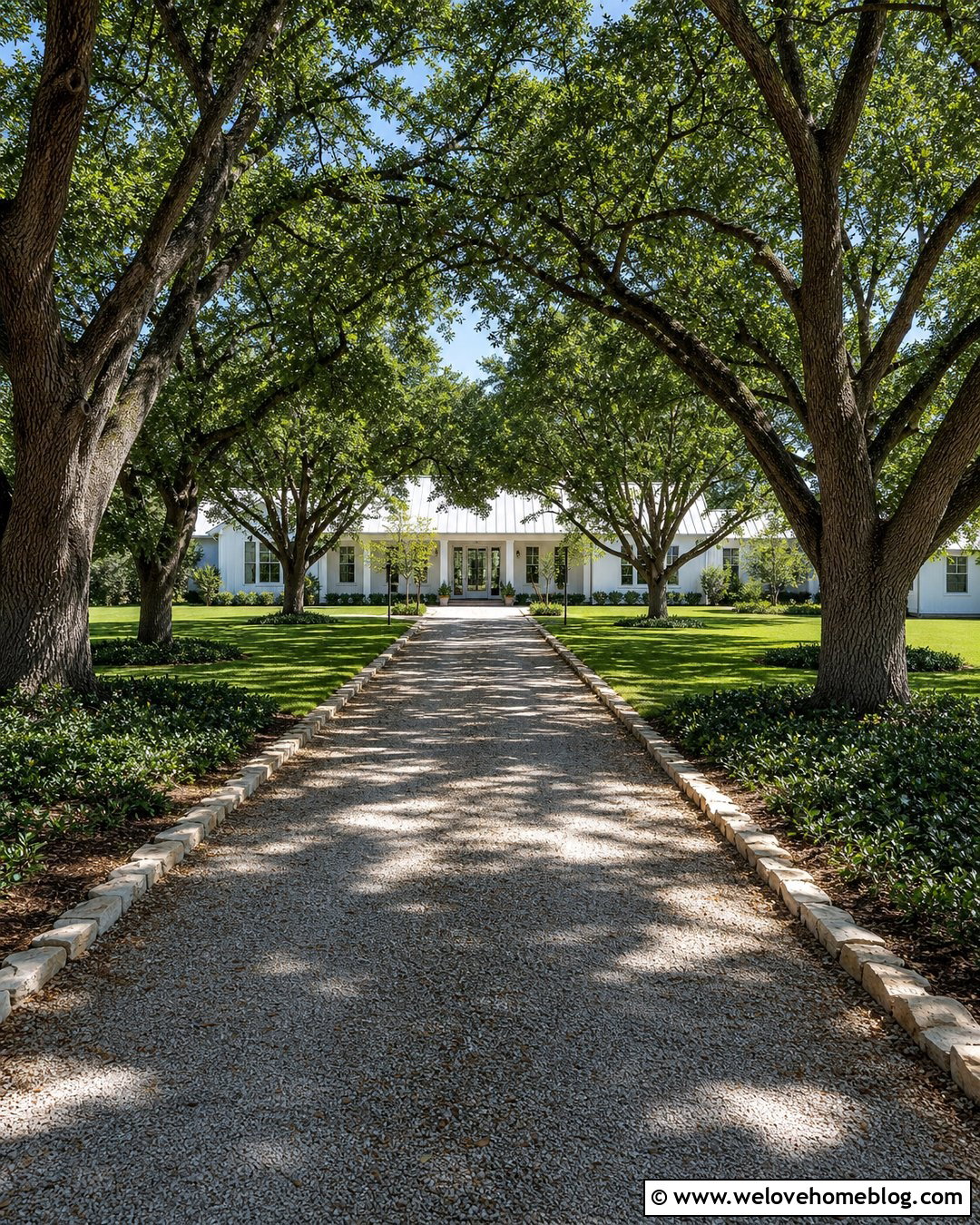
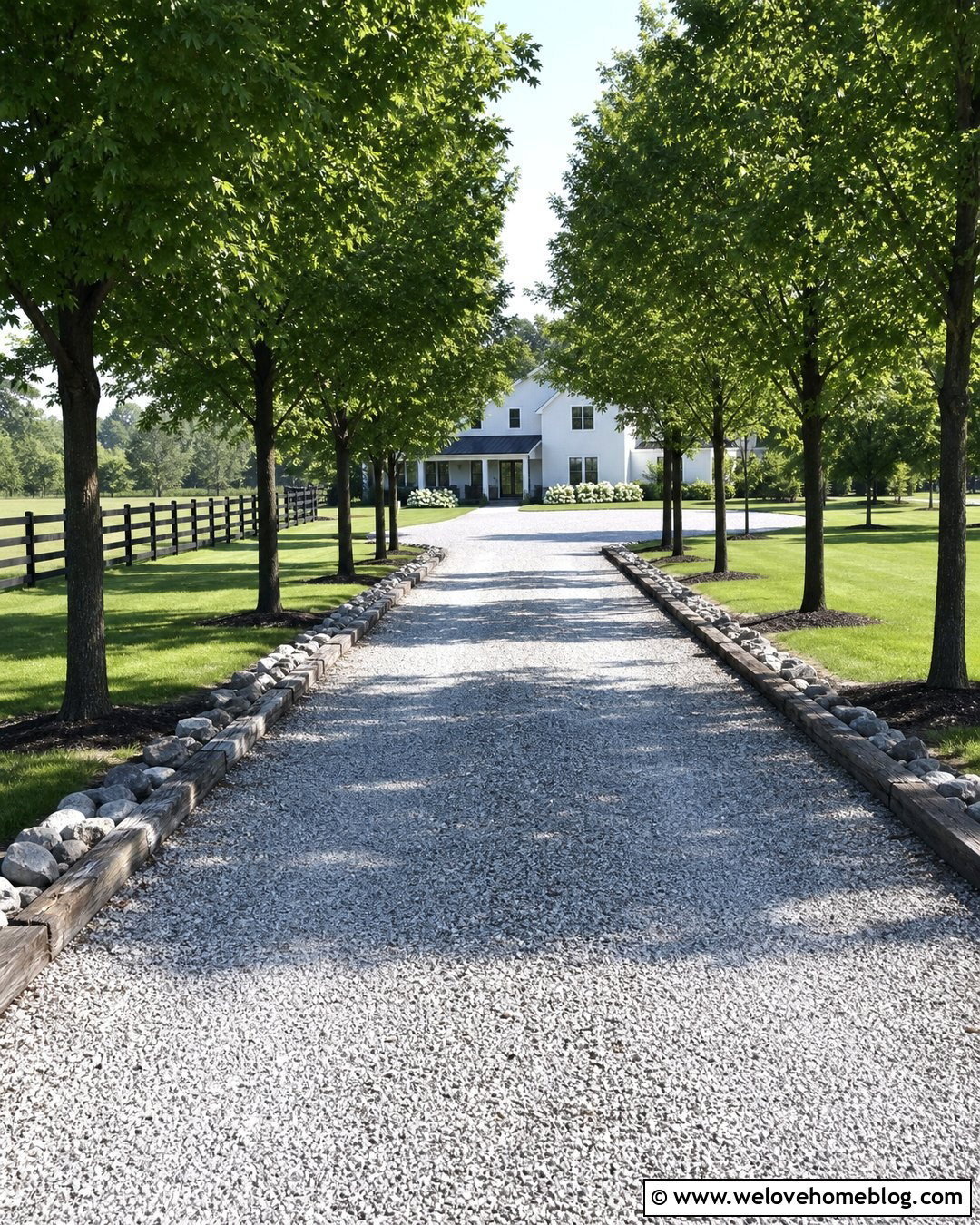
A long gravel driveway framed by evenly spaced oak trees creates a classic country entrance with lasting character. Warm gray crushed gravel works especially well because it complements the textured bark and broad green canopies. Add natural fieldstone edging to prevent gravel from spreading into the lawn. Deep planting beds beneath the trees can hold shade-tolerant ground covers, while open grass strips keep the route from feeling crowded. This design suits a farmhouse, colonial home, or traditional brick residence on a large lot. Position young oaks according to their mature spread rather than their current size. That prevents branches, trunks, and expanding root zones from overwhelming the driveway as the trees grow.
2. Maple Tree Lined Asphalt Driveway
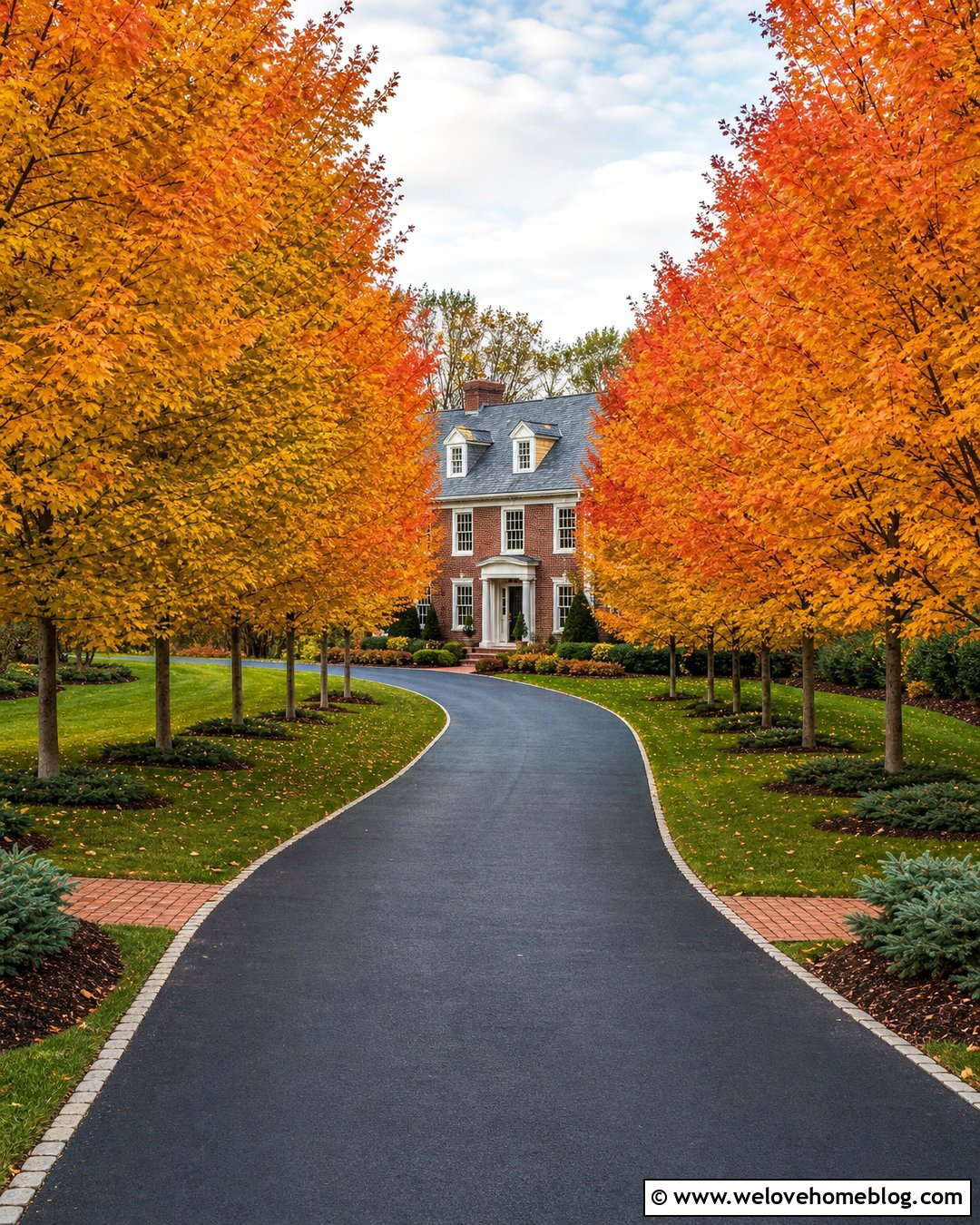
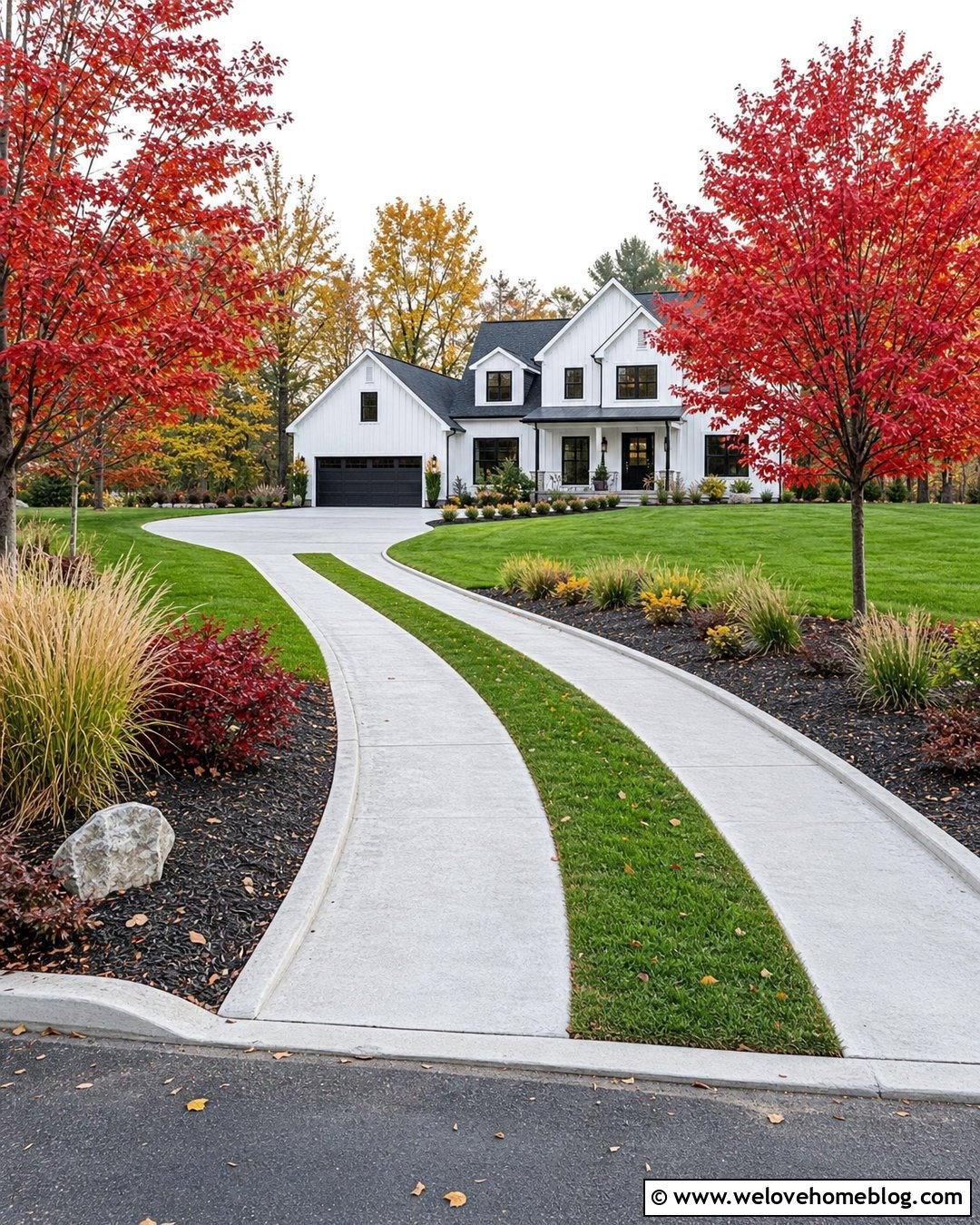
Imagine a smooth black asphalt driveway curving through rows of maples that change from green to vivid red, orange, and gold. The dark surface makes the seasonal foliage appear even more colorful. A narrow cobblestone border can dress up the asphalt while protecting its edges from crumbling. Use broad lawn panels between the pavement and tree trunks to give roots room and make leaf collection easier. This complete look works beautifully with a colonial, Cape Cod, or traditional suburban home. Choose a maple suited to the local soil and available space, since mature sizes vary considerably. The gently curved layout also reveals the house gradually, creating a more inviting approach than a completely straight drive.
3. Birch Tree Lined Concrete Driveway
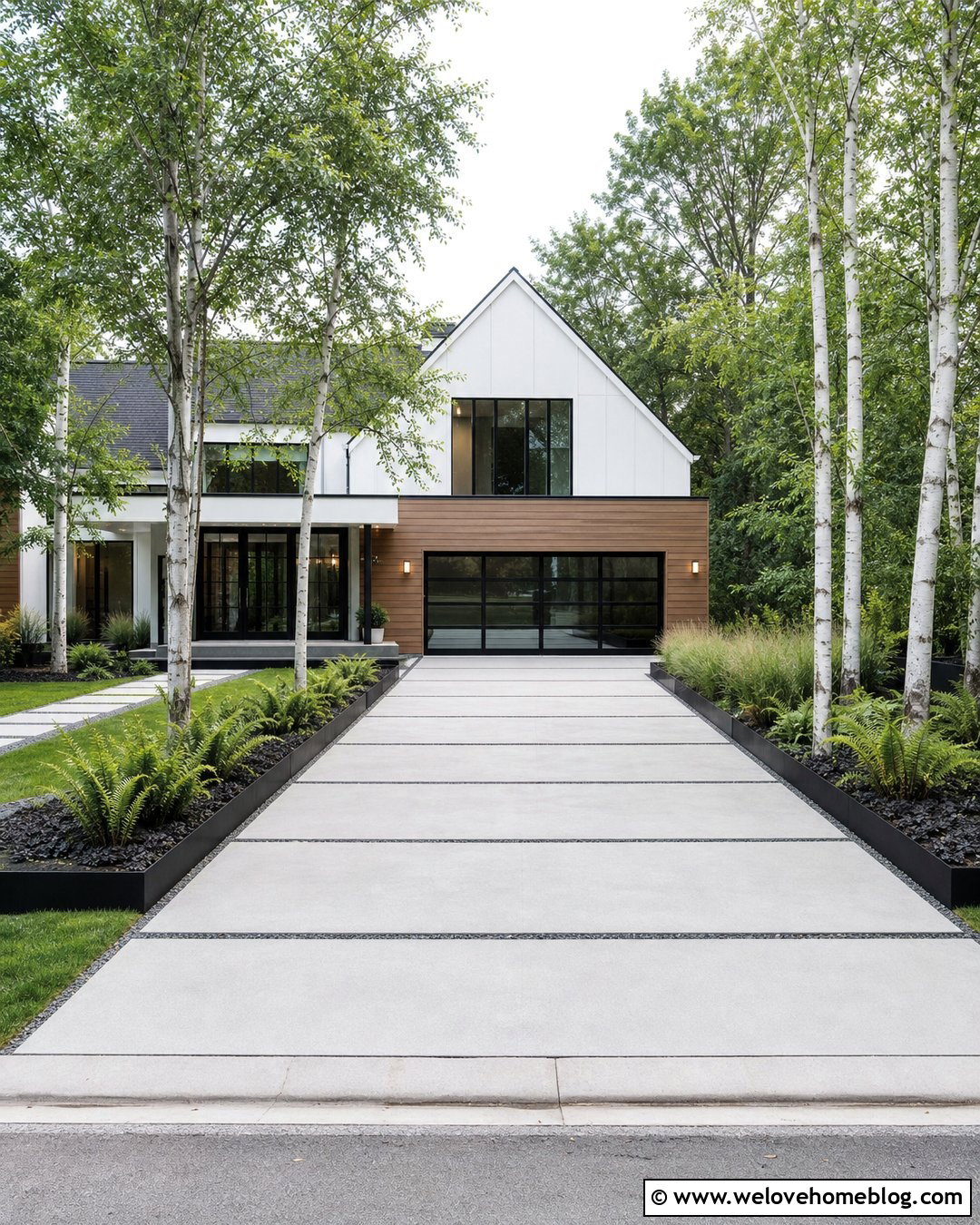
White birch trunks provide crisp contrast beside a pale gray poured concrete driveway. For a modern look, use large rectangular concrete sections with narrow gravel joints and clean steel edging. Plant the birches in loose groups rather than rigid pairs, allowing their natural multi-trunk form to become the main feature. Low ornamental grasses, ferns, and dark green ground covers can soften the base without hiding the bark. This combination looks especially attractive beside a contemporary house with white siding, charcoal trim, or natural wood accents. Birch trees generally look best when the landscape feels cool and lightly wooded. Keep the planting zone generously sized, and select a birch species adapted to your regional heat, moisture, and pest pressures.
4. Cherry Tree Lined Paver Driveway
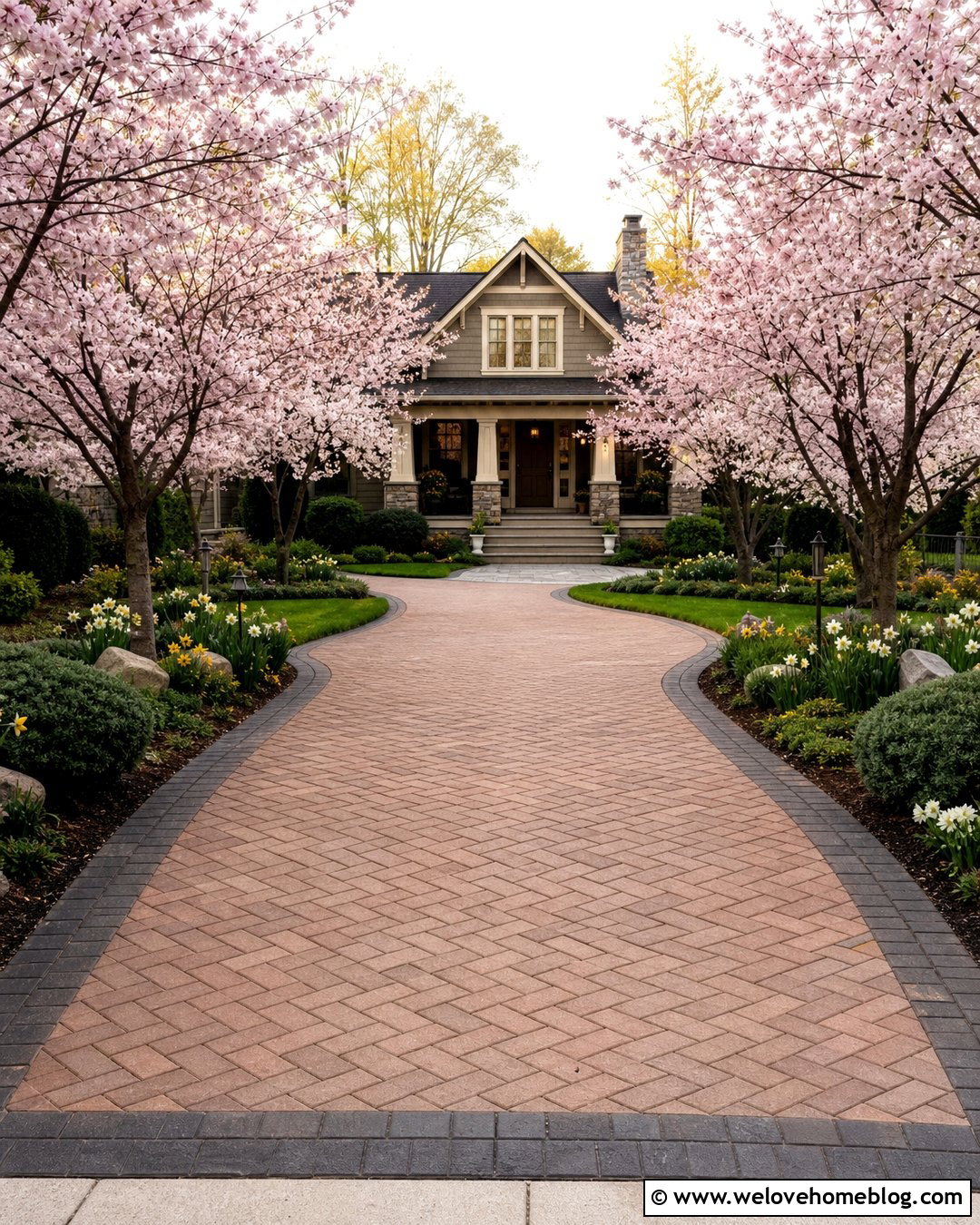
A cherry tree lined driveway creates a welcoming spring entrance filled with soft blossoms. Clay-toned concrete pavers laid in a herringbone pattern provide a warm surface that remains attractive after flowering ends. Shape the driveway as a gentle curve and define both sides with darker paver soldier courses. Beneath the trees, use simple lawn strips or low evergreen ground covers so the blossoms stay visually dominant. A cottage, Craftsman house, or light-colored traditional home makes an ideal backdrop. Flower petals will fall onto the paving, but their temporary carpet can become part of the seasonal charm. Allow enough distance between trunks and pavement for healthy roots, open vehicle clearance, and comfortable maintenance access.
5. Cypress Tree Lined Gravel Driveway
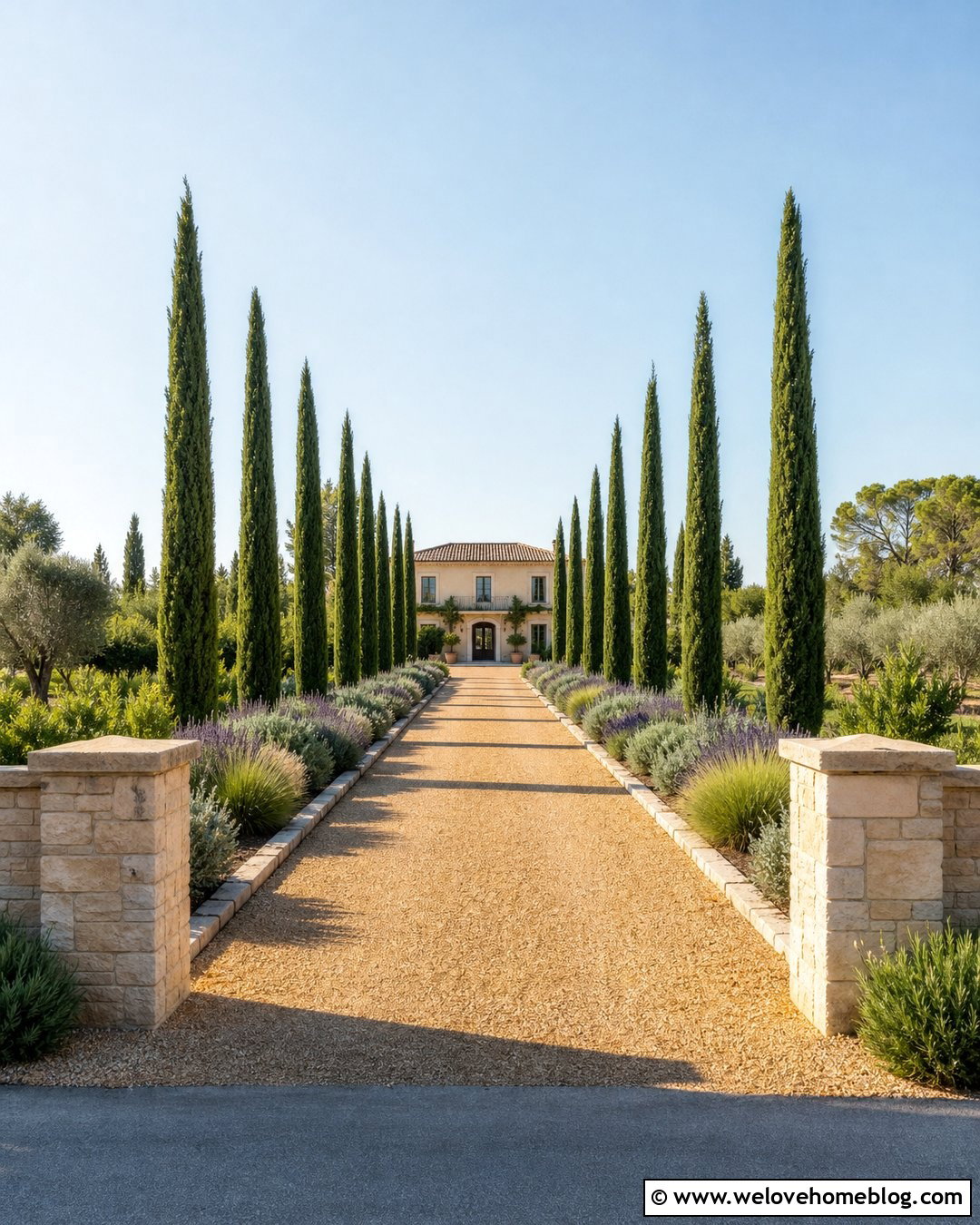
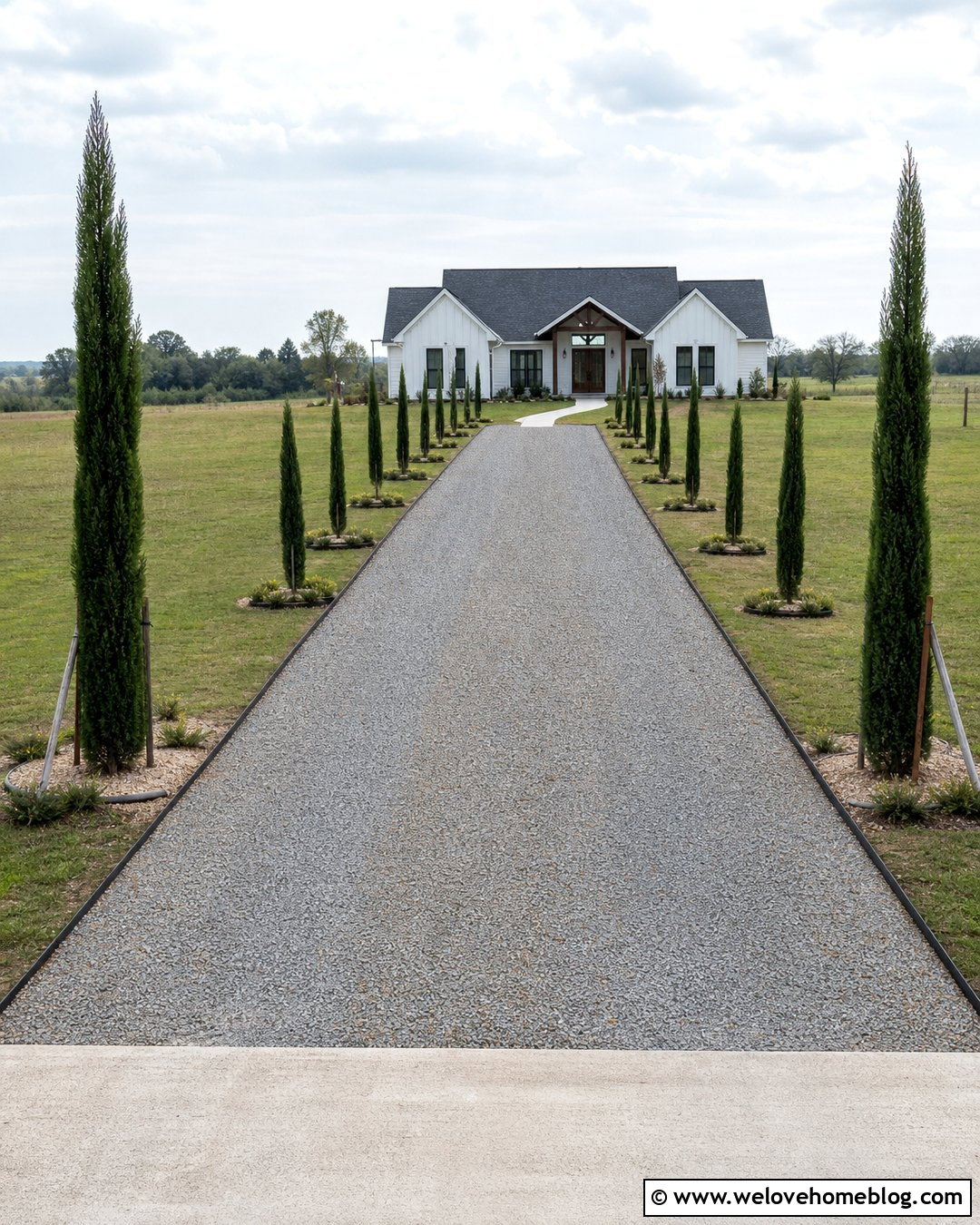
Tall, narrow cypress trees give a straight gravel driveway strong architectural rhythm without requiring an extremely wide planting strip. Use buff or golden crushed gravel to create a warm Mediterranean palette, then contain it with aged stone curbs. Lavender, rosemary, and drought-tolerant grasses can fill the beds between trees where the climate permits. The repeated vertical forms naturally direct attention toward a stucco, Mediterranean, Spanish Revival, or Tuscan-inspired house. Avoid planting the trees so closely that they become a solid wall unless privacy is the main goal. Consistent spacing creates a more graceful avenue. At the entrance, stone pillars or low stucco walls can repeat the home’s materials and make the complete landscape feel carefully connected.
6. Crape Myrtle Tree Lined Brick Driveway
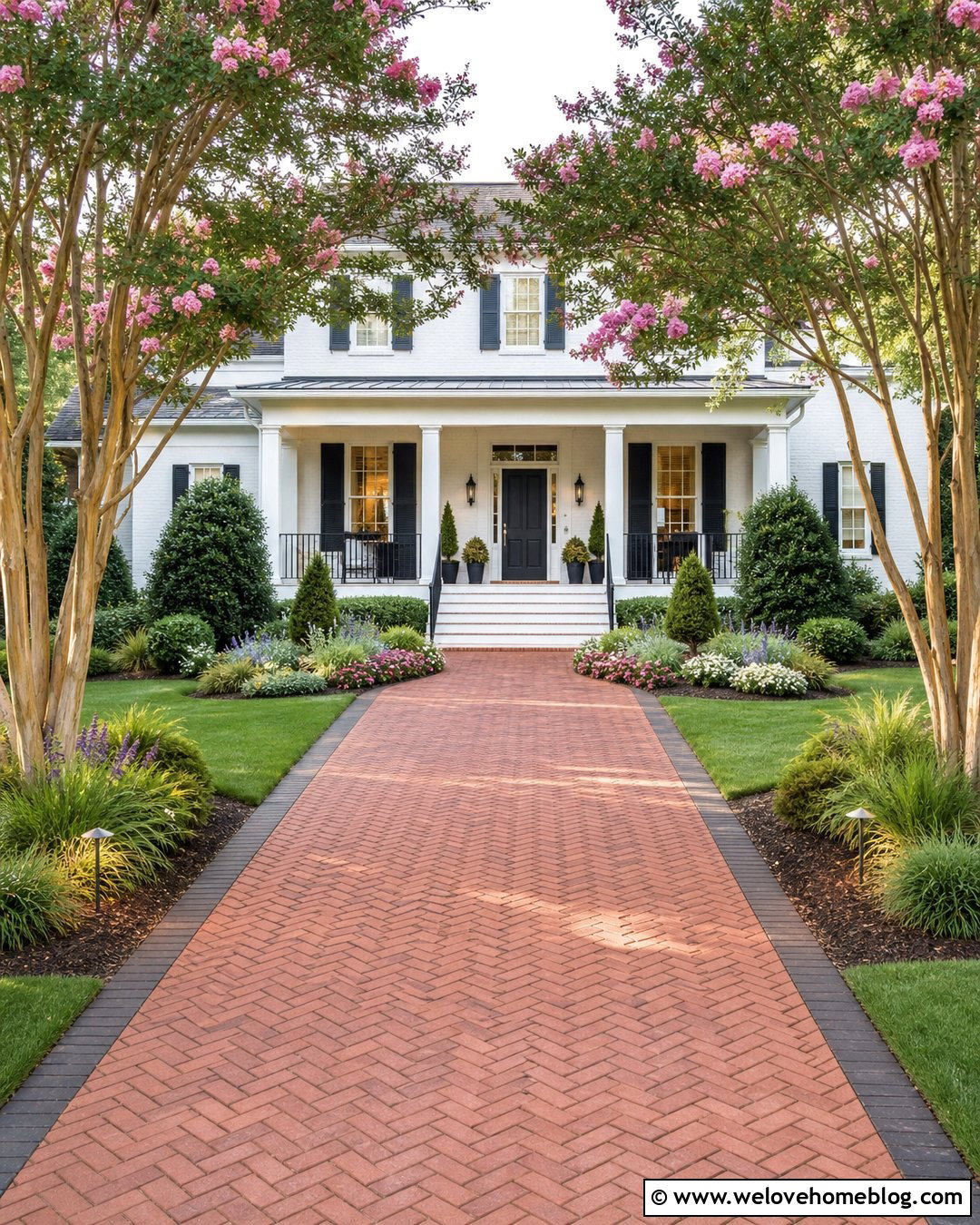
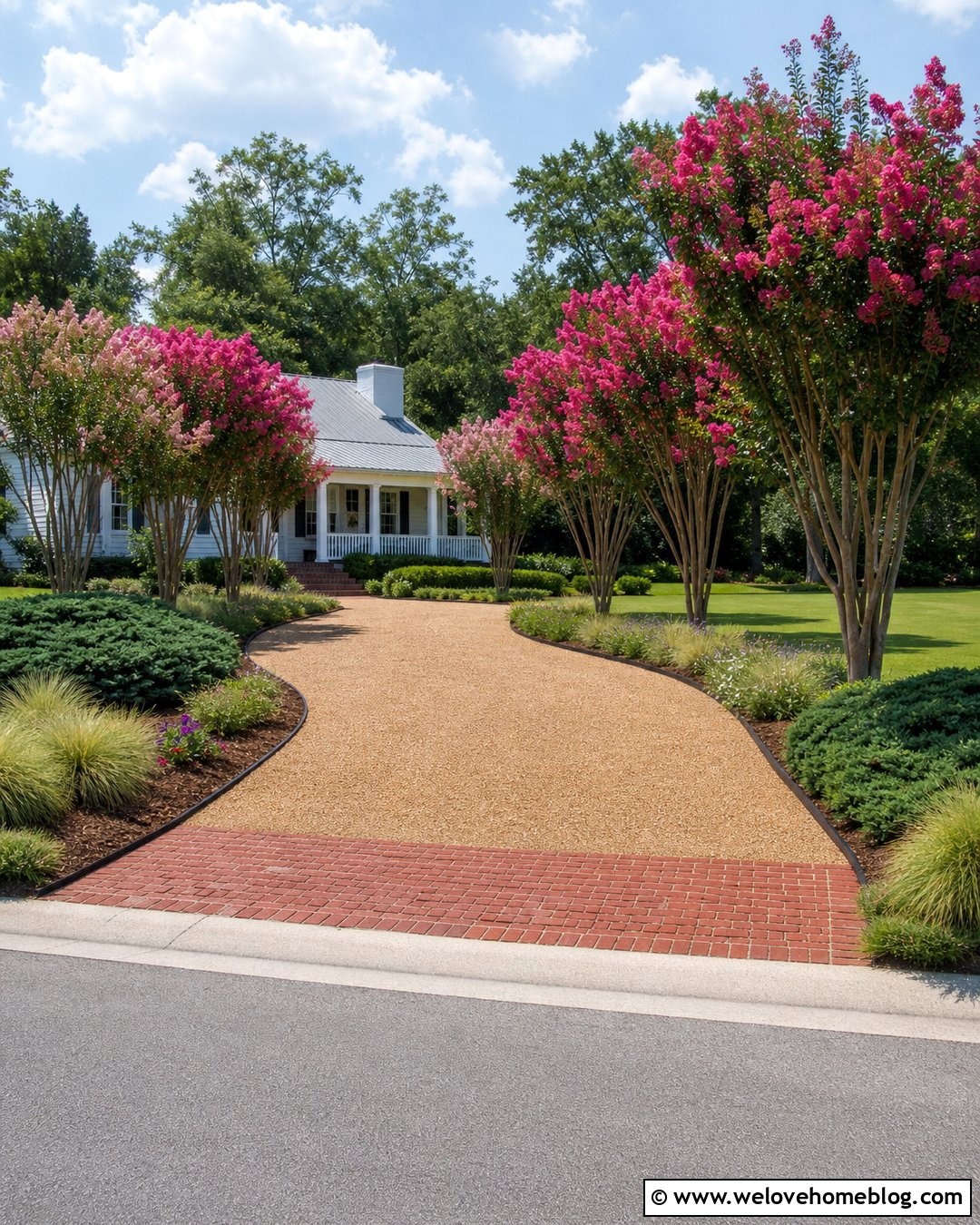
Crape myrtles bring summer flowers, sculptural trunks, and vibrant fall color to a warm red brick driveway. A basket-weave or herringbone paving pattern adds traditional detail without competing with the trees. This design works particularly well for Southern homes, painted brick houses, and welcoming front porches. Create continuous planting beds along both sides, then layer dwarf evergreens, seasonal flowers, and low grasses beneath the trees. Properly selected varieties can provide a consistent mature height along the route. Place low-voltage uplights away from the trunks so the branching structure remains visible after sunset, while keeping the daytime landscape uncluttered. Avoid excessive topping; naturally trained canopies create a more attractive and healthier tree lined approach.
7. Magnolia Tree Lined Circular Driveway
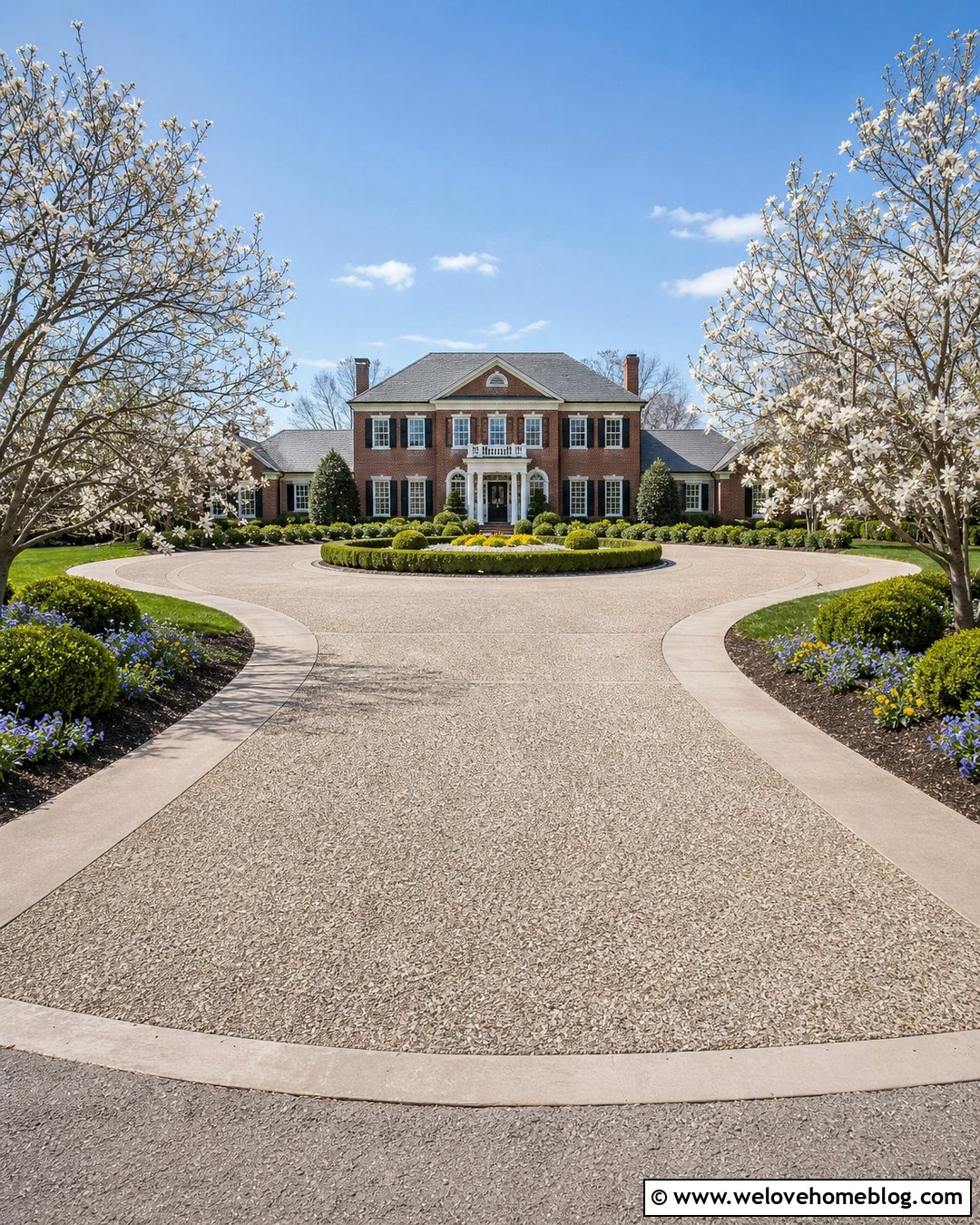
A circular concrete driveway lined with magnolias creates a gracious arrival space for a larger traditional home. Use lightly exposed aggregate concrete for texture, with a smooth poured concrete band marking the inner and outer curves. Broad planting beds give the magnolias room to develop while catching fallen leaves away from the main driving surface. In the central island, repeat glossy evergreen shrubs, flowering perennials, and one simple lawn area instead of adding another large tree. This keeps the house visible from the street. The design is particularly suited to Southern colonial, Georgian, and painted brick homes. Check the mature width of each magnolia variety carefully, since some remain compact while others eventually form exceptionally broad crowns.
8. Dogwood Tree Lined Pea Gravel Driveway
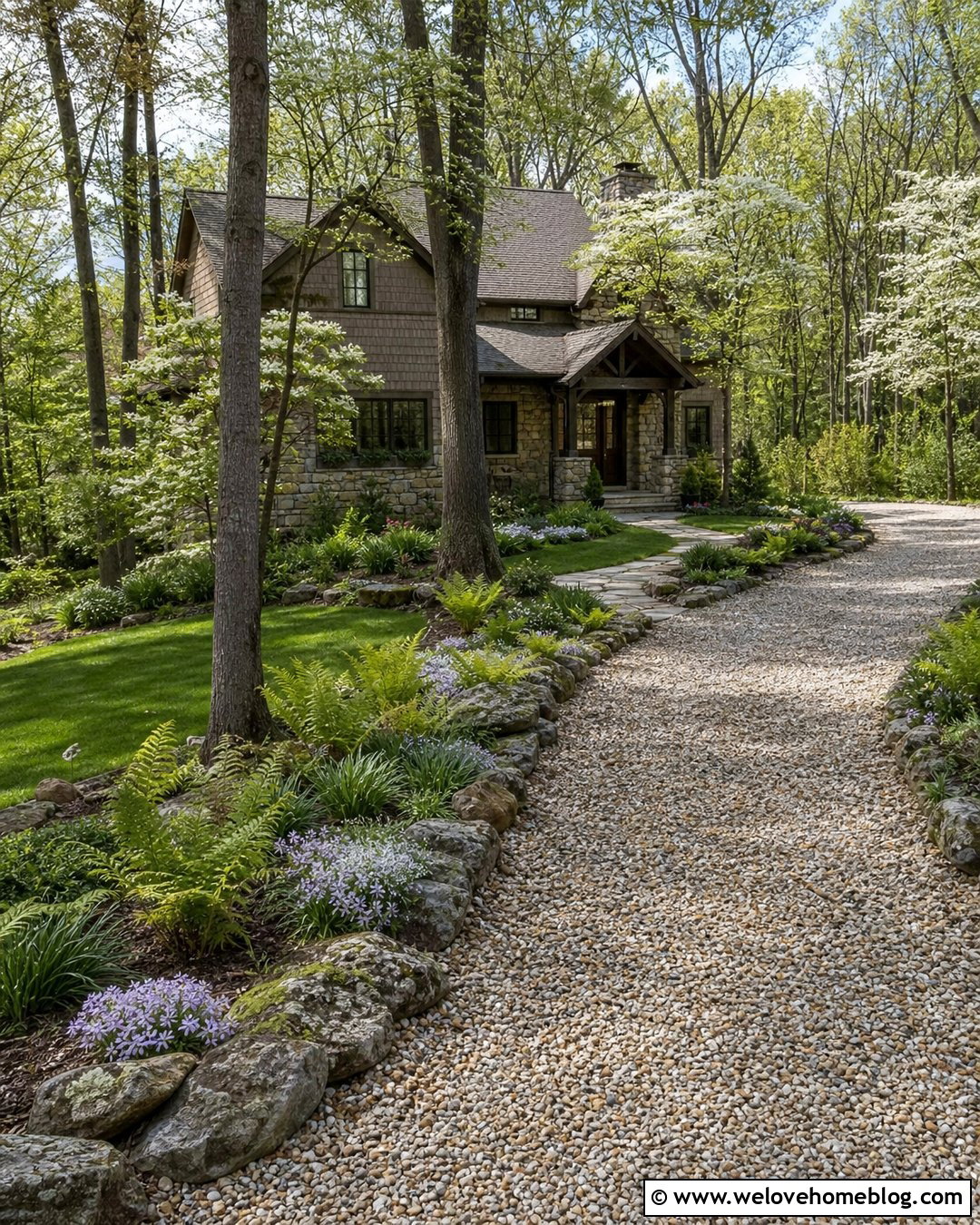
For a softer woodland entrance, pair flowering dogwoods with a curved pea gravel driveway. Cream, tan, and gray gravel tones blend naturally with tree bark, leaf litter, and a shaded garden setting. Use weathered granite or fieldstone edging to hold the rounded gravel in place. Beneath the dogwoods, plant ferns, native sedges, woodland phlox, and low evergreen ground covers in broad informal drifts. The result feels especially appropriate for a Craftsman bungalow, rustic cottage, or home set among existing woods. Dogwoods offer spring flowers, summer shade, fall color, and an attractive branching structure. Protect their shallow root areas from compaction by providing wide planting beds and keeping heavy construction equipment away during driveway installation.
9. Pine Tree Lined Asphalt Driveway
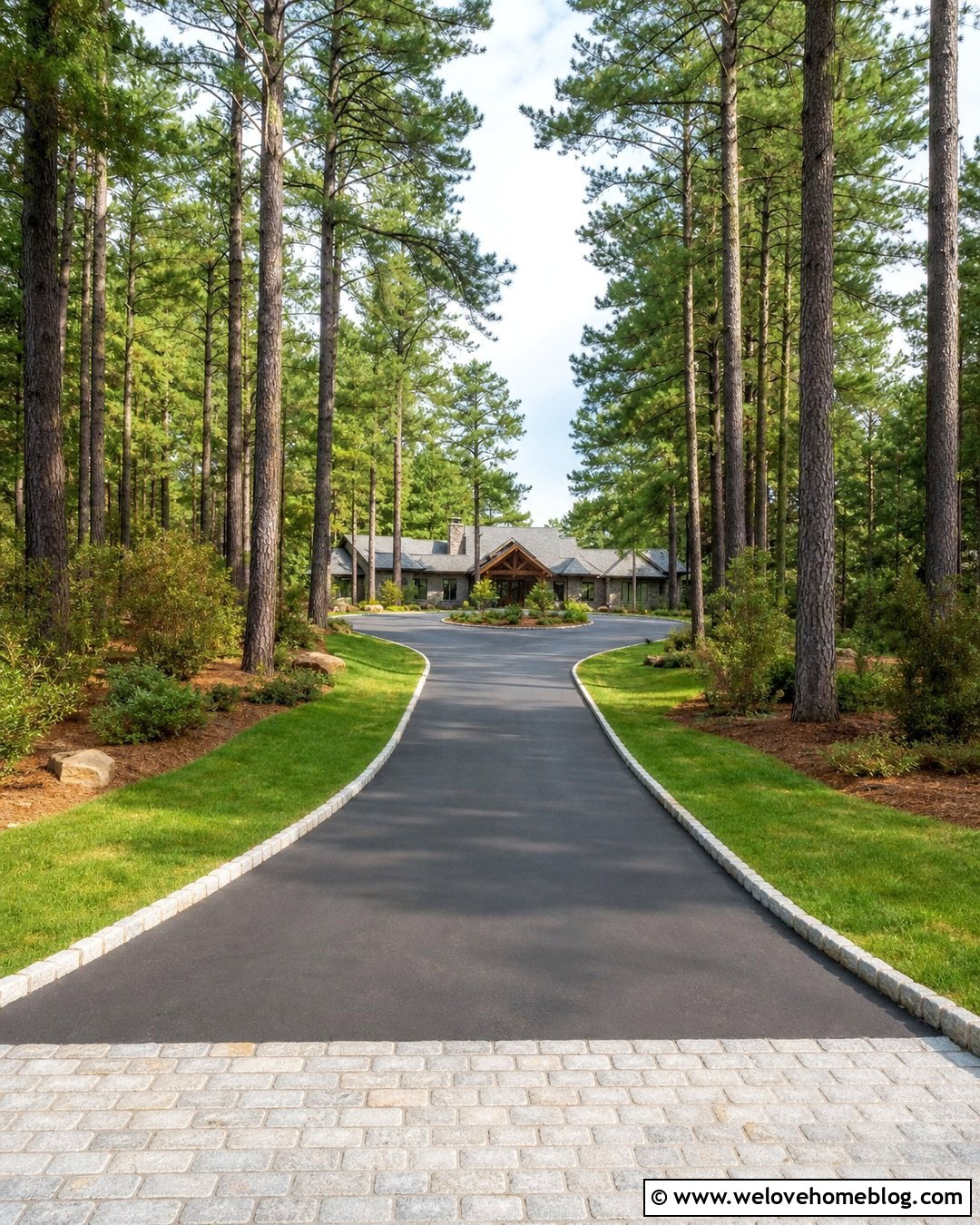
Rows of pine trees can make a long black asphalt driveway feel private, green, and sheltered throughout the year. Rather than planting directly against the pavement, include wide grass shoulders or mulched beds to accommodate lower branches and mature trunks. A gray granite curb gives the asphalt a cleaner finish and helps guide vehicles during snowy or wet weather. This complete design suits woodland ranch homes, mountain cabins, and modern houses surrounded by acreage. Mixing pines of one species in a repeated row creates formality, while a slightly staggered arrangement appears more natural. Keep the driveway entrance open enough for visibility, and gradually increase tree density farther inside the property. That creates privacy without making road access feel confined.
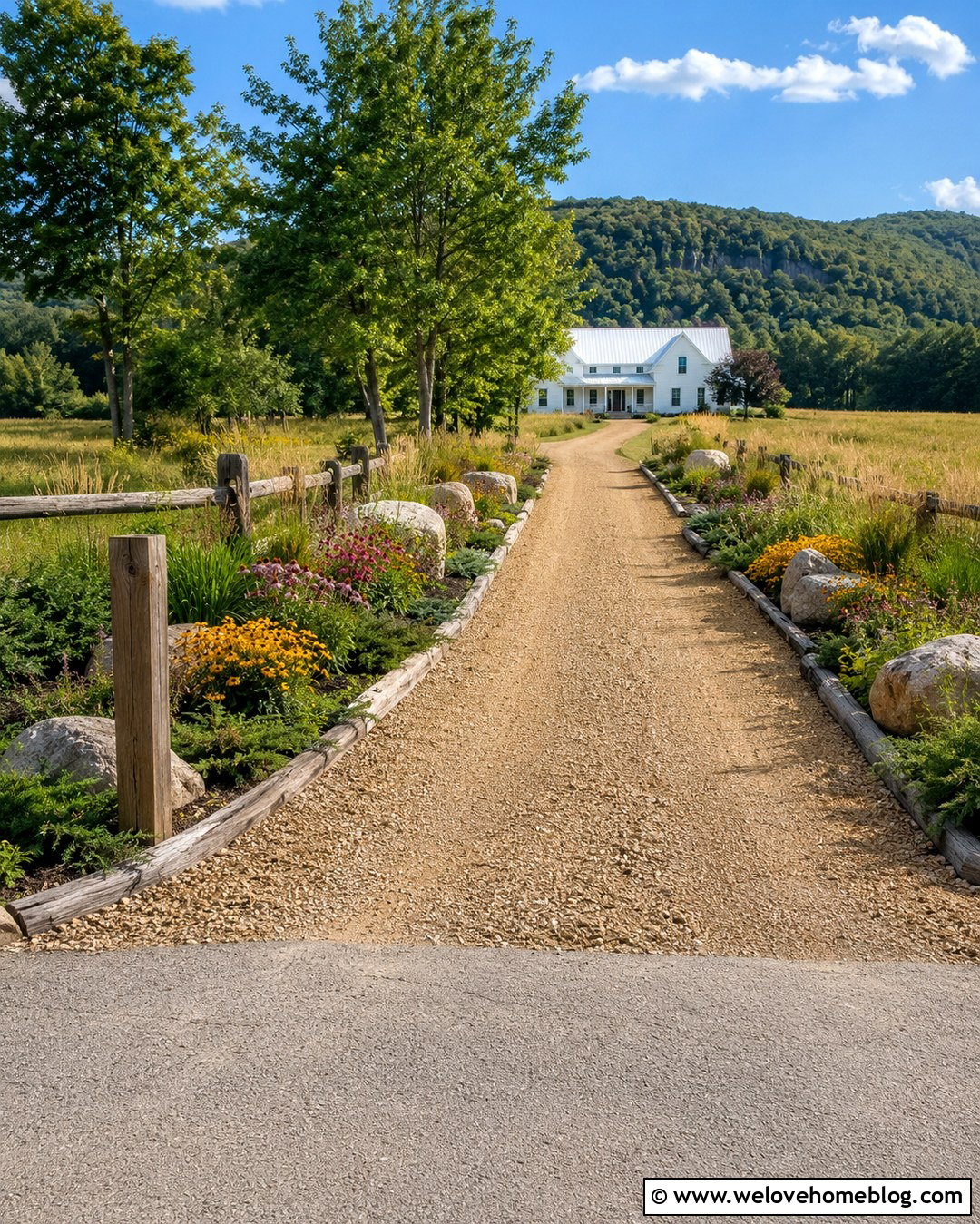
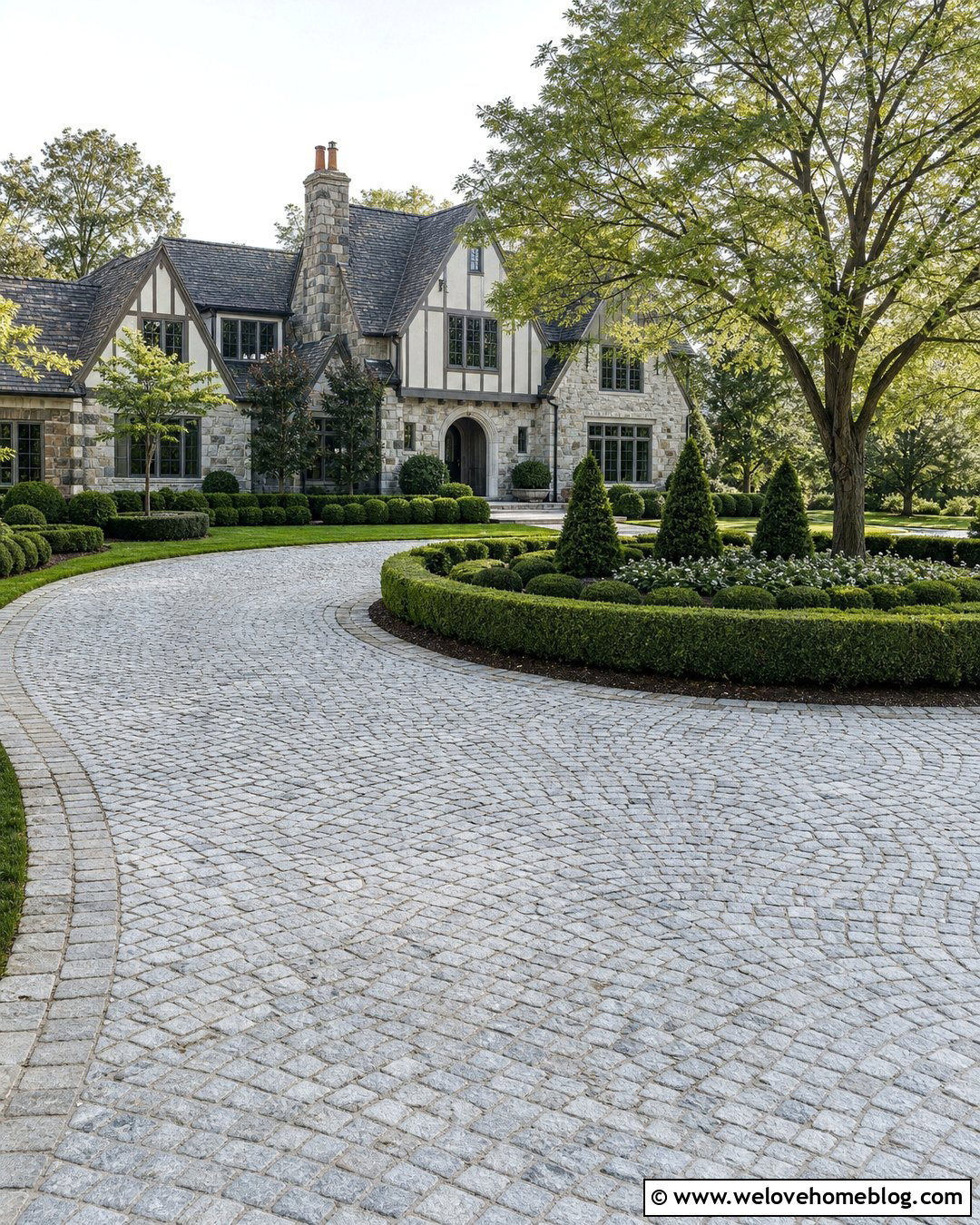
10. Olive Tree Lined Decomposed Granite Driveway
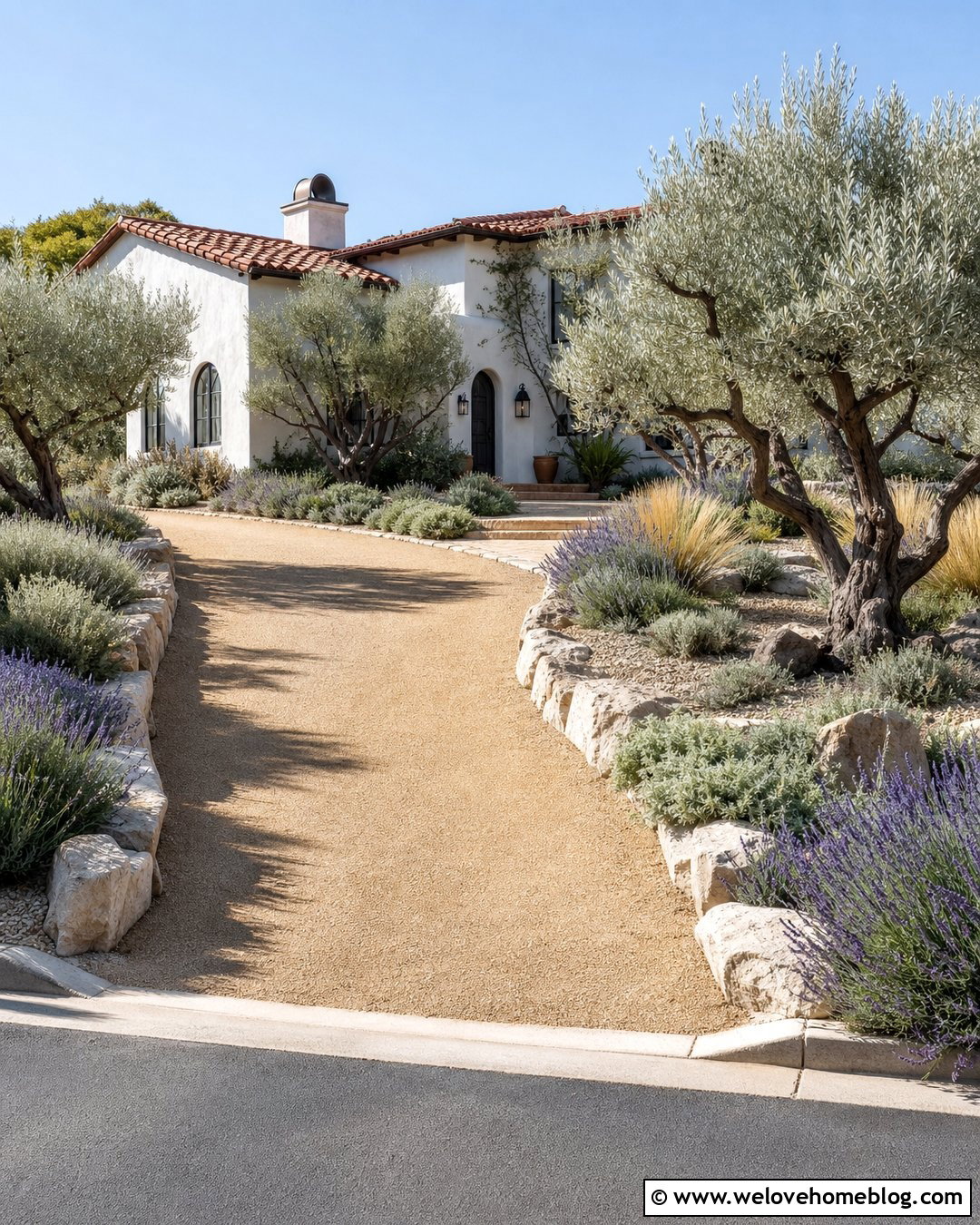
Silvery olive foliage looks striking beside a warm tan decomposed granite driveway. A straight or gently curved layout can be edged with weathered limestone, steel strips, or low concrete curbs. Underplant the trees with lavender, sage, creeping thyme, and ornamental grasses to continue the dry, muted color palette. This tree lined look works well with Southwestern, Spanish, Mediterranean, and contemporary stucco homes. Multi-trunk olives create a relaxed appearance, while single-trunk forms produce a more orderly entrance. Use stabilized decomposed granite where better surface firmness is needed. In areas where fruit drop would be inconvenient, consider a fruitless variety appropriate for the region. Olive trees require suitable warmth, drainage, and local growing conditions to perform well.
11. Palm Tree Lined Paver Driveway
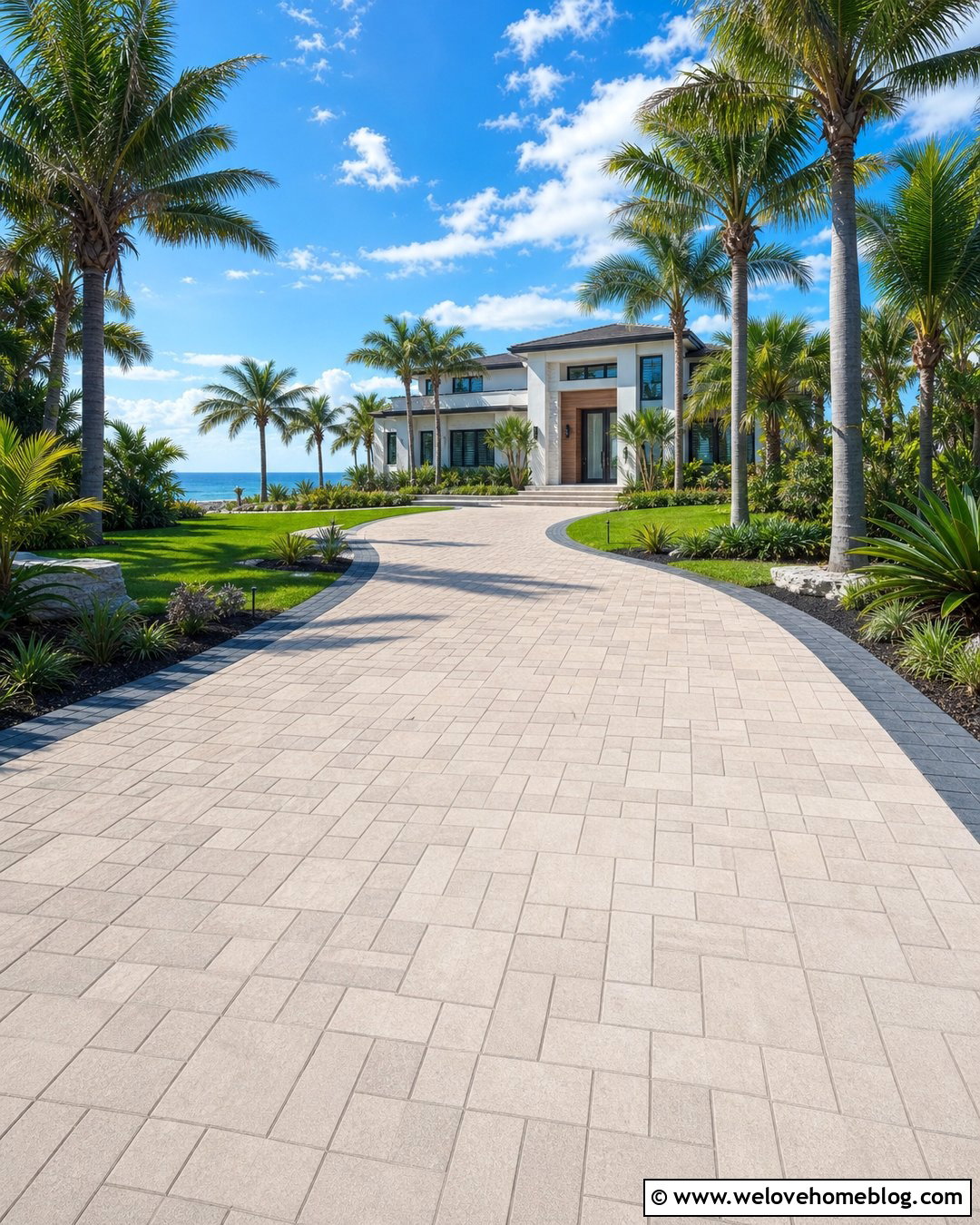
A palm-lined driveway can create an open, resort-inspired approach without blocking views of the home. Choose light beige concrete pavers in a running bond or modular pattern, then add a contrasting charcoal border to define the driving area. Arrange palms in balanced rows with wide planting beds containing cycads, ornamental grasses, and salt-tolerant shrubs where appropriate. The vertical trunks work particularly well beside coastal contemporary, Florida ranch, and light stucco homes. Select palm species based on mature height, crown spread, cold tolerance, and maintenance needs. Keep dropping fronds and fruit in mind when deciding how close to plant. A subtle curve in the driveway prevents the formal rows from feeling overly rigid while maintaining a clear view of the garage and entrance.
12. Linden Tree Lined Cobblestone Driveway
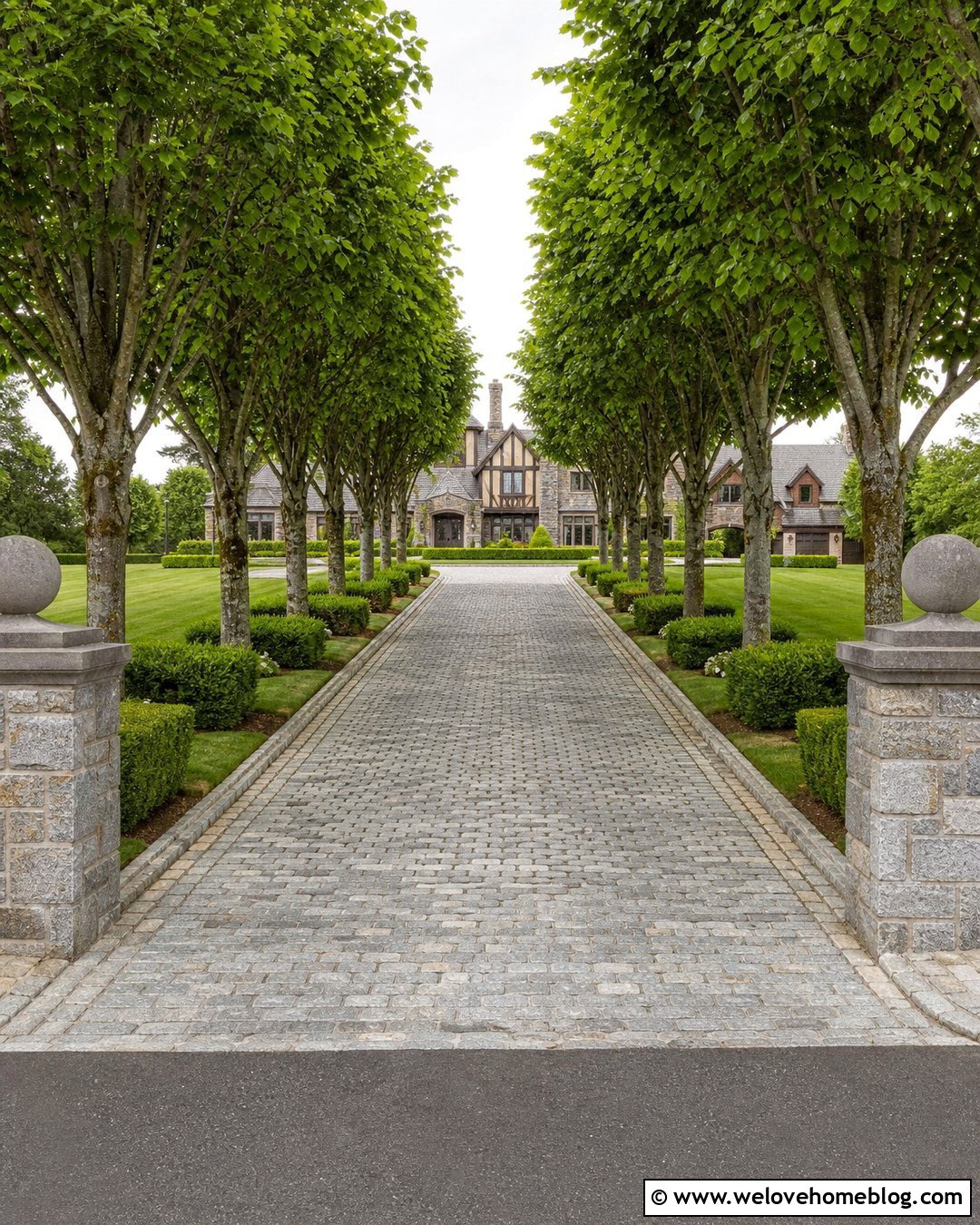
Linden trees paired with a cobblestone driveway produce the feeling of an established European allée. Use softly weathered gray cobbles laid in gently arcing rows, with larger granite setts forming durable edges. Broad lawns beneath the trees maintain a formal appearance and provide generous room for the trunks. Near the house, clipped hedges and symmetrical planting beds can strengthen the traditional layout. This design suits stone estates, Tudor homes, and formal colonial residences. Lindens can form a beautiful overhead canopy when given enough time and appropriate spacing. However, the future crown width should guide placement from the beginning. Include a compacted, professionally prepared base beneath the cobblestones so the surface remains stable under regular residential traffic and seasonal weather changes.
13. Sycamore Tree Lined Resin Driveway
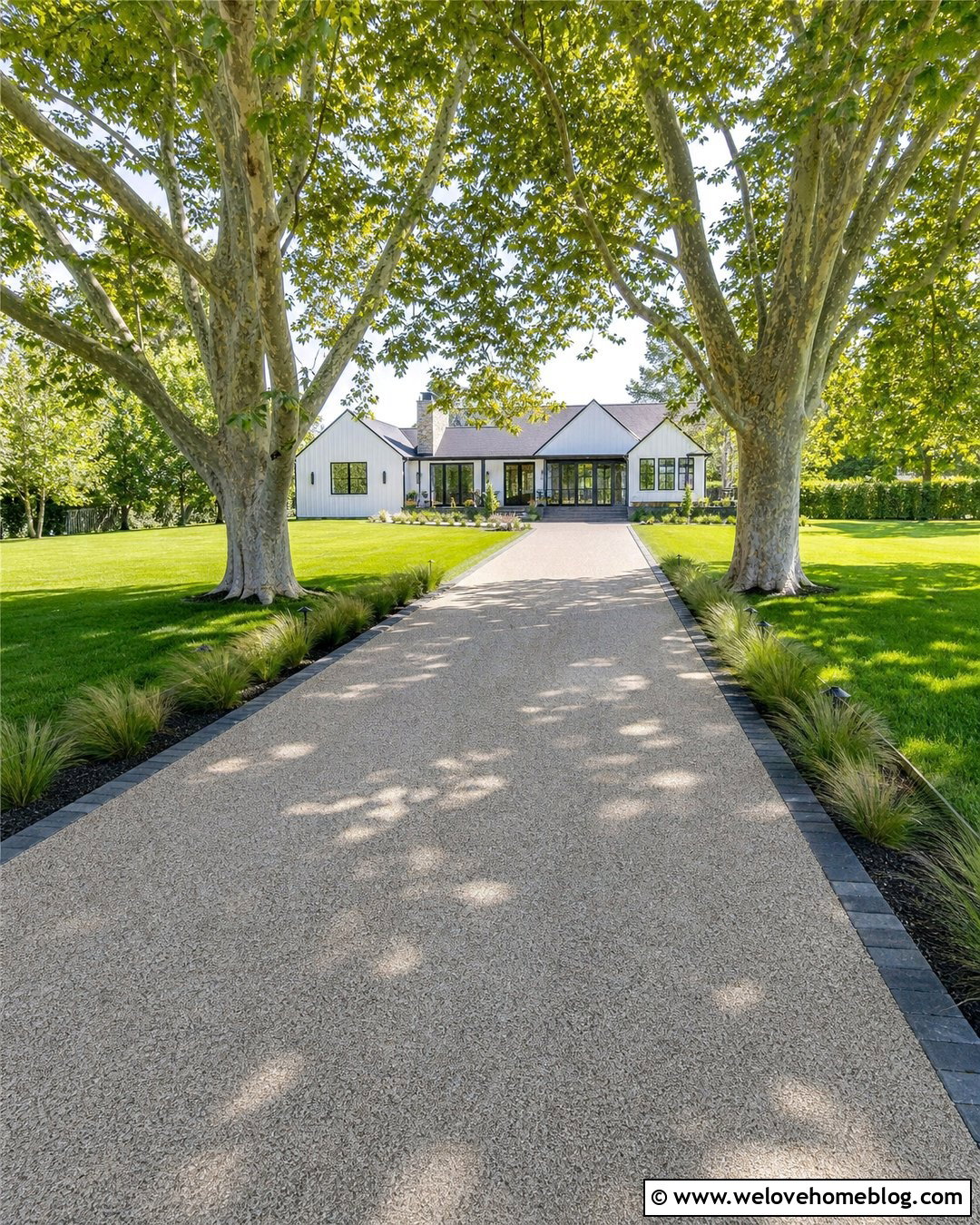
A pale resin-bound gravel driveway can balance the large leaves and patterned bark of mature sycamore trees. Choose a warm gray or natural stone blend that creates a smooth, visually quiet surface. Dark stone edging gives the driveway definition, while broad lawn panels provide distance between trunks and pavement. This look is effective on a long straight approach to a modern farmhouse, renovated barn, or contemporary country residence. Sycamores eventually become substantial shade trees, so they are best suited to properties with generous space. Their falling leaves and bark also make routine cleanup important. Place trees far enough back to preserve vehicle clearance and pavement integrity, and use the repeated trunks to frame distant views of the house rather than conceal them.
14. Redbud Tree Lined Exposed Aggregate Driveway
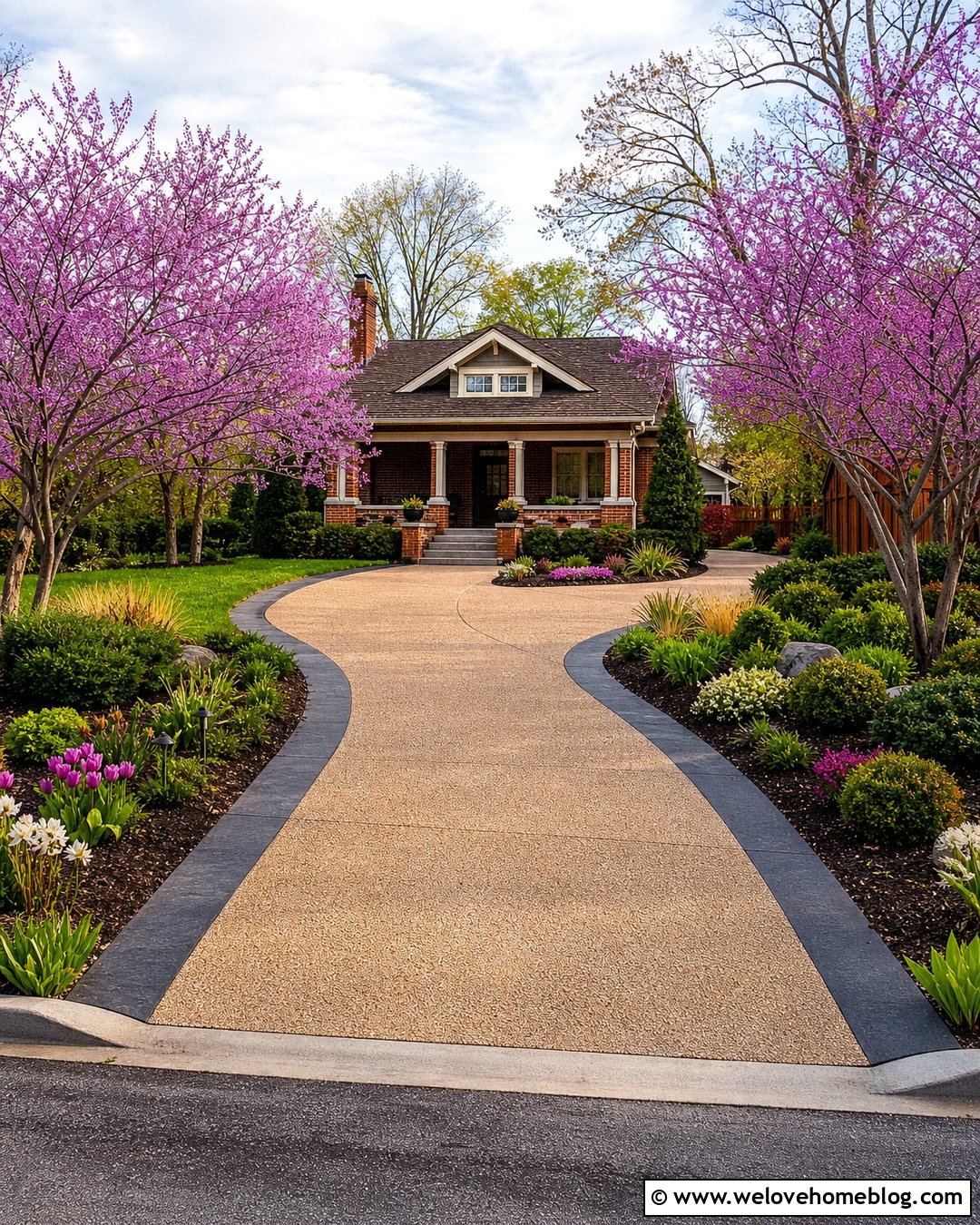
Redbuds provide early spring color along a softly curved exposed aggregate driveway. Select a concrete mix with warm tan and gray stones, then frame it with a smooth charcoal concrete ribbon. The smaller scale of redbud trees makes this arrangement useful for moderate suburban lots where large canopy trees would feel overwhelming. Create generous mulched beds containing low grasses, spring bulbs, and compact evergreen shrubs. A Craftsman home, brick bungalow, or updated ranch offers a fitting background. Place the trees irregularly within a repeated rhythm for a landscape that feels natural but organized. Because redbuds develop distinctive spreading forms, allow room for branches to expand away from passing vehicles, walkways, and nearby property boundaries as they mature.
15. Apple Tree Lined Country Driveway
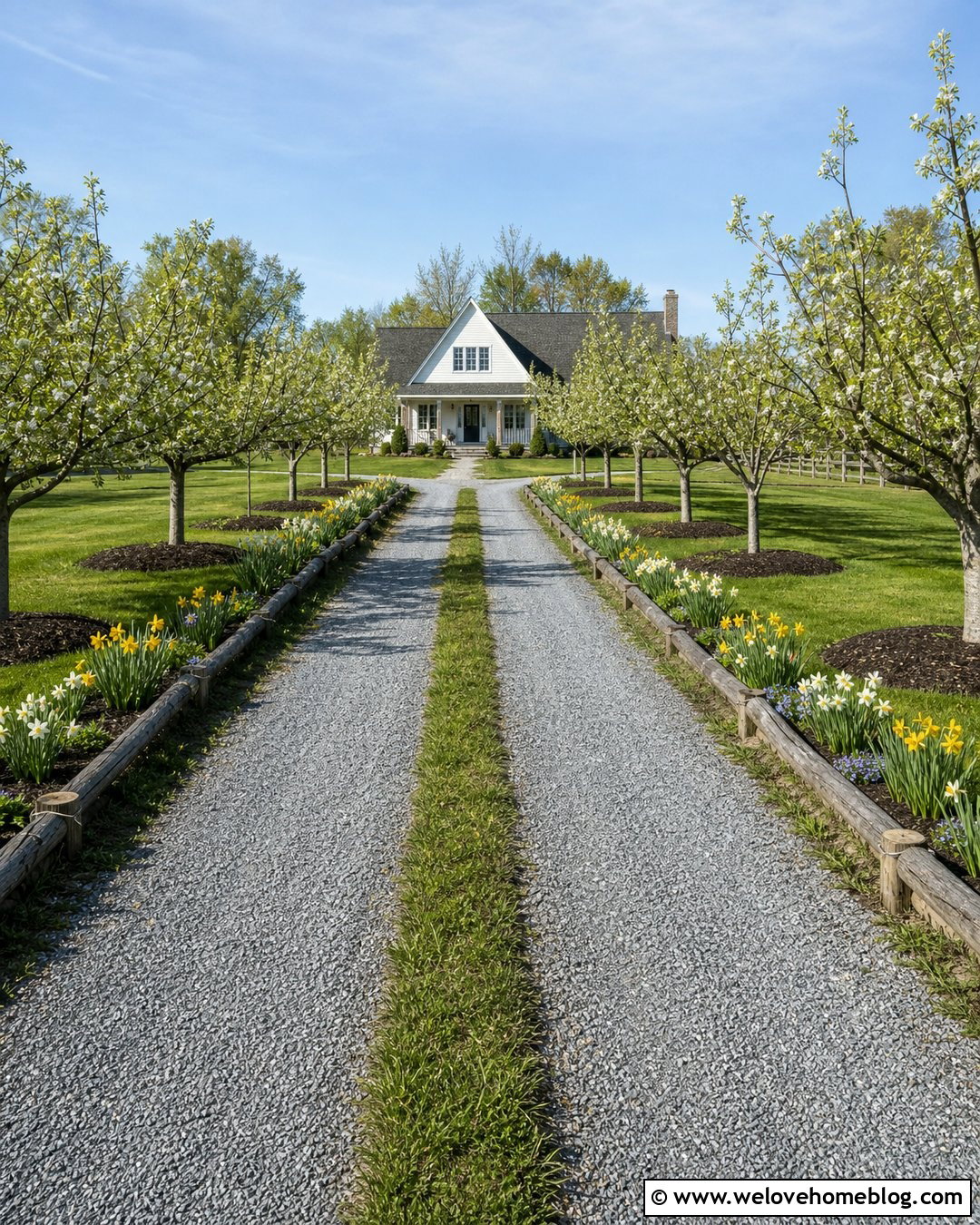
A gravel driveway bordered by apple trees brings an orchard character to a farmhouse or country cottage. Use compacted gray crushed stone for the main surface and add a central grass strip if traffic levels and maintenance conditions permit. Timber edging or rustic fieldstone can hold the gravel while reinforcing the rural style. Plant spring bulbs and low meadow flowers beyond the tree rows, leaving clear mulched circles around each trunk. Matching apple varieties create a formal orchard effect, while compatible mixed varieties can add visual variation. Fruit production may bring extra cleanup, wildlife, and seasonal maintenance, so the design works best where those qualities are welcome. Keep fallen fruit away from driving lanes and maintain open visibility near the road entrance.
16. Pear Tree Lined Brick Paver Driveway
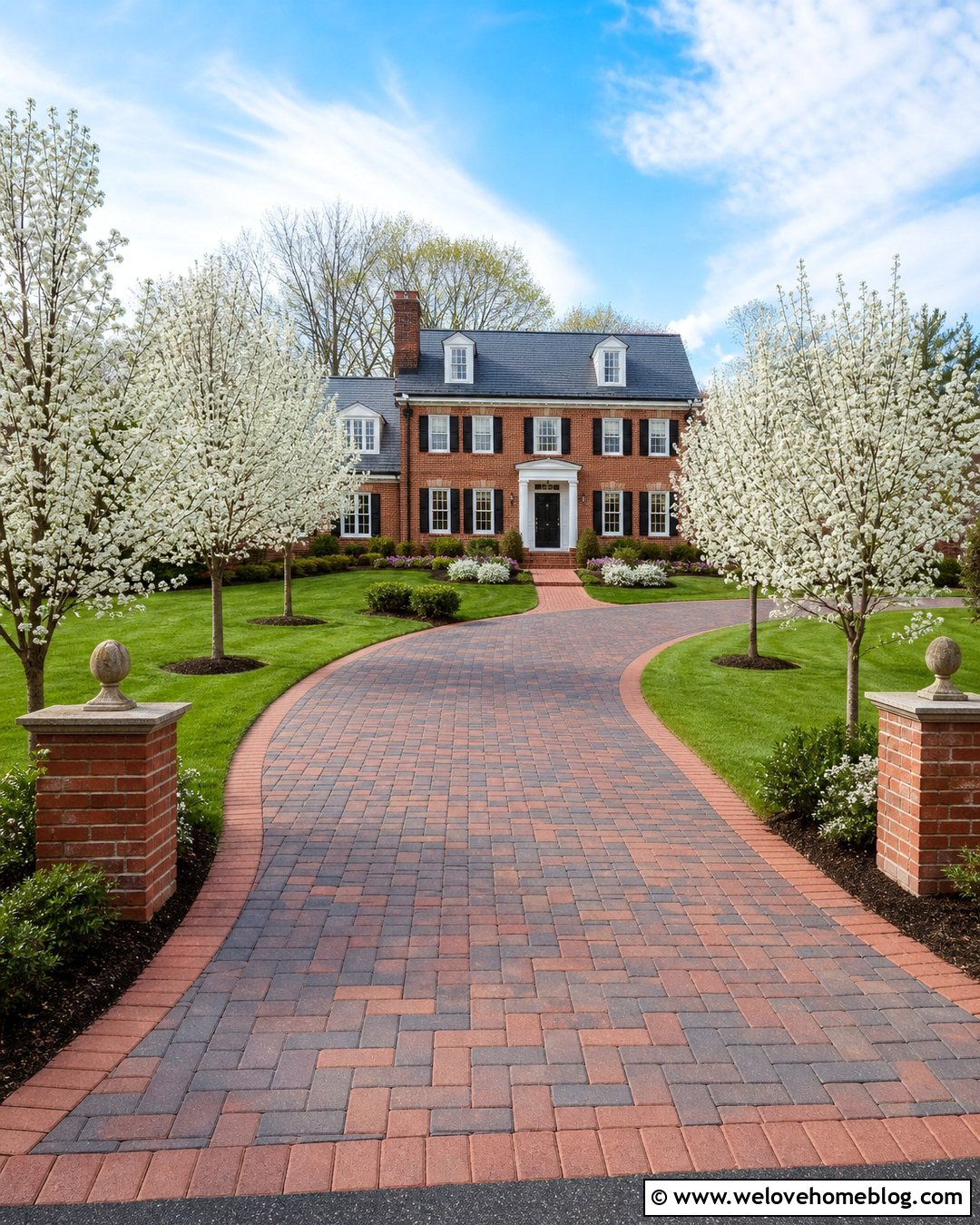
Ornamental pear trees can create a uniform flowering avenue beside a red and charcoal brick paver driveway. A straight layout emphasizes their repeated shape, while a gentle curve gives the design a less formal suburban feel. Use brick soldier courses on each edge and broad lawn strips around the trunks. Low flowering shrubs near the house can connect the tree rows to the foundation planting without crowding the entire route. This complete look complements colonial, Georgian, and traditional brick homes. Before selecting any ornamental pear, check local recommendations because some types may be weak-wooded or invasive in certain regions. A better regional alternative with similar flowers and scale can preserve the intended look while supporting a more resilient landscape.
17. Hornbeam Tree Lined Gravel Driveway
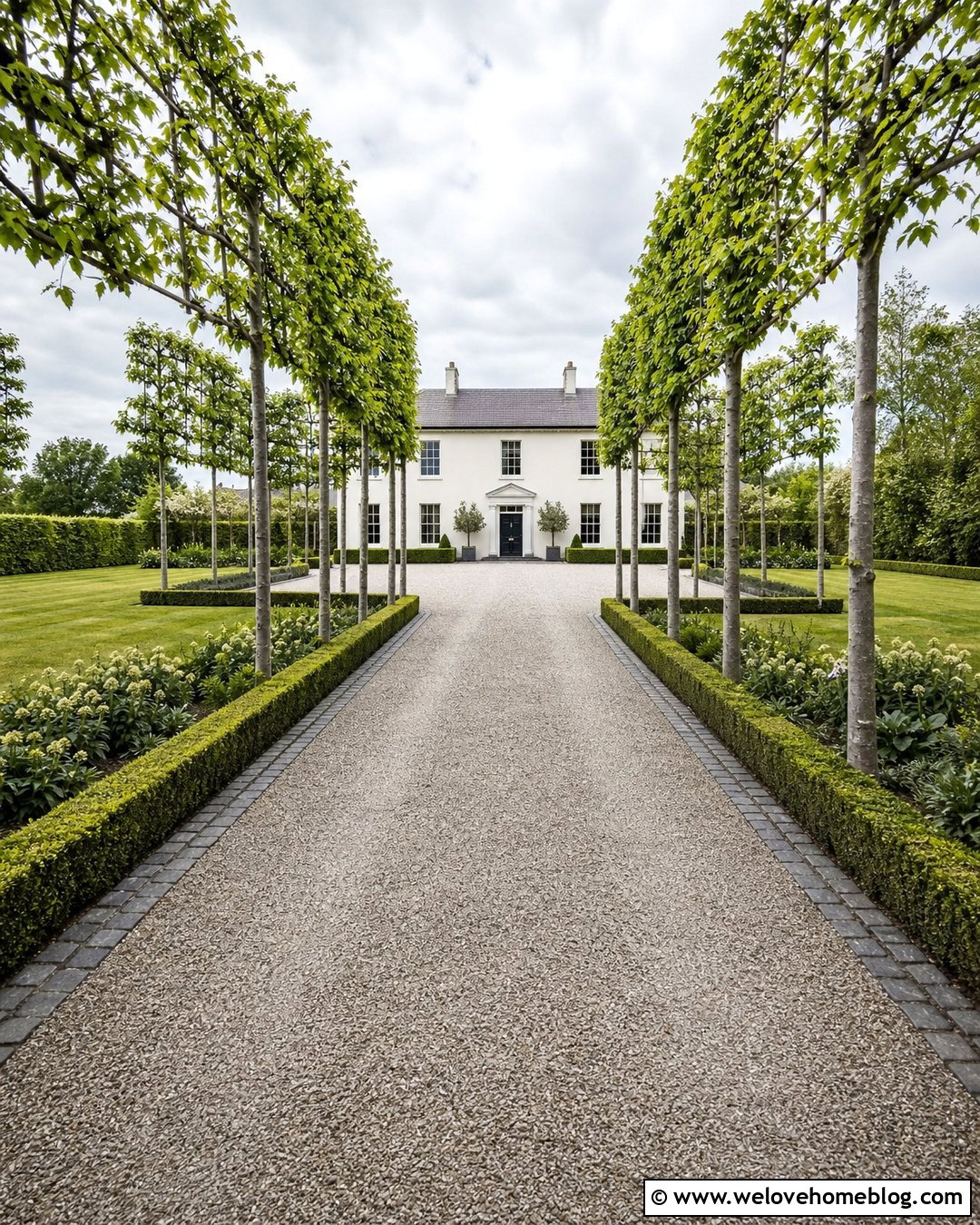
Hornbeams can be clipped, pleached, or allowed to grow naturally along a formal gravel driveway. Fine gray gravel creates a refined surface, especially when outlined by dark granite setts. For a highly structured appearance, align the trunks precisely and maintain rectangular hedge panels or low boxwood alternatives below them. For a softer look, use open lawn and let the canopies develop more freely. The design pairs naturally with Georgian homes, symmetrical farmhouses, and formal brick residences. Hornbeams are especially useful when a strong green framework is desired. Plan pruning access and long-term maintenance before choosing a tightly trained form. At the house, widen the drive into a simple parking court while continuing the same gravel, edging, and tree rhythm.
18. Zelkova Tree Lined Concrete Driveway
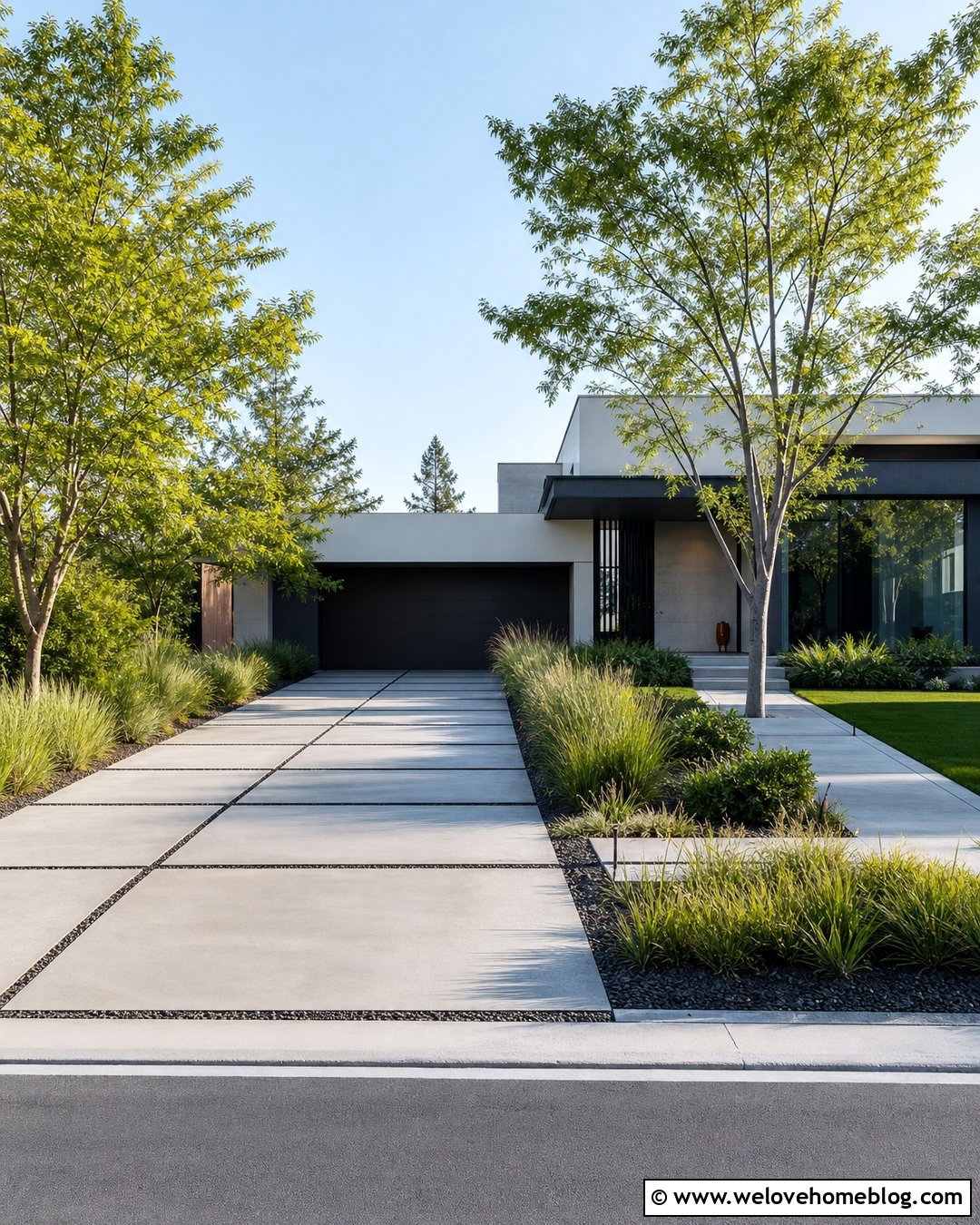
Zelkova trees offer an upright spreading canopy that can frame a wide contemporary driveway without appearing overly formal. Use medium-gray poured concrete divided into large rectangular slabs, with narrow strips of dark gravel between sections. Long planting beds can hold ornamental grasses and low shrubs beneath the trees, creating movement without obscuring the trunks. This arrangement suits modern, transitional, and updated ranch houses. A slightly offset tree pattern keeps the view dynamic as the driveway approaches the garage. Consider mature branch clearance and preserve enough soil volume beyond the hardscape. The concrete should also drain away from tree planting areas without concentrating excessive runoff around the trunks. Simple materials allow the graceful vase-shaped trees to remain the defining feature.
19. Elm Tree Lined Asphalt Driveway
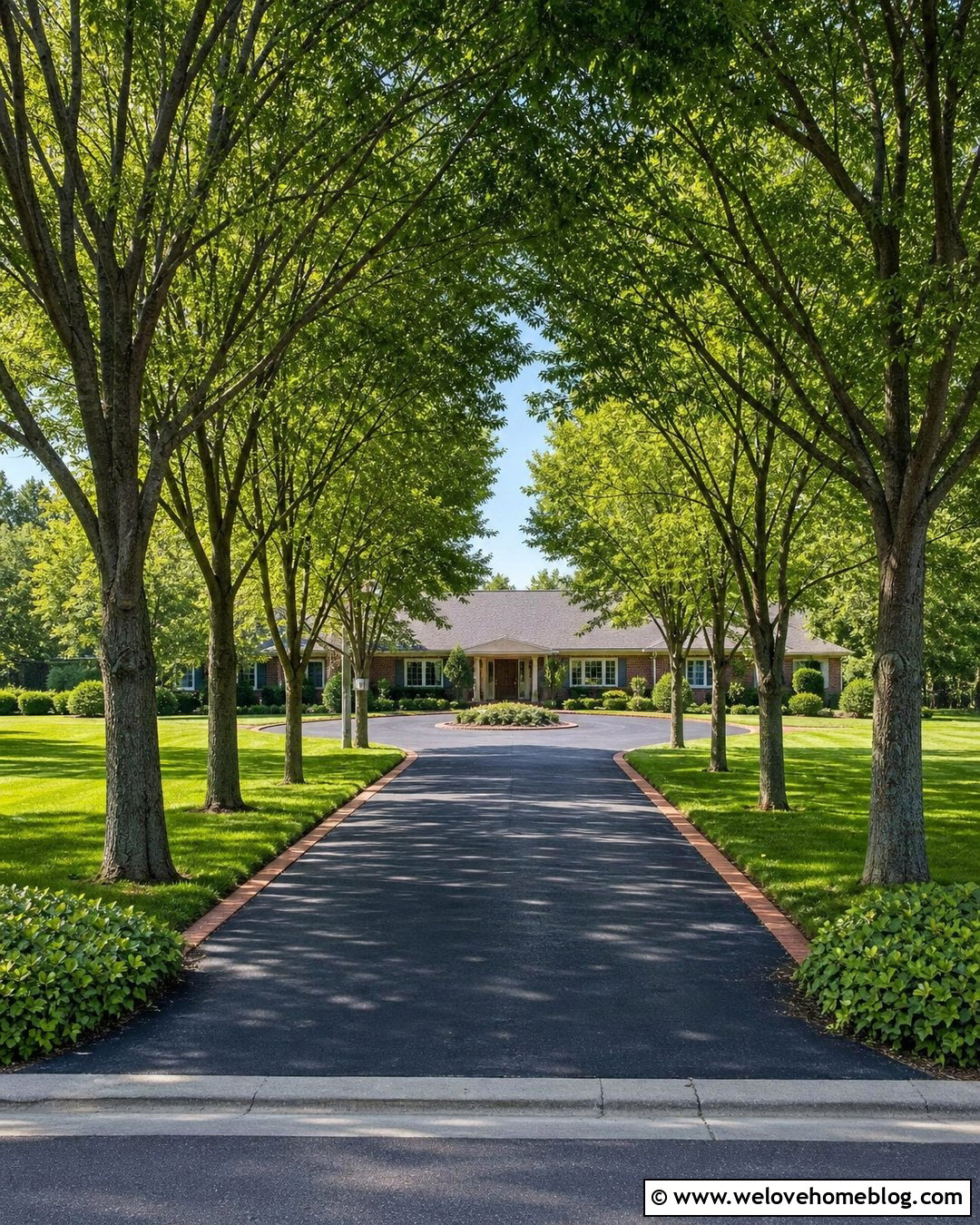
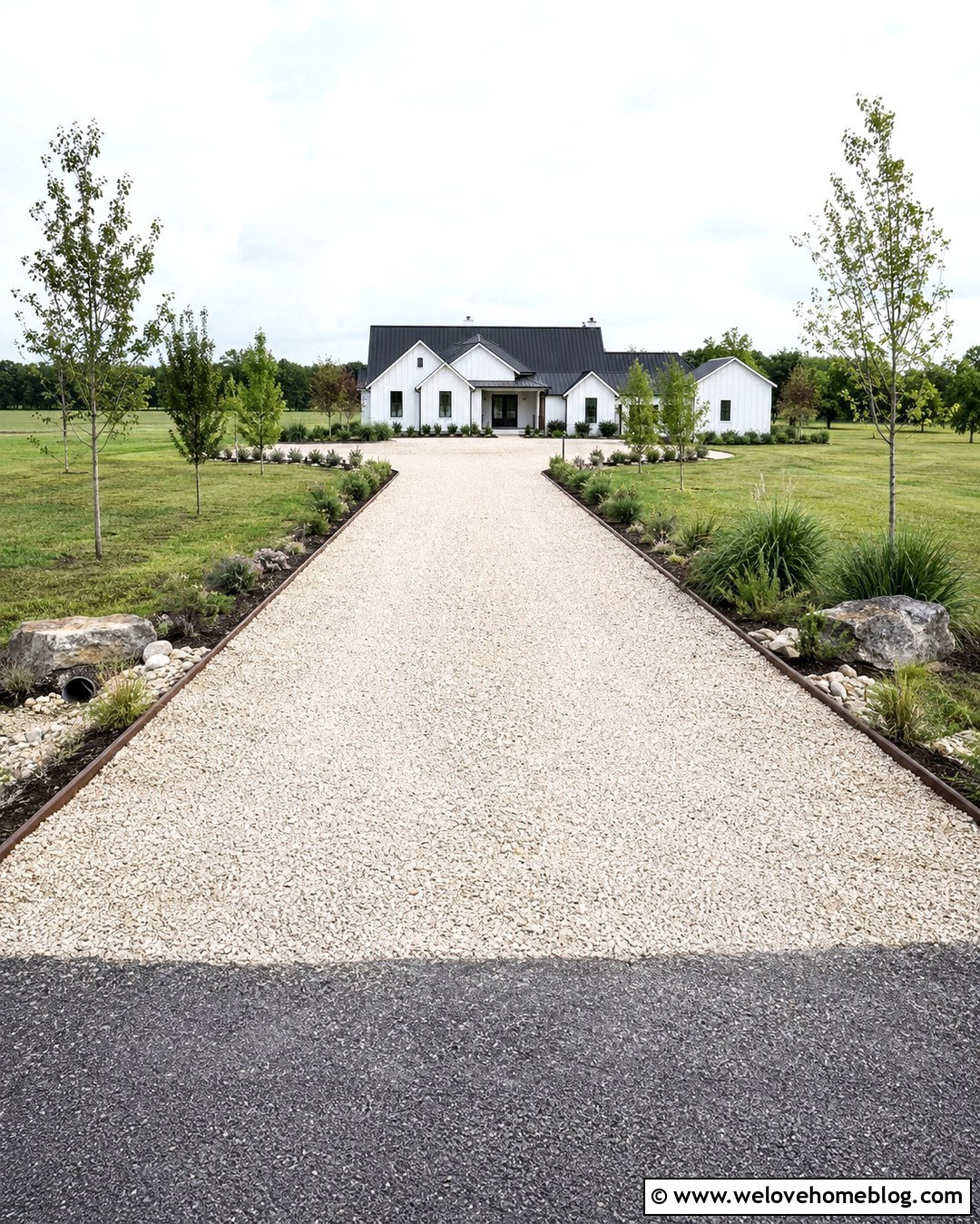
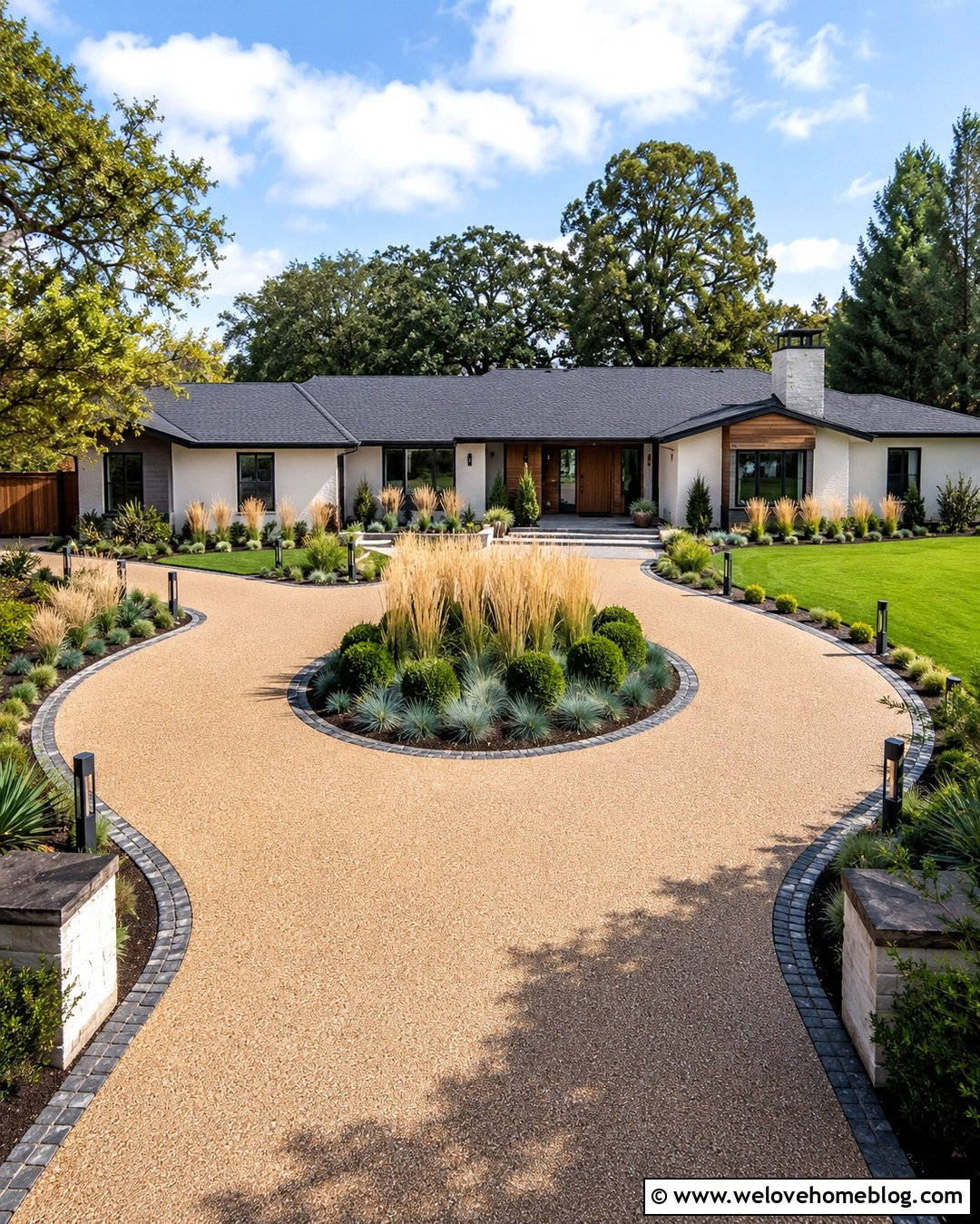
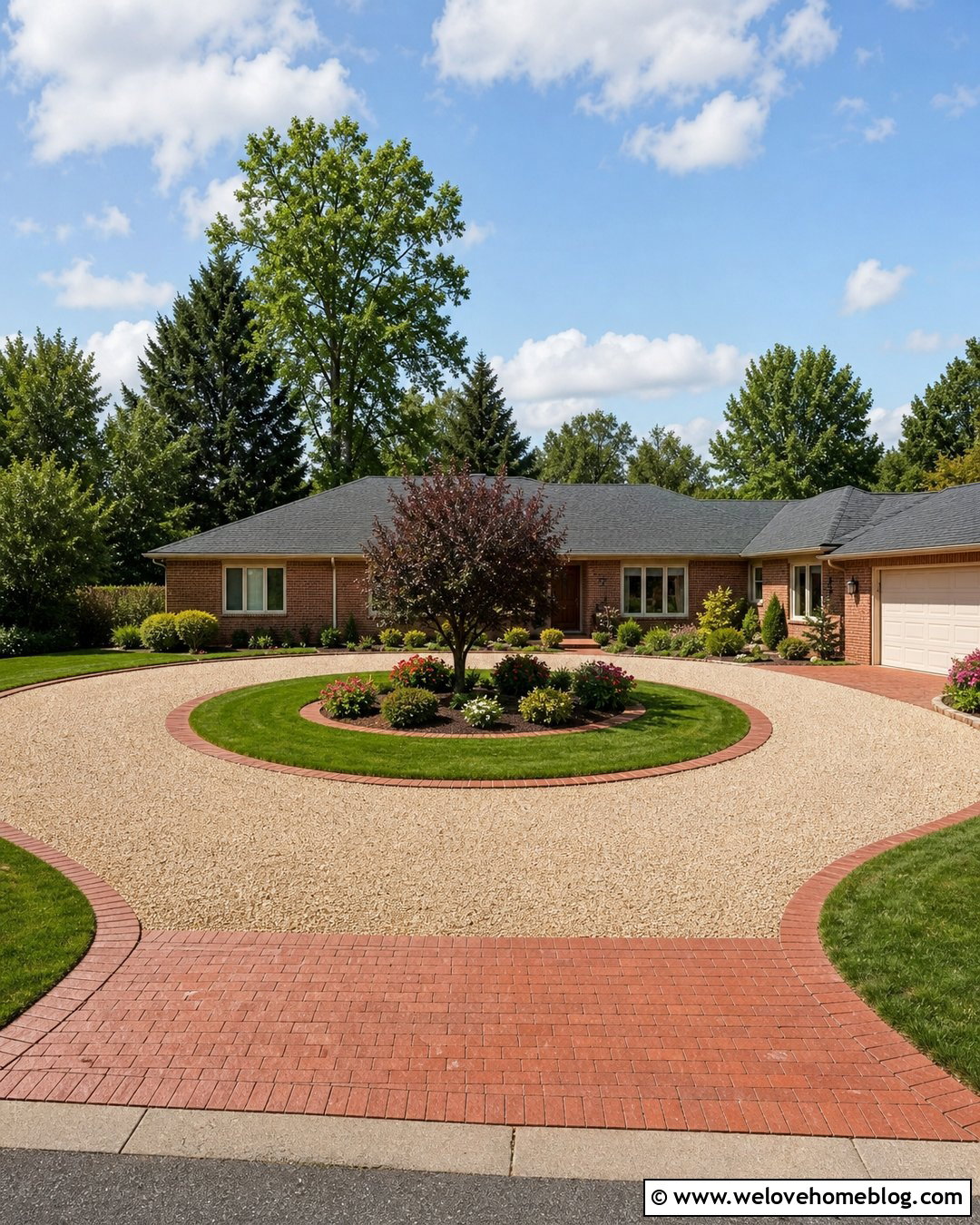
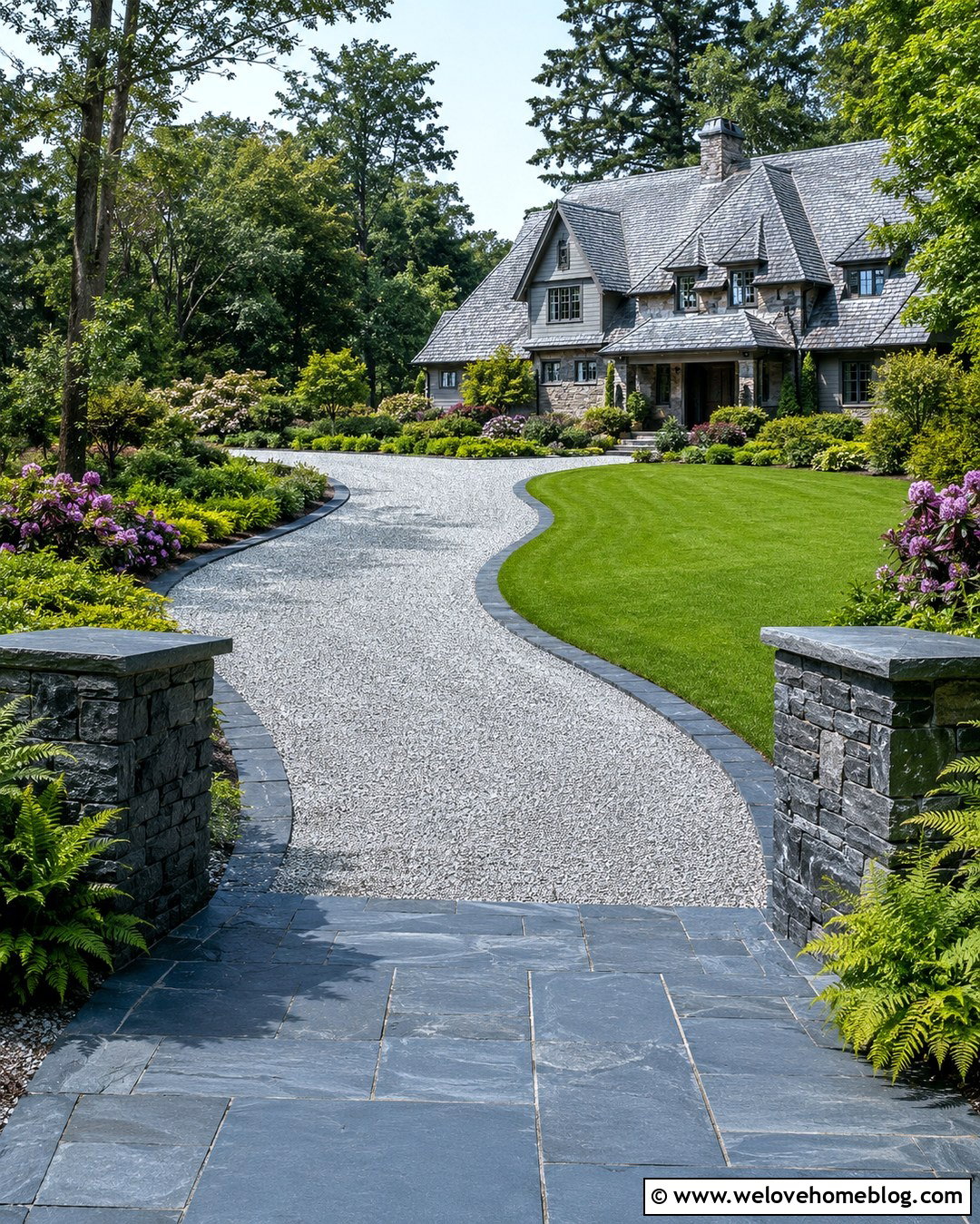
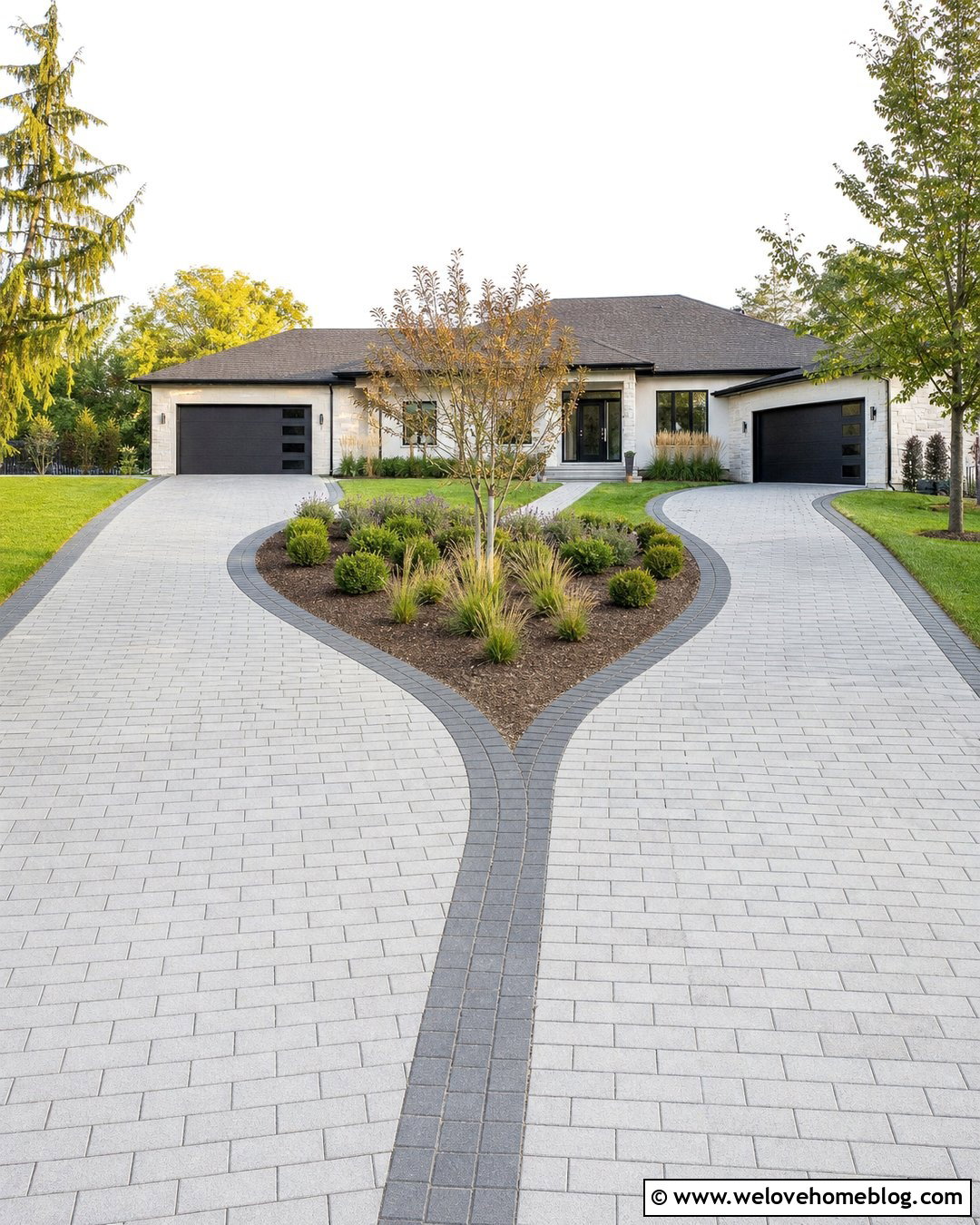
A broad asphalt driveway beneath rows of disease-resistant elms can eventually form a dramatic green canopy. Keep the black surface simple, then add a narrow red brick or granite border for a traditional finishing detail. Wide lawn verges create breathing room between pavement and trunks while reinforcing the park-like setting. The layout is especially attractive in front of a brick ranch, colonial house, or large suburban residence. Select modern elm varieties recommended for local conditions and confirm their mature dimensions. The rows should look somewhat open when newly planted because close spacing can cause future conflicts. Near the street, end the trees before the visibility zone, and use low ground covers instead. This keeps the entrance safe while preserving the tree-lined effect farther inside.
20. River Birch Tree Lined Permeable Driveway
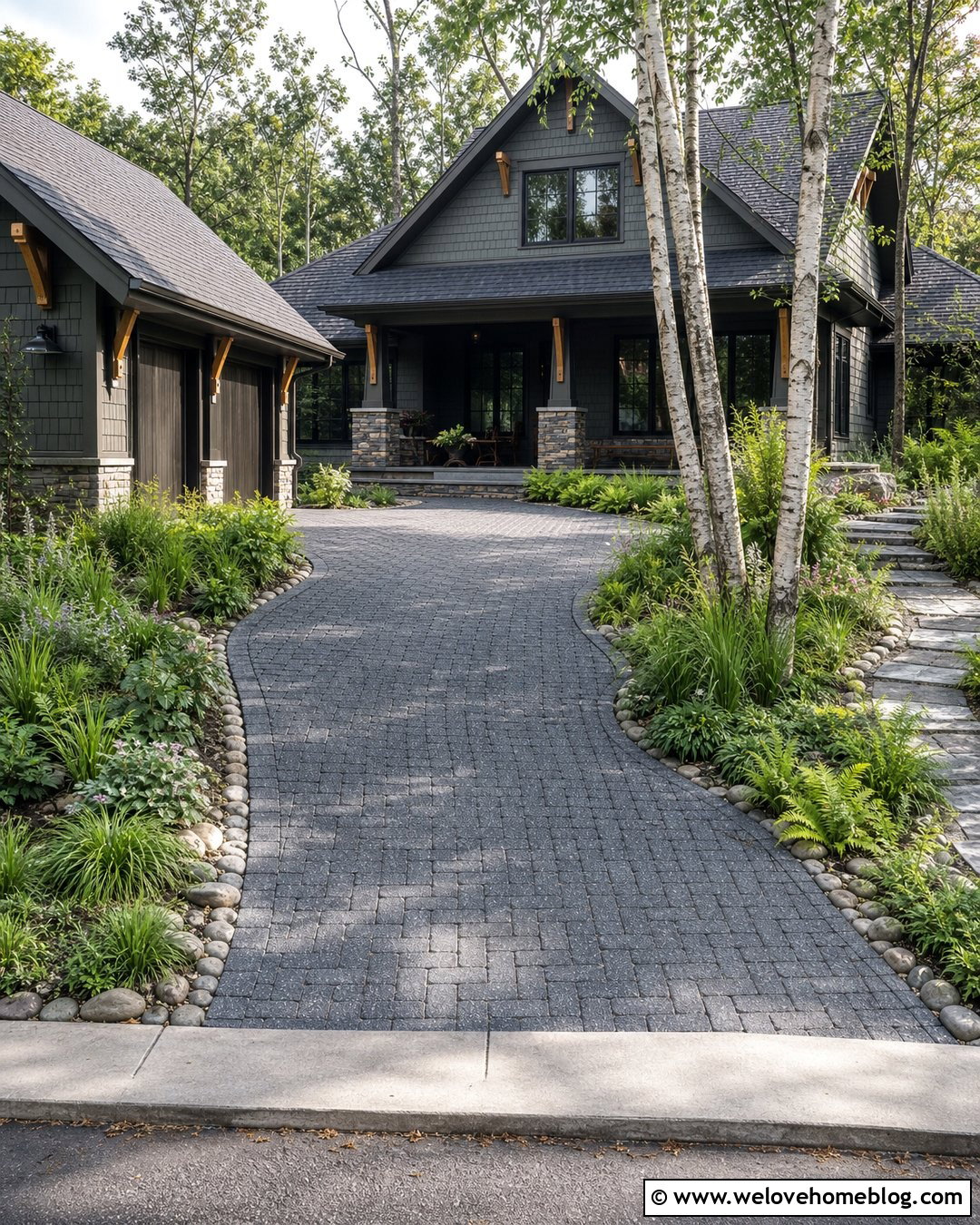
River birches can make a moisture-tolerant landscape feel intentional beside a permeable paver driveway. Choose charcoal or medium-gray open-joint concrete pavers filled with small gravel, allowing the surface to visually connect with rain gardens on either side. Arrange multi-trunk birches in staggered groups rather than strict rows. Add native sedges, rushes, ferns, and low flowering plants that suit periodically damp soil. This complete design works with modern Craftsman, contemporary, and naturalistic homes. Proper grading remains essential, even with permeable paving, because water should not stand against the house or tree trunks. The pale peeling bark adds year-round interest, while the layered planting helps soften a functional drainage solution into a cohesive residential entrance.
21. Live Oak Tree Lined Shell Driveway
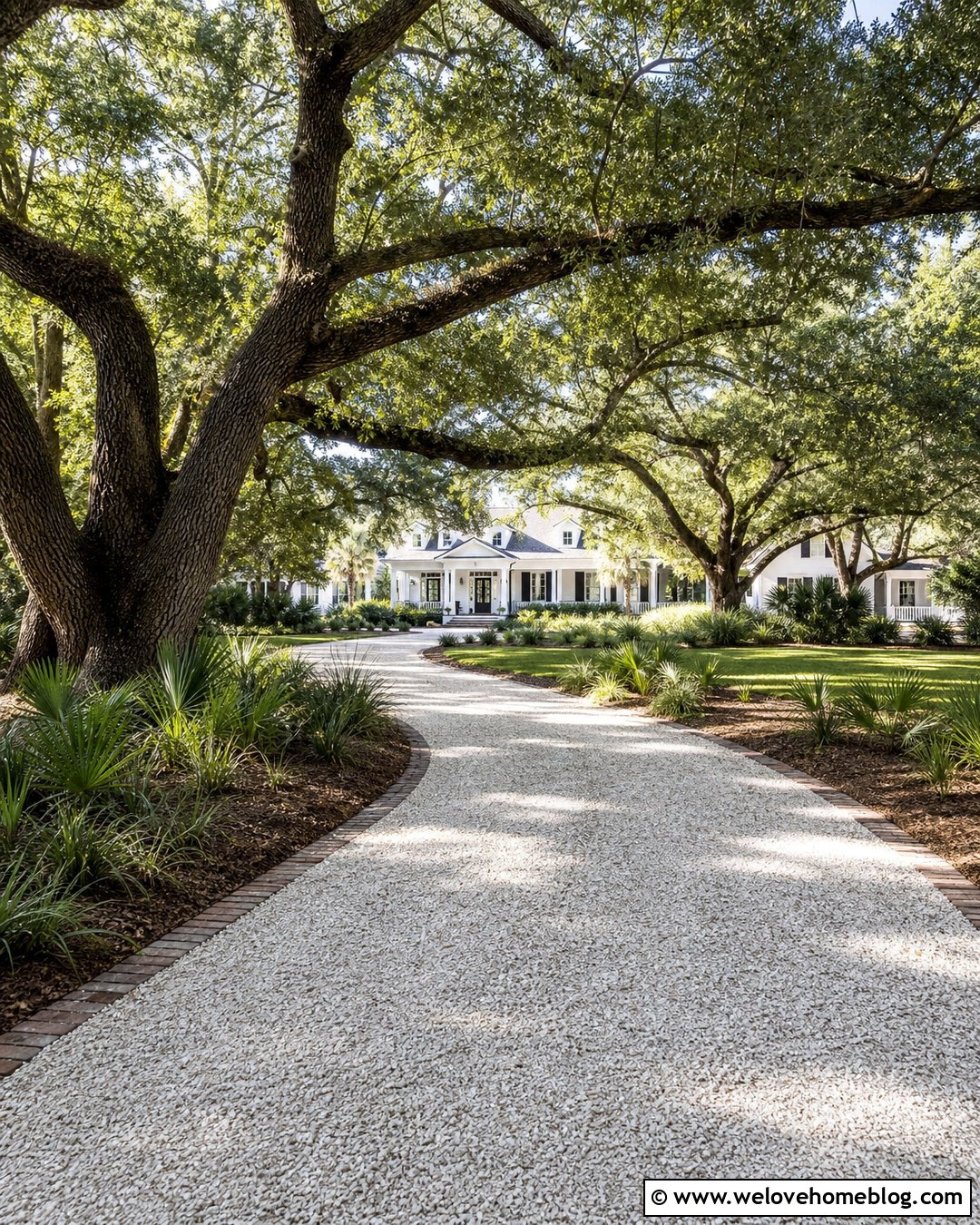
A crushed shell driveway beneath spreading live oaks creates a distinctive coastal Southern entrance. The soft white and cream surface reflects light beneath the dark canopies and complements painted brick, clapboard, or stucco facades. Use reclaimed brick edging to contain the shell and introduce a warm accent. Native grasses, palmettos, and simple lawn areas can surround the trees without competing with their sculptural branches. This look is best on a spacious property because live oaks develop broad crowns and significant root zones. Shape the driveway around existing mature specimens instead of forcing a perfectly straight line. The slight curves will feel natural and help protect valuable trees. Keep shell depth, base preparation, and periodic replenishment in the maintenance plan.
22. Poplar Tree Lined Long Gravel Driveway
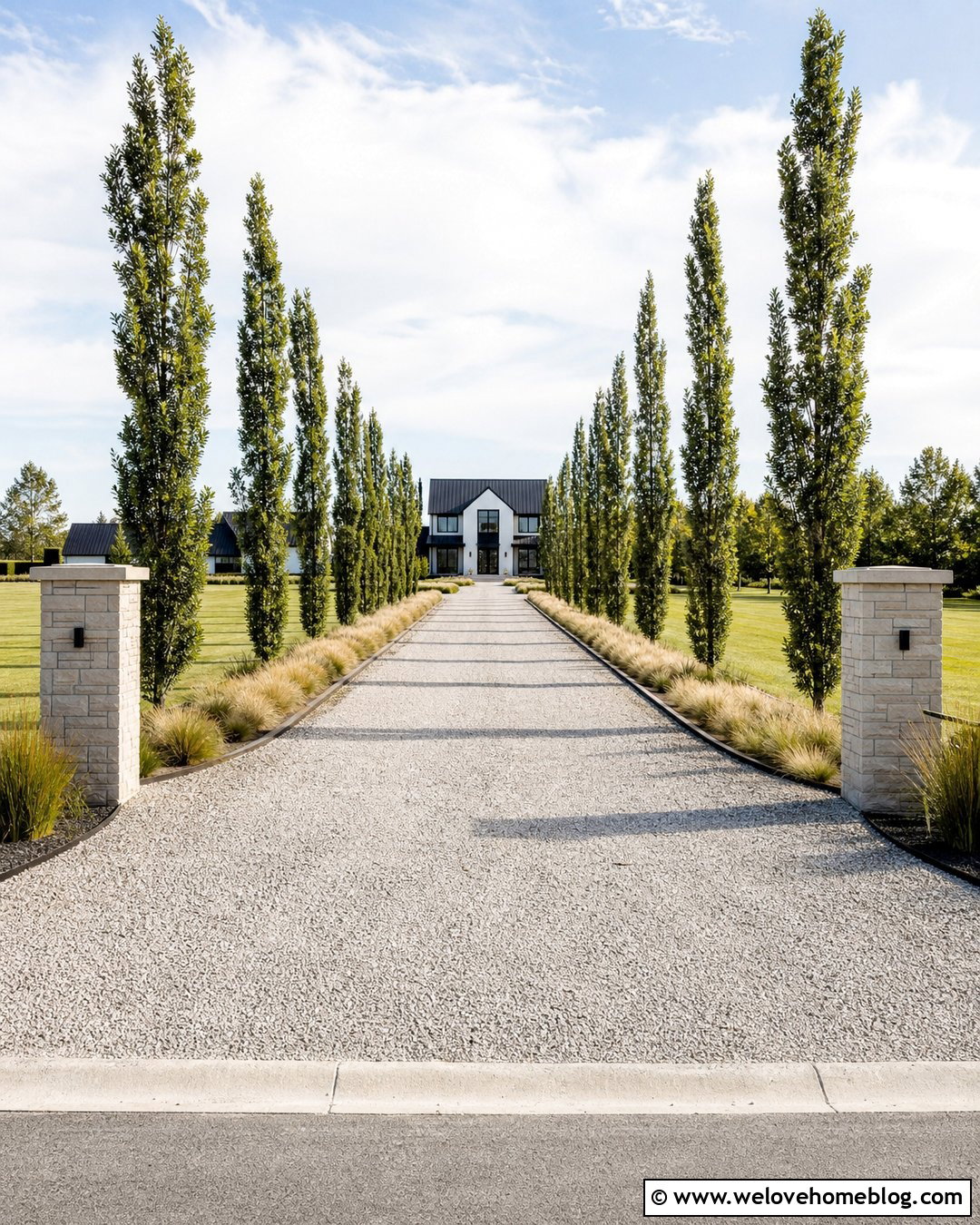
Columnar poplars emphasize the length of a straight gravel driveway and require less lateral room than broad shade trees. Use pale gray crushed gravel bordered by simple steel edging or narrow strips of lawn. The trees can stand in evenly spaced rows, creating a strong visual corridor toward a modern farmhouse, country home, or converted barn. Low ornamental grasses beneath the trunks add movement while preserving the clean vertical pattern. Because poplar species differ in lifespan, root behavior, and regional suitability, select carefully with local guidance. The narrow form is useful, but adequate setback from pavement remains important. Add matching stone entrance pillars and a wide gravel apron at the road so the driveway begins with a clear, deliberate transition.
23. Cedar Tree Lined Crushed Stone Driveway
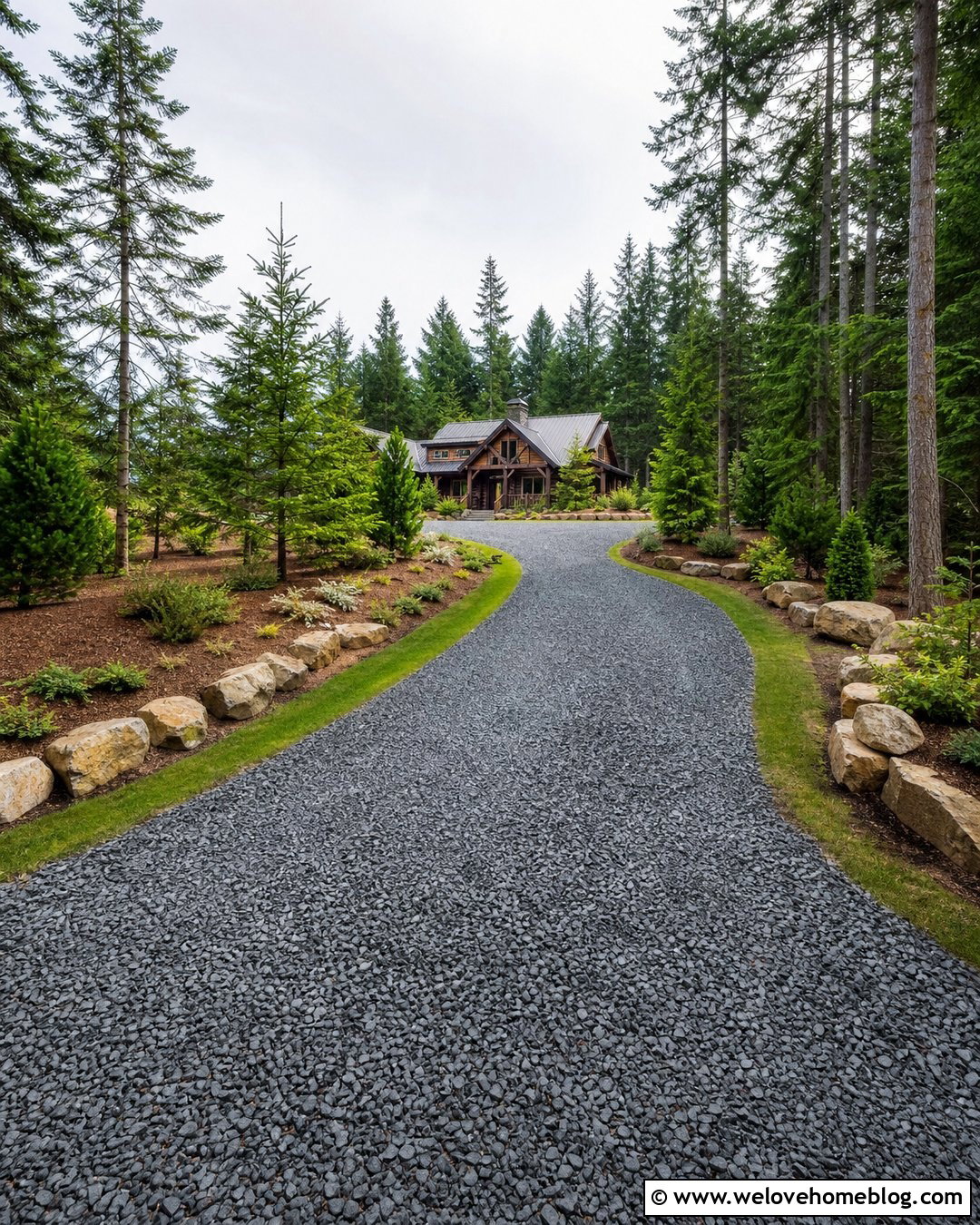
Evergreen cedars can turn a long crushed stone driveway into a private approach throughout the year. Choose dark gray angular stone for a stable rural surface, then edge it with natural boulders or heavy timber. Stagger the cedars along both sides instead of forming tight, identical rows. This creates layered screening and avoids a tunnel-like appearance. Native shrubs and woodland ground covers can fill the spaces between trees, while a narrow mown verge keeps plants away from moving vehicles. The design works well for rustic cabins, mountain homes, and secluded modern houses. Confirm the mature width before planting, especially where snow storage or delivery access is needed. Leave the final stretch more open so the house and turnaround area remain easy to navigate.
24. Bald Cypress Tree Lined Concrete Driveway
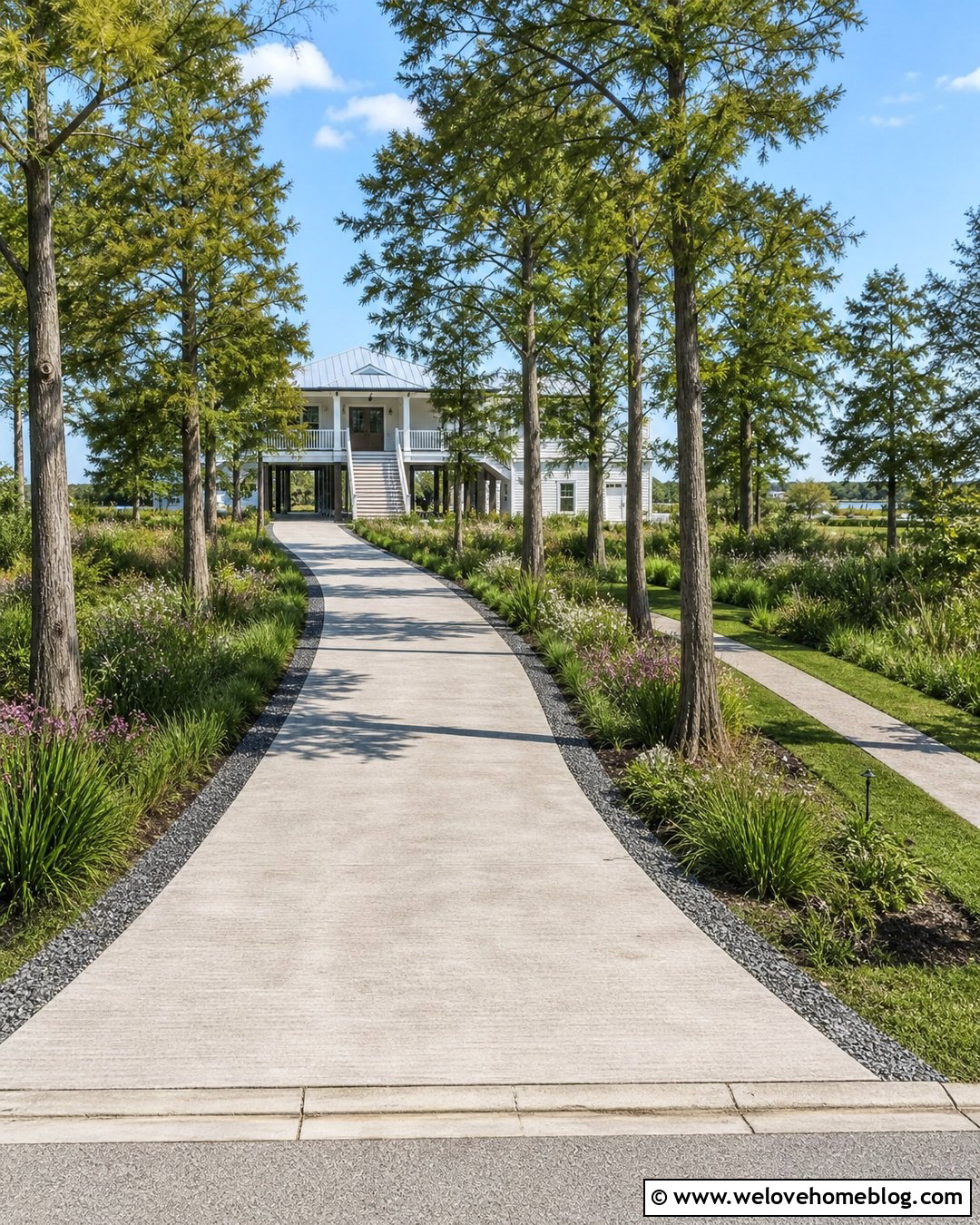
Bald cypress trees provide an elegant vertical rhythm beside a long concrete driveway in a moist or low-lying landscape. Use broom-finished light gray concrete with a darker exposed aggregate border for durability and visual definition. Plant the trees in wide rain-garden beds containing moisture-tolerant grasses and native perennials. Their fine foliage softens the pavement during summer, while their warm fall color adds seasonal interest. This design can complement contemporary rural homes, raised coastal houses, or understated brick residences. Although associated with wet conditions, site suitability still depends on regional climate and soil. Keep drainage channels and planting areas carefully graded. Allow broad root zones and avoid placing trunks directly beside curbs, retaining walls, or underground drainage components.
25. Serviceberry Tree Lined Paver Driveway
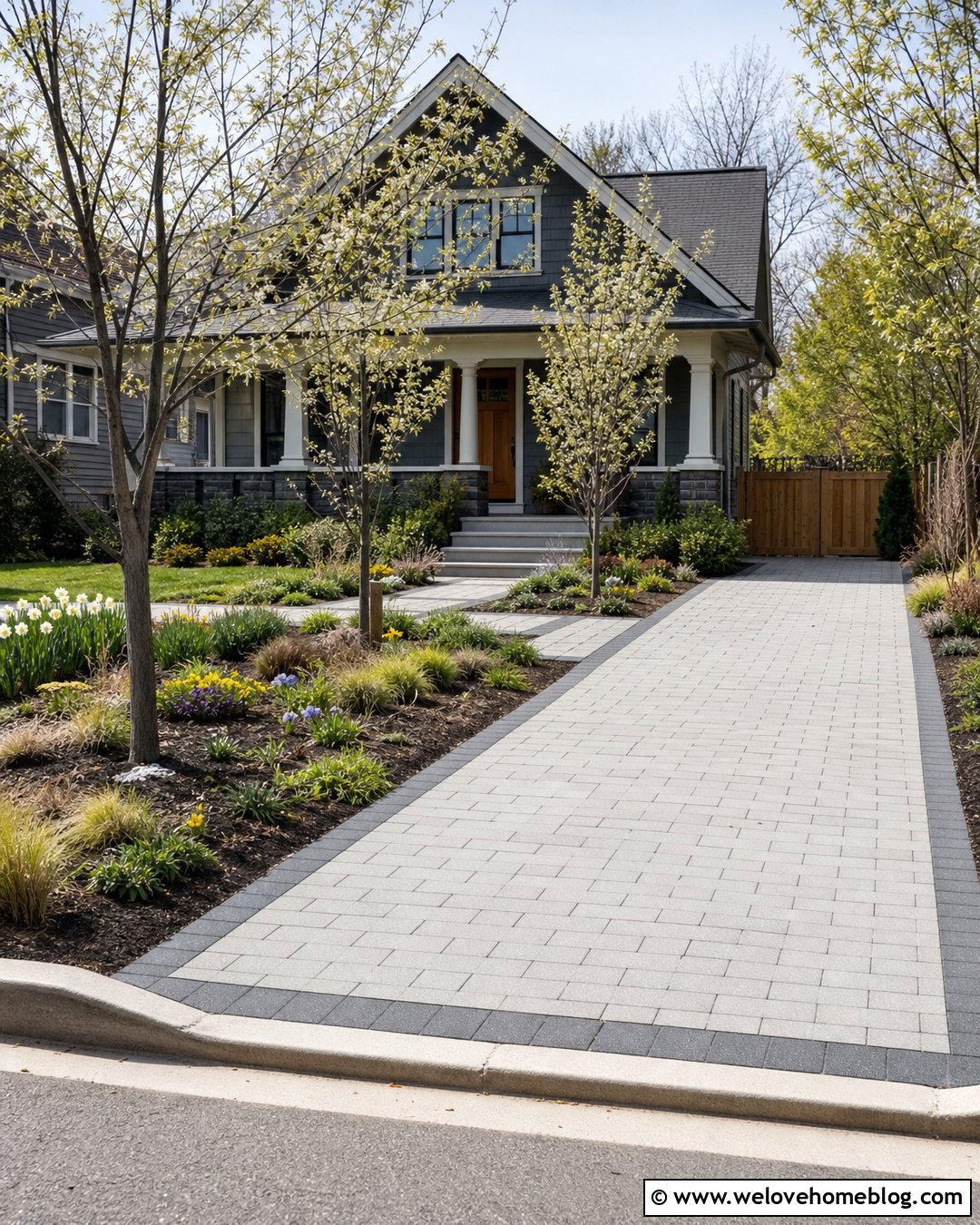
Serviceberries are well scaled for a compact tree lined driveway where large trees would dominate the front yard. Pair them with light gray permeable concrete pavers arranged in a simple running bond. A dark paver border can sharpen the edges, while low native shrubs, grasses, and spring bulbs build a layered garden beneath the small canopies. The design fits Craftsman cottages, urban bungalows, and modest contemporary homes. Serviceberries offer flowers, berries, fall color, and fine branching, giving the short driveway more than one season of interest. Use a slightly staggered arrangement to avoid making the limited space feel rigid. Maintain clear sightlines near sidewalks and streets, and provide enough setback to keep branches from brushing parked vehicles.
26. Japanese Maple Tree Lined Concrete Driveway
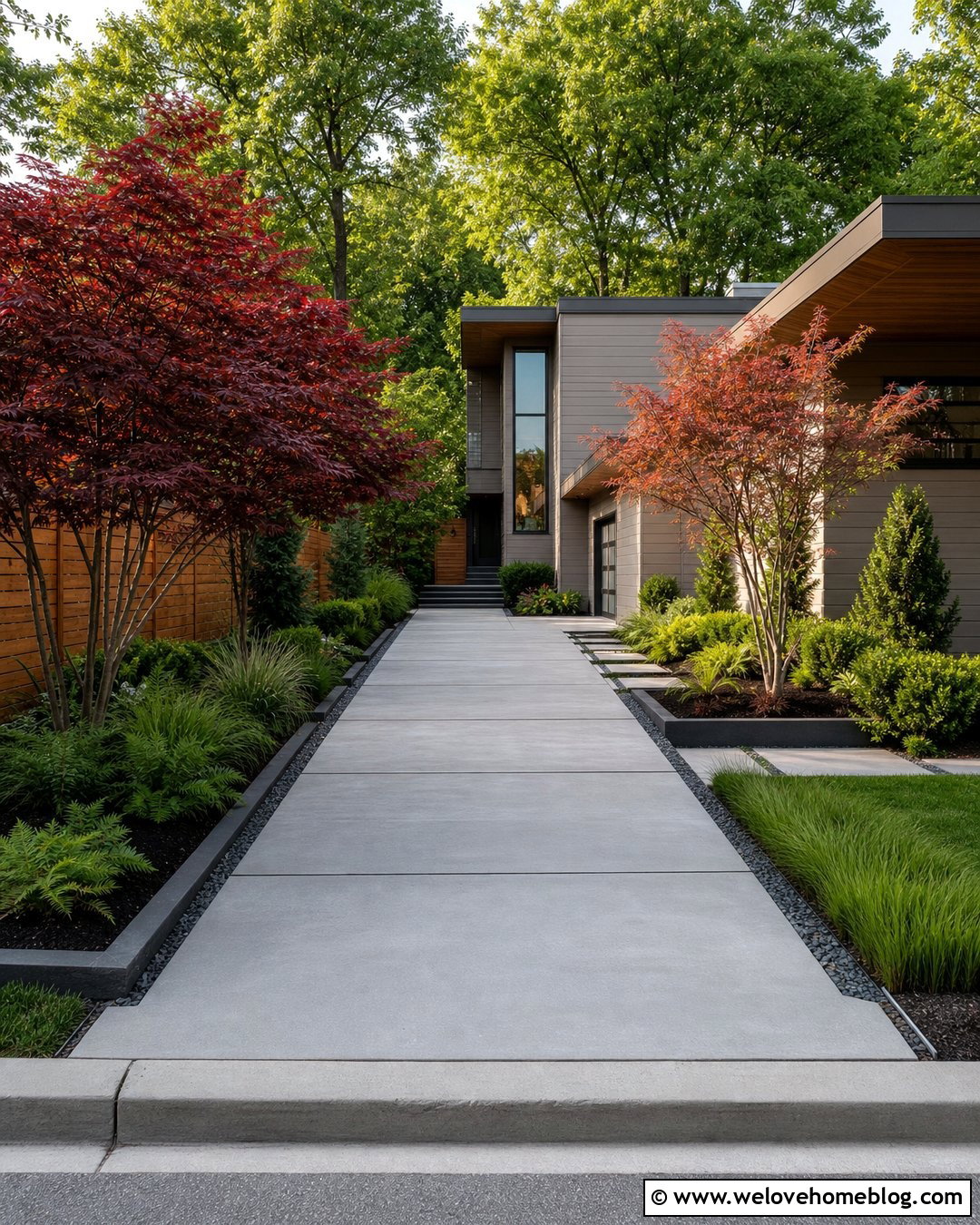
A narrow concrete driveway can gain color and definition from carefully placed Japanese maples. Use warm light-gray concrete with slim black stone borders, then arrange small maples in offset planting pockets rather than continuous rows. Dark mulch, low ferns, compact evergreens, and ornamental grasses create a calm layered setting. This design is especially effective beside a modern home, mid-century ranch, or Asian-influenced contemporary residence. Choose cultivars based on mature size, sun exposure, and regional hardiness. Some perform better with protection from intense afternoon heat. The trees should accent the driveway without reducing door clearance or parking space. Repeating leaf color near the front walkway or entry garden will connect the driveway planting to the architecture.
27. Ginkgo Tree Lined Asphalt Driveway
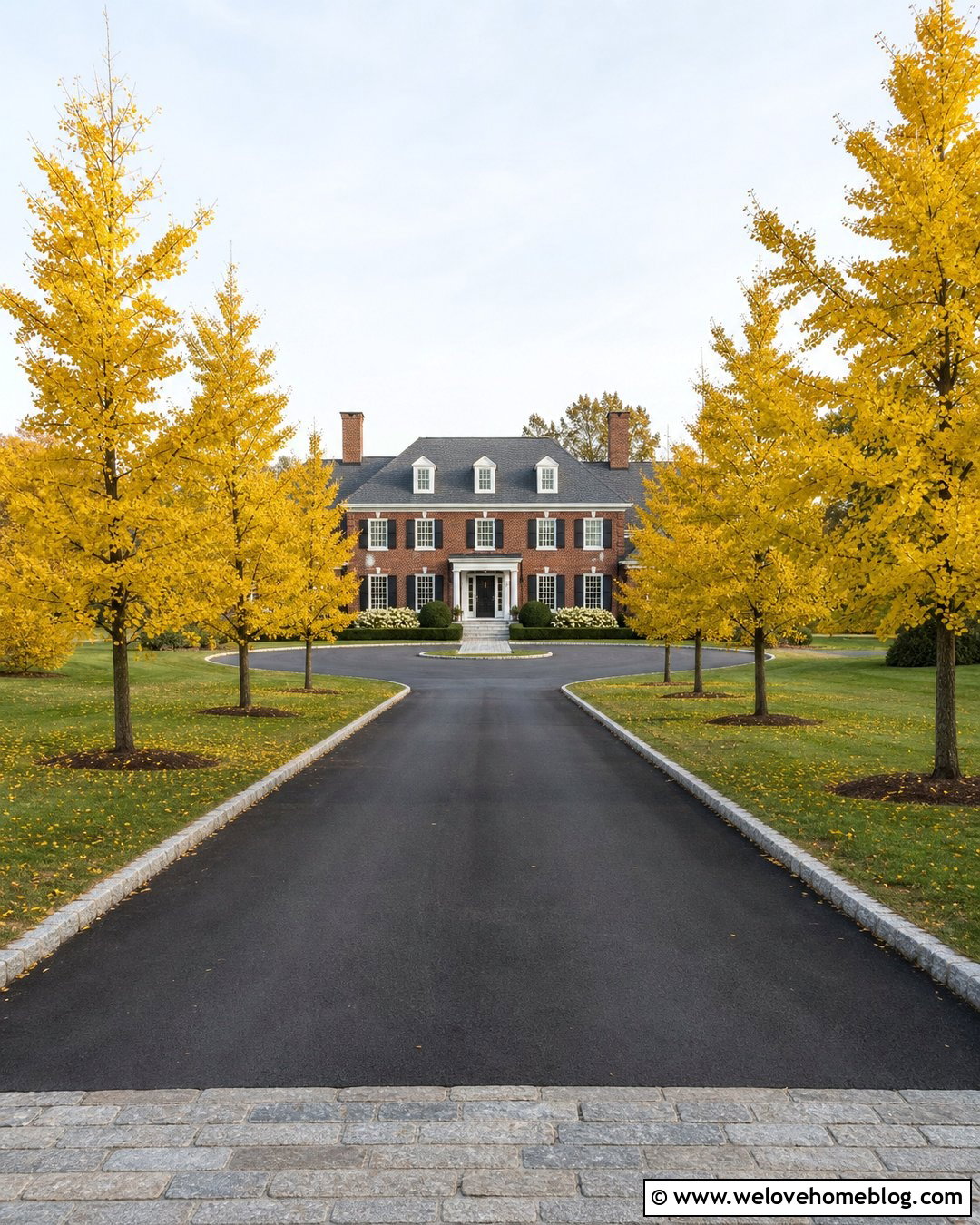
Ginkgo trees bring clean structure and brilliant yellow fall color to a formal asphalt driveway. The smooth black surface creates strong contrast, while light granite curbs add a tailored edge. Plant the trees in broad lawn strips with identical spacing to emphasize their upright young forms and increasingly full canopies. This combination works with brick colonials, traditional suburban homes, and contemporary houses with simple facades. Select male cultivars where unwanted fruit drop would be a concern. Since ginkgos can become substantial trees, provide generous soil volume and avoid narrow pavement islands. A straight layout produces a ceremonial approach, but the final section can open into a rounded parking court. Continue the granite border around the court to keep the entire design unified.
28. Tupelo Tree Lined Resin-Bound Driveway
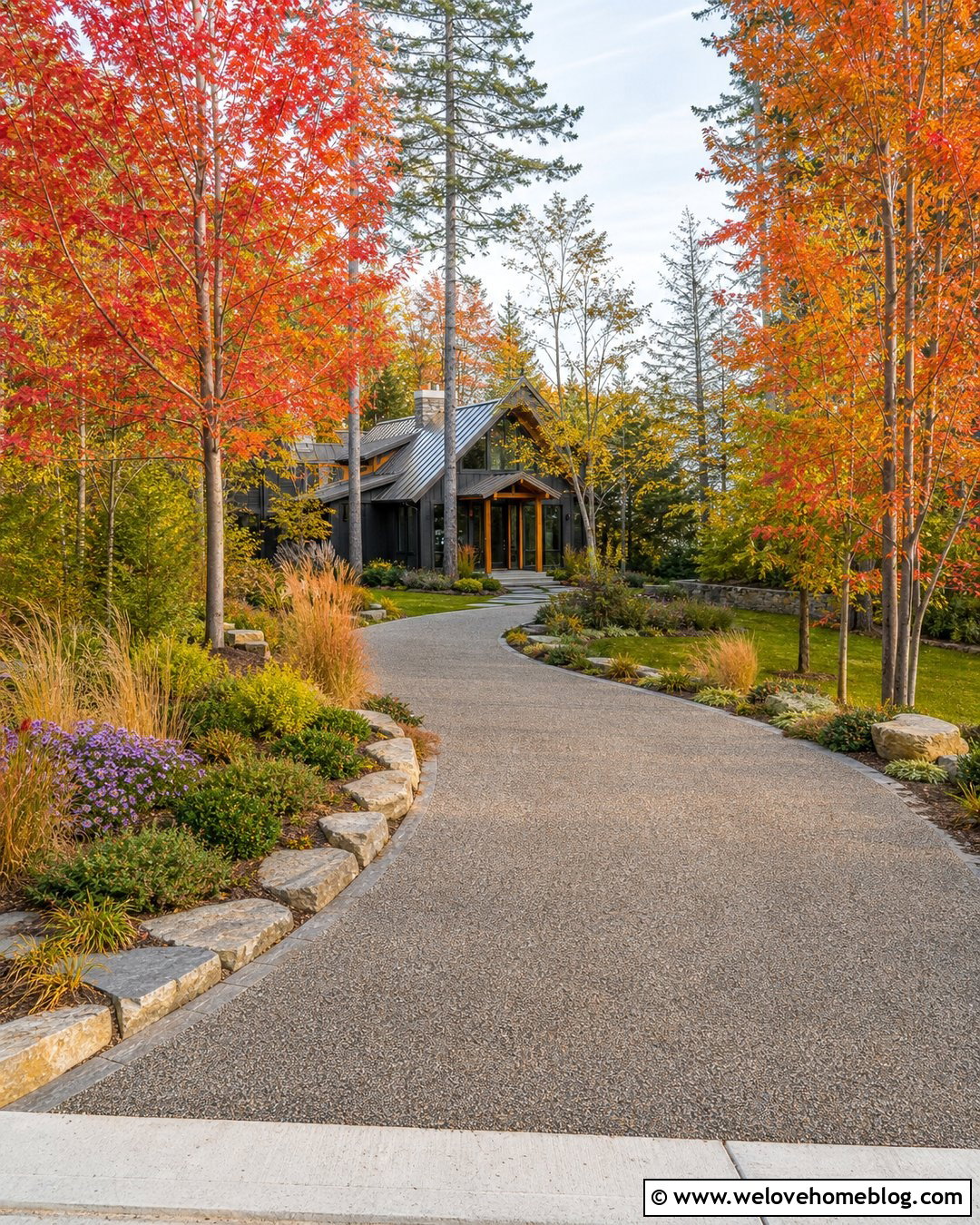
Tupelo trees can create a colorful native landscape around a curved resin-bound gravel driveway. Choose a natural brown and gray aggregate blend that resembles fine gravel while providing a visually smooth finish. Weathered stone edging reinforces the organic character. Plant native grasses, low shrubs, and flowering perennials in broad beds beneath the trees, leaving uncluttered openings that reveal their trunks. Tupelos are valued for strong fall color and can suit sites with suitable moisture and soil conditions. This look complements woodland contemporary homes, Craftsman houses, and understated country residences. The driveway curve should follow the terrain rather than cut across it abruptly. That approach reduces visual disturbance and makes the native planting feel established around the route.
29. Mesquite Tree Lined Decomposed Granite Driveway
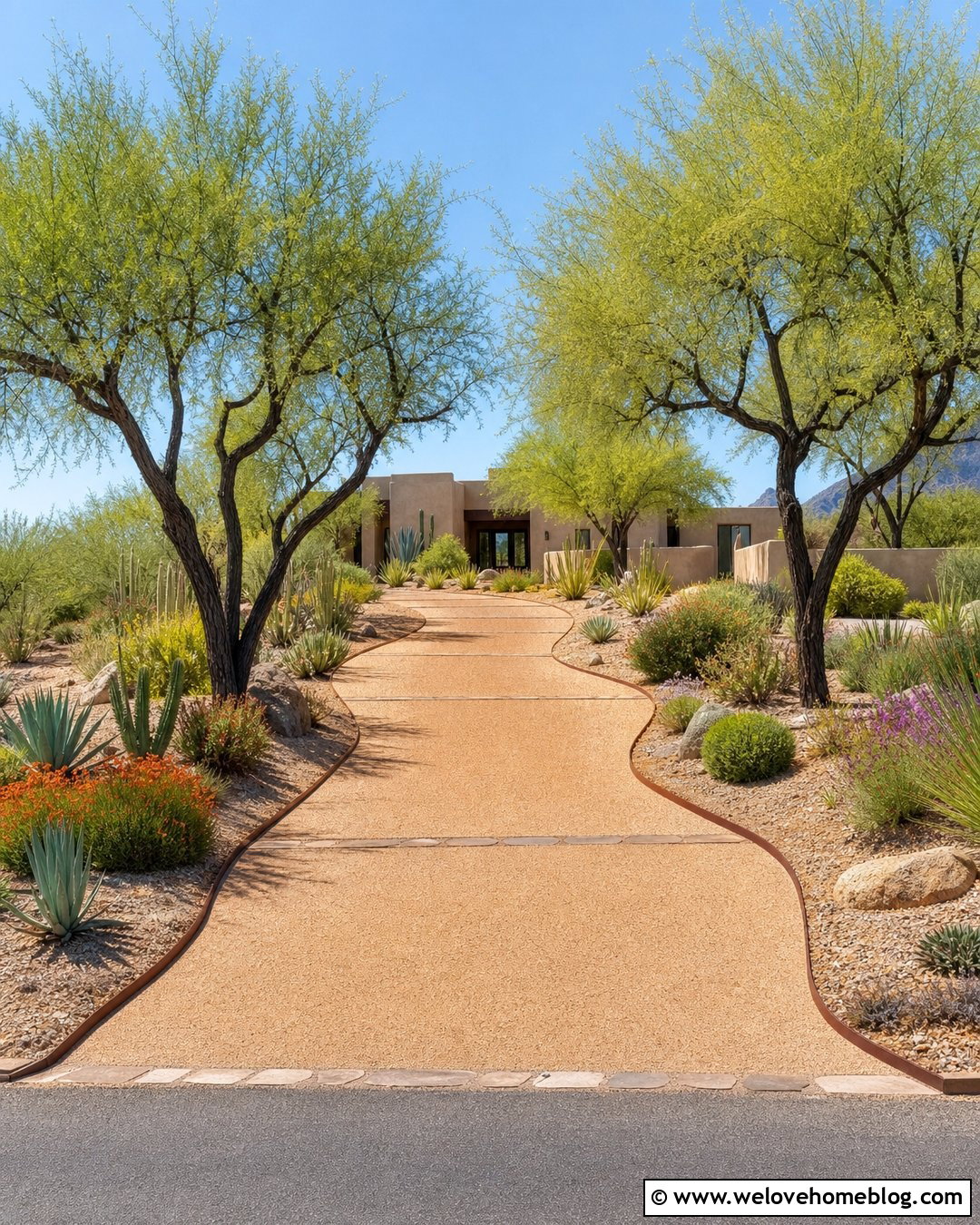
In an arid landscape, sculptural mesquite trees can shade a warm decomposed granite driveway without introducing a thirsty formal lawn. Use stabilized golden-tan granite with rust-colored steel edging and occasional bands of flat-cut stone. Arrange the trees in irregular pairs along a gently winding route. Agave, desert grasses, flowering penstemon, and low native shrubs can fill the surrounding gravel beds. This complete look pairs naturally with Southwestern adobe, desert modern, and low-profile stucco homes. Preserve open space between plant groups so the landscape does not feel crowded. Select thornless or appropriately placed varieties where possible, and maintain branch clearance over vehicle areas. Thoughtful grading can direct occasional stormwater into planted basins rather than across the driving surface.
30. Date Palm Tree Lined Circular Driveway
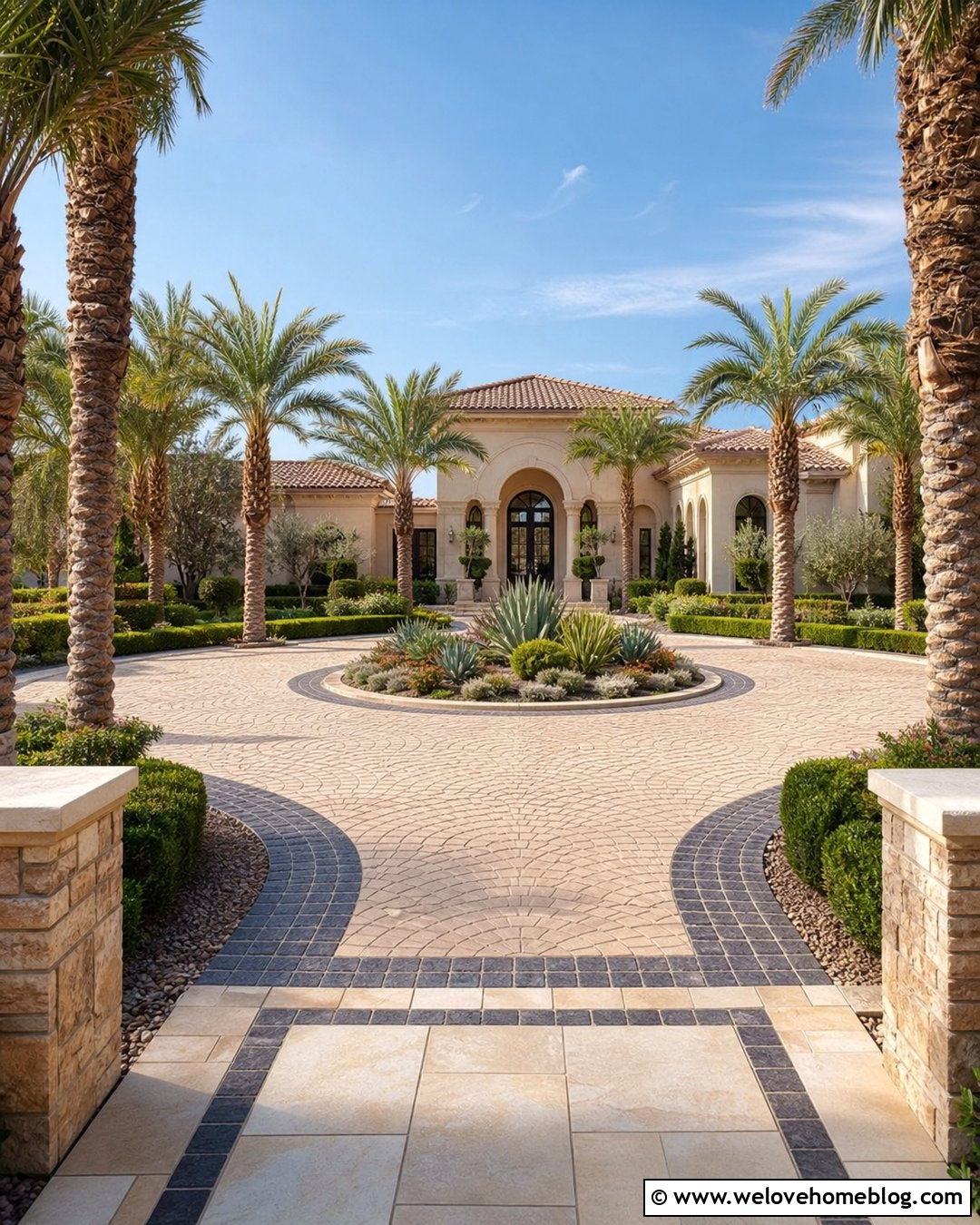
Date palms can give a circular paver driveway a strong, symmetrical structure in warm climates. Use sand-colored concrete pavers in a fan or running bond pattern, with darker pavers outlining both curves. Place the palms at measured intervals around the outer drive while keeping the central island lower and more open. Drought-tolerant grasses, succulents, and clipped shrubs can fill the beds without hiding the trunks. This design suits Mediterranean villas, contemporary stucco homes, and formal desert residences. Choose palm varieties with mature proportions appropriate to the house and available space. Account for pruning, falling material, and irrigation access. A pair of low stone entrance pillars can establish the axis while leaving clear visibility for vehicles entering the circular route.
31. Mixed Native Tree Lined Gravel Driveway
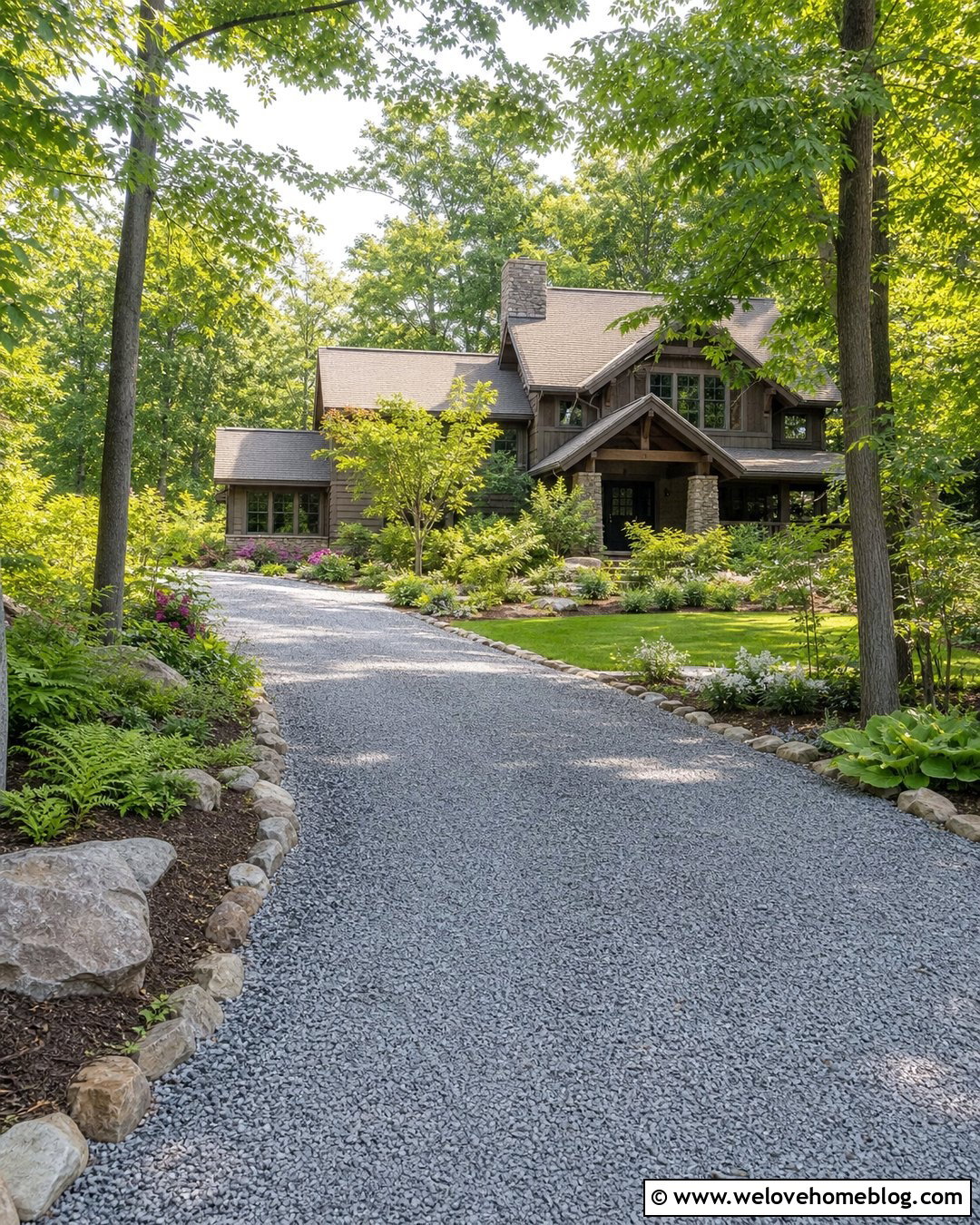
Not every tree lined driveway needs matching rows. A mixed native planting can create a relaxed woodland edge beside a curved gray gravel surface. Select a limited group of regionally appropriate canopy and understory trees, then repeat each species several times to avoid a random appearance. Natural stone edging and wide mulched beds help organize the composition. Add native shrubs, grasses, ferns, and seasonal flowers in layered drifts. This approach works especially well with Craftsman homes, rustic modern houses, and properties connected to existing woods. Vary the tree spacing while maintaining safe vehicle clearance. The finished route should feel as though it passes through a natural landscape, yet deliberate repetition, clean borders, and controlled sightlines keep it functional and visually coherent.
32. Staggered Tree Lined Concrete Driveway
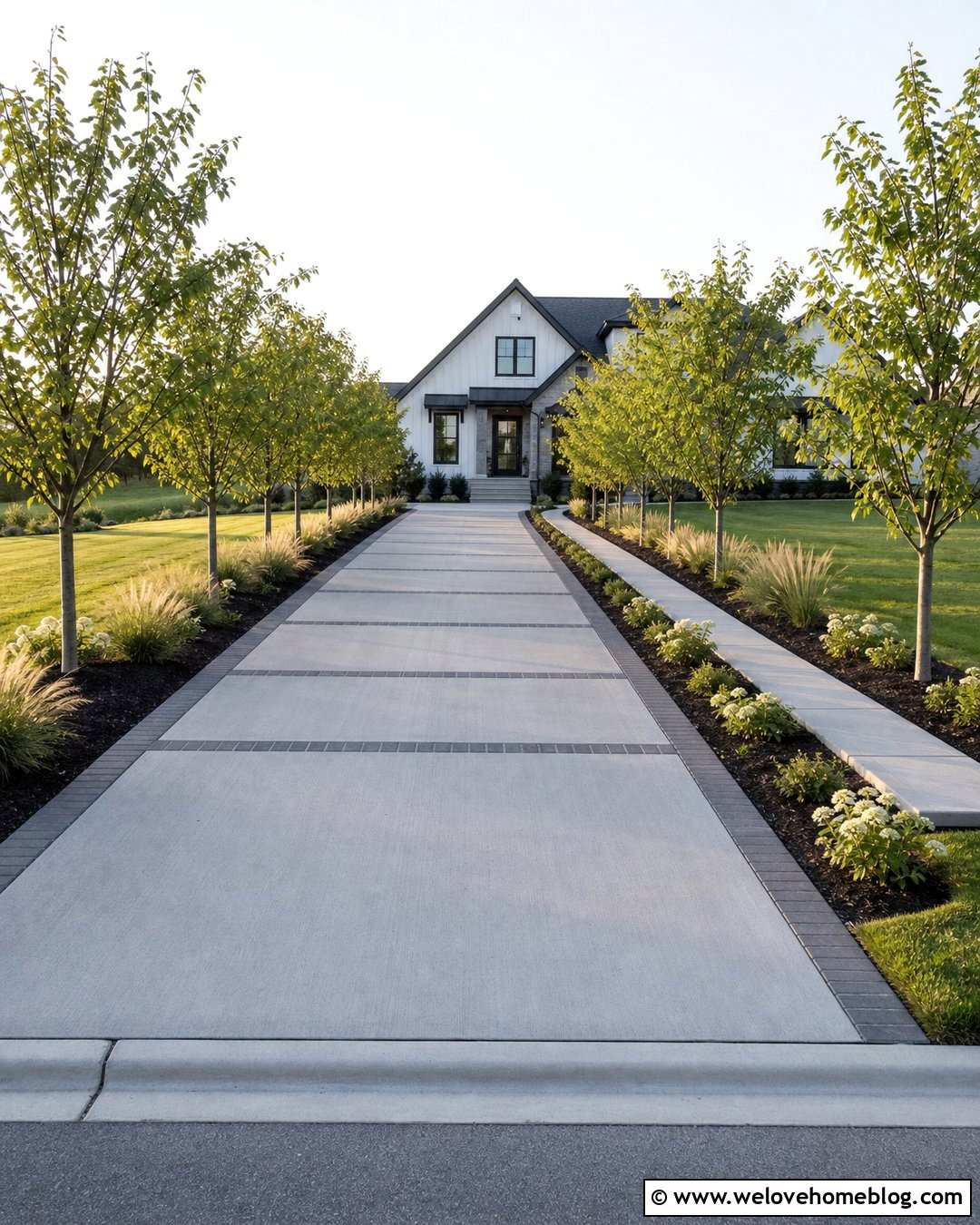
A staggered arrangement can make a straight concrete driveway feel less rigid while still providing balanced greenery. Use light gray broom-finished concrete with charcoal paver ribbons crossing the surface at regular intervals. Offset the trees so each trunk aligns with an opening on the opposite side rather than another trunk. This creates changing views and distributes shade more naturally. Broad beds planted with grasses and low flowering shrubs can follow the same alternating rhythm. The layout complements modern farmhouse, transitional, and contemporary suburban homes. Choose one adaptable tree species for visual continuity, but avoid placing every specimen at an identical distance from the pavement. Small variations make the composition feel comfortable while preserving the overall pattern and clear route to the garage.
33. Single-Side Tree Lined Narrow Driveway
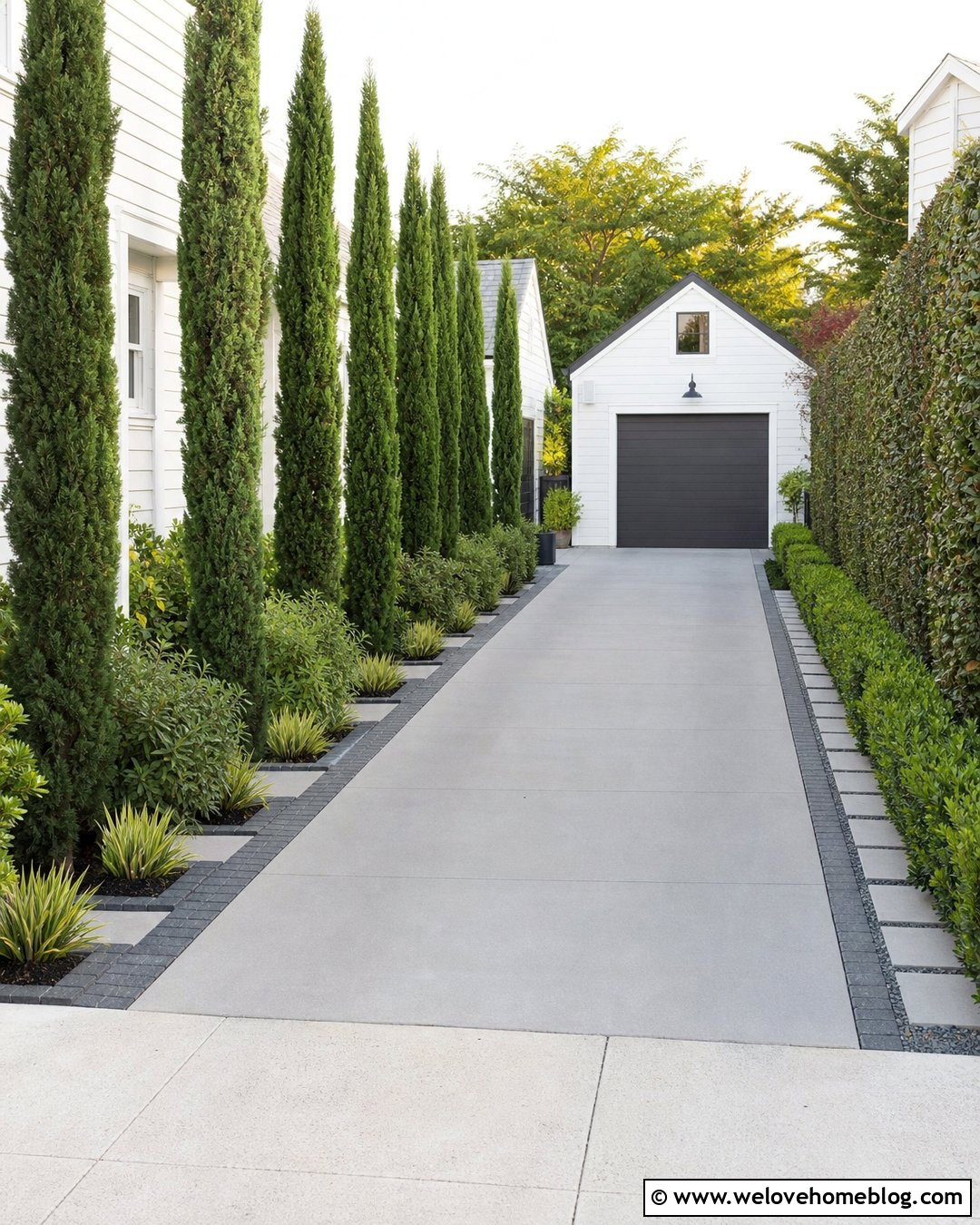
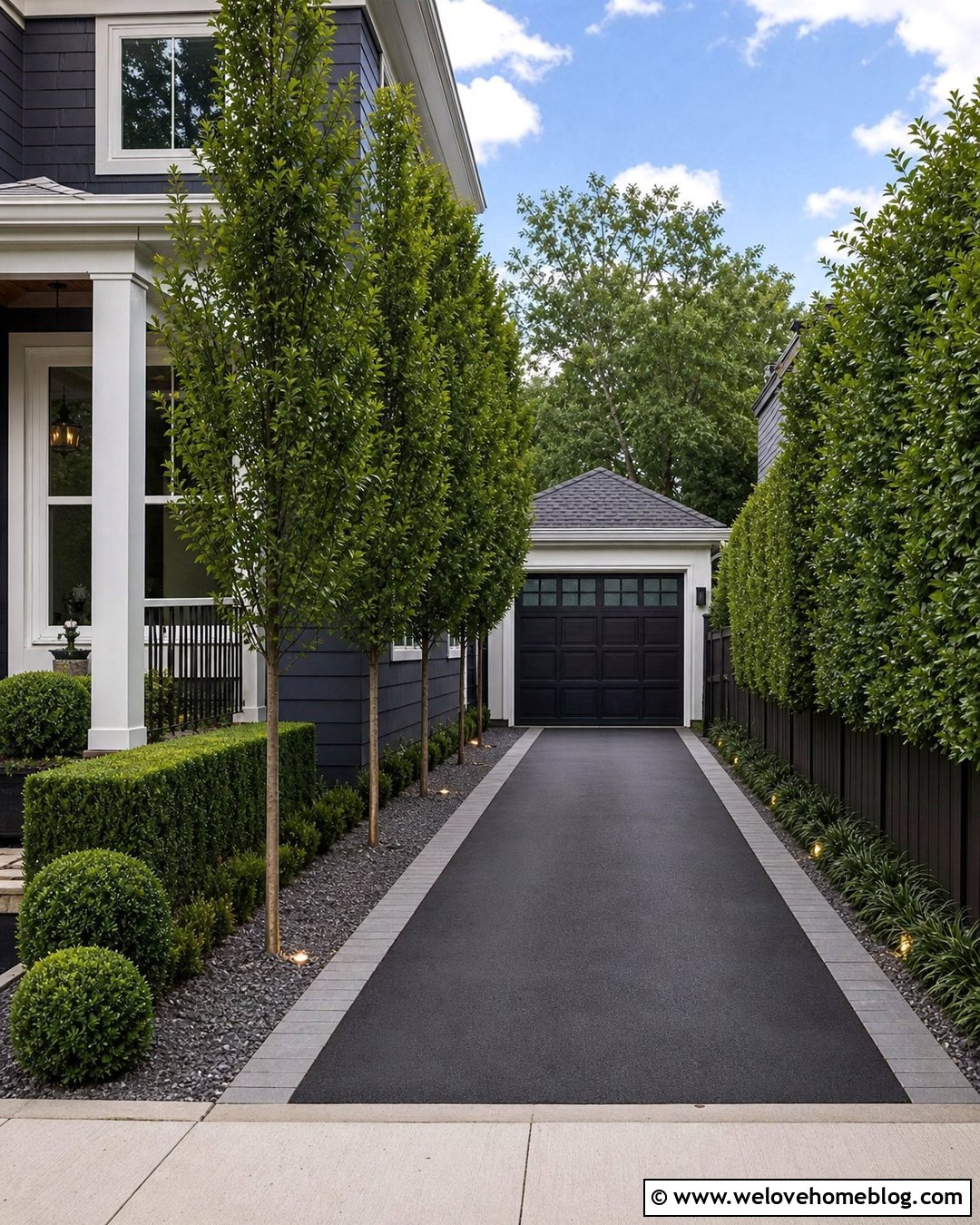
When space is limited, a row of trees on one side can still give a narrow driveway a strong landscaped identity. Use smooth gray concrete or compact interlocking pavers for the surface, with a slim dark border on both edges. Plant narrow, upright trees along the more spacious side and balance them with a low hedge, fence, or flower bed opposite. This keeps the driving lane open while creating a clear green rhythm. The design is practical beside urban cottages, side-entry garages, and compact suburban homes. Select trees with controlled mature width and roots suitable for the available planting area. Recessed planting pockets and a coordinated walkway can make the asymmetrical arrangement look intentional rather than like an incomplete double row.
34. Tree Tunnel Cobblestone Driveway
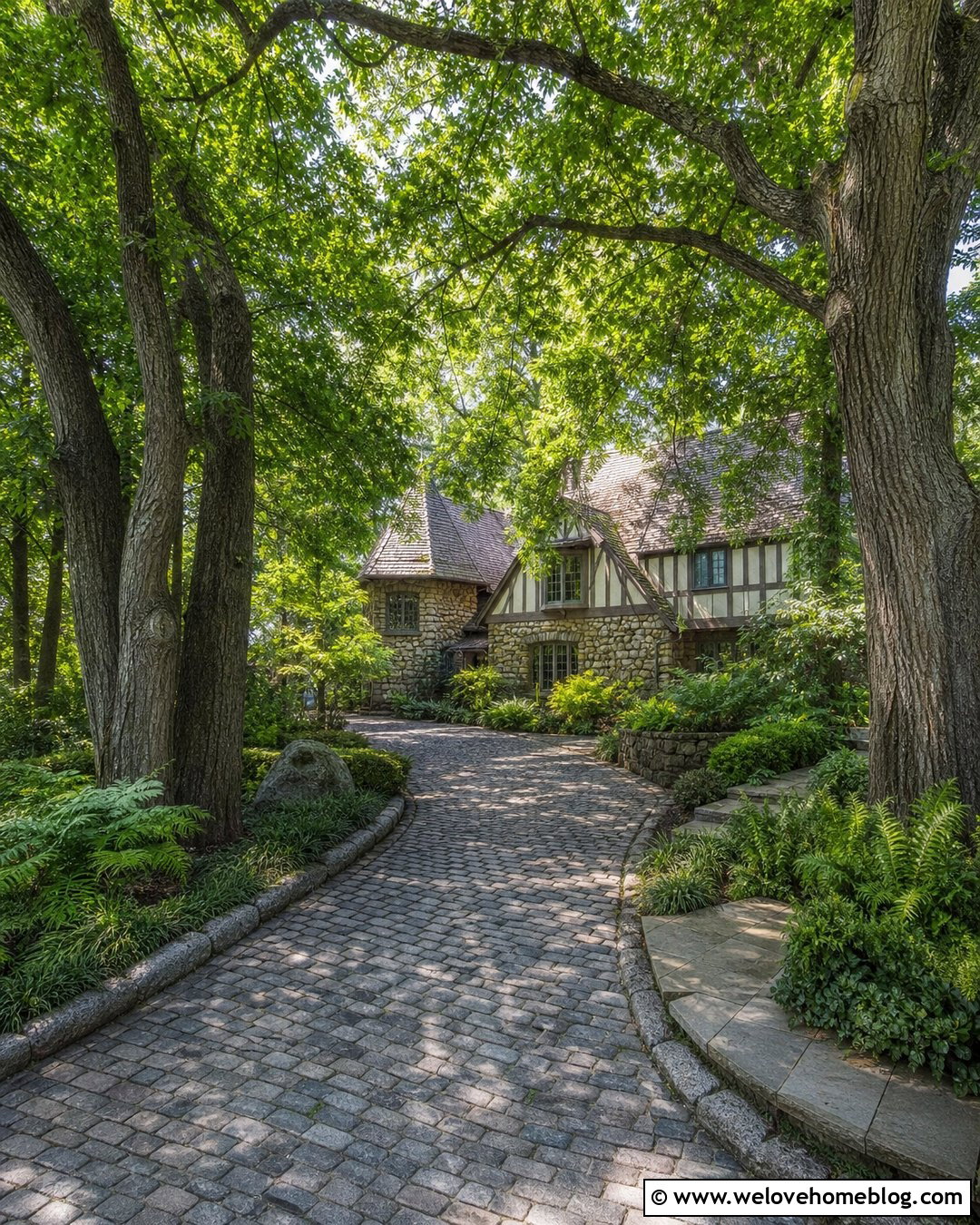
Mature trees arching over a cobblestone driveway can create a memorable tunnel effect, especially on a long established property. Use irregular gray cobbles or granite setts with strong stone edging to handle the shaded, leafy setting. Allow broad planting zones between trunks and pavement, then fill them with ferns, woodland grasses, and shade-tolerant ground covers. The driveway should curve slightly so the house appears gradually beyond the canopy. Stone cottages, Tudor homes, and rustic estates suit this atmospheric design. Avoid forcing young trees into excessively close spacing simply to achieve quick enclosure. A healthy tunnel develops over time. Regular canopy inspection, branch clearance, leaf removal, and surface maintenance help keep the romantic appearance safe and practical for daily use.
35. Tree Lined Circular Gravel Driveway
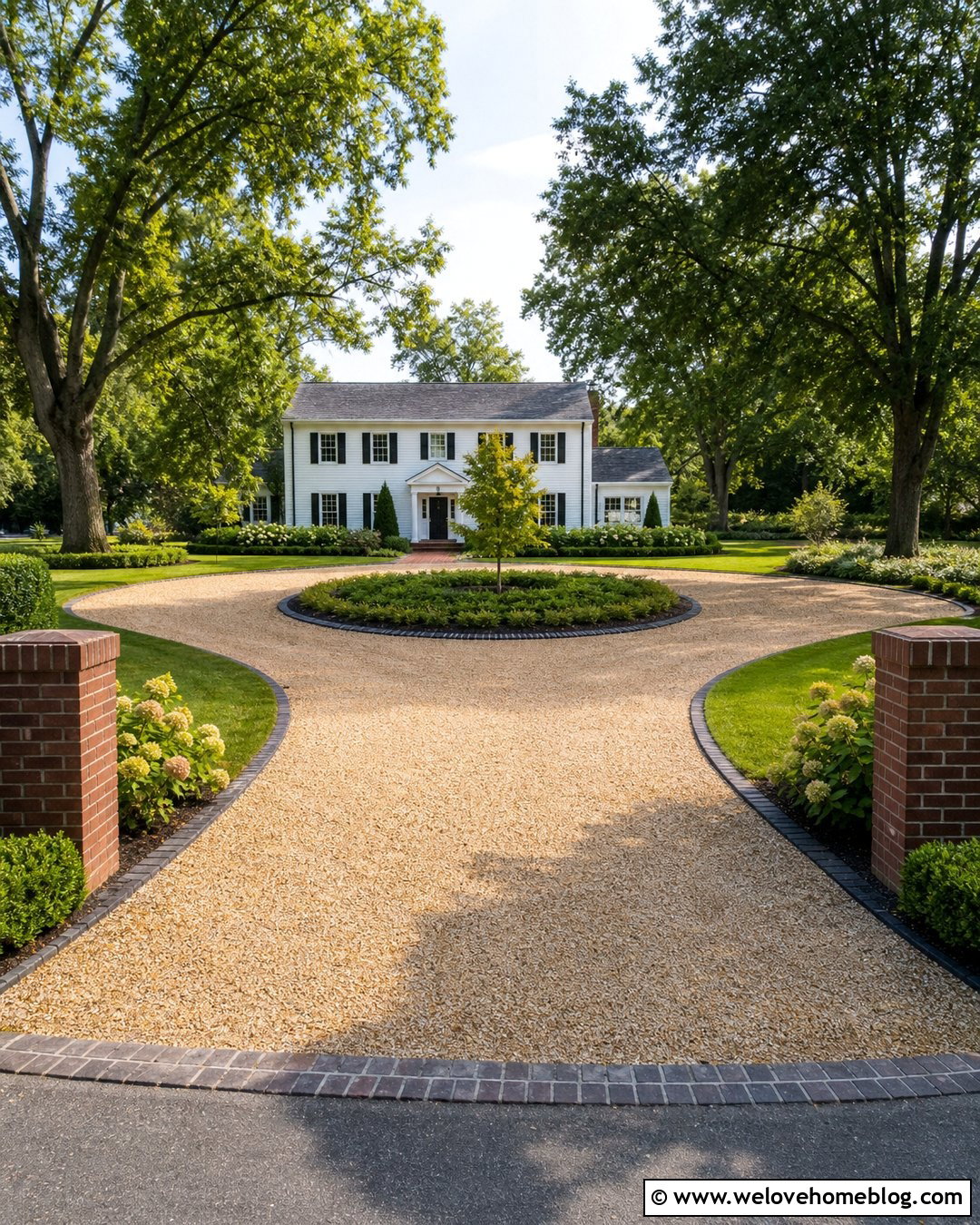
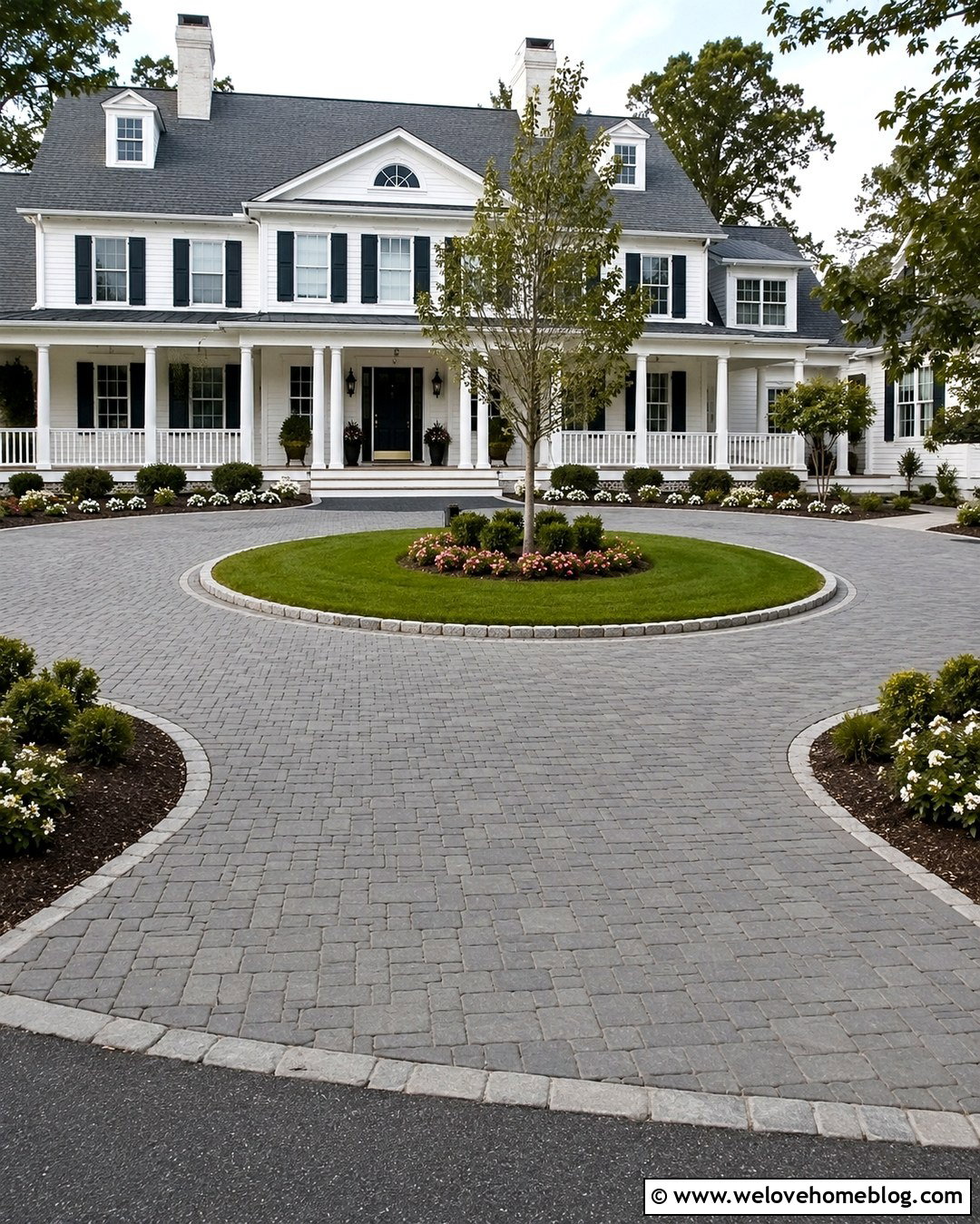
A circular gravel driveway becomes more integrated with the yard when both its outer edge and central island include thoughtfully placed trees. Choose fine buff gravel bordered by dark brick or granite setts. Plant larger trees around the outside curve, where their canopies have room to expand, and use one smaller ornamental tree in the center island. Low shrubs, flowering perennials, and lawn should preserve views across the circle. This complete layout suits farmhouses, colonials, and traditional country homes. Avoid positioning trunks where they interfere with turning movements or passenger doors. The tree pattern should reinforce the circular geometry without becoming perfectly crowded. Matching entrance pillars and a brick walkway can connect the driveway to the front door.
36. Gated Tree Lined Brick Driveway
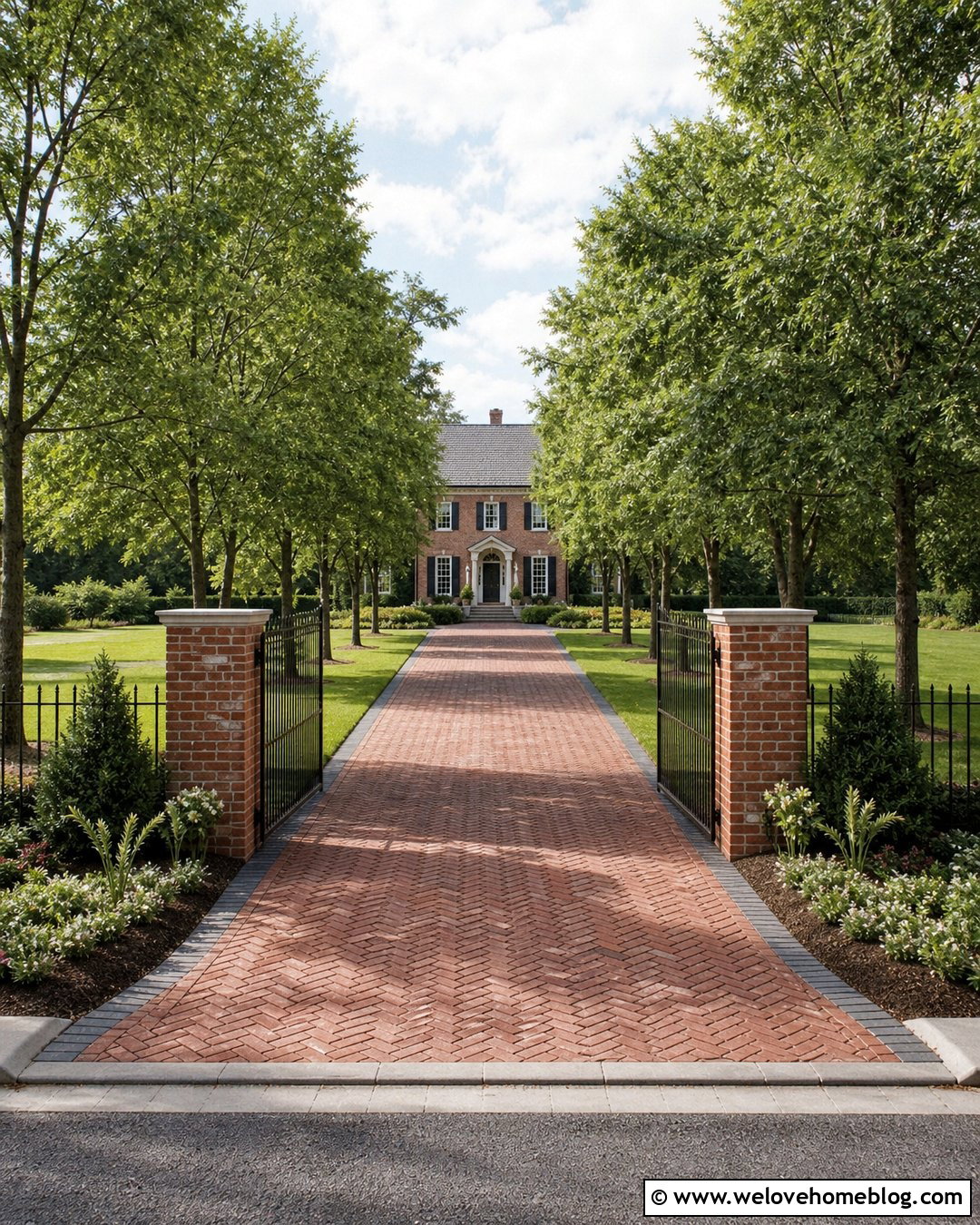
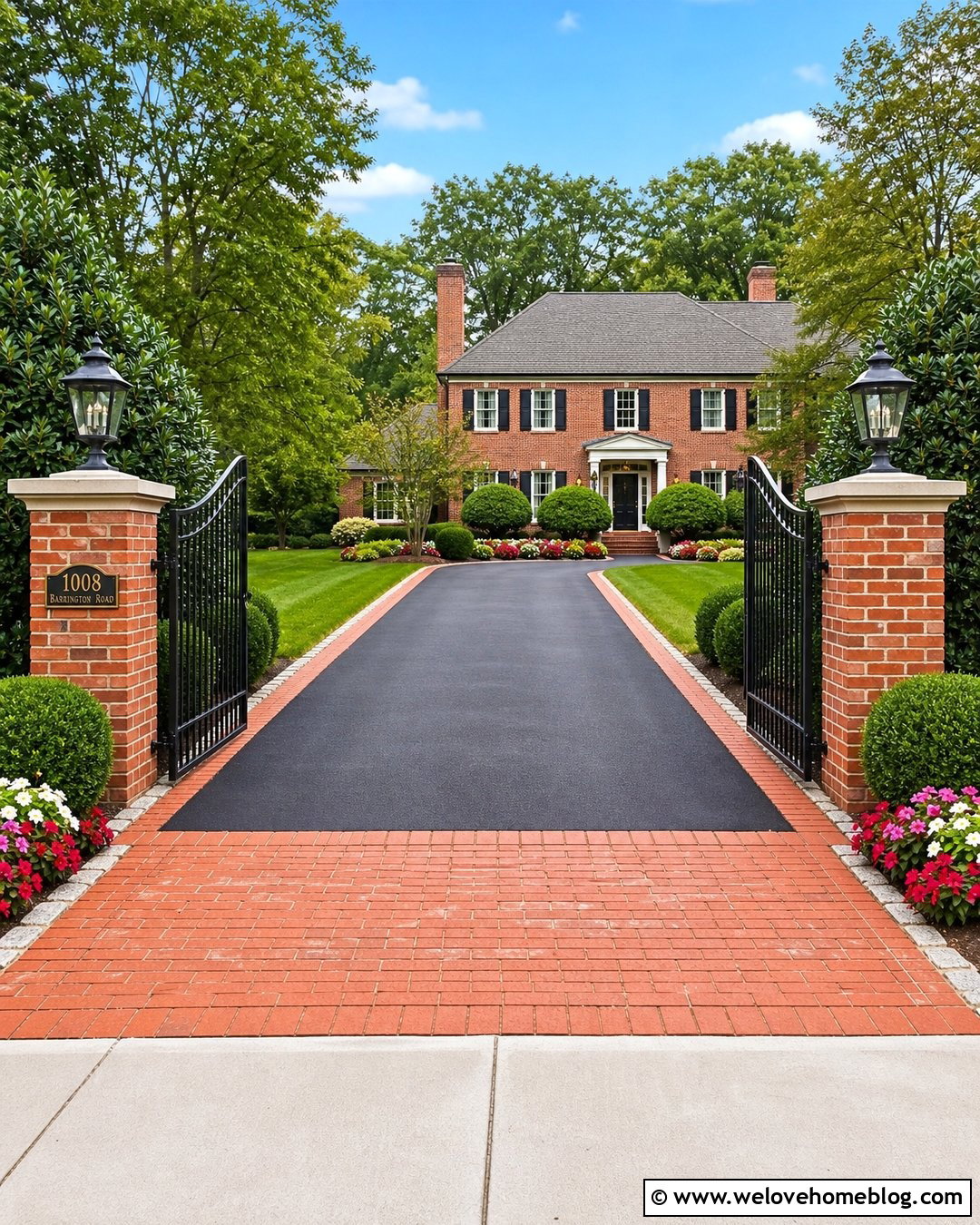
A gated brick driveway feels especially complete when the tree rows begin behind the entrance rather than competing with it. Use clay brick pavers in a herringbone pattern, with darker brick bands defining the edges. Stone or brick pillars can support a simple black metal gate, while evenly spaced shade trees continue toward the house. Keep plants near the road low to preserve visibility and make the entrance easy to navigate. Farther along the route, add broad lawns or restrained shrub beds beneath the trees. This formal composition works with Georgian, colonial, and traditional brick homes. Coordinate pillar materials with the house facade, and leave sufficient gate setback for vehicles to wait safely without blocking the public road or sidewalk.
37. Lighted Tree Lined Gravel Driveway
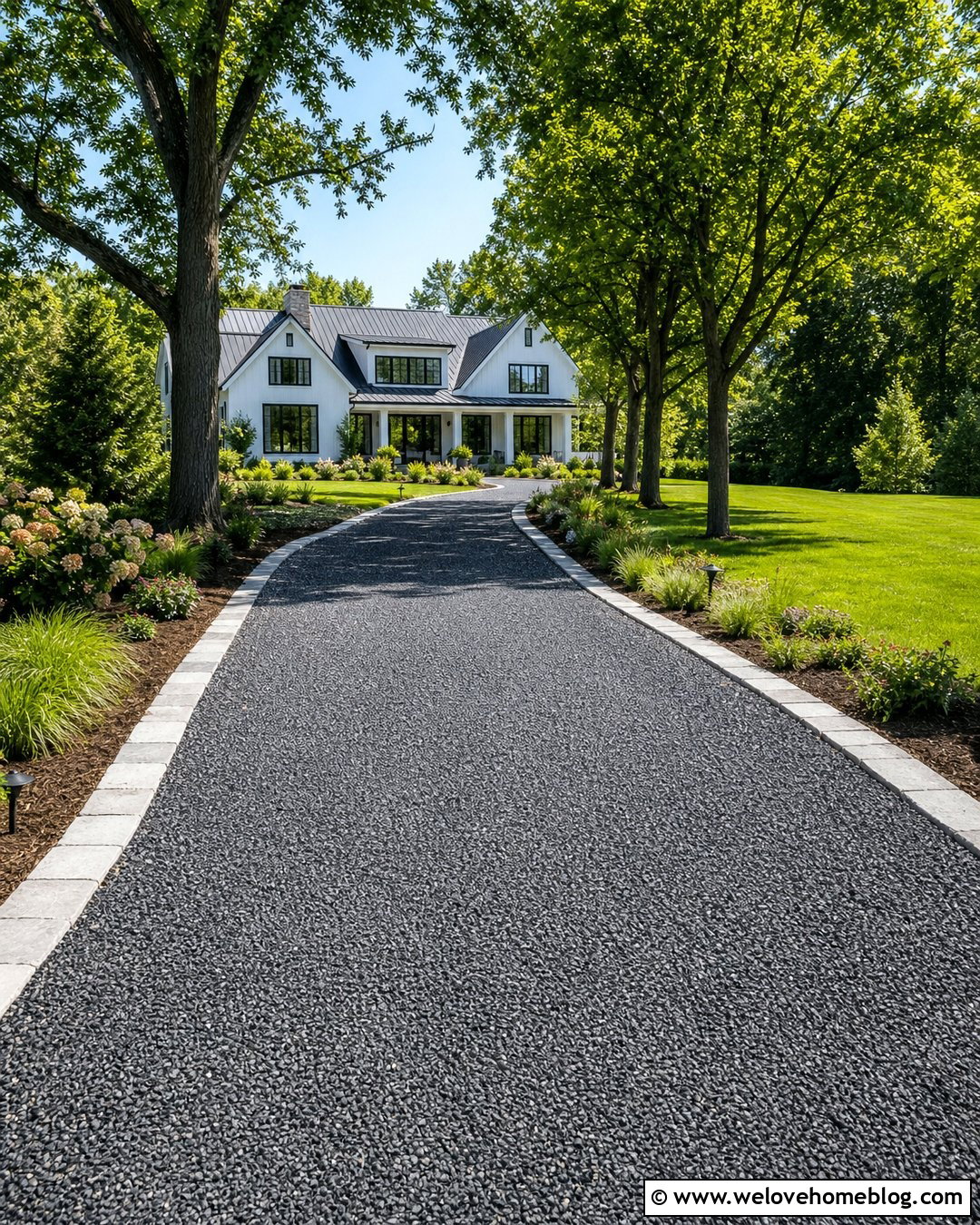
Landscape lighting can make a tree lined gravel driveway easier to follow while highlighting its structure. Start with compacted charcoal-gray crushed gravel and pale stone curbs for strong daytime definition. Install low-profile shielded fixtures near selected trees rather than lighting every trunk equally. The repeating pools of light should reinforce a curved or straight route without creating glare toward drivers or neighboring properties. During the day, wide planting beds with grasses, evergreen shrubs, and seasonal flowers maintain the complete look. This design suits modern farmhouses, mountain homes, and secluded contemporary residences. Conceal wiring before completing the gravel base and planting. Keep fixtures beyond tire paths, snow-removal zones, and mower edges so the system remains practical to maintain.
38. Evergreen Tree Lined Asphalt Driveway
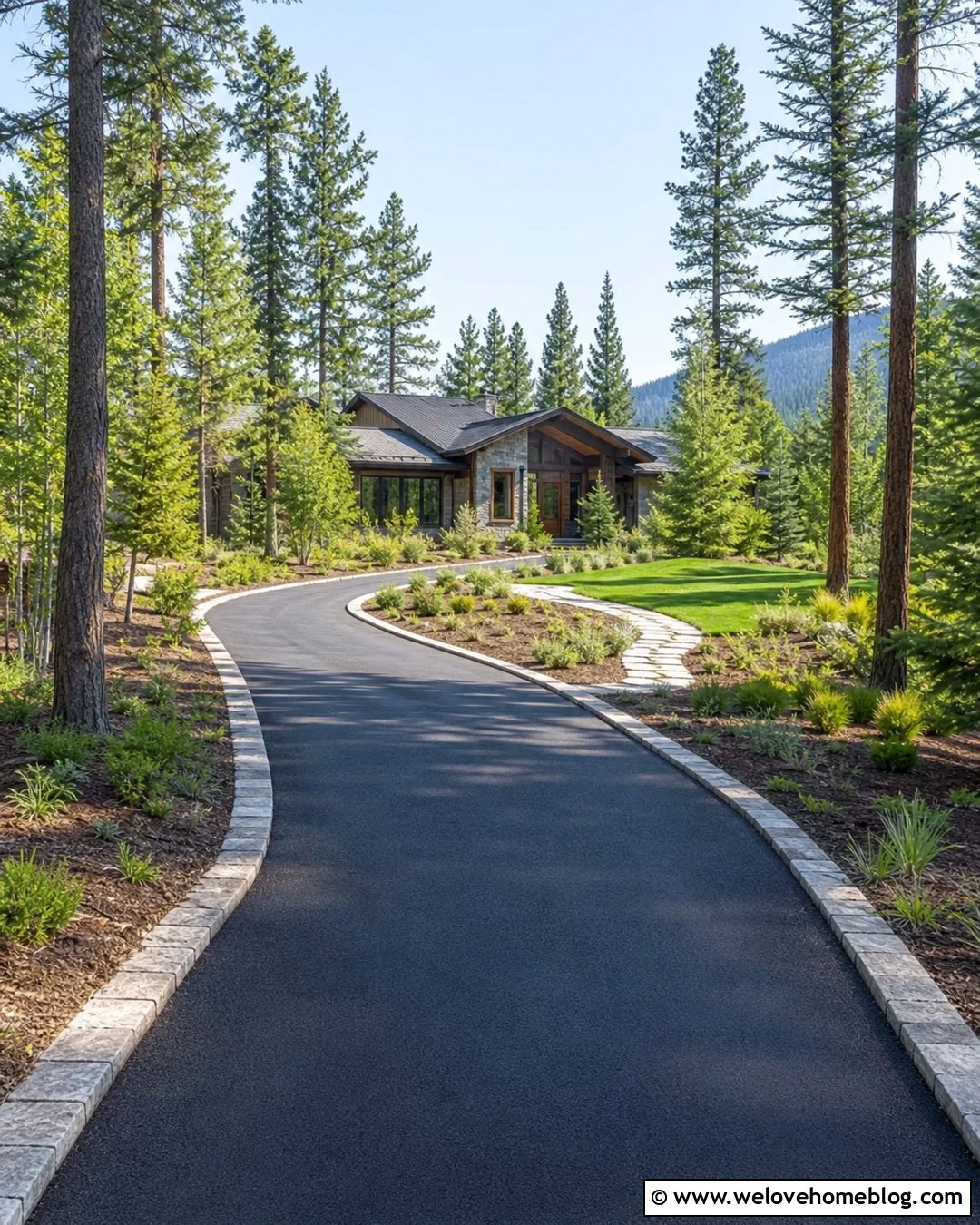
A low-maintenance evergreen avenue can provide year-round screening around a black asphalt driveway. Choose upright conifers with mature dimensions that fit the available width, then arrange them in relaxed rows with generous spacing. A light gray concrete or granite curb gives the asphalt a finished edge. Use broad mulched beds beneath the trees, supplemented with durable ground covers and a few ornamental grasses near the entrance. The dark green foliage complements ranch homes, mountain contemporary houses, and neutral modern farmhouses. Avoid planting an unbroken wall directly beside the pavement, which can reduce visibility and trap winter shade. Open gaps near intersections, curves, and garage doors make the route safer while keeping the overall landscape private and cohesive.
39. Flowering Tree Lined Resin Driveway
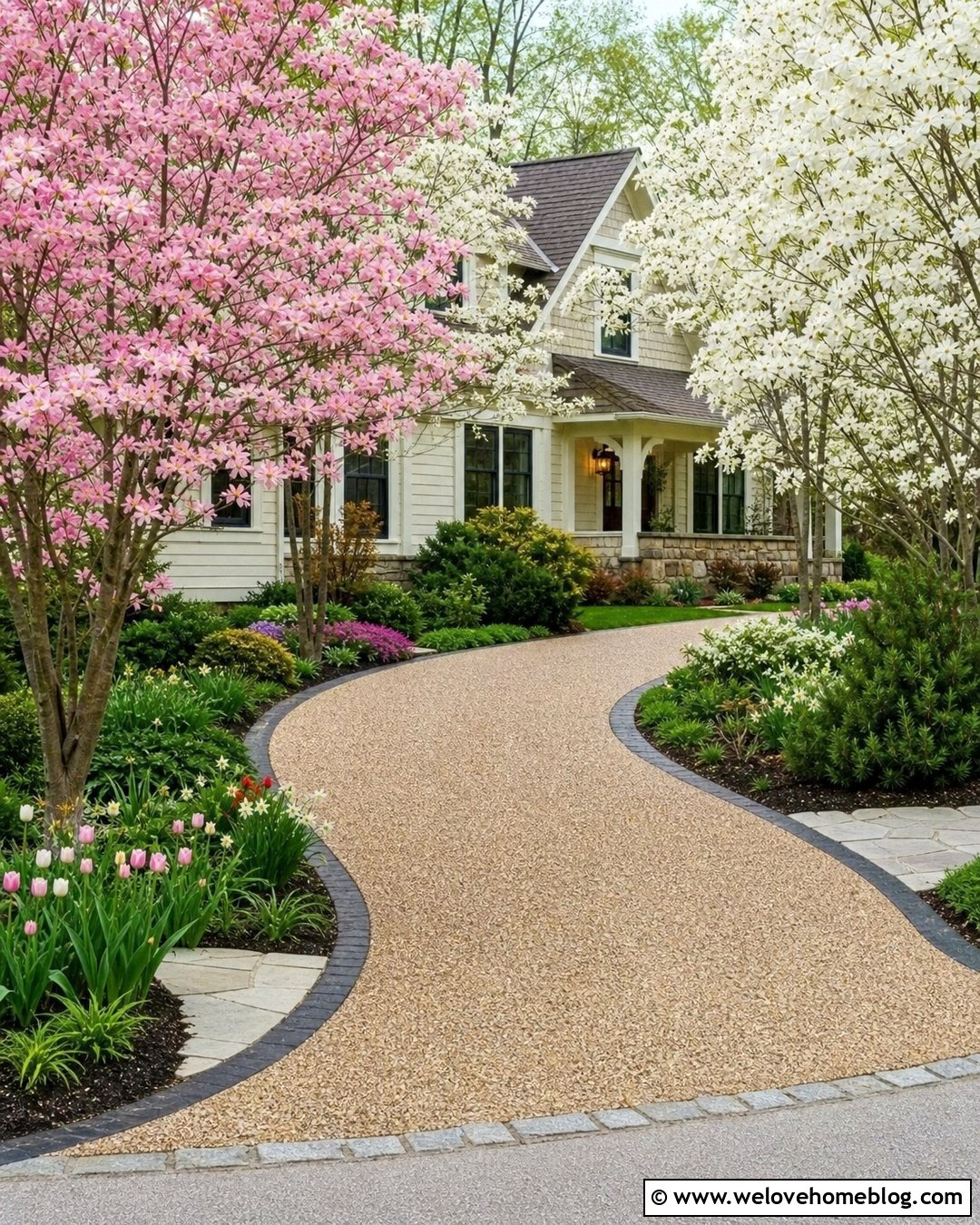
A resin-bound gravel driveway lined with mixed flowering trees can provide a long sequence of seasonal color. Use a pale natural-stone aggregate with a smooth dark border, allowing pink, white, and cream blossoms to stand out. Select two or three compatible tree species with similar mature sizes, then repeat them in an organized pattern rather than alternating every specimen. Curved planting beds can contain spring bulbs, low evergreens, and summer perennials. This complete look suits cottages, Craftsman homes, and light-colored suburban houses. Consider bloom times, fruit drop, disease resistance, and regional suitability before choosing the trees. Maintaining a consistent canopy scale and unified ground layer prevents the mixed planting from appearing busy or disconnected from the driveway.
40. Mature Shade Tree Lined Permeable Driveway
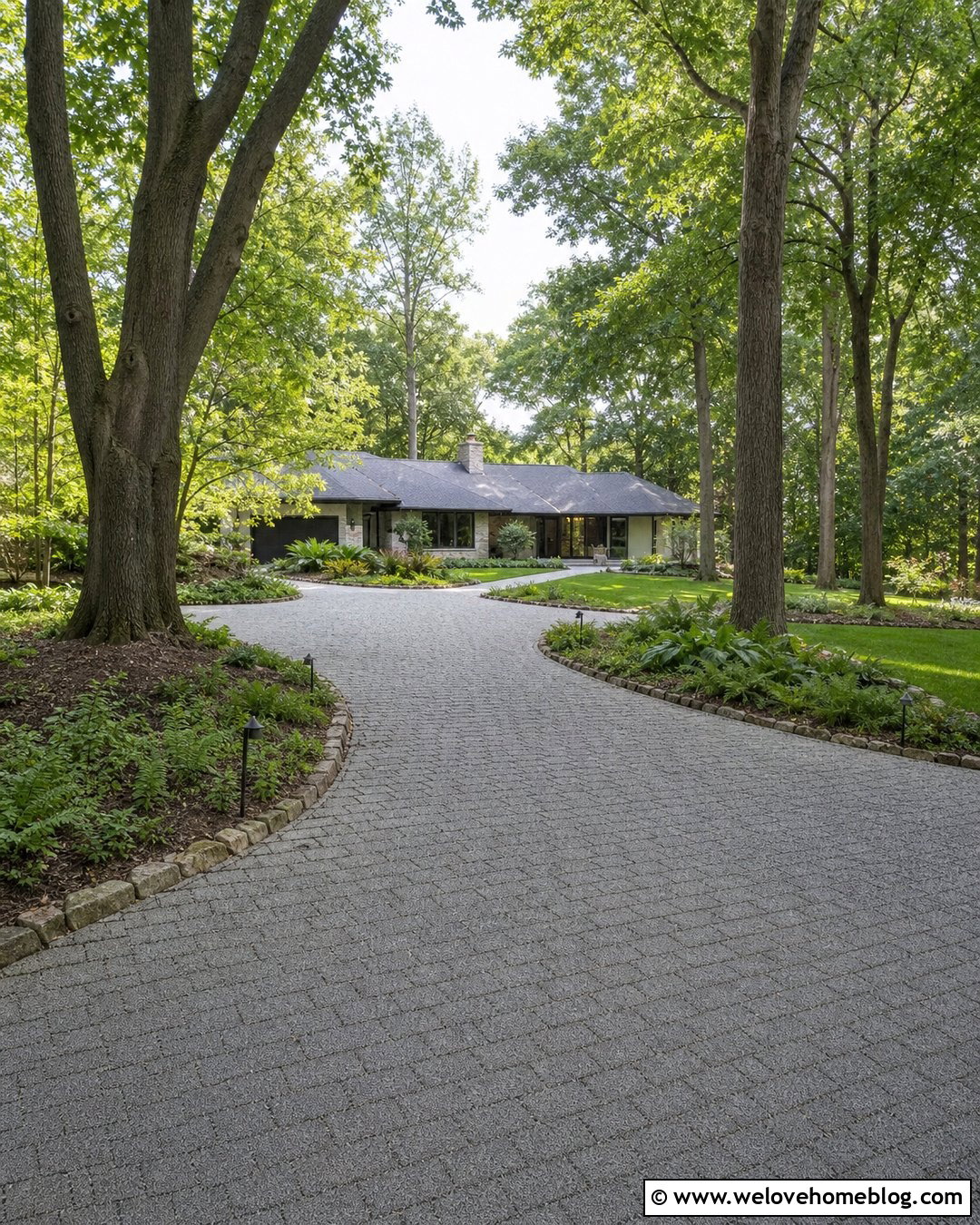
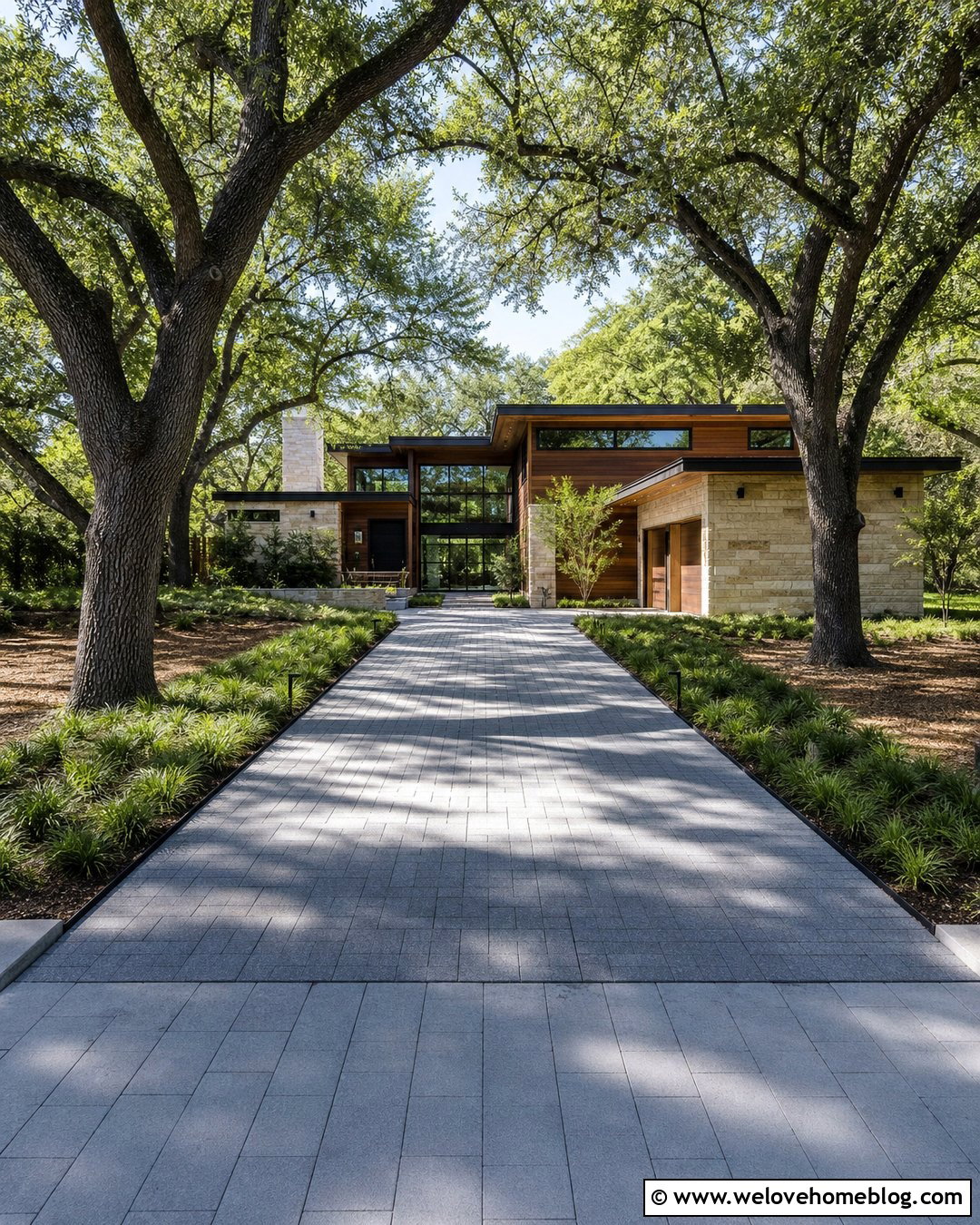
Existing mature shade trees can become the foundation of a redesigned permeable driveway. Instead of imposing a rigid line, curve open-joint concrete pavers around protected root zones and use gravel-filled joints to soften the surface. Add wide mulch beds, native ground covers, and low stone edging where roots make lawn difficult to maintain. An arborist and experienced contractor can help determine suitable construction methods near valuable trees. This natural layout works with renovated ranch homes, woodland houses, and contemporary architecture. Avoid raising soil levels against trunks or cutting major roots to force a straighter route. By letting the driveway respond to the trees, the finished landscape feels established, comfortable, and specific to the property rather than newly imposed.
Conclusion:
The strongest **40 Tree Lined Driveway Ideas** balance appearance with mature tree size, vehicle access, drainage, visibility, and long-term care. Begin with the conditions already present on your property, including sunlight, soil, climate, utilities, and available planting width. Then choose a driveway material and border that complement both the trees and the house. Formal rows create an elegant entrance, while staggered native plantings offer a softer, more natural result. Whatever look you prefer, leave enough room for roots and canopies to develop safely. Careful spacing may appear generous at first, but it produces a healthier, more attractive driveway that improves with every passing season.

Related posts:
Leave a Reply