
A well-landscaped driveway does more than connect the street to your garage. It frames the house, guides visitors, protects lawn edges, and shapes the property’s first impression. These 20 along the driveway landscaping ideas combine practical surfaces with borders, planting beds, lighting, trees, and attractive entry details. The strongest designs treat the driveway and landscape as one complete feature rather than separate projects. Defined edging can keep materials contained, while layered plants soften large paved areas and create a more welcoming approach. () Whether you have a short concrete drive, a long gravel lane, or a curved paver entrance, there is an option for your space, climate, and maintenance needs. Explore these 20 along the driveway landscaping ideas.

1. Concrete Driveway With Low Evergreen Borders
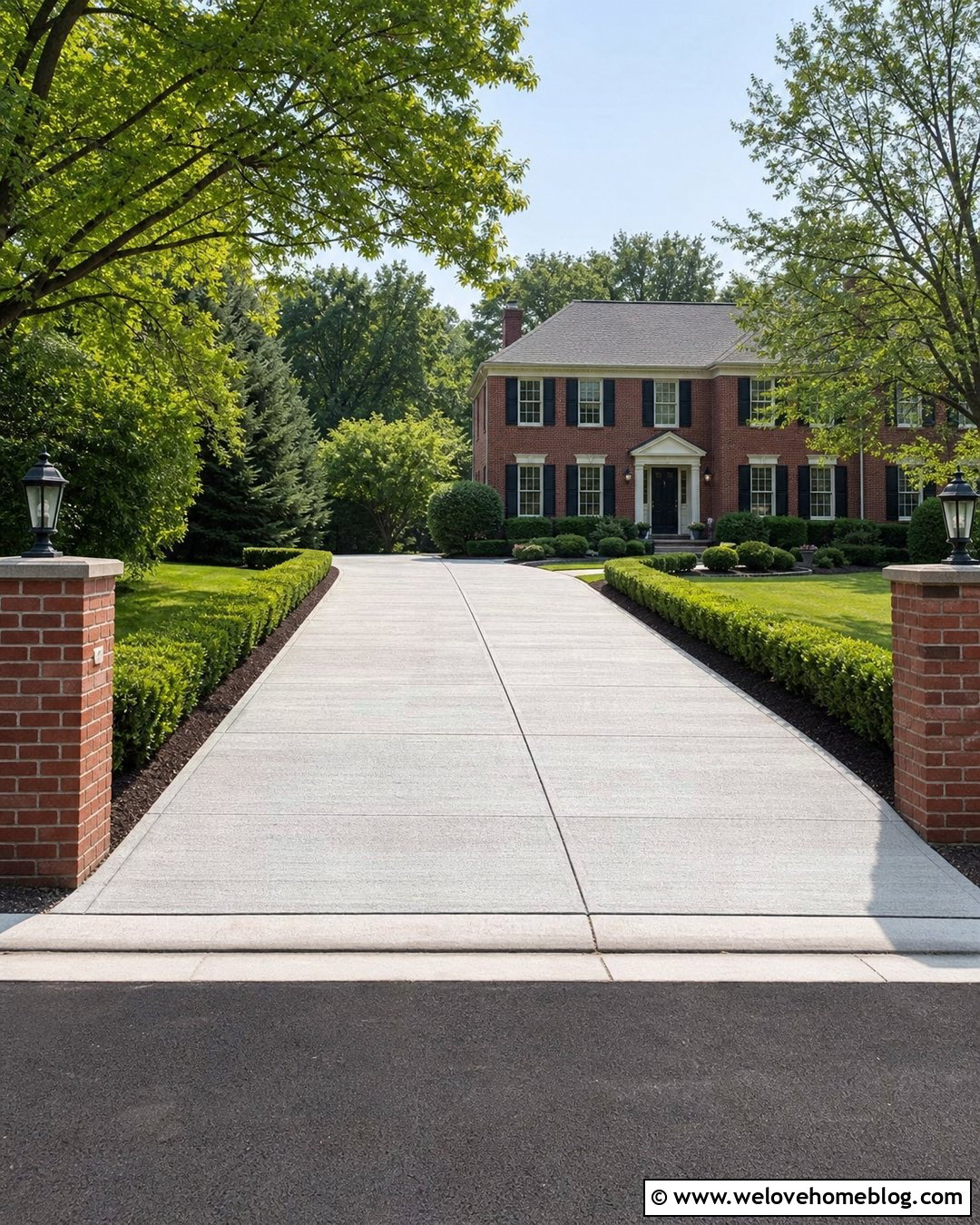
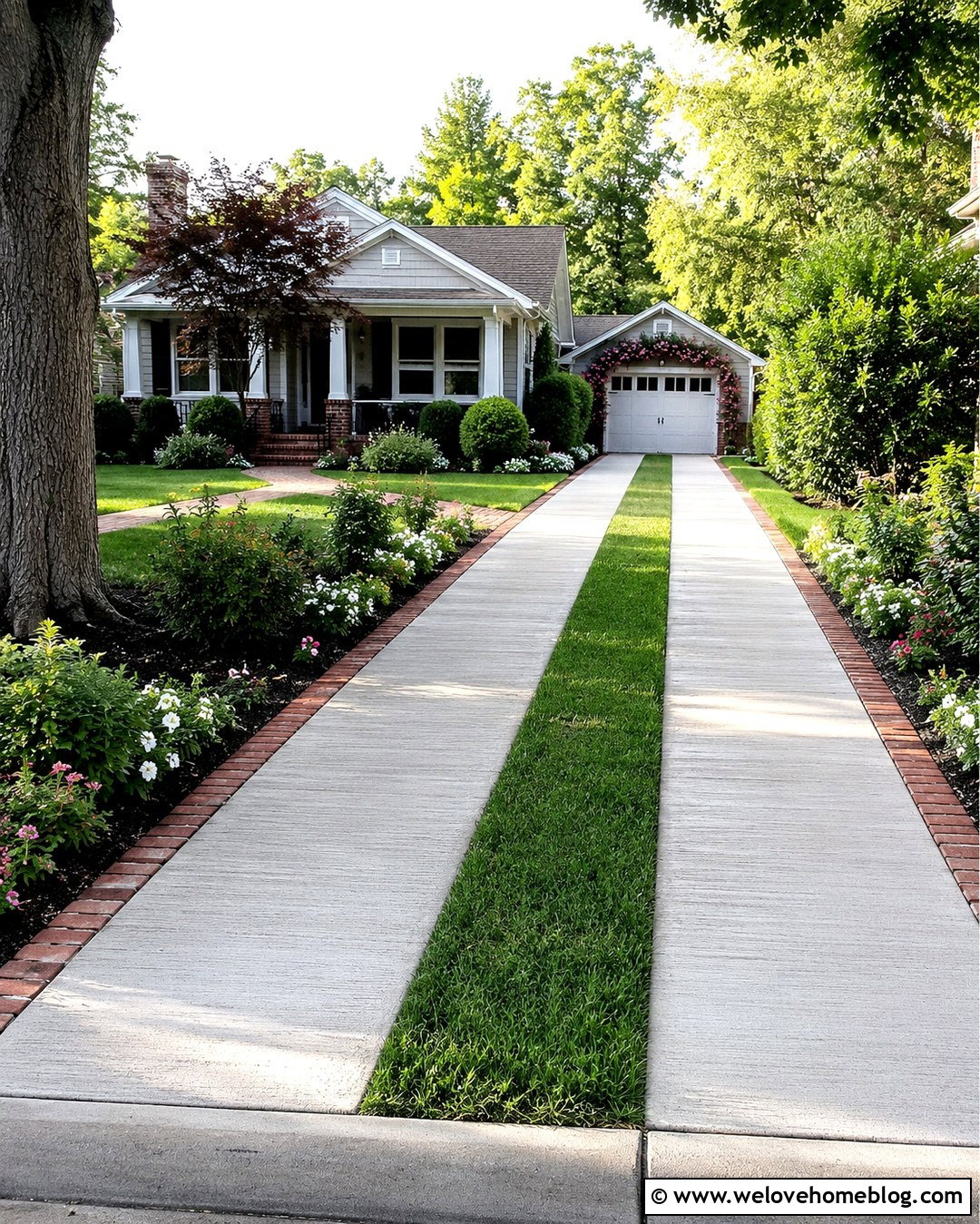
A straight concrete driveway looks cleaner and more established when compact evergreen shrubs run along both sides. Choose slow-growing varieties that stay below car windows and do not spread into the driving area. A narrow bed of dark mulch creates contrast against light gray concrete, while steel or concrete edging keeps the boundary sharp. Leave a small setback between the plants and pavement so doors can open easily and passengers have room to step out. Repeating one shrub variety creates an orderly appearance that works especially well with colonial, ranch, and traditional homes. Add a few taller shrubs near the garage to connect the driveway border with the foundation landscaping without closing off the view from the street.
2. Gravel Driveway With Lavender And Stone Edging
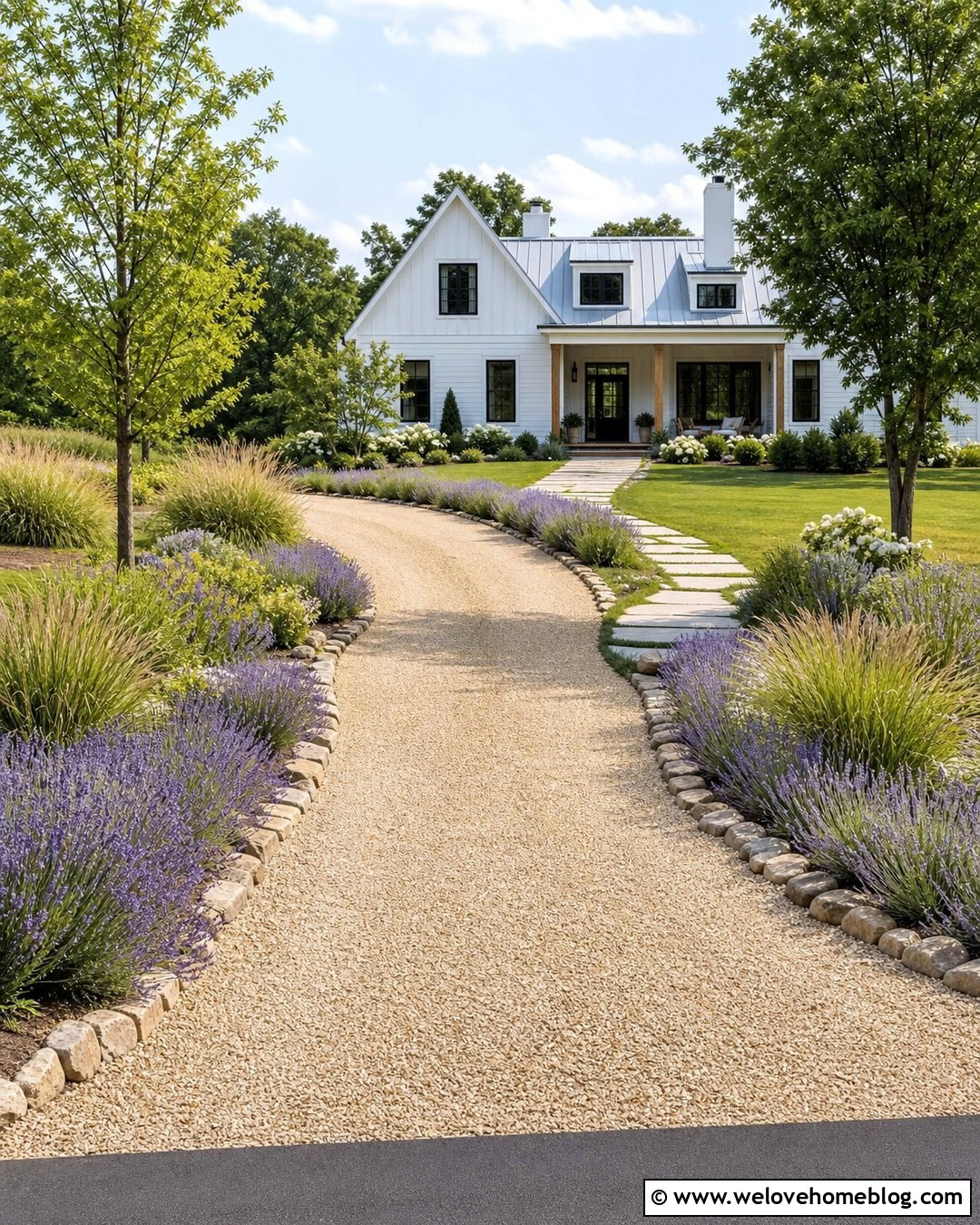
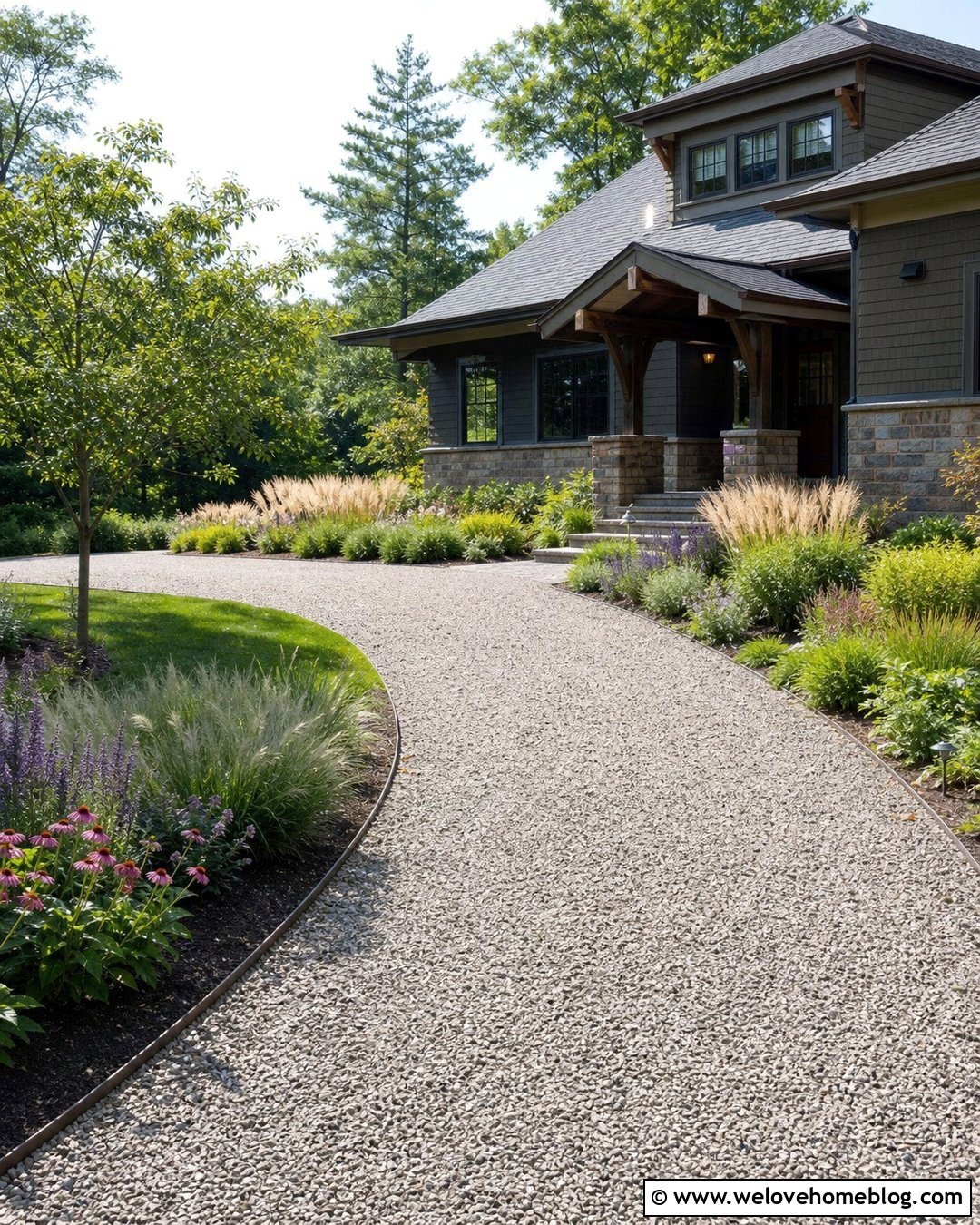
Imagine approaching a country home along warm gravel bordered by fragrant waves of lavender. This complete look pairs a gently curved pea gravel driveway with natural stone edging and sunny planting beds. Lavender provides soft color without hiding the driveway, while ornamental grasses can add movement between flowering groups. Use locally suitable drought-tolerant plants if lavender struggles in your climate. The stone border should sit high enough to contain loose gravel but low enough to avoid becoming a tripping or tire hazard. Allow extra planting space near curves, where sweeping beds can emphasize the driveway’s shape. This relaxed combination suits cottages, modern farmhouses, and rustic properties, particularly when the gravel color complements the home’s stonework or siding.
3. Asphalt Driveway With Ornamental Grass Borders
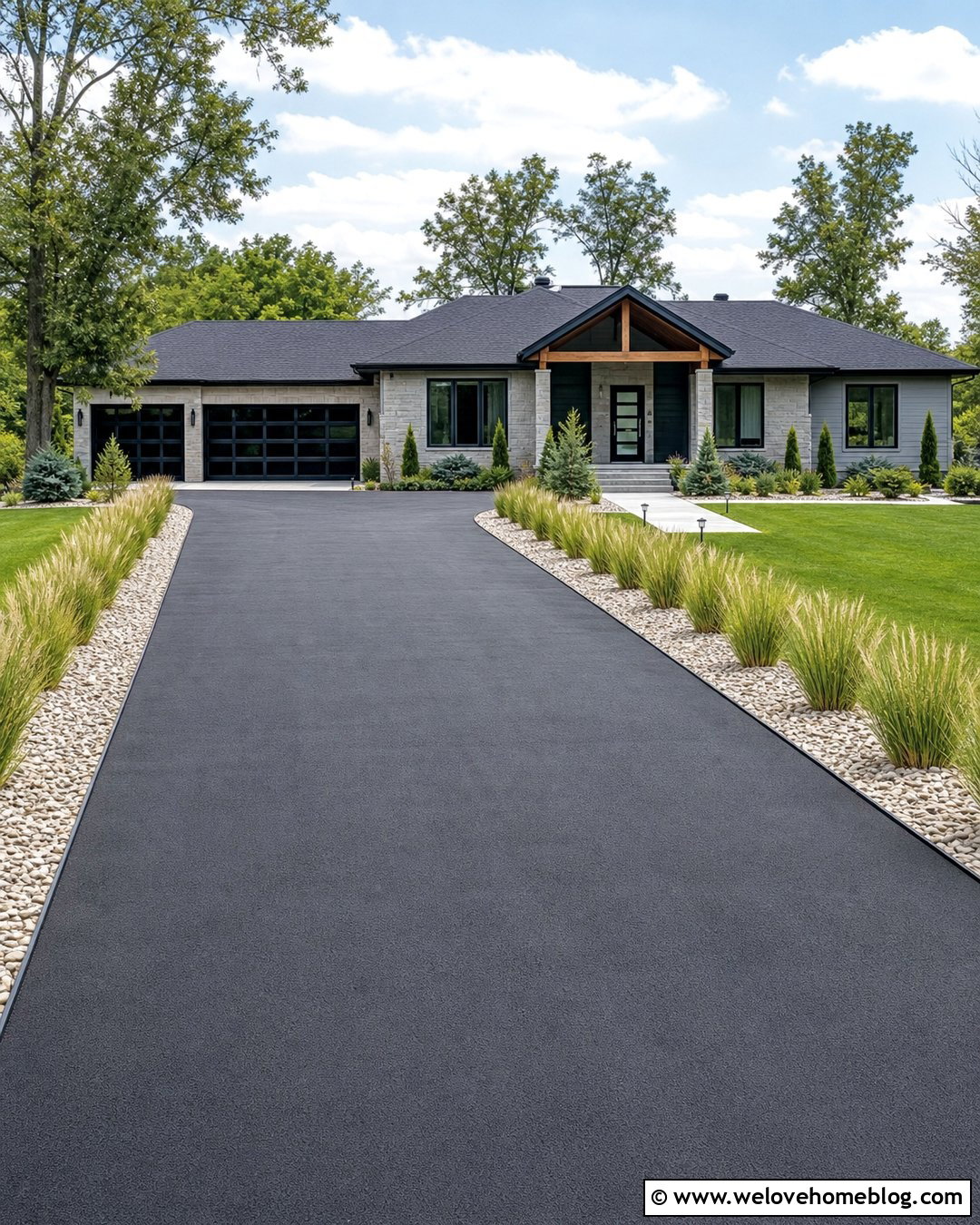
Could a basic black asphalt driveway feel modern and landscaped? A border of upright ornamental grasses can soften its dark surface while creating a strong, rhythmic line toward the house. Select compact grasses that remain tidy and position them behind a band of river rock or pale gravel. The lighter stone provides contrast, separates foliage from hot pavement, and simplifies edge maintenance. Space the grasses evenly for a contemporary home or plant them in staggered clusters for a more natural look. Avoid varieties that flop across the driving lane when mature. At the street, widen the beds and include a pair of low evergreen shrubs. This creates a noticeable entrance without blocking the visibility needed when backing out.
4. Paver Driveway With Boxwood And Hydrangea Beds
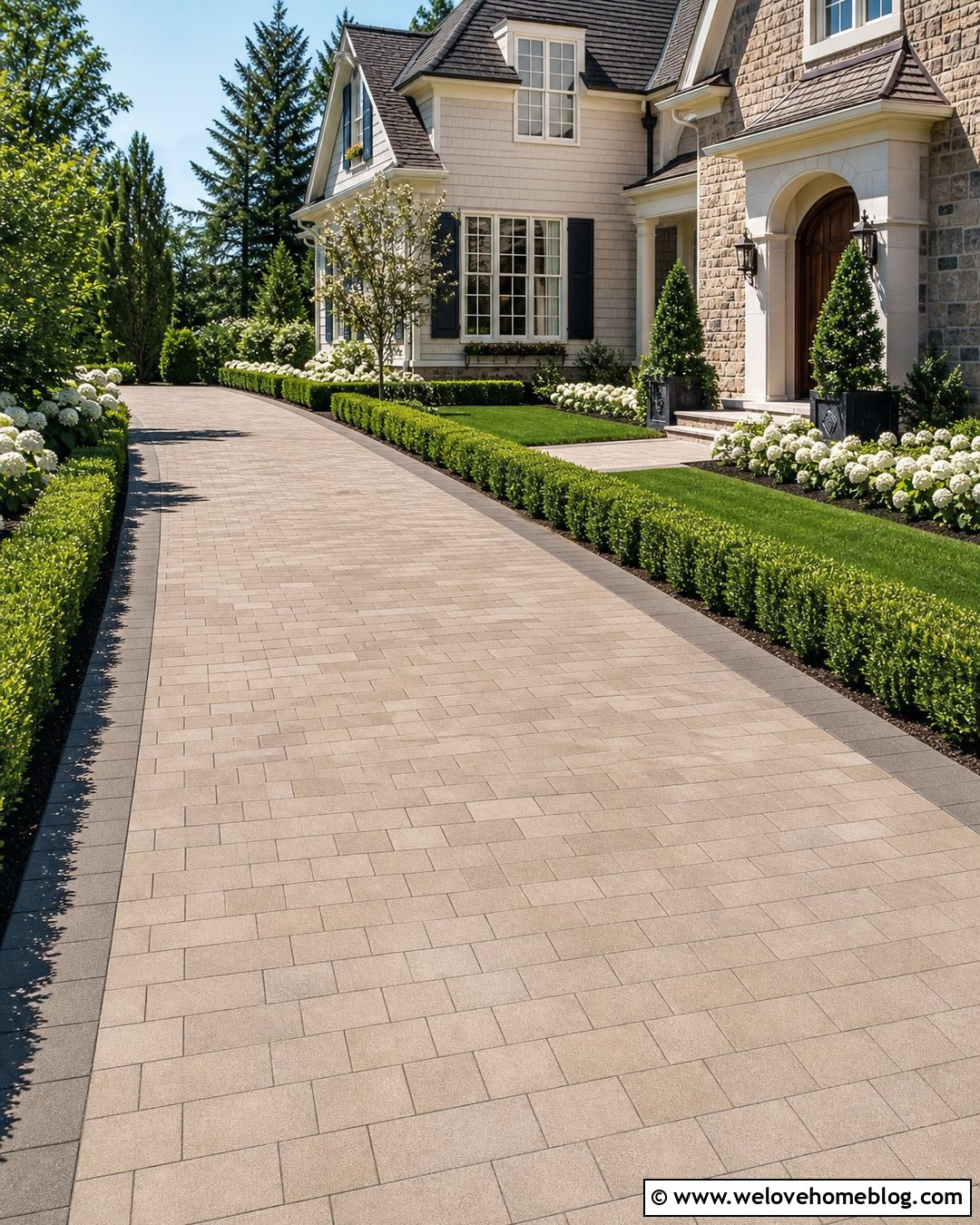
A paver driveway bordered by boxwood and hydrangeas creates a polished look with plenty of seasonal interest. Use clipped boxwood or another regionally appropriate evergreen to define the front edge of each bed. Place hydrangeas behind it, where their larger shape will not interfere with vehicles. A soldier-course paver border can connect the planting design to the main driveway surface and help establish a crisp transition. Choose flower colors that coordinate with the facade rather than competing with it. White blooms are especially versatile beside red brick, painted siding, or natural stone. Keep the landscaping lower near the street and gradually increase its height closer to the house. This makes the driveway feel open at its entrance but lush near the garage.
5. Long Driveway With Evenly Spaced Shade Trees
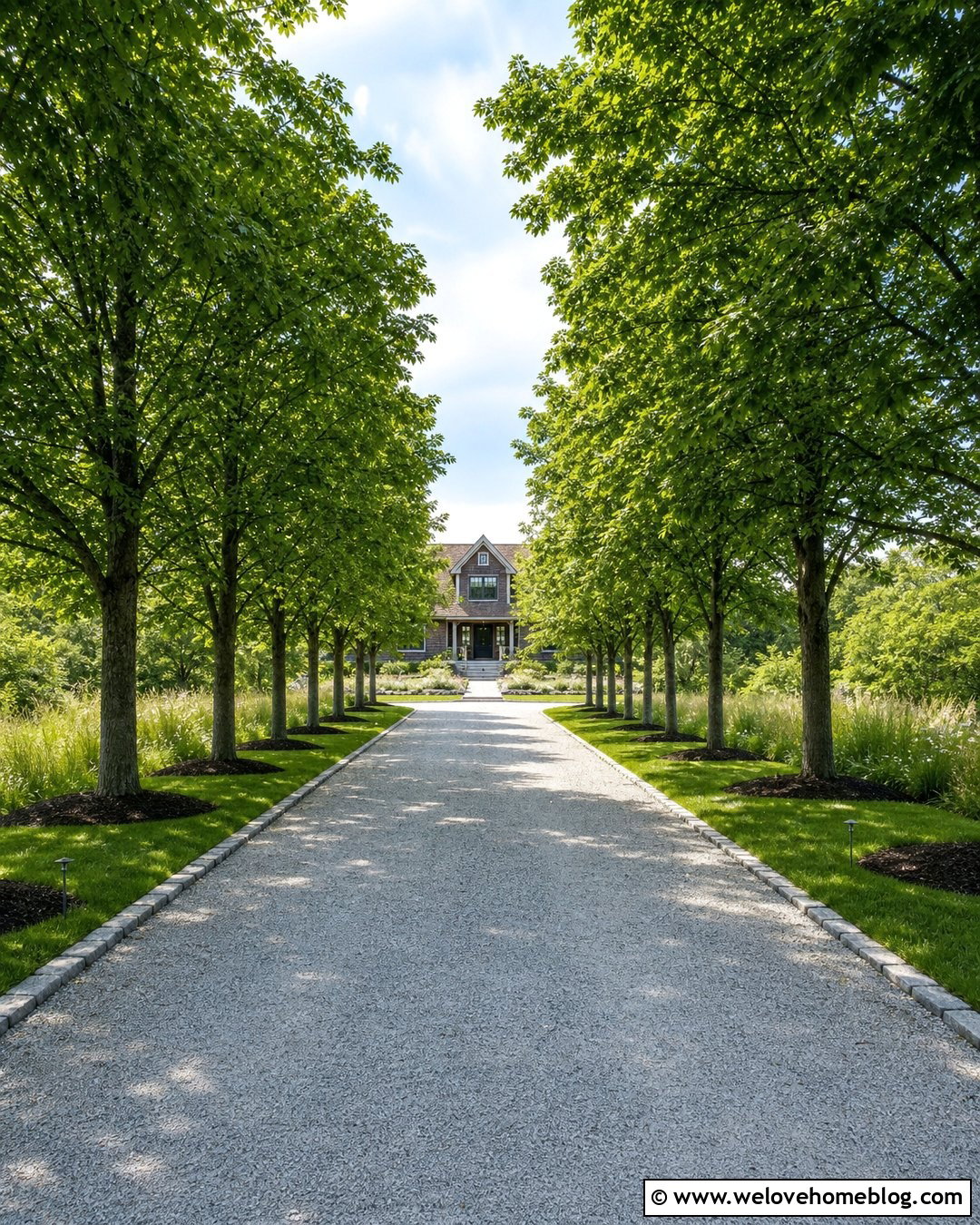
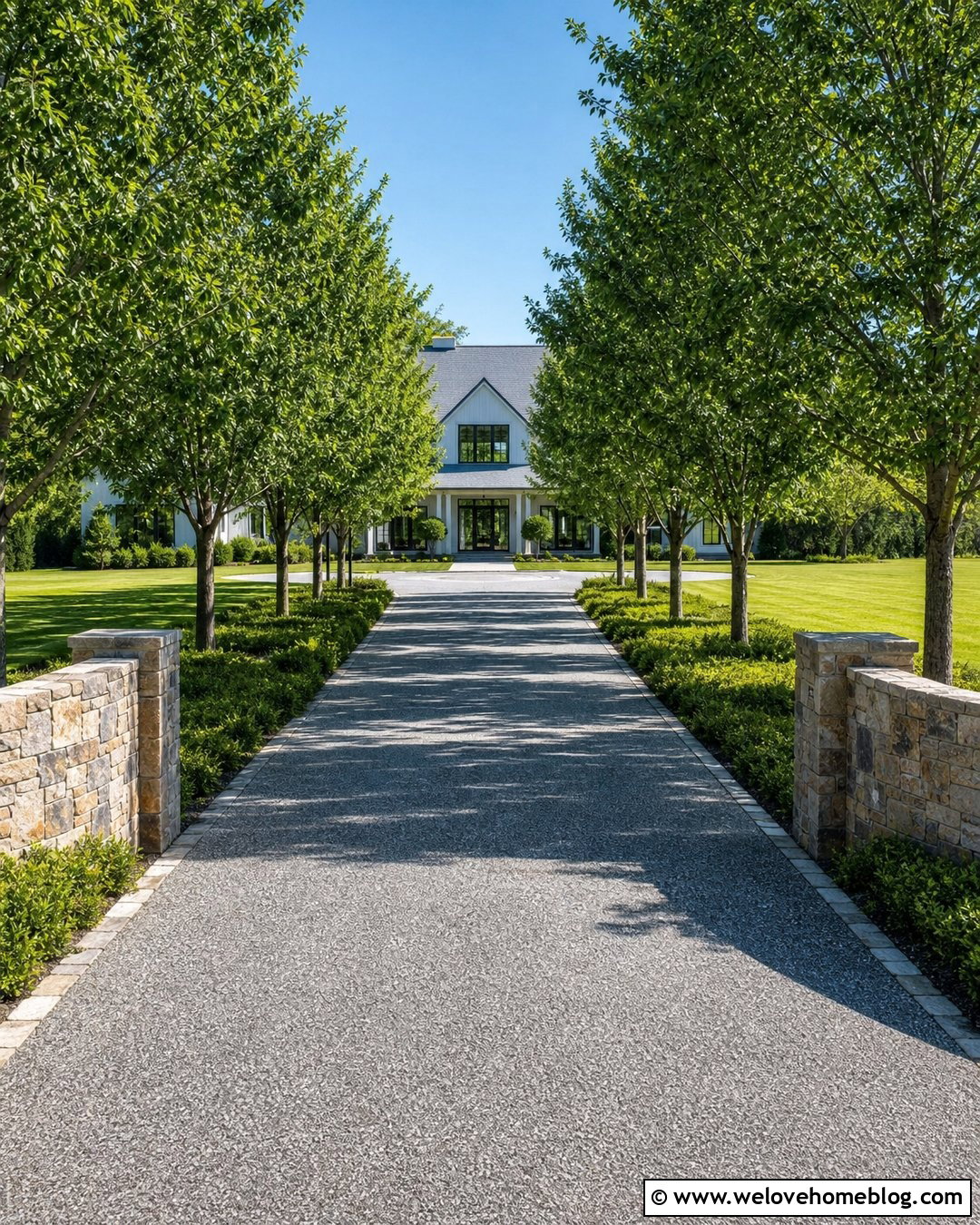
A long driveway offers enough space to create a memorable tree-lined approach. Plant matching deciduous trees at consistent intervals along both sides, setting them far enough back to protect roots, pavement, and vehicle clearance. The repeated trunks create visual rhythm, while the tree canopies add shade and a park-like character as they mature. Grass beneath the trees keeps the design simple, although narrow mulched circles can reduce competition around young roots. Consider the mature width, root behavior, overhead utilities, and local climate before selecting a species. On narrower properties, place trees along only one side and balance them with a low meadow or shrub border opposite. The finished driveway should guide the eye naturally toward the house rather than conceal it.
6. Curved Driveway With Layered Flower Beds
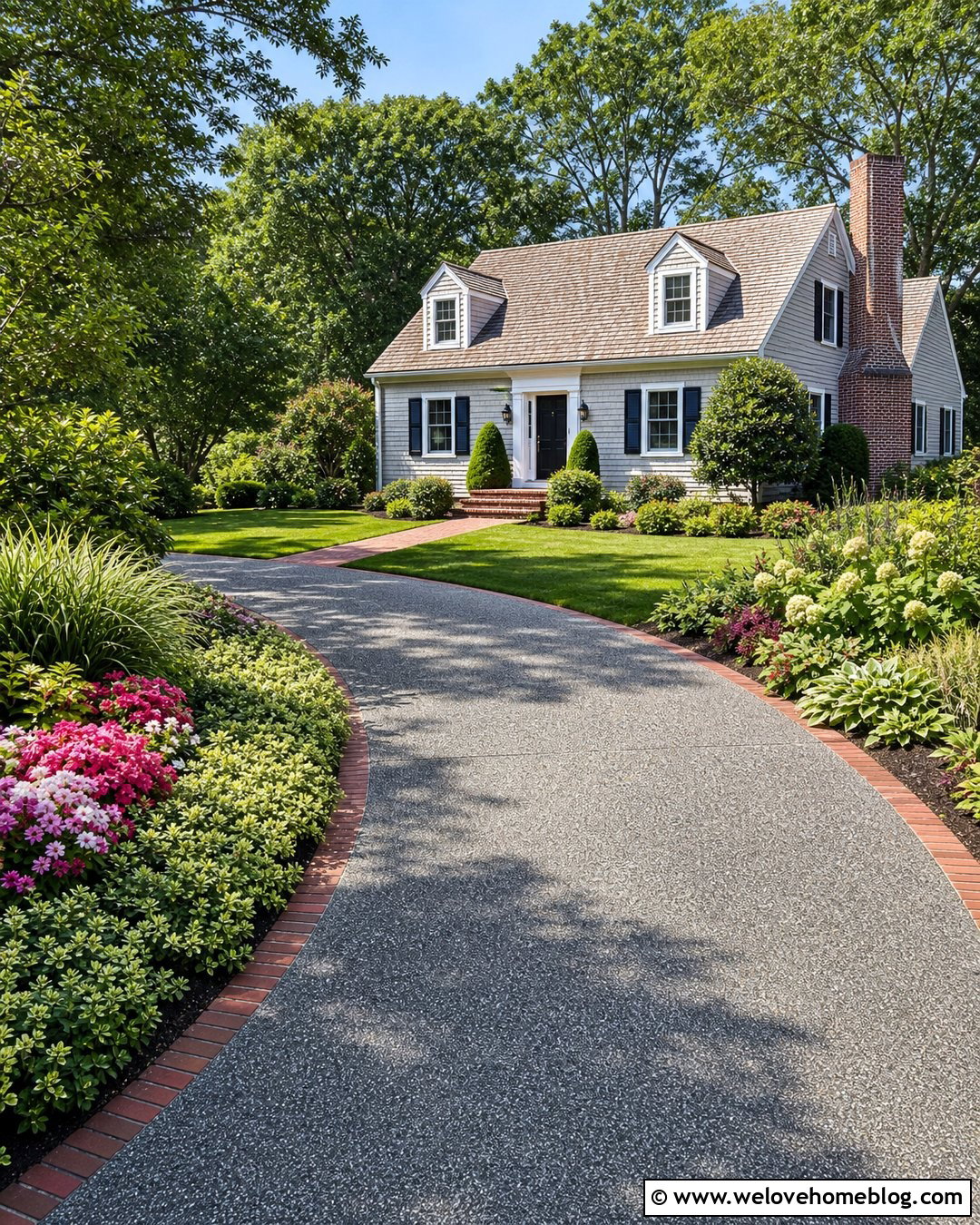
Curves become more noticeable when the surrounding landscaping follows the same flowing line. Along a curved concrete or asphalt driveway, create layered beds with ground cover at the front, flowering perennials in the middle, and compact shrubs toward the back. Repeat a limited selection of plants instead of filling the border with unrelated varieties. This keeps a long bed cohesive and easier to maintain. Place the fullest planting on the outside of the curve, where it can emphasize the driveway’s sweep without restricting the inside turning area. A brick or cobblestone edge gives the bed a finished boundary. Include open lawn between some sections if a continuous border would feel crowded. The result is colorful, balanced, and welcoming from the street.
7. Driveway Landscaping With Native Plants

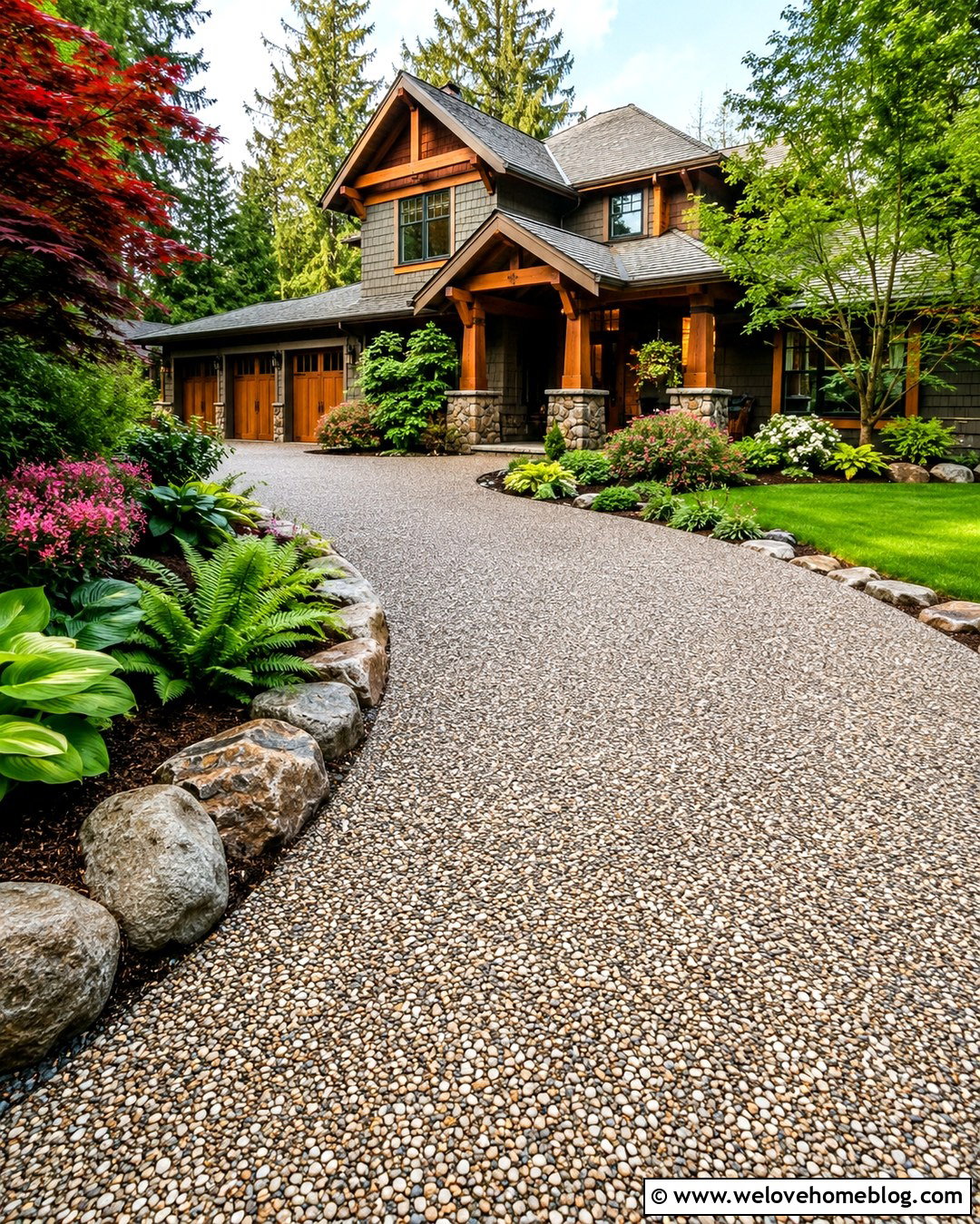
Native planting can make a driveway feel connected to the surrounding region rather than imposed on it. Pair an exposed aggregate driveway with broad, informal beds containing locally native grasses, flowering perennials, low shrubs, and one or two small trees. Arrange plants in repeated groups so the border looks intentional throughout the seasons. Keep taller species away from the driveway entrance and intersections where clear sightlines matter. A weathered stone edge or narrow gravel strip can stop foliage from spilling onto the pavement. Because native status and performance vary significantly by region, select plants suited to your specific soil, sunlight, moisture, and winter conditions. Regionally appropriate planting can also provide useful habitat while reducing the need for a highly formal landscape. ()
8. Driveway Border With River Rock And Succulents
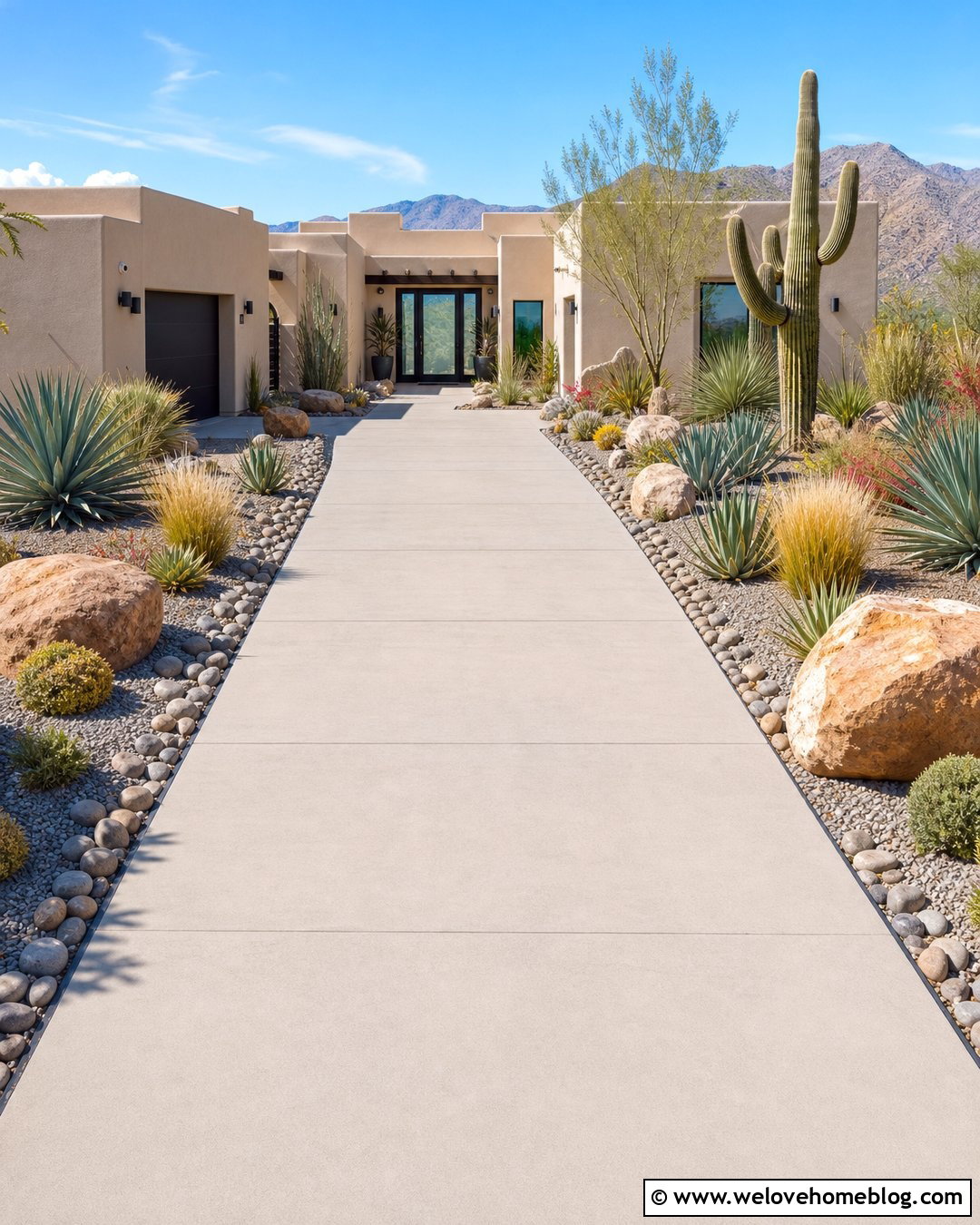
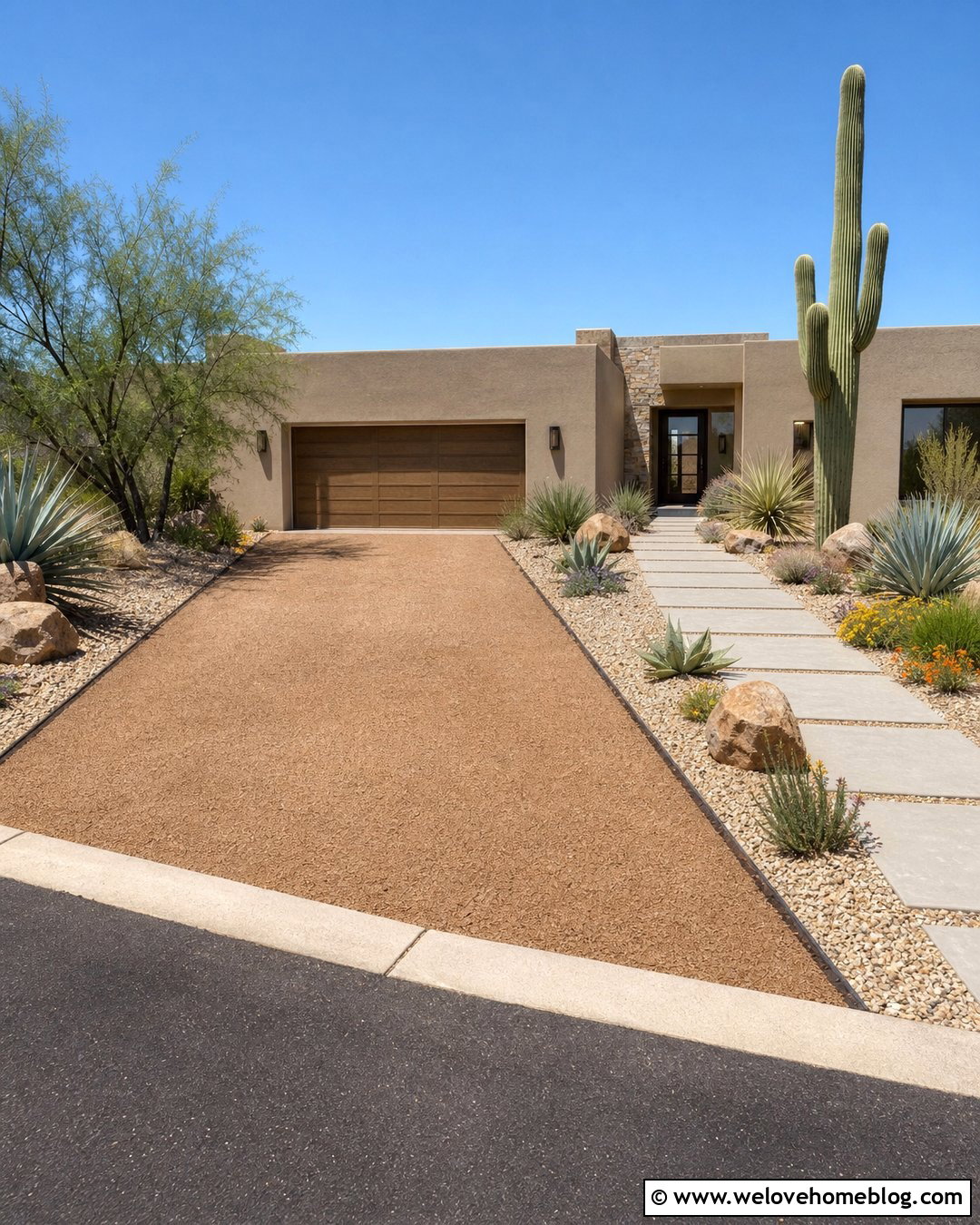
For a hot, dry front yard, combine a light-colored concrete driveway with river rock beds, sculptural succulents, and drought-tolerant grasses. Use rocks in two or three related sizes to create texture without making the border look busy. Larger accent boulders can anchor the widest sections, while smaller stones cover open soil. Position agaves, yuccas, sedums, or climate-appropriate alternatives far enough from the pavement to prevent sharp leaves from reaching cars and pedestrians. A steel edge between the concrete and rock keeps both materials neatly separated. This complete driveway landscape works well with desert modern, Southwestern, and contemporary houses. Repeating each plant several times creates a stronger composition than scattering many individual specimens across the border.
9. Brick Driveway With Cottage Garden Borders
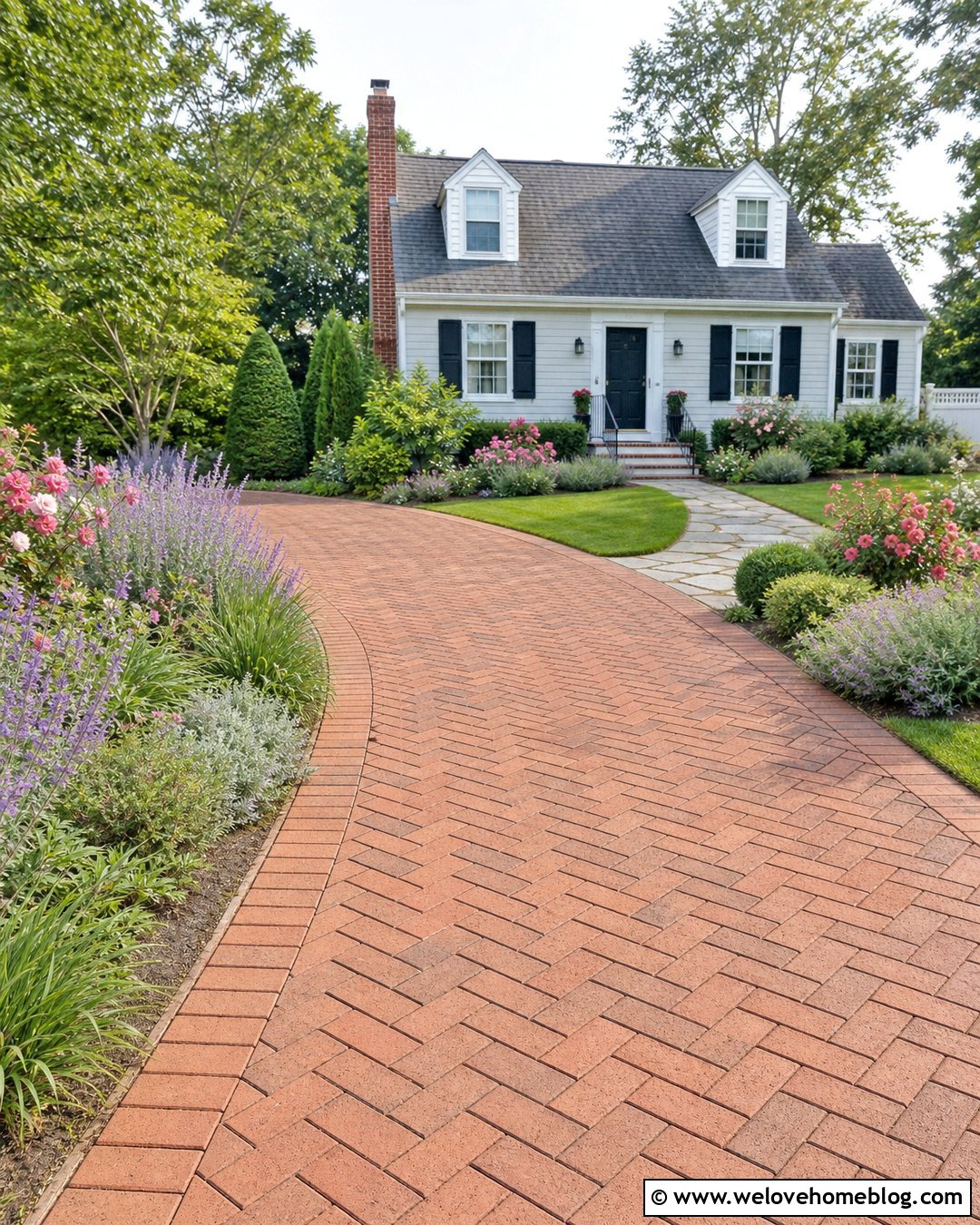
Clay brick pavers and abundant cottage planting create a warm entrance that feels established rather than overly formal. Frame a herringbone brick driveway with gently curved beds filled with roses, salvia, catmint, hardy geraniums, and compact ornamental grasses. Use a brick soldier course to contain the paving and visually connect the surface to the borders. Plants should overlap slightly within the beds but remain trimmed away from parking and walking areas. Add small evergreen shrubs near the garage so the landscape retains structure when flowers are not blooming. A simple flagstone walkway branching toward the front door completes the design. This look works beautifully with Cape Cod, cottage, Tudor, and traditional brick homes, especially when the plant palette repeats colors found in the facade.
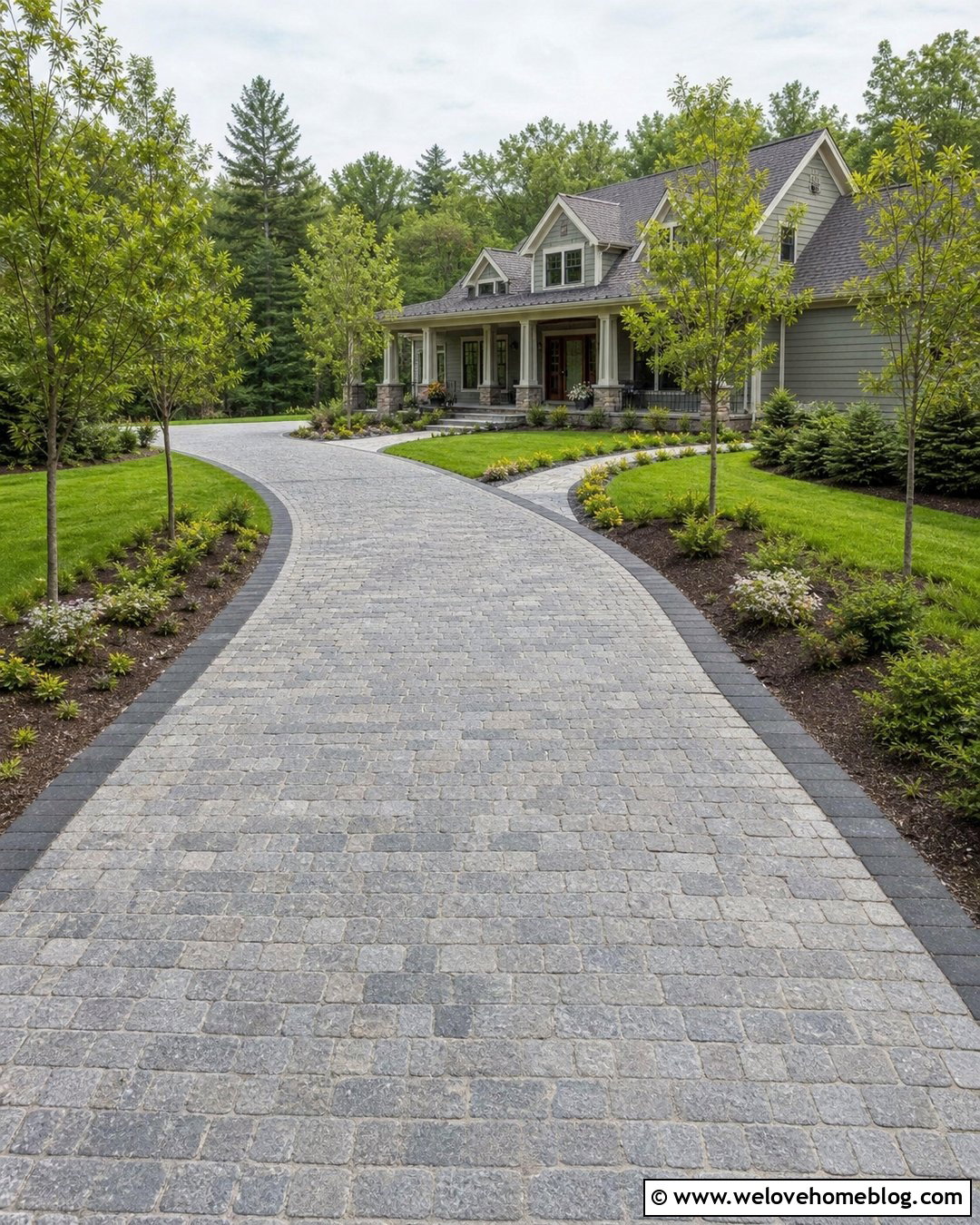
10. Circular Driveway With A Landscaped Center Island
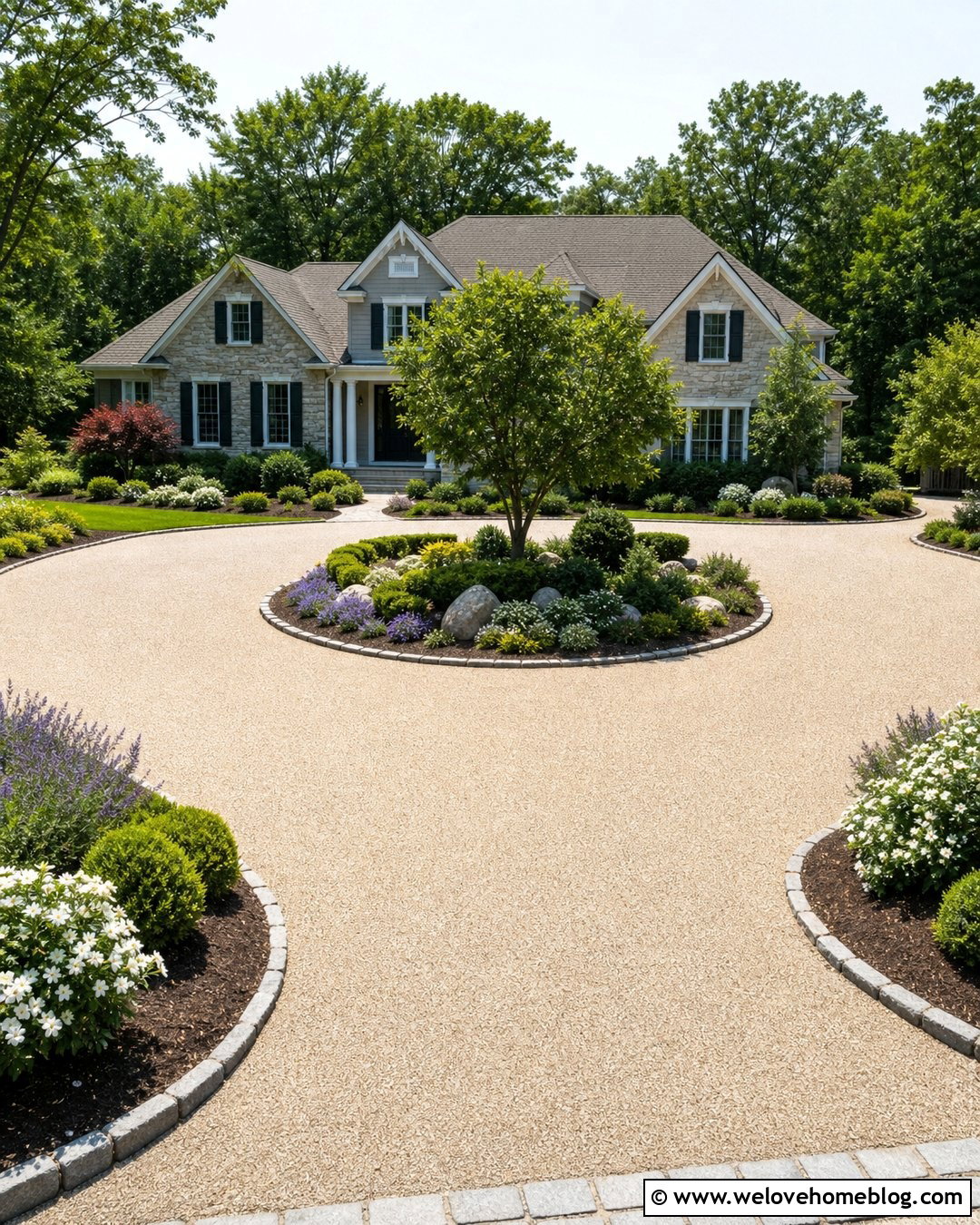
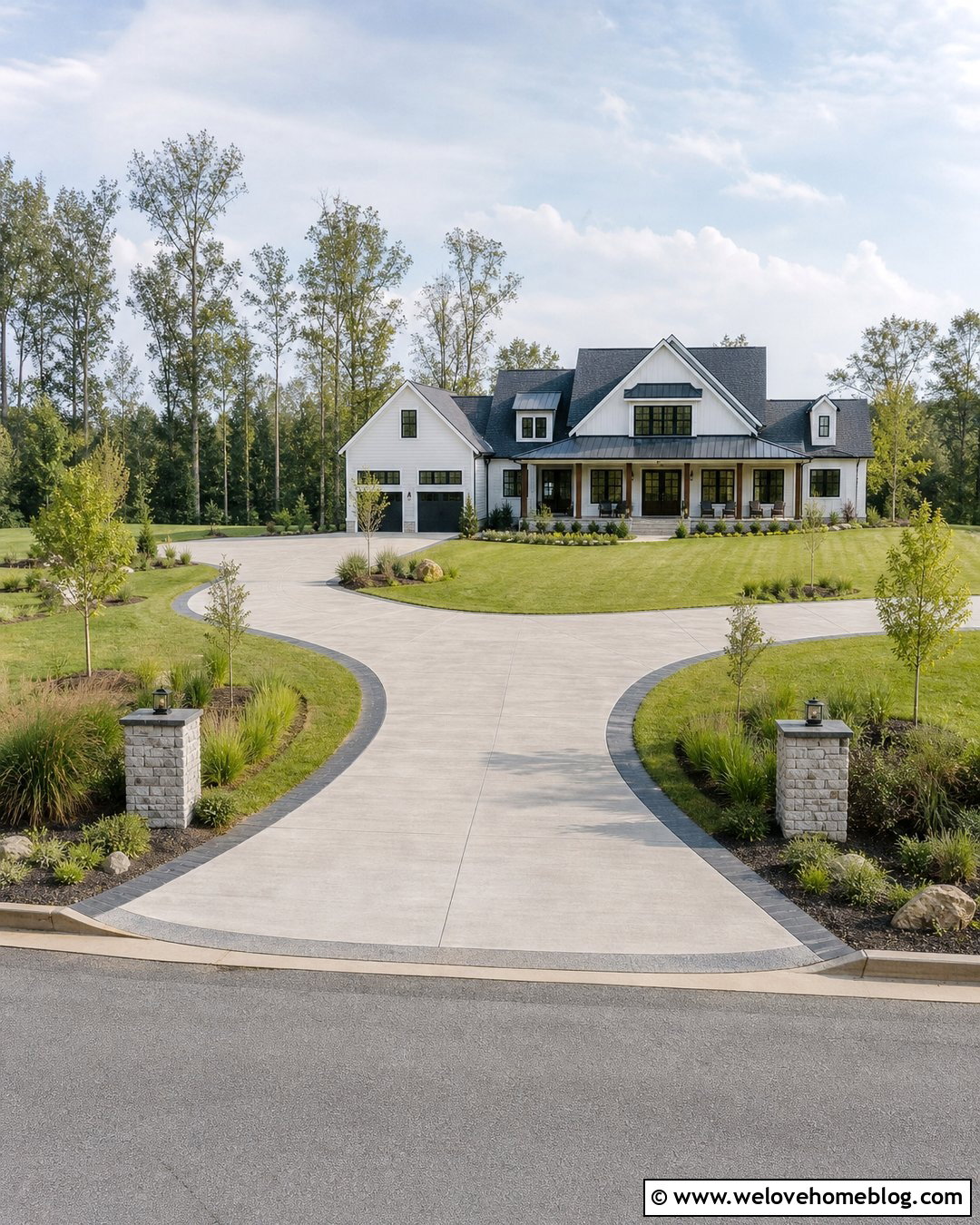
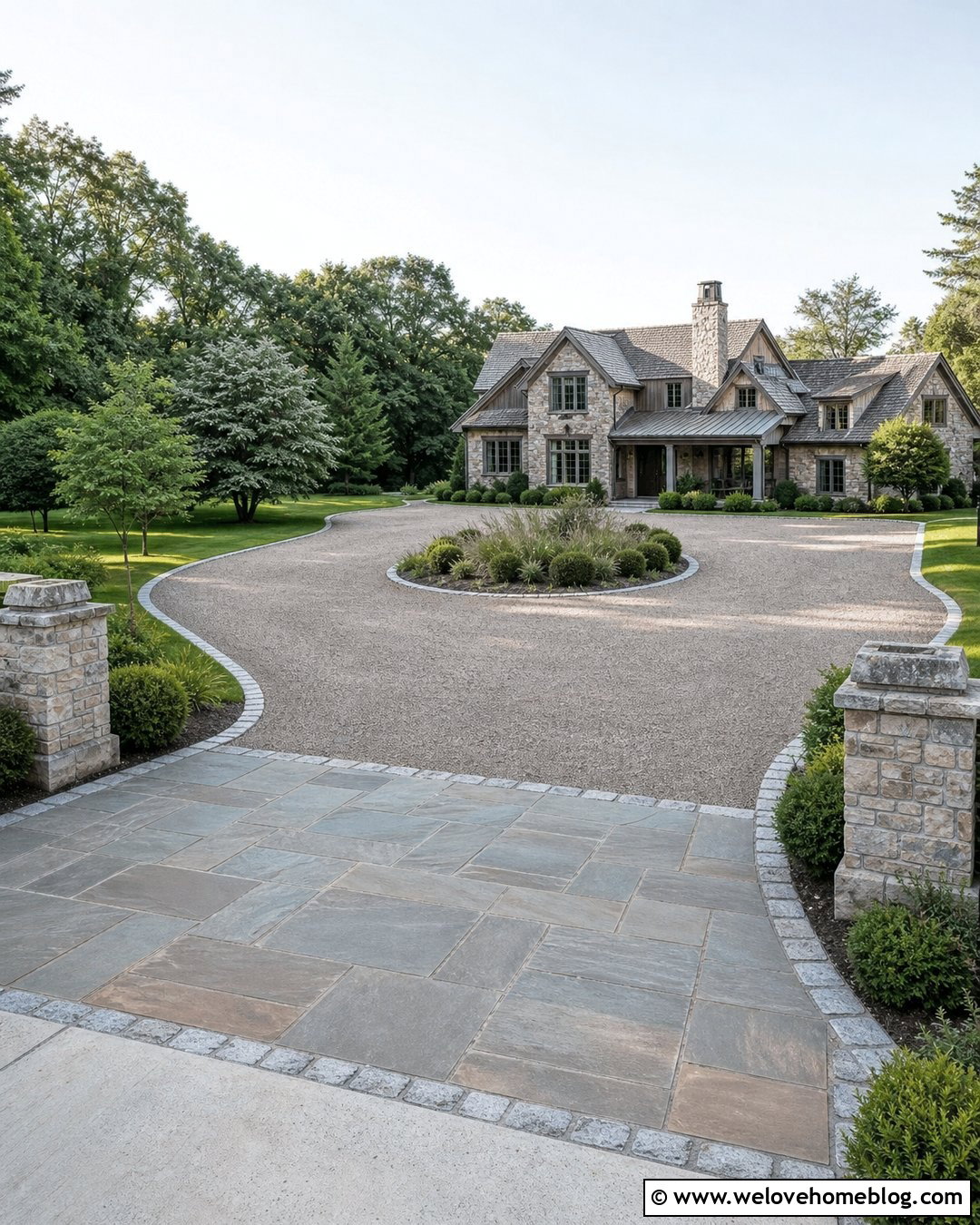
A circular driveway gains character when its center island is treated as a complete miniature garden. Surround a resin-bound gravel or paver driveway with a raised or flush island containing one ornamental tree, low evergreen shrubs, flowering ground covers, and decorative stone. Keep the tallest feature near the center so drivers maintain open views around the curve. Repeating some island plants along the outer driveway border ties the entire front yard together. A stone mowing edge can simplify care where the island meets the driveway. Avoid overfilling the center with tall shrubs, elaborate decorations, or plants that drop messy fruit. A clear, layered arrangement makes the circular layout feel spacious while directing vehicles smoothly toward the house and back to the street.
11. Farmhouse Driveway With Split Rail Fence Planting
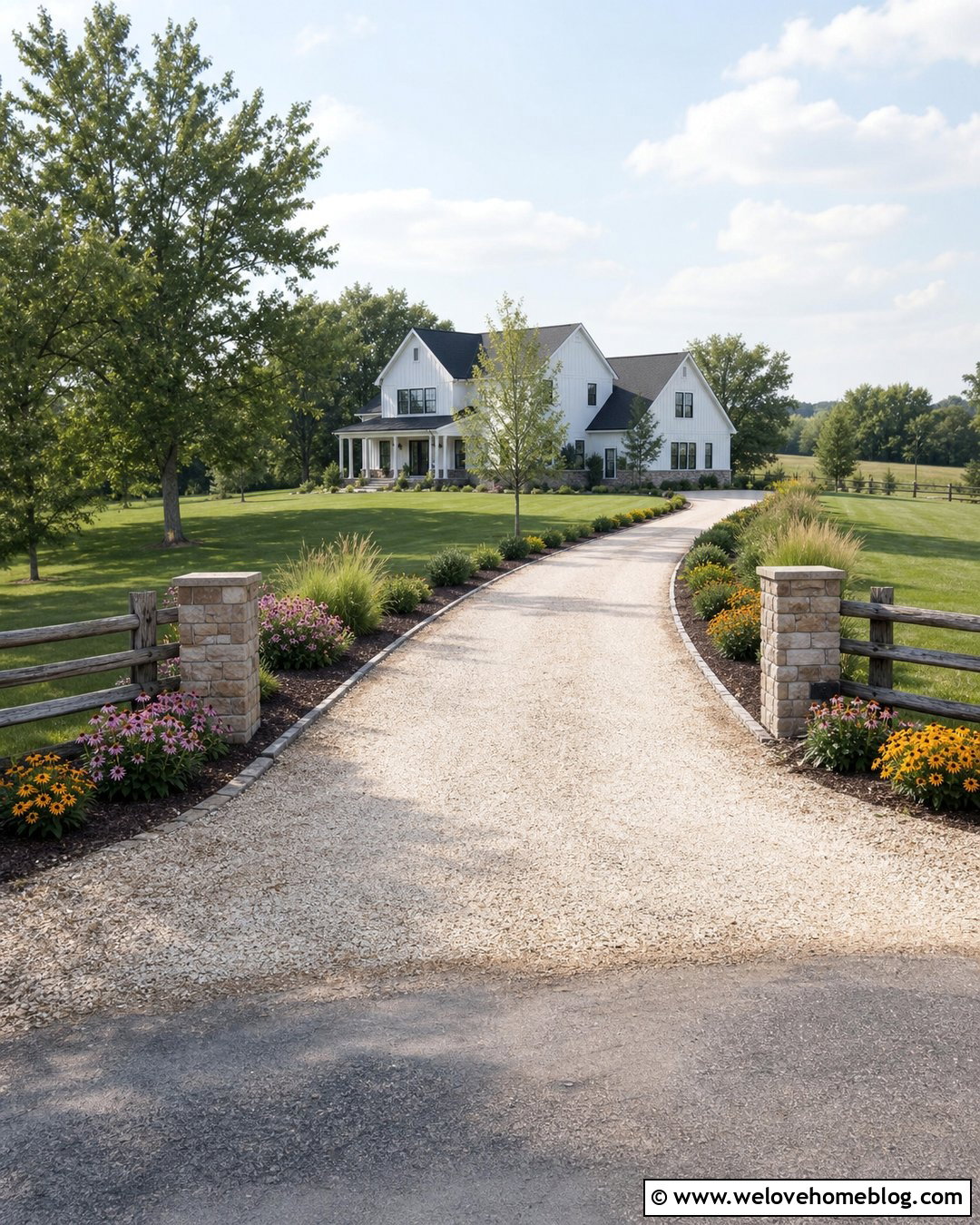
A split rail fence can give a long farmhouse driveway definition without making the property feel closed off. Pair a crushed limestone driveway with timber edging, a low fence, and broad planting drifts positioned along the outside of the rails. Black-eyed Susans, coneflowers, ornamental grasses, and compact shrubs support the informal rural character. Leave sections of open grass between plant groups to prevent the border from becoming visually heavy. Near the entrance, add a larger bed around wooden posts or simple stone pillars. The driveway’s pale gravel, weathered timber, and natural planting should share a soft, practical color palette. Keep vines and sprawling plants under control so they do not cover the fence or interfere with sightlines along the driveway.
12. Modern Driveway With Linear Grass Beds
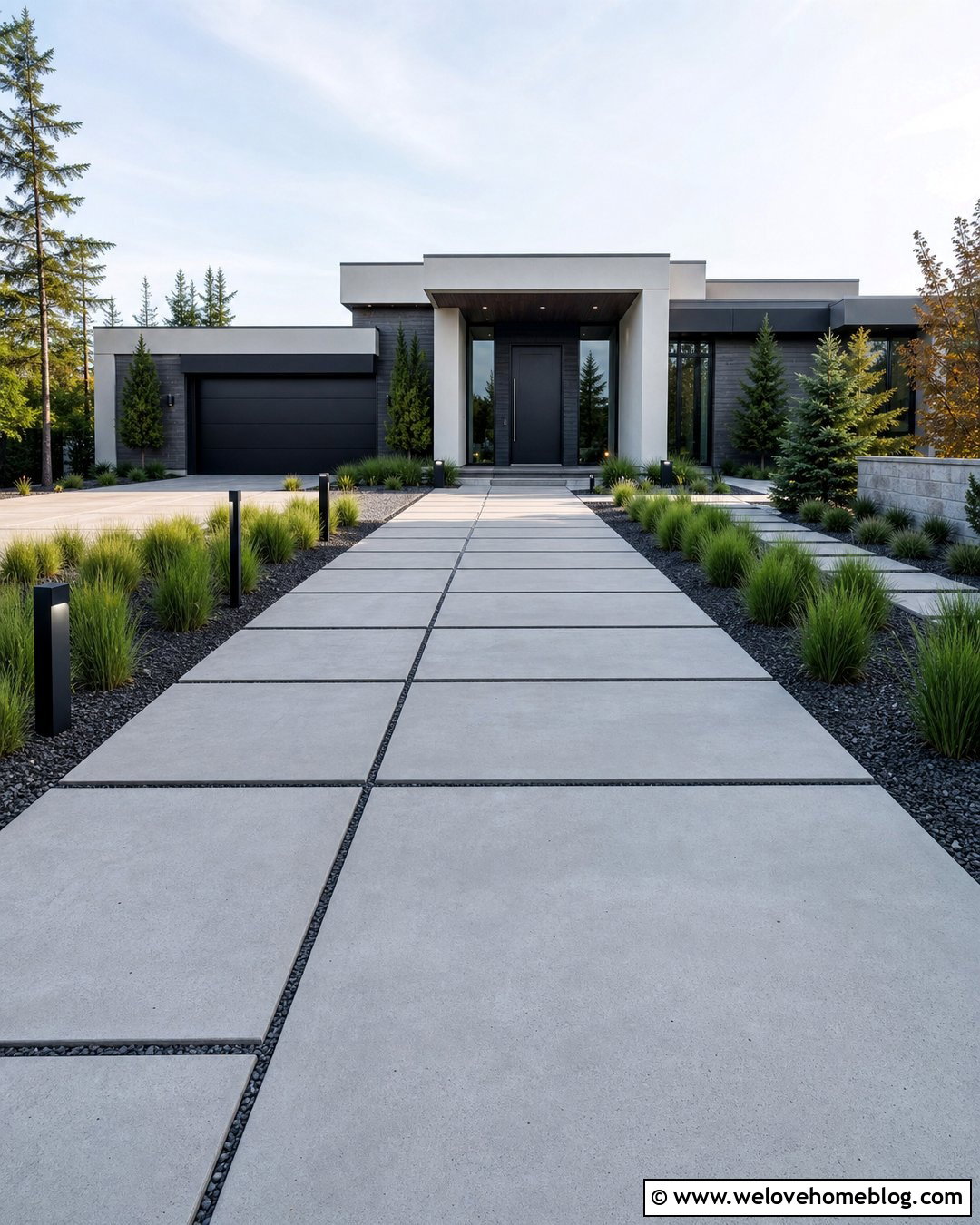
Clean geometry can turn the driveway into an extension of modern architecture. Choose large-format gray concrete pavers arranged in straight bands, then border them with narrow beds of uniform ornamental grass. Black steel edging creates a precise transition between the paving and dark gravel mulch. Instead of mixing many plants, repeat one grass and one compact evergreen throughout the design. This limited palette highlights the shape of the driveway and keeps maintenance manageable. Integrate rectangular stepping pads where the driveway connects with the front walk. Low bollard lights can follow the planting line without becoming the main visual feature. The finished space should feel open, uncluttered, and proportional to the house, with every bed reinforcing the driveway’s simple linear layout.
13. Driveway With Low Voltage Landscape Lighting
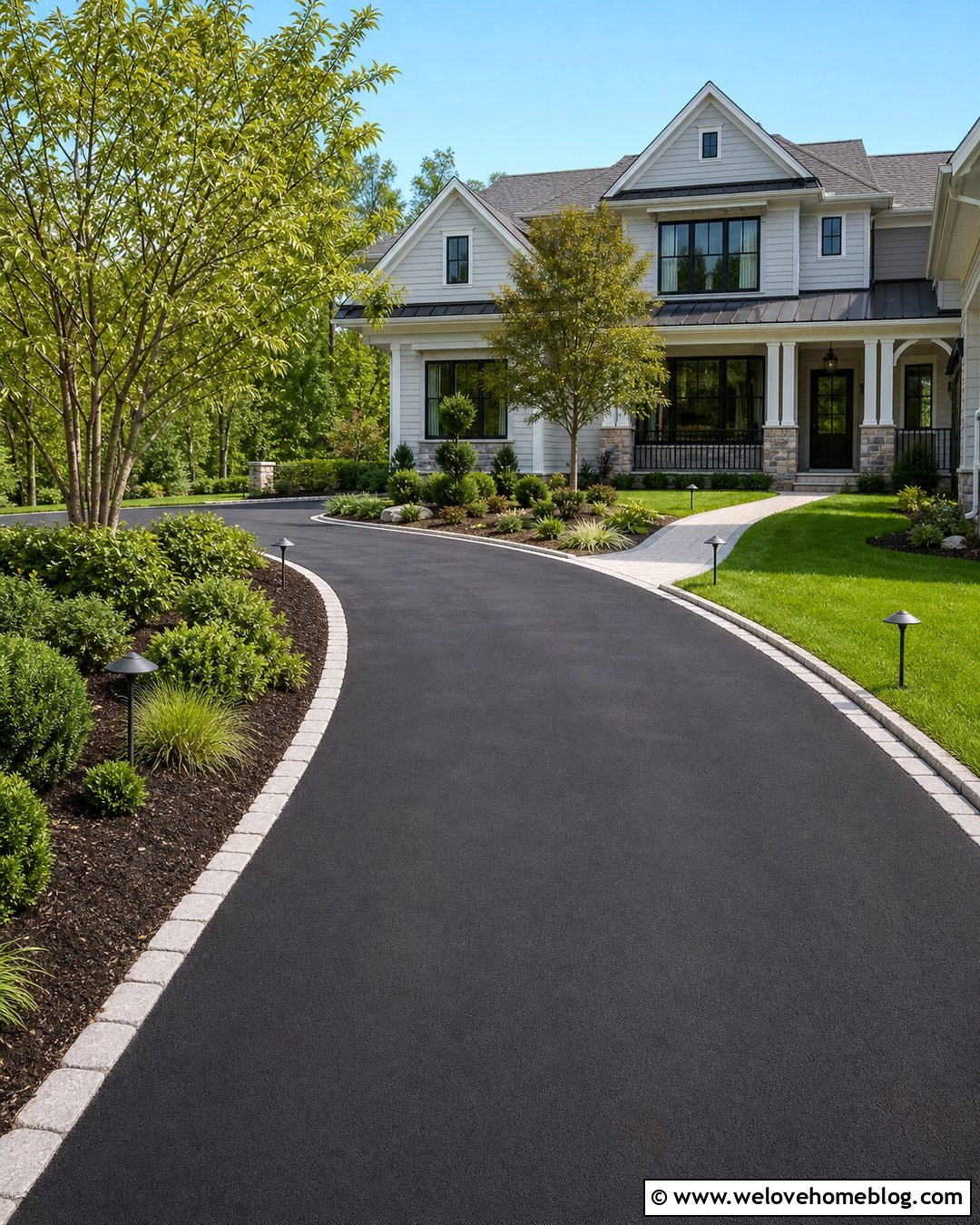
Landscape lighting is most effective when it belongs to the entire driveway design rather than appearing as a row of unrelated fixtures. Along a dark asphalt driveway, use low path lights inside mulched beds filled with compact shrubs and ornamental grasses. Space fixtures consistently and angle them toward the pavement or planting, not toward drivers or neighboring windows. Add subtle uplighting to selected trees near the house for visual depth. A light cobblestone border improves daytime contrast and gives the fixtures a defined place within the landscape. Keep plants around each light trimmed so foliage does not block illumination. This arrangement guides arrivals after dark while maintaining an attractive daytime appearance. Low-level lighting can support visibility and highlight the landscape without overwhelming the property. ()
14. Narrow Driveway With Vertical Landscaping
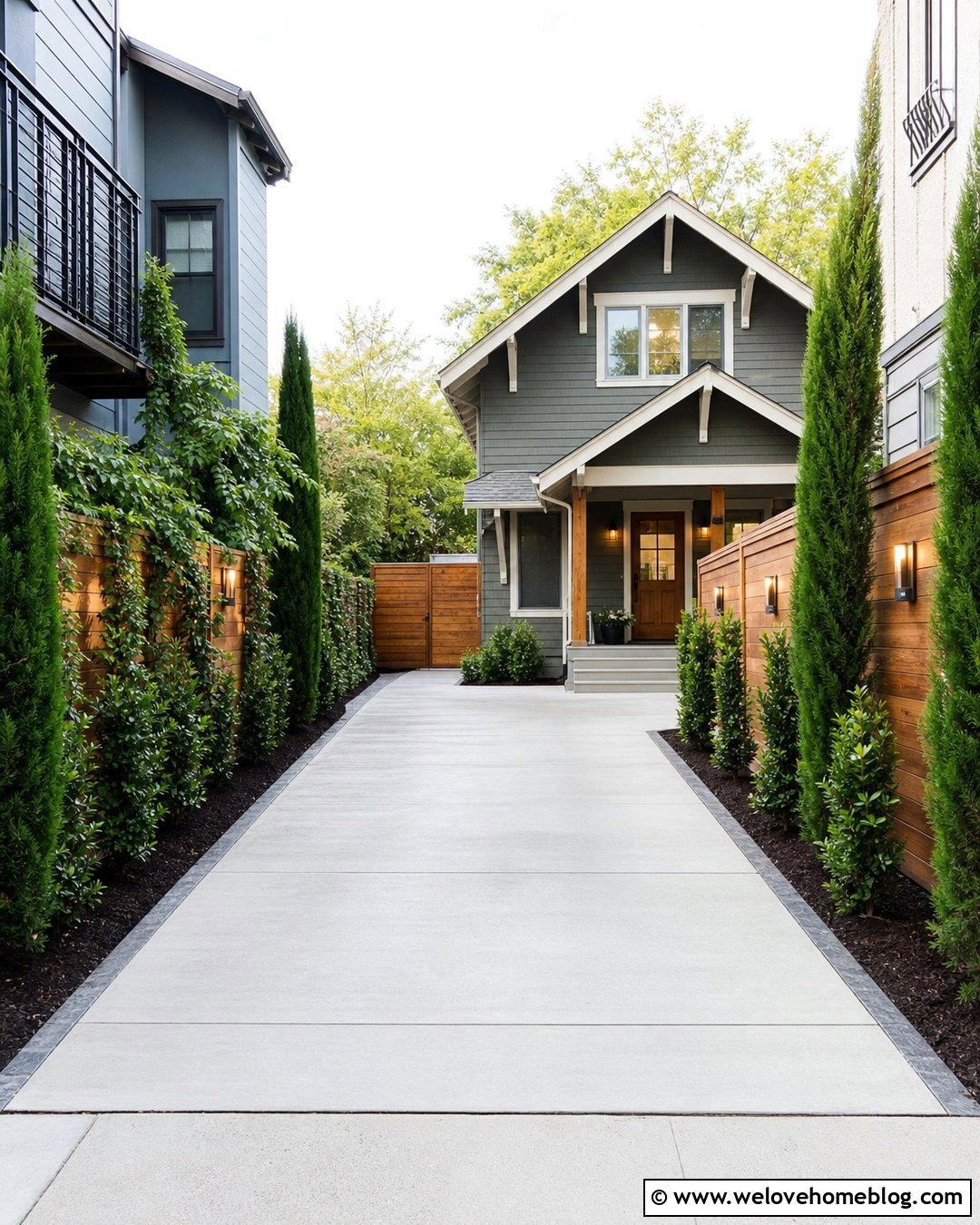
When space beside a driveway is limited, build the landscape upward instead of outward. A narrow poured concrete driveway can be framed by a slim bed containing upright shrubs, columnar evergreens, trellised vines, or clumping bamboo varieties selected for local suitability. Install a strong edging strip to prevent soil and mulch from washing onto the concrete. If one side borders a wall or fence, use espaliered plants to add greenery with minimal depth. Keep growth controlled around mirrors, doors, and pedestrian access points. A series of rectangular wall lights or compact ground fixtures can reinforce the vertical pattern. This approach works particularly well beside urban homes, side-yard driveways, and small suburban lots where every inch of usable parking width matters.
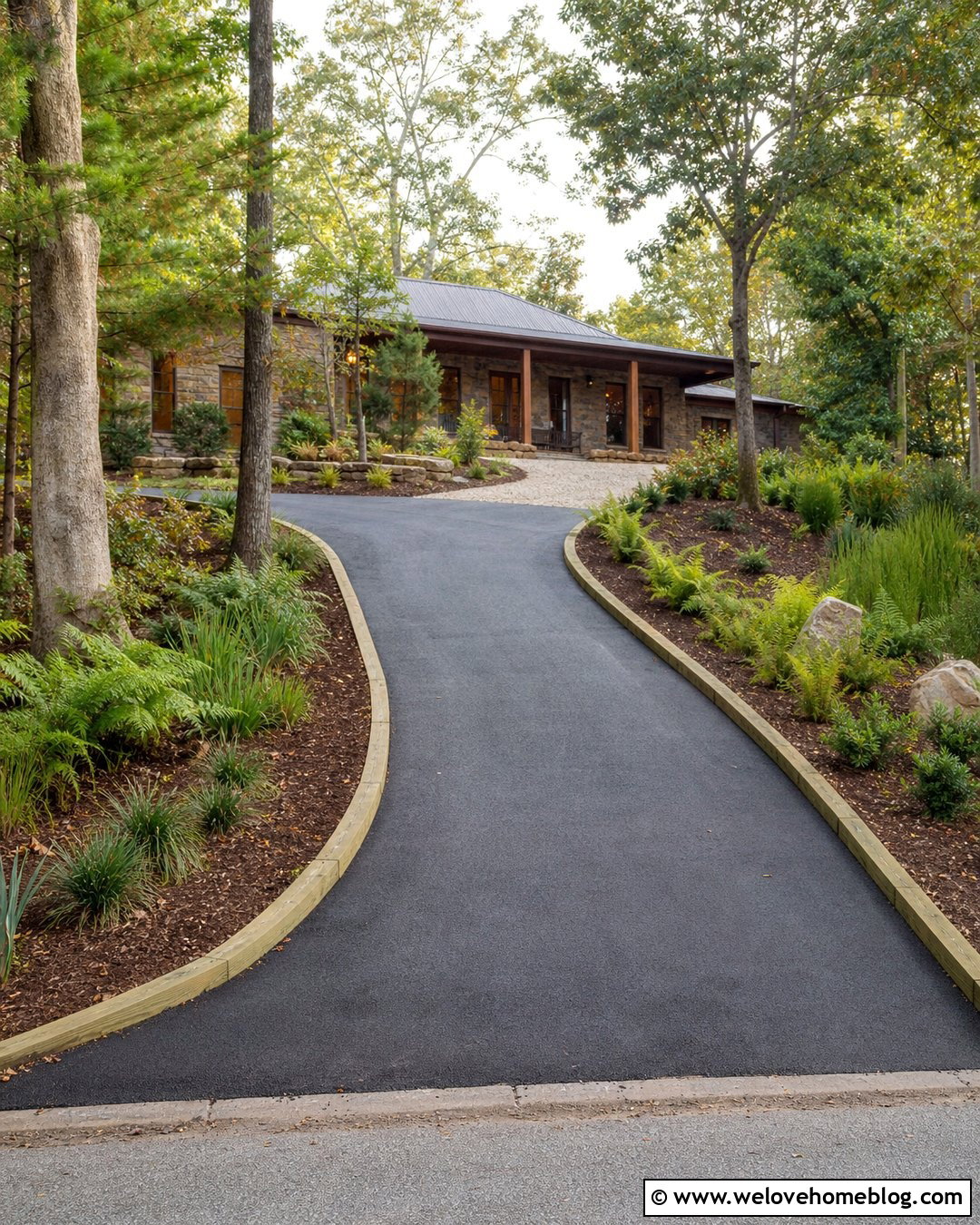
15. Sloped Driveway With Terraced Planting Beds
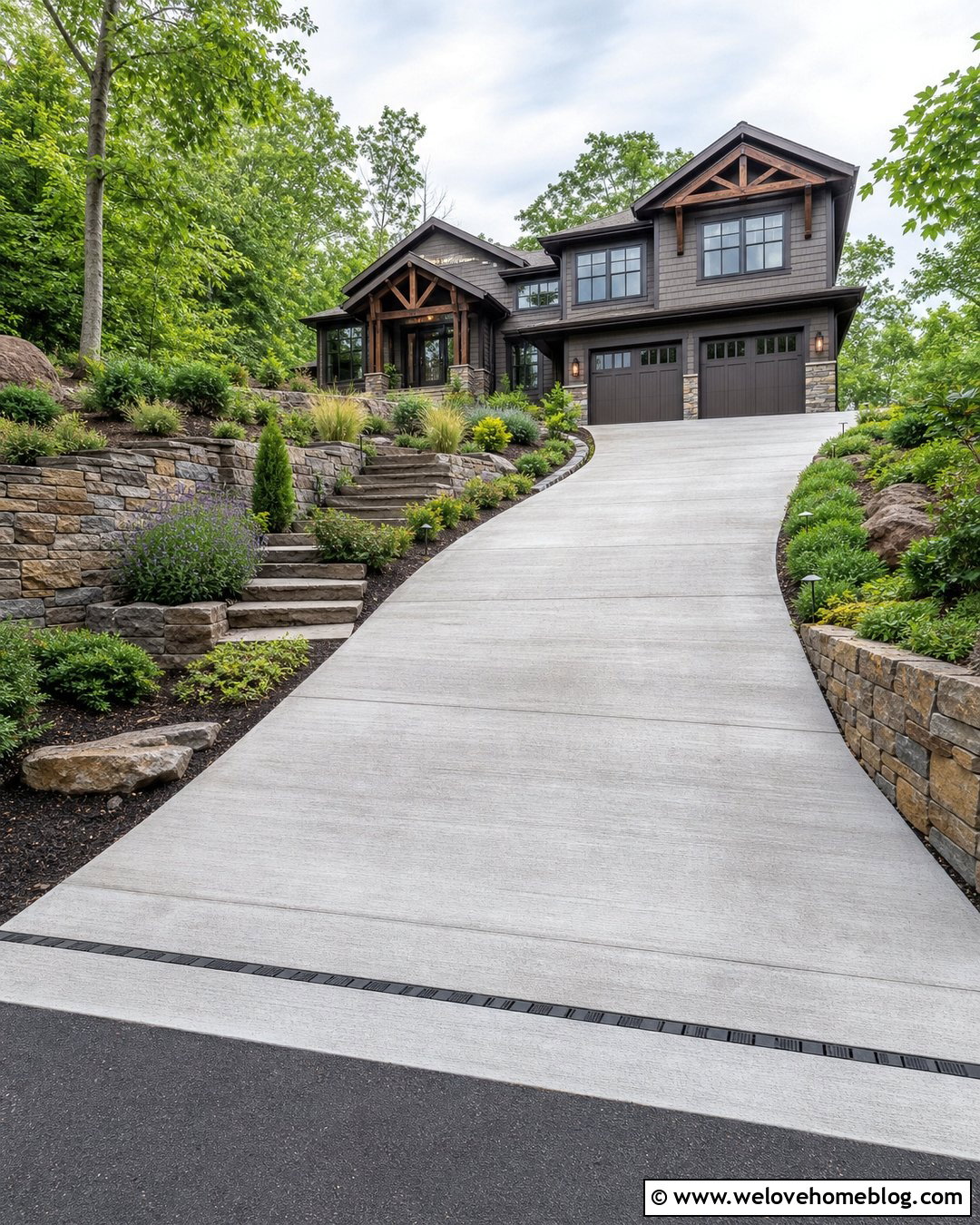
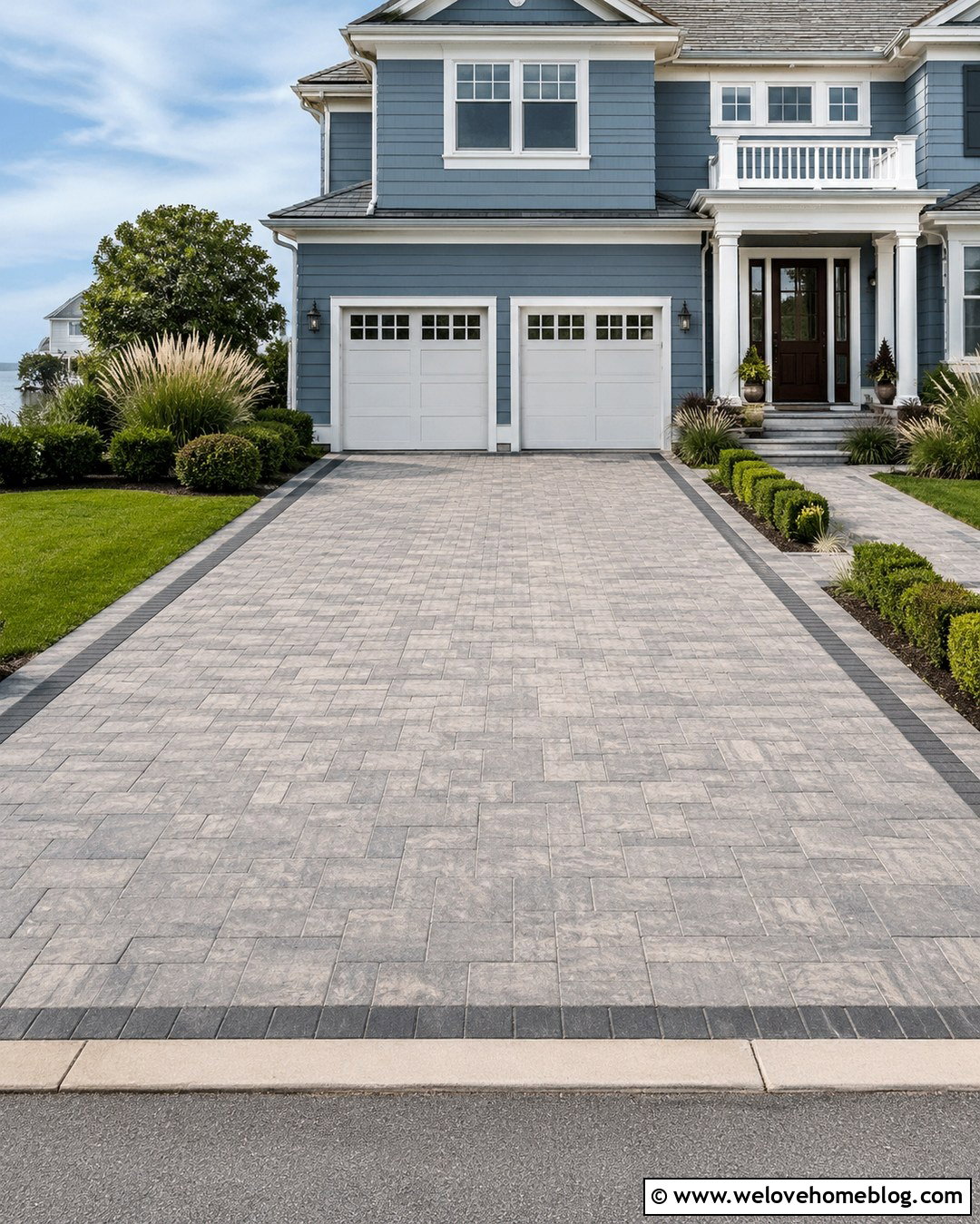
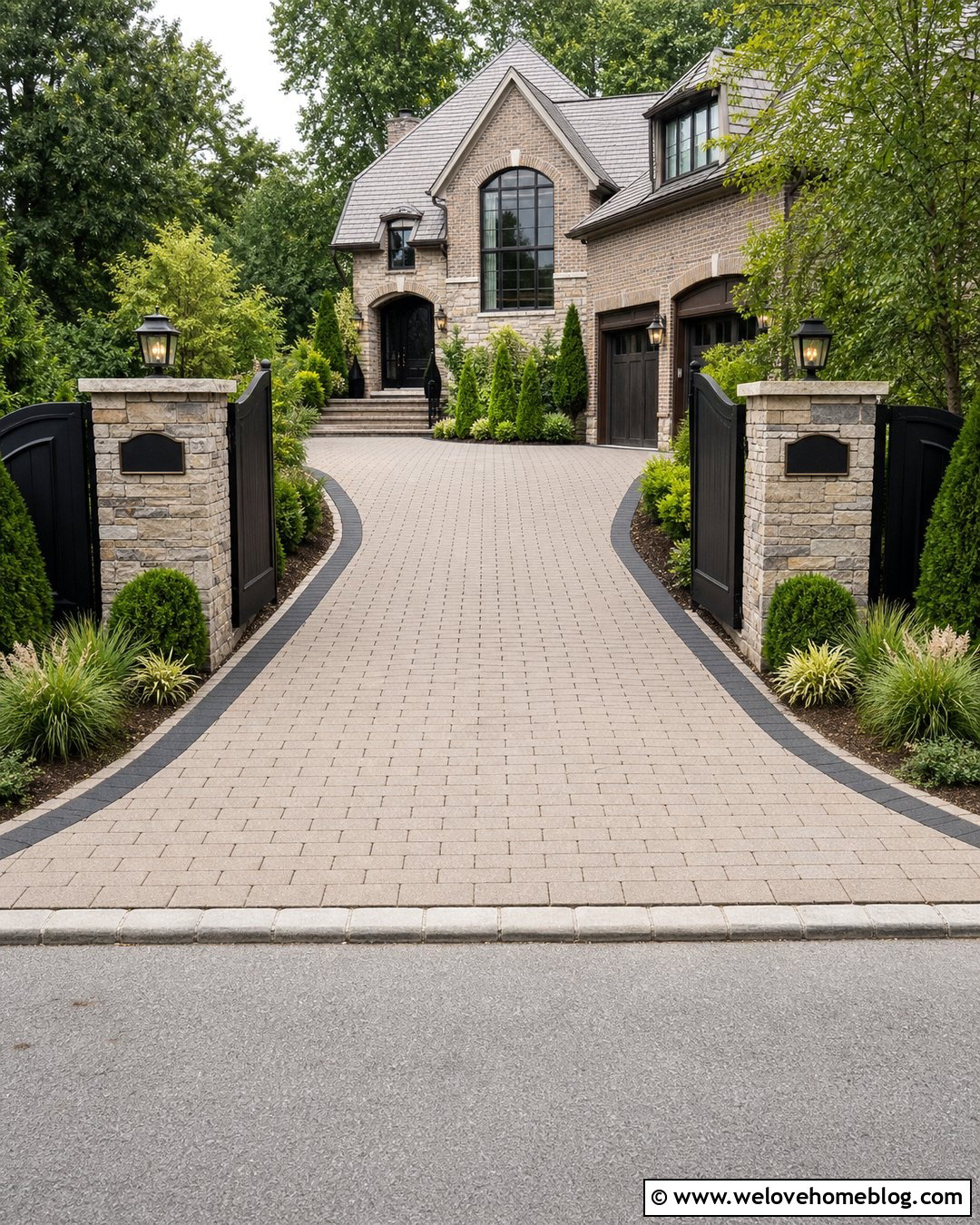
Landscaping beside a sloped driveway requires more structure than planting on level ground. Pair a broom-finished concrete driveway with low terraced beds held by natural stone or segmental retaining blocks. Each level can support ground covers, compact shrubs, and deep-rooted ornamental grasses suited to the site’s sunlight and drainage. Keep retaining walls low where possible so the space feels residential rather than enclosed. A channel drain or professionally planned drainage system may be needed to manage runoff without sending water into planting beds, garages, or neighboring property. Use the same stone for the driveway edge and garden steps to unify the design. Planting in broad groups helps stabilize the visual slope and makes each terrace easier to access and maintain.
16. Shady Driveway With Woodland Planting
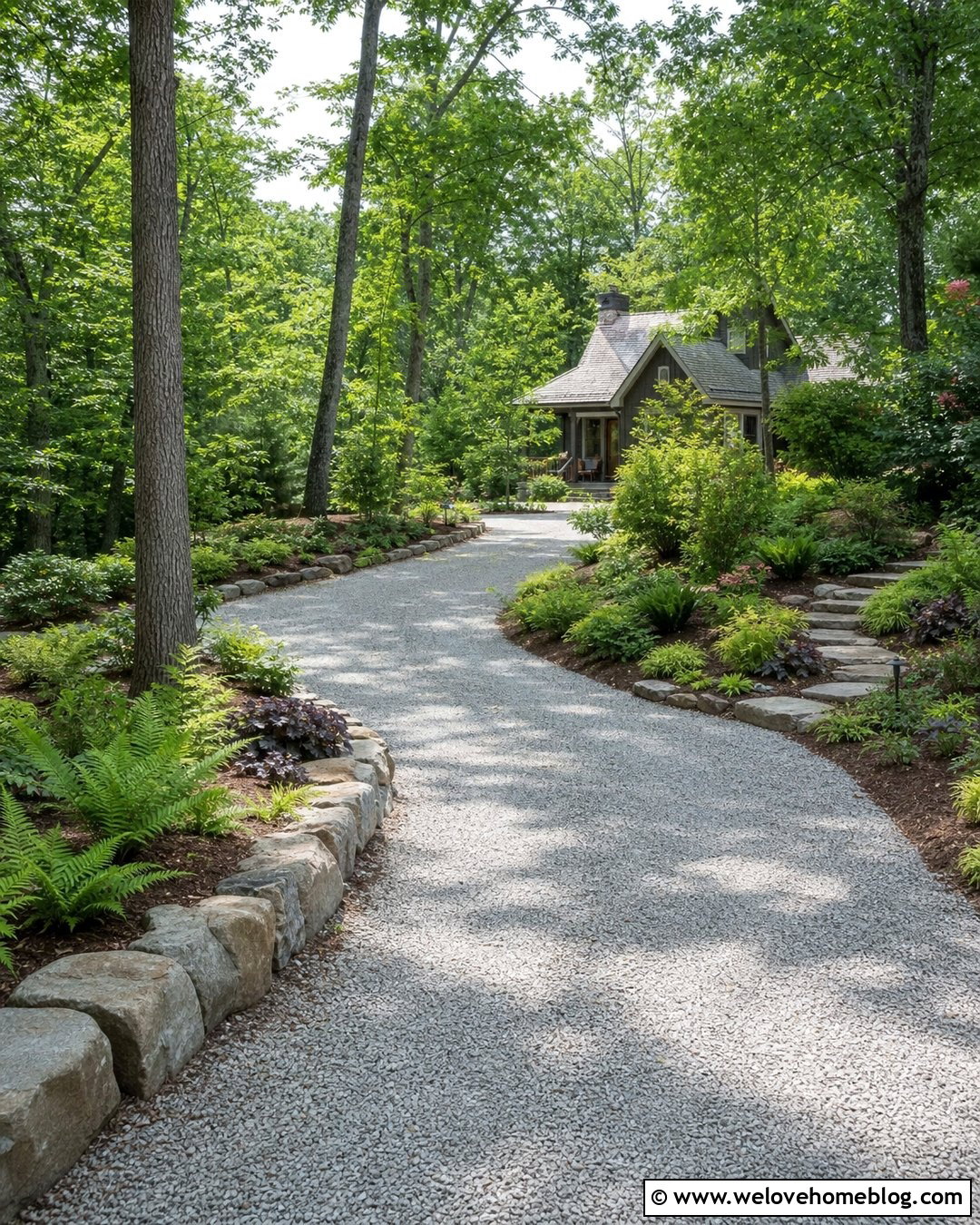
Dappled shade can create one of the most inviting driveway landscapes when plants are chosen for lower light. Border a curved gravel driveway with natural stone, ferns, coral bells, sedges, woodland ground covers, and shade-tolerant shrubs appropriate to your region. Arrange plants in loose layers that echo the surrounding trees. Use pale gravel to brighten the space and make the driveway shape easy to read beneath the canopy. A stepping-stone path can branch through the border toward the front door without competing with the driveway. Avoid cutting or building heavily around major tree roots. Instead, preserve established grades and use shallow organic mulch where practical. The complete setting should feel calm and natural while retaining a defined, drivable edge.
17. Coastal Driveway With Grasses And Crushed Shell
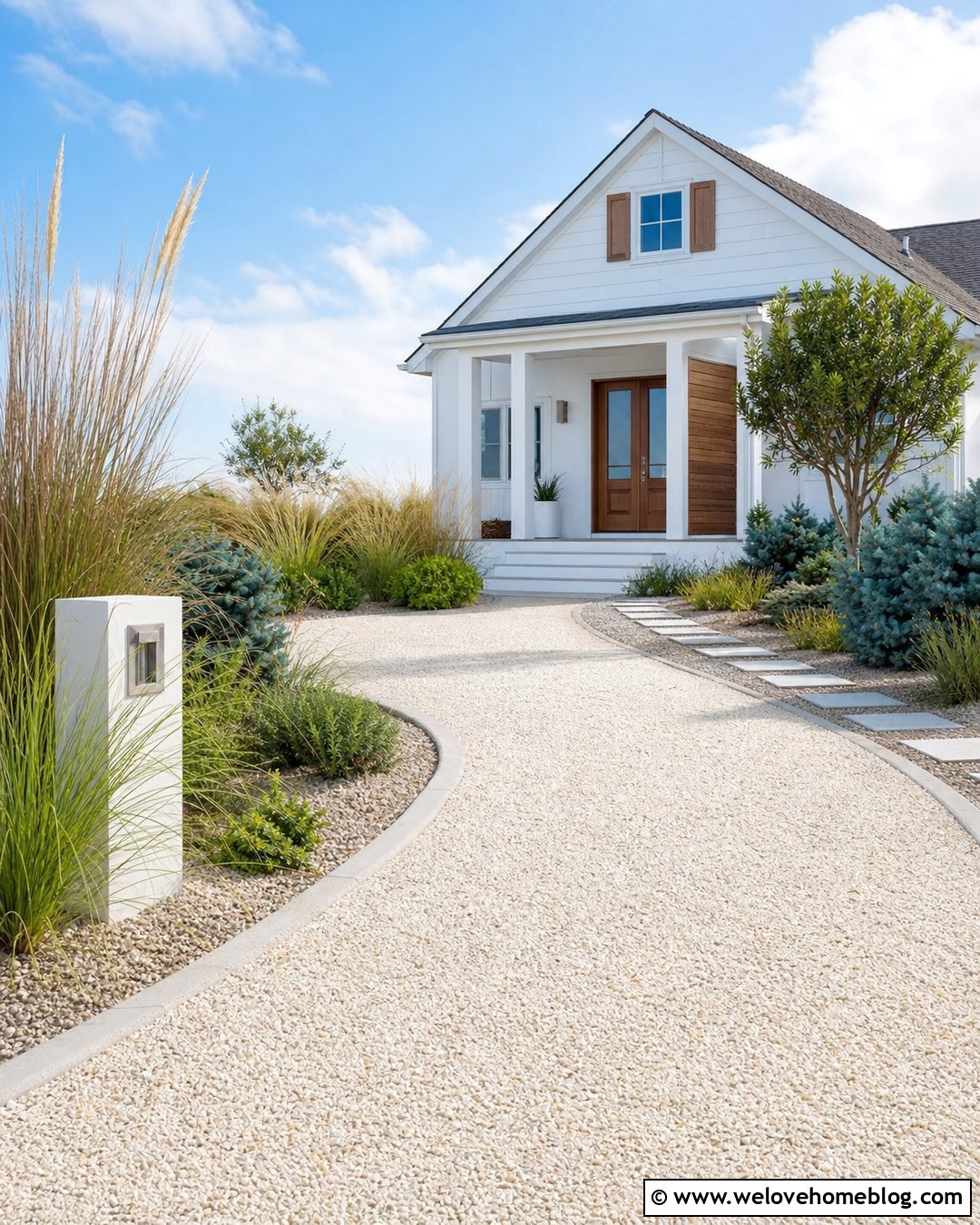
A crushed shell driveway framed by breezy grasses creates a light coastal appearance that suits cottages and relaxed contemporary homes. Shape the driveway with a subtle curve and contain the shell using pale concrete, brick, or weathered timber edging. Plant salt-tolerant grasses and durable evergreen shrubs in generous groups, leaving small areas of open stone between them. Blue-green foliage works especially well with white siding, natural cedar, and soft gray exteriors. Near the street, keep the planting low and place a simple address marker within a wider gravel bed. Add a stepping-stone walkway through the landscape rather than using another large paved surface. The combination should feel open, sunlit, and informal while keeping loose material away from the lawn.
18. Driveway With Raised Stone Planting Beds
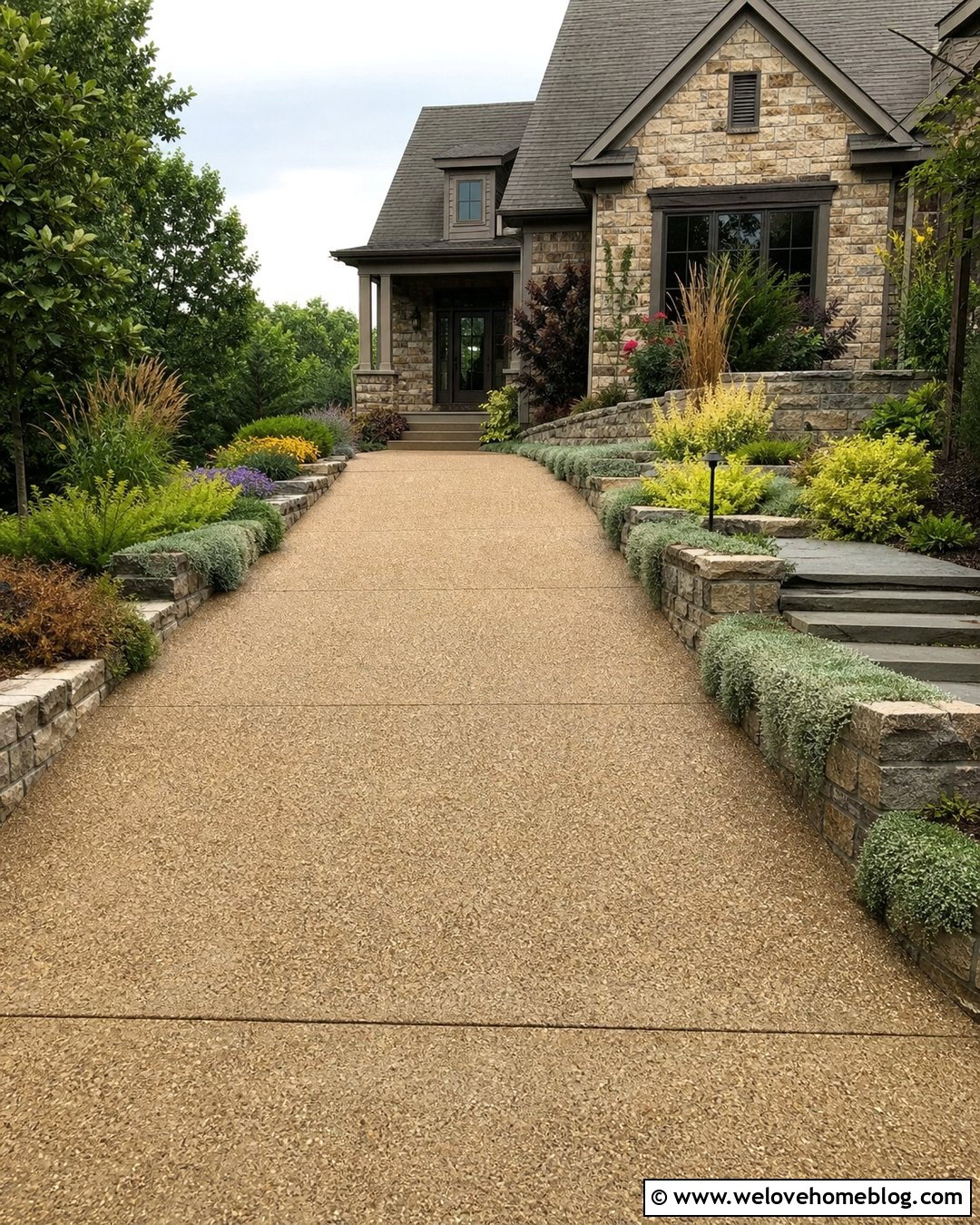
Raised beds can add dimension where a flat driveway meets an equally flat front yard. Along a wide exposed aggregate driveway, construct low natural stone beds that gradually become taller near the house. Fill them with trailing ground covers, small flowering shrubs, upright grasses, and evergreen accents. Allow selected plants to soften the top of the wall, but prevent growth from hanging into the parking area. Match the wall stone to the home’s chimney, foundation, or porch columns for a connected appearance. Include gaps or steps where passengers need to reach the lawn or front walk. Proper drainage behind the walls is essential, especially on sloped sites. The raised arrangement frames the driveway while giving ordinary planting greater visibility from the street.
19. Driveway Entrance With Pillars And Flower Beds
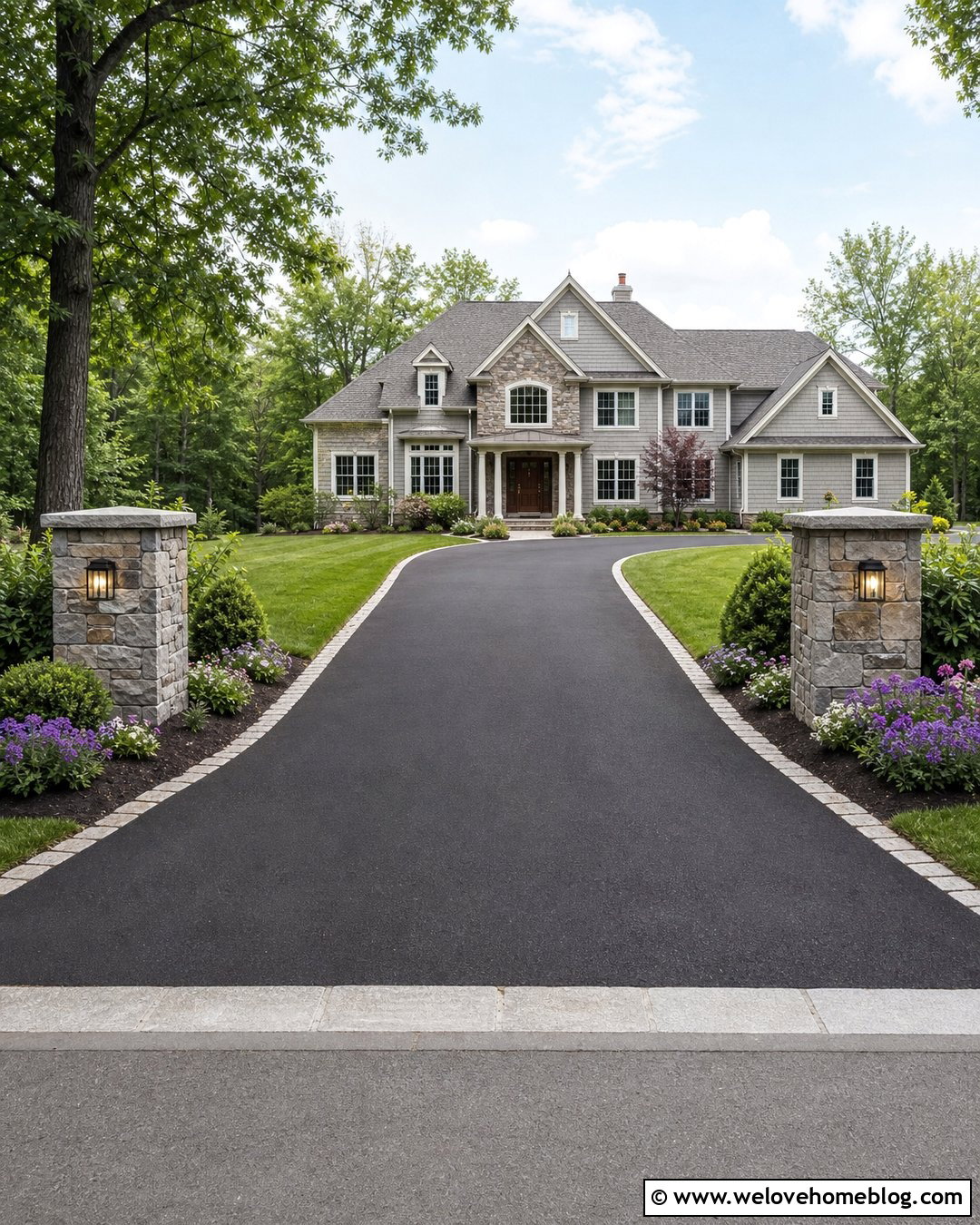
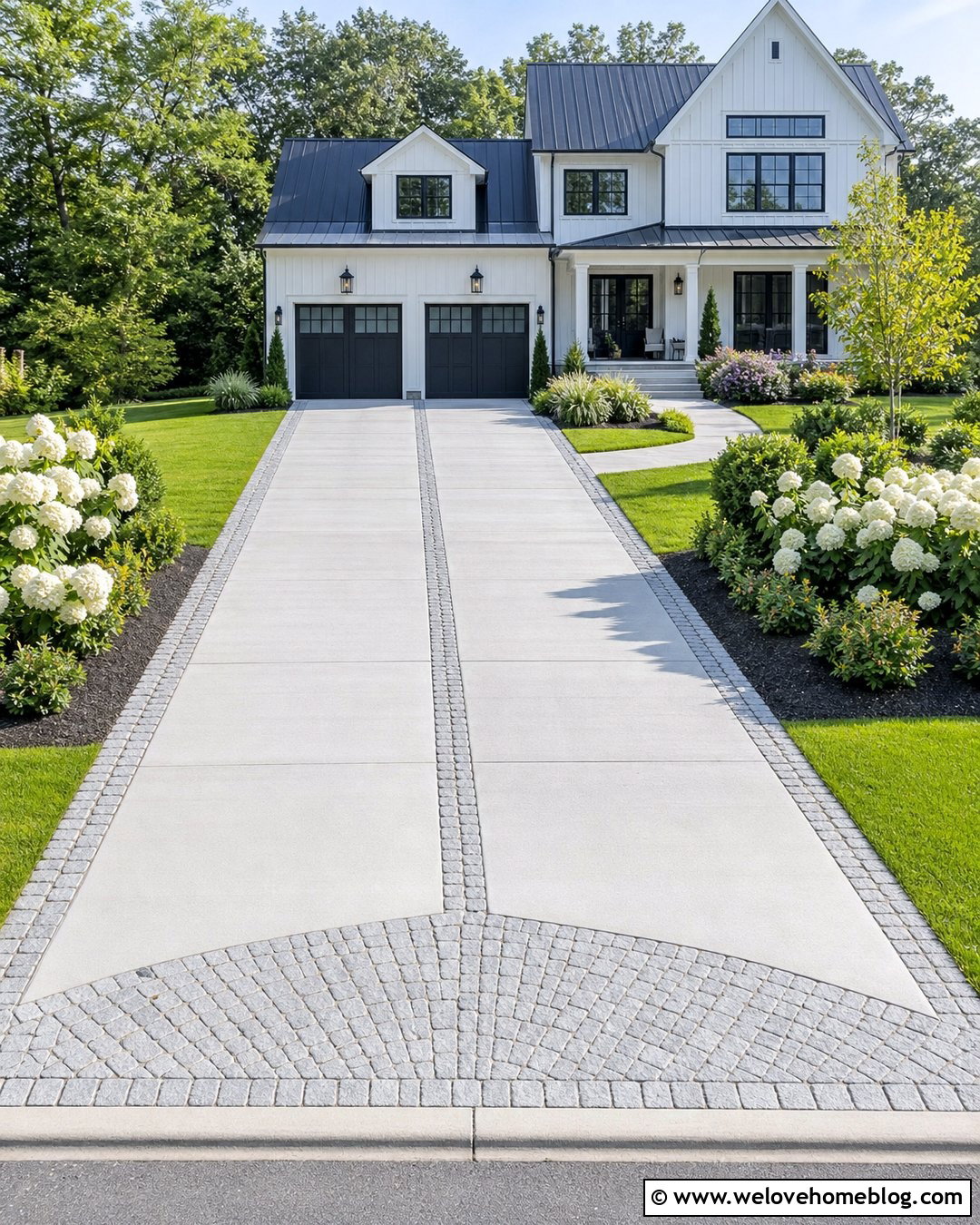
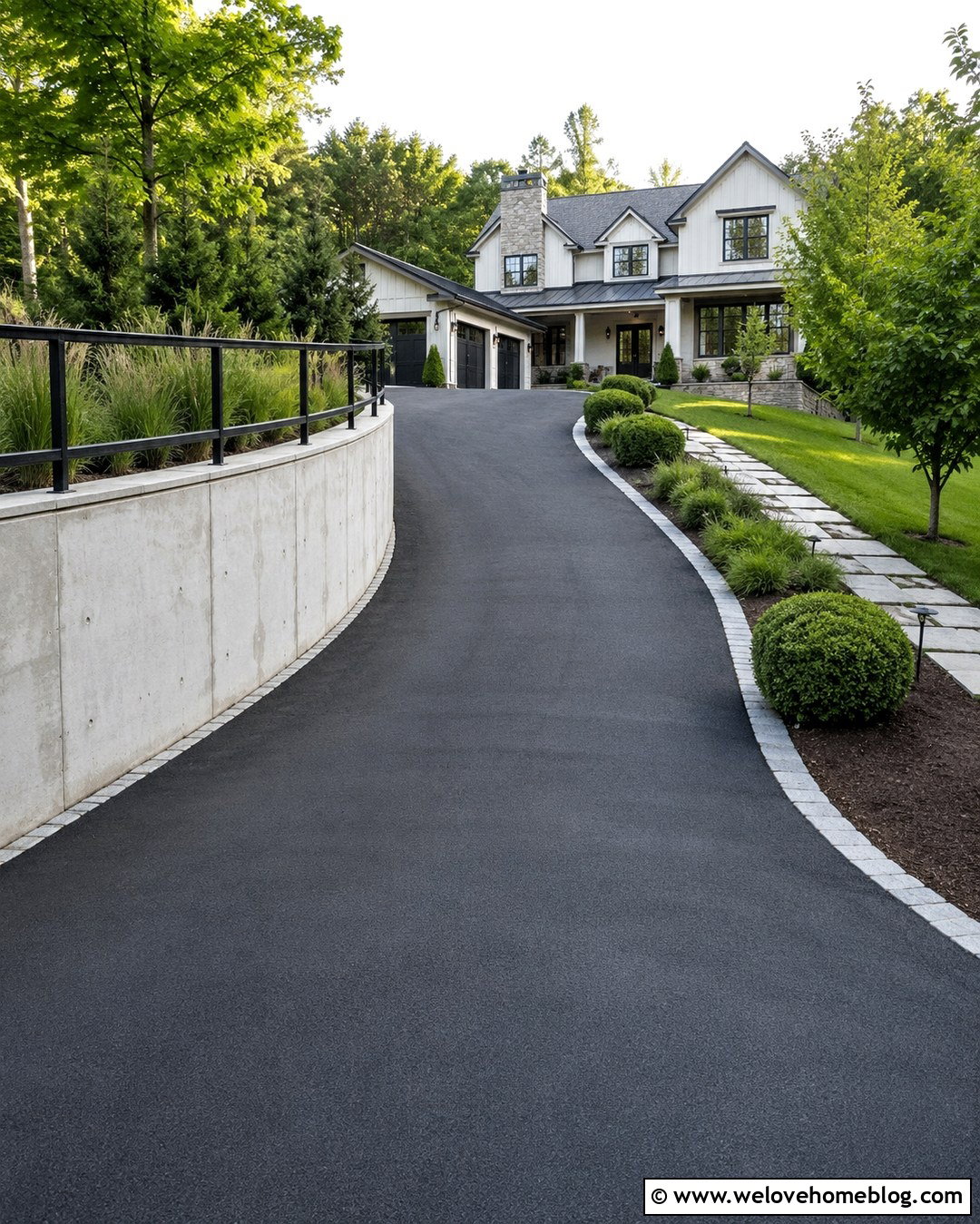
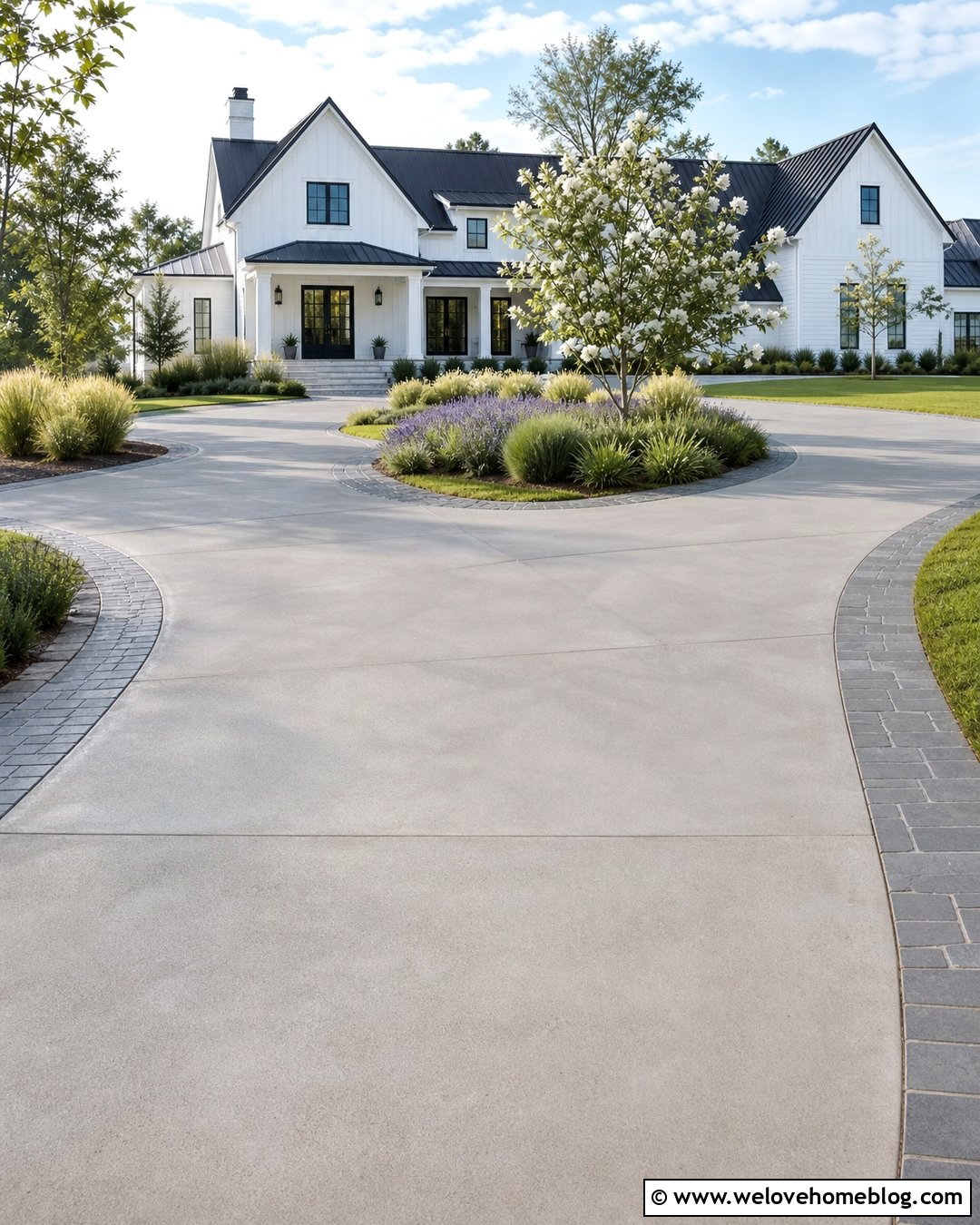
The street entrance deserves special attention because it introduces the entire property. Frame a cobblestone-edged asphalt driveway with two modest stone pillars and matching curved flower beds. The pillars should suit the scale of the house rather than looking oversized or obstructing drivers. Place low annuals, flowering perennials, or ground covers at the front of each bed, with compact evergreen shrubs behind them. Continue a simplified version of the same planting along the driveway to prevent the entrance from feeling disconnected. An address plaque and discreet lighting can be incorporated into the pillars when local rules allow. Maintain open sightlines on both sides of the road. This balanced layout creates a recognizable arrival point without turning the entrance into a heavy barrier.
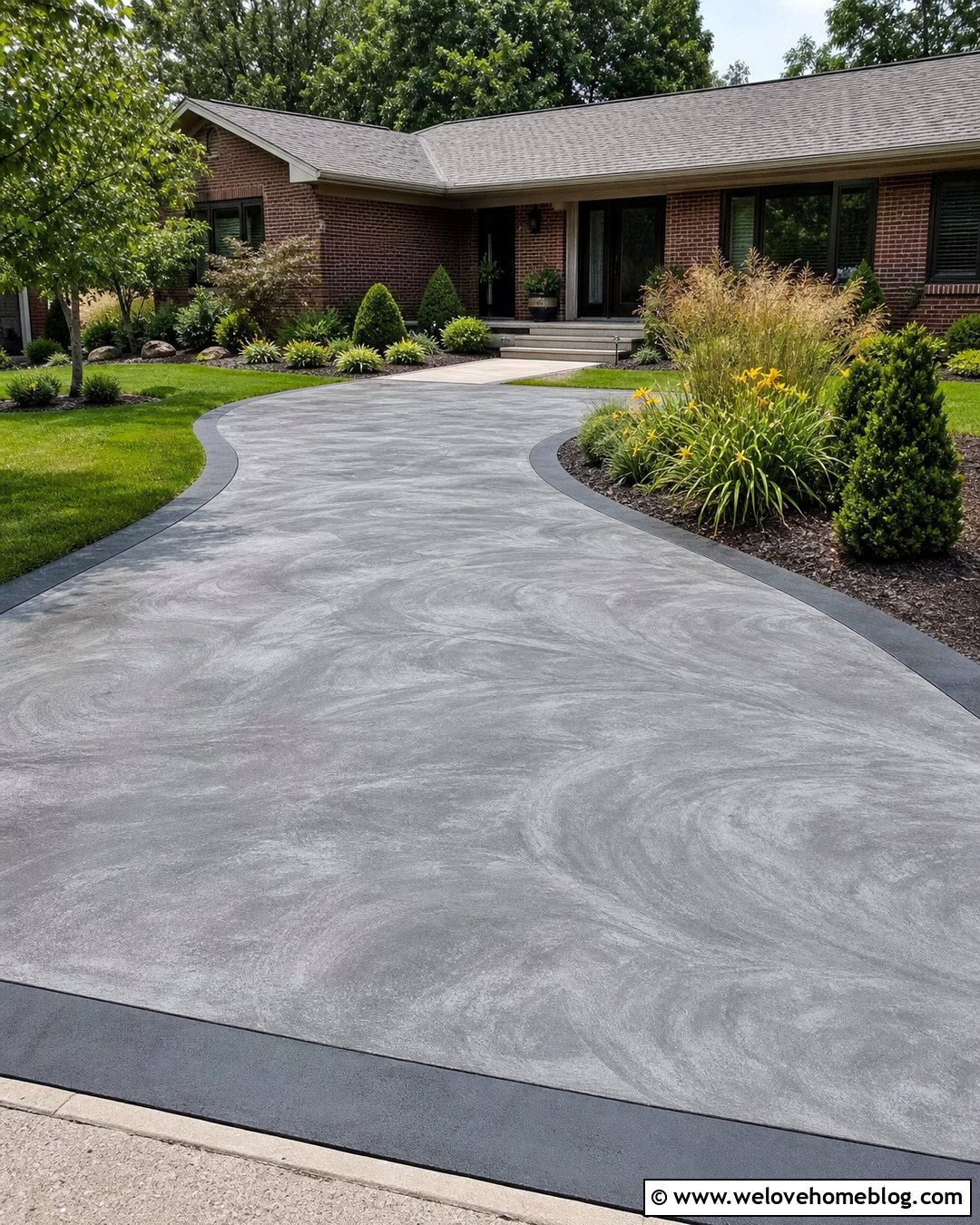
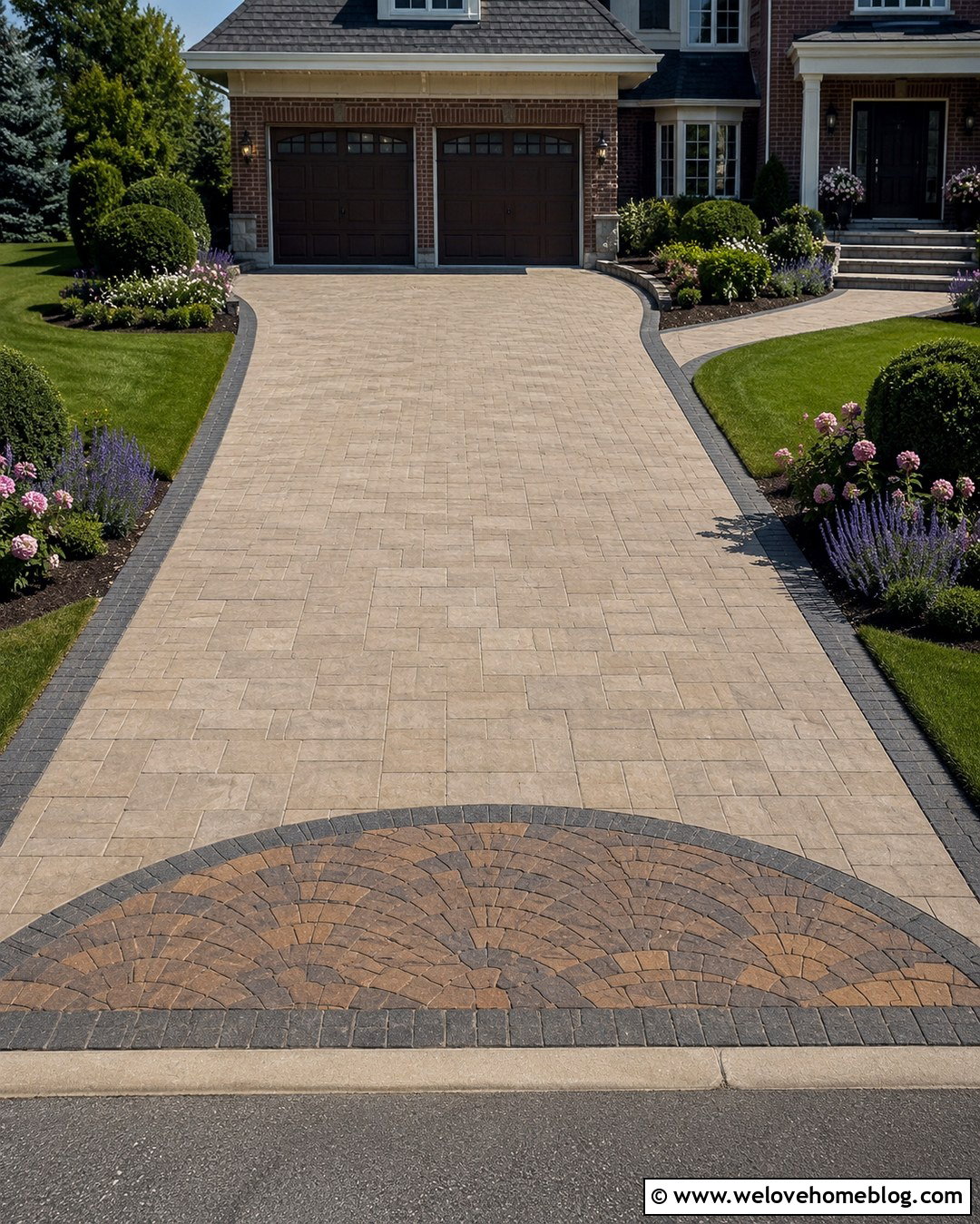
20. Low Maintenance Driveway With Gravel Mulch Beds
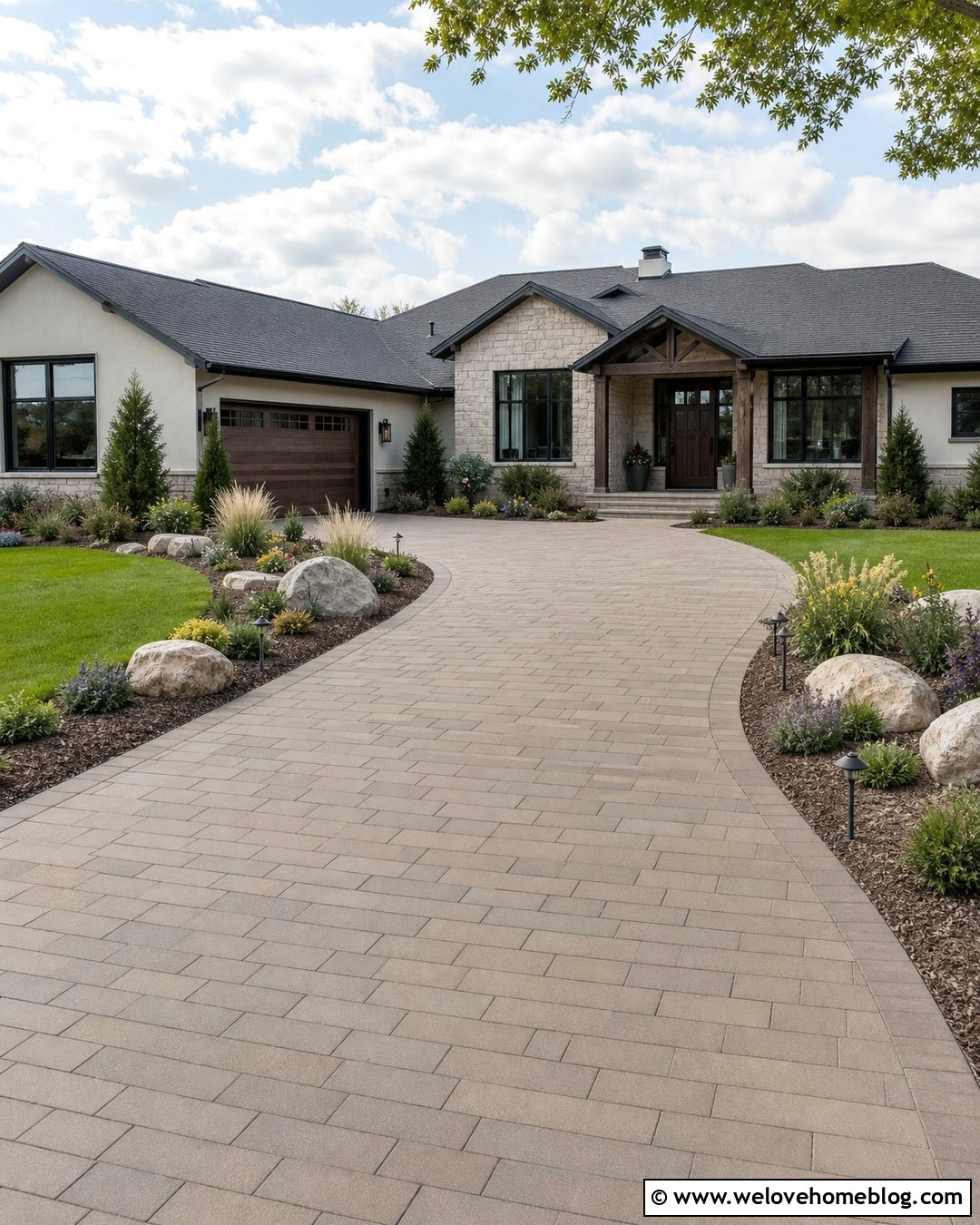
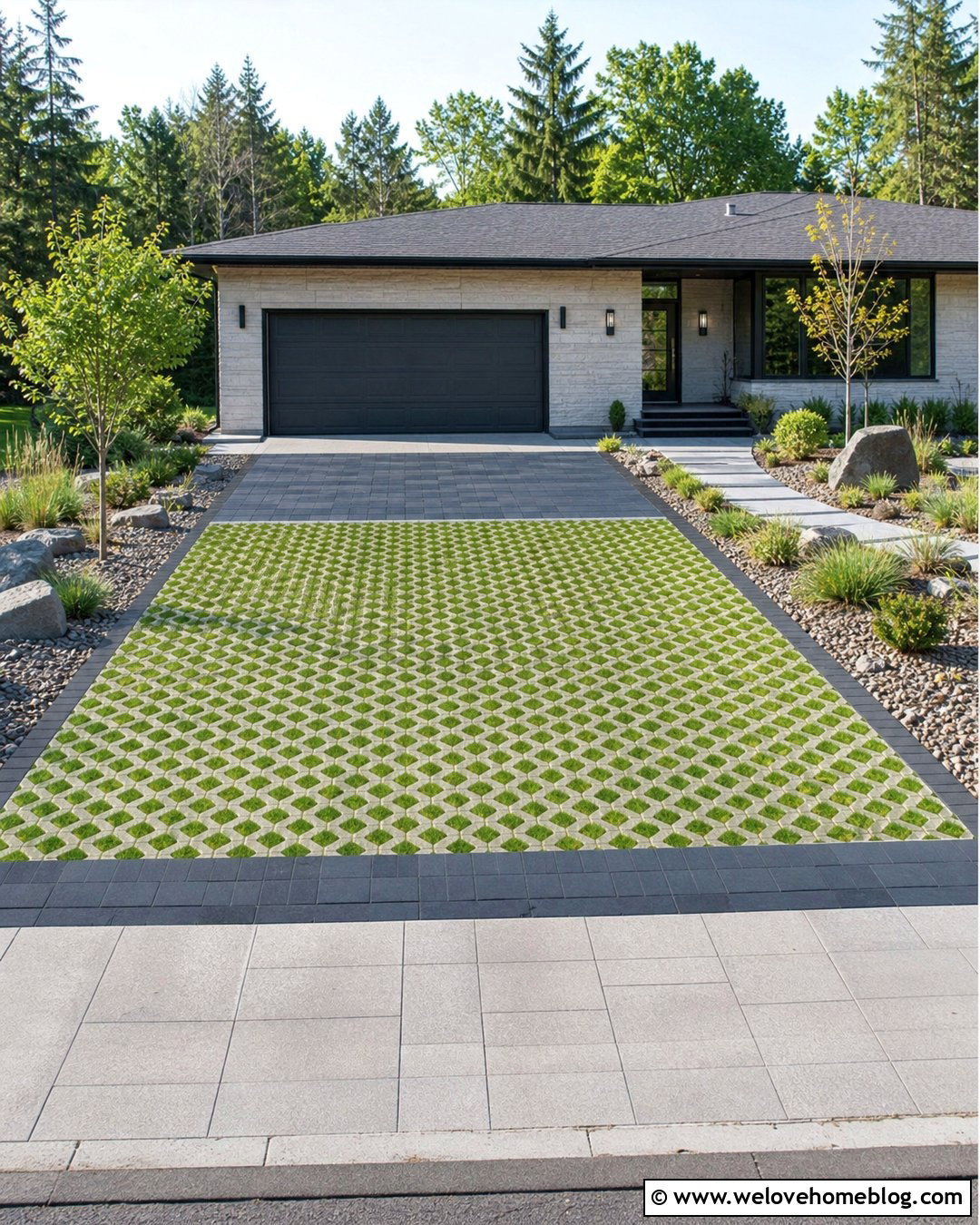
A low-maintenance design can still look layered and welcoming. Pair a tan concrete paver driveway with wide gravel-mulch beds containing compact evergreens, drought-tolerant grasses, and a few flowering perennials. Space plants according to their mature size so they can develop without constant pruning. Use metal edging or a contrasting paver course to keep decorative gravel off the driveway. Larger rocks placed in small groups can fill open areas while new plants mature. Repetition is especially useful here because a short plant list creates a calmer appearance and simplifies care. Include a clear walkway from the parking area to the front entrance. Before installing rock mulch, consider reflected heat, drainage, and plant compatibility so the finished border remains practical in your local climate.
Conclusion:
The best 20 along the driveway landscaping ideas balance curb appeal with safe movement, simple maintenance, and year-round structure. Start with the driveway’s material and shape, then choose edging and plants that complement those existing features. Low shrubs, repeated grasses, defined flower beds, and well-positioned trees can soften hard paving without reducing usable space. Lighting, entrance pillars, stone borders, and walkways add function when they are integrated into the complete layout. Always account for mature plant size, vehicle clearance, drainage, sunlight, and visibility near the street. Whether your home calls for a formal evergreen border, a colorful cottage garden, or a low-water rock landscape, a coordinated plan will make the entire approach feel intentional.

Related posts:
Leave a Reply