
A well-planned driveway can make your home feel more welcoming before anyone reaches the front door. The best **house driveway ideas** combine a durable surface with the right layout, edging, landscaping, and entrance details. Material matters, but it should also complement the home’s architecture, front yard, climate, drainage needs, and available parking space. Gravel can suit a relaxed country property, while clean concrete panels work beautifully with modern architecture. Brick, cobblestone, asphalt, resin, and permeable pavers offer even more possibilities. Thoughtful borders and planting beds help every surface feel connected to the landscape rather than simply placed beside it. Use these practical and attractive **35 House Driveway Ideas** to create a complete design with lasting curb appeal. ()

1. Modern Concrete Driveway With Grass Strips
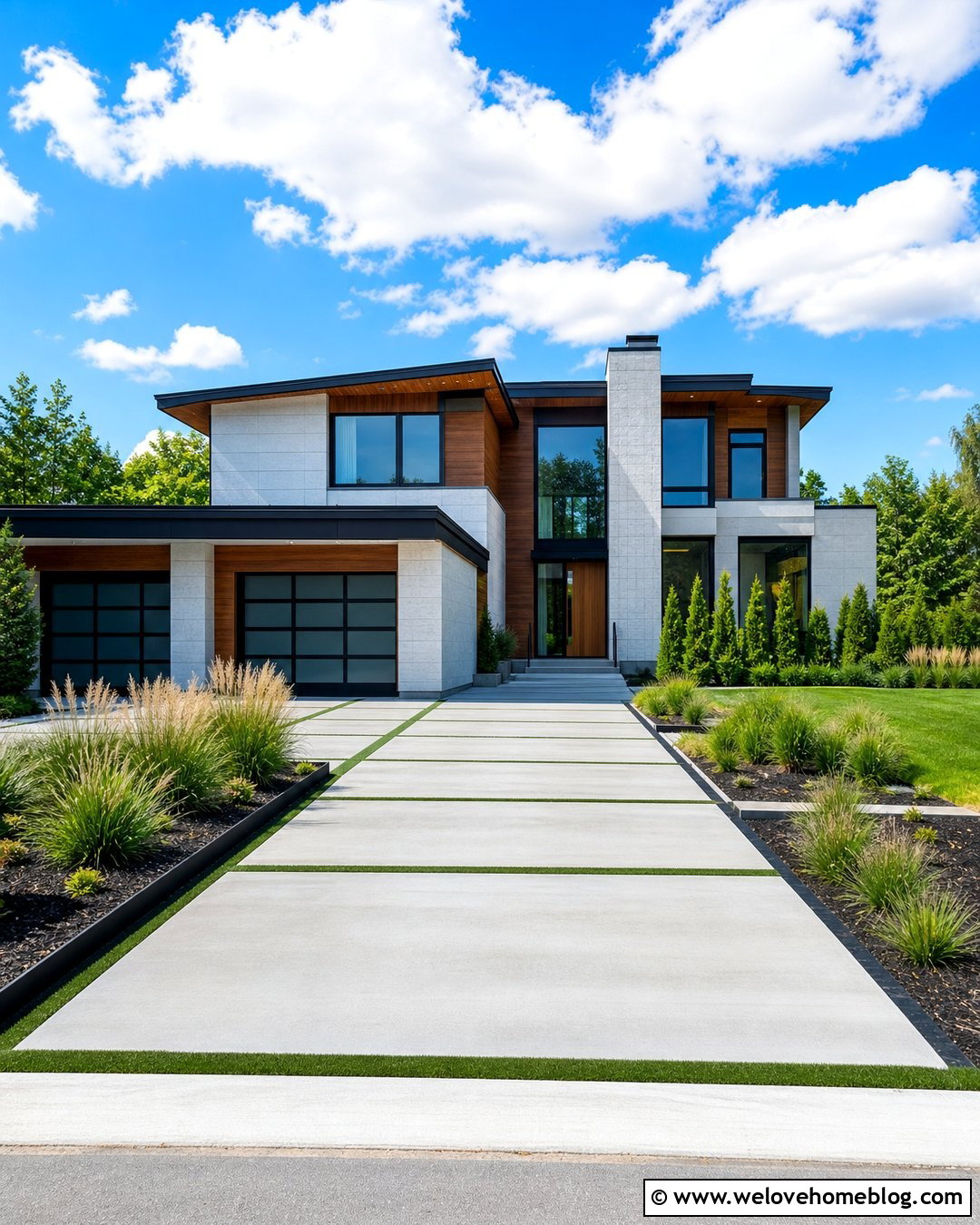
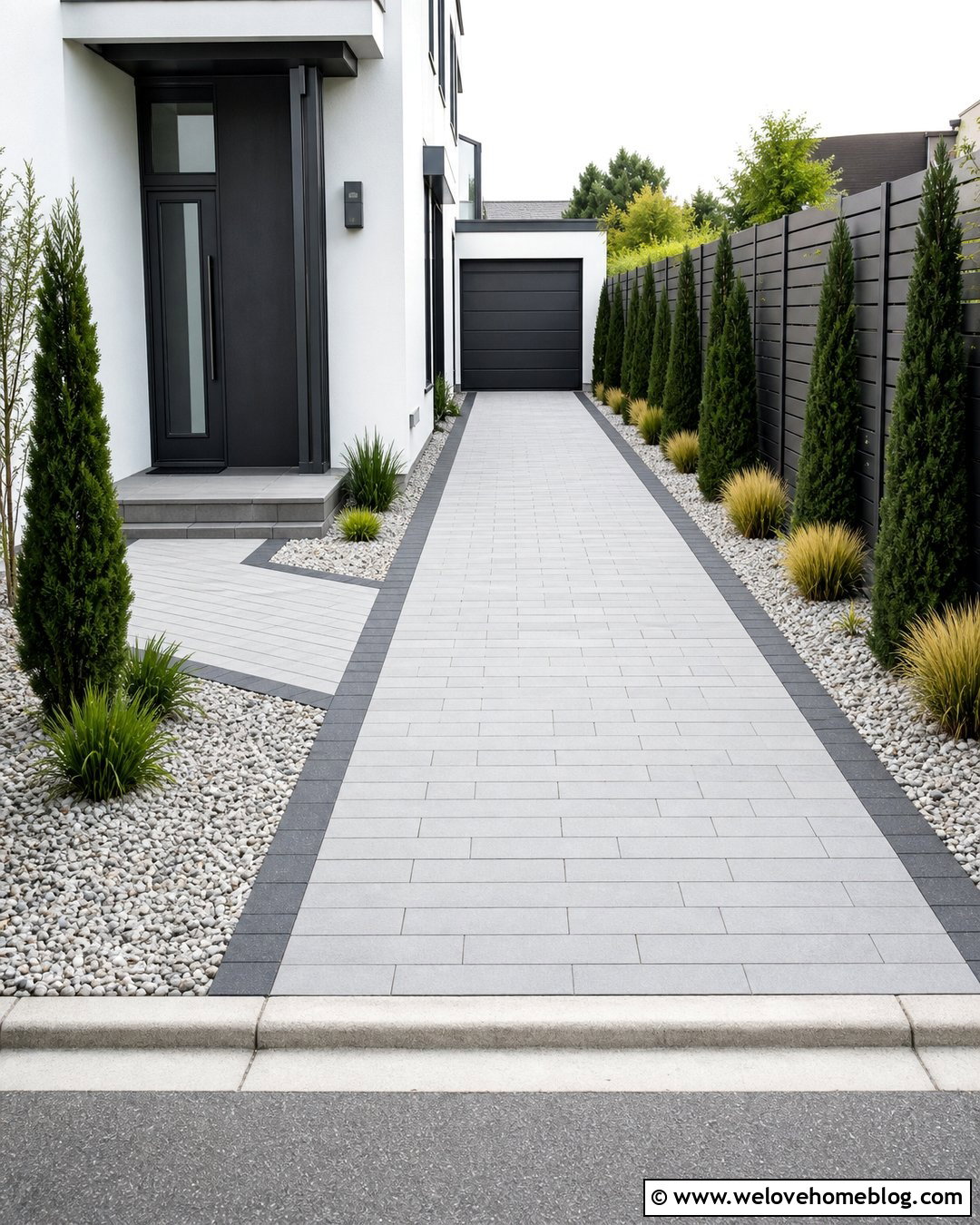
Large concrete panels separated by narrow grass strips create a clean driveway for a modern home. The linear layout emphasizes the horizontal lines of the architecture without making the front yard feel like one solid paved area. Choose pale gray poured concrete with a smooth or lightly broomed finish for a bright appearance. Dark metal edging can keep the lawn strips neat and prevent soil from spreading onto the surface. Add ornamental grasses, compact evergreens, and a straight concrete walkway beside the driveway. This design works especially well on a level property with a wide garage. Keep the planting simple so the geometric driveway pattern remains the main visual feature.
2. Curved Gravel Driveway With Stone Edging
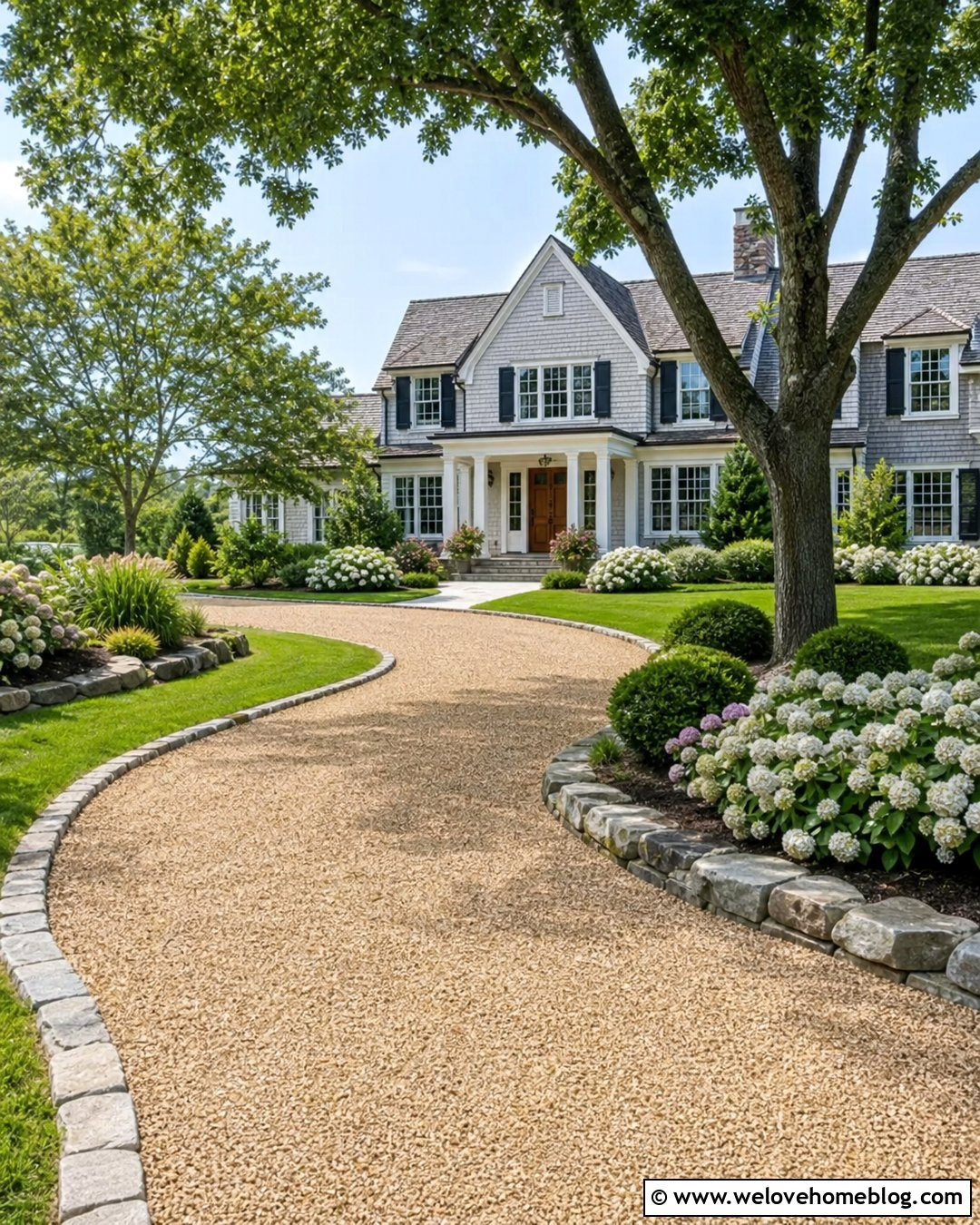
A curved gravel driveway can soften a large front yard while creating an inviting approach to the house. Use warm beige crushed gravel for the main surface and install sturdy fieldstone edging along both sides. The stones contain the loose material and connect the driveway with a country, cottage, or traditional home. Follow the outer curve with layered planting beds filled with hydrangeas, ornamental grasses, and low evergreen shrubs. A small specimen tree placed inside the bend gives the layout a natural focal point. Proper grading and a compacted base help keep gravel stable. The finished driveway should feel relaxed but clearly defined, with generous visibility where it meets the street.
3. Brick Driveway With Herringbone Pattern
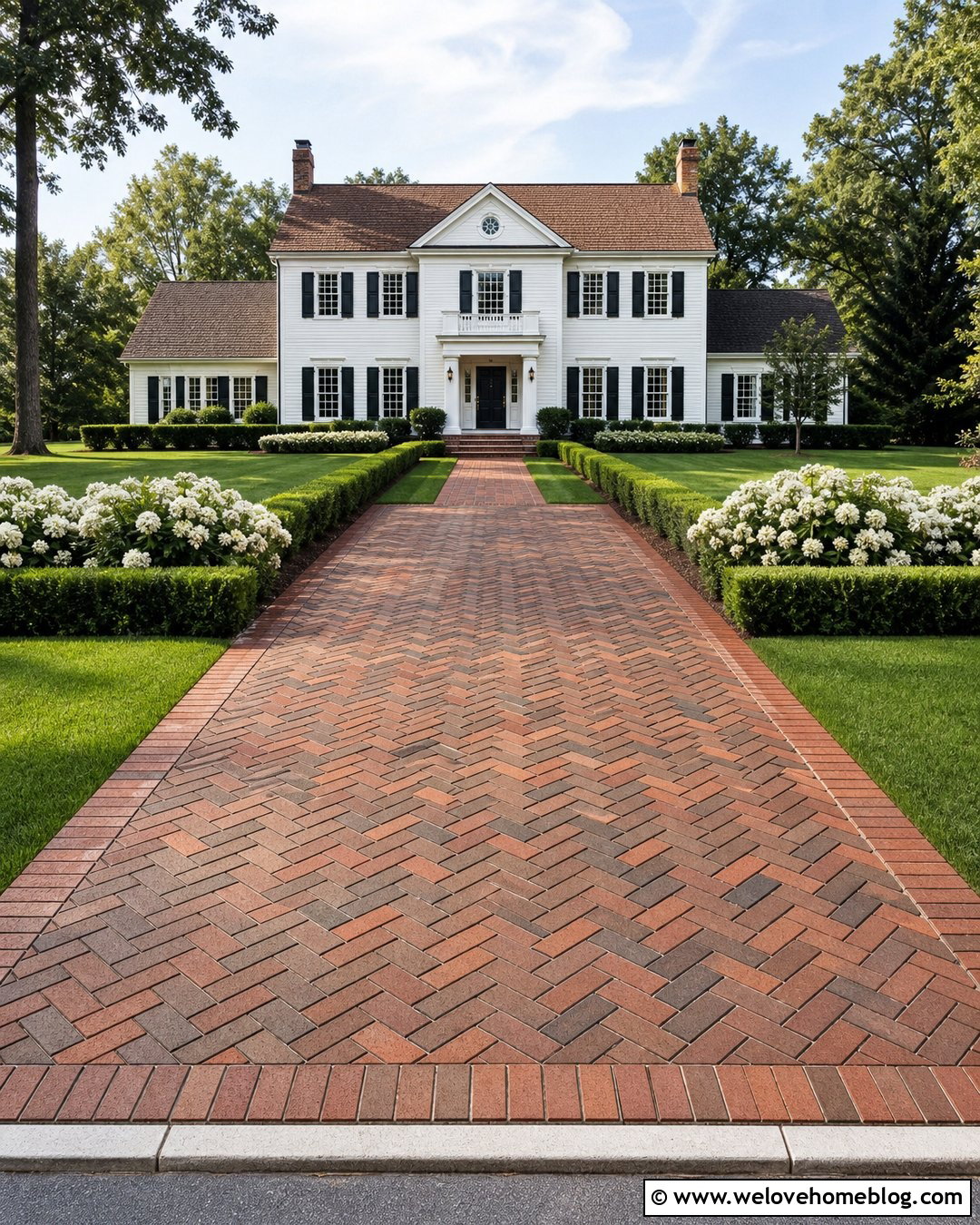
Clay brick pavers laid in a herringbone pattern bring rich color and traditional character to a house driveway. The interlocking arrangement creates visual movement, while a straight soldier-course border gives the edges a finished appearance. Red and brown brick tones pair naturally with colonial, Tudor, and classic brick homes. Repeat the same material in the front walkway to connect the driveway with the main entrance. Low boxwood hedges, white flowering shrubs, and a tidy lawn can frame the design without competing with the detailed paving pattern. For a balanced look, choose bricks that coordinate with the facade instead of matching it exactly. Darker border bricks can subtly define parking areas.
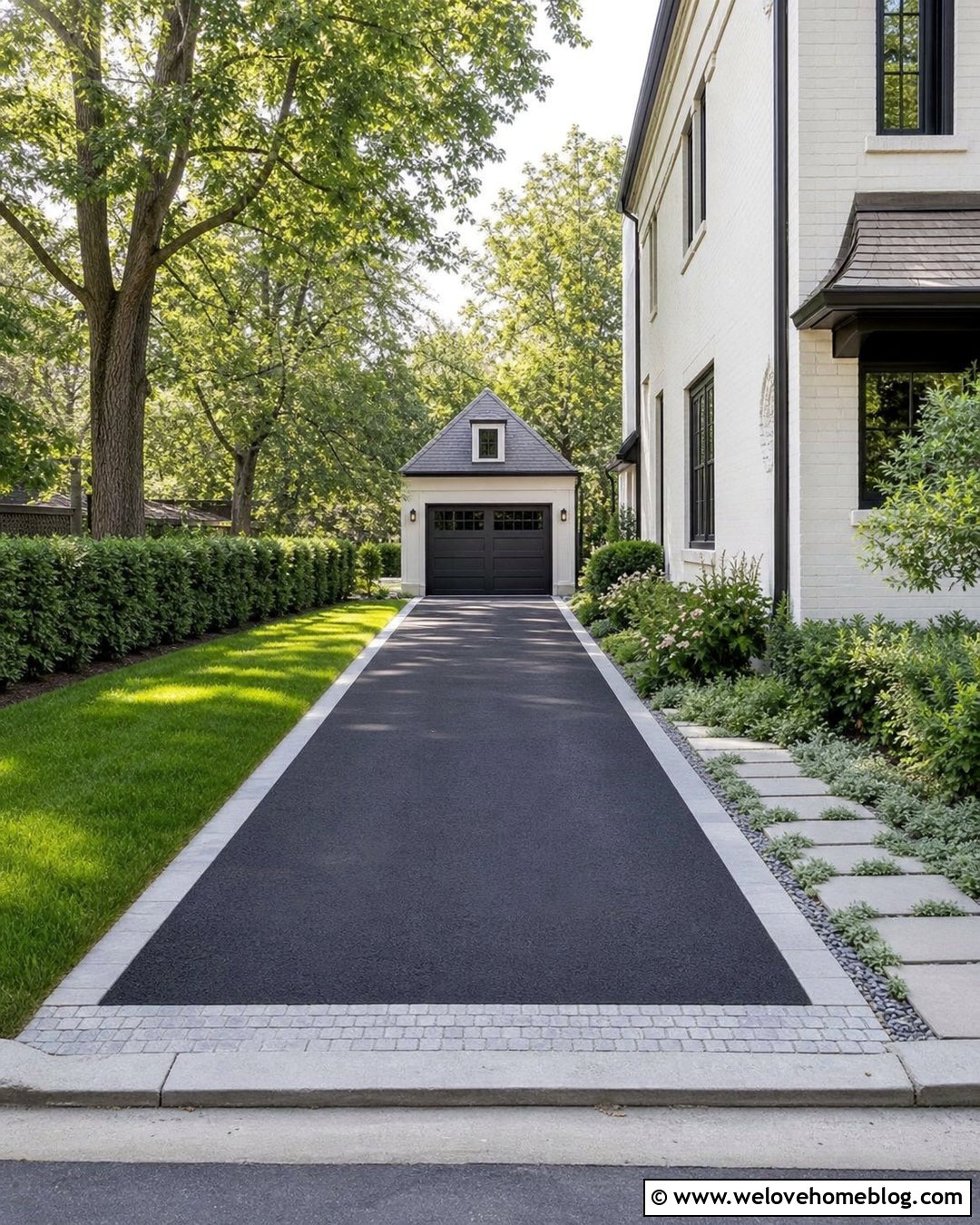
4. Black Asphalt Driveway With Paver Border
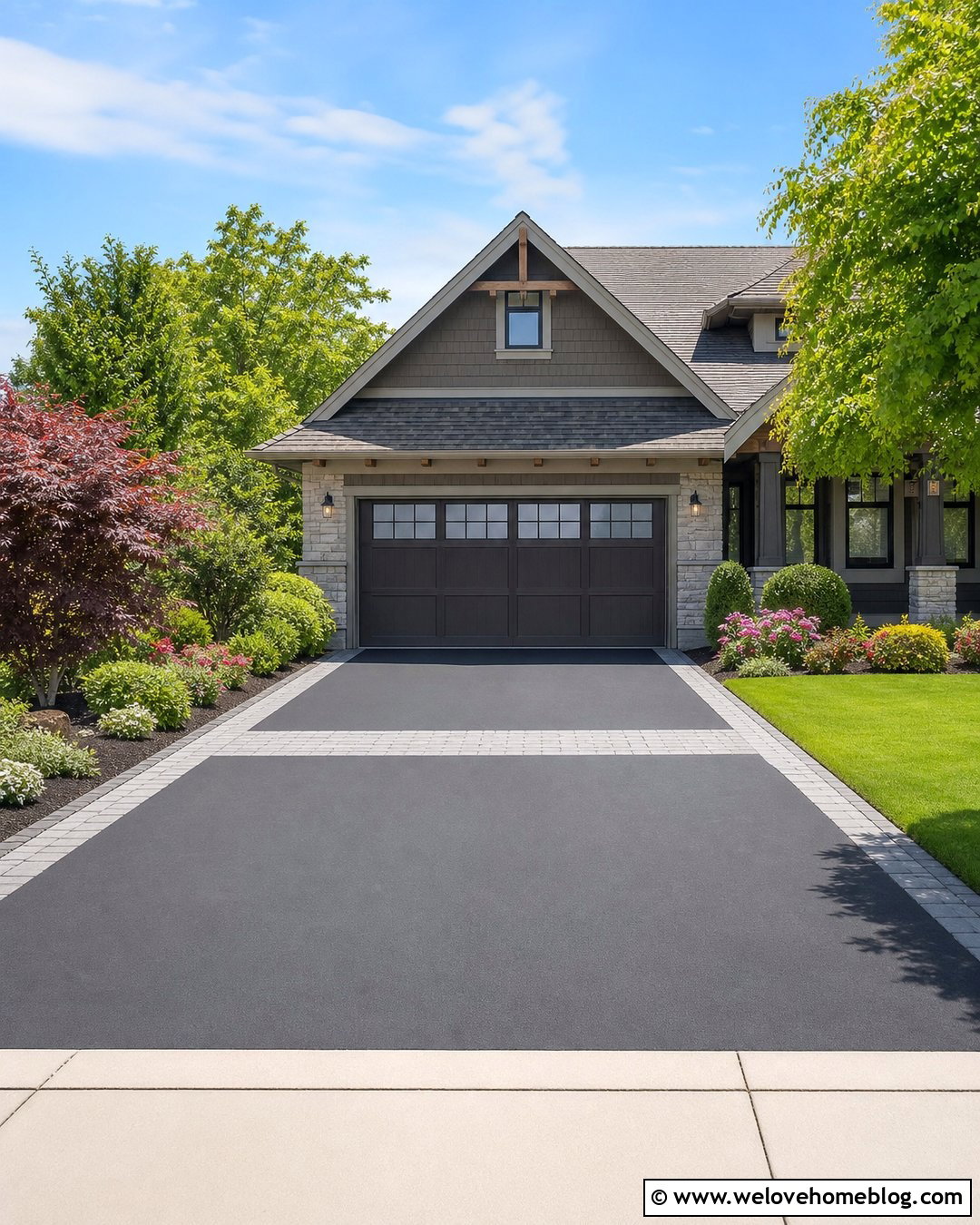
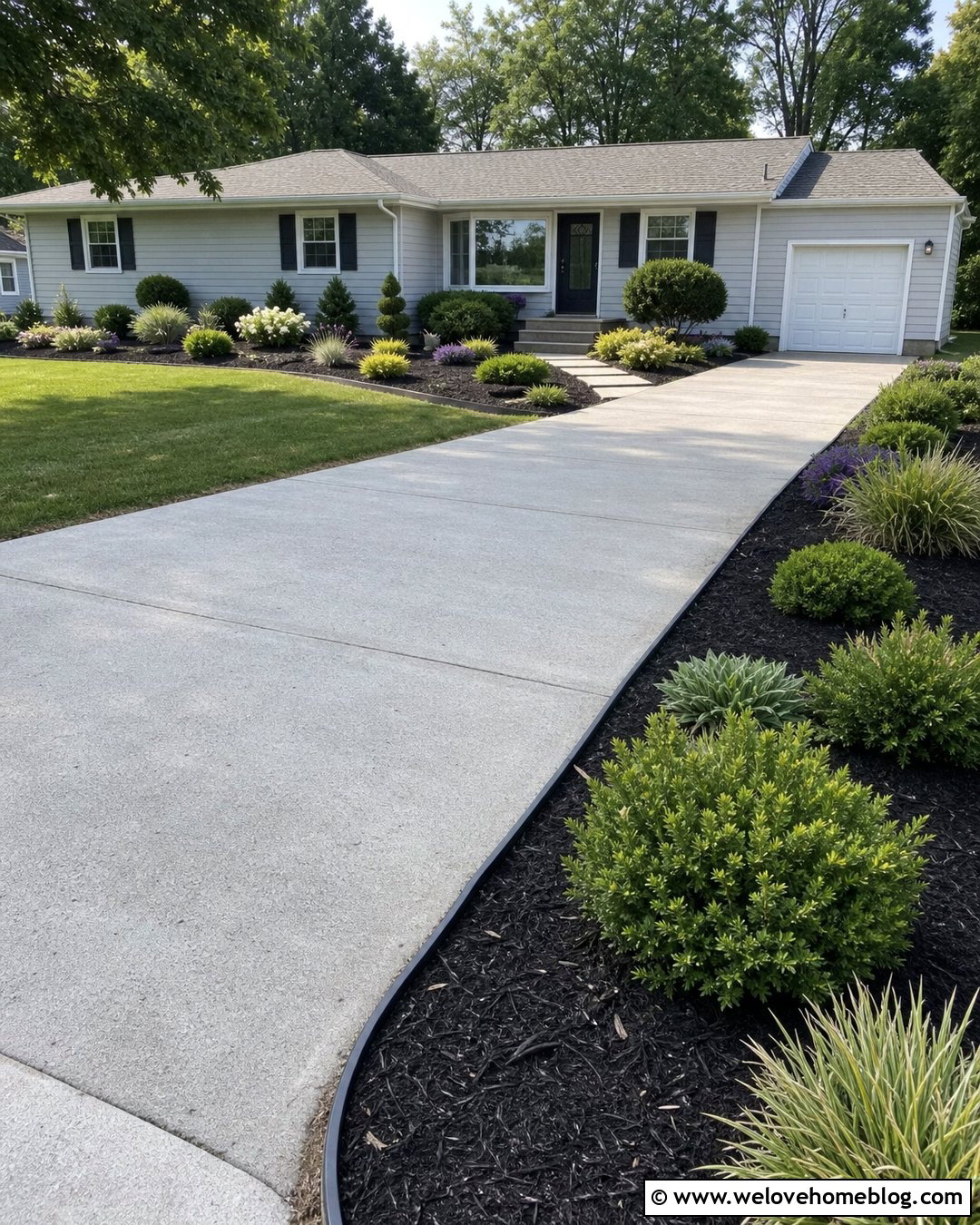
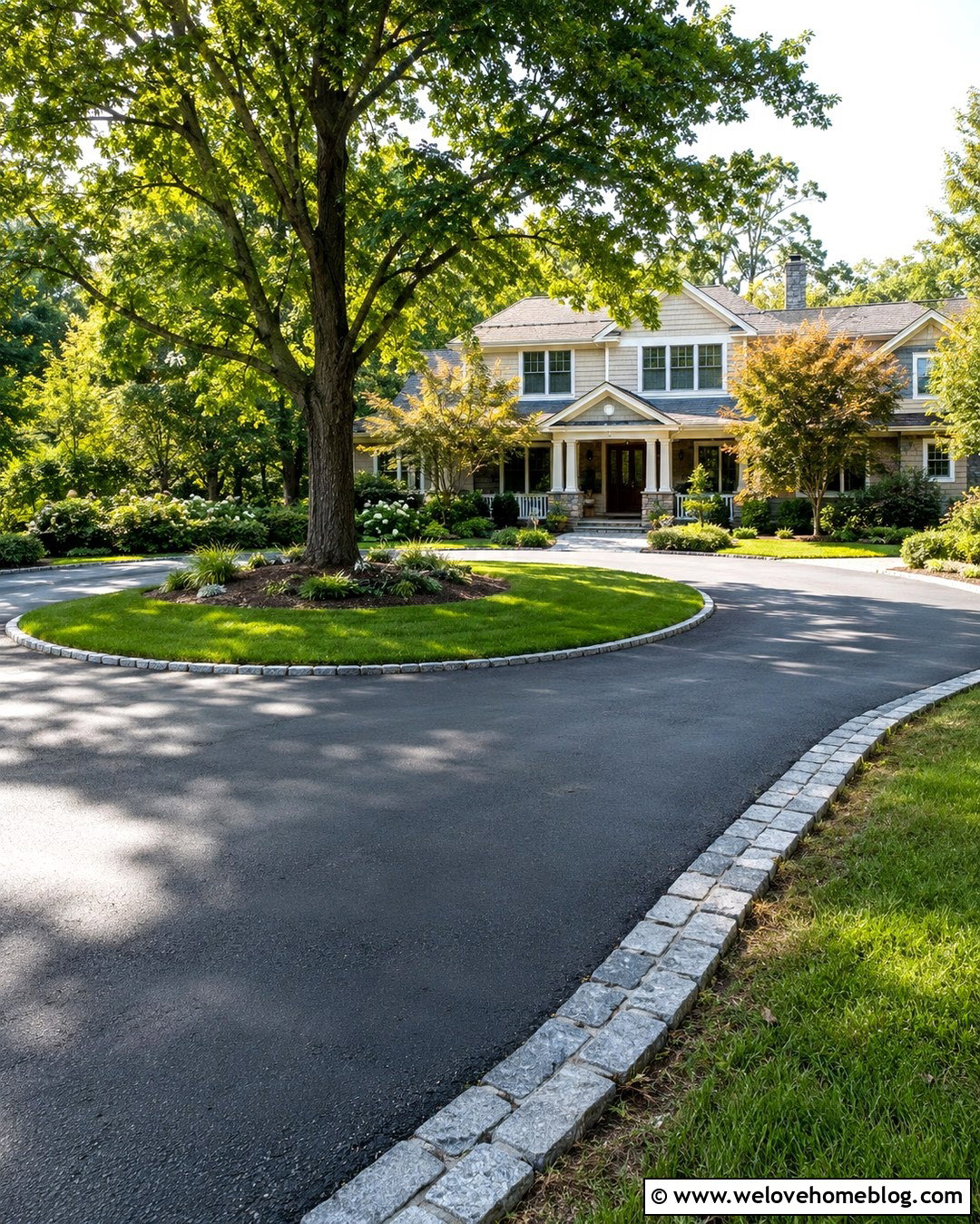
Black asphalt becomes far more polished when it is framed with a contrasting paver border. Choose charcoal or warm gray concrete pavers to create a neat ribbon along the driveway edges and garage apron. This combination offers the smooth, simple appearance of asphalt while adding architectural detail where it matters most. A straight layout works well for suburban ranch, split-level, and craftsman houses. Add mulched planting beds containing rounded shrubs, flowering perennials, and one small ornamental tree near the entrance. The dark driveway will visually recede when surrounded by healthy green landscaping. Keep the border wide enough to be noticeable from the curb but restrained enough to maintain an uncluttered look.
5. Circular Paver Driveway With Center Garden
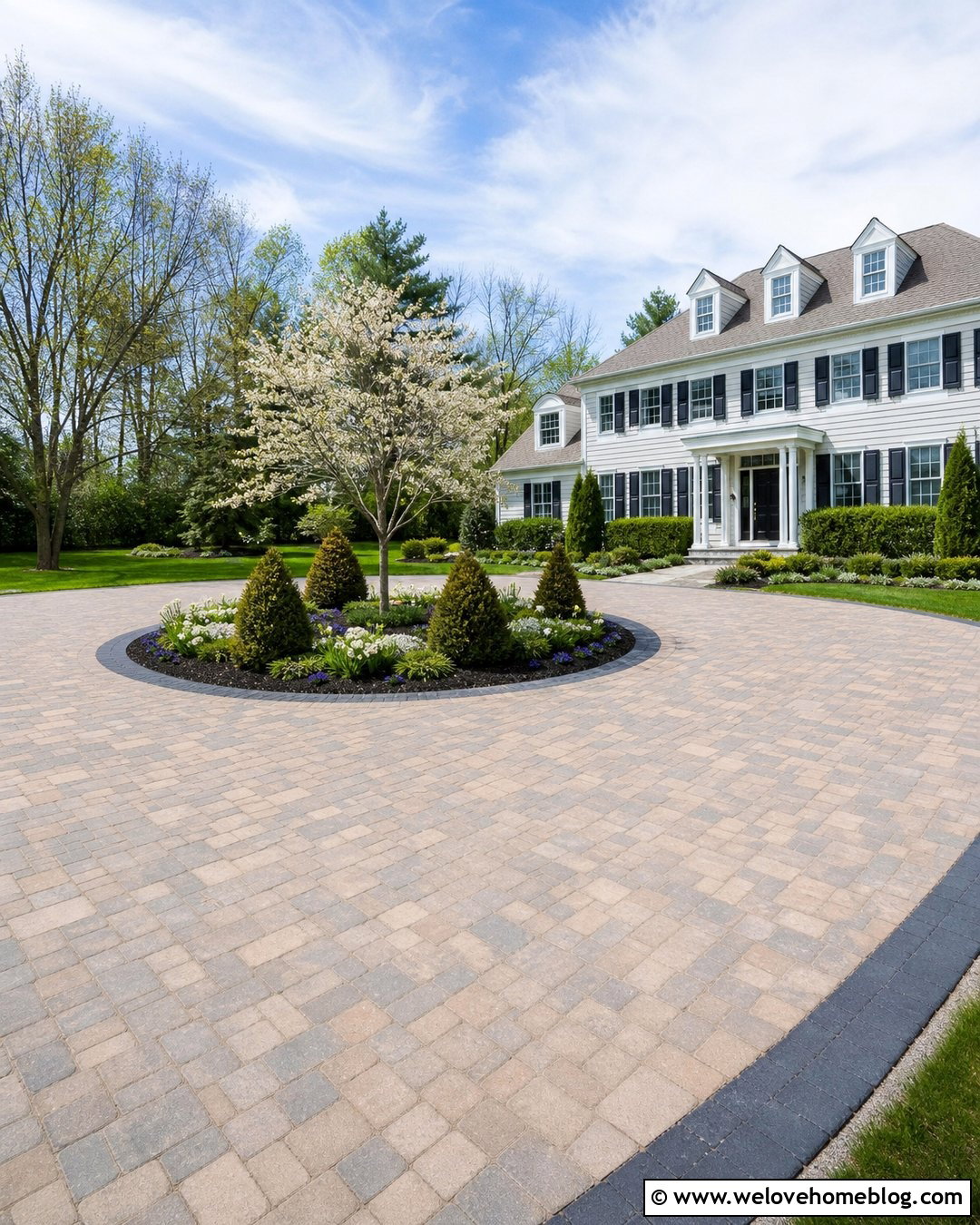
A circular paver driveway gives a spacious front yard an elegant layout and allows vehicles to approach the entrance without backing toward the street. Build the surface with gray and tan concrete pavers, then use a darker border to emphasize the circular shape. In the center, create a raised or ground-level garden containing a small tree, clipped evergreens, and seasonal flowers. Keep plants low near driveway sightlines. Matching paver walkways can lead from the drop-off point to the front door. This complete arrangement suits colonial, Mediterranean, and estate-style houses. Pattern changes or accent bands can also break up a large paved surface and make the entrance feel more carefully designed. ()
6. Cobblestone Driveway With Stone Pillars
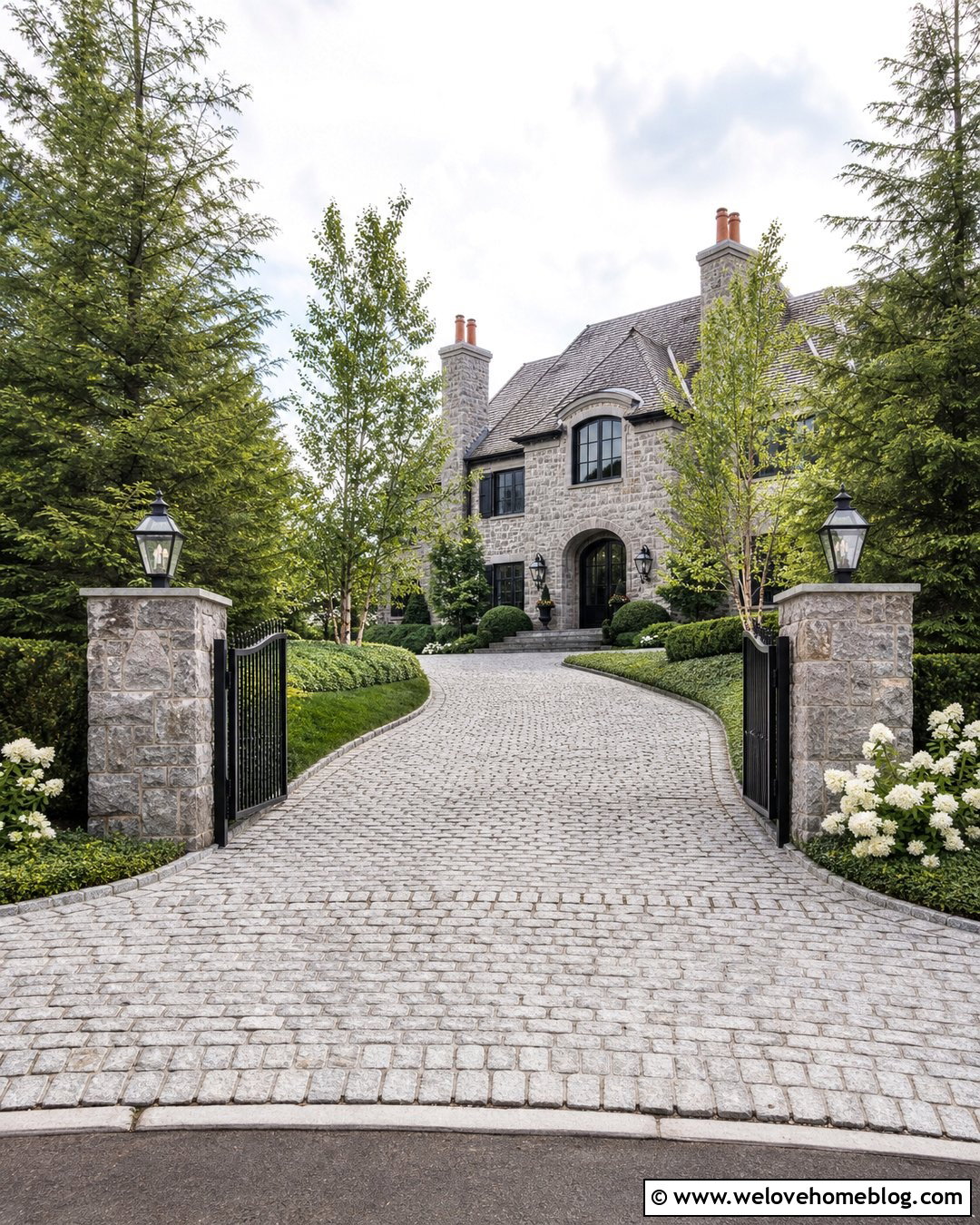
A full cobblestone driveway paired with stone entrance pillars creates a substantial approach to a traditional house. Use gray granite cobbles with slightly varied tones to produce an aged, textured appearance. A gentle curve can make the entrance feel less rigid and reveal the house gradually. Build the pillars from stone that coordinates with the facade, then add simple lantern-style fixtures and restrained metal gates if privacy is needed. Plant upright evergreens behind the pillars and use low ground cover along the driveway edges. Because cobblestone has strong visual texture, surrounding landscaping should remain orderly. A matching cobblestone apron at the street completes the design and clearly marks the property entrance.
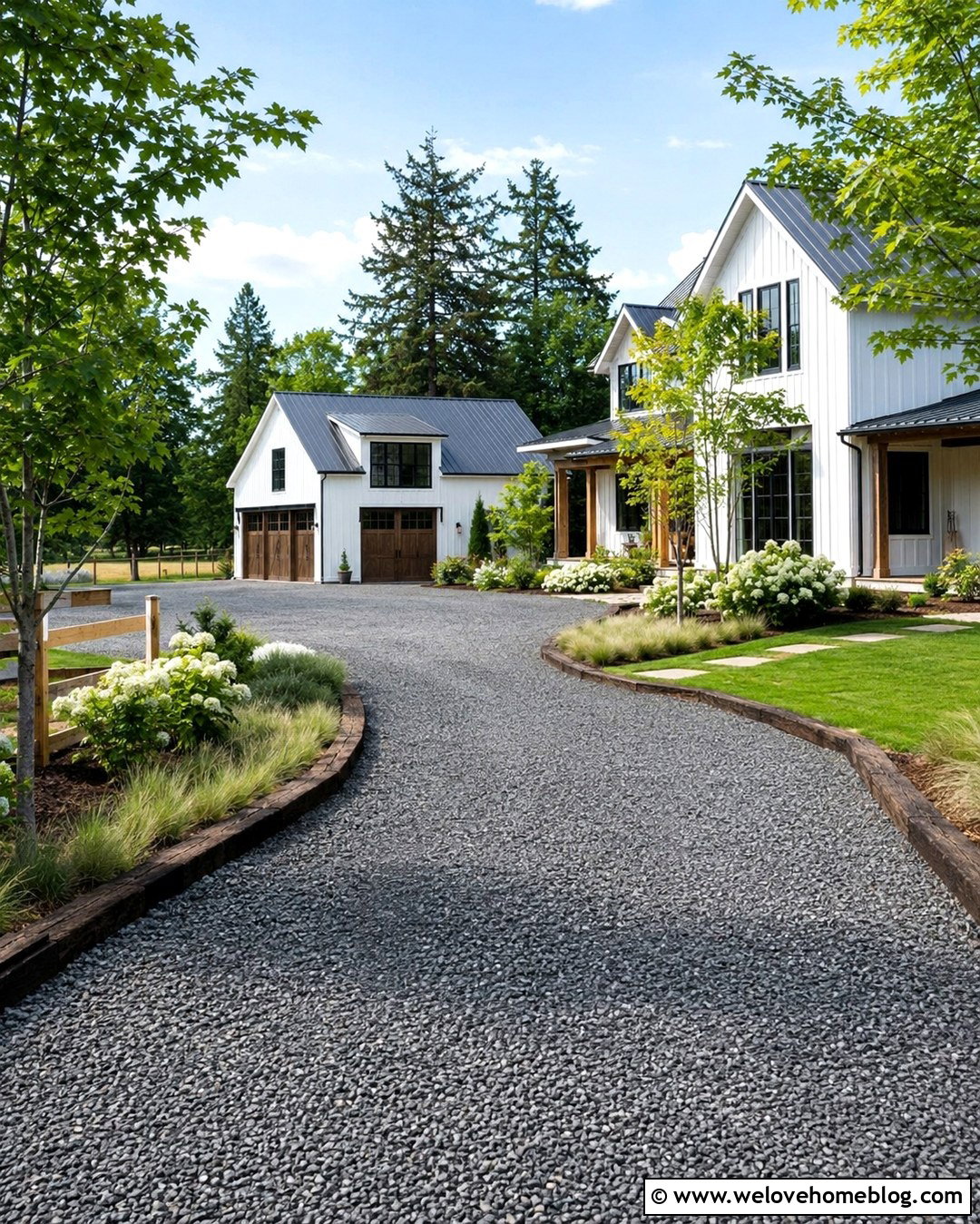
7. Farmhouse Gravel Driveway With Timber Edging
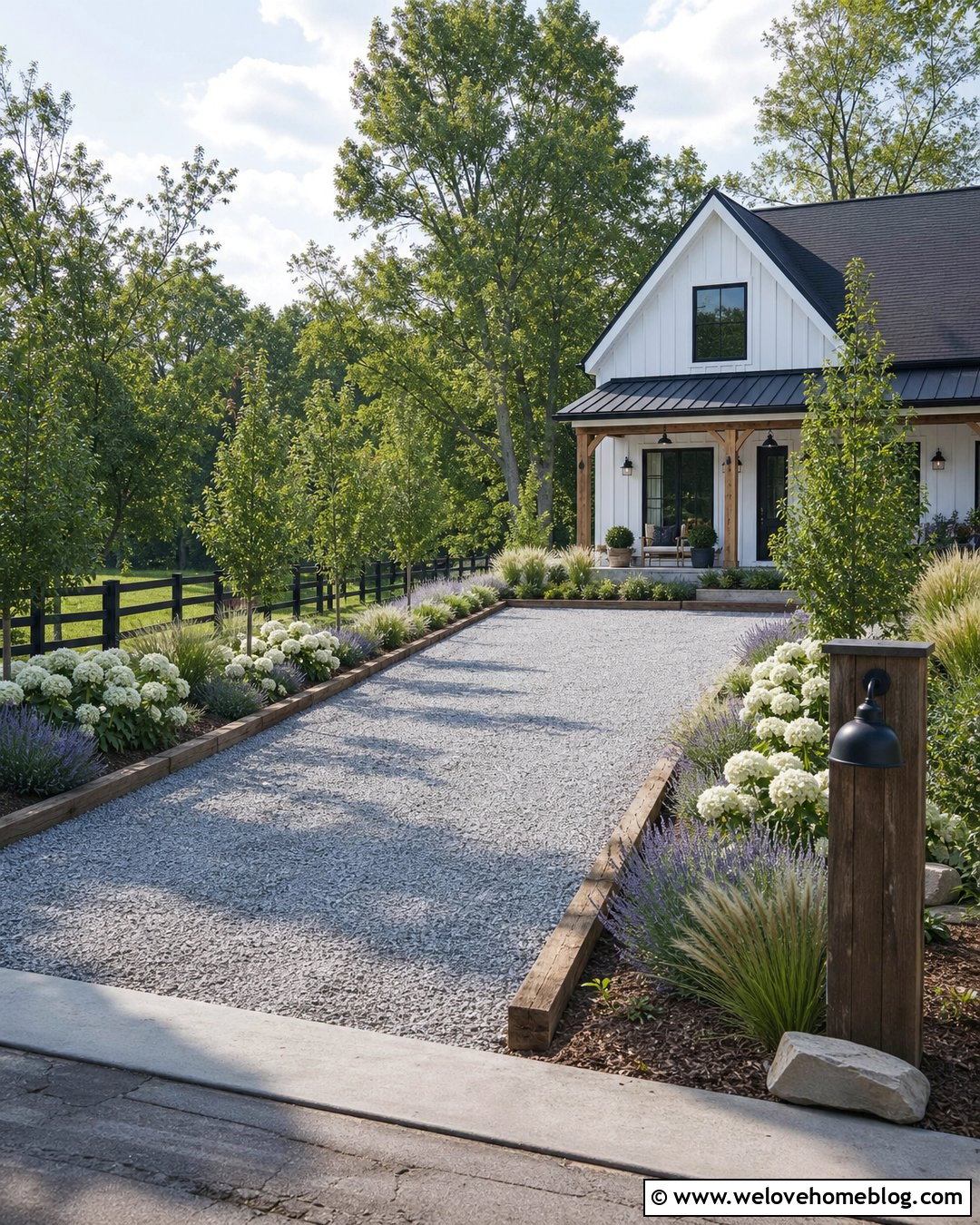
Light gray gravel, timber edging, and informal planting can create a practical driveway for a modern farmhouse. Run the driveway straight toward the garage, then widen it near the house to provide comfortable parking and turning space. Pressure-treated timber or heavy landscape beams can form a simple border that suits the property’s relaxed character. Add white hydrangeas, fountain grasses, lavender, and small native trees along the approach. A matching gravel path can branch toward the porch, helping the driveway and front entrance feel connected. Black barn-style lighting and a wooden address post add useful detail. Keep the gravel color cool and understated so it complements white siding and dark exterior trim.
8. Small Concrete Driveway With Brick Ribbon
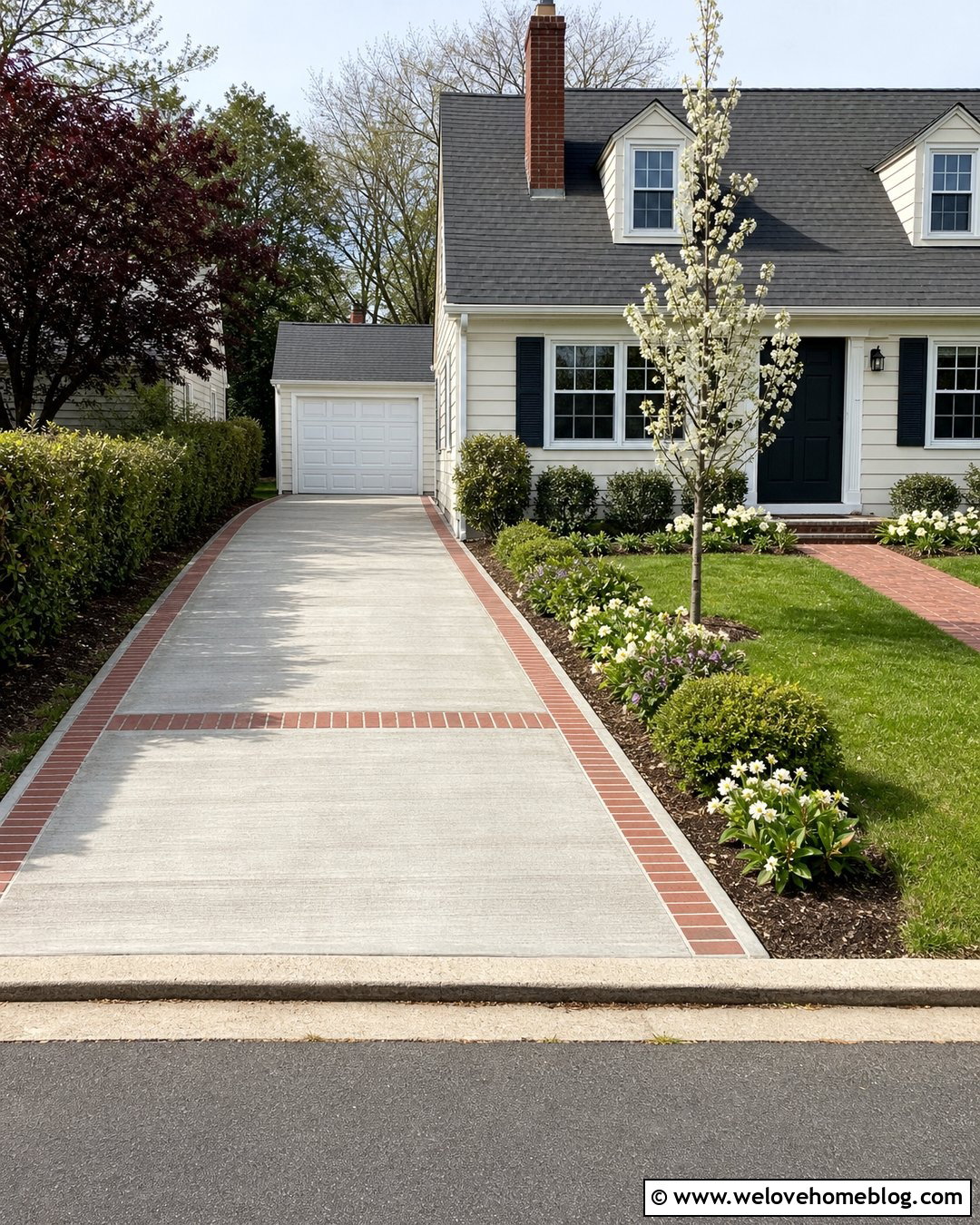
A narrow concrete driveway can gain character without losing valuable parking space by adding a brick ribbon. Use light gray poured concrete for the main surface and install a single or double row of red clay bricks along both edges. Continue the brick across the driveway near the sidewalk or garage to create a subtle decorative band. This layout works well for compact bungalows, Cape Cod homes, and urban cottages. Keep landscaping scaled to the available space with low shrubs, narrow flower beds, and one upright ornamental tree. A brick walkway leading to the front door can repeat the border material. The coordinated details make a basic driveway look intentional without overwhelming a small front yard.
9. Permeable Paver Driveway With Rain Garden
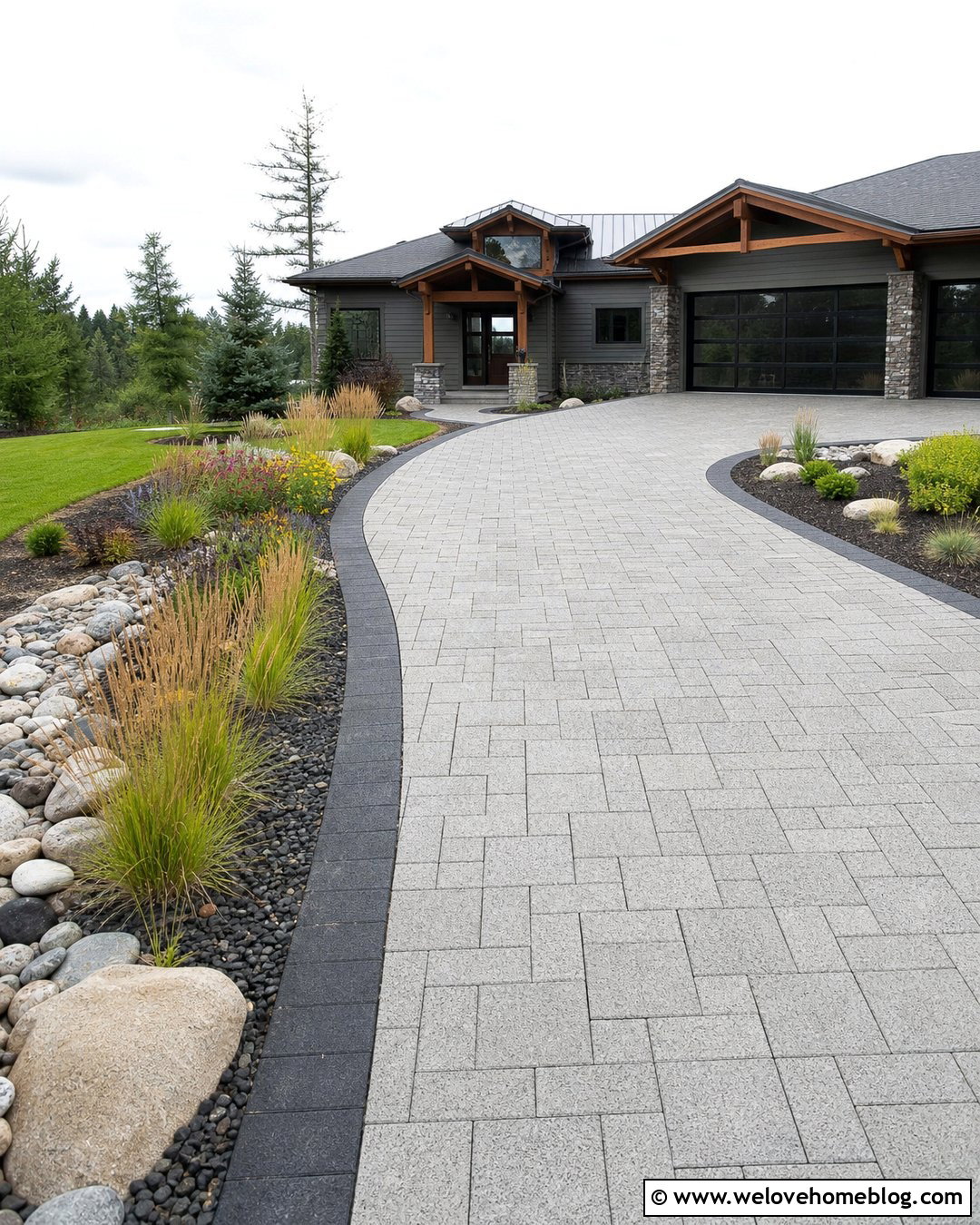
Permeable concrete pavers create an attractive driveway while allowing water to move through the joints into a properly prepared stone base. Use medium gray pavers in a simple running-bond pattern and frame them with a darker solid border. Along the lower side of the driveway, add a shallow rain garden planted with moisture-tolerant grasses, sedges, and flowering perennials suited to the local climate. A gently curved layout can direct attention toward the house while following the natural grade. This design pairs especially well with contemporary, craftsman, and woodland homes. Drainage must be planned as part of the complete installation, including slopes, soil conditions, overflow routes, and connections to surrounding landscaping. ()
10. White Gravel Driveway With Lavender Borders
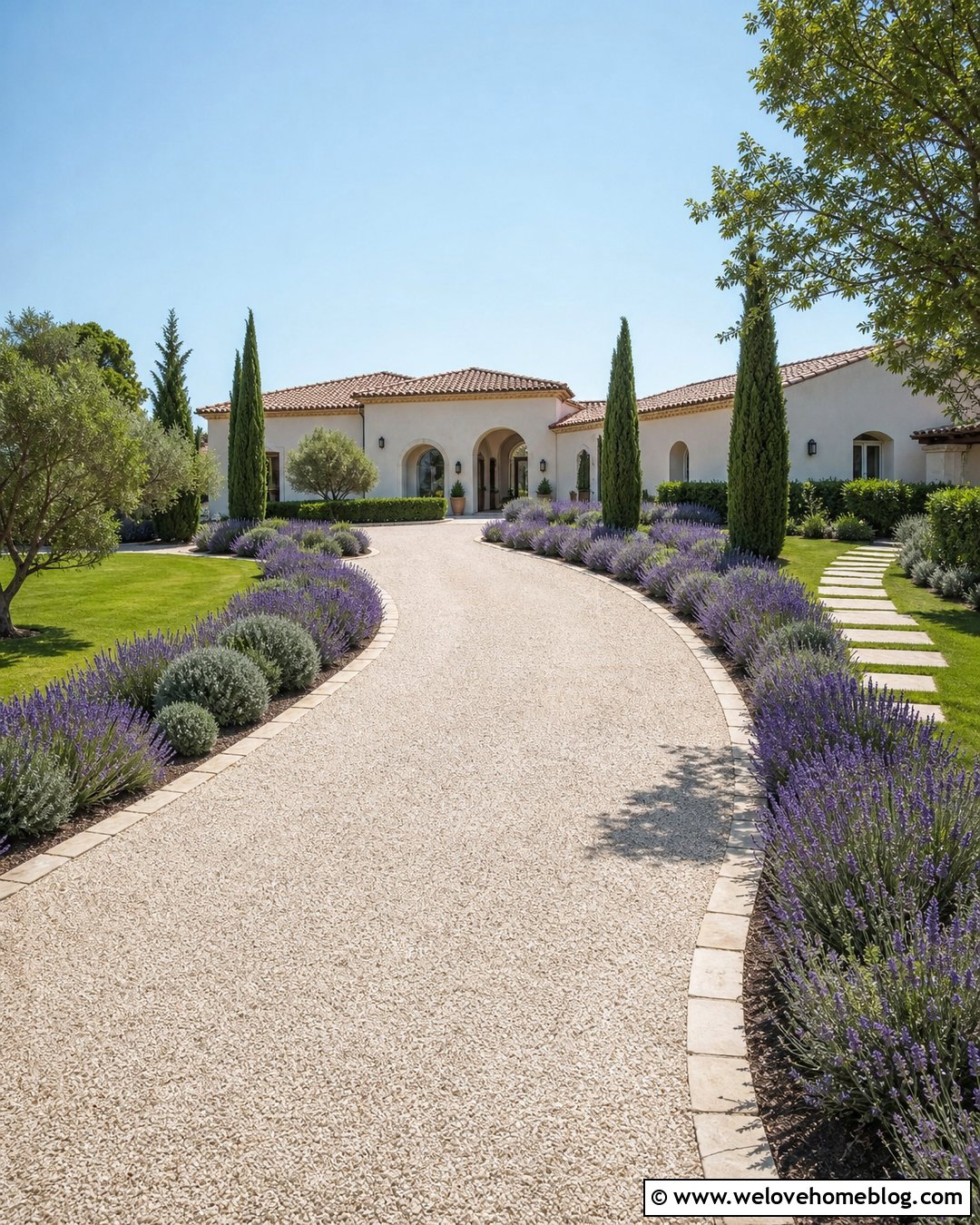
Bright gravel and rows of lavender can give a sunny driveway an airy, welcoming appearance. Choose cream or pale limestone gravel rather than brilliant white stone, which may show stains more easily. Install steel or stone edging to contain the loose surface and create crisp planting lines. Lavender works best along open, sunny edges where its soft foliage and purple flowers can spill slightly toward the drive. Mix in upright junipers or compact olive-toned shrubs near the house for year-round structure. A gently curved layout suits Mediterranean, cottage, and stucco homes. Add stepping stones or a paved walkway near the parking area so visitors have a comfortable route to the front entrance.
11. Exposed Aggregate Driveway With Modern Landscaping
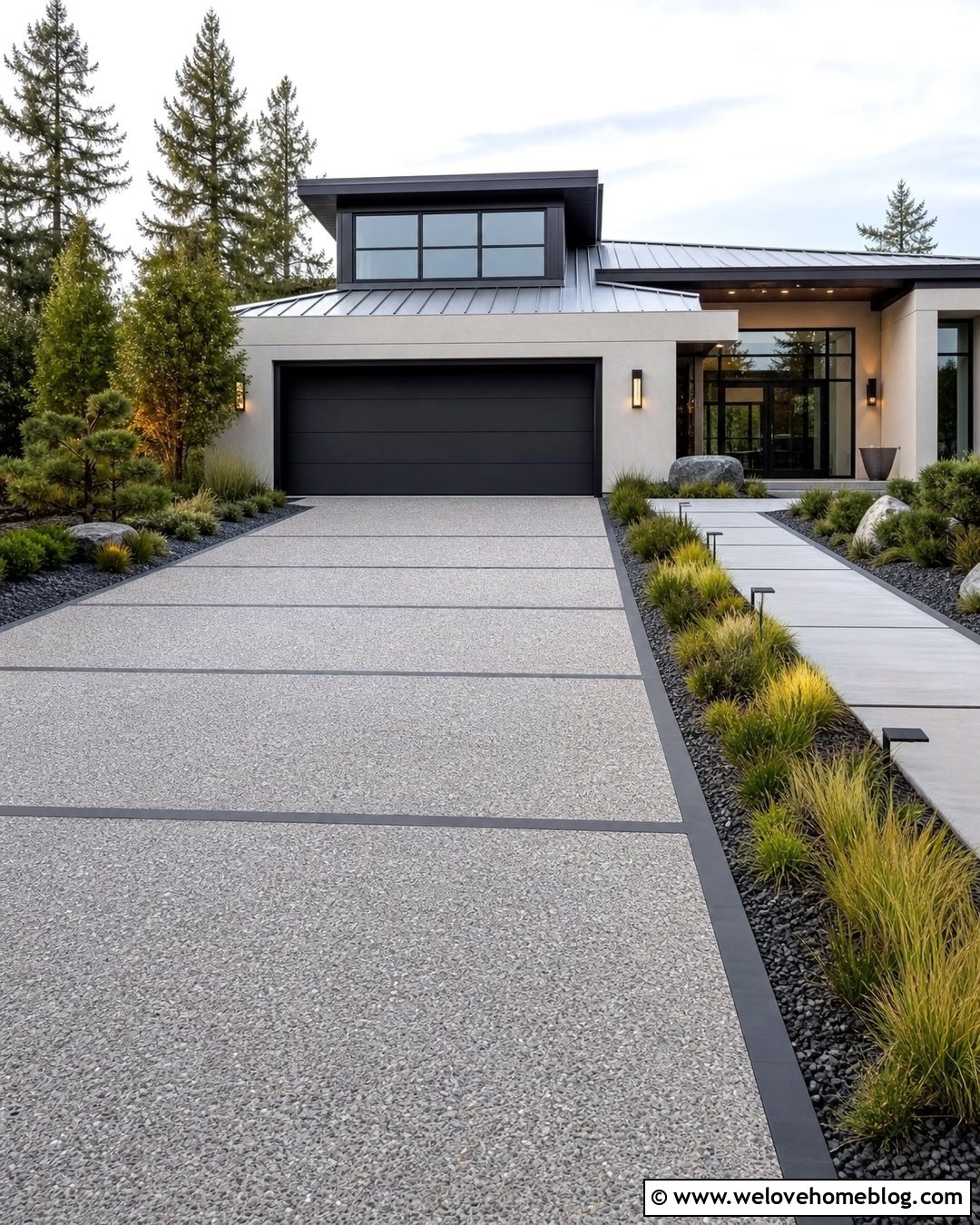
Exposed aggregate concrete adds subtle texture while maintaining the clean appearance needed for a modern driveway. Select a mix containing gray, cream, and charcoal stones that coordinates with the home’s facade. Divide the driveway into broad rectangular sections using saw-cut joints or narrow dark bands. Along one side, create a structured planting bed with architectural grasses, compact shrubs, and large decorative rocks. A straight walkway can run parallel to the driveway before turning sharply toward the entrance. Black steel edging helps separate planting areas from the paved surface. The complete design feels modern without appearing stark because the aggregate introduces natural variation. Keep the layout open and avoid filling every available edge with plants.
12. Resin-Bound Driveway With Brick House
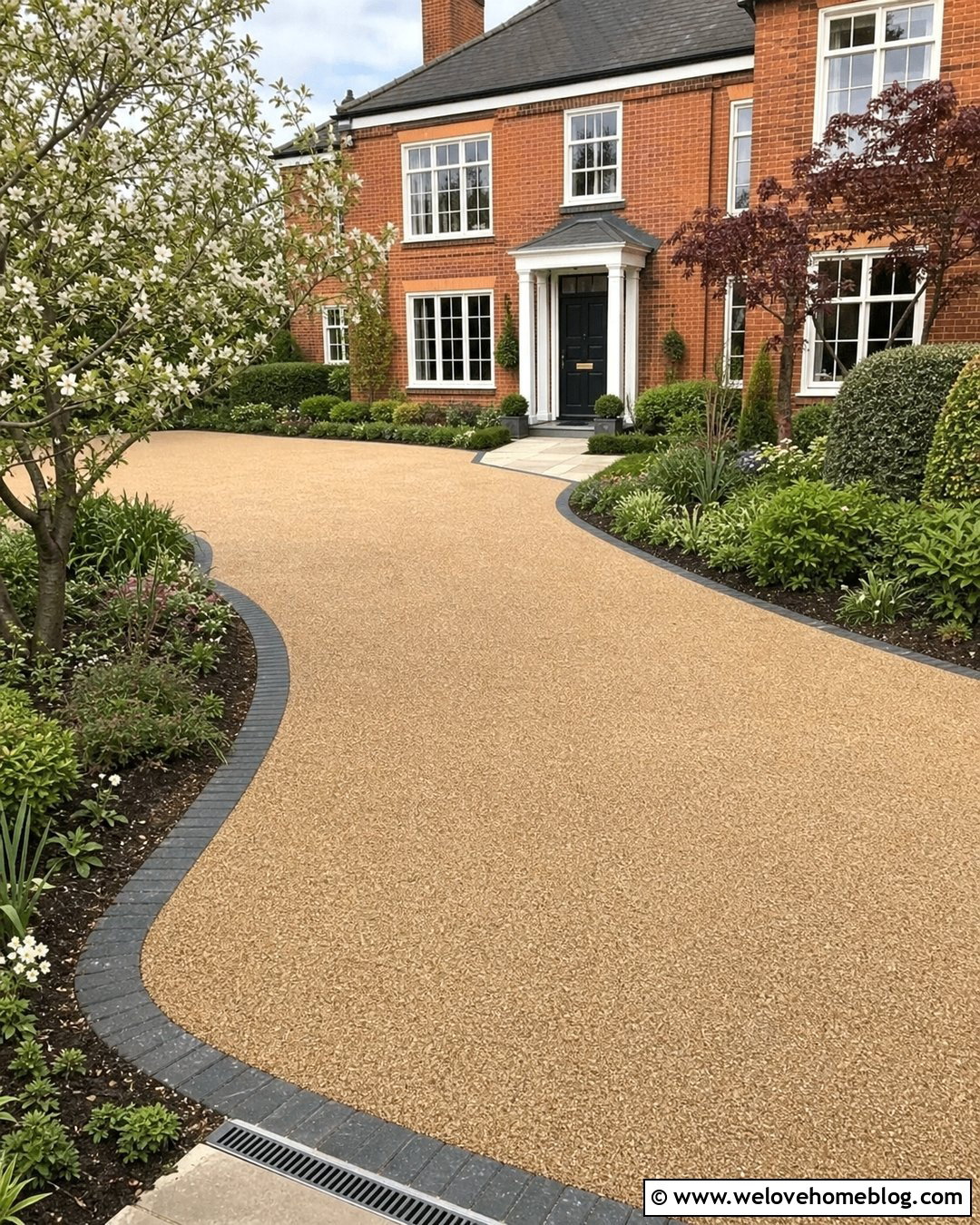
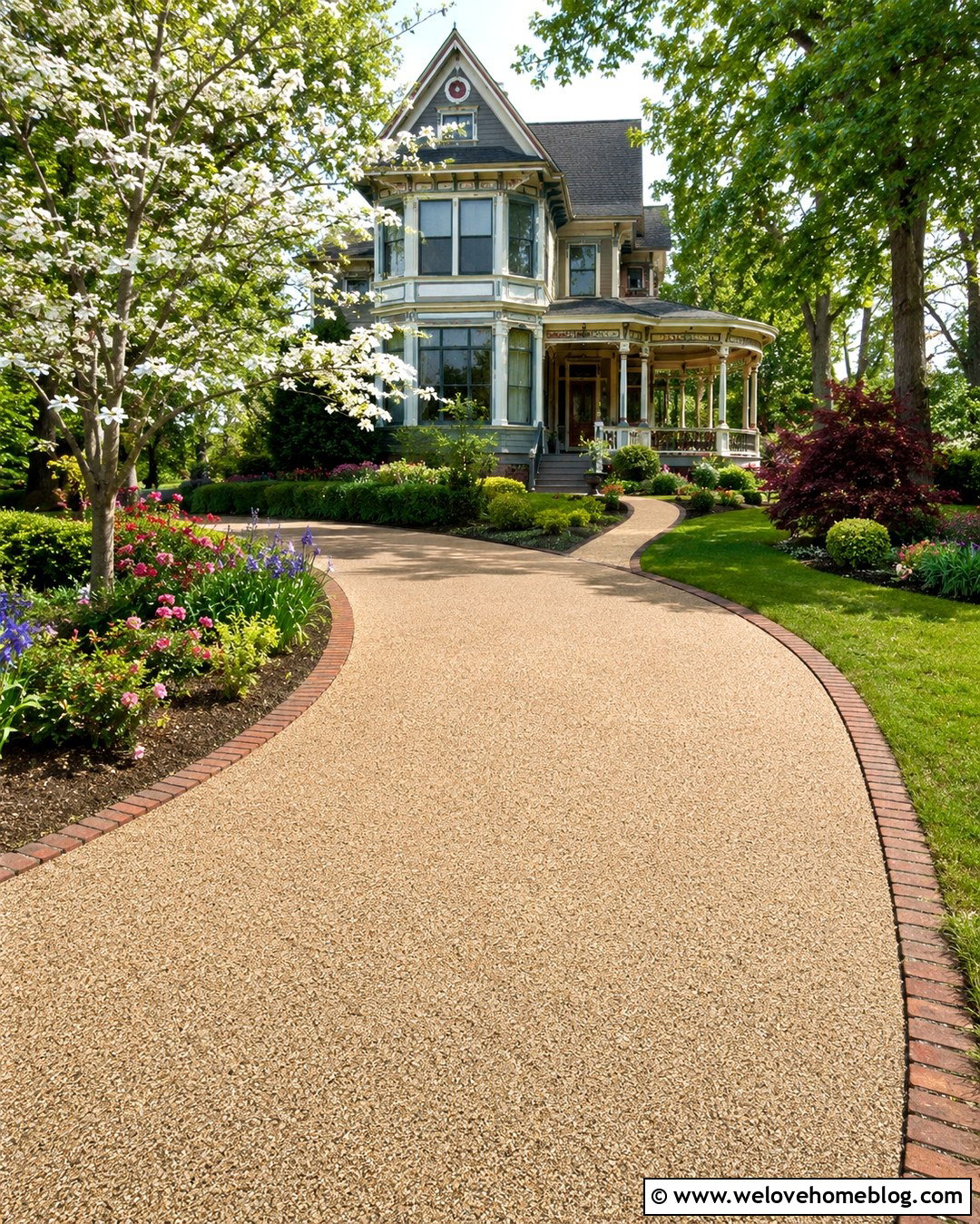
A warm beige resin-bound gravel driveway can soften the strong color of a traditional brick house. The smooth, seamless-looking finish suits both curved and straight layouts, while a dark brick or granite border helps define its shape. Repeat one of the house’s secondary colors in the edging so the driveway feels connected to the facade. Place generous planting beds around the parking area with evergreen shrubs, small flowering trees, and seasonal perennials. A paved walkway should provide a clear route from the driveway to the front door. Keep drainage channels discreet but accessible near the garage. The neutral driveway surface allows the brickwork and landscaping to remain visually prominent from the curb.
13. Concrete Ribbon Driveway With Ground Cover
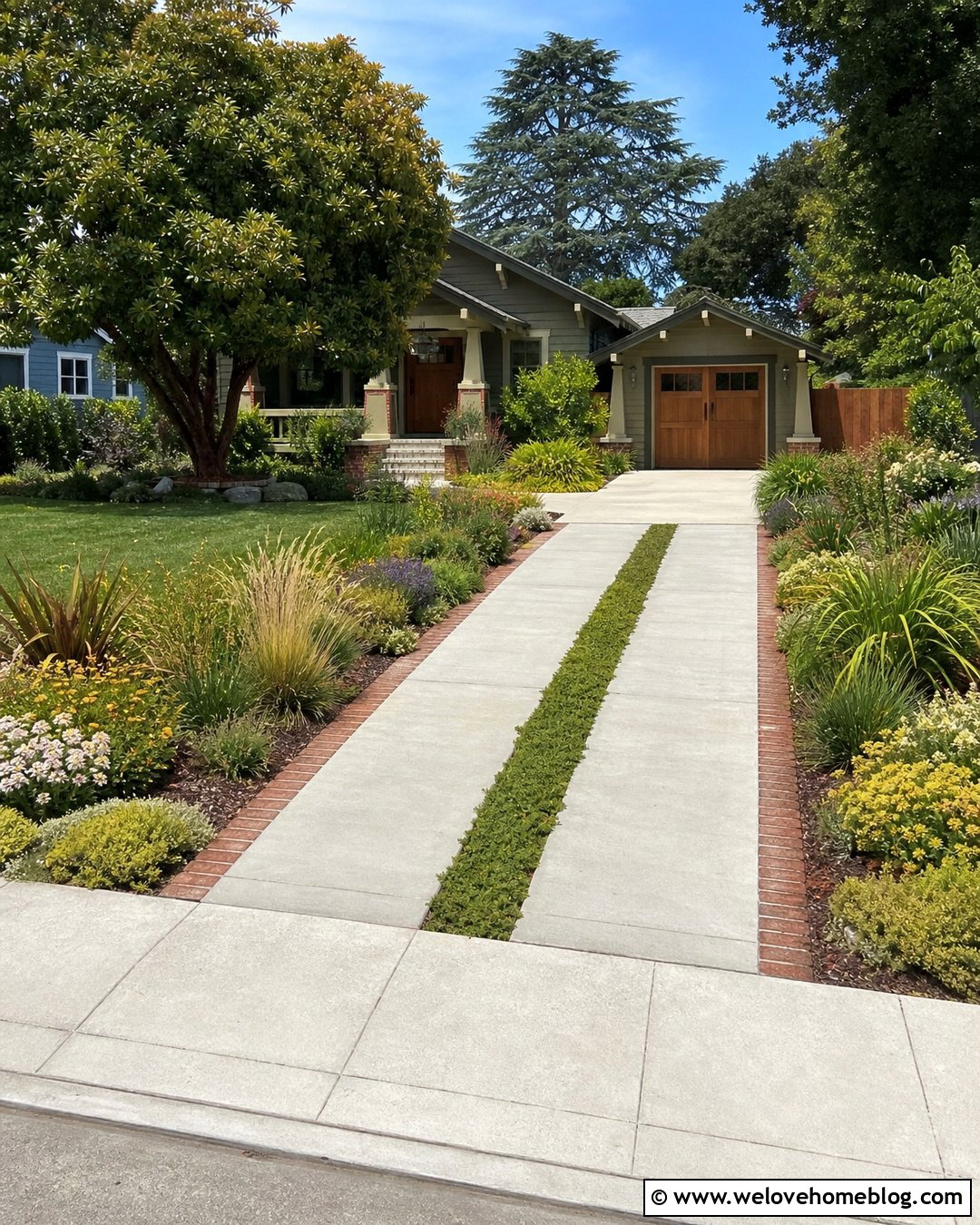
A concrete ribbon driveway uses two paved wheel tracks with a planted strip through the center. It is an attractive choice for a cottage, bungalow, or older home where a full-width concrete slab might feel too dominant. Pour the tracks in pale gray concrete and fill the middle with durable, low-growing ground cover suited to occasional traffic and local conditions. Brick or stone edging can define the outside boundaries. Frame the drive with informal flower beds, ornamental grasses, and a simple lawn. Widen the paved surface near the garage to make parking easier. This layout works best where regular maintenance is possible, since the central planting must be trimmed and kept from spreading over the wheel tracks.
14. Long Driveway With Tree-Lined Entrance
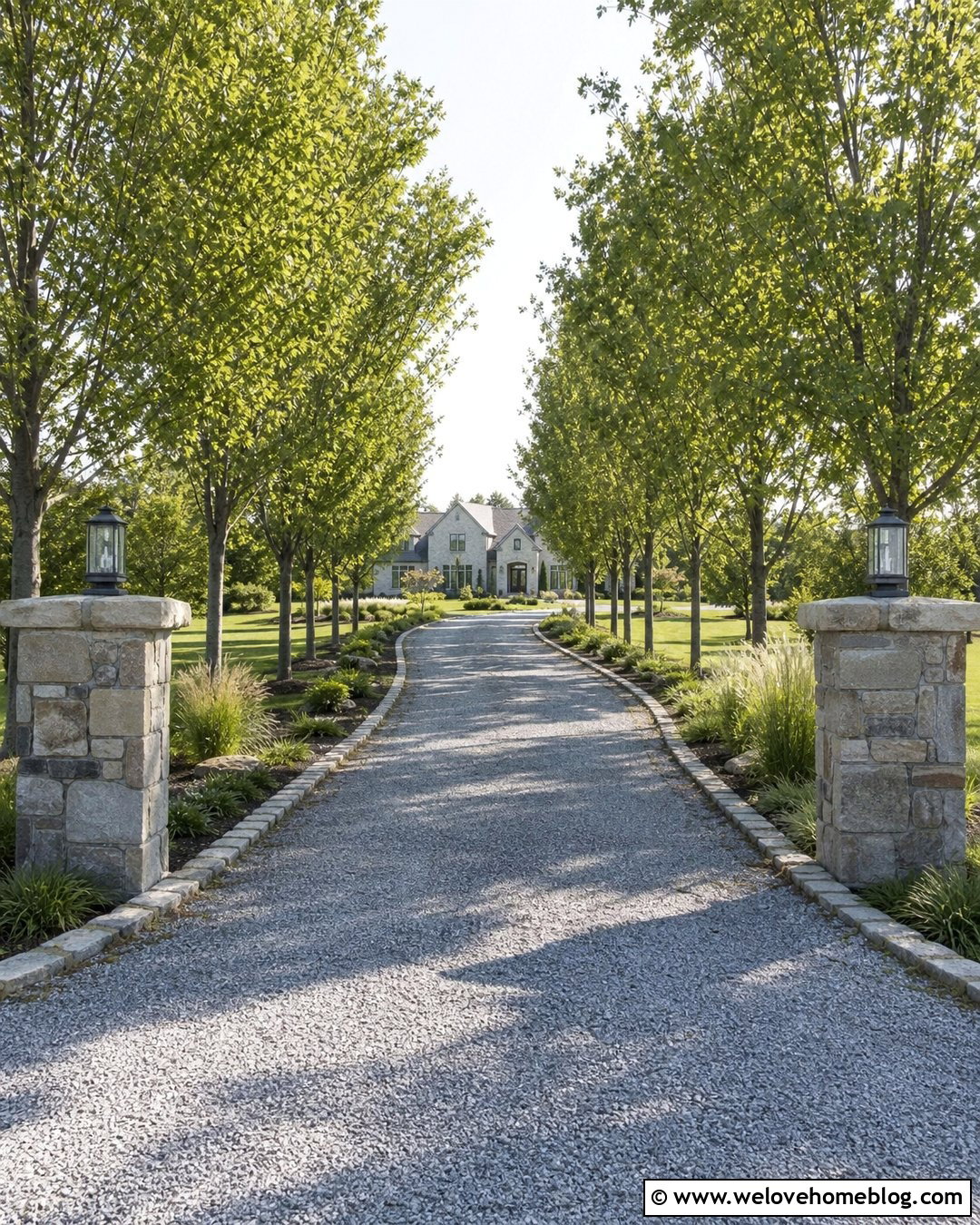
A long house driveway becomes memorable when trees create a strong visual rhythm from the street to the home. Use compacted gray gravel or dark asphalt for a smooth, understated surface and add stone edging to maintain clean boundaries. Plant evenly spaced trees far enough from the pavement to allow healthy mature growth and safe vehicle clearance. Underplant them with lawn, low ground cover, or restrained drifts of ornamental grass. A gentle curve can make the journey feel natural and prevent the house from appearing too distant. Mark the entrance with simple stone pillars and an address sign. The repeated trees should frame the view rather than hide the house or create unsafe blind spots.
15. Side-Entry Driveway With Landscaped Turnaround
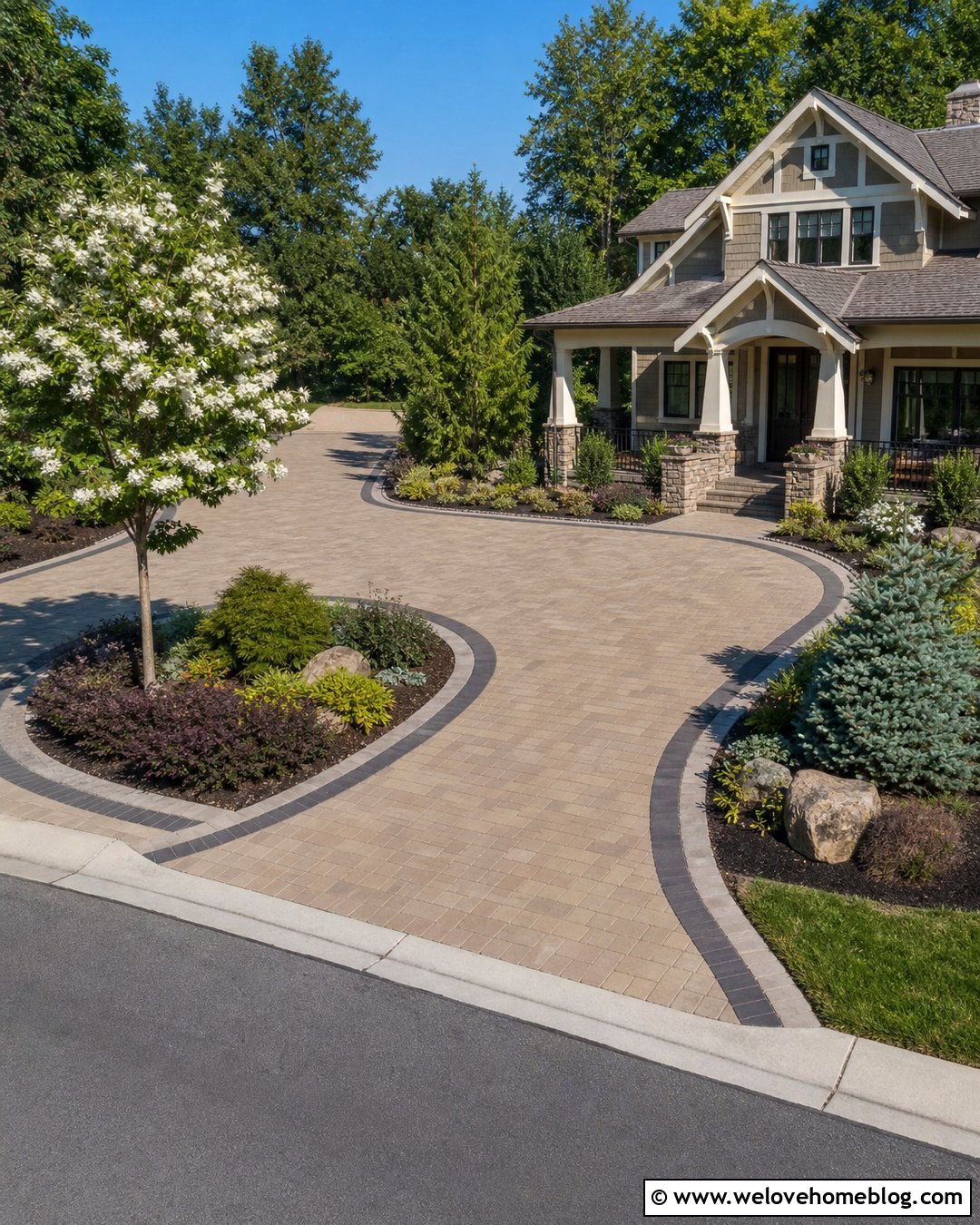
A side-entry driveway reduces the visual impact of garage doors and can make the home’s main facade feel more prominent. Use tan concrete pavers for a straight approach that widens into a practical turnaround near the side garage. Define the expanded parking area with a darker paver band so it feels organized rather than oversized. Place a landscaped island at the outer corner with a small tree, evergreen shrubs, and low flowers. A separate walkway should guide visitors clearly toward the front door. This layout fits larger suburban, craftsman, and traditional properties. Maintain enough open space for comfortable vehicle movement, but use planting beds and material changes to prevent the turnaround from resembling a plain paved lot.
16. Modern Farmhouse Driveway With Concrete Pavers
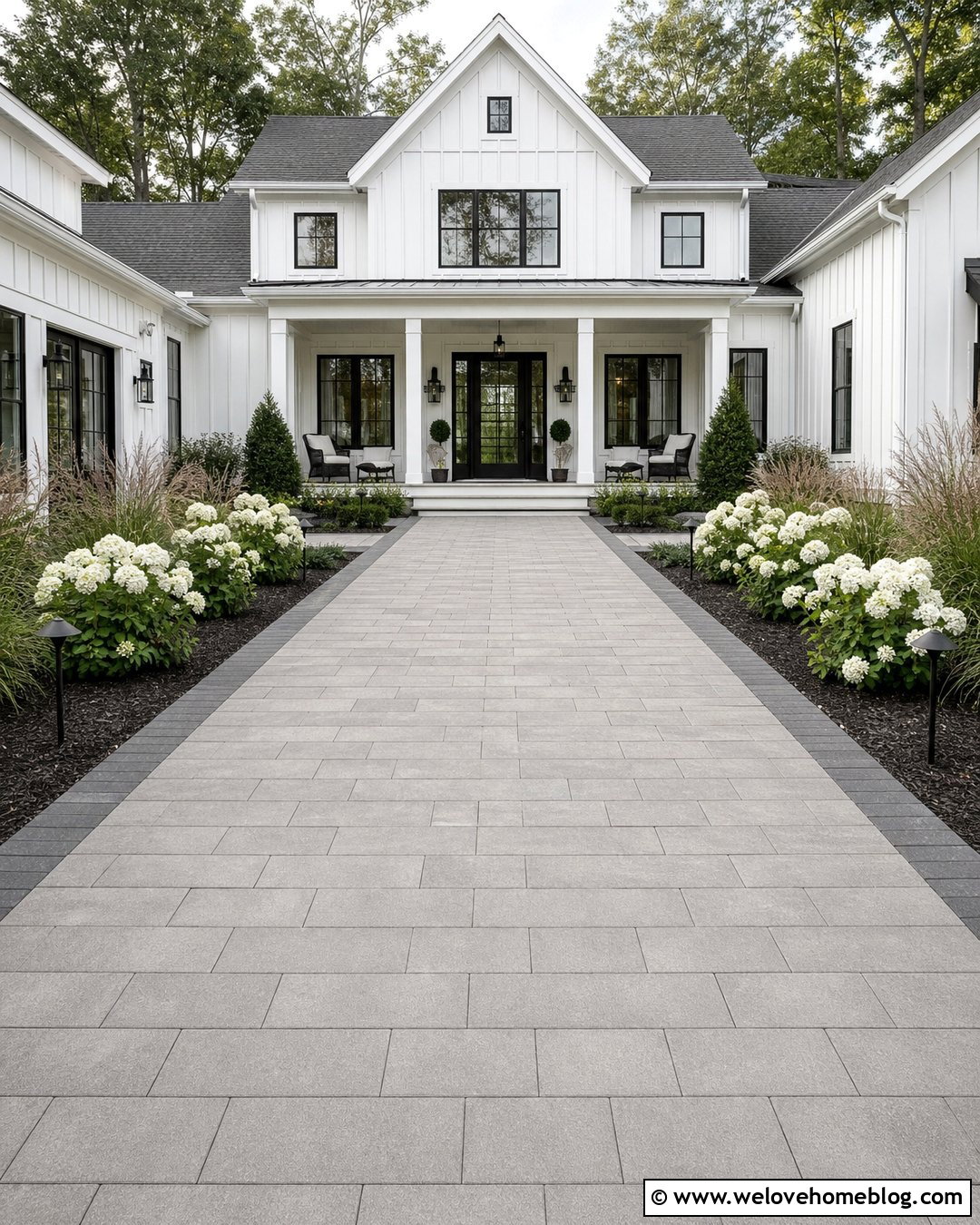
Large-format concrete pavers can create a refined driveway that complements a modern farmhouse without looking overly formal. Choose warm gray pavers in a running-bond or modular pattern and frame them with charcoal edging. A broad straight layout emphasizes the home’s symmetry, especially when centered on a detached or side-facing garage. Use white flowering shrubs, feather reed grass, and clipped evergreens in wide planting beds along the approach. Black metal path lights can echo dark windows and roof details. Connect the driveway to the porch with a matching paver walkway. The overall palette should remain simple: gray paving, white siding, dark accents, natural wood, and fresh green landscaping.
17. Colonial House Driveway With Boxwood Borders
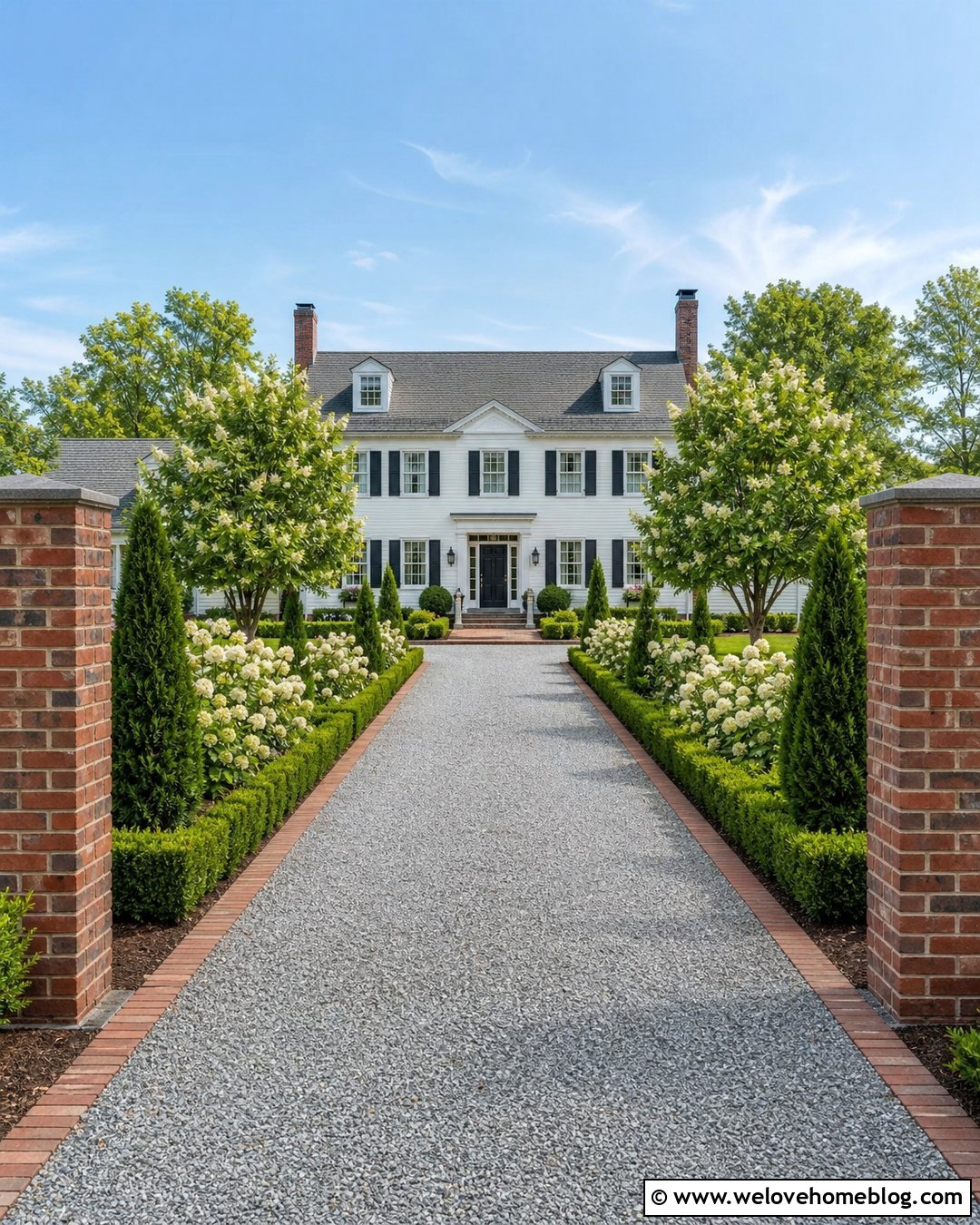
A symmetrical driveway design naturally supports the balanced facade of a colonial house. Use red-brown brick pavers or fine gray gravel in a straight layout centered on the property’s architectural lines. Low clipped boxwood hedges can border the driveway without blocking views of the lawn or entrance. Add matching brick edging to contain gravel or define the paver field. Near the house, widen the planting beds and include hydrangeas, upright evergreens, and a pair of small ornamental trees. Traditional lanterns mounted on brick pillars can mark the street entrance. Repeat the driveway material in the front walkway so guests see a clear, coordinated route from the parking area to the centered front door.
18. Ranch House Driveway With Wide Concrete Apron
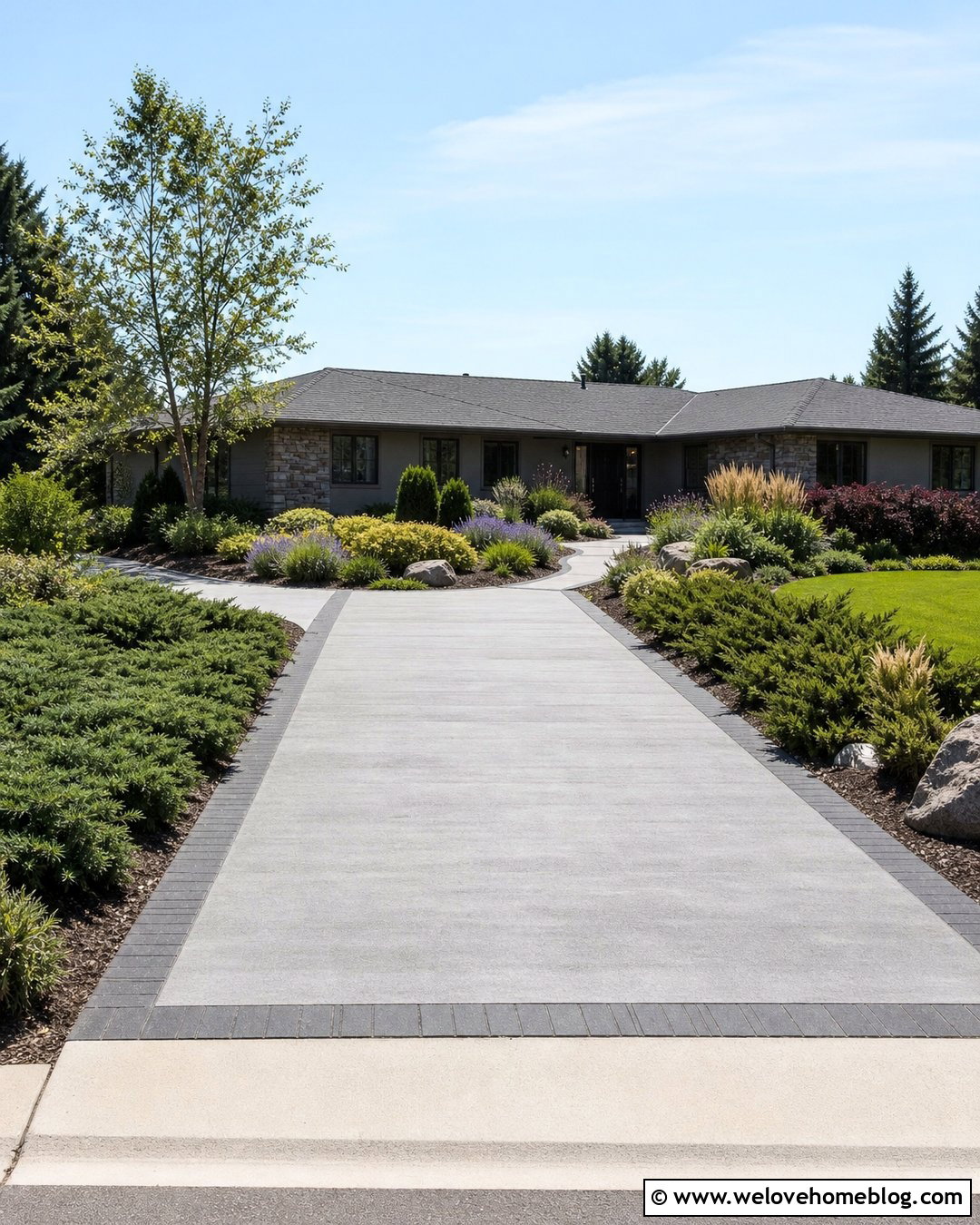
A low ranch house often looks best with a simple driveway that reflects its long horizontal form. Use medium gray brushed concrete for the main surface and widen the apron near the attached garage. Instead of leaving the expansion visually plain, add a band of darker concrete pavers across the driveway and along the perimeter. Create broad, low planting beds with spreading junipers, ornamental grasses, flowering perennials, and decorative boulders. A curved walkway can lead from the parking area to the front porch, adding gentle contrast to the straight driveway. Keep trees away from the primary facade so they do not overwhelm the one-story home. Clean edges and low landscaping produce an open, balanced result.
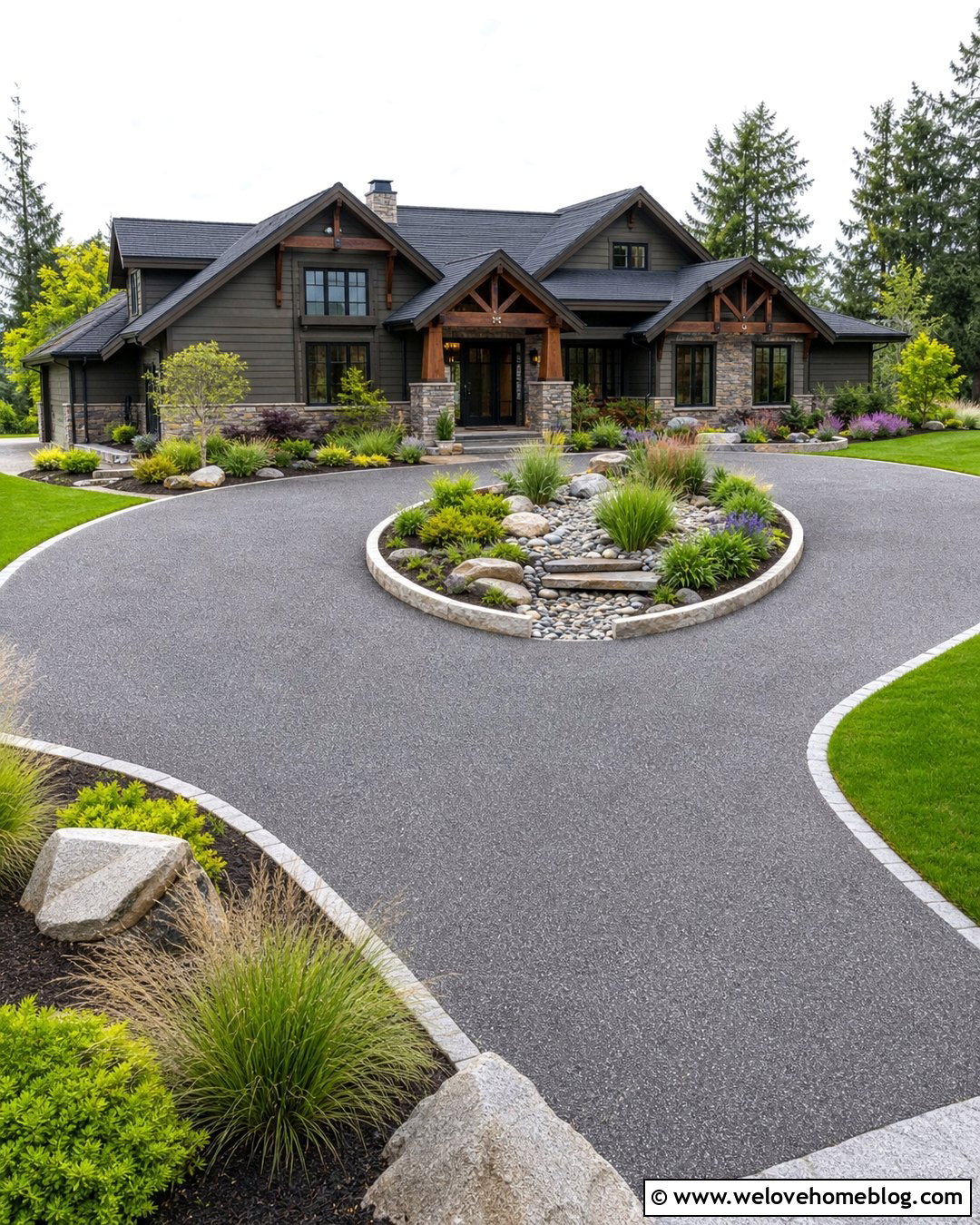
19. Craftsman House Driveway With Natural Stone Border
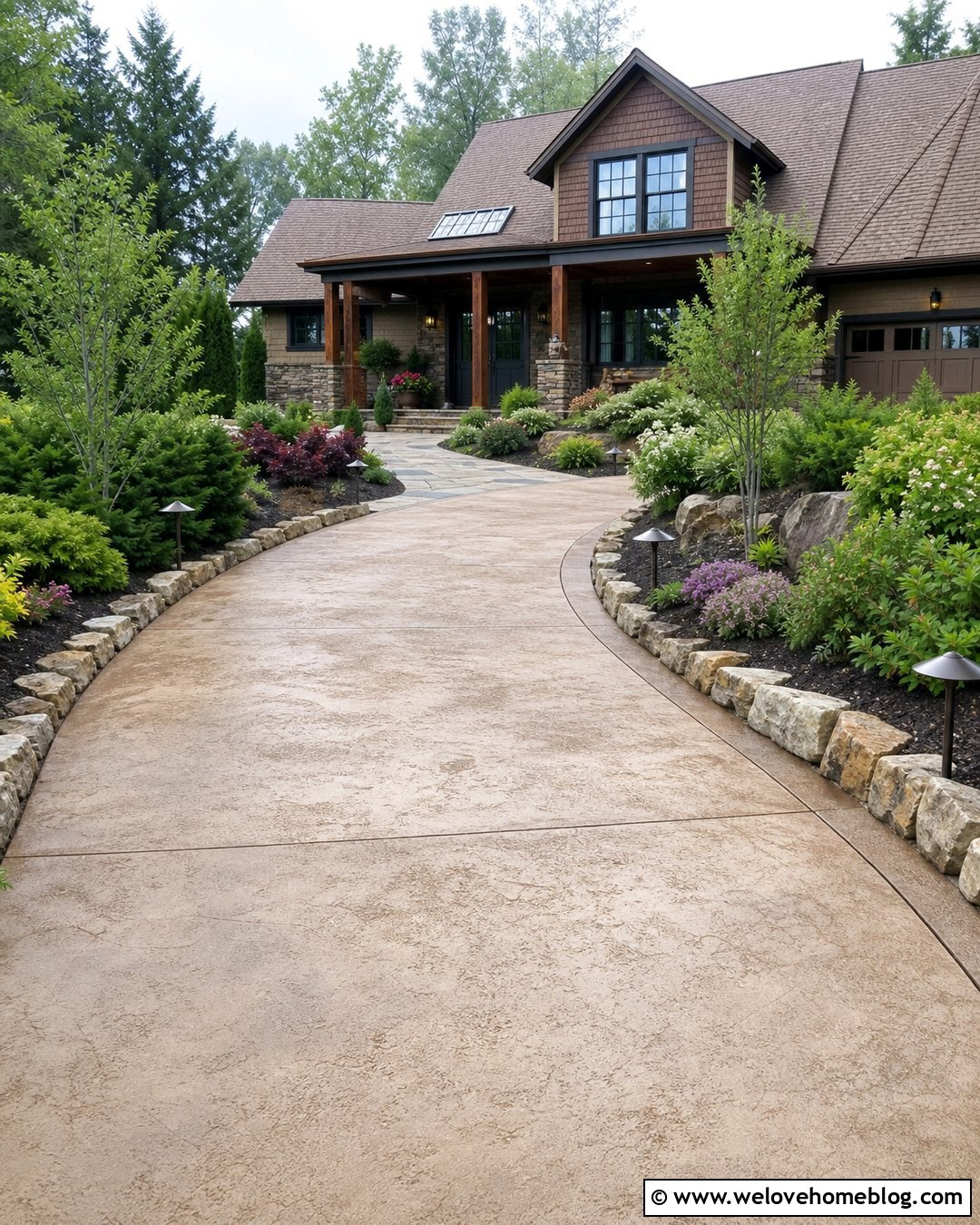
Warm-toned concrete or pavers pair beautifully with the wood, brick, and stone details of a craftsman house. Choose a lightly textured tan concrete driveway and frame it with irregular natural stone curbing. The stone border can coordinate with porch columns or foundation cladding, creating a unified exterior palette. Follow the driveway edges with layered planting beds containing ferns, compact evergreens, flowering shrubs, and ornamental grasses. A slightly curved approach feels comfortable and informal. Near the porch, connect the driveway to a wide flagstone walkway. Low path lights can highlight the transition without crowding the landscape. The finished design should emphasize natural materials, visible craftsmanship, and a welcoming route to the entrance.


20. Cape Cod Driveway With Pea Gravel
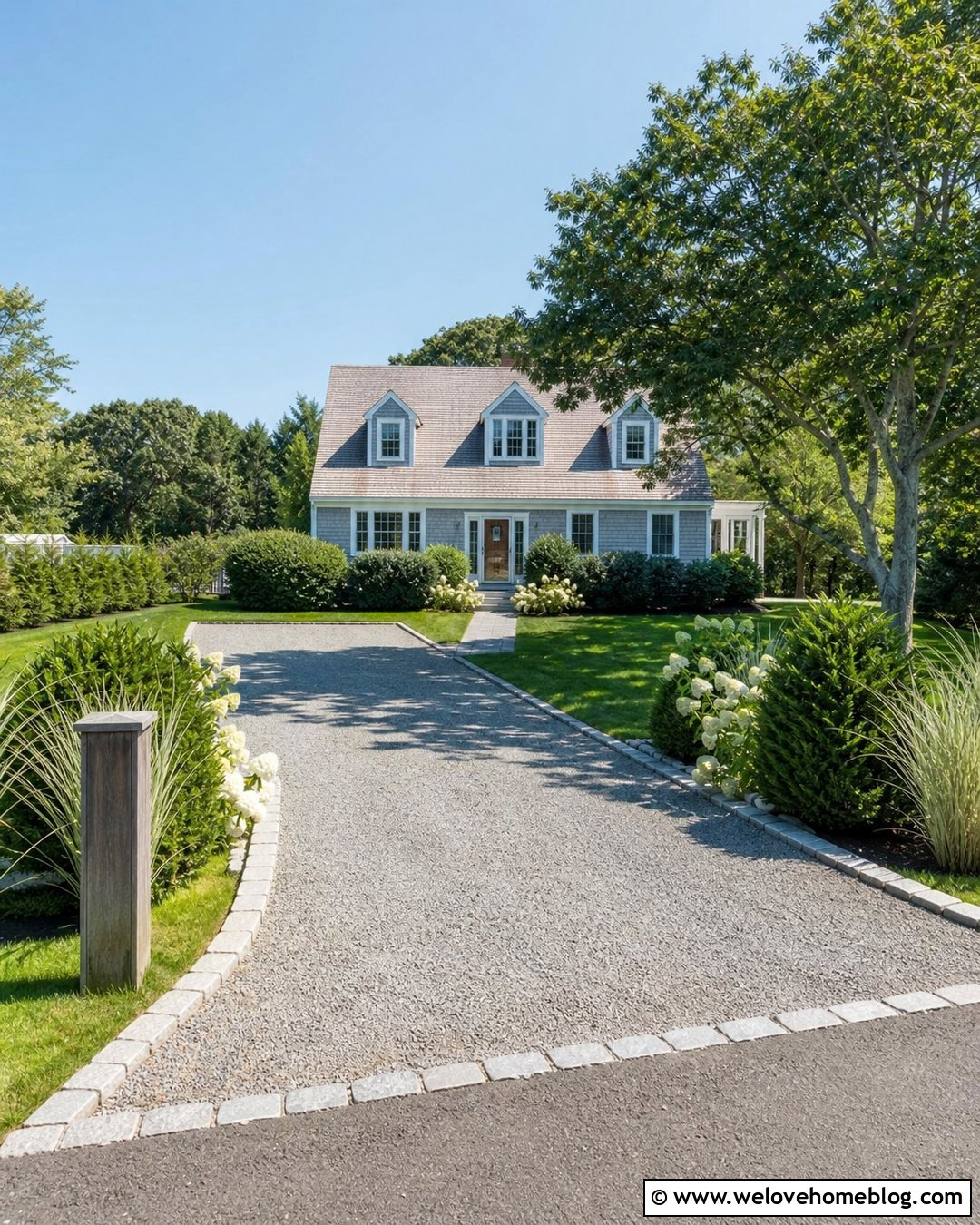
A pea gravel driveway gives a Cape Cod house a relaxed coastal character. Use soft gray or buff gravel with granite cobblestone edging to form a straight, compact parking area. A gently flared entrance makes turning easier while maintaining a traditional appearance. Add white hydrangeas, beach grasses, compact evergreens, and a neat lawn along the edges. A brick or bluestone walkway can cross the gravel and lead directly to the front door. Near the street, include a simple wooden address post that coordinates with shutters or exterior trim. The gravel surface should be installed over a stable, well-compacted base. This keeps the driveway functional while preserving the light, informal look associated with coastal homes.
21. Tudor House Driveway With Cobblestone Apron
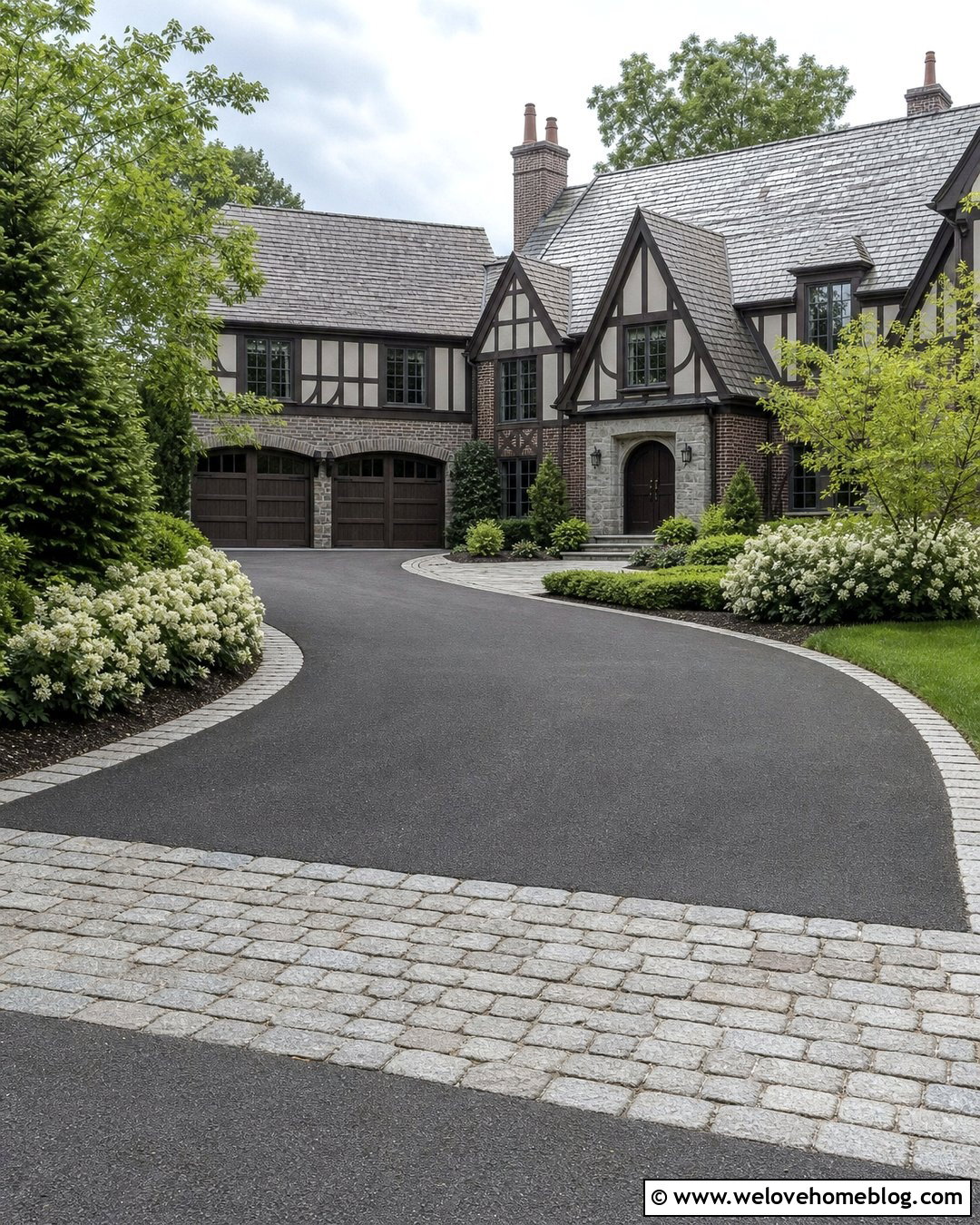
A Tudor-style home benefits from driveway materials that support its brickwork, steep rooflines, and old-world detailing. Use dark gray asphalt for the main driveway, then add a generous granite cobblestone apron at the street and another band near the garage. Curved cobblestone edging can guide the approach and soften the transition into surrounding planting beds. Choose deep green evergreens, white flowering shrubs, and small multi-stem trees for a layered landscape. A gently bending layout will feel more natural than a rigid straight line. Repeat cobblestone in the walkway leading toward the arched front entrance. The combination offers everyday practicality while giving the most visible sections of the driveway a richer, more traditional finish.
22. Mediterranean Driveway With Tan Pavers
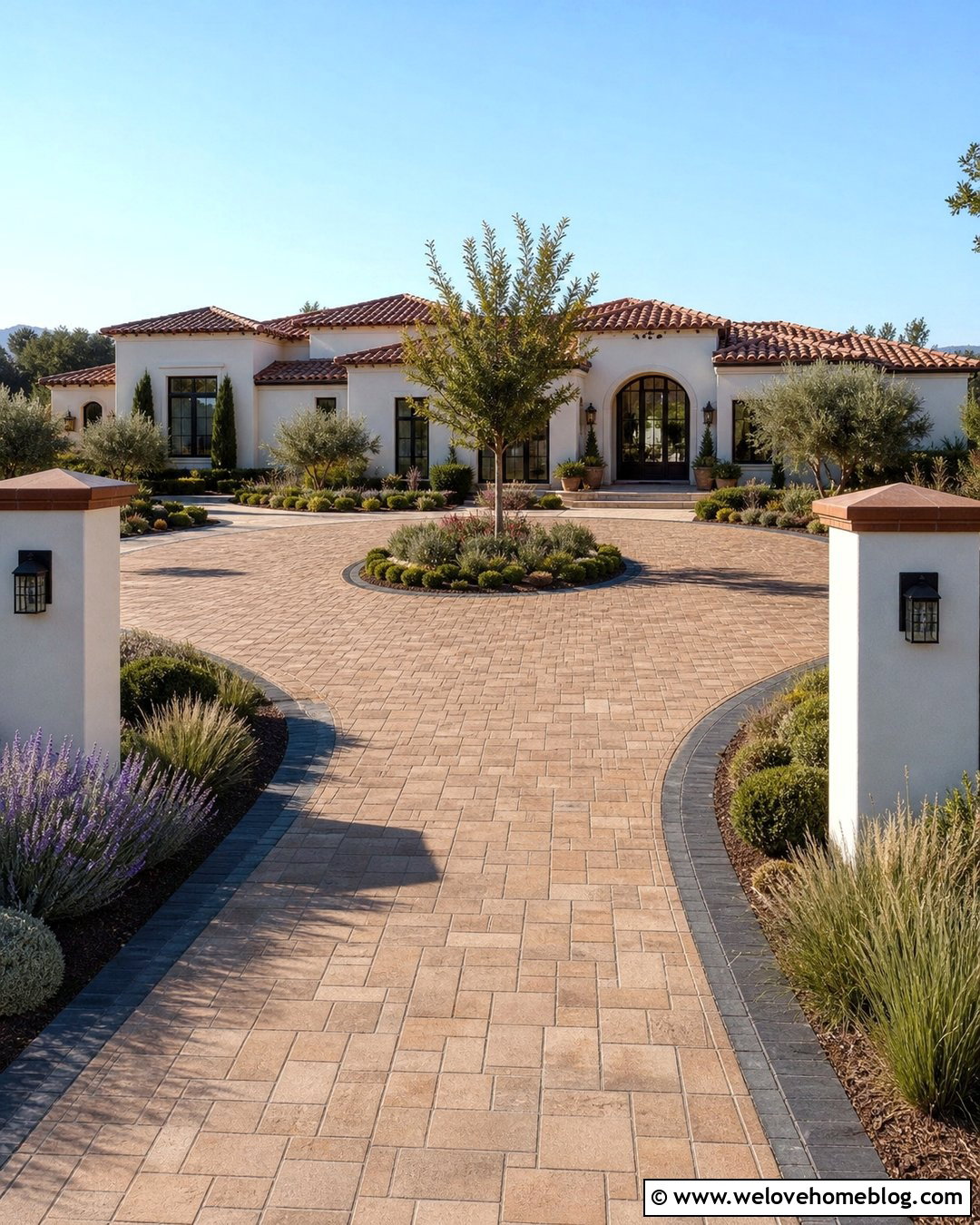
Warm tan pavers can create a sunlit driveway that complements stucco walls, terracotta roofing, and dark metal accents. Choose tumbled concrete pavers or natural stone with subtle variation, then lay them in a modular pattern. A curved or circular layout works especially well with Mediterranean architecture. Define the edges with darker stone and surround the driveway with drought-tolerant planting, including lavender, rosemary, ornamental grasses, and sculptural evergreen shrubs. Place matching stucco pillars at the entrance and top them with simple lanterns. A small center island can hold an olive-like ornamental tree suited to the local climate. Keep the paving colors warm but restrained so the house remains the main focal point.
23. Midcentury Modern Driveway With Geometric Panels
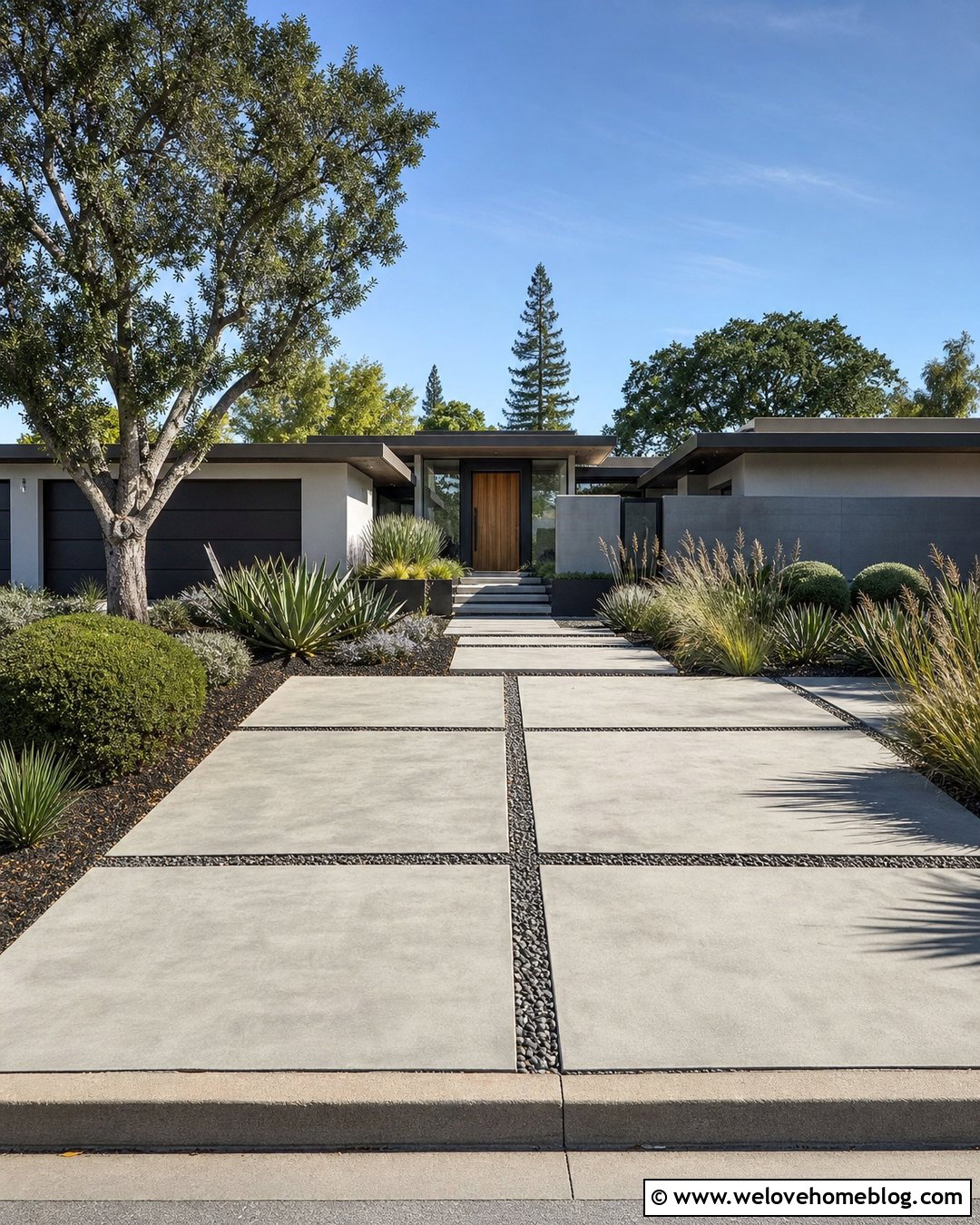
Geometric concrete panels can extend the crisp lines of a midcentury modern house into the front yard. Use light gray poured concrete rectangles separated by dark gravel or narrow planted joints. Keep the driveway straight or introduce a slight offset that aligns with the carport and entrance walkway. Add sculptural landscaping with ornamental grasses, compact agaves where climate-appropriate, rounded shrubs, and one striking specimen tree. Dark steel edging provides clean boundaries between concrete, gravel, and planting beds. A broad stepping-stone path can branch toward the front door. Avoid decorative curves and overly traditional borders. The strongest result comes from repeating the home’s lines, materials, and limited color palette throughout the complete driveway landscape.
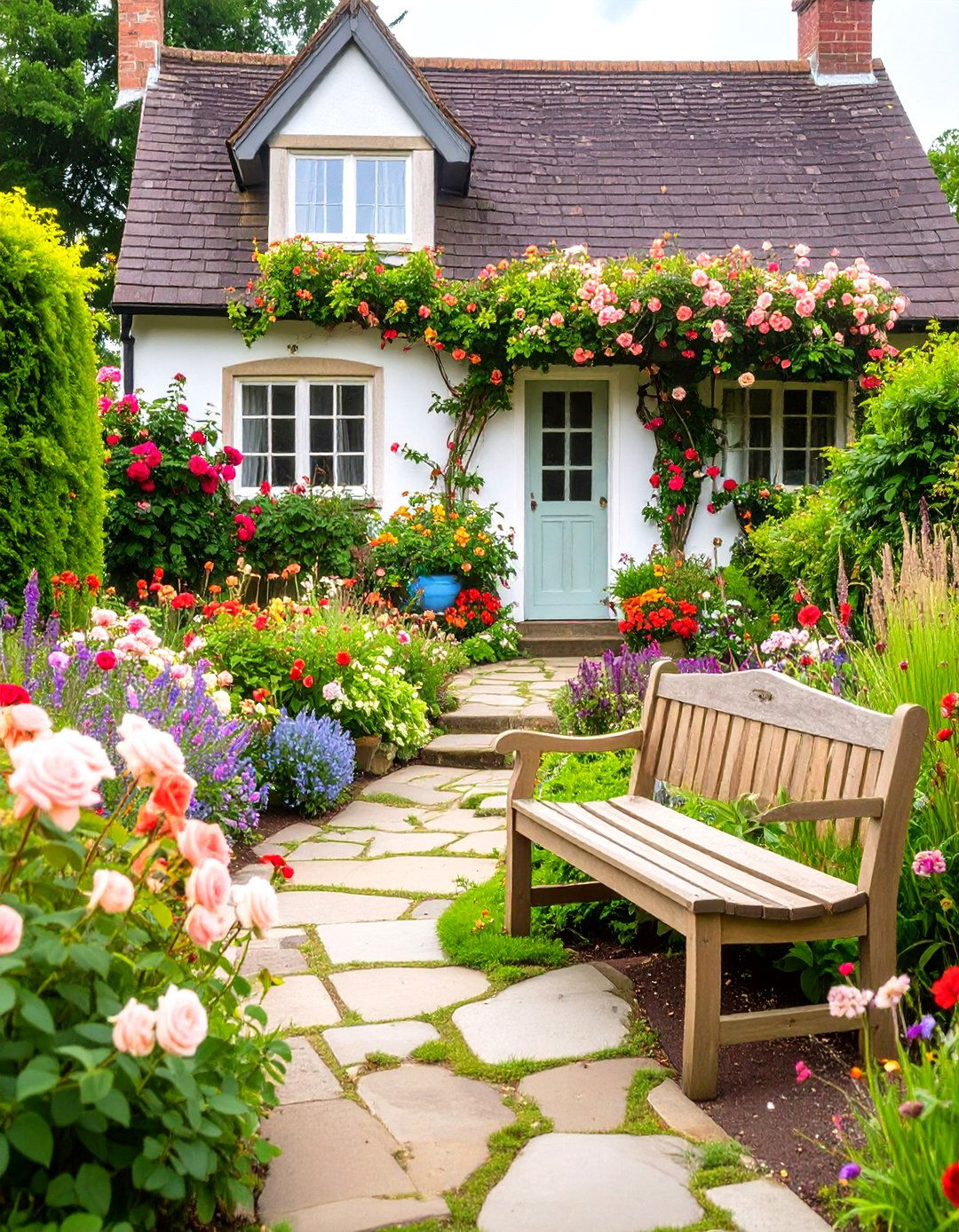
24. Cottage Driveway With Gravel And Flowers
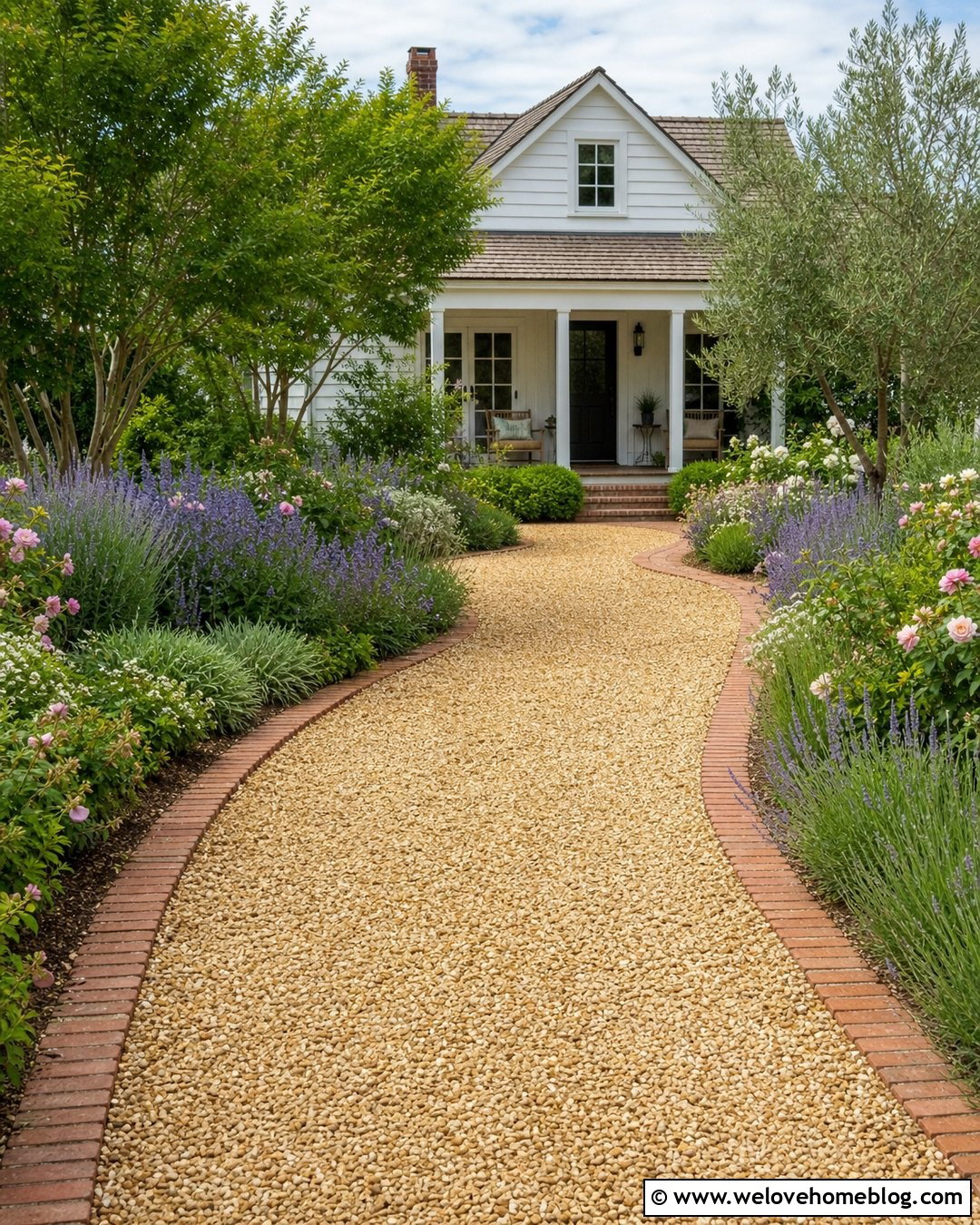
A cottage driveway should feel informal and welcoming while remaining clearly contained. Use golden pea gravel or fine beige crushed stone in a narrow, gently curved layout. Edge the surface with reclaimed brick or low natural stone, then allow flowering plants to soften portions of the border. Lavender, catmint, salvia, roses, and compact ornamental grasses can create long-lasting color and texture when matched to local growing conditions. Leave enough clear space beside the driveway for opening car doors and routine maintenance. A brick walkway can branch toward the porch through the planting beds. Layered driveway borders are most successful when plants can tolerate reflected heat and exposure near the paved or gravel surface. ()
25. Split Driveway With Central Planting Island
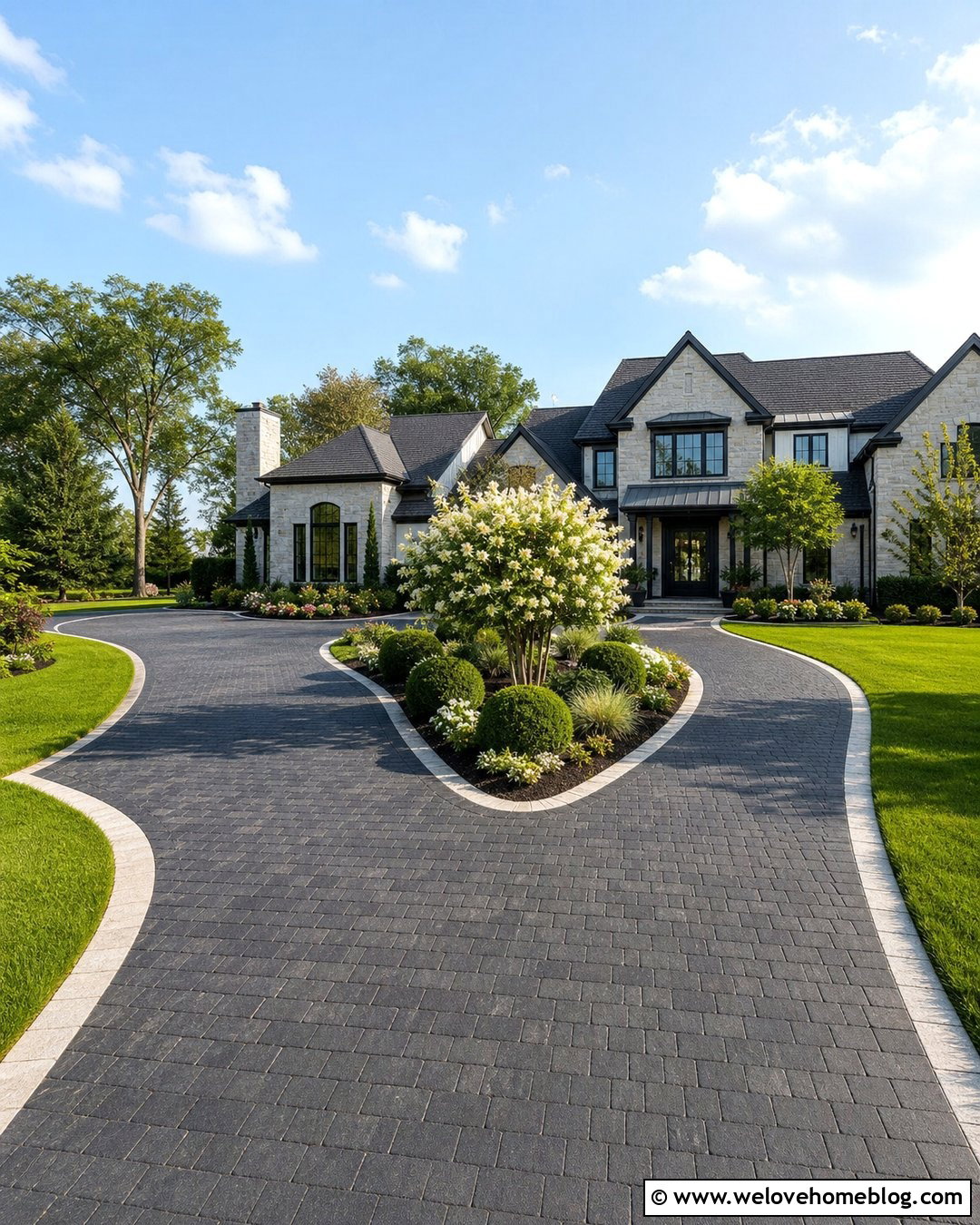
A split driveway creates separate arrival and departure lanes while introducing valuable green space into a broad front yard. Surface both lanes with charcoal concrete pavers and define their curves using pale stone edging. In the center, build a long planting island with a small ornamental tree, rounded evergreen shrubs, grasses, and seasonal flowers. Keep plants low near the road so drivers can see approaching traffic. Rejoin the lanes near the garage or continue them around a circular drop-off area. Matching paver walkways can connect the island and parking zone to the front entrance. This layout suits large contemporary, transitional, and estate homes where a single wide driveway might otherwise dominate the entire landscape.
26. Sloped Driveway With Textured Concrete
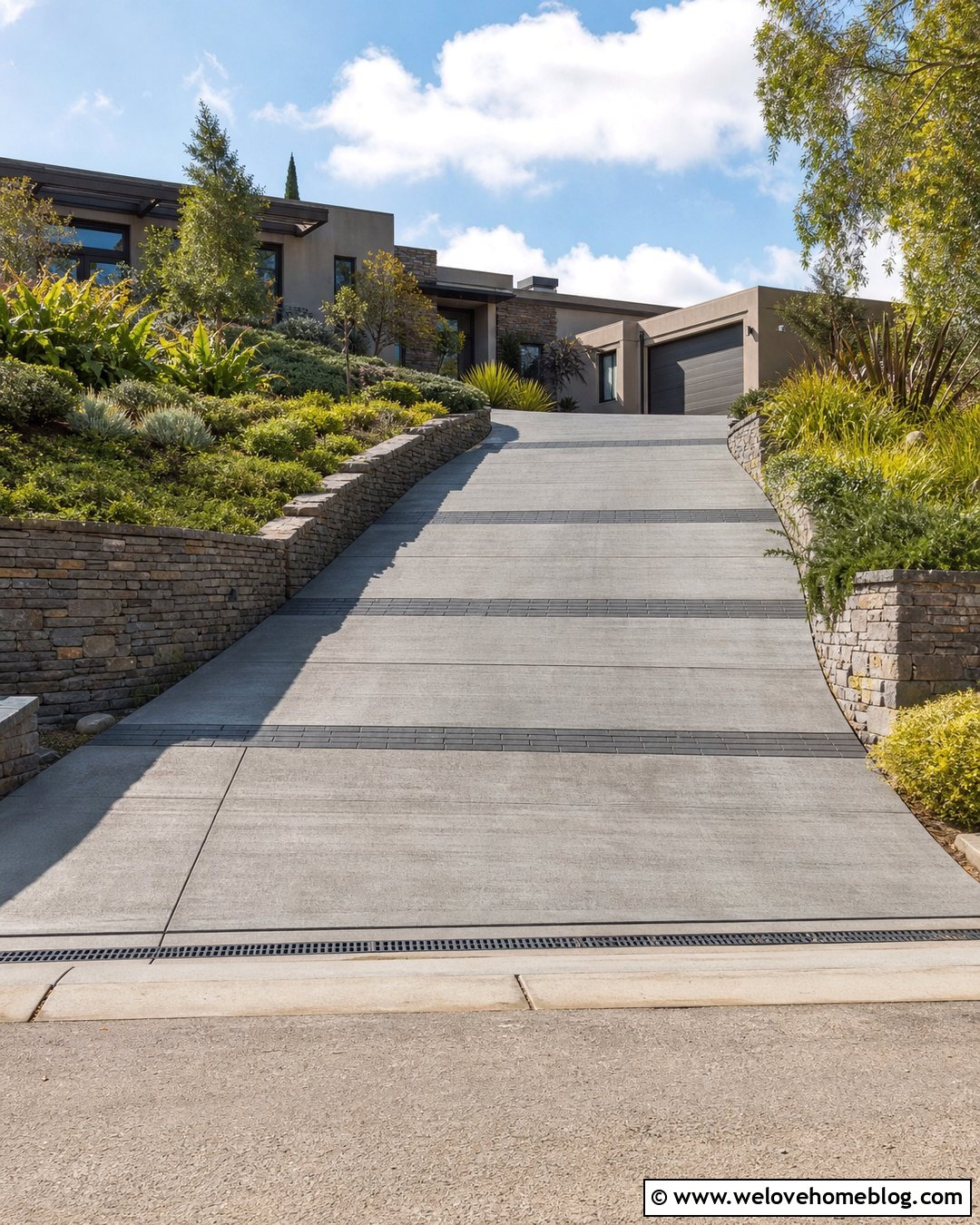
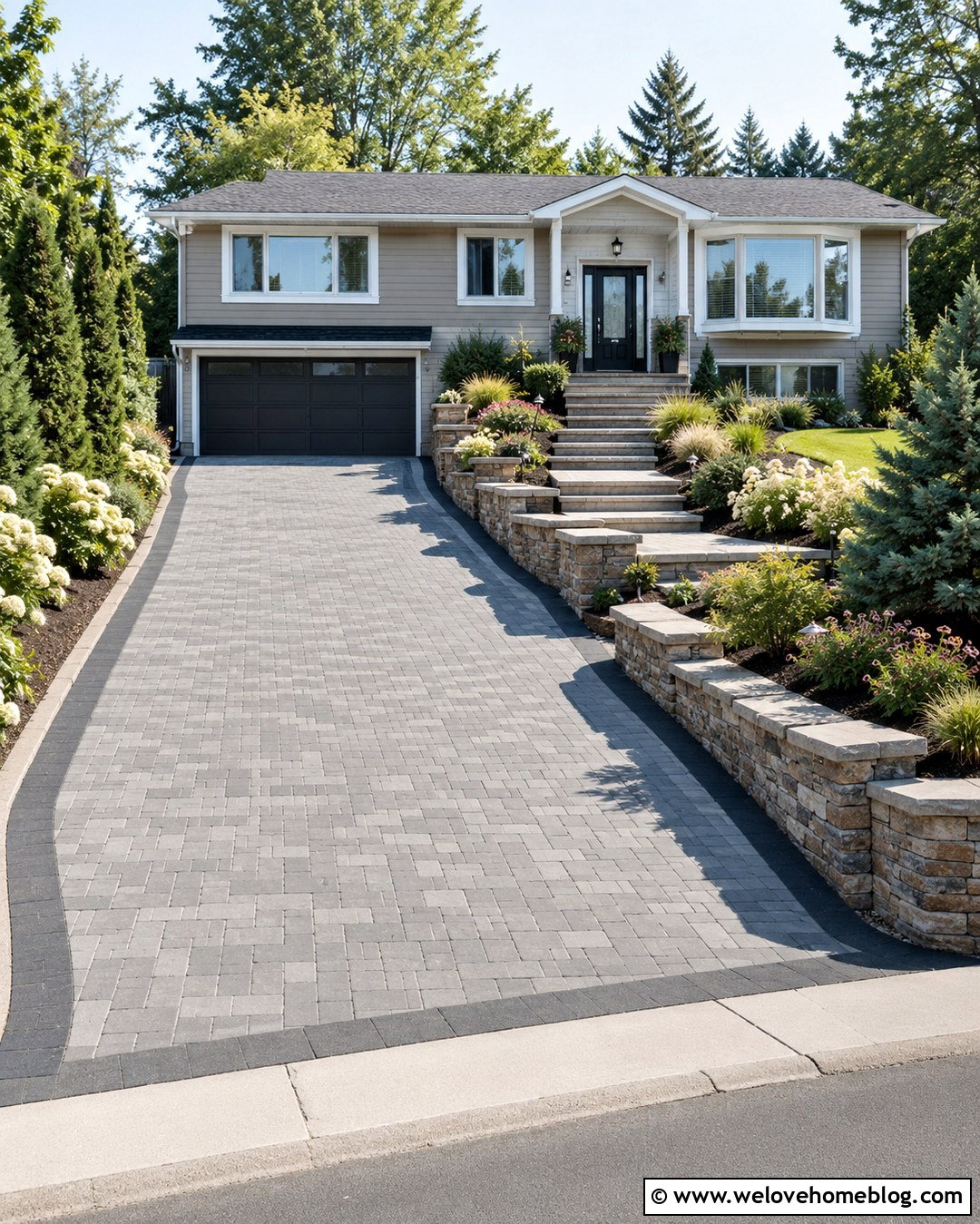
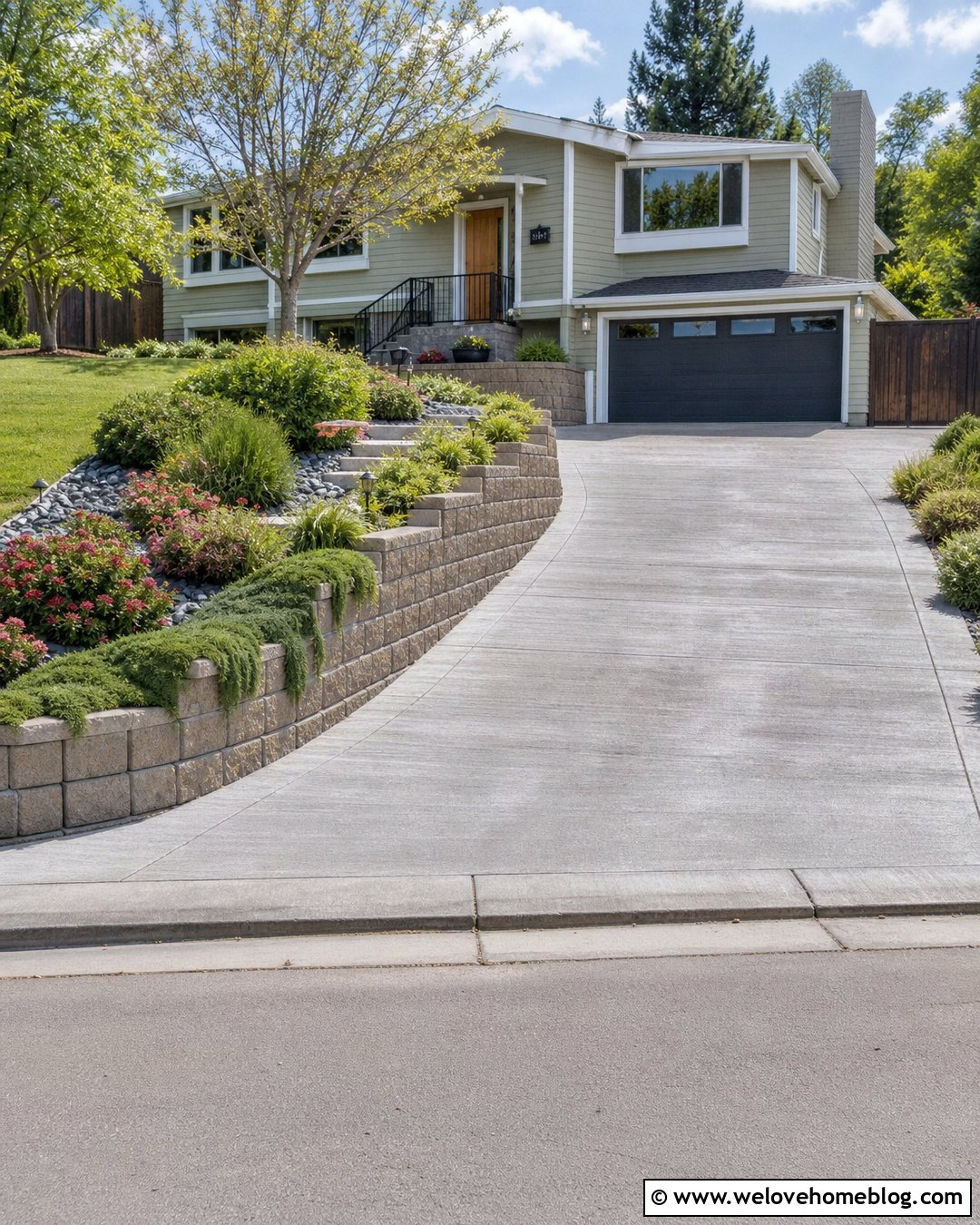
A sloped driveway needs a surface and layout that feel secure while complementing the house. Use textured broom-finished concrete with a medium gray tone rather than a highly polished finish. Install darker paver bands across the width to break up the long slope visually and introduce architectural detail. Retaining walls made from natural stone or concrete block can support raised planting beds along one side. Fill them with low shrubs, grasses, and spreading ground covers that will not block sightlines. A defined drainage channel near the garage helps manage runoff at the bottom of the incline. Keep transitions smooth at the sidewalk and street, and have the slope, base, reinforcement, and drainage evaluated professionally.
27. Budget Gravel Driveway With Metal Edging
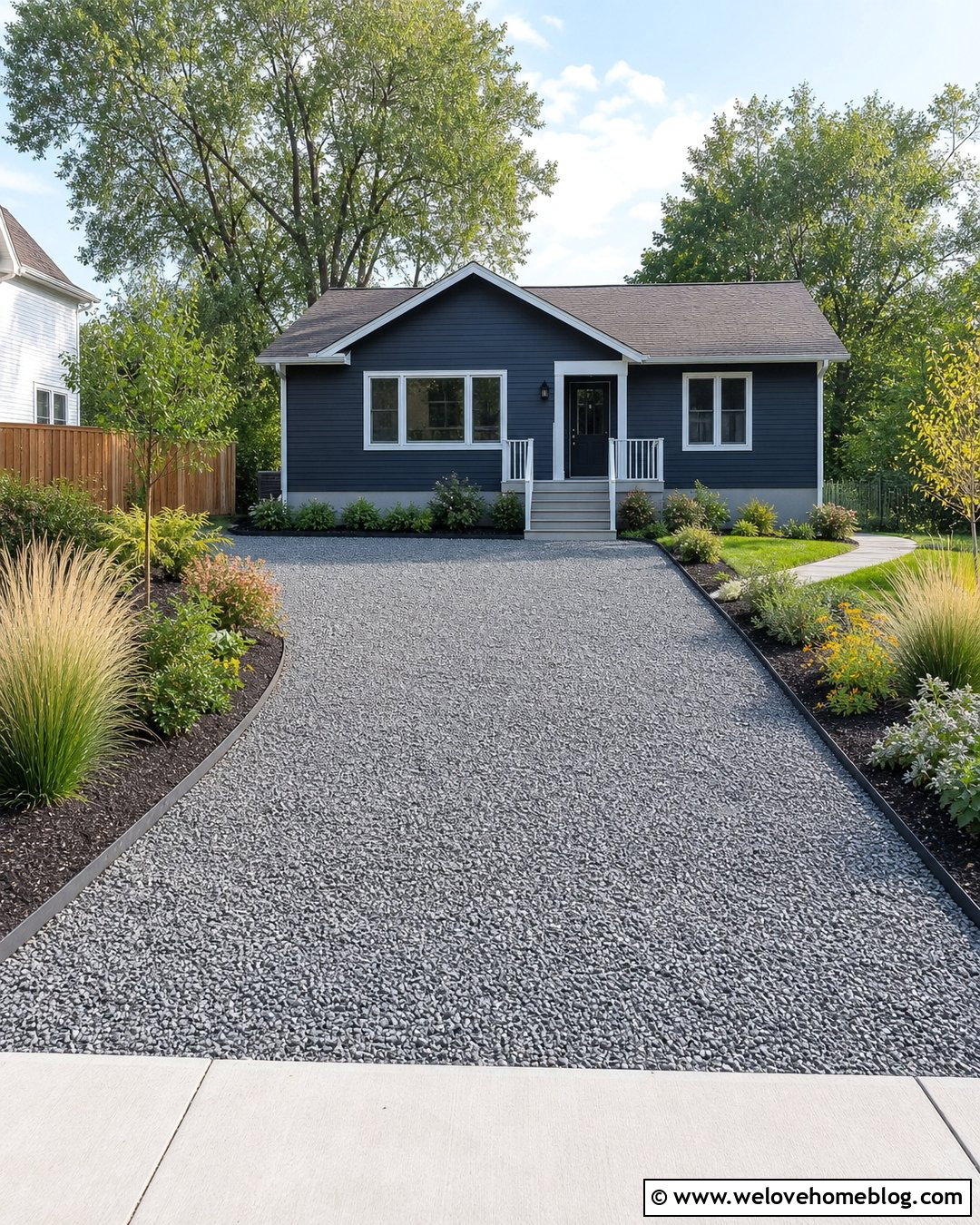
An affordable gravel driveway can still look organized when its shape and borders are carefully planned. Choose locally available crushed stone in a medium gray or warm brown tone and install it over a compacted base. Simple galvanized or dark steel edging creates clean lines without the cost of a wide masonry border. Use a straight driveway shape for efficient installation, then add a slightly wider parking pad near the house. Mulched beds with tough ornamental grasses, native perennials, and compact shrubs can soften the edges. A concrete or paver walkway gives visitors a stable route to the door. Concentrate decorative details around the entrance and garage, where they will have the greatest visual impact.
28. Driveway With Brick And Concrete Mix
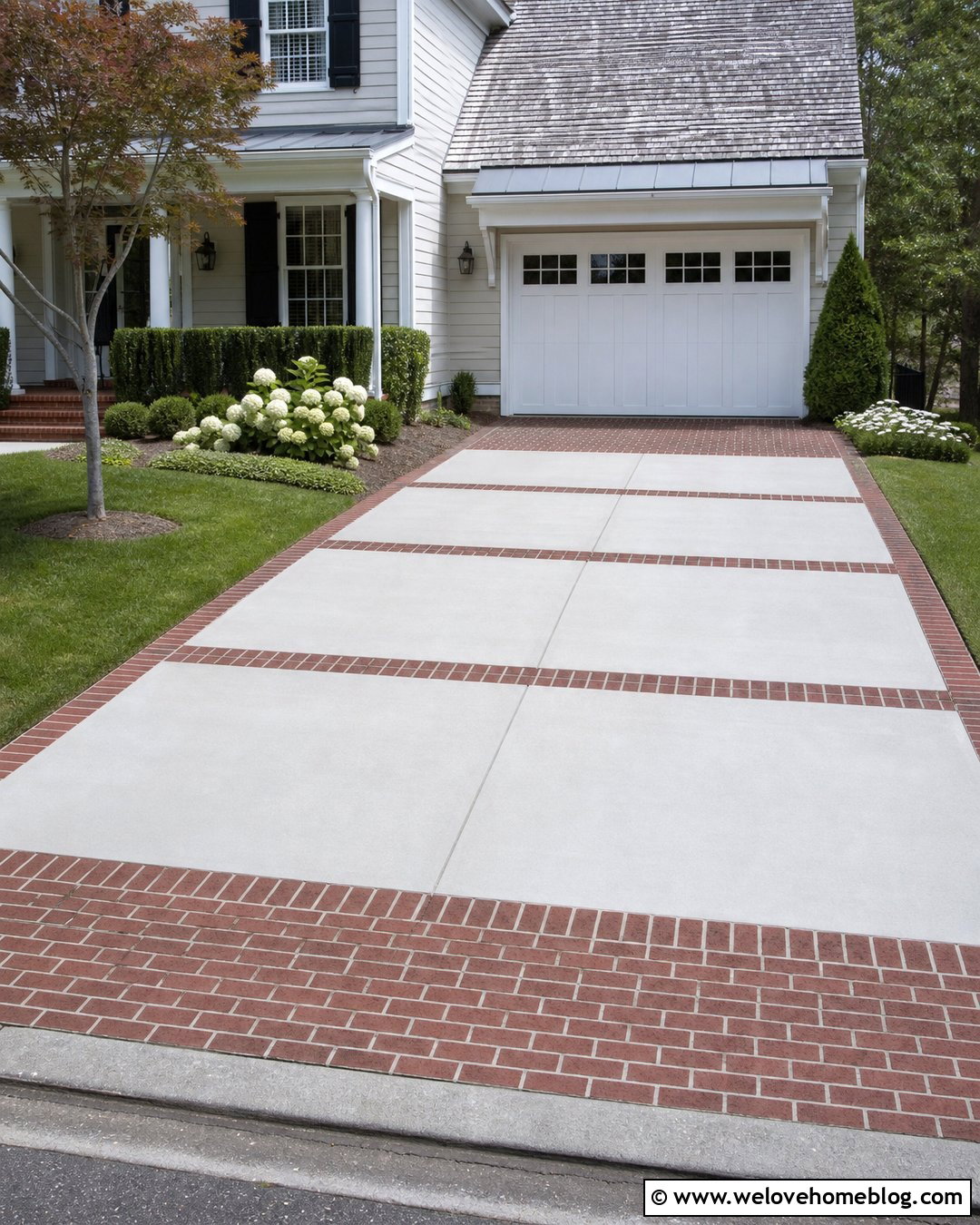
Mixing brick and concrete can make a wide driveway feel more detailed without covering the entire surface in premium pavers. Use pale gray poured concrete for the parking field and add red-brown brick bands along the perimeter, across expansion lines, and around the garage apron. A brick walkway can continue from the driveway toward the front porch. This combination works particularly well with traditional siding, brick facades, and transitional homes. Frame the layout with a tidy lawn and planting beds containing evergreen shrubs, white flowers, and one small tree. Keep the decorative bands consistent in width. Too many patterns can make the surface look busy, while a few repeated brick accents create rhythm and connection.
29. Driveway With Low-Maintenance Landscaping
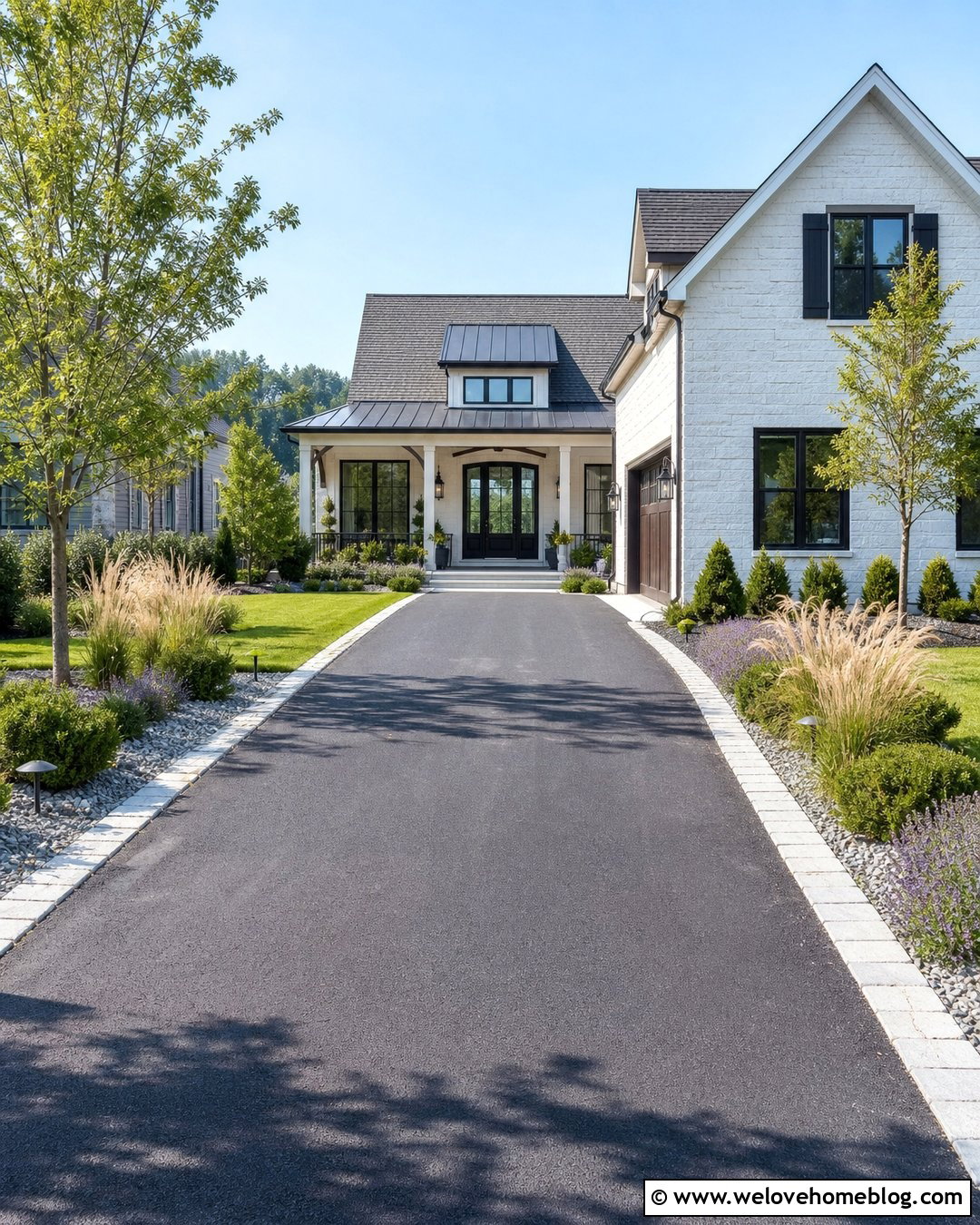
A low-maintenance driveway landscape relies on durable materials, simple bed shapes, and plants suited to the site. Use charcoal asphalt or gray concrete pavers for a straight driveway, then add a stone border that clearly separates the paving from the garden. Fill broad planting areas with compact evergreen shrubs, ornamental grasses, resilient ground covers, and a limited selection of long-blooming perennials. Group plants in repeated masses rather than installing many isolated varieties. Decorative gravel mulch can provide a clean finish in dry climates, while organic mulch may suit wooded settings. Leave open clearance near parking areas and maintain visibility at the street. Coordinating the paving and planting as one design produces stronger curb appeal. ()
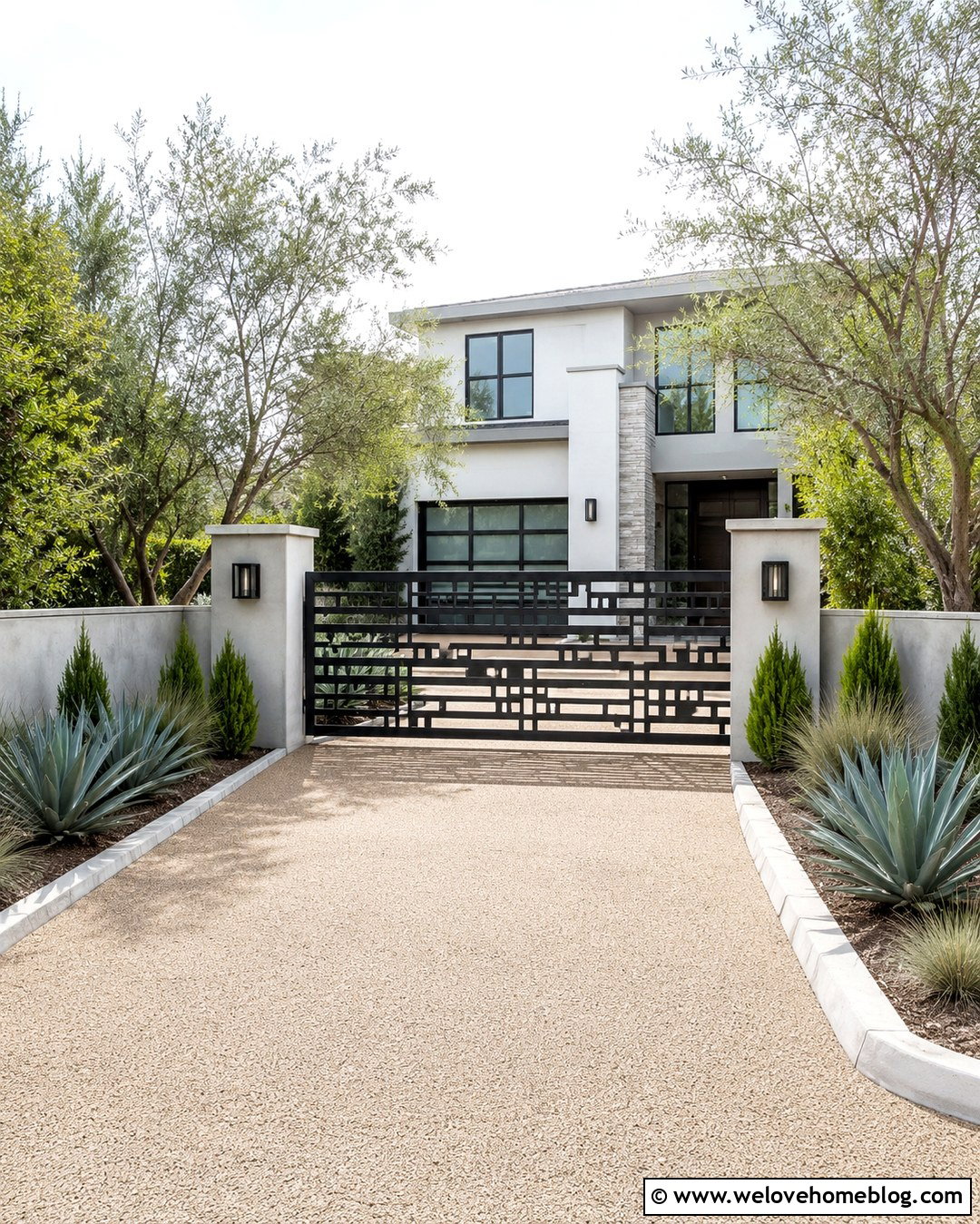
30. Driveway Entrance With Stone Walls
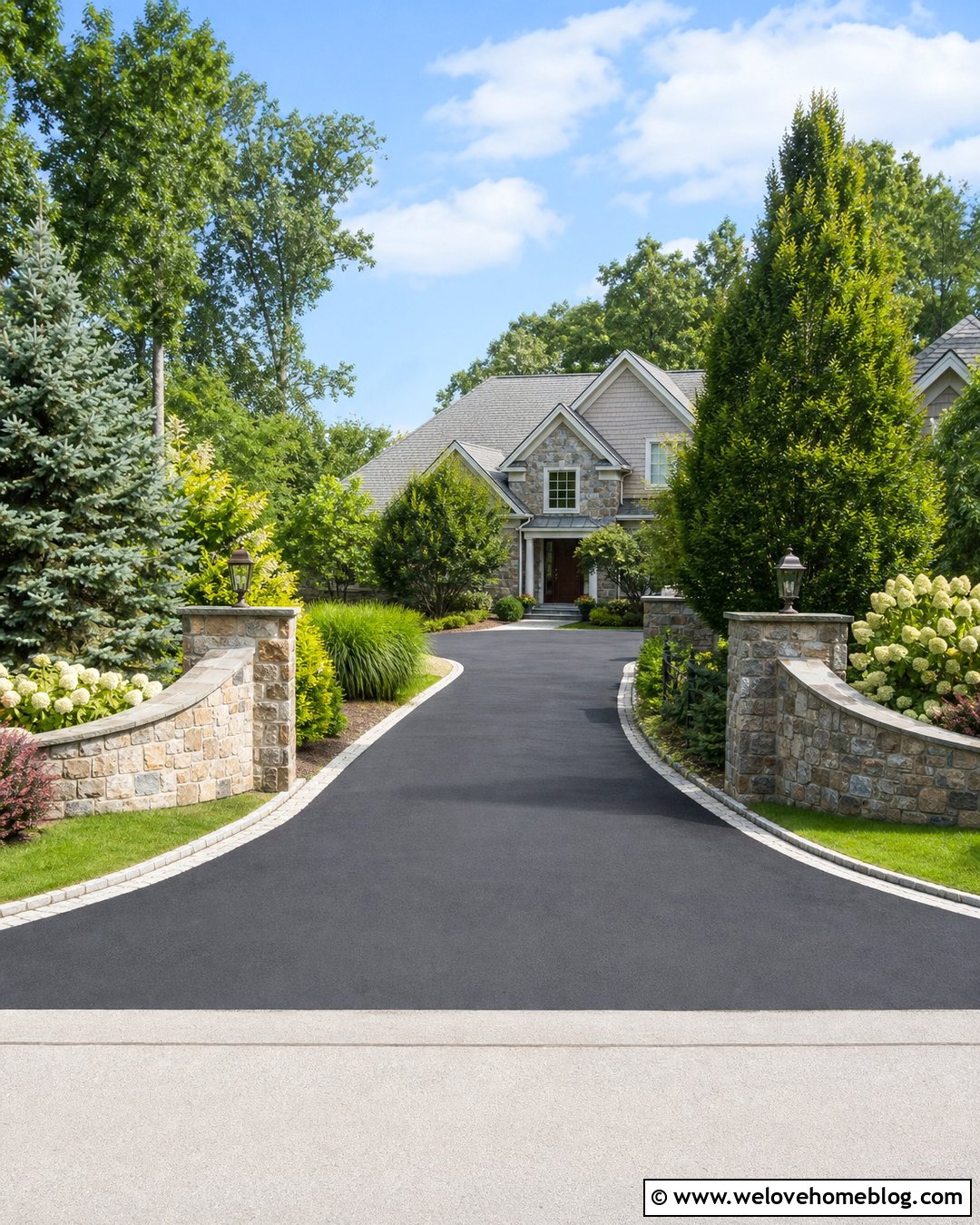
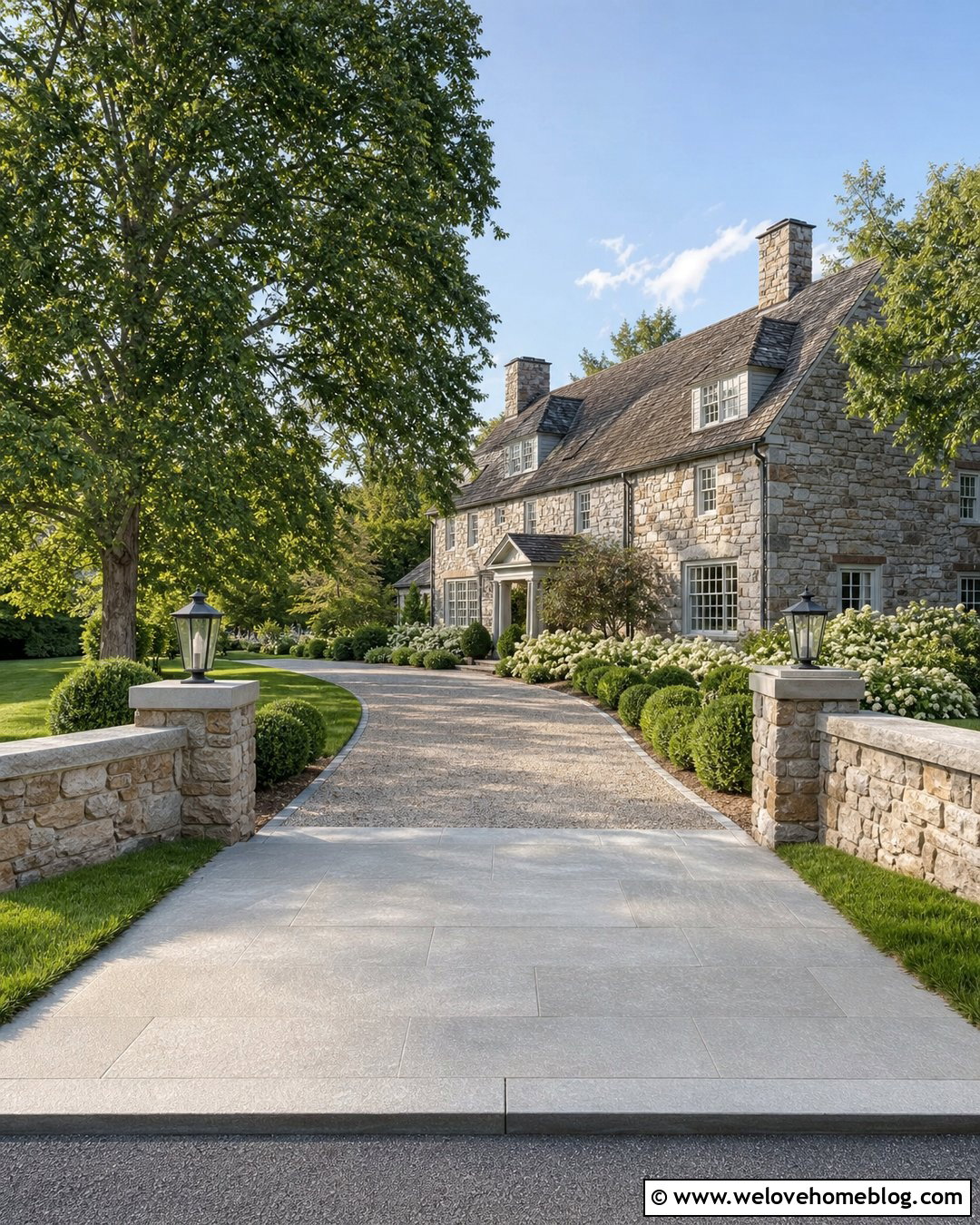
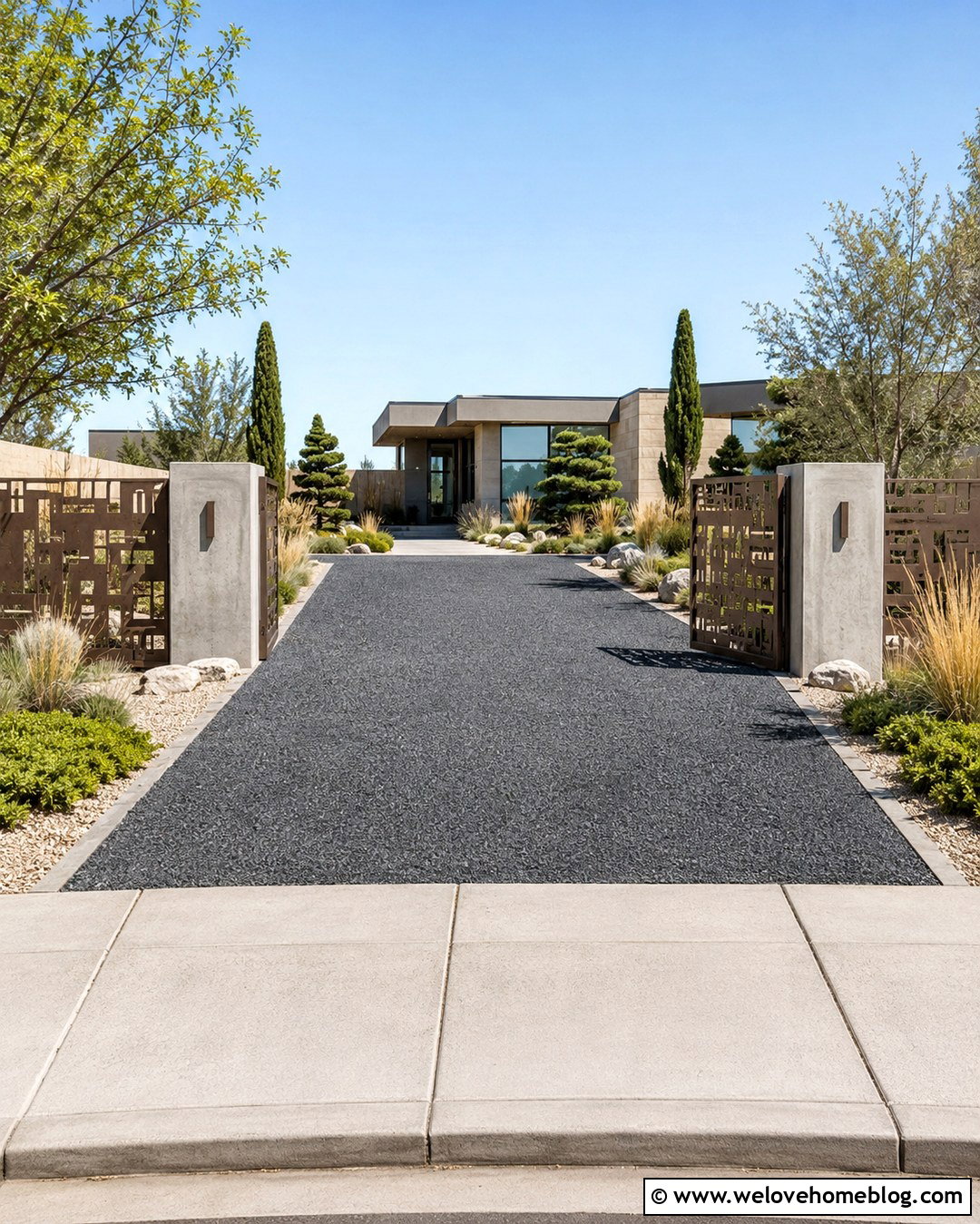
Low stone walls can transform a basic driveway entrance into a clear and welcoming property boundary. Use a smooth black asphalt driveway with a flared opening, then build gently curving fieldstone walls on both sides. End each wall with a slightly taller pillar containing a lantern or discreet address plaque. Behind the masonry, plant layered evergreens, ornamental grasses, and flowering shrubs to help the structure settle into the landscape. Continue stone curbing a short distance along the driveway for a unified transition. The wall material should coordinate with stone already present on the house. Keep the entrance wide and visible enough for comfortable turns, deliveries, emergency access, and safe views of street traffic.
31. Horseshoe Driveway With Formal Landscaping
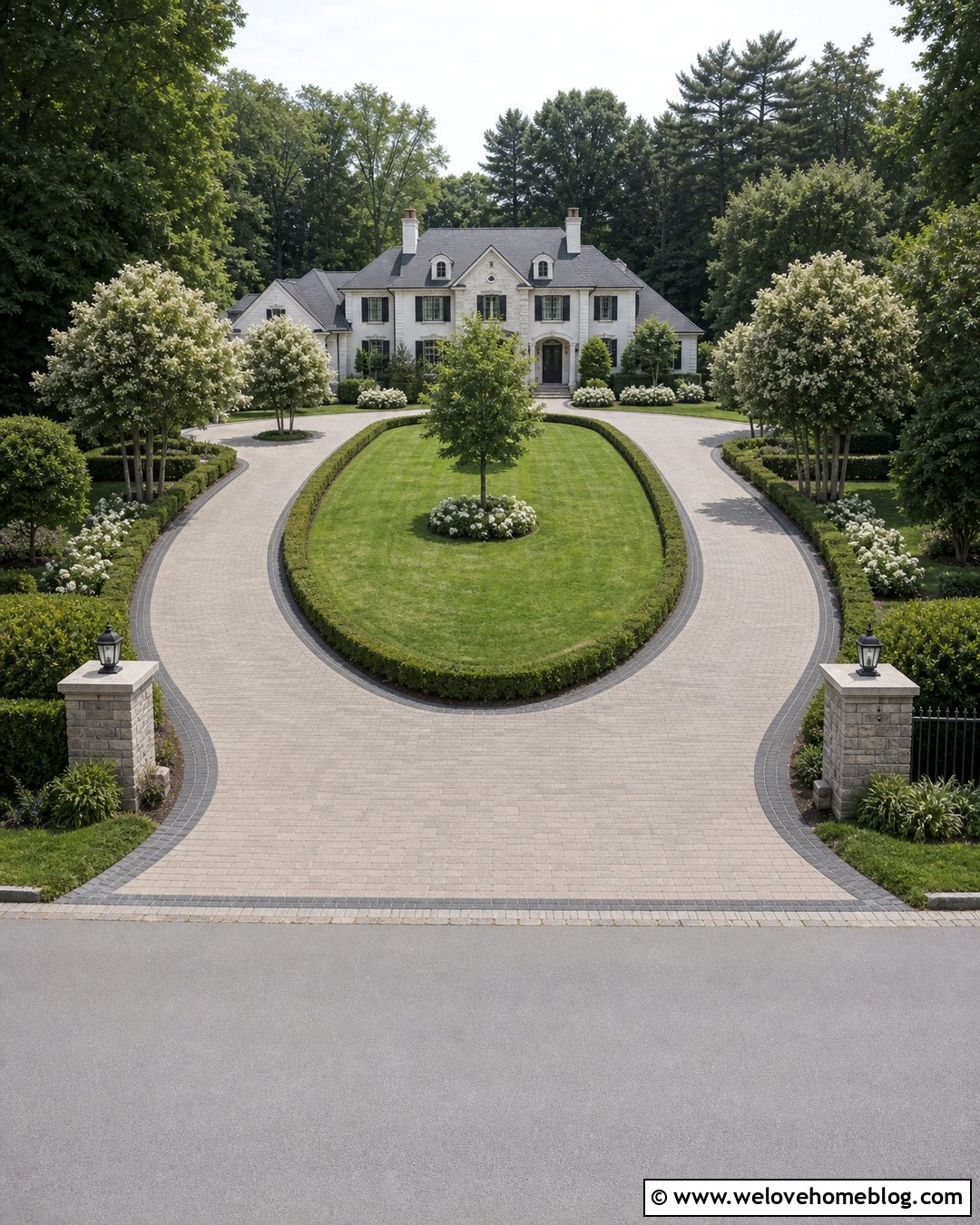
A horseshoe driveway creates a practical drop-off route and a balanced setting for a large traditional house. Use warm gray concrete pavers throughout the curved layout, with dark charcoal borders outlining both lanes. Inside the horseshoe, create a broad lawn or symmetrical garden containing clipped hedges, matching ornamental trees, and a central walkway. Brick or stone pillars can mark the two entrances without making them feel overly heavy. Near the house, widen the driveway slightly to provide a comfortable arrival area. Keep the planting formal by repeating shapes and maintaining clear sightlines. The home should remain visible from the street, framed by the driveway curves and landscaping rather than hidden behind tall plants.
32. Wooded Driveway With Natural Gravel
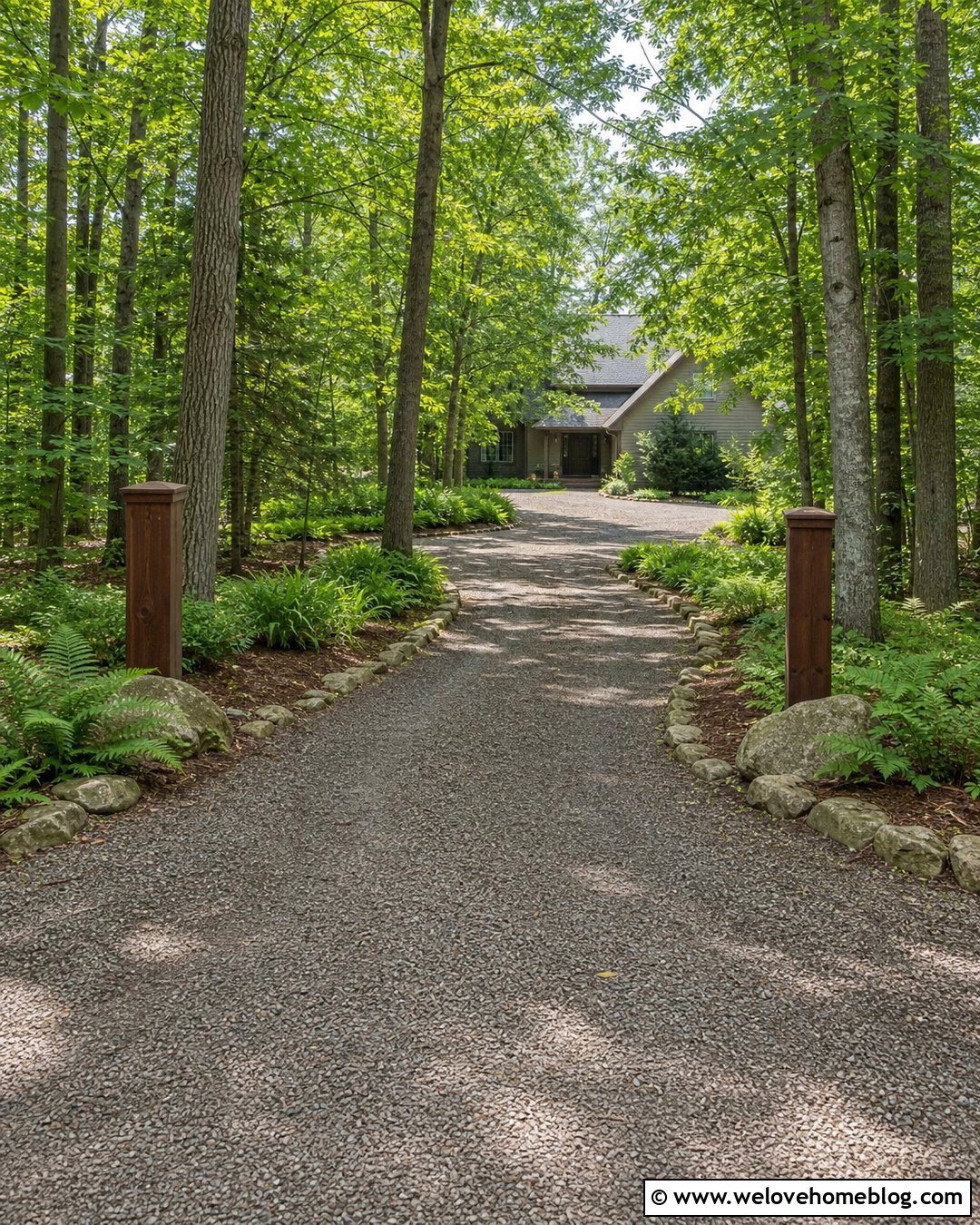
A driveway through a wooded property should follow the landscape instead of forcing a rigid path through it. Use compacted brown or gray crushed gravel in a gentle S-curve that works around mature trees. Natural stone edging can stabilize vulnerable sections while blending into the setting. Plant shade-tolerant ferns, woodland grasses, low evergreen shrubs, and ground covers along disturbed edges. Avoid raising soil around existing tree trunks, and leave enough clearance for branches and service vehicles. Simple timber entrance posts and a restrained address marker suit the natural mood. Near the house, widen the gravel into an organized parking court and add a stone walkway. The result feels private, calm, and closely connected to the surrounding landscape.
33. Coastal House Driveway With Shell Gravel
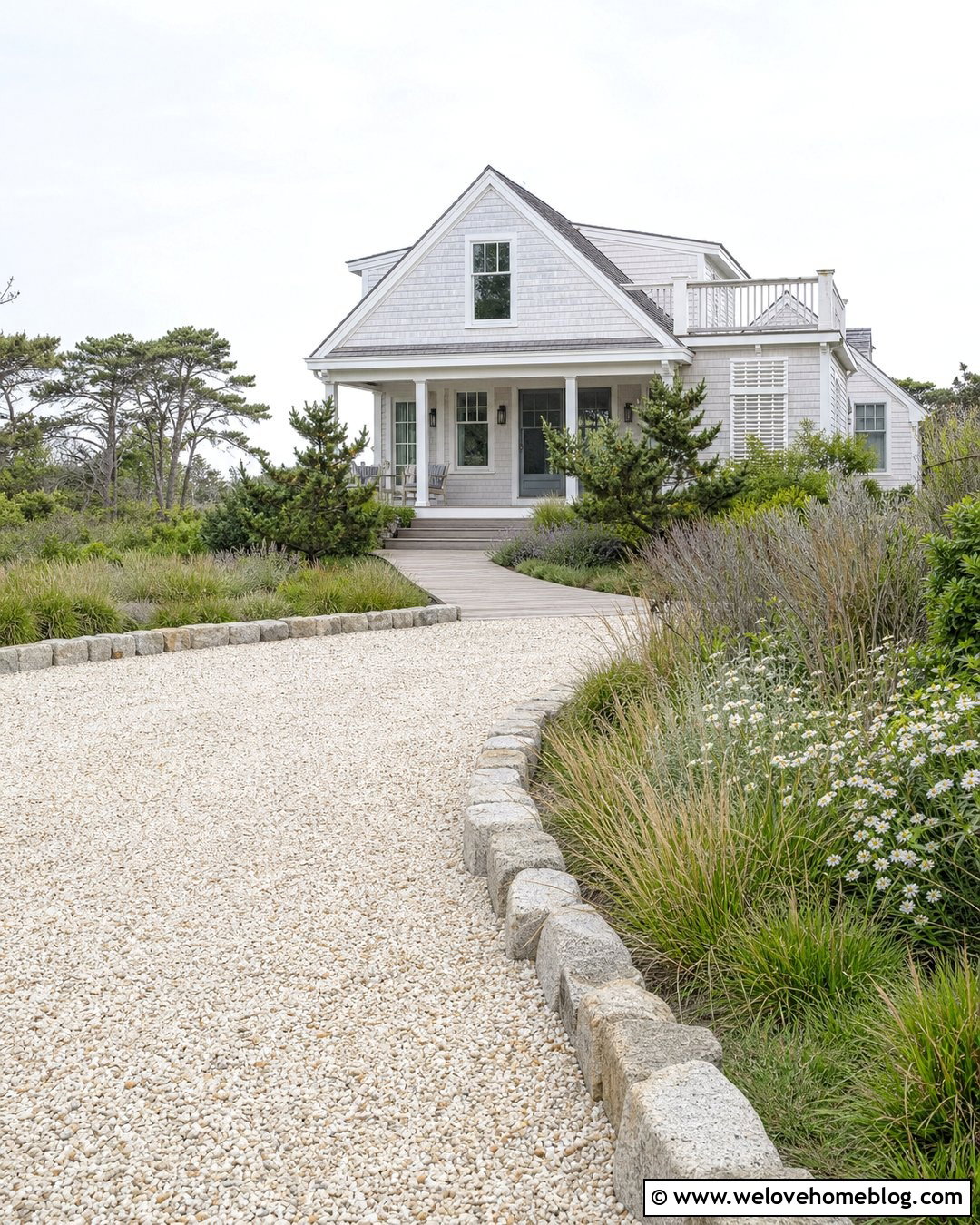
Shell gravel can create a bright, relaxed driveway for a coastal property when it is appropriate and available in the region. Use pale crushed shell or a shell-and-stone blend in a straight or softly curved layout. Edge it with weathered granite blocks to prevent the material from spreading into planting beds. Surround the driveway with salt-tolerant grasses, compact shrubs, and wind-shaped native plants suited to local conditions. A boardwalk-inspired timber path can connect the parking area with the front porch. Keep the driveway broad enough for easy access but avoid unnecessary paving across the front yard. White siding, light trim, and natural wood accents complete the fresh coastal palette without making the design feel themed.
34. Desert House Driveway With Pavers And Gravel
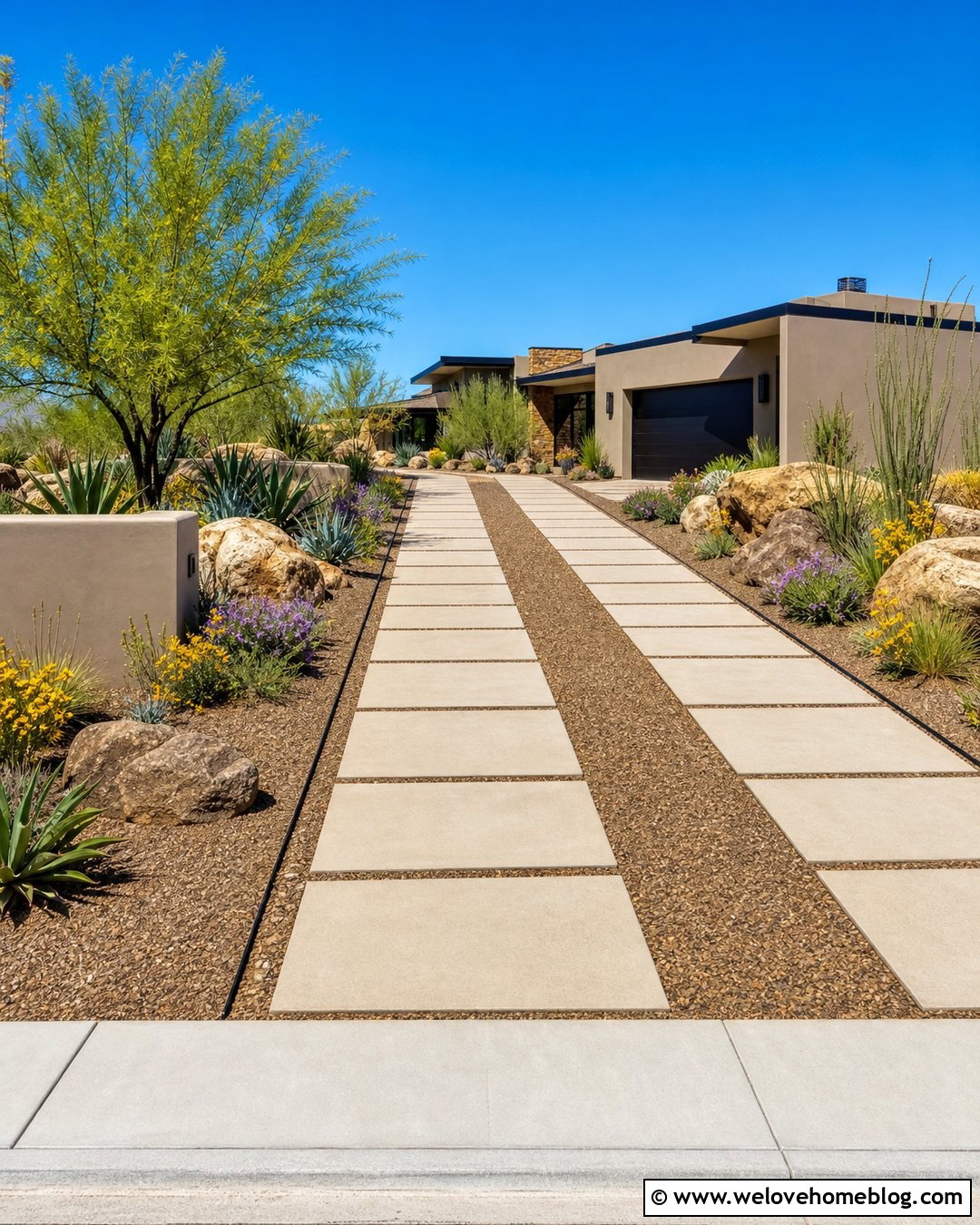
A desert driveway can combine solid parking surfaces with gravel areas that reduce the appearance of continuous hardscape. Use sand-colored concrete pavers for the vehicle tracks and garage apron, then place warm brown decomposed granite between and beside them. Dark steel edging creates sharp transitions between materials. Add sculptural desert plants, flowering native perennials, decorative boulders, and widely spaced shrubs in the surrounding beds. Keep thorny or rigid plants away from doors, walkways, and turning areas. A straight or angular layout will complement contemporary Southwestern architecture. Repeat the driveway pavers in the entrance walkway and use a simple stucco address wall near the street to create a clear arrival point.
35. Traditional Driveway With Landscape Lighting
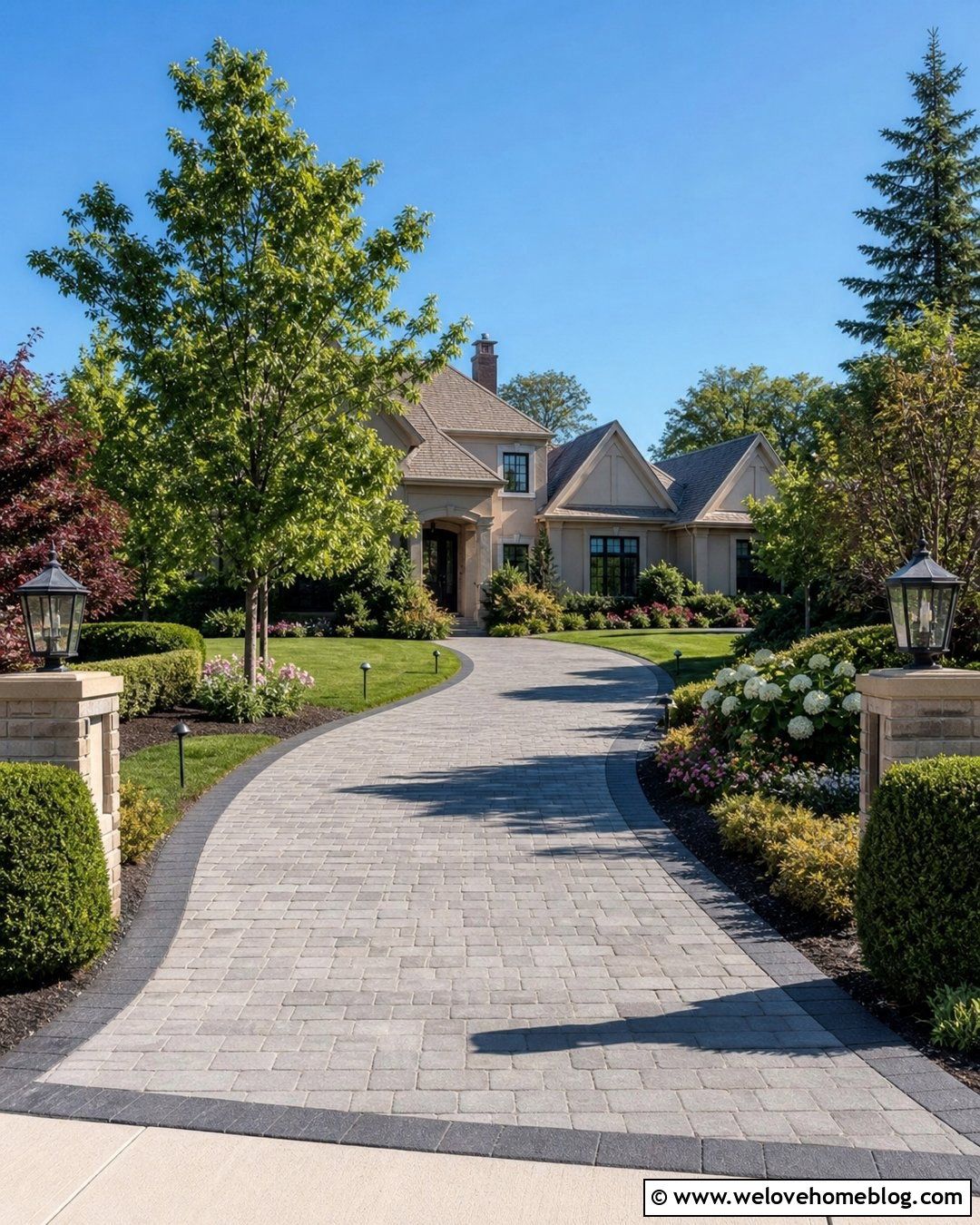
A traditional driveway becomes more welcoming when lighting, paving, and landscaping are designed together. Use warm gray concrete pavers in a gently curved layout with a darker border. Place low path lights at generous intervals along planting beds rather than lining the pavement like a runway. Near the entrance, add lanterns to brick or stone pillars and illuminate one or two specimen trees. During the day, clipped shrubs, flowering perennials, and a maintained lawn should provide the main visual structure. A matching paver walkway can lead from the parking area to the front door. Plan fixture locations early so wiring and drainage can be coordinated without cutting through the newly finished driveway surface.
Conclusion:
The strongest **35 House Driveway Ideas** treat the driveway as a complete part of the property rather than a separate parking surface. Start with a material that suits your climate, maintenance preferences, budget, and home architecture. Then consider how the layout, border, walkway, drainage, planting, and entrance details will work together. A simple asphalt driveway can look polished with paver edging, while gravel gains structure from stone borders and thoughtful landscaping. Larger properties may benefit from circular or curved layouts, but compact homes can achieve just as much curb appeal with coordinated materials and clean lines. Before installation, confirm local requirements and have grading, drainage, turning space, and base preparation properly evaluated.

Related posts:
Leave a Reply