
Cape Cod homes have a quiet, welcoming character that deserves an equally thoughtful driveway. The best Cape Cod Driveway Ideas combine practical surfaces with classic details such as granite cobbles, crushed stone, brick accents, white fencing, and relaxed coastal planting. Pea stone edged with cobbles, bluestone walkways, hydrangeas, and cedar-shingle facades are especially well suited to this architectural setting. () Whether your home sits on a compact suburban lot or a spacious coastal property, the driveway should support easy parking without overpowering the house. Shape, drainage, edging, and planting all matter. The following designs include affordable upgrades, traditional materials, and polished layouts that work together as complete exterior plans. Use these 20 Cape Cod Driveway Ideas to create a practical entrance with lasting curb appeal.

1. Cape Cod Pea Gravel Driveway With Cobblestone Edging
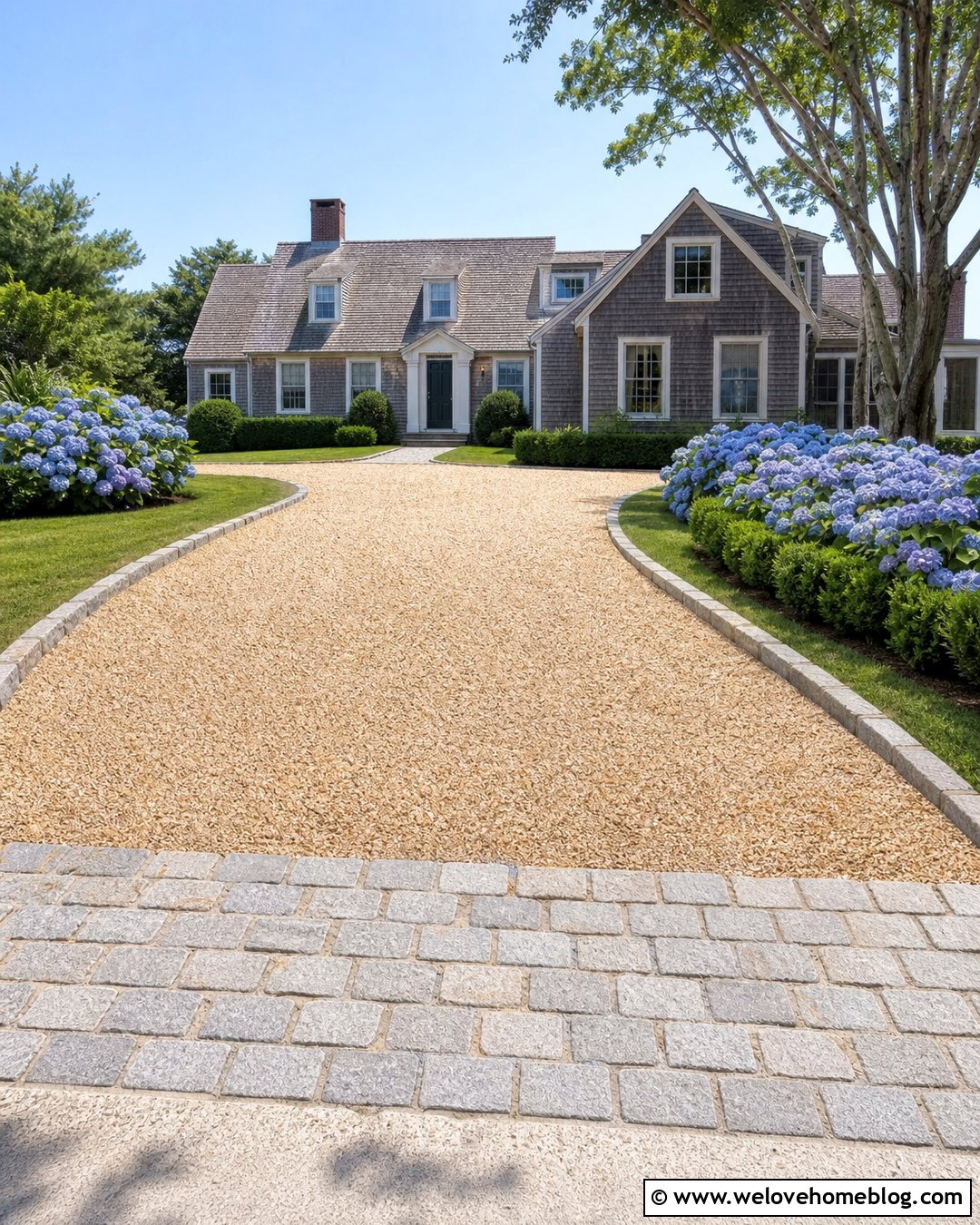
A pale pea gravel driveway feels naturally at home beside weathered shingles and white trim. Use a straight or gently curved layout so the loose stone creates a calm approach rather than a wide parking field. Granite cobblestone edging helps contain the gravel and gives the perimeter a crisp, traditional finish. Add a wider cobblestone apron where the driveway meets the road for a stronger entrance and a smoother transition. Along the house, connect the parking area to the front door with a rectangular bluestone walkway. Blue hydrangeas, inkberry holly, and low ornamental grasses can soften both sides without hiding the facade. This combination delivers coastal texture, practical drainage, and the relaxed appearance often associated with established Cape Cod properties.
2. Cape Cod Seashell Driveway With Split Rail Fencing
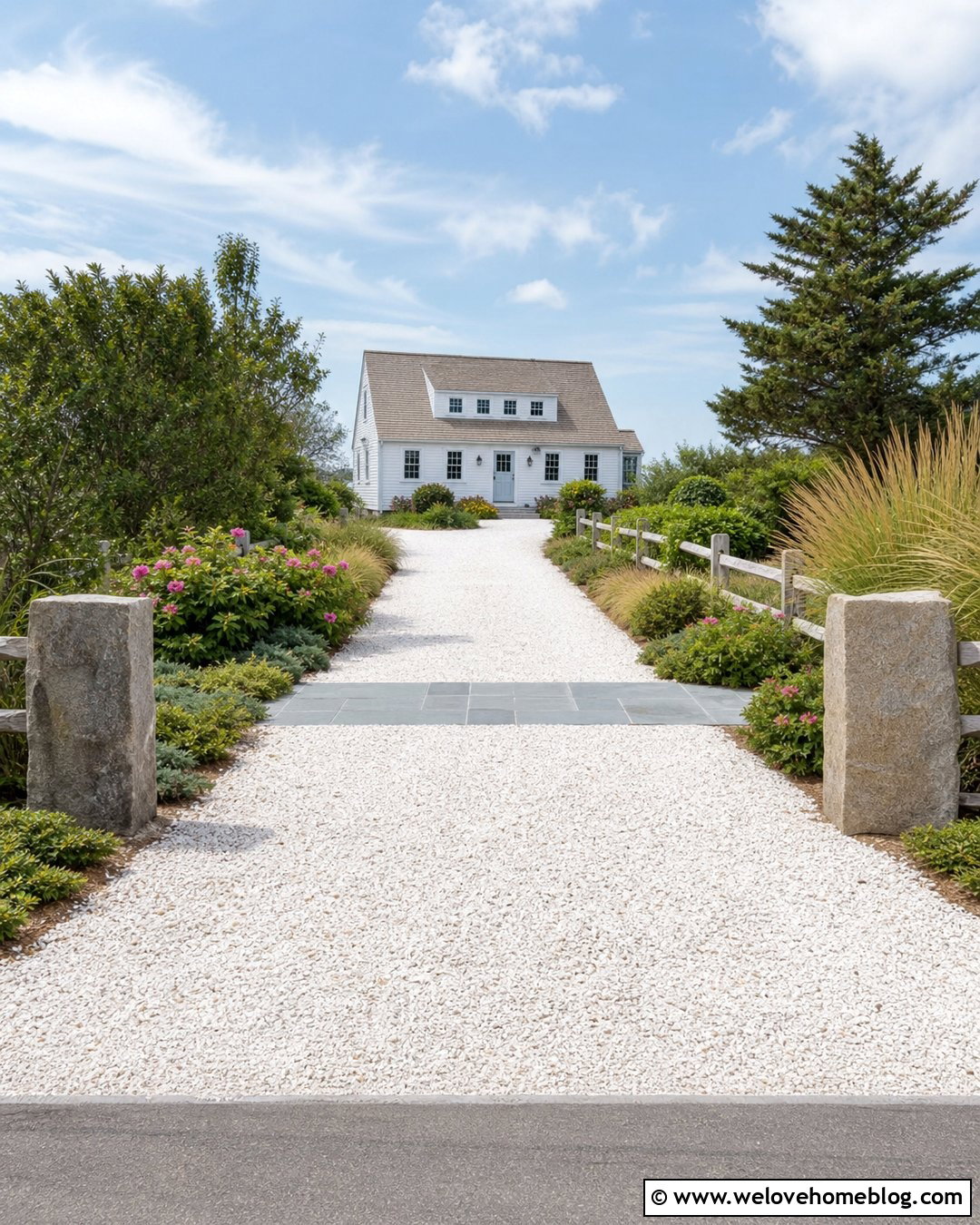
Crushed seashells create a bright, textured driveway that complements a simple Cape Cod cottage. A narrow straight layout works especially well because it keeps the light-colored surface from dominating a small front yard. Define one side with traditional split rail fencing and leave the other open to a natural planting bed. Beach grass, bayberry, rugosa rose, and low juniper reinforce the coastal setting while tolerating exposed conditions once established. Use granite blocks around the entrance and parking area to reduce shell movement. A bluestone path can cross the driveway and lead toward a centered front door. Shell surfaces gradually compact and may need fresh material, so establish a firm base and dependable edging before installation. ()
3. Cape Cod Asphalt Driveway With Granite Apron
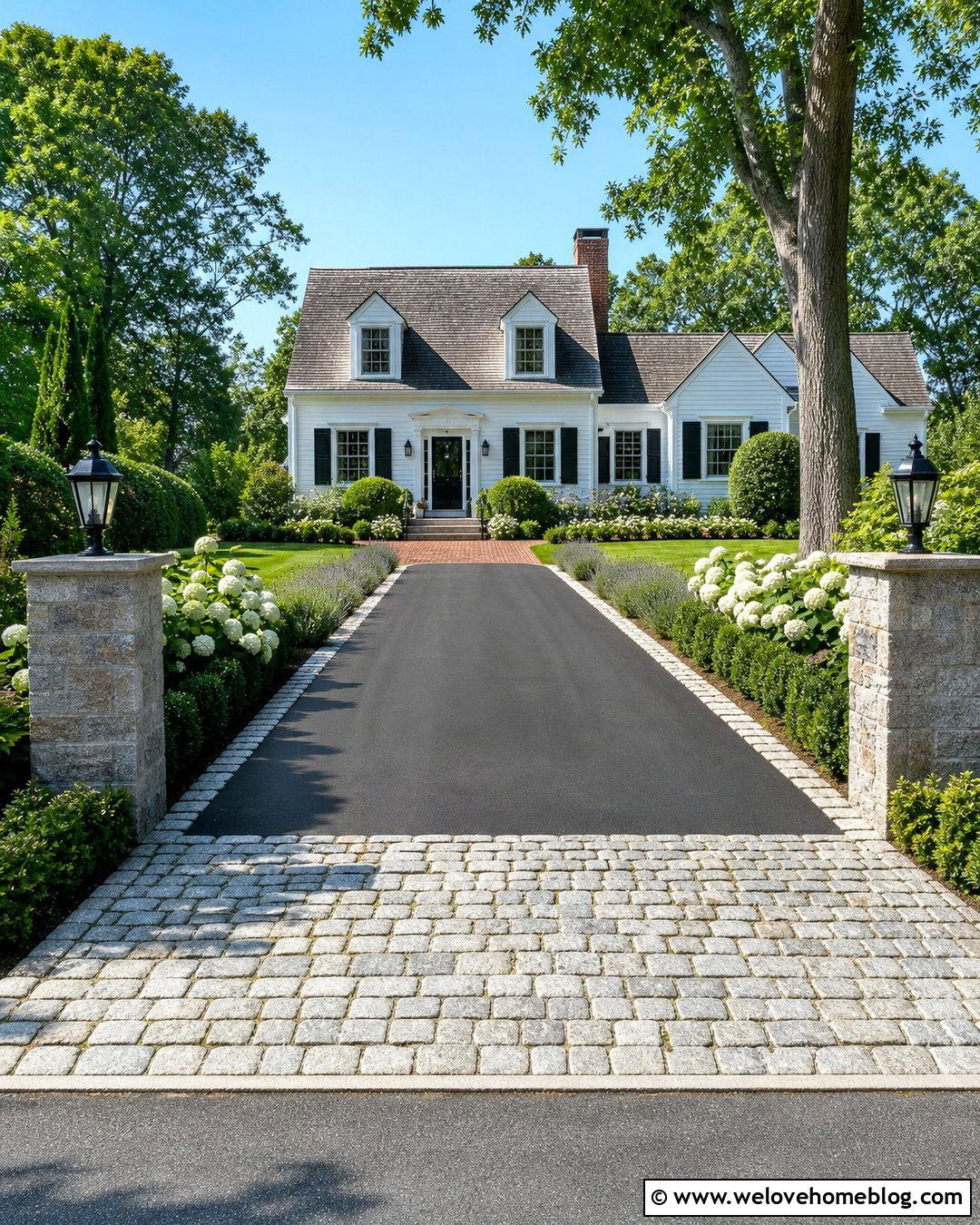
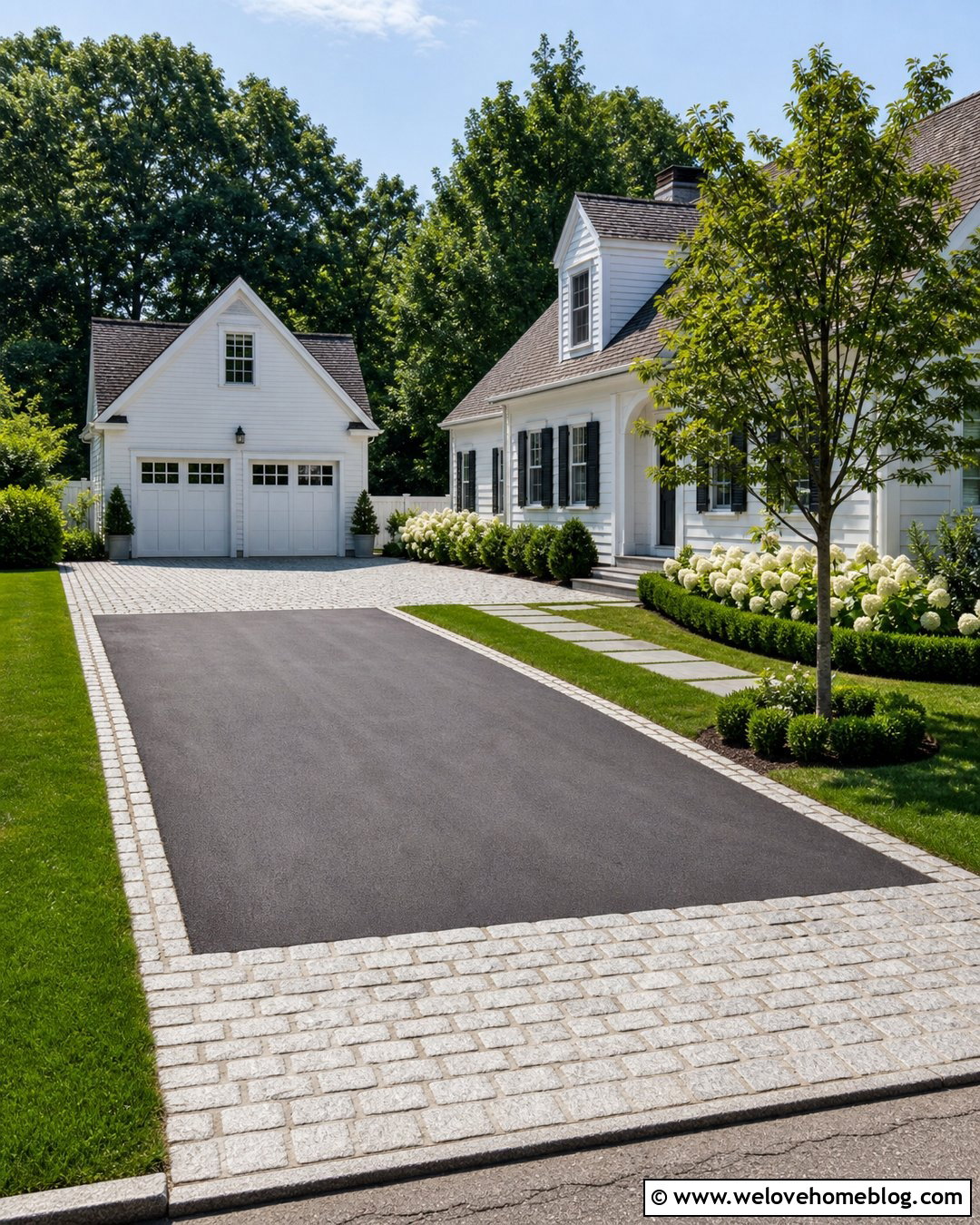
Black asphalt provides a practical backdrop for the white siding, dark shutters, and symmetrical shape of a traditional Cape Cod house. To make the surface feel more tailored, frame the roadside entrance with a broad gray granite cobblestone apron. Continue a single cobblestone row along each side to create a finished border and protect vulnerable edges. A gently flared entrance improves the transition from the street, while a narrower upper section prevents the driveway from overwhelming the lawn. Plant rounded boxwood, white hydrangeas, and catmint near the house for a restrained palette. Simple granite lamp posts can mark the entrance without appearing formal. This design offers the smooth appearance of asphalt while adding enough stone detail to connect it visually with classic New England architecture.
4. Cape Cod Brick Driveway With Herringbone Pattern
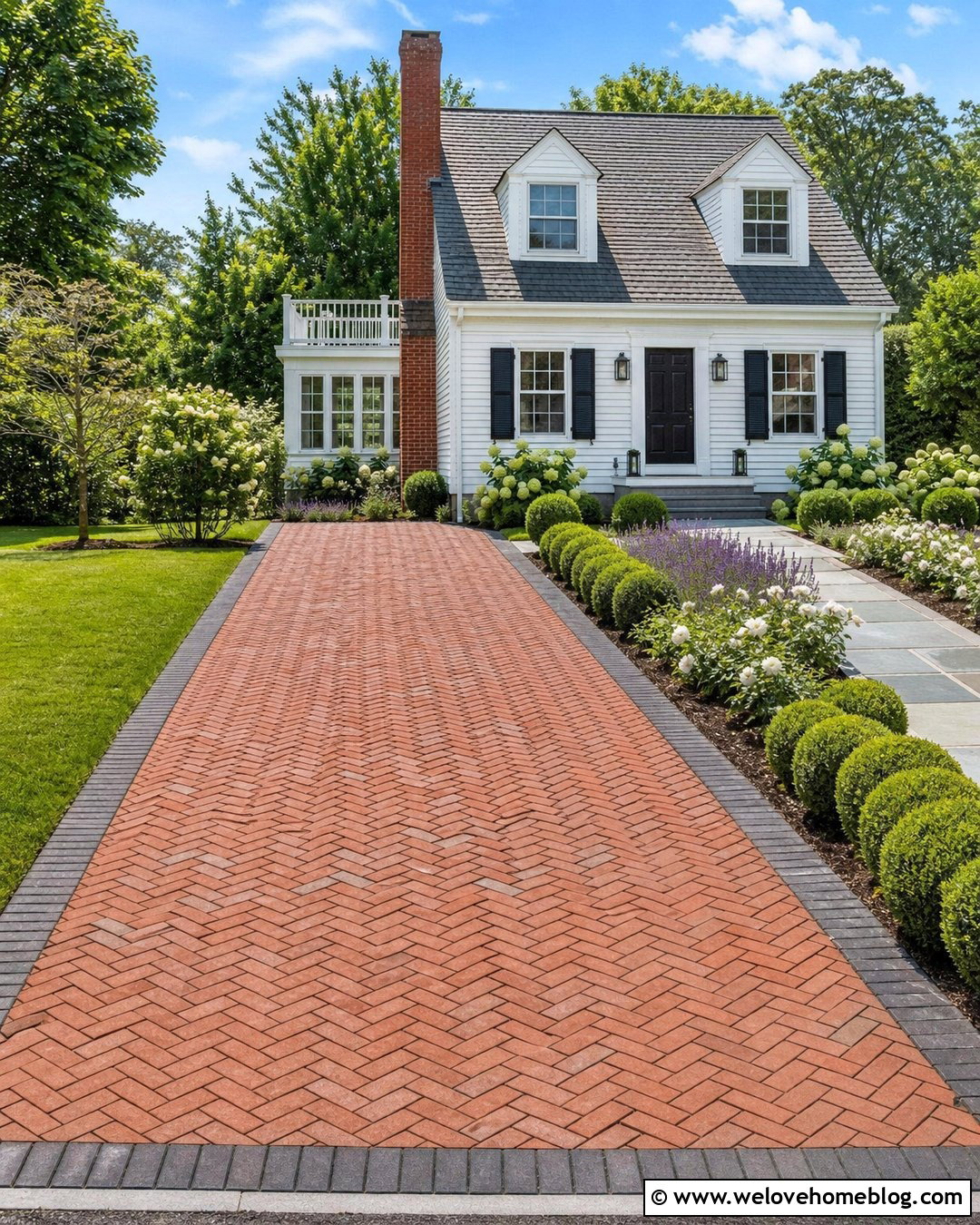
Warm clay brick pavers can give a Cape Cod home a more traditional, established presence. Lay the main driveway in a herringbone pattern, which creates visual movement along a straight approach and works beautifully with white clapboard siding. A darker brick soldier-course border keeps the pattern contained and clearly defines the parking area. Near the garage, widen the layout just enough for comfortable vehicle access while preserving planting space beside the house. Add a bluestone walkway so the pedestrian route remains easy to recognize. Boxwood, lavender, white roses, and clipped hydrangeas balance the rich brick color with fresh green and white tones. Proper base preparation and edge restraint are essential, particularly where seasonal temperature changes or regular vehicle loads could shift individual pavers.
5. Cape Cod Cobblestone Driveway With Hydrangea Borders
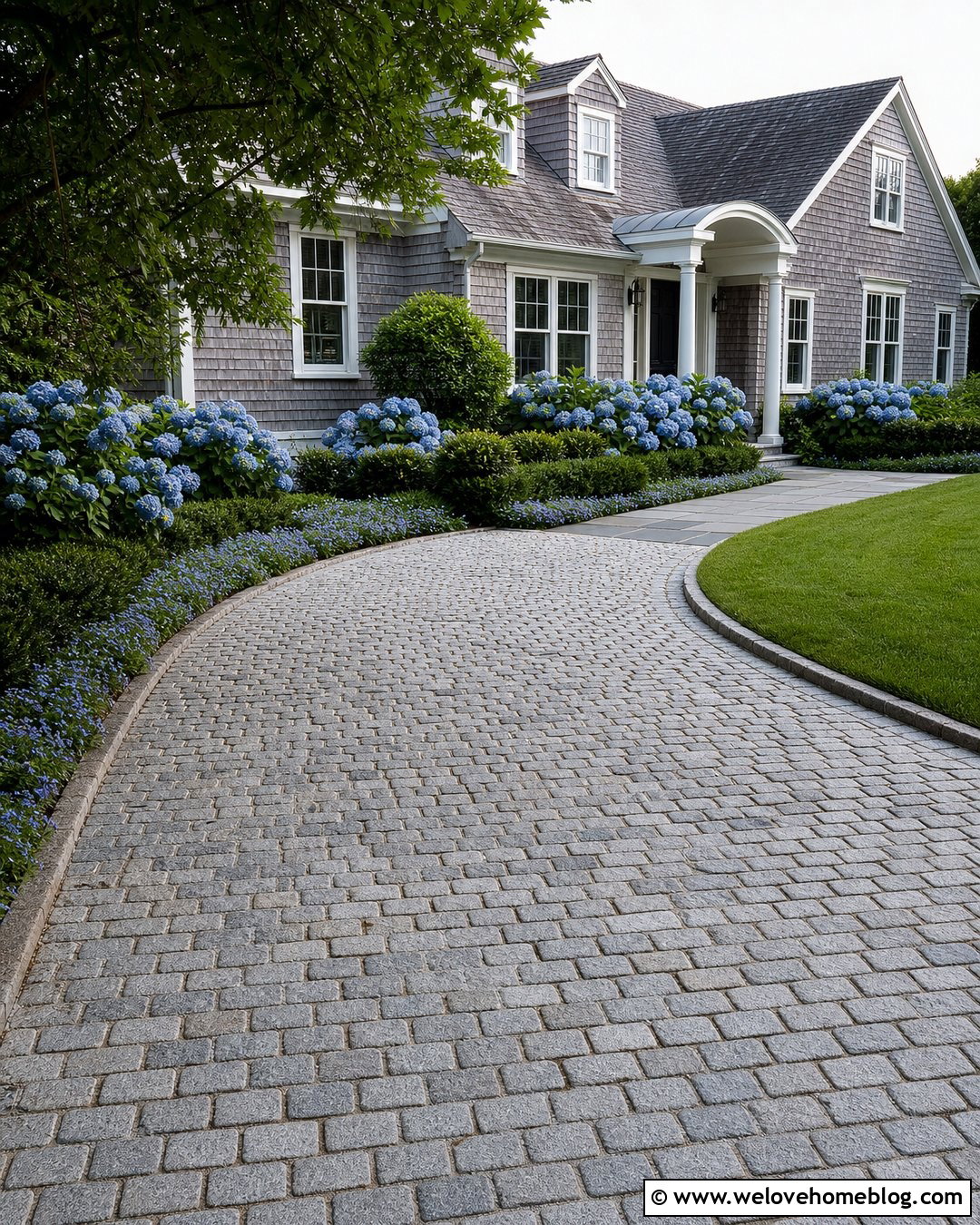
Few combinations feel more enduring than gray cobblestone, blue hydrangeas, and a cedar-shingle Cape. A full cobblestone driveway works best on a compact property where its texture can be appreciated without creating an overly large hardscape area. Choose stones with blended gray, charcoal, and muted brown tones to complement natural wood siding. A gently curved layout can guide the eye toward the front entrance while leaving room for deep planting beds. Mass hydrangeas along the outer curve, then add inkberry holly and low ground cover for structure beyond the flowering season. Use a smooth bluestone walkway beside the cobbles to provide comfortable foot access. Granite is commonly used for driveway aprons, curbing, and posts because it brings a substantial, traditional character to coastal hardscapes. ()
6. Cape Cod Concrete Driveway With Brick Border
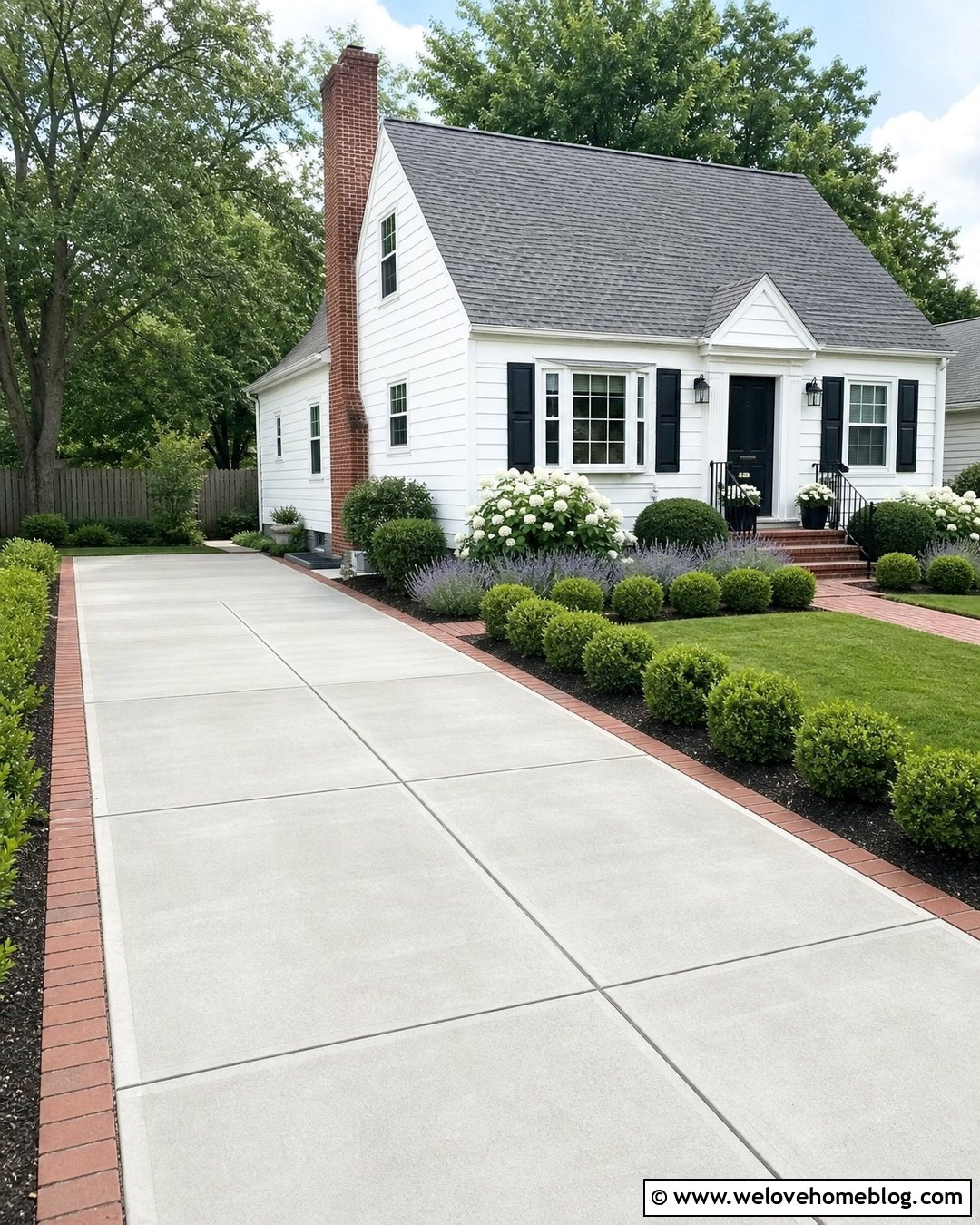
For an affordable, tidy approach, pair light gray poured concrete with a narrow red brick border. The concrete keeps the driveway surface visually simple, while the brick introduces color that can connect with a chimney, front steps, or traditional foundation. A straight single-car layout suits a small Cape Cod house and leaves more lawn visible from the road. Score the concrete into large rectangular sections for a cleaner appearance and more controlled joints. Continue the brick border around a small parking pad near the side entry. Along the driveway, use compact boxwood, catmint, and white flowering perennials rather than tall shrubs. A matching brick walkway can branch toward the centered front door, making the entire entrance feel coordinated without requiring a fully paved brick driveway.
7. Cape Cod Permeable Paver Driveway With Grass Strips
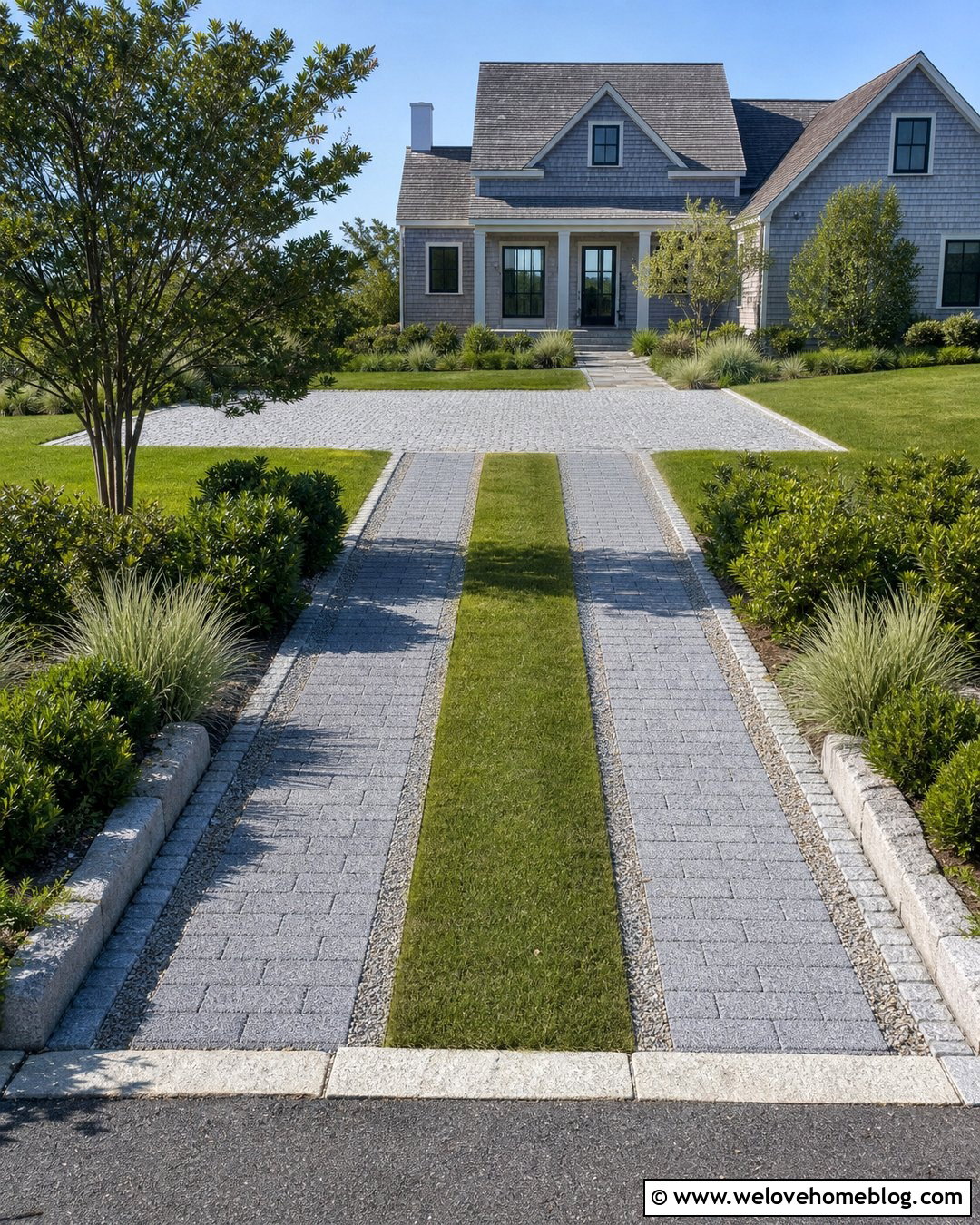
Permeable pavers can give a Cape Cod driveway a polished appearance while helping water move through the surface rather than across it. Choose weathered gray pavers with wider joints filled with fine gravel or low-growing grass. A two-track ribbon layout is especially effective on a smaller lot because it reduces the visual weight of the driveway. Frame the tracks with granite cobbles and allow a green strip to run through the center. Near the house, expand the pavers into a compact parking court with a clear bluestone path to the front door. Native grasses, bayberry, and inkberry can create soft borders without making the entrance feel crowded. Permeable surfaces are also consistent with regional low-impact approaches that encourage stormwater infiltration. ()
8. Cape Cod Circular Gravel Driveway With Center Garden
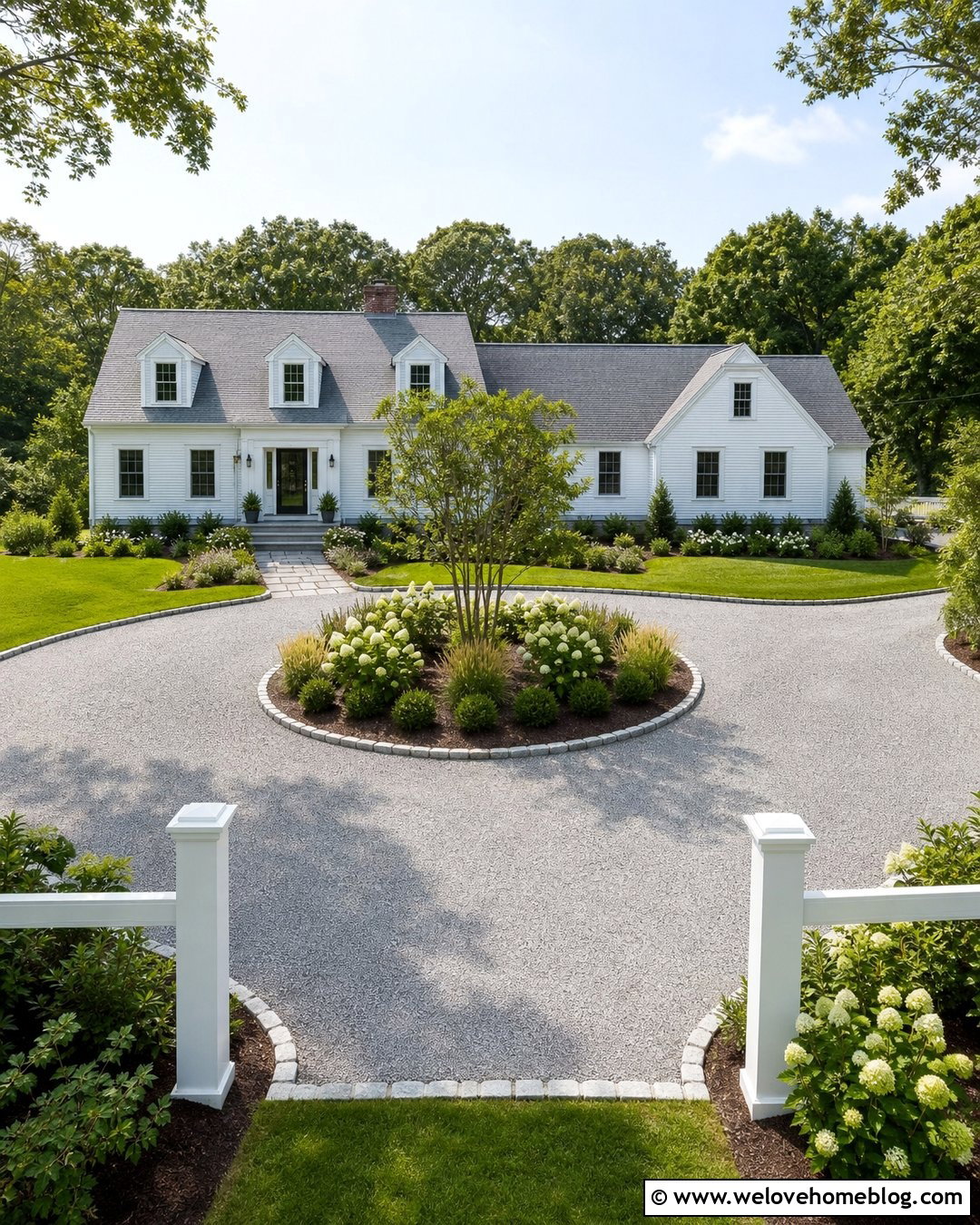
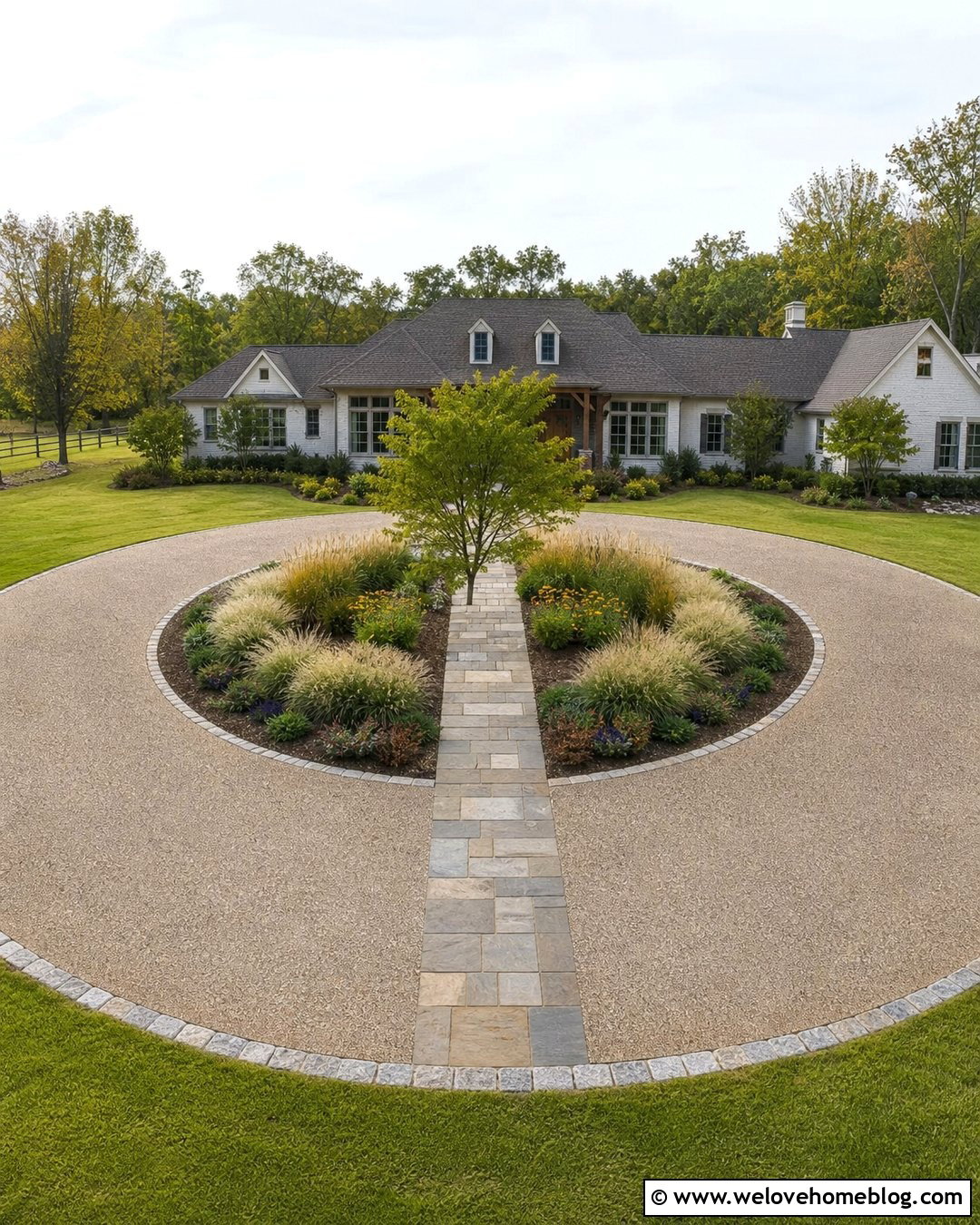
A circular driveway can suit a larger Cape Cod home when the layout remains simple and balanced. Use compacted gray gravel for the main surface and edge the full loop with rough-cut granite blocks. In the center island, create a low coastal garden instead of installing a tall feature that might hide the house. One small multi-stem tree, surrounded by hydrangeas, bayberry, ornamental grasses, and seasonal perennials, provides interest while preserving open views. A straight bluestone walkway can connect the inner curve to the centered front entrance. Keep the circle proportional to the house and allow enough turning space without sacrificing the surrounding lawn. White entrance posts and discreet ground-level lighting add definition, making this arrangement functional for arrivals while maintaining the modest character associated with Cape architecture.
9. Cape Cod Curved Driveway With Natural Stone Edging
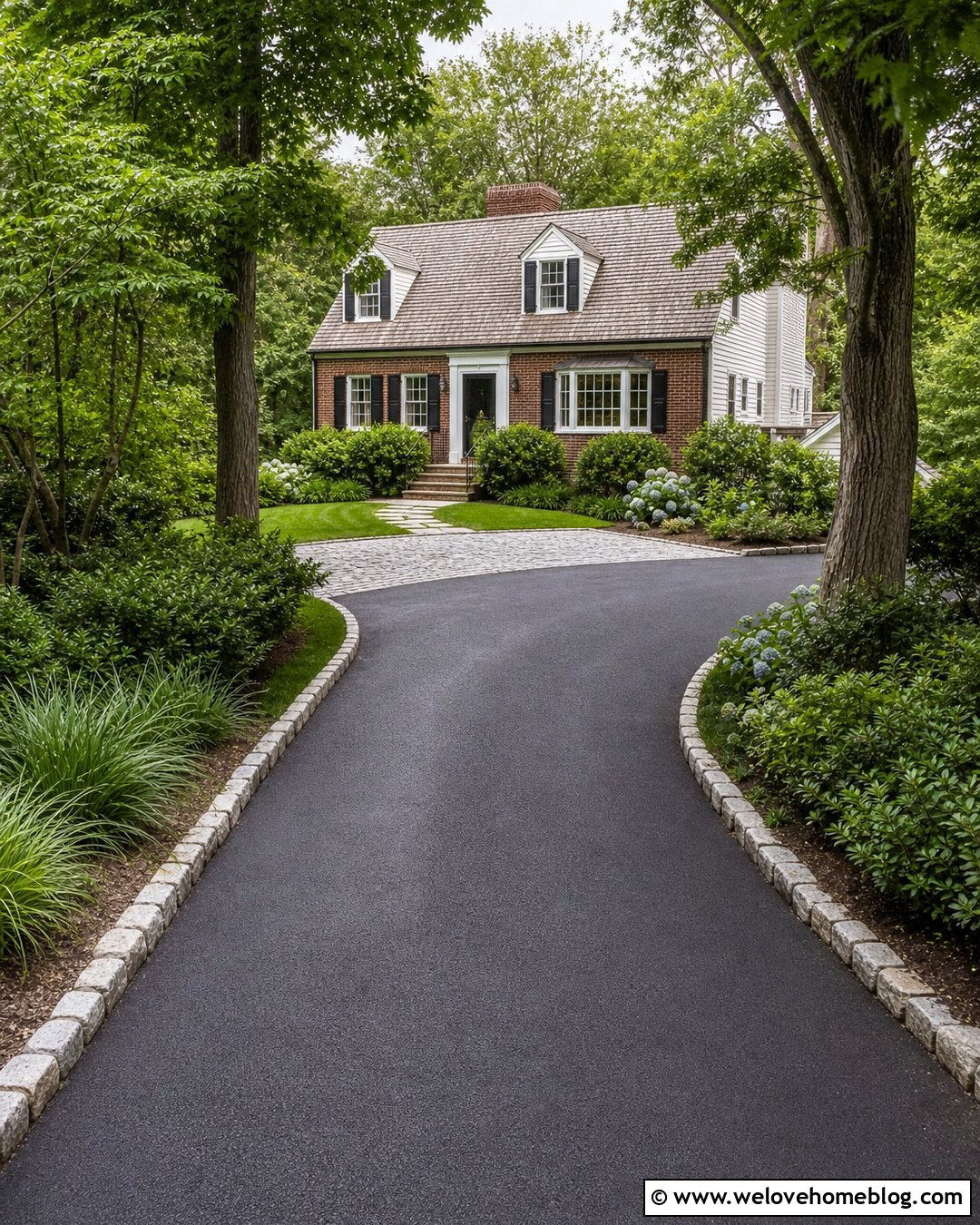
A soft curve makes the approach to a Cape Cod house feel relaxed and can help the driveway work around mature trees or an irregular front yard. Use charcoal asphalt or compacted gray gravel for the main surface, then add irregular fieldstone edging for a natural transition into the landscape. On the outside of the curve, layer bayberry, inkberry, hydrangeas, and ornamental grasses in broad planting groups. Keep the inside edge more open with lawn and low ground cover so drivers retain a clear view. At the house, finish the route with a small granite parking court and a bluestone walkway. Rather than forcing perfect symmetry, this design uses the driveway’s movement and naturalistic planting to connect a classic Cape facade with a wooded or spacious setting.

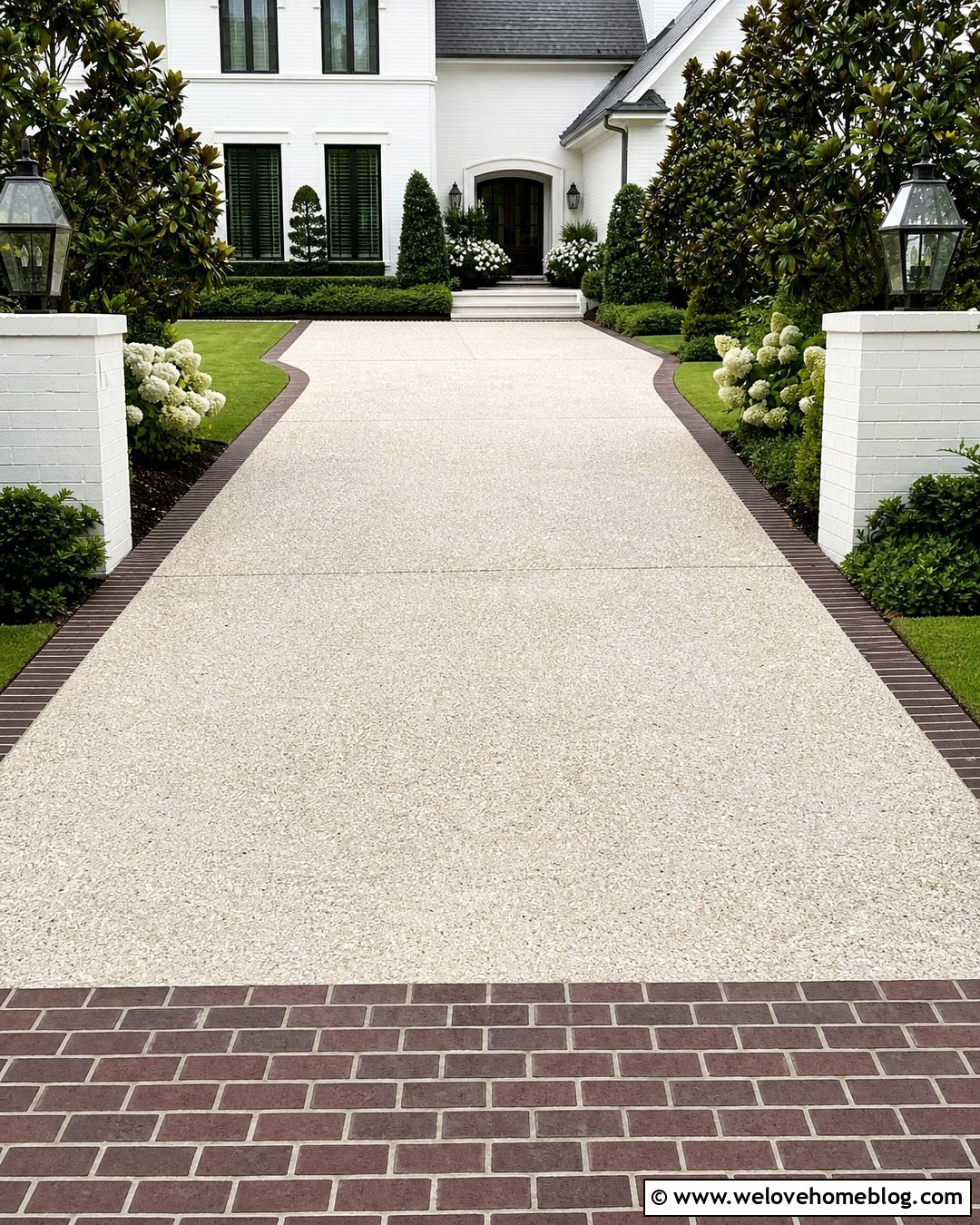
10. Cape Cod Ribbon Driveway With Clover Center
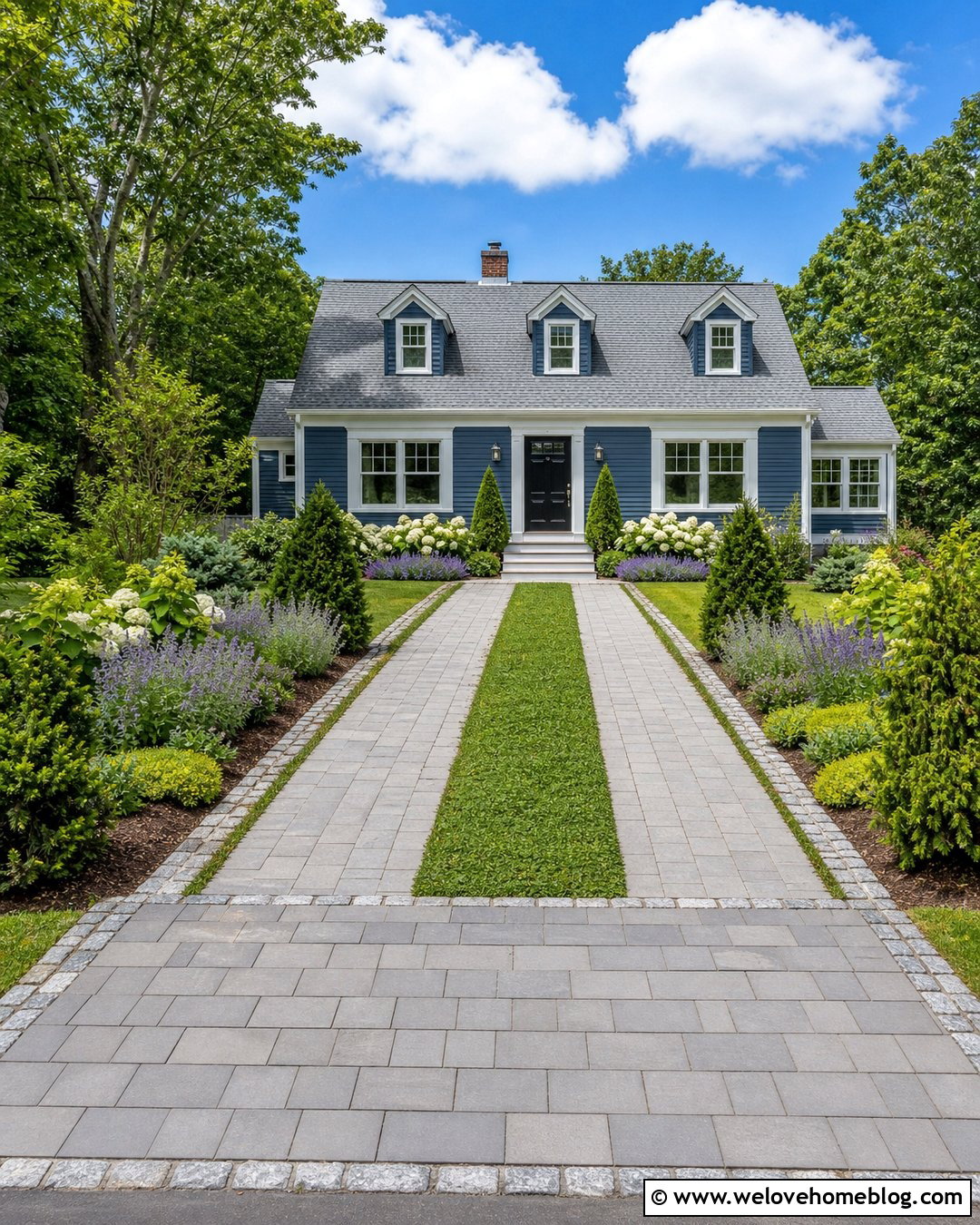
Two paved wheel tracks separated by a planted center can make a small Cape Cod front yard look greener and less dominated by hardscape. Use warm gray concrete pavers for the tracks and plant the middle strip with durable microclover or a suitable low lawn blend. A single row of granite cobbles along the outer edges creates a neat boundary. Keep the layout straight and align it with a side garage or rear parking area. Near the sidewalk, install a full-width paver apron to support turning and provide a clear entrance. Cottage-style planting beds can frame the route with catmint, salvia, hydrangeas, and rounded evergreen shrubs. This driveway design feels informal but organized, making it a good match for a modest Cape with limited frontage and a simple facade.
11. Cape Cod Bluestone Driveway With Granite Borders
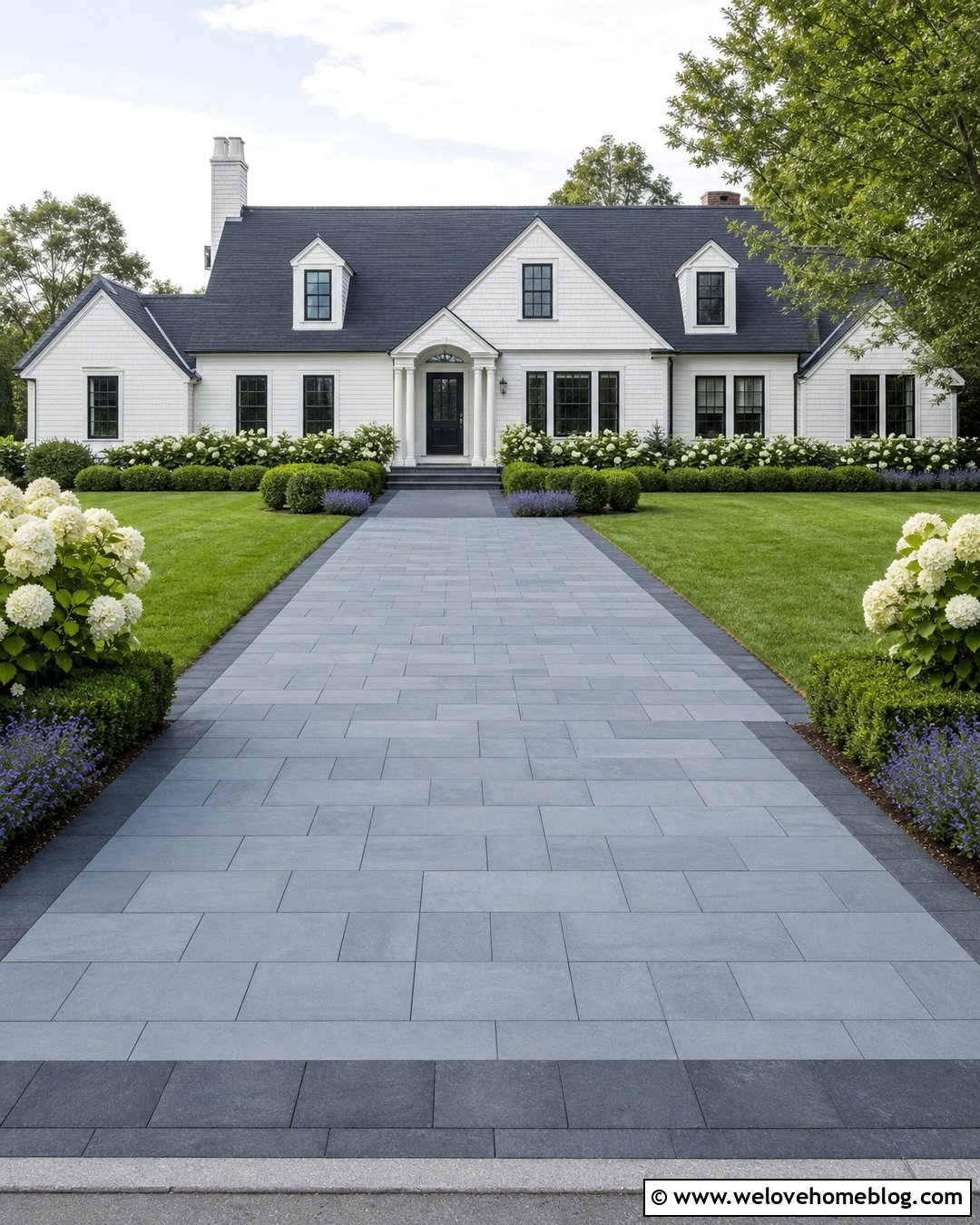
Blue-gray stone creates an elegant connection between a Cape Cod home, its front walkway, and the surrounding landscape. For the driveway, use durable bluestone-look concrete pavers or appropriately specified natural stone set over a vehicle-rated base. Arrange large rectangular units in a running pattern to make a short driveway appear longer. Add charcoal granite borders along both sides and repeat the darker stone across the entrance apron. A matching walkway can branch from the driveway toward the front steps, creating one coordinated hardscape plan. Surround the layout with white hydrangeas, clipped boxwood, and low lavender-blue perennials. The cool color palette looks especially crisp against white siding or weathered cedar shingles. Keep joints tight and the overall pattern restrained so the house remains the main visual focus.
12. Cape Cod Gravel Driveway With Brick Ribbon
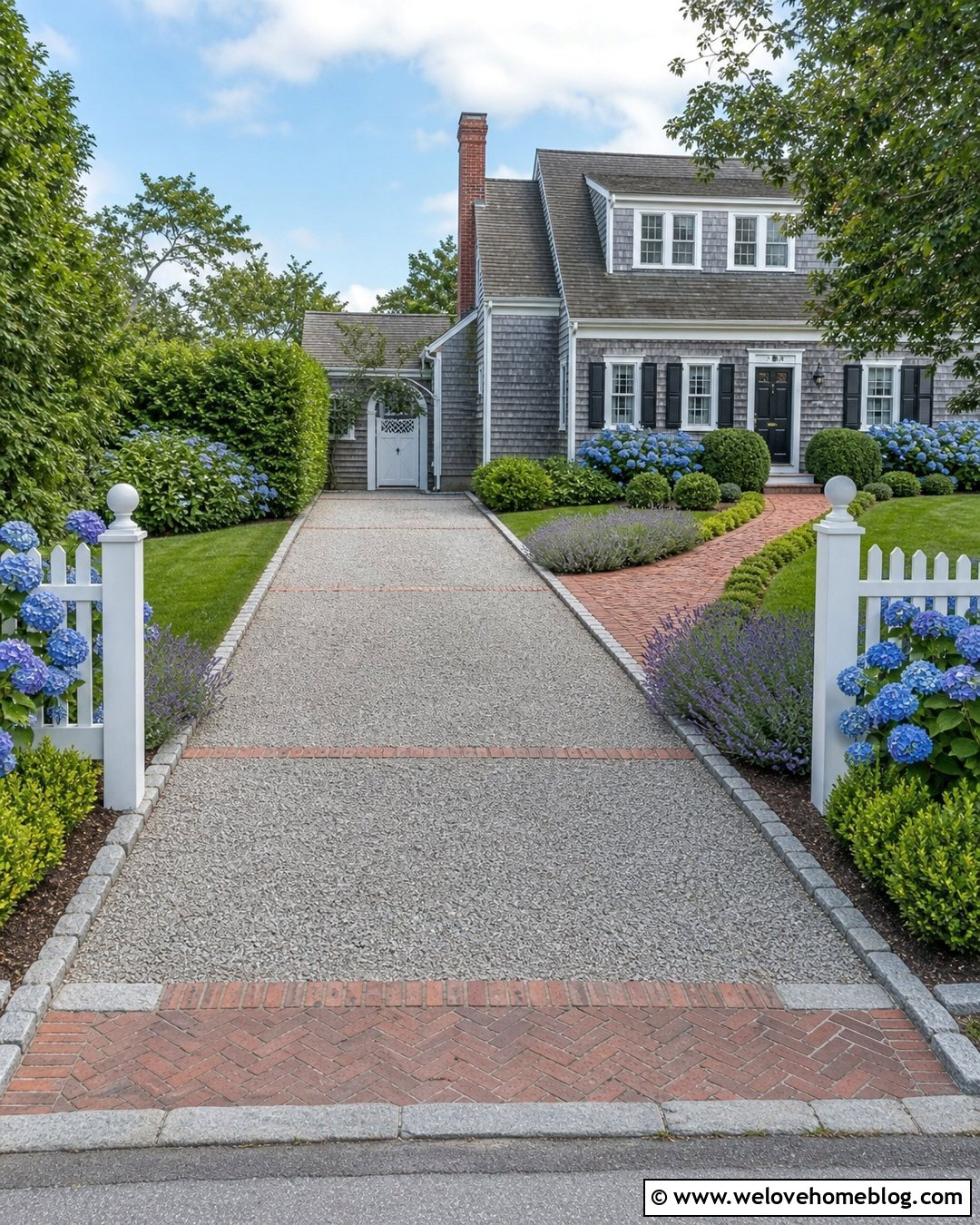
Gray gravel and aged red brick create a welcoming mix of coastal simplicity and colonial character. Begin with a well-compacted gravel driveway in a straight layout, then install brick ribbons across the surface at measured intervals. These bands add visual structure and can help break up a long approach. Use matching brick as edge restraint, or combine it with granite curbing for greater contrast. Near the home, widen the driveway into a modest parking pad and connect it to the front door with a herringbone brick walkway. White picket fencing, hydrangeas, boxwood, and lavender complete the traditional setting. Choose muted brick rather than bright orange tones so the design looks settled beside weathered shingles. The result feels detailed and intentional without losing the relaxed texture that makes gravel appealing.
13. Cape Cod Paver Driveway With White Picket Fence
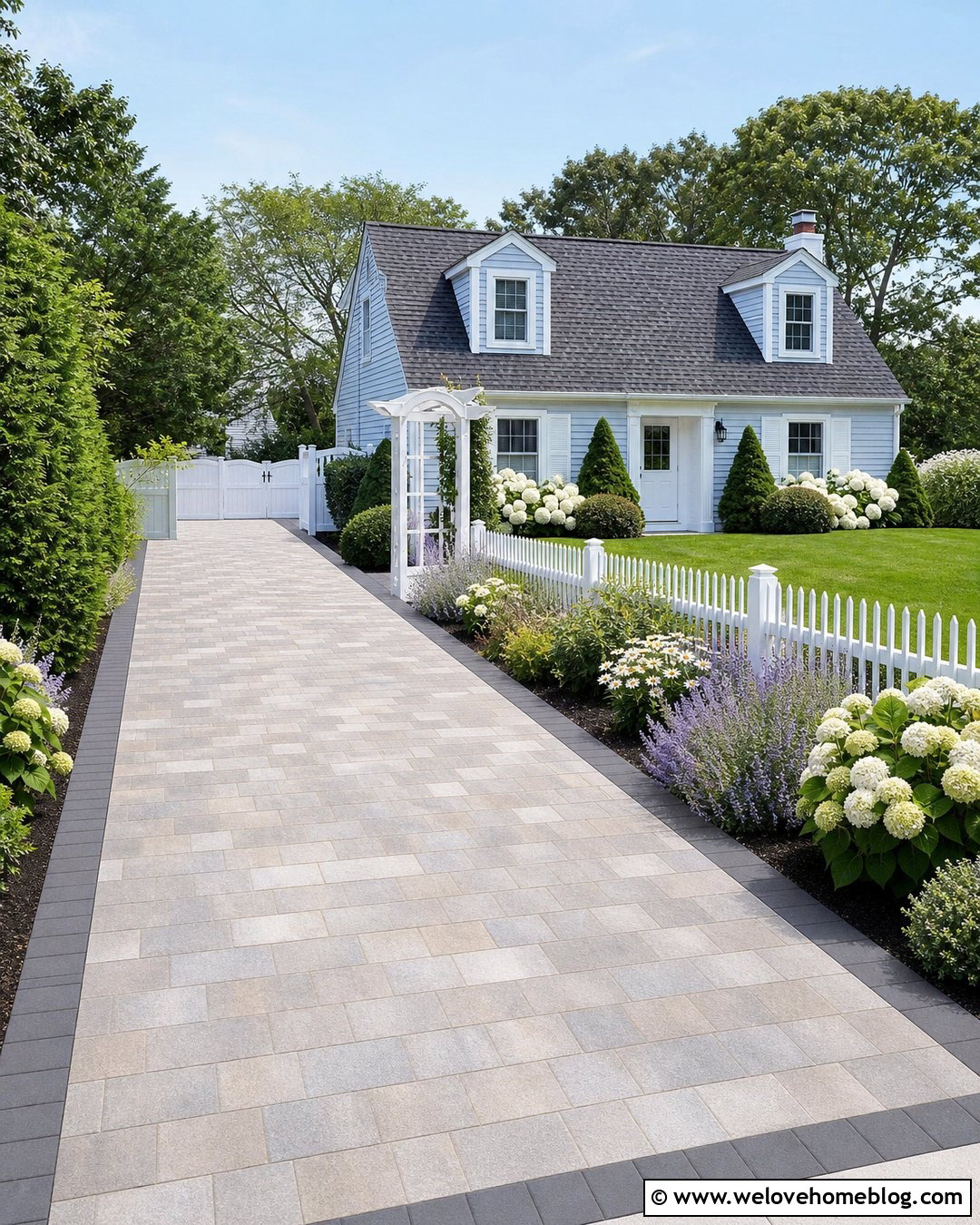
A white picket fence can turn an ordinary driveway into a clear garden entrance. Pair it with tumbled concrete pavers in a soft gray and beige blend, laid in a simple running bond. A straight driveway works well, with the fence following one side and opening at a small arbor near the front walkway. Use darker charcoal pavers around the perimeter to keep the main surface visually contained. Behind the fence, layer blue hydrangeas, catmint, white daisies, and compact evergreen shrubs for a classic cottage garden effect. On the open side, preserve a clean strip of lawn to prevent the setting from feeling crowded. Repeat the driveway pavers in the walkway or front landing. This creates a unified exterior that feels welcoming, traditional, and appropriately scaled to a Cape Cod home.
14. Cape Cod Driveway With Granite Gate Posts
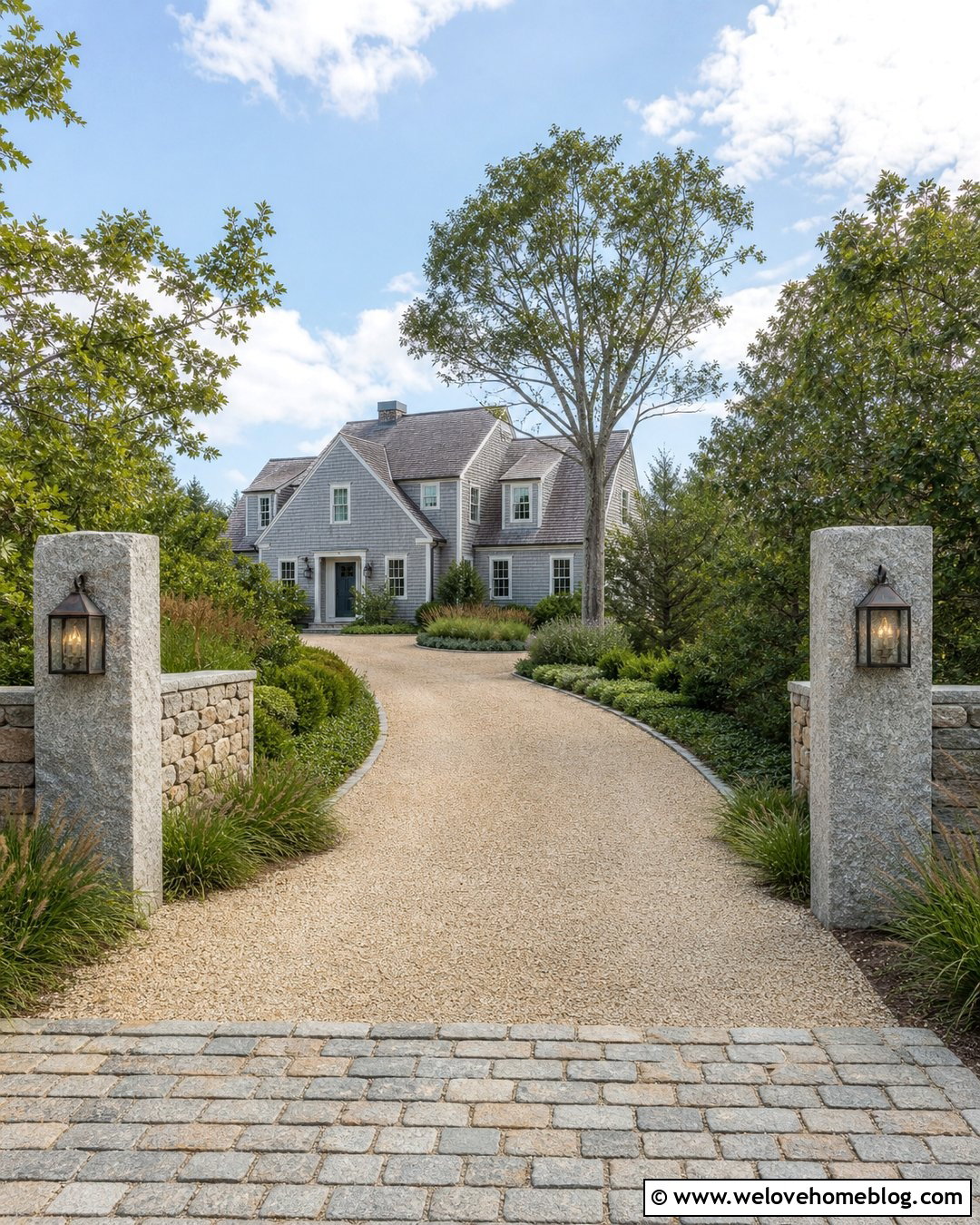
Substantial gate posts can define a long Cape Cod driveway even when a full gate is unnecessary. Build simple square posts from speckled gray granite and position them outside the required vehicle clearance. A compacted tan gravel surface creates warm contrast and keeps the overall entrance relaxed. Use a slightly curved layout beyond the posts so the home appears gradually, especially on a wooded property. Low stone walls can extend a short distance from each pillar before transitioning into bayberry, native grasses, inkberry, and ground cover. Mount understated lanterns or small address plaques on the posts, avoiding oversized decorative features. At the house, finish the gravel with a cobblestone parking apron. The complete look feels established and welcoming without turning a modest Cape residence into an overly formal estate entrance.
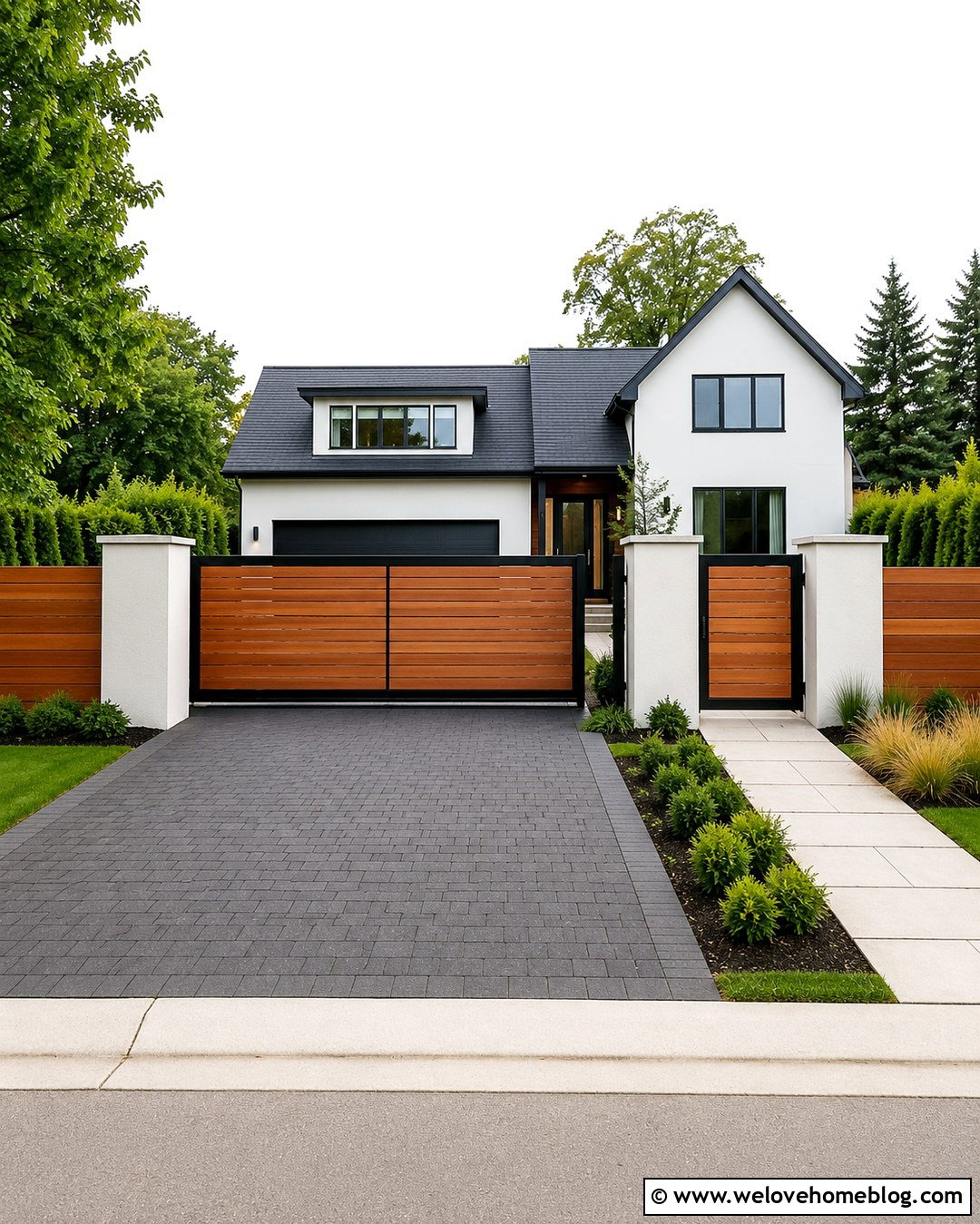
15. Cape Cod Asphalt Driveway With Cobblestone Courtyard
If daily parking requires a larger paved area, separate the functional driveway from the decorative arrival space. Use smooth black asphalt for the main straight approach, edged with a single row of gray granite cobbles. In front of the house or garage, transition into a circular or rectangular cobblestone courtyard. The change in material helps the parking zone feel intentional rather than oversized. A bluestone walkway can cross the courtyard and lead directly to the front steps. Frame the outer edge with white hydrangeas, boxwood, and one small ornamental tree, leaving open sightlines toward the symmetrical Cape facade. Repeating cobblestone at the street apron ties the entire composition together. This mixed-material design concentrates the premium surface where it creates the greatest visual impact while keeping the longer driveway practical.
16. Cape Cod Driveway With Coastal Grass Landscaping
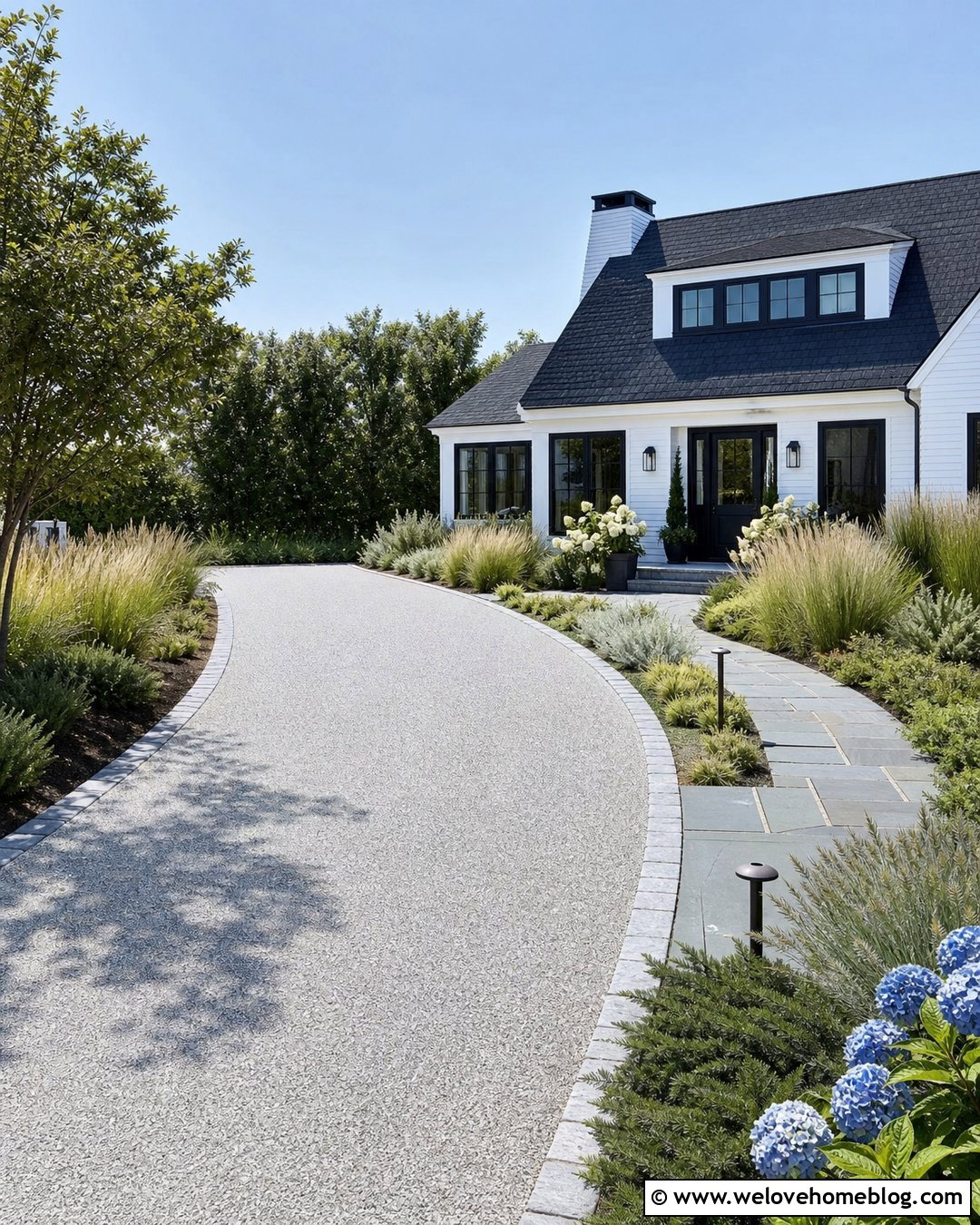
Wind-swept ornamental grasses can soften a driveway without requiring rigid garden borders. Choose light gray resin-bound gravel for a smooth, uniform surface and shape the driveway with a gentle curve. Edge it with narrow steel or flush granite so the boundary stays crisp while remaining visually understated. Plant broad groups of switchgrass, little bluestem, beach grass, bayberry, and low juniper along the outside curve. Closer to the house, add blue hydrangeas and rounded inkberry to connect the loose grasses with the architecture. A large-format bluestone walkway can cross the planting and reach the front entrance. Keep grasses set back from driving areas and maintain clear visibility near the road. The completed design feels coastal and natural, yet the clean surface and controlled planting prevent it from appearing untidy.
17. Cape Cod Driveway With Rain Garden Border
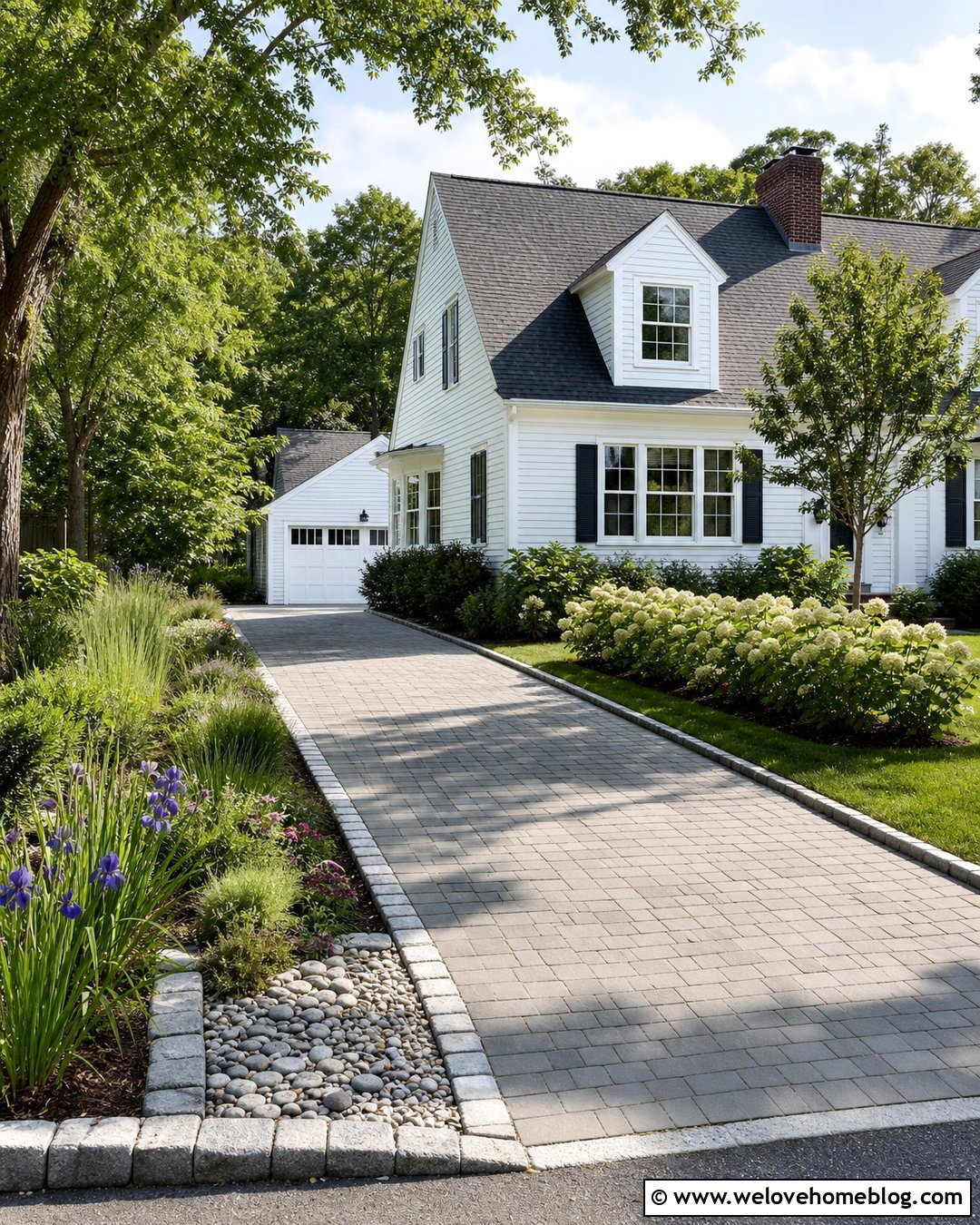
Where runoff naturally moves toward one side of the driveway, a shallow rain garden can become part of the overall design. Use permeable gray concrete pavers for a straight driveway and direct the subtle surface grading toward a planted depression rather than the home. Define the garden with granite cobbles and fill it with moisture-tolerant plants selected for local conditions. Blue flag iris, switchgrass, inkberry, and low flowering perennials can provide layered color and texture. Keep the road entrance and pedestrian path level, open, and easy to navigate. On the opposite edge, use lawn or a narrow hydrangea bed for visual balance. This arrangement combines a clean Cape Cod entrance with a landscape feature designed to manage water more thoughtfully, provided soil, overflow, and drainage conditions are professionally evaluated.
18. Cape Cod Driveway With Cedar Gate And Stone Walls
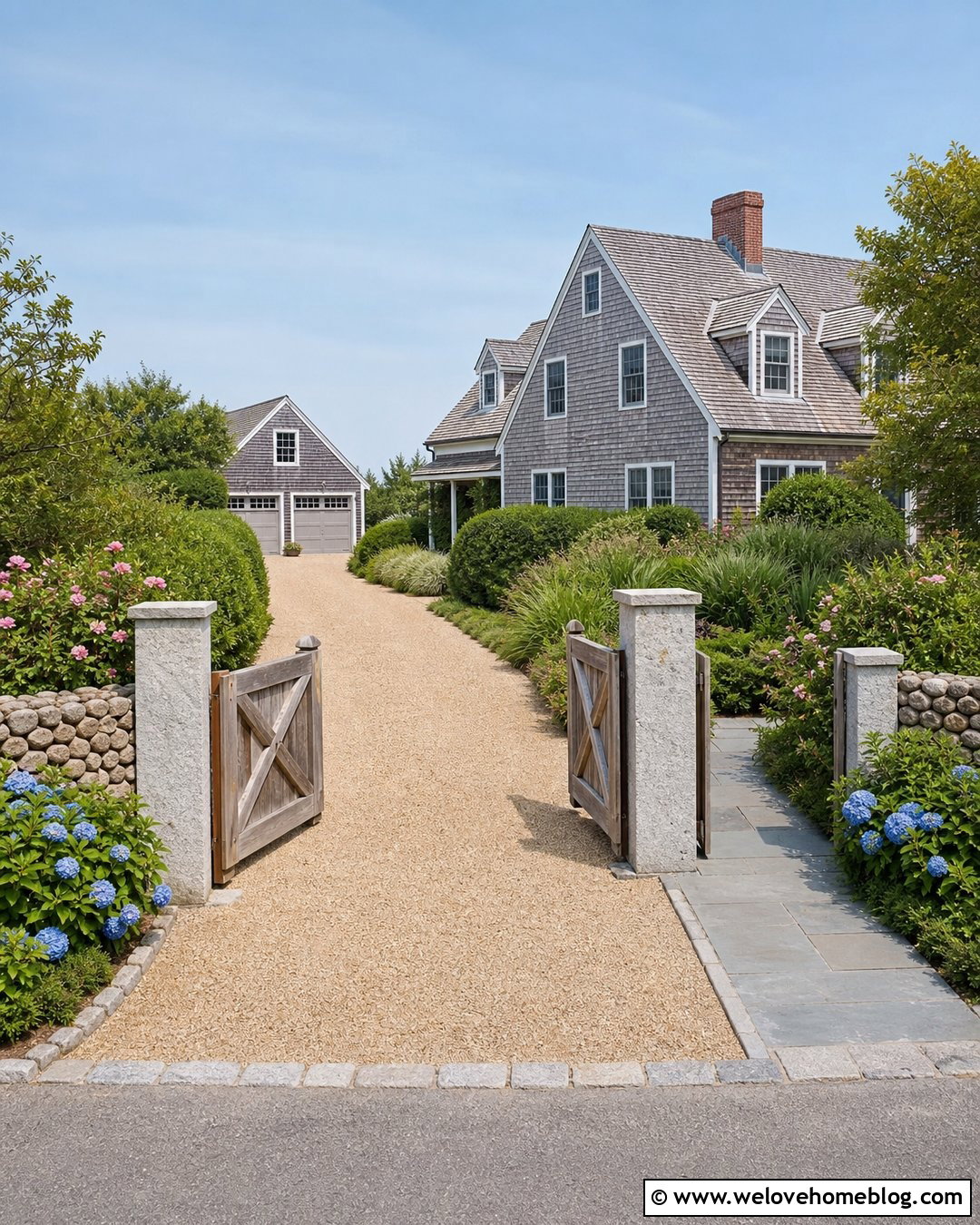
A cedar gate fits naturally with weathered shingles and informal coastal landscaping. Pair a simple slatted double gate with low fieldstone walls and square granite end posts. Behind the entrance, use buff-colored crushed stone for a straight driveway that widens slightly near a detached garage. The pale gravel prevents the gate and walls from making the property feel too heavy. Plant bayberry, rugosa rose, hydrangeas, and low grasses around the masonry, leaving adequate clearance for gate movement and safe road visibility. A separate bluestone pedestrian opening can lead toward the front door without requiring visitors to walk through the vehicle gate. Allow the cedar to weather naturally or stain it a muted gray-brown. The finished entrance feels private and substantial while remaining compatible with a modest Cape Cod house.
19. Cape Cod Driveway With Brick Apron And Bluestone Walkway
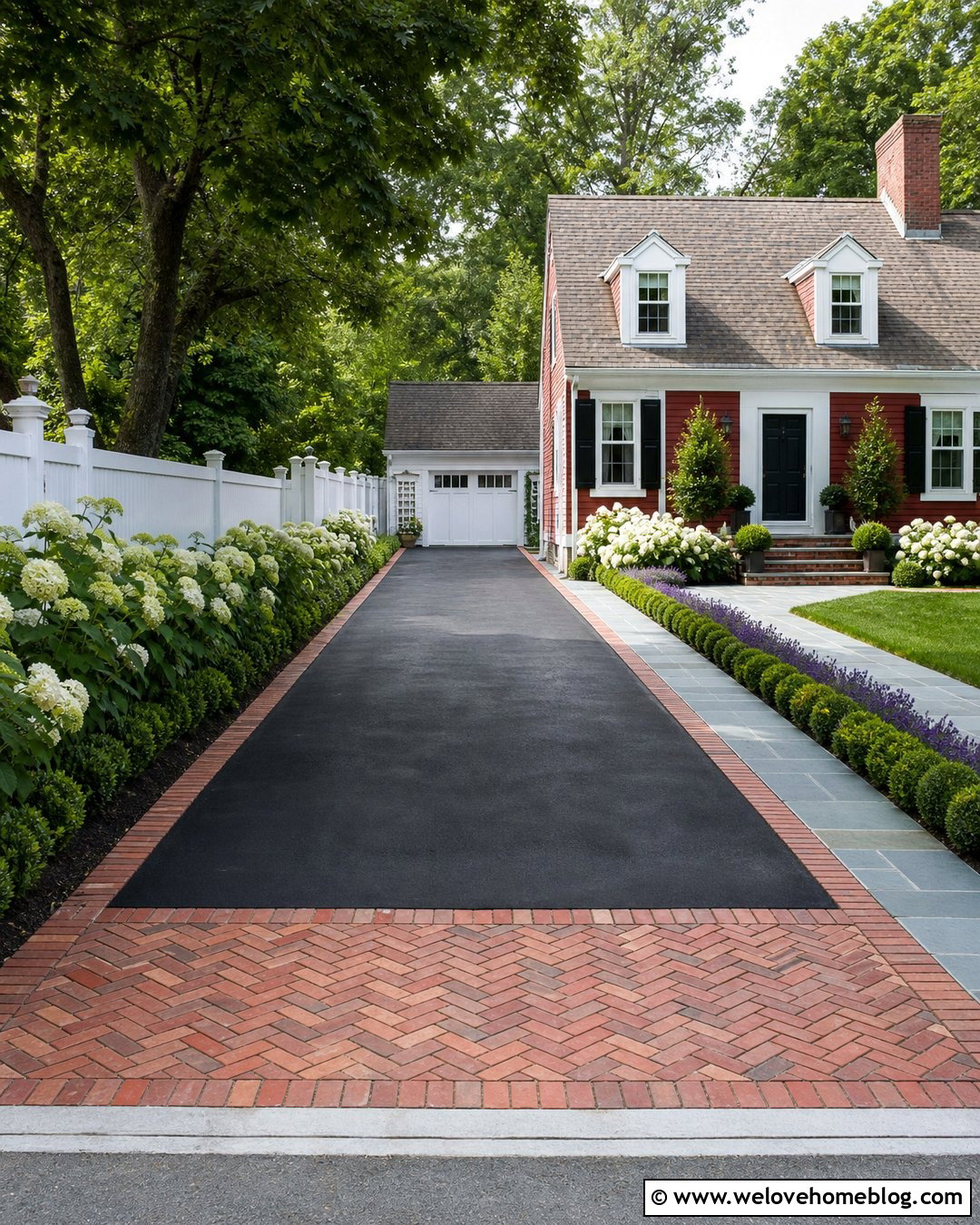
Small material changes can give a basic asphalt driveway a much more finished appearance. Keep the main surface simple with charcoal asphalt, then install a full-width clay brick apron at the street. Use a herringbone pattern inside a straight soldier-course border for clear definition. Continue narrow brick edging along the driveway and repeat the material on the front steps or chimney. Near the house, branch off with a broad bluestone walkway leading directly to the entrance. White hydrangeas, lavender, boxwood, and a small patch of lawn soften the hard surfaces. This design works particularly well on narrow suburban lots because decoration is concentrated at the entrance and pedestrian connection. The driveway remains easy to maintain, while the brick and bluestone provide the traditional detail expected around a Cape facade.
20. Cape Cod Horseshoe Driveway With Central Lawn
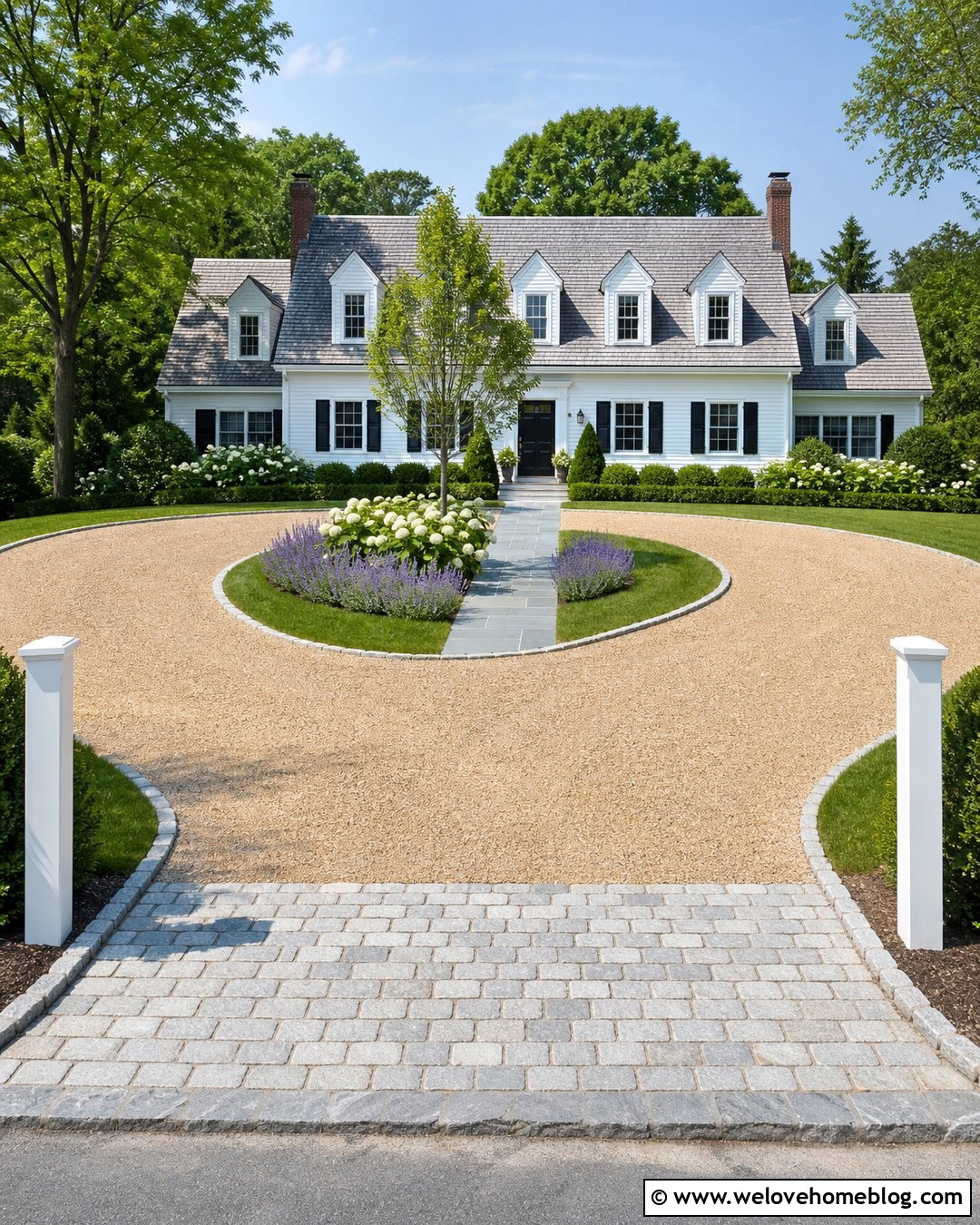
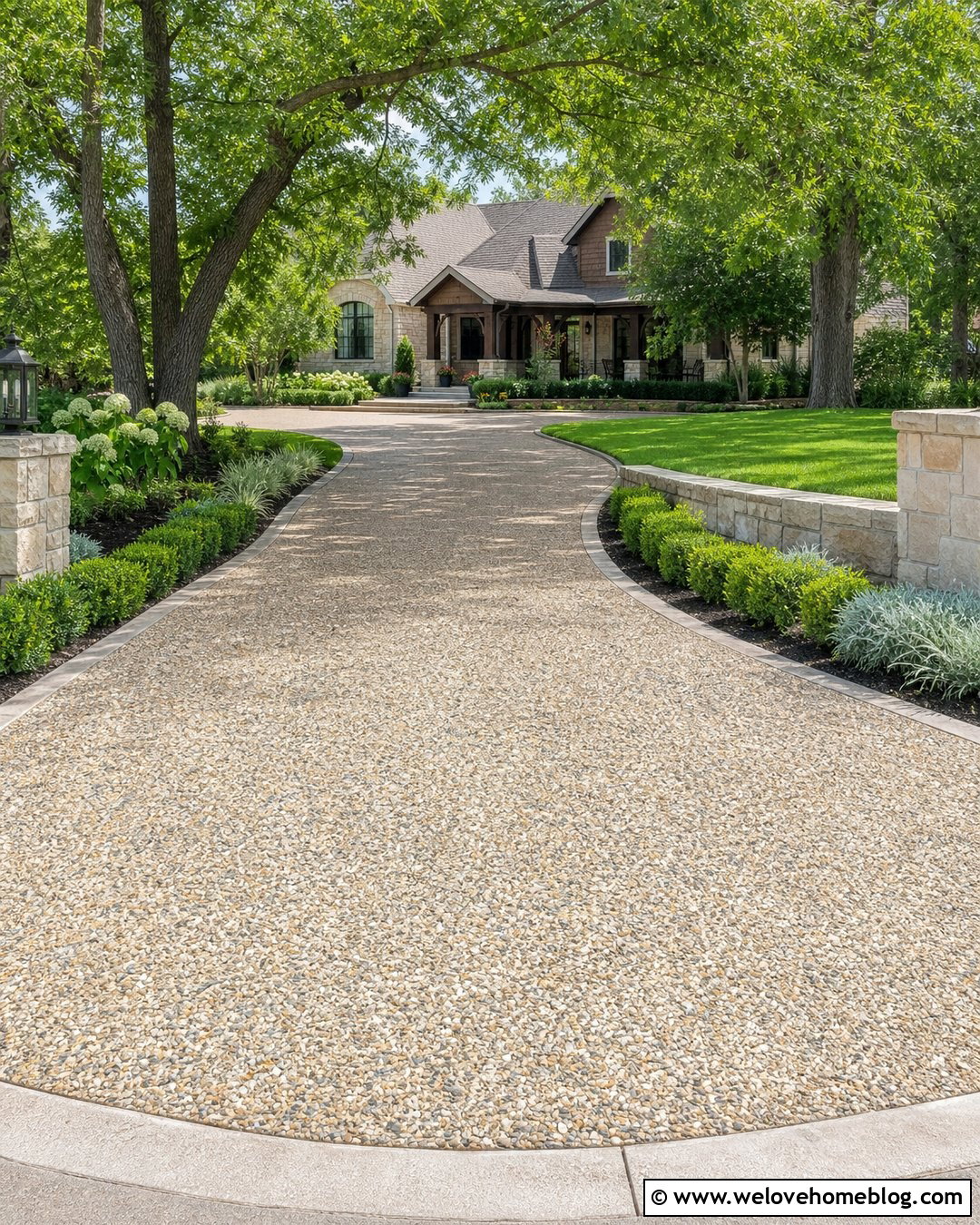
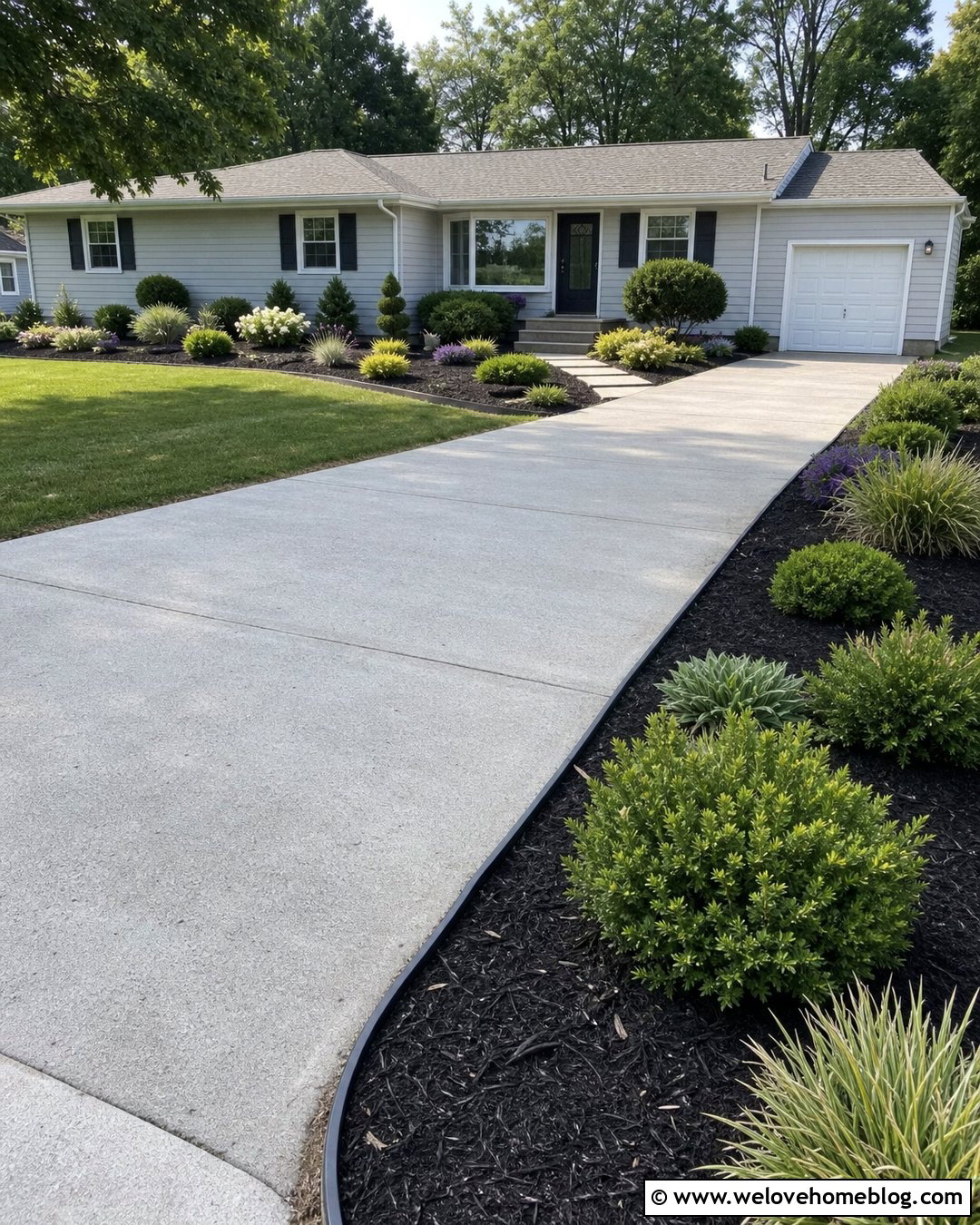
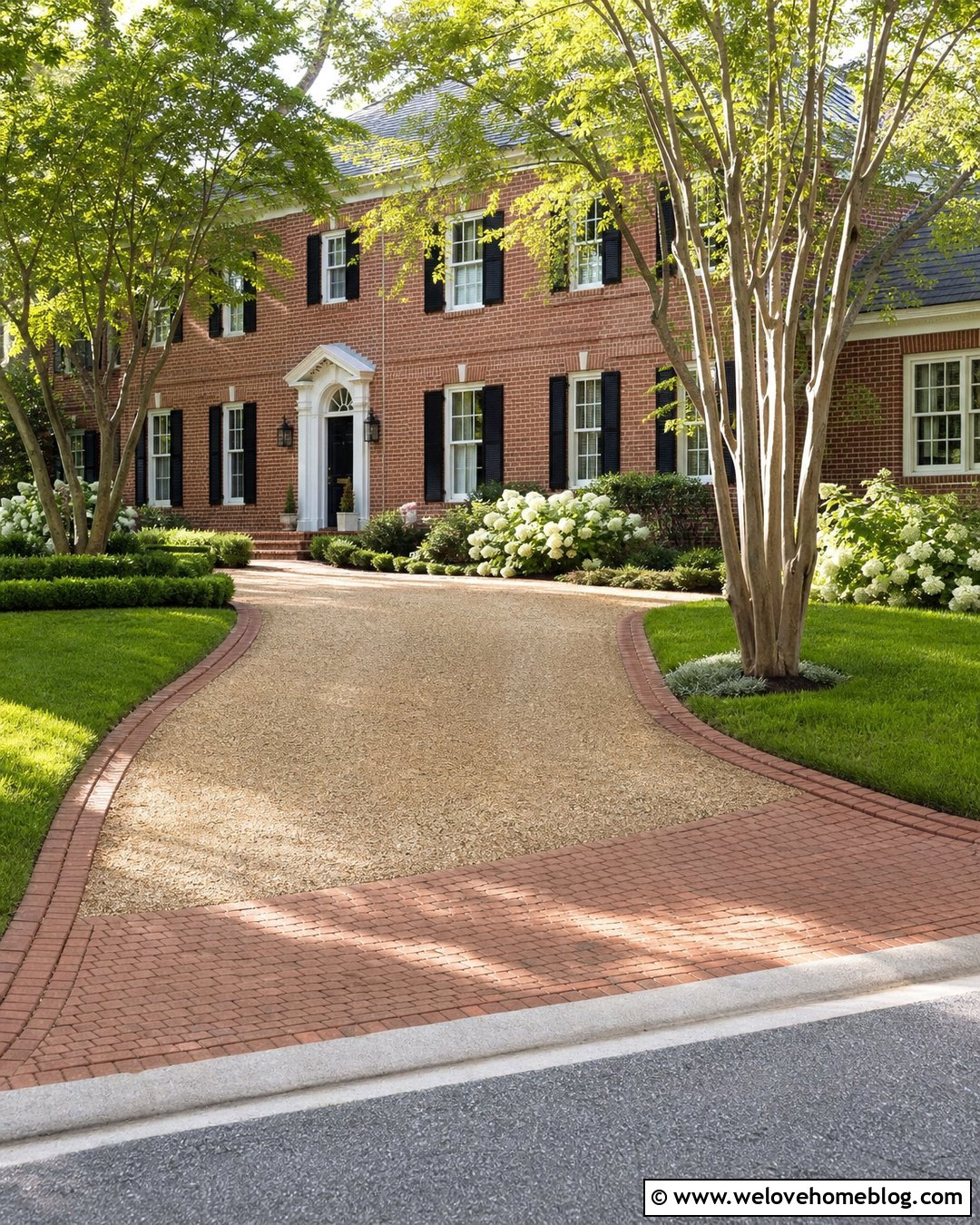
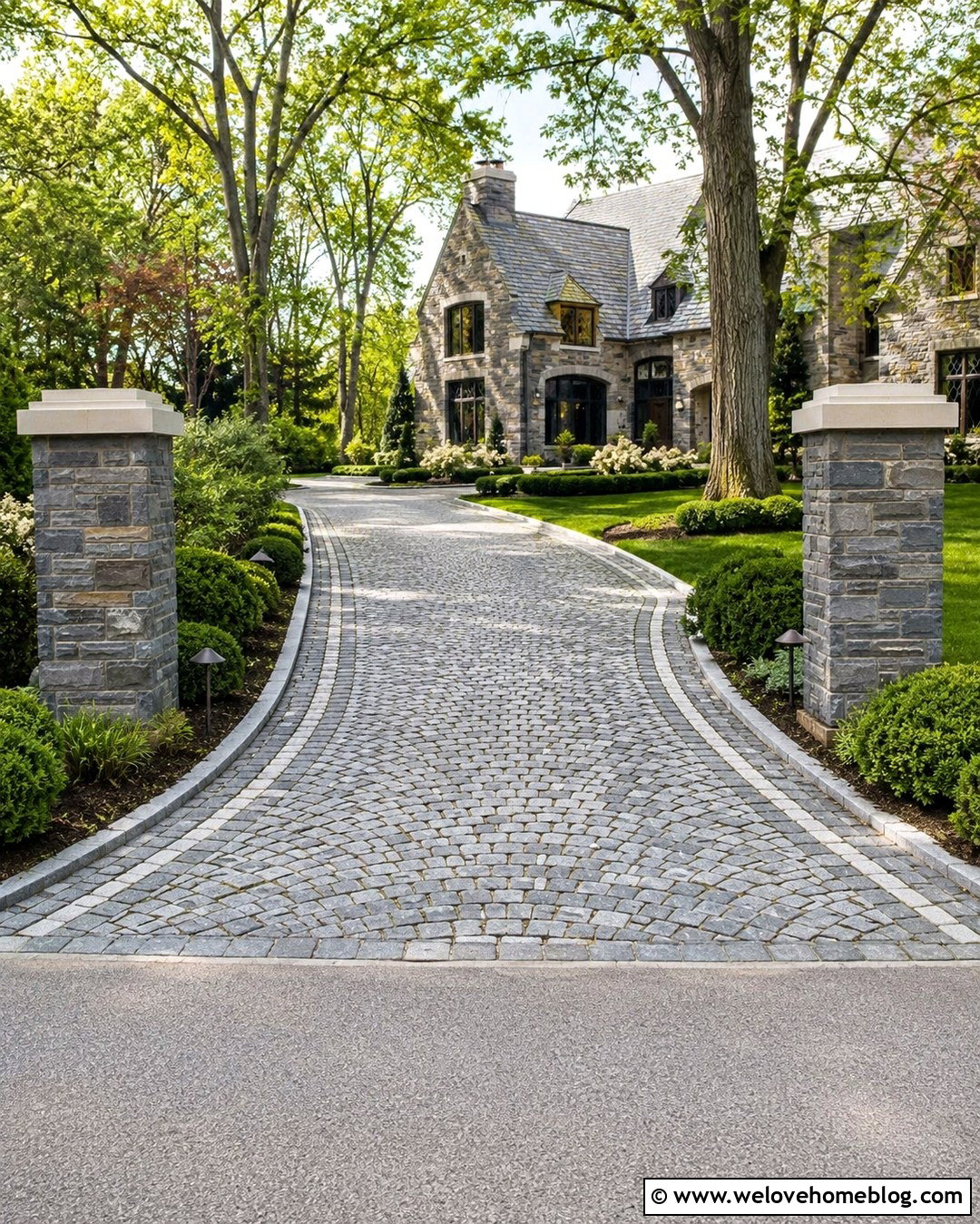
A horseshoe driveway can create easy entry and exit on a wide property while preserving a generous view of the house. Use light tan crushed gravel for the curved route and contain it with gray granite cobblestone edging. Keep the center island mostly lawn so the symmetrical Cape Cod facade stays visible from the road. A single ornamental tree, surrounded by a low ring of hydrangeas and catmint, adds focus without blocking windows. Connect the inner curve to the front steps with a straight bluestone walkway. At both street openings, install matching cobblestone aprons and simple white posts for visual balance. The two entrances should be planned around safe sightlines and local requirements. With restrained planting and consistent materials, the layout feels welcoming and spacious rather than excessively formal.
Conclusion:
The most successful Cape Cod Driveway Ideas balance practical access with the simple, traditional character of the house. Pale gravel, seashells, asphalt, brick, cobblestone, and permeable pavers can all work when their colors and proportions complement the facade. Granite edging, bluestone walkways, white fencing, hydrangeas, bayberry, and ornamental grasses help connect the driveway with its coastal setting. Before choosing a design, consider parking needs, snow removal, drainage, maintenance, and the size of the front yard. Keep decorative details concentrated around the entrance, walkway, or parking court when working with a limited budget. A well-planned driveway should guide vehicles comfortably, welcome pedestrians clearly, and frame the home without becoming the property’s dominant feature.

Related posts:


Leave a Reply