
Cedar brings natural warmth to an entrance while working with modern, traditional, farmhouse, and rustic homes. The best cedar gates also consider the entire approach, including driveway material, opening style, structural support, pillars, lighting, and nearby landscaping. Because wide wooden gates carry significant weight, durable frames, correctly sized posts, and suitable hardware are essential design details rather than afterthoughts. Cedar should also receive an outdoor-appropriate finish and regular care to preserve its color and appearance. () Whether you want full privacy, a welcoming ranch entrance, or streamlined curb appeal, these complete designs offer practical inspiration. Explore these **20 Cedar Driveway Gate Ideas** to find a look that complements your home and driveway.
1. Modern Horizontal Cedar Driveway Gate
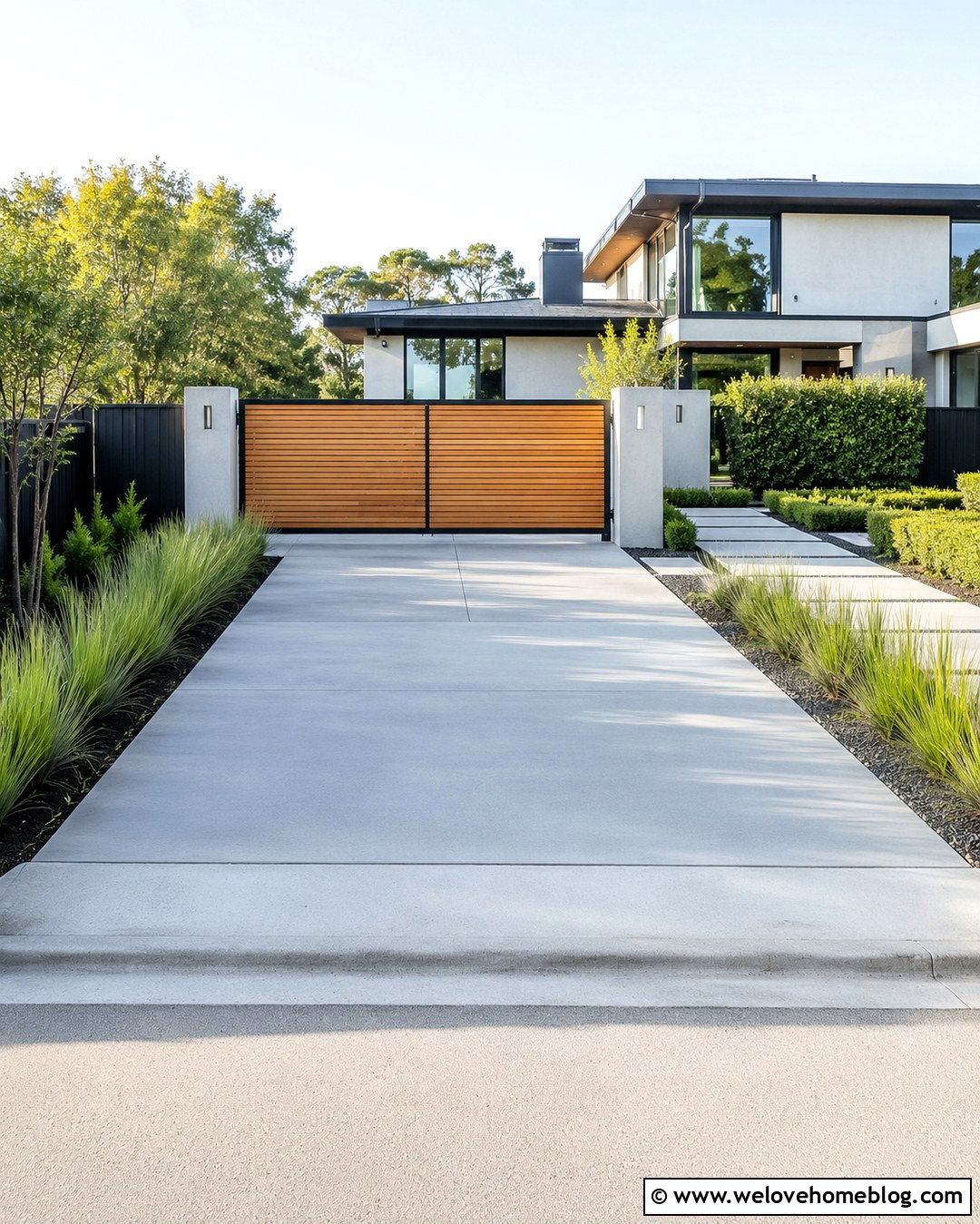
A horizontal cedar driveway gate creates clean lines that feel especially suitable for a contemporary home. Install narrow cedar boards inside a slim black steel frame, leaving small, consistent gaps between the boards for a lighter appearance. Pair the gate with a straight gray poured concrete driveway and matching black metal fencing. Rectangular concrete pillars can keep the entrance simple without competing with the wood grain. Add low ornamental grasses, clipped shrubs, and linear planting beds along both sides of the approach. Warm cedar softens the concrete, steel, and glass used throughout the property. Hidden fasteners will make the street-facing side look cleaner, while a steel supporting frame can help a wide gate remain stable. ()
2. Cedar And Black Steel Driveway Gate
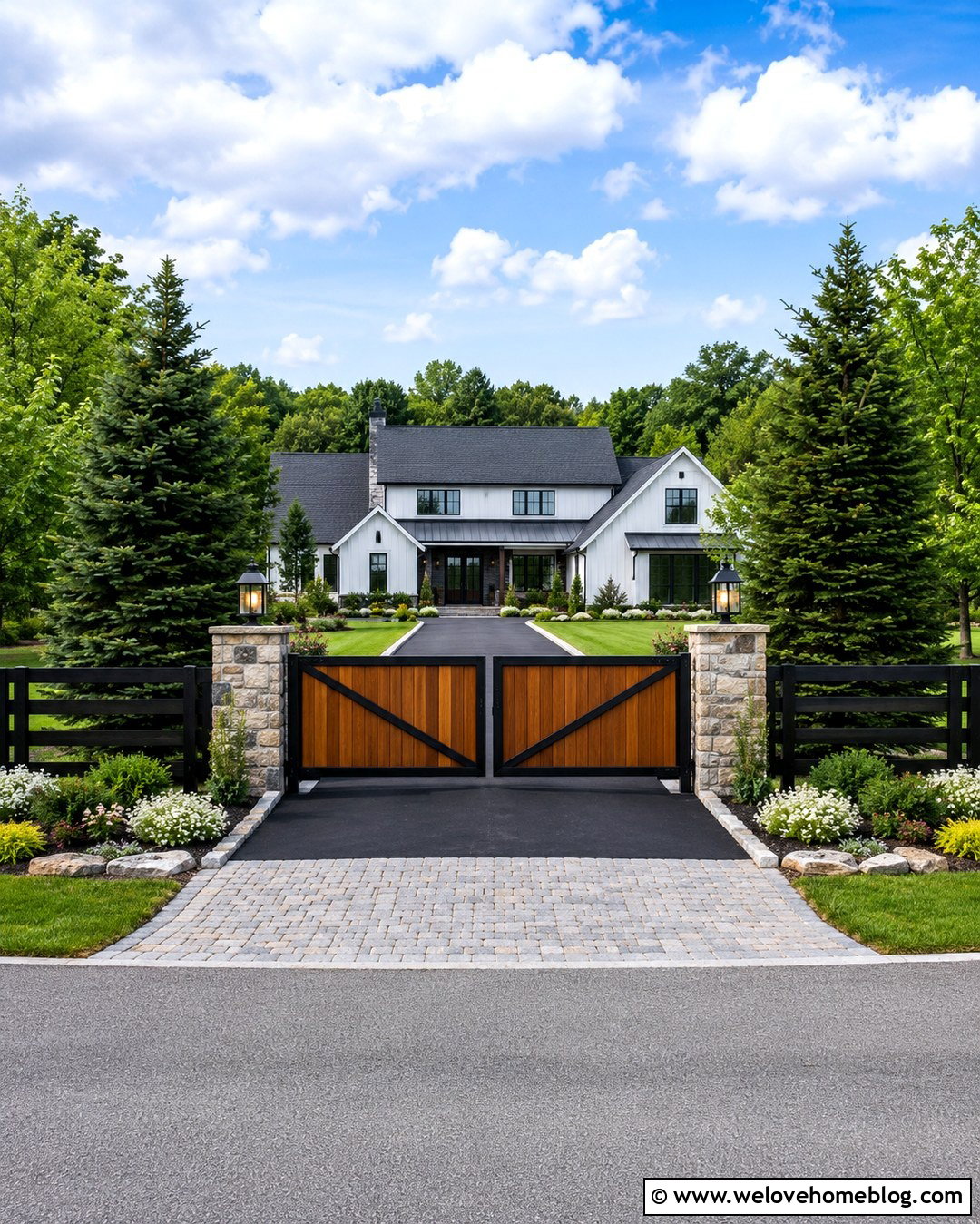
Combining cedar boards with exposed black steel creates an entrance that feels strong without looking industrial. Choose a double gate with vertical cedar infill, a wide steel perimeter, and simple diagonal braces that become part of the design. A black asphalt driveway gives the entrance a cohesive foundation, while a light cobblestone apron adds contrast near the road. Continue the black metal through short side fences and understated lantern posts. Deep green evergreens, flowering ground cover, and neatly cut lawn will frame the warm wood naturally. This complete look works well with modern farmhouses and updated ranch homes. Select corrosion-resistant hardware and a frame engineered for the gate’s dimensions, weight, and expected daily use.
3. Cedar Privacy Driveway Gate
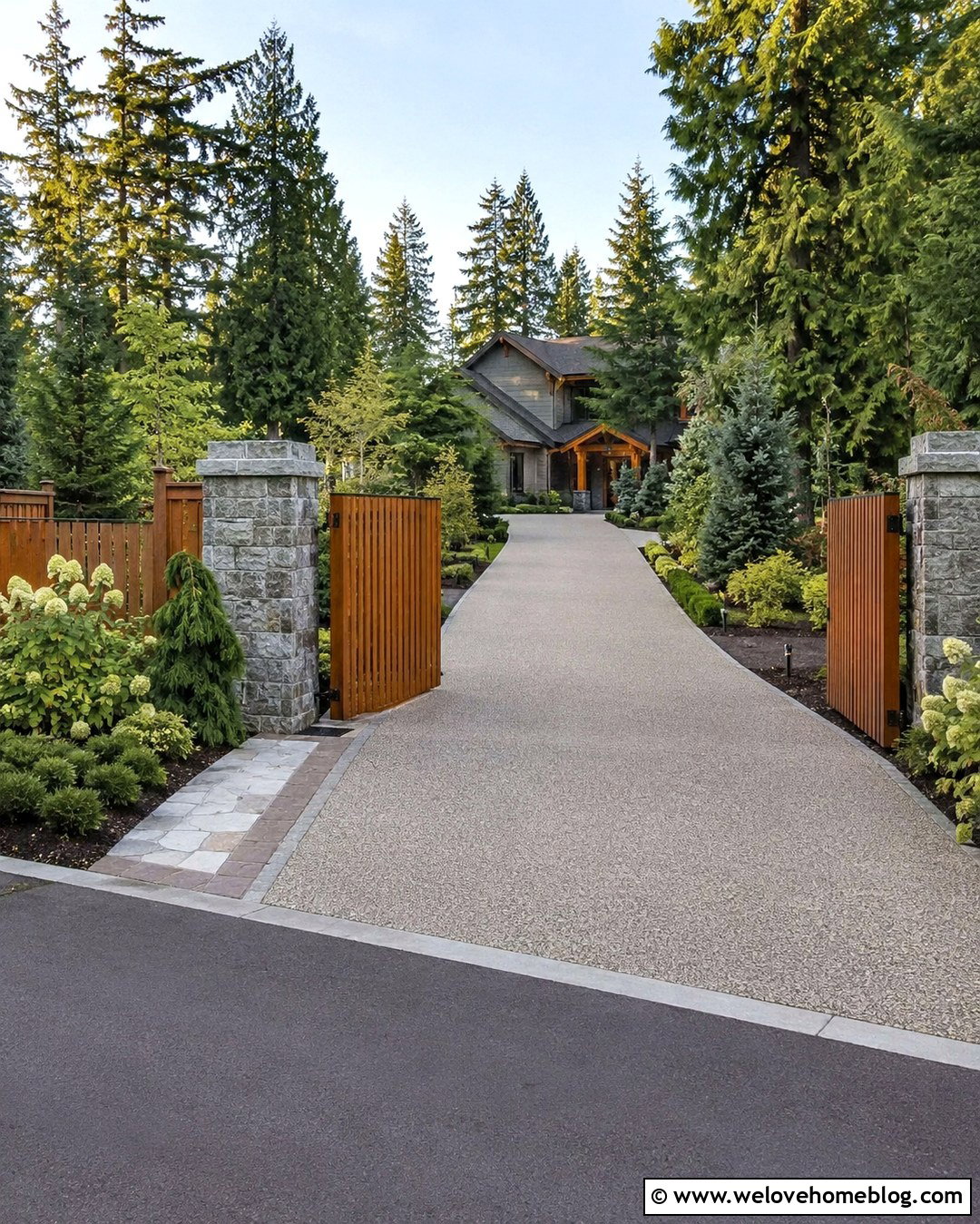
When a driveway faces a busy street, a tall cedar privacy gate can make the property feel calmer and more enclosed. Use tightly fitted vertical boards in a full-height double gate, with the structural frame concealed behind the cedar. A straight resin-bound gravel driveway in a warm gray tone keeps the surface refined and visually quiet. Connect the gate to matching cedar privacy fencing, then anchor the entrance with broad stone pillars. Layer upright junipers, hydrangeas, and low evergreen shrubs behind curved planting beds. A small paved pedestrian path can run beside the vehicle entrance for safer everyday access. Keep the top line level and the detailing simple, allowing the rich cedar grain to become the entrance’s main decorative feature.
4. Double Swing Cedar Driveway Gate
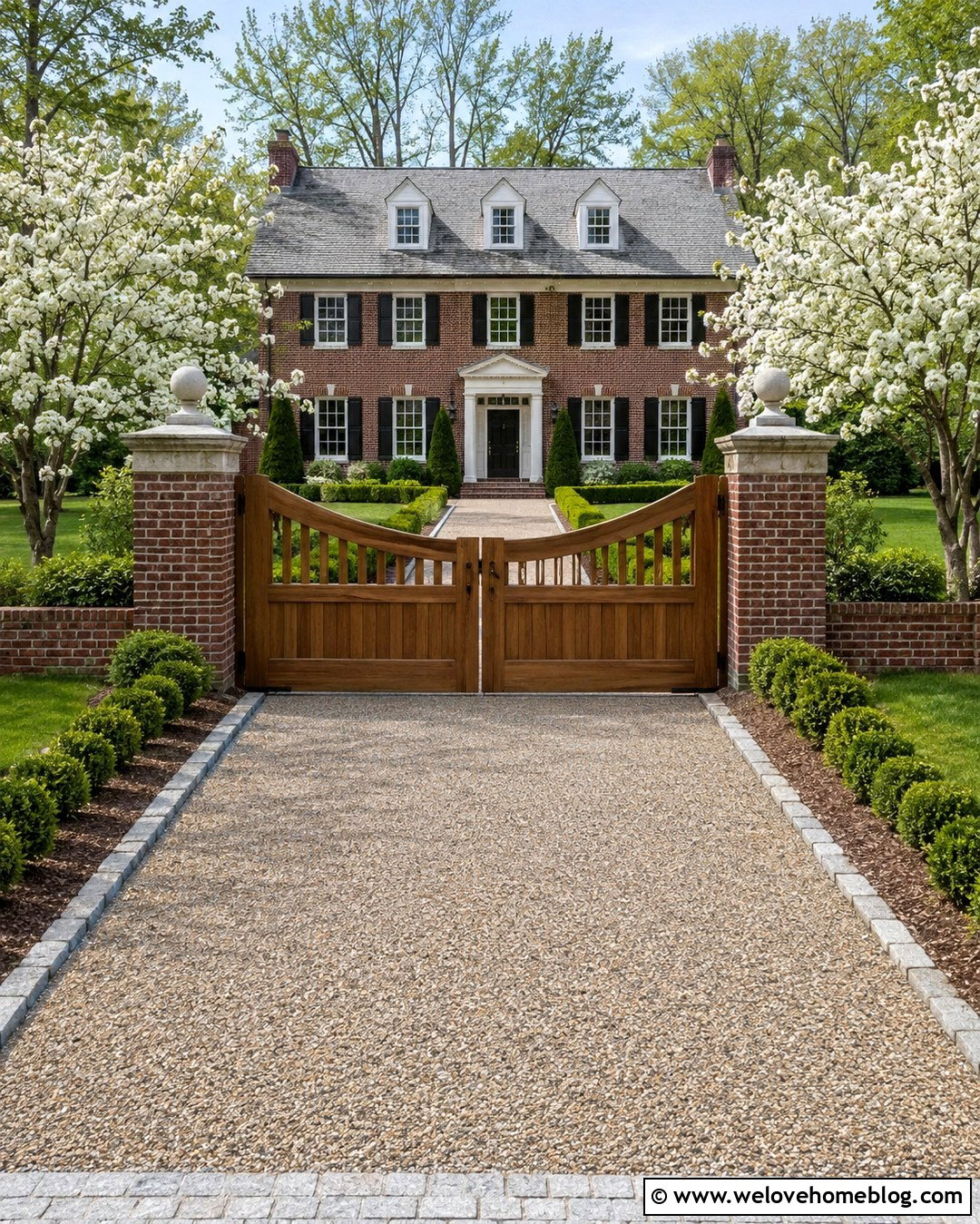
A double swing gate gives a broad driveway a balanced, welcoming appearance. Design two equal cedar leaves with vertical boards, framed panels, and gently curved upper rails that rise toward the center. Pair them with a wide exposed aggregate concrete driveway leading to a traditional brick or Colonial home. Natural stone edging can define the driveway without making the approach feel overly formal. Place matching masonry pillars on both sides and allow enough open space for each gate leaf to move freely. Symmetrical boxwood beds, small flowering trees, and a centered walkway reinforce the balanced layout. Before construction, confirm the required swing clearance, hinge spacing, and post capacity for the finished gate dimensions. ()
5. Sliding Cedar Driveway Gate
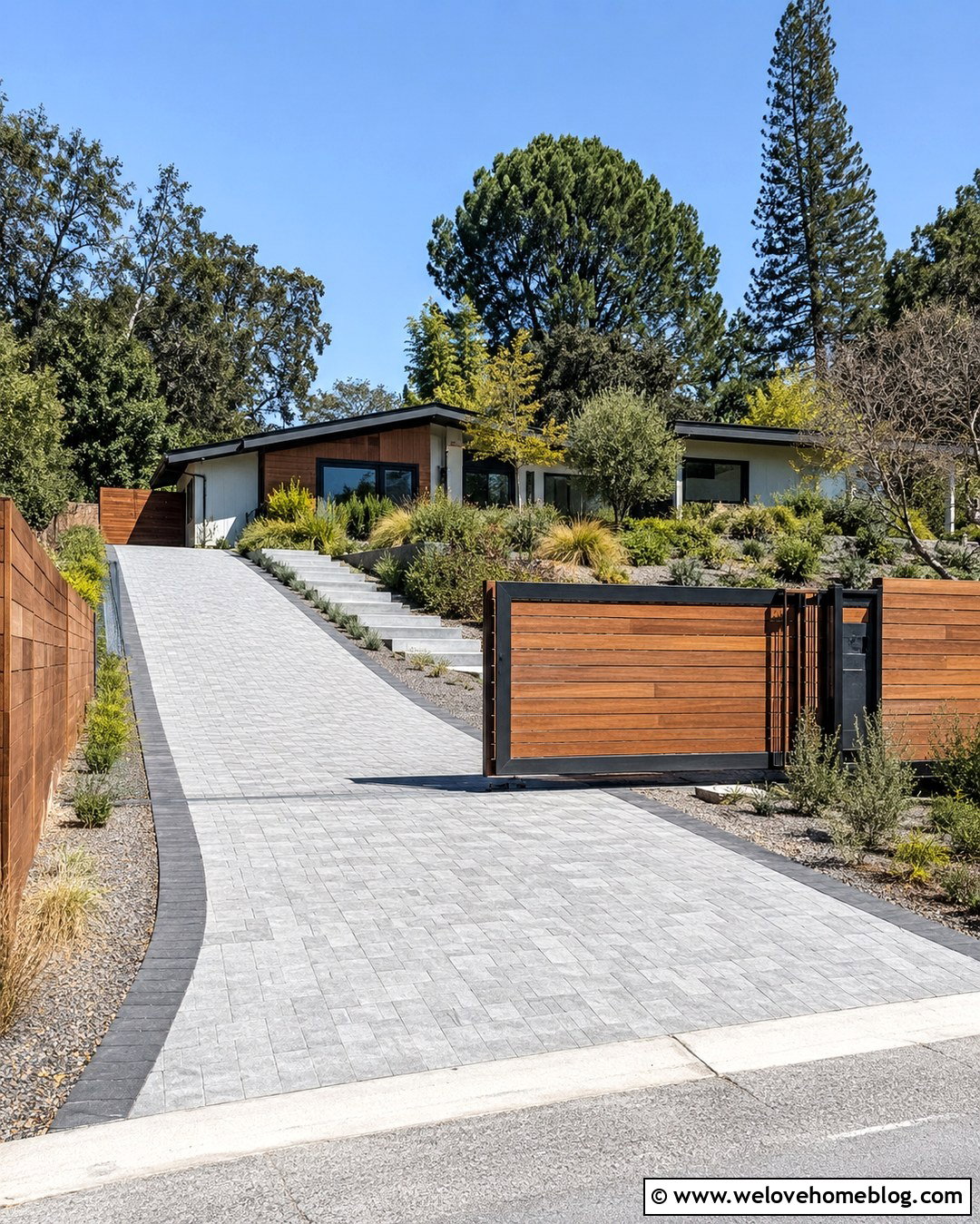
A sliding cedar driveway gate is a useful solution where the entrance lacks room for inward-swinging panels. Select horizontal cedar slats inside a dark steel frame and run the gate parallel to a matching fence. A gently sloped driveway finished in light gray concrete pavers provides a tidy surface beneath the entrance. Use charcoal paver borders to emphasize the driveway shape and coordinate with the gate frame. Low grasses and drought-tolerant shrubs will keep the gate’s travel area visually open. This arrangement looks especially natural in front of a low-profile contemporary ranch. A tracked or cantilever configuration requires sufficient clear space beside the opening, so the fence line and landscaping should be planned around the full retracted gate. ()
6. Arched Cedar Driveway Gate
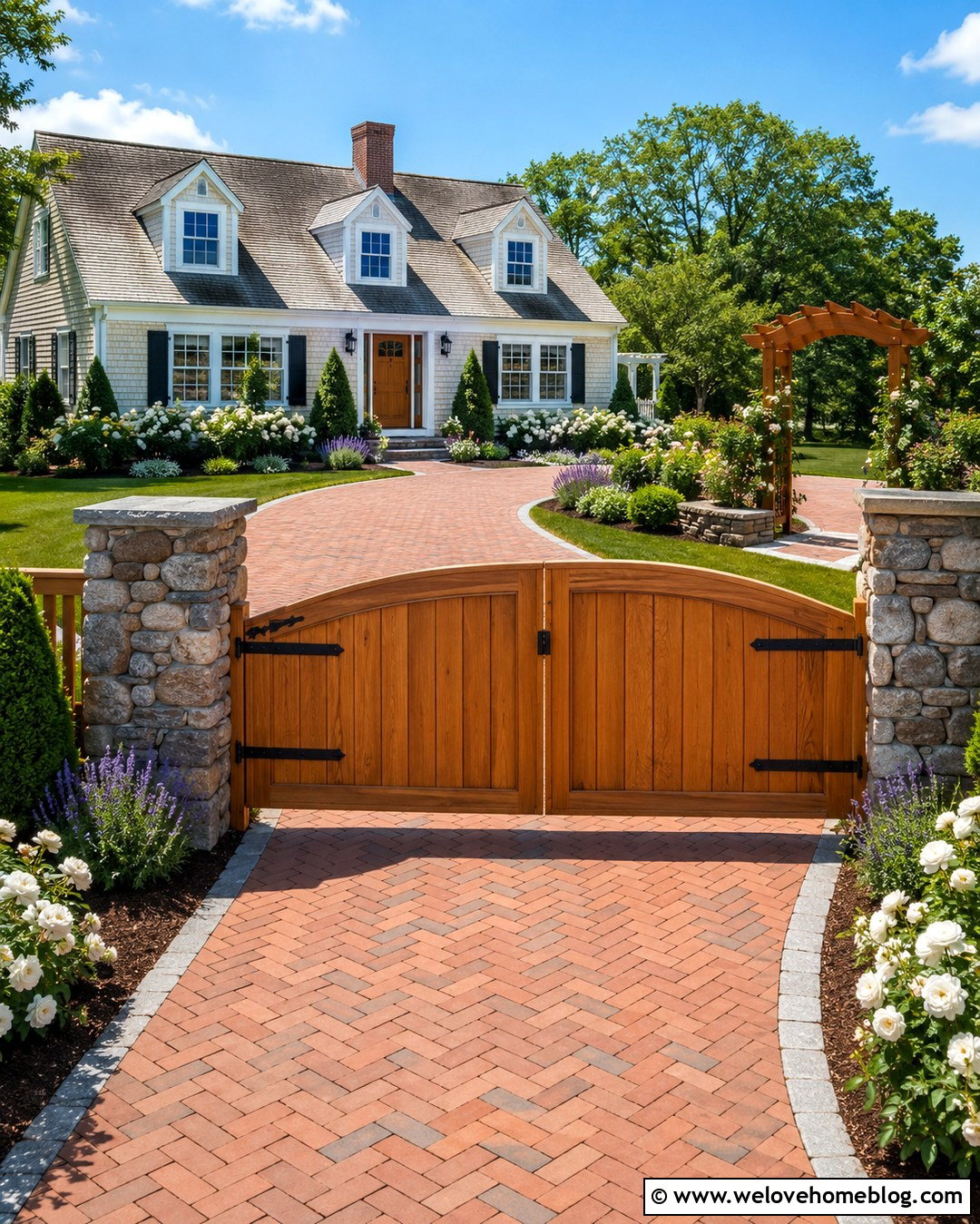
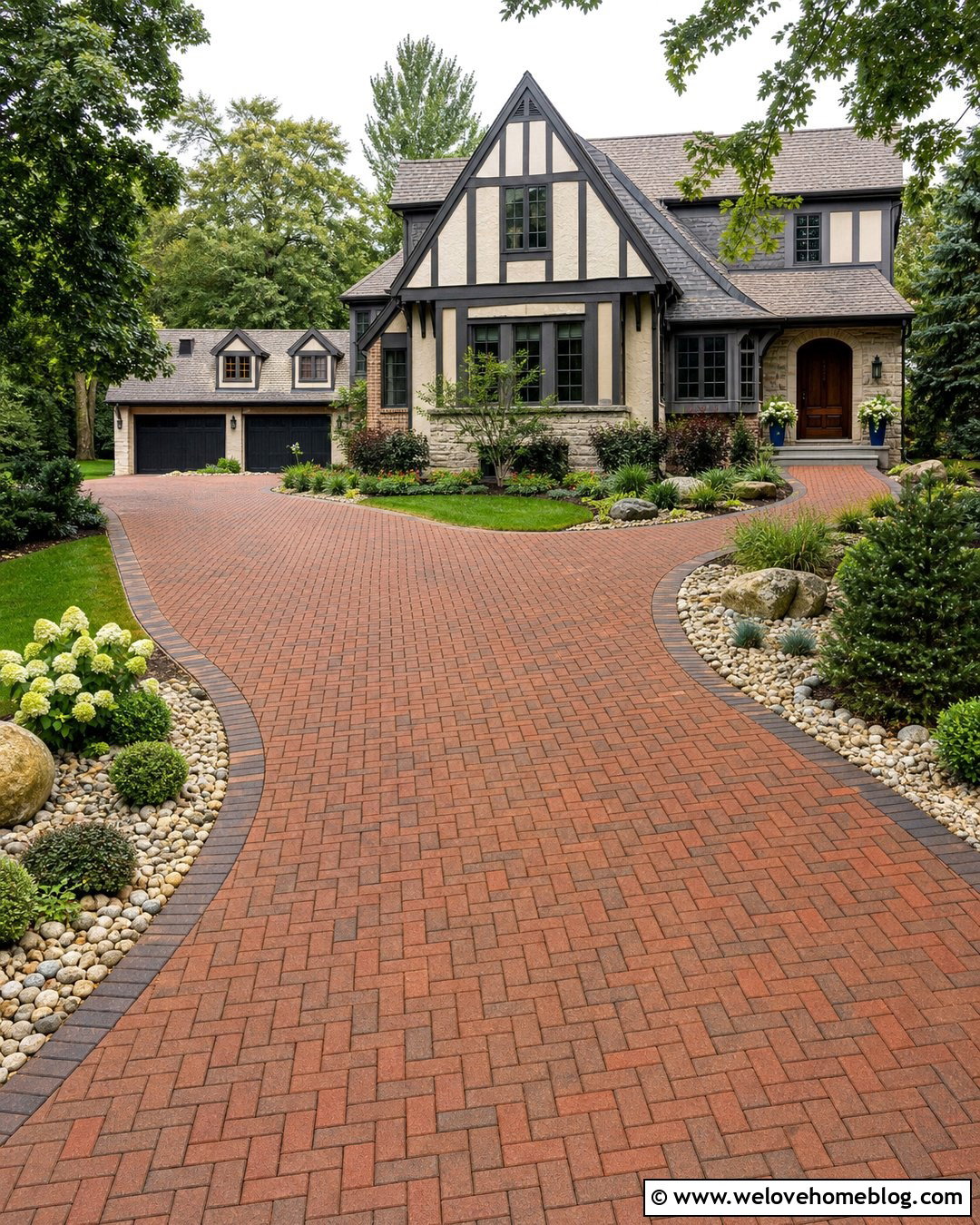
An arched cedar gate adds a traditional silhouette without requiring elaborate ornament. Use vertical tongue-and-groove boards beneath a smooth convex top rail, with each half meeting at the highest point. A curved clay brick driveway laid in herringbone enhances the gate’s classic shape and leads naturally toward a Cape Cod or traditional cottage. Frame the entrance with fieldstone pillars topped by simple flat caps. White roses, lavender, dwarf evergreens, and soft lawn edges can make the setting feel established rather than formal. Dark strap hinges provide enough contrast to highlight the gate construction. Repeat the arch in a nearby pedestrian gate or garden arbor so the entrance feels connected to the rest of the property instead of standing alone.
7. Cedar Driveway Gate With Stone Pillars
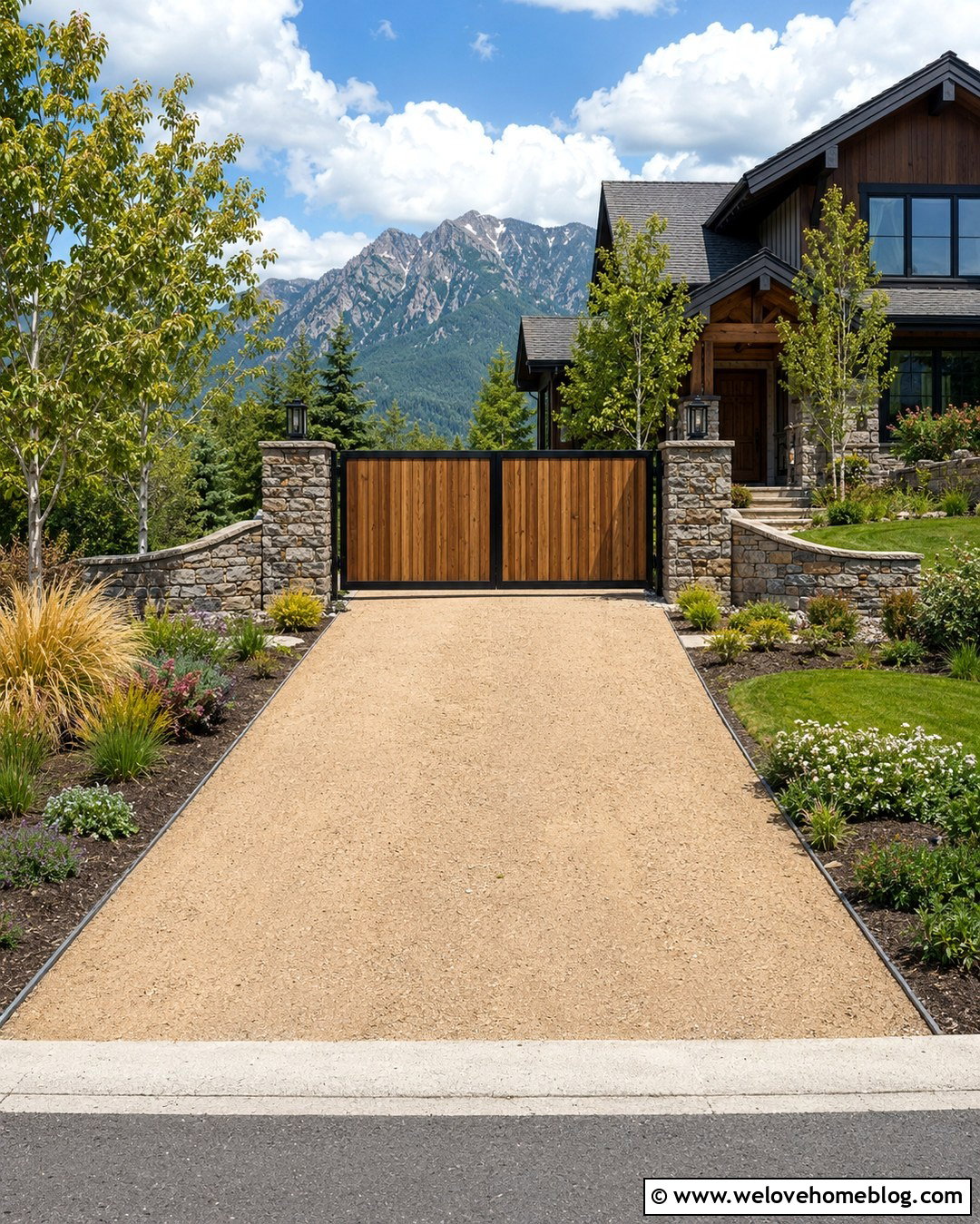
Thick stone pillars give a cedar gate visual weight and create a defined transition from the street to the property. Choose a straight double gate with warm vertical cedar planks and a restrained black metal frame. Set it between substantial pillars faced with irregular gray and tan fieldstone. A crushed granite driveway with steel edging will complement the natural materials while keeping the overall look relaxed. Continue the stone in low entrance walls that curve into planting beds filled with native grasses, flowering shrubs, and small ornamental trees. This combination is particularly effective beside a Craftsman, mountain, or country home. Keep the pillars proportional to the gate, leaving enough room for hinges, operators, safety equipment, and future maintenance access.
8. Cedar Driveway Gate With Brick Columns
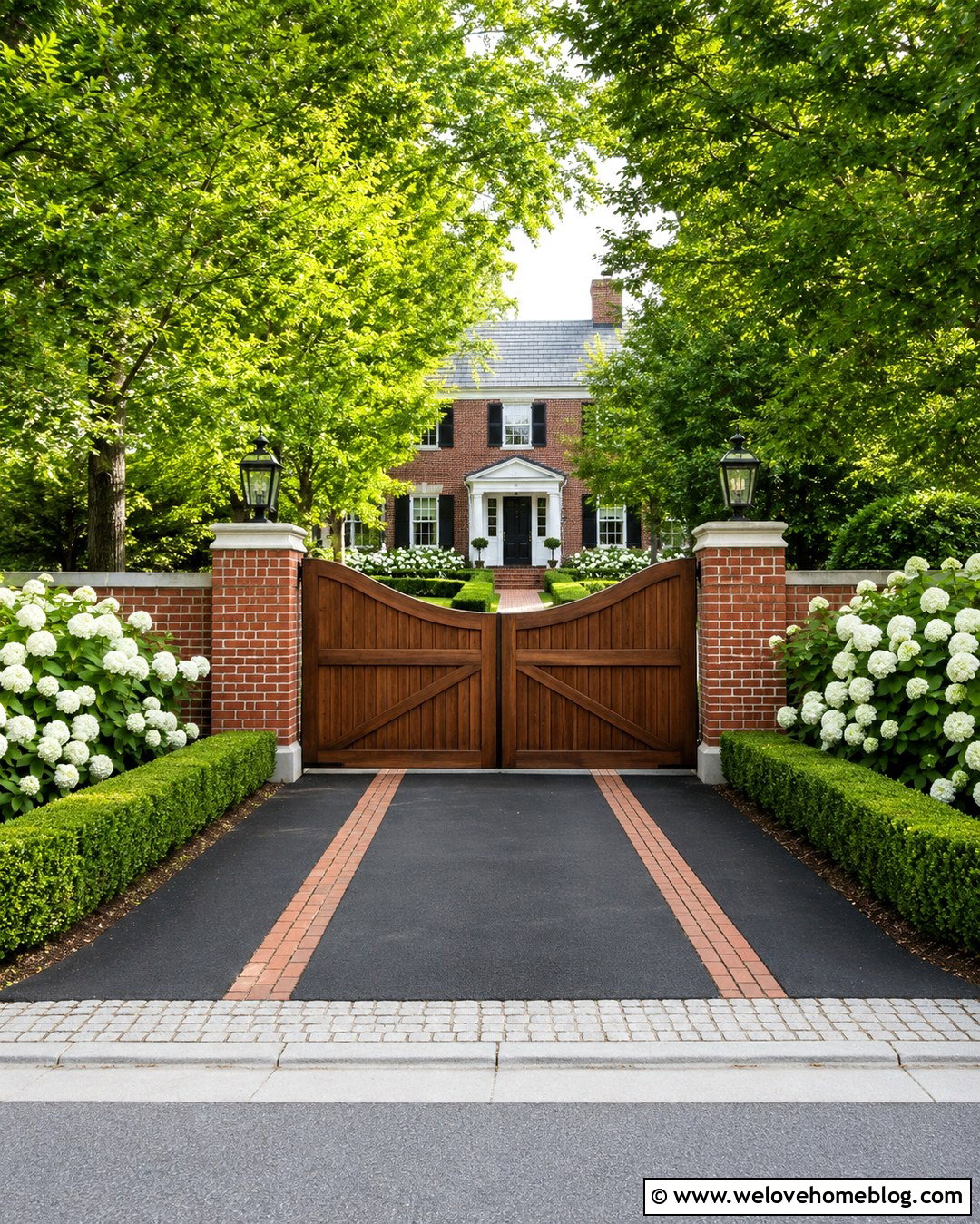
Brick columns can help a cedar entrance blend naturally with a traditional brick home. Use a framed double gate with vertical cedar boards, subtle cross-bracing, and a gently dipping center line. Match the entrance columns to the house brick as closely as possible, then add cast stone caps for a finished edge. A straight black asphalt driveway with narrow clay brick ribbons will connect the columns to the driving surface. Low boxwood hedges, white flowering shrubs, and two matching shade trees can create a tidy symmetrical approach. Black lanterns mounted on the columns introduce a practical finishing detail without covering the cedar. Repeating the same brick around a mailbox or walkway entrance will make the complete frontage feel carefully coordinated.
9. Farmhouse Cedar Driveway Gate
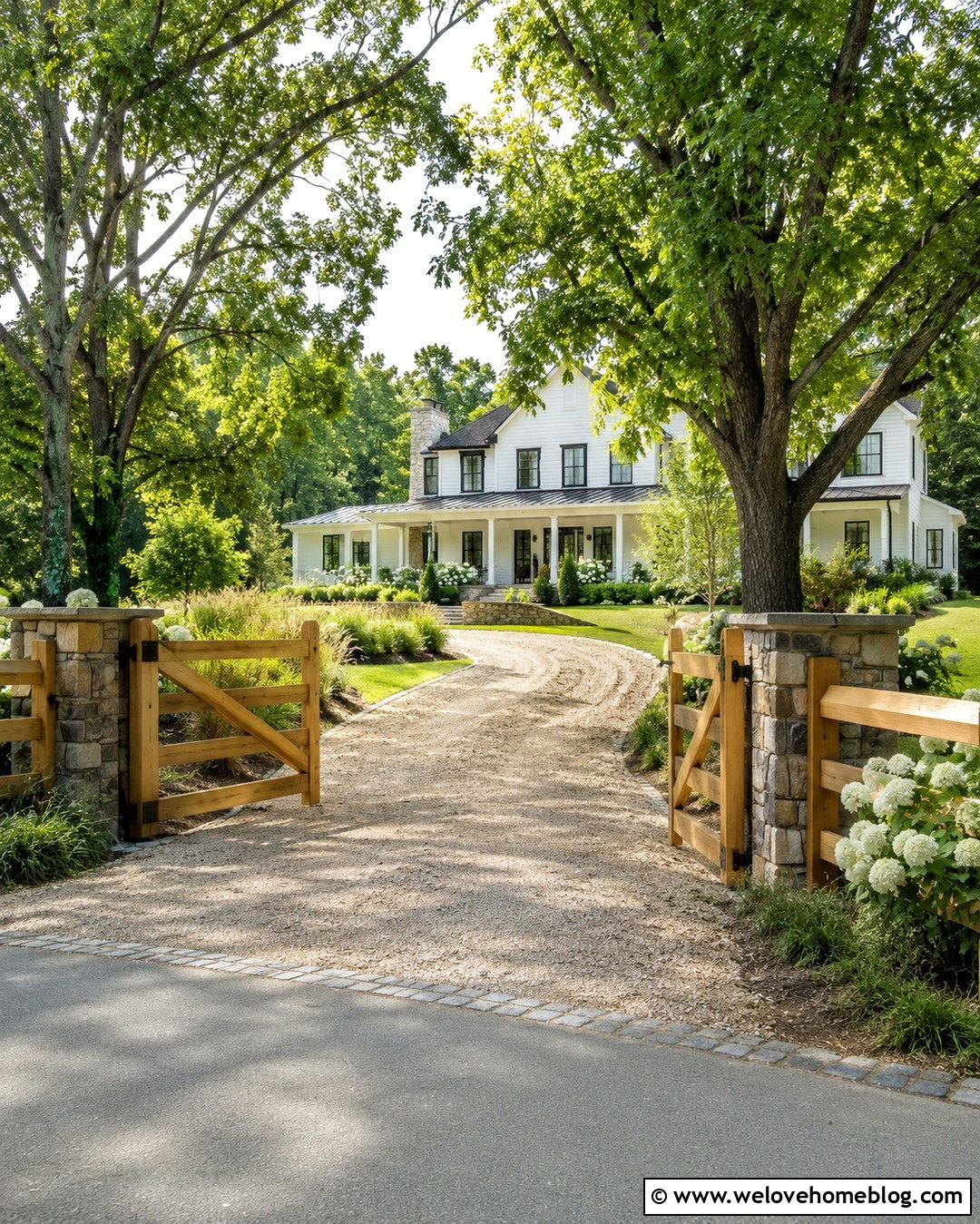
A farmhouse cedar gate should feel practical, open, and connected to the surrounding landscape. Build a low double gate with wide cedar rails, diagonal bracing, and open spaces rather than solid privacy panels. Pair it with a pale tan gravel driveway that curves gently toward a white modern farmhouse. Large timber posts can suit a modest entrance, while stone-clad pillars provide a more substantial alternative for an automated installation. Border the driveway with split-rail fencing, meadow grasses, white hydrangeas, and a few mature shade trees. Black hinges and latches offer a crisp contrast against a medium honey stain. Keep the gate’s proportions broad and uncomplicated so it resembles a refined farm entrance instead of a decorative suburban fence panel.
10. Craftsman Cedar Driveway Gate
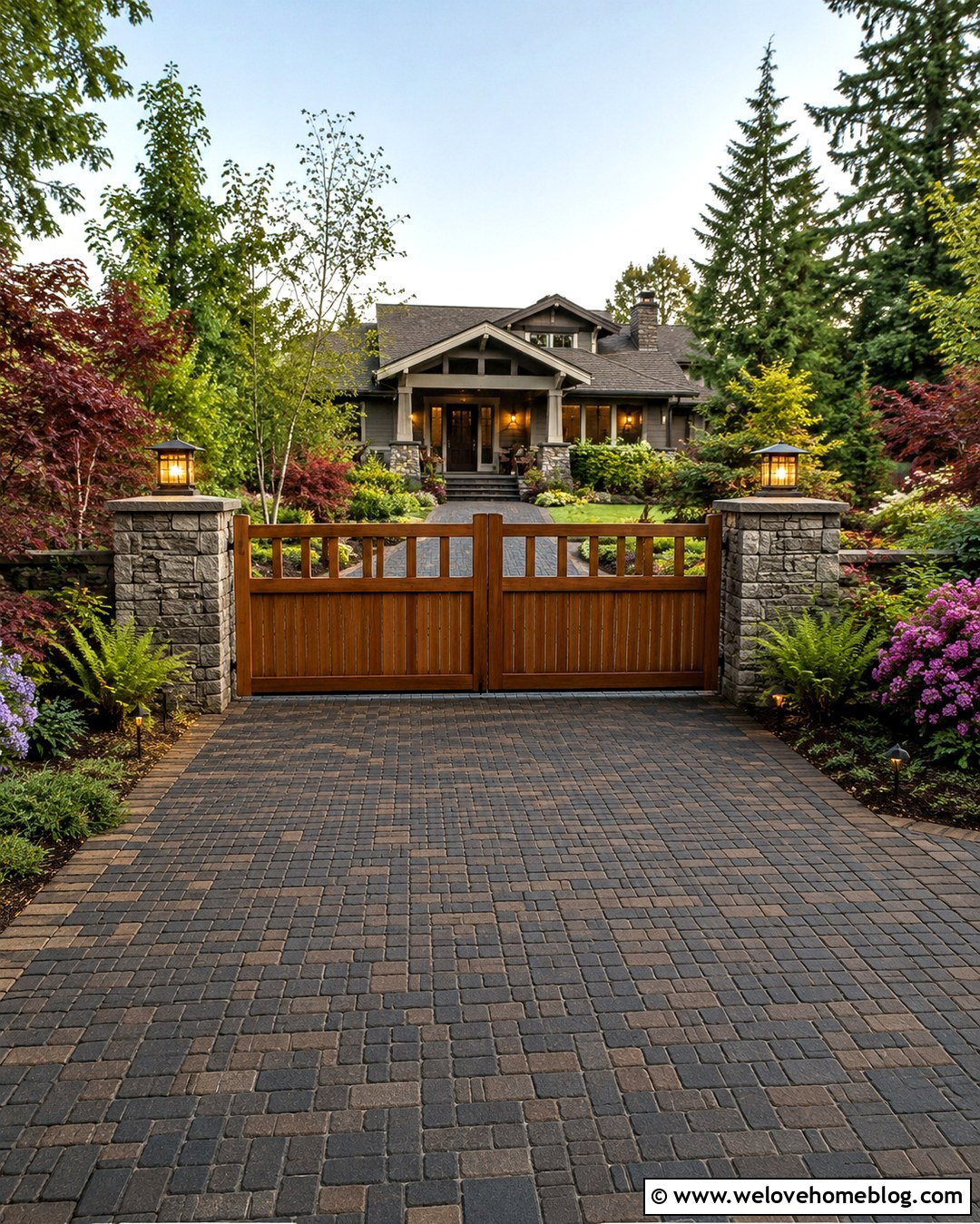
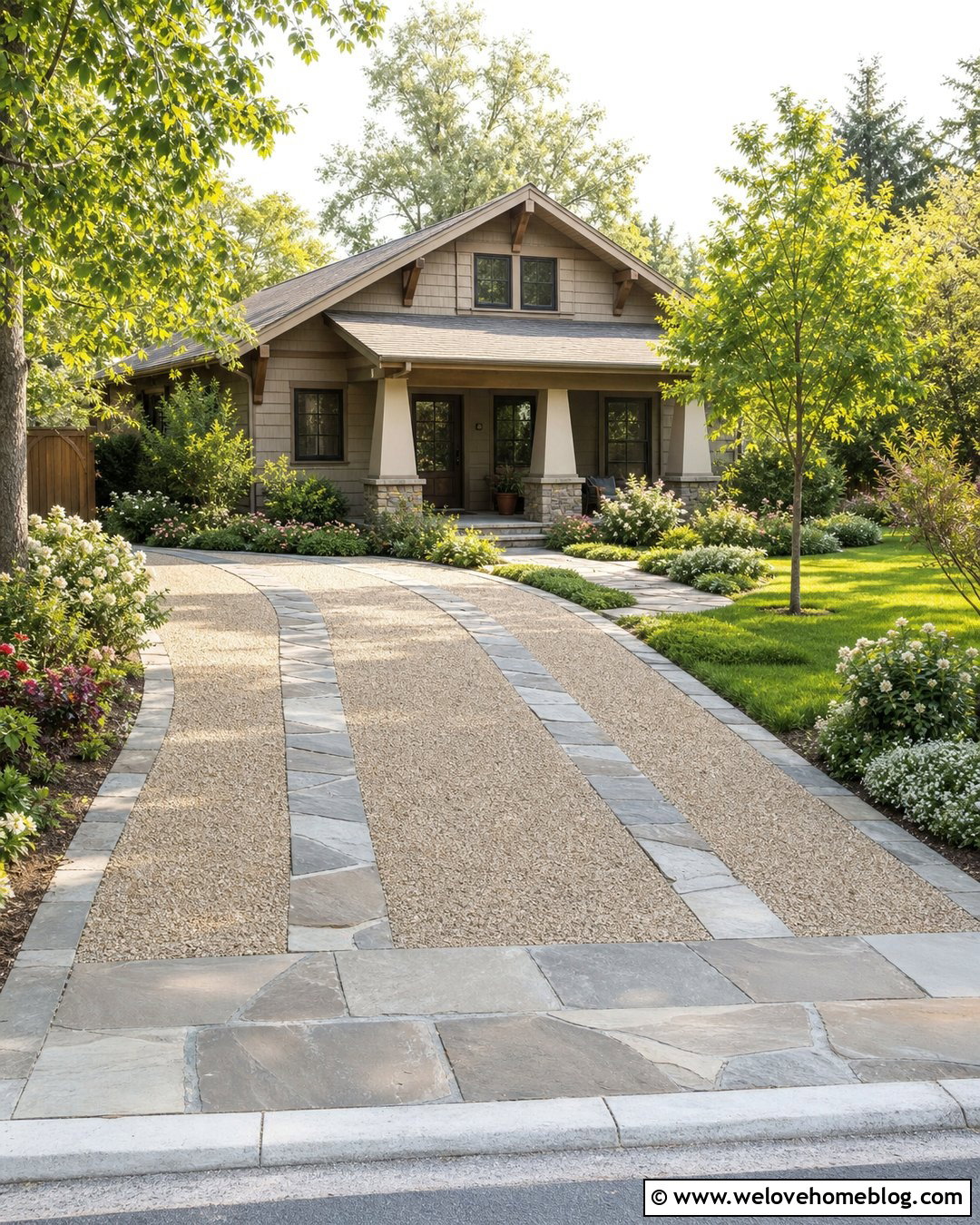
Strong frames and visible joinery make cedar a natural match for Craftsman architecture. Choose a substantial gate with square framed panels, vertical lower boards, and a narrow open-slat section across the top. A brown and charcoal interlocking paver driveway can lead from the gate to a Craftsman bungalow with stone porch columns. Use matching stone on the entrance piers and repeat the home’s timber tones in the cedar stain. Ferns, rhododendrons, Japanese maples, and layered evergreen beds will soften the masonry while supporting the woodland character. Low-voltage lights integrated into the pillars can illuminate the entrance without adding bulky fixtures. The final design should repeat shapes and materials already visible on the house, particularly its beams, windows, and porch details.
11. Cedar Ranch Driveway Gate
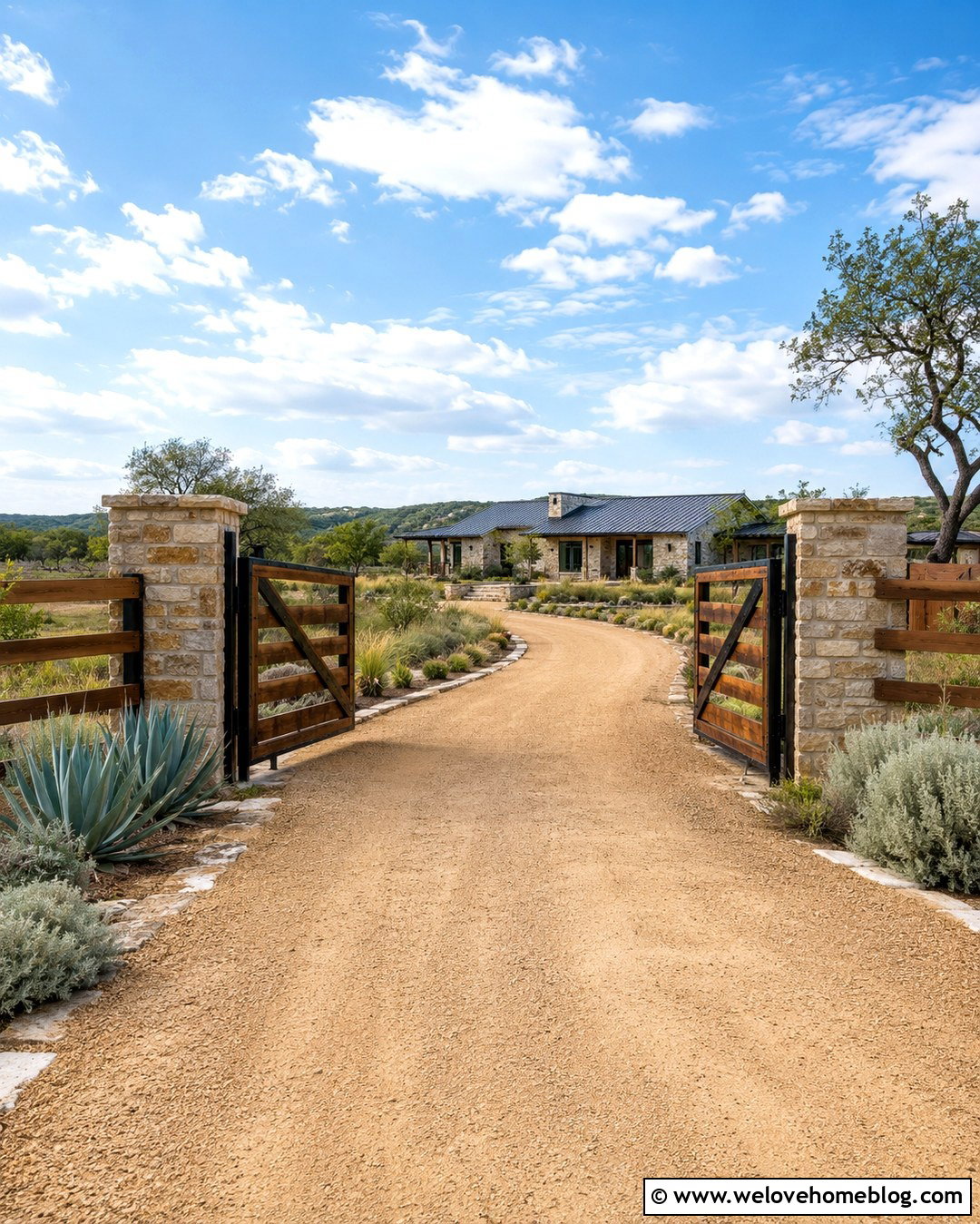
Long horizontal proportions can make a cedar gate feel at home on a ranch property. Create an open gate using three or four heavy cedar rails inside a steel frame, then add modest diagonal braces for a familiar ranch profile. A wide decomposed granite driveway can sweep through the entrance toward a low stone or stucco ranch house. Place rugged limestone pillars at each side and continue cedar rail fencing along the road frontage. Native bunchgrasses, sage, agave, and drought-tolerant shrubs will frame the approach without requiring formal beds. A clear natural stain keeps the wood character visible and prevents the gate from appearing too polished. Leave broad sightlines around the entrance so drivers can approach, turn, and exit comfortably.
12. Cedar Driveway Gate With Iron Inserts
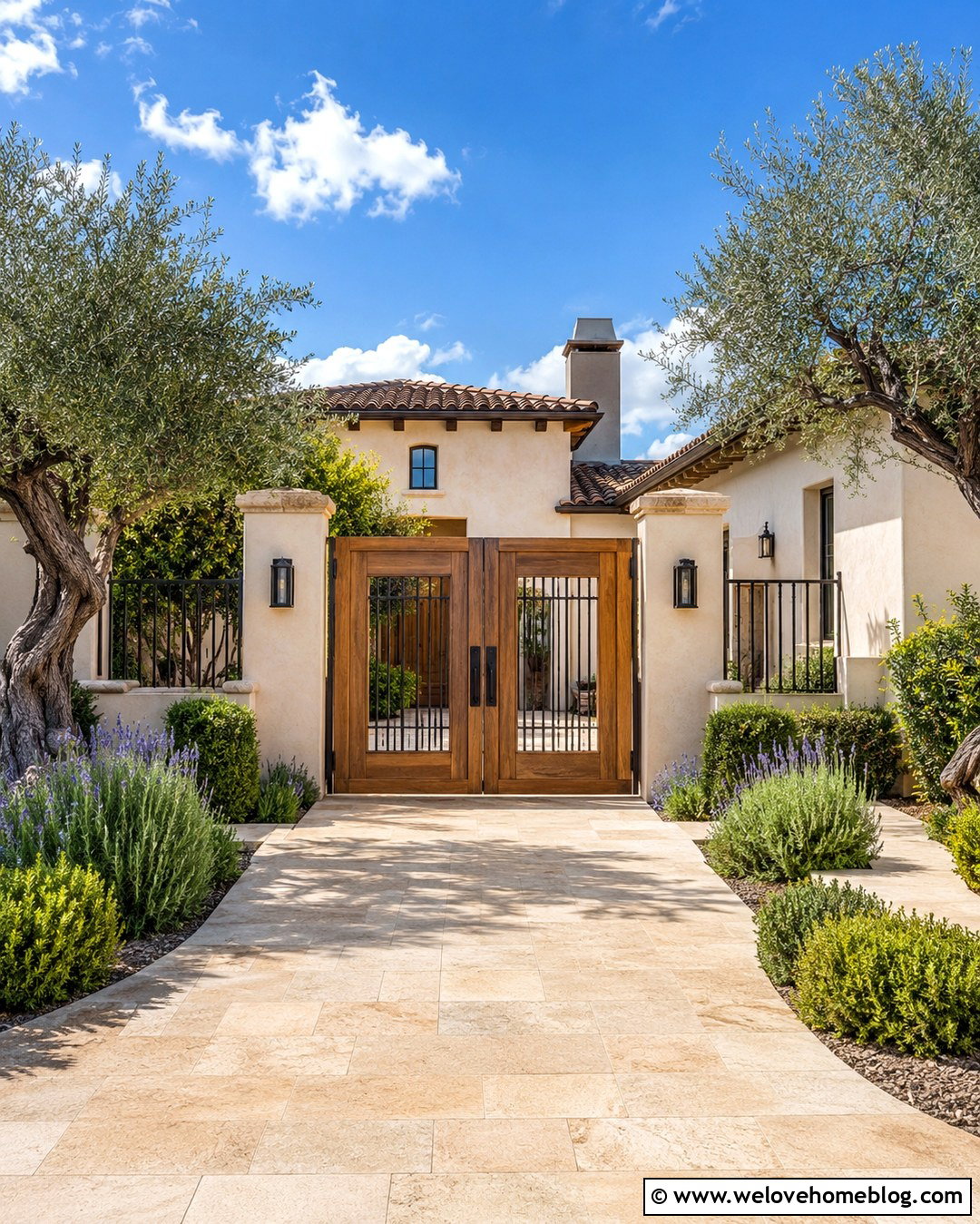
Decorative iron inserts can break up a large cedar surface and provide a limited view through the entrance. Use a double gate with solid vertical cedar panels below and narrow black iron grilles near the top. A warm beige travertine paver driveway suits this Mediterranean-inspired design, especially when paired with cream stucco walls and terracotta roof tiles. Place the gate between stucco pillars capped with stone, then repeat the iron pattern in small side panels. Olive trees, rosemary, lavender, and neatly shaped evergreen shrubs can complete the landscape. Keep the metalwork simple enough that the cedar remains visually dominant. Dark iron hinges and a center latch will connect the decorative inserts to the gate’s functional hardware and surrounding fence.
13. Cedar Driveway Gate With Pedestrian Entrance
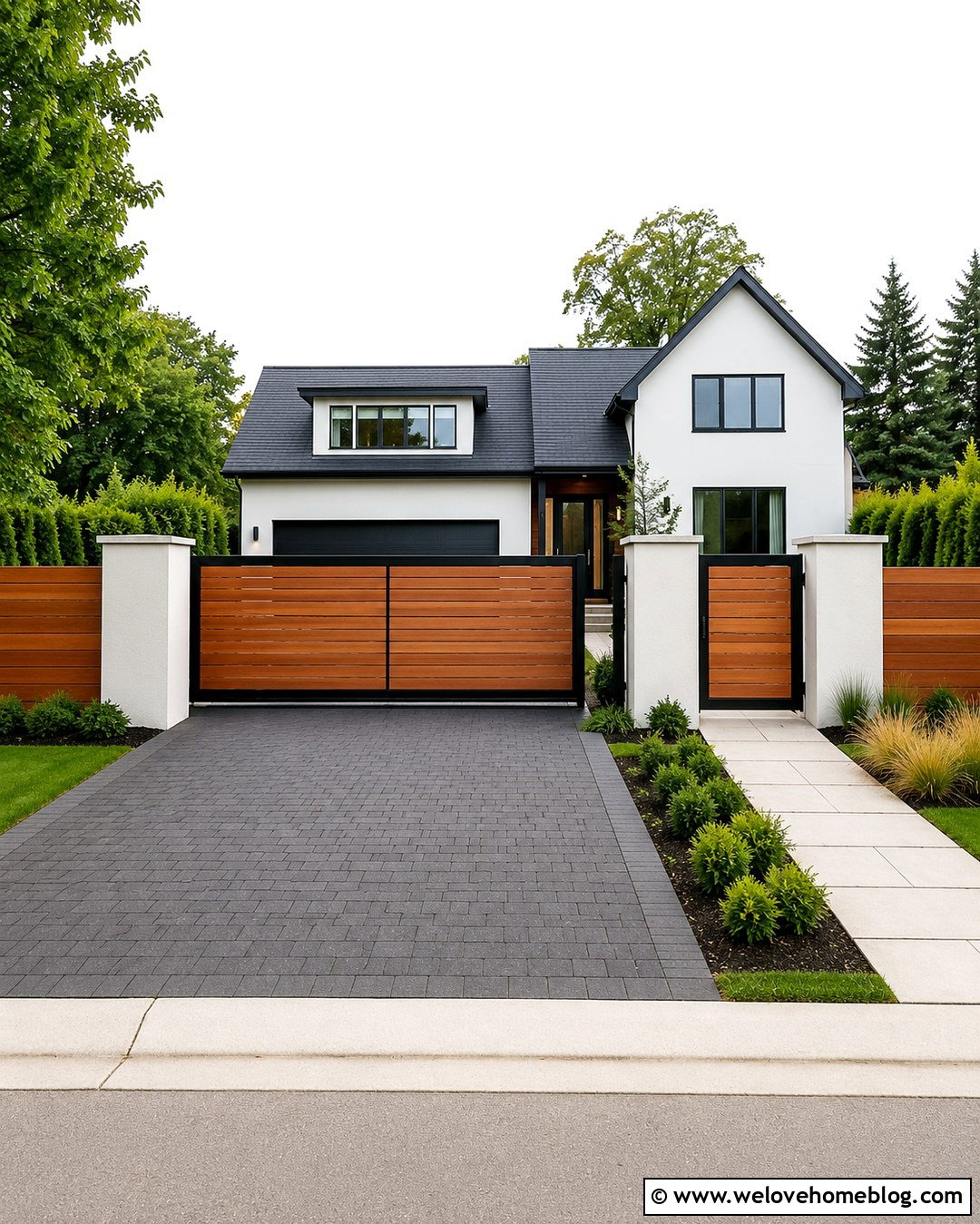
A separate pedestrian entrance can make a gated driveway more convenient and visually complete. Combine a broad cedar sliding gate with a narrower matching walk gate positioned beside one pillar. Use horizontal boards across both openings so they read as one continuous composition. A straight charcoal concrete paver driveway can lead to a modern suburban home, while a lighter paver walkway guides visitors toward the pedestrian gate and front door. Add black steel frames, flat-topped stucco pillars, and neat evergreen planting beds. Keep shrubs low near the road to maintain clear visibility. A covered keypad or simple handle can be incorporated discreetly. Matching board spacing, stain color, hardware, and pillar height will prevent the smaller gate from looking like an afterthought.
14. Cedar Driveway Gate With Address Sign
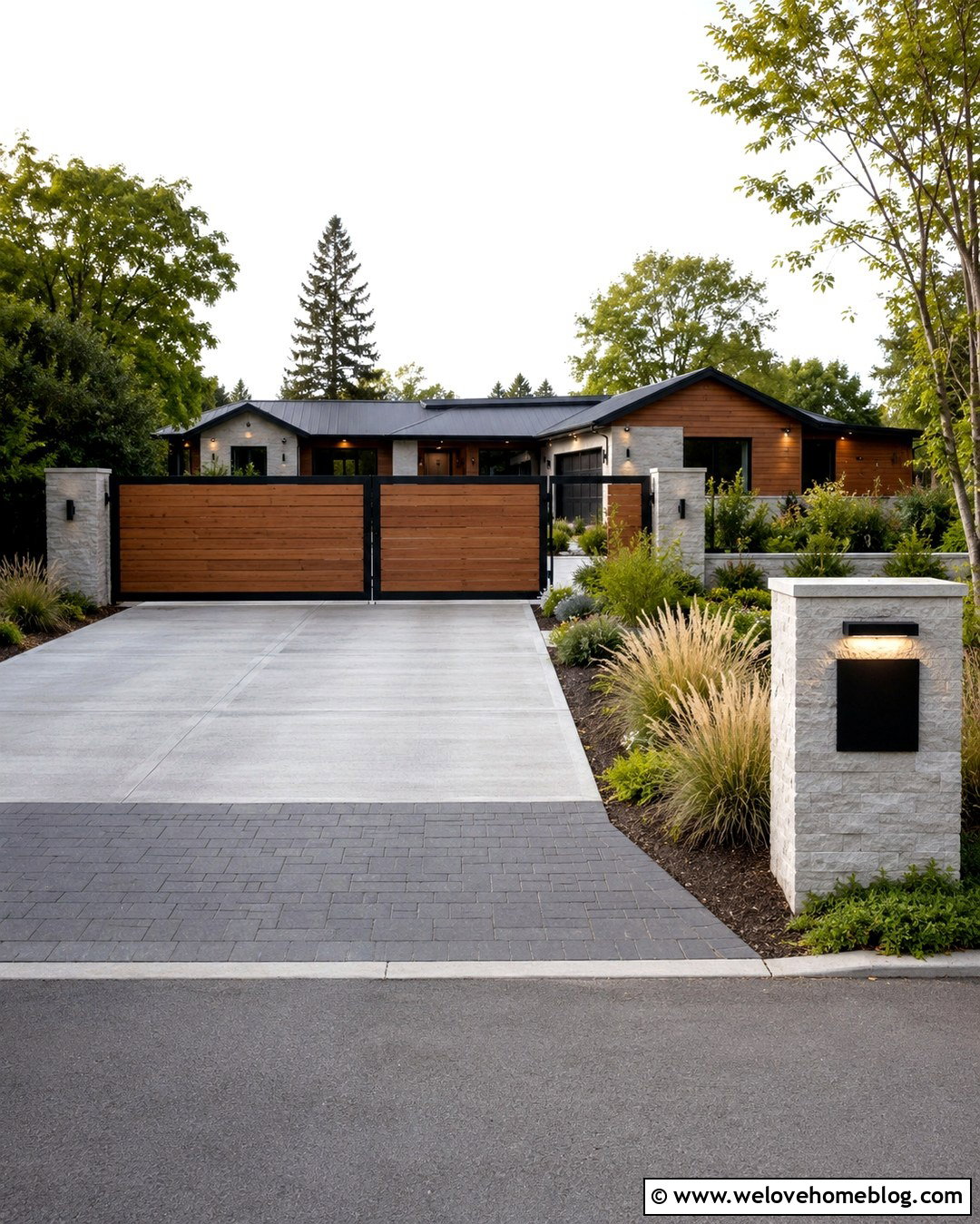
An integrated address sign gives a cedar entrance a useful focal point, but it should remain simple and easy to read. Choose a horizontal cedar gate with a broad black metal frame and place the address on a separate masonry pillar rather than across moving panels. Pair the entrance with a straight broom-finished concrete driveway and a darker paver apron near the curb. A modern ranch house with cedar accents will help connect the gate to the architecture. Surround the sign pillar with ornamental grasses, compact shrubs, and low ground cover that will not hide it as plants mature. A slim downlight can improve visibility. Keep the sign material consistent with the frame, mailbox, house numbers, and other exterior metal finishes.
15. Cedar Driveway Gate With Pillar Lighting
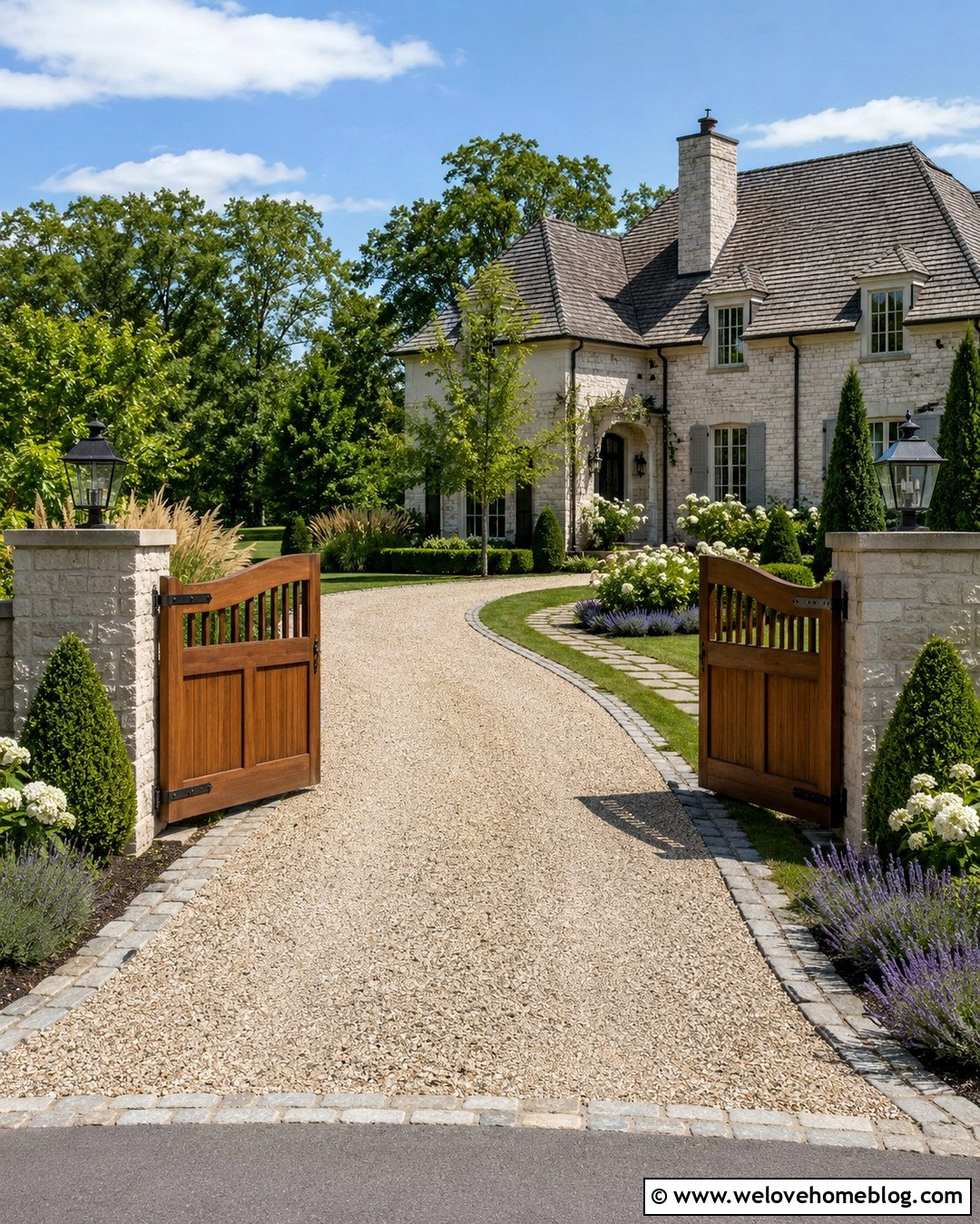
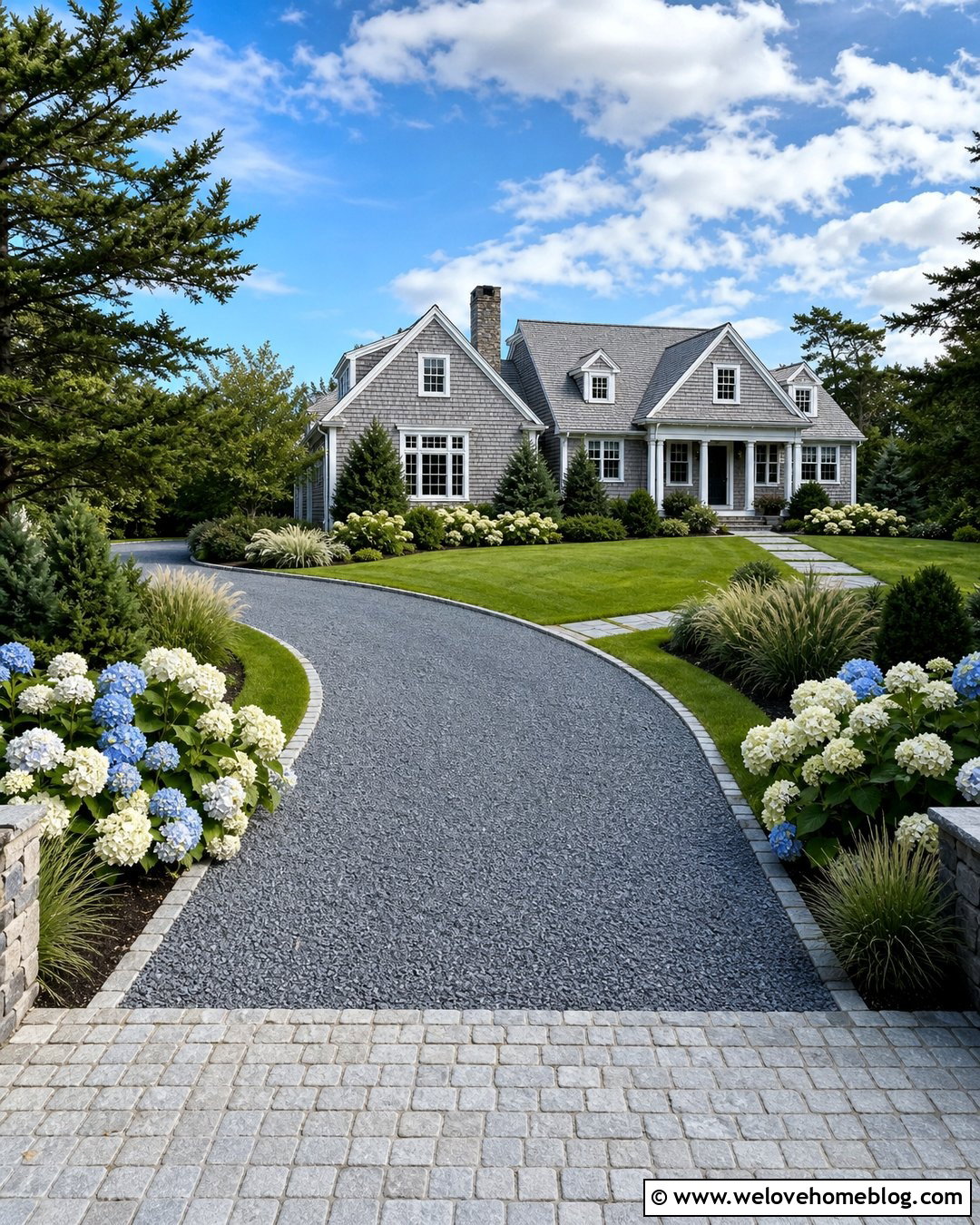
Well-placed pillar lights can highlight cedar grain and define the entrance after sunset without complicating the daytime design. Set a framed cedar double gate between stone pillars topped with simple black lanterns. A curved pea gravel driveway with cobblestone edging can continue toward a country or French-inspired house. During the day, the pale gravel will contrast clearly with the warm cedar and dark fixtures. Plant clipped evergreens near the pillars, then transition into looser beds of lavender, ornamental grasses, and flowering shrubs. Keep branches away from the fixtures and gate movement area. Choose lighting sized to the pillars rather than oversized statement lanterns. The gate, driveway curve, stonework, and planting should remain attractive even when the lights are not operating.
16. Automatic Cedar Driveway Gate
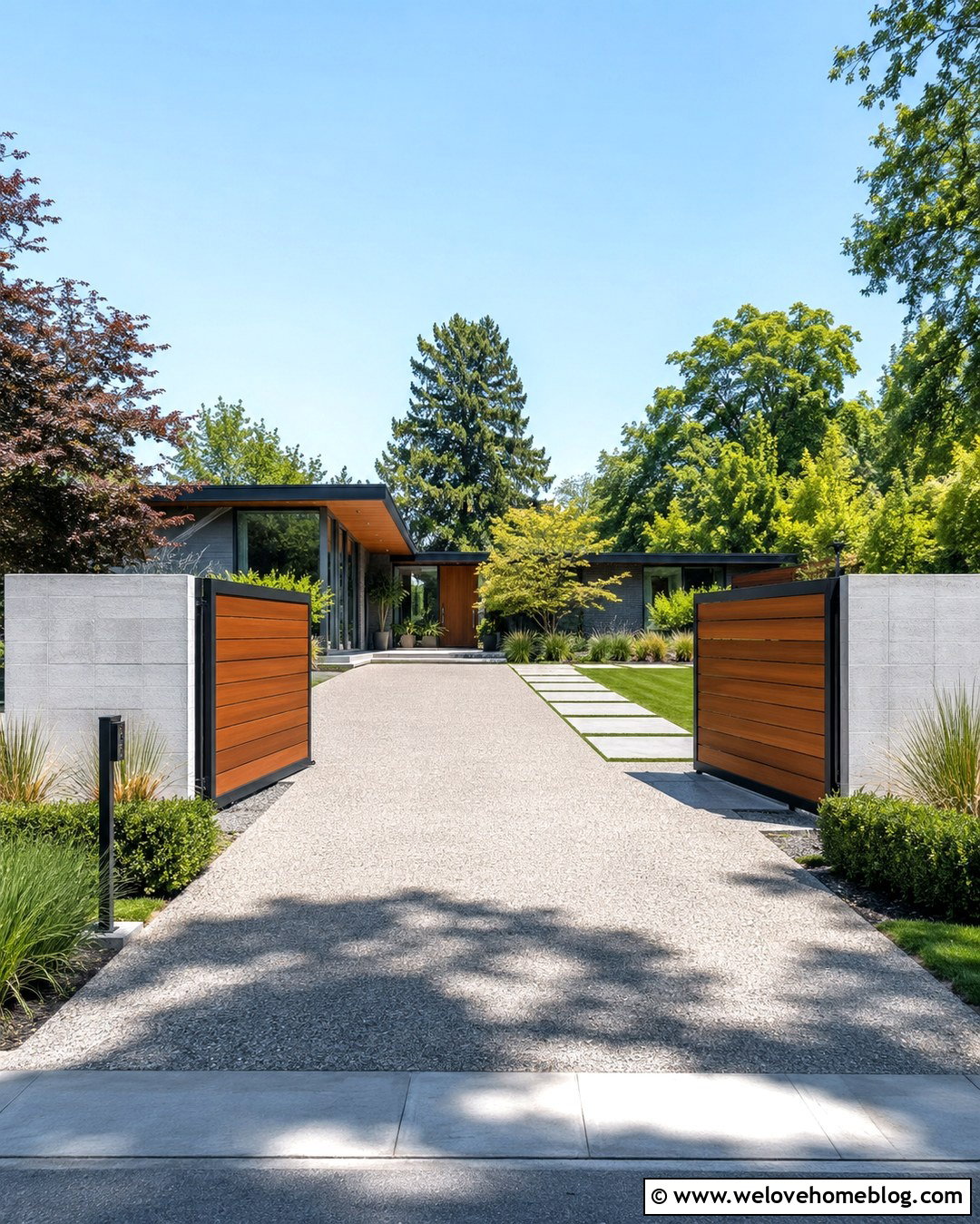
An automatic cedar gate can look residential and welcoming when the operating equipment is planned early. Use two framed cedar leaves with narrow horizontal boards and discreet black steel edges. Pair them with a straight exposed aggregate driveway leading to an updated midcentury home. Concrete pillars and low linear hedges will maintain the streamlined appearance. Keypads, intercoms, conduits, safety devices, and gate operators should be considered during the entrance design so they can be placed conveniently without dominating the view. Automation must be selected for the gate’s configuration and weight, not simply added after construction. Conceal equipment where practical, but preserve service access. Coordinating the cedar, metal frame, driveway finish, and surrounding fence will make the technical components feel less noticeable. ()
17. Cedar Gate For A Circular Driveway
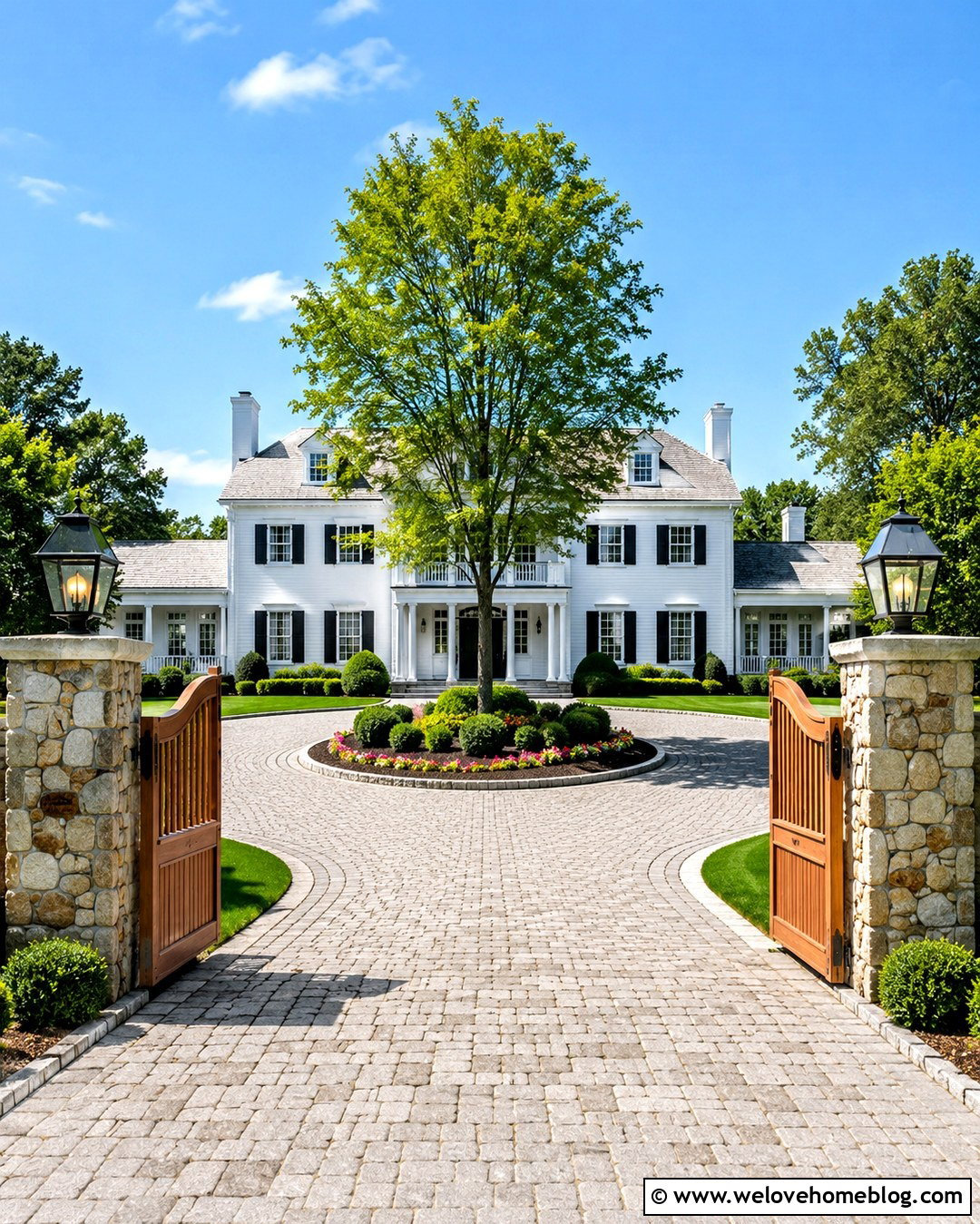
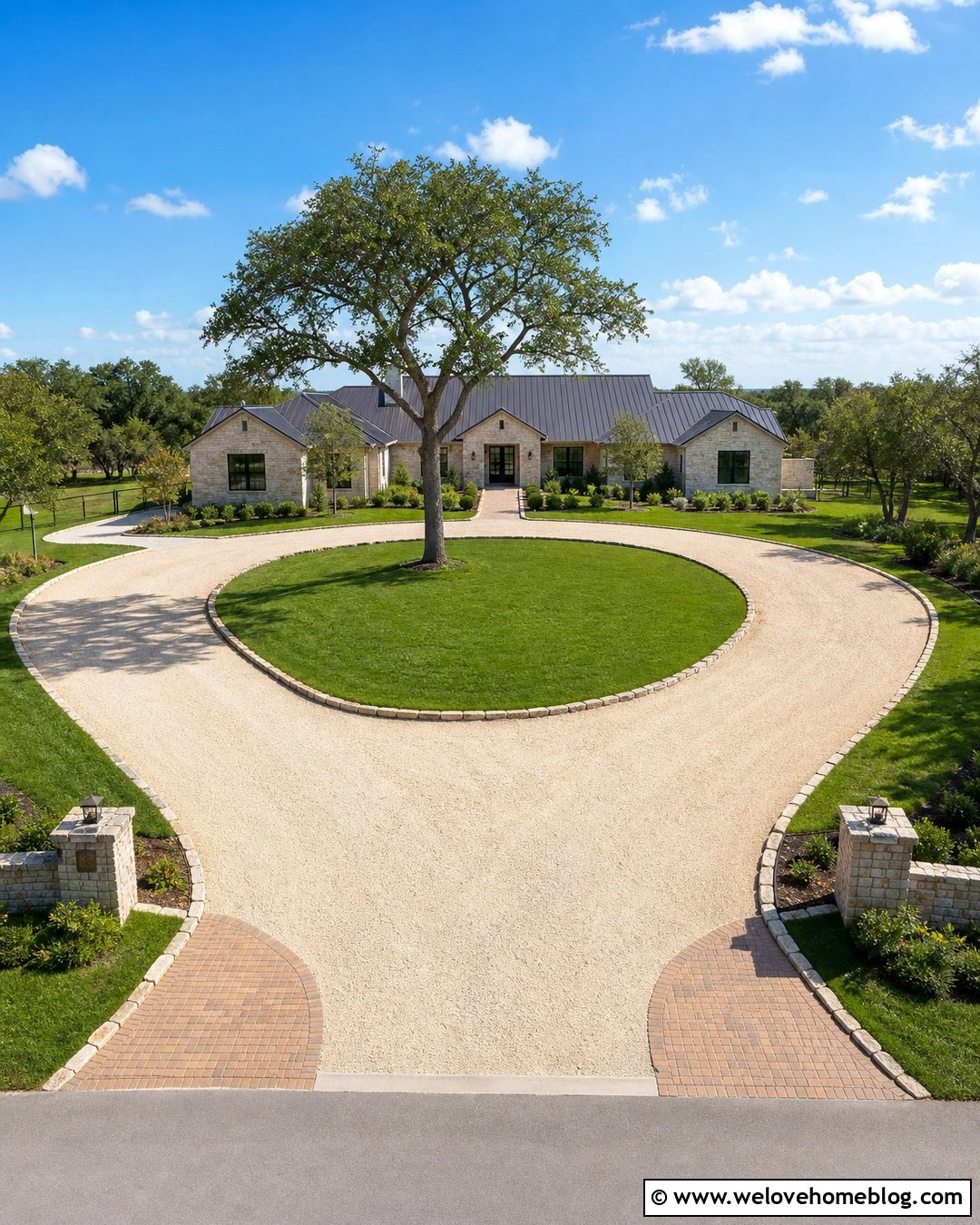
A circular driveway benefits from an entrance that feels impressive without interrupting the natural flow of traffic. Install matching cedar gates at the entrance and exit, or use one broad gate where the circular loop meets a single road opening. Warm cedar panels with gently arched tops suit a large Colonial or country estate. Choose light gray cobblestone for the driveway and define the central island with a low granite curb. A specimen tree, layered evergreen shrubs, and seasonal flowers can create a strong central view beyond the gate. Stone pillars should repeat the home’s foundation or facade material. Keep both sides visually coordinated through matching stains, lighting, hardware, and landscaping, even if the two openings have slightly different widths or operating requirements.
18. Cedar Gate For A Sloped Driveway
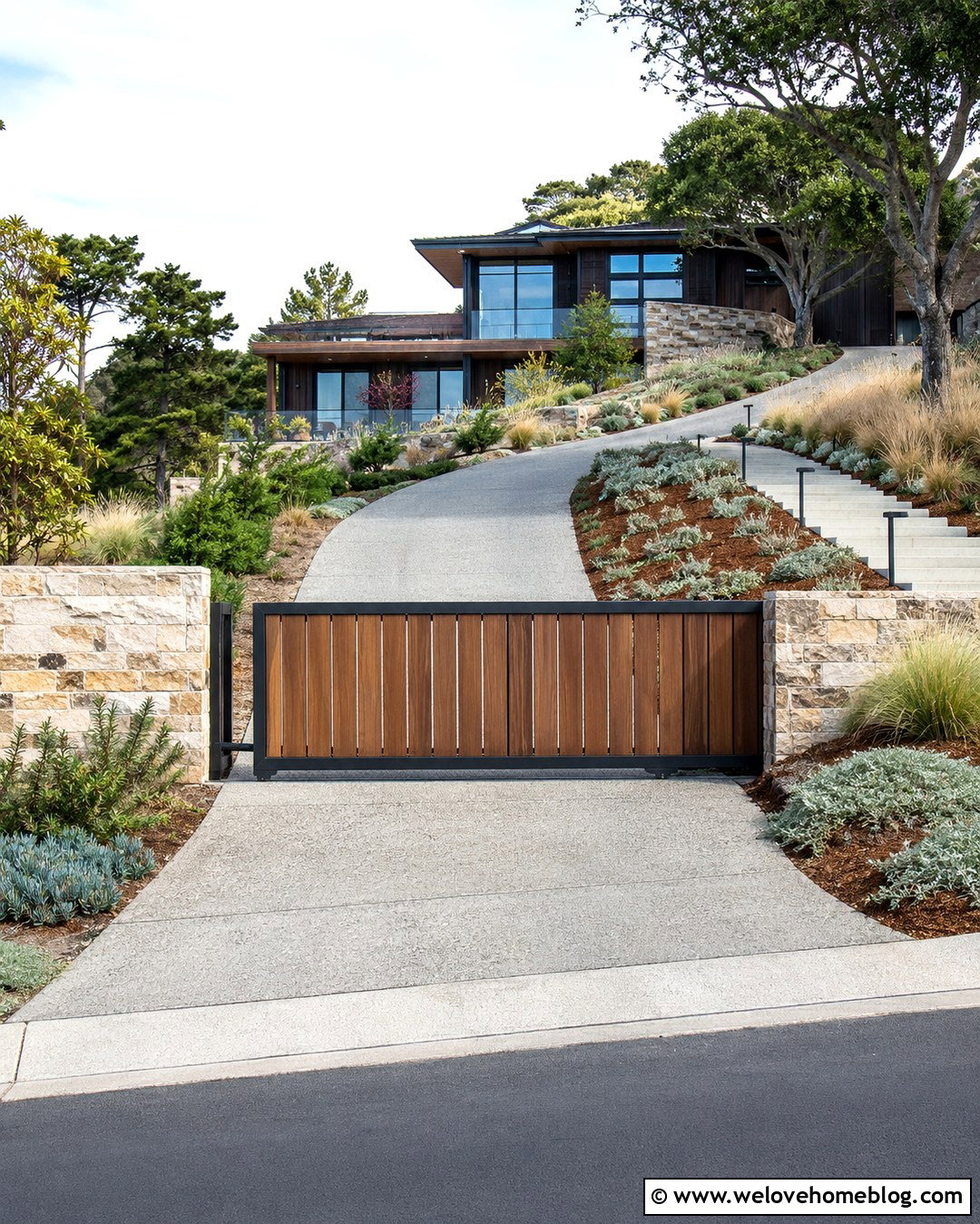
Sloped entrances require a gate layout that responds to the terrain rather than forcing a standard swing design. A cantilever sliding cedar gate can move sideways while keeping its lower edge consistent, making it a practical visual option for many inclined approaches. Use narrow vertical cedar boards within a charcoal steel frame and pair them with a textured gray poured concrete driveway for traction and definition. Retaining walls faced with natural stone can support planting beds beside the entrance. Add low junipers, ornamental grasses, and erosion-conscious ground cover along the banks. A contemporary hillside house will suit the clean structure. The completed design should account for drainage, gate travel, vehicle clearance, and the space needed along the fence before final dimensions are selected.
19. Natural Finish Cedar Driveway Gate
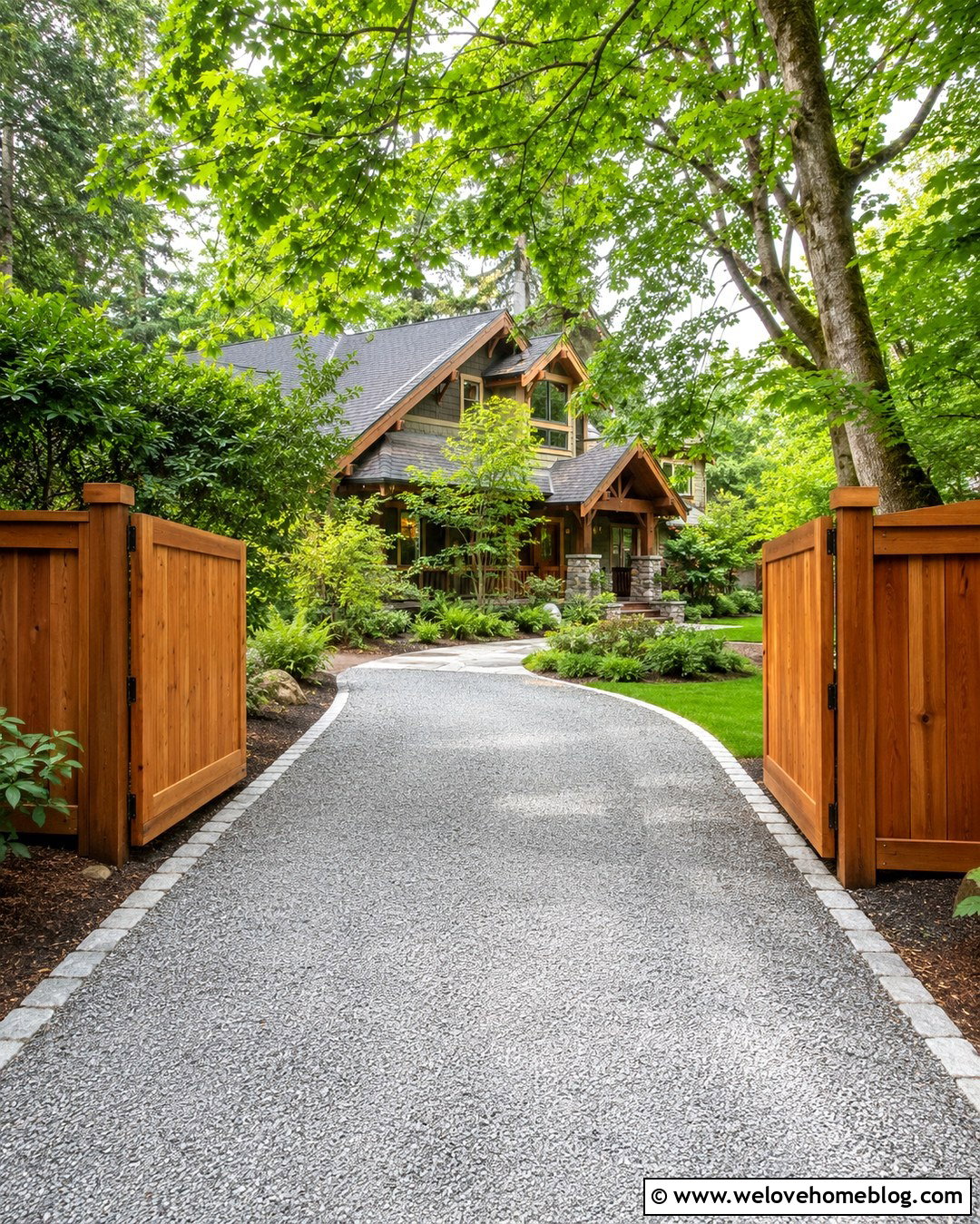
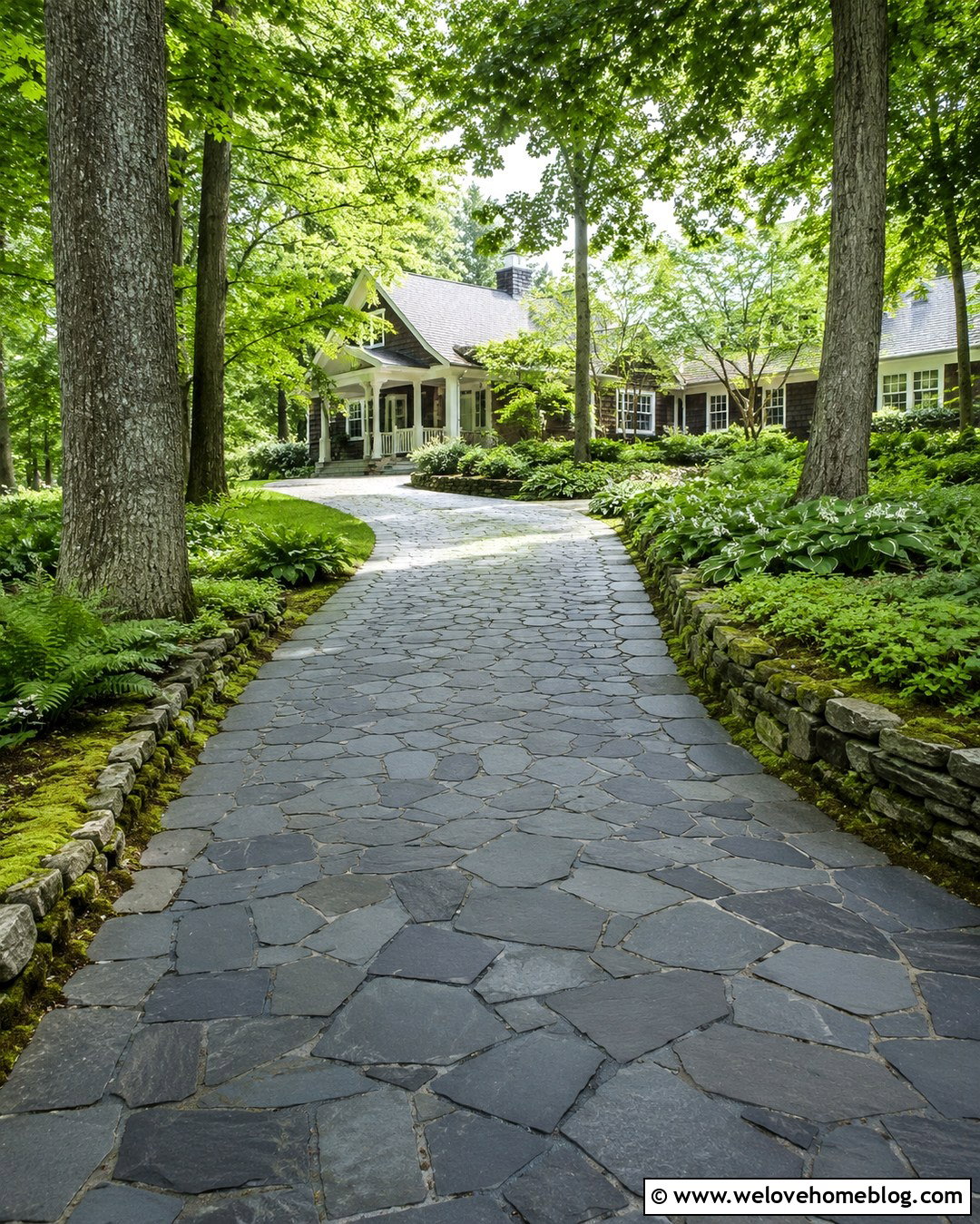
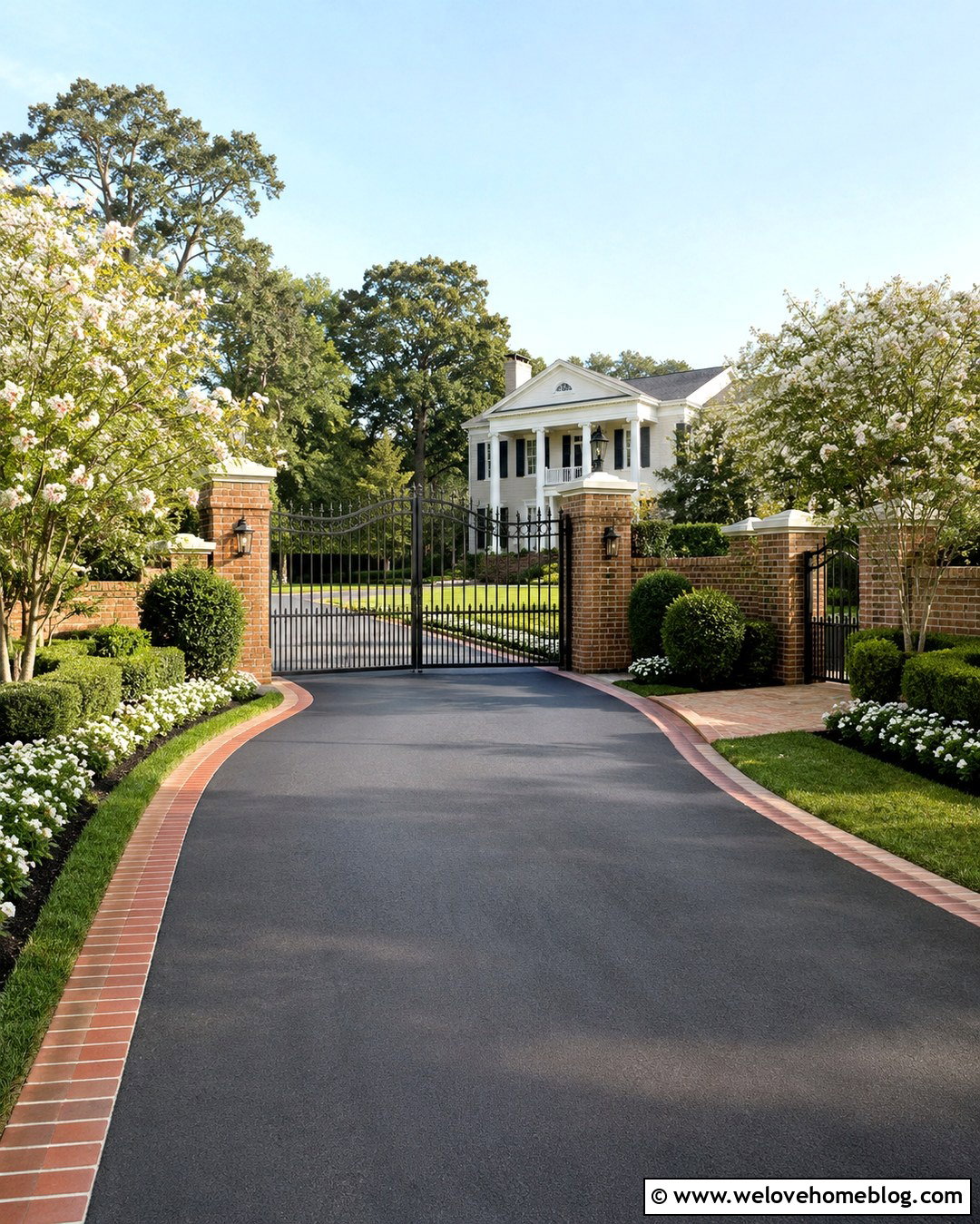
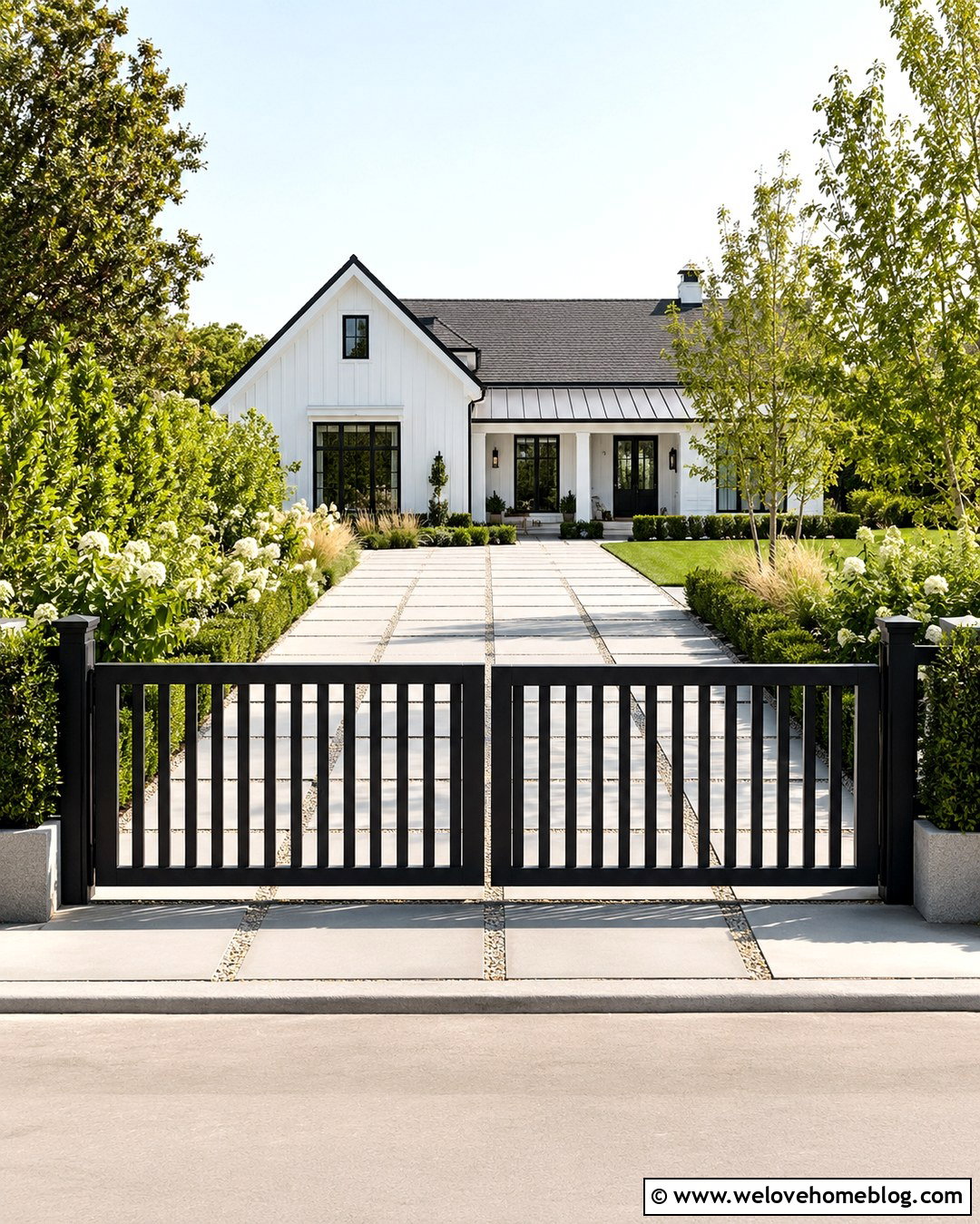
Fresh cedar has a warm, varied color that can become the central feature of an understated entrance. Choose a clear or lightly tinted exterior finish that displays the grain across broad vertical boards. A simple double gate with concealed reinforcement will let the wood remain the main visual element. Pair it with a gently curved gray gravel driveway bordered by natural granite setts. Cedar fencing, informal native shrubs, ferns, and mature deciduous trees can create a relaxed woodland setting around a contemporary cabin or Northwest Craftsman home. Because outdoor exposure changes wood and its coating over time, follow the finish manufacturer’s preparation and maintenance guidance. Apply the selected product carefully and consistently to accessible surfaces and edges for a more even final appearance. ()
20. Dark Stained Cedar Driveway Gate
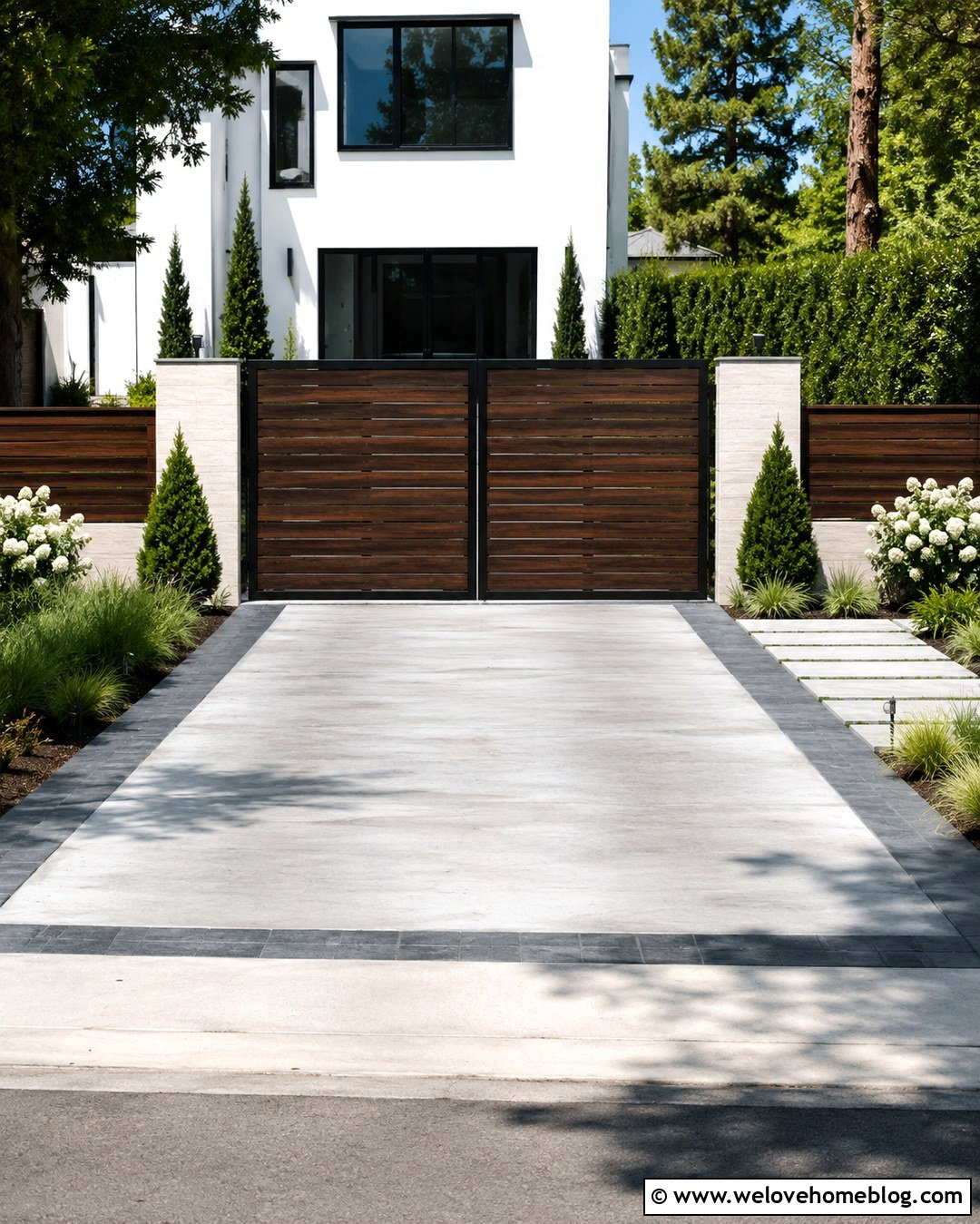
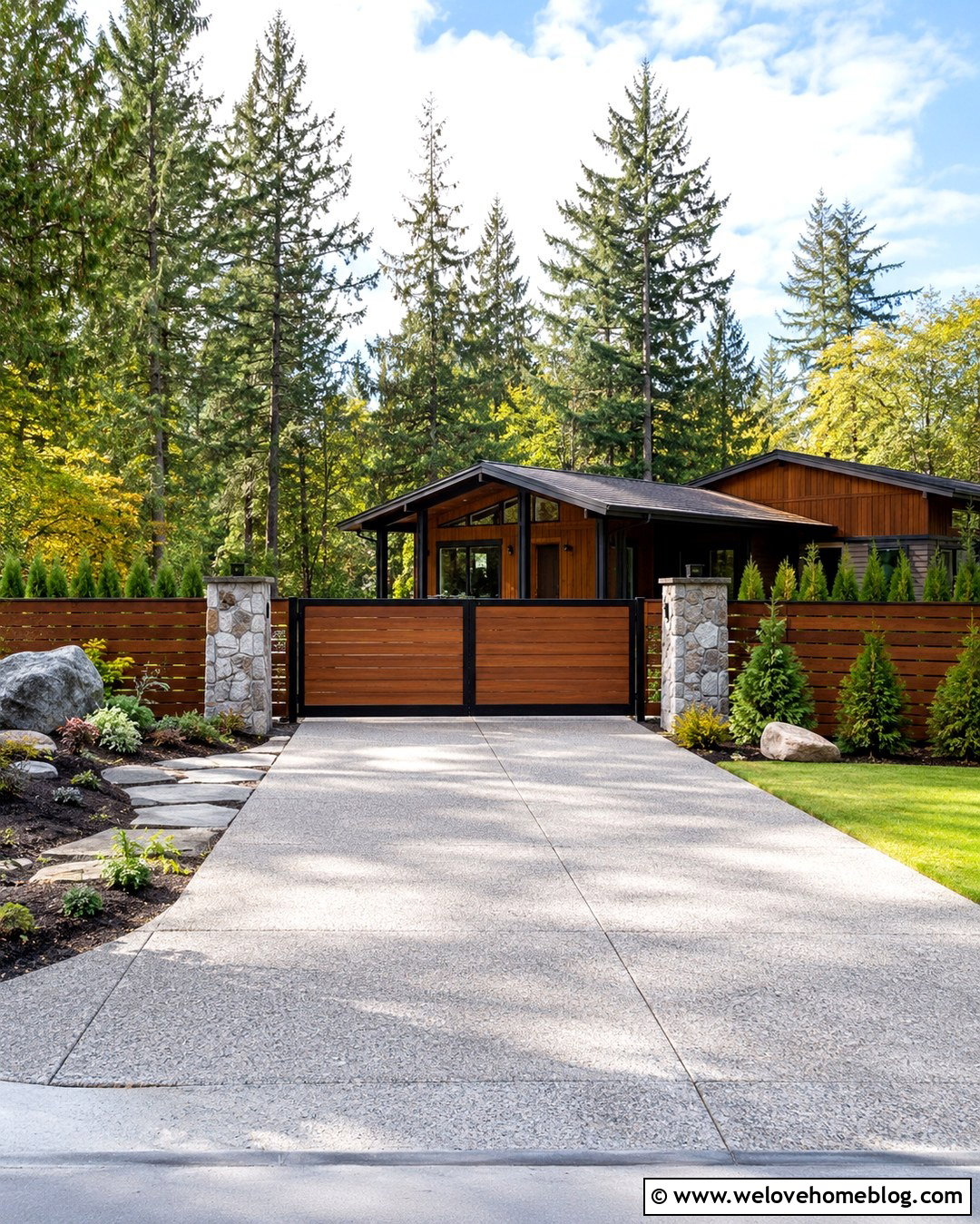
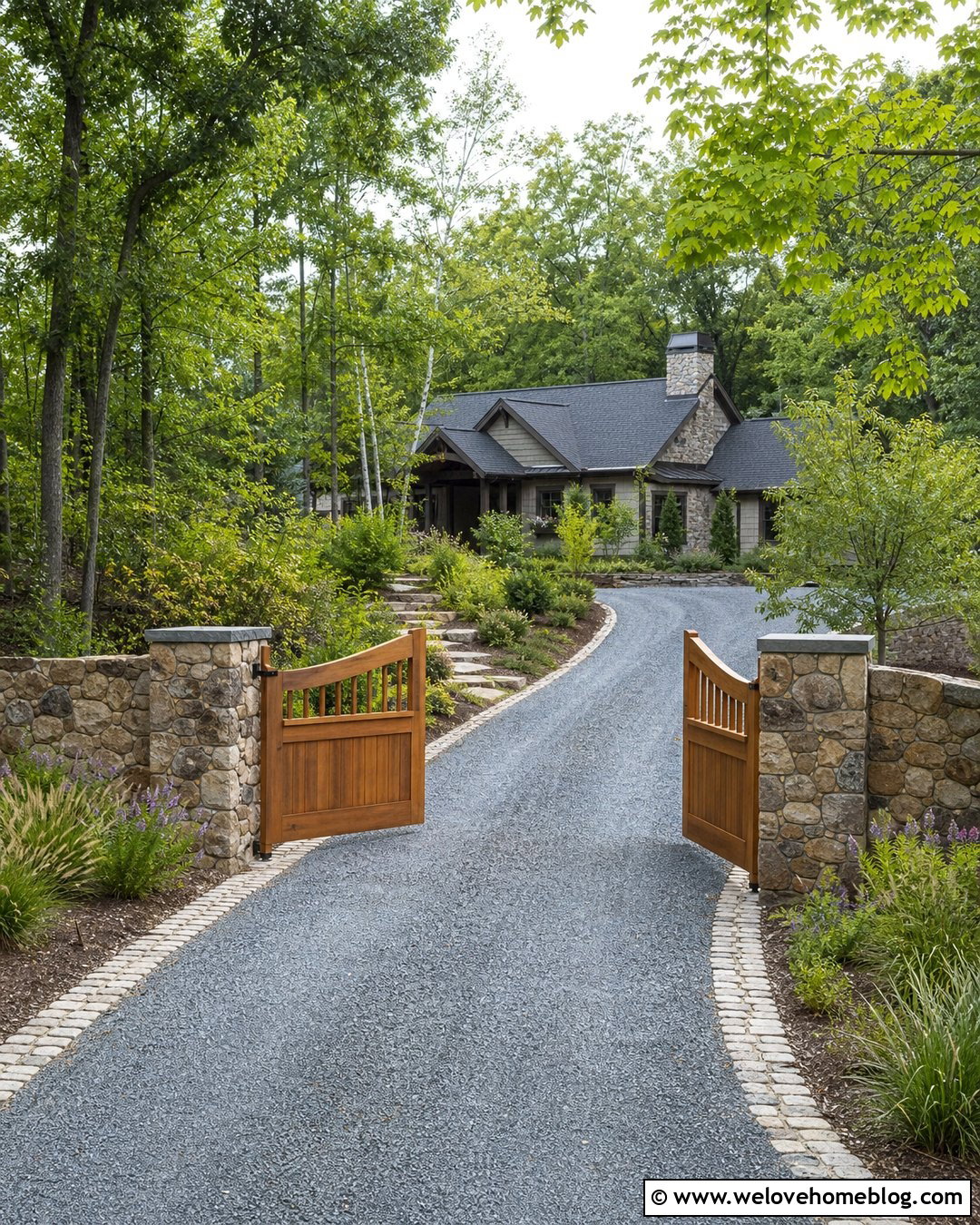
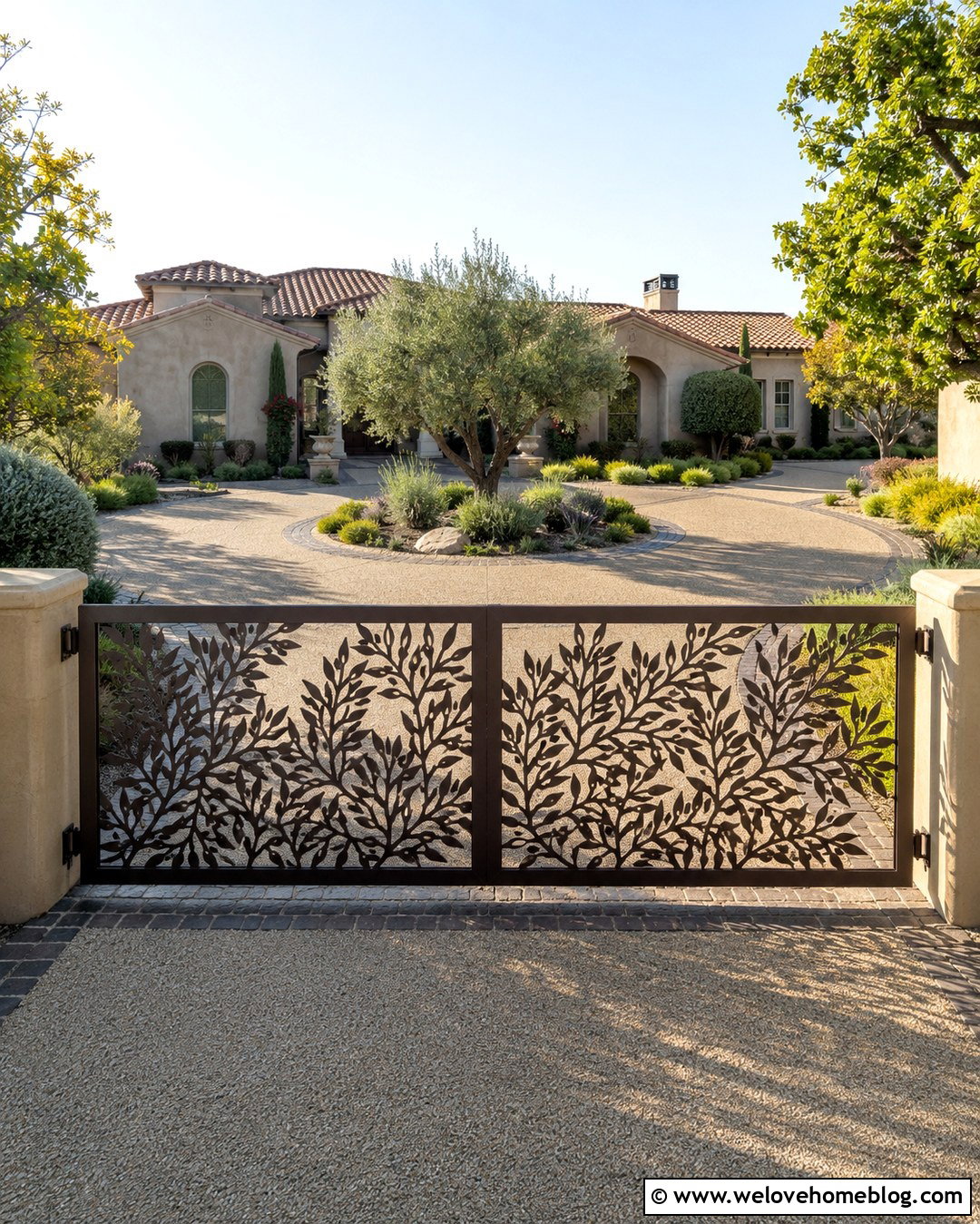
A dark cedar stain creates a sophisticated entrance while retaining more warmth and texture than a fully painted gate. Use wide horizontal boards in a deep walnut or espresso tone, surrounded by a matte black steel frame. A light concrete driveway with charcoal paver borders will provide enough contrast to keep the entrance from feeling heavy. Set the gate between pale limestone pillars and continue the dark finish through short cedar fence sections. Soft green grasses, white flowering shrubs, and sculpted evergreens can brighten the landscape. This palette works particularly well with a modern white, cream, or light gray house. Test the stain on cedar samples first, since the original wood tone and surface preparation can influence the finished color.
Conclusion:
A successful cedar gate should look like a natural extension of the driveway, landscape, and house rather than an isolated feature at the curb. Horizontal slats support modern architecture, framed panels suit traditional homes, and open rail designs complement farmhouse and ranch settings. Stone pillars, steel reinforcement, suitable hardware, thoughtful lighting, and coordinated planting can improve the complete entrance. The driveway’s slope, width, surface, and turning space should also guide the operating style. Use these **20 Cedar Driveway Gate Ideas** as a starting point, then adapt the proportions, finish, frame, and landscaping to your property. Careful planning will produce an entrance that feels welcoming, practical, and visually connected from the street to the house.

Related posts:
Leave a Reply