
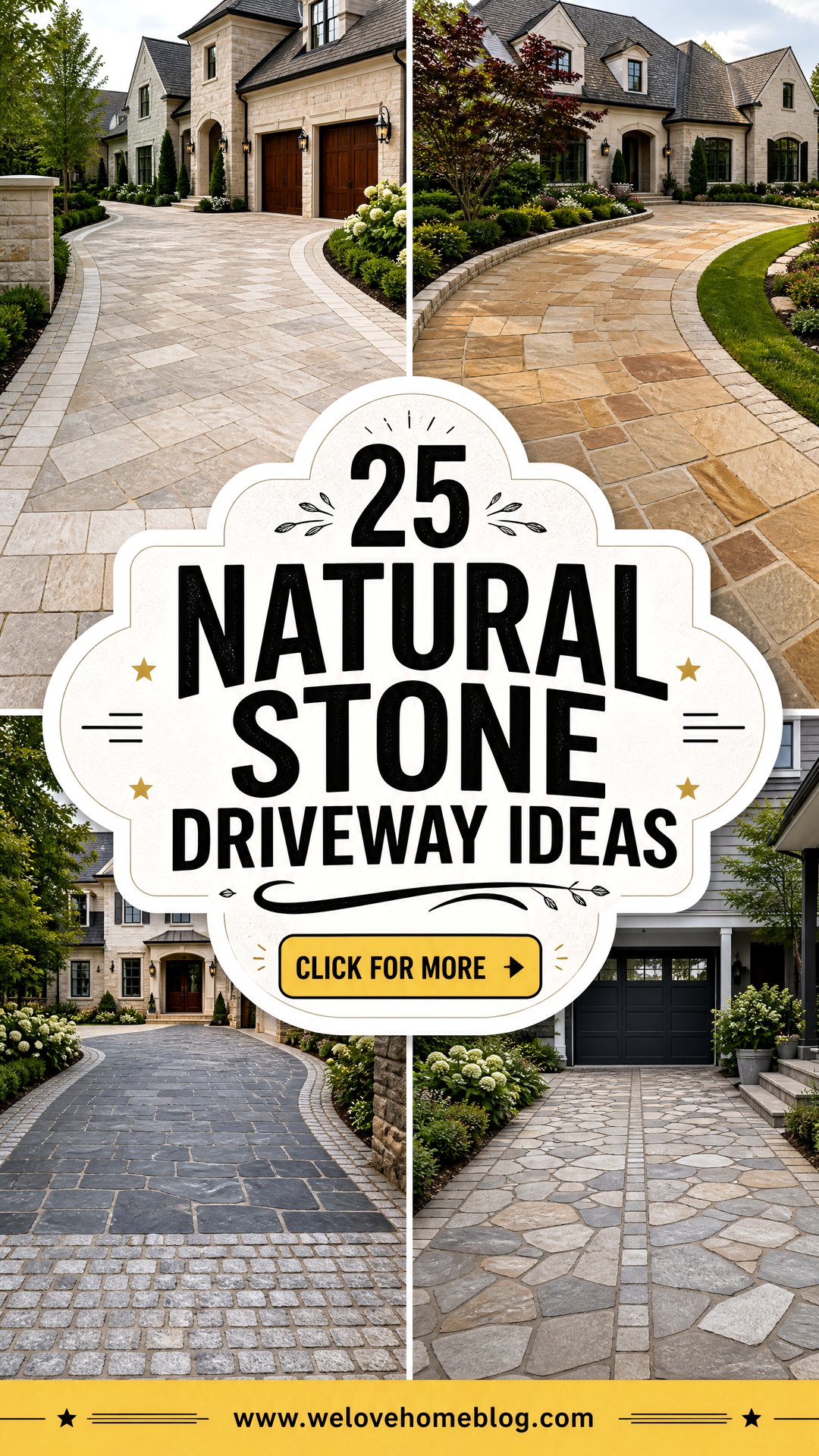
Natural stone brings depth, texture, and lasting character to an entrance in a way uniform paving often cannot. The best natural stone driveway ideas combine the surface with the right layout, edging, drainage, landscaping, and house style. Granite setts can create a formal approach, while irregular flagstone feels relaxed and organic. Bluestone, limestone, sandstone, basalt, and quartzite also offer distinct colors and finishes. Before choosing, consider your climate, driveway slope, vehicle load, maintenance expectations, and the stone’s slip resistance. Proper base preparation and edge restraint are equally important because even premium stone needs a stable foundation. The complete driveway looks below offer practical inspiration for different homes, lot sizes, and budgets. Explore these 25 Natural Stone Driveway Ideas to find an entrance that fits your property.
1. Granite Cobblestone Driveway With Herringbone Pattern
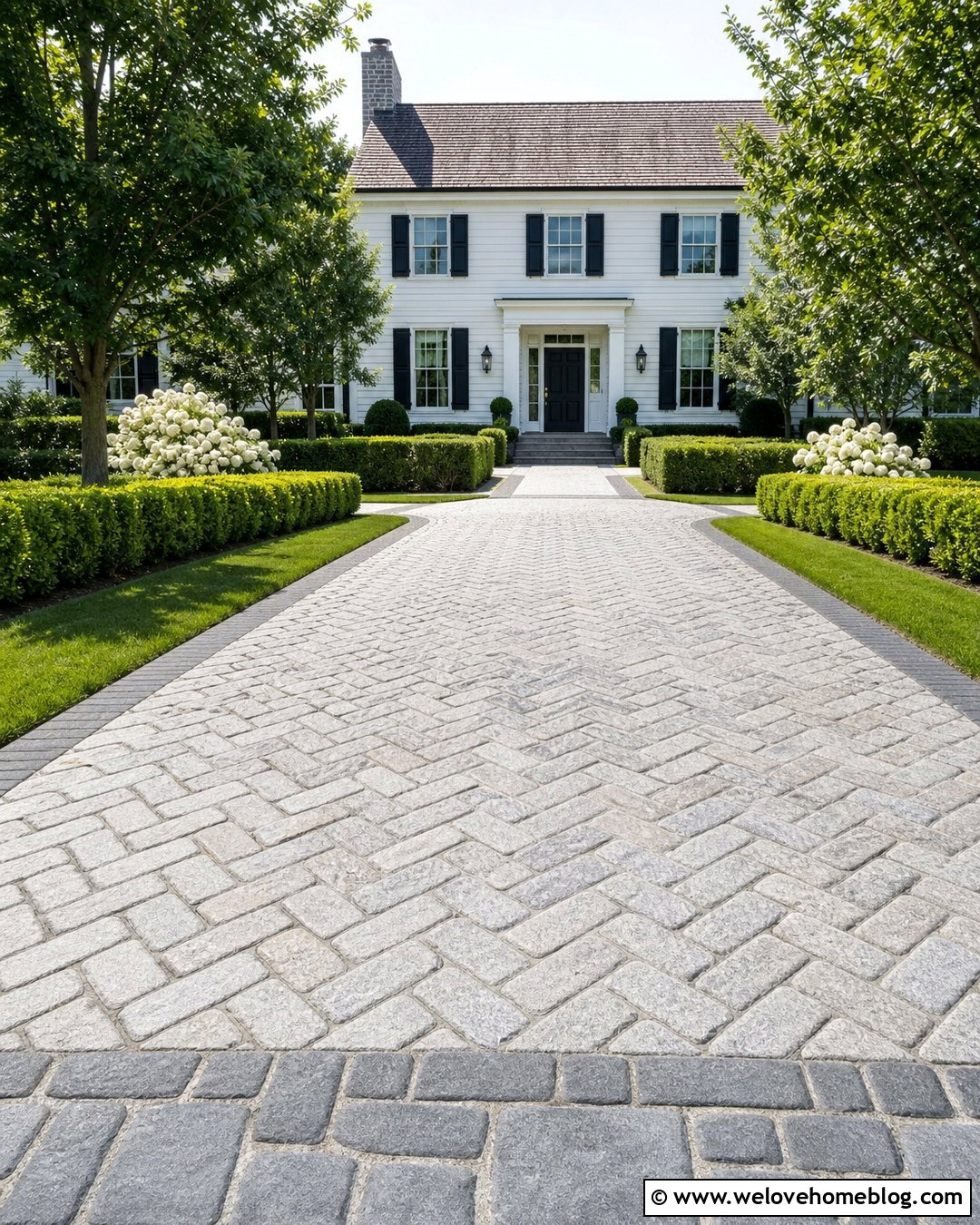
A granite cobblestone driveway laid in a herringbone pattern creates a polished surface with plenty of traditional character. The interlocking layout also helps the driveway feel structured rather than overly rustic. Choose mixed gray setts for subtle variation, then frame the driving area with larger charcoal granite blocks. A straight layout works especially well in front of a Colonial or Georgian-style home. Low boxwood hedges, white flowering shrubs, and a matching granite walkway can connect the driveway to the front entrance. At the road, widen the stone border to form a clearly defined apron. Because cobblestones have naturally uneven faces, select a relatively flat, driveway-rated finish. Consistent joint widths, firm edge restraints, and a professionally compacted base will produce a cleaner, more stable result.
2. Bluestone Driveway With Large Rectangular Slabs
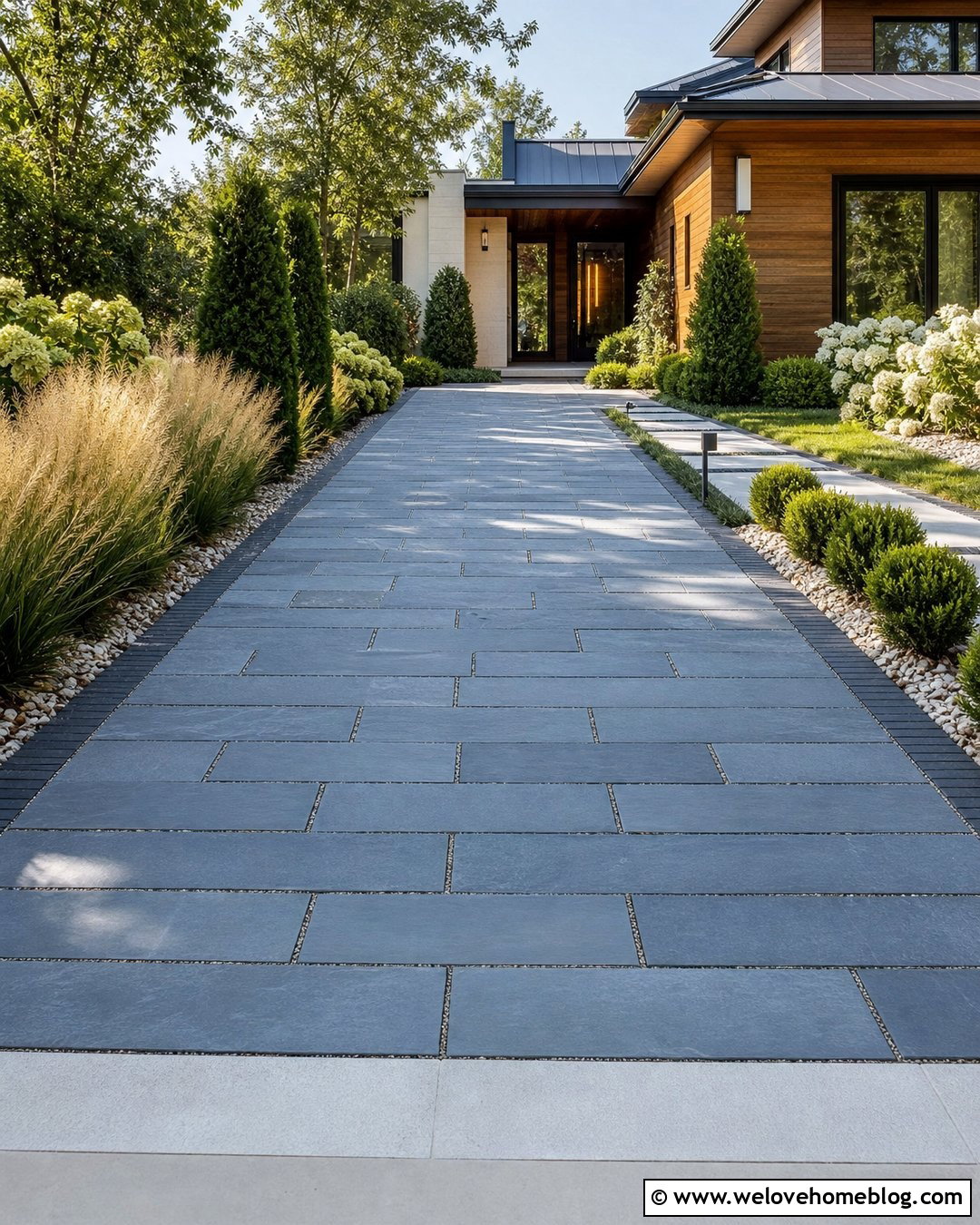
Large rectangular bluestone slabs give a natural stone driveway a crisp, contemporary appearance. Blue-gray tones complement white stucco, dark siding, warm wood, and many modern exterior finishes. Arrange the slabs in a running bond pattern to create movement without making the surface look busy. Narrow gravel-filled joints can soften the design and support drainage when the installation system allows it. Frame the driveway with black granite setts for a strong visual edge. Simple ornamental grasses, clipped evergreen shrubs, and a linear concrete walkway will reinforce the modern layout. A gently sloped driveway is especially suited to this look because the long stone lines emphasize the approach. Choose a thermal or textured finish instead of a polished surface to improve traction during wet weather.
3. Limestone Driveway With Matching Stone Borders
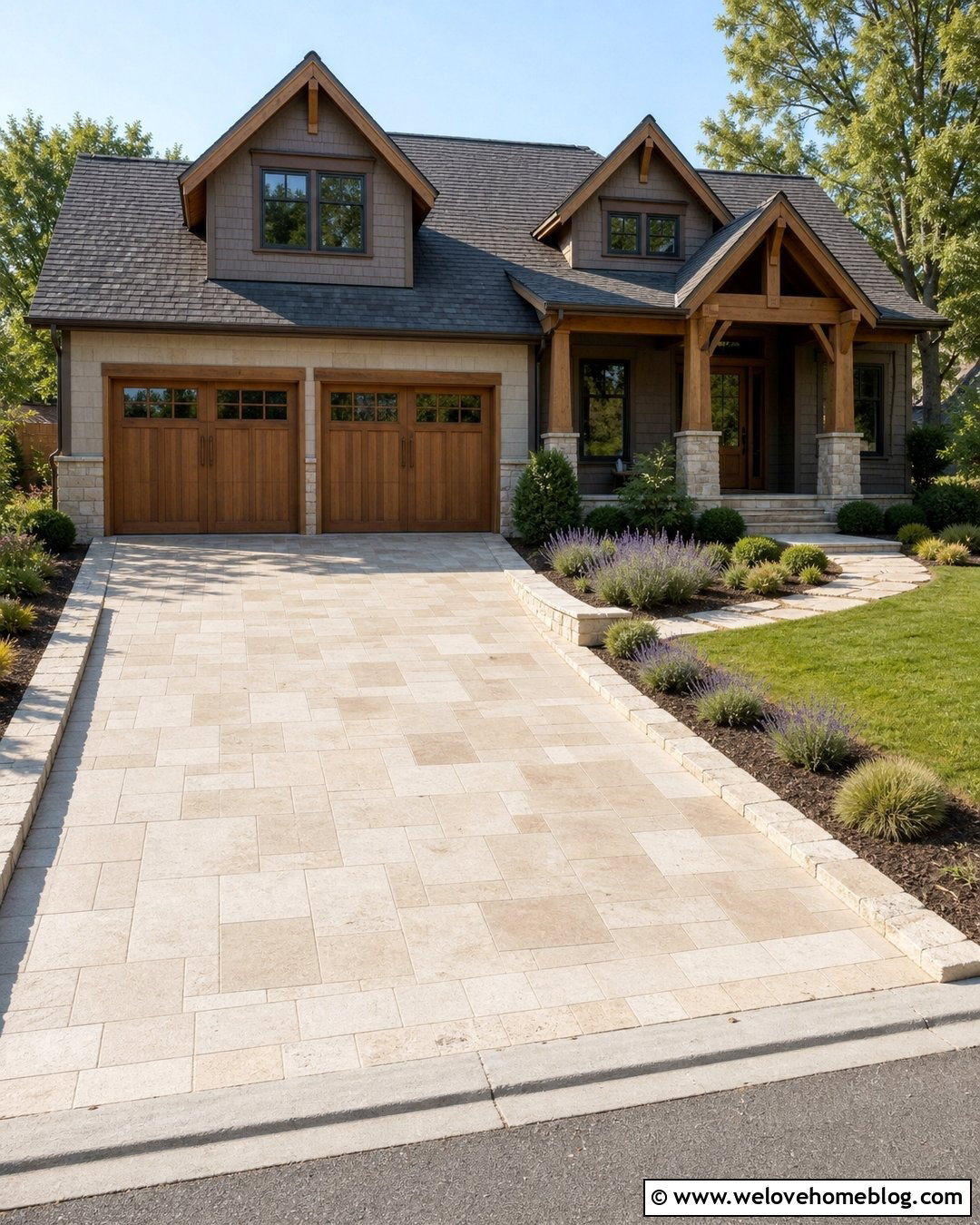
Warm limestone pavers can make a straight driveway feel bright, inviting, and connected to the home. Select beige, cream, or light gray stones with moderate tonal variation. A random rectangular pattern creates a relaxed look while still maintaining an orderly driving surface. Use thicker limestone blocks around the perimeter to restrain the pavers and give the driveway a finished outline. This palette works beautifully with a Craftsman home, natural wood garage doors, and tan masonry details. Plant lavender, dwarf grasses, or rounded evergreen shrubs along the borders for soft color and texture. In freeze-prone regions, use dense exterior-rated limestone that is recommended for vehicular applications. Proper drainage is essential because standing water and repeated freezing can shorten the life of unsuitable stone or poorly constructed joints.
4. Sandstone Driveway With A Curved Layout
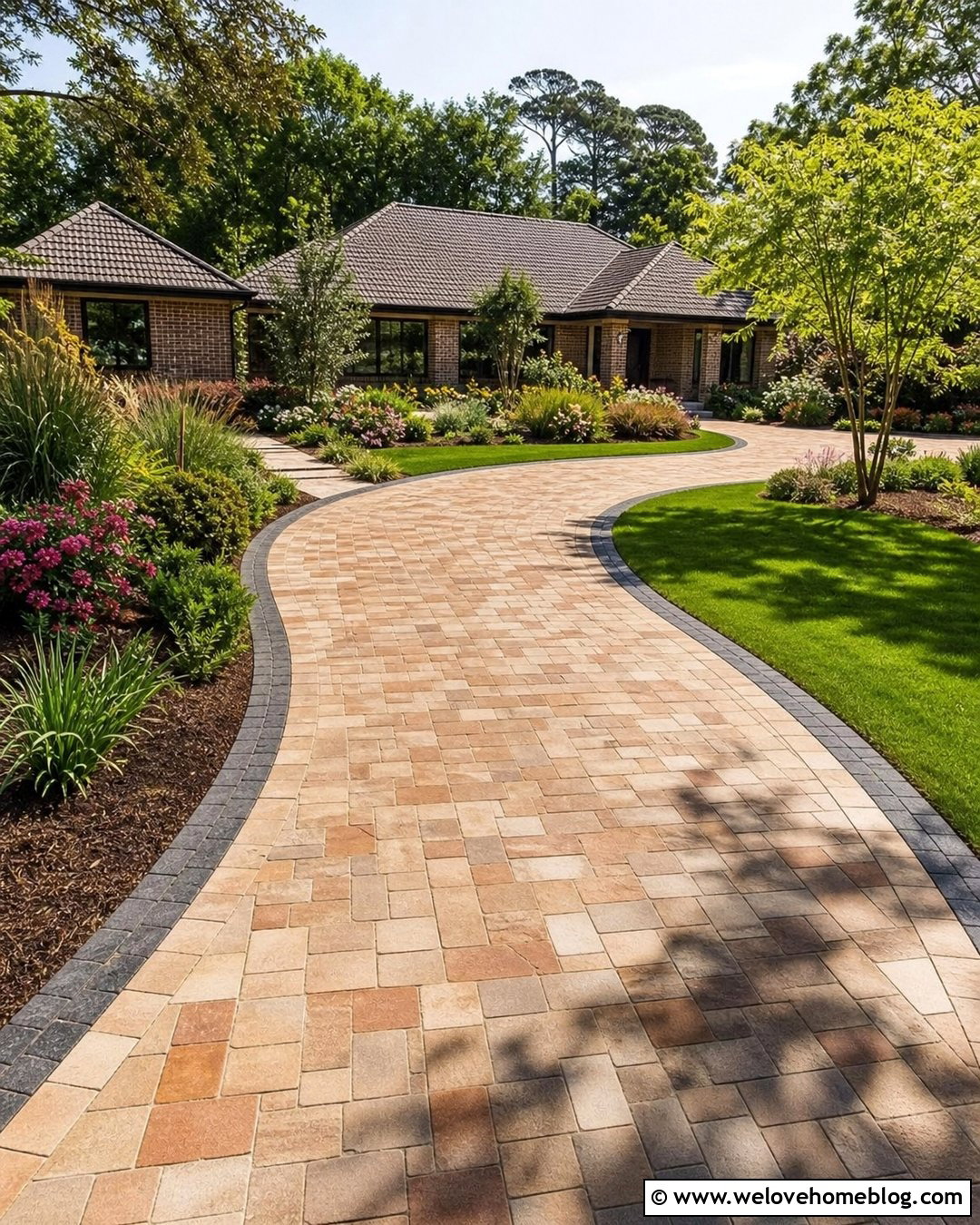
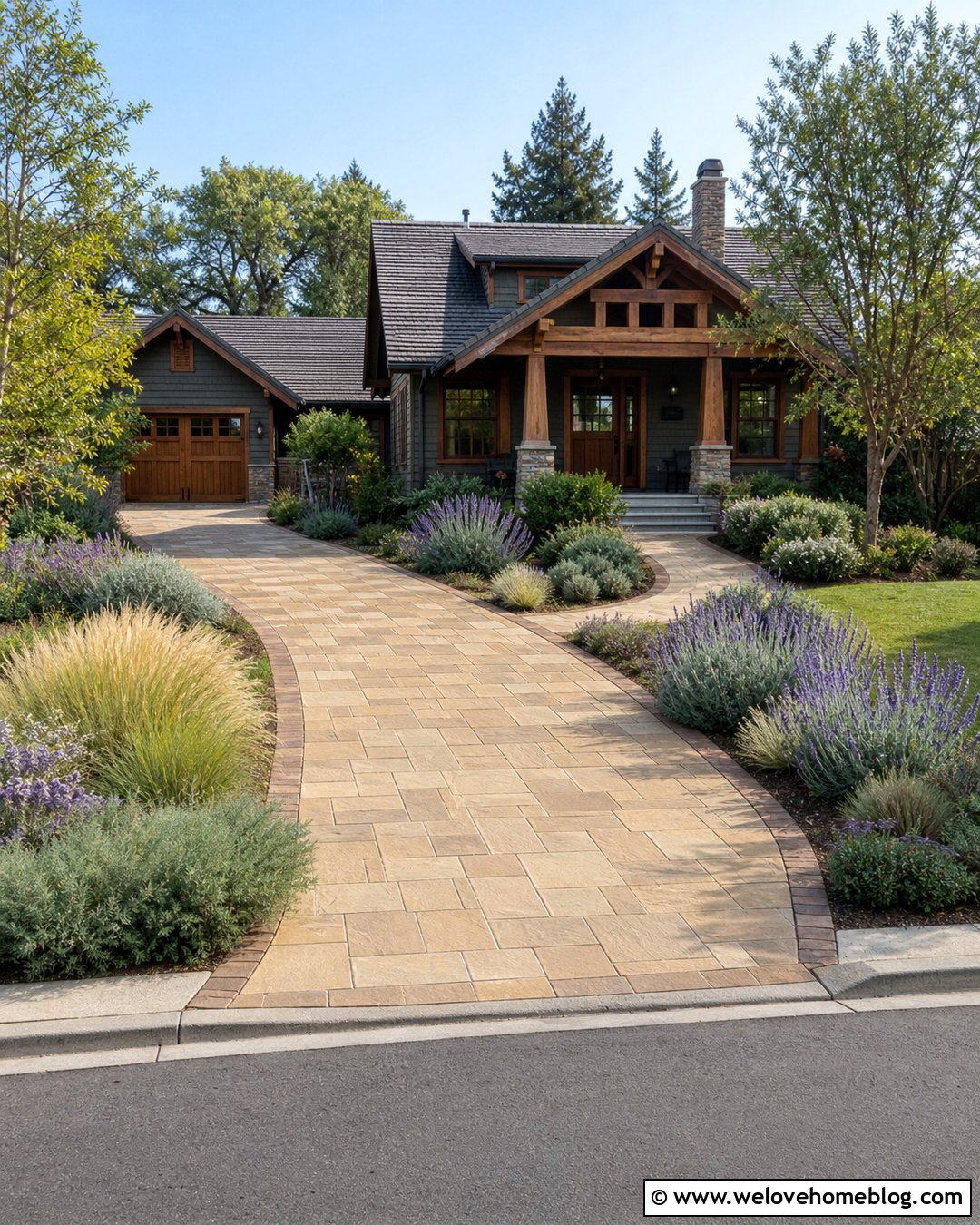
A curved sandstone driveway creates a softer approach that follows the natural shape of the yard. Warm buff, tan, rust, and muted brown pavers pair especially well with brick homes, ranch houses, and wooded properties. Use rectangular sandstone setts in a gentle running pattern so the paving flows smoothly around each bend. A dark granite border can sharpen the edges and provide useful contrast. Along the outside curve, create deep planting beds with native grasses, flowering shrubs, and small ornamental trees. Keep plants lower near the street to protect sightlines. The inside curve can include lawn or a simple mulched island. Select dense sandstone with a textured finish and verify that it is appropriate for local weather. A carefully graded base will help direct runoff away from the house and planting beds.
5. Irregular Flagstone Driveway With Rustic Landscaping
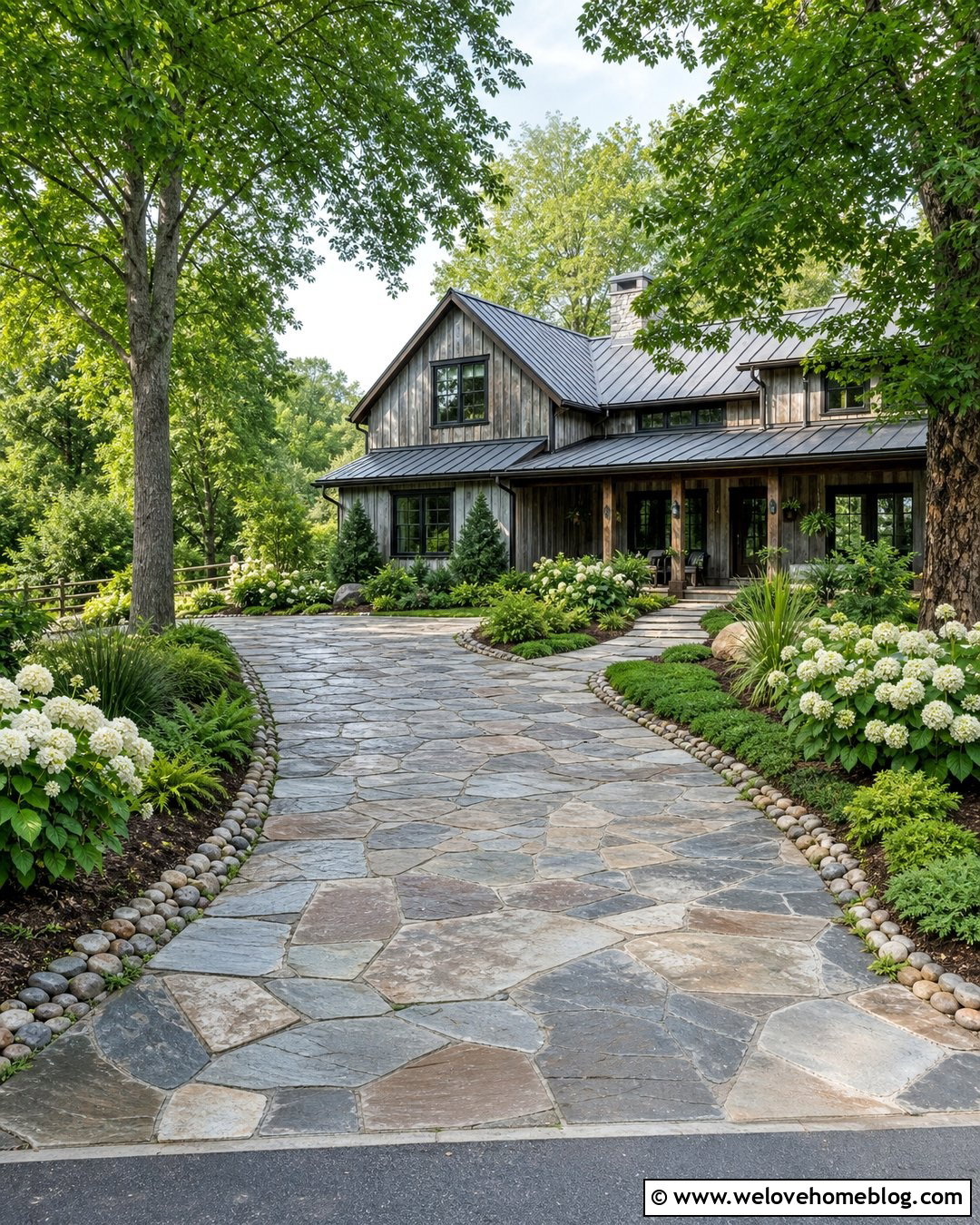
Irregular flagstone can turn a wide country driveway into an organic extension of the surrounding landscape. Choose thick, driveway-rated pieces in earthy gray, brown, and tan tones. Fit the stones together with controlled joints rather than leaving oversized gaps that may shift under vehicle traffic. A gently curving layout feels natural beside a cottage, cabin, or farmhouse. Edge the driveway with smaller fieldstones that repeat the colors of the main surface. Native grasses, hydrangeas, ferns, and spreading ground covers can soften the stone without crowding the driving area. A flagstone walkway branching toward the porch will make the entire entrance feel connected. Because irregular pieces vary in thickness, installation requires careful bedding and leveling. The finished surface should remain comfortable for walking while maintaining enough texture for dependable traction.
6. Black Basalt Driveway With Modern Landscaping
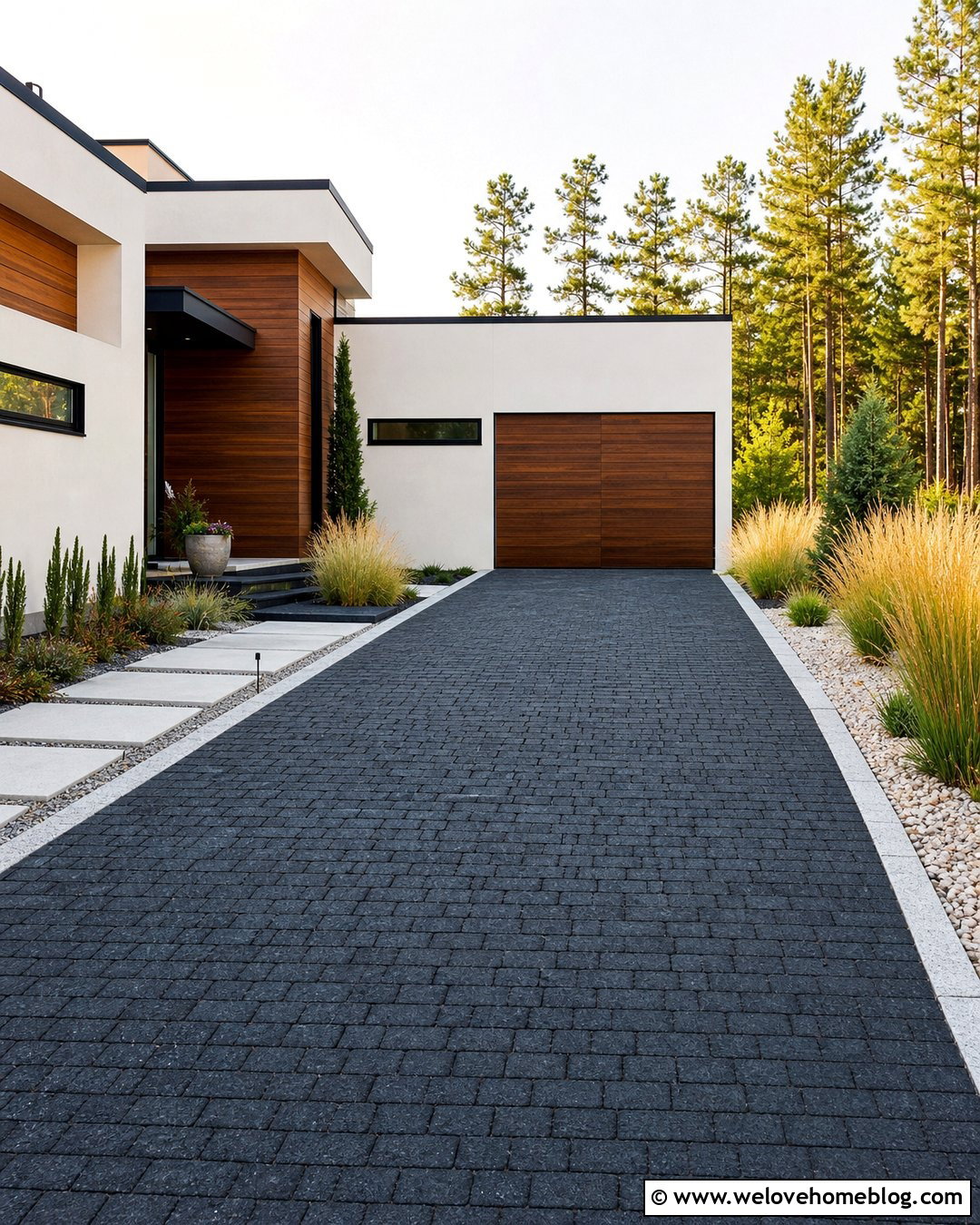
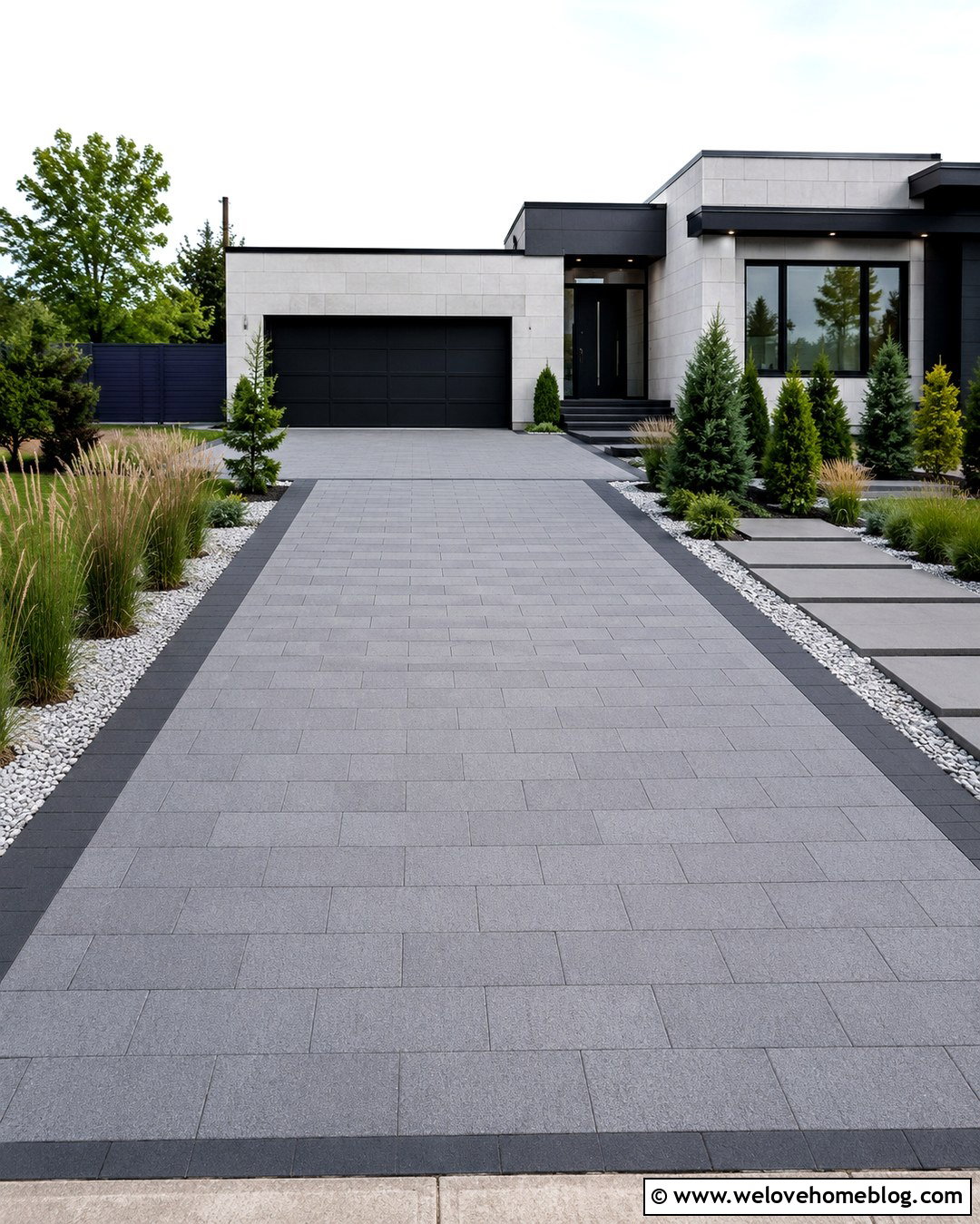
Deep charcoal basalt setts provide a bold foundation for a streamlined modern home. Lay the rectangular stones in straight rows or a subtle staggered bond to emphasize clean architectural lines. A narrow border of lighter gray granite can outline the driveway and prevent the dark surface from blending into surrounding planting beds. Use a straight or slightly angled layout leading toward a flush garage. Sculptural grasses, compact evergreens, and pale decorative gravel will create contrast without adding visual clutter. Large concrete stepping pads can form a separate route to the front door. Basalt naturally appears dramatic, so keep the pattern and landscaping restrained. Choose a textured, vehicle-rated finish because highly smooth dark stone may become slippery. Bright exterior materials and open planting also help balance the strong color of the driveway.
7. Reclaimed Granite Setts Driveway With Aged Character
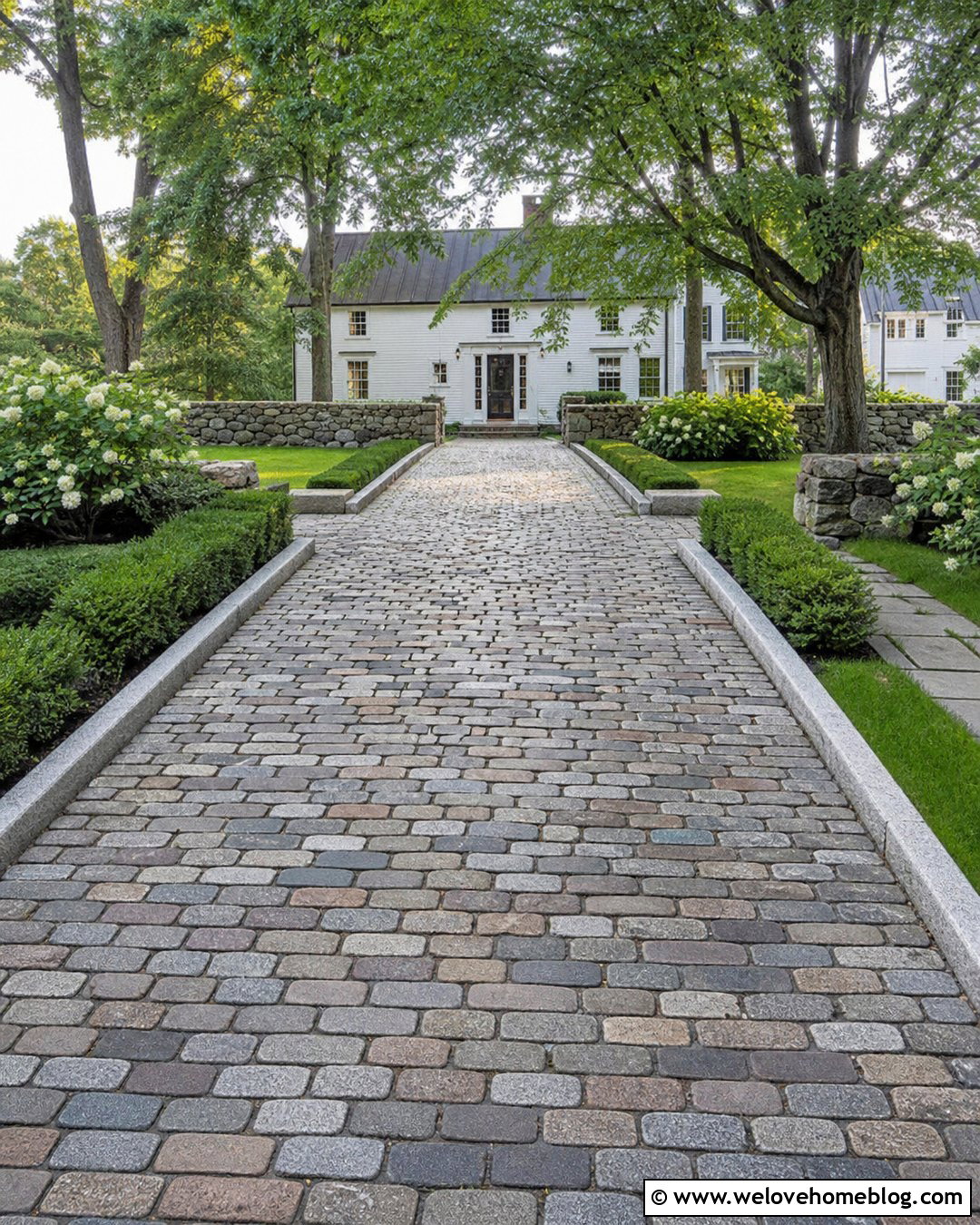
Reclaimed granite setts give a driveway instant age and texture, making them a natural match for historic homes and renovated farmhouses. Their softened edges and mixed gray, brown, and charcoal tones produce a surface that looks established rather than newly installed. Use a random coursed pattern to accommodate small differences in stone size. Larger granite curbs can hold the perimeter firmly in place. Frame the drive with clipped hedges, old-fashioned flowering shrubs, and a simple stone path to the porch. A broad sett apron at the street can make the entrance feel substantial. Reclaimed pieces should be sorted by thickness before installation so the finished surface remains even. Since the stones may have worn or rounded faces, inspect their texture and select an installation method that provides suitable traction and stable joints.
8. Quartzite Driveway With Mixed Gray Pavers
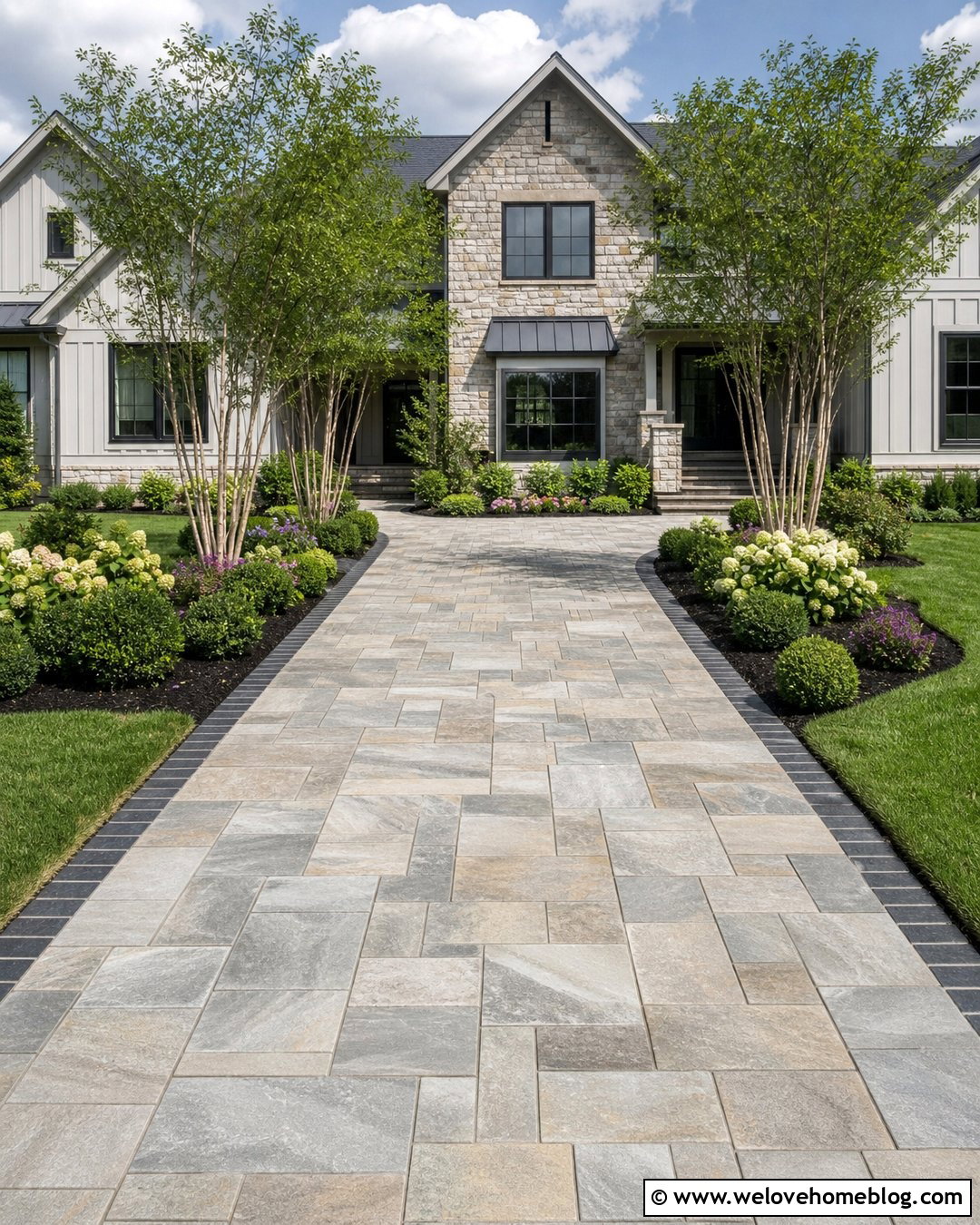
Quartzite pavers offer lively color variation while maintaining a refined overall appearance. A blend of silver, gray, soft gold, and muted green can brighten a broad driveway without overwhelming the house. Lay rectangular stones in a random ashlar pattern, balancing larger pavers with smaller pieces. Dark granite edging will contain the pattern and define the boundary beside the lawn. This complete look suits a transitional home with stone veneer, painted siding, and dark-framed windows. Use rounded shrubs, flowering perennials, and small multi-stem trees to echo the natural variation in the paving. A matching quartzite path can lead from the parking area to the front door. Choose dense, driveway-rated material with a cleft or lightly textured finish. Consistent bedding depth is important because the pavers may have slight natural thickness variations.
9. Travertine Driveway With Mediterranean Landscaping
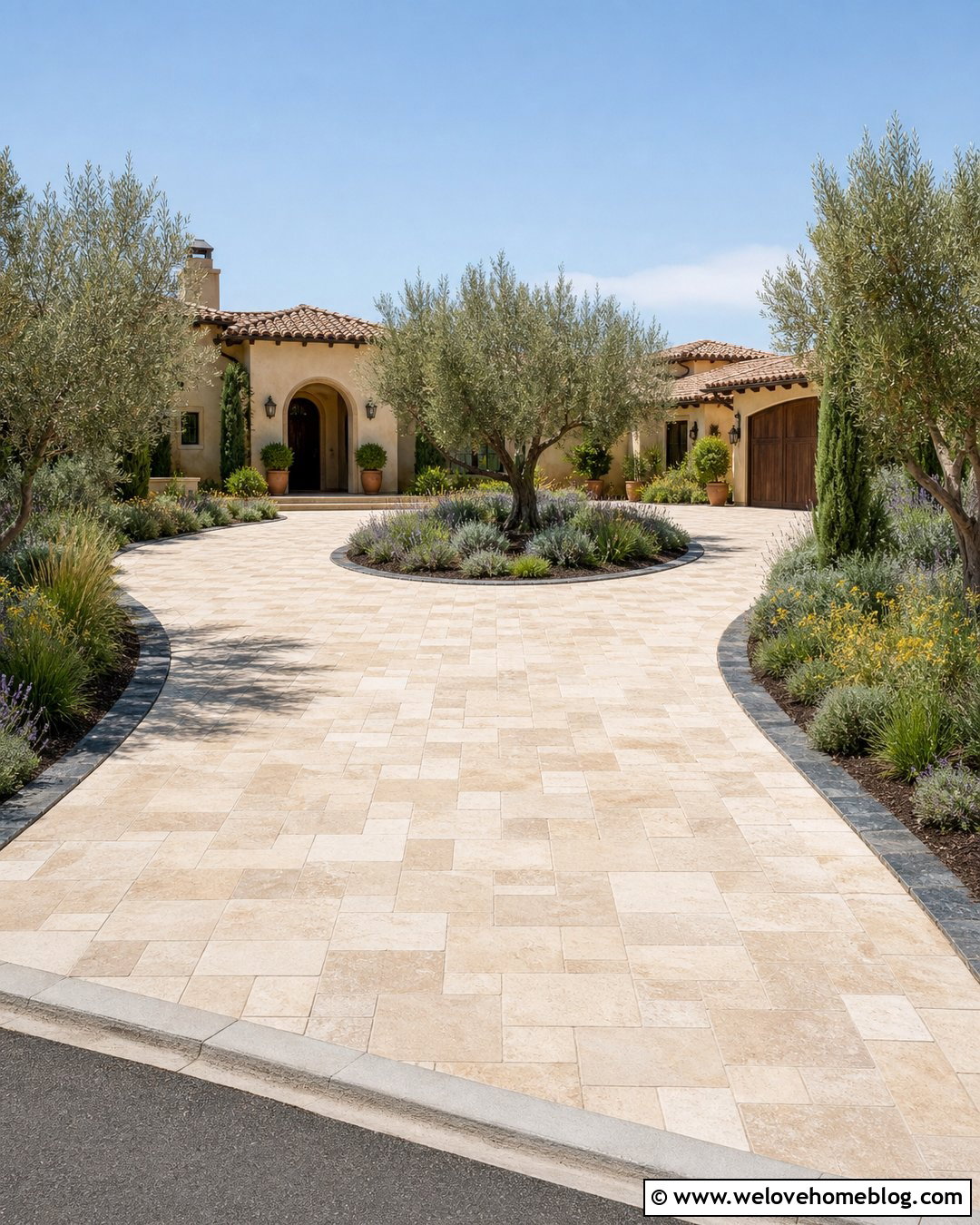
A warm travertine driveway can create a light, elegant entrance for a Mediterranean, Spanish, or stucco home in a suitable climate. Select driveway-rated pavers in ivory, beige, or walnut tones and use a tumbled finish for a softly aged appearance. A French pattern introduces variety while keeping the broad surface visually balanced. Darker stone setts around the perimeter will strengthen the edge and separate the paving from garden beds. Add olive trees, rosemary, ornamental grasses, and drought-tolerant flowering plants to continue the warm regional palette. A curved or circular layout can highlight an arched doorway or central fountain. Travertine varies in density and porosity, so confirm that the selected product can withstand vehicles and local weather. Filled voids, proper sealing when appropriate, and effective drainage will simplify ongoing care.
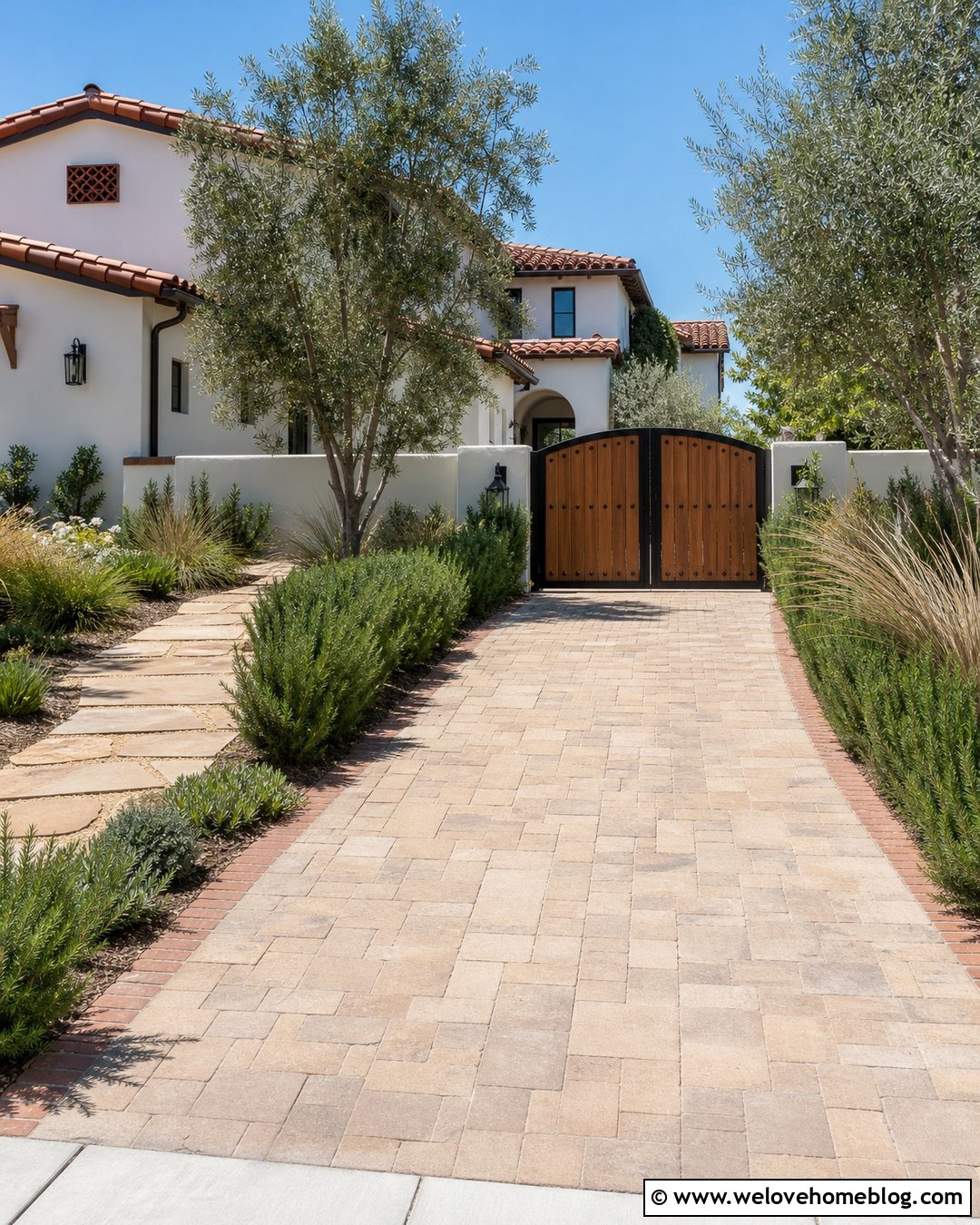
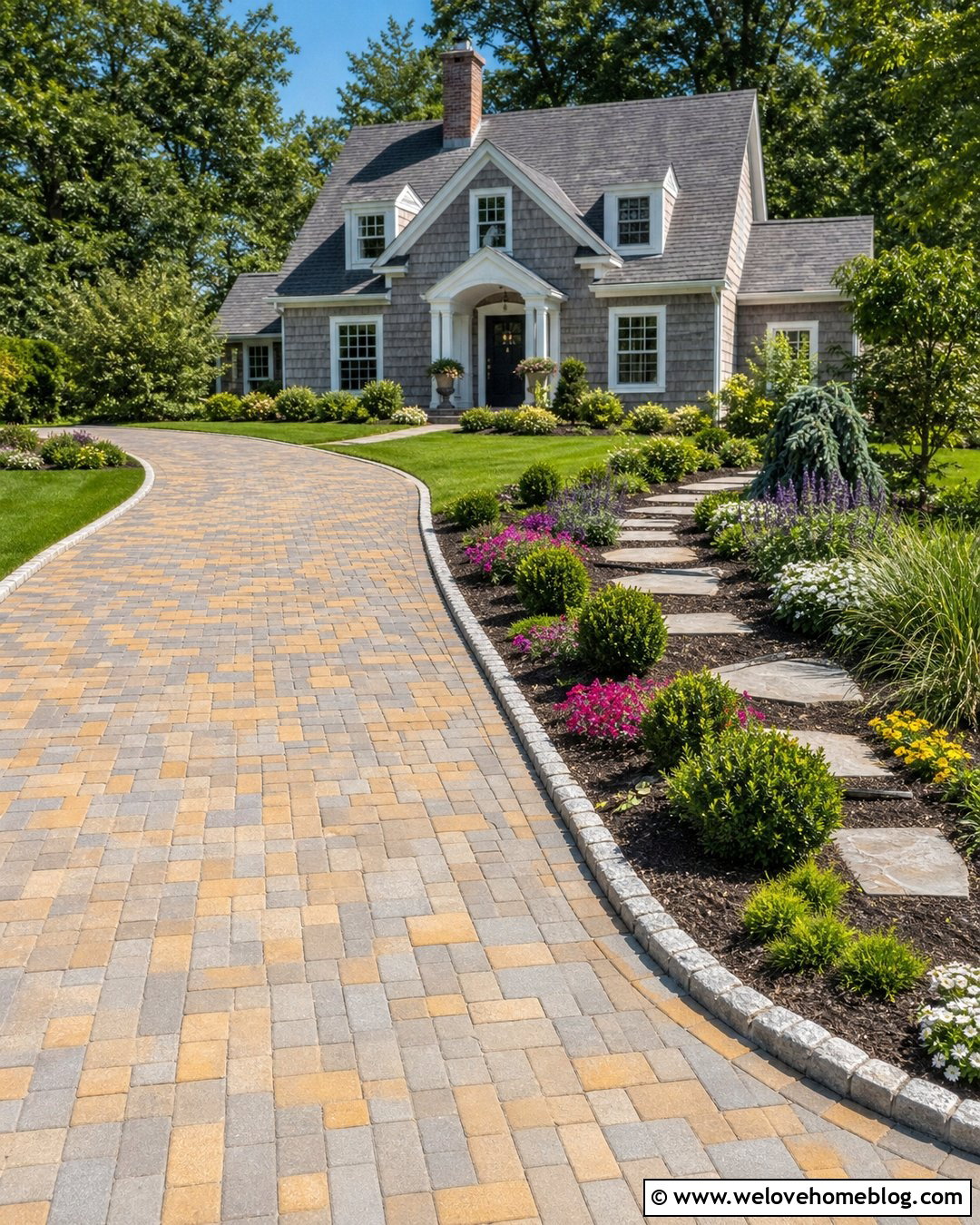
10. Slate Driveway With Clean Linear Borders
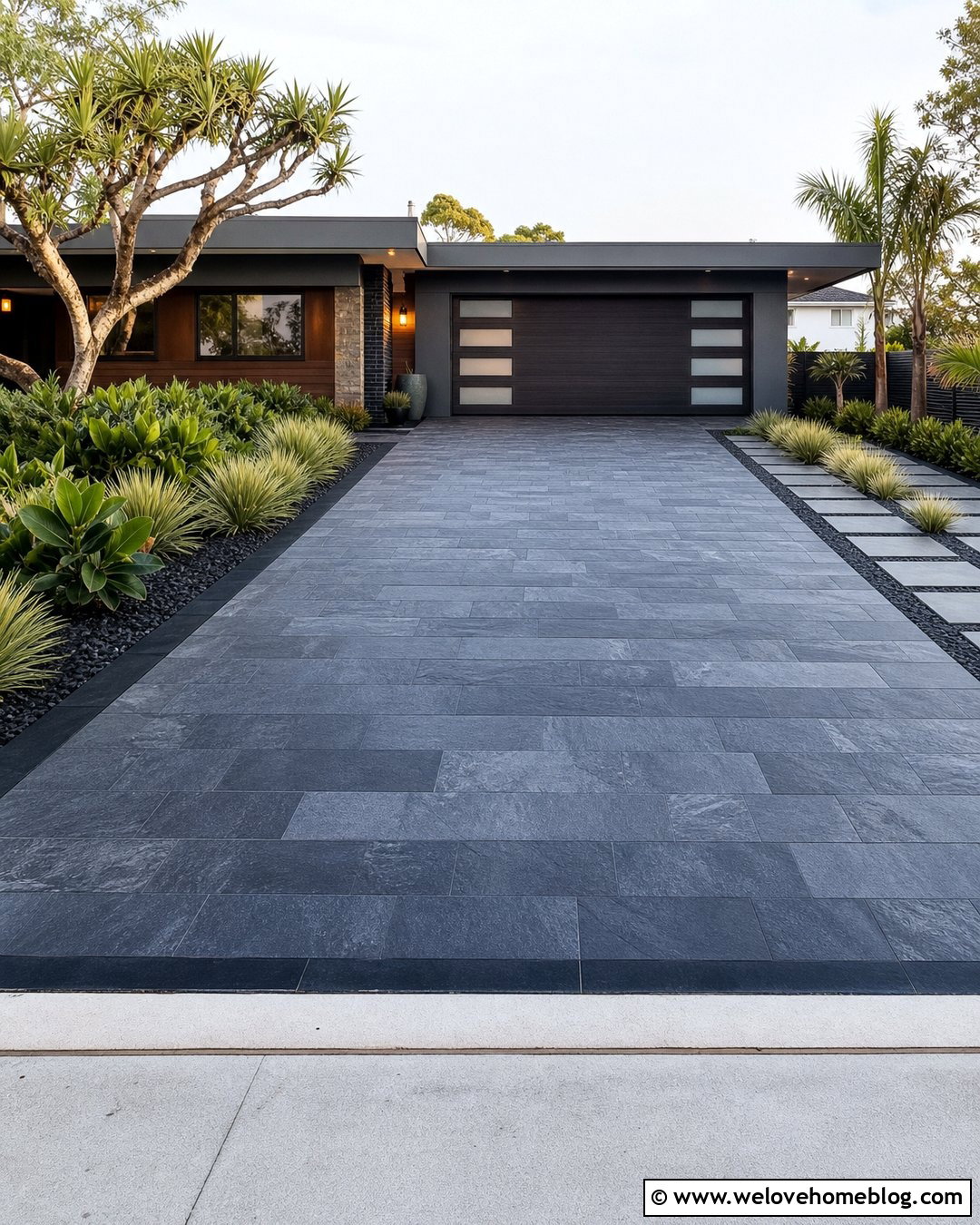
Dense exterior-rated slate can produce a sophisticated driveway with rich layers of gray, blue, green, and charcoal. Use rectangular pavers in a staggered linear pattern to create a clean surface for a contemporary or mid-century home. A black granite border will contain the slate and repeat dark window frames or roof details. Keep the driveway straight and relatively simple, then soften it with low grasses, broad-leaved shrubs, and one sculptural tree near the entrance. A narrow planting strip between the driveway and walkway can improve separation without using much space. Not every slate is suitable for vehicle traffic or freeze-thaw conditions, so stone selection matters greatly. Choose hard, dense material that resists splitting. A textured face, correctly prepared base, and tightly controlled joints will help the driveway remain practical and visually consistent.
11. Fieldstone Driveway With A Country House Entrance
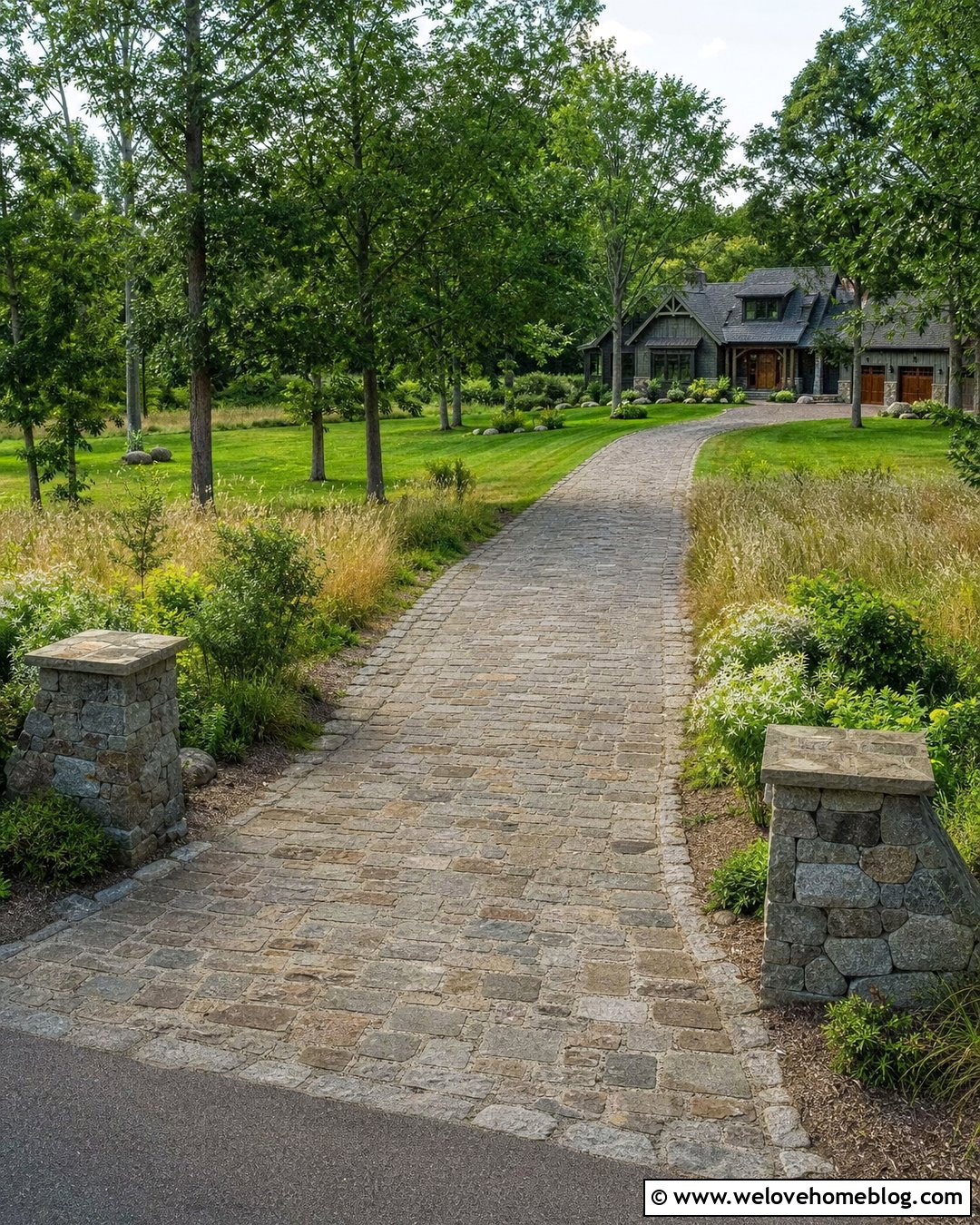
A fieldstone driveway feels most at home in a rural landscape where the entrance should blend with stone walls, mature trees, and informal planting. Use thick, roughly rectangular fieldstone pavers in muted gray and brown shades. A loose coursed pattern preserves rustic variation while providing a more manageable driving surface than highly irregular placement. Continue the same stone into low retaining walls or entrance pillars for a unified look. A curved approach can pass through lawn, meadow grasses, and clusters of native shrubs before reaching a country house. Add a simple gravel transition beside the garage to accommodate drainage or utility access. Fieldstone varies significantly by region and composition, so confirm its strength and weather resistance. Skilled installation is important for leveling uneven pieces and supporting them against repeated vehicle loads.
12. Porphyry Driveway With A Fan Pattern
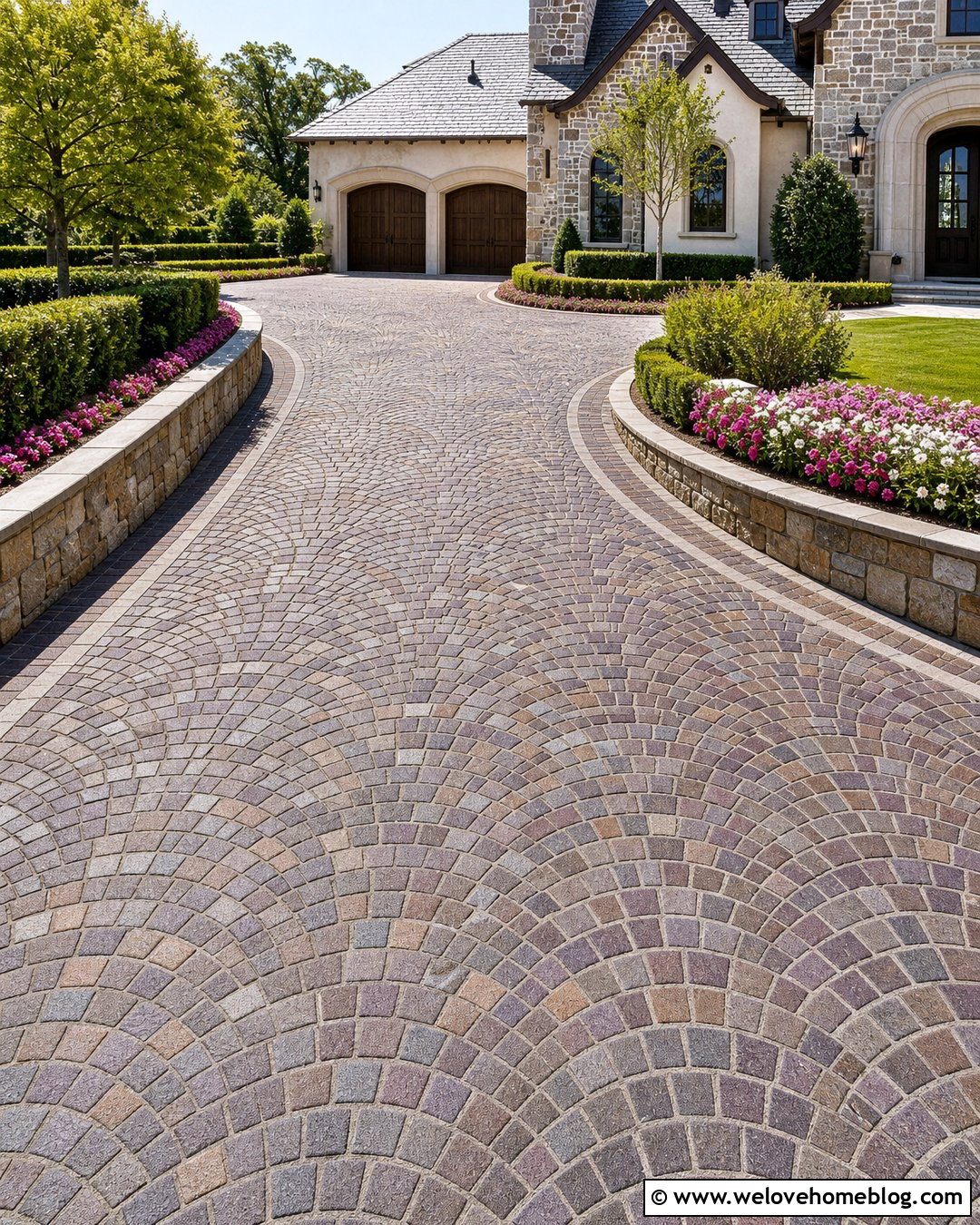
Porphyry setts arranged in a fan pattern create graceful movement across a wide driveway or entrance court. The stone often combines burgundy, gray, brown, and muted purple tones, giving the surface depth without requiring multiple materials. Use the fan design in the central driving area, then install straight courses around the edges to simplify transitions. A circular or gently curved driveway allows the pattern to follow the natural direction of traffic. Pair it with a European-inspired home, low stone walls, formal hedges, and balanced planting beds. At the garage, switch to a straight sett pattern for a cleaner stopping area. The many joints add texture, but careful installation is necessary to prevent uneven lines. Choose durable, vehicle-rated setts and use firm restraints around every curve and outer edge.
13. Granite Wheel Track Driveway With Gravel Center
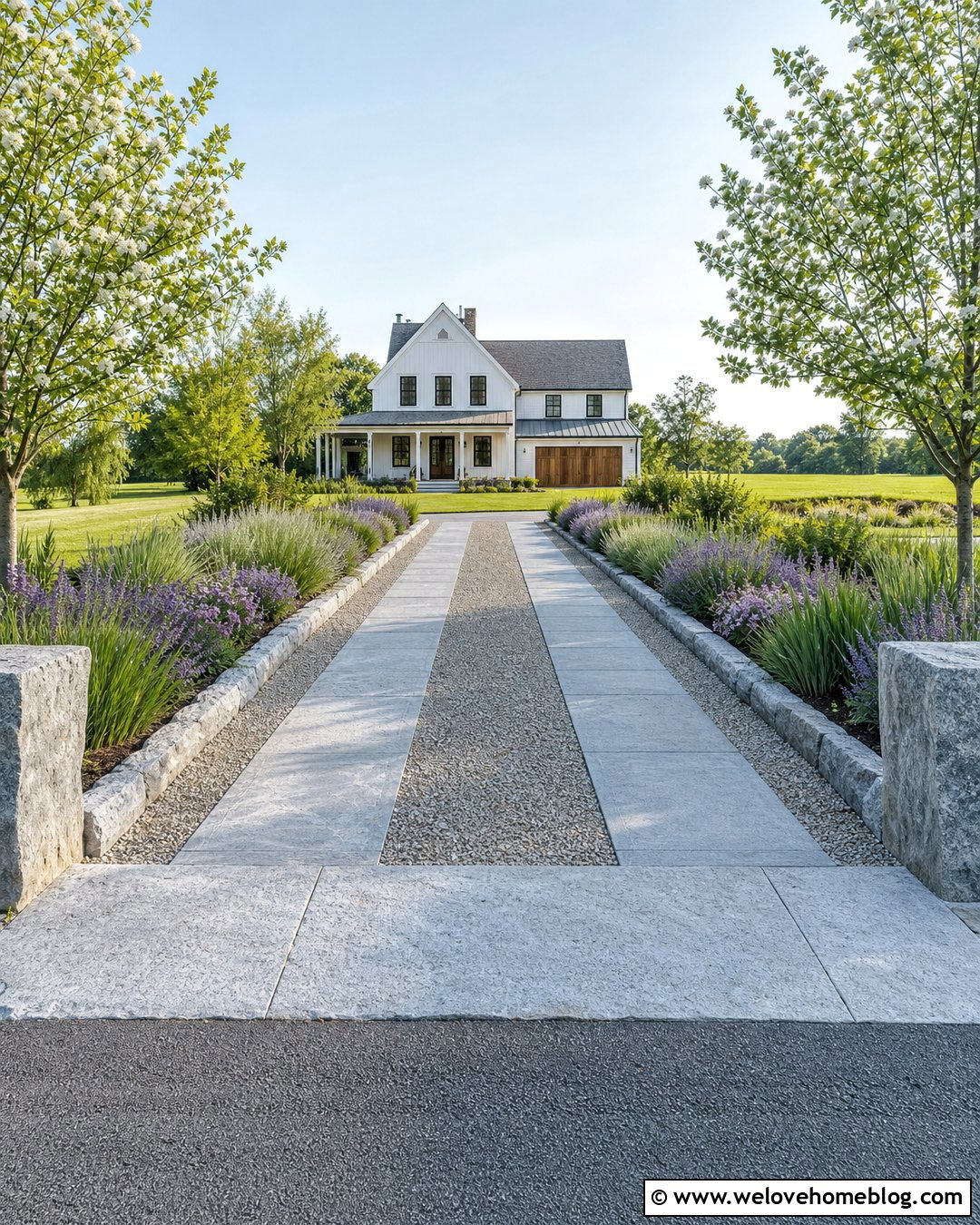
Granite wheel tracks provide a practical way to introduce natural stone without paving the entire driveway. Install two wide bands of flat granite setts or slabs along the vehicle path, then fill the center and outer strips with compacted crushed granite. This layout feels relaxed and works well for a farmhouse, cottage, or modest country home. Frame both sides with timber, steel, or larger granite edging to keep loose material contained. Lavender, catmint, ornamental grasses, and small flowering trees can follow the linear route. The stone tracks should be wide enough to accommodate normal tire placement and supported by a vehicle-rated base. A solid stone apron at the street can reduce gravel migration. This design is best for straight or gently curved driveways where the wheel paths remain easy to follow.
14. Limestone Driveway With Grass Joints
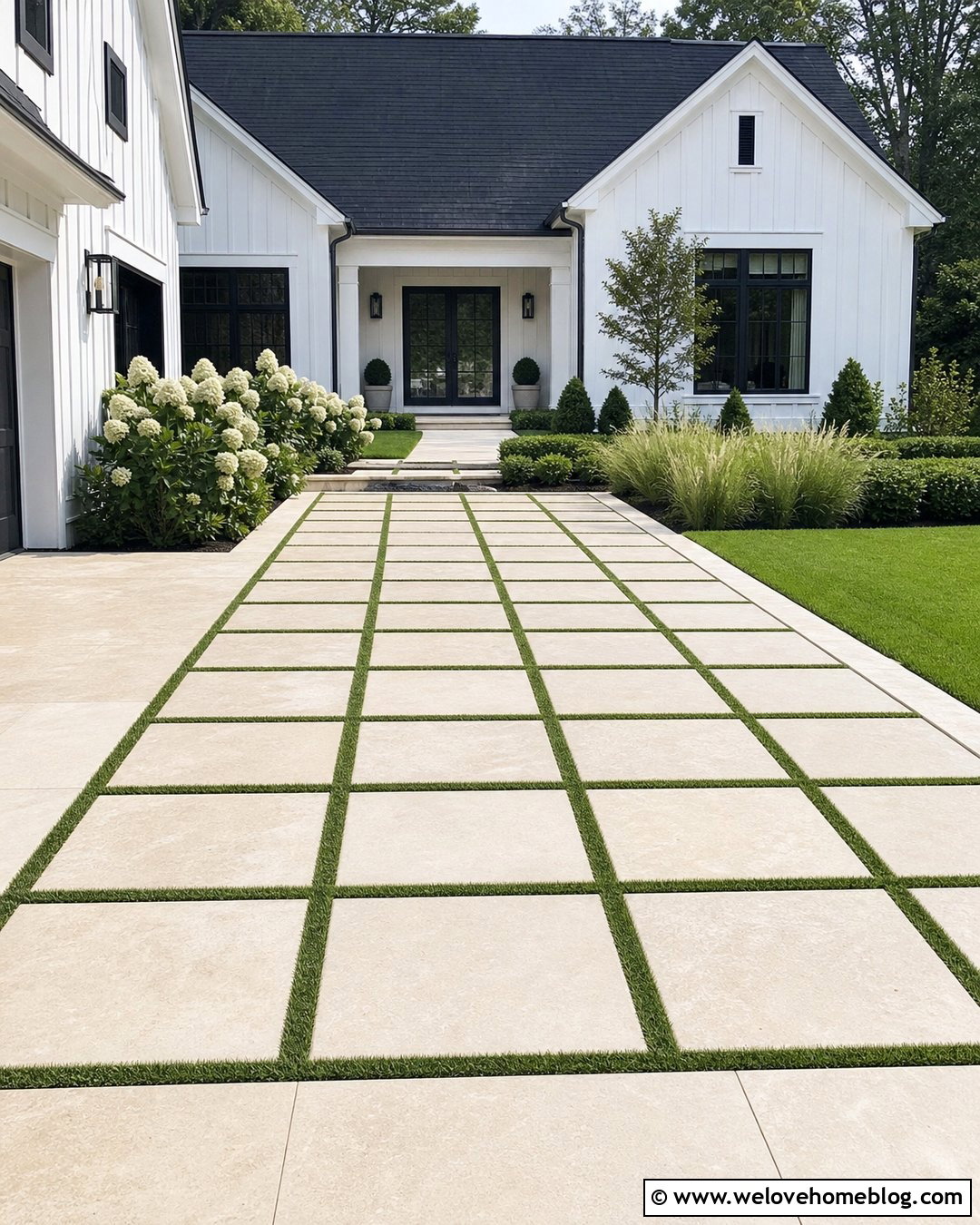
Limestone pavers separated by narrow grass joints can reduce the visual weight of a broad driveway. Large cream or light gray stones create stable driving zones, while the green lines connect the paved area to the lawn. Use a straight grid for a modern farmhouse or contemporary ranch home. A solid limestone border around the perimeter will make the layout feel intentional and protect planted joints from edge damage. Choose durable turf, low ground cover, or a reinforced planting system suited to local conditions and occasional vehicle contact. Keep the joints narrow near turning areas, where tires create greater stress. Simple planting beds with hydrangeas, grasses, and evergreen shrubs can frame the entrance. This driveway requires reliable drainage, strong paver support, and regular joint maintenance to preserve its crisp pattern.
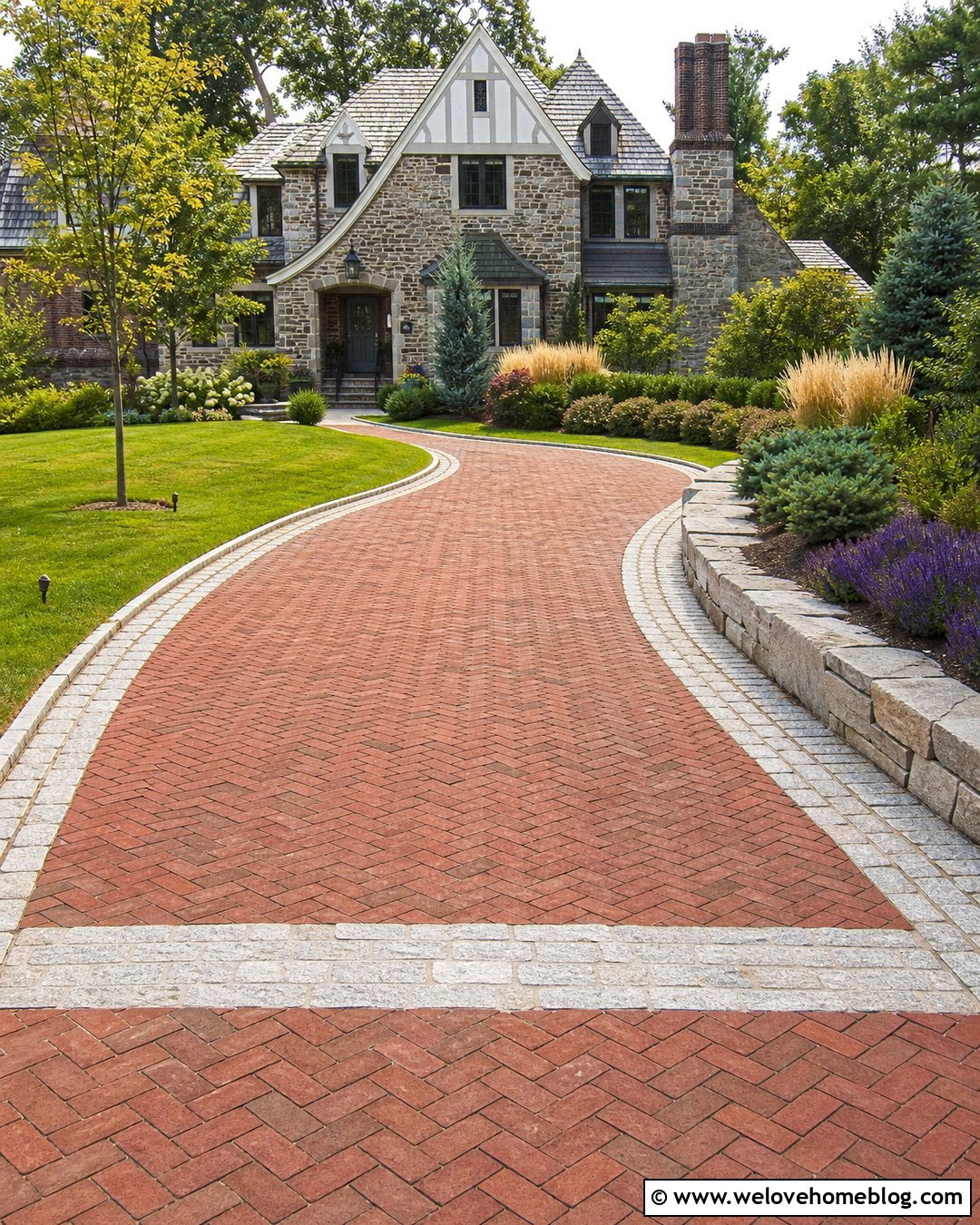
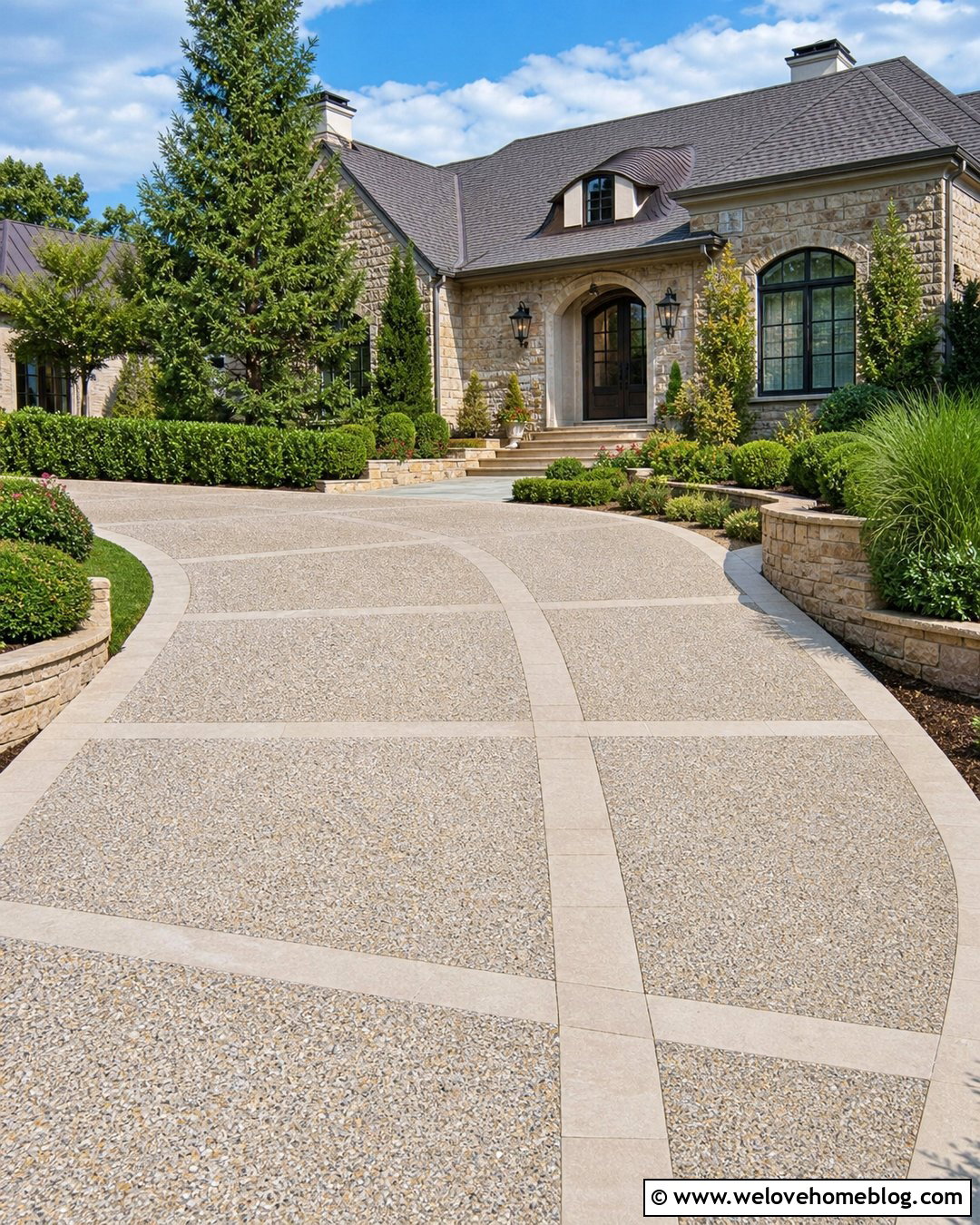
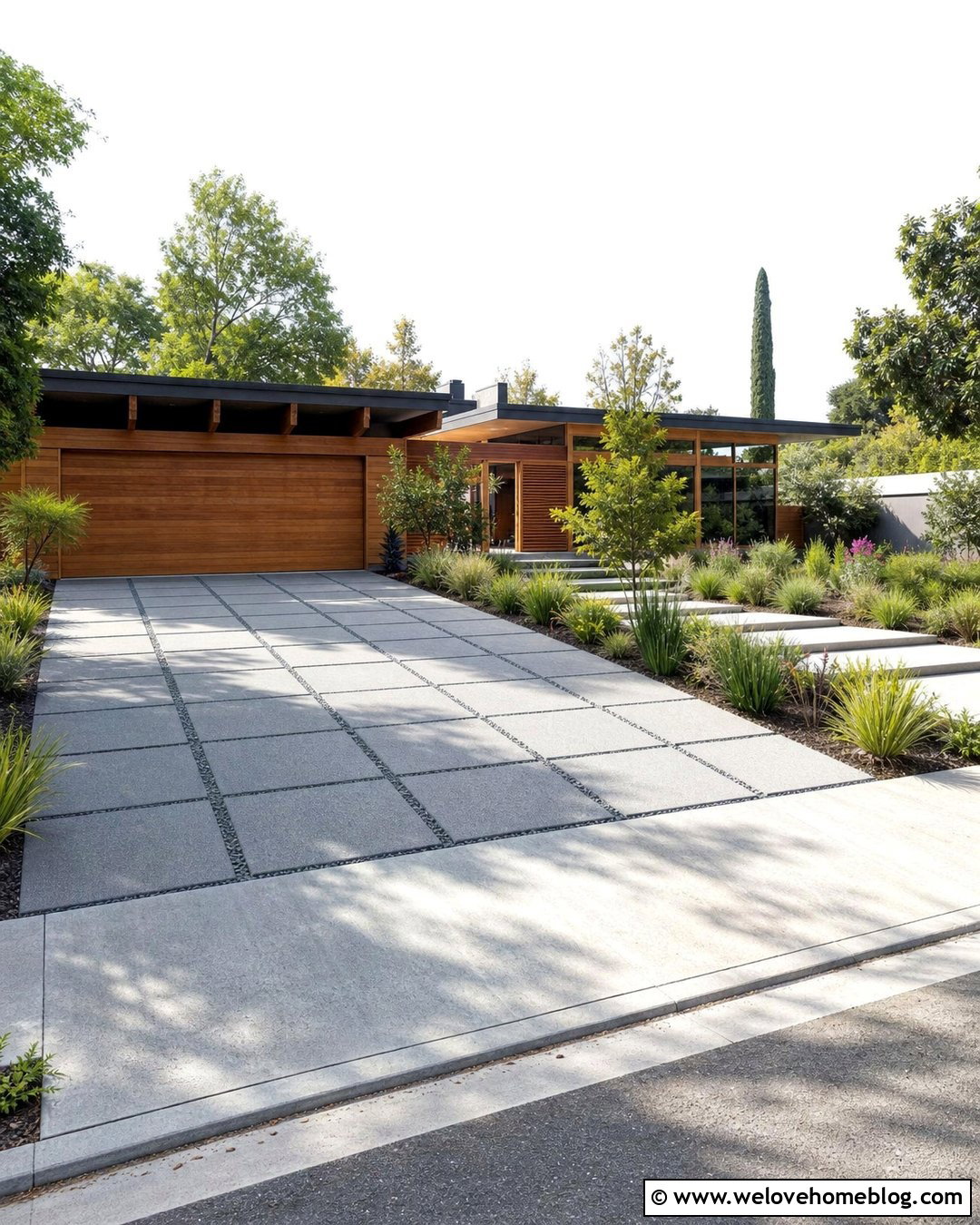
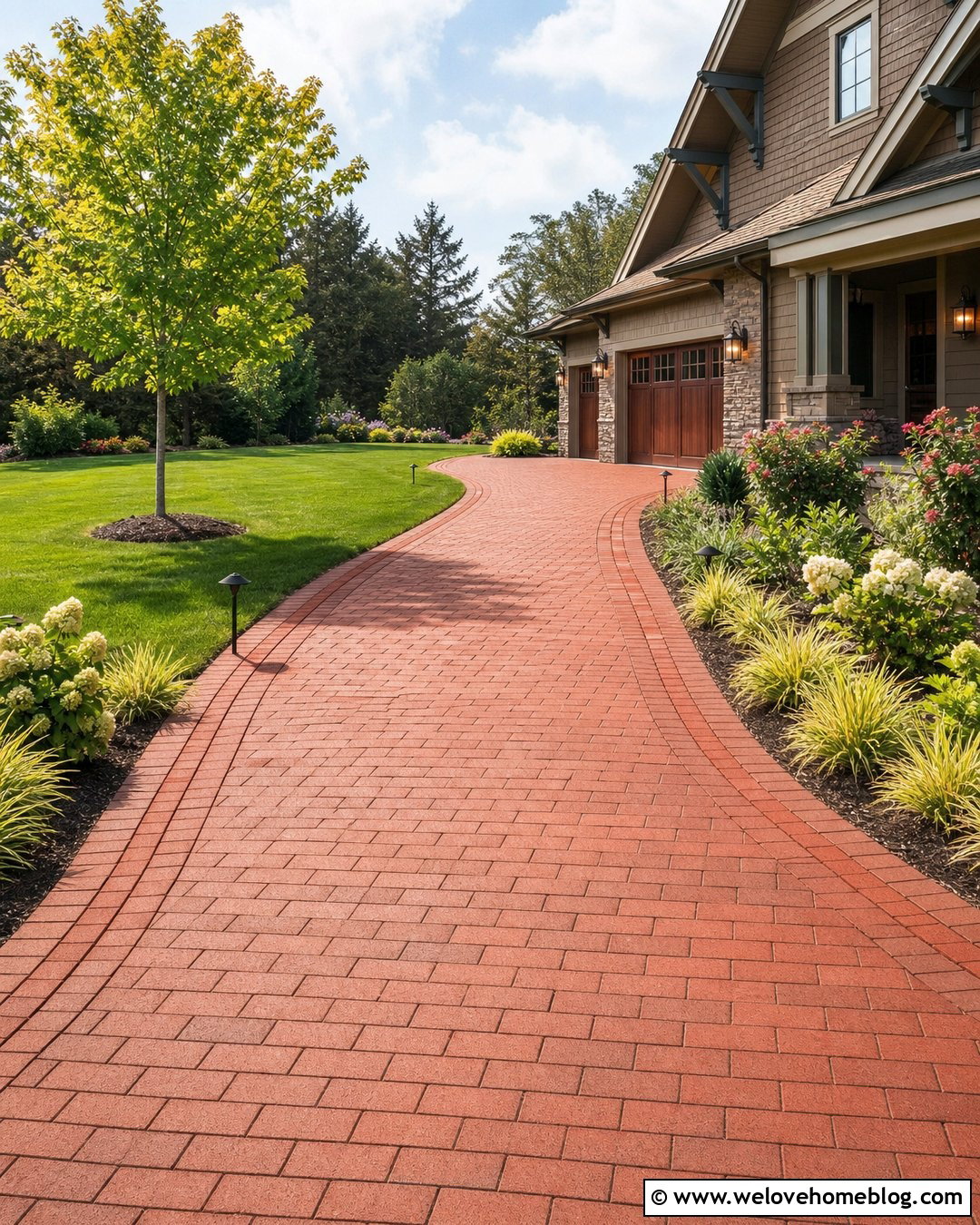
15. Bluestone Driveway With A Granite Cobble Apron
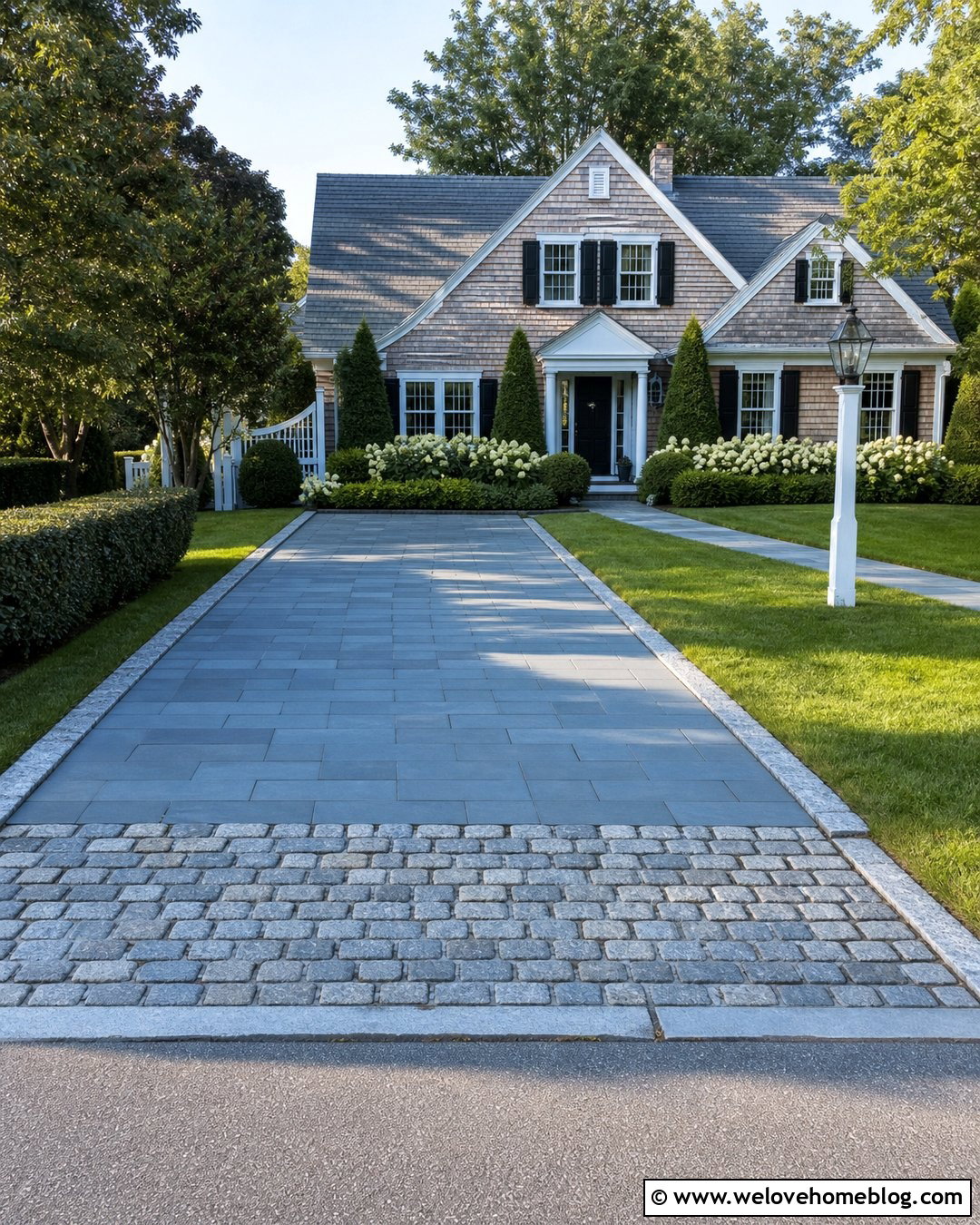
A bluestone driveway becomes more defined when a contrasting granite cobble apron marks the entrance from the street. Use rectangular blue-gray pavers across the main straight driveway, then install mixed charcoal and silver cobbles in a deep band at the curb. The material change adds texture and can visually separate the private drive from the roadway. Repeat the granite in narrow side borders and around a walkway connection. This combination suits a Cape Cod, Colonial, or shingle-style house with cool exterior colors. White hydrangeas, clipped evergreens, and lawn will keep the palette fresh and classic. Choose textured bluestone that is thick enough for vehicles. The apron needs an especially strong base and edge restraint because it receives turning, braking, and frequent traffic at the driveway entrance.
16. Granite Circular Driveway With A Center Garden
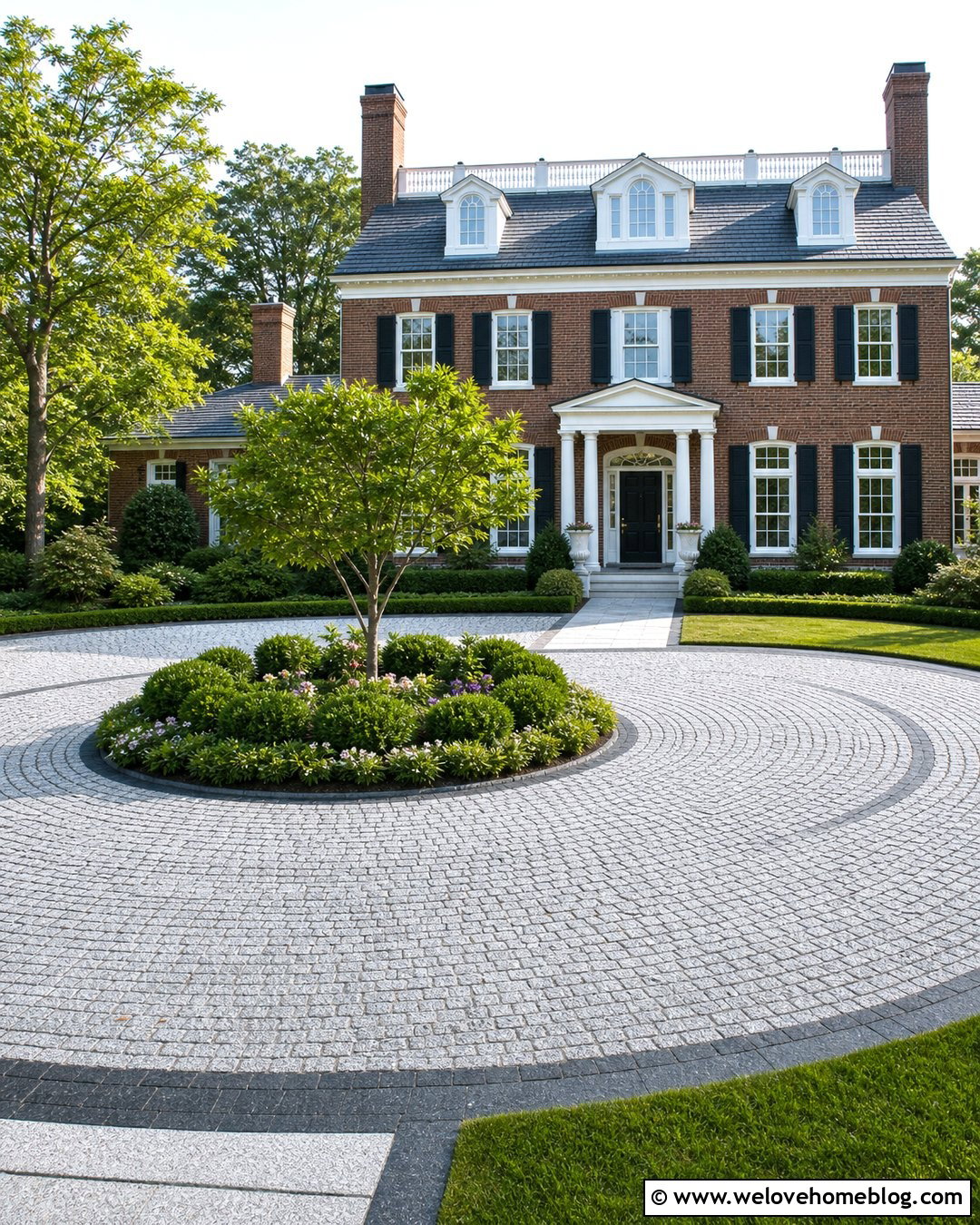
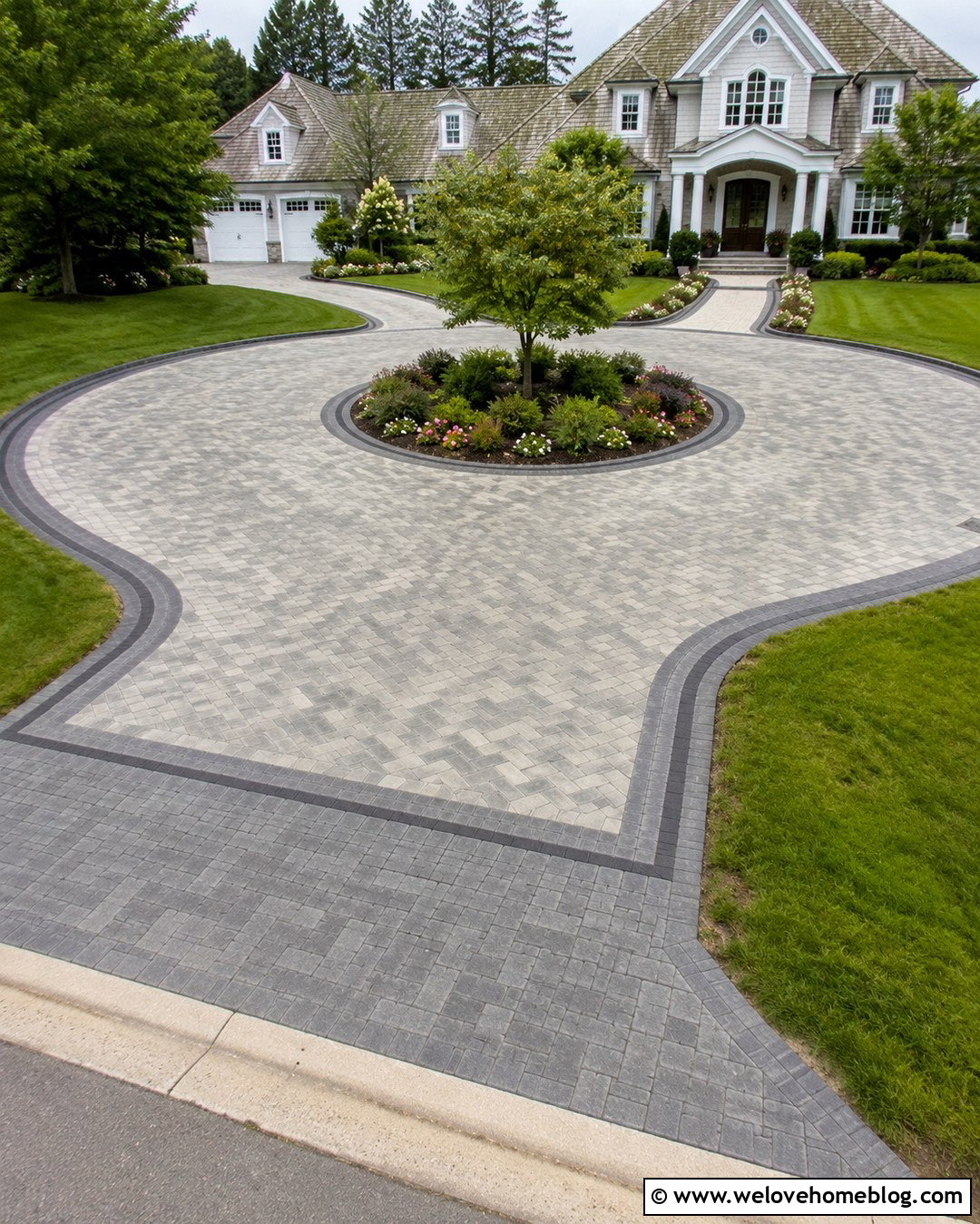
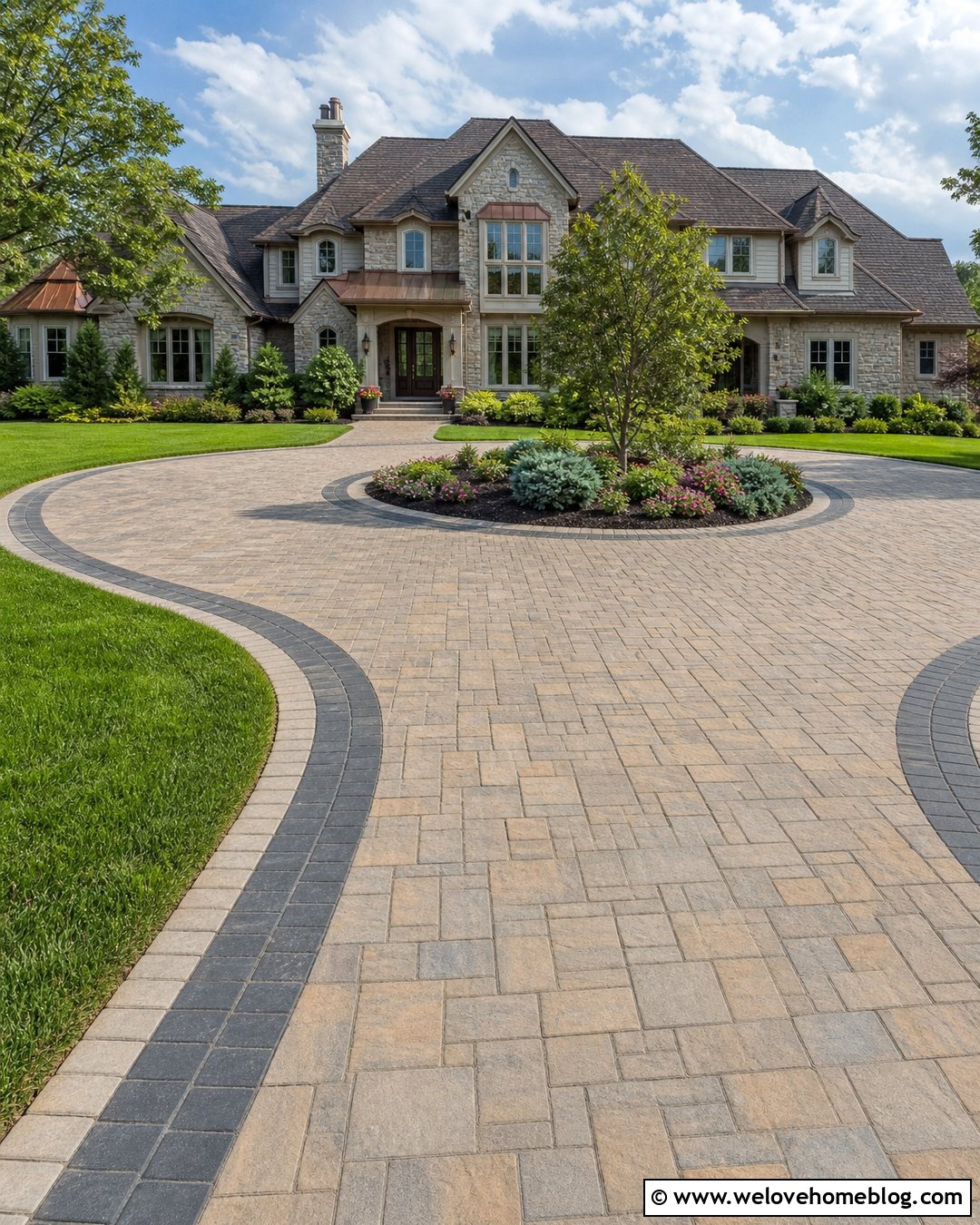
A circular granite driveway creates an impressive entrance while providing a clear route for arriving and departing vehicles. Use medium-gray granite setts in concentric courses that follow the curve. A darker granite border can outline both the exterior edge and the central island. Inside the circle, plant a small ornamental tree surrounded by low evergreen shrubs, seasonal flowers, and ground cover that will not obstruct views. The outer edge may include lawn and a separate stone walkway leading toward the front door. This complete design works well with Colonial, Georgian, and large traditional homes. Plan the circle around comfortable vehicle turning dimensions rather than appearance alone. Proper grading should guide water away from the island and house. Reinforced edges are also essential because turning tires place lateral pressure on curved paving.
17. Sandstone Horseshoe Driveway With Stone Pillars
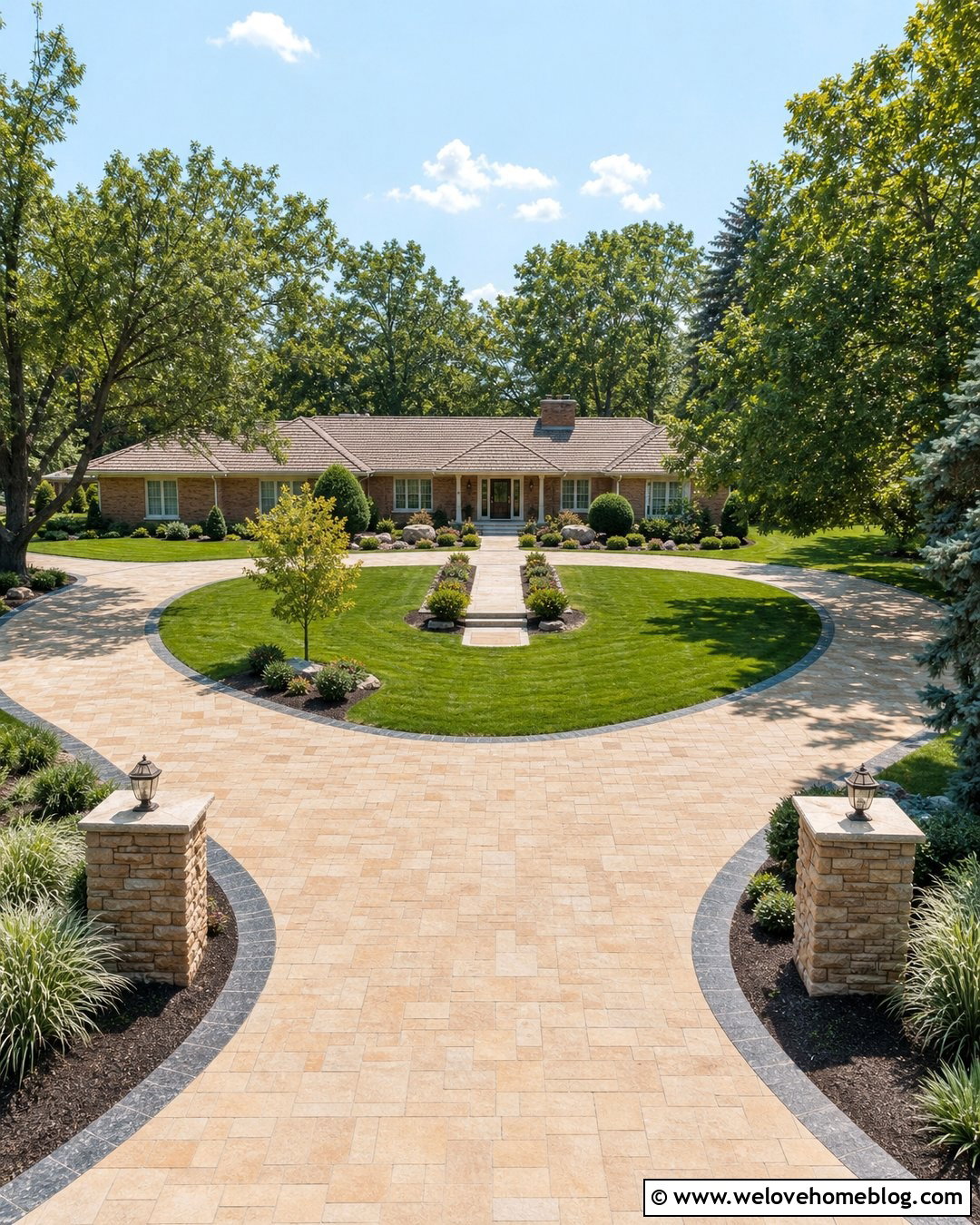
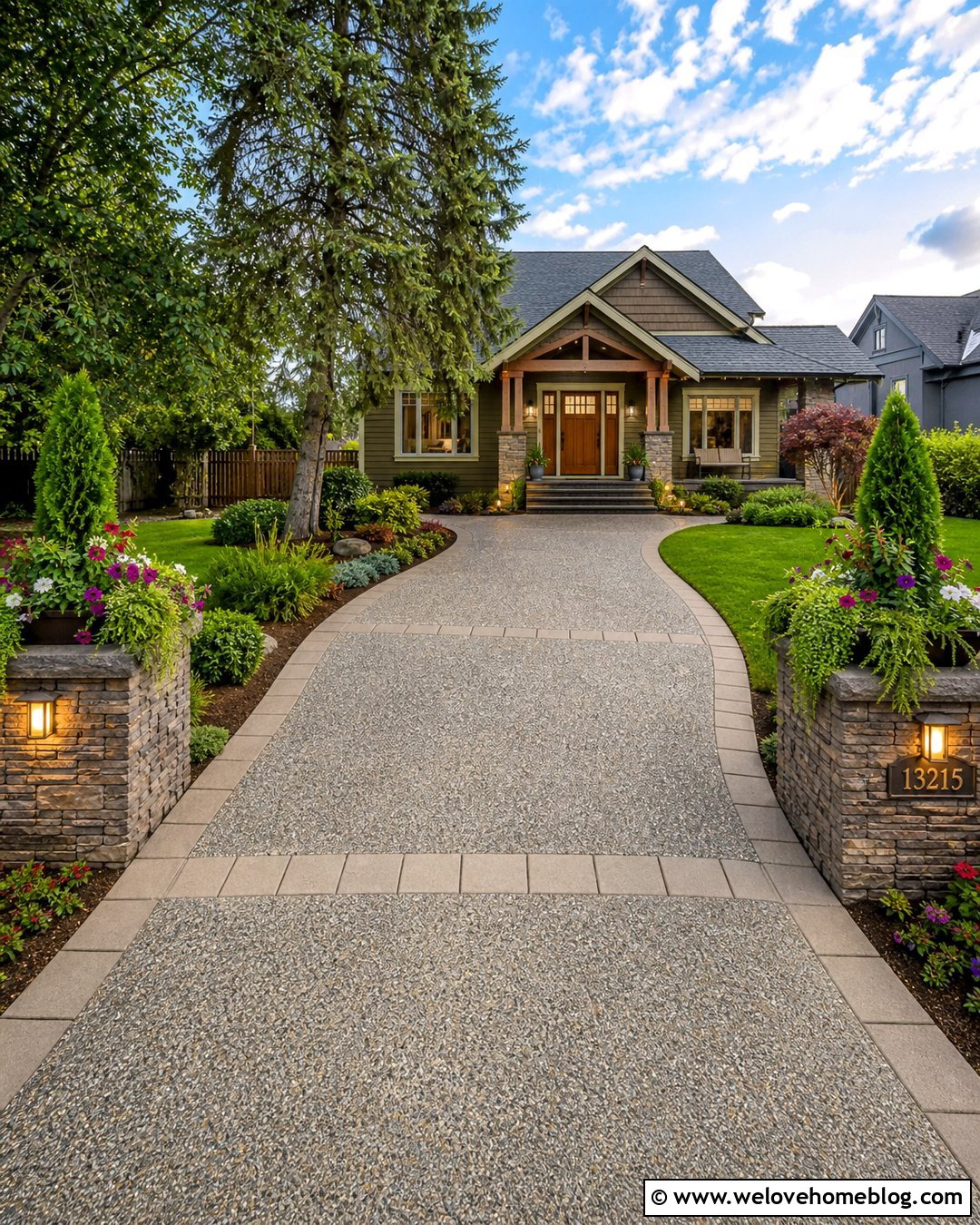
A horseshoe sandstone driveway provides two street connections and gives a broad front yard a balanced appearance. Choose warm buff and tan pavers laid in a random rectangular pattern. At both entrances, build low natural stone pillars using sandstone that matches or complements the driveway. Dark granite setts can edge the curves, increasing definition and protecting the softer planting boundaries. Place low shrubs and ornamental grasses beside the pillars, while larger trees sit farther back to preserve driver visibility. The center lawn can include a simple walkway, specimen tree, or restrained flower bed. This design pairs naturally with a ranch, farmhouse, or traditional brick home. Make each entrance wide enough for easy turning, and use careful grading throughout the horseshoe so runoff does not collect along the inner curve.
18. Cobblestone Driveway With A Courtyard Layout
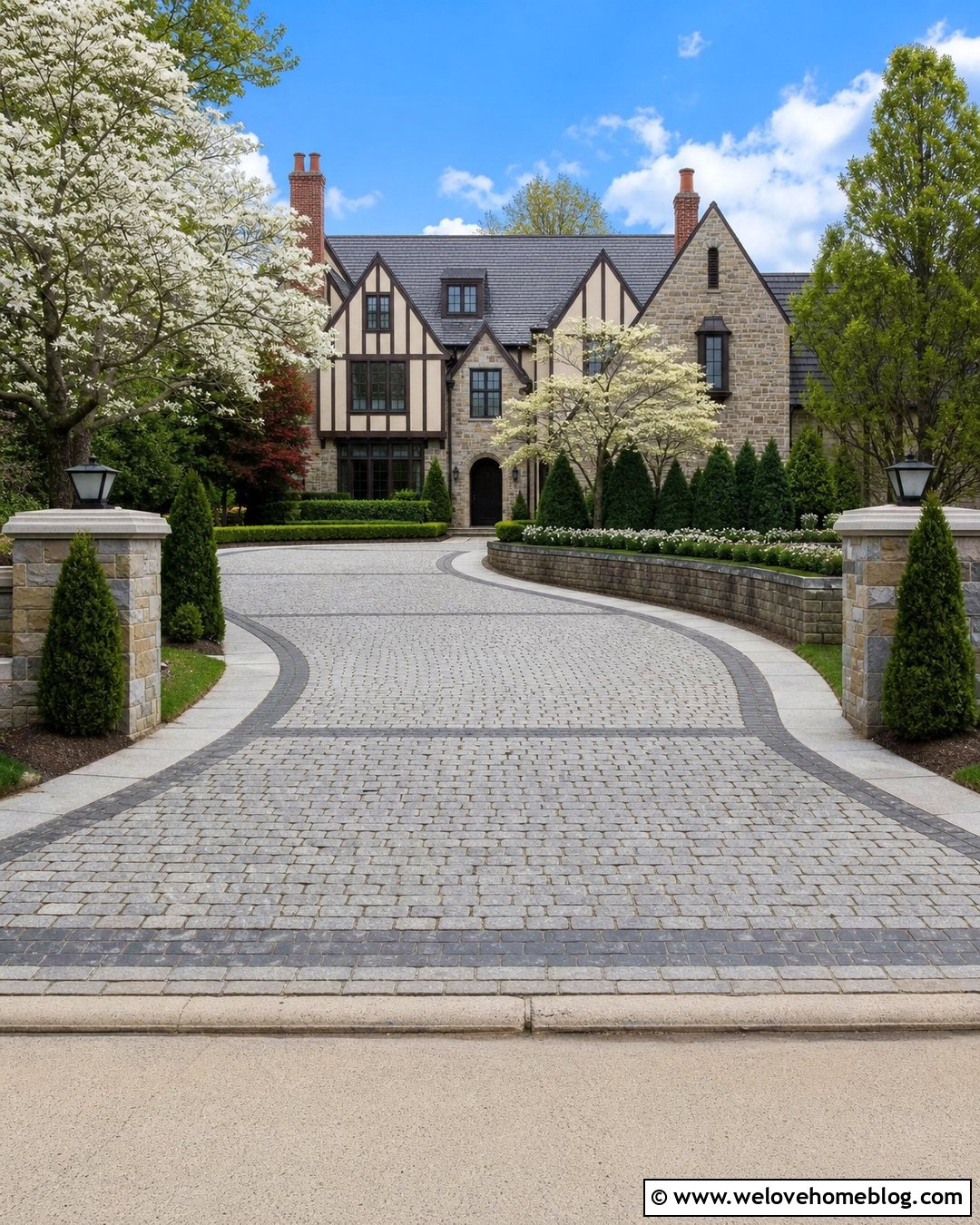
A cobblestone courtyard driveway turns the parking area in front of a home into a cohesive outdoor space. Use flat-topped granite or sandstone cobbles in a gently arcing pattern that directs attention toward the house. Define parking positions subtly with darker stone bands rather than painted markings. A matching cobblestone apron can connect the courtyard to a narrower entrance drive. Around the edges, add raised stone planters, clipped evergreens, and small flowering trees to soften the wide paved surface. This layout works especially well with Tudor, European-inspired, and large traditional homes. Include a distinct walkway so guests do not have to cross active parking zones unnecessarily. The courtyard should be pitched toward appropriate drainage points. Strong edge restraints and a deep, properly compacted base will help prevent movement in frequently used turning areas.
19. Mixed Natural Stone Driveway With A Geometric Border
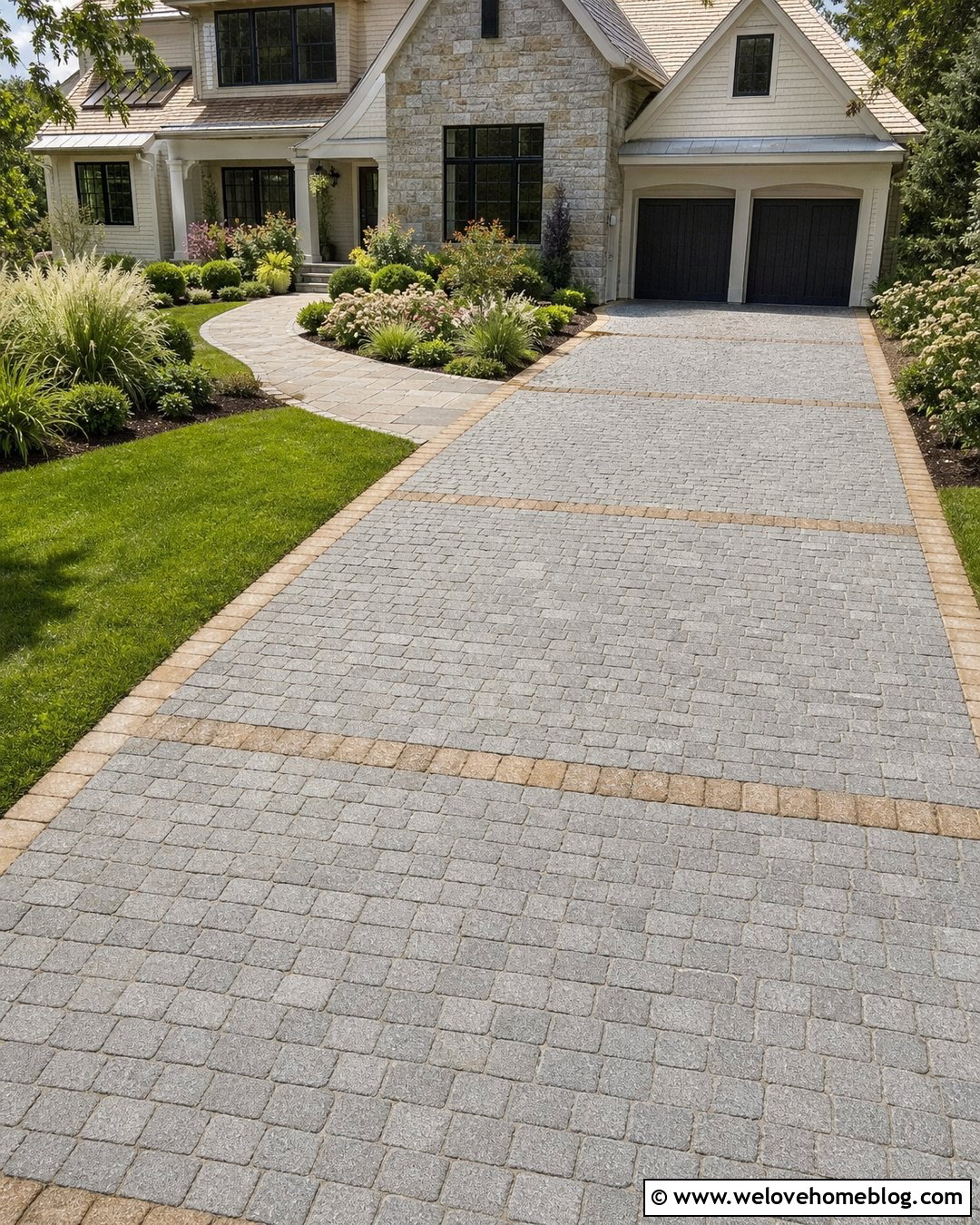
Mixing two natural stones can create a customized driveway without turning the surface into a complicated mosaic. Use gray granite pavers for the main driving area and warm sandstone setts for a simple rectangular border. Repeat the sandstone in one or two crossbands to break up a long approach. The restrained geometry will connect contrasting colors and help organize parking near the garage. A transitional home with mixed masonry, siding, or wood details provides an ideal backdrop. Landscape the edges with grasses, rounded shrubs, and a few flowering perennials that pick up the warm stone tones. Both materials should have compatible thicknesses, surface textures, and installation requirements. Avoid using too many colors or patterns. A limited palette makes the stone variation look purposeful while simplifying repairs and future material matching.
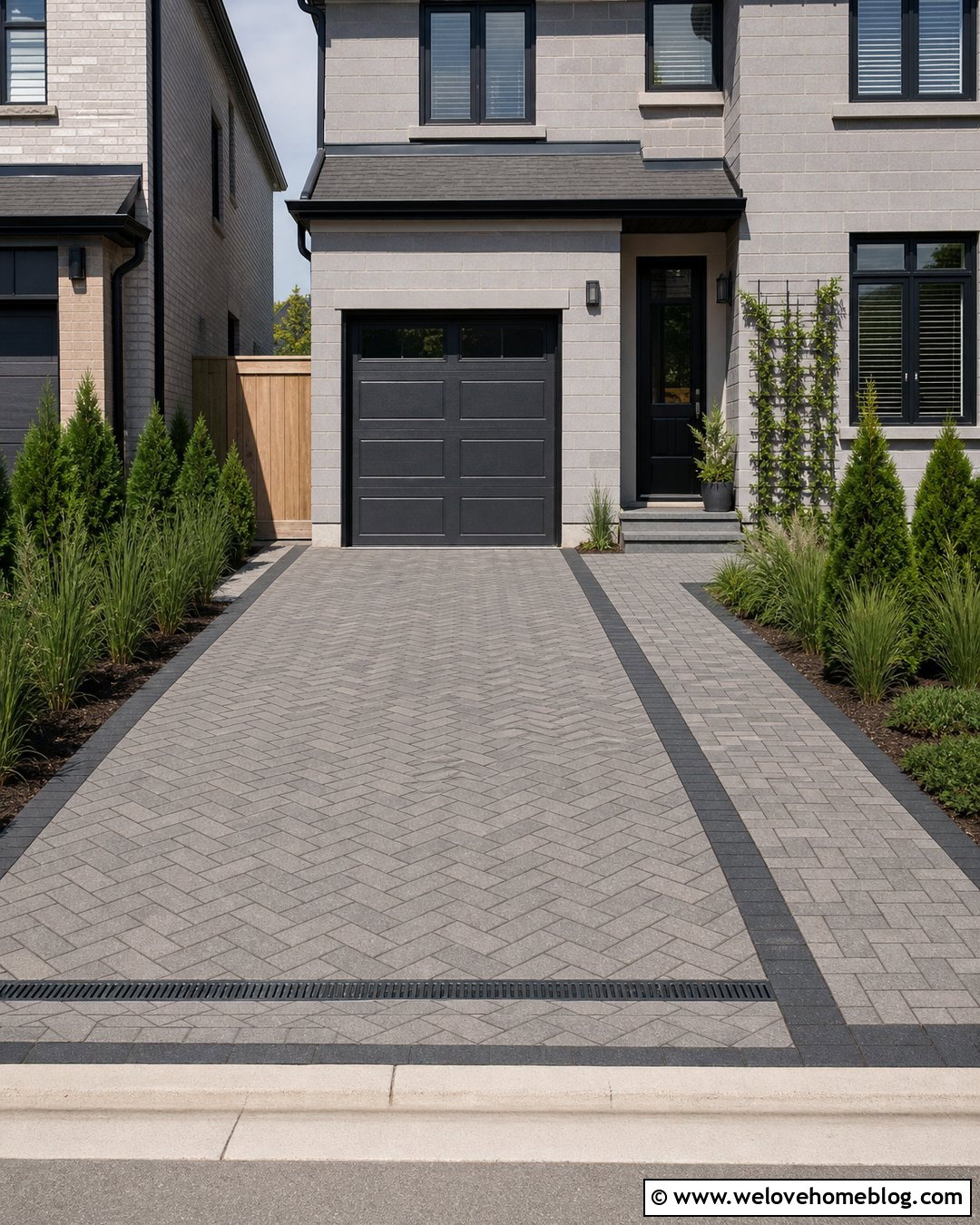
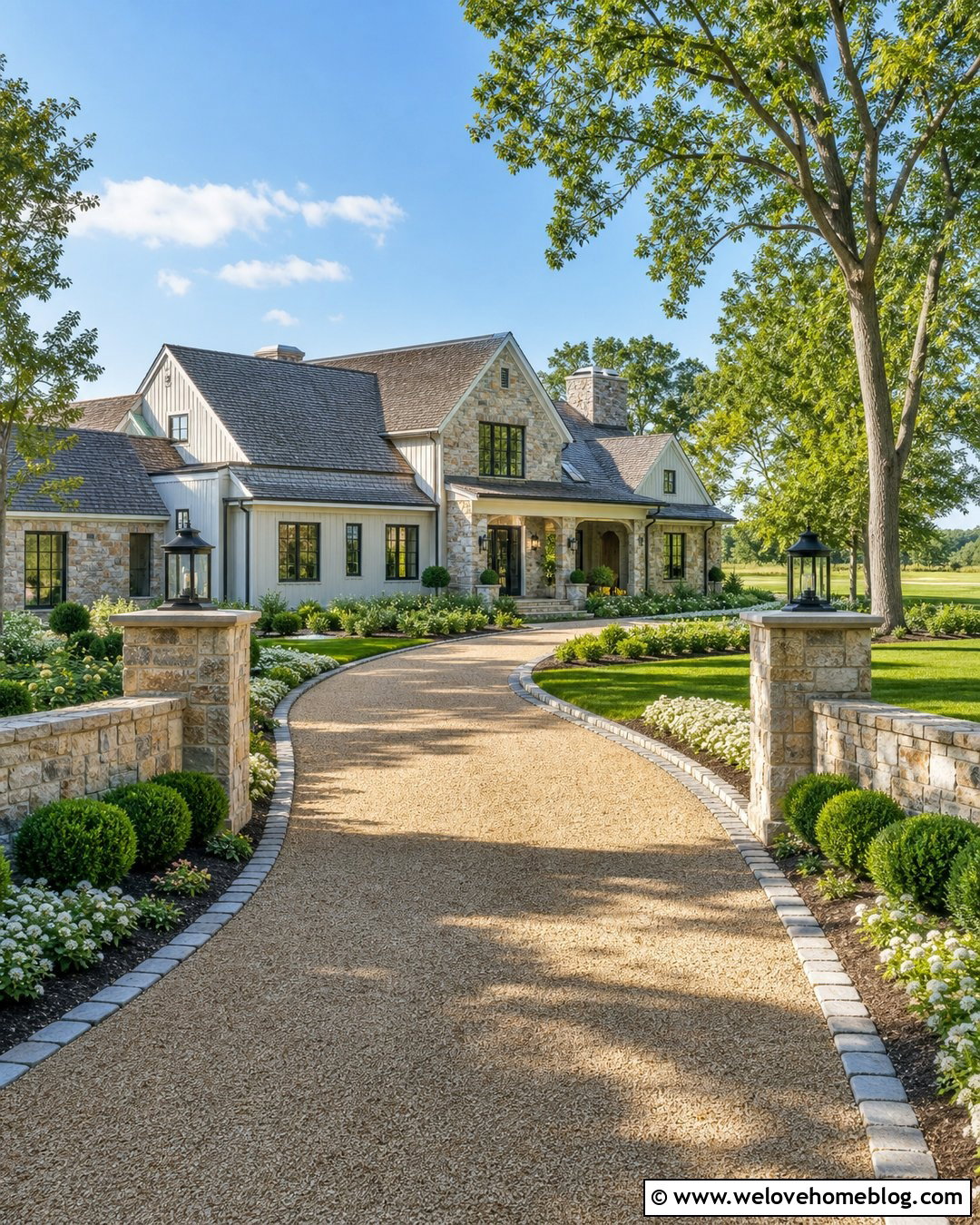
20. Crushed Granite Driveway With Cobblestone Edging
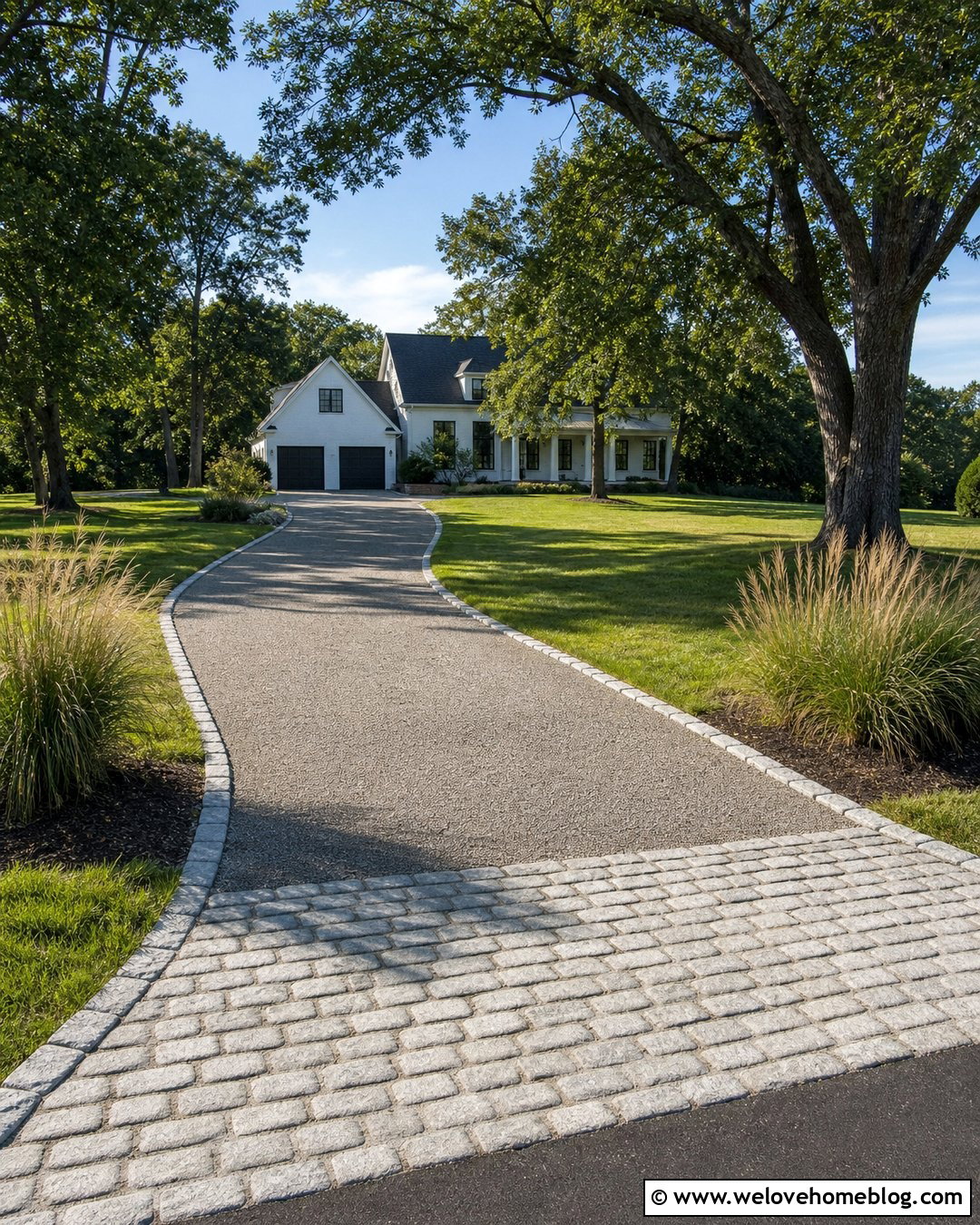
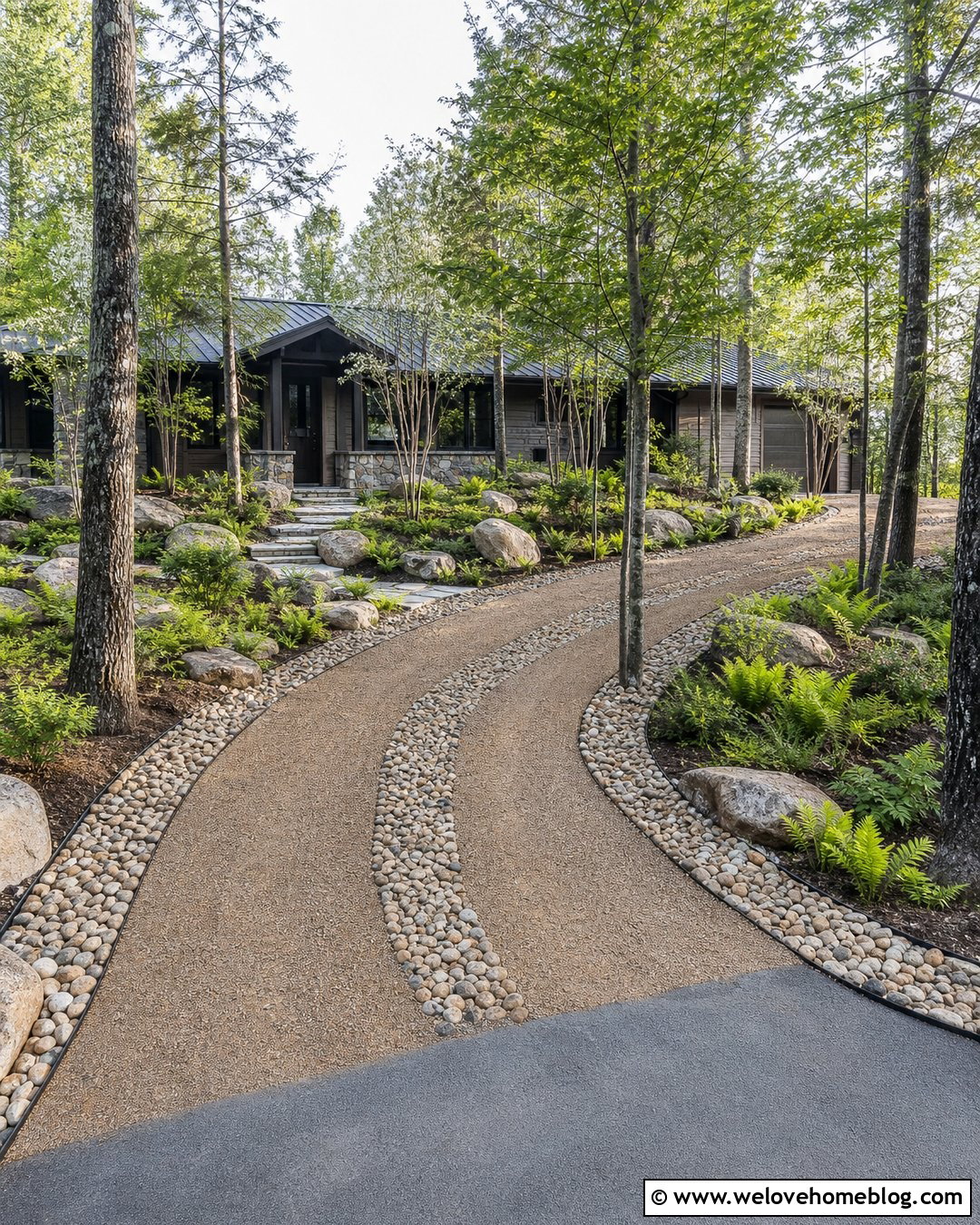
Crushed granite offers a casual natural stone surface that can suit long driveways and larger rural properties. Choose compactable material with a balanced blend of particles rather than loose decorative chips alone. Warm gray or golden crushed granite can be shaped into a curved approach leading toward a farmhouse or ranch home. Granite cobblestones along both sides will contain the surface and provide a crisp boundary against lawn and planting beds. Add an all-cobblestone apron near the road and another solid transition in front of the garage. Native grasses, shade trees, and simple shrubs can keep the landscape relaxed. The driveway needs a strong graded base, adequate crown, and planned drainage. Periodic raking and replenishment may still be necessary, especially on slopes, at sharp turns, and in areas affected by heavy runoff.
21. Pea Gravel Driveway With Flagstone Parking Bands
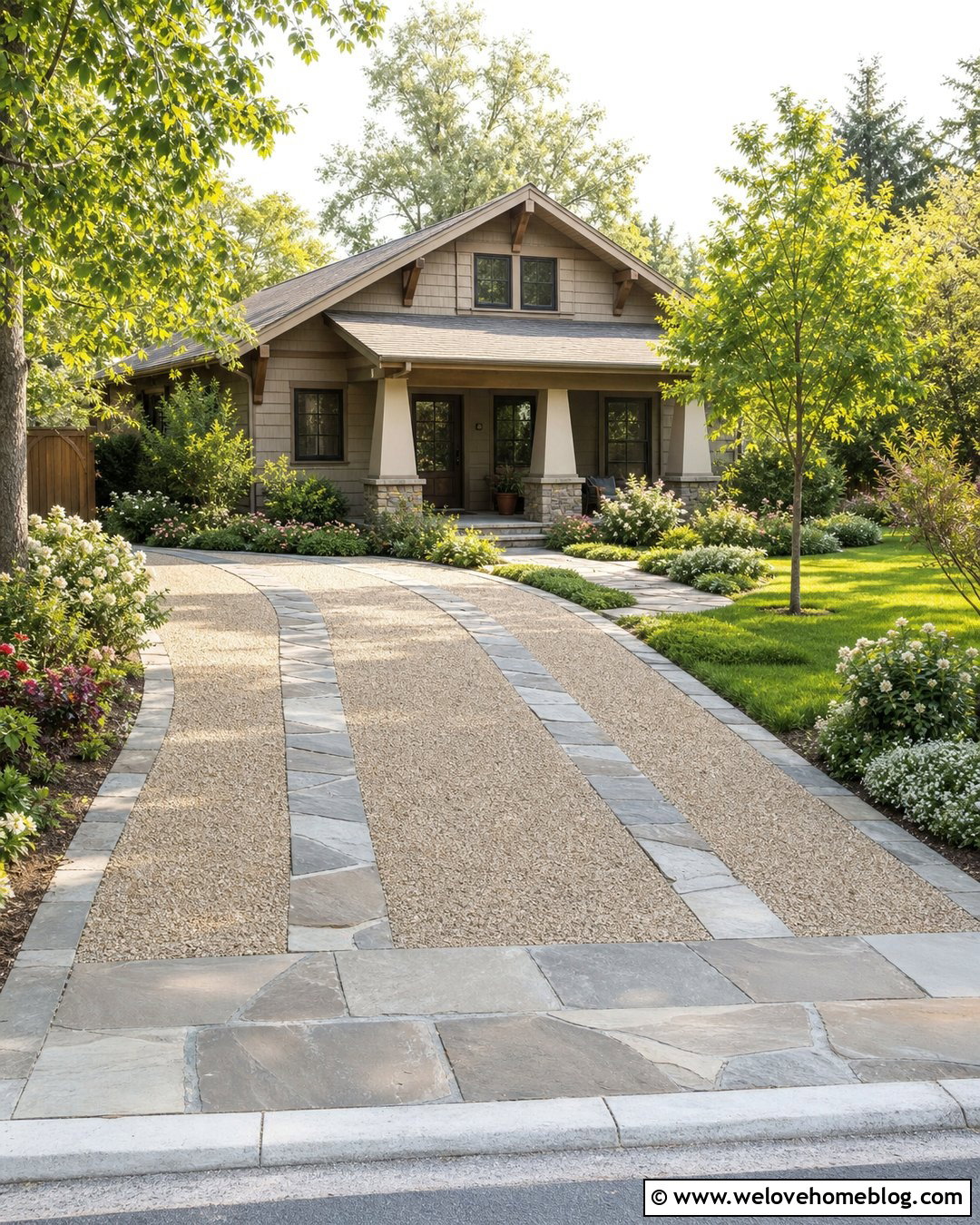
A pea gravel driveway can feel more organized when broad flagstone bands define the parking and turning areas. Use warm beige or mixed gray pea gravel over a stabilized, well-prepared base. Install thick, flat flagstone strips across the driveway near the garage and at the street entrance. Matching flagstone edging will help keep the gravel out of lawns and garden beds. A gently curved layout works beautifully beside a cottage or Craftsman home. Frame the route with flowering shrubs, ground covers, and small deciduous trees. Because rounded pea gravel shifts more readily than angular stone, stabilization and effective containment are important. Keep the driveway relatively level and avoid deep loose layers. The flagstone bands add visual rhythm while providing firmer zones where vehicles brake, turn, or enter the garage.
22. Mountain Stone Driveway With A Boulder Retaining Wall
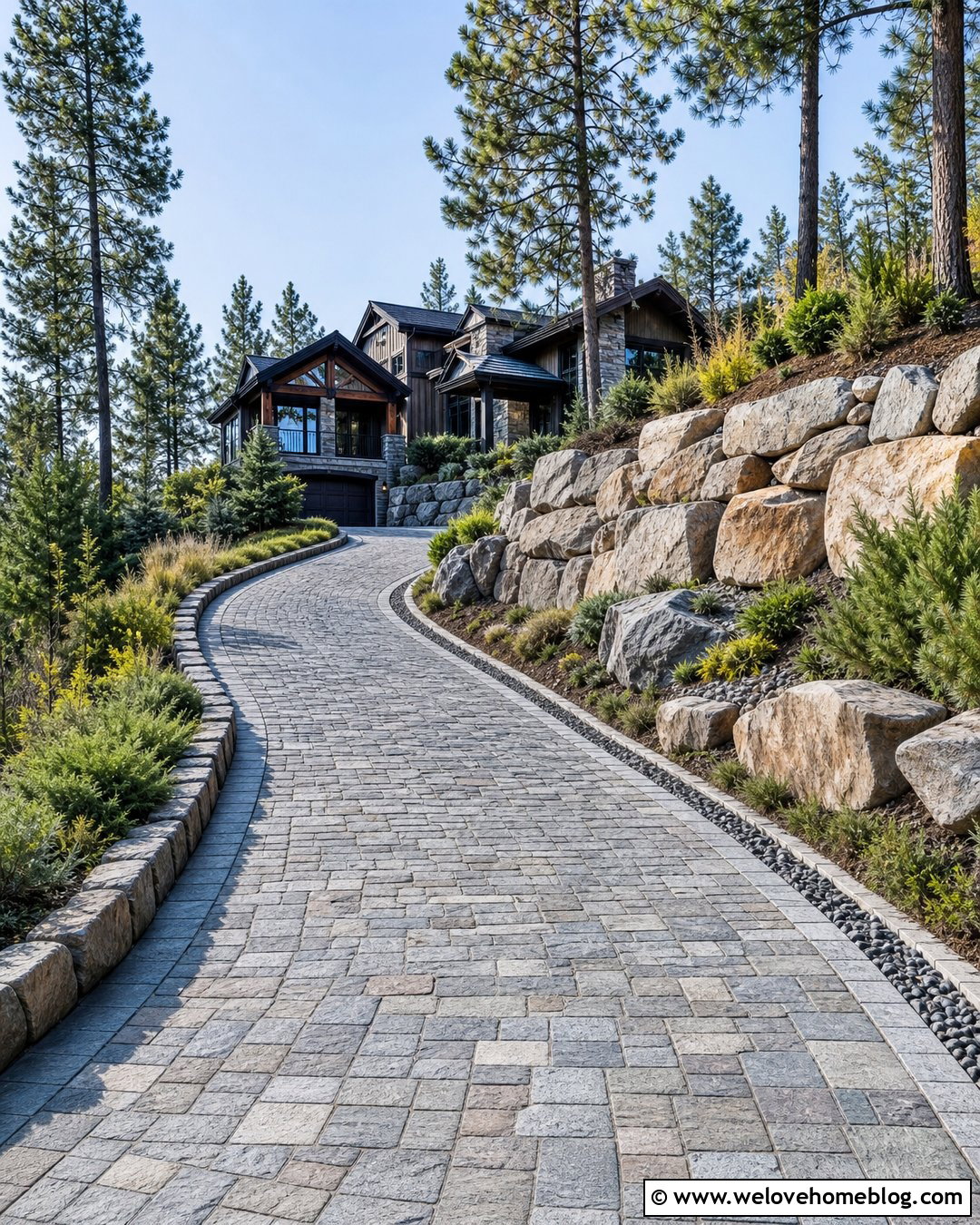
A sloped mountain property needs a driveway that responds to grade changes as part of the overall design. Use rugged granite or quartzite setts for the driving surface, laid in gentle curves that reduce the visual severity of the incline. Along the uphill edge, construct a natural boulder retaining wall with varied but compatible stone colors. The downhill side can include a lower stone curb, native grasses, evergreen shrubs, and erosion-resistant ground covers. A rustic modern or lodge-style house provides a strong backdrop for this driveway. Integrate drainage channels discreetly along the retaining wall and direct water toward an approved outlet. The setts should have textured faces for traction. Professional engineering may be needed where steep slopes, tall walls, unstable soil, or substantial runoff affect the driveway.
23. Light Granite Driveway With Coastal Landscaping
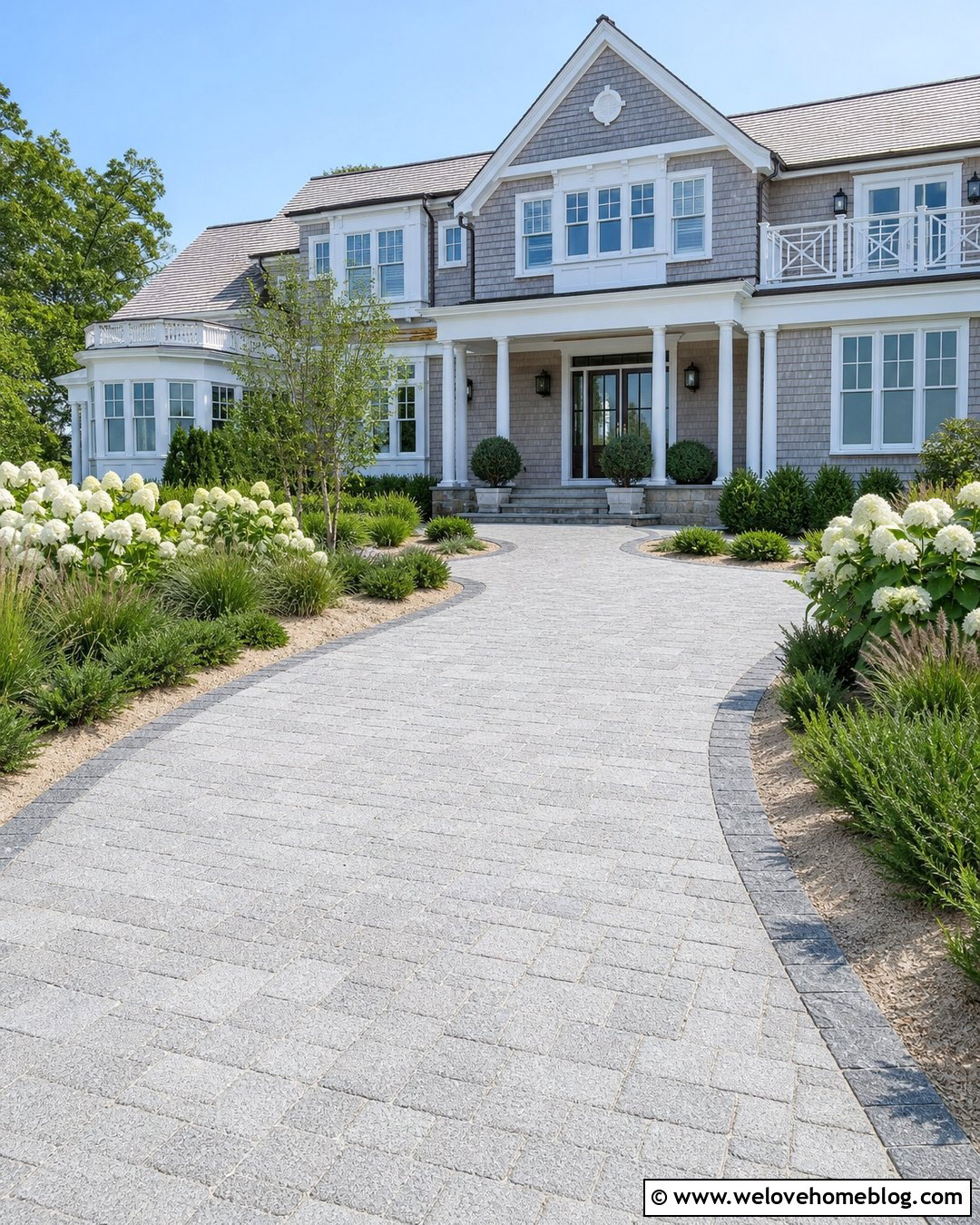
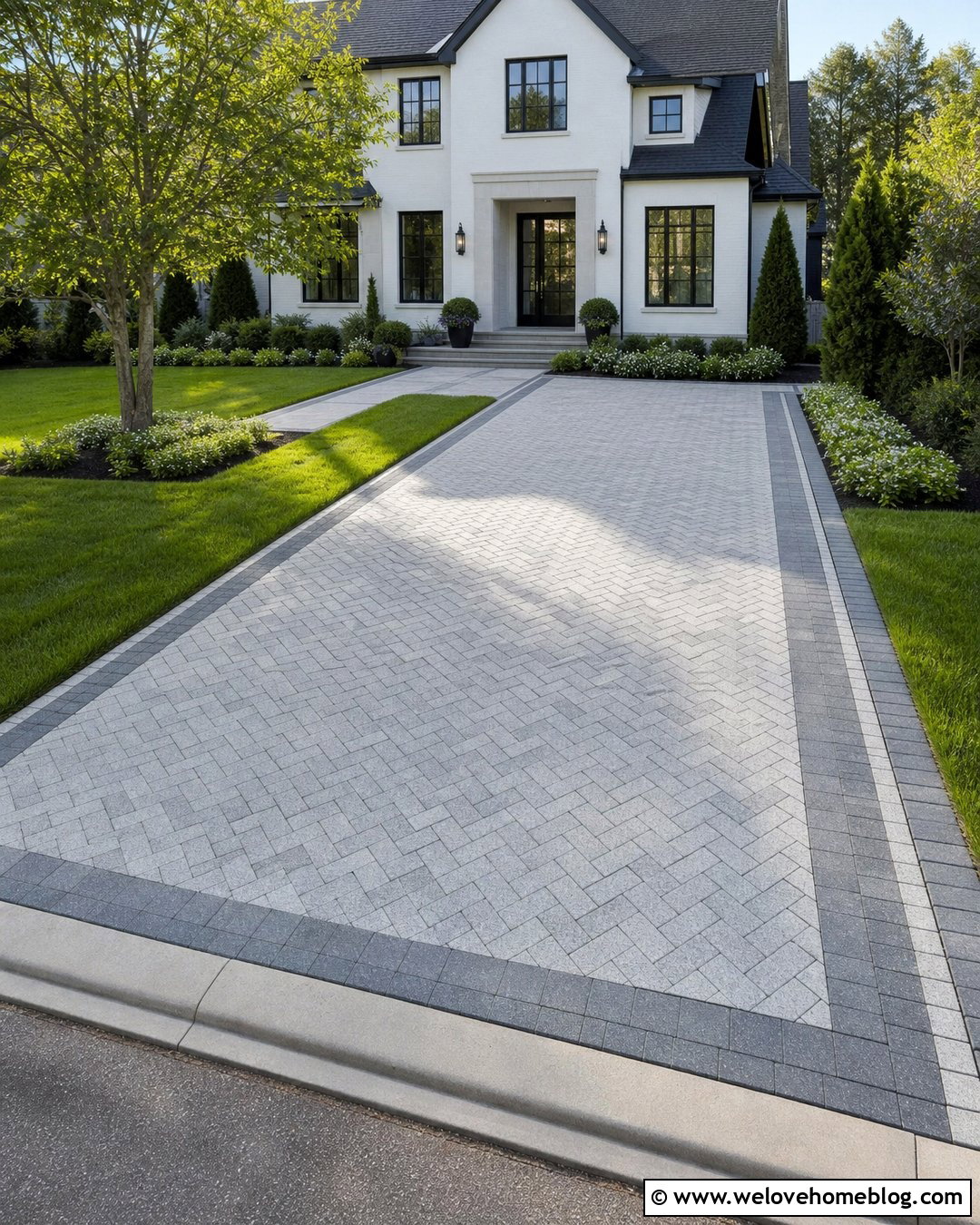
Pale granite pavers create a fresh driveway that complements coastal-inspired homes and bright exterior palettes. Choose silver-gray stone with subtle speckling and a lightly textured finish. A straight driveway with a gentle flare at the curb keeps the layout simple and welcoming. Edge it with darker granite setts to create definition beside sandy planting beds. Ornamental grasses, hydrangeas, compact evergreens, and salt-tolerant shrubs can reinforce the relaxed coastal look where local conditions require resilient planting. A matching granite walkway should branch cleanly toward the porch. Keep the landscaping open so breezes and sightlines are not blocked. Light stone can show tire marks, leaves, or metal staining more readily, so ask about cleaning and sealing options. Correct drainage will prevent dirty runoff from settling across the pale surface.
24. Colonial Cobblestone Driveway With Granite Pillars
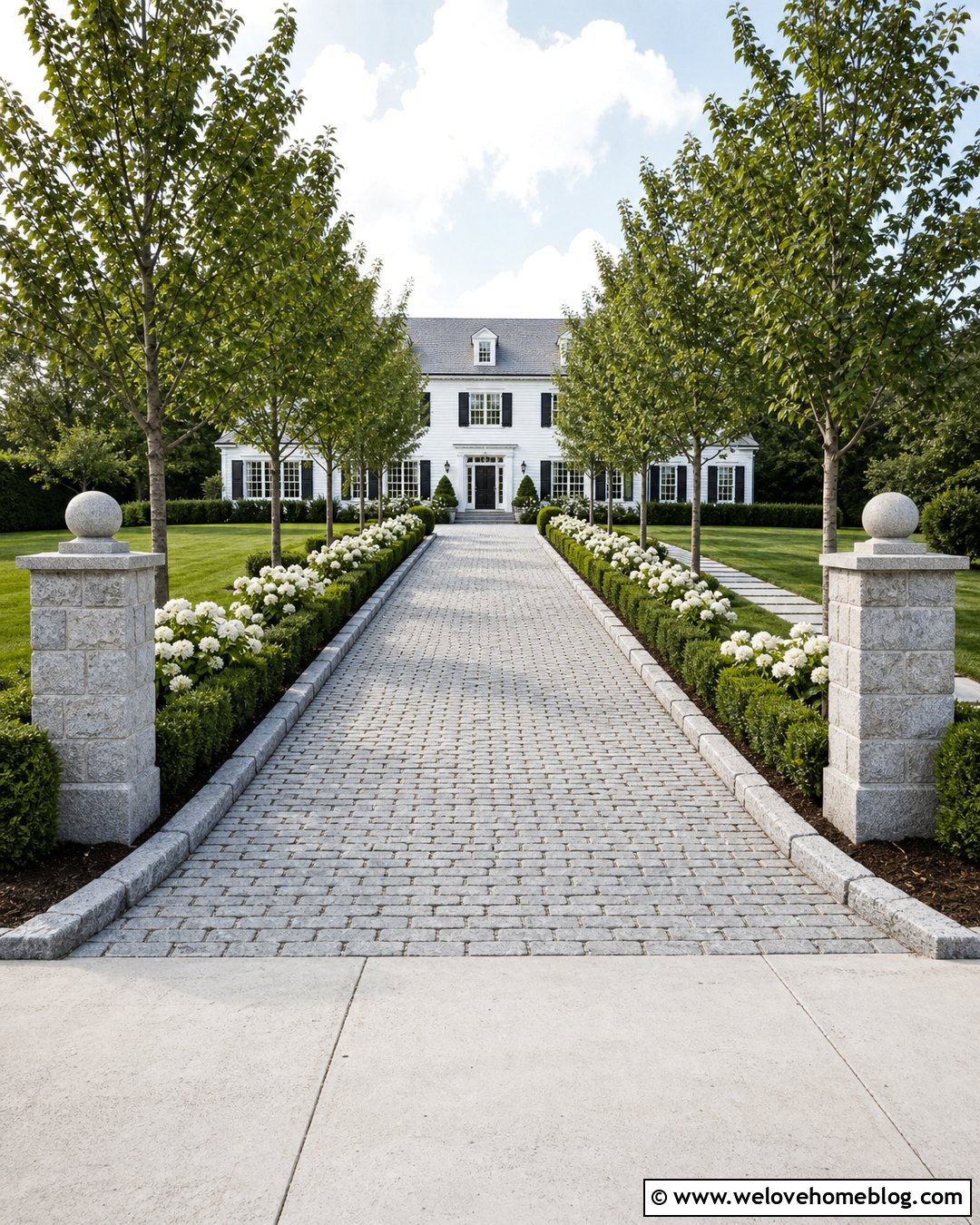
A traditional Colonial home pairs naturally with a gray cobblestone driveway and formal granite entrance pillars. Use rectangular granite setts in a running bond pattern to keep the surface orderly. Install larger blocks along the edges and repeat the same stone around the base of each pillar. A straight driveway emphasizes symmetry, especially when it aligns with a centered front door or detached garage. Low boxwood hedges, white flowering shrubs, and evenly spaced deciduous trees can frame the approach without hiding the architecture. Add a separate stone walkway with a clear connection near the parking area. Simple lantern-style fixtures may be mounted near the entrance, but their scale should suit the pillars. A stable base, tight pattern, and well-supported edges will keep the formal lines from becoming uneven over time.
25. Small Natural Stone Driveway With A Split Pattern
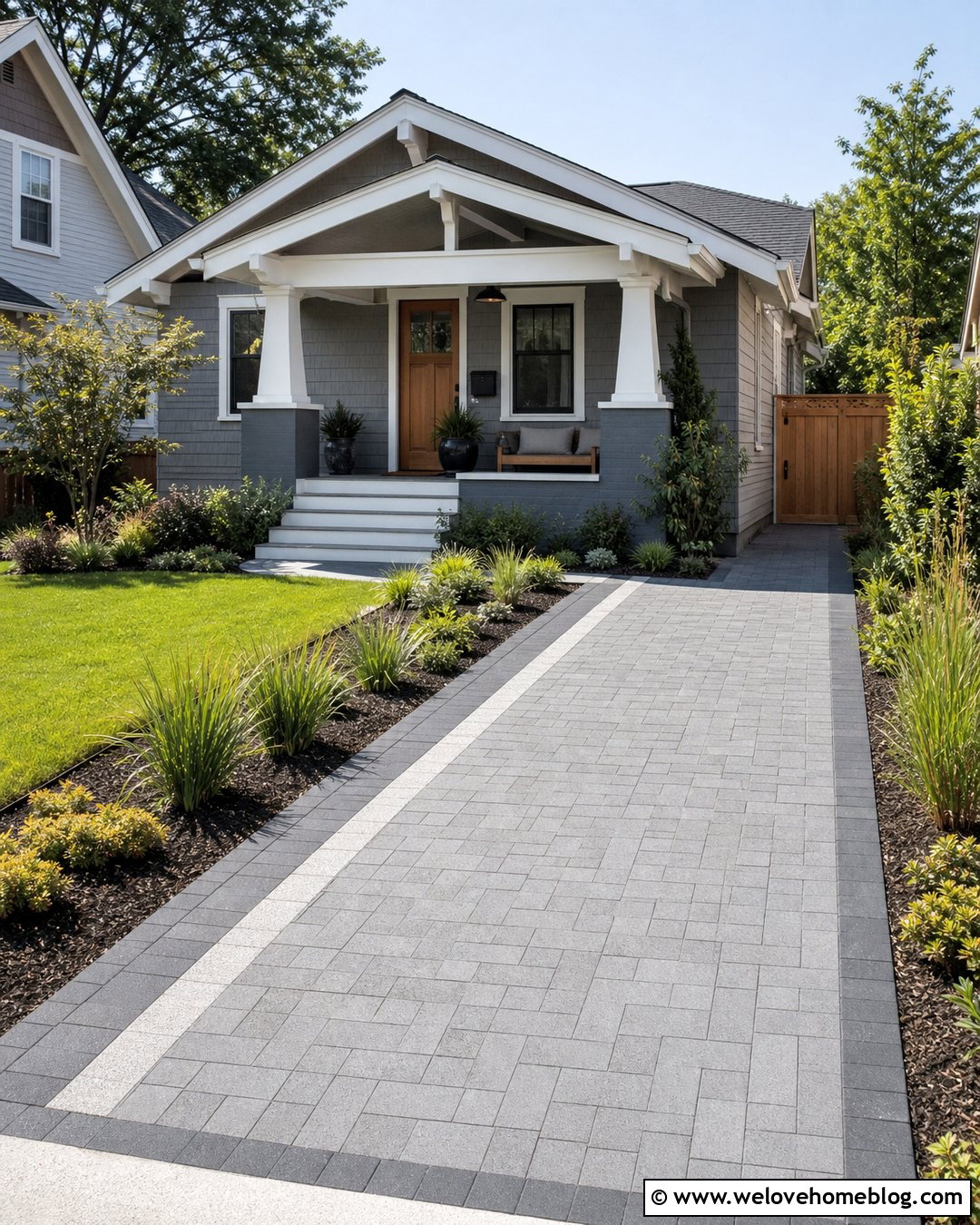
A small front yard can still support a detailed natural stone driveway when the pattern remains controlled. Use medium-gray granite pavers for the main parking rectangle and smaller charcoal setts around the perimeter. A single lighter stone ribbon can divide the parking space from the walkway without reducing usable width. Keep the layout straight and align it carefully with the garage, carport, or side entrance. Narrow planting beds filled with compact shrubs, upright grasses, and low ground cover will add greenery without crowding doors or mirrors. This design fits a bungalow, small Craftsman, townhouse, or compact ranch home. Limit the palette to two or three coordinated tones so the area does not feel fragmented. Precise drainage and grading are especially important because small driveways often sit close to foundations and neighboring properties.
Conclusion:
The most successful natural stone driveway ideas balance appearance with everyday performance. Choose stone that suits your climate, vehicle load, house style, and preferred level of maintenance. Granite cobbles offer traditional strength, while bluestone and basalt support cleaner modern designs. Limestone and sandstone introduce warmth, and irregular flagstone creates a more organic approach. Layout also matters. Straight drives feel orderly, curves soften large yards, and circular designs improve movement when enough space is available. Whatever look you prefer, invest in correct grading, drainage, base preparation, jointing, and edge restraint. Use these 25 Natural Stone Driveway Ideas as a starting point, then tailor the material, pattern, landscaping, and entrance details to your property.

Related posts:
Leave a Reply