
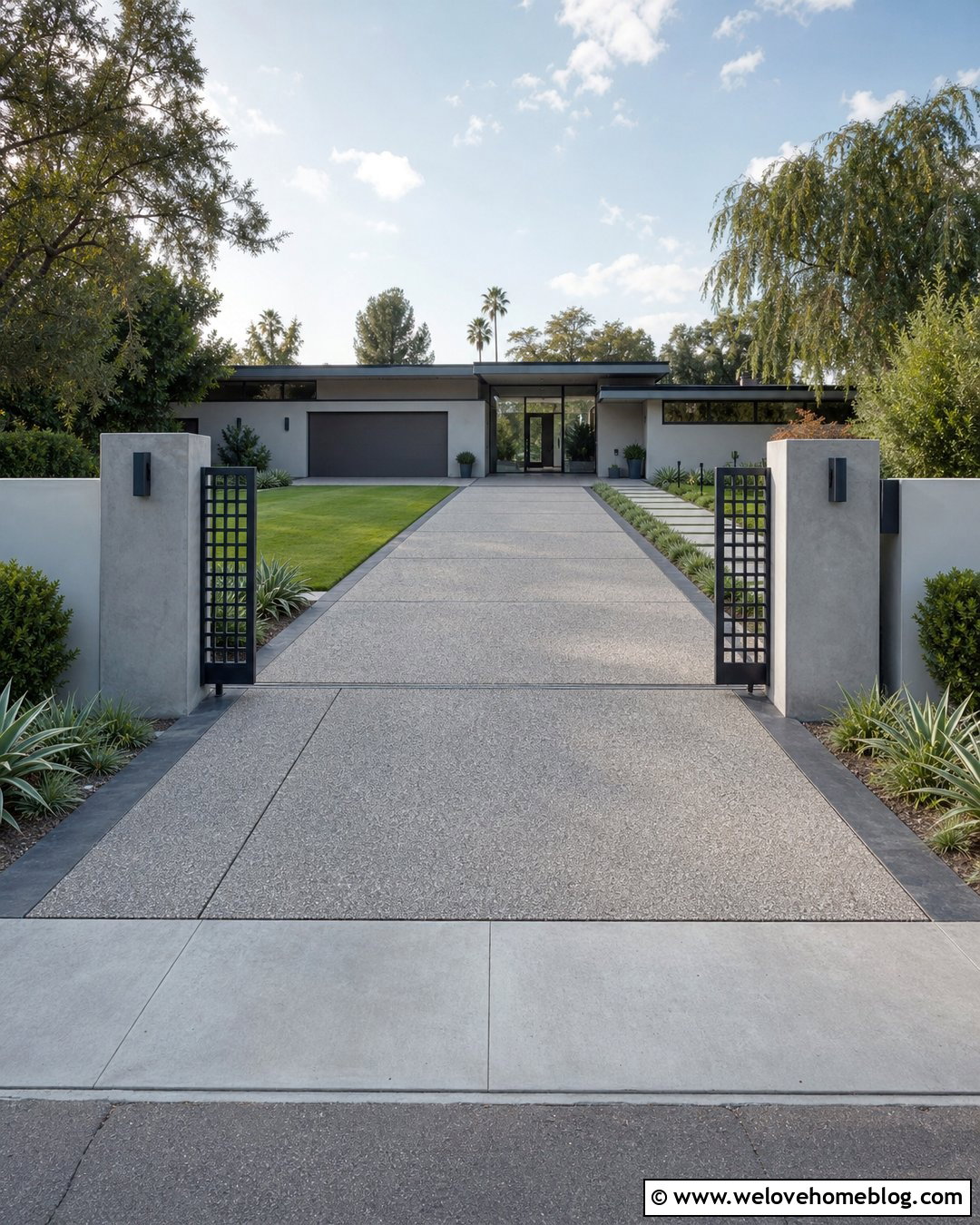
Stone and gravel driveways can feel rustic, polished, modern, or formal depending on how the surface is shaped and framed. The best designs pair practical driveway stone with defined edging, thoughtful planting, and a layout that complements the house. Angular crushed stone generally creates a firmer driving surface than rounded gravel, while borders help control loose material and maintain clean lines. A properly prepared, compacted base is also important for long-term stability. () From warm pea gravel beside a cottage to dark crushed granite leading toward a modern home, there is a combination for nearly every property. Use these complete driveway looks to explore **20 Stone And Gravel Driveway Ideas**.

1. Pea Gravel Driveway With Cobblestone Edging
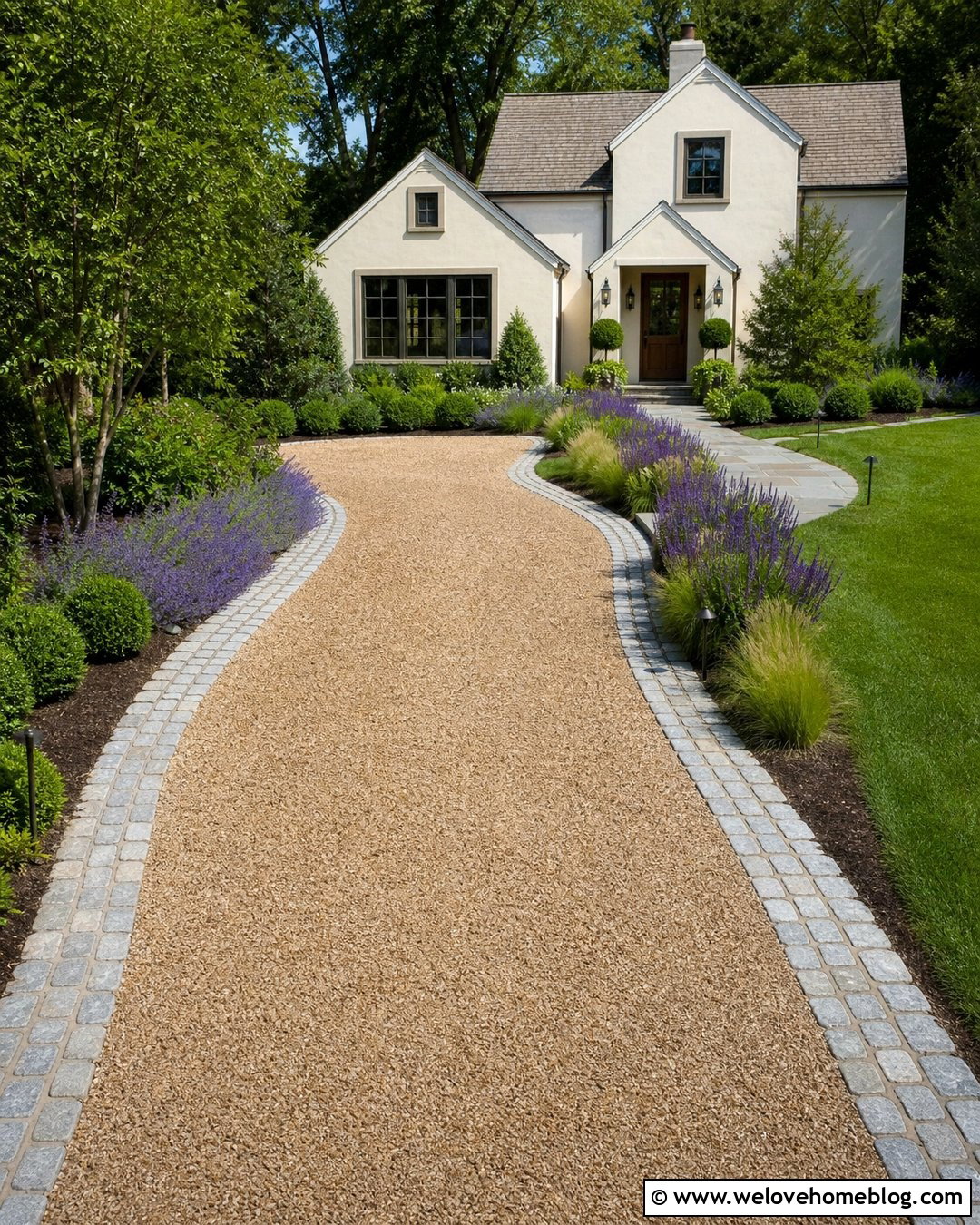
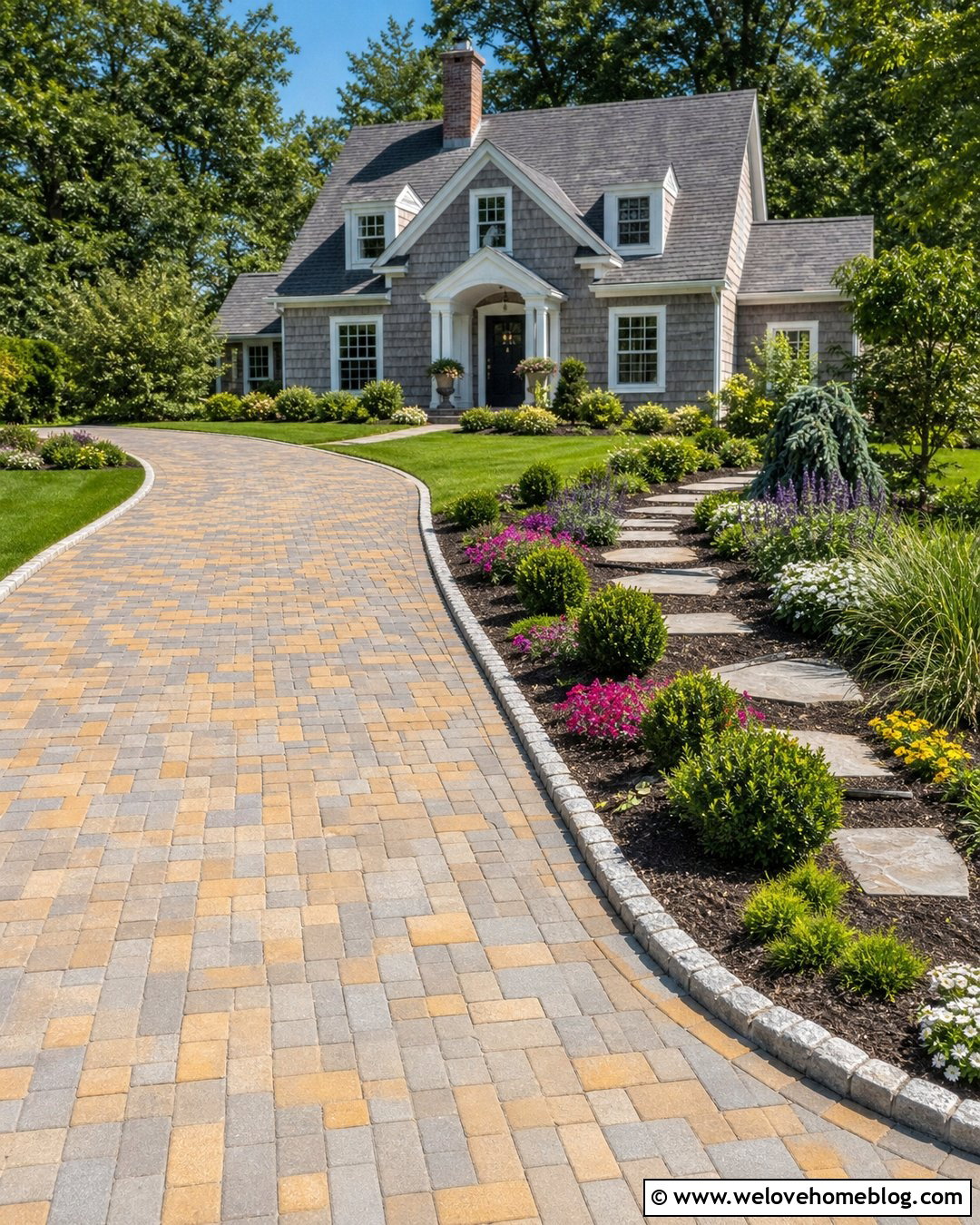
Warm pea gravel and rugged cobblestone create a balanced driveway that feels relaxed but neatly finished. Choose tan, cream, and soft gray gravel to complement brick, stone, or painted siding. Install two rows of granite cobblestones along both sides to form a strong visual boundary and limit gravel migration. A straight layout works well for a traditional home, while a gentle curve gives a cottage property a softer entrance. Complete the look with lavender, dwarf boxwood, and ornamental grasses behind the edging. Near the garage, add a wider cobblestone apron to catch displaced stones and create a smooth transition. Because pea gravel is rounded and can shift, it performs best over a stable base with reliable containment.
2. Crushed Stone Driveway With Brick Border
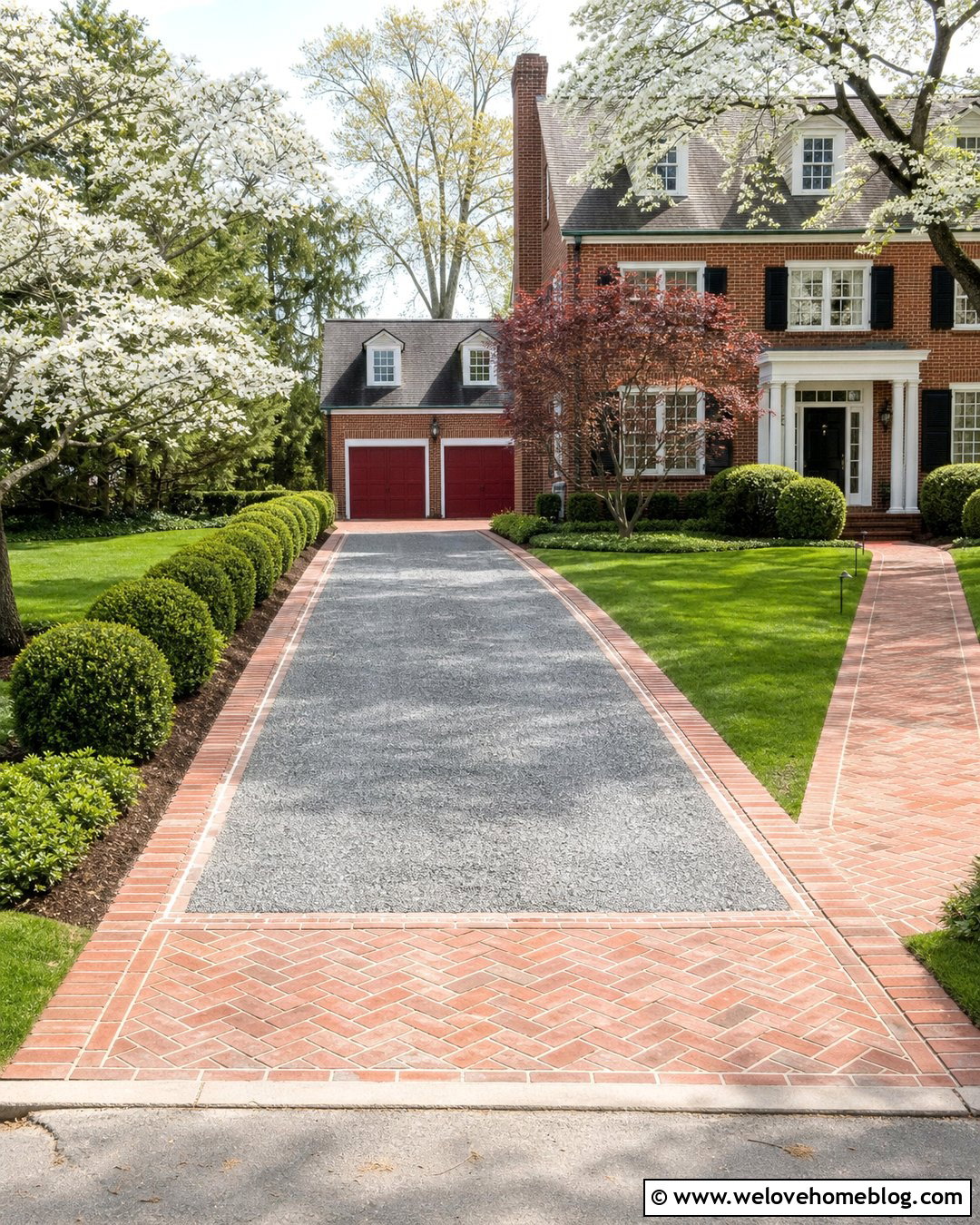
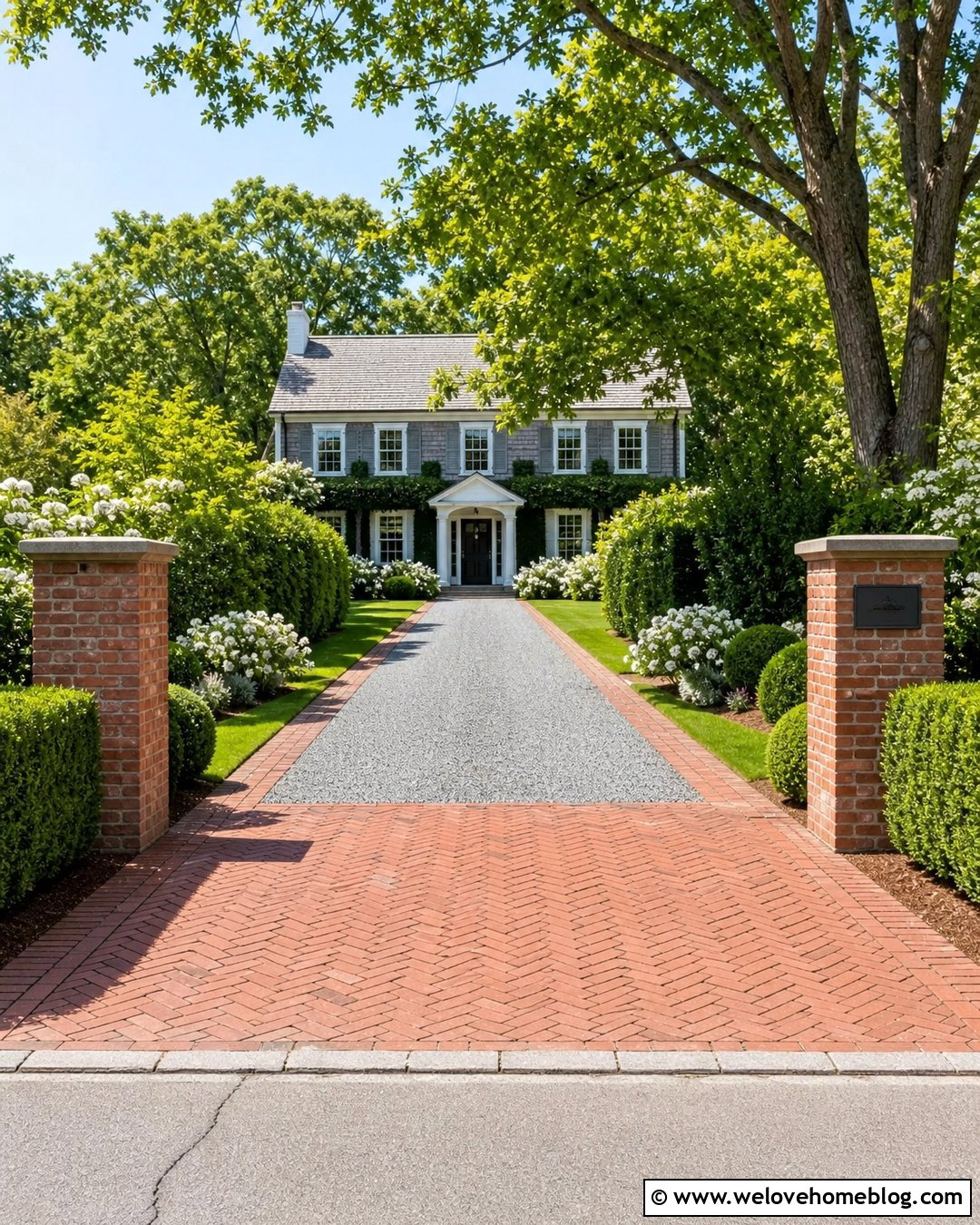
A crushed stone driveway gains warmth and structure when framed with red or brown brick. Use angular gray limestone or granite that compacts into a relatively stable driving surface. Run bricks lengthwise along the edges for a narrow border, or install a double row for more visual impact. A brick apron at the street can connect the driveway border and make the entrance look intentional. This combination is especially attractive beside Colonial, Cape Cod, and traditional ranch homes. Low boxwood hedges, lawn, and small flowering trees keep the surroundings simple. Match the brick color to the home’s chimney, walkway, or foundation accents. That repeated material helps the gravel driveway feel connected to the architecture instead of appearing like a separate landscape feature.
3. White Gravel Driveway With Stone Pillars
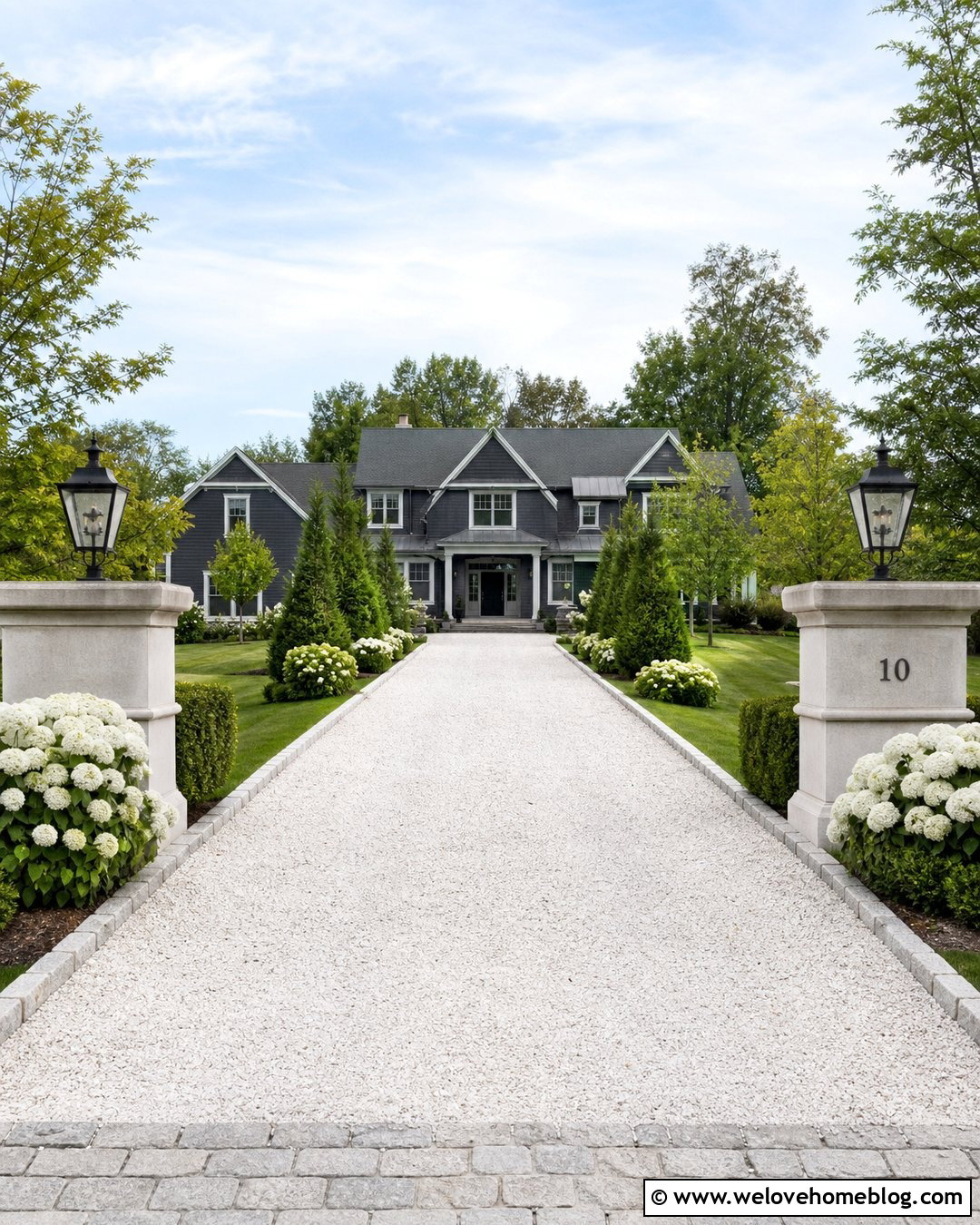
Bright white gravel creates a crisp entrance that stands out against green lawns and darker exterior finishes. Pair the surface with substantial fieldstone or limestone pillars at the curb. The pillars can support simple lanterns, a metal gate, or understated address plaques. Keep the driveway straight and symmetrical for a formal appearance, with matching planting beds on both sides. Rounded shrubs, upright evergreens, and white flowering perennials reinforce the orderly layout without hiding the masonry. Select driveway gravel made for vehicle traffic rather than decorative garden pebbles, and use a compacted aggregate base beneath it. A pale cobblestone or concrete curb can contain the white stone. Occasional raking will also preserve the clean, even appearance that makes this combination so striking.
4. Gray Gravel Driveway With Grass Strip
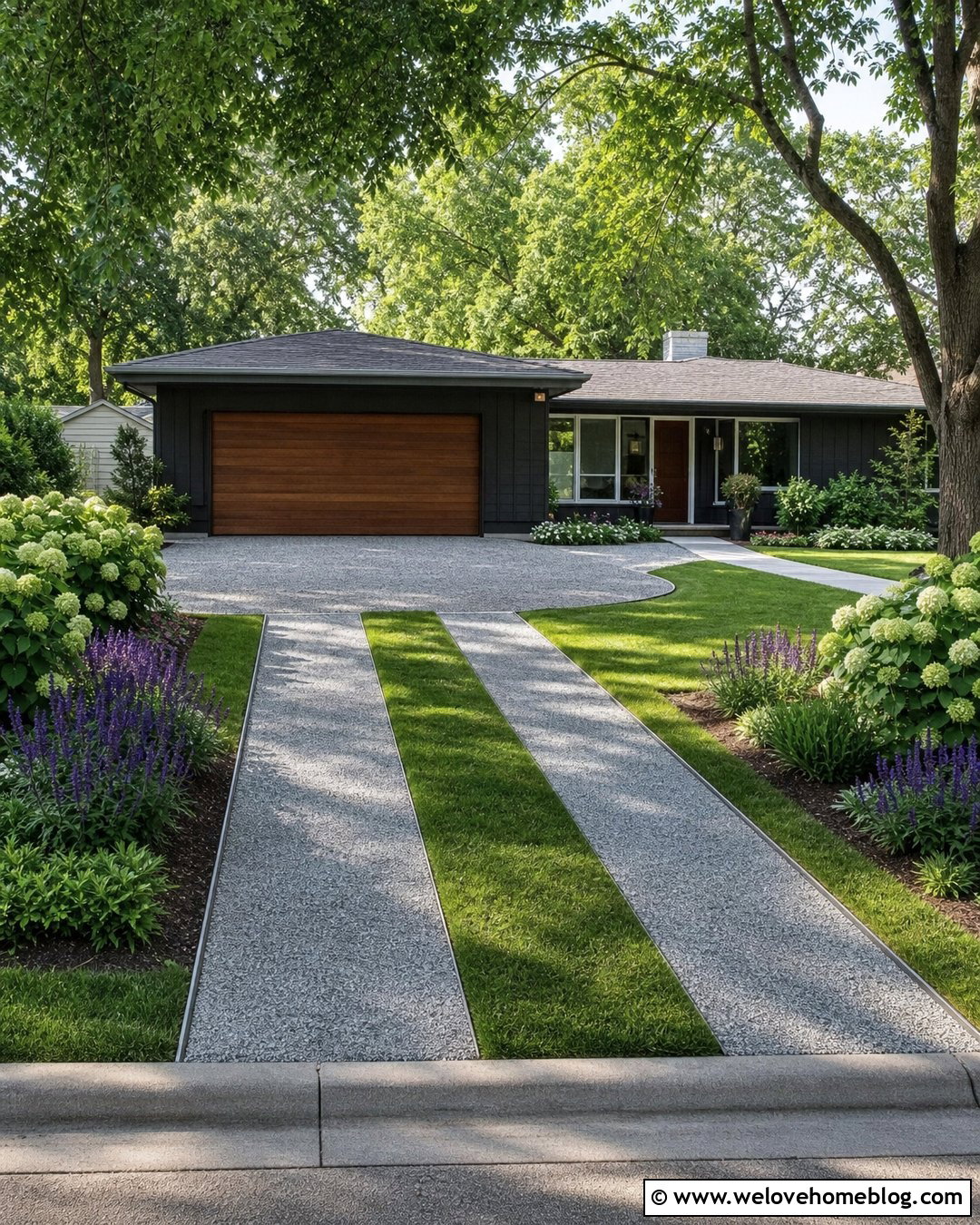
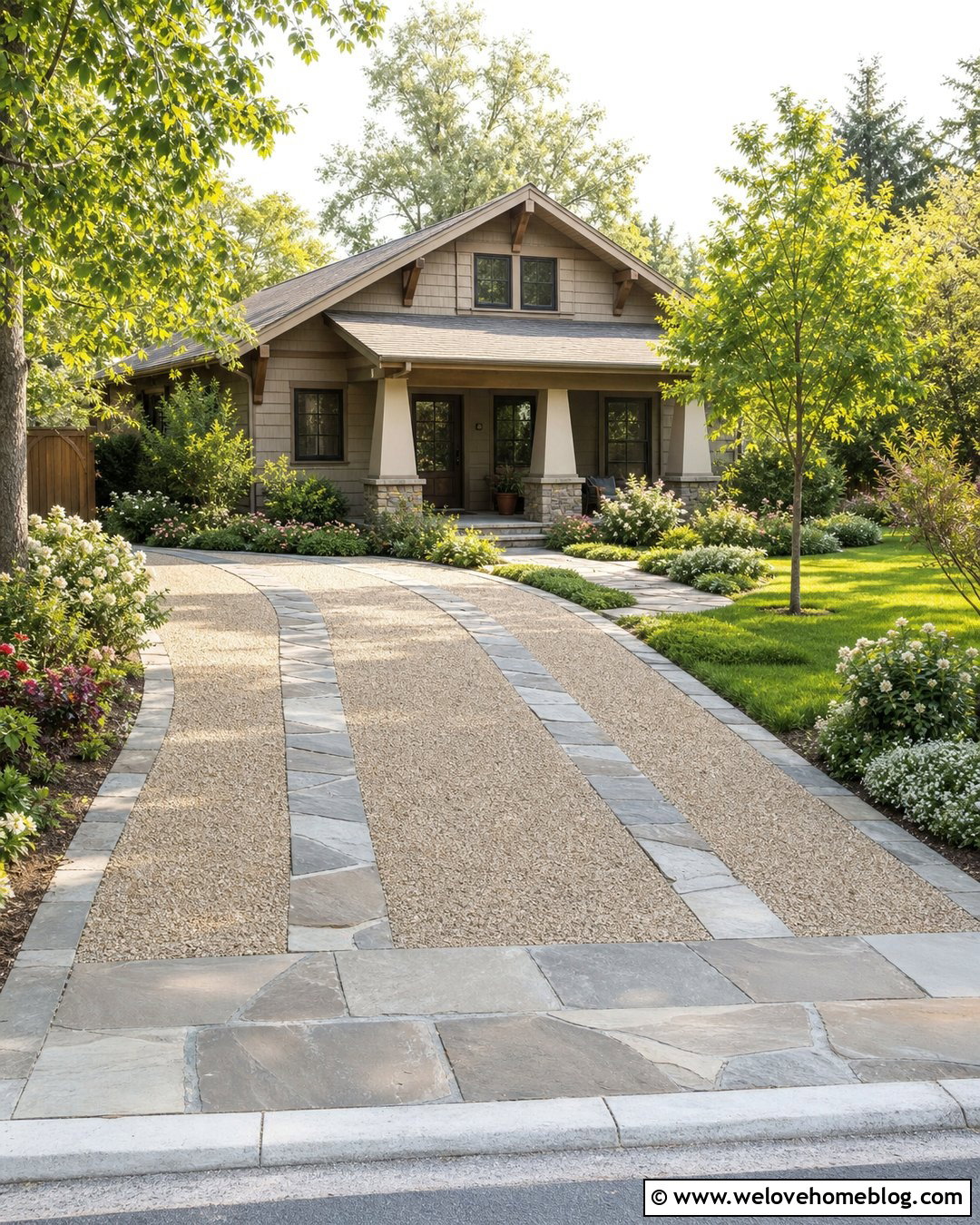
Looking for a lighter driveway that does not dominate the front yard? Build two broad tracks of compacted gray gravel with a narrow grass strip running through the center. This layout reduces the amount of visible hardscape and works particularly well beside small ranch, farmhouse, and cottage homes. Define the outside edges with steel, stone setts, or flush concrete curbing. The center strip should be wide enough to look intentional but positioned away from regular tire paths. Repeat the lawn color with simple side borders containing hydrangeas, salvia, or clipped shrubs. At the garage, replace the grass with a solid gravel turning pad or stone apron. The final result feels green and informal while still providing a clearly organized route from curb to house.
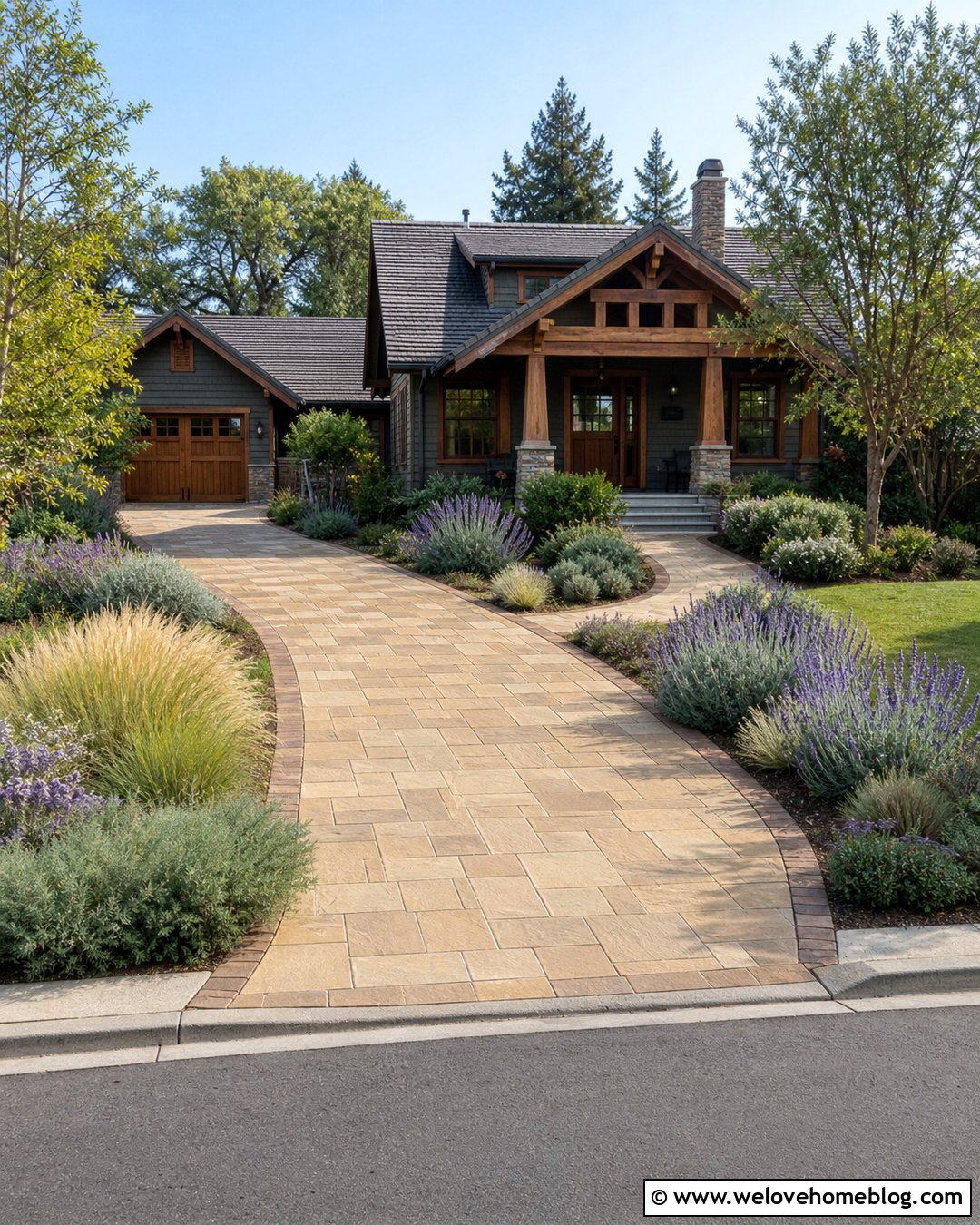
5. Crushed Granite Driveway With Steel Edging
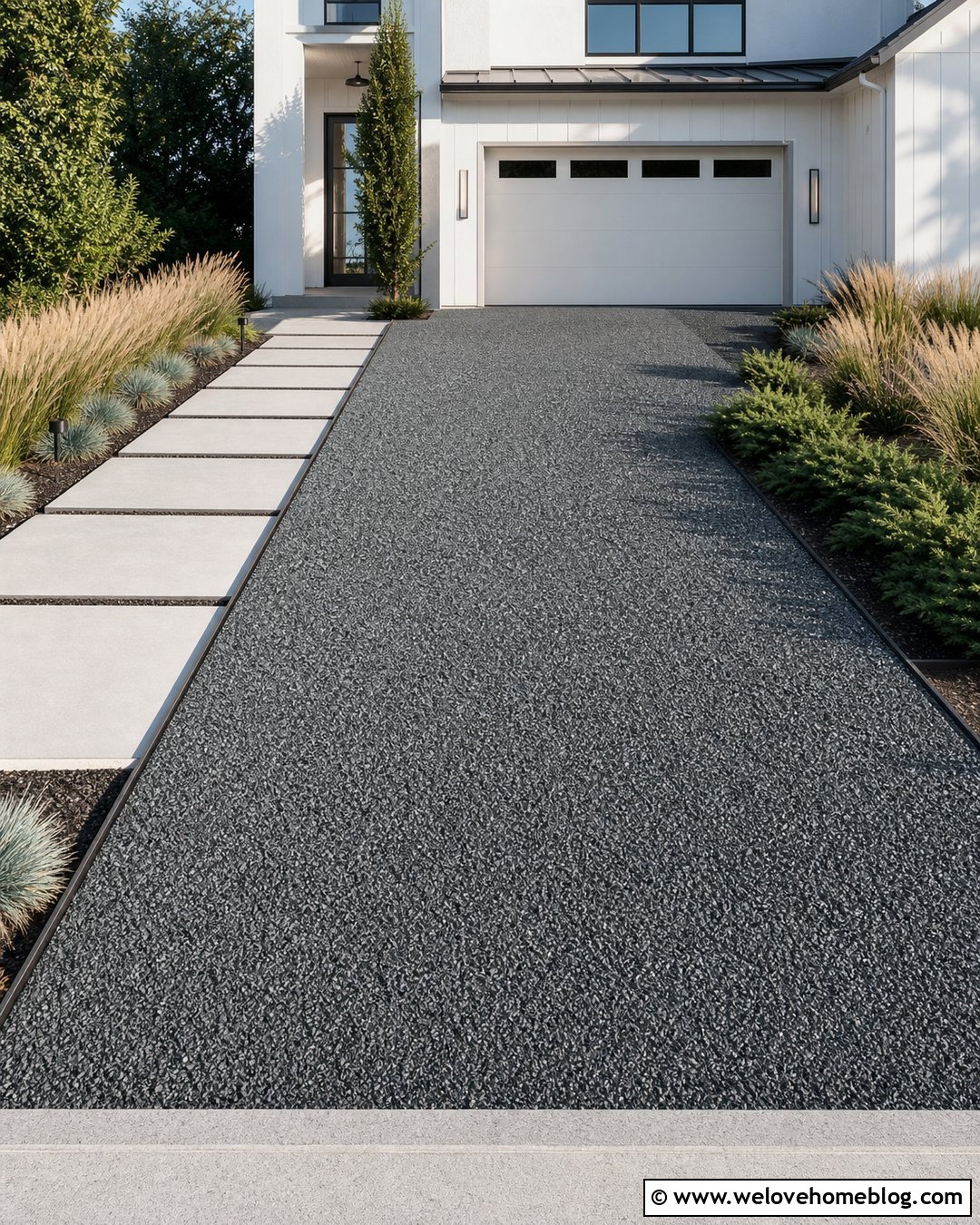
Dark crushed granite brings sharp contrast to a clean-lined modern home. Its angular particles create a more compact appearance than loose, rounded pebbles, especially when installed over a carefully graded base. Frame a straight or slightly angled driveway with slim black steel edging for a precise finish. Continue the dark palette with charcoal stepping stones, a black mailbox, and rectangular planting beds. Feather reed grass, blue fescue, low juniper, and sculptural agave can soften the hard edges without making the design look busy. A large-format concrete walkway crossing the gravel adds another geometric layer. Keep the area near the garage level and well compacted. With restrained planting and clearly defined transitions, crushed granite becomes part of the home’s modern architecture rather than merely a functional surface.
6. Limestone Gravel Driveway With Boxwood Borders
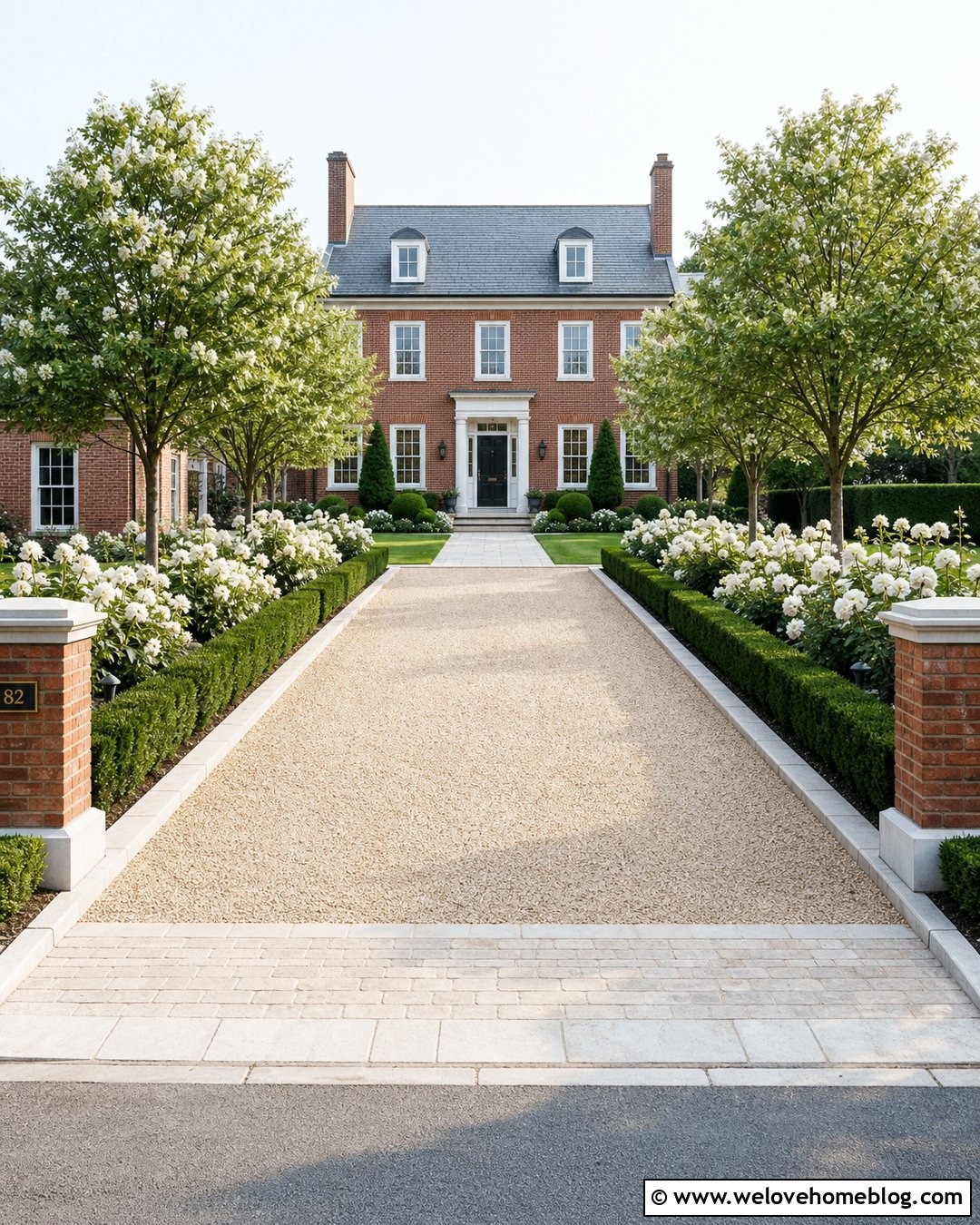
Cream limestone gravel gives a traditional driveway a warm, refined surface. Its pale tone works especially well with red brick, natural stone, beige stucco, and dark shutters. Shape the driveway into a broad straight approach, then outline it with low clipped boxwood hedges set behind flush stone curbing. The curb keeps the gravel away from roots and creates space for easy maintenance. Add symmetrical planting beds near the house using white roses, hydrangeas, and small ornamental trees. A matching limestone walkway can branch from the driveway toward the front door. Because limestone color and particle size vary, view a local sample before ordering a large quantity. The chosen blend should complement the facade without being so bright that every leaf, stain, and displaced stone becomes noticeable.
7. Gravel Driveway With Flagstone Parking Pads
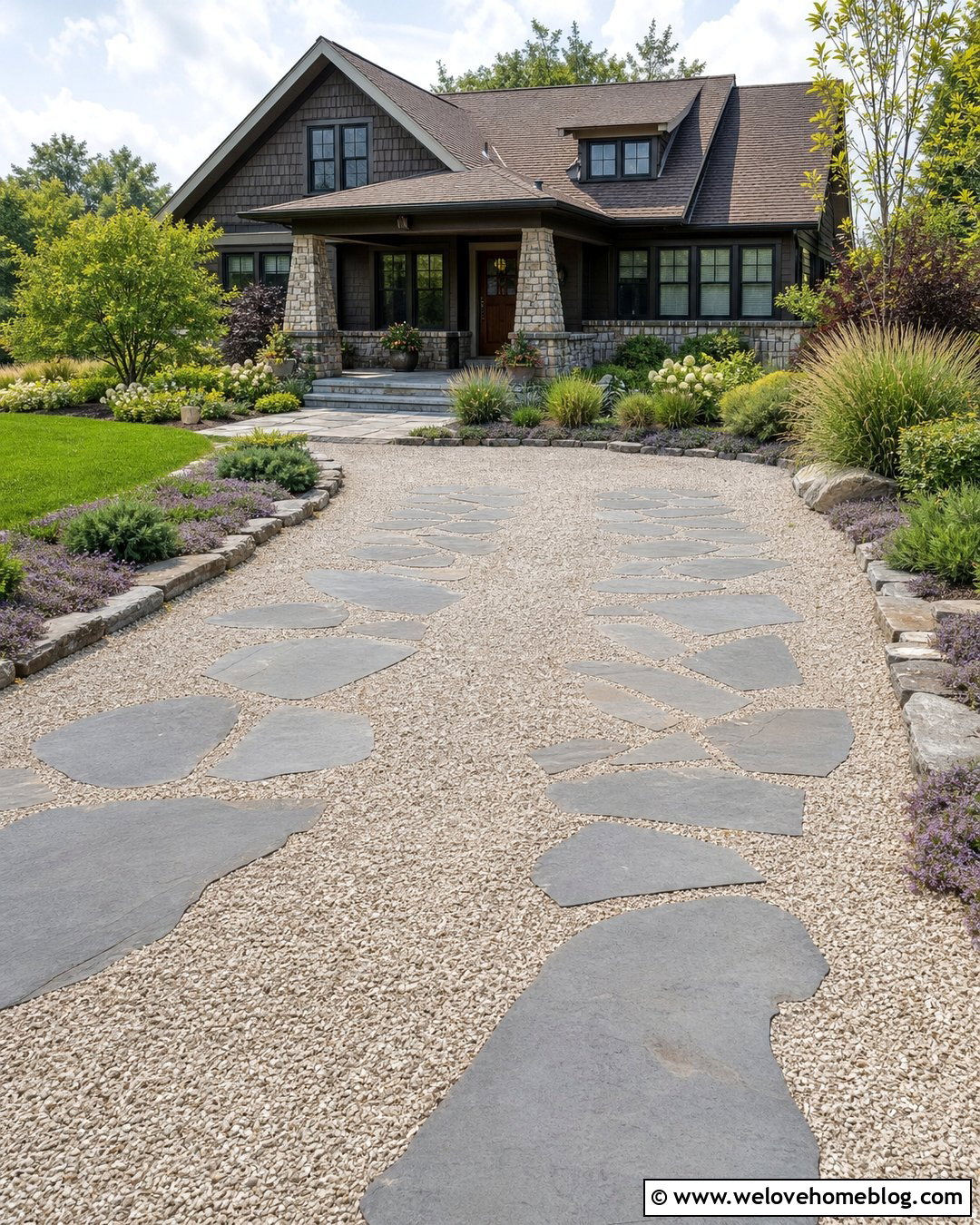
Large flagstones can turn an ordinary gravel parking area into a more organized and decorative arrival space. Begin with compacted buff or gray crushed gravel, then place broad, flat flagstones beneath the expected tire positions near the garage or carport. Keep the stones level with the surrounding surface to avoid abrupt edges. Their irregular shapes look most natural beside Craftsman, rustic ranch, and mountain-inspired homes. Use matching flagstone for the driveway border and front walkway so the materials flow across the property. Plant creeping thyme, sedum, or low ornamental grasses beyond the edging rather than between active driving stones. The gravel visually connects the individual slabs, while the flagstone adds weight and pattern. This pairing works best on a wide, gently sloped driveway with clearly planned parking positions.
8. River Rock Driveway With Crushed Gravel Tracks
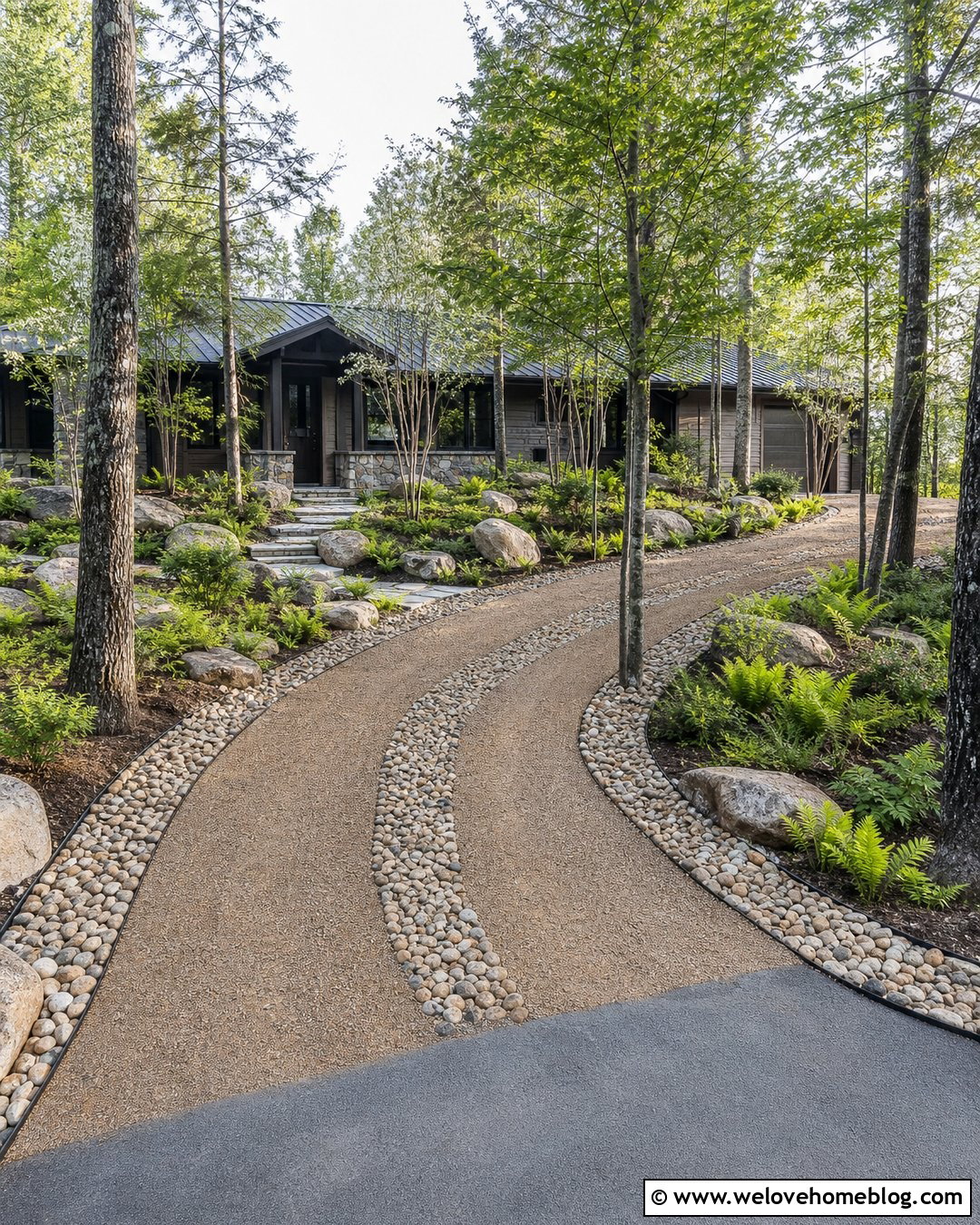
Smooth river rock is visually appealing, but its rounded shape can move under vehicle tires. A practical solution is to reserve it for the center band and side borders while using compacted angular gravel for the main driving tracks. Choose mixed brown, gray, and tan river stones to create a natural transition into woodland landscaping. Define each material with dark steel edging or narrow rows of granite setts. Ferns, native grasses, serviceberry, and mossy boulders can frame the driveway without making it feel overdesigned. This layout suits a wooded ranch, cabin, or contemporary home surrounded by mature trees. Keep the river rock slightly below the driving surface so stones are less likely to scatter. The contrasting textures create depth while placing the more stable material where tires travel most often.
9. Gravel Driveway With Timber Edging
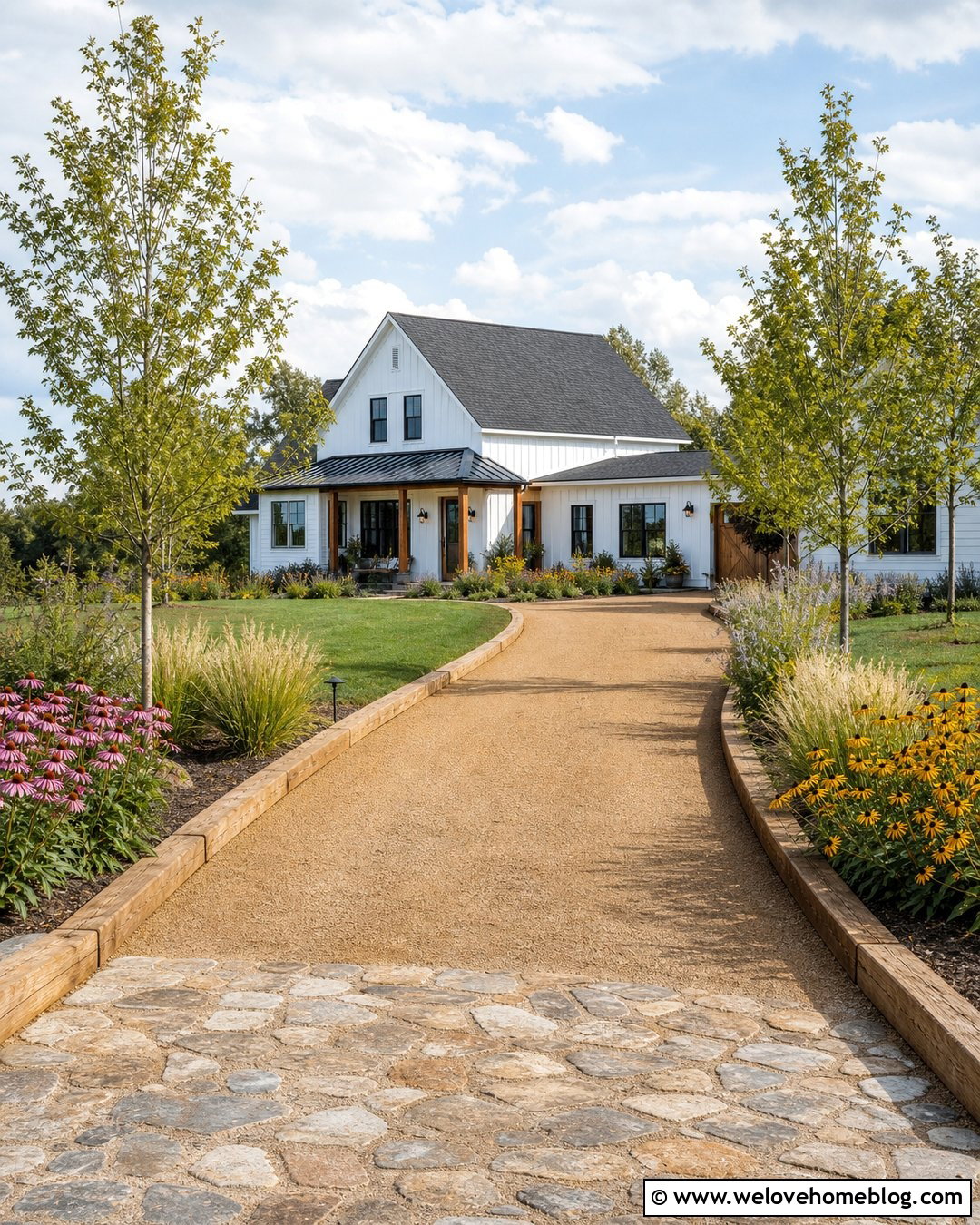
Timber edging offers an affordable way to shape a casual gravel driveway. Use pressure-treated wood, rot-resistant cedar, or substantial landscape timbers installed securely along a straight or gently curved layout. Warm brown crushed gravel or decomposed granite will complement the natural color of the wood. This combination feels especially appropriate beside modern farmhouses, barns, country cottages, and simple ranch homes. Plant native grasses, coneflowers, black-eyed Susans, and low shrubs outside the timber border for a relaxed meadow effect. At the street, introduce a stone apron to protect the timber from turning vehicles and emphasize the entrance. Keep the wood nearly flush with the gravel so it does not become a tripping hazard. Regular inspection will help identify movement, decay, or loose anchoring before the border loses its shape.
10. Circular Gravel Driveway With Center Garden
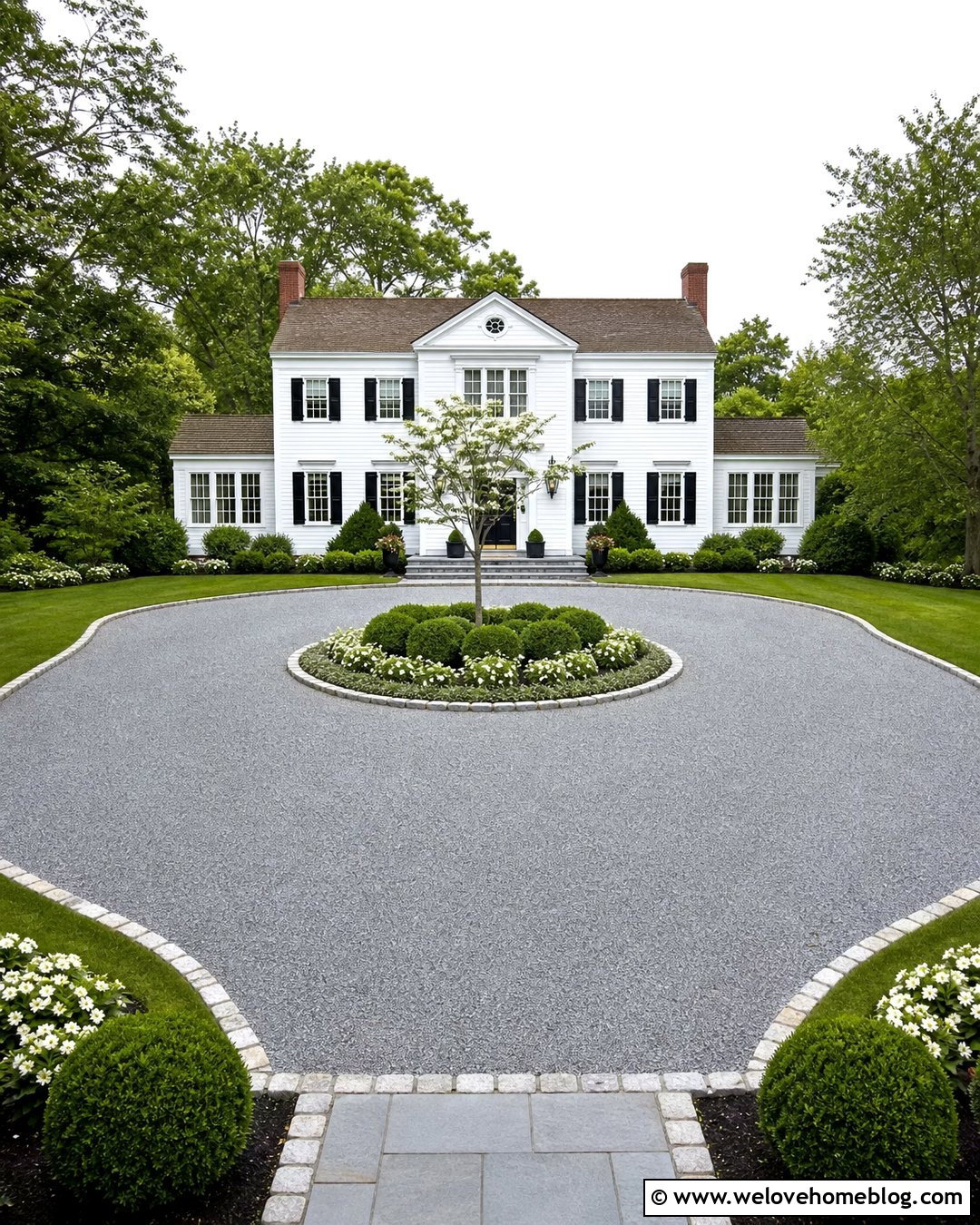
A circular gravel driveway can create an elegant arrival sequence while providing a convenient route around a central landscape island. Cover the driving lane with compacted gray crushed stone and define both edges with granite cobblestones. Inside the circle, plant one small ornamental tree surrounded by boxwood, flowering perennials, and low ground cover. The planting should remain open enough to preserve clear views across the driveway. Repeat the same stone at the walkway and entrance steps to connect the design to the house. This layout works well in front of Colonial, Georgian, and larger farmhouse properties with generous setbacks. Plan sufficient turning space before installation, especially near the garage connection. A symmetrical garden and consistent edging help the circular shape remain clear even when the driveway is viewed from the street.
11. Curved Gravel Driveway With Native Landscaping
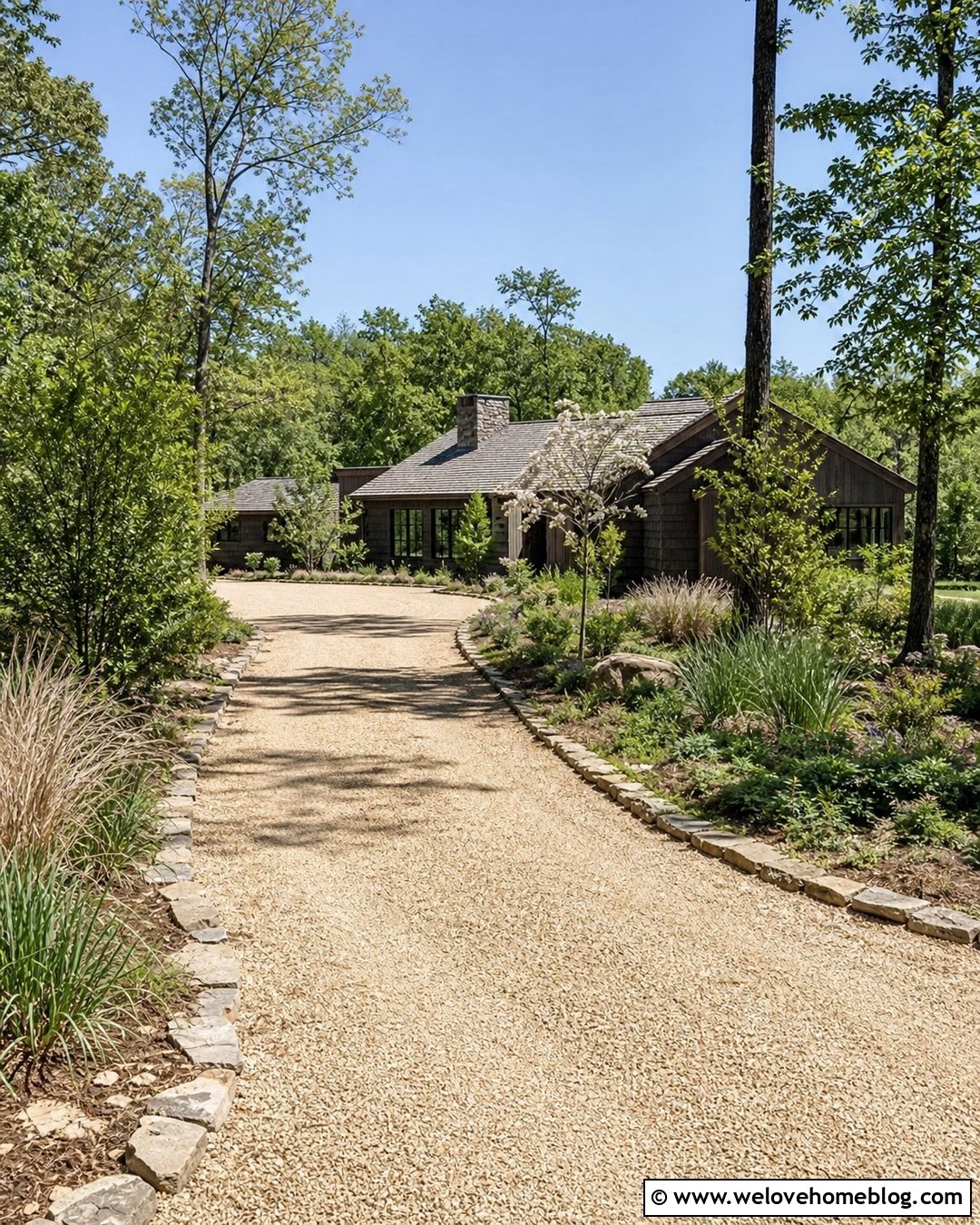
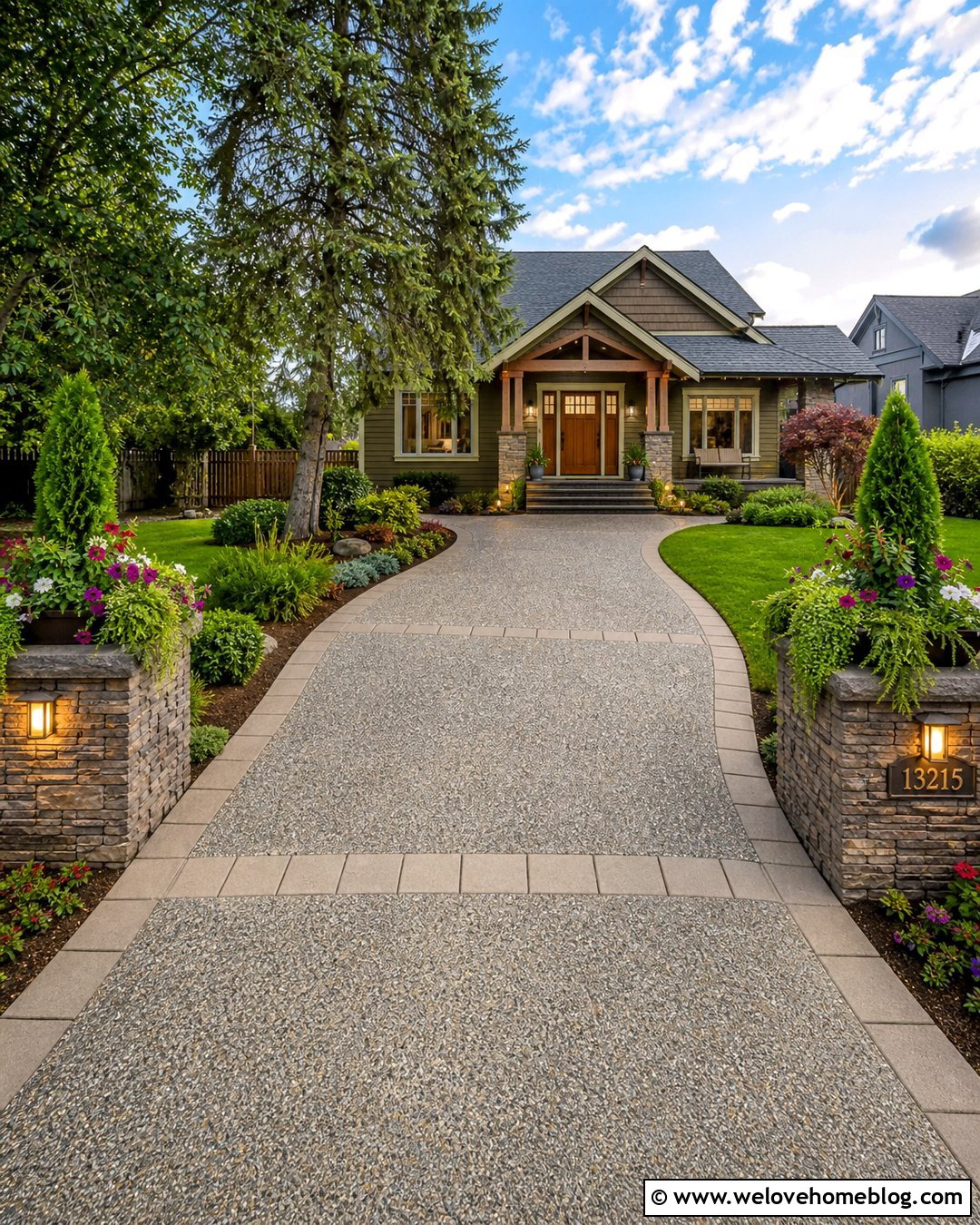
A sweeping curve can make a deep front yard feel more natural and reveal the home gradually. Use locally sourced crushed stone in soft gray, brown, or buff tones so the surface blends with the surrounding landscape. Follow the curve with flush boulder edging, native grasses, flowering shrubs, and several well-spaced trees. Avoid placing large plants along the inside turn where they could reduce visibility. Instead, use low ground covers and shorter grasses in that area. Taller shrubs can screen utility zones along the outer edge. This complete look is ideal for wooded properties, contemporary ranch homes, and houses set away from the road. Allow planting beds to change in width as the driveway bends. That variation creates an organic appearance while the continuous stone edge keeps the route tidy and easy to understand.
12. Gravel Driveway With Stone Retaining Wall
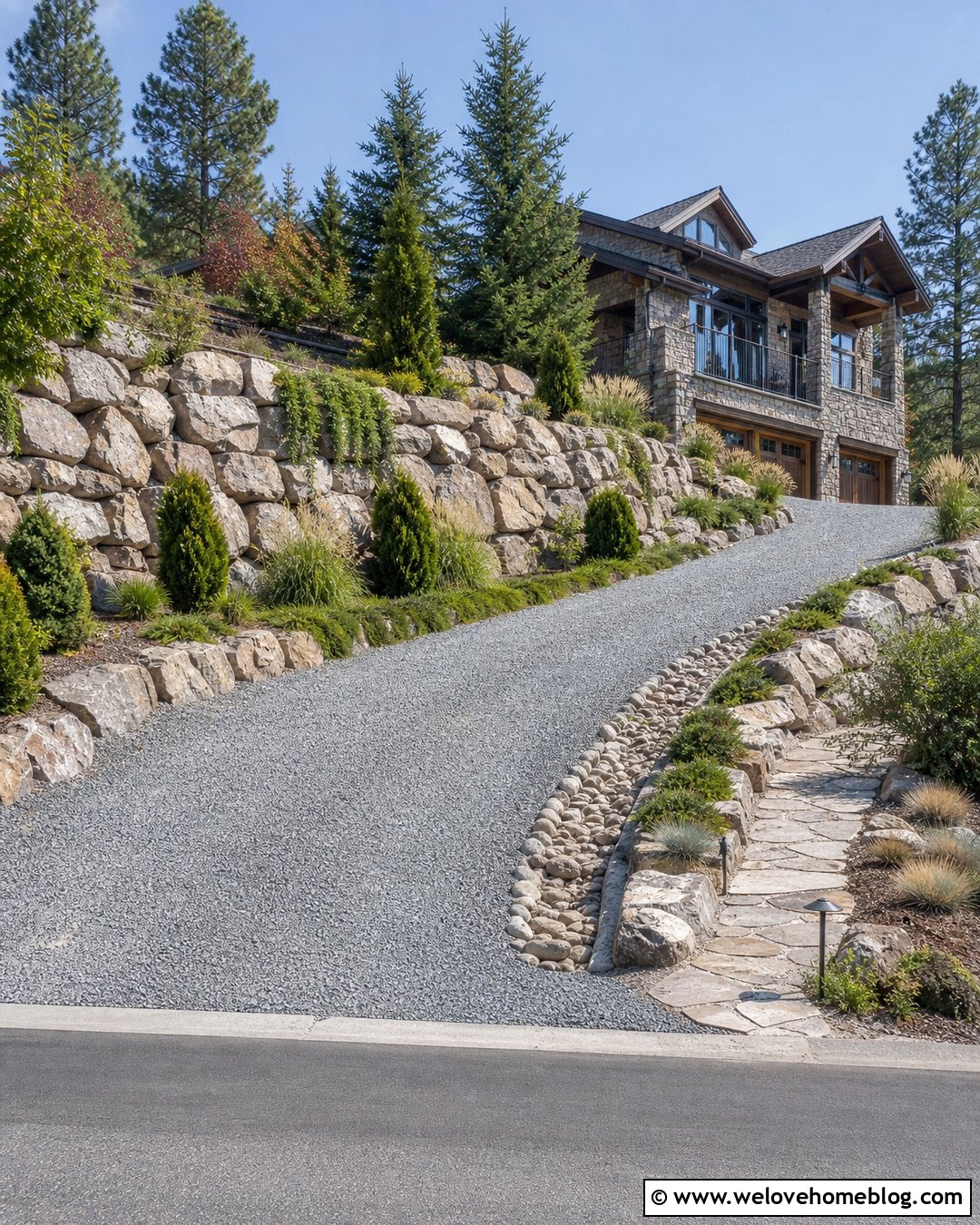
Sloped properties often need a driveway design that controls changing grades while maintaining an attractive entrance. A compacted crushed stone surface paired with a low retaining wall provides both visual weight and practical definition. Build the wall from natural fieldstone, cut limestone, or stacked granite that relates to the home’s facade. Follow the driveway curve with the wall, keeping it low near the street and increasing its height gradually where needed. Plant trailing ground cover along the top, with ornamental grasses and sturdy shrubs farther back. A stone drainage channel can be incorporated along the uphill edge to guide water away from the driving surface. Professional grading and wall construction may be necessary on steeper sites. When properly planned, the wall, gravel, and planting appear as one integrated hillside design.
13. Stone Chip Driveway With Paver Apron
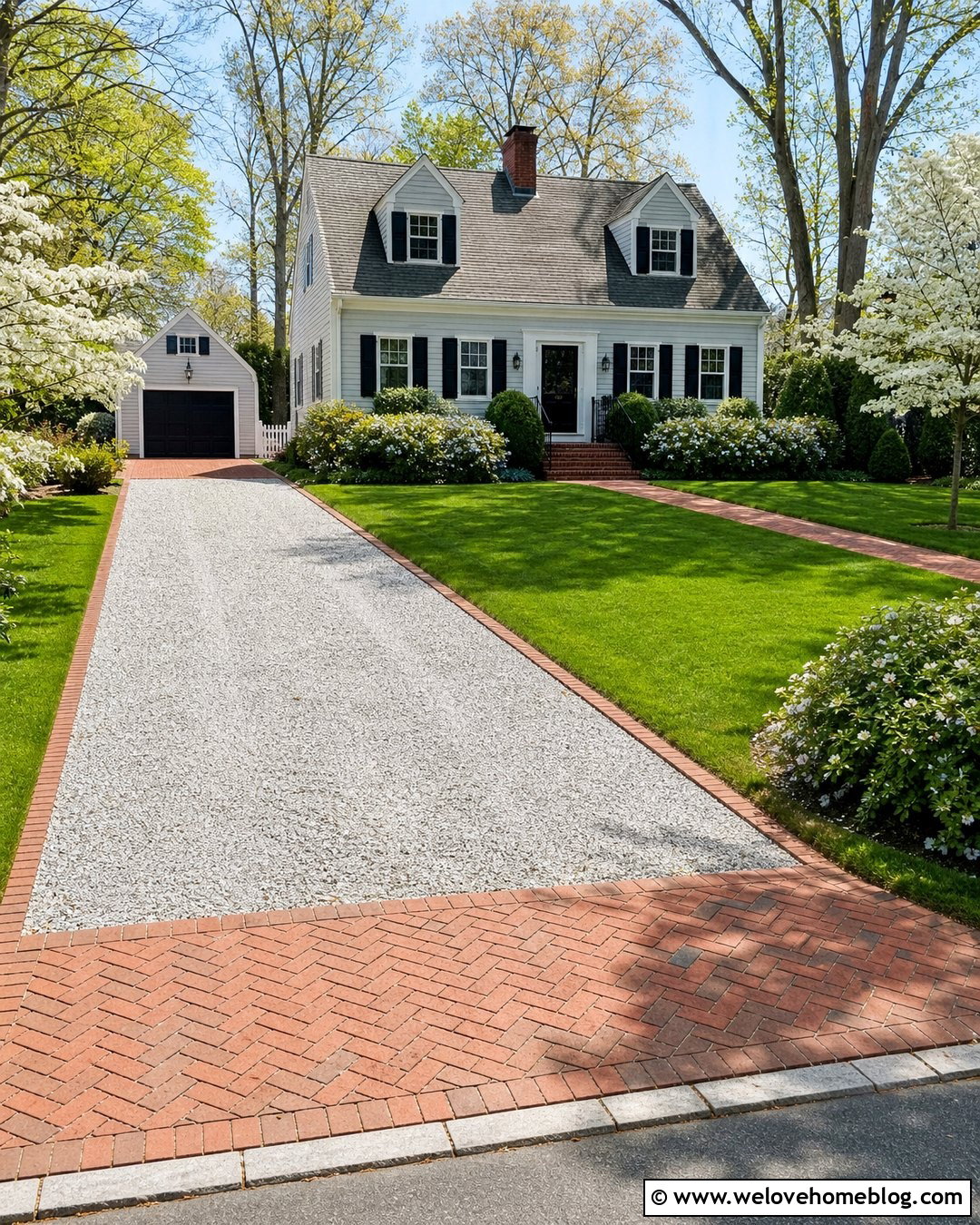
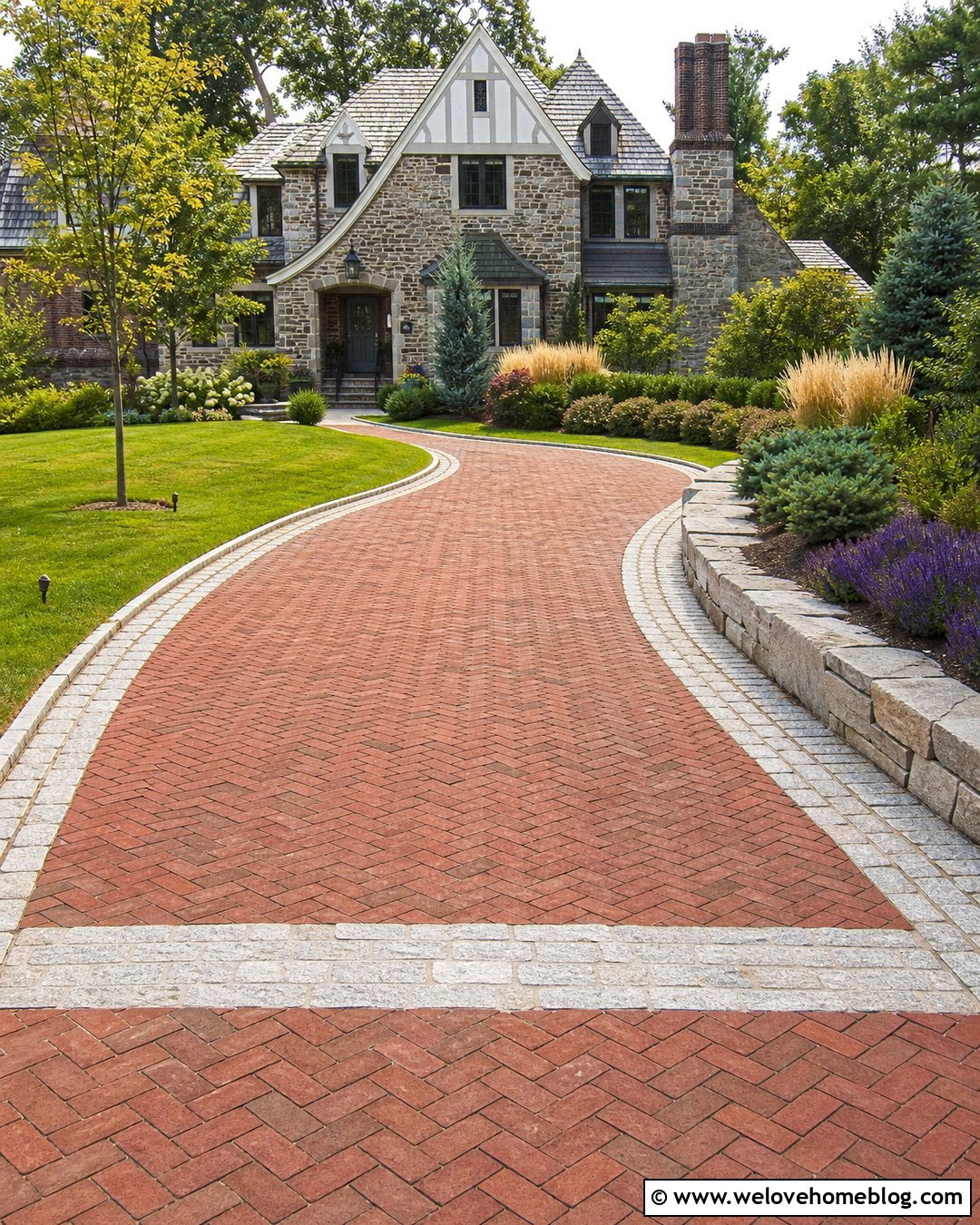
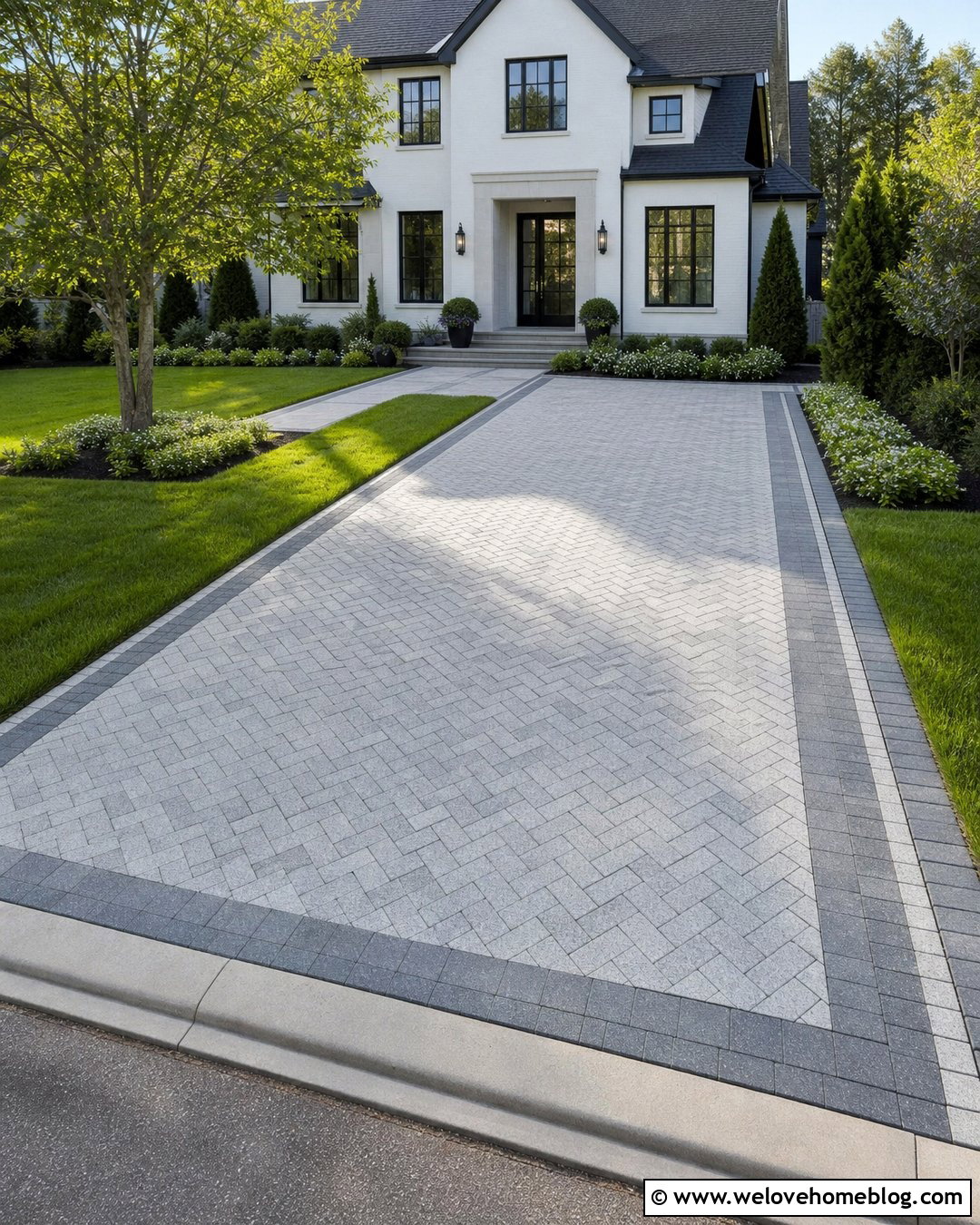
A paver apron gives a loose stone driveway a durable, polished transition at the curb. Select compacted granite or limestone chips for the main surface, then install clay brick or concrete pavers across the first several feet of the entrance. Repeat the pavers at the garage threshold for a balanced appearance. A herringbone pattern offers traditional character, while a running bond feels simpler and more contemporary. Continue a single row of matching pavers along each driveway edge to contain the stone. This design complements nearly any home because the paver color can be tailored to the facade. Finish the surroundings with lawn, foundation shrubs, and a clear front walkway. The apron visually marks the entrance and creates a more defined edge where the gravel driveway meets the public roadway.
14. Gravel Driveway With Large Stone Borders
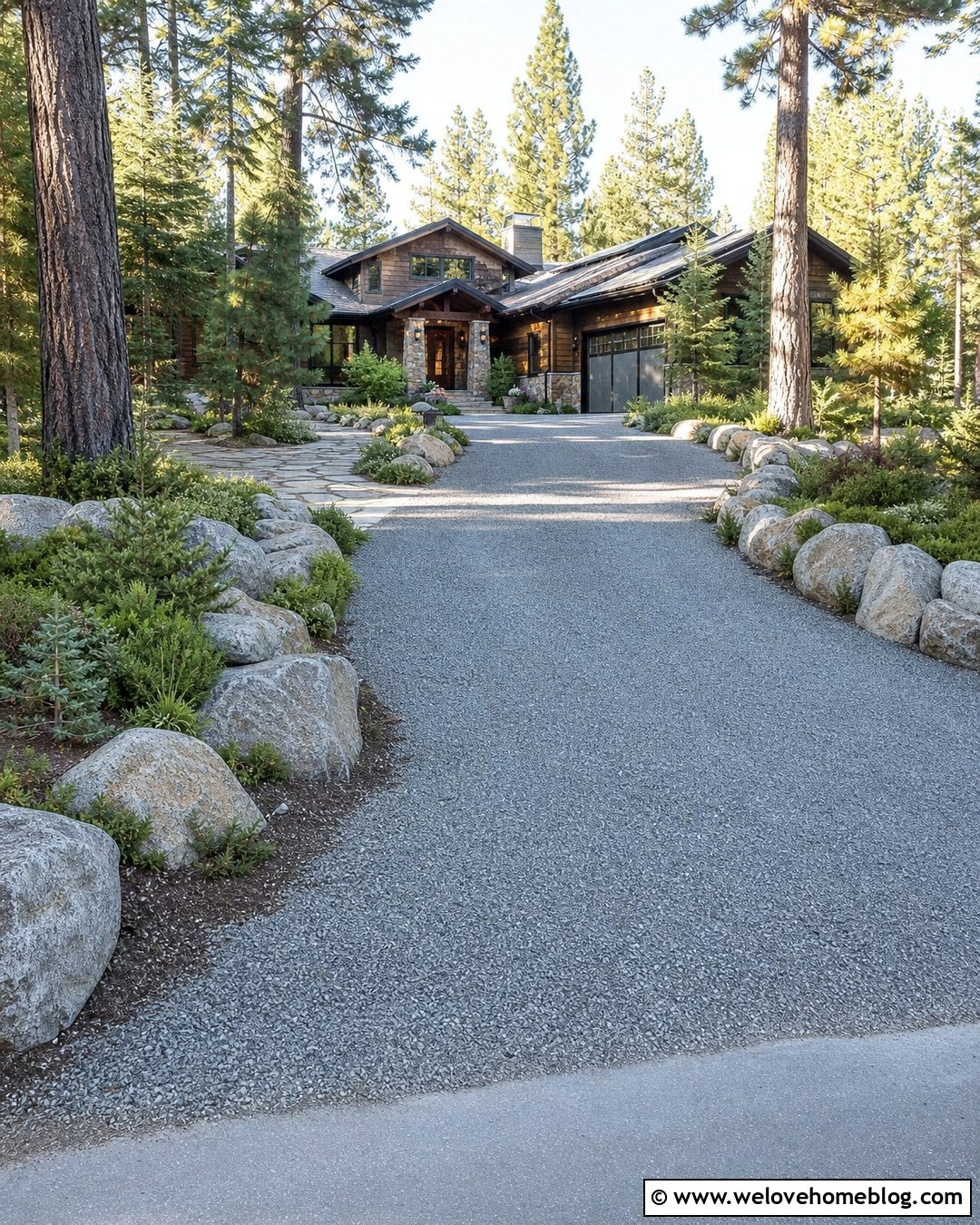
Large irregular stones create a bold boundary for a broad gravel driveway. Choose local fieldstone, weathered granite, or limestone boulders with colors that coordinate with the driveway aggregate. Space them close together for strong containment, or leave controlled gaps where low grasses can soften the border. This look is particularly effective around rustic homes, mountain properties, and wooded contemporary houses. Use compacted crushed gravel rather than loose decorative pebbles for the primary driving surface. Position the biggest stones near entrance curves and planting beds, but keep them safely outside vehicle clearance areas. Behind the border, layer evergreen shrubs, native grasses, and ground covers to connect the stones with the yard. The finished driveway should feel naturally rugged while still offering a clearly graded, well-maintained path to the house.
15. Decomposed Granite Driveway With Desert Plants
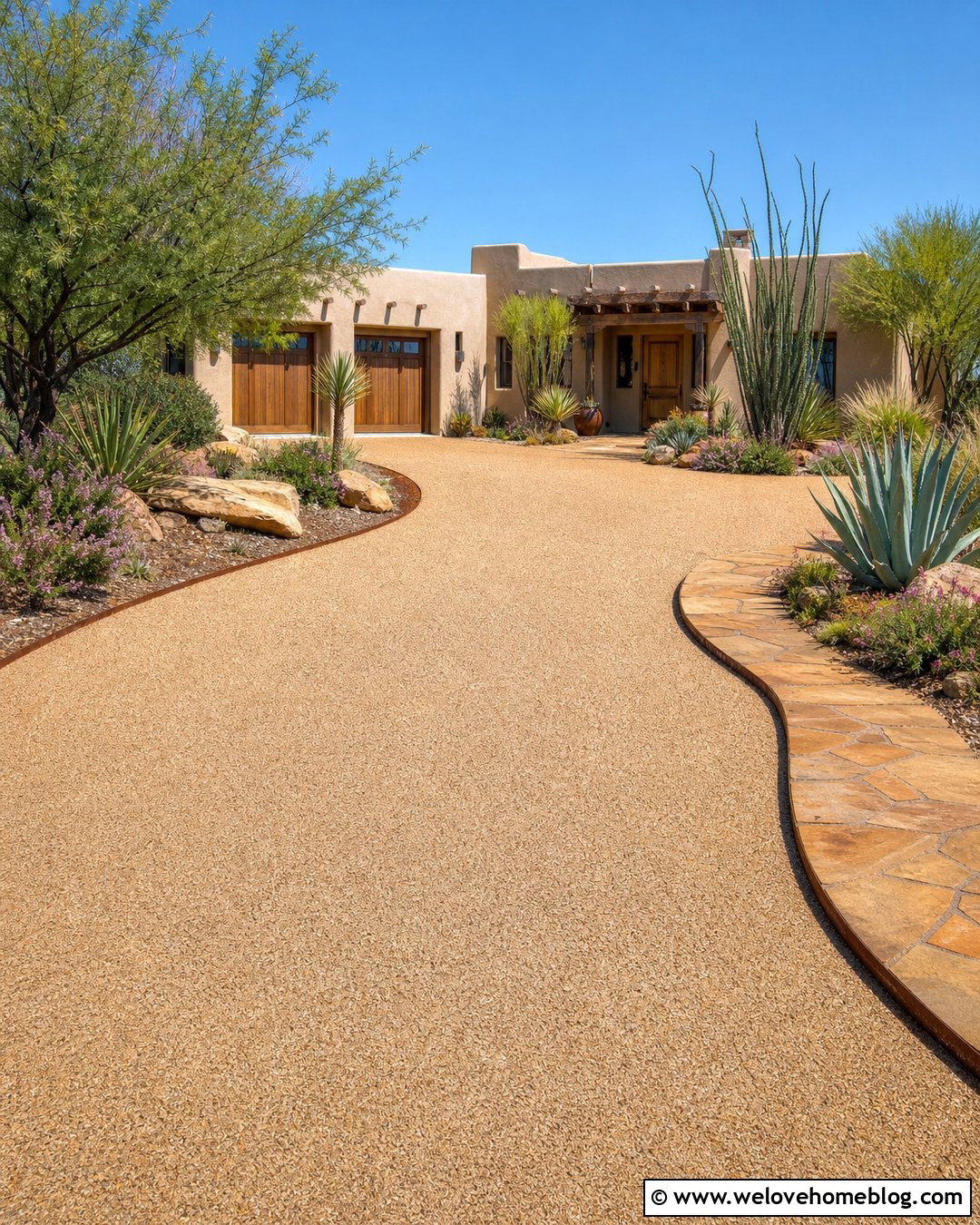
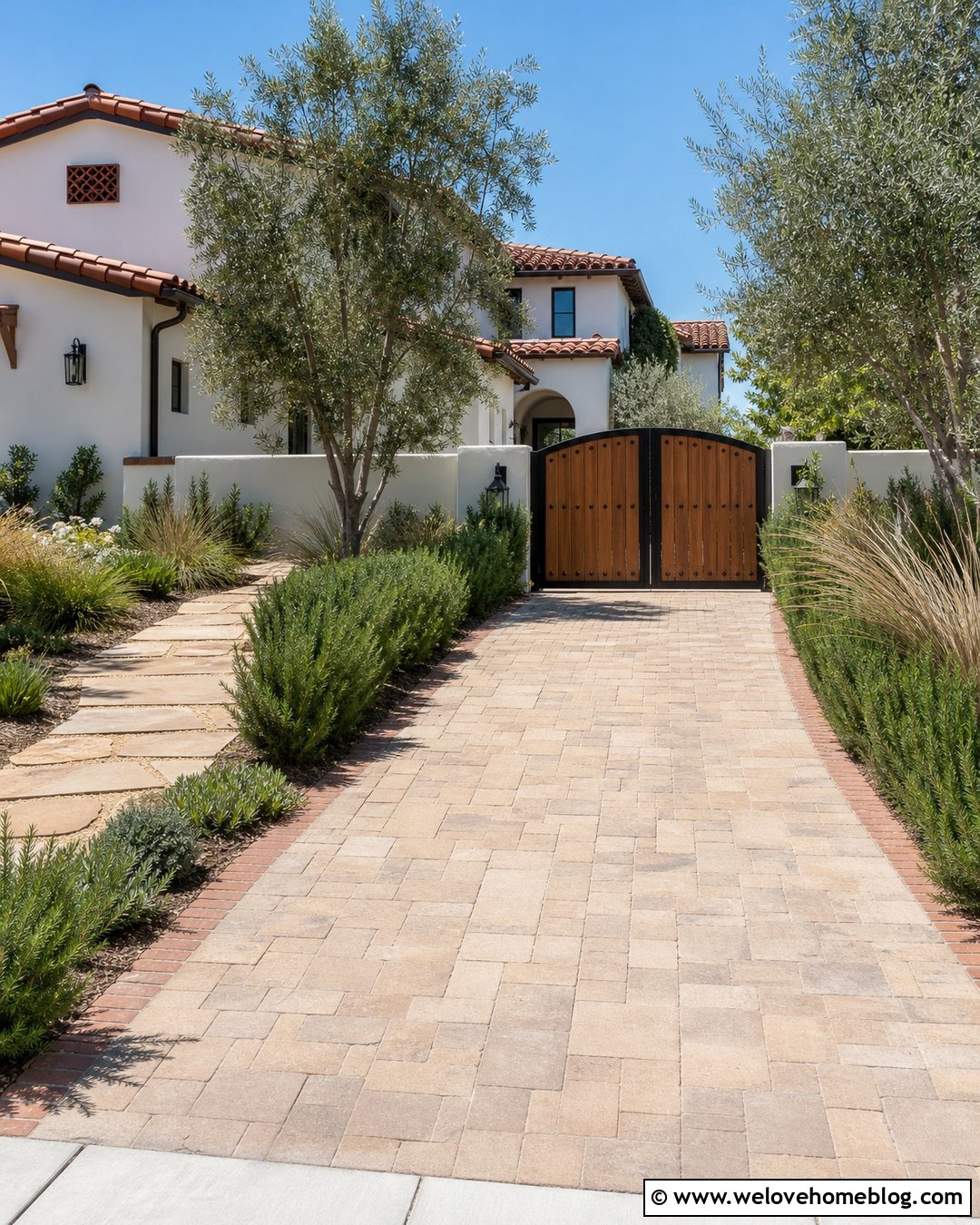
Golden decomposed granite blends beautifully with drought-tolerant landscaping and warm stucco architecture. Shape the driveway into a clean, straight approach or a broad curve that follows the natural grade. Install rust-colored steel edging to hold the surface and echo the earth tones in the stone. Along both sides, arrange agave, yucca, desert spoon, ornamental grasses, and carefully placed boulders over gravel mulch. Keep spiky plants away from passenger doors and walking routes. A flagstone path in complementary tan shades can connect the parking area to the front entrance. Stabilized decomposed granite may provide a firmer surface than a loose installation, depending on the product and site. The limited material palette gives this driveway a calm, cohesive appearance while reducing the need for thirsty lawn around the entrance.
16. Black Gravel Driveway With Concrete Border
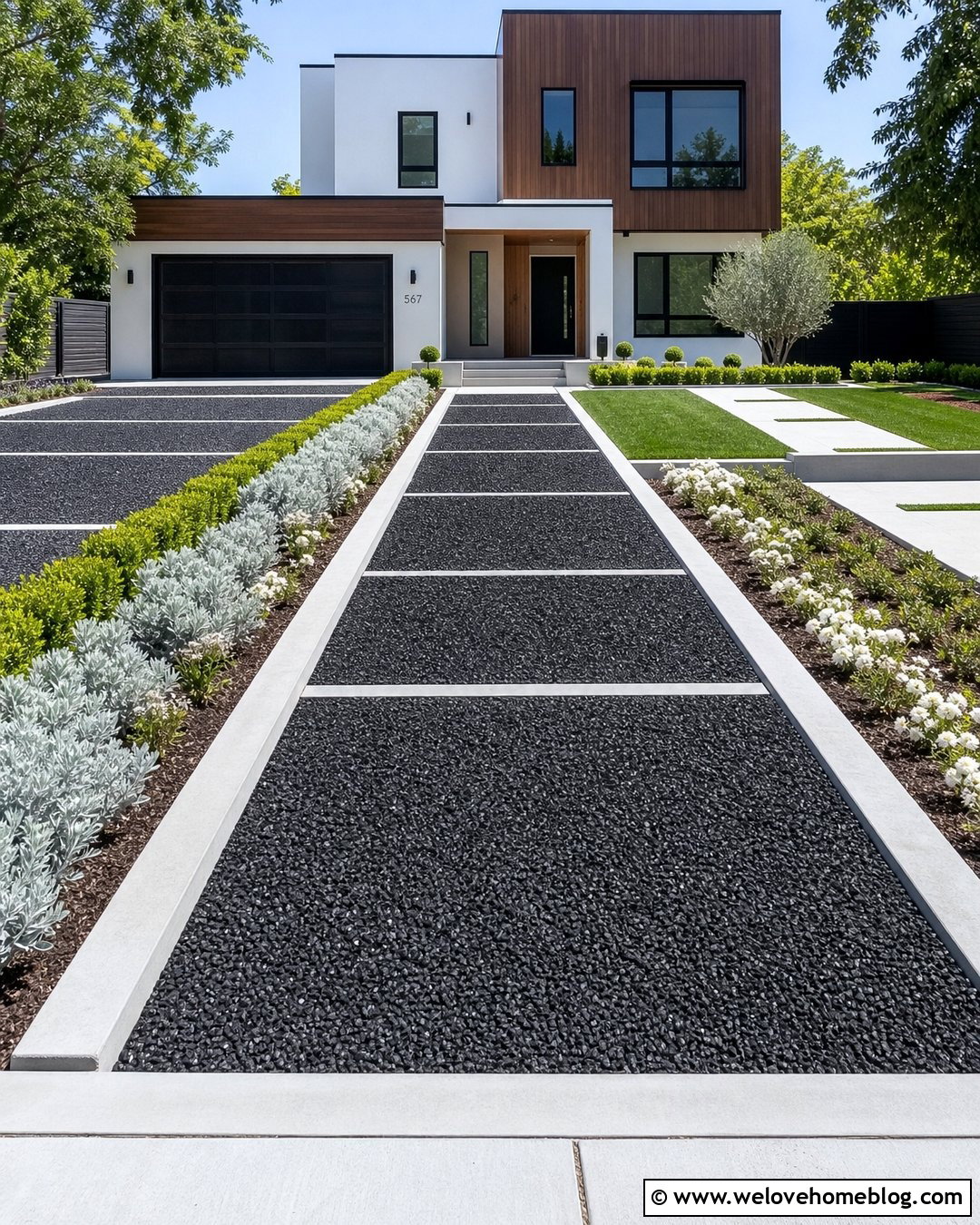
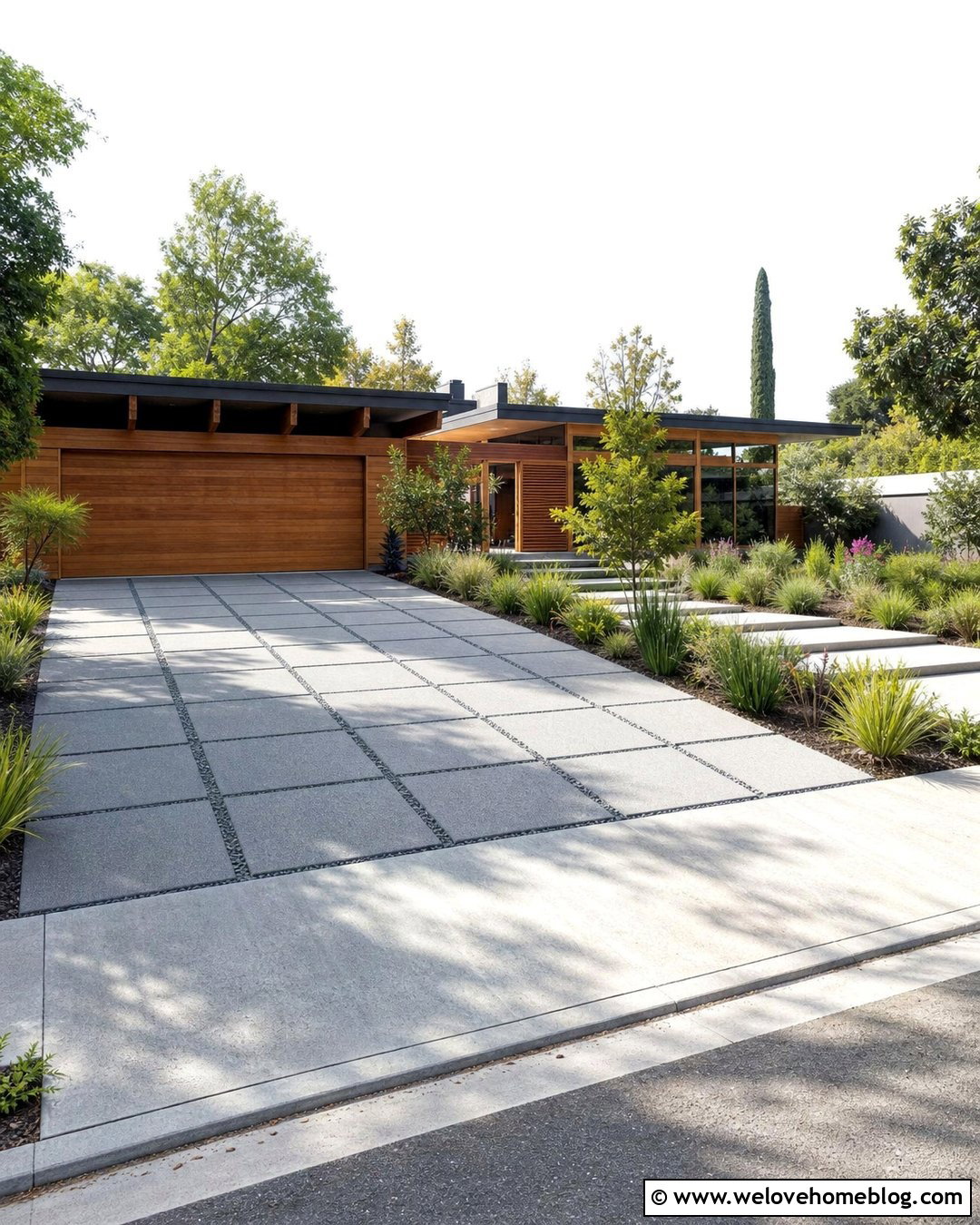
Black basalt or charcoal gravel produces a dramatic surface that pairs naturally with modern architecture. Frame it with a smooth, light gray concrete curb to create crisp contrast and control loose aggregate. A straight driveway divided by narrow concrete bands can make a wide frontage feel more structured. Continue the geometric design with rectangular lawn panels, low hedges, and a large concrete walkway leading to the front door. White flowers and silver foliage will stand out against the darker ground without introducing too many colors. This look works best when the black gravel is consistently graded and free from lighter mixed stone. Consider local heat and sun exposure because very dark surfaces can become hot. The completed design feels graphic and contemporary, yet the gravel texture keeps it from looking cold or overly industrial.
17. Farmhouse Gravel Driveway With Split Rail Fence
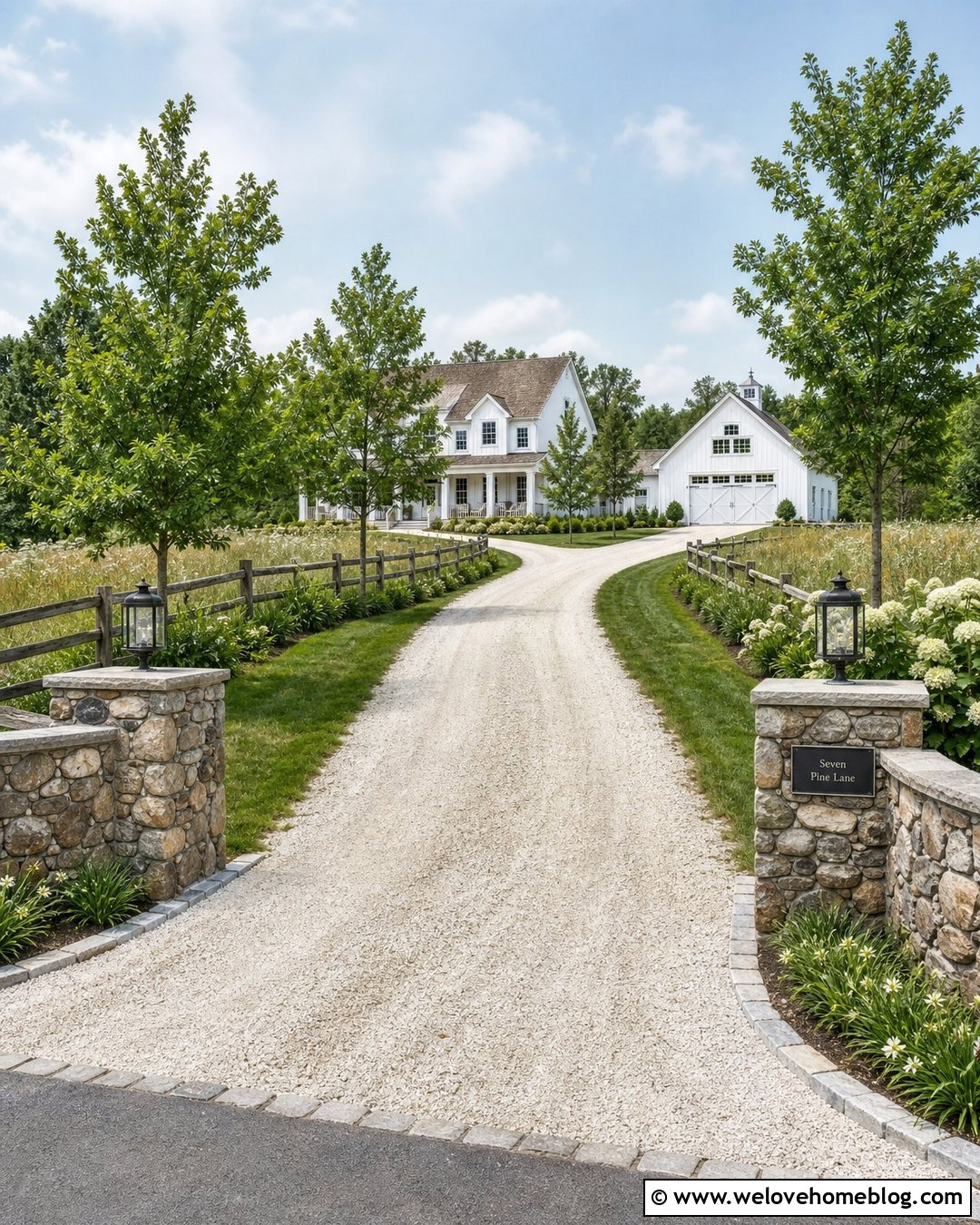
A long farmhouse driveway feels welcoming when pale crushed gravel is framed by a simple split rail fence. Follow a straight or gently winding route toward a white farmhouse, barn-style garage, or country ranch home. Allow a wide grass shoulder between the driving surface and fence so the entrance does not feel narrow. At the curb, use stone pillars or a wooden gate to establish a clear starting point. Plant deciduous trees at generous intervals, then fill selected areas with meadow grasses and seasonal wildflowers. Granite cobblestones can reinforce the driveway edge near parking and turning zones without making the entire route feel formal. This landscape works because every element appears useful and understated. The gravel, open lawn, fencing, and trees combine to create an authentic rural approach.
18. Gravel Driveway With Brick Ribbon
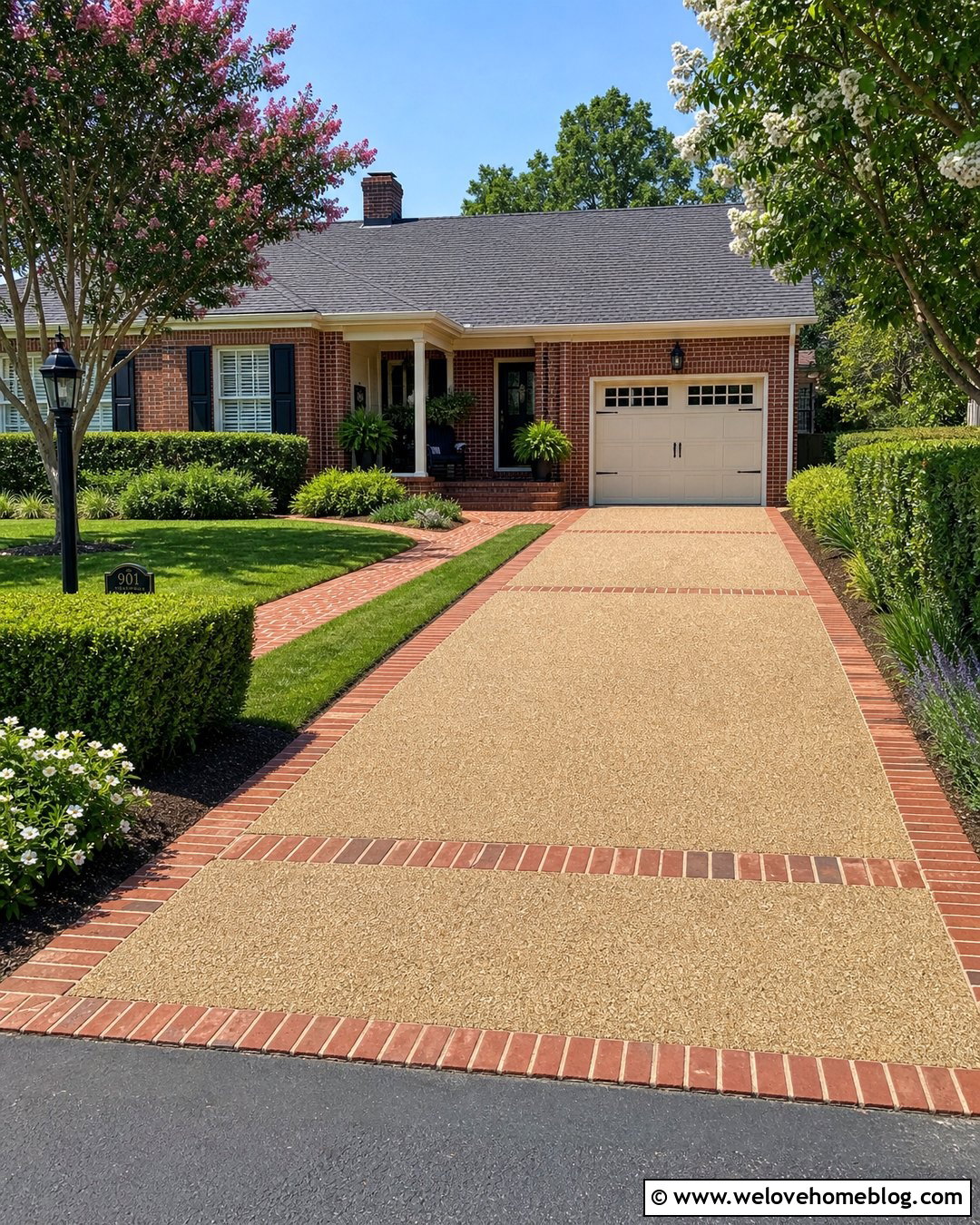
A brick ribbon can introduce pattern without covering the entire driveway in masonry. Start with compacted gray or tan crushed gravel, then add one or two transverse brick bands at carefully chosen points. Place one ribbon at the street, another near the front walkway, and a final band before the garage. The repeating lines divide a long driveway into visually manageable sections. Match the brick to the house facade or select a contrasting charcoal paver for a modern variation. Use brick edging along the sides to complete the design and prevent the gravel from spreading into the lawn. Neat hedges, flowering trees, and simple foundation beds provide a polished background. Set each ribbon flush with the gravel so tires pass smoothly across the change in material.
19. Gravel Driveway With Evergreen Tree Border
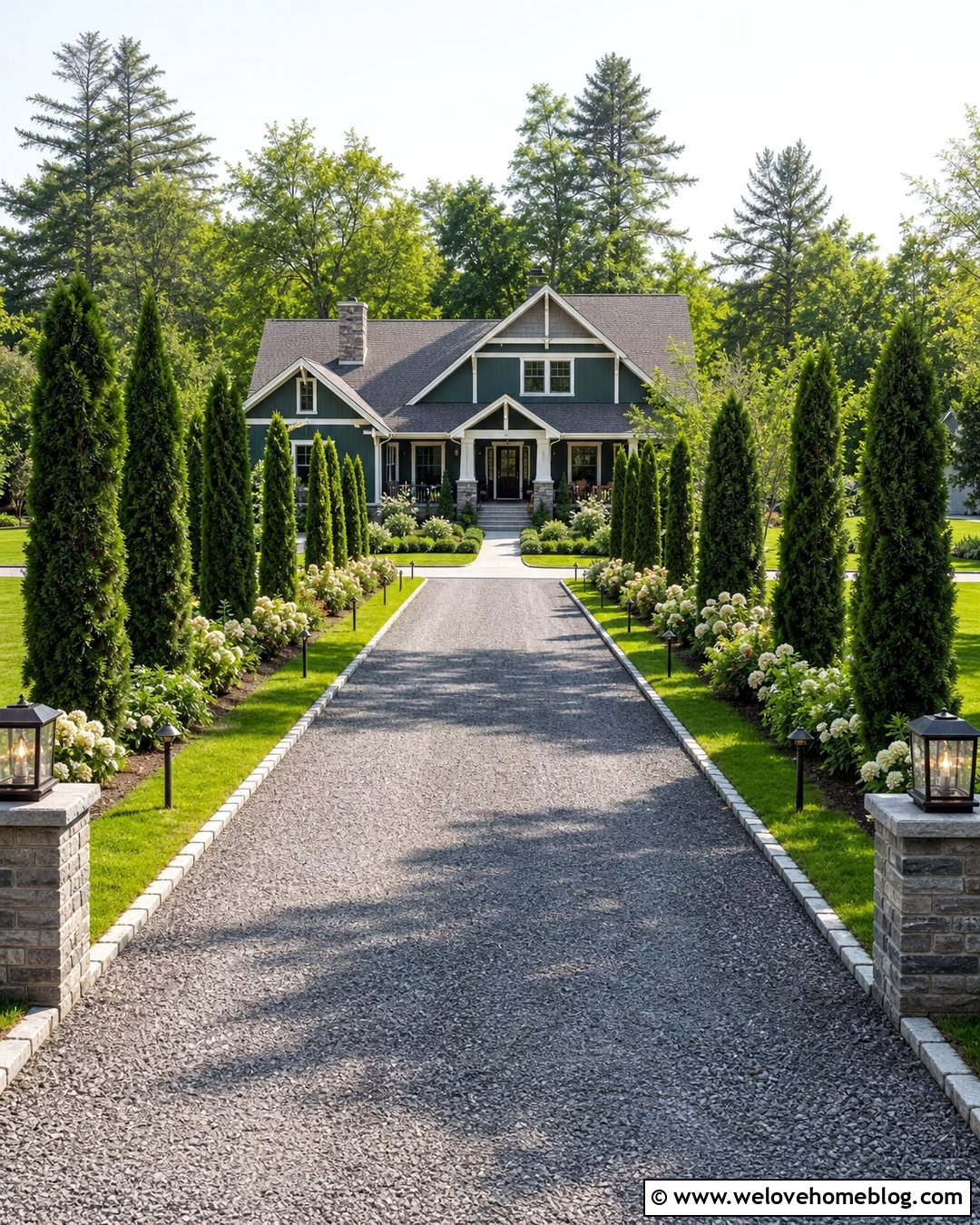
Rows of evergreen trees can give a long gravel driveway privacy, structure, and year-round color. Choose a durable crushed stone surface in a neutral shade, then define its sides with flush granite blocks or metal edging. Plant upright evergreens beyond a generous lawn or planting strip rather than directly beside the driving lane. This separation allows the trees to mature without crowding vehicles or trapping snow on the surface. For a less formal look, alternate the evergreens with deciduous trees and flowering shrubs. Low landscape lighting can mark the edge while remaining secondary to the planting. A straight driveway creates a strong sightline toward the house, while a gentle curve feels softer. Either approach benefits from consistent spacing and a clearly framed entrance that previews the tree-lined route ahead.
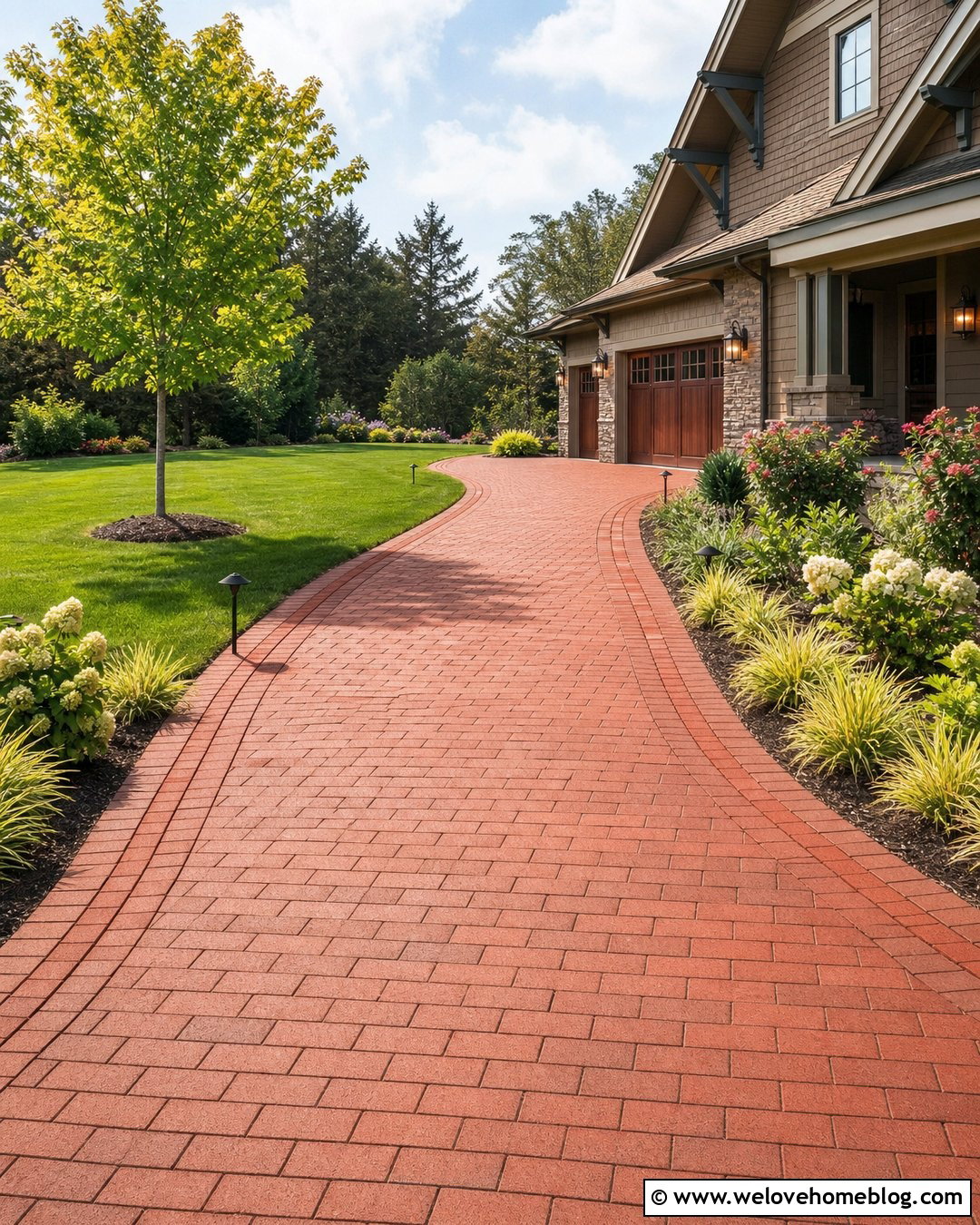
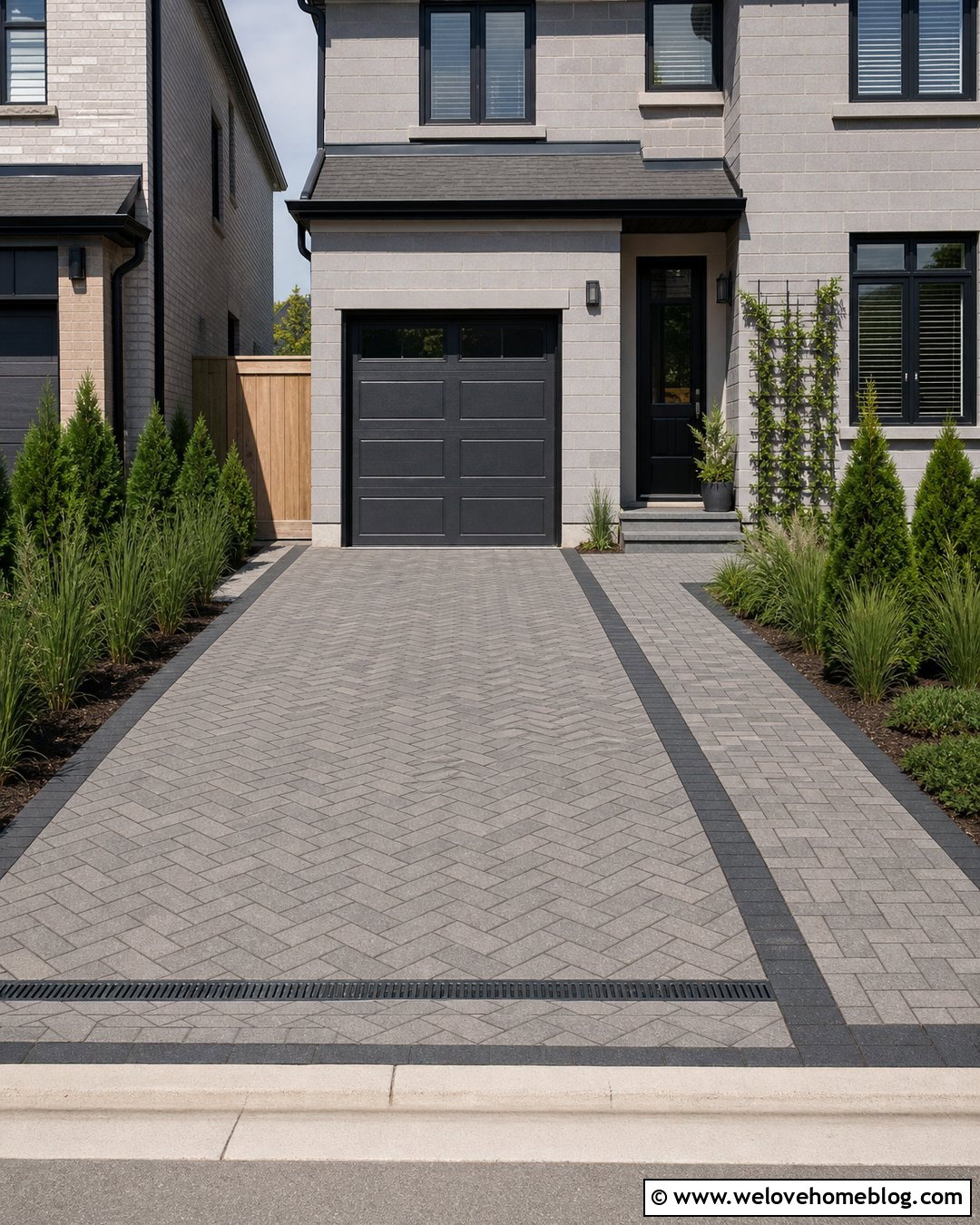
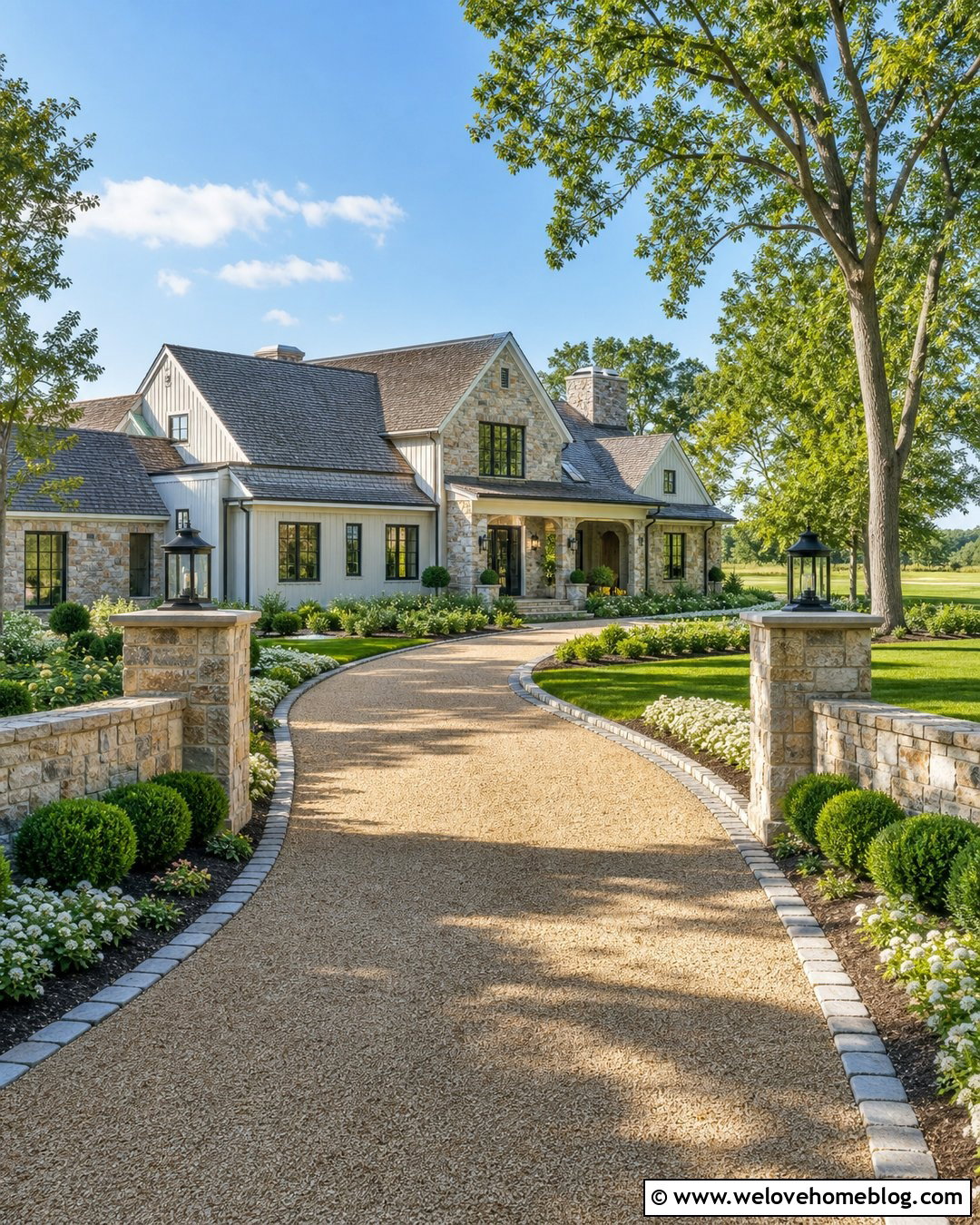
20. Mixed Stone Driveway With Patterned Bands
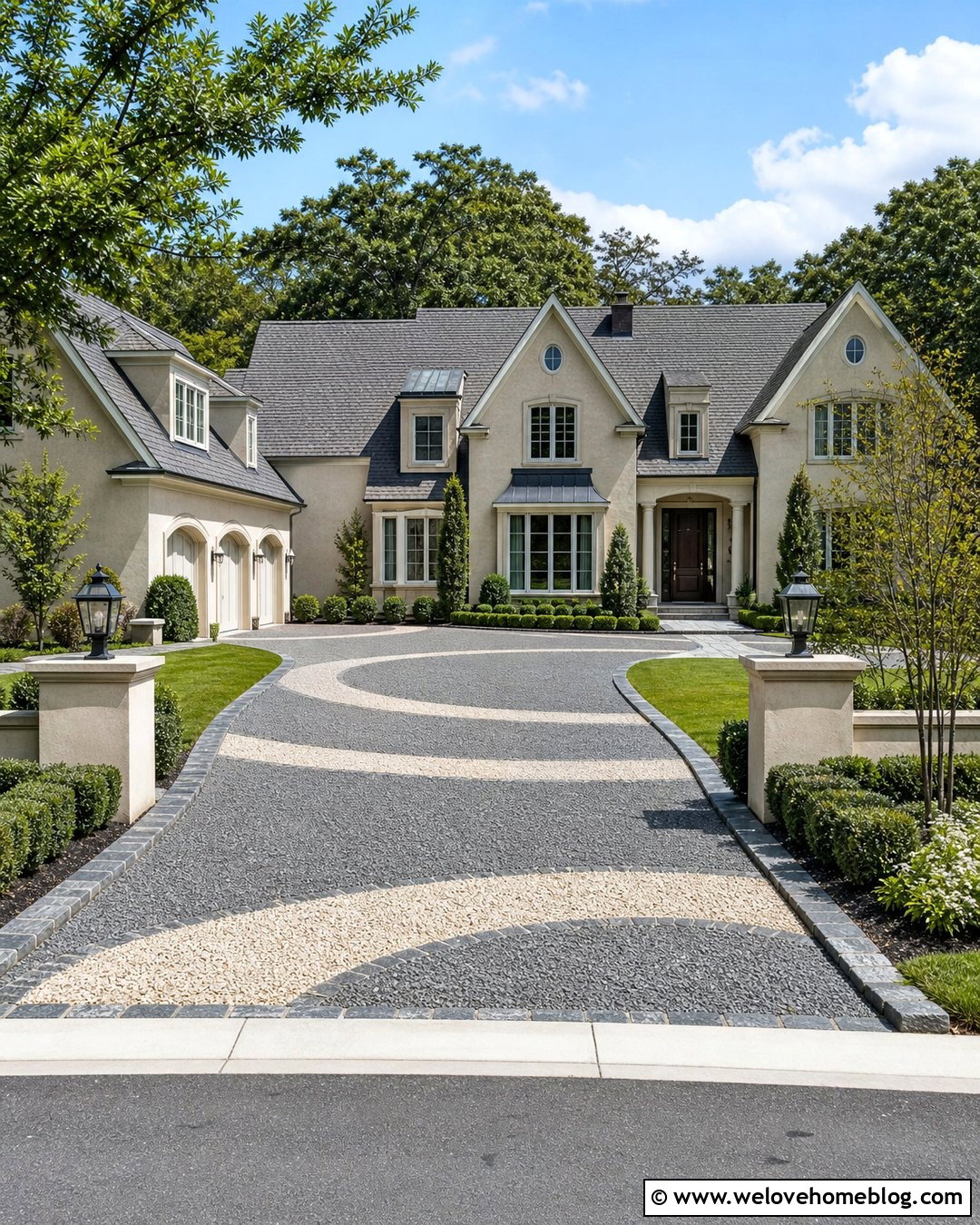
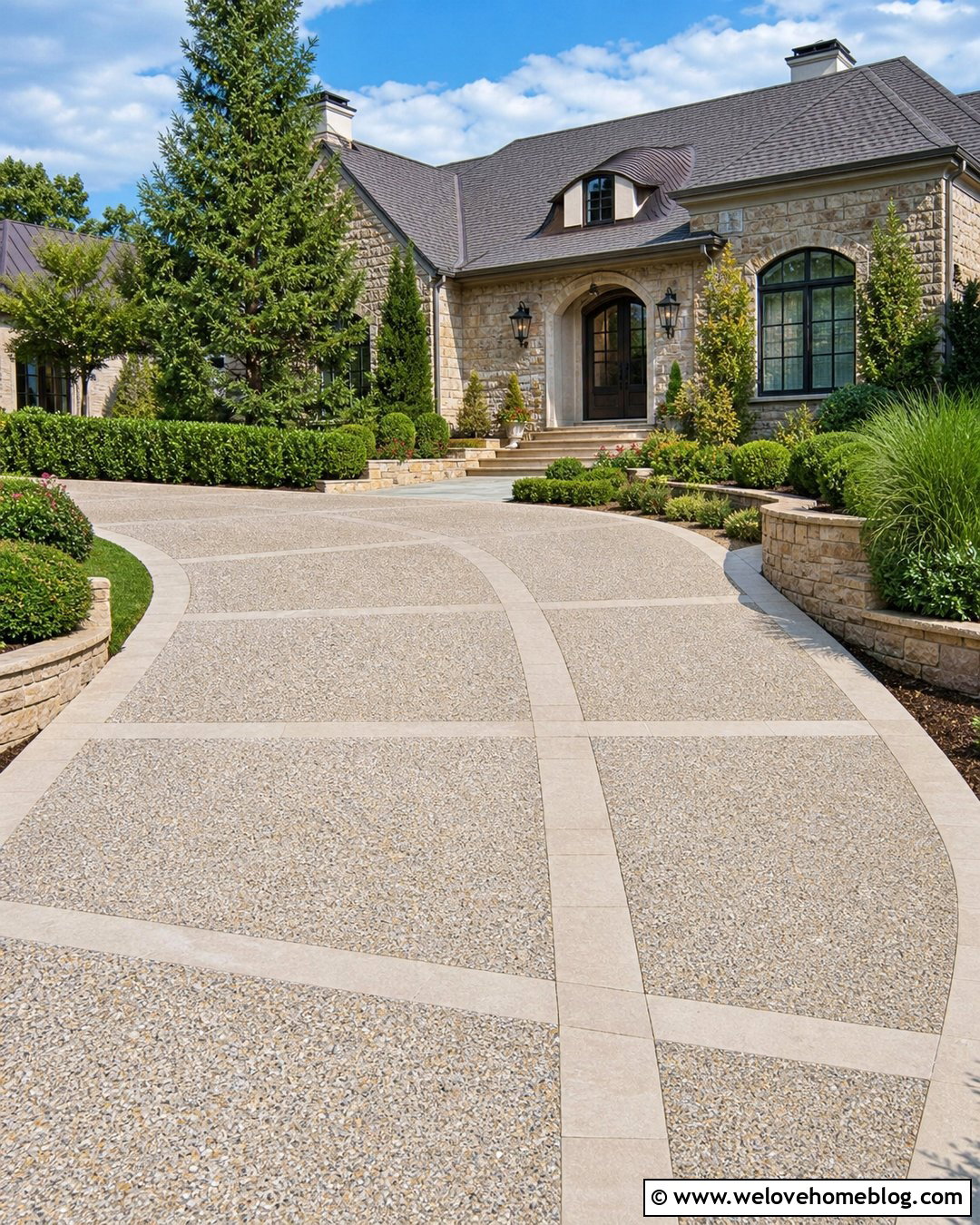
Combining two related aggregates can make a large driveway more visually interesting without sacrificing its natural character. Use medium-gray crushed granite as the main surface and form broad bands of cream limestone or warm brown stone across the driveway. Straight bands suit modern houses, while gently arched bands complement traditional architecture. Separate the colors with granite setts so the pattern remains sharp during raking and maintenance. Continue the darker stone around the parking court and use the lighter material to highlight the entrance or front walkway connection. Simple lawns, clipped shrubs, and one or two ornamental trees will prevent the landscape from competing with the surface pattern. Keep both aggregates similar in size and driving performance. The final composition should read as one practical driveway with deliberate decorative detailing.
Conclusion:
The most successful stone and gravel driveways combine an appropriate driving surface with a strong base, effective edging, and landscaping that fits the property. Angular crushed stone is useful where stability matters, while pea gravel, river rock, and contrasting aggregates can add decorative character in well-contained areas. Borders made from brick, cobblestone, steel, timber, or concrete establish shape and connect the driveway with the home. Before choosing a final design, consider drainage, slope, turning space, snow removal, local aggregate availability, and maintenance needs. Whether your goal is a relaxed cottage entrance or a formal circular approach, these **20 Stone And Gravel Driveway Ideas** offer practical ways to improve curb appeal.

Related posts:
Leave a Reply