
A well-planned desert driveway can feel welcoming, polished, and connected to the surrounding landscape without relying on a thirsty lawn. These 20 desert driveway landscaping ideas combine durable surfaces with drought-tolerant plants, decorative rock, defined borders, and practical drainage. The best layouts treat the driveway and front yard as one design. Colors repeat across paving, gravel, boulders, walls, and the home’s exterior. Plantings are arranged in purposeful groups rather than scattered randomly. Native and desert-adapted plants can also reduce water demand while creating seasonal color and wildlife value. () Whether your property is modern, rustic, Southwestern, or traditional, the complete looks below offer approachable inspiration through 20 desert driveway landscaping ideas.
1. Desert Gravel Driveway With Agave And Boulders
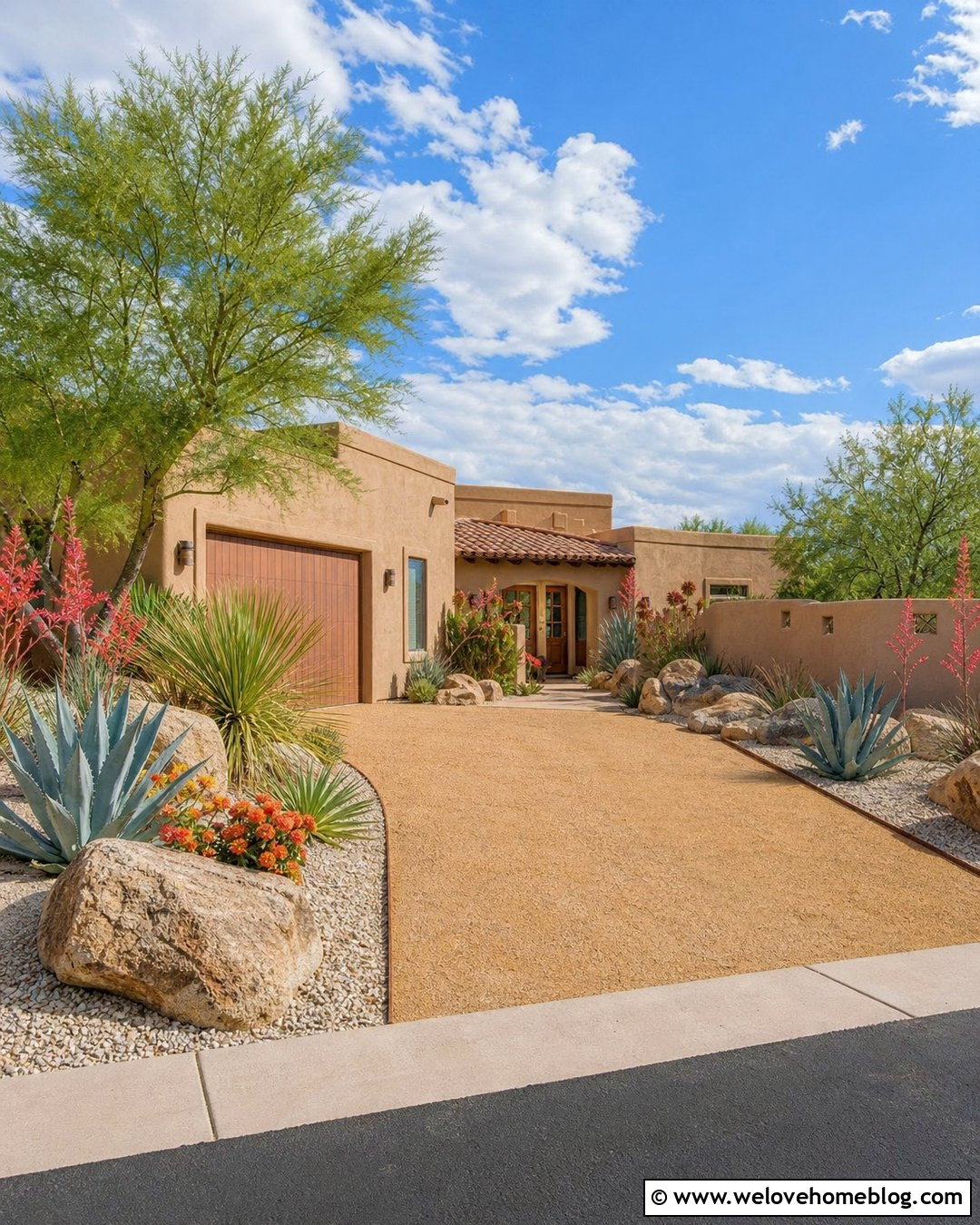
A straight gravel driveway gains a strong desert identity when it is framed with sculptural agaves and large natural boulders. Choose warm decomposed granite or three-quarter-inch crushed gravel that complements the home’s stucco, stone, or brick exterior. Install steel edging to keep loose material out of planting beds and nearby walkways. Place boulders in irregular groups instead of creating a perfectly matched row. Agaves, red yuccas, and low-growing desert marigolds can fill the spaces between them. Leave enough room for each plant to reach its mature width without touching vehicles. A wider gravel apron near the garage makes turning easier. This complete arrangement works especially well with ranch houses and Southwestern homes because it feels relaxed but intentionally organized.
2. Curved Desert Driveway With Palo Verde Trees
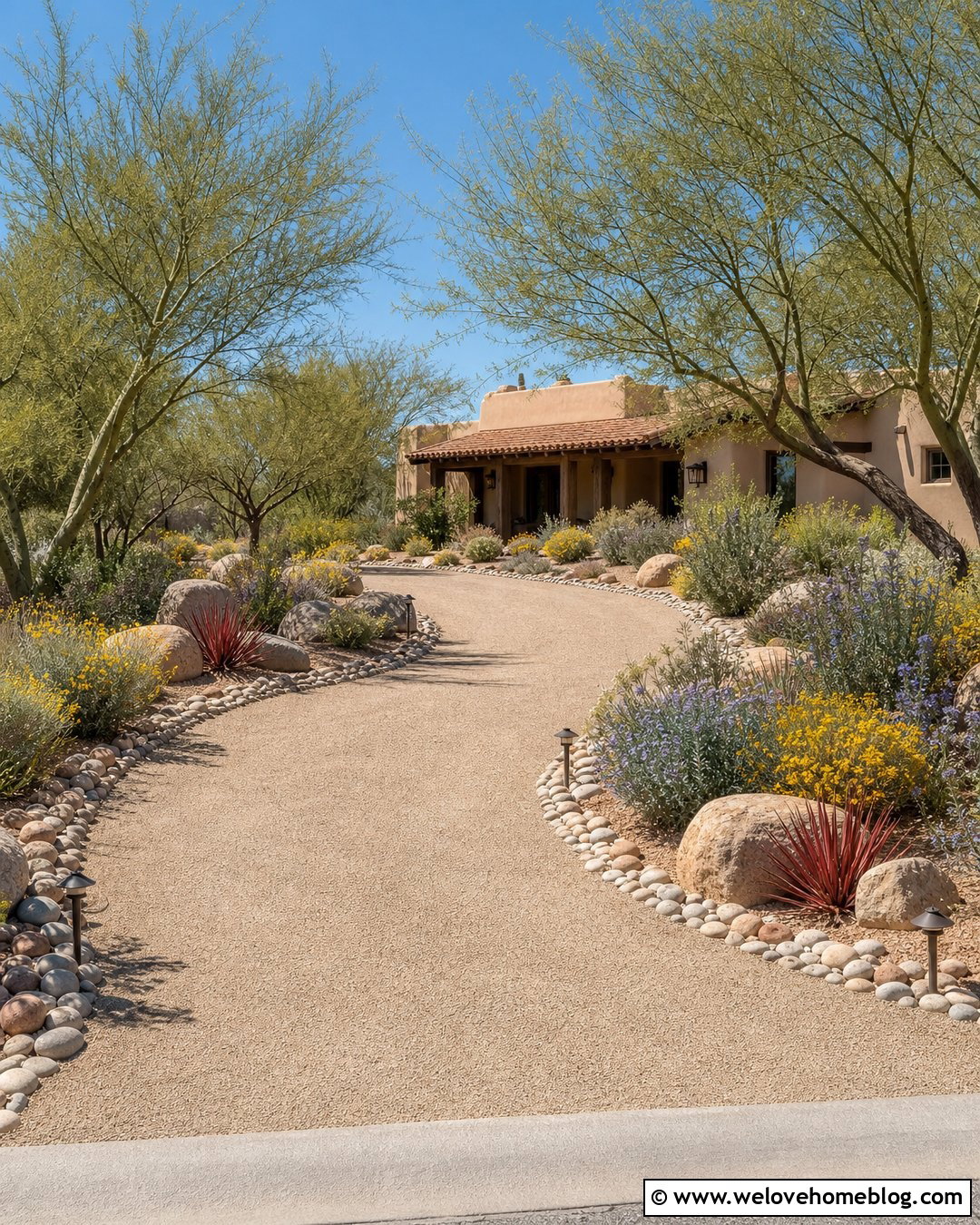
A gently curved decomposed granite driveway creates a softer approach while revealing the house gradually. Frame the outside of the curve with palo verde trees, which provide an airy canopy without making the entrance feel enclosed. On the inside, use smaller groupings of brittlebush, penstemon, red yucca, and desert spoon. A border of larger river stones can prevent granite from spreading into the beds. Keep trees far enough from the driving surface to allow for mature trunks, branches, and clear visibility. Repeating the same gravel color in nearby pathways ties everything together. Position low-voltage lights near major bends rather than lining the entire route. This desert driveway landscaping design suits larger lots where the curve can follow the natural contours of the yard.
3. Concrete Desert Driveway With Cactus Beds
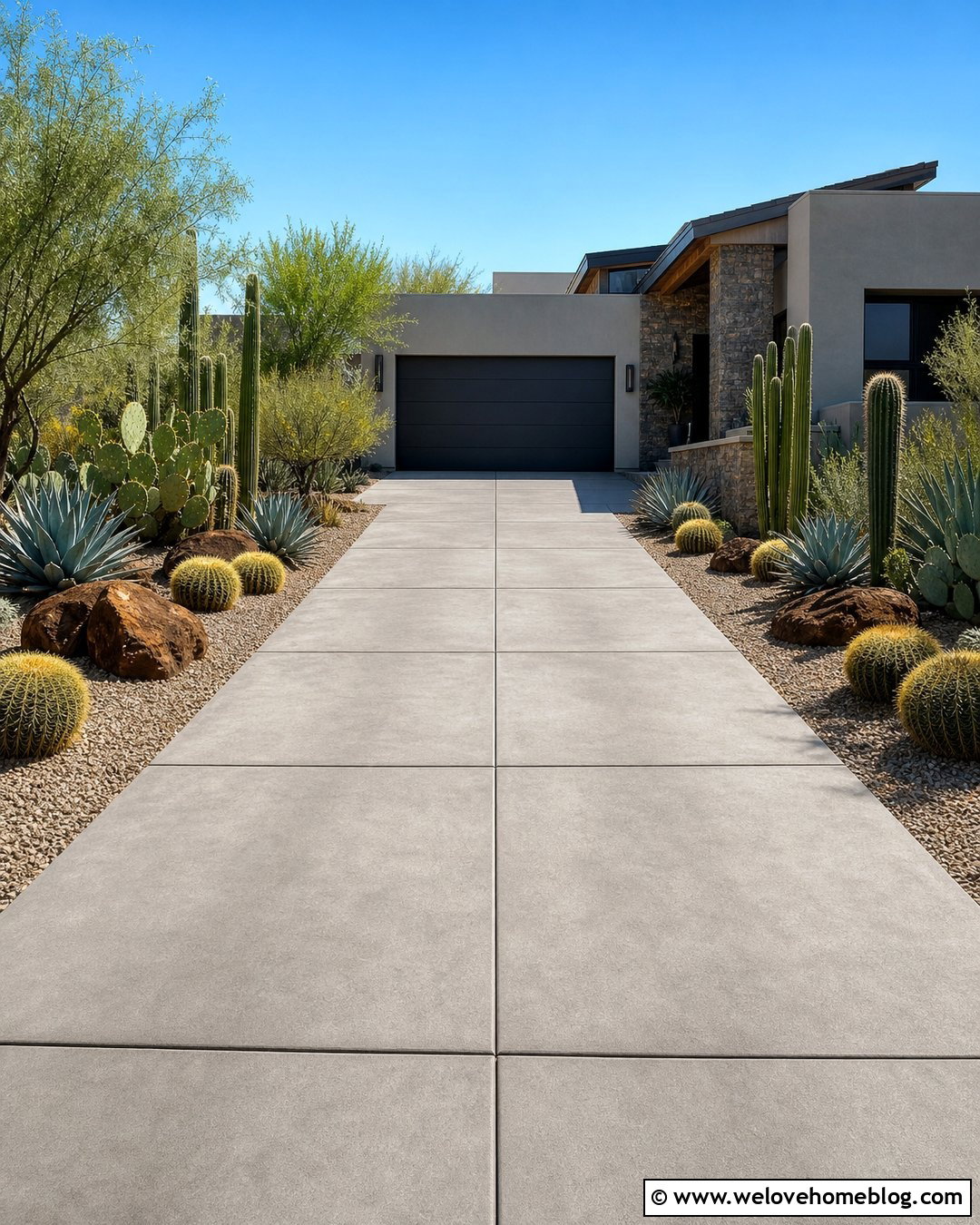
Clean poured concrete looks more inviting when deep cactus beds soften its straight edges. Select a light sand-colored or warm gray finish rather than brilliant white, which can create harsh glare under desert sun. Use saw-cut control joints in a simple grid that relates to the lines of the house. Beside the driveway, arrange golden barrel cacti, prickly pear, agave, and upright Mexican fence post cactus in layered groups. Fine gravel mulch gives the beds a finished surface and makes fallen debris easier to notice. Add a few weathered boulders to vary the height and texture. Keep thorny plants back from doors, parking areas, sidewalks, and passenger paths. The resulting look is crisp enough for a contemporary home but still connected to the desert setting.
4. Circular Desert Driveway With A Mesquite Island
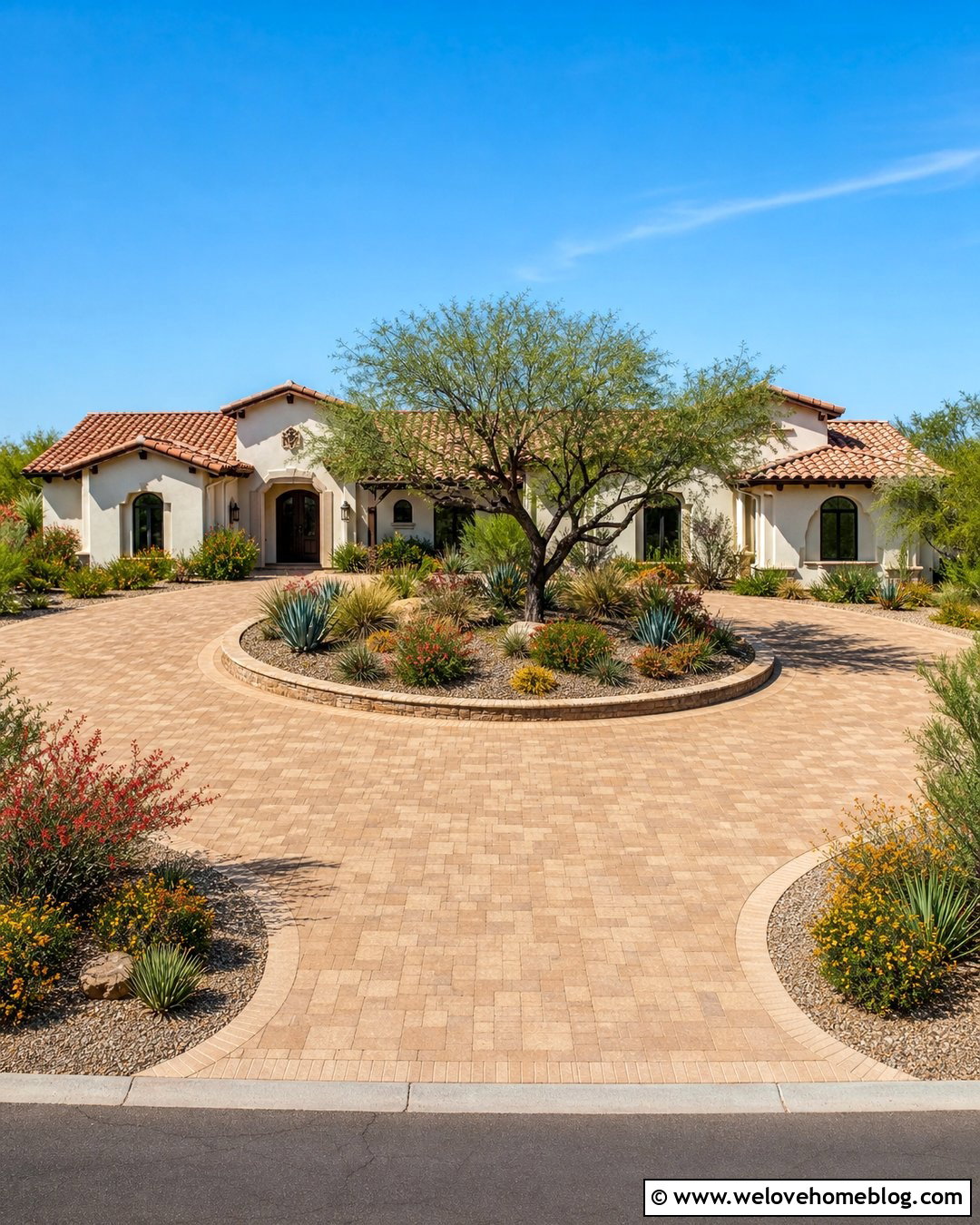
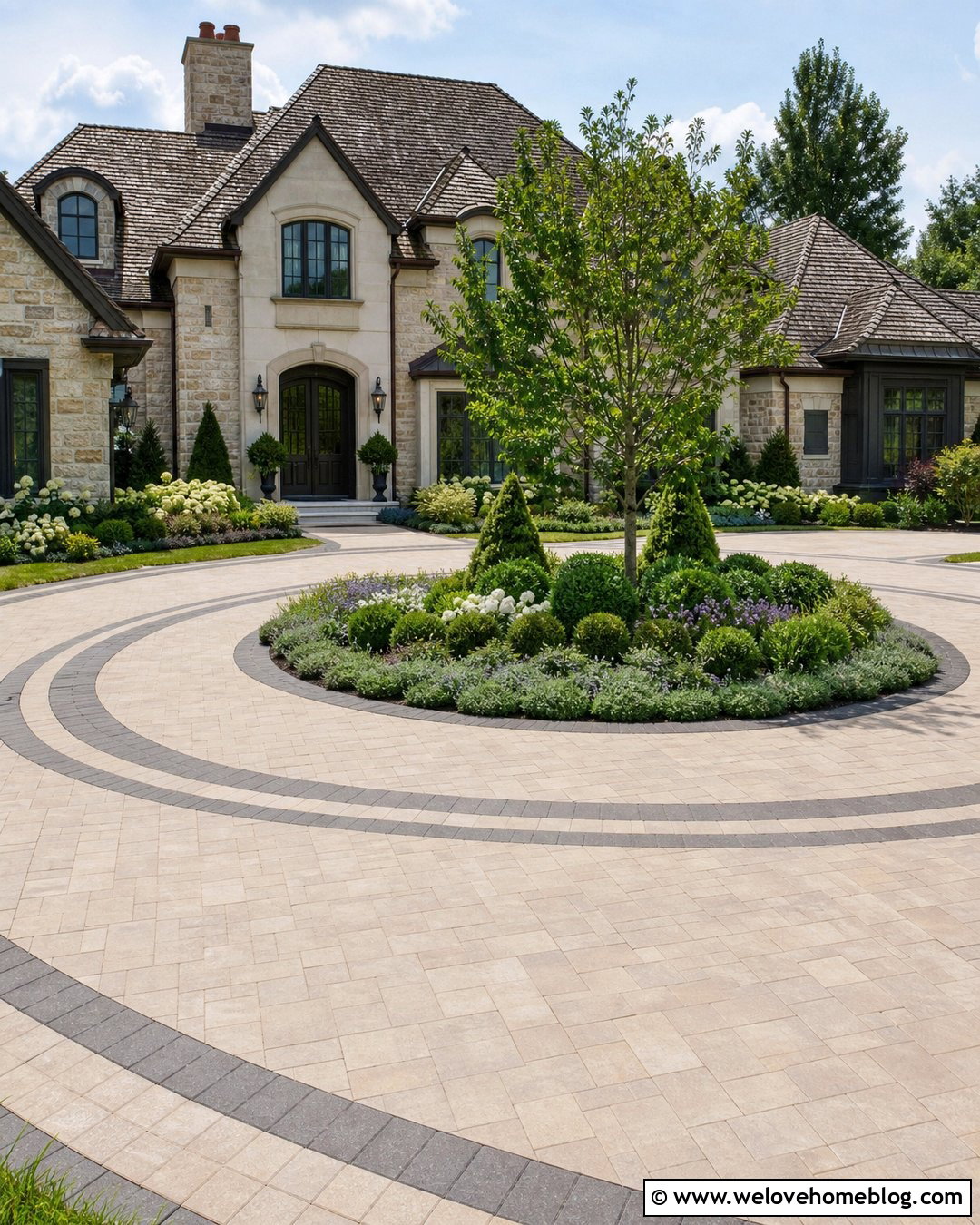
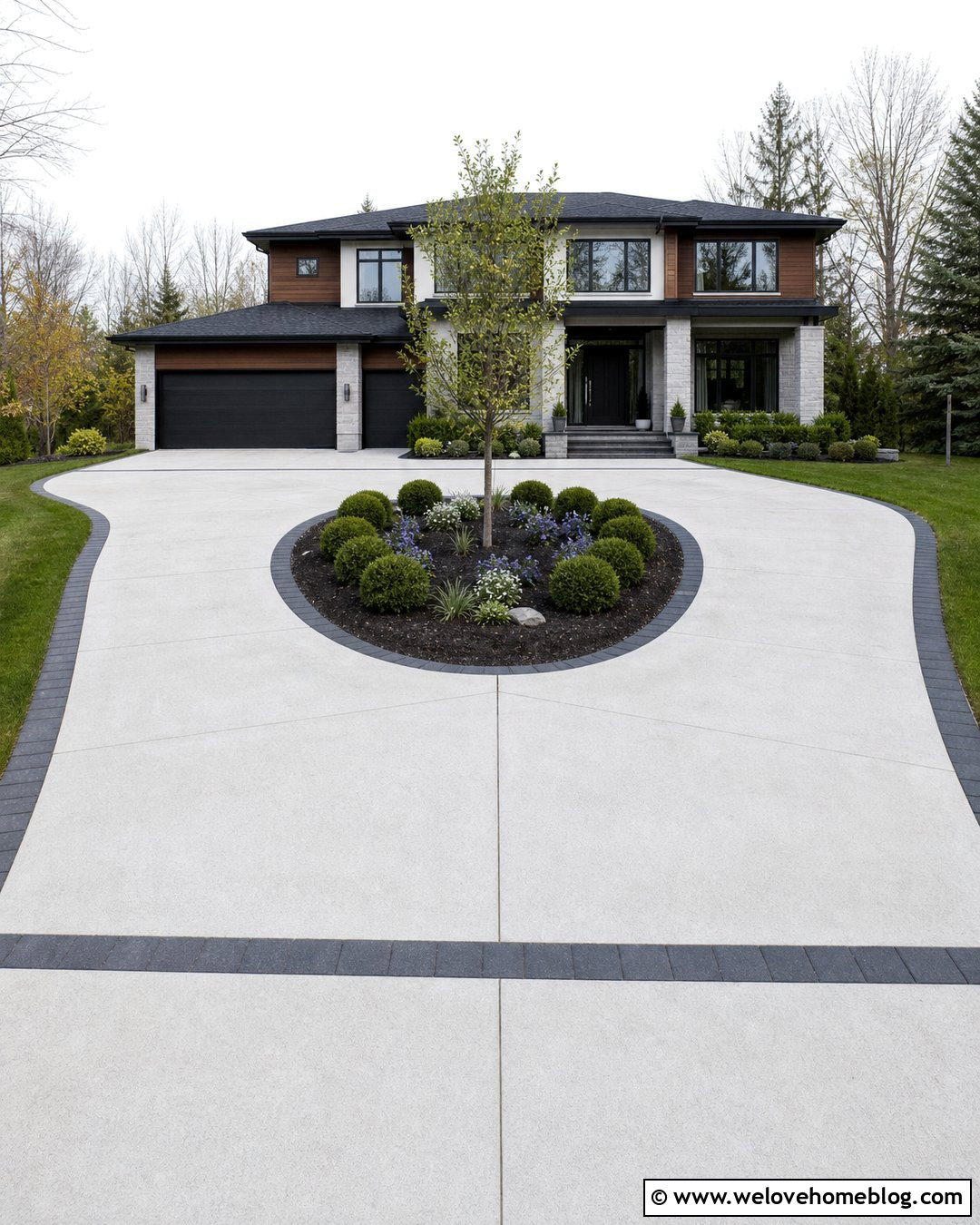
A circular paver driveway can become the centerpiece of a spacious desert front yard. Use tan concrete pavers in a running bond or ashlar pattern, then build a broad center island around a mature mesquite tree. The tree creates height and filtered shade, while clusters of agave, fairy duster, desert marigold, and ornamental grasses fill the lower level. Cover exposed soil with gravel that matches one of the paver tones. A stone curb around the island protects plants from turning vehicles and gives the circle a clearly defined shape. Avoid filling the island too densely because open space helps the tree and accent plants stand out. The finished driveway provides convenient traffic flow while giving Mediterranean, hacienda, and Southwestern homes a balanced entrance.
5. Asphalt Desert Driveway With Desert Willow Borders
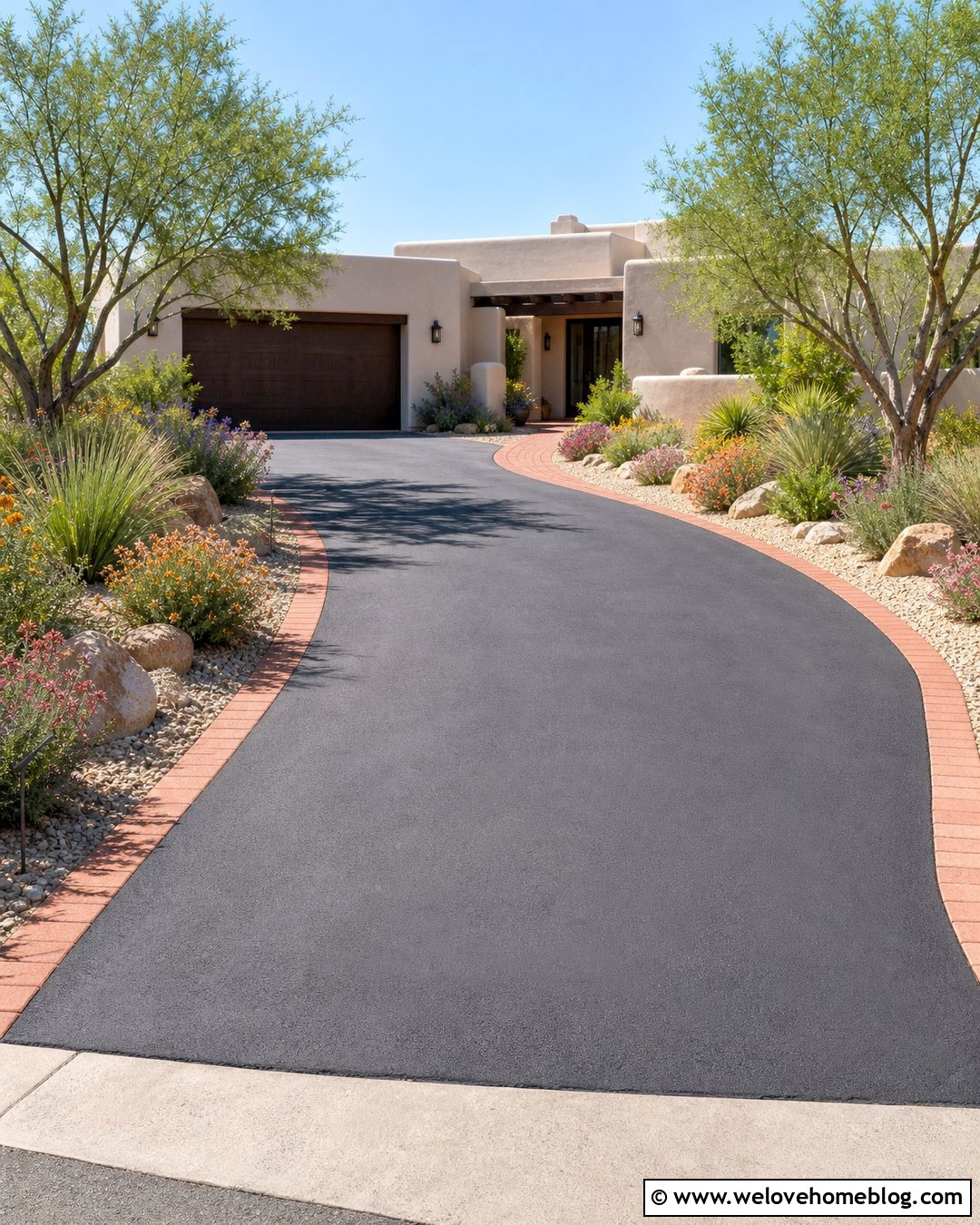
Black asphalt can feel less severe when it is paired with flowing borders of desert willow and colorful native perennials. Create gently curved planting beds along both sides rather than following the pavement with narrow, rigid strips. Desert willows provide seasonal flowers and light shade, while autumn sage, globe mallow, penstemon, and deer grass bring lower layers of color and movement. Native and desert-adapted selections should be matched to the property’s exact climate, elevation, and winter temperatures. () Separate the asphalt from the gravel mulch with a flush concrete curb or warm-toned paver ribbon. This keeps the edges neat without interfering with tires. The contrast between dark pavement, pale gravel, green foliage, and flowering plants works beautifully beside light stucco, adobe, or painted brick homes.
6. Pea Gravel Desert Driveway With Steel Edging
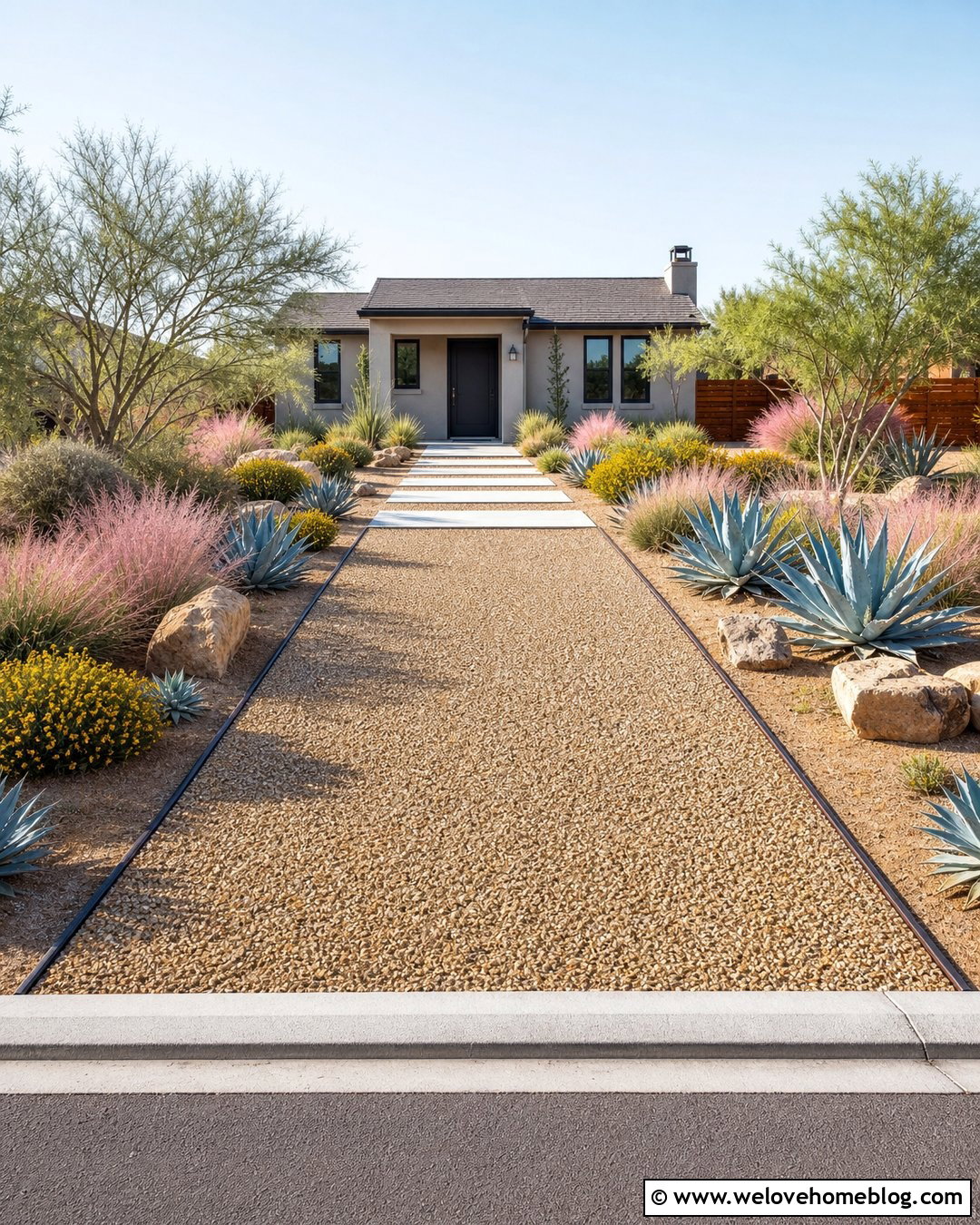
Pea gravel creates a softer, more informal surface for a desert cottage or compact ranch property. Choose buff, tan, or mixed-earth gravel and contain it with dark steel edging anchored securely along both sides. Wide planting beds filled with blue-gray agaves, pink muhly grass, and low mounds of damianita provide contrast without crowding the driveway. A compacted base and stabilizing grid can improve the surface where loose stones might otherwise shift. Use larger concrete pavers to form a comfortable walkway from the driveway to the front door. Repeating the steel edging around those stepping stones produces a coordinated finish. This look works best on relatively level sites with manageable runoff. Its warm colors and relaxed planting pattern create an approachable entrance without making the front yard appear unfinished.
7. Exposed Aggregate Driveway With A Dry Creek Bed
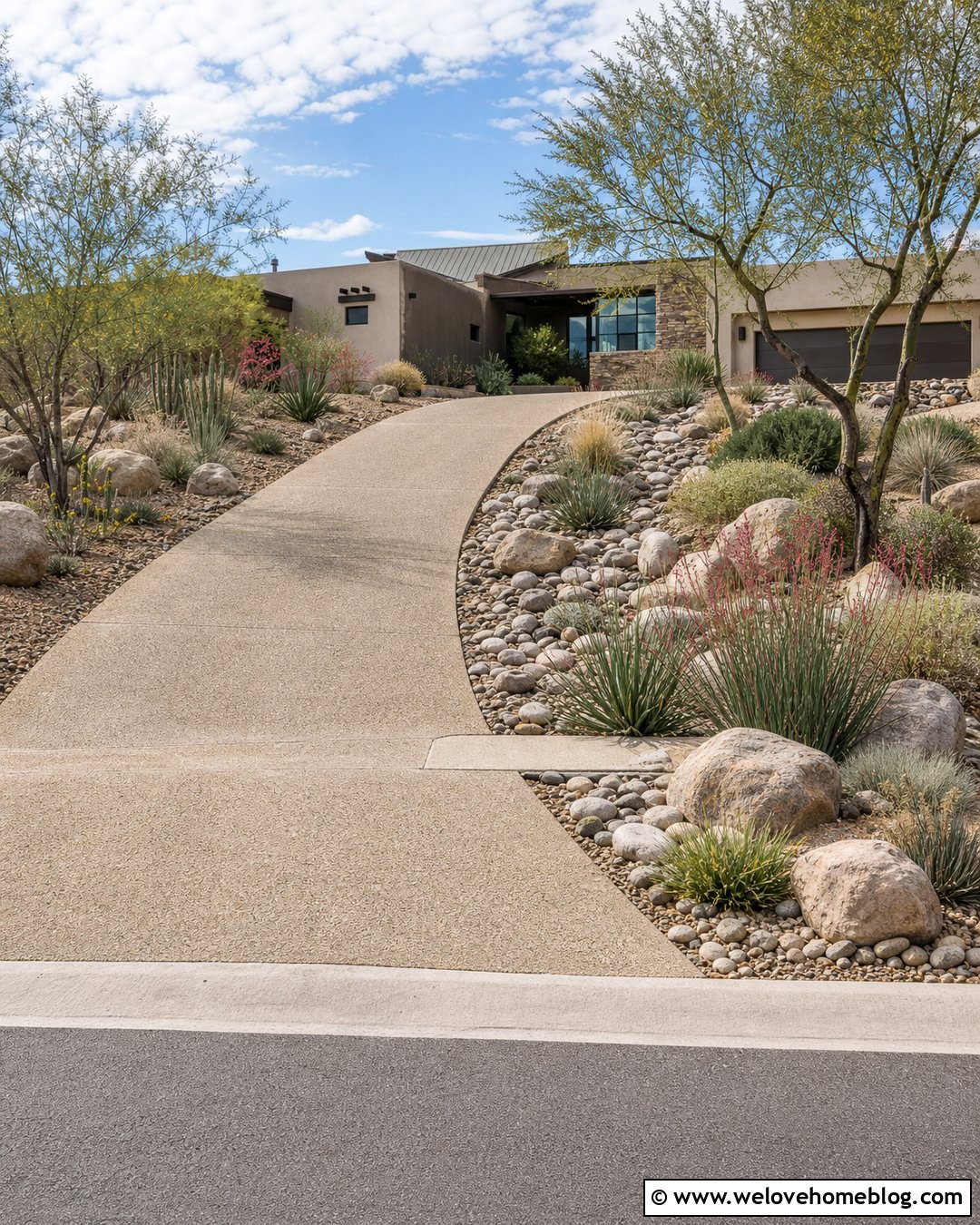
An exposed aggregate driveway pairs naturally with a dry creek bed because both surfaces feature visible stone. Run the creek beside the pavement or allow it to cross beneath a small reinforced bridge section, depending on drainage needs and local requirements. Use rounded river rock in several sizes, then add a few larger boulders where water would naturally slow or change direction. Desert spoon, deer grass, chuparosa, and low acacias can frame the channel without blocking runoff. Grade the surrounding beds so stormwater moves away from buildings and toward an appropriate collection or drainage area. Capturing runoff through thoughtful contouring is a recognized xeriscape strategy. () The finished design gives a contemporary or desert-modern house a natural transition between structured pavement and the rugged surrounding terrain.
8. Permeable Paver Driveway With A Desert Bioswale
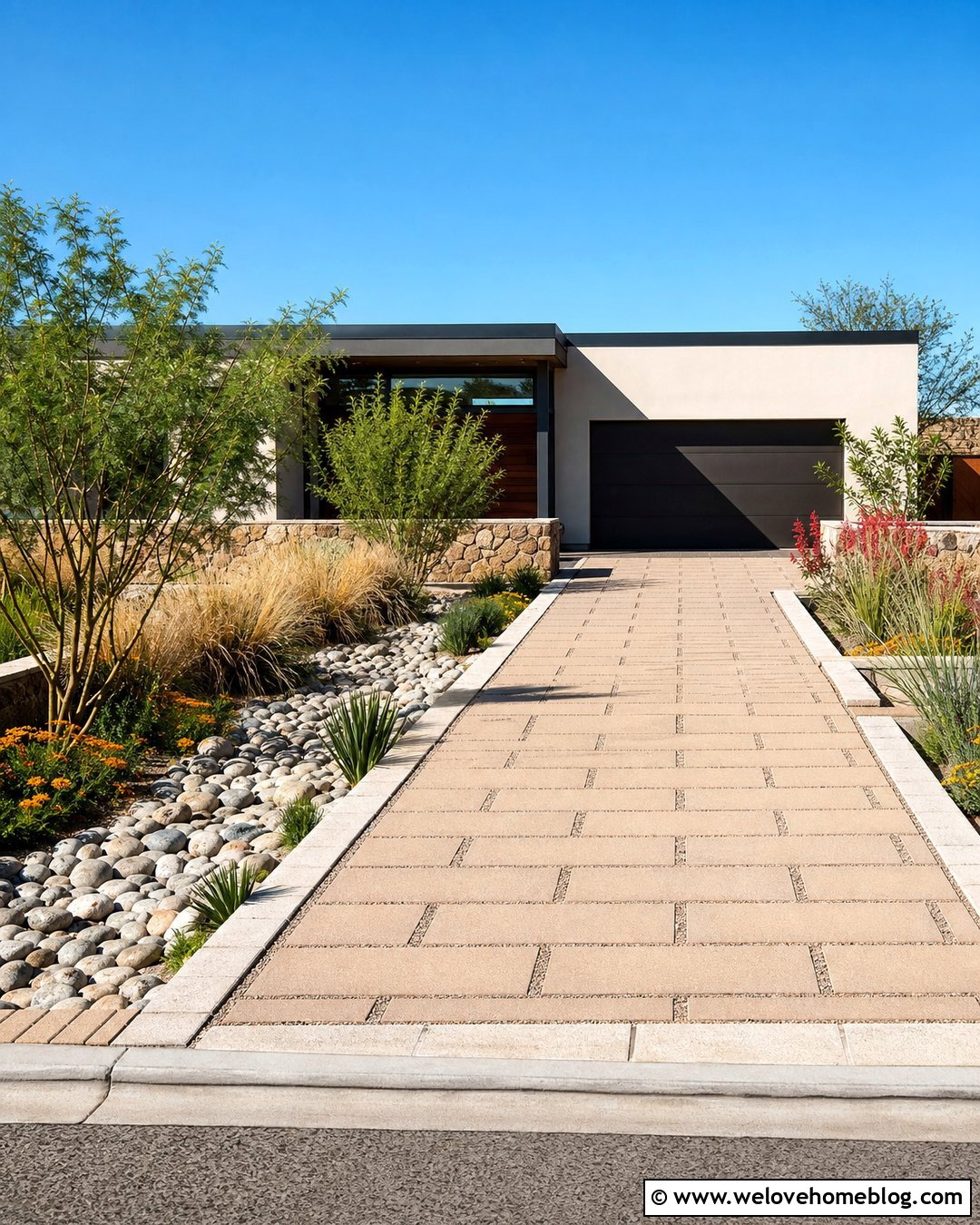
Permeable concrete pavers can support a refined desert driveway while helping water move into a properly prepared base. Choose warm gray or sand-toned units with gravel-filled joints and a subtle geometric layout. Along the lower side of the driveway, form a shallow bioswale planted with desert grasses, desert marigold, penstemon, and other locally suitable species that tolerate occasional runoff. Add river stones through the center to make the drainage path visually clear. A low stone border can protect the planted edge without trapping water against the pavement. Before construction, confirm soil conditions, grading, underground utilities, and municipal stormwater rules. This complete driveway look is especially appropriate for modern homes because the structured paver pattern balances the looser form of the water-conscious planting area.
9. Brick Desert Driveway With Adobe Garden Walls
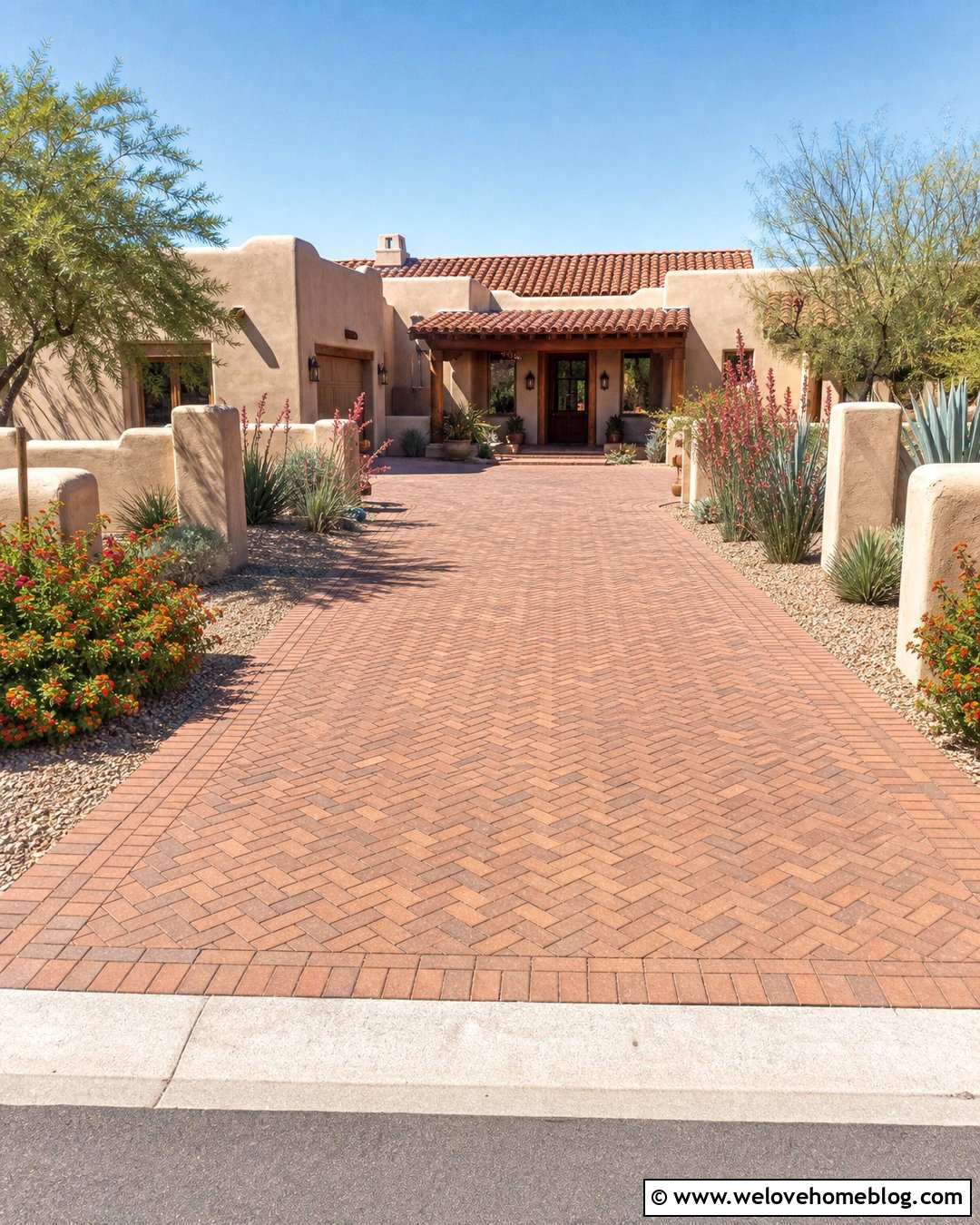
Clay brick pavers bring warmth and traditional character to an adobe or Spanish-style home. Arrange them in a herringbone pattern for the main driveway and use a soldier-course border to strengthen the edges visually. Low adobe-colored garden walls can define planting pockets near the entrance without hiding the front facade. Fill those beds with agave, hesperaloe, trailing lantana, and small flowering accents suited to the local desert climate. Tan gravel mulch keeps the palette cohesive and reduces the amount of exposed soil. At the garage, add a slightly wider brick apron to make parking more comfortable. Limit the number of paving colors so the entrance does not compete with decorative doors or tile. This design feels established and handcrafted while remaining practical for daily use.


10. Resin-Bound Desert Driveway With Modern Xeriscaping
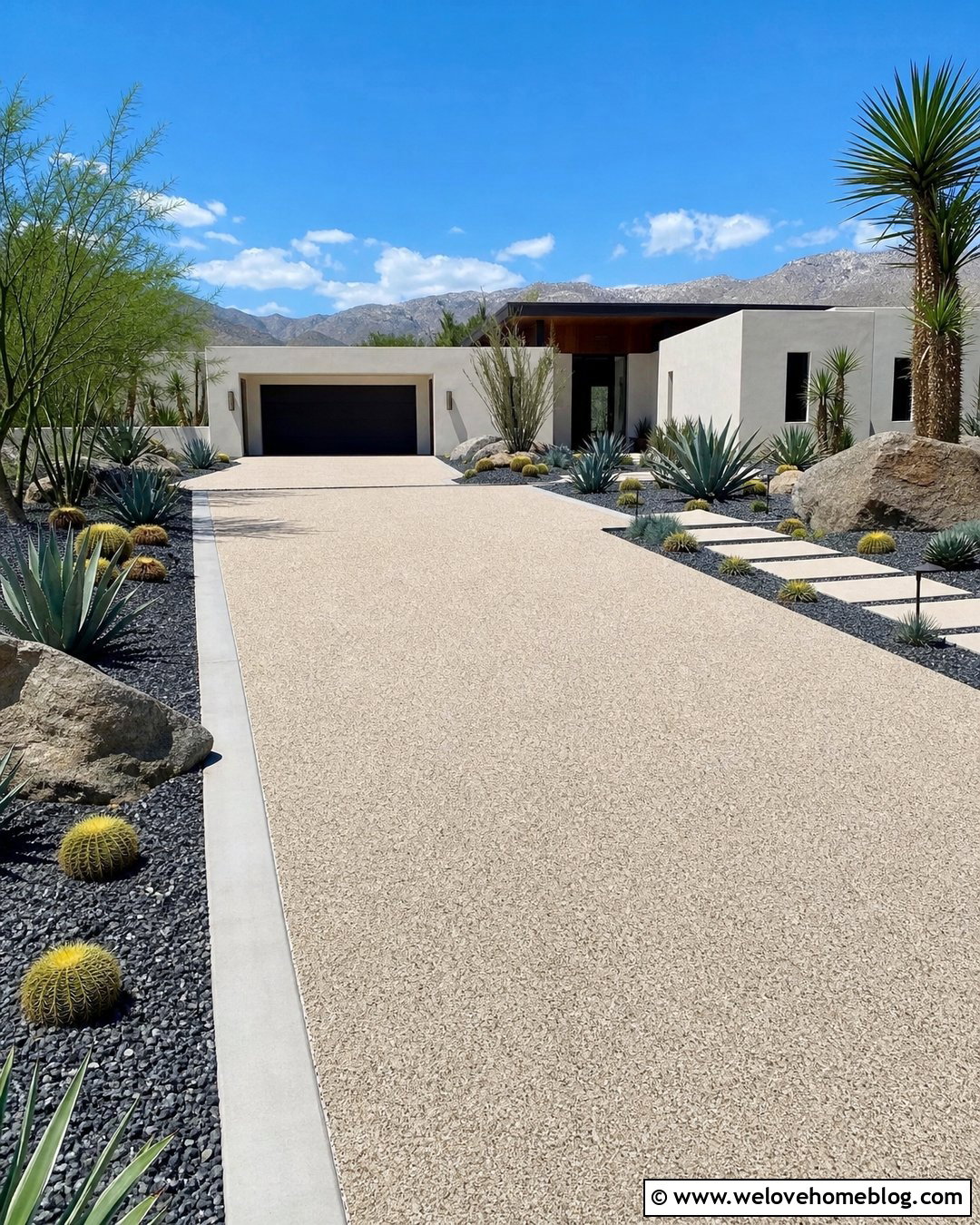
A resin-bound gravel driveway offers a smooth, visually consistent surface that suits streamlined desert architecture. Select a blend of beige, cream, and light gray aggregate to reduce the heavy appearance of a large parking area. Create a straight or slightly angled layout with narrow concrete borders along both sides. In the surrounding beds, repeat bold plant forms such as blue agave, golden barrel cactus, desert spoon, and upright yucca. Use dark gravel in selected zones to contrast with the pale driveway, but break up large rock areas with plants and boulders. Rectangular stepping pads can connect the parking area to a flat-roofed modern home. The limited palette, open spacing, and sculptural vegetation make the entire frontage look intentional without depending on dense greenery or complicated maintenance.
11. Crushed Limestone Driveway With Yucca Borders
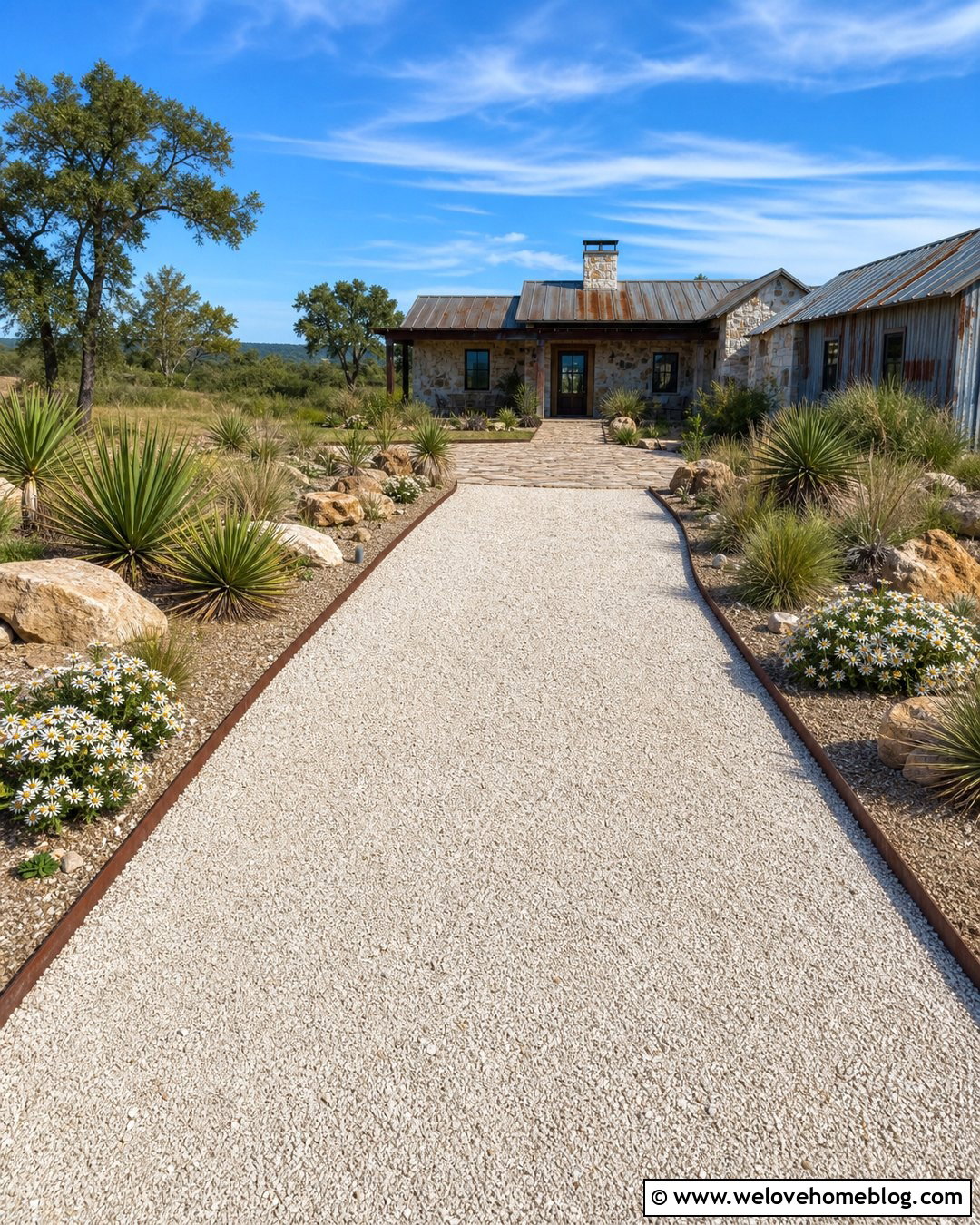
Pale crushed limestone creates a bright, rustic driveway that blends naturally with desert ranch and country properties. Shape the driveway with a broad central lane and slightly flared entrance, then contain the surface using weathered timber, steel, or stone edging. Repeat upright yuccas along the route, but stagger their positions to avoid a stiff, evenly spaced row. Between them, add low desert grasses, blackfoot daisies, and clusters of local rock. The limestone should be installed over a suitable compacted base so the driving area remains more stable. Near the house, transition to concrete or stone pavers for a cleaner parking and walking zone. The combination of pale aggregate, vertical plants, and informal borders provides a practical desert entrance that feels spacious, simple, and appropriate for a larger rural lot.
12. Black Gravel Desert Driveway With Golden Barrel Cactus
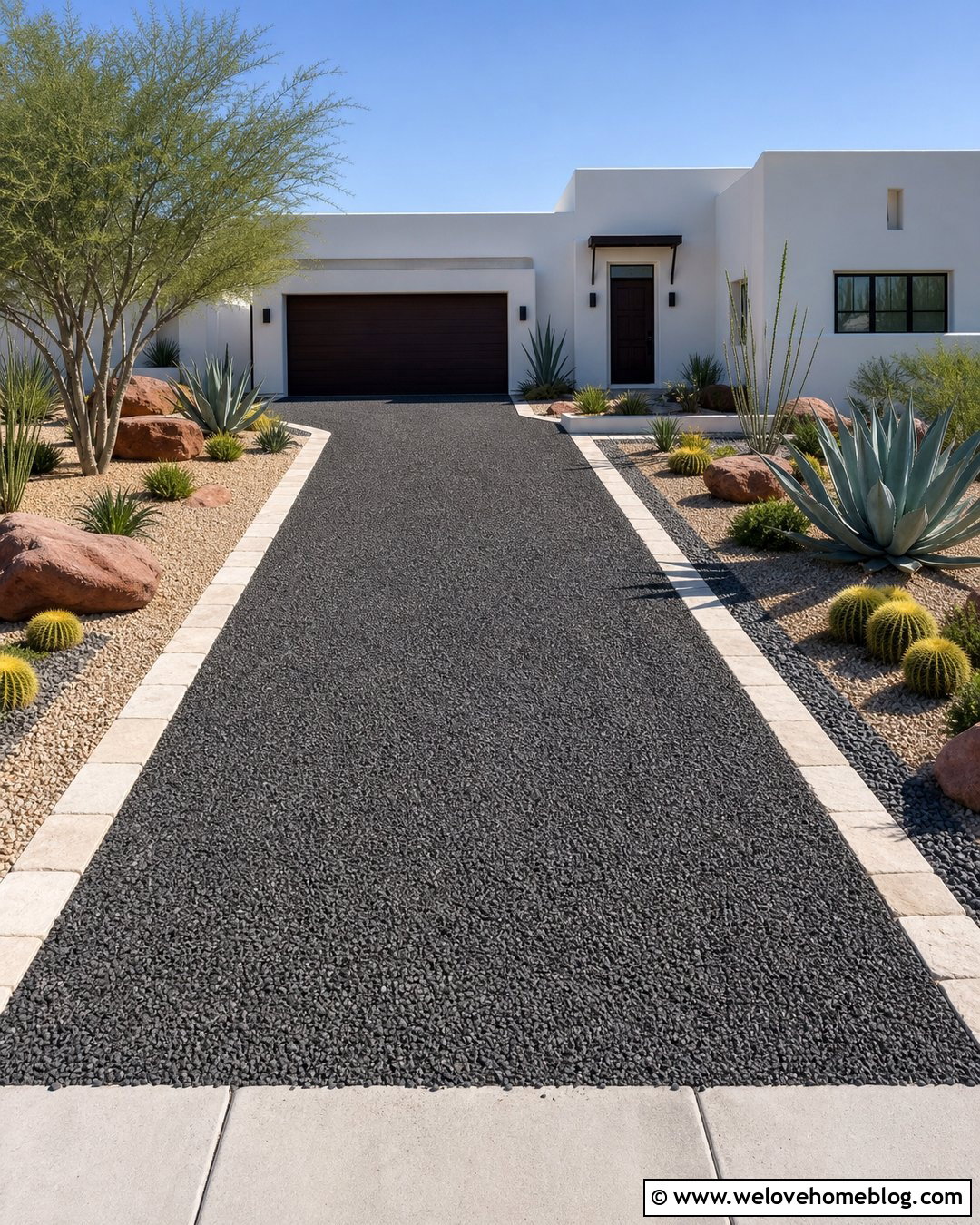
Dark gravel creates dramatic contrast against light stucco and the yellow-green color of golden barrel cactus. Use compacted charcoal crushed stone for the driveway rather than relying on loose decorative rock alone. A light concrete or limestone border can outline the pavement and improve visibility along the edges. Build broad planting beds containing grouped barrel cacti, blue agave, desert spoon, and a few reddish boulders. Repetition is important, but each cluster should vary slightly in size and spacing. Include clear gravel or paved paths wherever people step out of vehicles. Because dark surfaces can become extremely hot in full sun, consider using the black material selectively or choosing a medium charcoal tone. The finished composition looks particularly effective with minimalist architecture, steel details, and a simple desert color palette.
13. Concrete Ribbon Driveway With Gravel Strips
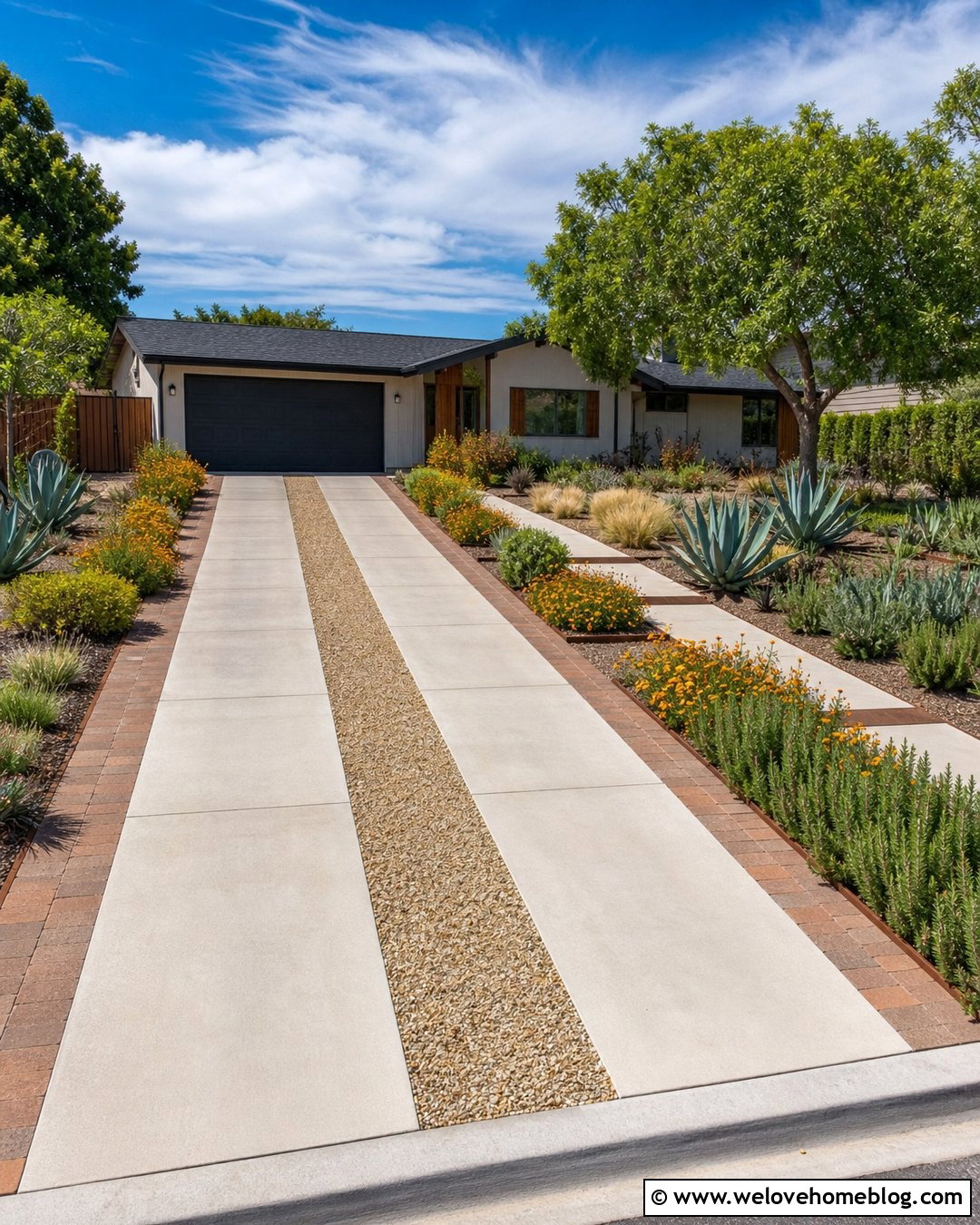
Two poured-concrete wheel ribbons can reduce the visual weight of a driveway while preserving a stable path for tires. Fill the center and outer strips with compacted tan gravel, then edge the entire route with low steel or concrete borders. This layout looks especially attractive on a straight driveway leading to a midcentury or contemporary ranch house. Plant the adjacent beds with low agaves, desert marigolds, trailing rosemary, and compact grasses so vegetation does not lean into the driving lane. Continue one ribbon toward the front walkway to create a subtle connection between vehicle and pedestrian areas. Proper dimensions and structural preparation are essential because the wheel tracks must fit normal vehicle movement. The alternating bands of concrete and gravel give the entrance rhythm, texture, and a lighter desert-friendly appearance.
14. Flagstone Driveway Apron With Native Flowers
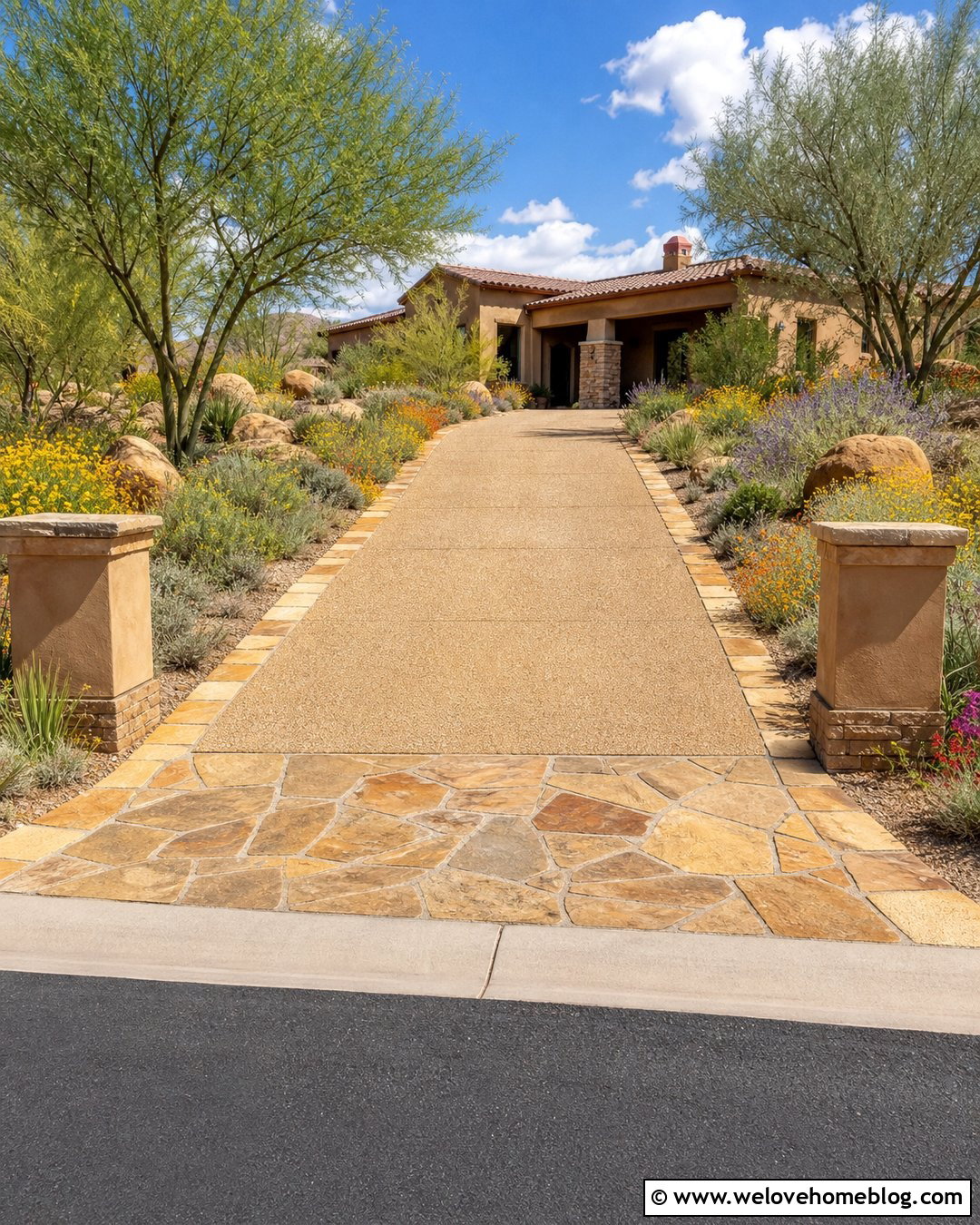
A flagstone apron can turn the street-facing end of a plain driveway into a welcoming desert entrance. Pair irregular sandstone or cut flagstone with a central surface of tan exposed aggregate concrete. Continue the stone along the edges in a narrow border, then surround it with broad sweeps of native flowering plants. Desert marigold, globe mallow, penstemon, and fairy duster can create changing color without resembling a conventional flower bed. Group plants with similar watering needs and provide open gravel spaces between major clusters. This zoning approach makes irrigation easier to manage. Use small address pillars or a low boulder marker near the apron, ensuring that it does not block sightlines. The finished look adds craftsmanship and seasonal interest while allowing the main driveway to remain simple and durable.

15. Cobblestone Desert Driveway With Ocotillo Planting
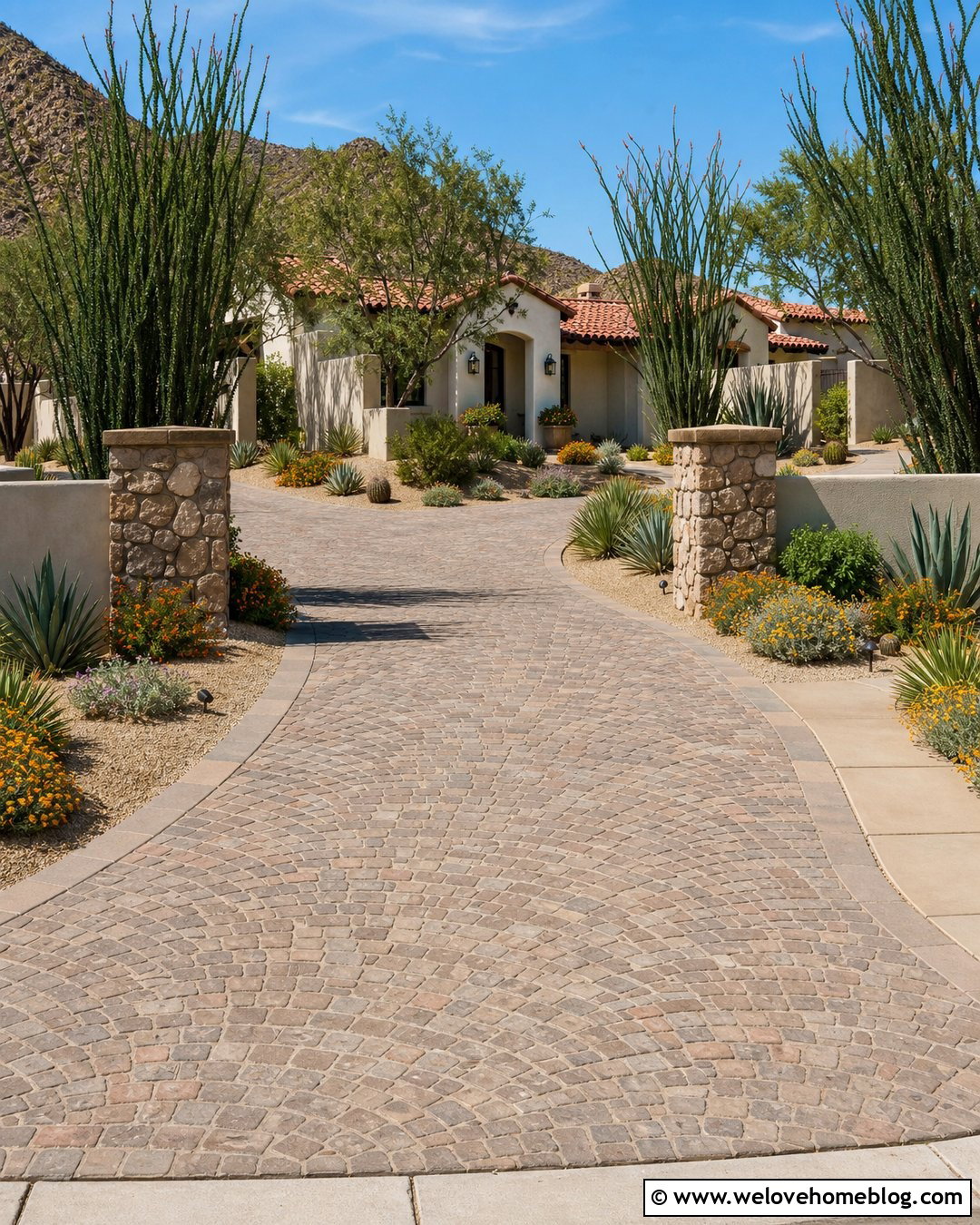
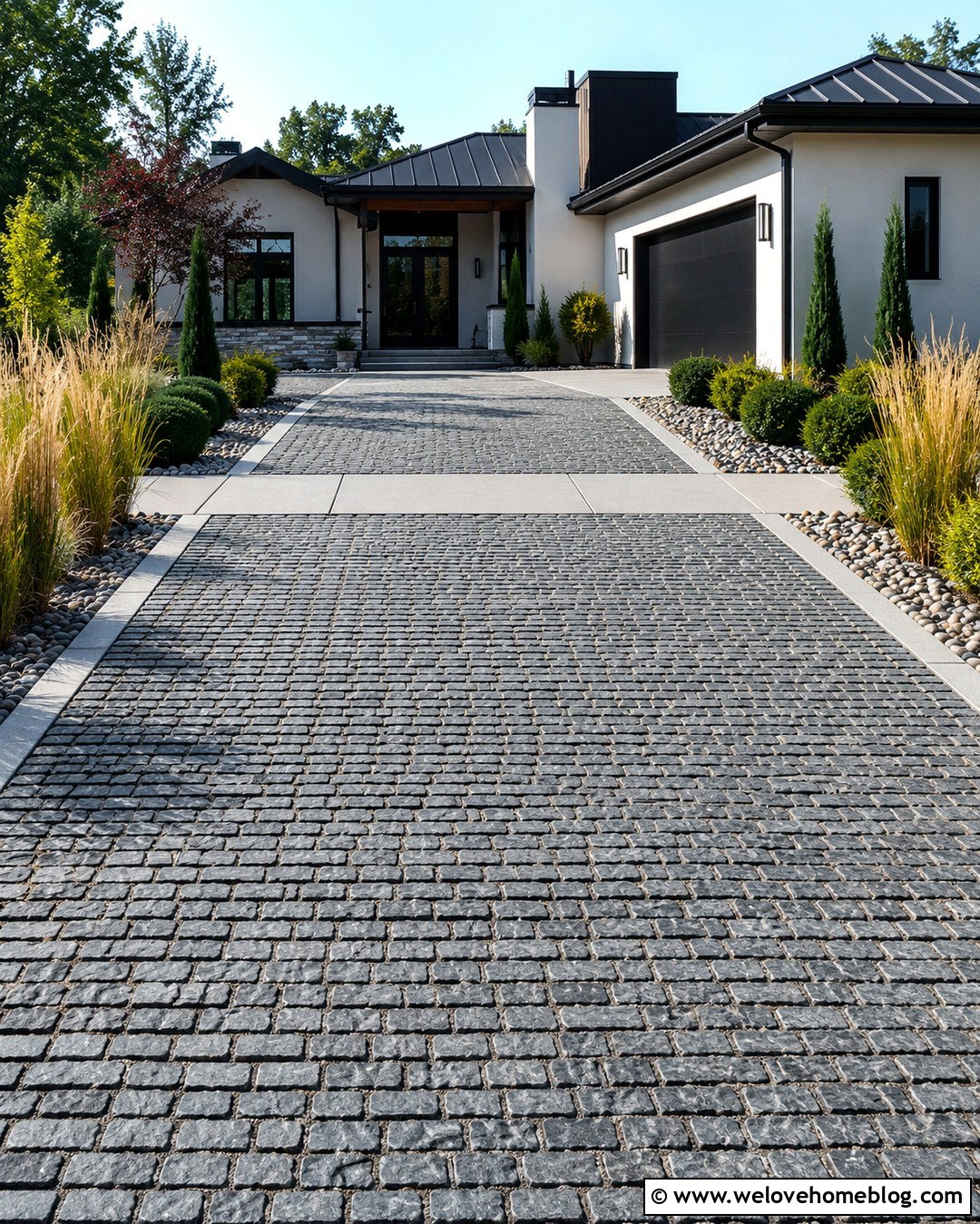
Cobblestone provides rich texture for an older Southwestern, Territorial, or Spanish Colonial home. Choose warm gray and brown stone set in a structured fan or running pattern, with flatter stones reserved for primary walking routes. Tall ocotillos can mark the entrance and repeat near the house, creating a visual connection across the property. Underplant them with low-growing agaves, desert marigold, and scattered cactus clusters set in sandy gravel. Curved planting beds help soften the dense texture of the stone surface. Add simple stucco walls or rough stone pillars where a stronger entry feature is needed. Because cobblestone can create an uneven walking area, include a smoother side path leading to the front door. The entire layout feels substantial, regional, and integrated with the surrounding desert landscape.
16. Horseshoe Desert Driveway With Saguaro Landscaping
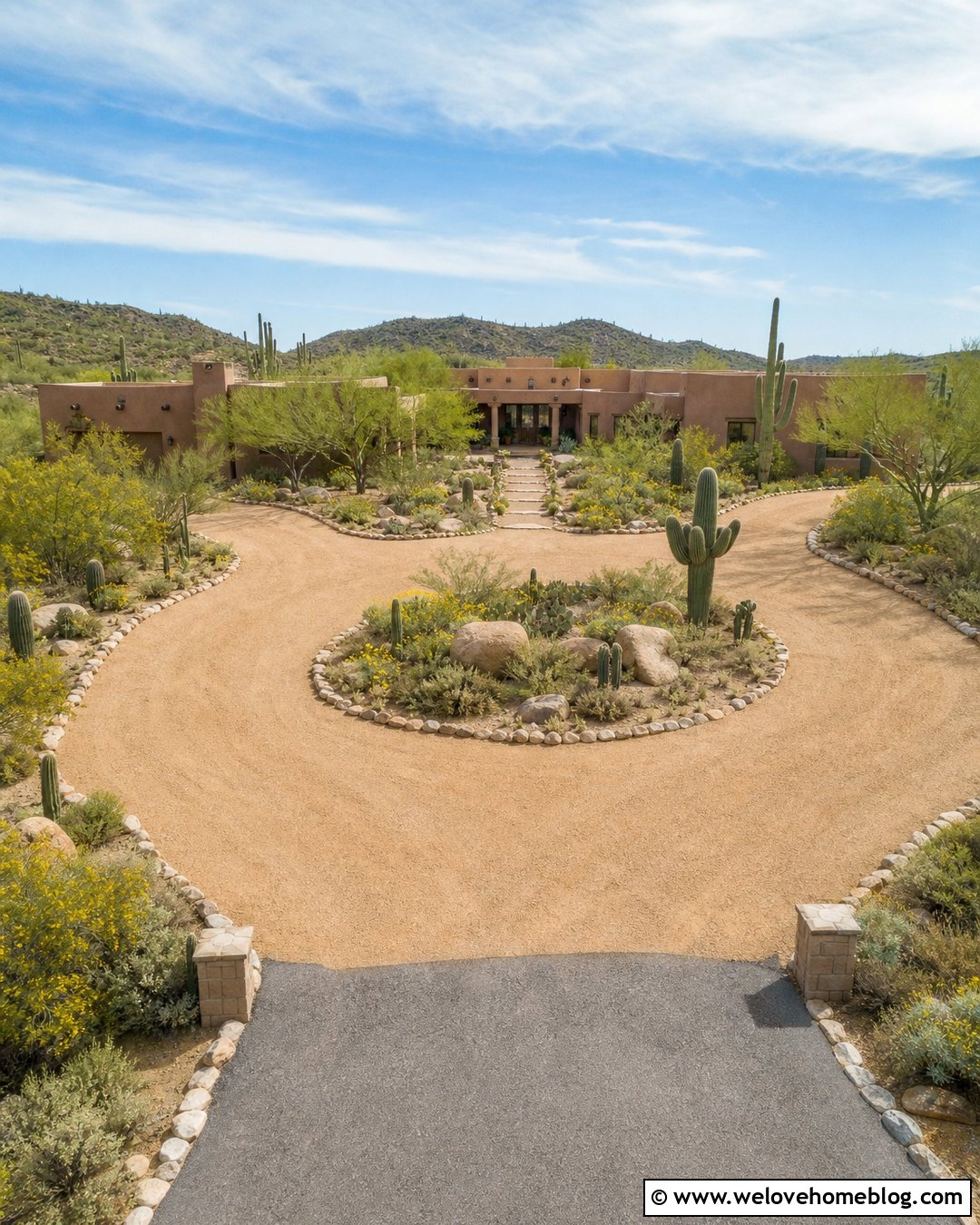
A horseshoe gravel driveway gives a large desert property two access points and eliminates difficult reversing near the house. Use compacted decomposed granite in a warm tan shade, then define the outer curve with natural stone edging. Inside the horseshoe, create an open landscape containing existing saguaros where legally and horticulturally appropriate, along with palo verde, brittlebush, and clusters of prickly pear. Avoid placing valuable or protected desert plants where drivers could strike them. A broad gravel walkway can connect the center garden to the front door without cutting the island into too many small areas. Keep planting low near both street entrances to preserve visibility. The sweeping layout complements adobe, ranch, and desert contemporary homes while allowing the native character of a spacious lot to remain prominent.
17. Narrow Desert Driveway With Vertical Plants
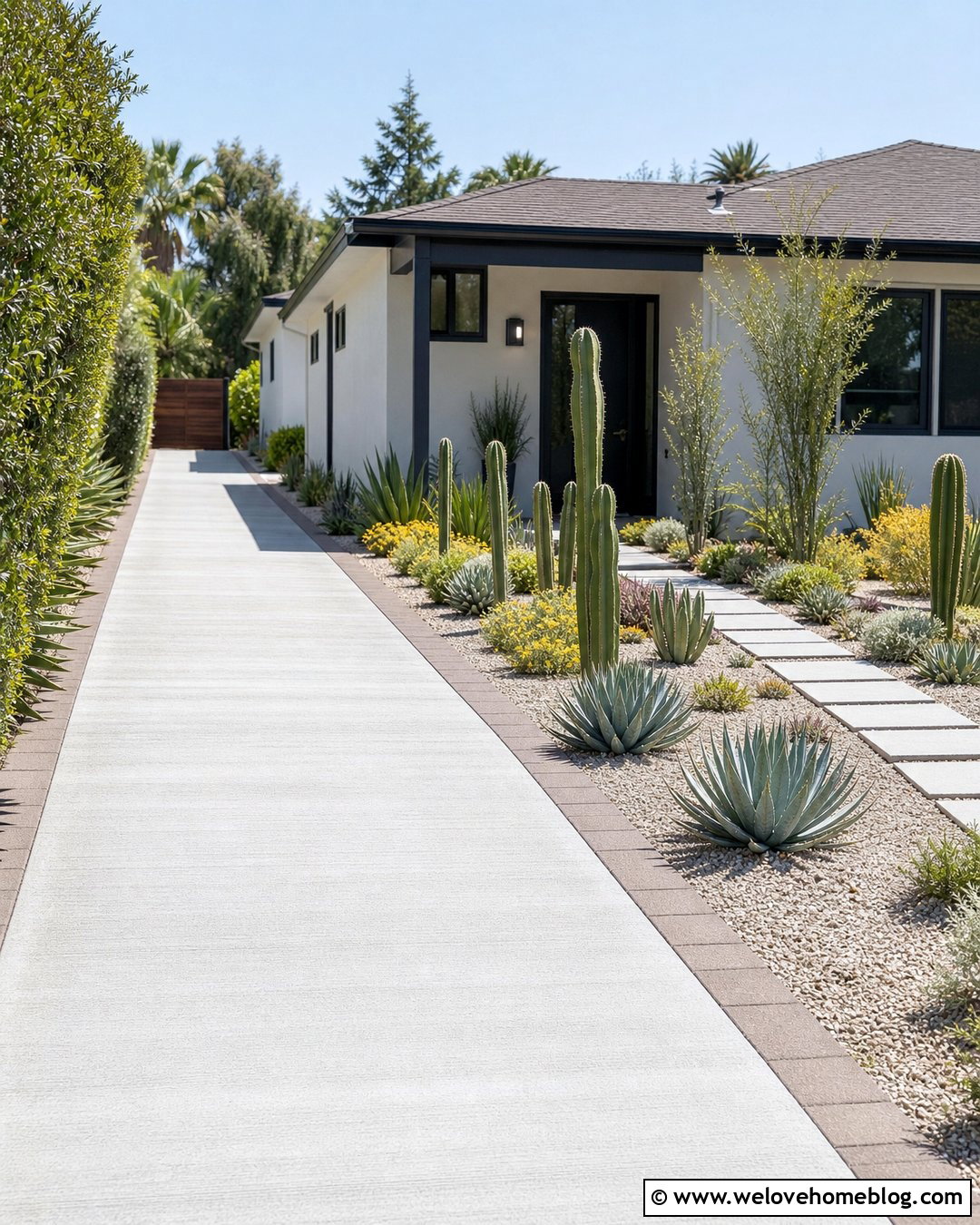
A narrow side driveway can still feel landscaped when plants grow upward rather than spreading into the driving area. Begin with light gray broom-finished concrete edged by a slim band of rust-colored pavers. Along a blank wall, plant carefully spaced Mexican fence post cactus, desert spoon, or other narrow species suitable for the climate. On the opposite side, use low mounds of damianita and small agaves in pale gravel. Keep all mature growth outside the required vehicle clearance, and avoid thorny plants near doors or passenger exit zones. Wall-mounted address numbers and simple downlighting can add detail without taking up ground space. A straight walkway beside the driveway should use the same border paver for continuity. This compact design makes a confined entrance appear organized instead of crowded.
18. Sloped Desert Driveway With Terraced Planting
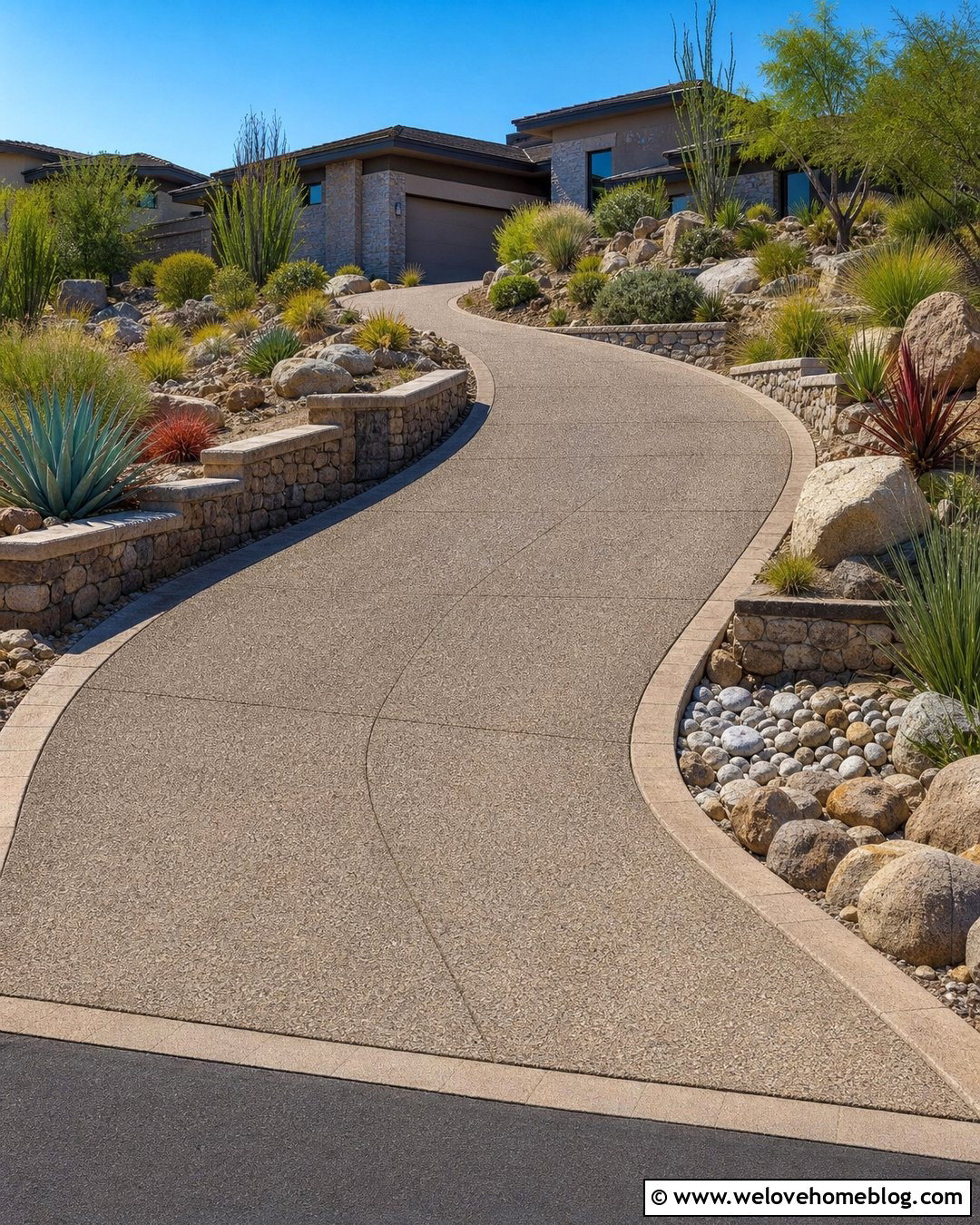
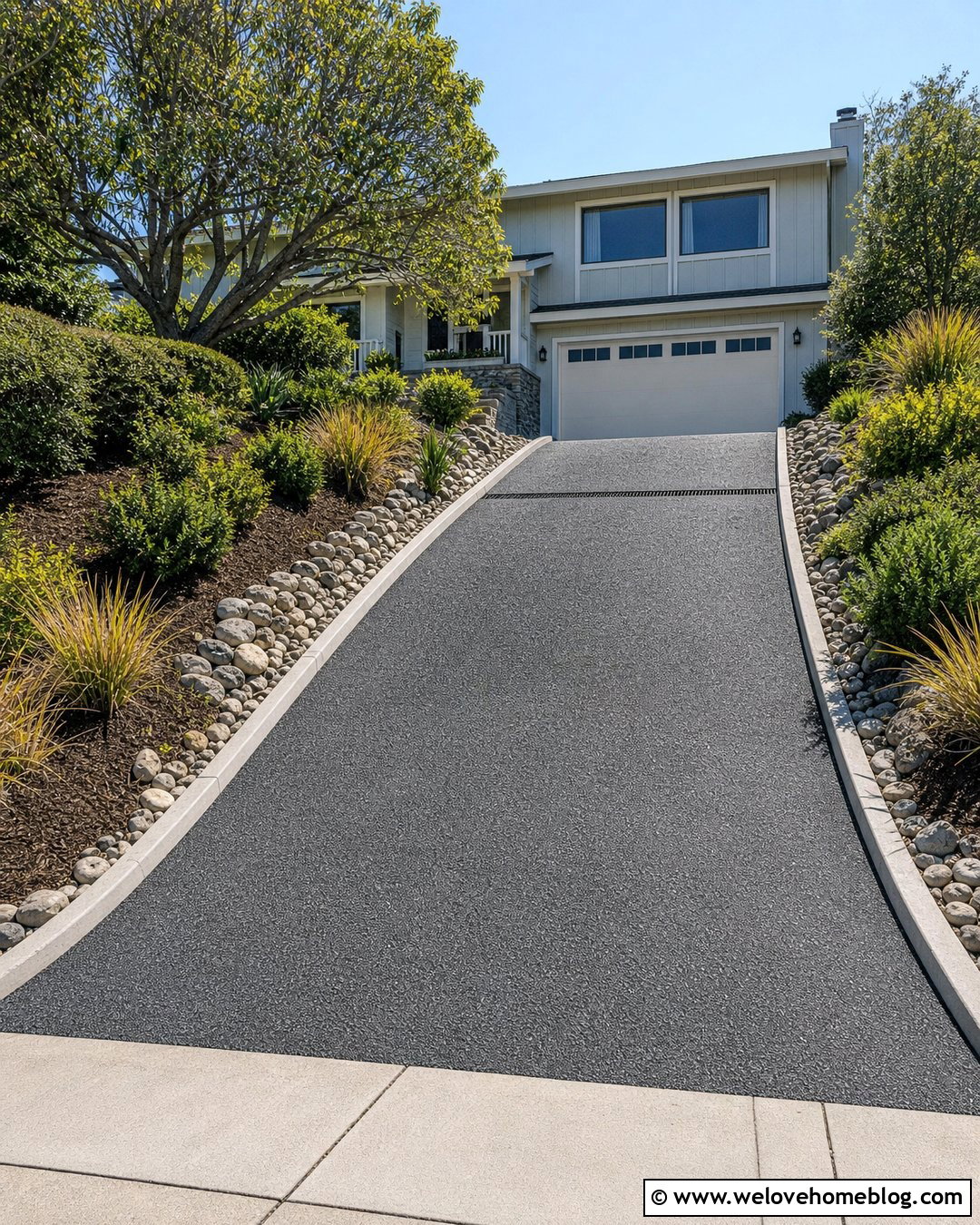
A sloped driveway becomes more attractive and manageable when the surrounding landscape is divided into broad terraces. Use textured exposed aggregate concrete for added visual grip, with reinforced stone or concrete curbs defining the driving surface. Build low retaining walls that follow the contours instead of creating tall, abrupt barriers. Fill each level with gravel mulch, boulders, agaves, red yuccas, desert grasses, and compact shrubs. Place taller plants where they will not obstruct drivers approaching the street. Drainage should be professionally planned so runoff does not rush toward the garage, neighboring land, or public roadway. Small channels or stone-lined basins can become intentional parts of the composition. Layered walls and plantings help the driveway settle into the hillside while creating depth from both the curb and the house.
19. Gated Desert Driveway With Stucco Pillars
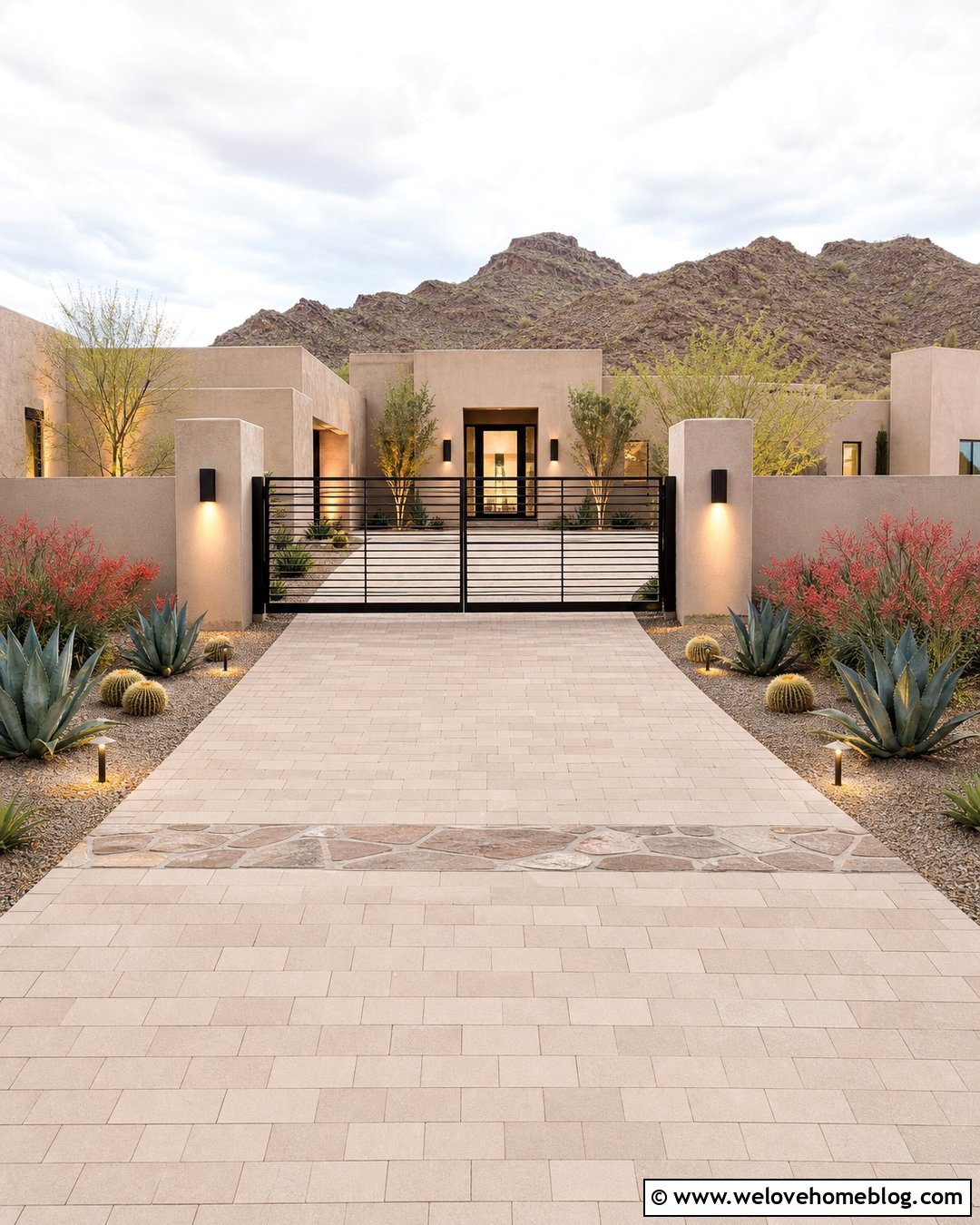
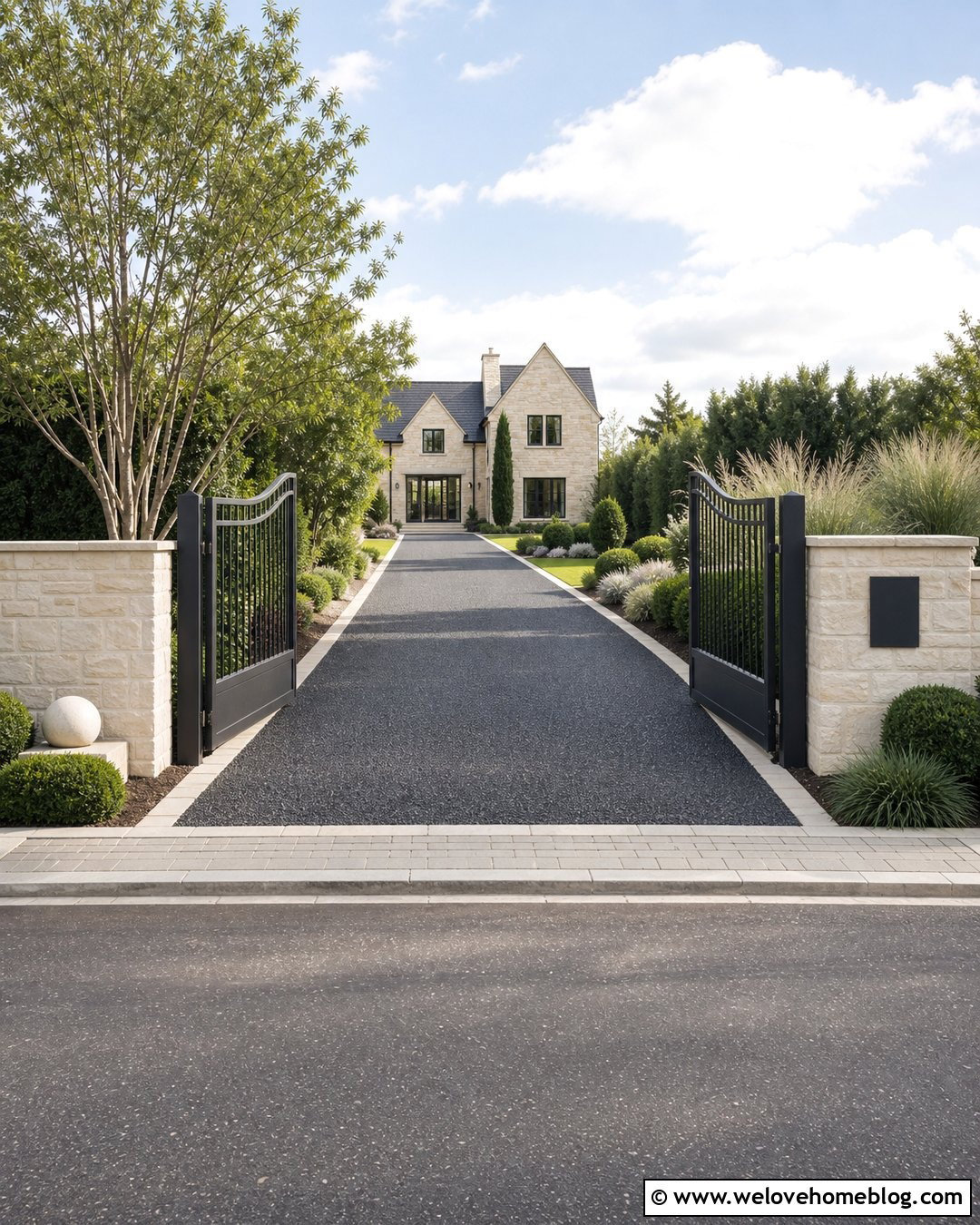
A gated driveway looks complete when the entrance structure shares colors and materials with the surrounding desert landscape. Combine a sand-colored concrete paver driveway with stucco pillars that match the house exterior. A simple horizontal steel gate provides a clean focal point without blocking views of the property. Build curved gravel beds around the pillars and plant them with compact agaves, golden barrel cacti, fairy duster, and low flowering ground covers. Keep plants away from hinges, sensors, keypads, and vehicle detection equipment. A stone or paver ribbon can mark the transition between the street apron and private drive. Integrate address lighting into the pillars using bright, shielded fixtures. The result is a secure entrance that feels welcoming, well-proportioned, and connected to the home rather than added as an afterthought.
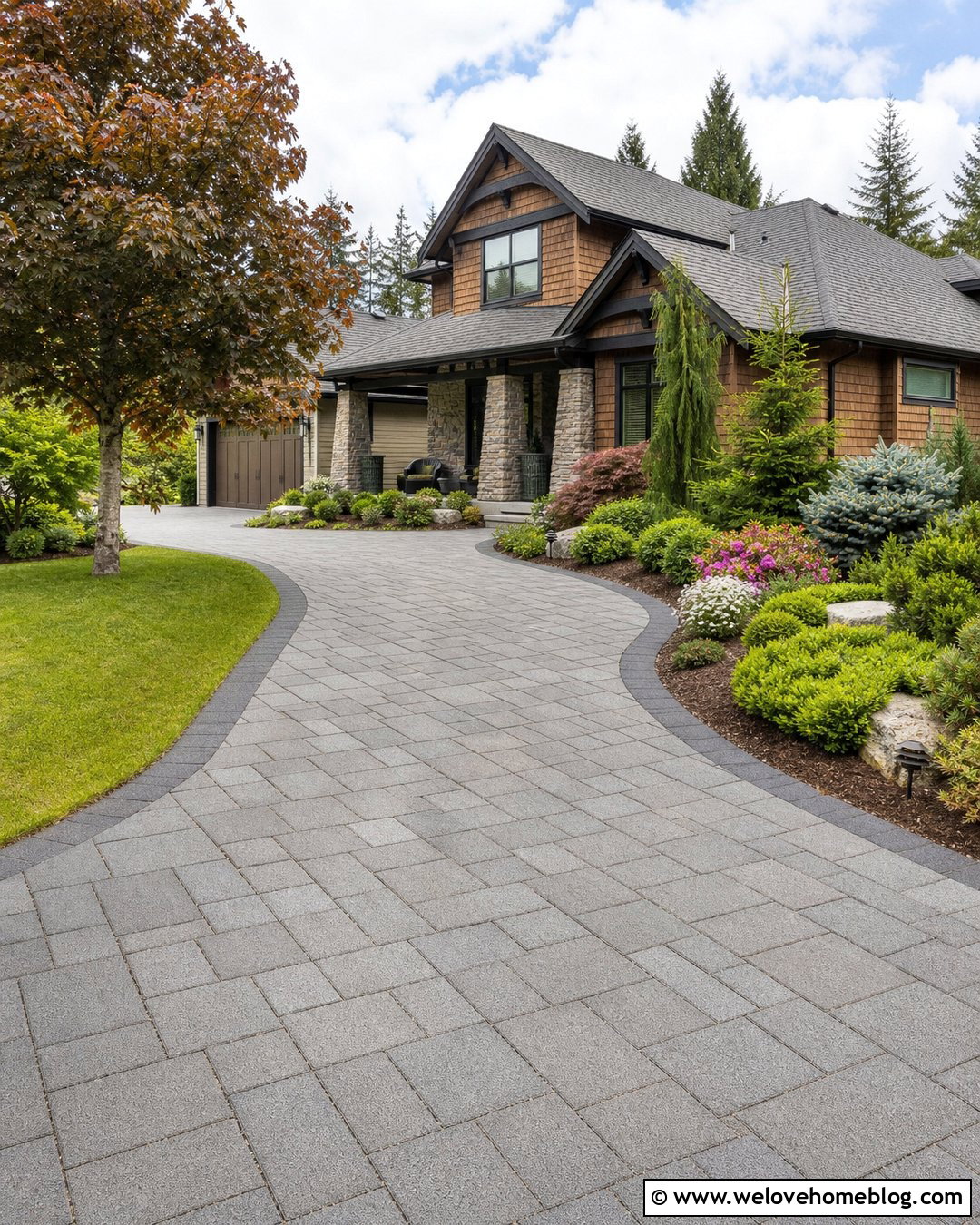
20. Budget Desert Driveway With Local Gravel
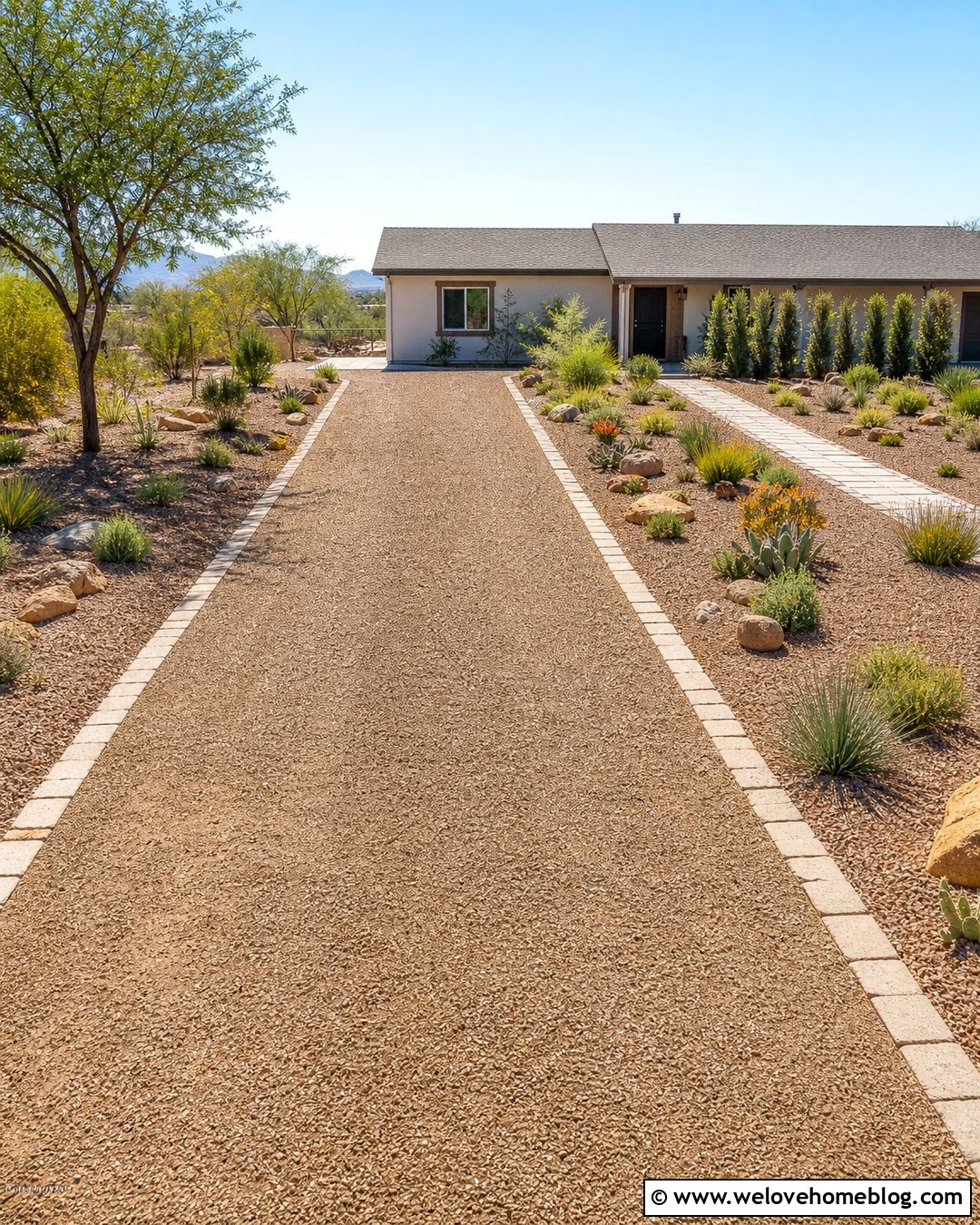
An affordable desert driveway can still look carefully designed by using local materials and a limited planting palette. Start with compacted regional crushed gravel in a color that relates to the surrounding soil. Define the entrance and parking edges with reclaimed concrete pavers, simple steel edging, or larger locally sourced stones. Plant young desert-adapted shrubs, grasses, and succulents in repeating groups, allowing generous space for future growth. Drip irrigation delivers water slowly to individual root zones and can reduce runoff when it is installed and managed correctly. () Add one small shade tree near the house rather than purchasing several mature specimens. Complete the project in phases, beginning with grading and the driveway base. This approach controls costs while creating a cohesive landscape that will improve as the plants mature.
Conclusion:
The strongest 20 desert driveway landscaping ideas balance appearance with daily function, climate, drainage, and long-term maintenance. Begin with a driveway material suited to your budget, slope, soil, and expected vehicle use. Then use borders, gravel beds, boulders, and well-spaced desert plants to connect that surface with the house. Repeating a few colors and plant varieties usually creates a more polished result than adding many unrelated features. Remember to protect visibility, passenger access, utility lines, and natural water flow. Plant choices should always reflect your local desert region and winter temperatures. With thoughtful planning, even a basic driveway can become a distinctive, water-conscious entrance that improves the curb appeal of the entire property.

Related posts:
Leave a Reply