
A well-designed driveway drain protects paving, landscaping, garages, and foundations while keeping the entrance attractive. The right solution depends on the driveway’s slope, surface material, soil, rainfall, and where the collected water can legally discharge. Channel drains and catch basins handle concentrated runoff, while permeable paving, swales, French drains, and rain gardens manage water more naturally. In many yards, combining two methods creates the most reliable result. Drain grates should also suit residential vehicle loads, and every system needs an accessible outlet or infiltration area for maintenance. () The complete designs below pair practical drainage with compatible paving, edging, planting, and house architecture. Use these 35 Driveway Drain Ideas to create a safer, cleaner, and more polished entrance.

1. Concrete Driveway With Garage Channel Drain

A concrete driveway that slopes toward the house needs a strong interception point before runoff reaches the garage. Install a full-width channel drain several feet in front of the garage doors, where it can collect water across both parking lanes. A dark cast-iron or galvanized steel grate creates a crisp contrast against light gray concrete. Frame the driveway with narrow planting beds filled with compact shrubs and moisture-tolerant ornamental grasses. These plants soften the hard surface without dropping excessive debris into the grate. The drain channel should connect to an approved outlet, dry well, or stormwater system rather than ending beside the foundation. Choose a grate rated for residential vehicle traffic, and keep its removable sections accessible for seasonal cleaning.
2. Asphalt Driveway With Entrance Trench Drain

When runoff from the road flows onto a property, a trench drain near the driveway entrance can intercept it before it travels uphill or collects in low areas. Set the drain across a smooth black asphalt driveway and secure it within a concrete collar for stability. A steel grate works well with the dark pavement and tolerates regular vehicle movement. On each side, continue the entrance with low stone walls, native grasses, and a gently graded lawn. The driveway should maintain a subtle crown or cross-slope that guides surface water toward the trench. Before installation, confirm that capturing roadside runoff is permitted and determine where the outlet can discharge safely. This complete arrangement provides a defined entrance while protecting the asphalt base from repeated saturation and erosion.
3. Modern Driveway With Slot Drain

A narrow slot drain offers a discreet finish for a modern driveway with clean architectural lines. Use large-format concrete pavers or smooth poured concrete in a pale gray tone, then position the slim drain across the driveway or along its lowest edge. Only the narrow opening remains visible, allowing the drainage system to blend into the paving pattern. Black metal edging, rectangular planting beds, clipped evergreens, and linear ornamental grasses reinforce the contemporary appearance. The surface should slope consistently toward the slot rather than depending on the drain to correct several uneven low points. Include an accessible sediment box or cleanout at the outlet end. This makes it easier to remove leaves and grit before they clog the underground pipe or infiltration area.
4. Paver Driveway With Decorative Channel Drain

Warm-toned concrete pavers and a decorative channel drain can make drainage feel like part of the driveway design. Lay the pavers in a herringbone pattern and place a dark cast-iron grate across the lower section, aligning it with a contrasting border course. The visible grate becomes a deliberate ribbon rather than an awkward interruption. Curved planting beds containing boxwood, hydrangeas, and low ground cover can frame the entrance to a traditional home. Use properly cut pavers around the drain so there are no narrow, unstable pieces beside the channel. Beneath the surface, direct runoff toward a suitable outlet with room for inspection and cleaning. This combination delivers dependable water collection while preserving the detailed, upscale appearance associated with a patterned paver driveway.
5. Permeable Paver Driveway With Edge Drain

Permeable pavers allow rain to pass through widened joints into a prepared, open-graded stone base. However, an edge drain can provide additional protection where runoff concentrates along a boundary or where surrounding soil drains slowly. Choose charcoal permeable concrete pavers for the main surface and place a narrow channel drain beside the lower edge. A pale stone border can separate the drain from a planted strip of sedges, switchgrass, and compact shrubs. Keep joint openings filled with the aggregate recommended for the paving system rather than ordinary sand, which can restrict infiltration. Permeable paving still needs careful grading and an appropriate sub-base to function correctly. () The finished driveway feels structured and contemporary while using both surface capture and infiltration.
6. Gravel Driveway With Crown And Side Drains

Picture a country driveway that stays firm after heavy rain instead of developing muddy tire ruts. A properly shaped gravel surface can shed water toward shallow drains on both sides. Build the driveway with compacted crushed stone and create a gentle crown through the center, allowing runoff to move outward rather than travel down the wheel paths. Line the side drains with river rock or angular stone to slow erosion and define the edges. Native grasses and low shrubs can stabilize the outer banks while keeping the drainage route visible. Avoid tall edging that traps water on the gravel. At the entrance, use a wider stone apron to reduce displacement. Regularly rake displaced aggregate back into place and clear leaves from the side channels before rainy seasons.
7. Gravel Driveway With French Drain Border

A French drain can form a practical border along a gravel driveway that receives runoff from an adjacent lawn or slope. Install a perforated pipe inside a stone-filled trench, wrapped or separated with suitable geotextile according to site conditions. Use washed drainage rock at the surface to distinguish the drain from the compacted gray driveway gravel. Timber or steel edging on the opposite side can keep the driving aggregate contained. Frame the complete look with a simple lawn, scattered shade trees, and low plantings that do not overwhelm the trench. The French drain needs a lower destination for collected water and should not discharge against another structure or neighboring property. A small inspection point at the upper end makes flushing and maintenance more manageable.
8. Curved Driveway With Dry Creek Drain

A dry creek bed works especially well beside a curved driveway because it can follow the same flowing shape. Pair a tan gravel or exposed-aggregate driveway with a broad channel of mixed river stones along the inside curve. Add several larger boulders to slow moving water and keep smaller stones from washing away. Moisture-tolerant grasses, irises, and low native shrubs can soften the creek edges while leaving the main water path open. A small stone bridge or paved walkway may cross the channel on the route to the front door. The creek bed must continue toward a safe low area, rain garden, or approved outlet. With thoughtful grading, the drainage feature appears intentional even during dry weather and gives the entire front yard a relaxed, natural character.
9. Driveway With Grass Swale Drain

Could a shallow planted depression solve the problem without adding a visible metal grate? A grass swale beside a straight driveway can collect sheet flow and guide it gradually across the yard. Use broom-finished concrete for the driveway and eliminate raised edging along the swale side so water can leave the pavement freely. Shape the lawn into a wide, gentle channel rather than a steep ditch. Dense turf or low native ground cover helps protect the soil from erosion. Add ornamental trees beyond the swale, leaving enough open space for maintenance and water movement. This design suits properties with adequate yard width and a natural downhill route. During planning, check underground utilities and make sure the swale does not direct runoff toward the house, sidewalk, or neighboring lot.


10. Driveway Low Spot With Catch Basin

A catch basin can address a defined low spot where water repeatedly pools on or beside the driveway. Set a square, vehicle-rated grate into a concrete or paver surface and grade the surrounding area evenly toward it from several directions. A contrasting paver border around the basin can make the necessary transition look intentional. Connect the basin to an approved discharge point, and choose a model with a sump that captures sediment before it enters the outlet pipe. Around the driveway, use raised planting beds or gently sloped lawn that directs water toward the basin without washing mulch onto the grate. Because a catch basin collects water at one point, precise grading is essential. Include a removable grate so accumulated leaves, sand, and soil can be cleared easily.
11. Circular Driveway With Two Catch Basins
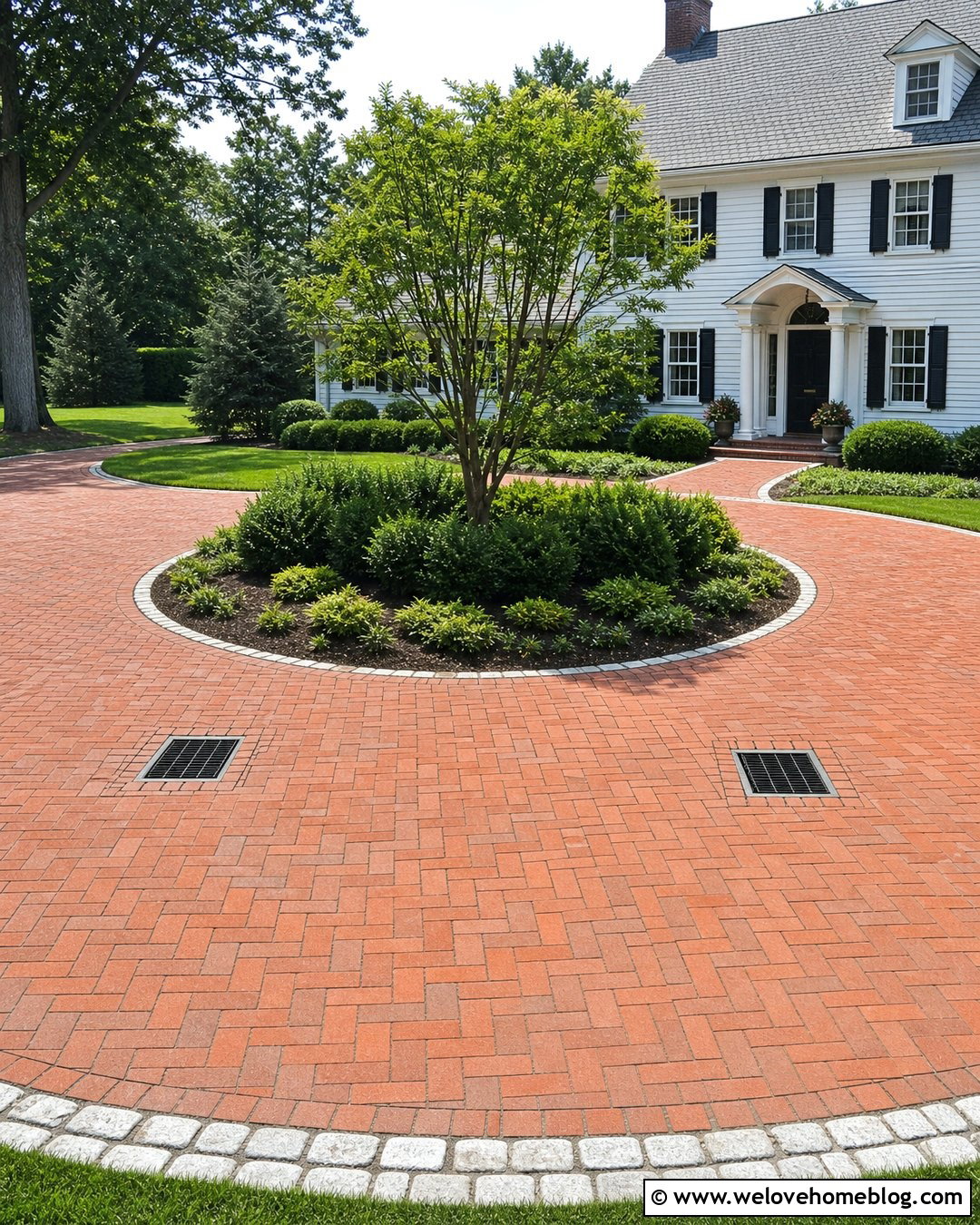
Circular driveways often contain several changing slopes, so one drain may not capture water from the entire surface. Two catch basins placed at separate low points can provide balanced collection without cutting a long grate across the paving. Use clay brick pavers in a herringbone pattern, with dark square grates centered inside simple soldier-course frames. In the middle island, plant a small ornamental tree, evergreen shrubs, and ground cover while maintaining a gentle slope away from the roots. A cobblestone border can define both sides of the circular drive and direct runoff toward the basins. Underground pipes may join before reaching the outlet, provided the system is sized for the site. Removable sediment baskets make routine cleaning easier and protect the connecting pipe from grit and leaves.
12. Driveway Entrance With Culvert Drain
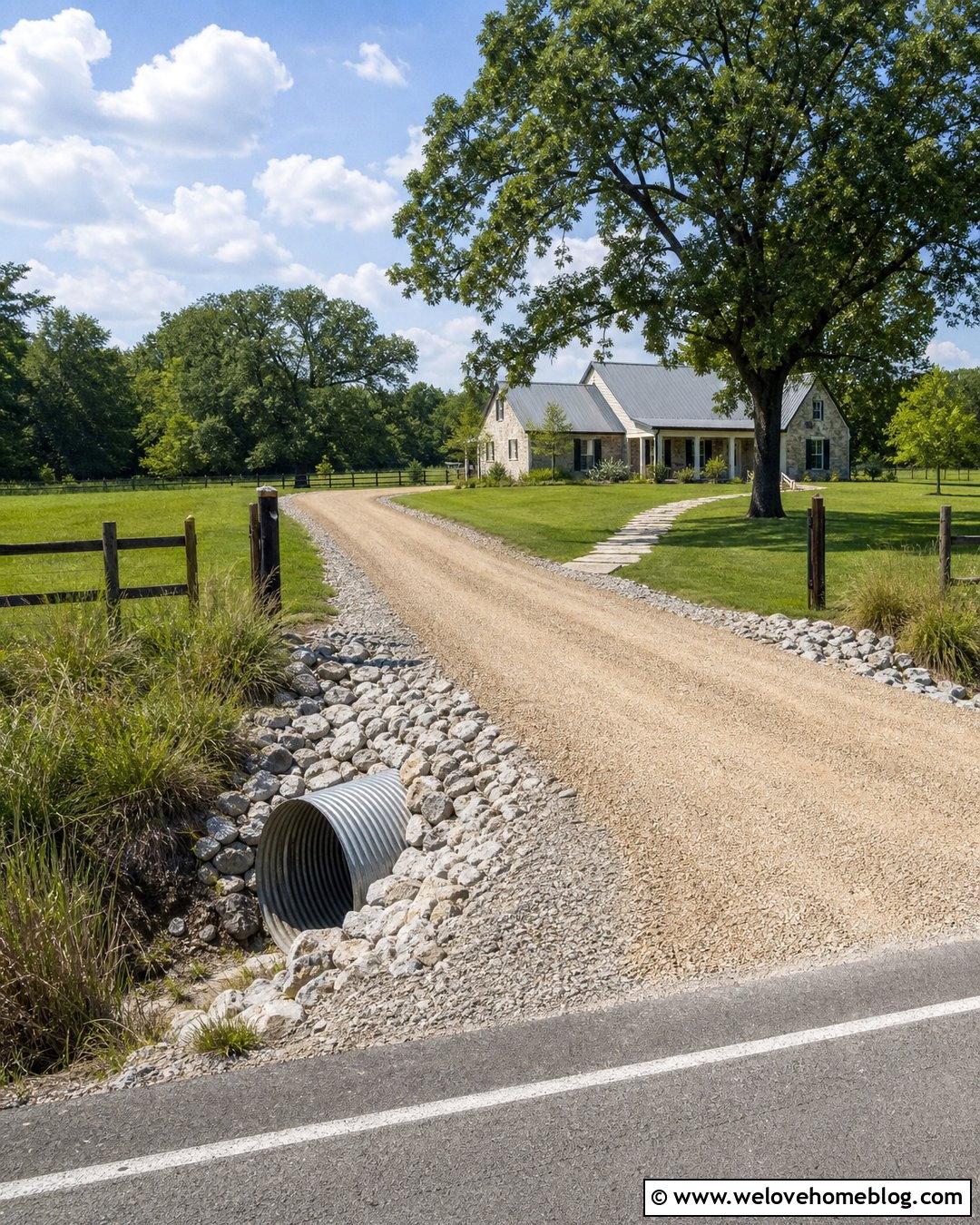
A driveway crossing a roadside ditch usually needs a culvert that allows water to continue beneath the entrance. Pair a compacted crushed-stone driveway with a properly sized pipe and broad, gently sloped shoulders. Cover the culvert with enough structural fill for vehicle loads, then stabilize both ends with angular riprap. Low native grasses planted above the banks can reduce exposed soil while preserving clear views of the openings. The driveway surface should rise smoothly over the culvert without forming a sharp hump that scrapes vehicles. Keep both pipe ends free from leaves, branches, and displaced stone. Culvert sizing and placement may require approval from the local road or drainage authority, especially when the ditch carries public stormwater. A professional assessment is wise where flooding, deep channels, or heavy flows occur.
13. Stone Driveway With Culvert Headwalls

Natural stone headwalls can transform a basic culvert into a finished entrance for a country or craftsman home. Use warm crushed-stone gravel for the driveway and build low headwalls around each culvert opening with mortared fieldstone or properly stacked structural blocks. Extend matching stone along the entrance corners to protect the banks from tire damage. The walls should frame the pipe without restricting flow or creating dangerous vertical obstacles beside the driving path. Add native grasses, creeping ground cover, and compact flowering shrubs above the drainage ditch. A slight driveway crown directs rainfall away from the center and toward stable side channels. For safety and durability, have the wall foundation, culvert capacity, and vehicle clearances reviewed before construction, particularly where the ditch becomes deep during storms.
14. Driveway With Rain Garden Drain

A rain garden can receive driveway runoff while adding layered color to the front yard. Use light gray concrete pavers for a straight driveway and direct water through a curb cut into a shallow planted basin near the lower side. Create a stone-lined inlet that slows runoff before it reaches the soil. Plant the basin in moisture zones, placing water-tolerant sedges and flowering perennials in the center and drier shrubs around the upper edge. A defined overflow route is important when rainfall exceeds the garden’s infiltration capacity. Keep the basin away from foundations and confirm that the native soil can absorb water within an appropriate period. The driveway, stone inlet, and planting composition should appear connected, turning stormwater management into a colorful focal point instead of a hidden utility.
15. Driveway With Planted Bioswale Drain
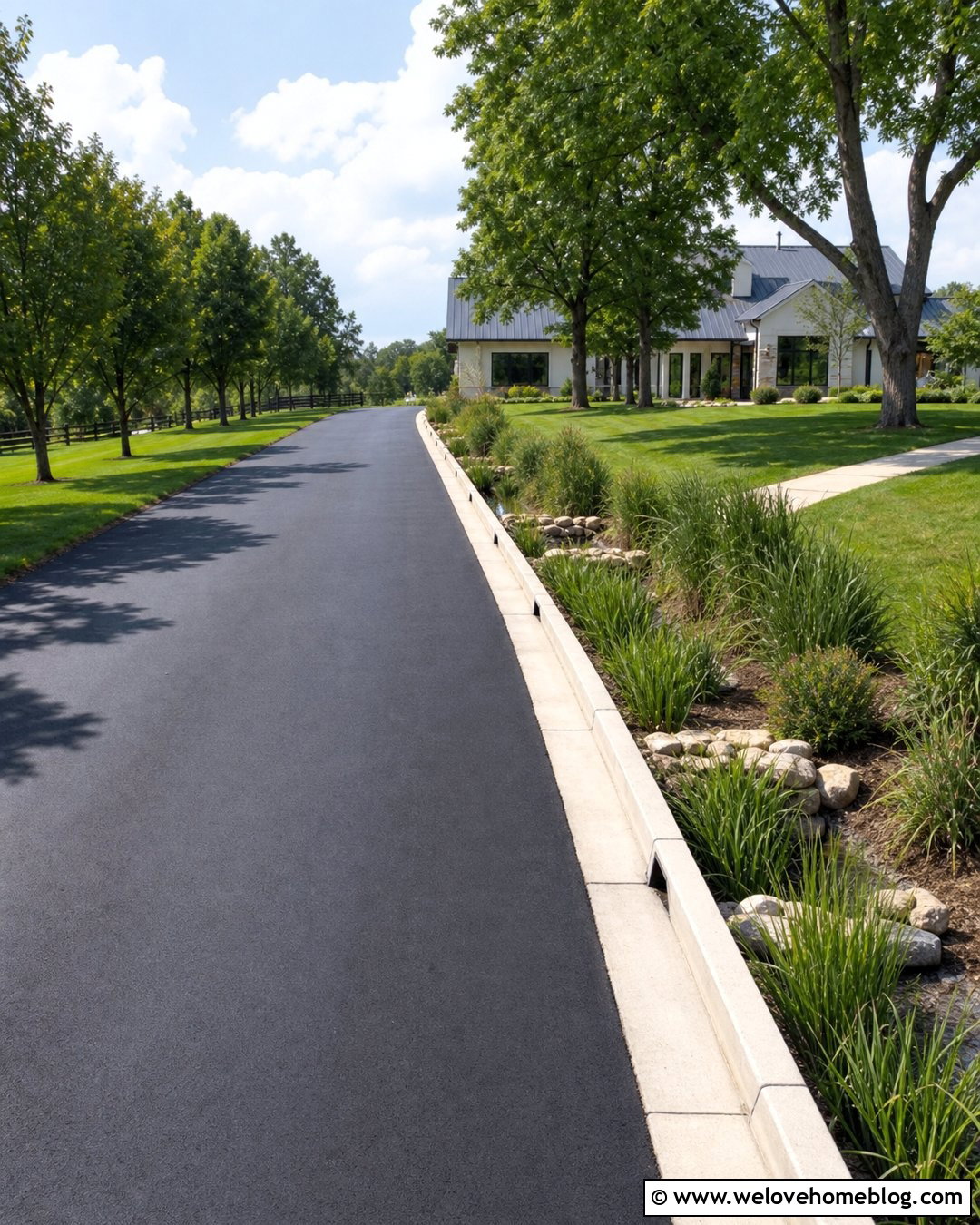
Long driveways can generate substantial runoff, particularly when the entire surface slopes in one direction. A planted bioswale running beside the pavement offers a broad collection area that also filters sediment. Pair black asphalt with a pale concrete curb containing evenly spaced openings. These gaps release water into a gently depressed planting strip filled with switchgrass, sedges, compact shrubs, and erosion-resistant ground cover. Add small stone checks at intervals where the slope is stronger, helping slow the flow. The swale should have an underdrain or controlled overflow if the soil infiltrates poorly. Keep trees far enough away that roots and fallen leaves do not block the curb openings. This design gives a long suburban or rural driveway a landscaped edge while managing runoff along its full length.
16. Driveway Channel Drain With Dry Well
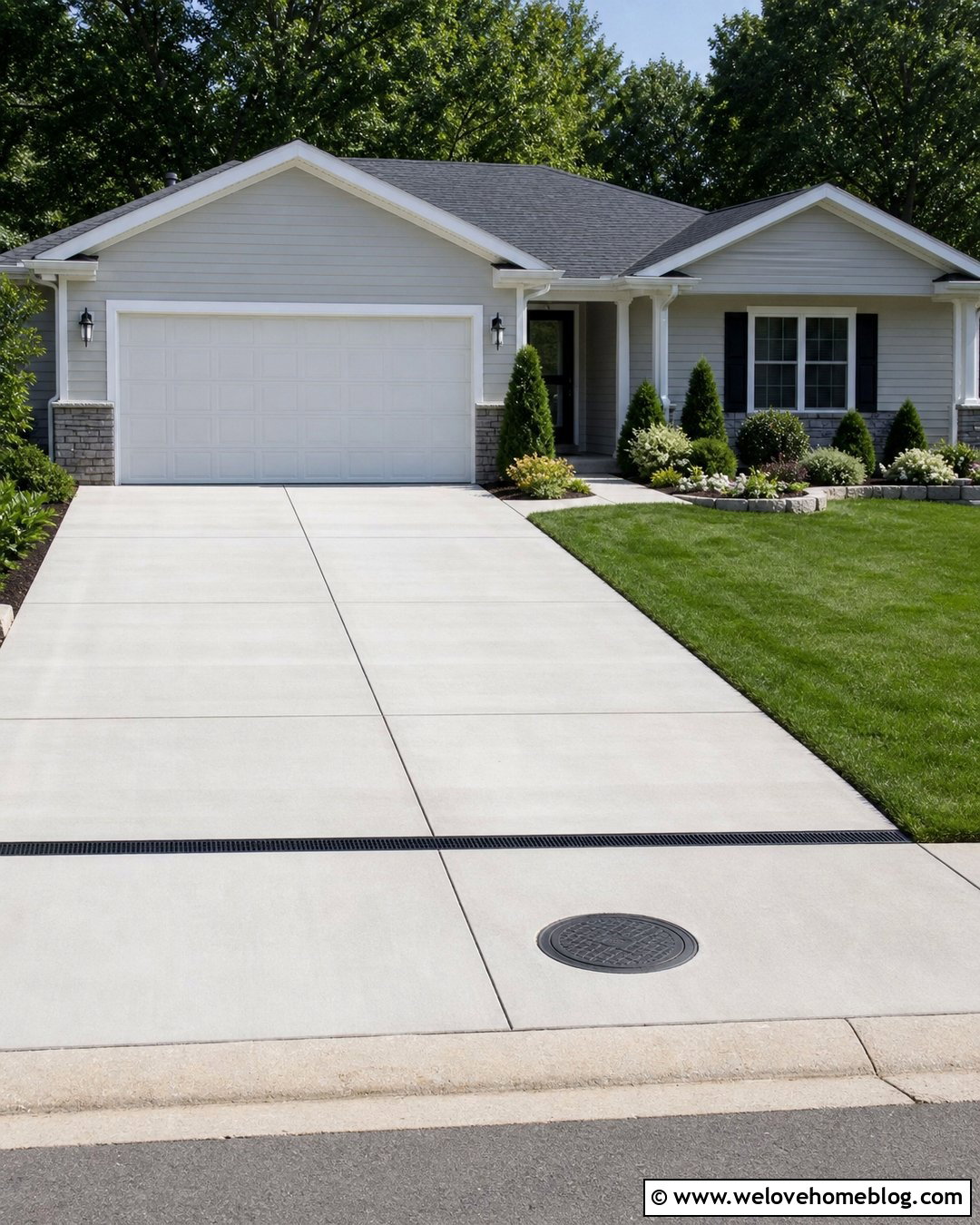
Where no convenient surface outlet exists, a channel drain may be connected to a properly designed dry well. Place the channel across a poured concrete driveway at the garage approach, then route the underground pipe toward an infiltration chamber in an open lawn area. A dark ductile-iron grate, matching concrete border, and neat foundation planting keep the visible portion simple. The dry well must be sized for runoff volume, soil infiltration, groundwater conditions, and required setbacks. It also needs an overflow strategy for unusually intense rain. Installing a sediment trap or catch basin before the dry well can reduce clogging and extend its useful life. Because buried infiltration systems are difficult to inspect after construction, include accessible cleanouts and document the chamber location for future maintenance or landscaping work.
17. Driveway Drain With Pop-Up Emitter
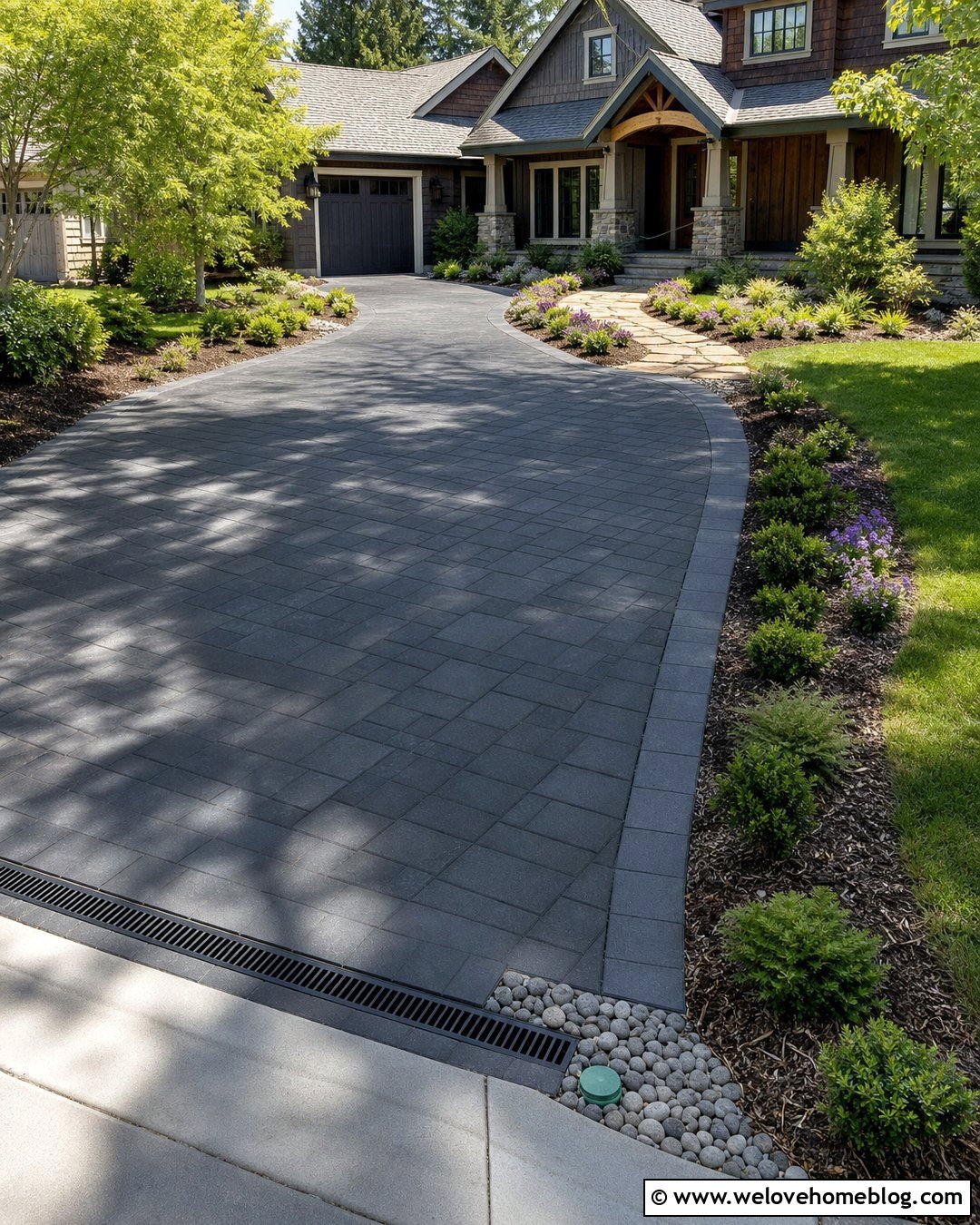
A pop-up emitter creates a tidy endpoint for an underground driveway drainage pipe when a lawn has enough fall to release water safely. Combine a charcoal paver driveway with a channel drain near the garage, then carry the outlet pipe toward a lower front or side lawn. Position the emitter in a shallow, stone-protected depression where discharged water can spread without creating mud. The cap stays nearly flush with the grass and opens under water pressure. A small bed of river rock around it reduces erosion and makes mowing easier. This system still requires adequate pipe slope and a route that drains after storms. In freezing climates, avoid low sections that hold standing water. Keep the emitter visible enough to inspect, and clear grass, leaves, or soil from the lid regularly.
18. Driveway Drain With Rainwater Tank

Capturing driveway runoff for nonpotable landscape use can be attractive where local regulations permit it and suitable treatment is provided. Build a permeable concrete paver driveway with a linear drain at the lowest edge, then route collected water through a sediment basin and appropriate filtration before it enters a storage tank. Screen the tank with an evergreen hedge or place it underground, leaving the access cover visible. Use stored water for compatible irrigation purposes rather than household consumption. A clearly planned overflow should lead to a rain garden, swale, or approved drainage point when the tank is full. Driveway runoff may contain sediment, oil, and other residues, so professional system design and maintenance are important. The result can connect water management with a clean, environmentally focused landscape.
19. Driveway Retaining Wall With Strip Drain
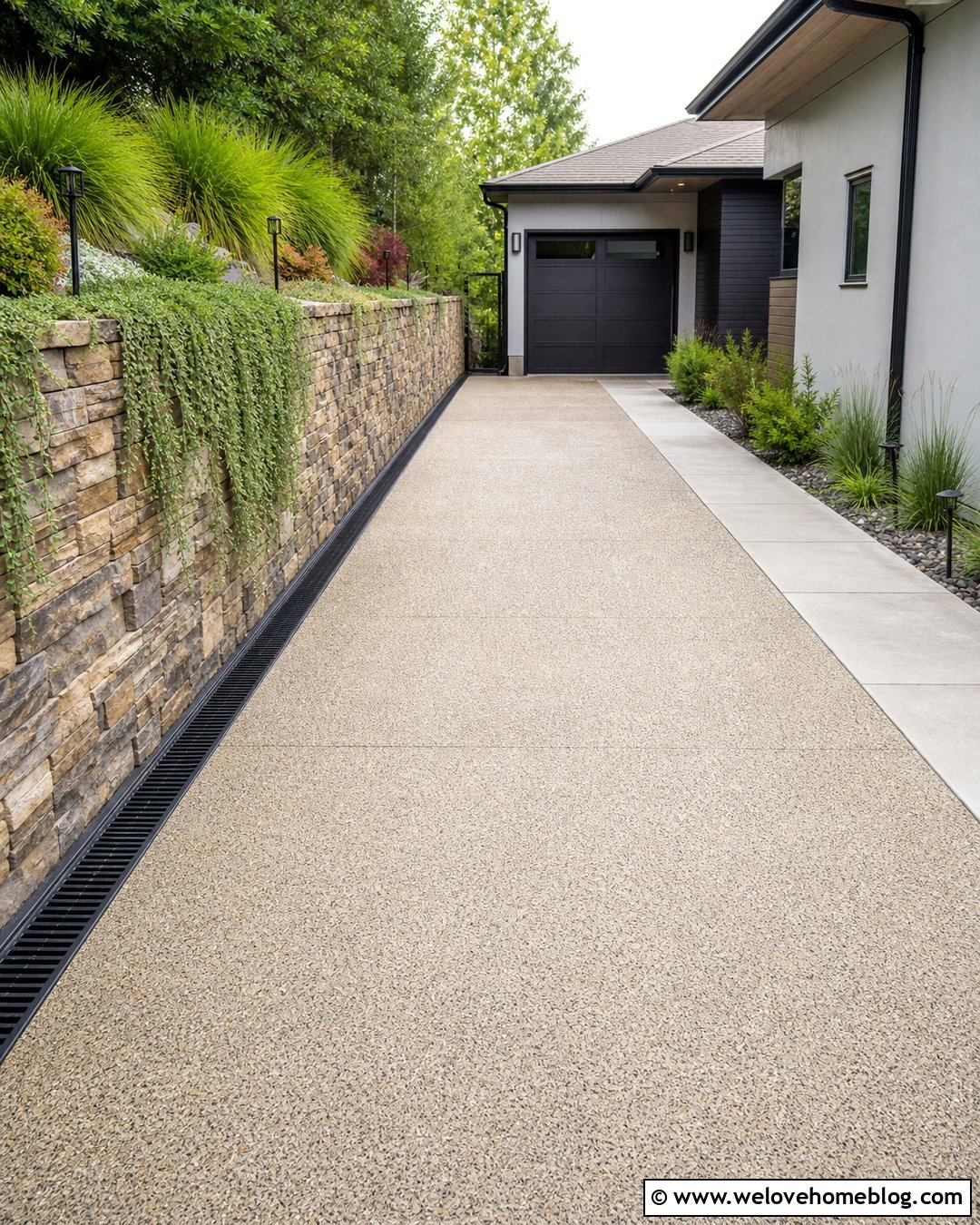
Water often collects where a driveway meets the base of a retaining wall. A continuous strip drain along that seam can intercept runoff before it spreads across the driving surface. Use exposed-aggregate concrete for the driveway and a narrow black channel grate beside a stacked-stone wall. Grade the pavement gently toward the drain while keeping the wall’s own drainage system separate and functional. Above the wall, plant cascading ground cover, compact shrubs, and ornamental grasses that tolerate the site conditions. Avoid loose mulch that can wash directly into the grate. The outlet should include cleanout access because soil and leaves naturally accumulate along retaining walls. This complete design works well on narrow side-yard driveways, where a drainage feature must perform efficiently without reducing the usable parking width.
20. Hillside Driveway With Curtain Drain
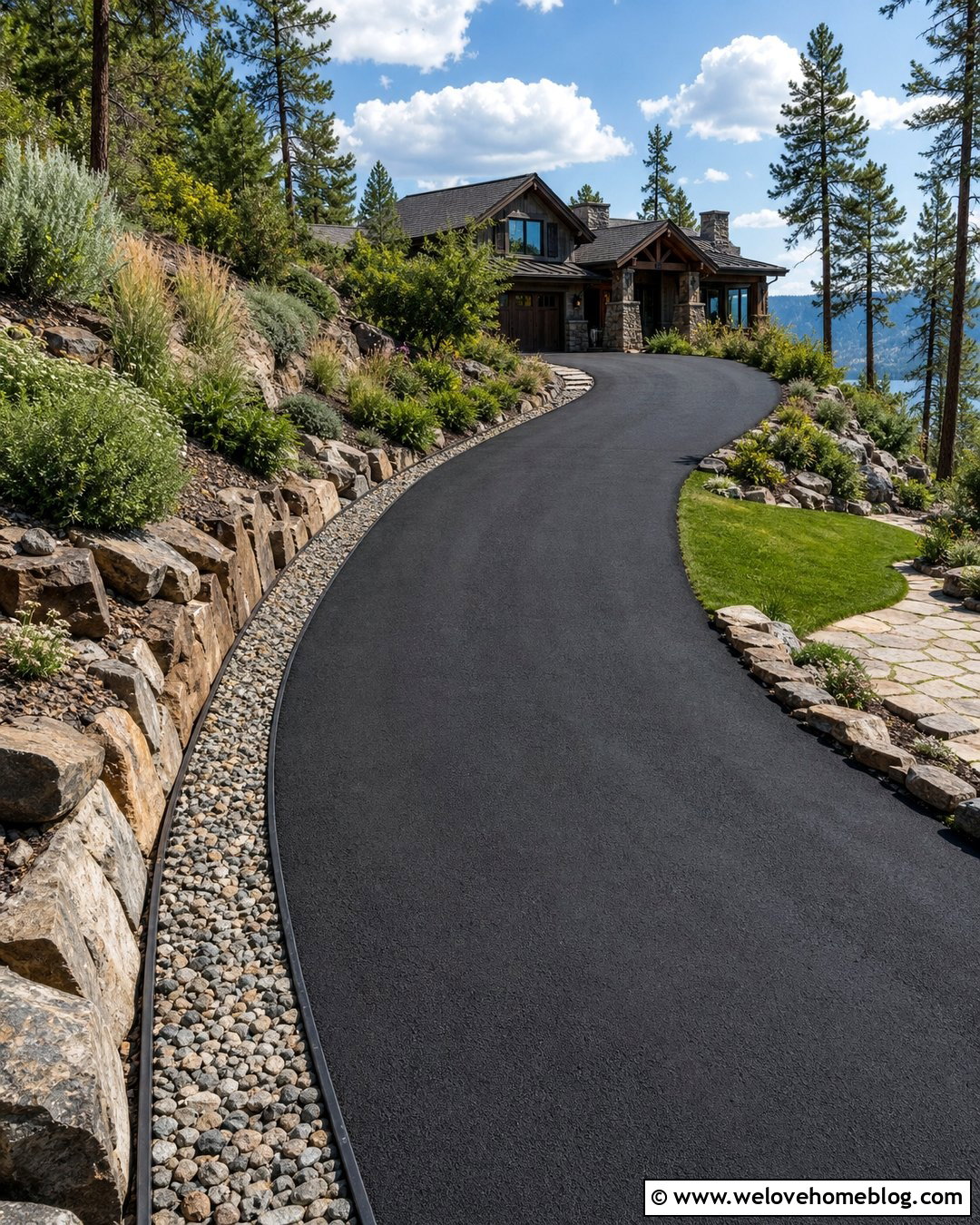
Runoff traveling downhill toward a driveway should ideally be intercepted before it reaches the pavement. A curtain drain installed on the uphill side can collect shallow subsurface water and reduce wet, unstable edges. Pair a curved asphalt driveway with a gravel-filled drainage strip located between the pavement and the landscaped slope. Use a perforated pipe where site conditions call for one, and direct it toward a safe lower outlet. Large shrubs and deep-rooted native grasses can stabilize the hillside beyond the drain, while stone edging keeps soil from spilling onto the asphalt. The driveway itself should have a controlled cross-slope toward the lower side. On steep or landslide-prone properties, seek geotechnical or civil engineering advice, since a simple landscape drain cannot correct deeper slope movement or groundwater problems.
21. Sloped Driveway With Heavy-Duty Trench Drain
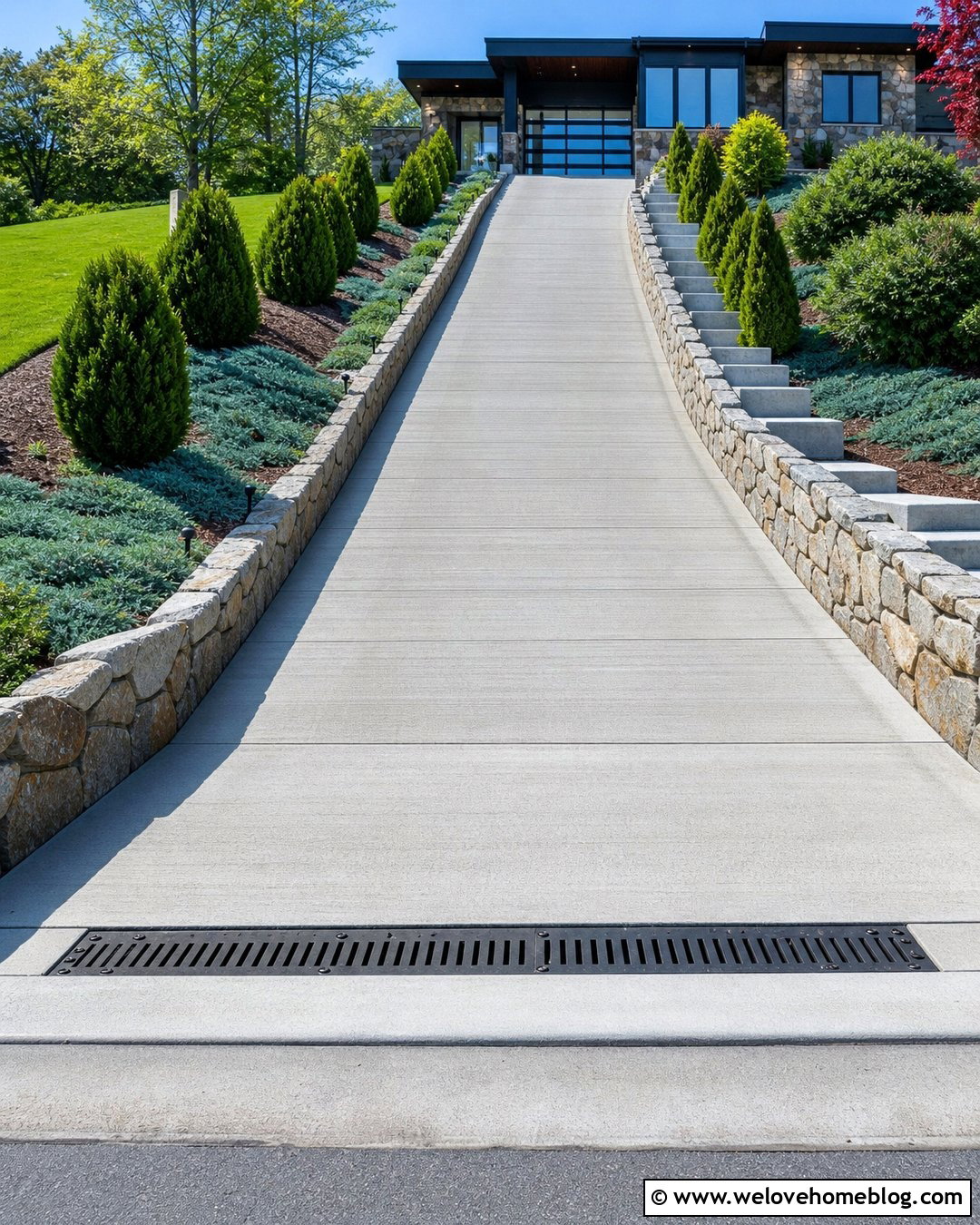
Heavy rain can rush quickly down a steep driveway, requiring a drain that spans the entire flow path. Install a wide trench drain across a broom-finished concrete surface near the bottom of the slope. A bolted ductile-iron grate provides durability and reduces movement under turning tires. Form concrete aprons on both sides of the channel so the surrounding edges do not crack or settle. Low stone walls, dense evergreen shrubs, and erosion-resistant ground cover can frame the incline without blocking drainage. The channel and outlet need enough capacity for concentrated runoff, and the grate openings should balance water intake with bicycle and pedestrian safety. Add an accessible sediment basket or upstream catch basin. On very steep sites, professional hydraulic sizing helps prevent water from simply overshooting the drain during intense storms.
22. Garage Threshold Driveway Drain

A slim drain directly outside the garage threshold provides a final line of defense against wind-driven rain and surface runoff. Use smooth gray poured concrete for the driveway and position the channel parallel to the garage doors, extending beyond their combined width. A stainless steel or dark galvanized grate creates a neat transition between exterior paving and the garage slab. Maintain a slight downward slope away from the building so the drain supports good grading rather than replacing it. Flank the driveway with narrow beds of clipped shrubs and light-colored gravel mulch, keeping loose material away from the channel. The outlet should remain accessible through a cleanout or removable grate section. This understated design suits contemporary homes where the drainage system needs to work without dominating the facade.
23. Brick Driveway With Hidden Slot Drain

Traditional brick paving can accommodate a discreet slot drain without losing its classic character. Lay red clay brick pavers in a herringbone pattern and align the narrow drain opening with a dark brick border near the garage or lower driveway edge. Because most of the drainage body sits below the surface, the opening reads as a clean shadow line. Use brick steps, evergreen foundation shrubs, and a straight flagstone walkway to connect the driveway with a colonial-style home. Cut the surrounding pavers accurately and provide stable edge support around the channel. A sediment access box can be concealed near a planting bed while remaining removable. This approach keeps the paving pattern visually dominant but still captures runoff before it reaches the house or creates puddles between the bricks.
24. Cobblestone Driveway With Valley Drain
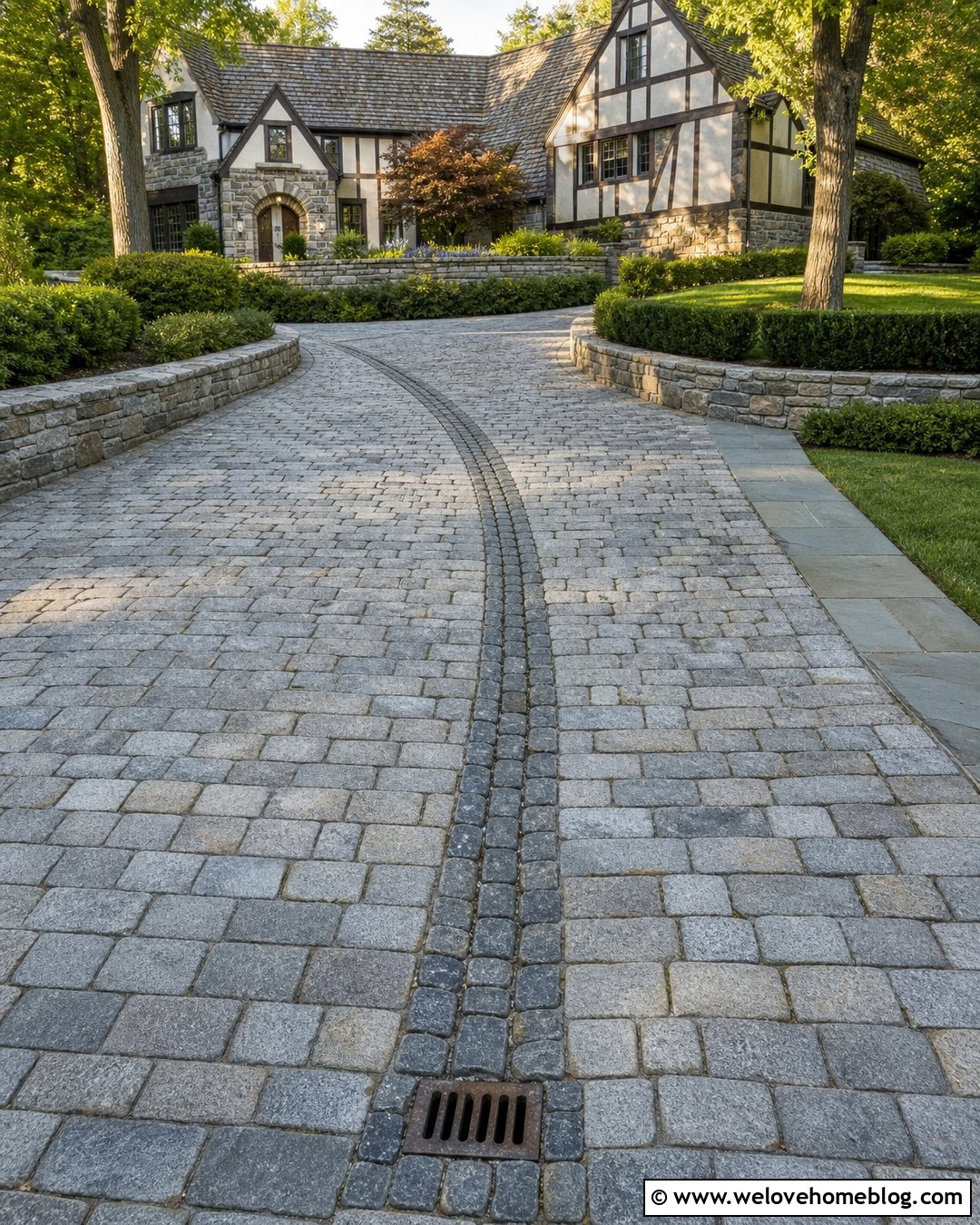
A shallow paved valley can guide water across a broad cobblestone driveway while matching the historic surface. Form the valley with darker granite setts installed slightly lower than the surrounding gray cobblestones. Angle the channel toward a catch basin or landscaped drainage area at the driveway edge. Unlike an open trench, this feature remains drivable and visually integrated with the stonework. Pair it with low fieldstone walls, clipped hedges, and a traditional walkway leading to a Tudor or colonial home. The valley needs a continuous slope and tightly stabilized stones so water does not seep into a weak base or dislodge joint material. Where runoff is heavy, place a grated basin at the endpoint to collect water efficiently and provide a practical location for sediment removal.
25. Resin-Bound Driveway With Linear Drain

A resin-bound gravel driveway provides a smooth, decorative surface with a contemporary appearance. Choose a warm beige aggregate blend and add a slim stainless steel linear drain across the garage approach. Outline the driveway with charcoal concrete pavers, creating a strong border that also contains the resin surface. Curved beds of lavender, evergreen spheres, and ornamental grasses can soften the entrance to a modern farmhouse or stucco home. Whether the resin system is intended to be permeable depends on its complete construction, including the base beneath it. Grade the surface toward the drain wherever direct collection is required. Keep nearby soil and mulch contained so fine particles do not clog porous areas. The finished design combines a seamless driving surface with a precise, low-profile drainage detail.
26. Pervious Concrete Driveway With Overflow Drain
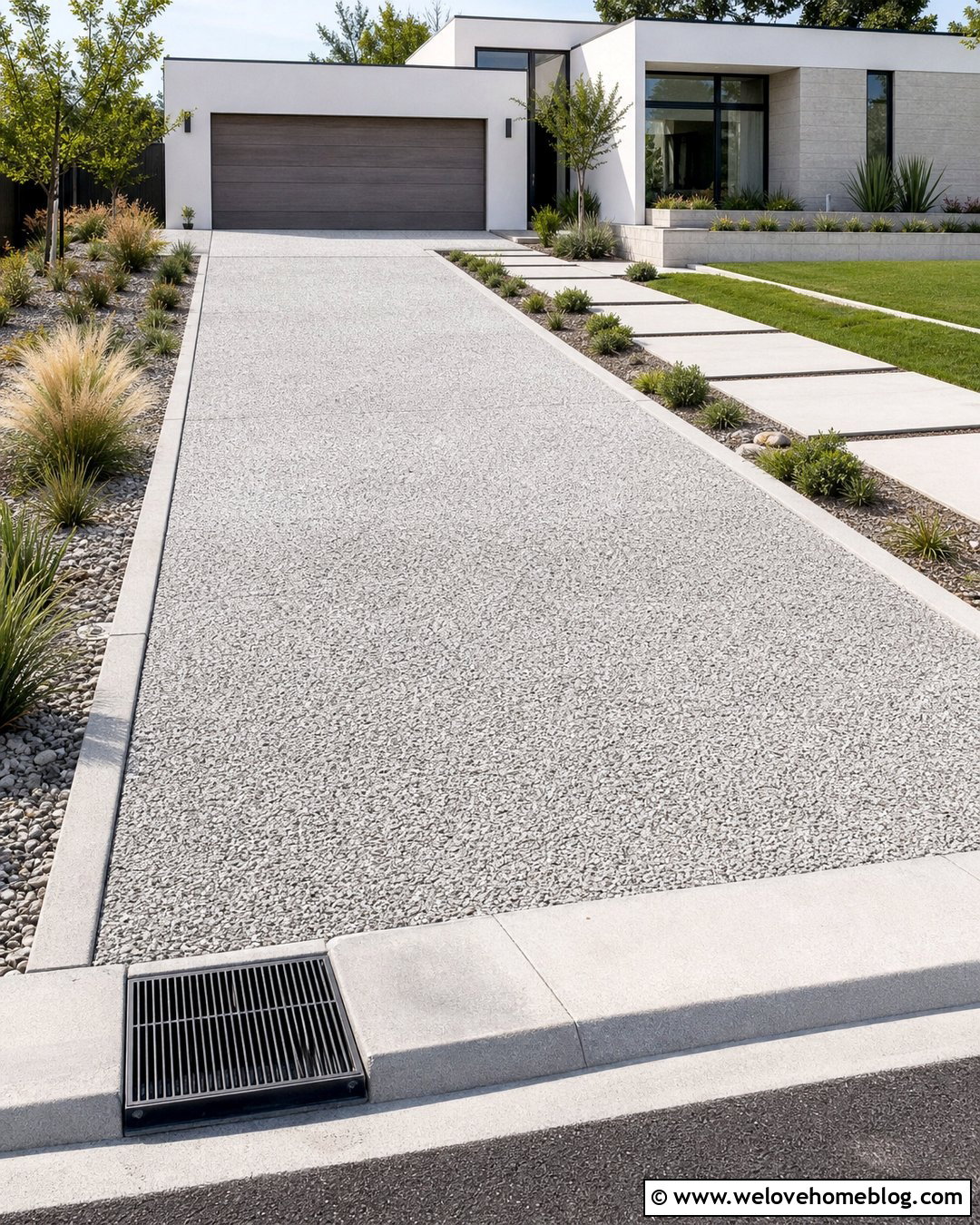
Pervious concrete can reduce surface runoff by allowing water to enter a stone reservoir below the pavement. Its open texture creates a distinctive appearance that works well with simple modern landscaping. Use pale gray pervious concrete for a straight driveway, framed by smooth concrete curbs and drought-tolerant planting beds. Add a grated overflow drain at the lowest corner for storms that exceed the infiltration system’s capacity. The underlying reservoir, native soil, and any underdrain must be designed as one complete system. Avoid placing ordinary soil or loose mulch directly beside the porous surface because fine particles can cause clogging. Routine vacuuming may be required to preserve infiltration. With clean borders, limited joints, and a defined overflow route, the driveway looks minimal while managing rainfall below and above the surface.
27. Grass Paver Driveway With Edge Drain
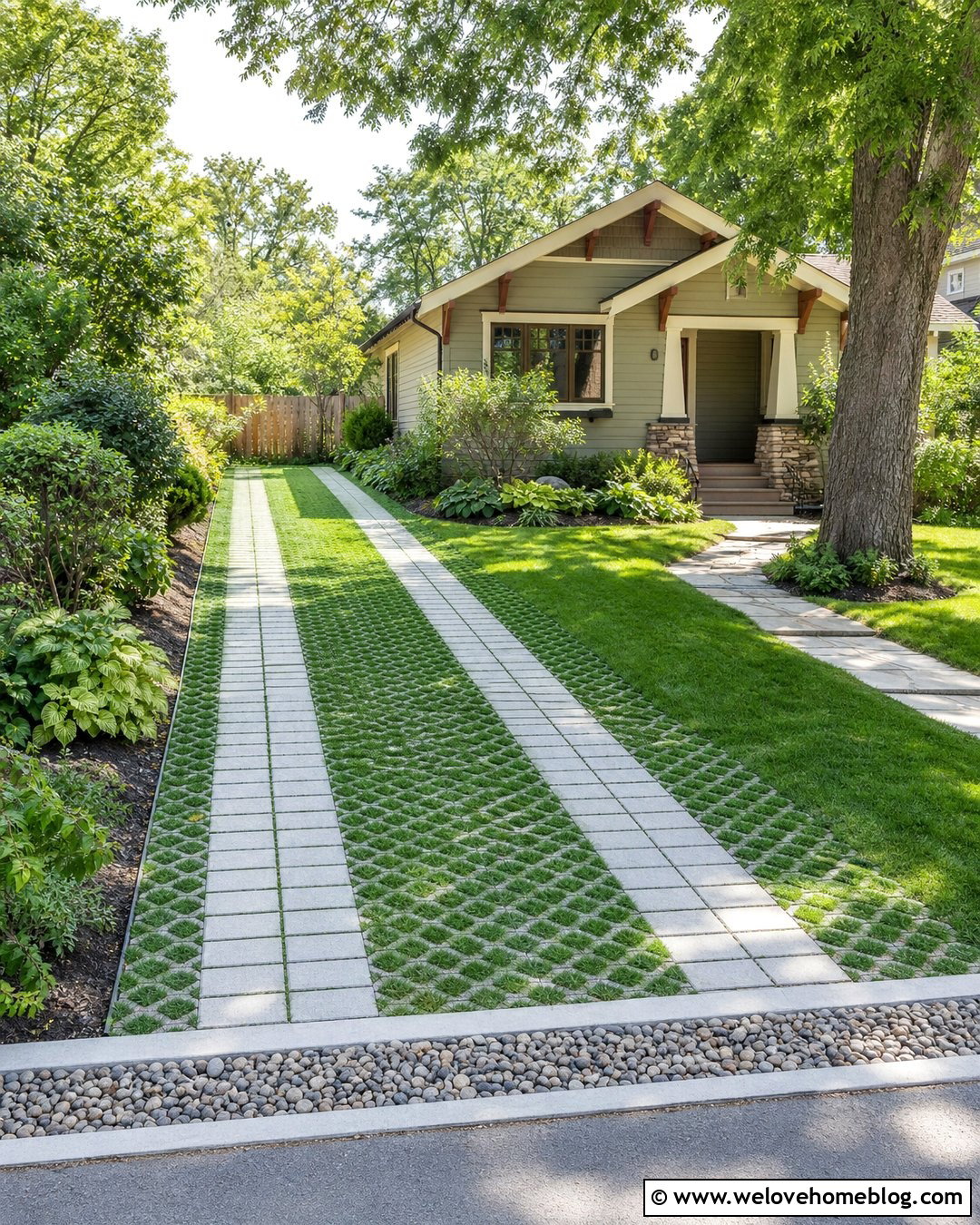
Grass pavers create a green driving surface by supporting turf inside open concrete or plastic cells. They work best when the sub-base, soil media, grass type, and maintenance plan suit local conditions. Use grass pavers across a straight secondary driveway and install a narrow stone-filled edge drain along the lower side. A row of concrete pavers can mark the tire path and create a stable walking route in wet weather. Frame the entrance with native shrubs, shade-tolerant ground cover, and a simple lawn leading to a craftsman home. The drainage edge provides an overflow path when the soil becomes saturated. Avoid directing roof runoff onto the grass cells unless the system is designed for the extra volume. Occasional reseeding and careful mowing keep the driveway looking intentionally green.
28. Gravel Grid Driveway With Channel Drain

A gravel stabilization grid helps hold loose aggregate in place while allowing water to move through the surface. Fill the grid with angular gray gravel and form a gently curved driveway leading to a modern farmhouse. Add a dark channel drain across the lower entrance where runoff from the property and street may converge. Steel edging along the curves prevents gravel from spreading into the lawn, while a cobblestone apron reduces displacement at the road. Plant compact hydrangeas, ornamental grasses, and two small entrance trees beyond the drainage line. The sub-base must be prepared for both infiltration and vehicle loads. Use washed aggregate where required by the system, and keep fine soil away from the grid. This arrangement offers the relaxed look of gravel with cleaner edges and more controlled drainage.
29. Snowy Driveway With Trench Drain

Cold-climate drainage must handle rain, melting snow, and repeated freeze-thaw conditions. Use dark asphalt for a gently sloped driveway and place a heavy-duty trench drain near the garage, where meltwater might otherwise refreeze at the threshold. Set the channel securely within reinforced concrete and connect it to an outlet designed to remain functional in winter. Granite edging, evergreen shrubs, and a stone walkway create a durable landscape that tolerates snow storage. Leave clear access around the grate so it can be shoveled and inspected. Avoid piling snow directly over the drain or its discharge point. The pipe route should minimize standing water that could freeze and split components. Local frost depth, snowmelt volume, and deicing practices should guide material and installation choices.
30. Driveway Drain With Stone Apron

A stone apron can strengthen the area around a driveway drain while creating an attractive transition between paving materials. Use black asphalt for the main driveway and install a broad band of granite cobblestones across its lower end. Set a cast-iron channel drain within the cobblestone band so the grate appears centered and intentional. The textured apron slows surface water slightly and protects the asphalt edges around the drain installation. Continue the granite as side borders, then add lawn, flowering shrubs, and a brick walkway leading to a Cape Cod home. Make sure the cobblestones slope toward the grate without forming uncomfortable bumps. A stable concrete foundation beneath the channel and adjacent stones helps resist movement caused by vehicle braking, turning, and seasonal ground changes.
31. Driveway Drain With Sediment Trap
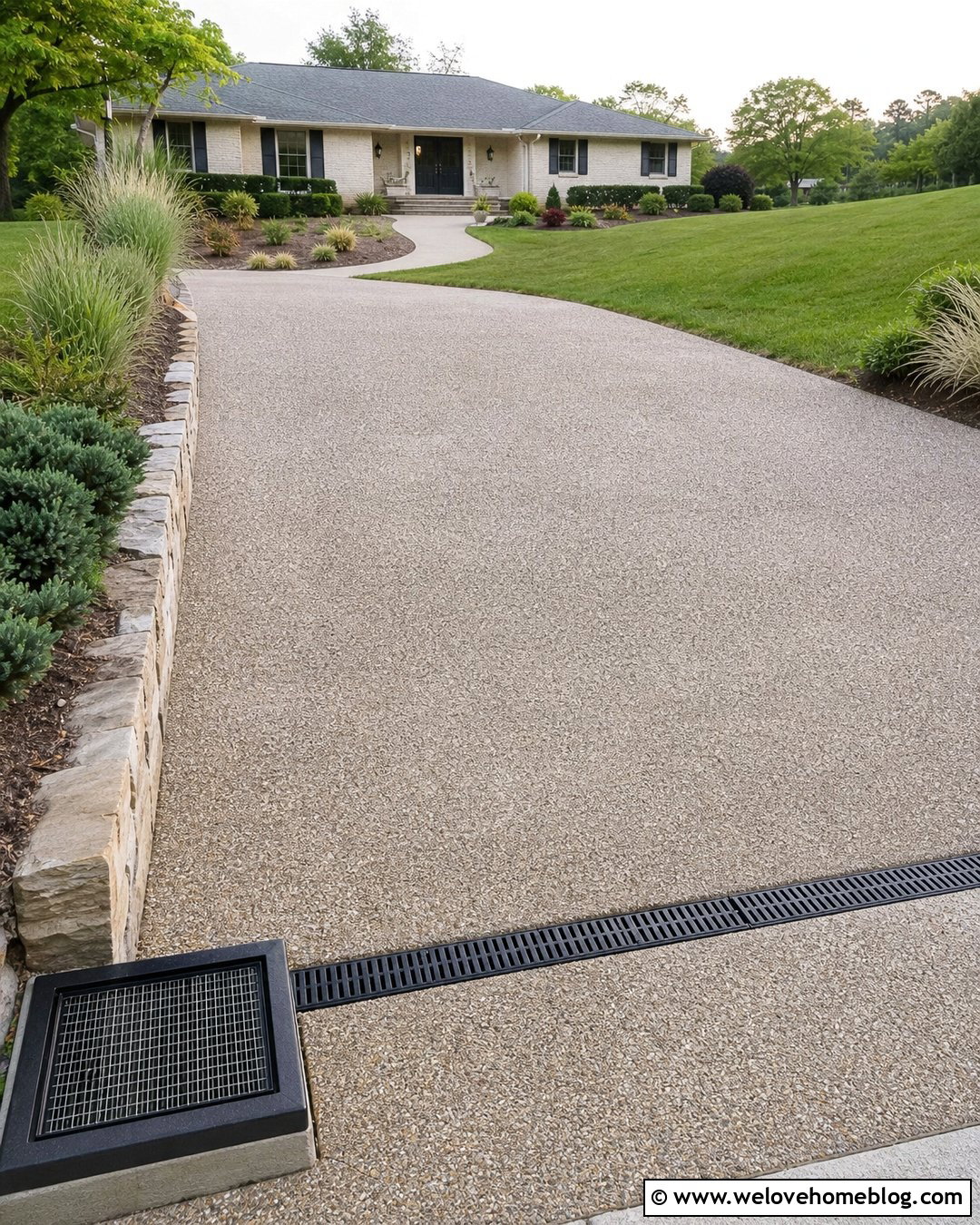
A sediment trap is valuable where runoff carries sand, soil, or fine gravel toward a channel drain. Build a tan exposed-aggregate driveway with a dark linear grate across the lower section and place an accessible catch basin at one end. The basin’s sump collects heavy material before it enters the underground outlet pipe. Use a removable cover that coordinates with the channel grate, then conceal the surrounding structure within a stone-edged planting bed. Low evergreen shrubs and ornamental grasses can provide screening without dropping large amounts of debris. Grade bare soil away from the driveway and stabilize nearby slopes to reduce the sediment load. Empty the sump whenever accumulated material approaches the outlet. This small maintenance feature can make the complete drainage system easier to inspect and less vulnerable to blockage.
32. Driveway Drain With Accessible Cleanout

Every buried drainage line benefits from a practical way to inspect and flush the pipe. Pair a light concrete paver driveway with a channel drain near the garage and place a capped cleanout inside the adjacent landscape bed. Choose a dark green or black cap that blends with low ground cover but remains easy to find. A small ring of decorative gravel prevents soil and mulch from covering the access point. Continue the paver border around the driveway, and use upright evergreens to frame a traditional ranch house. The underground pipe should have smooth transitions and a consistent route toward its outlet. Record the cleanout and pipe locations before planting. Good access may not be the most visible part of the design, but it simplifies troubleshooting when leaves, roots, or sediment reduce drainage performance.
33. Driveway With Hidden Pebble Border Drain

A hidden border drain can collect runoff while resembling a decorative strip of stone. Use large-format gray concrete pavers for the driveway and install a narrow drainage channel along one side. Cover the purpose-designed opening with washed black pebbles or a compatible concealed grate system, ensuring the stone does not block water entry. Separate the drain from the planting bed with steel edging and fill the landscape with sculpted shrubs, white flowering perennials, and ornamental grasses. The driveway should slope gently toward the pebble strip. Include removable access points at intervals because concealed drains still collect leaves and sediment. This streamlined design is best for a modern home where visible metal grates would interrupt the paving, yet a defined edge drainage route is still needed.
34. Wide Driveway With Center Valley Drain
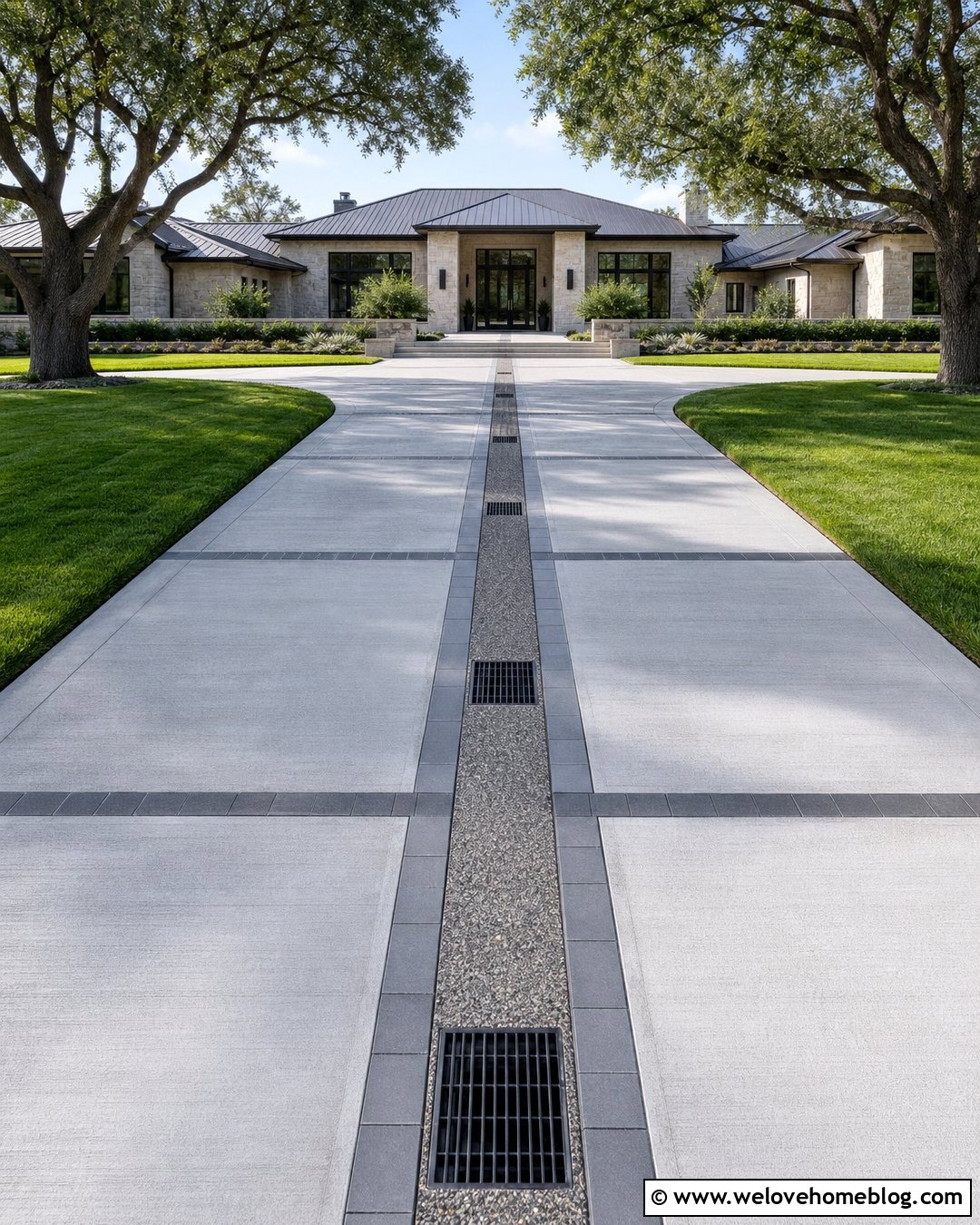
A wide driveway can drain toward a shallow center valley when sending water to both outer edges is impractical. Use brushed concrete slabs on each side and form a darker exposed-aggregate strip through the middle. Set several grated catch basins within the valley at calculated low points, creating a continuous collection route toward the outlet. Thin paver ribbons can outline the center strip and make it look like a deliberate design feature. Frame the broad entrance with symmetrical lawn areas, shade trees, and low foundation shrubs leading to a large ranch or contemporary home. Keep the valley shallow enough for comfortable vehicle crossing and walking. Accurate elevations are essential because minor high spots can interrupt the water path. Removable basin grates provide convenient points for cleaning accumulated debris.
35. Split Driveway With Landscaped Median Drain

A split driveway with a planted median can hide a substantial drainage system inside the landscape. Construct the two driving lanes from charcoal permeable concrete pavers and slope them gently toward the center island. Install a stone-lined bioswale through the median, using river rock, sedges, compact grasses, and moisture-tolerant shrubs. Small curb openings or flush paver edges allow runoff to enter without crossing a tall barrier. At the lower end, connect the swale to a rain garden, catch basin, or approved overflow route. Add a specimen tree near the upper median, safely positioned away from sightlines and underground pipes. This complete arrangement divides arriving and departing traffic, adds greenery to a large front yard, and turns the central drainage path into the visual focus of the entrance.
Conclusion:
Effective driveway drainage begins with understanding where water comes from, how it crosses the property, and where it can safely go. A channel drain may protect a garage, while a catch basin can correct a low point. Gravel borders, swales, permeable paving, and rain gardens offer softer alternatives when the yard has enough room. The most dependable design often combines careful grading with a drain, stable outlet, overflow route, and accessible cleanouts. Always match grates and foundations to vehicle loads, locate utilities before digging, and confirm local stormwater requirements. For difficult slopes, poor soil, or recurring flooding, consult a qualified drainage professional. These 35 Driveway Drain Ideas provide practical starting points for building a dry, durable, and attractive entrance.

Related posts:








Leave a Reply