
Poor drainage can leave a driveway covered in puddles, eroded along the edges, or directing runoff toward the garage and foundation. The best driveway drainage ideas solve these problems while improving the entire approach to the home. Surface material, slope, borders, planting beds, and the final water outlet should work as one connected system. Depending on the property, that may involve a channel drain, permeable paving, a French drain, a landscaped swale, or a combination of solutions. Soil type, rainfall, driveway pitch, and local stormwater rules also affect the right choice. Water should always move toward a safe drainage area without creating problems for neighboring lots. Below are 20 practical and attractive Driveway Drainage Ideas.

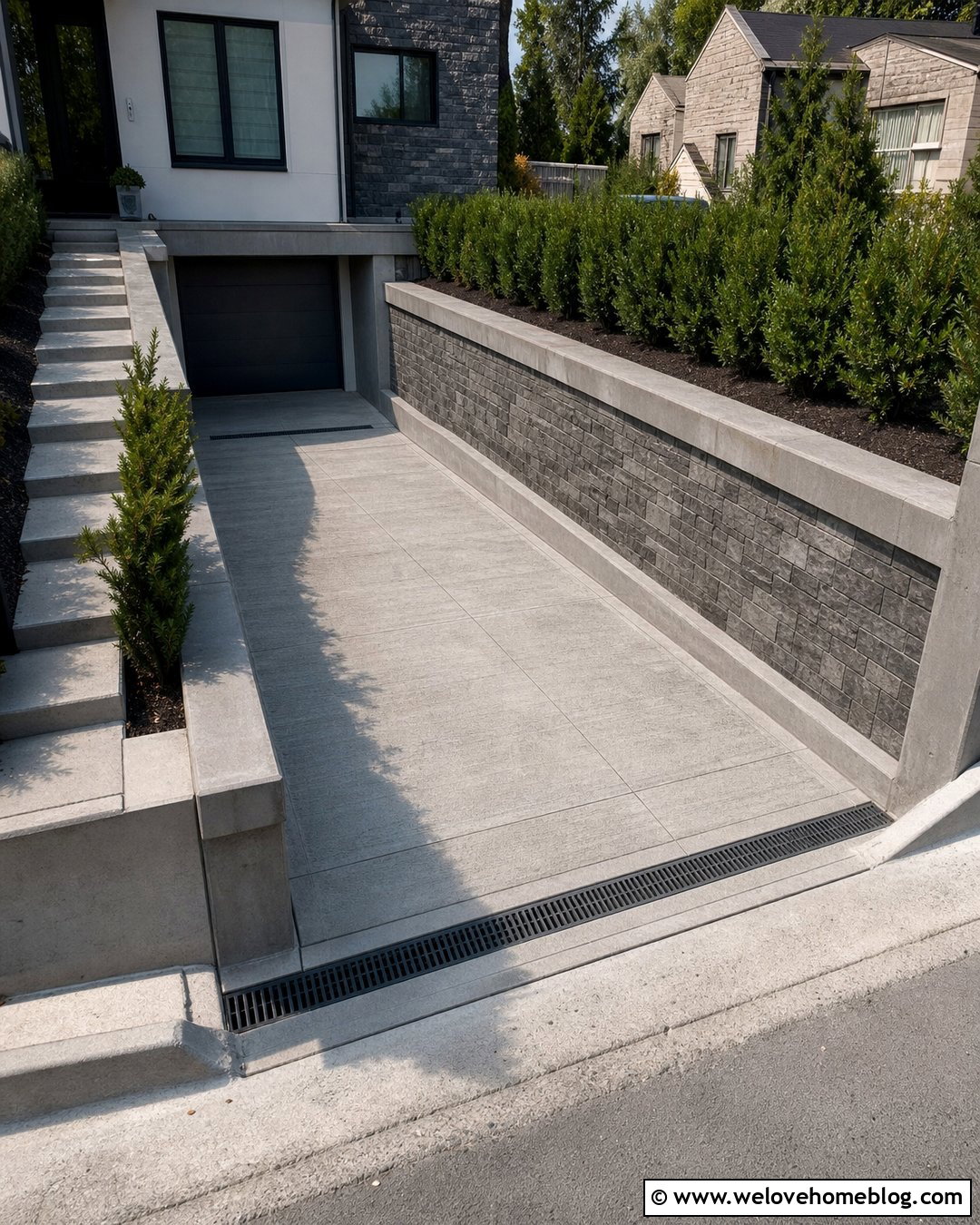
1. Sloped Concrete Driveway With Garage Channel Drain

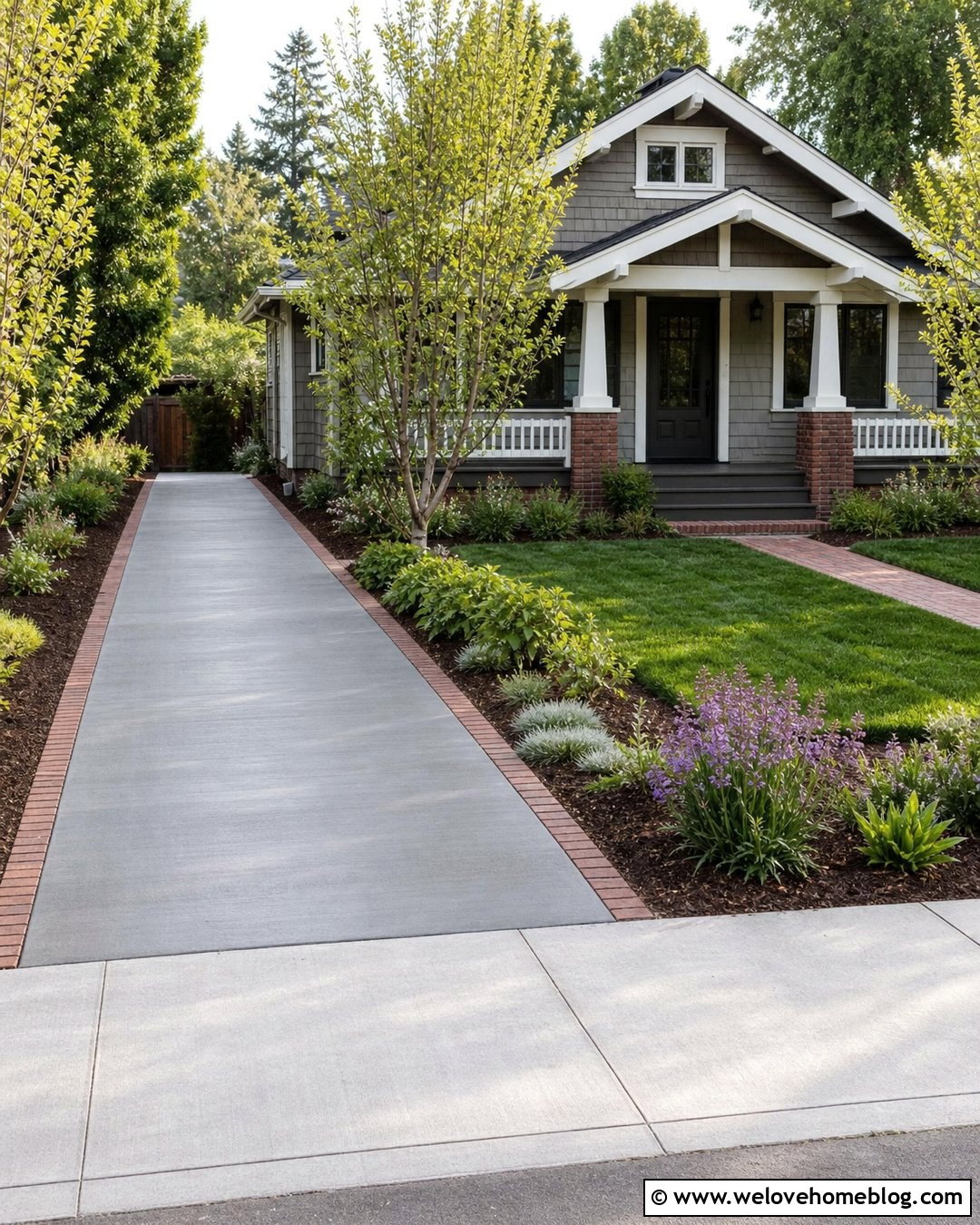
A concrete driveway that slopes toward the house needs a reliable interception point before water reaches the garage. Install a full-width channel drain a short distance in front of the garage threshold. Light gray poured concrete, dark metal grates, and straight control joints create a clean, coordinated appearance. The driveway should be carefully pitched so runoff reaches the channel without collecting in shallow depressions. Connect the drain to an approved outlet, such as a stormwater system, dry well, or lower landscape area where permitted. Narrow planting beds beside the driveway can help absorb minor runoff. Choose a grate rated for residential vehicle traffic, and include removable sections or cleanouts so leaves, sediment, and grit are easy to clear. ()
2. Asphalt Driveway With Street-Side Trench Drain

When water collects near the sidewalk or street, a trench drain across the lower end of an asphalt driveway can capture runoff before it forms a large puddle. The black asphalt surface creates a subtle transition around a black or galvanized grate. A concrete collar beneath and around the drain helps protect it from movement caused by vehicle loads. Shape the driveway with a gentle cross-slope so water travels toward the trench instead of sitting along the edges. Add stone borders and low planting beds behind the curb for a finished suburban look. The outlet must follow local regulations and should not discharge onto neighboring property. Inspect the grate after storms because leaves, mulch, and winter debris can quickly reduce its capacity.
3. Permeable Paver Driveway With Gravel Joints
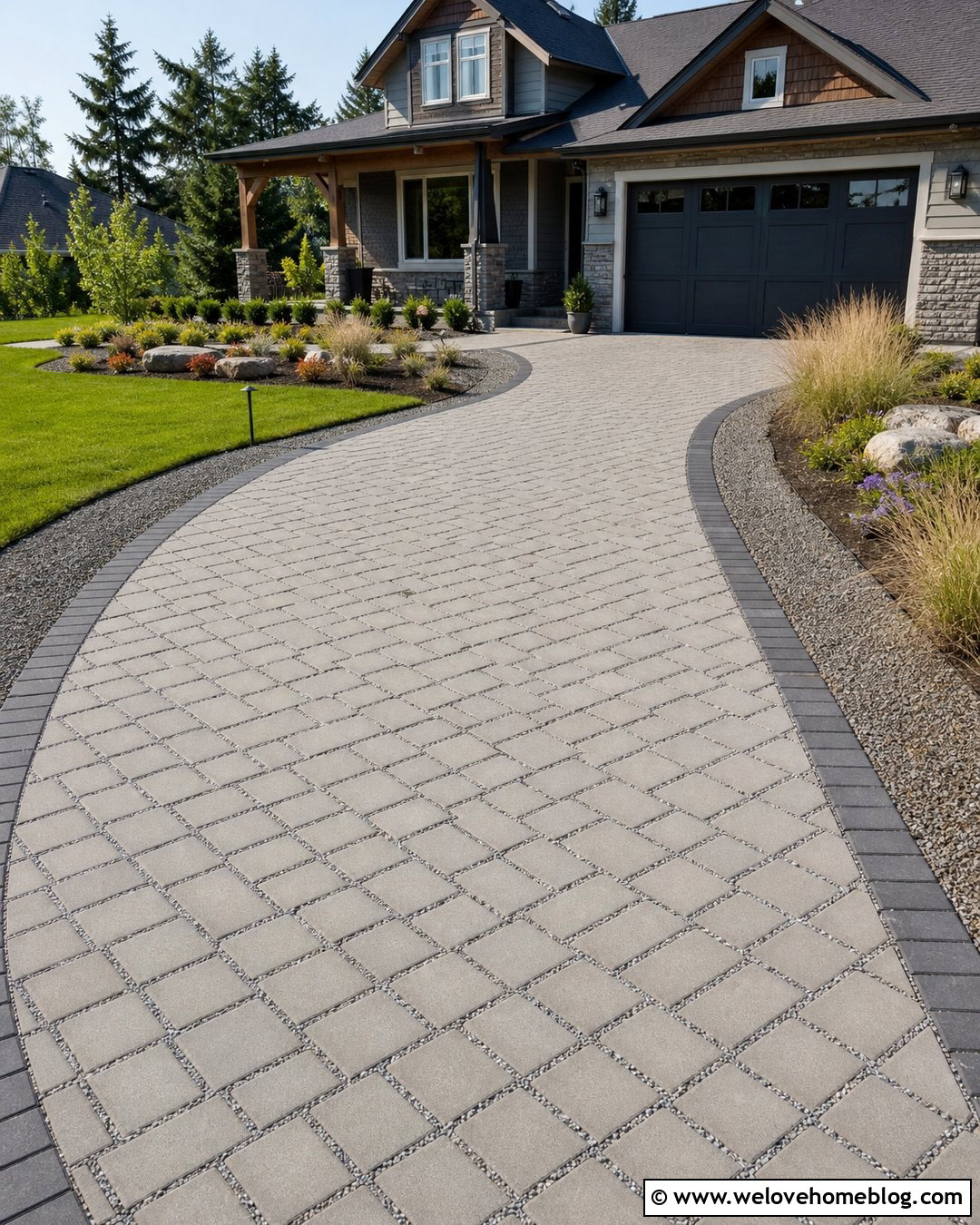
Permeable concrete pavers provide a polished driveway surface while allowing rainwater to move through open joints into a stone reservoir below. Choose charcoal, tan, or warm gray pavers that complement the home, then fill the wider joints with clean, angular aggregate rather than ordinary joint sand. A properly designed open-graded base temporarily stores runoff and encourages infiltration into suitable soil. Edge restraints keep the pavers from spreading, while adjacent native planting beds help manage overflow. This complete look works especially well with craftsman, contemporary, and modern farmhouse homes. Regular vacuuming or careful joint cleaning can reduce clogging from sediment. Before installation, test the soil and confirm that infiltration will not direct water toward the foundation or another vulnerable area. ()
4. Gravel Driveway With Crown And Side Ditches
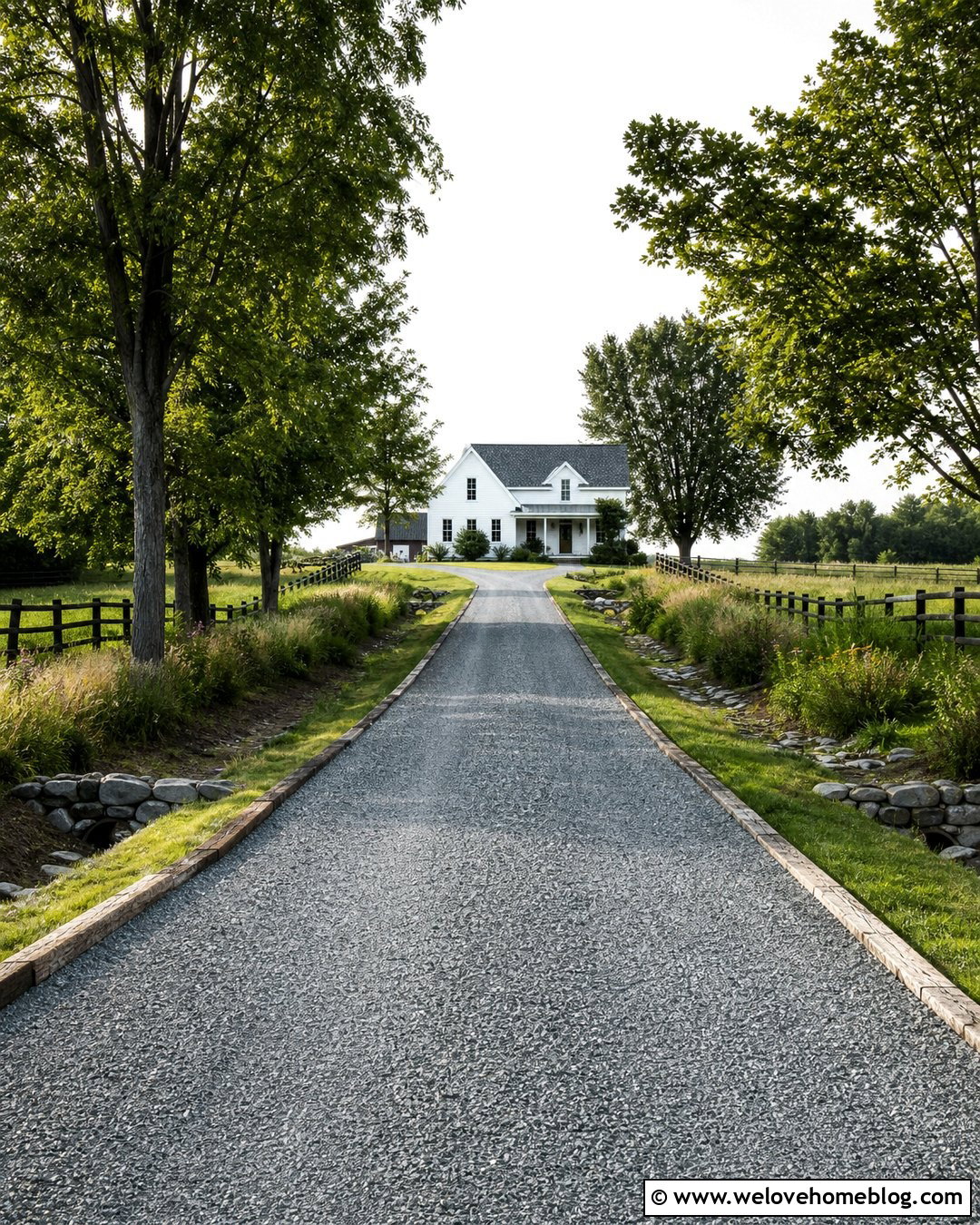
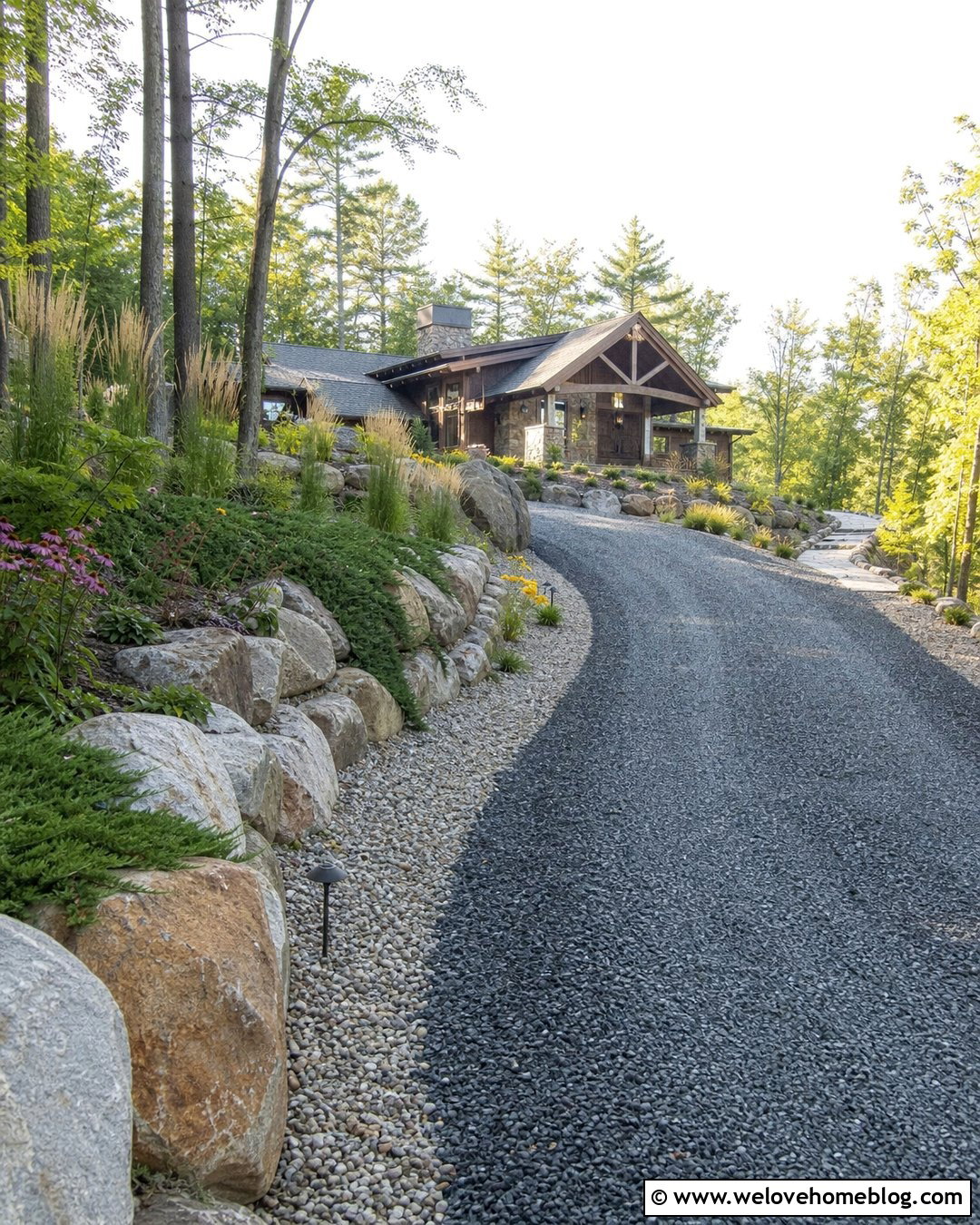
A crowned gravel driveway sheds water from its raised center toward shallow drainage ditches on both sides. This classic arrangement is especially useful for long rural and country driveways. Use compacted crushed stone for the driving surface because its angular particles lock together better than rounded decorative gravel. Line the side channels with grass, erosion-resistant ground cover, or larger drainage rock, depending on water speed. A row of native trees or informal shrubs can soften the ditches without blocking flow. Periodic grading restores the crown and removes wheel ruts that trap water. At steep sections, add stone check dams to slow runoff and reduce erosion. Both side ditches must lead to a stable, legal outlet rather than ending in a low, muddy pocket.
5. Curved Driveway With Landscaped Drainage Swale

A broad landscaped swale can follow the outside edge of a curved driveway, turning stormwater control into an attractive garden feature. The driveway might use asphalt, concrete, or pavers, but its surface should slope gently toward the planted channel. Shape the swale with shallow, gradual sides instead of creating a deep trench. Ornamental grasses, moisture-tolerant perennials, and native shrubs help slow runoff and hold soil in place. Decorative stones can reinforce areas receiving concentrated flow. Continue the swale toward a rain garden, dry well, or safe lower section of the yard. Avoid placing dense shrubs where they could hide the driveway entrance. Professional guidance is sensible on steep properties, near septic systems, or where runoff could affect a foundation or neighboring lot. ()
6. Concrete Driveway With French Drain Border
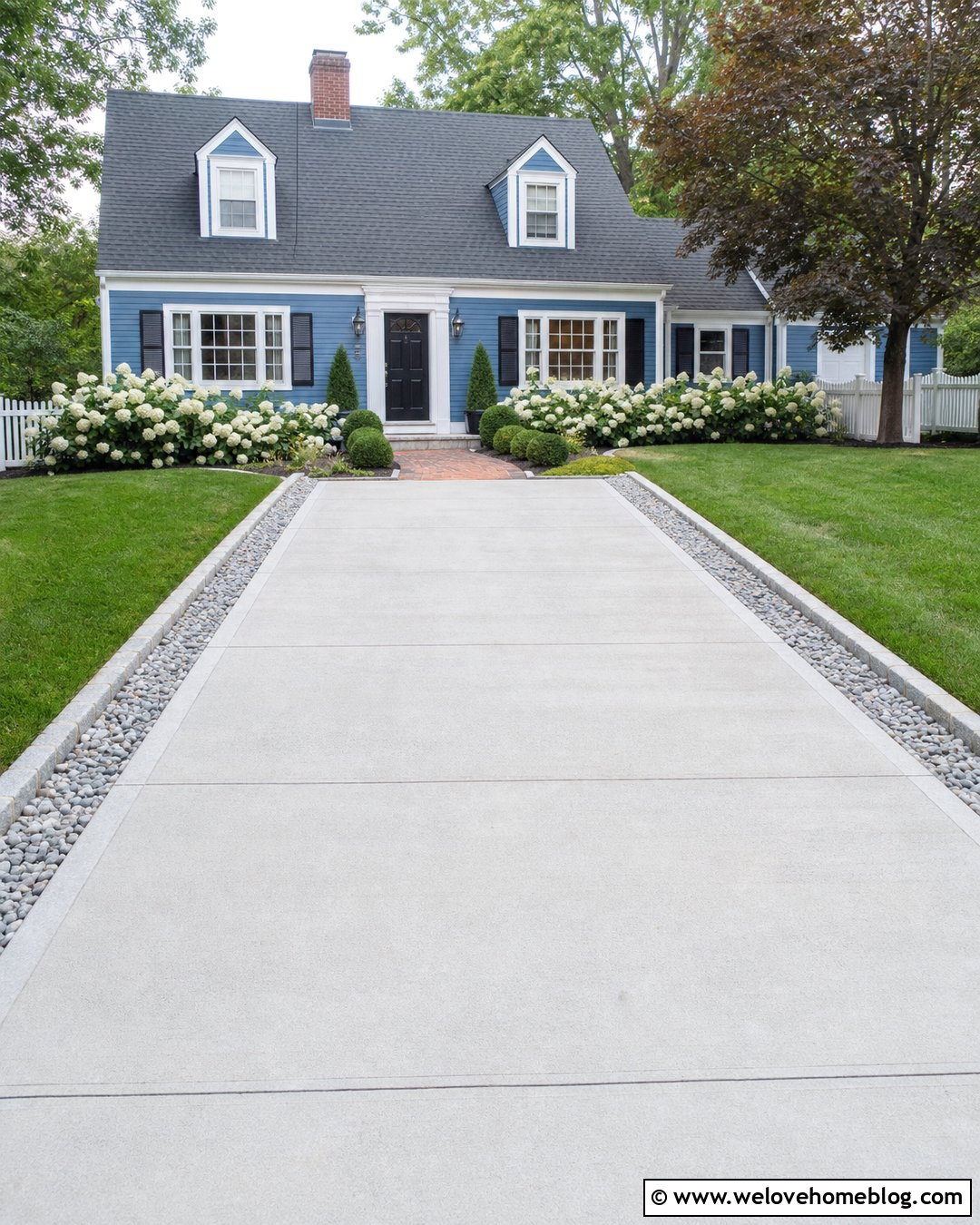
A French drain can form a crisp, gravel-filled border beside a straight concrete driveway. Beneath the visible stone, a perforated pipe sits in washed aggregate and is wrapped or separated with suitable filter fabric. The system collects subsurface water and runoff entering from the driveway edge, then carries it toward a safe outlet. Use contrasting river rock or angular gray gravel to create a deliberate border rather than an unfinished trench. Low shrubs and raised planting beds can sit beyond the drain, provided soil and mulch do not spill into it. The driveway should still have enough cross-slope to send water toward the border. Add accessible cleanouts where practical. A French drain needs a viable discharge point; it should not simply move water closer to the house. ()
7. Paver Driveway With Hidden Slot Drain

A narrow slot drain offers understated drainage for a modern paver driveway. Only a slim opening remains visible between rows of large-format concrete pavers, keeping the surface visually clean. Position the slot across the driveway near the garage or along the lowest side, depending on the grading plan. Pale gray pavers, darker border courses, and a stainless steel slot create a sharp contemporary finish. The concealed channel below must be sized for expected runoff and connected to an approved destination. Because the opening is narrow, thoughtful maintenance is important. Include access points where sediment can be removed. Pair the driveway with linear planting beds, clipped shrubs, and a simple concrete walkway. This approach works best when drainage locations are planned before the paver base and elevations are installed. ()
8. Circular Driveway With Center Rain Garden

A circular driveway can slope inward toward a planted rain garden in the center island. Permeable pavers or exposed aggregate concrete create a durable driving loop, while flush curb openings allow runoff to enter the landscape instead of bypassing it. Shape the garden as a shallow basin with moisture-tolerant plants near the bottom and plants suited to drier conditions around the upper edge. Decorative boulders, sedges, flowering perennials, and a small ornamental tree create a balanced focal point. An overflow route should carry excess water safely away during large storms. Keep plants low near both entrances to preserve clear sightlines. This design makes stormwater management part of the home’s curb appeal while breaking up a large expanse of paving with greenery.
9. Steep Driveway With Catch Basin And Channel Drain
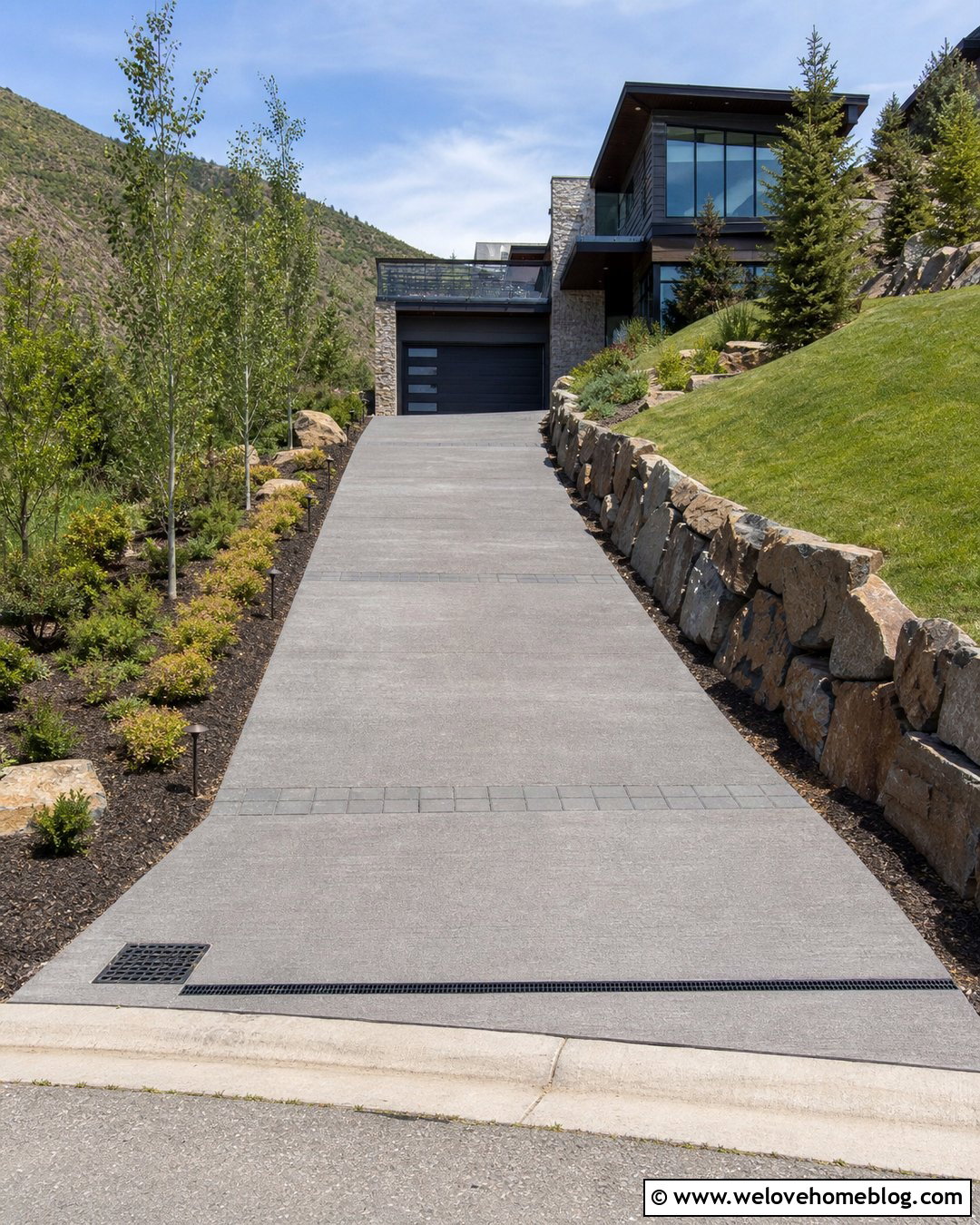
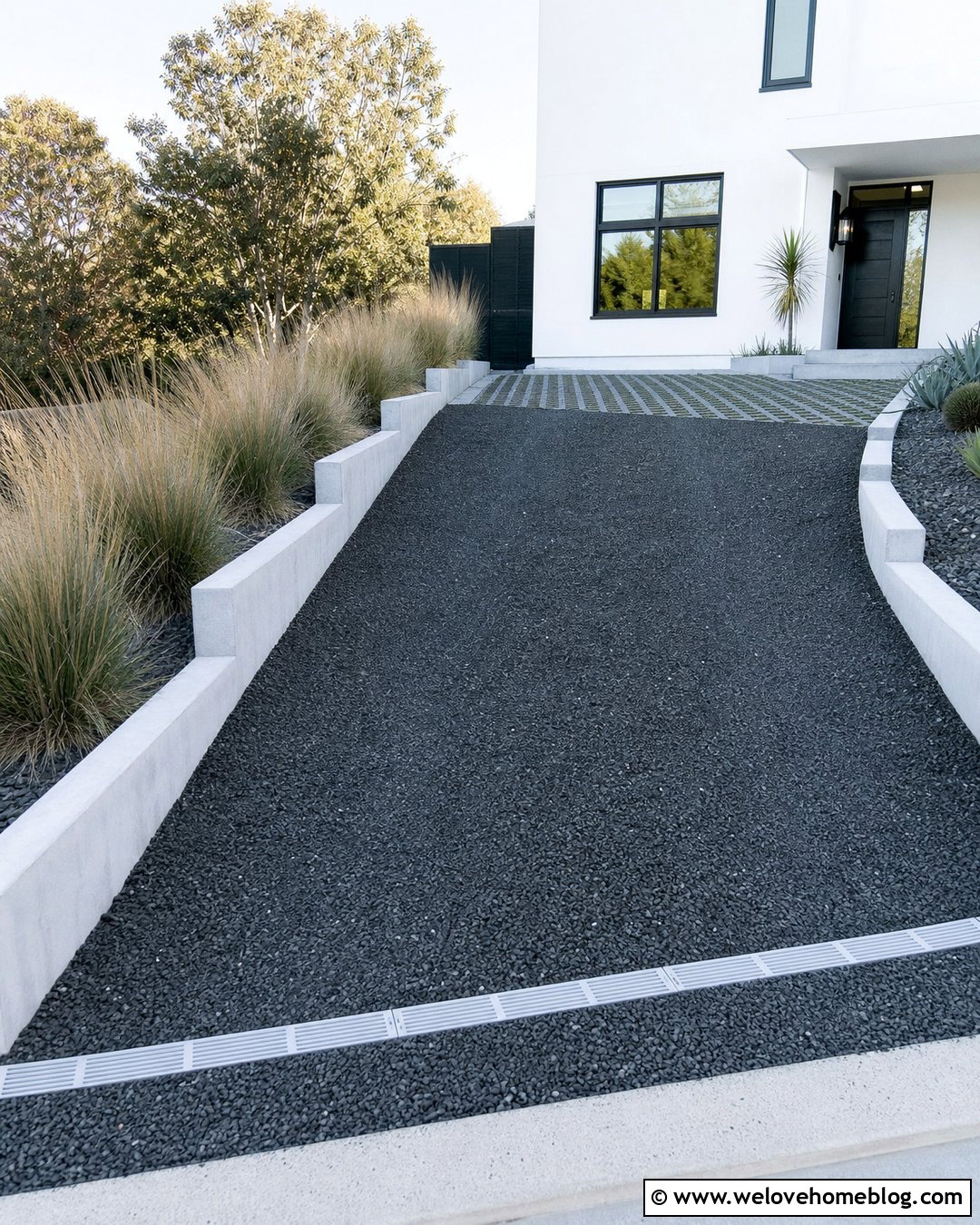
Steep driveways can carry fast-moving runoff toward the house, so layered drainage is often more dependable than one small drain. A full-width channel drain near the garage intercepts surface water, while a catch basin at the lowest side collects concentrated flow and sediment. Broom-finished concrete gives tires useful traction, and textured paver bands can visually mark each drainage point. Retaining walls should include their own drainage rather than sending additional water across the driveway. Direct downspouts away from the paved slope whenever possible. Choose traffic-rated grates and provide a stable outlet with erosion protection. Because steep grades increase water speed and installation complexity, an experienced drainage contractor or civil engineer may be needed to calculate capacity, set elevations, and protect the home’s foundation. ()

10. Rural Gravel Driveway With Culvert Entrance
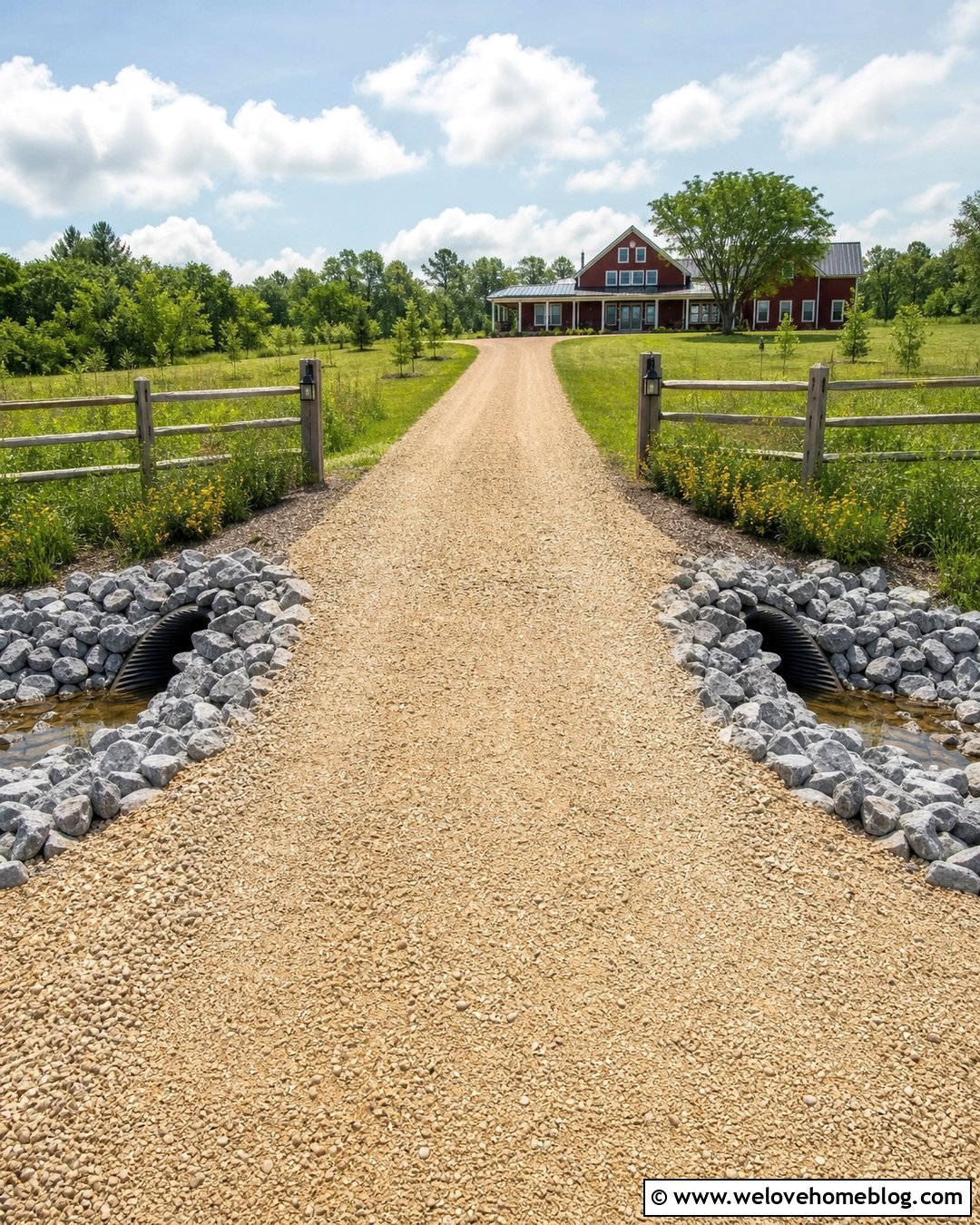
A culvert allows roadside ditch water to pass beneath a rural gravel driveway entrance without washing over the surface. The driveway should cross the ditch at a stable elevation, with a properly sized culvert extending beyond both sides of the driving area. Crushed stone forms the main surface, while larger riprap protects the inlet and outlet from erosion. Flared stone shoulders create a welcoming entrance and reduce gravel loss where vehicles turn. Native grasses can stabilize the ditch banks without making the culvert difficult to inspect. Keep both openings clear of branches, leaves, and sediment. Culvert diameter, cover depth, and placement may be regulated by the local road or public works authority, so obtain approval before construction. A poorly sized pipe can cause flooding or damage during intense rainfall.
11. Resin-Bound Driveway With Linear Drain
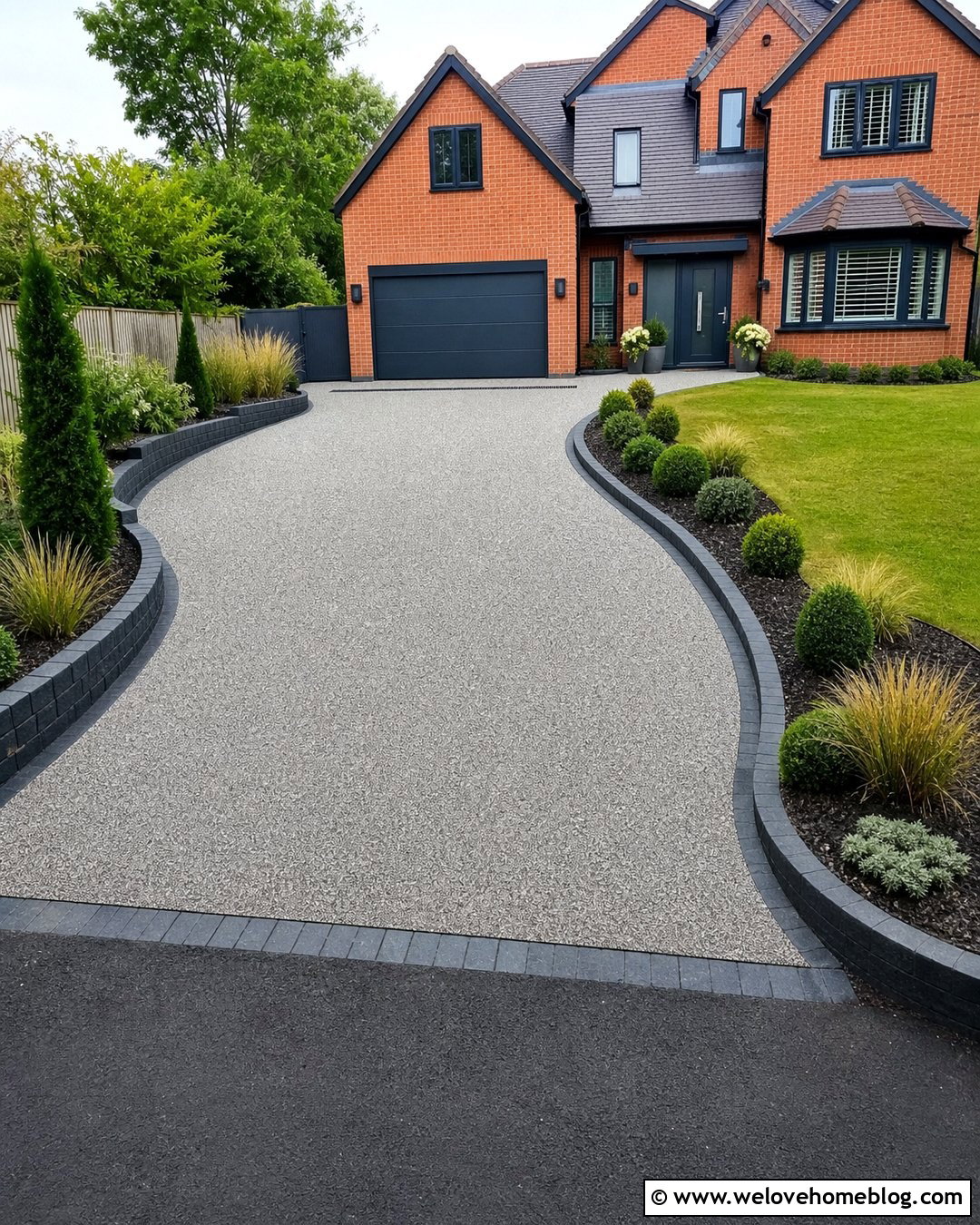
A resin-bound gravel driveway combines a smooth decorative finish with small interconnected voids that can support surface drainage when the complete base is designed to be permeable. Select warm beige, silver-gray, or natural stone aggregate to complement a contemporary or transitional home. Add a slim linear drain near the garage as backup where runoff could threaten the threshold. Contrasting block edging keeps the resin surface contained and frames the drainage line. The driveway’s base, slope, and outlet matter as much as its visible finish, so confirm whether the chosen resin system is truly permeable. Raised beds should sit beyond the edge restraint to prevent soil from washing onto the surface. Sweep regularly and remove organic debris before it settles into the textured finish or blocks the drain.
12. Brick Driveway With Permeable Stone Border

A clay brick driveway can direct water toward permeable stone borders running along both sides. Lay red or brown brick pavers in a herringbone pattern for strength, then use wider bands of washed gravel over a drainage base to receive runoff. A gentle crown or cross-slope moves water away from the center while preserving the driveway’s traditional character. Granite setts between the brick and gravel produce a clean transition and resist edge movement. Beyond the borders, plant hydrangeas, boxwood, or regionally appropriate shrubs that suit a colonial or Cape Cod home. Keep loose soil and mulch away from the drainage stone. If the gravel bands contain perforated pipes, include an accessible outlet and cleanouts. This design combines classic materials with a practical path for stormwater.
13. Exposed Aggregate Driveway With Dry Creek Bed

An exposed aggregate driveway pairs naturally with a dry creek bed built along its lower edge. The textured concrete surface should slope toward the creek, where rounded river stones and larger boulders guide runoff through the landscape. Vary the channel width and stone sizes to create a natural appearance while maintaining a continuous flow path. Deep-rooted grasses, rushes, and low shrubs stabilize the banks and soften the hardscape. A small stone bridge can carry the walkway across the channel to the front door. The creek must lead to a rain garden, dry well, or other approved outlet rather than ending beside the foundation. Use geotextile and properly sized rock where erosion is likely. This drainage look complements ranch, craftsman, and wooded contemporary homes.
14. Concrete Ribbon Driveway With Grass Center

A concrete ribbon driveway reduces the total amount of solid paving while preserving stable tire tracks. Two reinforced strips of broom-finished concrete run from the street to the parking area, with a grass or reinforced turf center between them. Water can move toward the center and side planting zones rather than spreading across one wide slab. The underlying soil must drain adequately, and the green strip should sit slightly below the concrete without becoming a deep rut. Steel, brick, or flush concrete edging keeps the lawn neat. This layout works well for smaller homes, garden-focused front yards, and lightly used secondary driveways. Where traffic is frequent, use load-supporting grass grids beneath the center. Add a shallow swale along one side to handle overflow during heavier rain.

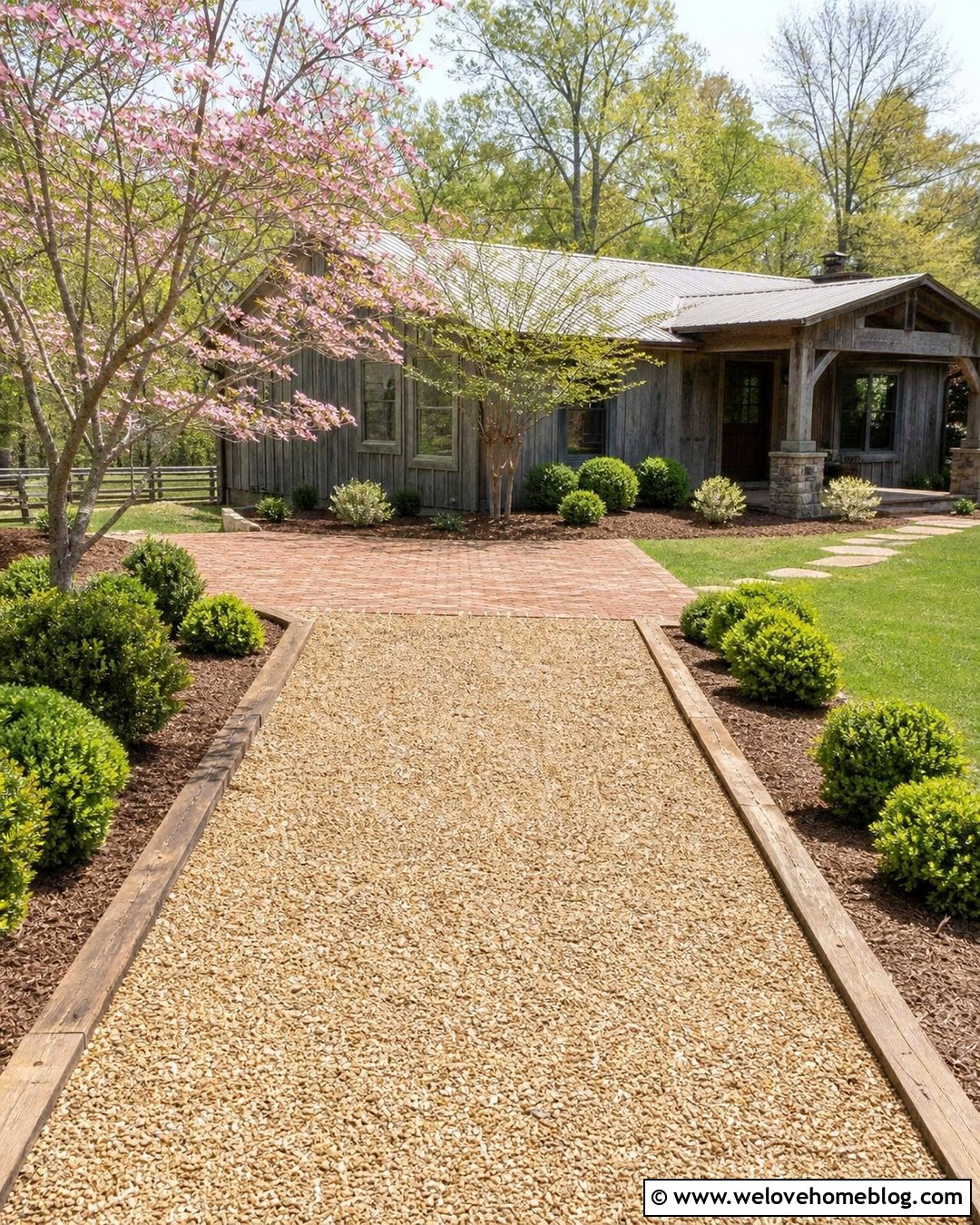

15. Paver Driveway With Catch Basin And Dry Well

A catch basin connected to a dry well can manage runoff at the low point of a paver driveway where surface discharge is limited. Warm gray concrete pavers create the main parking surface, while a decorative metal grate is integrated into a darker paver border. The driveway slopes gradually toward the basin, which captures water and traps some debris before it enters underground piping. The dry well stores runoff and allows it to infiltrate surrounding soil over time. Soil testing, setback requirements, seasonal groundwater, and local regulations must be considered before installation. Add an overflow route for storms that exceed the system’s storage capacity. Keep the basin accessible for cleaning, and prevent mulch from nearby beds from washing across the pavers. Professional sizing helps avoid an undersized system. ()
16. Cobblestone Driveway With Drainage Apron
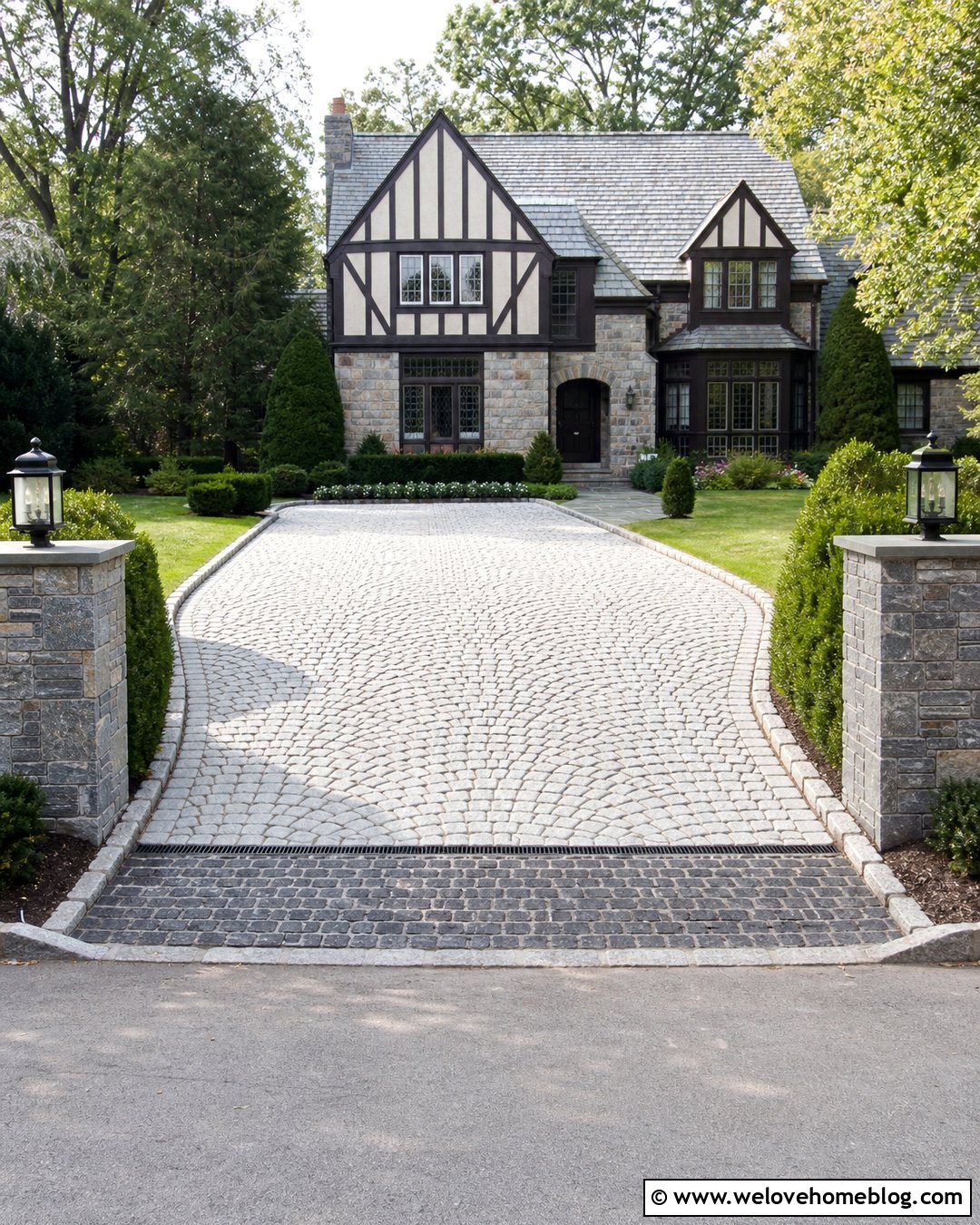
A cobblestone driveway can include a drainage apron at the street or garage without losing its historic character. Lay granite cobbles in gently arched rows, then install a full-width band of darker stone around a recessed trench drain. The change in pattern makes the drainage feature look like an intentional threshold. Carefully set the surrounding cobbles so water reaches the grate without leaving uneven pockets. Traditional brick pillars, clipped hedges, and stone walls complete the entrance. Because cobblestone joints may allow some infiltration but do not automatically create a fully permeable system, the base should be designed around actual site conditions. Use a load-rated grate and an accessible sediment trap. This durable approach suits Tudor, colonial, European-inspired, and older country homes.
17. Asphalt Driveway With Bioswale Border
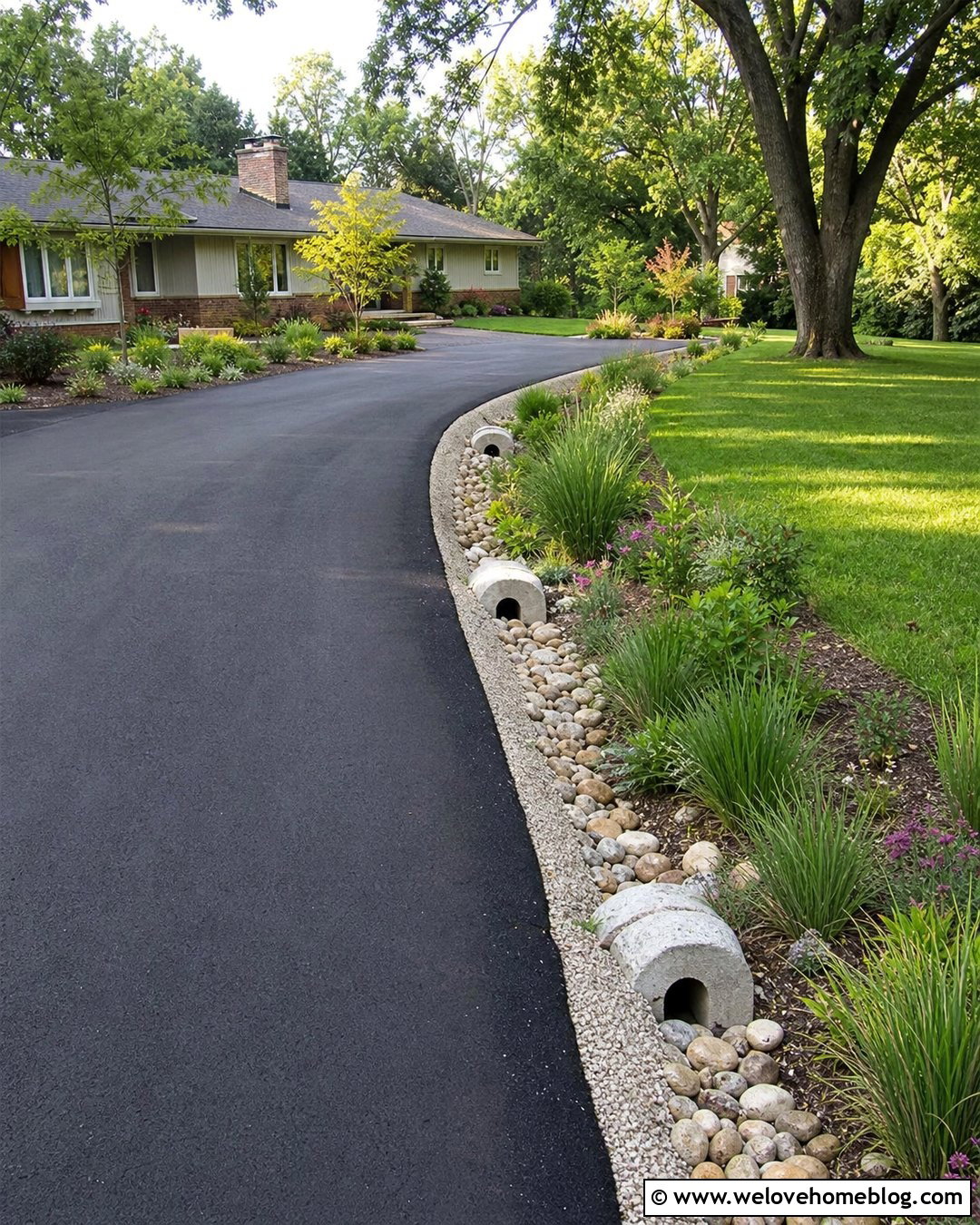
A bioswale turns the edge of a wide asphalt driveway into a planted stormwater corridor. Pitch the black asphalt toward occasional curb openings that release runoff into a shallow, elongated basin. Use stones around each opening to prevent erosion, then layer the swale with suitable soil and plants that tolerate alternating wet and dry conditions. Native grasses, flowering perennials, and compact shrubs add seasonal color without crowding the driving area. A defined gravel shoulder protects the asphalt edge and filters sediment before water reaches the plants. Include an overflow point for major storms and keep the swale lower than nearby structures. The result feels greener than a conventional ditch while helping slow, filter, and absorb runoff within the landscape where conditions and regulations allow. ()
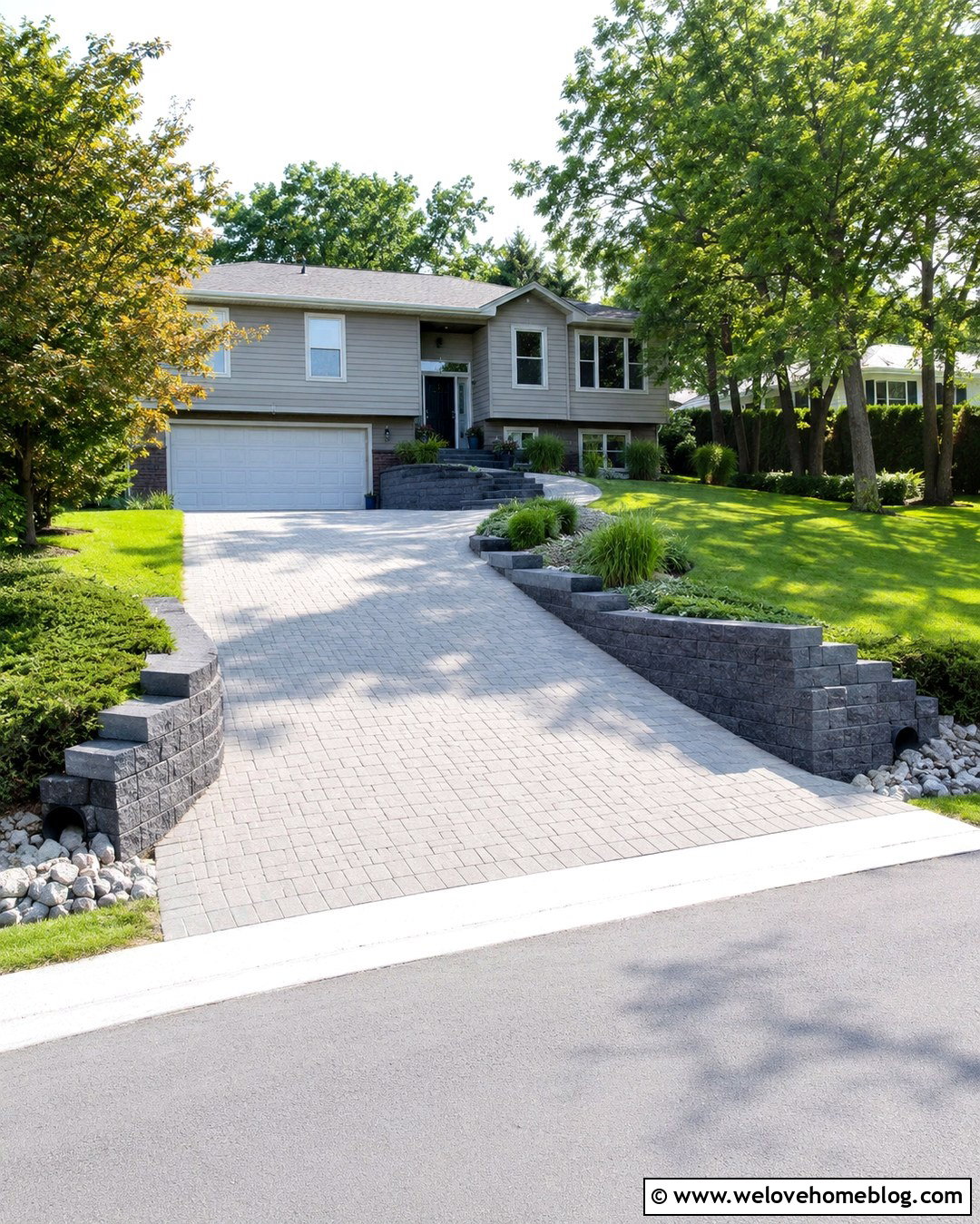
18. Paver Driveway With Retaining Wall Drainage

A driveway beside a retaining wall needs drainage above, behind, and below the wall. Use interlocking concrete pavers for the curved driveway and install a narrow channel drain where hillside runoff could cross the surface. Behind the wall, free-draining aggregate, filter fabric, and an appropriate drainpipe help relieve water pressure. Stone-lined outlets or wall weep openings must discharge without staining the wall or eroding the driveway base. Plant the upper slope with deep-rooted ground covers and shrubs to limit bare soil runoff. A raised curb between the wall and driveway can guide water toward the channel, but it should not create an enclosed puddle. Because wall stability and drainage are closely connected, have tall walls, steep slopes, or persistent seepage evaluated by a qualified professional.
19. Wide Concrete Driveway With Multiple Drainage Channels

A wide driveway may collect runoff from several rooflines and paved areas, making one small grate inadequate. Divide a light gray concrete driveway into drainage zones using two or more linear channels placed across natural low points. Dark grates can align with decorative paver bands, turning the system into part of the surface pattern. Grade each concrete panel toward the nearest channel and avoid abrupt dips that catch tires or snow-removal equipment. Connect the channels to appropriately sized piping, catch basins, or an approved infiltration area. Broad lawn strips and side planting beds can receive limited sheet flow where soil conditions permit. Keep downspouts separate unless the drainage design can handle the combined volume. Accessible sediment traps and cleanouts make a larger system easier to maintain.



20. Small Driveway With Rain Garden Drainage
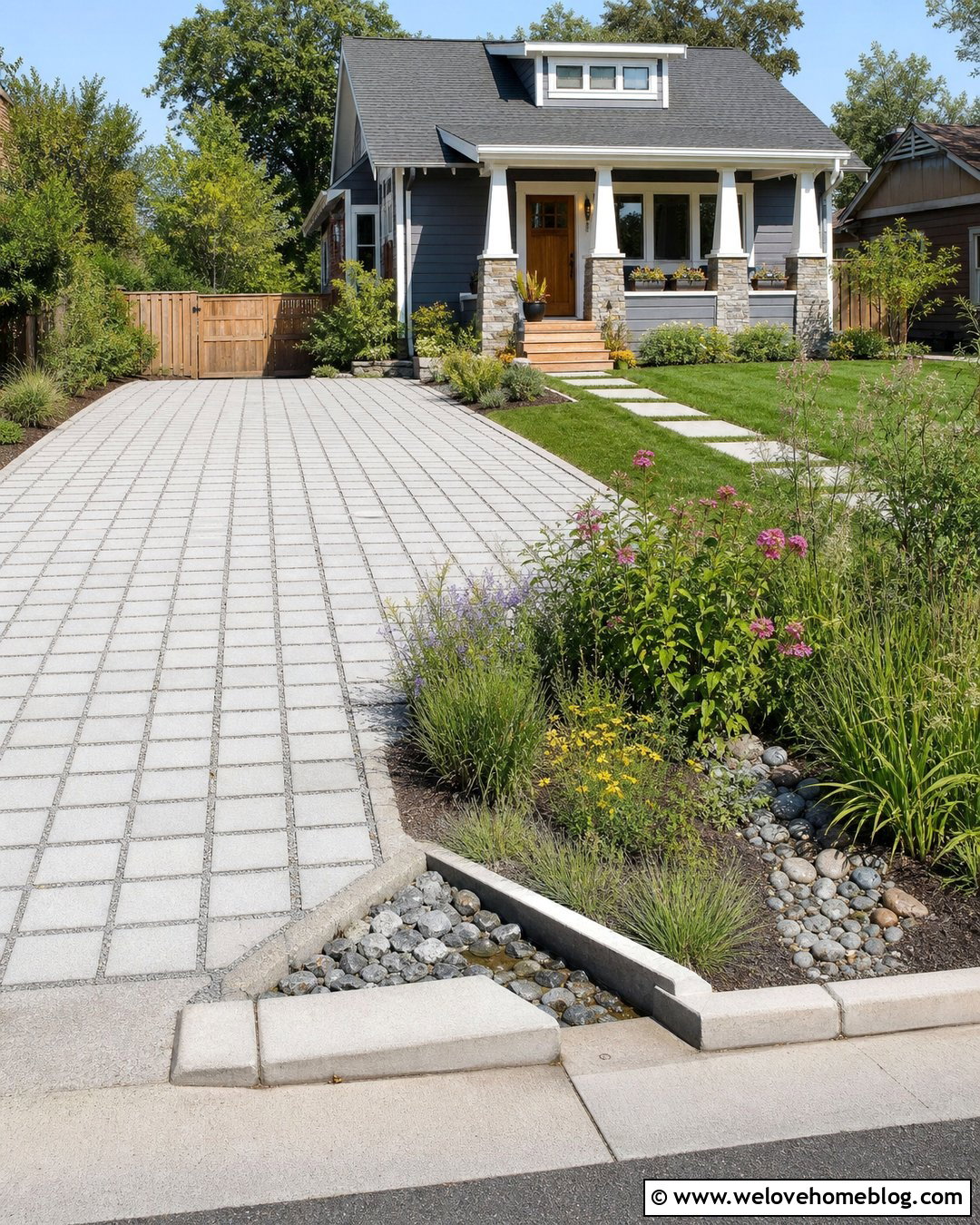
A compact driveway can drain toward a small rain garden positioned between the parking pad and front lawn. Use permeable concrete pavers for the driveway and create a shallow curb opening at the lowest edge. A gravel forebay receives runoff first, trapping sediment before water reaches the planted basin. Fill the garden with regionally appropriate sedges, flowering perennials, and compact shrubs selected for both temporary moisture and dry periods. A stepping-stone walkway can cross the upper edge without interrupting drainage. Keep the basin safely separated from the home’s foundation and provide a stabilized overflow route. Redirecting a nearby downspout into the same garden may be possible if capacity is verified. This design gives a small front yard practical drainage, greenery, and welcoming curb appeal without requiring a large visible drain.
Conclusion:
Effective driveway drainage begins with understanding where water comes from, how it crosses the surface, and where it can be released safely. The strongest designs combine proper grading with a suitable material, collection point, and dependable outlet. Channel drains protect garages, permeable pavers reduce surface runoff, and swales or rain gardens bring drainage into the landscape. Gravel crowns, French drains, catch basins, culverts, and dry wells solve different site conditions. Before building, check soil drainage, underground utilities, property boundaries, and local stormwater requirements. Complex slopes and persistent flooding deserve professional evaluation. Use these Driveway Drainage Ideas to create an approach that stays functional, attractive, and easier to maintain through changing weather.

Related posts:




Leave a Reply