
A well-designed permeable driveway can reduce puddles, soften a paved front yard, and create a more attractive approach to your home. Unlike a conventional solid surface, it lets rain filter through open joints, porous material, gravel, or planted grid cells into a prepared stone base below. Popular options include permeable concrete pavers, stabilized gravel, grass grids, pervious concrete, porous asphalt, clay brick, and resin-bound gravel. Proper excavation, an open-graded base, secure edging, and routine cleaning are essential because the visible surface is only one part of the drainage system. () The following Driveway Permeable Ideas combine practical water management with complete layouts, borders, landscaping, and house-matching curb appeal.

1. Modern Permeable Paver Driveway
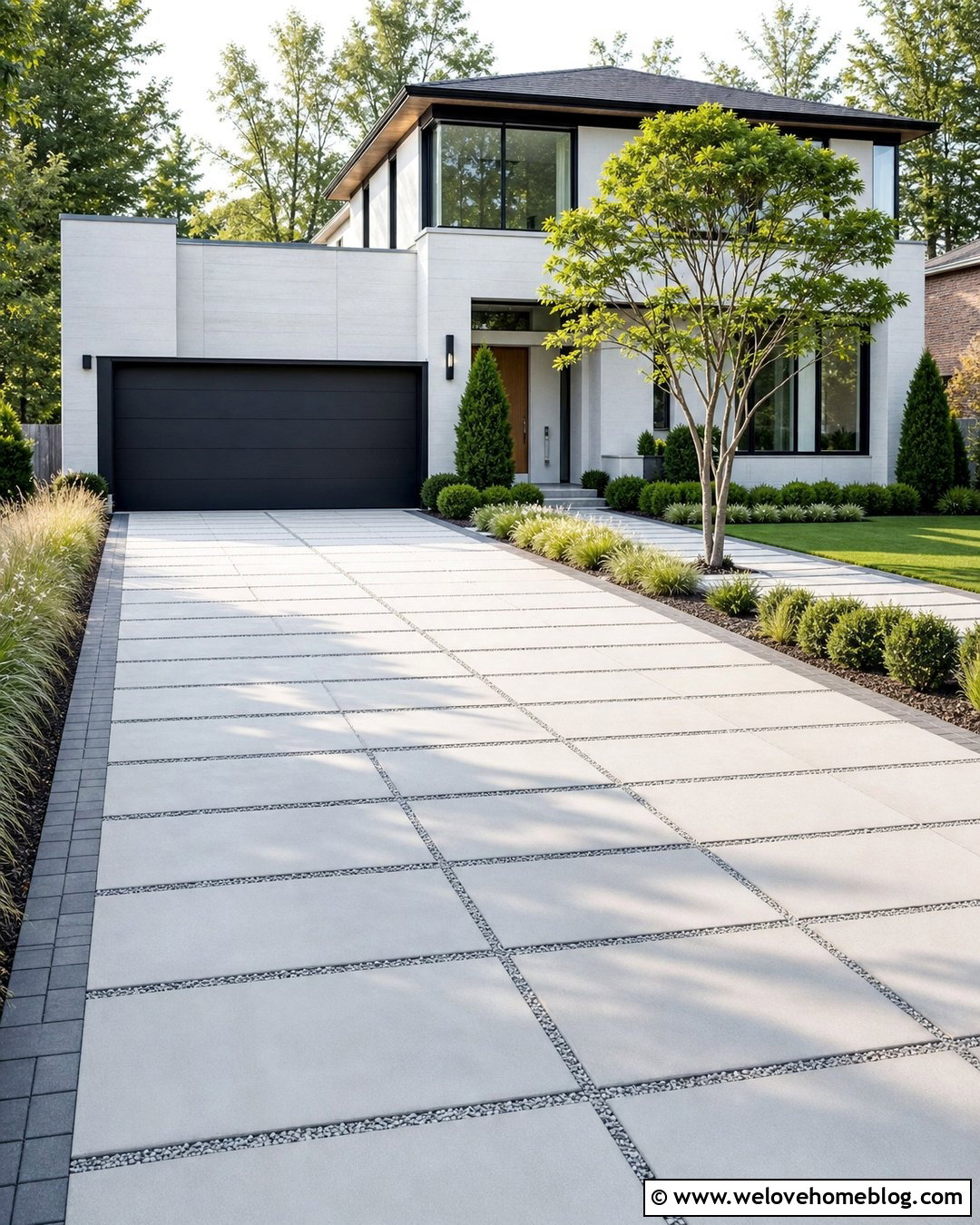
Large-format permeable concrete pavers give a modern home a clean entrance without creating one uninterrupted slab. Choose pale gray rectangular units with narrow, stone-filled joints and arrange them in a running bond or linear pattern. A straight driveway emphasizes the home’s architecture, while dark charcoal edging creates a crisp frame and helps control movement. Add simple planting beds with ornamental grasses, low evergreen shrubs, and one sculptural tree. A matching paver walkway can branch toward the front door without making the yard feel busy. The pavers must sit over an open-graded aggregate base that can receive and temporarily store water. Keep joint material free of soil and leaves so the finished driveway remains attractive and drains effectively.
2. Gravel Grid Permeable Driveway
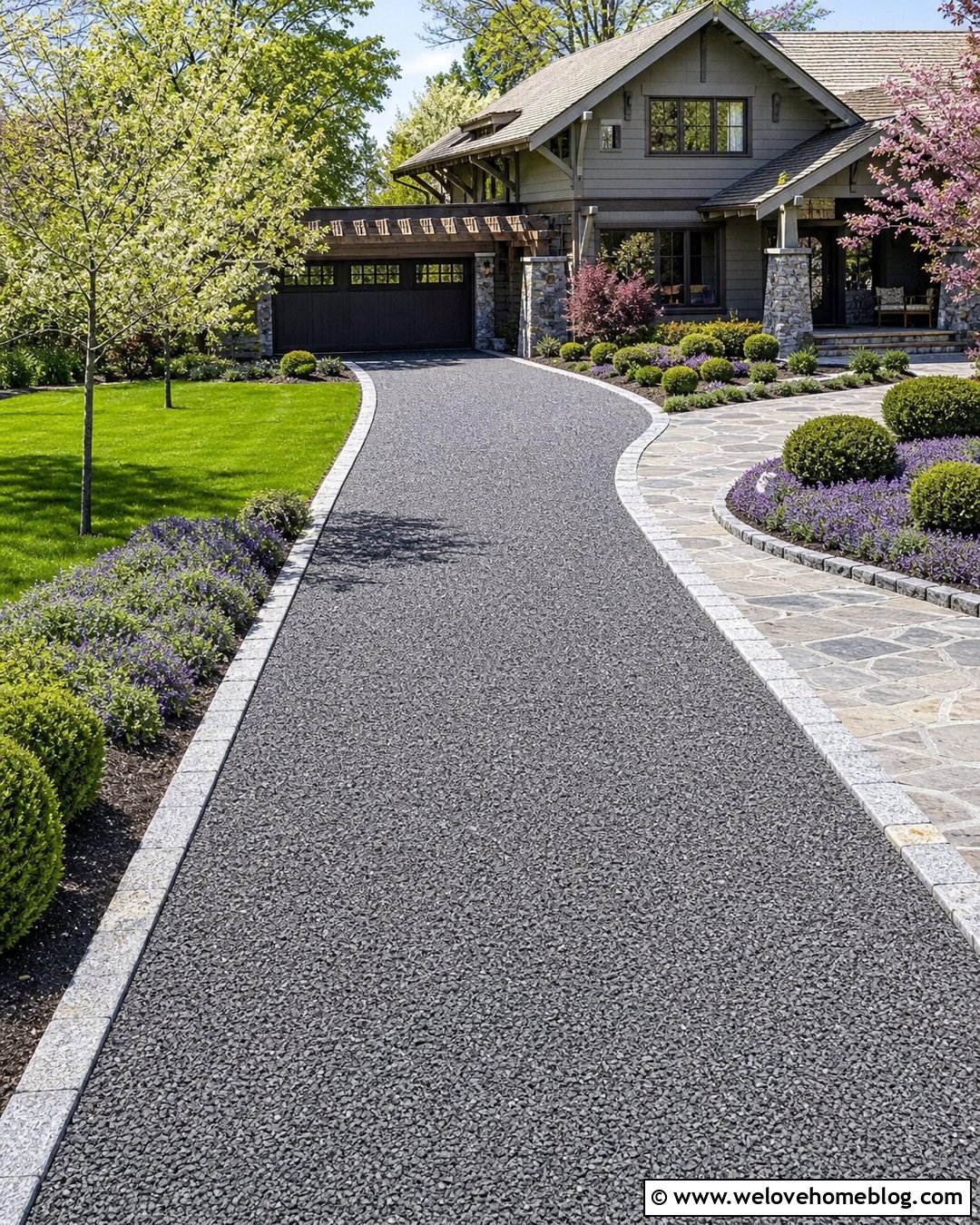
A gravel grid driveway keeps the relaxed appearance of loose stone while creating a firmer, more organized driving surface. Interlocking grid cells hold angular gravel in place, reducing migration near the sidewalk, garage, and lawn. Use medium-gray crushed stone for the main straight driveway, then install granite setts along both sides as durable edging. Curved beds filled with boxwood, catmint, and small flowering trees can soften the geometry. This complete look works especially well with Craftsman and transitional homes because the gravel adds texture without appearing overly rustic. Select a grid system rated for residential vehicle loads, and use the stone size recommended by its manufacturer. The grid and surface still need a correctly prepared permeable base beneath them to manage water properly. ()
3. Grass Paver Permeable Driveway
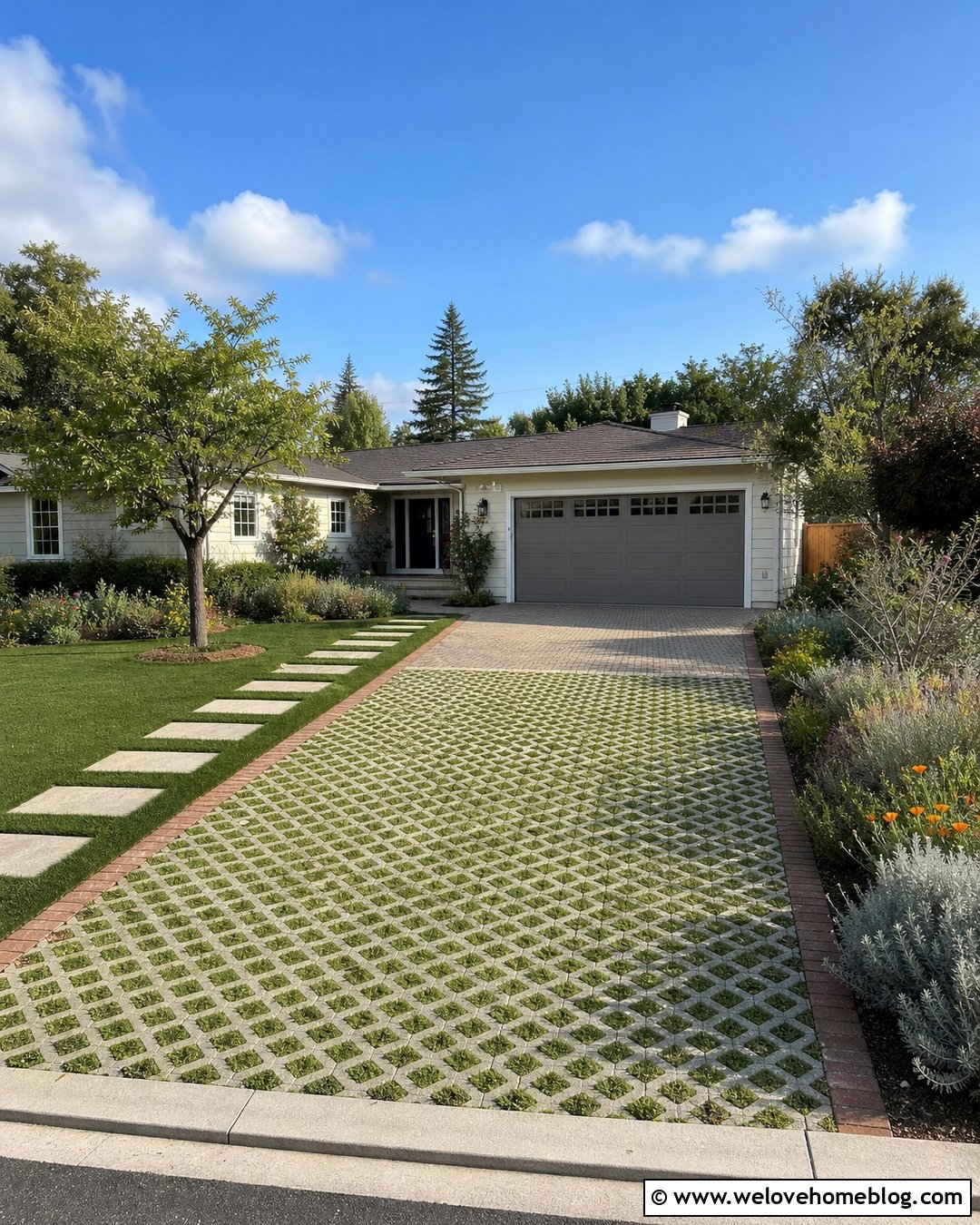
Grass pavers can make a lightly used driveway feel like part of the lawn rather than a broad parking surface. Open concrete or plastic cells support vehicle weight while allowing suitable turf to grow within the openings. For a balanced design, use a straight layout with a narrow brick border and a solid paver apron at the garage. The apron creates a practical transition where vehicles turn, stop, or enter the building. Frame the driveway with native shrubs, drought-tolerant perennials, and a stepping-stone walkway leading to the porch. This green surface suits cottage, ranch, and traditional homes with generous front yards. Grass selection should match local sunlight, rainfall, and maintenance conditions. Regular mowing, occasional reseeding, and careful irrigation help keep worn tire paths from becoming bare.
4. Resin-Bound Gravel Permeable Driveway
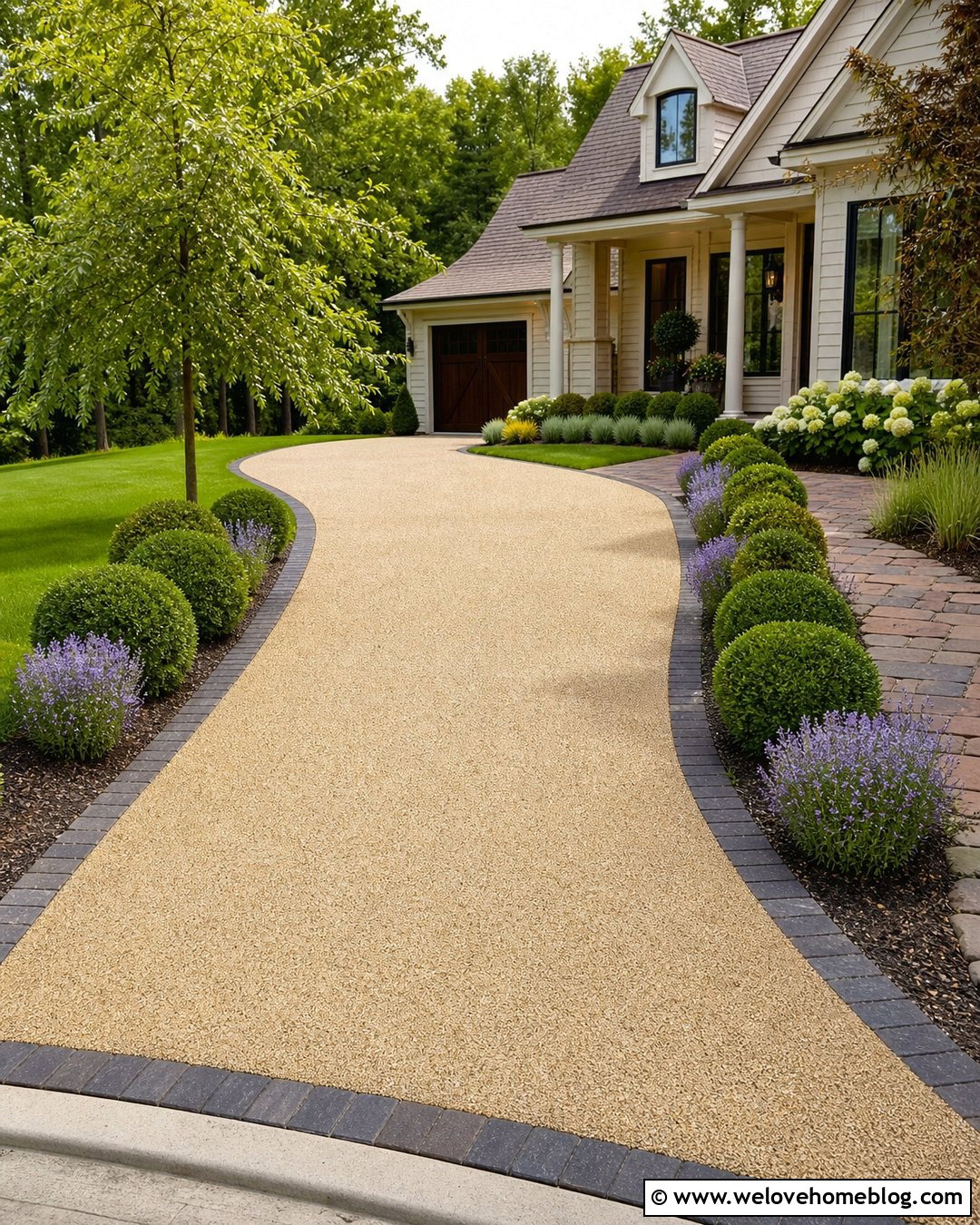
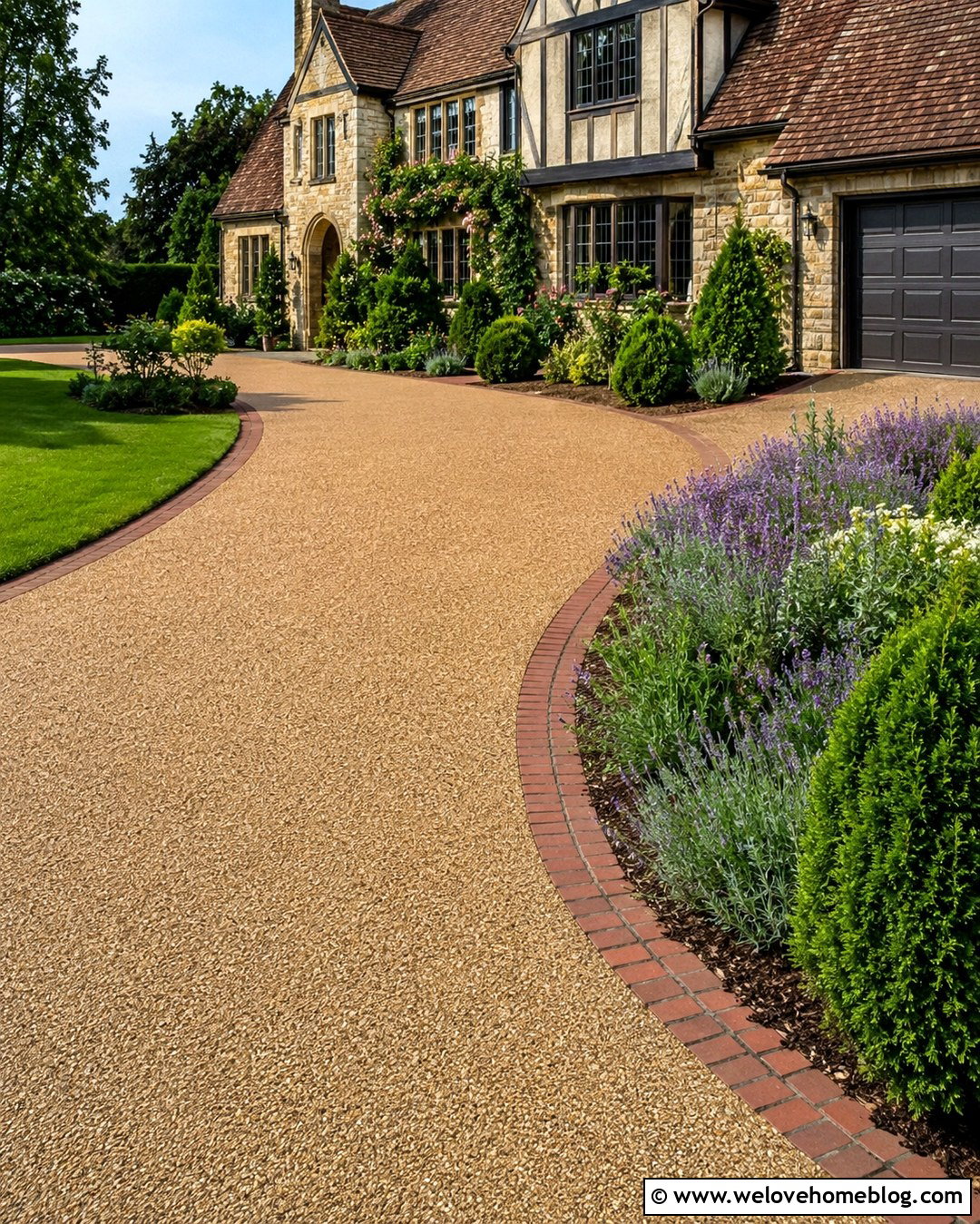
Resin-bound gravel creates a smooth, contemporary surface by mixing small aggregate with resin before installation. It should not be confused with resin-bonded surfacing, where loose stone is scattered over a resin layer. For a refined design, choose warm beige aggregate on a gently curved driveway with dark brick edging. Repeat the same brick around nearby planting beds to tie the entrance together. Rounded shrubs, lavender, and a small ornamental tree can complement the driveway’s fine texture without hiding its shape. This surface is especially useful when you want a gravel-like appearance with fewer loose stones underfoot. Permeability depends on using a compatible porous base and the correct installation method. Hire an experienced installer, since mixing, weather conditions, base preparation, and curing can affect the finished surface. ()
5. Pervious Concrete Driveway
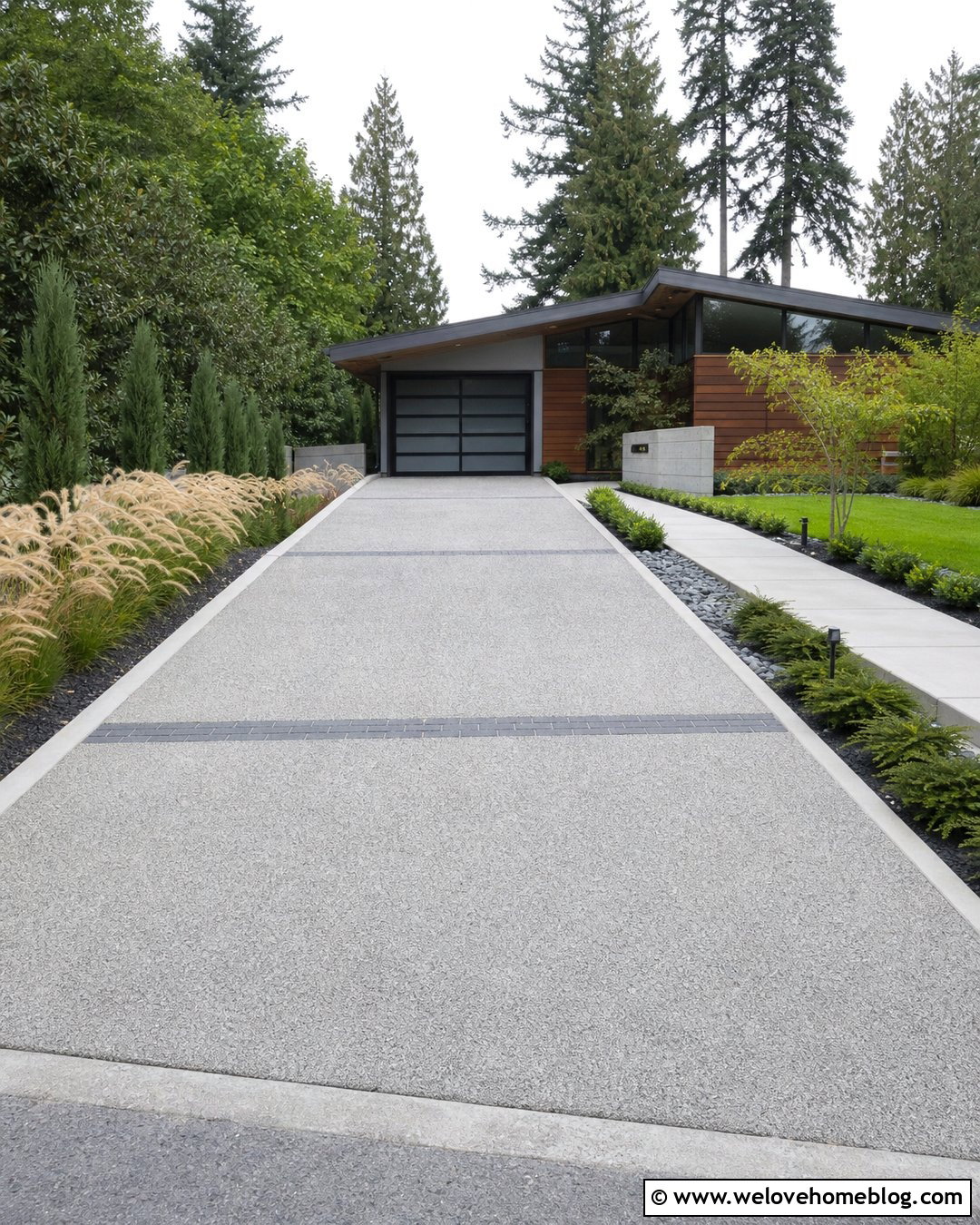
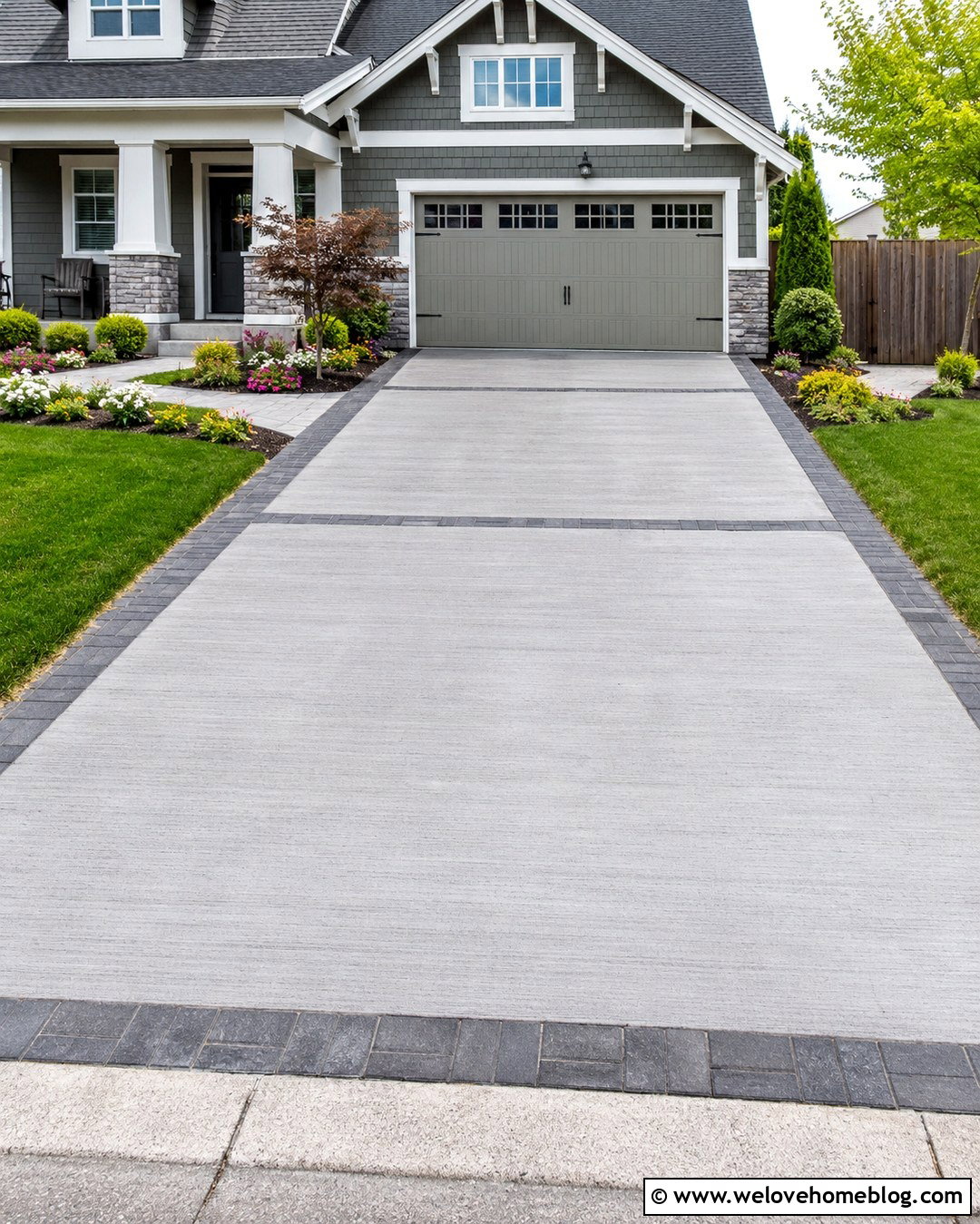
Pervious concrete offers a simple, solid-looking driveway with an open internal structure that allows water to pass through. Its visibly textured finish works well with midcentury, modern, and minimalist homes. Use a light natural-gray surface on a wide straight driveway, divided into modest sections by charcoal permeable paver bands. These darker bands introduce scale and connect visually with black window frames or garage doors. Along the edges, create narrow planting beds with feather reed grass, sedges, and compact evergreen shrubs. A smooth conventional walkway can provide an easier pedestrian route beside the more textured driveway. Pervious concrete requires specialized proportioning, placement, and curing, so it is not the same as ordinary poured concrete. Periodic vacuuming or appropriate pressure cleaning may be needed to remove sediment from the surface openings.
6. Porous Asphalt Permeable Driveway

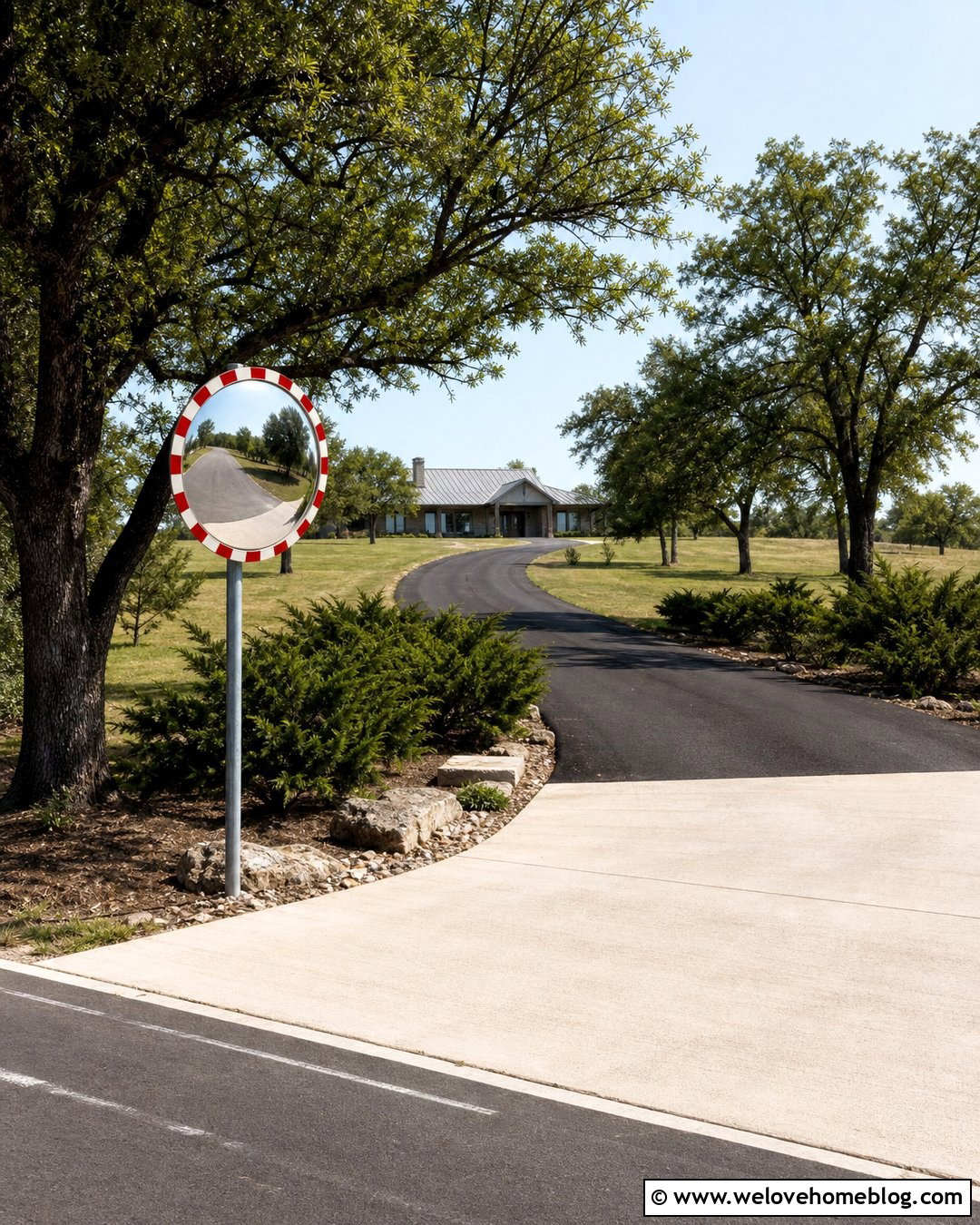
Porous asphalt provides the familiar dark appearance of asphalt while allowing water to move through connected surface voids. It can be a practical choice for a long driveway where a continuous, understated finish is preferred. Create a gently curving route edged with light granite cobbles so the black surface has a clear, finished boundary. Plant shade trees at generous intervals and use low ground covers beneath them to prevent soil from washing onto the pavement. Near the house, transition to a permeable concrete paver parking court that complements a colonial or Cape Cod facade. The contrast makes the arrival area feel intentional instead of purely functional. Porous asphalt needs an open stone reservoir and suitable site conditions. Protecting it from sediment, heavy soil, and clogged runoff helps preserve its drainage performance.
7. Permeable Brick Driveway
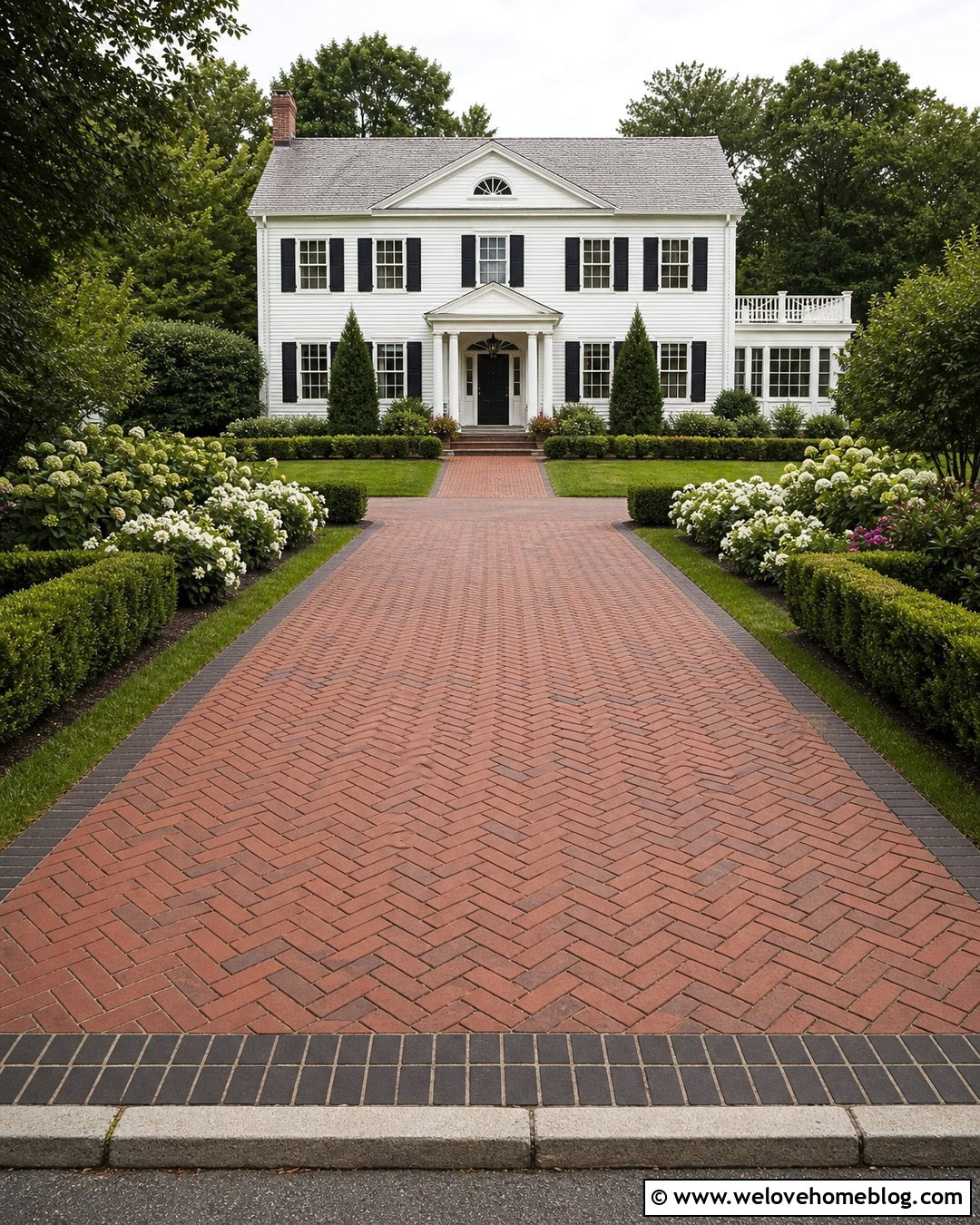
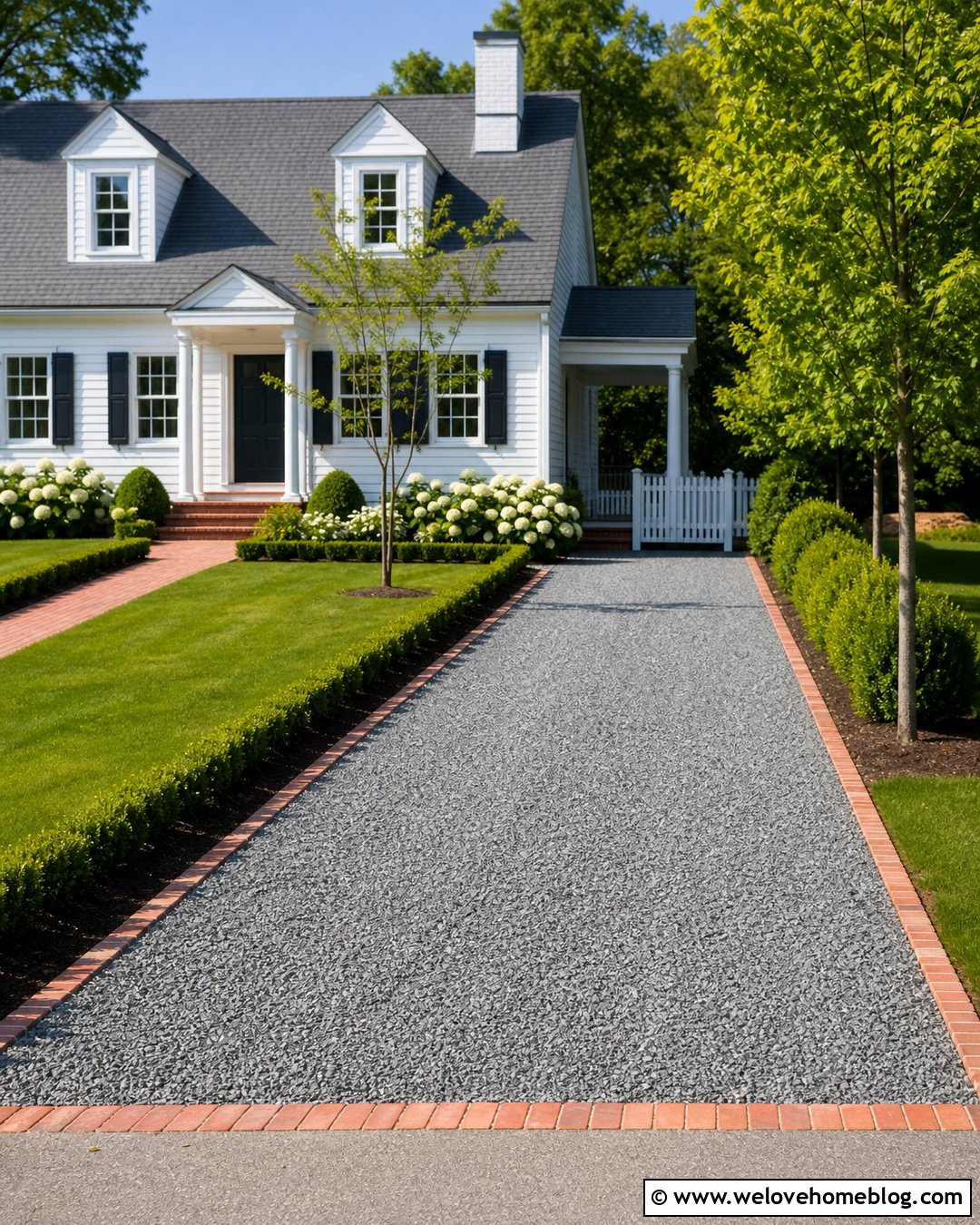
Permeable clay brick can give a traditional entrance rich color while managing rainfall through enlarged aggregate-filled joints. Lay reddish-brown brick pavers in a herringbone pattern for the driving field, then frame the surface with a darker soldier-course border. A straight driveway leading to a white colonial house creates a classic composition, especially when clipped hedges and symmetrical planting beds flank the approach. Use gravel rather than conventional dense sand in the permeable joints and bedding layers specified for the system. The warm brick can also continue into the front walkway, although a slight pattern change will help distinguish pedestrian and vehicle areas. Regularly remove leaves before they break down into the joints. If sediment accumulates, specialized joint cleaning and replacement may restore infiltration while refreshing the driveway’s appearance.
8. Cobblestone Permeable Driveway
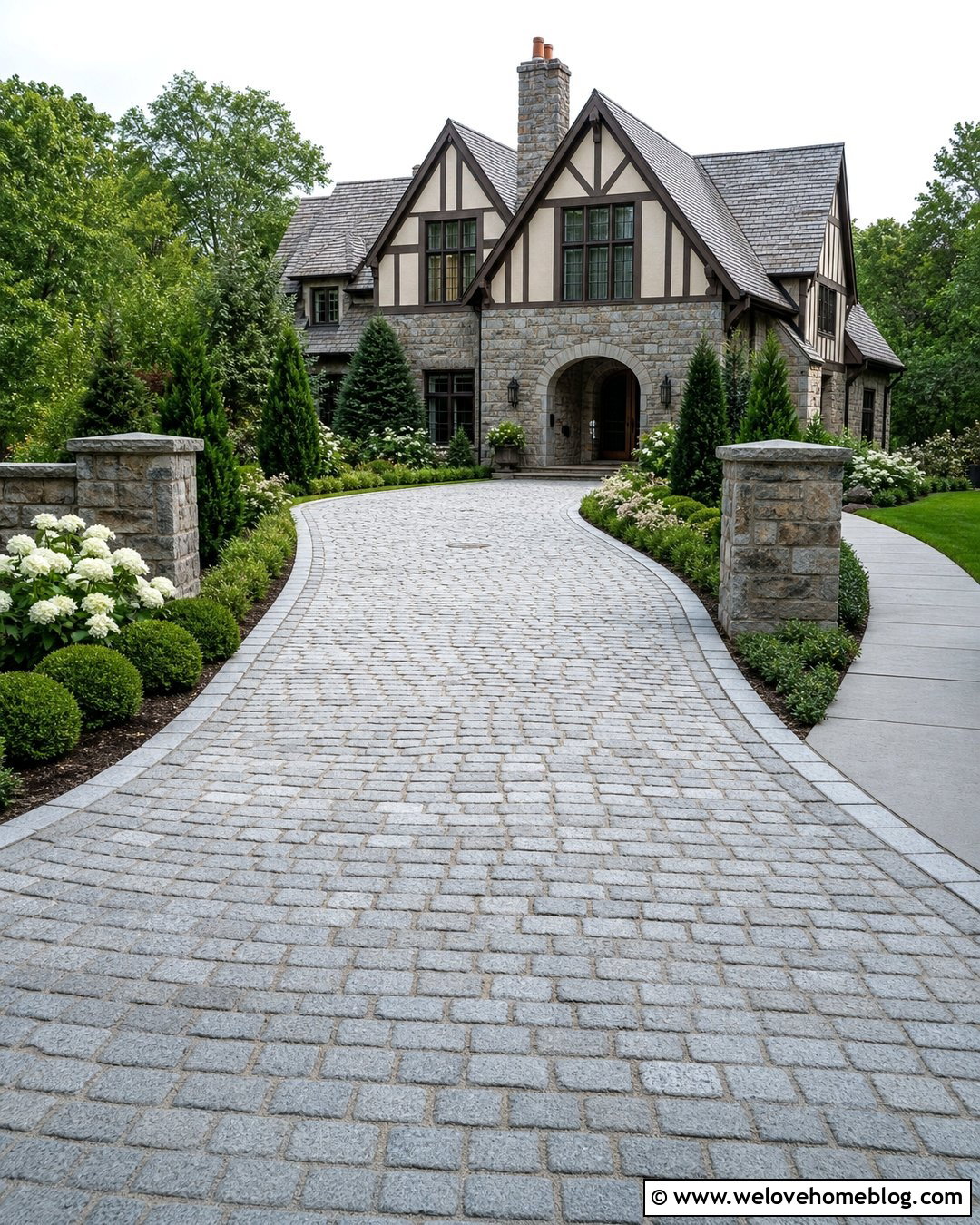
A cobblestone driveway can be permeable when the stones are installed over an appropriate open base with drainage-friendly joints. Choose reclaimed-looking gray granite cobbles for a curved entrance leading to a Tudor, stone cottage, or European-inspired house. Fill the wider joints with small washed aggregate rather than dense mortar, creating visible channels where water can enter. A flush border of larger granite setts will strengthen the edges and define the curves. Complete the look with layered evergreen shrubs, white flowering perennials, and a low stone wall near the street. Because natural cobbles create an uneven surface, add a smoother walkway for strollers, wheelchairs, bicycles, and everyday foot traffic. Correct base design is particularly important in freeze-thaw climates, where poor drainage can contribute to movement and surface distortion.
9. Crushed Stone Permeable Driveway
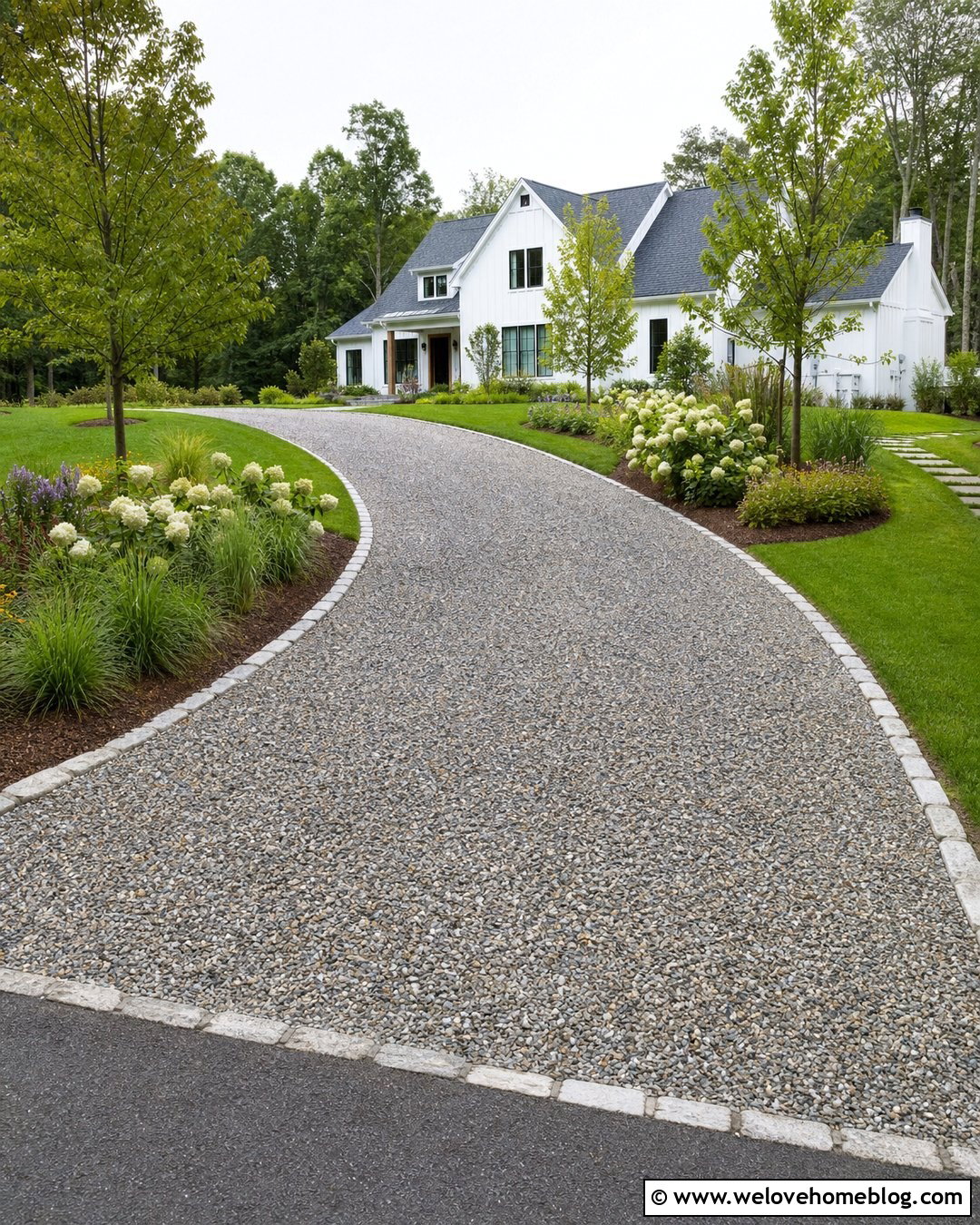
Angular crushed stone creates a stable-looking country driveway when it is installed in compacted layers and contained by strong edging. Use a blend of gray and buff stone on a broad curved layout leading to a farmhouse or ranch home. Unlike rounded gravel, angular pieces lock together more effectively under vehicle traffic. Line the driveway with steel edging or chunky stone curbs, then add wide planting beds with hydrangeas, ornamental grasses, and native flowering plants. A row of small trees can emphasize the curve without narrowing the driving area. Place larger, cleaner decorative stone at the surface and reserve properly graded aggregate for the structural base. Occasional raking, replenishment, and weed removal will keep the entrance tidy. Avoid allowing loose soil or mulch to spread across the stone and fill its drainage spaces.


10. Pea Gravel Grid Driveway
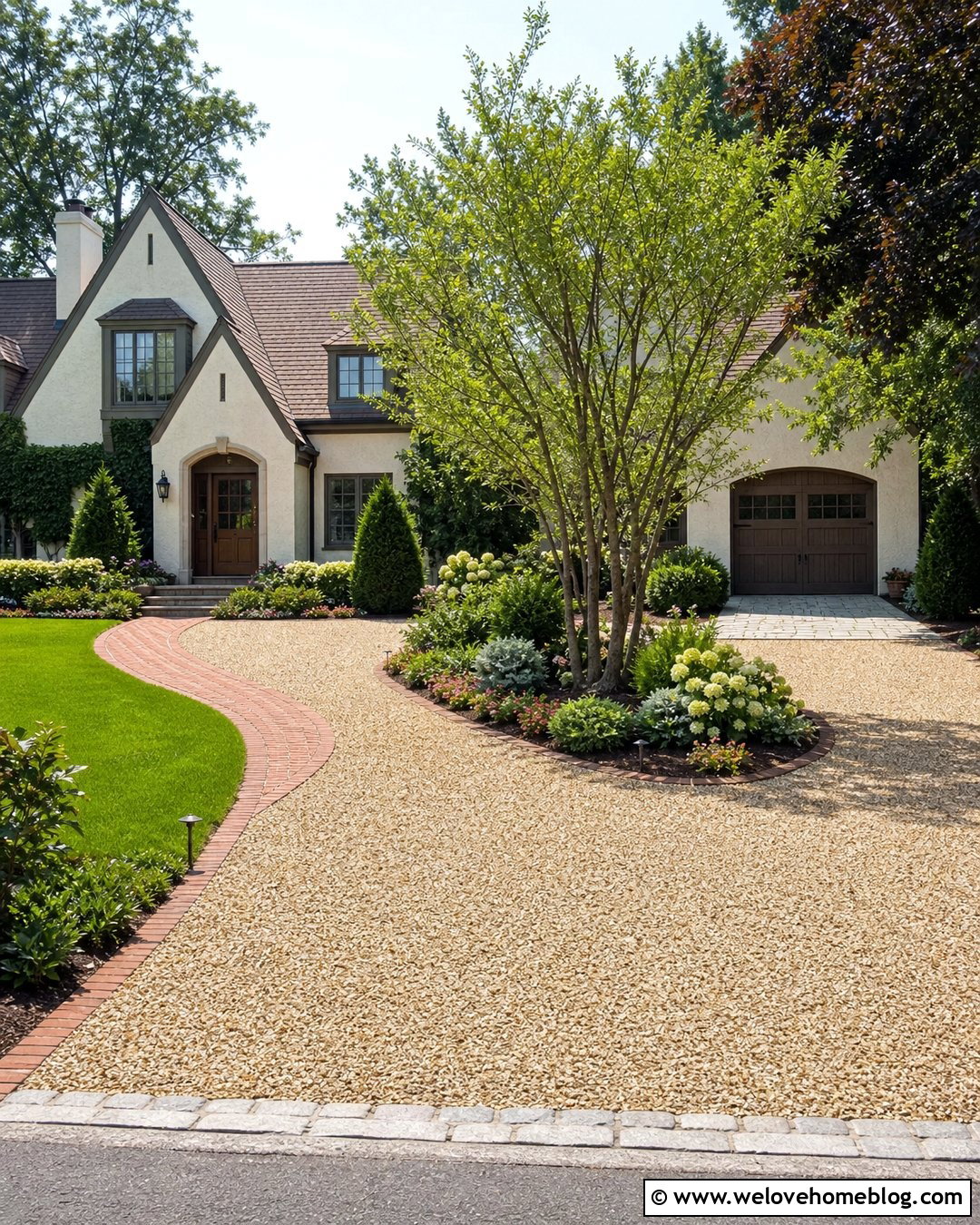
Softly colored pea gravel suits cottage landscapes, but its rounded shape can move easily under tires. A load-rated stabilization grid makes it more practical by confining the small stones within individual cells. Use tan and cream pea gravel on a short horseshoe driveway with warm brick edging. Create a central island planted with a multi-stem serviceberry, low evergreen shrubs, and seasonal flowers. The circular movement makes arriving and leaving convenient while giving the landscaping a strong focal point. At the garage and sidewalk, install permeable paver aprons to limit scattered gravel and provide smooth transitions. Keep the gravel level slightly below the top of the edging and grid according to product instructions. Periodic sweeping and topping up will help maintain an even surface without burying the stabilizing structure.
11. Shell Permeable Driveway

Crushed shell gives a coastal driveway a bright, relaxed finish that pairs naturally with beach cottages and low-country homes. Use compactable shell aggregate on a straight or gently curved layout, secured with pale concrete or stone edging. As the material settles, it creates a textured surface while retaining a light, organic appearance. Frame the driveway with salt-tolerant grasses, wax myrtle, dwarf palmettos, and other plants suited to the local coastal climate. A simple shell walkway can connect the parking area to a covered porch, while larger stone slabs mark the main pedestrian route. Availability, color, and local environmental requirements vary, so source the material responsibly from an established landscape supplier. A properly designed aggregate base remains necessary, particularly on sandy sites where load support and long-term settlement must be considered.
12. Gravel Ribbon Permeable Driveway
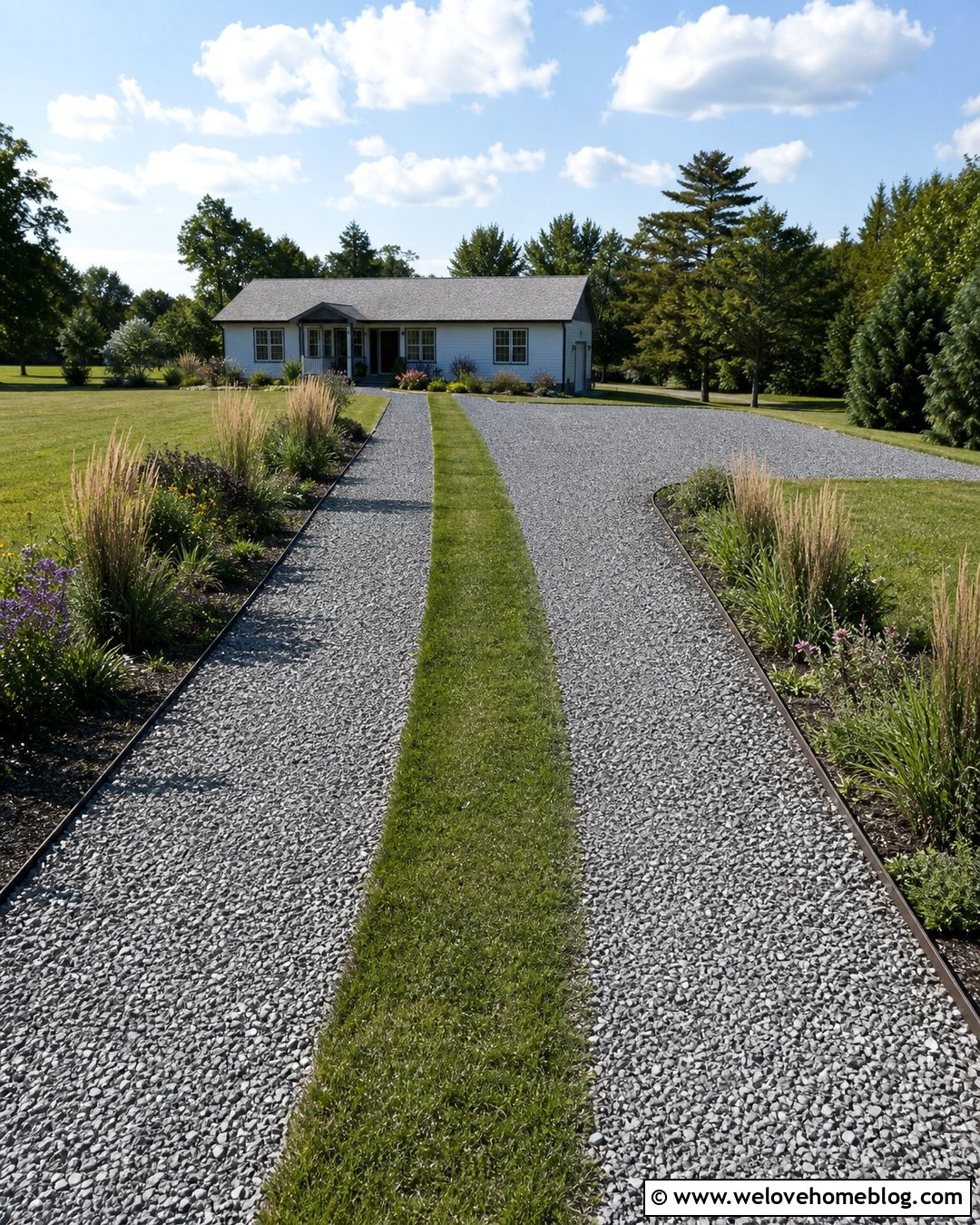
A ribbon driveway reduces the amount of driving surface by placing material mainly beneath the vehicle tires. Build two stabilized lanes from angular gray gravel and plant the center strip with durable low turf or a traffic-tolerant ground cover. Steel edging on both sides of each ribbon keeps the gravel contained and makes the narrow layout look precise. This design suits small ranch houses, cottages, and detached garages where traffic follows a predictable path. Add a wider permeable gravel pad near the garage so drivers have space to turn and park. Along the outer edges, use meadow-style planting with grasses and compact flowering perennials. The green center needs enough width to be visible but should not interfere with low-clearance vehicles. Plan drainage and base depth for each wheel track rather than treating the ribbons as decorative paths.
13. Turf Center Permeable Paver Driveway
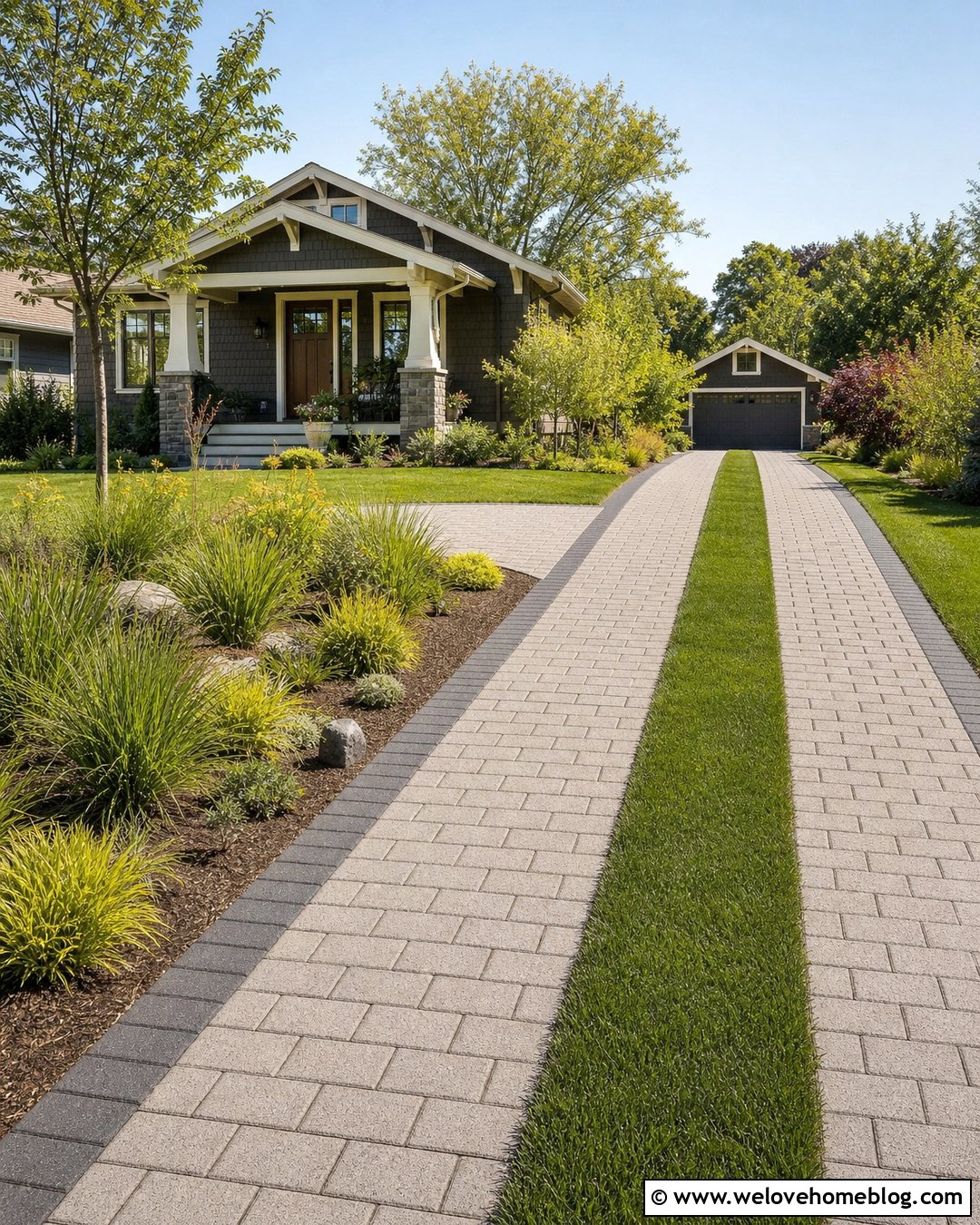
Two solid-looking tracks made from permeable concrete pavers can combine dependable wheel support with a broad turf strip in the middle. Choose warm gray rectangular pavers in a running bond, edged with darker units for definition. Extend the tracks from the street to a detached garage beside a Craftsman bungalow. Between them, plant a tough grass variety suited to the site, and keep the soil level below the paver edges to reduce mud on the driving surface. Repeat the pavers in a wider parking pad directly in front of the garage. Rain gardens or planted swales along one side can accept excess water during heavier storms. This arrangement preserves more greenery than a full-width driveway, but accurate wheel-track spacing is important. Consider all vehicles that regularly use the property before fixing the final layout.
14. Circular Permeable Paver Driveway
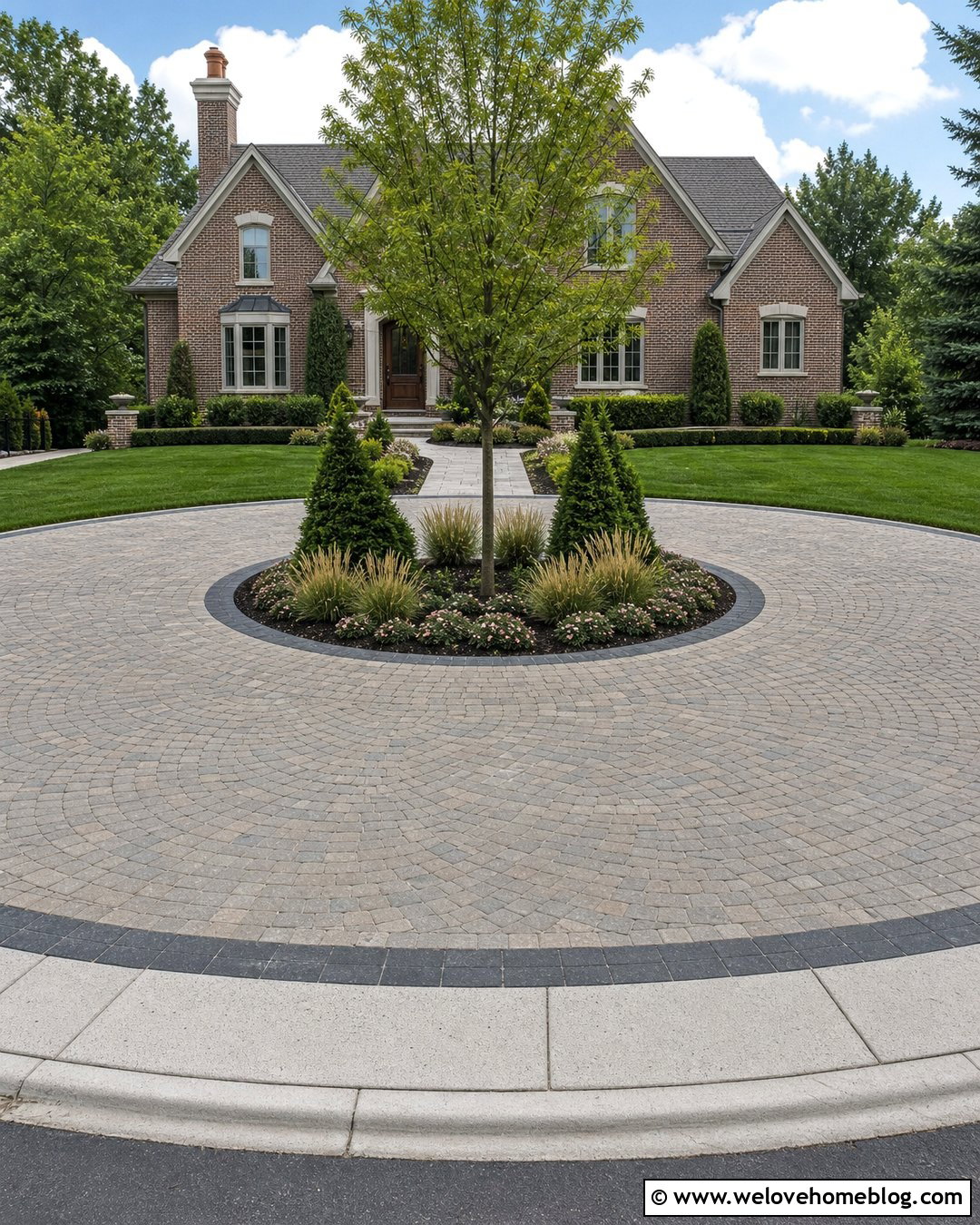
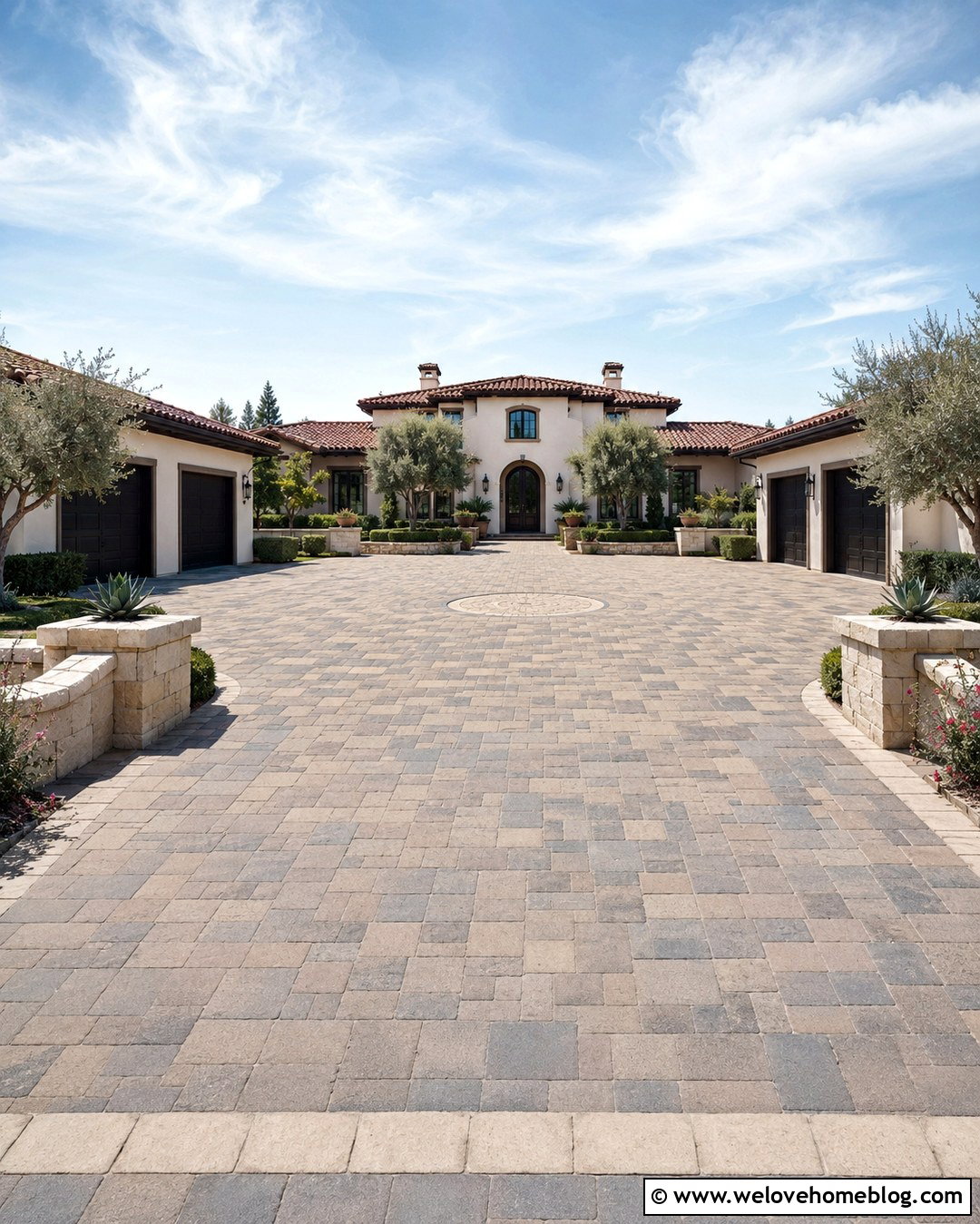
A circular driveway can feel expansive, so using permeable pavers and a generously planted center island helps reduce its hard, paved appearance. Select tumbled concrete pavers in mixed taupe and gray tones, arranged in a fan pattern around the curve. Use charcoal pavers as a continuous inner and outer border to clarify the circular shape. In the island, combine one shade tree with evergreen structure, ornamental grasses, and low flowers that preserve sightlines. The driveway can lead toward a traditional brick home with a defined permeable paver apron at the main entrance. Avoid raising the island soil above the curb, where sediment could wash into the joints. Proper grading should guide water into the paving system or a planned landscape feature without sending runoff toward the foundation, sidewalk, or neighboring property.
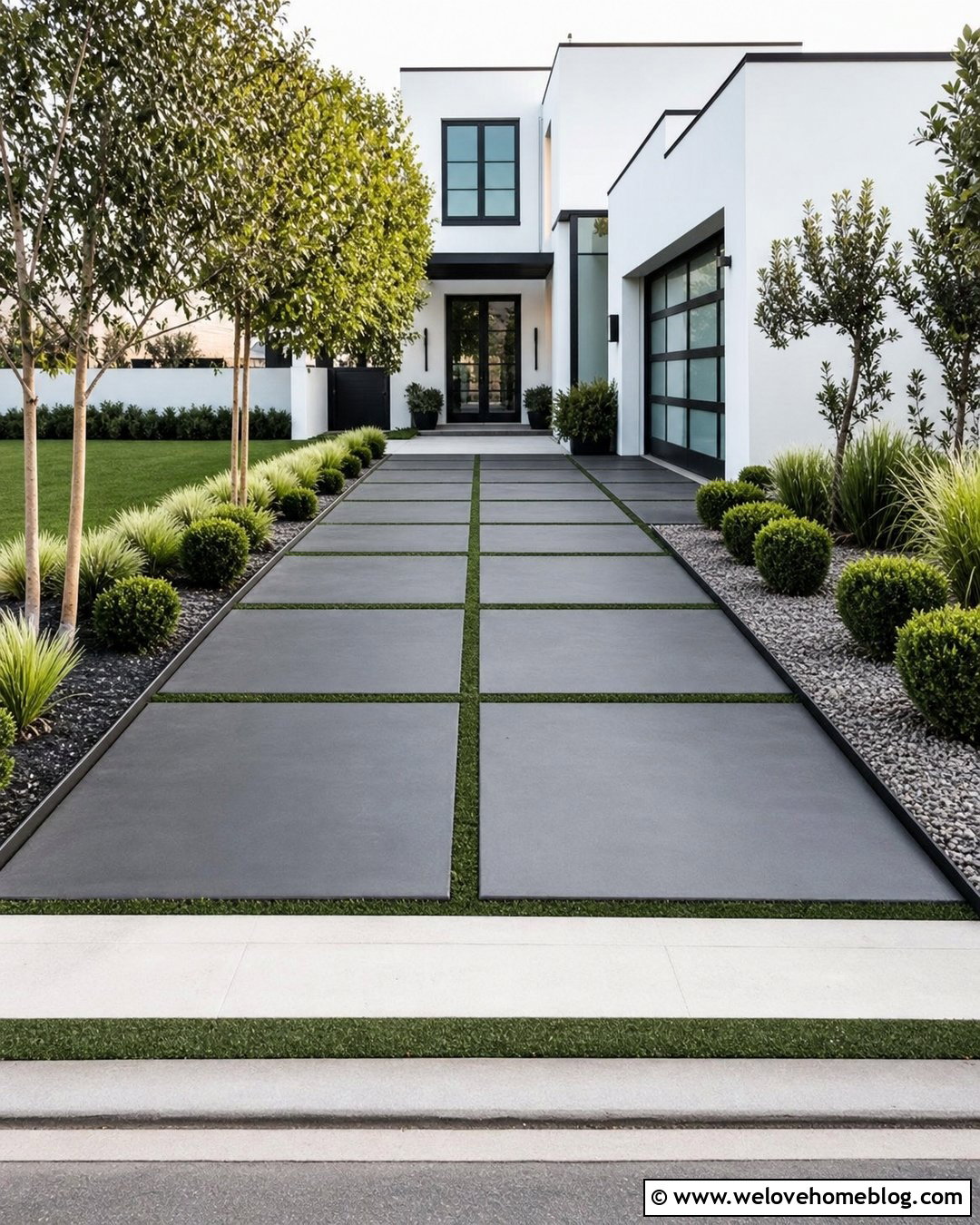
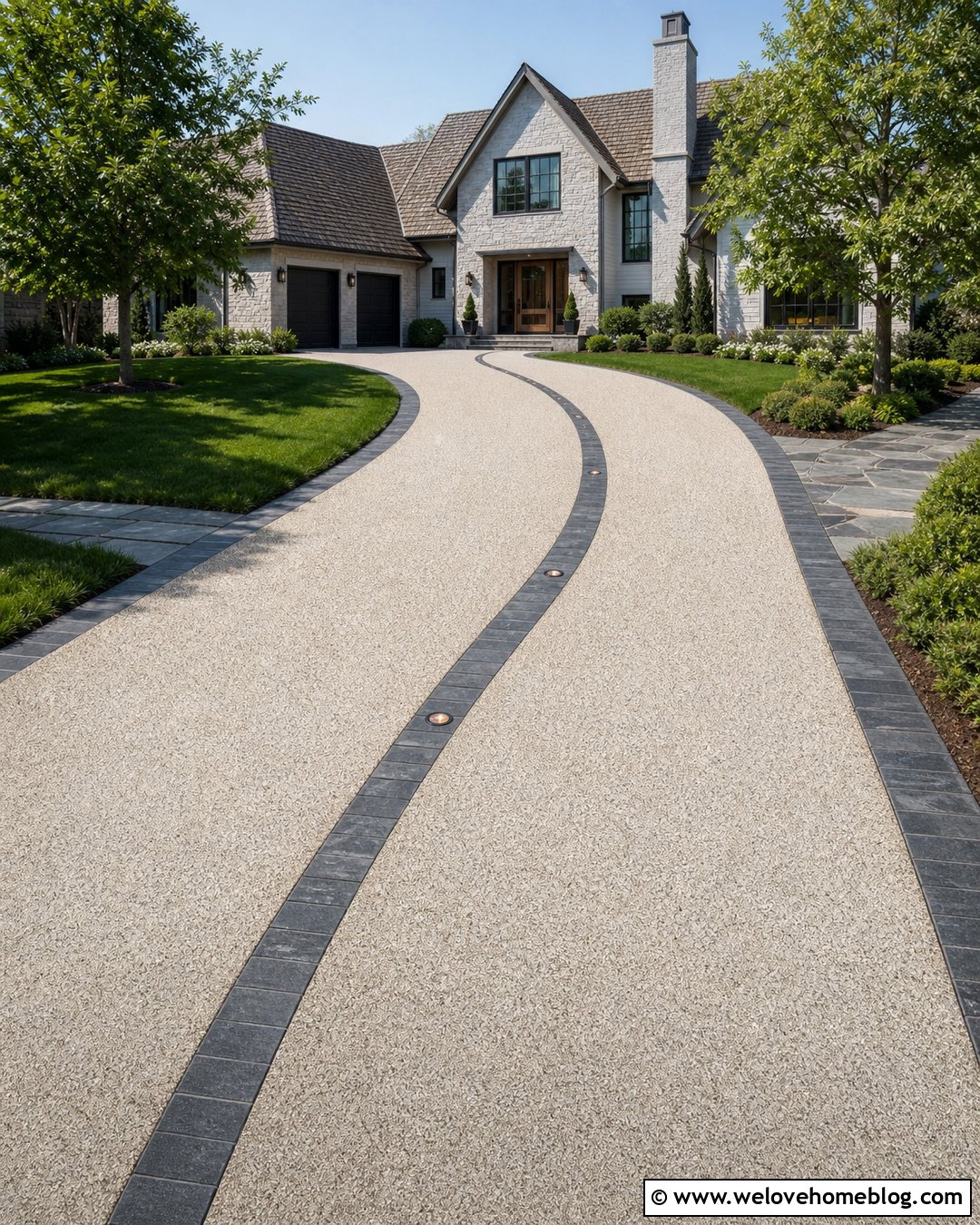
15. Curved Stabilized Gravel Driveway
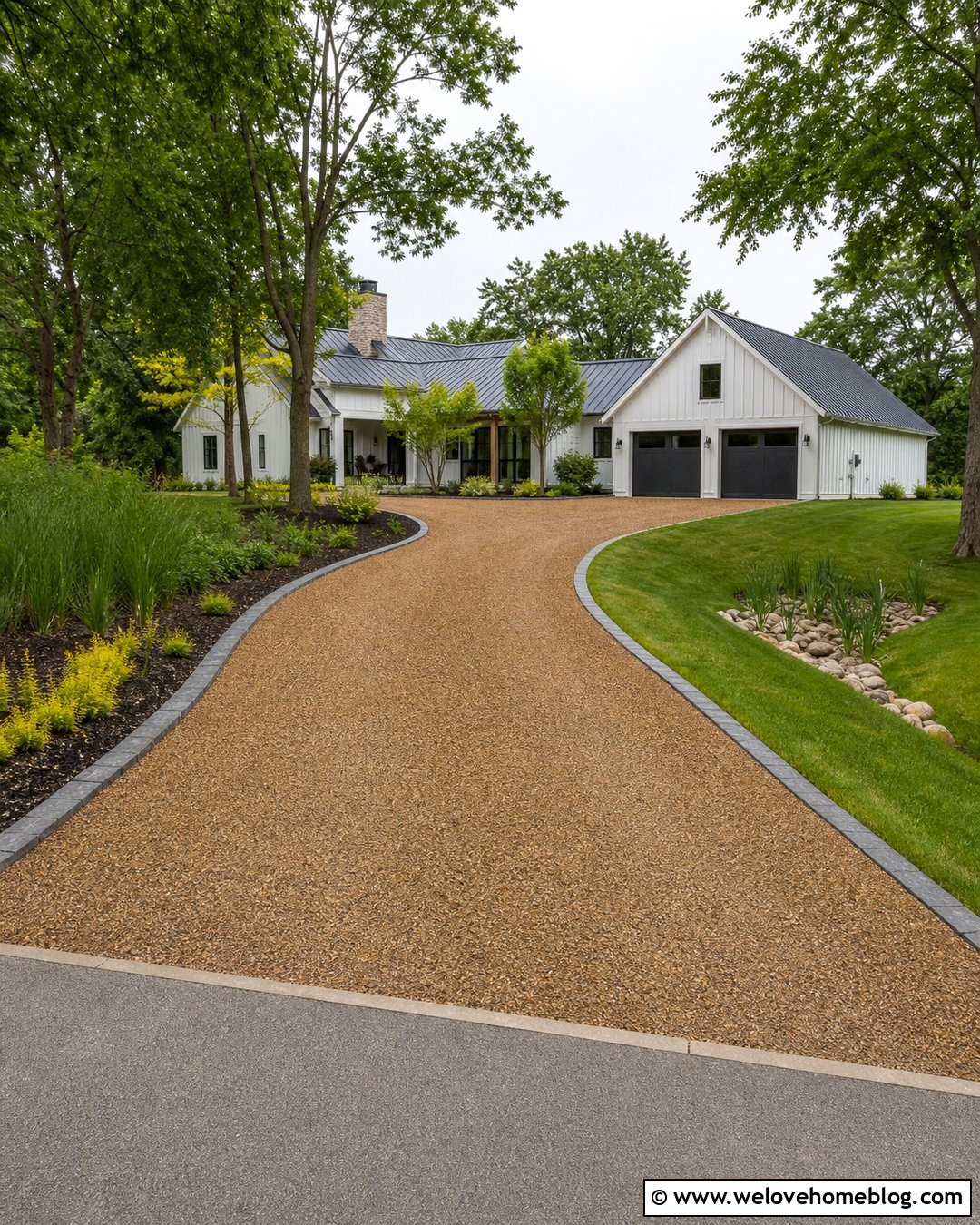
A sweeping gravel driveway can make a deep front yard feel more scenic while slowing the visual approach to the house. Use honey-brown angular gravel over a hidden stabilization grid, then define both curves with dark granite edging. Place clusters of native trees beyond the outside bend and lower planting along the inside curve to maintain clear visibility. A small stone bridge over a shallow planted swale can become part of the drainage plan and add character without feeling ornamental. Near a modern farmhouse, widen the driveway into a rectangular parking court with the same stabilized gravel. Include a brick or permeable paver threshold at the garage to catch stray stones. Good curve geometry matters for trailers, delivery vehicles, and emergency access, so test turning space before finalizing beds, walls, trees, or entrance pillars.
16. Mixed Paver And Gravel Permeable Driveway
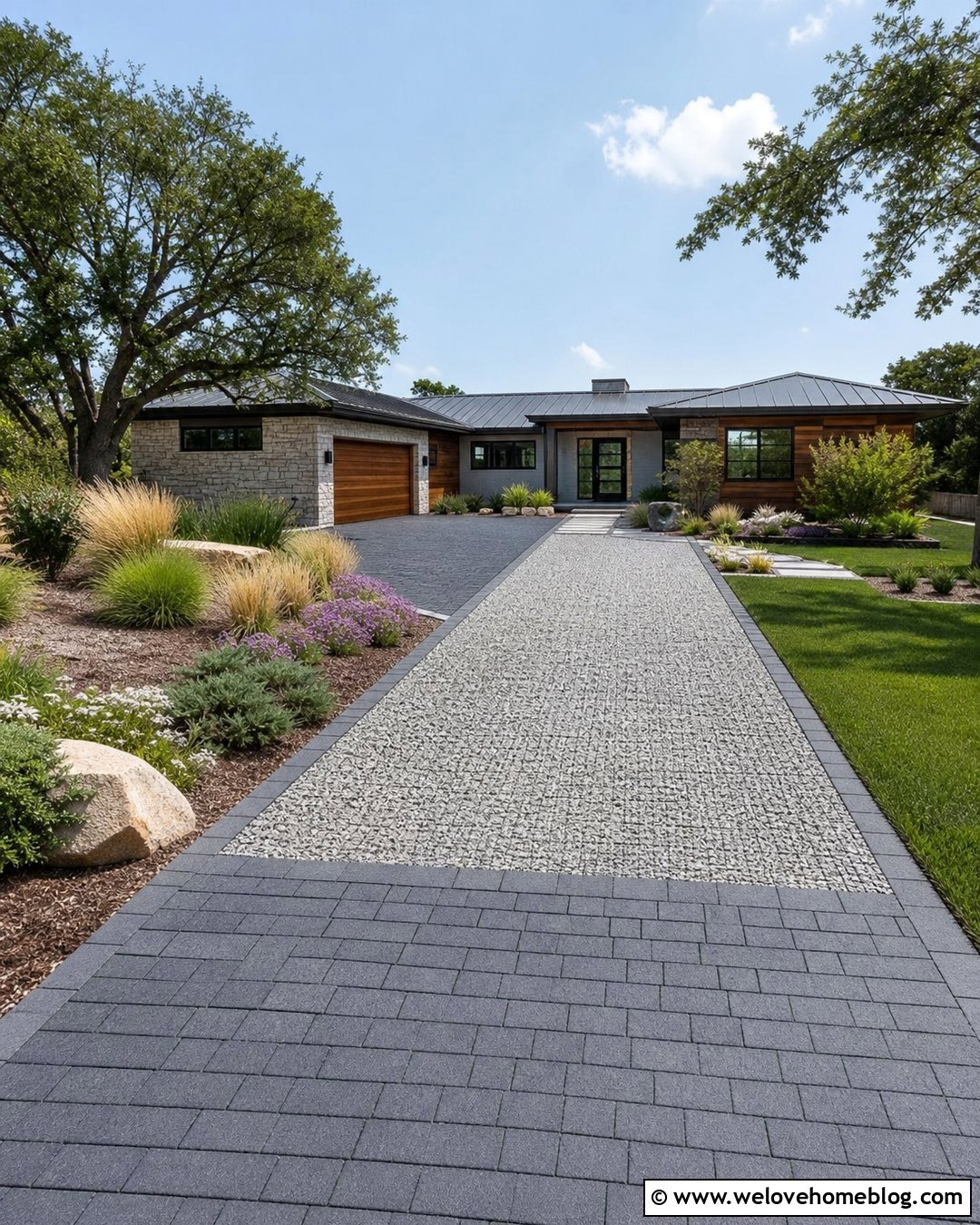
Combining permeable pavers with stabilized gravel can divide a large driveway into clear functional zones. Use charcoal concrete pavers for the entrance apron and parking area, then choose light-gray angular gravel in a grid for the long central drive. A thin paver border around the gravel creates a consistent visual connection between the two materials. This combination looks especially effective beside a contemporary ranch house with stone and wood siding. Plant drought-tolerant grasses, compact junipers, and flowering ground covers in broad beds along the driveway. The paver surface provides a smoother place for turning, walking, and unloading, while gravel can make the longer section more economical and visually softer. Both zones should be built as parts of one drainage plan so water does not collect where the materials and base assemblies meet.
17. Permeable Driveway With Rain Garden
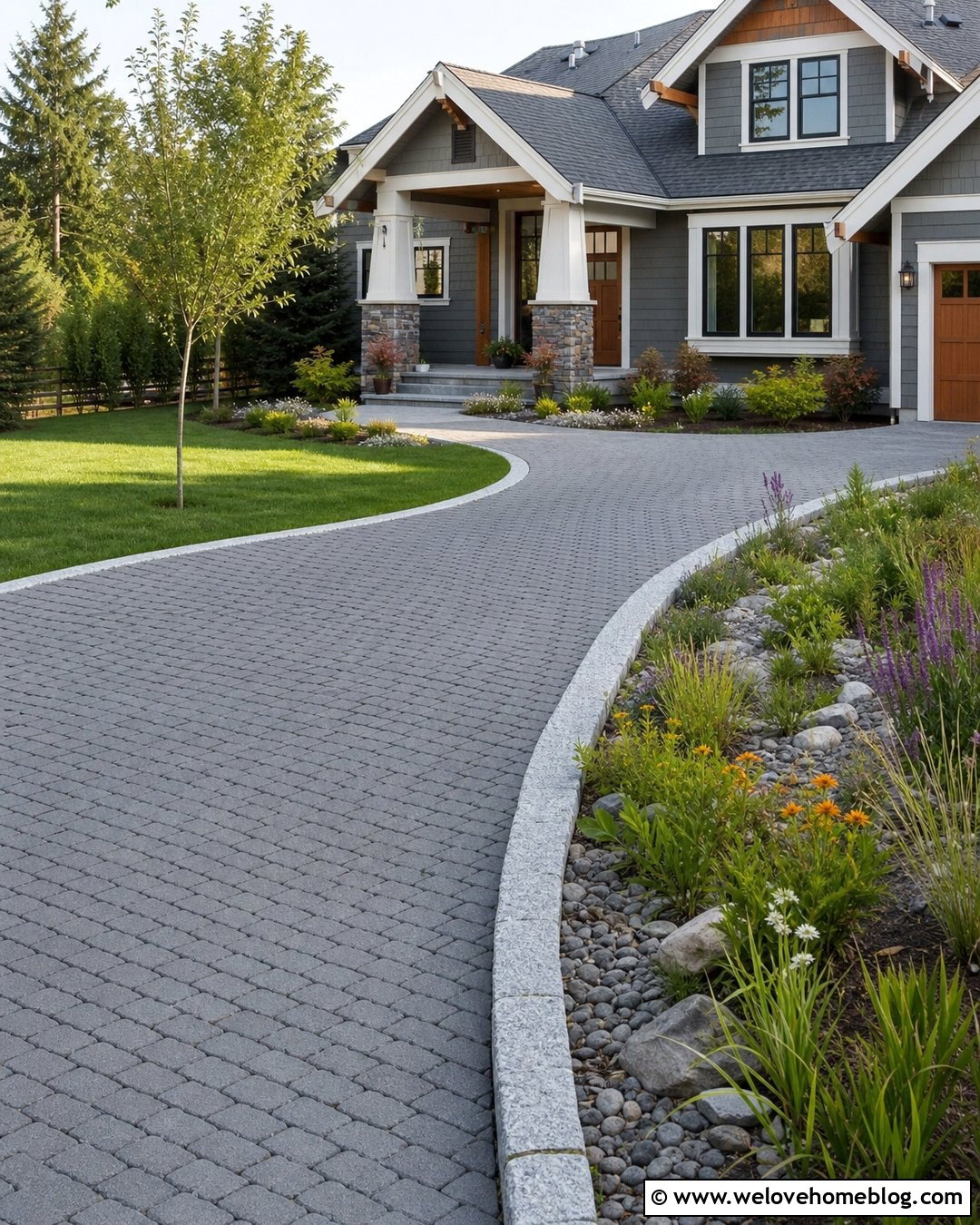
Pairing a permeable driveway with a rain garden creates a landscape that manages water in more than one way. Install medium-gray permeable concrete pavers on a slightly curved driveway, then place a shallow planted basin along the lower side of the property. A level spreader or discreet stone channel can guide overflow toward the basin when rainfall exceeds the pavement’s immediate capacity. Fill the rain garden with plants selected for alternating wet and dry conditions, while keeping taller growth away from driveway sightlines. Granite edging separates the pavers from surrounding mulch and limits sediment movement. This complete design works with contemporary, Craftsman, or naturalistic homes. A landscape professional or engineer can determine appropriate elevations, soil preparation, overflow routes, and safe distances from the house foundation, utilities, septic components, and neighboring properties.
18. Sloped Permeable Paver Driveway
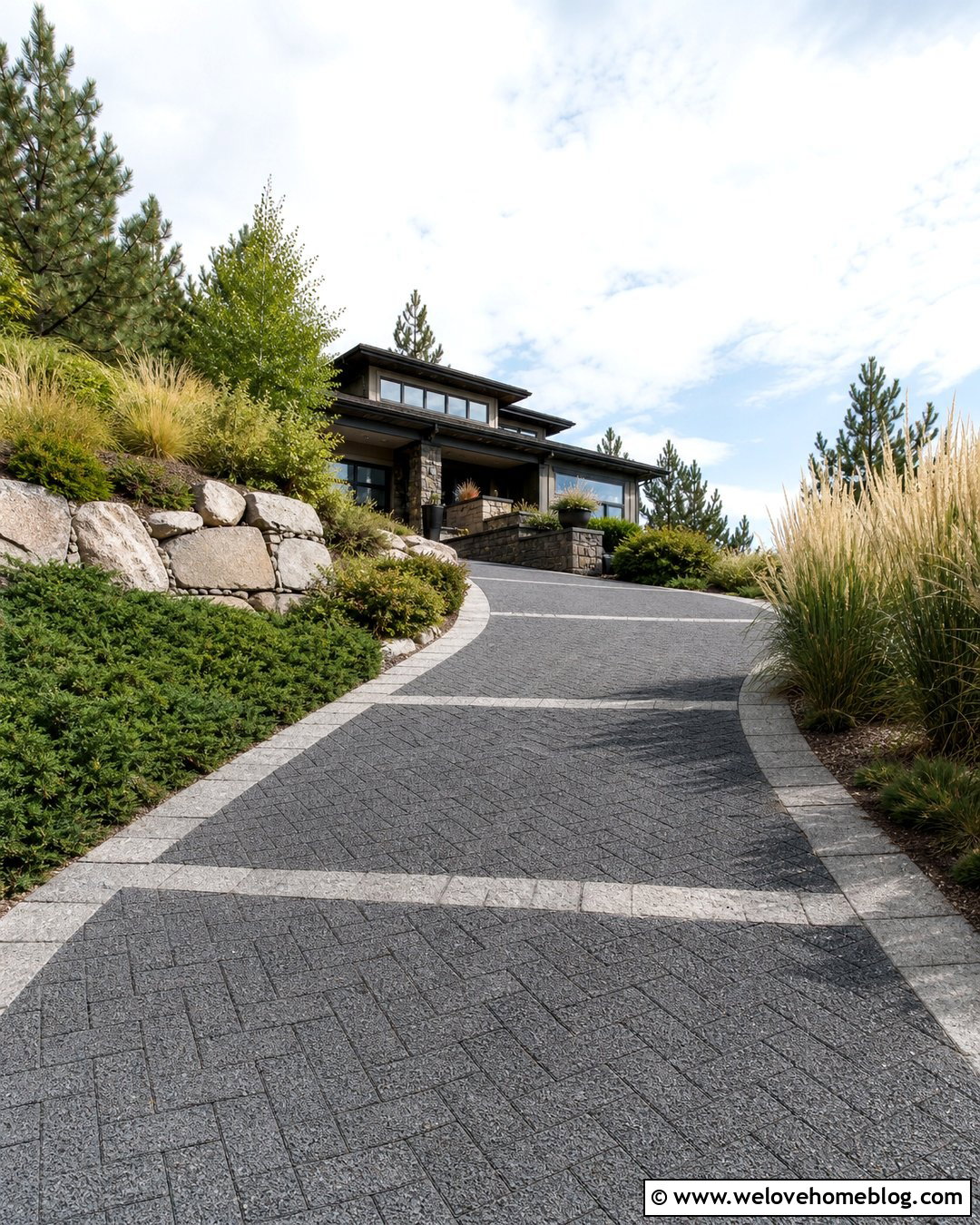
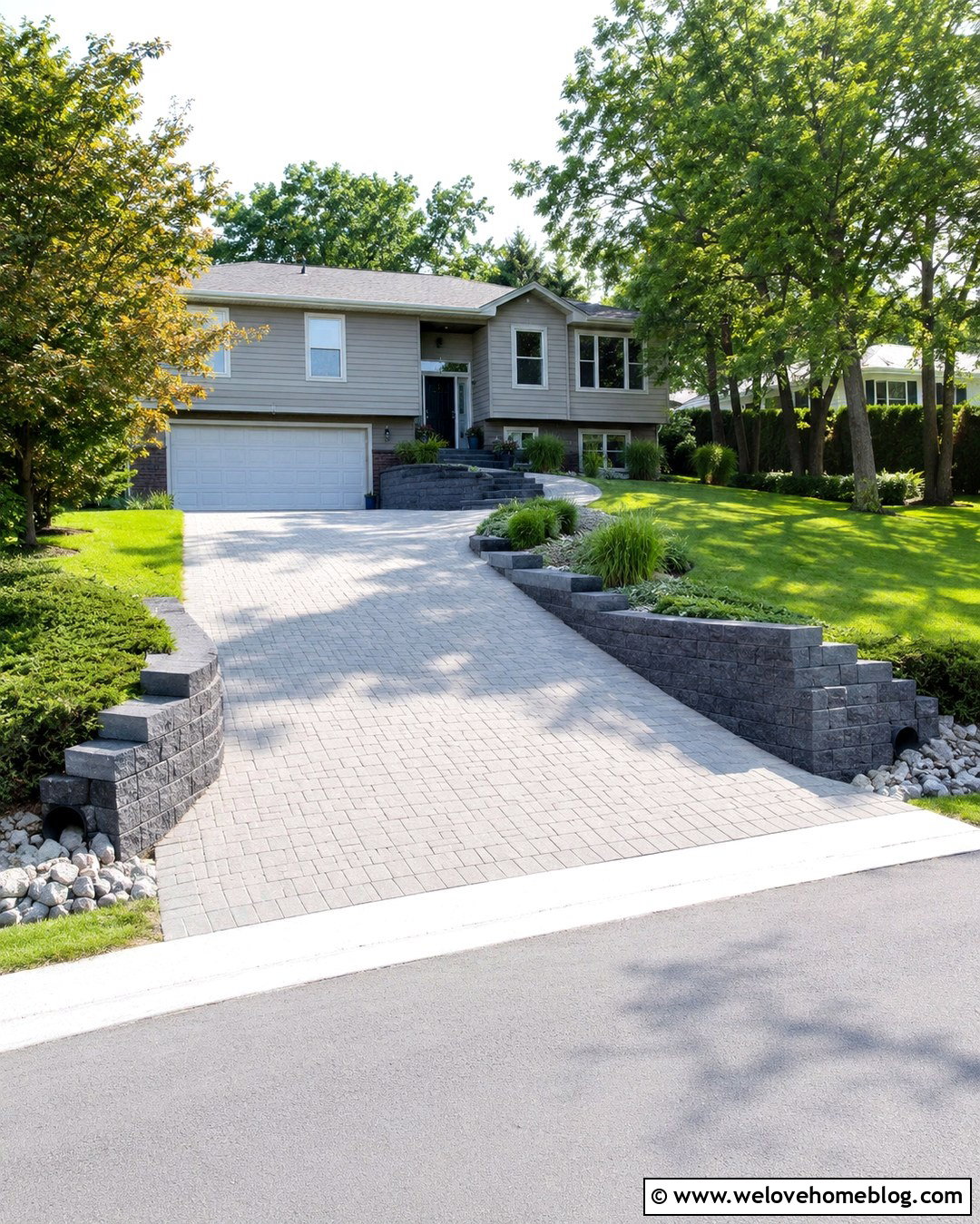
A sloped driveway needs careful engineering, but permeable interlocking pavers can create an attractive surface when the grade and site are suitable. Choose small-format textured concrete units in a herringbone pattern, which gives the incline a strong visual structure. Use substantial edge restraints and contrasting paver bands across the slope to divide the long run into shorter sections. Low retaining walls can hold planting beds with spreading junipers, ornamental grasses, and erosion-resistant ground covers. At the bottom, provide a stable permeable apron and a planned overflow route for intense storms. Water behavior on steep sites is complex, and infiltration may be limited by soil, bedrock, groundwater, or nearby foundations. Have the slope, sub-base, underdrain requirements, and edge support evaluated professionally before selecting the final pavement system.
19. Small Permeable Paver Driveway
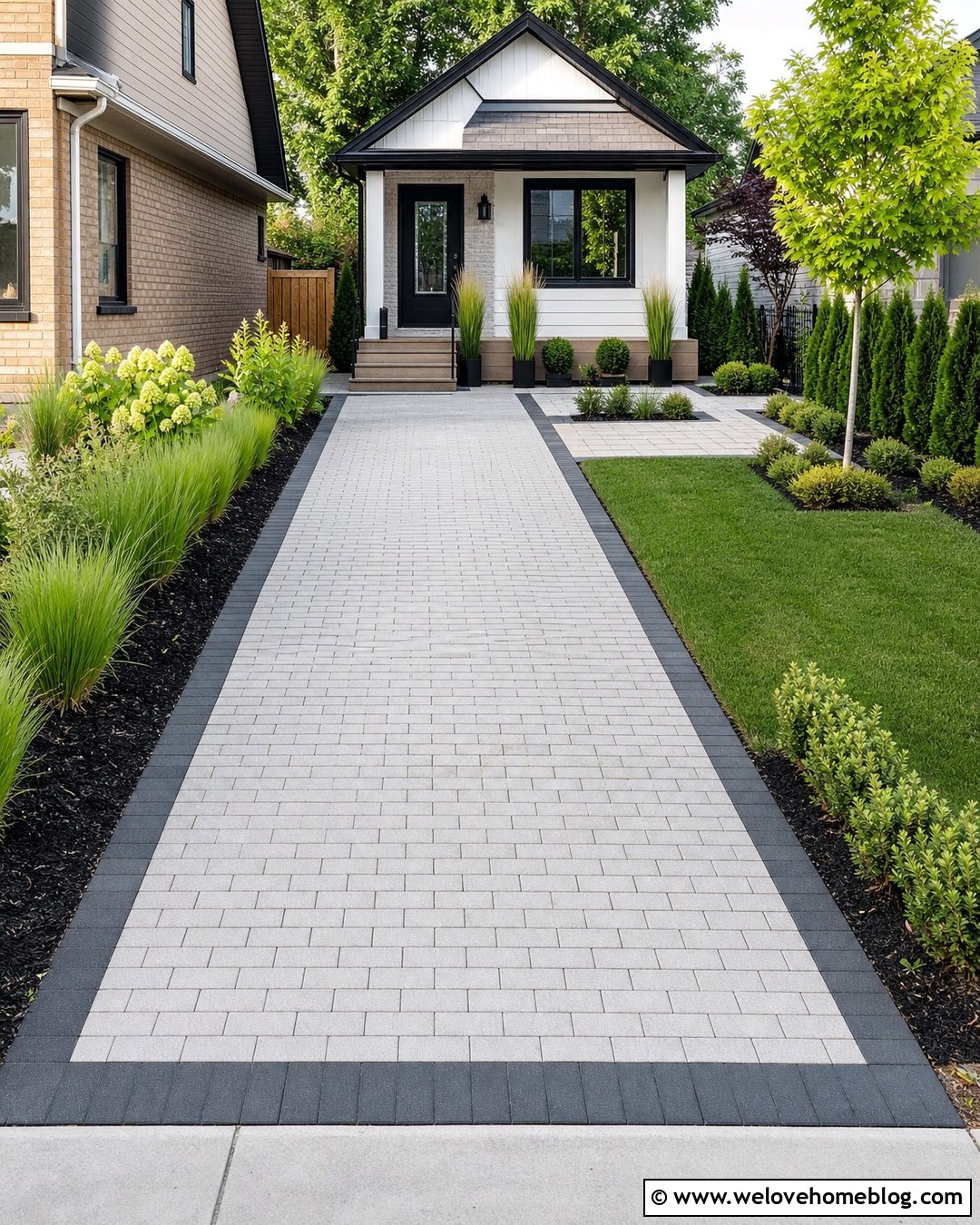
A compact front yard benefits from a driveway that feels orderly without covering every available inch in hardscape. Use slim permeable concrete pavers in a light-gray linear pattern on a straight single-car driveway. Add charcoal borders on the sides and a matching band where the driveway meets the sidewalk. Narrow planting strips filled with upright grasses, dwarf shrubs, and low ground covers can provide greenery without crowding car doors. Continue the pavers into a simple walkway, but change their orientation to make the route to the entrance easy to recognize. This approach works well with townhomes, bungalows, and narrow urban lots. Keep mulch and exposed soil away from the permeable joints. A compact, correctly sized base and secure boundaries are essential because tight spaces often receive concentrated turning and braking near the garage.
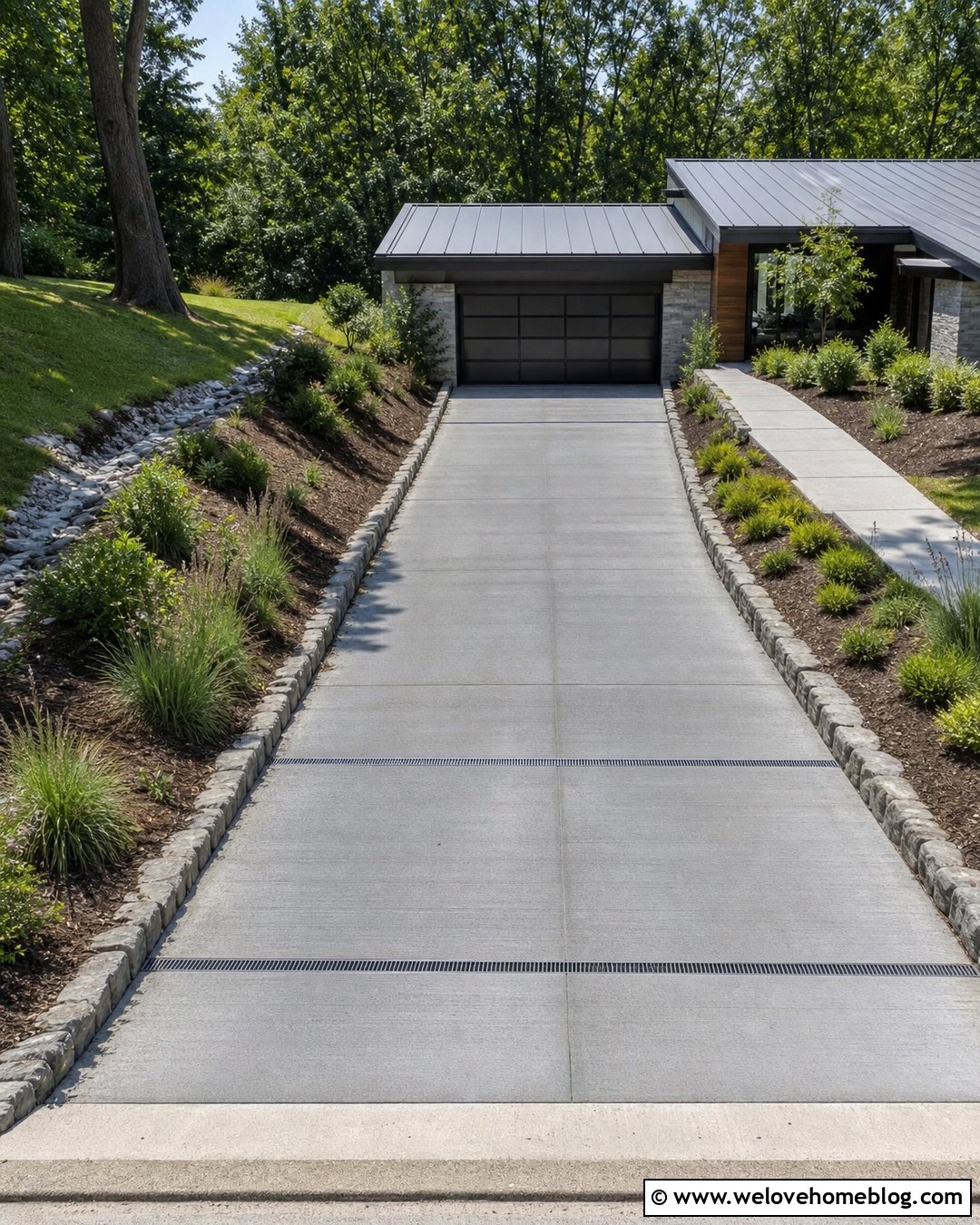
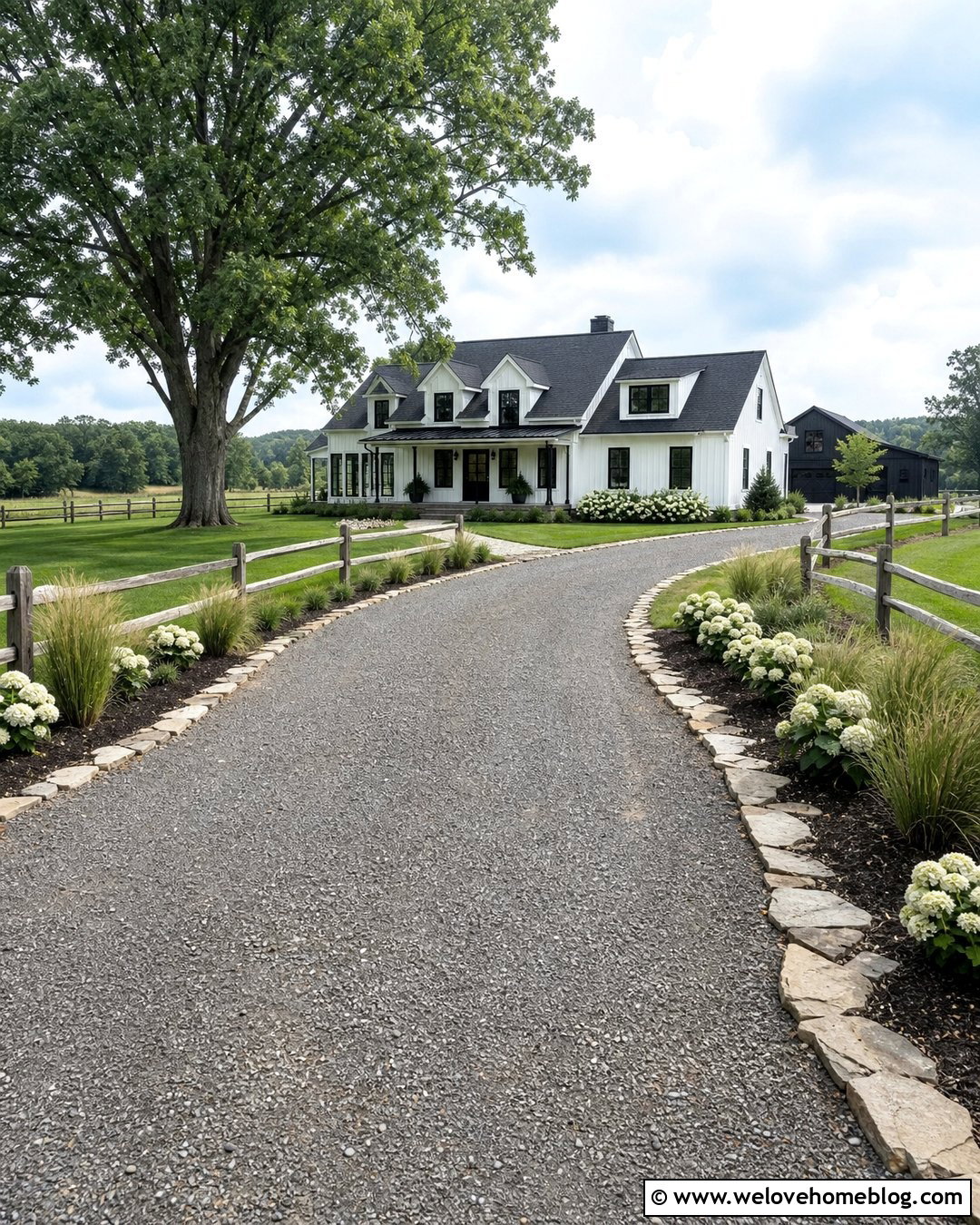
20. Long Farmhouse Permeable Gravel Driveway
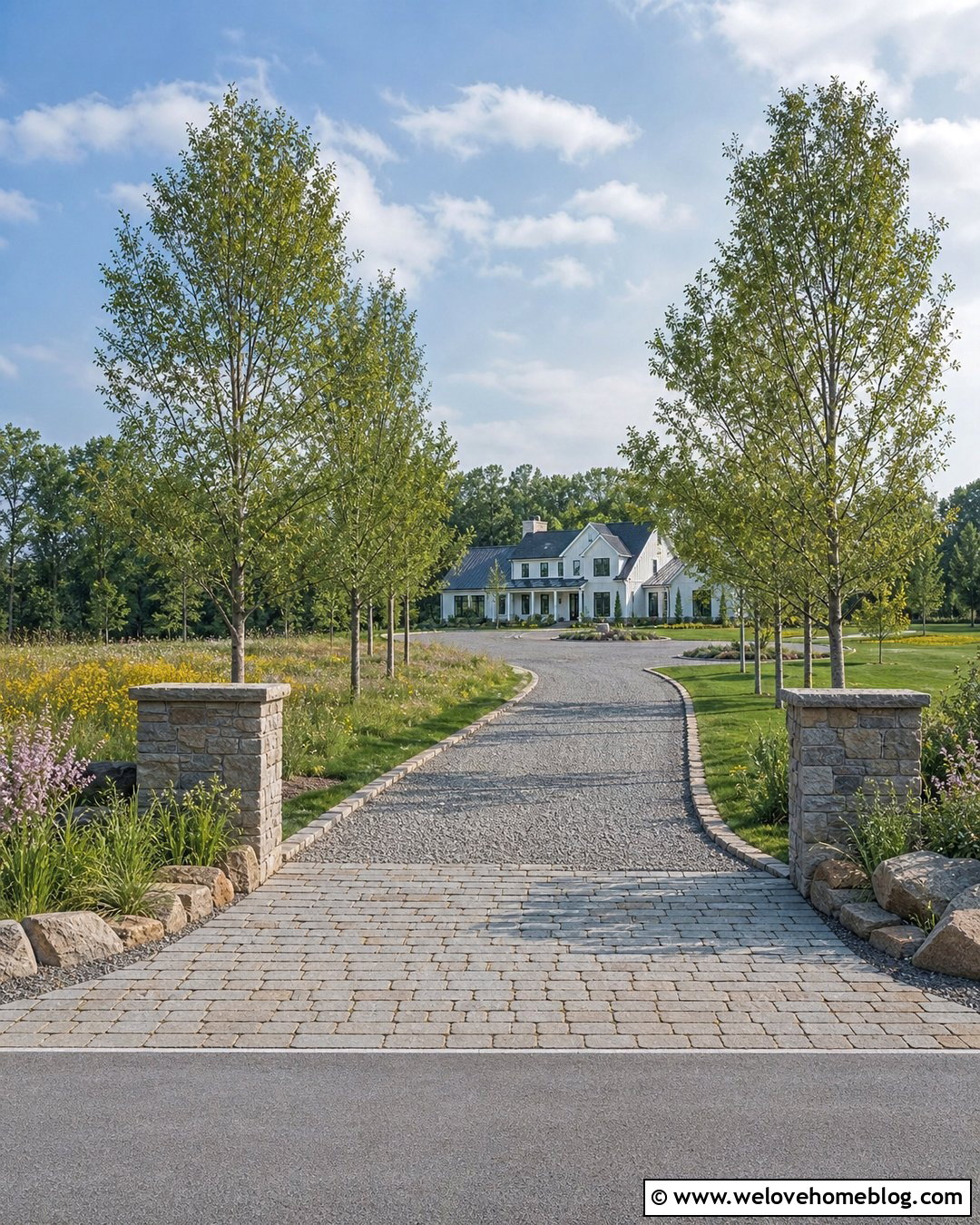
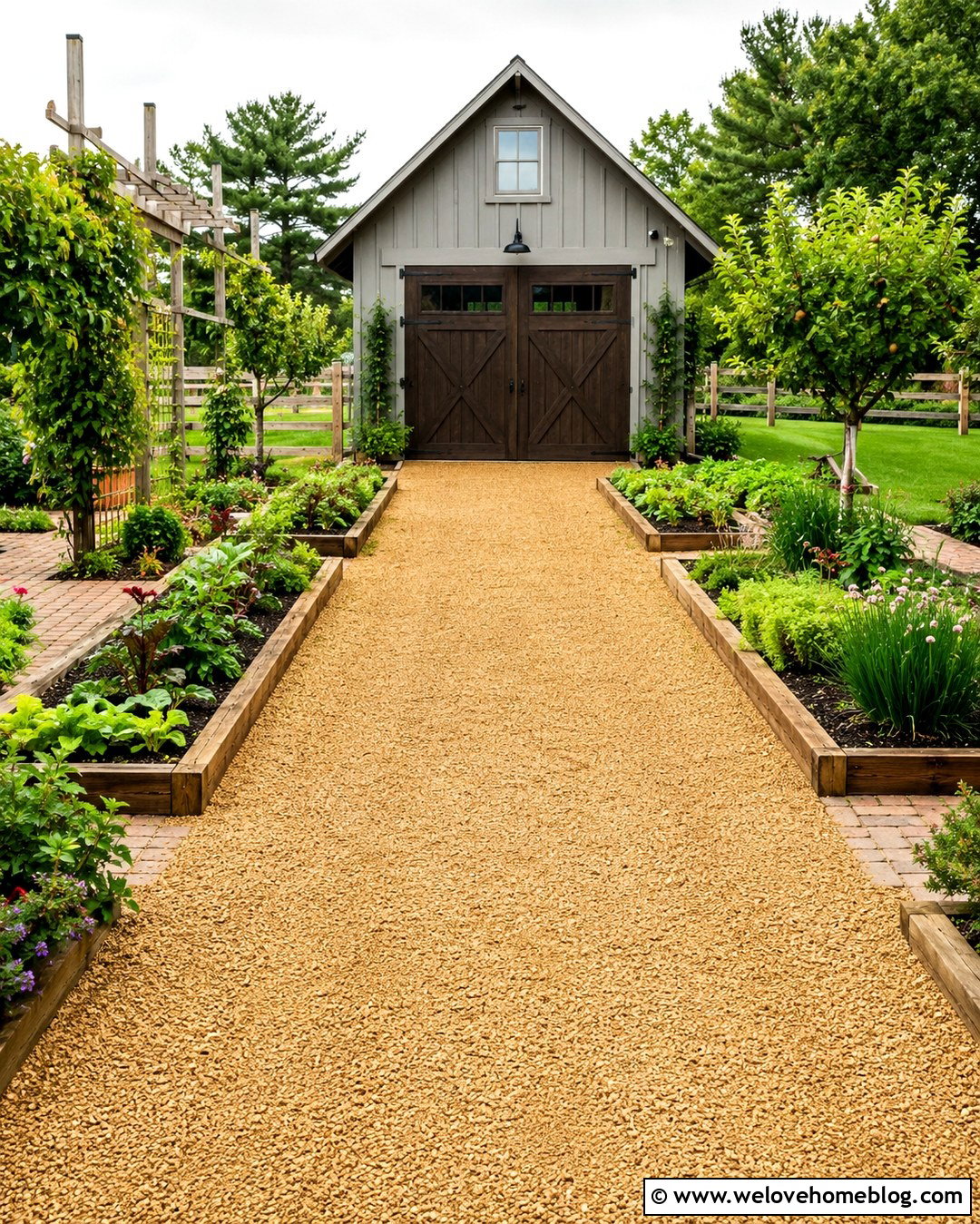
A long farmhouse driveway looks welcoming when its practical gravel surface is reinforced and framed as part of the wider landscape. Choose warm gray angular gravel held in a heavy-duty grid, with natural stone edging near the entrance and simpler steel edging farther inside the property. Use a gentle curve to reveal the house gradually, and plant evenly spaced deciduous trees far enough from the driveway for mature trunks, roots, and canopies. Meadow grasses and native flowers can fill the spaces between the trees without demanding a formal hedge. At the road, install stone pillars and a widened permeable paver apron that can withstand frequent turning. Near the farmhouse, transition into a larger gravel parking court. Plan occasional pull-offs, snow storage, delivery access, lighting, and long-term gravel maintenance before planting the complete entrance.
Conclusion:
The best permeable driveway is more than a surface that allows rain to pass through. Its material, foundation, edging, slope, overflow route, planting, and maintenance plan must work together. Gravel grids offer relaxed texture, while permeable pavers create a more structured finish. Grass systems preserve greenery, and pervious concrete, porous asphalt, or resin-bound gravel can provide a continuous appearance. Site conditions should guide the final choice, especially where steep grades, clay soil, freezing weather, or heavy rainfall are present. Use these Driveway Permeable Ideas as design inspiration, then consult qualified local professionals about excavation, load capacity, drainage, permits, and product specifications before construction begins.

Related posts:
Leave a Reply