
Choosing a driveway that handles rain well does not mean sacrificing curb appeal. These **20 permeable driveway options ideas** combine attractive surfaces with layouts that let water move through open joints, porous materials, or reinforced planting areas. Recognized systems include pervious concrete, porous asphalt, permeable interlocking pavers, and plastic grid pavers filled with gravel or grass. When installed over a suitable open-graded base, they can reduce surface runoff and help filter stormwater. () The right choice depends on your climate, soil, driveway slope, maintenance preferences, and house style. From affordable crushed stone to polished resin-bound gravel, there is a practical look for nearly every property. Use these complete designs as inspiration while exploring **20 permeable driveway options ideas**.

1. Stabilized Pea Gravel Permeable Driveway
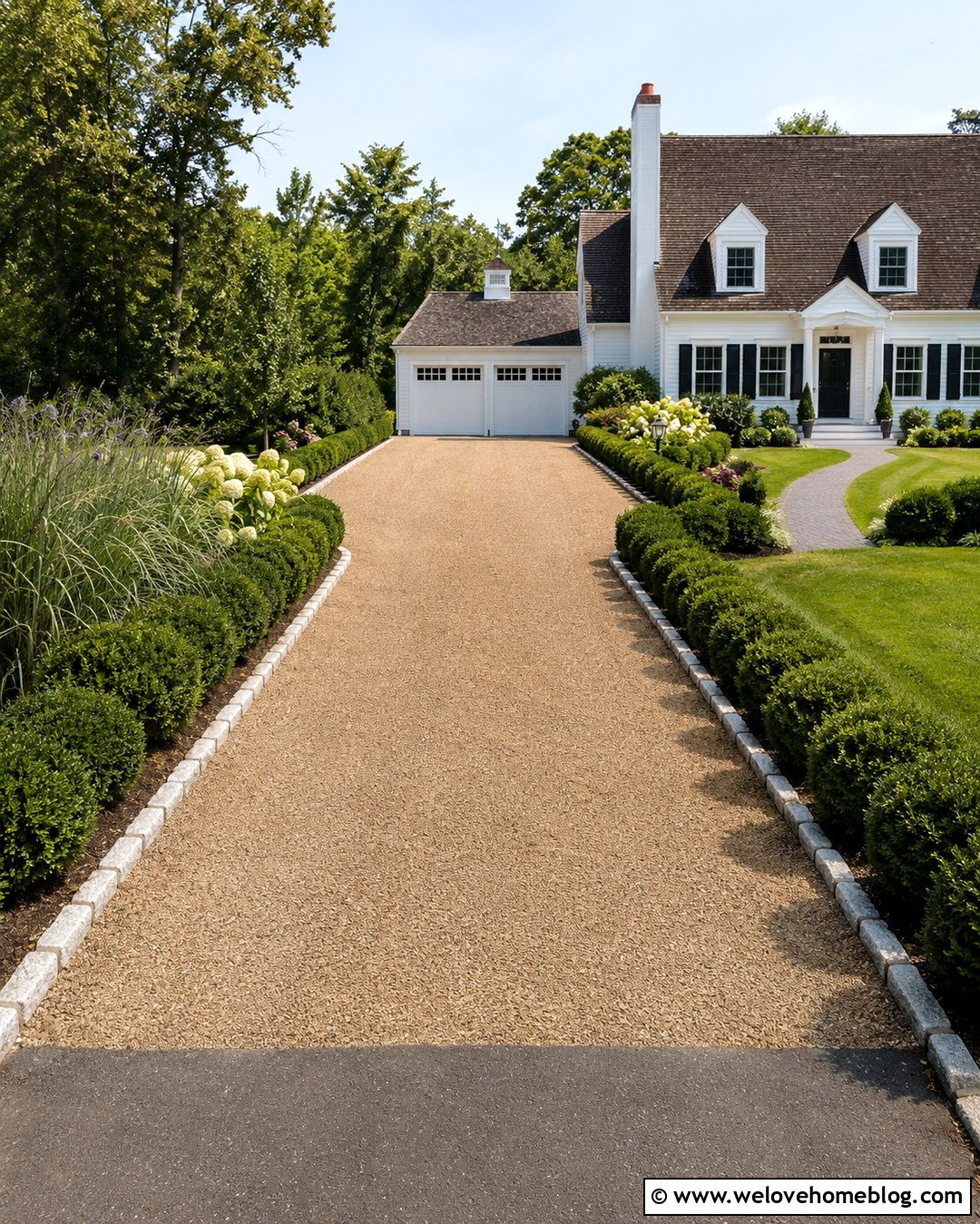
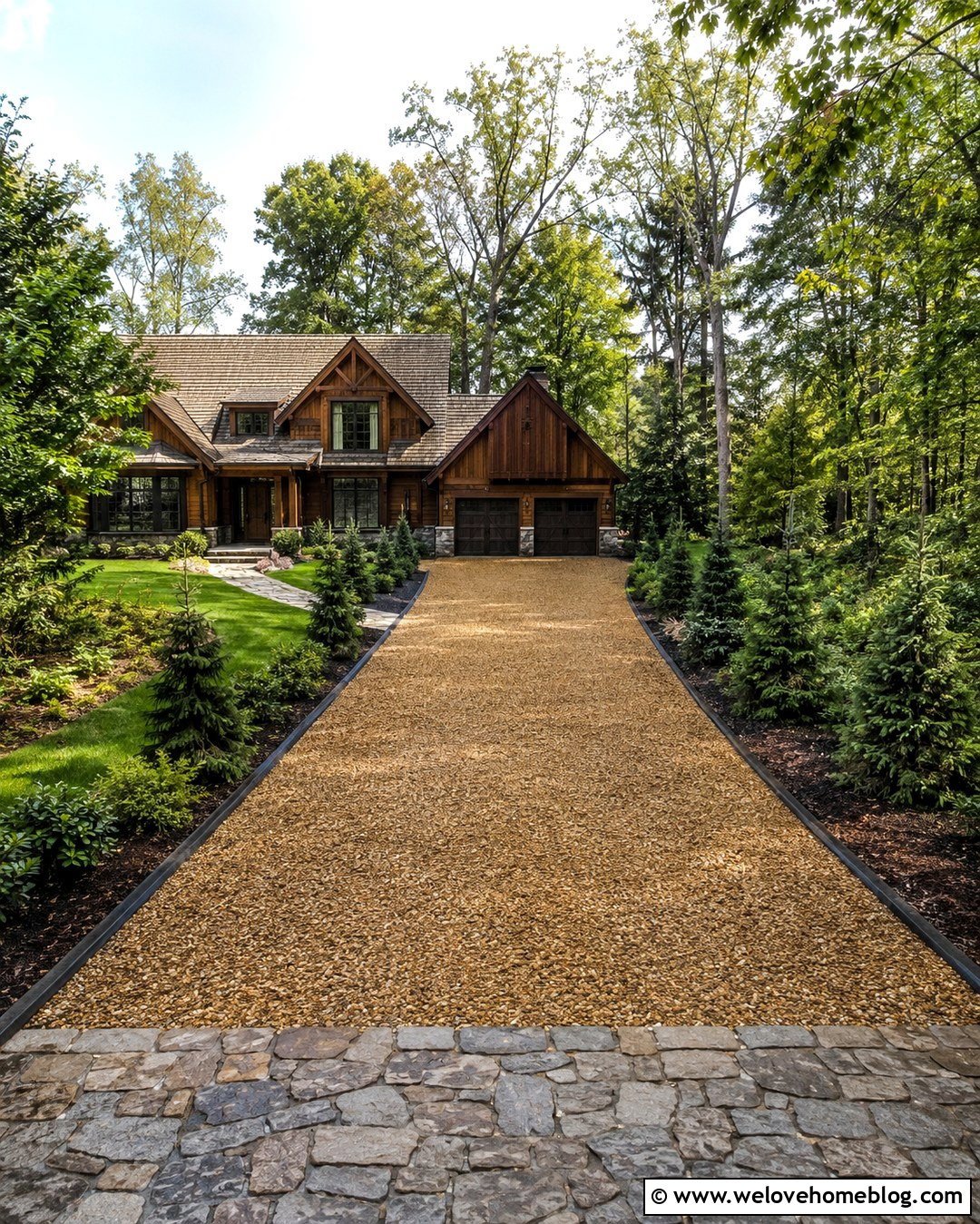
A stabilized pea gravel driveway creates a softer, more polished appearance than basic crushed stone. Install honeycomb gravel grids over a properly prepared, open-graded base, then fill the cells with warm tan or gray pea gravel. The grid helps keep the rounded stones from shifting beneath tires. A straight layout suits ranch, Cape Cod, and traditional suburban homes. Add a cobblestone border to contain loose material and give the entrance a clean outline. Low boxwoods, ornamental grasses, and a narrow paver walkway can frame the driveway without making the yard feel crowded. Because rounded pea gravel can move more easily than angular stone, grid stabilization and strong edge restraints are especially important near the sidewalk, garage, and street.
2. Crushed Granite Permeable Driveway
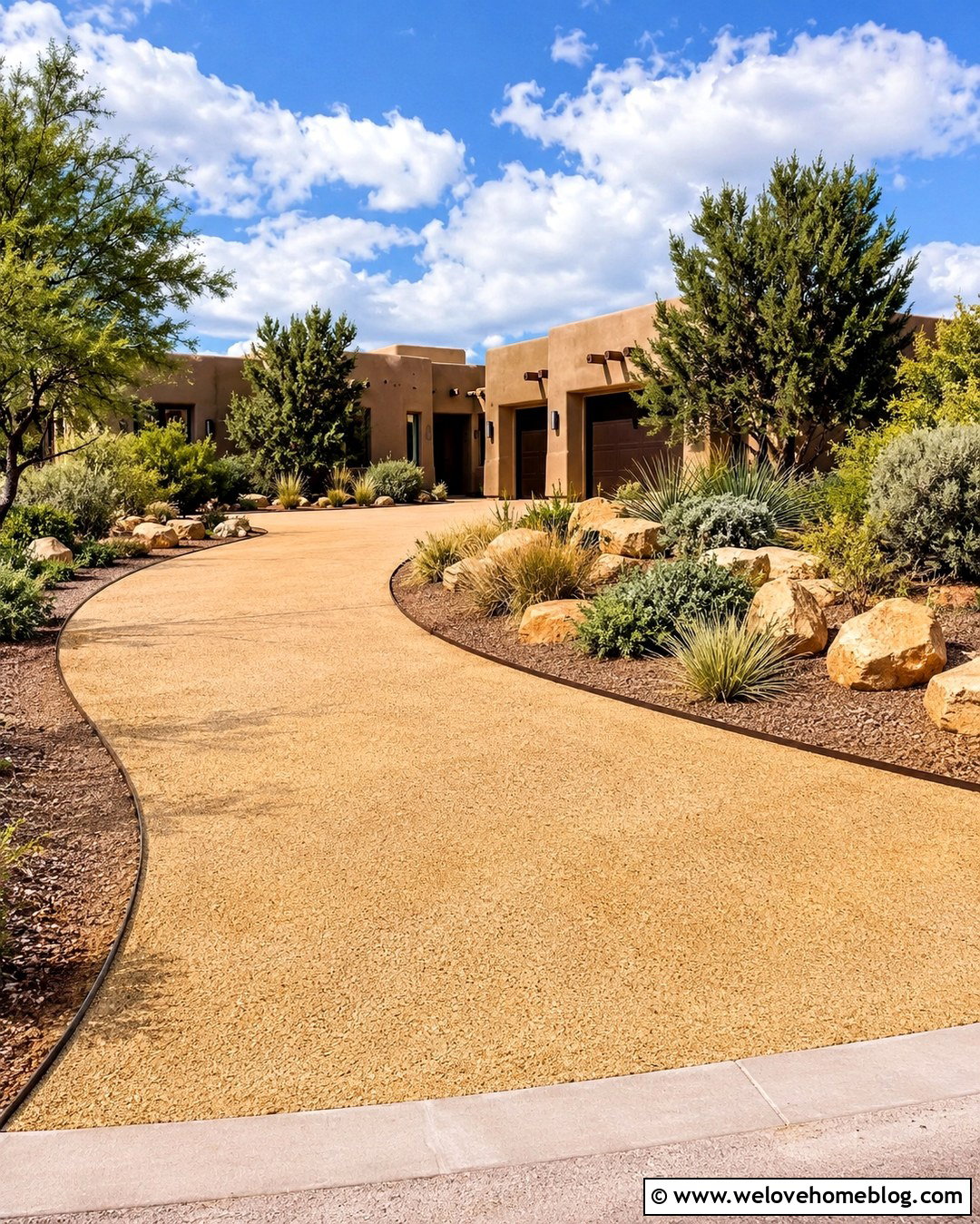
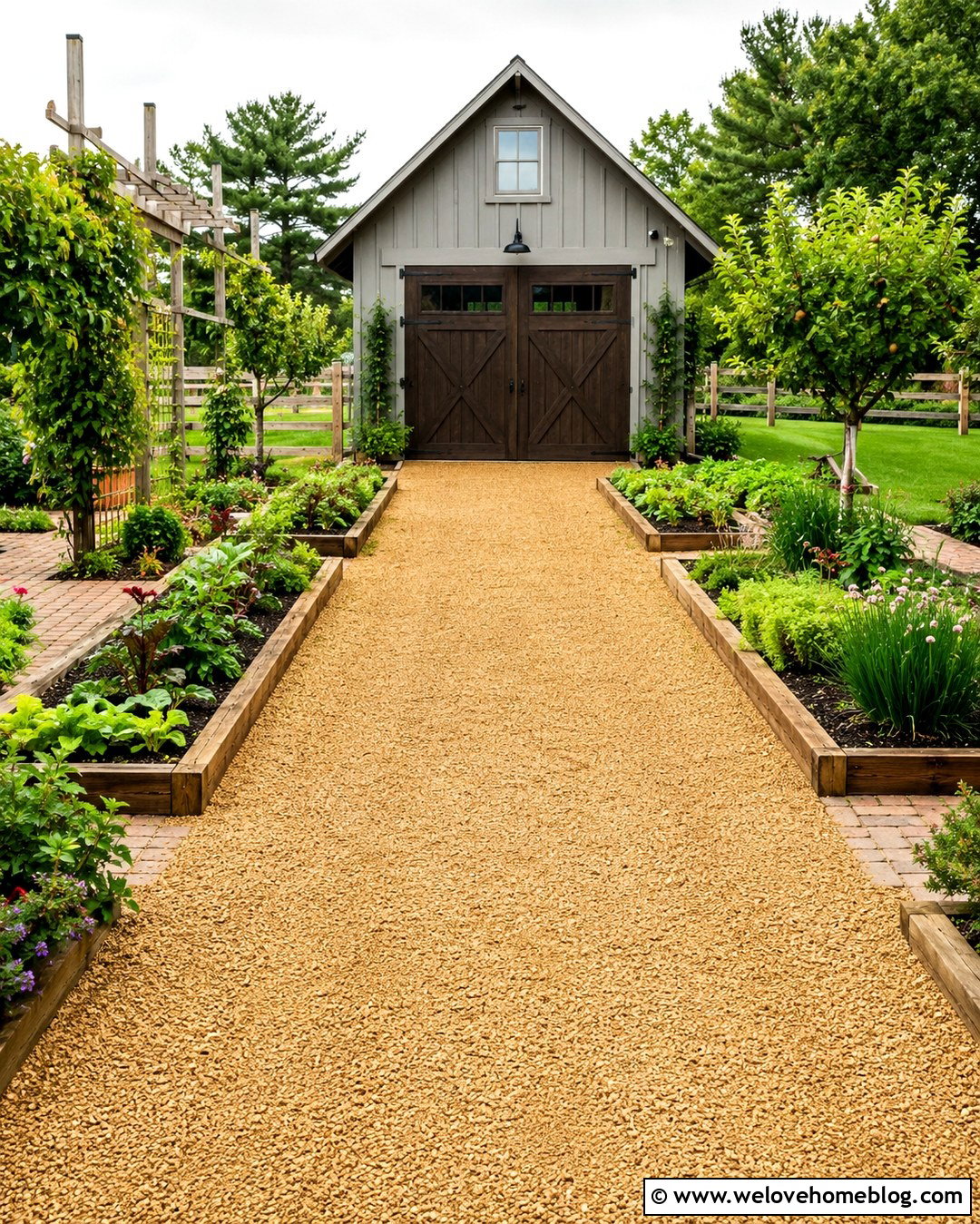
Crushed granite brings rich color and natural texture to a curved driveway. Angular pieces lock together more effectively than smooth gravel, creating a stable surface while leaving small spaces for drainage. Choose warm gold granite for a Spanish or Southwestern home, or gray granite for a craftsman or contemporary exterior. Steel edging produces a slim, nearly invisible border that follows curves without adding visual bulk. Along the outer bend, use drought-tolerant grasses, spreading junipers, and large landscape rocks. A slightly raised planting island can separate the driveway from the front walkway. Ask the installer for an open-graded aggregate base rather than a dense, water-blocking foundation. Occasional raking and replenishment will keep the driving surface even and attractive.
3. Gravel Grid Permeable Driveway
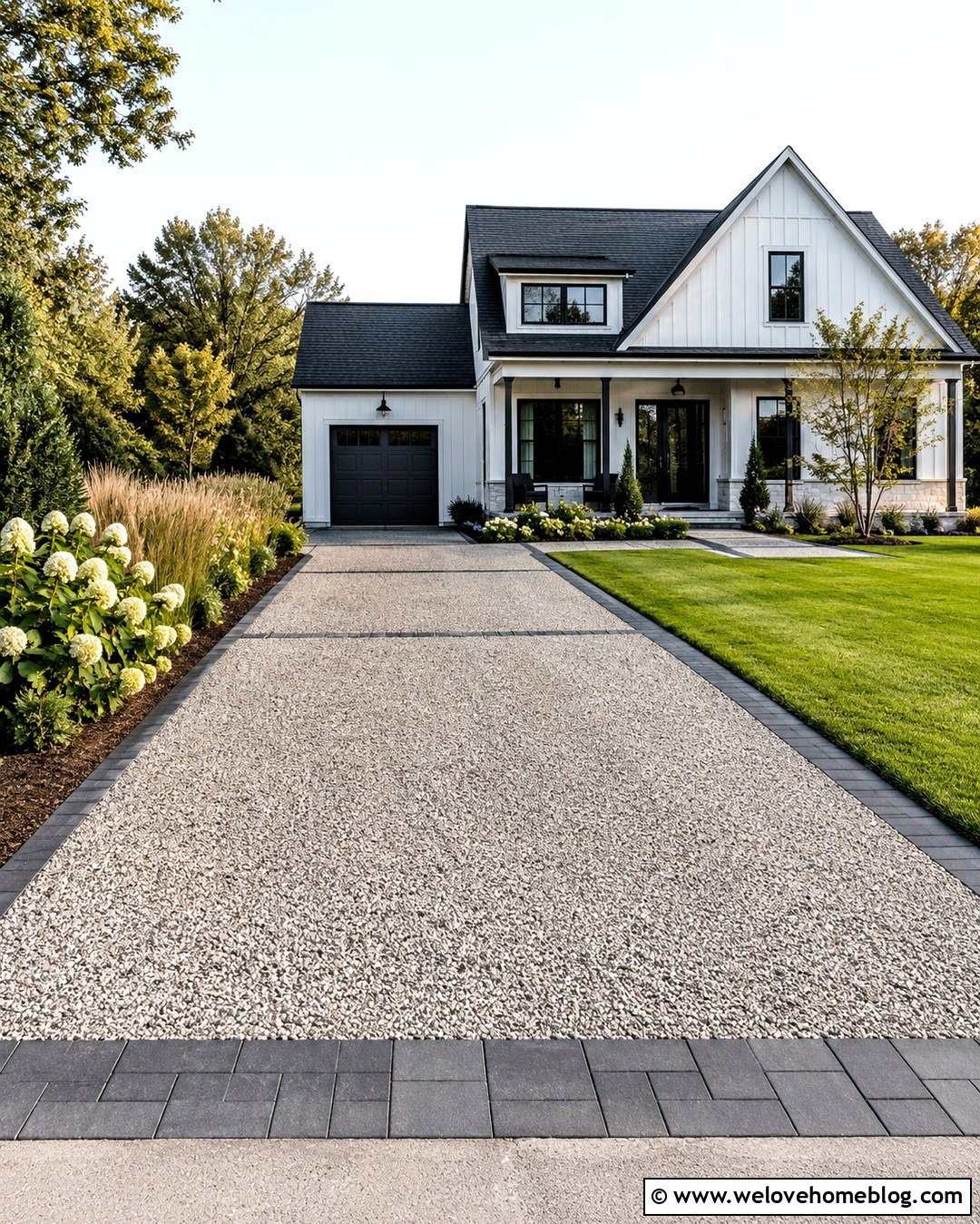
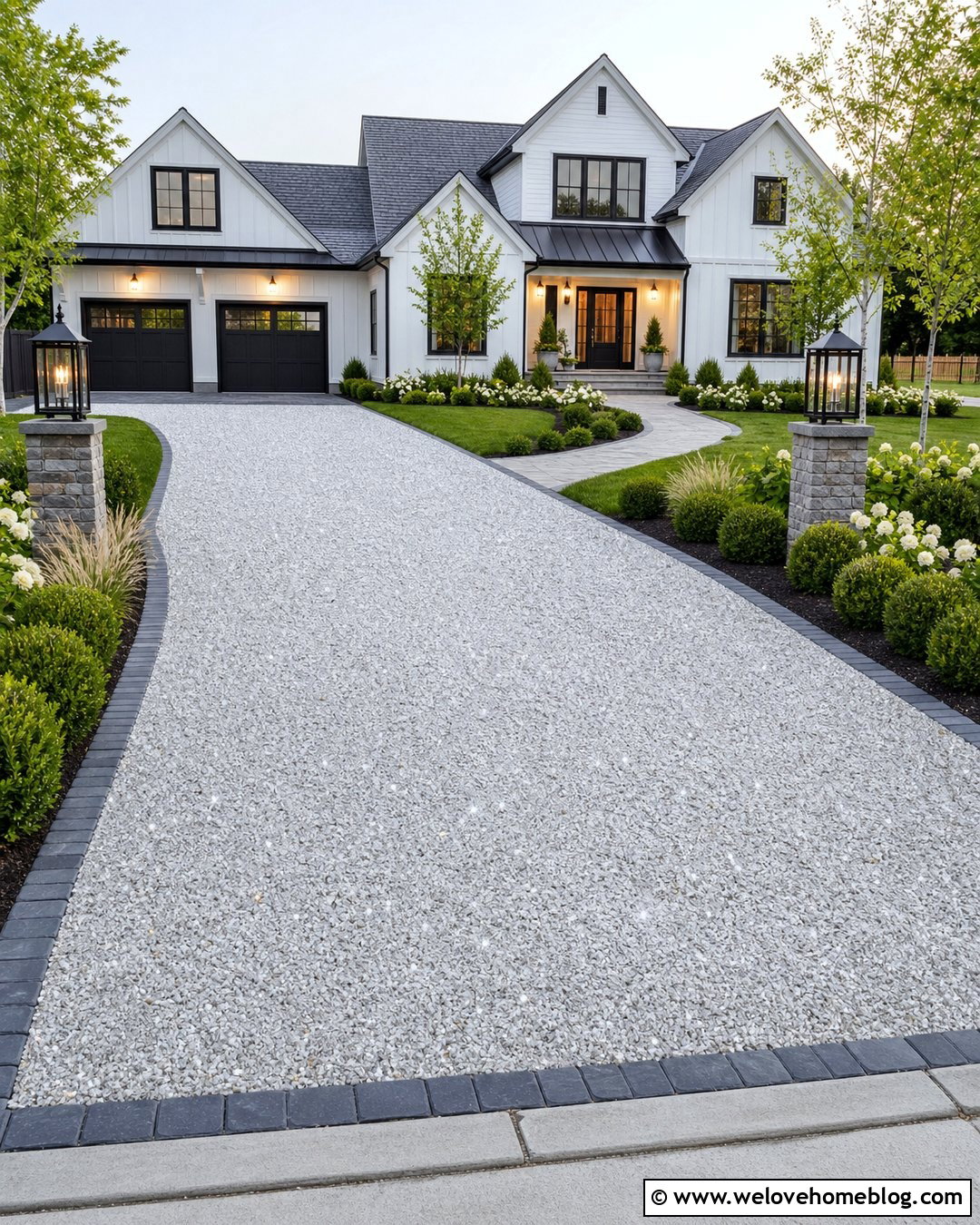
For a clean gravel surface that resists rutting, use interlocking plastic grids filled with angular gray stone. The cellular structure confines the aggregate and distributes vehicle loads across the prepared base. Gravel-filled grid systems remain permeable because water can travel through the stone and the open layers beneath it. () A wide, straight driveway looks balanced beside a modern farmhouse, especially when charcoal paver ribbons define both edges. Plant hydrangeas, feather reed grass, and small flowering trees in generous beds along the approach. At the garage, create a matching paver apron to reduce scattered stones near the doors. This complete design offers the relaxed appearance of gravel with more surface control, making it useful for longer driveways and frequently used parking areas.
4. Permeable Concrete Paver Driveway
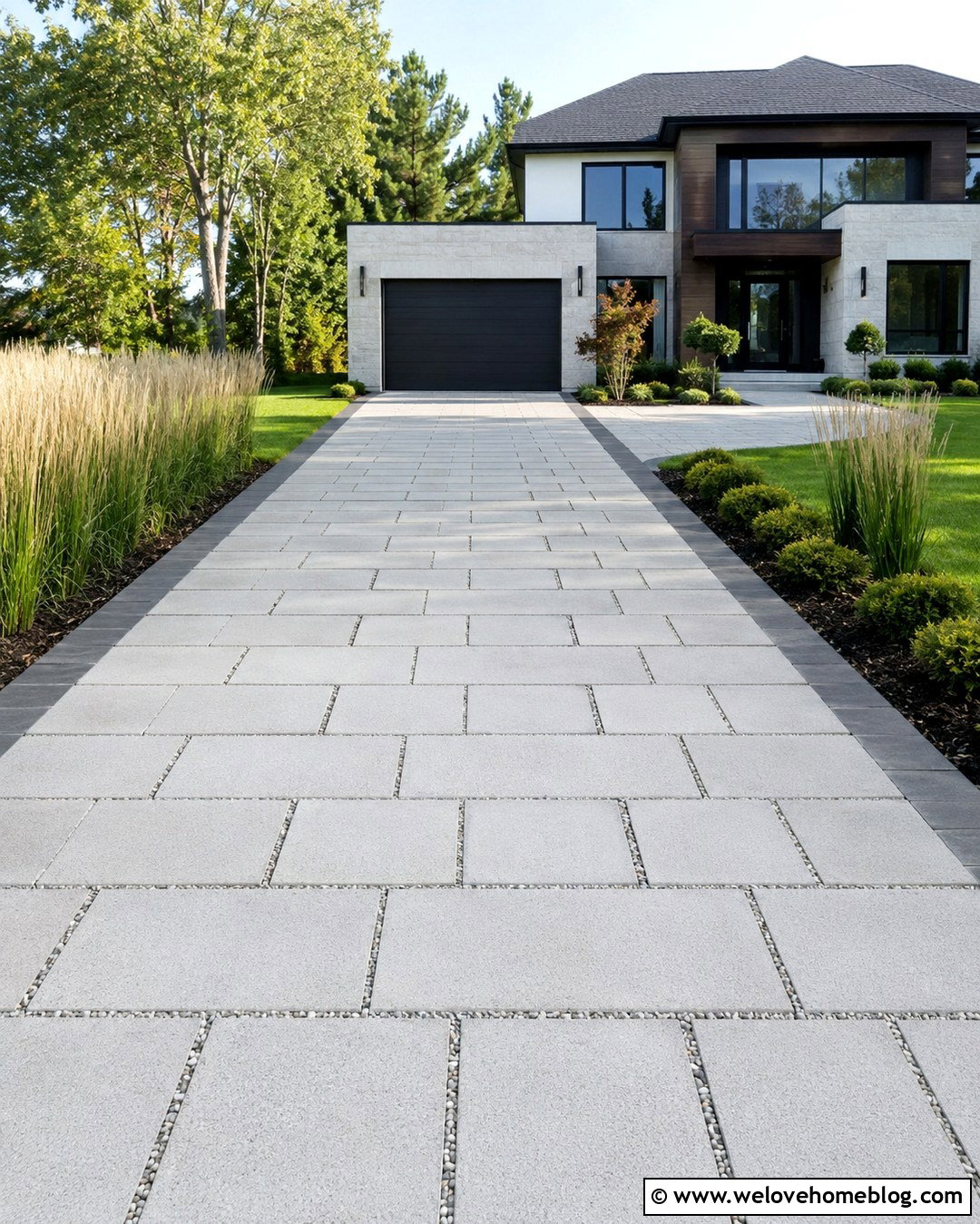
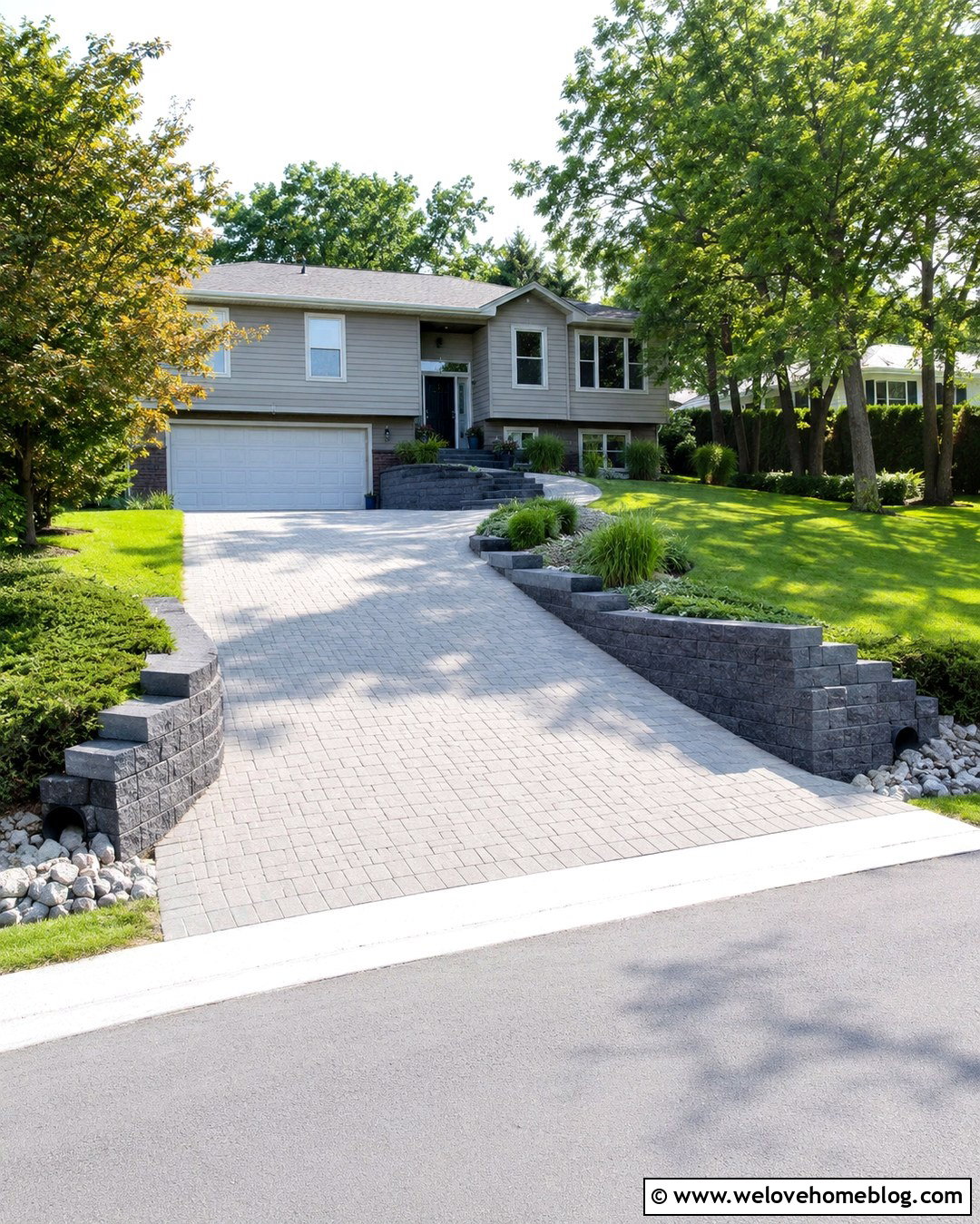
Permeable concrete pavers deliver the tailored appearance of masonry without forming one solid, runoff-producing slab. Specially designed blocks are installed with wider joints filled with small, clean aggregate. Water passes through those joints and into an open-graded stone base. Choose large rectangular pavers in soft gray for a modern house, then arrange them in a running bond or simple linear pattern. Dark charcoal borders can frame the driveway and visually connect it to black windows or exterior lighting. Keep the landscaping crisp with clipped shrubs, upright grasses, and rectangular planting beds. The base preparation matters as much as the visible pavers, so use an installer experienced with complete permeable systems. Vacuuming accumulated debris from the joints can help preserve drainage.
5. Permeable Brick Driveway
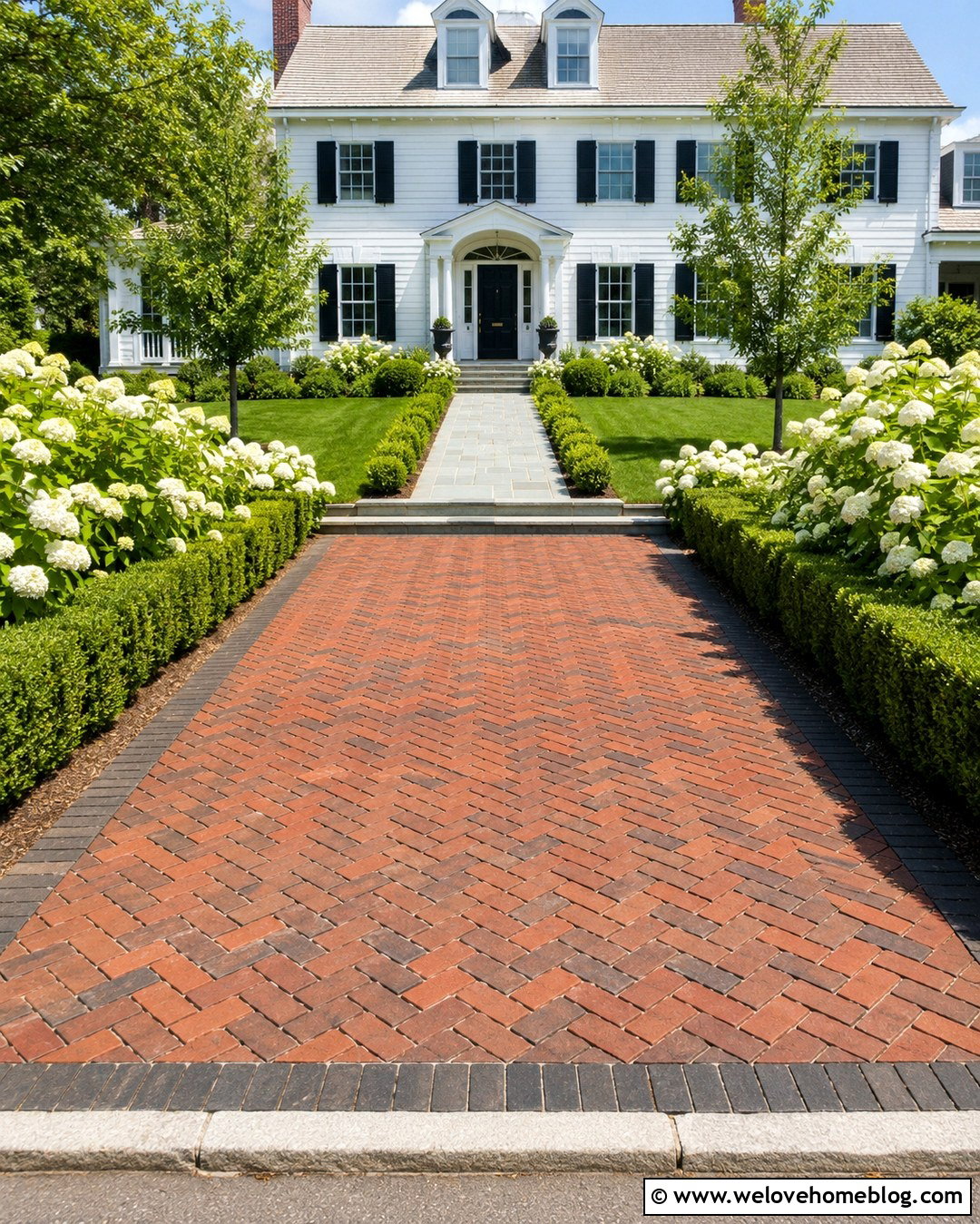
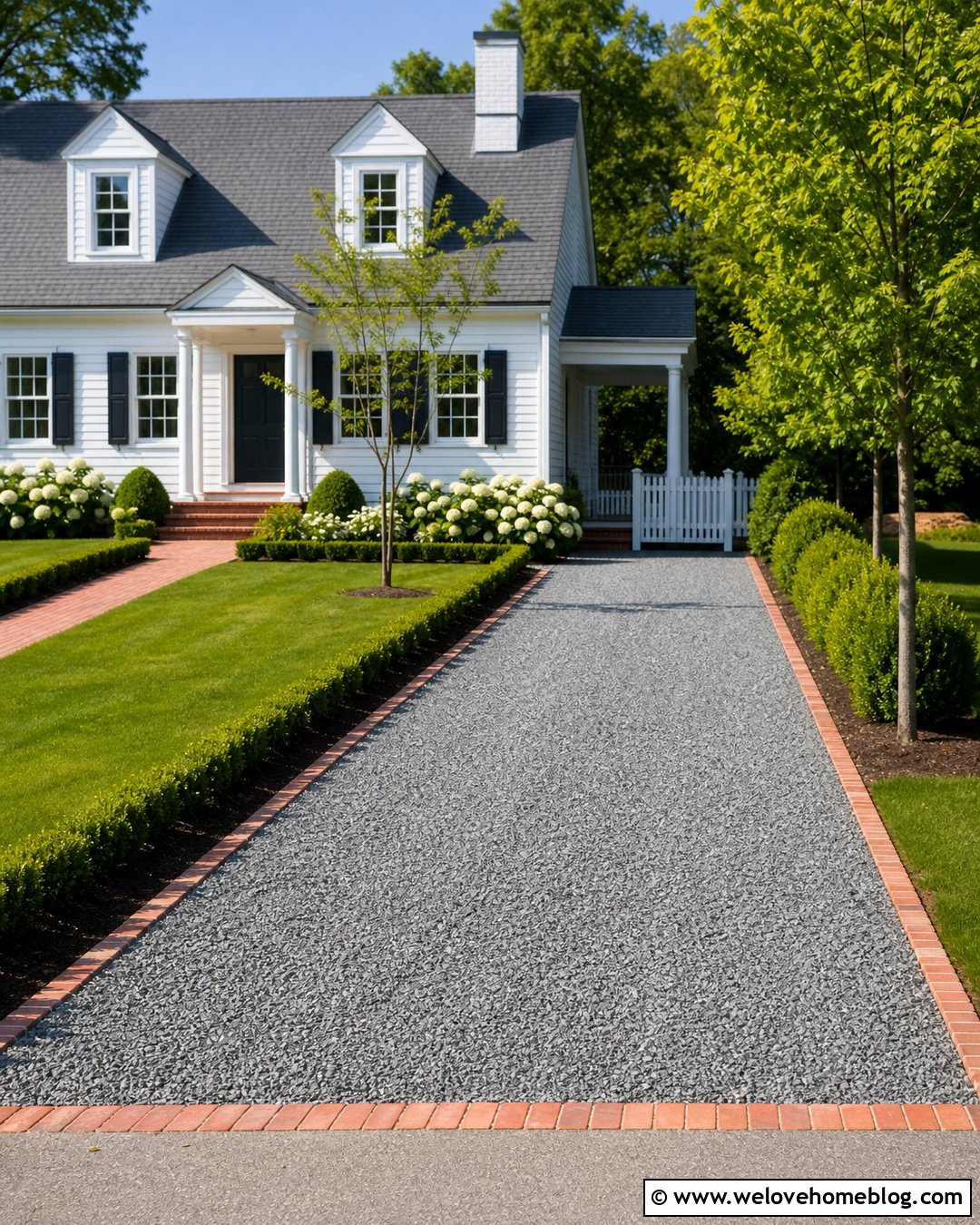
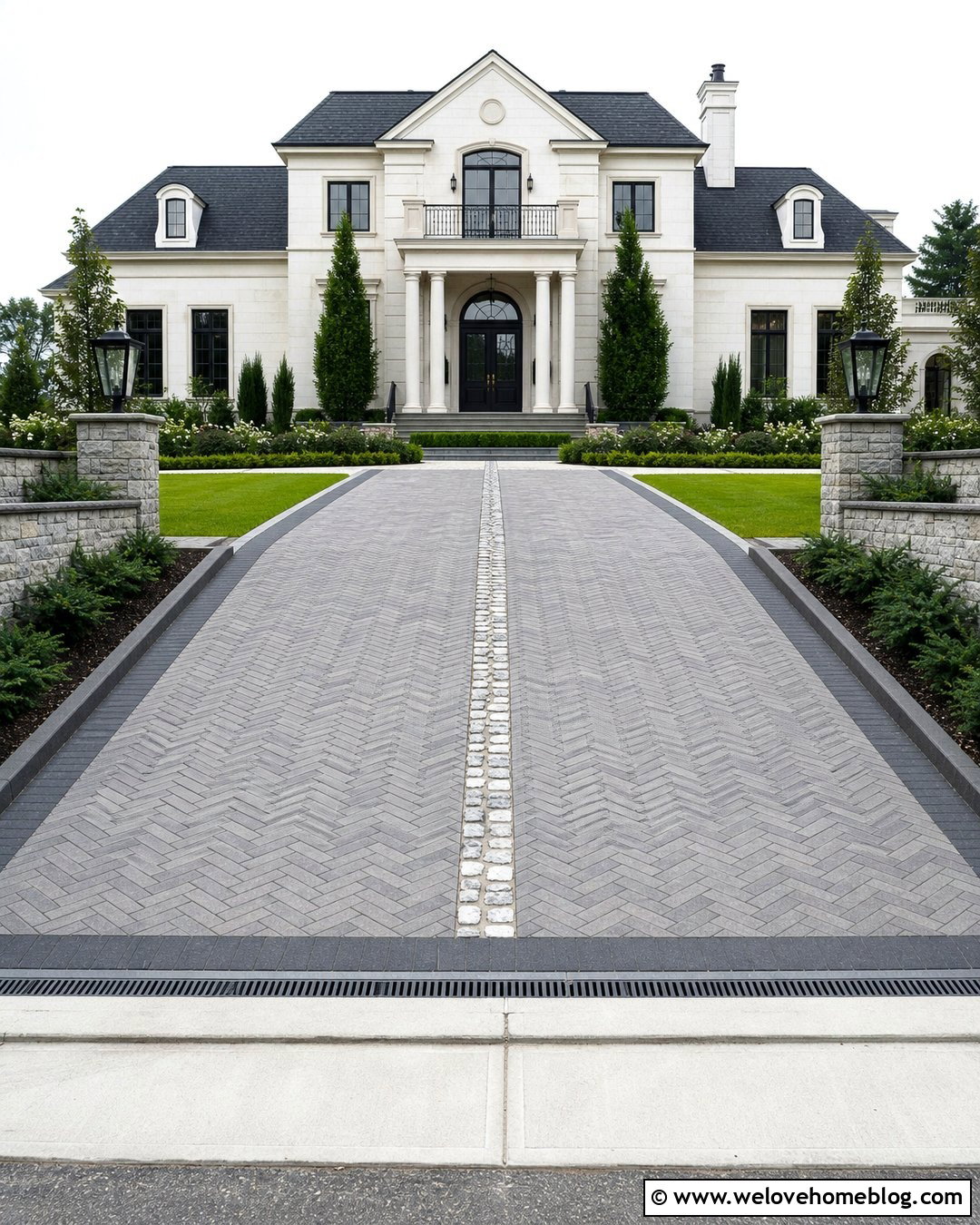
Clay brick pavers bring warmth and historic character to a permeable driveway. Instead of setting the bricks over an impermeable mortar bed, place driveway-rated pavers over open-graded aggregate with drainage joints between them. A herringbone pattern provides a strong visual arrangement for a rectangular driveway leading to a colonial or Georgian home. Use darker brick soldiers along the edges to create a defined border. Evergreen hedges, white flowering shrubs, and a straight stone walkway complete the traditional setting. Brick colors can be blended to soften stains and coordinate with an older facade. Keep joint aggregate slightly below the paver surface and remove leaves regularly. This reduces organic buildup while preserving the crisp pattern and the open spaces needed for water infiltration.
6. Pervious Concrete Driveway
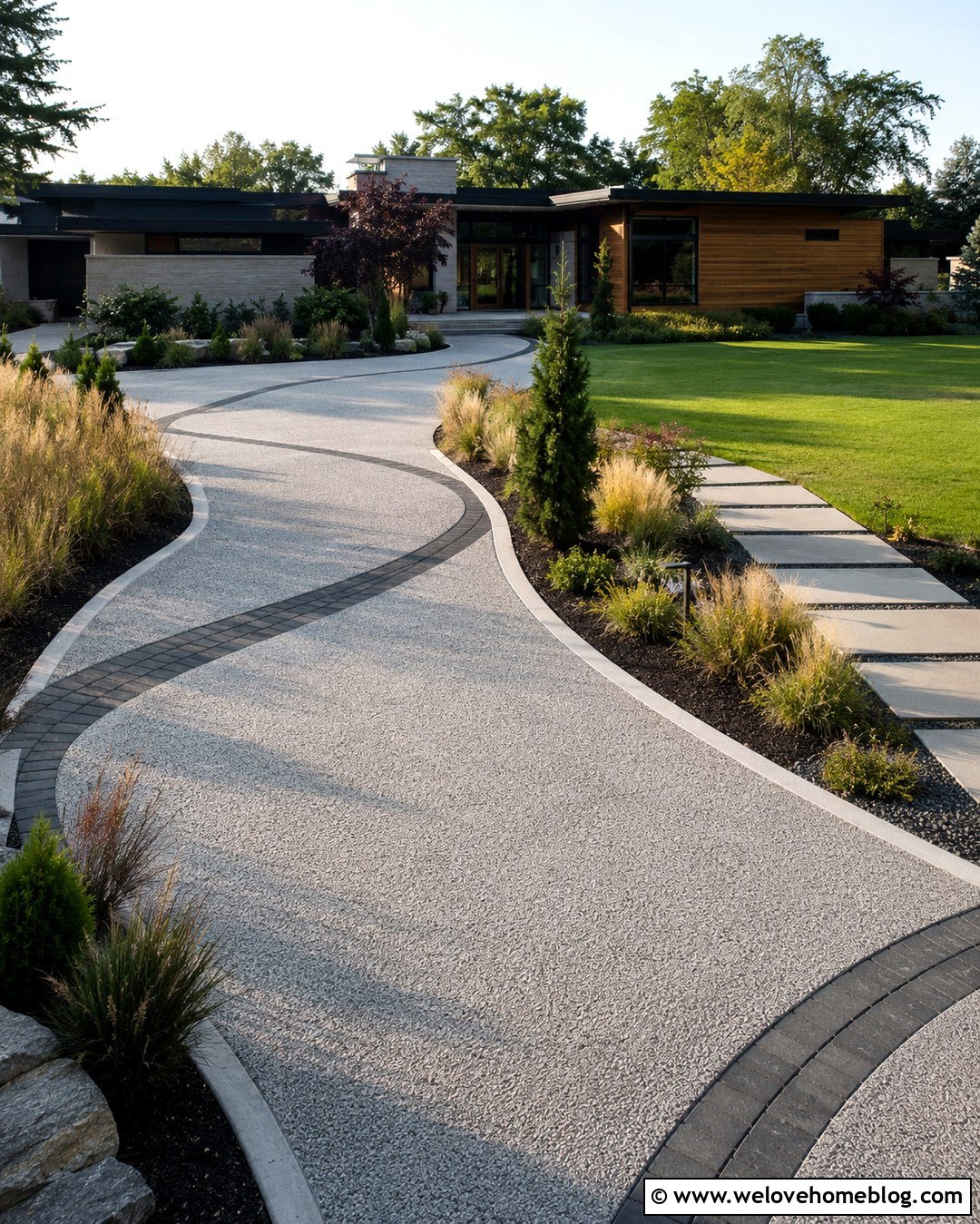
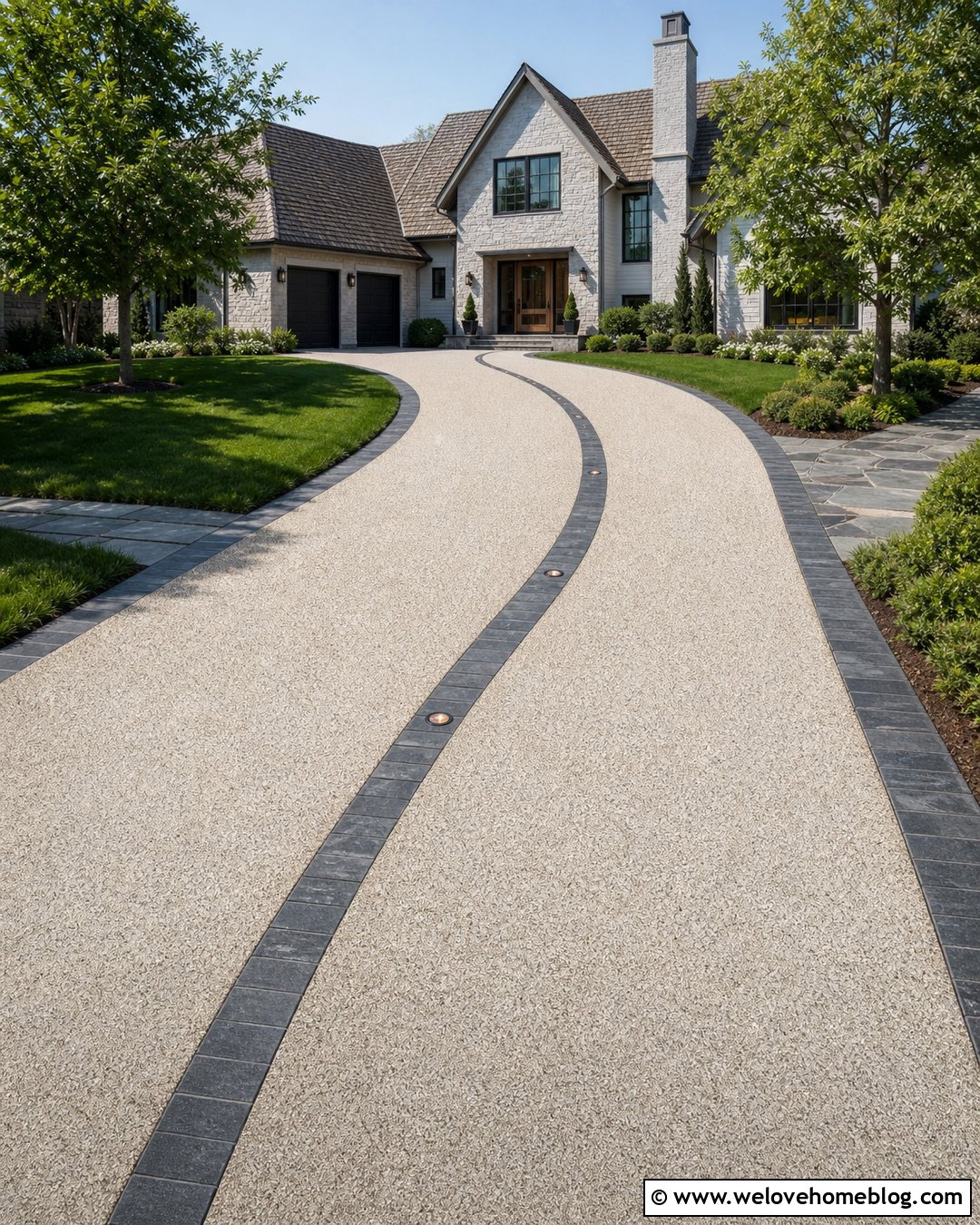
Pervious concrete is useful when you want a simple, continuous-looking driveway with less visual pattern. Its specialized mixture creates connected voids that allow water to move through the surface instead of flowing across it. It is one of the permeable pavement types identified by the EPA for managing rain and snowmelt. () Pair a light-gray pervious concrete surface with a gently curved layout leading to a midcentury modern house. Add bands of dark permeable pavers near the garage and sidewalk for contrast. Sculptural grasses, compact evergreens, and a broad lawn can soften the practical finish. Professional placement is important because the mixture, compaction, curing, base depth, and drainage design differ from conventional poured concrete.
7. Porous Asphalt Permeable Driveway
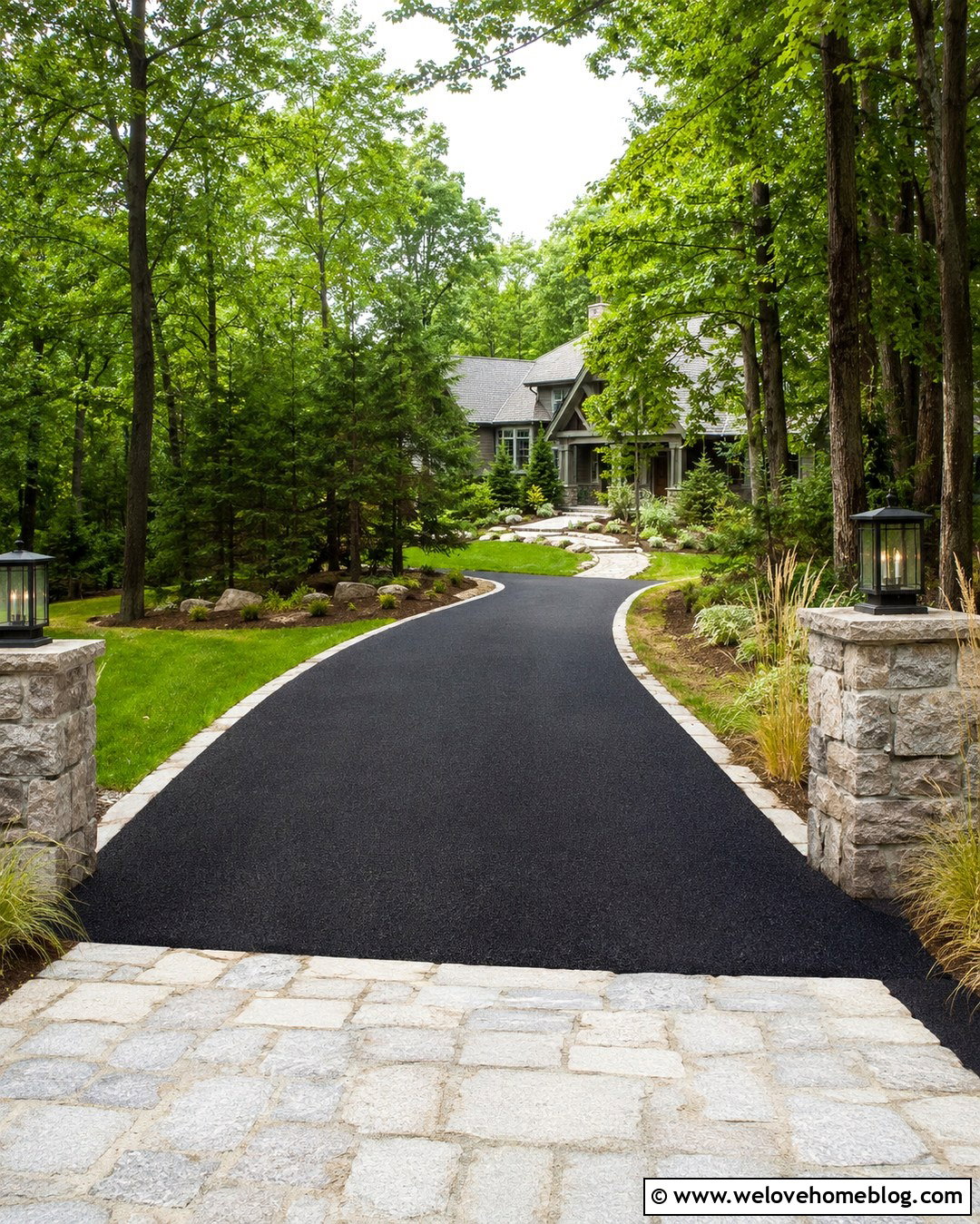
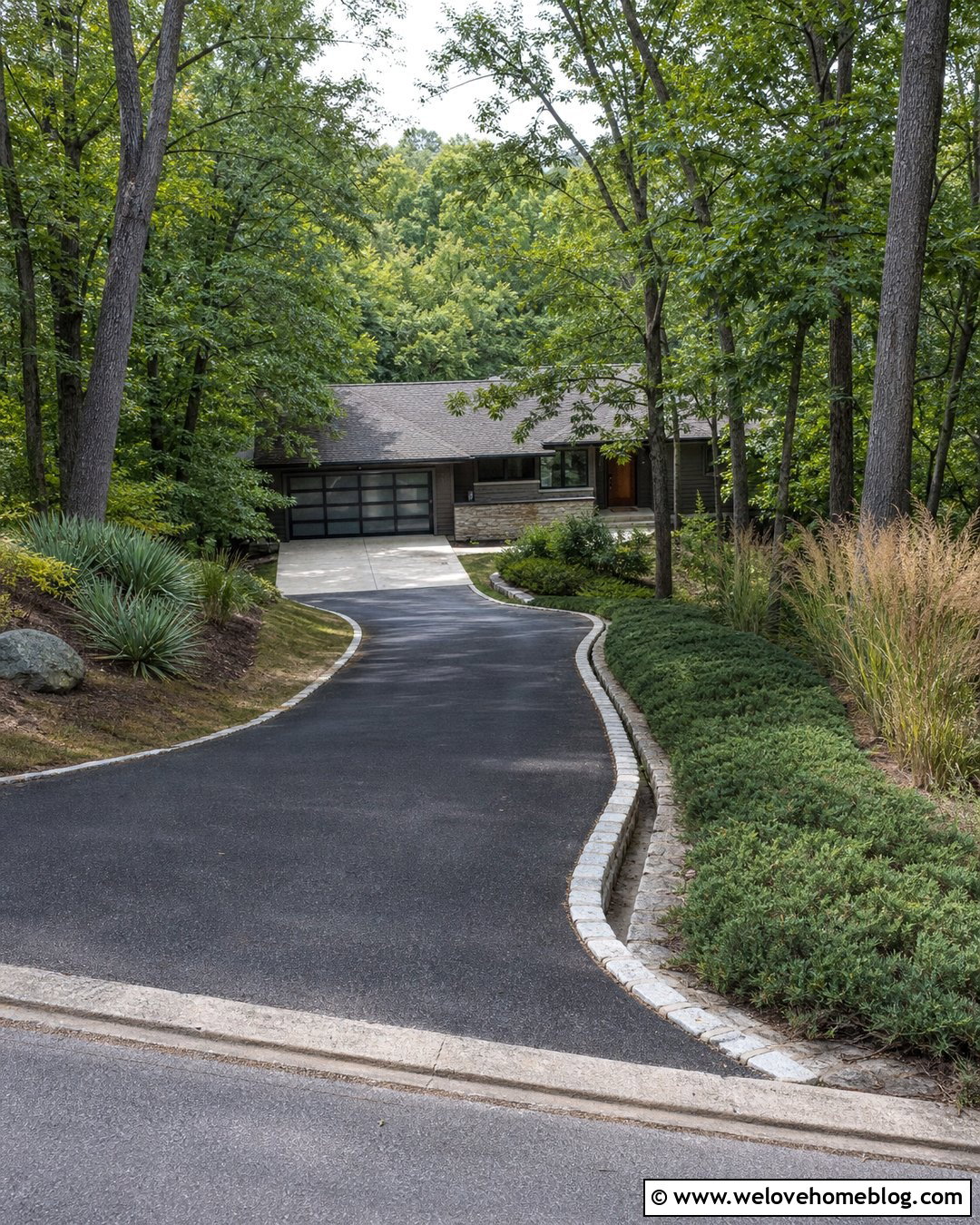
Porous asphalt resembles a familiar black asphalt driveway but is designed with interconnected spaces that let water reach the stone reservoir below. Its dark, understated finish works well for long driveways where decorative paving might overwhelm the landscape or budget. Use a gently sweeping layout leading to a country, craftsman, or wooded suburban home. Light granite curbing creates a sharp contrast and helps protect the edges from crumbling. Along the approach, add native grasses, evergreen shrubs, and shade trees that suit the surrounding environment. A stone apron at the street can make the entrance feel more finished. Porous asphalt should be installed as a complete system with appropriate aggregate layers, soil evaluation, and overflow planning rather than treated as standard asphalt with a different surface mix.
8. Resin-Bound Gravel Permeable Driveway
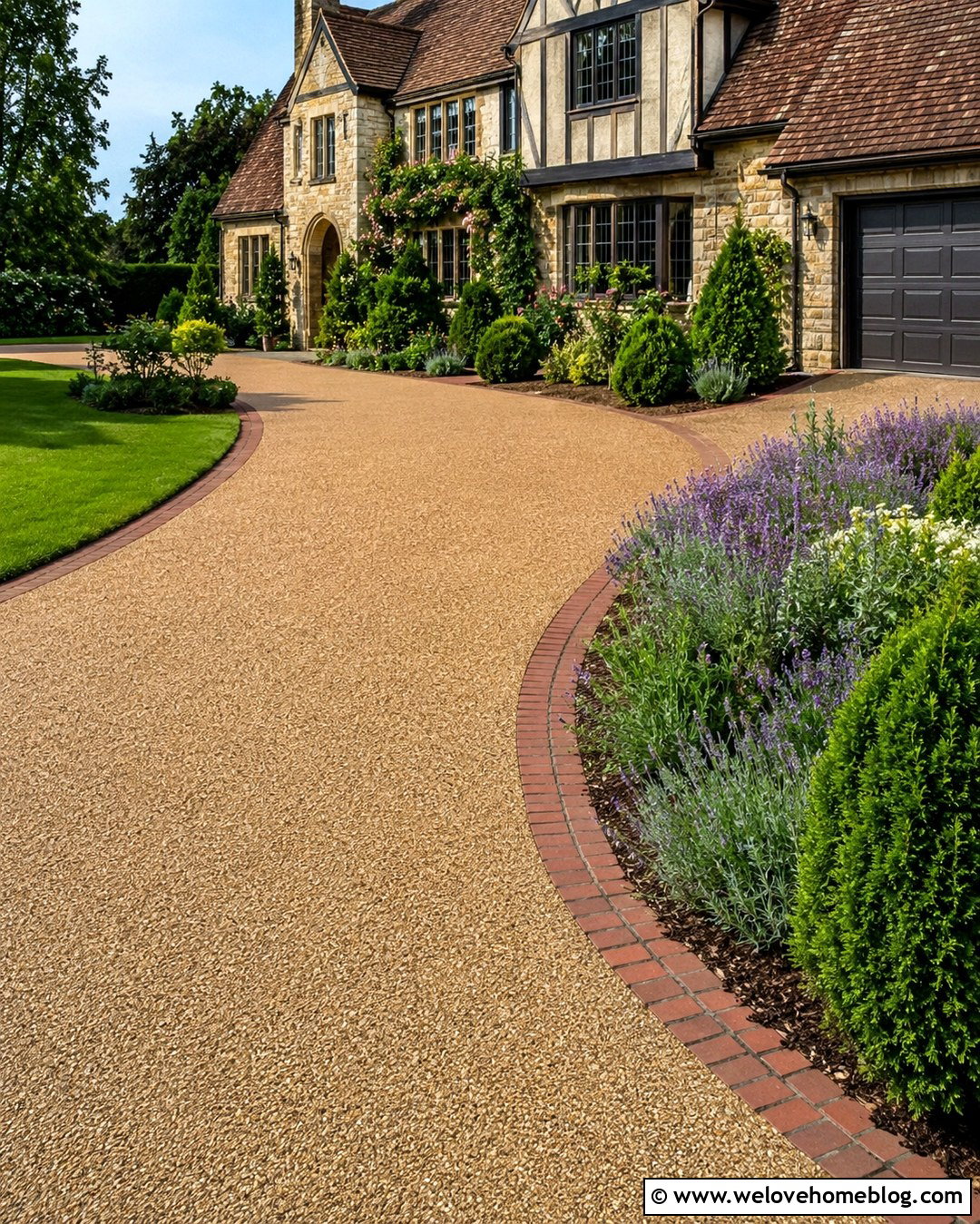
A resin-bound gravel driveway combines small decorative aggregate with clear resin before the mixture is spread into a smooth surface. When designed over a permeable base, the connected voids allow water to pass through while the bonded stones stay in place. Do not confuse it with resin-bonded gravel, where loose aggregate is scattered over resin and the finished surface may not be permeable. Choose a warm honey-colored blend for a curved driveway beside a stone cottage or Tudor-inspired house. Brick edging can echo the facade, while lavender, catmint, and clipped evergreens soften the boundary. Add a coordinating resin-bound walkway for continuity. UV-stable resin, suitable aggregate, careful mixing, and dry installation conditions help produce an even color and consistent finish.
9. Grass Grid Permeable Driveway
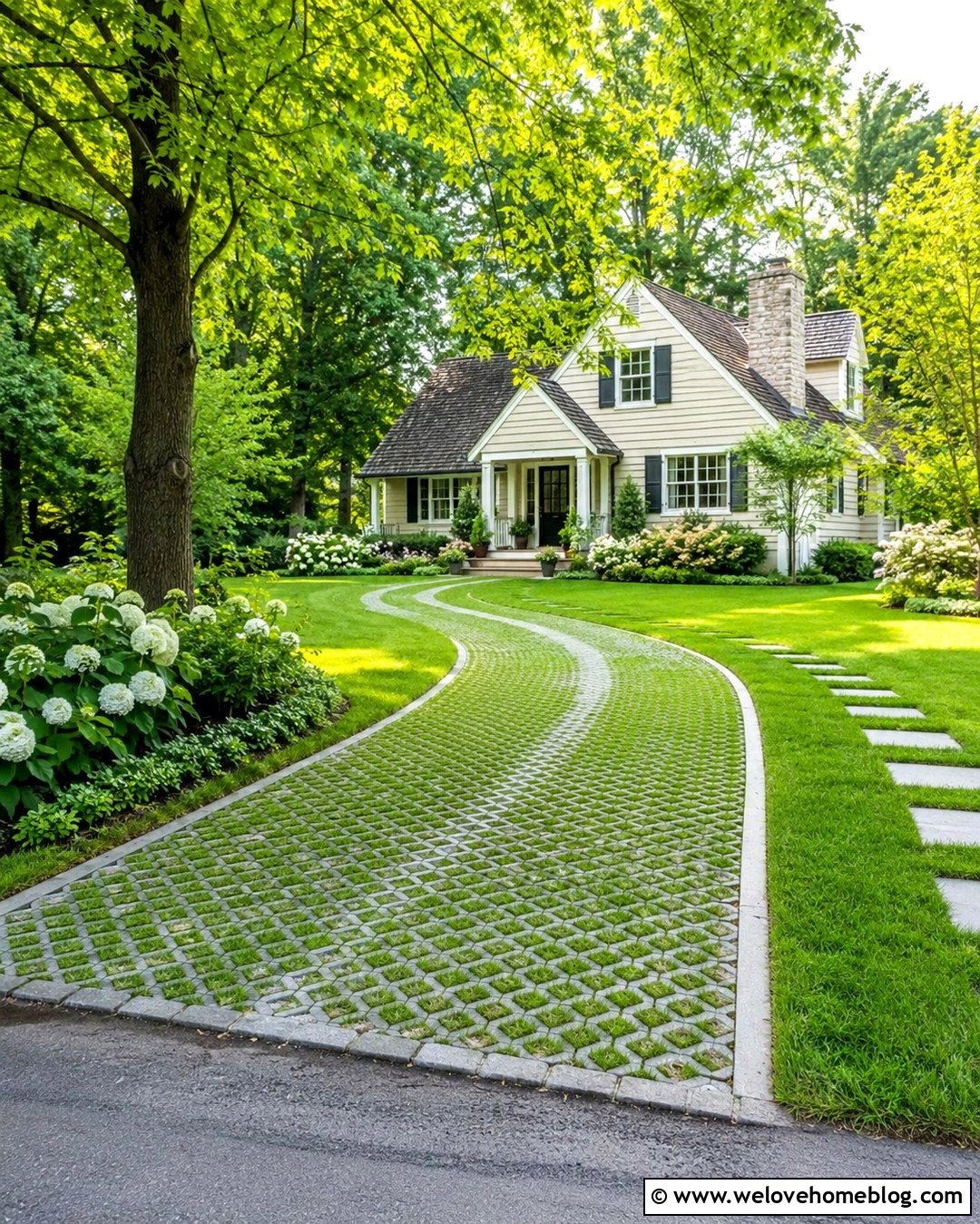
Could your driveway read as part of the lawn rather than a separate paved area? Interlocking plastic grass grids create reinforced cells that support soil and turf while protecting the root zone from direct tire pressure. This option is particularly attractive for secondary parking, lightly used driveways, and properties where a large hard surface would feel intrusive. Use a straight or gently curved layout leading to a cottage, farmhouse, or compact suburban home. Define the edges with flush steel restraints so mowing remains simple. Plant matching lawn grass in the cells and surround the driveway with informal flowering beds. Select turf suited to local light, moisture, and traffic conditions. Regular watering, mowing, aeration, and occasional soil replacement may be needed to maintain even green coverage.
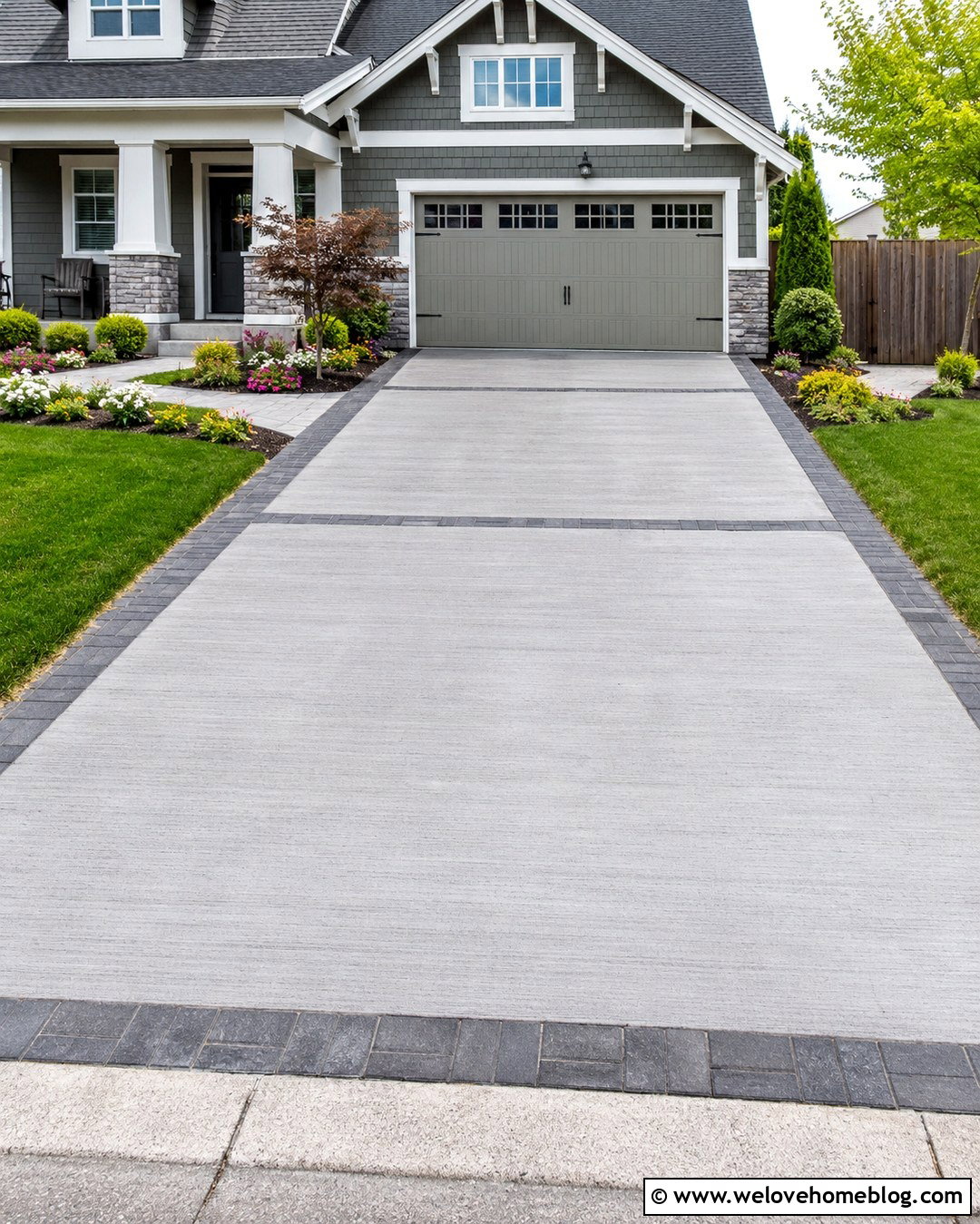
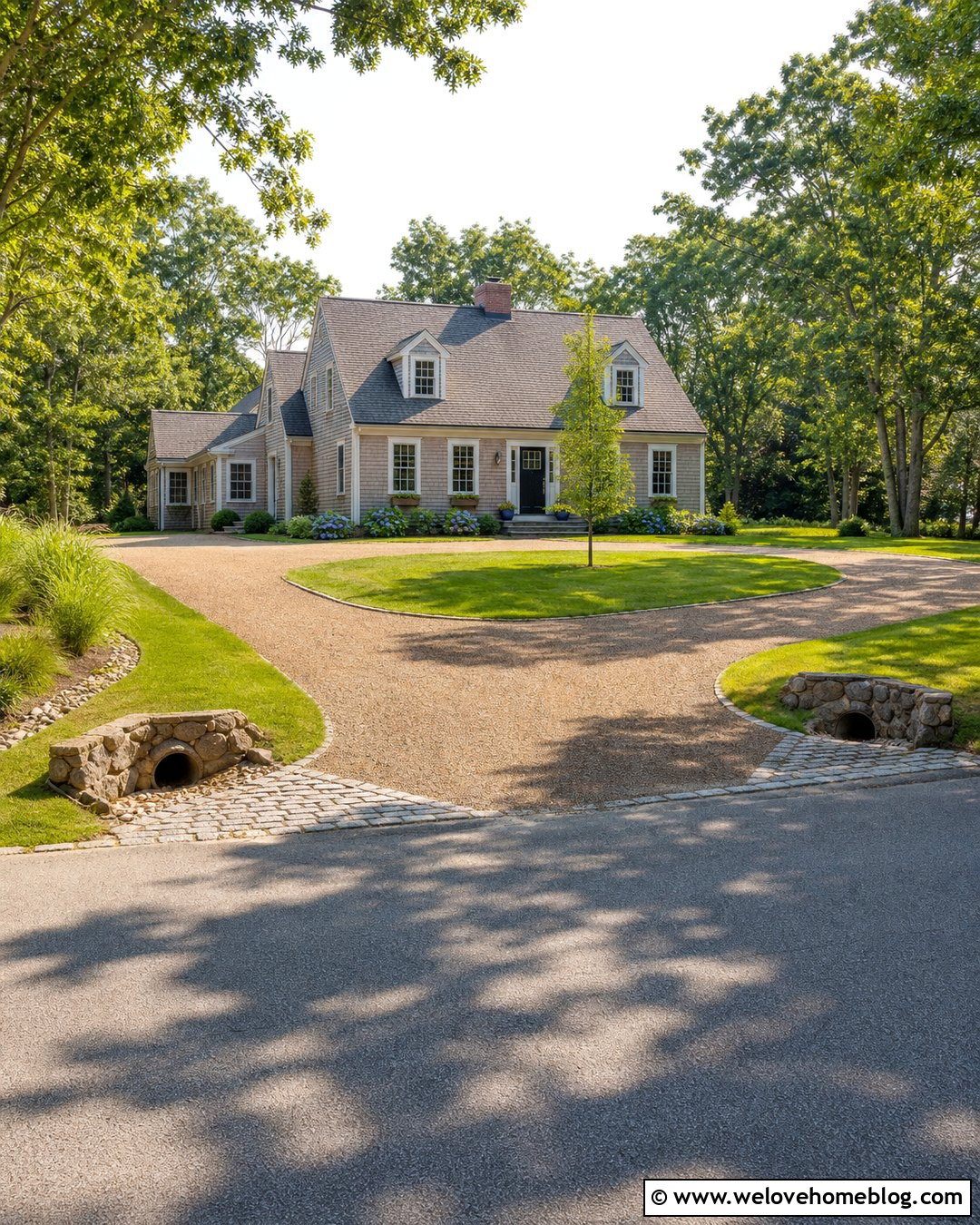
10. Concrete Grass Paver Driveway
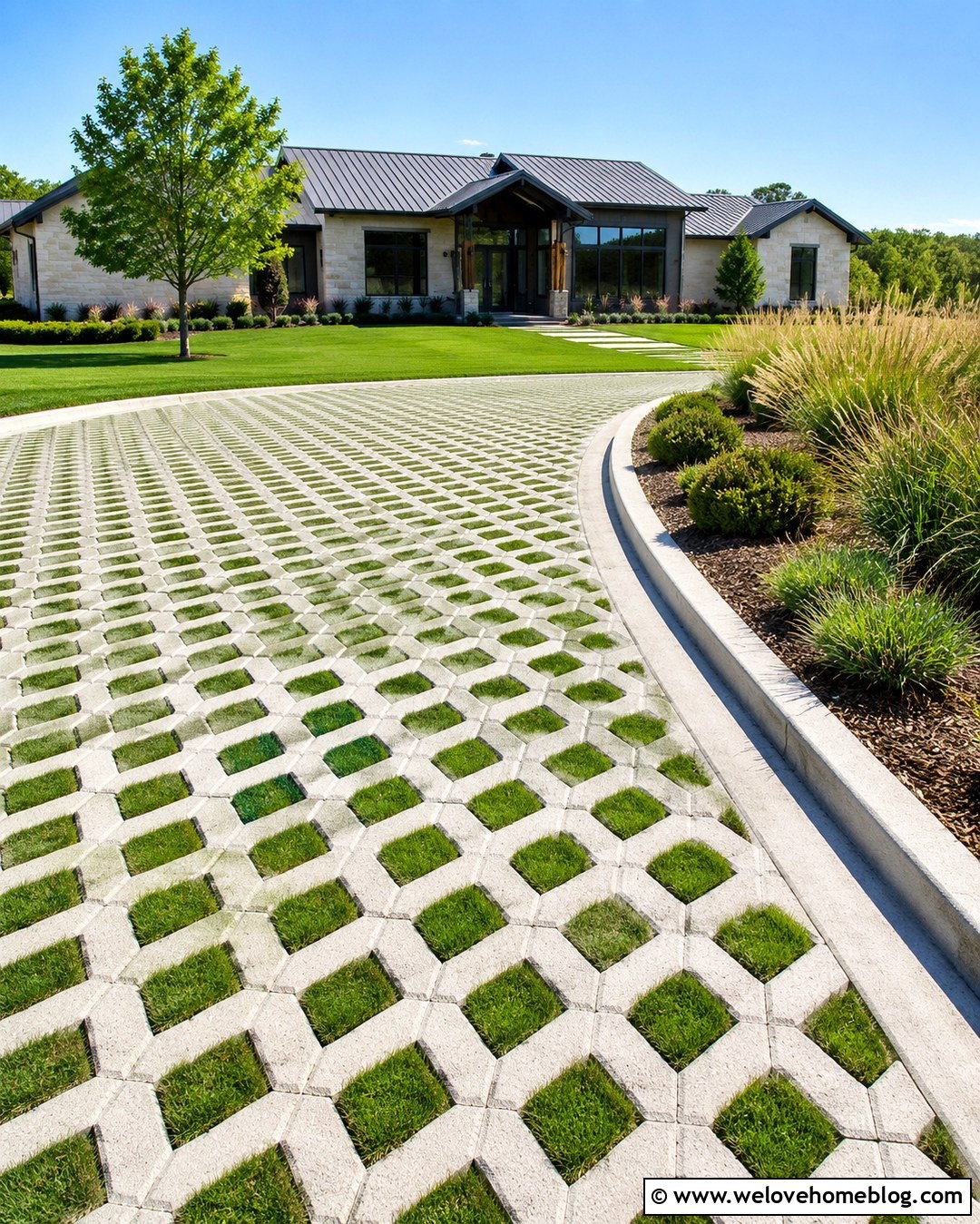
Concrete grass pavers provide a more visible and structured alternative to hidden plastic turf grids. Their open lattice blocks create strong driving areas while allowing grass or low-growing ground cover to fill the voids. A broad driveway with a gentle curve complements a contemporary ranch home, especially when the geometric paver pattern is repeated in the walkway. Frame the surface with smooth concrete curbing installed level with the lawn. Use ornamental grasses, compact shrubs, and one specimen tree to reinforce the modern composition. Concrete lattice units can look harsh when plants are sparse, so choose a durable turf and establish it fully before frequent vehicle use. Proper soil depth, irrigation, open base materials, and edge restraint will help the green sections stay healthy and evenly aligned.
11. Grass Ribbon Permeable Driveway
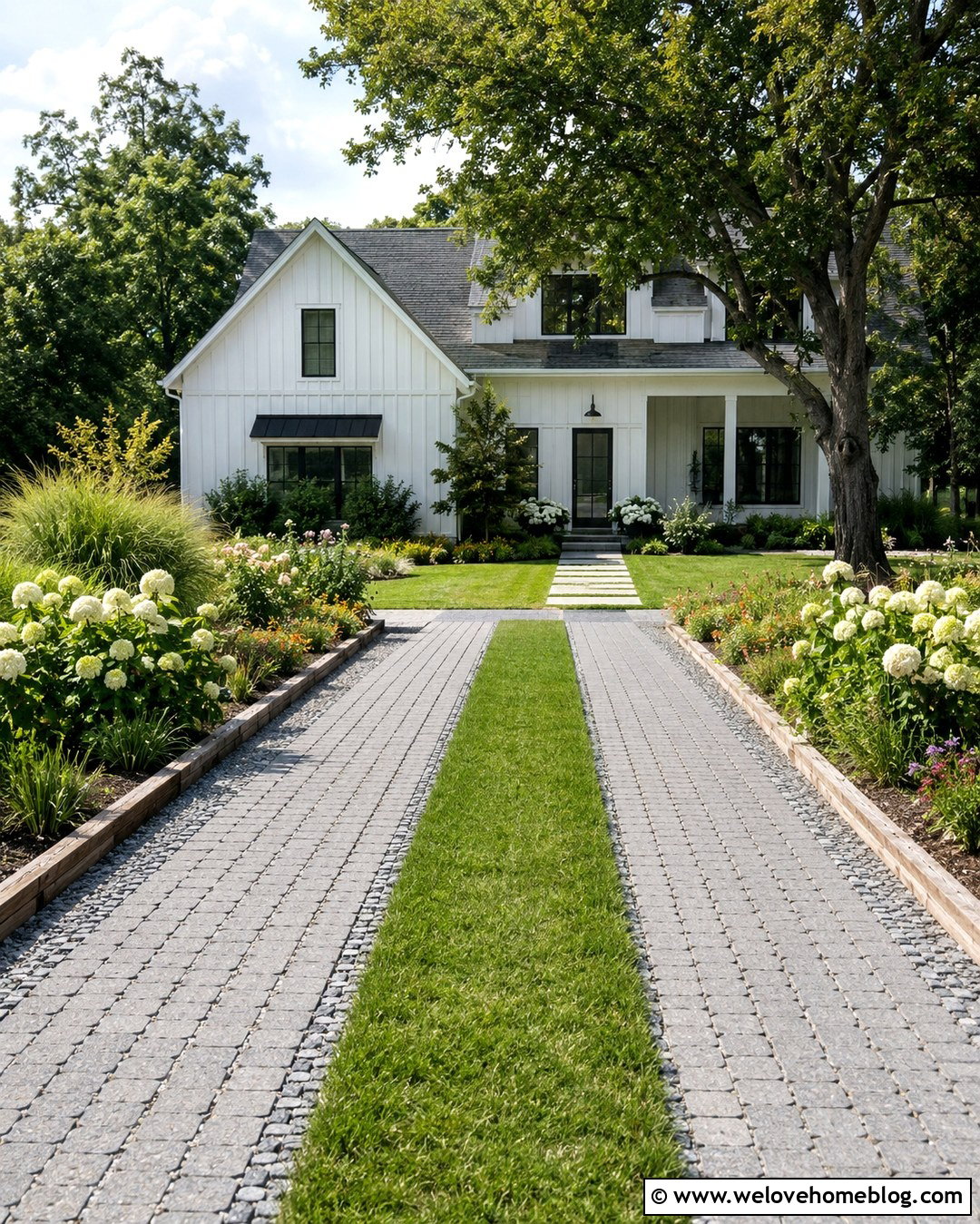
A grass ribbon driveway uses two reinforced driving tracks with a planted strip running between them. It reduces the amount of hard paving and creates a classic country look without asking ordinary lawn to carry the full vehicle load. Build the tire tracks with permeable concrete pavers and fill their open joints with small aggregate. Continue durable grass through the center and along both sides. This straight layout works beautifully with a modern farmhouse, barn-style garage, or modest cottage. Low timber edging can separate nearby planting beds while keeping the entrance relaxed. Add white hydrangeas, native grasses, and a stepping-stone walkway to the front door. Accurate track spacing is essential, especially when the household uses vehicles with different widths or turning requirements.
12. Gravel Ribbon Permeable Driveway
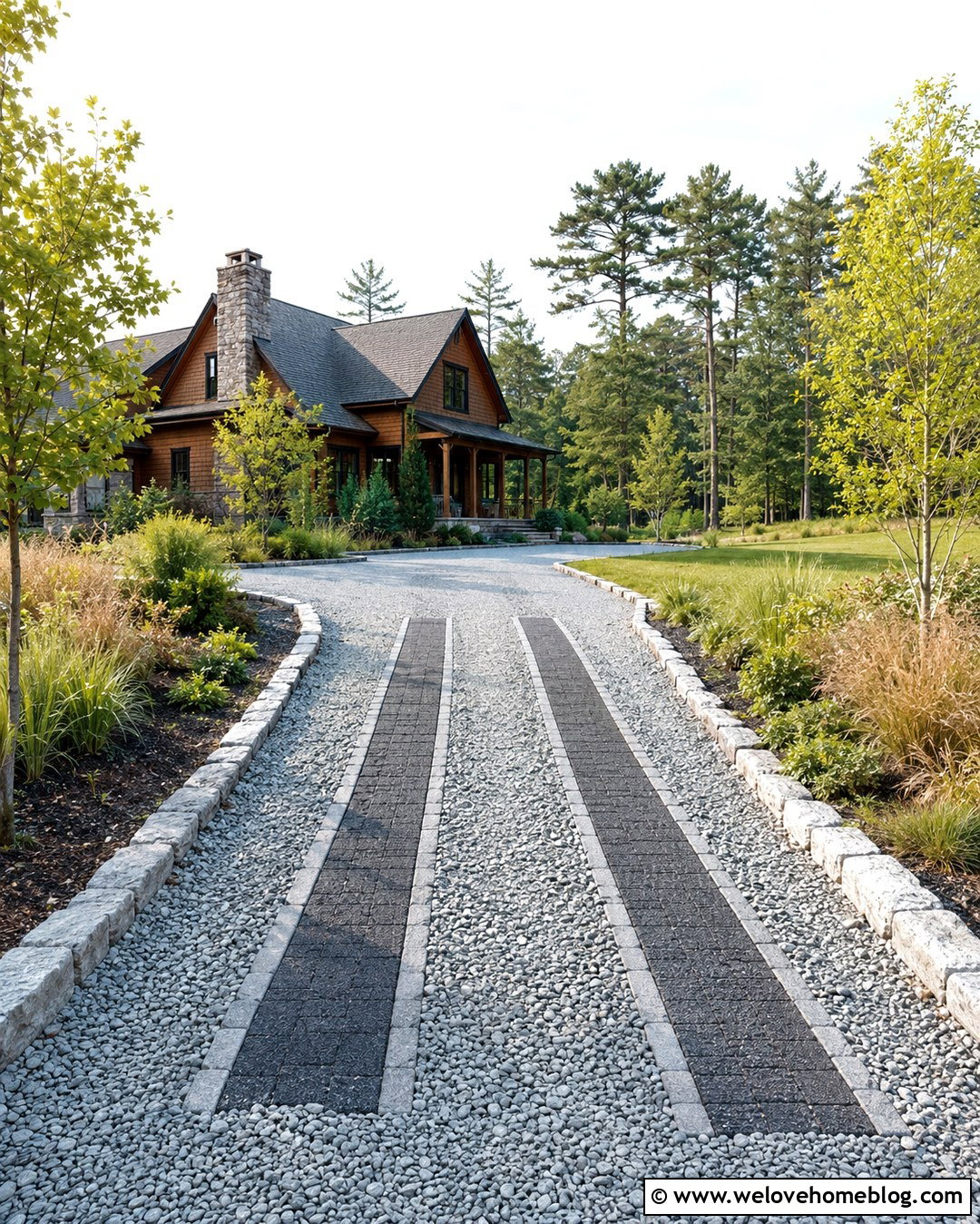
A gravel ribbon driveway offers a practical variation on the traditional two-track layout. Create two bands of permeable concrete or stone pavers where vehicle tires travel, then fill the center and outer sections with compacted angular gravel. The hard tracks provide predictable wheel paths, while the larger gravel areas maintain a natural, drainage-friendly appearance. Use this arrangement on a long straight approach to a country house, cabin, or rustic craftsman home. Granite cobbles can define the outer edges and prevent the gravel from spreading into planting beds. Frame the entrance with native shrubs, meadow grasses, and small deciduous trees. Choose contrasting but compatible colors, such as charcoal tracks with pale gray gravel. Include a wider permeable parking pad near the garage for easier turning.
13. Natural Stone Permeable Driveway
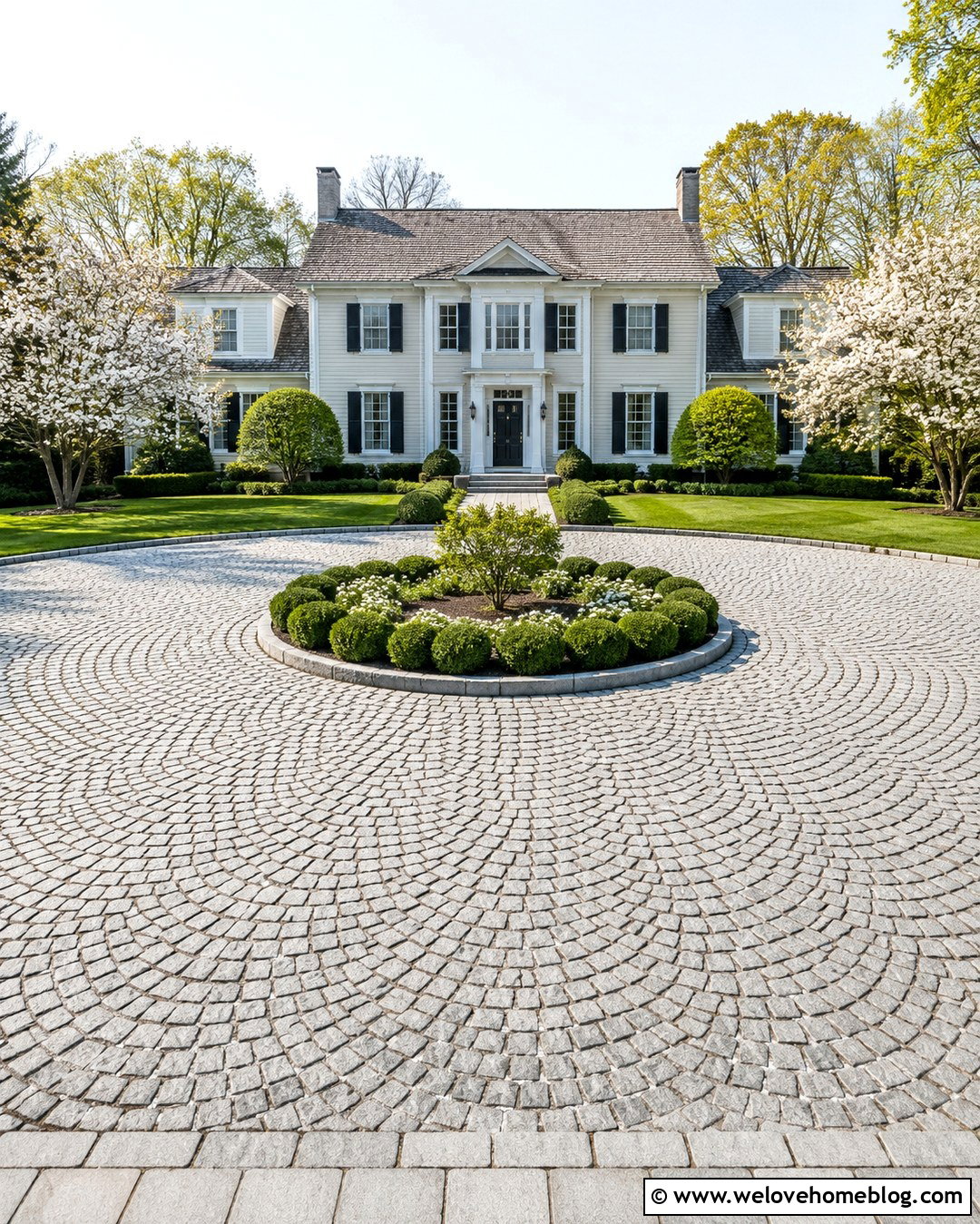
Natural stone setts can create an upscale permeable driveway when installed with open aggregate-filled joints rather than solid mortar. Granite, sandstone, and basalt each provide distinct colors and textures. For a refined European-influenced look, arrange rectangular gray granite setts in a fan or running pattern across a circular driveway. Use matching stone curbs around the center island and entrance. A formal lawn, clipped boxwoods, flowering trees, and symmetrical walkway can balance the irregular texture of the stone. Select pieces rated for vehicle traffic and avoid thin garden paving that may crack under concentrated loads. The permeable joint material and open-graded base should be specified as part of one drainage system. This surface costs more initially but creates exceptional visual depth and lasting architectural character.
14. Cobblestone Permeable Driveway
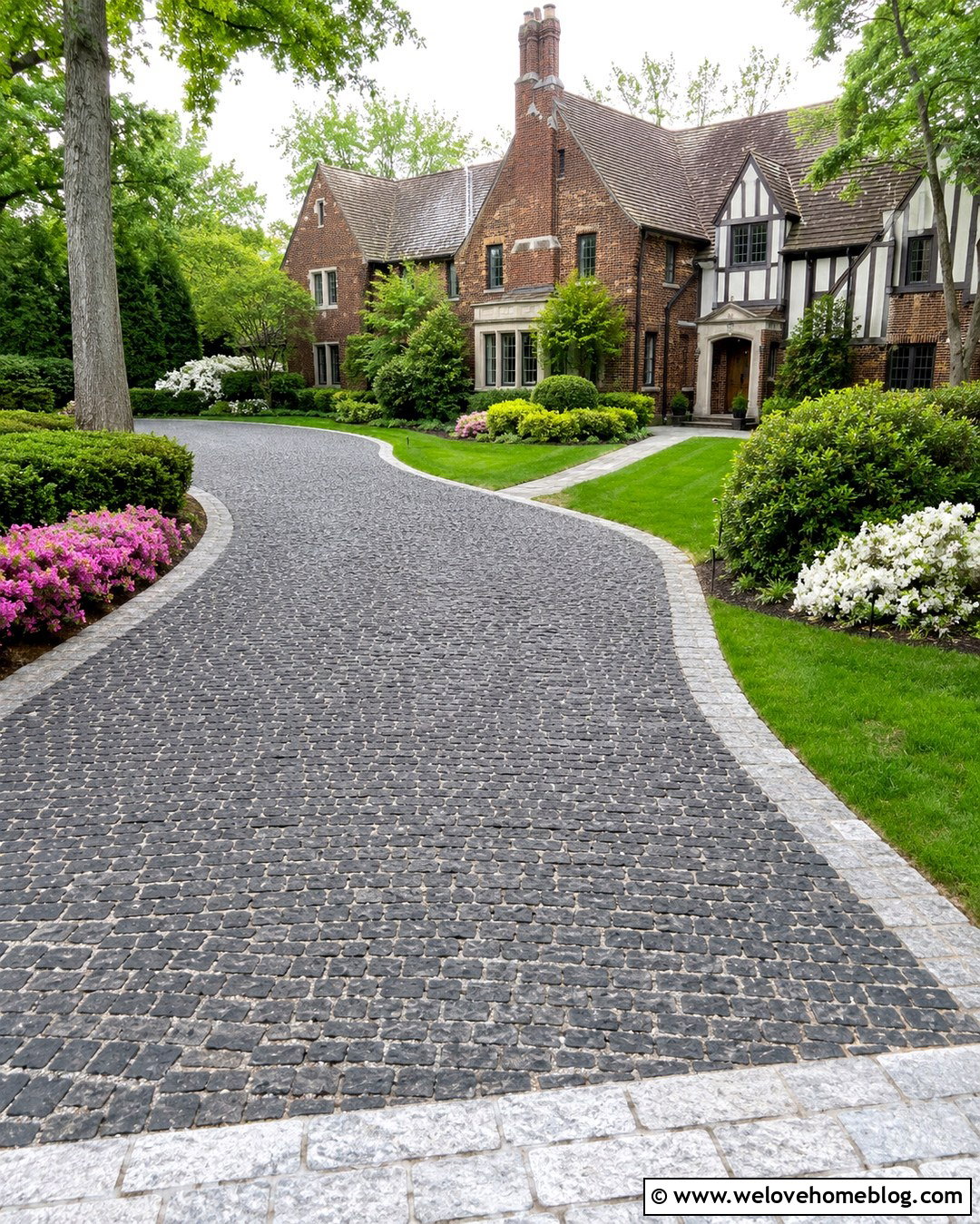
Rounded or split-face cobblestones give a driveway an old-world appearance that becomes more attractive as the surface weathers. To keep the design permeable, install the stones over drainage aggregate and fill generously spaced joints with clean stone chips. A curved cobblestone driveway suits a Tudor, colonial revival, or traditional brick home. Dark granite cobbles can form the main surface, while lighter stone creates a border and entrance apron. Layer the surroundings with yews, flowering shrubs, ground cover, and a mature shade tree. Because individual cobbles have an uneven texture, careful grading is necessary for comfortable walking and smooth vehicle movement. A flatter split-face finish may be more practical near the garage and front path, while rounded stones can accent lower-traffic border areas.

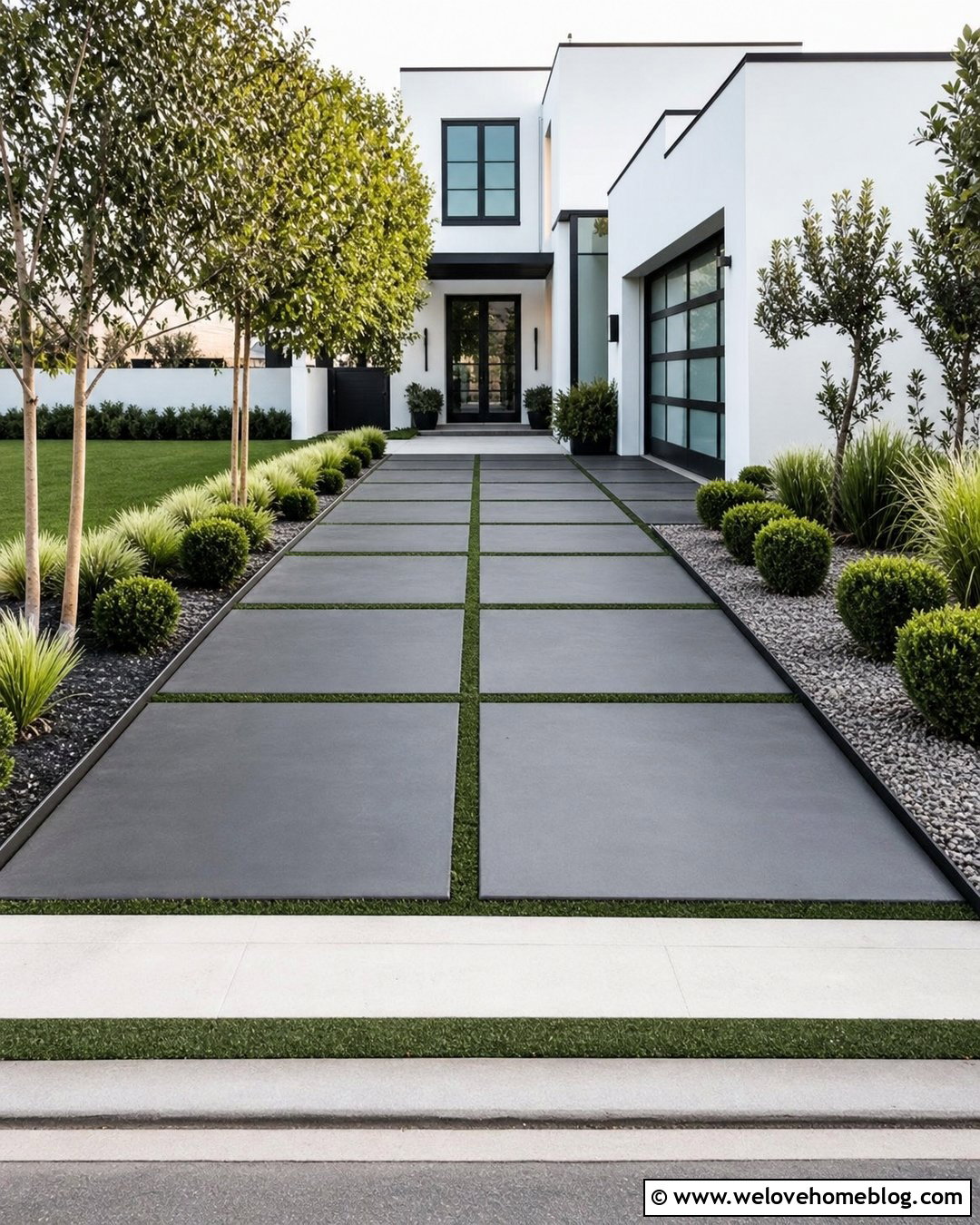
15. Shell Permeable Driveway

Crushed shell creates a bright coastal driveway with subtle cream, white, and pale tan tones. It works best in regions where driveway-grade shell is locally available and compatible with neighborhood conditions. Install it over a well-draining aggregate foundation and compact it in layers, leaving enough pore space for water movement. A straight shell driveway can lead to a coastal cottage, low-country home, or light-colored ranch. Natural stone edging keeps the material away from lawns and sidewalks. Surround the drive with salt-tolerant grasses, wax myrtle, dwarf palmettos, and airy flowering plants. Shell can break down and compact over time, so periodic topdressing may be required. Use a stable paver apron at the street to limit tracking, particularly where the driveway meets a busy paved road.
16. Decomposed Granite Permeable Driveway
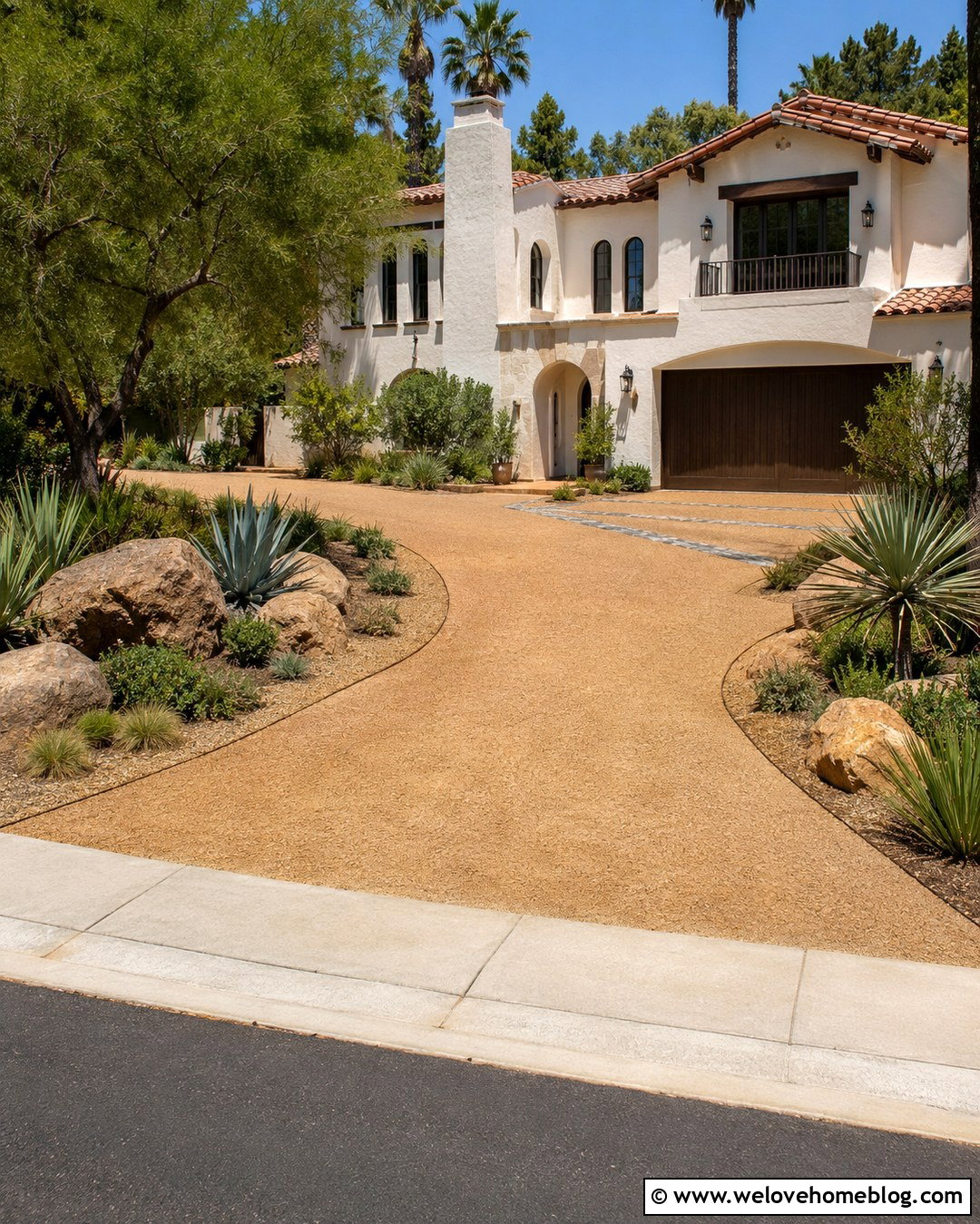
Decomposed granite produces a smooth, earthy surface that fits Southwestern, Mediterranean, and informal contemporary homes. For better permeability, use an installation method and stabilizer specifically intended to retain drainage rather than creating a tightly sealed crust. Warm rust, gold, or buff tones can make a gently curved driveway feel integrated with a dry landscape. Steel edging holds the fine material in place and creates clean transitions into planting beds. Add agave, yucca, ornamental grasses, sage, and weathered boulders for a complete drought-conscious design. A band of permeable stone pavers near the garage can reduce loose particles at the threshold. Decomposed granite may erode on steep grades or during intense storms, so drainage routes, slope, compaction, and local rainfall should guide its use.
17. Permeable Porcelain Paver Driveway
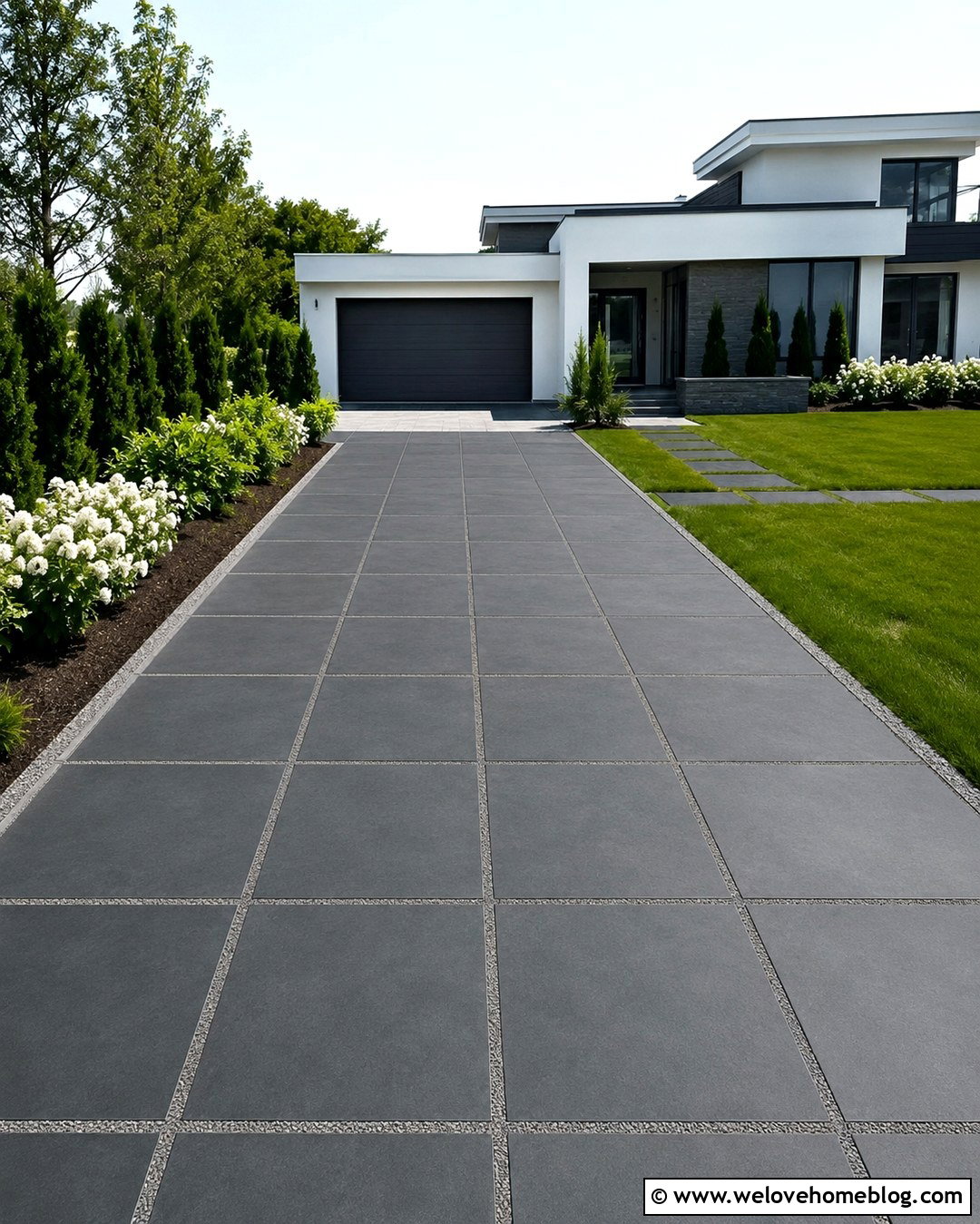
Porcelain itself is not porous, but driveway-rated porcelain pavers can form part of a permeable system when installed with open aggregate joints over a free-draining base. Large-format charcoal or light-gray units create a clean surface for a modern house without the plain appearance of one concrete slab. Arrange the pavers in a straight grid and emphasize the joints with contrasting gray stone chips. Narrow grass strips along both edges can soften the geometry. Add structured evergreen shrubs, white flowering plants, and a matching porcelain walkway. Confirm that the chosen pavers have the thickness, surface texture, and load rating required for vehicle traffic. The supporting layers and joint width must also follow the manufacturer’s permeable installation method, since standard mortar installation would prevent the driveway from draining as intended.
18. Permeable Flagstone Driveway
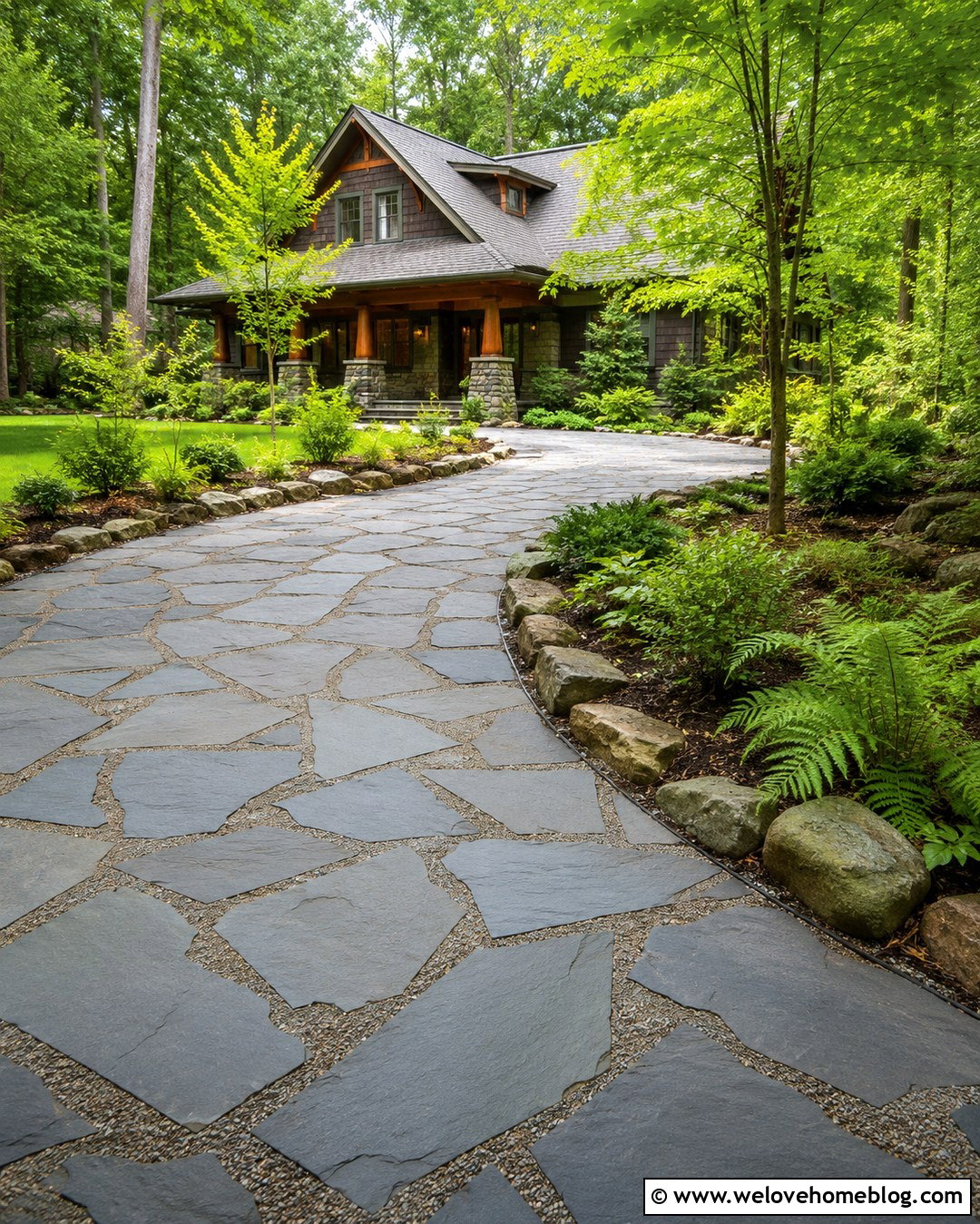
Large flagstones separated by gravel joints create a relaxed driveway that feels connected to the surrounding garden. Choose thick, vehicle-rated sandstone or bluestone pieces and place them over an engineered open-graded base. Wider gaps filled with angular stone allow rainfall to travel between the slabs. An irregular layout works naturally on a curved driveway leading to a craftsman bungalow or woodland cottage. Use rough stone edging, fern beds, native shrubs, and small canopy trees to frame the approach. Keep the flagstone surfaces reasonably level, especially along the primary tire paths and pedestrian route. Because irregular slabs create variable joint widths, installation requires thoughtful fitting and stable support. Repeat the same stone in the front walkway or porch steps to make the entire entrance feel intentional.
19. Mixed Paver And Gravel Permeable Driveway

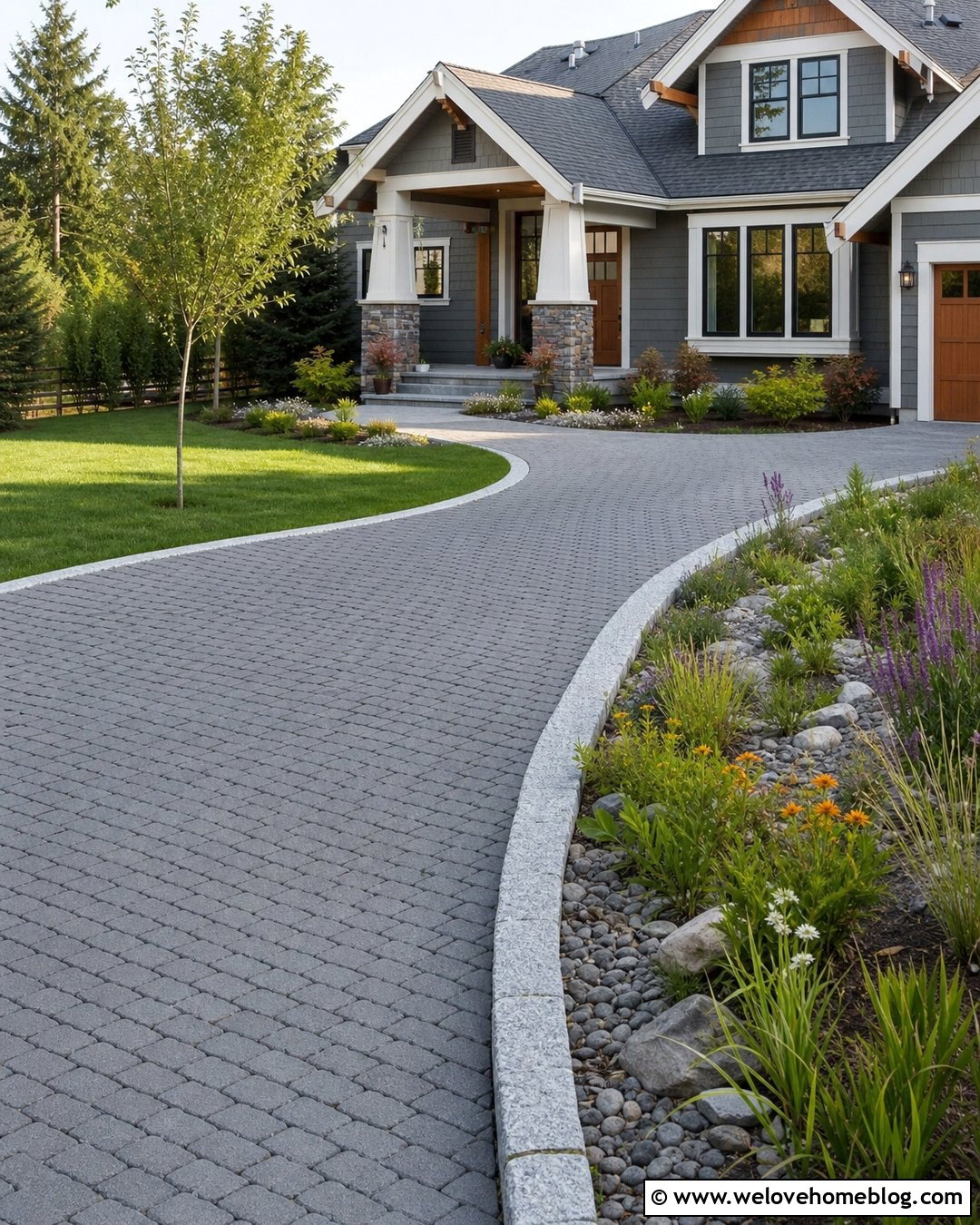
Combining permeable pavers and stabilized gravel can divide a large driveway into attractive, functional zones. Use permeable concrete pavers for the entrance apron, turning area, and space directly outside the garage. Fill the longer approach with gravel grids and angular crushed stone. On a circular layout, a paver ring can define the center island while maintaining consistent drainage through open joints. This mixed design works with a large craftsman, contemporary farmhouse, or transitional home. Coordinate the materials by pairing warm gray pavers with slightly lighter granite gravel. Plant the island with a small ornamental tree, low evergreens, and seasonal flowers that will not block sightlines. Strong transitions between materials prevent gravel migration and make snow removal, walking, parking, and everyday maintenance more manageable.
20. Permeable Driveway With Rain Garden
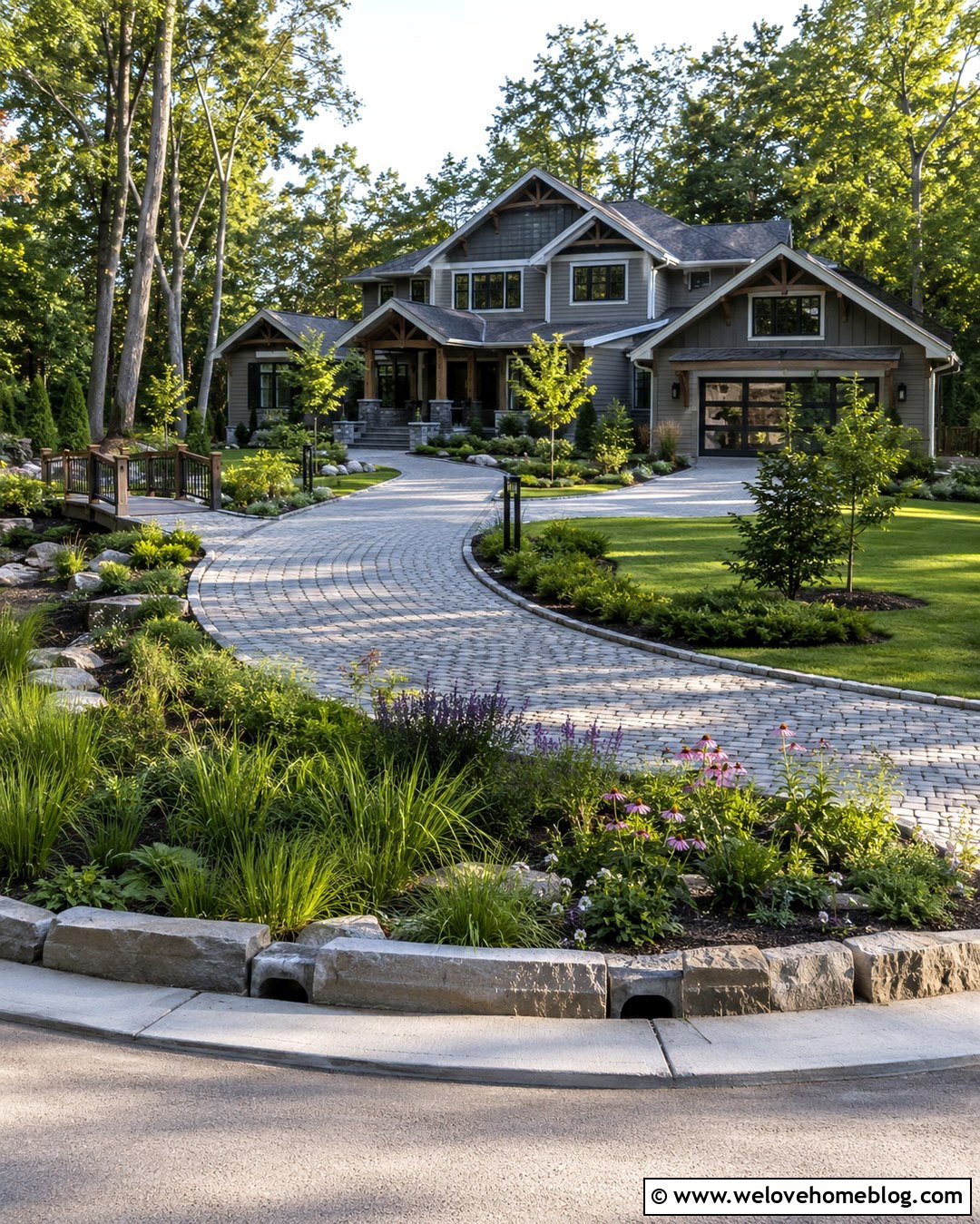
A permeable driveway becomes even more useful when its landscape supports the same stormwater plan. Start with open-joint concrete pavers or stabilized crushed stone arranged in a gently sloped, curved layout. Along the lower side, create a planted rain garden that can receive overflow during heavier storms. Use a stone curb with planned openings instead of a continuous raised barrier. Moisture-tolerant native grasses, flowering perennials, and compact shrubs can fill the basin, while drier plants frame the upper edge. A small bridge-style walkway can connect the driveway to the front door without interrupting the planting area. Soil conditions, setback requirements, utilities, and the home’s foundation should guide placement. The result feels like one complete landscape rather than a driveway with an added drainage feature.
Conclusion:
The best permeable driveway should balance appearance, vehicle demands, drainage, maintenance, climate, and budget. Loose gravel offers affordability and natural texture, while grid stabilization provides greater control. Permeable pavers, brick, stone, porous asphalt, pervious concrete, and resin-bound gravel create more finished surfaces. Grass systems and ribbon layouts reduce the visual amount of hardscape around the house. Whichever design you prefer, remember that the hidden aggregate base, soil conditions, slope, edge restraints, and overflow route are essential parts of the project. Check local requirements and hire an experienced installer when necessary. These **20 permeable driveway options ideas** can help you create a durable entrance that manages rainfall while strengthening your home’s overall curb appeal.

Related posts:

Leave a Reply