
A well-designed driveway does more than provide a place to park. It creates the first clear view of your home and helps connect the house, yard, walkway, and street. These 20 Outdoor Driveway Ideas explore complete looks using gravel, concrete, brick, pavers, asphalt, cobblestone, resin, and other practical materials. You will also find straight, curved, circular, narrow, and split layouts for different property sizes. Thoughtful borders, planting beds, lighting, and entrance details can make even a basic driveway feel intentional. Combining hard surfaces with green space is especially useful for breaking up large paved areas and improving the overall composition. () Use the following 20 Outdoor Driveway Ideas to plan an entrance that suits your home, budget, and landscape.

1. Gravel Driveway With Stone Edging
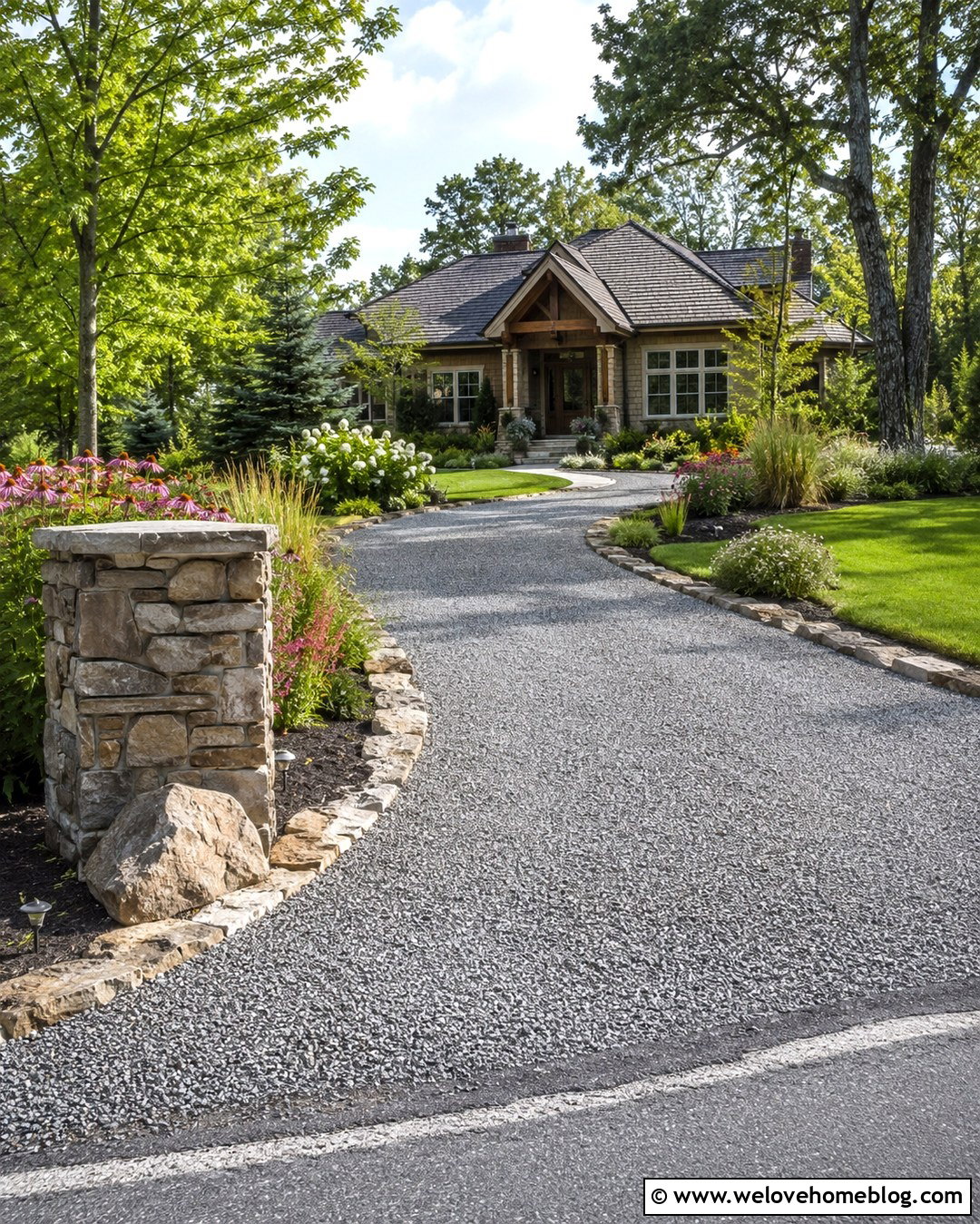
A gravel driveway feels relaxed, practical, and naturally connected to the landscape. Choose angular gray gravel for a surface that looks tidy beside traditional or country homes. Define both sides with chunky fieldstone or neatly installed granite blocks. The strong edging keeps the design visually organized and creates a clean transition into the lawn. A gently curved layout can make the approach feel softer while revealing the house gradually. Plant ornamental grasses, compact evergreens, and flowering perennials along the outside edges without crowding the driving area. Near the street, simple stone pillars or a wooden address post can complete the entrance. This outdoor driveway works especially well when the stone border repeats materials already found on the house, walkway, or front steps.
2. Concrete Driveway With Grass Strips
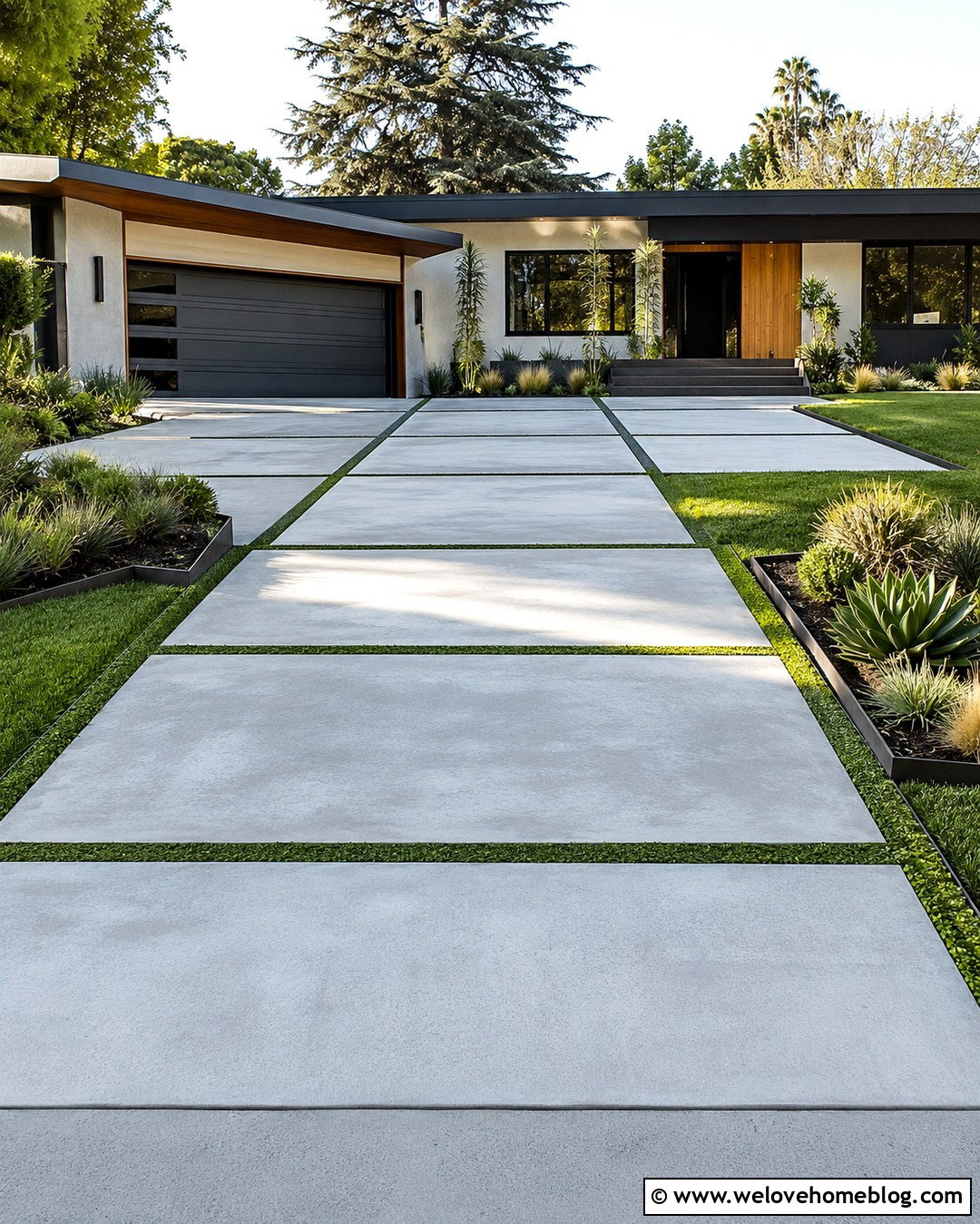
Wide concrete slabs separated by narrow grass strips create a clean driveway without turning the entire front yard into one solid paved surface. Keep the layout straight and align the joints with the garage doors for a balanced appearance. The green bands soften the concrete and help the driveway blend with the surrounding lawn. For easier maintenance, the planted sections can contain low-growing ground cover instead of traditional turf. Add crisp steel edging where the driveway meets planting beds, then use sculptural shrubs and a limited selection of ornamental grasses. This complete look suits modern, contemporary, and mid-century homes. Restraint is particularly effective in modern front-yard landscaping, where a focused planting palette allows strong lines and architectural forms to remain visible. ()
3. Brick Paver Driveway With Herringbone Pattern
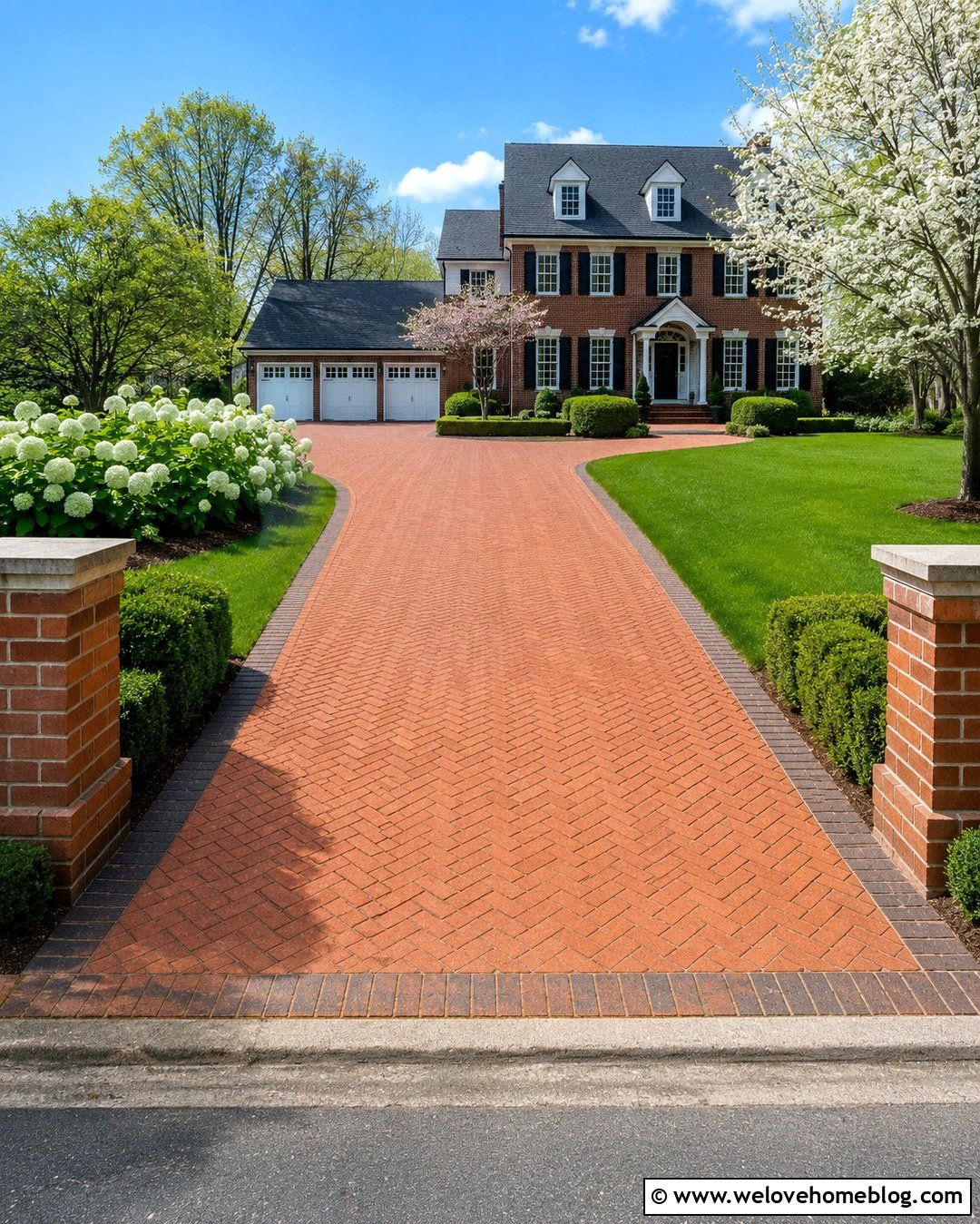
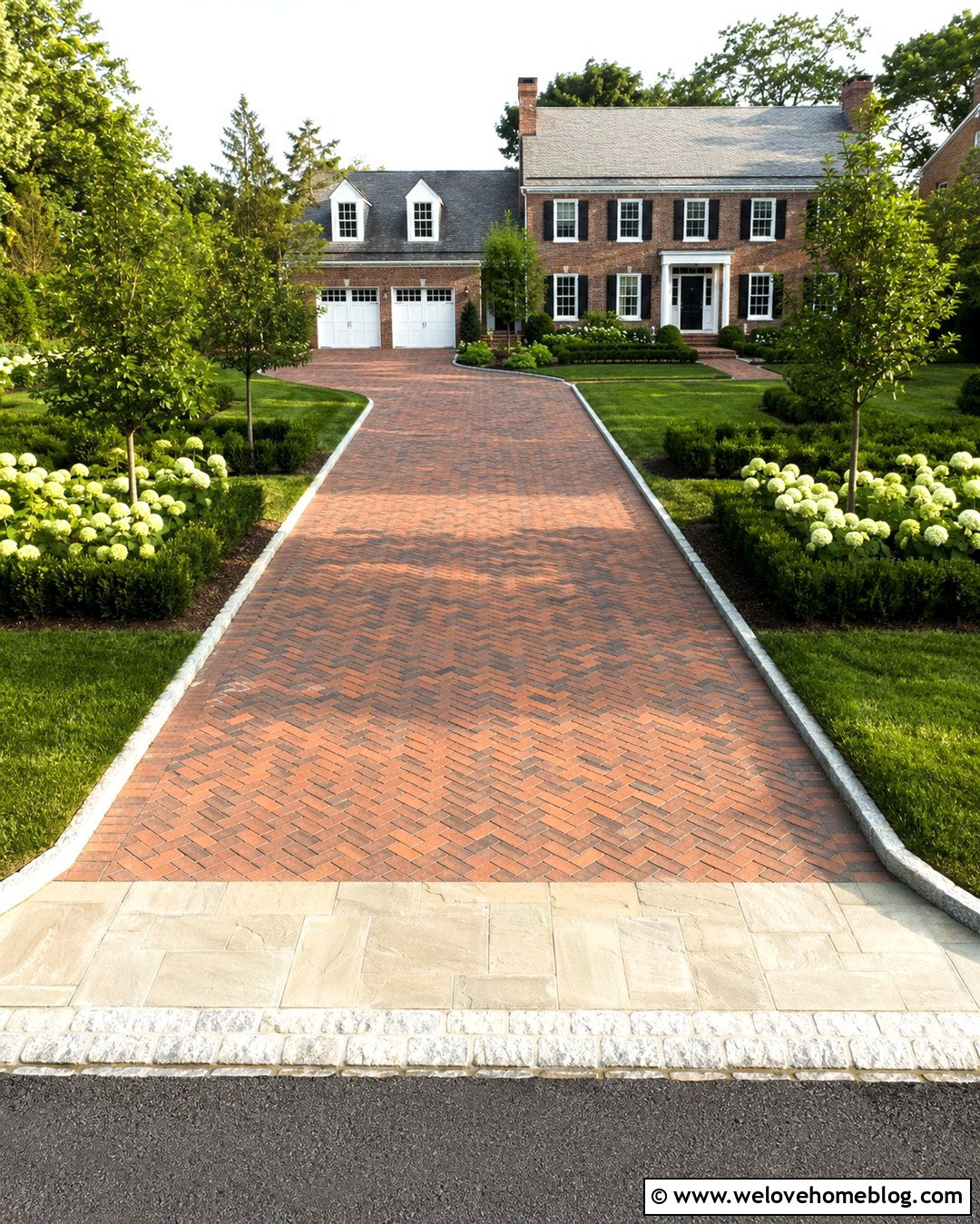
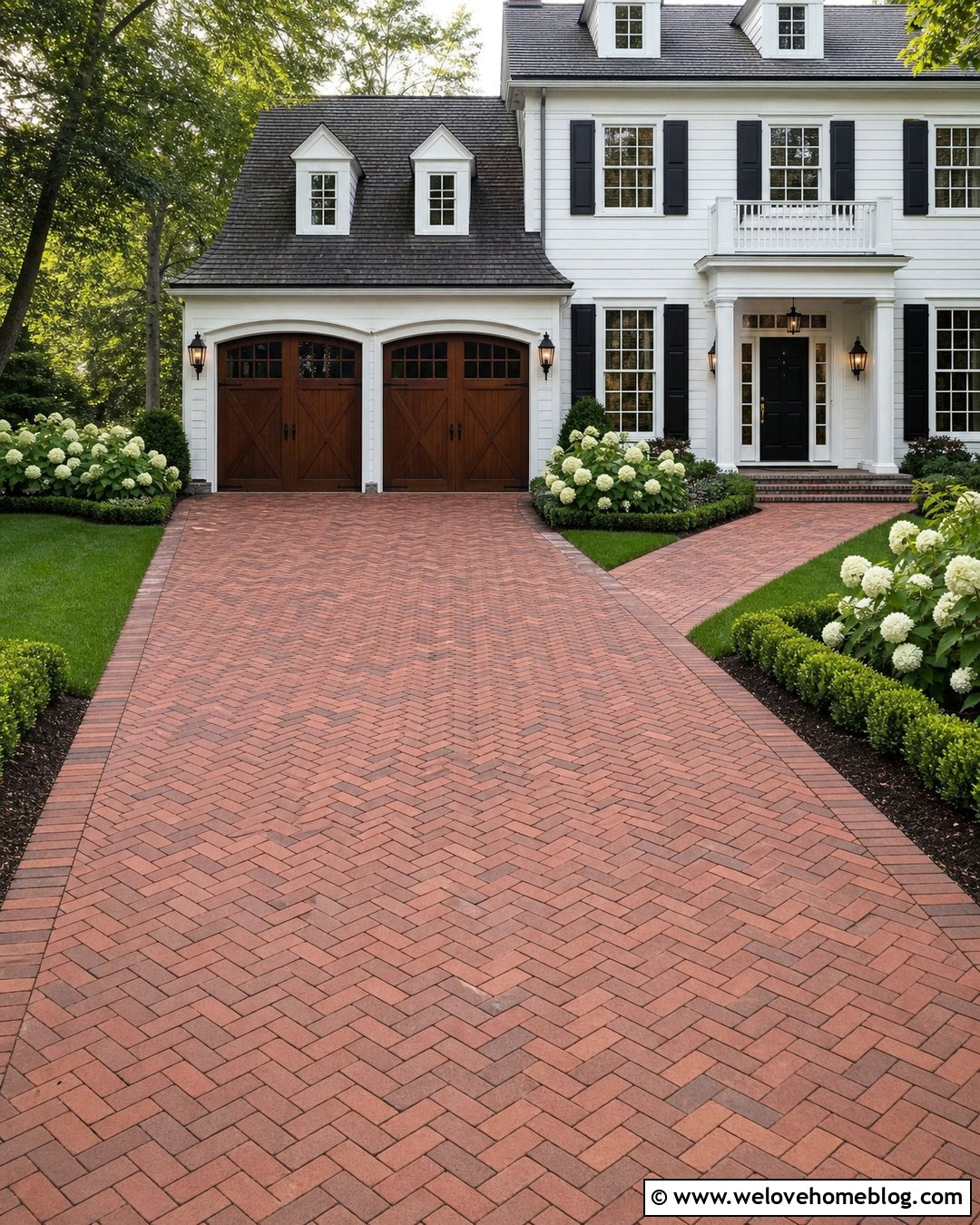
Warm clay brick pavers laid in a herringbone pattern give a driveway texture and traditional character. The interlocking arrangement creates visual movement across a straight or gently flared surface. Frame the main field with a soldier-course brick border in a slightly darker shade. At the garage, repeat that border as a wide apron to create a polished transition. Boxwood, hydrangeas, and small flowering trees can surround the driveway without hiding the brickwork. A matching brick walkway leading toward the front door makes the entire entrance feel connected. This outdoor driveway design looks especially natural beside Colonial, Georgian, Tudor, and traditional brick homes. Select brick tones that complement the facade instead of matching every exterior color exactly, which can make the property appear overly uniform.
4. Circular Paver Driveway With Garden Island
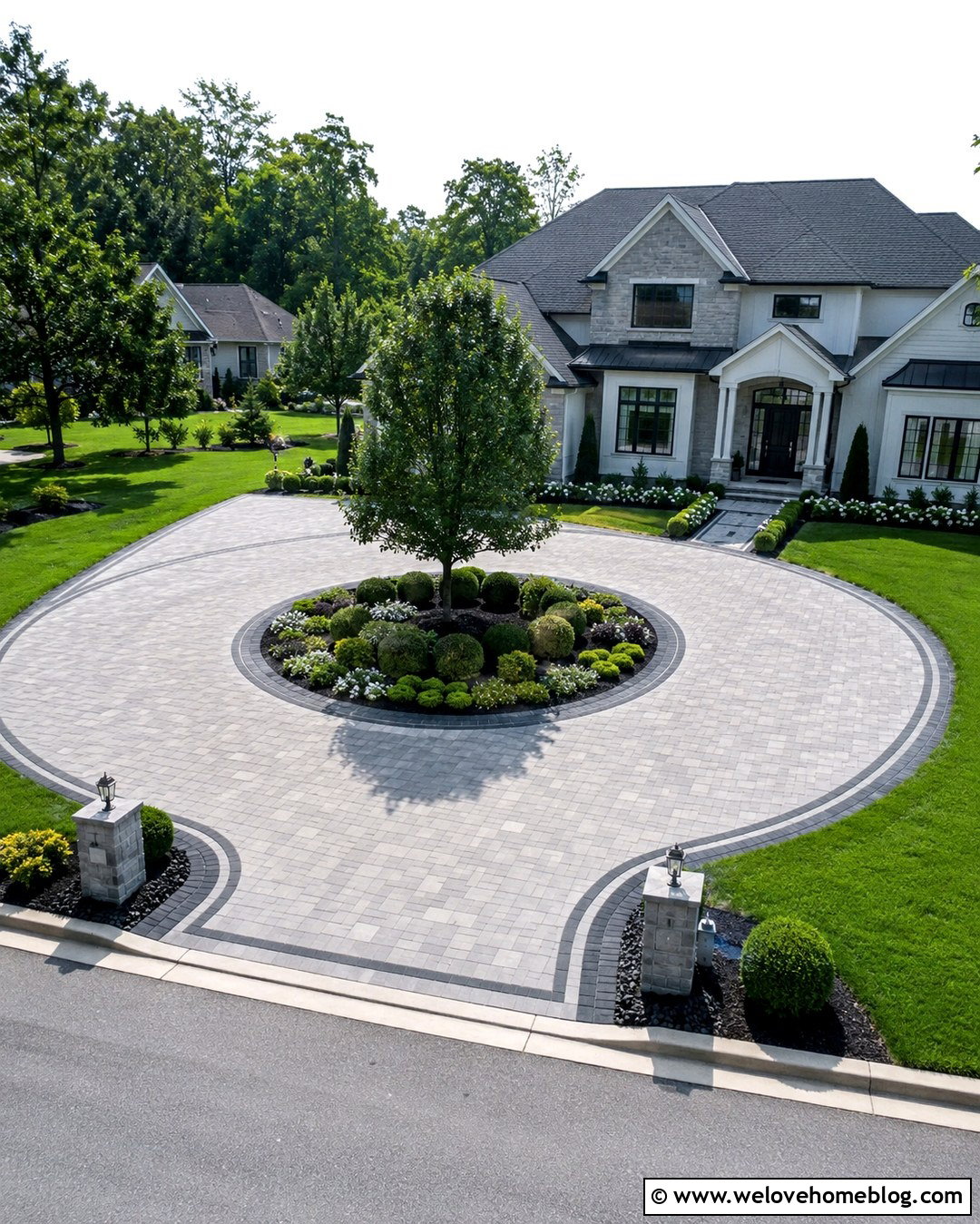
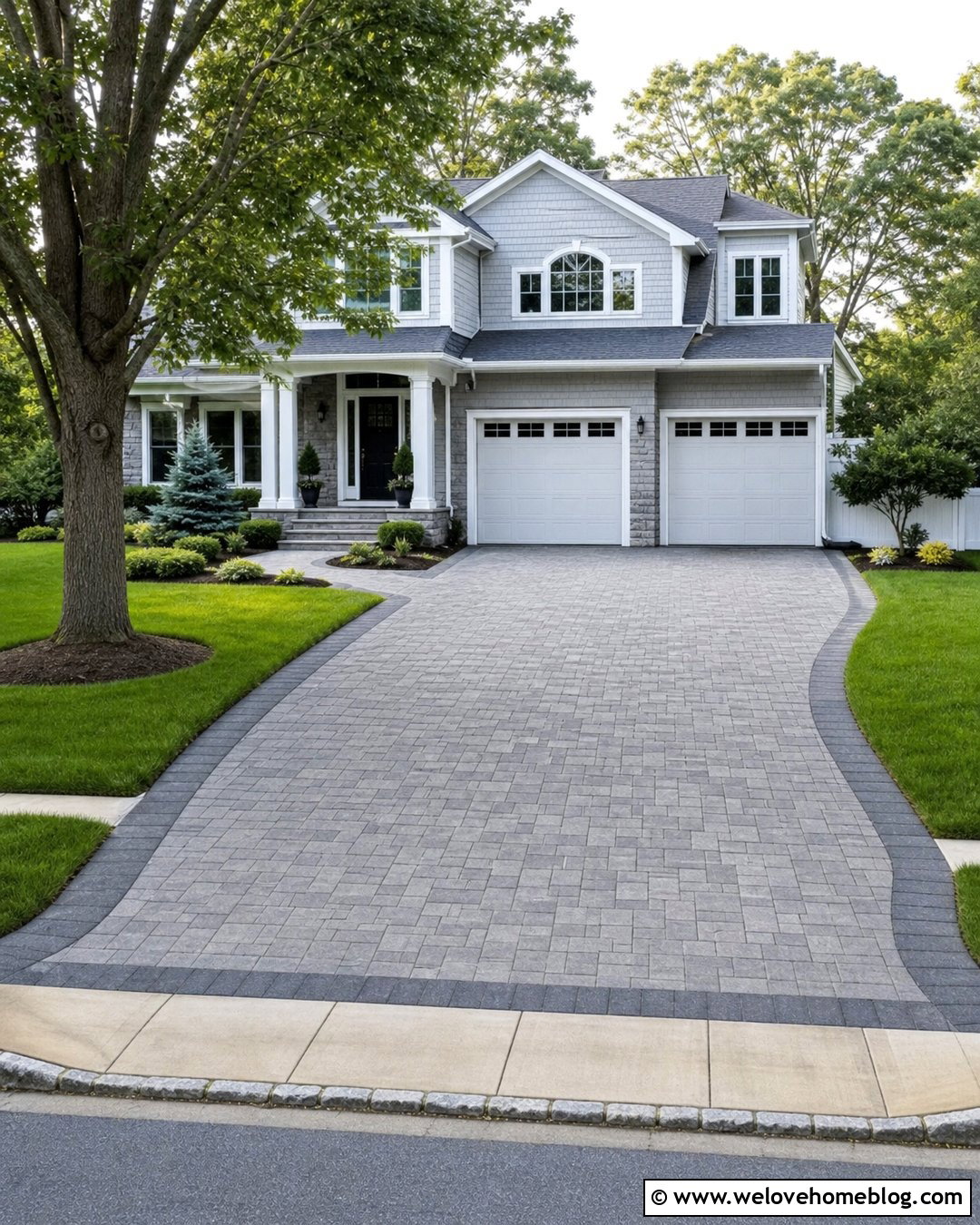
A circular driveway becomes an attractive front-yard feature when the center island is treated as part of the overall design. Use neutral concrete pavers arranged in sweeping arcs to reinforce the curved layout. A darker paver border can define both the inner and outer edges while helping the circle read clearly from the street. Fill the island with one small ornamental tree, rounded shrubs, and low ground cover so views of the house remain open. Add a direct walkway from the parking area to the front entrance. Circular layouts can provide a convenient arrival sequence while reducing the need to reverse toward the road, provided the property has sufficient space. () Keep the planting simple so the island complements rather than overwhelms the home.
5. Curved Asphalt Driveway With Cobblestone Border
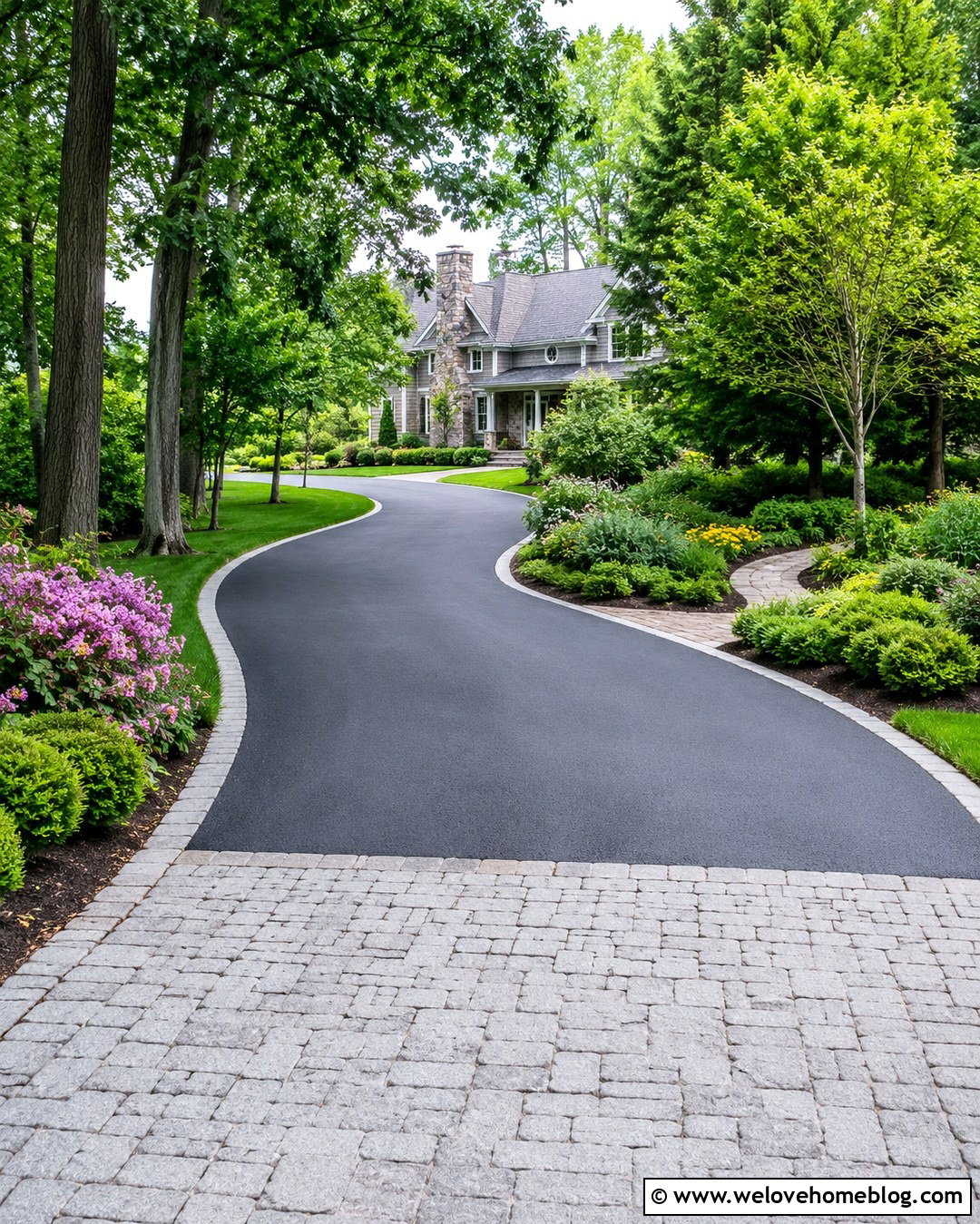
Black asphalt can look far more finished when it follows a graceful curve and includes a contrasting cobblestone border. The dark surface creates a strong visual line, while gray cobbles add texture and define the driveway against lawns and planting beds. Use a wider cobblestone apron near the street to emphasize the entrance. Along the curve, layer low shrubs, flowering perennials, and a few canopy trees to create depth without reducing visibility. This combination suits wooded properties, traditional homes, and long suburban lots. Allow the landscaping to follow the same flowing shape rather than forcing straight beds against the pavement. A matching cobblestone walkway or front-step detail can connect the driveway border to the house, making an economical surface feel more thoughtfully designed.
6. Exposed Aggregate Driveway With Brick Ribbon
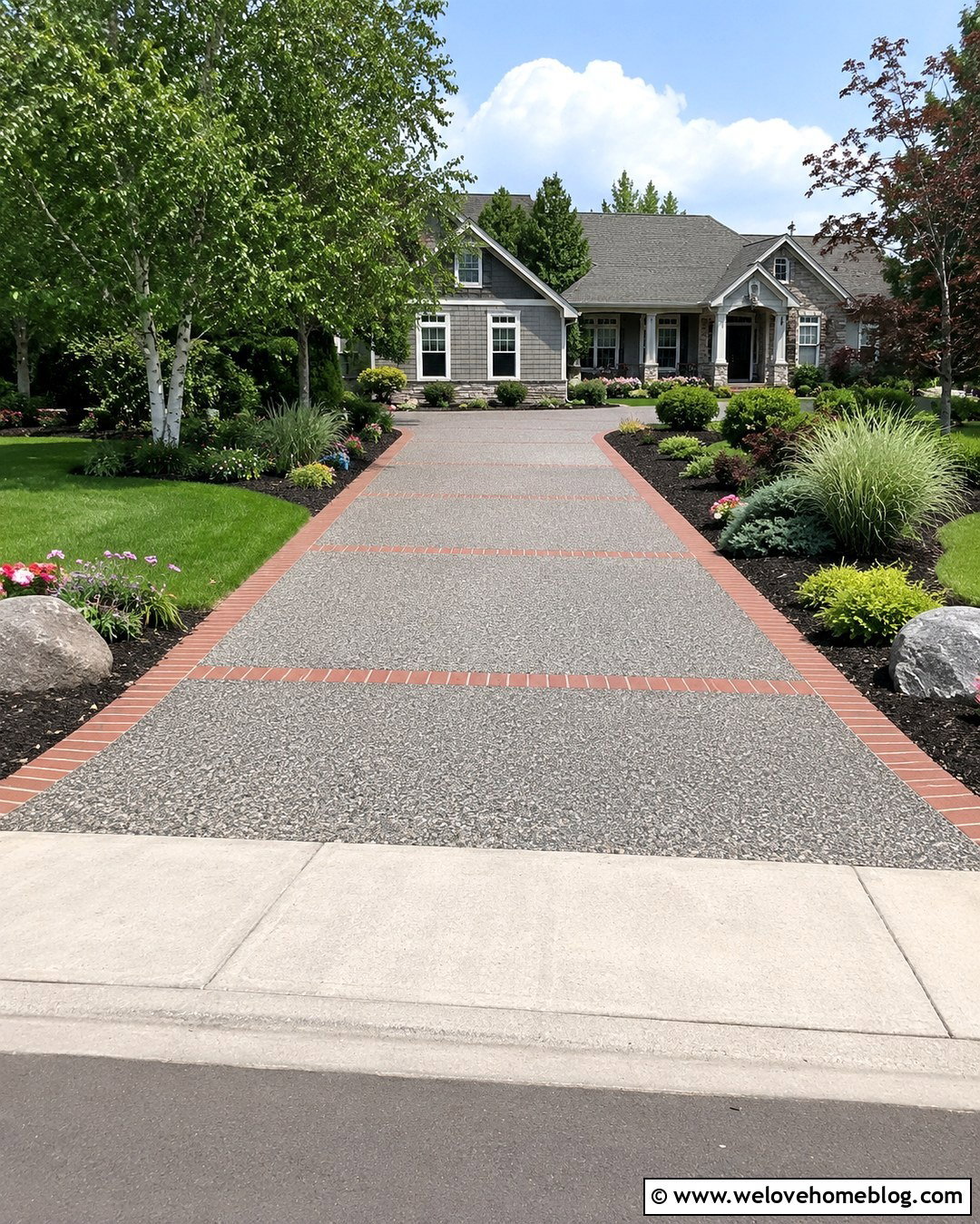
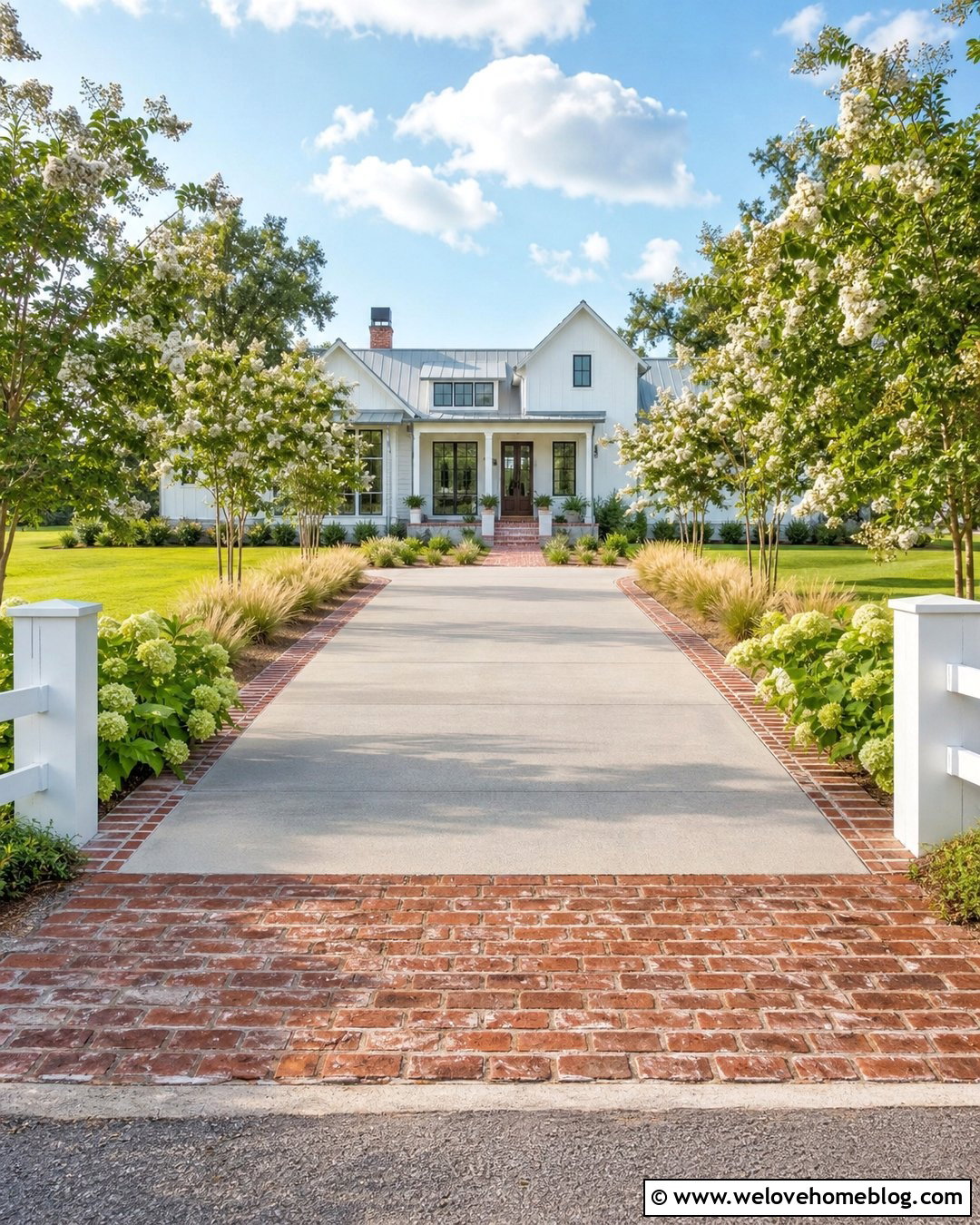
Exposed aggregate offers a textured surface with natural variation, making it useful for a driveway that needs visual interest without an elaborate pattern. Choose a warm gray or beige aggregate that coordinates with the home’s stonework. Install red or charcoal brick ribbons across the driveway at regular intervals, then repeat the brick along the outer edges. These bands visually divide a large paved area and can help the driveway feel better proportioned. A straight layout works well for ranch and Craftsman homes, especially when planting beds curve gently beside it. Use compact shrubs, ornamental grasses, and seasonal flowers to soften the hardscape. Finish the look with a brick-bordered walkway so the driveway, landscape, and front entrance appear planned as one cohesive outdoor space.
7. Resin-Bound Driveway With Modern Landscaping
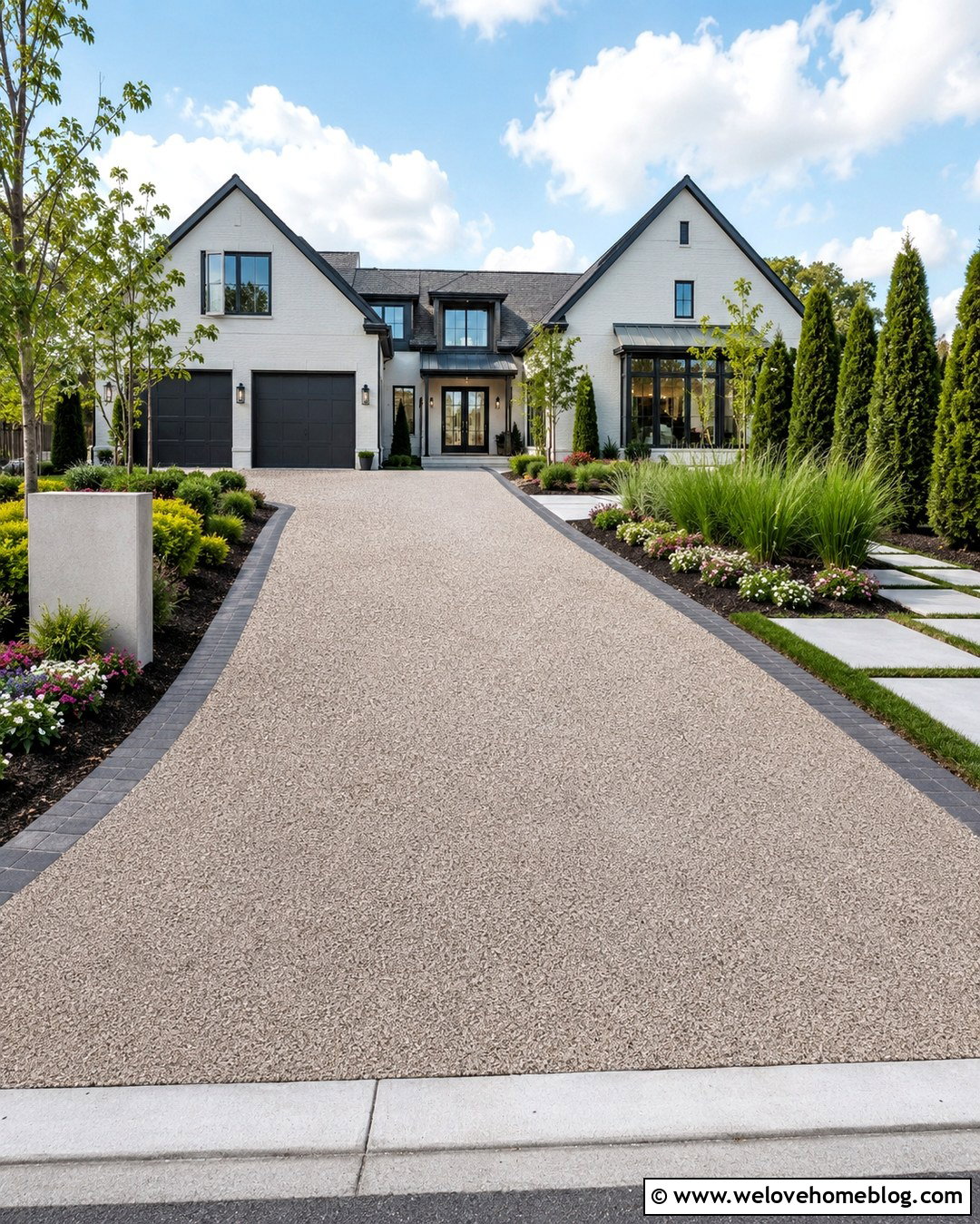
A resin-bound gravel driveway creates a smooth, contemporary appearance while preserving the visible texture of small stones. Select a light gray, natural beige, or warm taupe blend that contrasts gently with the facade. A straight driveway with a subtle flare near the garage keeps the arrangement simple and functional. Border the surface with charcoal pavers for a crisp outline, then add rectangular planting beds containing ornamental grasses, clipped evergreens, and low flowering ground cover. Large concrete stepping stones can form a direct walkway to the entrance. This complete design works particularly well with modern and transitional homes because the fine-textured surface balances strong architectural lines. Use matching stone tones in the address monument or porch planters to carry the driveway material through the wider front-yard composition.
8. Permeable Paver Driveway With Rain Garden
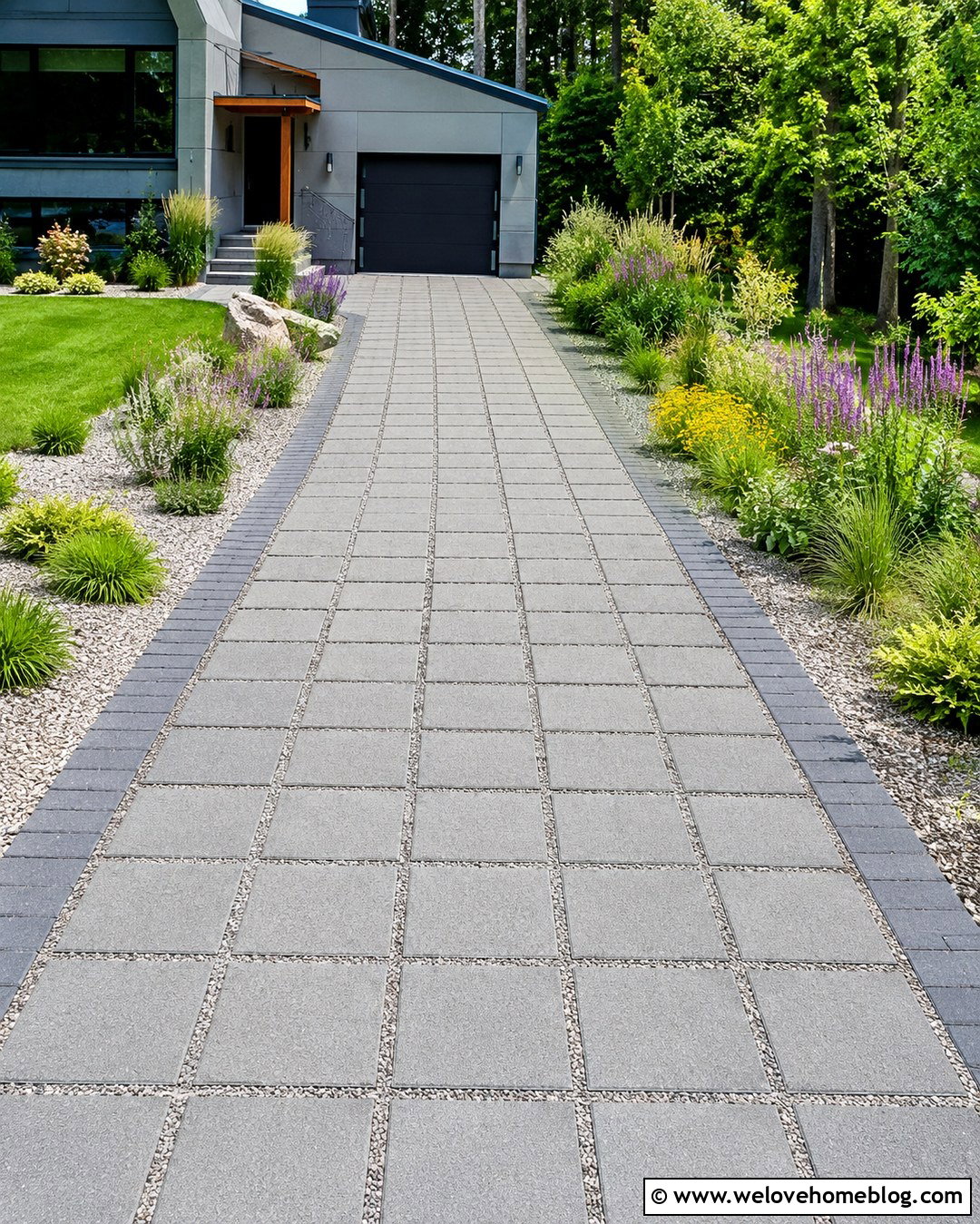
Permeable pavers can form a polished driveway while supporting a landscape designed around water movement. Choose medium-gray pavers with wider gravel-filled joints, arranged in a simple running-bond or grid pattern. Slope the surrounding landscape carefully toward a shallow rain garden positioned beside the driveway rather than directly against the foundation. Fill the garden with regionally suitable grasses, flowering perennials, and moisture-tolerant shrubs. A darker paver border will visually separate the driving surface from the planted basin. Municipal landscape templates commonly pair driveway improvements with planted areas intended to capture and infiltrate some stormwater on the property. () This practical outdoor driveway look fits contemporary houses, eco-conscious renovations, and front yards where conventional lawn feels unnecessary.
9. Crushed Shell Driveway With Coastal Landscaping
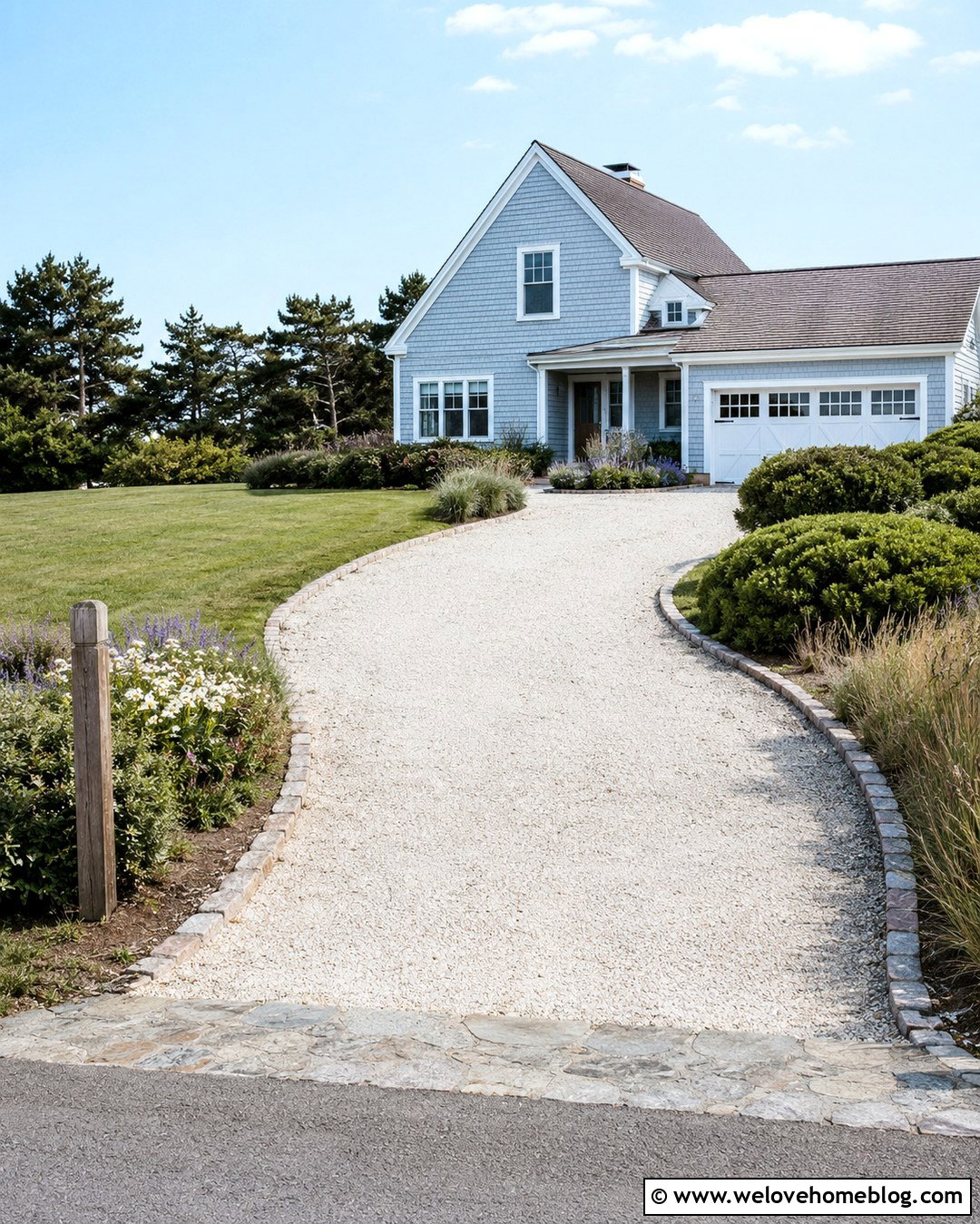
A pale crushed shell driveway brings a bright, informal appearance to coastal and Southern-style homes. Use a straight or softly curved layout that leads toward a white, light blue, or weathered gray facade. Define the surface with low brick edging or compacted steel borders to prevent the shell from visually spreading into nearby beds. Plant salt-tolerant grasses, rounded evergreen shrubs, and flowering perennials that suit the local climate. Near the street, add a simple wooden address sign surrounded by low planting rather than a heavy formal gate. A brick or natural-stone apron can provide a more defined transition at the garage. Crushed shell has a distinctive regional character, so repeat its pale tones in the walkway, porch containers, and landscape stones for a unified coastal entrance.

10. Decomposed Granite Driveway With Desert Plants
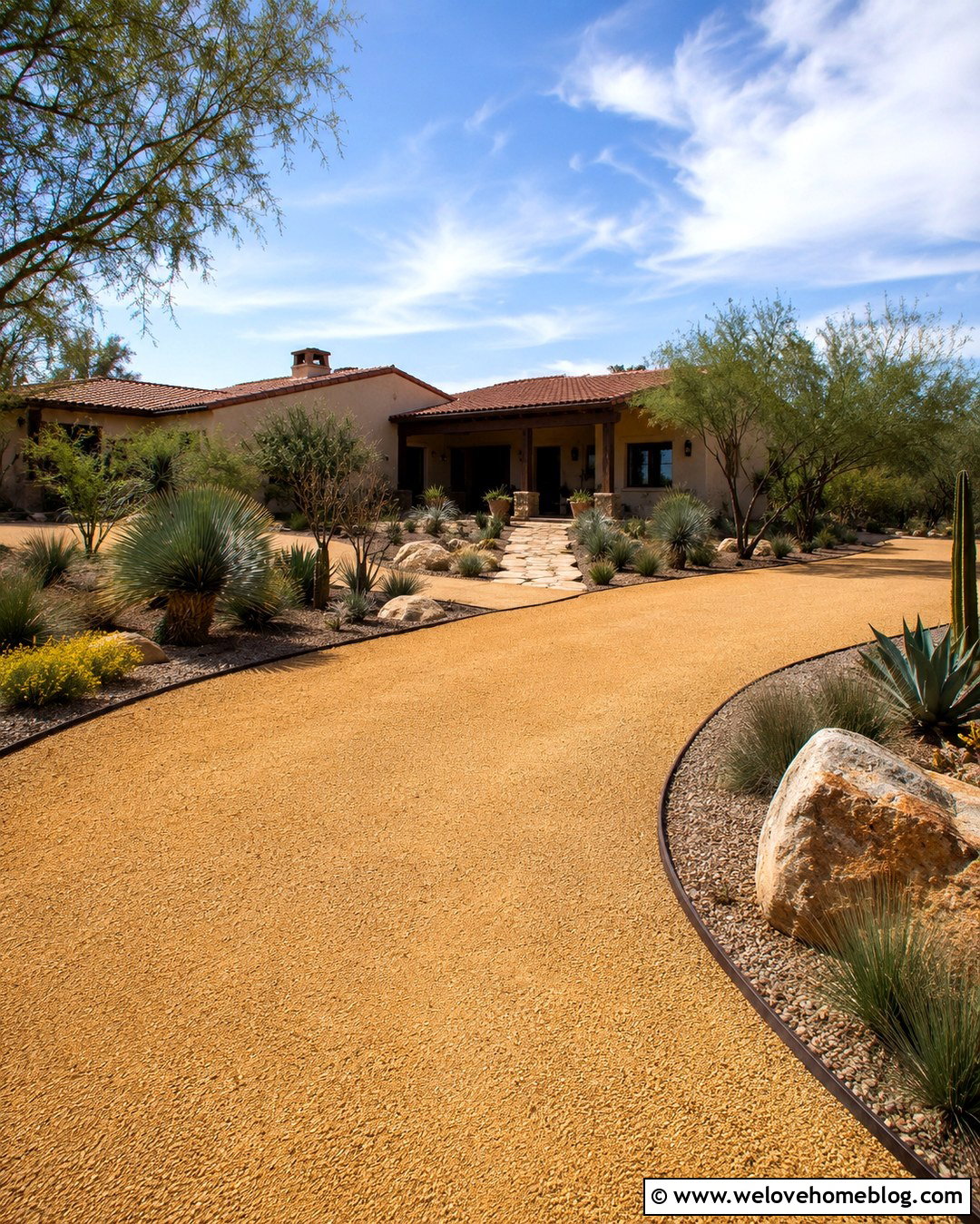
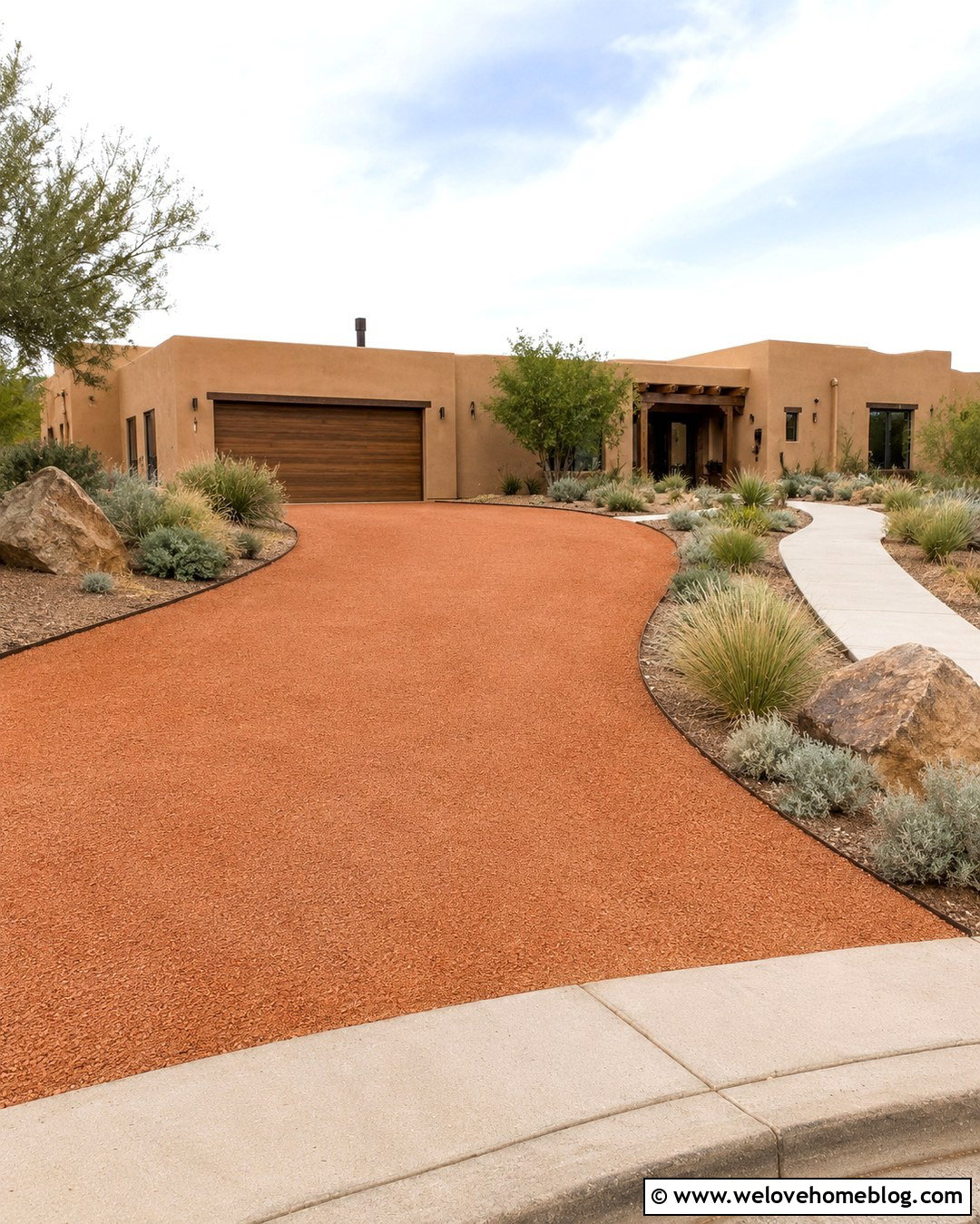
Warm-toned decomposed granite creates a driveway that settles naturally into dry, sunny landscapes. Choose gold, tan, or muted rust material and install it within a wide, gently curved layout. Steel edging offers a discreet boundary, while larger weathered boulders can mark planting areas near the entrance. Surround the driveway with agave, yucca, desert spoon, ornamental grasses, and low flowering plants selected for the regional climate. Space plants generously so their mature forms remain visible against gravel mulch. A concrete or stone walkway can cross the driveway and provide a clear route toward the front door. This outdoor driveway design complements Southwestern, adobe, ranch, and desert-modern homes. Keep decorative stone colors closely related so the surface and landscaping feel natural rather than busy.
11. Concrete Ribbon Driveway With Ground Cover
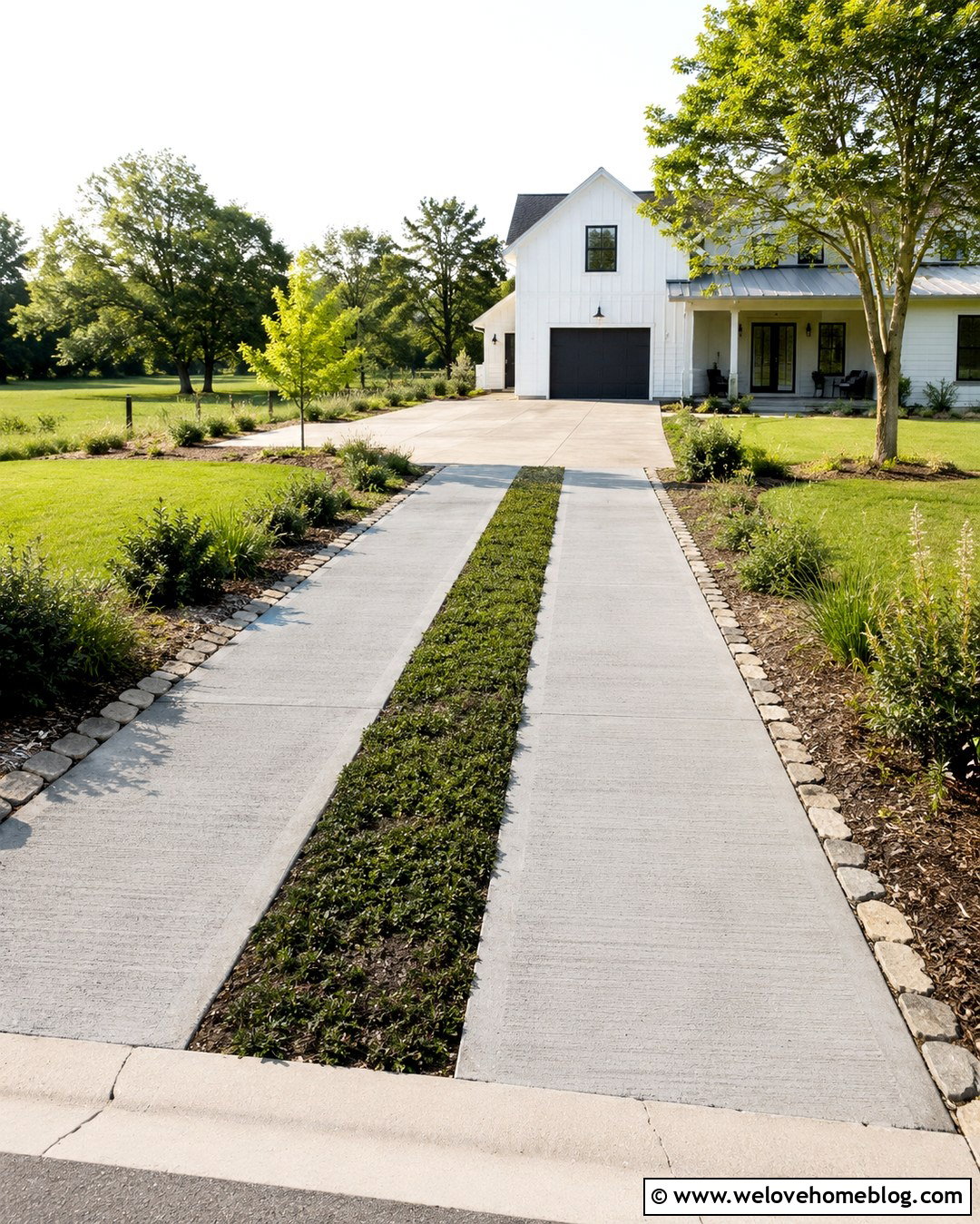
Two concrete driving strips separated by planted ground cover create a lighter visual footprint than a fully paved driveway. This layout works best on a straight approach where vehicle wheels can follow the ribbons comfortably. Use broom-finished gray concrete for traction and a simple, understated look. Fill the middle section with low, durable ground cover suitable for local sun and moisture conditions. Narrow stone borders can separate the outer edges from flower beds or lawn. Near the house, widen the concrete into a practical parking pad that aligns with the garage. Surround the approach with relaxed shrubs, ornamental grasses, and one small shade tree. The combination feels appropriate for cottages, modern farmhouses, and compact homes where preserving visible greenery is an important part of the front-yard design.
12. Stamped Concrete Driveway With Stone Borders
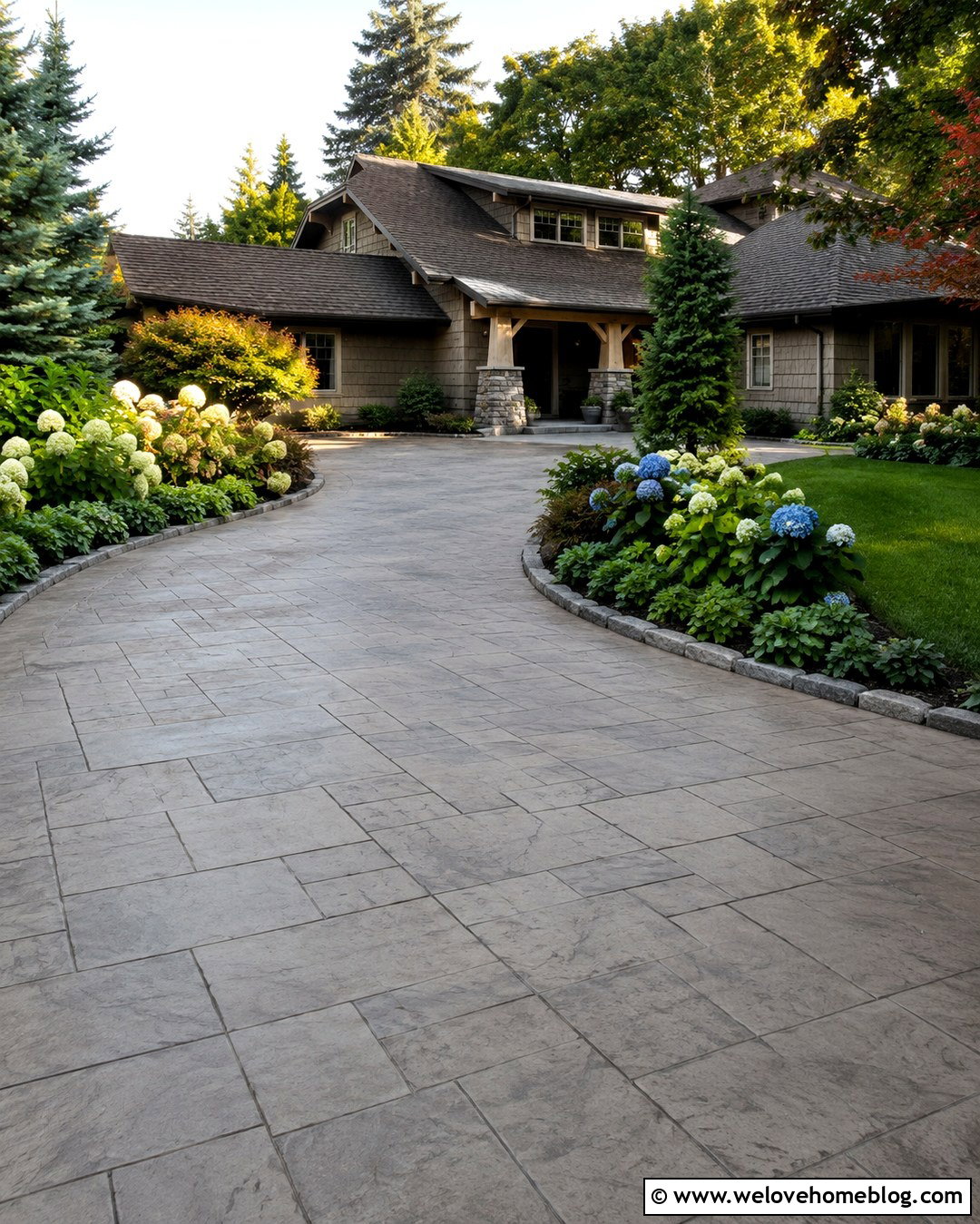
Stamped concrete can provide the appearance of individual masonry units while maintaining a continuous driveway surface. Choose a restrained ashlar-stone or large-slate pattern in warm gray rather than an overly complex texture. A straight driveway with a curved parking area near the house gives the pattern room to remain visible. Install real natural-stone borders along the sides to add dimension and create an authentic connection with the landscape. Plant broad beds with hydrangeas, compact evergreens, and shade-tolerant ground cover beside the driveway. A matching stamped walkway can branch toward the front steps, but use a narrower border to distinguish it from the driving area. This coordinated look suits Craftsman, transitional, and stone-front homes, especially when the color reflects existing masonry on the facade.
13. Cobblestone Driveway With Formal Landscaping
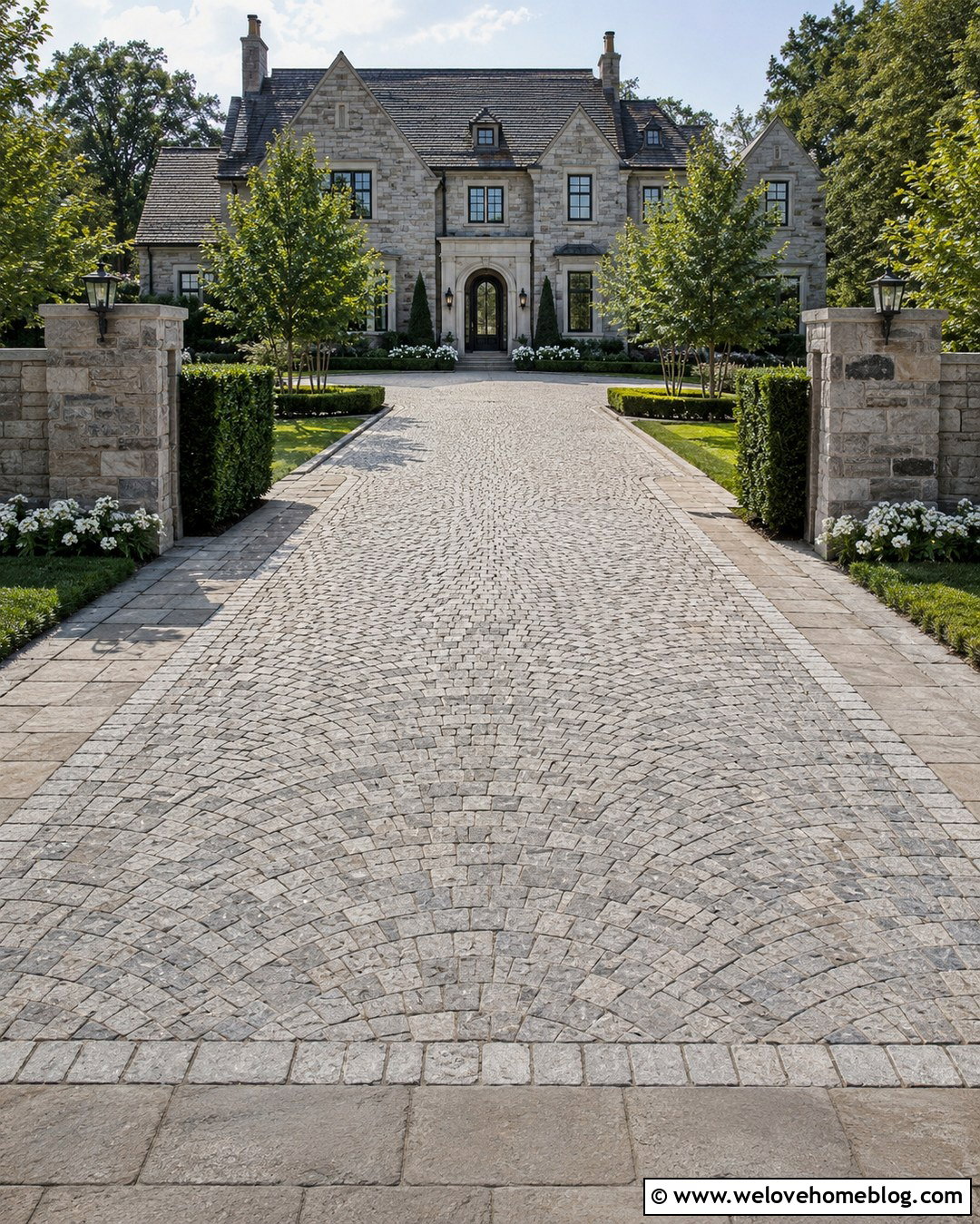
A full cobblestone driveway creates a substantial, old-world entrance that looks especially fitting beside historic or European-inspired architecture. Choose granite cobbles in mixed gray tones and arrange them in fan-shaped arcs or repeating rows. Keep the driveway broad and slightly curved, with a rectangular motor court near the house. Formal planting beds should follow the geometry of the paving. Use clipped hedges, symmetrical ornamental trees, and low seasonal flowers to frame the approach. Stone pillars at the entrance can repeat the cobblestone color without becoming excessively tall or ornate. Include a smooth, clearly defined walkway to the front door for comfortable pedestrian access. The result is a complete outdoor driveway where paving pattern, structured landscaping, and traditional architecture reinforce one another from the curb.
14. Black Asphalt Driveway With Modern Paver Apron
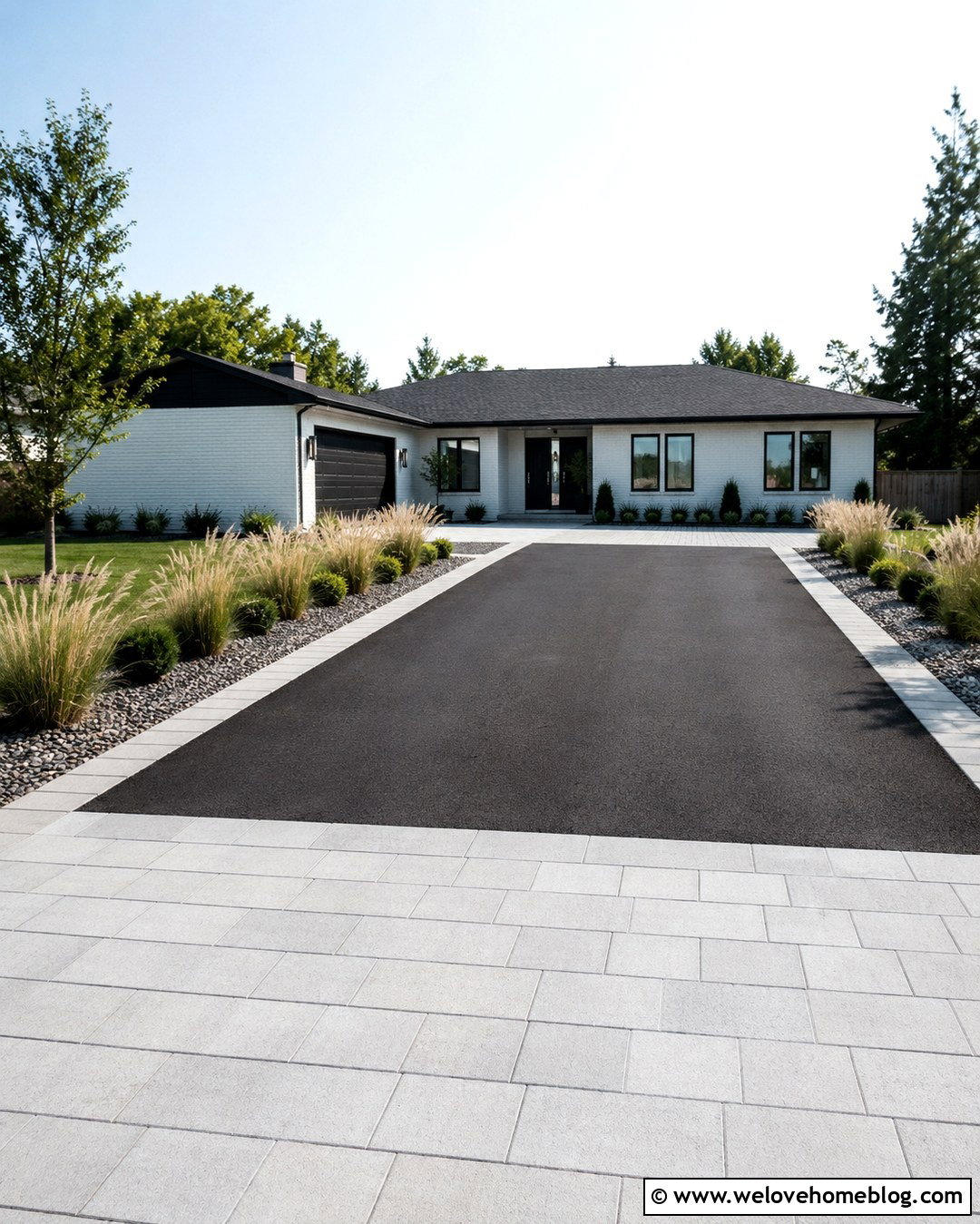
Fresh black asphalt provides a simple background for sharper modern details. Run the driveway in a clean, straight line, then install a wide charcoal or light-gray concrete paver apron near the street. Repeat the same pavers as a border and in a landing directly in front of the garage. This approach concentrates the more decorative material where it makes the strongest visual impact. Beside the pavement, create linear planting beds with feather reed grass, compact shrubs, and gravel mulch. A narrow concrete walkway can lead directly from the sidewalk to the front entrance. Finish the curb view with a low horizontal address monument. The combination gives modern ranch, contemporary, and updated split-level homes an organized entrance without covering the entire driveway in premium paving materials.


15. Pea Gravel Driveway With Farmhouse Landscaping
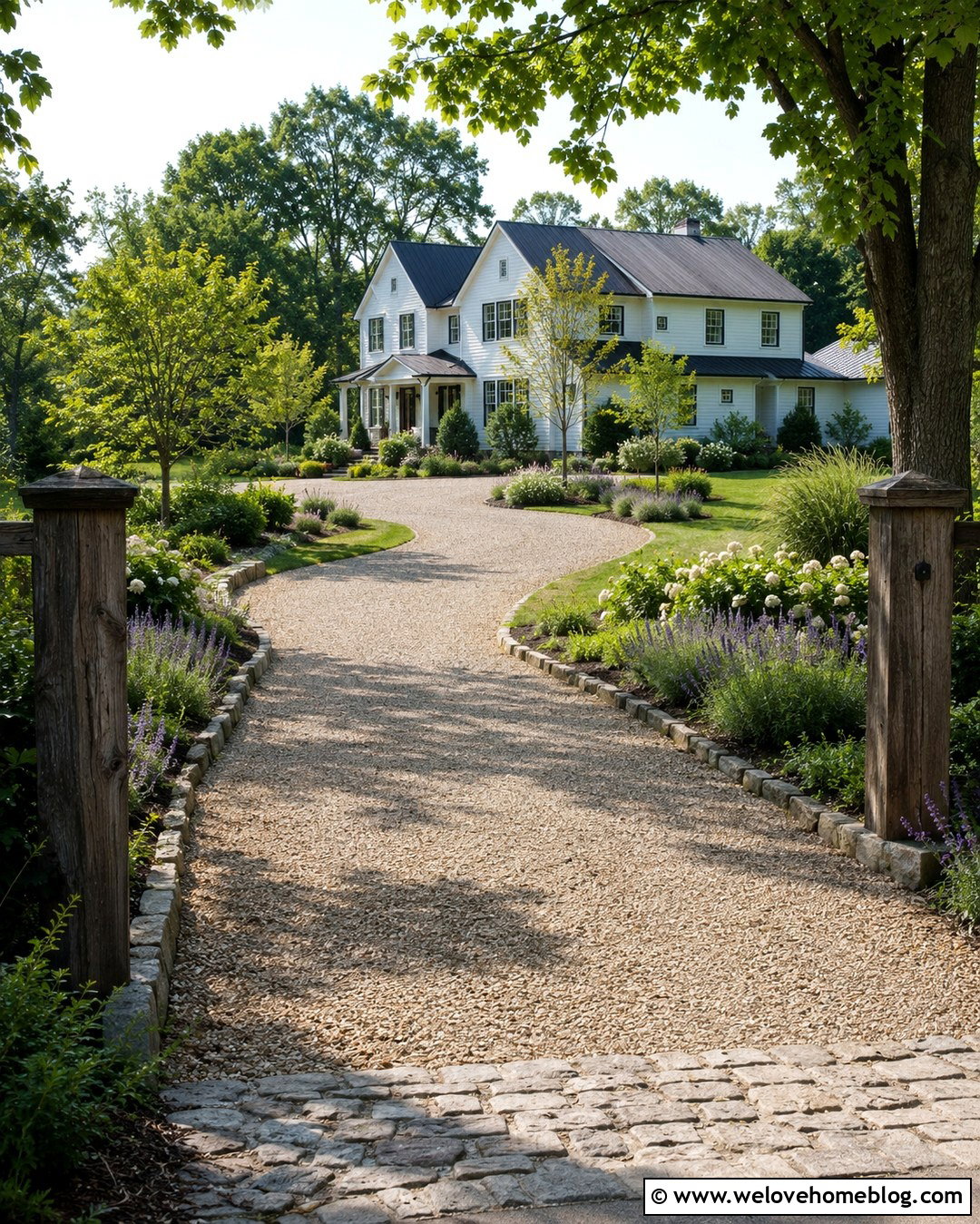
Soft beige pea gravel, weathered stone edging, and informal planting create an inviting farmhouse driveway. Use a long, gently curved layout that opens into a wider parking area near the garage or barn-style outbuilding. Because rounded gravel can shift, give the surface strong edging and a properly prepared base. Along both sides, combine lavender, catmint, ornamental grasses, white flowering shrubs, and occasional shade trees. Keep the plants set back enough to preserve a clear driving width. At the street, simple timber posts and a black metal address sign can establish the entrance without making it feel formal. Gravel driveways are frequently paired with modern farmhouse landscapes and traditional rural settings because their relaxed texture works naturally with broad lawns and layered planting. ()
16. Split Driveway With Central Garden
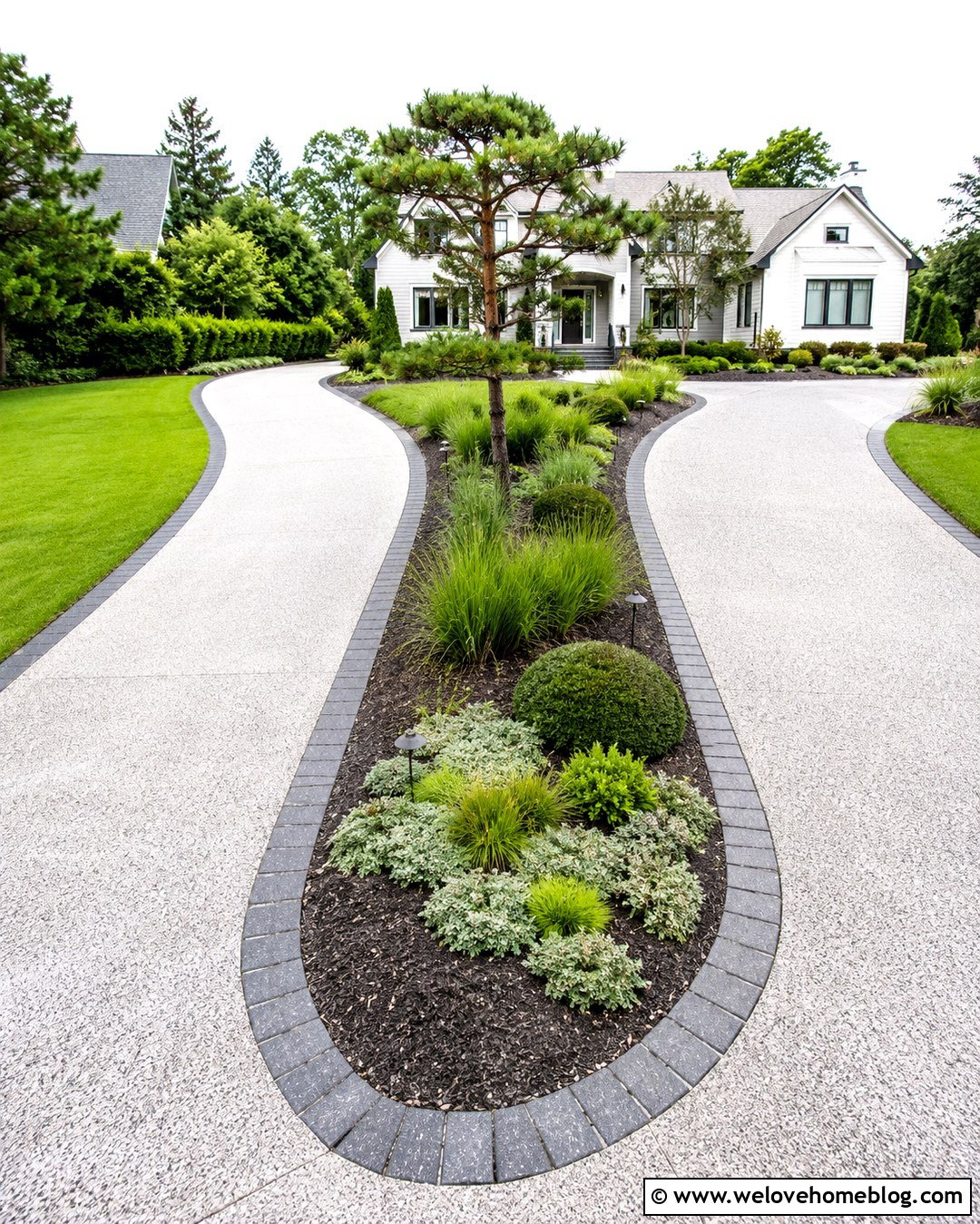
A split driveway turns a wide front yard into a structured arrival space without requiring a complete circular layout. Use concrete pavers or exposed aggregate for two branches that separate around a long central planting island. One side can lead toward the garage while the other provides guest parking or a convenient exit. Edge the island with a contrasting paver band that matches the driveway perimeter. Plant one sculptural tree near the center, then layer low shrubs, ornamental grasses, and ground cover beneath it. Keep taller plants away from street sightlines and turning areas. A walkway should connect the guest side directly to the front door. When the driveway shape, island border, and planting lines repeat one another, the split layout feels intentional rather than like two unrelated paved paths.
17. Tree-Lined Gravel Driveway
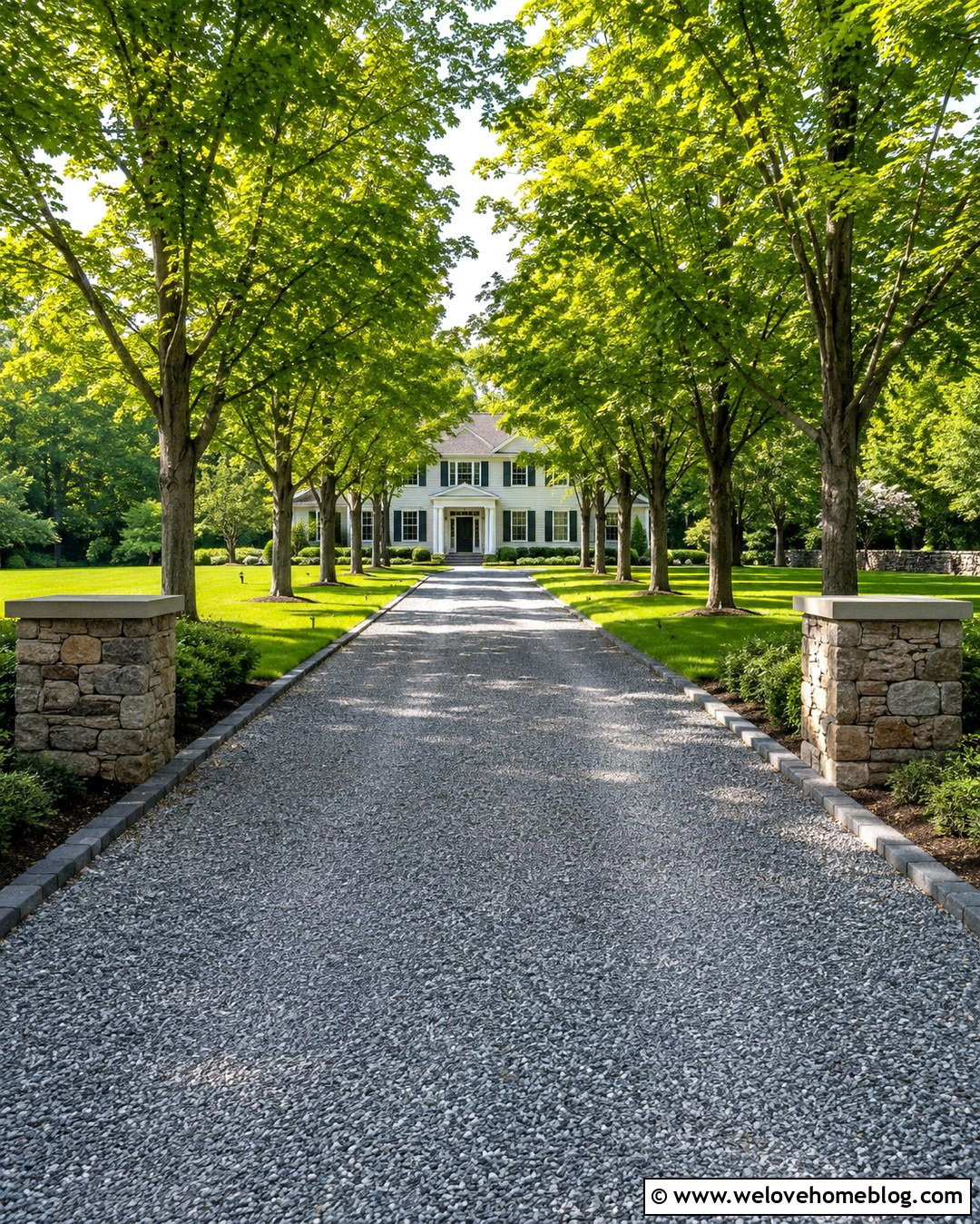
Few approaches feel as established as a long gravel driveway framed by evenly spaced trees. Begin with compacted gray crushed stone and a straight or subtly curving layout that highlights the view toward the house. Install dark granite edging to hold a crisp line against the lawn. Choose tree species appropriate for the climate, soil, available width, and overhead space, then position them far enough from the driveway to allow future growth. Underplant with simple grass, low ground cover, or restrained flower beds rather than filling every open area. Small stone markers and low landscape lights can emphasize the entrance without competing with the tree canopy. This complete look suits Colonial houses, farmhouses, country estates, and larger suburban properties where the driveway forms an important part of the arrival experience.
18. Sloped Driveway With Retaining Walls
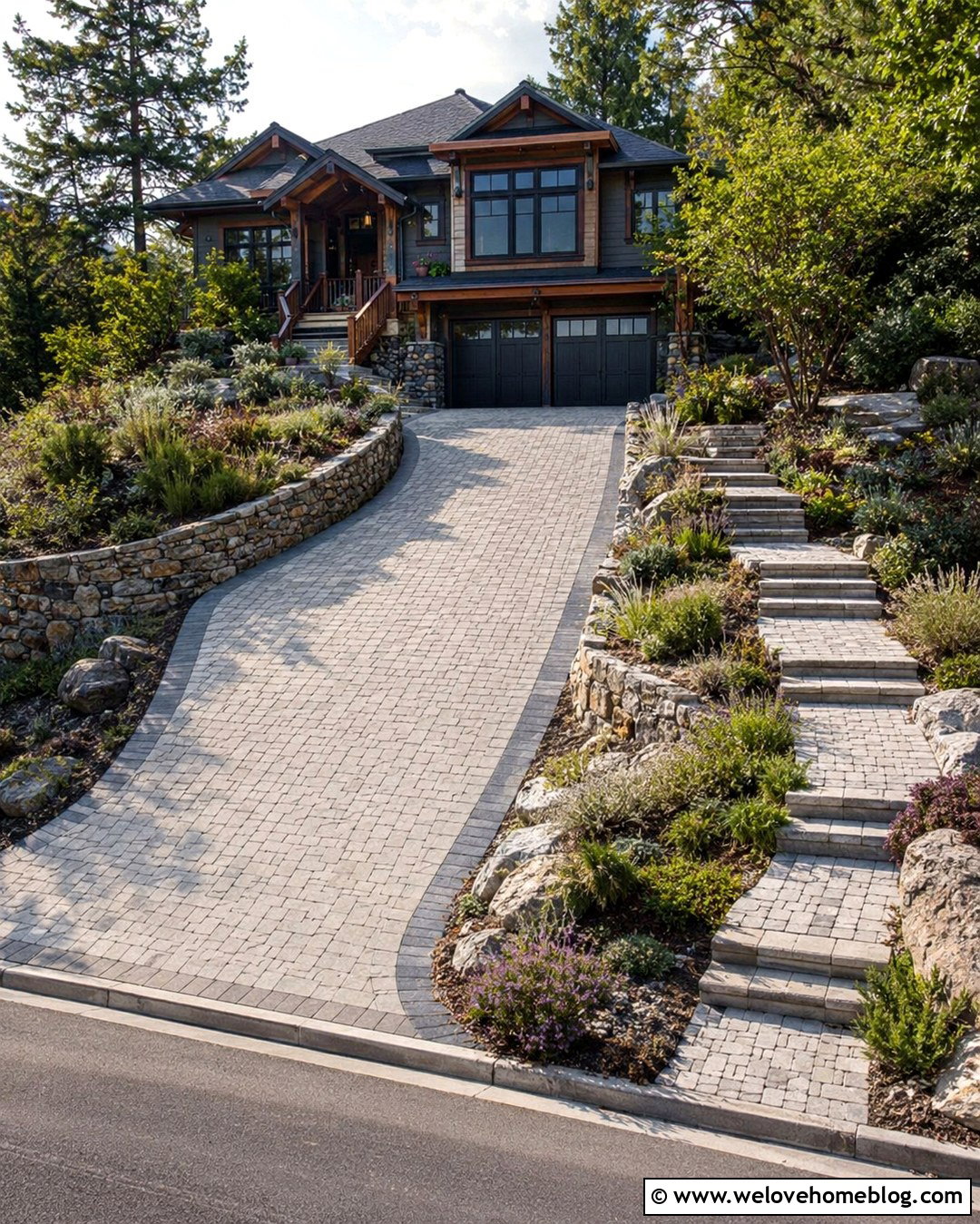
A sloped driveway looks more integrated when retaining walls, planting beds, and paving are planned together. Use textured concrete or interlocking pavers in a medium tone that will not visually dominate the incline. Low natural-stone retaining walls can terrace the higher side while leaving the lower edge open where appropriate. Fill the terraces with spreading shrubs, ornamental grasses, and erosion-conscious ground covers suited to the site. A contrasting paver border should follow the slope and define the full route to the garage. Incorporate safe pedestrian steps and a separate walkway instead of expecting visitors to climb the driving surface. Good drainage and professional grading are essential considerations for this layout. The finished design should make the slope appear intentional while keeping views around curves and driveway entrances unobstructed.
19. Small Front Yard Paver Driveway
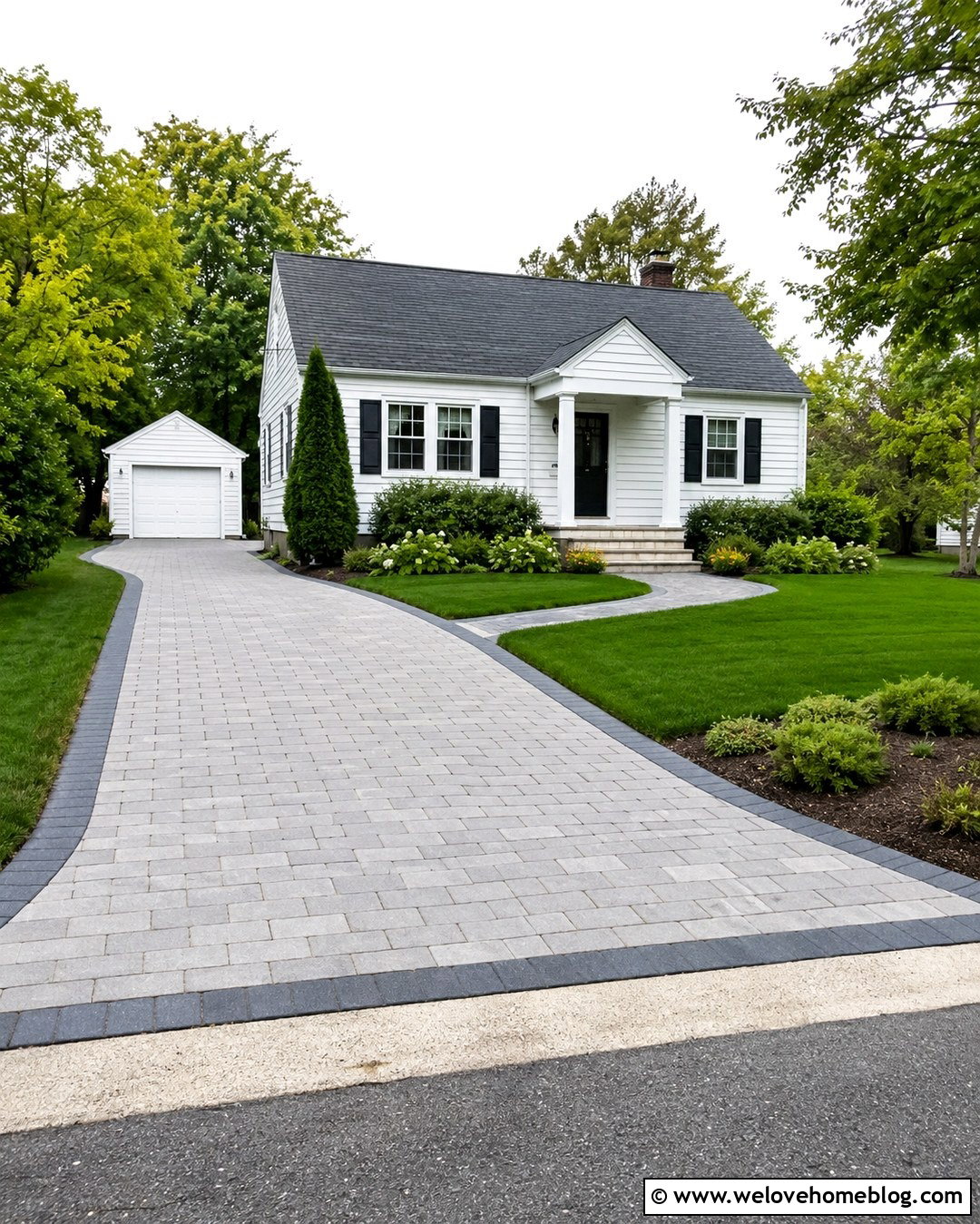
A compact front yard benefits from a driveway with clear boundaries and minimal visual clutter. Choose light-gray rectangular concrete pavers and arrange them in a simple running-bond pattern to create a calm surface. Keep the driveway straight, but add a slight flare near the street for a more welcoming entrance. A charcoal paver border can provide definition without using valuable planting space. Along one side, install a narrow bed with an upright ornamental tree, compact shrubs, and low ground cover. On the opposite side, use a slim walkway that leads directly toward the front door. Columnar trees are useful where planting width is limited because their upright form occupies less ground space. () Repeating a few materials helps the small property feel orderly and spacious.


20. Mixed-Material Driveway With Paver Borders
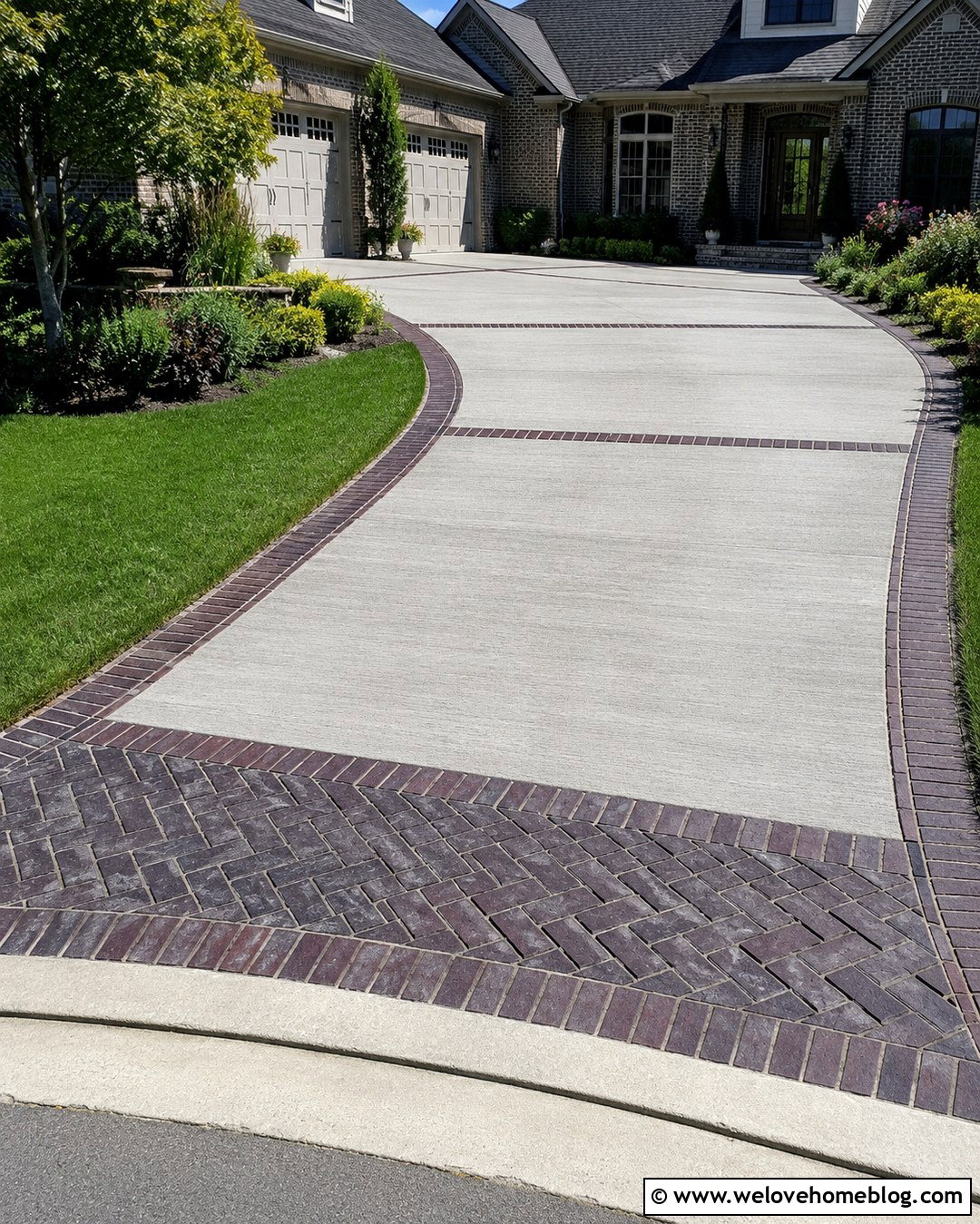
A mixed-material driveway lets you balance cost, appearance, and visual detail across a large front yard. Use broom-finished concrete for the main driving surface, then add brick or stone paver borders, crossbands, and a decorative apron. The secondary material can also outline a curved parking bay or connect the driveway with the front walkway. Keep the color palette limited to two or three related tones so the design remains cohesive. Layer shrubs, ornamental grasses, and flowering plants around the edges, leaving breathing room beside each material transition. Combining paving materials and green space can prevent a broad driveway from appearing empty or monotonous. () This flexible look works with many house styles because the border material can be selected to match existing brick, stone, siding, or roof colors.
Conclusion:
The best 20 Outdoor Driveway Ideas treat the entire front approach as one connected design. The surface should work with the driveway shape, borders, planting beds, walkway, entrance, and architecture. Gravel and asphalt offer straightforward foundations that can be elevated with strong edging. Concrete becomes more distinctive with grass strips, aggregate, patterns, or paver ribbons. Brick, cobblestone, resin, and permeable pavers provide additional texture for homes needing a more decorative entrance. Before selecting a look, consider the property’s size, slope, drainage, maintenance needs, and normal vehicle movement. Then choose a restrained material palette and landscaping that will remain practical as it matures. A coordinated driveway can make the whole property feel more polished from the street.

Related posts:



Leave a Reply