
Cobble driveways bring rich texture, lasting character, and a handcrafted appearance to the front of a home. The stones can complement everything from traditional Colonials and cottages to ranch homes and clean-lined contemporary architecture. Color, pattern, driveway shape, edging, and landscaping all influence the finished look. Gray granite creates a tailored effect, while reclaimed sandstone feels softer and more rustic. Installation details also matter because the base, joint material, drainage plan, and edge restraints must suit regular vehicle traffic. The best designs treat the driveway, walkway, planting beds, and house facade as one coordinated composition. Explore these **25 Cobble Driveway Ideas** to find practical combinations for different properties, budgets, and curb-appeal goals.

1. Gray Granite Cobble Driveway
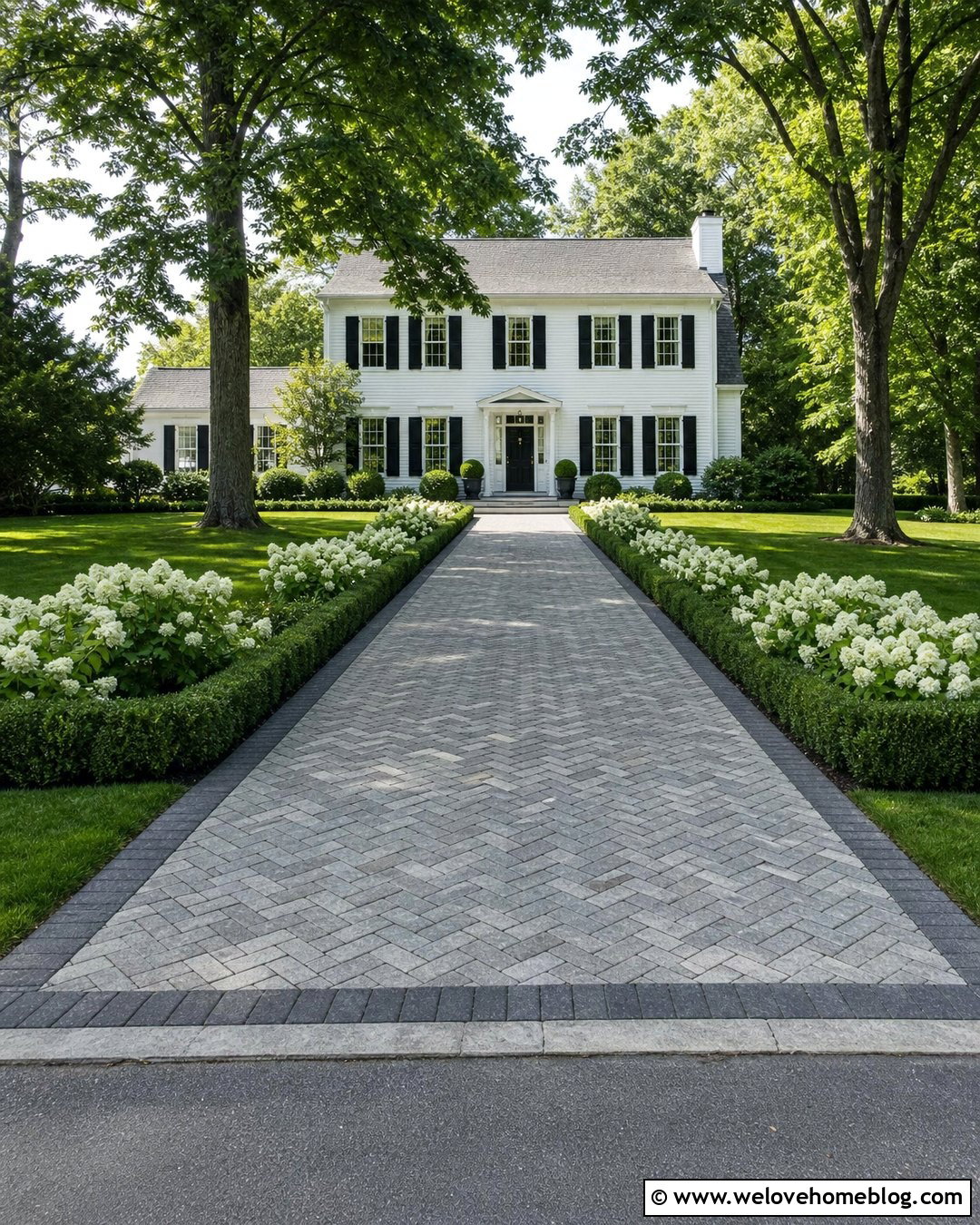
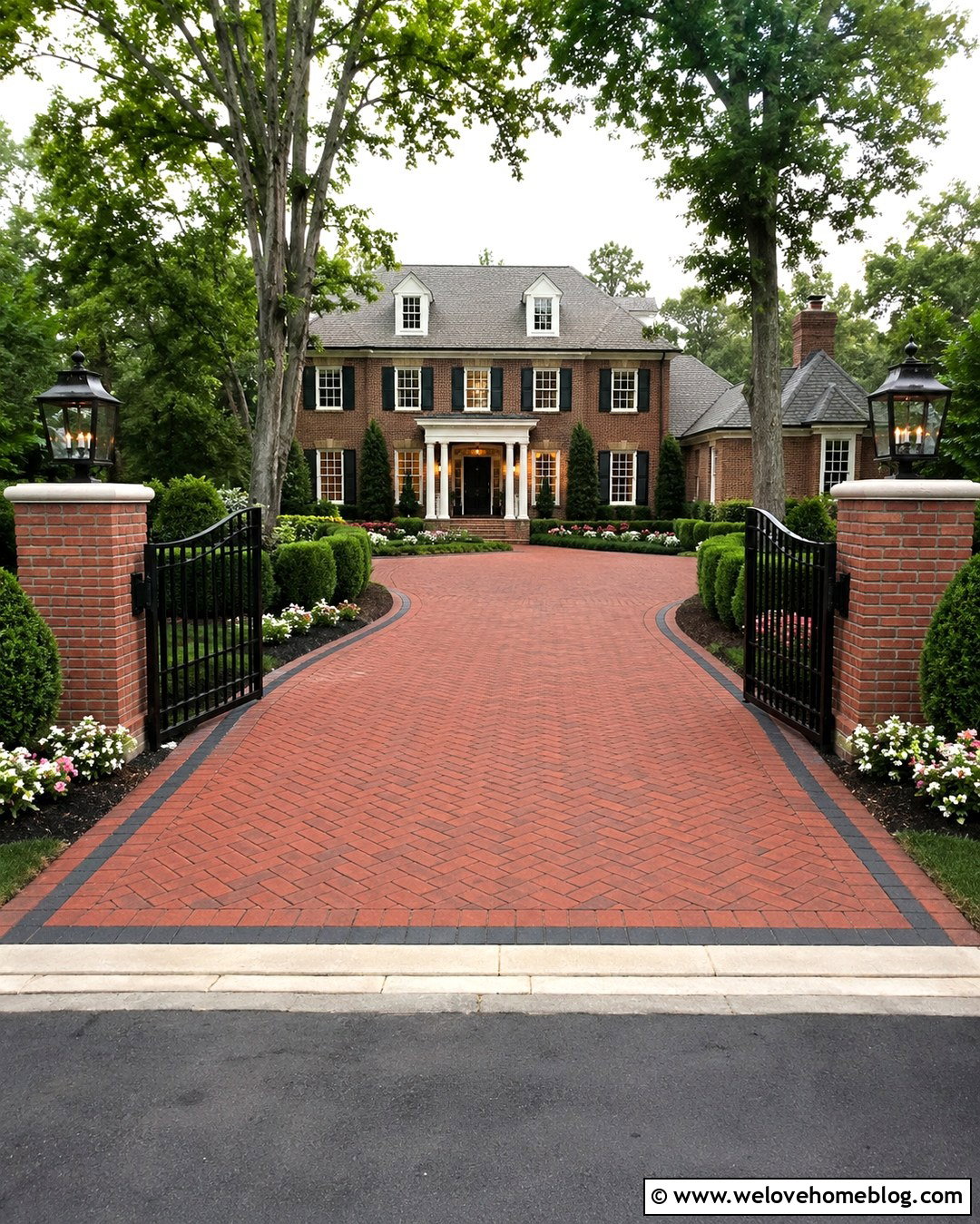
A straight gray granite cobble driveway creates a neat, traditional approach without looking overly decorative. Arrange rectangular stones in a herringbone pattern to introduce movement and visually break up a long paved surface. Slight differences in the gray tones will keep the driveway from appearing flat or manufactured. Add a darker granite soldier-course border along both sides to define the shape. Narrow planting beds filled with boxwoods, white hydrangeas, and ornamental grasses can soften the stone while maintaining a tidy appearance. This complete look works especially well with a white Colonial or brick Georgian home. Continue the same granite into the front walkway so the entrance feels connected rather than divided into unrelated paved areas.
2. Reclaimed Cobble Driveway
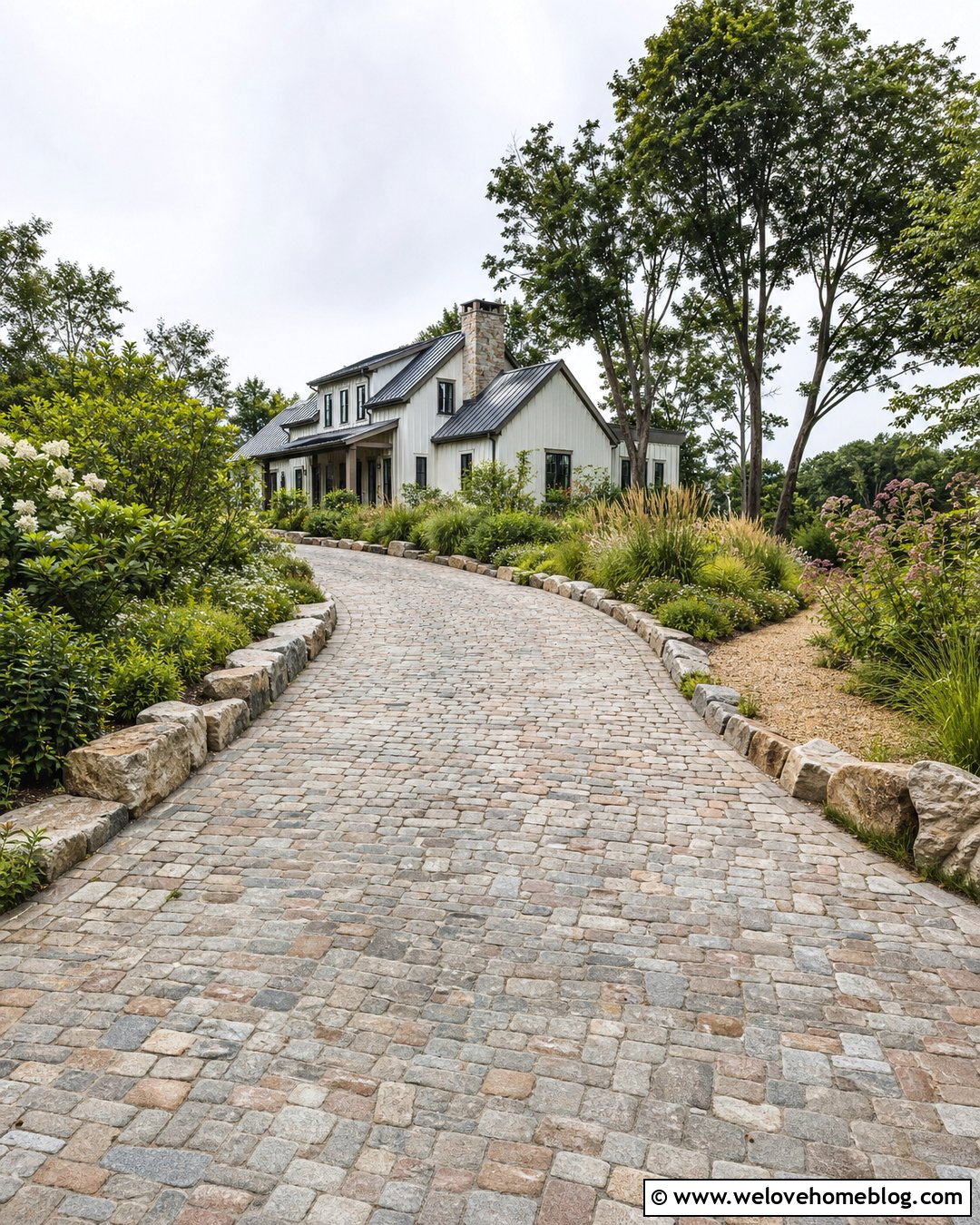
Weathered reclaimed cobbles give a driveway the settled appearance of stonework that has belonged to the property for generations. Their softened edges and mixed tan, brown, charcoal, and muted red coloring pair naturally with an older farmhouse or renovated country home. Use a gently curved layout rather than forcing the stones into a rigid straight line. A simple fieldstone border can echo the irregular texture while keeping the driveway visually contained. Complete the setting with meadow-style grasses, flowering shrubs, mature shade trees, and a gravel path branching toward the porch. Because reclaimed stones can vary in thickness, careful sorting and professional installation will help create a comfortable, consistent driving surface without removing their authentic character.
3. Herringbone Cobble Driveway
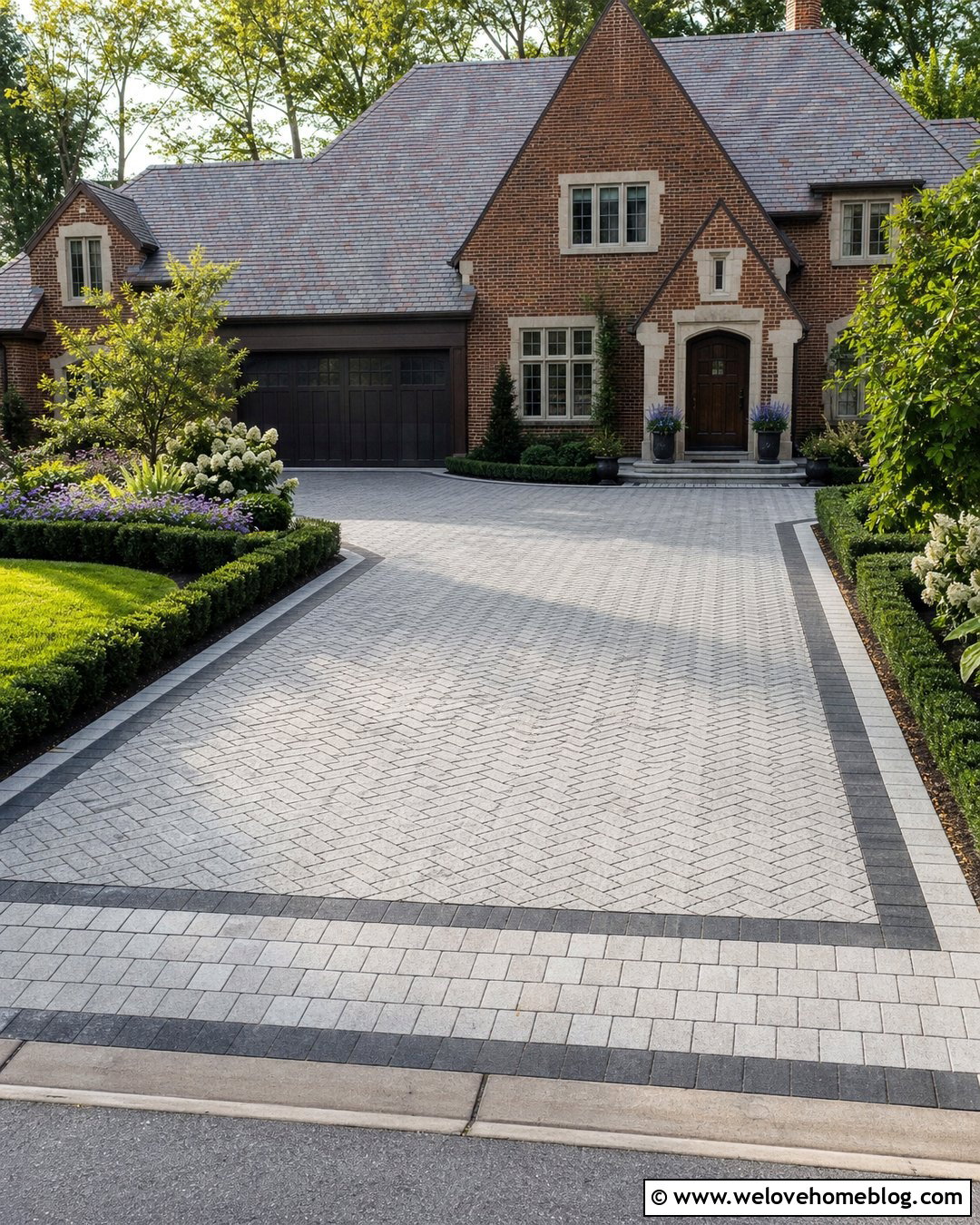
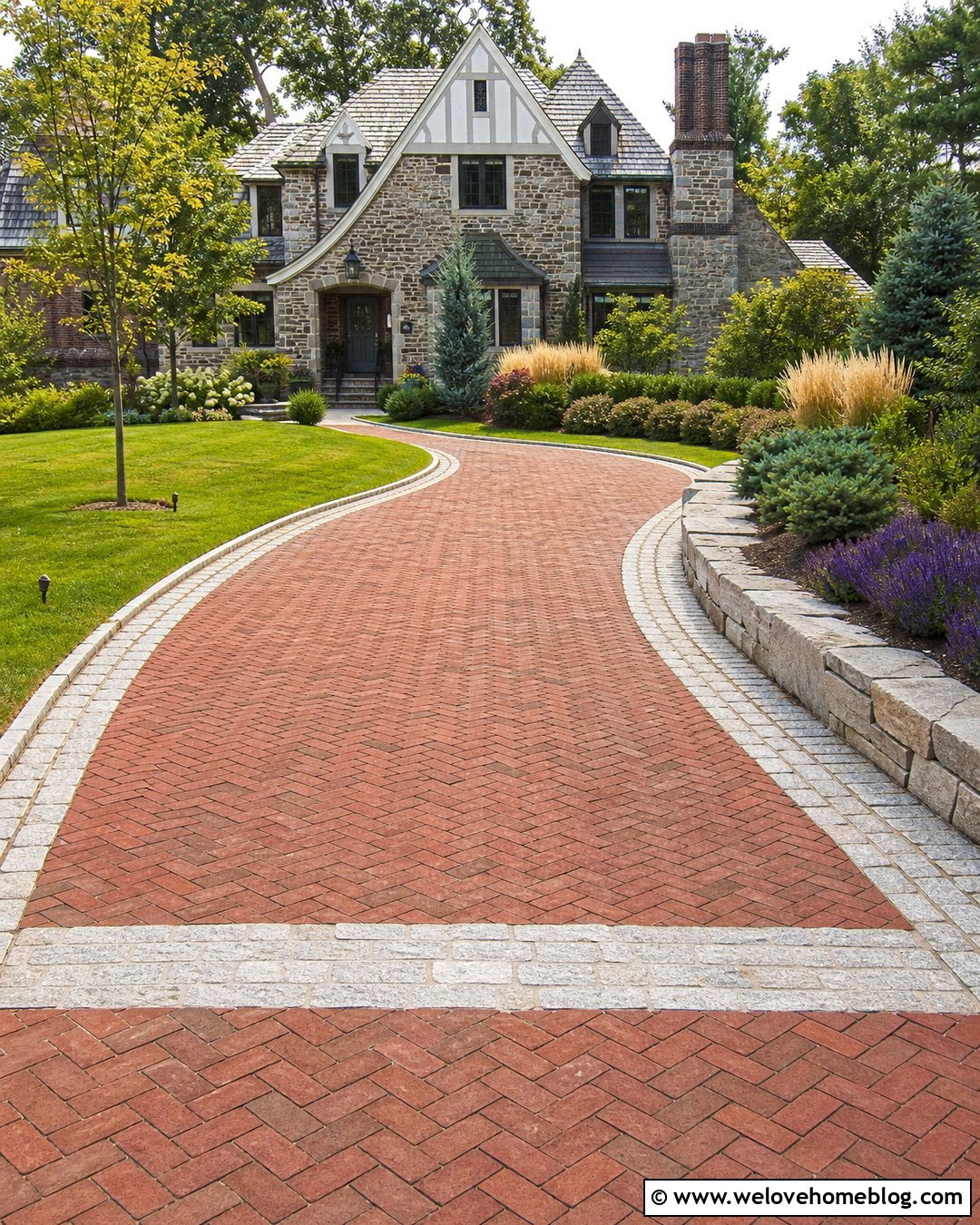
A herringbone cobble driveway offers a structured pattern that looks attractive from the curb and near the garage. Set rectangular granite cobbles at opposing angles, using medium gray stones for the field and charcoal cobbles around the perimeter. The directional pattern can make a broad driveway feel more detailed and intentional. It also pairs beautifully with symmetrical architecture, including Tudor, Colonial, and traditional brick homes. Keep nearby landscaping orderly with clipped hedges, balanced planting beds, and matching walkway connections. At the street, introduce a wide cobble apron with stones running perpendicular to the main pattern. This subtle change creates a defined entrance without requiring large pillars, decorative gates, or landscaping that could reduce visibility.
4. Circular Cobble Driveway
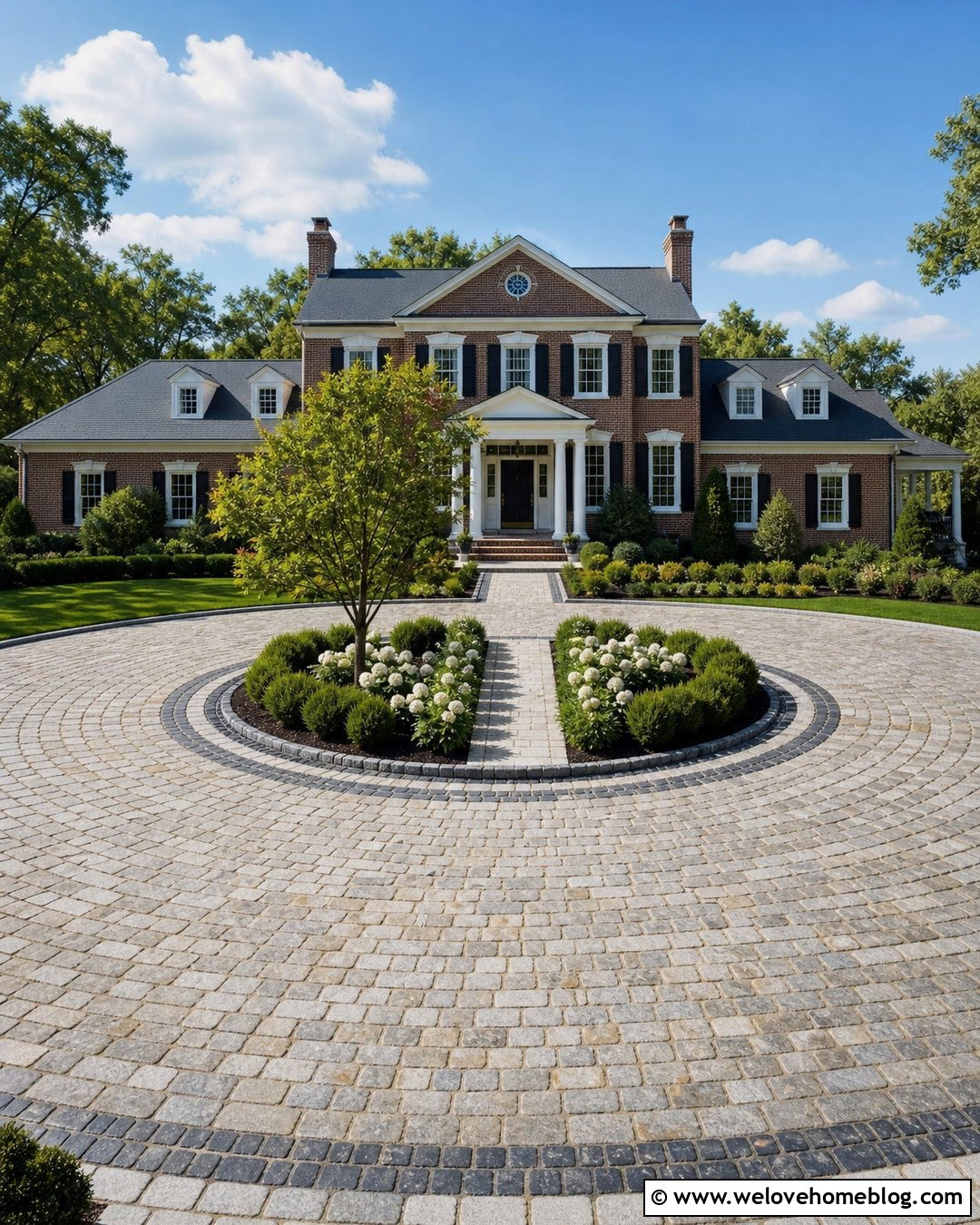
What could make a large front yard feel more welcoming than a circular cobble driveway arranged around a landscaped island? Warm gray granite cobbles can follow the curve in graceful concentric bands, helping the surface look purposeful rather than pieced together. Fill the center island with a small ornamental tree, low evergreen shrubs, and seasonal perennials that will not block views across the driveway. A flush charcoal cobble border can define both the inner and outer edges. This layout suits a stately Colonial, French-inspired house, or substantial traditional residence. Connect the front walkway directly to the central entrance and repeat the driveway stone around the porch steps for a polished transition between the arrival area and home.
5. Black Basalt Cobble Driveway
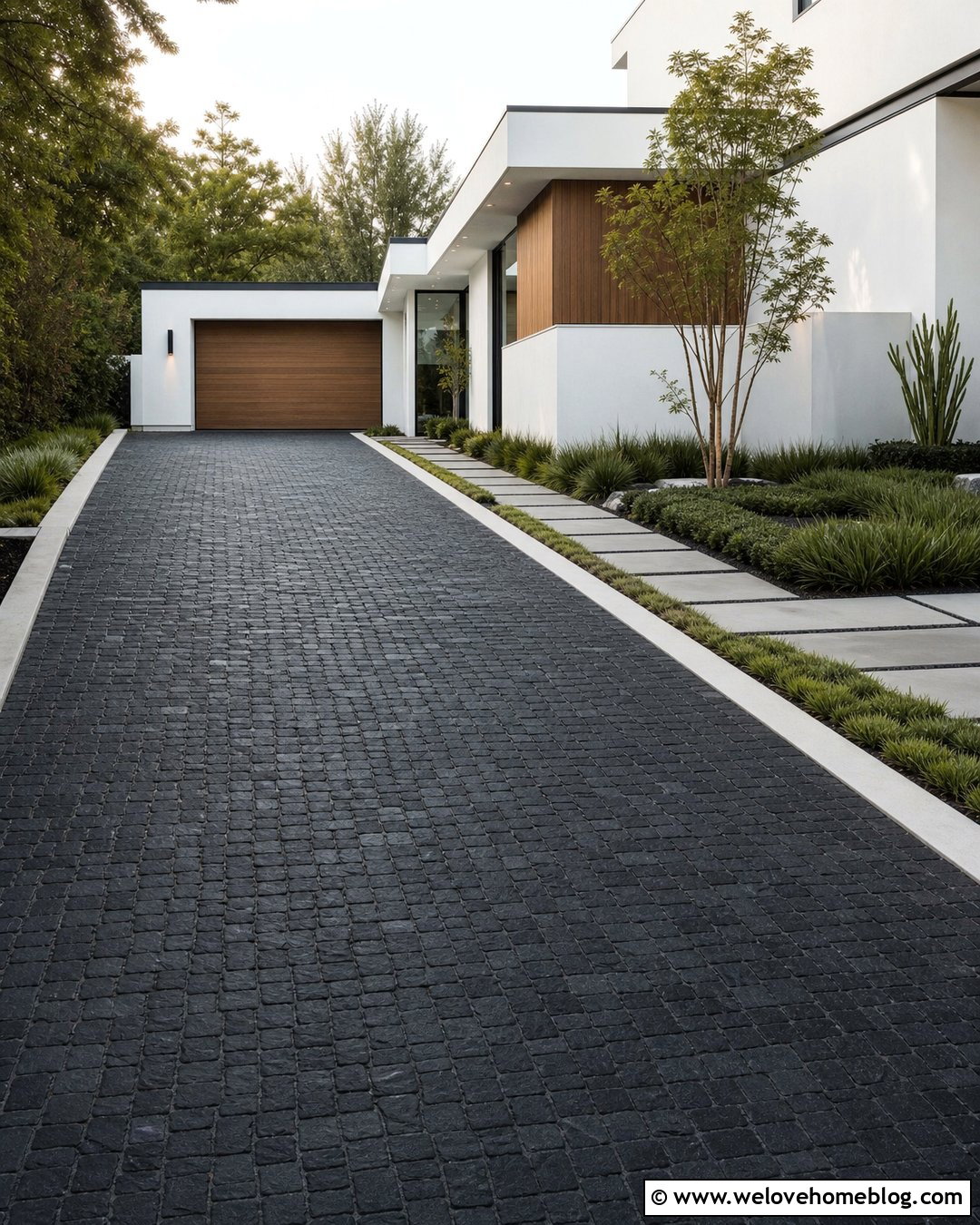
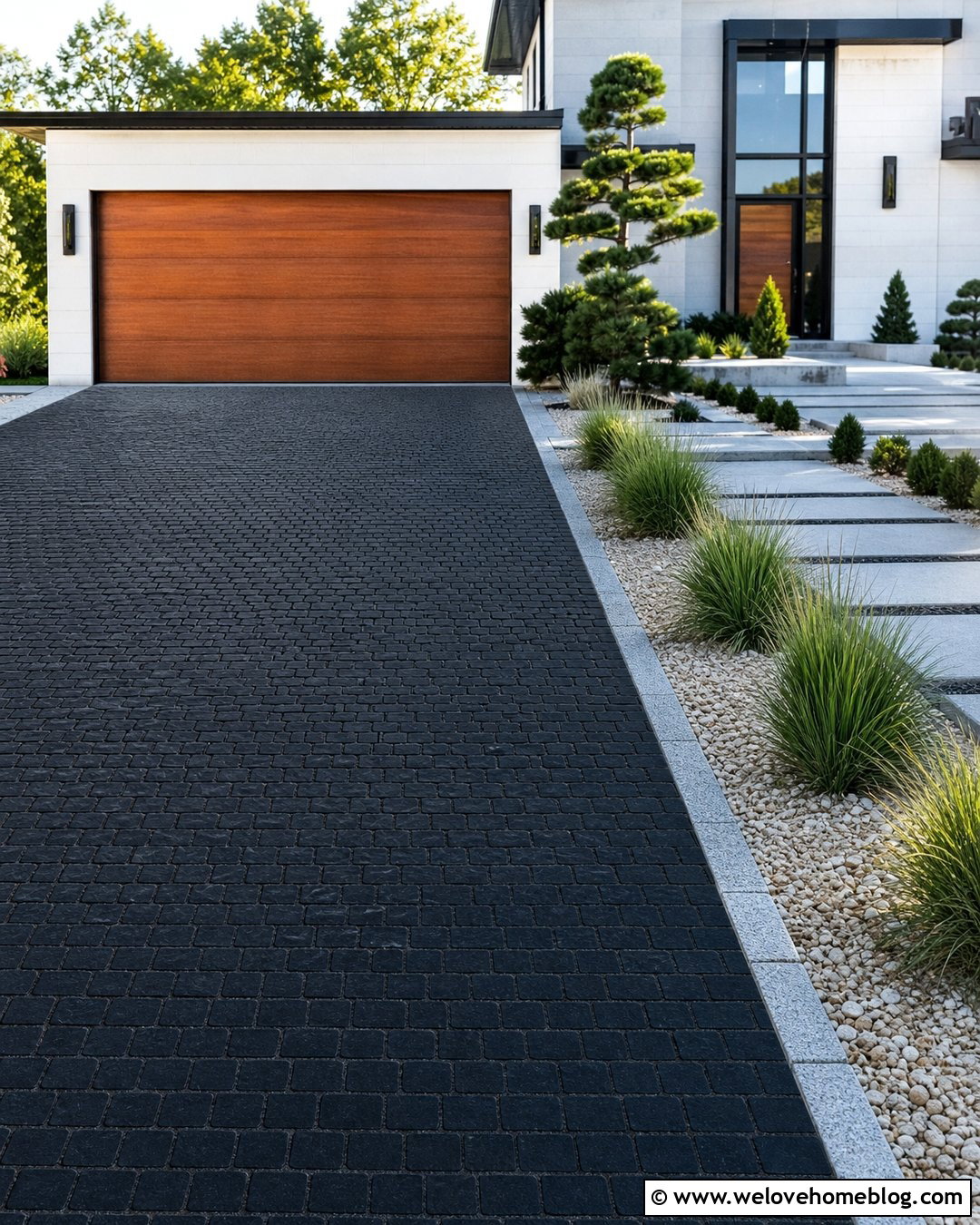
Deep charcoal basalt cobbles can give an old-world material a distinctly modern direction. Choose stones with a split or lightly textured finish, then install them in a simple running bond that emphasizes clean lines. A straight driveway with broad proportions complements a modern home featuring white stucco, warm wood siding, or dark metal accents. Use smooth concrete edging to create a crisp transition between the irregular stone texture and surrounding landscape. Planting should remain restrained, with linear beds of ornamental grasses, compact evergreens, and one or two sculptural trees. A matching basalt walkway can run beside the driveway, separated by a narrow strip of groundcover. The resulting entrance feels dramatic but still natural, balanced, and appropriate for everyday residential use.
6. Light Limestone Cobble Driveway
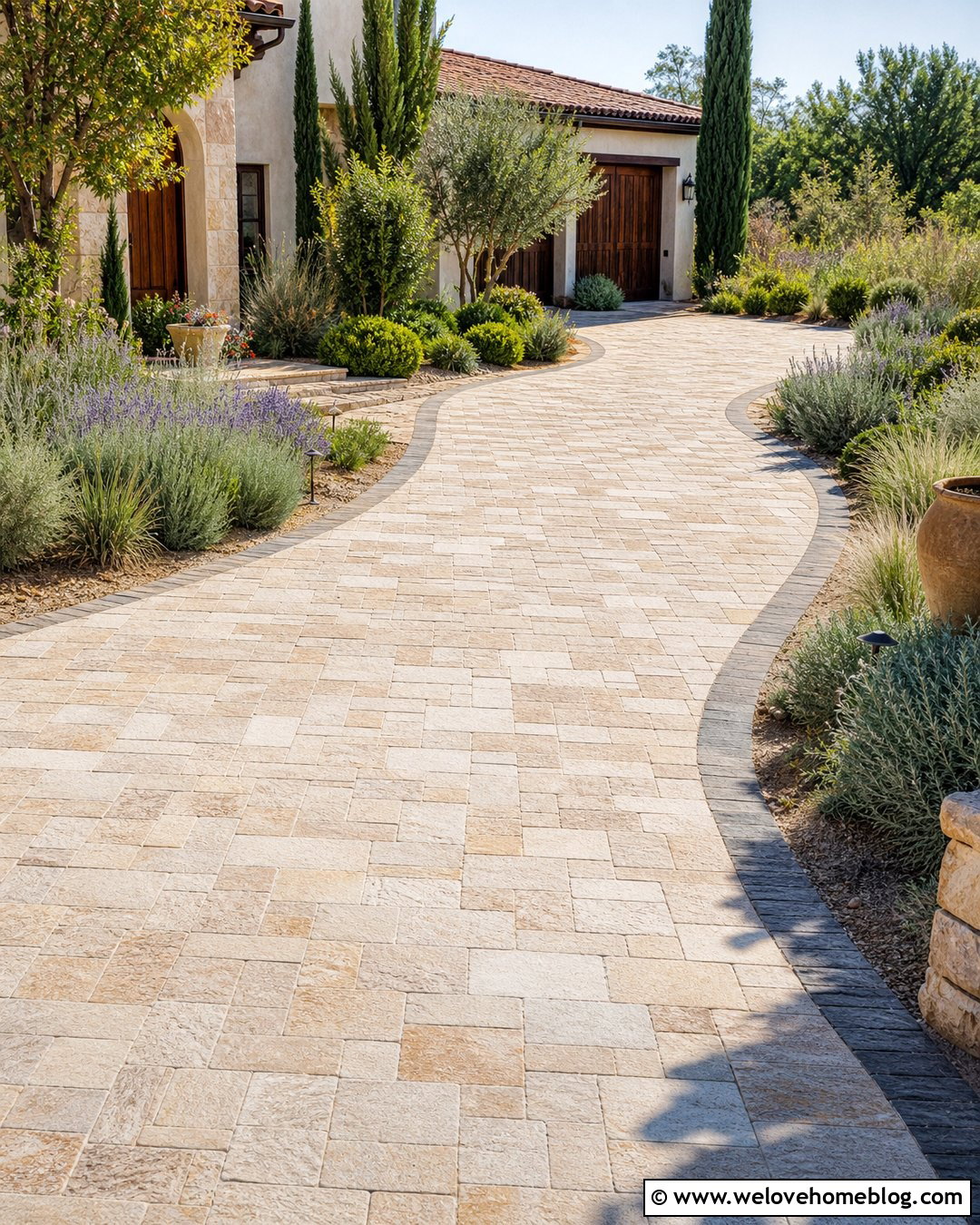
Pale limestone cobbles reflect light and create an airy entrance suited to warm, sunny properties. Select cream, beige, and soft honey tones rather than one perfectly uniform color. Lay the stones in a random rectangular pattern for a relaxed surface that complements Mediterranean, Spanish Revival, and light stucco homes. A border of slightly darker limestone provides definition without creating harsh contrast. Drought-tolerant beds containing lavender, rosemary, sage, and compact ornamental grasses can frame the driveway and repeat its warm coloring. Consider a gentle curve leading toward an offset garage so the layout follows the landscape naturally. Dark bronze lighting and a coordinating limestone walkway will finish the design while allowing the light-colored cobbles to remain the primary visual feature.
7. Sandstone Cobble Driveway
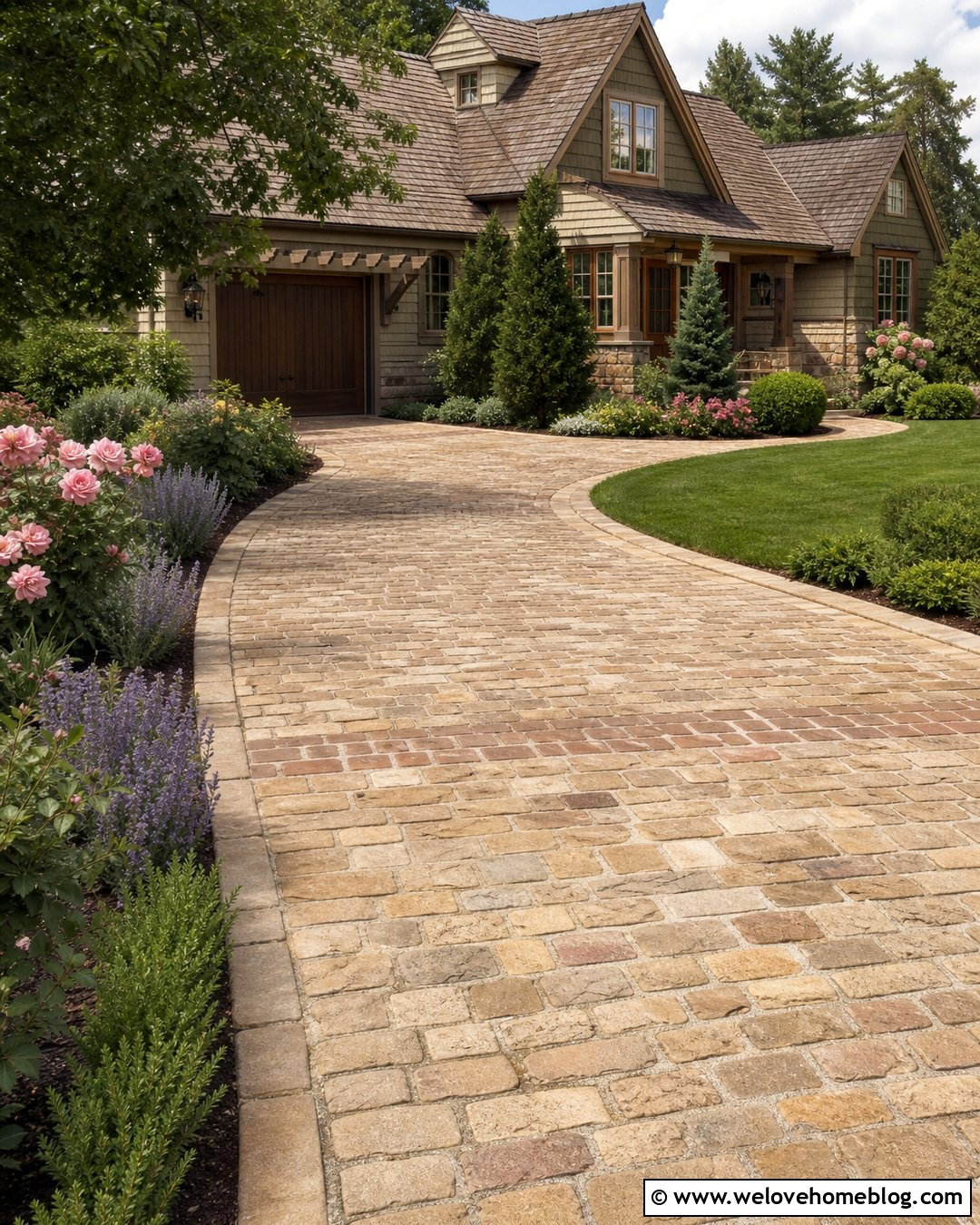
Soft gold and buff sandstone cobbles can make a driveway feel warm, informal, and closely connected to its garden. This material looks especially fitting outside a cottage, Craftsman home, or stone-faced residence. Use a curved driveway layout with a loosely blended mix of beige, brown, and dusty rose stones. Border the surface with larger sandstone setts that provide a clear frame while maintaining the same tonal family. Layer the surrounding beds with roses, catmint, hydrangeas, and low evergreen shrubs for changing color throughout the growing season. Where the driveway meets the garage, add a broad transition band with cobbles laid in the opposite direction. That small pattern shift makes the arrival zone appear finished without introducing a competing material.
8. Cobble Driveway With Grass Joints
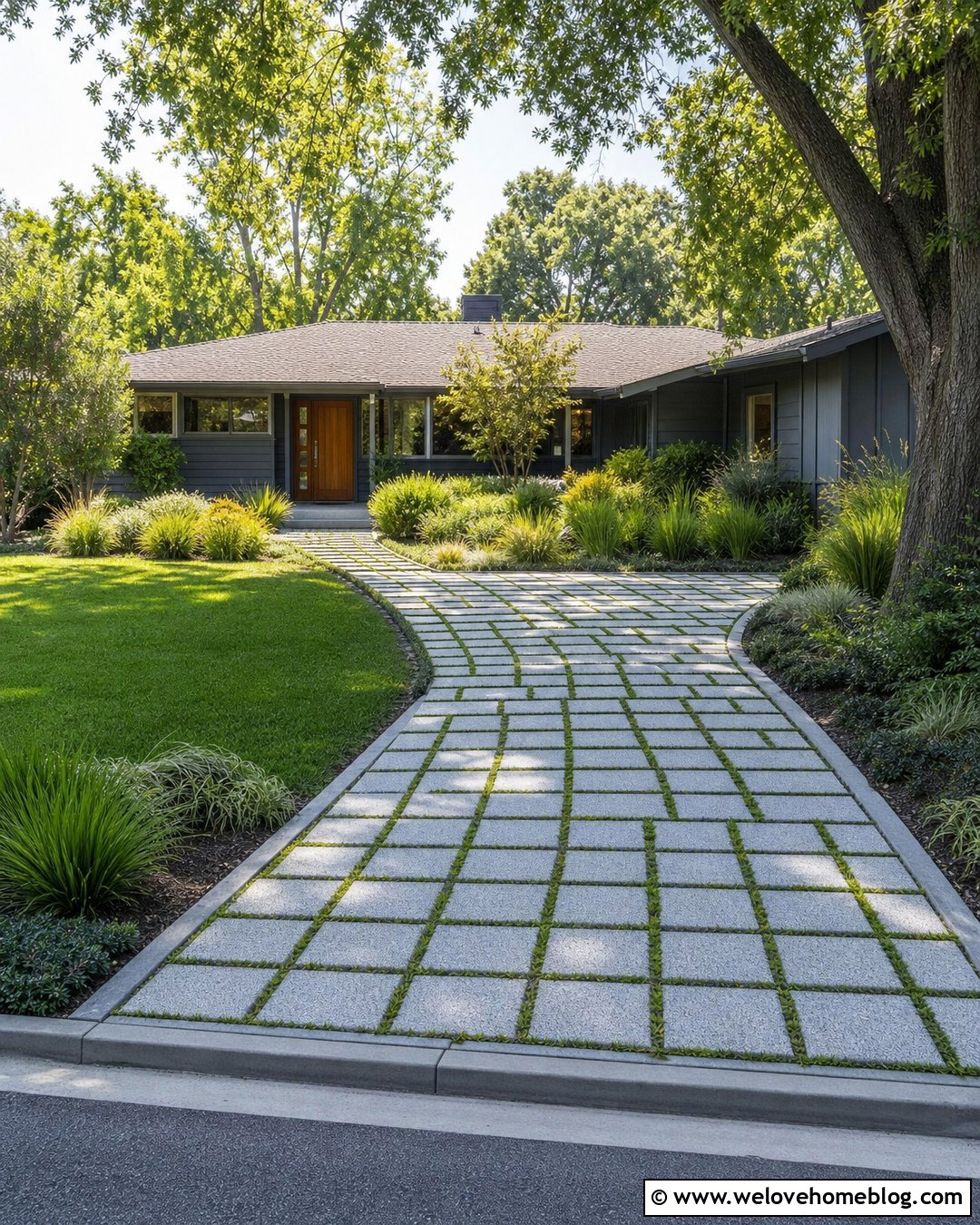
Green joints can soften a cobble driveway and help a large paved area blend into the lawn. Use square gray granite cobbles in a spacious grid, leaving consistent planted joints between them. This approach works best in selected low-speed residential areas where the planting can receive suitable light, irrigation, and ongoing care. Frame the driveway with flush granite edging so its outer lines remain easy to read. A straight or gently curved layout pairs well with a low ranch house, contemporary cottage, or updated midcentury home. Repeat the green joint treatment in a nearby walkway or small parking bay. Keep the rest of the landscaping simple, using native grasses, shade trees, and broad lawn areas that reinforce the relaxed garden character.
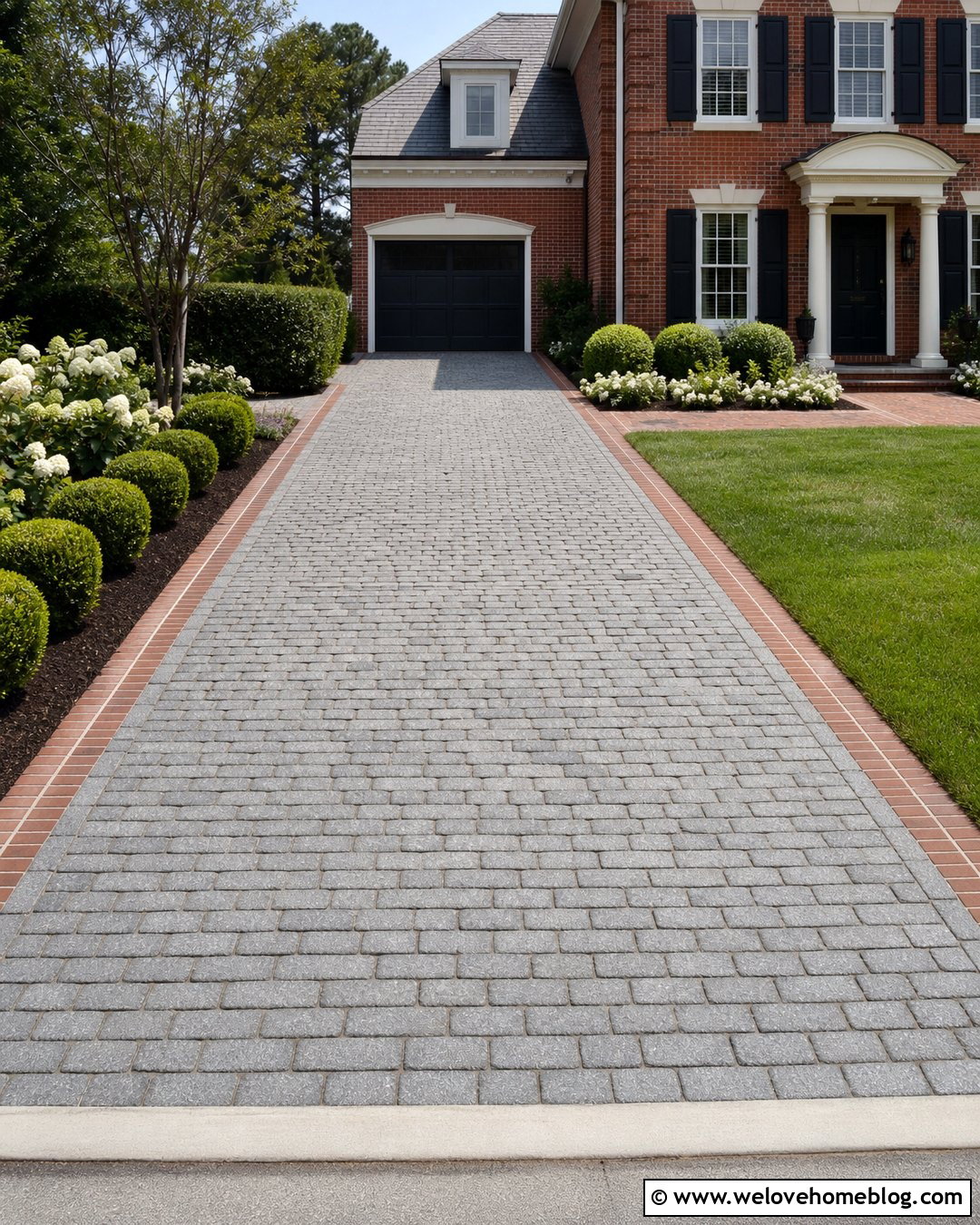
9. Cobble Driveway With Brick Border
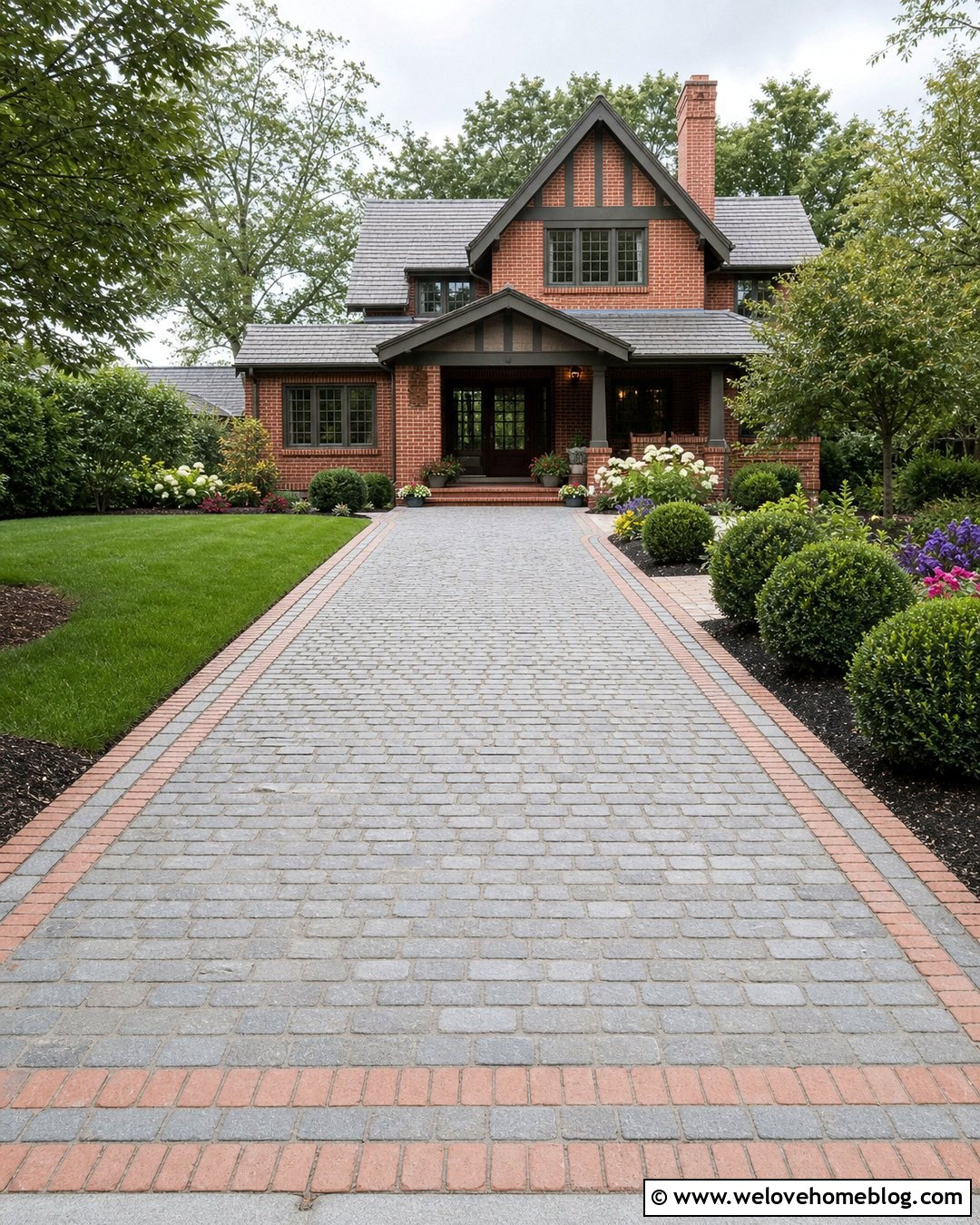
A red brick border brings warm contrast to a gray cobble driveway and can connect the paving to a brick house facade. Choose medium-gray granite cobbles for the main surface, arranging them in a running bond or subtle herringbone pattern. Install clay bricks as a double soldier-course edge along the driveway and repeat them at the street apron. The border should feel integrated with the base and surrounding grade rather than added as a thin decorative strip. Defined cobblestone edging can also help separate a paved or loose-surface driveway from the neighboring landscape. () Complete the look with mulched beds, compact hollies, flowering perennials, and a brick walkway leading to the porch. This combination is particularly suitable for Craftsman, Colonial, and traditional suburban homes.
10. Cobble Driveway With Bluestone Bands
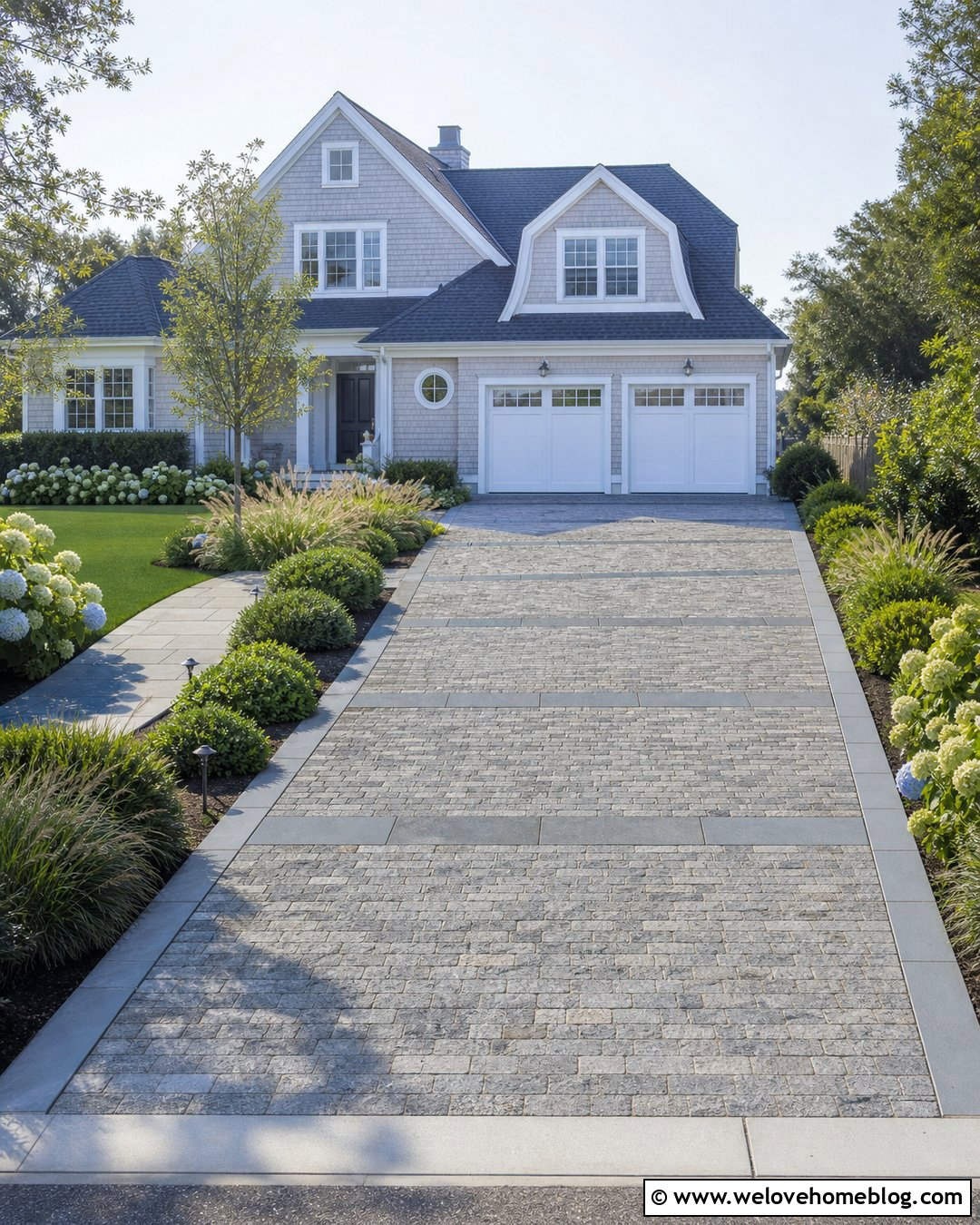
Bluestone bands introduce calm, geometric lines across an irregular cobble surface. Begin with mixed gray granite cobbles laid in a random rectangular pattern. Then place wide blue-gray stone bands across the driveway at measured intervals, aligning one with the walkway and another with the garage threshold. Matching bluestone borders will create a strong visual frame without overwhelming the natural cobbles. This complete composition suits a Cape Cod, shingle-style, or coastal-inspired home with gray siding and white trim. Surround the drive with hydrangeas, inkberry shrubs, ornamental grasses, and a well-defined lawn. The crossbands can visually divide a long driveway into balanced sections, while the limited color palette keeps the overall approach peaceful, practical, and connected to the architecture.
11. Narrow Cobble Driveway
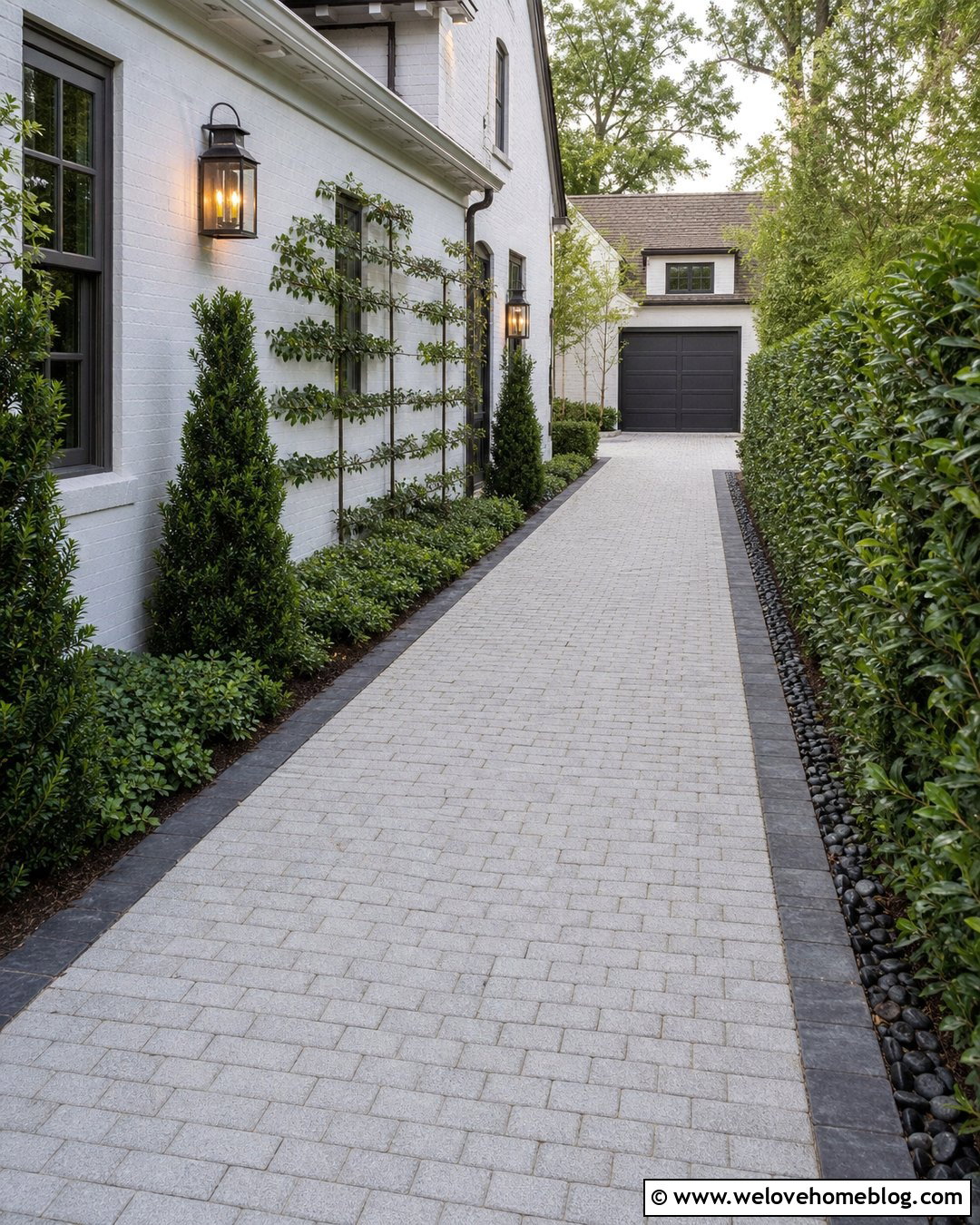
A narrow side driveway needs clear boundaries and simple details that prevent it from feeling cramped. Small-format gray granite cobbles can make the proportions appear more balanced than oversized stones. Install them in a lengthwise running bond to guide the eye toward a detached garage or rear parking area. Use flush dark cobble edging rather than raised curbs, preserving as much usable width as possible. Along the house, include a slim drainage strip filled with coordinating stone. On the opposite side, add a narrow planting bed with upright shrubs, groundcover, and espaliered greenery. This arrangement works well beside urban cottages, compact Craftsman homes, and traditional houses on narrow lots. Simple wall-mounted lighting can illuminate the route without occupying valuable ground space.
12. Wide Cobble Motor Court
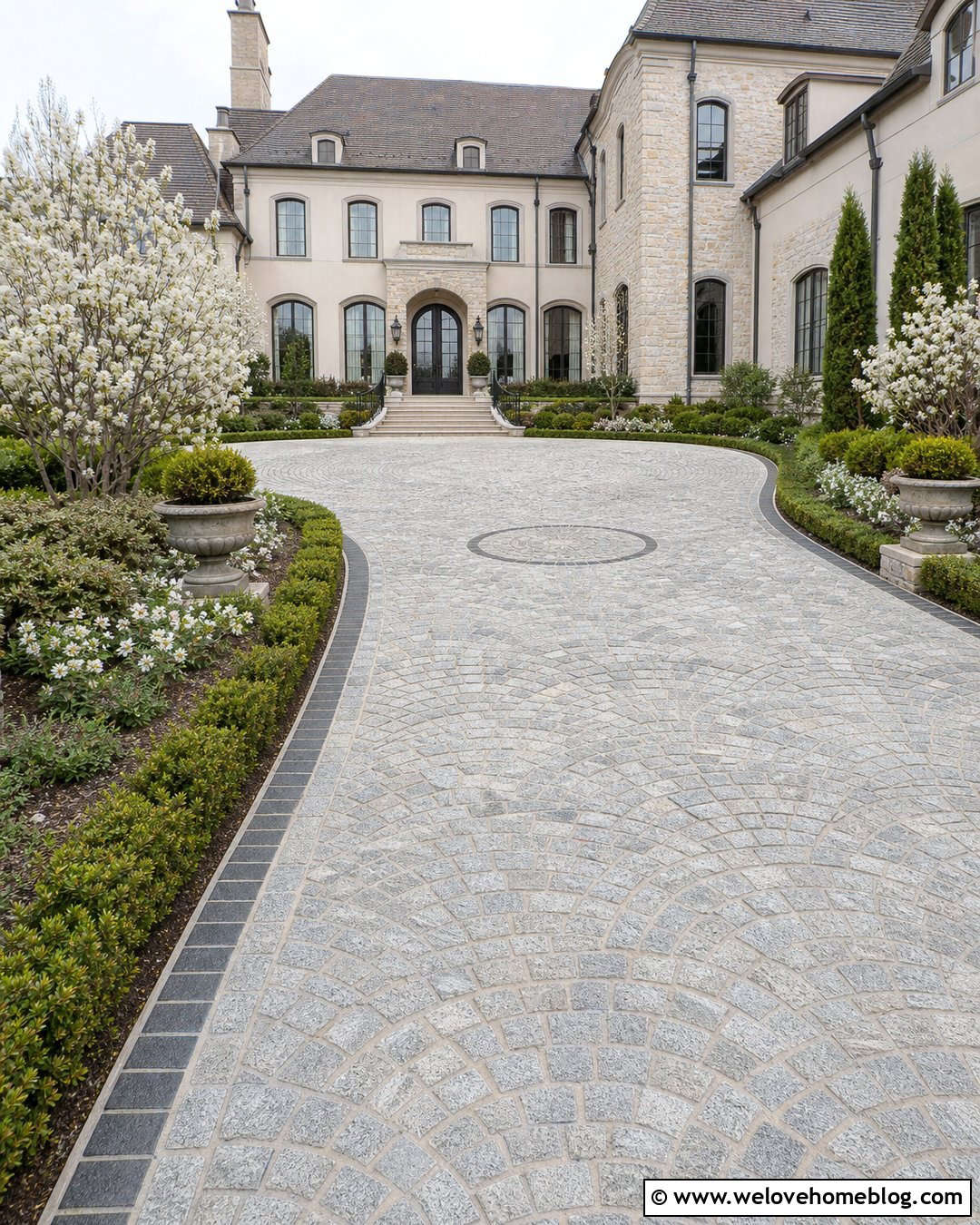
A broad cobble motor court can look impressive, but it needs pattern changes and landscaping to avoid becoming an uninterrupted field of stone. Use warm gray granite cobbles in the central parking and turning area, arranged in sweeping fan patterns. Define individual zones with charcoal cobble bands rather than painted markings. A circular stone medallion near the center can provide orientation while remaining subtle. Frame the court with deep planting beds containing layered evergreens, flowering trees, and low perennials. Large stone planters can mark the walkway without restricting vehicle movement. This generous layout complements substantial Tudor, French country, and traditional homes. Repeating the facade’s stone colors within the driveway will help the motor court feel integrated with the architecture instead of functioning as a separate paved plaza.
13. Sloped Cobble Driveway
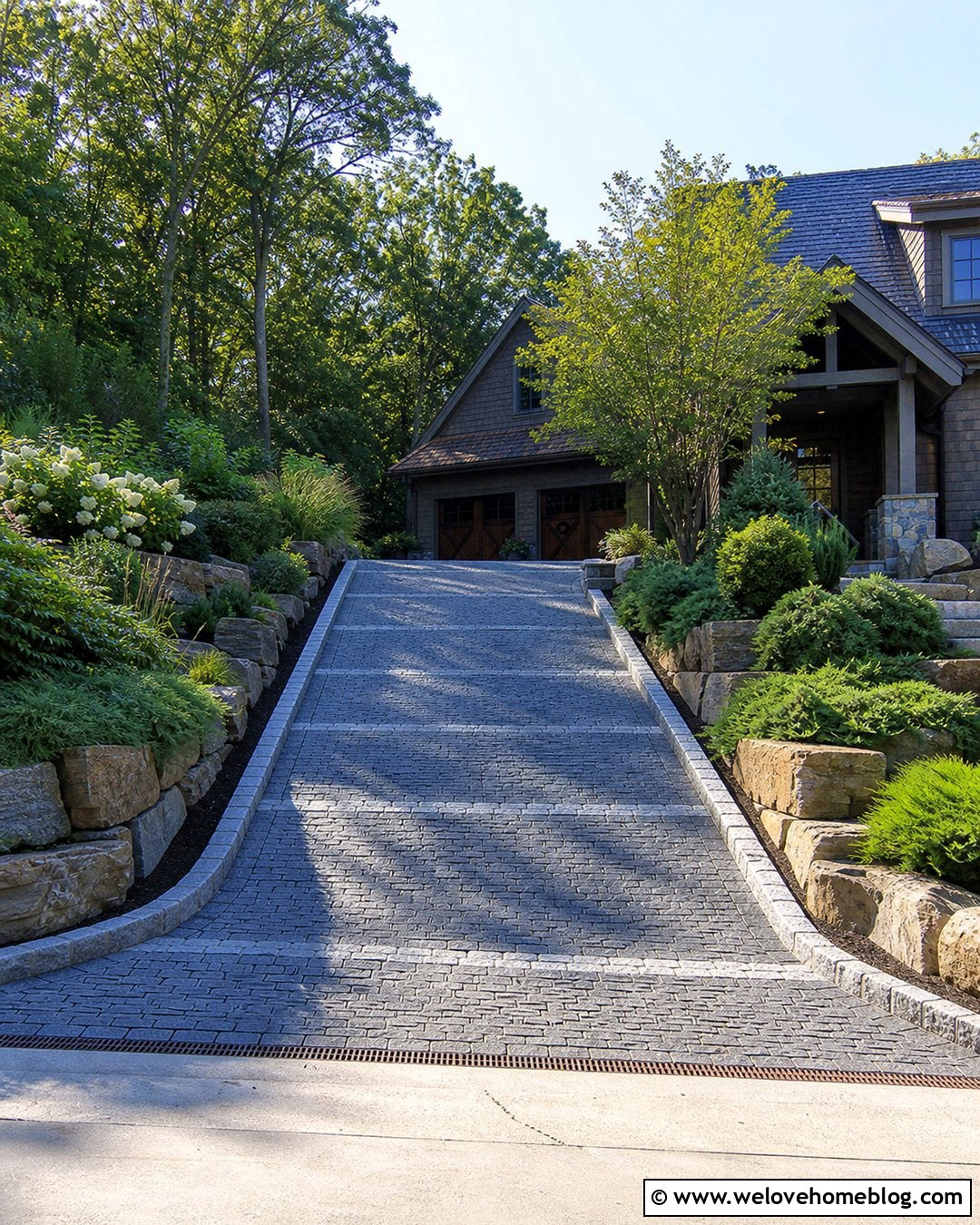
A sloped cobble driveway should look attractive while responding carefully to grading, runoff, and vehicle access. Rectangular granite cobbles in medium and dark gray can be arranged in horizontal bands that visually reduce the apparent length of the incline. Use substantial edge restraints and coordinate the base, joints, and drainage details with a qualified installer familiar with local soil and winter conditions. Low stone retaining walls can support planting beds on either side, creating a layered entrance rather than exposed banks. Add spreading junipers, ornamental grasses, and compact flowering shrubs that will not obstruct sightlines. At the garage, transition into a level cobble landing. This layout works particularly well with hillside Craftsman homes, mountain residences, and houses surrounded by natural stone landscaping.
14. Tree-Lined Cobble Driveway
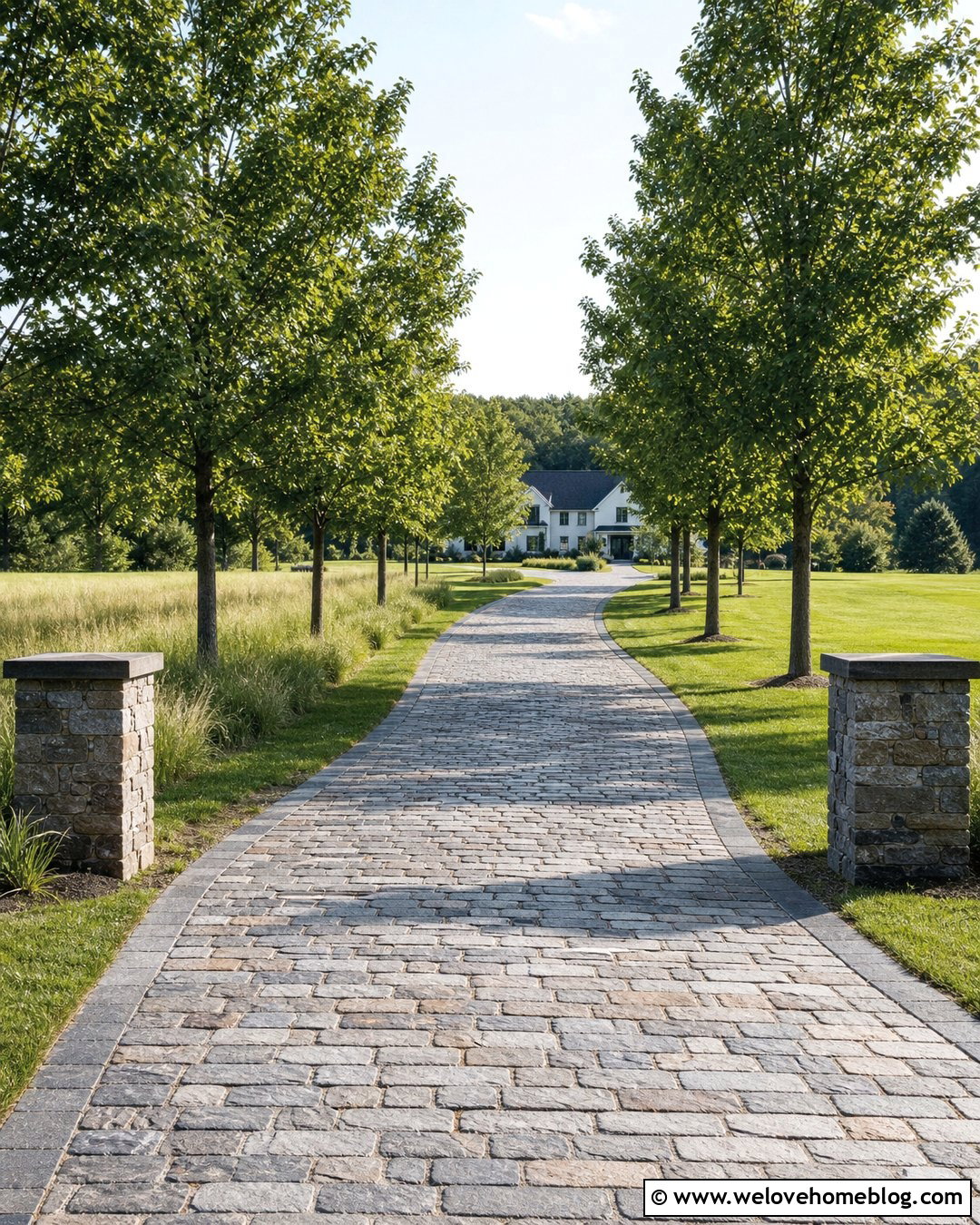
The long approach to a country home becomes memorable when cobbles and trees work together to create a clear sense of arrival. Choose reclaimed gray and brown granite cobbles for a gently curving driveway that follows the existing terrain. Set a single row of larger dark stones along each edge for a restrained finish. Plant evenly spaced deciduous trees outside generous planting strips, leaving enough room for mature trunks and roots. Low meadow grasses or mown lawn beneath the trees will keep the view open toward the house. At the entrance, widen the cobble surface slightly between simple stone pillars. The complete design feels appropriate for a modern farmhouse, country estate, or renovated barn while remaining more relaxed than a highly formal allée.
15. Horseshoe Cobble Driveway
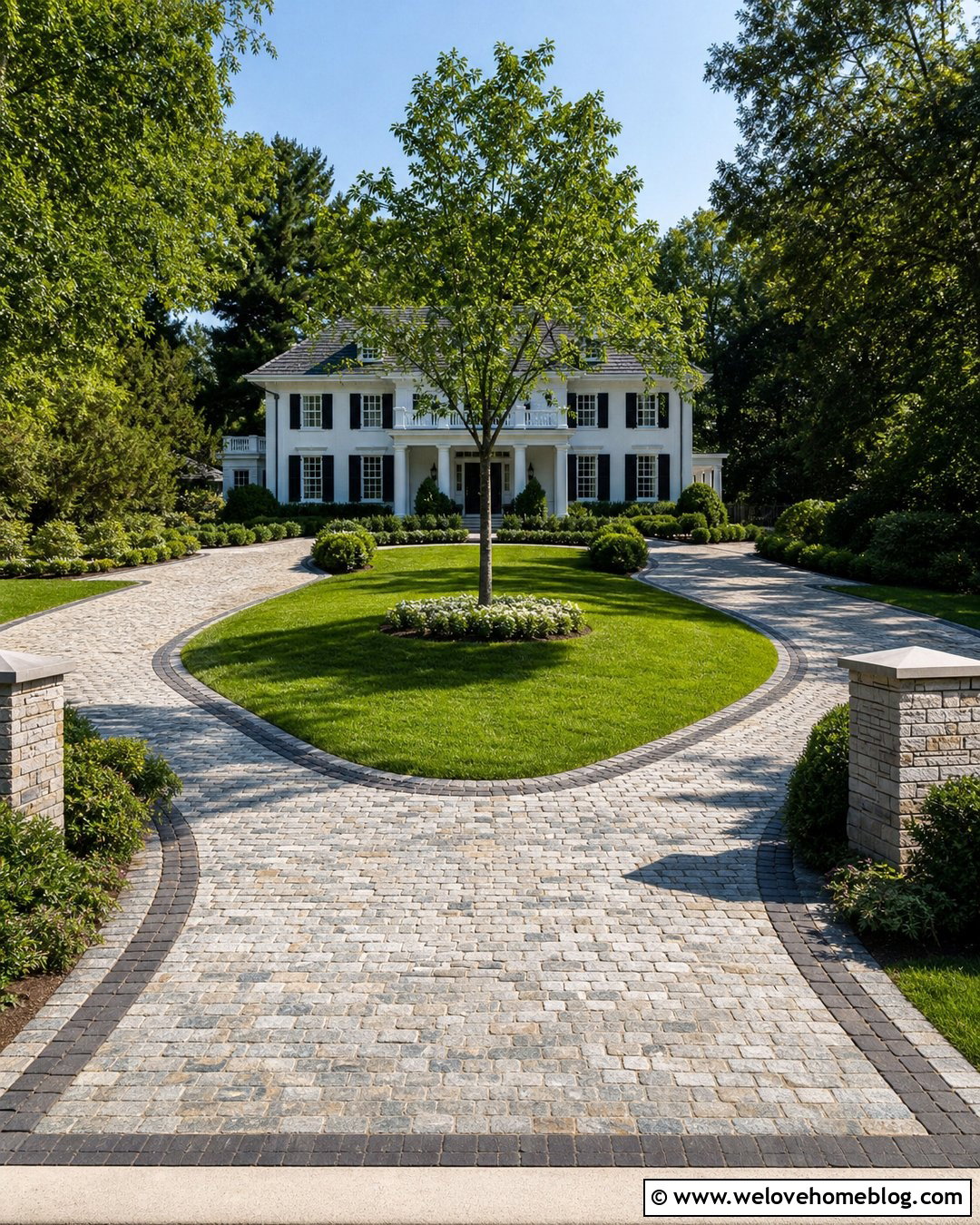
A horseshoe cobble driveway creates two distinct street connections and a convenient flowing route across a wide front yard. Use mixed-tone granite cobbles laid in a running bond that bends smoothly around the central lawn. A darker border will emphasize the continuous shape and distinguish the driving area from adjacent grass. Keep the center landscape open with one ornamental tree, low shrubs, and a curved walkway leading directly to the front porch. Matching masonry pillars can mark both entrances, but their height and placement should preserve clear street views. This arrangement complements Colonial, Southern, and traditional ranch homes with centered front doors. Repeating the driveway cobbles in the walkway landing helps unite the large layout and prevents the central garden from appearing isolated.
16. Cobble Driveway With Stone Apron
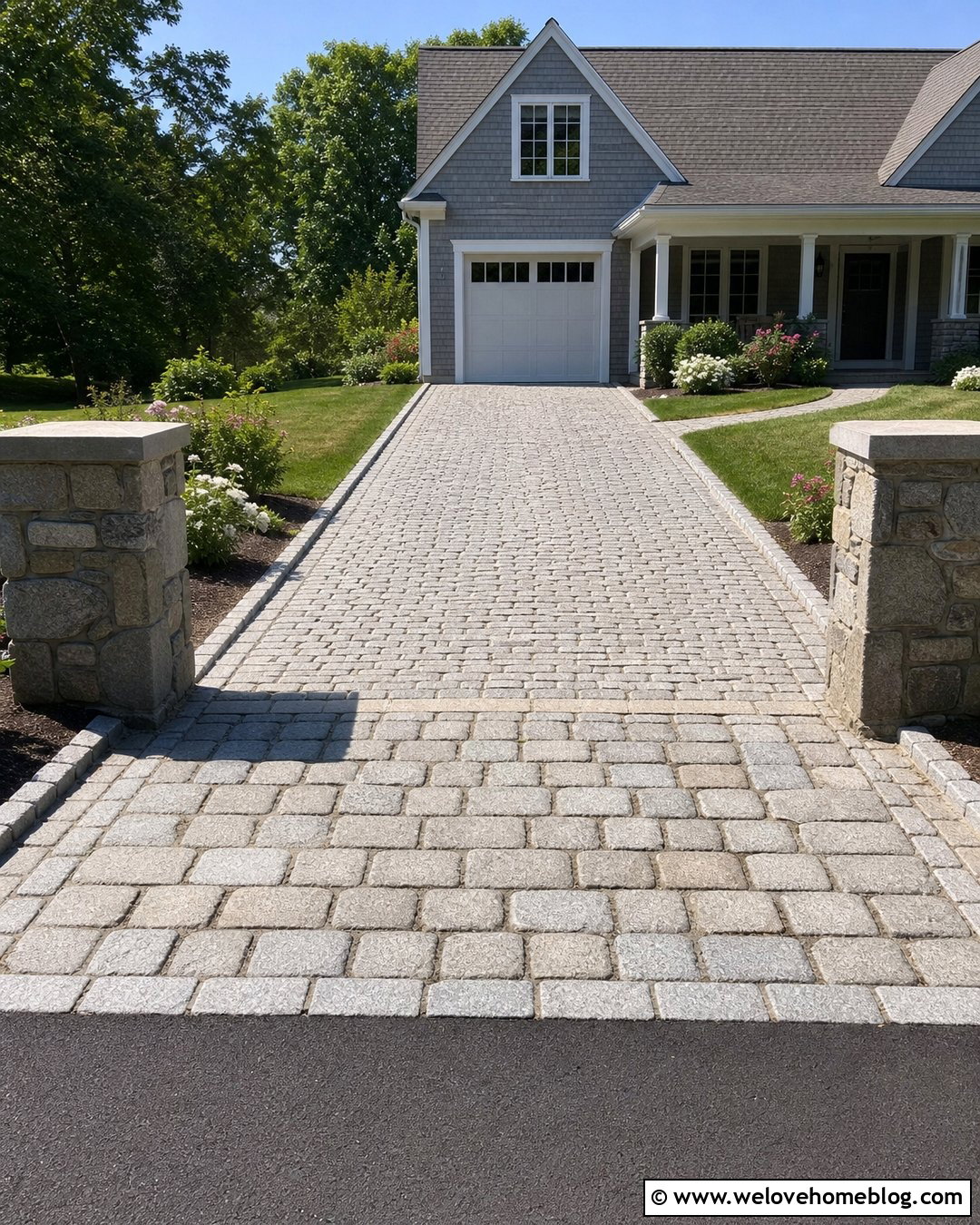
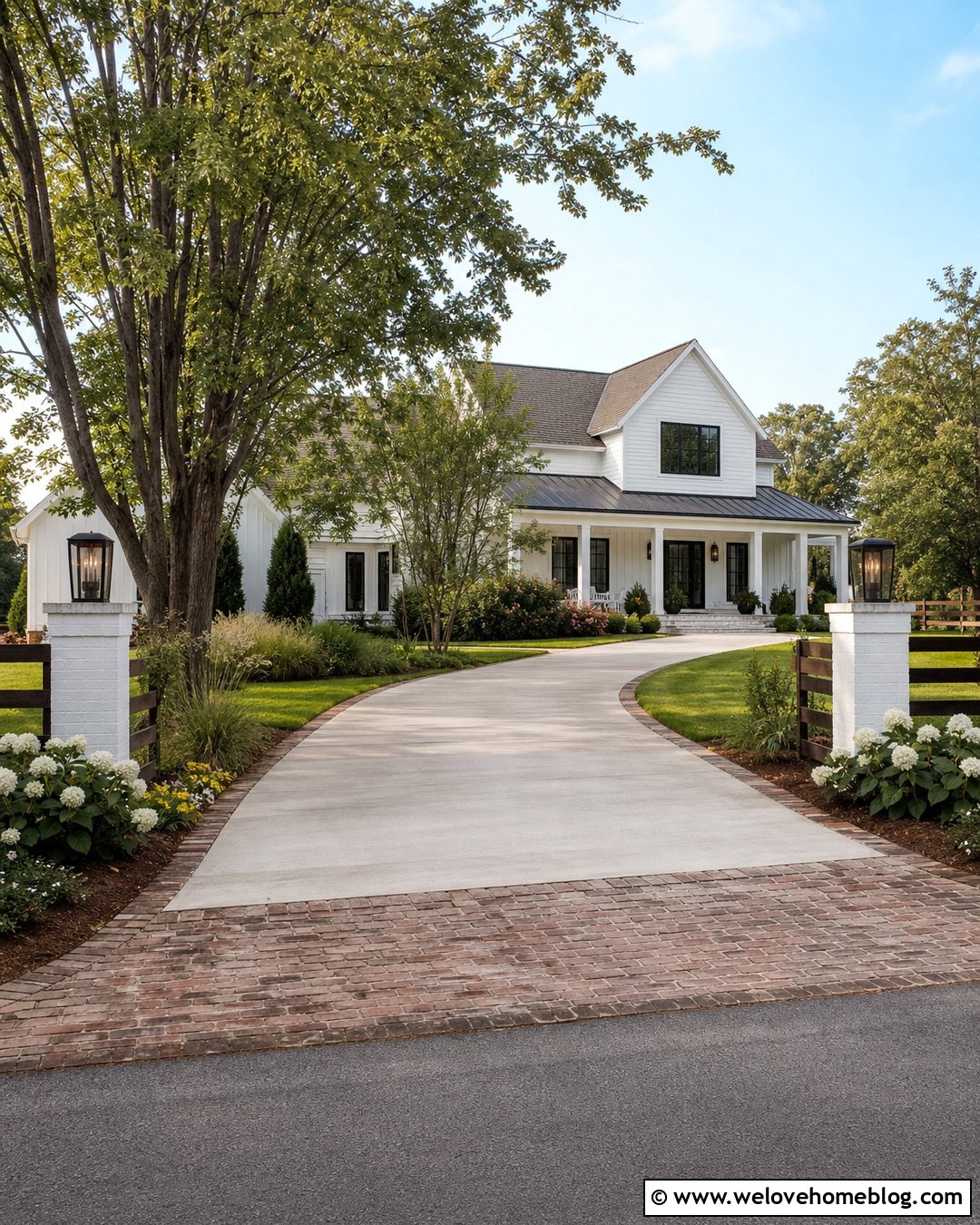
A strongly defined apron gives a cobble driveway a finished transition at the street. Cover the full driveway with small gray granite cobbles in a running bond, then use larger reclaimed granite setts across the entrance. Lay the apron stones perpendicular to the driveway so the pattern shift is noticeable but not busy. Continue the larger setts several feet into the property and wrap them around the first section of edging. Stone or brick entrance pillars can reinforce the gateway, while low shrubs keep the curb view open. Farther toward the house, soften the edges with lawn and informal planting beds. The result suits a farmhouse, Cape Cod, or traditional home and makes even a simple straight driveway feel intentionally planned from curb to garage.
17. Cobble Driveway Parking Court
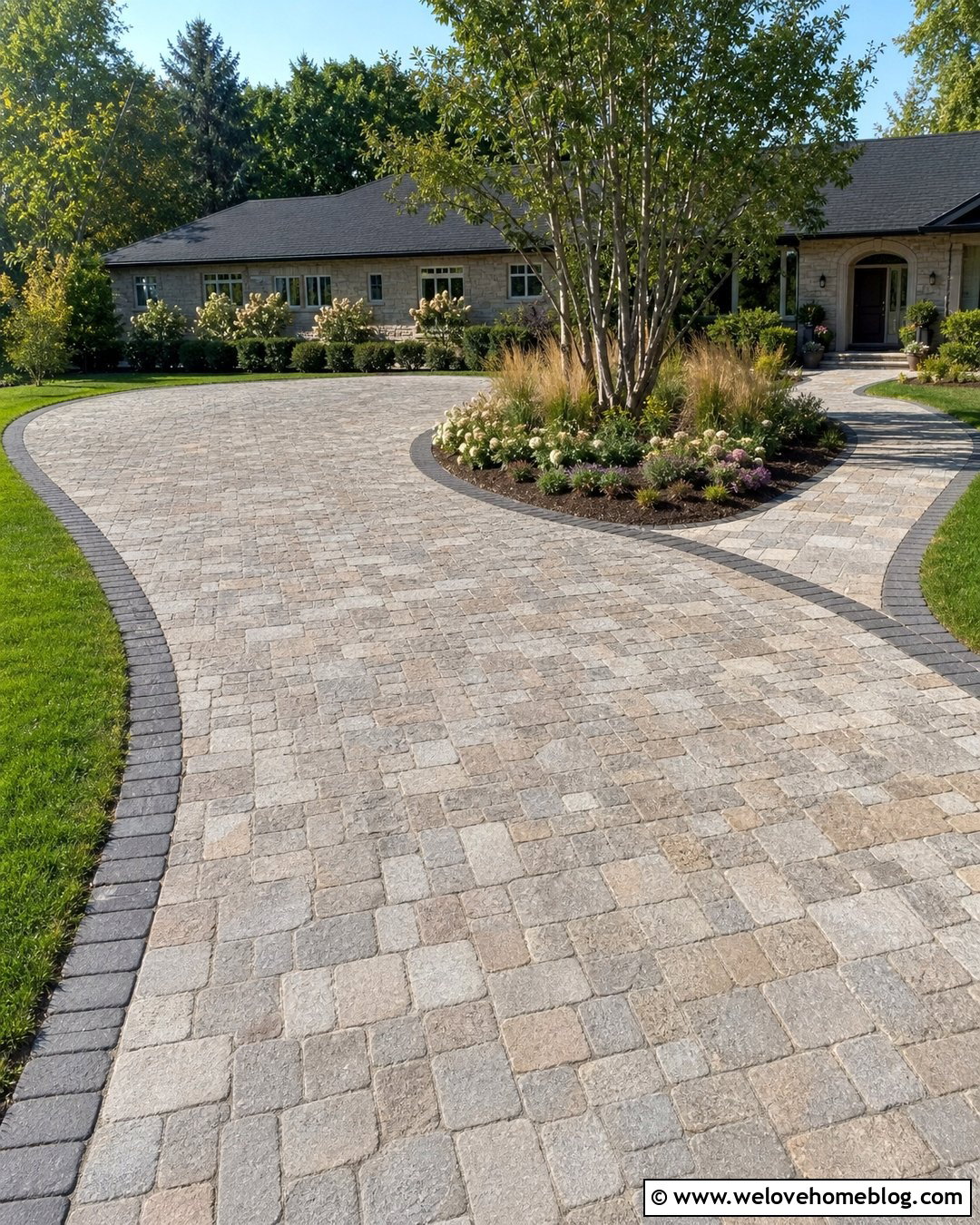
A compact parking court can provide useful space without letting paving dominate a medium-size front yard. Create a straight cobble driveway that opens into a small rectangular or softly curved parking area near the house. Use taupe and gray granite cobbles in a random pattern, then outline the court with a dark soldier-course border. A raised planting island at one corner can hold a multi-stem tree, low grasses, and seasonal flowers, visually reducing the amount of exposed stone. Connect the court to the porch with a wide matching walkway. This complete layout works well for a renovated ranch, suburban Colonial, or side-entry garage. Keep turning needs and local setback requirements in mind when determining the court’s actual dimensions and placement.
18. Permeable Cobble Driveway
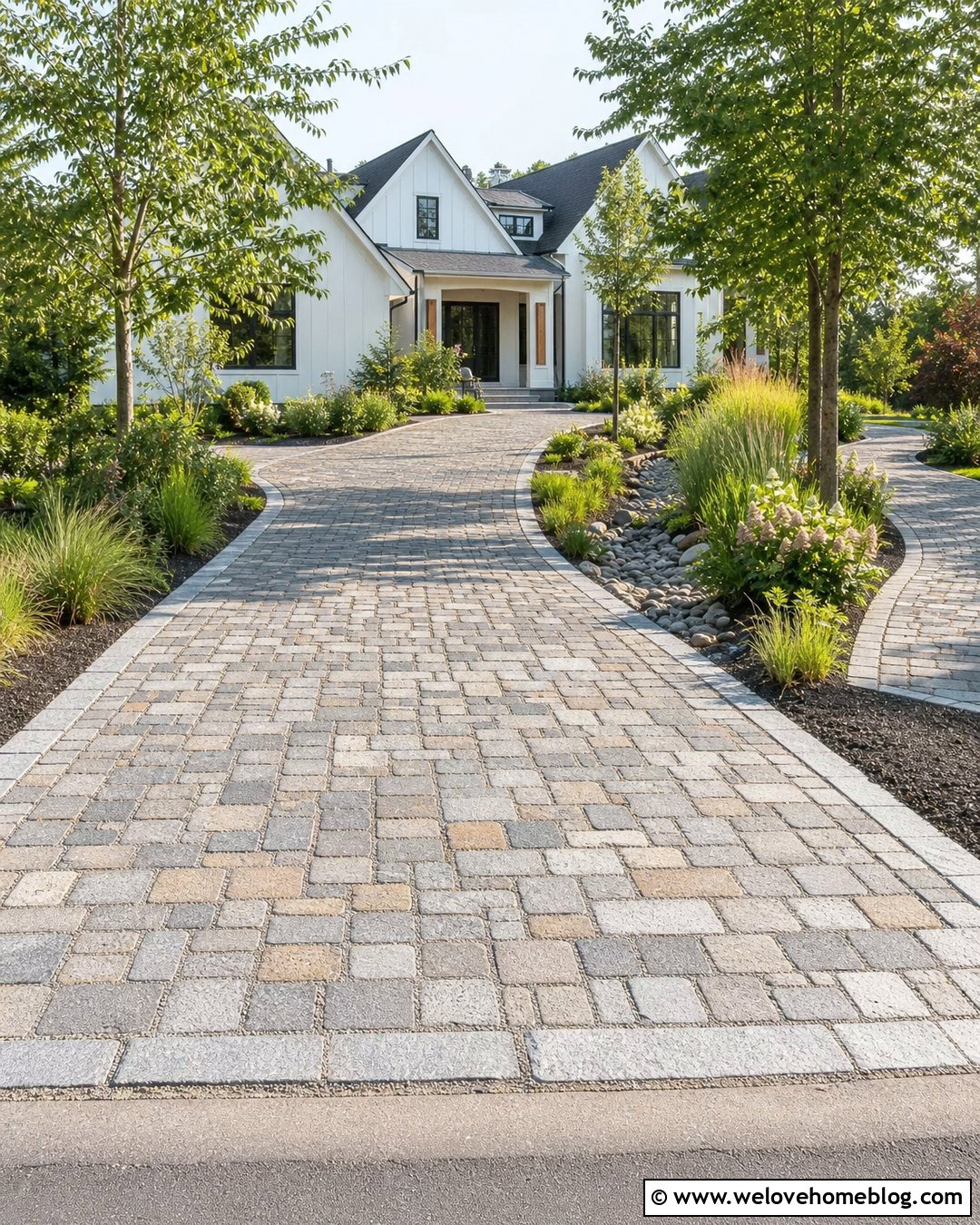
A permeable cobble driveway can combine traditional stone character with wider, carefully designed joints. Choose durable granite cobbles with slightly irregular gray and tan faces, arranged in a simple grid over a professionally specified permeable base. Fill the joints with compatible open-graded aggregate rather than dark mortar so water has a route through the paving system. Use flush granite restraints around the perimeter and avoid allowing soil or mulch to spill onto the joint surface. Rain-garden planting beds, native grasses, and moisture-tolerant shrubs can support the landscape concept at the lower side of the property. This natural look pairs well with contemporary farmhouses, Craftsman homes, and wooded residences. Local soil, slope, and stormwater rules should guide the final system design.
19. Cobble Driveway With Grass Center Strip
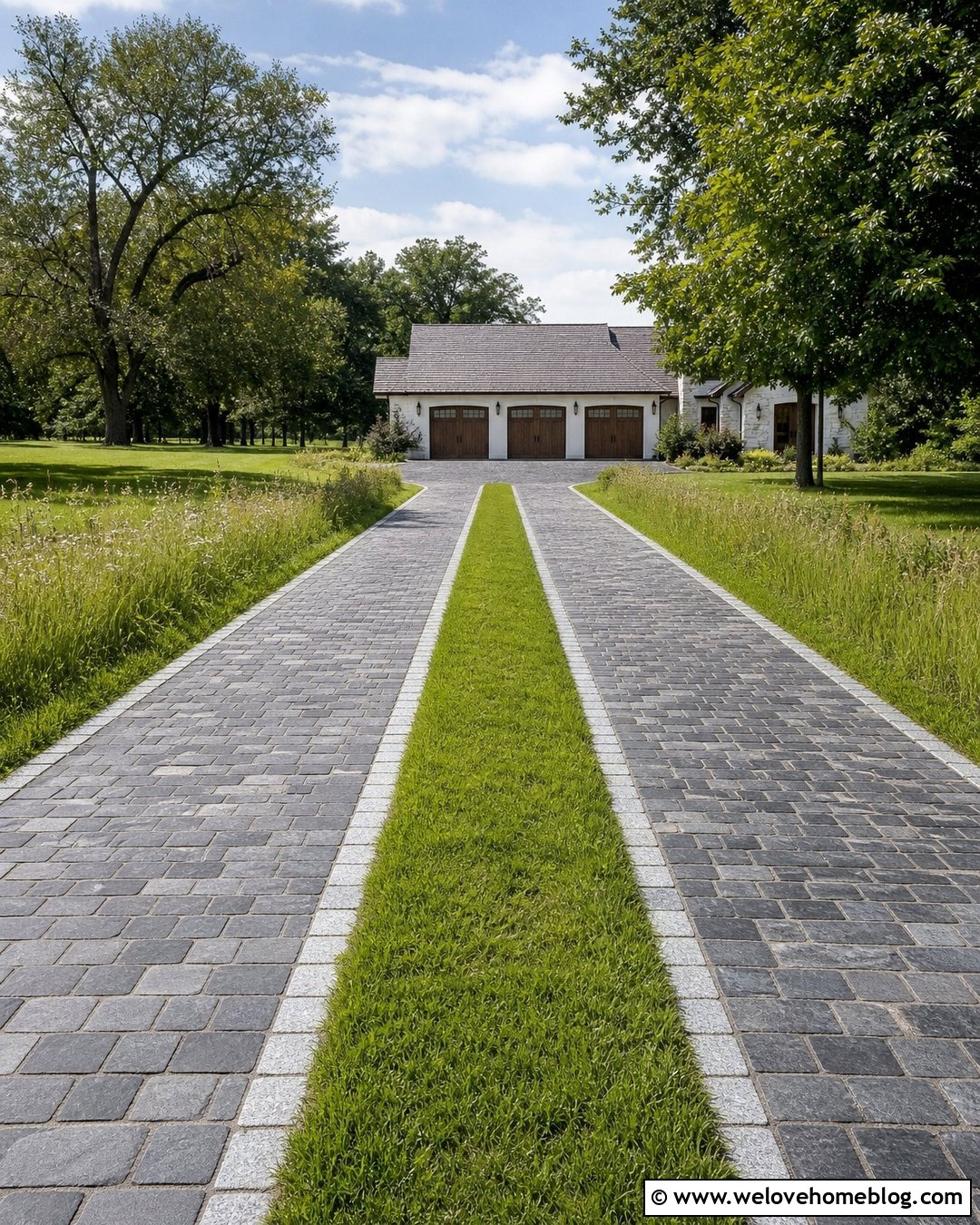
Two cobble driving lanes separated by a green center strip can reduce the visual weight of a long driveway. Build the wheel tracks with charcoal and gray granite cobbles in a compact running bond, keeping the planted strip wide enough to read as an intentional landscape feature. Use flush cobble edges around the grass so mowing remains straightforward and the lanes maintain crisp outlines. This layout is best suited to straight, low-traffic private drives where vehicle paths are predictable. Frame the approach with meadow planting, shade trees, or simple lawn rather than narrow ornamental borders. The combination complements ranch homes, country cottages, and modern farmhouses. Near the garage, merge both tracks into a full-width cobble parking pad for easier turning and everyday use.
20. Cobble Driveway With Rose Borders
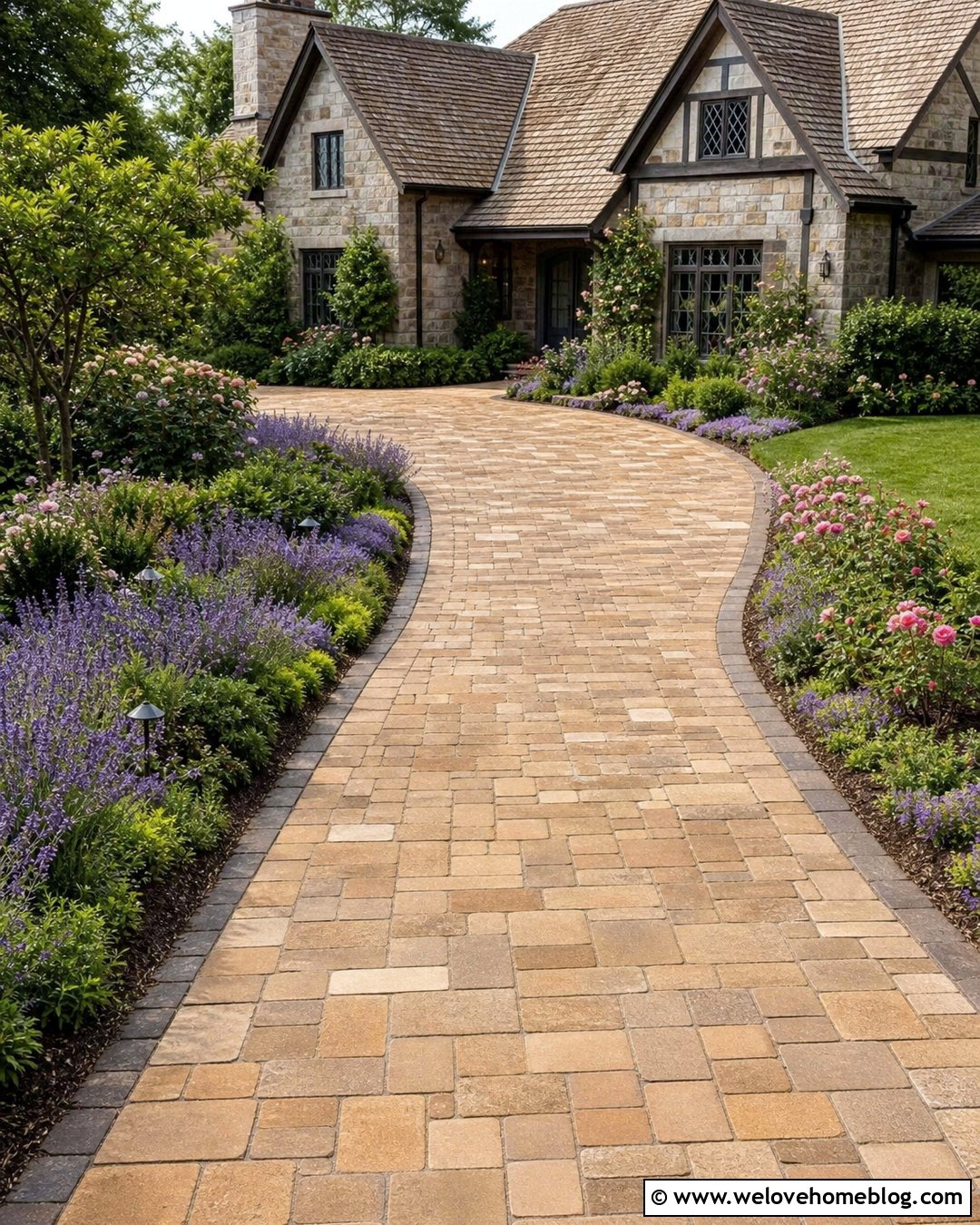
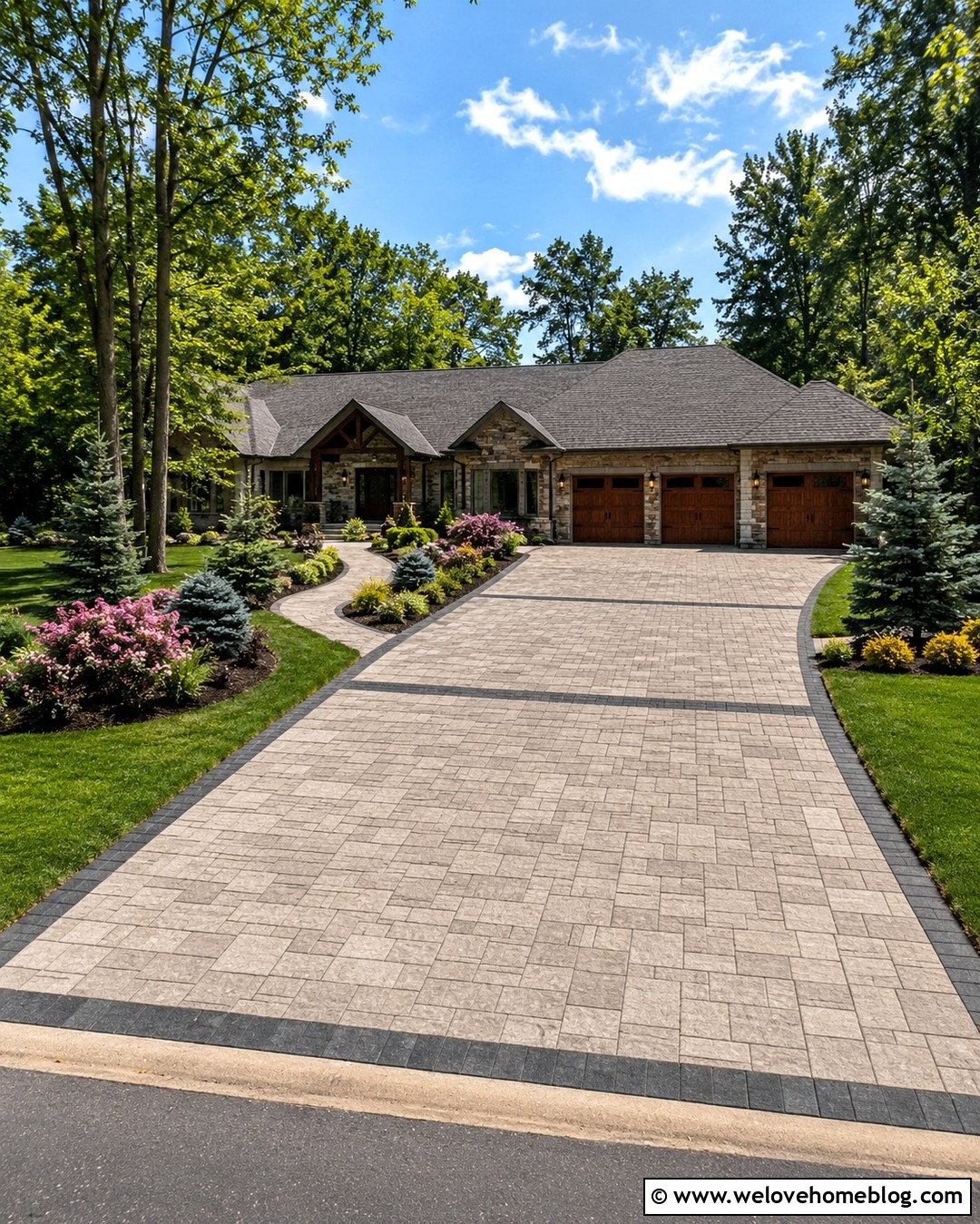
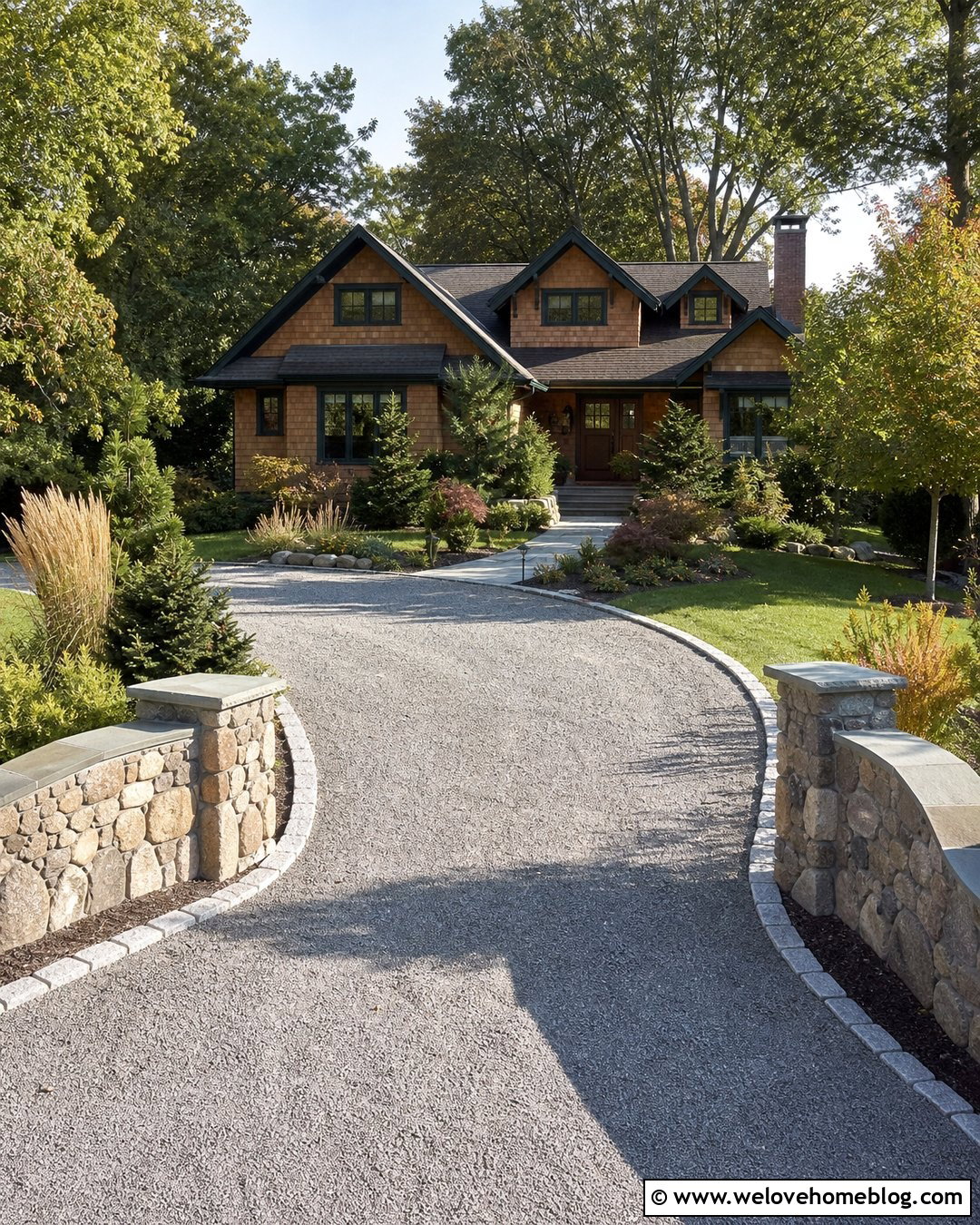
Imagine warm sandstone cobbles winding toward a cottage through borders filled with roses and soft flowering perennials. The driveway should curve gently, allowing the planting beds to widen at key points instead of following two rigid parallel lines. Use golden-brown cobbles in a random rectangular layout with a slightly darker sandstone border. Position roses behind low plants such as catmint, hardy geraniums, and creeping groundcover so the stone edge remains visible. Small evergreen shrubs can provide structure when flowers are not in bloom. A matching cobble walkway should branch naturally toward the porch through an opening in the beds. This romantic yet practical composition works well for English cottage, Cape Cod, and traditional homes with welcoming front gardens.
21. Cobble Driveway With Evergreen Landscaping
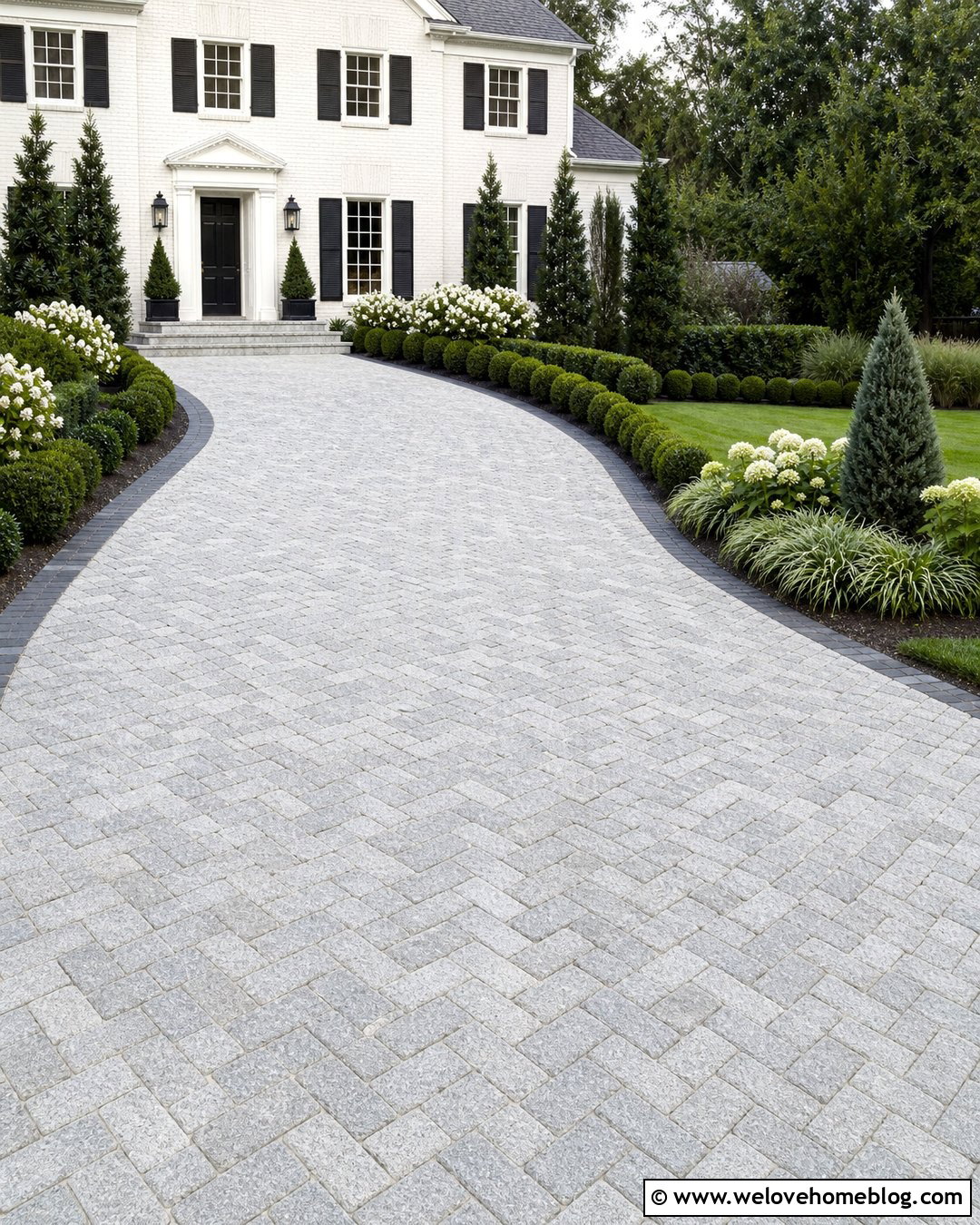
Evergreen landscaping gives a cobble driveway dependable structure without requiring an elaborate planting scheme. Choose cool gray granite cobbles for a straight driveway with a softly widened parking area near the garage. Frame the paving with low boxwoods, inkberry, dwarf conifers, and upright evergreens placed farther from the curb. Vary plant shapes and heights so the borders look layered rather than forming two unbroken walls. White flowering shrubs and ornamental grasses can provide seasonal contrast while preserving the mainly green palette. Use a charcoal cobble edge and repeat that tone in porch steps or walkway bands. This refined combination suits Colonial, Georgian, and transitional homes. It also keeps attention on the stone texture and architecture instead of relying on constant flower color.
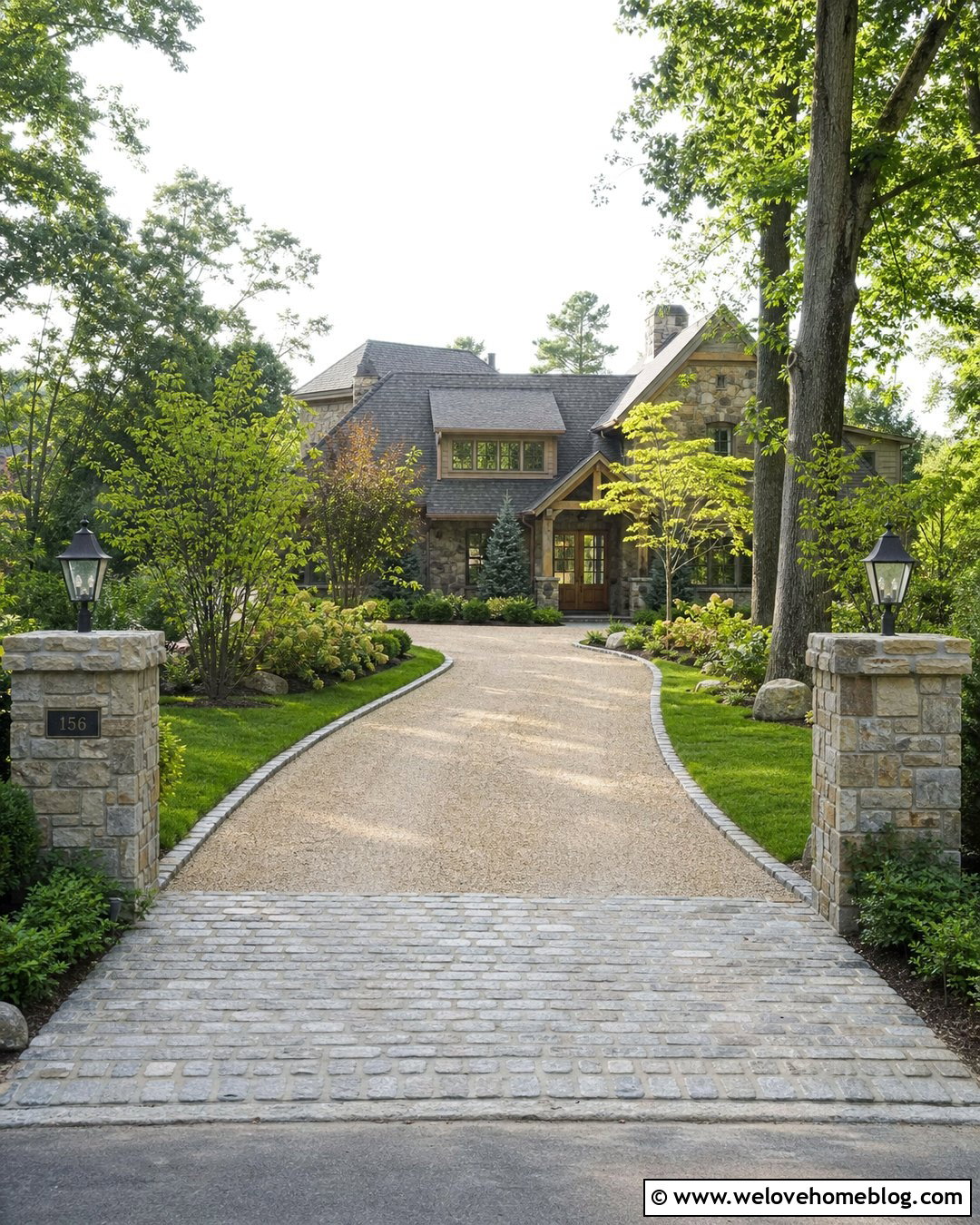
22. Cobble Driveway With Gate And Pillars
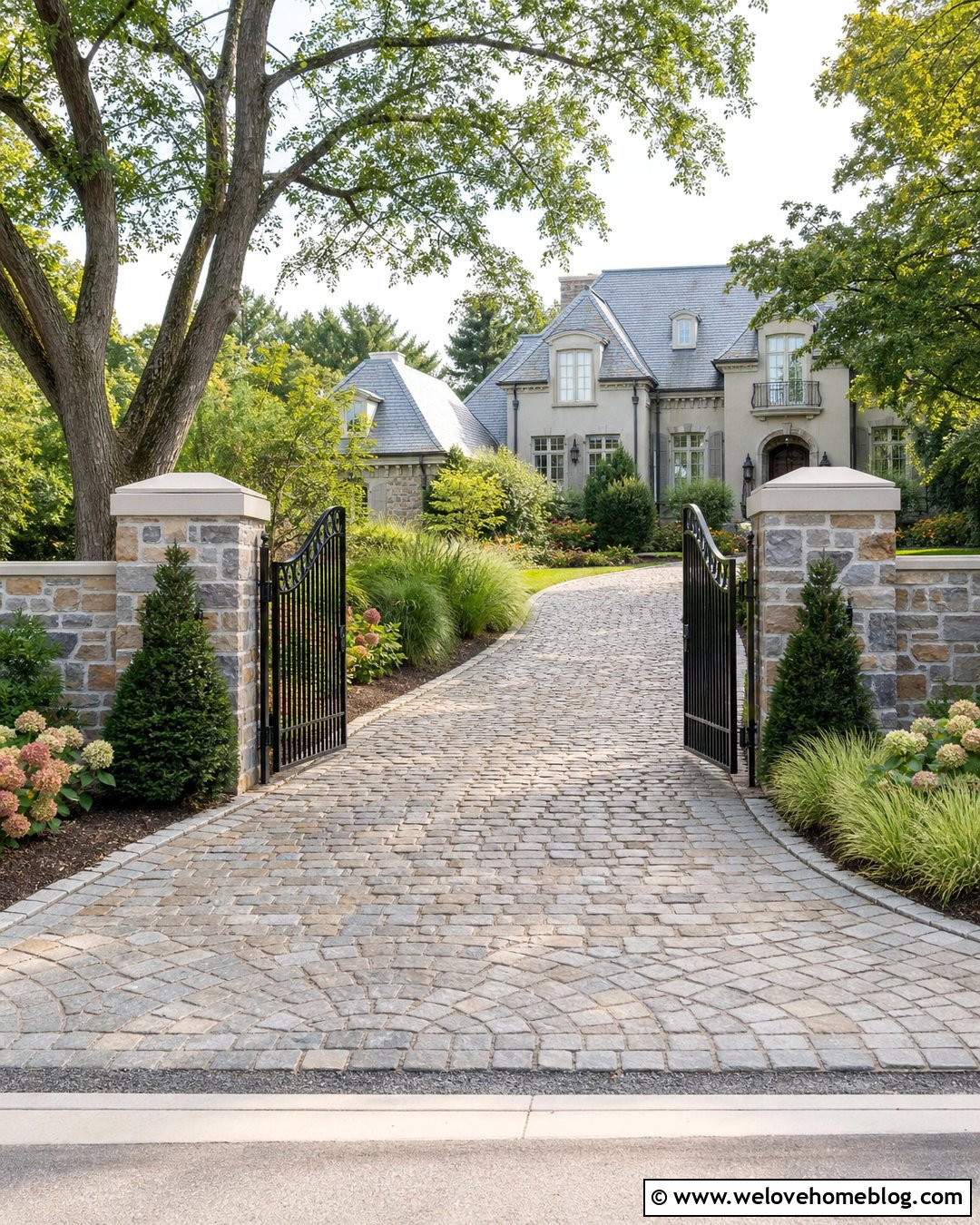
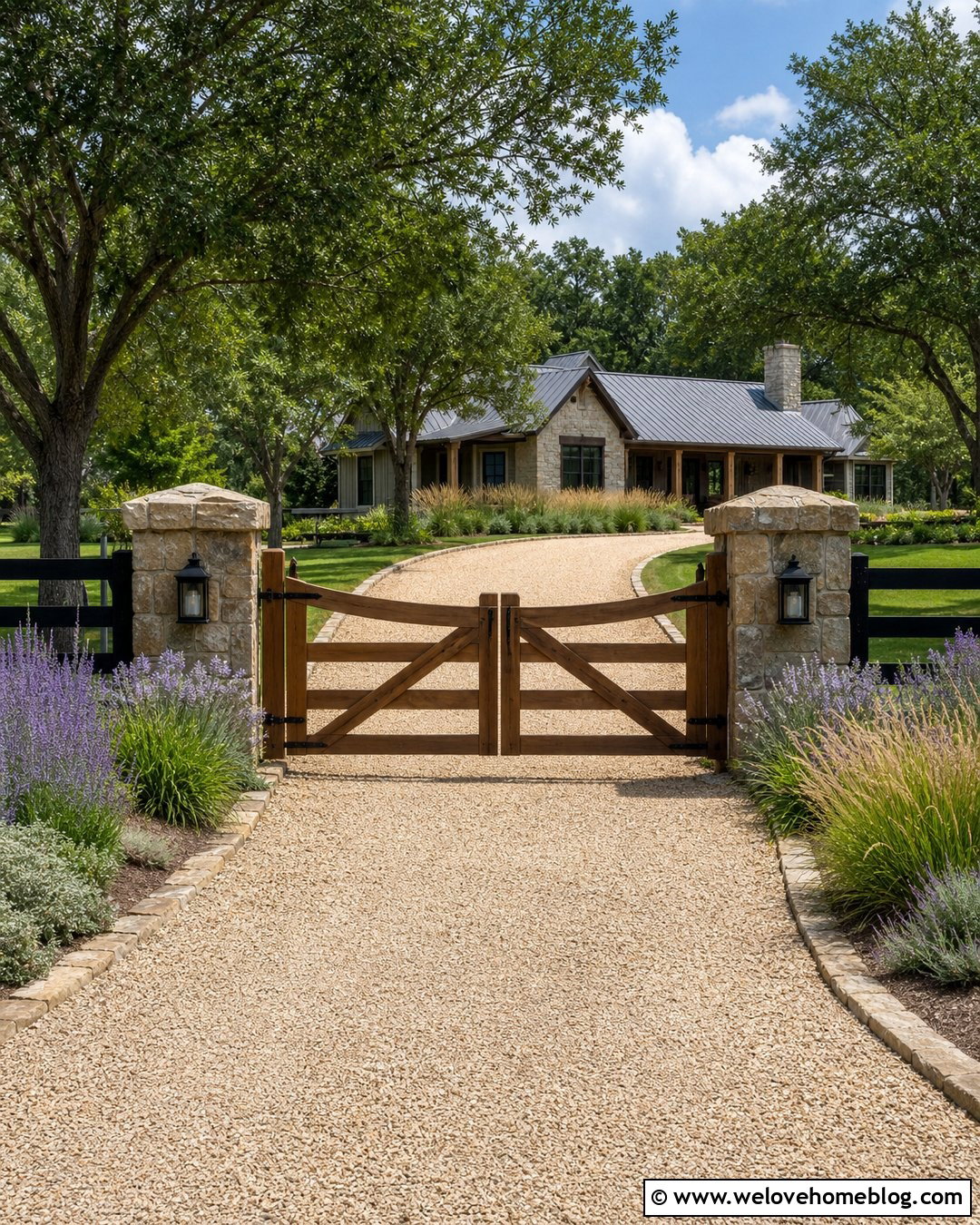
A driveway gate looks most convincing when its materials relate directly to the paving and house. Use reclaimed granite cobbles in gray and brown tones for a gently curved driveway leading through stone pillars. Set a wide fan-pattern apron between the pillars, then change to a running bond beyond the gate. Choose pillar stone that repeats the cobbles’ color without matching every shade exactly. Low wing walls can transition into planting beds filled with evergreens, ornamental grasses, and flowering shrubs. Position the gate far enough inside the property to suit safe access and local requirements. This substantial entrance works with country estates, French-inspired residences, and large modern farmhouses. Keep trees and tall plants away from the immediate gateway to maintain an open, uncluttered arrival.
23. Cobble Driveway With Landscape Lighting
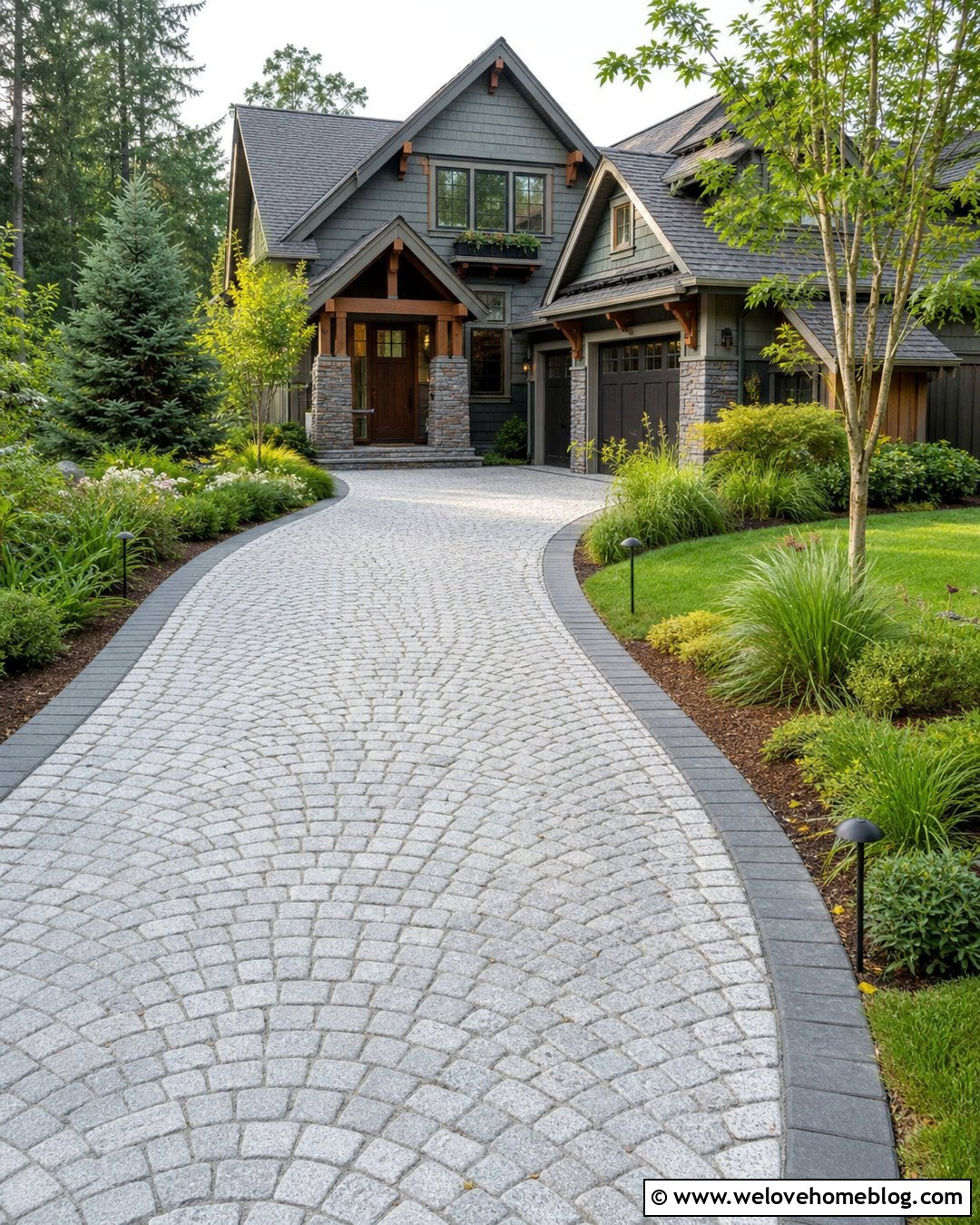
Thoughtful lighting can make a cobble driveway easier to navigate while supporting its daytime design. Start with silver-gray granite cobbles arranged in a curved herringbone layout leading to a Craftsman or transitional home. Install low, shielded path lights within the planting beds rather than placing fixtures directly in the driving surface. Use matching lights near walkway intersections, changes in grade, and the garage approach. A dark granite border will remain visible during the day and create a clear line beside the illuminated landscape. Layer low shrubs, ornamental grasses, and small trees around the fixtures so they feel integrated rather than scattered. The lighting plan should emphasize the driveway’s shape and entrance points without producing harsh glare toward neighbors, drivers, or front windows.
24. Small Front Yard Cobble Driveway
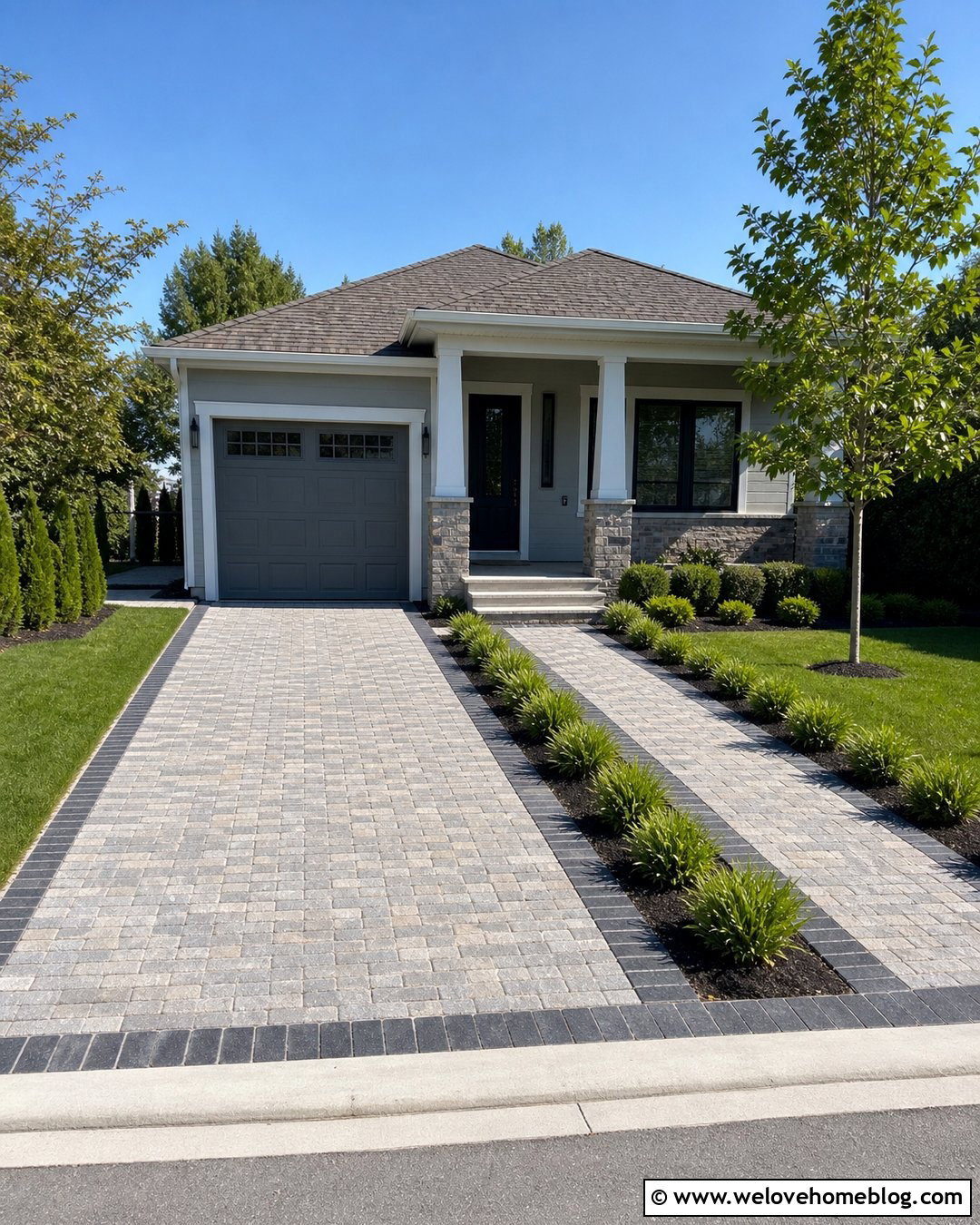
Even a short driveway can feel distinctive when its limited materials are carefully coordinated. Use small-format gray and beige granite cobbles in a simple running bond from the curb to a single-car garage. A narrow charcoal cobble border will define the paving without sacrificing useful width. On one side, create a compact walkway from matching stones separated by a slim planting strip. Fill the strip with low grasses, dwarf shrubs, and one small ornamental tree chosen for the available space. Keep the opposite edge open beside a tidy lawn to avoid making the yard feel crowded. This balanced layout works with bungalows, cottages, and compact suburban homes. Coordinating the garage trim, porch steps, and stone colors can make the entire frontage appear wider and more cohesive.
25. Mixed-Size Cobble Driveway
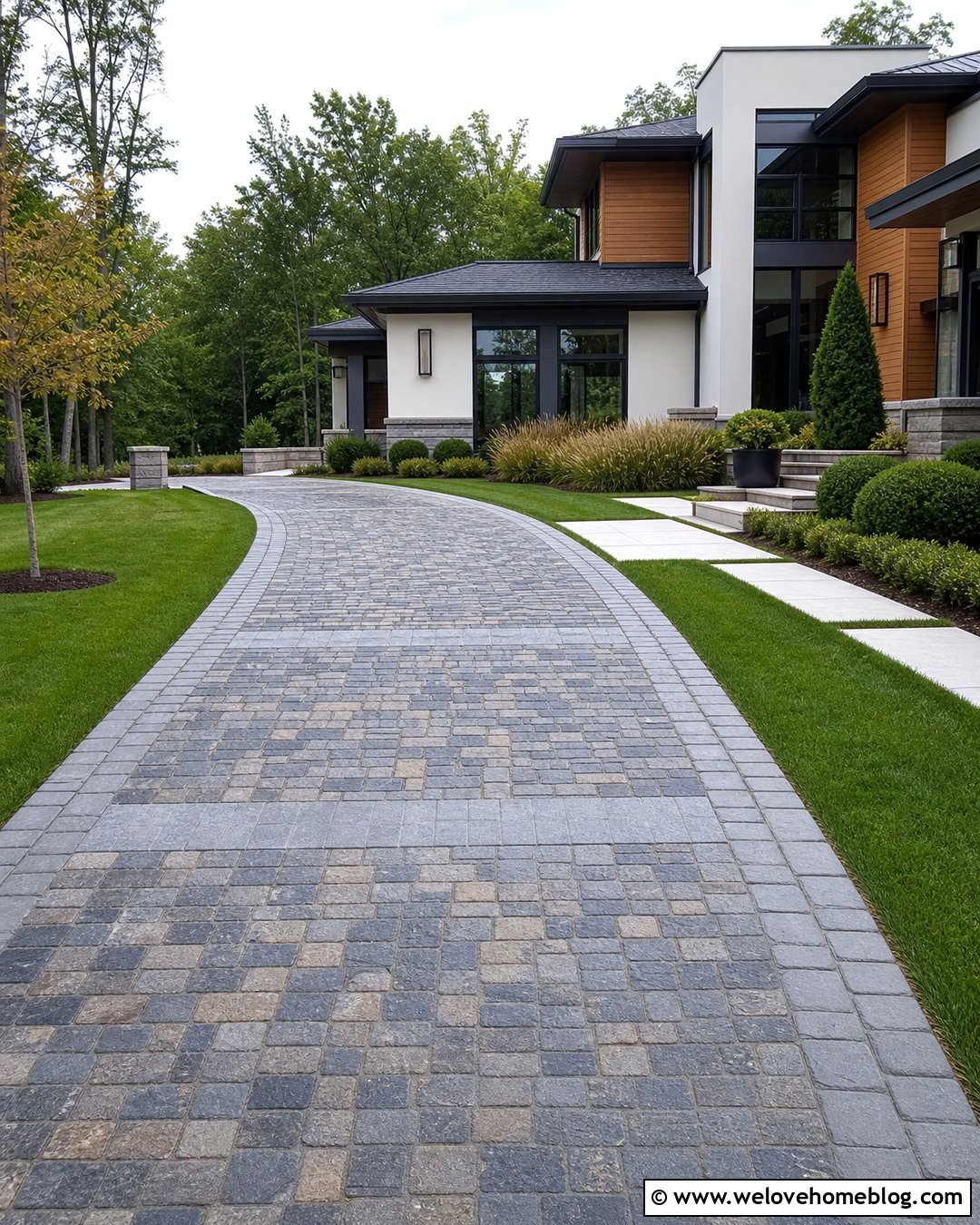
Mixed-size cobbles create subtle visual interest while maintaining a restrained, contemporary appearance. Combine large rectangular granite setts with smaller square cobbles in related shades of gray, charcoal, and muted brown. Use the larger stones for borders, crossbands, and the garage landing. Fill the main driveway with smaller units in a random modular pattern. A broad, gently curved shape allows the stone sizes to transition naturally without producing a patchwork effect. Surround the paving with crisp lawn panels, sculptural shrubs, ornamental grasses, and a concrete walkway that echoes the home’s modern lines. This design pairs especially well with contemporary houses that combine wood, stone, stucco, and dark metal. Limit the overall color palette so the variation comes from scale and texture rather than competing shades.
Conclusion:
The most successful cobble driveway feels like part of the home and landscape rather than a decorative surface added afterward. Begin by choosing stone colors that complement the facade. Then select a pattern, driveway shape, border, and planting plan that suit the property’s scale. Gray granite can look formal or modern, reclaimed stone supports rustic homes, and warm sandstone fits garden-focused settings. Practical details such as grading, drainage, edge restraints, joint material, and base preparation deserve equal attention. A qualified installer can adapt the design to local conditions and regular vehicle use. Use these **25 Cobble Driveway Ideas** as a starting point for creating a coordinated, welcoming, and highly personal entrance.

Related posts:
Leave a Reply