
A well-planned Victorian driveway should feel like a natural extension of the home’s detailed architecture. The strongest designs combine traditional-looking materials, graceful layouts, defined borders, formal planting, and an entrance that creates a clear sense of arrival. Gravel, clay brick, granite, cobblestone, natural stone, and dark asphalt can all work beautifully when their colors complement the facade. Iron gates, masonry pillars, patterned aprons, clipped hedges, and flower-filled beds add period character without making the property feel dated. Current Victorian driveway designs also mix traditional details with practical modern materials such as resin-bound gravel and concrete pavers. () Whether you have a compact urban lot or a large estate, these complete **25 Victorian driveway ideas** offer plenty of useful inspiration.
1. Victorian Gravel Driveway With Cobblestone Edging
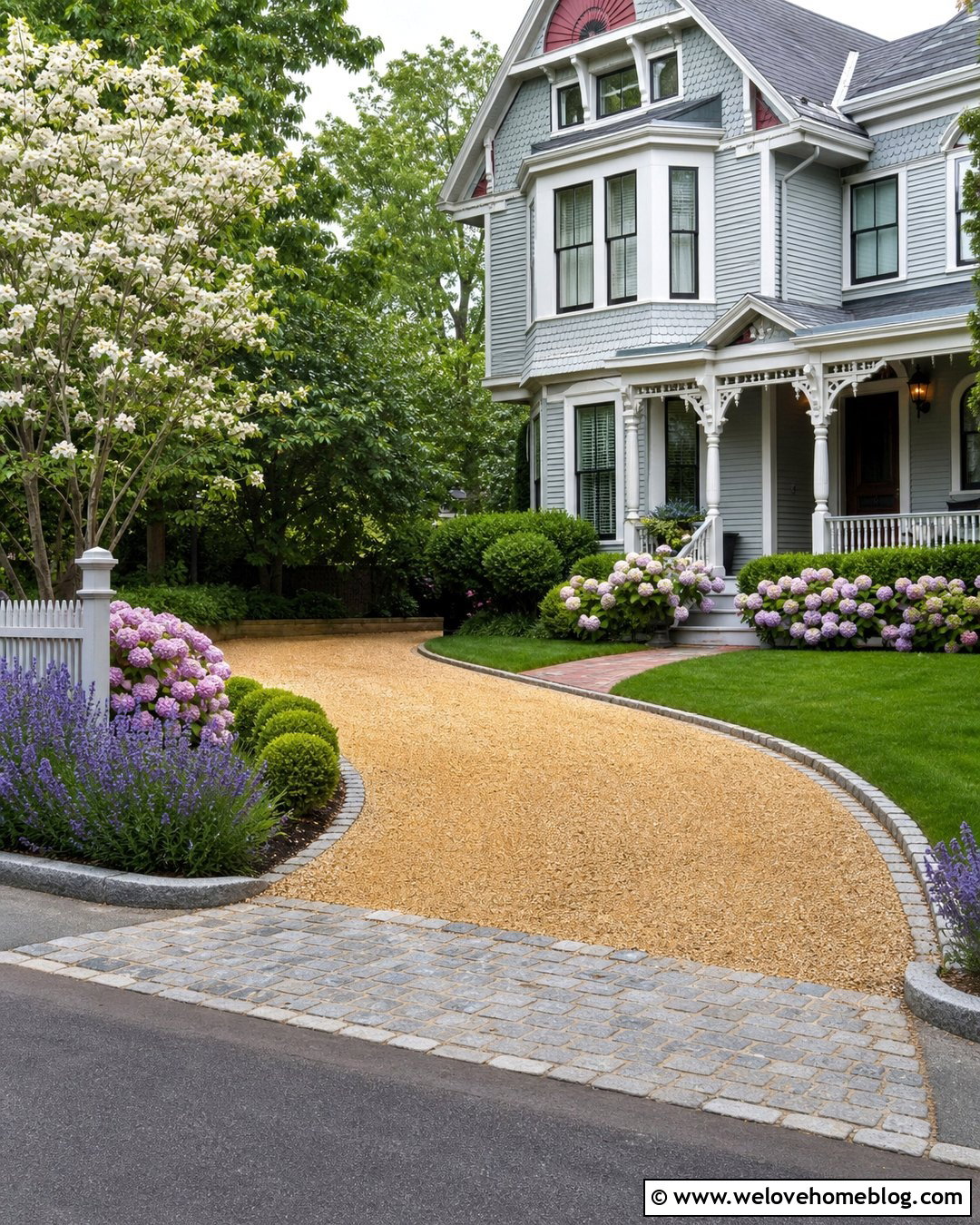
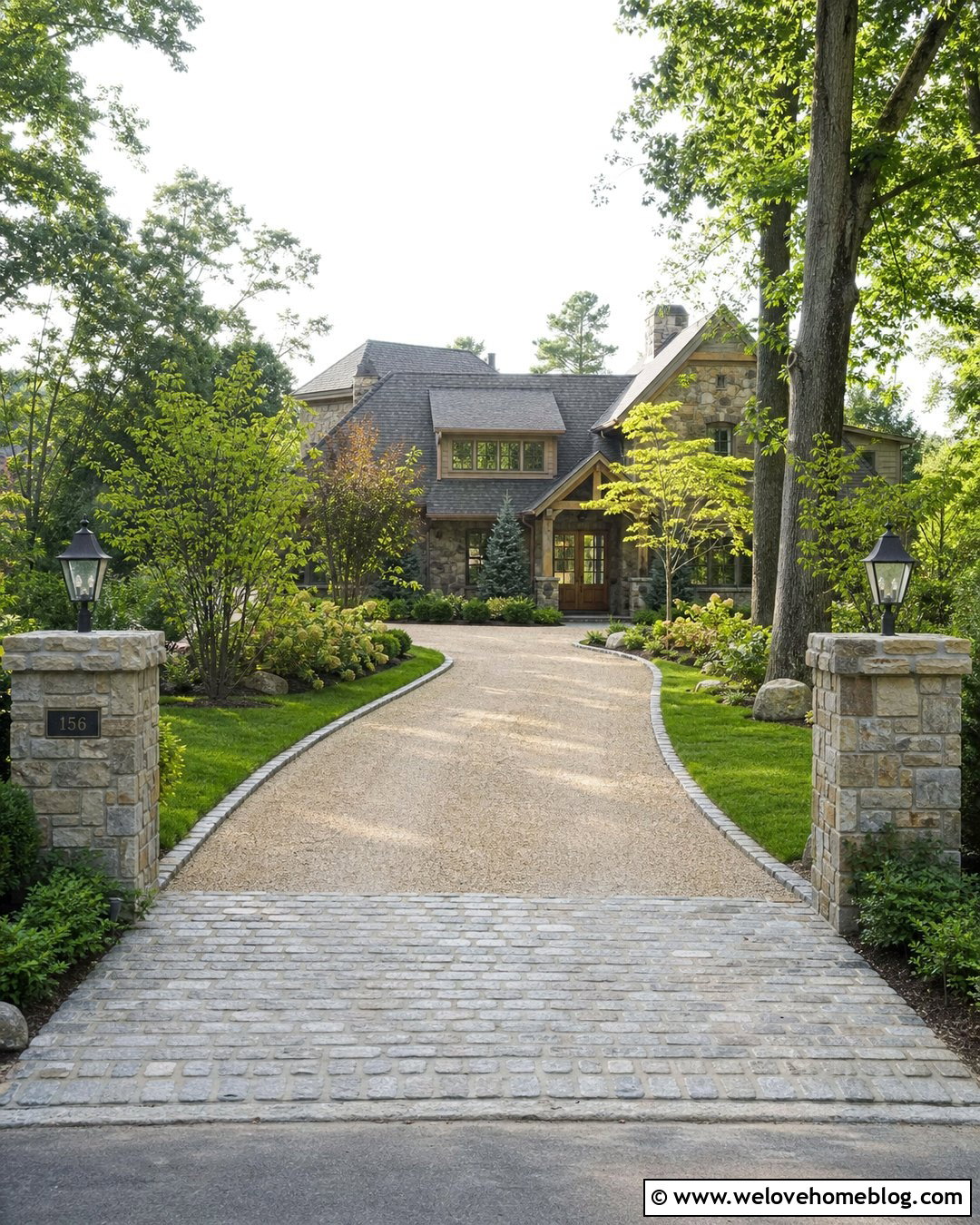
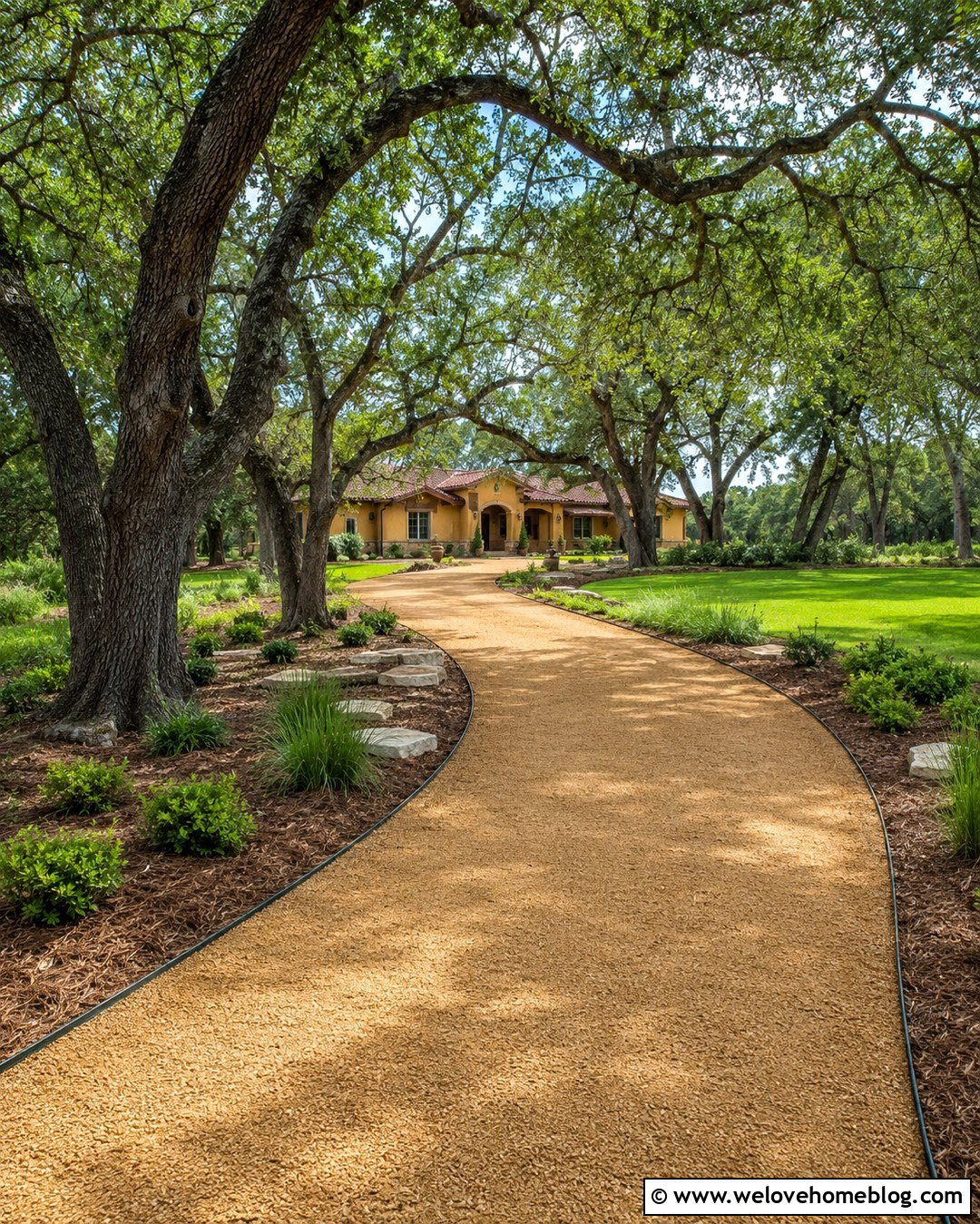
A warm gravel surface creates a relaxed approach that suits an ornate Victorian home without competing with its decorative facade. Choose compacted golden gravel or buff crushed stone rather than stark white rock. Frame the driveway with dark granite cobblestones to stop loose material from spreading into the lawn and planting beds. A gently curved layout feels more established than a rigid parking pad and softens the view from the street. Along both sides, combine clipped boxwood, lavender, hydrangeas, and small flowering trees. Add a matching cobblestone apron where the driveway meets the road. This practical transition handles frequent vehicle movement while making the entrance look finished. Black cast-iron lanterns can provide the final period-inspired detail.
2. Victorian Brick Driveway in Herringbone
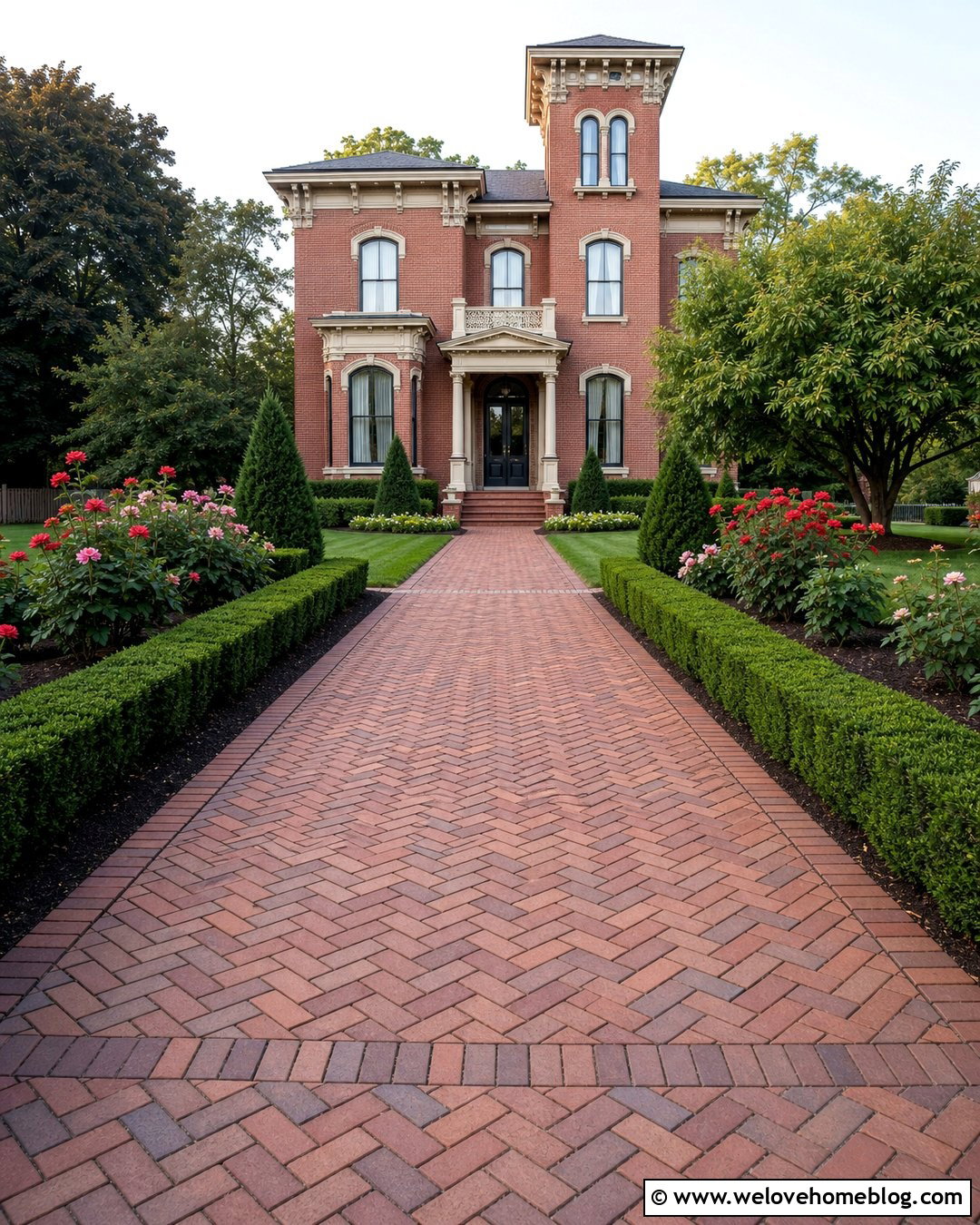
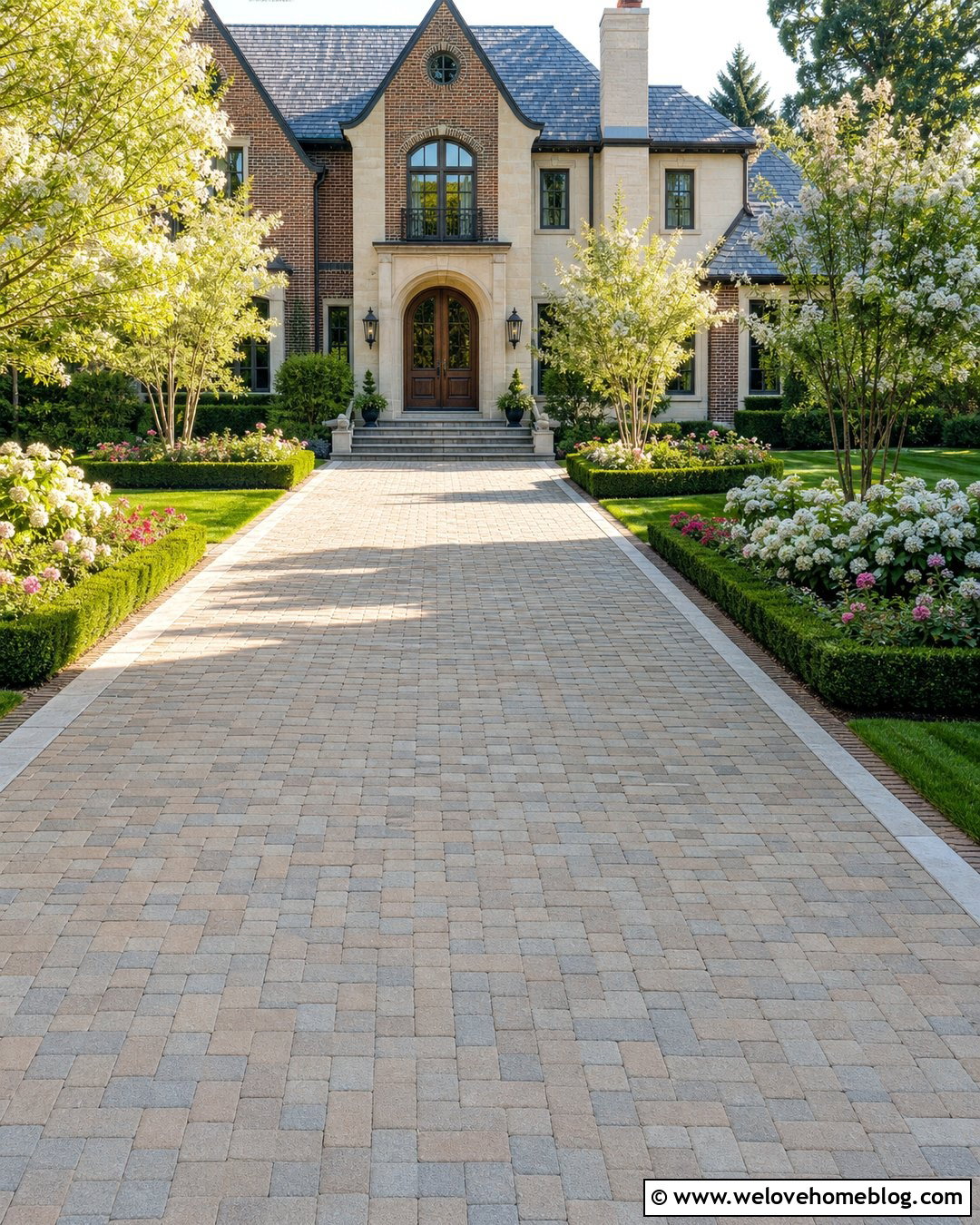
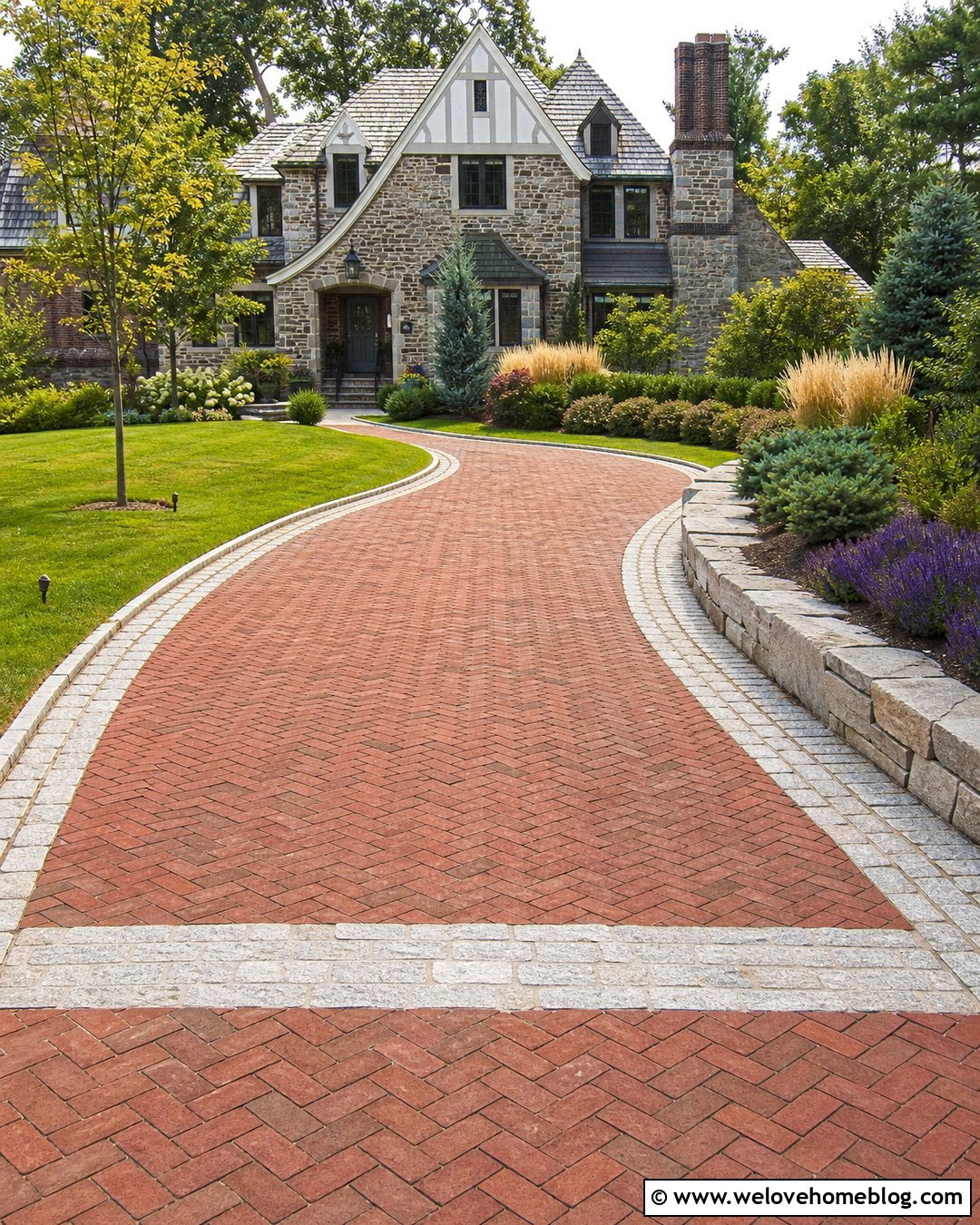
Clay brick pavers laid in a herringbone pattern give a Victorian driveway rich color, texture, and visible craftsmanship. Deep red and weathered brown bricks work especially well beside painted trim, stone foundations, and traditional red-brick facades. Use a straight driveway layout for a formal urban property, then create a contrasting soldier-course border around the edges. A narrow brick walkway can branch toward the porch without disrupting the parking area. Keep the landscaping structured with clipped evergreen shrubs, symmetrical flower beds, and one ornamental tree near the sidewalk. For better visual balance, repeat the driveway brick around the planting beds or front steps. The resulting entrance feels detailed and traditional while remaining practical for everyday parking and foot traffic.
3. Victorian Cobblestone Circular Driveway
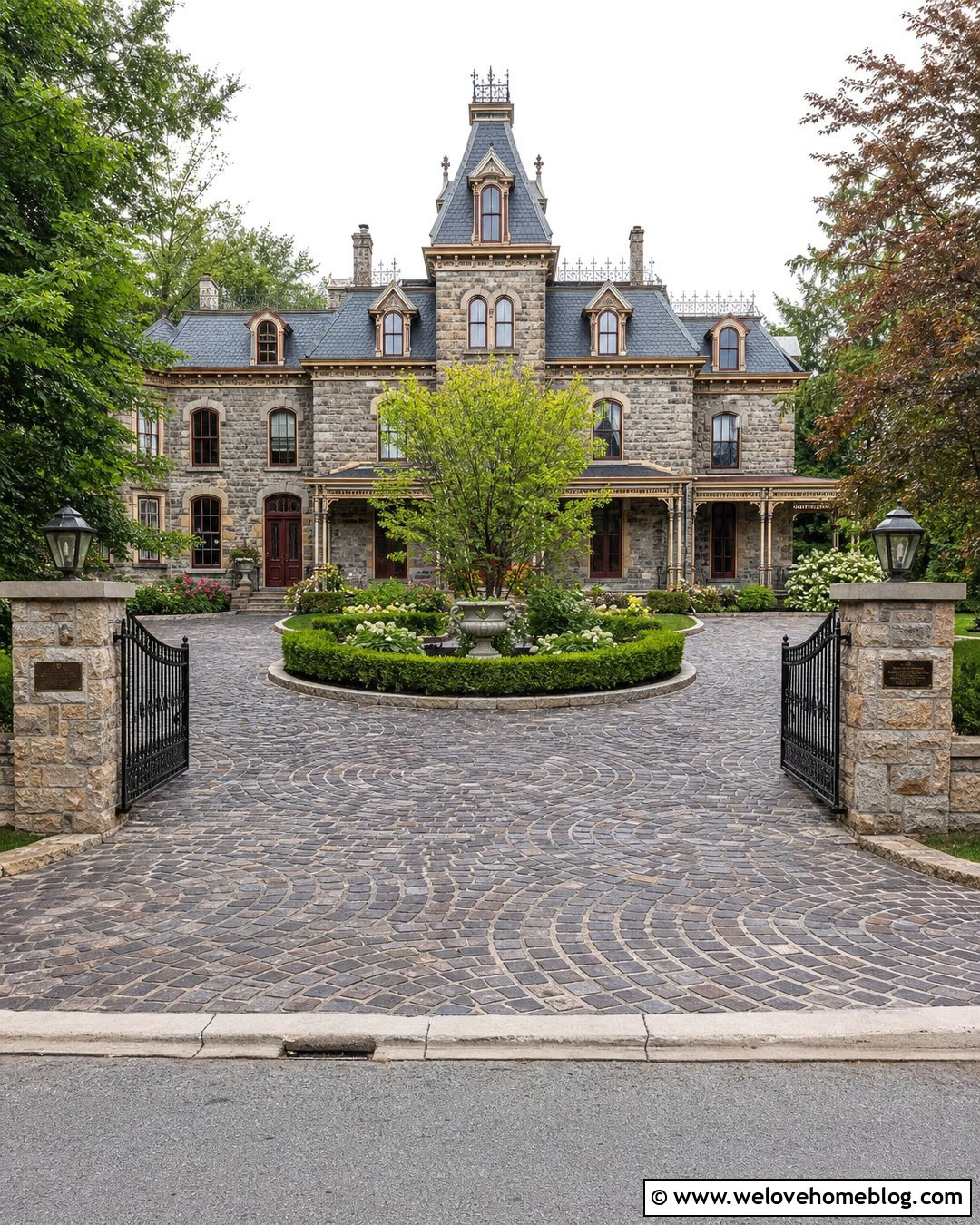
A circular cobblestone driveway can give a large Victorian property an impressive yet balanced arrival area. Choose charcoal, gray, and brown cobblestones with natural color variation, then arrange them in gentle fan patterns around the curve. The central island should be large enough to appear intentional rather than squeezed between vehicle lanes. Fill it with a small specimen tree, clipped boxwood, seasonal flowers, and a simple stone urn. Low granite curbing will protect the planting while repeating the driveway material. At the street, masonry pillars and open iron gates can frame both entrances. Keep taller shrubs farther back so drivers have a clear view. This complete layout works particularly well with substantial Queen Anne and Second Empire houses.
4. Victorian Asphalt Driveway With Brick Border
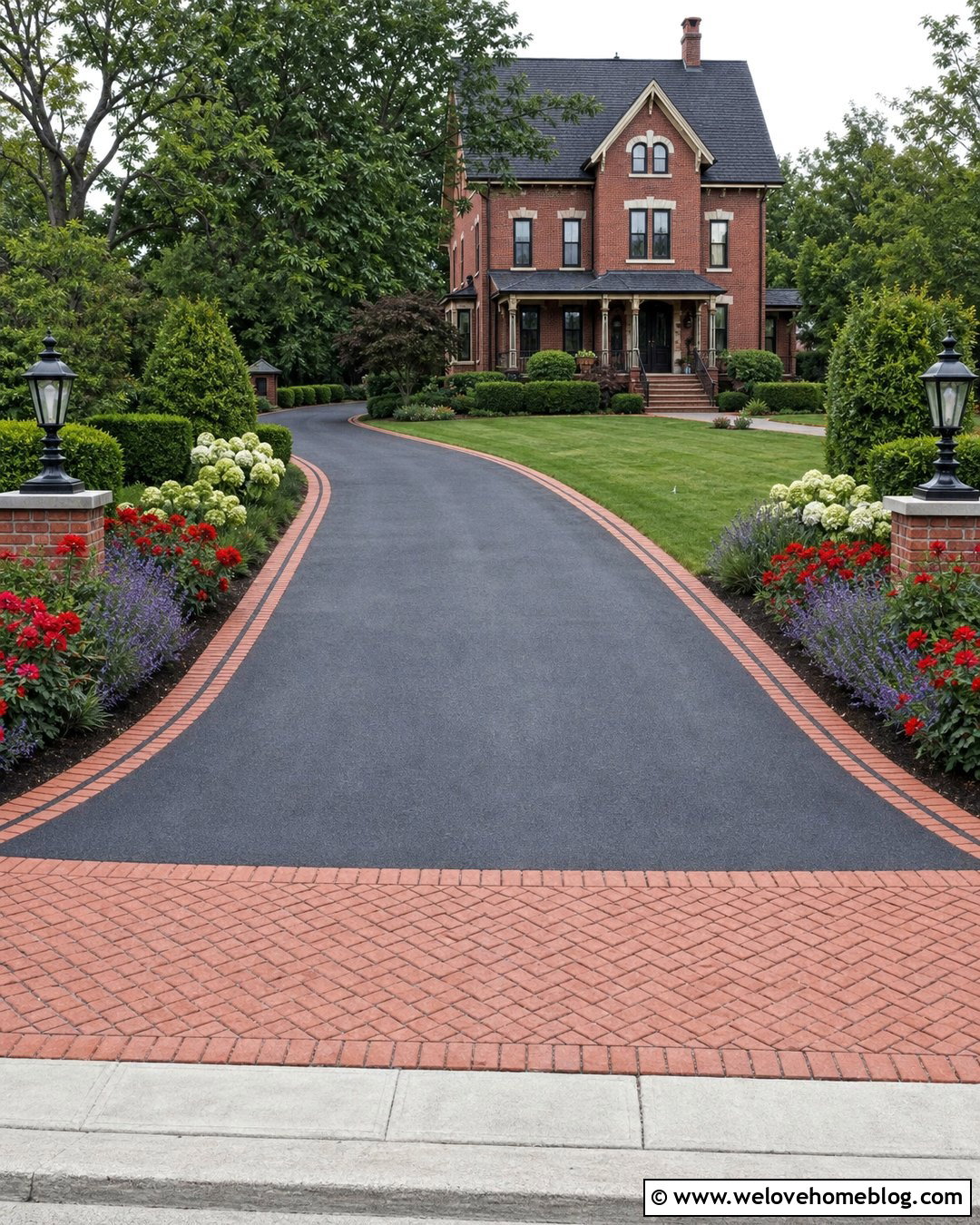
Black asphalt becomes far more compatible with Victorian architecture when it is finished with a strong clay brick border. The dark surface provides a neat, understated background, allowing the house and landscaping to remain the main features. Use reclaimed-look red brick in a double row along each edge, with a wider herringbone brick apron at the curb. A gently sweeping driveway can reduce the flat, modern appearance sometimes associated with plain asphalt. Plant layered borders beside it using evergreen shrubs, roses, catmint, and hydrangeas. Traditional black lantern posts can mark the entrance without overcrowding it. This combination is particularly useful for long driveways because the asphalt creates visual continuity, while the brick introduces the warm color and craftsmanship associated with a period property.
5. Victorian Resin Driveway With Sandstone Setts
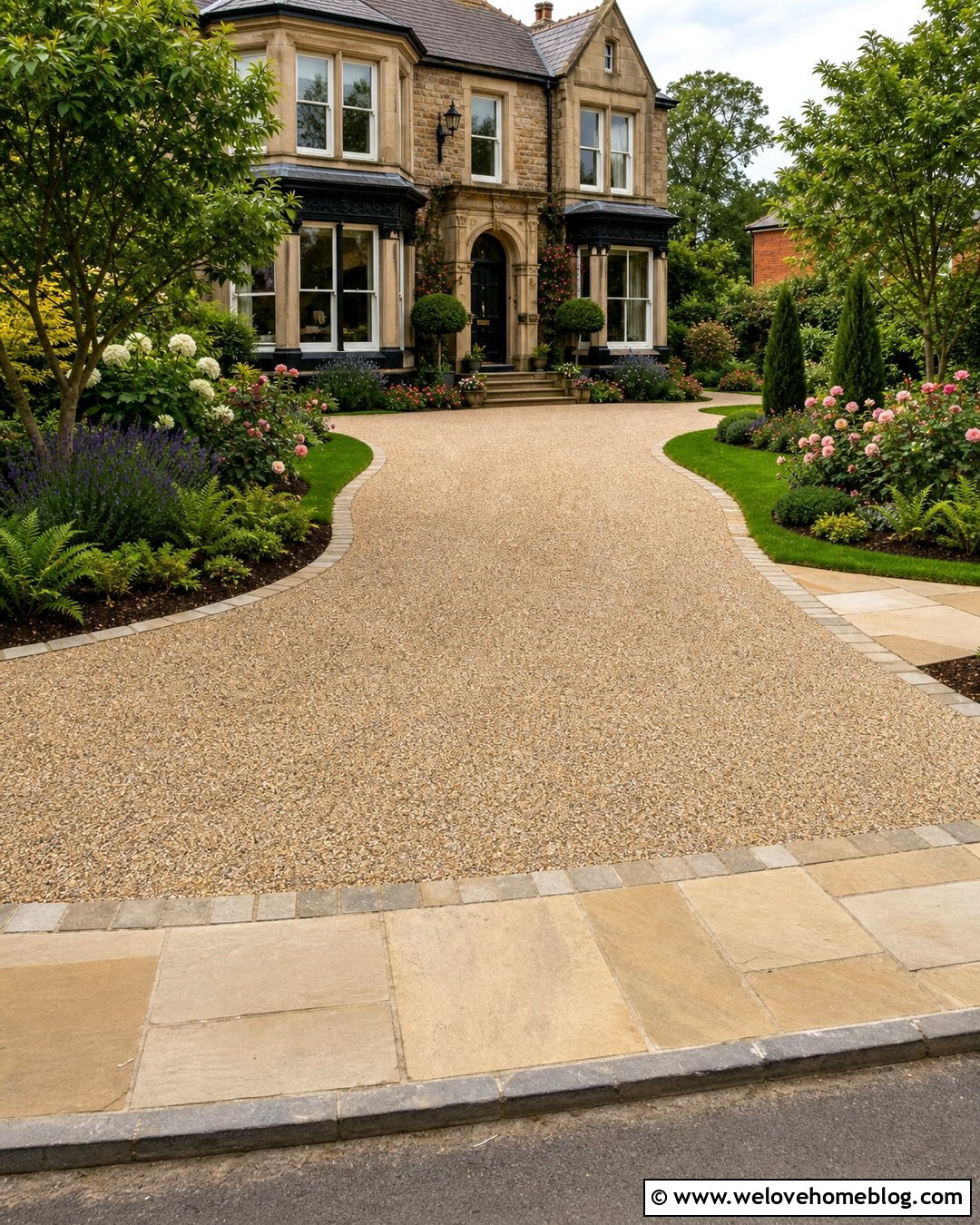
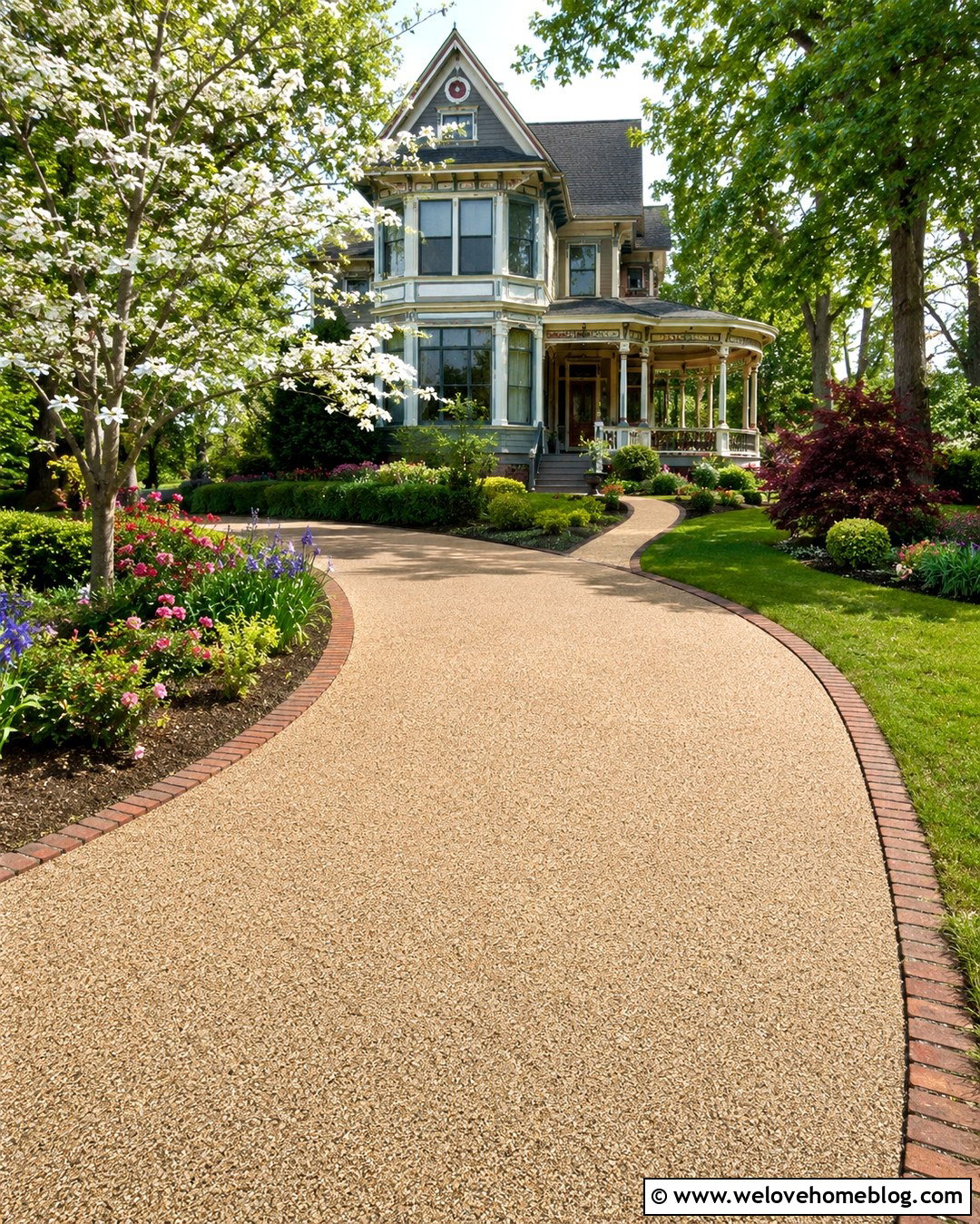
A resin-bound gravel driveway offers a smooth, tidy surface while maintaining the textured appearance needed beside a Victorian house. Select a warm blend of tan, cream, and soft brown aggregate rather than a cool, uniform gray. Edge the sweeping driveway with sawn sandstone setts that define its shape and echo the tones of a stone foundation or porch steps. A sandstone entrance apron can make the design look more substantial from the street. Surround the driveway with curved planting beds containing roses, ferns, lavender, and compact evergreens. Leave a narrow lawn strip between the driveway and larger flower borders where space permits. The finished look combines traditional color and form with a clean surface that suits a frequently used front yard.
6. Victorian Concrete Paver Driveway With Iron Gate
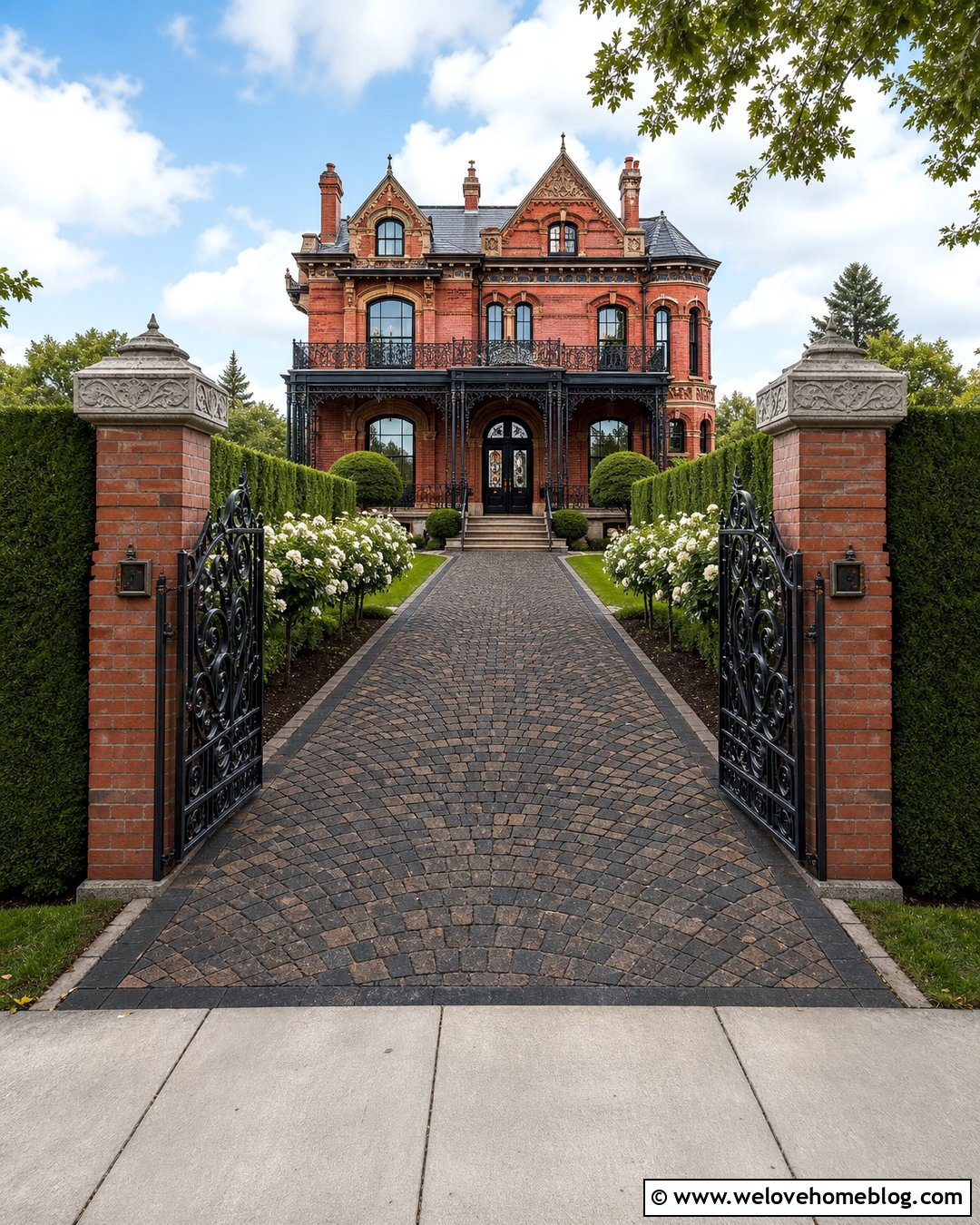
Concrete pavers can complement a Victorian home when their scale, pattern, and coloring are carefully selected. Choose small tumbled pavers in blended charcoal and brown tones instead of large contemporary slabs. Lay them in a repeating fan or running-bond pattern across a straight driveway. A black wrought-iron gate with scrollwork creates a strong focal point and introduces the decorative detail expected at a Victorian entrance. Mount the gate between red-brick pillars capped with carved stone. Continue the dark pavers through the gateway so the approach reads as one complete design. Formal yew hedges, white roses, and narrow lawn panels can soften the masonry. This treatment provides an orderly, durable entrance without losing the layered appearance of a traditional property.
7. Victorian Pea Gravel Driveway With Boxwood
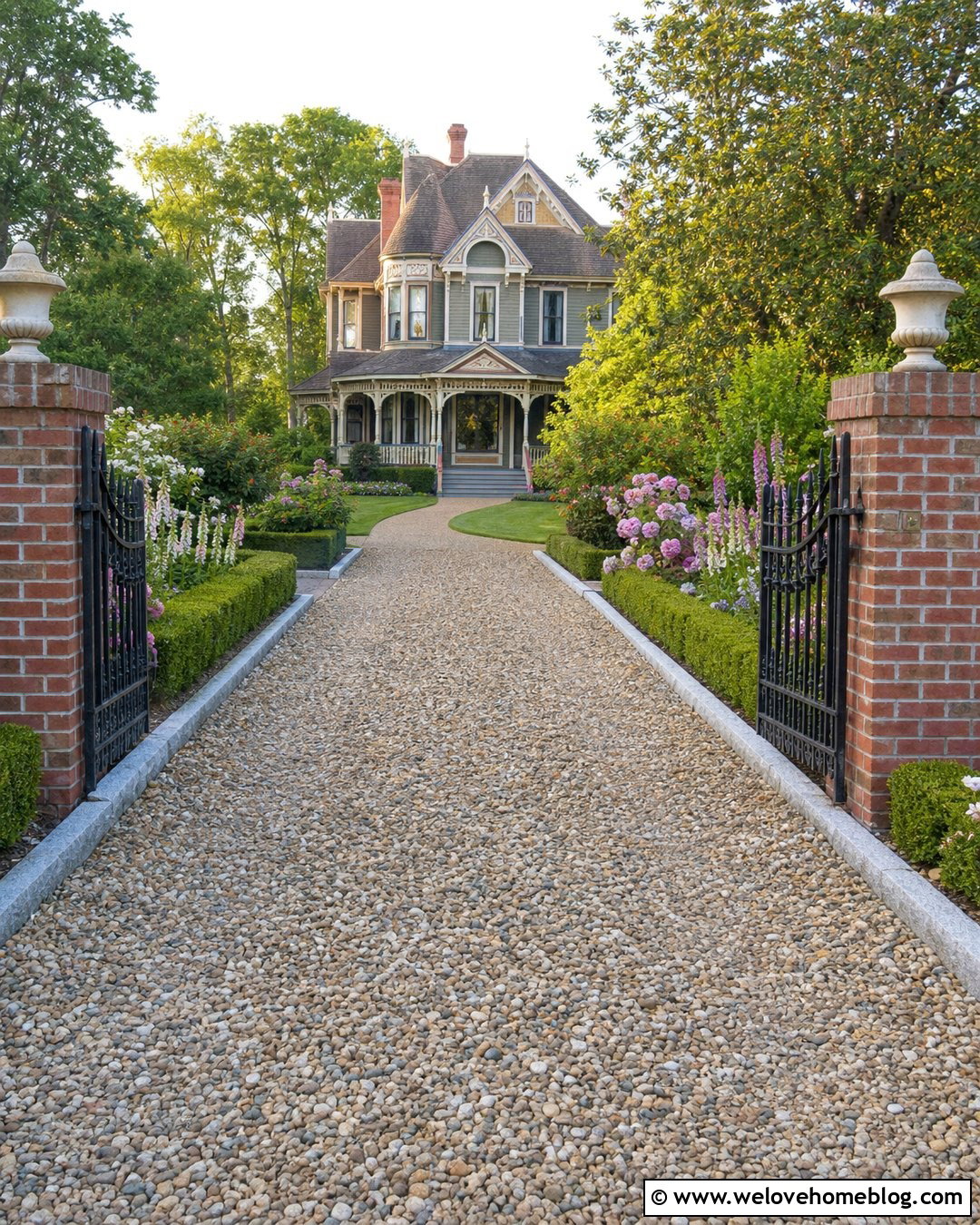
The soft crunch and rounded texture of pea gravel can make a Victorian driveway feel welcoming and garden-focused. Use a muted honey or gray-brown gravel that blends naturally with brick walls, stone steps, and mature landscaping. A straight layout bordered by low granite curbs will keep the surface controlled and create a formal approach to the house. Plant clipped boxwood in repeating shapes along the edges, leaving openings for roses, foxgloves, salvia, and seasonal annuals. At the entrance, add simple brick pillars and open metal gates so the house remains visible from the street. A matching gravel path can curve toward the porch. This coordinated combination is especially attractive for homes with modest front yards and decorative wooden trim.
8. Victorian Granite Driveway With Stone Pillars
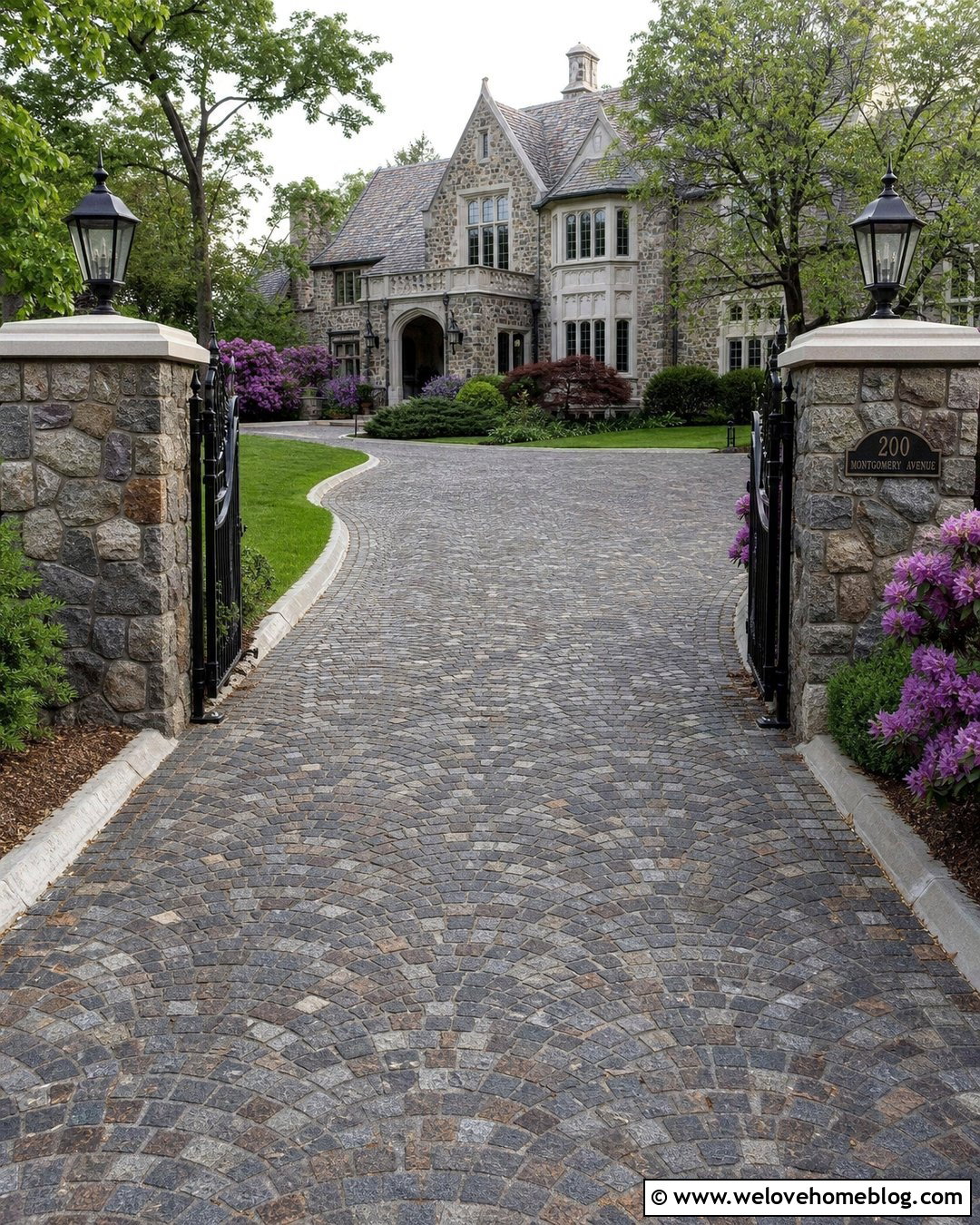
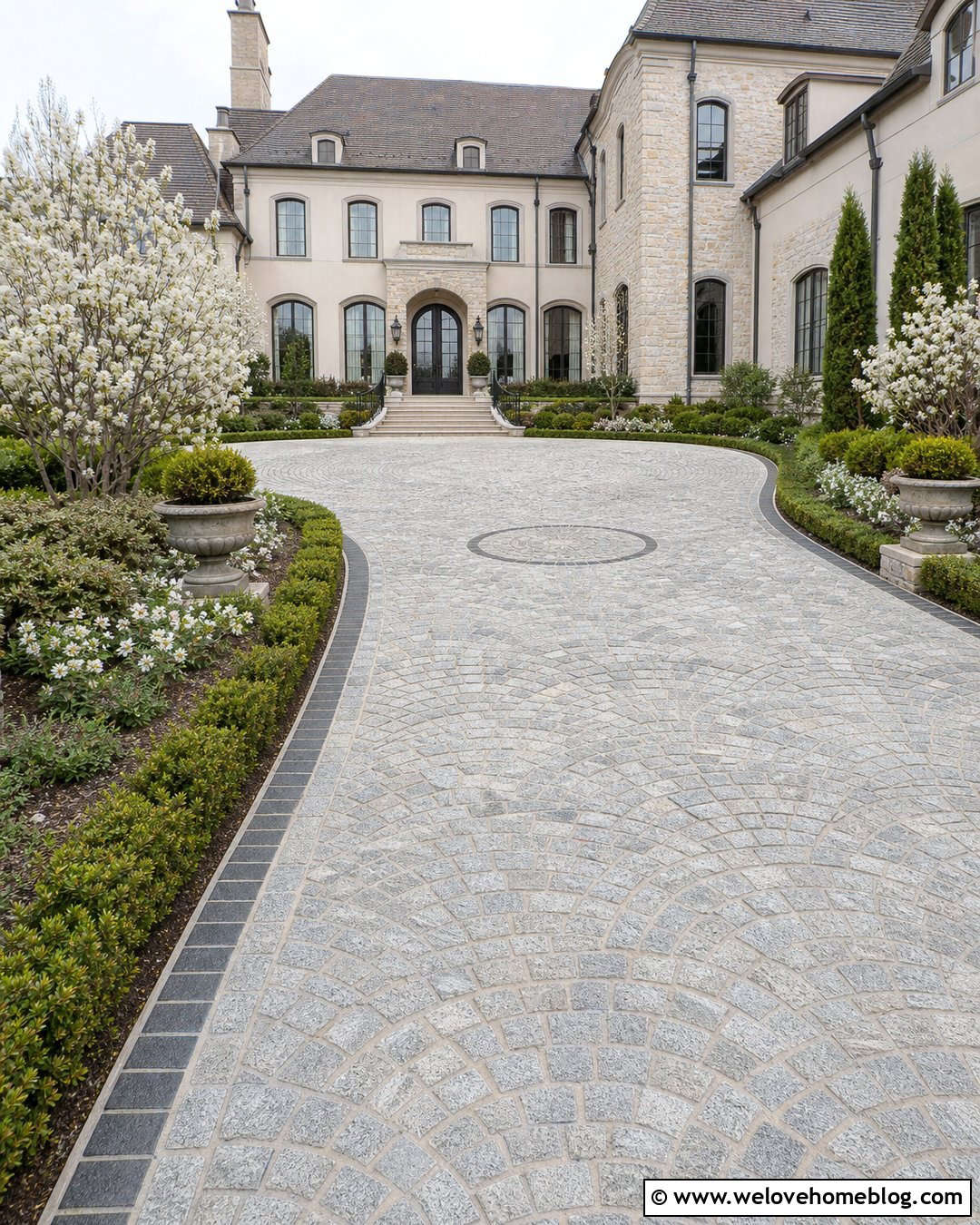
Granite setts create a substantial driveway that can hold its own beside a large, highly detailed Victorian residence. Mix medium-gray, charcoal, and muted brown pieces to avoid an overly uniform surface. A straight central drive can widen into a generous parking court near the house, with the setts laid in curved fan patterns to distinguish the turning area. At the street, tall natural-stone pillars provide weight and symmetry. Cap them with pale stone slabs and traditional lanterns. Black iron gates can sit between the pillars without hiding the architecture beyond. Plant rhododendrons, clipped yews, ferns, and mature shade trees along the approach. The varied granite surface, masonry entrance, and deep planting create a formal driveway that feels established rather than newly installed.
9. Victorian Curved Driveway With Flower Borders
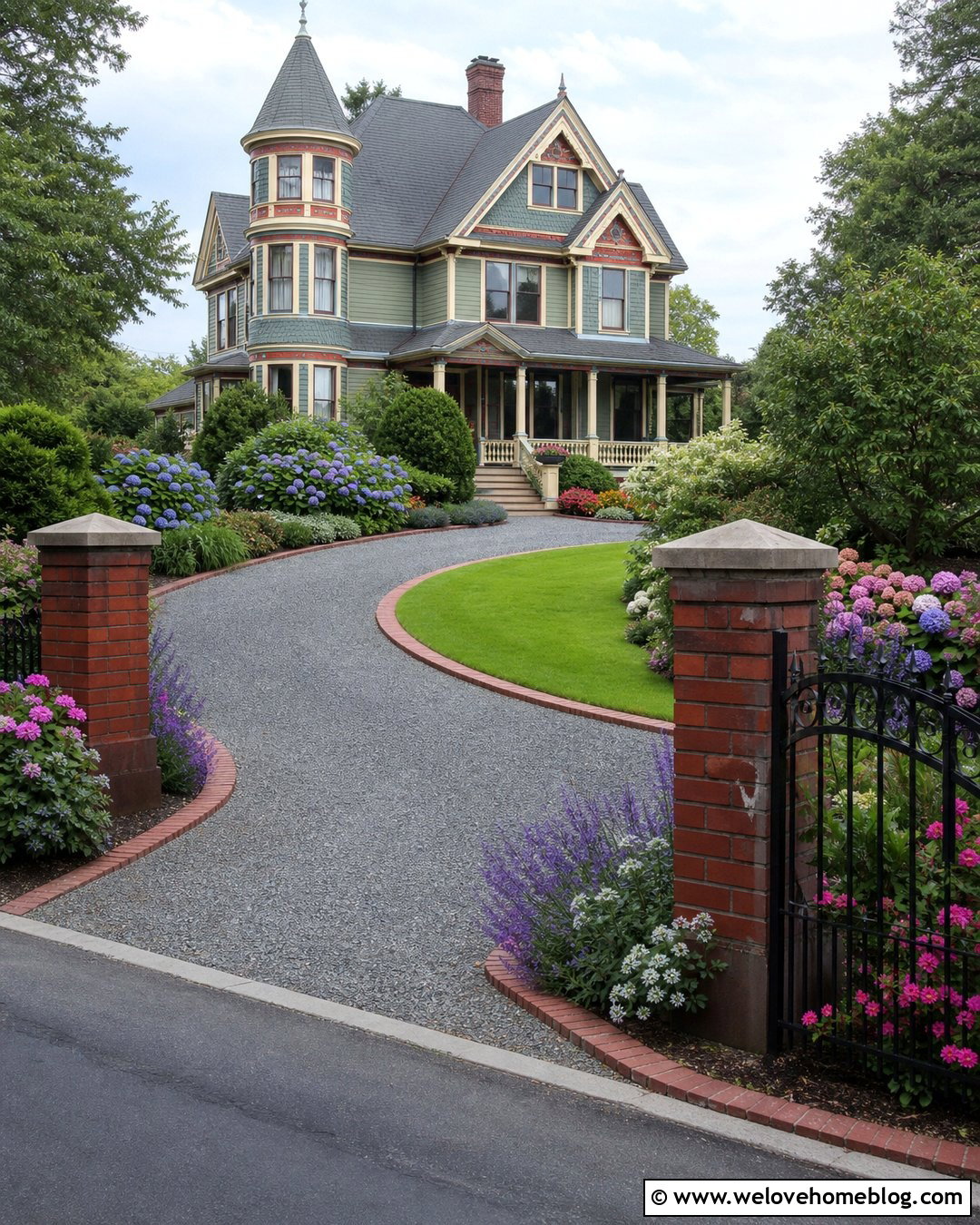
A curved driveway can make even a medium-size Victorian front yard feel deeper and more thoughtfully landscaped. Use fine gray gravel for the main surface and frame the sweeping edges with a narrow red-brick ribbon. Instead of revealing the entire house immediately, allow the curve to guide the eye past layered flower beds toward the porch. Plant taller hydrangeas and flowering shrubs near the house, with lavender, catmint, geraniums, and low edging plants beside the driveway. A small lawn panel inside the curve provides breathing room between the hardscape and flowers. Finish the street entrance with modest brick pillars and a matching pedestrian gate. The coordinated shape, materials, and planting create movement while preserving a clear and usable driving route.
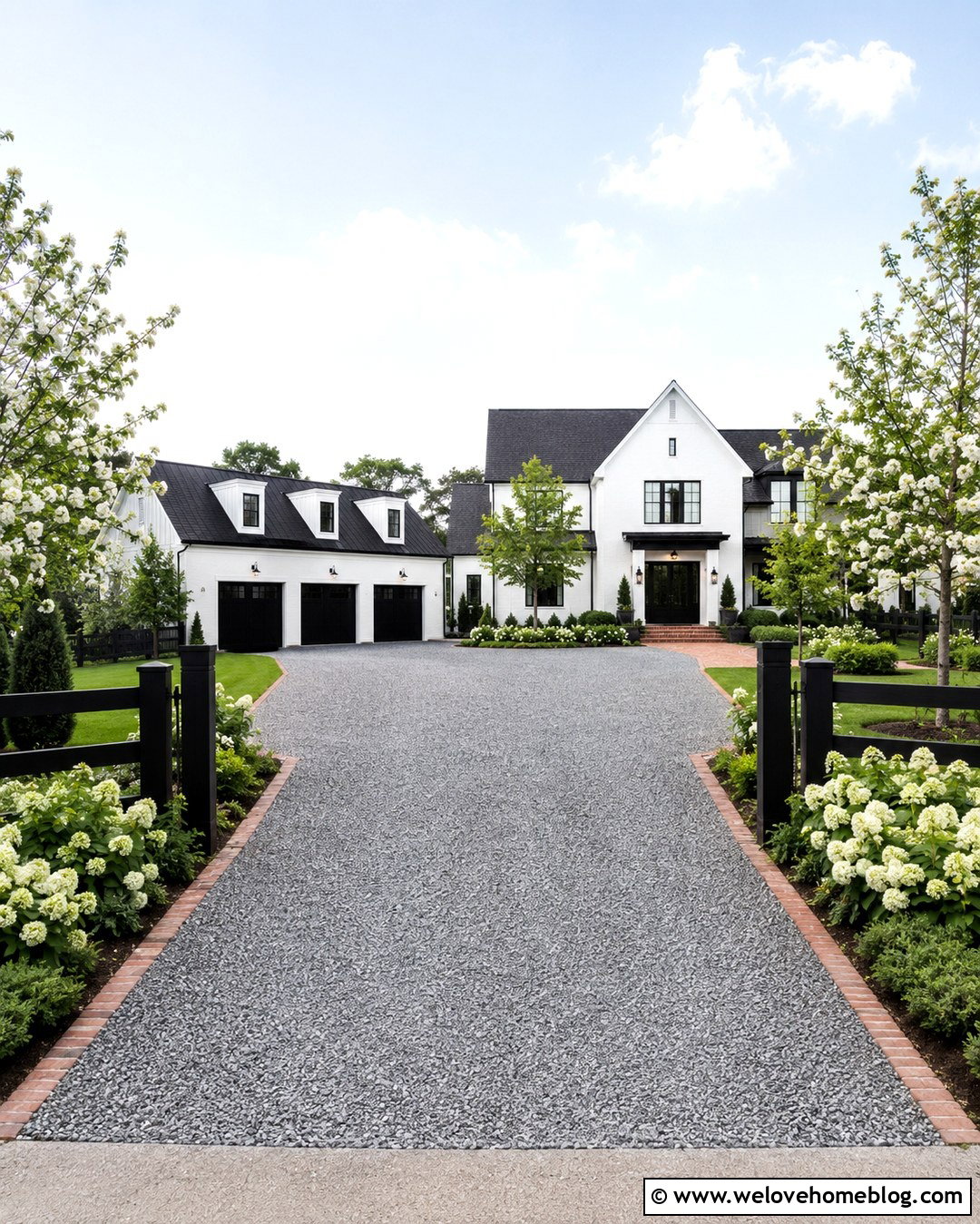
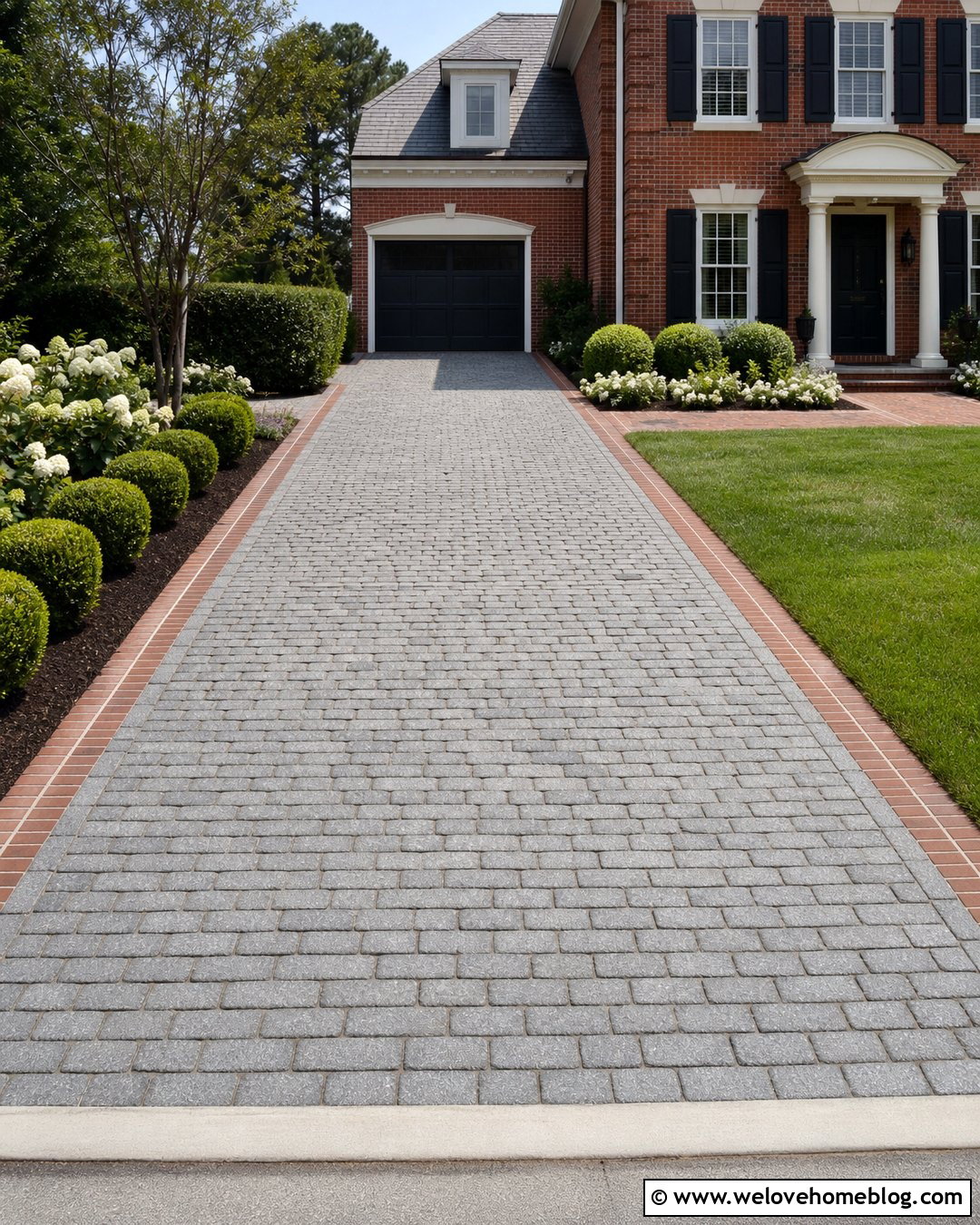
10. Victorian Driveway With Wrought Iron Gates
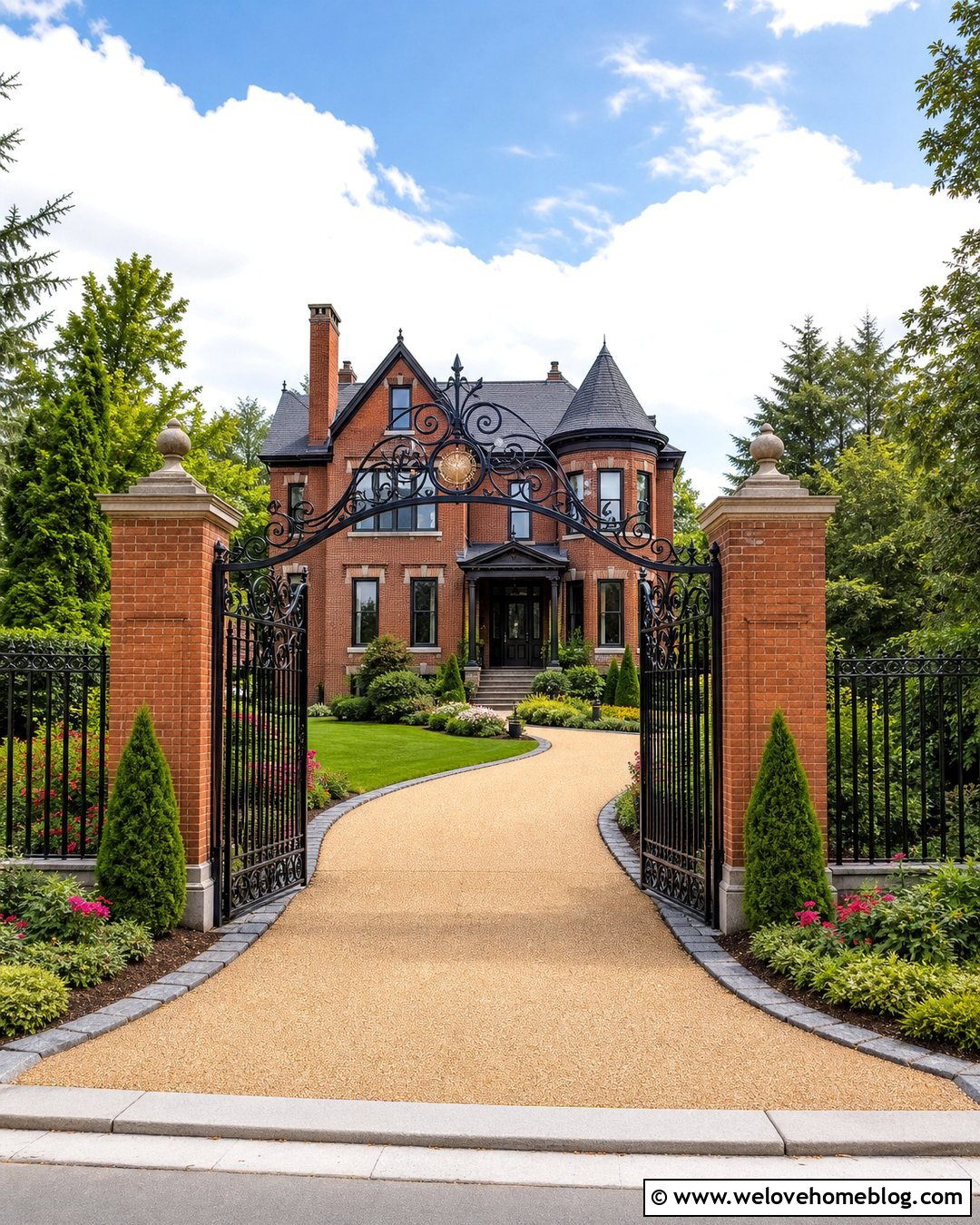
Decorative wrought-iron gates make the driveway entrance an architectural feature rather than a simple opening in the fence. Pair black gates with a smooth buff-gravel driveway and substantial red-brick pillars. Scrollwork, spear-shaped details, and a gently arched top can reflect the home’s ornate trim without becoming excessively elaborate. Continue matching iron fencing along the front boundary to create a unified street view. Inside the gates, curve the driveway slightly toward the house and edge it with granite blocks. Plant clipped evergreens near the pillars, then transition to looser borders of roses and perennials farther along the drive. Keep the planting low around the entrance for visibility. This balanced arrangement feels secure and formal while maintaining a welcoming view of the Victorian facade.
11. Victorian Driveway With Brick Pillars
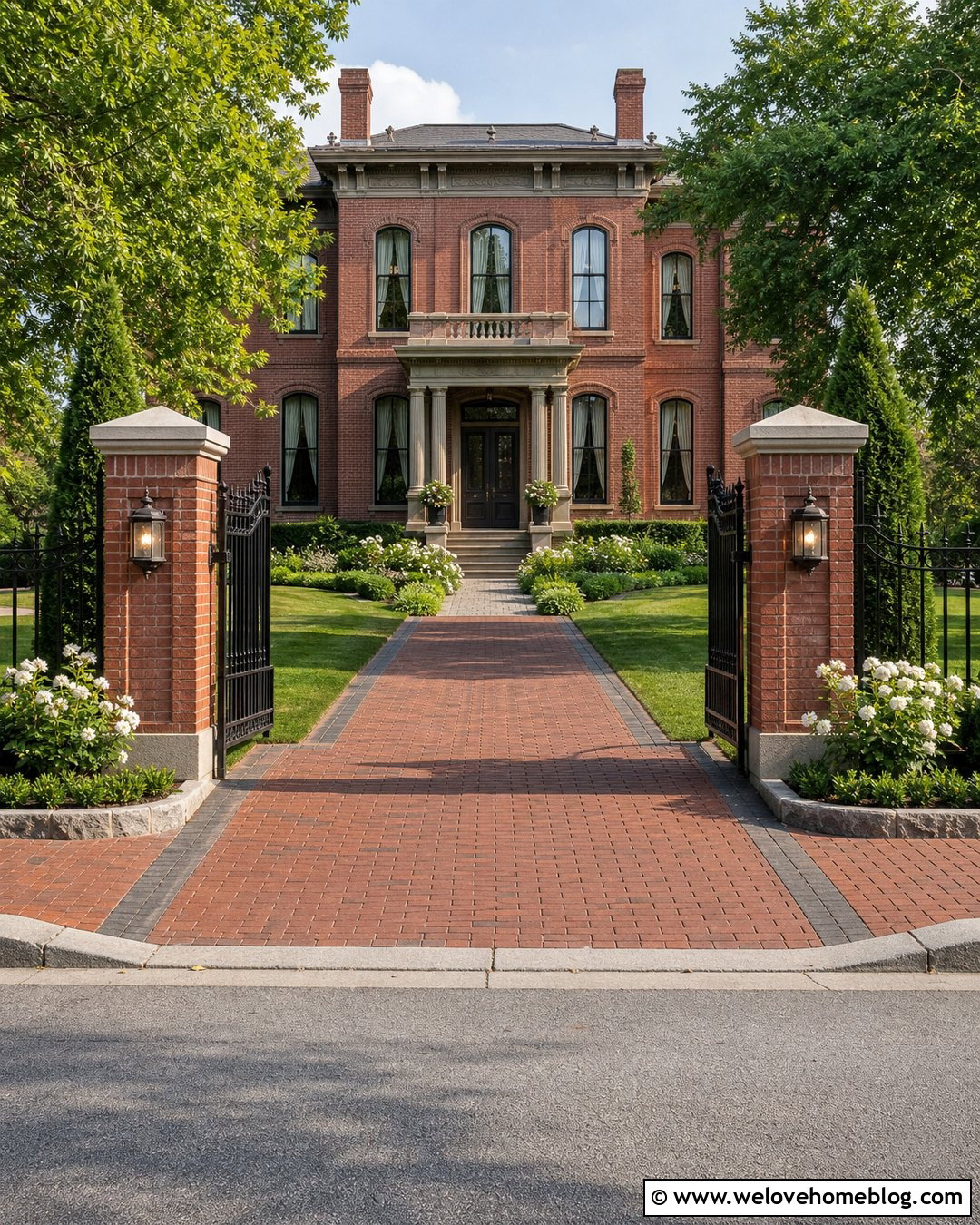
Brick pillars offer a simple way to connect a driveway entrance with a red-brick Victorian house. Use bricks that closely match the facade, including similar mortar color and joint width. Pale stone caps can add contrast and protect the top surfaces. Between the pillars, install understated black iron gates that allow views toward the porch. A driveway made from dark clay brick pavers will continue the traditional palette, while a charcoal granite border clearly defines the edges. Behind each pillar, create symmetrical planting beds with upright evergreens, white roses, and low ground cover. Traditional lanterns mounted on the caps provide an additional decorative layer. Repeating the home’s materials at the curb helps the entire property appear connected, intentional, and visually balanced from the street.
12. Victorian Driveway With White Picket Fence
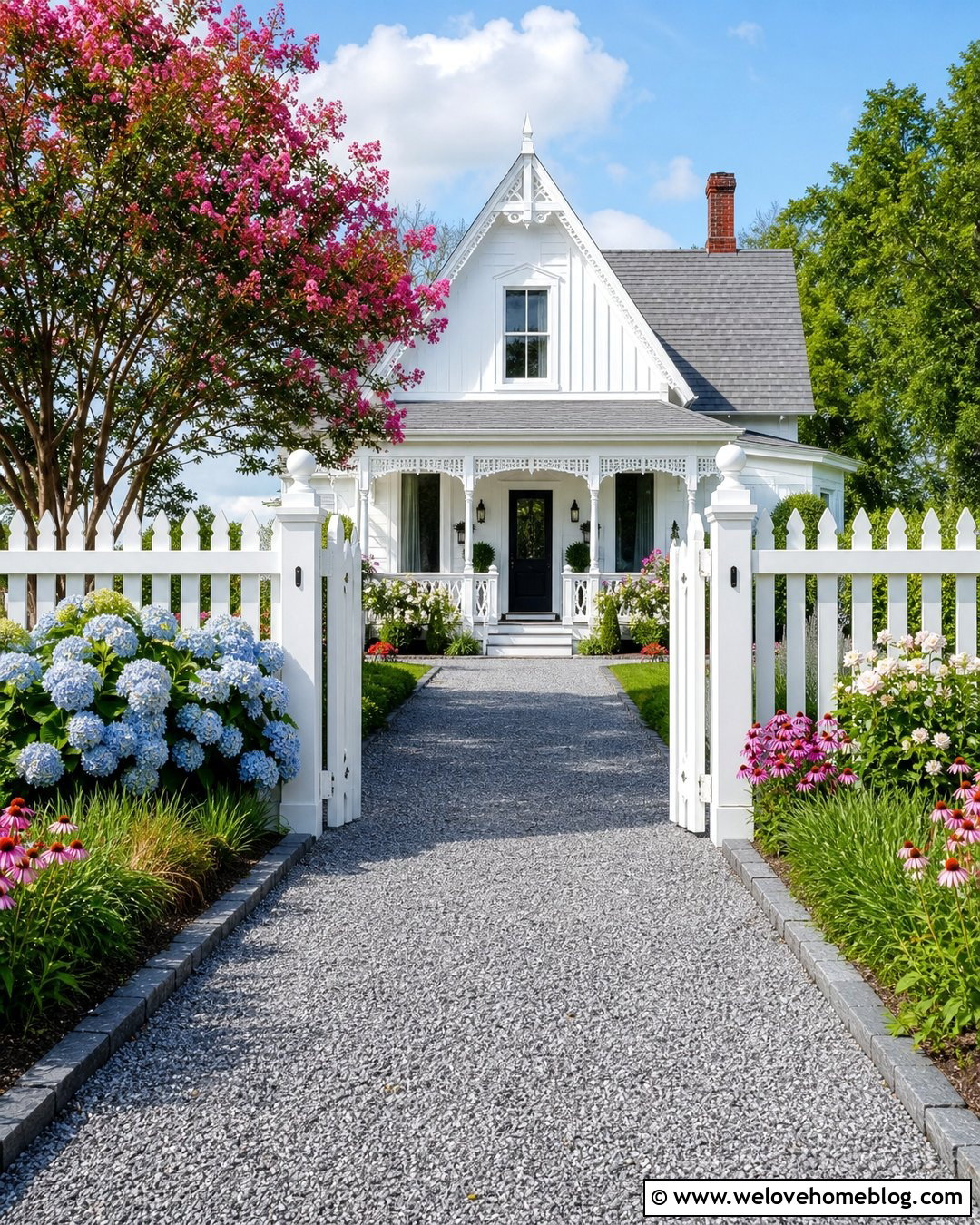
A white picket fence creates a lighter, more approachable Victorian entrance, especially around a cottage-scale or Folk Victorian home. Combine it with a compacted gray gravel driveway laid in a straight, narrow arrangement. White wooden driveway gates can align with the fence, while painted posts with decorative caps provide a clear entrance. Use dark brick or granite edging to contain the gravel and create contrast against the white boundary. Inside the fence, plant informal beds of hydrangeas, coneflowers, roses, and ornamental grasses. A small flowering tree can stand near the pedestrian walkway without blocking the house. Repeat the gravel along the garden path to keep the materials consistent. The overall effect is charming and detailed, but still practical for a small residential property.
13. Victorian Driveway With Pillar Lanterns
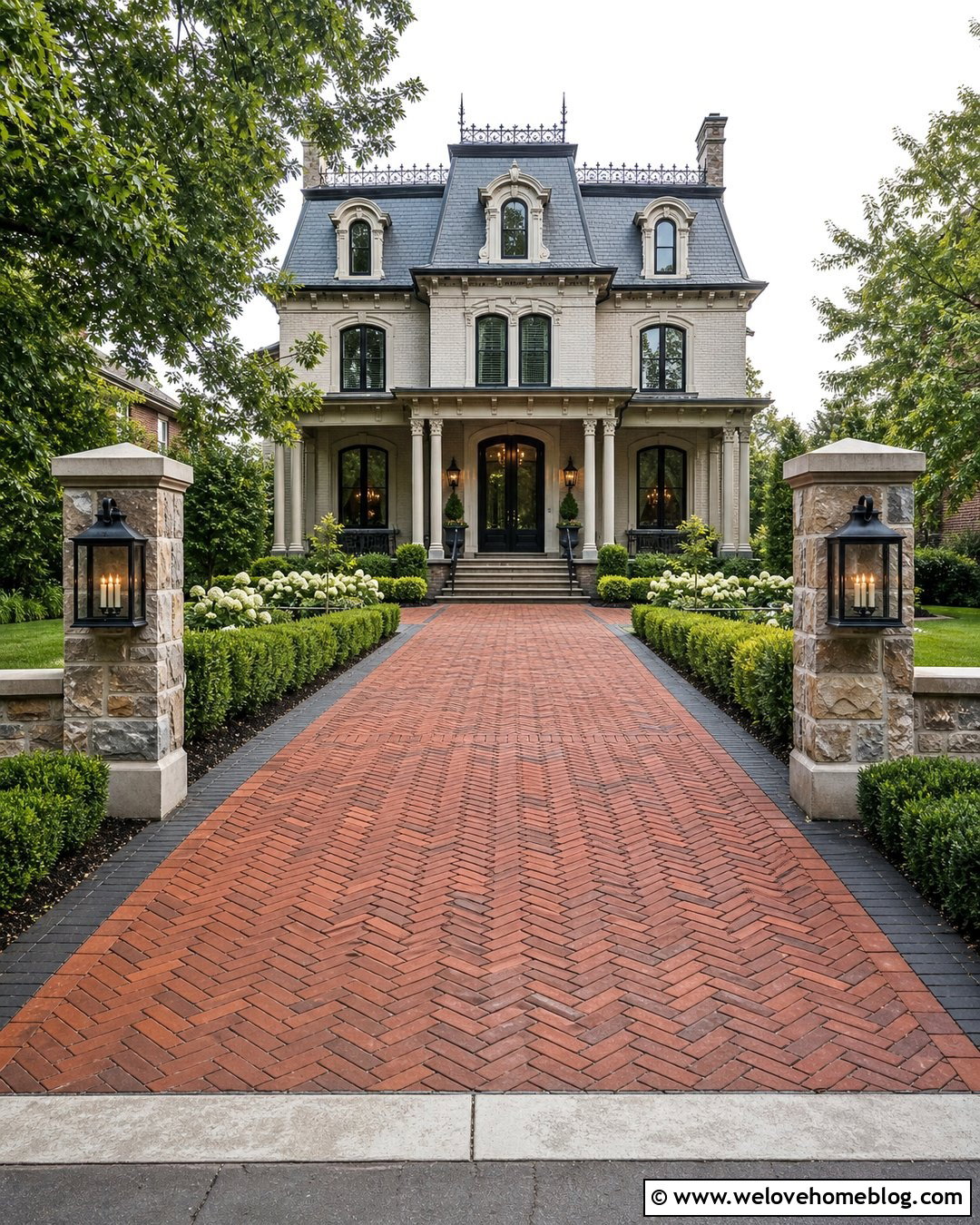
Pillar-mounted lanterns can strengthen the symmetry of a Victorian driveway entrance even when the overall design is relatively simple. Begin with a deep red clay brick driveway laid in a basket-weave pattern. Frame it with charcoal brick borders and lead it between two square stone pillars. Large black lanterns with clear glass panels should sit on top, scaled to the height and width of the masonry. Continue low stone walls outward from the pillars to connect the entrance with the front garden. Behind the walls, use clipped hedges, white flowering shrubs, and neatly shaped lawn. The lanterns should echo the finish of porch lights and iron railings. This repetition makes the driveway, boundary, and house appear as parts of one carefully coordinated Victorian property.
14. Victorian Driveway With Mosaic Apron
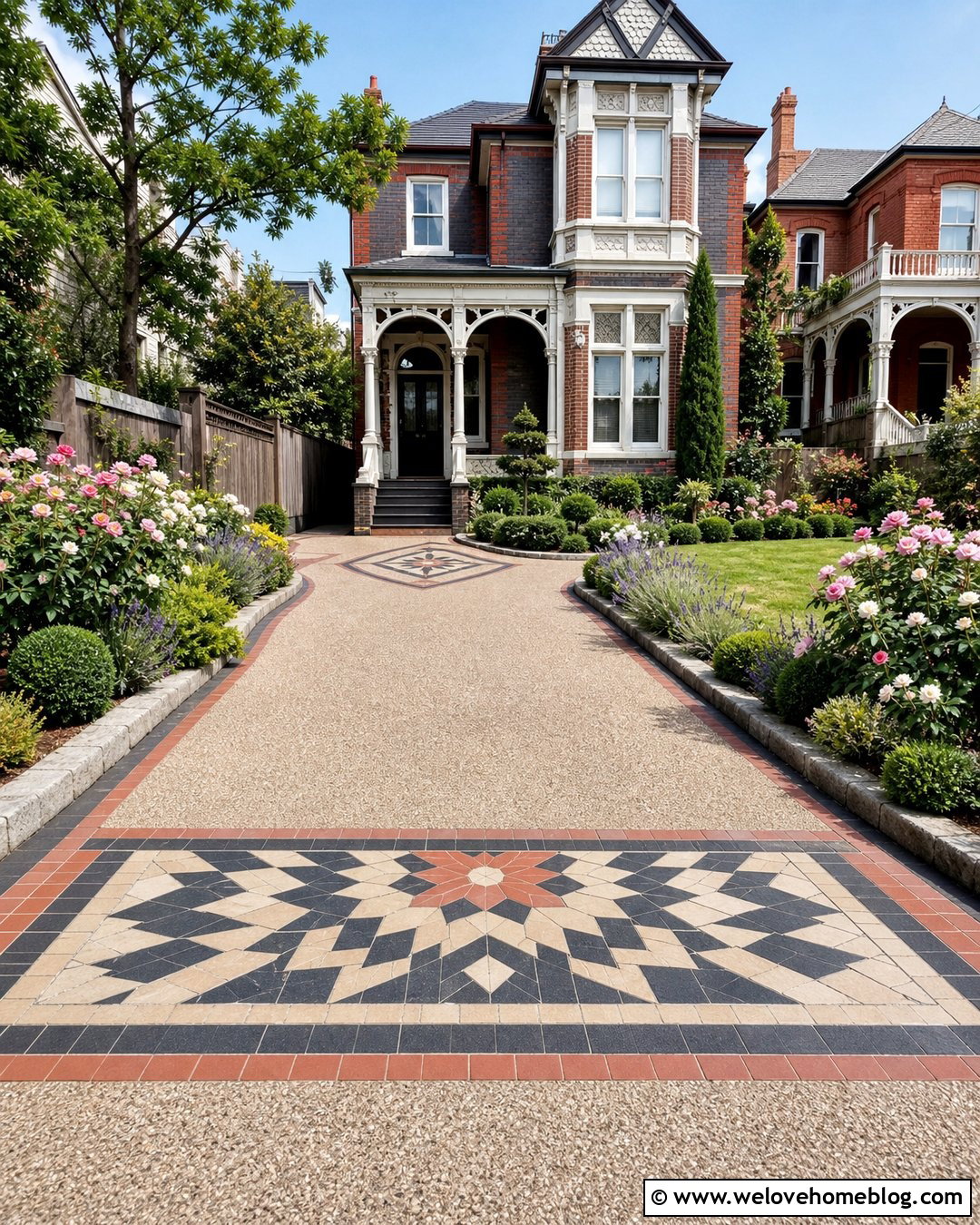
A patterned mosaic apron can introduce Victorian character without covering the entire driveway in a highly decorative surface. Use warm exposed-aggregate concrete for the main drive, bordered with narrow bands of red and charcoal brick. At the sidewalk, create a broad geometric apron using weather-resistant black, cream, and terracotta pavers. Keep the pattern bold and simple enough to remain readable from the street. Repeat a smaller version near the porch walkway to connect the entrance with the house. Curved flower beds filled with roses, lavender, and evergreen shrubs will soften the concrete. Stone curbing can protect both the mosaic and planting edges. This approach gives a practical driveway a memorable period-inspired focal point while avoiding a surface that feels busy or difficult to maintain.
15. Victorian Driveway With Grass Paver Strips
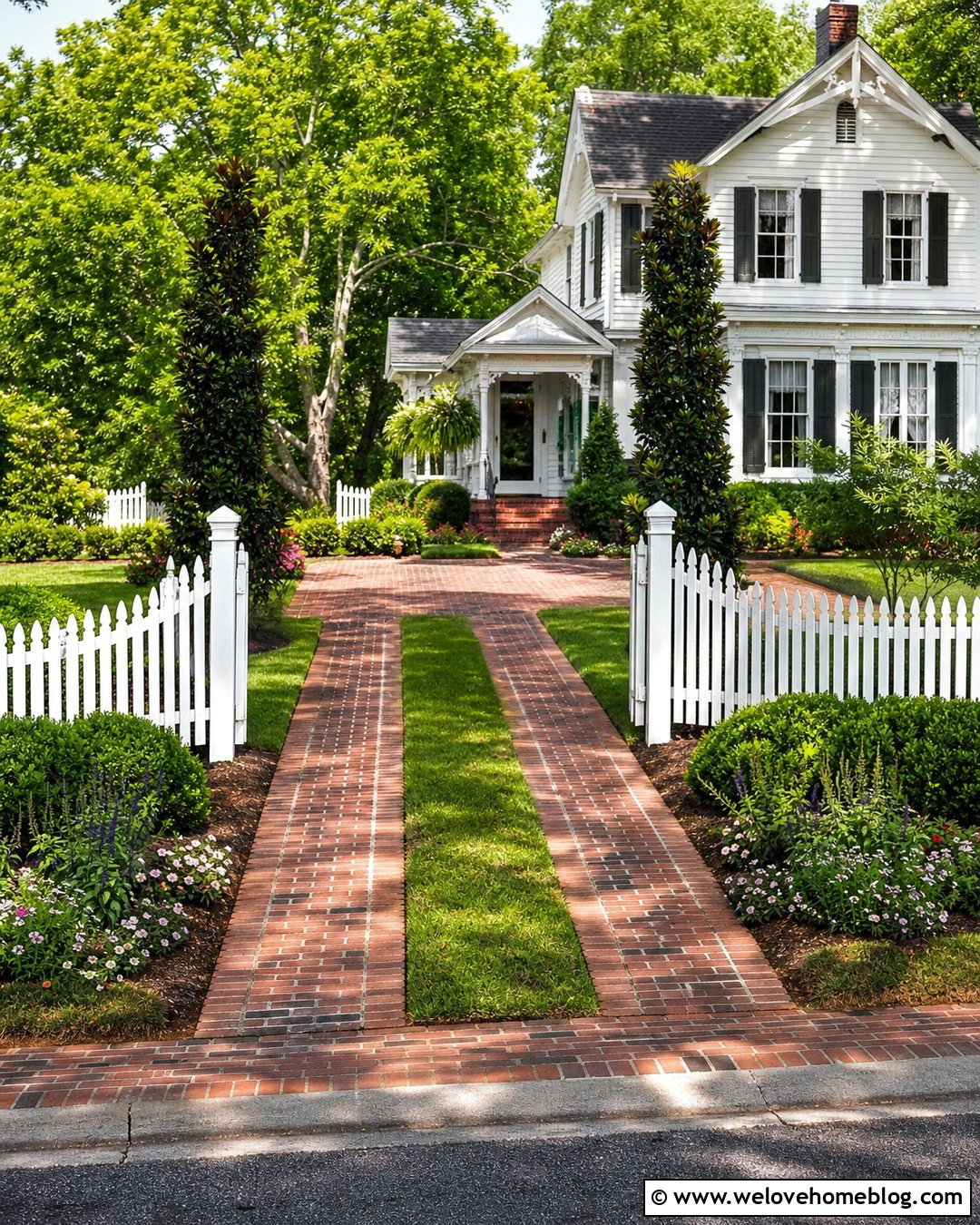
Grass strips can reduce the visual weight of a driveway while supporting the garden-centered character of a Victorian home. Create two parallel wheel tracks using weathered red brick pavers, leaving a reinforced grass strip through the middle. Brick edging should define the outer sides and prevent planting beds from spreading into the driving area. Keep the route straight for a narrow lot, then widen it into a small brick parking pad near the house. Line the driveway with cottage flowers, clipped shrubs, and one or two upright ornamental trees. A white picket gate or simple black iron gate can mark the entrance. This design works best where the grass receives sufficient light and regular care. The mix of masonry and greenery creates a softer residential appearance.
16. Victorian Driveway With Central Garden Island
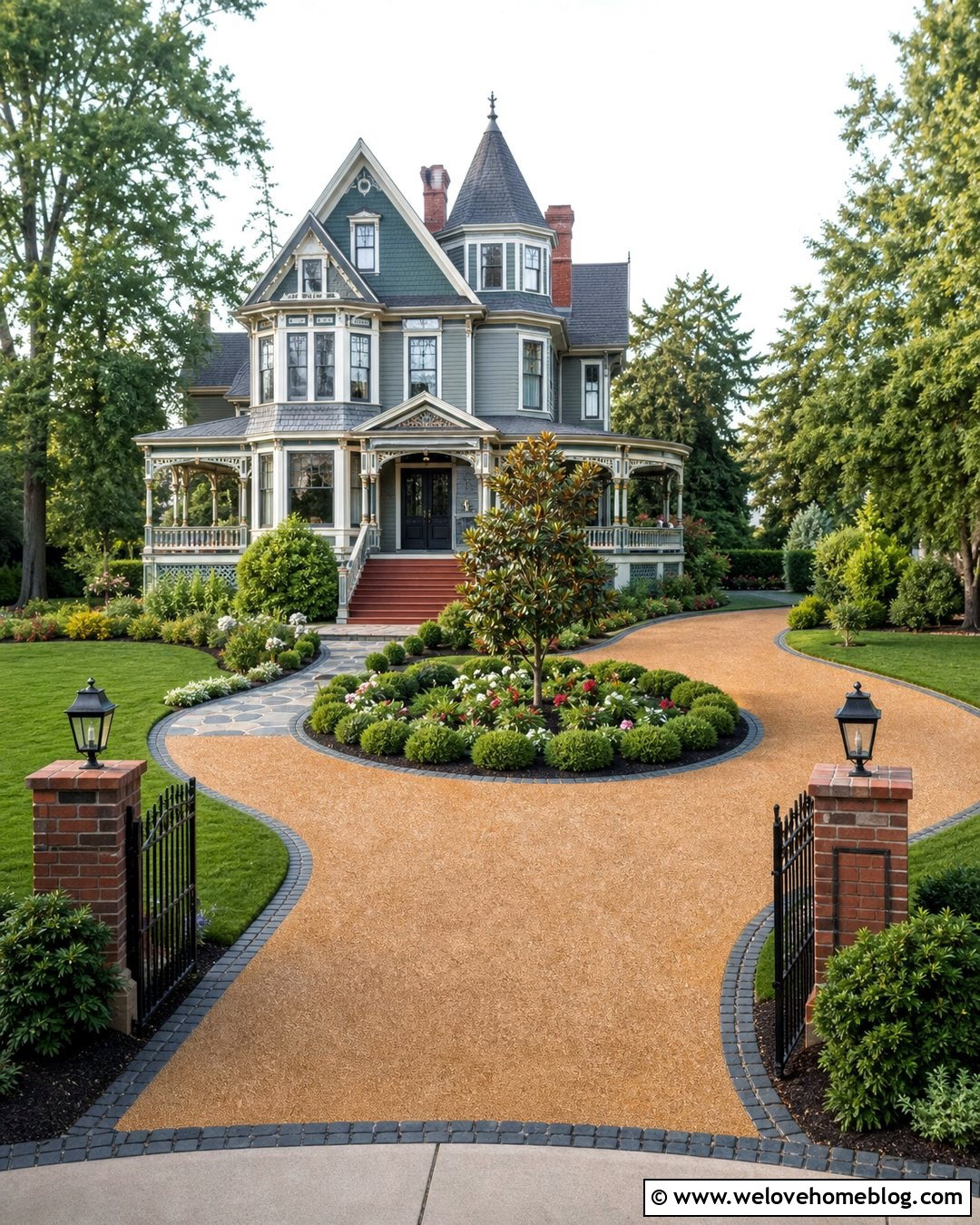
A central garden island turns a circular driveway into a complete front-yard composition. Use compacted decomposed granite in a warm golden tone for the driving surface and dark cobblestones around the island and outer edges. The central bed can feature a small magnolia, Japanese maple, or upright evergreen as its main focal point. Surround the tree with clipped boxwood, roses, and seasonal flowers arranged in a balanced pattern. Keep plants low near the driveway exits to maintain open views. Brick pillars and iron gates can frame the two entrances, while matching lanterns reinforce symmetry. A separate walkway should connect the circular drive to the porch. This layout creates an elegant sense of arrival and provides generous turning space for a large Victorian residence.
17. Victorian Driveway With Carriage House
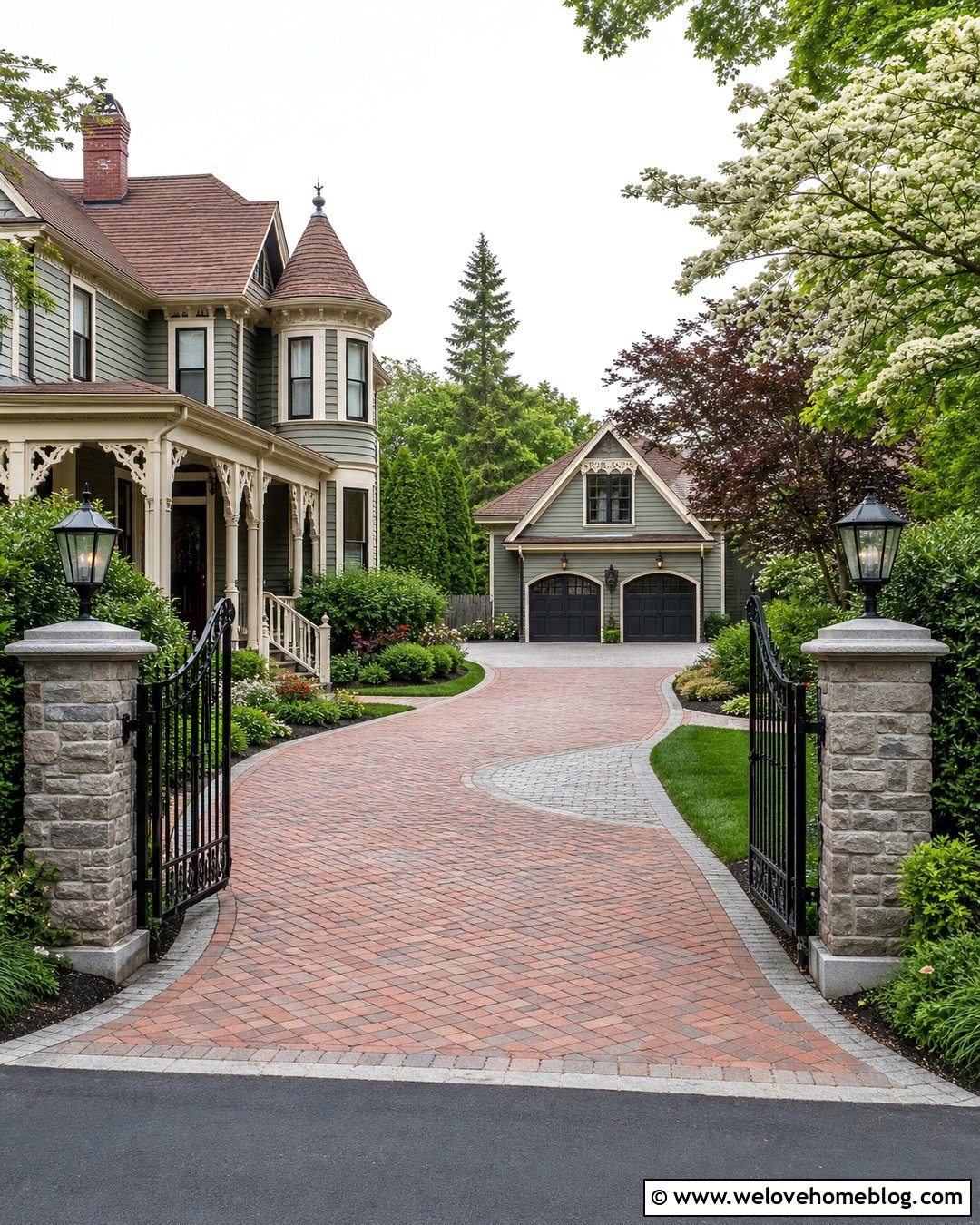
When a Victorian property includes a detached carriage house or garage, the driveway should visually connect both buildings. A red and brown brick paver surface works well because it can continue from the street to the secondary structure without feeling stark. Use a gentle side curve that reveals the carriage house gradually rather than pointing directly toward its doors. Border the bricks with dark granite setts and add a wider granite turning area near the building. Plant tall shrubs, flowering trees, and shade-tolerant perennials along the outside curve. A narrow brick walkway can branch toward the main porch. Match the driveway gate, garage hardware, and exterior lanterns in black metal. Repeated materials help the house, driveway, and carriage building read as one cohesive property.
18. Narrow Victorian Driveway With Side Garden
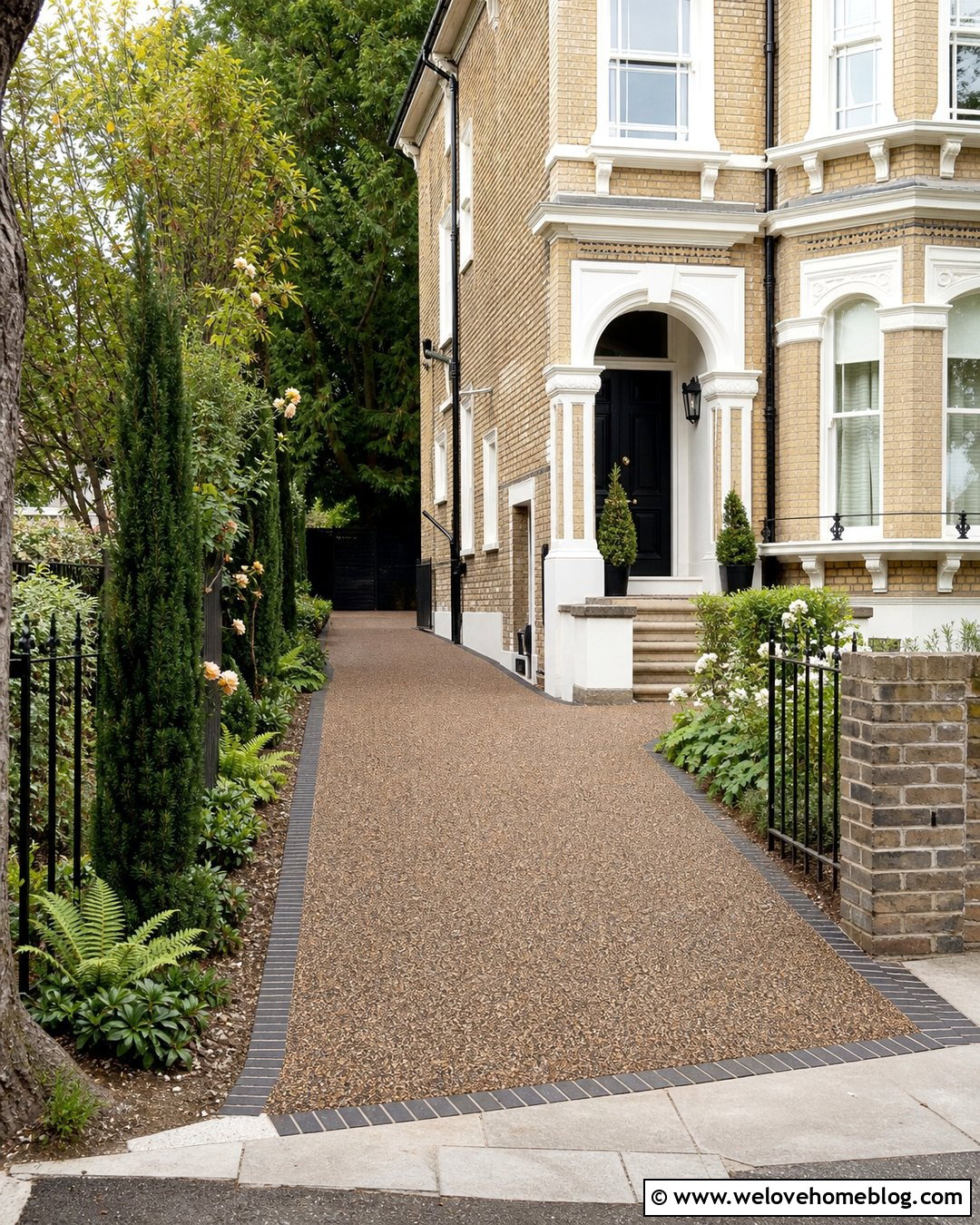
A narrow side driveway can remain attractive without sacrificing the width needed for daily parking. Choose smooth resin-bound gravel in a warm gray-brown blend, which creates a cleaner visual field than several competing materials. Add a single row of dark clay bricks along both edges. On the garden side, install a slim border with columnar evergreens, climbing roses, ferns, and low ground cover. The plants should provide height without leaning into the vehicle route. On the opposite side, a black iron fence can protect the neighboring lawn or walkway. Widen the driveway slightly near the rear parking area if the lot allows. This restrained combination makes efficient use of a tight urban space while complementing the detail and vertical proportions of a Victorian home.
19. Small Victorian Driveway With Checkerboard Pavers
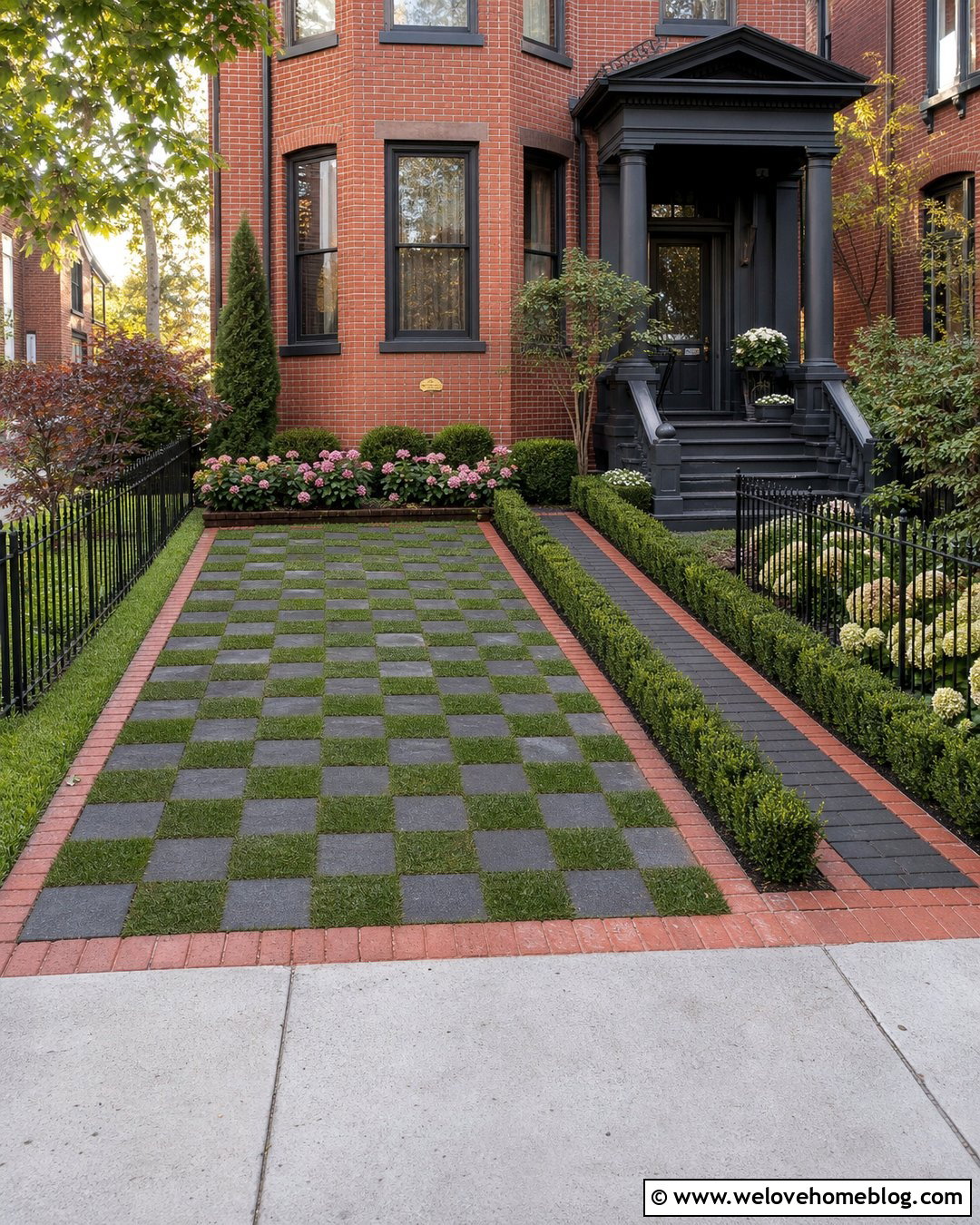
A checkerboard driveway can bring greenery into a compact parking space while creating a pattern that feels carefully planned. Alternate small charcoal concrete pavers with reinforced grass squares across a short rectangular driveway. Frame the surface with red-brick edging to connect the modern pavers with the Victorian facade. A matching brick walkway should run beside the driveway rather than cutting through it. Use a low iron fence and narrow planting beds filled with boxwood, roses, and compact hydrangeas to preserve usable space. At the house, repeat the charcoal tone on porch railings, planters, or exterior steps. Keeping the pattern small and orderly prevents the driveway from overpowering the front yard. The final result feels green, structured, and suitable for limited city lots.

20. Victorian Farmhouse Driveway With Timber Gate
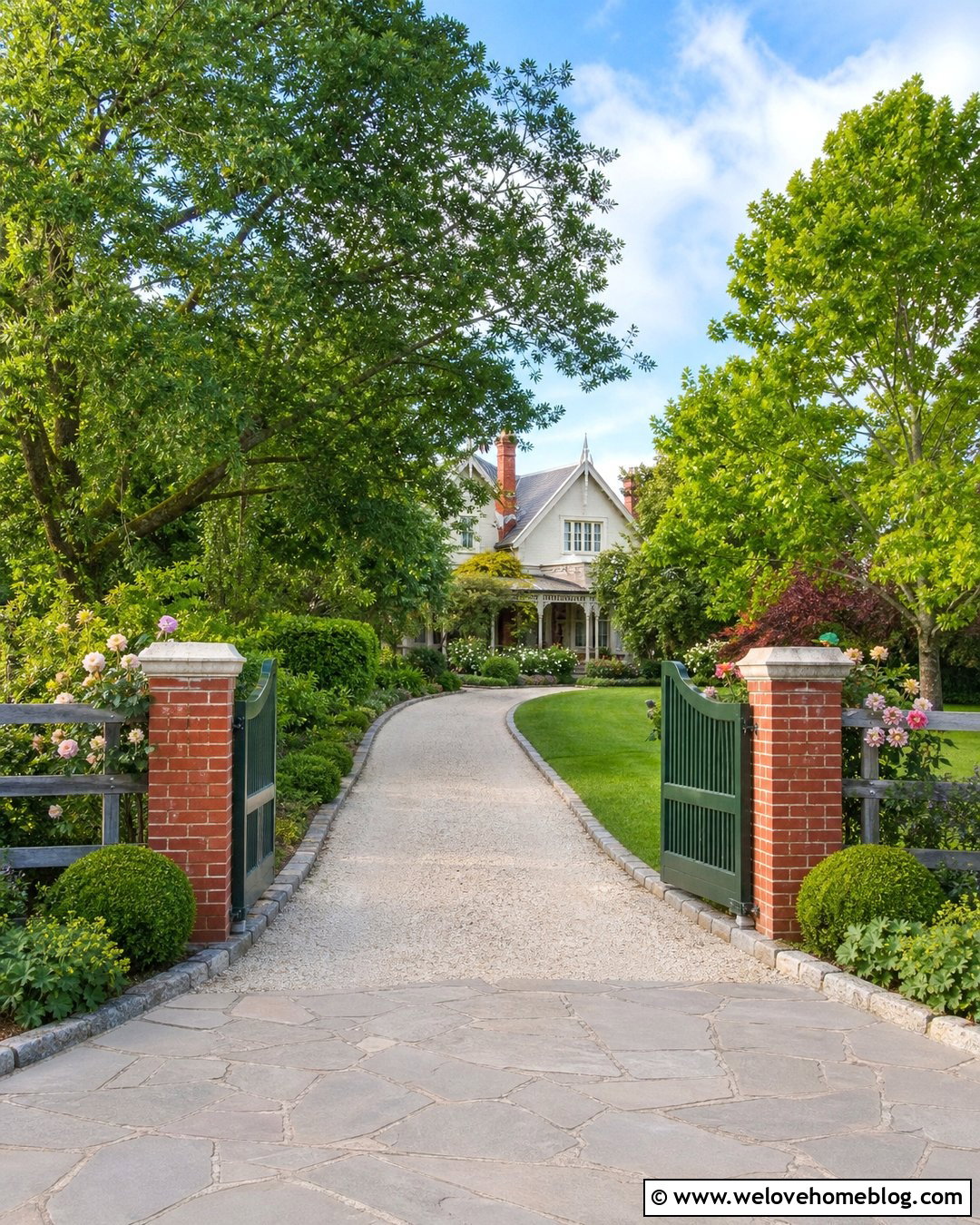
A Victorian farmhouse can support a more relaxed driveway entrance while still including traditional details. Use pale crushed limestone for a long, gently curved drive and contain it with rough granite blocks. At the road, install a solid painted timber gate between red-brick pillars. Deep green, black, or muted burgundy paint can connect the gate with shutters, trim, or a decorative front door. Continue simple timber fencing along the boundary, then soften it with climbing roses and mixed hedges. Mature shade trees and broad lawn panels can frame the approach, while informal flower beds appear closer to the porch. A stone apron at the entrance will help create a defined transition. This design balances rural character with the craftsmanship expected around Victorian architecture.
21. Victorian Gothic Driveway With Stone Walls
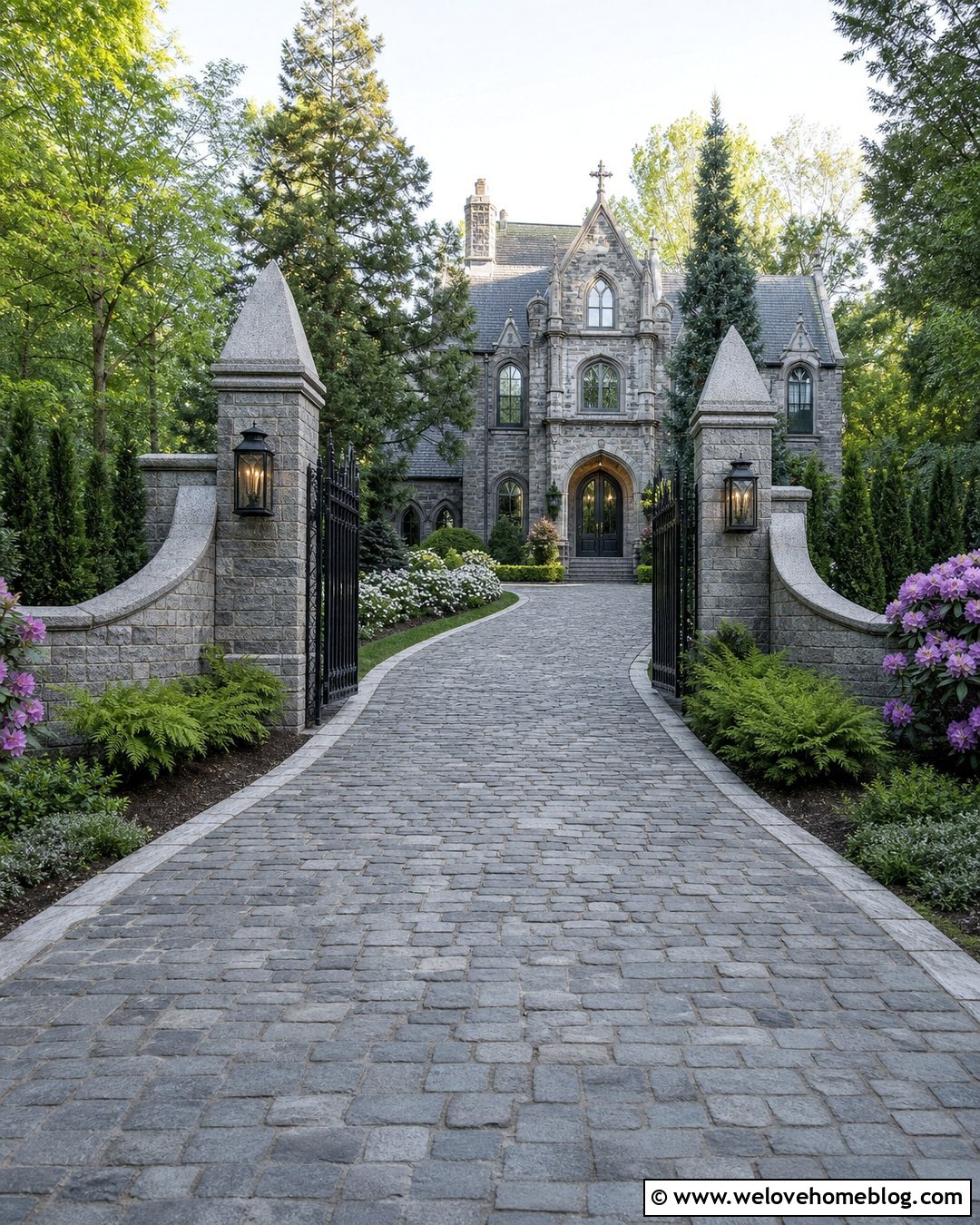
A Gothic Revival home benefits from a driveway with strong texture, deeper colors, and substantial boundaries. Choose irregular gray cobblestones for a curved approach and use larger granite blocks as edge restraints. Low stone walls can rise gradually toward the entrance, ending in tall square pillars with pointed stone caps. Black iron gates with restrained Gothic arches will repeat the shapes found in windows, gables, or porch details. Plant dark green yews, ferns, rhododendrons, and white flowering shrubs behind the walls. Keep the center of the driveway open and uncluttered so the stonework remains easy to read. Traditional lanterns can be mounted on the inner faces of the pillars. The complete composition should feel dramatic through form and texture, not dark lighting or excessive ornament.
22. Victorian Queen Anne Driveway With Colorful Planting
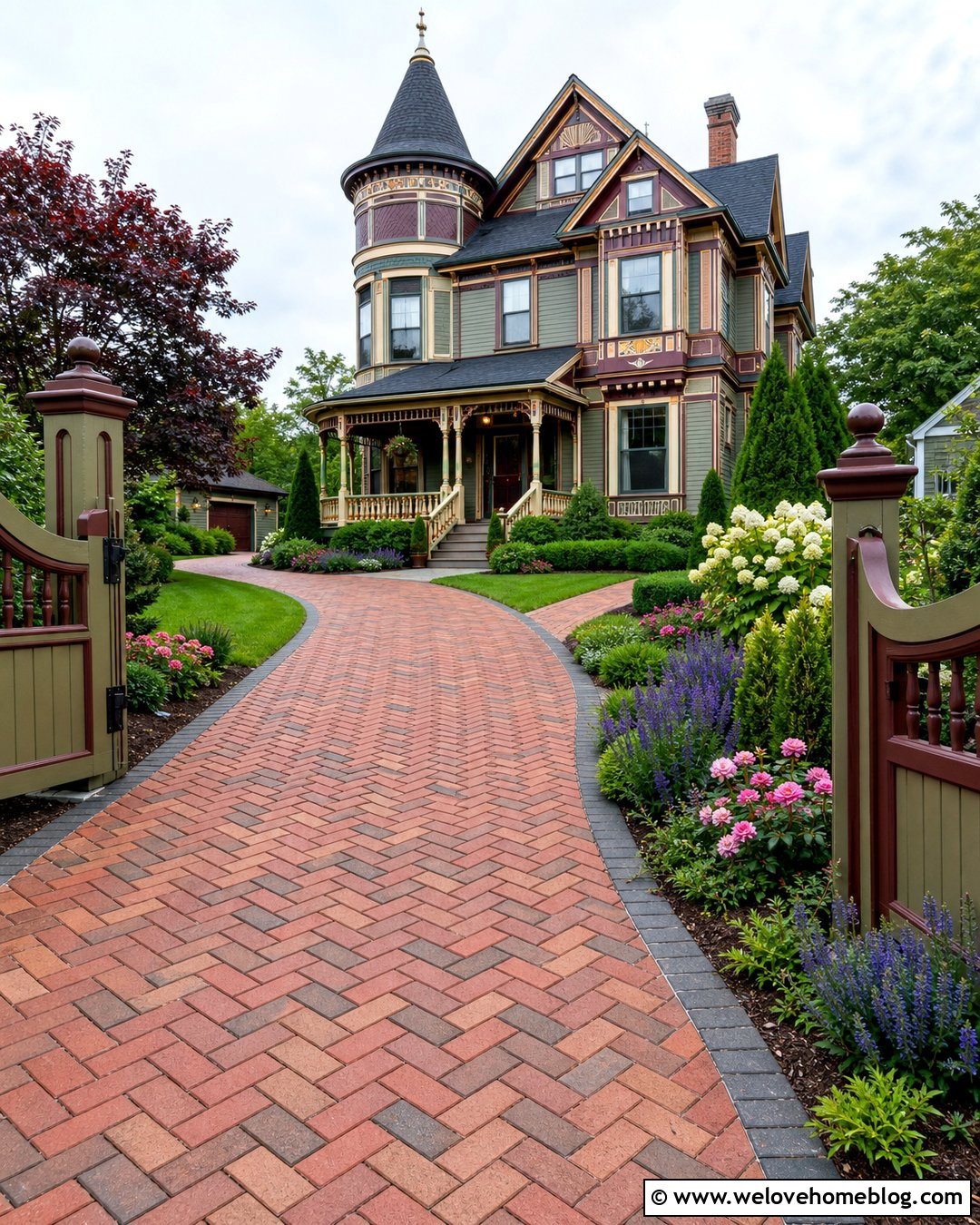
The varied colors and decorative surfaces of a Queen Anne house can support a driveway surrounded by equally expressive planting. Use red clay brick pavers with charcoal and buff accents laid in a herringbone pattern. Shape the driveway into a gentle curve and define both edges with dark granite setts. Along the sunny side, layer burgundy foliage, pink roses, blue salvia, purple catmint, and white hydrangeas. Keep the opposite border simpler with clipped evergreens and lawn so the entrance does not become visually crowded. Painted wooden gates can repeat one of the home’s secondary trim colors. A brick walkway should branch naturally toward the porch steps. The coordinated materials and planting celebrate the house’s personality while maintaining a practical, clearly defined driving surface.
23. Victorian Second Empire Driveway With Formal Hedges
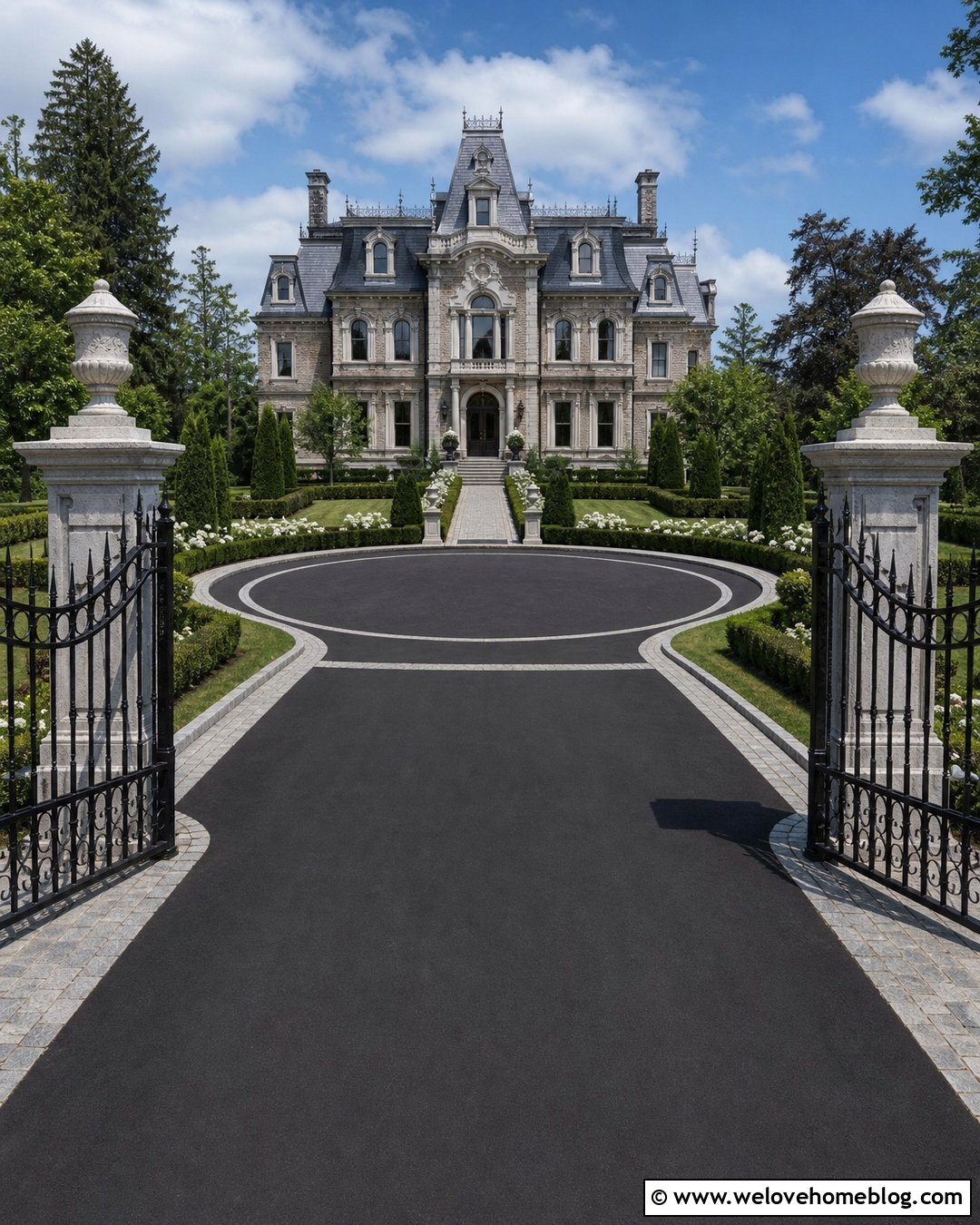
A Second Empire home often looks best with a highly ordered driveway that matches its imposing scale. Use smooth black asphalt for a broad straight approach, then add a double border of light gray granite setts. Near the house, widen the drive into a symmetrical oval turning court. Clipped yew or privet hedges can run along both sides, broken by matching beds of white roses and seasonal flowers. At the road, install tall stone pillars with ornate black iron gates. The entrance should align with the central portion of the facade whenever the site allows. Stone urns or compact topiary can emphasize the turning area without blocking vehicle movement. This controlled combination creates formality and directs attention toward the architecture, mansard roof, and centered front entrance.
24. Budget Victorian Driveway With Gravel and Brick
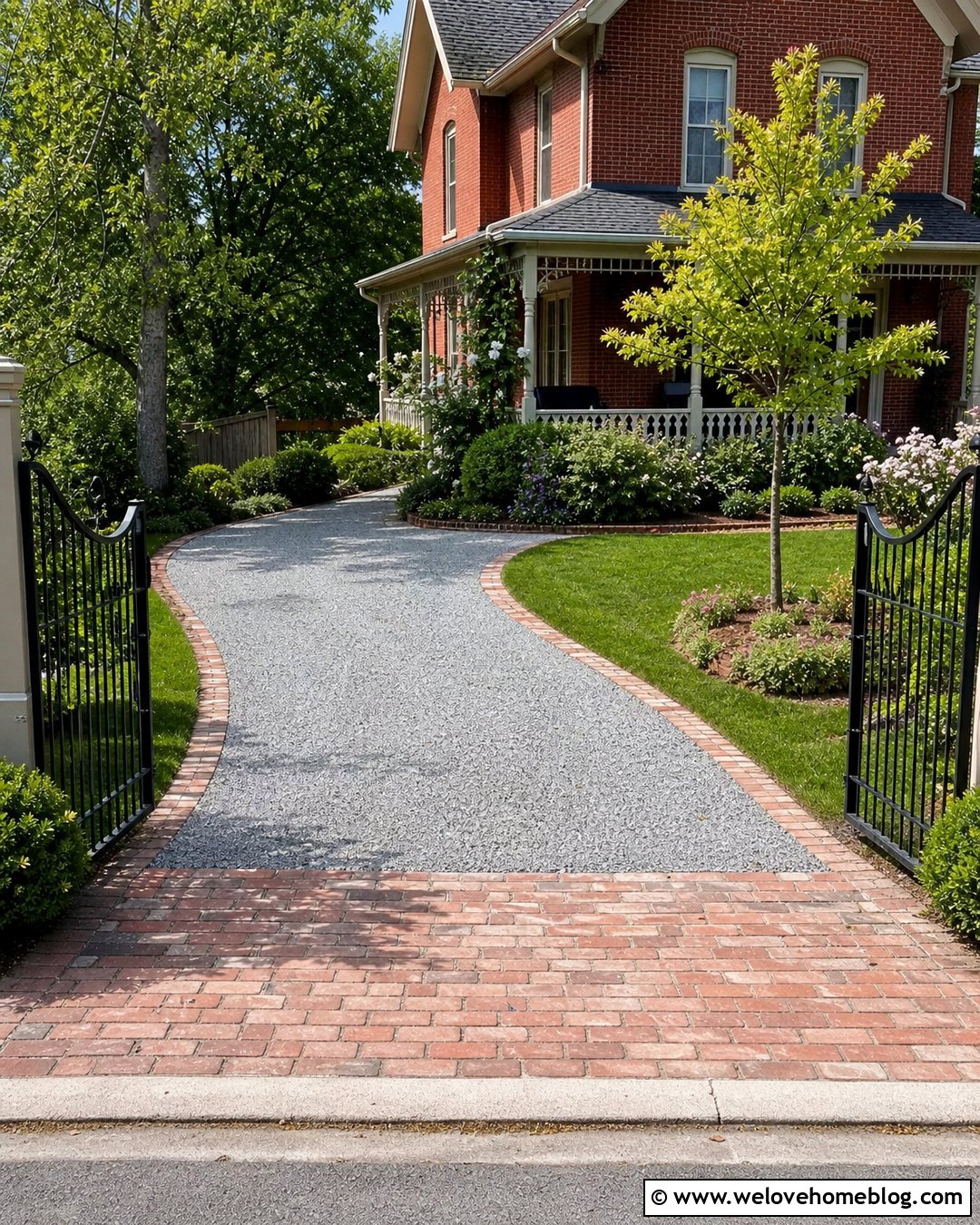
An affordable Victorian driveway can still look detailed when inexpensive materials are arranged with care. Start with well-compacted gray crushed stone, which offers a more stable appearance than mixed decorative rock. Use reclaimed or weathered red bricks to create a single-row border and a wider entrance apron. A straight or softly curved shape will be easier to install than a complicated circular layout. Concentrate planting near the street and porch, where it has the greatest visual effect. Boxwood, hardy roses, catmint, and small flowering shrubs can provide layered color without filling every edge. Repaint an existing wooden or metal gate in black to strengthen the entrance. Repeating the same brick around one nearby flower bed will make the economical materials feel deliberate and connected.
25. Low Maintenance Victorian Driveway With Permeable Pavers
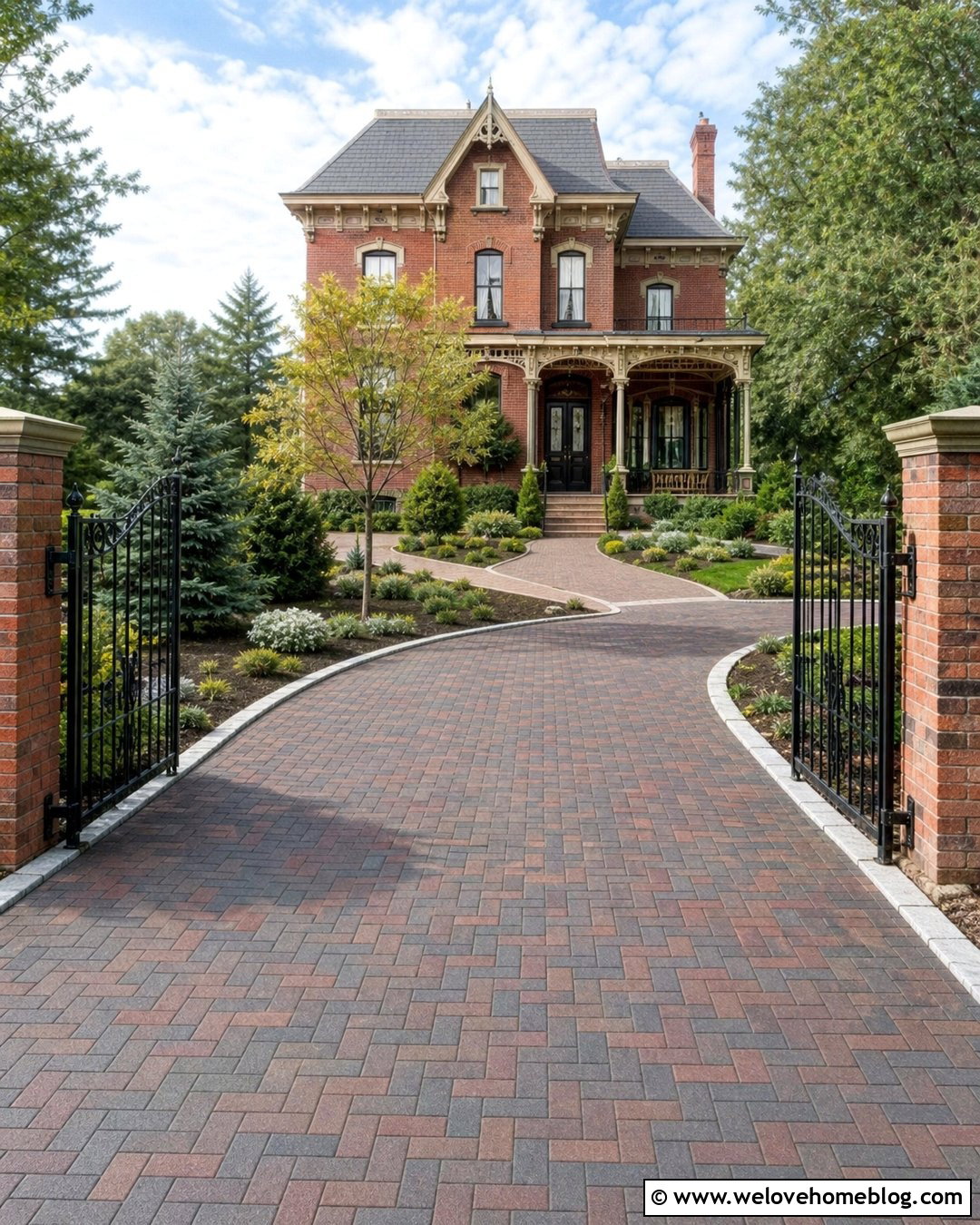
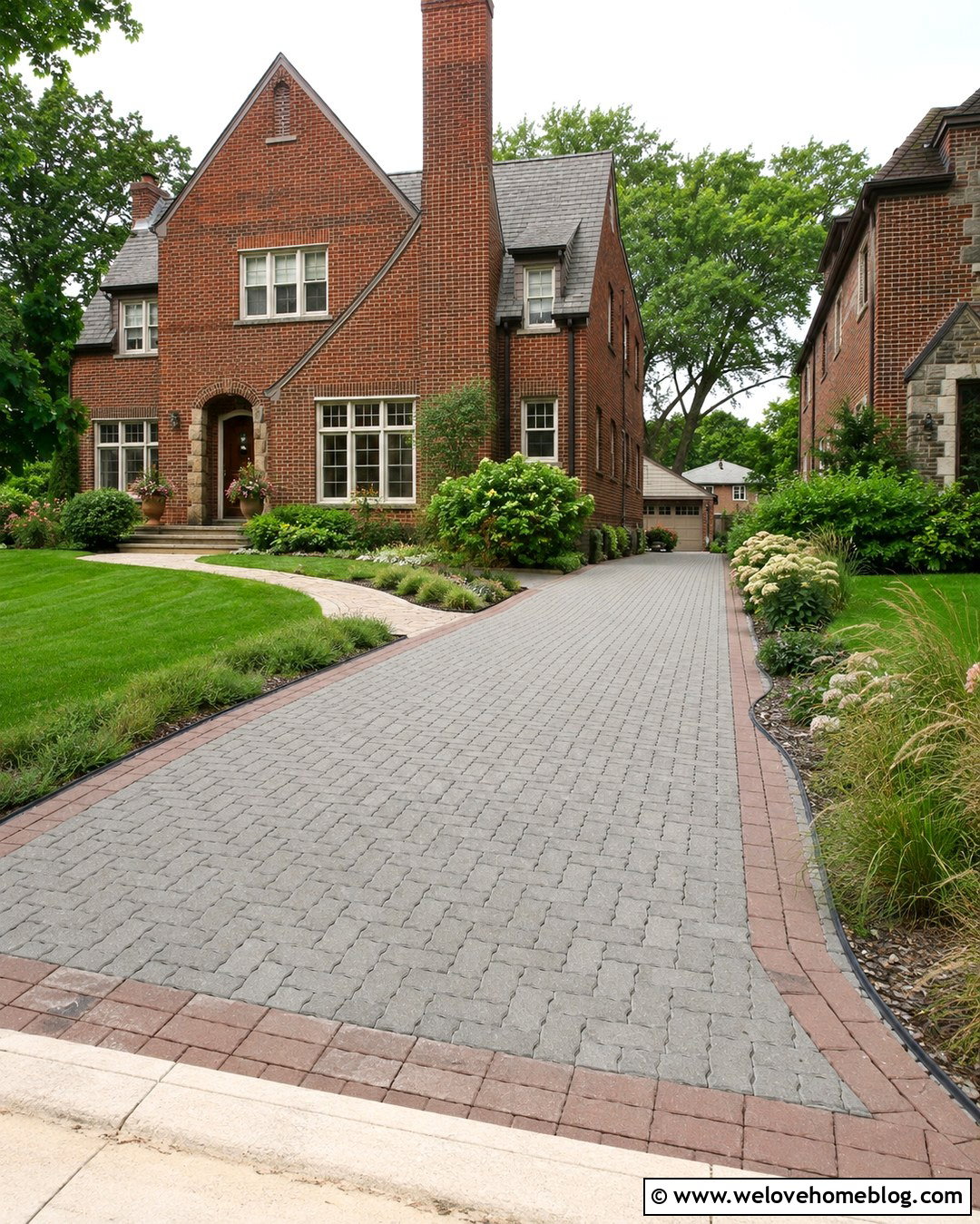
Permeable pavers can create a practical Victorian driveway when their color and pattern suit the house. Select small tumbled pavers in a blended charcoal, brown, and muted red palette. Lay them in a traditional running-bond or herringbone pattern across a gently curved surface. Use granite setts along the edges and around a matching walkway to give the installation a finished appearance. Keep the surrounding landscaping simple with compact evergreens, slow-growing shrubs, ground cover, and one ornamental tree. An open iron gate between brick pillars can provide period detail without creating a heavy entrance. Choose planting beds with clear shapes and enough space between plants for easier care. The result combines traditional curb appeal with a neat surface and a manageable front-yard layout.
Conclusion:
The best **25 Victorian driveway ideas** connect the driving surface, entrance, borders, planting, and architecture into one complete design. Gravel and brick can create warmth, while granite, cobblestone, and dark asphalt provide a stronger formal appearance. Resin-bound gravel and concrete pavers can also work when their colors and patterns reflect traditional materials. Look for opportunities to repeat details from the house, including brick tones, trim colors, ironwork, stone foundations, and exterior lanterns. Most importantly, choose a layout that fits the available yard and normal vehicle movement. A carefully edged driveway with balanced planting will look more convincing than an elaborate surface surrounded by unfinished spaces. Thoughtful coordination creates the graceful arrival that a Victorian home deserves.

Related posts:
Leave a Reply