
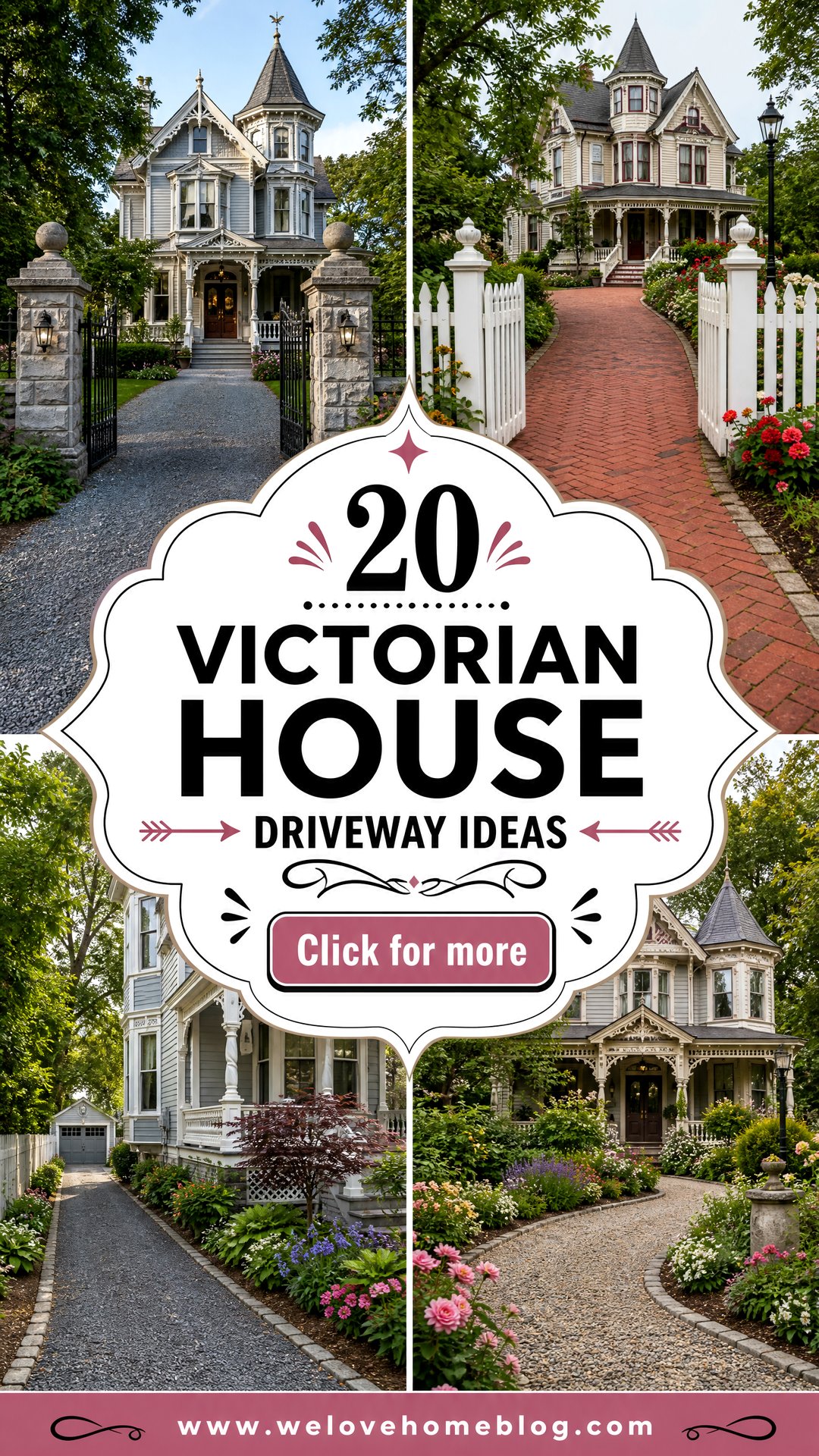
A Victorian home deserves a driveway that feels connected to its detailed architecture, layered landscaping, and historic character. The best 20 victorian house driveway ideas balance period-inspired materials with practical features for modern living. Clay brick, gravel, cobblestone, asphalt, and subtle concrete pavers can all work beautifully when their colors complement the home’s masonry, painted trim, porch, and roof. Shape matters too. A narrow side drive may suit an urban Queen Anne, while a circular arrival court can enhance a larger Victorian estate. Decorative gates, stone pillars, garden beds, and thoughtful edging complete the setting without overpowering the facade. The complete driveway looks below offer inspiration for different properties, budgets, and yard sizes through these 20 victorian house driveway ideas.
1. Victorian House Gravel Driveway With Brick Edging
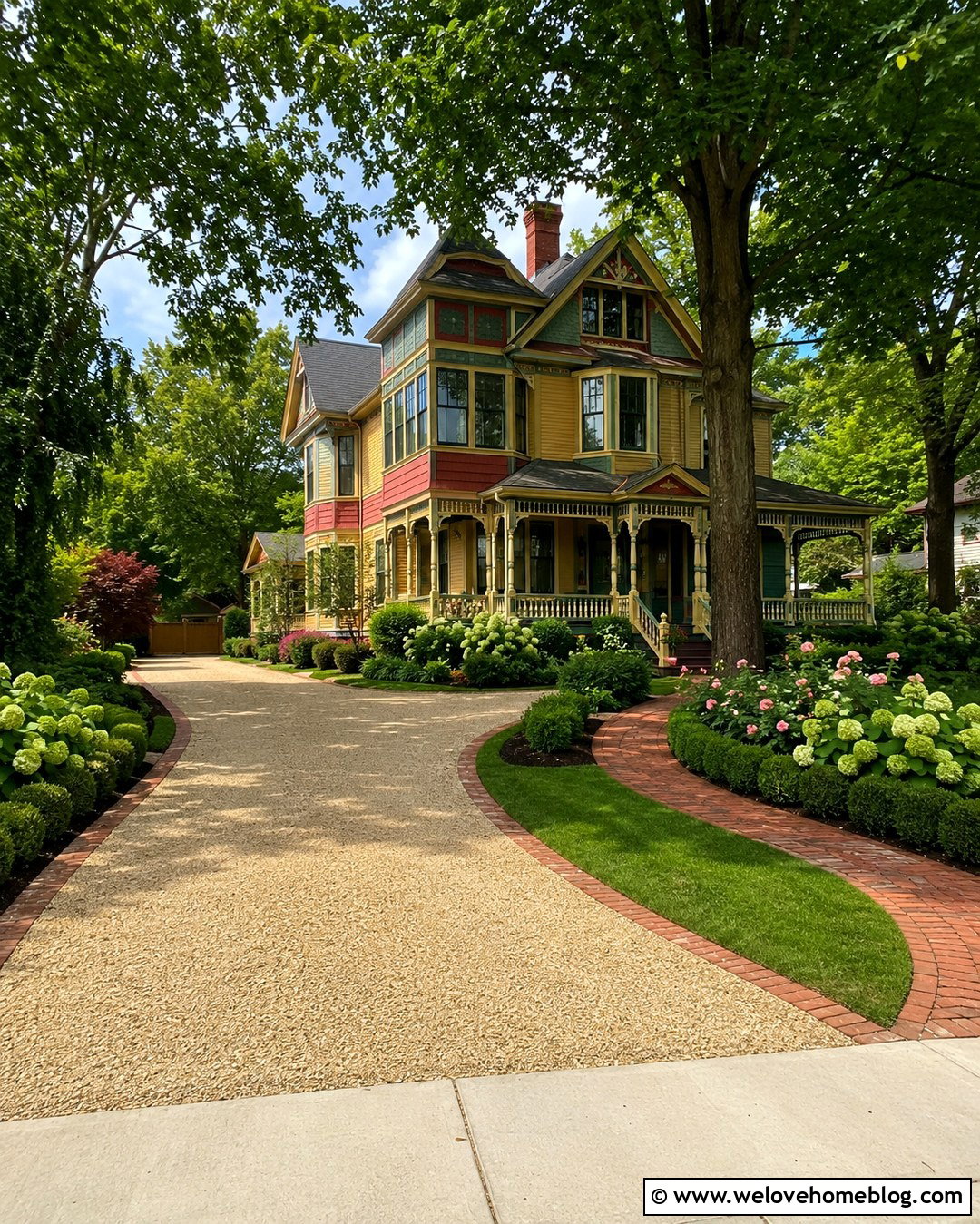
Warm gravel and traditional clay brick create a relaxed driveway that still feels appropriate beside an ornate Victorian facade. Choose buff, golden, or soft gray gravel based on the colors found in the home’s brickwork and foundation. A compacted base and gravel-stabilizing grid will help keep the surface level and reduce loose stones near the sidewalk. Frame the drive with a double row of clay bricks laid flush with the surface. This creates a clean boundary without looking overly new. A gently curved layout can soften a deep front yard, while hydrangeas, boxwood, and flowering perennials provide layered color. Carry the same brick into the walkway so the driveway, porch steps, and garden entrance read as one coordinated composition.
2. Victorian House Brick Driveway In Herringbone
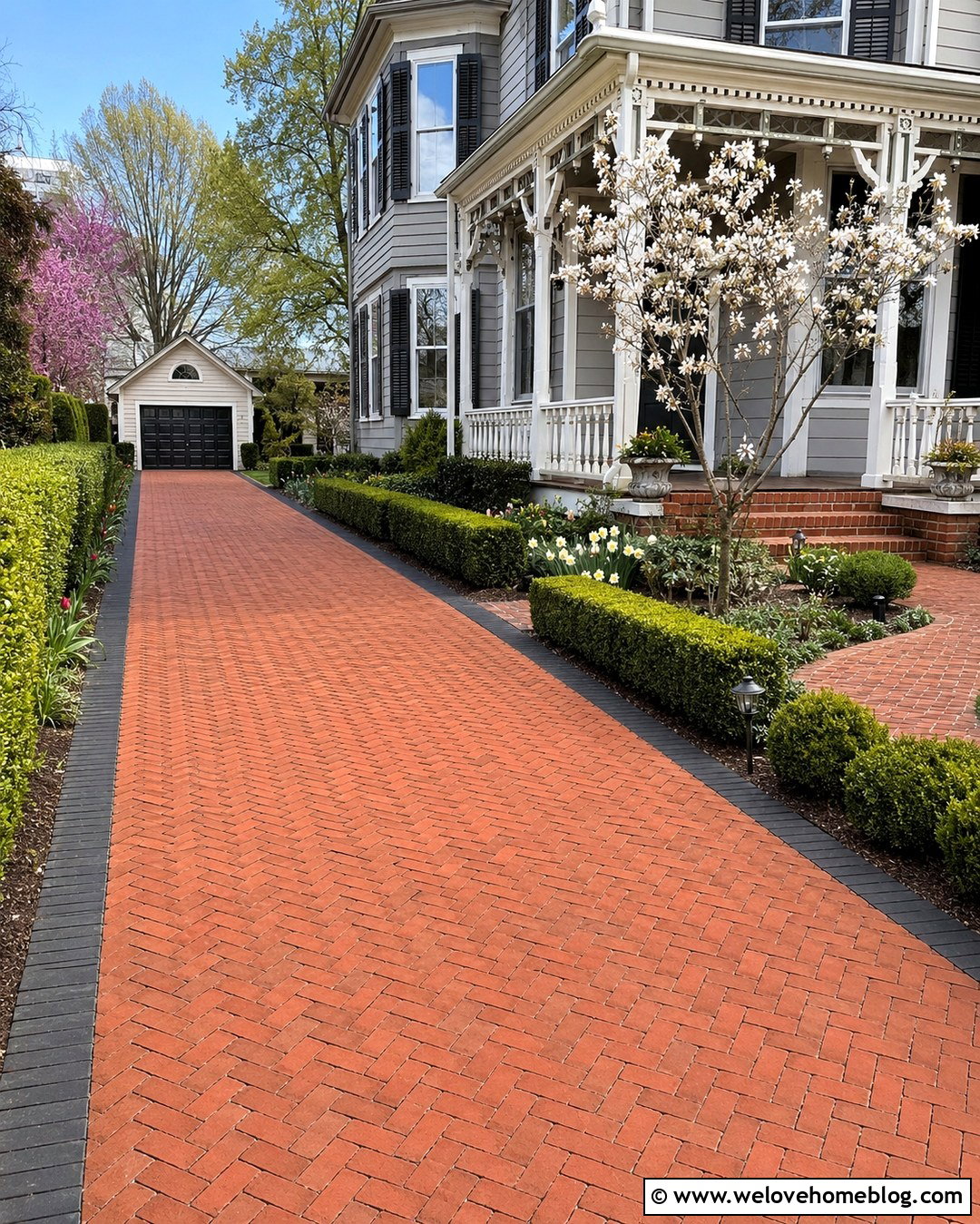
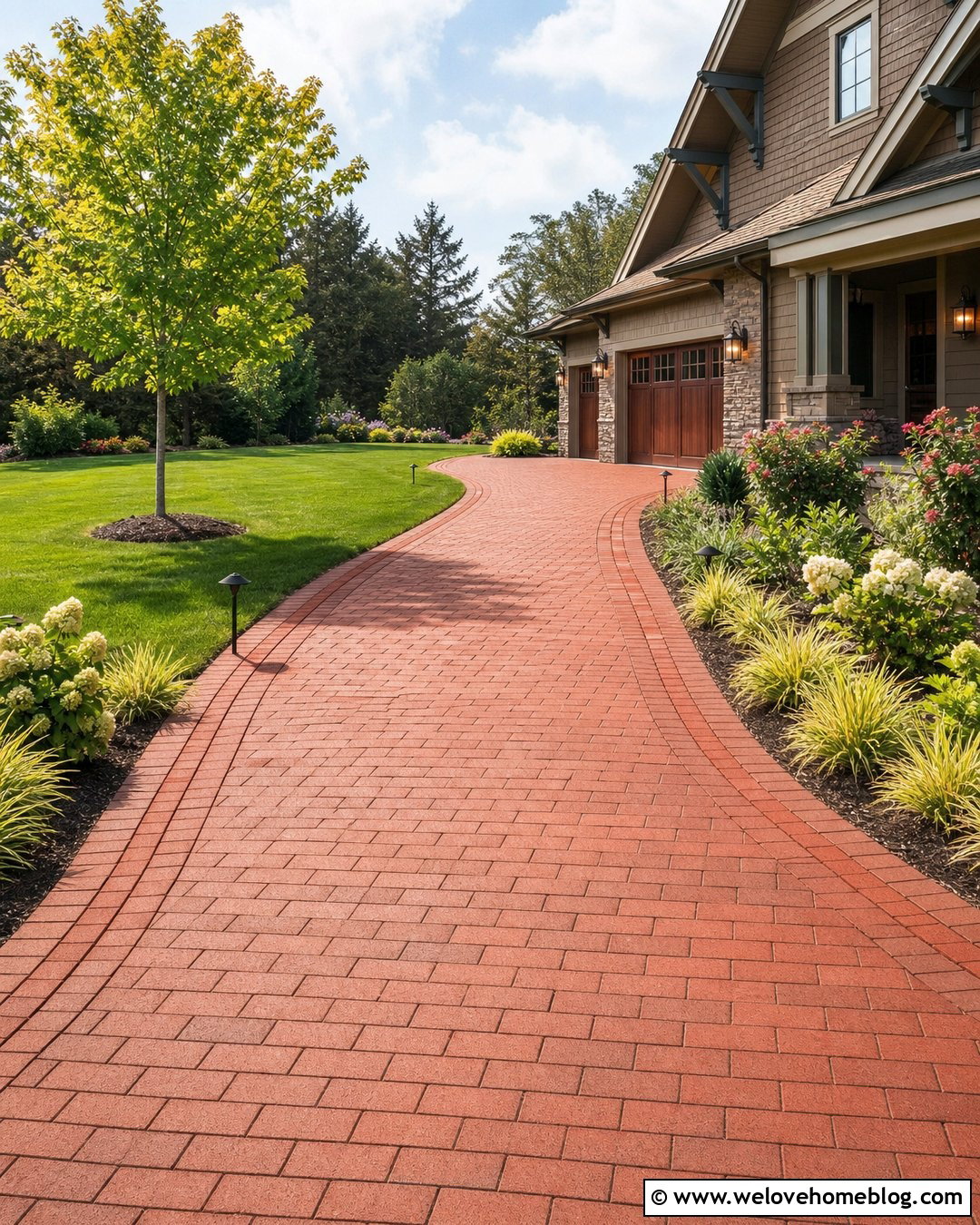
A herringbone brick driveway brings pattern and rich color to a Victorian home without competing with decorative trim. Deep red or weathered burgundy clay pavers work especially well with painted wood siding, brownstone foundations, and traditional red masonry. Use a charcoal brick border to define the edges and contain the angled pattern. A straight driveway suits narrow urban lots, particularly when it runs beside the house toward a detached carriage-style garage. Keep the surrounding landscaping structured with clipped boxwood, small flowering trees, and narrow planting beds. Brick installation depends heavily on proper excavation, drainage, base preparation, and edge restraint, so devote enough of the budget to what sits beneath the visible surface. The result should appear established, orderly, and naturally connected to the house.
3. Victorian House Cobblestone Circular Driveway
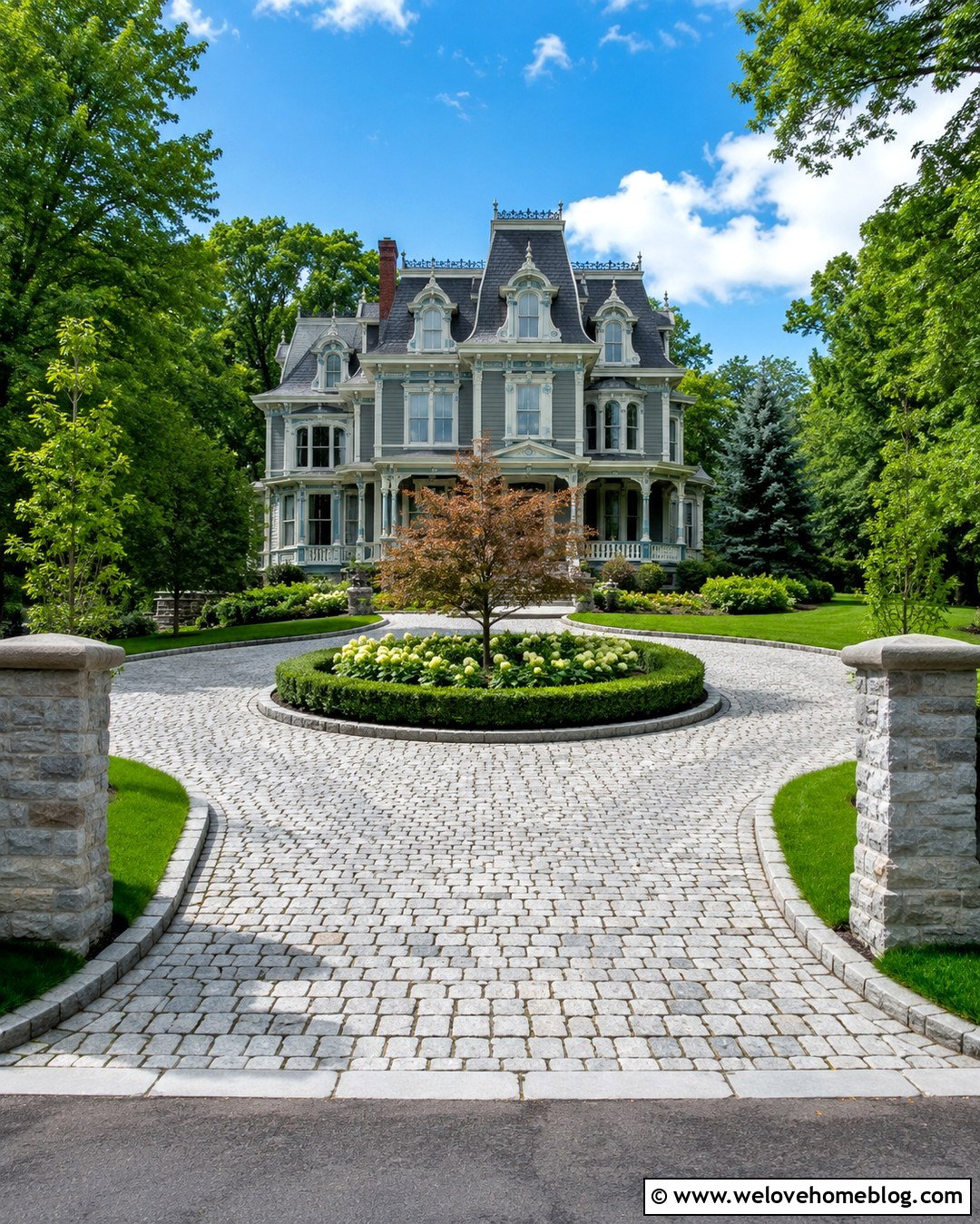
A cobblestone circular driveway gives a large Victorian property a strong sense of arrival. Granite cobbles in mixed gray, charcoal, and muted brown tones provide an aged appearance that pairs naturally with stone foundations and elaborate masonry. Place a landscaped island at the center to prevent the circle from feeling like an oversized paved area. A small ornamental tree, clipped evergreen ring, and seasonal flowers can create height without hiding the house. Use a generous turning radius and keep planting away from vehicle overhang areas. At the entrance, low stone pillars can repeat the foundation material and visually anchor the driveway. This complete layout works best when the circle remains proportional to the yard and preserves an open view of the porch and front elevation. ()
4. Victorian House Asphalt Driveway With Cobblestone Border
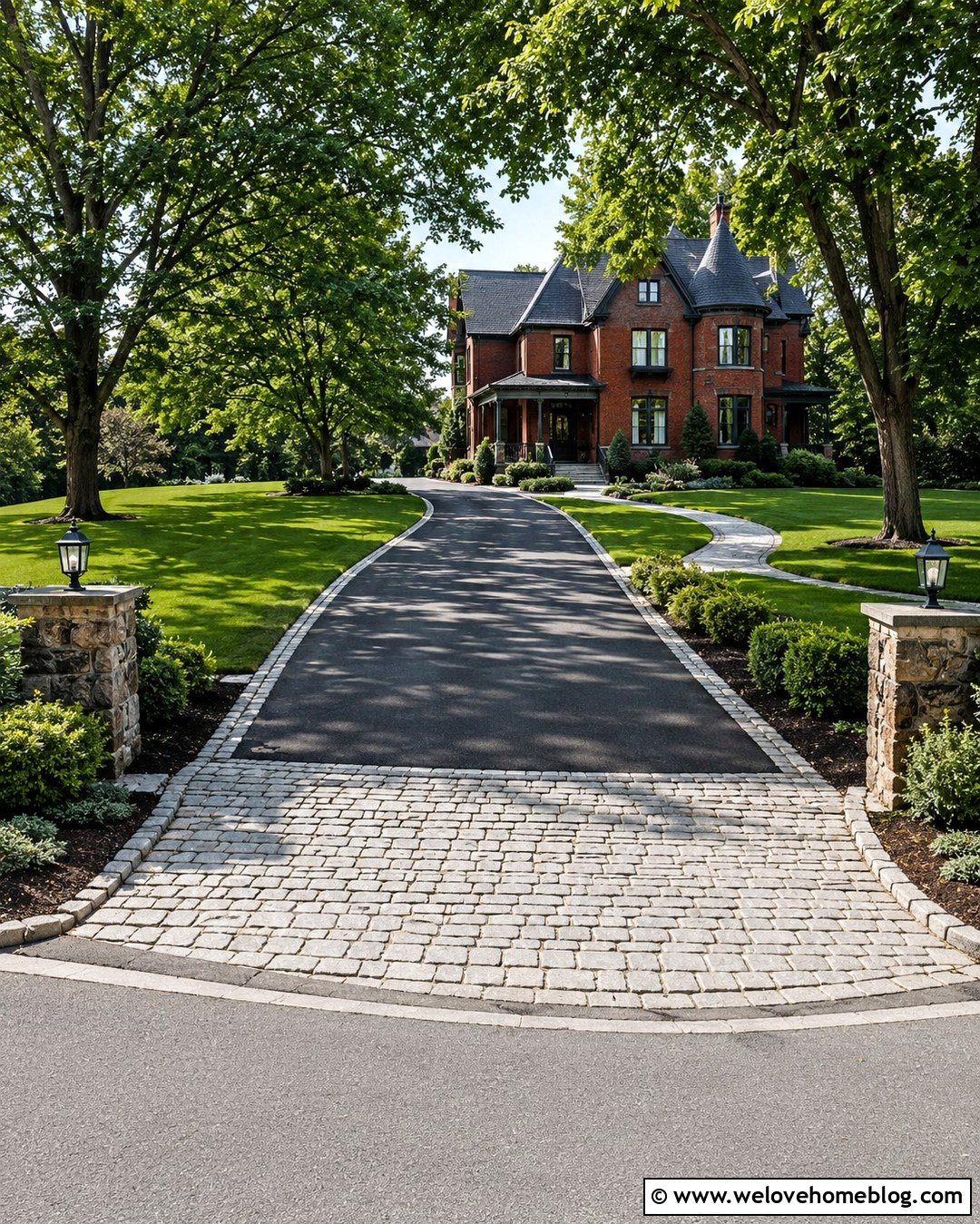
Smooth black asphalt offers a practical surface, while a cobblestone border gives it enough historic detail for a Victorian exterior. This combination is useful for long driveways where installing full brick or stone paving would be expensive. Select gray granite setts for the border and repeat them across the driveway apron as a wide decorative band. The cool stone tones visually soften fresh asphalt and connect well with slate roofs or gray-painted trim. A slightly curved route can lead the eye toward a side porch, carriage house, or rear garage. Add broad lawn panels, mature shade trees, and restrained foundation planting rather than lining every inch with flowers. The simpler landscape allows the home’s architecture and decorative stone border to remain the primary features.
5. Victorian House Pea Gravel Driveway With Iron Gate
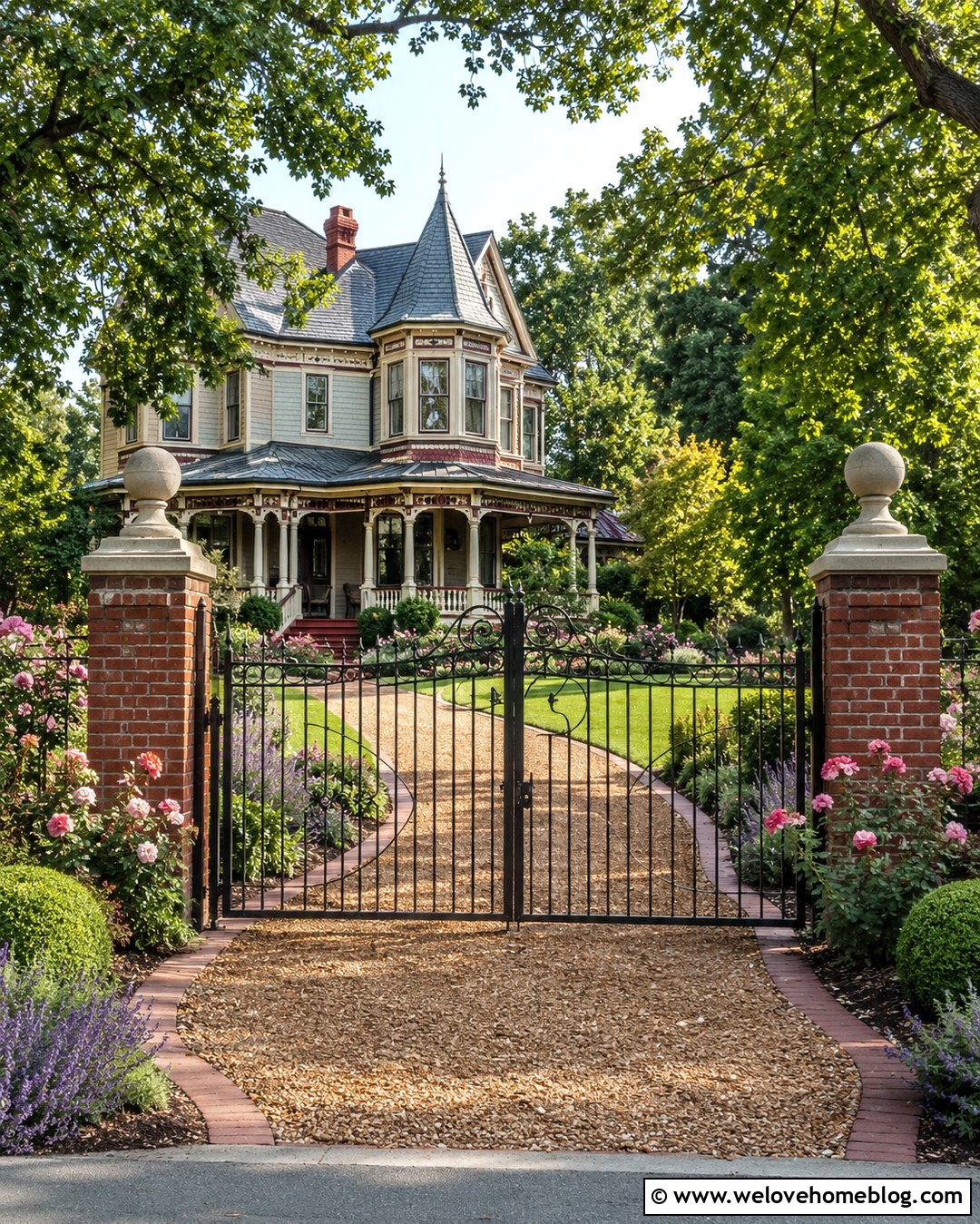
The gentle texture of pea gravel looks inviting behind a traditional black iron gate. Use a warm tan or mixed brown gravel that complements the home’s masonry rather than a bright white variety that may appear too stark. Set the double gate between brick or natural stone pillars with caps that echo the porch columns or foundation. The driveway can curve slightly after the entrance, revealing the Victorian house gradually. Install a firm base and stabilization system beneath the gravel, especially near the gate where vehicles turn and stop. Along both sides, combine evergreen shrubs with roses, catmint, and upright flowering perennials. Keep plants low near the street so drivers retain clear sightlines. The finished entrance should feel decorative, secure, and welcoming rather than heavy or fortress-like.
6. Victorian House Resin-Bound Gravel Driveway
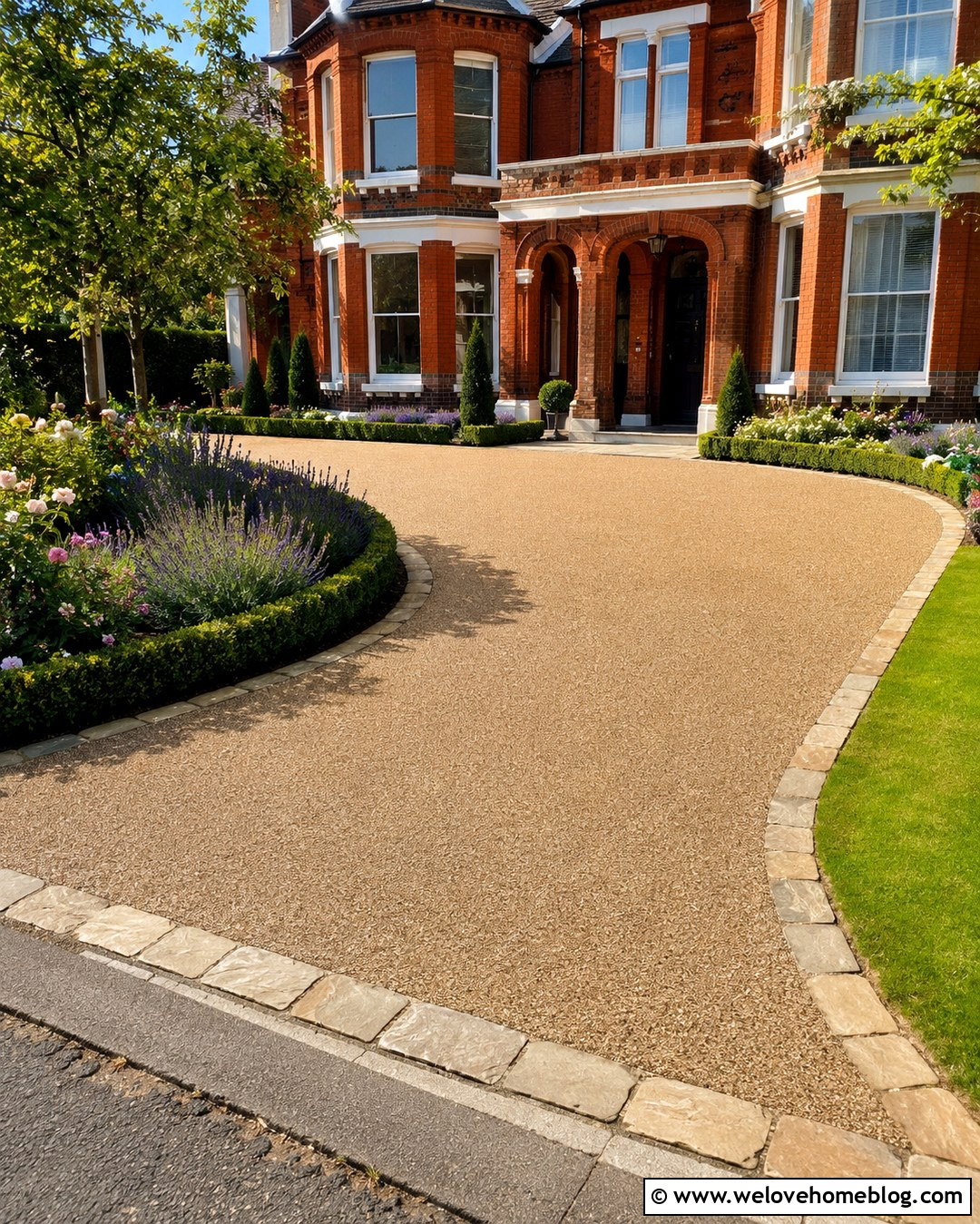
Resin-bound gravel provides the appearance of small natural stone with a smoother, more controlled finish. It can be a useful choice when homeowners want traditional color without the movement and regular raking associated with loose gravel. Select a blend of amber, cream, and brown aggregate to coordinate with warm Victorian brick. Define the sweeping driveway with sandstone cobble edging, following every curve in a continuous line. Low evergreen hedges can provide structure behind the edging, while roses and lavender add softer seasonal detail. Near the porch, widen the surface slightly to create a convenient turning or drop-off space. Confirm drainage requirements and installation specifications with a qualified local contractor. Similar-toned modern materials and sandstone setts can preserve a traditional appearance while providing a clean, usable driveway. ()
7. Victorian House Concrete Paver Driveway With Brick Border
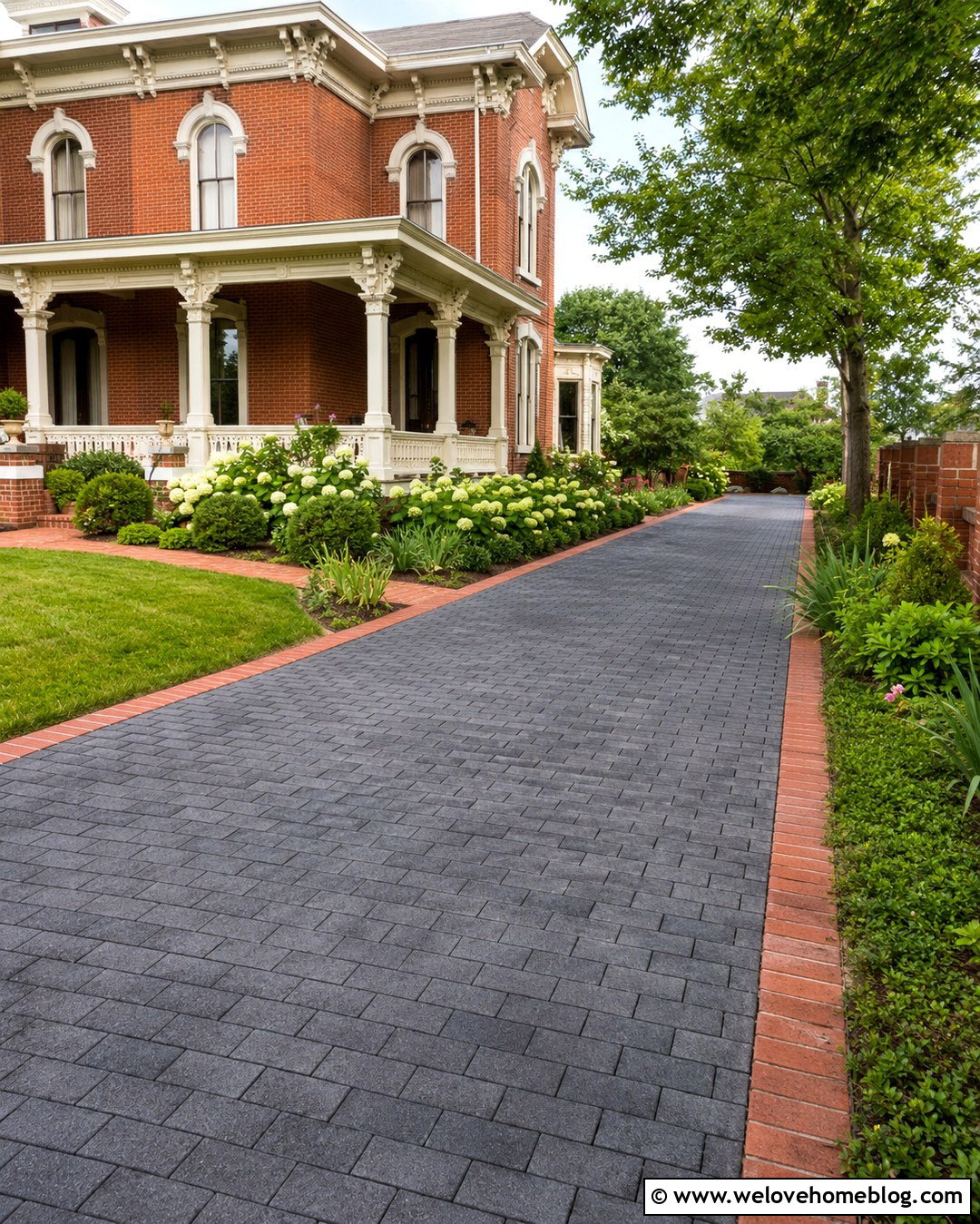
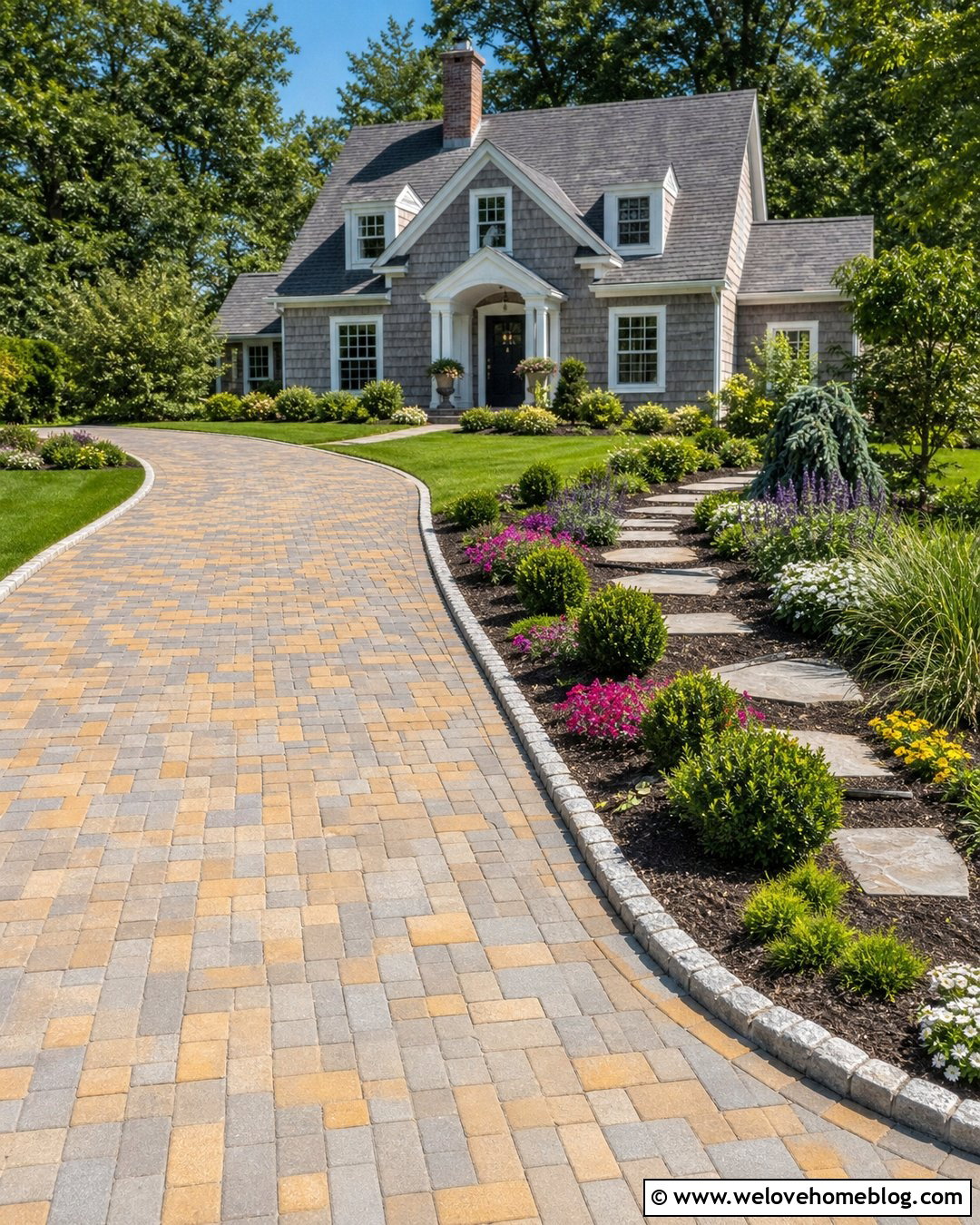
Concrete pavers can complement a Victorian house when their color, scale, and border treatment are carefully chosen. Instead of large contemporary slabs, use small rectangular pavers in a weathered charcoal or warm limestone tone. Lay them in a running bond or subtle basketweave pattern, then surround the surface with a red clay brick border. This border connects the driveway to a brick facade and gives the neutral center more period character. A straight layout works well on compact suburban lots, especially when a brick walkway branches toward the front porch. Add narrow planting beds with boxwood, dwarf hydrangeas, and spring bulbs. Matching brick planters or low masonry walls can help unite the driveway, garden, and porch without filling the small front yard with too many competing materials.
8. Victorian House Gray Gravel Driveway With Stone Pillars
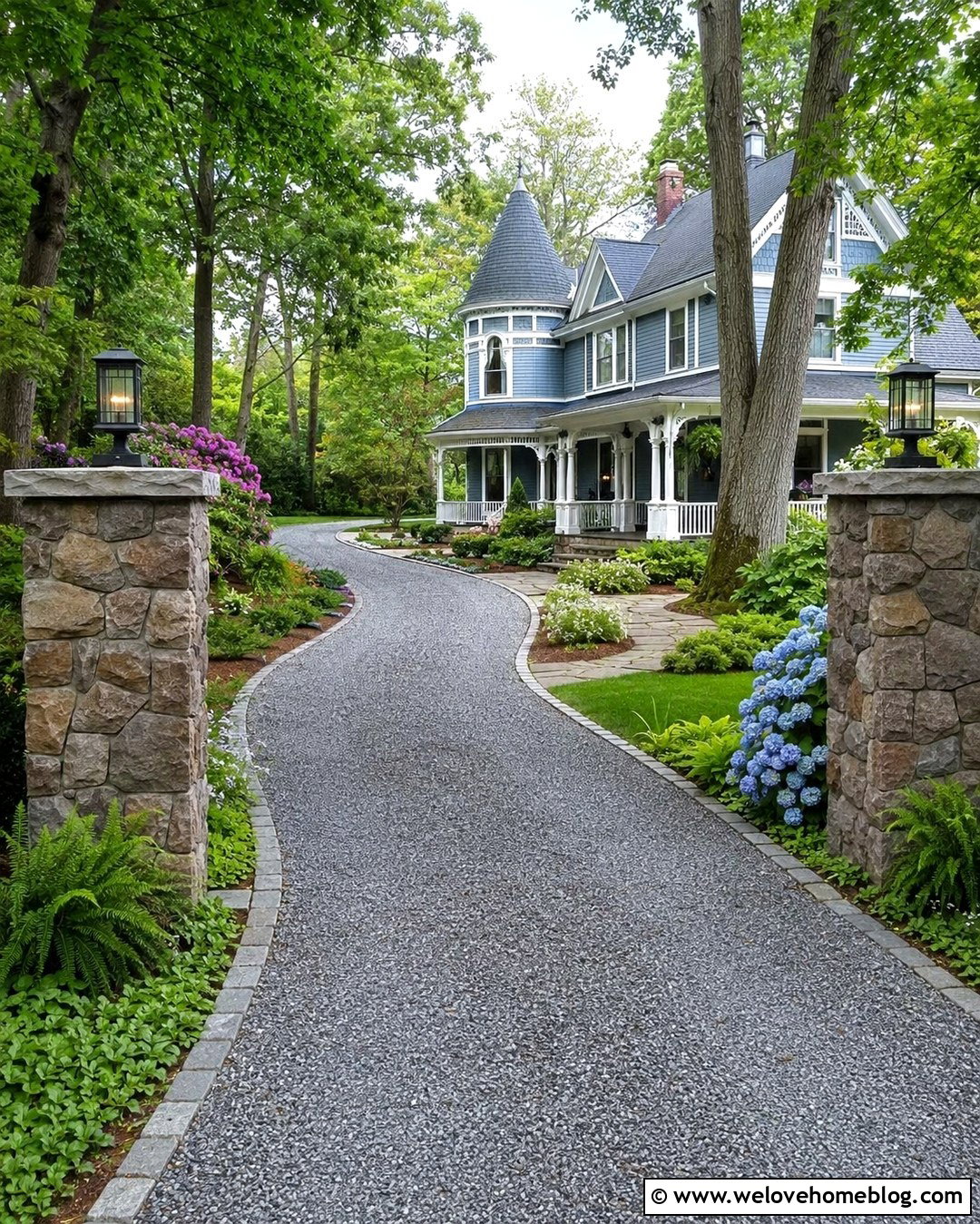
Cool gray gravel creates an understated foreground for a colorful Victorian house. It works particularly well when the exterior includes blue, sage, lavender, charcoal, or crisp white paint. Begin the driveway with substantial stone pillars that match the home’s foundation or retaining walls. Simple black lanterns can top the pillars, adding useful illumination while maintaining a traditional silhouette. Continue the gravel in a long, gently bending route edged with dark granite setts. Plant hydrangeas, ferns, rhododendrons, and shade-tolerant ground cover beneath mature trees for a lush garden setting. Avoid placing tall shrubs directly beside the entrance, where they could restrict visibility. The contrast between textured gray stone, dark edging, layered greenery, and detailed painted woodwork gives the property a polished but comfortably established appearance.
9. Victorian House Red Brick Driveway With White Picket Fence
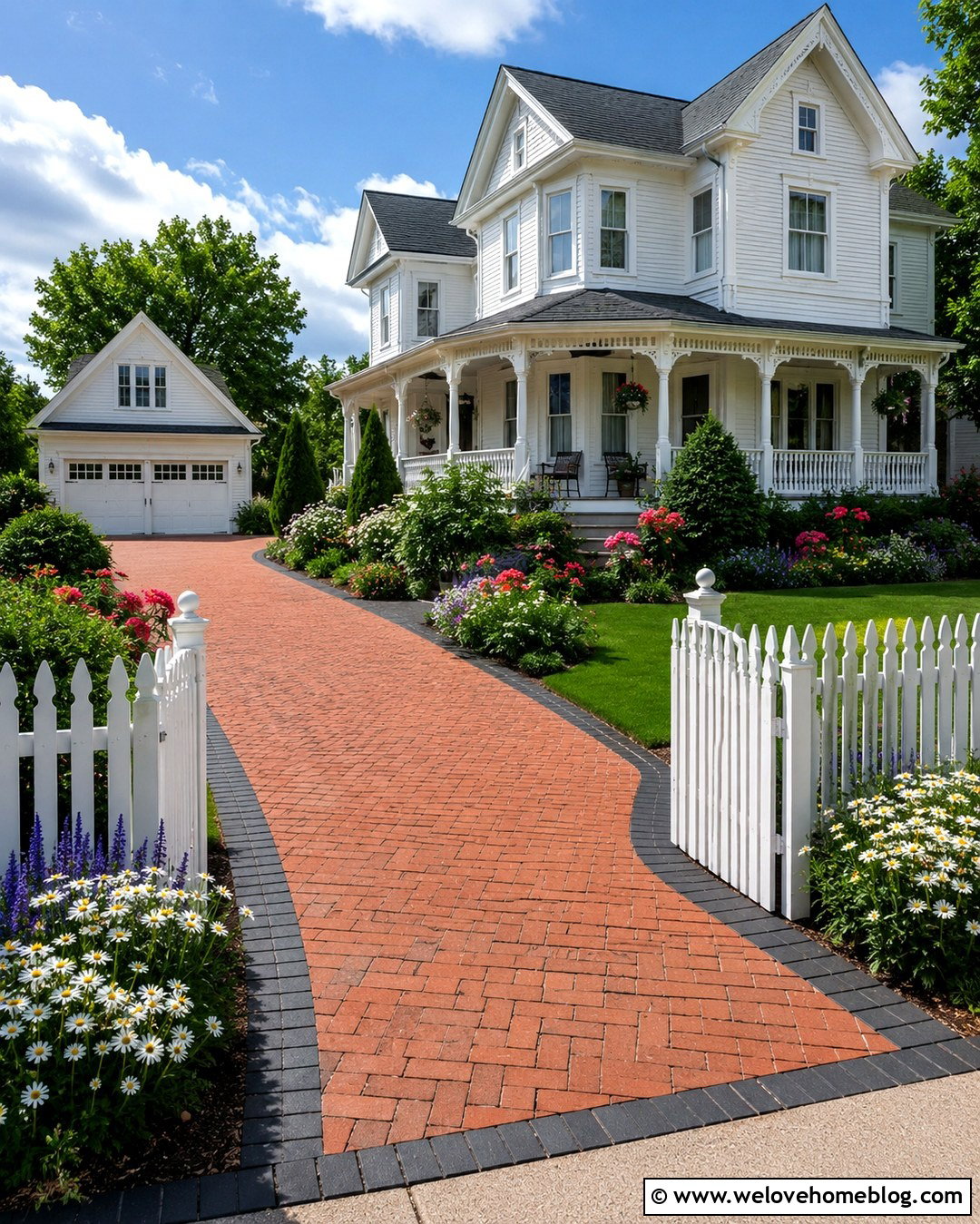
Few combinations feel more welcoming than red brick, a white picket fence, and a detailed Victorian porch. Use clay brick pavers in a basketweave pattern to give the driveway visible texture without making it overly formal. A narrow charcoal soldier-course border will frame the red paving and disguise minor color variation. Align a simple painted gate with the driveway entrance, then continue the picket fence around the front garden. Inside the fence, layer roses, salvia, daisies, and compact evergreen shrubs for a colorful cottage effect. A straight or slightly curved driveway can lead to a detached garage painted to match the house. Repeat the driveway brick in the front path and gate threshold. These connecting details help the fence, garden, driveway, and house appear planned as one complete exterior.
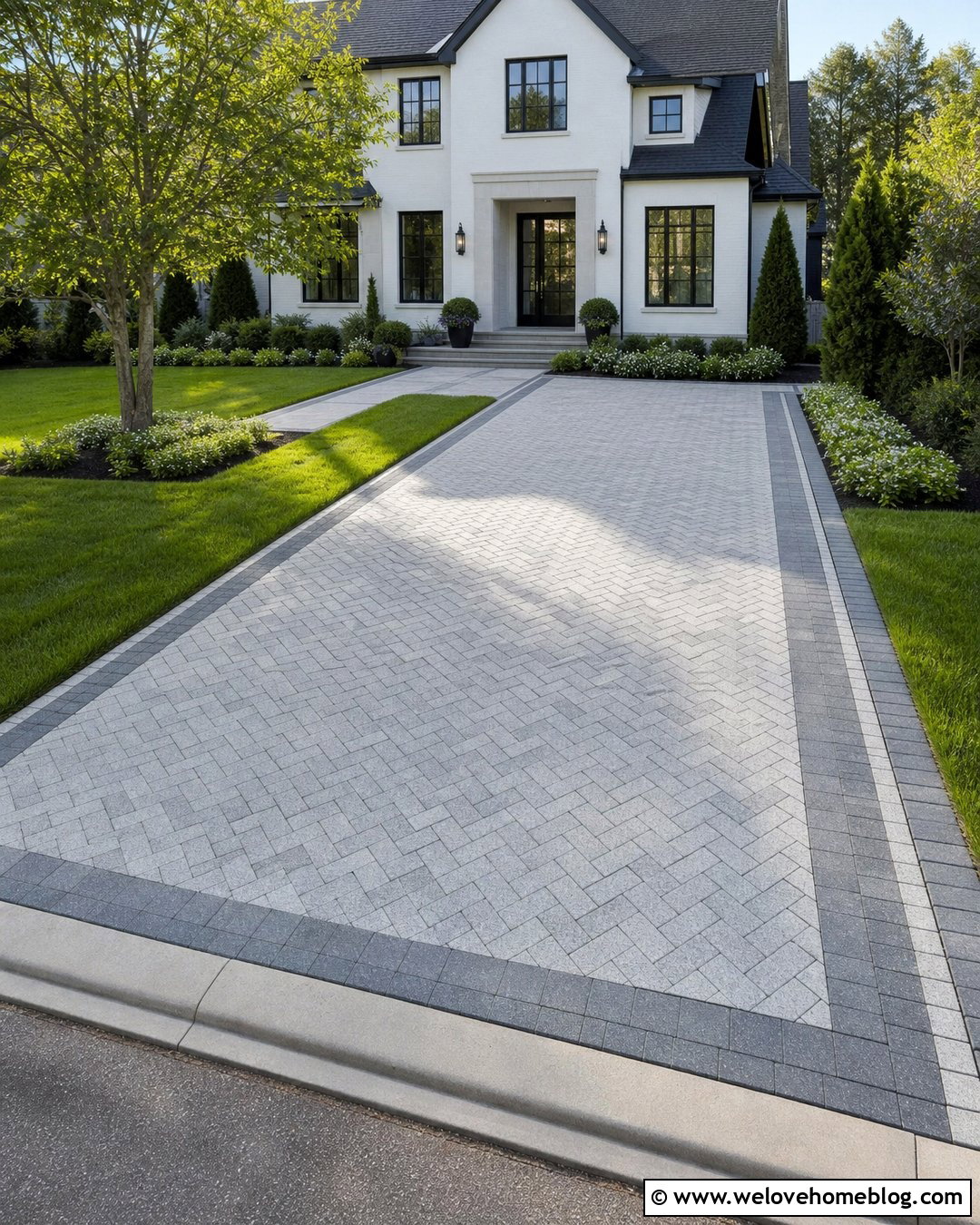
10. Victorian House Side Driveway With Garden Border
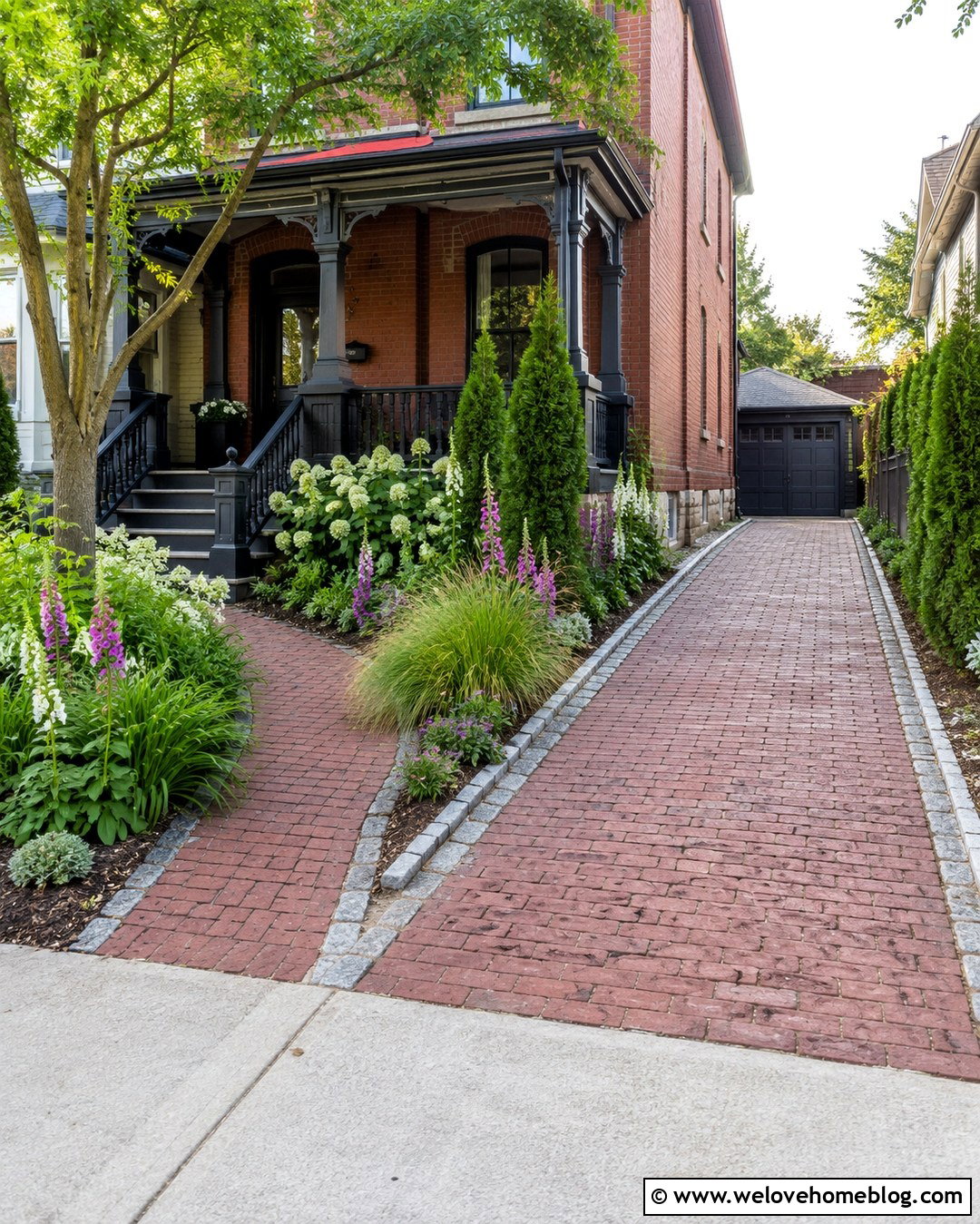
A narrow side driveway can preserve the landscaped front yard of an urban Victorian house. Run the surface along one property line toward a rear garage or parking area, leaving a generous garden between the driveway and front porch. Weathered clay brick, stabilized gravel, or small concrete pavers can all suit this arrangement, but the selected material should relate to the foundation and front walk. Define the garden-facing edge with granite cobbles and use a simpler flush restraint along the property boundary. Plant upright shrubs, foxgloves, hydrangeas, and ornamental grasses in layered groups rather than a thin, continuous row. Add stepping stones or a brick walkway connecting the driveway to the porch. Good lighting and careful drainage make this compact layout feel safe, functional, and visually generous.
11. Victorian House Curved Driveway With Flower Beds
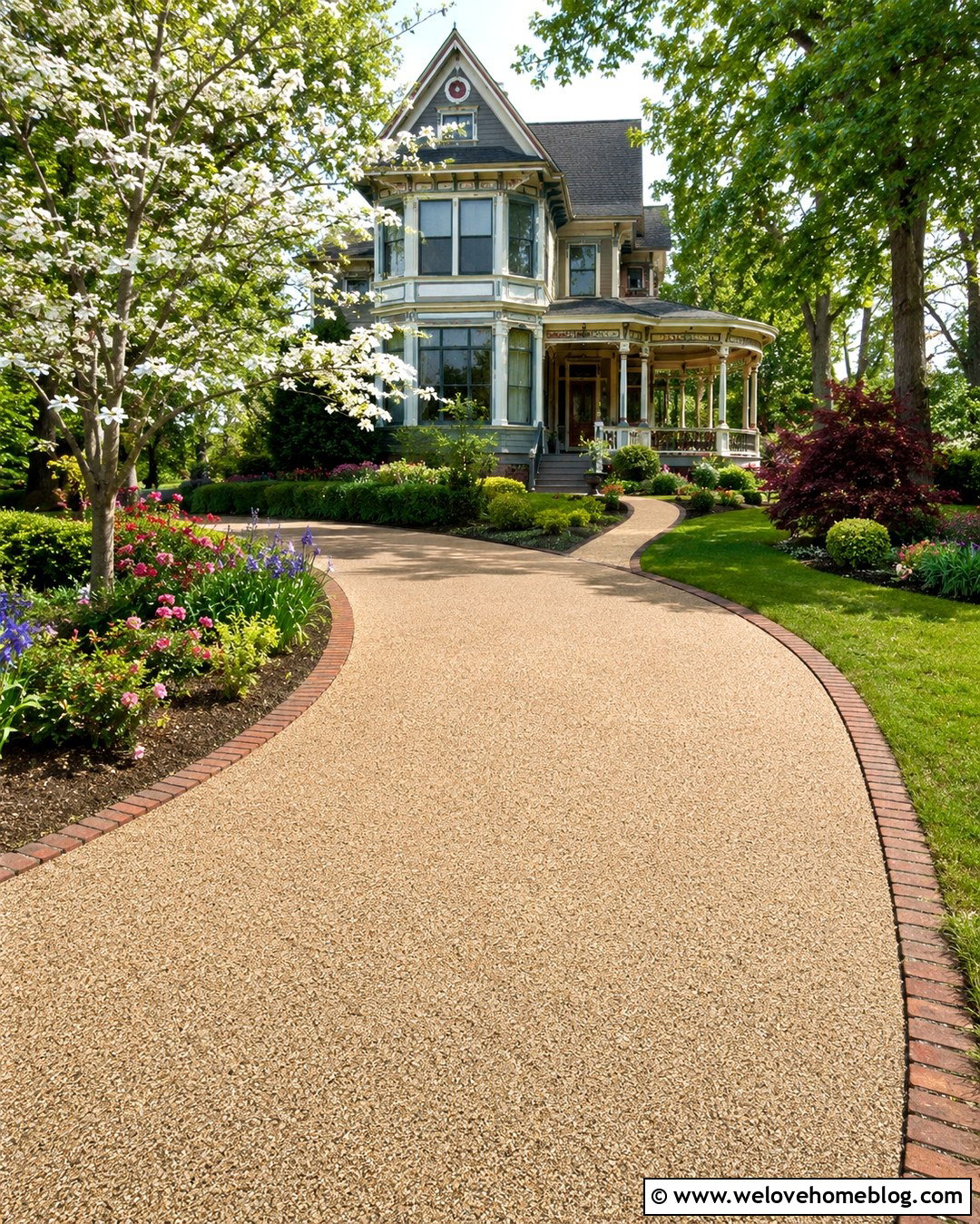
A broad curve can make the approach to a Victorian house feel graceful while creating space for substantial flower beds. Use warm beige resin-bound gravel or fine crushed stone for a quiet surface that allows the architecture and planting to stand out. Edge the curve with reclaimed-looking brick setts that clearly define the route. On the inside of the bend, create a deep garden bed with a small flowering tree, clipped shrubs, roses, and long-blooming perennials. Keep the outside edge more open with lawn and widely spaced trees, preserving visibility as vehicles enter and exit. A matching brick walkway can branch from the drive and curve toward the porch steps. Repeating colors from the house within flowers, edging, and foliage creates a coordinated setting without making the landscaping appear overly formal.
12. Victorian House Horseshoe Driveway With Brick Apron
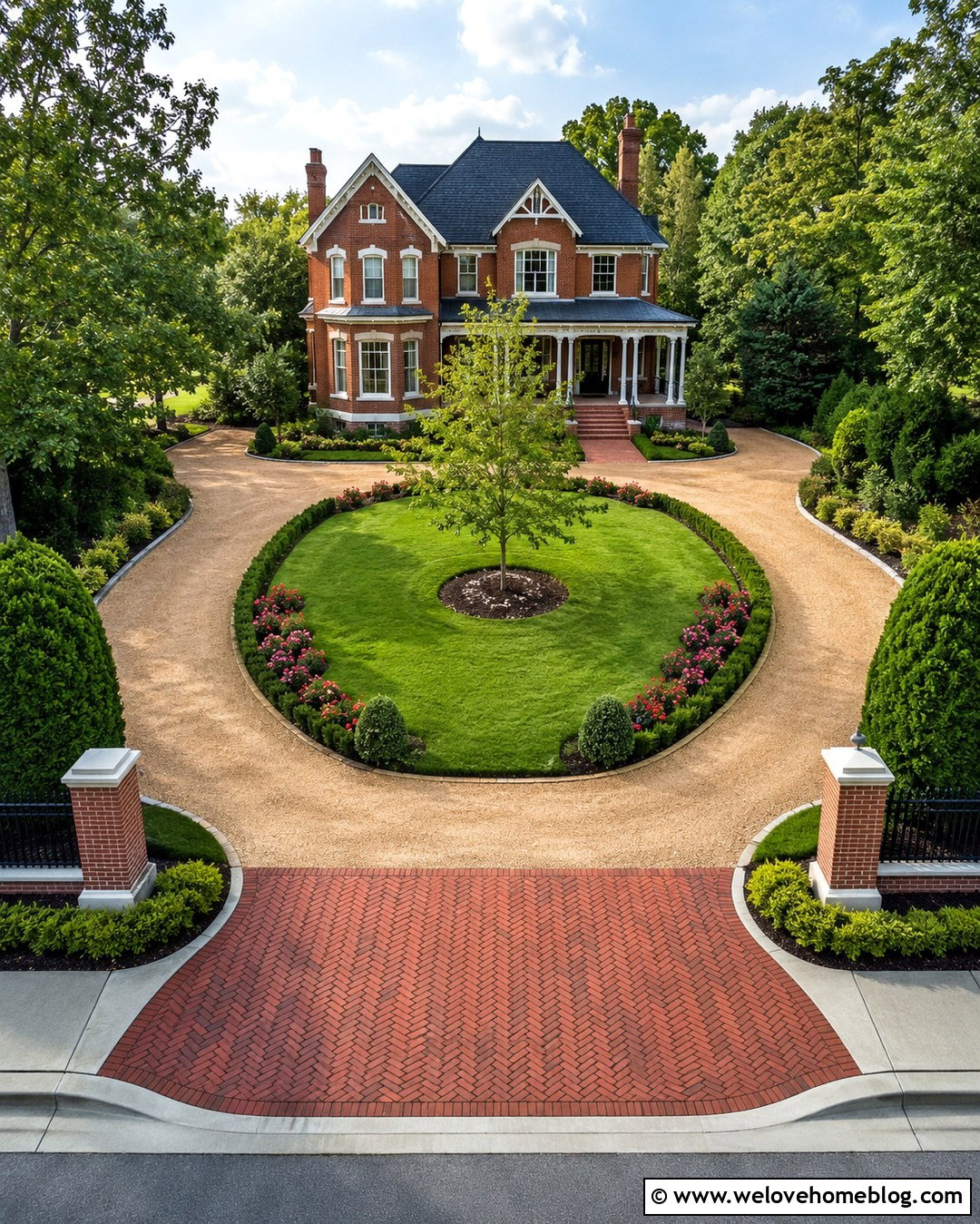
A horseshoe driveway allows vehicles to enter and leave without reversing, making it practical for a wider Victorian property on a busy street. Cover the main route with compacted golden gravel, then install a deep herringbone brick apron at both entrances. The brick sections strengthen the visual connection to a red masonry house and create defined thresholds at the curb. Low brick pillars can mark each opening without hiding the front garden. Between the two driveway arms, preserve a large lawn panel framed by curved planting beds. A specimen tree, rose groups, and clipped evergreens can give the center structure throughout the year. Keep the route narrow enough to retain greenery but wide enough for comfortable movement. Check local access, curb, drainage, and historic-district requirements before changing the entrances. ()
13. Victorian House Driveway With Carriage House Garage
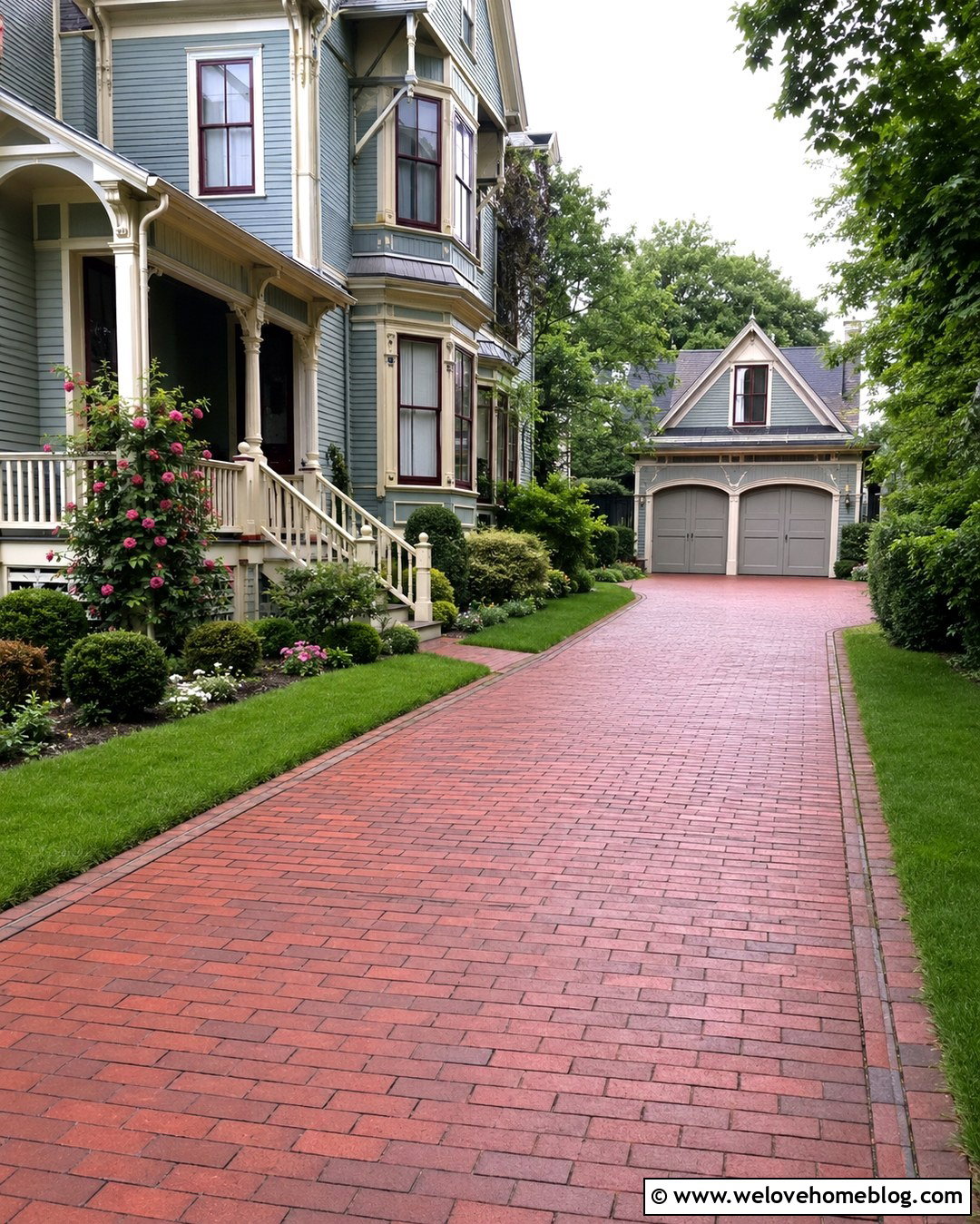
A driveway leading to a carriage-style garage can make a new outbuilding feel original to the property. Choose dark red clay brick pavers or gray granite cobbles for the main surface, then repeat those materials around the garage threshold. The drive should pass neatly beside the Victorian house before widening into a compact parking court. Paint the garage siding and trim in colors drawn directly from the home, and select paneled doors with upper windows rather than plain modern doors. A brick walkway can connect the parking area to a side entrance or porch. Frame the route with clipped shrubs, climbing roses, and a narrow lawn strip. Downspouts and surface grading should direct water away from both buildings, especially where the driveway passes close to older foundations.
14. Victorian House Driveway With Wrought Iron Fence
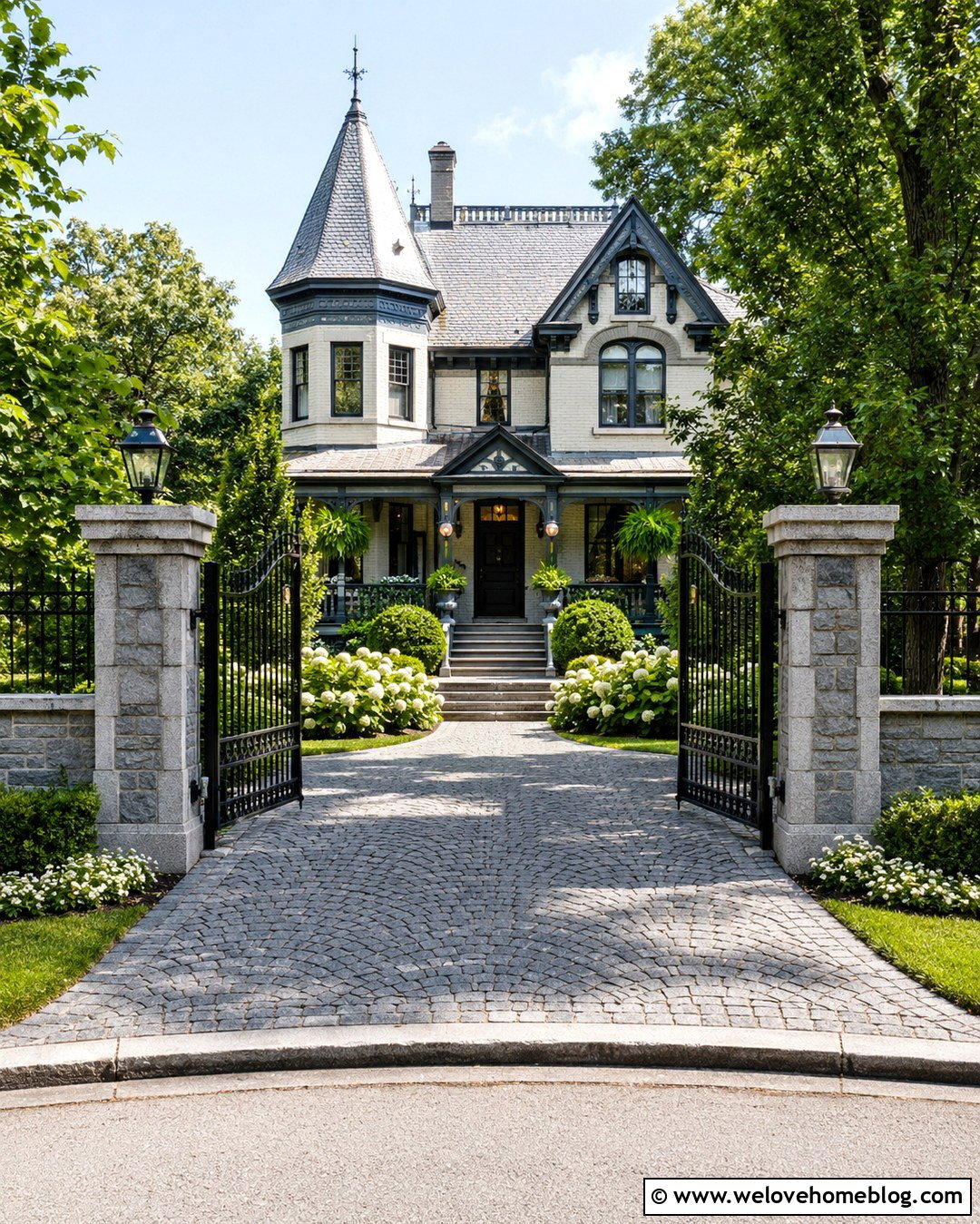
A wrought iron fence can define the property while keeping the detailed Victorian facade visible from the street. Pair it with a gray granite paver driveway laid in a fan or running bond pattern. Black metal edging details, gate hardware, and lanterns will coordinate with the fence and create a consistent entrance. Mount the fence on a low brick or stone base that matches the house, then position the driveway gate between slightly taller masonry pillars. Behind the open metalwork, use clipped evergreens, hydrangeas, and flowering ground cover to soften the boundary. Avoid overly elaborate scrollwork if the house already has highly decorative trim. A simpler repeating pattern will support the architecture rather than compete with it. Provide enough level space inside the property for vehicles to wait safely while the gate operates.
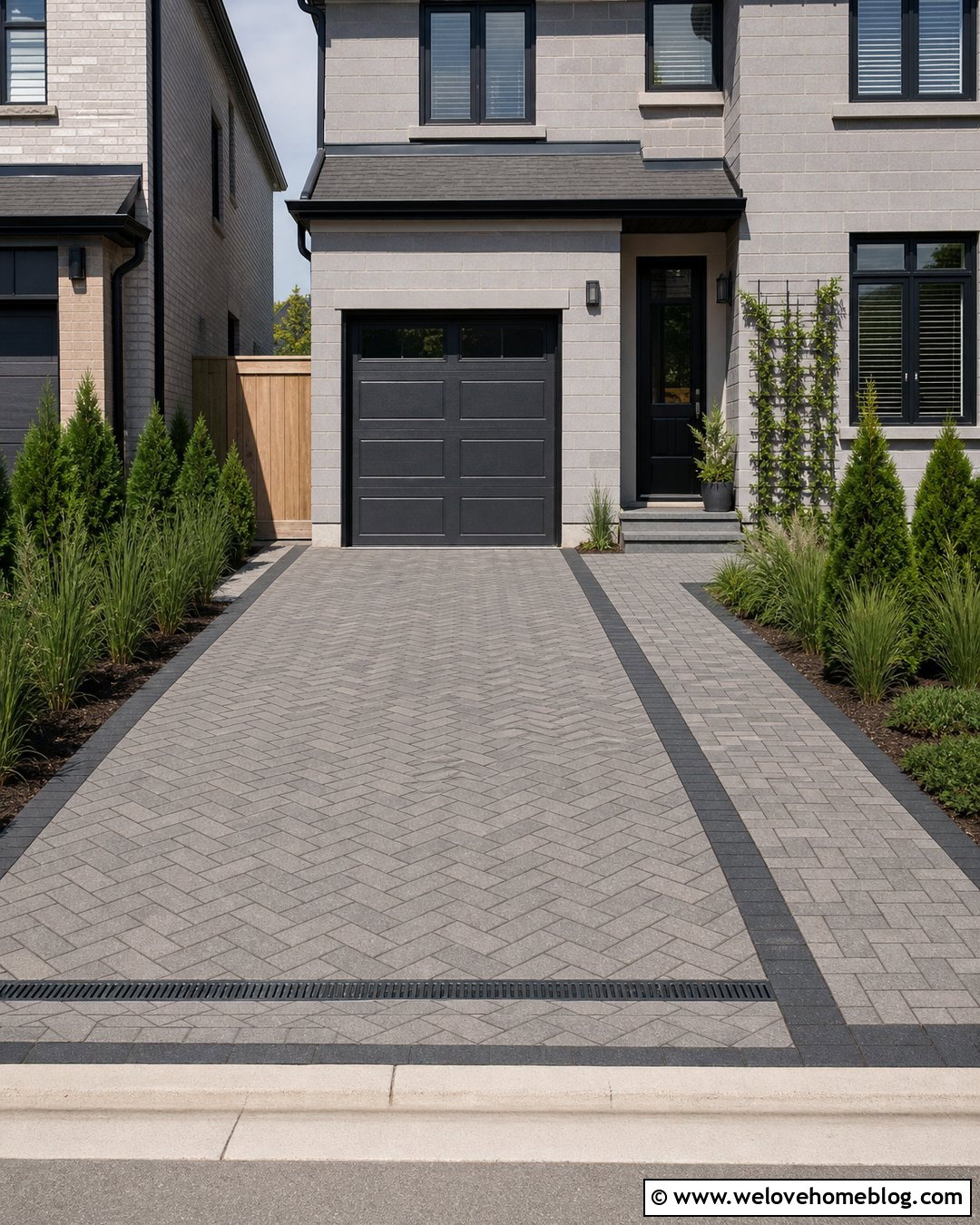
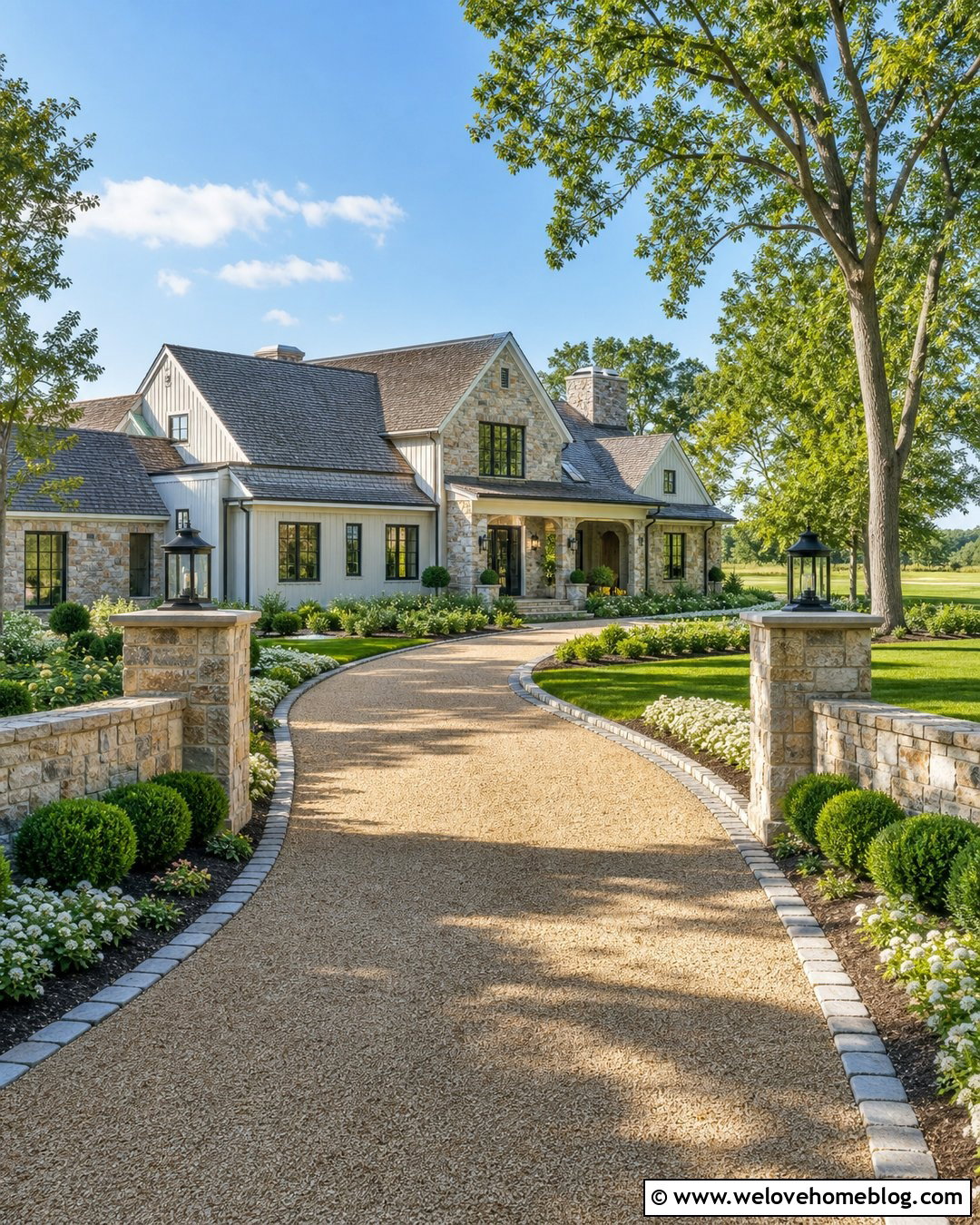
15. Victorian House Driveway With Stone Retaining Wall
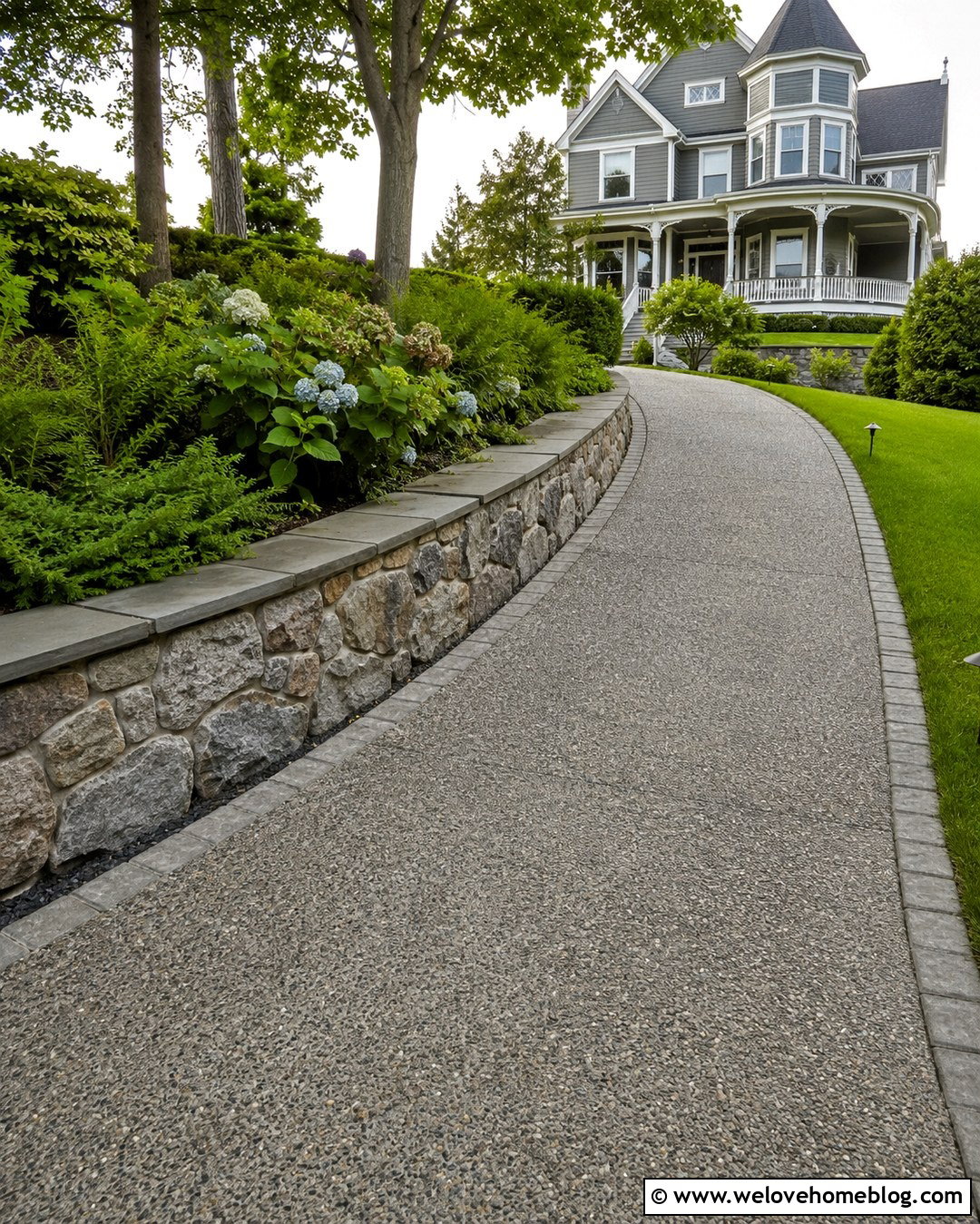
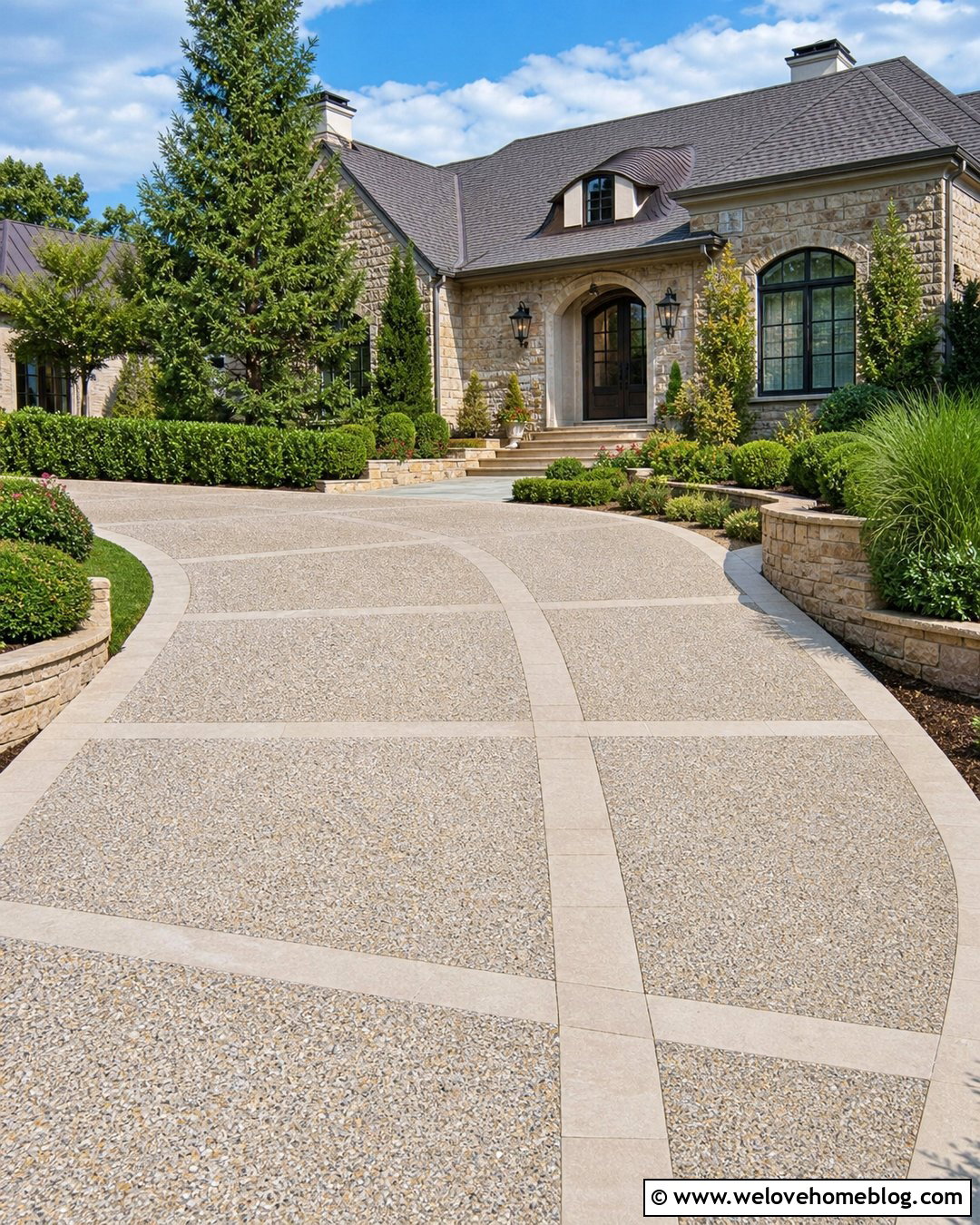
Sloped Victorian properties often need a driveway design that manages elevation without overwhelming the front yard. A curved exposed aggregate concrete driveway can provide reliable traction and a muted, pebbled surface. Build a natural fieldstone retaining wall along the uphill side, using stone colors that relate to the home’s foundation. Cap the wall with broad, flat stones and place trailing ground cover, ferns, hydrangeas, and compact shrubs in the bed above it. Along the lower edge, use a flush cobblestone border beside the lawn to contain the surface. Gentle curves can reduce the harsh appearance of the grade and reveal the house gradually. Include drainage behind the wall and across the drive, and have structural retaining work designed for the specific soil, slope, and local code requirements.
16. Victorian House Driveway With Grass Paver Strips
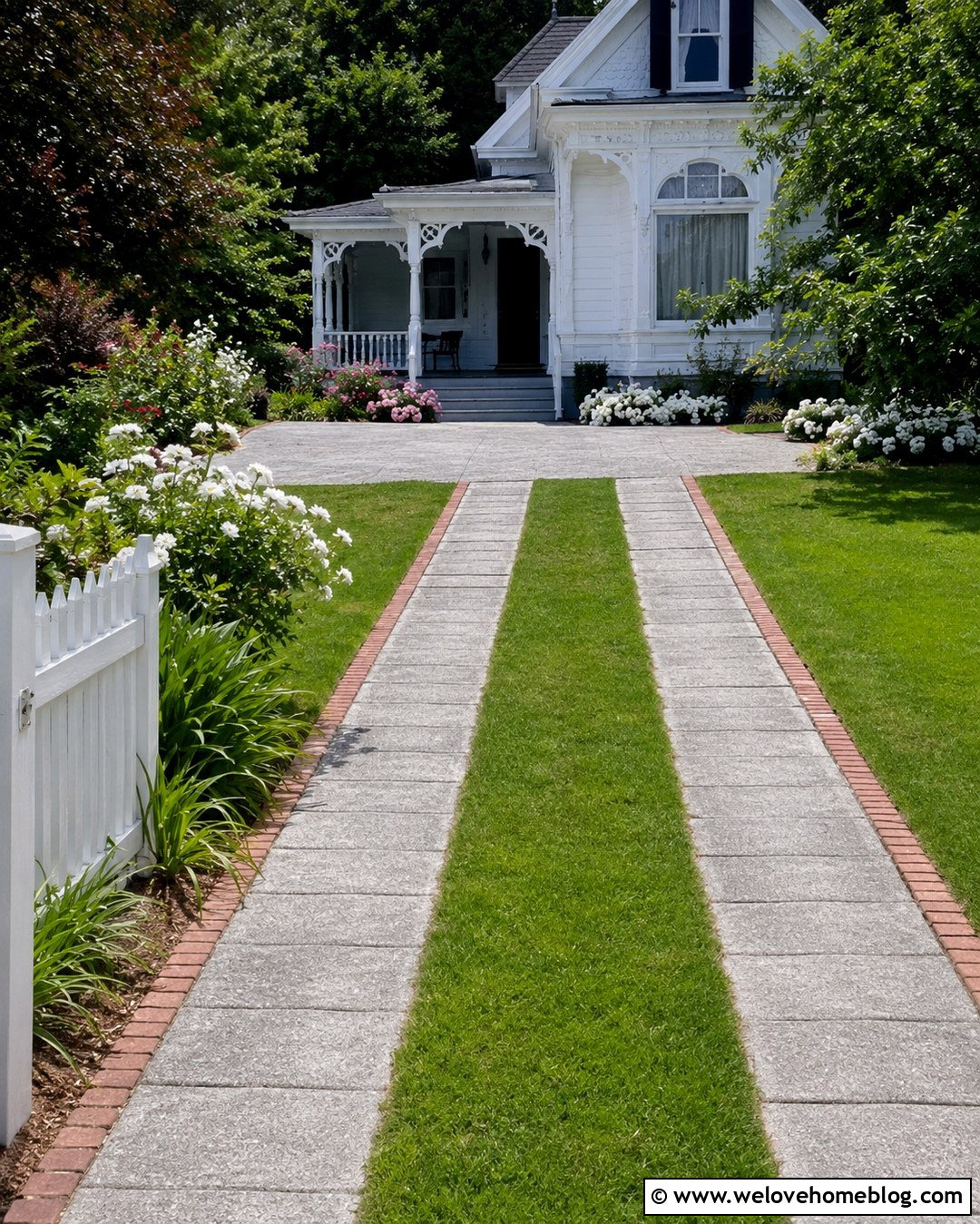
Grass paver strips can reduce the visual weight of a driveway beside a smaller Victorian home. Build two reinforced concrete or permeable paver tracks with a planted green strip between them, ensuring the dimensions align with normal vehicle movement. Choose weathered gray pavers with a lightly textured finish and frame the complete drive with narrow clay brick edging. This layout works best on a straight, lightly used side driveway where the center receives enough sun and irrigation. Continue lawn beside the outer edges to create a soft transition into the front garden. Near the house, widen the tracks into a solid paver parking pad for easier maneuvering. Add a brick path, cottage flowers, and a low picket fence so the practical parking area becomes part of a charming, garden-focused composition.
17. Victorian House Driveway With Decorative Brick Ribbons
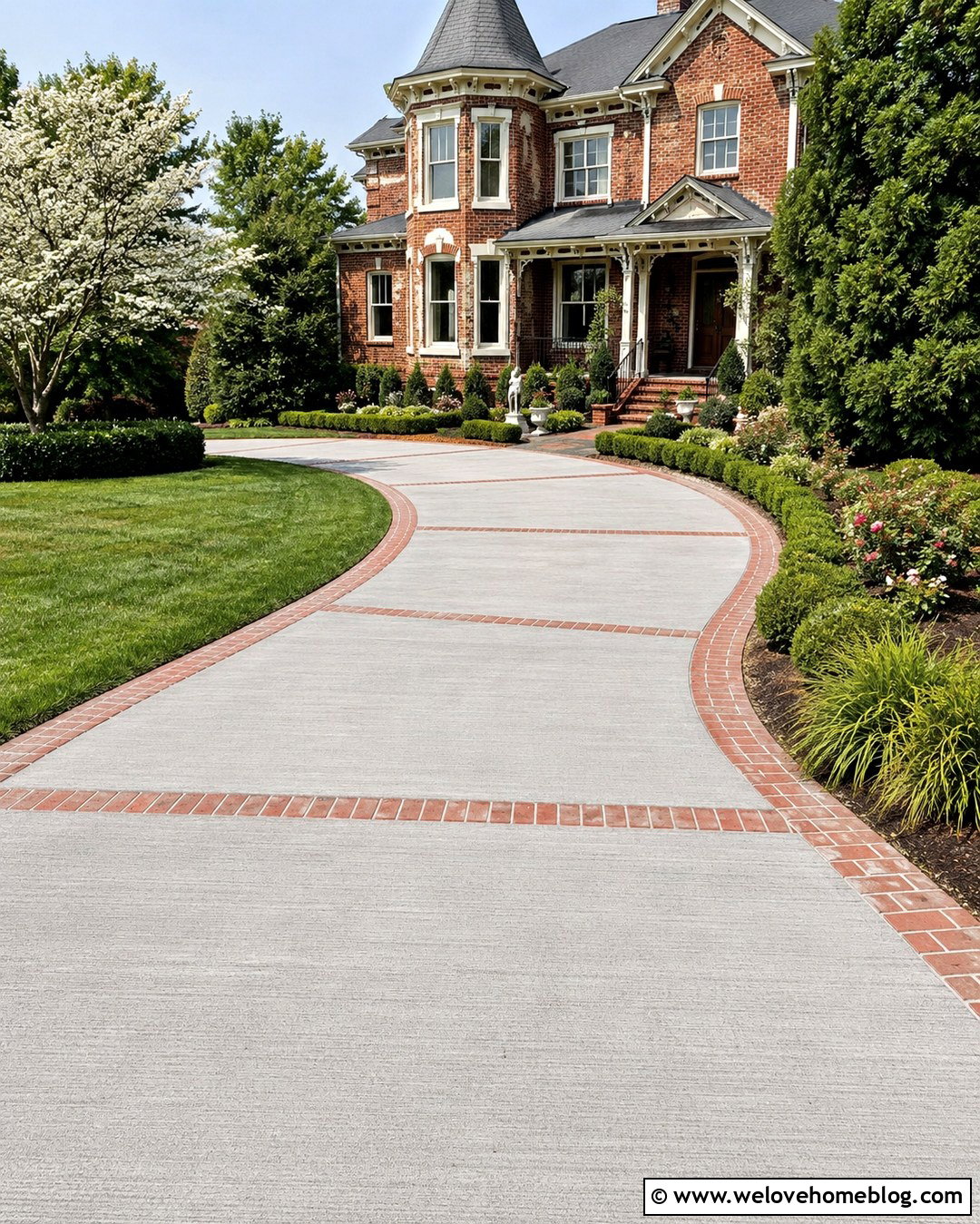
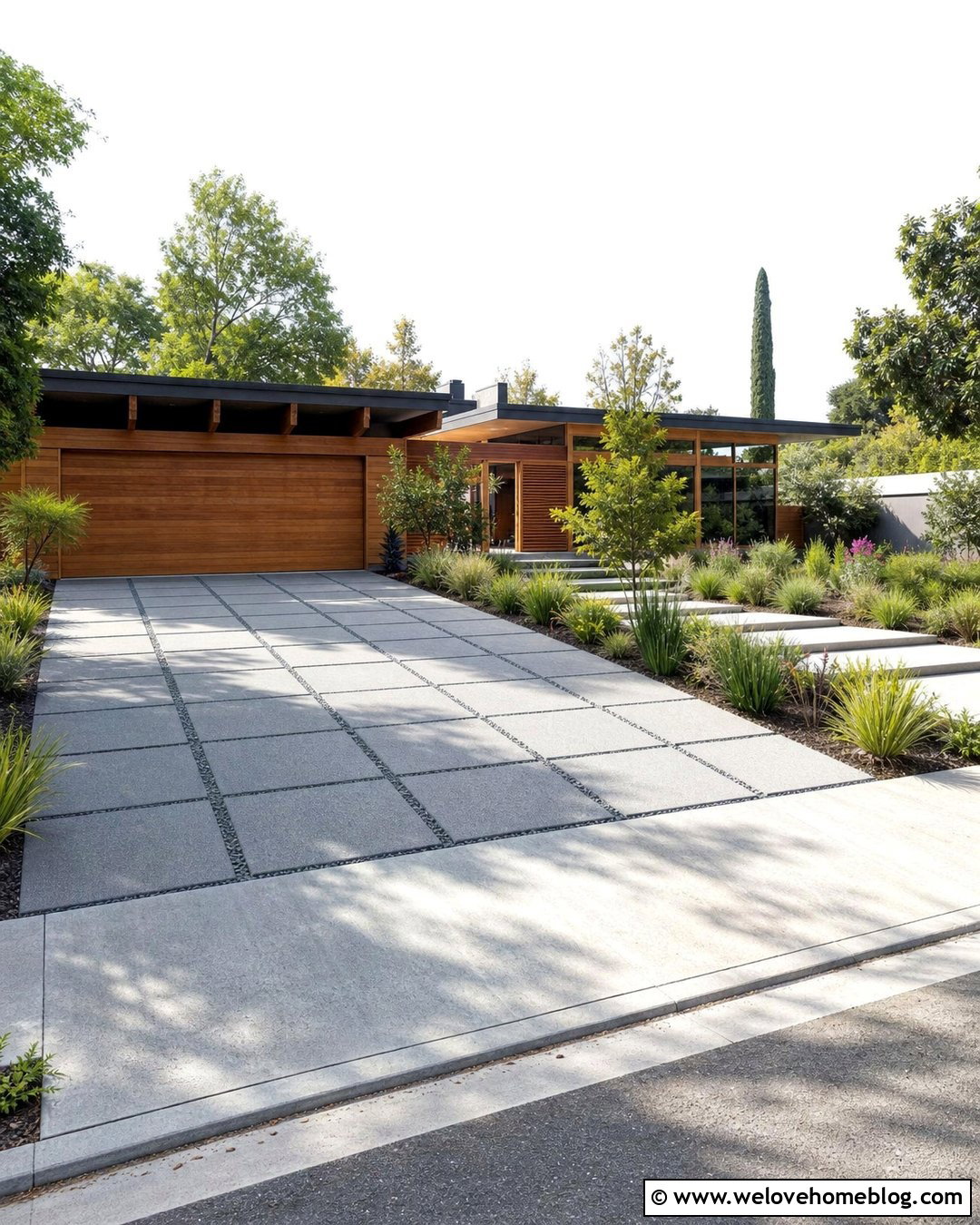
Decorative brick ribbons can transform a simple driveway without covering the entire surface in expensive masonry. Begin with light gray poured concrete divided into modest rectangular panels. Insert red clay brick bands across the driveway at regular intervals and continue the same brick around the perimeter. The warm ribbons can reference a brick chimney, foundation, walkway, or porch steps. A gently curved layout keeps the design from appearing too rigid and leads naturally toward a side garage. Frame the drive with lawn on one side and a broad garden bed on the other. Boxwood, roses, ornamental grasses, and a flowering dogwood provide a balanced mix of formal structure and softness. Choose concrete with a subtle broom finish rather than a glossy coating, allowing the decorative brick and Victorian architecture to receive more attention.
18. Victorian House Driveway With Wooden Double Gate
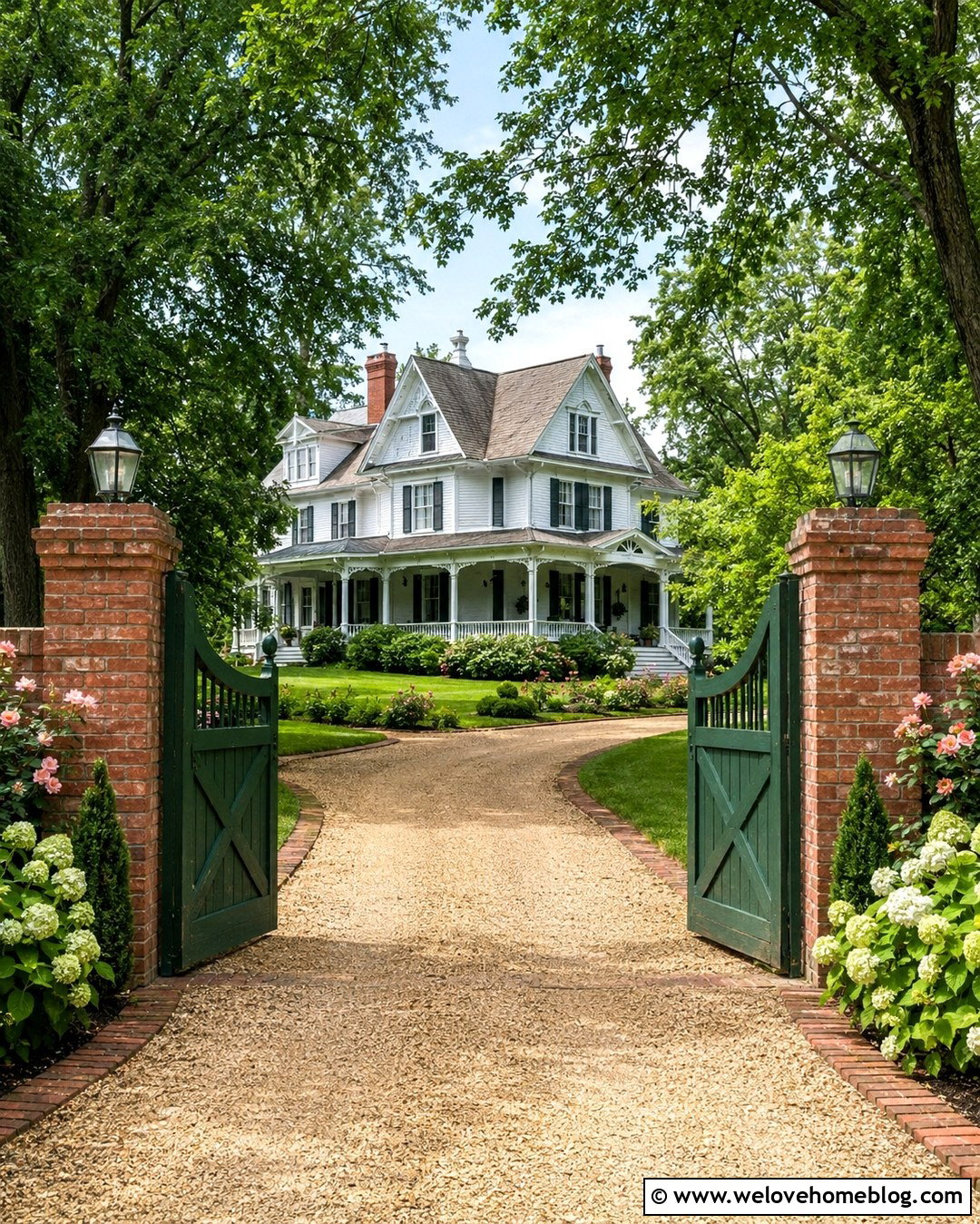
A painted wooden double gate offers a softer alternative to decorative iron, particularly for a Victorian farmhouse or a home with a large wraparound porch. Use vertical boards with an open upper section so the gate provides definition without completely blocking the view. Paint it deep green, burgundy, charcoal, or another shade taken from the exterior trim. Pair the entrance with a tan crushed-gravel driveway edged in reclaimed red brick. Square brick pillars can support the gate and repeat the house masonry, while simple lanterns add a finished detail. Inside the entrance, allow the driveway to bend past a planting bed filled with hydrangeas, roses, and small evergreen shrubs. The gate design should feel substantial enough for the property but remain visually lighter than the ornate house behind it.
19. Victorian House Driveway With Formal Boxwood Landscaping
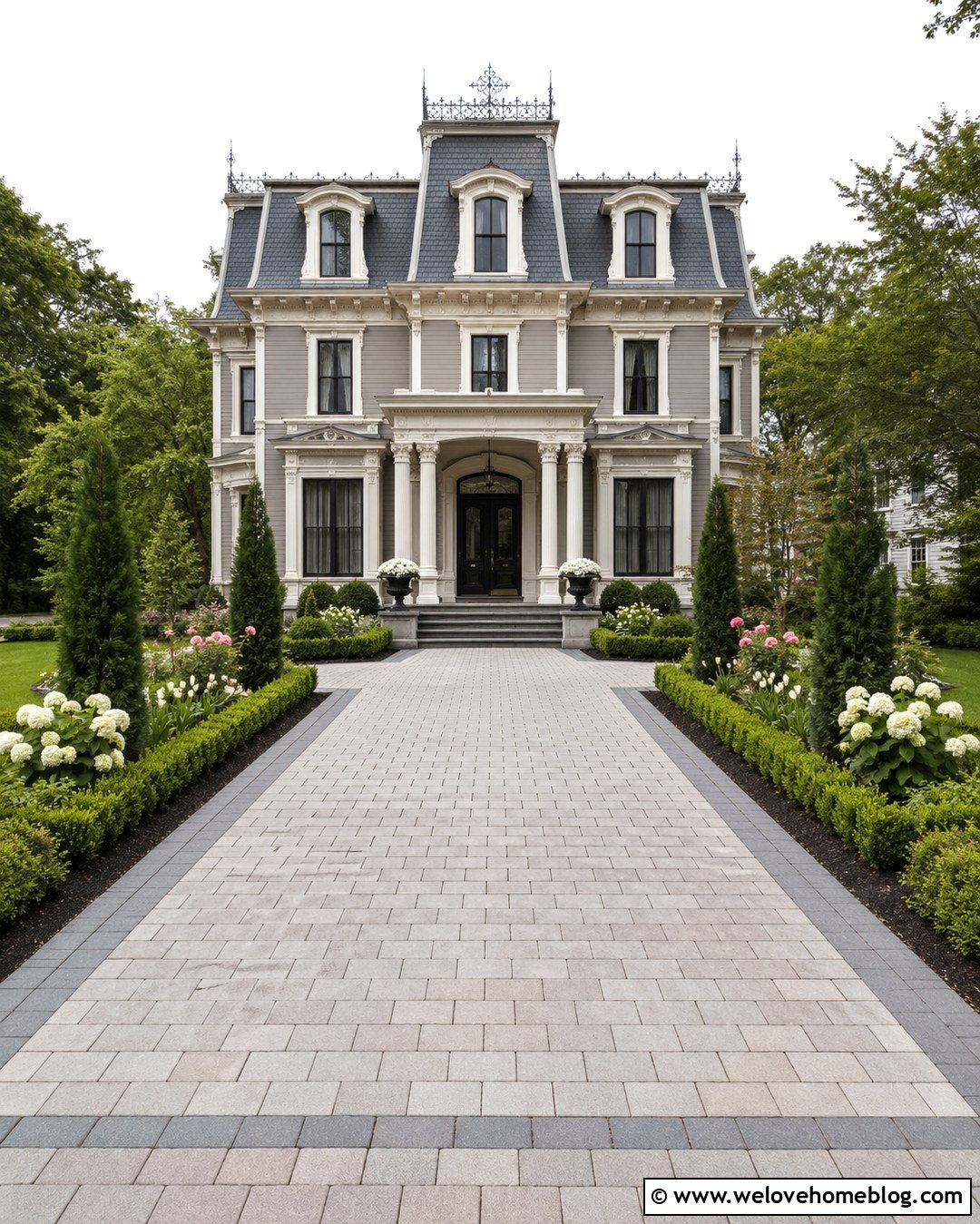
Crisp evergreen structure can make a broad Victorian driveway feel organized throughout every season. Use warm gray concrete pavers in a small rectangular format, arranged in a running bond and bordered with charcoal granite. Shape the driveway as a symmetrical arrival court or shallow semicircle in front of the porch. Low boxwood hedges can outline the planting beds without hiding decorative foundation details. Within those beds, add white hydrangeas, roses, upright evergreens, and seasonal bulbs for changing color. Matching urns near the porch steps can reinforce the formal arrangement, provided they remain proportional to the entrance. Keep the driveway’s center open and uncluttered so the house stays prominent. This balanced approach is especially effective for symmetrical Italianate or Second Empire homes with strong windows, cornices, and central entrances.
20. Victorian House Driveway With Cottage Garden Landscaping
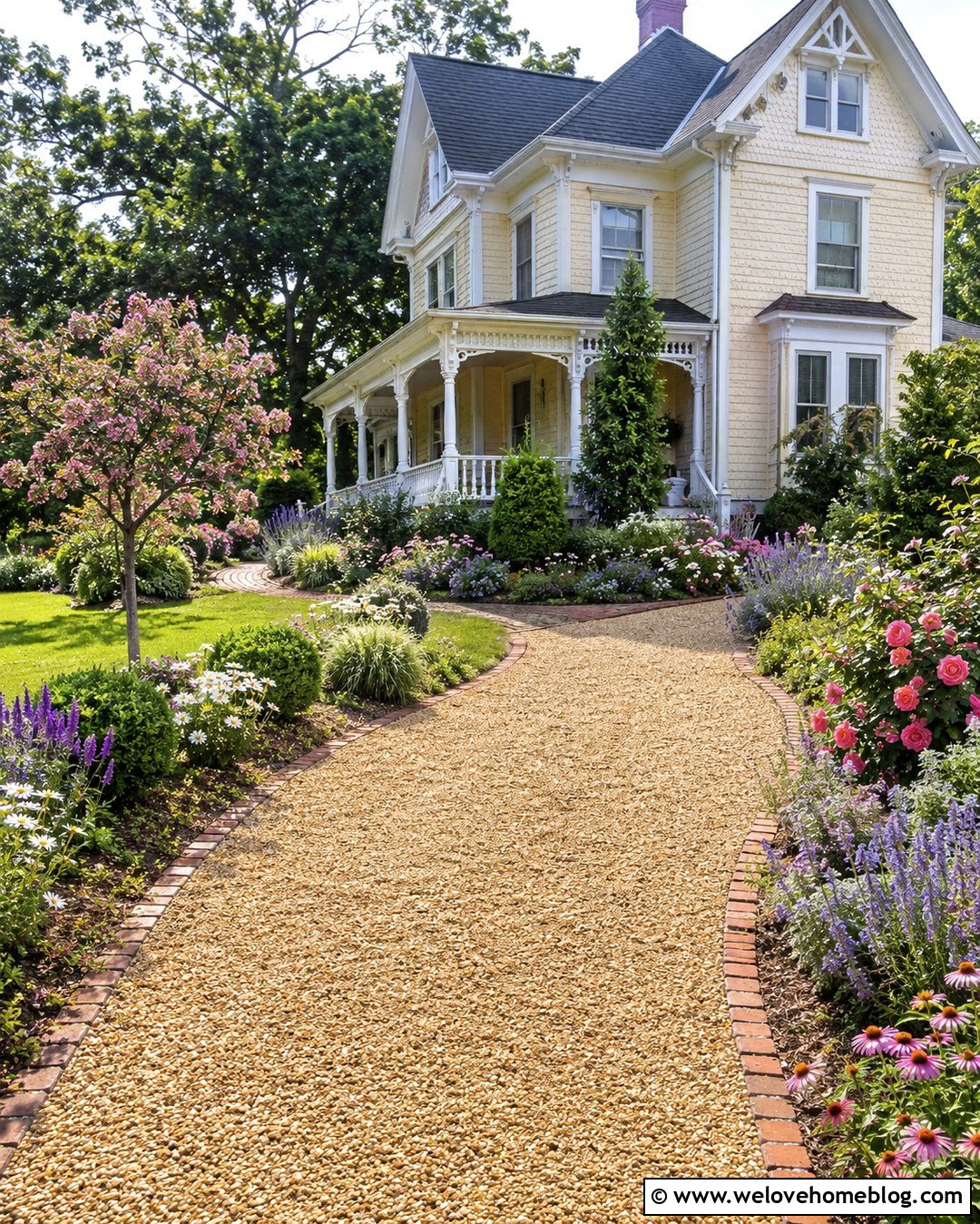
For a warmer and less formal setting, surround a simple gravel driveway with abundant cottage garden planting. Choose mixed golden pea gravel for the surface and weathered brick for the curved border. Allow planting beds to widen and narrow naturally along the route instead of forming perfectly straight strips. Roses, catmint, coneflowers, salvia, daisies, and ornamental grasses can provide layered color, while compact evergreens maintain structure outside the flowering season. Add one or two small ornamental trees where they will frame rather than conceal the house. A brick path should branch clearly toward the front porch, helping guests distinguish the pedestrian entrance from the vehicle route. Keep mature plant sizes, visibility, snow storage, and access in mind so the romantic garden remains manageable and the complete driveway continues to function comfortably.
Conclusion:
The strongest 20 victorian house driveway ideas respect the home’s architecture while making parking, access, drainage, and maintenance easier. Start by identifying colors and materials already visible in the foundation, facade, roof, porch, and walkways. Then select a driveway surface, shape, border, and landscape plan that repeats those details without becoming overly ornate. Gravel and asphalt offer practical flexibility, while brick, cobblestone, and pavers bring richer pattern and historic character. Gates, pillars, flower beds, and lighting should support the complete design rather than act as separate decorations. Whether the property has a narrow urban lot or a sweeping front yard, thoughtful proportions will help the driveway look established, welcoming, and genuinely connected to the Victorian house.

Related posts:
Leave a Reply