
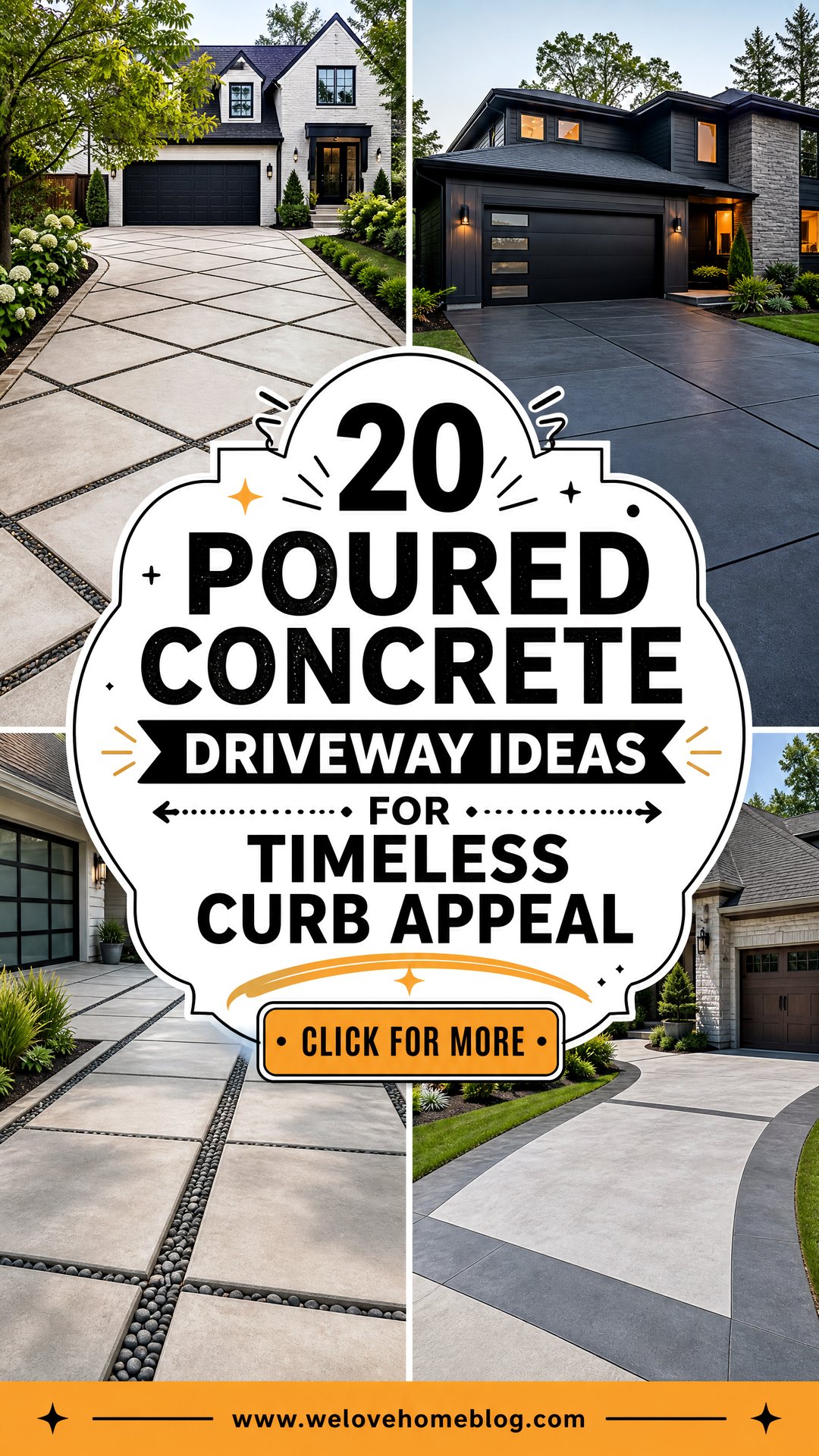
A poured concrete driveway can be practical without looking plain. The best designs treat the surface, shape, borders, planting, and house exterior as one connected composition. These 20 Poured Concrete Driveway Ideas include affordable broom finishes, modern slab layouts, decorative scoring, exposed aggregate, colored concrete, and stamped details. You will also find options for straight, curved, circular, narrow, and sloped driveways. As you compare each look, consider your home’s architecture, local climate, drainage needs, maintenance preferences, and desired level of traction. A qualified concrete contractor can help adapt the finish and joint placement to your property. Use the complete designs below to find the right balance of durability, function, and curb appeal among these 20 Poured Concrete Driveway Ideas.
1. Broom Finish Poured Concrete Driveway
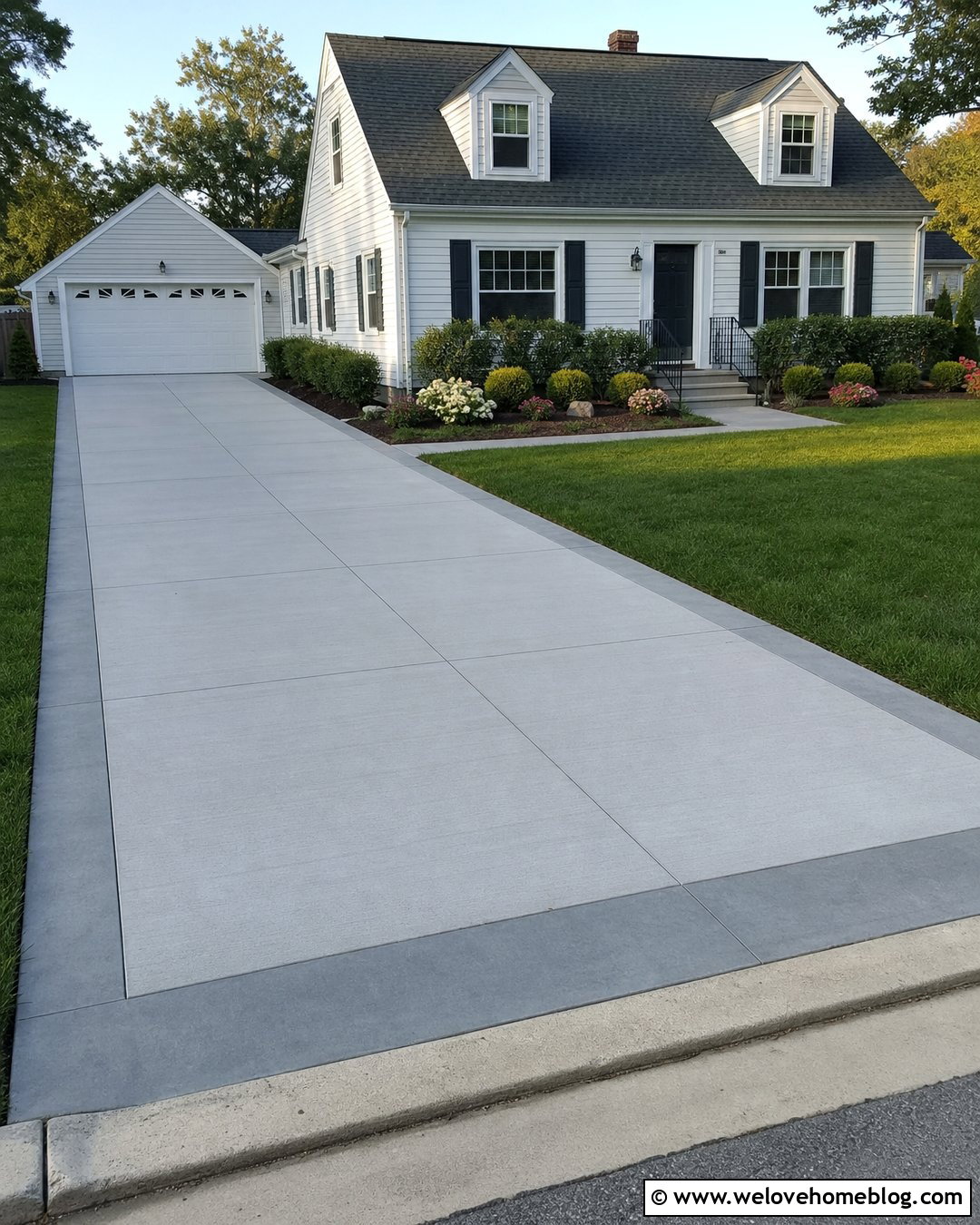
A classic broom finish is an excellent starting point when you want a clean, practical driveway without unnecessary decoration. Fine grooves give the poured concrete visible texture while helping the surface feel less slippery than an overly smooth finish. Keep the layout straight and divide the driveway into balanced rectangular panels with carefully planned control joints. A narrow border of darker concrete can create a crisp picture-frame effect without adding a different paving material. Complete the look with an open lawn, low evergreen shrubs, and a matching poured concrete walkway to the front door. This straightforward design works especially well with ranch, Cape Cod, and traditional suburban homes. It also allows the architecture and landscaping to remain the main visual features.
2. Modern Poured Concrete Driveway With Grass Strips
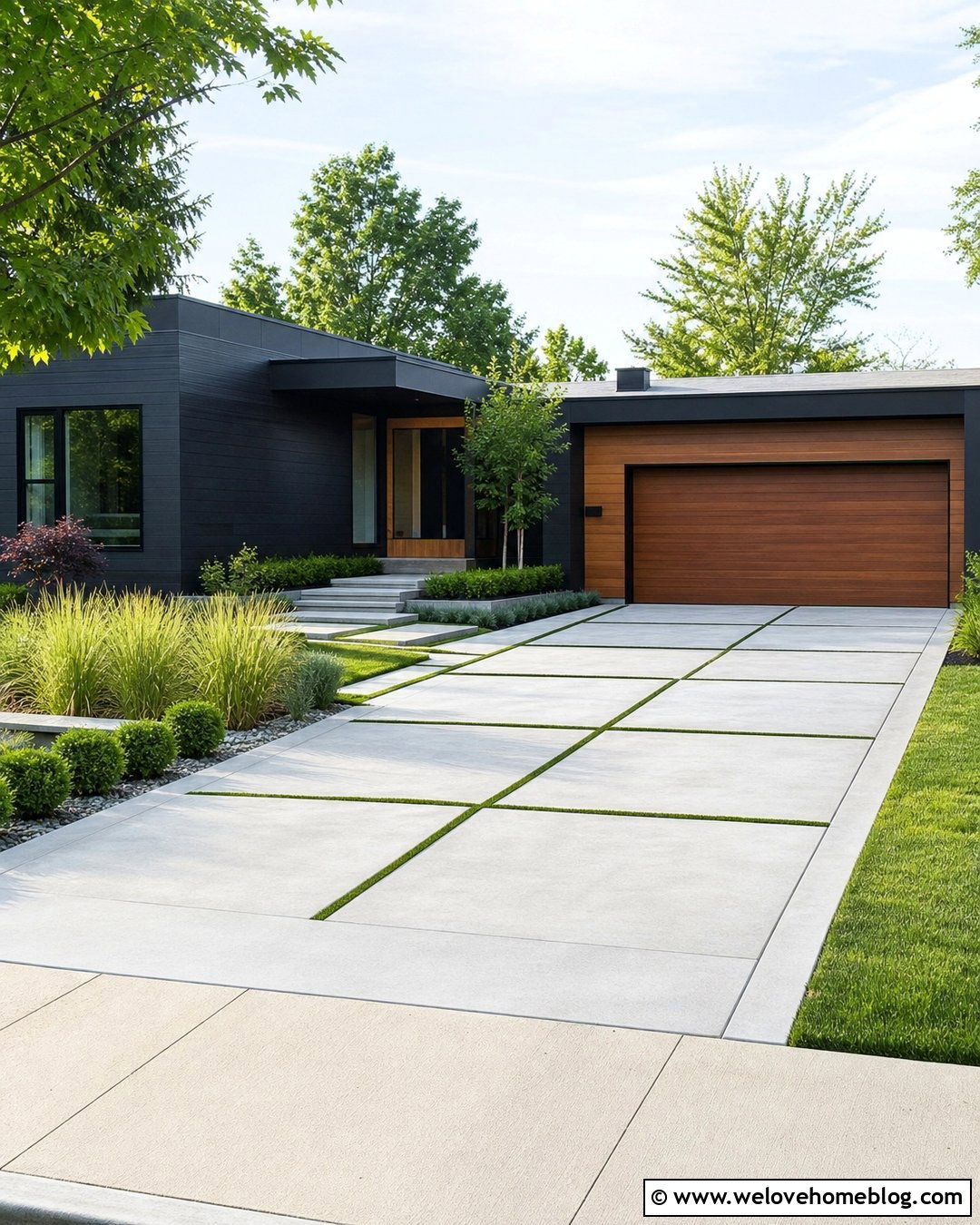
Large poured concrete slabs separated by narrow grass strips create a lighter, more contemporary driveway. The green channels soften the hard surface and visually connect it to the surrounding lawn. Use oversized rectangular panels in a straight or gently offset arrangement, keeping the spacing consistent from the curb to the garage. Light gray concrete pairs particularly well with charcoal siding, natural wood, and black exterior details. Low ornamental grasses, clipped shrubs, and a simple stepping-stone walkway can continue the geometric theme. Grass strips require regular trimming and may not suit every climate, slope, or maintenance routine. If natural turf is impractical, low ground cover or decorative gravel channels can create a similar divided-slab appearance while reducing upkeep.
3. Exposed Aggregate Poured Concrete Driveway
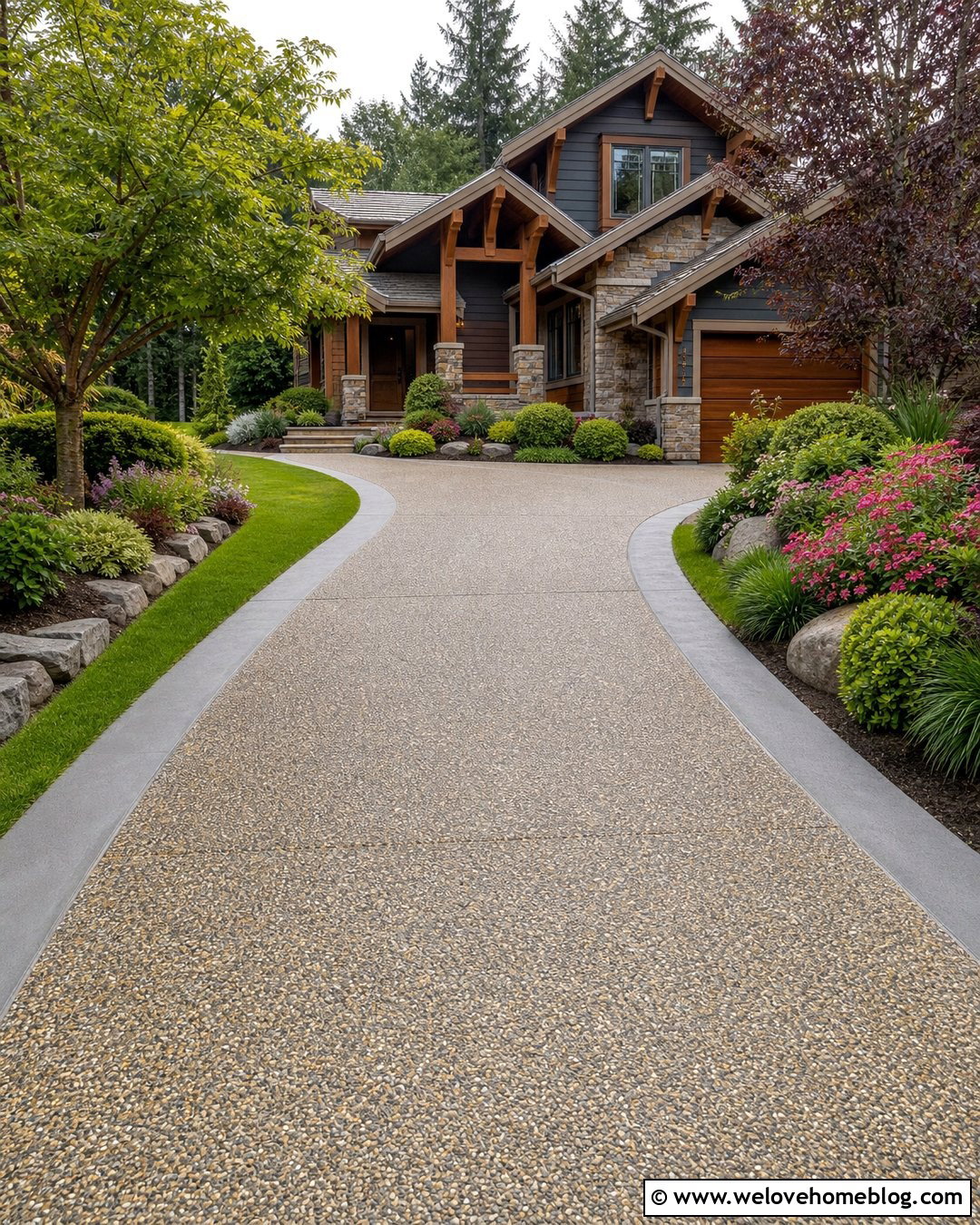
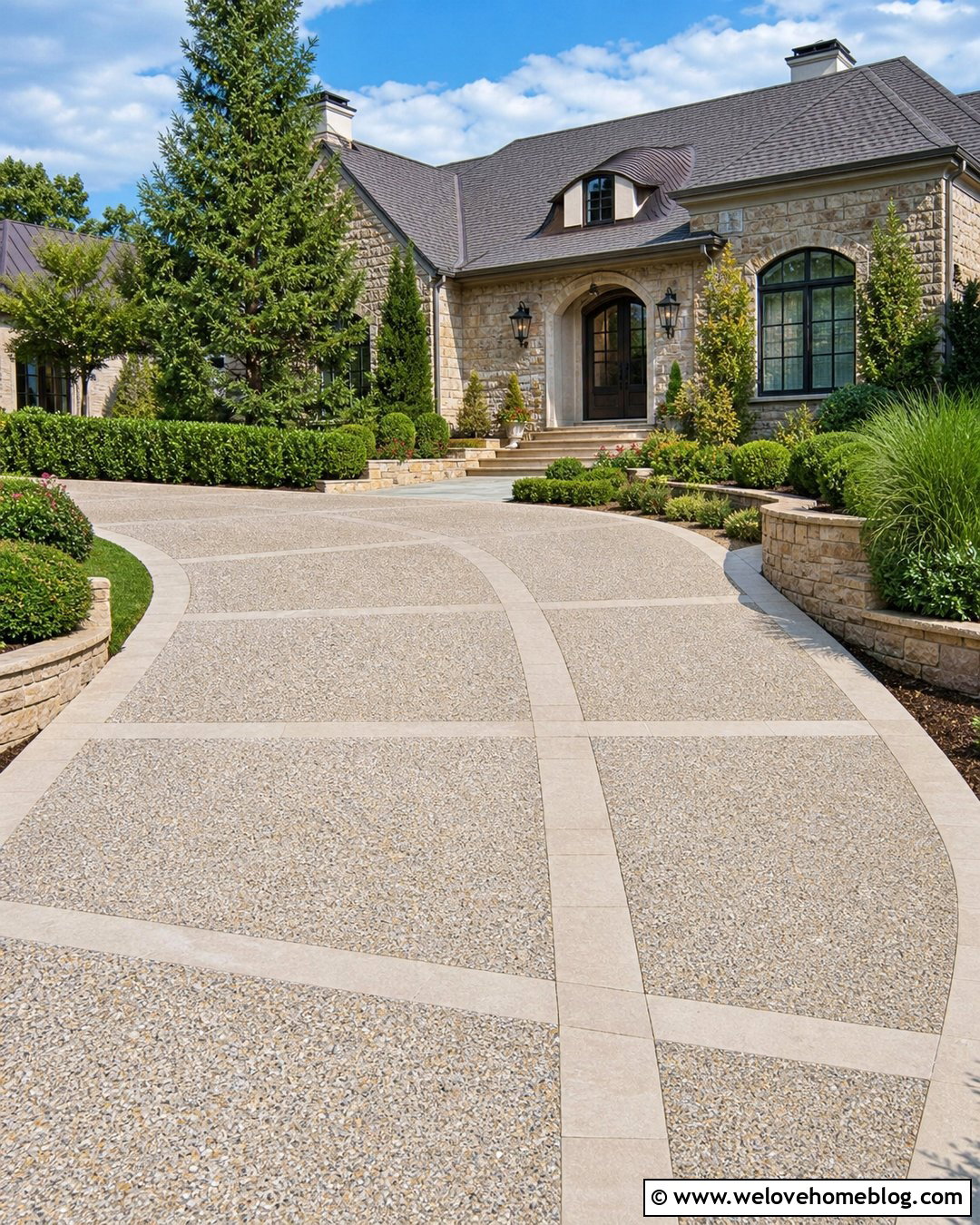
Exposed aggregate gives poured concrete a naturally varied surface by revealing decorative stone within the mix. From the curb, the driveway appears warmer and more textured than standard gray concrete. Choose aggregate colors that repeat tones found in the home’s brick, stone veneer, roof, or trim. A gently curved layout allows the pebbled finish to blend naturally into informal planting beds. Smooth poured concrete bands along the sides can frame the aggregate and create a neat transition to the lawn. Surround the drive with layered shrubs, flowering perennials, and small ornamental trees for a complete landscape. Because aggregate selection and exposure affect the final color and texture, review actual samples before installation rather than relying only on catalog photographs or digital renderings.
4. Poured Concrete Driveway With Brick Border
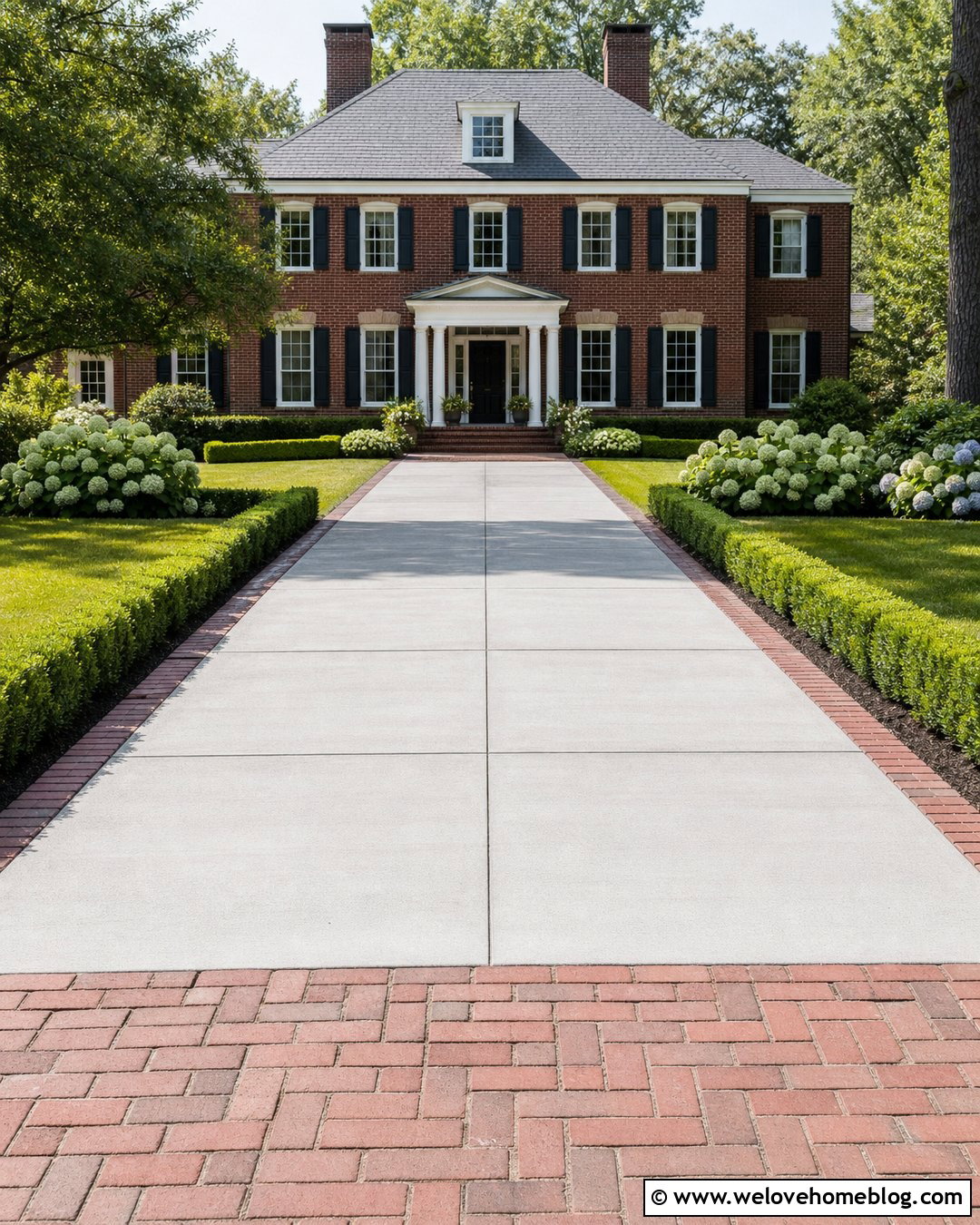
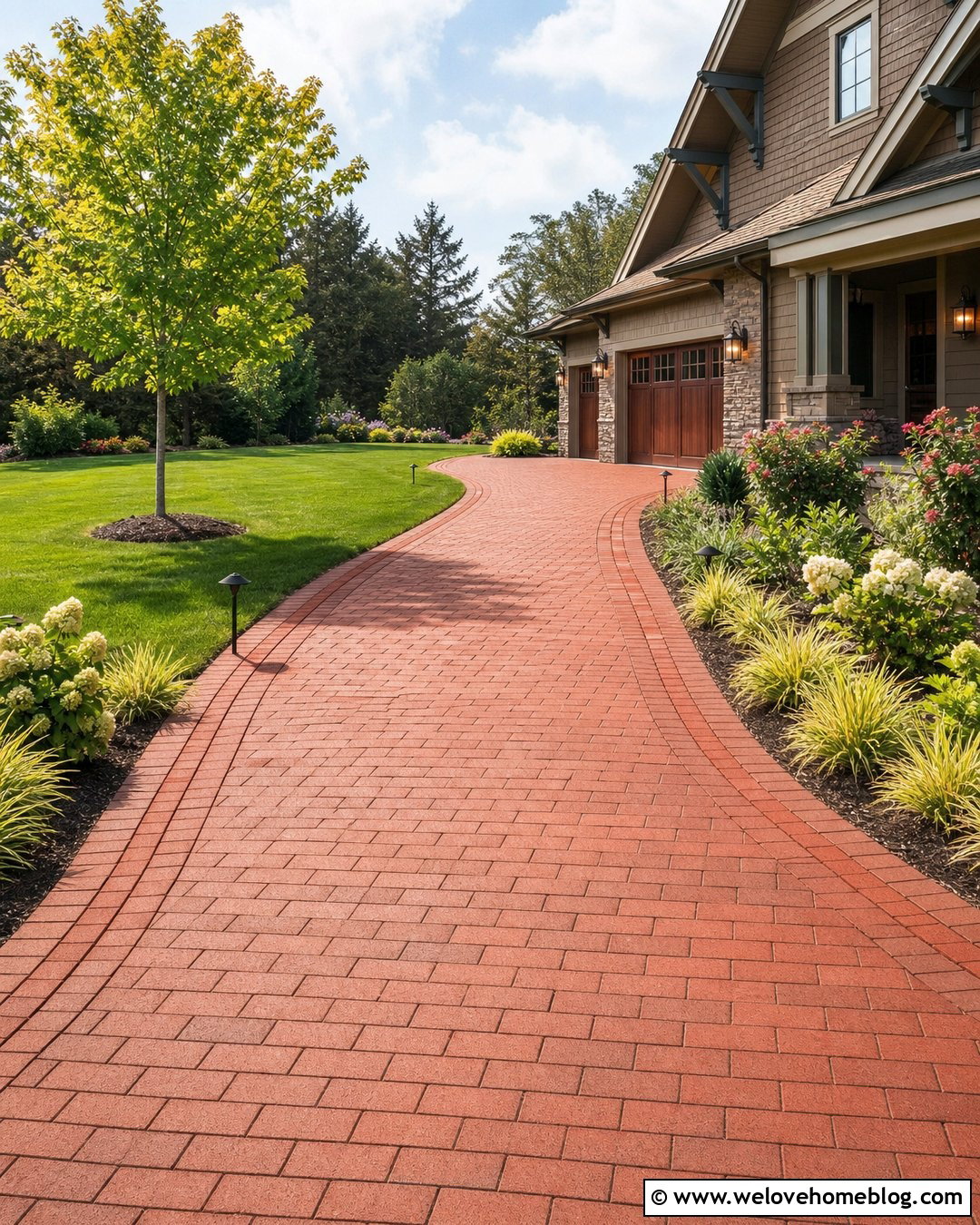
Red or brown brick edging can bring warmth and definition to a light gray poured concrete driveway. Use a single or double brick row along both sides, then carry the brick across the entrance as an apron. This repeated detail makes the design feel intentional and connects the driveway to brick steps, porch columns, or a traditional facade. A straight layout suits symmetrical colonial homes, while a soft curve feels comfortable beside cottage-style landscaping. Keep the concrete center simple with a broom finish and evenly spaced joints so the border remains the primary accent. Boxwood, hydrangeas, lawn, and a brick-edged walkway can complete the setting. Select brick rated for exterior paving conditions and coordinate installation details with the concrete contractor.
5. Poured Concrete Driveway With Paver Bands
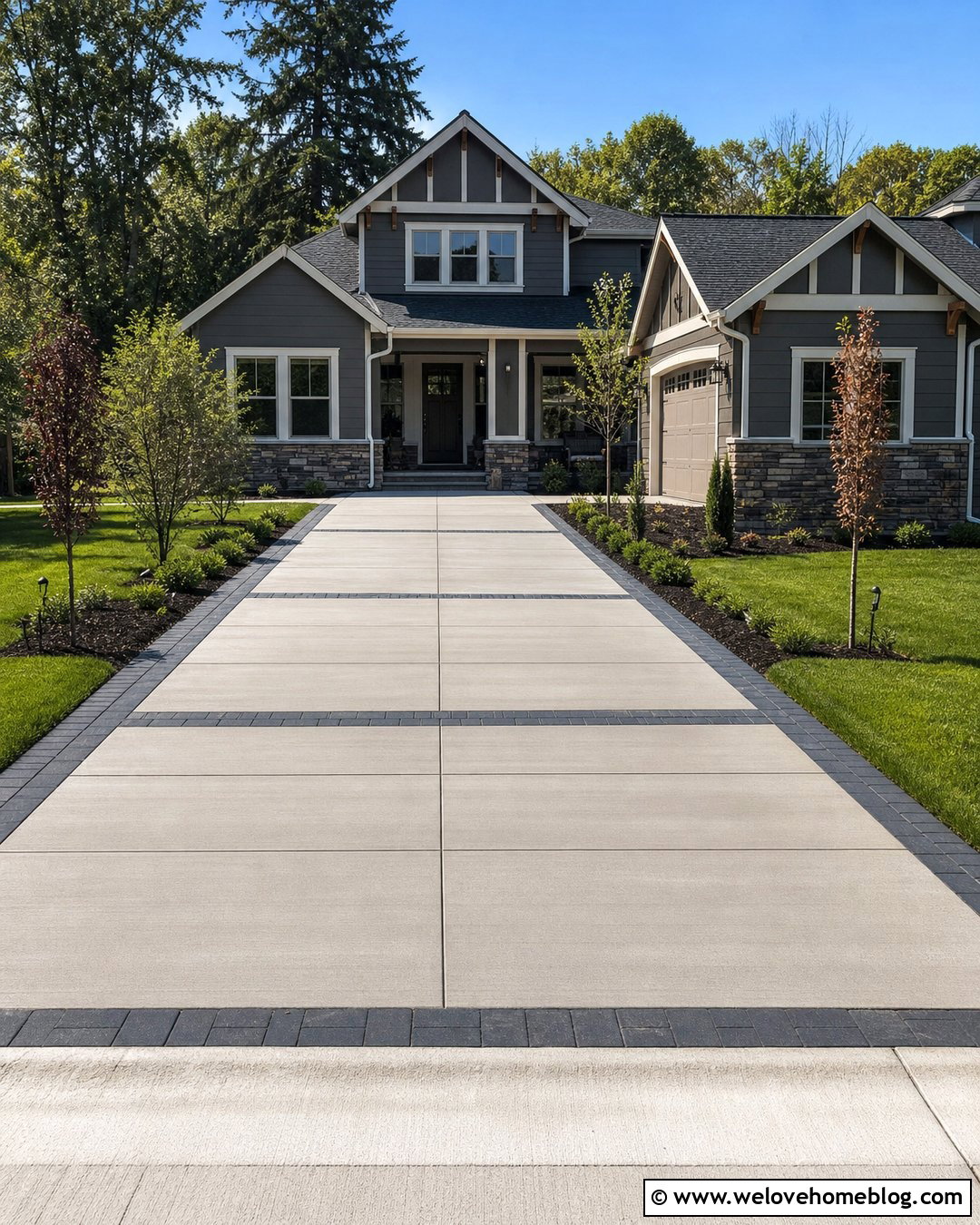
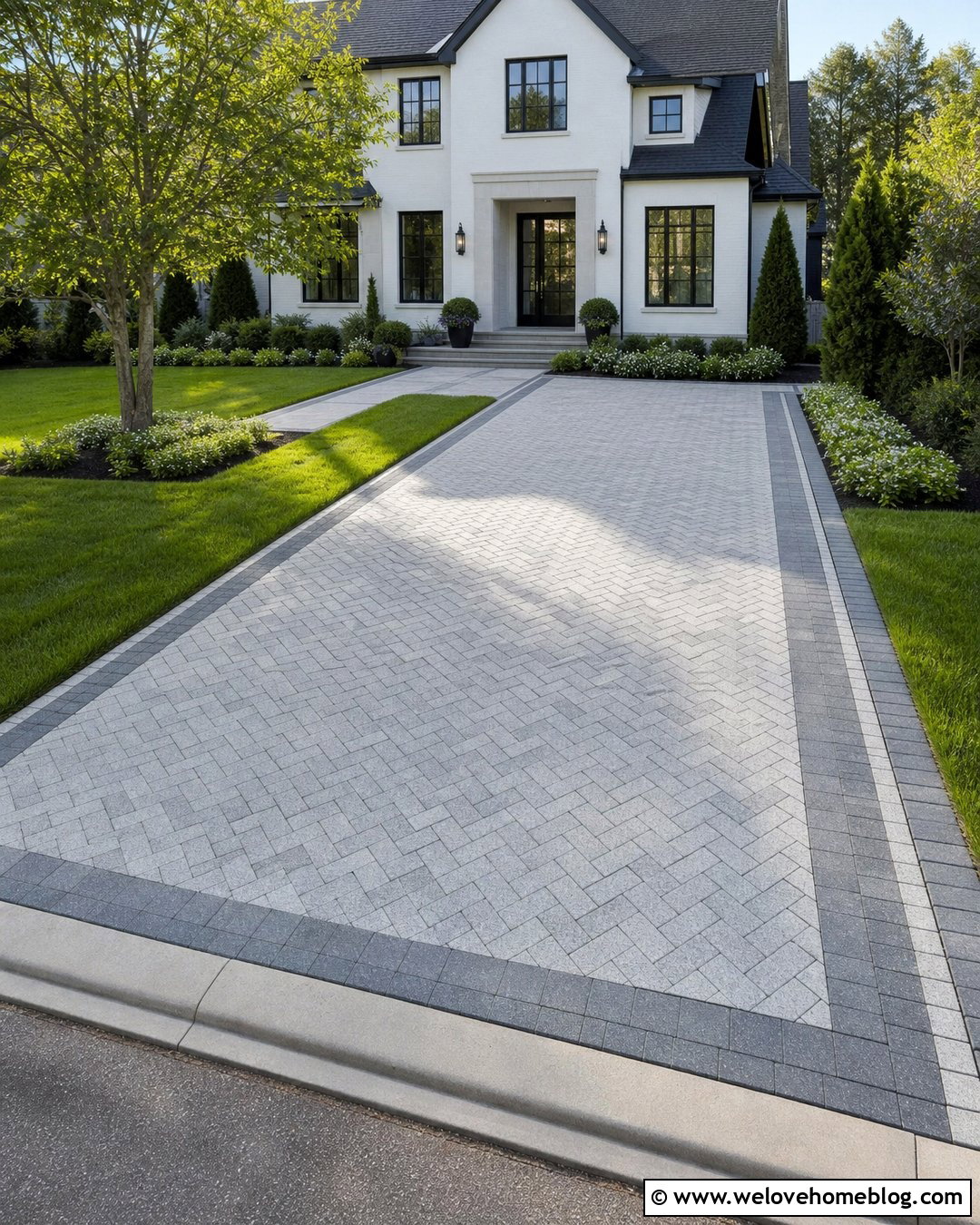
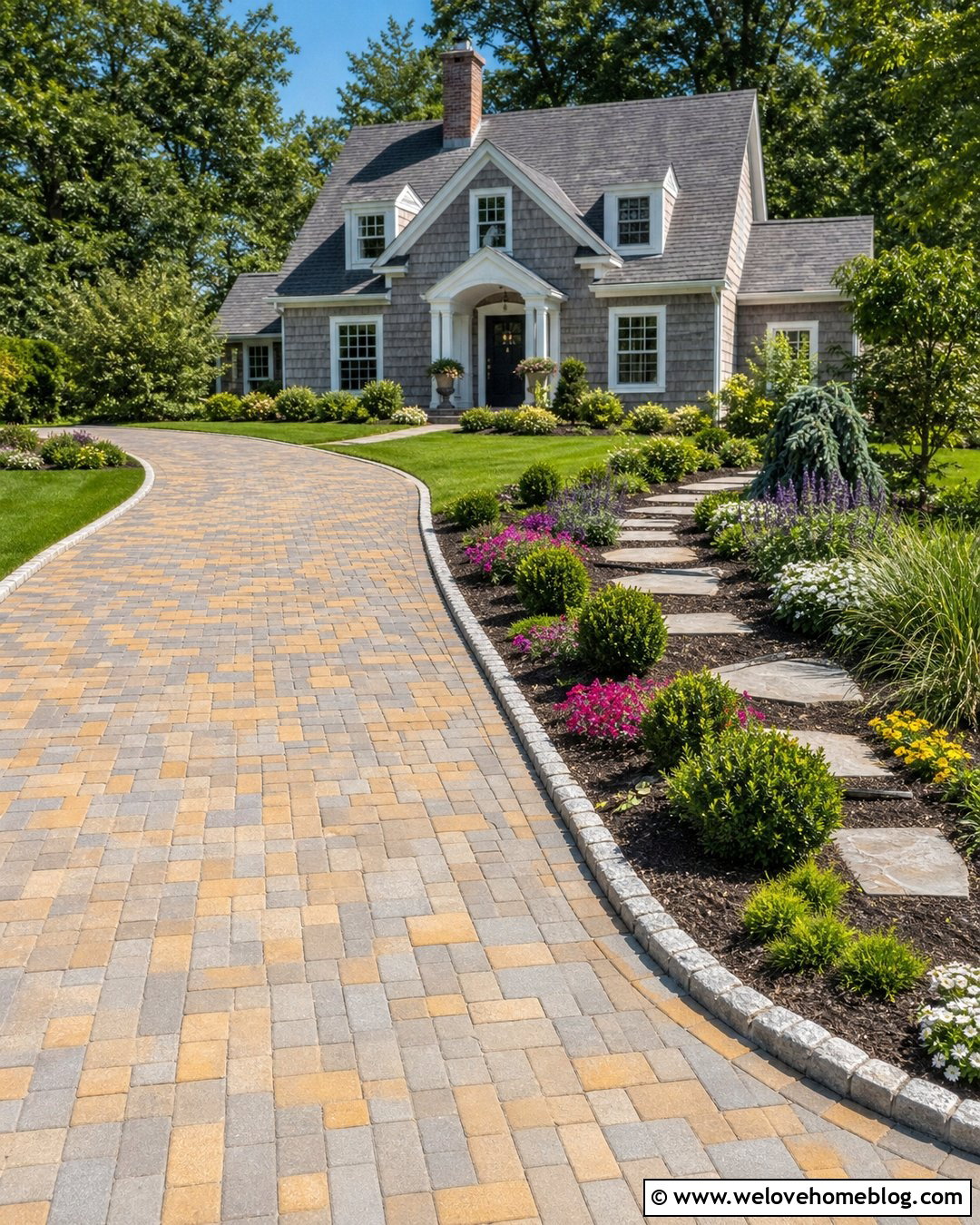
Adding paver bands across poured concrete creates visual rhythm and breaks up a large paved area. Choose charcoal, tan, or muted red pavers that coordinate with the roof, garage doors, or front walkway. The bands can follow control-joint locations, creating a design that appears organized rather than randomly decorative. On a wide driveway, place one band near the street, another near the garage, and additional bands where the proportions feel balanced. A contrasting paver border can frame the entire surface for an even more finished look. This combination complements craftsman, transitional, and modern farmhouse homes. Repeat the same pavers in the walkway or porch landing, then add structured planting beds with small trees and low shrubs to unify the approach.
6. Stained Poured Concrete Driveway
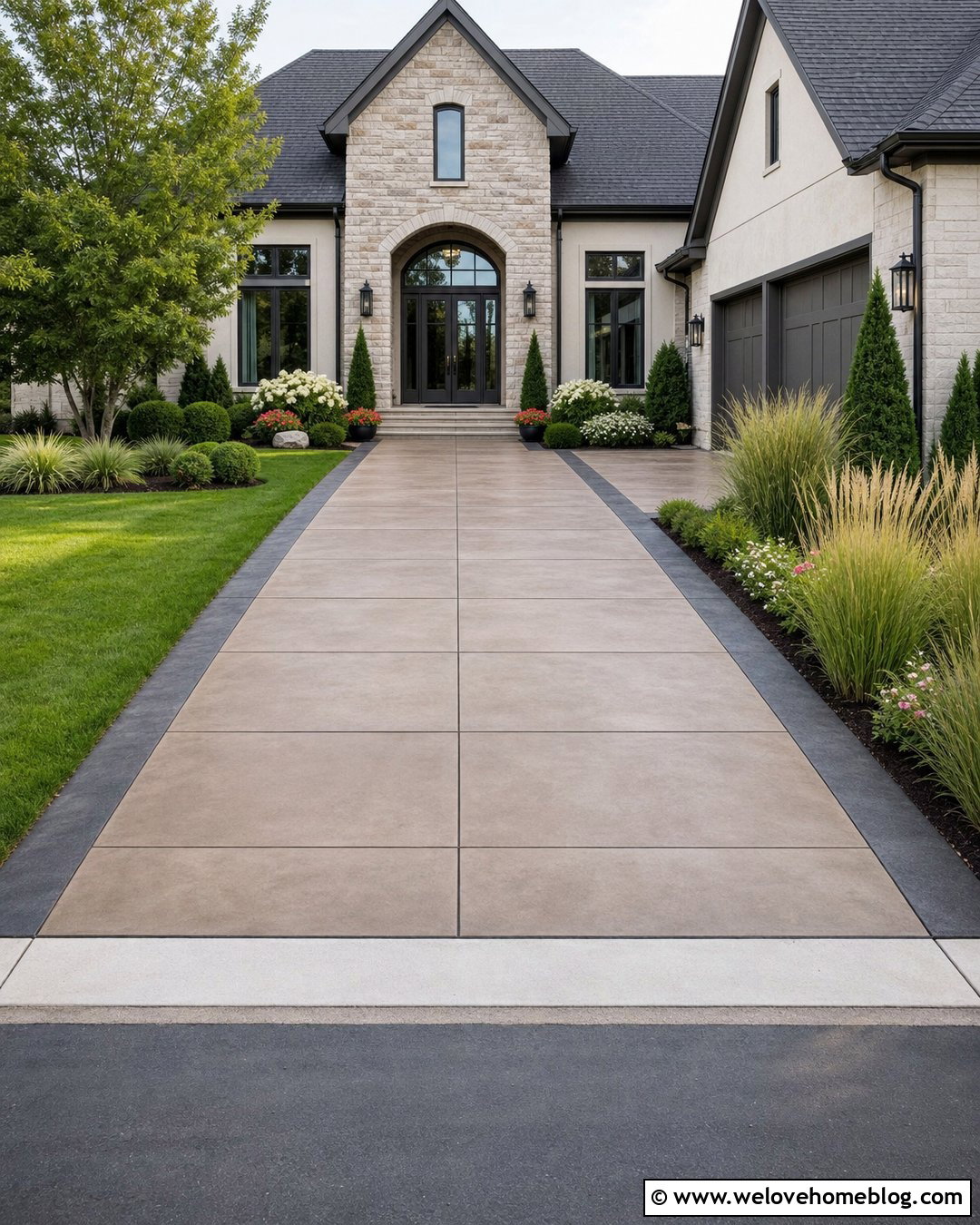
Concrete stain introduces color while allowing the underlying poured surface to remain visible. Warm taupe, sandstone, and soft brown tones can complement brick or stone houses, while charcoal and cool gray feel appropriate beside contemporary facades. Apply the color across a scored grid or large rectangular panels to give the driveway the appearance of oversized paving units. A dark smooth border adds definition and helps contain the visual pattern. Keep adjacent planting simple, using ornamental grasses, evergreen mounds, and a few flowering accents that coordinate with the chosen tone. Since finished color can vary with the concrete and application method, request a representative sample area. Choose a driveway-appropriate treatment and discuss traction, sealing, fading, and maintenance with an experienced installer.
7. Salt Finish Poured Concrete Driveway
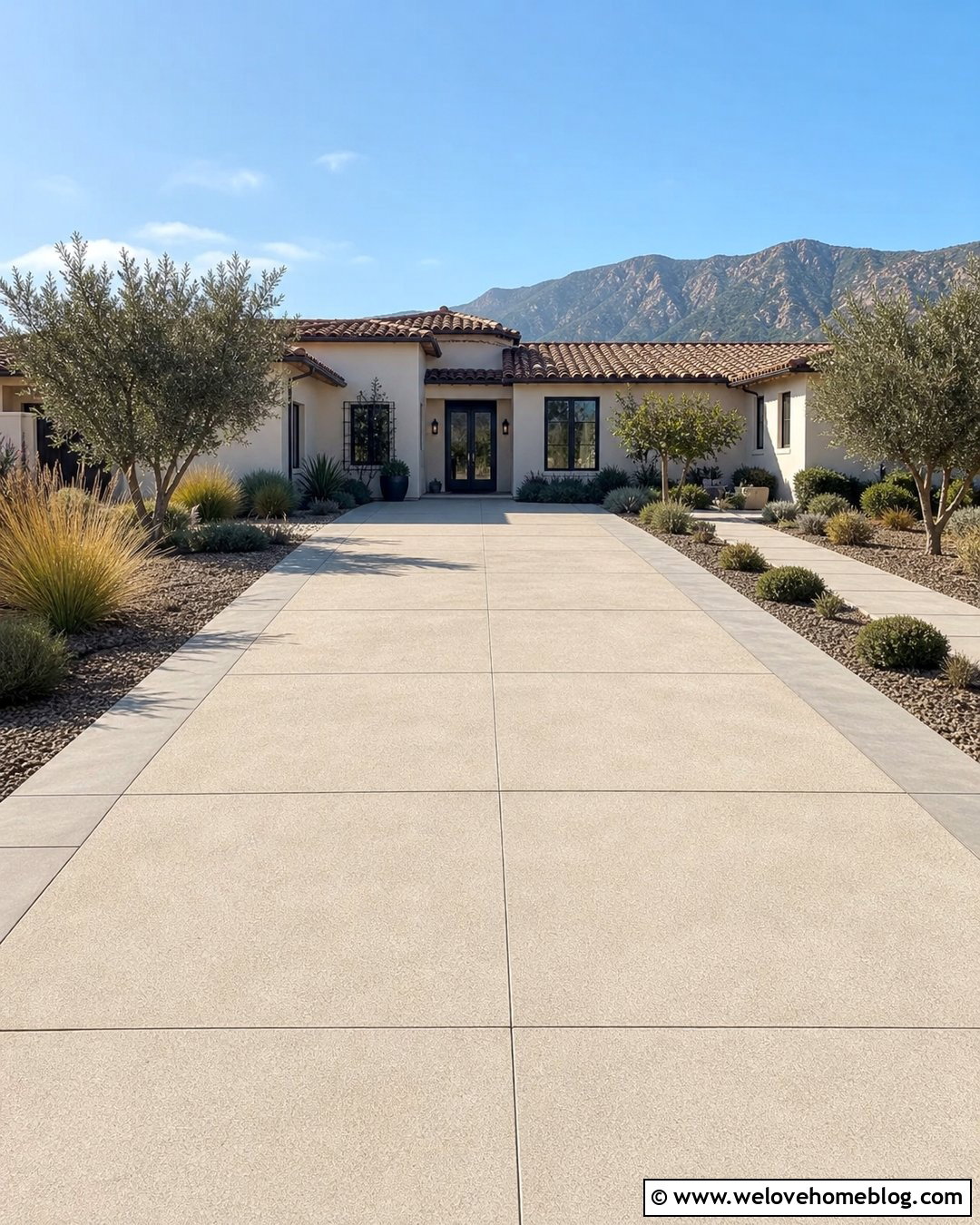
A salt finish gives poured concrete a subtle, lightly pitted texture that feels more decorative than a basic slab but remains understated. It works particularly well on a broad driveway leading to a mid-century, ranch, or Mediterranean-inspired home. Use warm gray or sand-colored concrete to emphasize the surface without making it look overly patterned. Wide smooth bands around the perimeter create a refined frame and separate the textured field from planting beds. For a cohesive landscape, add drought-tolerant grasses, rounded shrubs, gravel mulch, and a simple concrete walkway. The texture should be selected with local weather and maintenance conditions in mind. A contractor can create a test panel so you can evaluate its depth, comfort, traction, and appearance before committing to the full driveway.
8. Scored Grid Poured Concrete Driveway
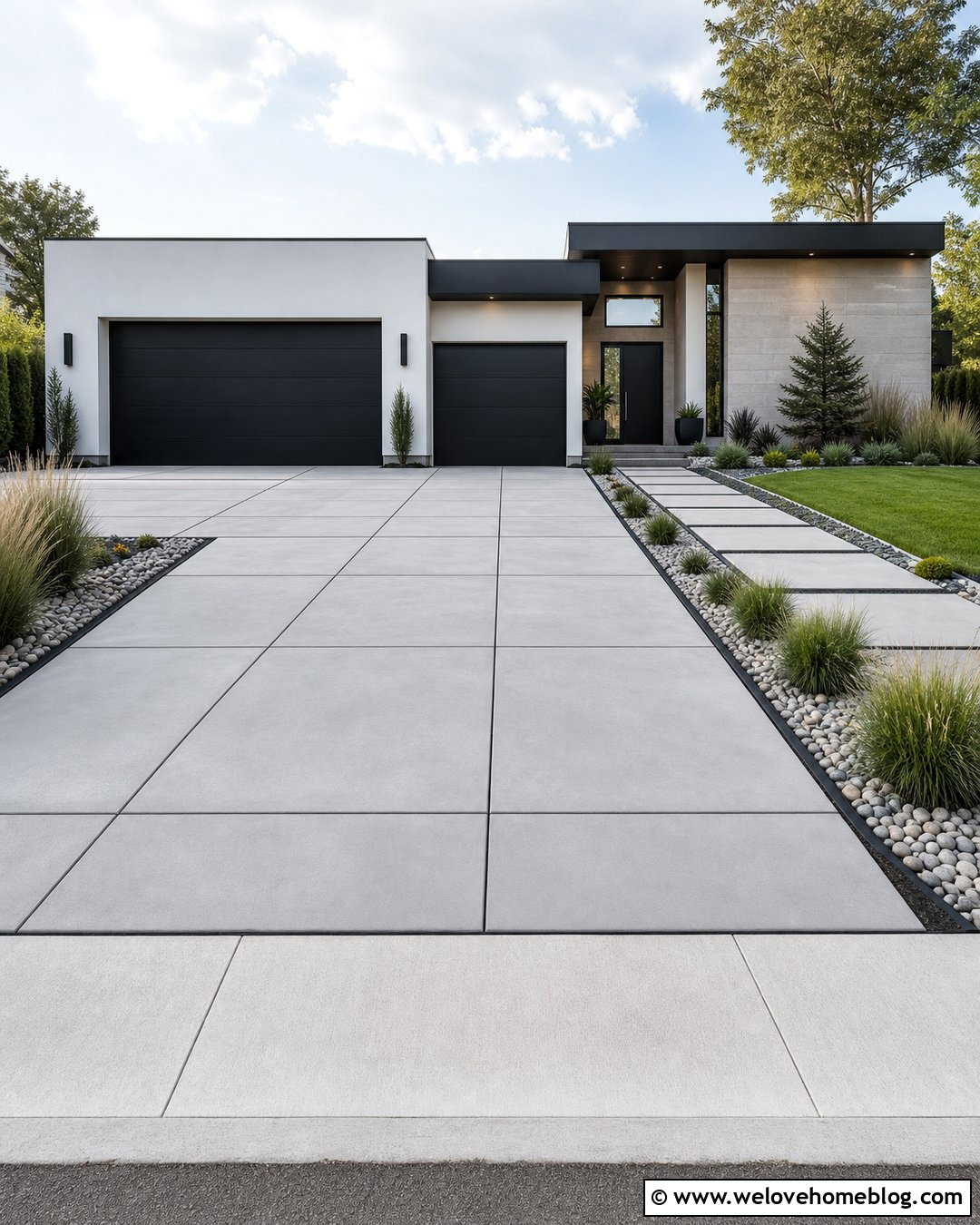
A scored grid can transform one broad poured concrete surface into a series of orderly squares or rectangles. The look is especially effective when the joint pattern aligns with garage doors, windows, or other strong architectural lines. Use a medium-gray concrete field with narrow, clean cuts for a restrained modern appearance. A straight driveway provides the clearest geometry, although the grid can also follow a shallow curve when carefully planned. Frame the surface with black metal landscape edging, pale river rock, and low sculptural plants. A walkway made from matching scored concrete can connect the driveway to the entrance. Plan decorative lines and necessary control joints together, since thoughtful coordination produces a much more convincing pattern than adding unrelated cuts after the layout has been established.
9. Diamond Pattern Poured Concrete Driveway
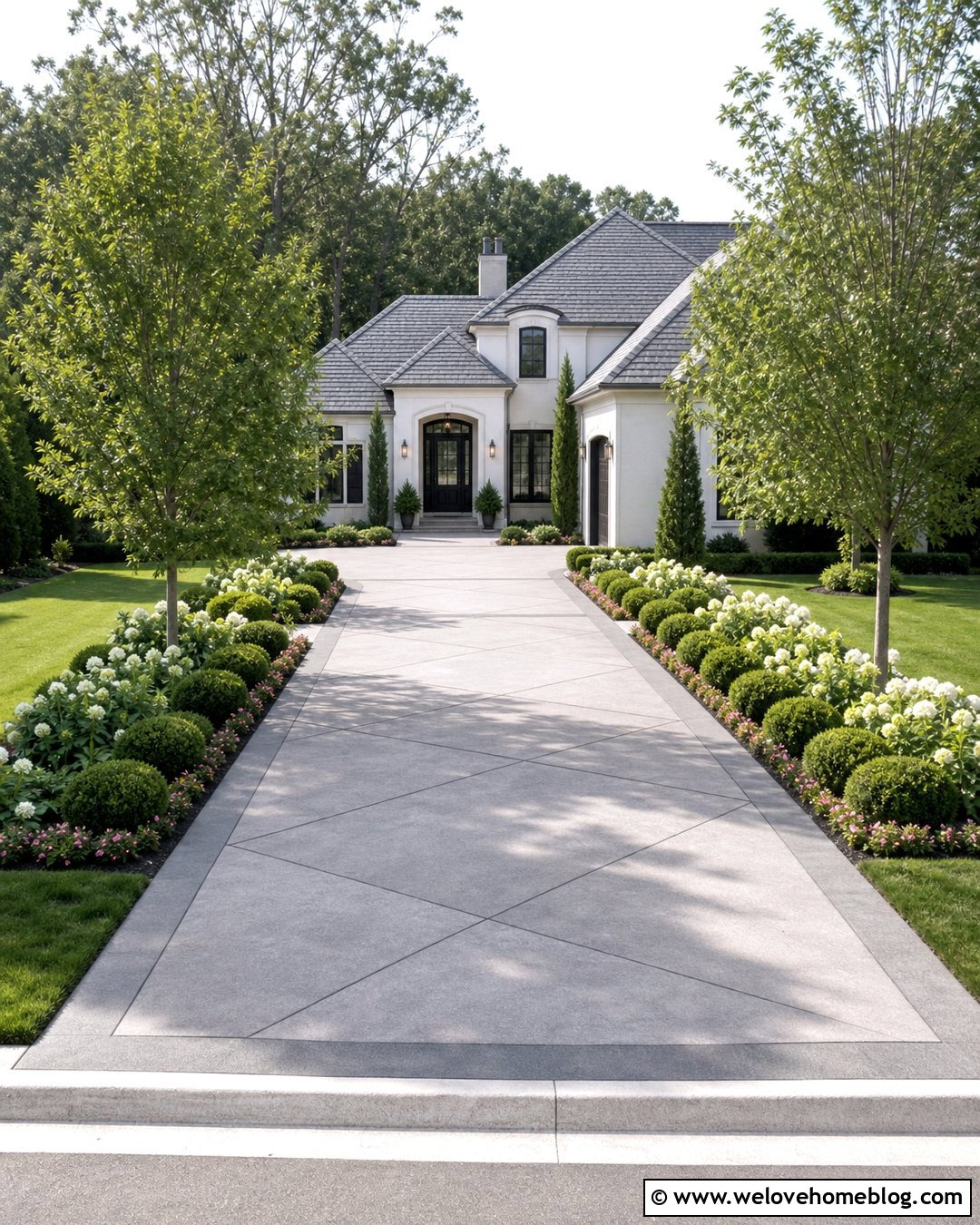
Diagonal scoring gives a poured concrete driveway a diamond pattern that feels more decorative than a standard rectangular grid. It can make a wide surface appear dynamic while still maintaining a formal, organized character. Soft gray concrete with slightly darker stained lines creates definition without producing harsh contrast. Add a smooth perimeter band so the diamonds end cleanly before reaching the lawn or planting beds. This complete look suits transitional, Mediterranean, and upscale suburban homes with symmetrical garage elevations. Use matching concrete for the walkway but simplify its scoring to avoid competing patterns. Rounded shrubs, flowering border plants, and balanced ornamental trees can soften the geometry. Ask the installer to map the diamond scale carefully so partial shapes near the edges do not appear awkward.
10. Curved Poured Concrete Driveway
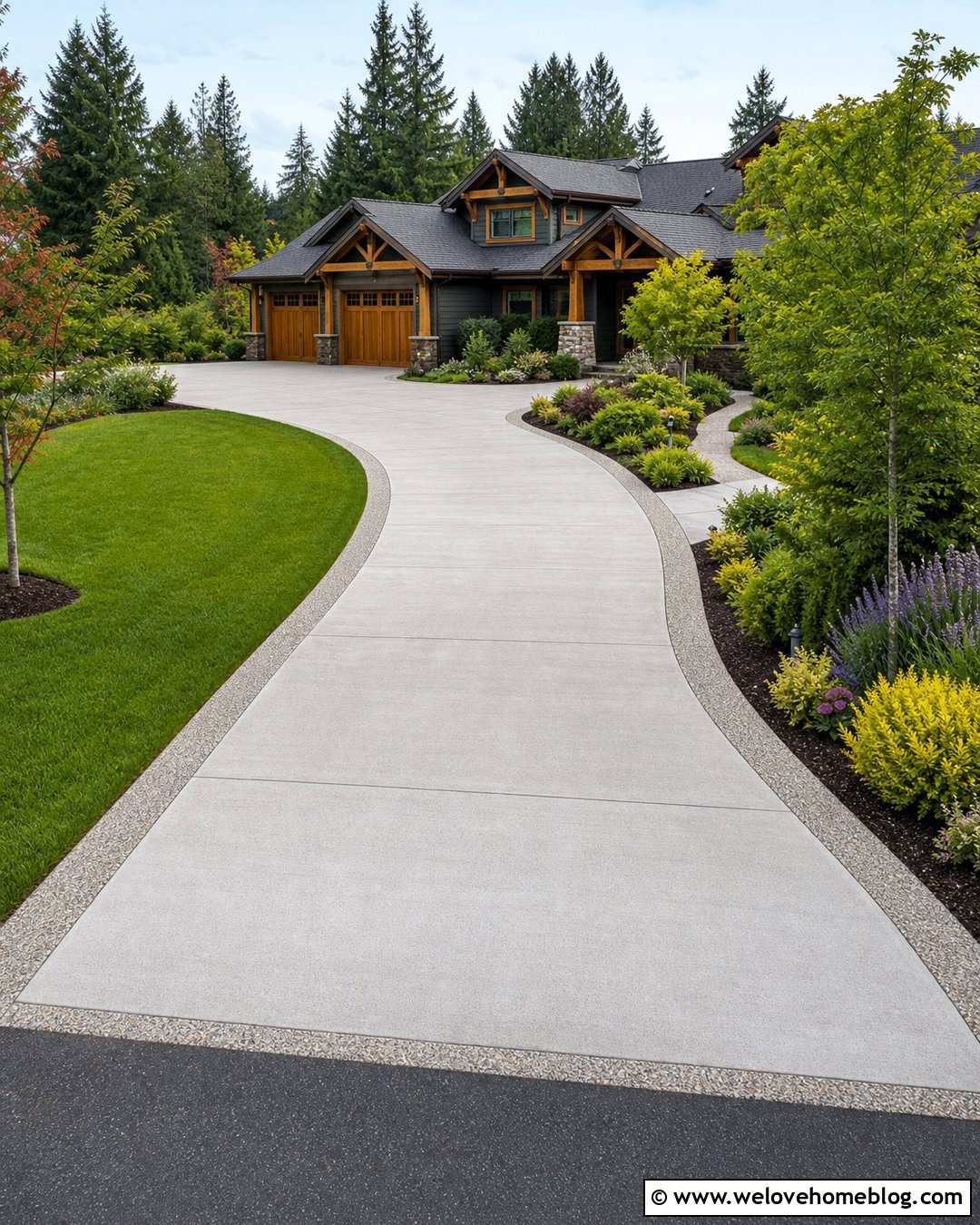
A curved poured concrete driveway creates a relaxed approach and can guide views toward the home, garden, or garage. Instead of treating the curve as leftover space, emphasize it with continuous borders and landscaping that follow the same sweeping line. Choose a light broom-finished surface with warm exposed-aggregate edging for gentle contrast. On the outside curve, use layered shrubs and ornamental trees to create depth. Keep the inside curve more open with lawn or low ground cover so drivers have clear visibility. This layout works well for craftsman homes, country properties, and houses with garages positioned away from the street. The curve should feel generous and purposeful, with transitions planned for comfortable vehicle movement, drainage, snow removal, and access to nearby walkways.
11. Circular Poured Concrete Driveway
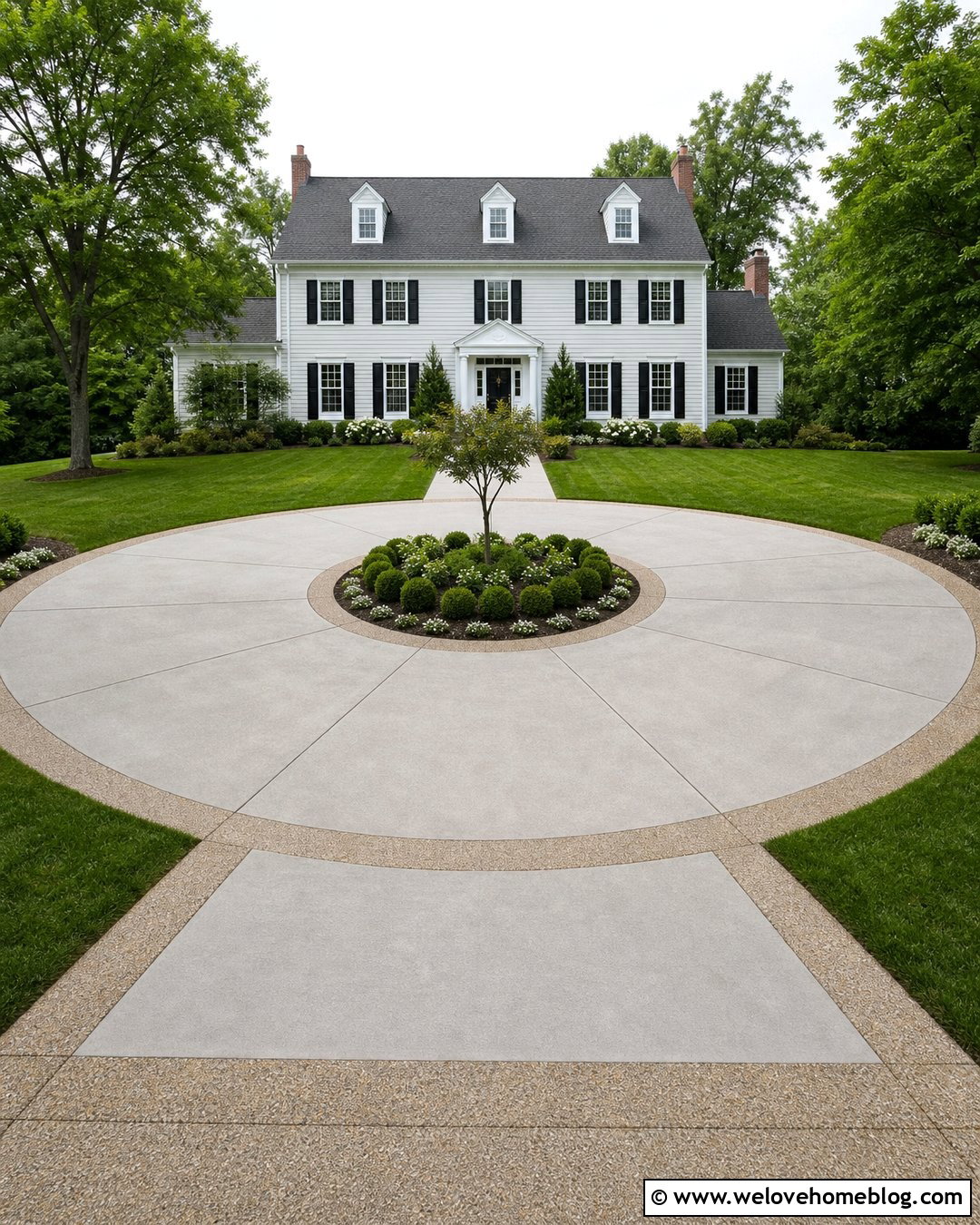
A circular poured concrete driveway can create a convenient and impressive entrance when the front yard has enough space. Divide the surface into broad wedge-shaped panels that follow the circular movement instead of forcing a rigid square grid over the layout. A broom-finished concrete field with an exposed-aggregate border provides texture and clearly defines the drive. In the center island, plant one appropriately scaled ornamental tree surrounded by low shrubs and seasonal flowers. Keep taller vegetation away from areas where it could restrict visibility. Connect the front door with a direct walkway that meets the inner curve at a logical point. This balanced design suits colonial, Georgian, traditional, and large modern farmhouse homes, especially when the driveway aligns with the home’s central entrance.
12. Poured Concrete Driveway With Stone Edging
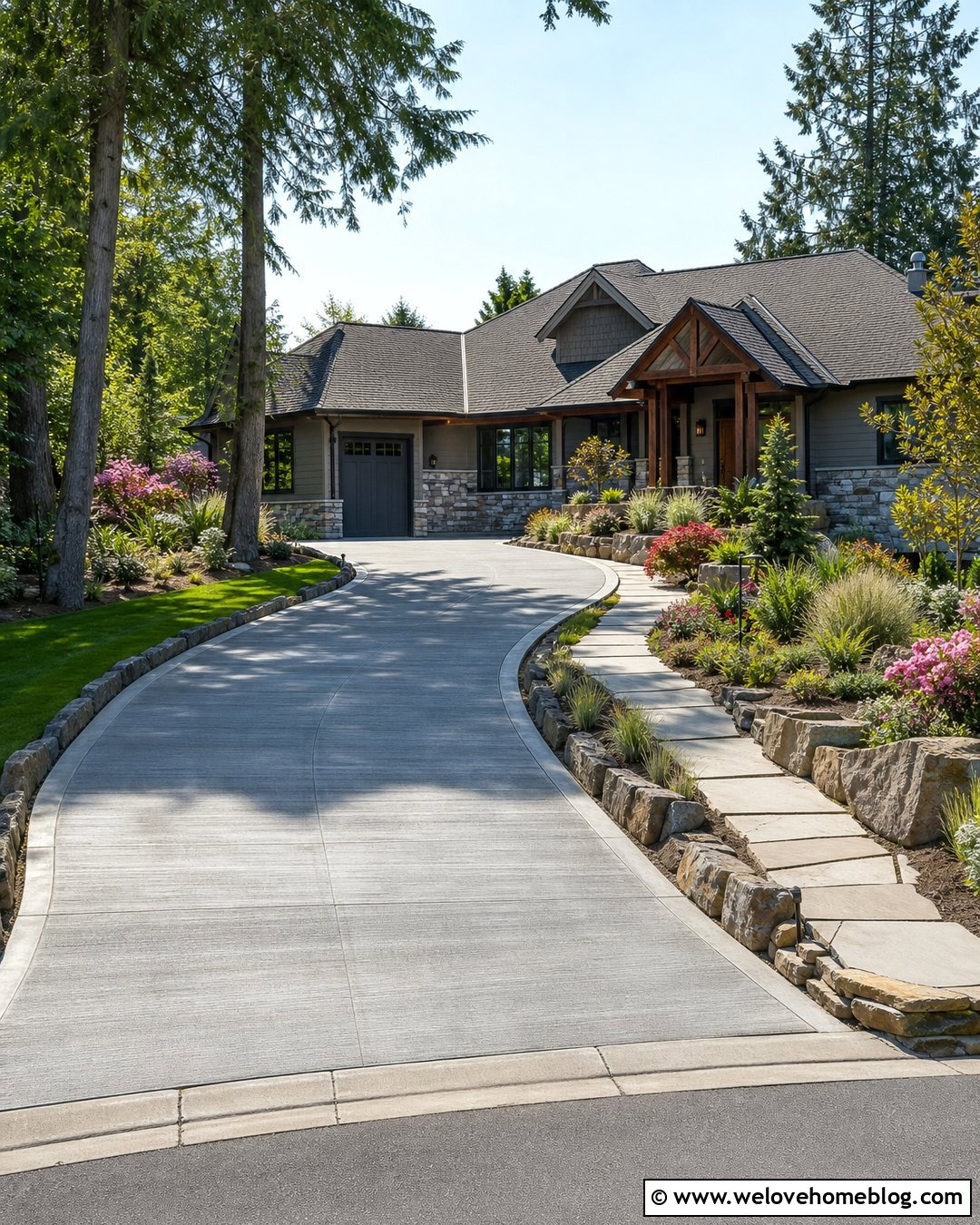
Natural stone edging helps a poured concrete driveway blend into a wooded, rustic, or craftsman-style property. Choose stone with colors already present in the house foundation, retaining walls, chimney, or porch columns. A medium-gray broom-finished center keeps the surface functional, while irregular stone along both sides creates a softer transition into the landscape. Use a gently curved driveway and repeat the stone around nearby planting beds for continuity. Ferns, native grasses, flowering shrubs, and small understory trees can reinforce the natural character. Keep the edging height subtle so it does not create an obstacle beside vehicle paths. Properly planned drainage is particularly important where dense planting and sloped ground meet the driveway, so coordinate grading, borders, and runoff management before the concrete is poured.
13. Dark Poured Concrete Driveway
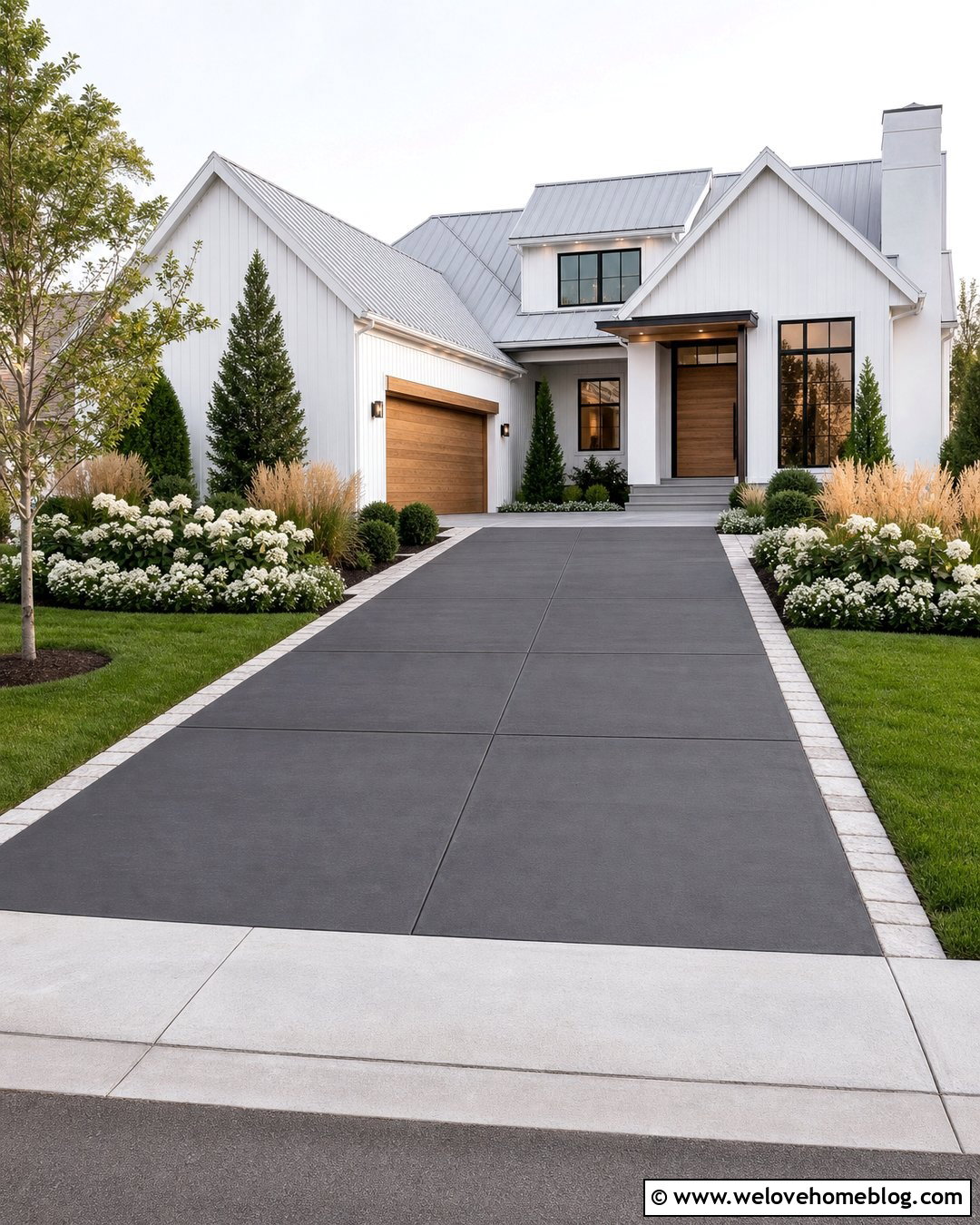
Charcoal-colored poured concrete can give a driveway a bold contemporary presence, especially beside a white, light gray, or natural wood facade. Use integral color or another contractor-recommended coloring method to create a consistent foundation. Large rectangular panels and narrow control joints keep the design simple and architectural. A pale concrete apron near the street or light stone border can prevent the dark surface from feeling visually heavy. Frame the drive with green lawn, white flowering plants, clipped evergreens, and warm-toned ornamental grasses. Dark surfaces can show dust, mineral marks, or fading differently than standard gray, so examine local installations before choosing the final shade. Discuss heat, sealing, traction, and maintenance expectations with the installer to ensure the dramatic color remains practical for your property.
14. White Poured Concrete Driveway
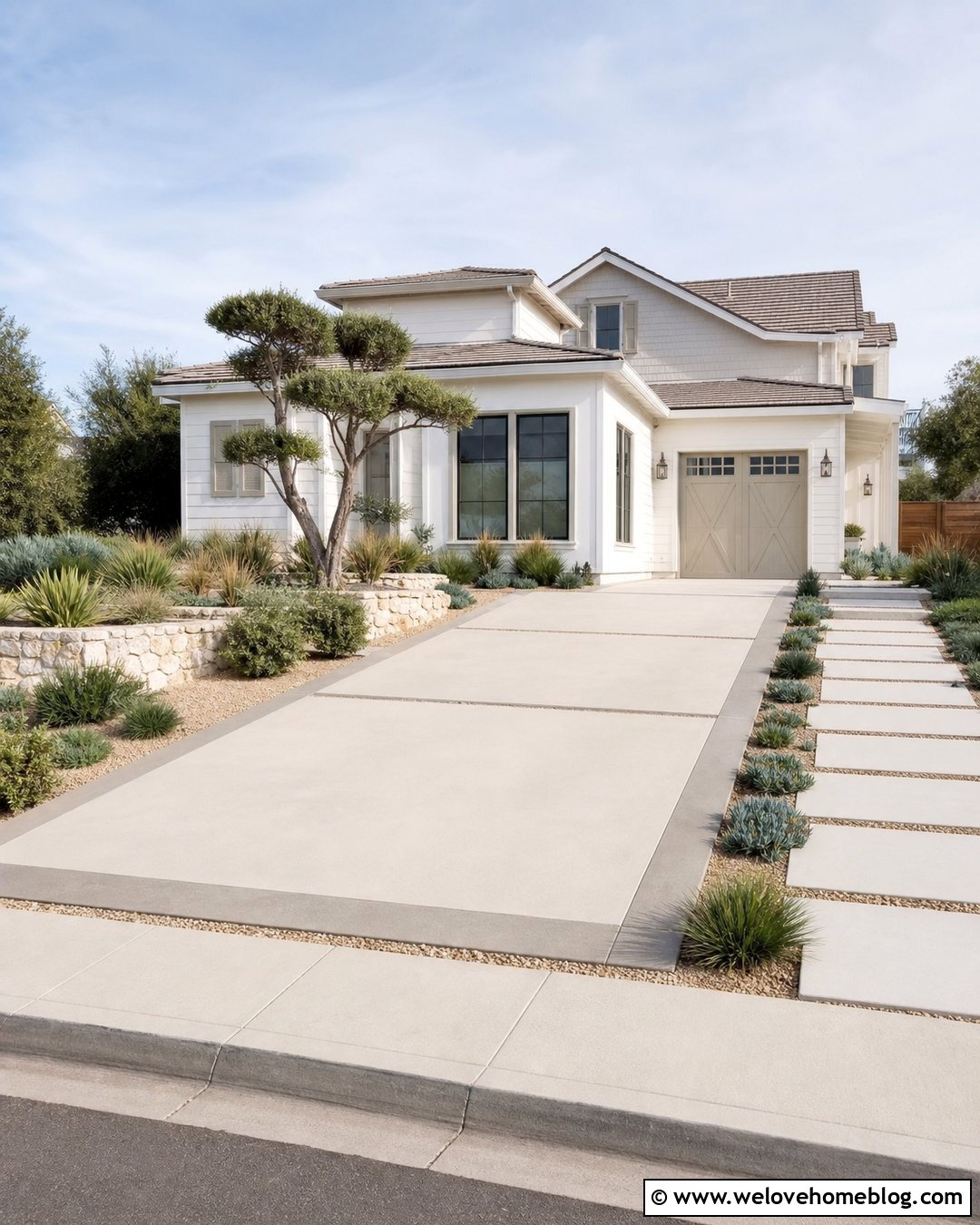
A pale poured concrete driveway can brighten a shaded front yard and complement modern, coastal, or desert-inspired architecture. Rather than selecting stark white, consider a soft ivory or very light gray that feels comfortable beside the house and surrounding soil. Use broad slabs with clean joints and a straight, uncluttered layout. Narrow gravel channels or warm gray concrete bands can outline the panels and prevent the surface from appearing flat. Complete the look with drought-tolerant grasses, low shrubs, and one sculptural tree placed away from driving sightlines. Light concrete may reveal leaves, tire marks, and organic stains more readily, so consider your cleaning expectations. Testing the selected mix and finish outdoors will provide a better impression of its true color in changing daylight.
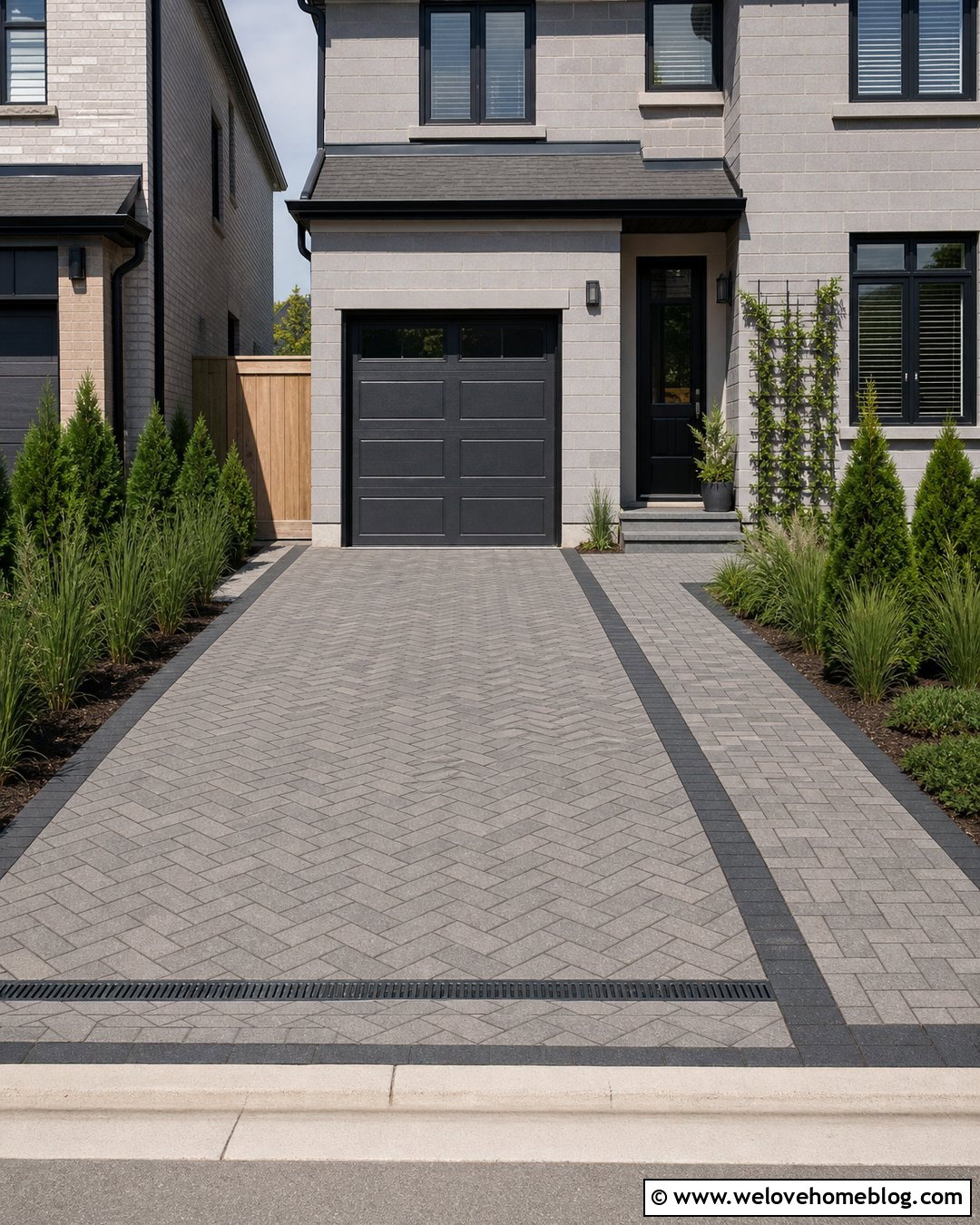
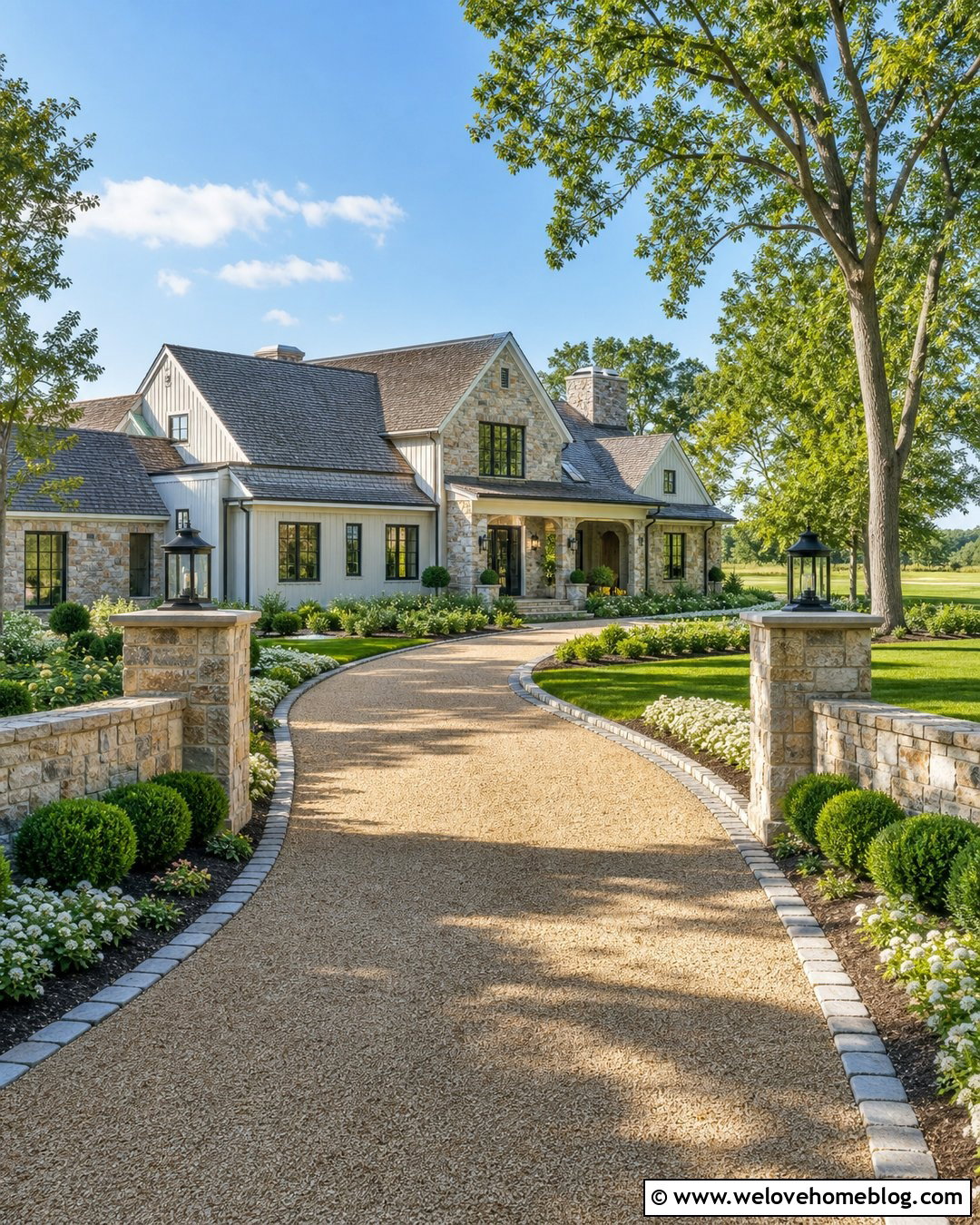
15. Poured Concrete Driveway With Pebble Channels
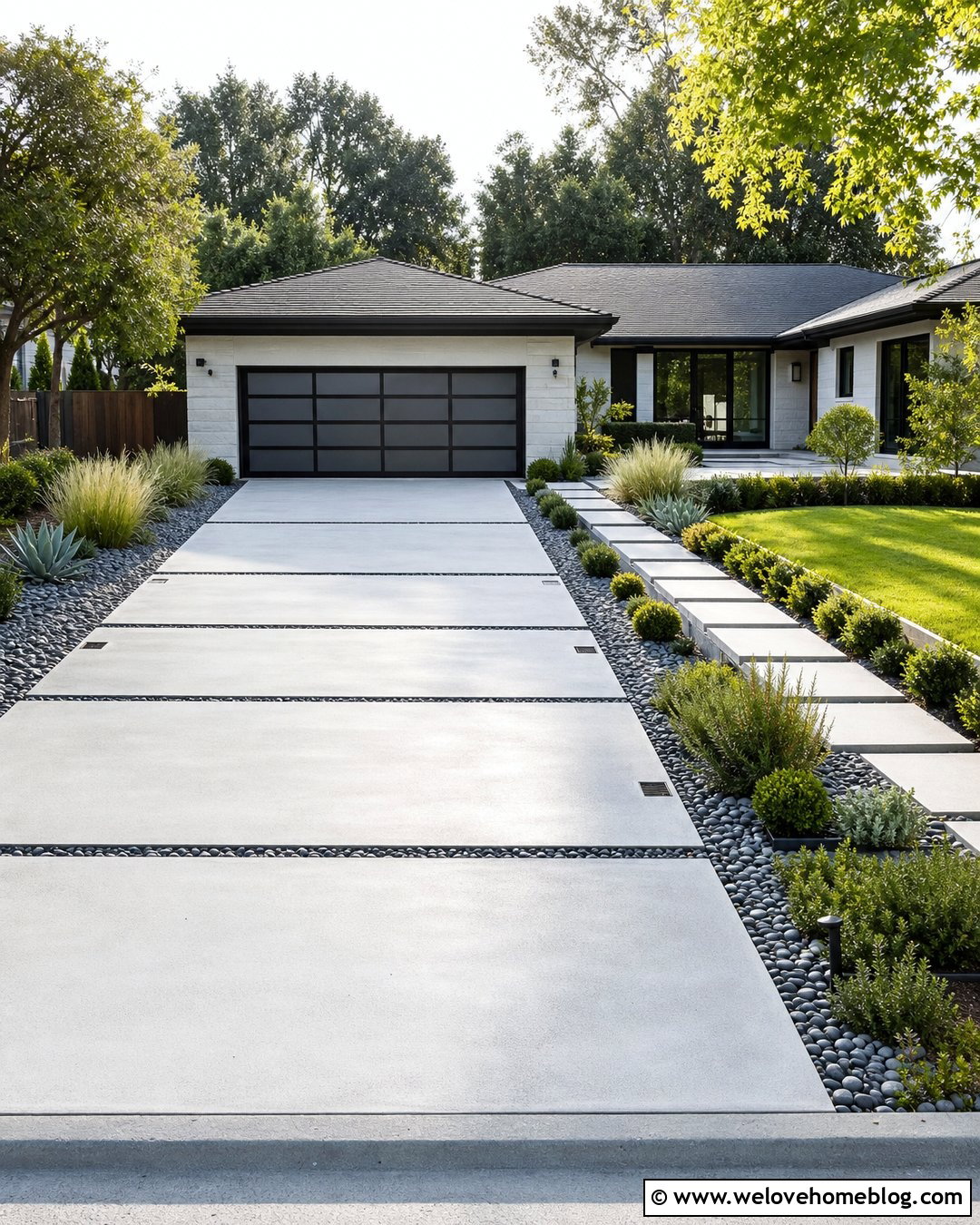
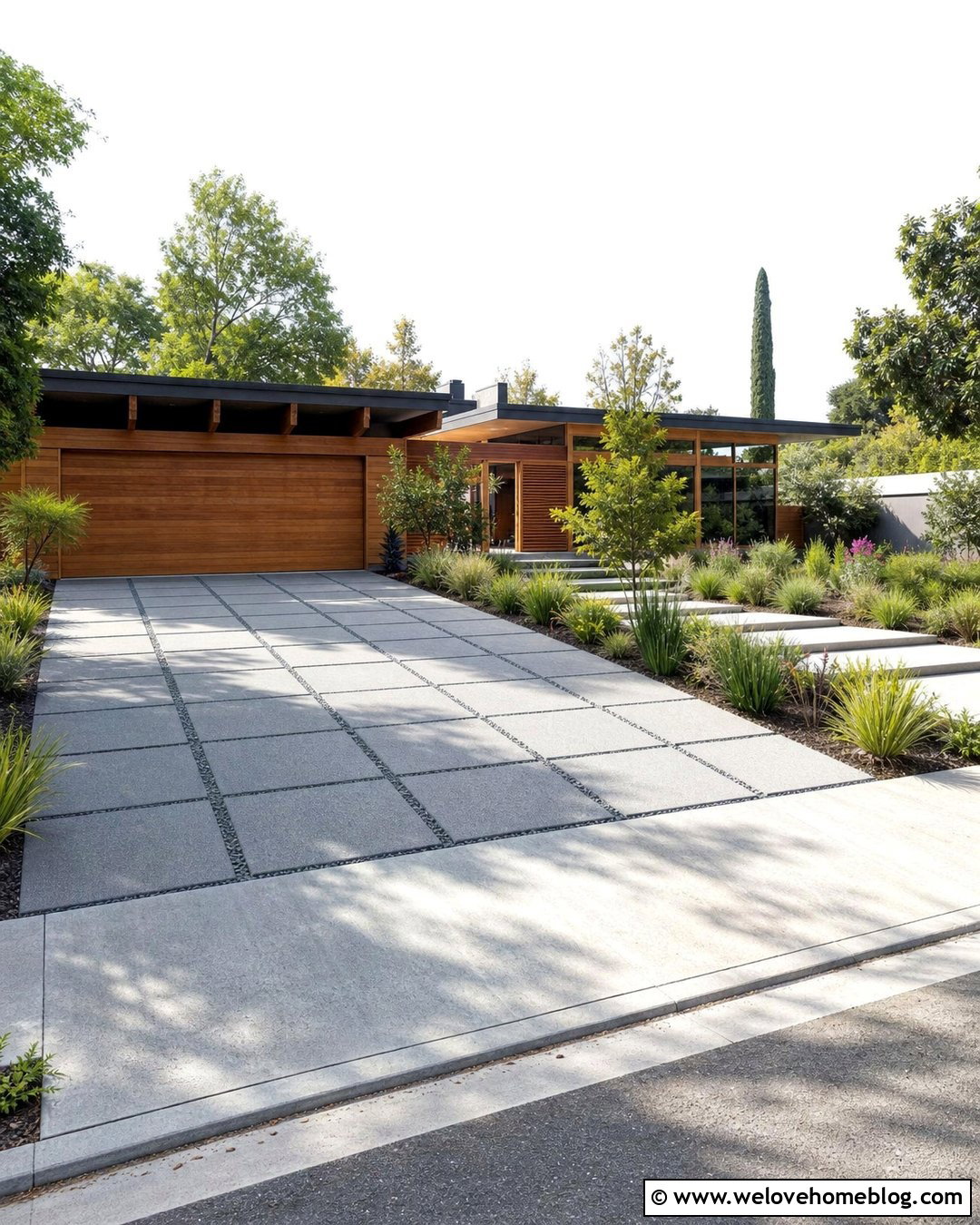
Decorative pebble channels between poured concrete sections add contrast while emphasizing the driveway’s shape. Create long rectangular slabs separated by narrow strips filled with compact, evenly colored stones. The channels can run across a straight driveway or form offset lines on a contemporary approach. Light gray concrete paired with dark river pebbles produces strong definition, while cream concrete and tan gravel create a softer effect. Continue the stone into adjacent planting beds so the material does not appear isolated. Succulents, ornamental grasses, clipped shrubs, and a concrete stepping path can finish the landscape. The channel design should account for drainage, weeds, stone migration, and routine cleaning. Metal restraints or recessed edges can help keep the pebbles neatly contained beside the concrete panels.
16. Poured Concrete Driveway With Stamped Border
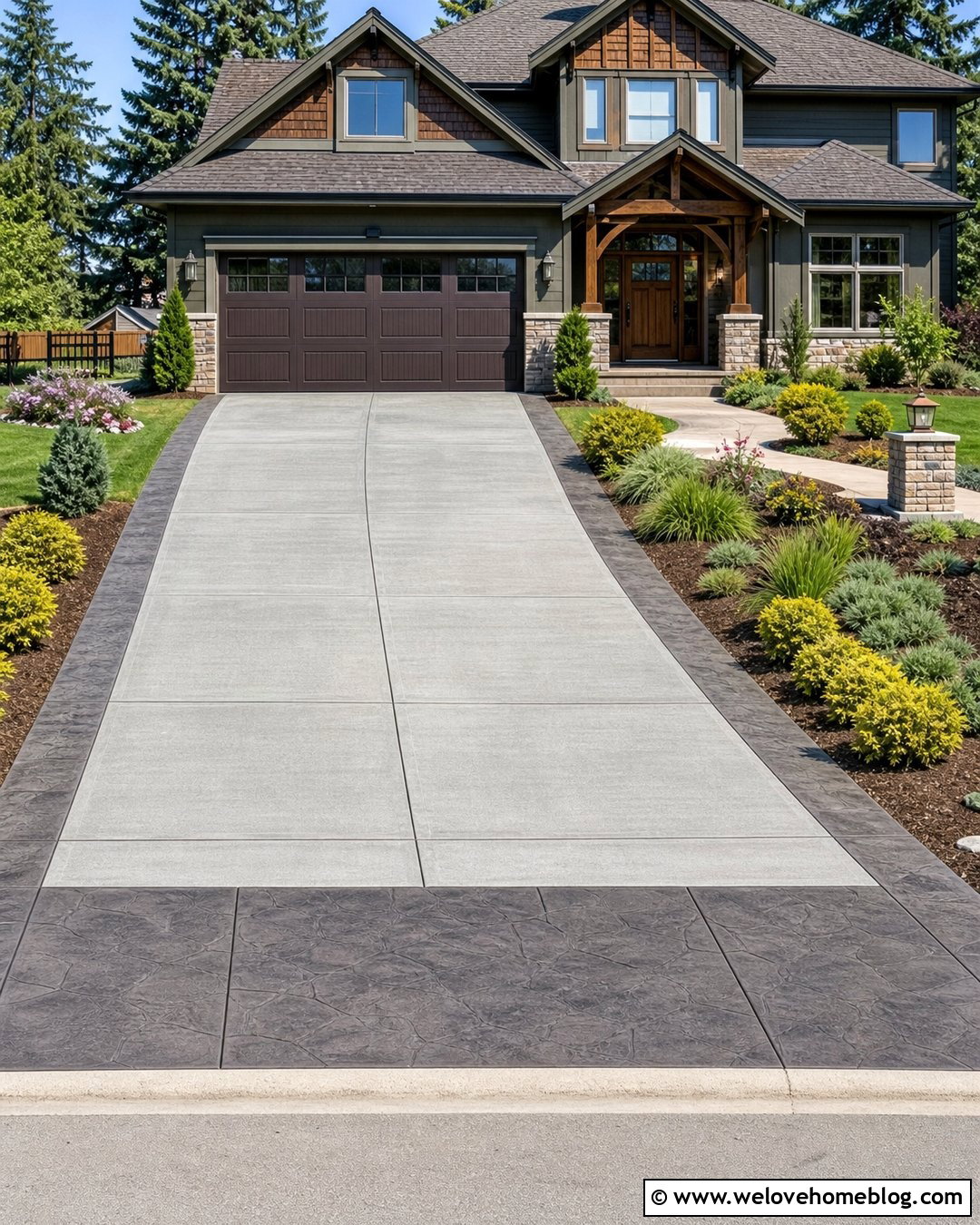
A stamped border provides detailed texture without covering the entire poured concrete driveway in a busy pattern. Keep the central field broom-finished, then frame it with stamped concrete resembling brick, slate, or cut stone. A darker border color can outline the driveway and coordinate with the home’s masonry or roof. Carry the stamped treatment across the entrance apron and around the walkway landing to make it feel integrated. This design works well with traditional, craftsman, and Mediterranean homes because it balances practical pavement with decorative detail. Use curved planting beds, evergreen shrubs, and flowering perennials along the edge. Select a border pattern with a believable scale, and review traction and sealer options before installation, particularly if the property receives frequent rain or winter weather.
17. Swirl Finish Poured Concrete Driveway
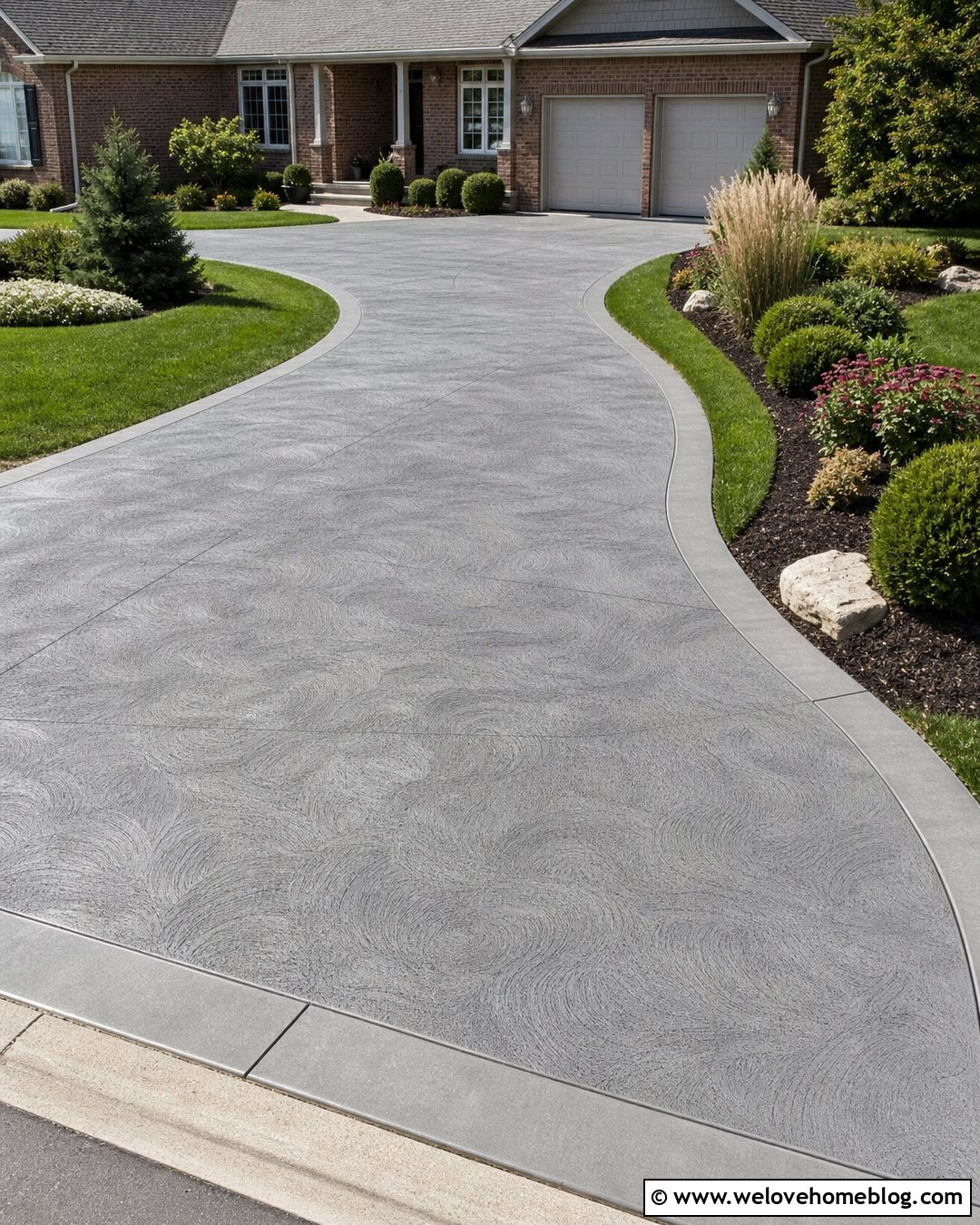
A swirl finish introduces visible movement through overlapping curved marks worked into the fresh concrete surface. The texture can make a broad driveway feel more handcrafted without relying on added color or elaborate stamping. Use the finish across a gently curved layout where its circular motion supports the overall shape. Smooth edge bands and simple control joints will prevent the design from becoming visually crowded. Medium-gray concrete pairs naturally with brick ranch homes, craftsman houses, and informal garden landscapes. Add rounded planting beds filled with mounded shrubs, ornamental grasses, and flowering ground cover. Because the depth and consistency of swirl textures can vary, view the contractor’s previous work or request a test panel. The finished surface should balance noticeable pattern, comfortable maintenance, and suitable vehicle traction.
18. Two Tone Poured Concrete Driveway
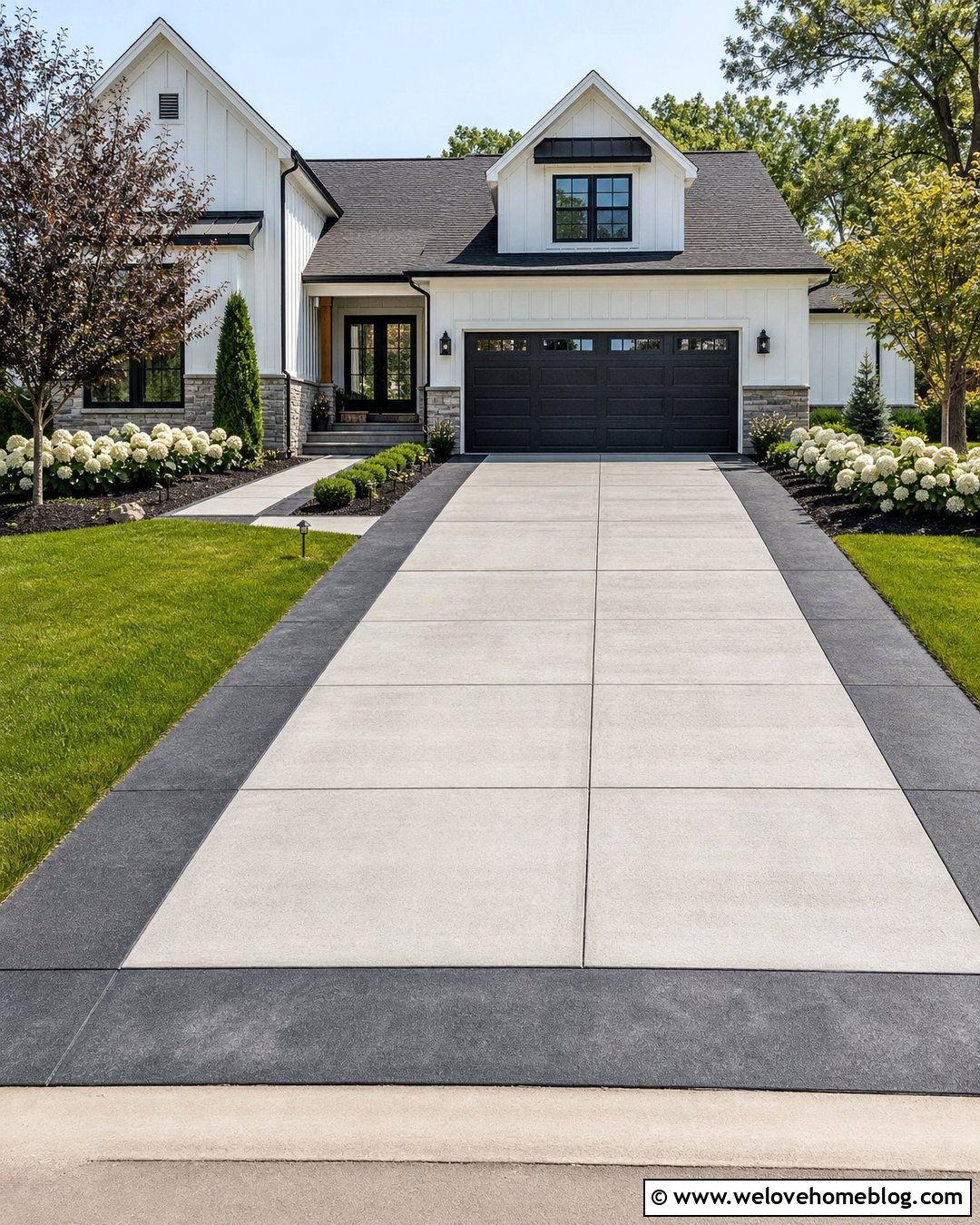
Two concrete colors can organize a driveway into distinct zones and highlight its proportions. Use a light gray central field with charcoal side bands, or reverse the combination for a stronger statement. Another approach is to place darker concrete at the entrance apron and garage threshold while keeping the main surface neutral. Align the color changes with joints so every transition looks deliberate. This complete design is particularly effective with modern farmhouse, transitional, and contemporary homes that already use contrasting exterior colors. Repeat both tones in the walkway or front steps, then frame the driveway with simple lawns and restrained planting beds. Review color samples in outdoor light and ask how the chosen coloring and sealing methods may affect long-term appearance, cleaning, and future repairs.
19. Narrow Poured Concrete Driveway
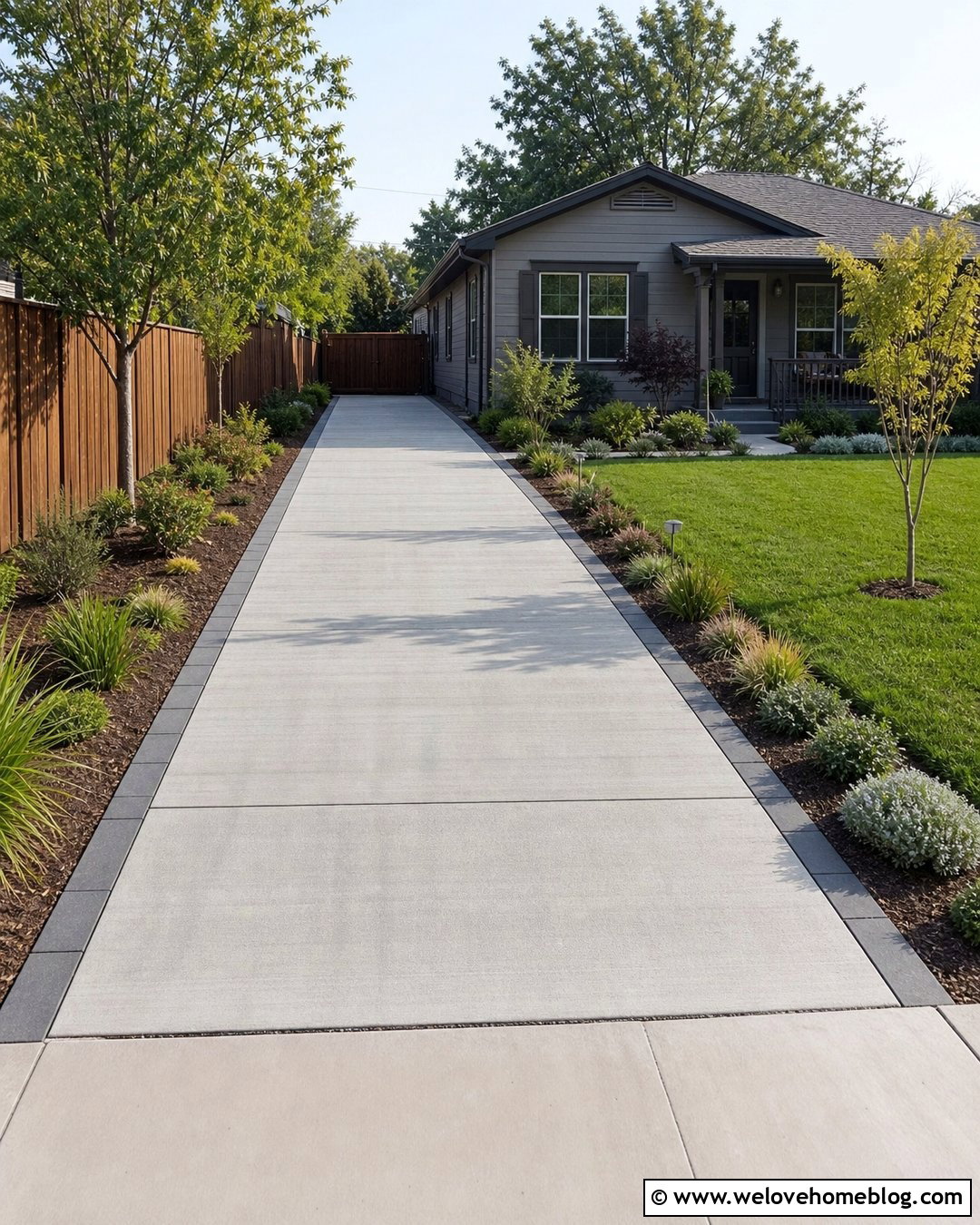
A narrow poured concrete driveway can feel more generous when its lines are clean and the surrounding landscape remains carefully controlled. Use a light broom finish and long rectangular panels that direct the eye toward the garage. Thin brick or dark concrete edging can define the sides without taking up valuable driving width. Keep shrubs low and place larger plants farther from the pavement to protect visibility and door clearance. A narrow grass strip or planted bed between the driveway and walkway can provide separation when space allows. This efficient look is ideal for bungalows, cottages, and urban homes with compact lots. Before construction, confirm practical vehicle width, turning needs, drainage, utility locations, and access requirements so the finished design looks streamlined without becoming difficult to use.
20. Sloped Poured Concrete Driveway
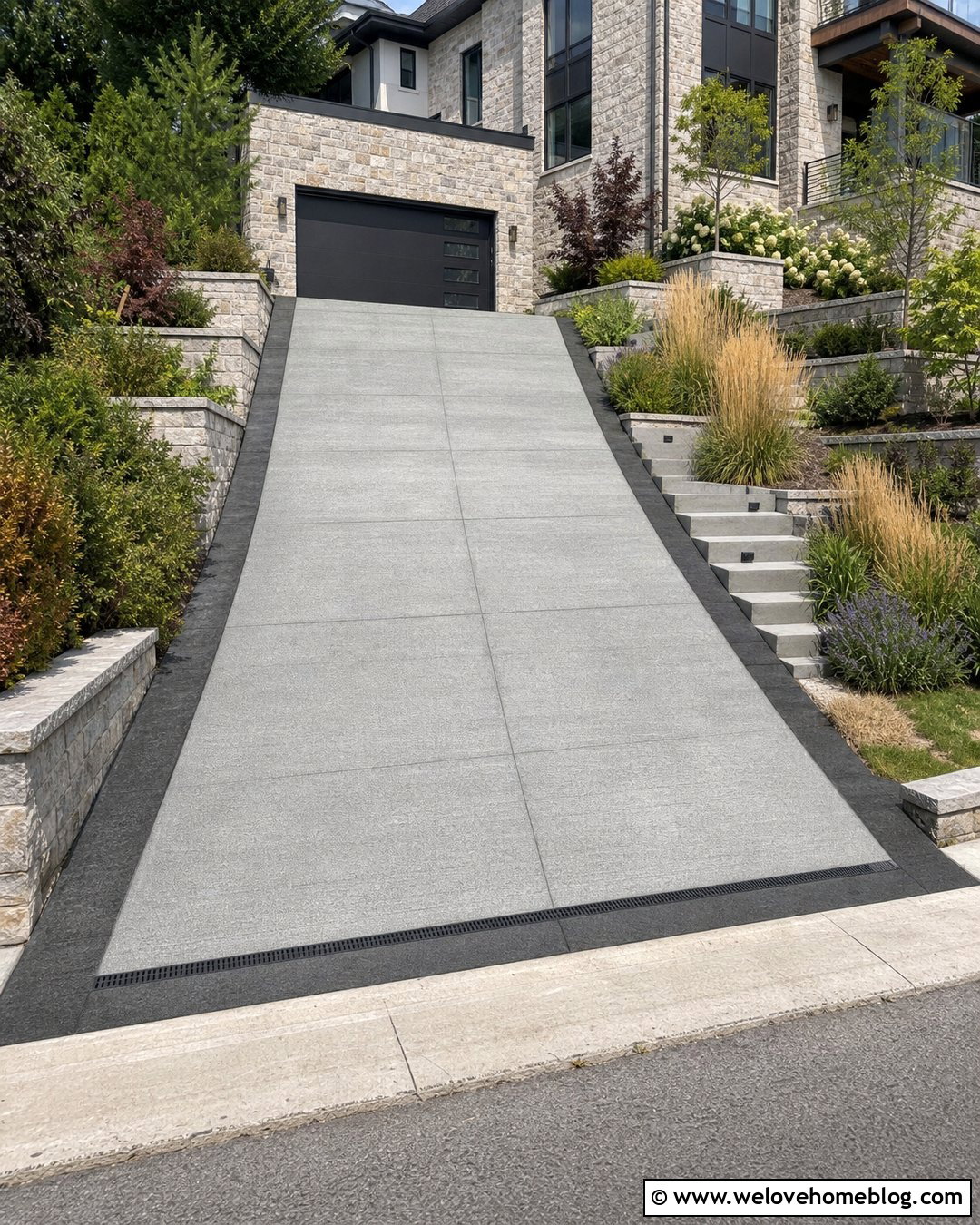
A sloped poured concrete driveway needs a surface design that supports both curb appeal and confident everyday use. A textured broom finish is a sensible foundation because it gives the incline visible grip without complicated decoration. Divide the slope into proportionate panels, placing joints according to the contractor’s structural and drainage plan. Dark concrete borders can emphasize the driveway edges, while tiered planting beds help connect the grade to the home. Use retaining walls that repeat stone or brick from the facade, and keep shrubs low near the street for better visibility. A separate stepped walkway may provide a clearer route to the front door. Drainage should be planned carefully so runoff moves away from the garage, house foundation, neighboring properties, and landscaped areas vulnerable to erosion.
Conclusion:
The most successful poured concrete driveway feels like a planned part of the home rather than a large slab placed in front of it. Finish, color, shape, borders, joints, landscaping, and walkways should support the same overall look. Simple broom-finished concrete may be perfect for a traditional property, while oversized slabs, grass strips, dark colors, or geometric scoring can complement modern architecture. Decorative borders and exposed aggregate add character without sacrificing a clean layout. Before choosing from these 20 Poured Concrete Driveway Ideas, compare real samples and consider traction, drainage, climate, maintenance, and vehicle access. Then work with an experienced local contractor to adapt your preferred design to the site and create lasting curb appeal.

Related posts:
Leave a Reply