
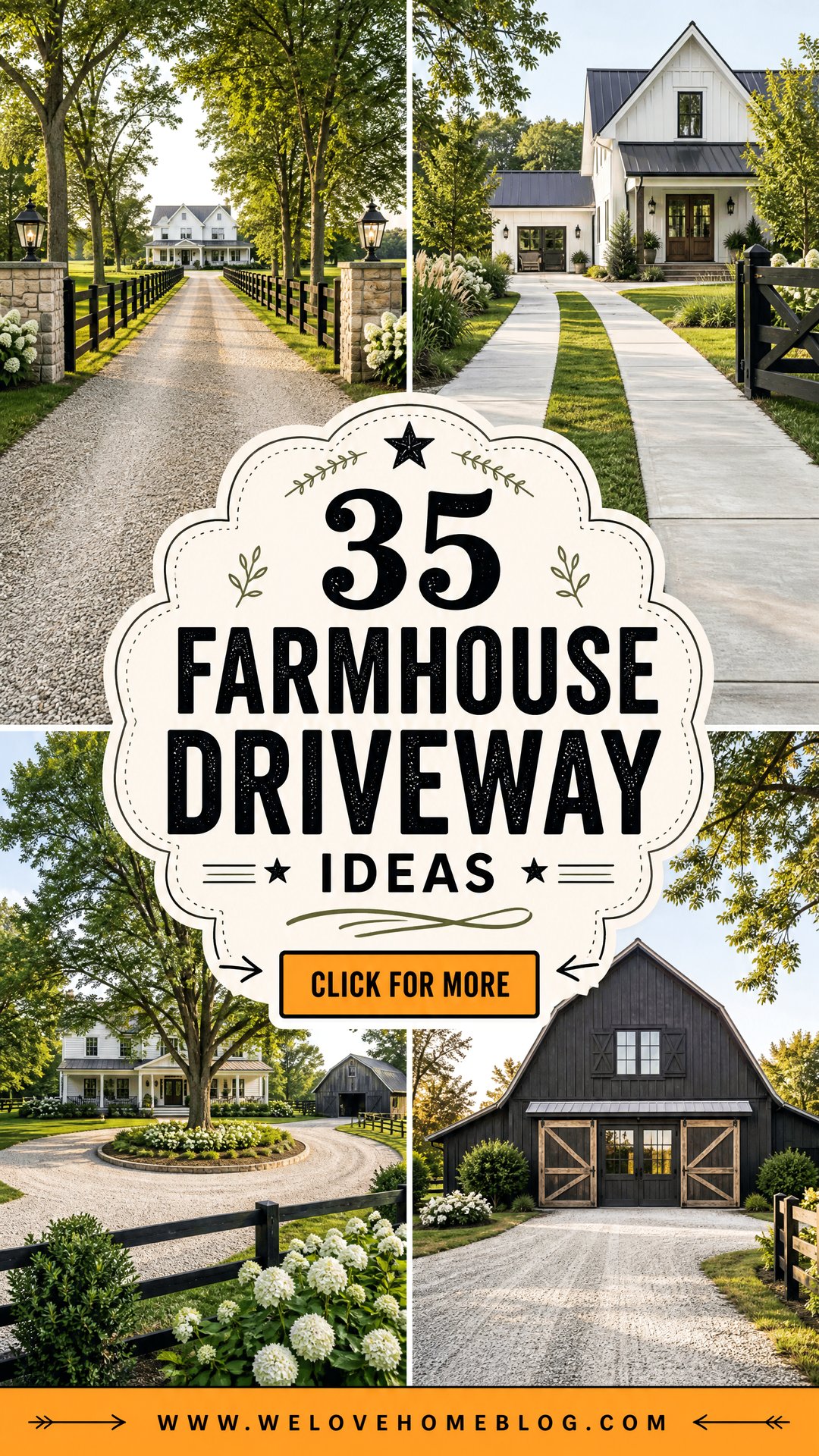
Farmhouse driveways feel most inviting when the surface, layout, borders, and surrounding landscape work as one complete design. The best 35 farmhouse driveway ideas include relaxed gravel lanes, practical concrete finishes, rustic brick paving, welcoming gates, and plantings that soften every edge. Gravel remains especially popular for country properties, while brick, stone, and concrete pavers can create a more tailored entrance. Circular layouts, ribbon driveways, natural stone walls, and landscaped center islands also fit the farmhouse aesthetic beautifully. () Whether you have a compact suburban lot or a long rural approach, the goal is to balance everyday function with simple country character. Explore these complete and practical 35 farmhouse driveway ideas.
1. Straight Gravel Farmhouse Driveway
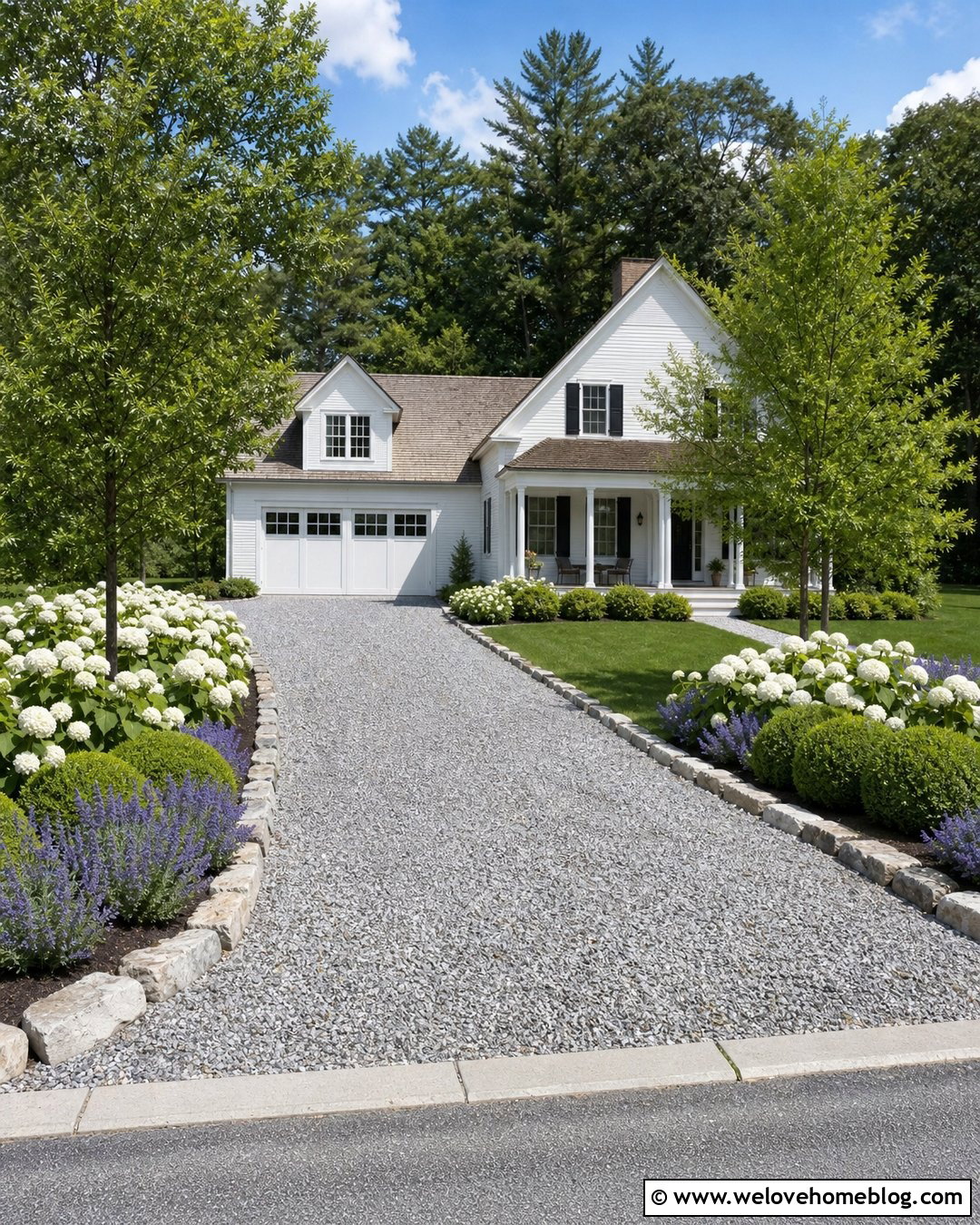
A straight gravel driveway creates a simple approach that suits a classic white farmhouse. Choose compacted gray crushed stone rather than loose, rounded pebbles to establish a more stable driving surface. Add chunky fieldstone edging on both sides to contain the gravel and connect the driveway to the home’s rustic architecture. Wide planting beds filled with white hydrangeas, boxwoods, and catmint can soften the long lines without making the entrance feel crowded. A matching gravel walkway branching toward the porch keeps the hardscape consistent. For a balanced view, frame the driveway with open lawn and two small ornamental trees near the house. This complete layout feels orderly, welcoming, and appropriate for both new and traditional farmhouses.
2. Curved Gravel Farmhouse Driveway
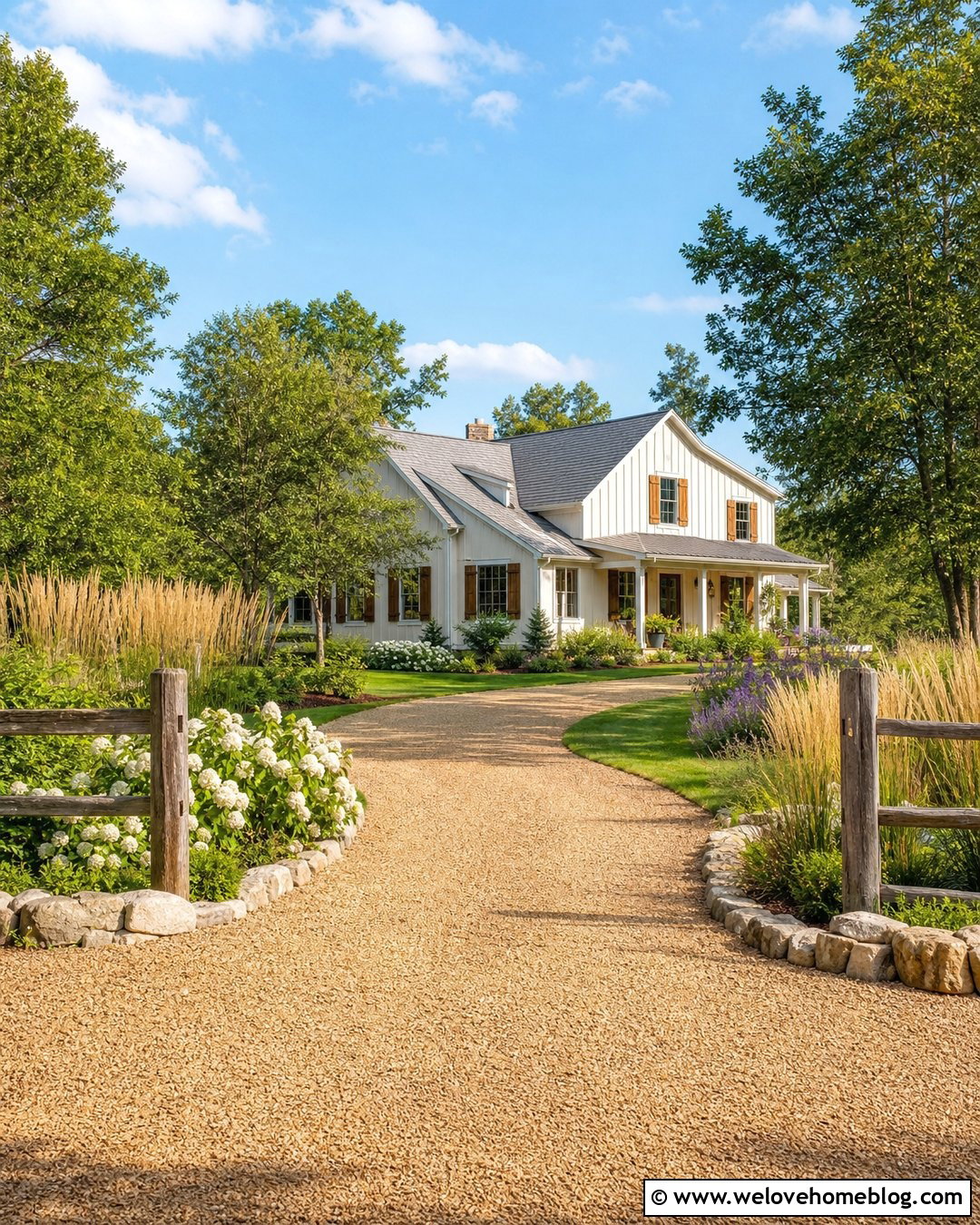
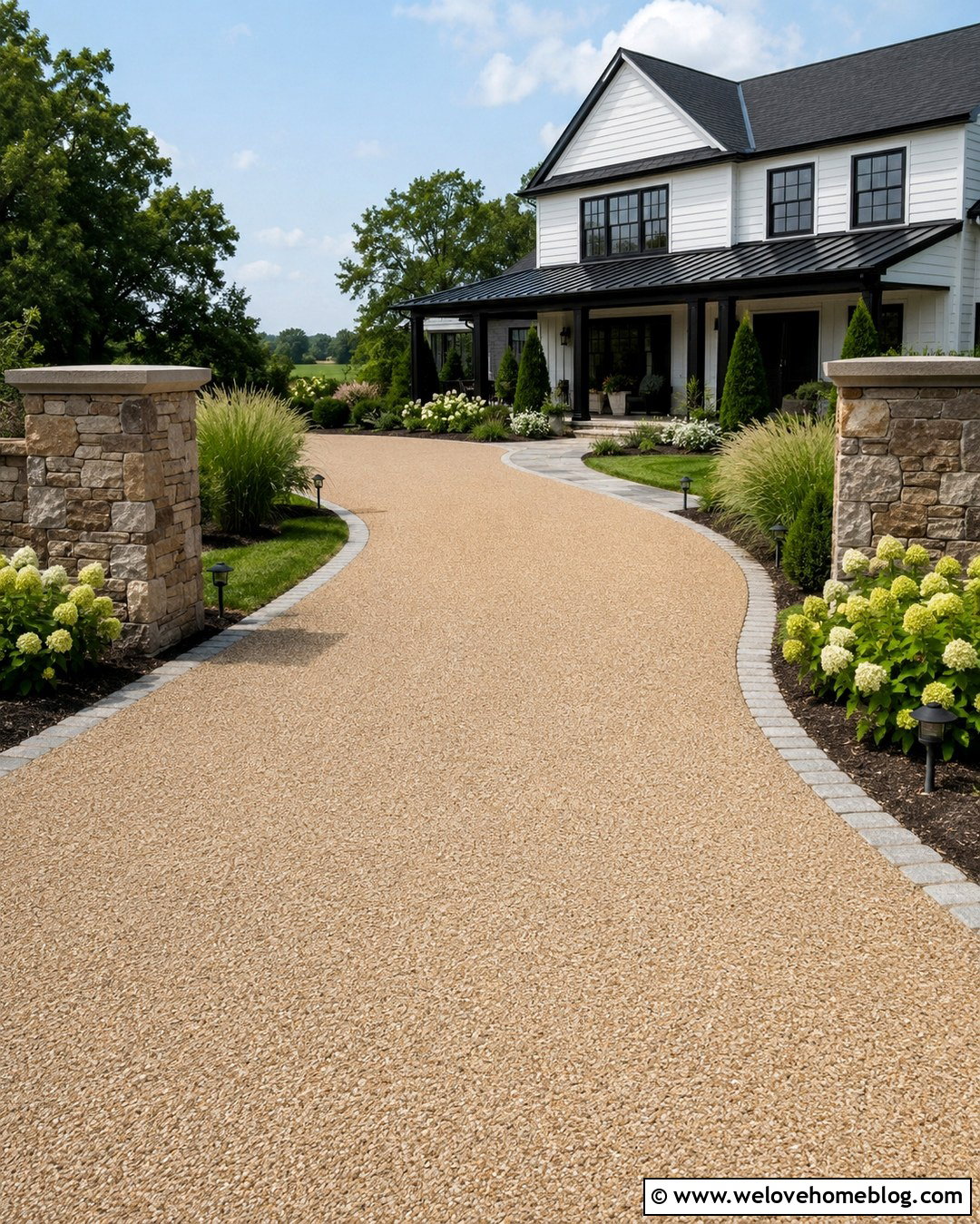
A gentle curve can make an ordinary gravel driveway feel more natural and visually interesting. Use warm tan crushed gravel to complement a farmhouse with cream siding, cedar shutters, or a weathered metal roof. Follow the curve with low fieldstone edging so vehicles can clearly read the driveway boundaries. On the outer edge, plant staggered ornamental grasses, flowering shrubs, and a few native trees. Keep the inside of the curve more open with lawn or a simple meadow planting. A split-rail fence near the street strengthens the country setting without blocking the house. The curved approach gradually reveals the porch and front facade, creating a sense of arrival while fitting comfortably into a wide, irregular, or wooded front yard.
3. Pea Gravel Farmhouse Driveway With Cobblestone Edging
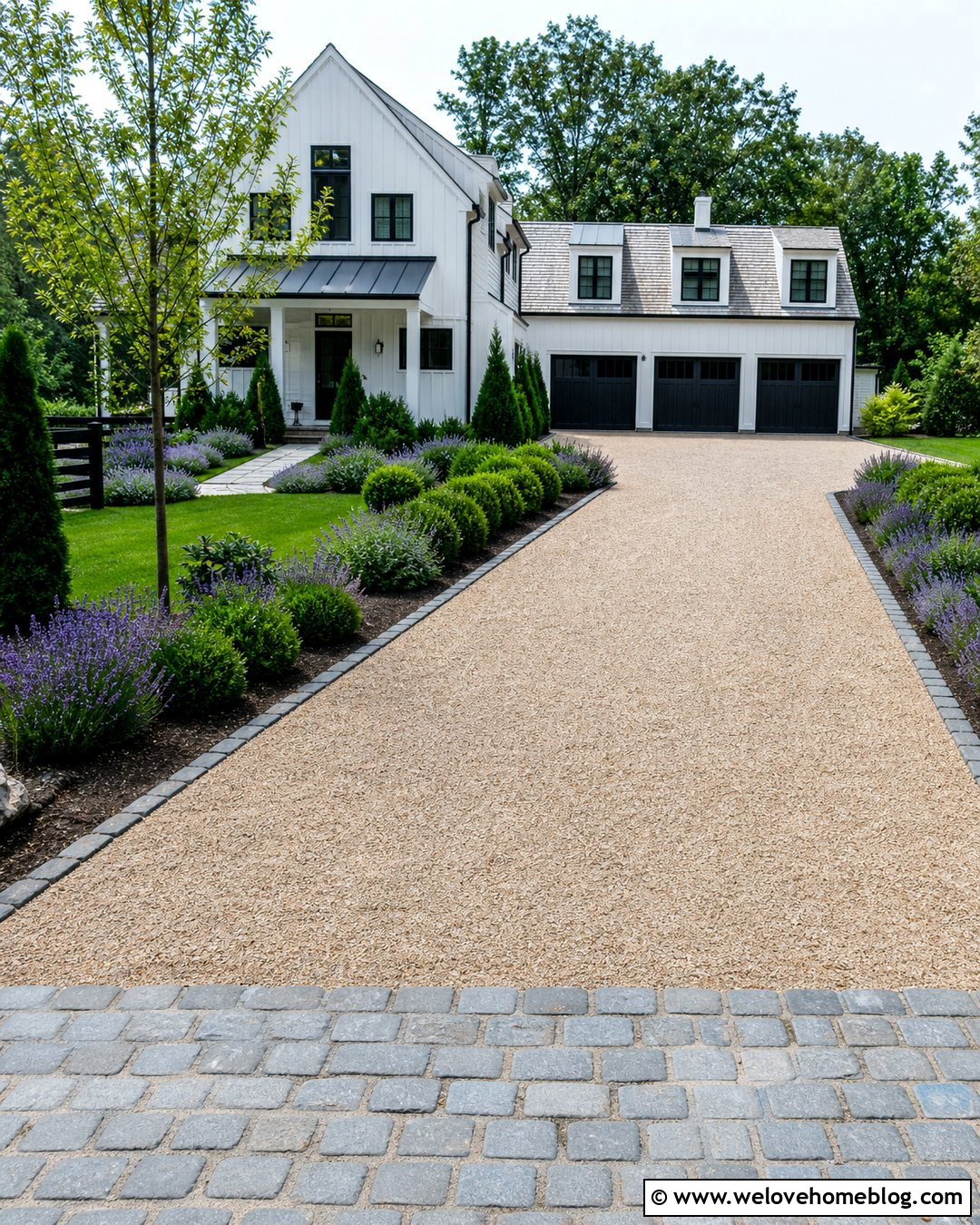
Soft beige pea gravel paired with dark cobblestone edging offers an attractive mix of relaxed and refined details. This combination works especially well beside a light-colored farmhouse with black windows and natural wood accents. Use cobblestone set in a sturdy edge restraint to keep the small gravel from spreading into the lawn. Lavender, catmint, and low evergreen shrubs can form fragrant borders along the driveway without obstructing visibility. A cobblestone apron at the road repeats the edging and gives the entrance a stronger visual finish. Near the garage, widen the driveway into a practical parking court. The contrasting materials make the entire surface easier to define while preserving the casual character expected from a farmhouse landscape.
4. Crushed Limestone Farmhouse Driveway
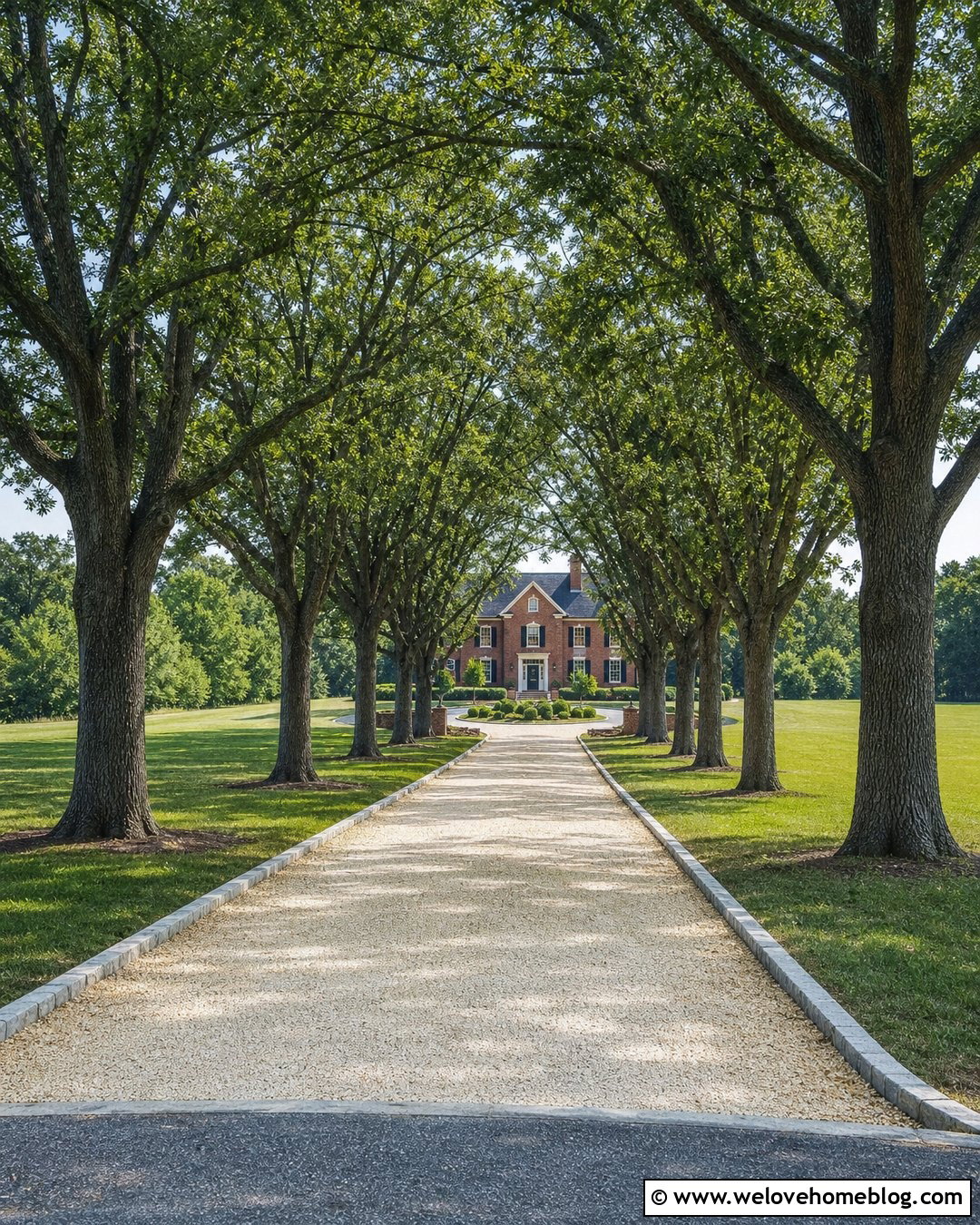
Pale crushed limestone can brighten the entrance to a red brick, stone, or dark-sided farmhouse. Its soft color creates a strong contrast against green lawns and mature shade trees. Design the driveway as a long, slightly tapered lane with limestone curbing or large natural stones along vulnerable edges. A row of evenly spaced oak, maple, or elm trees can give a larger property a traditional country approach. Underplant the trees with simple grass rather than complicated flower beds to keep maintenance manageable. At the house, transition the limestone into a wider parking area with a brick border. This surface can look especially cohesive when the same limestone appears in nearby garden paths, utility areas, or the walkway leading toward the porch.
5. Black Asphalt Farmhouse Driveway With Brick Border
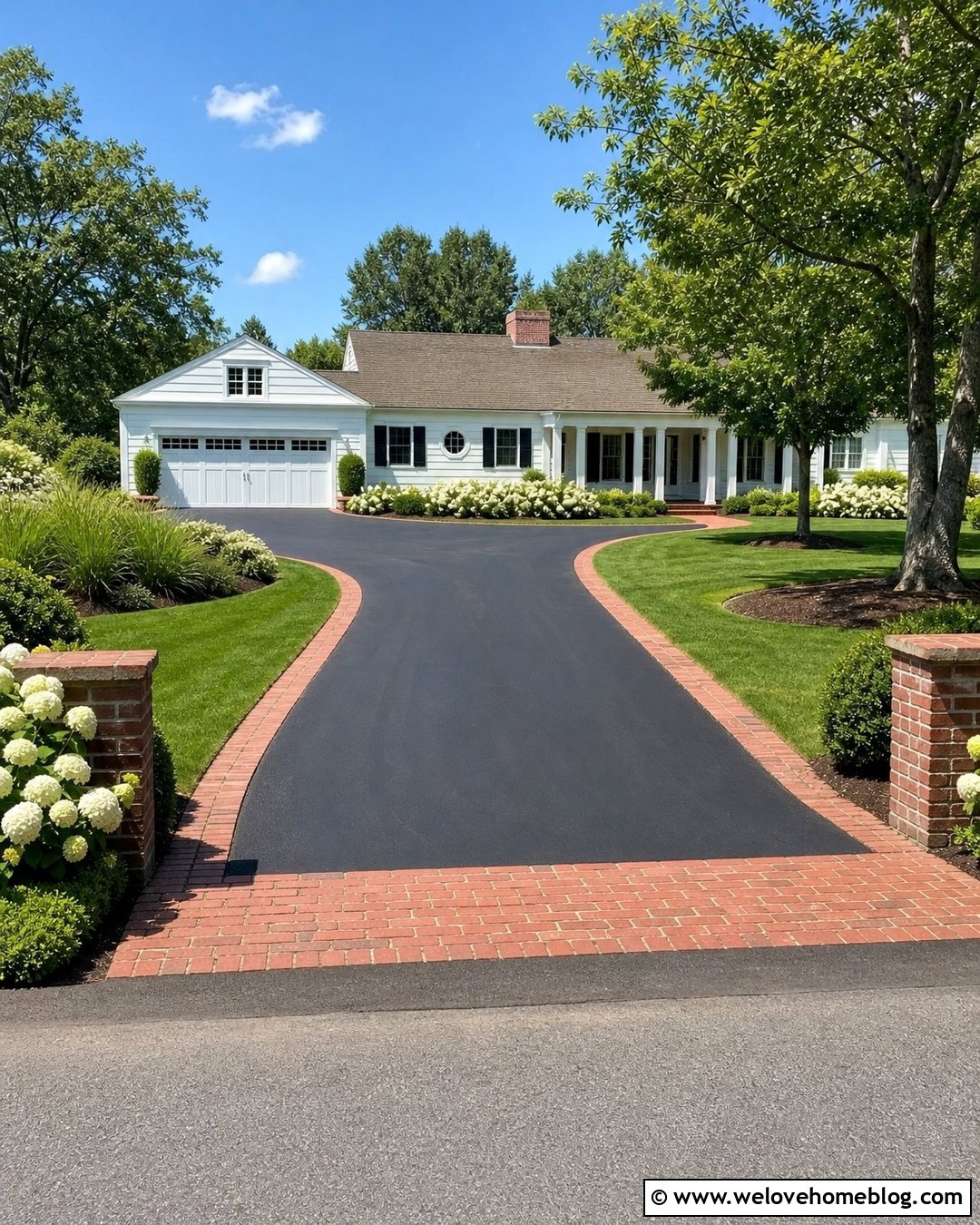
Black asphalt provides a smooth, practical surface that can still feel appropriate for a farmhouse when it receives the right border treatment. Frame the asphalt with red or weathered clay brick laid in a soldier-course pattern. The warm brick tones soften the dark pavement and connect beautifully with brick porch steps, chimneys, or foundation details. Shape the driveway with a subtle curve rather than a perfectly rigid line. Plant white hydrangeas, compact hollies, and ornamental grasses beyond the brick border to add texture. A brick entrance apron can give the street-facing end a more finished appearance. This design is particularly useful for busy households that want an easy driving surface without losing the warm, traditional character of farmhouse landscaping.
6. Concrete Ribbon Farmhouse Driveway
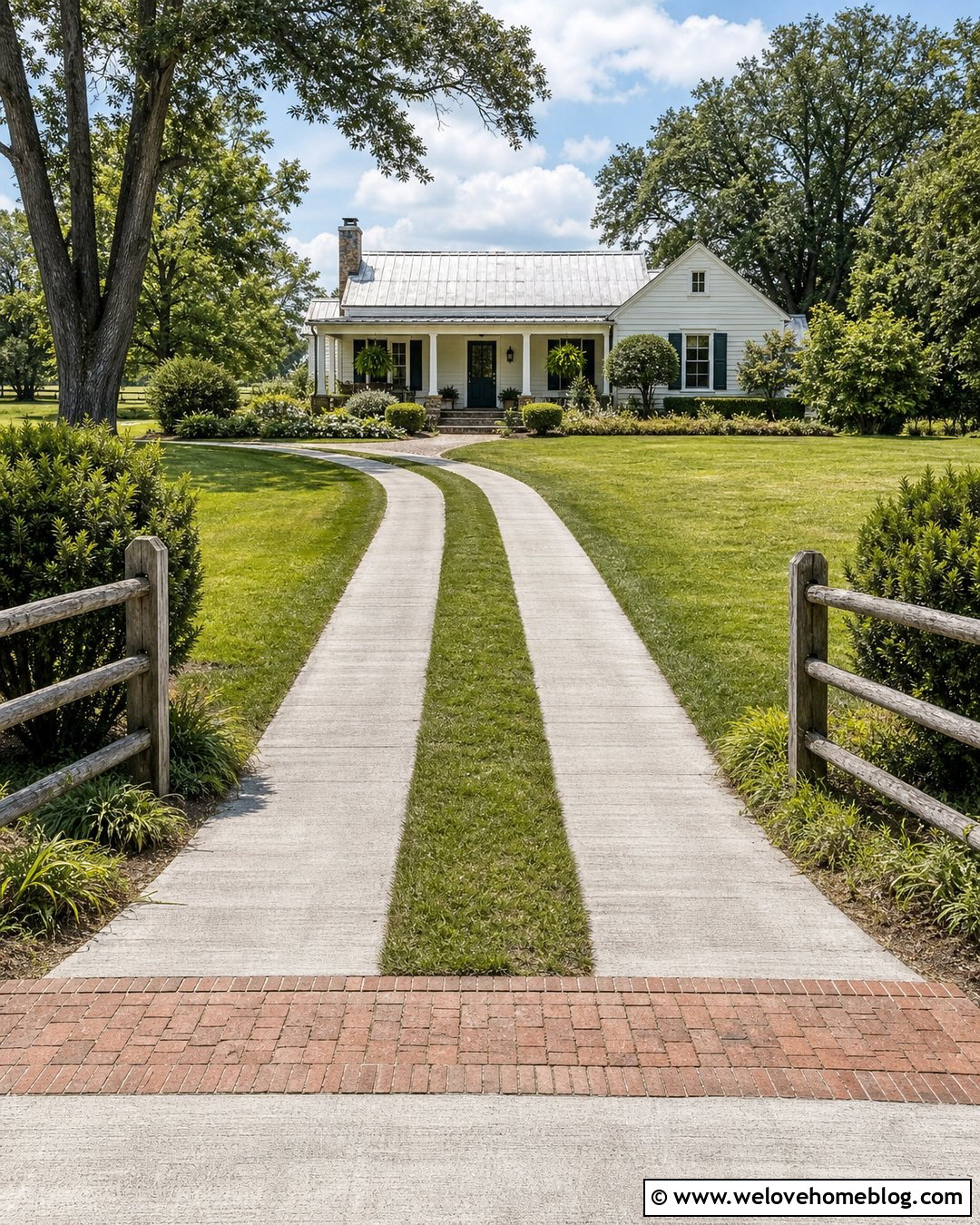
A concrete ribbon driveway uses two paved tracks with a green strip running between them. The open center reduces the visual weight of the concrete and creates an older country-home appearance. Use lightly textured gray concrete for the wheel paths and durable, low-growing grass in the middle. Keep the layout straight or gently curved, depending on the shape of the front yard. Brick or stone bands at the entrance can reinforce the tracks and make the transition from the road feel intentional. Frame the driveway with open lawn, native shrubs, and a low split-rail fence. This complete look suits a cottage farmhouse, restored rural home, or detached barn. It feels understated while giving vehicles a clearly defined and usable route.
7. Brushed Concrete Farmhouse Driveway With Brick Apron
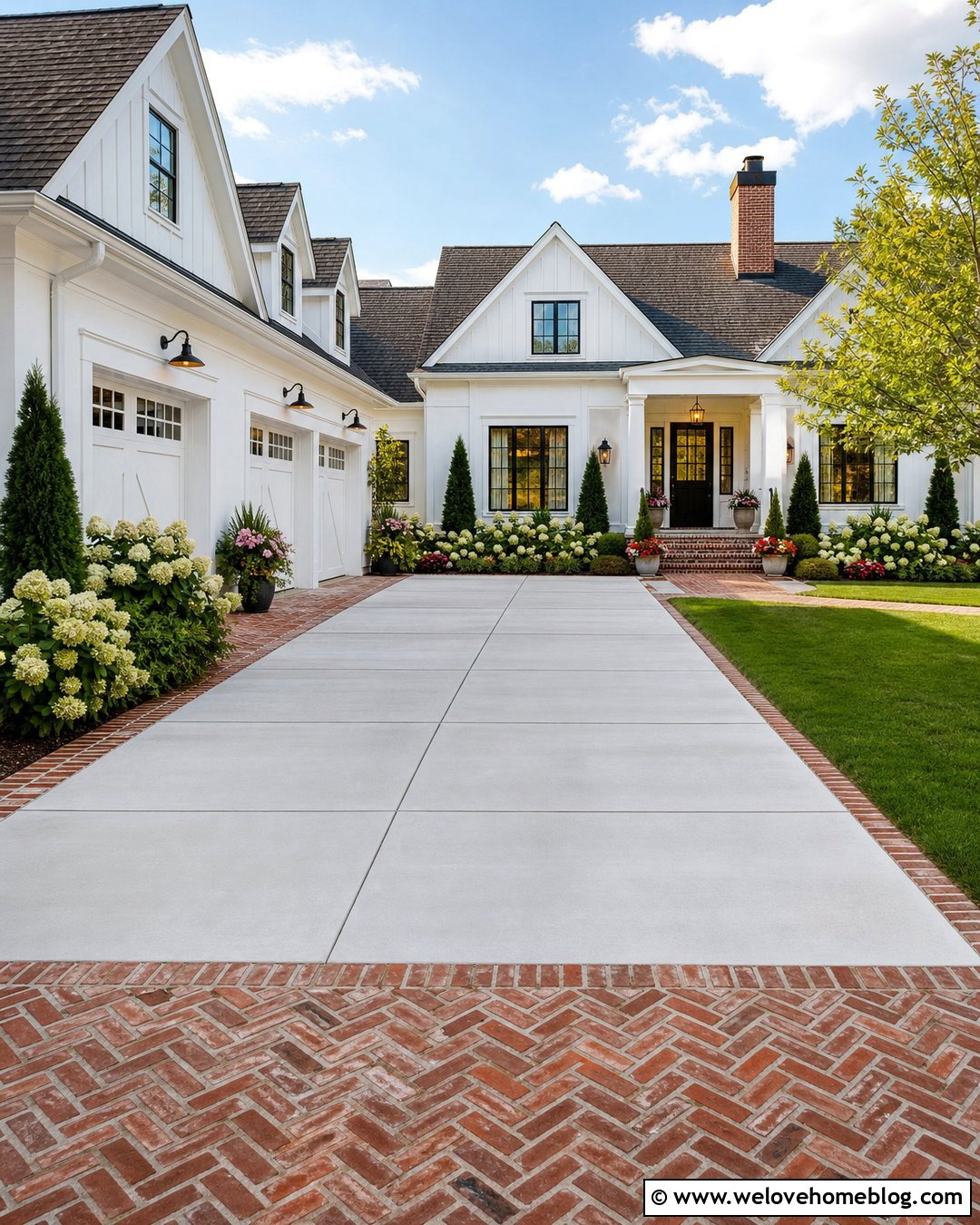
Brushed concrete offers a clean surface without looking overly polished or urban. Its fine texture provides subtle visual movement and pairs well with a modern or transitional farmhouse. Pour the driveway in large rectangular sections with neatly planned control joints. At the street, install a wide clay brick apron in a running-bond or herringbone pattern. Repeat that brick around the driveway edges near the garage and front walkway. Deep planting beds containing hydrangeas, dwarf evergreens, and seasonal flowers can soften the broad concrete area. For a cohesive transition, connect the driveway to the porch with a brick walkway rather than another plain concrete strip. The finished design balances practical construction with the warm color and handcrafted detail associated with farmhouse exteriors.
8. Stamped Concrete Farmhouse Driveway
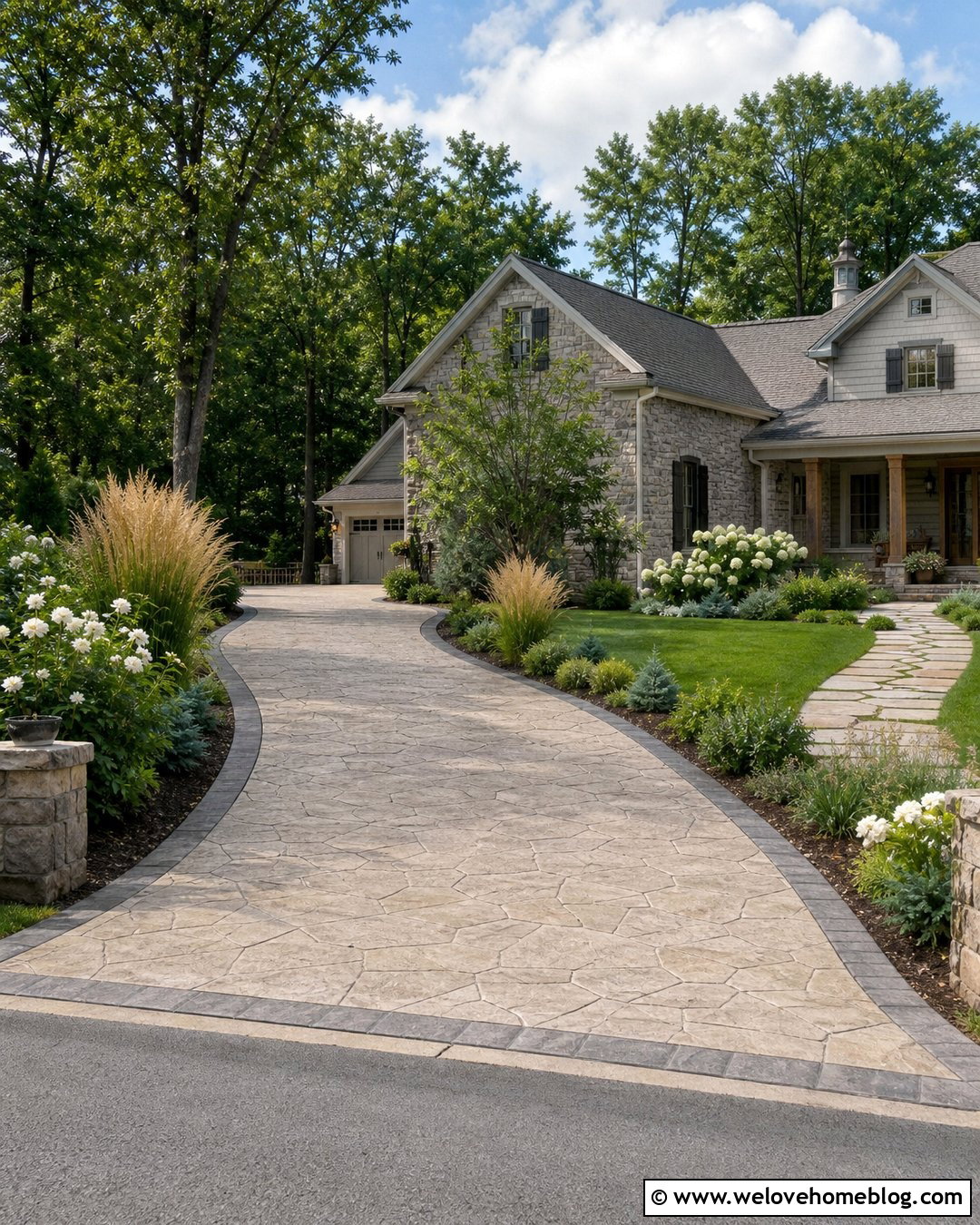
Stamped concrete can reproduce the appearance of worn stone while providing a continuous paved surface. Select a muted gray, taupe, or sandstone color instead of a highly contrasting or glossy finish. A random flagstone pattern works well with rustic farmhouses, while a subtle rectangular stone pattern complements cleaner modern farmhouse architecture. Add a darker stamped border to outline the driveway and emphasize its curved or straight shape. Along both sides, use broad beds of ornamental grasses, roses, hydrangeas, and low evergreens. A natural stone walkway leading to the porch helps reinforce the textured surface. Keep the color palette restrained so the driveway does not compete with the house. The result should feel practical, softly aged, and integrated into the surrounding landscape.
9. Exposed Aggregate Farmhouse Driveway
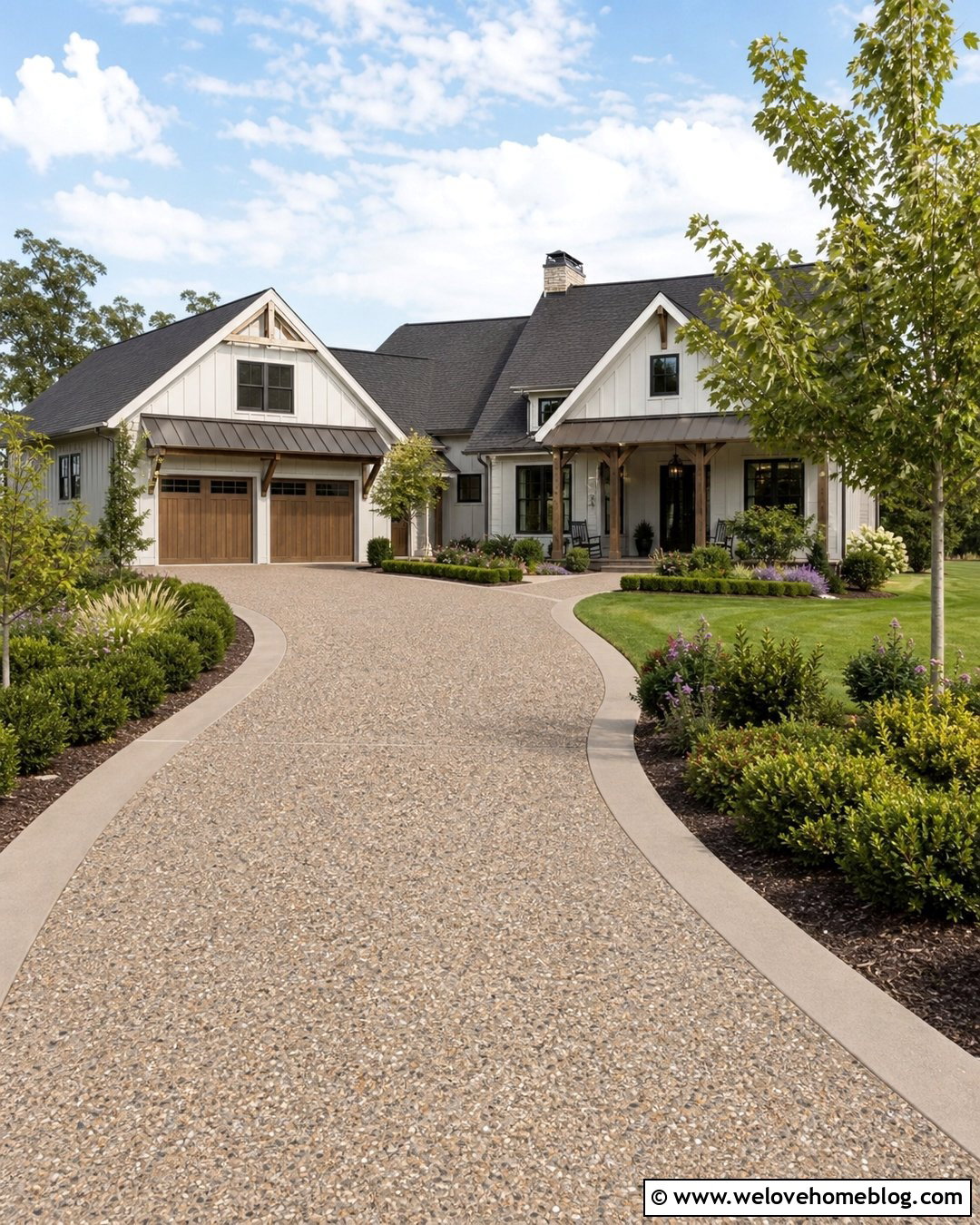
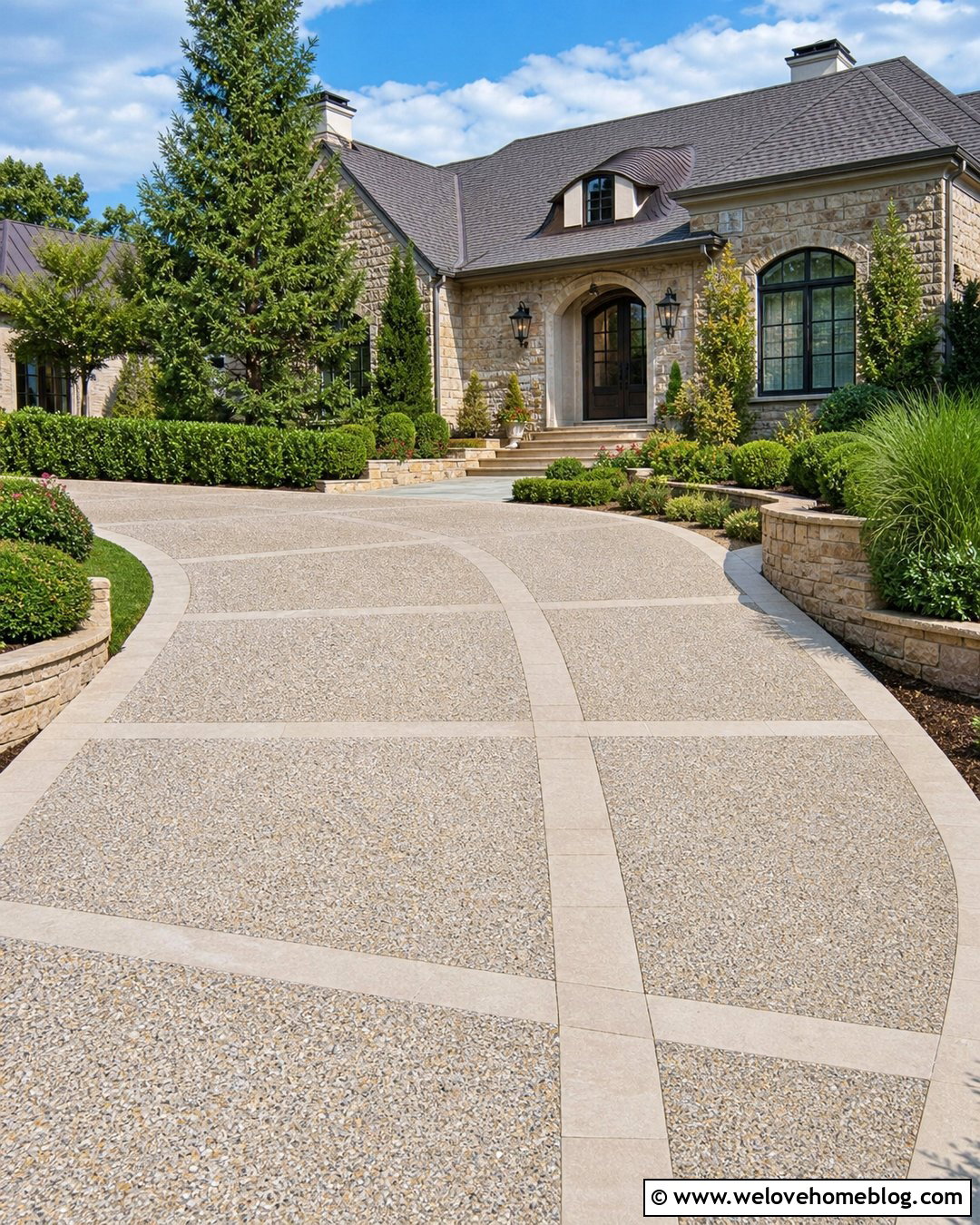
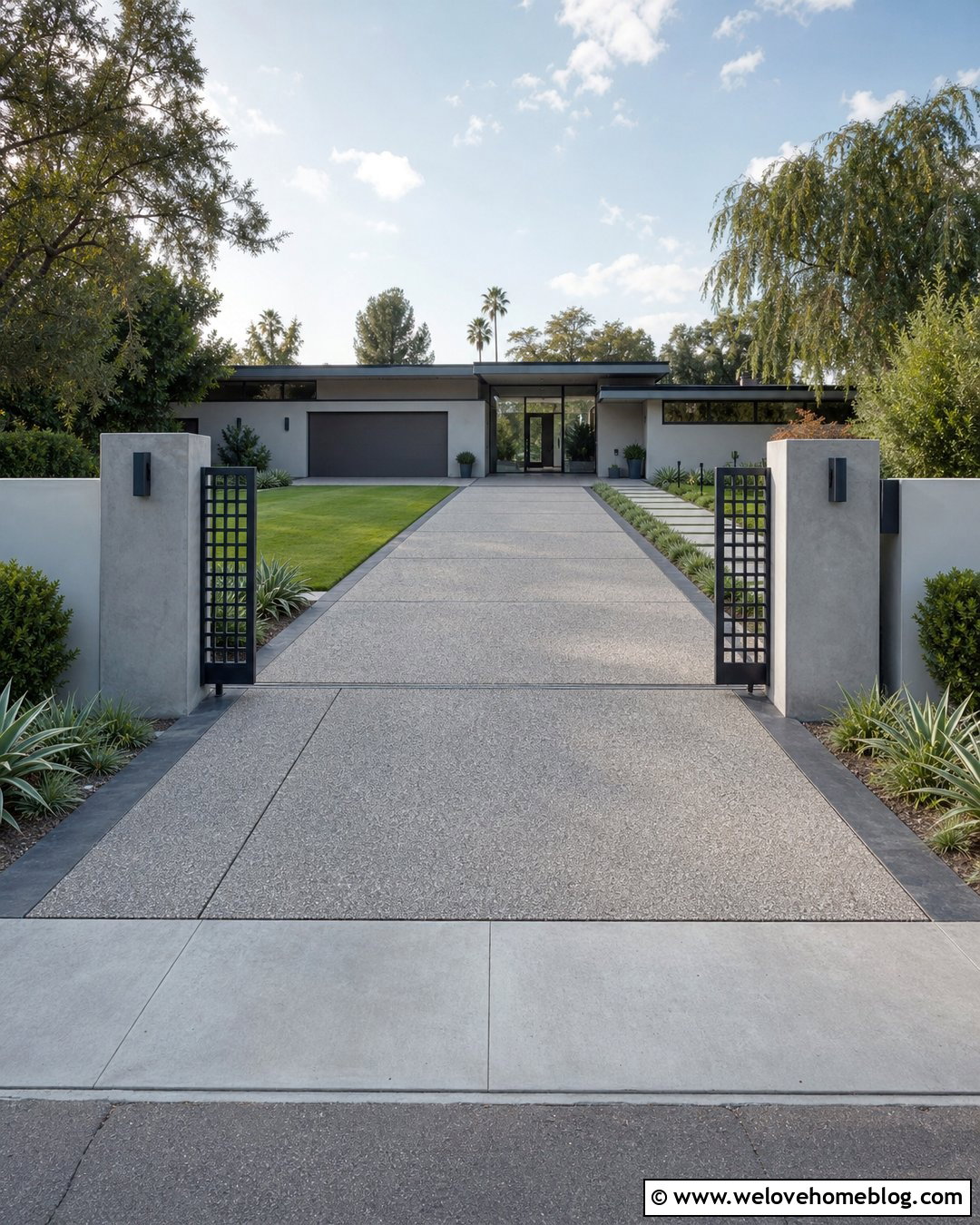
Exposed aggregate introduces natural color and texture without the movement of loose gravel. Choose an aggregate mix containing warm gray, tan, and cream stones that coordinates with the farmhouse foundation or porch columns. A gently curved layout can make the textured surface feel less formal. Border the driveway with smooth concrete bands or dark brick pavers for a clear, durable edge. Plant low boxwoods and flowering perennials near the house, then transition to open grass closer to the street. A matching exposed aggregate walkway can connect the parking area to the porch while maintaining visual continuity. This full driveway design works well for homeowners who like the appearance of small stones but prefer a fixed surface and a cleaner transition into the garage.
10. Herringbone Brick Farmhouse Driveway
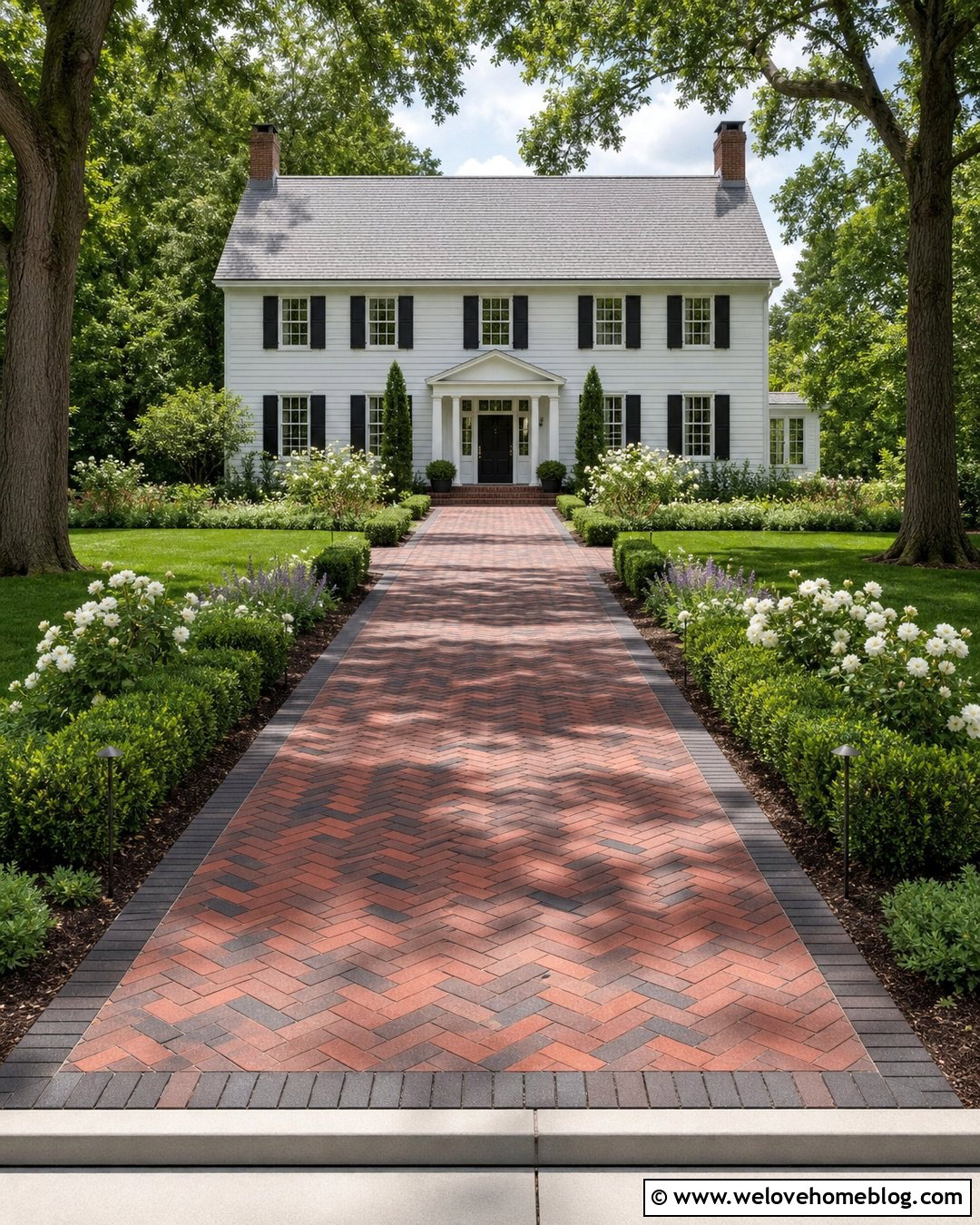
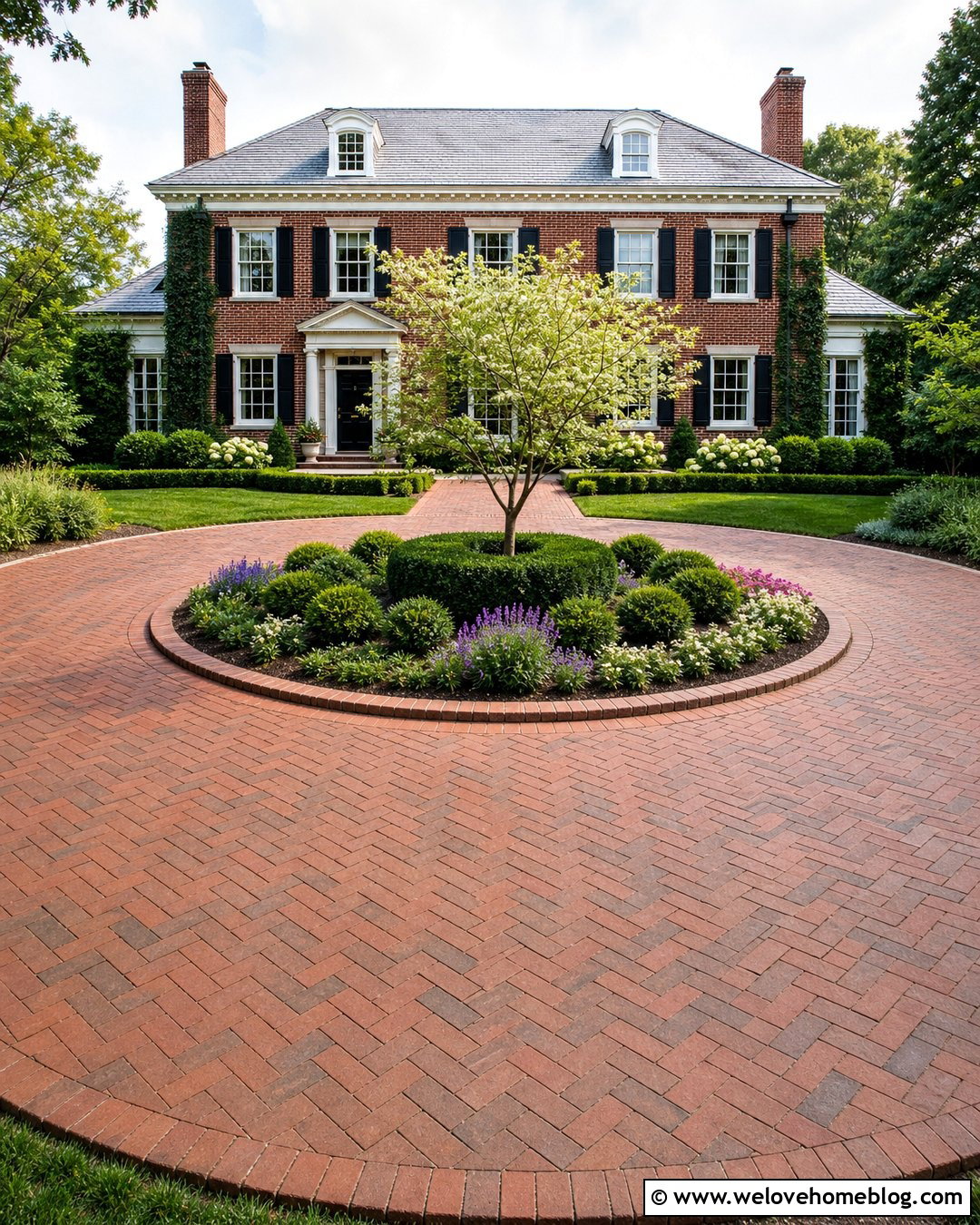
Few surfaces feel as established as a driveway paved with traditional clay brick. Lay red, brown, and charcoal bricks in a herringbone pattern to create movement and support the driveway’s country character. Use a darker brick soldier course around the perimeter to hold the pattern visually. A straight approach works well for symmetrical Colonial farmhouses, while a soft curve suits a more relaxed cottage exterior. Border the driveway with clipped boxwoods, white roses, and informal perennial beds. Near the porch, connect a brick walkway directly to the driveway using the same pattern and color blend. Keep the surrounding lawn simple so the brick remains the focal material. Over time, slight color variation can make the entrance look even more natural and settled.
11. Reclaimed Brick Farmhouse Driveway
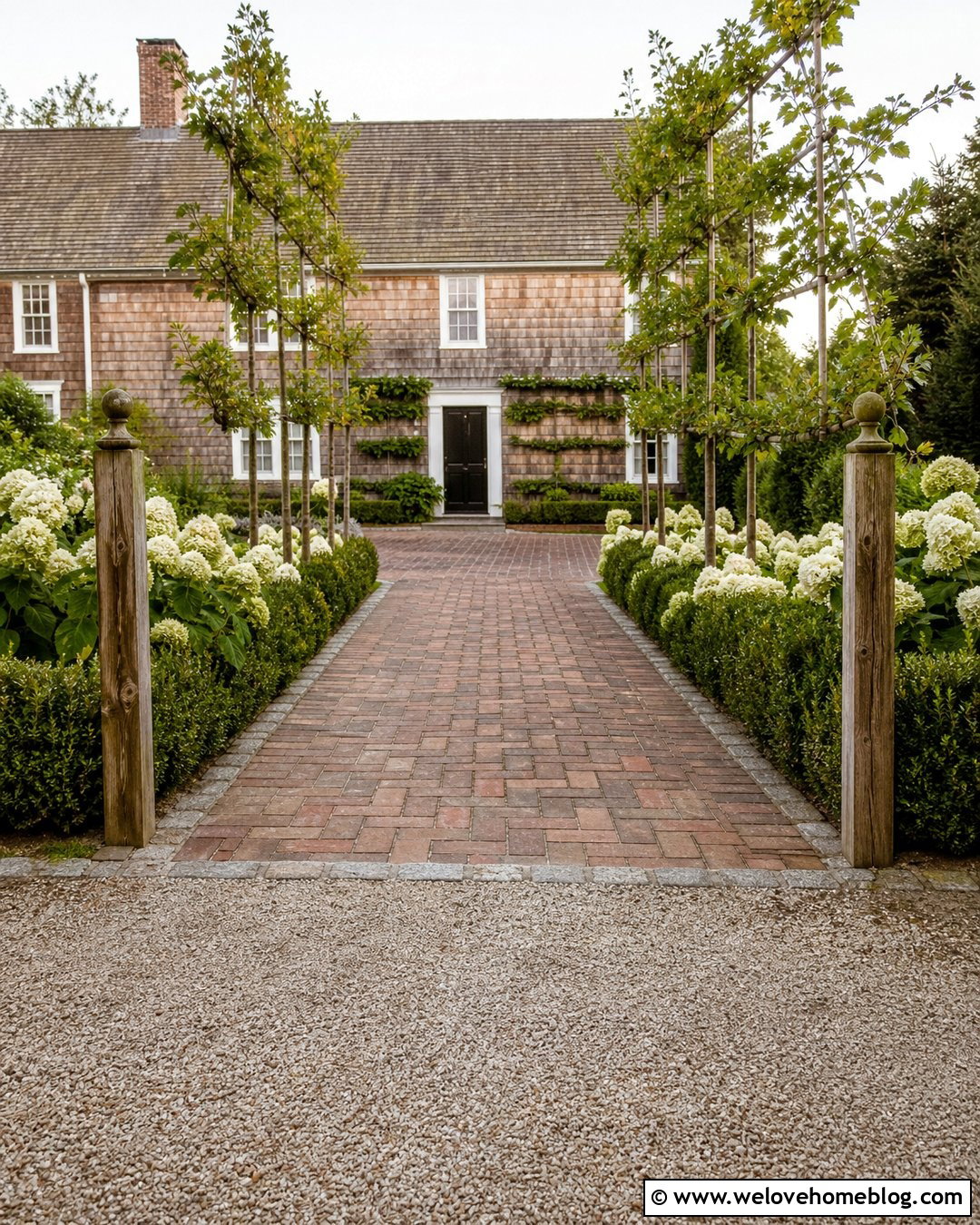
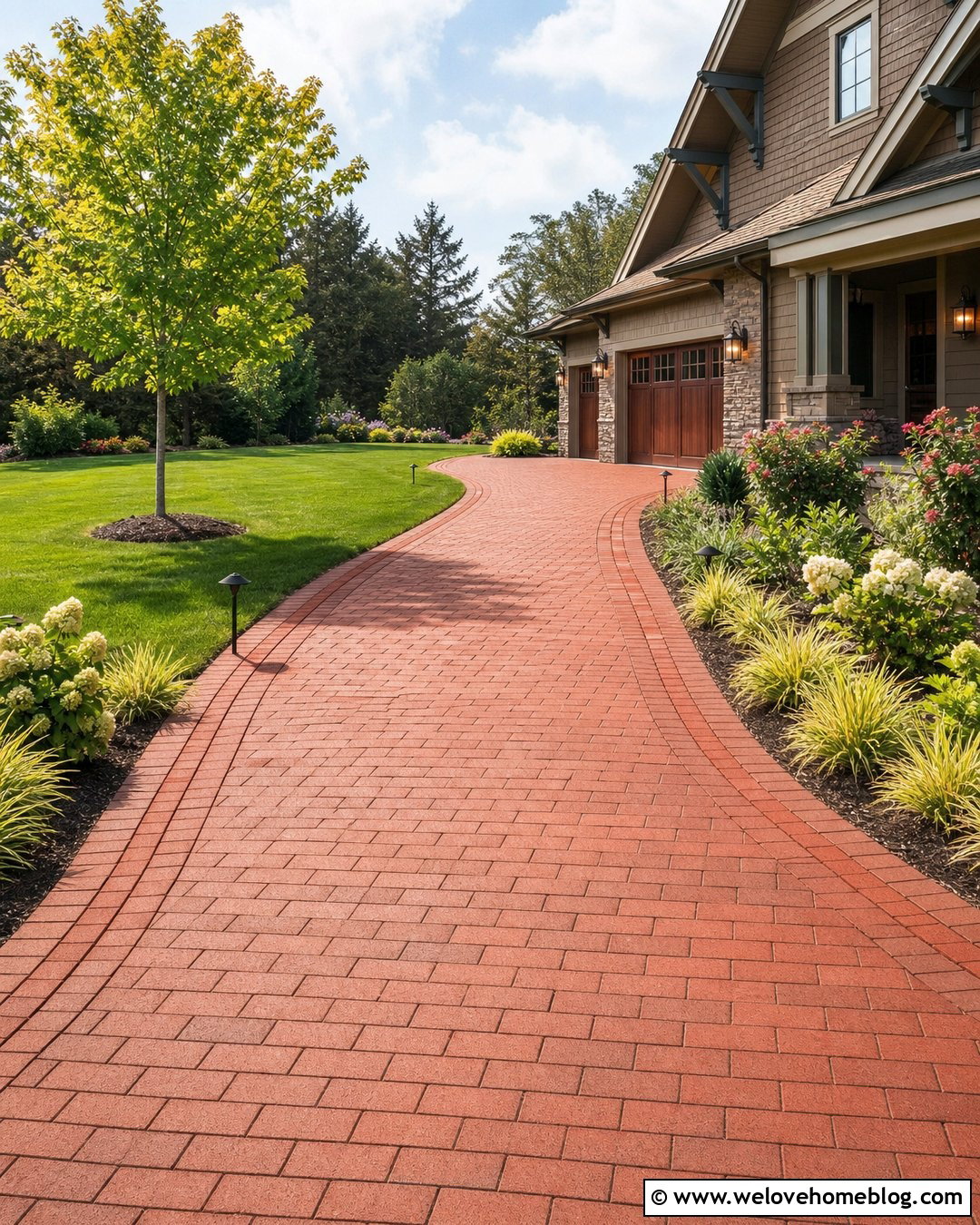
Reclaimed brick brings irregular color, softened edges, and a naturally weathered appearance to a farmhouse entrance. Use salvaged red and brown brick in a running-bond or basket-weave pattern, depending on the driveway’s width. A compact courtyard layout near the house allows the rich surface to become a major curb-appeal feature. Edge the brick with granite cobbles or a narrow strip of dark pavers for a secure finish. Surround the parking court with white hydrangeas, espaliered trees, and low evergreen hedges. A gravel entrance lane can transition into the brick area to control cost while maintaining the rustic mood. This mixed layout looks especially convincing beside an older farmhouse, converted barn, or new home designed with historically influenced architectural details.
12. Concrete Paver Farmhouse Driveway
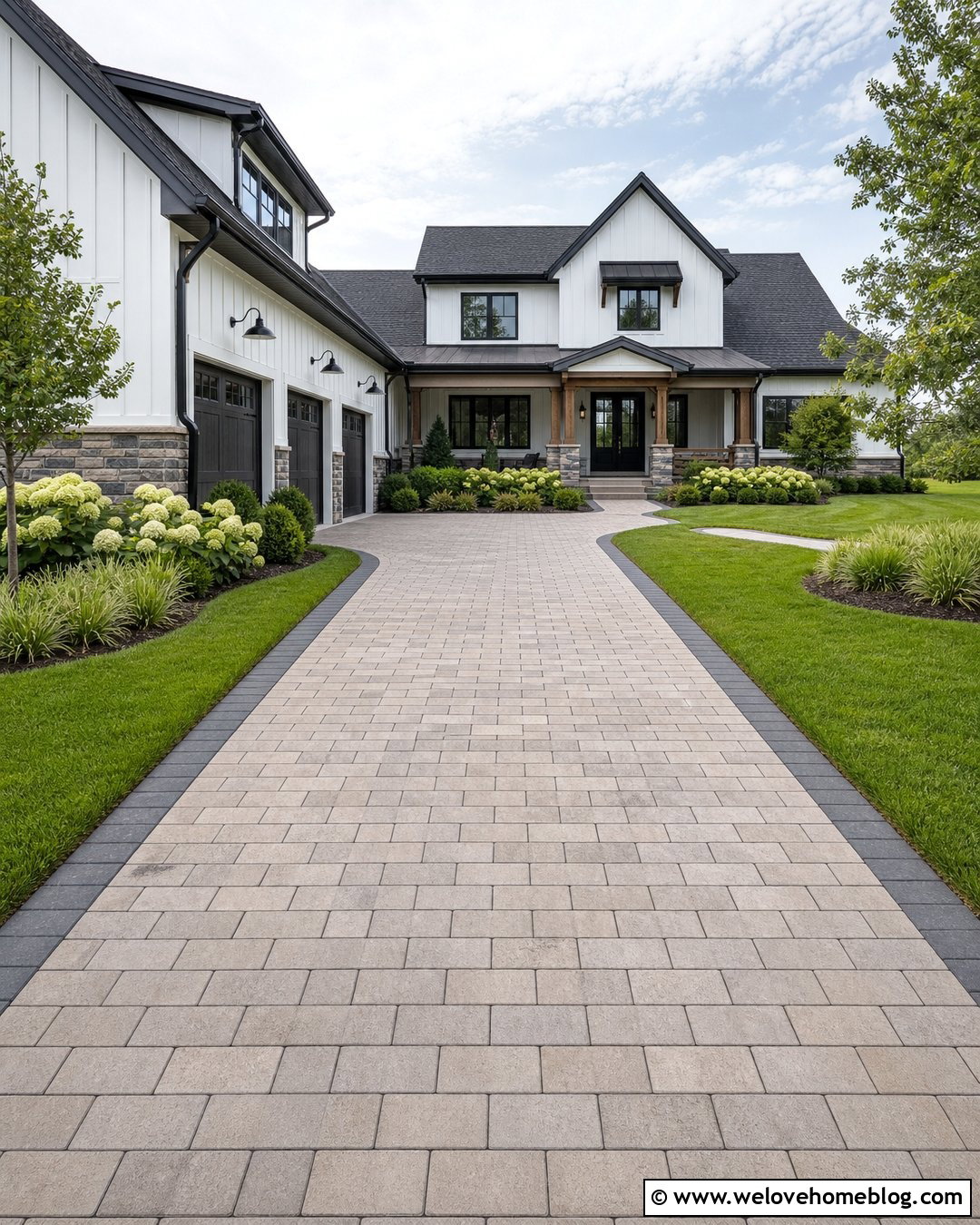
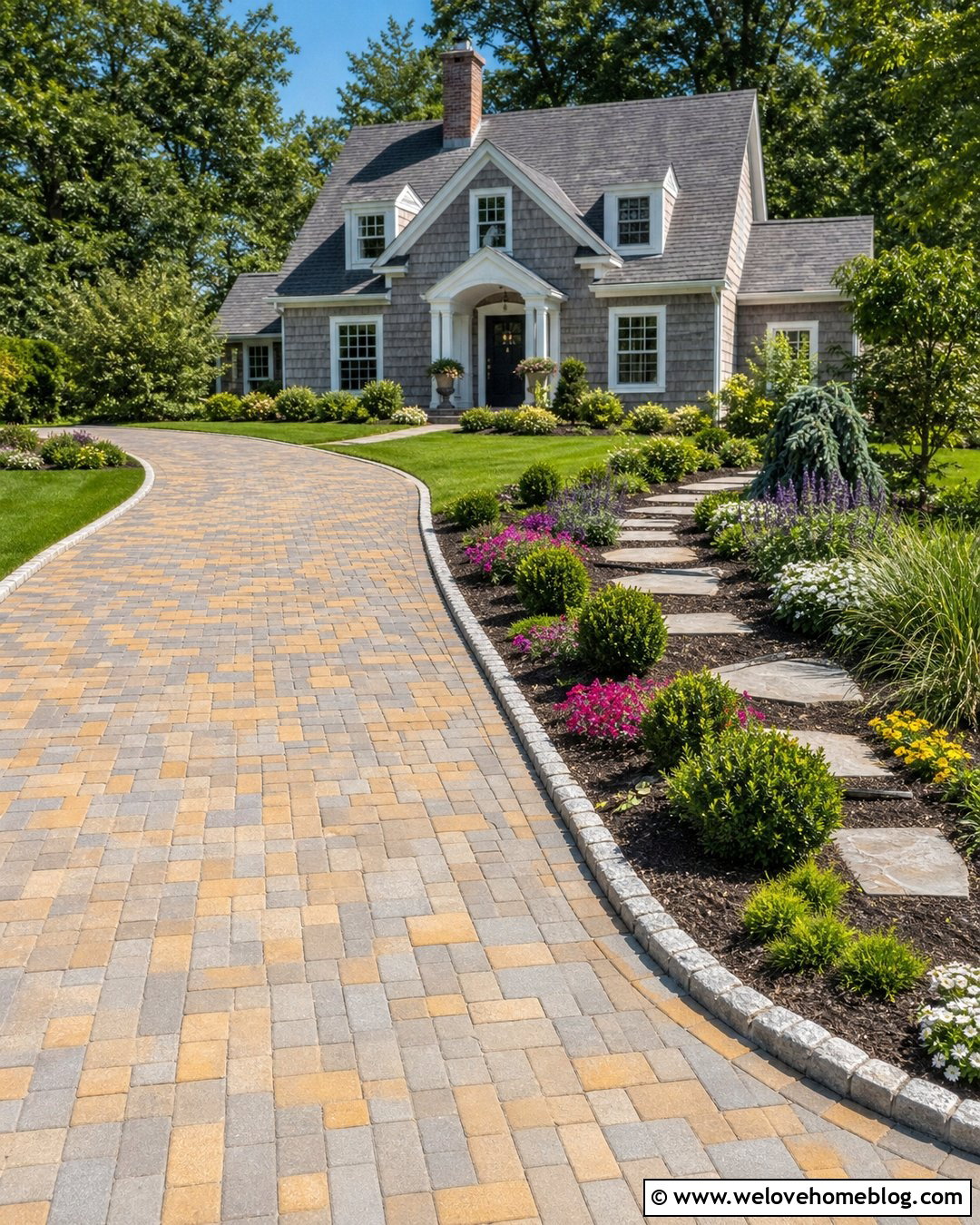
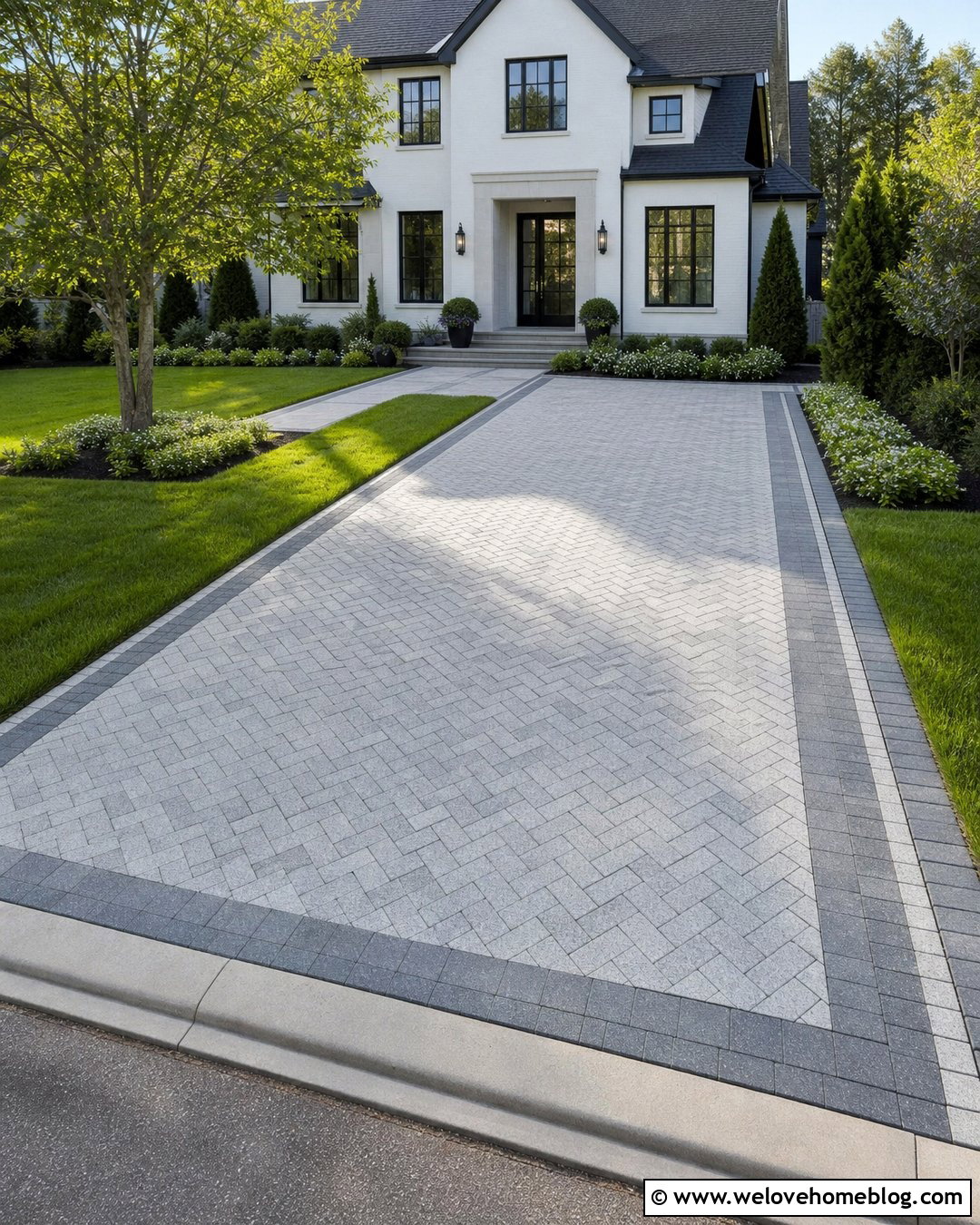
Concrete pavers can create a tailored farmhouse driveway without making the exterior feel too formal. Choose tumbled rectangular pavers in soft gray, beige, or greige tones. Lay them in a running-bond pattern and add a charcoal border that clearly defines the driving area. A wide, straight driveway works well for a modern farmhouse with multiple garage bays. Break up the broad hardscape with landscape beds beside the garage and a paver walkway leading toward the main porch. Use hydrangeas, fountain grass, and rounded evergreen shrubs for a balanced mix of softness and structure. The paver colors should repeat tones found in the roof, stone veneer, or foundation. This coordination helps the driveway, home, and landscape read as one carefully planned farmhouse design.
13. Permeable Paver Farmhouse Driveway
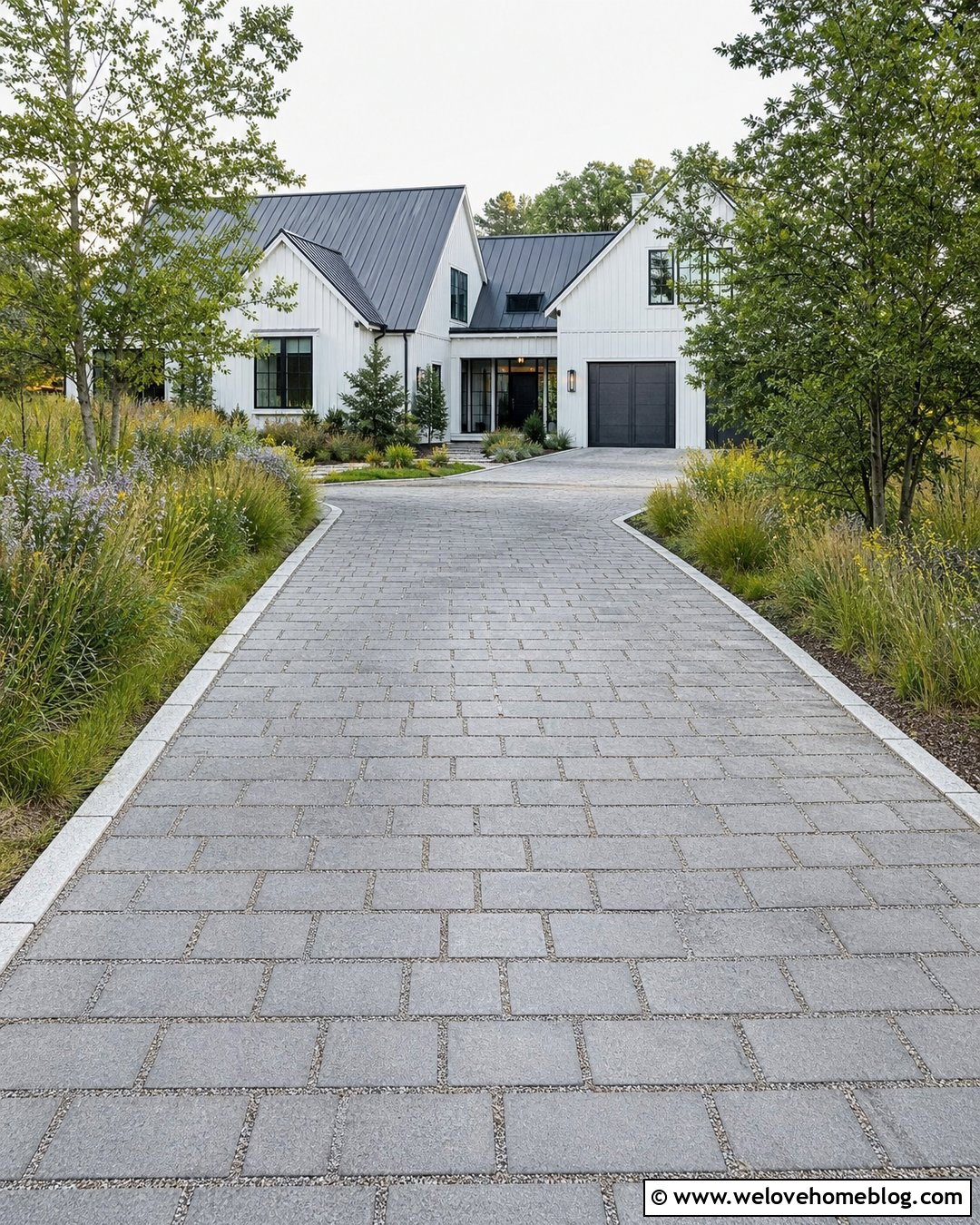
Permeable pavers can give a farmhouse driveway a clean grid pattern while allowing water to pass through wider joints into a prepared base. Select weathered gray pavers with fine gravel filling the openings. A straight layout with a small parking court keeps the pattern easy to follow and visually calm. Frame the surface with solid stone curbing and planted drainage areas containing native grasses, sedges, and moisture-tolerant flowers. Near the front porch, introduce a wider walkway made from matching solid pavers. This driveway works especially well with a contemporary farmhouse surrounded by naturalistic landscaping. Keep the paver color close to the home’s stonework so the patterned surface feels integrated. The complete setting should appear green, practical, uncluttered, and gently rustic.
14. Gravel Farmhouse Driveway With Cobblestone Apron
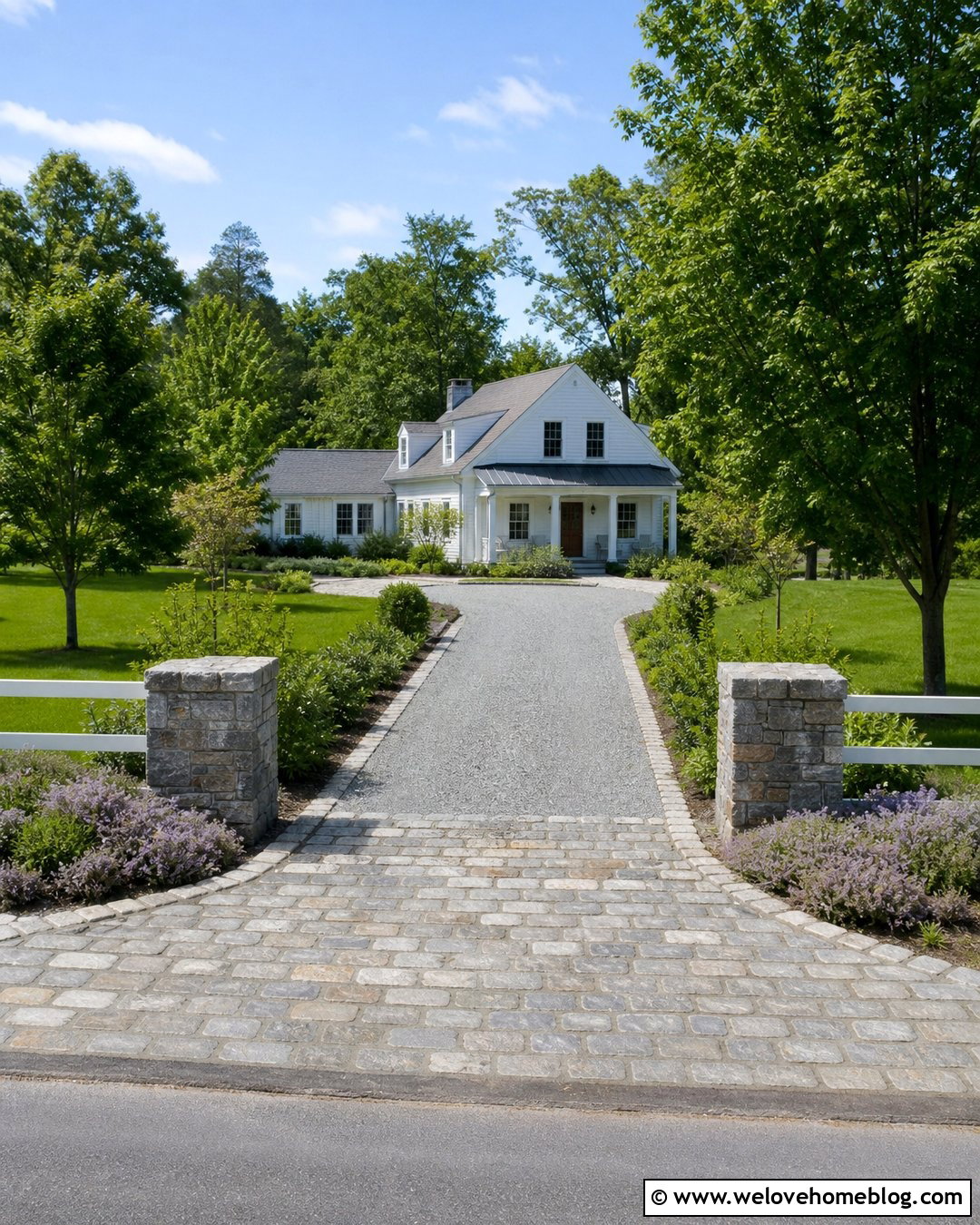
A cobblestone apron gives a loose gravel driveway a strong and attractive entrance at the road. Use medium gray crushed gravel for the main surface and weathered granite cobbles for the apron. Extend the cobblestone several feet into the driveway so it feels substantial rather than decorative. Continue a single cobblestone row along both edges to help contain the gravel. White fence sections, stone pillars, or large wooden posts can frame the opening without making it too narrow. Add low native shrubs and flowering ground covers around the entrance, keeping taller plants farther back for visibility. As the driveway approaches the farmhouse, widen it into a gravel turnaround. Repeating cobblestone near the garage creates a coordinated transition and visually ties both ends together.
15. Gravel Farmhouse Driveway With Flagstone Bands
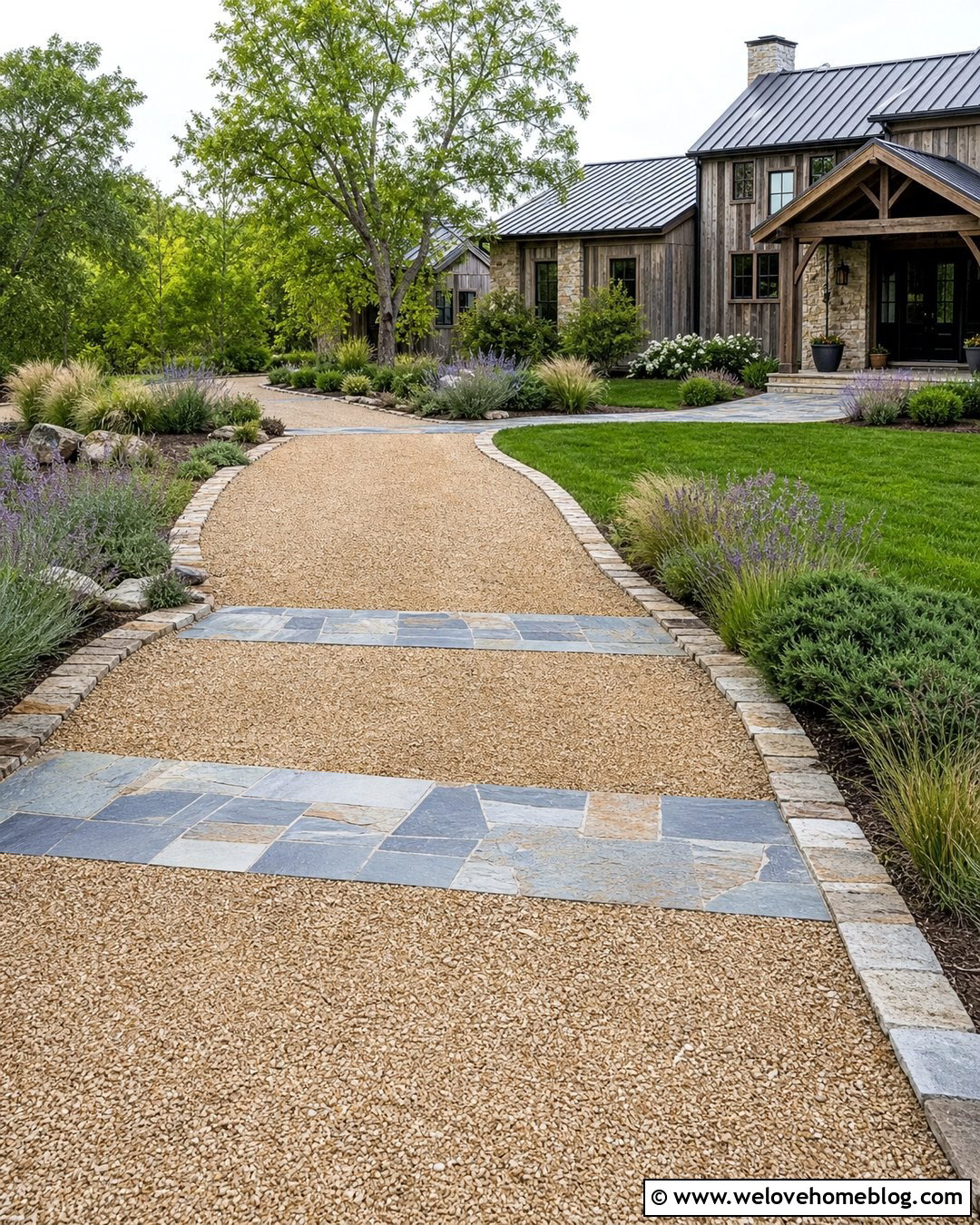
Flagstone bands can divide a large gravel driveway into attractive, easy-to-read sections. Begin with compacted tan or gray gravel and install broad flagstone strips across the surface at the entrance, walkway crossing, and parking court. Choose irregular blue-gray or warm brown stone that complements the porch steps and foundation. Natural stone edging can follow the driveway’s gentle curve and keep the gravel separated from planting beds. Use masses of lavender, salvia, grasses, and low junipers along the sunnier side. On the opposite edge, preserve an open lawn for visual balance. A flagstone walkway branching toward the porch completes the material connection. The finished driveway has a relaxed farmhouse appearance, but the repeated bands provide enough structure to prevent it from looking unfinished.
16. Circular Gravel Farmhouse Driveway
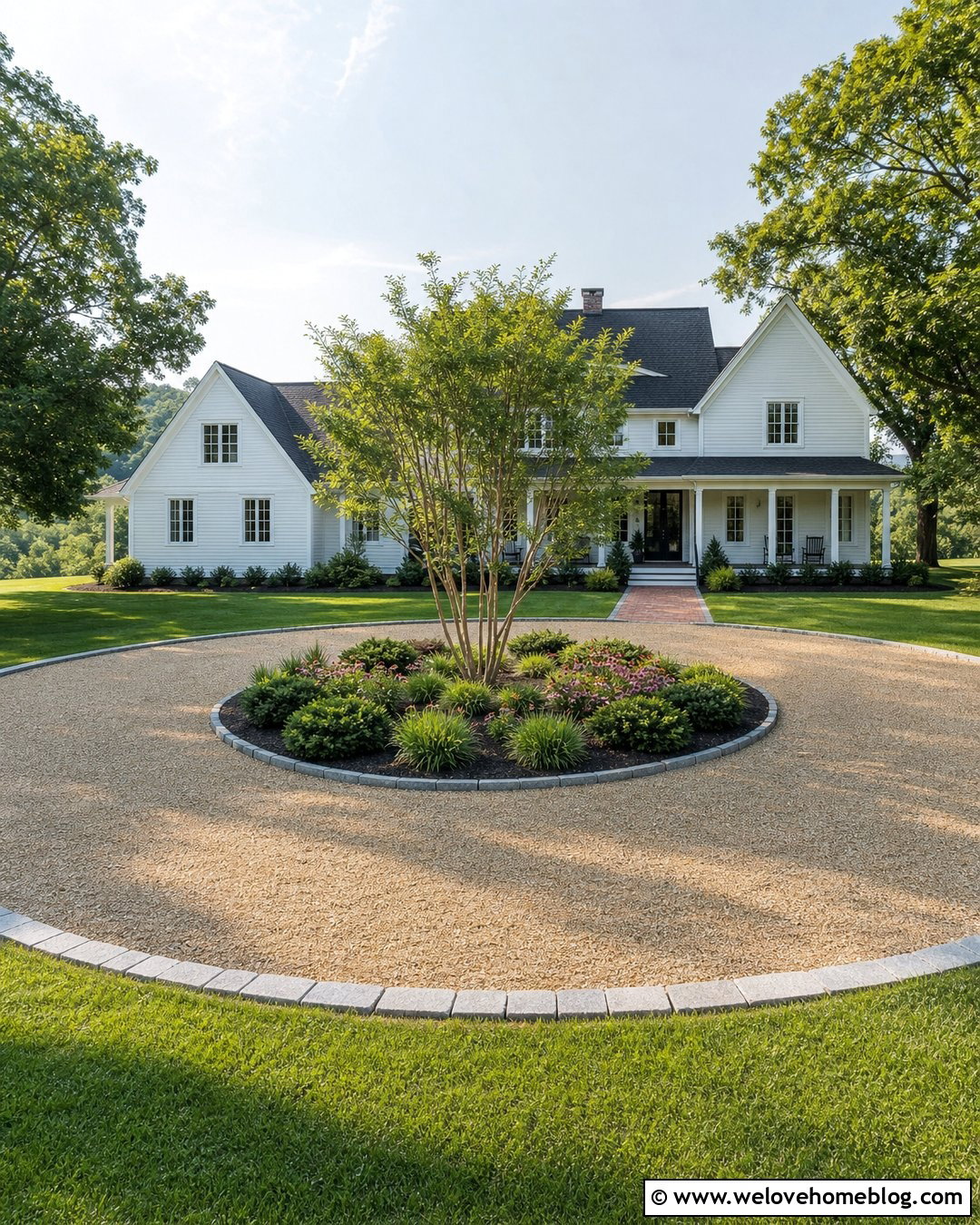
A circular gravel driveway creates a graceful arrival and eliminates the need for extensive backing. Shape the drive around a generously sized center island rather than a small, awkward circle. Use compacted golden gravel with dark granite edging to make the layout clear from the curb. Landscape the island with one multi-stem ornamental tree, a low evergreen framework, and drifts of flowering perennials. Keep plants short near the driveway entrance so sightlines remain open. The outer edge can feature lawn and loosely spaced shade trees. Add a brick or cobblestone walkway from the circle to the front porch. This complete design works best when the farmhouse facade faces the center island, allowing the circular layout to frame the home as the main visual destination.
17. Horseshoe Paver Farmhouse Driveway
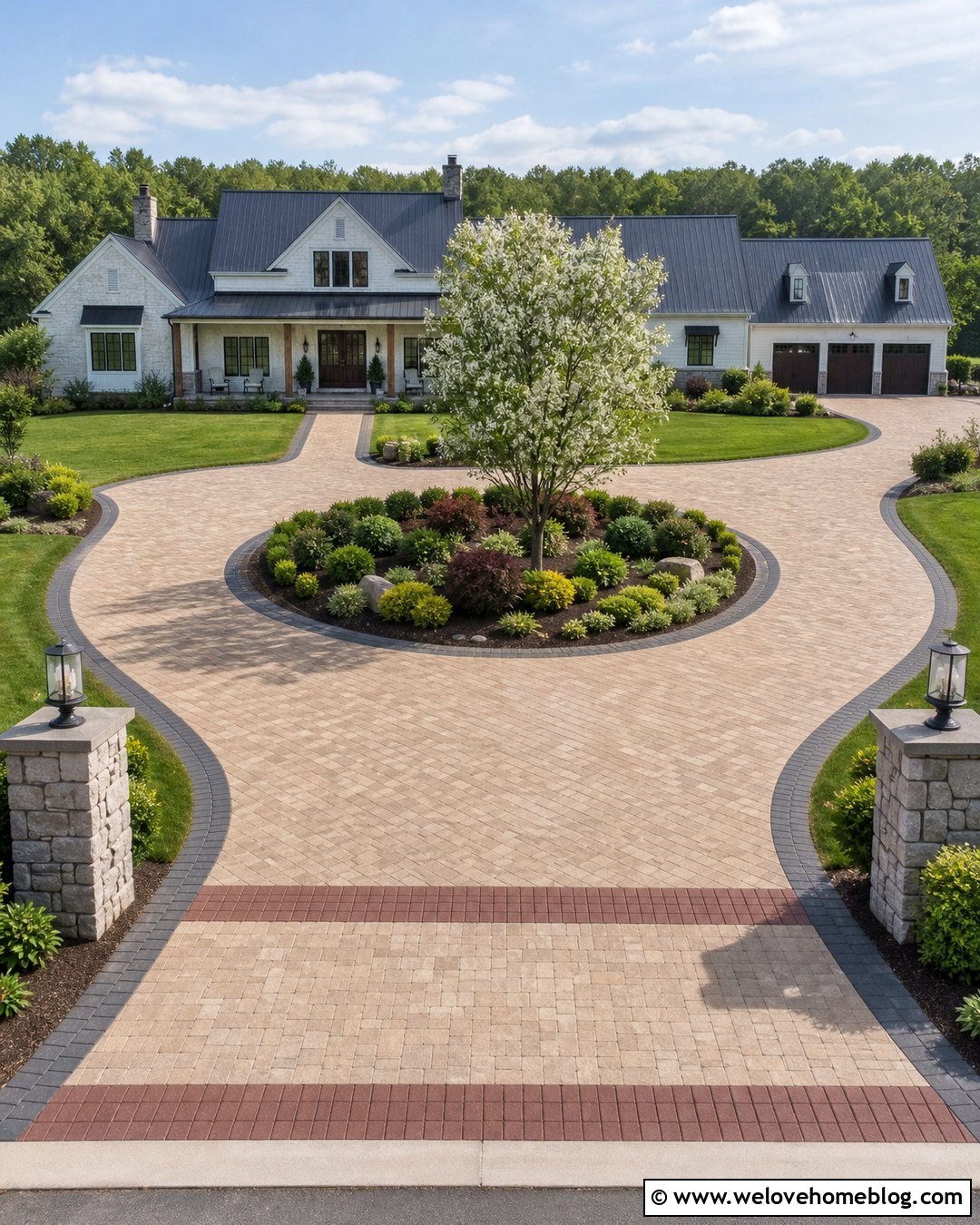
A horseshoe driveway provides separate entrance and exit points while creating a broad, welcoming foreground. Use tumbled concrete pavers in a warm limestone tone and define the curves with a darker border. Design the central lawn as a simple oval with one flowering tree and layered shrubs that remain proportional to the house. Brick bands across both entrances can add traditional color and coordinate with porch steps or exterior masonry. Near the garage, widen one side of the horseshoe into a practical parking area. A direct paver walkway should connect the central drive to the front porch. This layout is well suited to a wide farmhouse lot because it combines easy circulation, formal balance, and enough landscape space to preserve a relaxed country character.
18. Long Tree-Lined Farmhouse Driveway
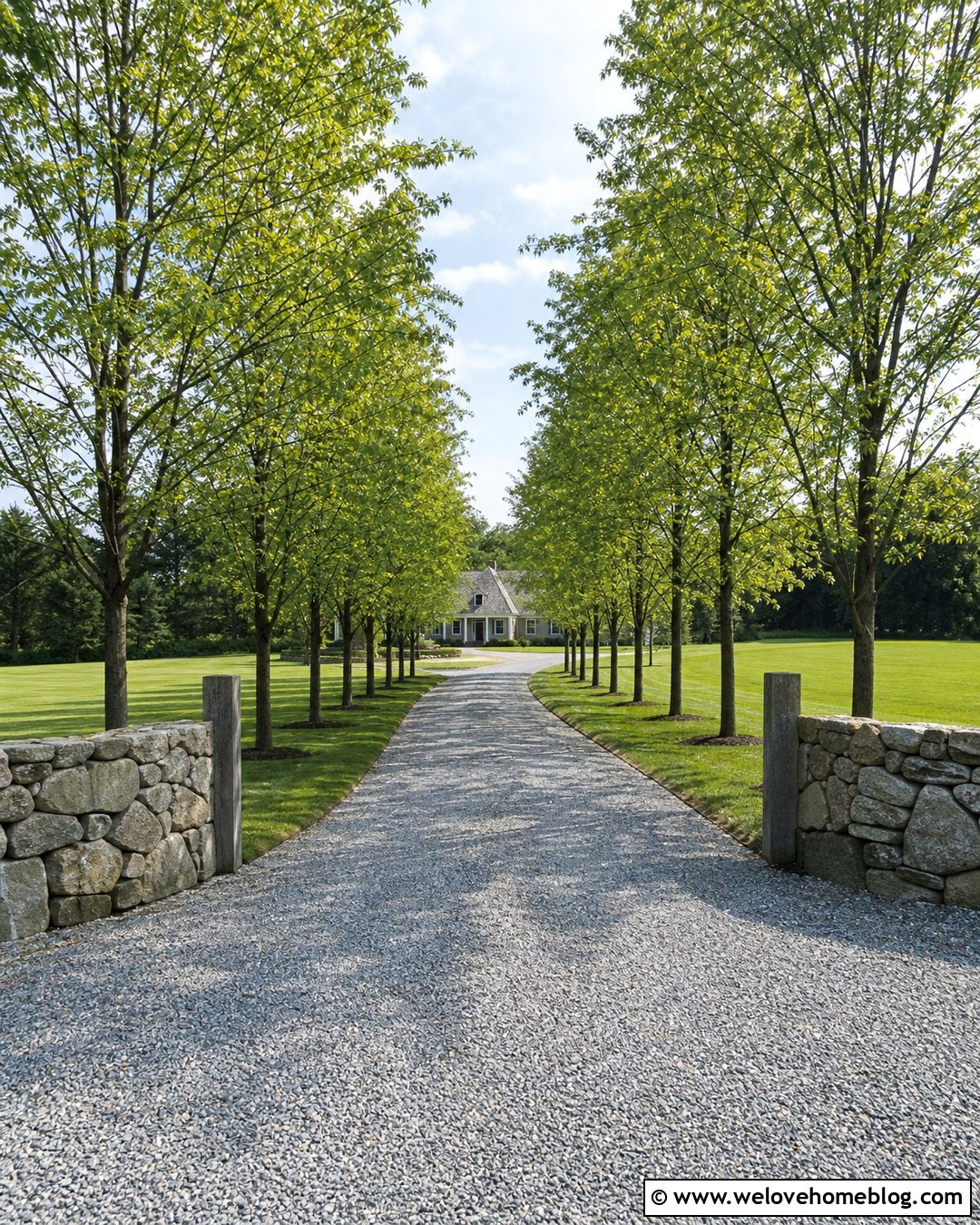
A long driveway becomes a defining landscape feature when trees frame the full approach. Use gray crushed gravel for a traditional rural surface and keep the lane gently curved to follow the land. Plant matching deciduous trees at generous, even intervals rather than crowding them close to the driveway. As the trees mature, their canopies can visually guide the eye toward the farmhouse. A simple grass understory creates a clean look and makes maintenance easier than continuous flower beds. Mark the entrance with low stone walls and timber posts that repeat materials from the house. Near the residence, transition into a wider gravel courtyard edged with brick. The combination of repetition, open space, and a distant farmhouse creates a memorable yet unpretentious country arrival.
19. Narrow Farmhouse Driveway
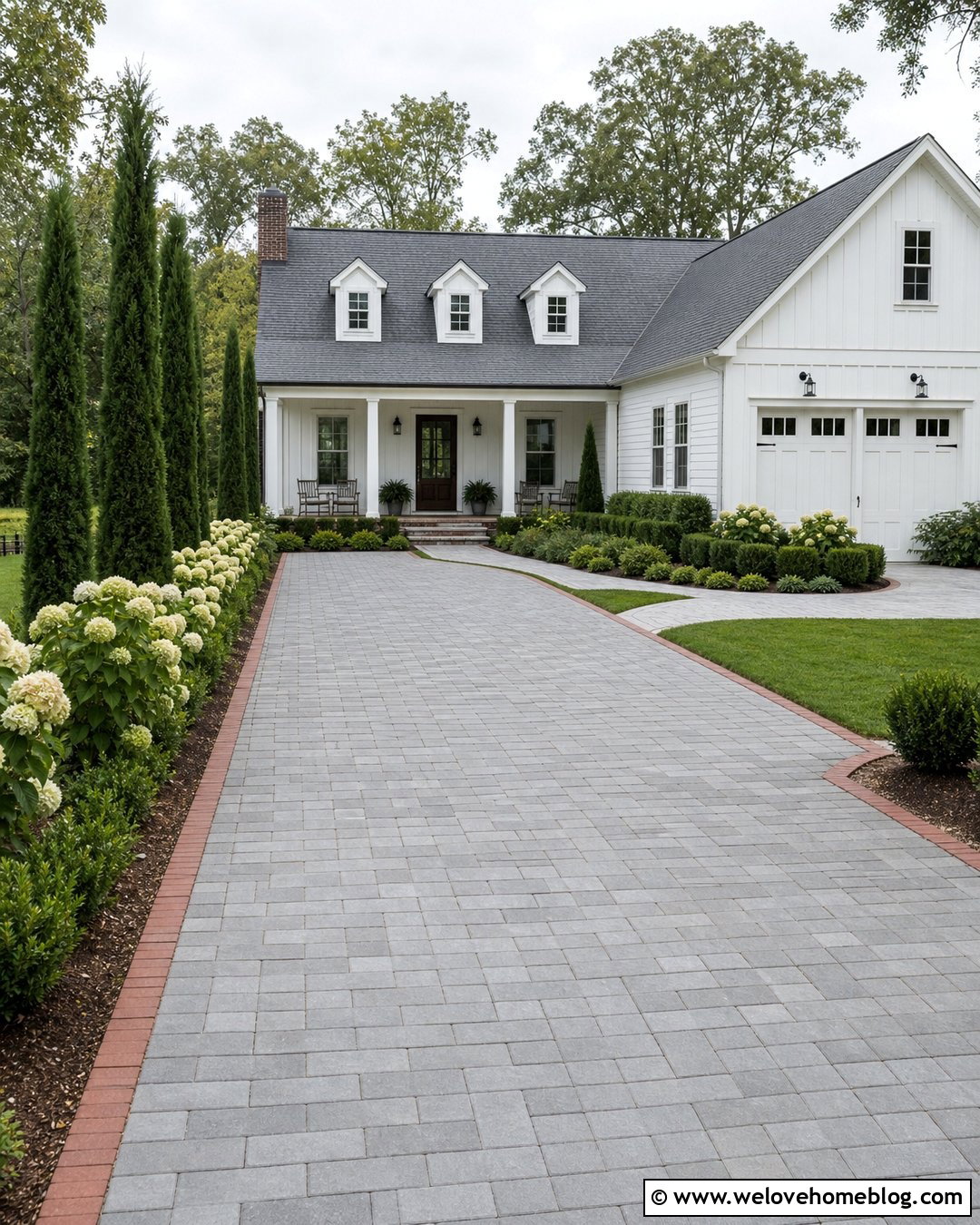
Limited frontage does not prevent a narrow driveway from feeling welcoming. Use small gray concrete pavers in a running-bond pattern to visually lengthen the approach. Add a narrow brick border that clearly separates the pavers from the lawn and planting beds. Keep landscaping vertical and controlled with columnar evergreens, compact hydrangeas, and clipped shrubs. Avoid oversized plants that could make vehicle access uncomfortable. A slim grass strip or low ground cover can soften the edge where space allows. At the garage, widen the driveway slightly to improve turning and create a clear connection to the front walkway. Choose the same pavers for that walkway so the compact front yard feels cohesive. This design gives a smaller suburban farmhouse neat country character without wasting valuable space.
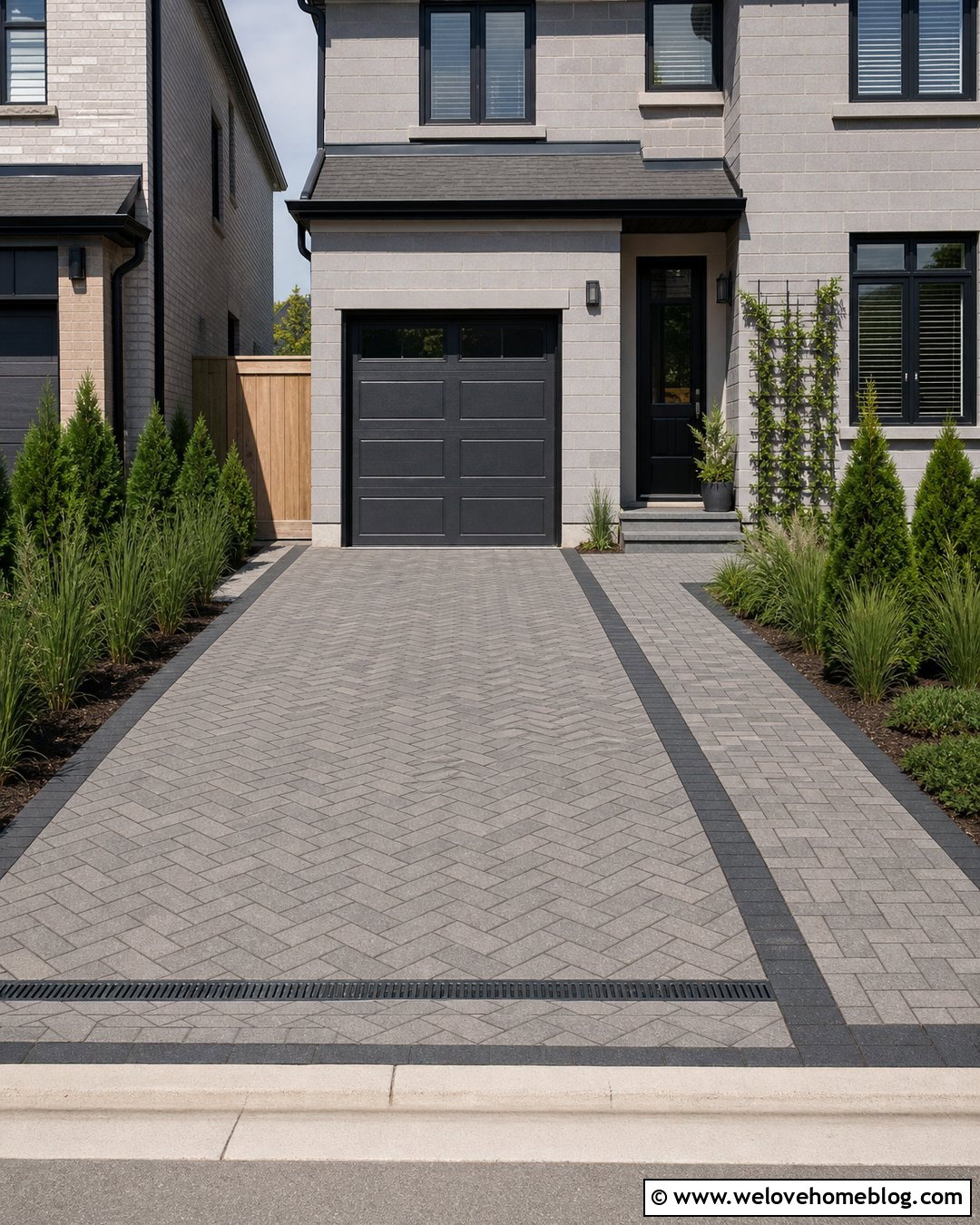
20. Sloped Farmhouse Driveway With Stone Walls
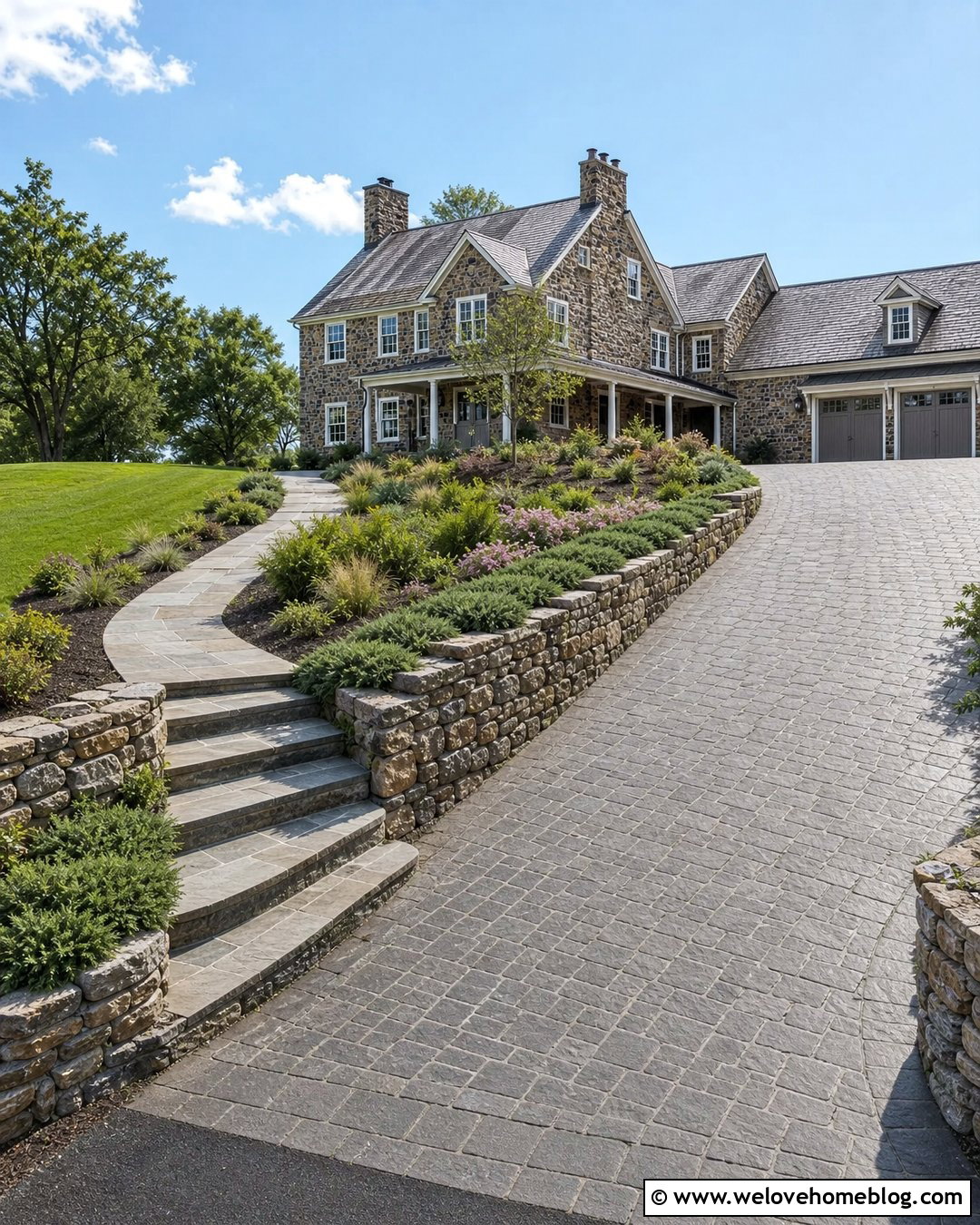
A sloped driveway needs strong visual boundaries and landscaping that works with changes in elevation. Use textured gray concrete or concrete pavers for the driving surface, then support the higher side with a low fieldstone retaining wall. Follow the slope with wide stone steps and a separate walkway so visitors do not need to use the driveway. Above the wall, plant spreading junipers, native grasses, and flowering shrubs to soften the stone. On the lower side, maintain an open lawn or shallow drainage bed. Add a paver apron near the garage to mark the level arrival area. Materials should repeat those used on the farmhouse foundation or porch. The finished design turns a difficult grade into a layered, attractive entrance rather than treating the slope as a problem.
21. Modern Farmhouse Concrete Driveway
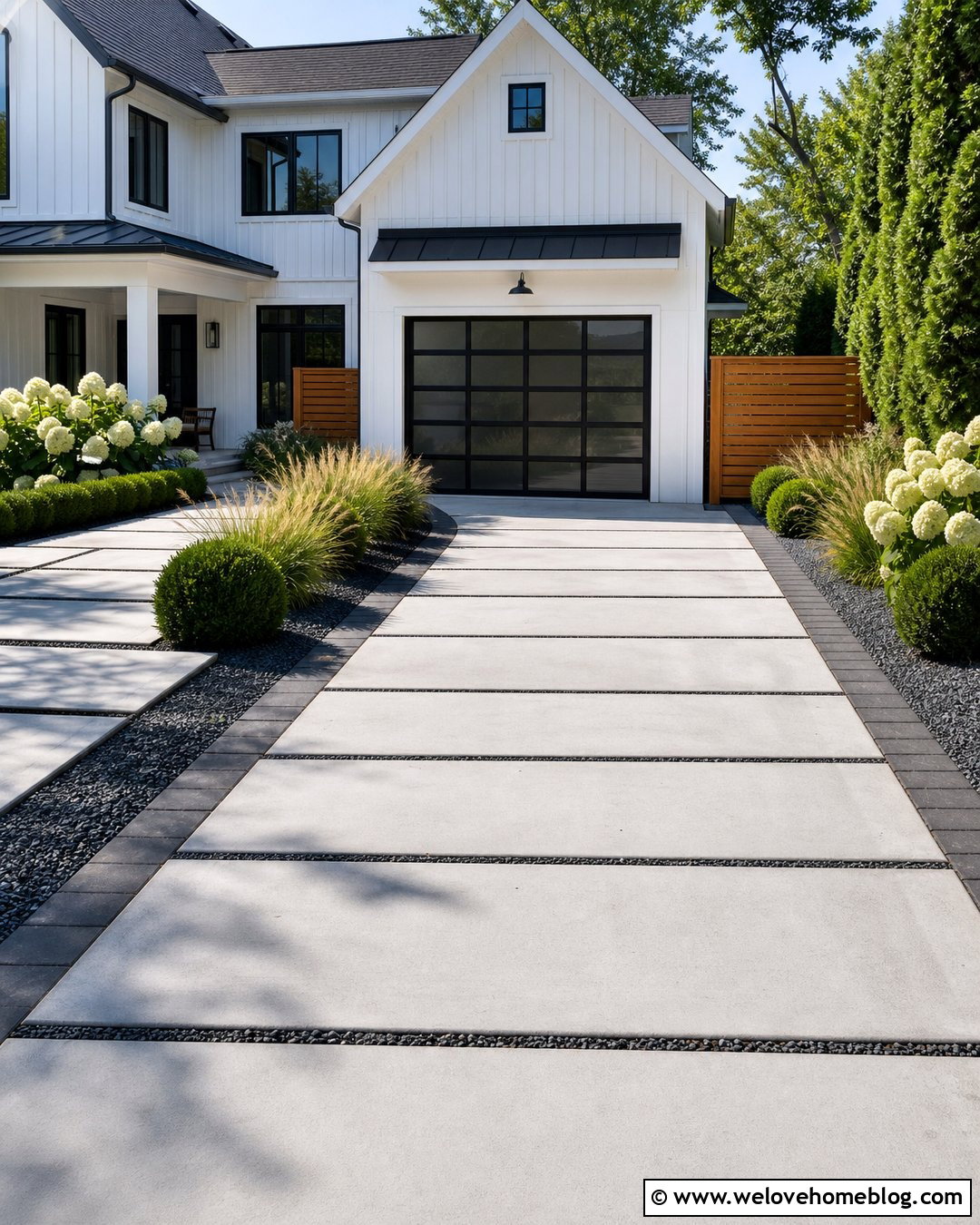
A modern farmhouse driveway should look clean without feeling cold. Use large sections of light gray poured concrete with narrow dark gravel joints or slim grass strips between selected slabs. Keep the driveway straight and align its geometry with the garage doors, porch columns, and black-framed windows. A charcoal paver border can sharpen the edges and connect with dark exterior accents. Soften the contemporary lines using ornamental grasses, white hydrangeas, and rounded evergreen shrubs in broad planting beds. Add a large-format concrete walkway that branches toward the porch at a clear angle. Natural wood gates or cedar screens can provide warmth near the side yard. This complete composition blends farmhouse materials with restrained modern detailing and works particularly well around a newly built home.
22. White Farmhouse Crushed Shell Driveway
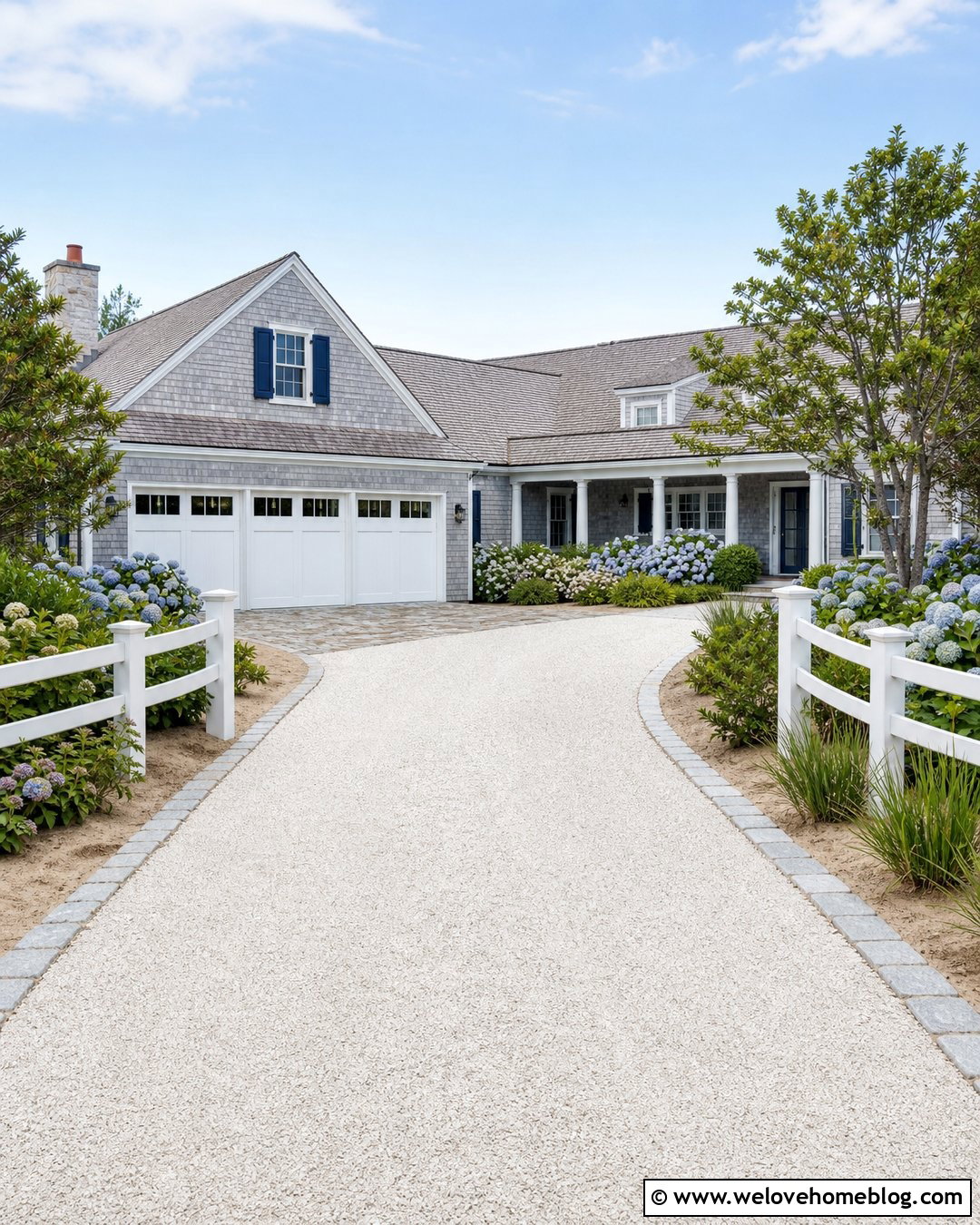
A crushed shell driveway gives a coastal farmhouse a pale, relaxed surface that reflects the light beautifully. Use compacted white or cream shell in a straight or softly curved layout. Edge the driveway with weathered timber, low granite cobbles, or simple steel edging that nearly disappears. Surround it with salt-tolerant grasses, hydrangeas, wax myrtles, and sandy planting beds. A white picket or post-and-rail fence can frame the entrance and echo the home’s siding. Near the garage, add a brick or cobblestone apron to create a cleaner transition and contain loose pieces. The pale driveway looks especially effective against a gray shingle roof, blue shutters, and natural cedar details. Keep the overall landscape airy so the coastal farmhouse mood remains casual and open.
23. Ranch Farmhouse Asphalt Driveway
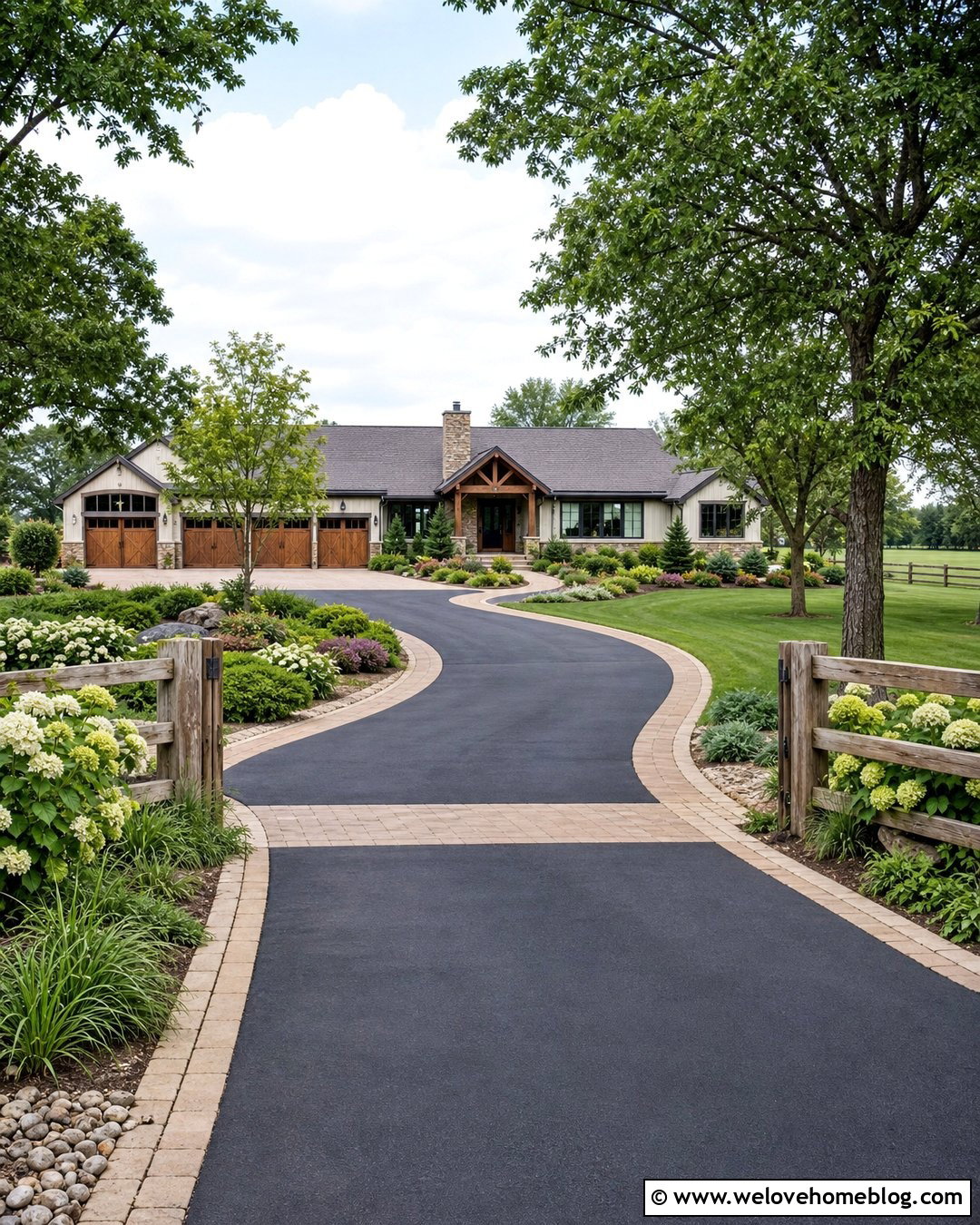
A broad ranch farmhouse often benefits from a driveway that looks simple and visually grounded. Use smooth black asphalt in a long, gently curving layout, then soften it with warm brick or tan concrete paver edging. At the garage, add a wide paver band to break up the asphalt and connect with the walkway. Low horizontal planting beds suit the proportions of a ranch home. Fill them with spreading junipers, ornamental grasses, hydrangeas, and groups of flowering perennials. A few medium-sized shade trees can frame the property without hiding the facade. Keep the entrance open and add a low timber fence on one side. This complete design provides a practical surface while the borders and landscaping prevent the dark pavement from dominating the front yard.
24. Barn Style Farmhouse Driveway
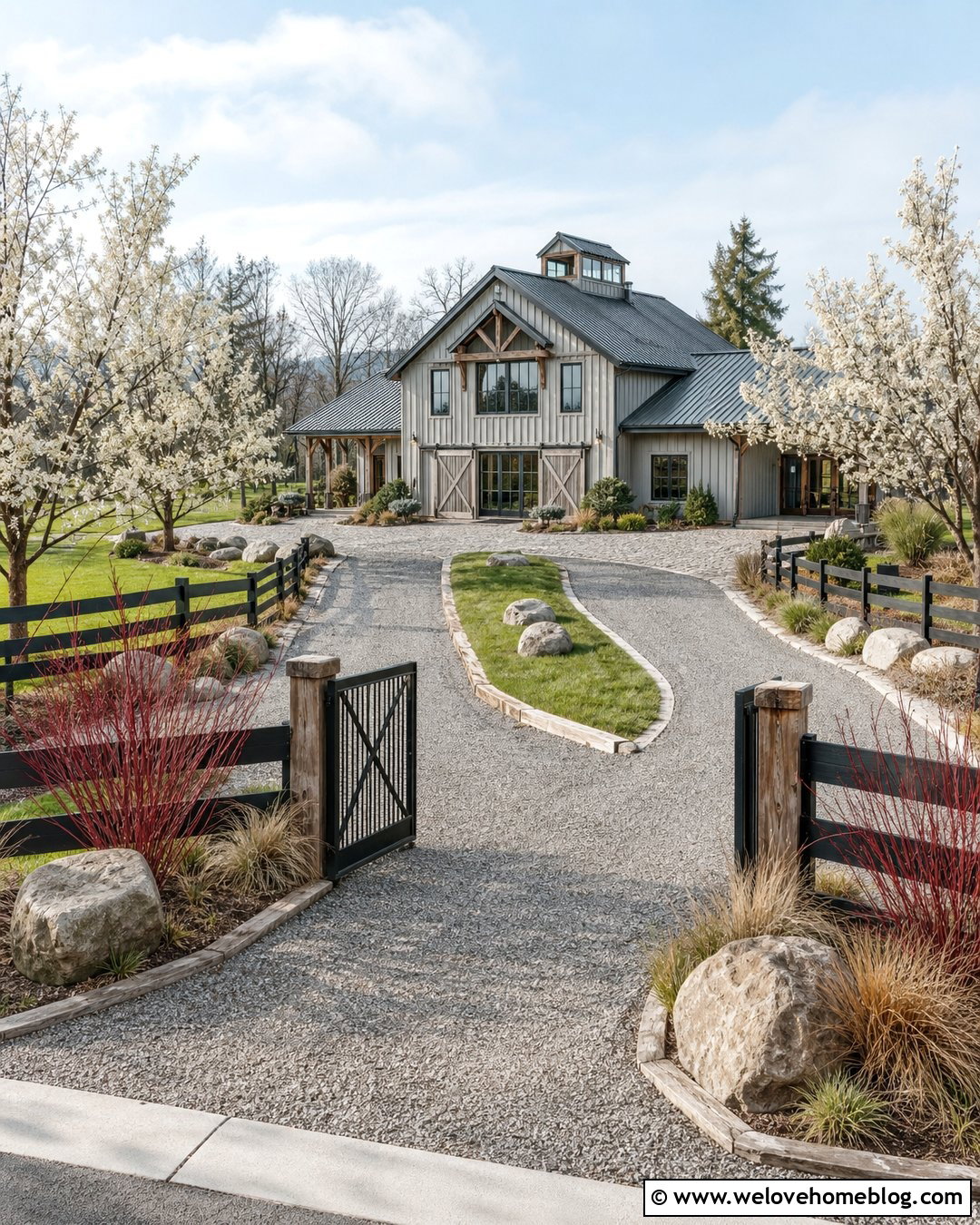
A farmhouse with a barn-inspired exterior calls for a driveway that feels sturdy and uncomplicated. Start with warm gray crushed stone and shape it into a wide approach leading toward the house and attached garage. Use reclaimed timber beams or large fieldstones as edging along selected sections rather than lining every inch. A grass median can divide a wider portion of the driveway and reduce the amount of visible gravel. Plant native grasses, red twig dogwoods, and small flowering trees around the outer edges. A black farm fence and matching metal gate can reinforce the barn aesthetic at the entrance. Near the home, create a cobblestone parking court that handles the transition to the garage while giving the rustic gravel approach a more polished destination.
25. Farmhouse Driveway With Wooden Gate
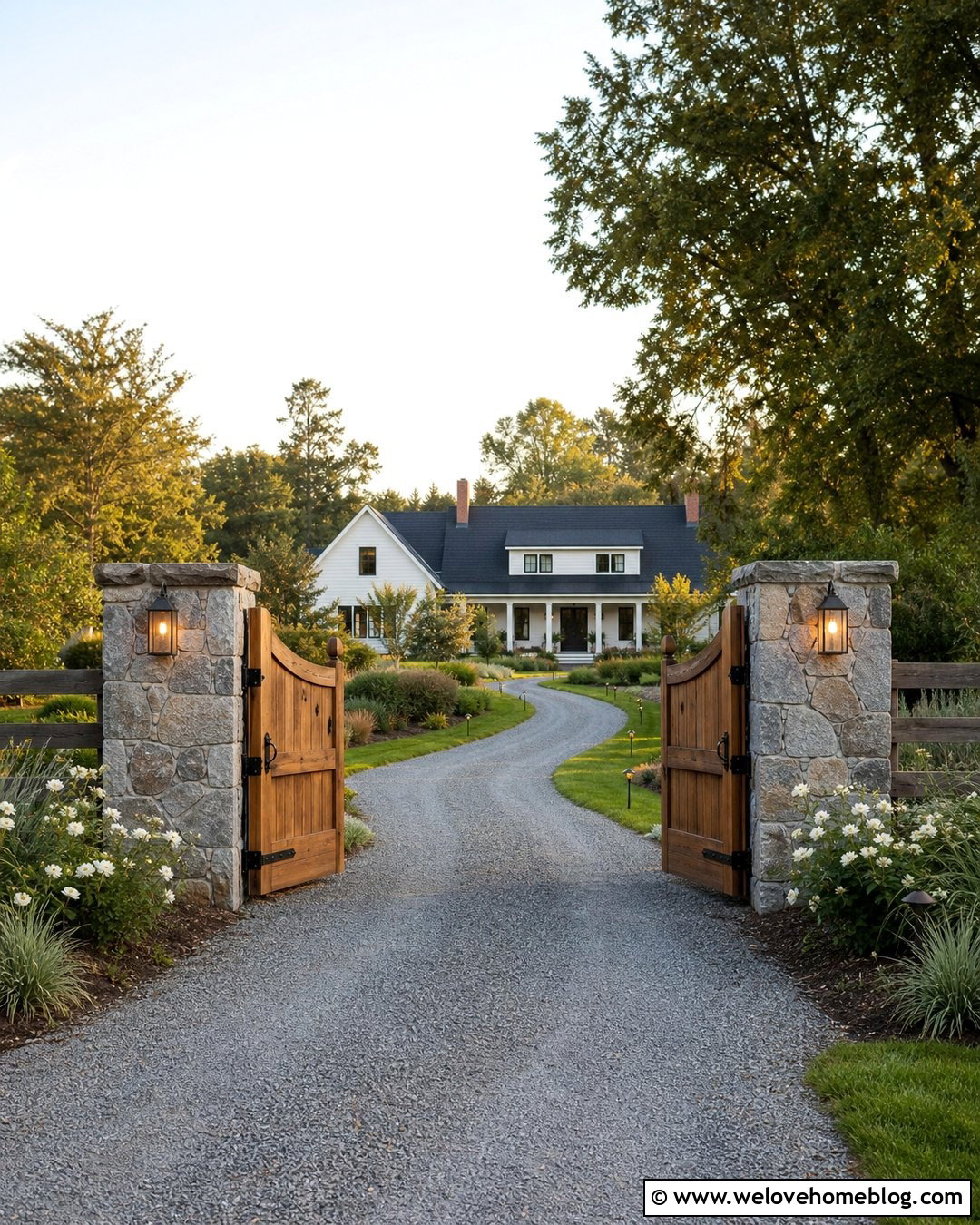
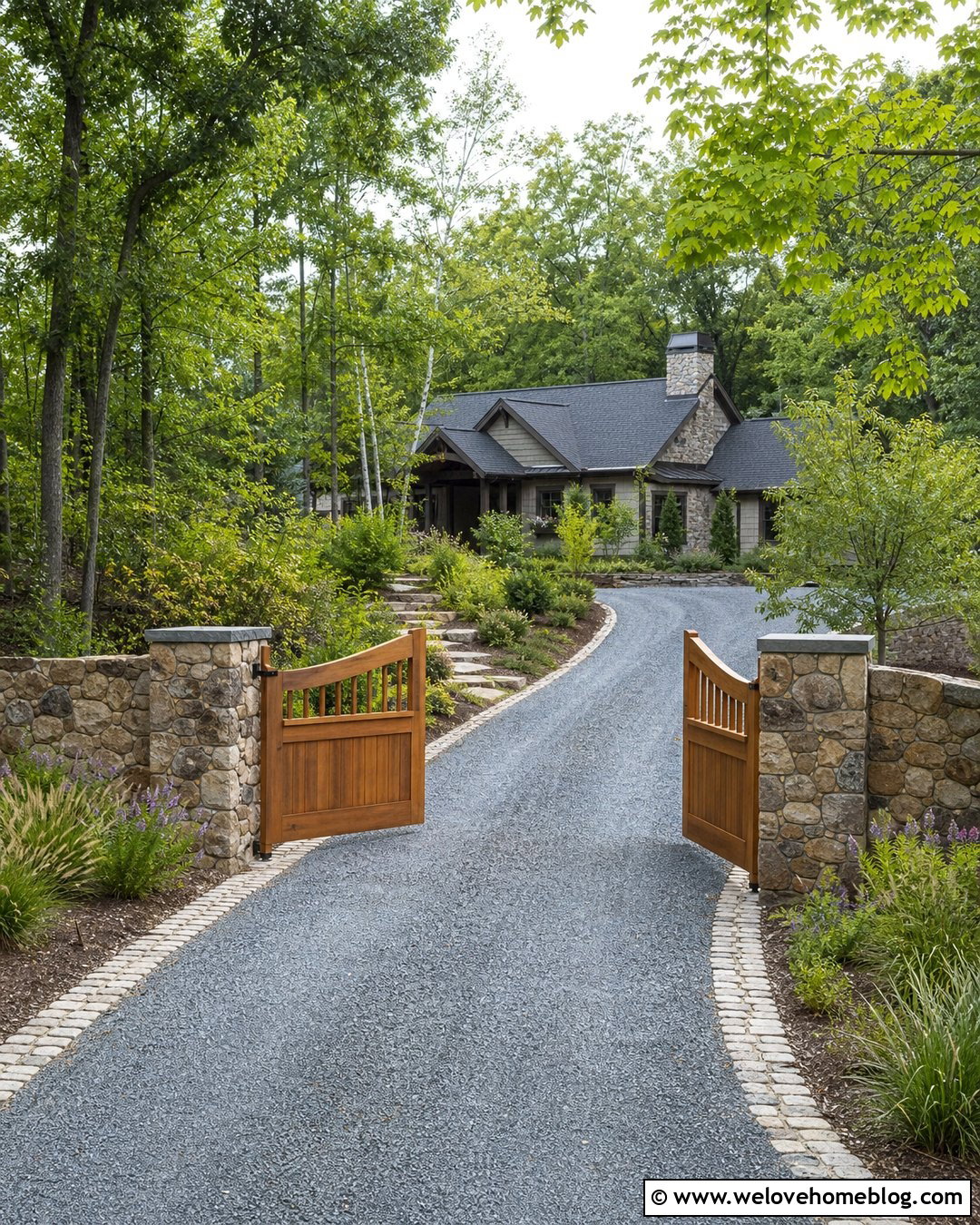
A wooden gate can become the focal point of a farmhouse driveway when its scale and materials suit the property. Choose a simple double-swing cedar or white oak gate with black metal hinges. Set it between substantial timber posts or low fieldstone pillars. Beyond the gate, use compacted gray gravel in a winding layout that gradually reveals the farmhouse. Continue a post-and-rail fence along both sides of the entrance to make the gate feel connected to the landscape. Plant low grasses, white roses, and native shrubs around the posts without interfering with movement. Solar or low-voltage lights can be mounted discreetly nearby. The combination of natural wood, gravel, fencing, and informal planting creates a complete entrance that feels secure but still open and welcoming.
26. Farmhouse Driveway With Stone Pillars
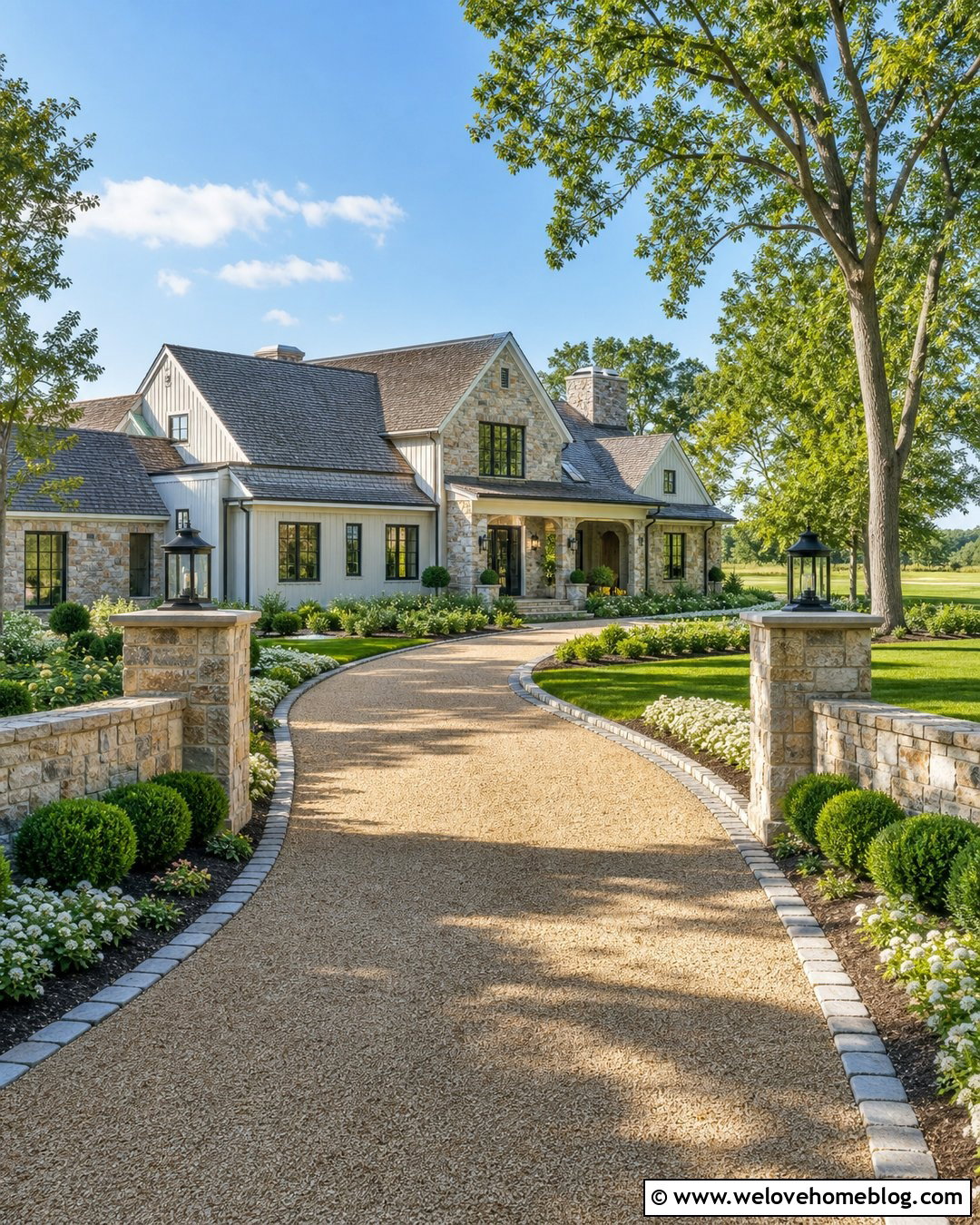
Stone pillars give a farmhouse driveway entrance architectural weight and a clear connection to the home. Build broad, low-profile pillars from the same fieldstone or limestone used on the foundation, chimney, or porch. Pair them with a curved tan gravel driveway bordered by granite cobbles. Simple lantern fixtures can sit on top of the pillars, while low boxwoods and flowering ground covers soften their bases. Continue short stone walls away from the entrance so the pillars do not appear isolated. A timber gate may be added, but an open entrance can feel equally complete. Farther along the driveway, use natural planting beds and open lawn to maintain the country setting. This coordinated approach makes the pillars look original to the property rather than added as separate decorations.
27. Farmhouse Driveway With Split Rail Fence
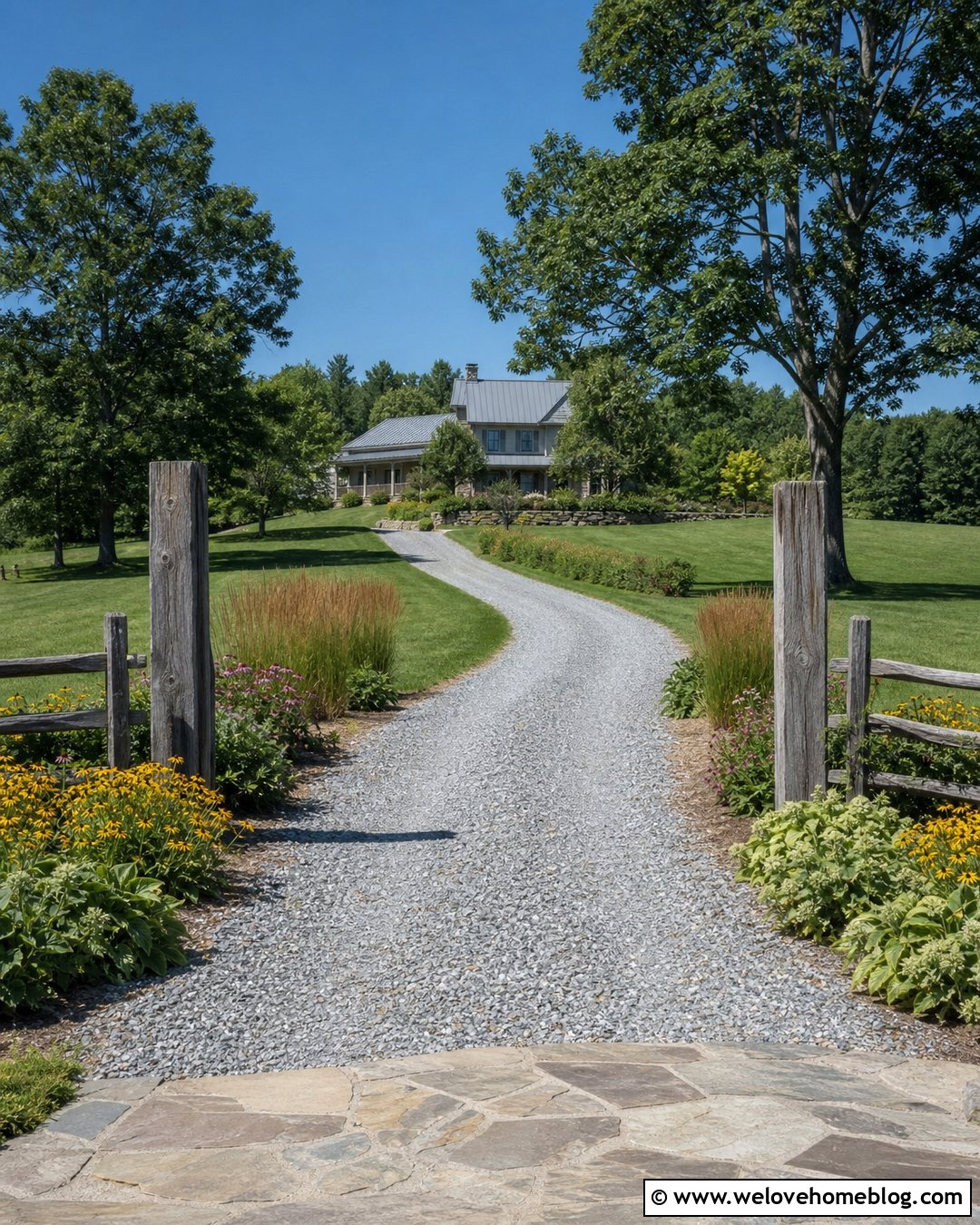
What could feel more natural beside a country driveway than a simple split-rail fence? Pair weathered wood rails with a light gray gravel surface that follows a gentle curve toward the farmhouse. Set the fence several feet from the driving edge to leave room for mowing and planting. Add clusters of native grasses, black-eyed Susans, coneflowers, and low shrubs between the driveway and fence. At the street, use taller timber posts with a modest metal address plaque. A stone apron can stabilize the entrance and create a more defined transition from the road. Continue the relaxed planting around the porch and garage so the fence belongs to a larger landscape plan. This design feels open, affordable, and appropriate for both working properties and suburban farmhouse homes.
28. Farmhouse Driveway With Wildflower Borders
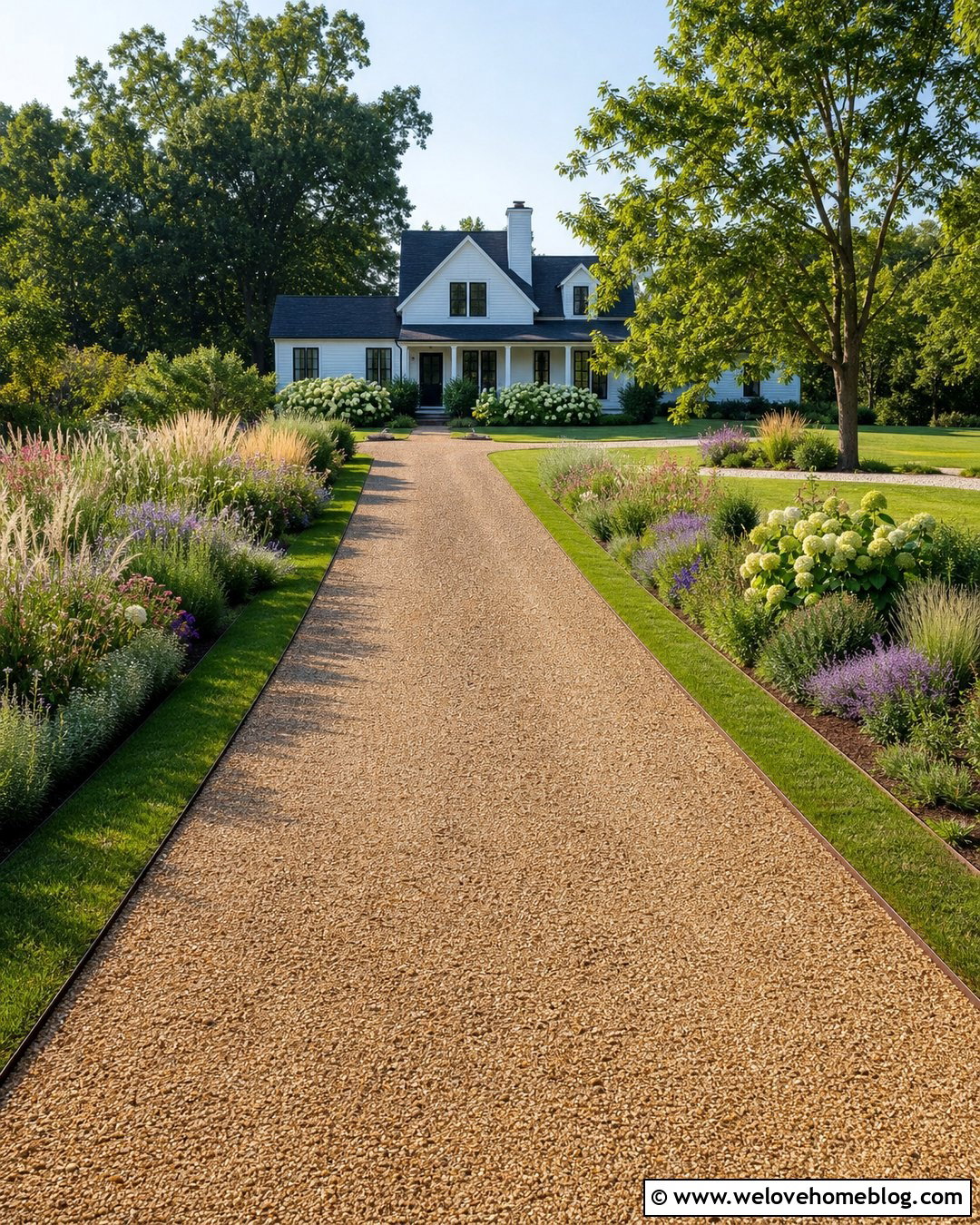
Wildflower borders can transform a basic gravel driveway into a colorful country approach. Choose compacted brown or gray gravel and define its edges with low steel edging or partially buried fieldstones. Create broad planting strips containing regionally suitable flowers, ornamental grasses, and small native shrubs. Arrange plants in repeating drifts instead of scattering every variety randomly. Keep vegetation lower at the street and around curves to protect visibility. A mown grass strip between the gravel and flowers provides a tidy transition and makes the planting look intentional. Near the farmhouse, shift to more structured beds with hydrangeas and evergreens. This gradual change from meadow planting to organized foundation landscaping helps the driveway feel natural in the landscape while maintaining a cared-for appearance close to the house.
29. Farmhouse Driveway With Hydrangea Borders
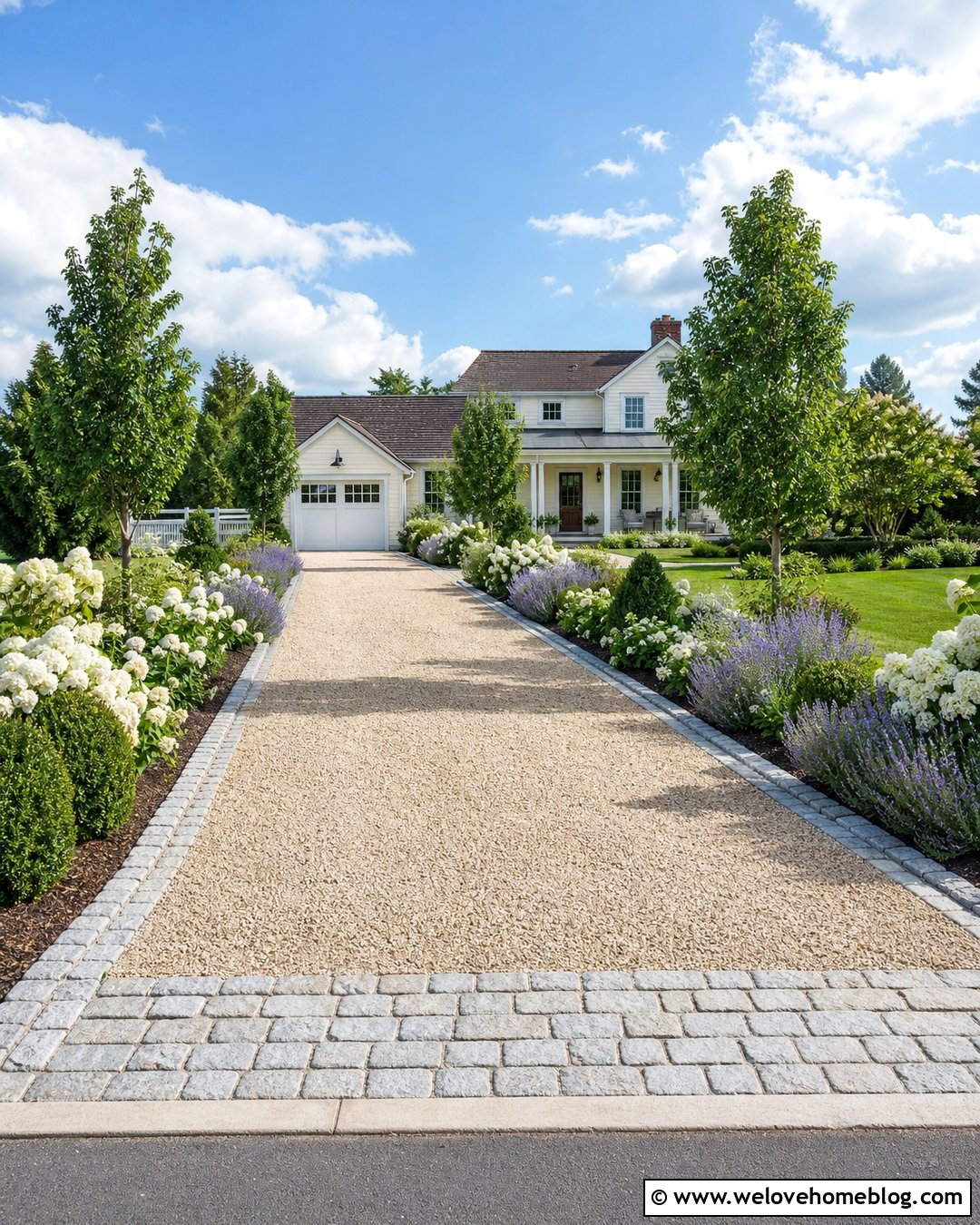
Large hydrangea borders create a soft, recognizable farmhouse look, especially beside a pale gravel or brick driveway. Use compacted cream gravel in a straight layout and edge it with gray granite cobbles. Plant hydrangeas in generous beds rather than placing them directly against the driving surface. Include enough setback for mature growth and snow storage where needed. Low catmint, salvia, or ground cover can fill the front edge, while clipped evergreens provide structure between flowering seasons. Repeat the granite around a matching gravel walkway leading to the porch. For a symmetrical house, balance the planting on both sides. On a less formal property, allow one border to be wider and more natural. The pale flowers, textured gravel, and dark edging create a bright, welcoming approach.
30. Farmhouse Driveway With Native Grasses
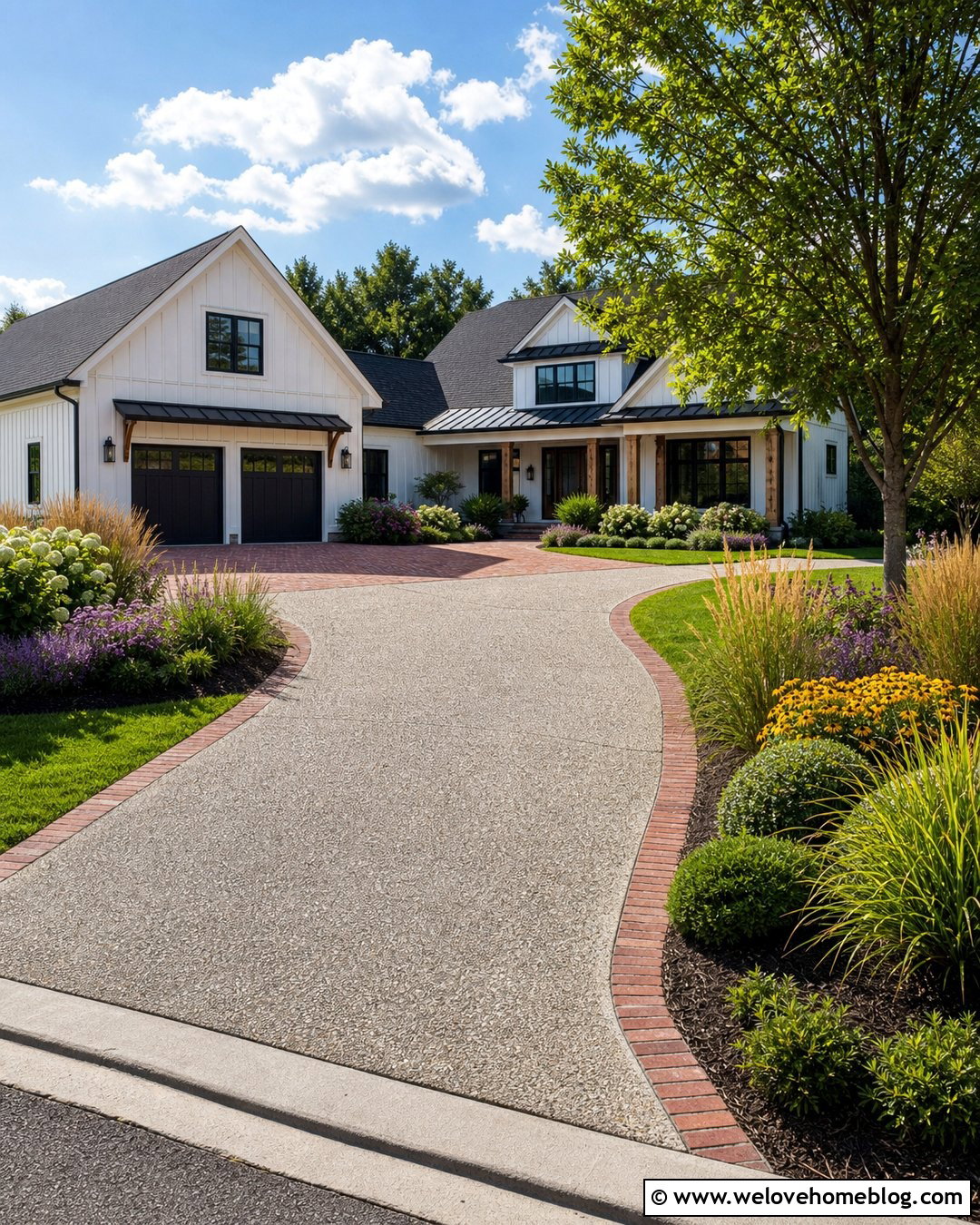
Native grasses bring movement and softness to a farmhouse driveway without requiring a highly formal planting plan. Pair them with exposed aggregate concrete in a warm gray tone and a gently curving layout. Use a narrow brick ribbon along the driveway edge to separate the surface from the planting beds. Arrange grasses in large groups, mixing heights carefully so shorter varieties stay near entrances and walkways. Add a limited number of flowering perennials and rounded shrubs for seasonal variation. A specimen tree can anchor the outer curve and frame the farmhouse in the distance. Near the garage, repeat the brick in a wider apron and front walkway. The finished setting feels natural but controlled, making it suitable for contemporary farmhouses and drought-conscious country landscapes alike.
31. Low Maintenance Farmhouse Driveway
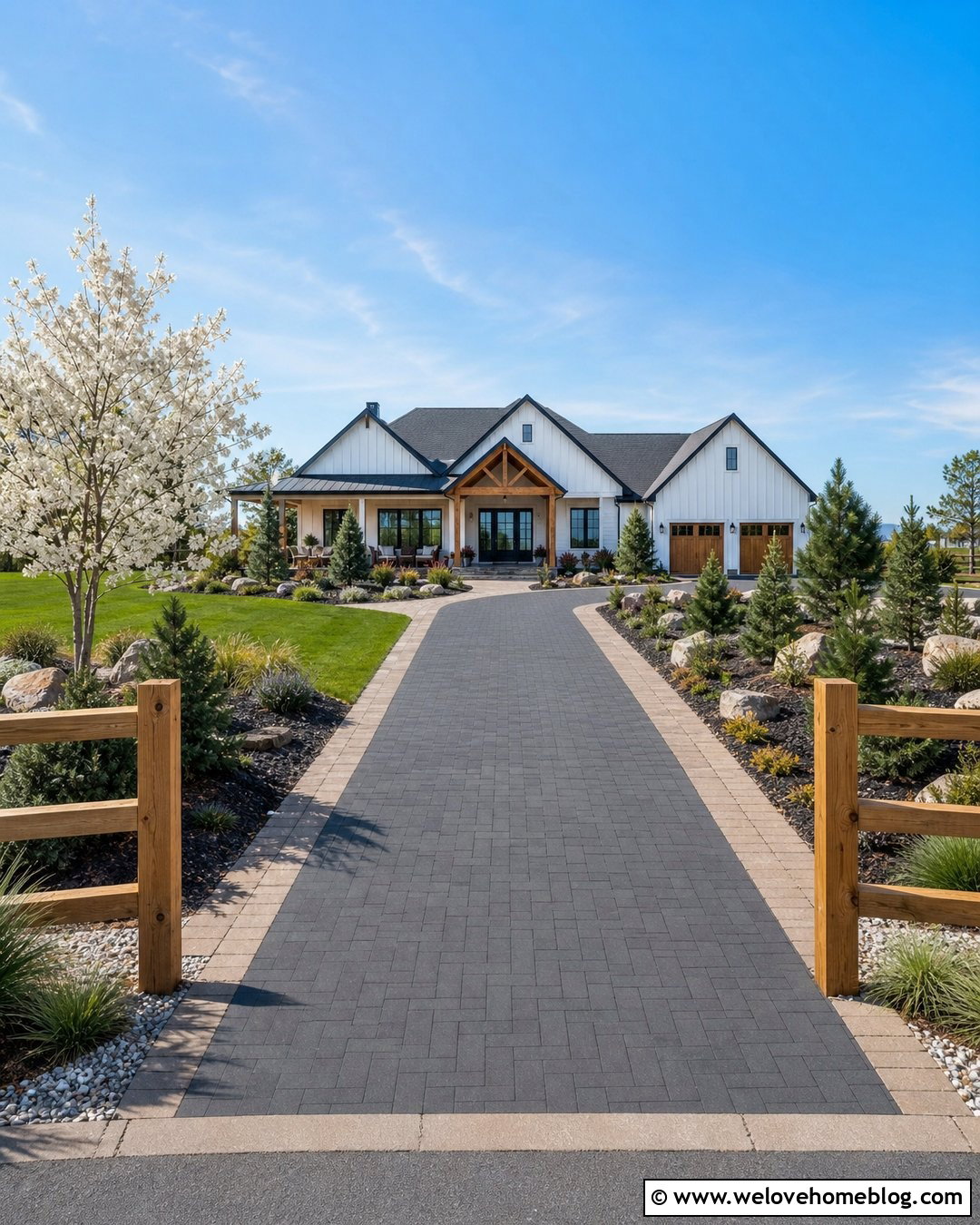
A low-maintenance farmhouse entrance should use durable materials and a restrained planting palette. Choose charcoal concrete pavers for the driveway and install a contrasting tan border around its straight edges. Instead of deep flower beds, use groups of compact evergreens, ornamental grasses, and tough ground covers. Apply decorative stone mulch around the plants to reduce exposed soil and sharpen the driveway boundaries. One small flowering tree near the walkway can provide seasonal interest without creating a complicated garden. Connect the driveway to the porch with matching pavers and keep narrow lawn strips to a minimum. A simple post-and-rail fence near the street can introduce farmhouse character. This complete design stays visually interesting through texture, repetition, and material contrast rather than relying on constant seasonal color.
32. Farmhouse Driveway With Post Lights
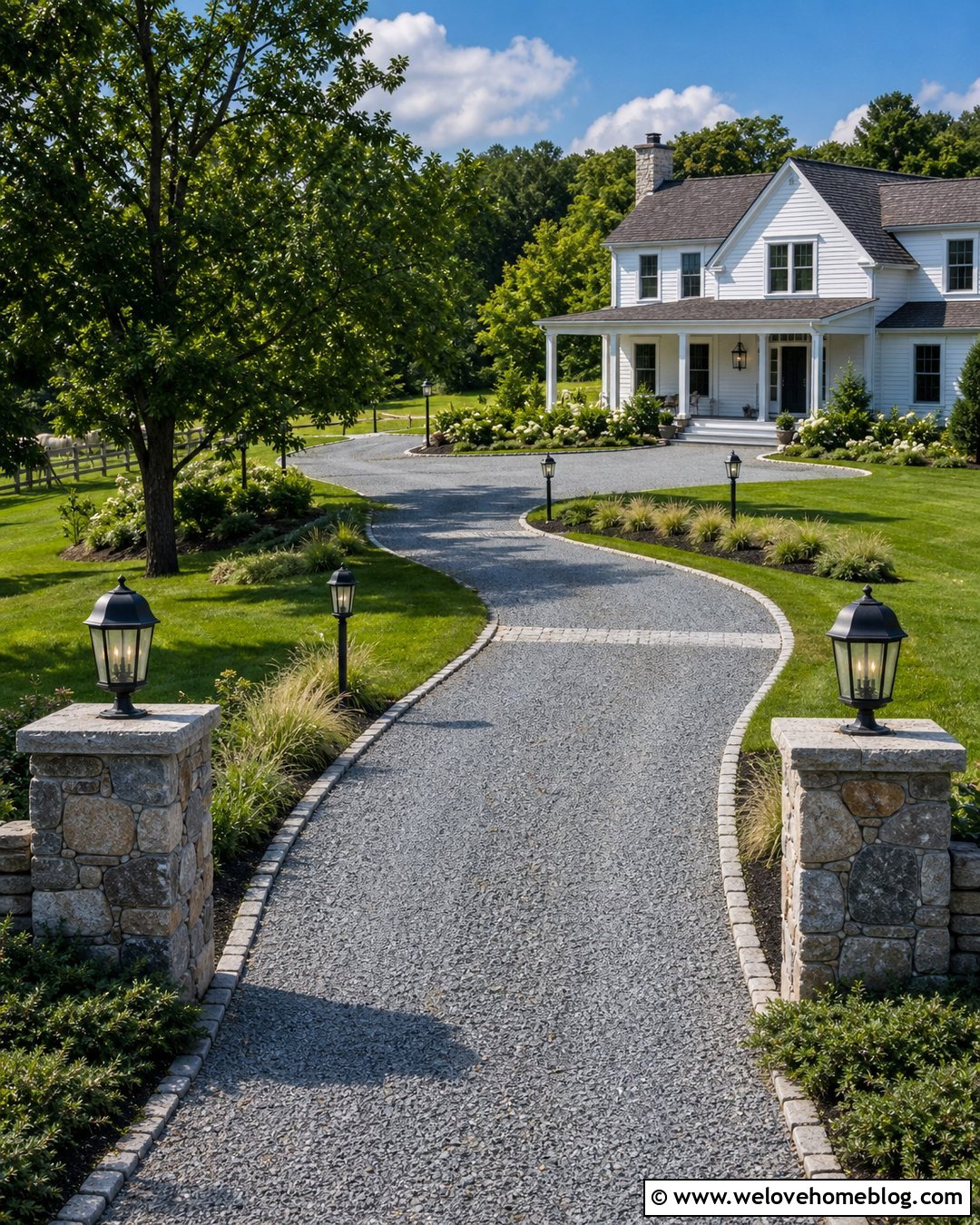
Driveway lighting should support the design during the day as well as improve nighttime visibility. Use weathered black or galvanized metal post lights along a curved gray gravel driveway. Space them at important points, such as the entrance, walkway crossing, bend, and parking area, rather than creating an overly dense row. Mount the entrance fixtures on fieldstone pillars and use shorter coordinated lights closer to the house. Granite cobblestone edging can help define the driveway in daylight. Surround each fixture with low ornamental grasses or evergreen ground covers that will not block the light. A matching lantern at the farmhouse porch completes the connection. During the day, the posts add vertical rhythm; after dark, they identify the route without changing the driveway’s relaxed country appearance.
33. Farmhouse Driveway With Address Sign
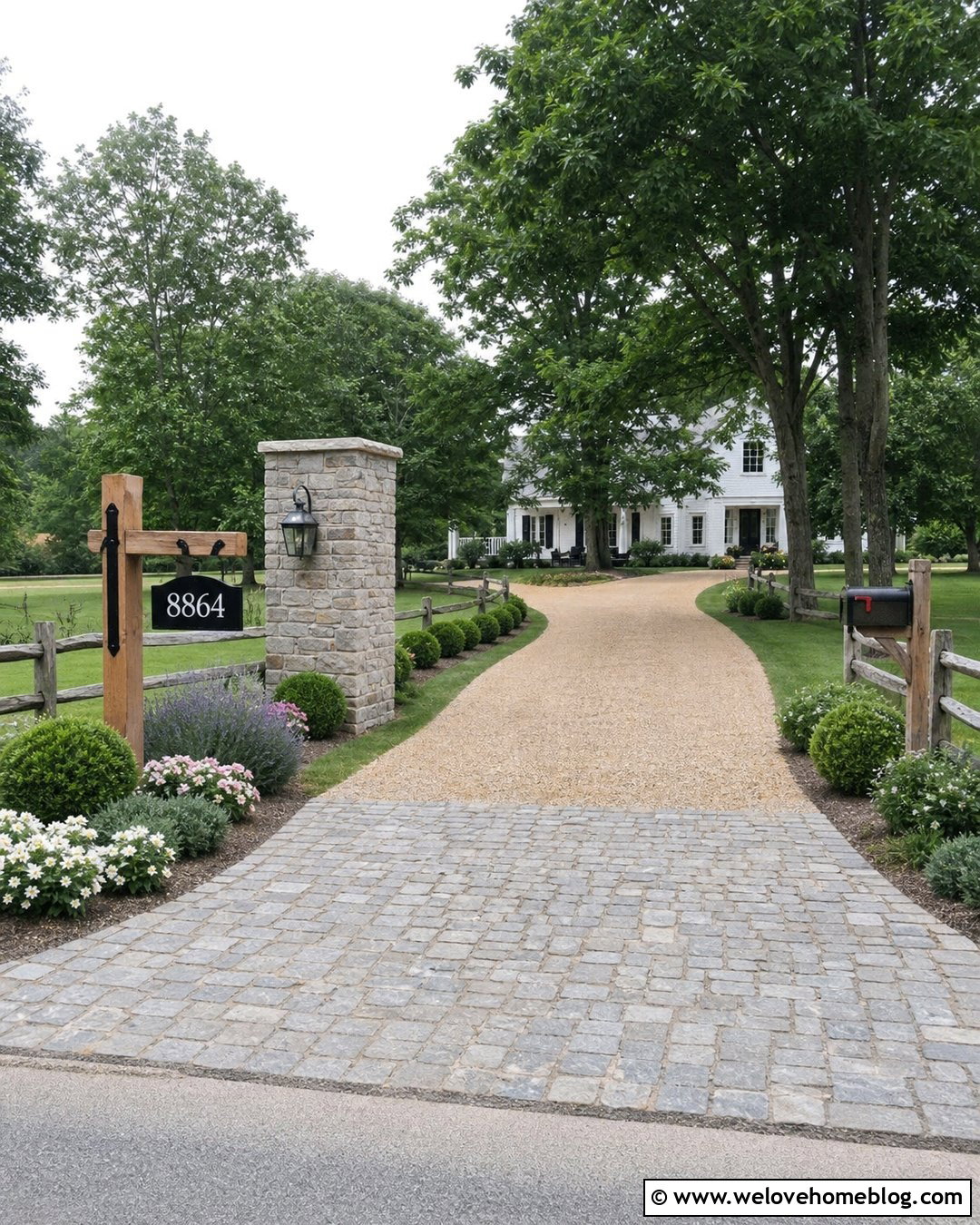
A well-designed address marker can make the driveway entrance easier to identify while reinforcing farmhouse character. Begin with a tan crushed gravel driveway and a wide cobblestone apron at the road. Install a simple wood-and-black-metal address sign beside one stone entrance pillar. Keep the numbers large and uncluttered, and position the sign where landscaping will not hide it. Surround the base with low boxwoods, catmint, and seasonal flowers. Continue a short split-rail fence behind the sign to connect it to the wider property. A matching mailbox can sit on the opposite side if space permits. The driveway should curve gently beyond the entrance and lead toward a white farmhouse framed by trees. Every element works together to create a useful, balanced, and memorable first impression.
34. Budget Farmhouse Gravel Driveway
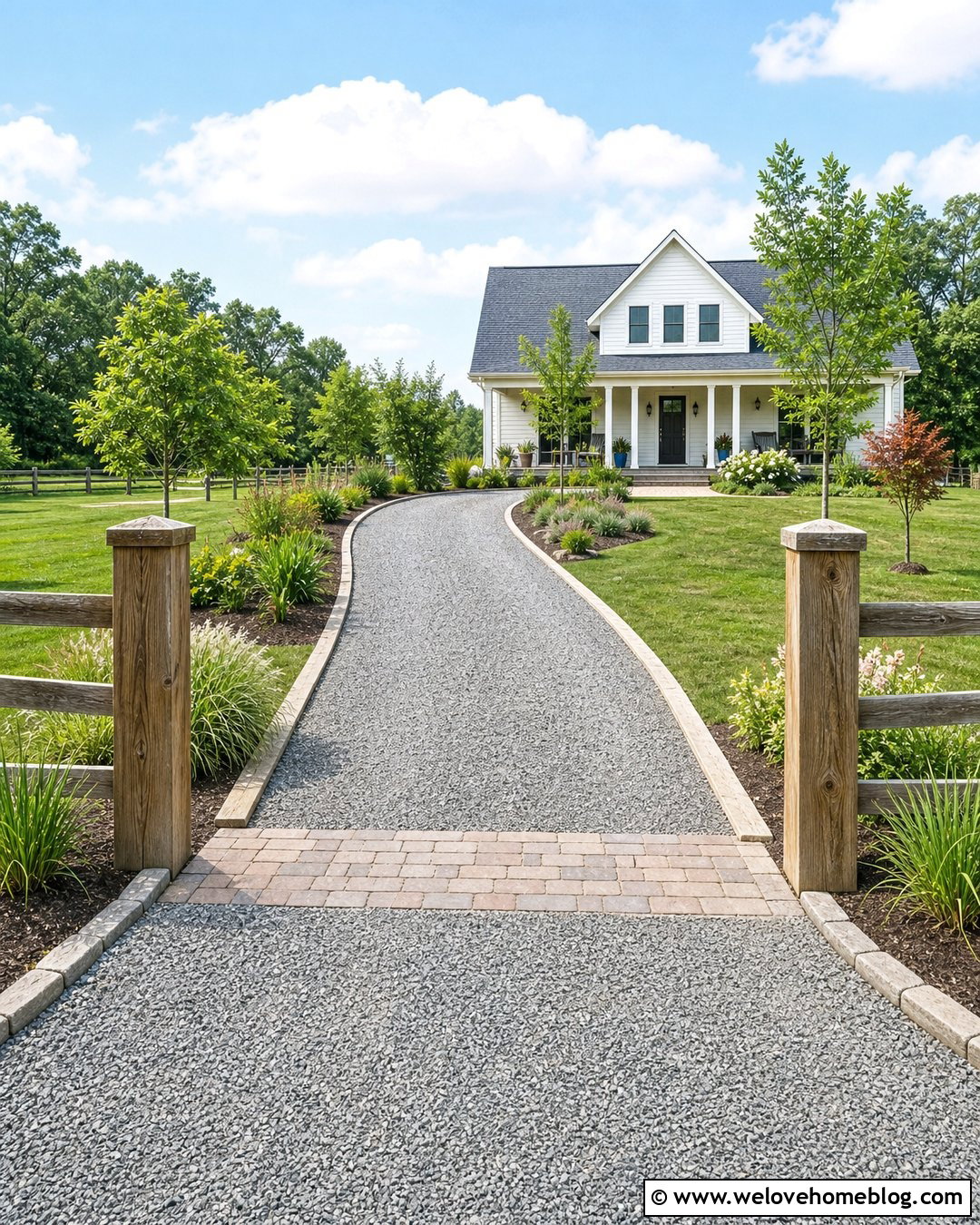
A modest budget can still produce a finished farmhouse driveway when simple materials are used consistently. Choose locally available crushed gravel in a neutral gray or tan color and install it in a straightforward layout. Use pressure-treated timber or economical concrete cobbles only along curves and high-traffic edges instead of bordering the entire driveway. Define the entrance with two sturdy wood posts and a short section of split-rail fence. Plant affordable ornamental grasses, native perennials, and young shrubs in small groups that can expand over time. A compact brick apron near the porch walkway adds warmth without requiring a fully paved surface. Keep the lawn edges crisp and repeat the gravel in nearby paths. Careful shaping and consistent details make this economical driveway look intentional rather than temporary.
35. Mixed Material Farmhouse Courtyard Driveway
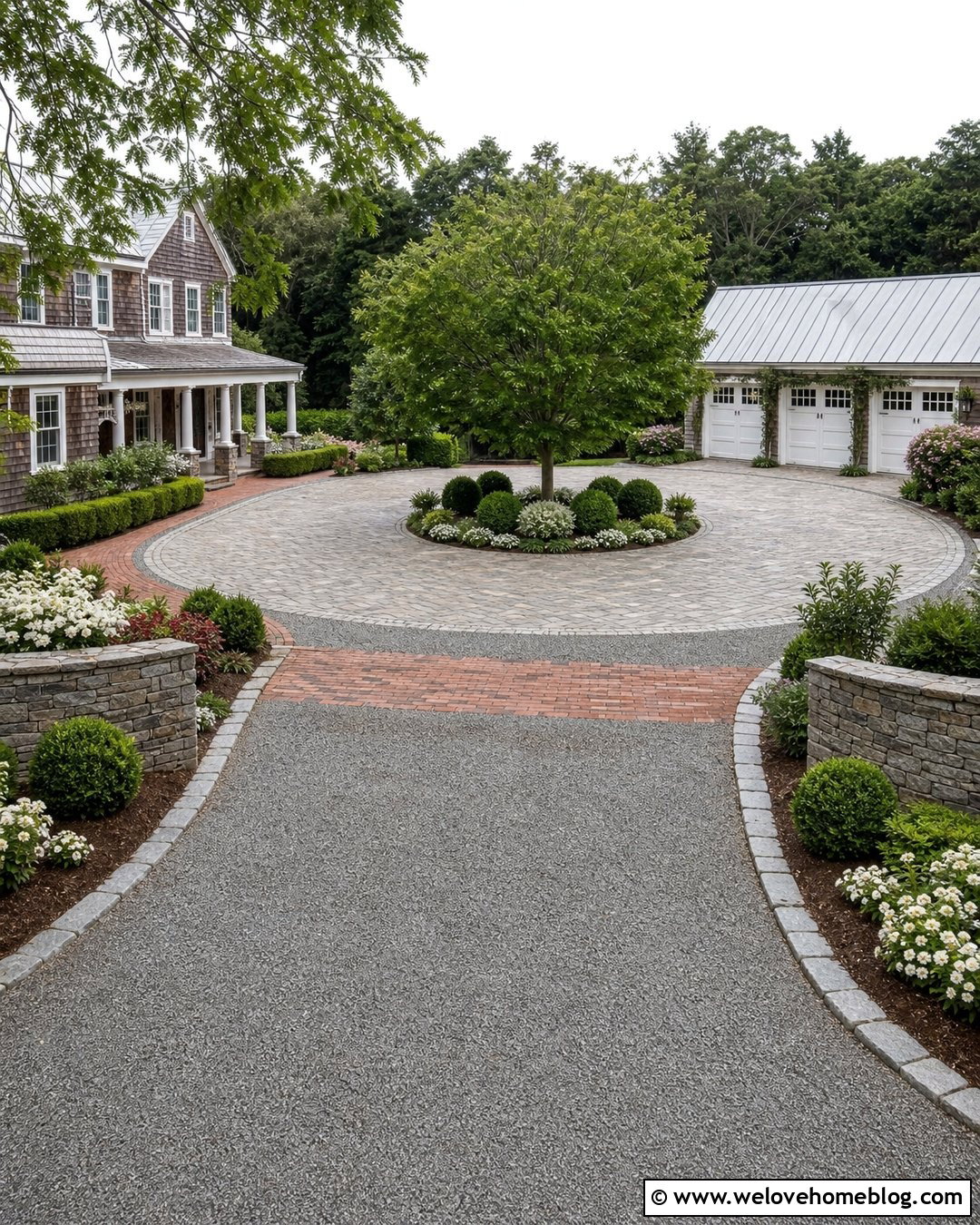
A mixed-material courtyard can give a larger farmhouse a practical arrival area with rich visual texture. Use compacted gray gravel for the long entrance lane, then transition into a circular courtyard made from weathered concrete pavers. Mark the change with a broad reclaimed brick band. In the center, create a landscaped island with a small ornamental tree, clipped shrubs, and flowering perennials. Edge the outer courtyard with granite cobbles and connect it to the porch using a brick walkway. Keep additional parking near the garage visually separate with another paver band. Low stone walls and layered planting beds can frame the space without making it feel enclosed. Repeating each material at least twice helps the complete design feel coordinated rather than pieced together.
Conclusion:
The best 35 farmhouse driveway ideas combine a usable driving surface with borders, landscaping, and architectural details that belong together. Gravel provides relaxed country character, while brick, concrete, asphalt, stone, and pavers offer different levels of structure and formality. The driveway’s shape matters just as much as its material. Straight lanes feel orderly, curved approaches create a natural reveal, and circular layouts improve movement on larger lots. Finish the design with practical edging, appropriately scaled plants, a clear walkway, and entrance features that repeat materials from the house. Whether your property is rural or suburban, a coordinated plan will make the driveway feel like a welcoming extension of your farmhouse.

Related posts:
Leave a Reply