
A well-designed farm driveway should feel practical, welcoming, and naturally connected to the surrounding land. The best **35 Farm Driveway Ideas** combine durable surfaces with thoughtful curves, defined borders, useful drainage, and landscaping that suits a rural setting. Gravel remains a favorite, but crushed stone, asphalt, concrete, brick, cobblestone, and permeable pavers can also complement barns, ranch homes, country cottages, and modern farmhouses. Simple additions such as split-rail fencing, native grasses, stone pillars, or a tree-lined approach can turn an everyday access road into a memorable entrance. Whether your property has a short front drive or a long lane crossing open acreage, these complete designs offer practical inspiration. Explore the following **35 Farm Driveway Ideas** to find a look that fits your home, land, and budget.
1. Gravel Farm Driveway With Split Rail Fence
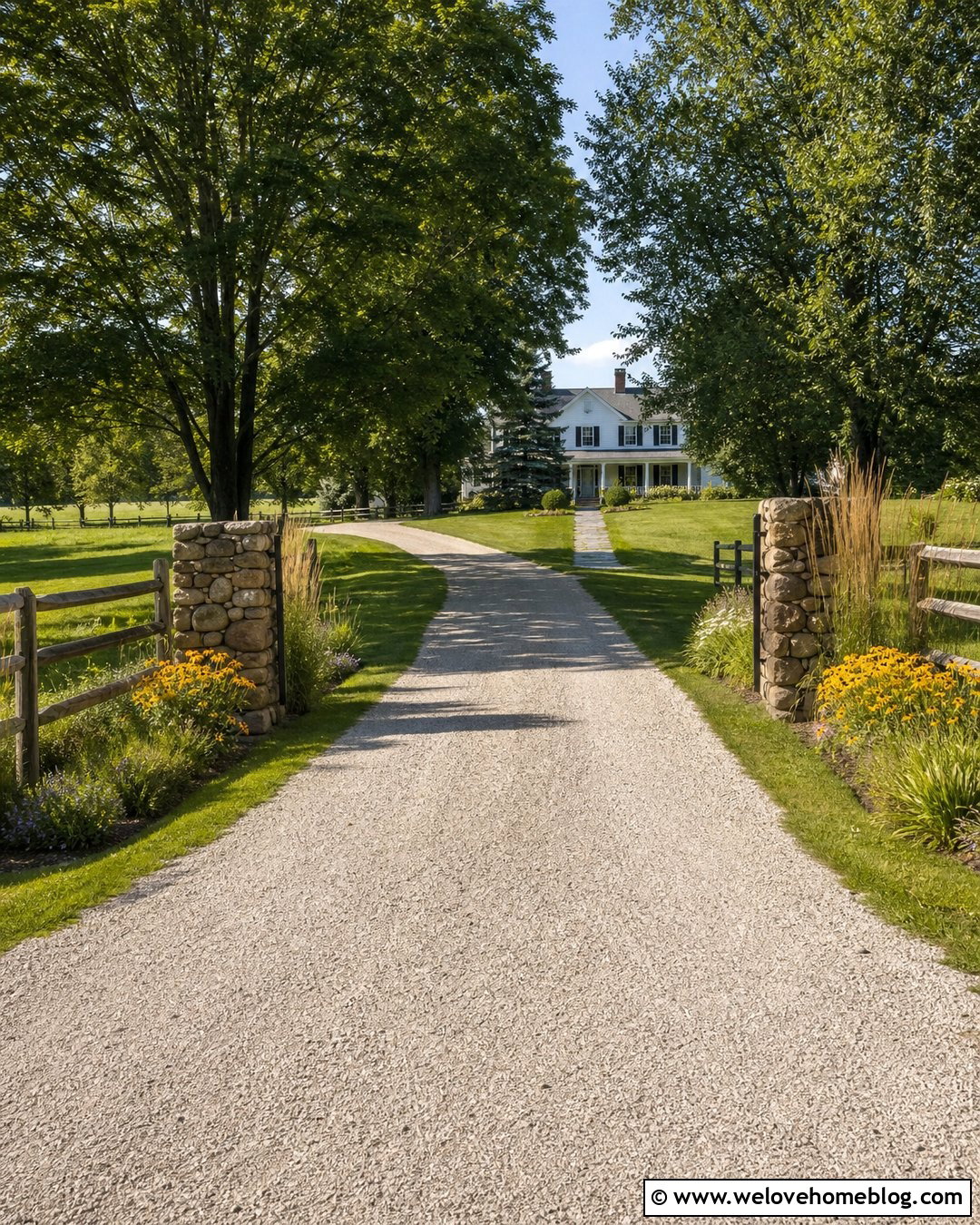
A pale crushed-gravel driveway paired with split-rail fencing creates a familiar country look without making the entrance feel overly formal. Keep the drive straight or add one broad curve that reveals the farmhouse gradually. Warm beige gravel works especially well beside weathered cedar rails, green pastures, and a white or red farm home. Use larger fieldstones at the road entrance to hold loose material in place and visually mark the opening. A narrow strip of mowed grass between the gravel and fence provides a clean transition. Plant native grasses, black-eyed Susans, or low flowering shrubs outside the vehicle clearance zone. This complete design is straightforward, affordable-looking, and easy to extend toward barns, garages, or equipment areas.
2. Long Farm Driveway Lined With Trees
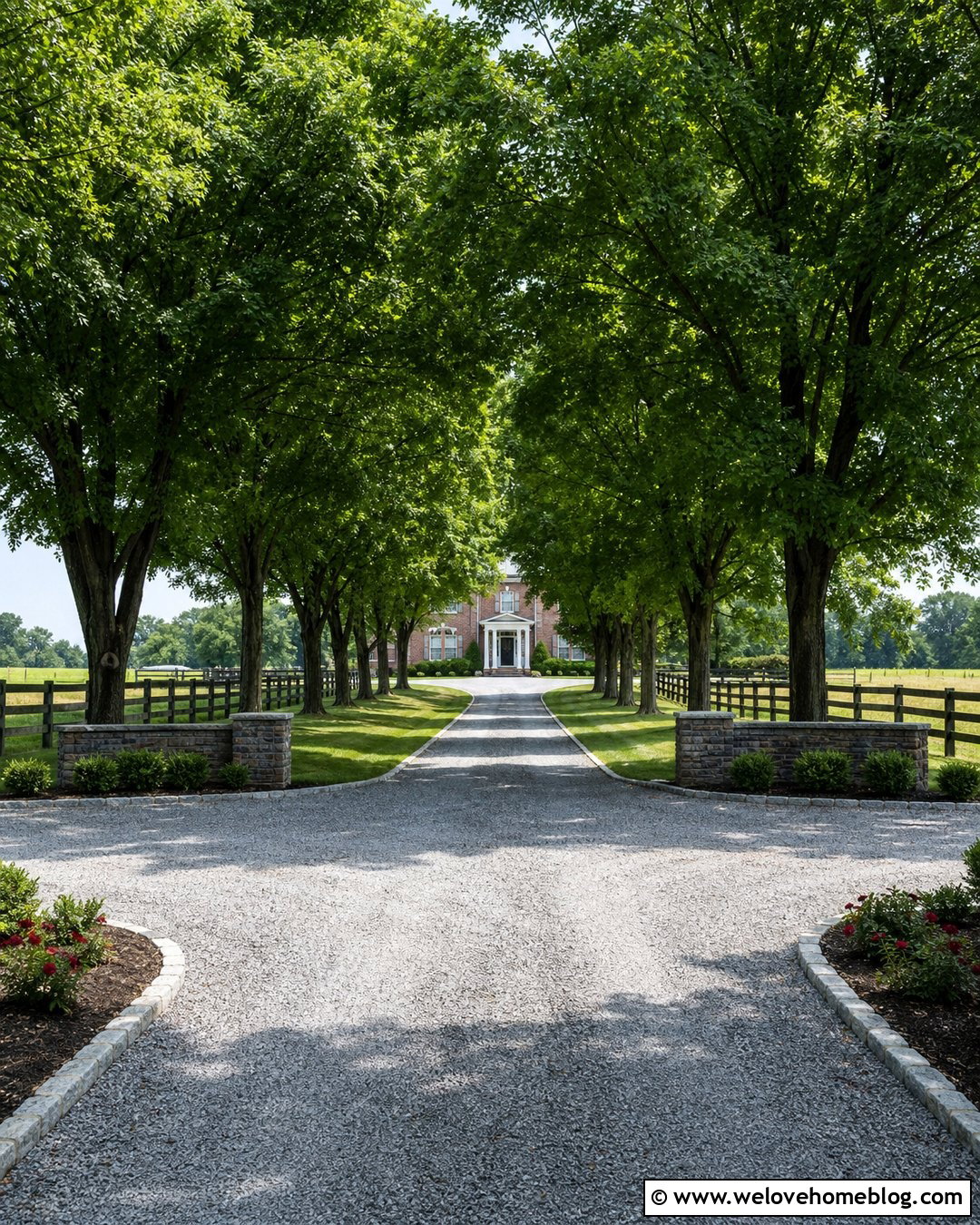
Few approaches feel as established as a long farm driveway framed by evenly spaced trees. A compacted gray gravel surface keeps the lane relaxed, while a double row of maples, oaks, or disease-resistant elms creates structure across open land. Set the trees far enough back to allow for mature growth, snow removal, farm equipment, and clear sightlines. Simple grass shoulders can soften the gravel without creating fussy maintenance. At the house, widen the lane into a generous parking court with matching gravel and a stone-paver apron. This design suits traditional farmhouses, restored barns, and rural estates. The repeating trunks guide attention toward the home, while the open understory preserves wide views of fields and surrounding acreage.
3. Curved Gravel Farm Driveway With Native Grasses
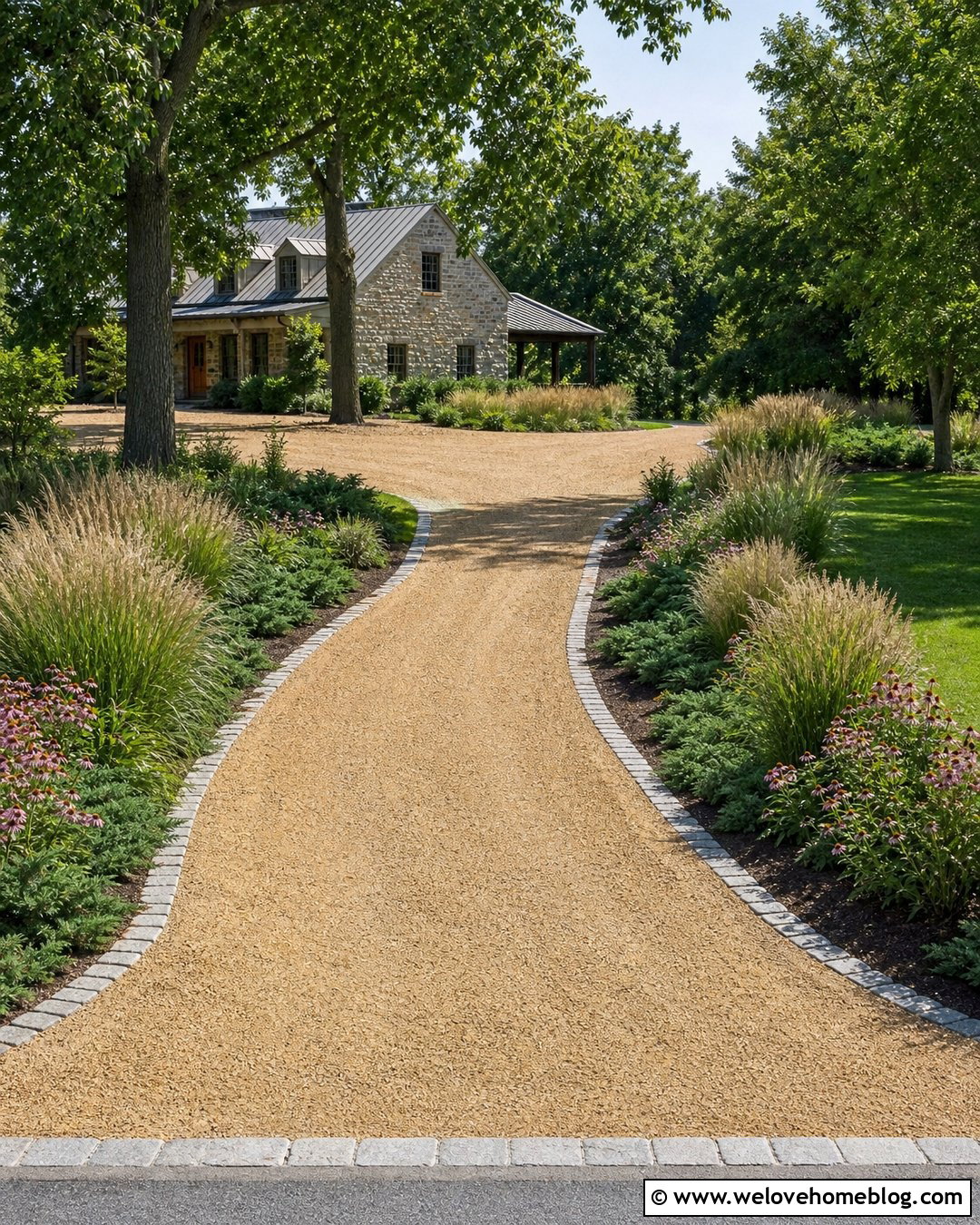
A gently curving gravel driveway can make a farmhouse entrance feel natural and private. Choose compacted tan crushed stone rather than loose round pebbles for a firmer driving surface. Edge the curves with dark steel, flush cobblestones, or a neat mowed strip so gravel does not spread into planting beds. Groups of switchgrass, little bluestem, coneflowers, and low junipers can follow the outside bends. Keep the inside curves more open for comfortable visibility. This layout works particularly well when the driveway must move around existing trees, slopes, or pasture boundaries. The soft plant movement complements the rugged surface, while the curve creates an attractive sequence of views. Finish the approach with a broad gravel parking area beside the farmhouse.
4. White Farmhouse Driveway With Black Metal Gate
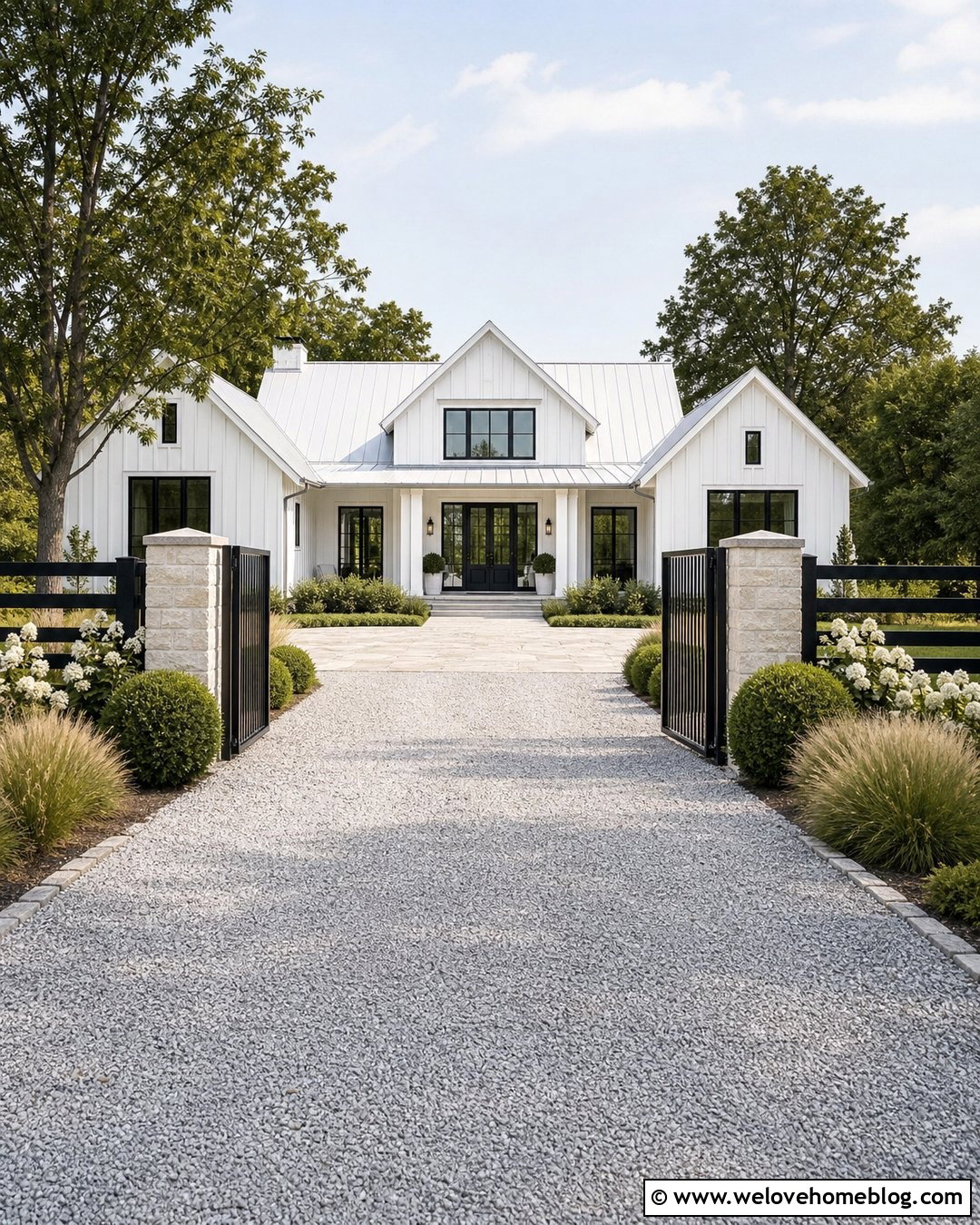
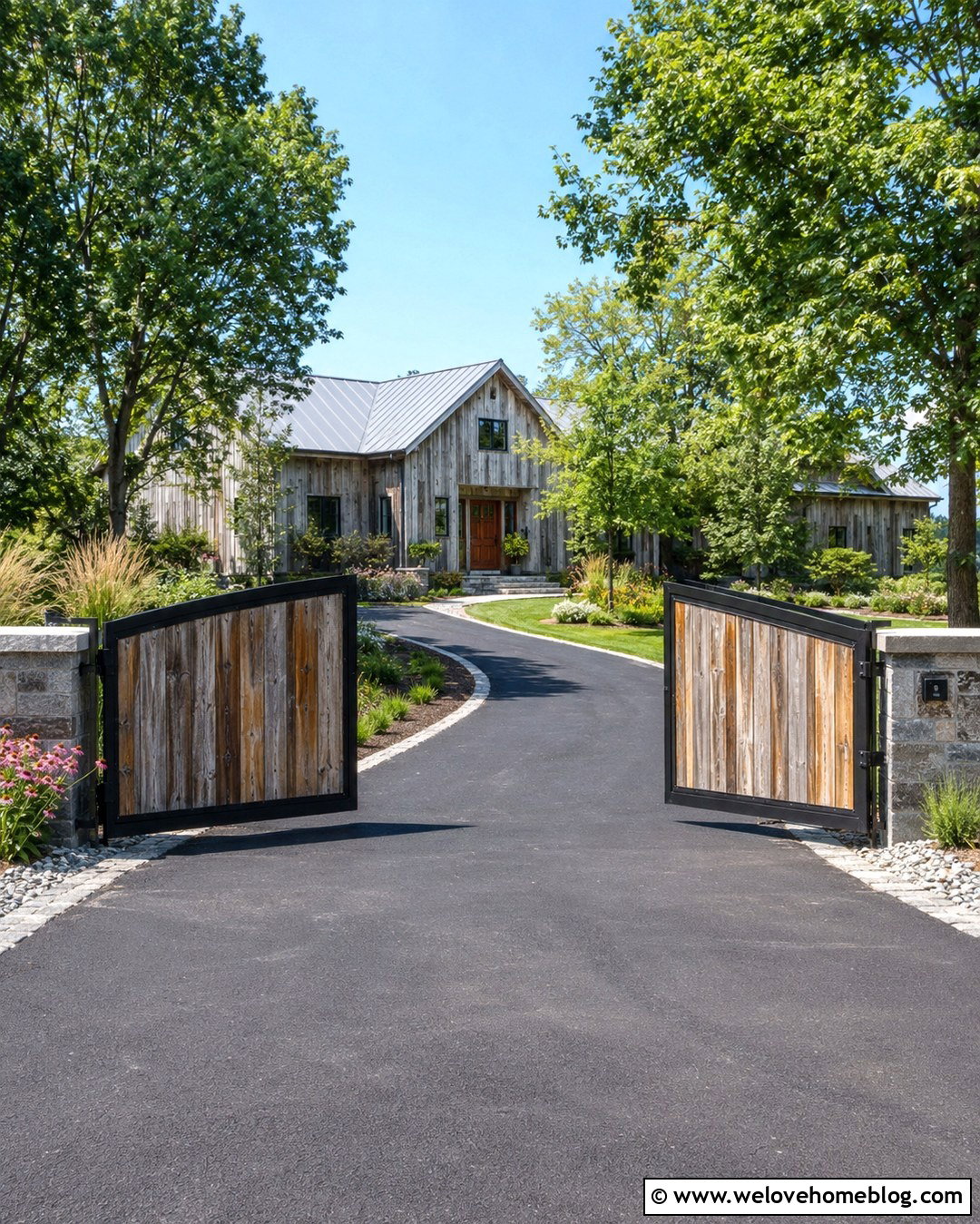
Black metal gates bring crisp definition to a farm driveway leading toward a white farmhouse. Use a light gray crushed-stone surface to connect the dark entrance with the bright facade. Square limestone pillars can anchor the gate without making it feel too ornate. Continue black post-and-rail fencing along both sides for a coordinated edge, then soften the structure with clipped shrubs, ornamental grasses, and white flowering perennials. A straight layout emphasizes symmetry and gives the entrance a clean modern-farmhouse appearance. Allow enough space between the road and gate for safe vehicle waiting and comfortable gate operation. Near the house, transition the gravel into a matching paver parking pad. The limited color palette keeps the entire farm driveway polished but still suitable for rural land.
5. Farm Driveway With Stone Entrance Pillars
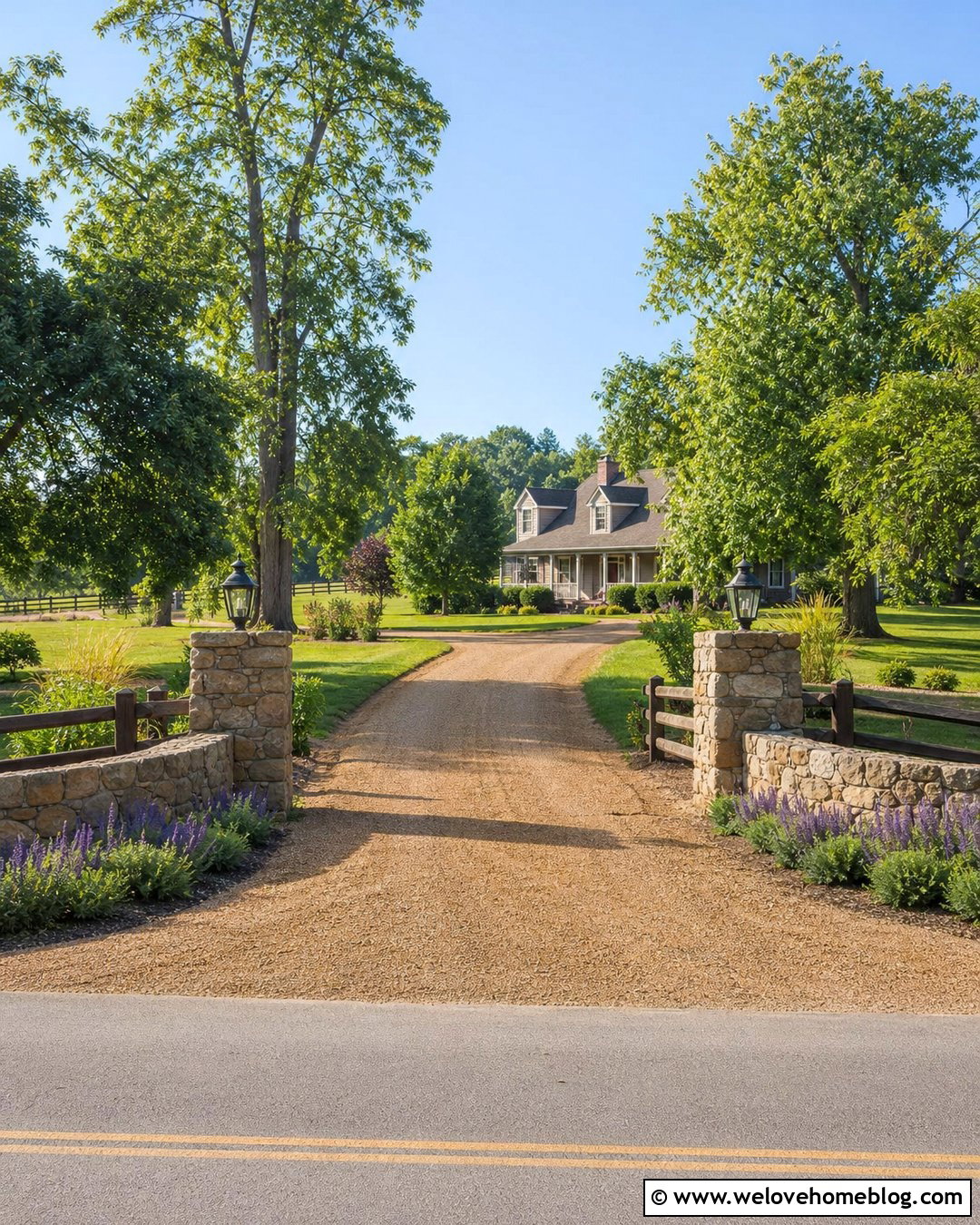
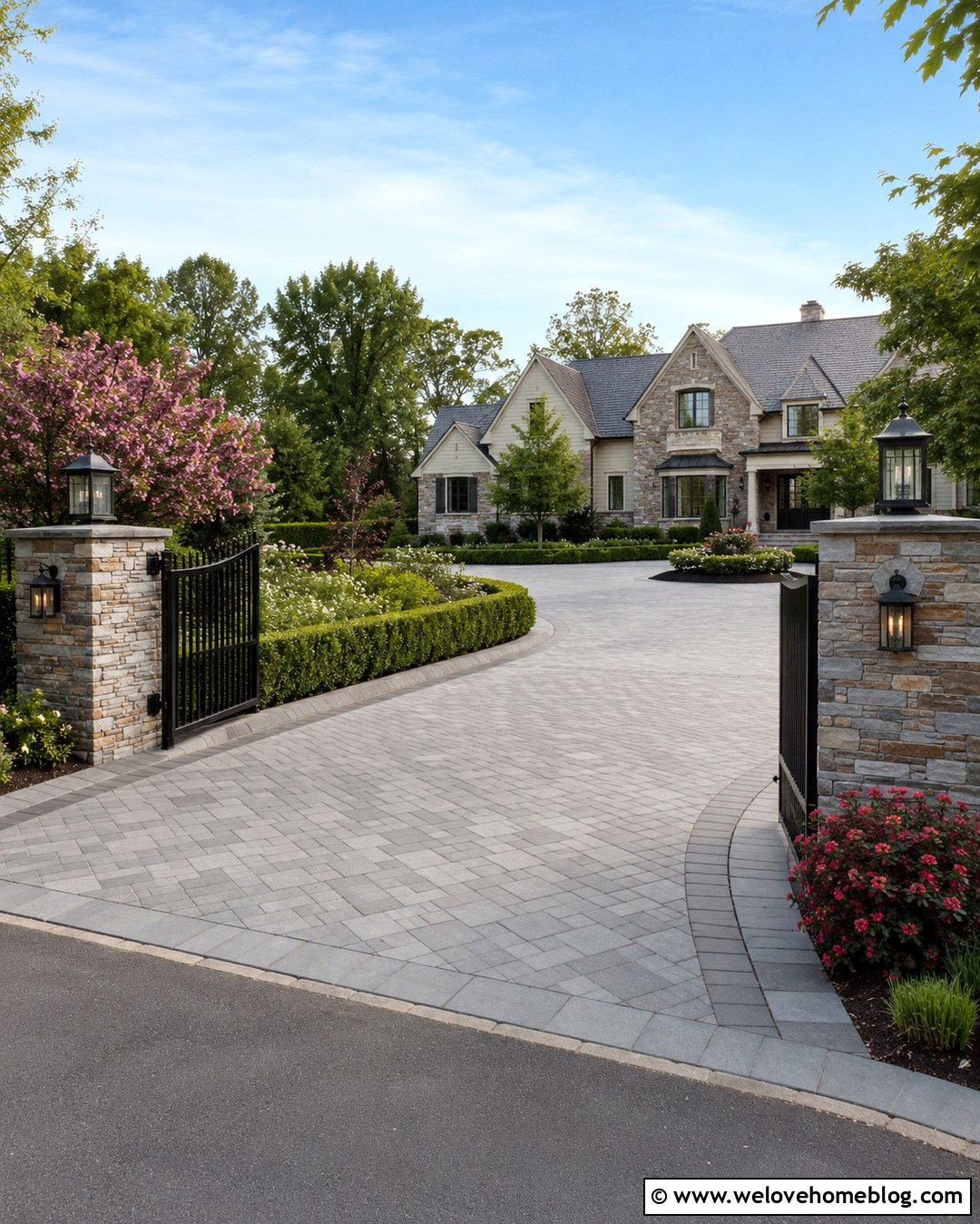
Substantial stone pillars can make a simple driveway look permanent and well planned. Build the entrance around warm fieldstone or locally inspired ledgestone, then pair it with a compacted brown gravel lane. Low stone walls may extend from each pillar before transitioning into wood pasture fencing. Add lantern-style fixtures, but keep their size proportional to the columns and surrounding landscape. Beds of low juniper, salvia, and native grasses can soften the stone bases without blocking visibility. A slightly flared driveway opening makes turning easier and gives the entrance a balanced shape. Continue the same stone near the farmhouse as walkway edging, porch cladding, or retaining walls. Repeating the material helps the gate area and home feel like one complete farm driveway design.
6. Circular Gravel Farm Driveway With Center Island
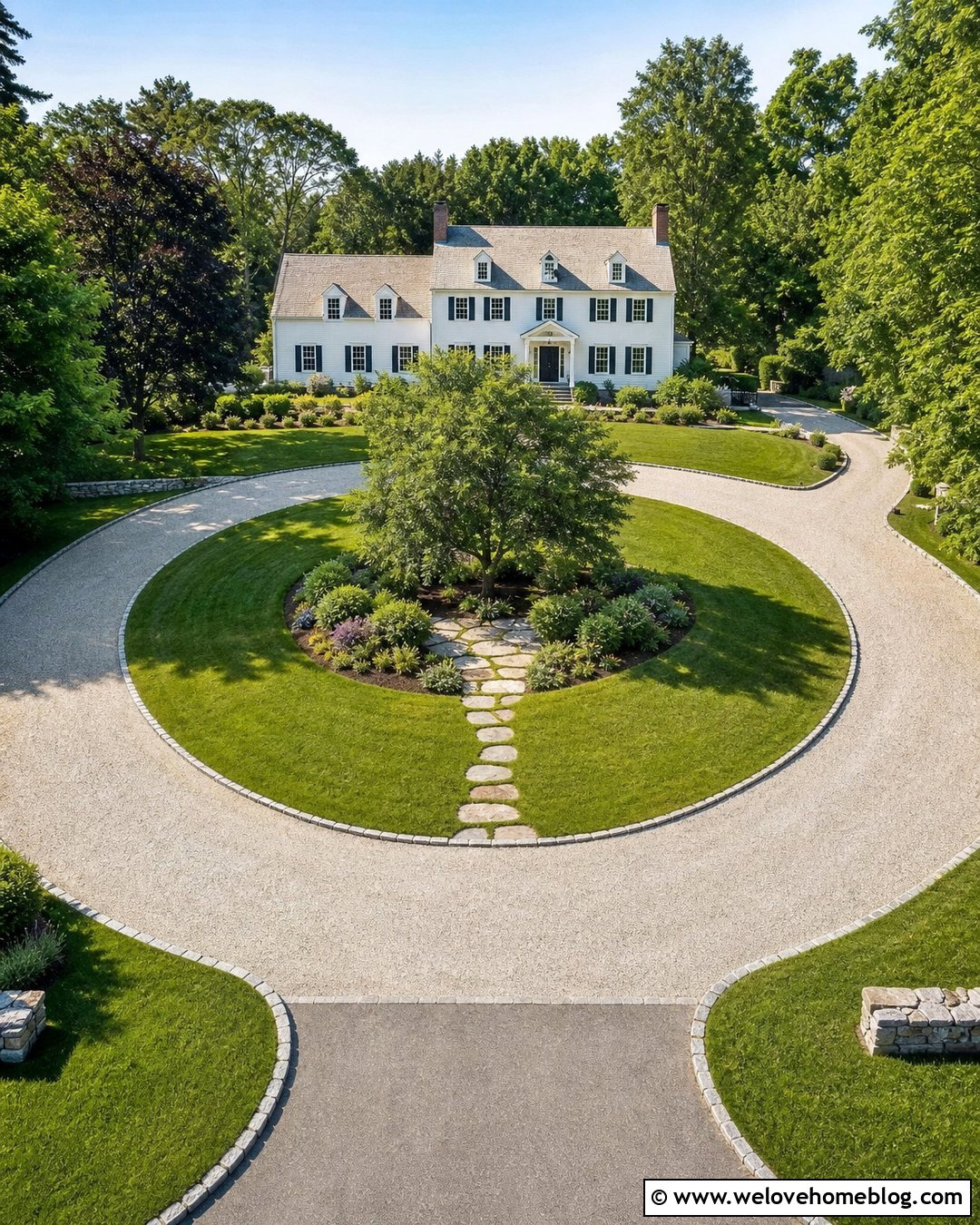
A circular farm driveway offers an attractive arrival area and convenient vehicle movement around the front yard. Cover the drive with compacted cream-colored gravel and define both edges with flush granite cobbles. In the center, create a large oval island with a specimen shade tree, mowed lawn, and a simple ring of native perennials. Keep the planting low near entry and exit points so drivers retain clear views. The circle should connect naturally to the garage, barn, or side parking area rather than ending abruptly. This layout looks especially fitting in front of a symmetrical farmhouse with a central porch. A stone walkway across the island can provide direct pedestrian access. The result feels gracious while remaining useful for visitors, deliveries, and everyday farm traffic.
7. Farm Driveway With Wildflower Borders
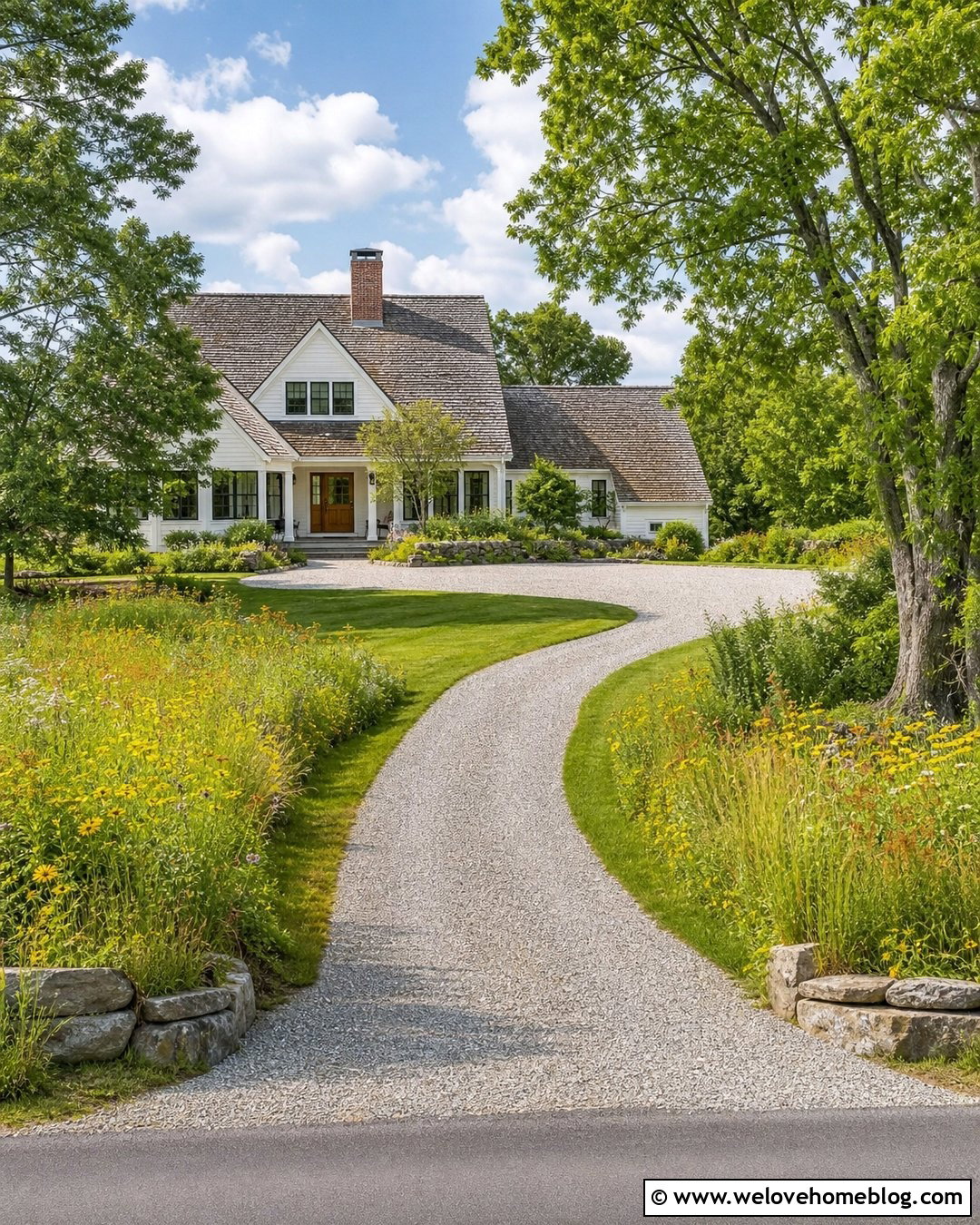
Wildflowers can turn a plain rural driveway into a colorful transition between the road and farmhouse. Start with a compacted gray gravel lane and leave generous planting strips beyond its grass shoulders. Use regionally appropriate flowers mixed with fine-textured native grasses for a relaxed meadow effect. Concentrate taller plants farther from the driving surface, while keeping the entrance, bends, drainage areas, and intersections low and open. A softly curved layout will feel especially natural through a large field. At the home, replace the meadow planting with more defined beds and stone edging to create a tidy arrival zone. Mowed margins on both sides prevent the border from appearing neglected. This complete look suits working farms, cottage-style homes, and properties that already have informal field landscapes.
8. Modern Farm Driveway With Concrete Pavers
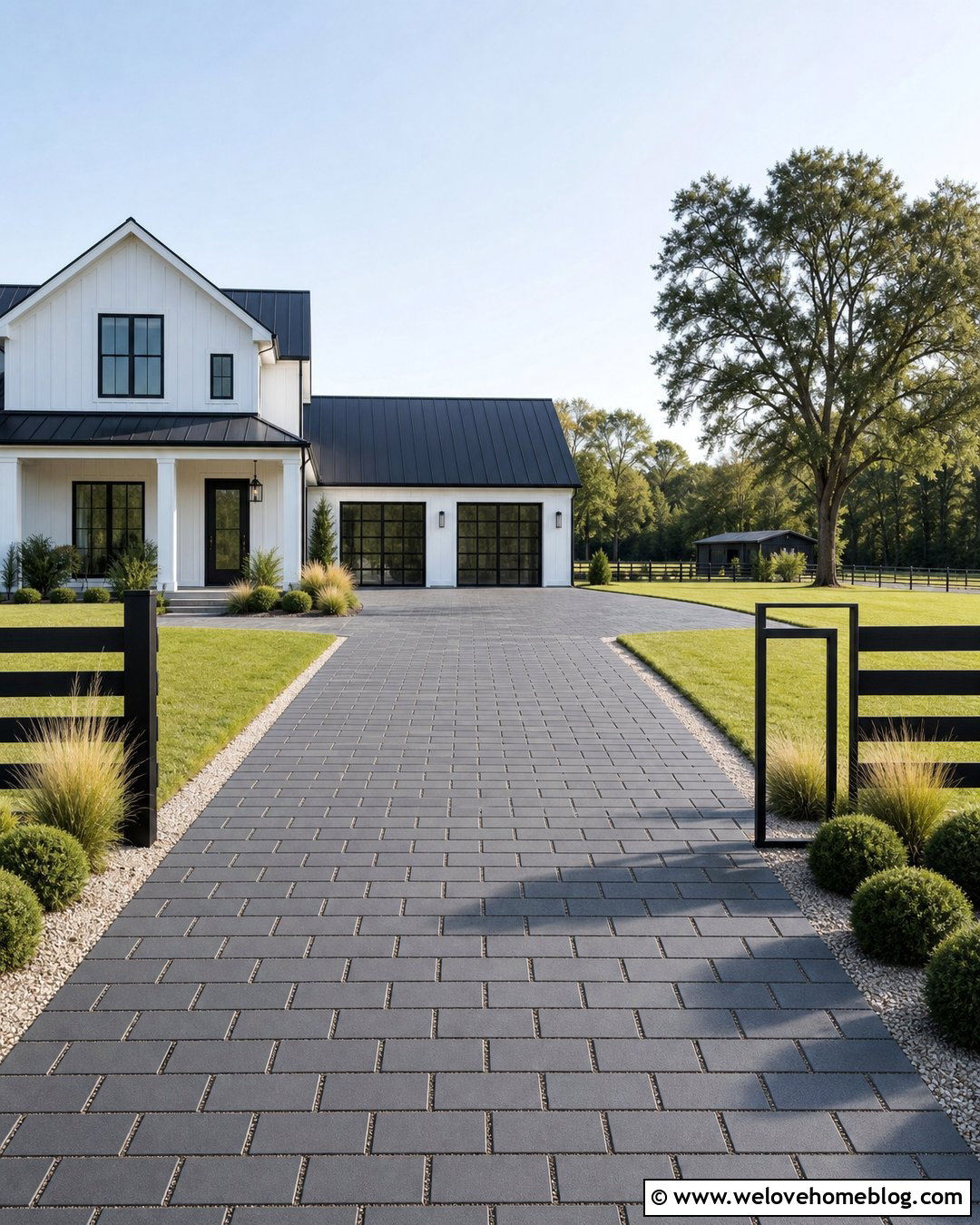
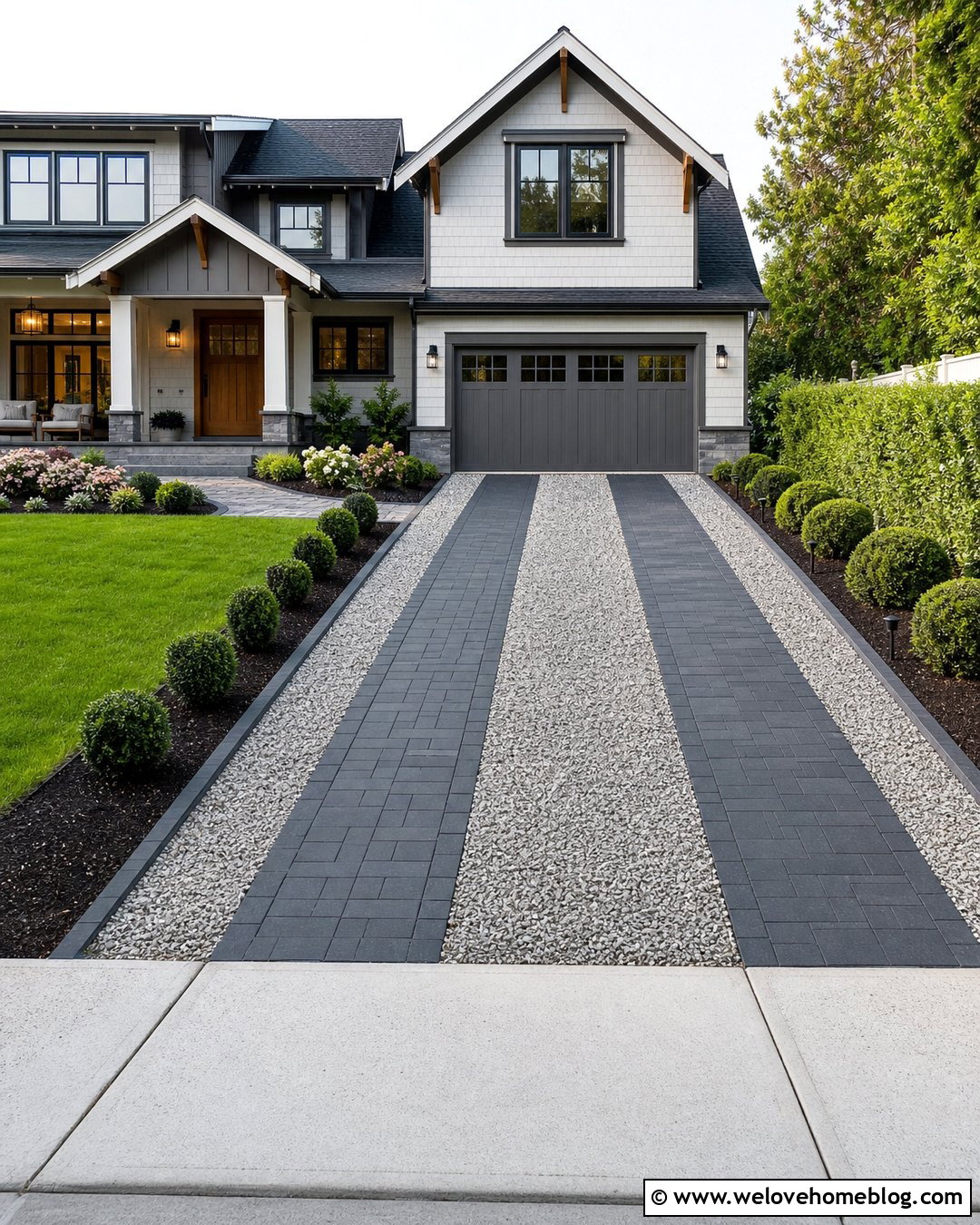
Large concrete pavers can give a farm driveway a cleaner, more contemporary character. Choose charcoal or warm gray rectangular pavers in a simple running-bond pattern, then install narrow gravel joints for texture and drainage. A straight drive works well with a modern farmhouse featuring white siding, black windows, and a standing-seam metal roof. Frame the pavement with low ornamental grasses, clipped evergreen mounds, and broad lawn areas rather than busy flower beds. At the road, use black steel address markers and matching horizontal fencing. Continue the pavers into a wide parking court near the garage to avoid an awkward material change. The precise surface, restrained planting, and strong geometry create a modern rural entrance that still relates comfortably to fields, fences, and agricultural buildings.
9. Farm Driveway With Brick Ribbon Edging
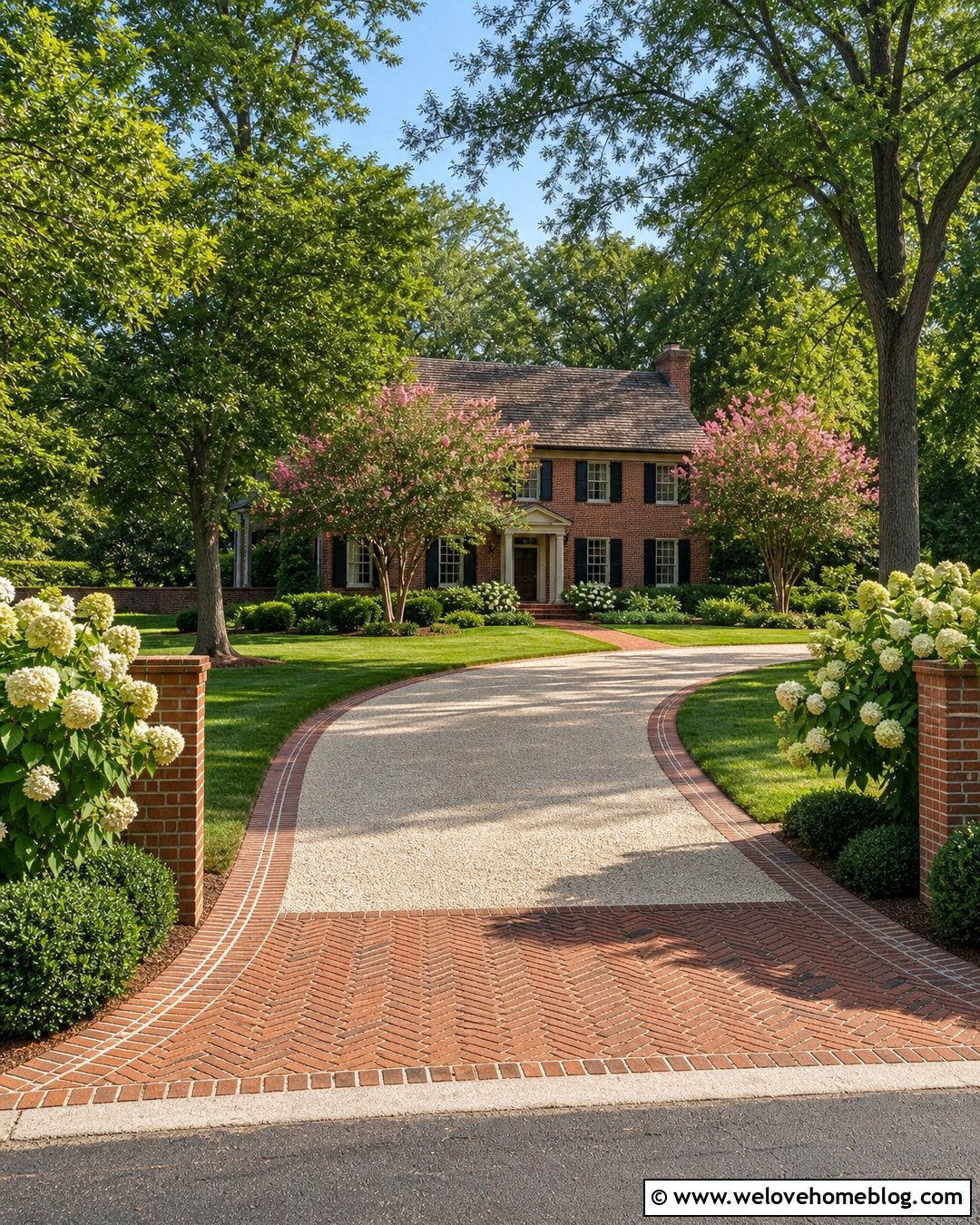
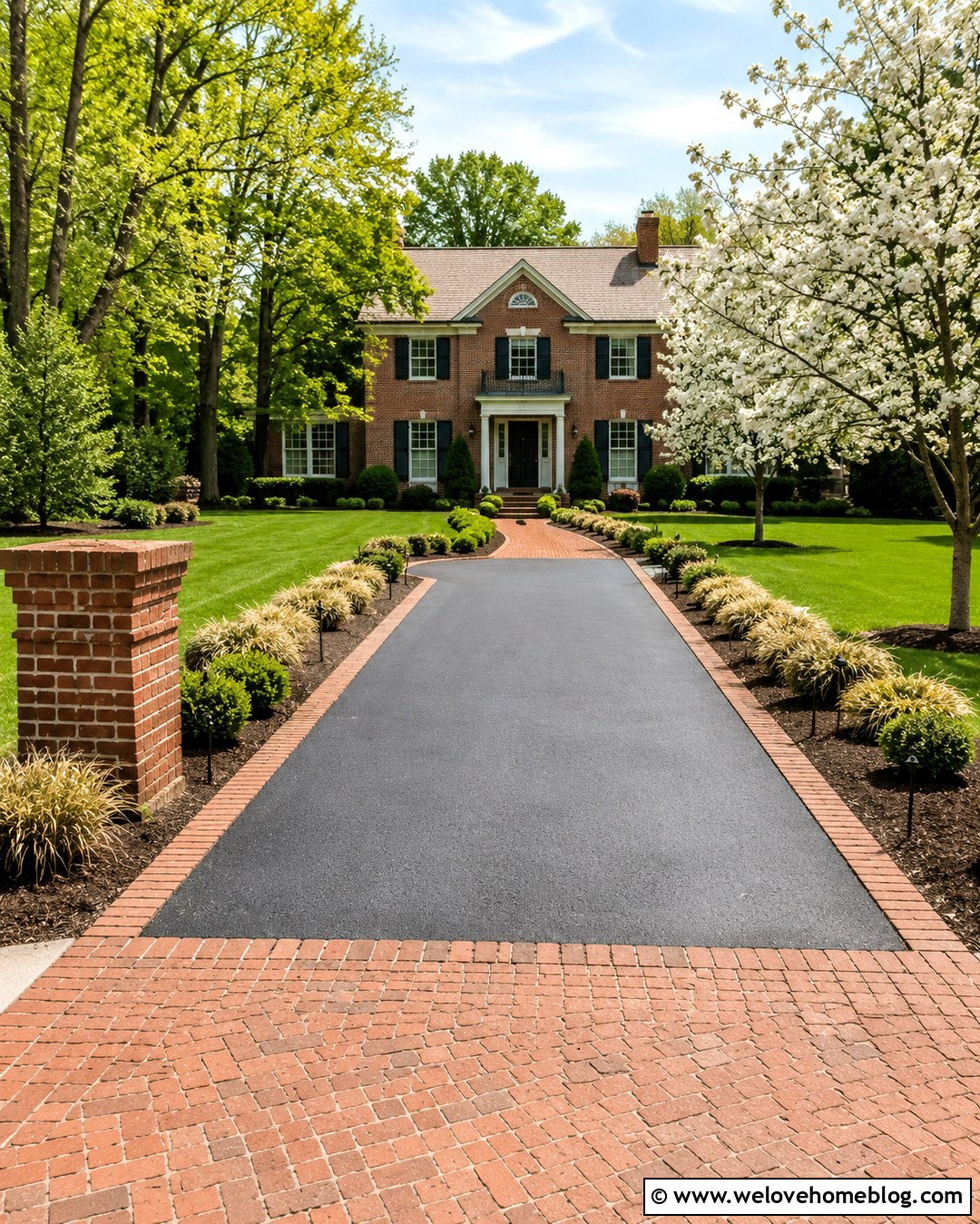
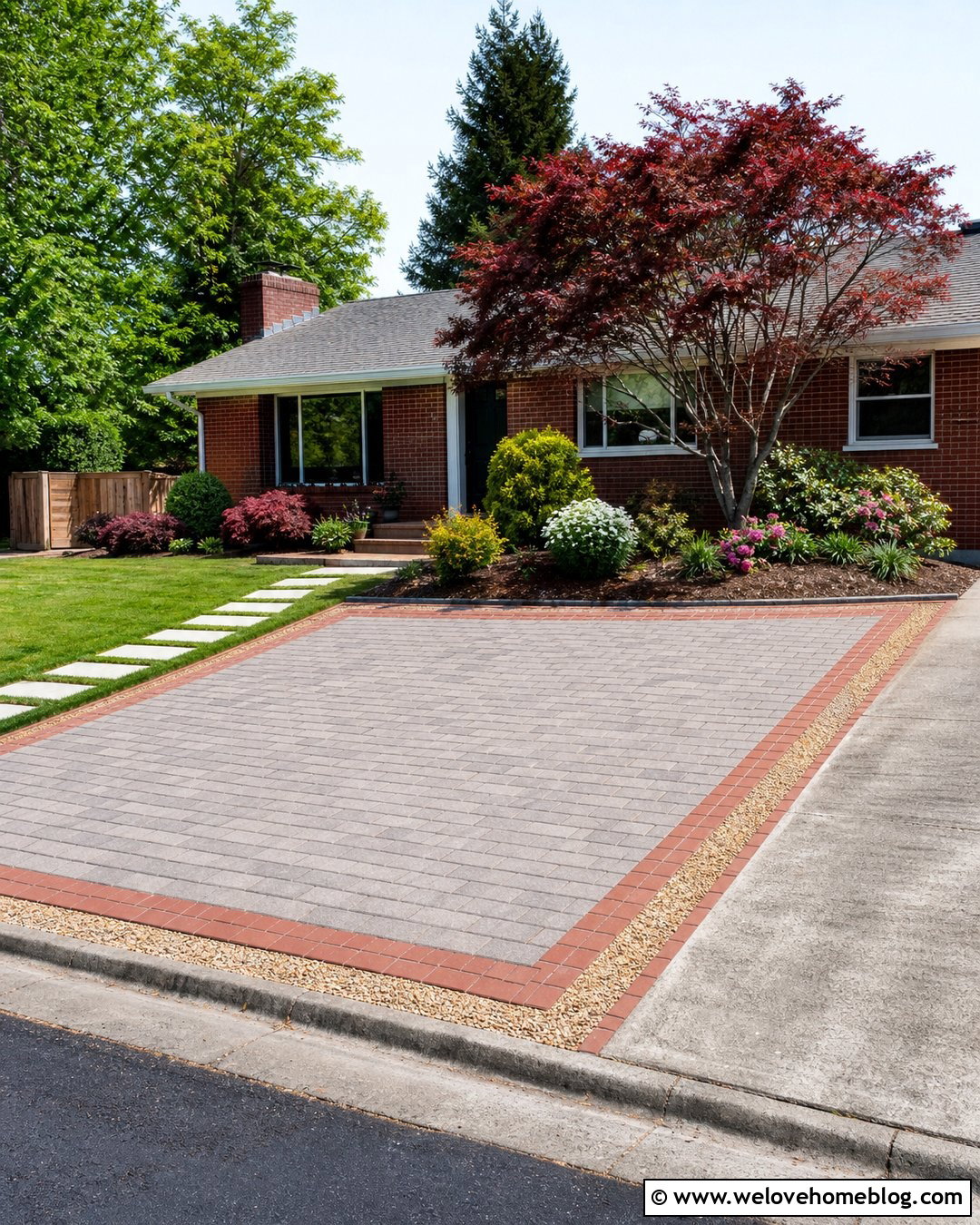
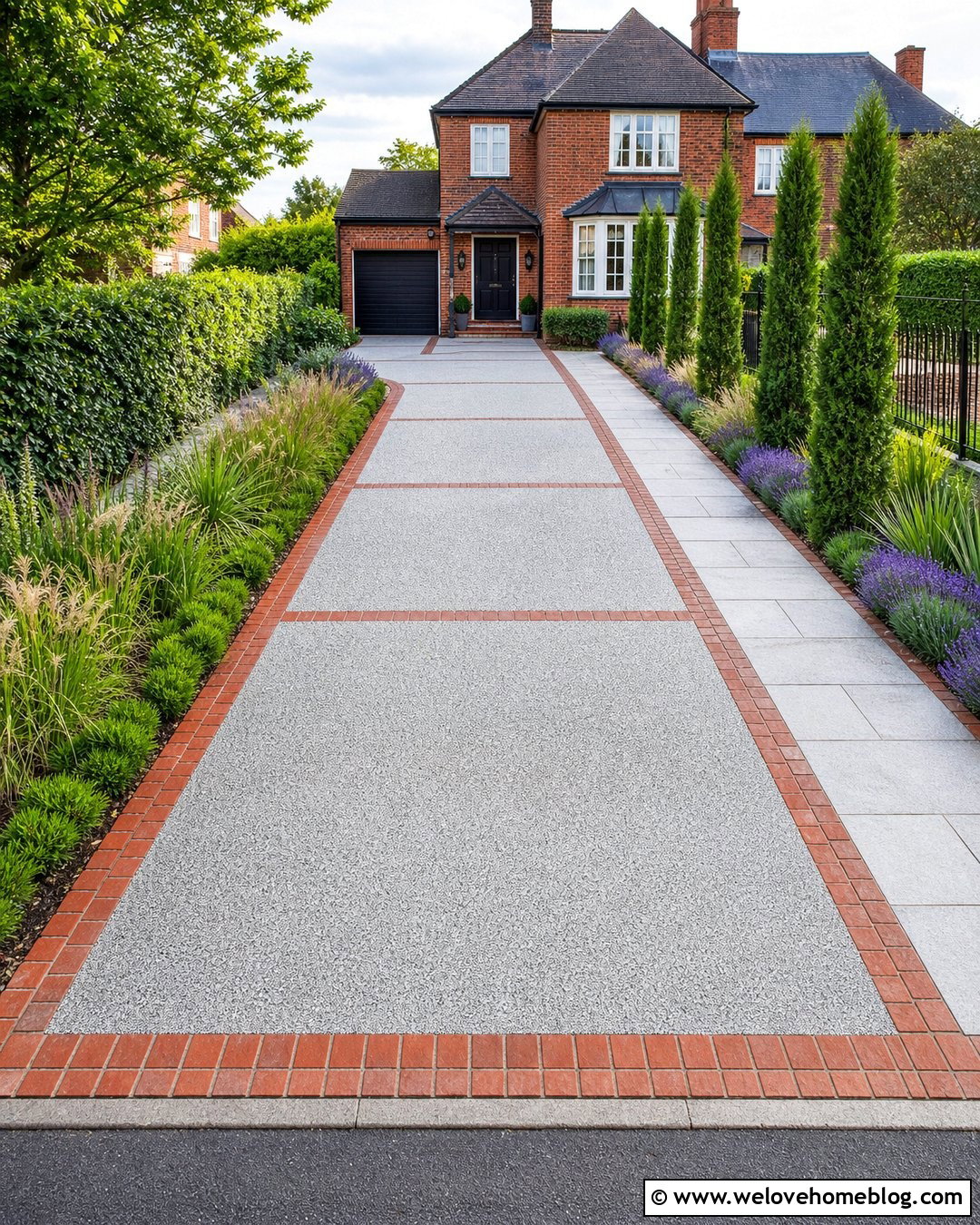
Brick ribbon edging adds warmth and definition to a light gravel farm driveway. Install one or two rows of reclaimed-looking clay brick along each side, set flush enough to reduce tripping and simplify maintenance. A red brick apron at the road can reinforce the border and help visually contain the loose gravel. This combination looks particularly attractive with a colonial farmhouse, red barn, or home featuring brick chimneys. Use a straight or gently curved layout, then frame it with lawn, hydrangeas, and small flowering trees. Repeat the brick in the front walkway for a coordinated connection to the porch. The contrasting colors make the driveway edges easy to read, while the gravel keeps the larger surface informal. It is a practical balance between country character and tailored curb appeal.
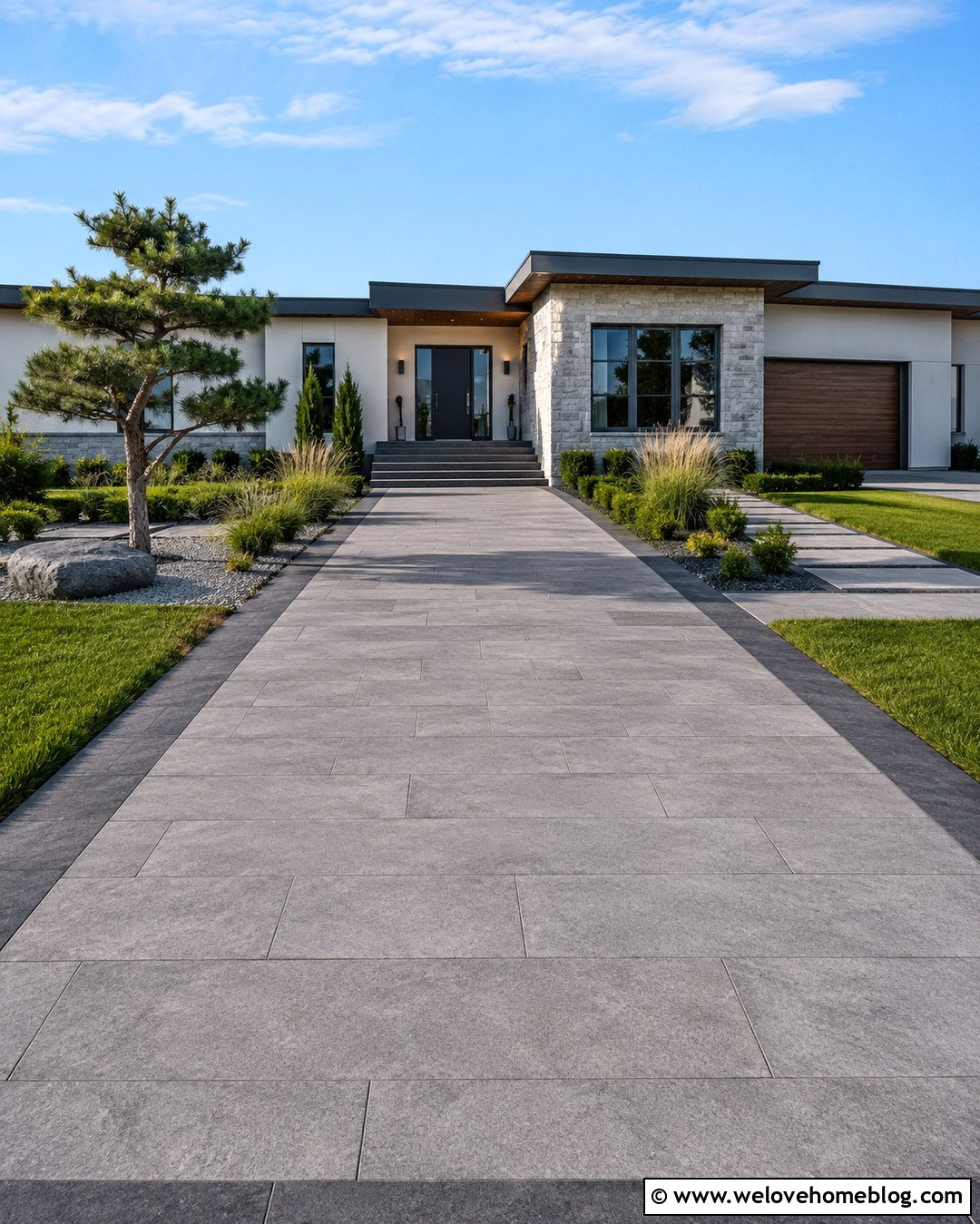
10. Asphalt Farm Driveway With Stone Borders
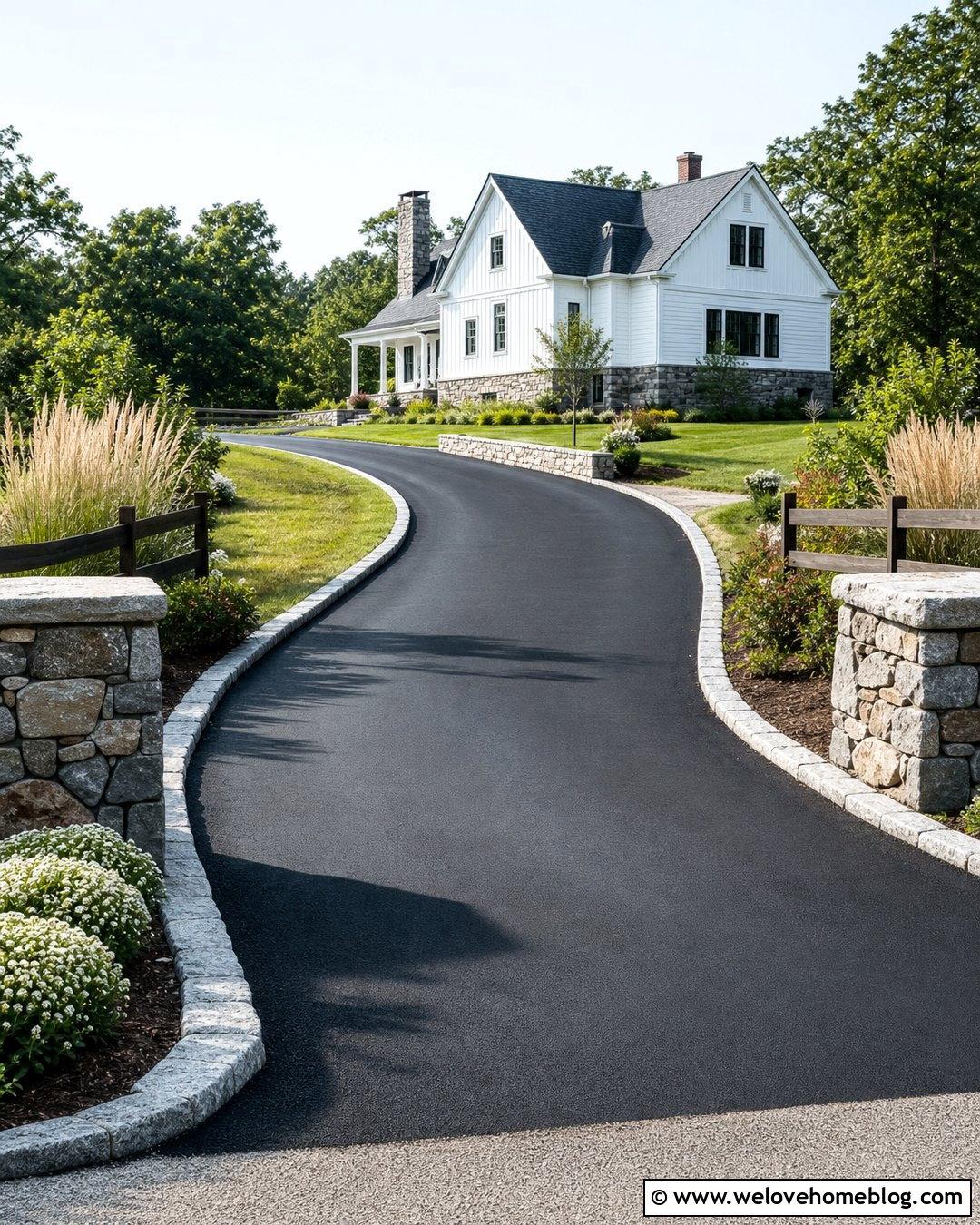
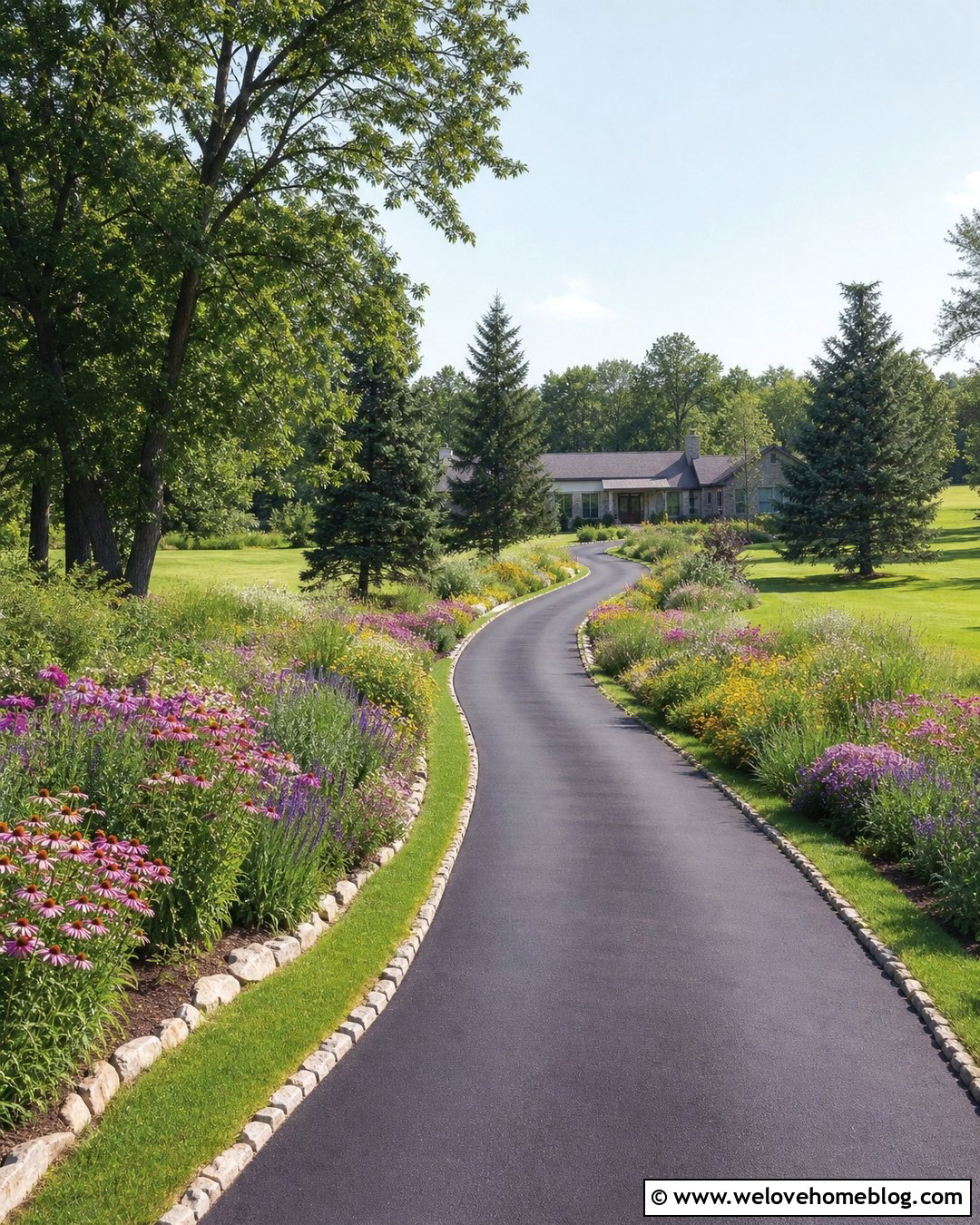
Black asphalt can be a practical choice for a heavily used farm driveway, but thoughtful borders help it feel less utilitarian. Follow the pavement with wide bands of rough-cut granite or tan concrete cobbles that create a clear transition into the lawn. A long sweeping curve can soften the dark surface and lead attention toward a stone or white-sided farmhouse. Near the entrance, add low fieldstone walls, simple wood fencing, and groups of native grasses. The same stone can border a walkway from the parking area to the porch. Keep planting beds broad and uncluttered so the asphalt remains visually balanced. This complete design is especially suitable where regular deliveries, changing weather, or frequent vehicle movement make a firm, consistently defined driving surface desirable.
11. Farm Driveway With Wooden Gate And Gravel Lane
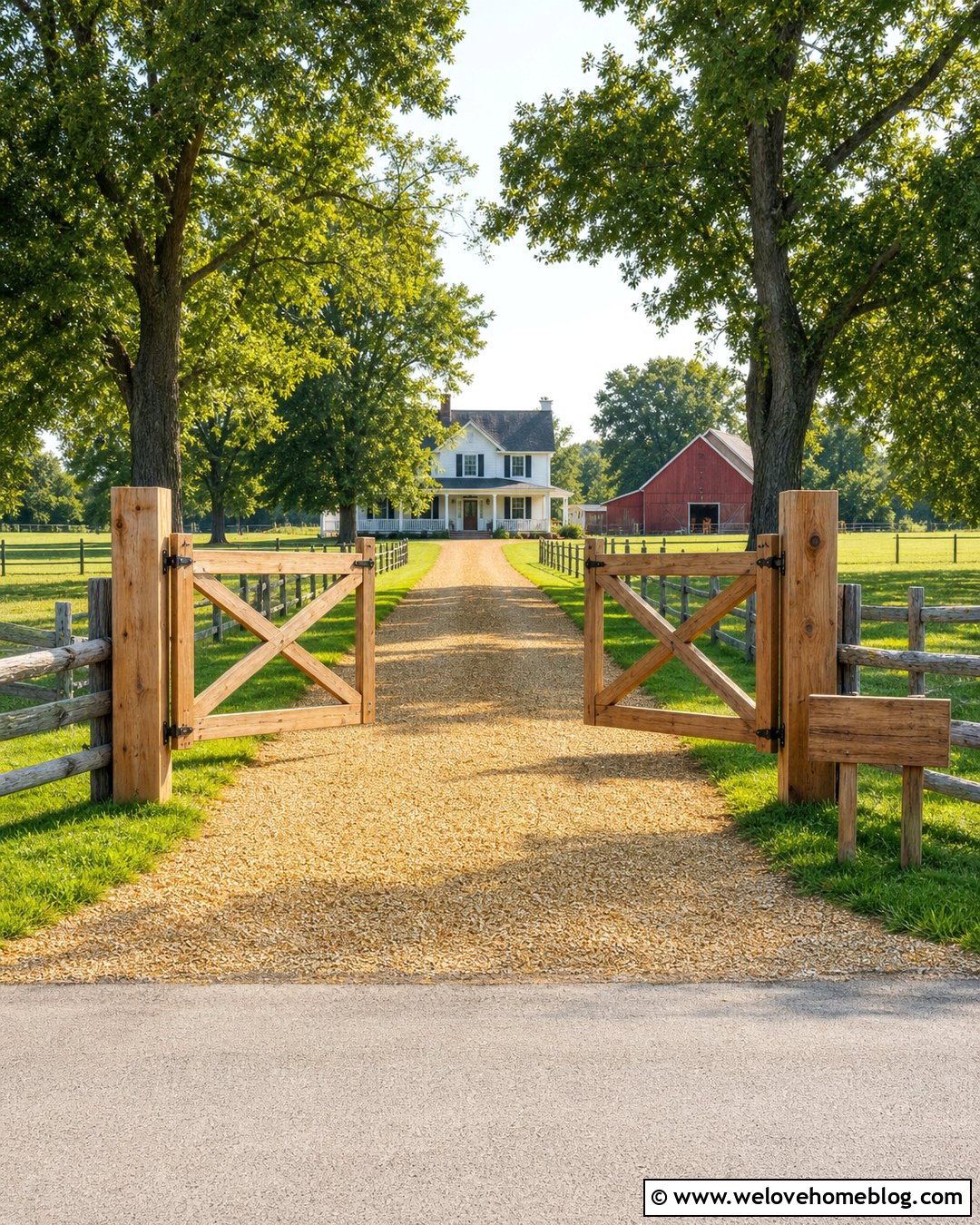
A wide wooden gate can give a gravel farm lane a warm and unmistakably rural entrance. Choose stained cedar or white-painted timber with simple cross-braced construction. Support it with chunky wood posts or low fieldstone columns, depending on how rustic you want the property to feel. Behind the gate, use compacted golden gravel in a straight layout that opens toward the farmhouse and nearby barn. Split-rail fencing, mowed grass shoulders, and a few well-positioned shade trees can extend the entrance visually. Avoid dense shrubs near the gate mechanism or road connection. A matching wood address sign may sit outside the fence where it remains easy to see. Together, the natural materials create a cohesive driveway that feels functional, friendly, and appropriate for open farm acreage.
12. Concrete Farm Driveway With Grass Strips
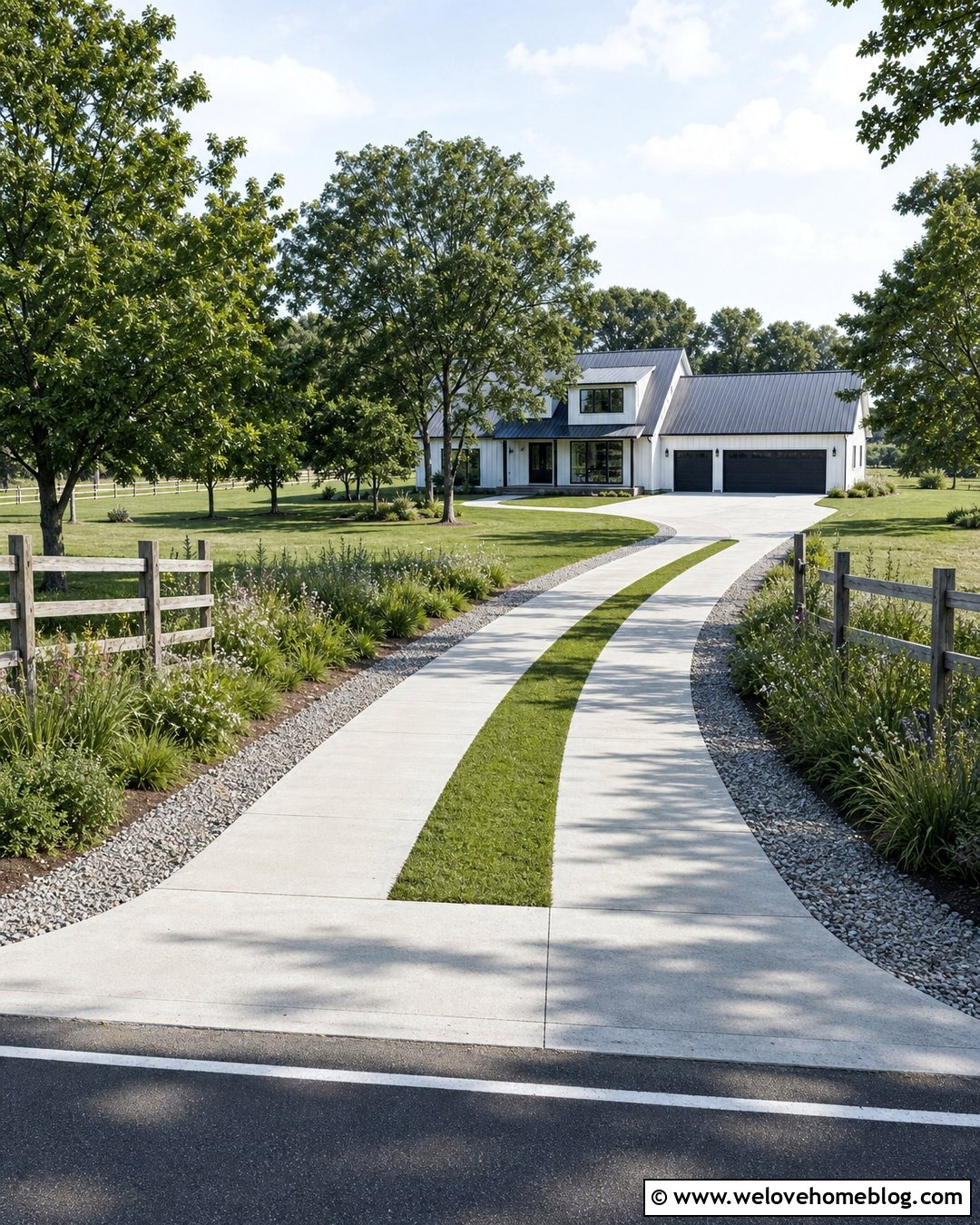
Concrete tire tracks separated by a grass strip create a modern version of the traditional ribbon driveway. Use smooth light-gray poured concrete for the wheel paths and keep the center planted with durable, regularly trimmed turf. The layout works best along a straight or gently curved approach with reliable maintenance access. Add narrow gravel shoulders to handle transitions and prevent muddy edges. Low wood fencing, scattered shade trees, and simple meadow planting can retain the rural character around the structured concrete. Near the house, merge the tracks into a full concrete parking pad for easier turning. This farm driveway looks particularly striking with a minimalist barn home or modern farmhouse. The green center reduces the visual weight of the pavement and helps the lane blend into the surrounding lawn.
13. Farm Driveway With Rustic Timber Edging
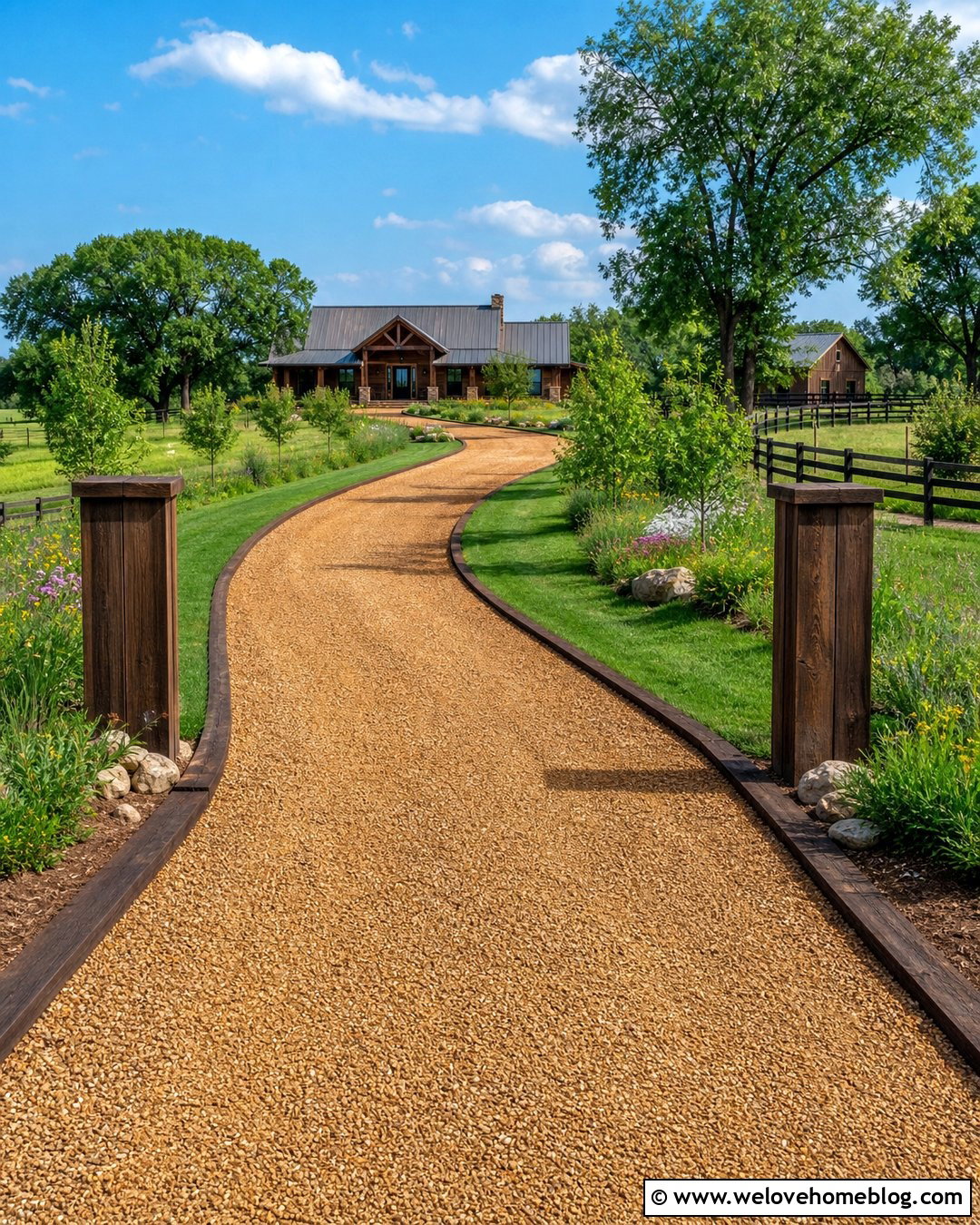
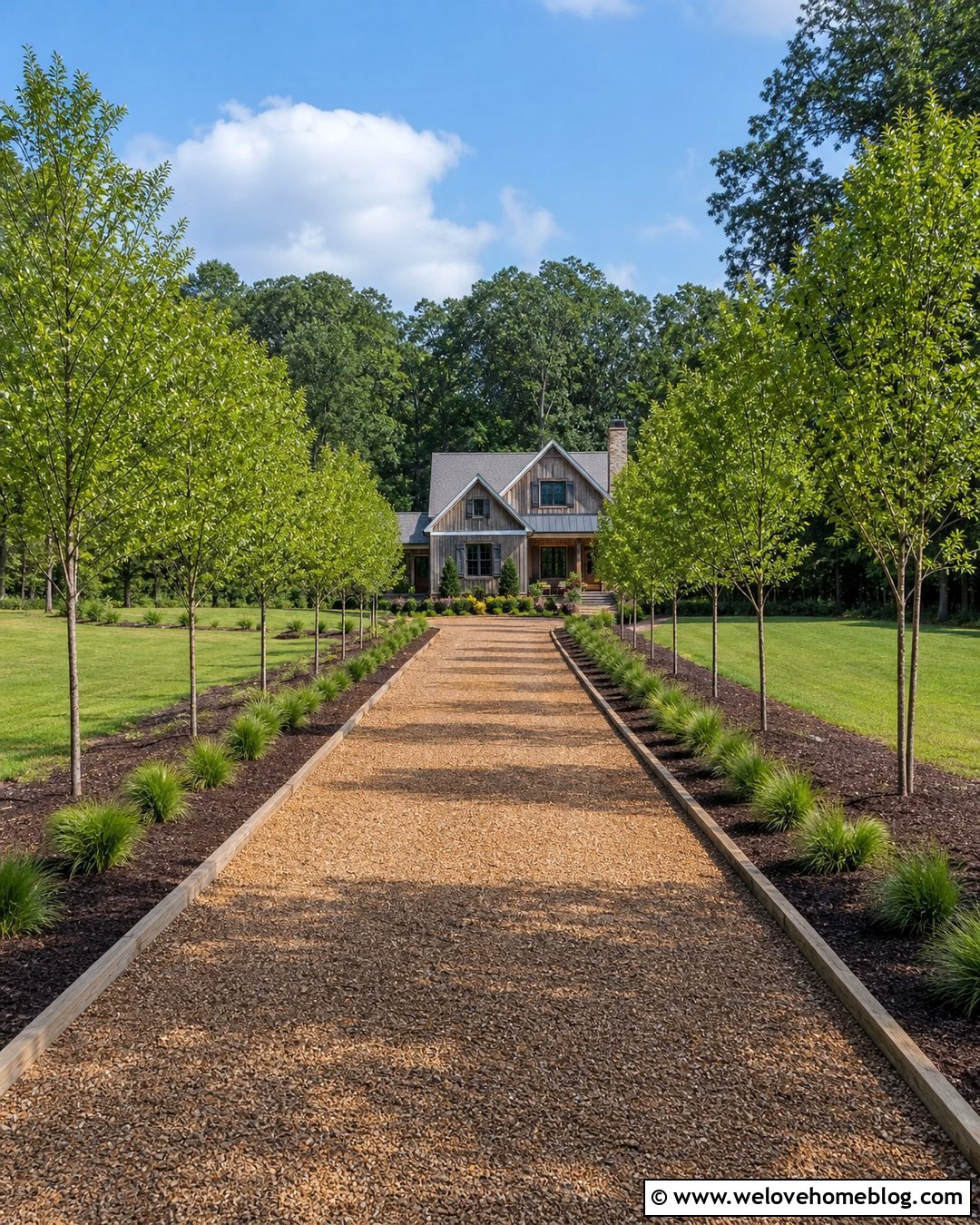
Timber edging gives a crushed-stone farm driveway a defined shape while reinforcing its casual country character. Use heavy, ground-rated beams installed along a straight lane or broad sweeping curve. Golden-brown crushed gravel creates a warm contrast with dark stained wood. Leave a narrow strip of mowed grass beyond the timbers, followed by mixed native shrubs and meadow plants. At the entrance, substantial timber posts can support a simple farm sign or open-frame gate. Repeat the same wood around mailbox beds or near the barn to create continuity. This look works best when the edging follows smooth lines rather than tight, complicated bends. The combination suits cabins, ranch homes, and modest farmhouses, offering a sturdy visual border without the formality of cut stone, brick, or decorative masonry.
14. Cobblestone Farm Driveway With Cottage Landscaping
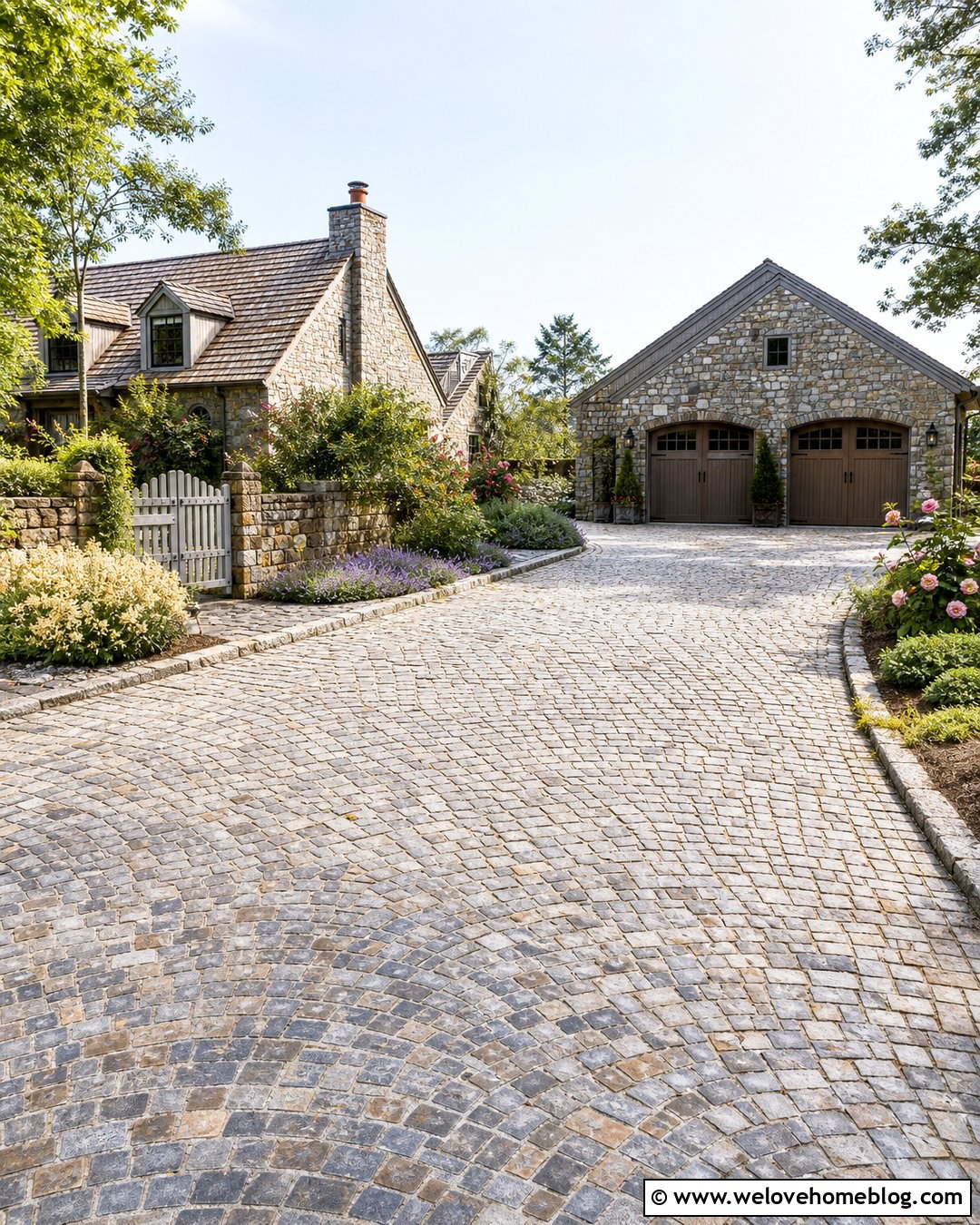
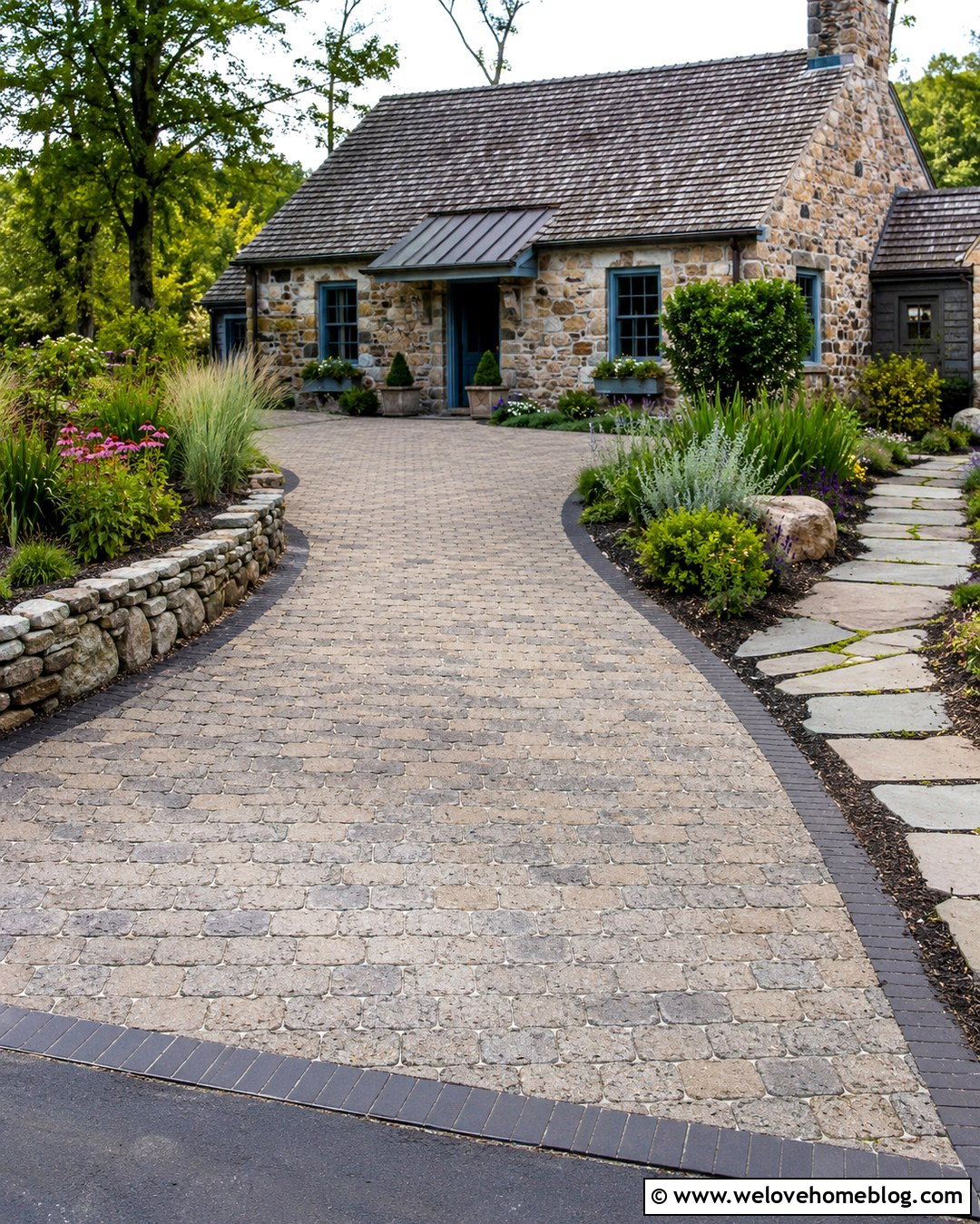
A full cobblestone driveway creates an old-country appearance that pairs beautifully with a smaller farm cottage. Choose weathered gray and brown cobbles laid in a subtle fan or running pattern. Follow a curved layout leading toward the front door, with a widened parking court positioned near a detached garage or converted barn. Border the cobbles with creeping thyme, catmint, low roses, and informal flowering shrubs. Keep plants trimmed back from the tire path so the surface remains clear. A simple picket gate and stone garden wall can define the road entrance. Use matching cobblestones for the front walkway to avoid competing materials. This richly textured design feels established and handcrafted, making it ideal for a renovated cottage, historic farm home, or intimate rural property.


15. Farm Driveway With White Post And Rail Fence
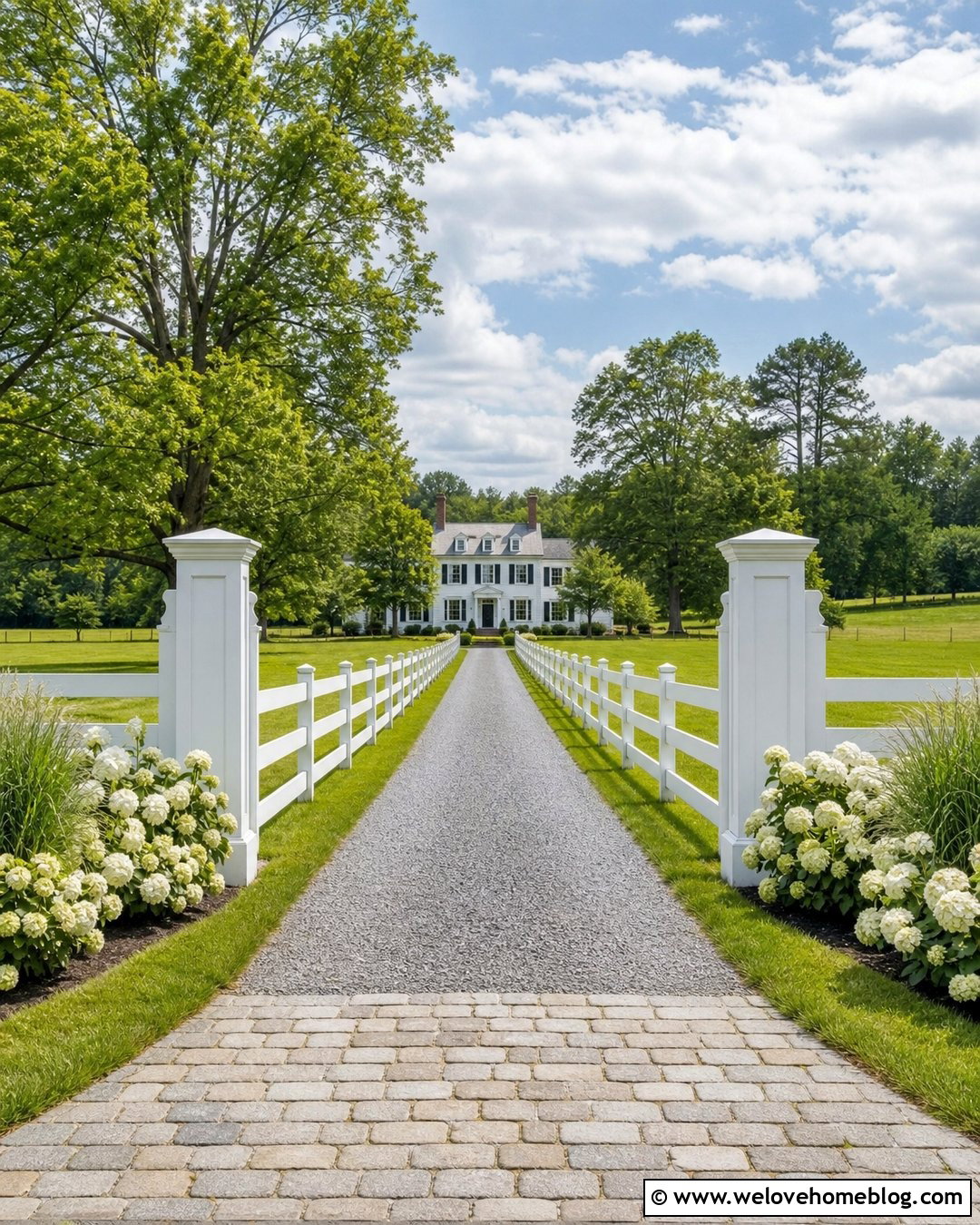
White post-and-rail fencing creates a bright, orderly frame for a farm driveway crossing green pasture. Pair the fence with medium-gray crushed gravel so the overall design does not become overly pale. A long straight lane emphasizes the repeated posts and directs attention toward the farmhouse. At the road, slightly taller fence posts and simple lanterns can mark the entrance without requiring a gate. Plant white hydrangeas or low ornamental grasses in generous groups near the house, while leaving most of the route open and easy to maintain. A cobblestone apron can provide a polished transition from the public road to gravel. This classic combination works especially well with colonial, Cape Cod, and traditional white farmhouses. It looks clean from a distance and remains distinctly rural.
16. Farm Driveway With Large Boulder Borders
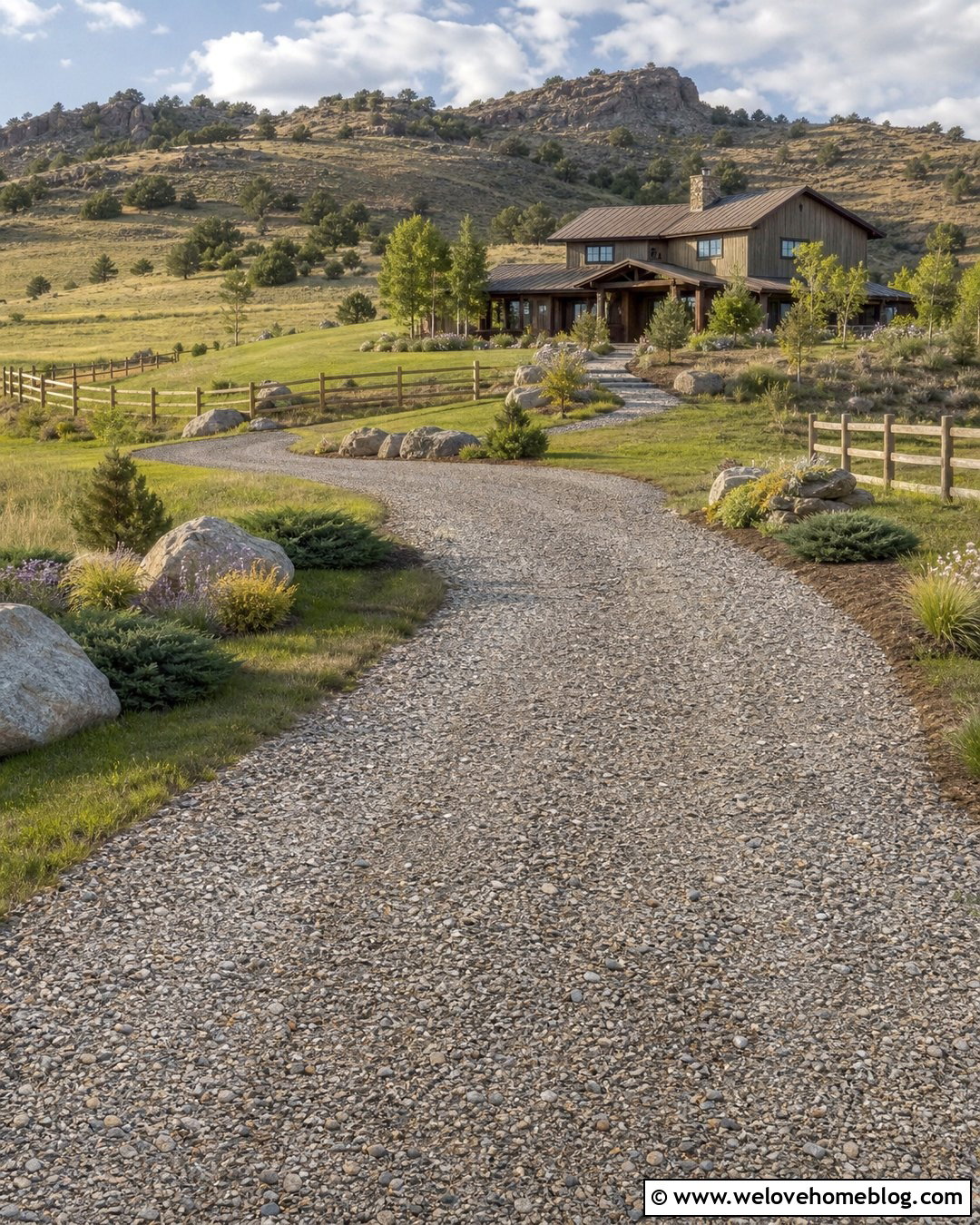
Large boulders can define a wide farm driveway while tying it to a rugged natural landscape. Use irregular local-looking stone in spaced groupings rather than forming a continuous wall. A compacted blend of gray and brown crushed rock complements the boulders and handles the scale of a long rural lane. Follow the existing contours with a broad curve, then plant native grasses, low junipers, and hardy flowering perennials around selected stones. Keep boulders well outside the driving path, turning areas, and snow-storage zones. At the farmhouse, repeat smaller versions in foundation beds or beside the front walkway. This design works well for mountain farms, wooded acreage, and ranch properties. The driveway appears intentionally landscaped without losing the practical simplicity expected from a working rural entrance.
17. Farm Driveway With Lavender And Gravel Borders
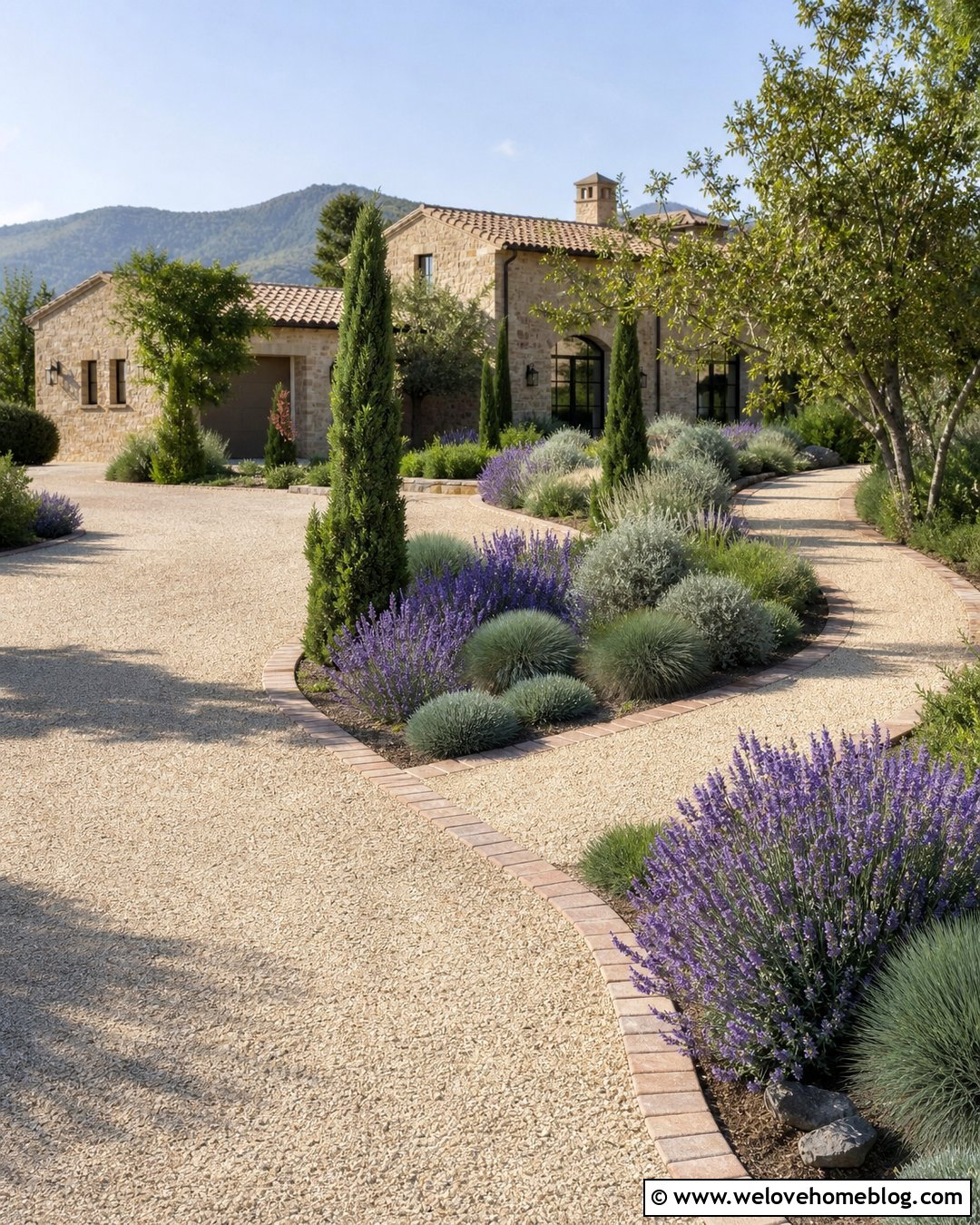
Rows of lavender can add soft color and fragrance to a sunny farm driveway. Begin with warm cream crushed gravel and shape the lane into a gradual curve toward a stone or stucco farmhouse. Use flush brick or metal edging to separate the gravel from the planting beds. Plant lavender in repeated drifts, leaving wider gaps near turns, parking spaces, and road sightlines. Silver-leaved shrubs, ornamental grasses, and a few upright evergreens can provide contrast beyond the low purple border. A matching gravel walkway should branch naturally toward the porch. This design feels especially appropriate for a produce farm, small vineyard setting, or European-inspired rural home. The restrained plant palette keeps the approach organized, while the repeating blooms make the entire driveway feel connected and memorable.
18. Farm Driveway With Red Barn Entrance
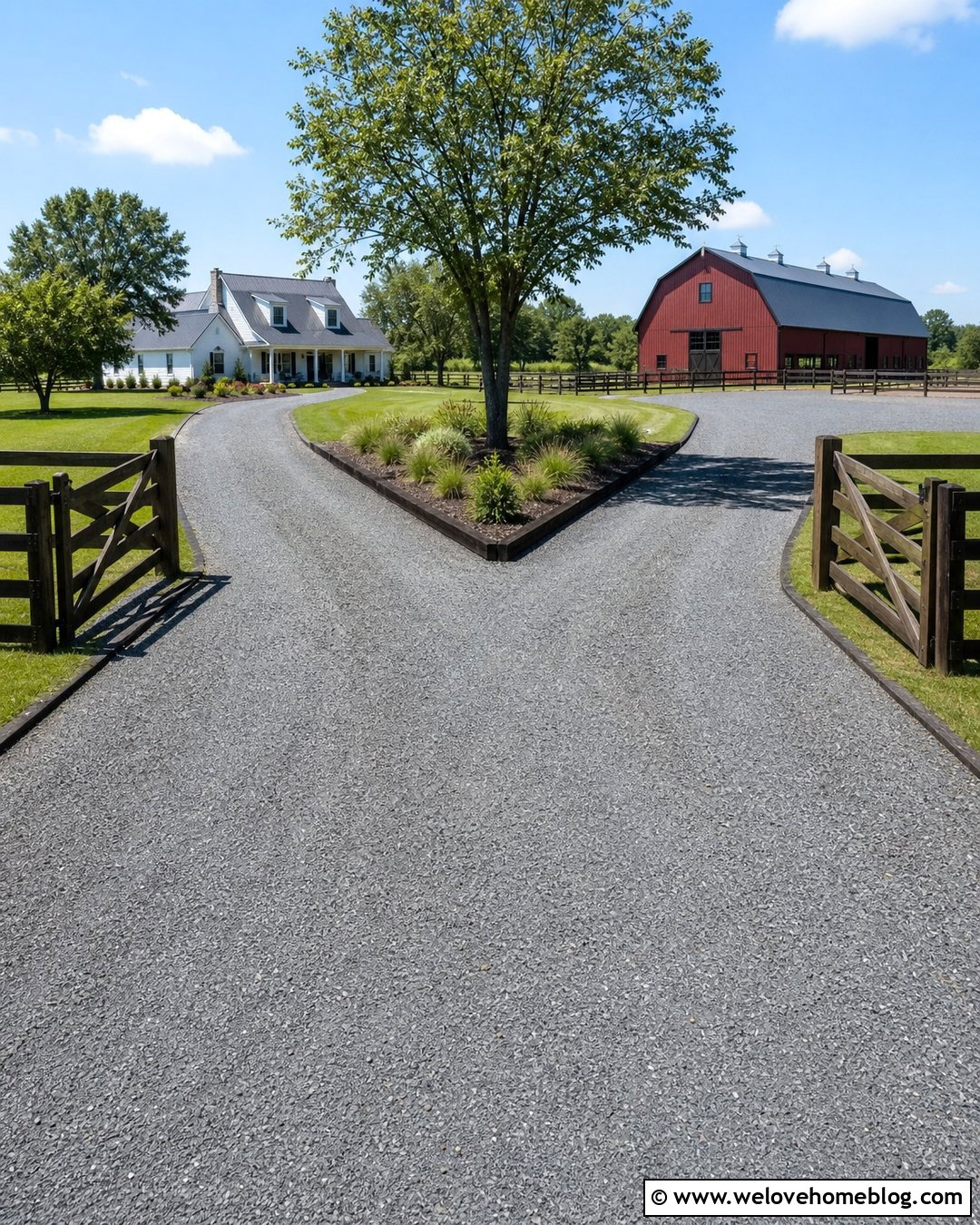
A driveway shared by a farmhouse and red barn should clearly guide traffic while preserving a unified appearance. Use compacted gray crushed stone in a broad straight lane, then create a gentle fork near the buildings. One branch can lead to the house parking area, while the wider route continues toward the barn and equipment yard. Define the split with a triangular grass island containing one shade tree and low native grasses. Dark timber edging or flush cobbles can reinforce the most heavily traveled sections. At the roadside, install a simple wood gate and matching fence that echo the barn siding. Avoid delicate landscaping where machinery may pass. The bold red building becomes the visual anchor, while the gravel layout keeps residential and working areas connected but easy to understand.
19. Farm Driveway With Permeable Grass Pavers
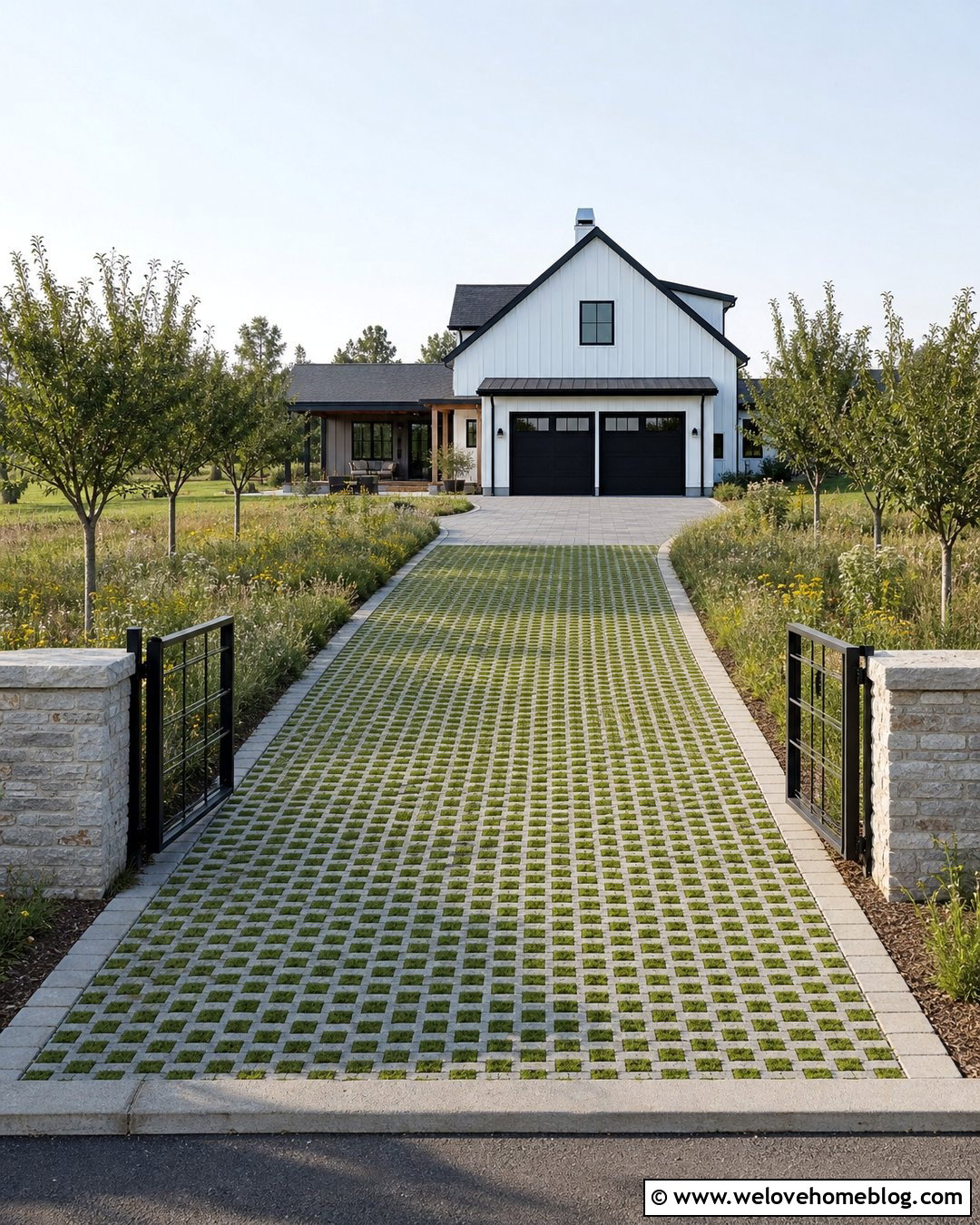
Permeable grass pavers offer a green, low-profile surface for a farm driveway that receives light to moderate residential traffic. The reinforced grid supports the driving lane while allowing grass to grow through the openings. Use the system along a straight approach to a modern farmhouse, then transition into solid concrete pavers near the garage and turning area. Frame the drive with native meadow beds, low stone edging, and scattered orchard trees. A black metal gate can add contrast without making the landscape feel heavy. Maintain clearly defined gravel or concrete strips at entrances where tires turn more sharply. The finished driveway reads as part of the lawn from a distance, making it useful for properties where owners want an understated route rather than a broad band of visible paving.
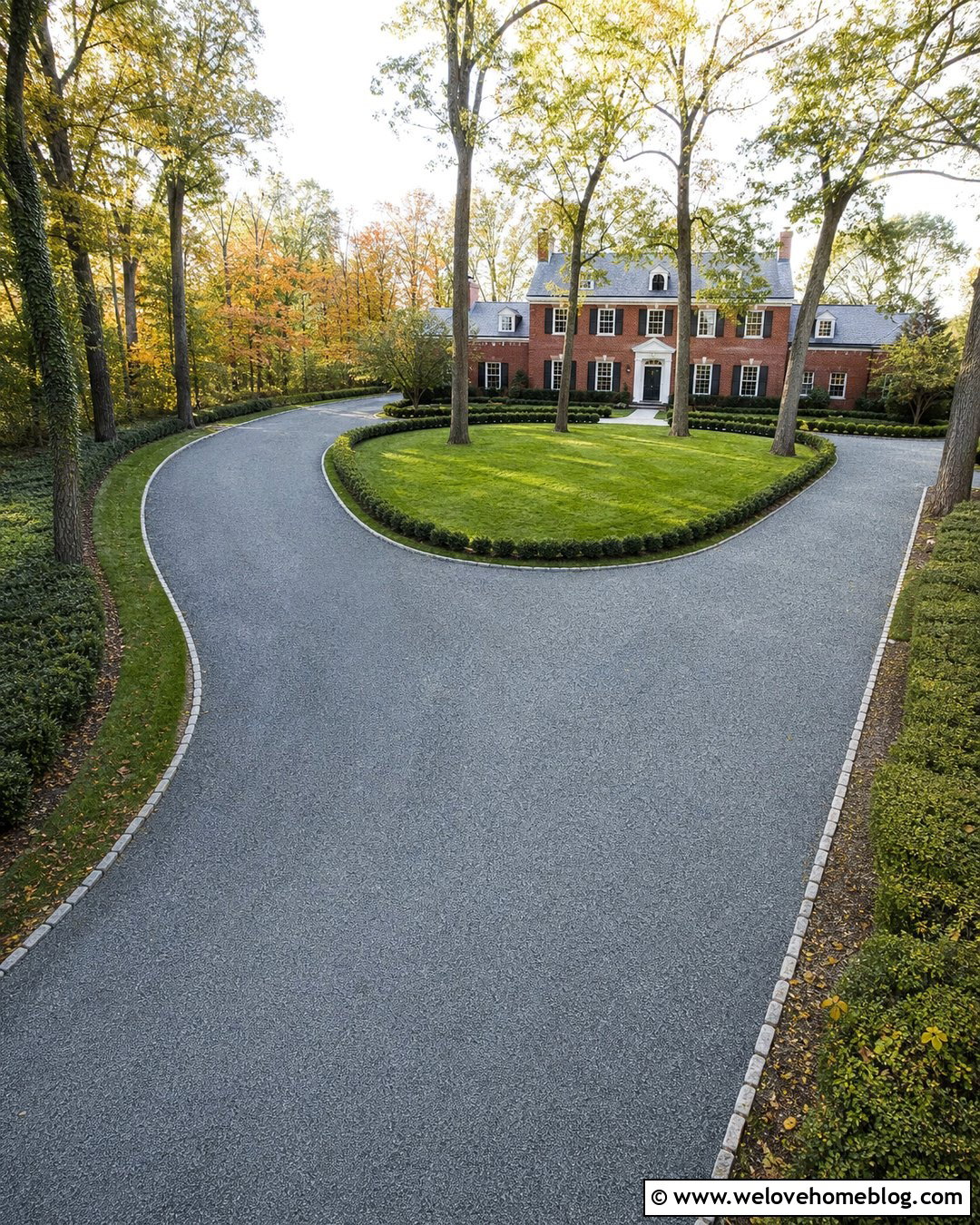
20. Farm Driveway With Orchard Tree Borders
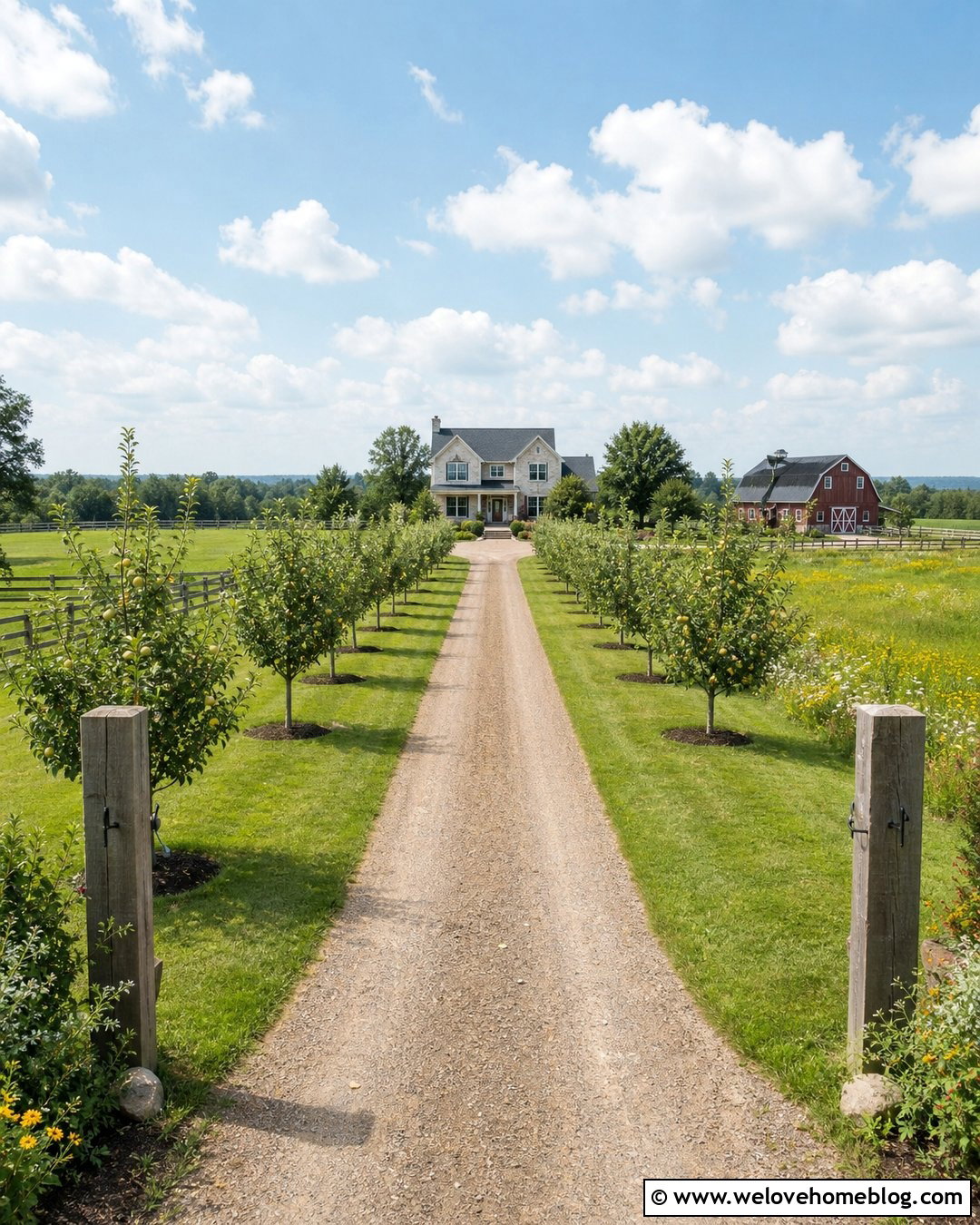
An orchard-lined driveway creates a productive and picturesque approach to a farm home. Use compacted tan gravel in a straight layout, with evenly spaced fruit trees planted beyond generous grass shoulders. Apples, pears, or other regionally suitable trees can provide seasonal interest without forming an overly dense canopy. Keep lower branches pruned away from vehicles and maintain open views near the road. Simple timber posts at the entrance can reference orchard supports and nearby farm structures. Under the trees, use mowed grass or a restrained meadow mix rather than complicated foundation-style beds. Widen the driveway near the house into a gravel court bordered with brick. This complete arrangement links the entrance to the working landscape and gives the property a strong sense of order throughout the seasons.
21. Farm Driveway With Stone Retaining Wall
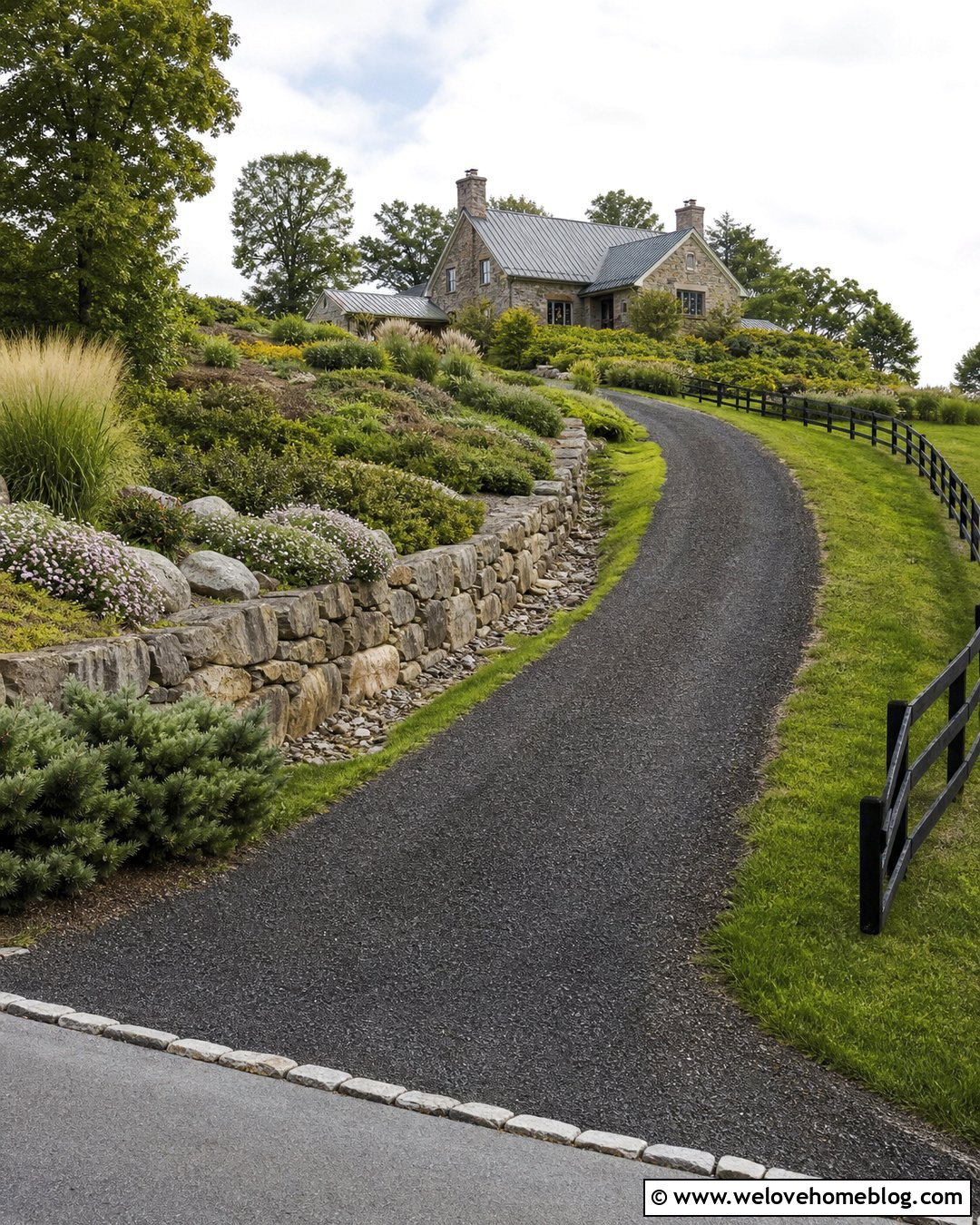
A sloped farm property may benefit from a driveway bordered by a low stone retaining wall. Select rough fieldstone that relates to the surrounding soil, home foundation, or nearby outbuildings. Pair it with compacted dark-gray gravel and a gently curving route that follows the land instead of cutting straight across it. Plant spreading juniper, ornamental grasses, and tough flowering ground covers above the wall to soften its upper edge. The opposite side of the driveway can remain open with a grass shoulder and fence. Integrate suitable drainage into the overall plan so water has a clear route away from the driving surface. At the house, repeat the stone around steps or terraces. The finished driveway feels anchored into the hillside rather than imposed on the rural landscape.
22. Farm Driveway With Brick Entrance Apron
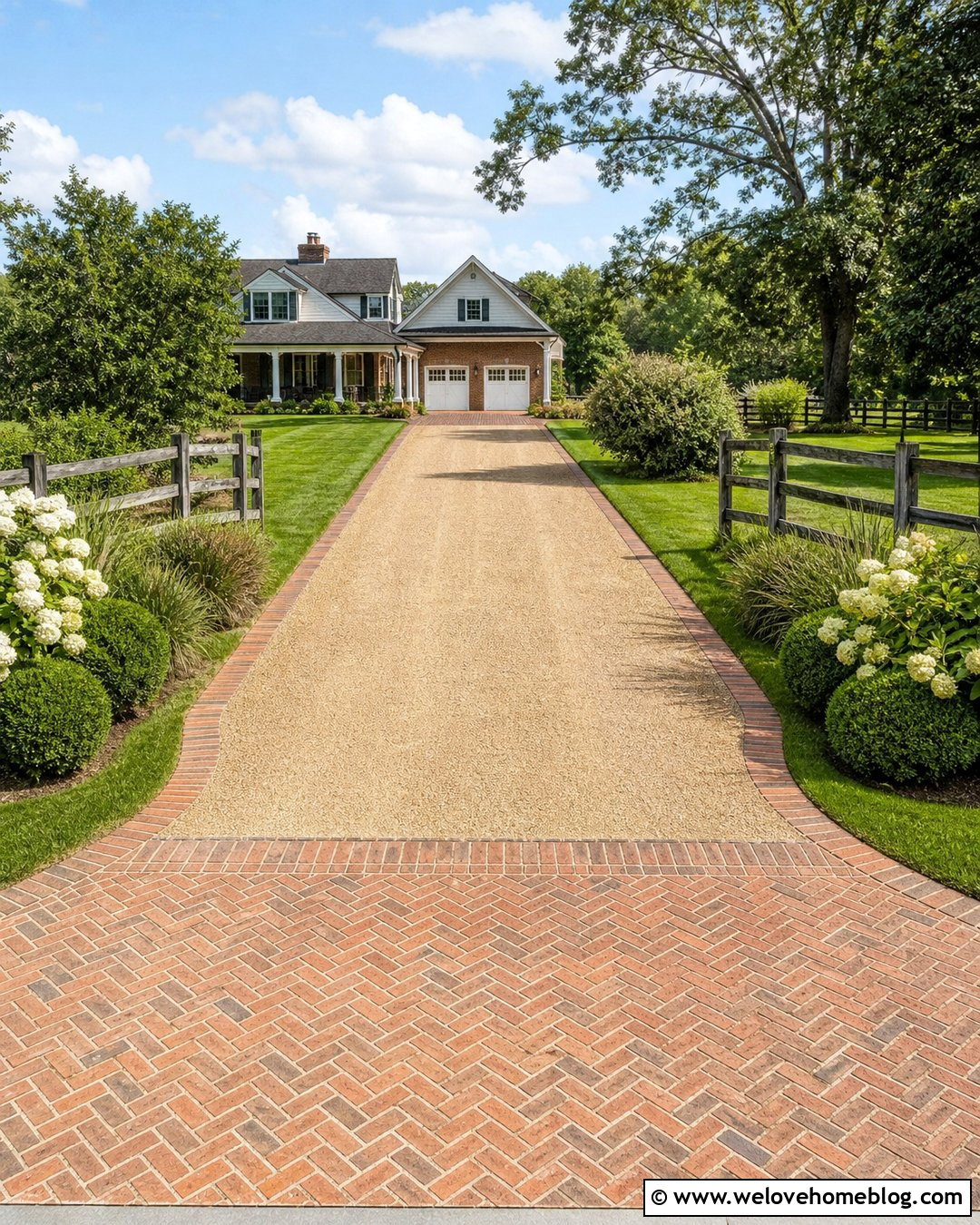
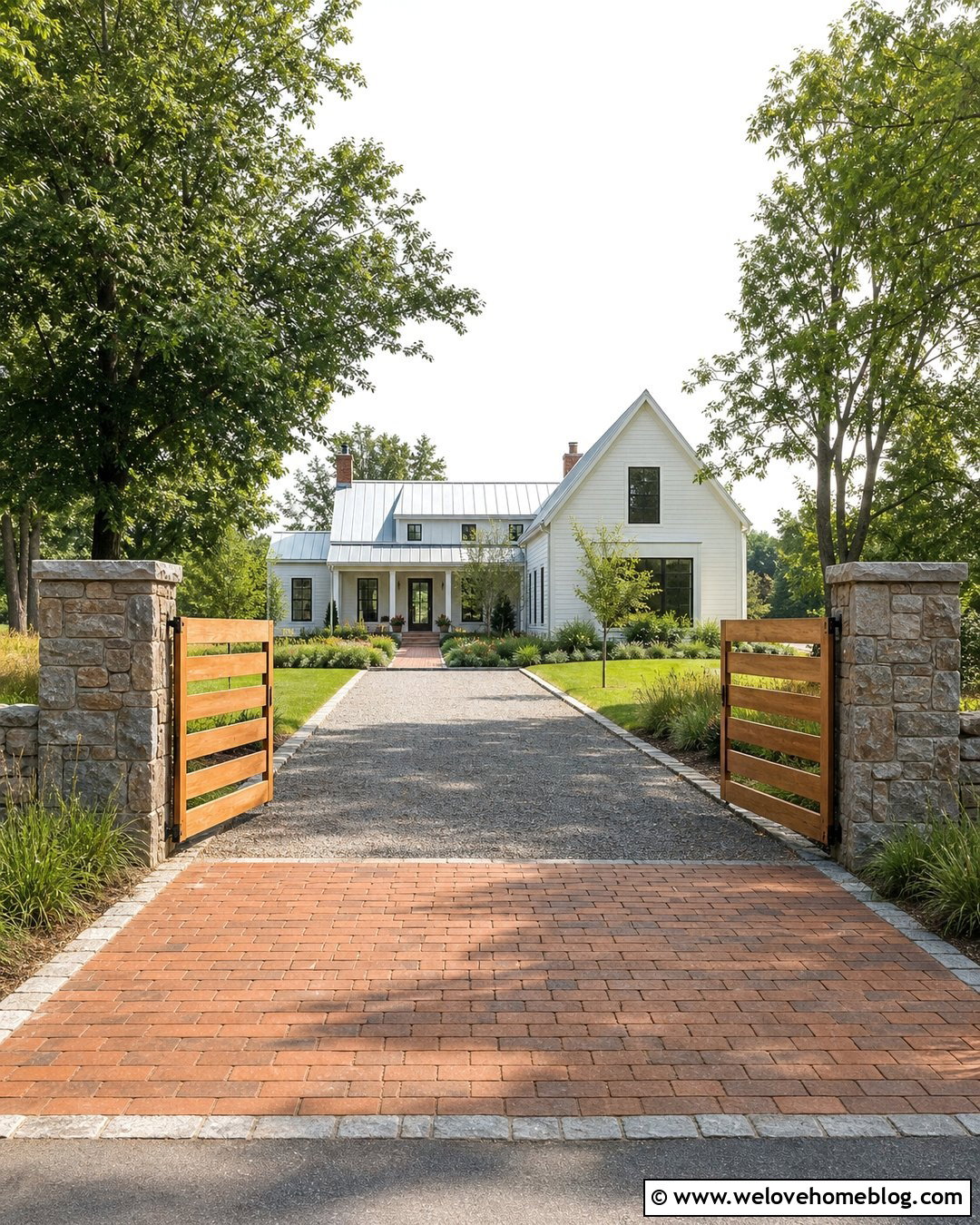
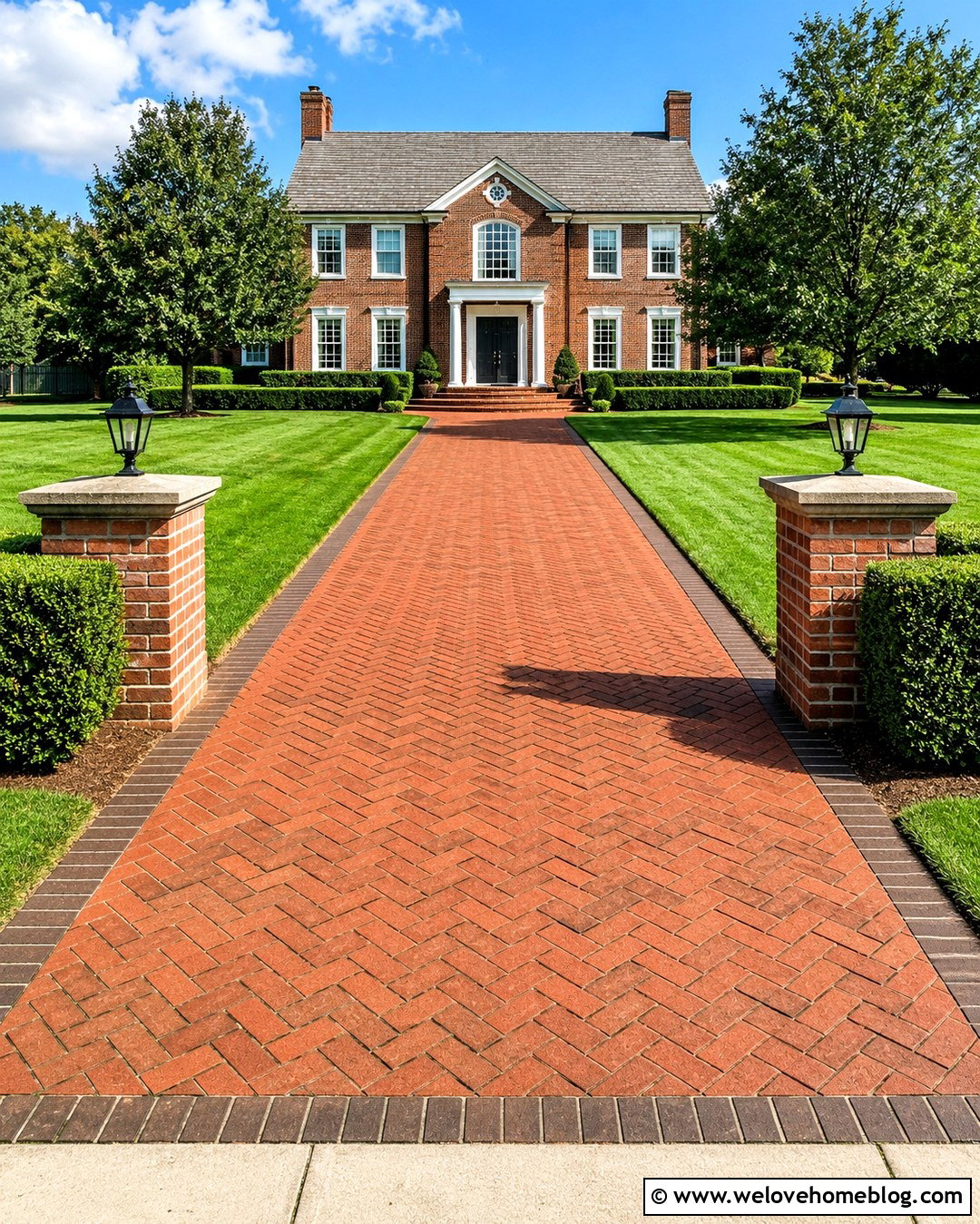
A brick entrance apron provides a polished transition between the public road and a gravel farm driveway. Choose clay brick pavers in a herringbone pattern, using colors that relate to the farmhouse chimney, foundation, or front walkway. Extend the apron beyond the gravel edges to create a subtle flared opening. Continue the driveway in compacted light-brown crushed stone, bordered by grass strips and split-rail fencing. Groups of boxwood, hydrangea, or native grasses can frame the brick without hiding it. Repeat a narrow brick ribbon near the garage or parking court to connect the beginning and end of the route. This approach concentrates the more detailed material where it has the greatest visual impact. The main gravel lane stays relaxed and economical-looking, while the entrance gains clear definition.
23. Farm Driveway With Solar Post Lighting
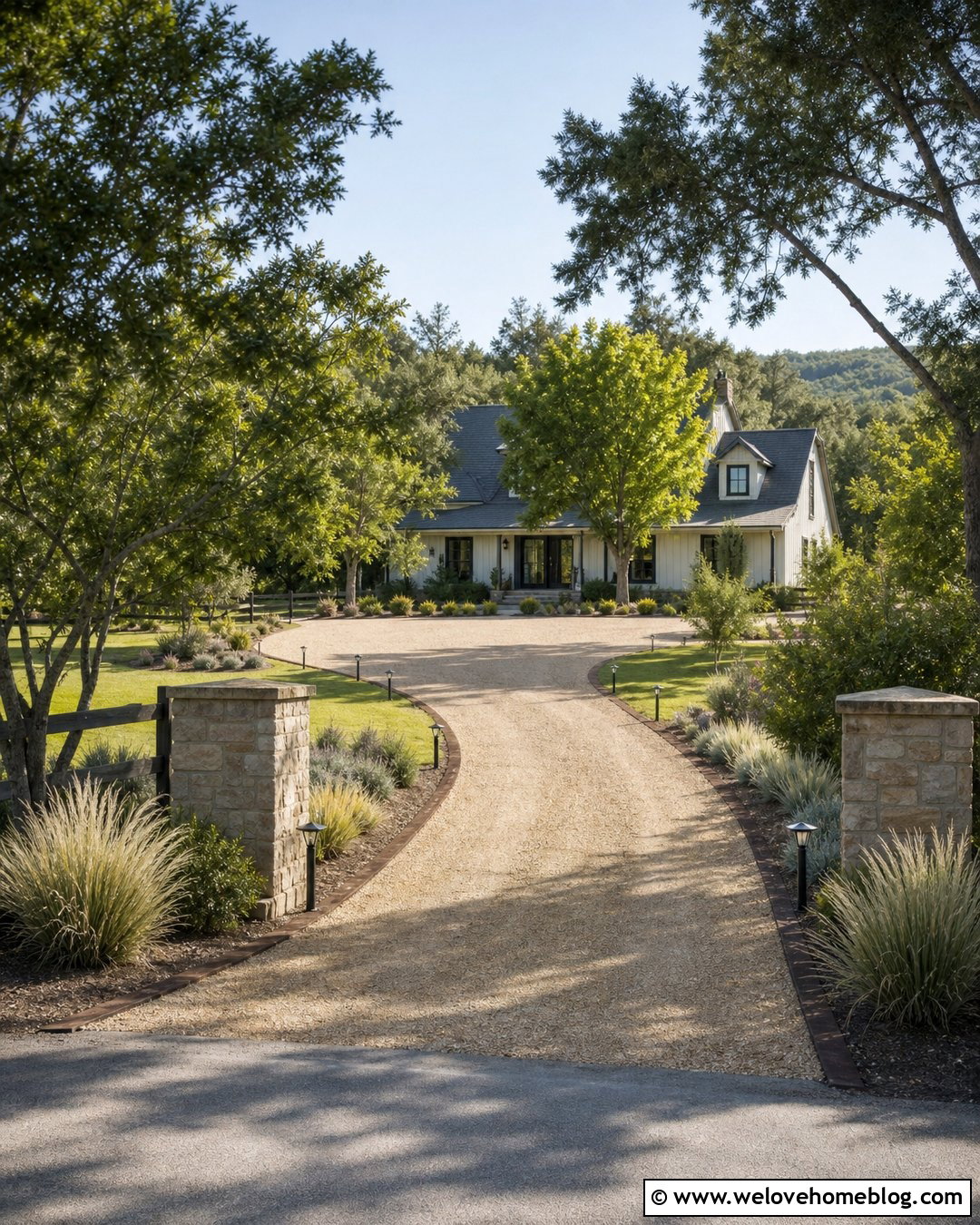
Discreet post lighting can make a long farm driveway easier to follow while preserving a rural daytime appearance. Use low black or bronze fixtures spaced at important points rather than creating an overly bright runway effect. Pair them with a compacted beige gravel surface, dark wood edging, and a softly curved layout. Place lights near the entrance, bends, bridge crossings, forks, and final parking area. During the day, native grasses and low shrubs can partially soften the posts without covering their light output. Stone pillars with matching fixtures may mark the roadside entrance. Choose a fixture design that complements the farmhouse architecture and existing fencing. The complete driveway remains natural and uncluttered in bright conditions, while the carefully positioned markers add practical guidance when exterior illumination is needed.
24. Farm Driveway With Ranch Gate And Cattle Fence
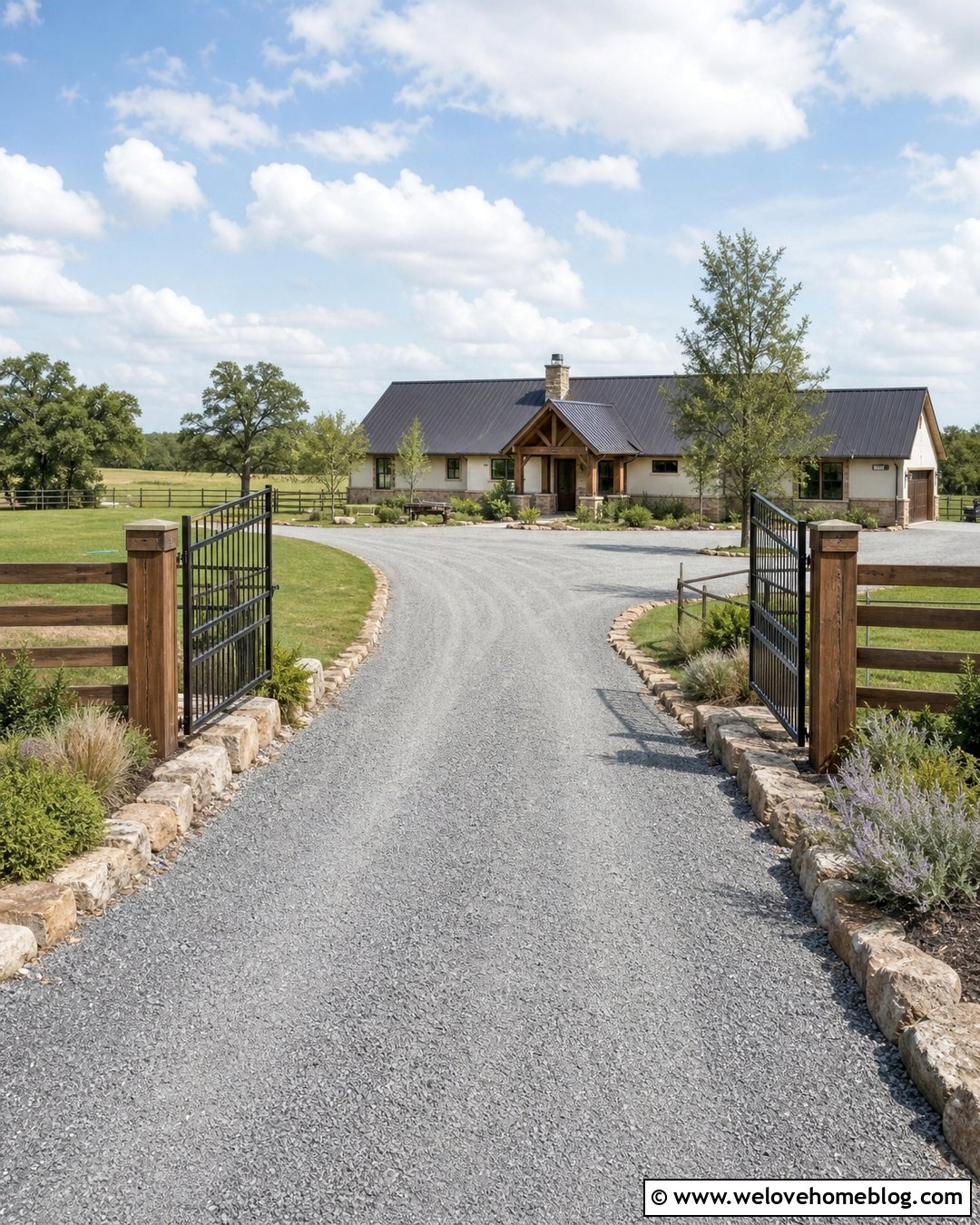
A broad ranch gate and cattle fence create a practical entrance for a farm driveway crossing grazing land. Start with durable gray crushed aggregate in a straight or lightly curved layout. Use galvanized metal or dark powder-coated steel for the gate, supported by heavy timber posts or stone-faced columns. Continue livestock fencing along the pasture while adding a mowed grass strip beside the driveway. A cluster of native grasses and hardy shrubs can soften the entrance, but keep plants away from hinges, latches, and sightlines. Near the ranch house, widen the gravel into an uncomplicated parking court with fieldstone edging. This complete look prioritizes clear access and rural function. Consistent gate, fence, and border materials prevent the working entrance from appearing pieced together or unfinished.
25. Farm Driveway With Hydrangea Borders
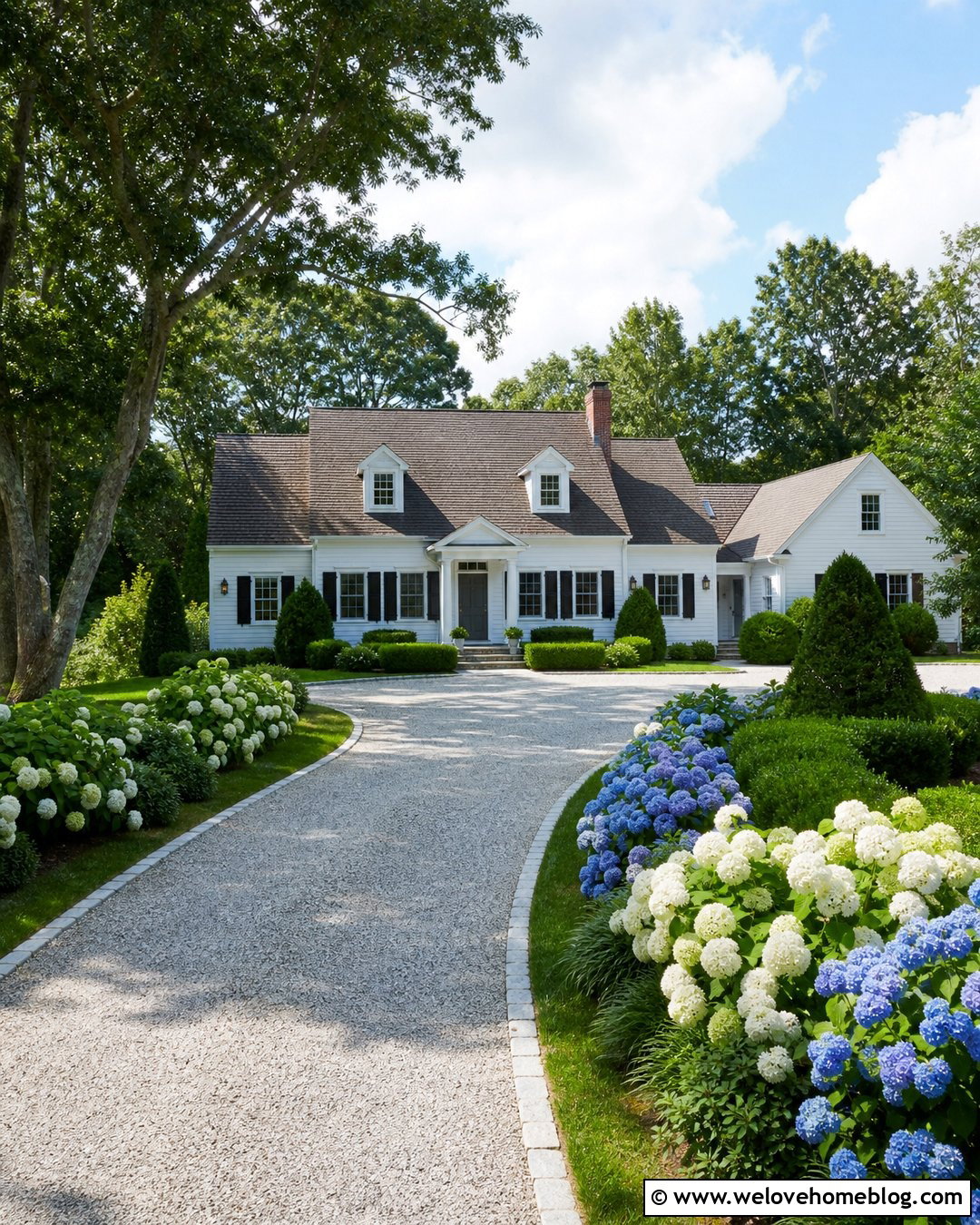
Hydrangeas can create a lush farmhouse arrival when planted in broad, well-spaced groups. Pair them with a light-gray gravel driveway and a low cobblestone edge that protects the beds from spreading stone. A gently curved lane works well because it reveals the flowering shrubs in layers rather than all at once. Place the largest groups near the house, entrance pillars, or parking court, while keeping long stretches of the drive simpler. Add clipped evergreens and ornamental grasses for structure outside the flowering season. Generous setbacks help keep mature shrubs clear of vehicles. This complete design suits a white farmhouse, Cape Cod home, or renovated country cottage. The pale gravel, green foliage, and rounded flowers produce a soft look without sacrificing a clearly defined and usable driving route.
26. Farm Driveway With Reclaimed Stone Edging
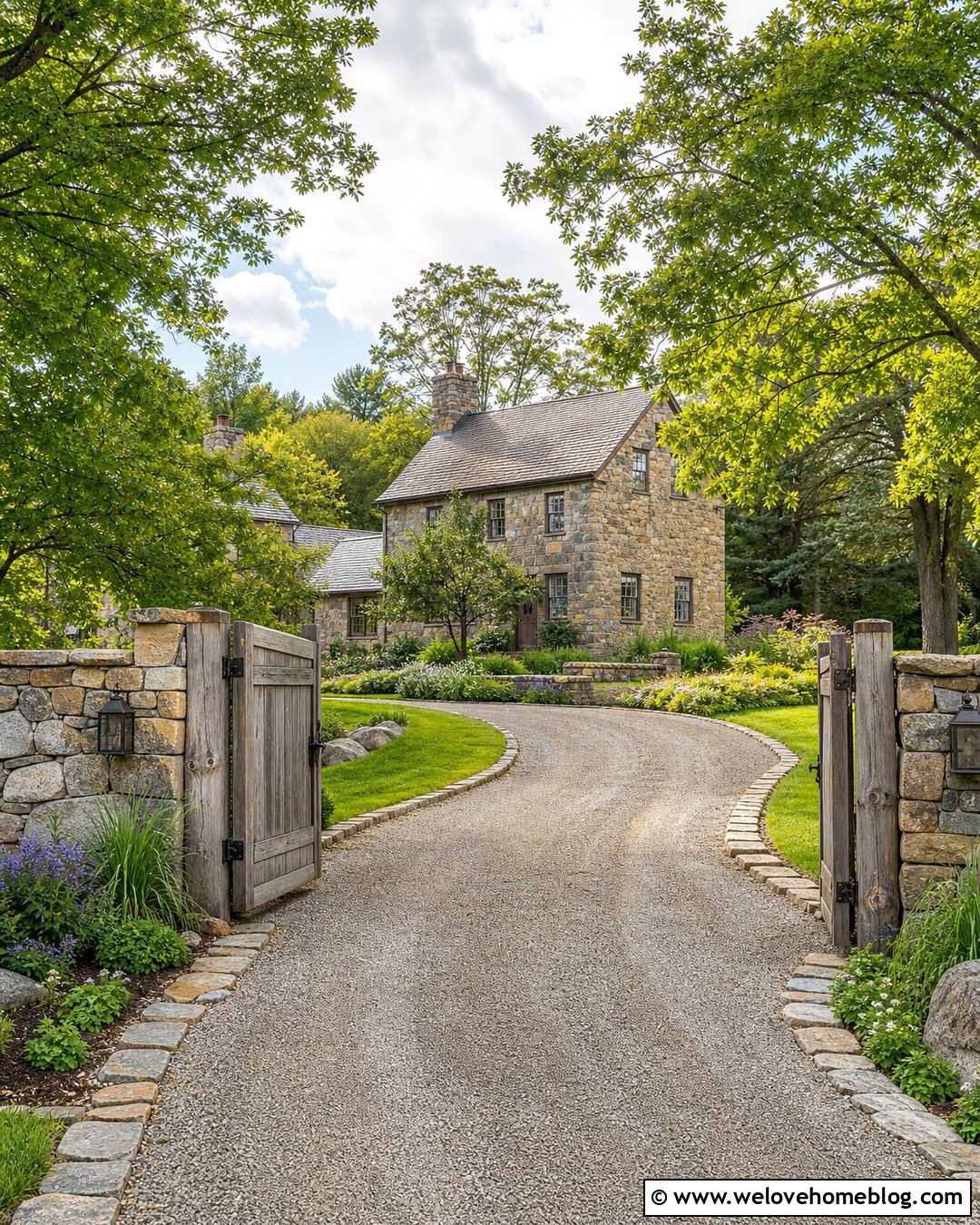
Reclaimed stone edging can help a new farm driveway appear settled into an older property. Use irregular granite blocks, sandstone pieces, or weathered cobbles in a low continuous border. Pair them with compacted brown-gray gravel and a winding lane that follows mature trees or existing field lines. Allow small pockets of thyme, sedge, or low ground cover to soften selected sections without letting vegetation overtake the edge. At the entrance, build short matching stone walls beside an open wooden gate. Repeat the stone around the farmhouse walkway and planting beds. Slight variation in color and size contributes to the rustic effect, but the top line should remain reasonably consistent. This coordinated approach feels especially natural beside historic farmhouses, stone barns, and restored rural cottages.
27. Farm Driveway With Evergreen Tree Borders
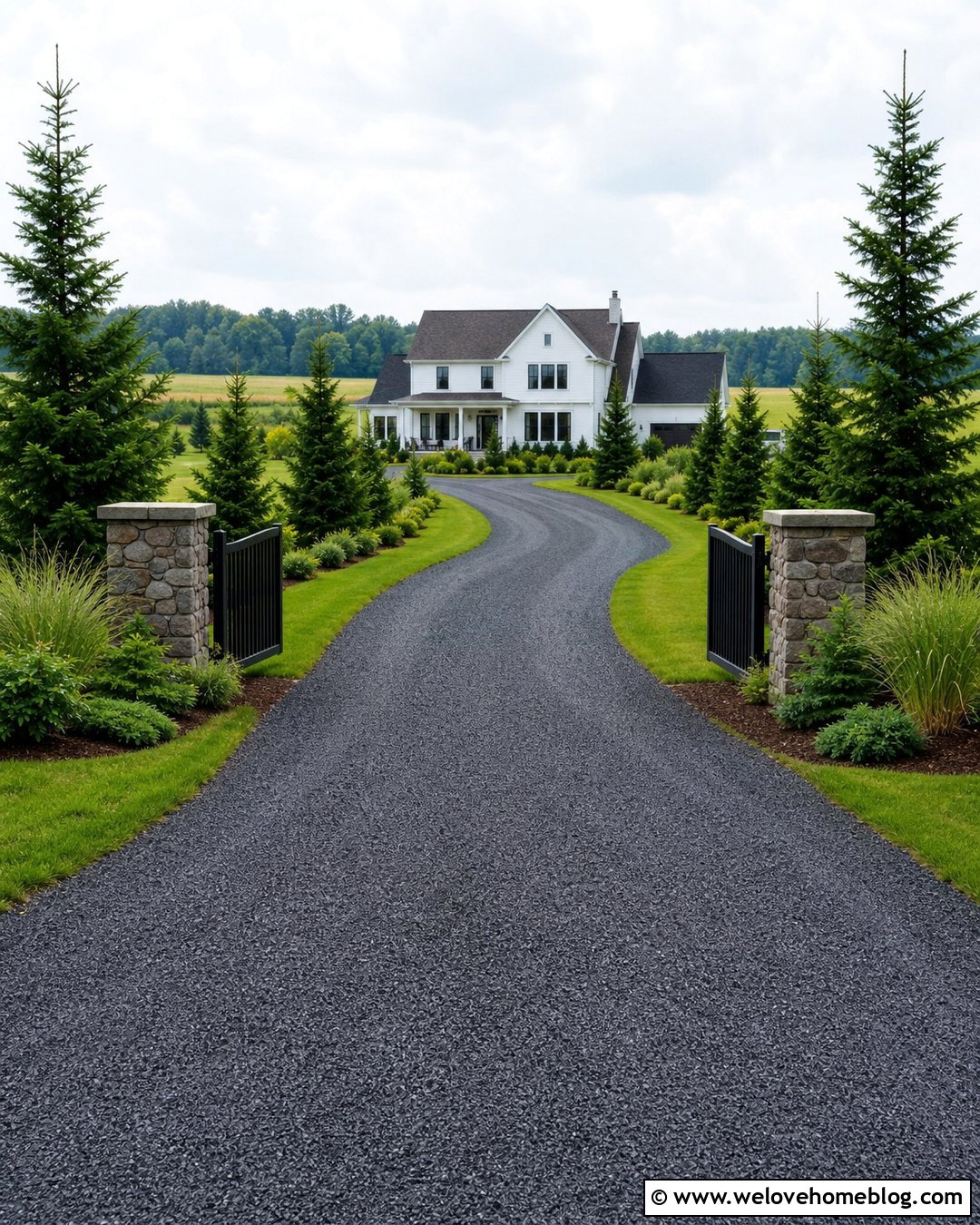
Evergreen trees provide year-round structure along a farm driveway, especially where wind, open views, or nearby service areas need soft screening. Use a dark crushed-stone lane with a long sweeping curve and staggered evergreen groupings beyond wide grass shoulders. Avoid creating a narrow, solid corridor; open gaps preserve views and keep the entrance from feeling confined. Mix upright trees with lower junipers and native grasses for a layered edge. At the road, stone pillars and a simple black gate can establish a clear entry point. Near the farmhouse, transition into smaller evergreen forms that relate to foundation planting. This complete design suits northern farms, wooded acreage, and modern rural homes. The dark green backdrop also makes pale gravel, light siding, and winter snow visually distinctive.
28. Farm Driveway With Concrete And Gravel Sections
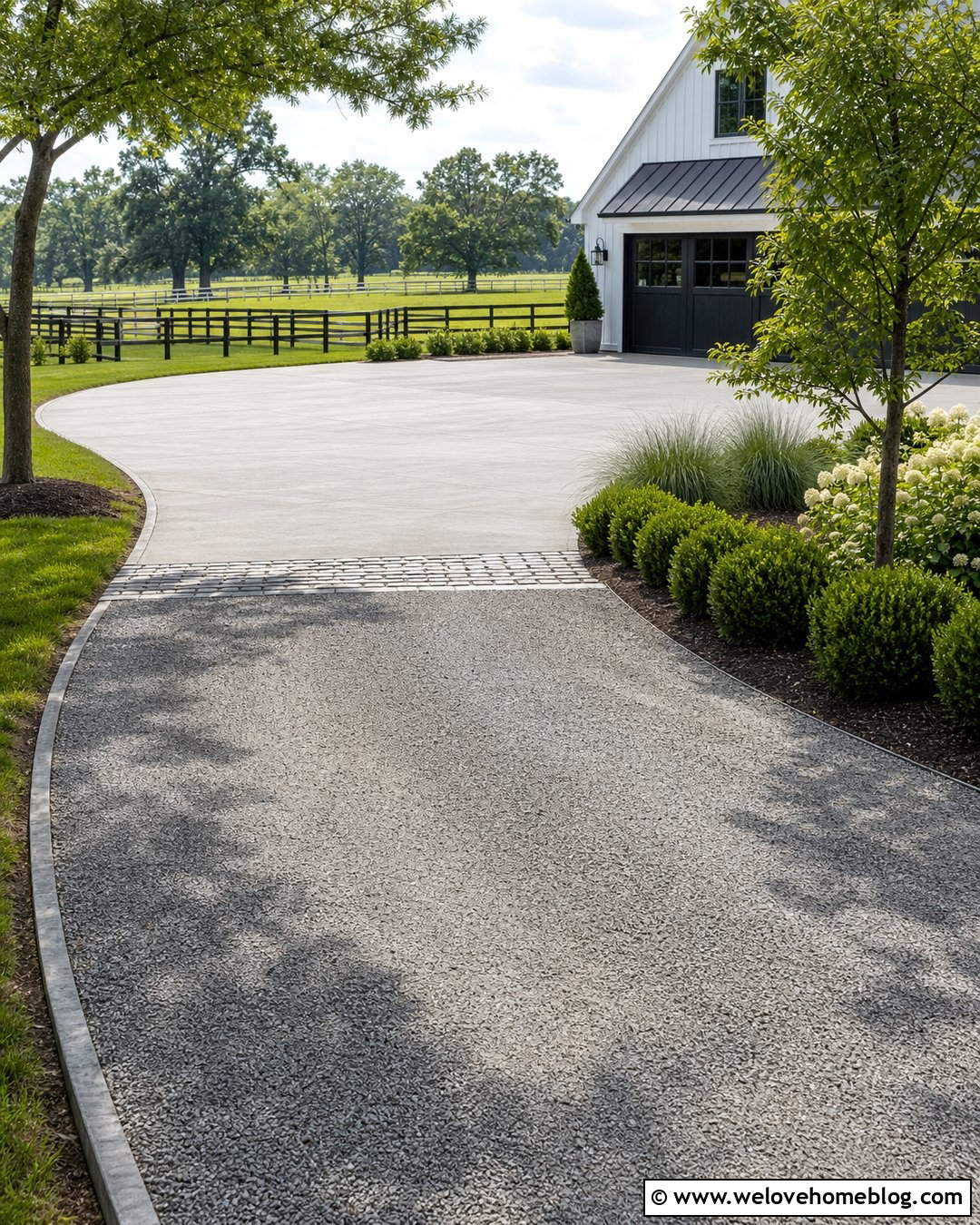
Combining concrete and gravel allows each part of a farm driveway to serve a different purpose. Use compacted gray gravel along the long approach, then transition into brushed light-gray concrete near the house, garage, and main turning area. A flush cobblestone band can create a deliberate joint between the two materials. Follow a gentle curve through the open landscape, framing it with mowed grass, timber fencing, and scattered shade trees. Near the concrete section, introduce more tailored beds with boxwood, grasses, and flowering shrubs. This arrangement keeps the rural character along the lane while providing a firm, defined surface where vehicles park and turn frequently. Matching stone borders and a consistent color palette help the two surfaces read as one complete farm driveway rather than separate construction projects.
29. Farm Driveway With Dry Creek Drainage
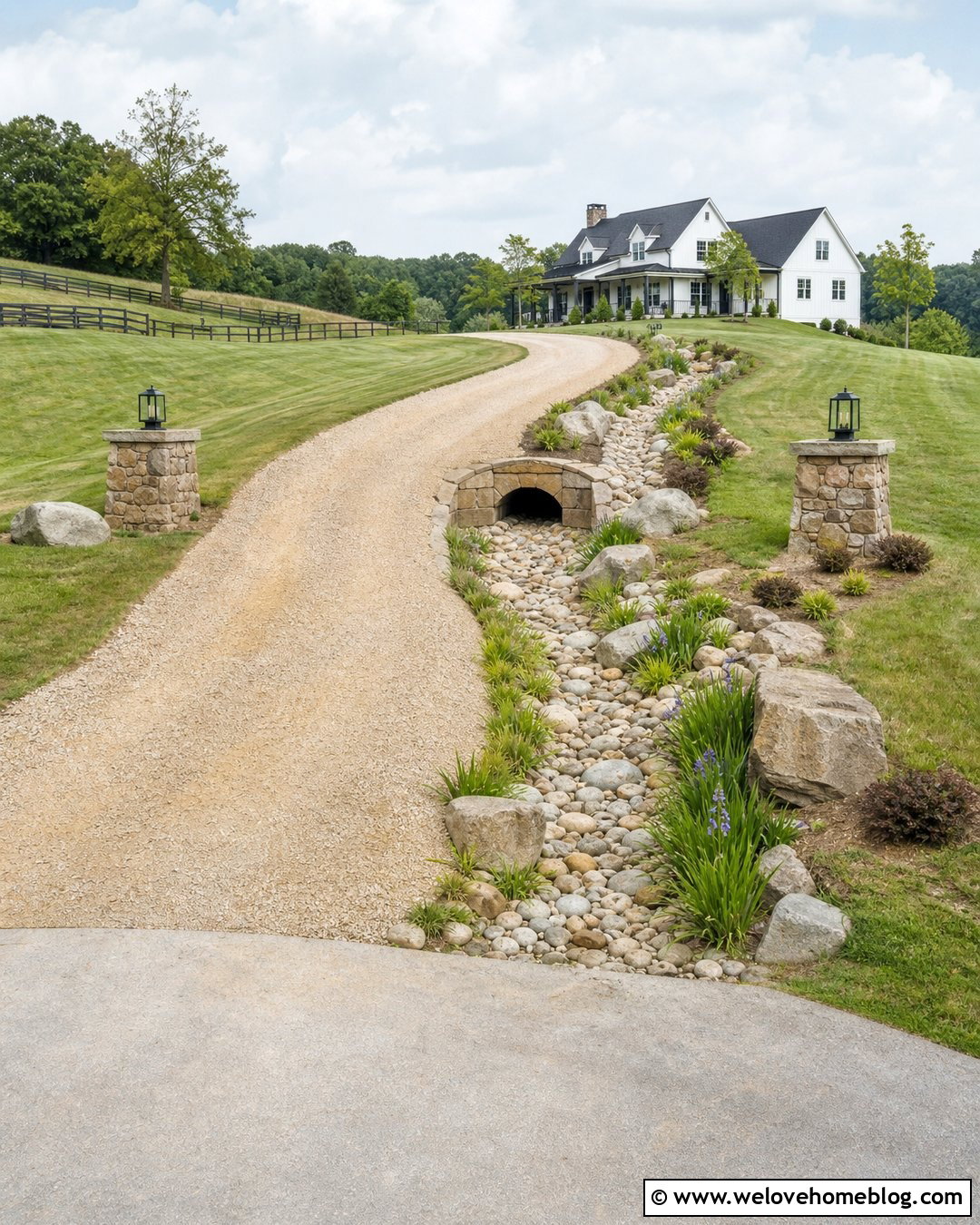
A landscaped dry creek can manage a low area beside a farm driveway while adding a natural-looking feature. Use compacted tan gravel for the curved driving surface and line the drainage channel with rounded river rock, larger boulders, and moisture-tolerant grasses. A small stone or concrete culvert crossing may carry the driveway over the channel where necessary. Keep the creek bed lower than the road surface and maintain clear openings around crossings. Plant sedges, irises, and low shrubs along the outer bank, leaving the driveway edge open and visible. Repeat selected stones at the entrance and near the farmhouse walkway. The finished design makes drainage part of the landscape rather than treating it as an afterthought, which is especially useful on rolling farm properties and naturally sloped rural lots.
30. Farm Driveway With Covered Gate Entrance
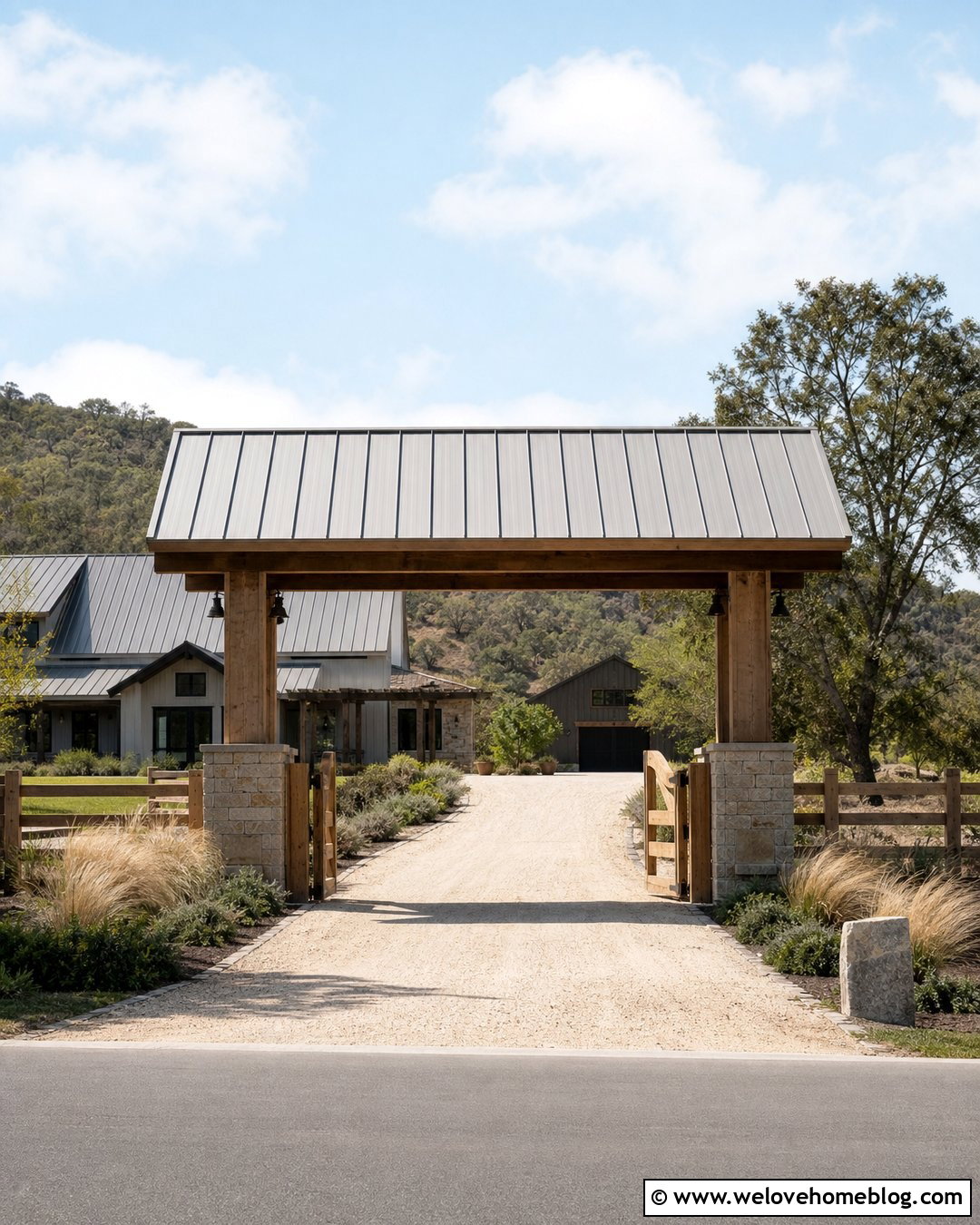
A covered gate entrance can create a distinctive farm landmark when its scale and materials match the property. Use a simple timber frame with a small metal or shingle roof, supported by substantial wood posts. Beneath it, continue a compacted cream gravel driveway toward a farmhouse or barn complex. Stone bases can protect the posts visually and connect the structure with low entrance walls. Extend wood fencing from both sides, then add grasses, compact shrubs, and a clear address marker. Keep the overhead opening generous enough for expected vehicles and equipment. A straight driveway strengthens the framed view of the house beyond. This complete entrance works best when the structure remains clean and functional rather than heavily decorated, preserving an authentic agricultural appearance.
31. Farm Driveway With Country Mailbox Garden
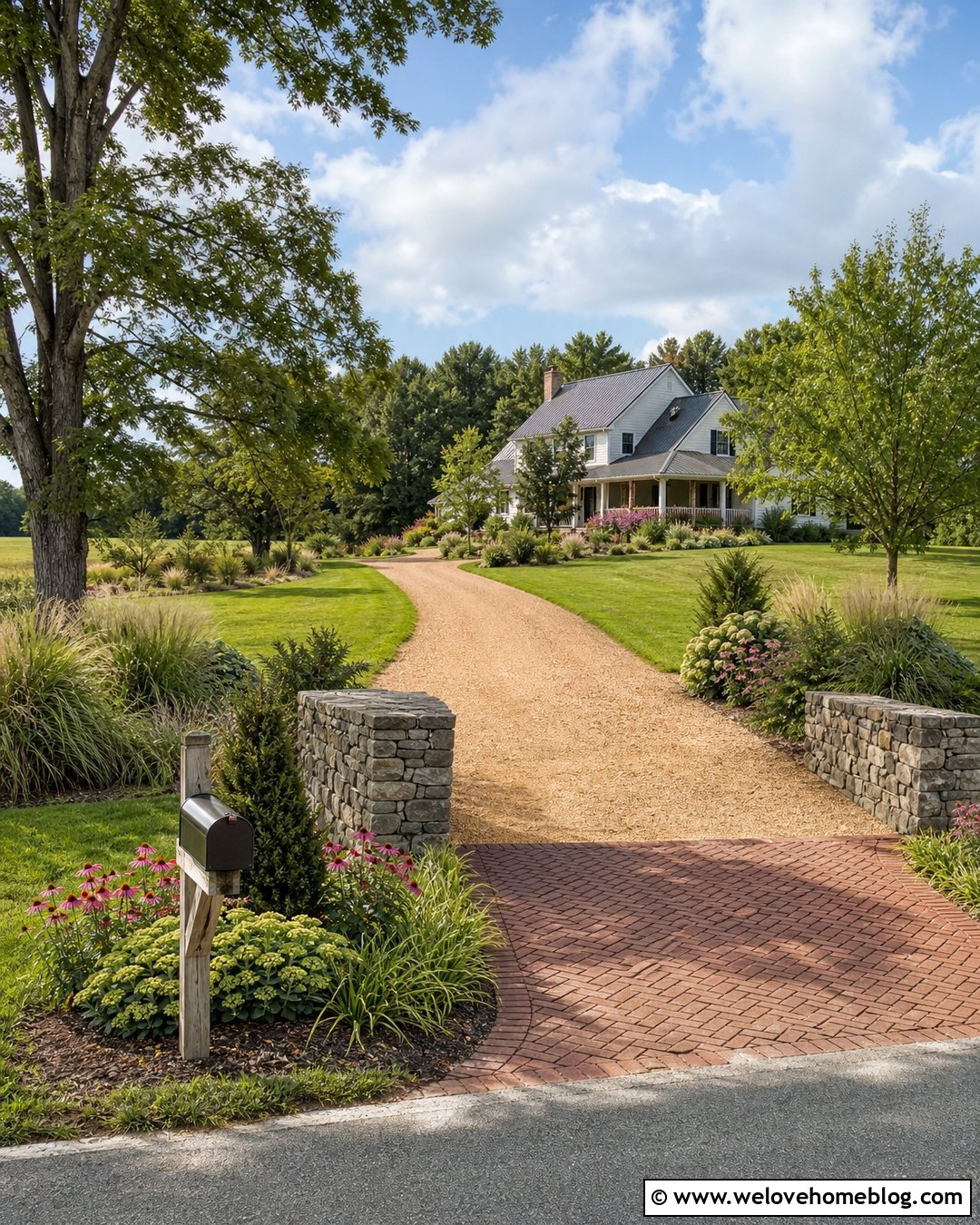
A mailbox garden can become part of a complete farm entrance instead of looking like an isolated roadside bed. Pair a weathered wood or black metal mailbox with a compacted golden gravel driveway and short stone entrance walls. Shape the surrounding bed in a broad curve that follows the flared driveway opening. Use low native grasses, coneflowers, sedum, and compact evergreen shrubs that will not obstruct road visibility. A flush brick or cobblestone apron can reduce loose gravel near the mailbox area. Continue matching plants in small groups along the drive and near the farmhouse porch. The repeated materials create a visual route from road to home. This approach works especially well when a full gate is unnecessary but the property still needs a welcoming, clearly marked entrance.
32. Farm Driveway With Flowering Tree Entrance
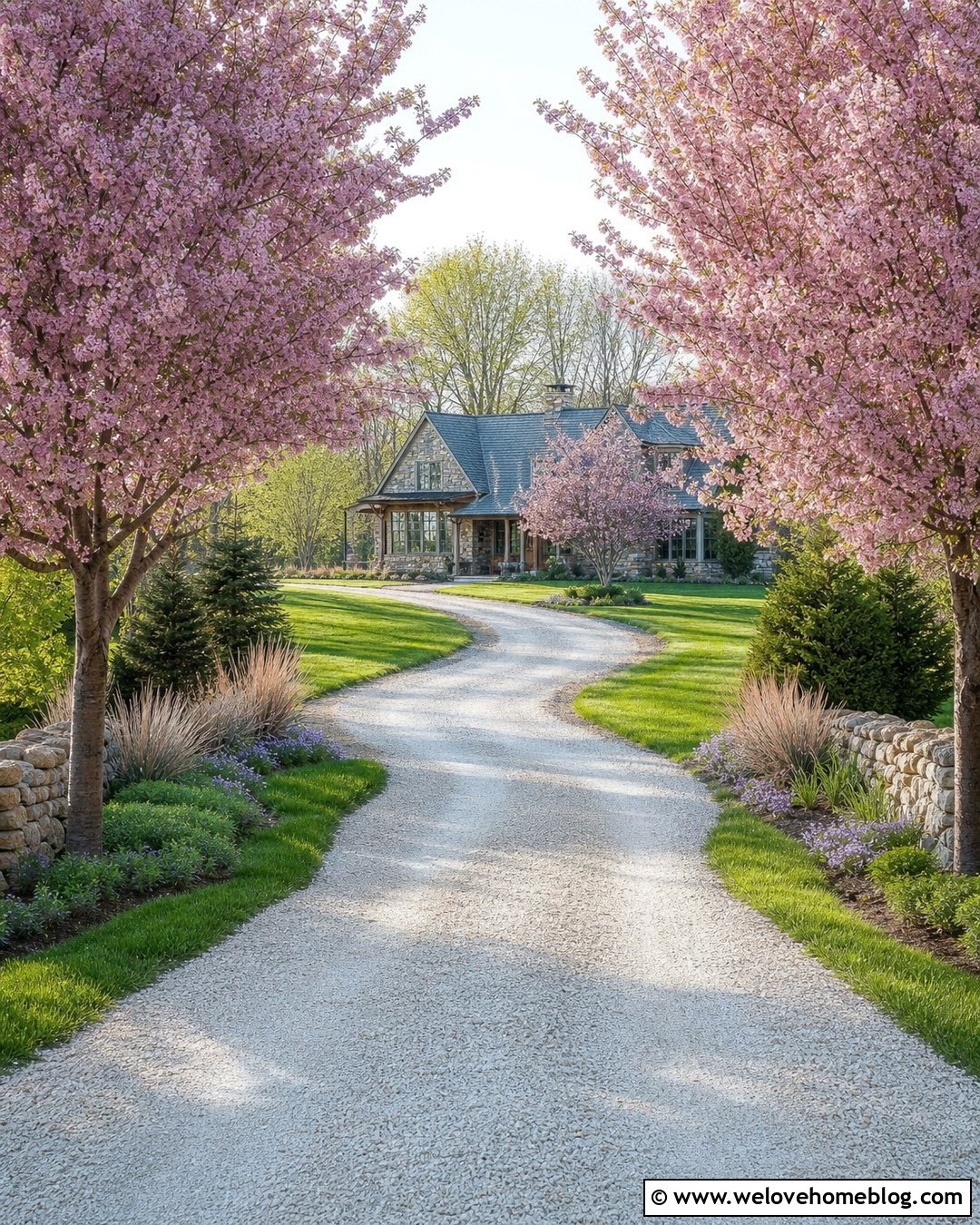
Two flowering trees can frame a farm driveway beautifully without requiring continuous landscaping along the entire lane. Choose trees suited to the local climate and place them beyond the clear driving and visibility zones. A pale crushed-limestone driveway provides a bright surface beneath the spring canopy, while low fieldstone borders define the flared entrance. Continue the lane in a soft curve toward a cottage farmhouse or white barn home. Underplant the trees with simple ground covers, ornamental grasses, and small evergreen shrubs. Keep the remaining driveway edges as neatly mowed grass for easy maintenance. Repeat one flowering tree near the house to connect both ends visually. The result feels seasonal and welcoming, yet the overall design remains open enough for rural views and regular vehicle access.
33. Farm Driveway With Limestone Gravel
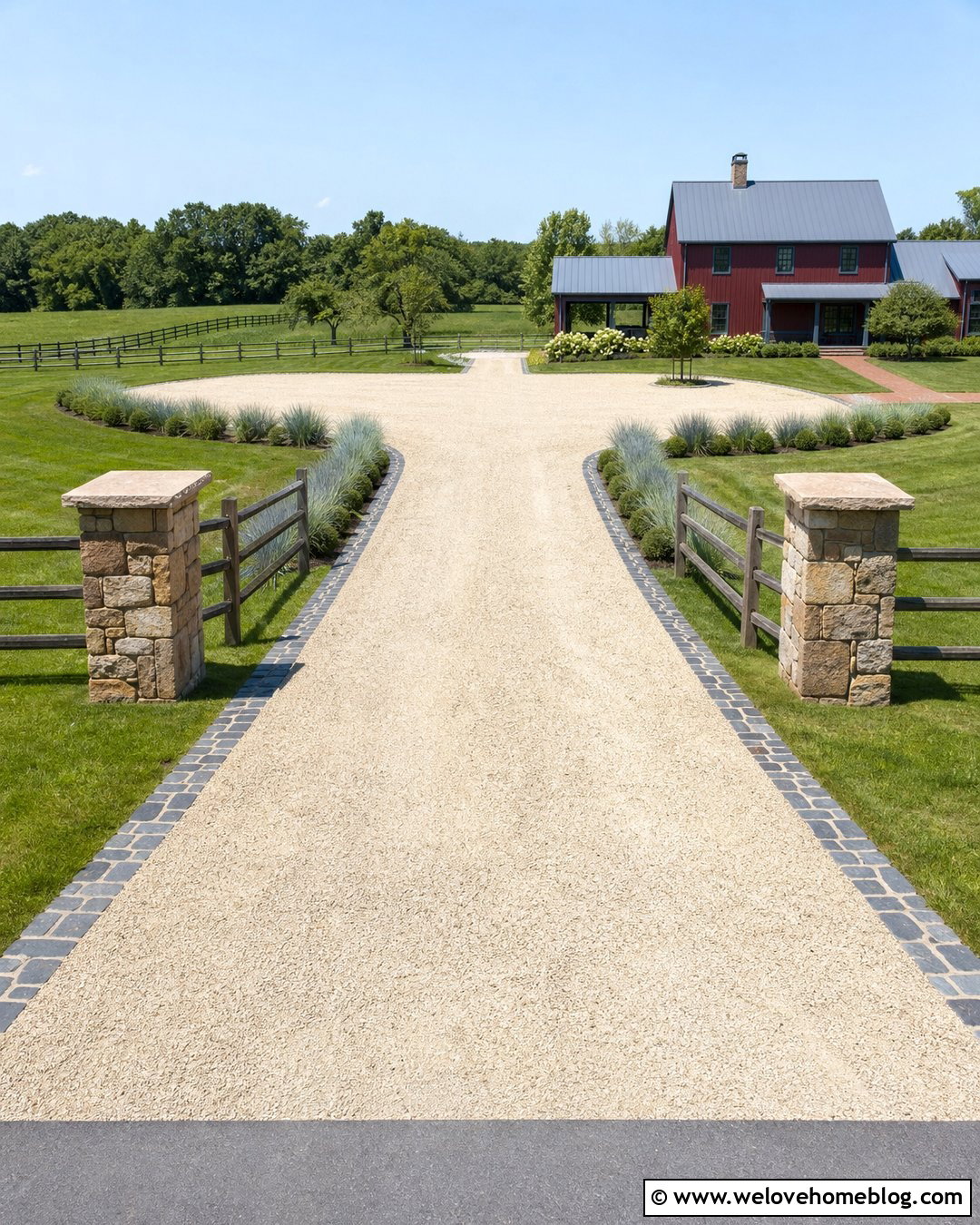
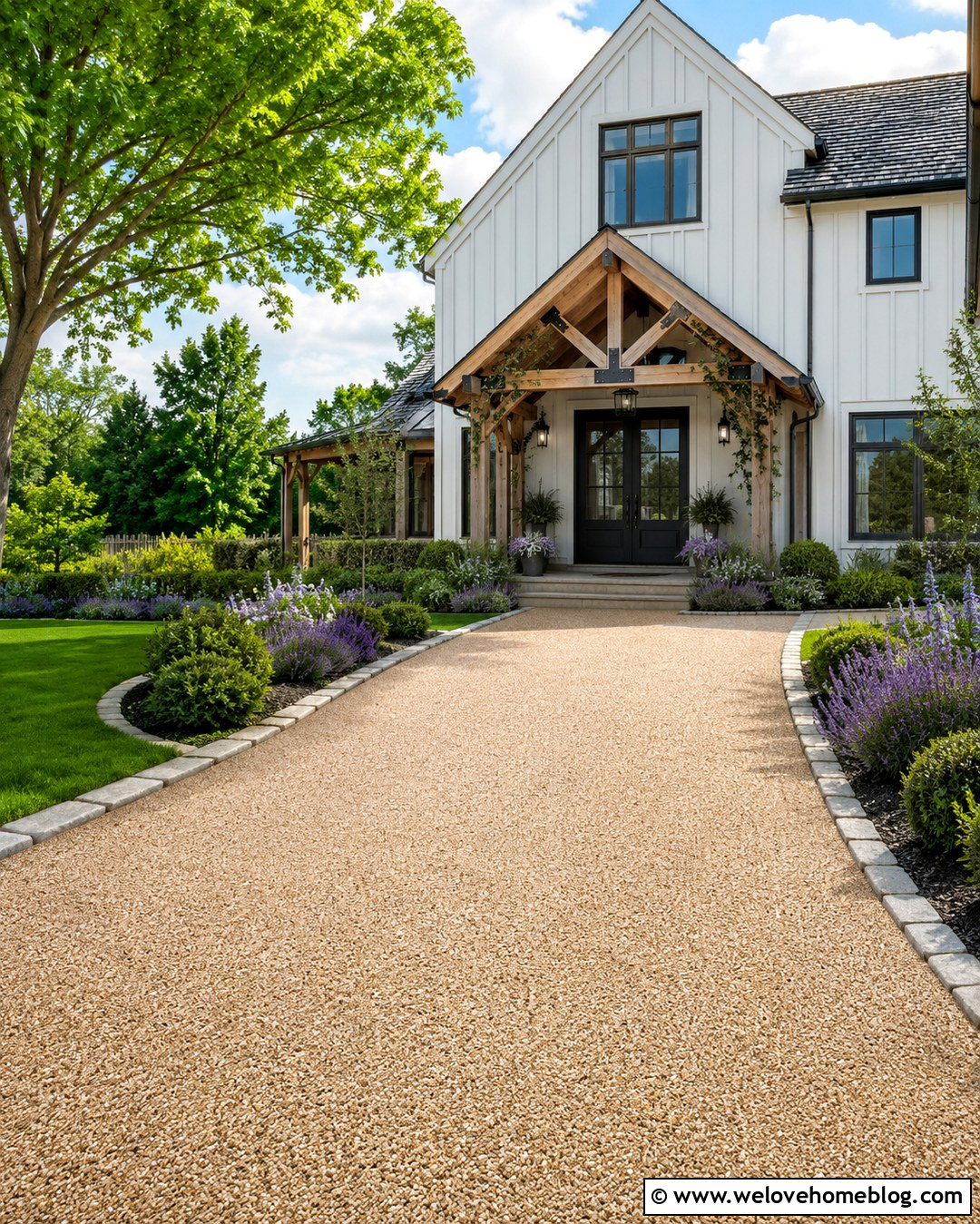
Cream limestone gravel creates a bright, clean-looking lane that complements many farm buildings. Use well-compacted angular stone in a broad straight layout leading toward a white, stone, or red-sided farmhouse. Define the edges with dark granite cobbles or weathered steel for noticeable contrast. On both sides, maintain mowed grass shoulders before transitioning into pasture, native meadow, or simple split-rail fencing. Near the house, form a generous parking court with the same limestone and add a brick walkway to the porch. Low boxwoods and blue-green grasses can prevent the pale surface from feeling stark. At the road, stone pillars made from warmer local materials will soften the entrance. This restrained palette gives a traditional rural driveway a fresh, orderly appearance without making it look overly formal.
34. Farm Driveway With Horseshoe Layout
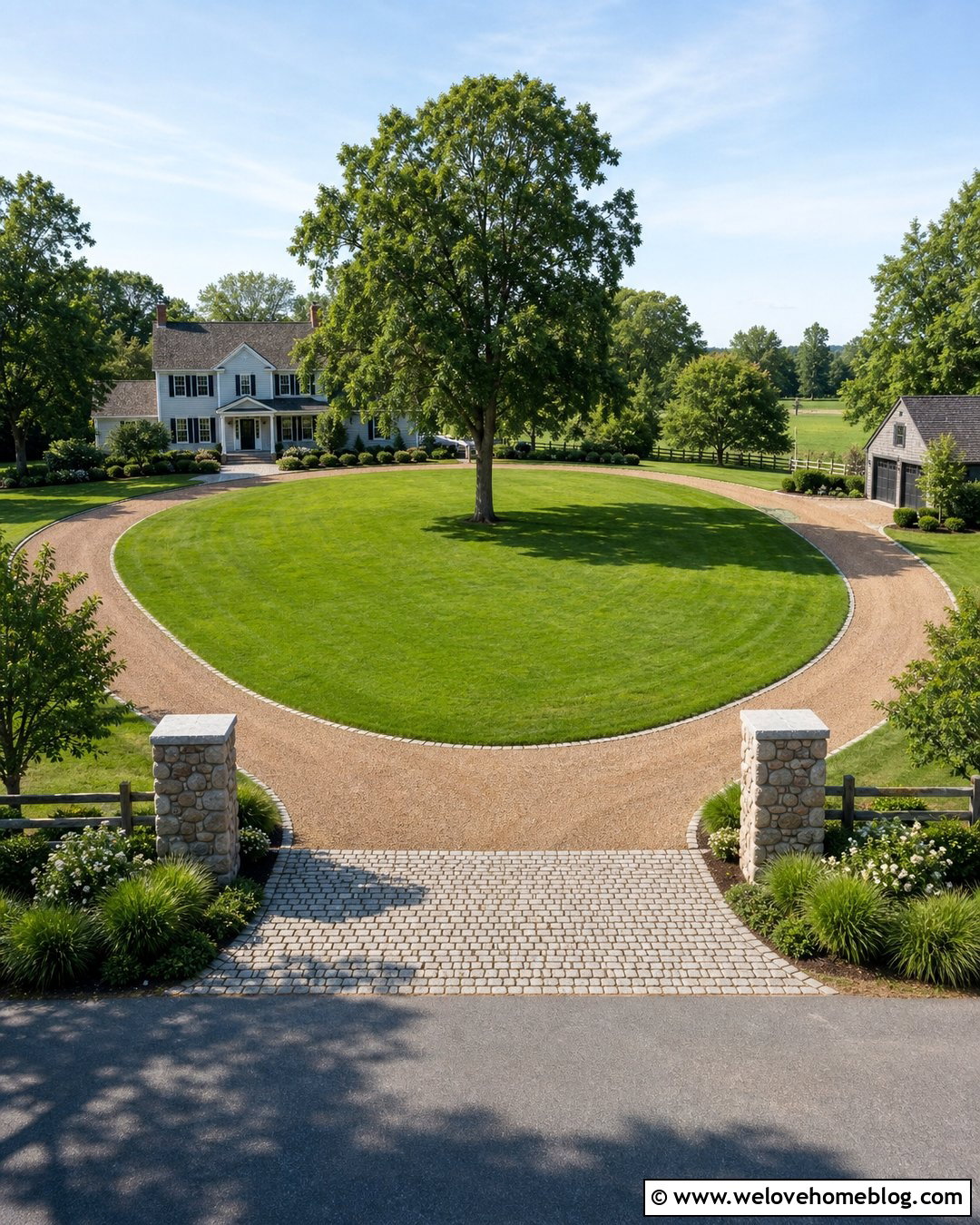
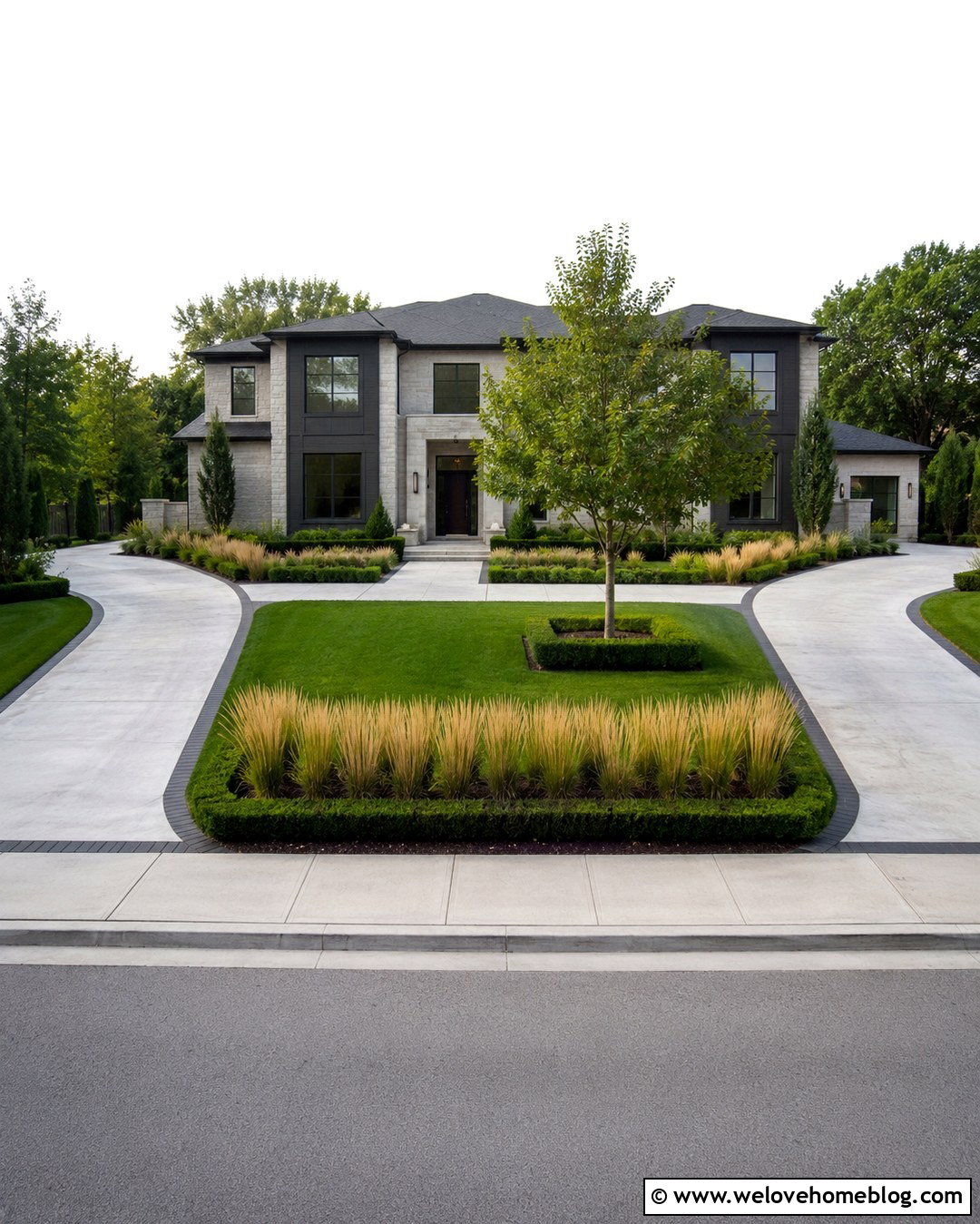
A horseshoe driveway provides two road connections and a smooth arrival sequence for a farmhouse with a broad front yard. Use compacted brown gravel and define both openings with matching stone pillars and open wood fencing. The curved route should sweep toward the house, widen near the porch, and continue back to the road without requiring tight turns. Create a large central lawn with one mature shade tree and simple perimeter planting. Low shrubs and ornamental grasses can follow the inside curve while the outside edge remains mostly open. Connect the garage through a short side spur using the same gravel. Repeating cobblestone aprons at both entrances makes the layout feel balanced. This design offers strong curb appeal while supporting visitors, deliveries, and everyday movement around a spacious farm property.
35. Budget Farm Driveway With Crushed Stone
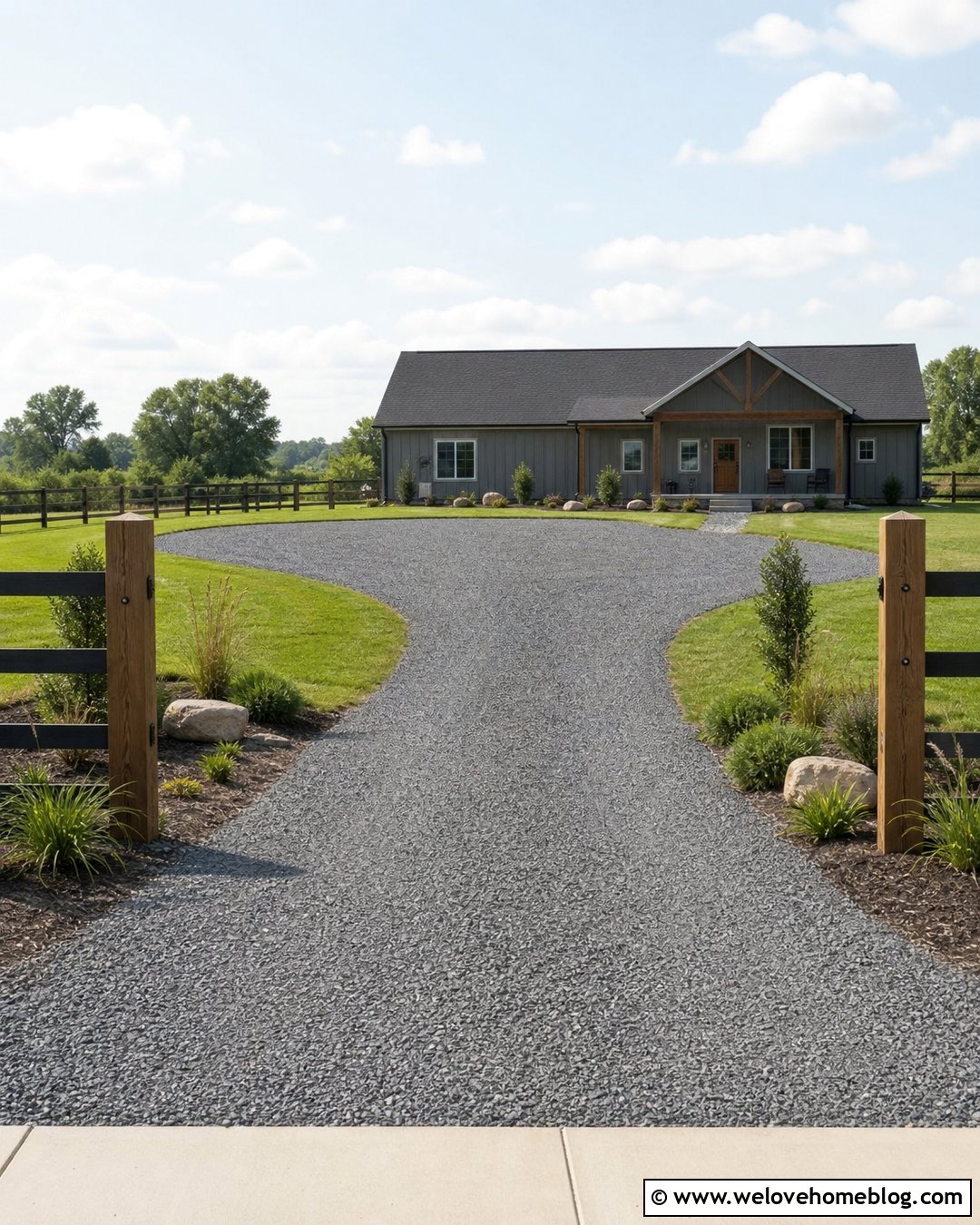
A straightforward crushed-stone driveway can still look intentional when its shape, edges, and surroundings are carefully organized. Choose locally available angular aggregate in a medium gray or warm brown tone. Keep the route mostly straight to simplify the layout, but widen it gradually near the home for parking and turning. Neatly mowed grass shoulders provide an inexpensive border, while spaced timber posts can mark the entrance. Add a few large native shrubs, ornamental grasses, or fieldstones at key points rather than landscaping the entire length. A simple gravel walkway can connect the parking area with the farmhouse porch. Regularly defined edges and a consistent surface color will make the greatest visual difference. This complete approach delivers relaxed farm character without relying on elaborate gates, masonry, or formal planting.
Conclusion:
The most successful **35 Farm Driveway Ideas** balance rural character with daily function. Begin with a surface that suits your traffic, climate, property size, and preferred level of upkeep. Then consider how the driveway shape, entrance, edging, drainage, fencing, and planting will work together. Gravel can feel refined with cobblestone borders, while asphalt or concrete becomes more welcoming beside stone walls and natural landscaping. Long lanes benefit from repeated trees or fencing, whereas short approaches often need one strong entrance feature. Whatever design you choose, preserve comfortable visibility and practical access for expected vehicles. A coordinated plan will help your driveway look connected to the farmhouse, barn, fields, and wider landscape.

Related posts:
Leave a Reply