
A welcoming driveway should feel like a natural extension of the home rather than a purely practical parking area. The best **Country Cottage Driveway Ideas** combine textured materials, relaxed planting, traditional borders, and gentle shapes that look established within the landscape. Gravel, reclaimed brick, cobblestone, natural stone, and subtly finished concrete can all work when their colors complement the cottage facade. Thoughtful drainage, a stable base, defined edges, and enough turning space also help the driveway remain attractive through changing seasons. Whether you have a compact front yard or a long rural approach, these complete designs offer practical ways to balance character with everyday use. Explore the following **20 Country Cottage Driveway Ideas** to create a warm and memorable entrance.

1. Country Cottage Gravel Driveway With Brick Edging
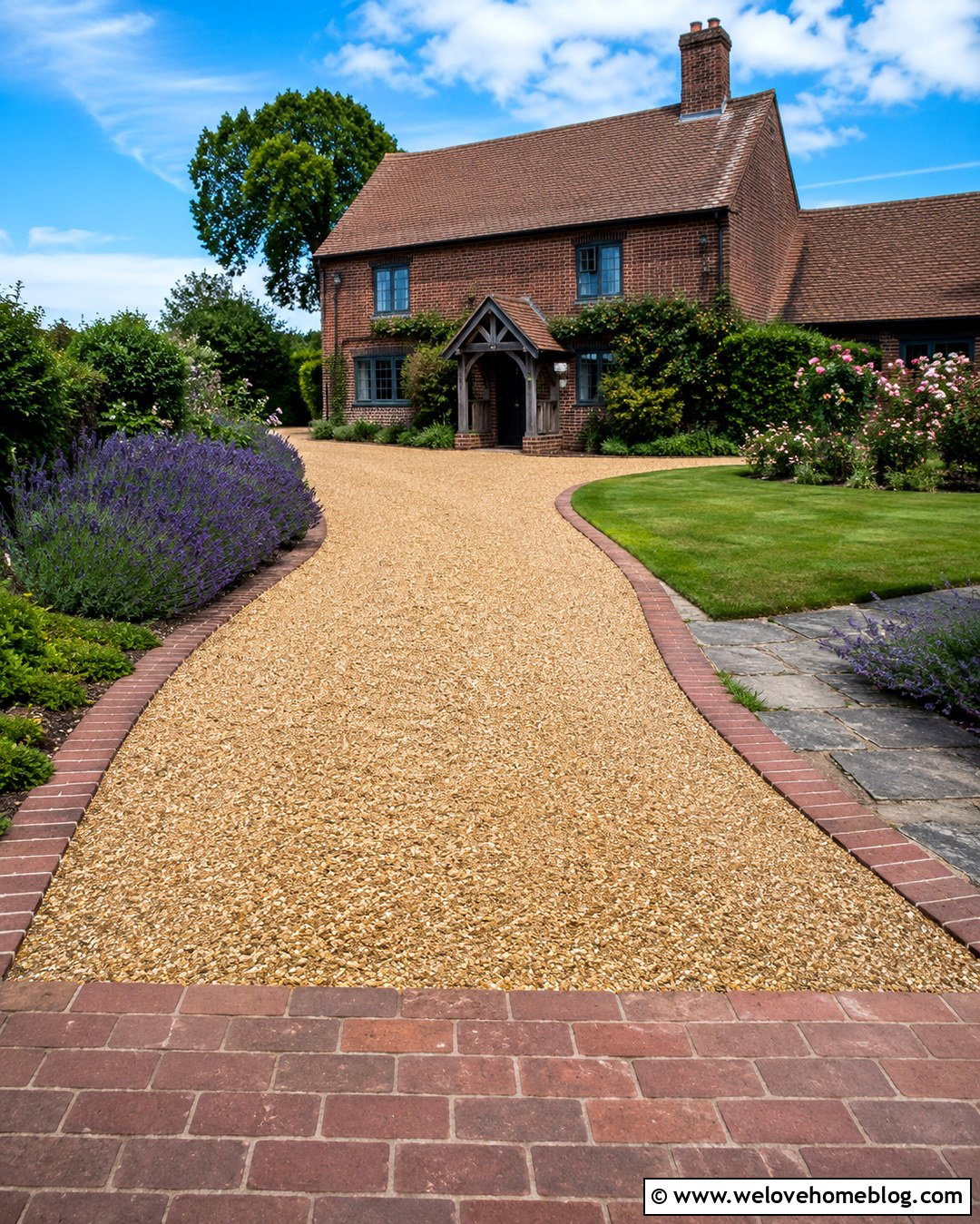
Golden pea gravel creates a warm, relaxed surface that looks especially natural beside aged brick, painted siding, or exposed timber. Install the driveway in a slightly curved layout so the approach feels softer and less formal. Reclaimed red brick edging will contain loose stones while connecting the drive to cottage walls, chimneys, or garden paths. Wide planting beds can frame both sides with lavender, catmint, shrub roses, and ornamental grasses. Keep taller plants near the house and lower varieties beside the driving area to preserve visibility. A compacted crushed-stone base is essential because decorative gravel alone will shift and develop ruts. Finish the entrance with a brick apron that clearly separates the driveway from the road.
2. Country Cottage Cobblestone Driveway With Flower Borders
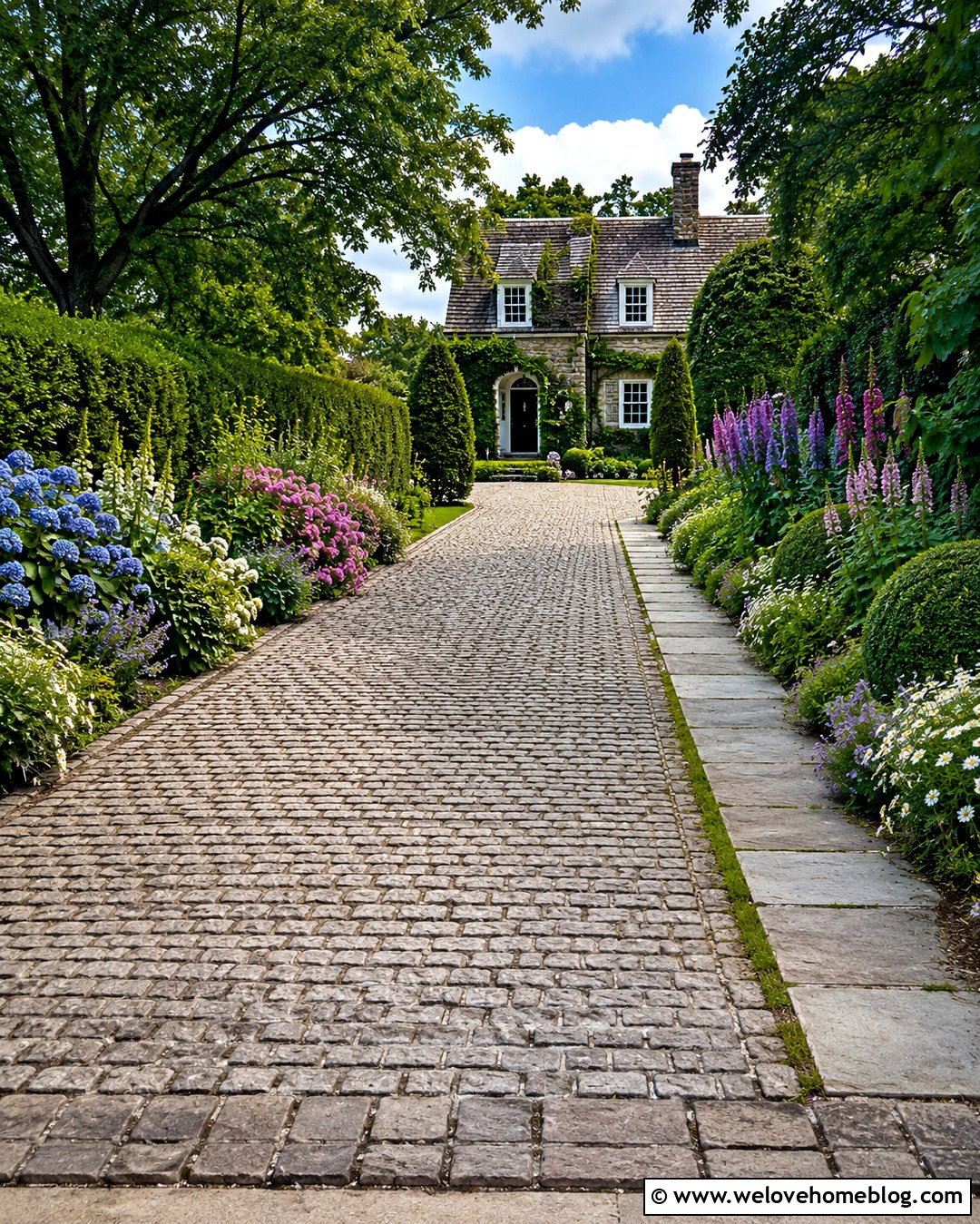
Few surfaces create an established country look as effectively as weathered cobblestone. Its uneven tones and softly rounded texture work beautifully with stone cottages and traditional garden planting. A straight driveway can feel more inviting when broad flower borders gently curve along its edges. Use layered combinations of hydrangeas, foxgloves, salvia, daisies, and clipped evergreen shrubs for color and structure. Cobblestones should be installed over a carefully prepared base that can support regular vehicle traffic. Filling the joints properly will help control movement and unwanted plant growth. A narrow flagstone walkway can run beside the driveway, providing a separate route to the front door. This complete arrangement feels historic without making the entrance appear neglected or overly rustic.
3. Country Cottage Brick Driveway In A Herringbone Pattern
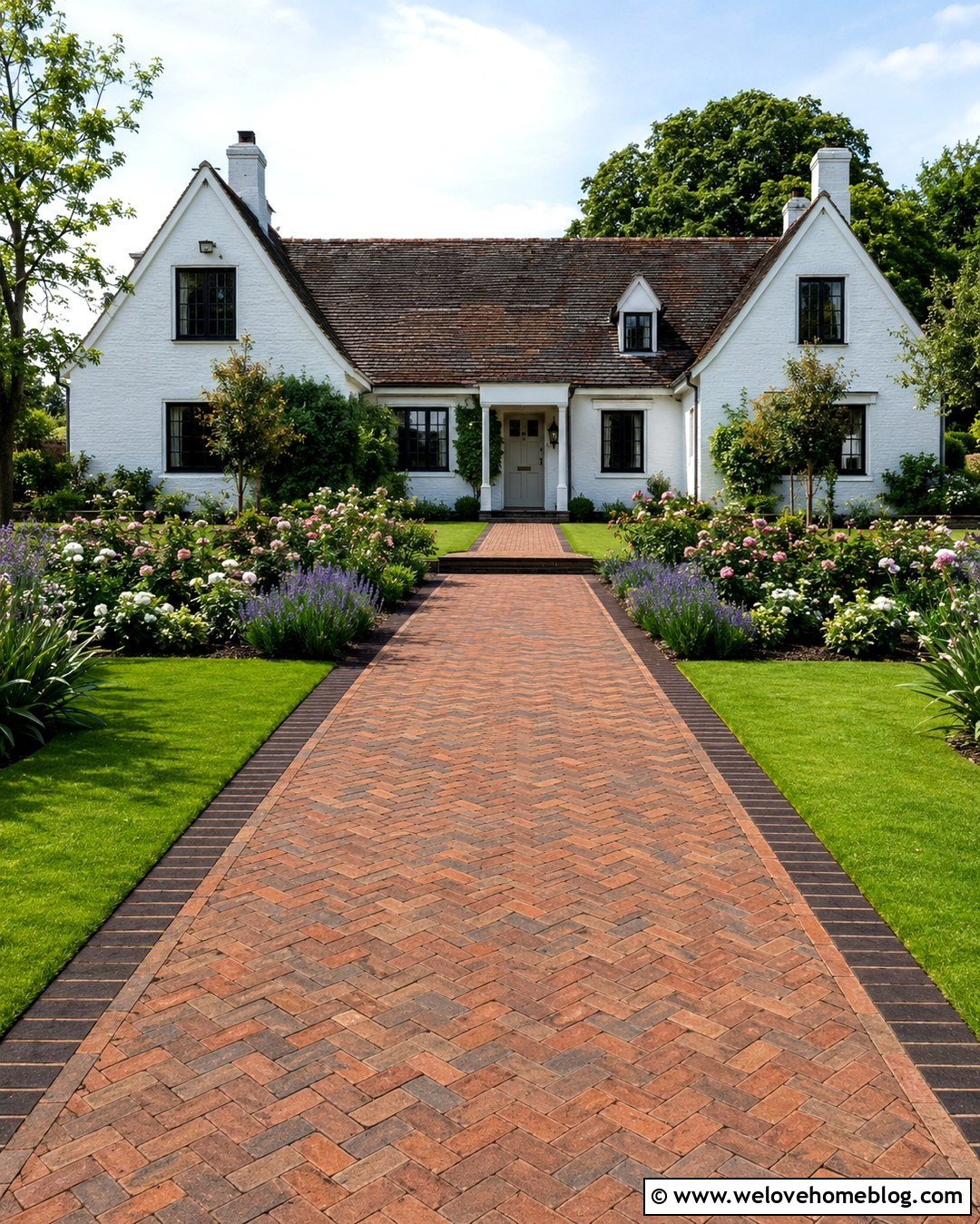
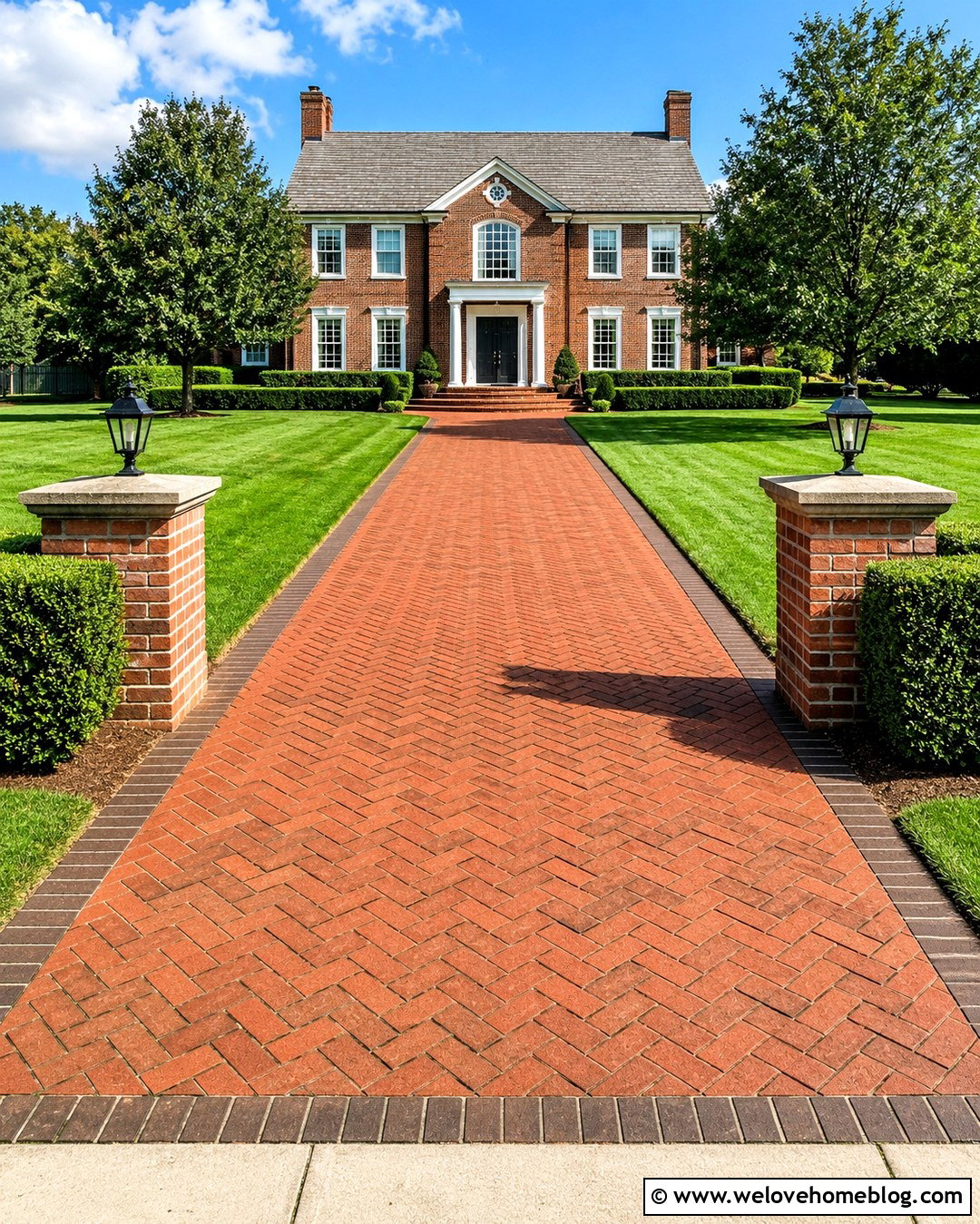
A herringbone brick driveway brings pattern, warmth, and traditional character to a country cottage entrance. Choose clay brick pavers in mixed red, brown, and muted terracotta tones rather than perfectly uniform modern blocks. The interlocking pattern also handles turning vehicles better than simple straight rows when installed correctly. Add a dark brick soldier-course border to define the edges and prevent the pattern from visually blending into nearby paths. Soft green lawn can frame one side, while a deep cottage garden filled with roses, nepeta, and seasonal bulbs balances the other. Use the same brick for the walkway or porch steps to create continuity. This driveway works particularly well with whitewashed cottages, weatherboard homes, and traditional red brick facades.
4. Country Cottage Curved Gravel Driveway With Lavender
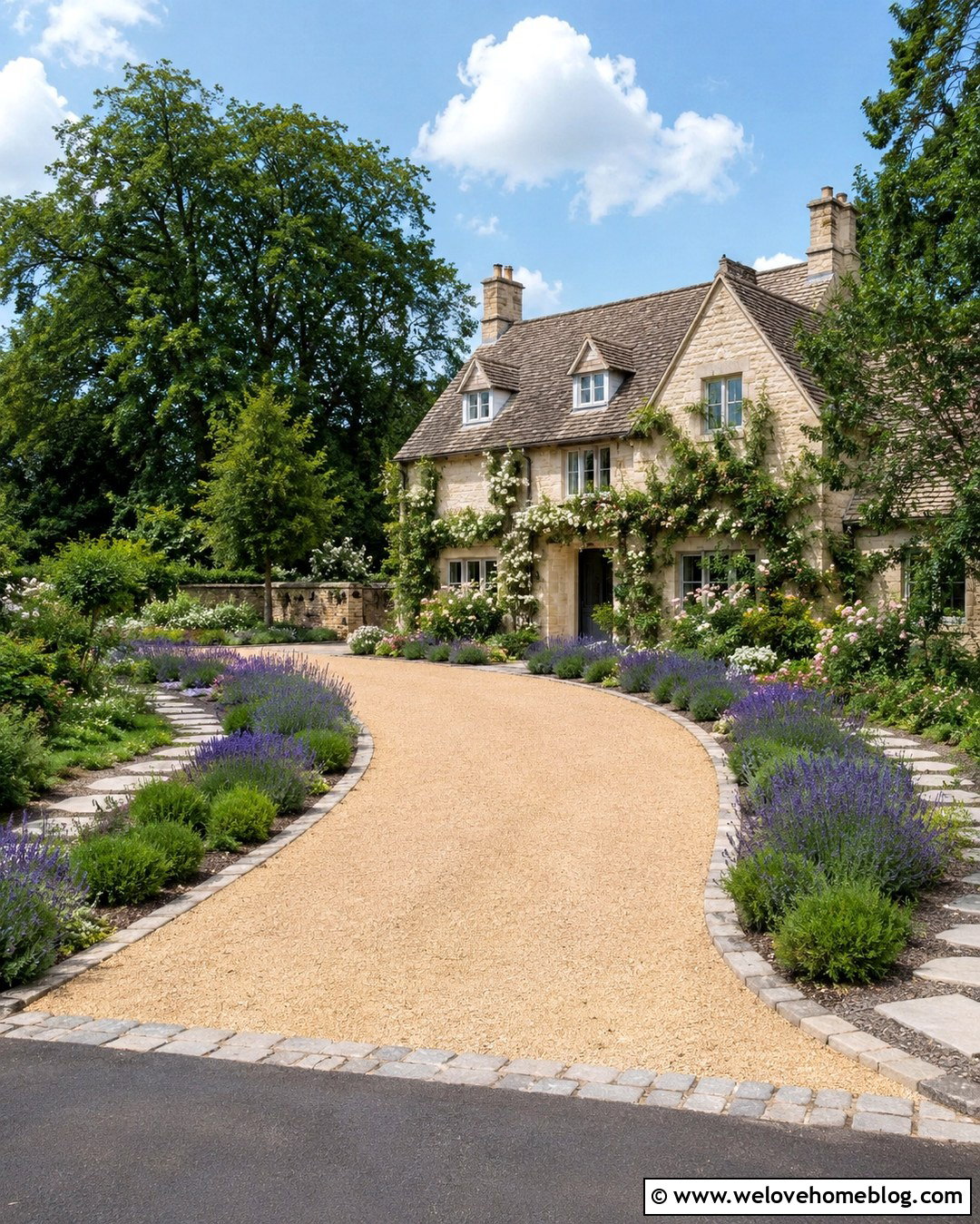
Imagine a pale gravel driveway gently sweeping through fragrant purple borders before reaching a small country home. The curved route creates anticipation and makes a longer front yard feel more landscaped. Use compactable beige or honey-colored gravel instead of rounded pea gravel where vehicle stability is the priority. Low cobblestone curbs can hold the surface in place and provide a clean transition into the planting beds. Repeating lavender along the sunny edge creates rhythm, while rosemary, catmint, and small shrub roses add variety. Leave occasional gaps for stepping-stone paths into the garden. Proper grading should direct rainwater away from the cottage foundation. This arrangement offers romantic curb appeal without requiring complicated decorative features or an overly formal planting plan.
5. Country Cottage Driveway With Grass Center Strip
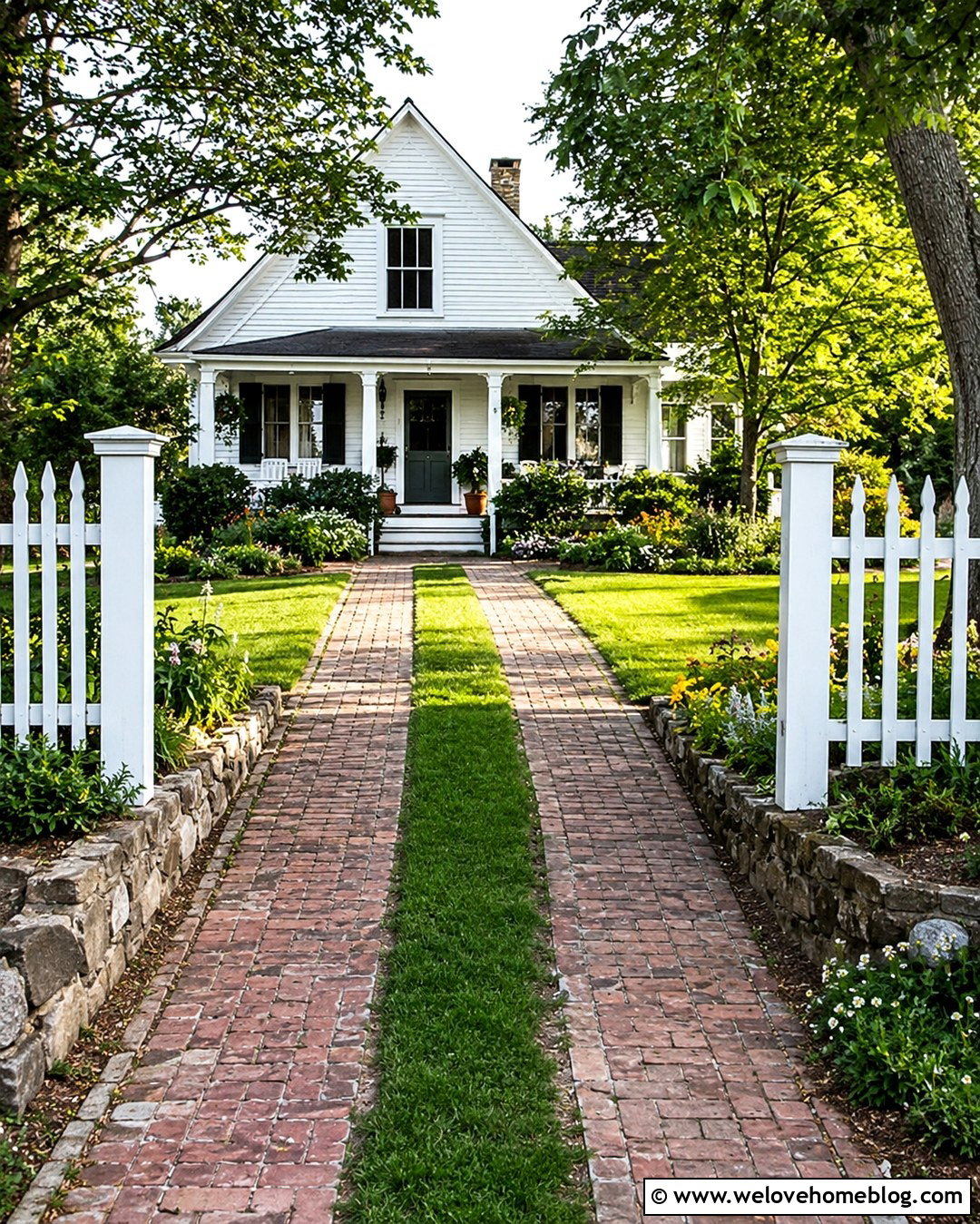
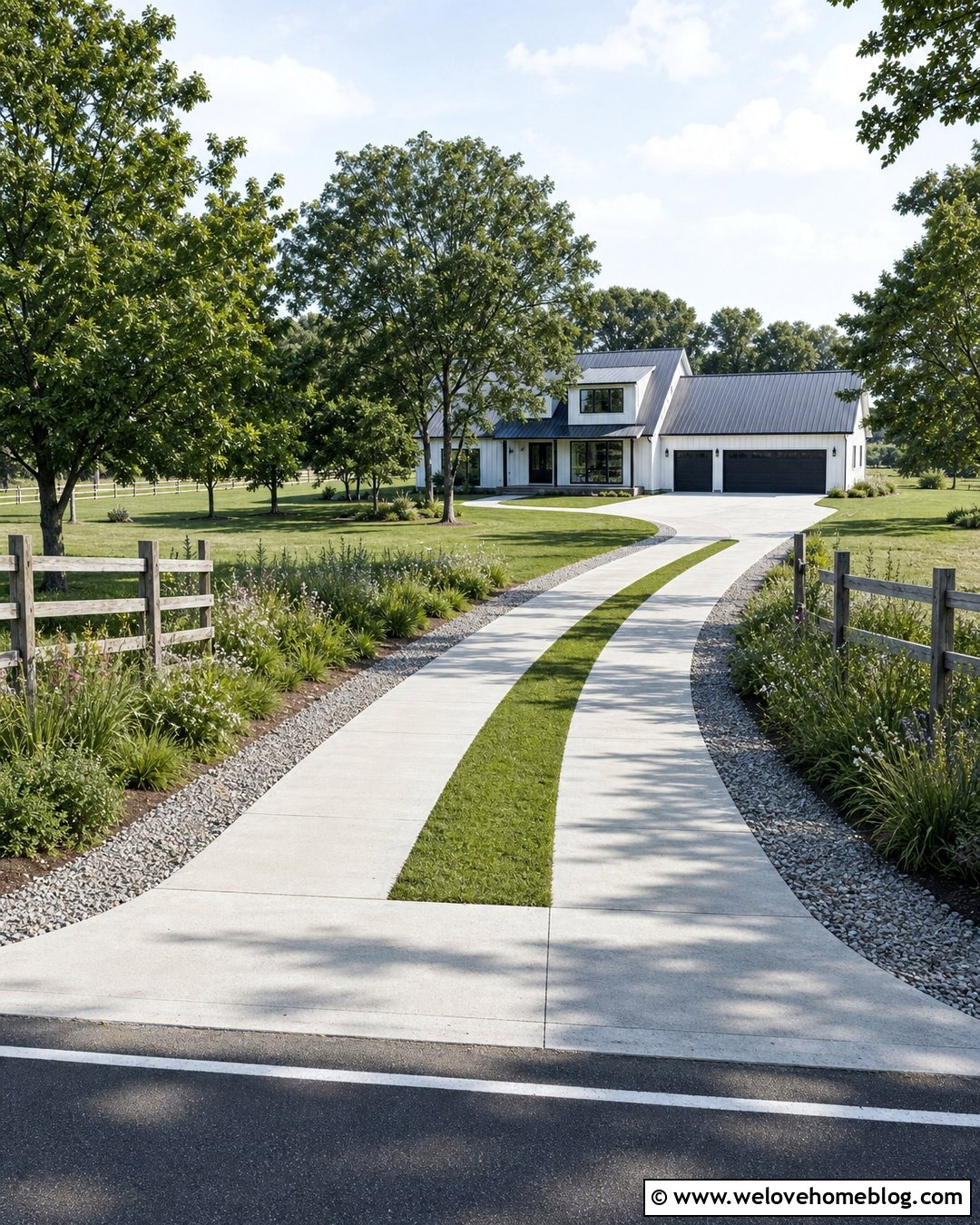
A driveway with two paved wheel tracks and a green center strip reduces the visual amount of hardscaping in a small cottage yard. Natural stone setts, reclaimed brick, or stabilized gravel can form the driving lanes, depending on the home’s materials and local weather. The center should use durable turf suited to occasional tire contact, with a reinforced growing system where extra support is needed. Frame the driveway with simple fieldstone edging and low cottage planting that will not spill into the wheel tracks. This design looks especially attractive beside a white country cottage with a picket fence and informal front garden. It works best on relatively straight, lightly used approaches where drivers can easily remain aligned with the two prepared tracks.
6. Country Cottage Circular Gravel Driveway With A Garden Island
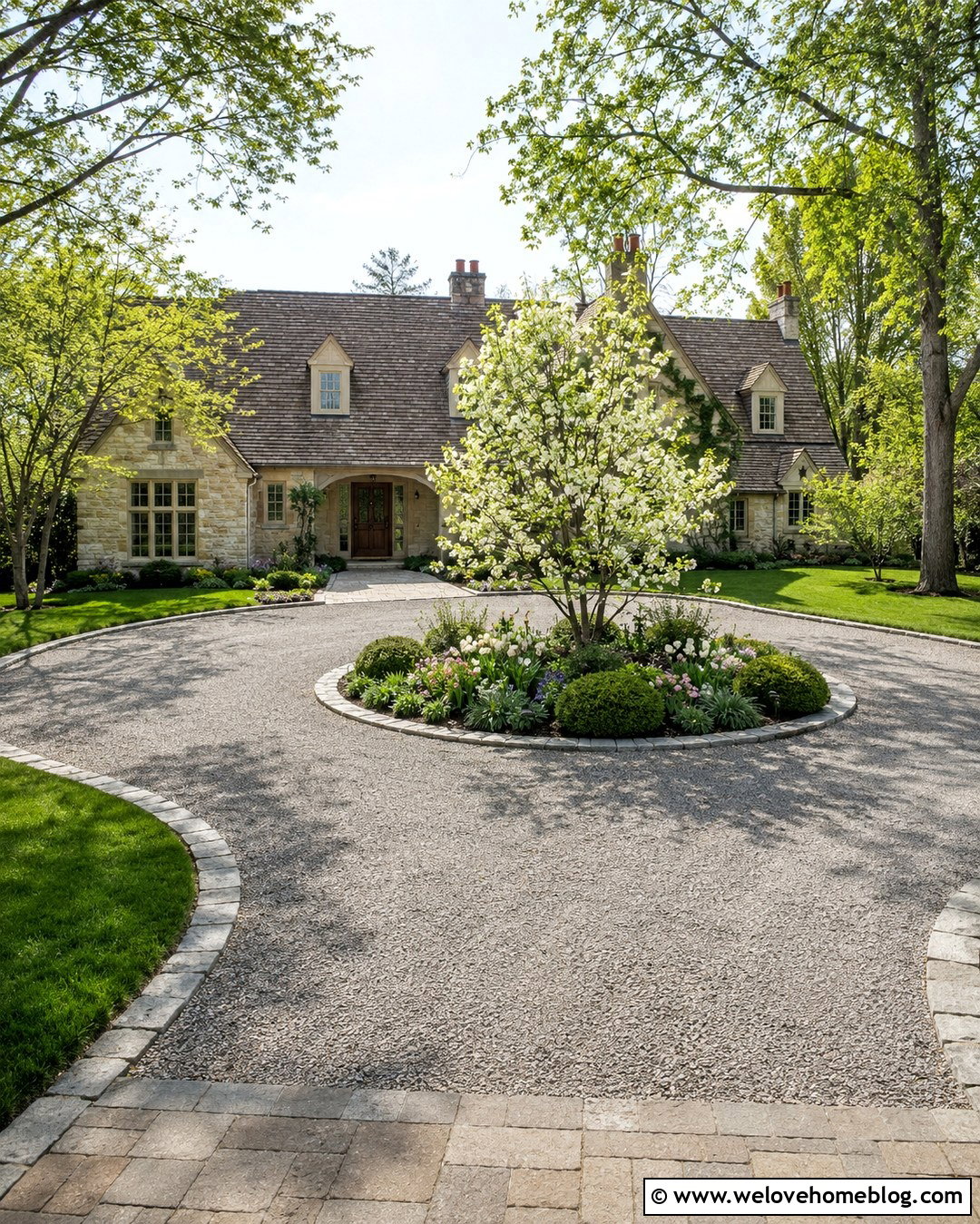
A circular gravel driveway adds practical turning space while creating a natural location for a central garden. Choose warm gray crushed gravel and define the outer edges with granite cobbles or reclaimed brick. In the center, plant a small ornamental tree such as a serviceberry, crabapple, or redbud, then surround it with low shrubs, perennial flowers, and spring bulbs. Keep the island planting open enough to maintain clear views across the driveway. The circle should be generously sized for comfortable vehicle movement rather than squeezed into a small front yard. A matching gravel path can branch toward the porch. This layout suits a larger country cottage property where the driveway can become part of the garden instead of dominating the entire entrance.
7. Country Cottage Driveway With Reclaimed Brick And Gravel
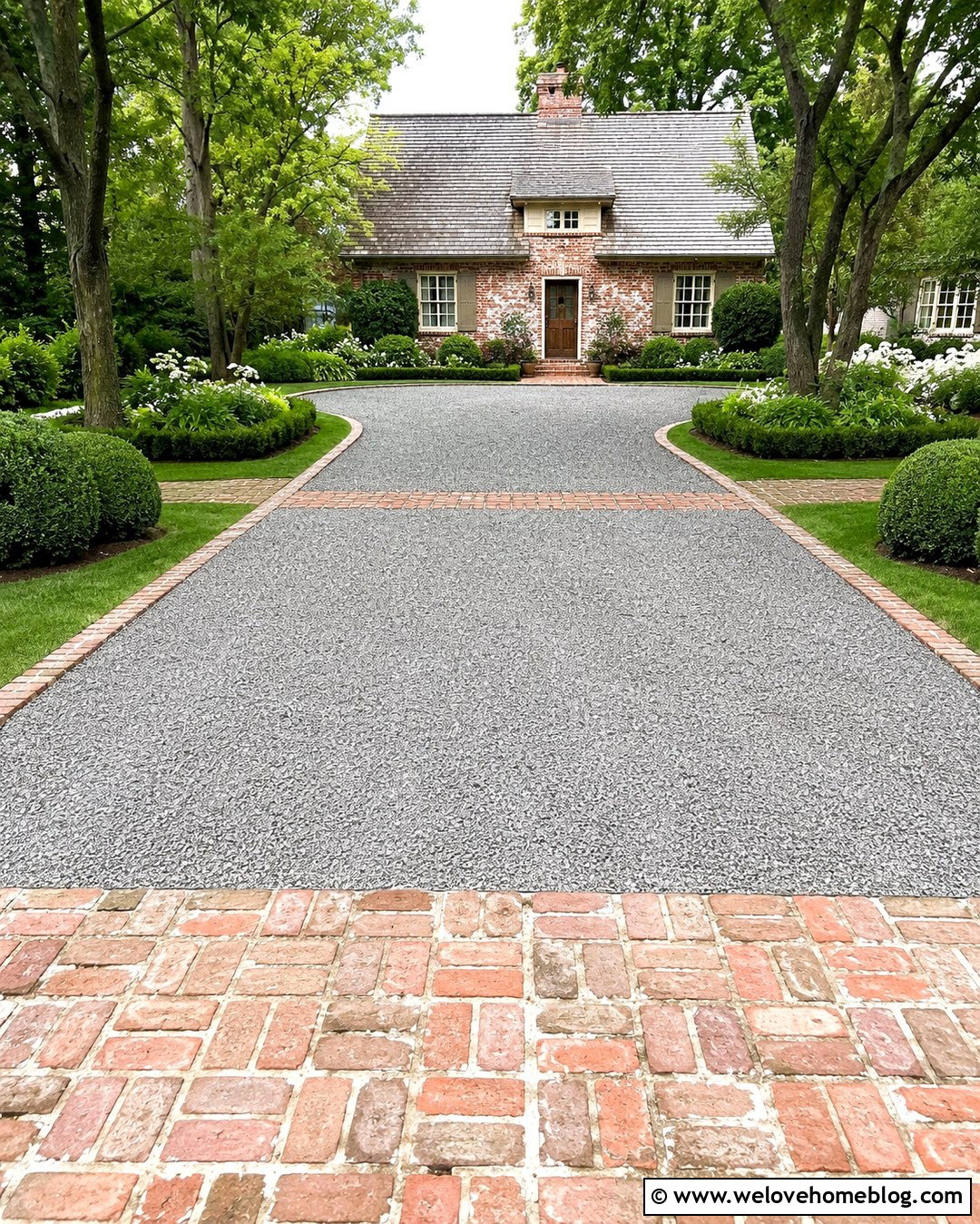
Combining reclaimed brick with gravel delivers cottage character while controlling costs and maintenance. Use compacted gray gravel across the main parking surface, then install aged clay bricks as an entrance apron, perimeter border, and walkway crossing. The brick accents provide structure in places where tires turn or loose stones might migrate. A gently widening layout near the cottage creates convenient parking without making the road entrance appear oversized. Surround the drive with clipped boxwood, flowering perennials, and a small lawn beneath mature shade trees. Mixed brick tones can complement both stone and painted cottage facades, but avoid using too many unrelated colors. Repeating the brick around planting beds will help the entire front yard feel intentional, connected, and carefully finished.
8. Country Cottage Stone Paver Driveway With Thyme Joints
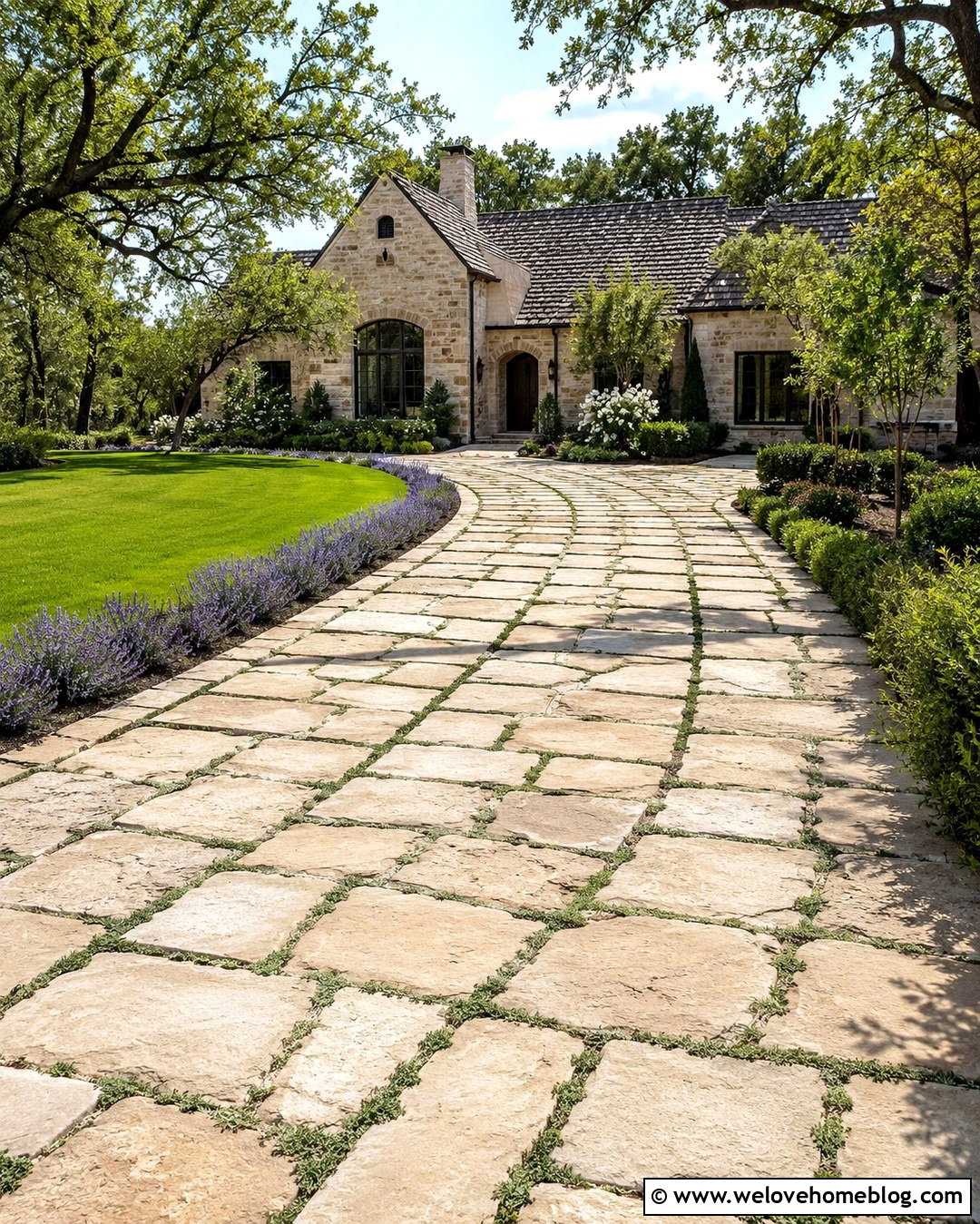
Natural stone pavers separated by narrow planted joints can make a driveway feel like part of an old garden. Select flat limestone, sandstone, or granite pavers rated for vehicle traffic and set them over a strong, professionally prepared base. Creeping thyme placed in protected joints softens the surface and adds small seasonal flowers, although the main tire paths should have tighter joints for durability. A straight or gently curved layout works well beside a low stone cottage. Continue the material into the front walkway to avoid an abrupt transition. Add simple borders of lavender, dwarf evergreens, and white flowering shrubs. This design requires careful installation, but its varied textures and muted coloring create a graceful entrance that improves as the surrounding garden matures.
9. Country Cottage Driveway With A Fieldstone Border
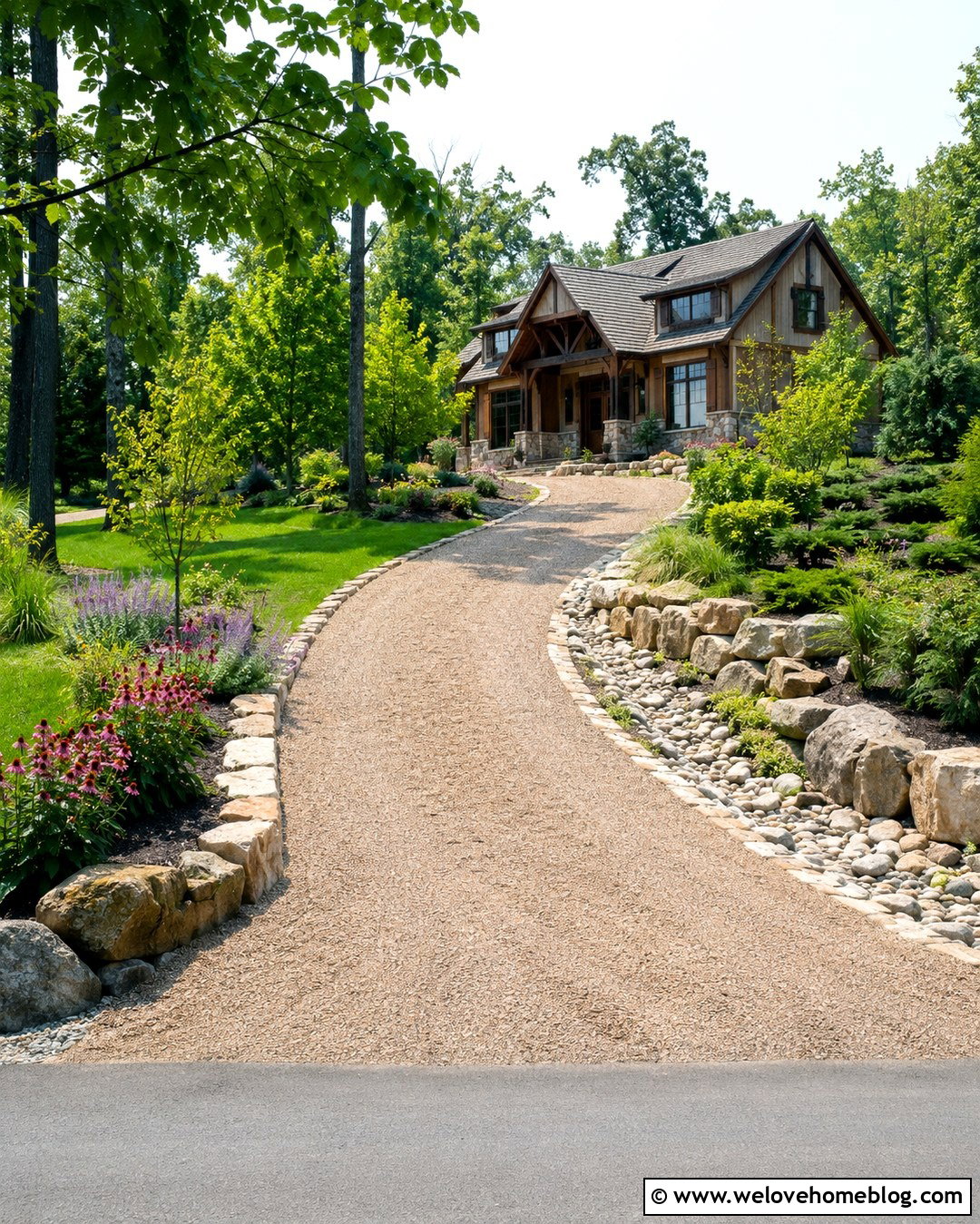
Rough fieldstone edging can turn a basic driveway into a convincing country landscape feature. Pair the border with compacted buff gravel for a rustic look or muted concrete pavers for easier maintenance. Choose stones that relate to the cottage foundation, garden walls, or nearby natural geology. Set them low enough to avoid becoming a hazard when car doors open, but high enough to contain the driveway material. A softly curved layout will highlight the irregular stone shapes. Beyond the border, use sweeps of ornamental grass, coneflowers, salvia, and low spreading evergreens. Fieldstones can also form small drainage channels where the driveway meets sloping ground. Repeating the same material around entrance beds creates a unified, grounded appearance throughout the front yard.
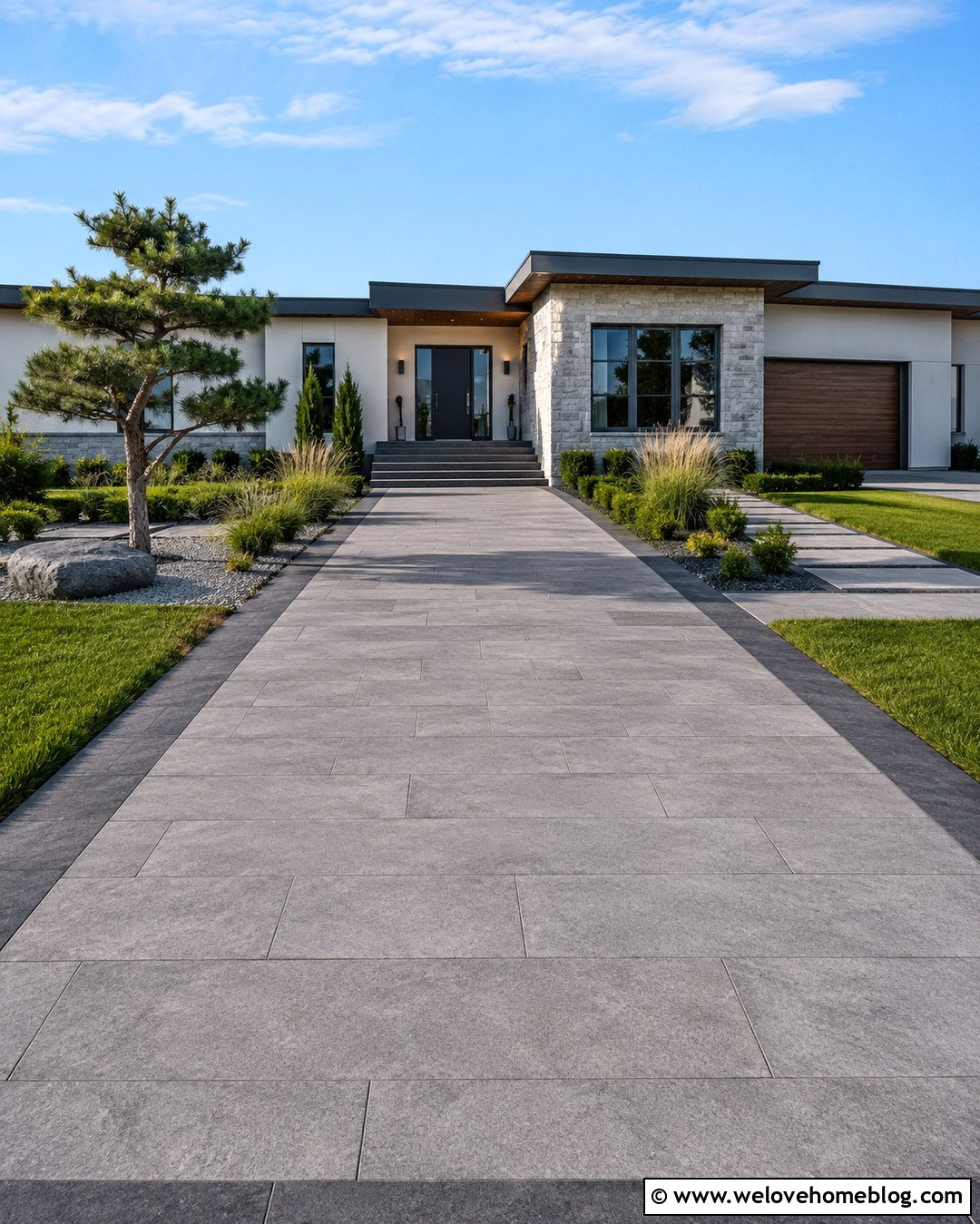
10. Country Cottage Driveway With A Wooden Farm Gate
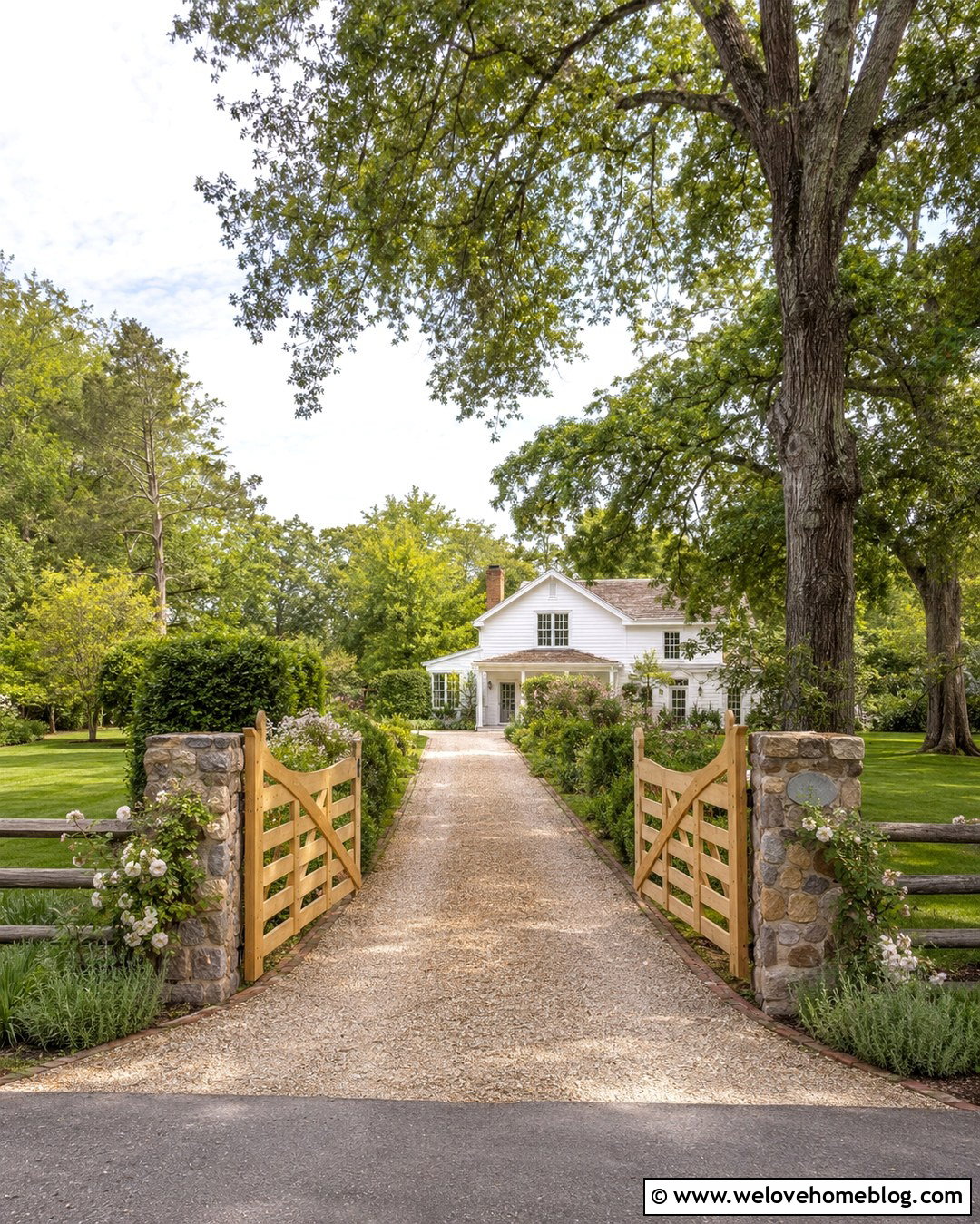
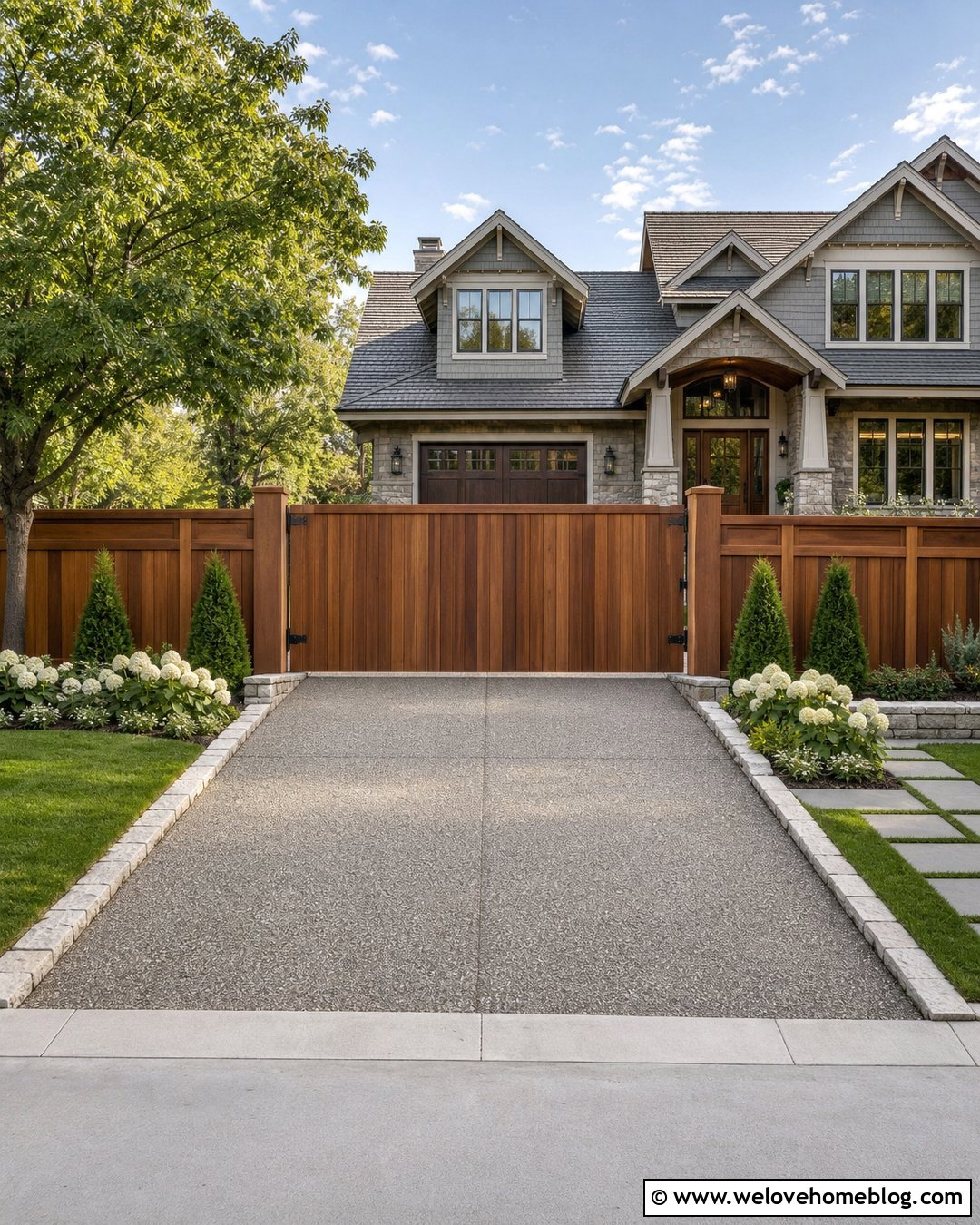
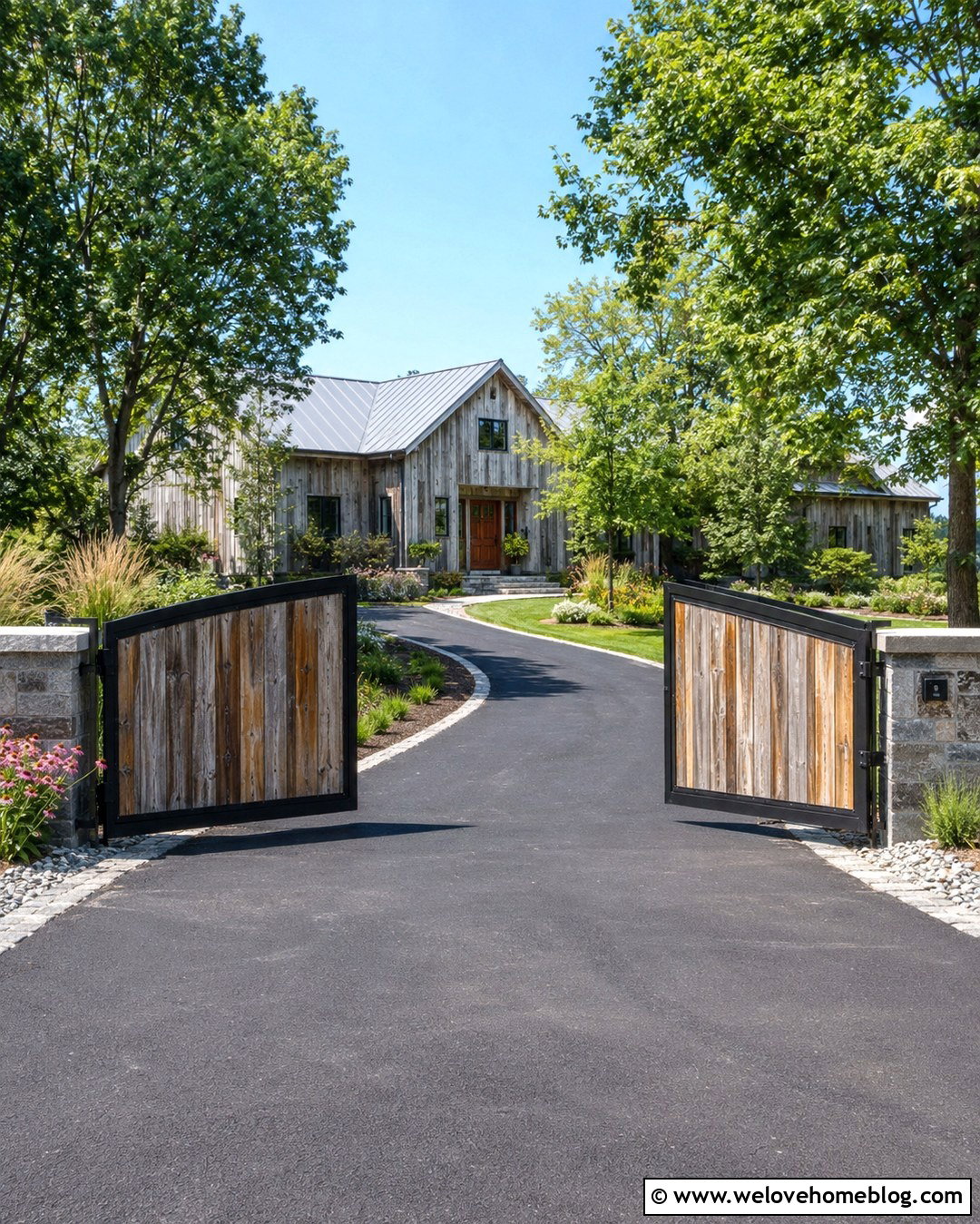
A simple wooden gate creates a clear country entrance without making the property feel overly grand. Place it between low stone pillars at the beginning of a straight crushed-gravel driveway. A natural timber finish will weather gently, while soft gray or white paint can coordinate with cottage trim and fencing. The gate should be wide enough for comfortable vehicle access and positioned far enough from the road to allow safe stopping. Continue split-rail or picket fencing along short sections of the boundary, then soften it with climbing roses and informal hedges. Reclaimed brick edging can hold the gravel in place near the entrance. The complete look feels welcoming and practical, especially when the driveway leads toward a weatherboard cottage surrounded by mature trees and open lawn.
11. Country Cottage Driveway With Stone Pillars And Lanterns
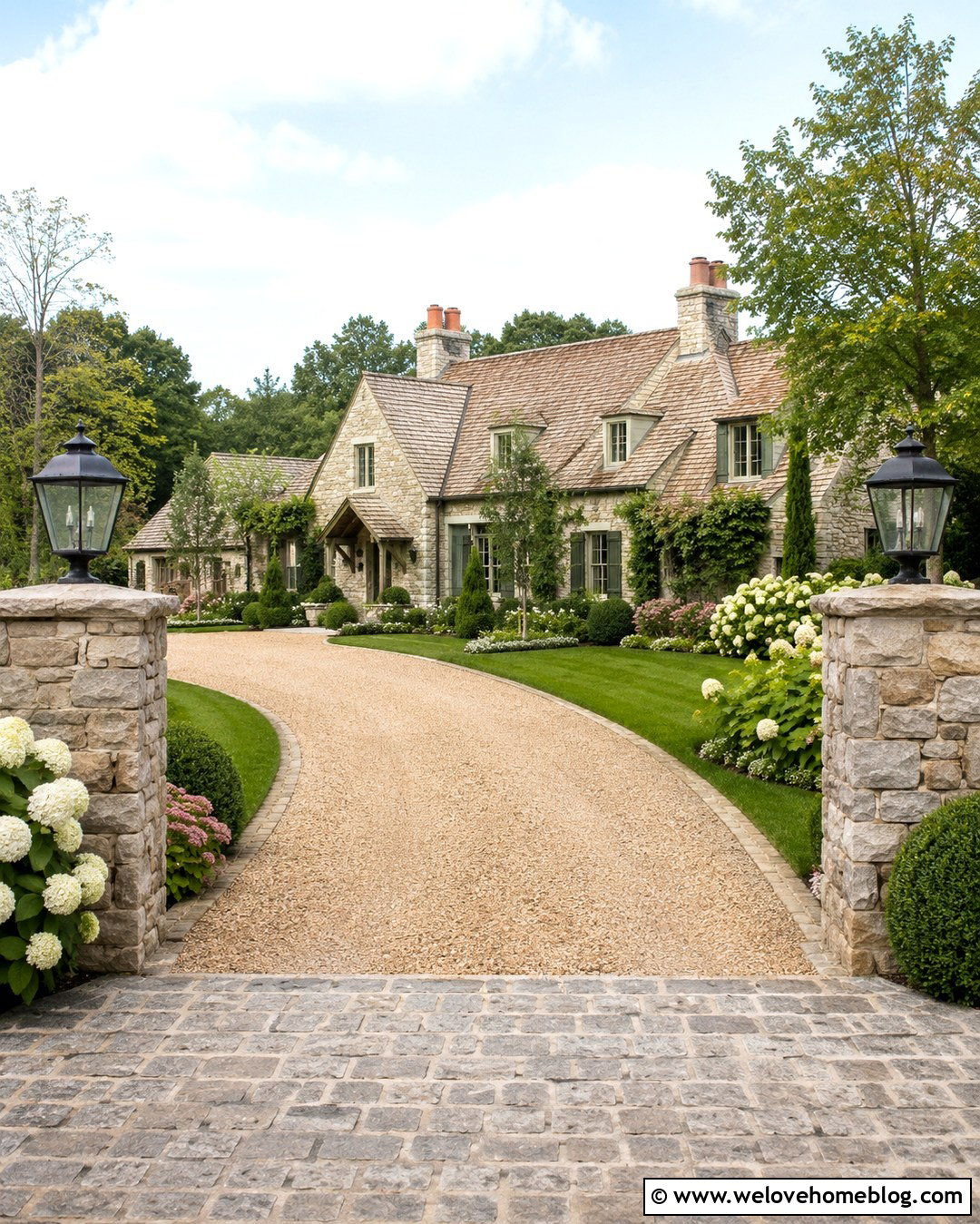
Stone entrance pillars provide structure at the roadside and help a modest driveway feel connected to the cottage architecture. Build them with fieldstone or limestone that matches the home’s foundation, chimney, or garden walls. A warm-toned gravel driveway can curve gently between the pillars before opening near the house. Traditional lantern-style fixtures add character, but their scale should remain proportional to the pillars and cottage. Plant compact hydrangeas, roses, and evergreen shrubs around the bases without hiding visibility or address numbers. A cobblestone apron between the road and gravel creates a durable transition and reduces loose-stone migration. During installation, plan electrical lines, drainage, and gate hardware in advance. The result is polished yet relaxed rather than formal or estate-like.
12. Country Cottage Asphalt Driveway With Cobblestone Edging
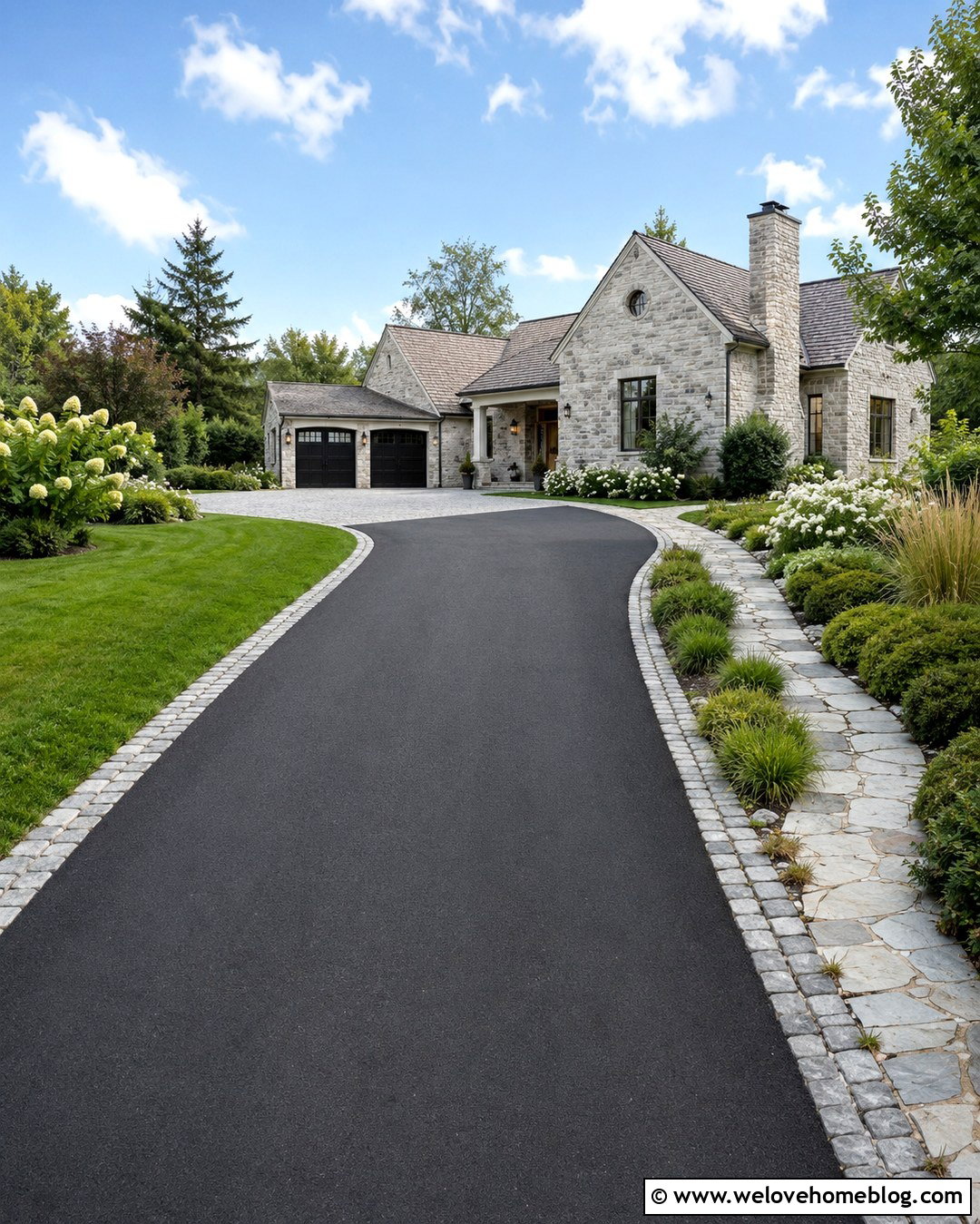
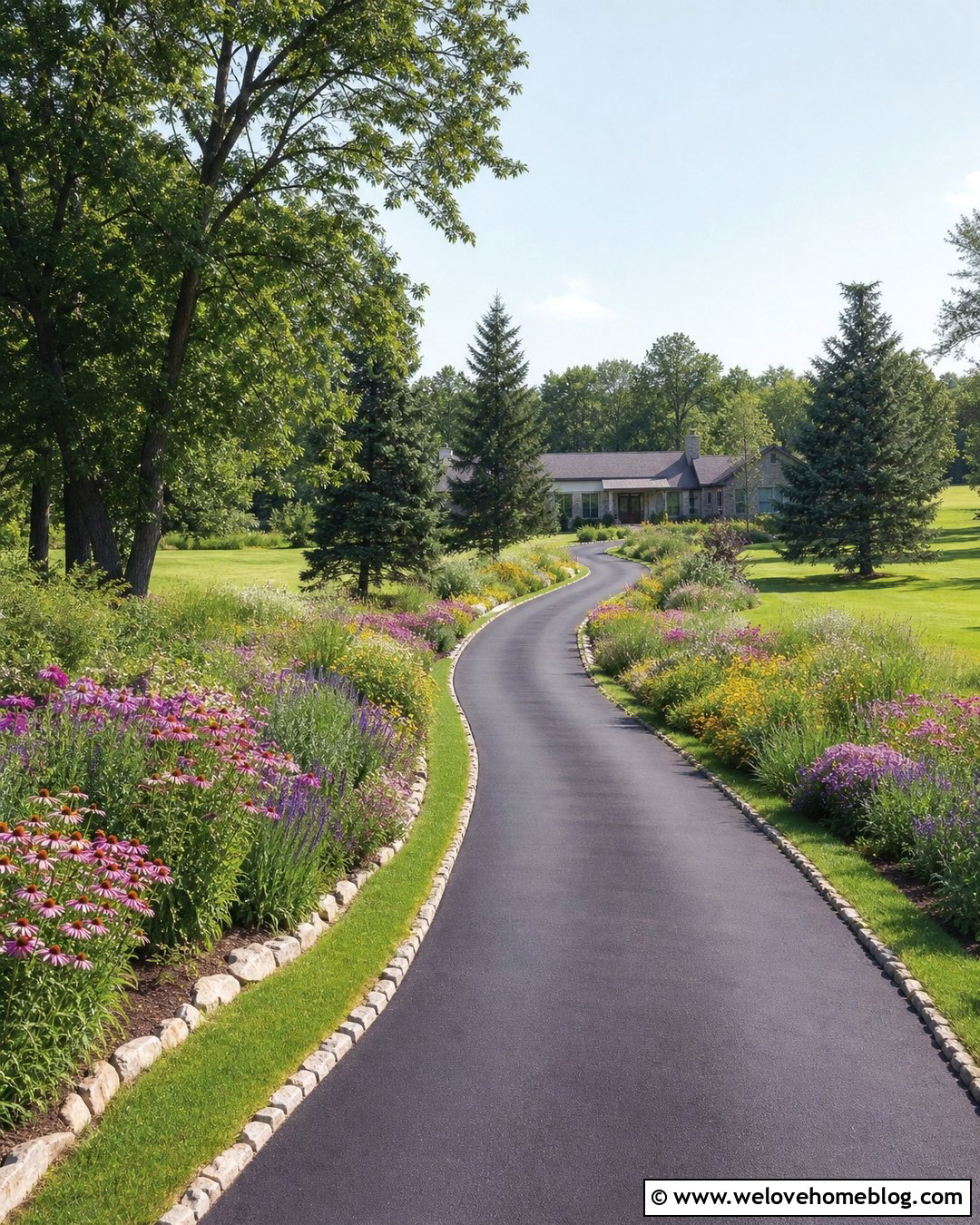
Black asphalt can still complement a country cottage when natural materials and soft landscaping balance its smooth appearance. Choose a narrow, gently curved driveway rather than a large uninterrupted parking pad. Gray granite cobblestone edging adds texture, contains the pavement, and creates an attractive link to stone walls or porch steps. Near the cottage, incorporate a cobblestone parking apron or turning area to break up the dark surface. Layer the borders with hydrangeas, ornamental grasses, white roses, and low evergreen mounds. A separate flagstone walkway keeps pedestrian traffic out of the driveway. Asphalt is practical for snowy or high-traffic locations, while the cobblestone details prevent it from looking too suburban. Careful proportions are the key to preserving a cozy cottage atmosphere.
13. Country Cottage Resin-Bound Gravel Driveway
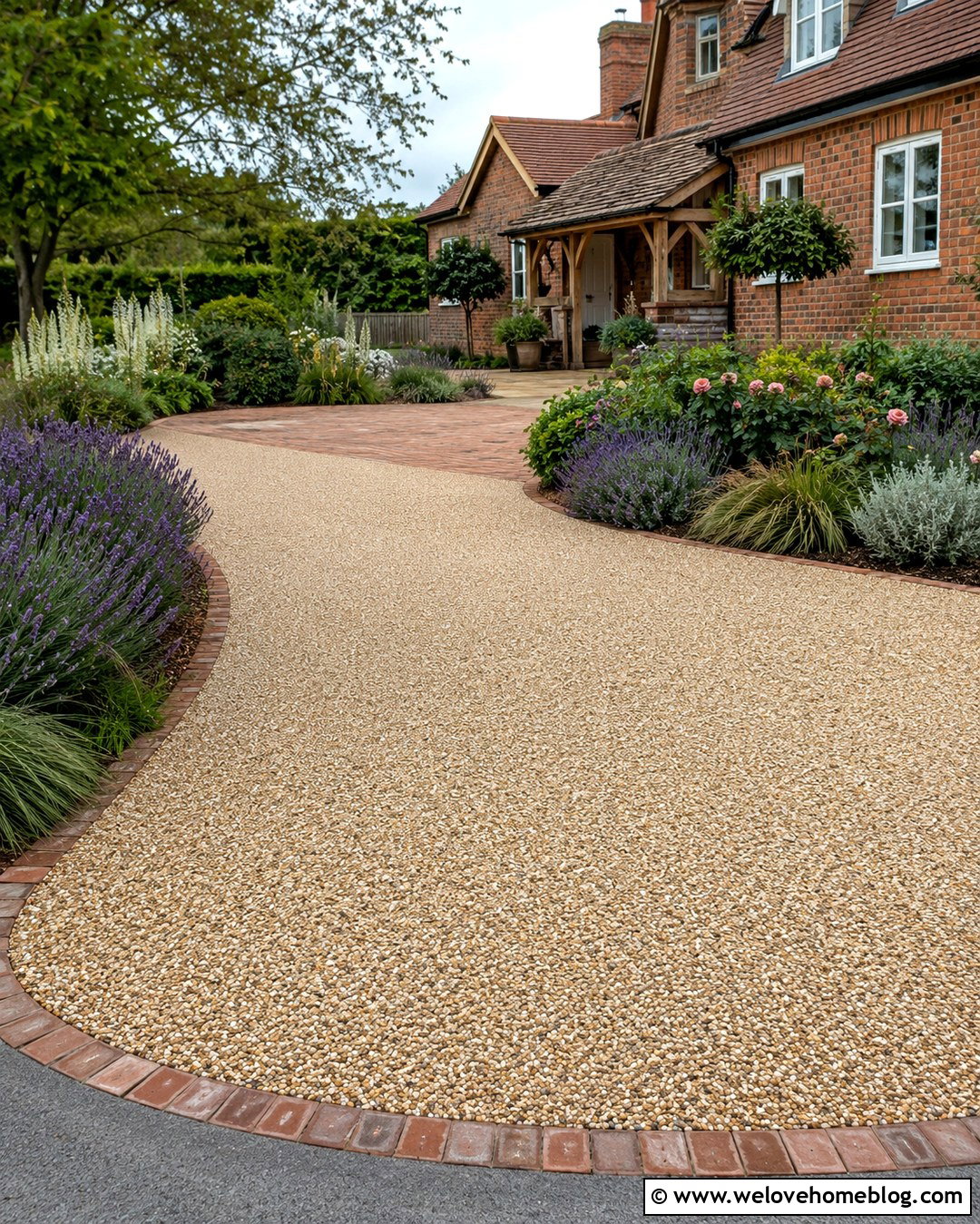
Resin-bound gravel offers the appearance of loose aggregate with a smoother, more stable finish. Select a blend of honey, cream, and light brown stones that complements warm brickwork, natural stone, or timber siding. A curved driveway with flush brick edging will maintain the relaxed cottage character while providing a defined, easy-to-navigate surface. Create wider planting pockets along the curves for lavender, roses, dwarf grasses, and spring bulbs. Near the porch, transition into clay brick pavers or sandstone slabs for additional texture. The base, drainage, aggregate size, and resin system must be appropriate for vehicle use and local conditions. This option works particularly well for homeowners who like the visual softness of gravel but want less movement around paths, entrances, and parking spaces.
14. Country Cottage Driveway With A Picket Fence
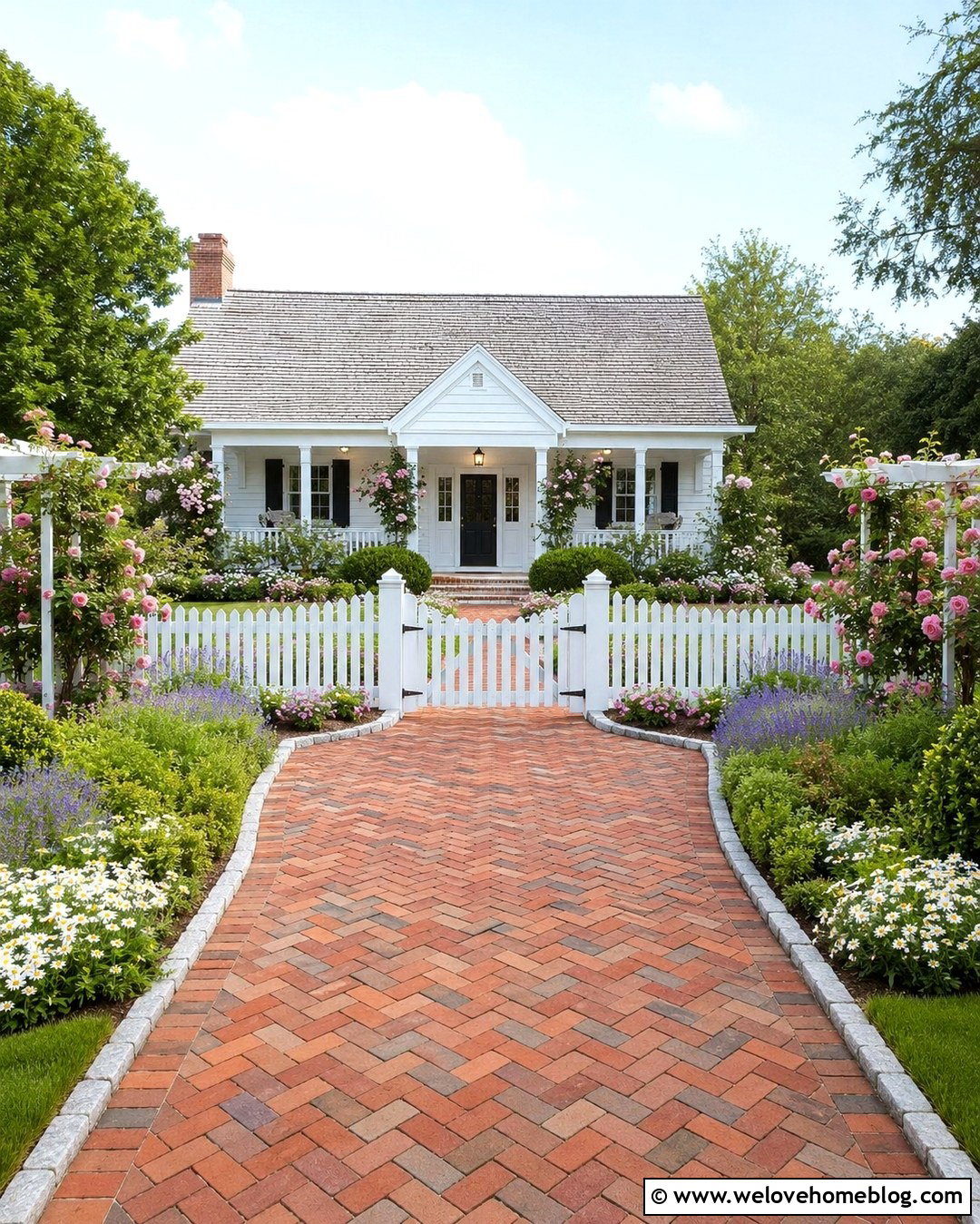
A white or softly painted picket fence can frame a compact cottage driveway while keeping the entrance cheerful and open. Pair it with warm red brick pavers laid in a simple running-bond or herringbone pattern. The driveway can remain straight, but curved flower beds along the fence will reduce its rigid appearance. Plant climbing roses near the gateposts, then add catmint, daisies, geraniums, and clipped boxwood along the lower fence line. Keep mature plant widths in mind so flowers do not block parking or scrape vehicle doors. A matching pedestrian gate and brick path can lead directly to the porch. Repeating the cottage trim color on the fence creates cohesion, while the textured brick gives the entrance enough visual weight to feel established.
15. Country Cottage Driveway With A Rose-Covered Arbor
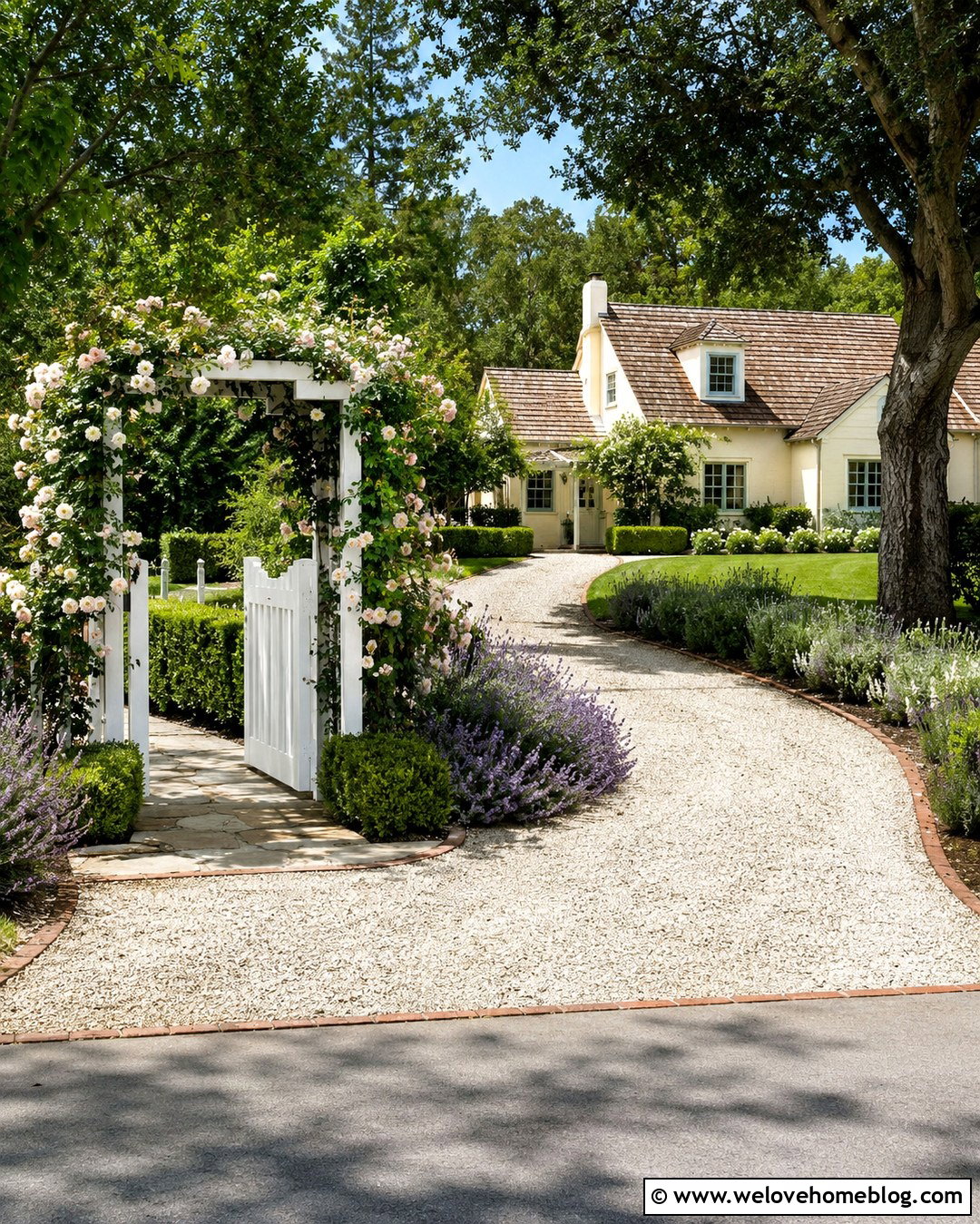
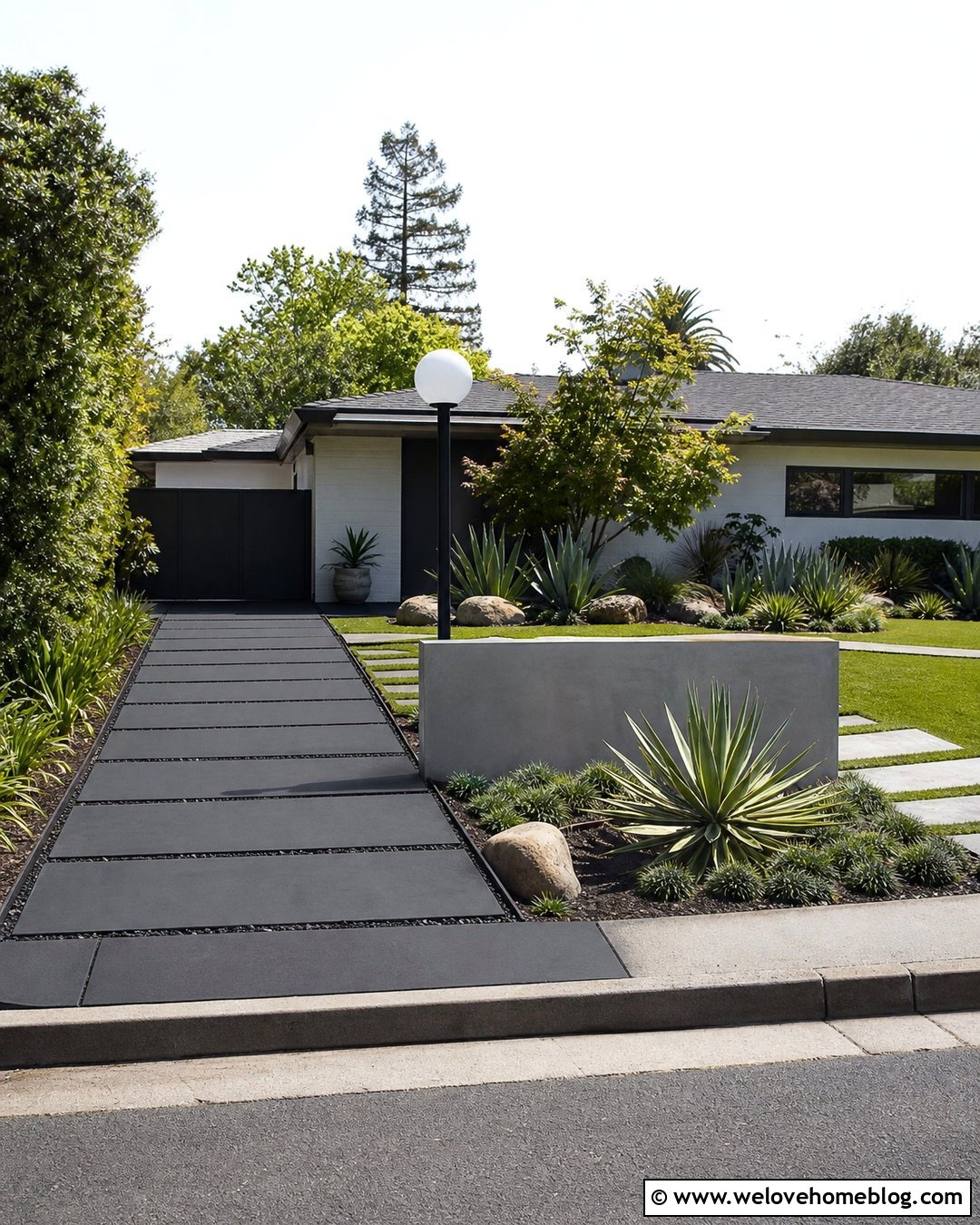
A rose-covered arbor creates a memorable transition from the road into a cottage garden. Position it beside the driveway over a separate pedestrian gate or walkway rather than directly above vehicle traffic. This prevents thorny growth and low branches from interfering with cars. Use pale crushed-limestone gravel for the driveway, finished with reclaimed brick edging and a softly curved approach. Train climbing roses or thornless ramblers over a sturdy timber arbor, with lavender and salvia continuing along the border. A low hedge can guide the eye toward the front door without concealing the house. The arbor should echo the cottage’s trim color or natural wood details. Together, the gravel, brick, flowers, and framed walkway create a layered entrance with authentic country charm.
16. Country Cottage Driveway With A Low Stone Wall
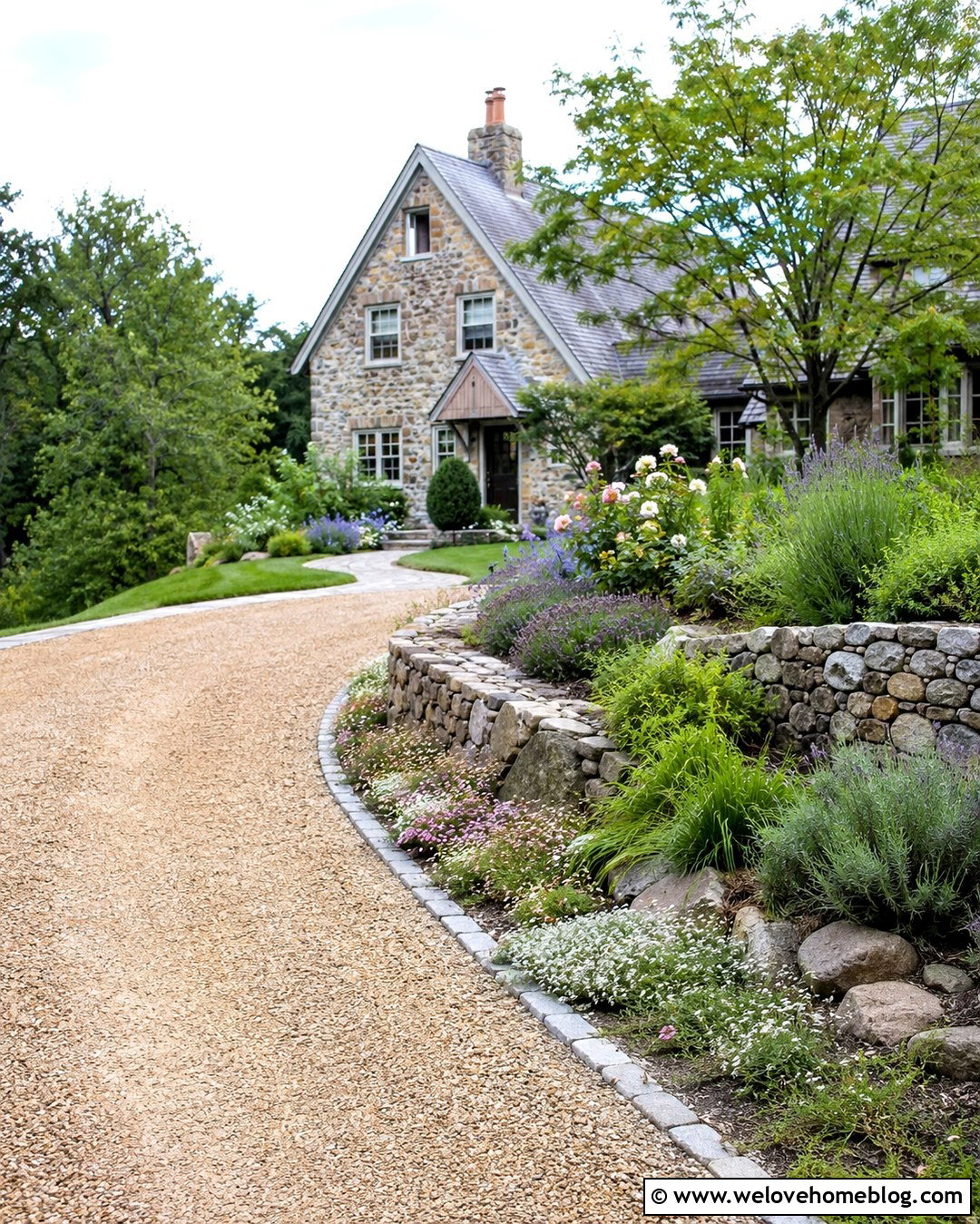
A low dry-stacked stone wall gives a sloping or raised driveway a strong sense of place. Pair the wall with tan crushed gravel or irregular stone pavers so the materials feel naturally related. On the lower side, use the wall to retain a planted bank filled with creeping thyme, sedum, lavender, and small ornamental grasses. Keep the top open or add widely spaced cottage roses for a less formal appearance. A curved driveway can follow the contours of the yard, reducing the need for steep grades or tall retaining structures. Install appropriate drainage behind any retaining wall to prevent water pressure and erosion. Using stone that matches the cottage facade or chimney makes the driveway appear original to the property rather than added as a separate feature.
17. Country Cottage Driveway With Hydrangea Borders
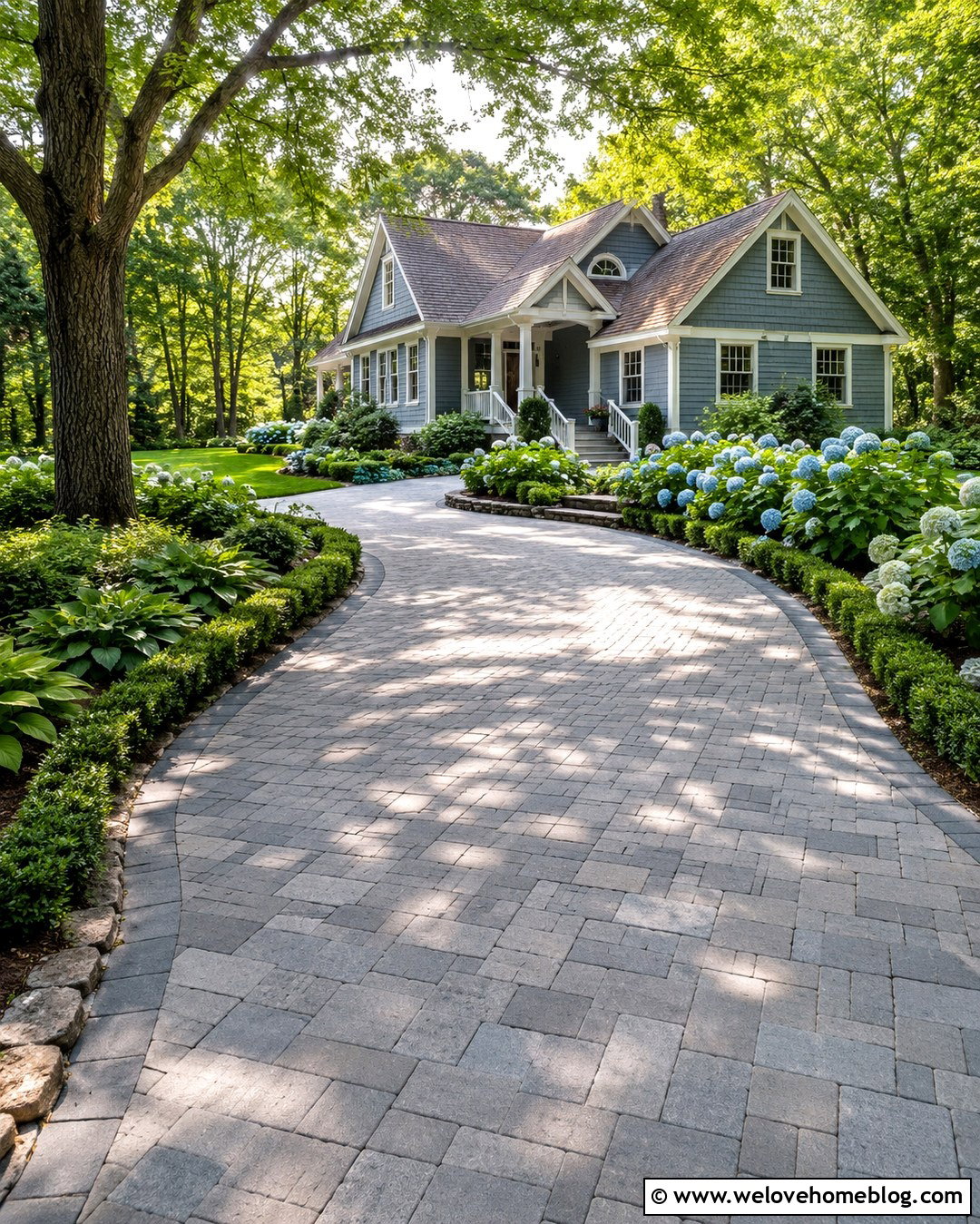
Large hydrangea borders can soften a wide driveway and bring generous seasonal color to a shaded cottage entrance. Use gray cobblestone-style concrete pavers for a durable surface with an aged appearance. A broad curve near the house creates extra maneuvering room while allowing deeper planting beds around the edges. Place hydrangeas behind low boxwood or stone borders so mature stems remain clear of vehicles. Add ferns, hostas, and woodland ground covers beneath nearby trees to continue the lush effect. Select hydrangeas suited to the local climate, sunlight, and available space rather than relying on pruning to control oversized plants. The cool gray driveway, white or blue flowers, and green foliage work especially well with a painted clapboard cottage or weathered shingle exterior.
18. Country Cottage Driveway With A Cobblestone Apron
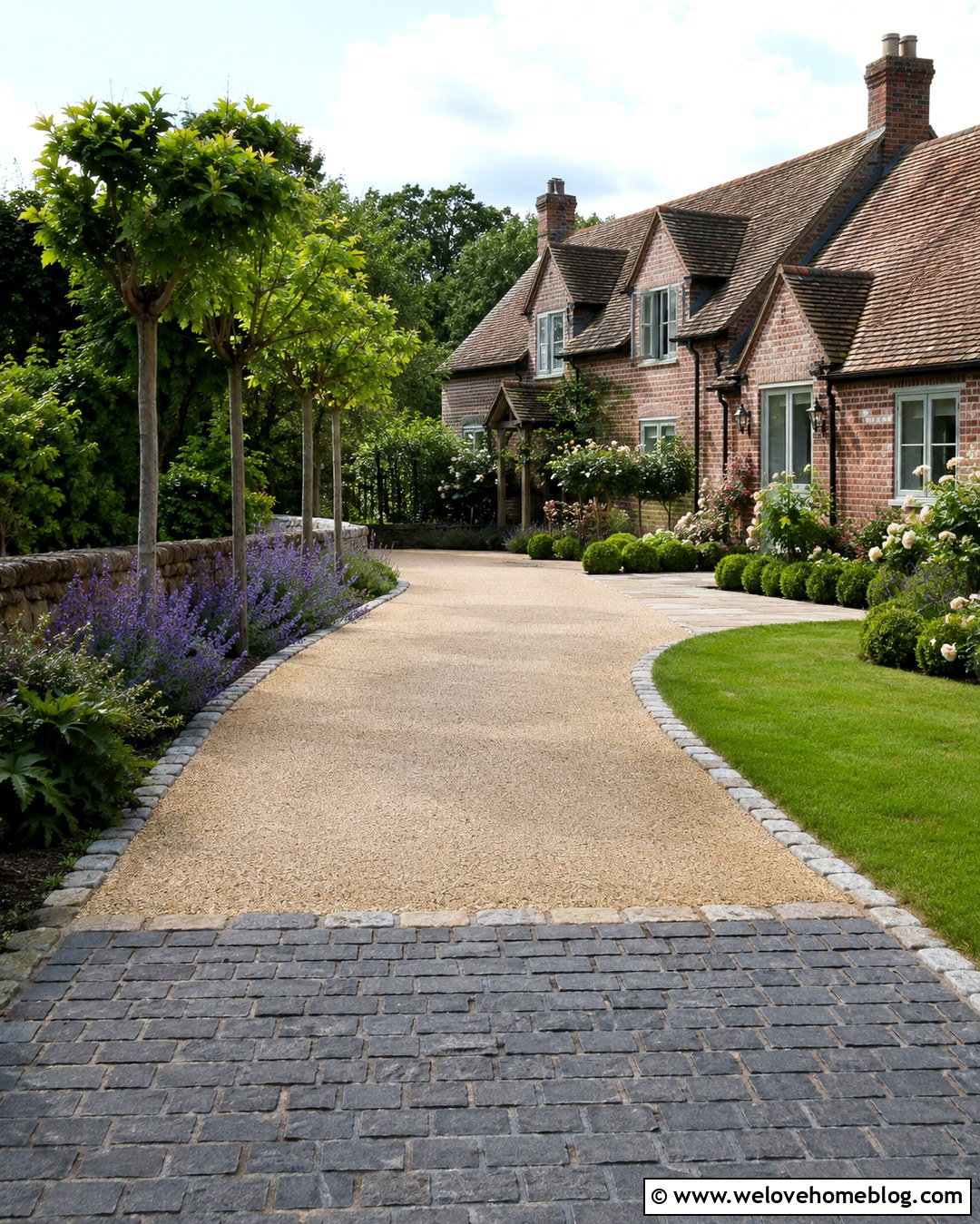
A cobblestone apron adds character exactly where the driveway meets the street. It also creates a strong visual transition between public pavement and the softer materials closer to the cottage. Combine a charcoal and gray cobblestone apron with a compacted beige gravel driveway. Repeat the cobblestones as narrow edging and around a small parking court near the house. At the entrance, low ornamental trees and curved beds filled with lavender, roses, and evergreen shrubs can frame the approach without restricting sightlines. The apron should be deep enough to read as an intentional pattern rather than a thin decorative strip. Because entrance areas receive frequent turning and braking pressure, a strong base and restrained edge are important for maintaining an even, attractive surface.
19. Country Cottage Driveway With Permeable Pavers
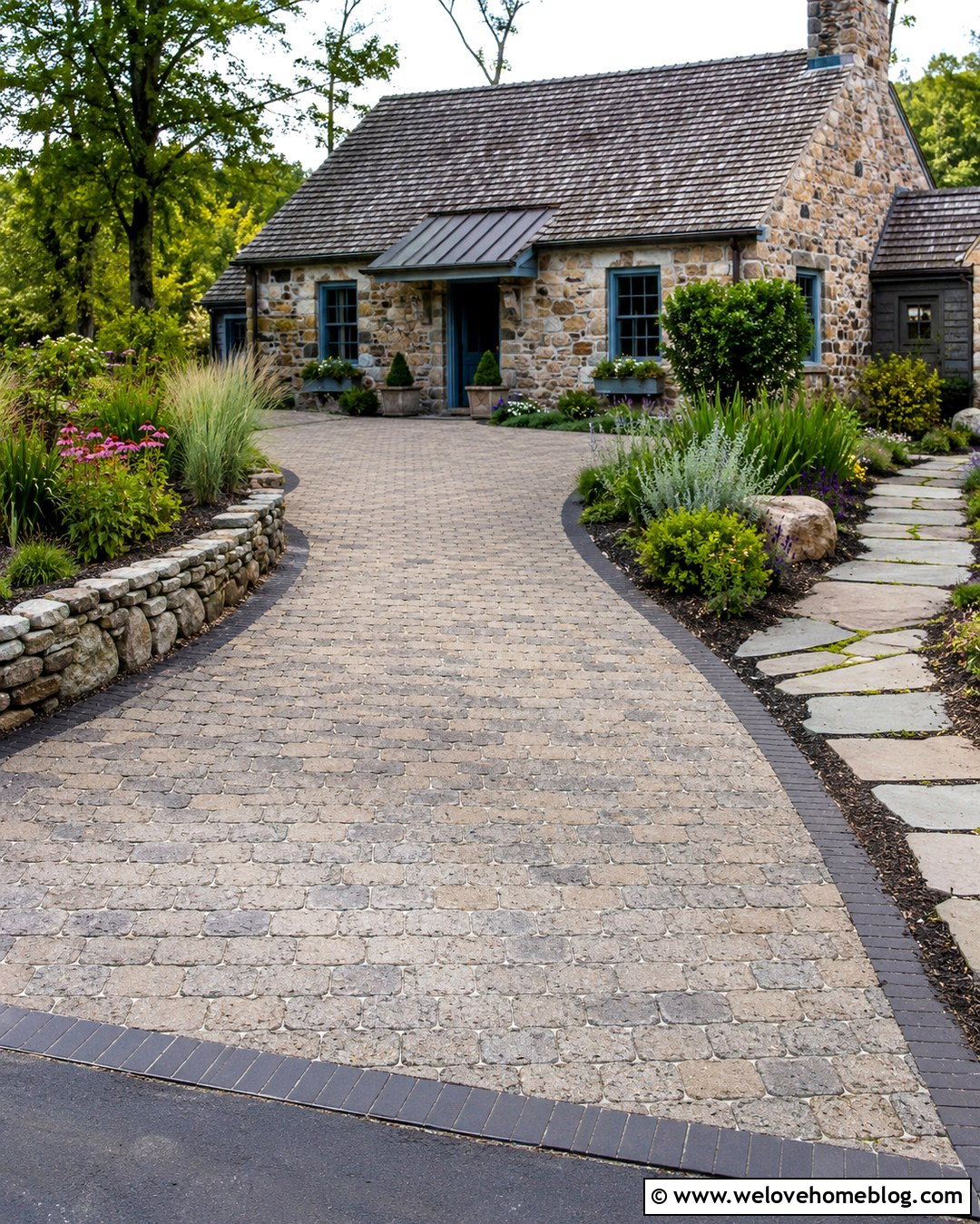
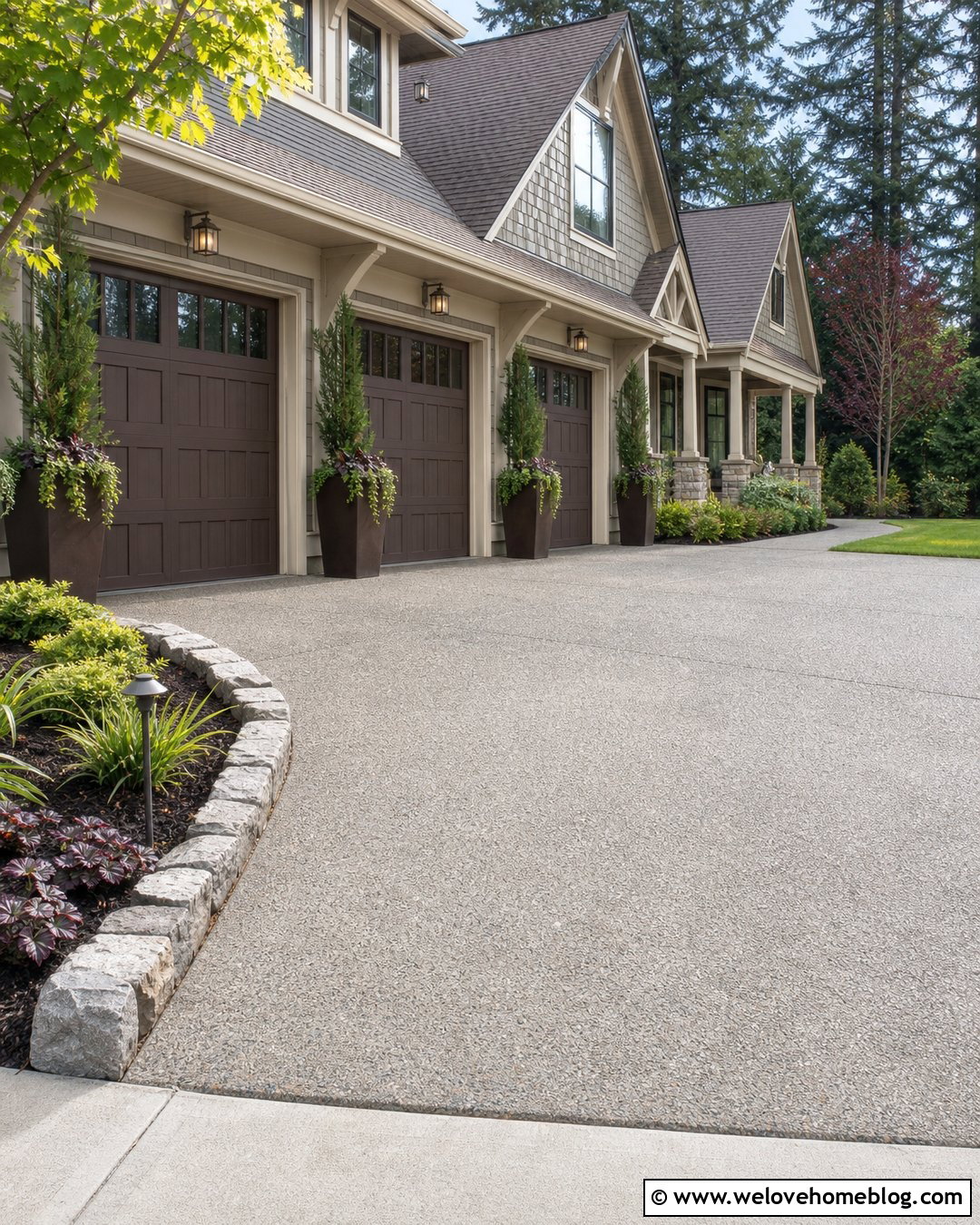
Permeable pavers provide a practical surface while allowing water to move through properly designed joints and base layers. For a country cottage look, choose tumbled concrete pavers in blended gray and sandstone tones rather than sharply finished modern blocks. Lay them across a gently curved driveway with a darker paver border to clarify the shape. Narrow planting beds can include rain-tolerant grasses, iris, coneflowers, and compact shrubs where runoff naturally collects. A flagstone walkway and low fieldstone wall will add traditional texture near the porch. The entire system must be designed for local soil, rainfall, and vehicle loads. When correctly installed, permeable paving can reduce standing water while delivering the comfortable, settled appearance expected from a cottage garden entrance.
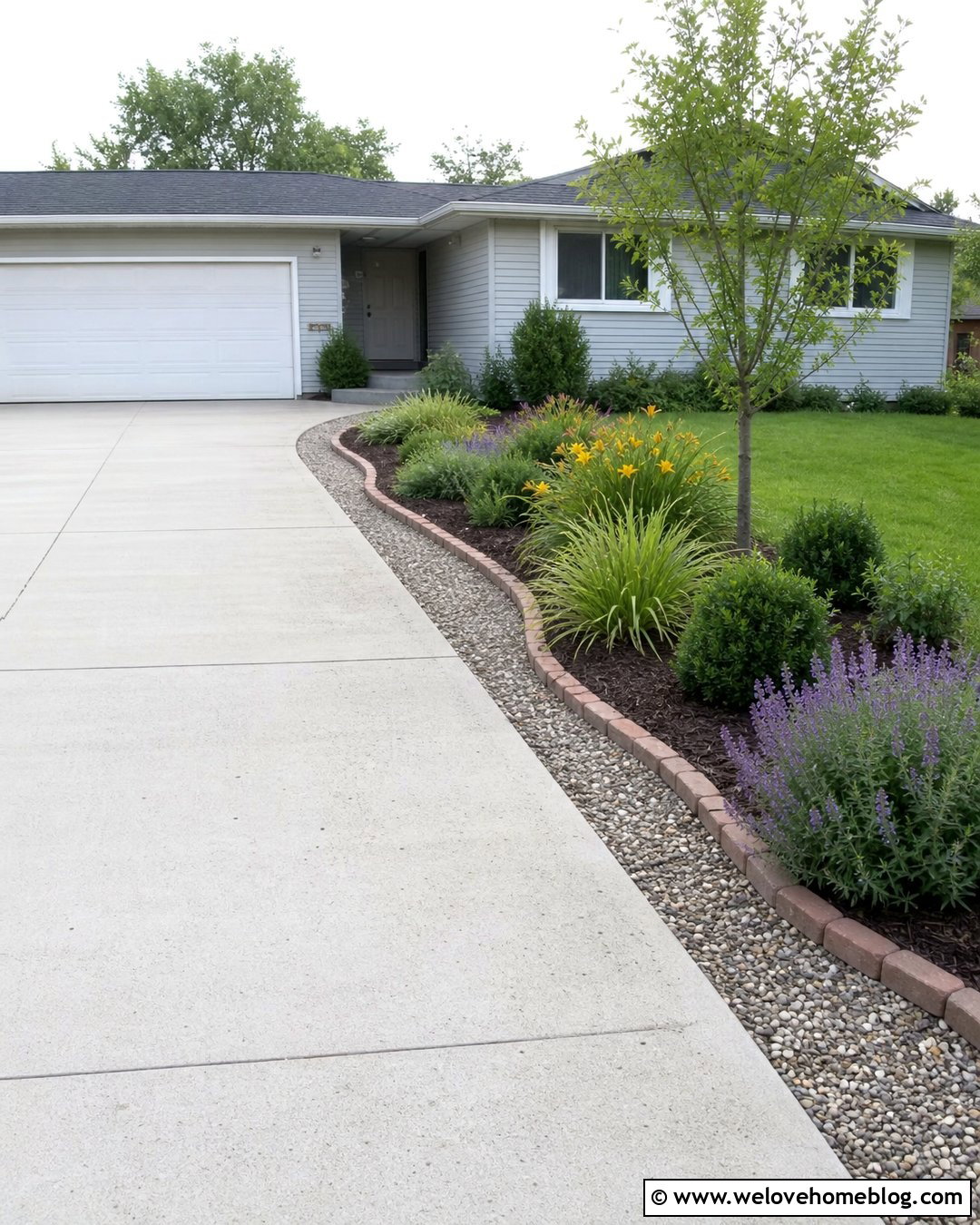
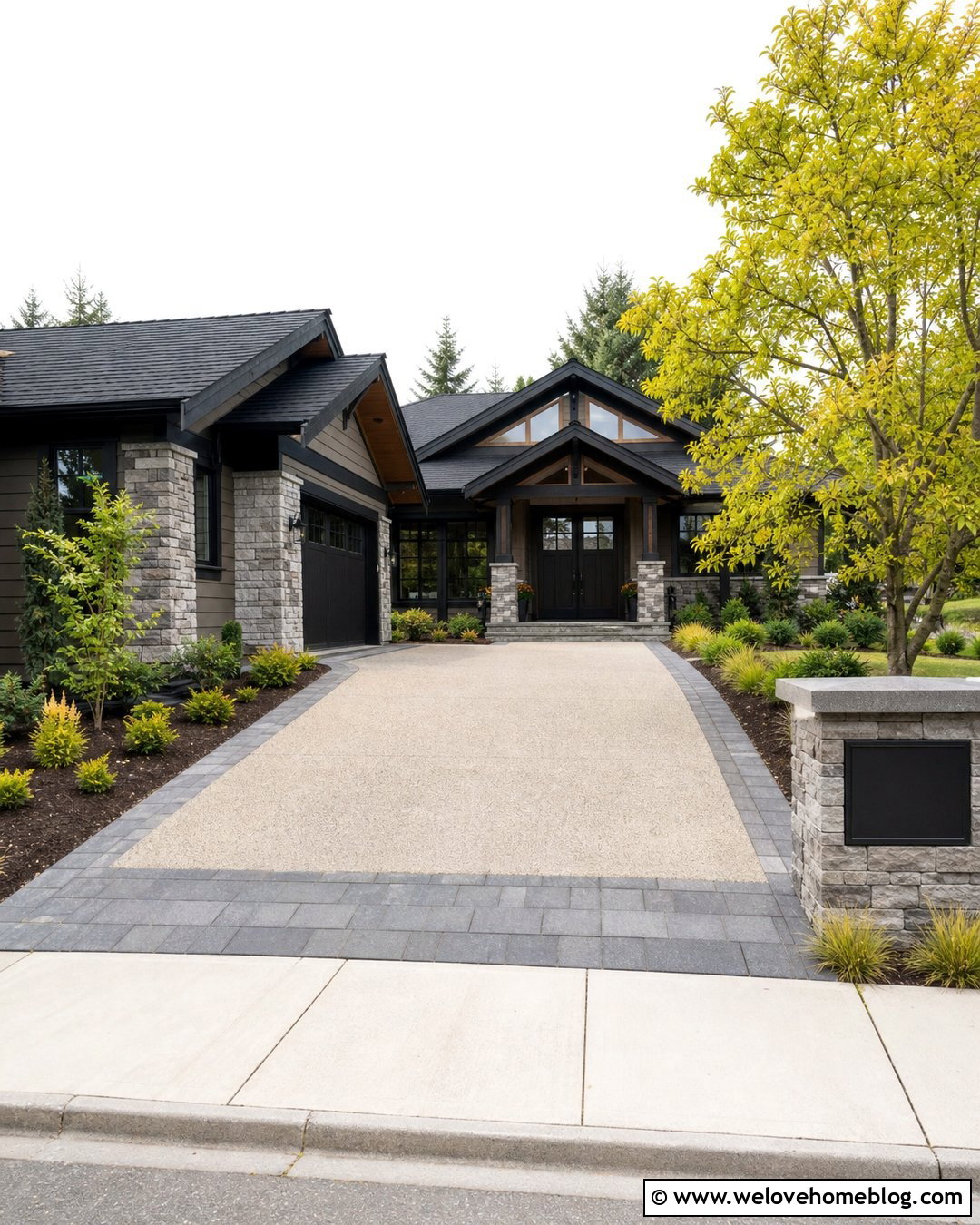
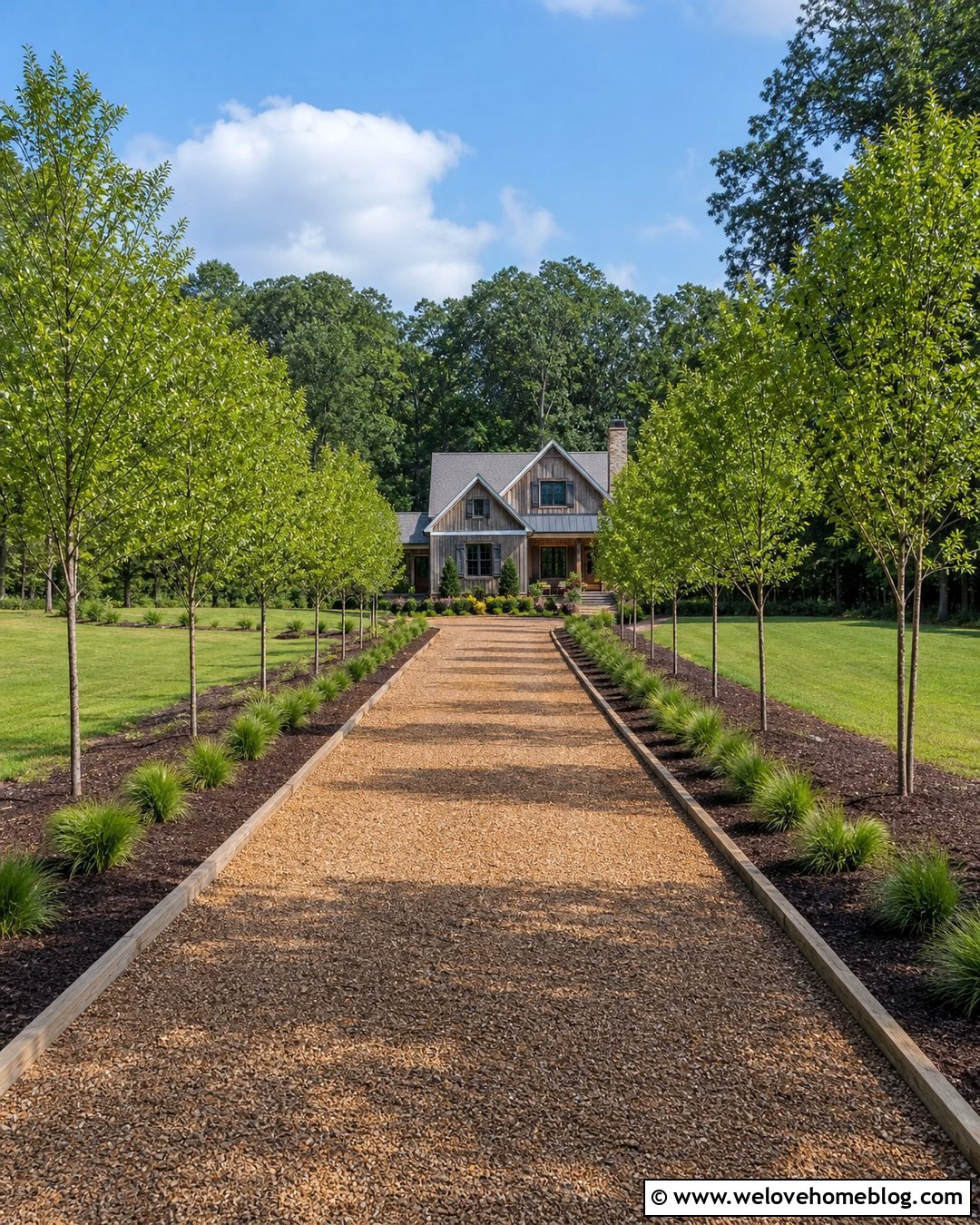
20. Country Cottage Driveway With An Apple Tree Entrance
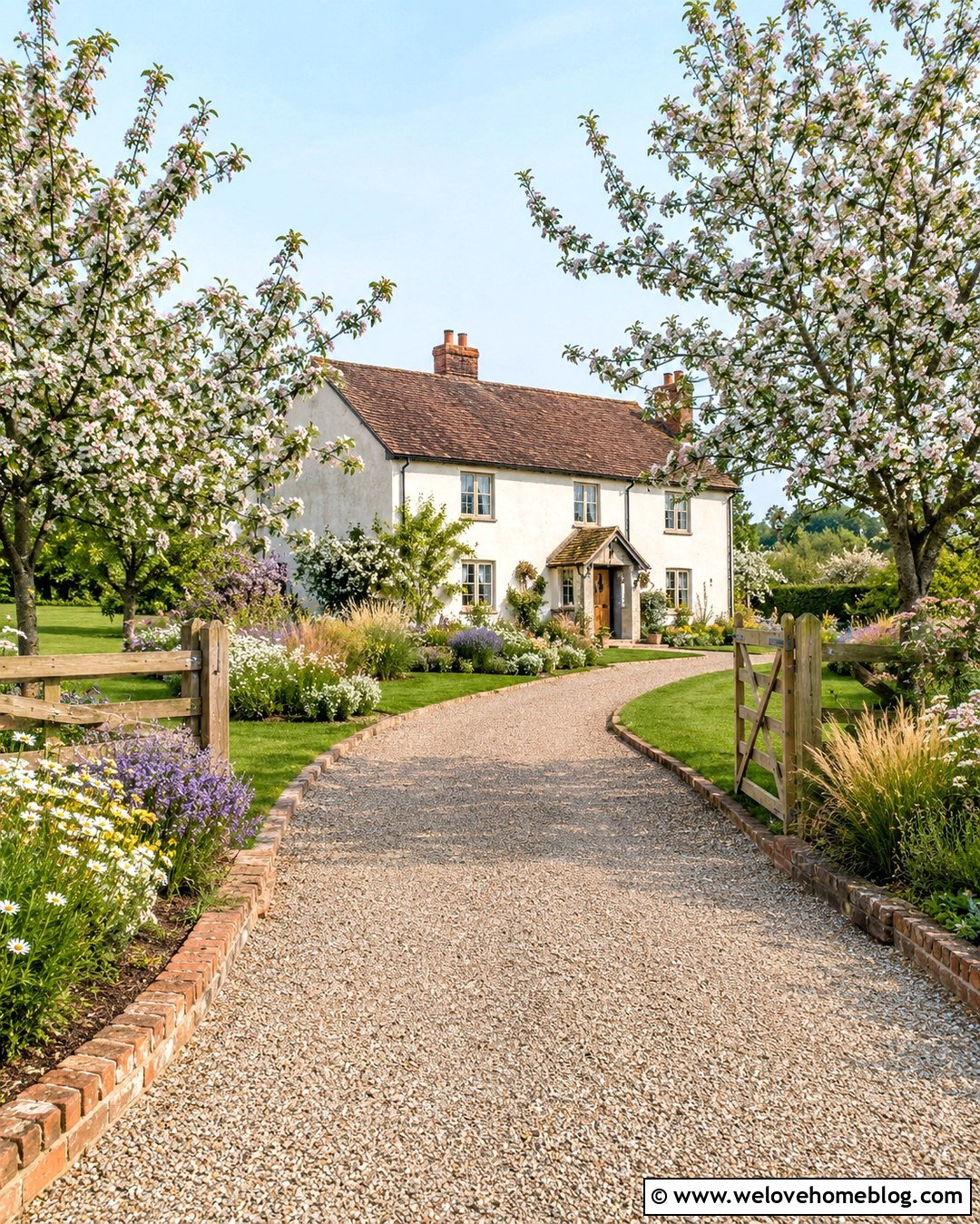
A pair of small apple trees can frame a driveway with seasonal blossoms, fruit, and an unmistakable country feeling. Set them beyond clear visibility areas at the entrance to a warm gray gravel driveway with low brick edging. The driveway can sweep gently toward a cream-painted cottage, passing through meadow-like borders of daisies, nepeta, yarrow, and ornamental grasses. Allow enough distance between the trees and driving surface for mature branches, fallen fruit, and routine maintenance. A simple timber farm gate or low split-rail fence can reinforce the rural character without blocking the view of the house. Repeat additional fruit trees deeper in the yard for balance. This complete design feels productive and decorative, connecting the driveway to the wider landscape through every season.
Conclusion:
The most successful **20 Country Cottage Driveway Ideas** balance romantic character with dependable construction and comfortable vehicle access. Start by selecting a surface that suits your climate, maintenance preferences, budget, and home exterior. Gravel feels relaxed, while brick, cobblestone, resin-bound aggregate, asphalt, and permeable pavers offer different levels of stability and upkeep. Next, use curves, defined borders, layered planting, and traditional entrance details to connect the driveway with the surrounding garden. Proper base preparation, drainage, visibility, and mature plant sizes should guide every decision. Whether you choose a simple gravel lane or an elaborate circular approach, coordinated materials and thoughtful landscaping will create an entrance that feels naturally connected to your country cottage.

Related posts:

Leave a Reply