
The space beside a driveway can do much more than separate pavement from lawn. With the right surface, edging, plants, and layout, it can guide visitors toward the house, soften hard lines, and improve curb appeal throughout the year. These 20 Driveway Side Garden Ideas include practical designs for narrow strips, sloped yards, shaded areas, modern homes, cottage settings, and low-maintenance landscapes. Each look treats the driveway and garden as one connected design rather than two unrelated features. Choose plants suited to your local climate, sunlight, drainage, and winter conditions. Keep mature growth clear of vehicle doors and sightlines. Whether you prefer clipped hedges or loose native flowers, you will find a complete approach in these 20 Driveway Side Garden Ideas. ()

1. Narrow Driveway Side Garden With Lavender
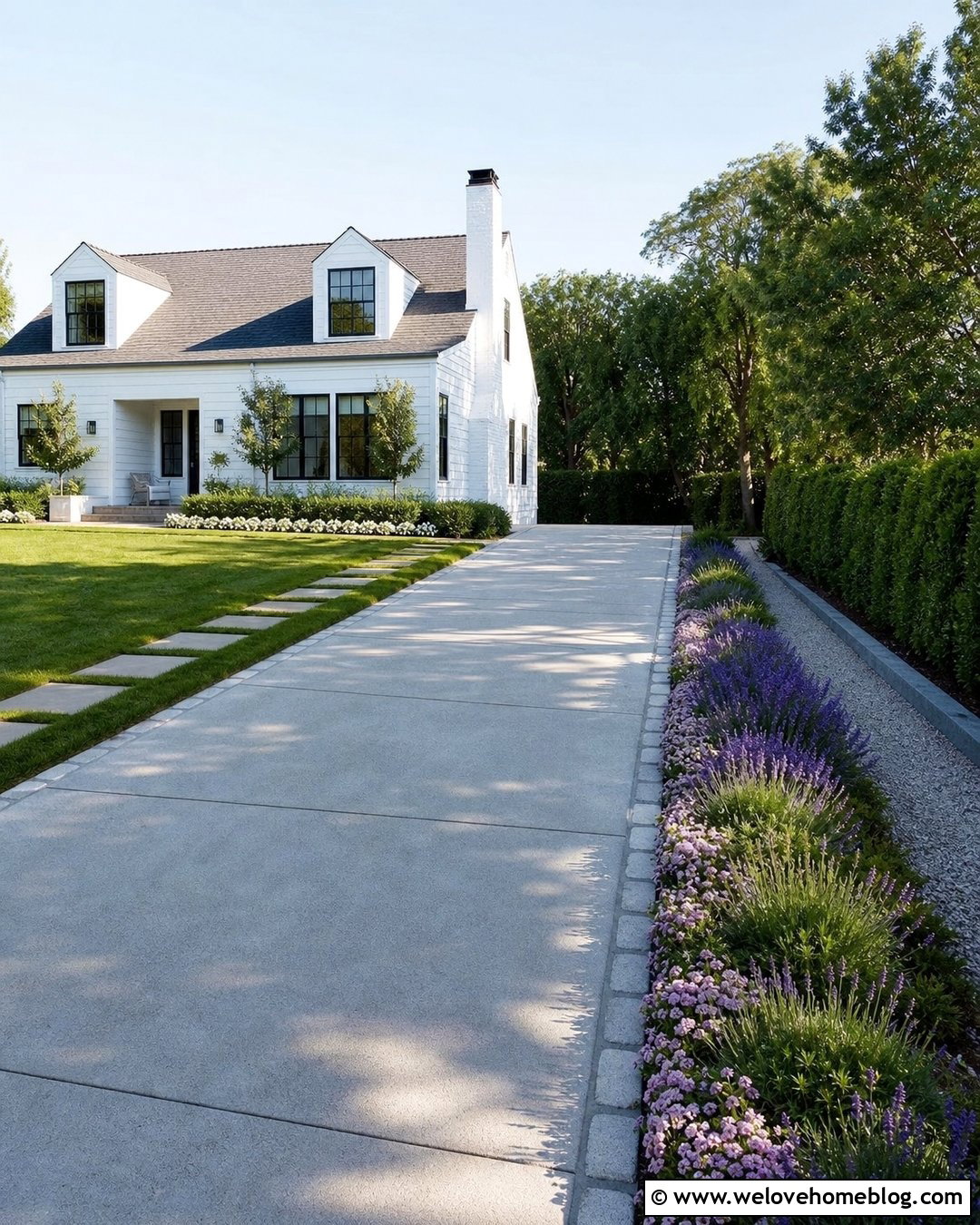
A narrow planting strip can feel generous when its materials and colors are kept simple. Pair a straight, light gray concrete driveway with a slim cobblestone edge and repeated clusters of lavender. The purple flowers soften the pavement without spreading into the driving area, while the silvery foliage stays attractive beyond the main blooming season. Add creeping thyme between occasional stepping stones to create a practical route for pruning. A clipped lawn on the outer side gives the composition a clean finish. This complete look works especially well with a Cape Cod, cottage, or white farmhouse exterior. Leave a small gravel gap beside the pavement to reduce soil spill and give plants room to spread without covering the driveway edge.
2. Formal Driveway Side Garden With Boxwood
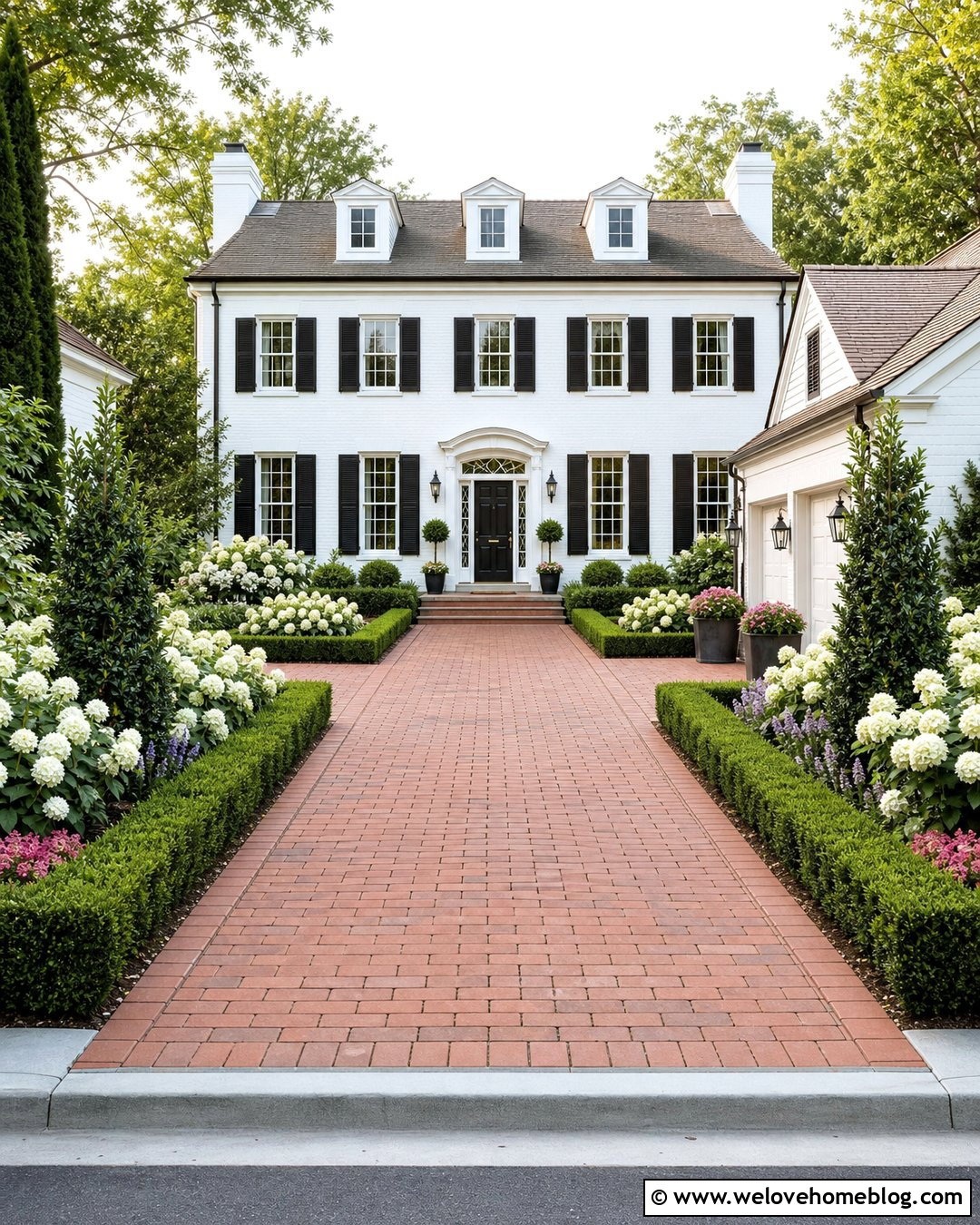
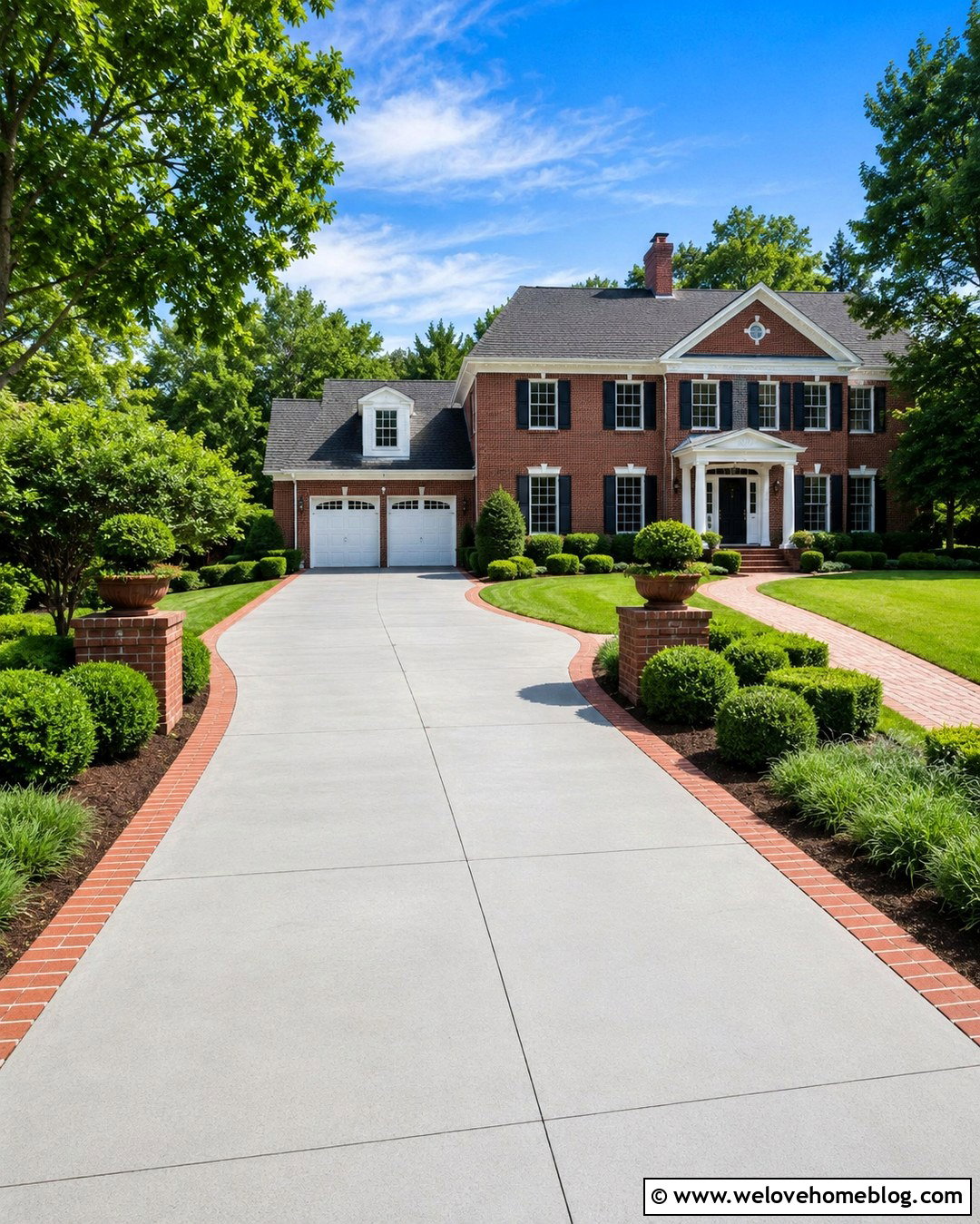
Do you want the driveway to look polished in every season? Frame a red brick driveway with low boxwood hedges, neatly defined planting beds, and matching brick edging. The strong geometry suits a colonial or Georgian-style home because it reinforces the symmetry of the facade. Behind the hedge, plant small groups of white hydrangeas, upright hollies, or seasonal flowers for controlled color. Keep the shrubs low enough to preserve visibility near the street and garage. A straight bluestone walkway can cross the garden and connect the driveway with the front door. Matching planters near the garage complete the balanced layout. Regular trimming is needed, but the crisp lines make the entire front yard feel organized, established, and intentionally designed.
3. Native Driveway Side Garden With Wildflowers
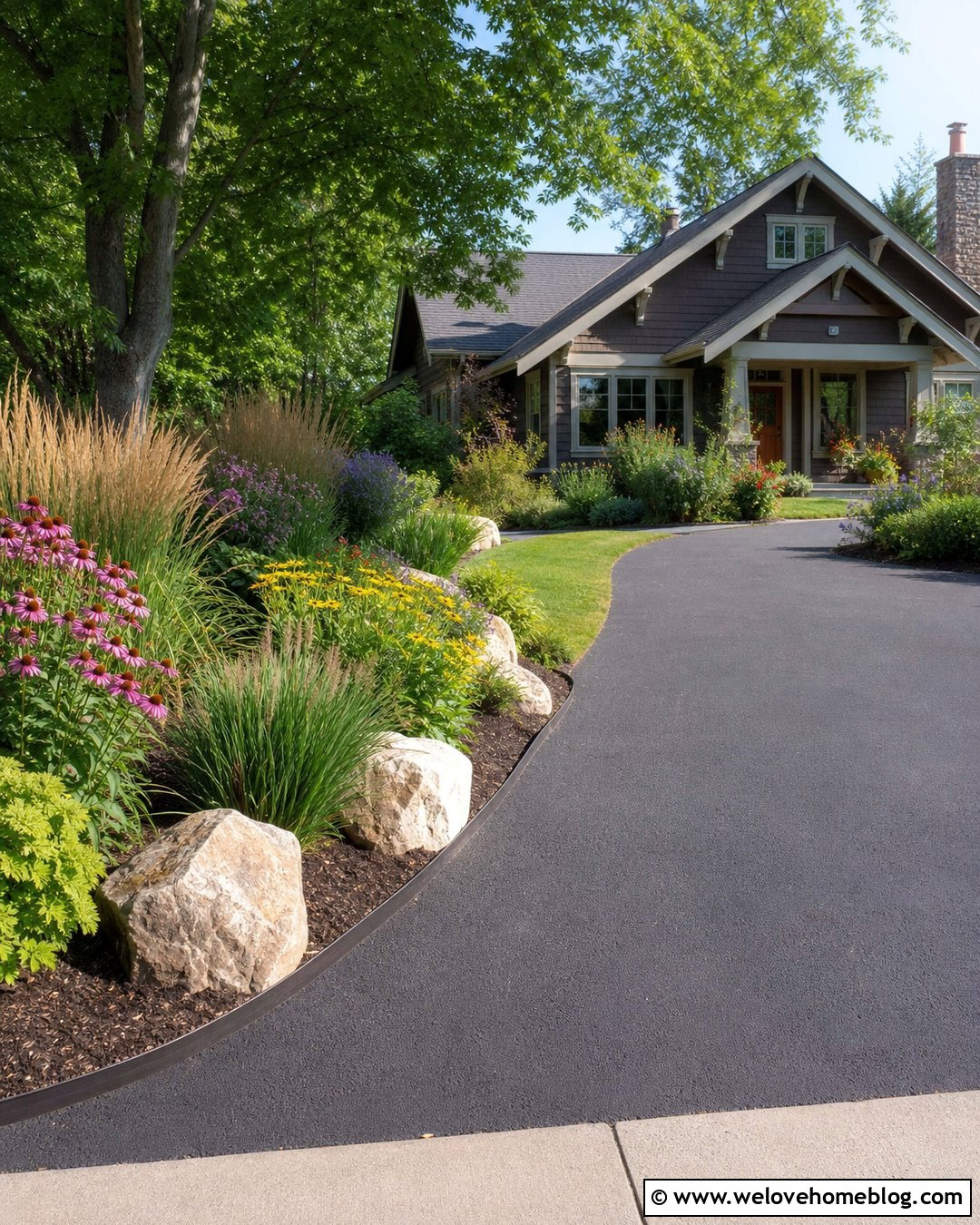
A native garden can turn an ordinary black asphalt driveway into a colorful, wildlife-friendly entrance. Use a curved bed rather than a perfectly straight border, then define it with a durable steel edge or a narrow strip of local fieldstone. Fill the bed with regionally appropriate grasses and flowering plants arranged in broad groups. Coneflowers, coreopsis, asters, little bluestem, and bee balm are useful examples in many areas, but selections should always match local growing conditions. Place taller plants toward the lawn and shorter varieties near the pavement. This protects visibility and prevents stems from falling across the driving surface. Repeating several plants along the driveway creates rhythm, while a simple mowed lawn path keeps the relaxed garden from appearing neglected.
4. Modern Driveway Side Garden With Ornamental Grass
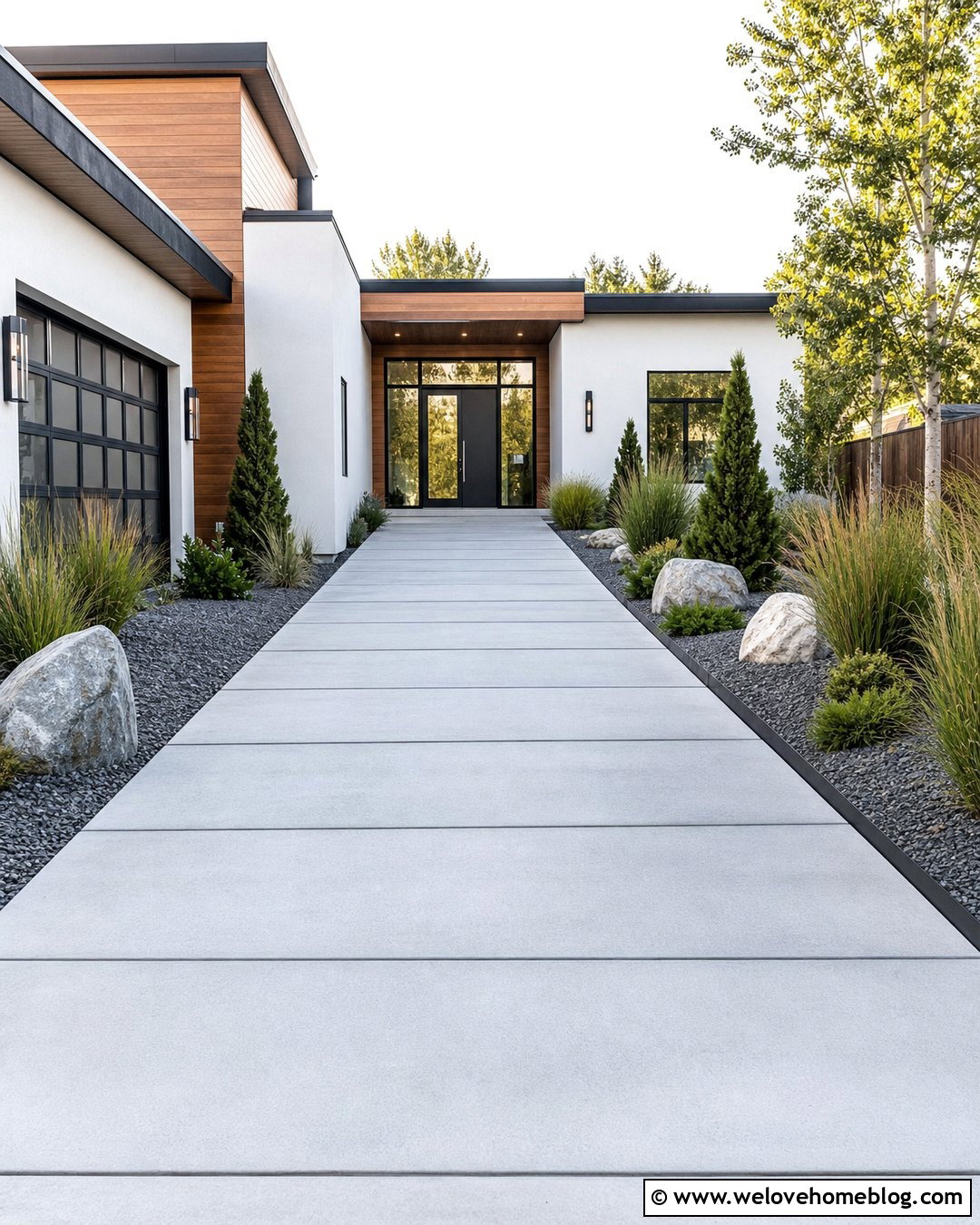
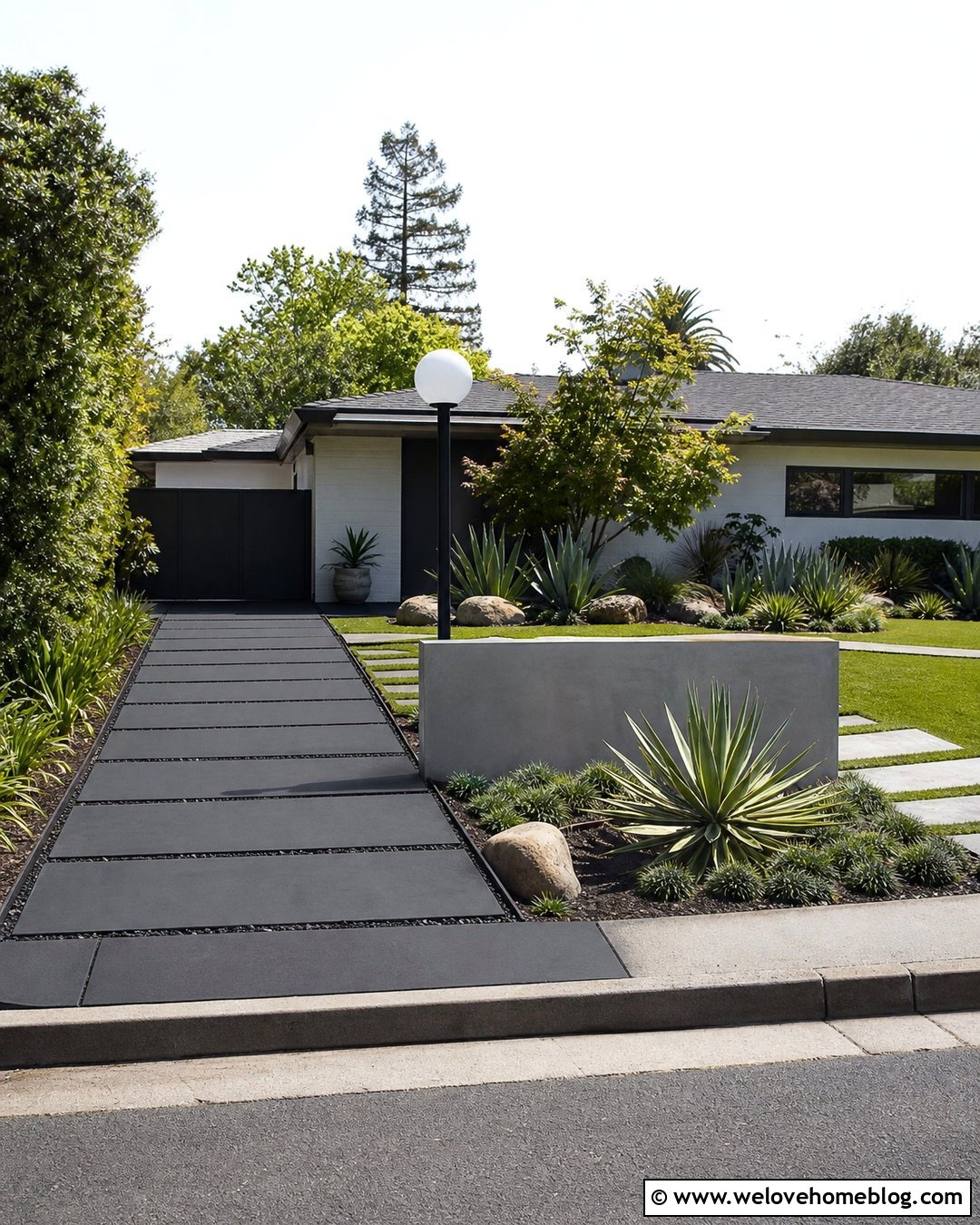
Clean lines and strong textures give this driveway garden a distinctly modern appearance. Start with a wide, gray poured-concrete driveway divided into large rectangular sections. Add a narrow black steel border along one side, followed by an orderly bed of upright ornamental grasses, compact evergreen shrubs, and dark decorative gravel. The grasses provide movement, while the gravel echoes the home’s simple materials and reduces exposed soil. Space the plants evenly instead of creating a loose cottage arrangement. A few sculptural boulders can provide focal points without making the border feel crowded. Continue the garden toward the garage so it appears integrated with the full approach. This streamlined combination complements modern homes with wood siding, white stucco, black trim, or mixed contemporary facades.
5. Curved Driveway Side Garden With Hydrangeas
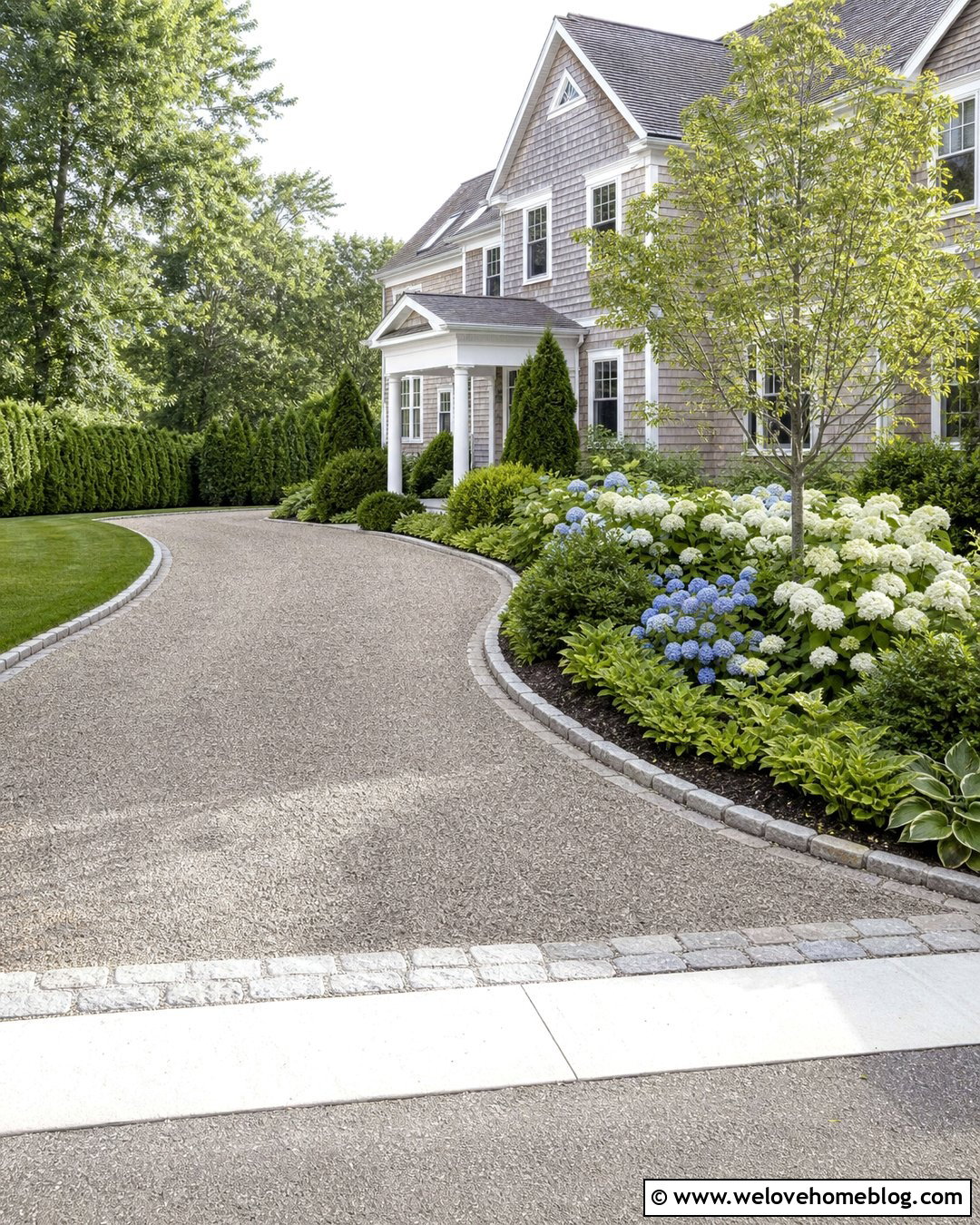
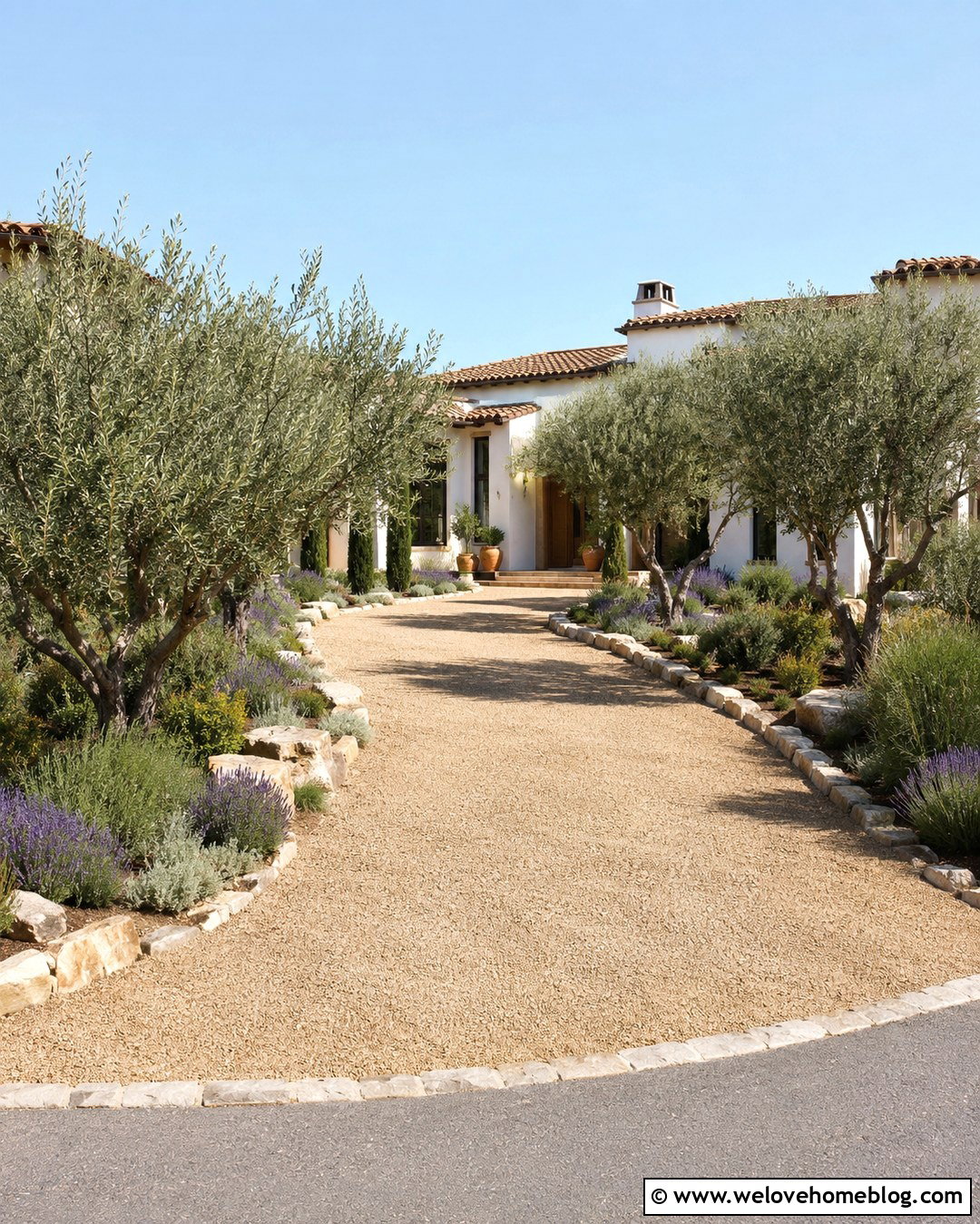
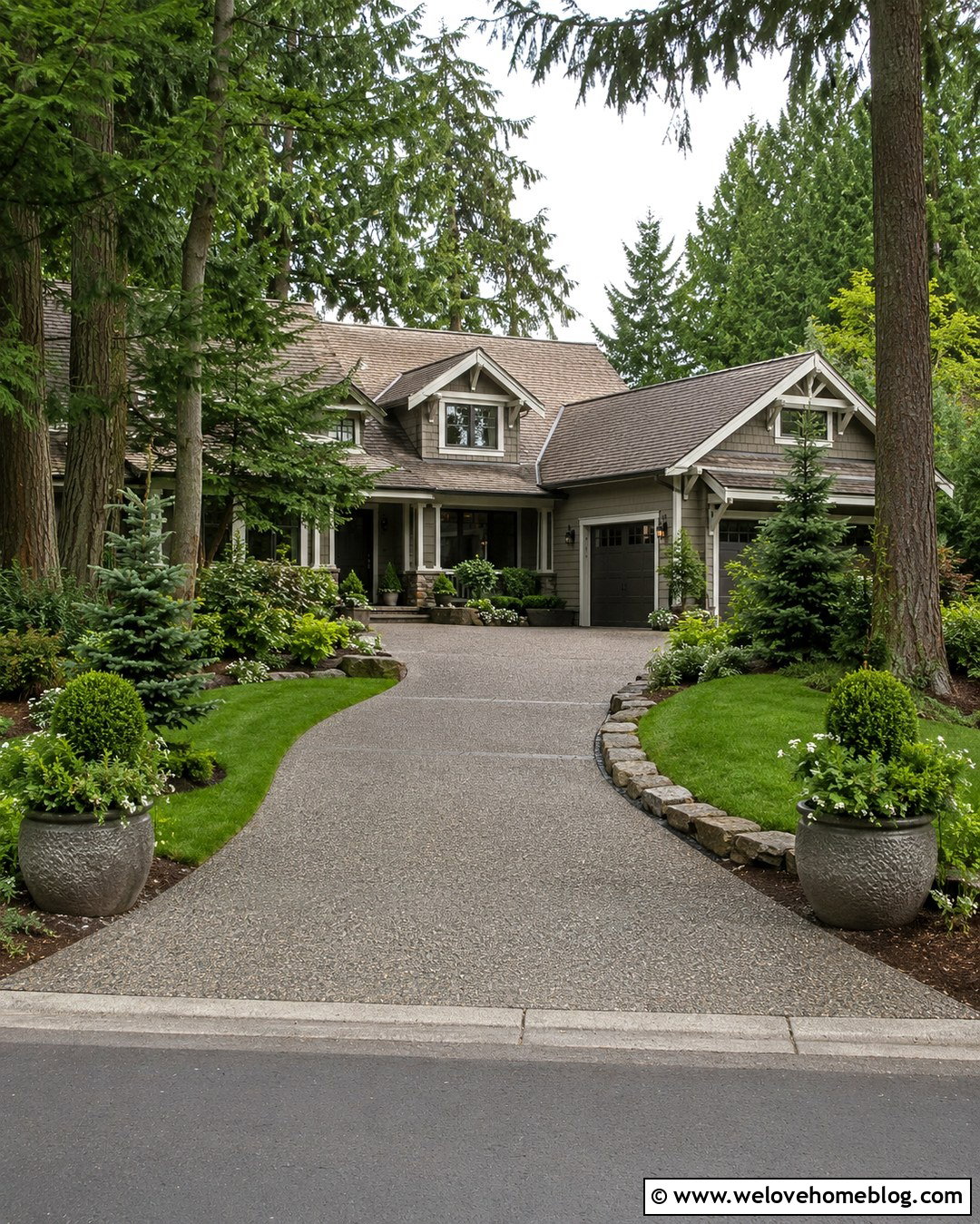
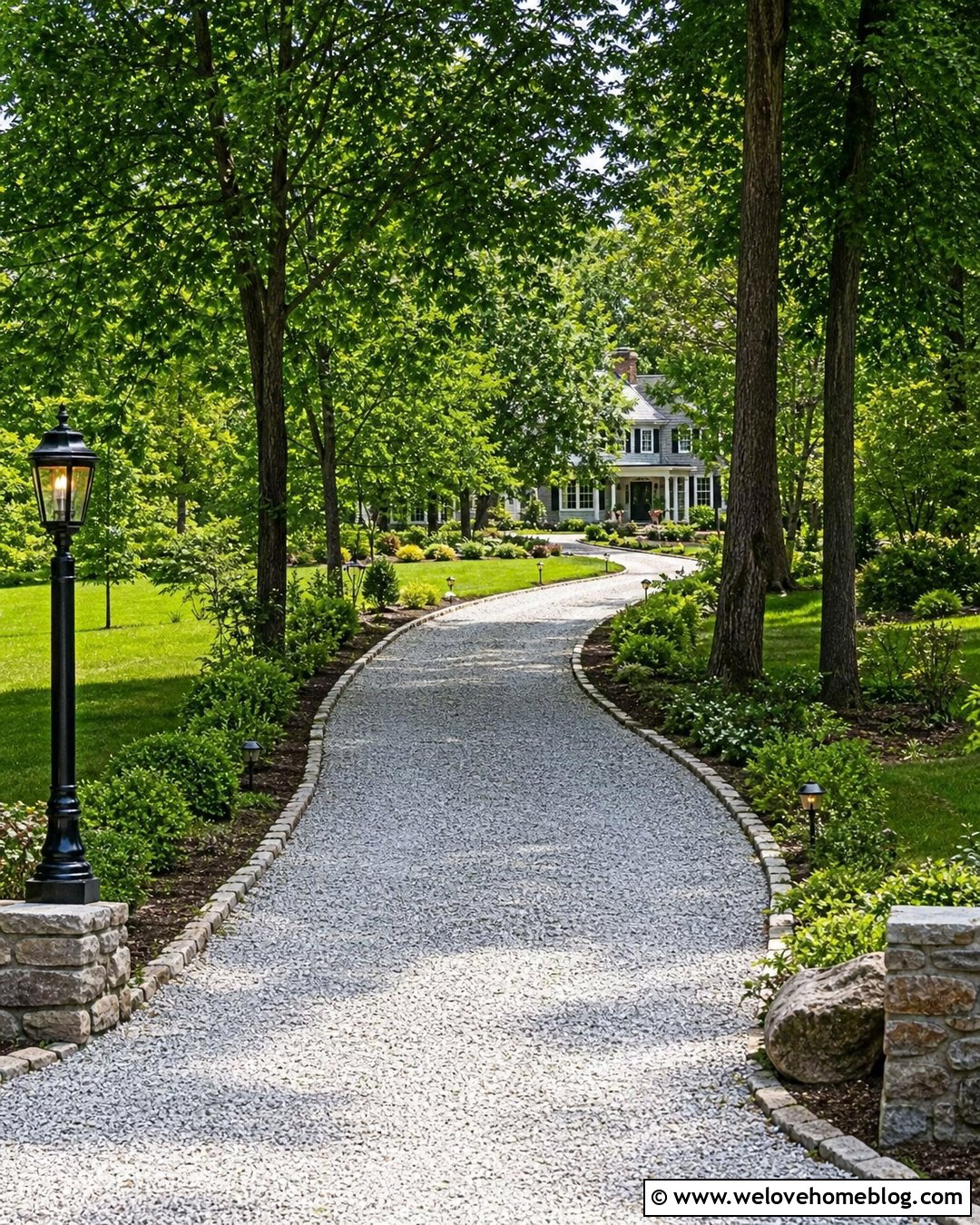
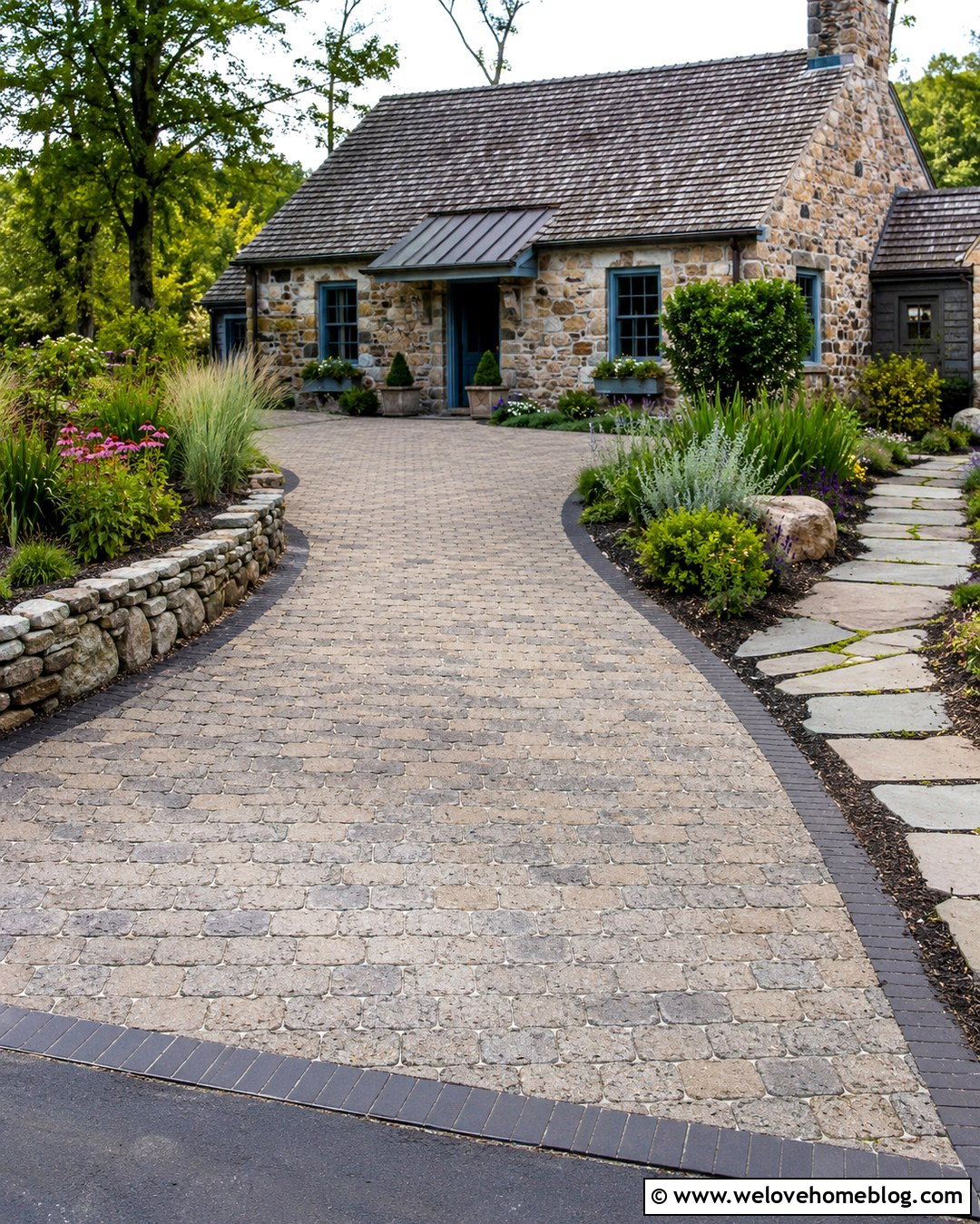
A sweeping driveway becomes more inviting when the side garden follows its curve. Use warm gray gravel for the surface, secure the edges with granite cobbles, and create a deep planting bed along the outside bend. A repeated drift of hydrangeas can emphasize the driveway’s shape and gently direct the eye toward the house. Add shade-tolerant ground covers below the shrubs and a few evergreen plants for winter structure. Where space allows, include one small ornamental tree near the middle of the curve, keeping its canopy and roots safely away from vehicles. A short lawn strip between the garden and the street prevents the entrance from feeling enclosed. This full landscape works beautifully with traditional, shingle-style, craftsman, and country homes on larger lots.
6. Desert Driveway Side Garden With Succulents
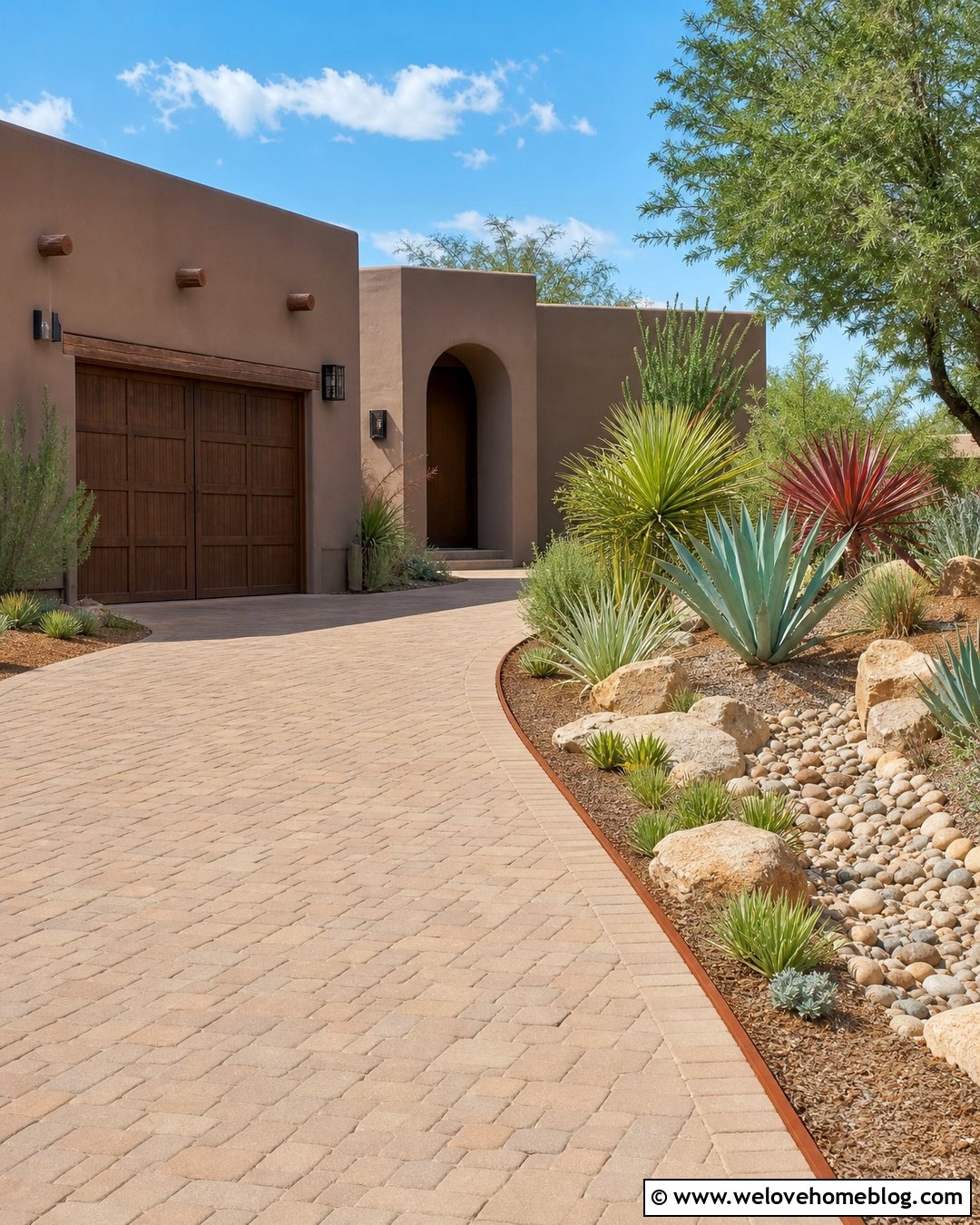
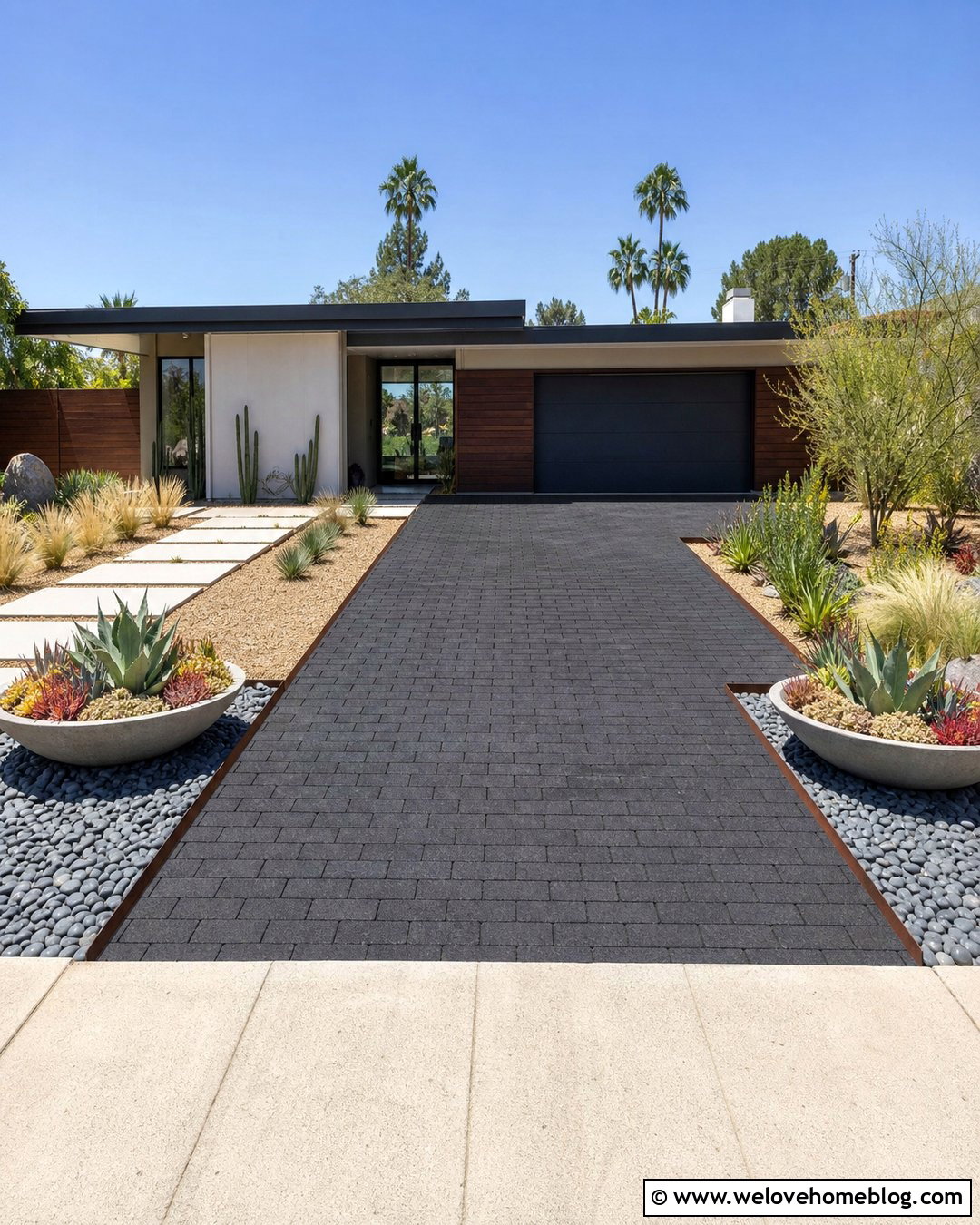
Hot, dry conditions call for a driveway garden built around drainage, open spacing, and bold plant forms. Pair a tan concrete paver driveway with Corten steel edging and a side bed covered in pale decomposed granite. Arrange agave, yucca, red yucca, compact ornamental grasses, and low succulents in staggered groups rather than continuous rows. Add several weathered boulders to anchor the garden and repeat the color of the home’s stone facade. Keep pointed plants well back from parking areas and walkways. A dry creek of rounded river rock can carry runoff away while providing another layer of texture. The result is a water-conscious, uncluttered driveway approach that feels appropriate beside a Southwestern, desert modern, Spanish, or low-profile ranch house.
7. Cottage Driveway Side Garden With Flowers
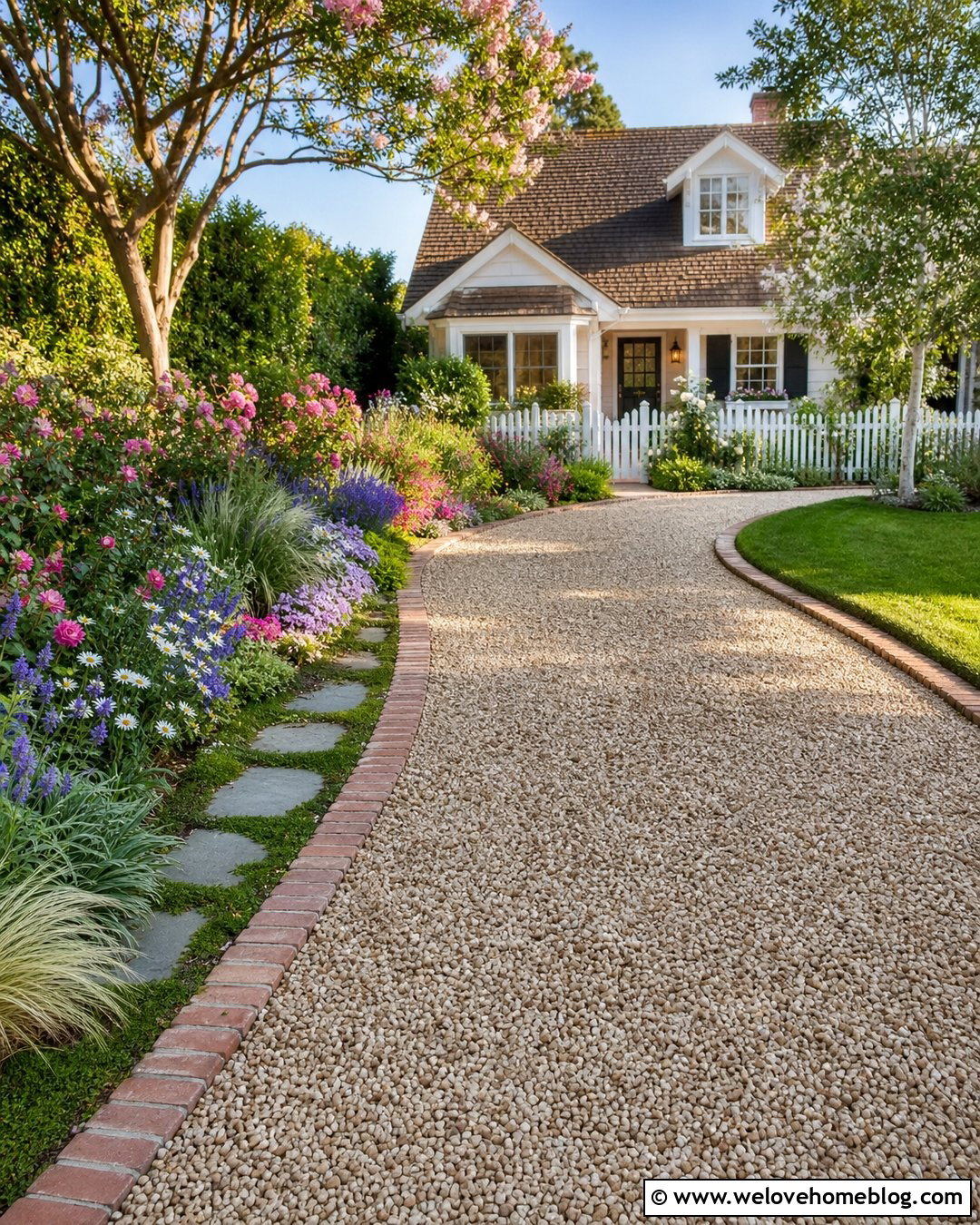
Soft flowers and informal planting can transform a pea gravel driveway into a welcoming cottage entrance. Shape the driveway with a gentle curve and contain the loose gravel using reclaimed brick edging. Beside it, create a generous garden filled with roses, catmint, salvia, hardy geraniums, daisies, and compact ornamental grasses. Repeat plants in small groups so the border looks abundant but still coordinated. Taller blooms should sit toward the back, while low plants can spill slightly over the bricks without entering the tire path. A simple stepping-stone walkway through the border makes watering and trimming easier. Finish the scene with a small flowering tree and a white picket fence near the house. This romantic composition suits cottages, bungalows, and traditional farmhouse exteriors.
8. Shaded Driveway Side Garden With Hostas
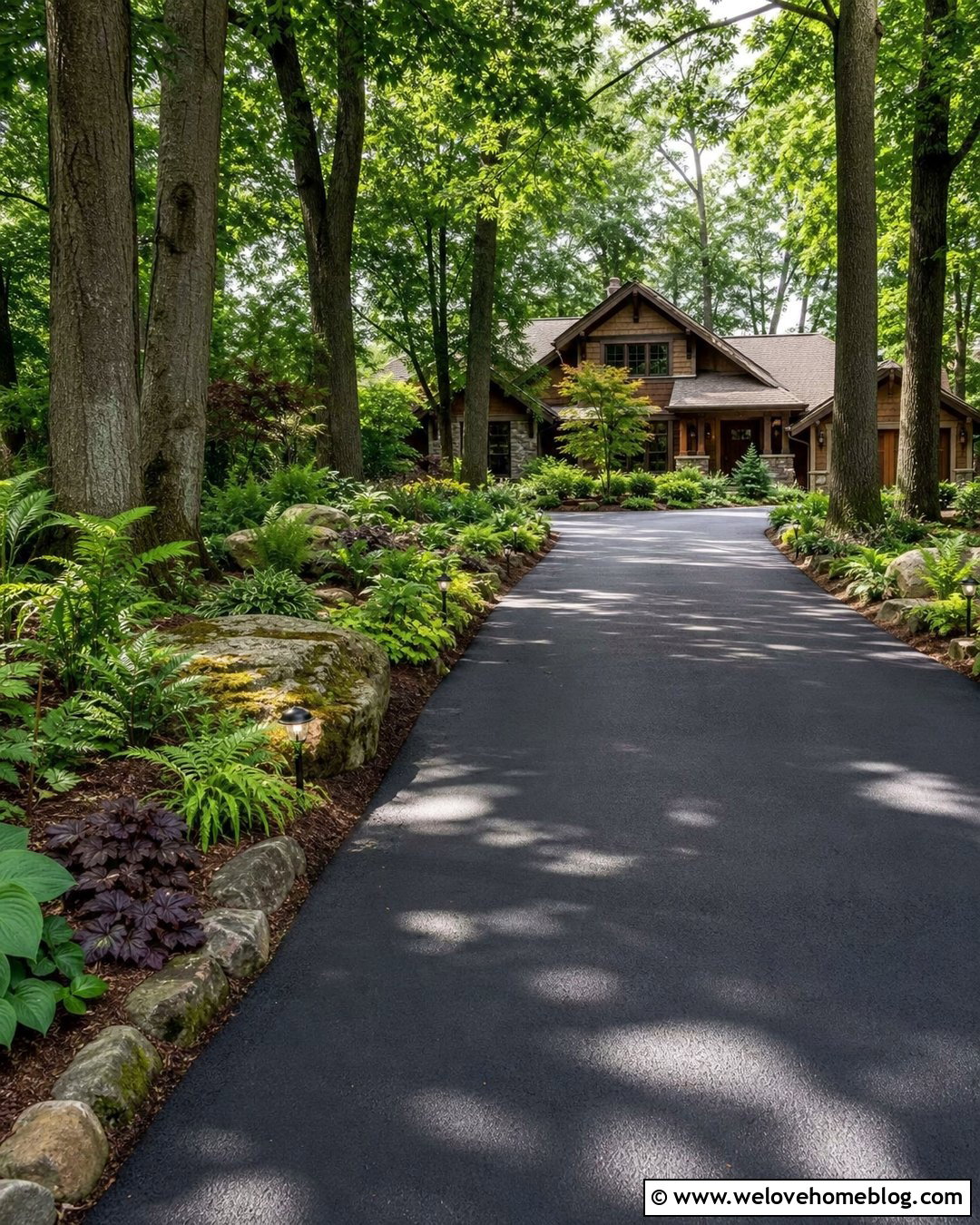
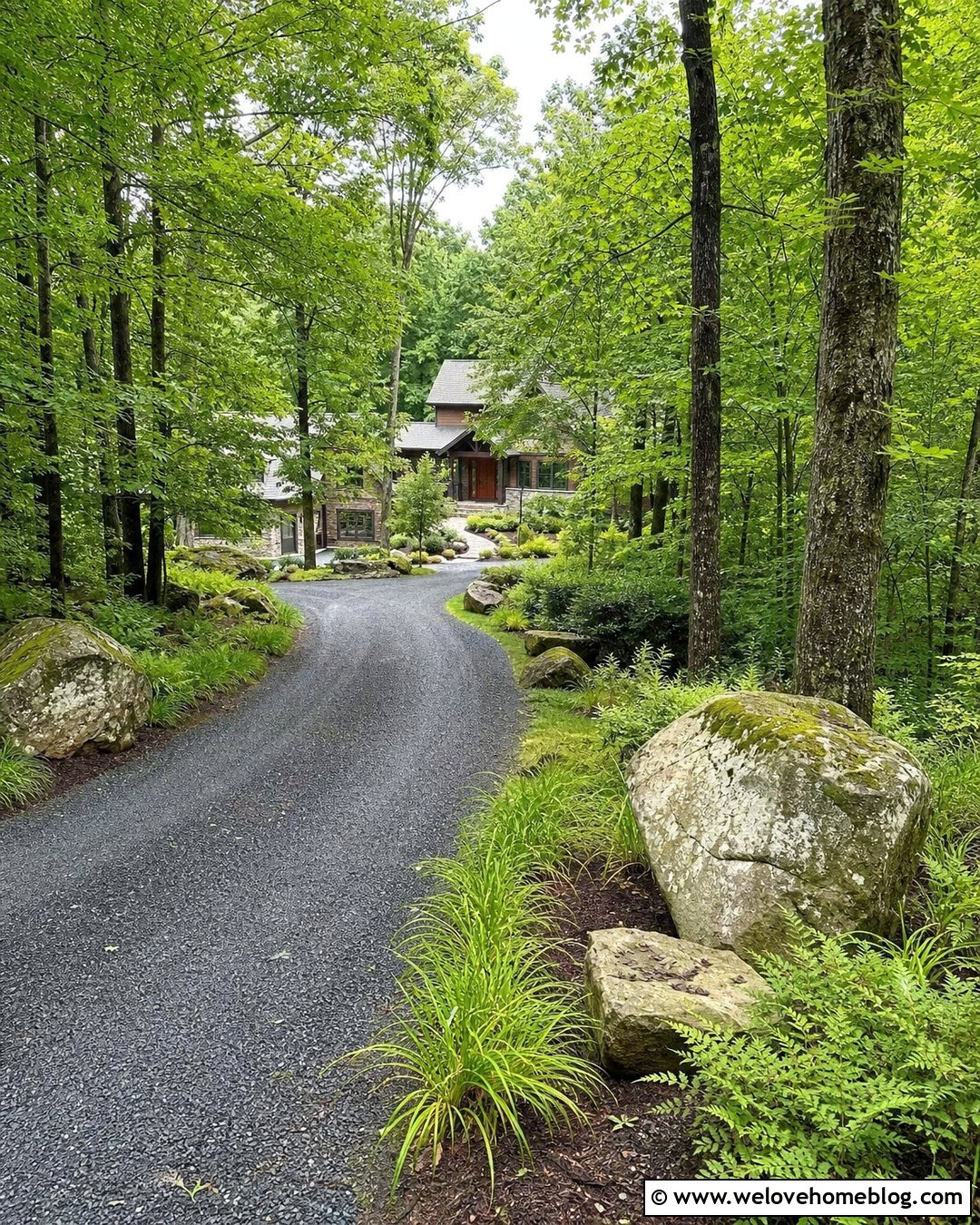
A driveway shaded by mature trees can become a calm woodland garden instead of a difficult patch of thin grass. Use a dark gray asphalt driveway with a broad natural-stone border that clearly separates pavement from soil. Plant hostas, ferns, coral bells, sedges, and shade-tolerant ground covers in layered groups. Vary foliage size and color to keep the garden interesting without relying entirely on flowers. Add a few mossy boulders or weathered logs where they will not interfere with drainage or vehicle clearance. A woodland mulch surface unifies the bed and gives the planting a finished appearance. Low path lights can mark the edge without dominating the daytime view. This relaxed driveway setting works especially well with rustic ranch, craftsman, cabin-inspired, and wooded suburban homes.
9. Driveway Side Rain Garden With Native Plants
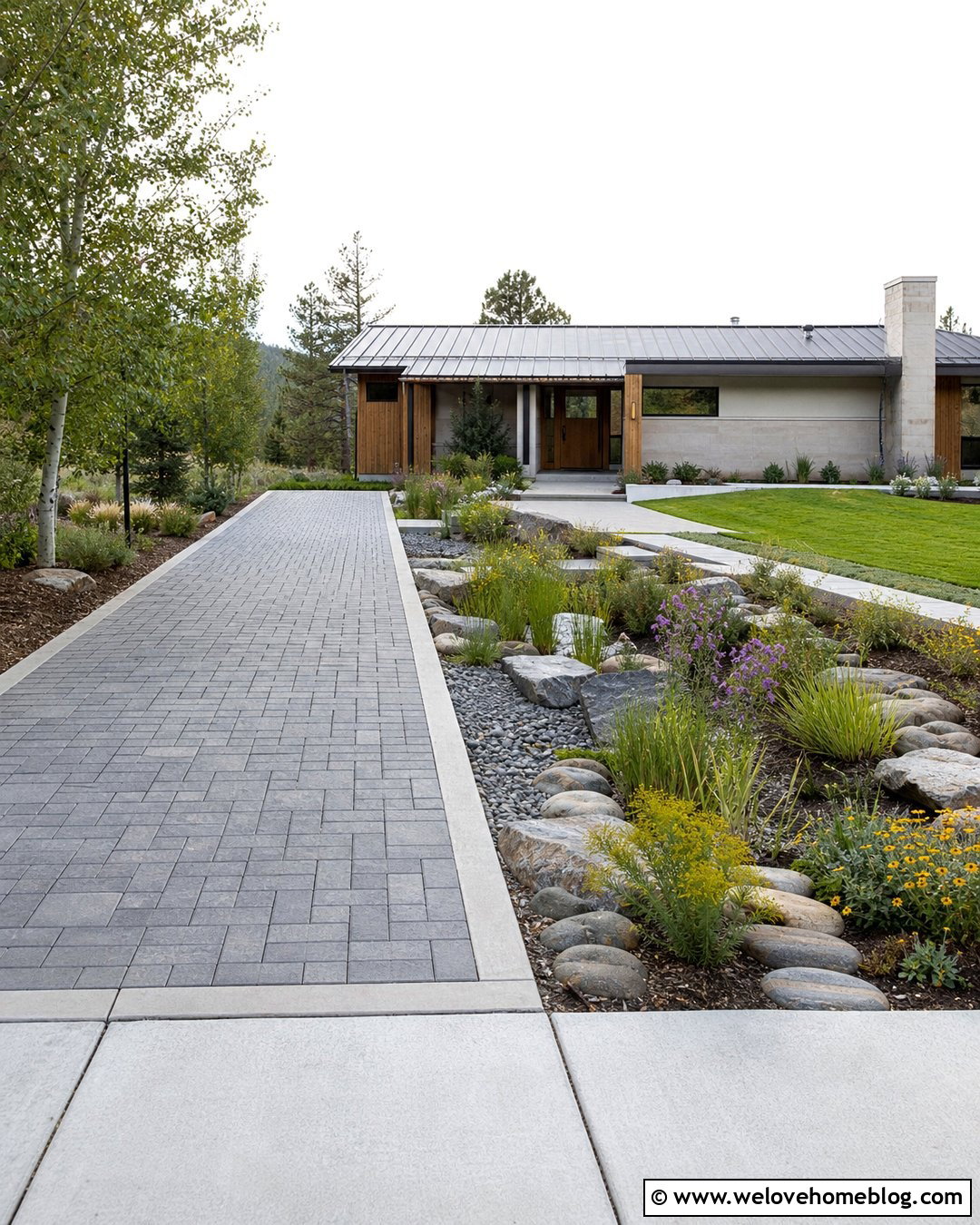
When water collects beside the driveway, a shallow rain garden may turn a problem area into an attractive landscape feature. Pair permeable concrete pavers with a gently depressed side bed edged by flat river stones. Direct runoff toward the garden through carefully graded openings rather than allowing water to wash soil onto the pavement. Choose moisture-tolerant native sedges, rushes, flowering perennials, and compact shrubs suitable for your region. Arrange taller plants in the center of the basin and keep the driveway edge low and visible. Decorative gravel at the inlet can slow moving water and limit erosion. A narrow pedestrian path should remain level and dry. Before construction, confirm local drainage rules and avoid directing water toward foundations, neighboring properties, or underground utilities.
10. Sloped Driveway Side Garden With Stone Walls
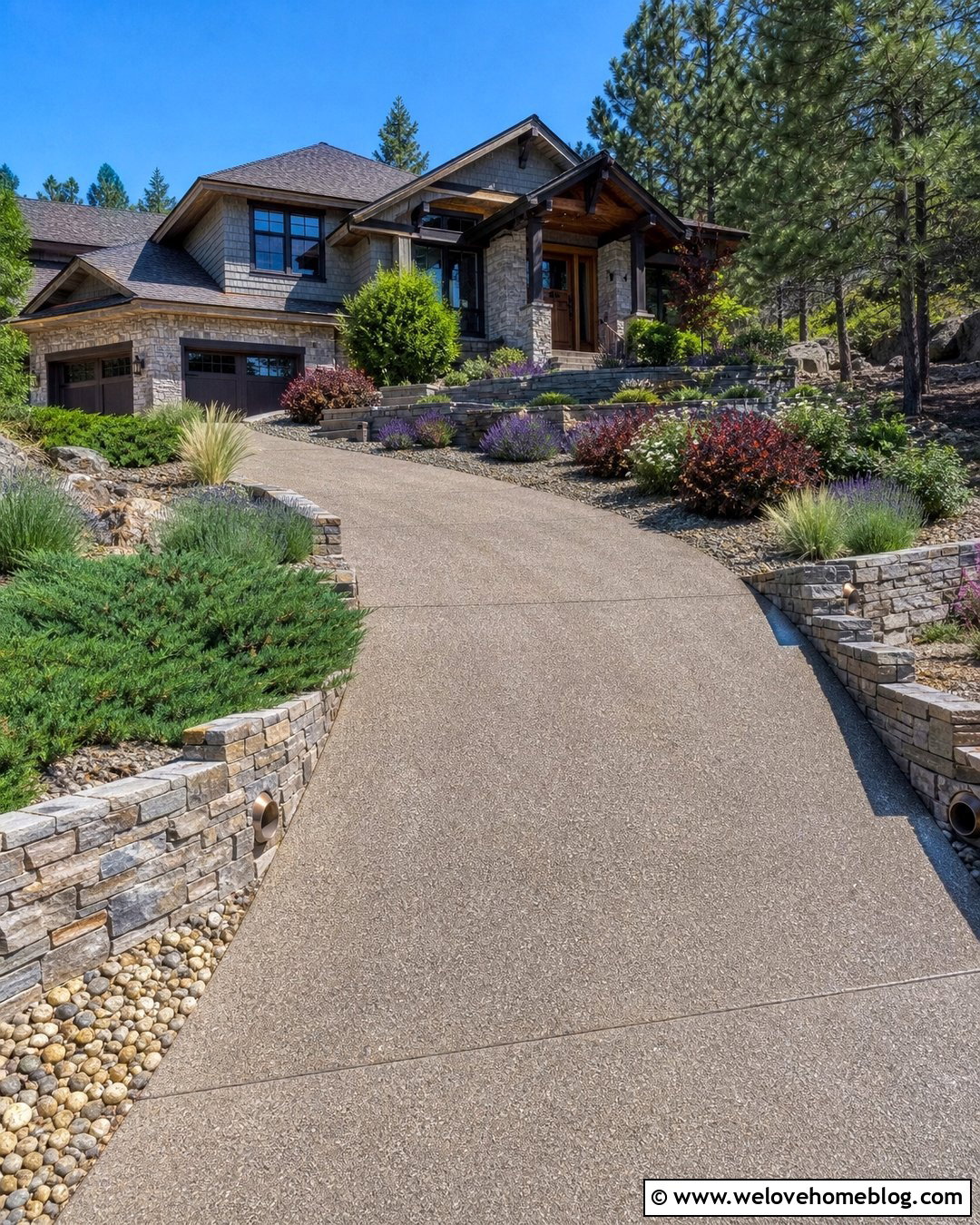
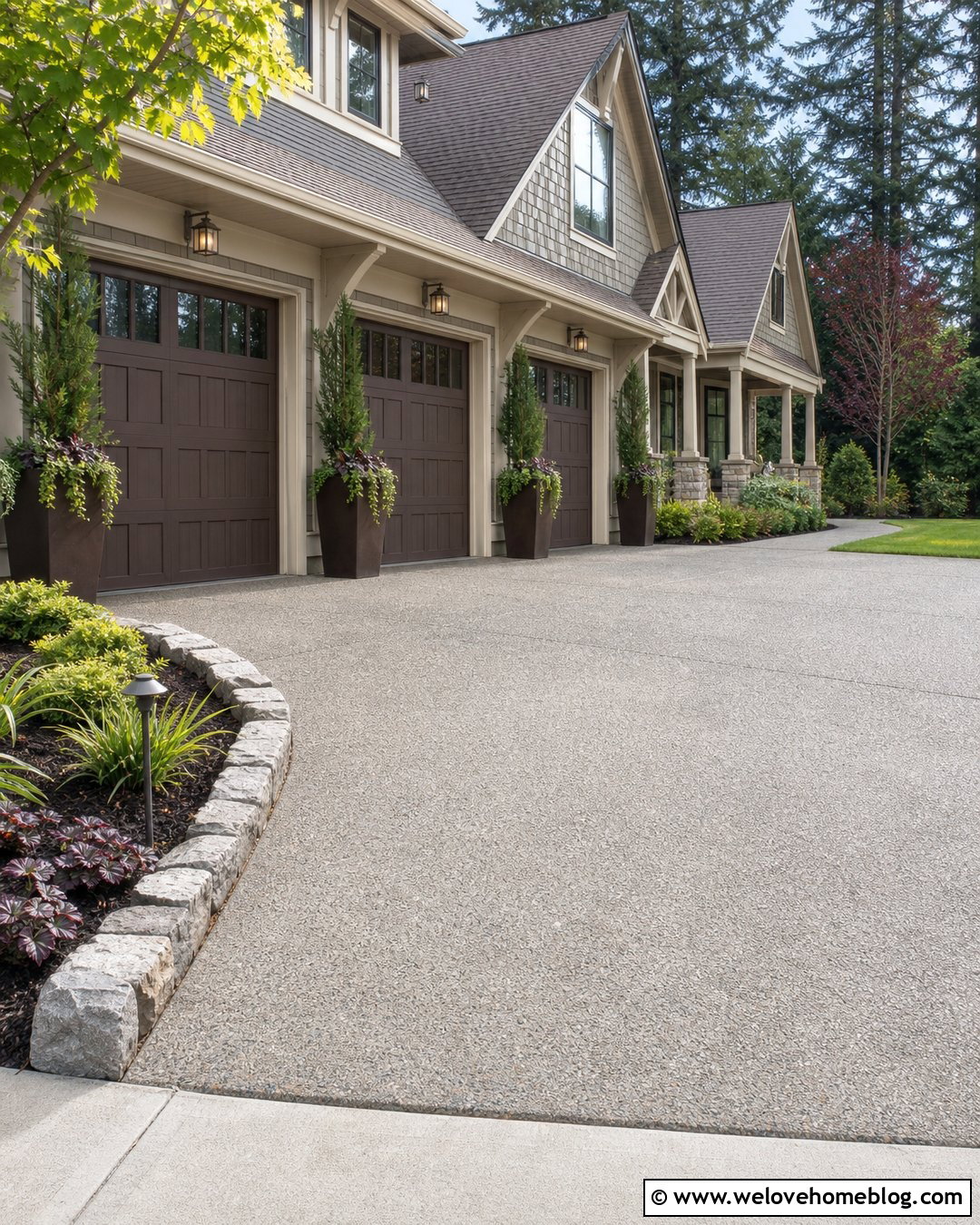
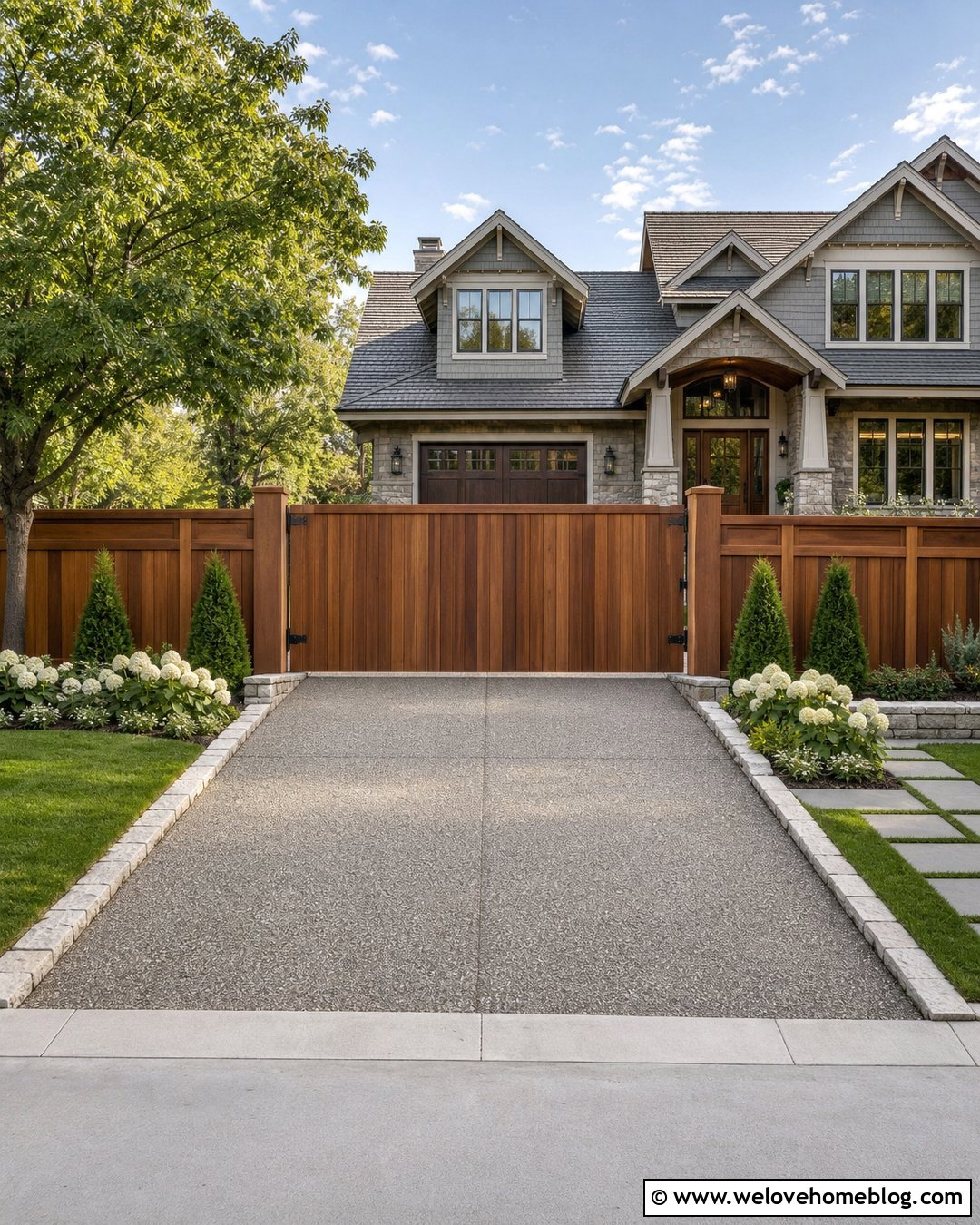
Soil can easily wash onto a sloped driveway unless the garden has strong edges and well-planned drainage. Use an exposed aggregate concrete driveway with low stacked-stone retaining walls following both sides of the incline. Set the walls several feet from the driving surface where possible, creating tiered beds rather than one steep planting bank. Fill each level with spreading juniper, compact grasses, drought-tolerant perennials, and low flowering shrubs. Gravel mulch helps water move through the beds while visually connecting them with the exposed stone in the driveway. Include discreet drainage outlets so pressure does not build behind the walls. Near the street, lower the wall and planting height to protect sightlines. The finished approach feels sturdy, layered, and naturally suited to hillside homes.
11. Driveway Side Garden With Evergreen Privacy
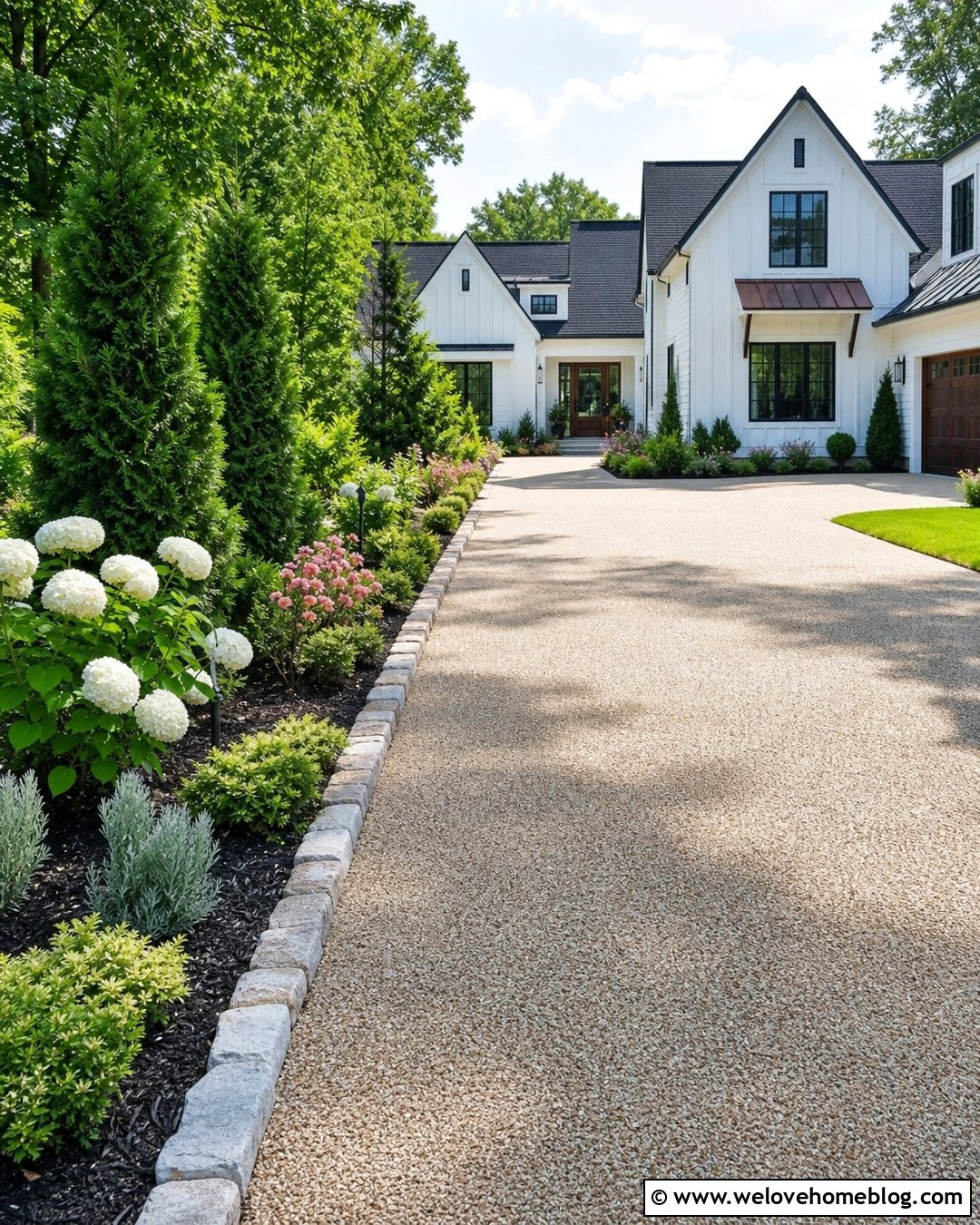
A long driveway beside a neighboring property often needs screening without becoming a dark, narrow corridor. Combine a resin-bound gravel driveway with a wide side garden containing staggered evergreen trees, flowering shrubs, and low ground covers. Plant the screening trees in offset groups instead of one rigid wall. This allows light into the garden and creates a more natural view from the house. Use stone edging to hold the resin surface and separate it from a mulched planting bed. Near parking areas, switch to compact shrubs so branches do not scrape vehicles or block doors. A second layer of seasonal flowers can soften the base of the evergreens. This complete design gives a contemporary farmhouse or suburban home more privacy while keeping the driveway bright, open, and welcoming.
12. Tree-Lined Driveway Side Garden
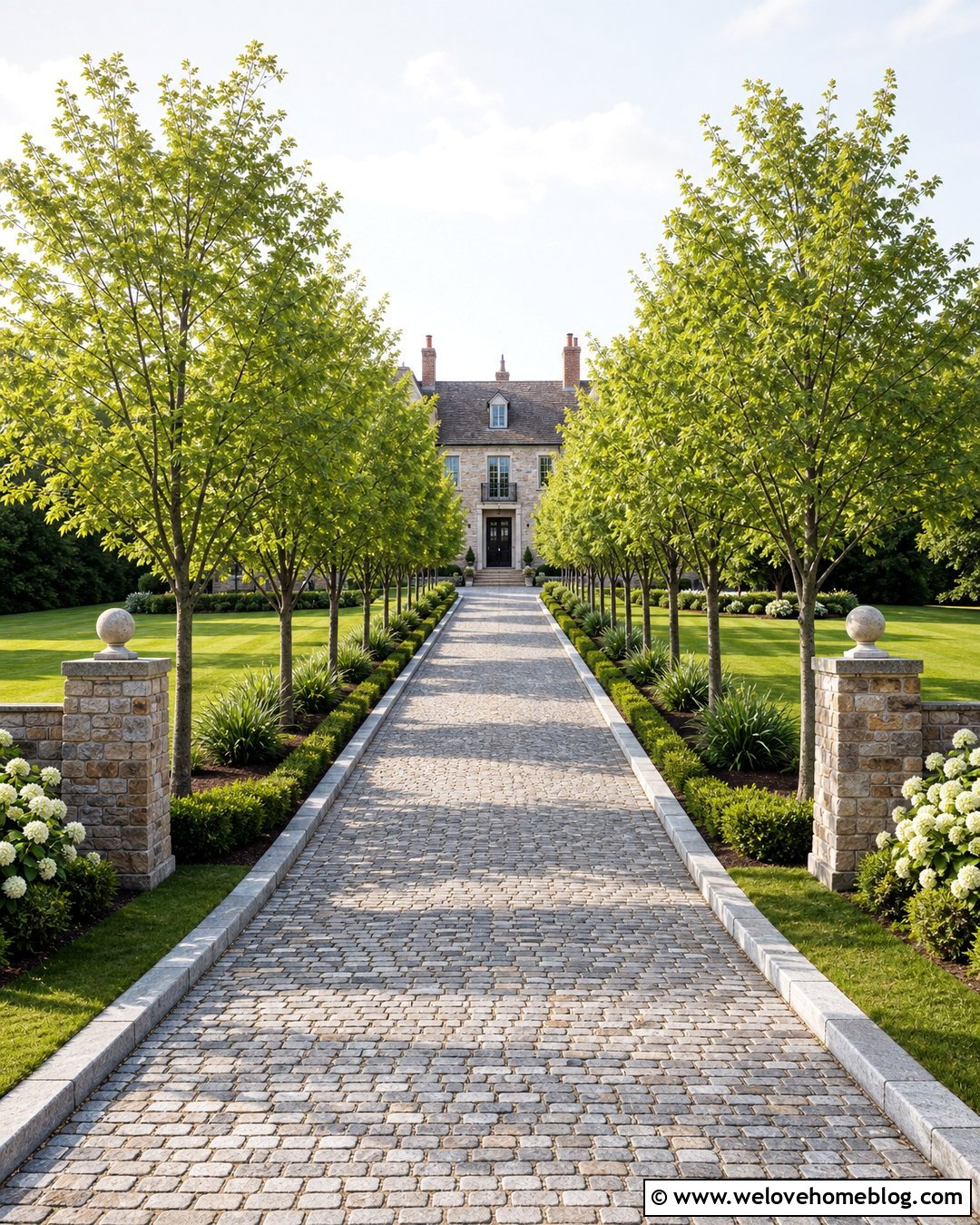
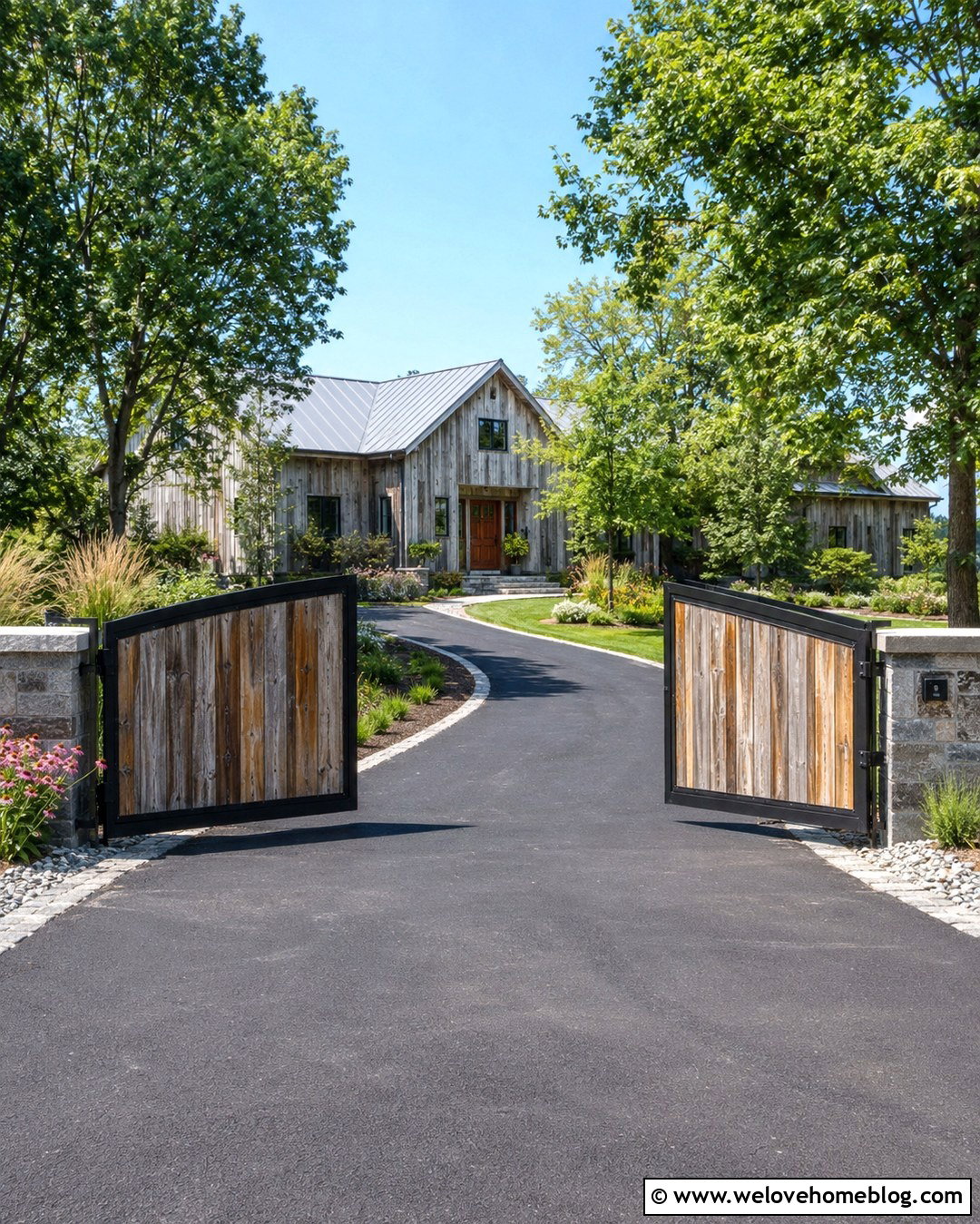
Few designs create a stronger approach than a driveway framed by regularly spaced trees. Begin with a long cobblestone driveway leading toward a traditional or country-style house. Plant matched rows of small deciduous trees beyond broad stone edging, leaving enough space for mature trunks, roots, and canopies. Underplant the trees with a continuous low hedge, ornamental grasses, or simple lawn, depending on the desired formality. Repetition gives the full driveway a clear rhythm and makes the house the visual destination. Avoid species that produce aggressive surface roots, brittle branches, or messy fruit over the pavement. At the entrance, widen the planting beds and add low flowering shrubs around masonry pillars. The combination feels established and elegant without requiring complicated flower displays along the entire route.
13. Low-Maintenance Driveway Side Garden With River Rock
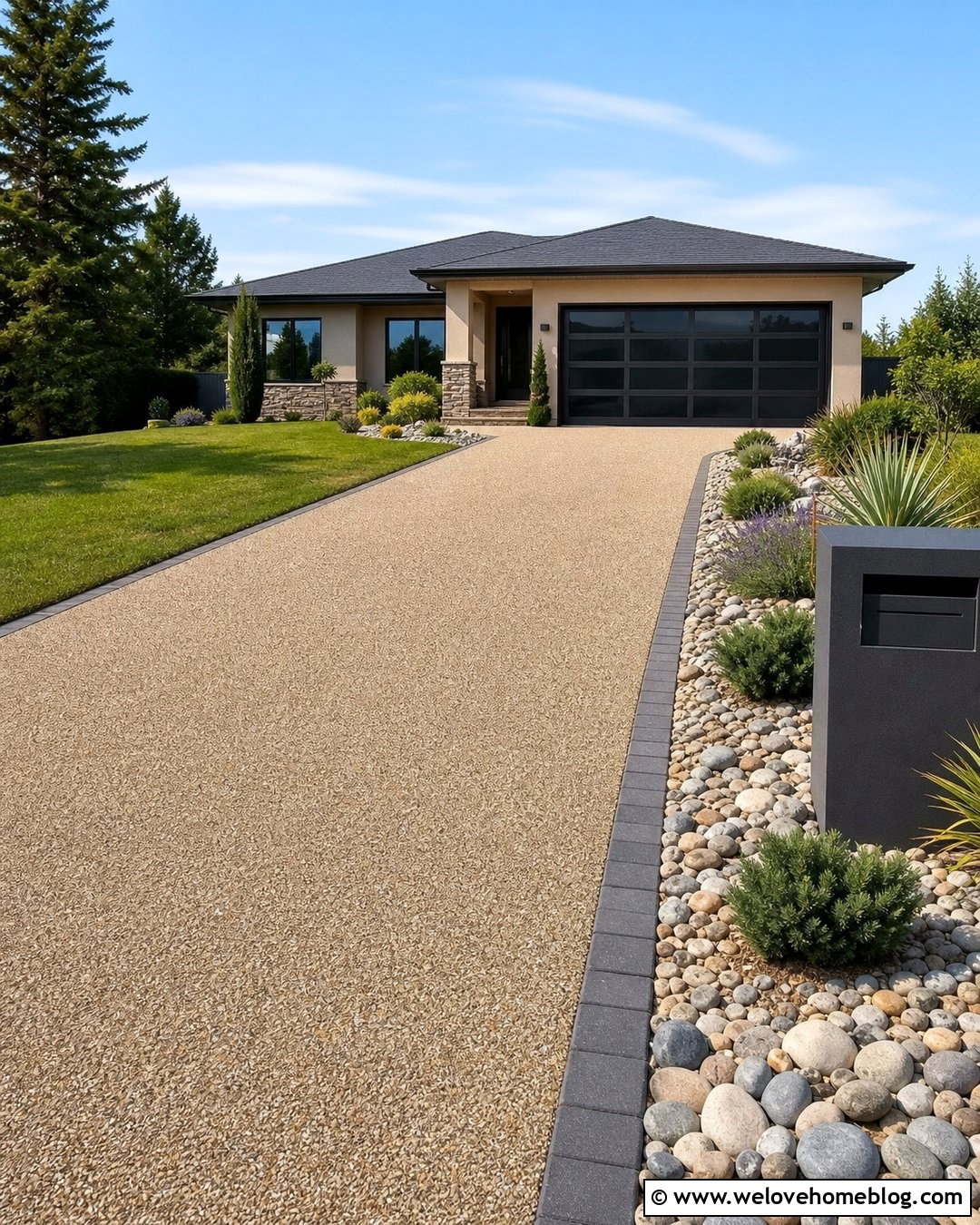
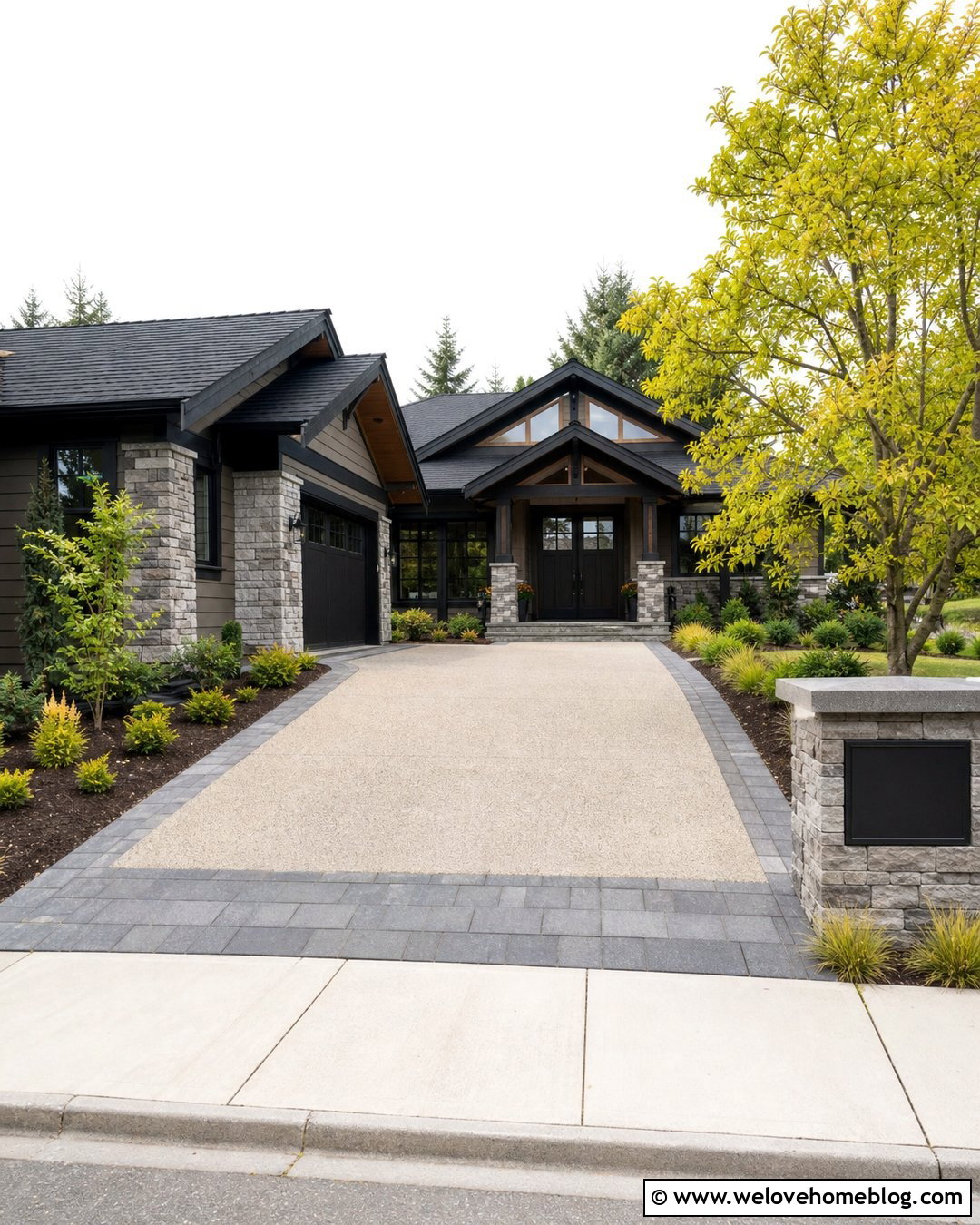
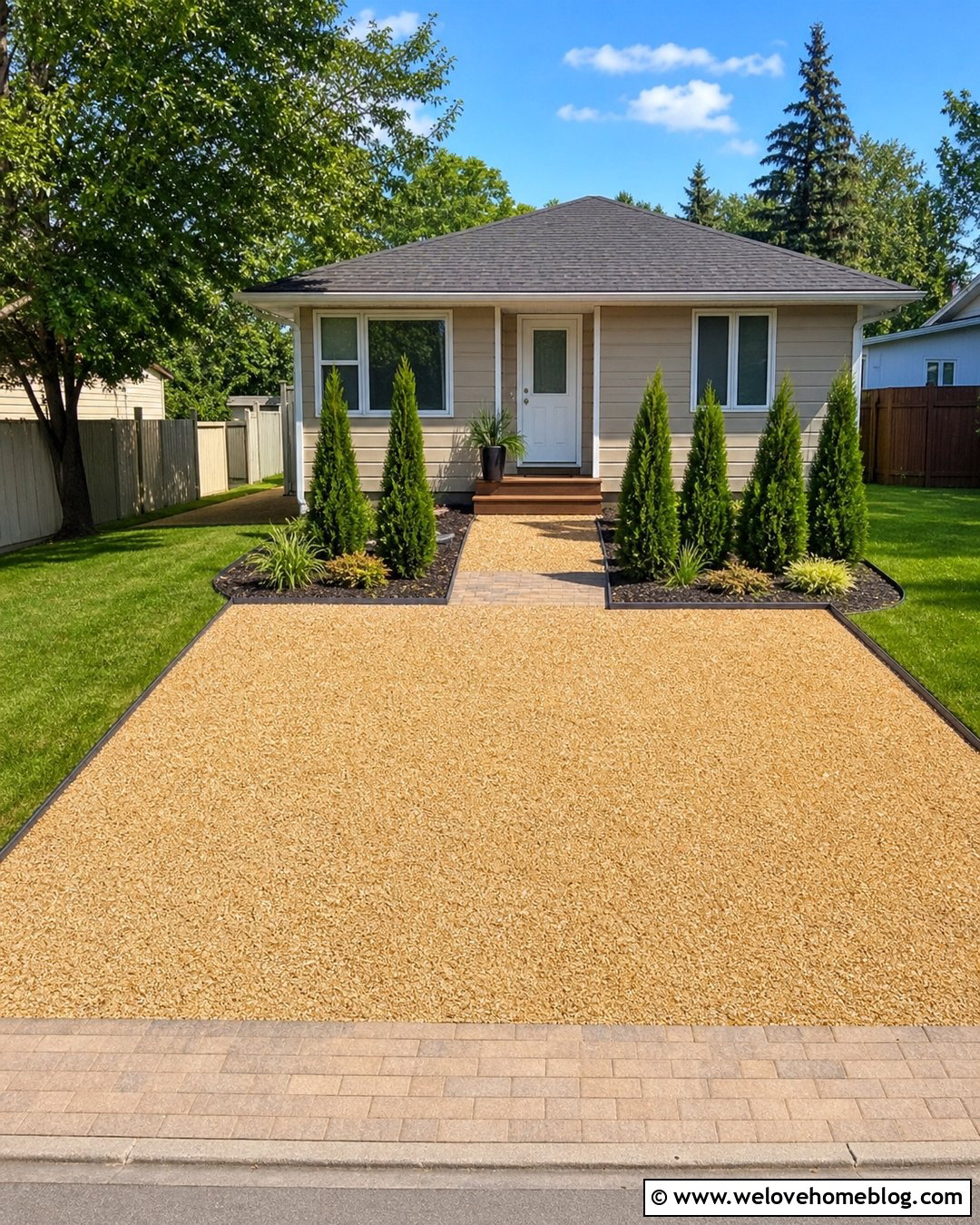
For a front yard that requires less routine work, combine durable hardscape with a limited plant palette. Install a straight resin-bound gravel driveway in a warm beige tone and edge it with dark charcoal pavers. Beside the driveway, create a broad river-rock bed planted with compact junipers, dwarf grasses, yucca, and a few flowering perennials suited to the climate. Place plants in repeating groups with open gravel between them, but avoid laying stone directly against trunks or crowns. A subtle grade should direct water away from the pavement and house. Continue the same river rock around the mailbox or garage corner to unify the property. This tidy, practical design suits modern ranch homes, new suburban builds, and busy households that want attractive landscaping without a dense, labor-intensive border.
14. White Driveway Side Garden
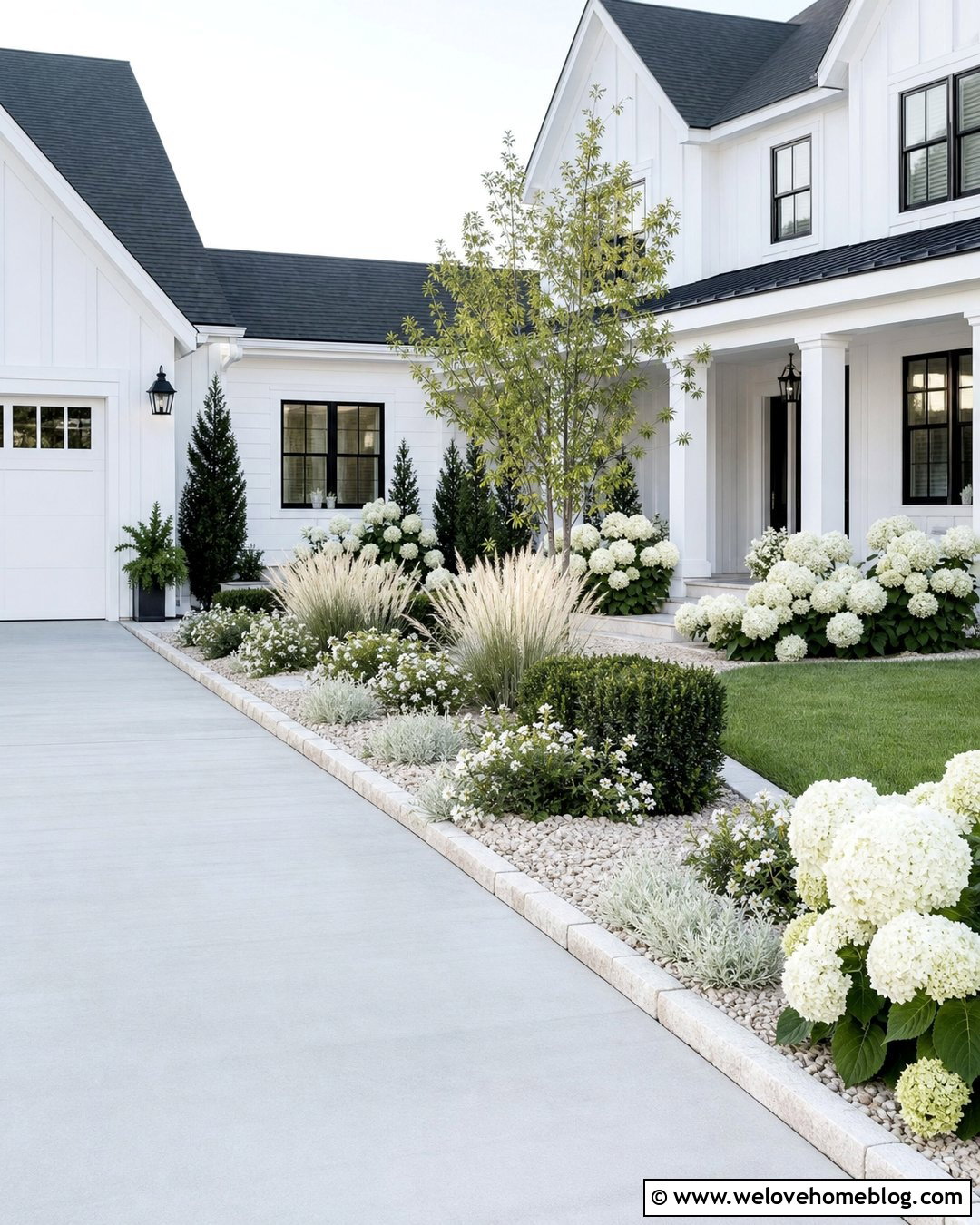
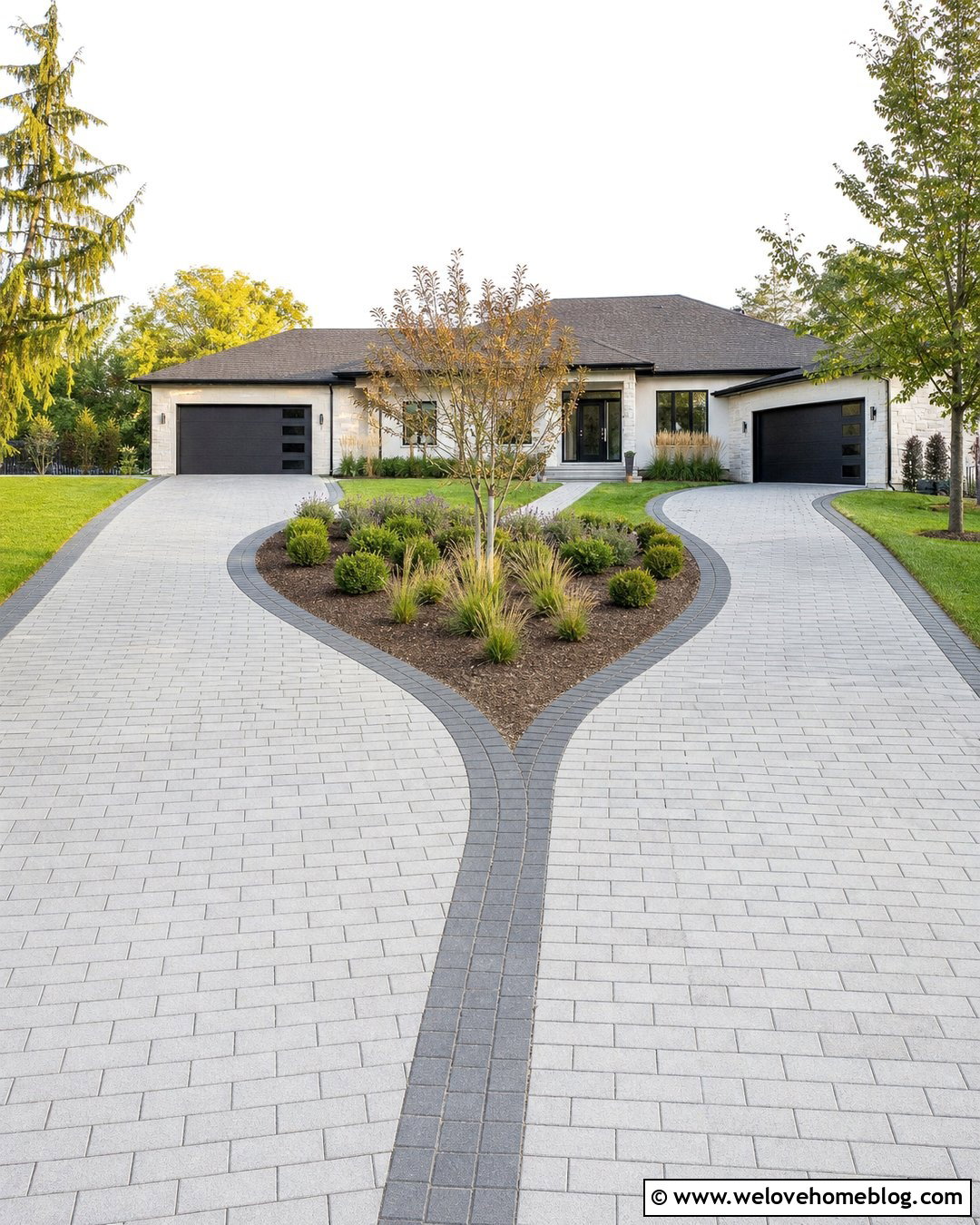
A restrained white-and-green palette can make a driveway feel brighter, wider, and more connected to the house. Pair a medium-gray concrete driveway with a thin limestone border and sweeping beds of white hydrangeas, dwarf gardenias, pale ornamental grasses, and white flowering perennials. Dark evergreen shrubs provide contrast and prevent the garden from looking empty outside the primary flowering season. Rather than mixing many varieties, repeat a few dependable plants from the curb to the garage. Place the largest shrubs near the house and gradually reduce plant height toward the street. A light gravel mulch can reinforce the palette, although organic mulch may be more suitable in hot locations. This clean composition complements white farmhouses, coastal homes, brick colonials, and traditional houses with black exterior accents.

15. Edible Driveway Side Garden With Herbs
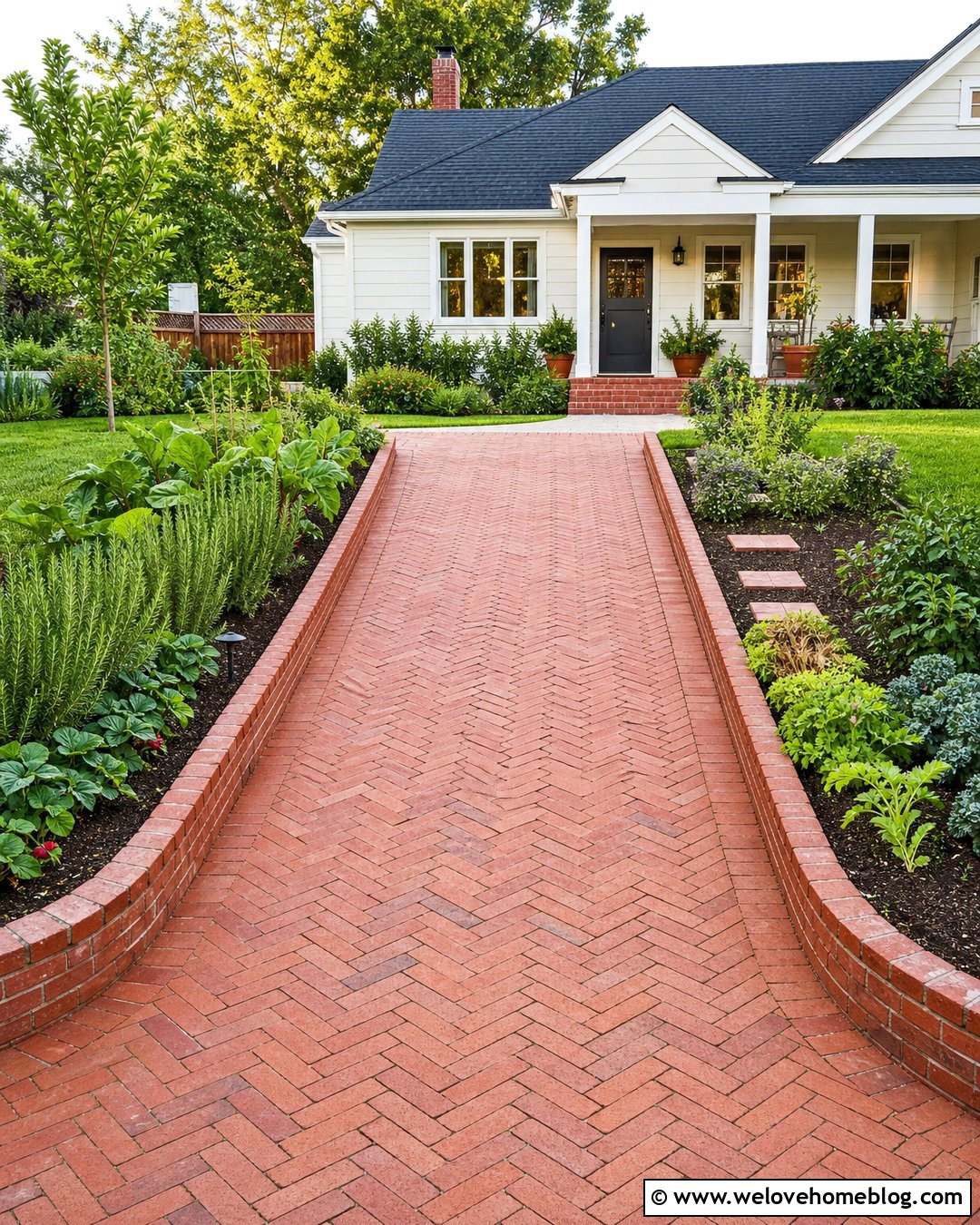
A sunny driveway border can be both attractive and productive when edible plants are arranged like an ornamental garden. Use clay brick pavers in a herringbone pattern for the driveway and create raised brick beds along one side. Fill them with rosemary, thyme, sage, chives, strawberries, compact blueberries, and seasonal vegetables suited to the region. Repeating herbs along the edge creates a tidy structure, while taller edible shrubs belong toward the back. Add stepping pads for harvesting so no one needs to stand on the driveway. Good soil, dependable irrigation, and clean mulch will keep the beds presentable. Avoid placing edible plants where they may be exposed to heavy road spray or frequent vehicle fluids. This practical design works well beside cottages, bungalows, and urban farmhouse homes.
16. Driveway Side Garden Along A Fence
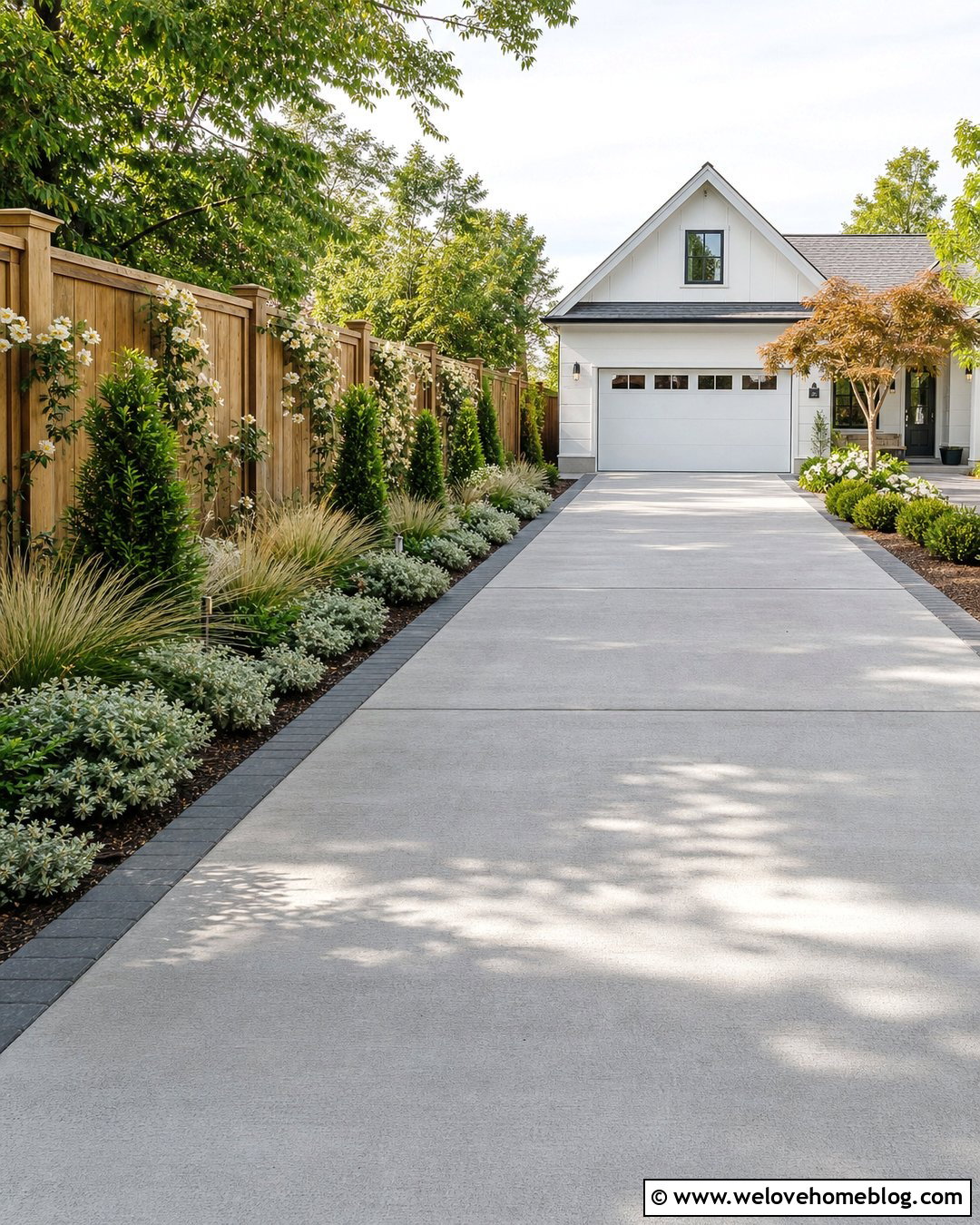
A fence beside the driveway can become a layered garden backdrop rather than a bare boundary. Pair a straight broom-finished concrete driveway with a charcoal paver ribbon and a three-foot planting bed running beside a cedar fence. Train a restrained flowering vine on selected fence panels, then add upright shrubs, ornamental grasses, and low ground covers in front. Keeping the layers narrow preserves usable driveway width while softening the long vertical surface. Repeat plants at regular intervals to prevent the border from looking cluttered. Install a root barrier where aggressive species could spread beneath the pavement. Near the garage, widen the bed slightly and include a small ornamental tree or large planter. The resulting landscape offers privacy, color, and depth for homes with compact side yards.
17. Tropical Driveway Side Garden
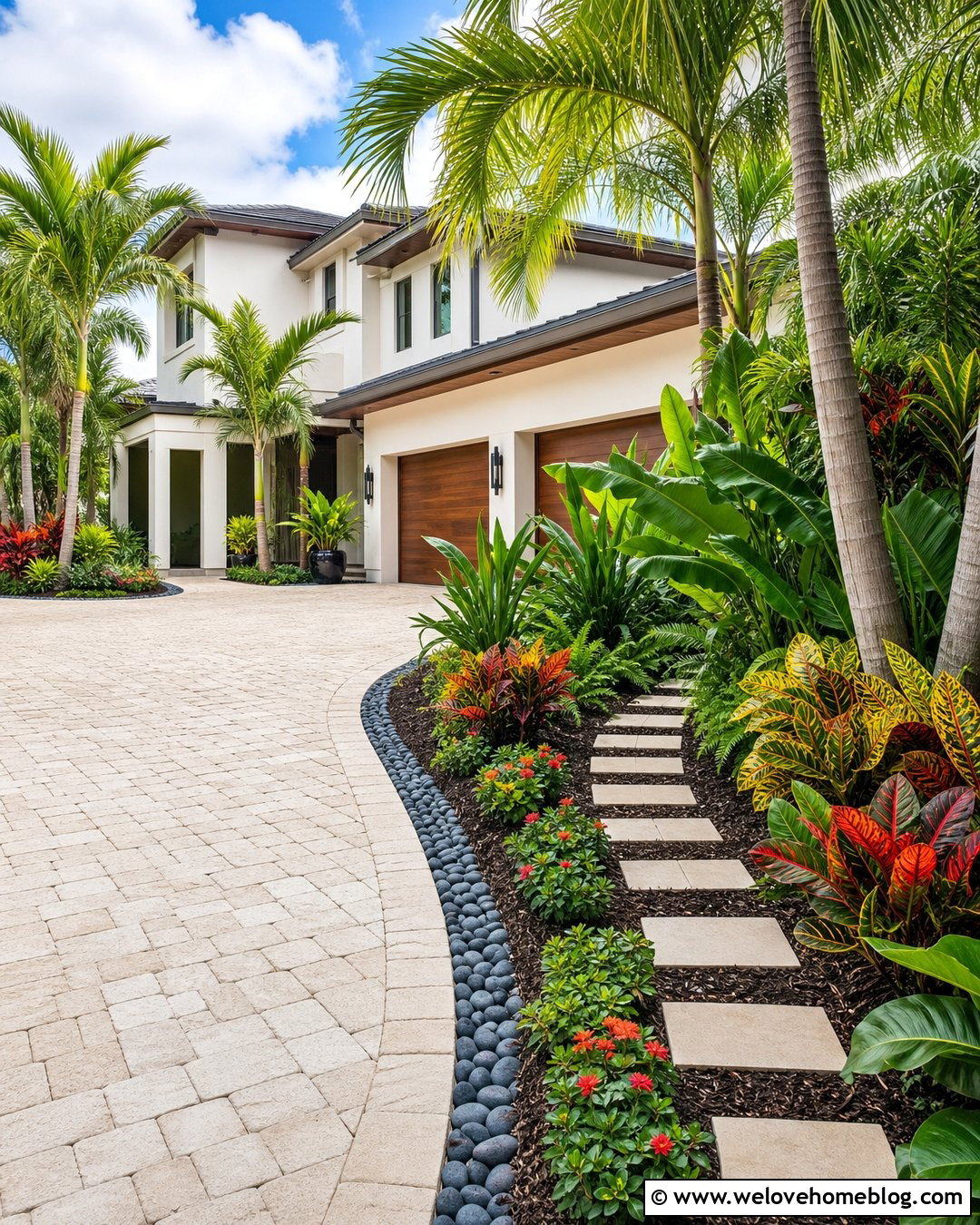
Lush foliage creates an impressive driveway garden in warm climates where tropical plants can grow reliably. Use a curved driveway made from pale shell-colored concrete pavers, bordered by smooth dark stone. Layer palms, bird of paradise, crotons, philodendrons, ferns, and compact flowering shrubs along the outside curve. Large foliage belongs farther from the pavement, while low ground covers should define the front edge. Repeat several key plants rather than filling the bed with unrelated specimens. This keeps the dramatic garden visually controlled. Include a broad mulch zone to prevent leaves and irrigation water from spilling across the pavers. A stepping-stone route through the bed supports routine maintenance. The complete look pairs naturally with coastal, Florida ranch, Mediterranean, and contemporary stucco homes.
18. Driveway Side Garden With A Mailbox
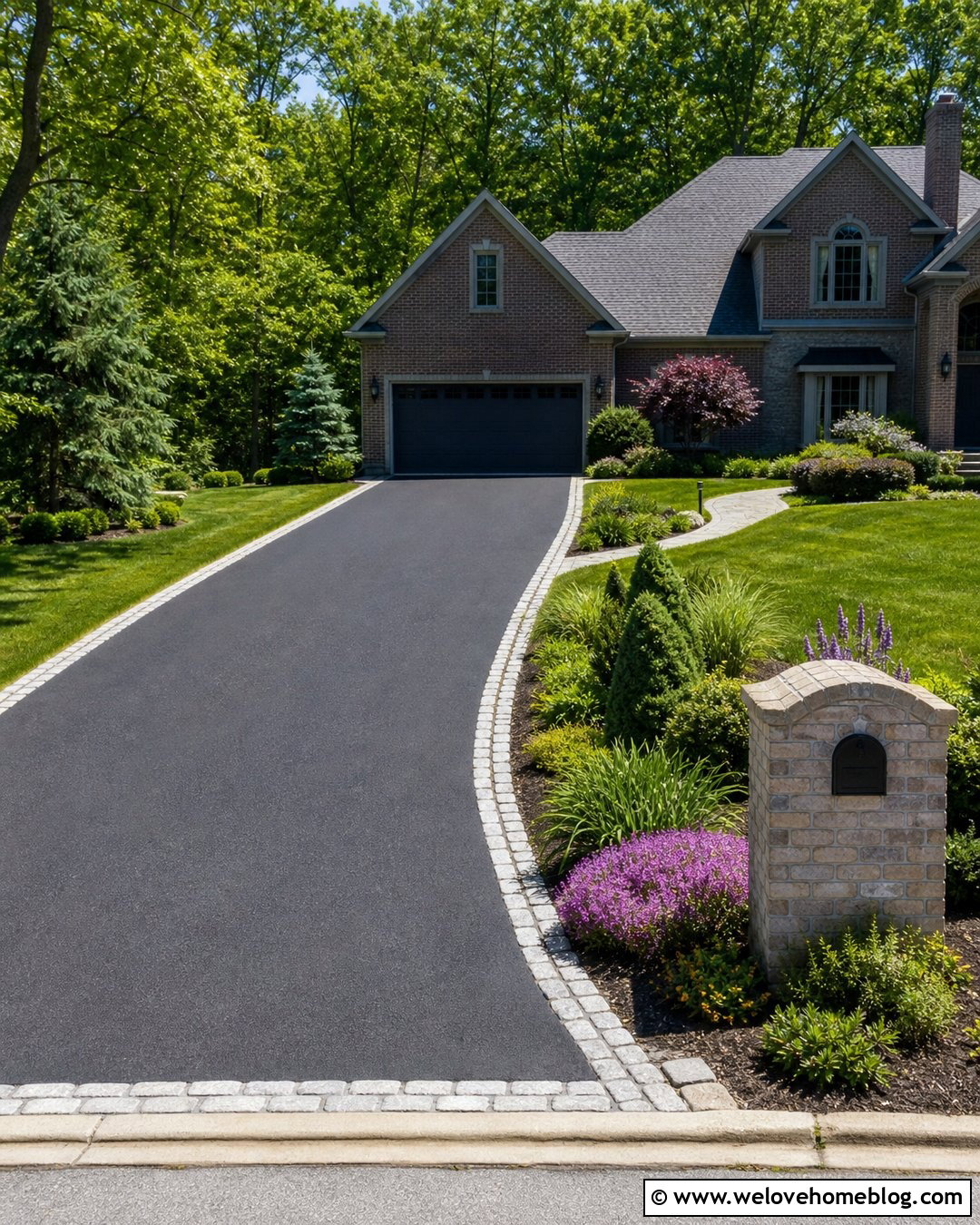
The mailbox can serve as the starting point for a garden that continues naturally toward the house. Frame a black asphalt driveway with granite cobblestone edging, then build a curved planting bed around a simple masonry mailbox. Use low evergreen shrubs, ornamental grasses, creeping phlox, salvia, and seasonal flowers that will not block street visibility or access. Extend selected plants farther along the driveway so the mailbox does not appear isolated. A narrow gravel maintenance strip beside the asphalt keeps mulch and soil away from tires. Match the mailbox masonry to the home’s brick or stone for a coordinated appearance. This design provides a strong curbside focal point while creating a visual connection between the street, driveway, front walkway, and house.
19. Driveway Side Garden With Landscape Lighting
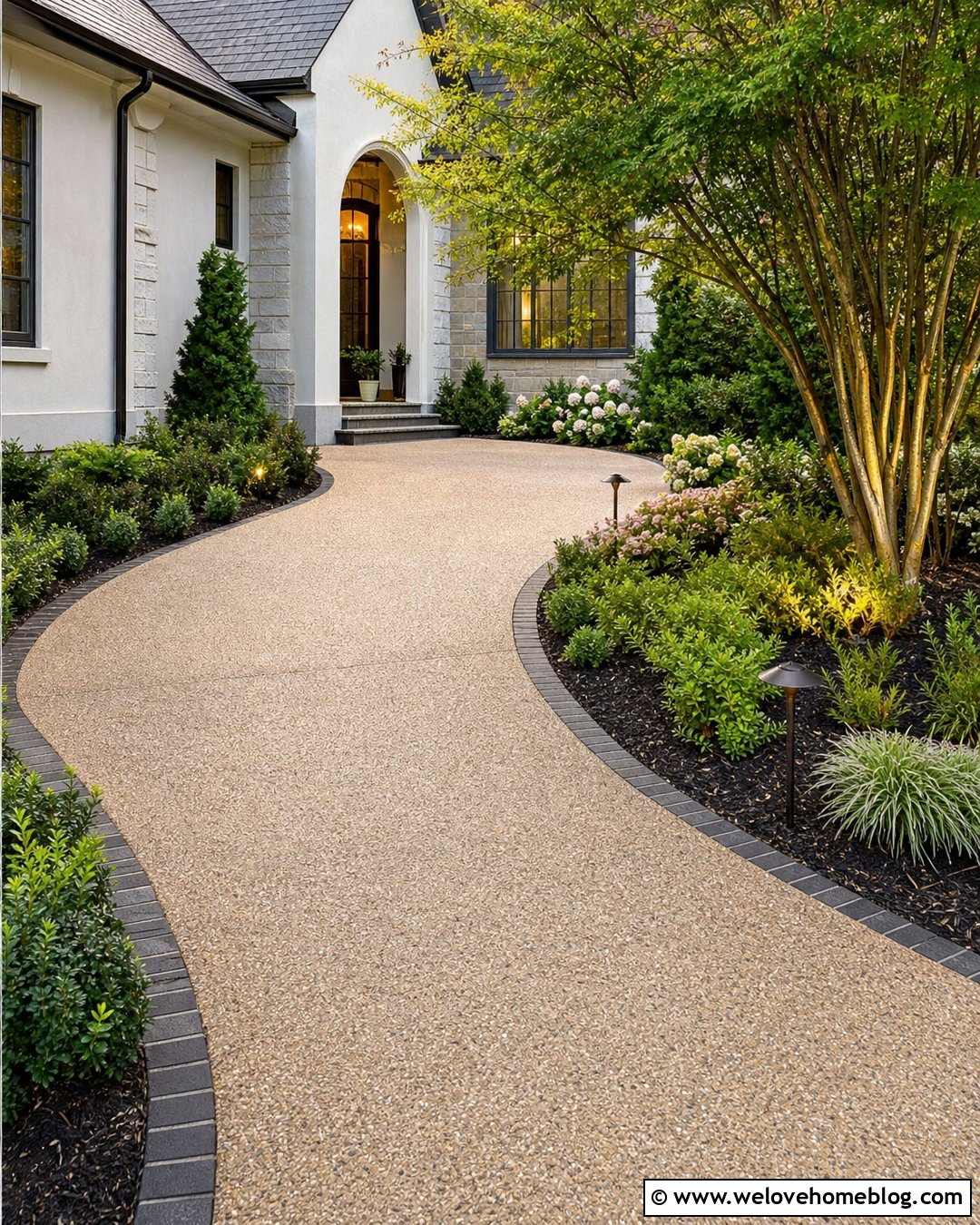
Thoughtful lighting makes a planted driveway easier to navigate while reinforcing the landscape’s shape. Start with a warm-toned exposed aggregate driveway edged in dark brick. Along one side, create layered beds containing low evergreens, flowering shrubs, ornamental grasses, and a small multi-stem tree. Place compact, shielded path lights at key changes in direction rather than spacing too many fixtures in a rigid line. Soft uplights can highlight the tree or textured house facade, while the driveway itself should remain free of glare. During daylight, dark bronze fixtures blend into mulch and foliage. Keep cables and fixtures away from tires, snow-removal equipment, and bed-maintenance routes. The complete plan brings together safe movement, balanced planting, durable borders, and polished curb appeal.
20. Budget Driveway Side Garden With Mulch
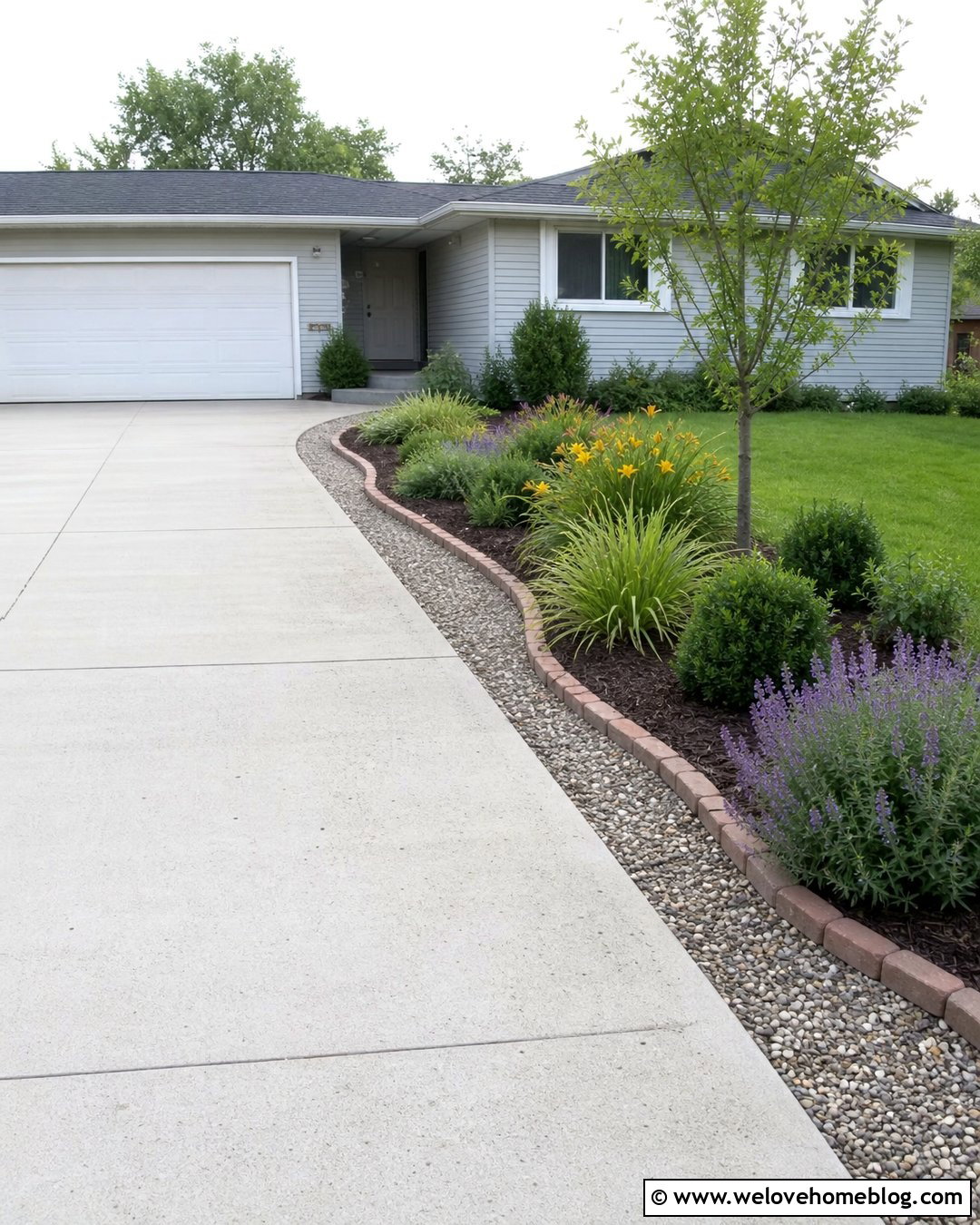
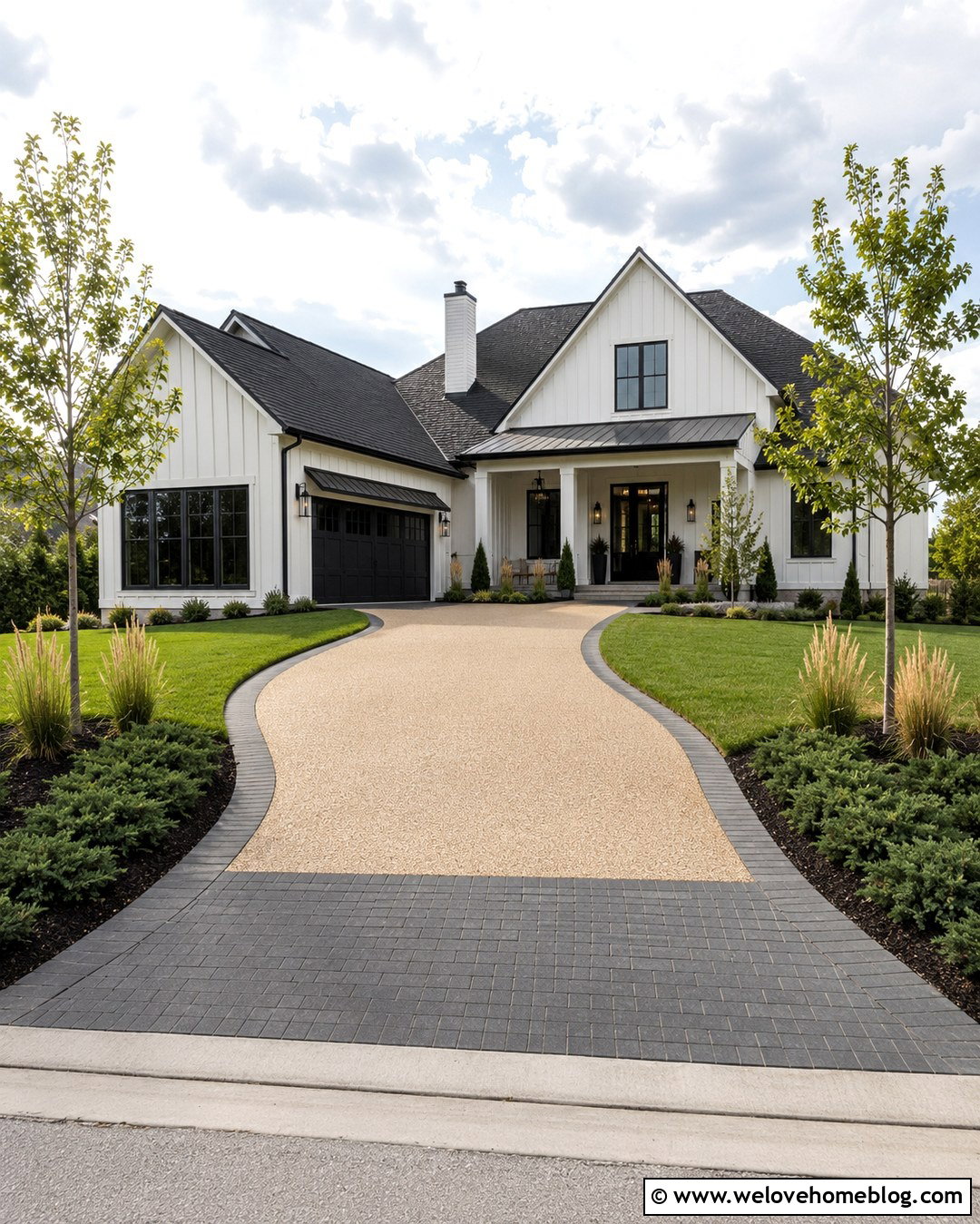
A limited budget does not prevent the driveway from looking finished and welcoming. Keep an existing light gray concrete driveway, cut a gently curved bed along one side, and define it with inexpensive steel or recycled brick edging. Cover the soil with natural brown mulch, then plant repeating groups of hardy ornamental grasses, daylilies, catmint, and compact evergreen shrubs. Starting with smaller plants reduces the initial cost and gives them room to reach mature size. Add one young ornamental tree near the widest part of the bed for height. A simple gravel strip beside the concrete catches loose mulch and makes trimming easier. Complete the design gradually by extending the border, dividing established perennials, and adding low-voltage lighting when the budget allows.
Conclusion:
The best driveway side garden should improve the entire arrival experience without reducing visibility, parking space, drainage, or easy maintenance. These 20 Driveway Side Garden Ideas demonstrate how pavement, shape, edging, plants, and architecture can work together as one complete landscape. A narrow concrete drive may need lavender and cobblestones, while a sloped entrance may benefit from retaining walls and spreading plants. Begin by measuring the available space and studying its sun, soil, and water conditions. Then choose a driveway material and garden style that complement the house. Repeating a limited selection of plants will usually create a more unified result than using many unrelated varieties. With thoughtful planning, even a small side strip can deliver lasting curb appeal.

Related posts:
Leave a Reply