
The best **20 Driveway Lining Ideas** do more than decorate the edges of a parking surface. A well-planned lining defines the driveway’s shape, creates a cleaner transition to the lawn, and connects the approach with the home’s architecture. Brick, cobblestone, steel, timber, shrubs, flowers, and decorative rock can each produce a completely different look. Current driveway design guidance also favors combining practical edging with layered landscaping rather than treating the border as an isolated detail. () Before choosing, consider your driveway material, drainage, available planting width, climate, maintenance needs, and budget. The complete designs below cover modern, traditional, rustic, formal, and low-maintenance properties, giving you plenty of inspiration from these **20 Driveway Lining Ideas**.

1. Brick-Lined Concrete Driveway
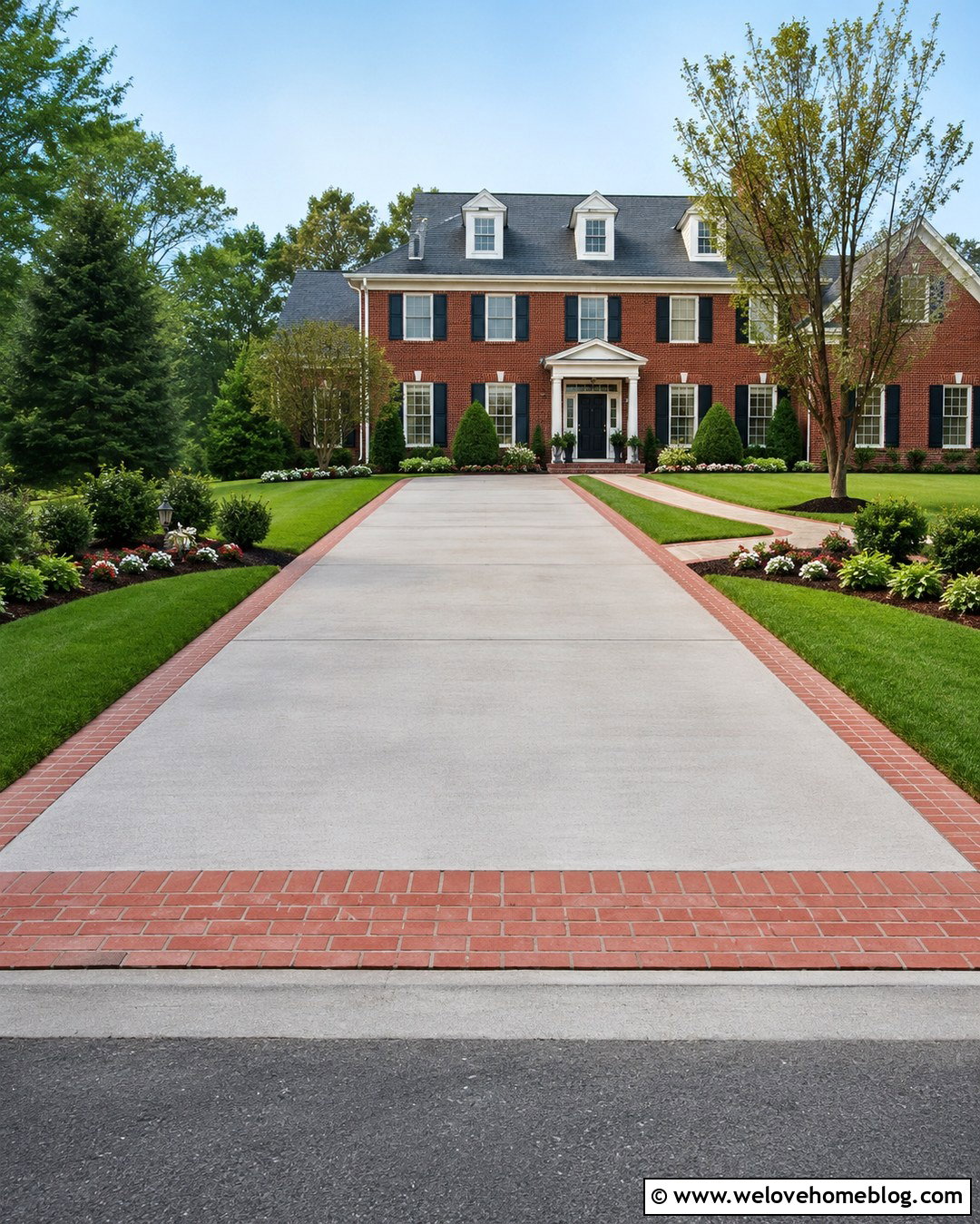
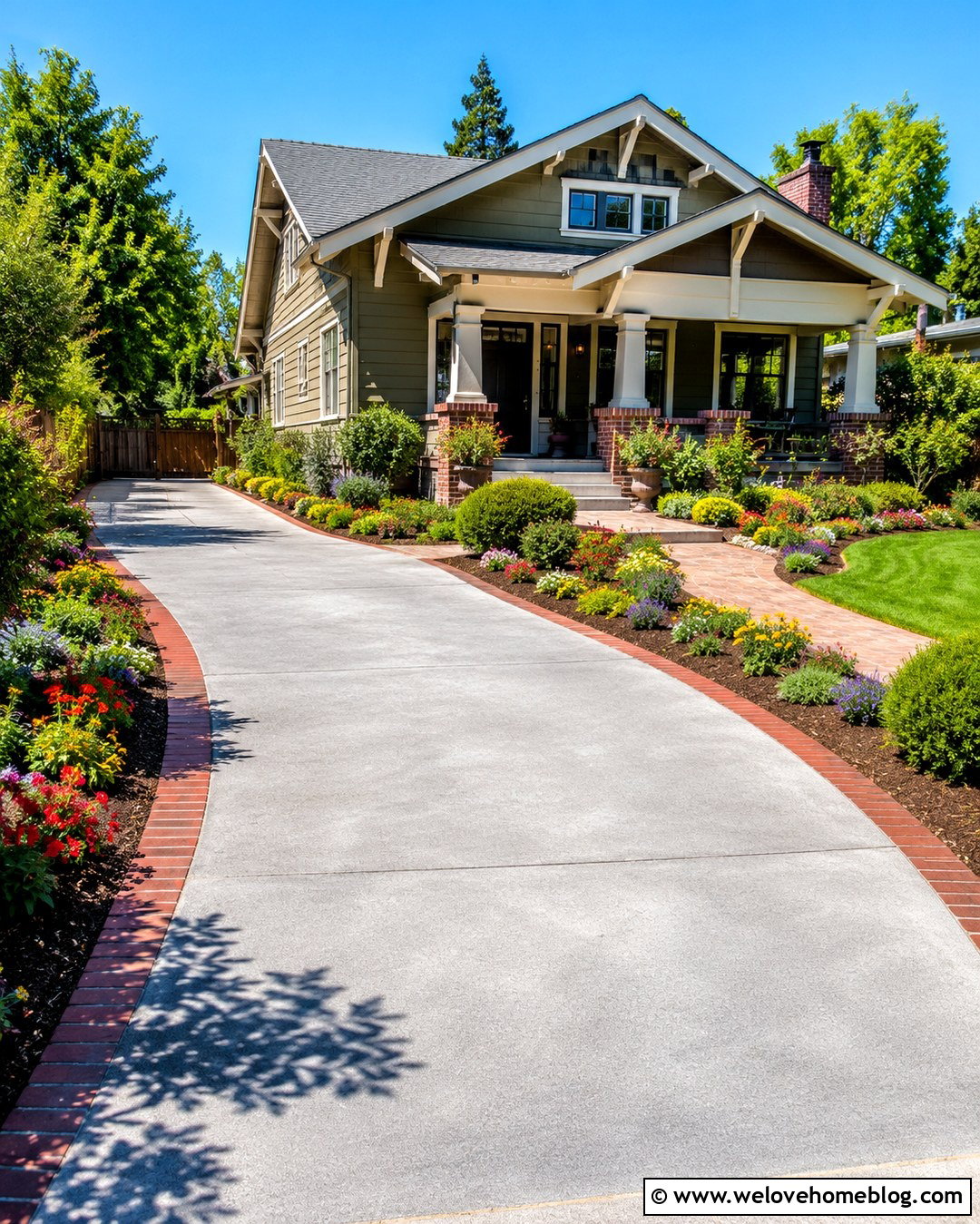
A red brick lining gives a plain concrete driveway a warmer, more finished appearance. Use a straight broom-finished concrete surface with one or two rows of clay bricks installed along both sides. The brick can sit flush with the concrete for easier mowing and a smooth transition. Continue the same material across the driveway entrance as a decorative apron. Narrow planting beds filled with compact evergreen shrubs will soften the hard surfaces without crowding parked vehicles. This combination looks especially natural beside colonial, Cape Cod, and traditional brick homes. Match the border to existing masonry whenever possible. For additional detail, use the same bricks around the nearby walkway so the driveway, entrance, and front door feel like one connected landscape.
2. Cobblestone-Lined Asphalt Driveway
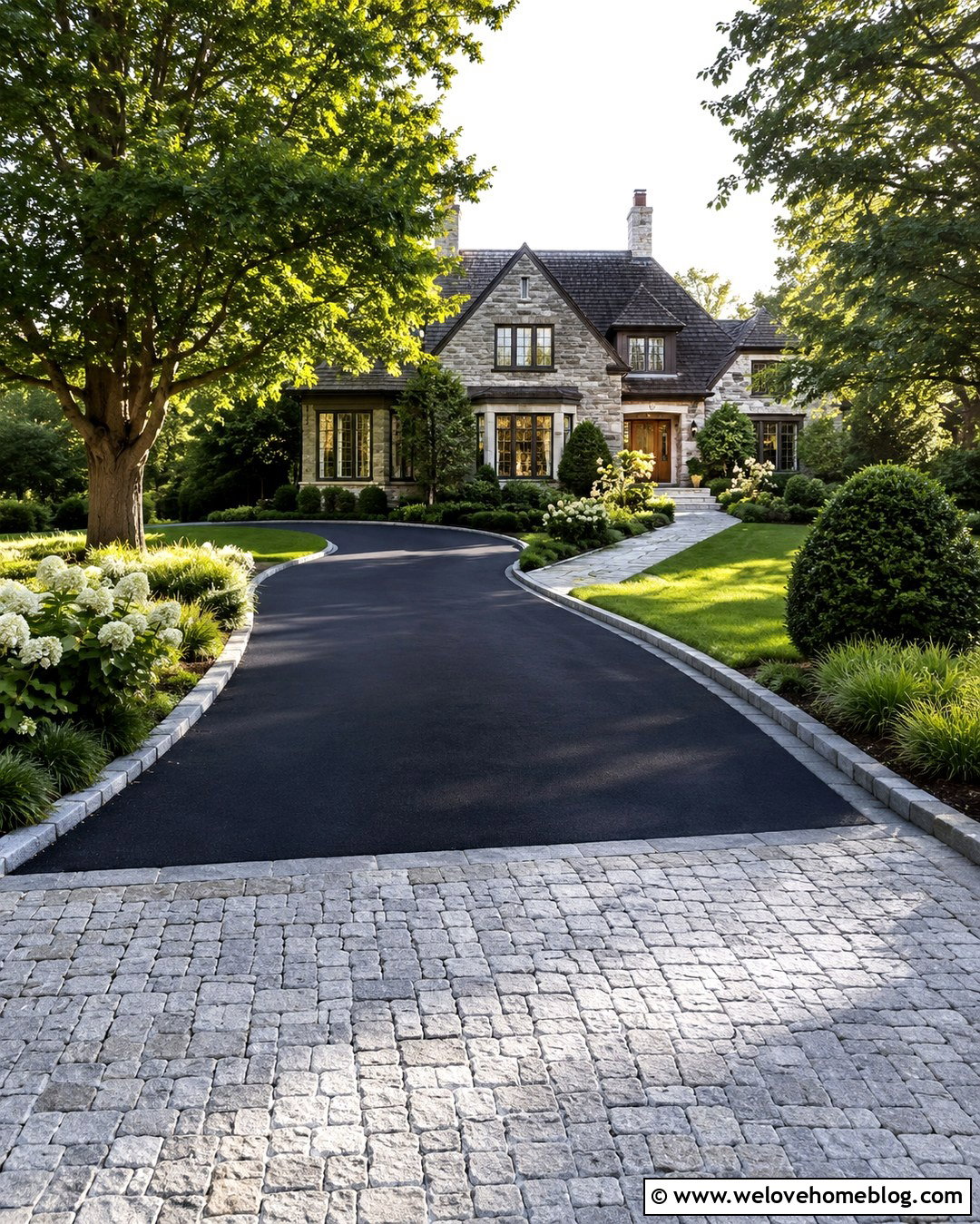
Black asphalt creates a bold background for light gray granite cobblestones. Line a gently curved driveway with one substantial row of cobbles, keeping their tops close to the asphalt surface. The contrast makes the driveway shape easy to see while introducing the character of an older stone entrance. Add broad lawn panels outside the lining, followed by simple beds containing hydrangeas, compact hollies, or ornamental grasses. A cobblestone apron at the street can strengthen the entrance without requiring stone across the entire driveway. This complete look suits craftsman homes, stone cottages, and established suburban properties. Select cobbles with naturally varied tones rather than a perfectly uniform color. Their subtle differences help the new lining blend with mature trees, masonry walls, and existing garden features.
3. Paver-Lined Gravel Driveway
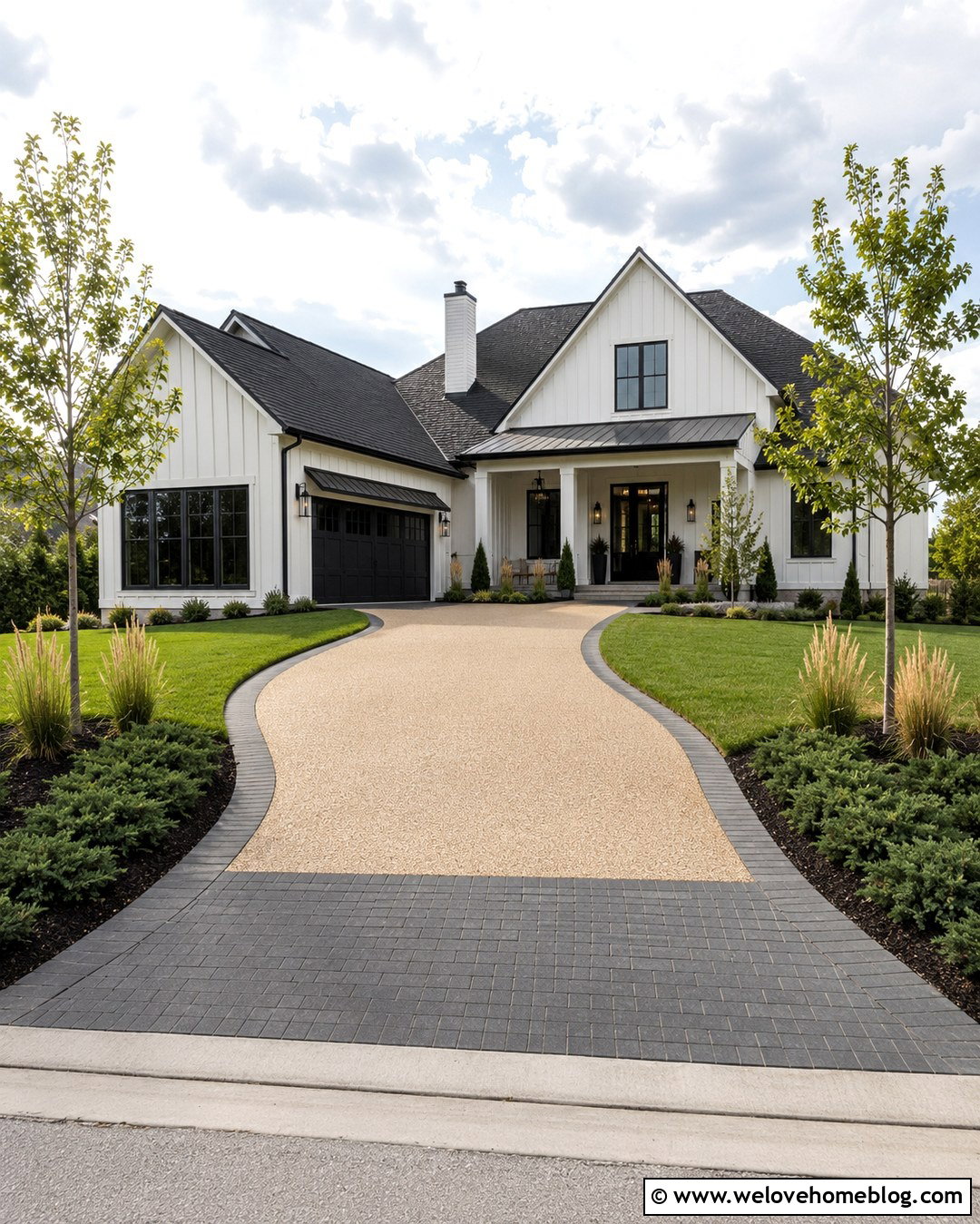
Loose gravel feels much more intentional when it is contained by a strong paver lining. Choose warm beige gravel for the main surface and install charcoal concrete pavers along both edges of a straight or softly curved layout. Set the pavers on a compacted base so they resist shifting as vehicles enter and leave. A wider paver apron near the garage creates a clean transition and keeps loose stones away from the doors. Outside the lining, use clipped lawn, low junipers, and a few upright ornamental grasses for balanced texture. This design works well with ranch houses and modern farmhouses because it combines a relaxed material with crisp boundaries. Repeating the charcoal pavers around the front walkway will make the overall yard feel coordinated rather than pieced together.
4. Steel-Lined Modern Concrete Driveway
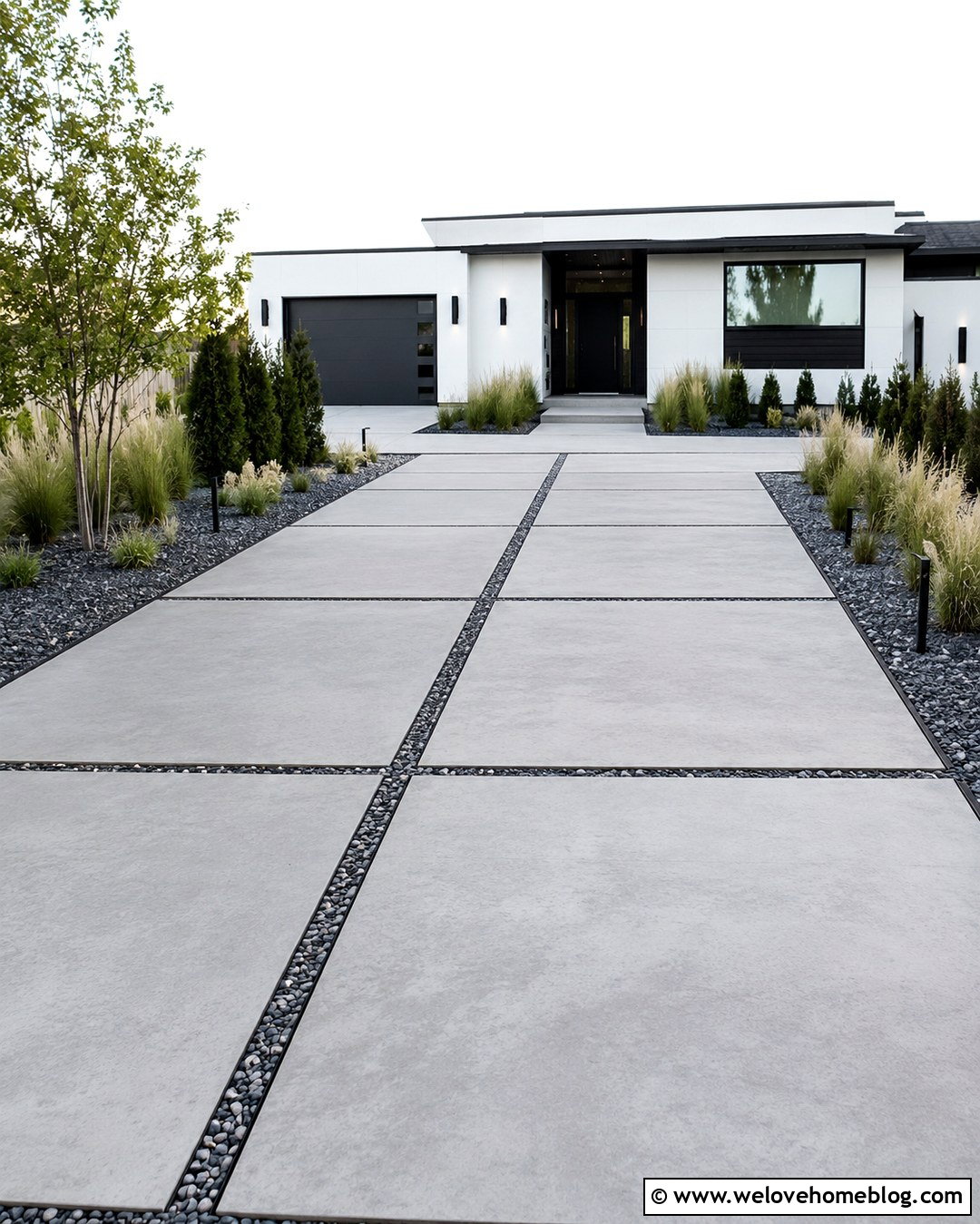
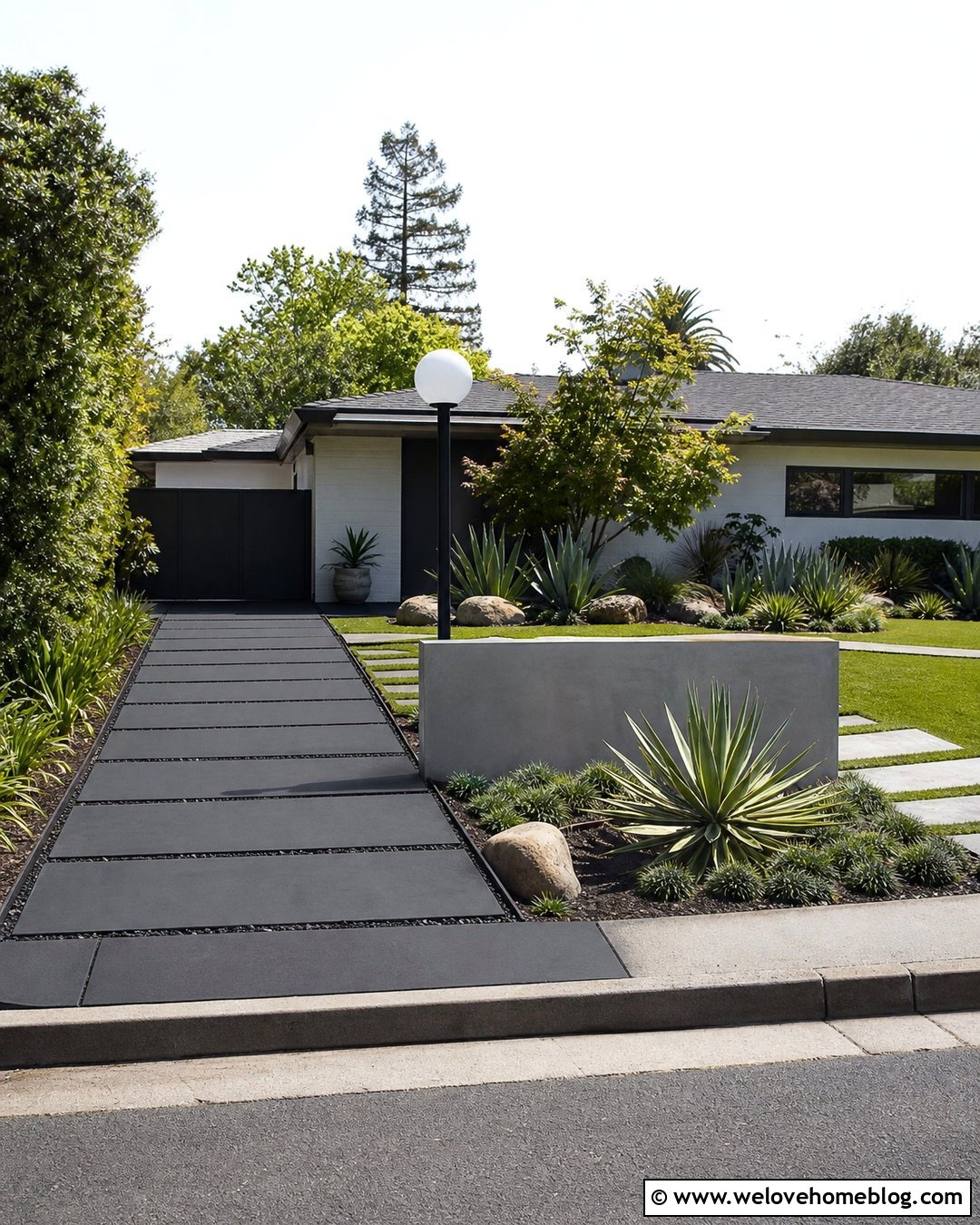
For a subtle contemporary border, pair large gray concrete slabs with slim black steel edging. Divide the driveway into clean rectangular sections and use narrow gravel joints to break up the paved area. The steel lining should follow both sides at ground level, creating a precise separation between the concrete and surrounding planting beds. Fill those beds with repeated groups of feather reed grass, dwarf evergreens, and dark decorative gravel. A straight driveway leading toward a modern house will emphasize the strong geometry. Keep the planting palette limited so the clean lines remain visible from the street. Black path lights, a simple concrete walkway, and a matching steel address marker can reinforce the design. The result feels polished without relying on a thick or highly decorative driveway border.
5. River Rock-Lined Resin Driveway
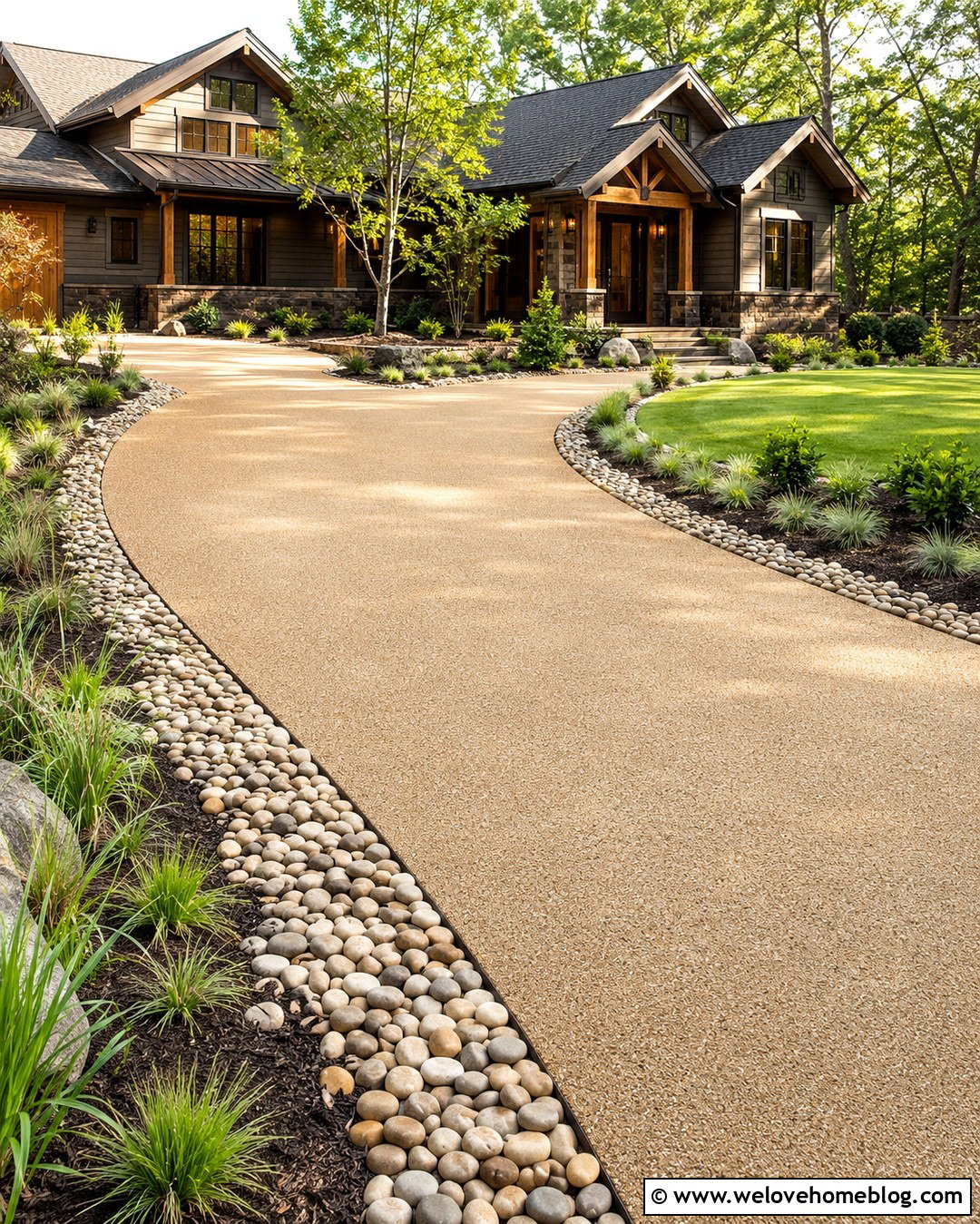
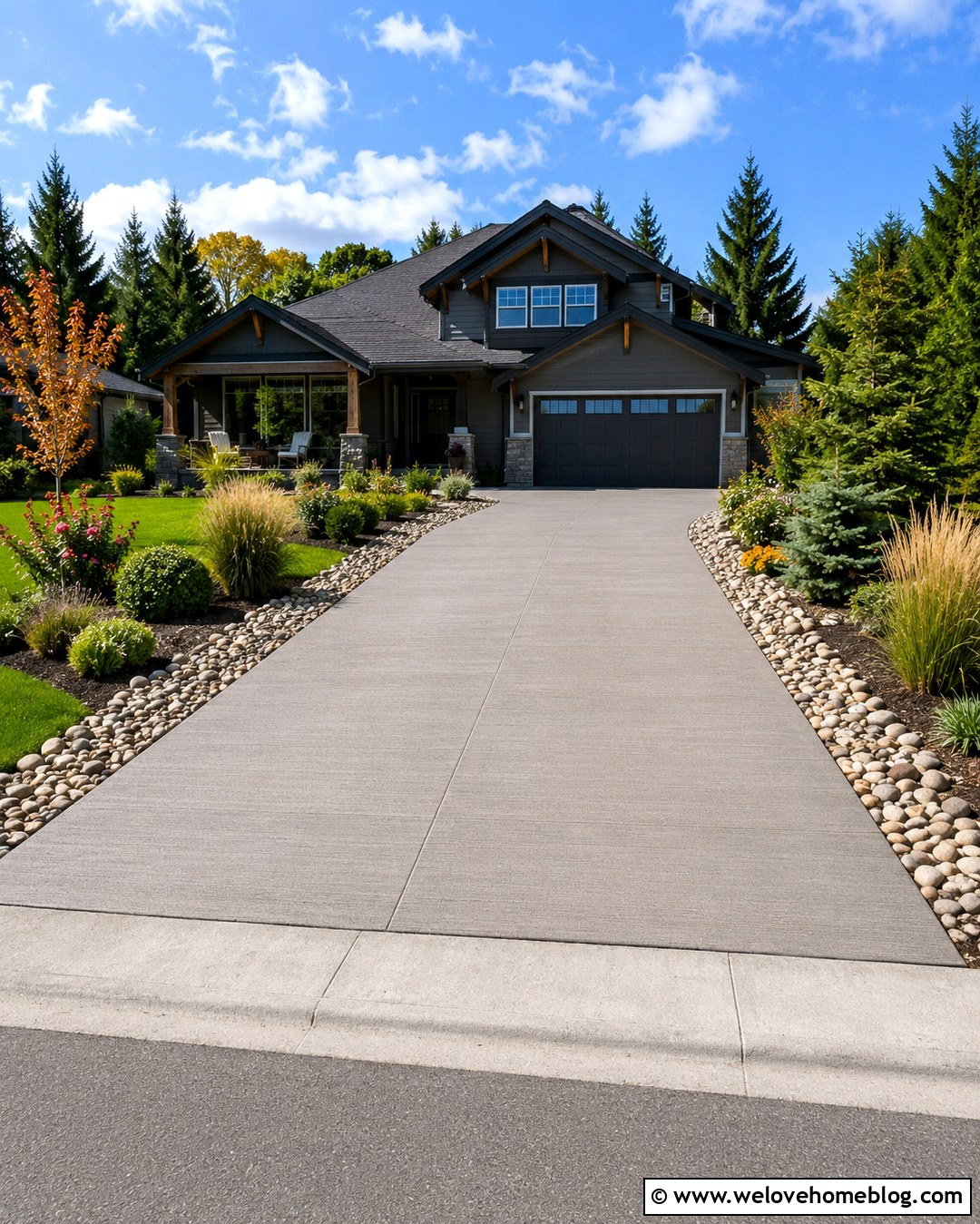
A warm resin-bound gravel driveway becomes softer and more natural when lined with smooth river rock. Use a sweeping curved layout that follows the contours of the front yard instead of creating a rigid path. A recessed steel strip can separate the resin surface from a 12-inch band of mixed tan, cream, and gray river stones. Beyond that band, plant spreading ground covers, compact grasses, and several larger shrubs to create depth. This combination is particularly attractive with a contemporary craftsman or nature-inspired home. Choose river rock colors that relate to the house facade and driveway aggregate. Avoid making the rock band excessively wide, since it should frame the drive rather than compete with it. Extend the same stones into a nearby drainage bed for a visually connected landscape.
6. Timber-Lined Country Gravel Driveway
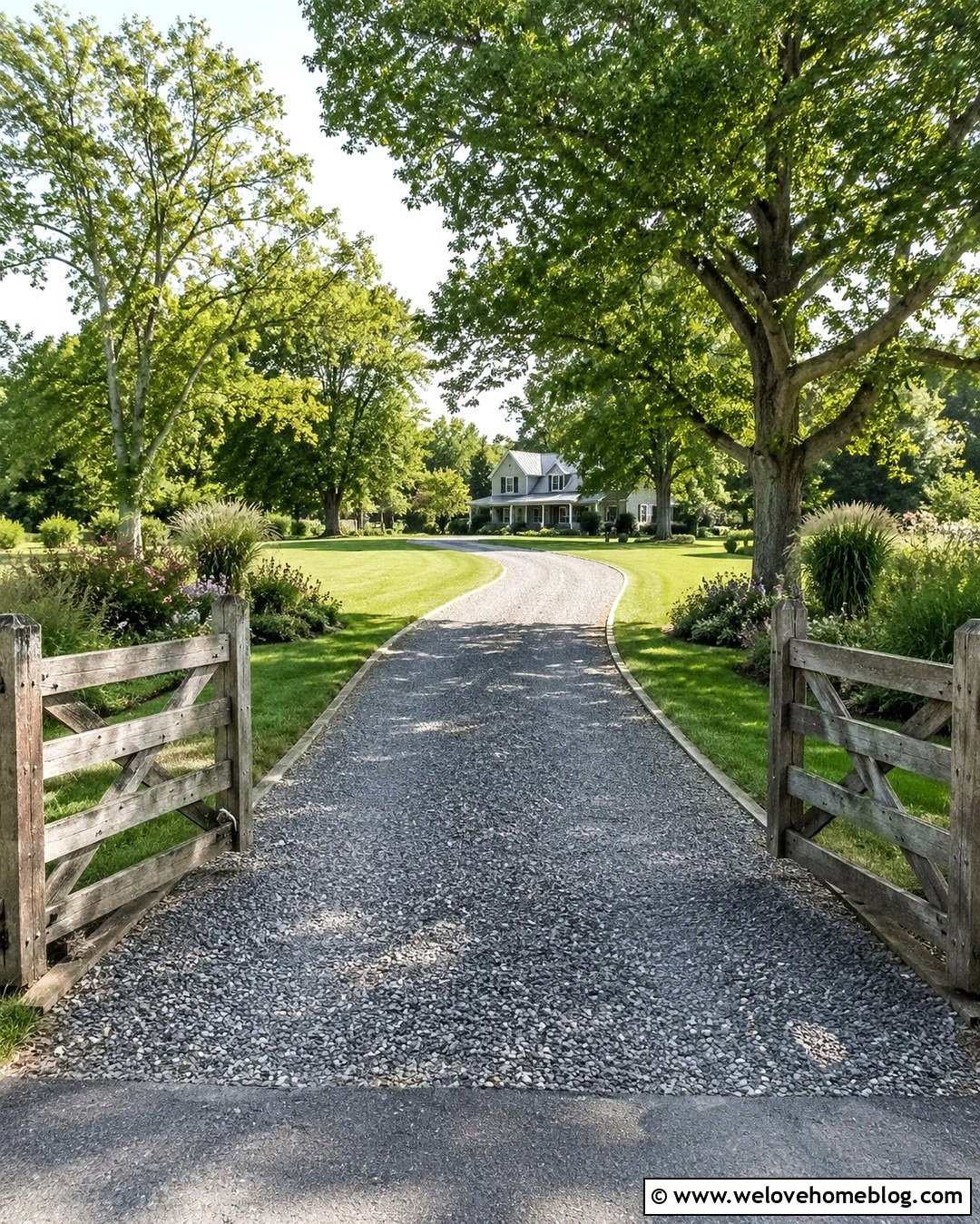
Pressure-treated timber gives a gravel driveway a simple country edge that feels relaxed but organized. Use angular gray gravel on a long, slightly curved approach and secure substantial landscape timbers along each side. The timber should be properly anchored and installed with a consistent height to prevent an uneven appearance. Outside the lining, create wide grass shoulders with informal groups of native shrubs, flowering perennials, and shade trees. A timber entrance gate or post-and-rail fence can repeat the natural material near the road. This complete design complements cabins, country homes, and modest modern farmhouses. Select gravel that contrasts gently with the timber rather than matching it exactly. Over time, the wood will weather into the setting, helping the driveway feel established instead of overly formal or newly constructed.
7. Hedge-Lined Asphalt Driveway
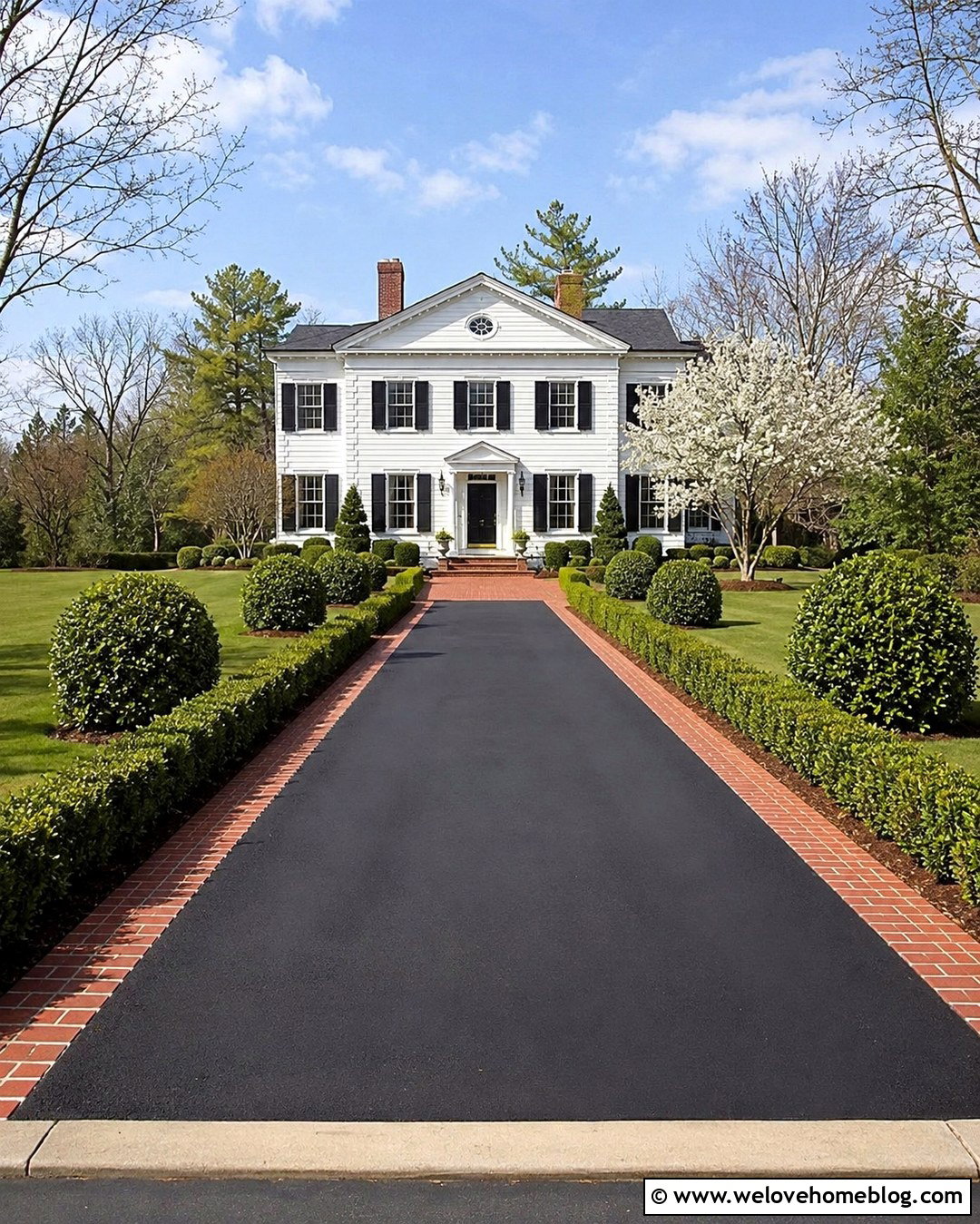
A low evergreen hedge can transform a basic asphalt driveway into a formal, structured approach. Keep the driveway straight and use a narrow flush brick edge between the black asphalt and planting soil. Beyond the brick, establish evenly spaced compact shrubs that can be maintained below car-window height. Boxwood alternatives, dwarf hollies, or regionally suitable evergreen shrubs can produce the same tailored effect. Leave occasional openings for the front walkway, utility access, and car doors. A larger planting bed near the house can contain matching shrubs with one flowering tree for height. This design works beautifully with colonial, Georgian, and symmetrical suburban homes. Regular spacing is important, but the hedge does not need to form a solid wall immediately. Allow enough room for each plant to reach its mature width comfortably.
8. Lavender-Lined Pea Gravel Driveway
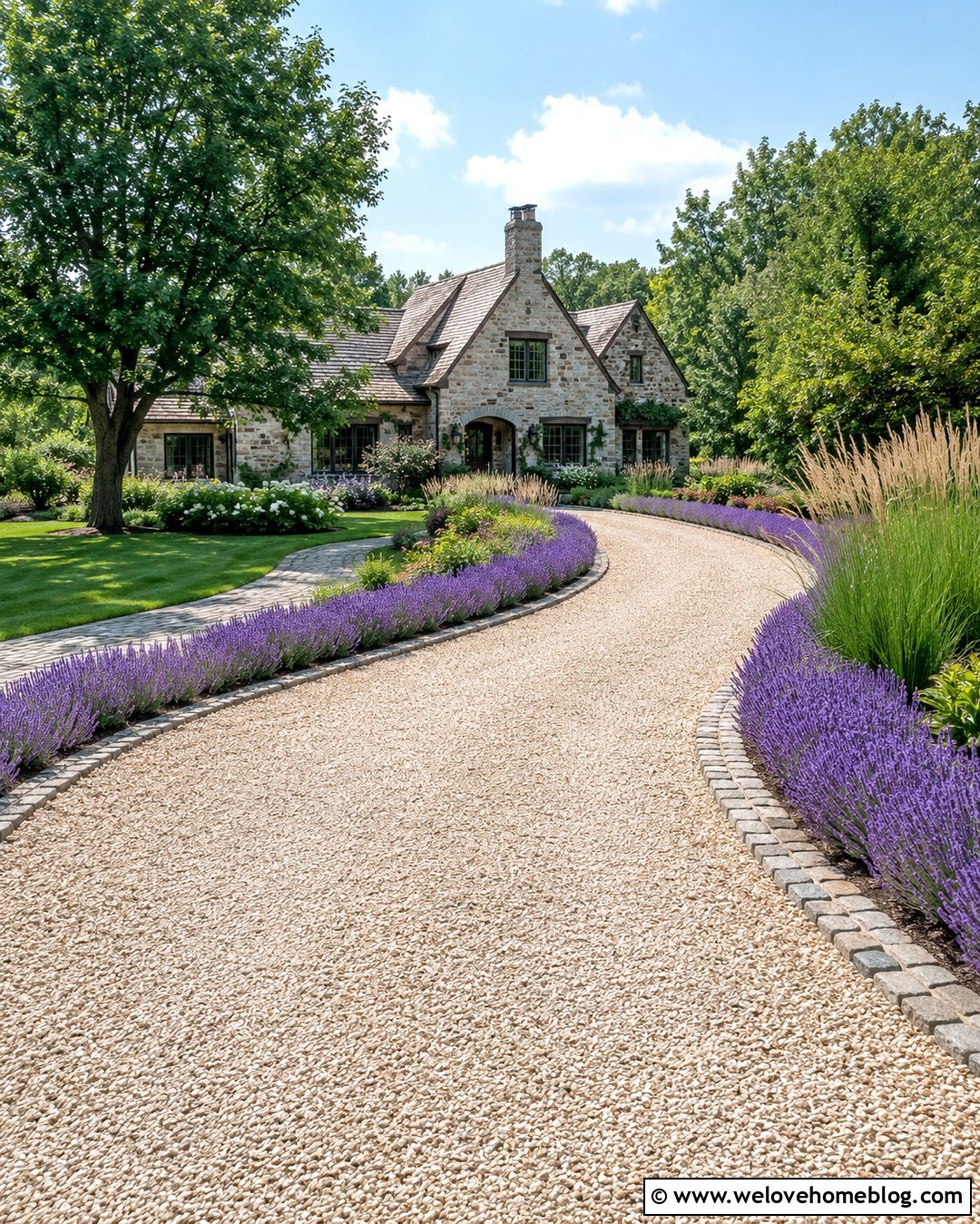
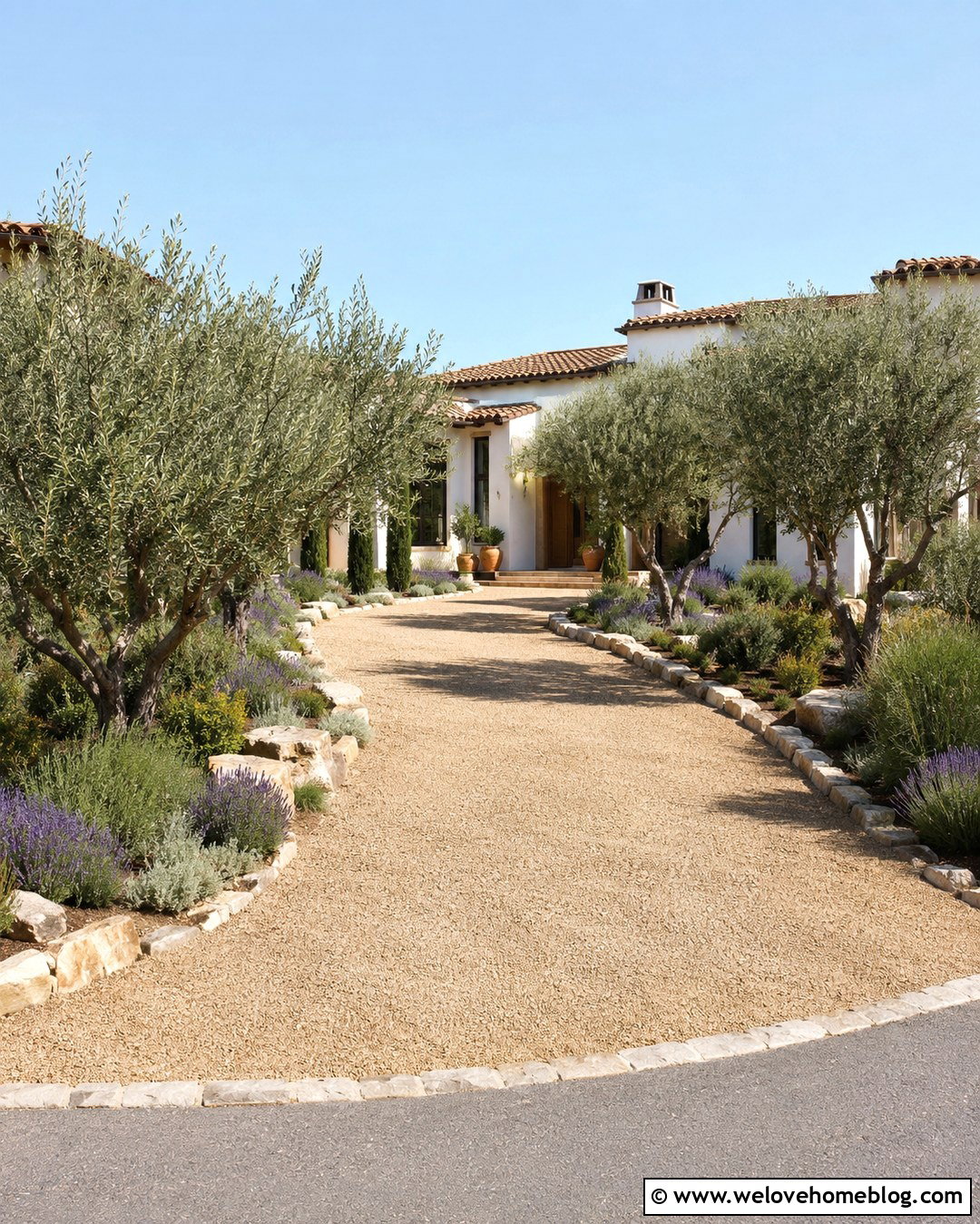
Imagine a pale pea gravel driveway curving through two fragrant ribbons of purple flowers. Start with compacted cream or light gray pea gravel held in place by low cobblestone edging. Outside the stone, create sunny planting strips filled with repeated lavender plants and a few upright grasses. The cobblestones provide a practical buffer between the loose surface and the soil, while the lavender softens their hard outline. This combination suits cottages, Mediterranean-inspired houses, and casual country homes. Give the planting bed enough width for mature growth without allowing stems to lean into the driving area. A gravel walkway branching toward the porch can use the same cobblestone lining. For a balanced view, continue the lavender in larger clusters near the entrance rather than forming two overly rigid, uninterrupted rows.
9. Ornamental Grass-Lined Aggregate Driveway
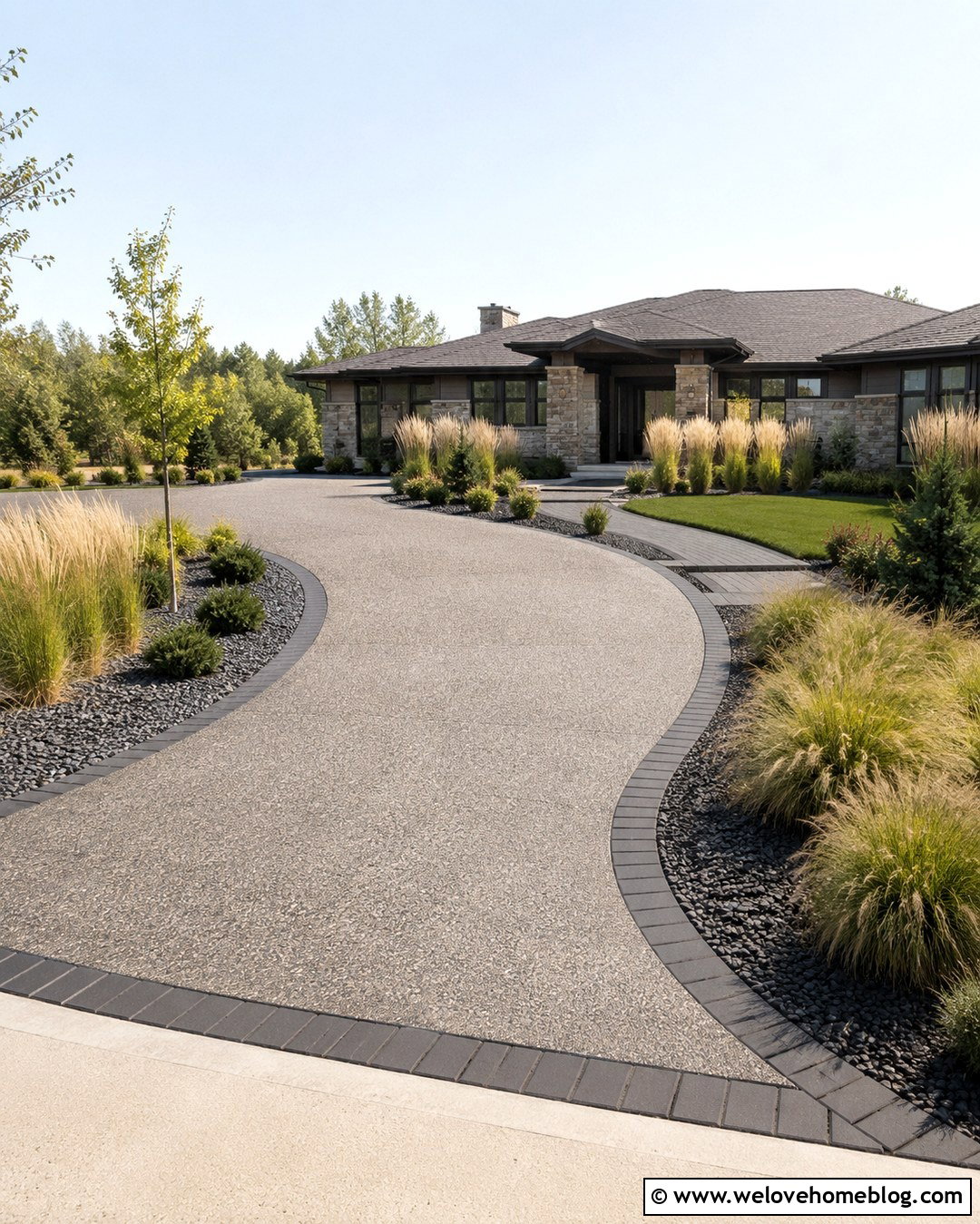
Exposed aggregate concrete and ornamental grasses create a textured driveway that still feels clean and contemporary. Use a broad, gently curved driveway with a warm gray pebble finish. Define both edges with narrow charcoal paver ribbons, then plant sweeping groups of medium-height grasses outside them. Mix compact varieties near the street with taller grasses closer to the house, where additional height will not block visibility. Dark mulch or small gravel beneath the plants will make their shapes easier to appreciate. This design works well with ranch, prairie-style, and modern homes because the horizontal planting echoes their architecture. Include a few low evergreen shrubs for winter structure. Instead of filling every gap, leave deliberate open spaces so the grass groups, paver lining, lawn, and aggregate surface remain visually distinct.
10. Flower Bed-Lined Brick Driveway
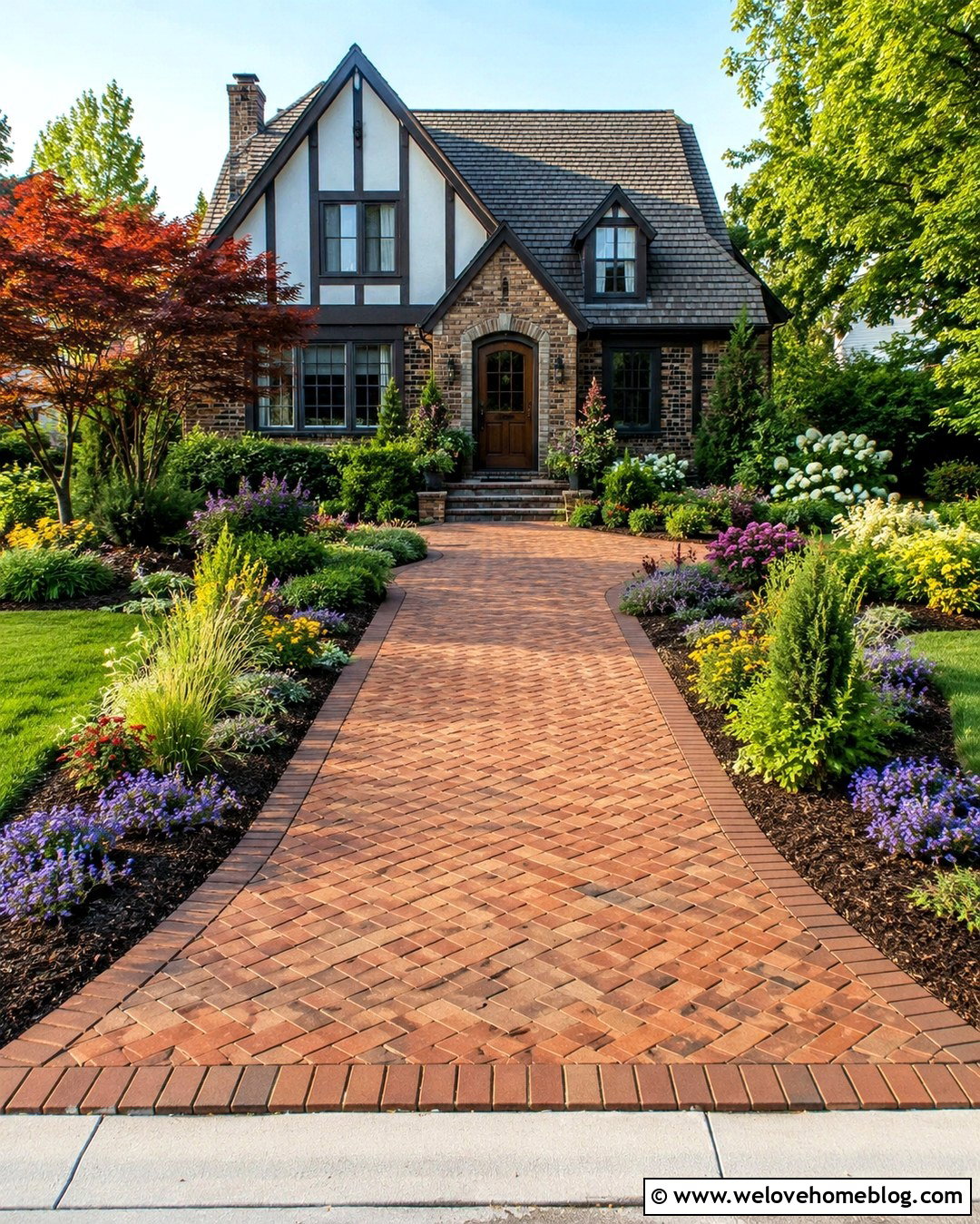
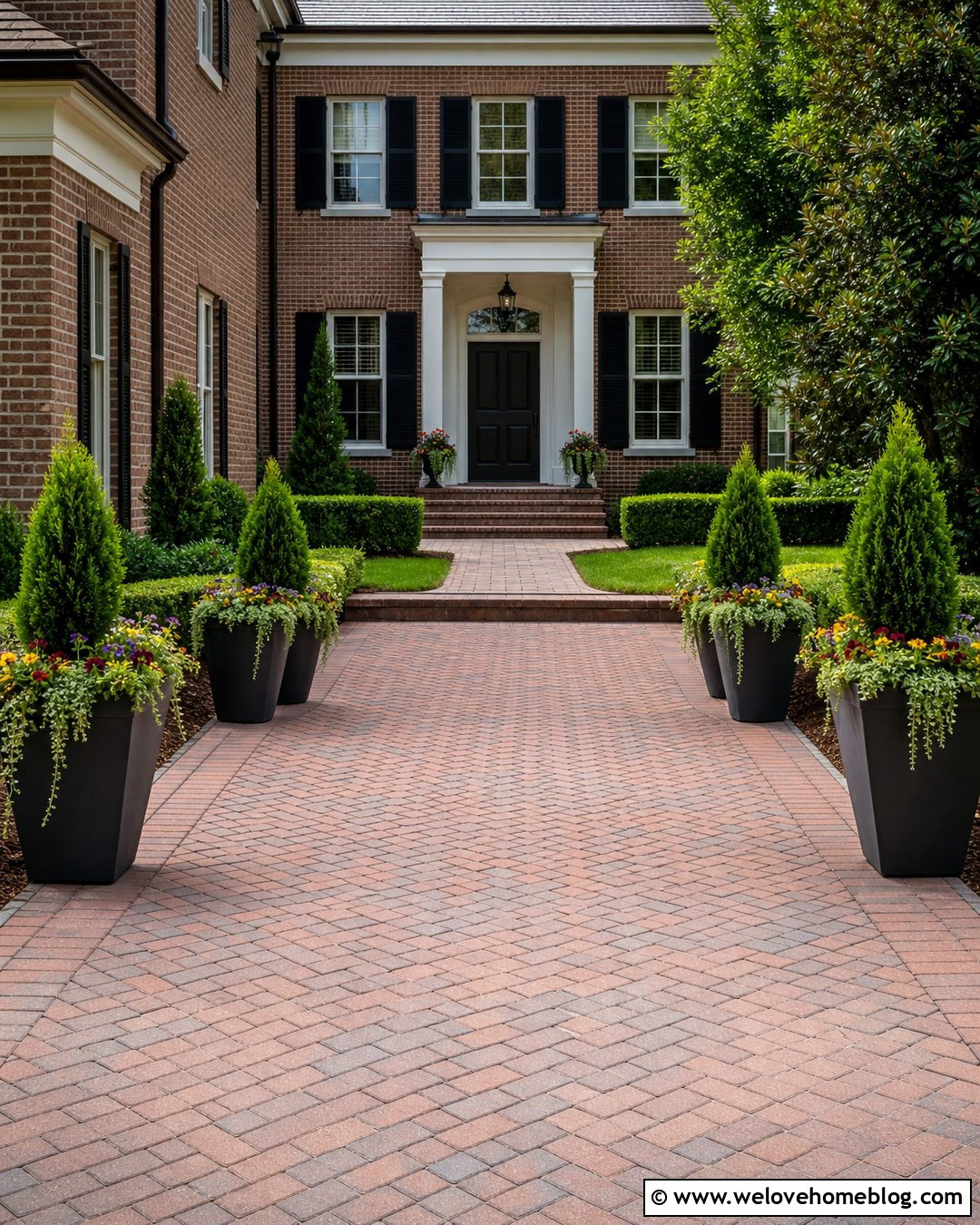
Clay brick pavers laid in a herringbone pattern provide a rich foundation for colorful driveway borders. Frame the surface with a soldier-course brick lining in a slightly darker shade, then add curved flower beds along both sides. Build the planting around dependable low perennials, compact shrubs, and seasonal flowers rather than using only short-lived color. Taller plants should sit toward the back, while low ground covers can gently meet the brick edge. This layered arrangement gives the driveway interest without making it feel narrow. A traditional cottage, Tudor, or craftsman house will complement the varied colors and textures. Repeat a few key plants on both sides for balance, but avoid perfect symmetry if you want a relaxed garden atmosphere. Connect one border naturally to the walkway leading toward the porch.
11. Mulch and Shrub-Lined Concrete Driveway
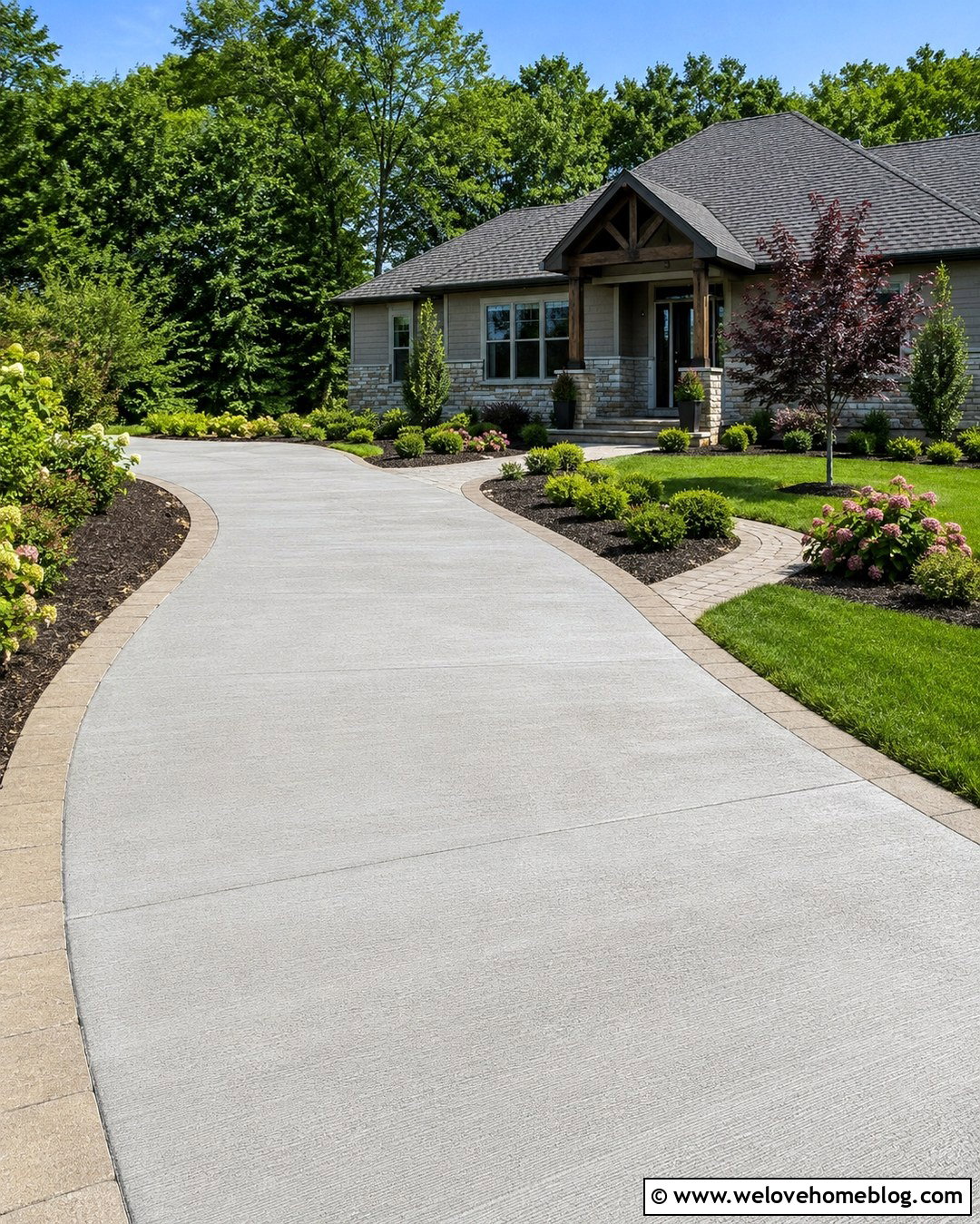
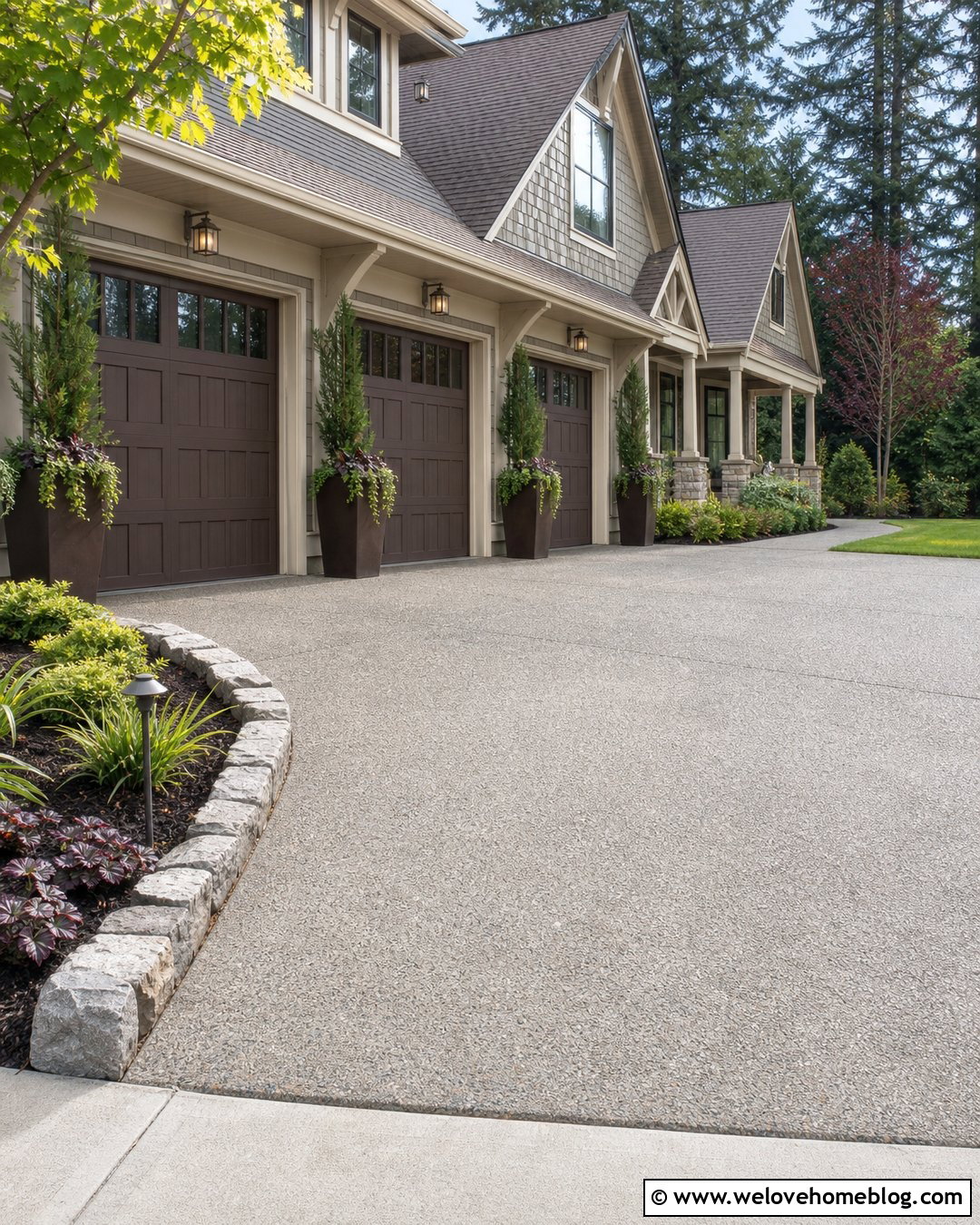
A dark mulch bed with neatly spaced shrubs is one of the simplest ways to upgrade a standard concrete driveway. Begin with light gray broom-finished concrete and a flush row of tan pavers along each side. Outside the pavers, create gently curved beds filled with dark brown mulch, rounded evergreen shrubs, and several flowering accents. Make the beds wider near the house and narrower near the street for a natural sense of arrival. This layout looks tidy beside ranch, split-level, and craftsman homes. Select compact plants that will not cover the lining or interfere with car doors. One ornamental tree placed near the outer curve can add height without overwhelming the driveway. Carry the same mulch, shrubs, and paver edge around the front foundation to connect the driveway landscaping with the house.
12. Dry Creek-Lined Asphalt Driveway
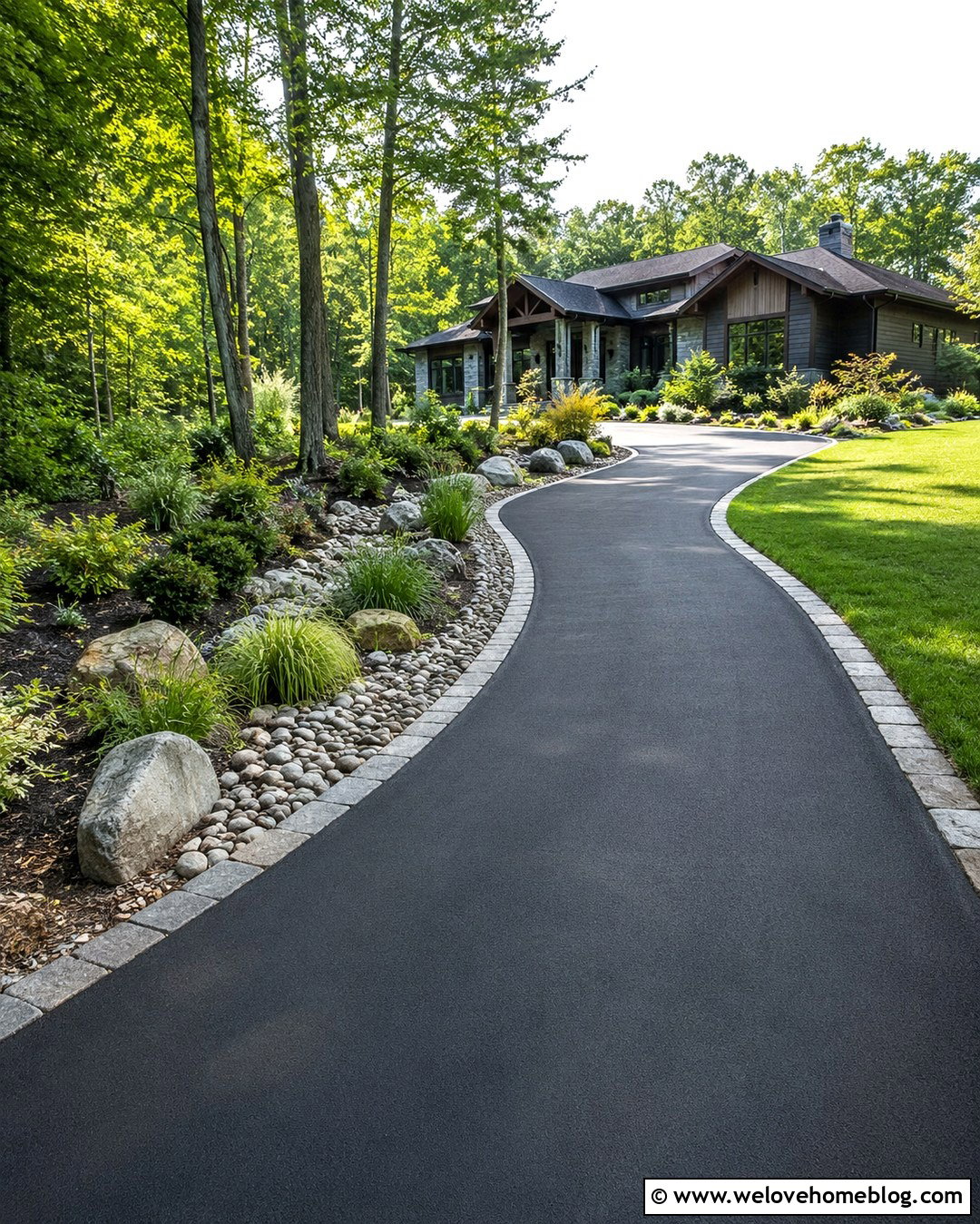
A decorative dry creek can turn one side of a driveway into an attractive landscape feature. Use smooth black asphalt with a curved granite cobblestone border, then build a shallow stone channel just outside the edging. Fill it with mixed river rock and place several larger weathered boulders along the bends. Plant moisture-tolerant grasses and low shrubs around the channel while leaving its center open and visible. On the opposite driveway edge, use a simpler cobblestone lining with lawn or a narrow planting strip. This asymmetrical design prevents the entrance from looking overly busy. It works especially well with woodland homes, contemporary ranch houses, and properties with sloping yards. Before construction, plan where collected water can safely travel and confirm that the channel will not direct runoff toward the house or neighboring property.
13. Raised Stone-Lined Gravel Driveway
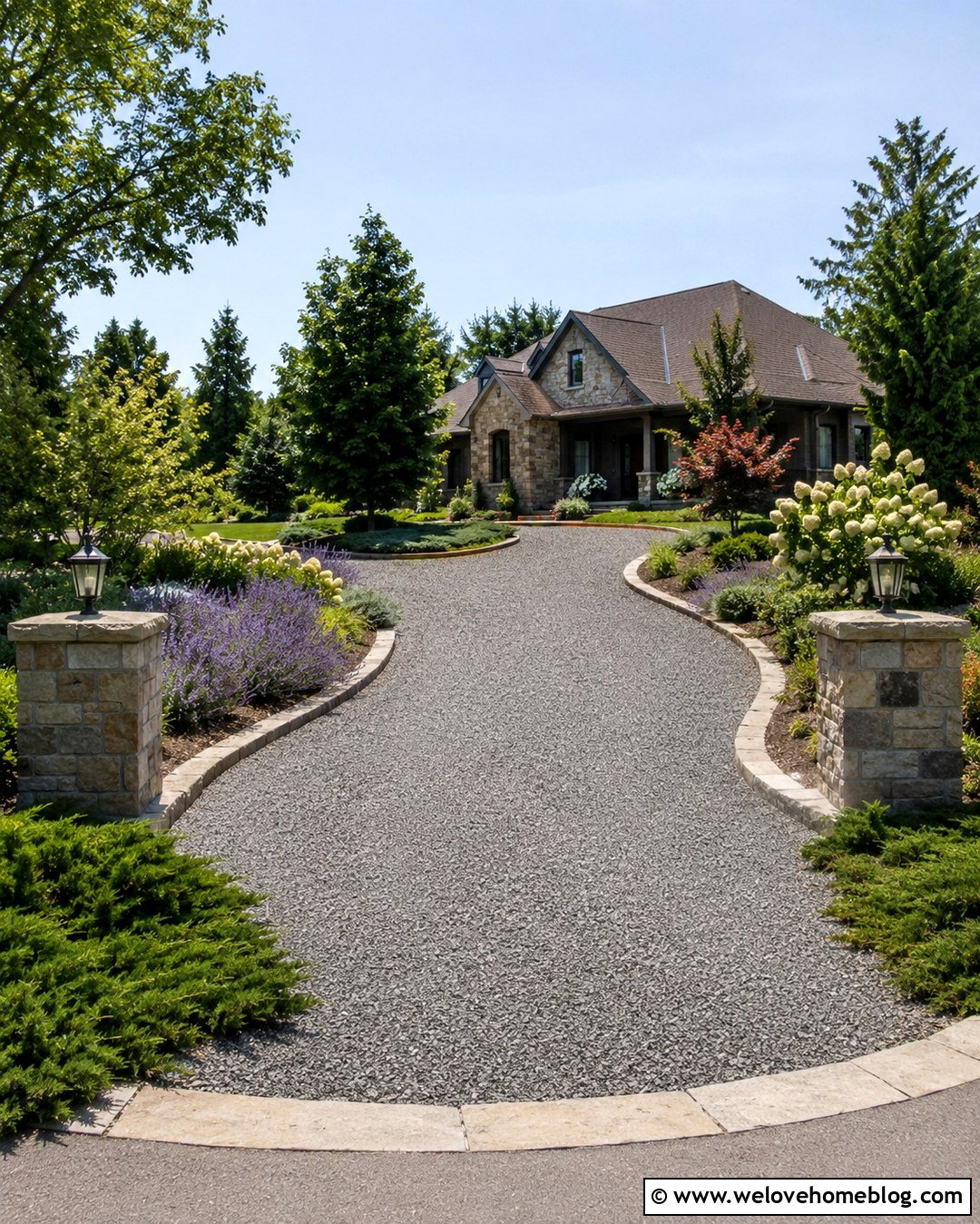
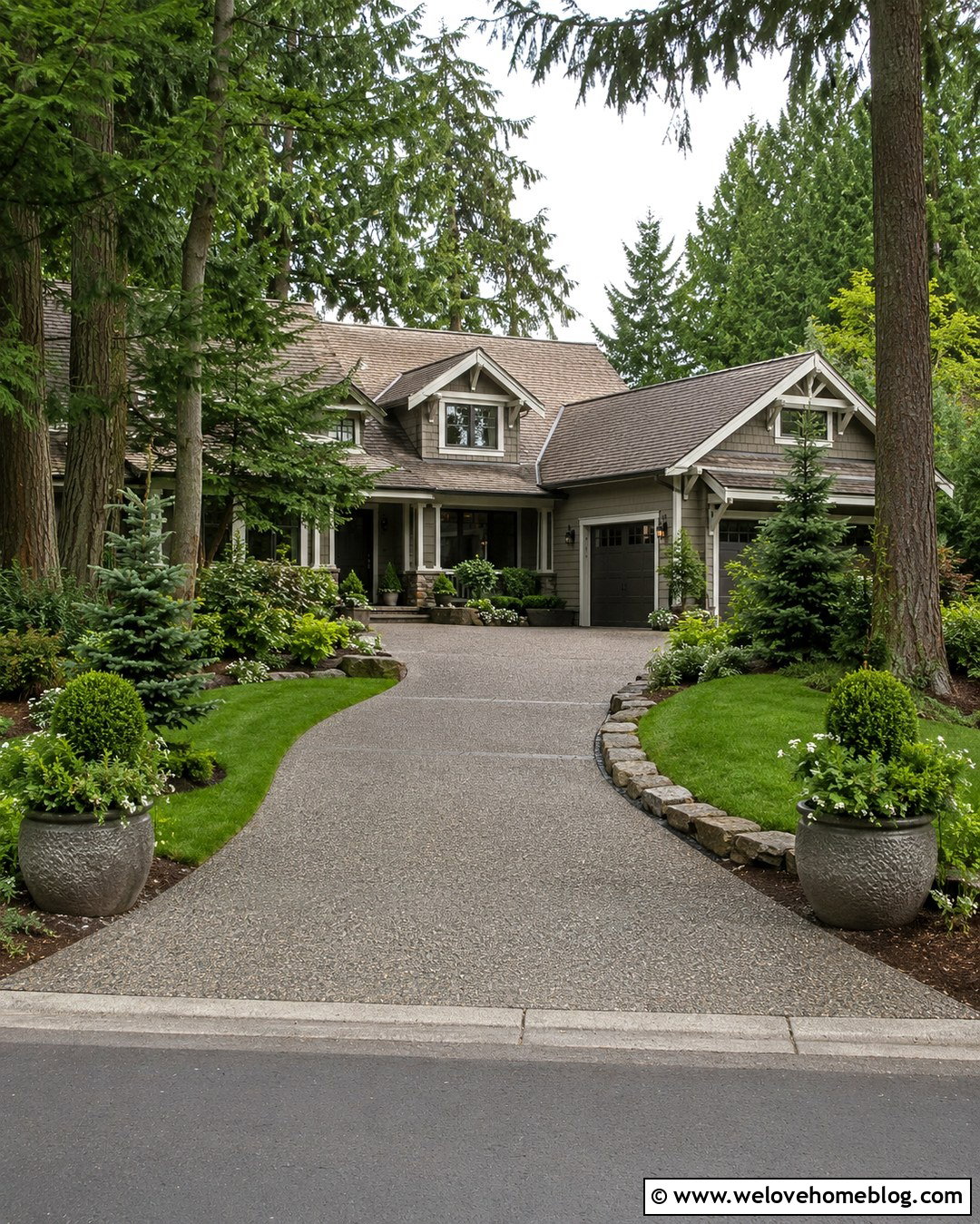
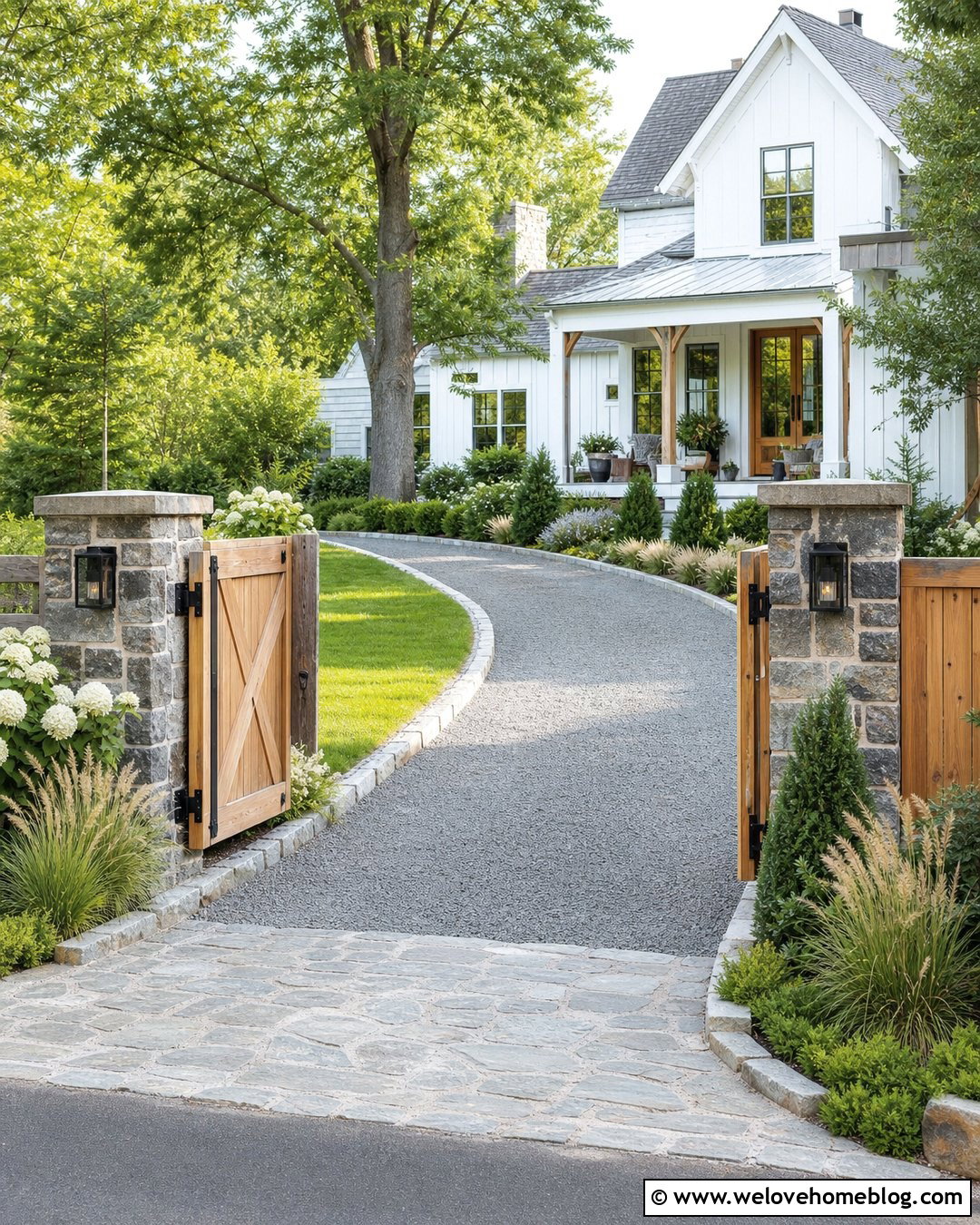
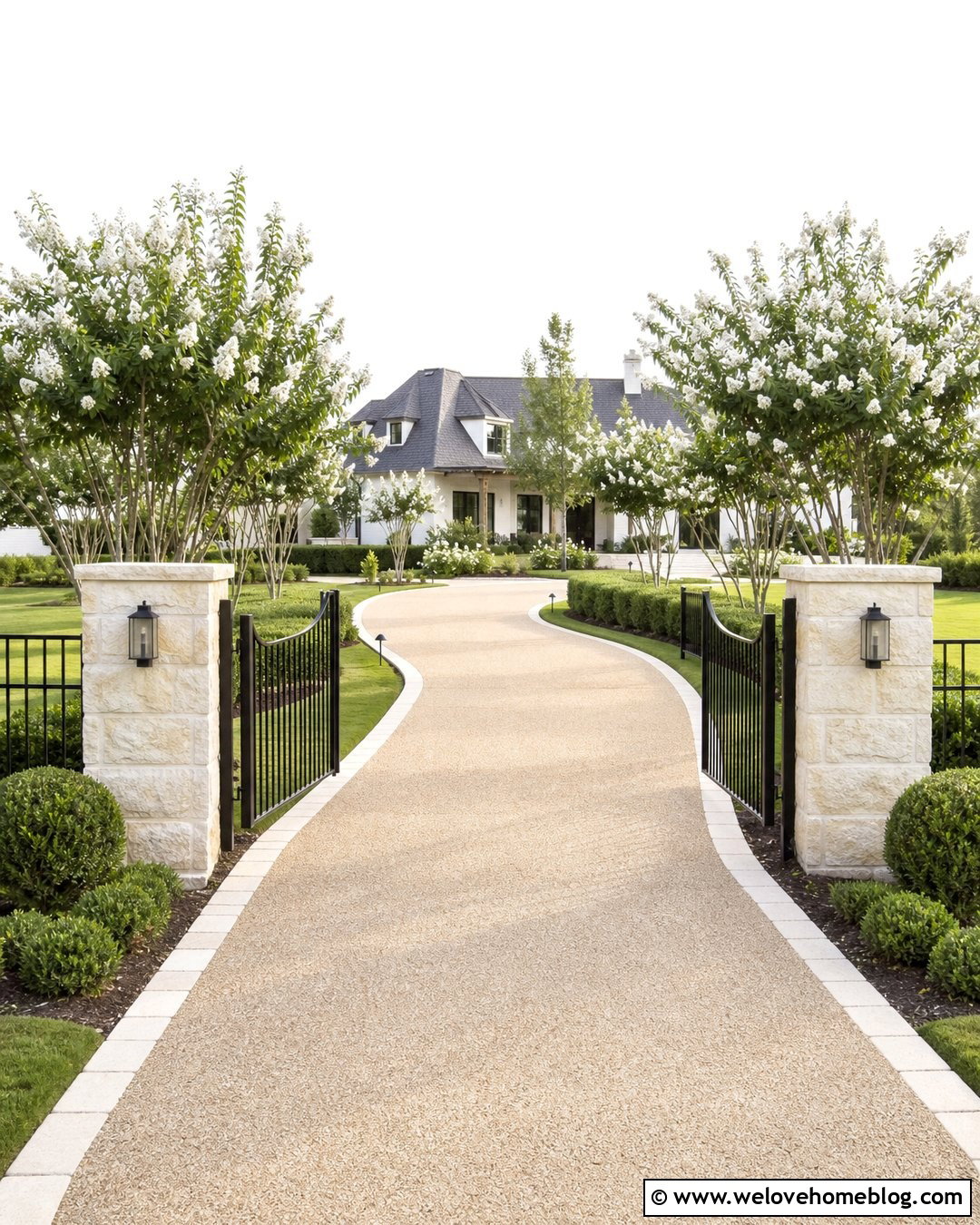
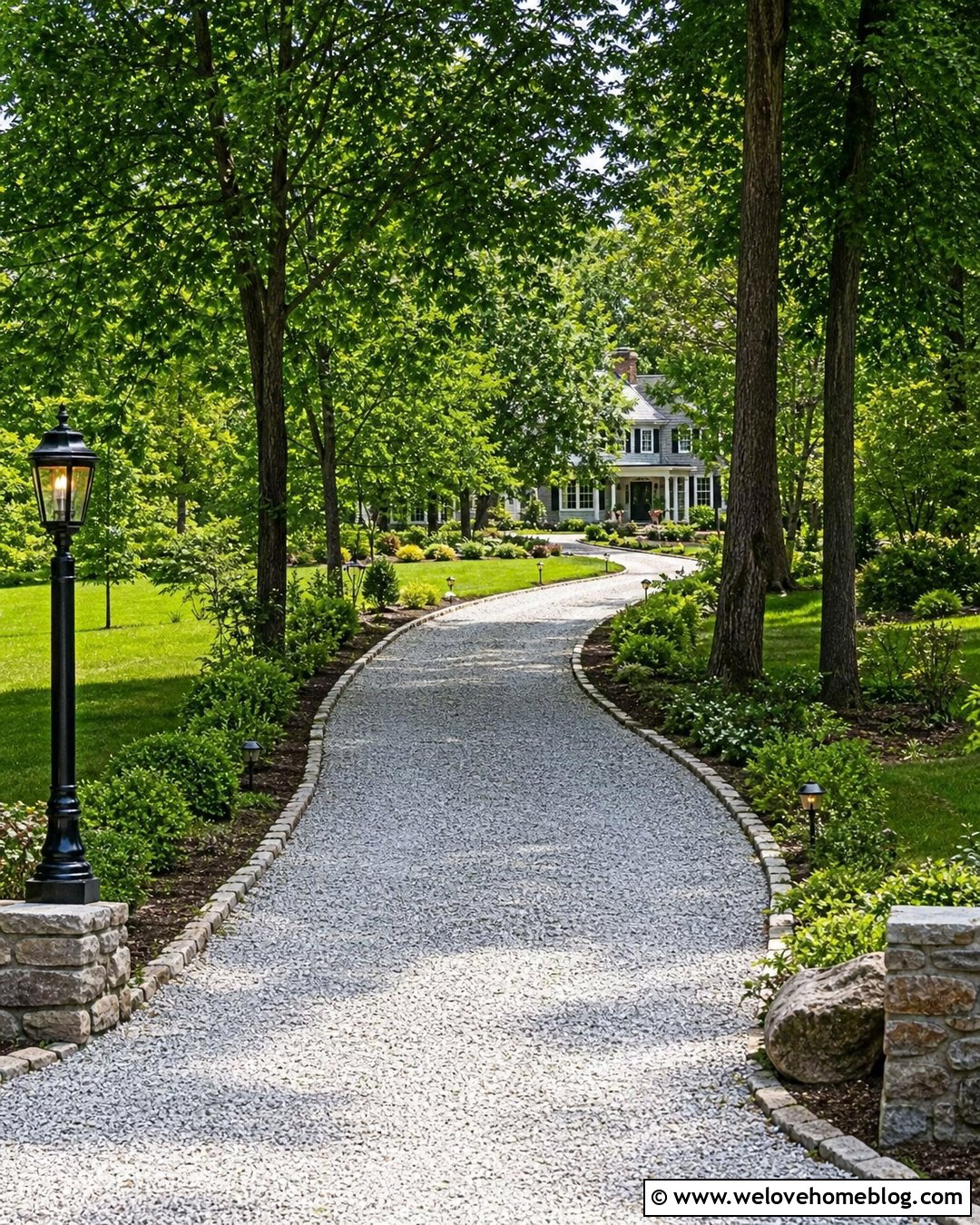
A raised natural stone curb gives a loose gravel driveway a substantial, permanent-looking frame. Choose compacted gray crushed gravel and line it with rectangular limestone or granite blocks in varied lengths. A slightly elevated border helps the driveway read as a defined route, especially across a large lawn. Use a broad curved shape leading toward a stone-faced craftsman or country house. Behind the curb, plant low spreading junipers, catmint, flowering shrubs, and small ornamental trees in generous beds. Keep the planting lower near the road to preserve an open entrance. Stone pillars can mark the beginning of the driveway and repeat the lining material. For a cohesive result, match the border’s color family to existing facade stone, retaining walls, or porch steps without trying to duplicate every individual tone.
14. Grass Strip-Lined Paver Driveway
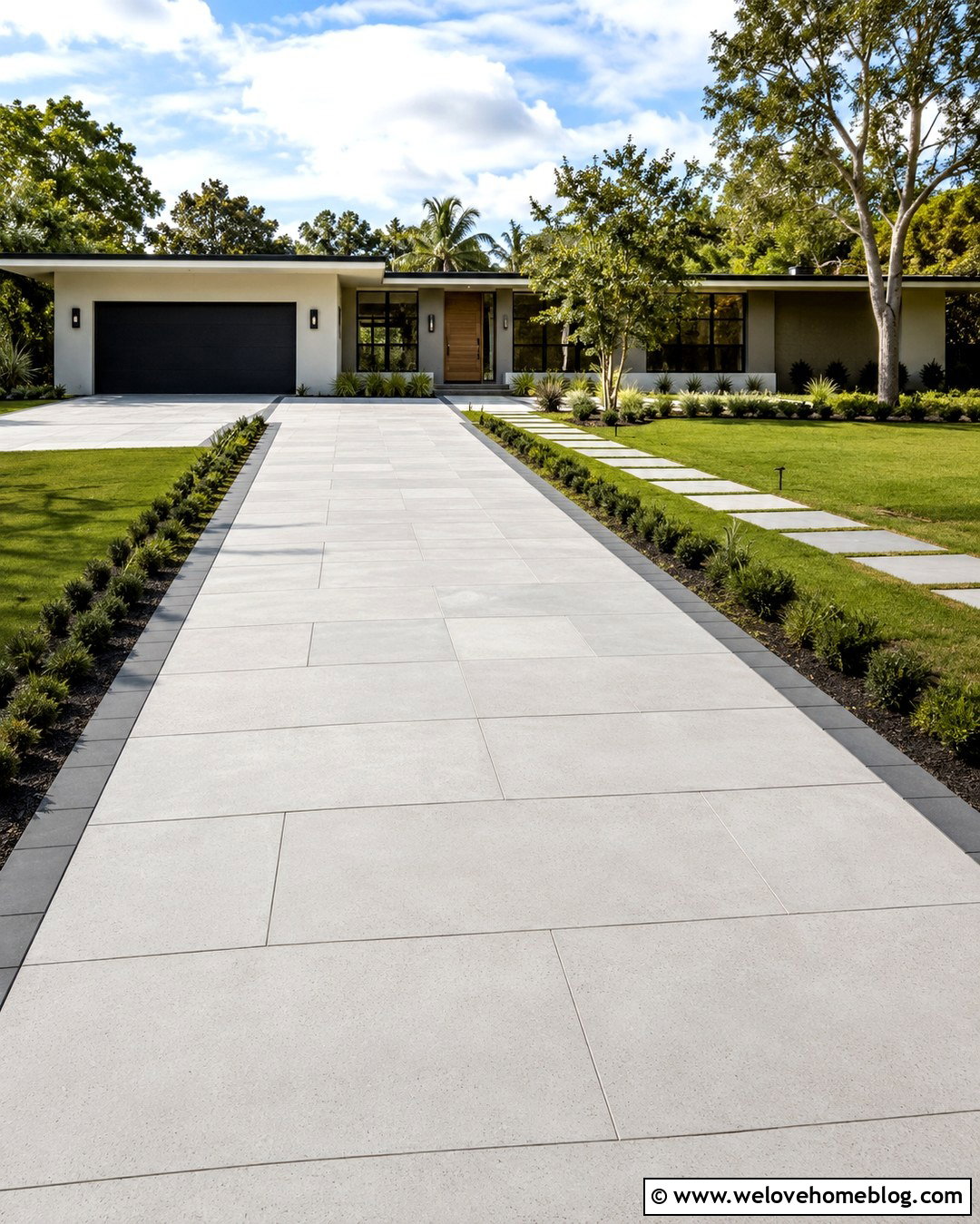
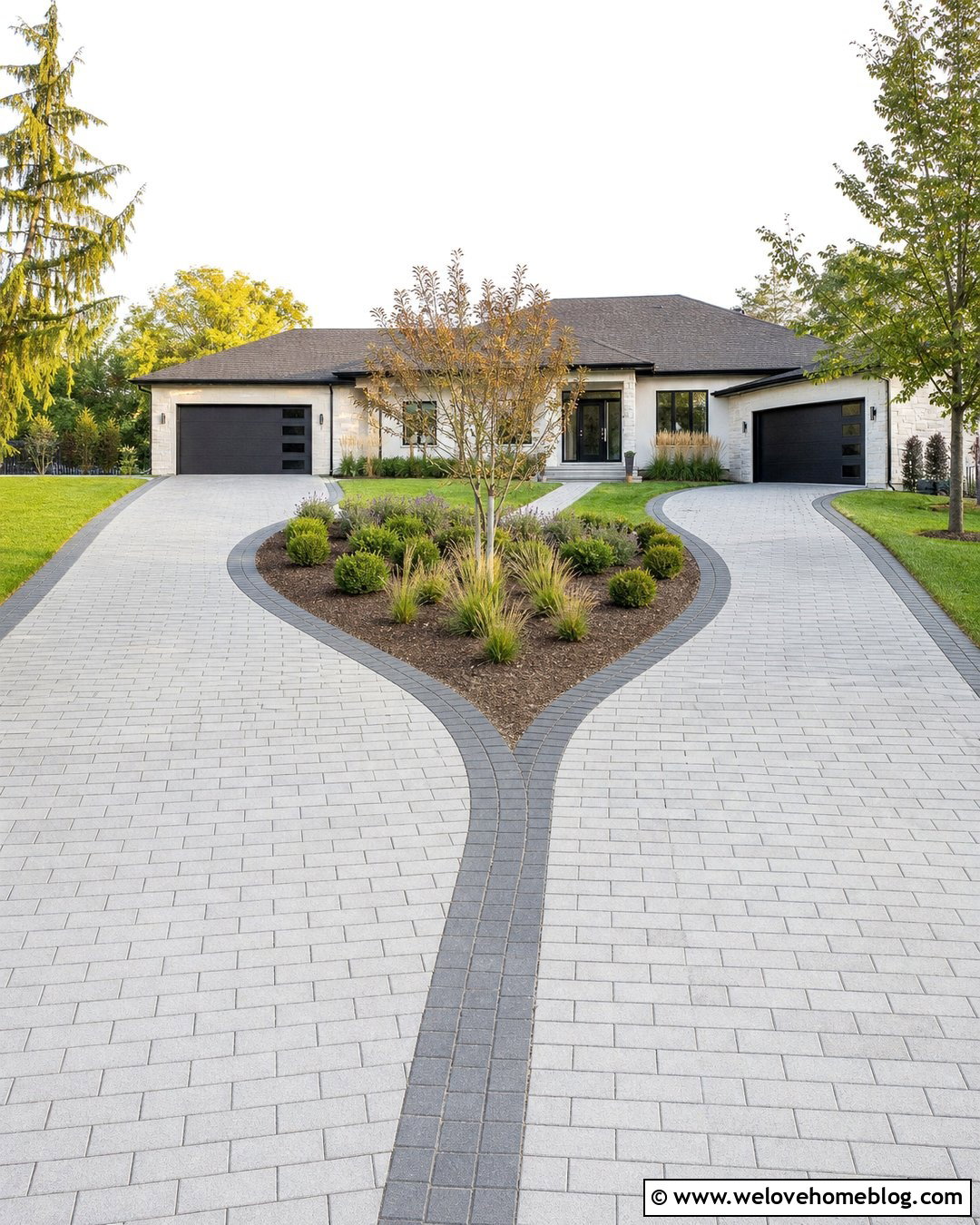
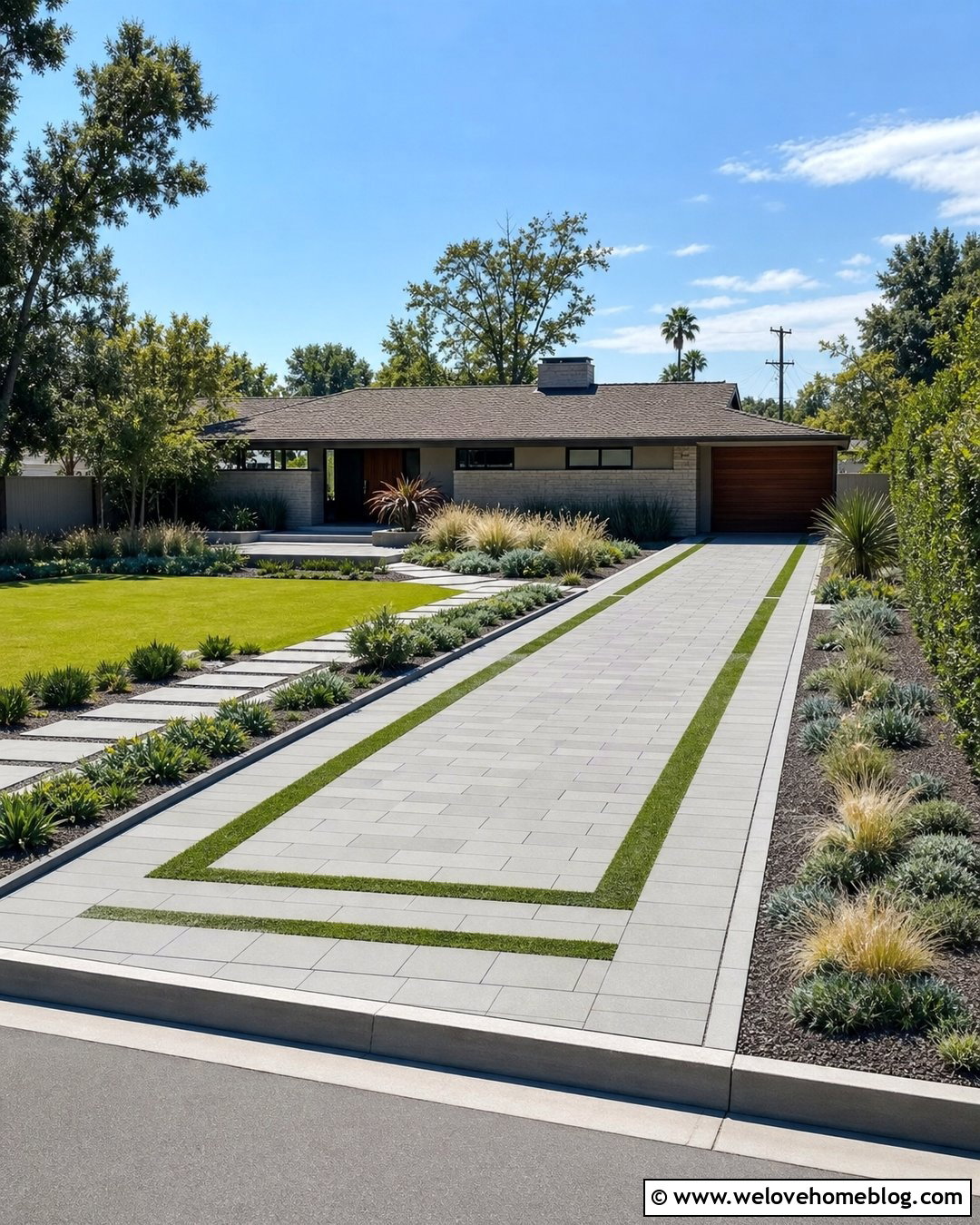
Narrow grass strips can give a paver driveway a softer, greener edge while maintaining a structured layout. Use large light-gray concrete pavers in a straight driveway, bordered by slim charcoal paver bands. Add an evenly sized lawn strip outside each band, followed by a second edge of low shrubs or ornamental grasses. This layered lining creates a gradual transition from hard paving to the wider front yard. It looks particularly effective with minimalist, midcentury, and modern suburban homes. Keep the grass wide enough for practical maintenance, and use gentle curves near the sidewalk rather than tight corners. Stepping pavers can cross the grass strip where the driveway connects with the front walkway. The combination of pale paving, dark borders, fresh lawn, and simple planting creates strong contrast without needing elaborate decorative features.
15. Lighted Brick-Lined Asphalt Driveway
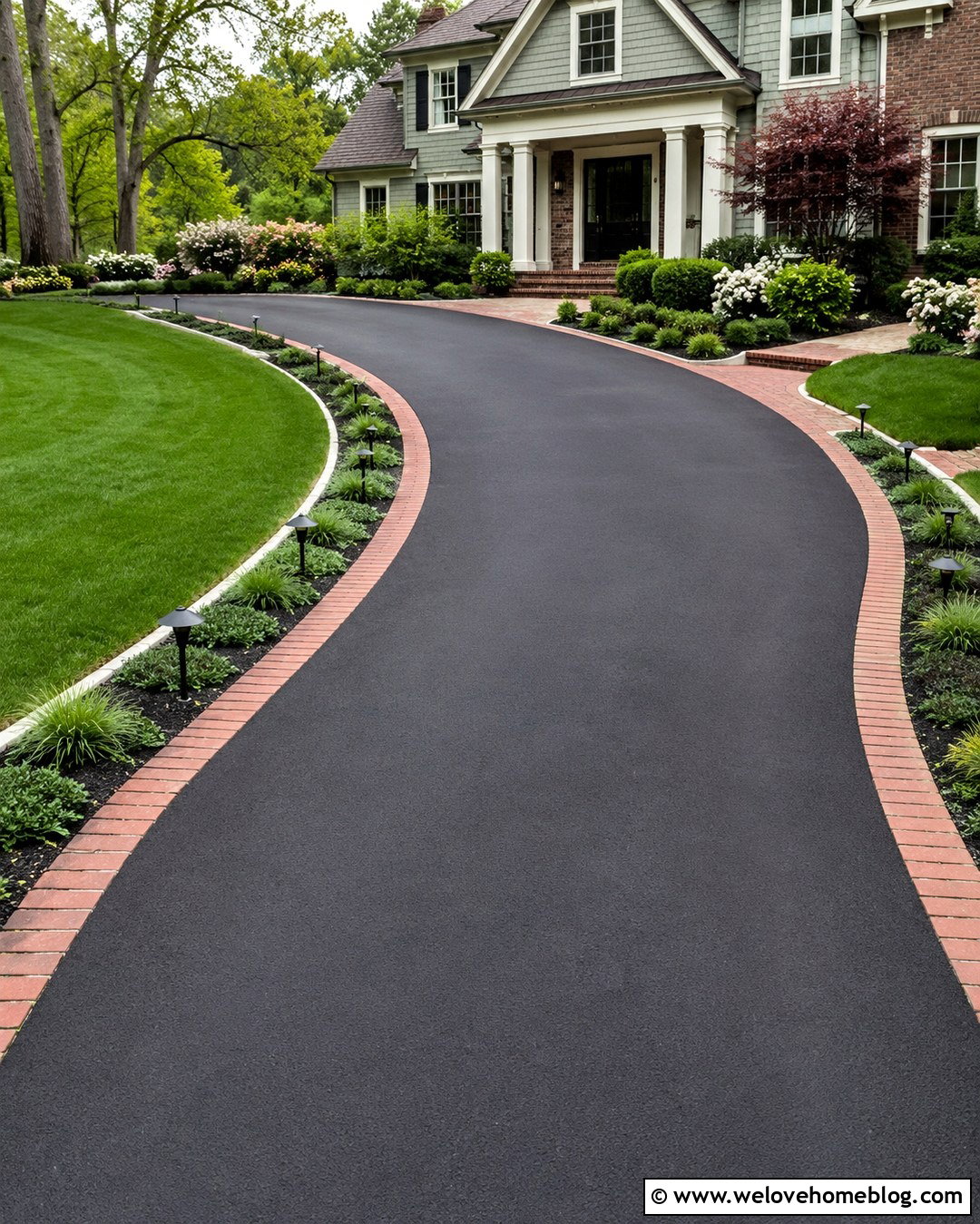
Driveway lighting works best when it is integrated into a complete border rather than scattered randomly. Pair a smooth asphalt surface with warm red or brown brick pavers installed flush along both edges. Place low, simple path lights in narrow planting beds outside the bricks, using consistent spacing and aiming the fixtures toward the driveway edge. Fill the beds with low evergreen ground covers and compact ornamental grasses that will not hide the lighting. During daylight, the brick lining supplies color and structure. After dark, the fixtures clarify the driveway route and entrance. This design complements traditional suburban, craftsman, and transitional homes. Keep lights away from areas where doors open or tires could cross the border. Match their finish to the house hardware, mailbox, gate, or address sign for a coordinated appearance.
16. Pillar and Cobblestone-Lined Concrete Driveway
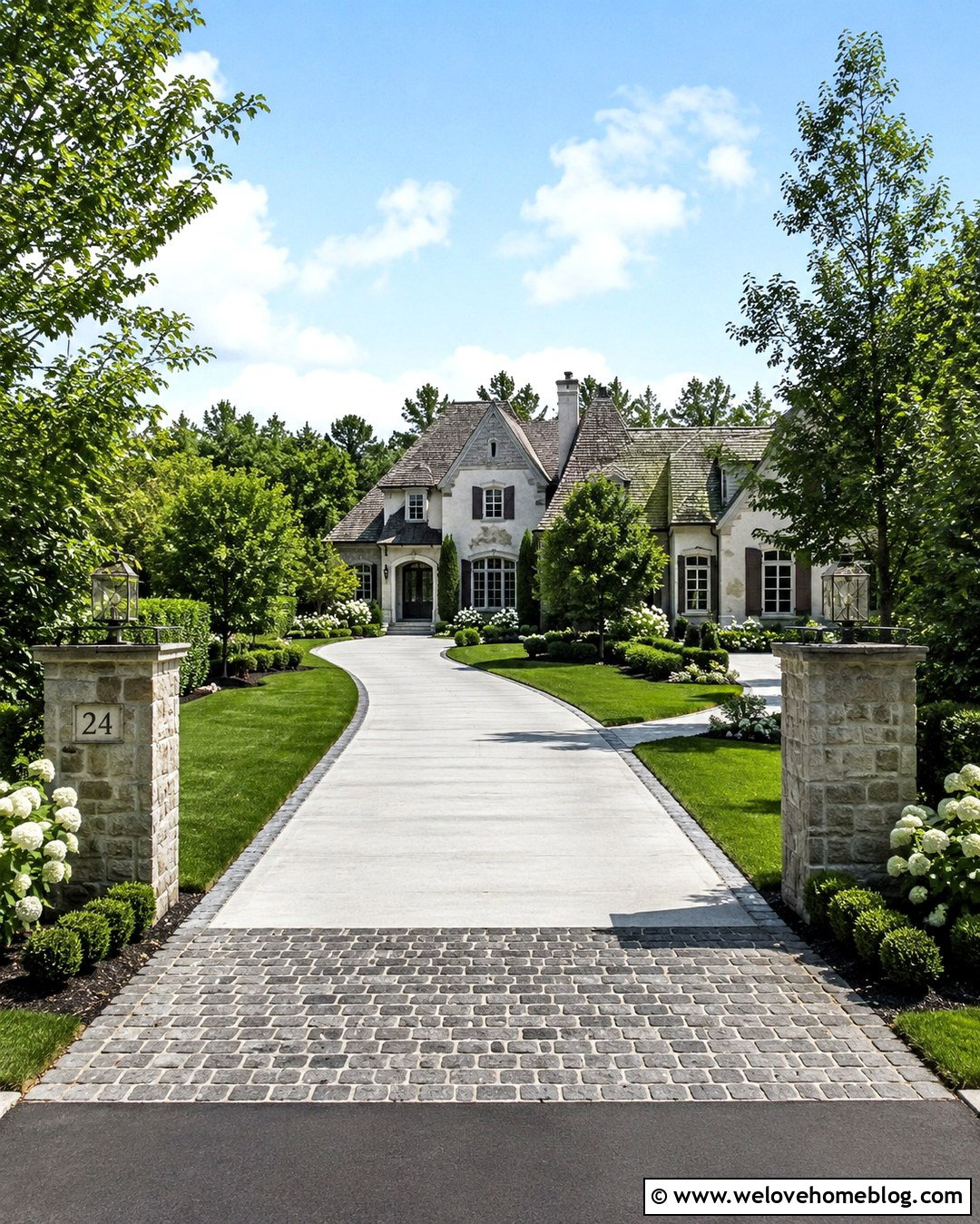
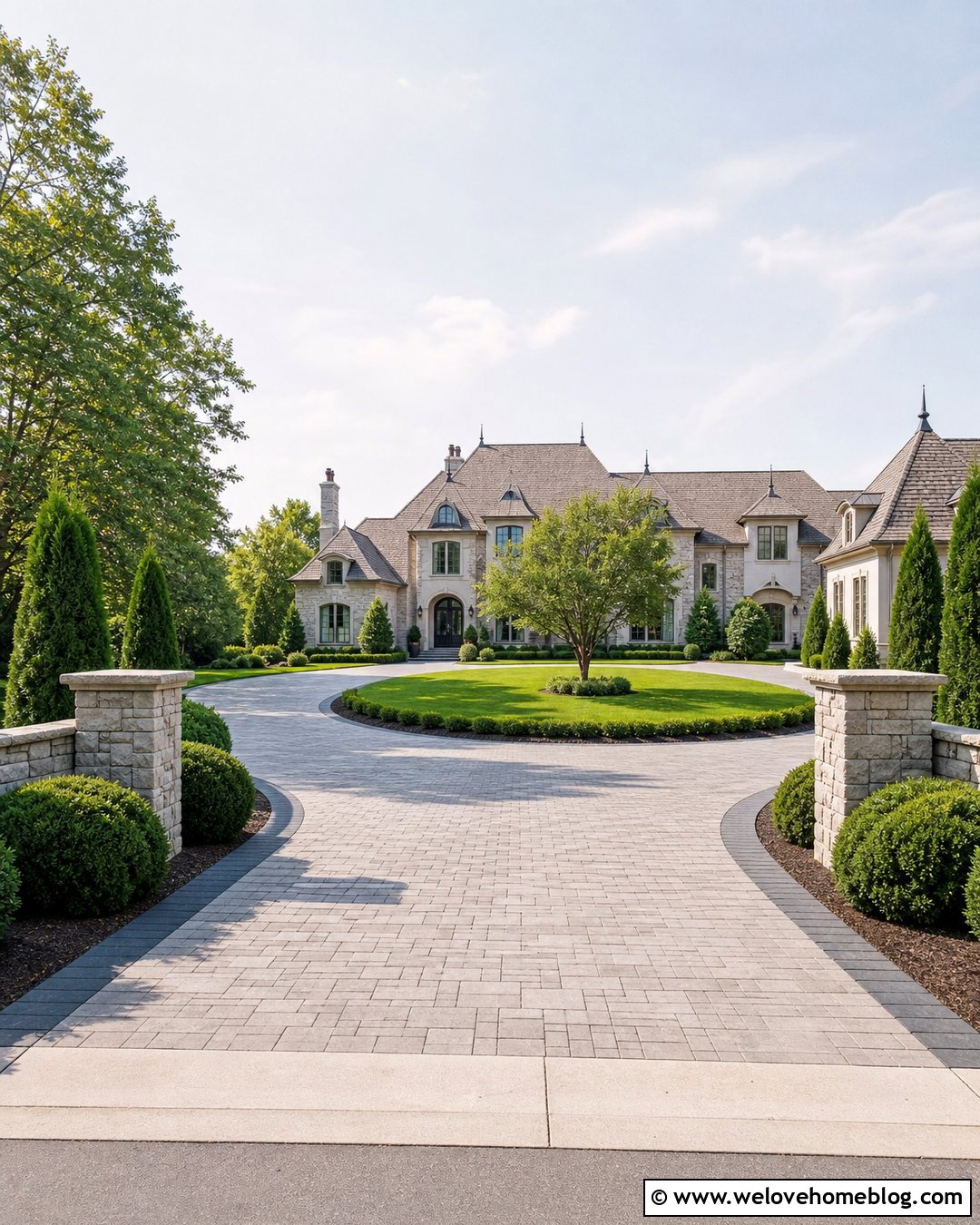
Stone entrance pillars can serve as the starting point for a cobblestone-lined concrete driveway. Use light broom-finished concrete in a straight or gently flared layout, with charcoal granite cobbles tracing both sides. At the street, widen the cobblestone border into a decorative apron between two medium-height masonry pillars. Add a clearly visible address plaque, but keep the pillars proportional to the home and entrance width. Beyond them, continue with clipped lawn, flowering shrubs, and several upright trees that guide the eye toward the house. This formal arrangement works well for colonial, French country, and substantial craftsman properties. Use stone on the pillars that relates to the home’s facade, then select cobbles from the same color family. The repeated masonry will make the entire approach feel planned from curb to garage.
17. Split Rail Fence-Lined Gravel Driveway
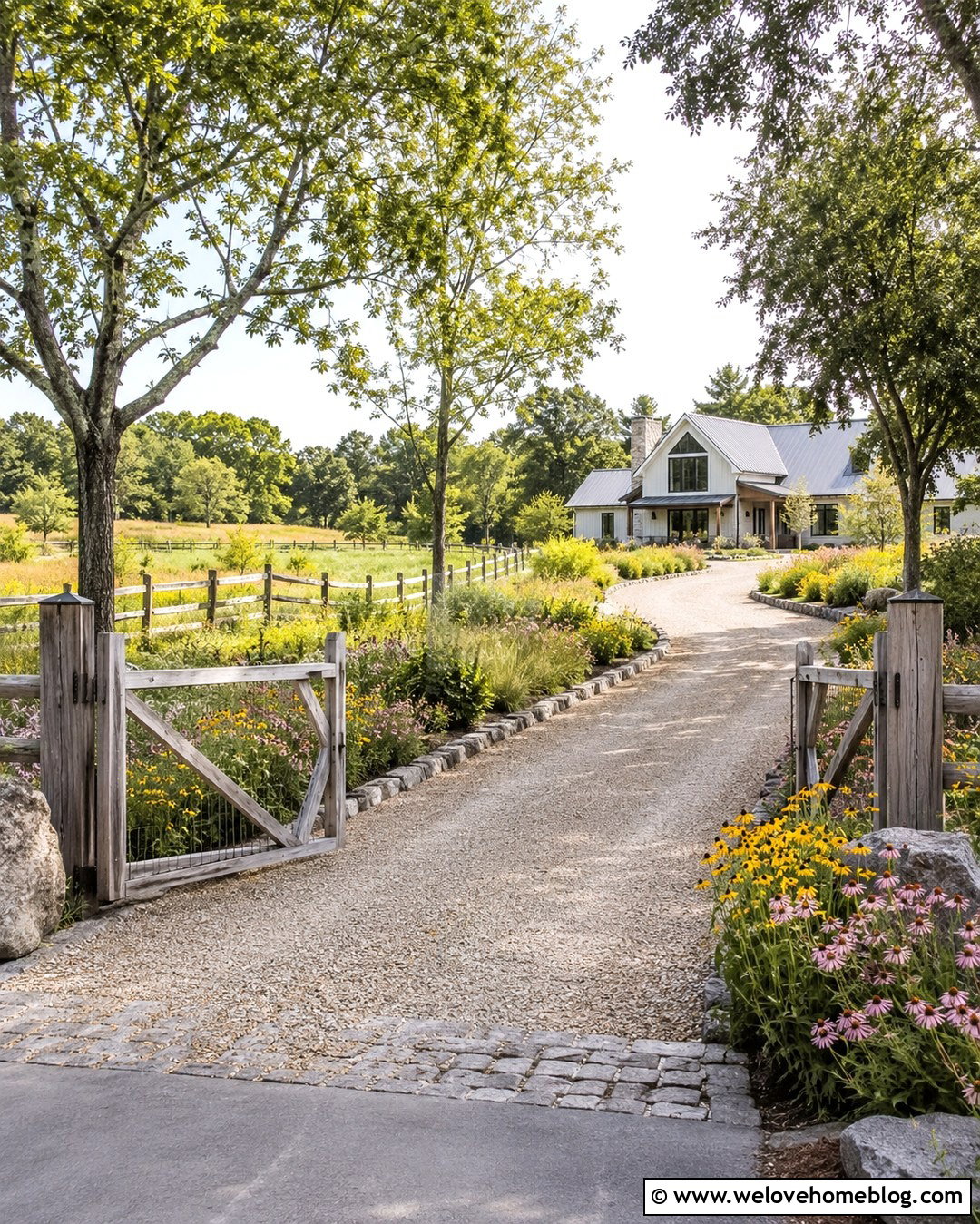
A split rail fence gives a long gravel driveway definition without closing off the surrounding landscape. Use compacted tan crushed gravel in a sweeping curve, contained by a low steel edge or a single row of natural fieldstone. Position the timber fence several feet outside the driveway so there is room for drainage, mowing, and planting. Fill the space between the edge and fence with meadow grasses, black-eyed Susans, coneflowers, and other suitable informal plants. Groups of shade trees can punctuate the route without forming a dense tunnel. This design is a natural fit for farmhouses, barns, equestrian properties, and rural-style suburban lots. Allow the fence to follow the driveway’s gentle movement. A matching timber gate and simple stone posts can complete the entrance while maintaining the open country character.
18. Picket Fence and Brick-Lined Driveway
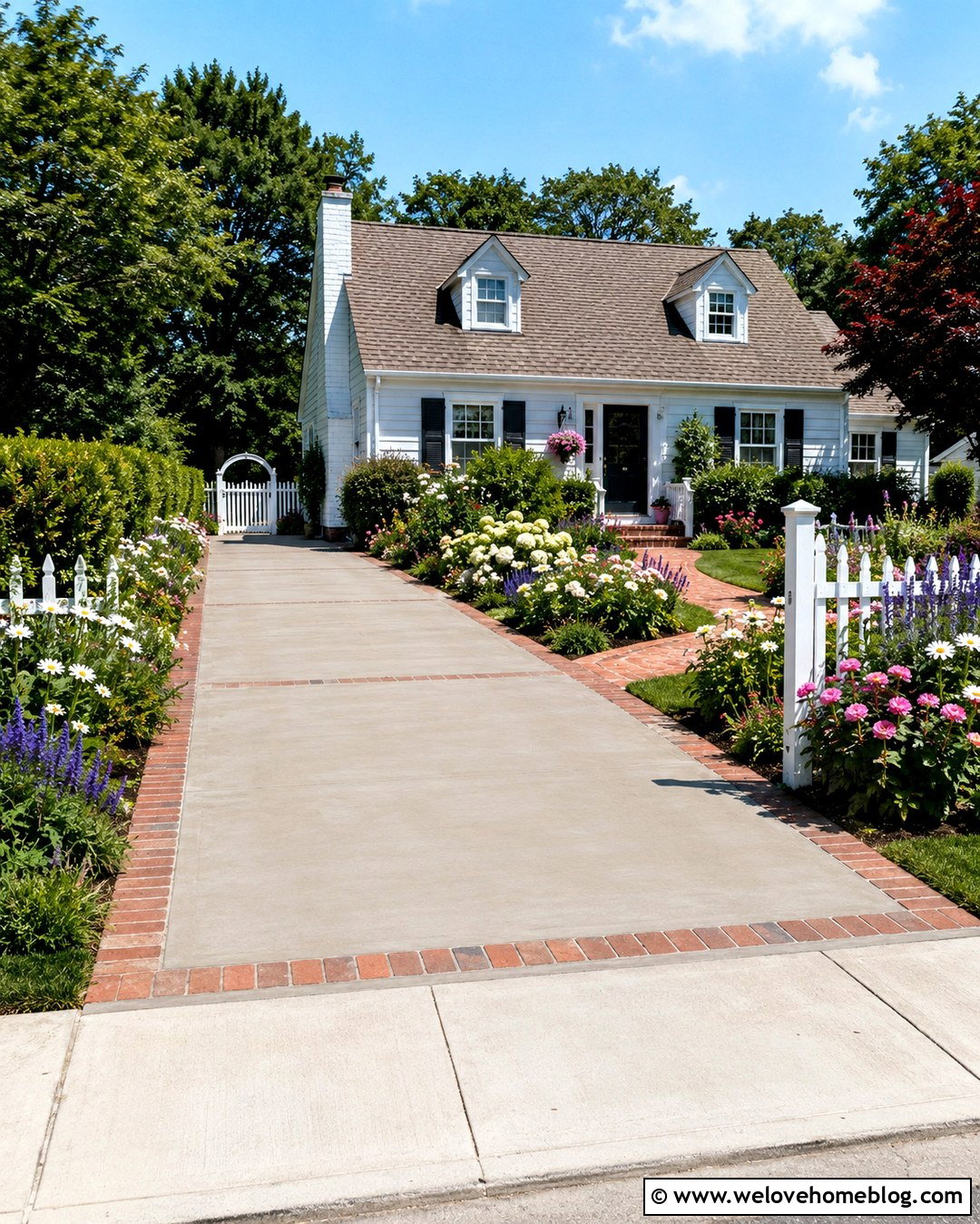
A white picket fence paired with red brick edging creates a cheerful lining for a cottage driveway. Start with warm gray poured concrete in a short, straight layout and install clay bricks along both sides in a simple running pattern. Place the fence behind narrow planting beds rather than directly against the pavement. Fill those beds with hydrangeas, salvia, daisies, compact roses, and evergreen foundation plants for year-round structure. Leave a wider opening where the front walkway branches from the driveway, using a small arbor or matching gate as a transition. This complete design works beautifully with Cape Cod, cottage, and traditional clapboard houses. Keep the fence low enough to preserve street views. Repeating the brick around the walkway and porch beds will tie the colorful landscape back to the driveway surface.
19. Boulder-Lined Decomposed Granite Driveway
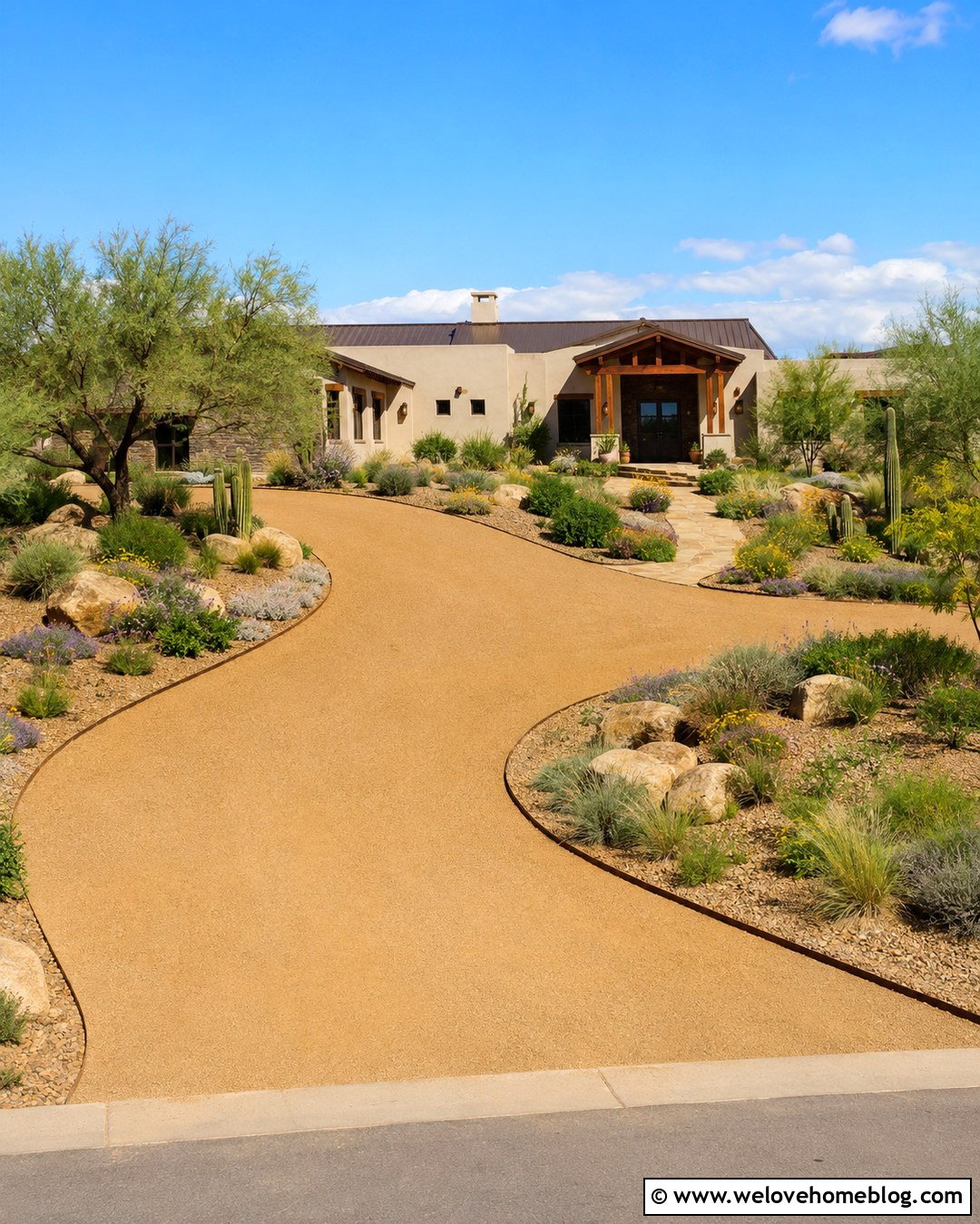
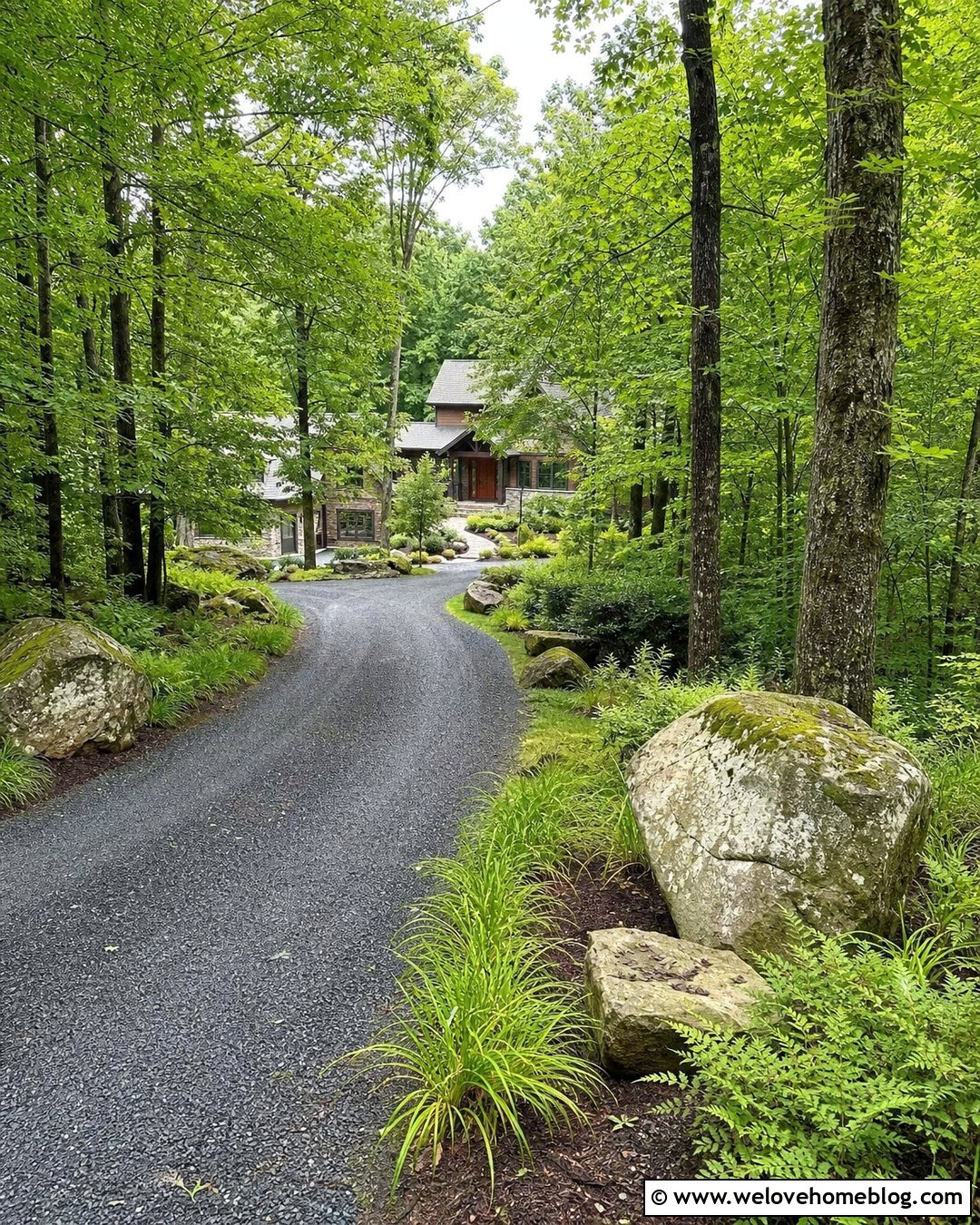
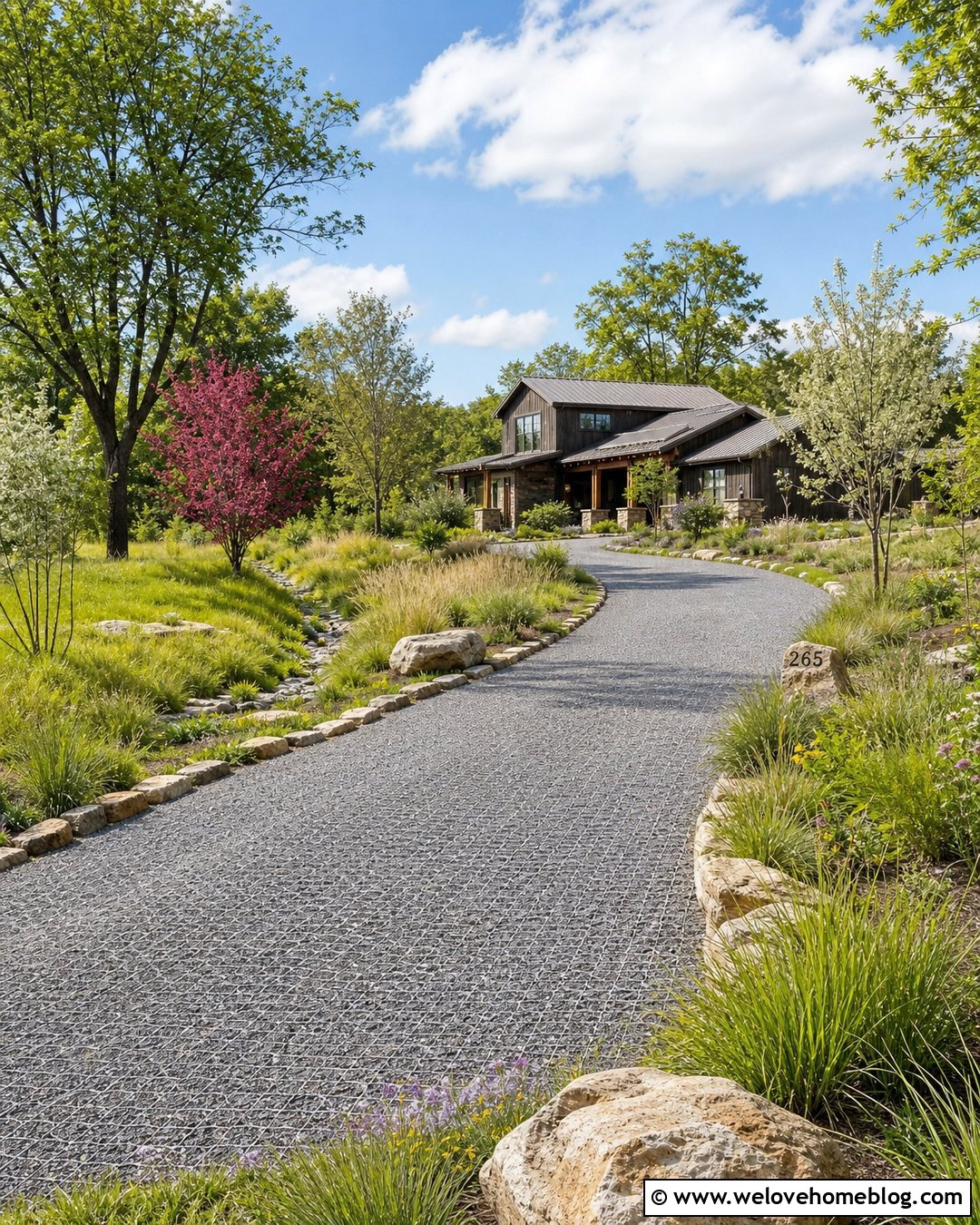
Large natural boulders can define a decomposed granite driveway without creating a continuous formal edge. Use warm golden decomposed granite on a broad curved approach, supported by discreet steel edging. Place weathered boulders at irregular intervals outside the border, grouping smaller stones around a few larger anchor pieces. Fill the spaces with drought-tolerant grasses, spreading ground covers, and compact native shrubs. The arrangement should look open and deliberate rather than crowded. This driveway lining works well with desert-modern homes, Southwestern ranches, mountain cabins, and contemporary houses surrounded by natural terrain. Keep boulders safely away from the driving path and provide a clear shoulder near curves. Repeating their colors in the house facade, gravel walkway, or retaining wall will make the driveway feel rooted in its setting.
20. Rain Garden-Lined Permeable Driveway
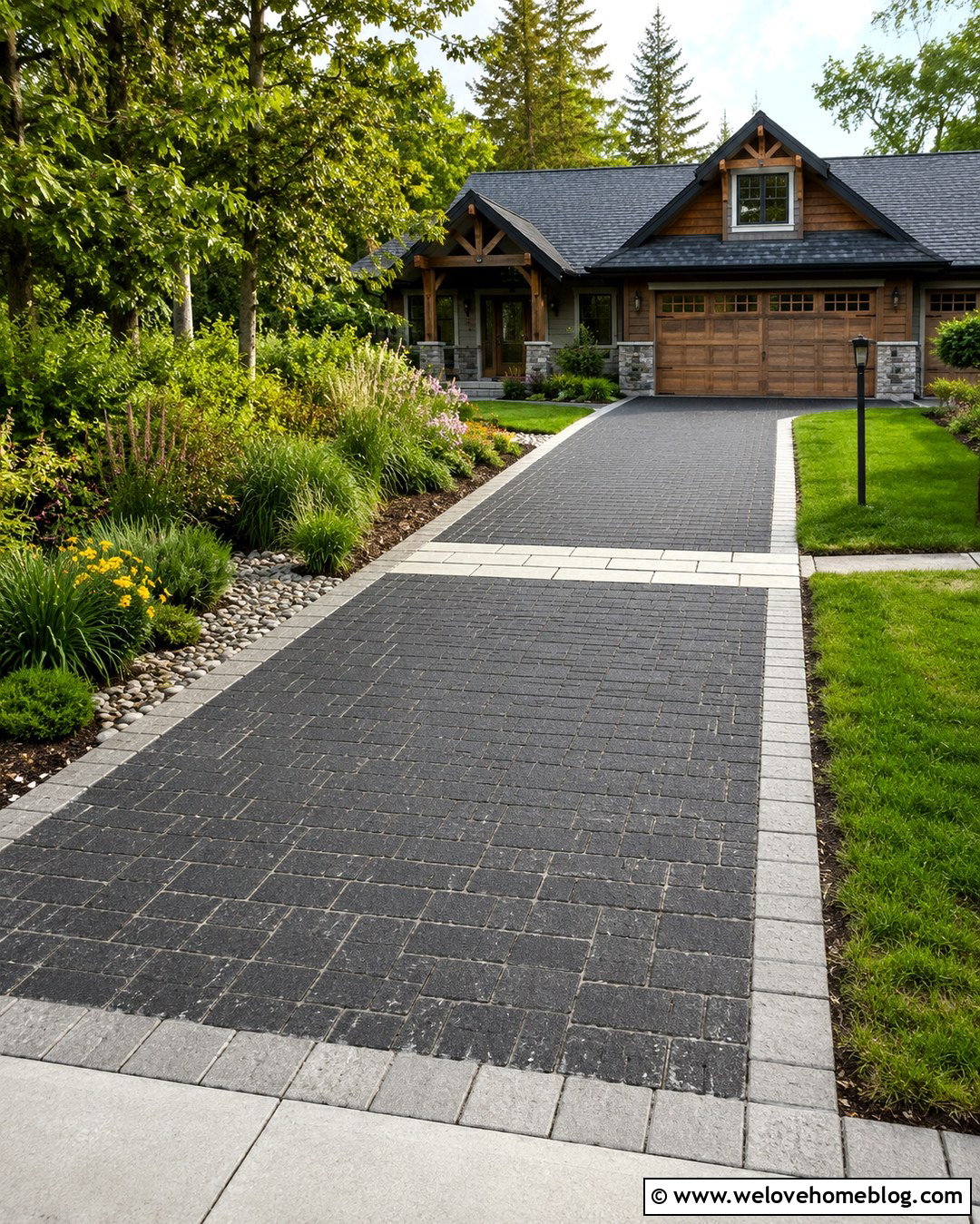
A rain garden lining brings plants, texture, and an environmentally thoughtful appearance to a permeable driveway. Use charcoal permeable concrete pavers in a straight or gently sloped layout with light stone-filled joints. Define the edges with contrasting gray pavers, then create a shallow planted basin along one side. Fill the basin with regionally appropriate grasses, flowering perennials, and moisture-tolerant shrubs arranged in natural groups. The opposite side can use a narrower matching bed to keep the overall composition balanced. This complete look suits contemporary, craftsman, and modern farmhouse properties. A stepping-stone crossing can connect the driveway to the front walkway without interrupting the planting. Site grading, soil conditions, overflow routes, and local requirements should be evaluated before installation so the rain garden supports the property’s overall drainage plan.
Conclusion:
These **20 Driveway Lining Ideas** show how borders, plants, lighting, fences, and entrance features can transform the entire approach to a home. The strongest design will relate to the driveway surface, layout, house architecture, and surrounding yard at the same time. Brick and cobblestone provide classic definition, while steel edging and geometric planting suit modern properties. Gravel, timber, fieldstone, and split rail fencing create a more relaxed entrance. Whatever look you choose, consider mature plant sizes, vehicle clearance, visibility, drainage, and ongoing maintenance before installation. Repeating one or two lining materials around the walkway, porch, or entrance will create a cohesive landscape and give your driveway a polished, intentional finish.

Related posts:
Leave a Reply