
A driveway lined with hydrangeas can soften hard paving, frame the route to your home, and create memorable curb appeal from summer into fall. These flowering shrubs work beautifully beside gravel, concrete, asphalt, brick, cobblestone, and modern pavers. Their varied forms also suit mass plantings, informal hedges, foundation beds, and layered borders when the variety matches the site. () The strongest design considers the entire approach: driveway material, shape, edging, mature plant size, sunlight, drainage, and the architecture beyond it. You can keep the planting symmetrical and formal or let it spill naturally into a relaxed cottage border. The complete looks below explore practical, distinctive, and visually balanced 20 Driveway Lined With Hydrangeas Ideas.
1. White Hydrangea Gravel Driveway
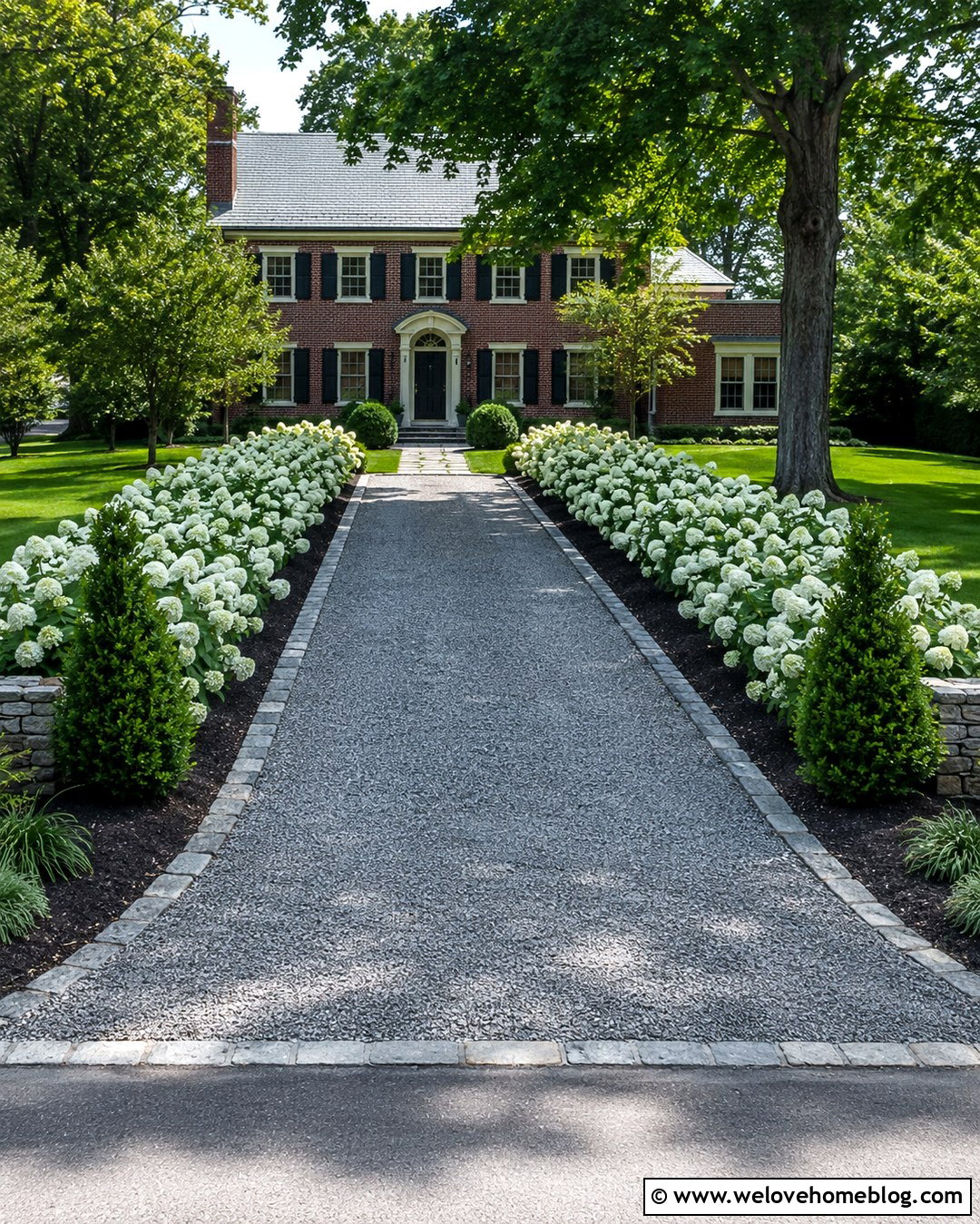
A pale gravel driveway becomes remarkably polished when both sides are planted with generous rows of white hydrangeas. Use compacted gray pea gravel for the driving surface and cobblestone edging to prevent loose stones from entering the beds. Behind the edging, repeat white panicle hydrangeas at even intervals to create a soft informal hedge. This massed approach makes the driveway feel established without requiring complicated plant combinations. White blooms also complement nearly any facade, including red brick, gray siding, and painted clapboard. Add dark mulch beneath the shrubs for stronger contrast and easier maintenance. At the entrance, widen the beds slightly and plant matching evergreens as anchors. This helps the landscaping look intentional from the curb rather than like a simple row of flowers. ()
2. Blue Hydrangea Concrete Driveway
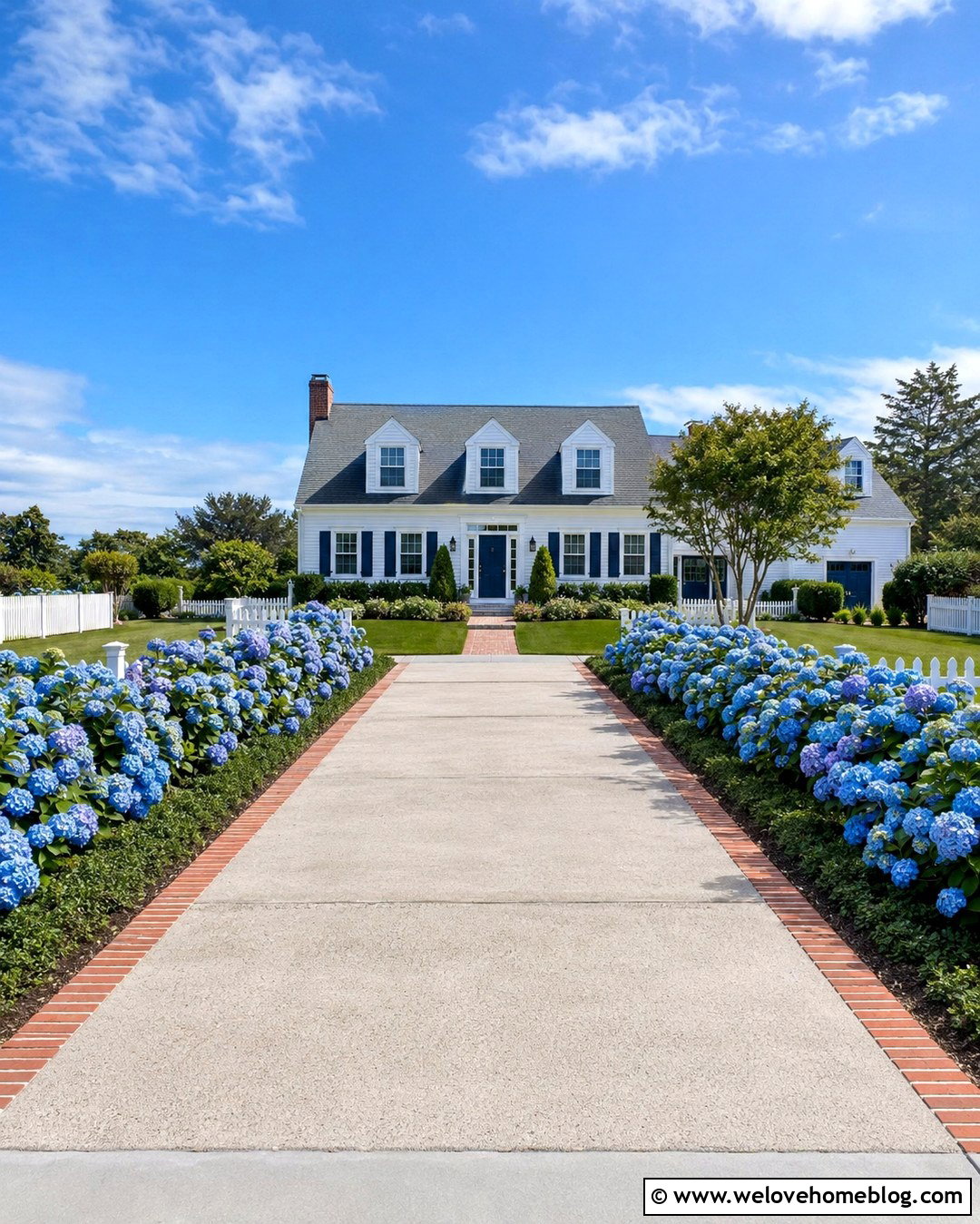
Blue hydrangeas can give a straight concrete driveway a cool, welcoming character that works especially well with Cape Cod and coastal homes. Choose a light-gray poured concrete surface with a narrow red brick ribbon along each side. The warm brick keeps the blue flowers from making the composition feel overly cool. Plant the hydrangeas in broad beds rather than directly against the pavement, leaving suitable room for their mature growth. A low ground cover or neat mulch layer can fill the front edge without hiding the brick. Continue the same blue-and-green palette around the front walkway to connect the driveway with the entrance. White fencing, navy shutters, and a simple lawn complete the look. Before planting, confirm that your chosen hydrangea and local soil conditions can deliver the desired flower color.
3. Limelight Hydrangea Asphalt Driveway
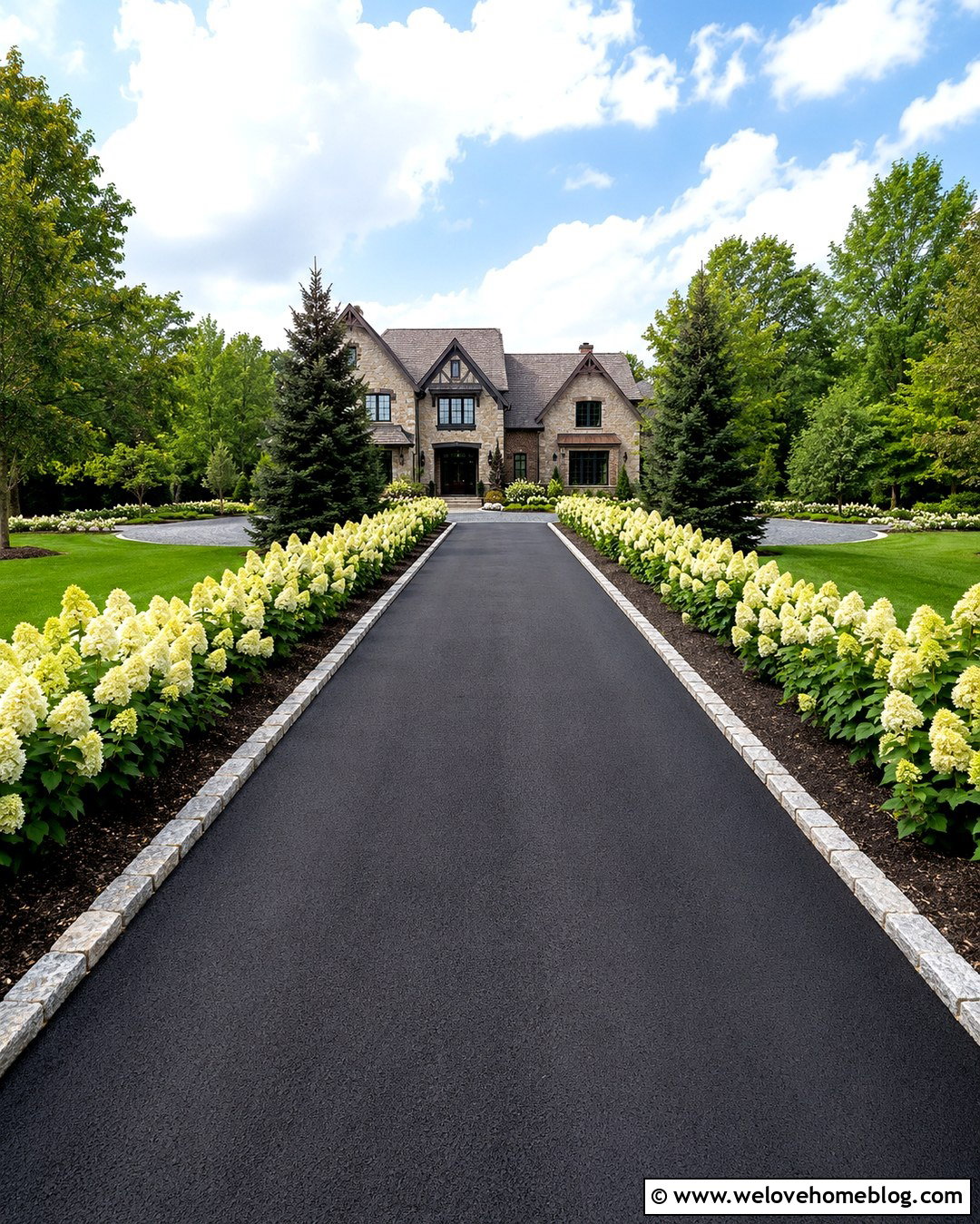
Black asphalt provides a dramatic background for lime-green and creamy white panicle hydrangeas. This contrast works particularly well along a long suburban driveway leading to a traditional brick or stone house. Install a light granite curb or tumbled stone border between the asphalt and planting beds. The border protects the soft landscaping while visually brightening the dark surface. Arrange Limelight-type hydrangeas in a continuous row, but keep their expected mature width in mind so branches do not obstruct vehicles. A strip of lawn behind the shrubs gives the composition breathing room. At the house, repeat the stone edging around a larger turnaround or parking pad. The hydrangeas can become the main seasonal feature, while evergreen shrubs near the entrance maintain structure when the flowering plants are bare.
4. Pink Hydrangea Brick Driveway
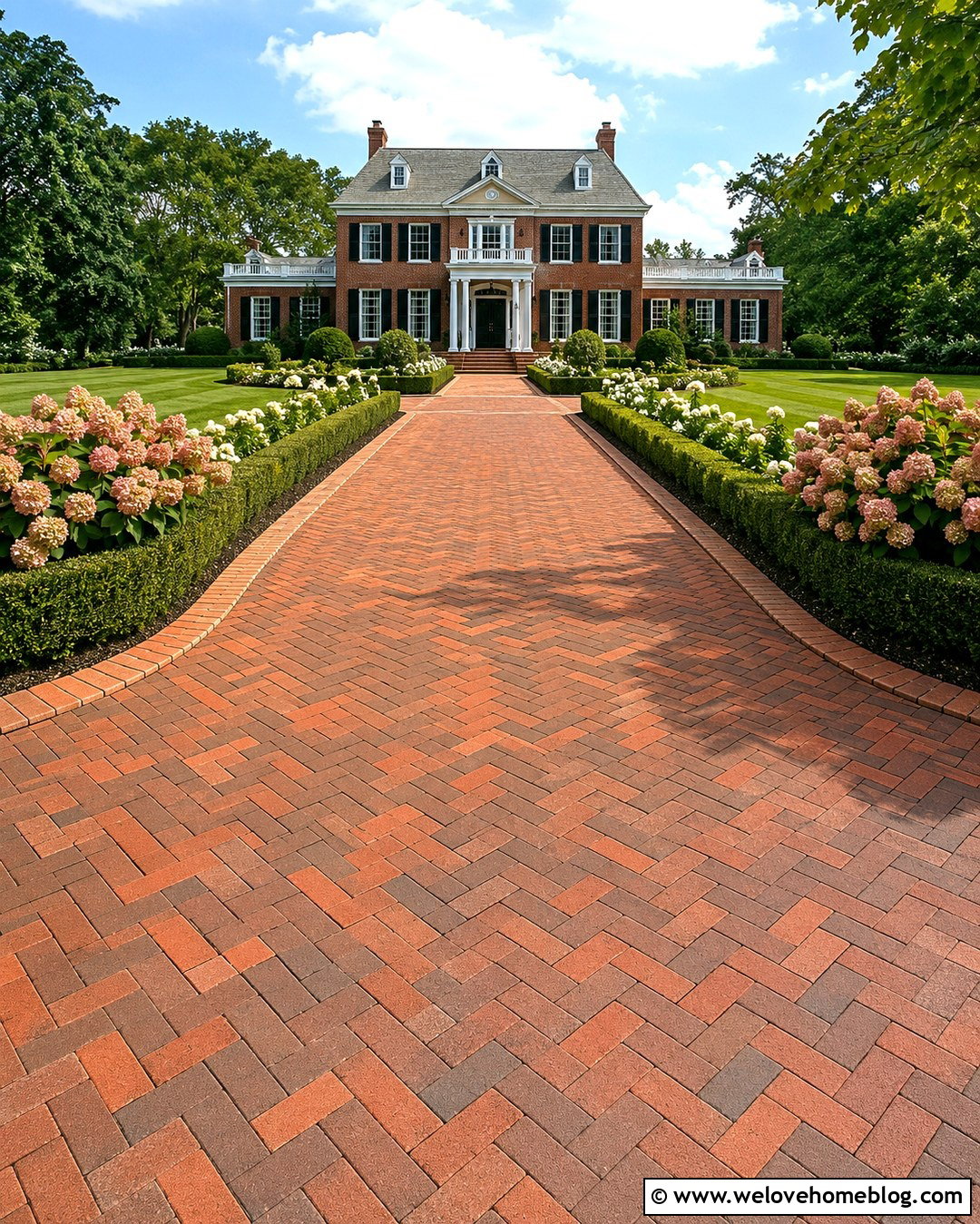
Warm pink hydrangeas feel right at home beside a clay brick driveway laid in a traditional herringbone pattern. The combination creates a coordinated approach for a Colonial, Georgian, or classic cottage facade. Select bricks with varied red and brown tones so the surface appears softer and more natural. Edge the driveway with a soldier course of matching brick, followed by low clipped boxwood and a second layer of pink hydrangeas. This two-level border keeps the large blooms from overwhelming the paving. Allow the boxwood to provide a clear green outline while the hydrangeas rise loosely behind it. Cream roses or pale annuals can be added sparingly near the walkway. Keep the rest of the yard simple, since the textured brick and colorful flowering border already provide plenty of visual interest.
5. Circular Driveway With White Hydrangeas
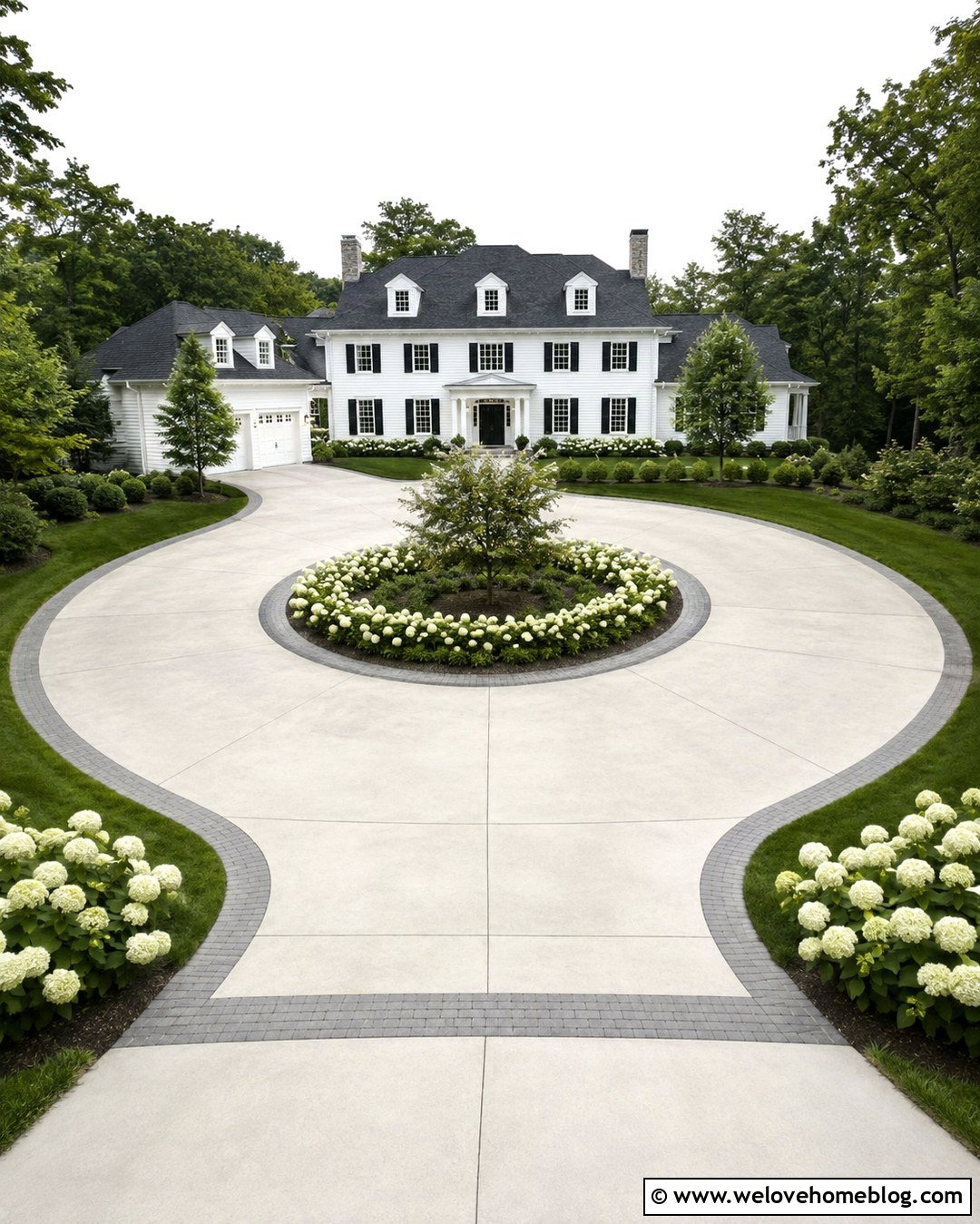
A circular concrete driveway gains definition when white hydrangeas trace both the outer curve and the central island. Use smooth light-gray concrete divided by clean control joints, then add a charcoal paver border to emphasize the circular layout. Plant compact white hydrangeas around the island with enough setback to preserve visibility across the curve. A small ornamental tree can anchor the center, provided its canopy will not interfere with approaching vehicles. Along the outer edge, use hydrangeas in wider groups rather than forcing a continuous hedge into every tight area. Low evergreen ground cover can fill the gaps and maintain winter structure. Hydrangeas vary significantly in form and mature dimensions, so select the plants according to the available bed width instead of relying on frequent severe pruning. ()
6. Curved Driveway With Mixed Hydrangeas
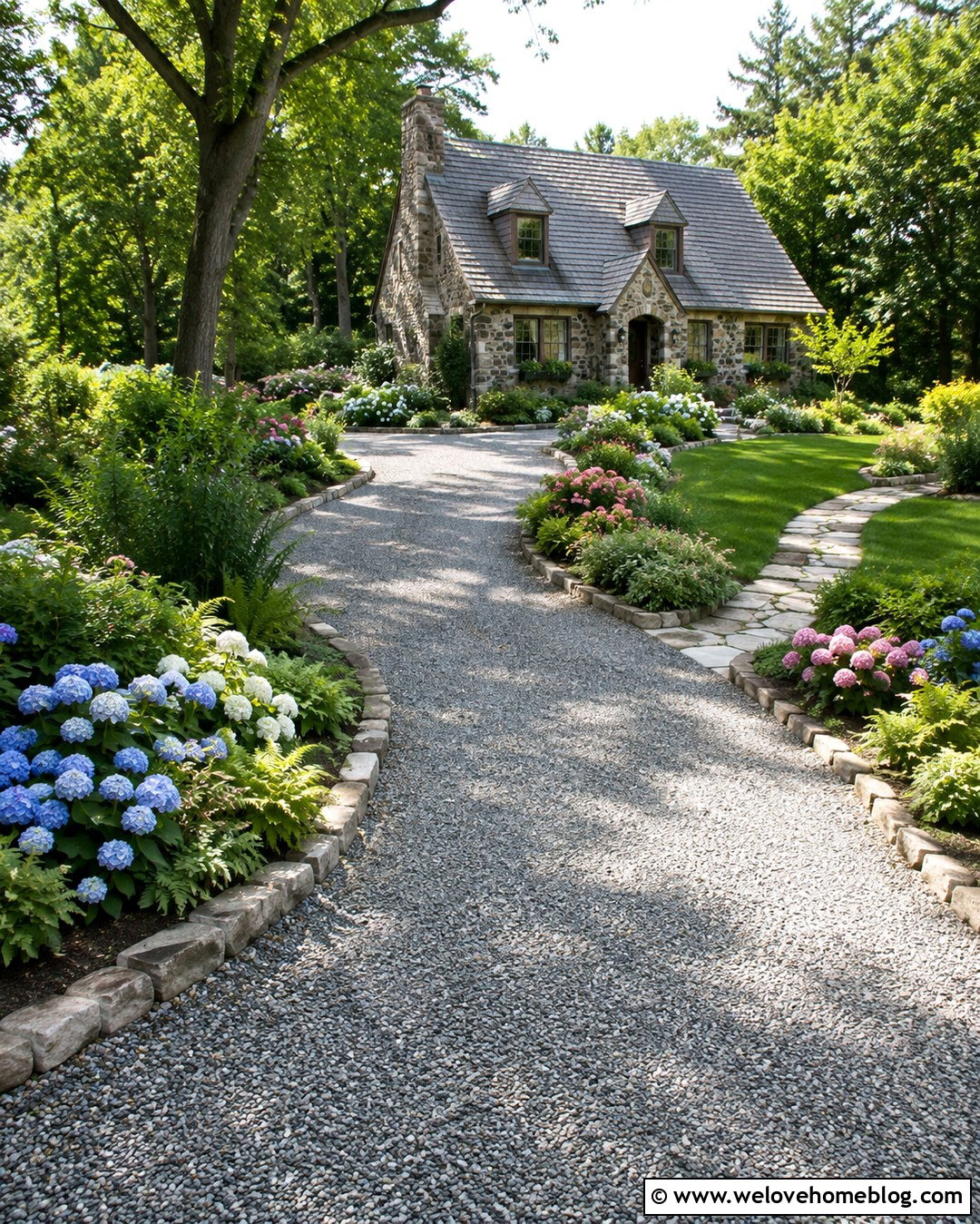
A gently curved pea gravel driveway offers the perfect setting for loose groups of blue, pink, and white hydrangeas. Rather than lining the entire drive with identical shrubs, arrange repeated clusters around the outside of each bend. This leads the eye through the yard and makes the route feel more natural. Use weathered fieldstone edging to contain the gravel and connect the driveway with a cottage or stone-front house. Between the hydrangea groups, add ferns, hostas, catmint, or ornamental grasses according to the available sunlight. Keep plants low near the street entrance so drivers have a clear view. Taller shrubs can appear farther up the drive where additional enclosure feels welcoming. A flagstone walkway branching from the inside curve will tie the informal landscaping directly to the front door.
7. Farmhouse Driveway With Panicle Hydrangeas
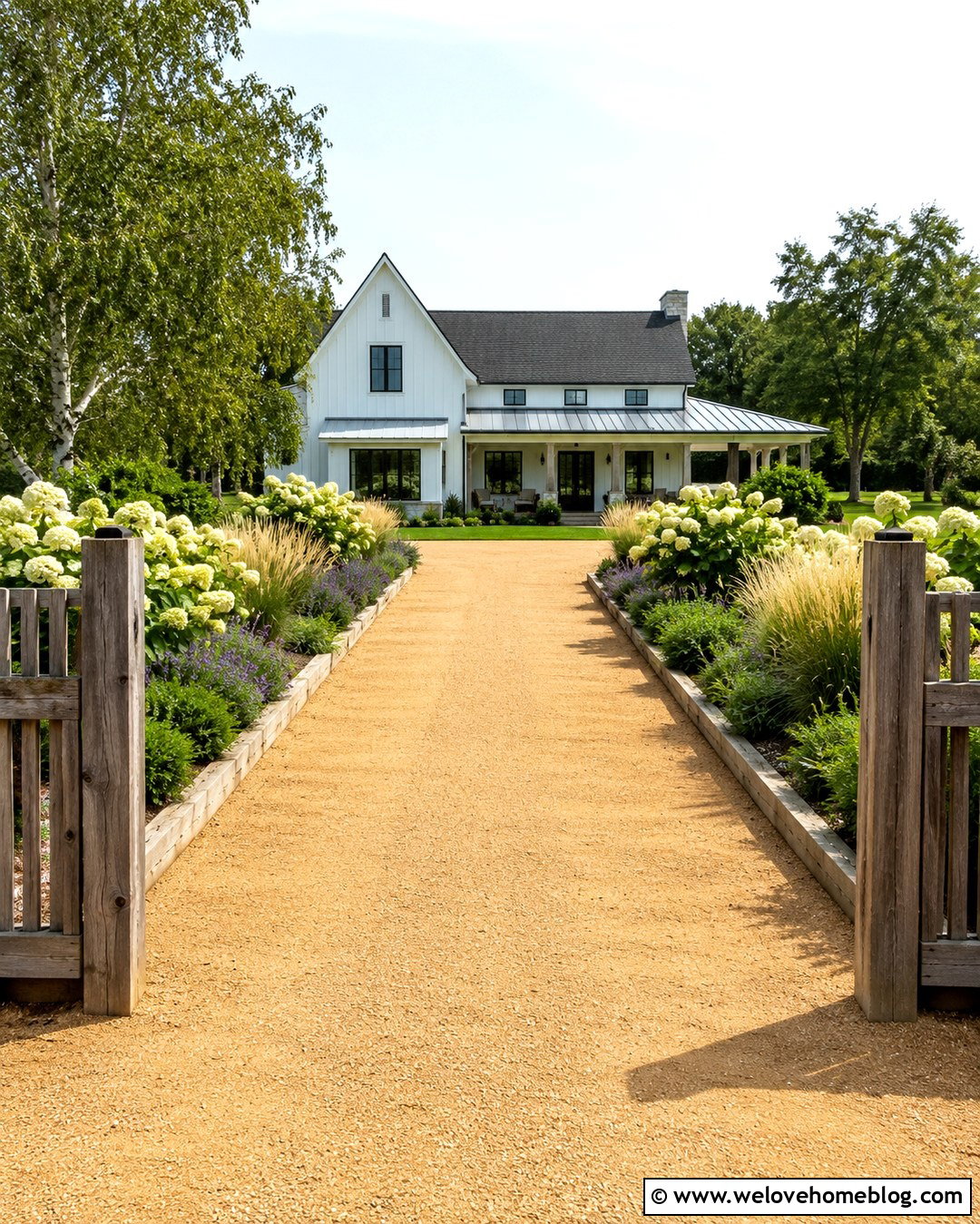
Imagine a warm tan decomposed granite driveway leading toward a white modern farmhouse with a deep front porch. Rows of panicle hydrangeas can line the route while preserving the property’s relaxed rural character. Edge the surface with weathered timber or broad fieldstones rather than highly polished pavers. Place the hydrangeas in long mulched beds mixed with feather reed grass, catmint, and a few low evergreen shrubs. The grasses add movement and help the border remain interesting when blooms are limited. Near the entrance, simple wooden fencing can turn outward to frame the driveway without closing it off. Repeat the same hydrangeas beside the porch steps for a unified view. Because decomposed granite can migrate, use sturdy edging and maintain a clear buffer between the loose surface and the plants.
8. Formal Gravel Driveway With Hydrangeas
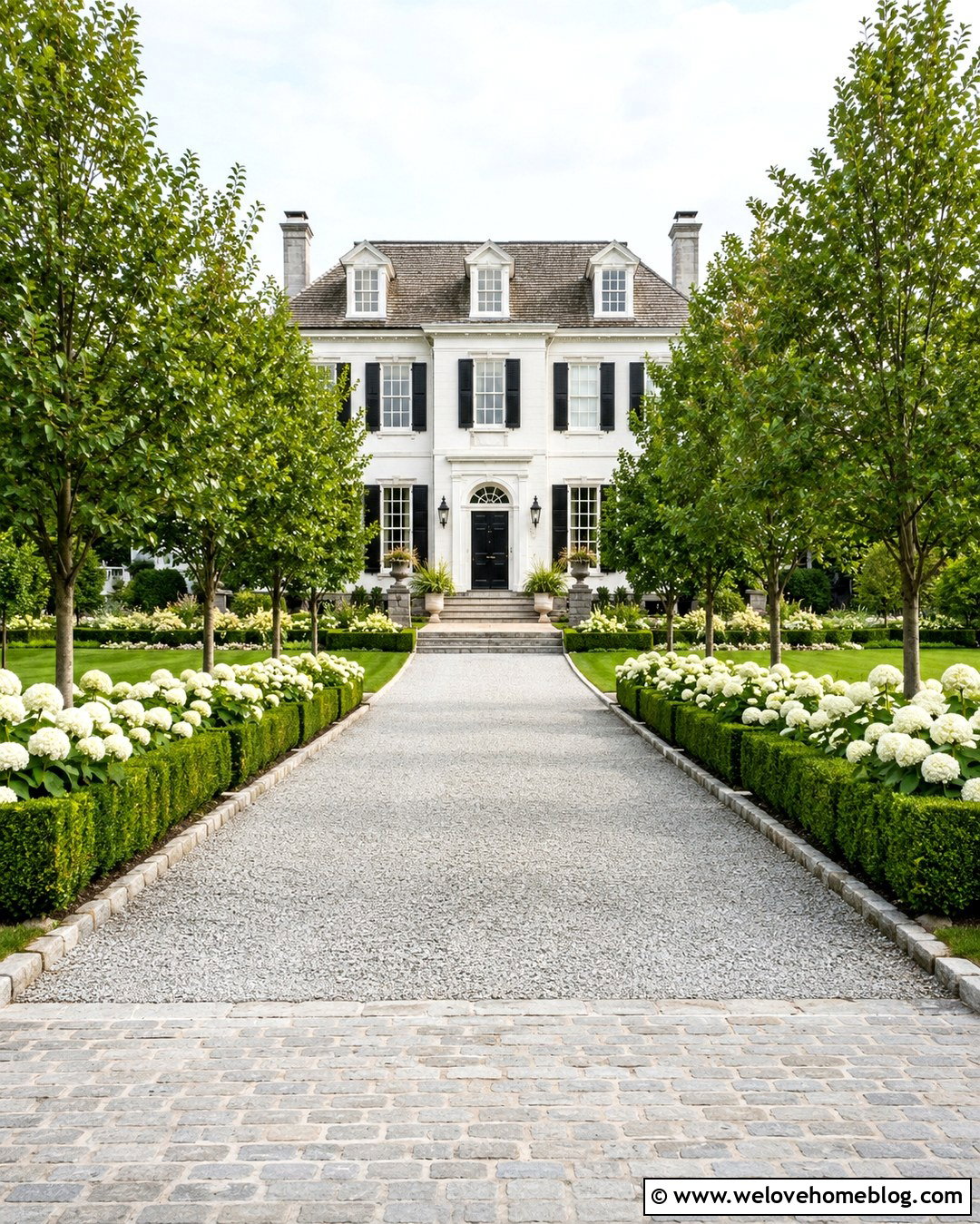
For a more structured property, pair fine gray gravel with low boxwood hedges and white hydrangeas. The boxwood creates a precise green frame, while the flowering shrubs provide volume behind it. This layered combination has been used effectively with decomposed granite, stone edging, perennial beds, and formal residential landscapes. () Keep the driveway straight and symmetrical, leading toward a centered Colonial or European-inspired house. A cobblestone apron at the road can introduce a substantial entrance detail and help contain loose gravel. Plant matching small ornamental trees at key points, such as the beginning of the drive or beside the parking court. The hydrangeas should be repeated in broad blocks rather than scattered individually. Consistent spacing, restrained colors, and crisp bed lines are what give this complete driveway its formal appearance.
9. Coastal Driveway With Blue Hydrangeas
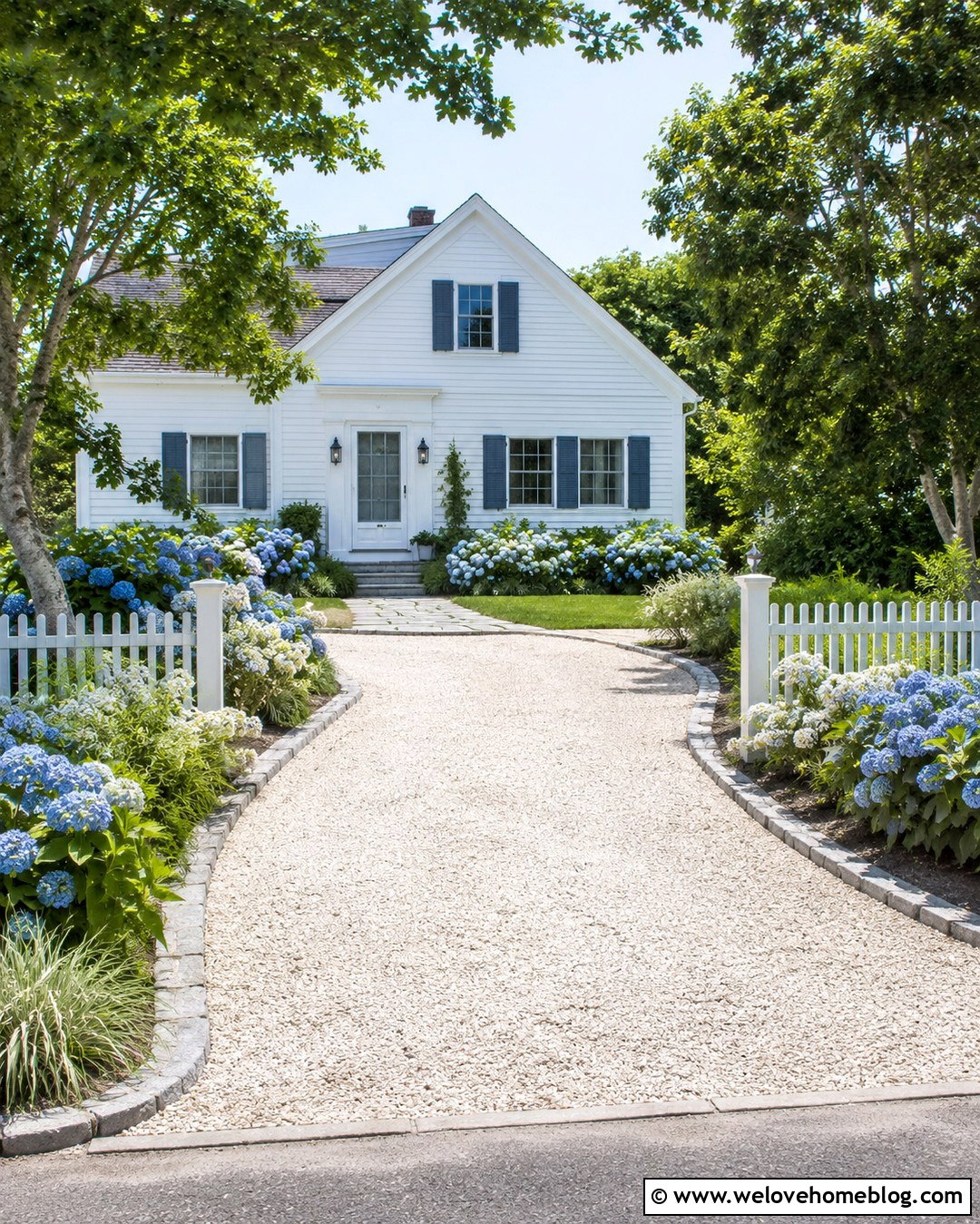
A coastal home can support a light, airy driveway design built around blue and white hydrangeas. Start with a stabilized crushed-shell or pale limestone surface that reflects the color of the house. Use gray cobblestone edging to keep the light aggregate contained and provide a durable transition into the planting beds. Arrange blue hydrangeas in generous groups, then introduce white varieties near the entrance and front walkway. Sea-green ornamental grasses can create textural movement without competing with the rounded flower heads. A white picket fence running behind portions of the border reinforces the coastal character. Keep the fence interrupted near the road for open sightlines. Blue shutters, a natural wood garage door, and a simple flagstone path complete the composition without turning the front yard into an overly literal seaside theme.


10. Modern Paver Driveway With White Hydrangeas
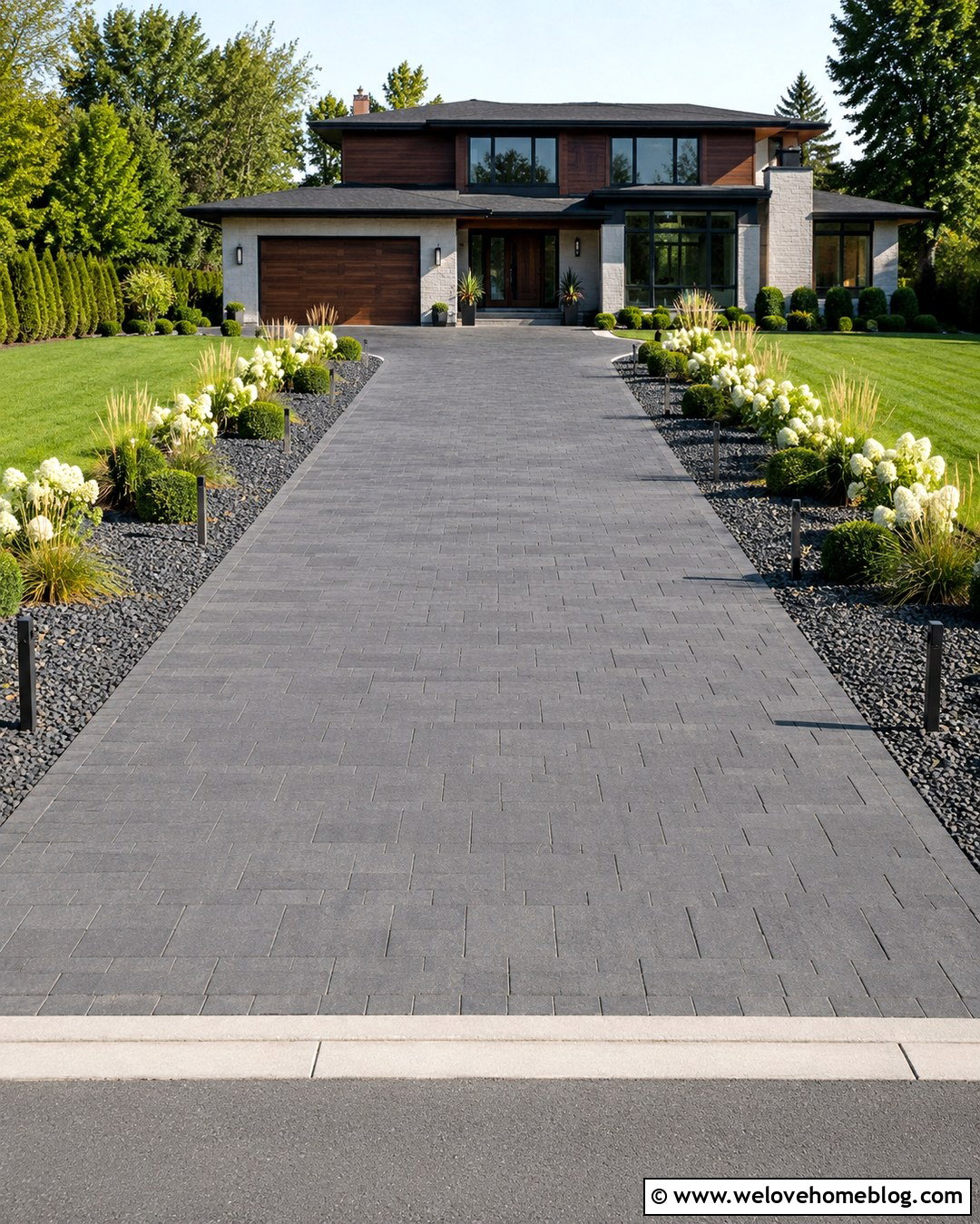
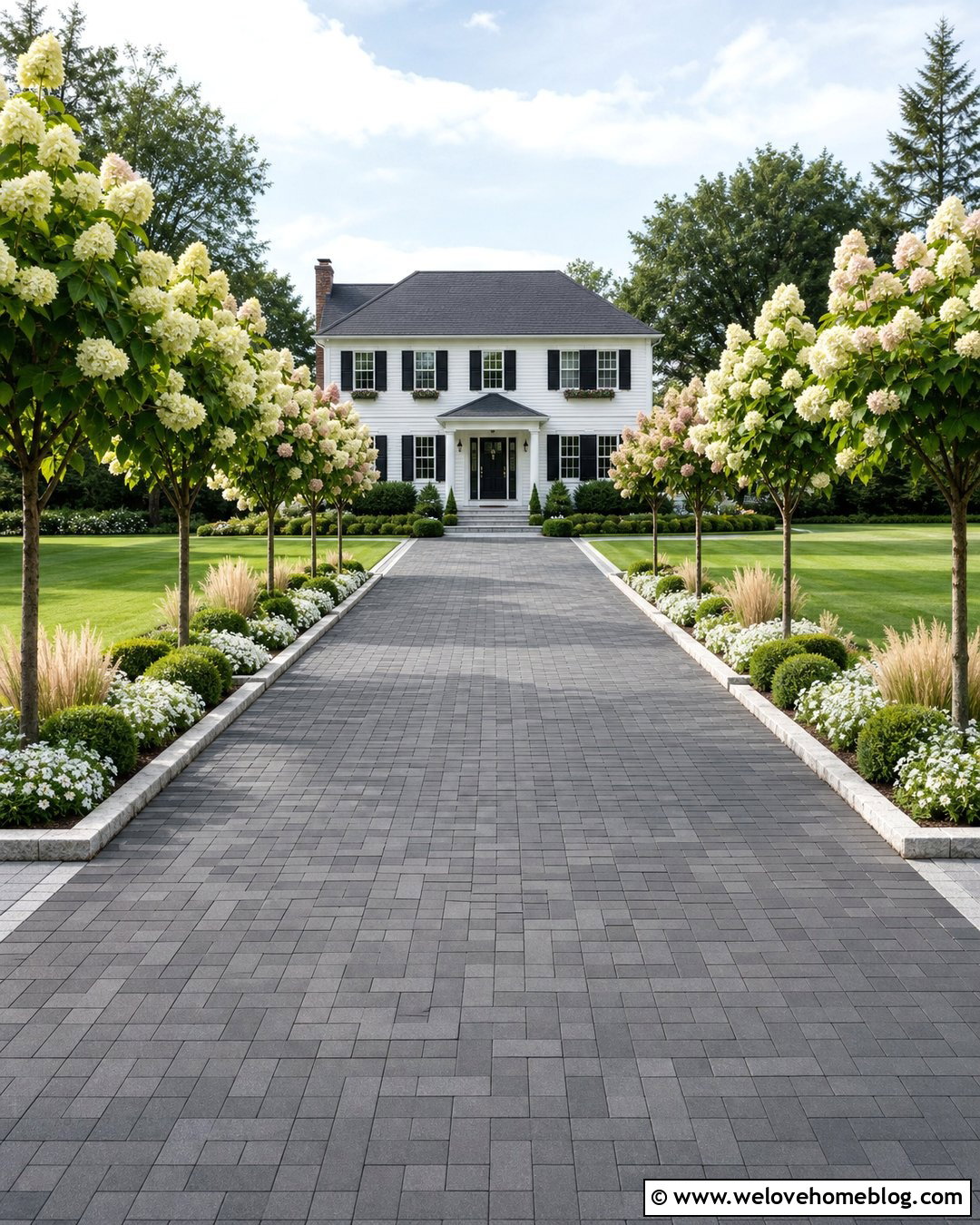
Clean rectangular concrete pavers and compact white hydrangeas create a fresh modern driveway without making the landscape feel cold. Choose large charcoal or medium-gray pavers in a running bond pattern. Add narrow gravel joints or dark stone bands to emphasize the geometry. Along one side, plant an uninterrupted row of dwarf white hydrangeas in a crisp rectangular bed. On the opposite side, use a simpler lawn edge or a narrow walkway to keep the design asymmetrical and contemporary. Feather grasses, clipped evergreen spheres, and black metal path lights can add height and rhythm. Avoid filling every open area with different plants. The limited green, white, and gray palette should remain easy to read from the street. A modern home with wood siding accents will warm the overall composition.
11. Shaded Cobblestone Driveway With Oakleaf Hydrangeas
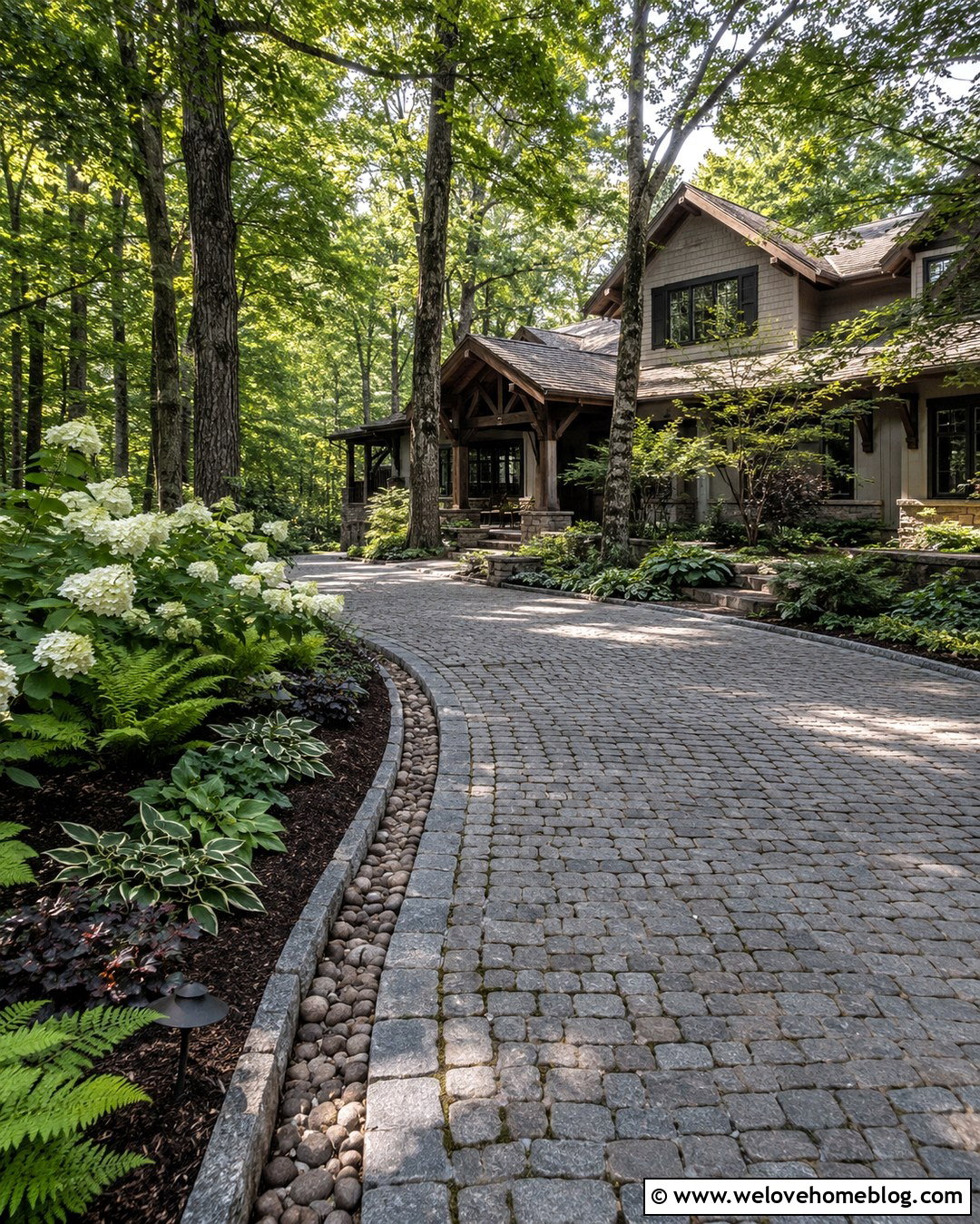
A driveway beneath mature trees needs a planting plan that feels intentional in filtered light. Use weathered gray cobblestones for a narrow curved surface leading to a craftsman or woodland home. Line the outer curve with oakleaf hydrangeas, whose bold leaves complement the rough texture of the stone. Layer hostas, ferns, and heuchera along the front of the bed to hide bare soil and create a gradual transition from paving to shrubs. Dark brown mulch will make pale blooms and variegated foliage more visible. Preserve a small stone drainage channel where runoff naturally collects rather than blocking water with raised beds. Low lighting can be positioned among the ground-level plants, but fixtures should remain clear of mature foliage. The result is a cool, green driveway that looks integrated with the tree canopy.
12. Ranch Driveway With Pink Hydrangeas
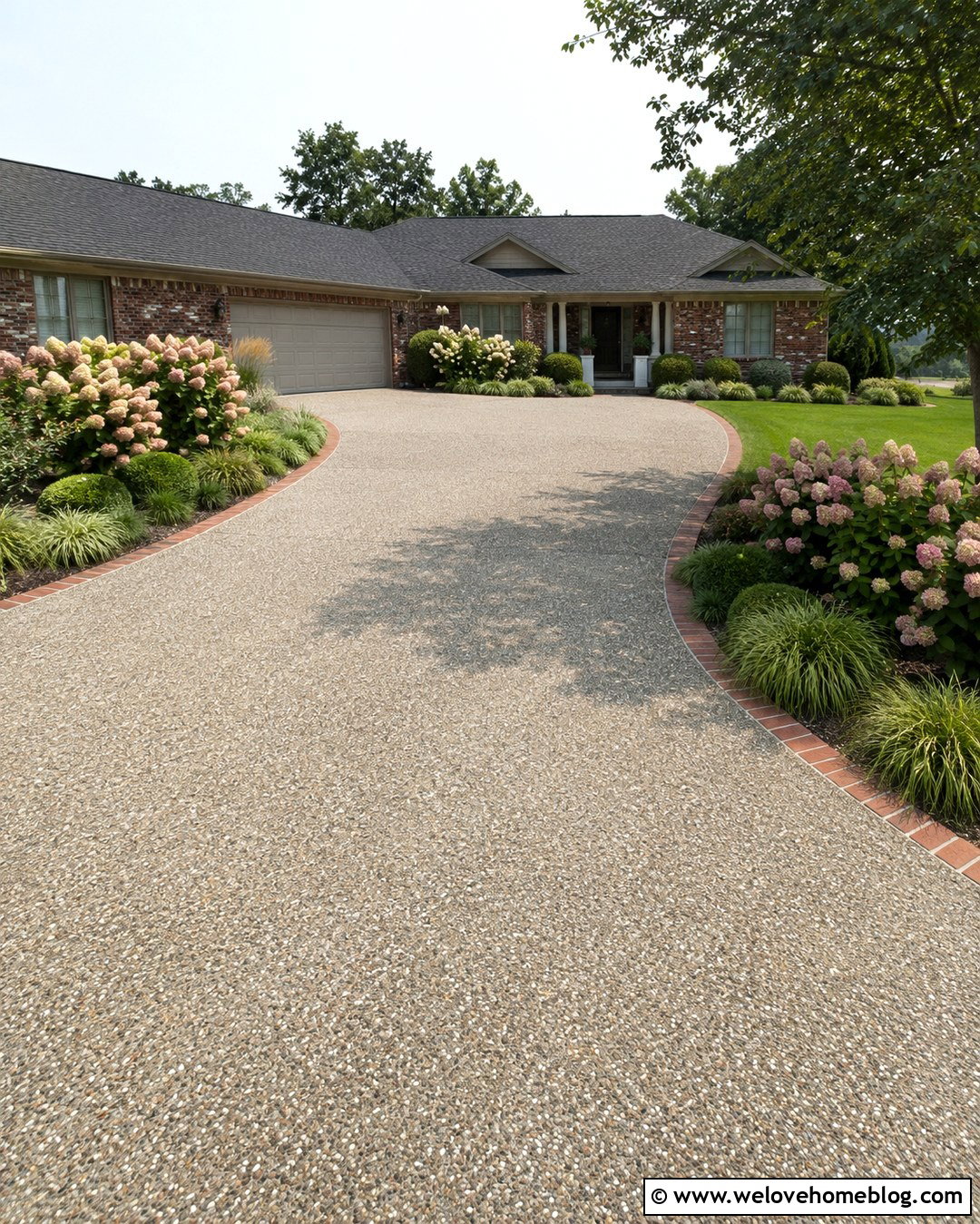
A wide ranch home benefits from a driveway border that adds height without hiding its horizontal architecture. Use exposed aggregate concrete in warm gray and beige tones, finished with a narrow brick edge. Plant compact blush-pink hydrangeas in broad groups along the side closest to the house. Break the row near windows and walkways with low ornamental grasses or rounded evergreen shrubs. This creates rhythm while preventing the planting from becoming one solid wall. On the lawn side, repeat smaller hydrangea groups near the street and parking area to balance the view. A curved concrete walkway can pass through the planting bed and connect the driveway to the porch. Choose shrubs with mature dimensions suited to the shallow beds often found around ranch homes. This reduces crowding and keeps the driveway comfortable to use.
13. Long Driveway With Limelight Hydrangeas
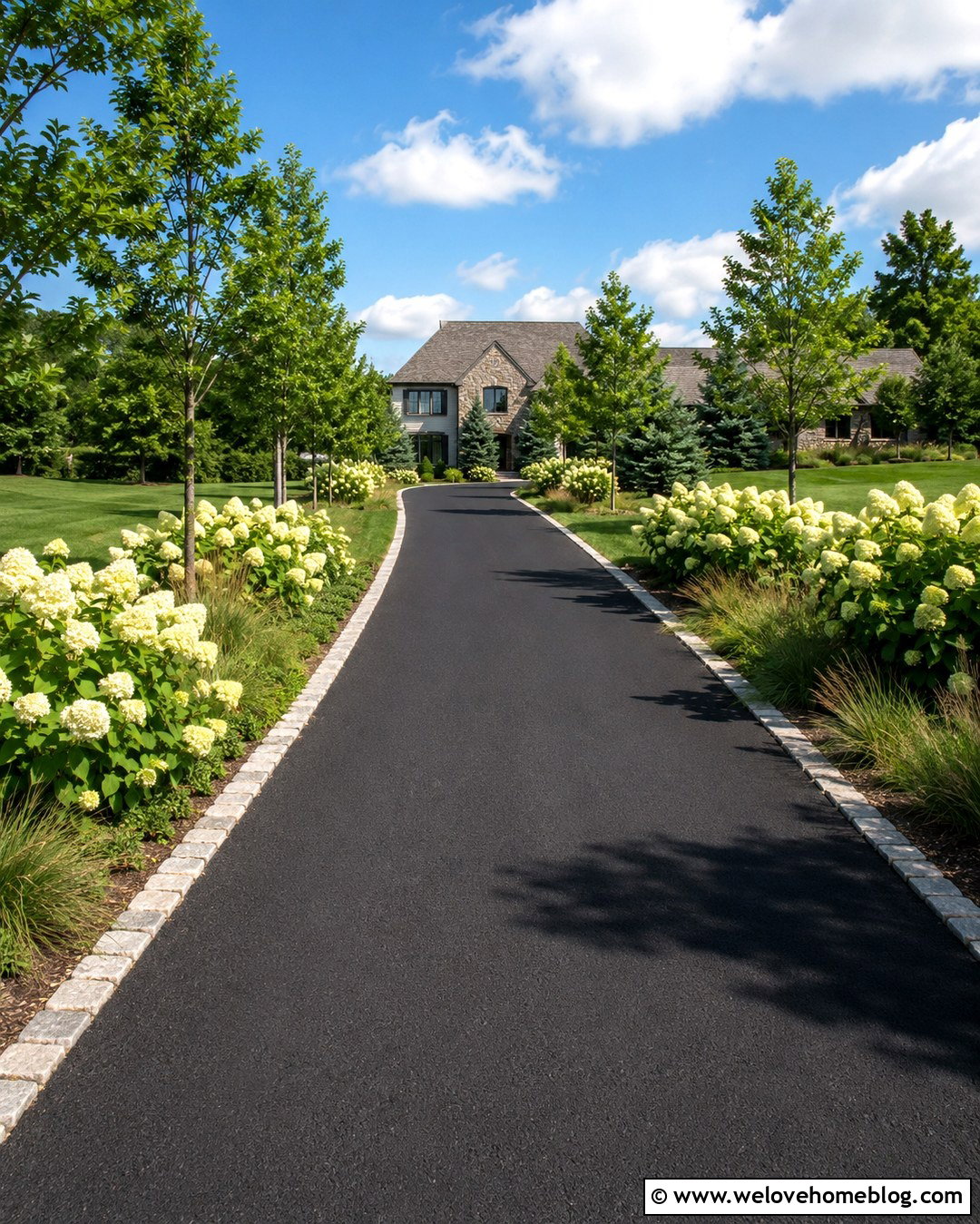
Long driveways can feel empty when landscaping appears only near the house. A repeated line of Limelight-type panicle hydrangeas creates continuity from the street to the front entrance. Use black asphalt for an affordable, visually quiet surface and pale granite blocks for edging. Instead of planting shrubs along every foot, organize them into generous drifts separated by lawn or low meadow grasses. The repeating pattern provides direction without looking rigid. Add matching deciduous trees at wider intervals behind the hydrangeas to create vertical scale. Keep the first planting groups set back from the road, mailbox, and any drainage ditch. As the driveway reaches the house, make the beds deeper and more detailed with evergreen accents. This gradual increase in planting density makes the approach feel thoughtfully designed rather than uniformly decorated.
14. Narrow Driveway With Dwarf Hydrangeas
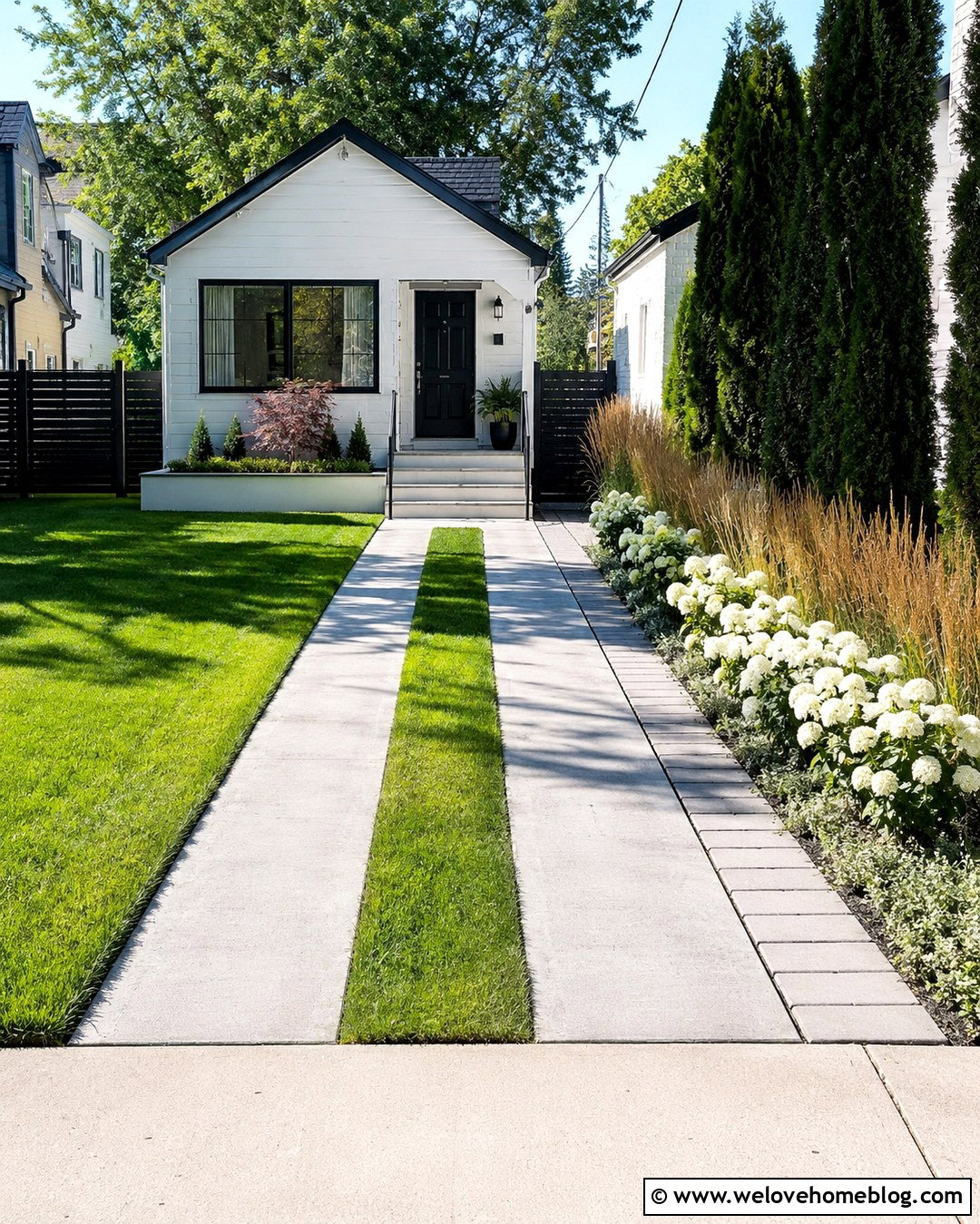
Even a narrow side driveway can include hydrangeas if the design protects usable driving width. Choose two concrete wheel tracks with a reinforced grass or gravel strip between them. Along the garden side, install a slim steel edge and a carefully sized row of dwarf white hydrangeas. Avoid placing large shrubs on both sides, which could create a cramped passage when branches mature. The opposite edge can remain lawn or feature a simple stone walkway. Upright ornamental grasses placed behind the hydrangeas will provide height without spreading into the drive. Near the garage, end the planting bed early to allow comfortable door access and turning space. This layout feels greener than a full concrete slab, yet it remains practical for a small urban or suburban property where every inch of space matters.

15. Sloped Driveway With Hydrangea Beds
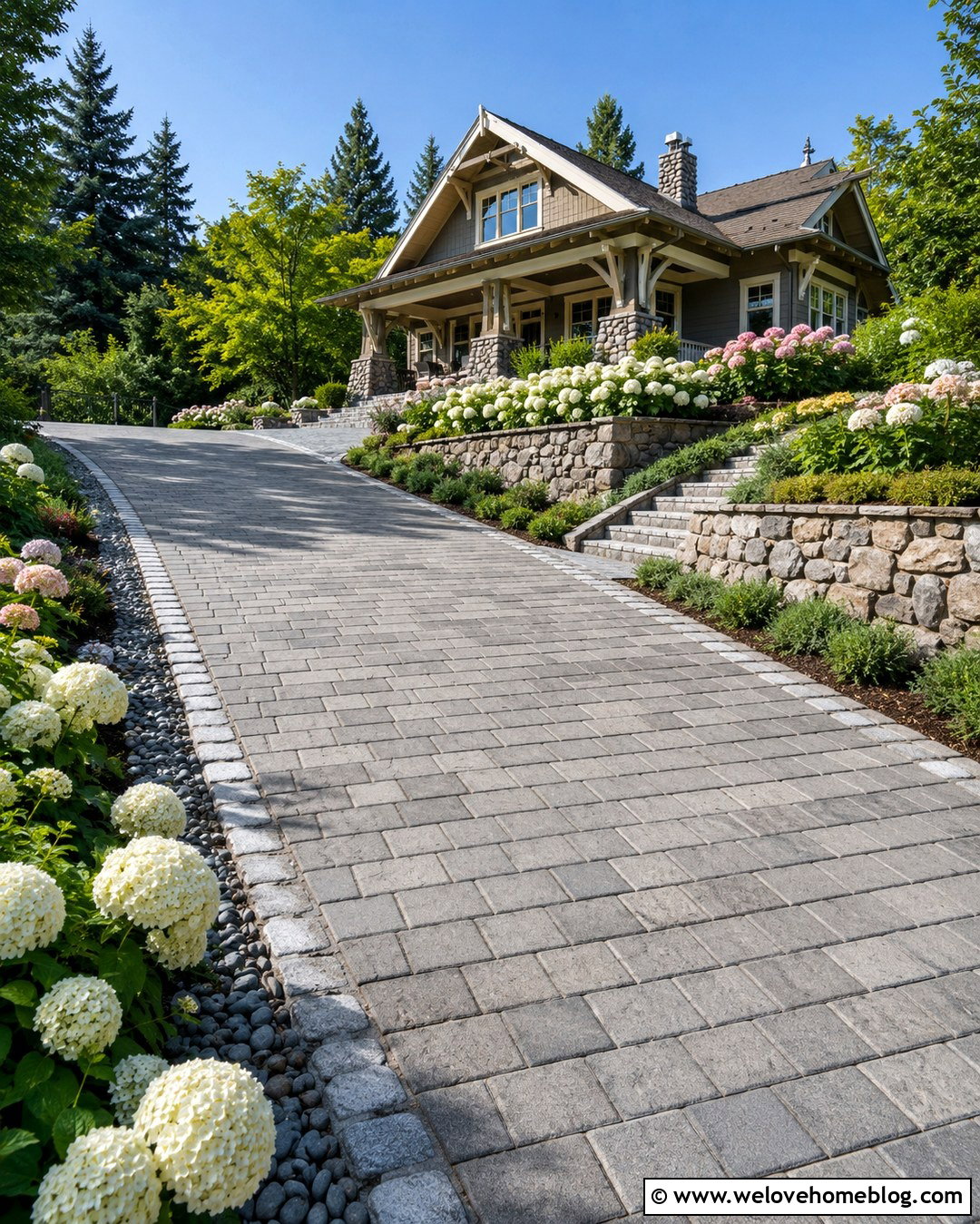
A sloped driveway requires planting beds that manage elevation without allowing soil and mulch to wash onto the pavement. Use textured concrete pavers for dependable visual definition, arranging them in a running bond across the slope. Build low fieldstone retaining walls along the higher side, then plant white or pale pink hydrangeas in broad terraces above them. Ground covers can stabilize and soften the front of each bed. On the lower side, use a flush cobblestone curb with an open lawn or shallow drainage swale. Avoid tall shrubs near the base of the hill where visibility is important. Repeating the same wall stone around the home’s front steps will connect the driveway to the architecture. With layered beds, the hydrangeas appear stacked above the approach instead of leaning awkwardly into it.
16. Gated Driveway With White Hydrangeas
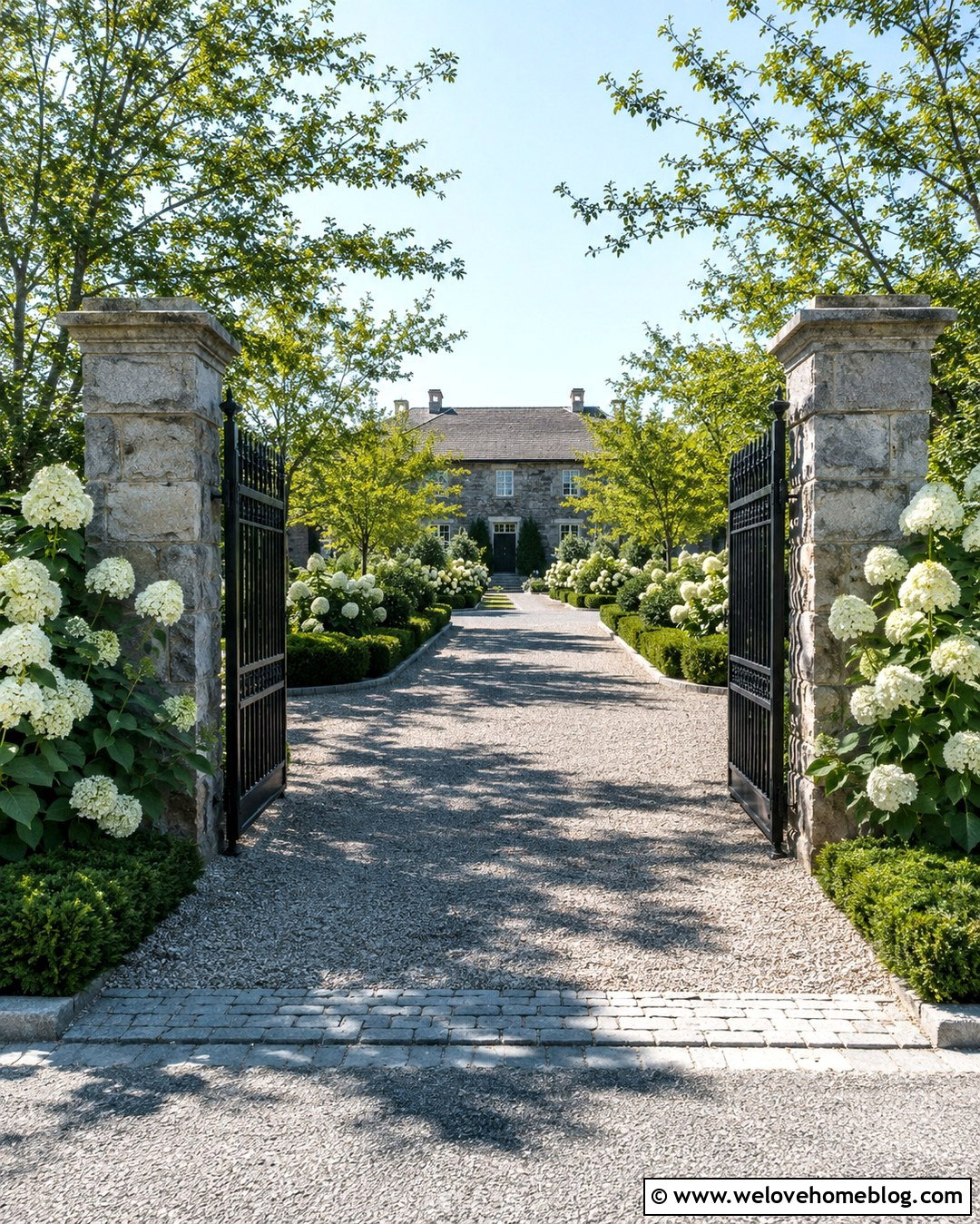
A gated driveway can feel more inviting when lush white hydrangeas soften its pillars and fencing. Begin with a warm gray crushed-stone driveway edged by flat granite blocks. Install simple black metal gates between stone pillars, placing broad planting beds outside the gate so the entrance is visible from the road. Use symmetrical groups of white panicle hydrangeas behind lower evergreen shrubs. Keep the plants far enough from the moving gate panels, sensors, and hinges to prevent interference. Inside the gate, continue smaller hydrangea groups along the first section of the driveway instead of ending the landscaping abruptly. A pair of ornamental trees behind the pillars can provide extra height. The repeated white flowers, dark gate, natural stone, and gray driveway create a balanced entrance that feels substantial but not unfriendly.
17. Brick Pillar Driveway With Hydrangeas
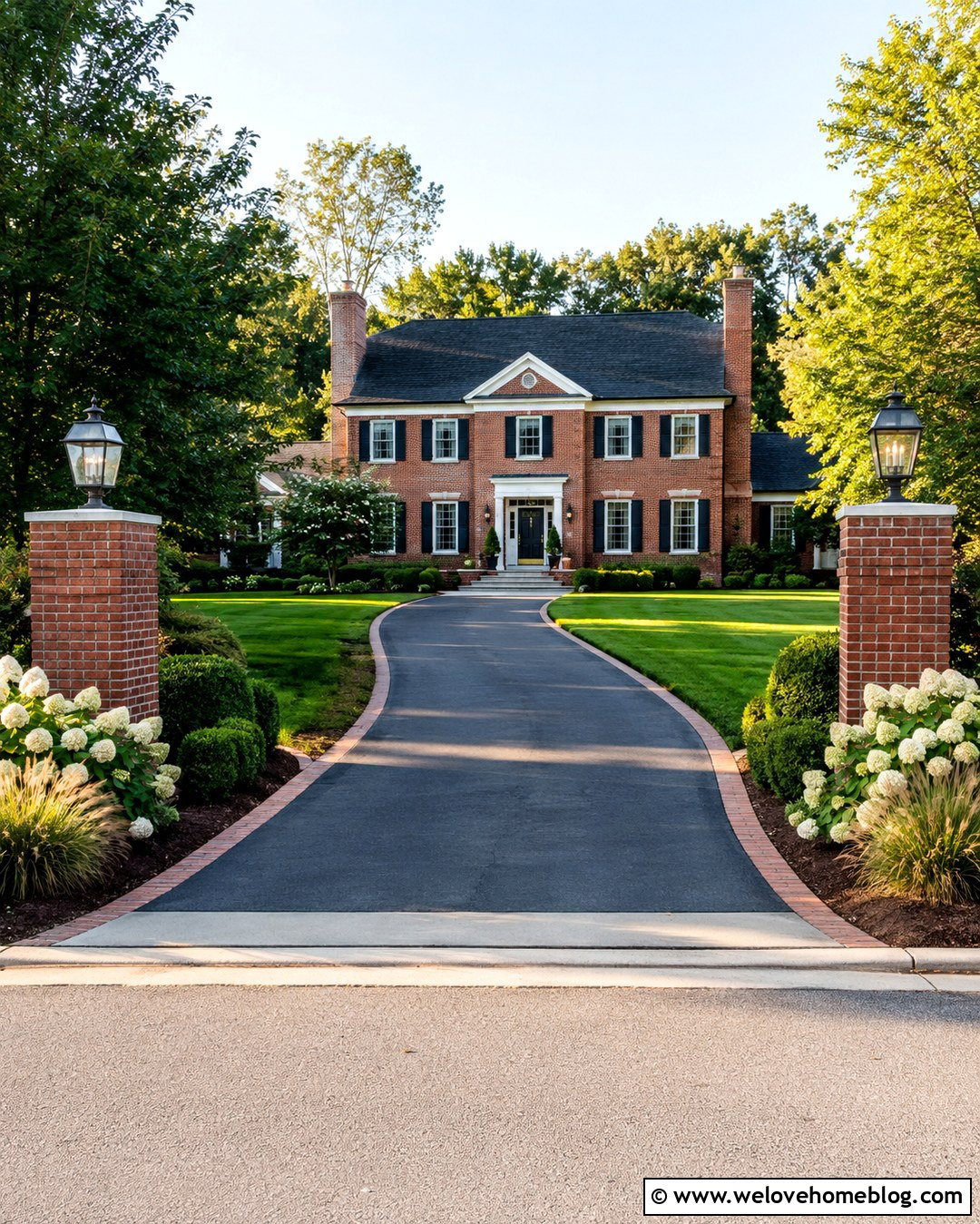
Traditional brick pillars become more connected to the yard when hydrangeas surround their bases and continue along the driveway. Use smooth black asphalt with a red brick border that matches the entrance masonry. Plant compact white hydrangeas behind the border, then add low boxwood near the pillars to preserve clear edges and year-round greenery. The planting beds can curve outward toward the road, giving the entrance greater width and presence. Add a stone or brick address marker to one pillar rather than placing a separate sign in the flower bed. Farther up the driveway, allow the hydrangea border to become looser and mix in ornamental grasses. This gradual shift from formal entrance planting to relaxed garden beds suits a Colonial or brick-front home while keeping the hardscape and landscaping visually connected.
18. Split Driveway With Mixed Hydrangeas
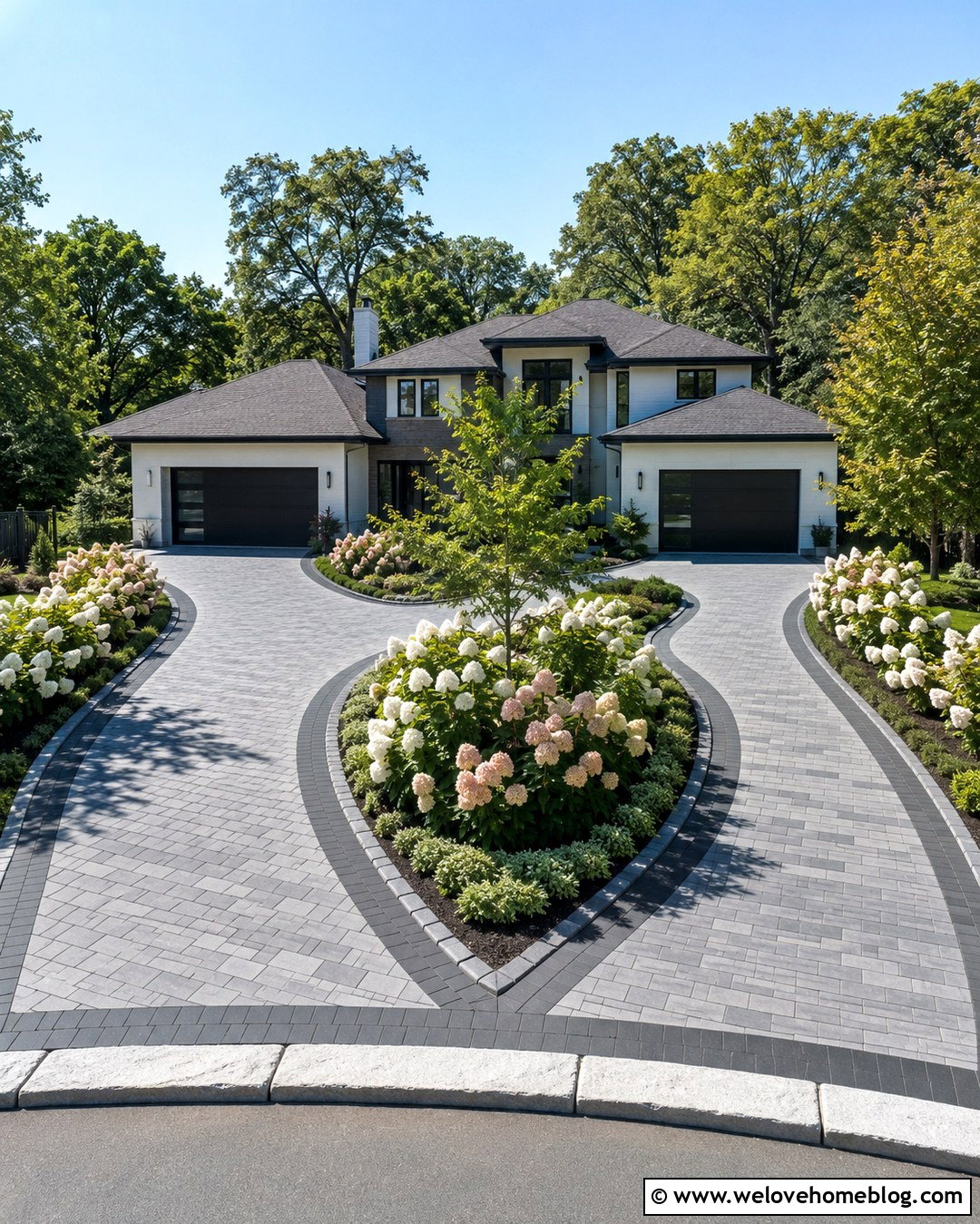
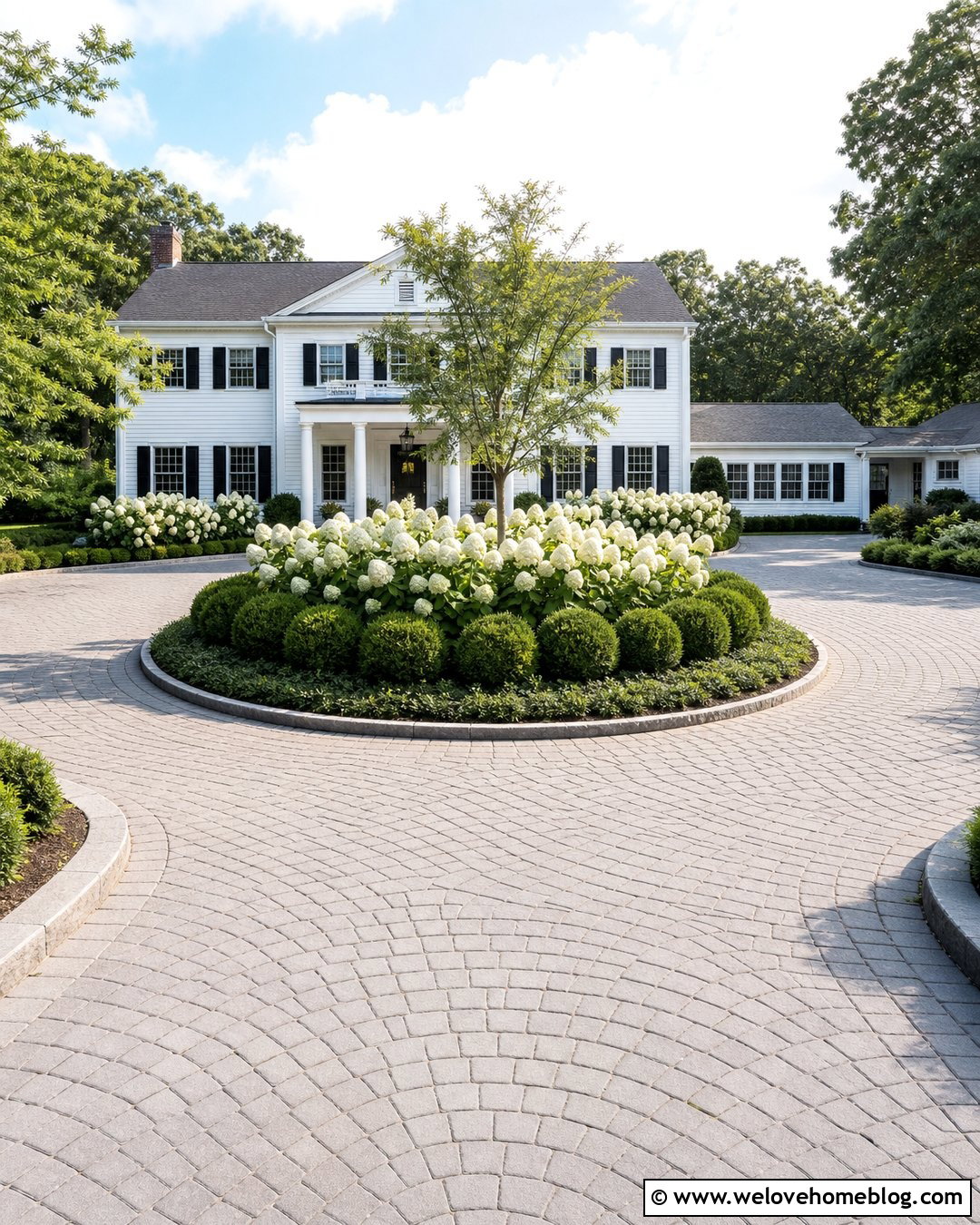
A split driveway leading to two garages or parking areas can look disjointed unless the landscaping unifies both branches. Choose medium-gray concrete pavers with dark charcoal border courses. At the center of the split, create a large teardrop-shaped bed filled with mixed white and blush hydrangeas. Anchor the narrow point with a small ornamental tree and use low ground cover around the curb so branches do not obstruct turning. Continue matching hydrangea groups along the outside edges of both driveway branches. Repeating the same pavers around the island will clarify its shape and protect the planting bed. Keep taller shrubs toward the broad center and compact varieties near vehicle paths. The result transforms a complicated paved area into a clear, balanced composition with the central hydrangea garden serving as its focal point.
19. Horseshoe Driveway With Limelight Hydrangeas
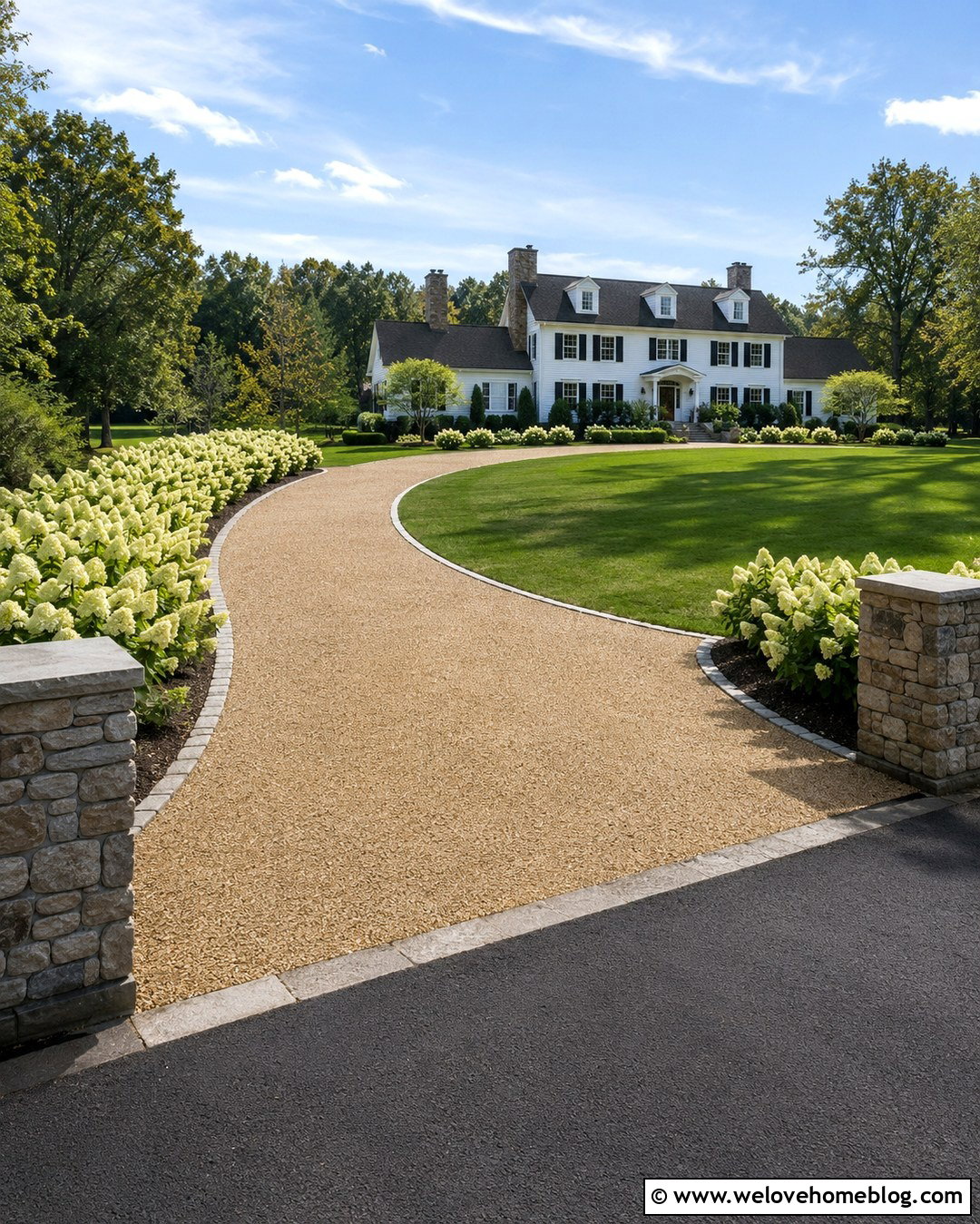
A horseshoe driveway creates two entrance points, so the hydrangea planting should look balanced from either direction. Use honey-colored resin-bound gravel for a smooth, refined surface with matching natural stone edging. Plant Limelight-type panicle hydrangeas along the outer arc, where their changing green, cream, and blush tones can form a continuous seasonal border. Keep the inner lawn more open, using only a few repeated groups near the front walkway. Matching stone pillars at both road entrances help the large curve feel organized. Avoid placing tall shrubs on the inside of sharp turns, where they could reduce visibility. Panicle hydrangeas are often selected for prominent hedges and borders, but spacing should always reflect the mature size of the particular cultivar. () This design suits a broad Colonial or estate-style home.


20. Cottage Driveway With Mixed Hydrangeas
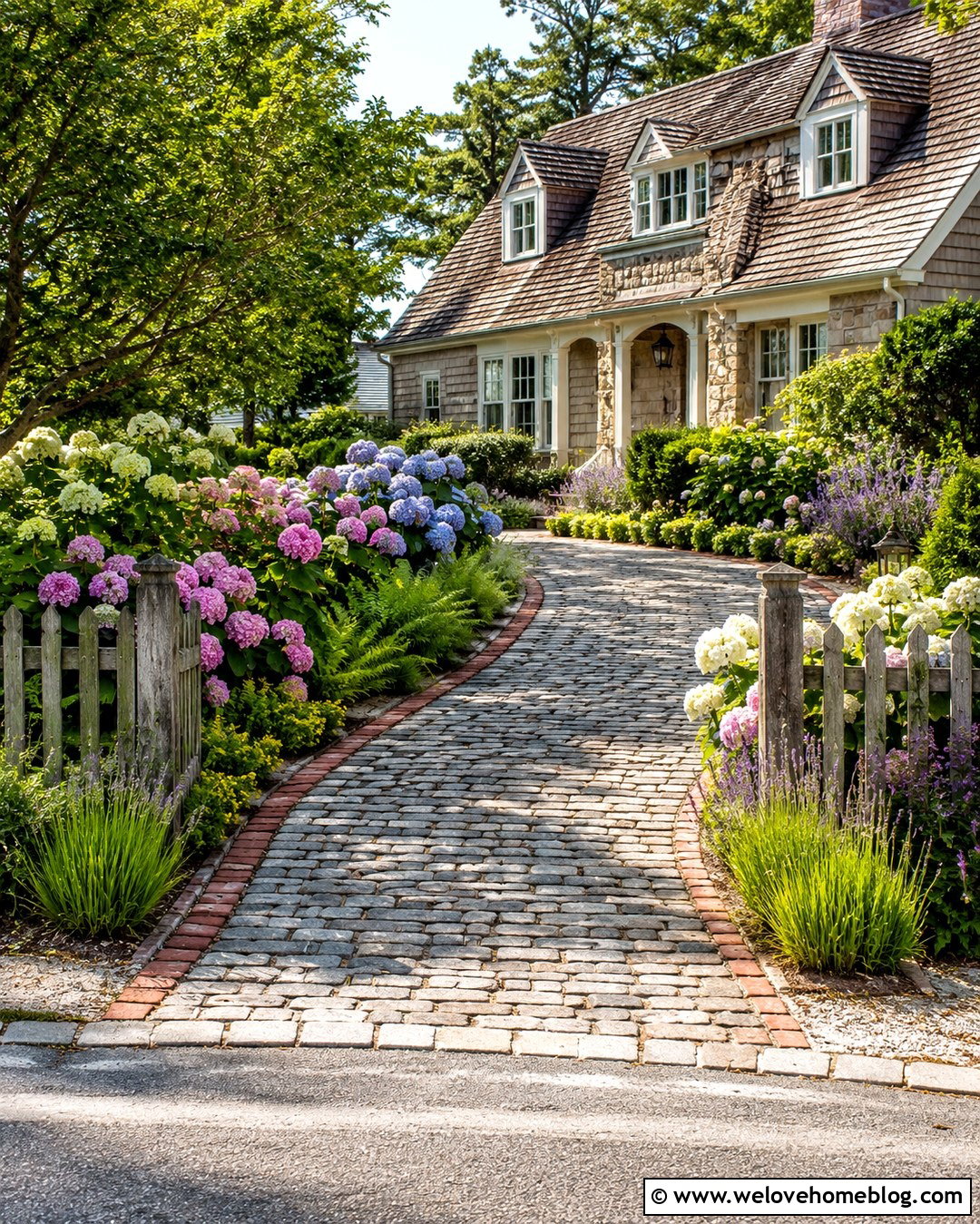
For a relaxed cottage entrance, combine an aged cobblestone driveway with overflowing groups of pink, blue, and creamy white hydrangeas. Let the surface curve gently toward a stone or clapboard house rather than following a perfectly straight line. Narrow brick edging will hold the cobbles while blending naturally into the traditional material. Behind it, layer the hydrangeas with catmint, ferns, lady’s mantle, and low ornamental grasses. Repeat flower colors in drifts instead of alternating every shrub, which can make the border look spotty. A rustic wooden gate or short picket fence can mark the entrance without blocking the view. Keep the plants trimmed away from the actual driving surface, but allow them to form a loose, full backdrop. This complete look feels established, colorful, and deliberately informal.
Conclusion:
The best driveway lined with hydrangeas is more than a row of flowering shrubs. It combines a practical driving surface, defined edging, properly sized plants, safe sightlines, and landscaping that complements the home. White hydrangeas can brighten asphalt and gravel, while blue and pink blooms bring character to concrete, brick, and cobblestone. Formal properties may benefit from symmetry and boxwood borders. Cottage landscapes can use curved beds and mixed companion plants. Always consider mature plant width, local climate, sunlight, drainage, and heat from nearby pavement before planting. With thoughtful planning, these 20 Driveway Lined With Hydrangeas Ideas can help turn an ordinary front approach into a cohesive and welcoming landscape.

Related posts:


Leave a Reply