
Natural stone edging gives a driveway structure, texture, and a strong connection to the surrounding landscape. It can contain loose aggregate, protect vulnerable pavement edges, separate planting beds, and make an ordinary entrance feel intentionally designed. These 20 Natural Stone Driveway Edging Ideas explore complete looks rather than isolated border details. You will find options for gravel, asphalt, concrete, brick, and permeable driveways, paired with practical stone types and attractive landscaping. The designs range from crisp granite setts beside a modern home to rugged fieldstone framing a relaxed country entrance. Each approach can also be adjusted for different driveway lengths, grades, climates, and budgets. Use these 20 Natural Stone Driveway Edging Ideas to choose a border that works with your entire front yard.
1. Granite Stone Driveway Edging With Gray Gravel
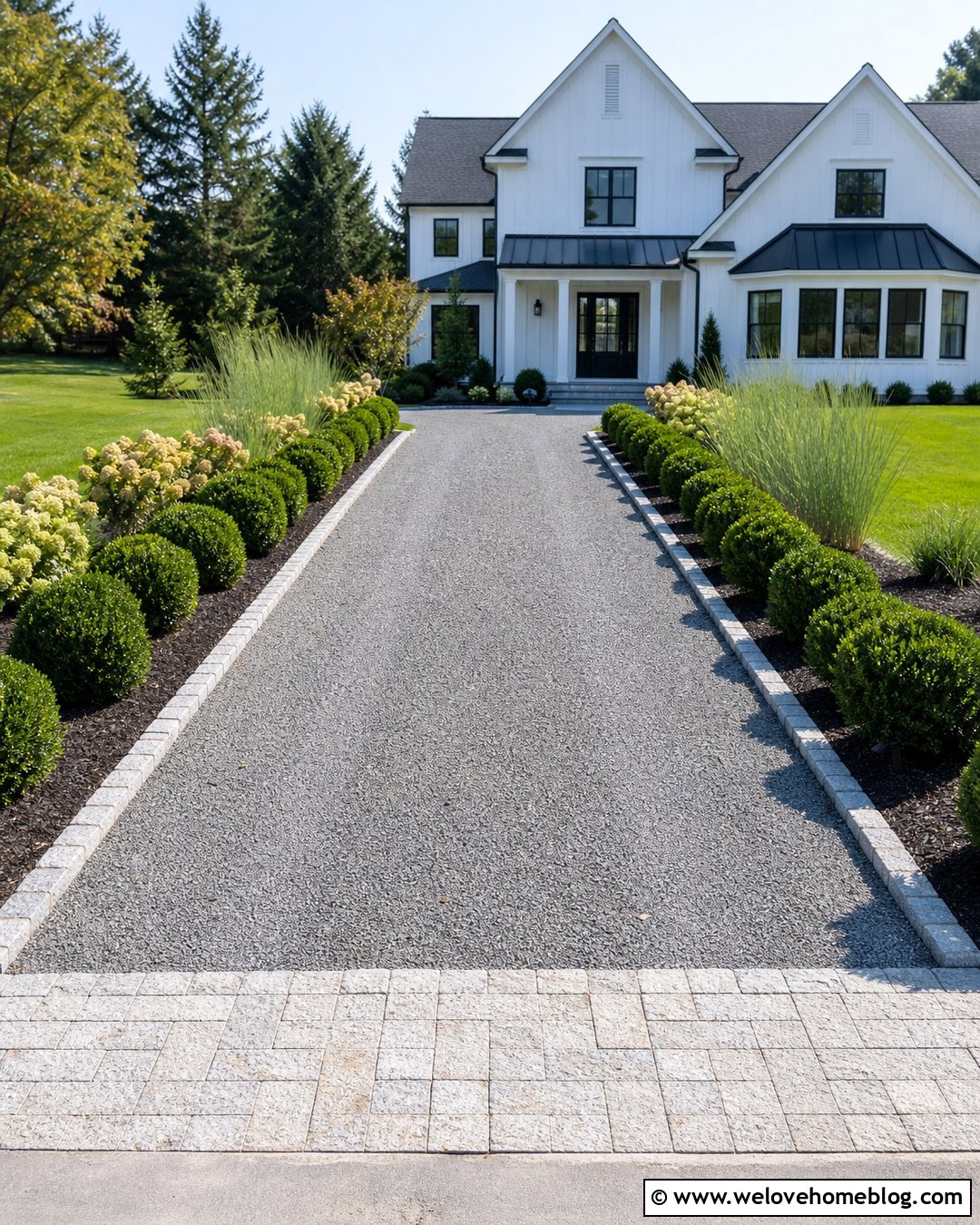
Granite setts create a crisp, durable frame around a straight gray gravel driveway. Their squared shape keeps the border orderly, while their naturally speckled surface prevents the design from feeling too formal. Choose charcoal or silver granite that contrasts slightly with the smaller gravel. Set the stones in a stable base so they remain aligned when tires approach the edge. Low ornamental grasses, clipped boxwoods, and a narrow lawn can soften both sides without hiding the stonework. This complete look suits a modern farmhouse, updated ranch, or traditional brick home. Repeat the same granite around the connecting walkway or entrance apron for continuity. Granite is especially useful where a strong edge is needed to contain loose driveway material. ()
2. Fieldstone Driveway Edging With Crushed Stone
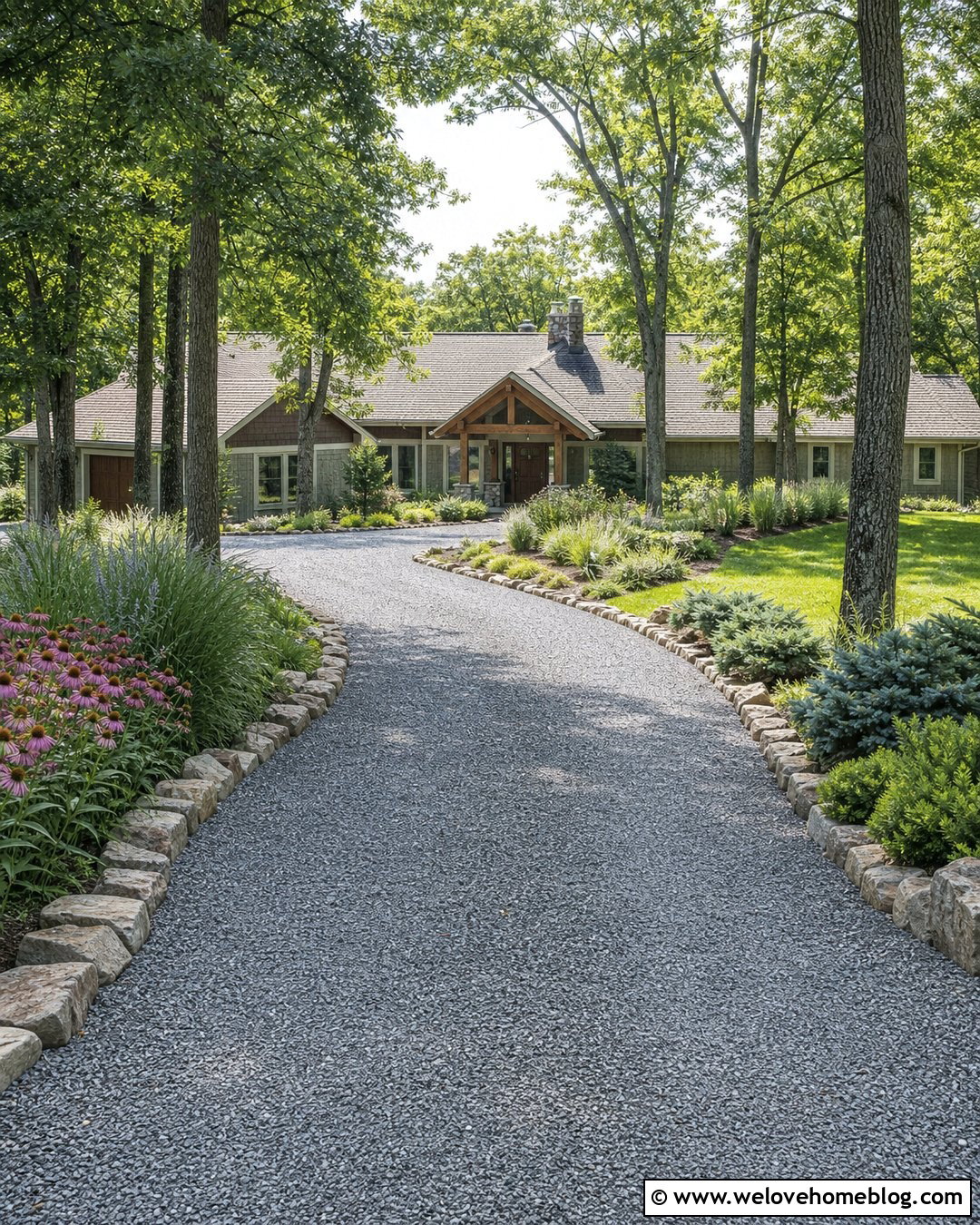
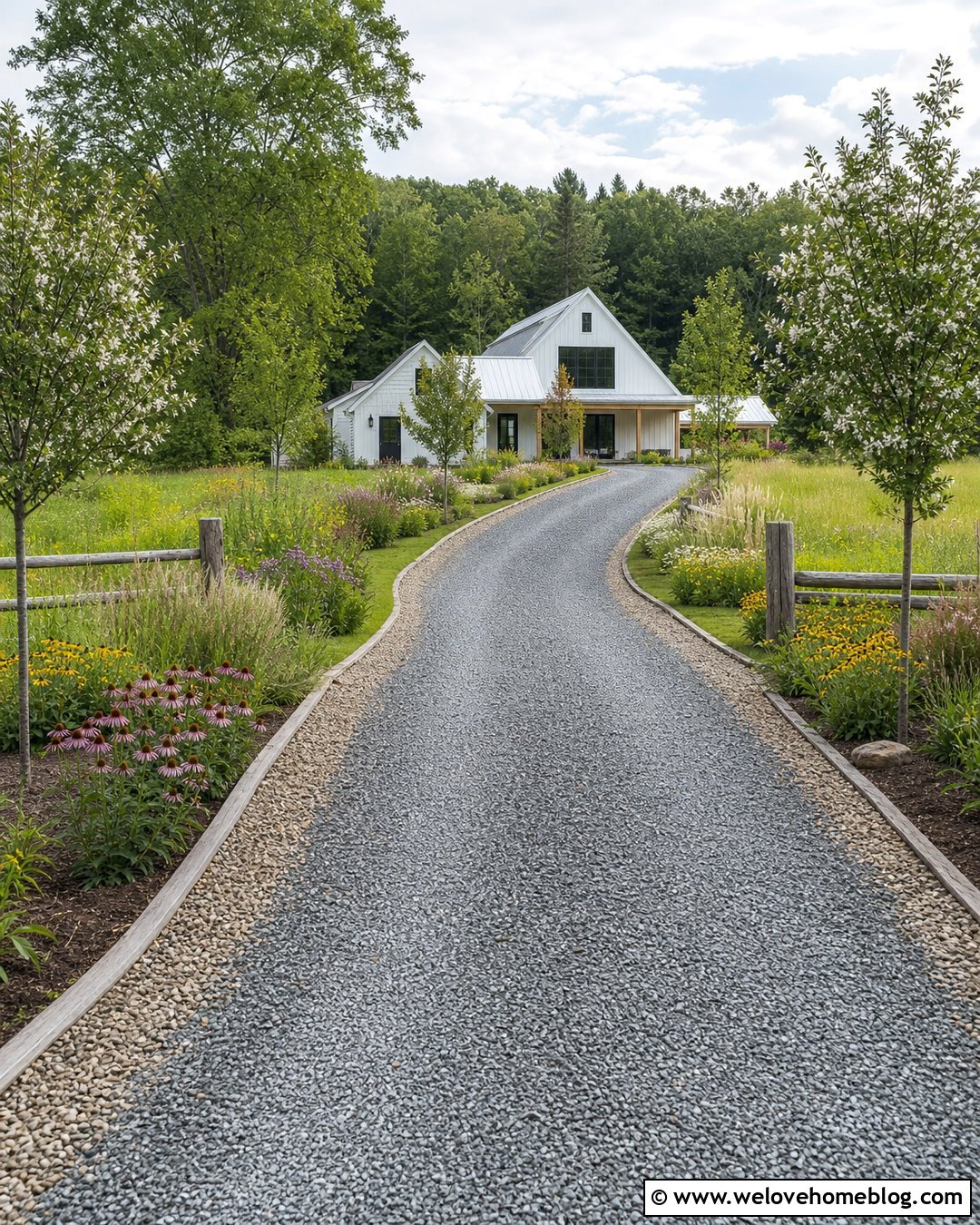
A crushed stone driveway feels more connected to a country landscape when it is bordered by irregular fieldstone. Select pieces with varied gray, tan, and brown tones, then arrange them in a low single row. The imperfect shapes complement a gently curved driveway and help the transition into meadow planting or informal garden beds feel natural. Keep the stones low near parking areas to reduce the risk of contact with tires or doors. Add native grasses, coneflowers, compact evergreens, and a few shade trees along the route. This design looks particularly fitting beside a rustic ranch, farmhouse, or wooded cabin-style home. Using locally sourced fieldstone can also help the new edging relate naturally to the property’s existing soil, architecture, and landscape colors.
3. Cobblestone Driveway Edging With Black Asphalt
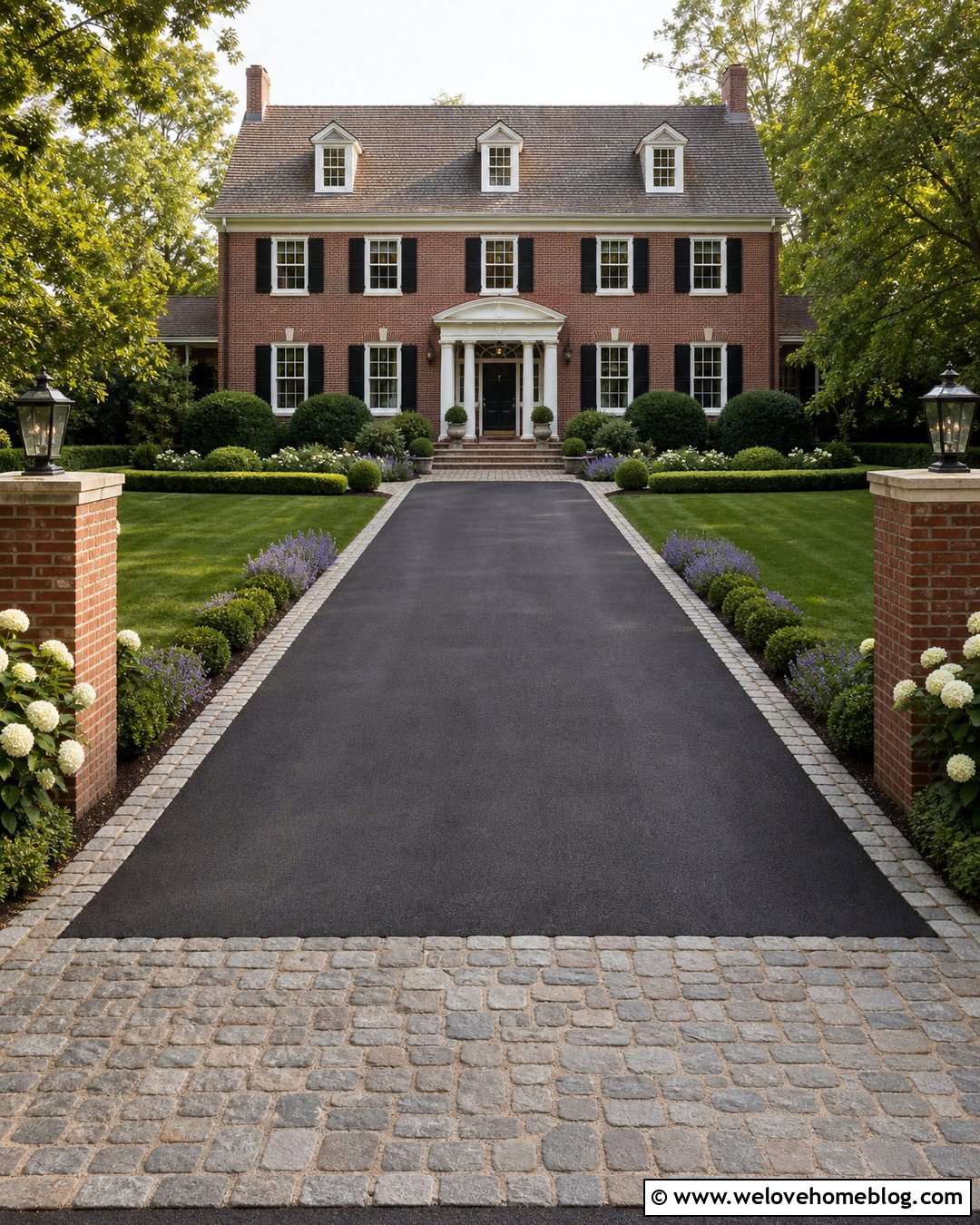
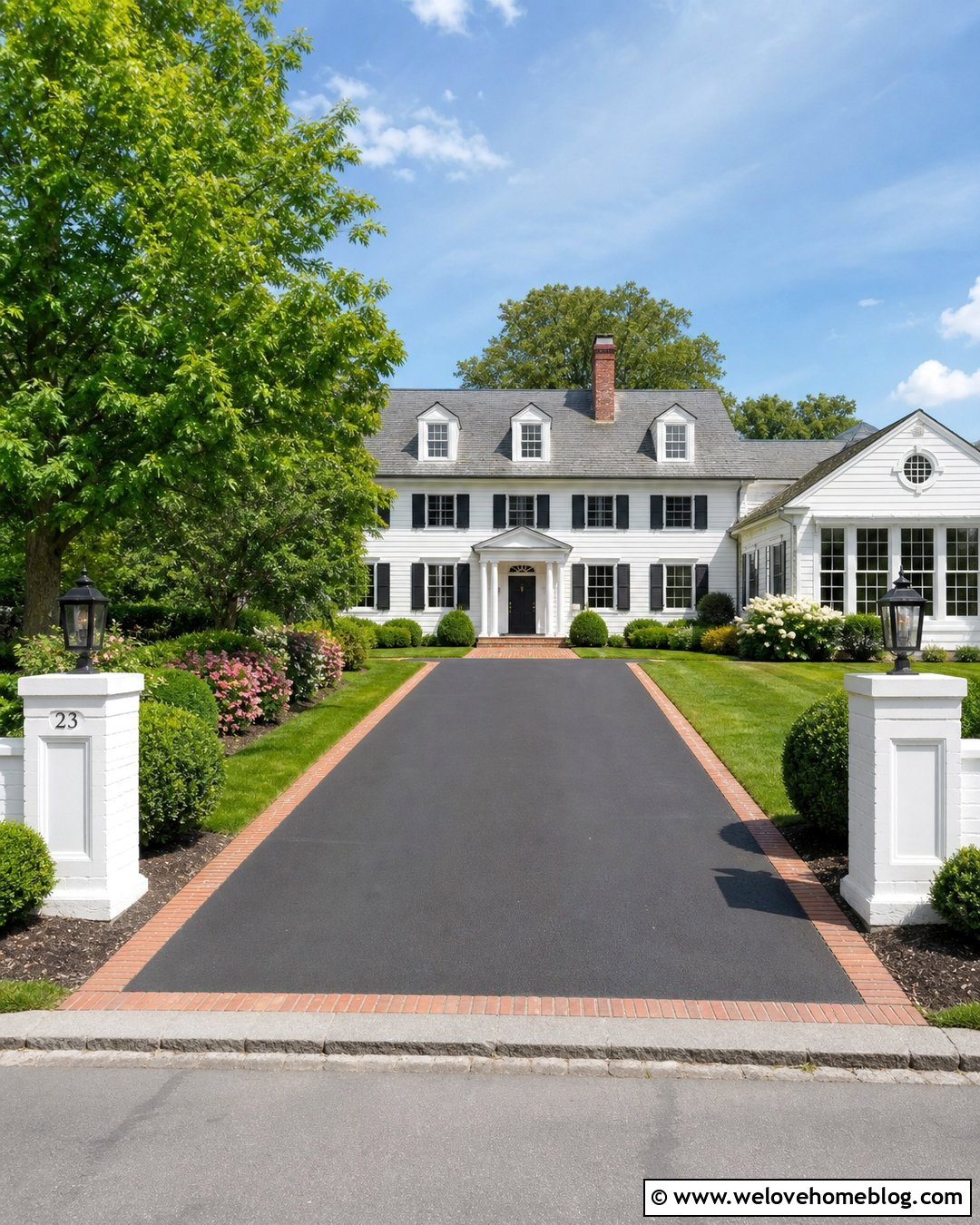
Warm cobblestone edging can transform a basic black asphalt driveway into a more refined entrance. Use one neat row along each side and widen it into a decorative apron near the street. Gray, brown, or reclaimed cobbles create enough contrast to outline the dark pavement without overpowering it. A straight driveway works well with a formal border, especially when paired with symmetrical lawn panels and evenly spaced shrubs. For a softer effect, plant catmint, dwarf hydrangeas, or low grasses behind the stone. The cobblestone can continue around a front walkway, helping the driveway and entry feel like one coordinated design. Because natural cobbles have gentle variations in shape and color, they add character while still giving asphalt a finished, contained appearance.
4. Limestone Driveway Edging With Poured Concrete
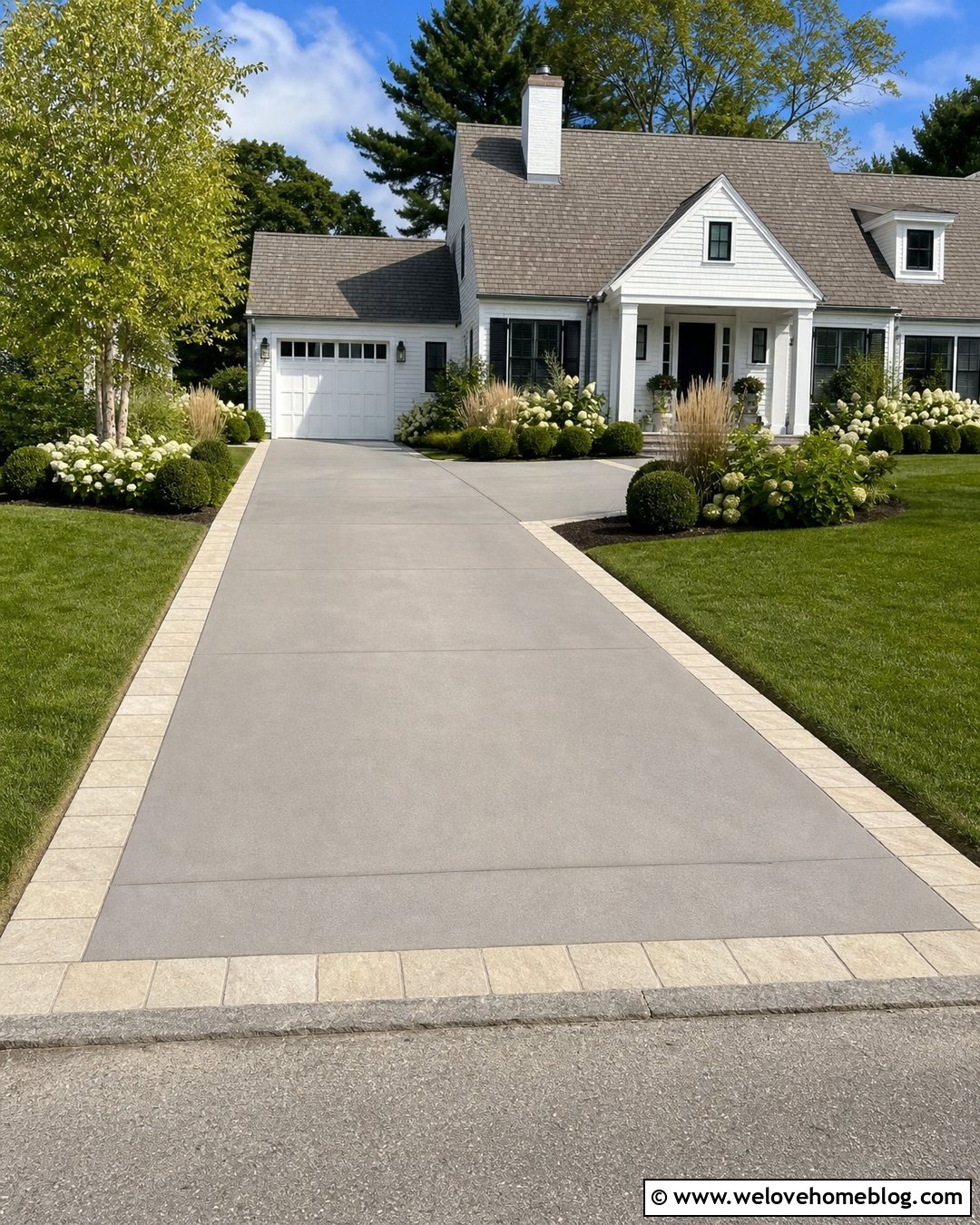
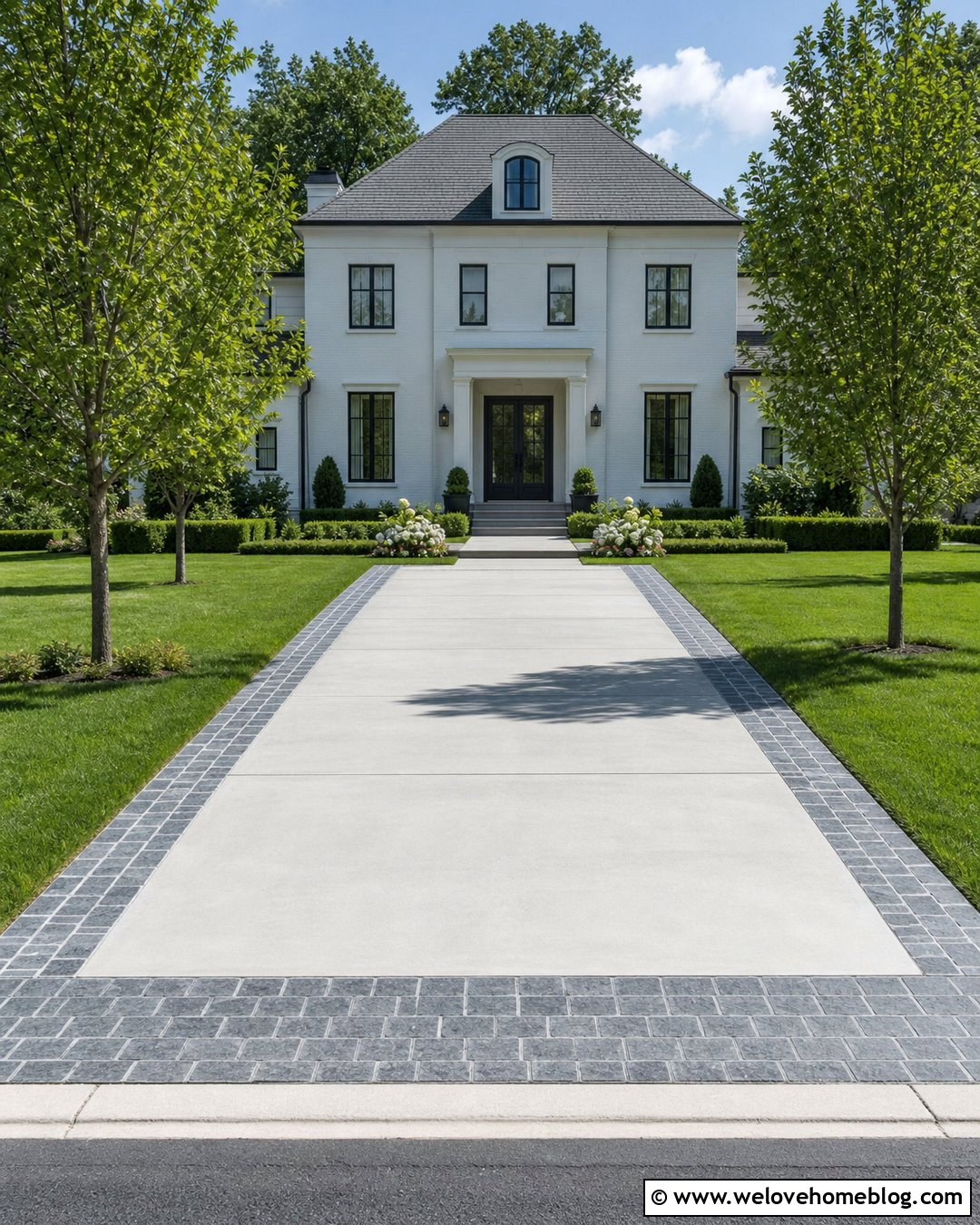
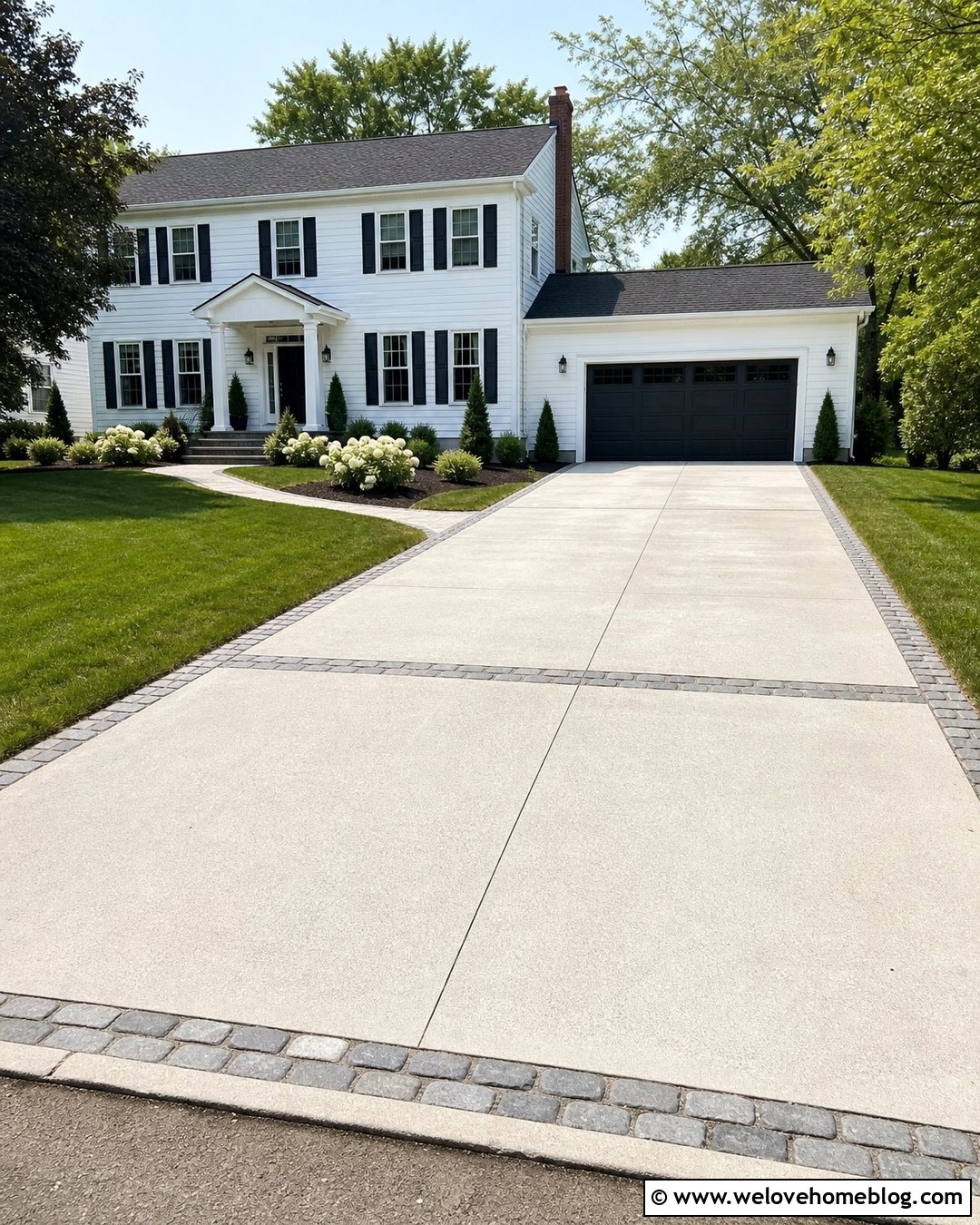
Light limestone blocks bring warmth to a smooth gray poured concrete driveway. For a clean suburban look, install rectangular stones flush with the pavement rather than creating a raised curb. The pale cream coloring brightens the driveway and can coordinate with limestone veneer, white siding, or warm brick. Use a straight layout leading to the garage, then add shallow planting beds filled with rounded evergreens, white flowers, and ornamental grasses. A matching limestone walkway creates a seamless transition toward the front door. This design is especially attractive around colonial, Cape Cod, and transitional homes. Limestone may weather gradually, so choose dense exterior-grade material suited to your climate. Proper preparation beneath the border helps prevent uneven movement and keeps the long lines looking polished.
5. Sandstone Driveway Edging With Pea Gravel
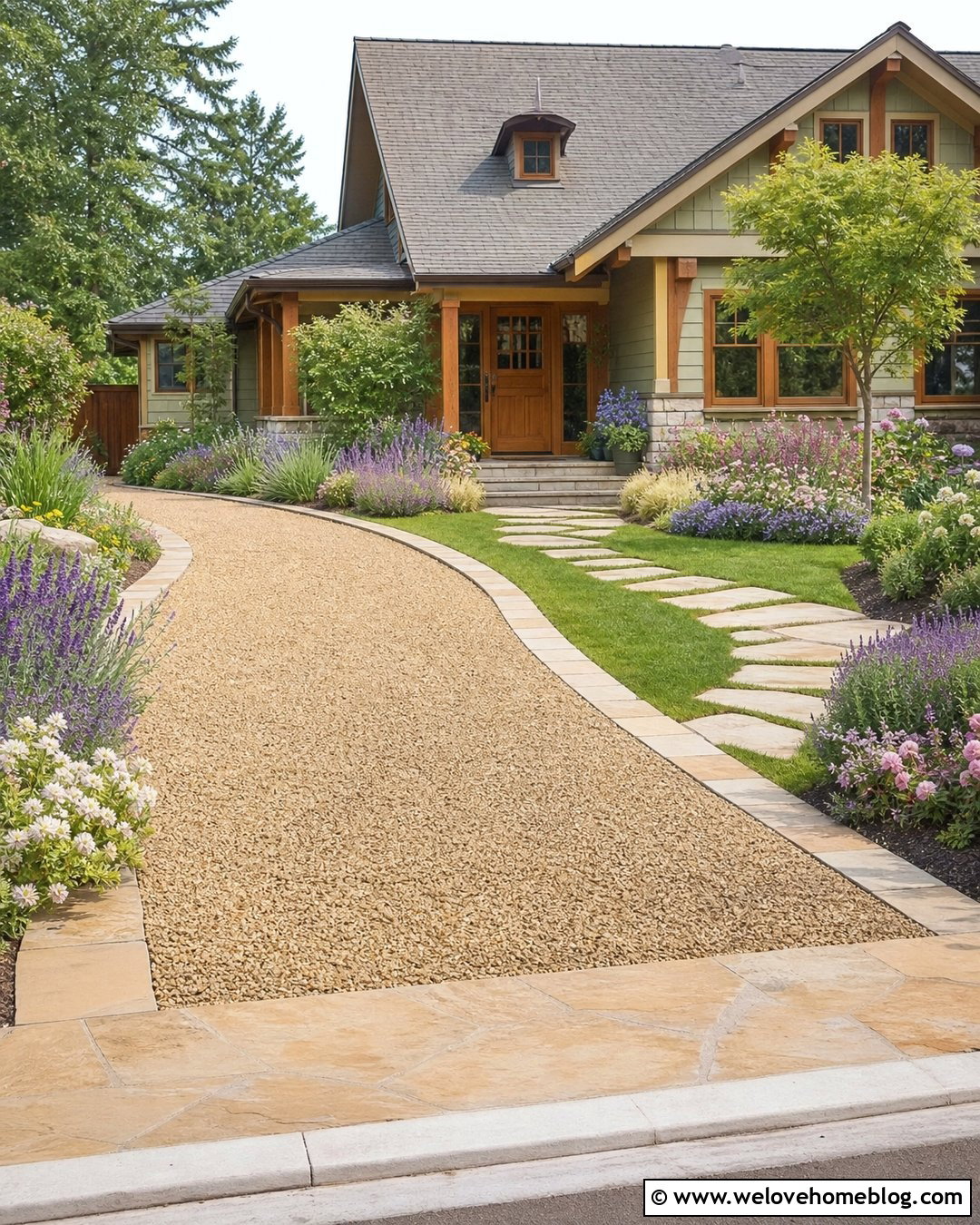
Golden sandstone and warm pea gravel create an inviting driveway with relaxed cottage character. Use rectangular sandstone setts in honey, buff, and muted brown shades to form a single continuous border. A curved driveway makes the color variations and natural texture especially noticeable from the street. Behind the stones, layer lavender, salvia, compact roses, and soft ornamental grasses to create a lush but manageable edge. The edging should sit high enough to contain the gravel, yet remain low and comfortable near parking or walking areas. Carry the sandstone into a wider entrance apron or stepping-stone walkway for a connected look. This combination works beautifully with Craftsman homes, stone cottages, and warm-toned stucco facades, where the driveway can echo colors already present in the architecture.
6. River Rock Driveway Edging With Exposed Aggregate
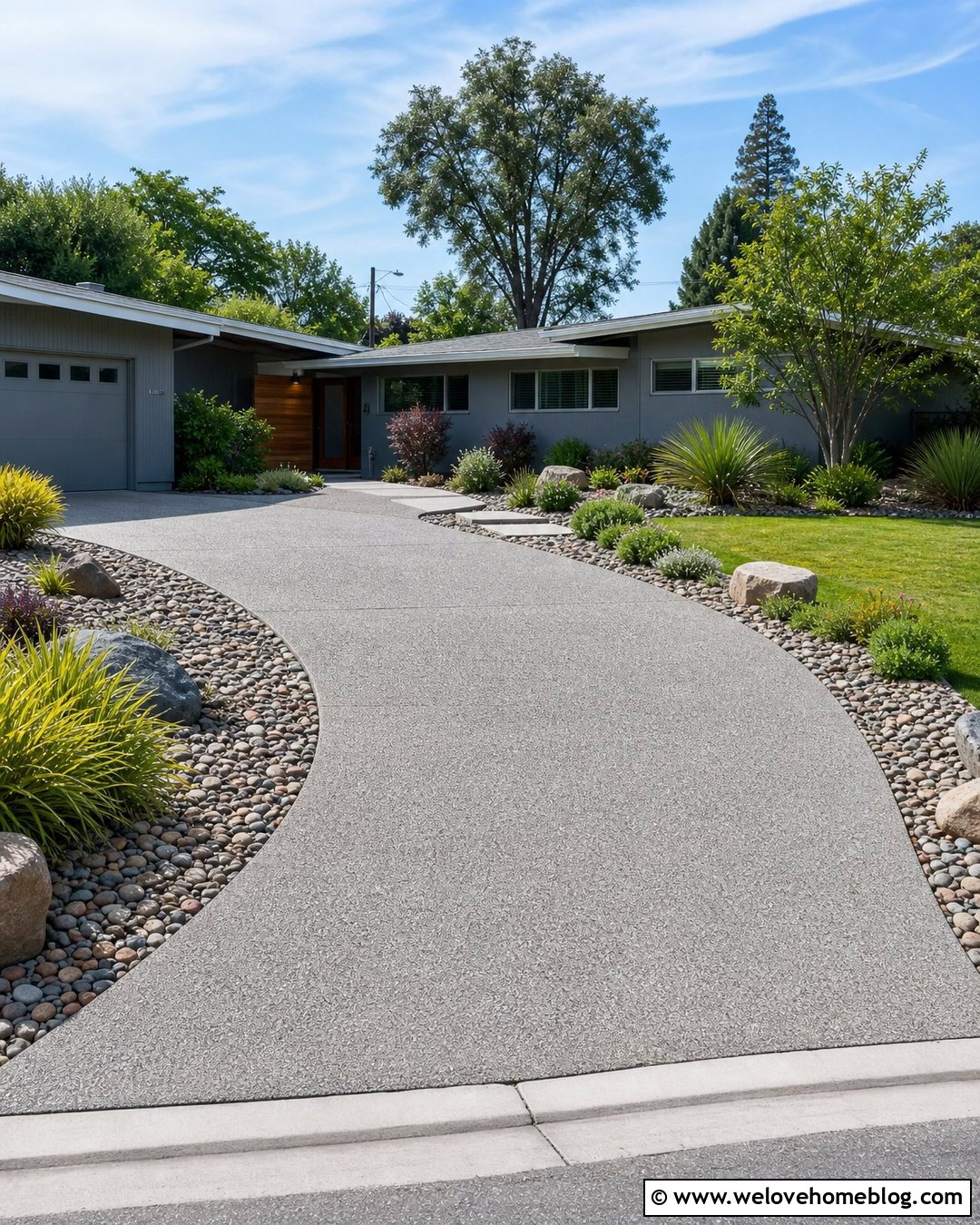
Smooth river rock gives an exposed aggregate driveway a softer, more organic frame. Choose medium-size stones in coordinated gray, cream, rust, and charcoal tones. Place them within a shallow prepared channel so the rocks appear settled rather than scattered across the lawn. The driveway can follow a broad curve toward a midcentury or contemporary ranch home, with the river rock tracing its shape. Add sedges, creeping ground covers, boulders, and drought-tolerant shrubs behind the border to create a layered landscape. A hidden restraint may be needed to keep rounded stones from shifting into the driving surface. This design works best when the river rock colors repeat the aggregate visible in the concrete, allowing the edging and driveway surface to read as one carefully planned composition.
7. Flagstone Driveway Edging With Decomposed Granite
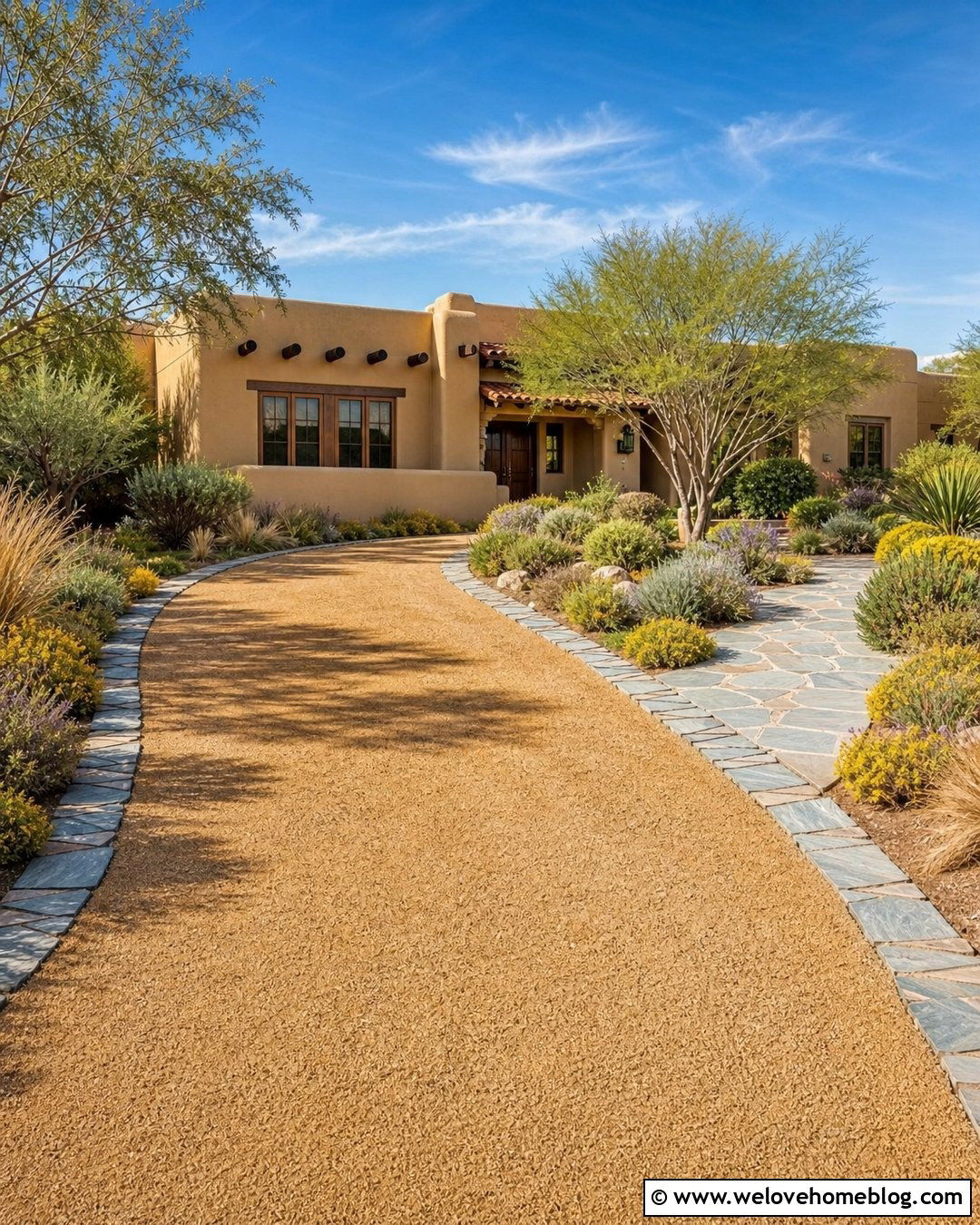
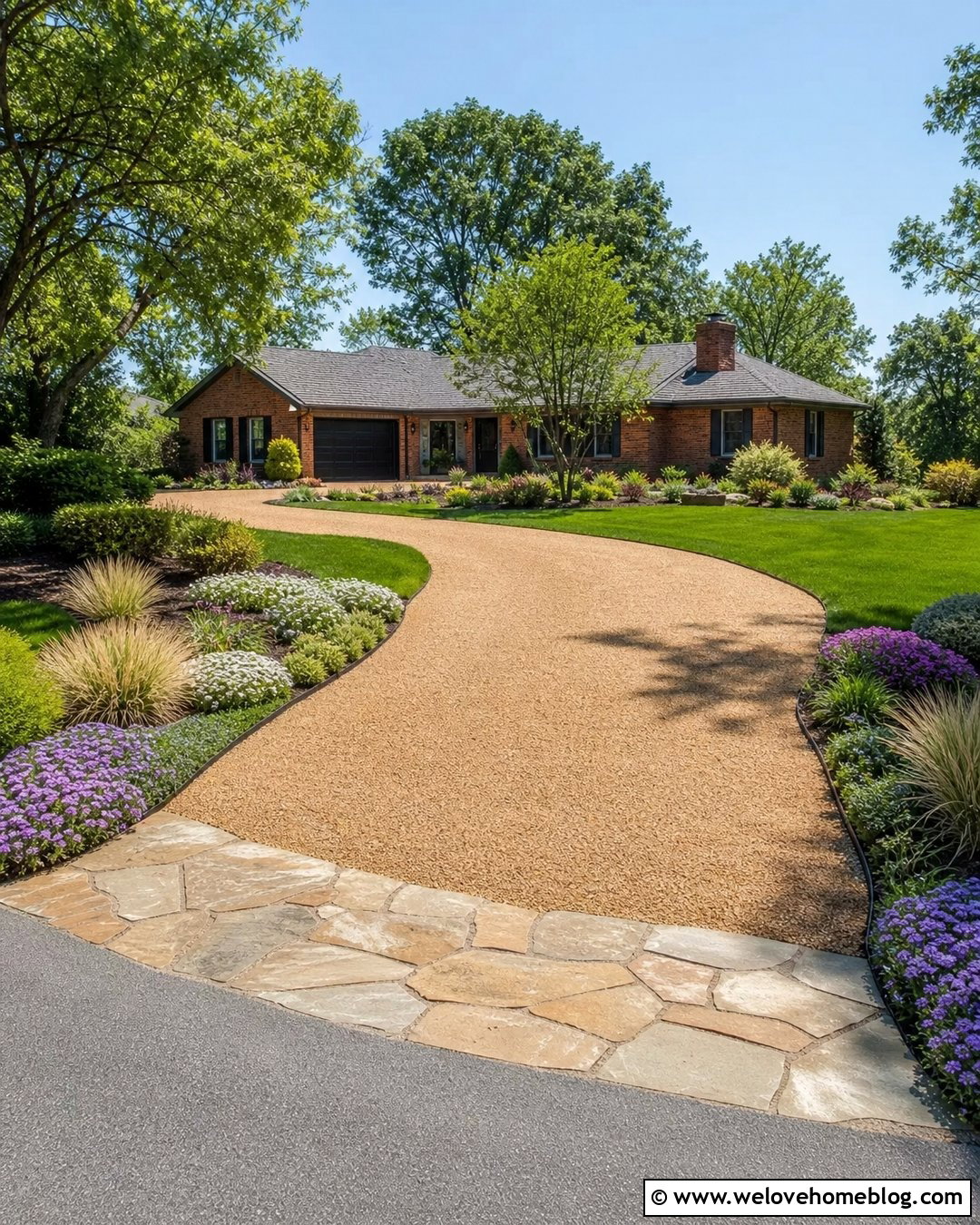
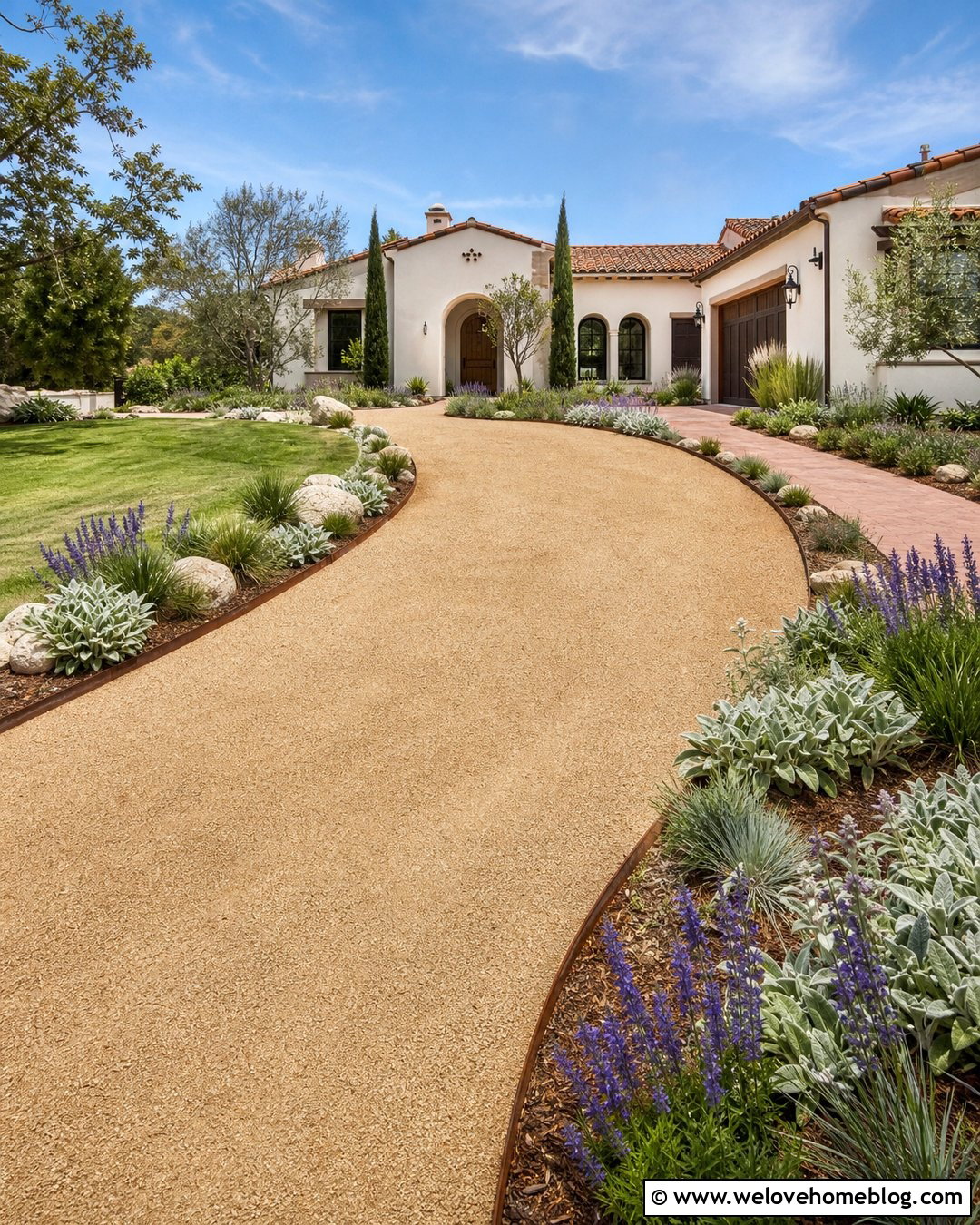
Irregular flagstone edging pairs naturally with a tan decomposed granite driveway. Lay broad, flat stones in a slightly uneven ribbon that follows a relaxed curved approach. Bluish-gray or warm brown flagstone can provide gentle contrast without interrupting the driveway’s earthy character. Place the stones close enough to create a clear boundary, and use smaller fitted pieces to close awkward gaps. On the landscape side, combine native grasses, flowering perennials, and low spreading shrubs that lightly overlap the edge. The result suits an adobe-inspired home, California ranch, desert residence, or casual country property. A flagstone walkway branching from the driveway can reinforce the material palette. Keeping the stones relatively flush also makes mowing easier and reduces the appearance of a heavy raised border.
8. Slate Driveway Edging With Light Gravel
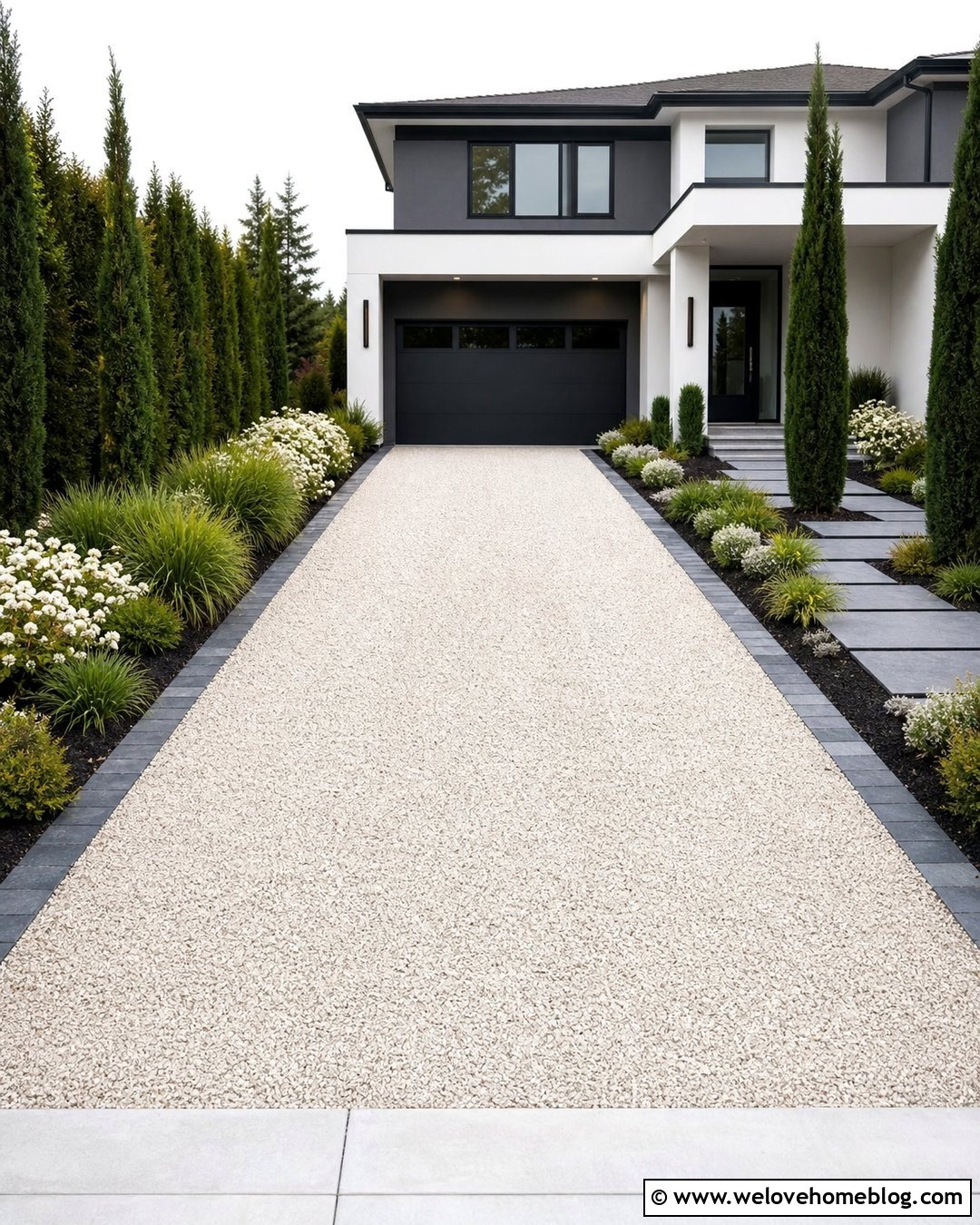
Dark slate creates a striking border around a pale gravel driveway. Use thick rectangular pieces installed vertically or as flat, narrow setts for a sharp linear edge. The charcoal tones stand out against cream limestone gravel or light gray crushed rock, making the driveway shape easy to read from the curb. A straight or gently angled layout works especially well beside a modern home with dark windows and simple architecture. Add narrow beds of green ornamental grasses, white flowering shrubs, and sculptural evergreens to balance the contrast. Because some slate can split along its natural layers, select dense material rated for exterior ground-level use in your region. Repeating slate in the walkway or front steps will make the border feel intentional rather than like an unrelated decorative strip.
9. Bluestone Driveway Edging With Brick Pavers
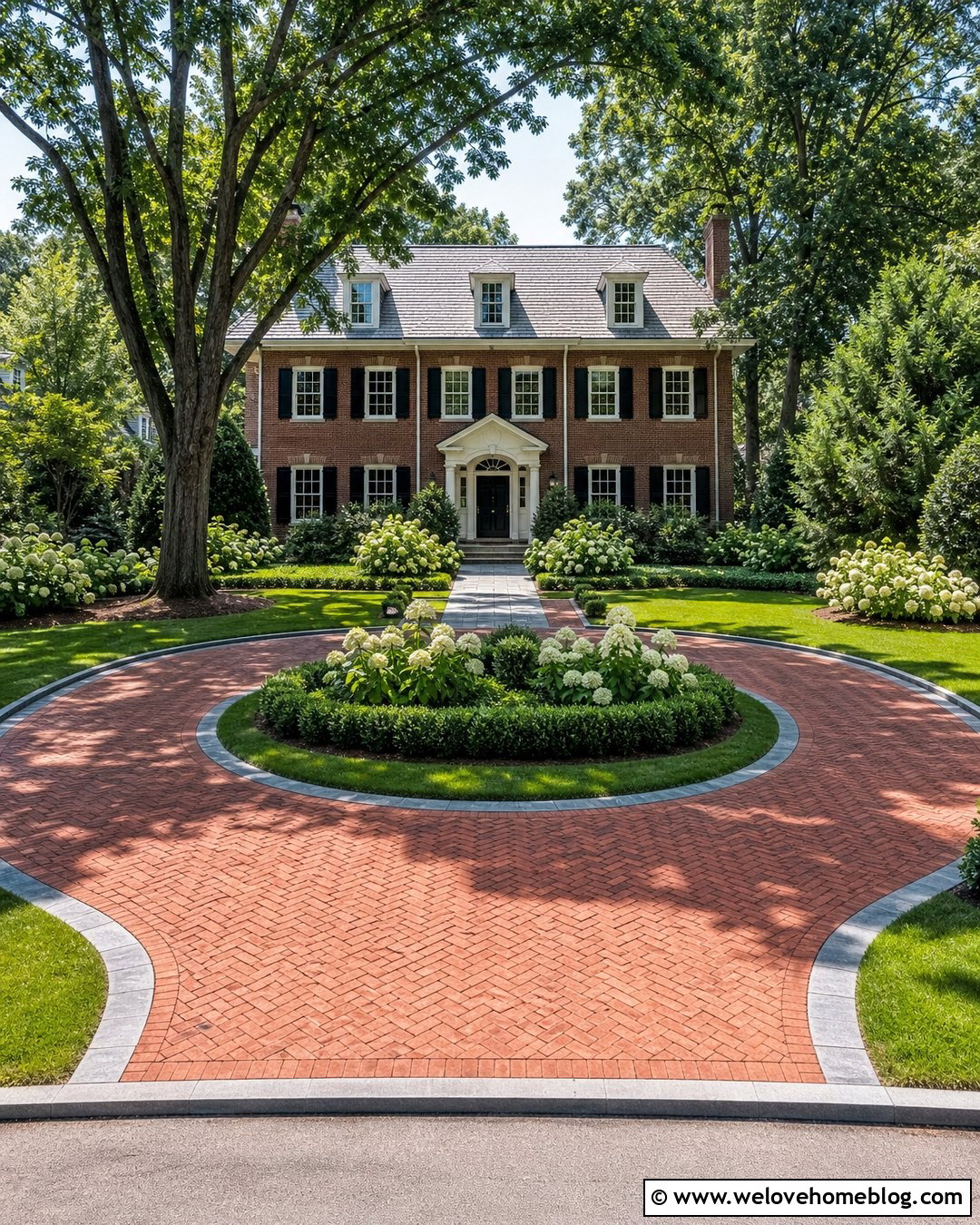
Bluestone edging can cool and balance the rich color of a red or brown brick paver driveway. Choose sawn rectangular pieces for a tailored appearance, then install them as a single flush border around a straight or horseshoe layout. Blue-gray stone creates a clear frame while letting the brick pattern remain the main feature. Extend the bluestone around planting islands or use it as a transition between the driveway and front walkway. Hydrangeas, inkberry holly, lawn, and shade trees complement this traditional material combination. It works particularly well with colonial, Georgian, and classic East Coast homes. Select stone thicknesses carefully so the finished border meets the brick surface evenly. A stable base and secure edge restraint help maintain the pattern under repeated vehicle use.
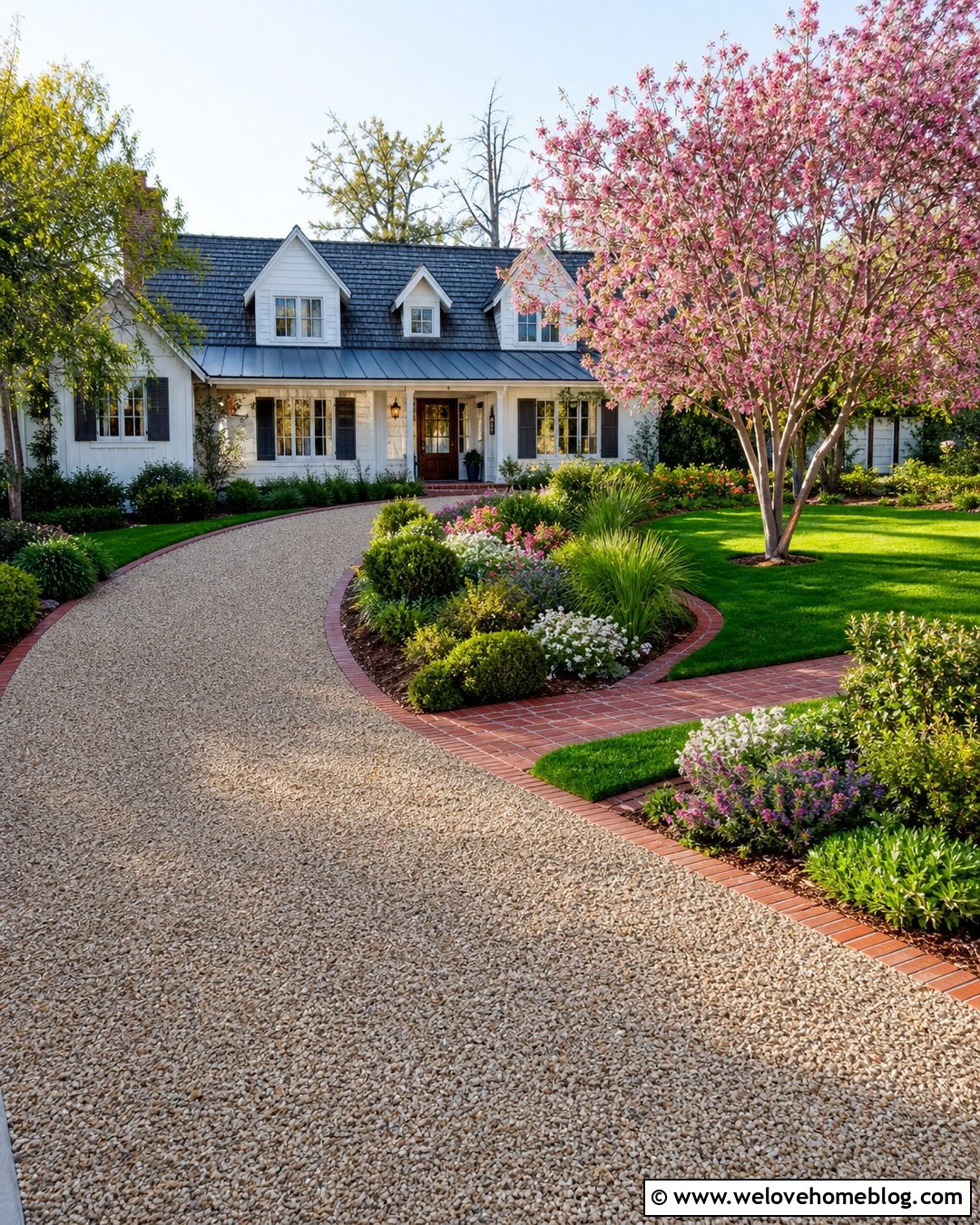
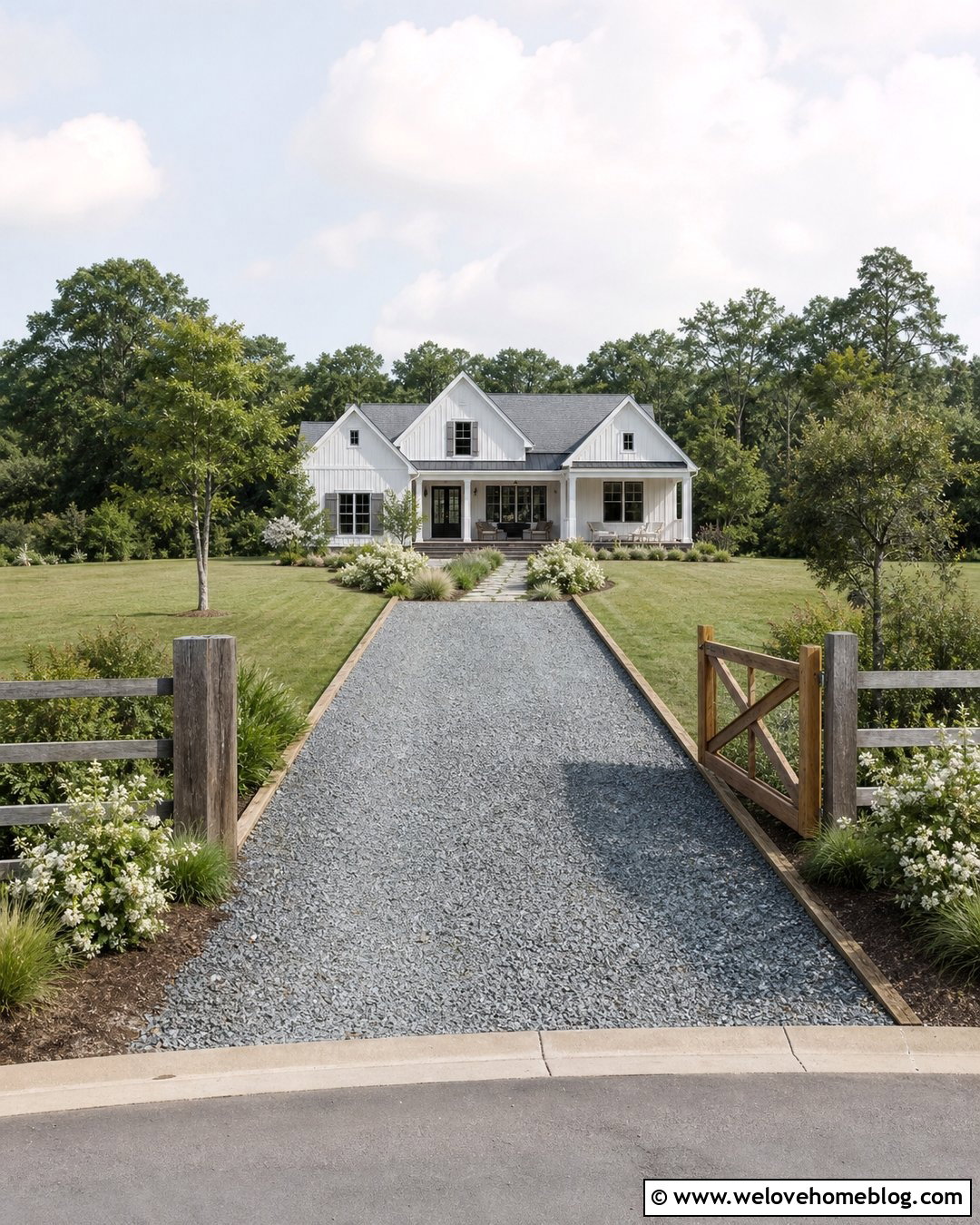
10. Boulder Driveway Edging With Natural Gravel
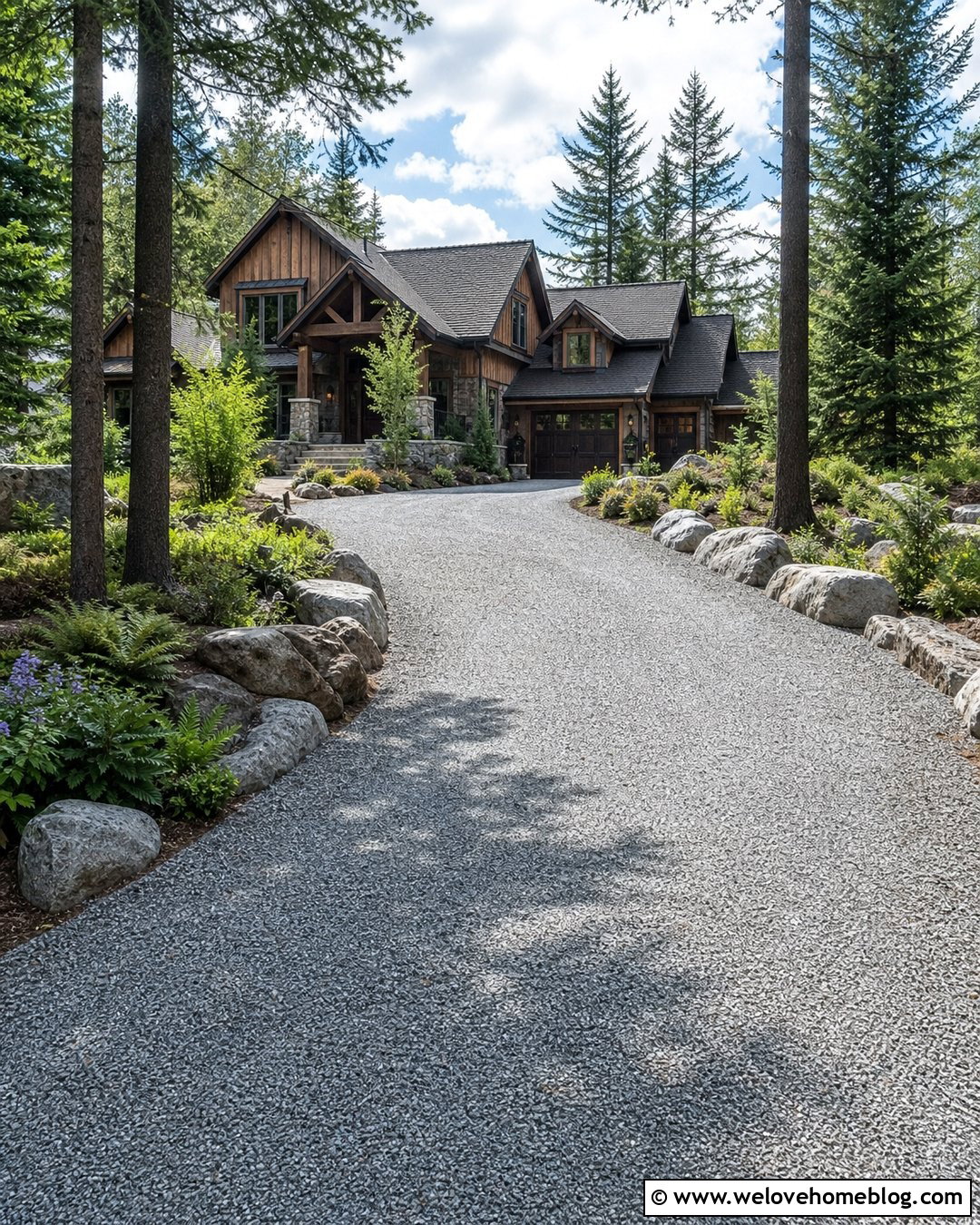
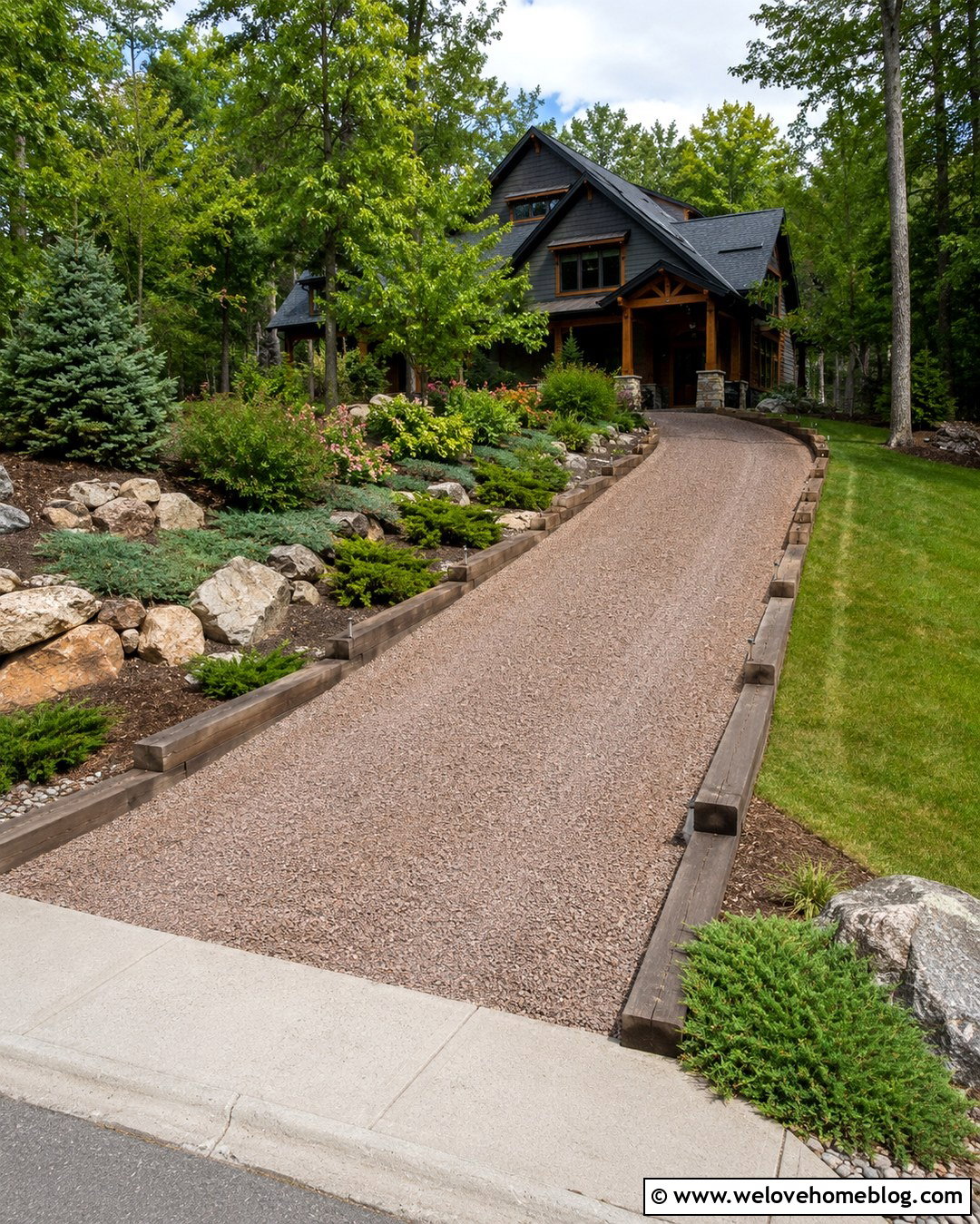
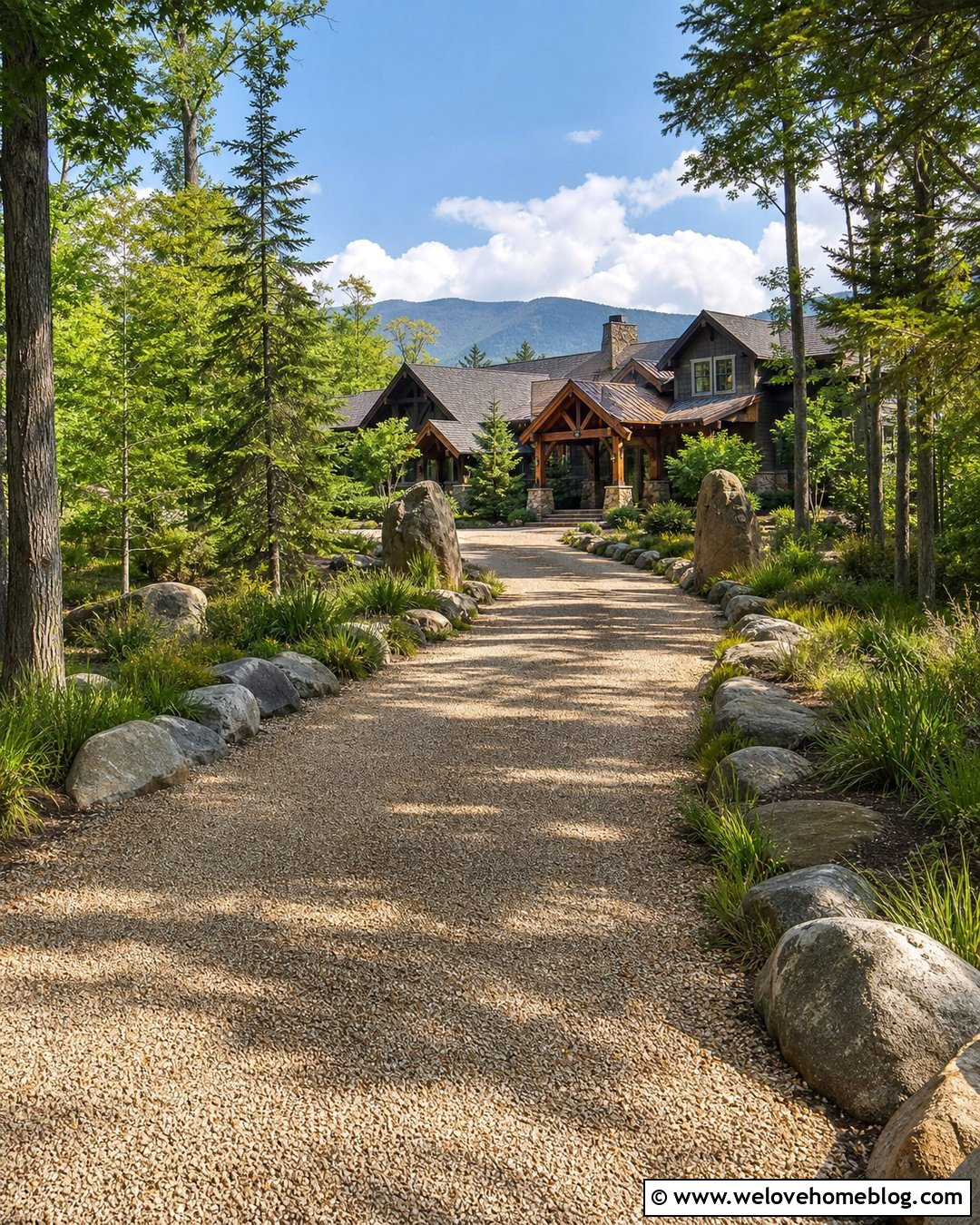
Large natural boulders can frame a wide gravel driveway without creating a continuous hard border. Space weathered stones along the driveway’s outer curves, leaving enough clearance for vehicles, snow removal, and drainage. Smaller companion rocks can fill visual gaps while maintaining an informal appearance. Choose gravel that shares colors with the boulders, such as gray crushed granite beside silver and charcoal stone. Add pine trees, native shrubs, ferns, and woodland ground covers behind the rocks for a layered entrance. This complete look is well suited to mountain homes, rustic lodges, and wooded suburban properties. Boulders should appear partially embedded in the ground rather than placed on top of it. Their irregular forms make a bold visual statement and blend naturally into less formal landscapes. ()
11. Quartzite Driveway Edging With Resin-Bound Gravel
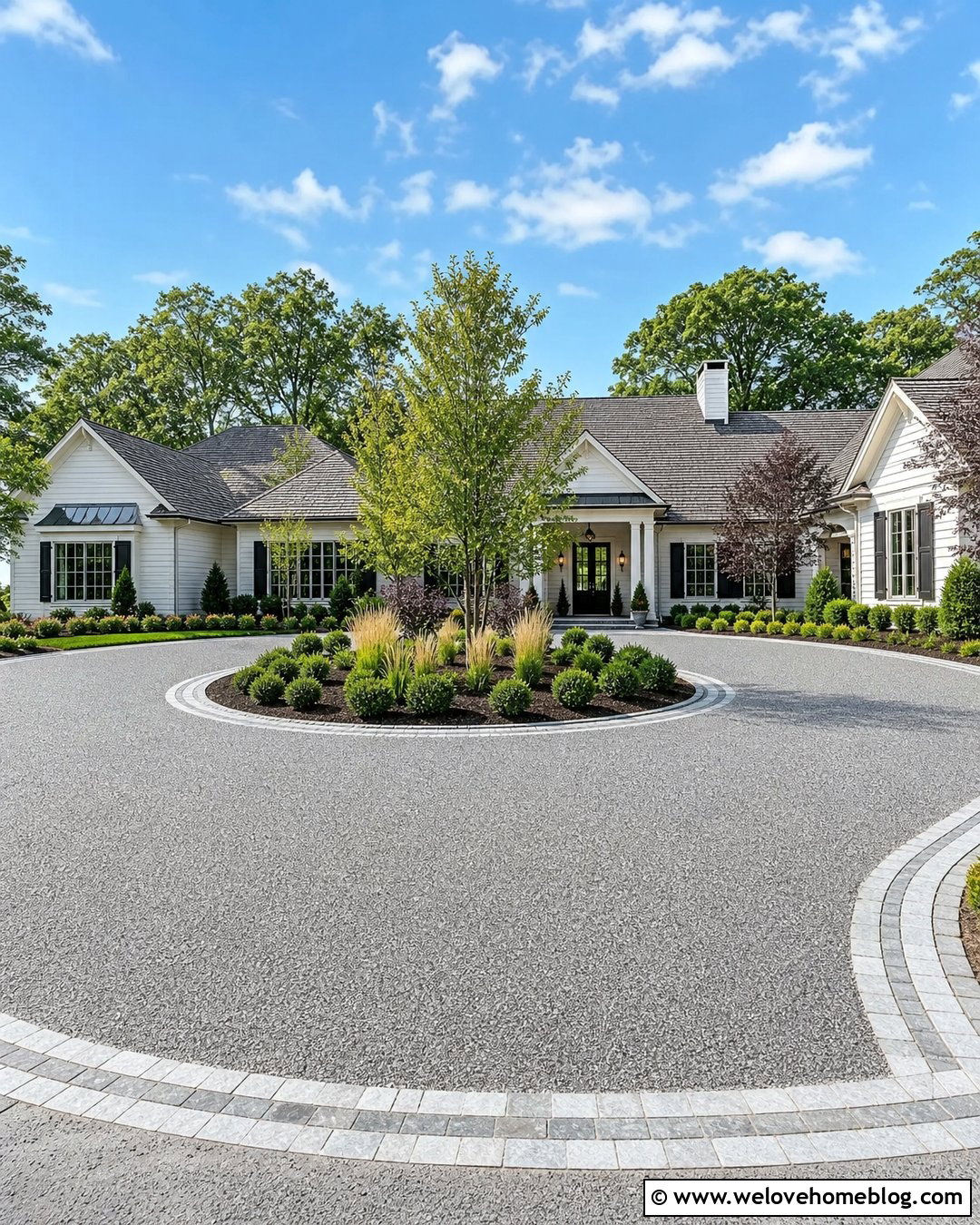
Quartzite blocks bring subtle sparkle and strong definition to a resin-bound gravel driveway. Select cool gray, white, or silver stones that coordinate with the driveway aggregate. A double-row border can give a broad circular driveway a more substantial frame, especially near the entrance and parking court. Keep the top of the stone close to the finished surface for a smooth transition. Behind the edging, use structured planting beds with clipped shrubs, upright grasses, and small ornamental trees. This polished look complements contemporary, transitional, and upscale ranch homes. Continue the quartzite around the circular center island to unify the design. Since quartzite can have noticeable color and texture variations, view several pieces together before installation to make sure the overall blend works with the house and driveway finish.
12. Basalt Stone Driveway Edging With Concrete Pavers
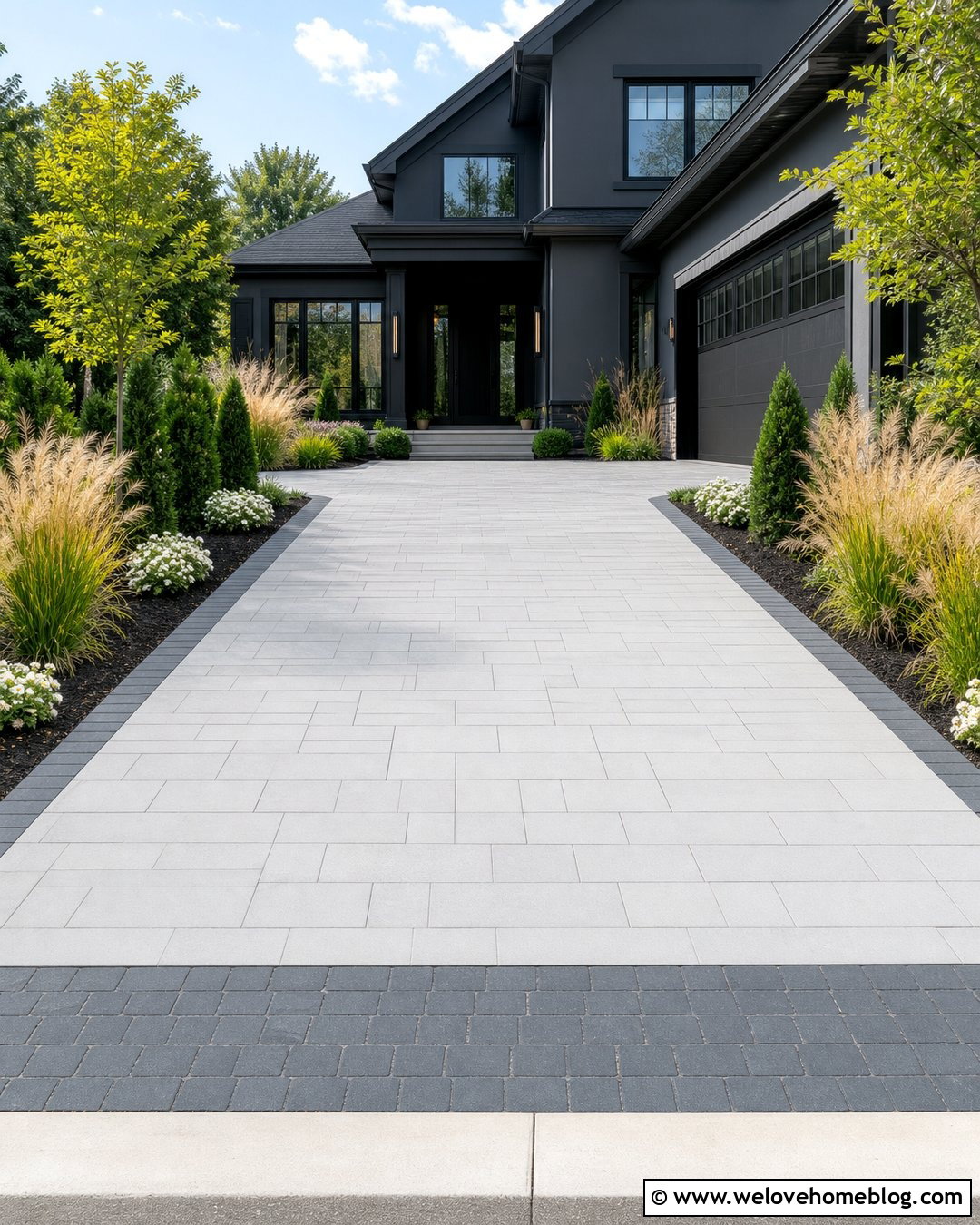
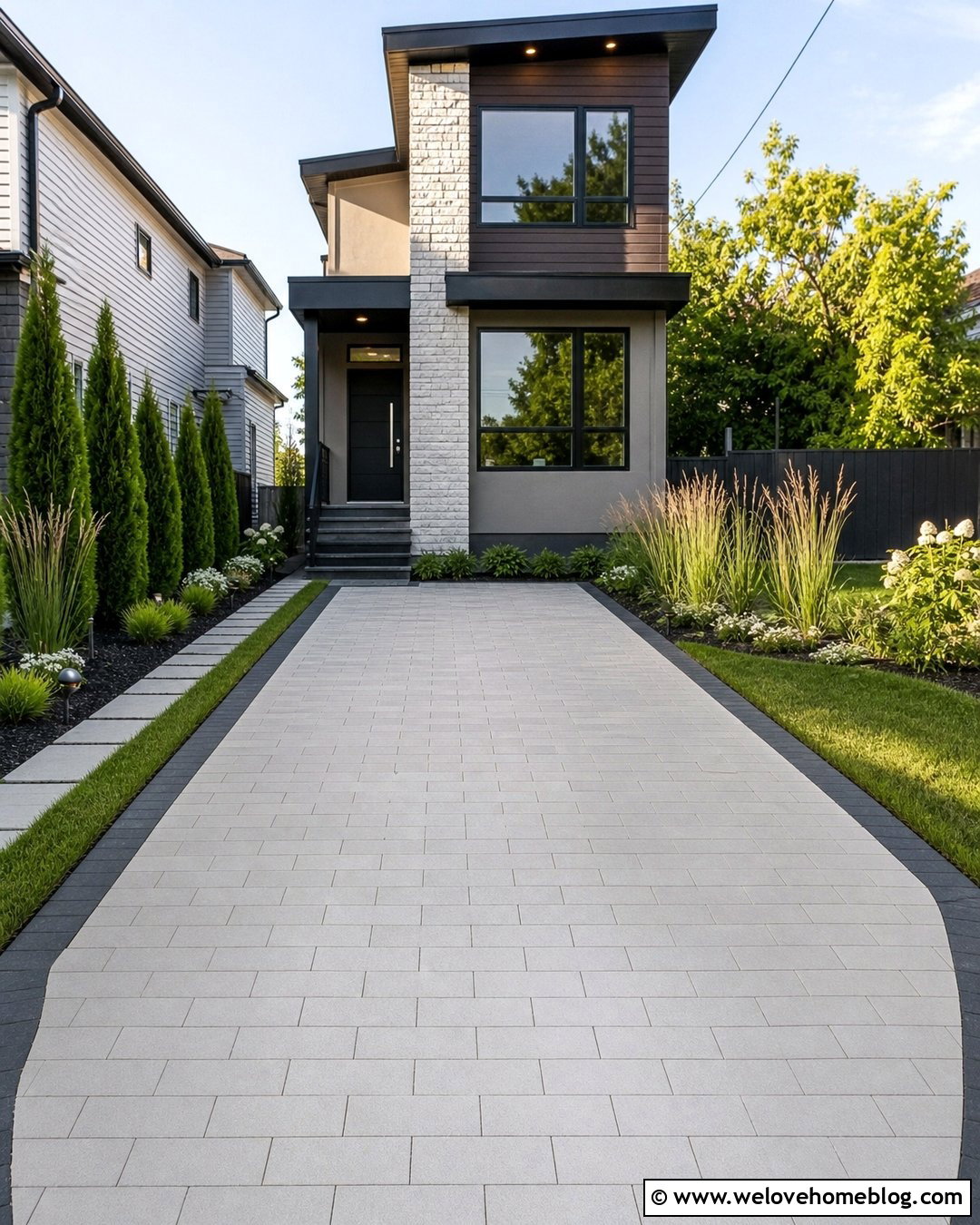
Dark basalt setts give light concrete pavers a bold, modern outline. Use charcoal or nearly black stone along both sides of a straight driveway, then repeat it across the street-facing apron. Large-format gray pavers laid in a running bond or modular pattern keep the central surface simple. Narrow planting beds filled with feather reed grass, compact junipers, and white flowering perennials can reinforce the contemporary palette. This combination works best with a modern home featuring clean lines, dark trim, and a restrained facade. Install the basalt flush for a streamlined finish and easier driveway maintenance. The strong contrast also helps visually separate the pavers from surrounding lawn and mulch. Matching basalt details along the walkway can connect the garage approach to the main entrance without introducing another material.
13. Reclaimed Granite Curb Driveway Edging
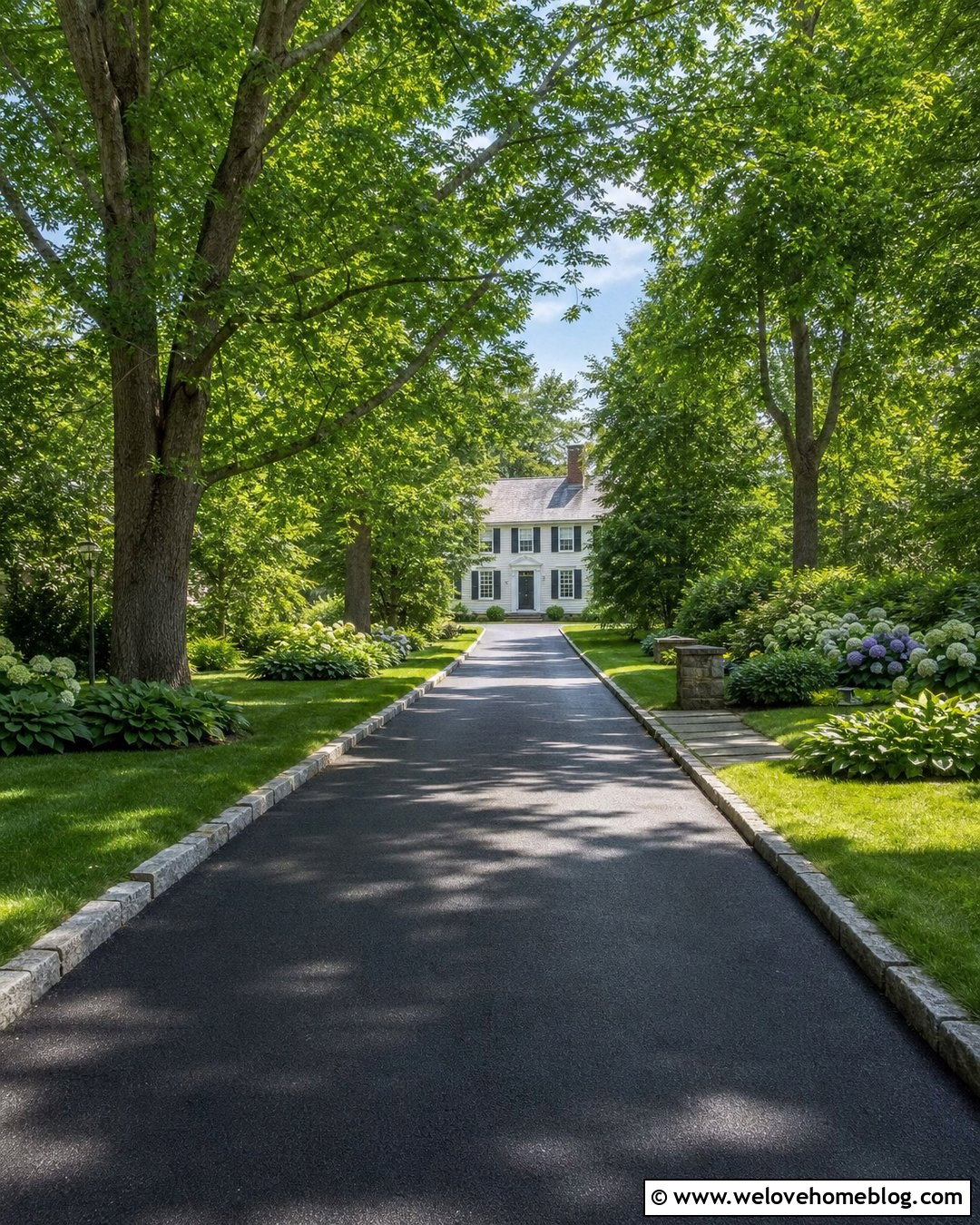
Reclaimed granite curbing gives a long asphalt or gravel driveway a substantial border with visible history. The stones often contain worn edges, tool marks, and natural color changes that look especially appealing beside an older home. Use long curb sections along straight portions and shorter pieces where the driveway curves. A raised installation can help hold back sloped planting beds, while a flush border is more suitable around parking areas. Pair the granite with mature shade trees, traditional lawn, and simple beds of hostas or hydrangeas. This complete driveway look suits historic colonials, farmhouses, and renovated urban homes. Because reclaimed pieces may differ in depth and width, sort them before installation. Consistent top alignment will preserve their character while preventing the finished edge from appearing uneven or improvised.
14. Dry-Stacked Stone Driveway Edging On A Slope
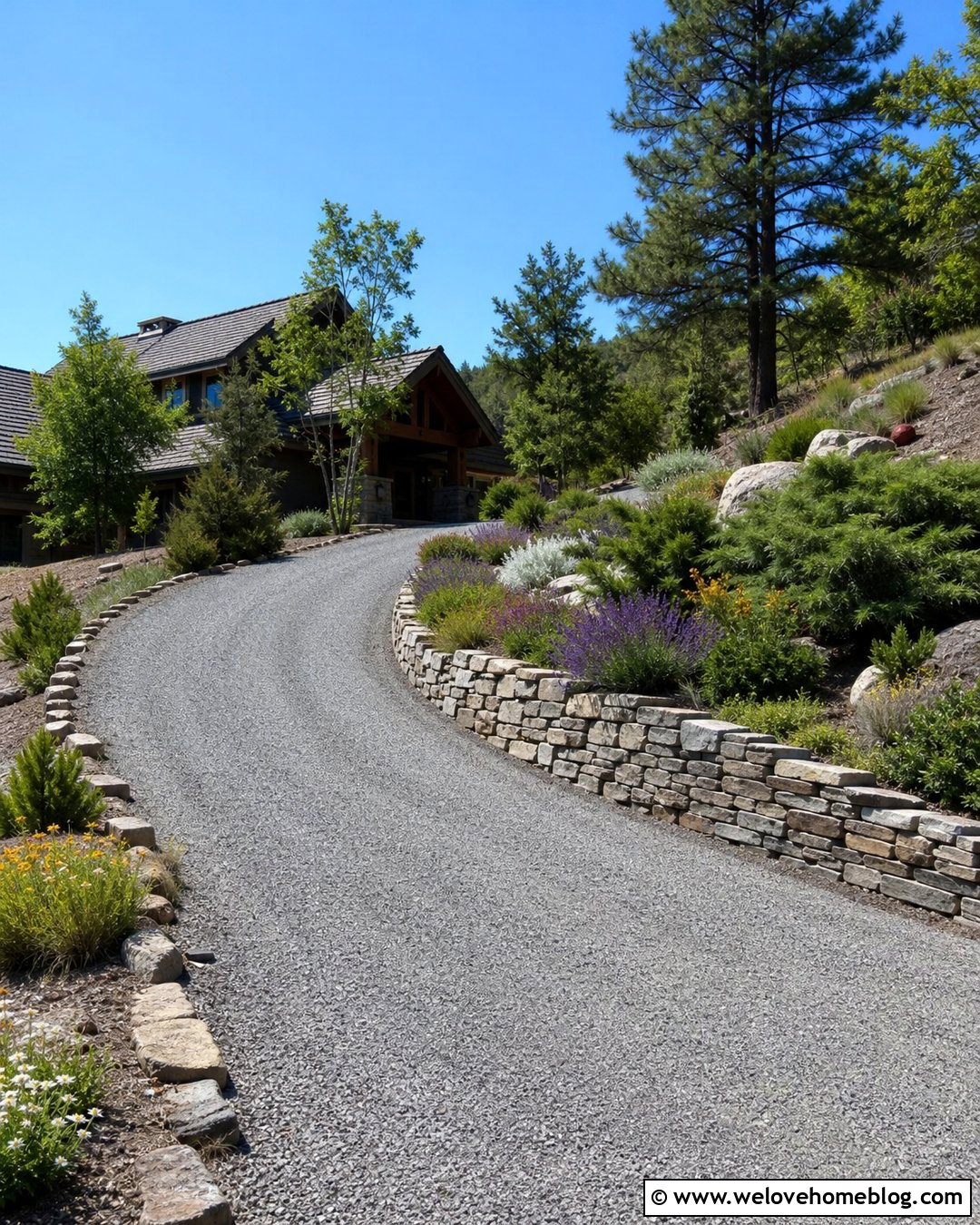
A dry-stacked natural stone edge can act as a low retaining border where a driveway passes through a sloped front yard. Use flat ledgestone or fieldstone pieces that stack securely, creating a wall that gradually steps with the grade. A curved asphalt or compacted gravel driveway works well with this natural construction. Plant the upper bed with spreading junipers, native grasses, flowering shrubs, and erosion-conscious ground covers. Keep the wall modest near vehicle doors and visibility zones, then allow it to rise where more soil support is needed. This look complements Craftsman, mountain, and rustic contemporary homes. Thoughtful drainage behind the stone is essential because trapped water can affect both the wall and driveway edge. A professional assessment is wise for taller borders or challenging slopes.
15. Flush Stone Driveway Edging With Grass
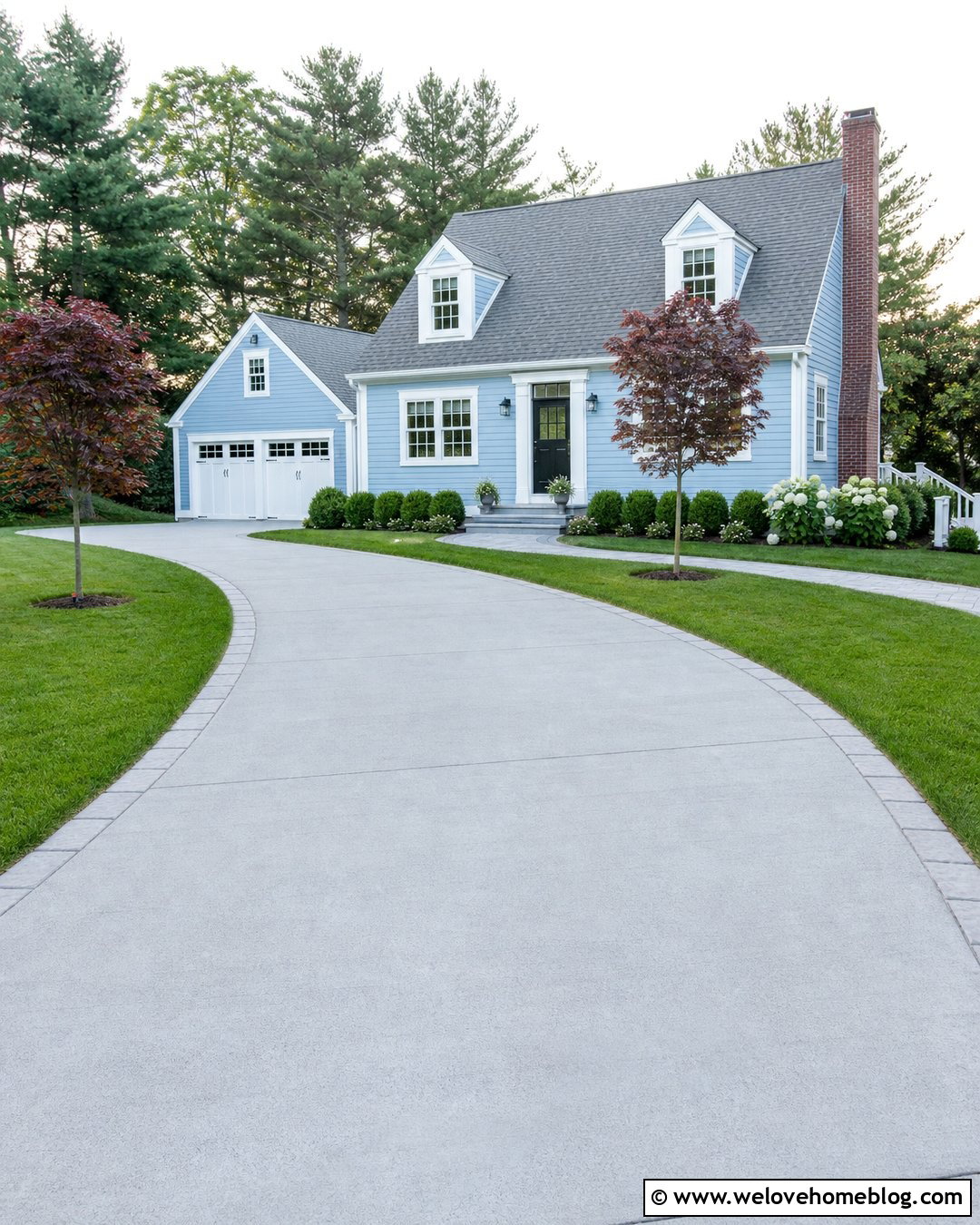
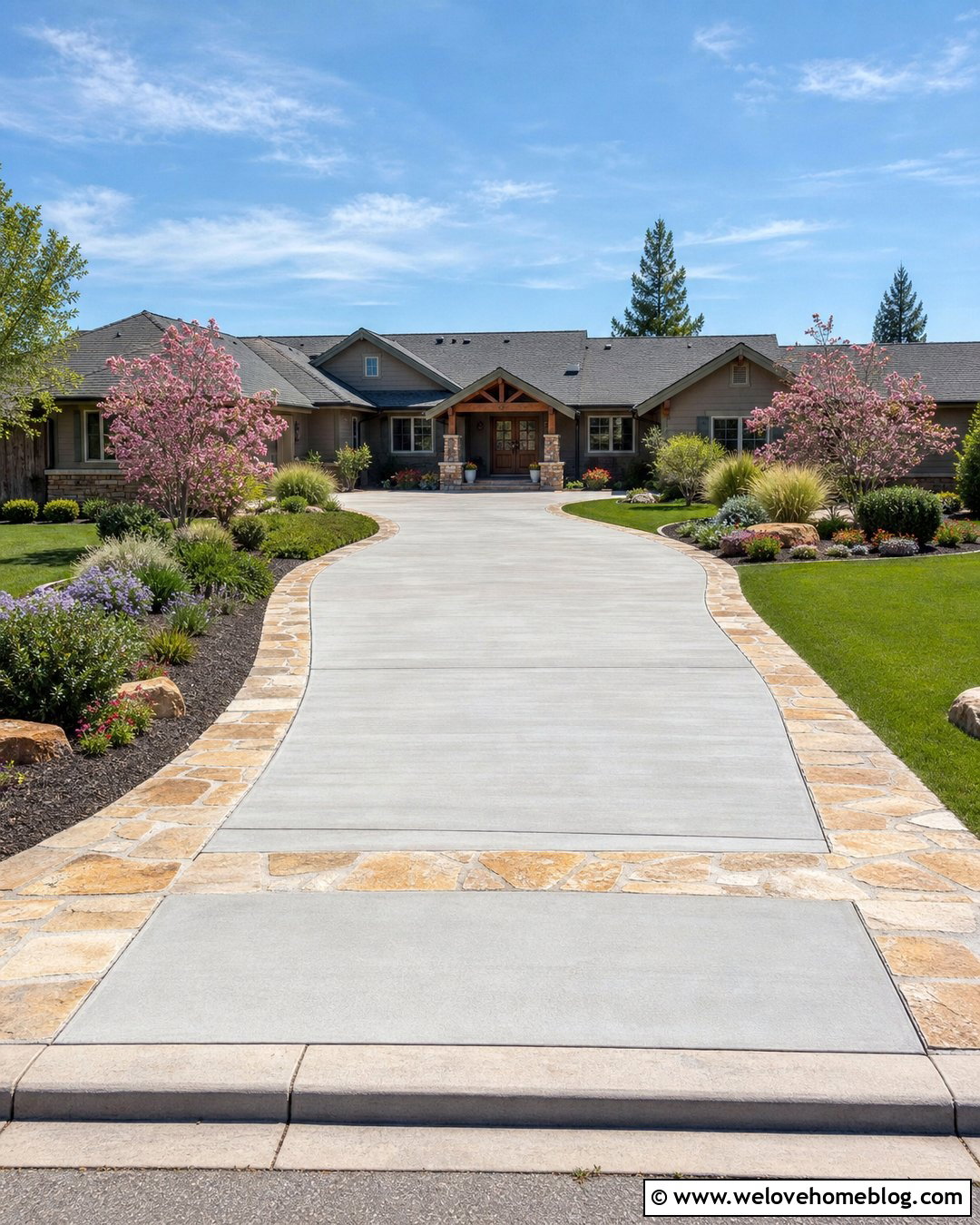
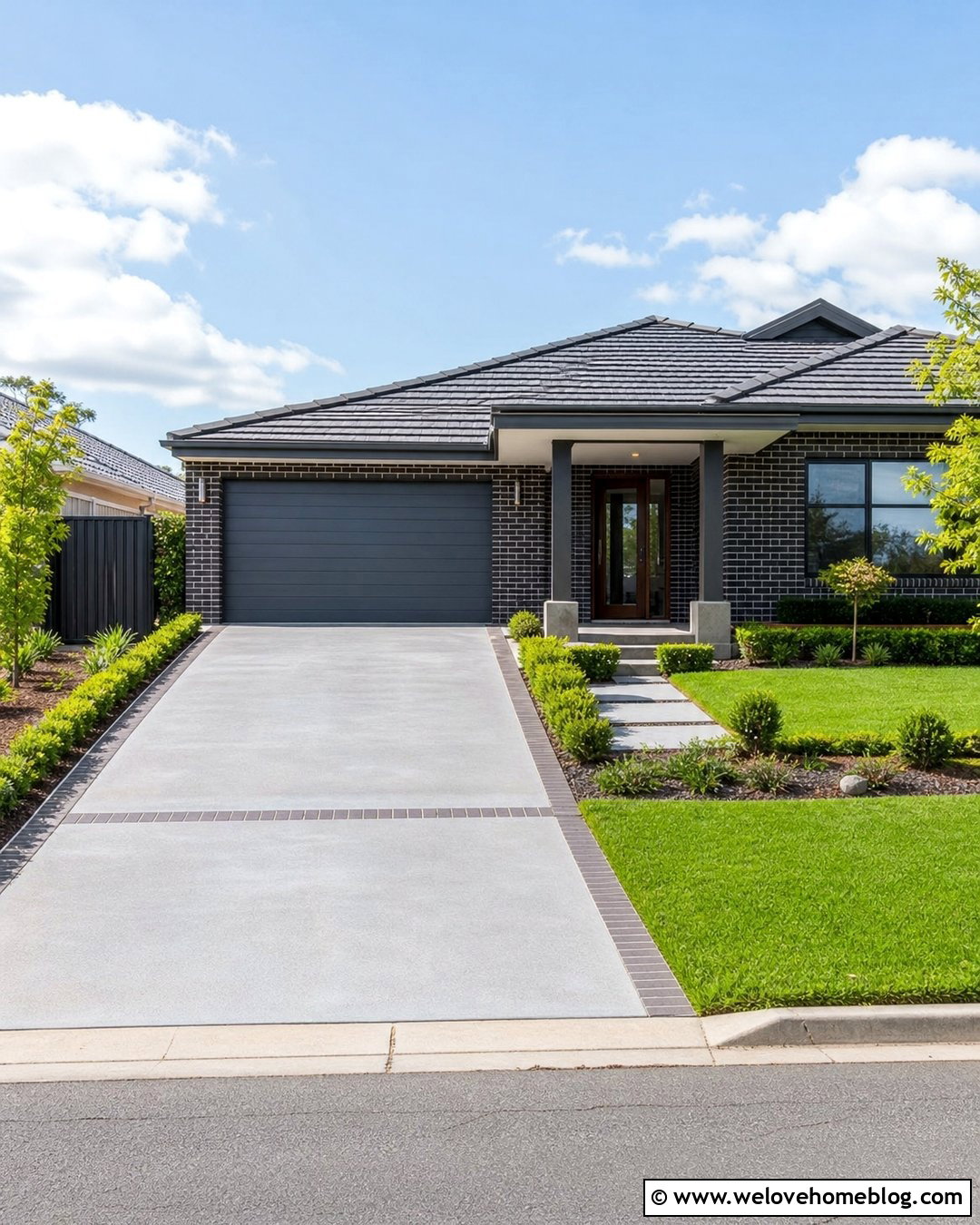
Flush natural stone edging creates a subtle mowing strip between a driveway and lawn. Rectangular granite, limestone, or bluestone pieces can be laid level with the surrounding surfaces, producing a clean boundary without a raised curb. This works particularly well around smooth concrete or asphalt driveways where a simple finish is preferred. Choose stones wide enough to be visible from the curb and consistent enough to follow straight lines or gentle curves. The lawn can meet the outer edge directly, while a few foundation shrubs keep the larger landscape uncomplicated. This design suits ranch, Cape Cod, and suburban homes with tidy front yards. A flush installation reduces visual clutter and can simplify mowing, but each piece still needs a firm, well-compacted base to limit sinking and movement.
16. Double-Row Stone Driveway Edging With Gravel
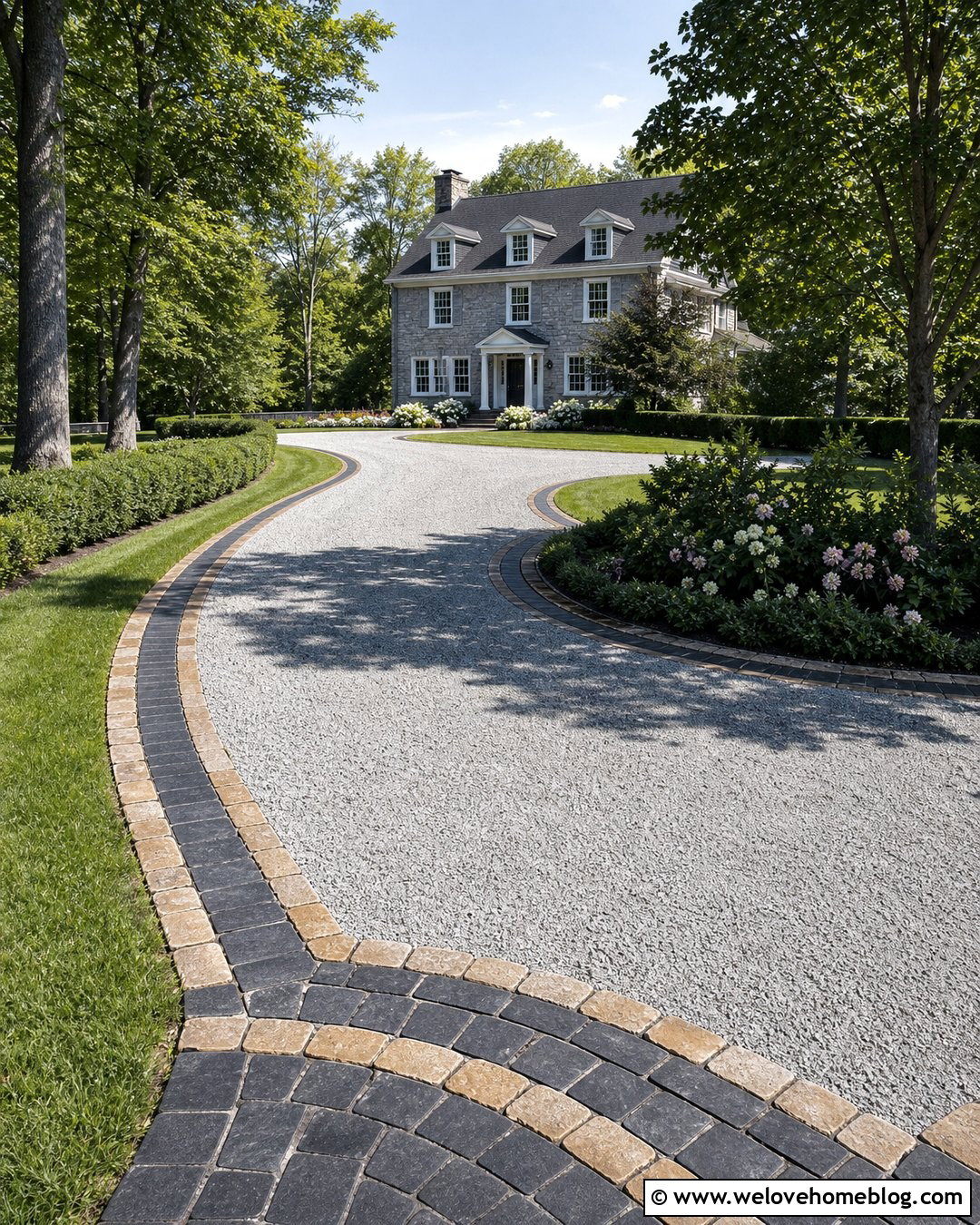
A double row of natural stone setts gives a gravel driveway a wider, more decorative frame. Combine two complementary colors, such as charcoal granite beside warm sandstone, or use one stone throughout for a quieter effect. The border can follow a sweeping curved driveway and widen into a small apron at the street. Install the stones closely so loose gravel does not collect in oversized joints. Behind the edge, use a mixture of lawn, low hedges, and flowering beds to soften the broad stone ribbon. This substantial treatment works well for long driveways and larger homes because it remains visible at a distance. Repeating the same double row around a planting island, mailbox area, or front walkway helps the expanded border feel connected to the overall entrance design.
17. Mixed Stone Driveway Edging With Native Plants
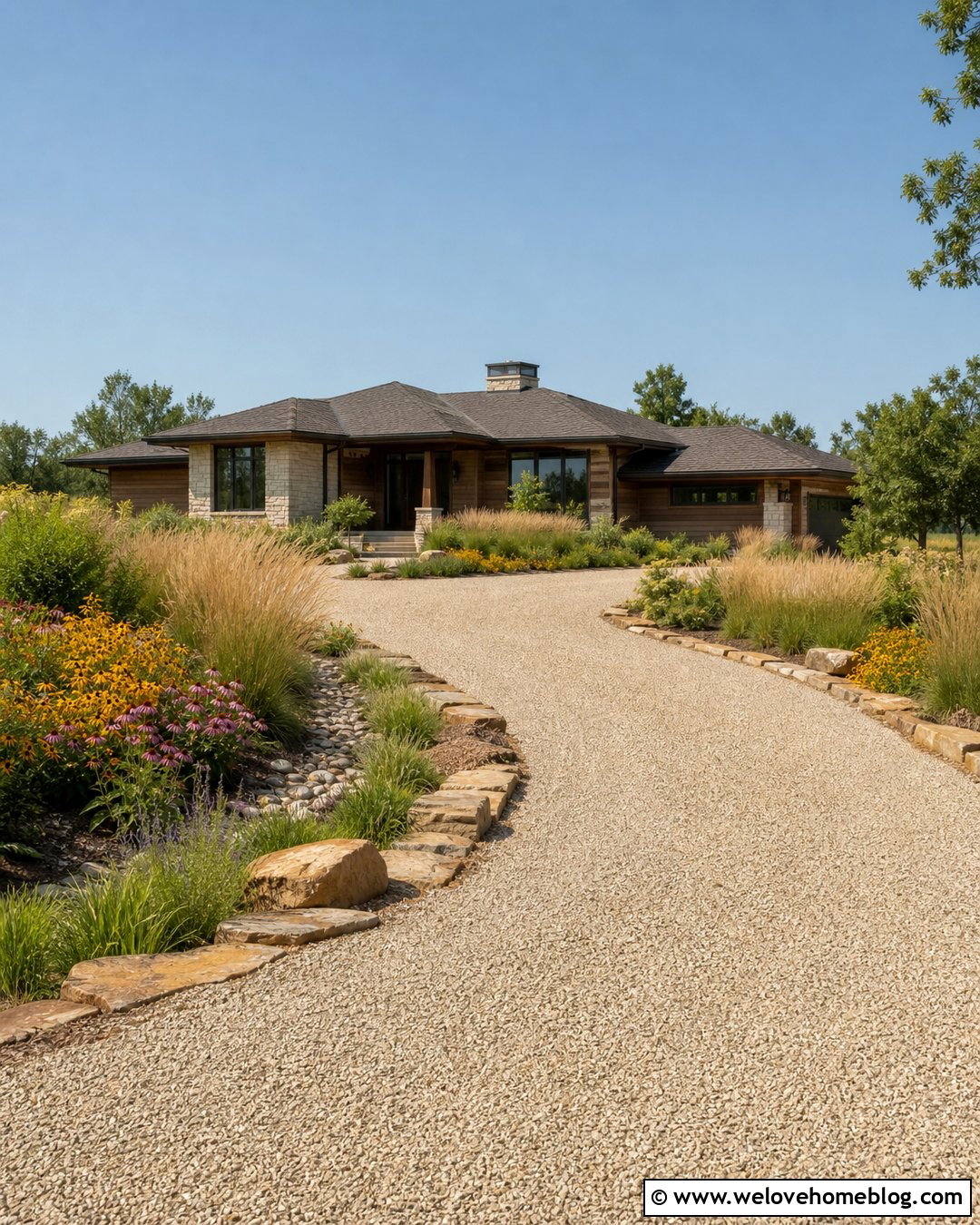
Mixed natural stone edging offers a relaxed solution for a driveway surrounded by native planting. Combine fieldstone, small boulders, and flat flagstone pieces in related earth tones rather than using every color available. Arrange the stones as a low, irregular border along a curved crushed gravel driveway. Drifts of switchgrass, black-eyed Susans, coneflowers, and compact native shrubs can fill the space behind it. Leave selected gaps for stormwater to move toward planted drainage areas instead of creating an uninterrupted barrier. This design suits prairie homes, woodland properties, and informal modern ranches. The key is controlled variation: repeat similar stone sizes and colors so the edge looks natural but planned. A neatly defined entrance apron can provide additional structure where the driveway meets the street.
18. Stone Driveway Edging With Landscape Lighting
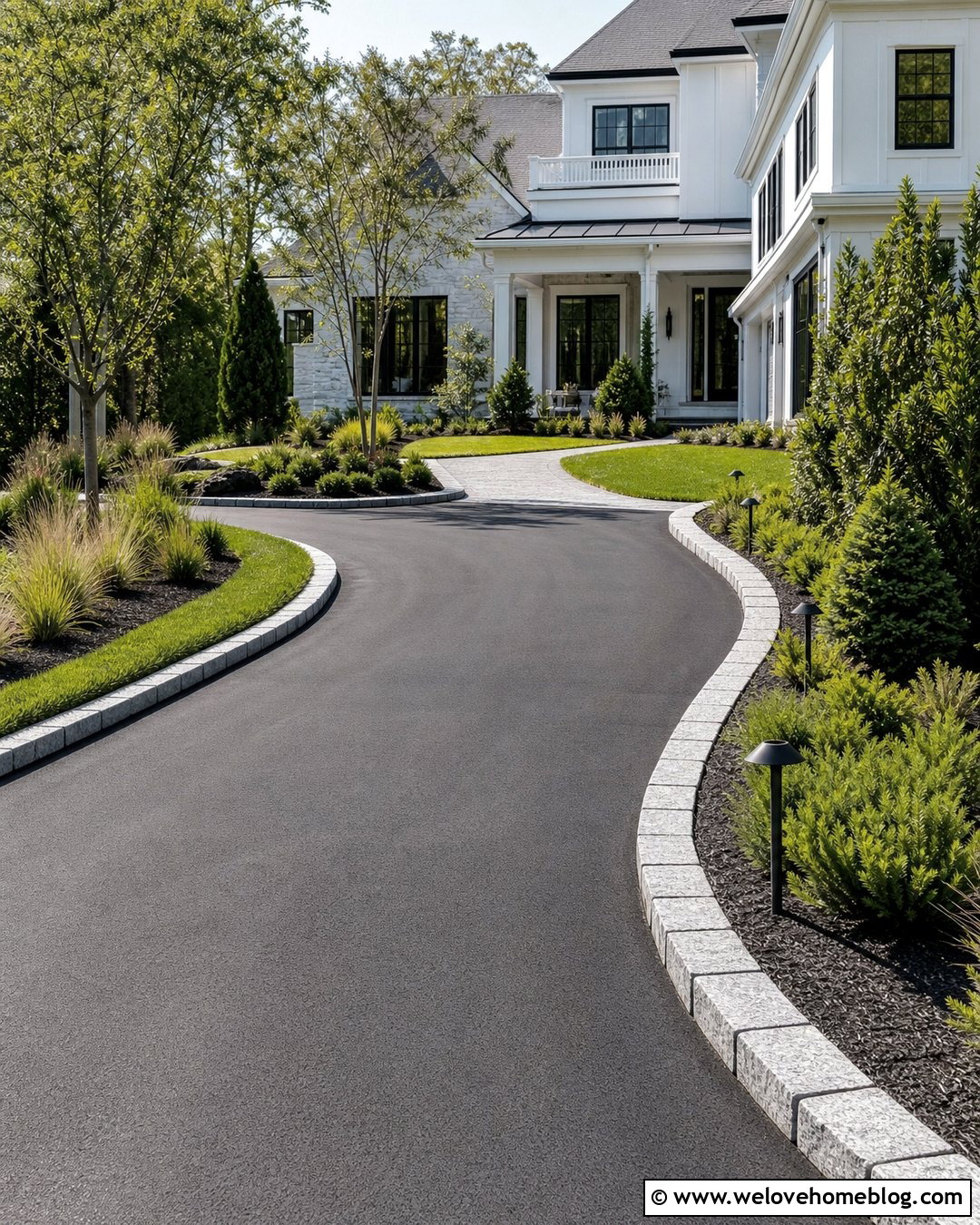
Natural stone edging becomes more functional when low landscape lighting is incorporated into the complete driveway design. Border a curved black asphalt driveway with rectangular granite or limestone blocks, then place small shielded fixtures just behind the stone. During daylight, the edging provides texture and contrast. After dark, carefully spaced lights can define the approach without placing fixtures on the driving surface. Add evergreen shrubs, ornamental grasses, and a few small trees to create depth around the illuminated route. The fixture finish should coordinate with the house hardware and remain visually quiet. This look works with transitional, contemporary, and modern farmhouse homes. Plan wiring and drainage before setting the stones, and keep lights away from areas where tires, snowplows, lawn equipment, or opening car doors could damage them.
19. Stone Driveway Edging With Entrance Pillars
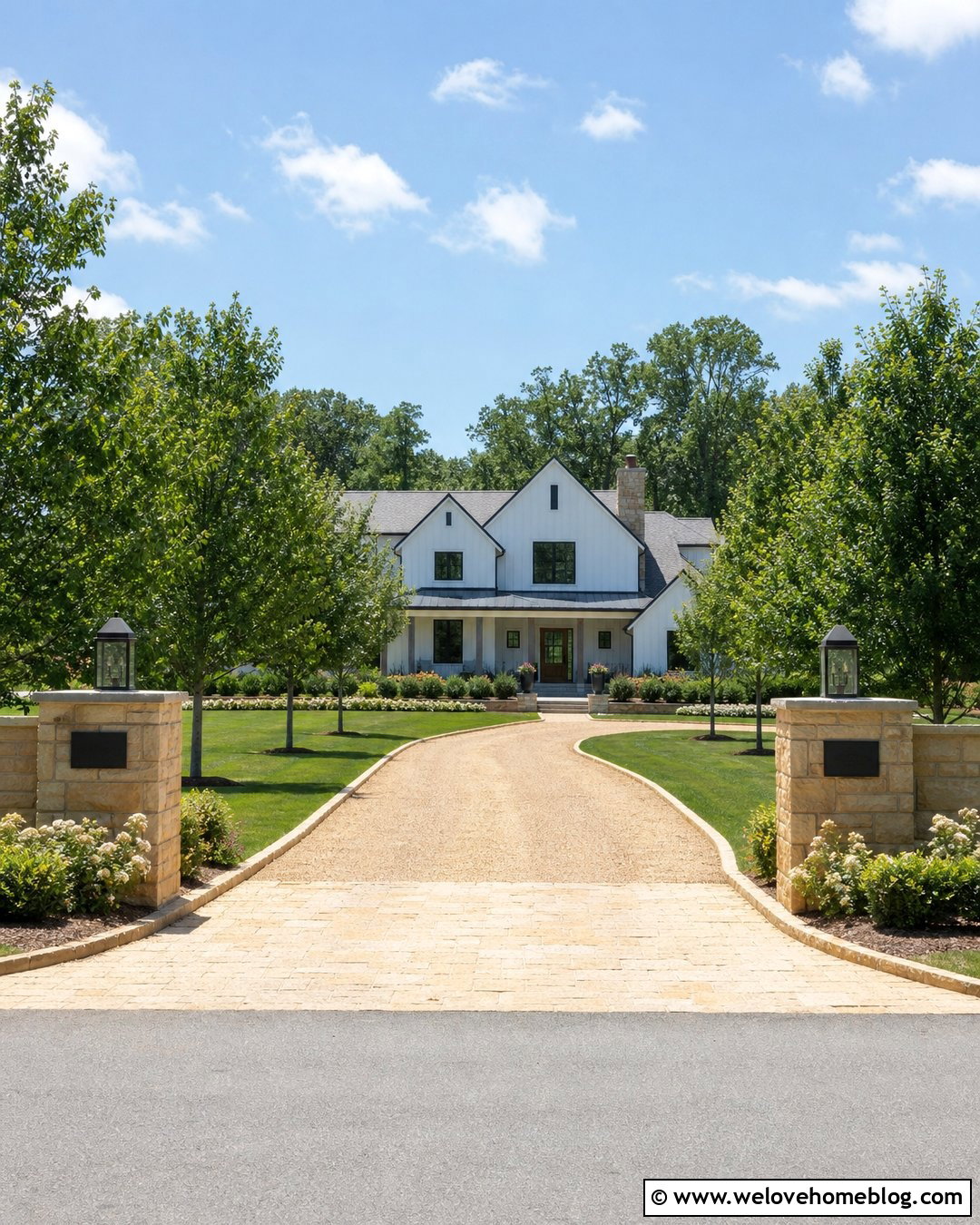
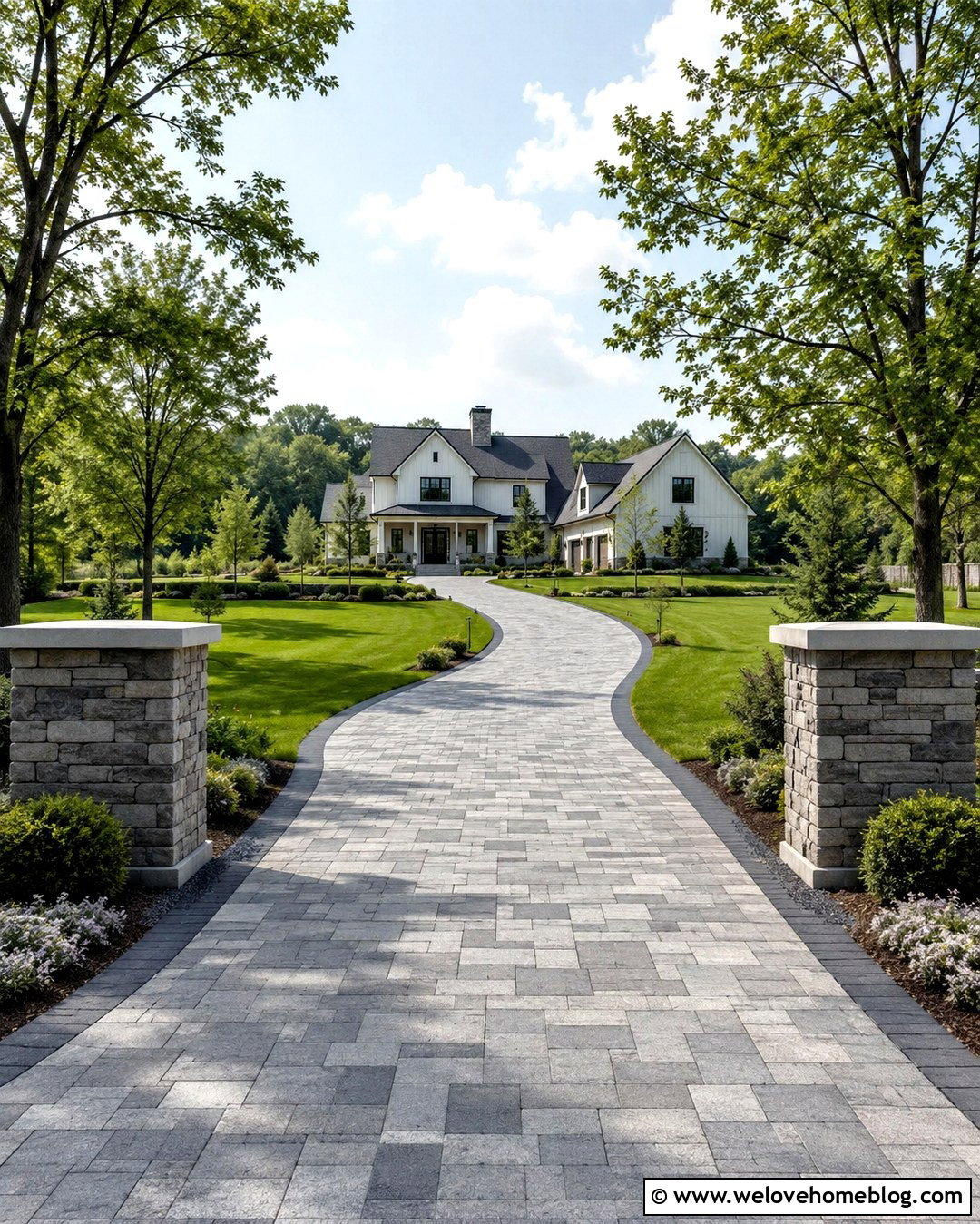
Matching natural stone edging and entrance pillars can give a long driveway a clear sense of arrival. Use gray granite setts or warm sandstone blocks along a curved gravel driveway, then face two low pillars with a related stone. Keeping the colors consistent prevents the entrance from feeling disconnected from the border. Widen the edging near the road to form a defined apron before narrowing it along the driveway. Add an address plaque, simple lanterns, and restrained planting around the pillars, while preserving clear visibility for drivers. Rows of trees or broad lawn panels can guide the eye toward a farmhouse, colonial, or country home. The pillars should remain appropriately scaled to the driveway width, and their foundations must be planned separately from the smaller edging stones.
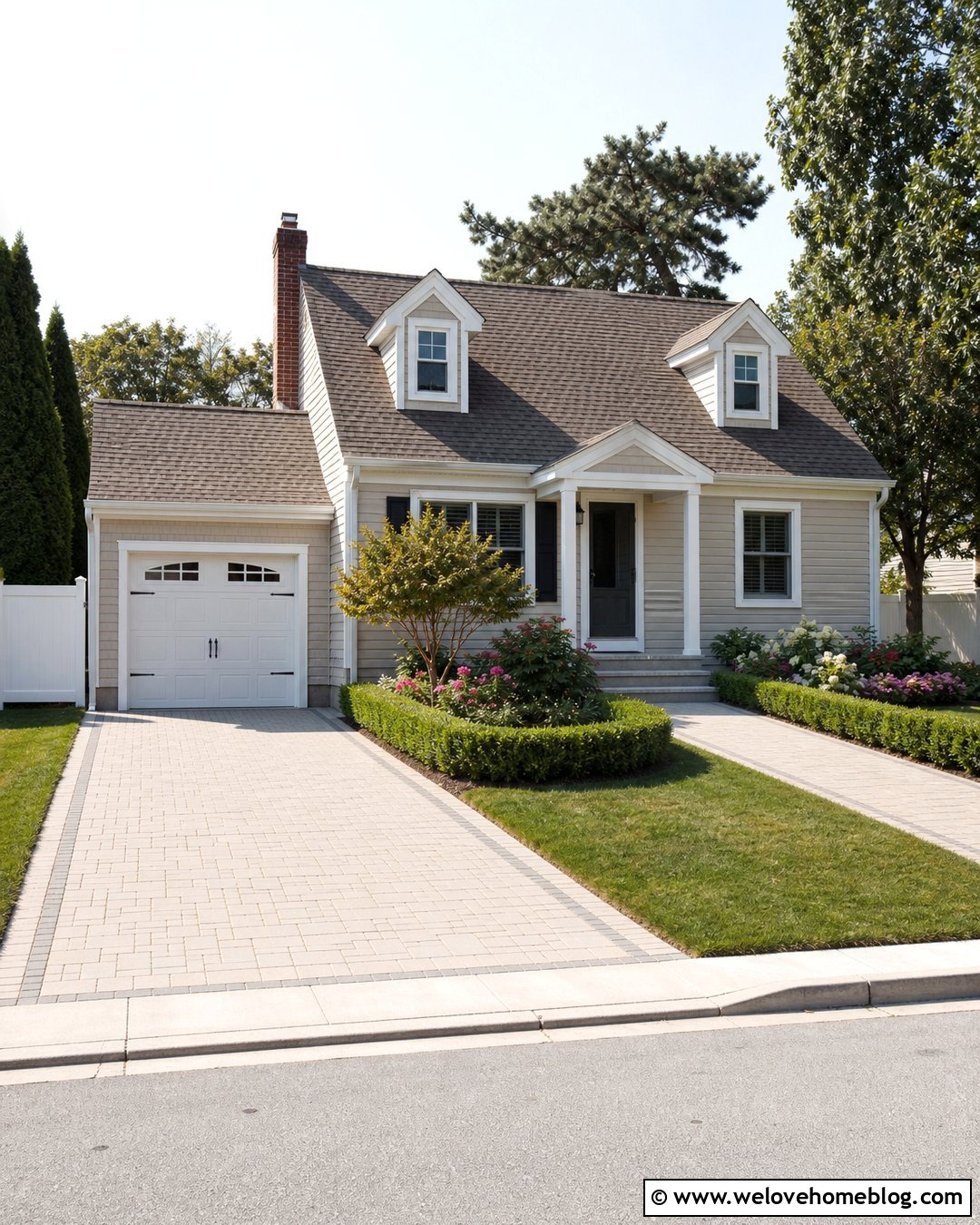
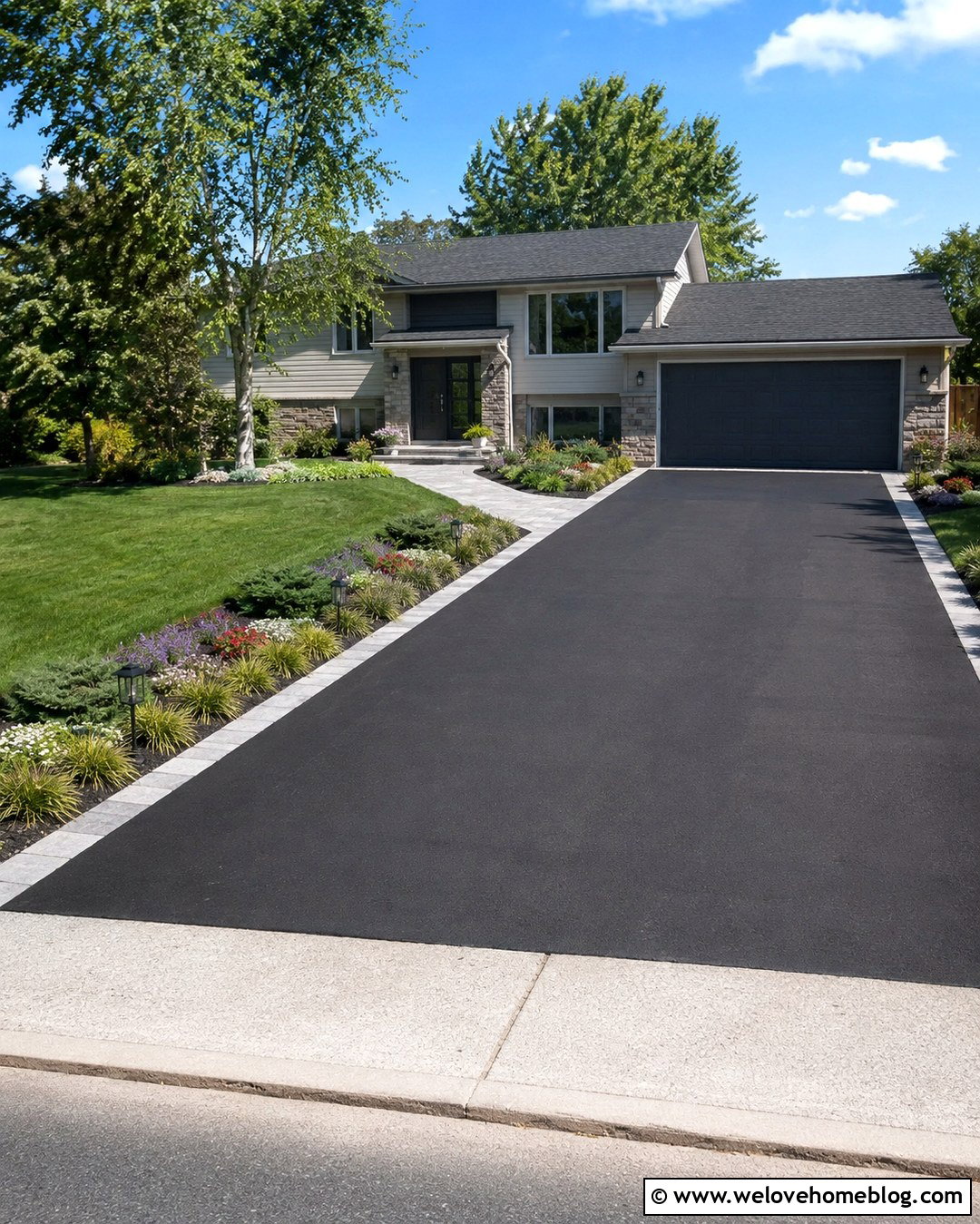
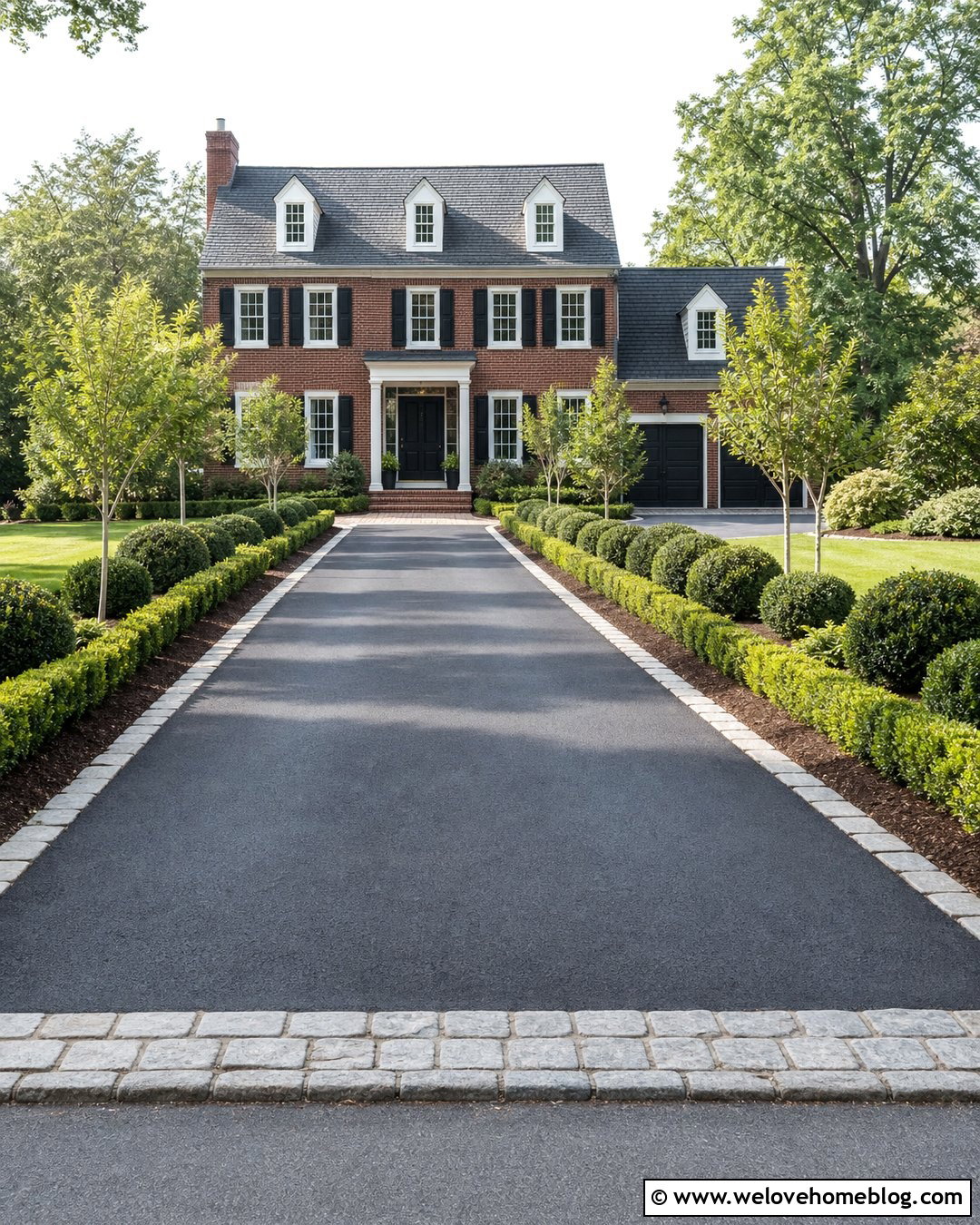
20. Natural Stone Edging Around A Circular Driveway
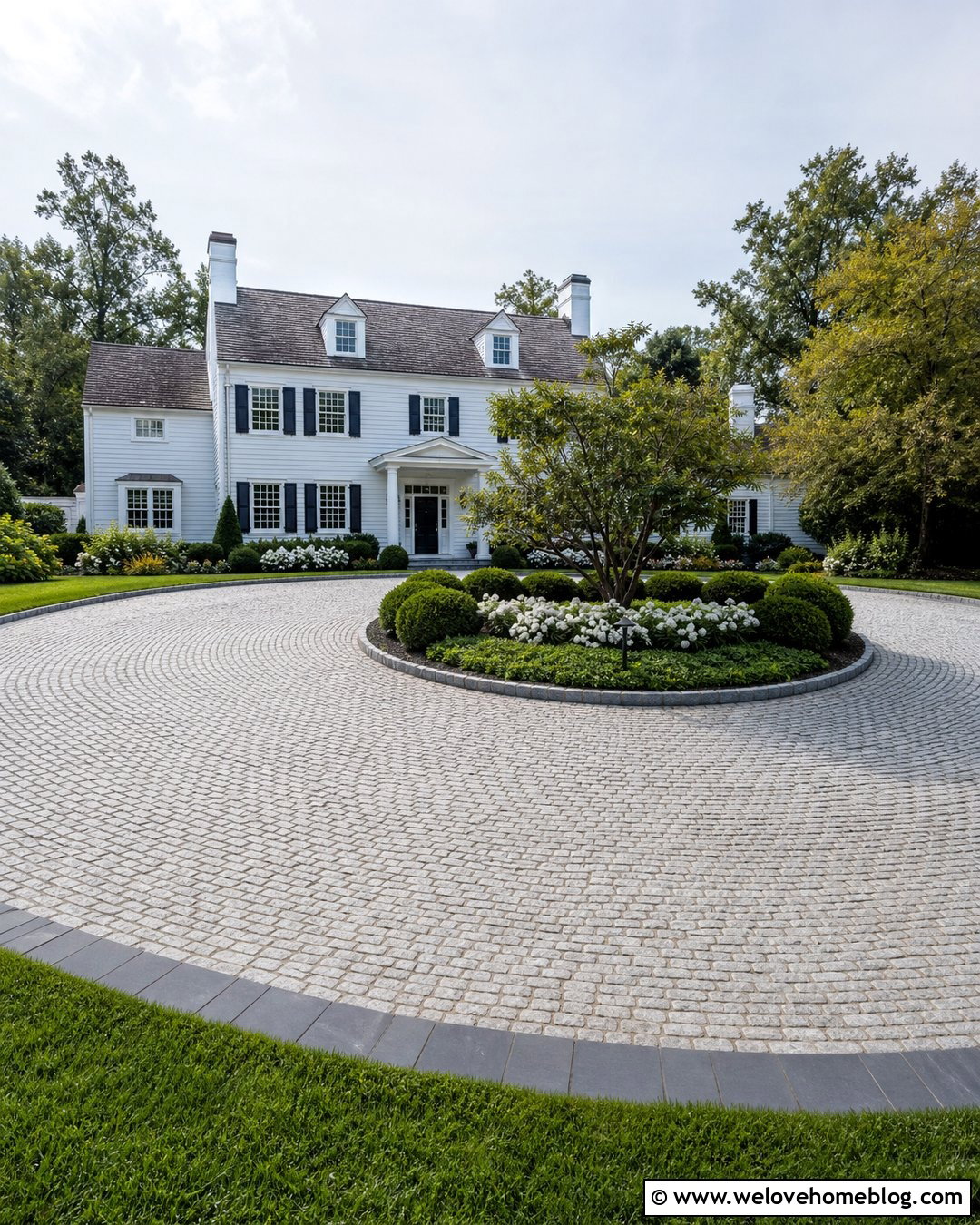
A circular driveway gains definition when natural stone follows both the outside curve and the center island. Granite cobbles, sandstone setts, or rectangular limestone blocks can create a continuous frame around gravel, asphalt, or concrete paving. Choose one primary stone so the multiple curved edges do not make the design appear busy. The center island can hold a small ornamental tree, layered shrubs, flowers, and low ground covers that preserve visibility. Repeat a simpler planting palette around the outer driveway border. This complete design suits colonial, Mediterranean, and large ranch homes with enough front-yard depth for a turning loop. Carefully planned curves are important because poorly spaced stones can create uneven joints. Smaller units generally follow tight radiuses more smoothly than long rectangular pieces.
Conclusion:
The best stone border should support the driveway surface, suit the house, and improve the way the entire front yard looks from the street. These 20 Natural Stone Driveway Edging Ideas show how granite, limestone, sandstone, fieldstone, slate, cobblestone, and other materials can work with many driveway layouts. Before choosing one, consider vehicle clearance, drainage, snow removal, mowing, soil movement, and the height of the finished edge. Compare stone samples beside the actual driveway and facade, since colors can look different outdoors. Whether you prefer a crisp flush border or a rugged boulder edge, consistent installation and coordinated landscaping will make the driveway feel complete, practical, and naturally connected to your home.

Related posts:
Leave a Reply