
Granite borders bring strength, texture, and a tailored finish to almost any residential drive. These 20 Granite Driveway Edging Ideas explore complete looks that pair granite cobbles, setts, and curbing with asphalt, gravel, concrete, brick, and permeable surfaces. Beyond curb appeal, a properly installed granite edge can help contain loose material, separate pavement from planting beds, and protect vulnerable driveway sides. Granite can appear rustic and aged or crisp and contemporary, depending on its color, cut, placement, and joint spacing. Installation matters, especially where vehicles cross the border or water flows toward the lawn. A stable setting base and thoughtful drainage plan help keep the stones aligned. () Use these 20 Granite Driveway Edging Ideas to find a practical look for your home.

1. Asphalt Driveway With Granite Cobblestone Edging
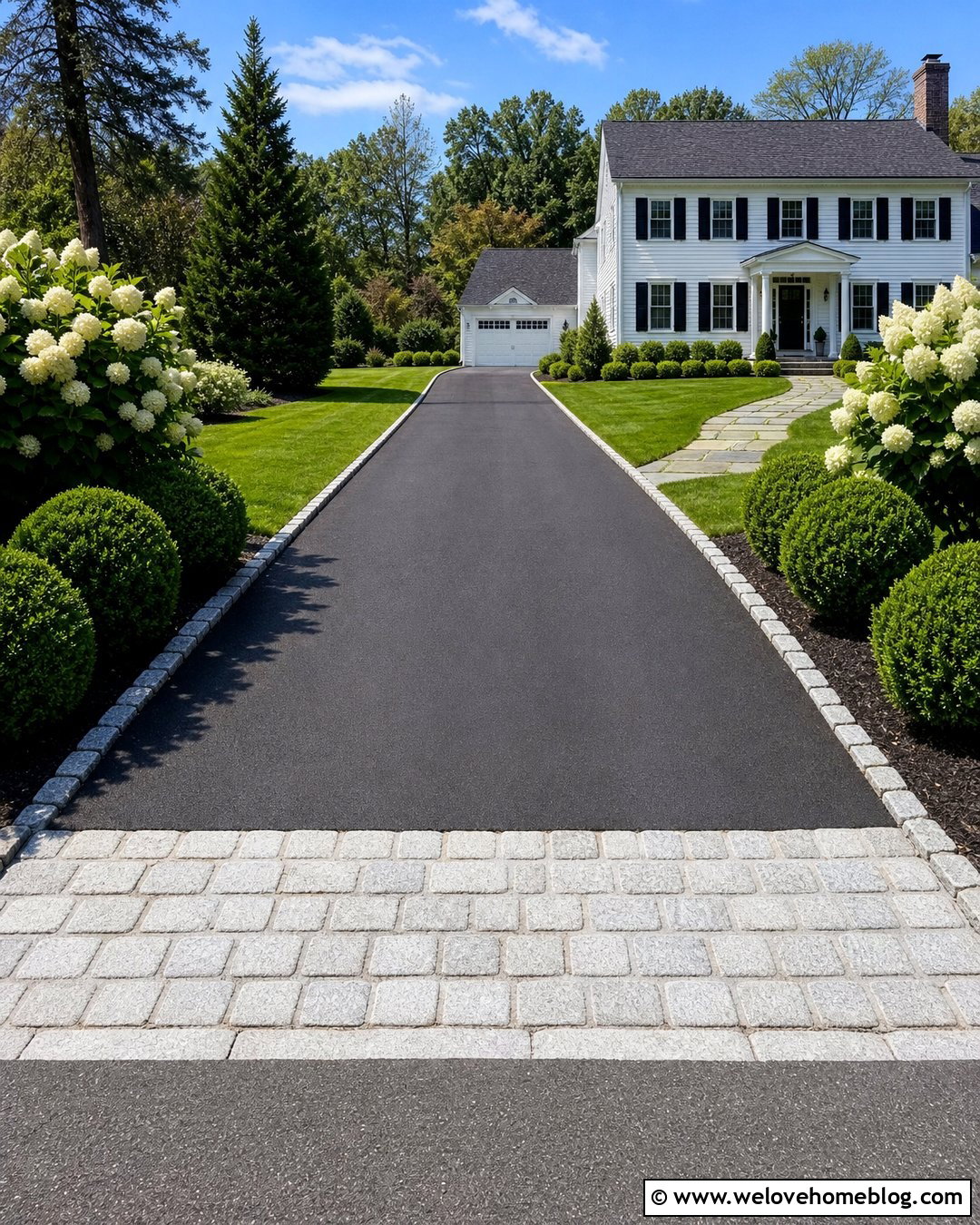
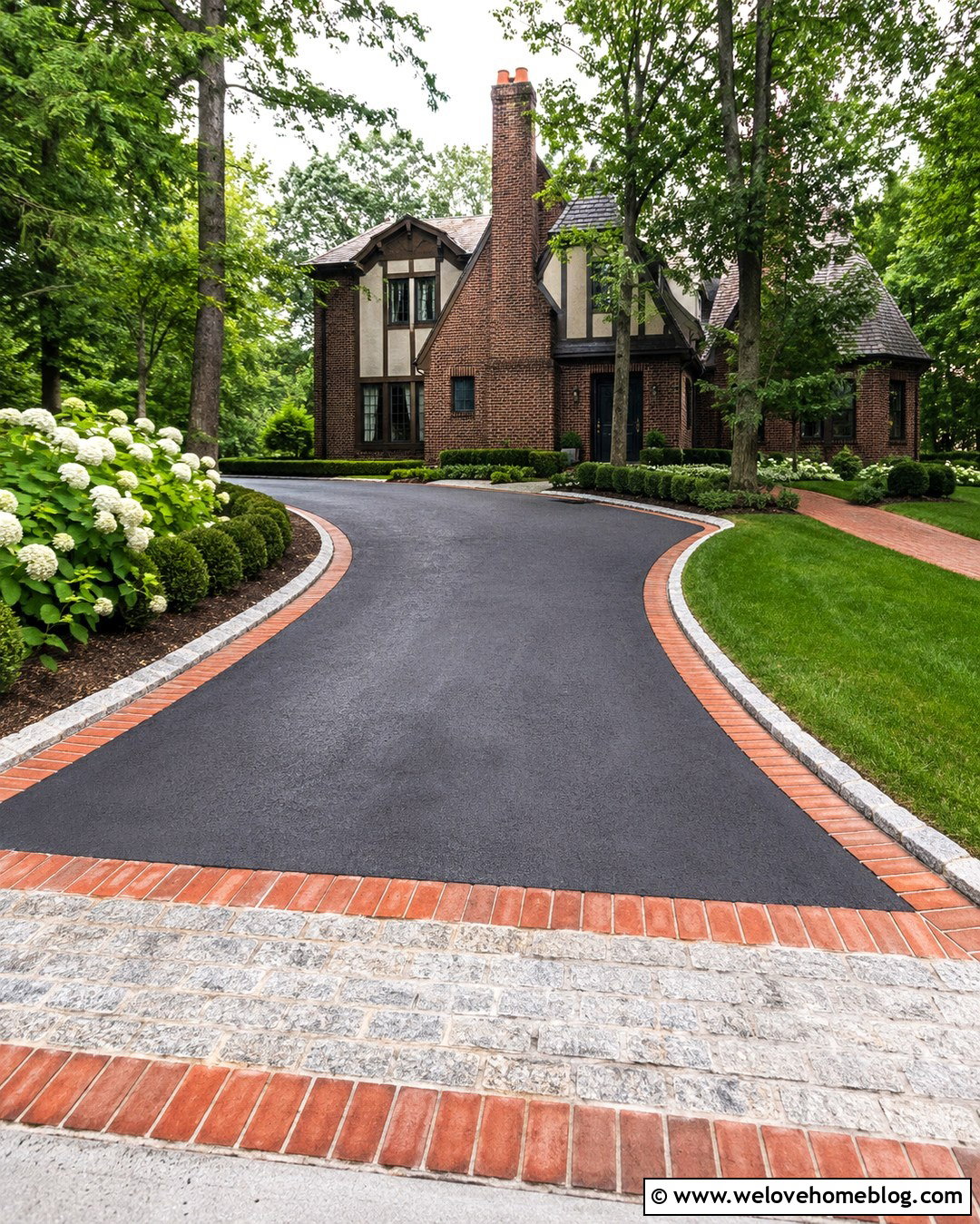
Smooth black asphalt becomes much more distinctive when framed by a single row of gray granite cobblestones. Set the stones lengthwise for a calm, continuous line that works especially well with Colonial, Cape Cod, and traditional homes. A nearly flush installation keeps the transition easy to cross while still separating the pavement from lawn and planting beds. Continue the granite around gentle driveway curves so the border feels intentional from the street to the garage. White hydrangeas, low boxwood, and dark mulch soften the stone without hiding it. At the entrance, widen the granite into a short apron or double row. This gives the simplest asphalt driveway a clear beginning and creates a balanced, finished approach.
2. Gravel Driveway With Raised Granite Edging
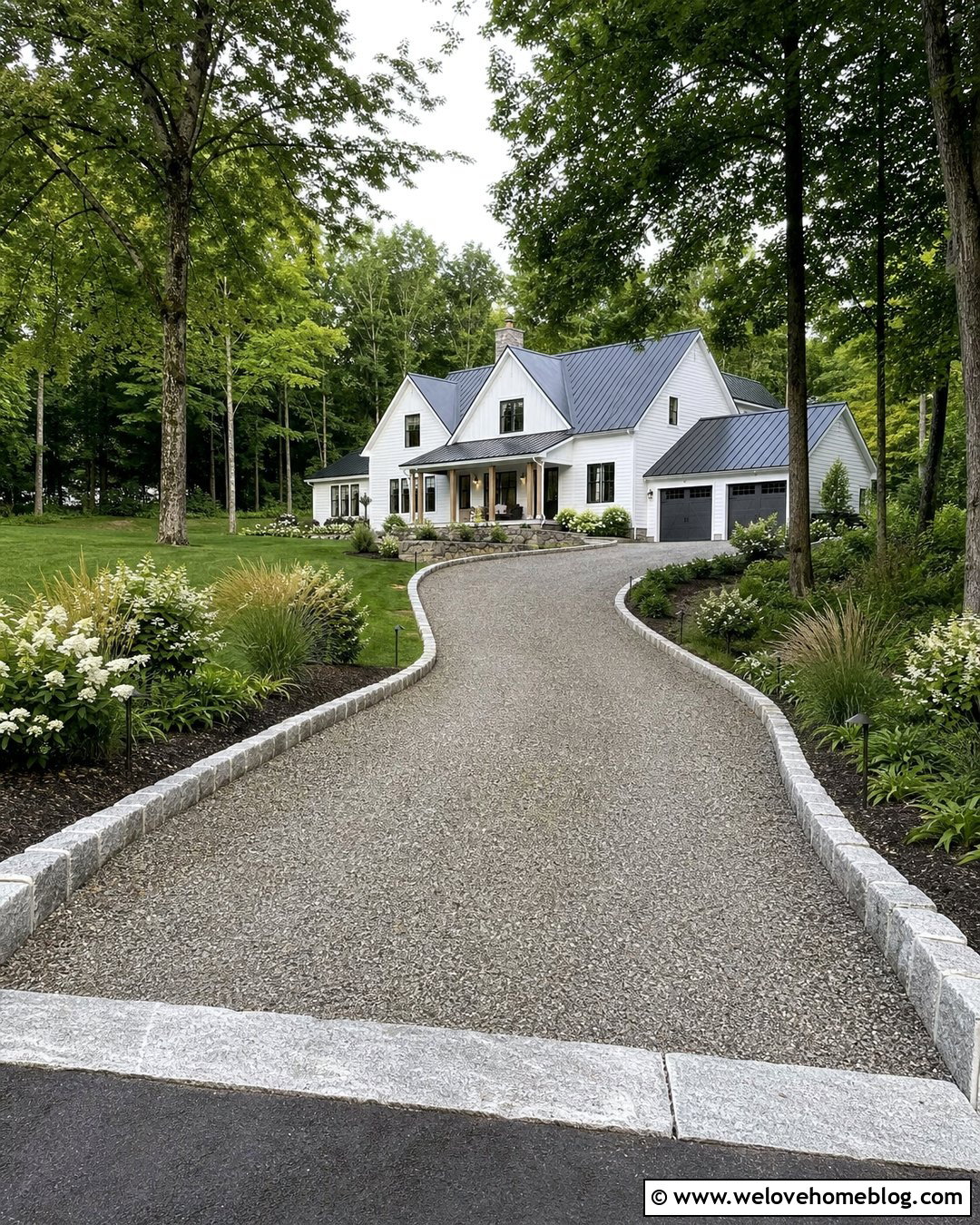
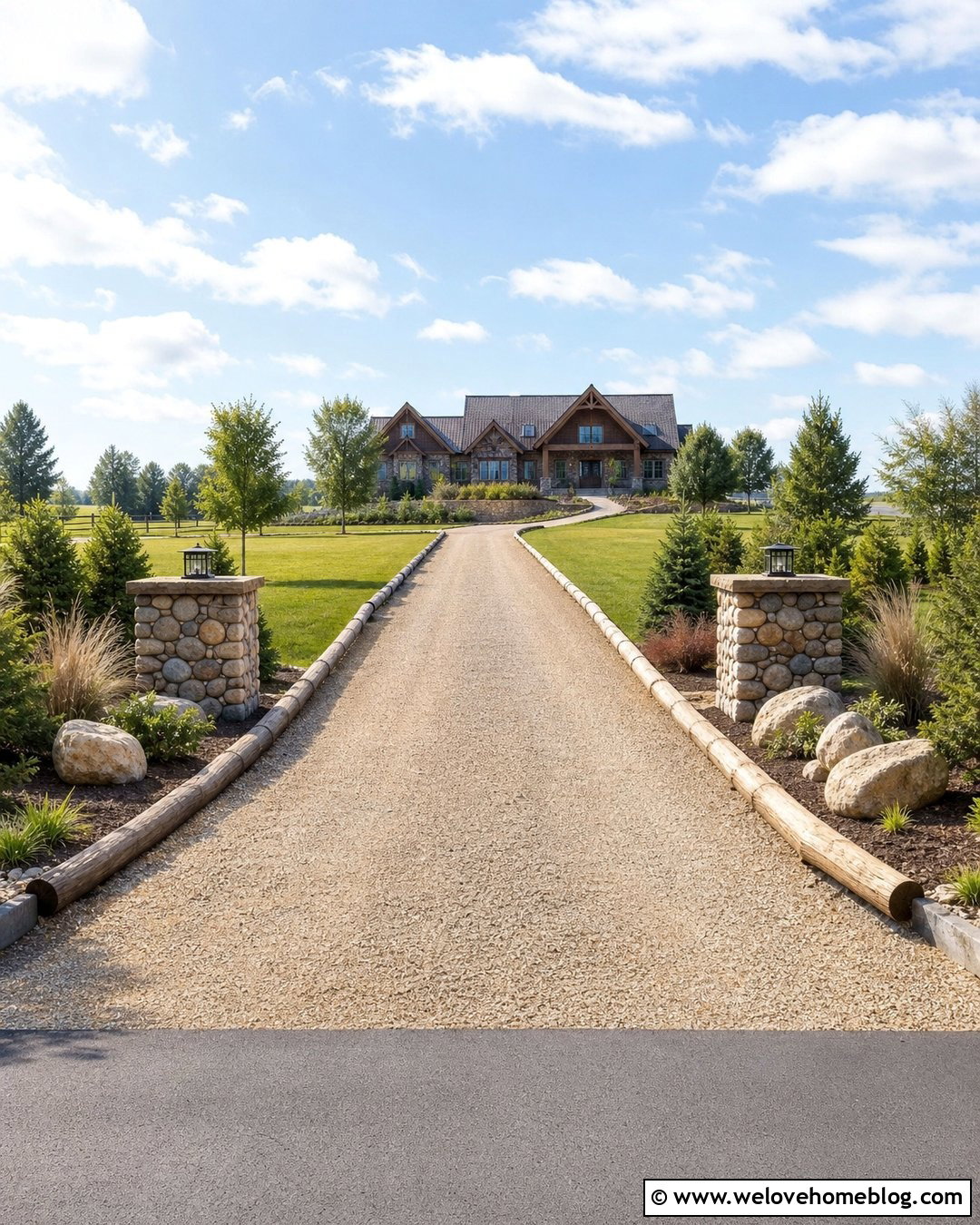
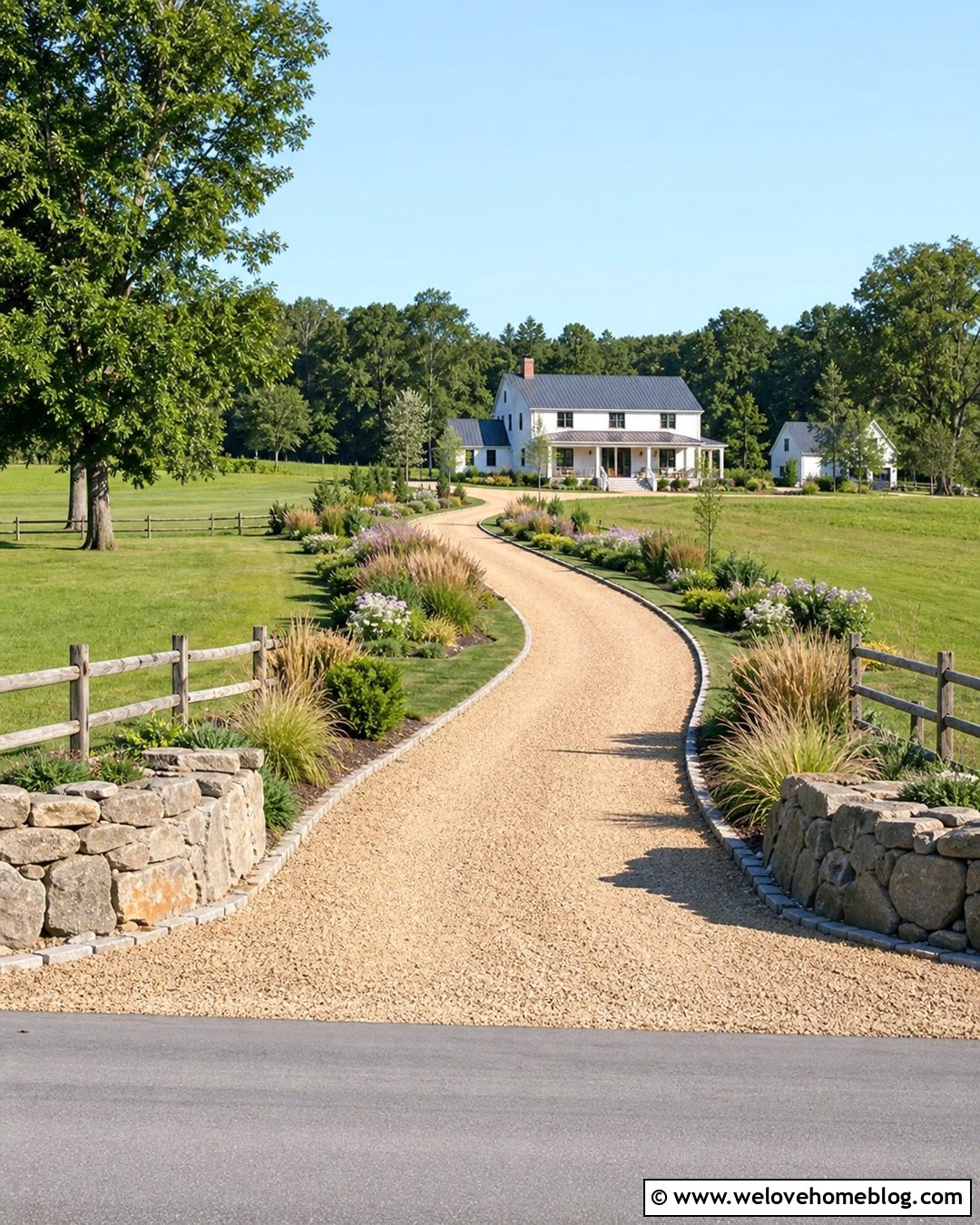
Loose gravel needs a substantial border, particularly where the driveway meets sloped lawn or deep planting beds. Large granite blocks installed slightly above the gravel create a strong visual edge and help keep stones within the driving area. Use warm gray crushed gravel with chunky silver-gray granite for a country look that feels natural rather than overly formal. A gently curved layout will soften a long approach to a farmhouse, ranch, or cottage. Add ornamental grasses, flowering shrubs, and a broad mown lawn outside the edging. Keep the blocks low near the entrance and garage so tires, equipment, and foot traffic can cross comfortably. The finished design combines practical gravel containment with the character of traditional stonework.
3. Concrete Driveway With Flush Granite Edging
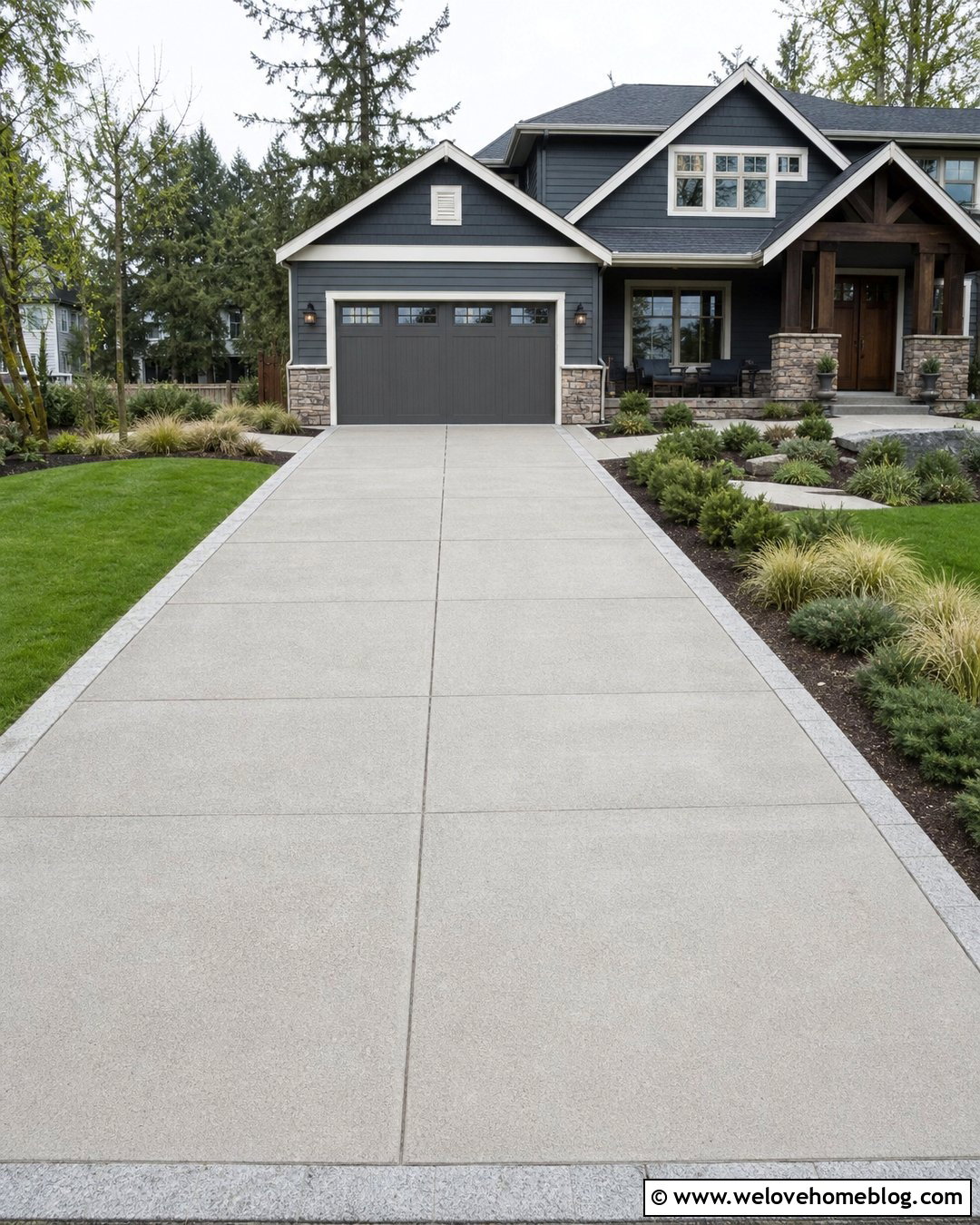
Imagine a light gray concrete driveway outlined with precise, flush-set granite blocks. The narrow stone border adds contrast without creating a raised obstacle beside the driving surface. Choose sawn granite setts with relatively even faces for a cleaner look, then match their joint spacing to the concrete control joints. This detail works beautifully with modern ranch homes, updated Craftsman houses, and simple suburban facades. Long planting beds filled with clipped shrubs and grasses can run beside the granite, while a matching concrete walkway connects the drive to the front door. At the garage, continue the border across the threshold as a subtle stone ribbon. The overall effect is structured, easy to understand, and polished without appearing overly decorative.
4. Curved Gravel Driveway With Mixed Granite Edging
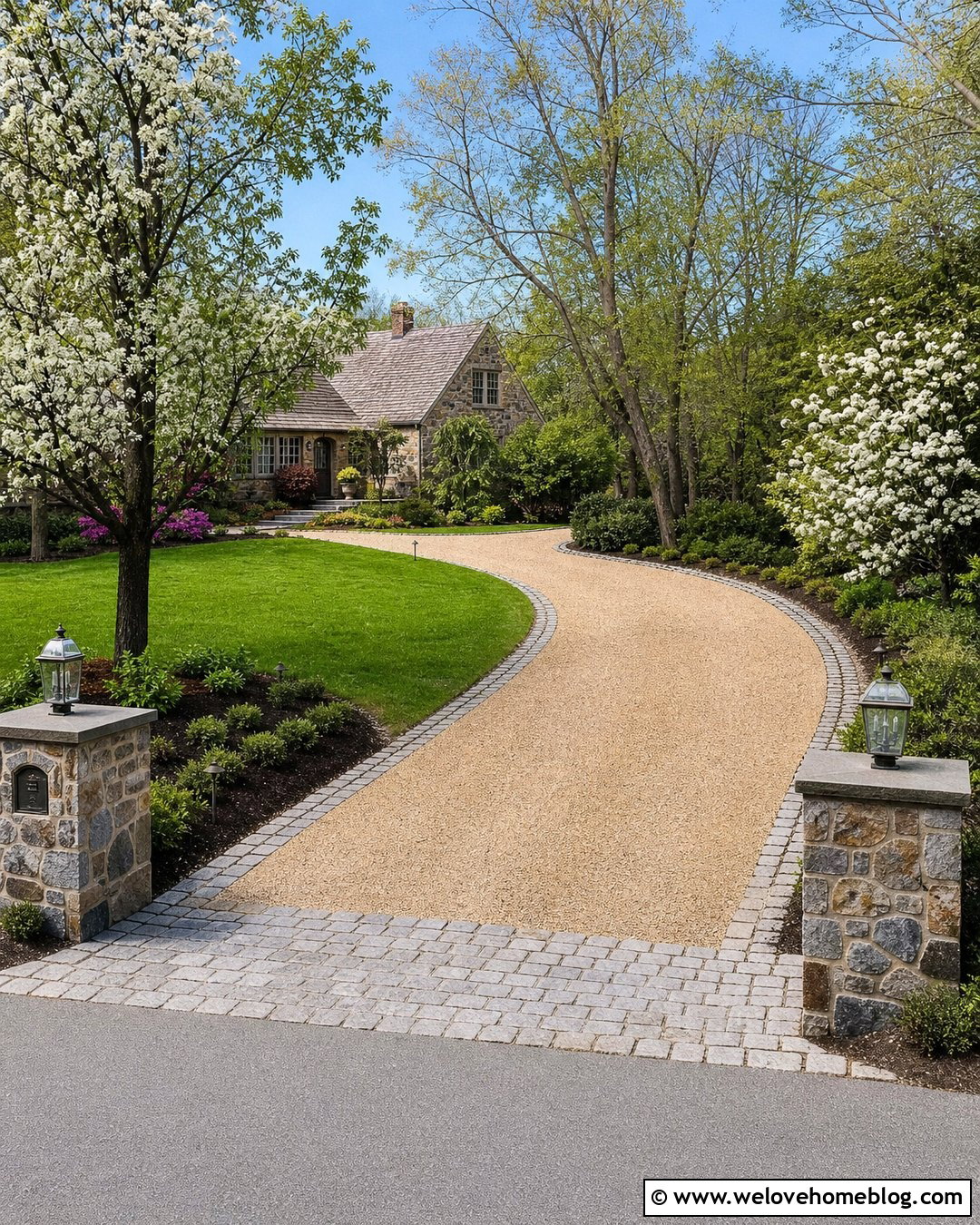
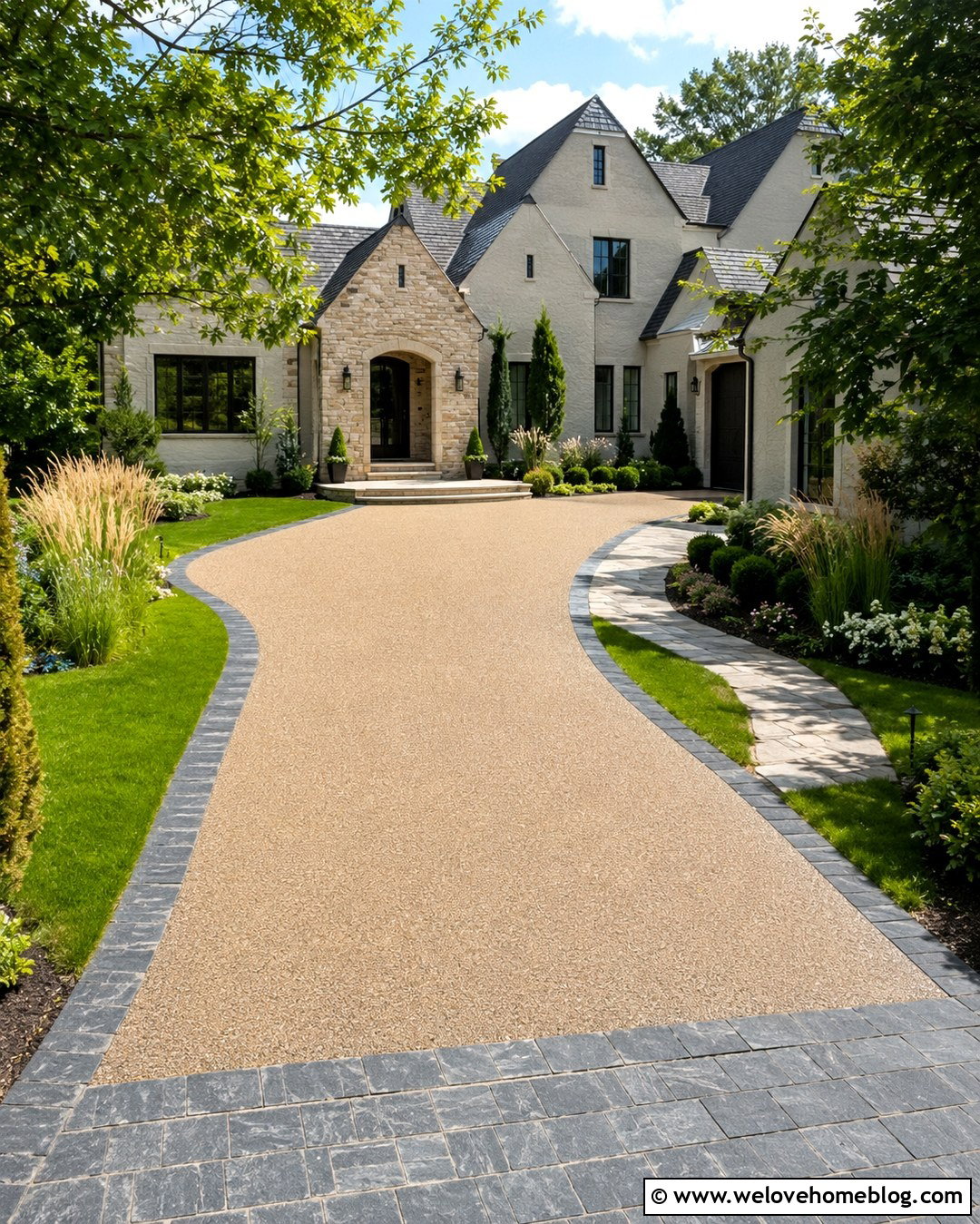
A curving gravel drive naturally benefits from granite edging that follows each bend. Mix medium-gray, charcoal, and lightly weathered granite cobbles to create subtle color variation along the route. The stones should feel related without looking randomly patched together. Pair the border with tan crushed gravel, broad lawn areas, and layered planting beds that reveal the house gradually. On the outside of the curve, use taller shrubs and small flowering trees to frame the view. Keep the inside planting lower for better visibility when entering or leaving the property. A wider granite section near the street can define the entrance, while a second widened area near the garage creates a graceful transition. This complete look suits wooded suburban lots and relaxed country homes.
5. Brick Driveway With Charcoal Granite Edging
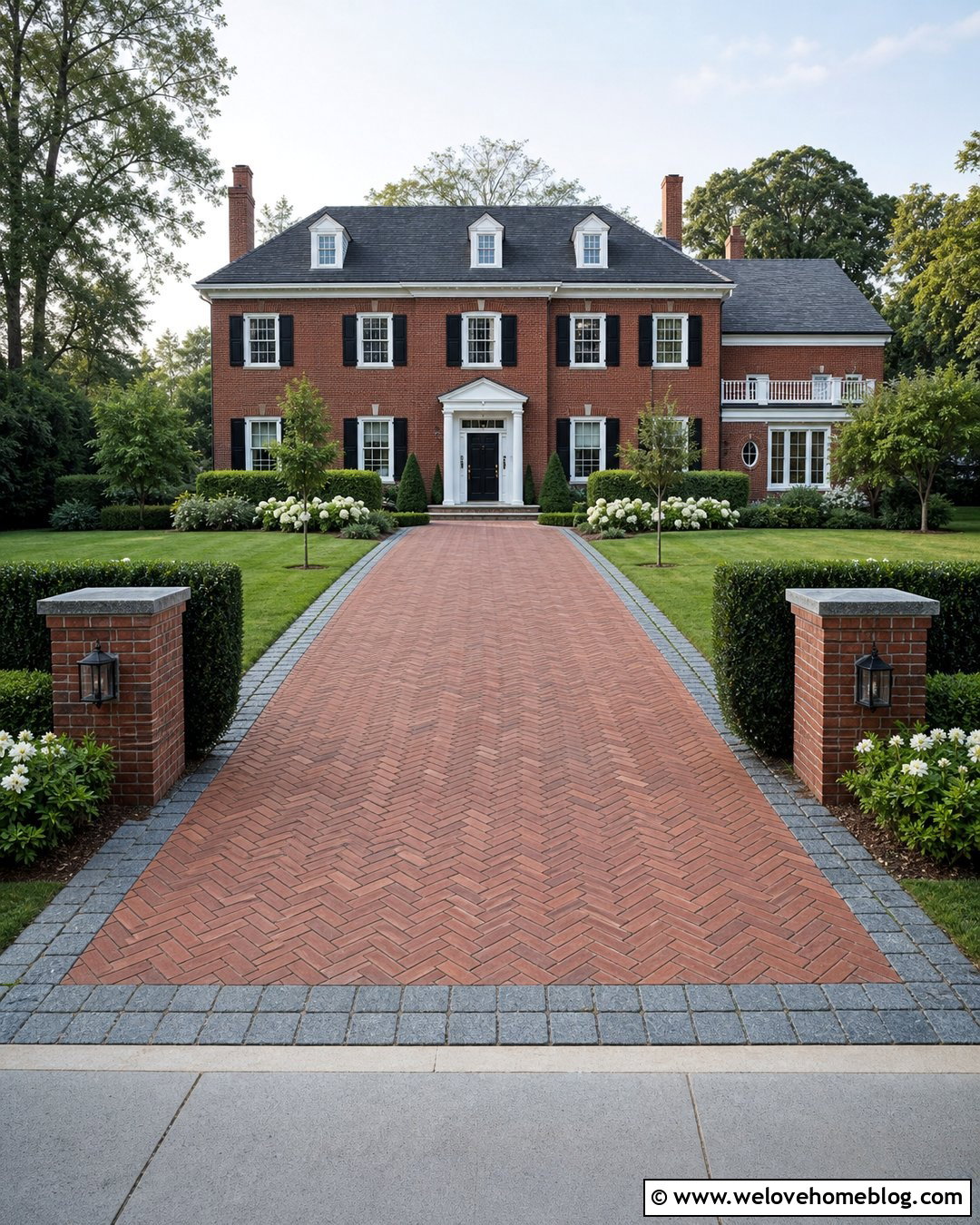
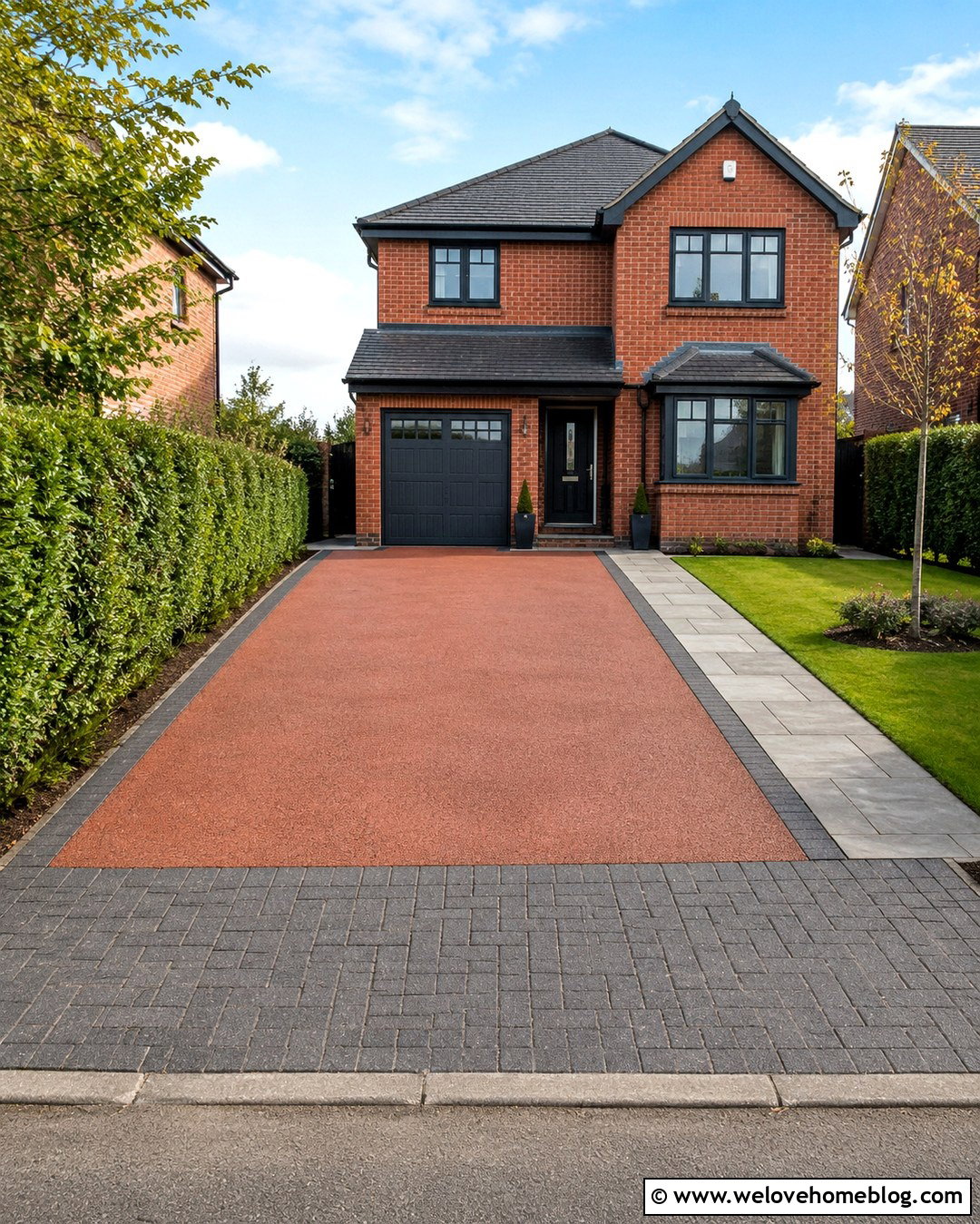
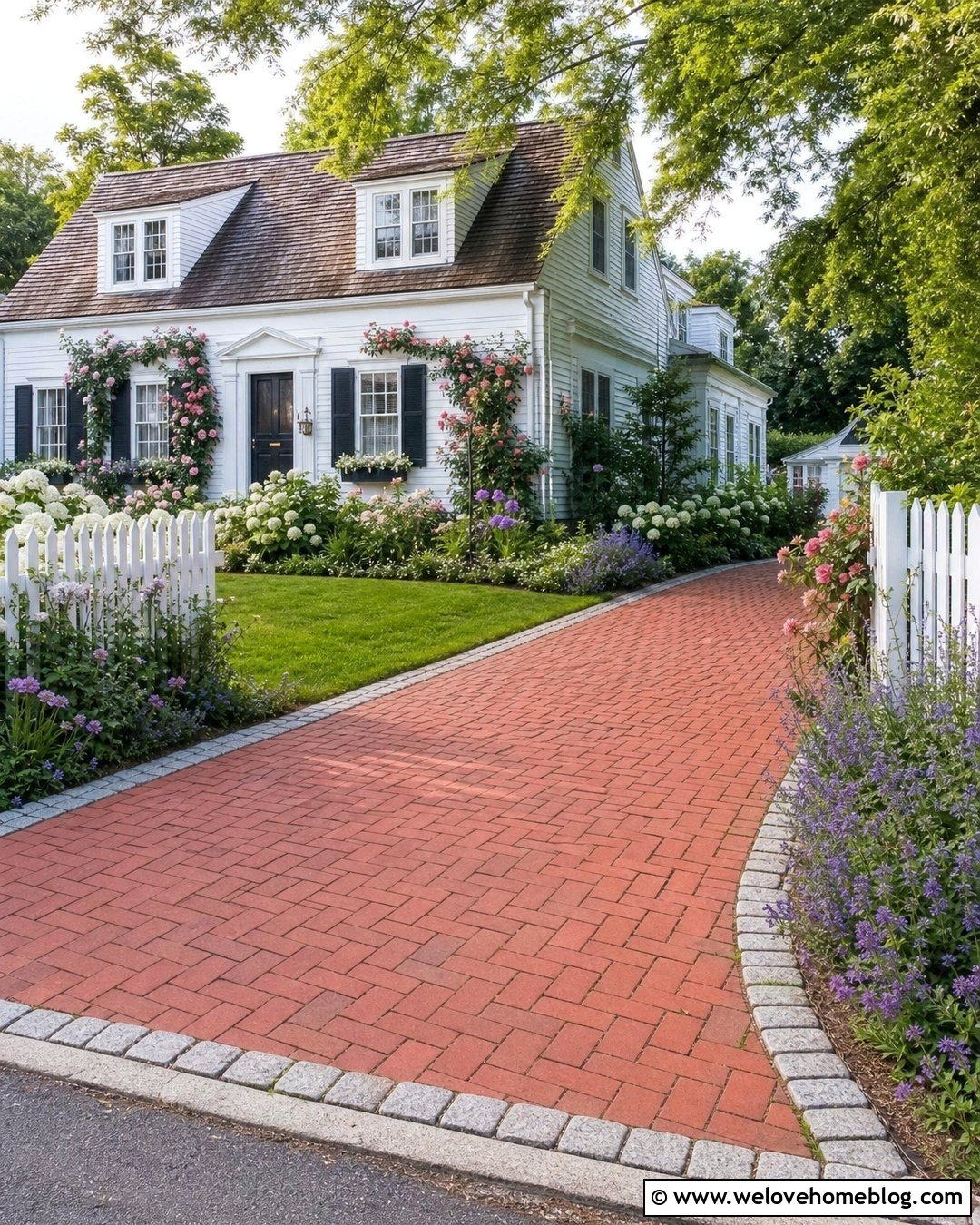
Red or brown clay brick pavers gain definition from a charcoal granite border. The dark stone provides enough contrast to clarify the driveway shape while allowing the warmer brick to remain the main surface. Lay the brick in a herringbone pattern and use one straight row of rectangular granite setts along both sides. At the entrance, turn the granite inward to form a complete frame around the brick apron. This combination complements Georgian, Colonial, and traditional brick homes, especially when the granite color echoes dark shutters or roofing. Neatly clipped hedges can provide structure, while white flowering plants lighten the palette. A matching brick walkway with the same granite outline connects the driveway to the entrance and gives the entire front yard a coordinated appearance.
6. Circular Asphalt Driveway With Granite Edging
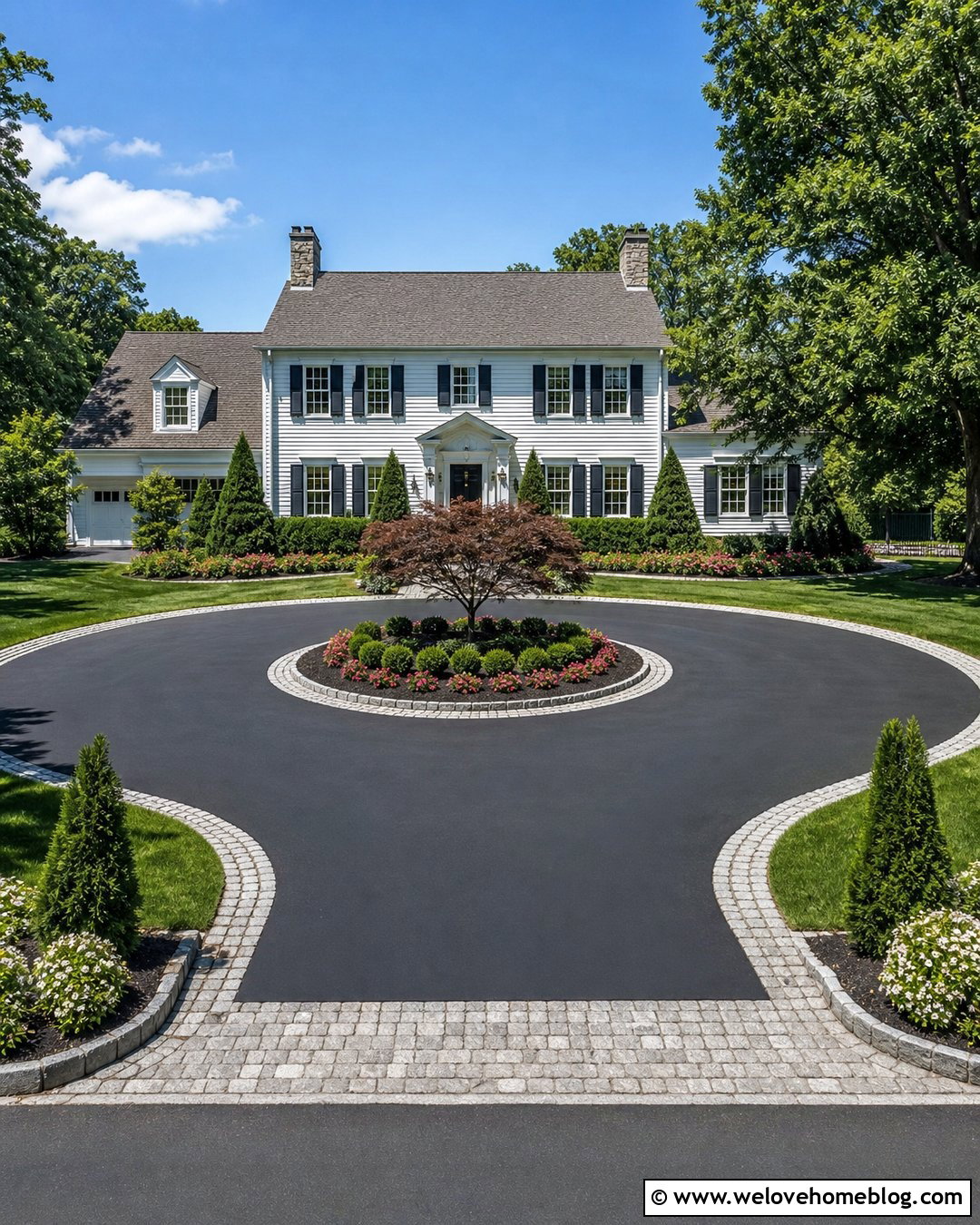
A circular asphalt driveway can look broad and undefined unless its shape is clearly framed. Granite cobblestone edging around both the outside curve and the central island creates a strong, readable layout. Use medium-gray blocks beside deep black asphalt for classic contrast. The central island can hold a small ornamental tree surrounded by evergreen shrubs, seasonal flowers, and dark mulch. Keep plants low near the entry and exit points to preserve open views of the street. On the outer edge, connect the granite line to the front walkway and garage approach. A two-row granite apron at each street opening makes the circular form feel complete. This balanced arrangement works especially well with large Colonial, traditional, and symmetrical two-story homes.
7. Decomposed Granite Driveway With Granite Block Edging
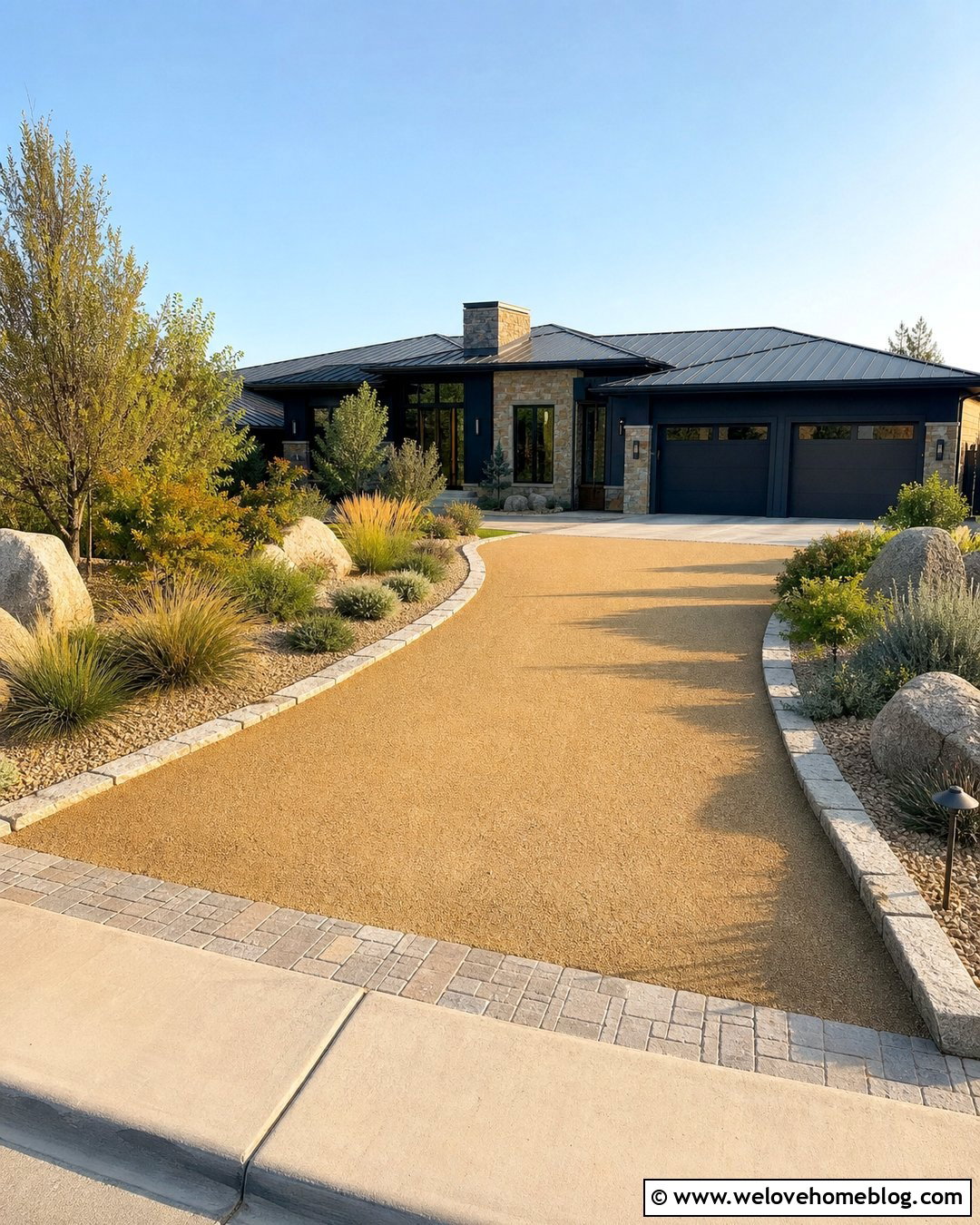
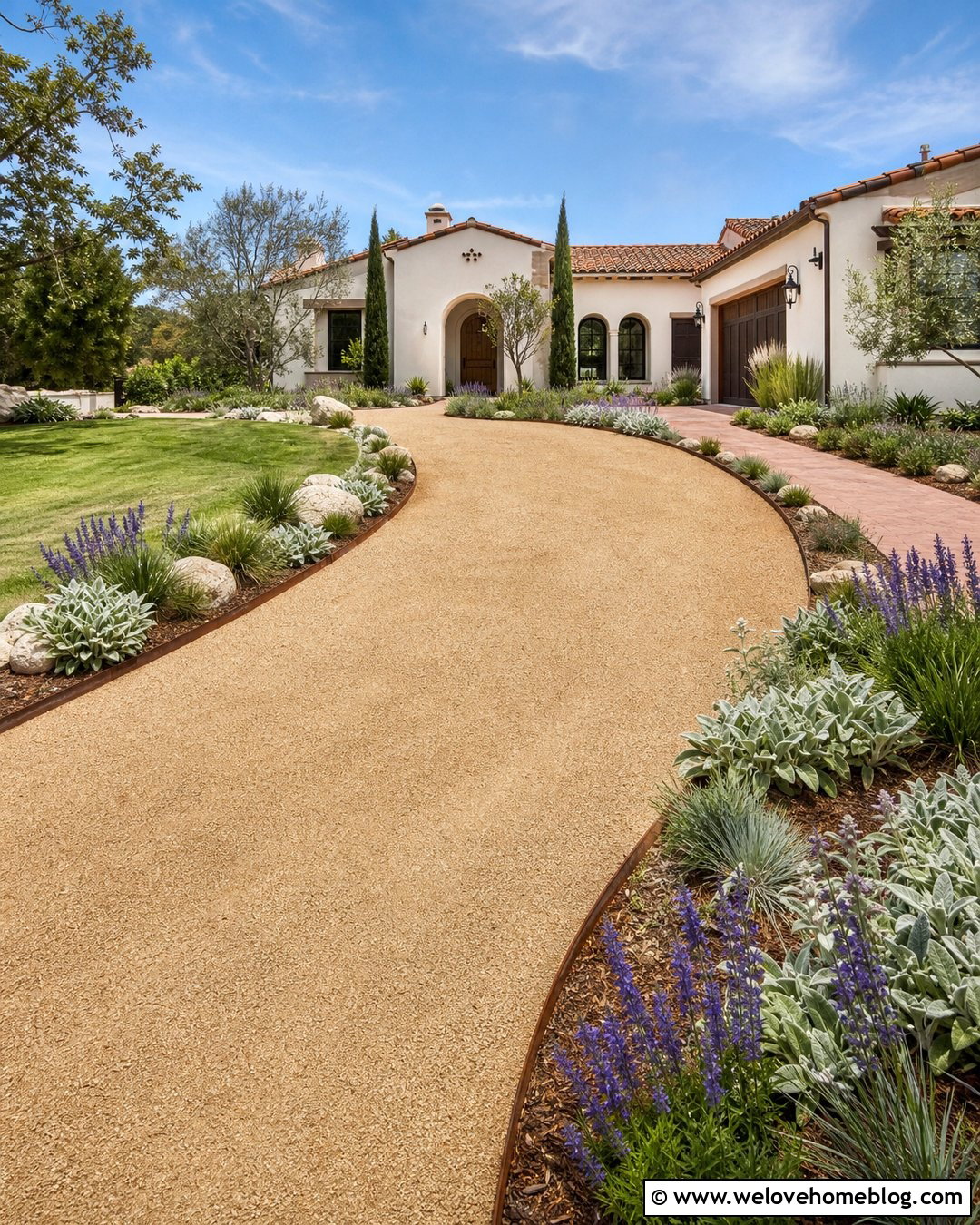
A decomposed granite driveway can blend beautifully into a dry, natural landscape, but it needs a clear edge to keep the design from looking unfinished. Frame the warm tan surface with large gray granite blocks installed as a continuous low curb. The difference in color and scale separates the driving area from gravel gardens, drought-tolerant plants, and native grasses. Choose a straight or softly curved layout leading to a contemporary ranch or Southwestern-inspired house. Near the garage, lower the blocks and introduce a concrete or paver transition strip for a smoother threshold. Repeating a few granite boulders within the planting beds connects the edging to the wider landscape. The result feels earthy and relaxed while still maintaining a deliberate residential structure.
8. Exposed Aggregate Driveway With Split Granite Edging
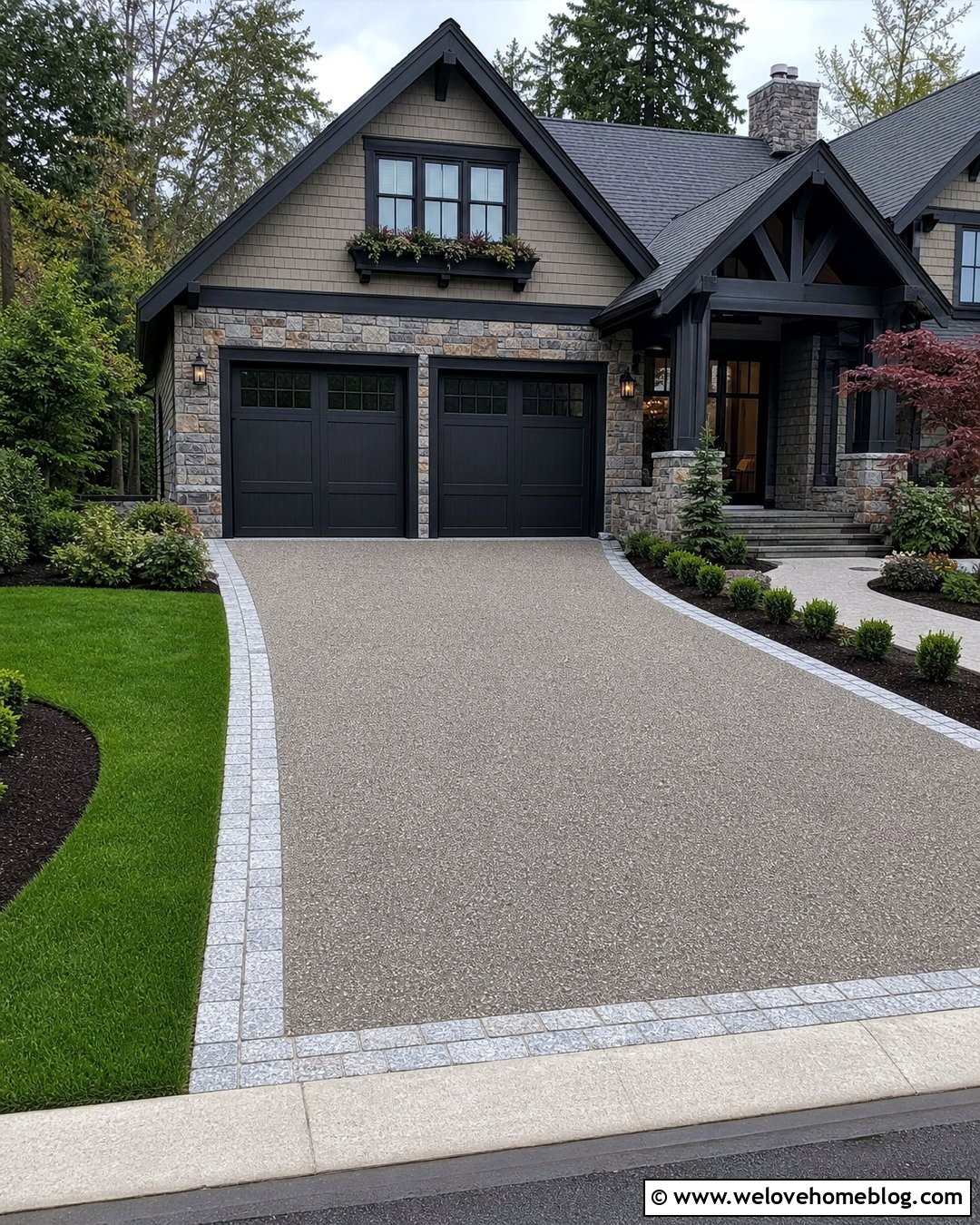
Exposed aggregate concrete already contains visible texture, so its granite border should be simple and substantial. Split-face granite setts in cool gray tones create a rugged edge that complements the small stones revealed in the concrete finish. Install the setts in one consistent row along a straight driveway, then widen them into a double border near the garage and street. This slight change in scale emphasizes the important transition points without overwhelming the surface. Surround the drive with broad green lawn, compact evergreen shrubs, and a clean concrete walkway. A Craftsman or stone-front home is an ideal backdrop because the granite can repeat colors found in porch columns or facade masonry. The finished look feels cohesive, durable, and comfortably upscale.
9. Resin-Bound Driveway With Black Granite Edging
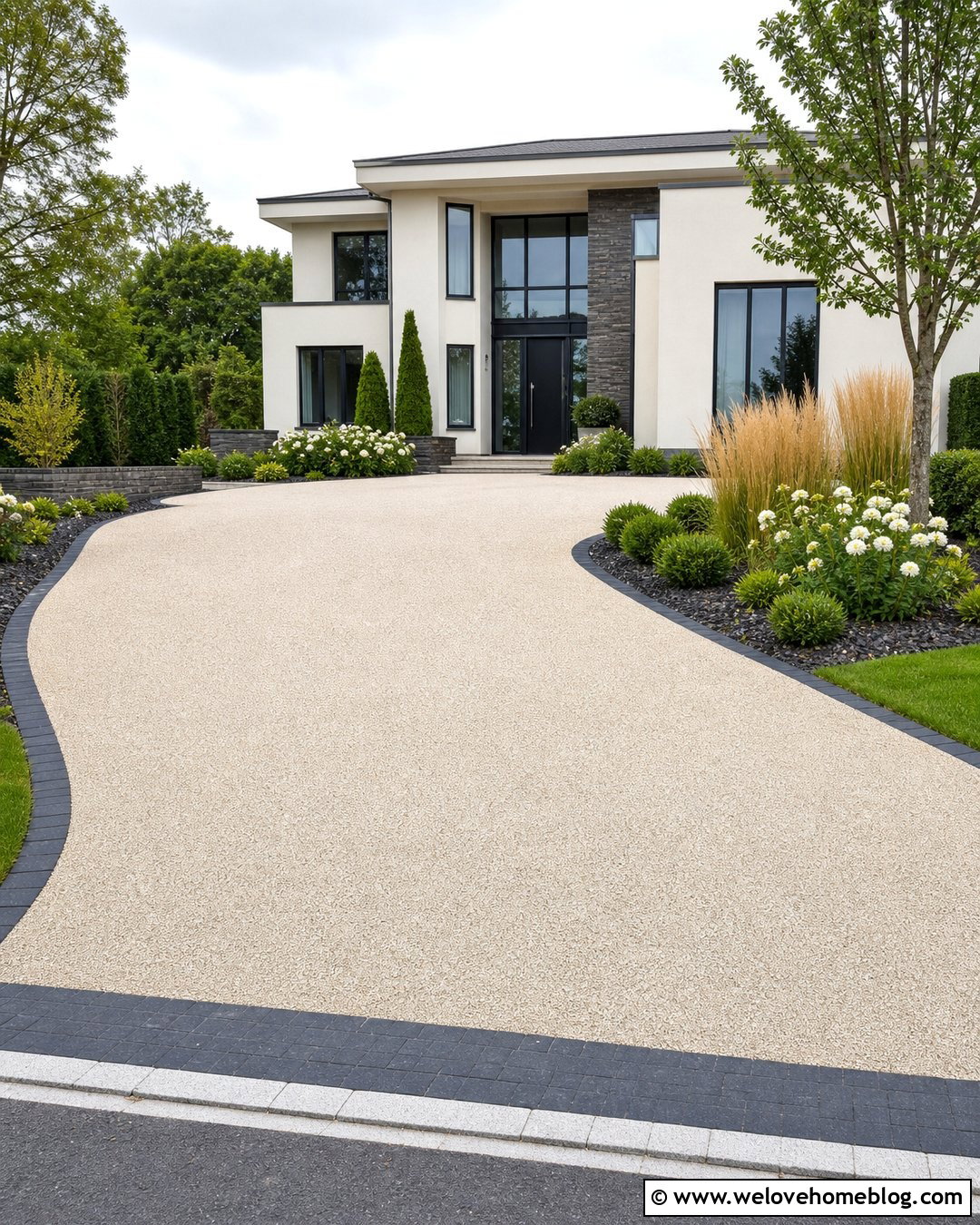
A pale resin-bound gravel driveway looks especially sharp beside narrow black granite setts. The dark edging outlines the surface like a clean frame and supports a contemporary curb-appeal scheme. Use a straight driveway or a shallow sweep toward the garage, keeping the granite nearly flush with the resin finish. Large rectangular planting beds can sit beyond the border, filled with ornamental grasses, compact evergreens, and white flowering perennials. Continue the black granite around the adjoining walkway so both surfaces appear connected. At the street, form a slightly wider entrance band that repeats the dark color of window frames, garage doors, or exterior lights. This restrained combination works best when lines remain simple and landscaping is layered but uncluttered.
10. Stamped Concrete Driveway With Light Granite Edging
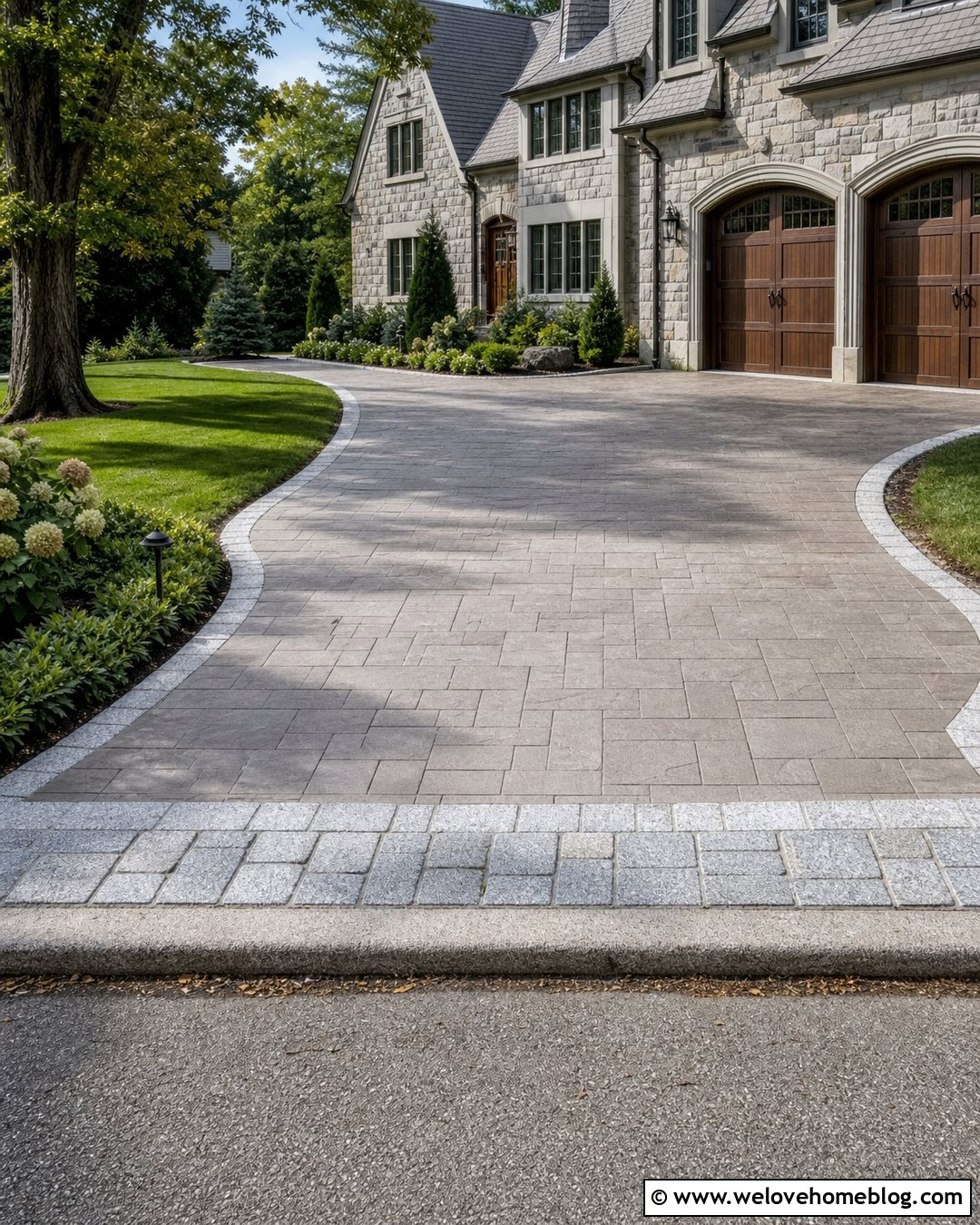
Stamped concrete can imitate natural paving, but a real granite border gives the design greater depth. Pair warm gray concrete stamped in a large ashlar pattern with light silver granite blocks. The granite should contrast gently rather than compete with the patterned surface. A broad, slightly curved driveway leading to a stone-accented suburban home provides enough space for both materials to read clearly. Place the granite lengthwise along the sides, then turn it across the entrance as a narrow apron. Soft planting beds with hydrangeas, dwarf conifers, and low ground covers can follow the same curves. Select concrete colors that relate to the facade and avoid using too many additional tones. The resulting driveway feels detailed, coordinated, and naturally connected to the house.
11. Permeable Paver Driveway With Granite Edging
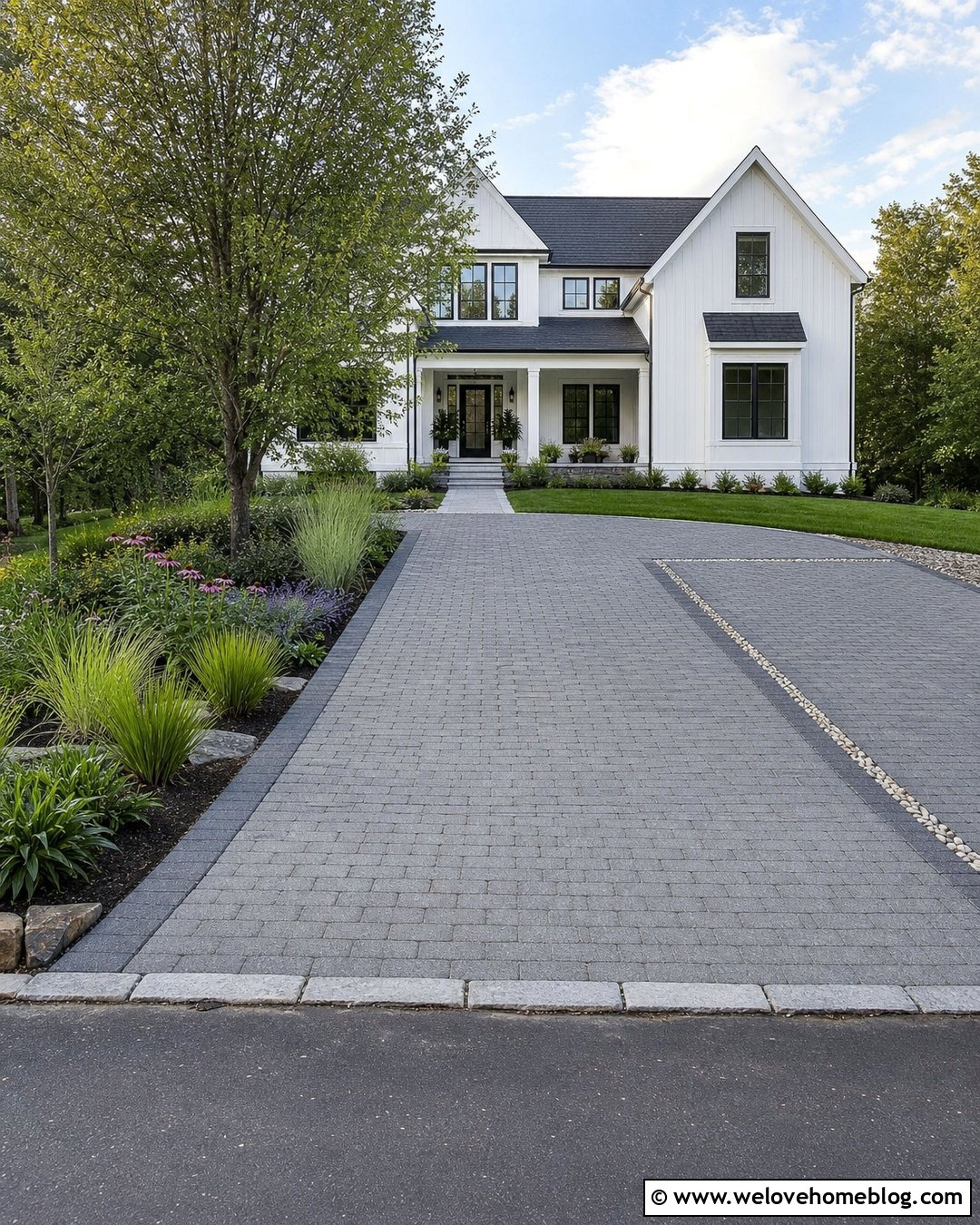
Permeable concrete pavers and granite edging form a smart combination for a driveway surrounded by generous landscaping. Choose medium-gray permeable pavers with wider stone-filled joints, then contain them with darker granite setts. A defined perimeter keeps the patterned field visually separate from lawn, mulch, and planting soil. Use a straight drive with a small parking bay near the house, outlining both areas with the same granite. A narrow drainage garden beside the lower edge can include sedges, native grasses, and moisture-tolerant perennials. Continue the granite around this planted area to make it part of the complete design. For a modern farmhouse, repeat the granite near porch steps or along the walkway. This creates continuity between the driveway, drainage features, and architecture.
12. Long Gravel Driveway With Reclaimed Granite Edging
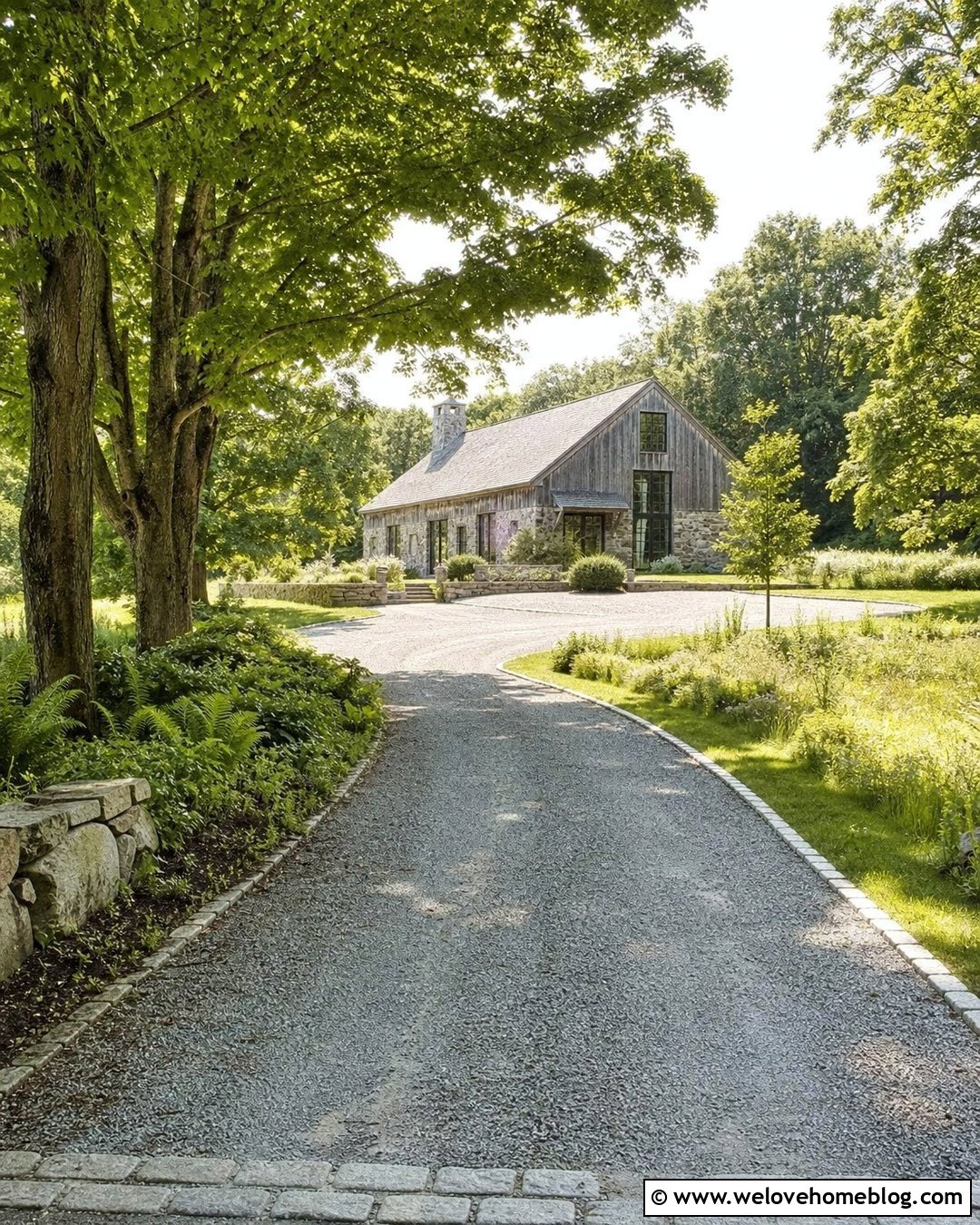
Weathered granite cobbles bring established character to a long gravel driveway. Their softened corners, irregular surfaces, and mixed gray tones work naturally with crushed stone and mature landscaping. Install one continuous row on both sides of a gently curving country drive, allowing small variations without losing the overall line. Mature shade trees can form a loose canopy, while ferns, low shrubs, and native ground covers fill the borders. Near the house, widen the granite edging into a parking court outline that directs vehicles without signs or painted markings. A farmhouse, cottage, or converted barn provides an ideal background. Repeating reclaimed granite around nearby planting beds or walkway steps helps the old stone feel integrated rather than added as an isolated decorative feature.
13. Modern Concrete Driveway With Black Granite Edging
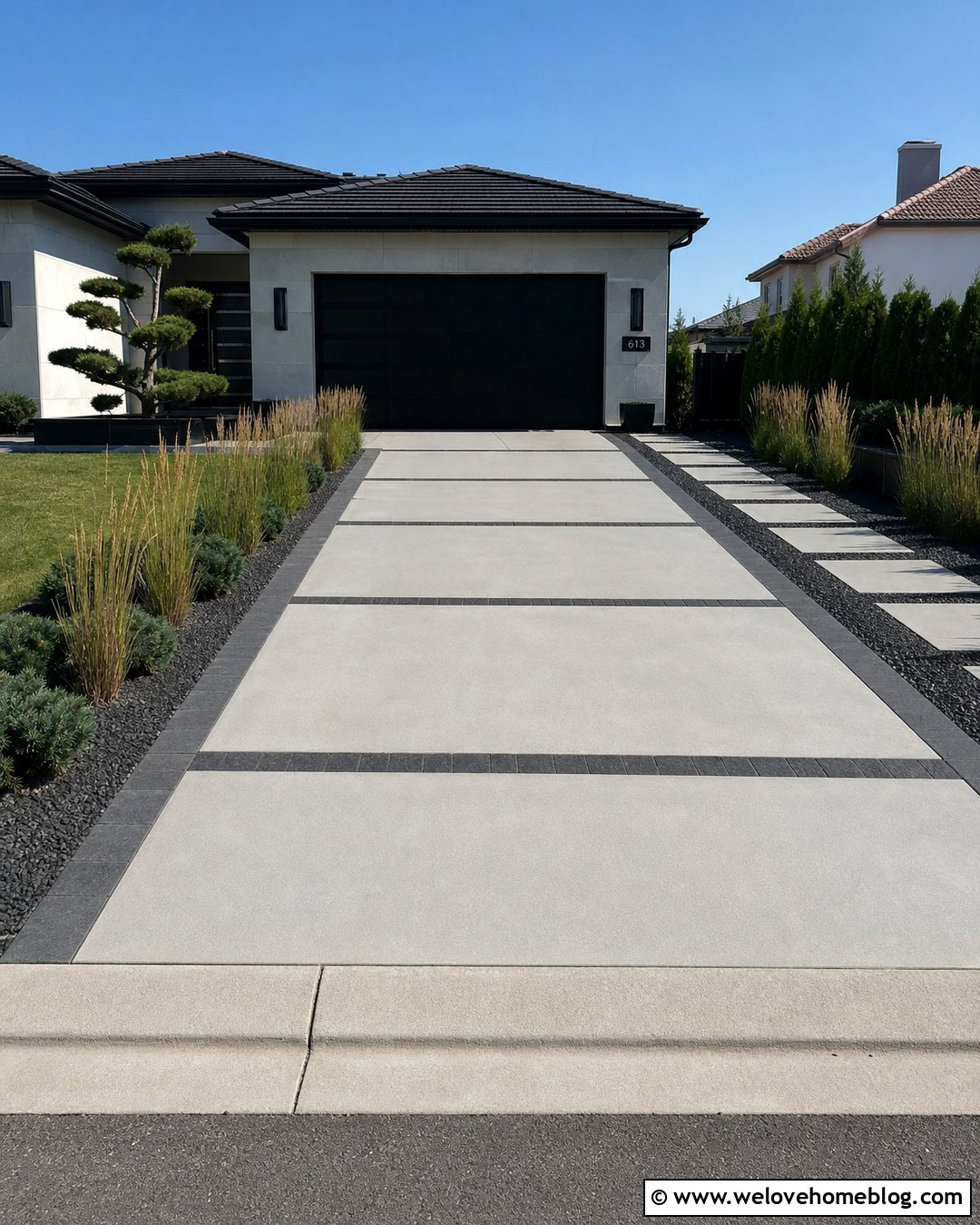
Wide concrete slabs framed by black granite create a crisp driveway for a modern home. Use smooth, pale gray poured concrete with narrow joints and straight rectangular sections. Install sawn black granite setts flush along both outer sides, then repeat them as cross-bands between selected slabs. Grass strips or dark gravel beds can separate the driveway from the walkway without interrupting the clean geometry. Keep the landscaping architectural, using upright grasses, low evergreen mounds, and one sculptural tree. The granite should connect visually with dark metal windows, exterior trim, or a minimalist gate. Because every line is highly visible, careful spacing is essential. This complete design feels bold and contemporary while still relying on the natural color variation of real stone.
14. Sloped Asphalt Driveway With Raised Granite Curbing
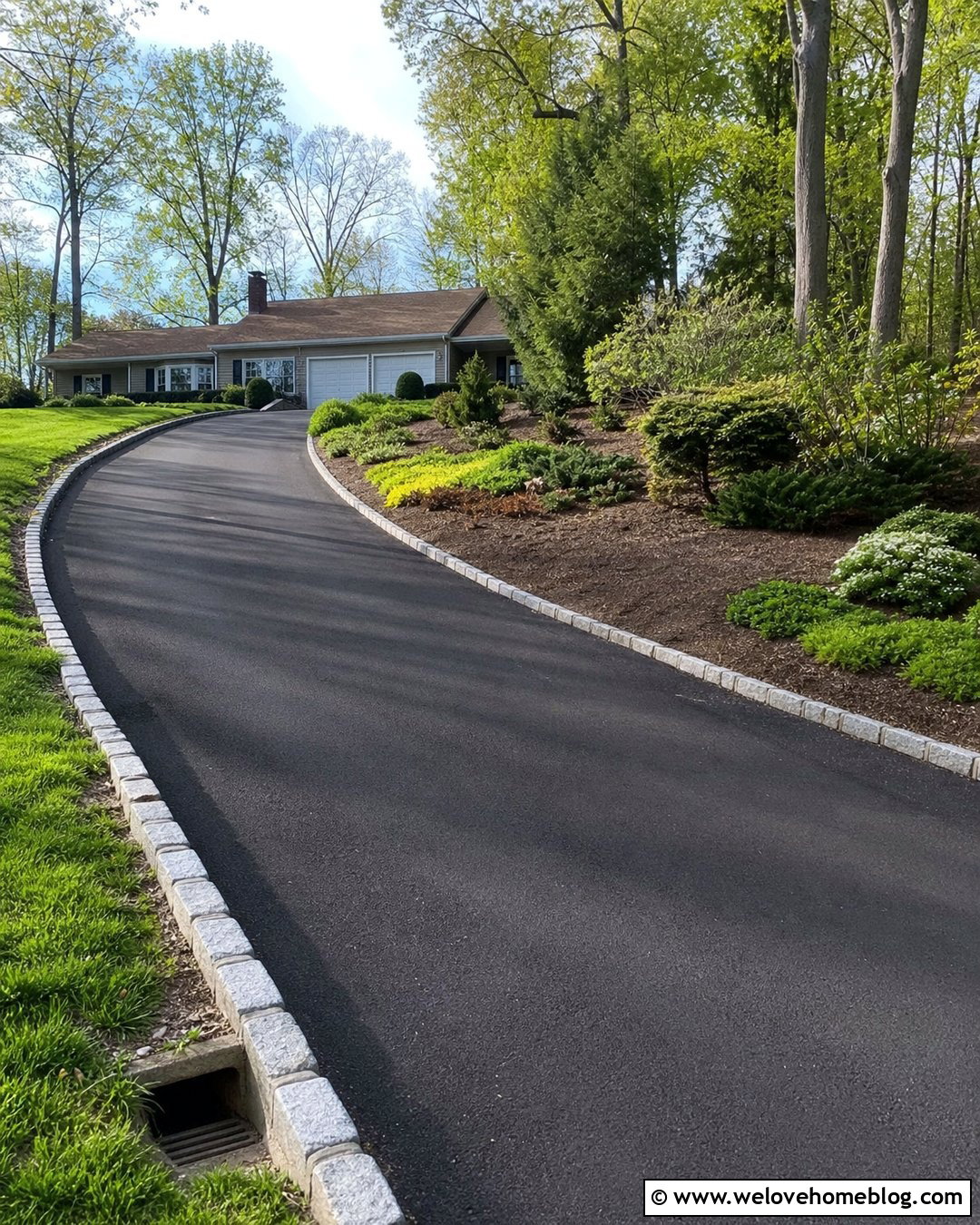
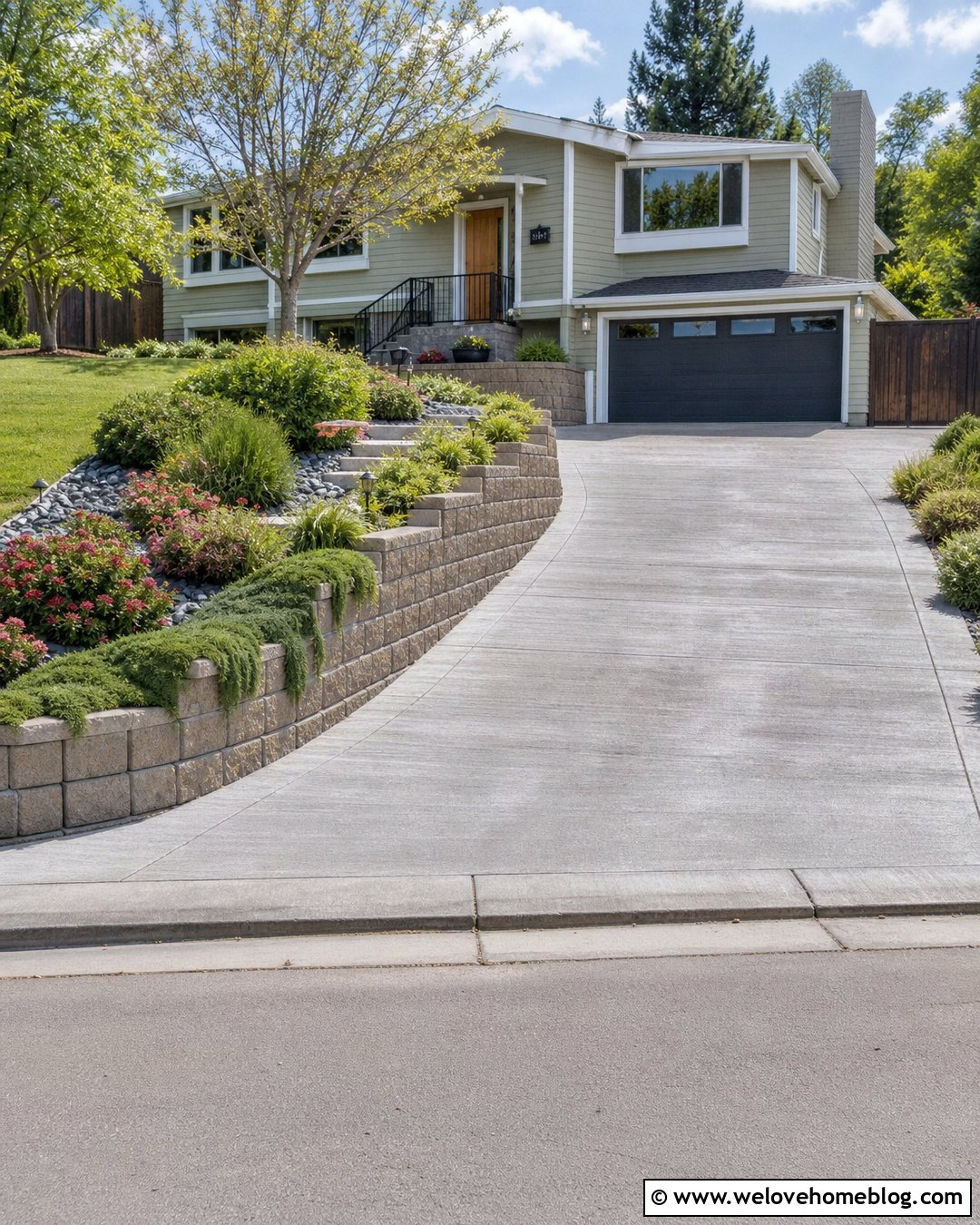
Water and soil movement can make the sides of a sloped asphalt driveway look untidy. A raised granite curb creates a more defined boundary, especially along the lower side where runoff and loose landscaping material tend to collect. Use substantial rectangular granite blocks beside black asphalt, keeping the curb continuous except at planned drainage outlets. A shallow planted swale beyond the lower edge can receive water while softening the stone line. On the upper side, use shorter granite setts beside a mulched bank planted with spreading shrubs and erosion-resistant ground covers. Near the garage and sidewalk, lower the border for easier crossing. A sloped installation requires careful grading so the edging does not trap water against the pavement. ()
15. Asphalt Driveway With Granite Entrance Apron
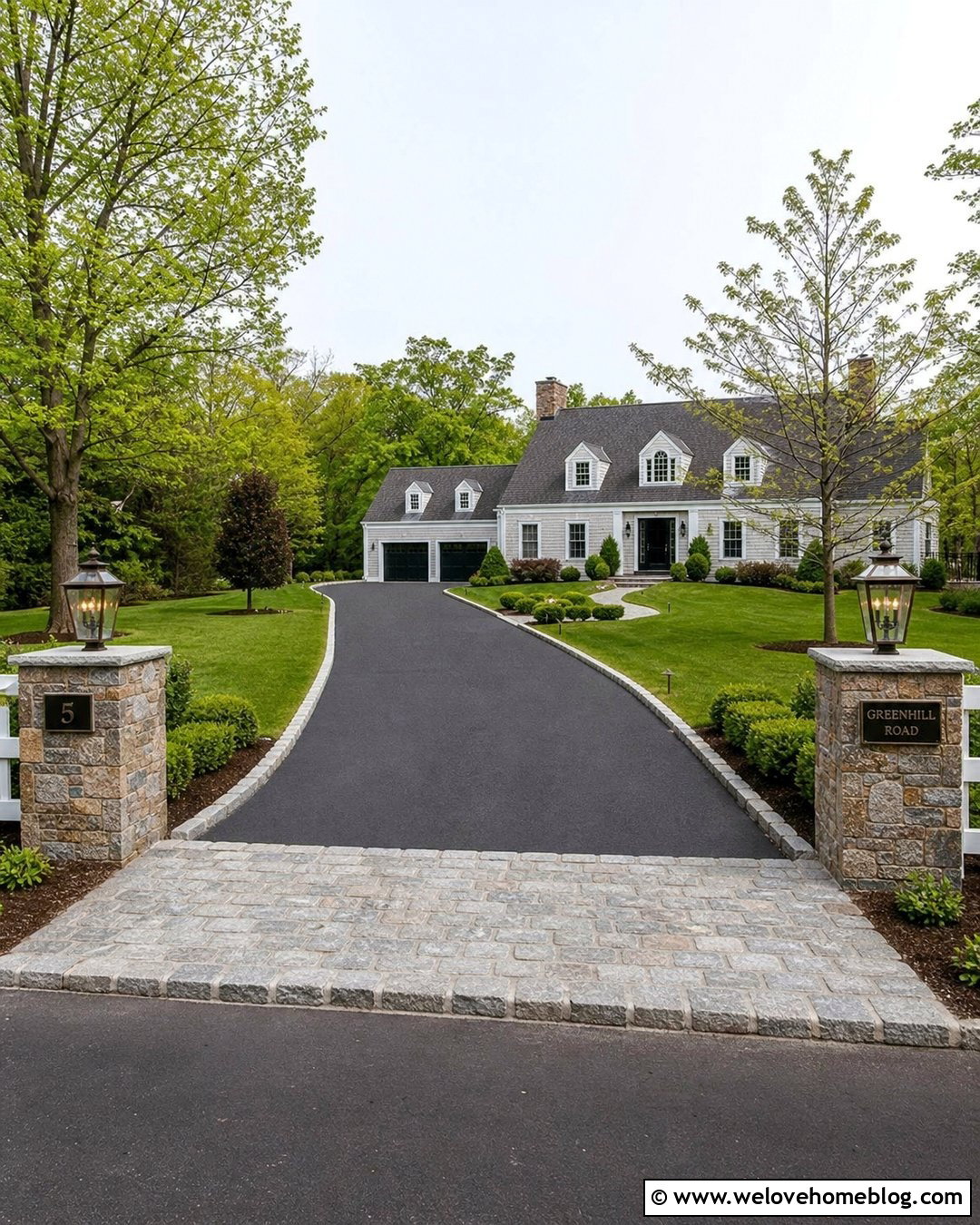
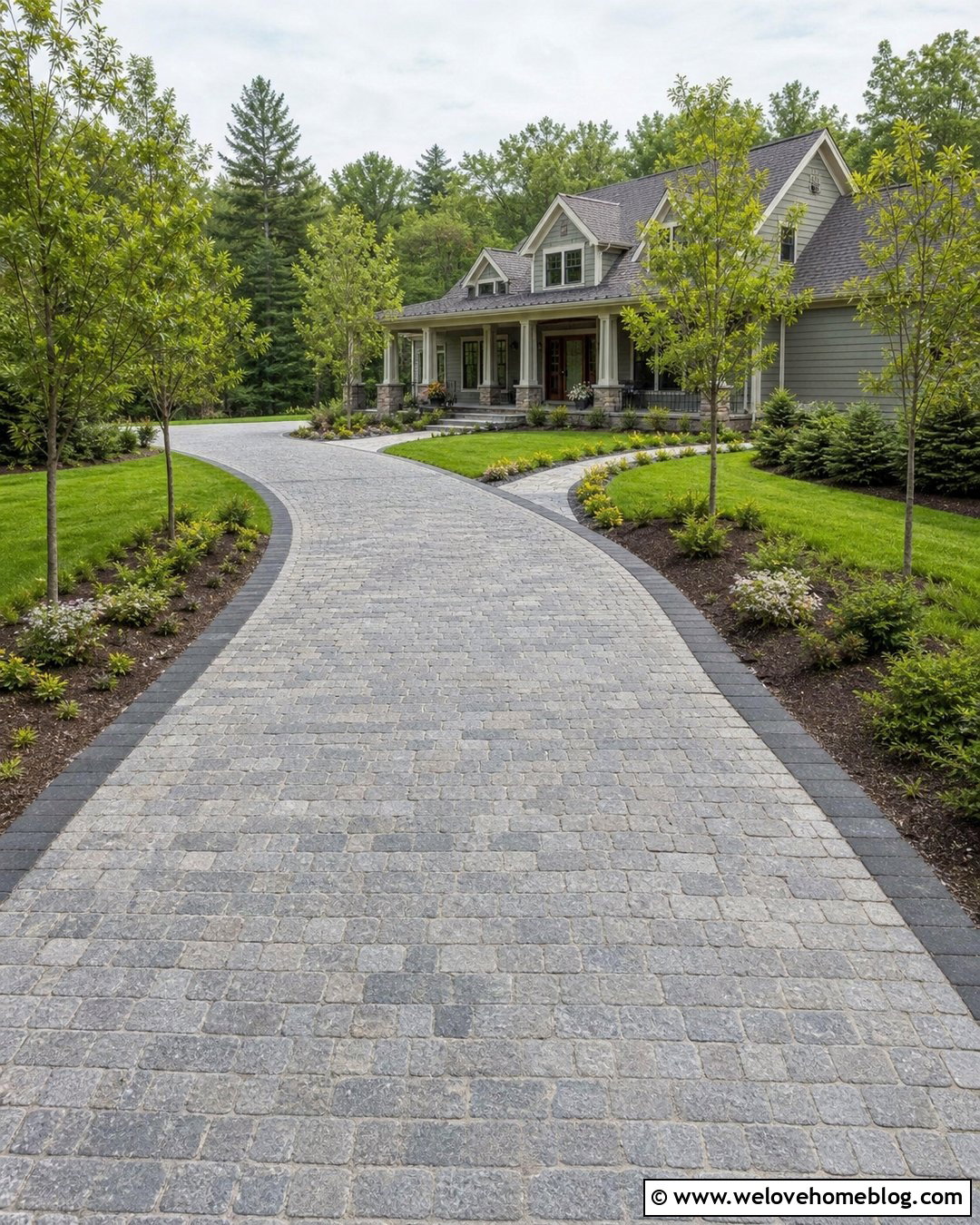
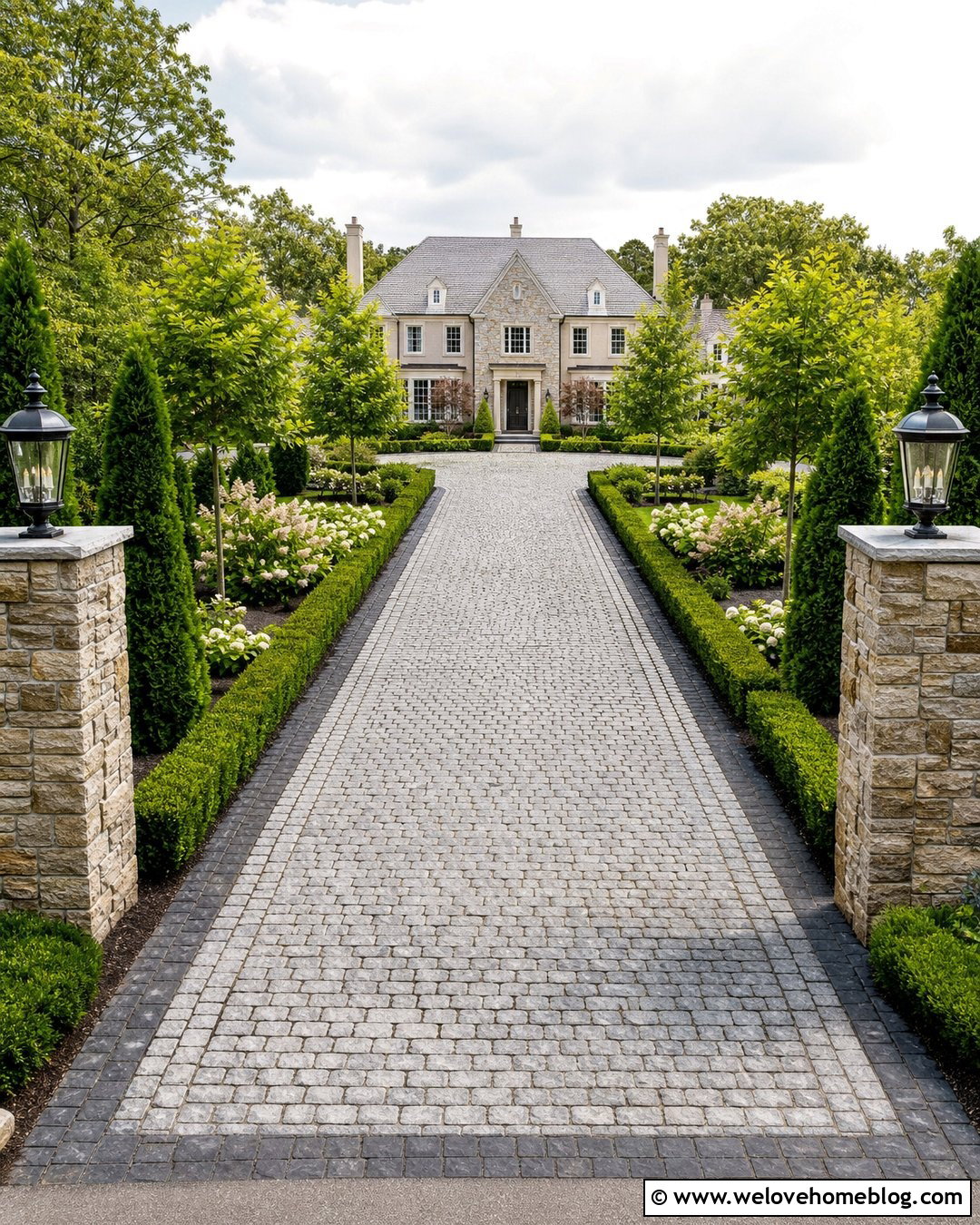
The entrance deserves special attention because it introduces the driveway from the street. Combine smooth asphalt with a full-width granite cobblestone apron placed between two matching side borders. The apron can be three to six rows deep, depending on the driveway scale and local requirements. Use gray and charcoal granite in a simple running bond so the transition remains attractive without becoming busy. Continue a single granite row from the apron to the garage for visual continuity. Stone pillars, low shrubs, and small ornamental trees can frame the entrance while leaving sightlines open. This arrangement is especially effective on long suburban and country driveways because it creates a strong arrival point. The granite also connects the private drive visually to traditional stone curbs and streetscapes.
16. Granite Driveway Edging With Flower Beds
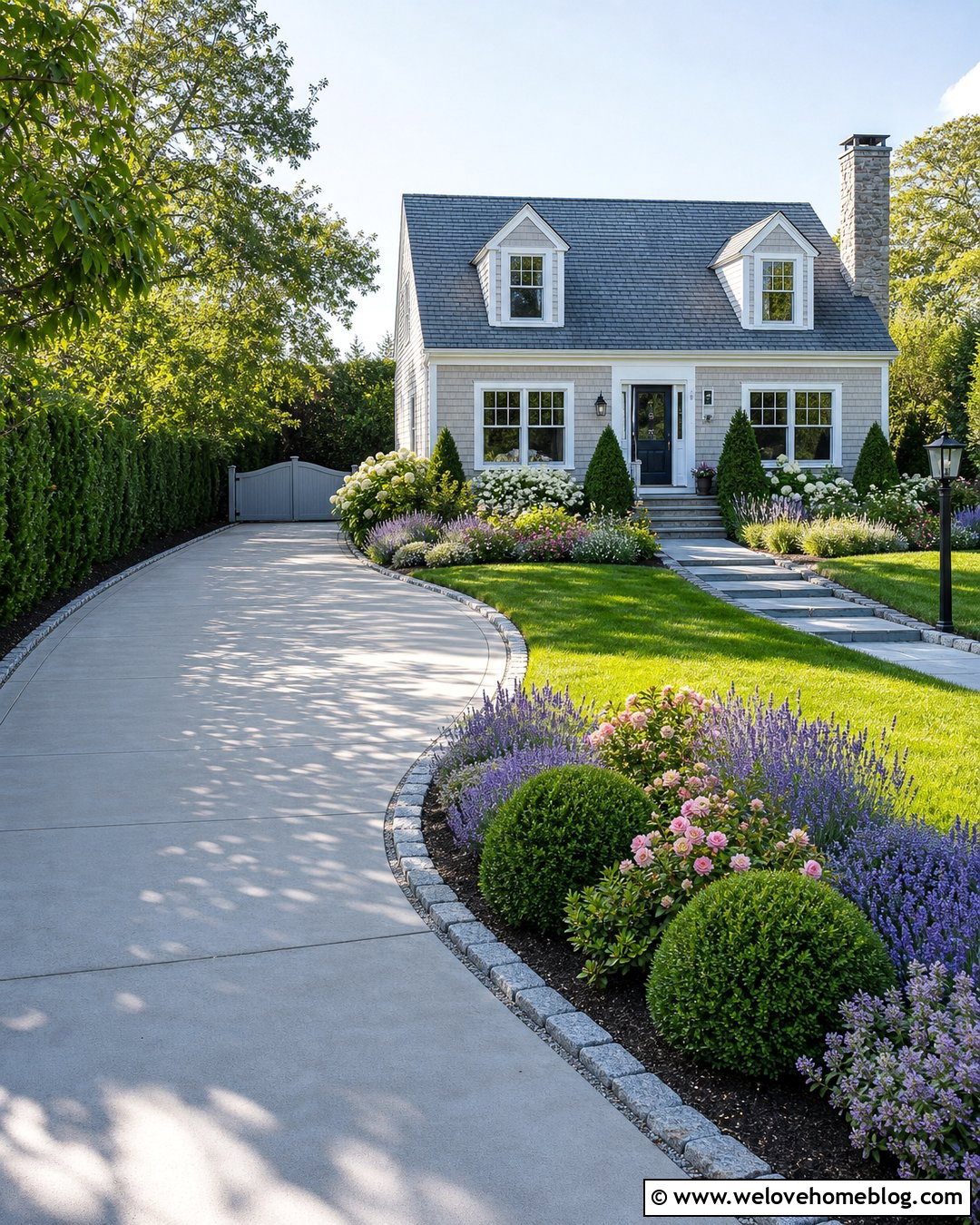
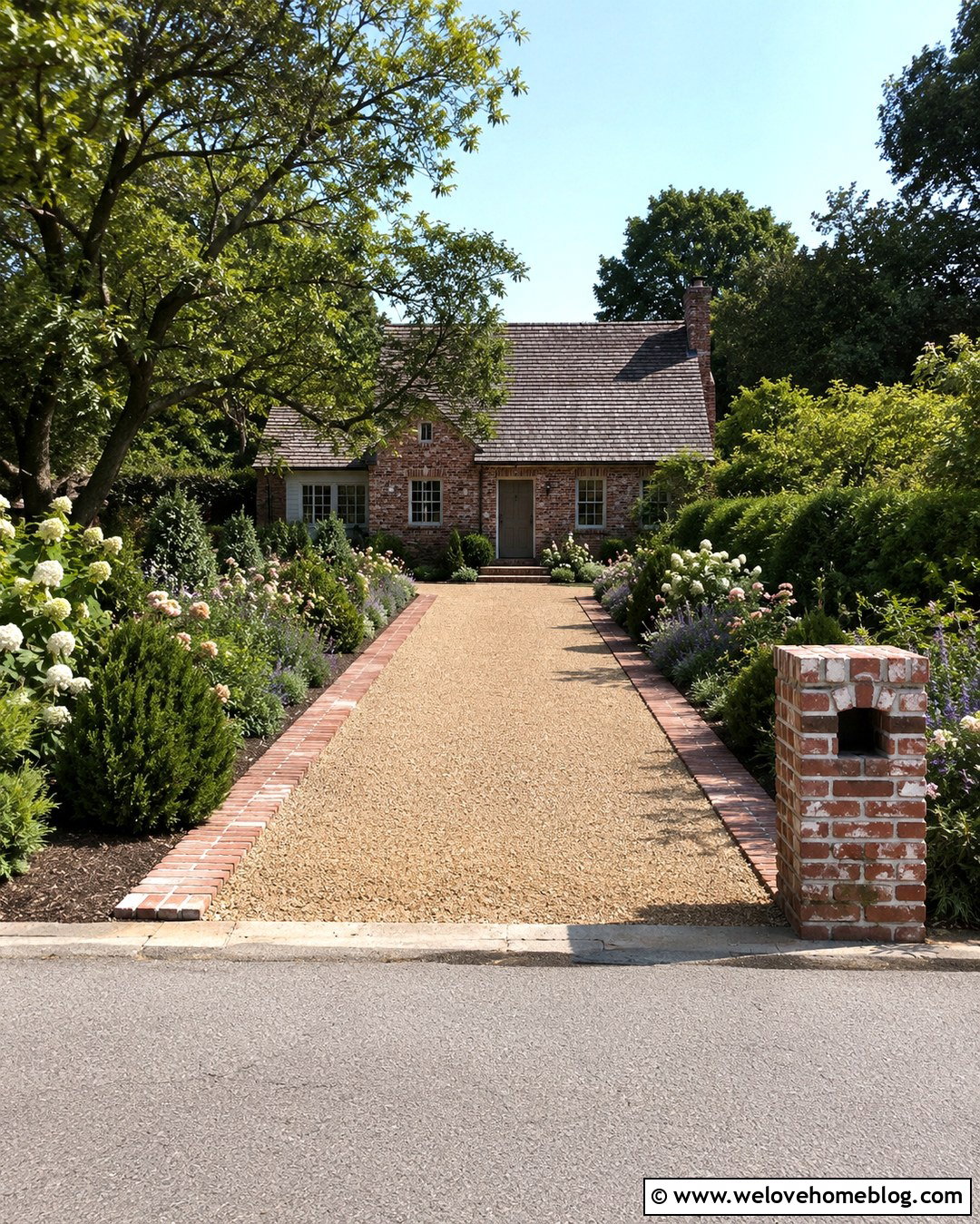
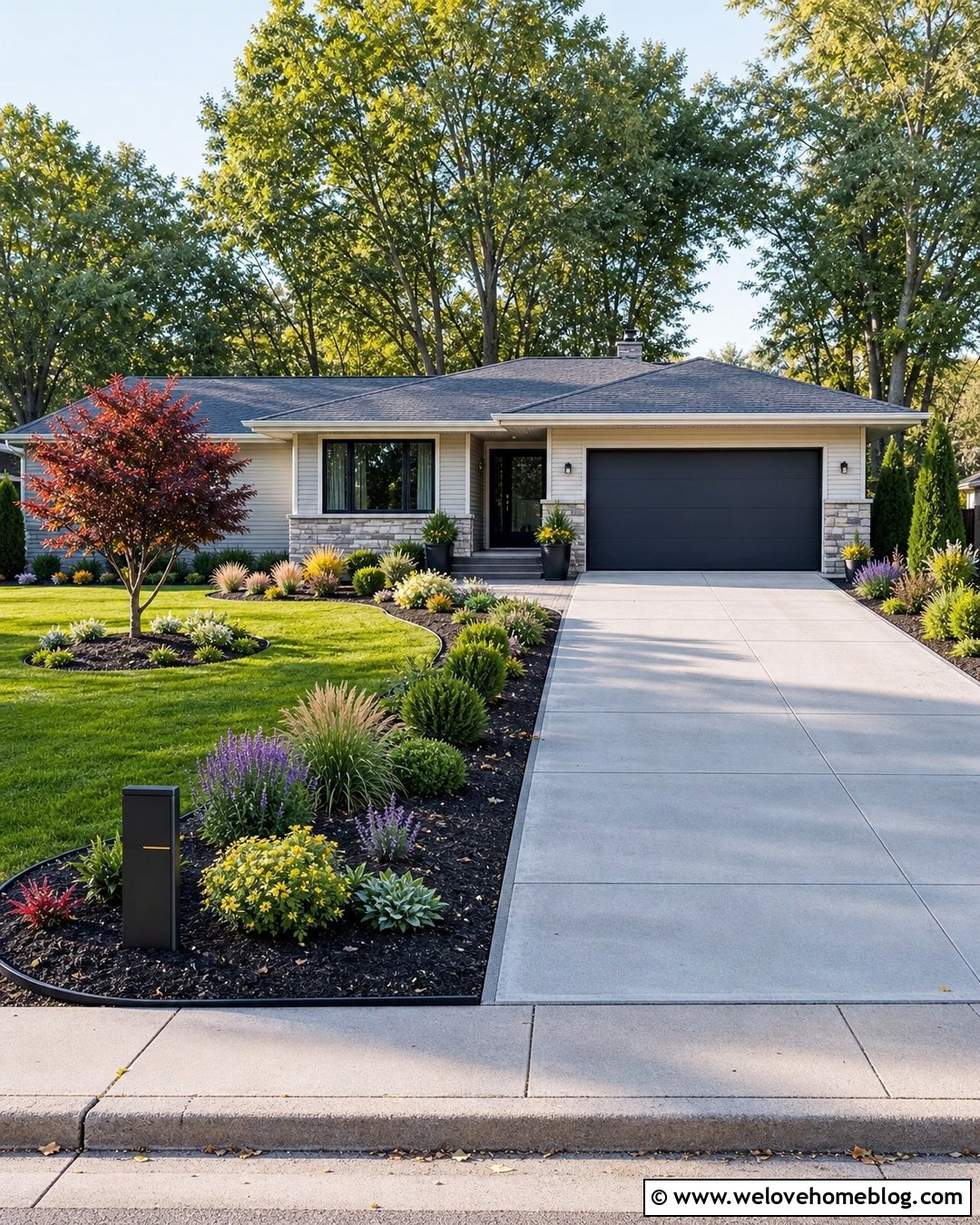
Granite edging can form a beautiful transition between a paved driveway and full planting beds. Start with a warm gray concrete or asphalt surface, then add one row of medium-gray granite cobbles along each side. Beyond the stone, create gently curved beds filled with lavender, catmint, compact roses, and rounded evergreen shrubs. The planting should overlap visually without growing across the driving area. A narrow mulch strip immediately behind the granite makes maintenance easier and keeps flowers from hiding the border. Repeat the same granite around the walkway for a consistent front-yard design. This complete look suits cottages, Cape Cod houses, and traditional suburban homes. It balances the hard driveway surface with color, movement, and seasonal interest while preserving a clean edge.
17. Double-Row Granite Driveway Edging
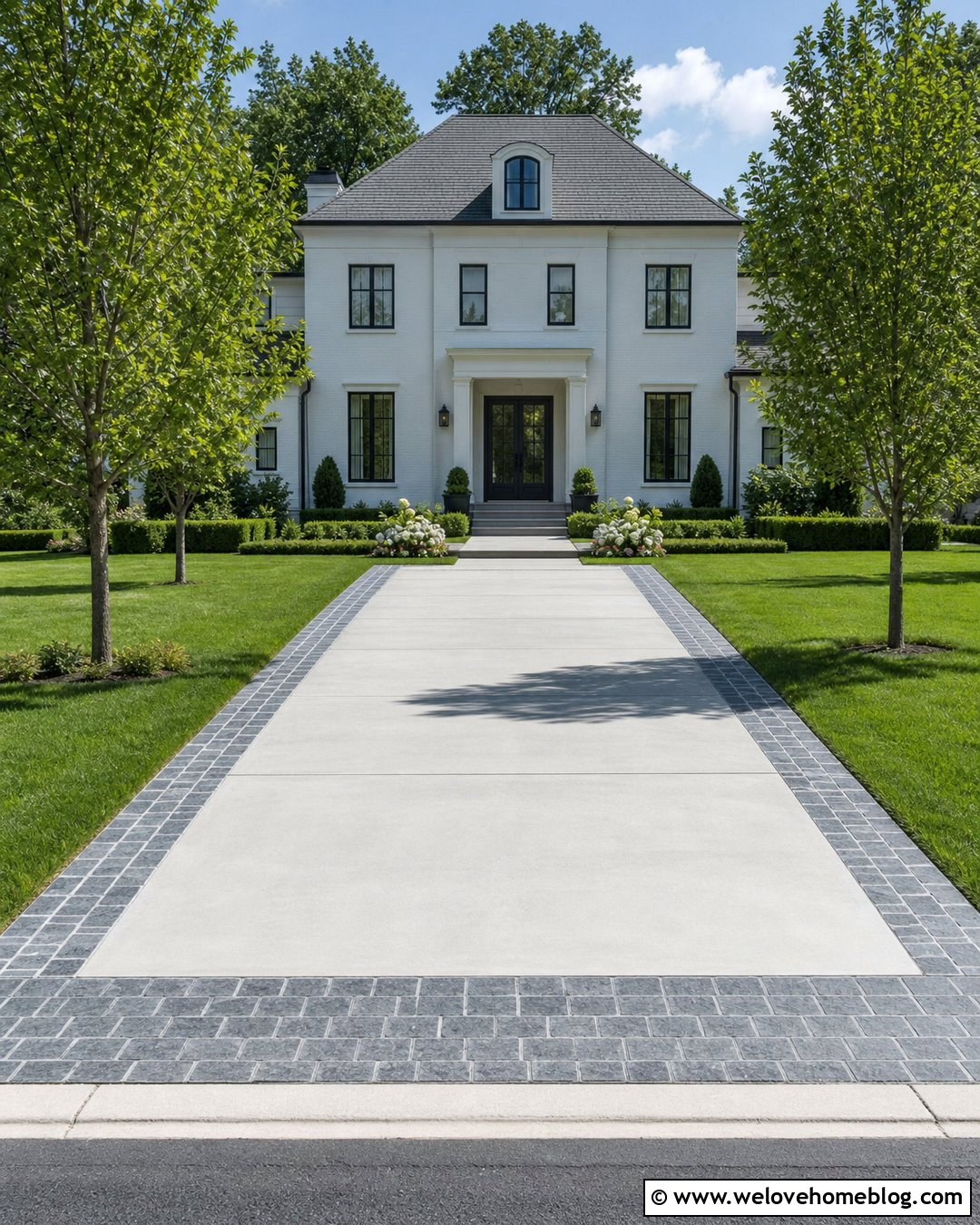
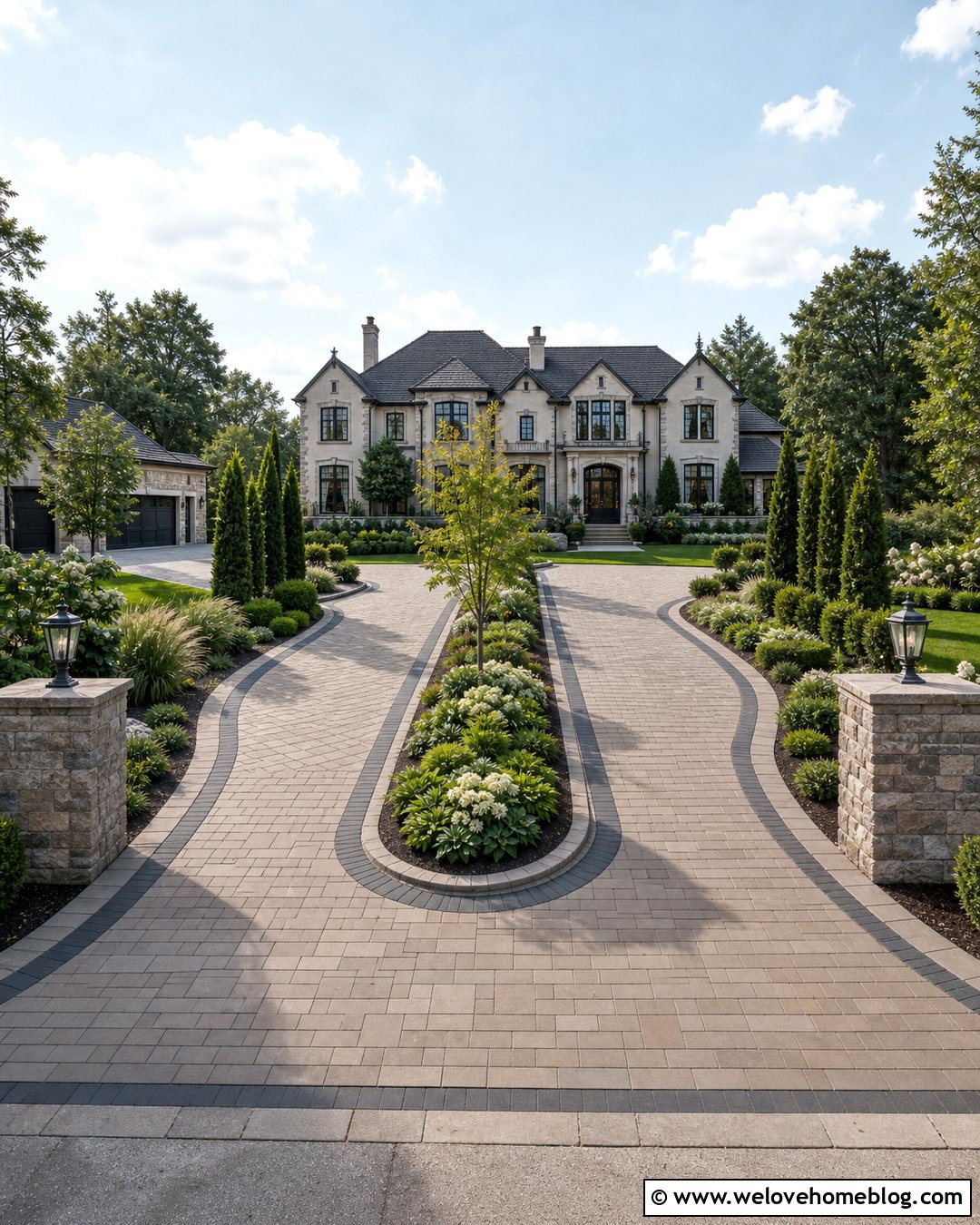
A double row of granite creates more visual weight than a standard single border. It is a strong choice for wide driveways, large homes, and parking courts where a narrow edge might disappear. Pair gray poured concrete with two rows of contrasting charcoal granite setts in a running bond. Keep both rows flush for a smooth transition, or raise the outside row slightly where it meets a planting bed. At the street, expand the border into a full granite apron so the entrance and side edging read as one design. Structured hedges, symmetrical trees, and broad lawn panels reinforce the formal layout. Use this treatment with restraint around smaller properties, since the wider band reduces usable pavement and can make a narrow driveway feel even tighter.
18. Curved Concrete Driveway With Granite Ribbon Edging
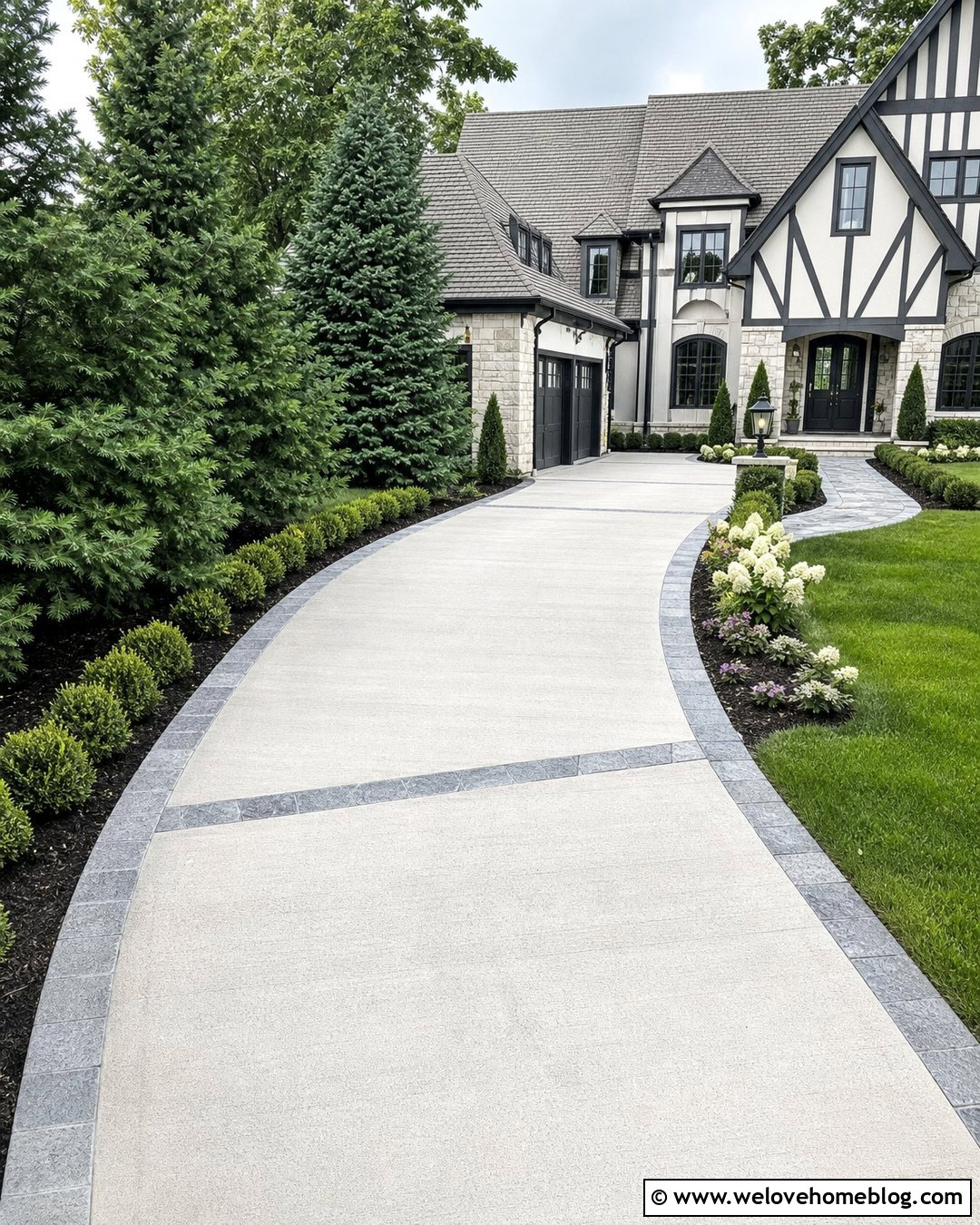
A sweeping concrete driveway can be outlined with a granite ribbon that emphasizes its shape. Use light broom-finished concrete and a single row of dark gray setts installed flush along the curves. Add a second granite ribbon across the driveway where the parking area begins, creating a subtle visual cue without using paint or signs. The surrounding landscape might include layered evergreens on the outside curve and low flowering plants along the inside. This arrangement frames the approach while keeping views toward the house open. A Craftsman, Tudor, or traditional stone-front home will complement the natural granite texture. Match the border curves carefully to the driveway geometry, since uneven spacing becomes noticeable along a smooth concrete edge. The completed look feels graceful, clear, and cohesive.
19. Gated Driveway With Matching Granite Edging
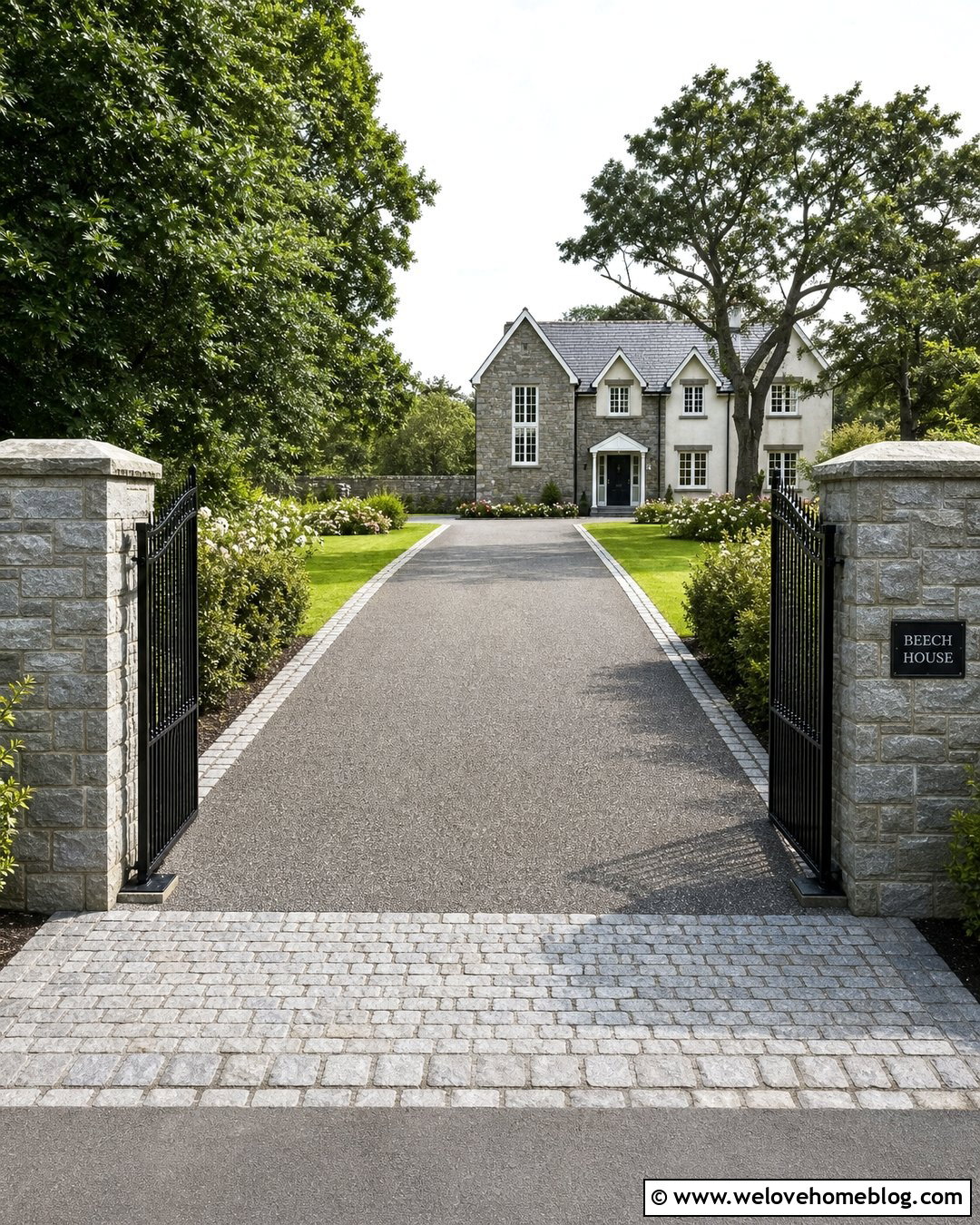
A driveway gate looks more connected to the property when its base materials continue along the driveway. Use gray granite edging beside a dark asphalt or resin-bound surface, then construct the gate pillars with matching granite veneer or substantial stone caps. At the entrance, widen the border around the pillar bases and form a granite apron beneath the gate. This grounds the structure and creates a strong transition from the street. Beyond the entrance, return to a single row of edging so the design does not feel too heavy. Low hedges, flowering shrubs, and neatly maintained lawn can frame the approach. Choose simple metal gatework that allows the house to remain visible. The granite, pillars, landscaping, and driveway then function as one unified entrance composition.
20. Small Driveway With Narrow Granite Edging
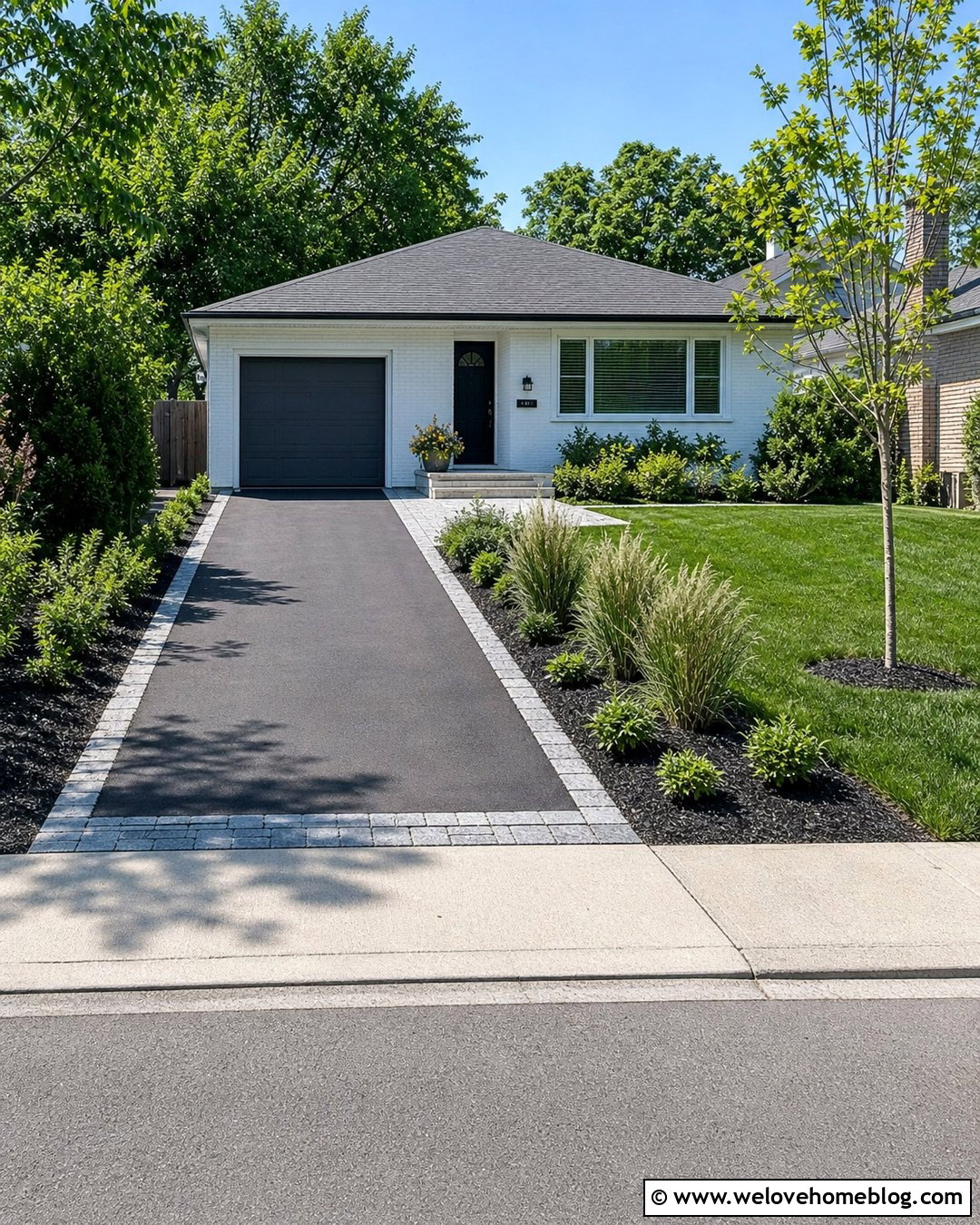
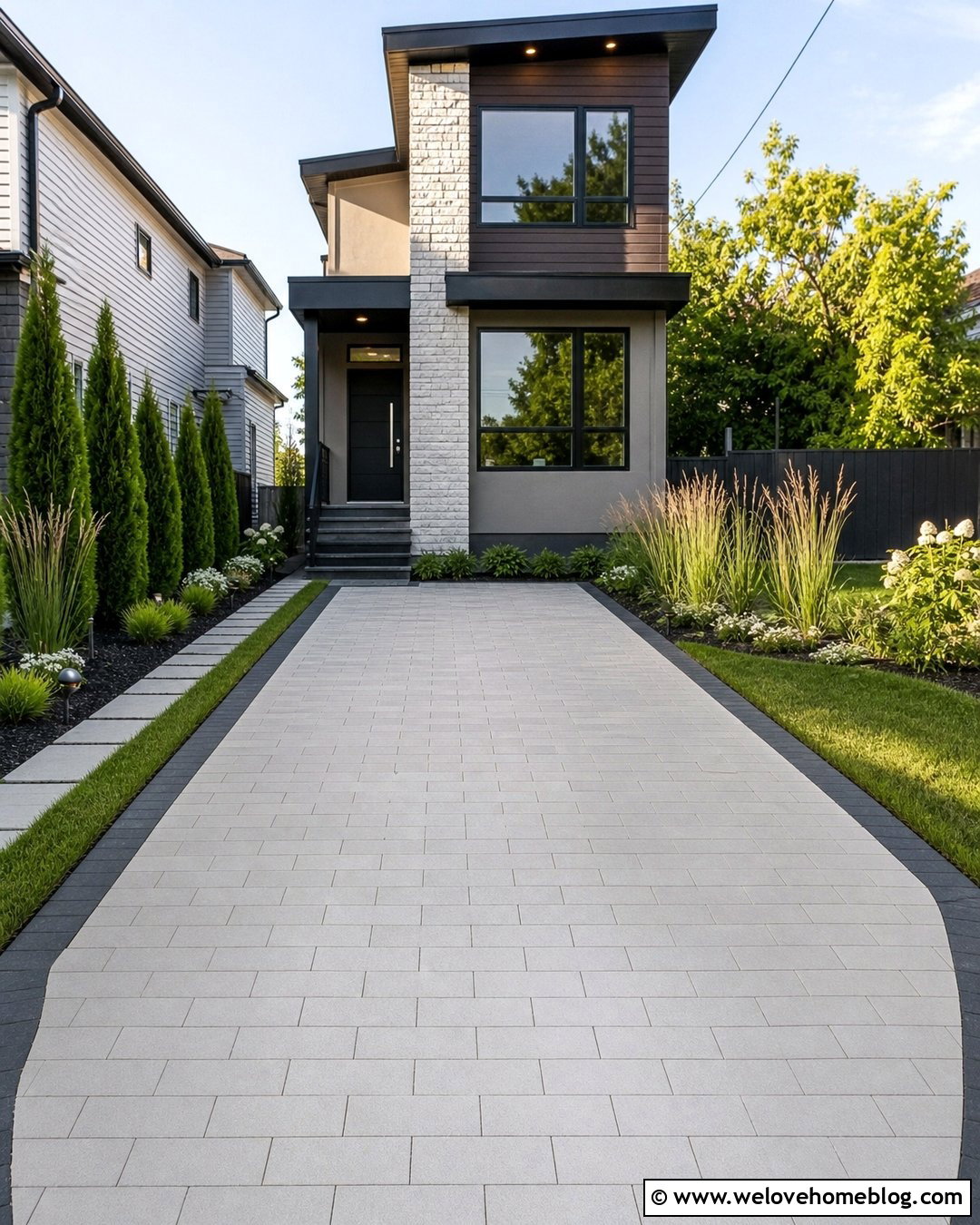
Even a compact driveway can benefit from granite if the border remains proportional. Pair a single-car concrete or asphalt surface with one narrow row of small granite setts installed flush along the sides. Choose consistent rectangular stones rather than bulky cobbles, which may reduce the usable width. A straight layout will make the space feel orderly, while a matching granite band across the street entrance provides a clear finishing detail. Keep nearby landscaping shallow and vertical. Compact shrubs, upright grasses, and a slender ornamental tree add greenery without crowding the parking area. A narrow walkway can share one granite edge with the driveway to save space and materials. This thoughtful arrangement gives a small urban or suburban frontage a finished look without making it feel overdesigned.
Conclusion:
The best granite edging does more than place a decorative row of stones beside the pavement. It connects the driveway surface, entrance, walkway, planting beds, drainage, and home exterior into one complete design. Granite cobbles can bring traditional character to asphalt and gravel, while sawn setts create cleaner lines beside concrete, pavers, and resin-bound surfaces. Consider driveway width, vehicle movement, grading, and maintenance before choosing a raised or flush border. Colors should also relate to the house and surrounding landscape. Whether you prefer a narrow modern outline or a substantial country curb, these 20 Granite Driveway Edging Ideas offer practical ways to create a stronger, more polished approach to your home.

Related posts:
Leave a Reply