
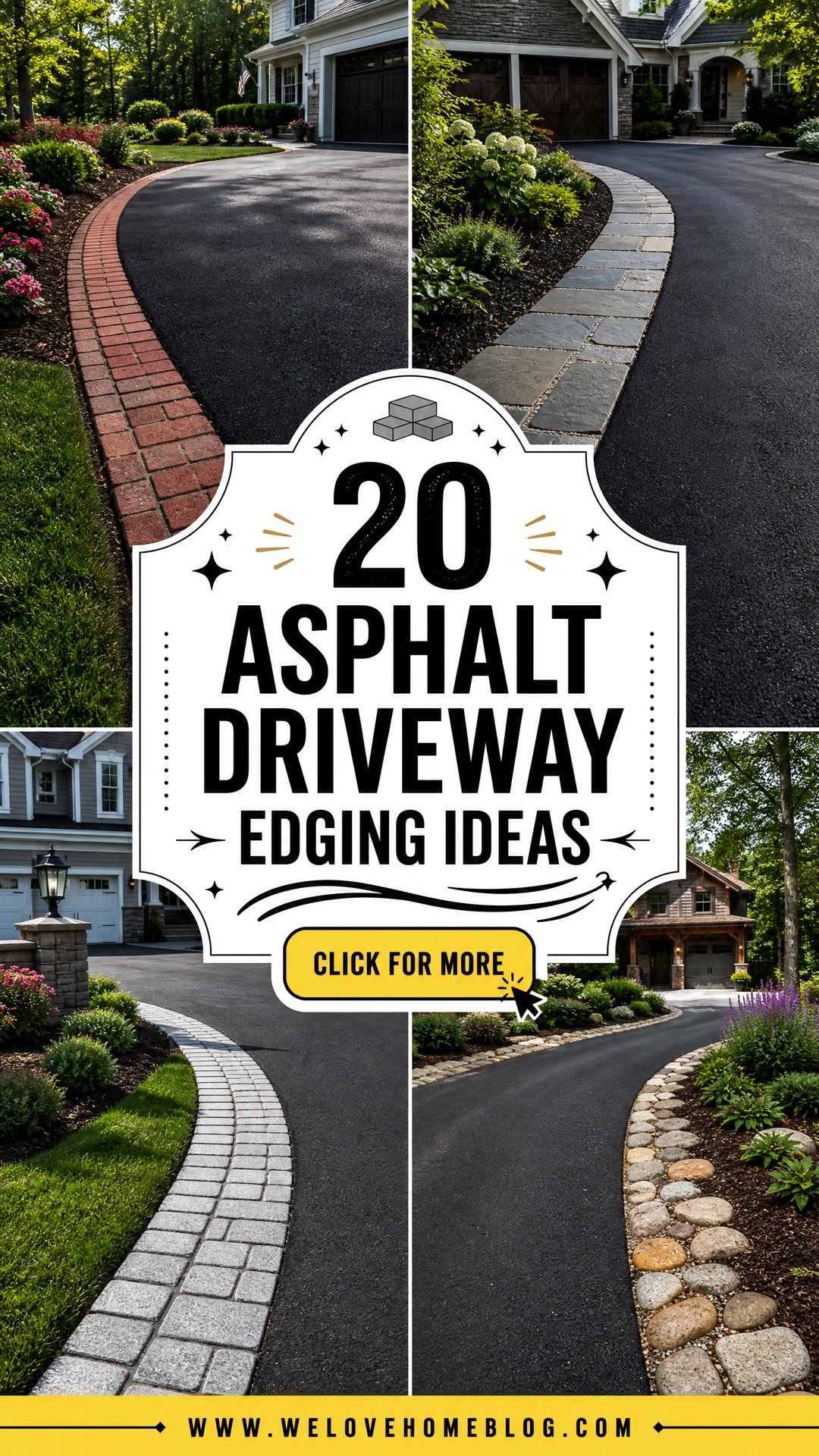
A clean border can make a basic blacktop surface feel intentional, polished, and connected to the home. These asphalt driveway edging ideas combine practical edge support with attractive materials, thoughtful landscaping, and layouts suited to different house styles. You can use granite blocks for a traditional entrance, slim steel for a modern property, or brick pavers for warm contrast. Some borders sit flush for easy snow removal, while raised curbs help separate pavement from lawns, slopes, and planting beds. The best choice should complement your home, manage runoff, and protect vulnerable asphalt edges without narrowing the driving area. Use the complete driveway looks below to compare colors, materials, maintenance needs, and curb appeal before choosing from these **20 asphalt driveway edging ideas**.
1. Belgian Block Asphalt Driveway Edging
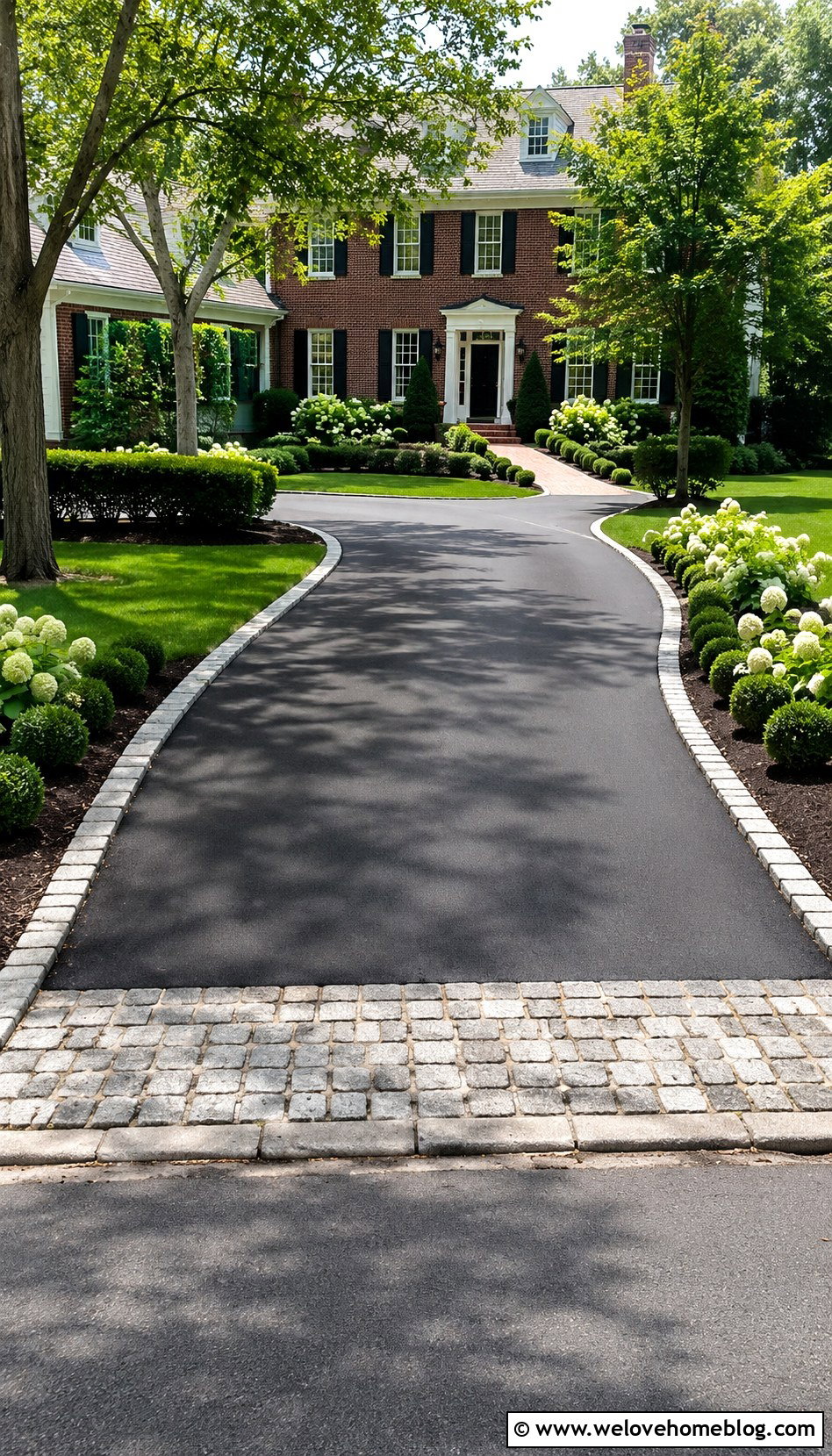
Belgian block creates a substantial border that looks especially attractive beside smooth black asphalt. Run one row of gray granite blocks along both sides of a straight or gently curved driveway. Set the stones close to the pavement so tires cannot repeatedly press against an unsupported asphalt edge. A flush installation provides a refined transition into the lawn and makes sweeping or snow removal easier. Raised blocks offer stronger visual separation around planting beds. Complete the look with clipped boxwoods, ornamental grasses, and a matching Belgian block apron near the street. This combination suits Colonial, Tudor, and traditional brick homes. Repeat the same granite around the front walkway to make the driveway, entrance, and surrounding landscape feel like one coordinated design.
2. Red Brick Asphalt Driveway Edging
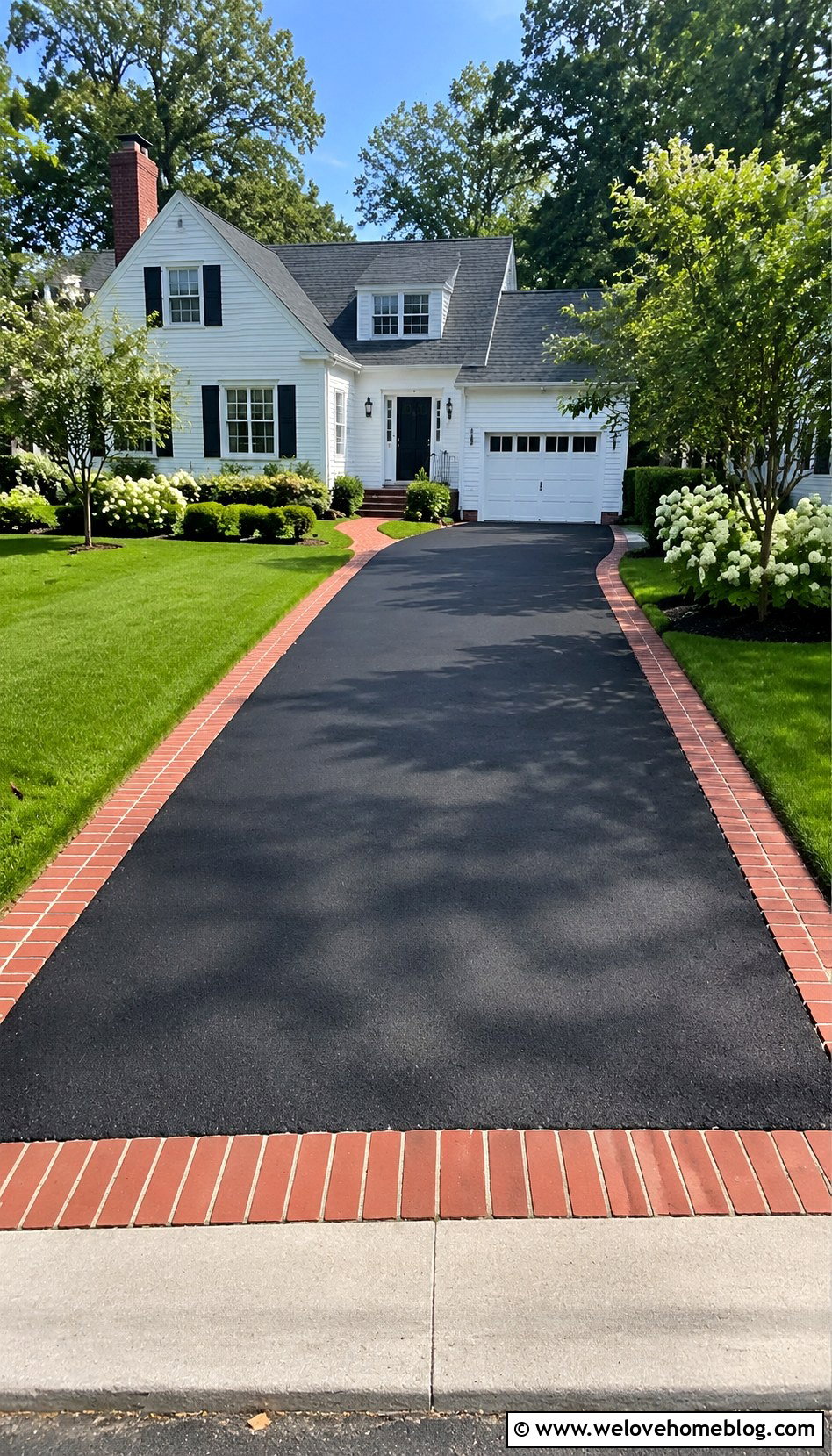
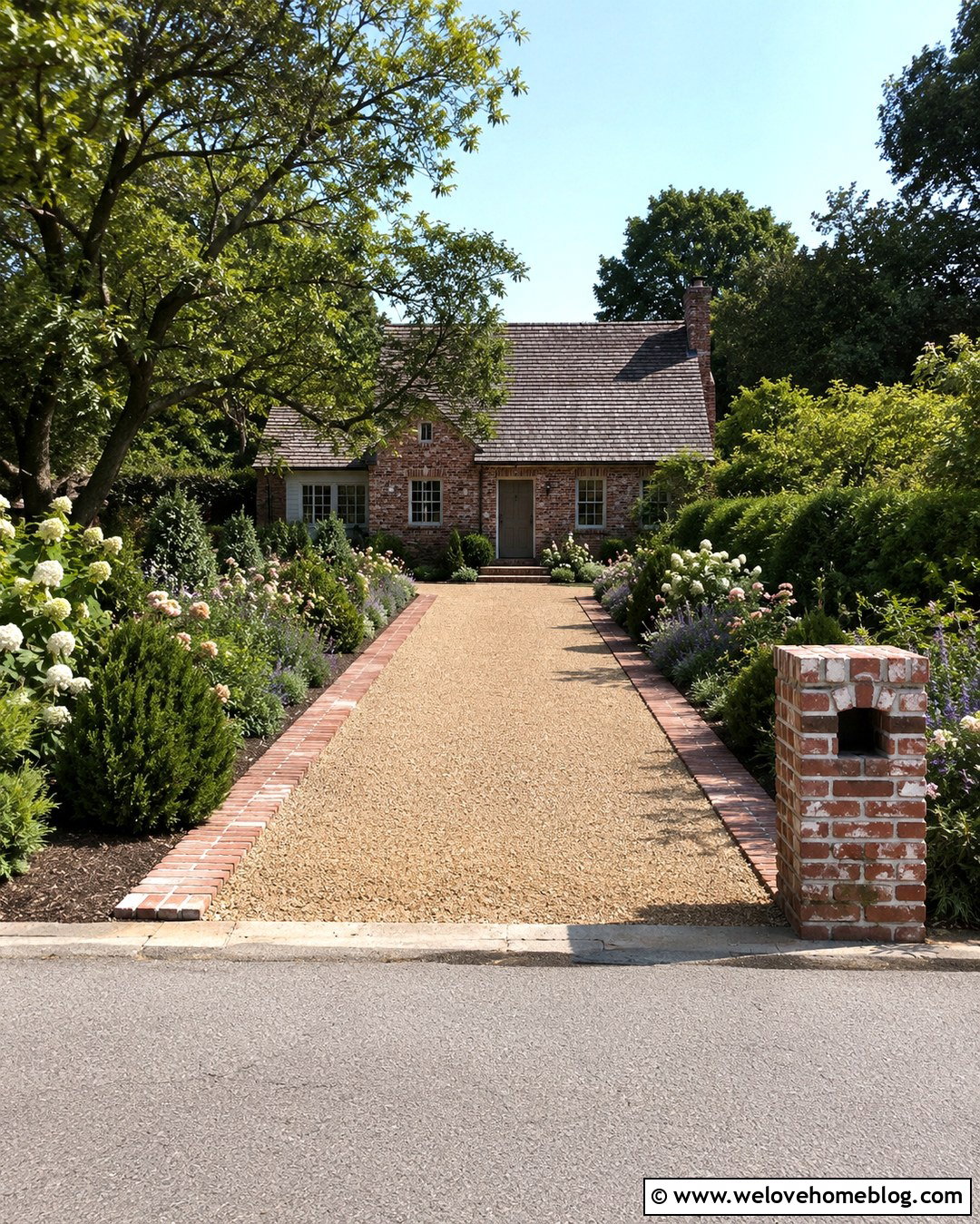
Warm red brick softens the dark appearance of asphalt and connects naturally with red brick houses. For a classic look, place the bricks perpendicular to the pavement in a single soldier-course border. A second row can be added along wider driveways where a stronger visual frame is needed. Keep the brick edging flush with the asphalt to create a smooth surface near garage doors and pedestrian walkways. Continue the same brick across the driveway entrance as a decorative apron or narrow band. Green lawn, white flowering shrubs, and simple foundation beds prevent the red-and-black combination from feeling too heavy. Properly supported brick edging works particularly well on straight suburban driveways serving Colonial, Cape Cod, and traditional ranch homes.
3. Charcoal Paver Asphalt Driveway Edging
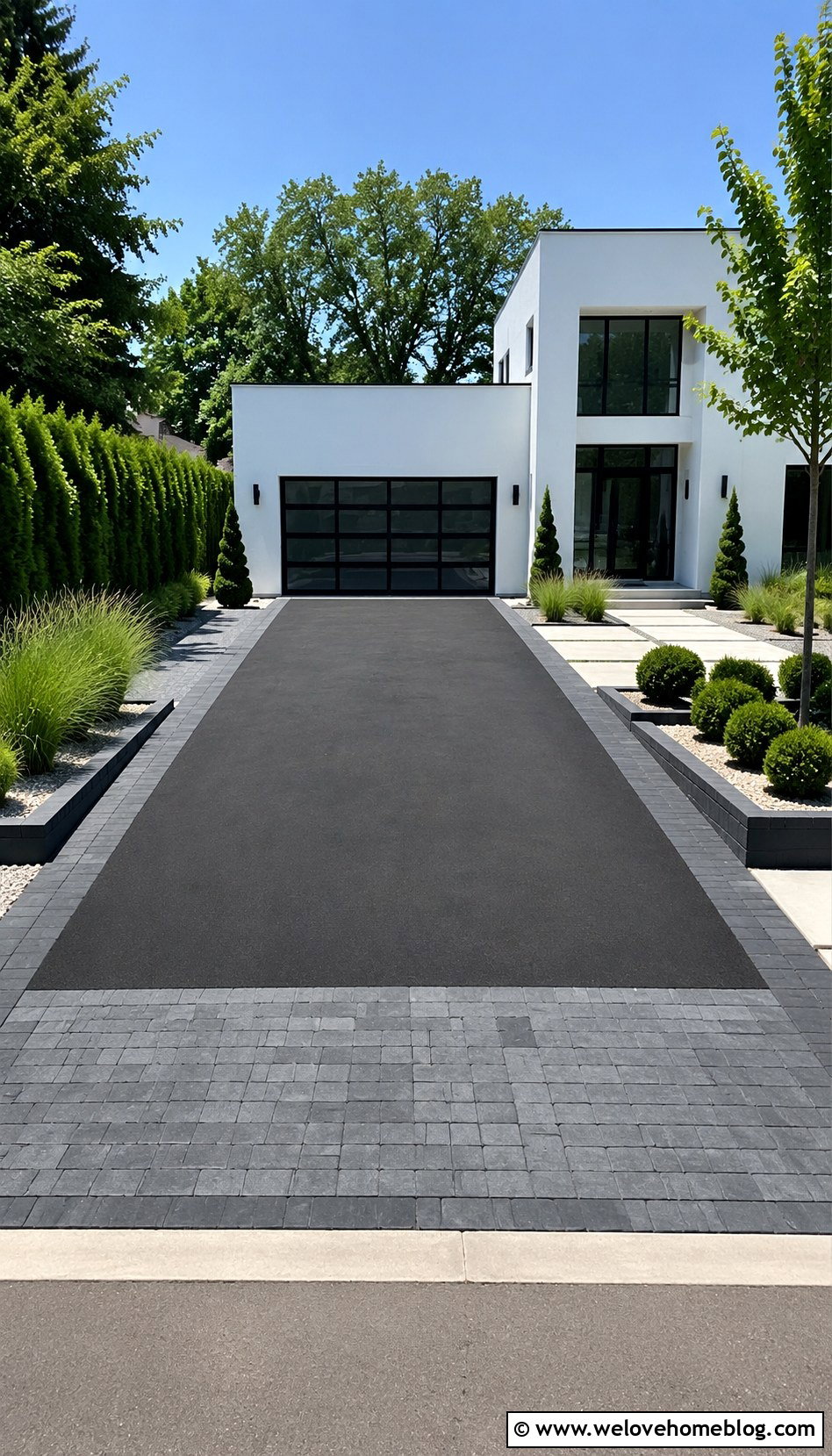
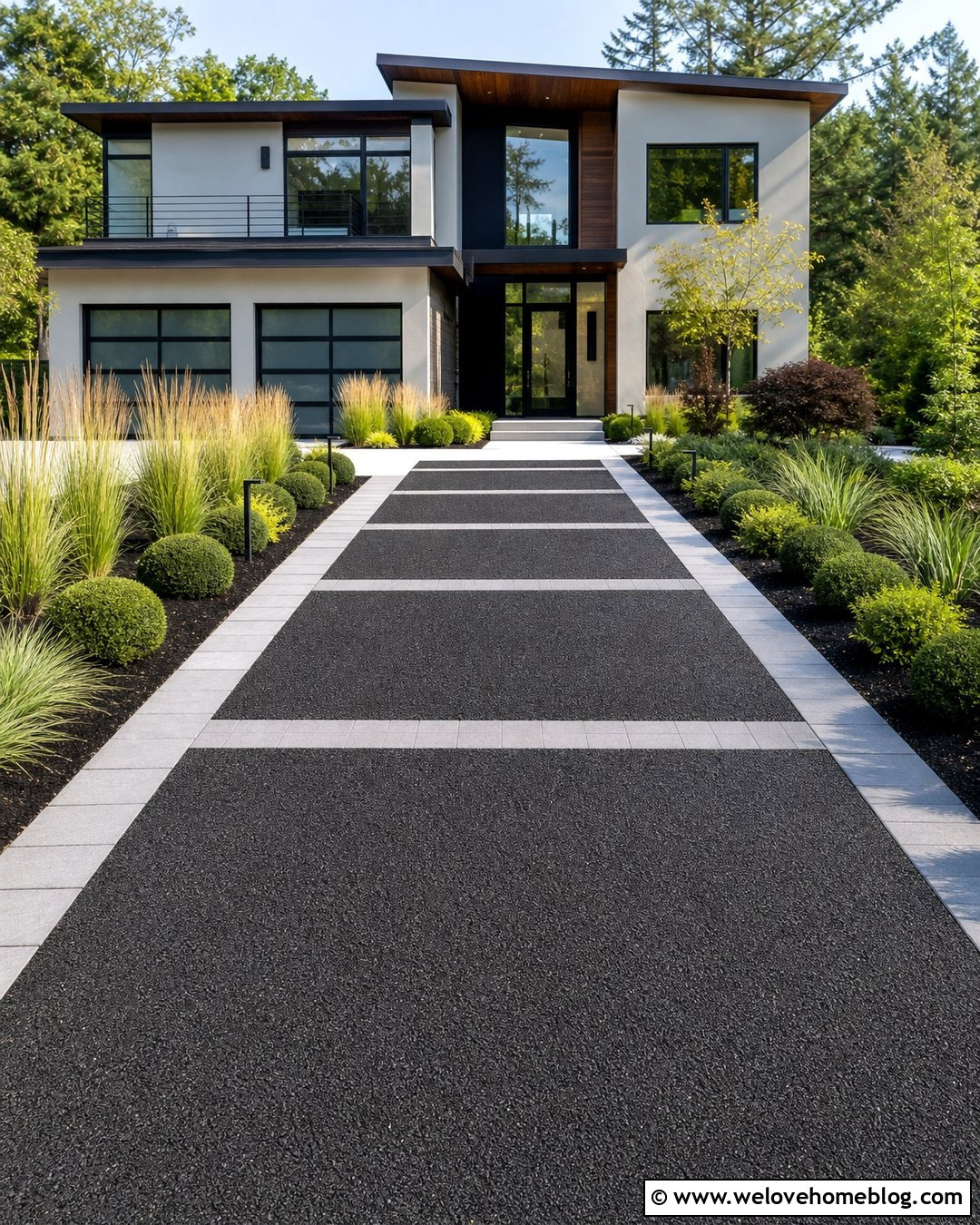
Would you prefer an edging material that blends with asphalt rather than sharply contrasting with it? Charcoal concrete pavers produce a subtle, contemporary border while still defining the driveway. Choose rectangular pavers with a lightly textured finish and install them in a single flush row. Their dark gray color disguises dirt and creates a smooth transition between fresh black asphalt and surrounding landscape beds. Pair the border with a wide, straight driveway, square planting beds, and a concrete walkway leading to the front entrance. Repeating the pavers in a matching street apron helps the complete layout appear more substantial. This restrained combination complements modern homes with white stucco, pale siding, black windows, and simple landscaping built around grasses, evergreens, and stone mulch.
4. Cobblestone Asphalt Driveway Edging
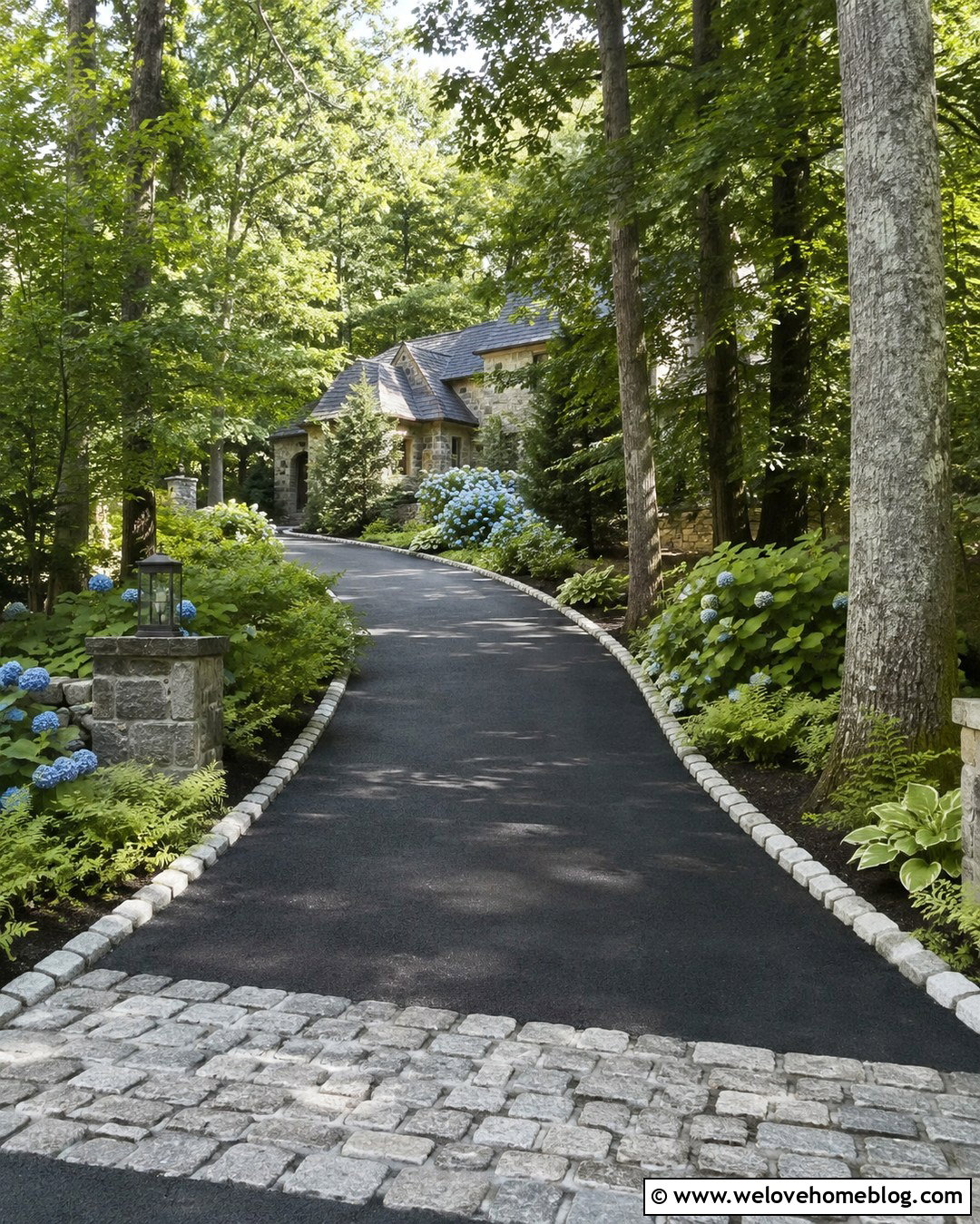
The uneven texture of cobblestone gives a black asphalt driveway an established, handcrafted character. Use rounded or roughly squared granite cobbles to follow the edges of a long curved driveway. Installing the stones slightly above the pavement creates a noticeable boundary and helps keep soil or mulch out of the driving surface. Because the stones have natural variations, they look best with relaxed landscaping rather than sharply geometric beds. Frame the driveway with lawn, mature shade trees, ferns, hydrangeas, and loosely shaped evergreen shrubs. A cobblestone entrance apron can strengthen the connection between both sides of the border. This complete look is well suited to cottages, stone houses, wooded properties, and country homes where perfectly uniform concrete edging might appear overly formal.
5. Poured Concrete Asphalt Driveway Edging
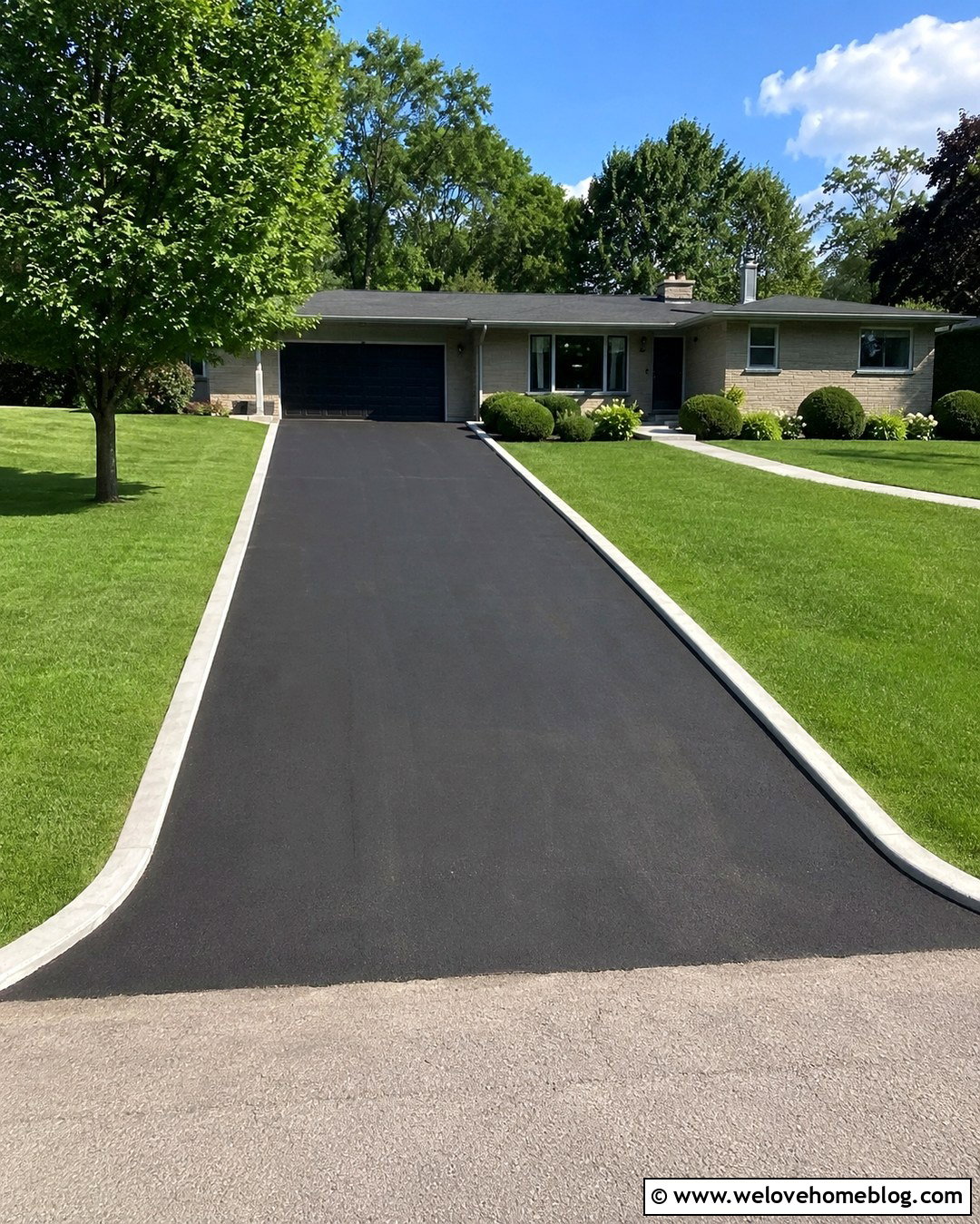
Poured concrete curbing provides a smooth, continuous frame around an asphalt driveway. It is particularly useful for a clean suburban layout where irregular joints or individual edging stones would create too much visual activity. Choose a light gray broom finish to contrast with the black pavement, or use a medium gray tone for a quieter effect. The curb can sit nearly flush beside a level lawn or rise several inches along planted areas. On a sloped driveway, carefully planned concrete edging can also direct surface water toward an appropriate drainage area. Pair it with a straight driveway, broad grass panels, low foundation shrubs, and a matching concrete walkway. The result feels simple, durable, and appropriate for ranch, split-level, and contemporary homes.
6. Stamped Concrete Asphalt Driveway Edging
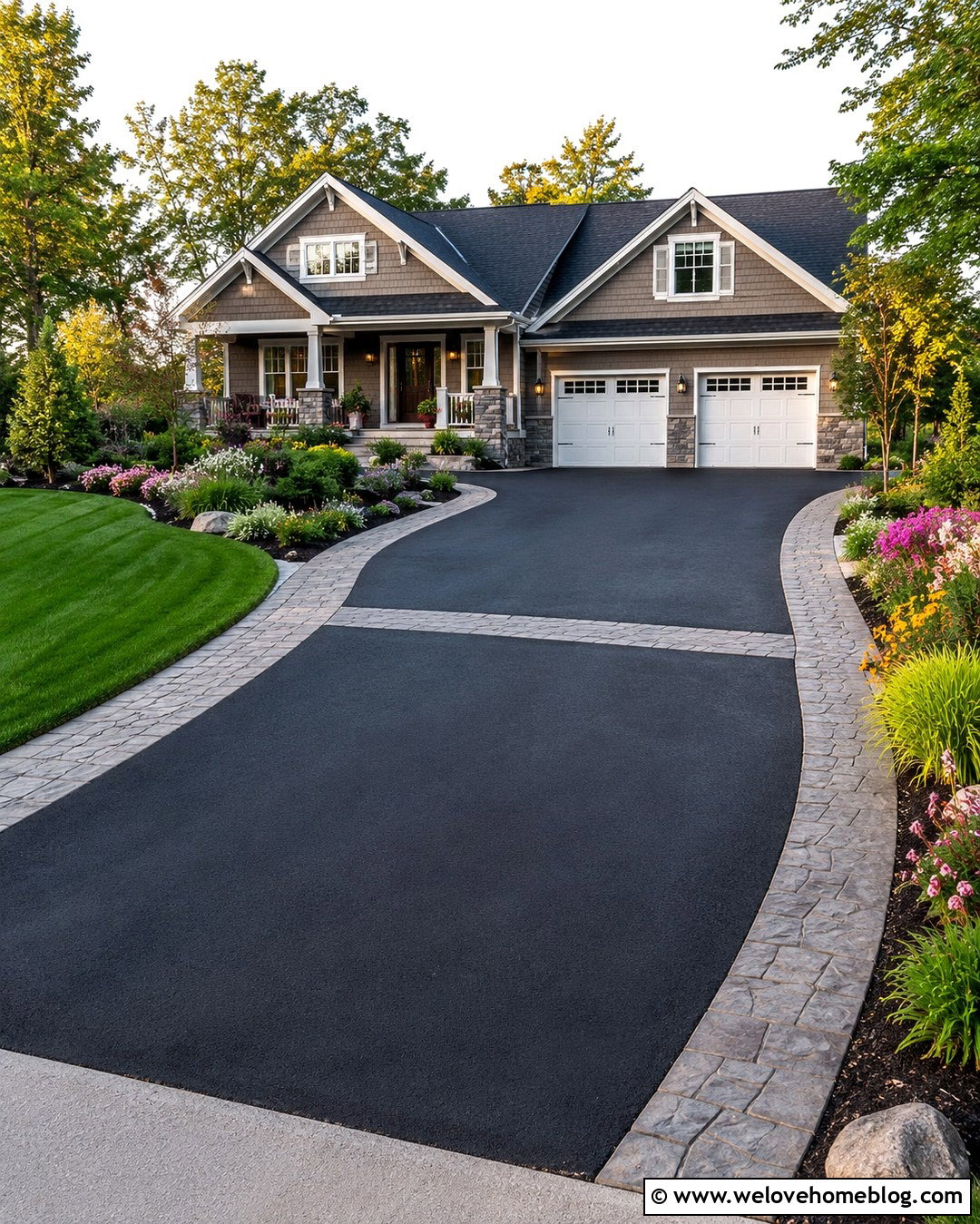
Stamped concrete offers the visual texture of masonry without creating a border made from many separate units. A narrow band stamped to resemble slate or rectangular stone can follow both sides of a curved asphalt driveway. Use a warm gray, tan, or muted brown finish that coordinates with the house facade. Carry the same pattern across the street entrance and near the garage to give the driveway a finished beginning and endpoint. This edging looks most convincing when the pattern scale remains proportional to the driveway rather than using oversized impressions. Surround it with layered shrubs, flowering perennials, and a neatly trimmed lawn. Stamped concrete works especially well beside Craftsman homes, stone-front houses, and updated suburban properties that need more texture than plain concrete provides.
7. Bluestone Asphalt Driveway Edging

Cool blue-gray bluestone creates a sophisticated transition between black asphalt and green landscaping. Cut rectangular pieces into consistent widths and install them as a flush border along a straight driveway. The broad stone surface feels more architectural than a narrow line of brick, making it suitable for larger homes and wider parking areas. Repeat the bluestone on the front walkway, porch steps, or a small landing near the garage. Soft plantings, including hydrangeas, ferns, hostas, and low evergreen hedges, balance the strong stone lines. A pale gray house with white trim provides an especially attractive background. Since natural bluestone varies in tone, arranging the pieces before installation helps distribute the darker and lighter shades evenly throughout the complete driveway design.
8. Granite Paver Asphalt Driveway Edging
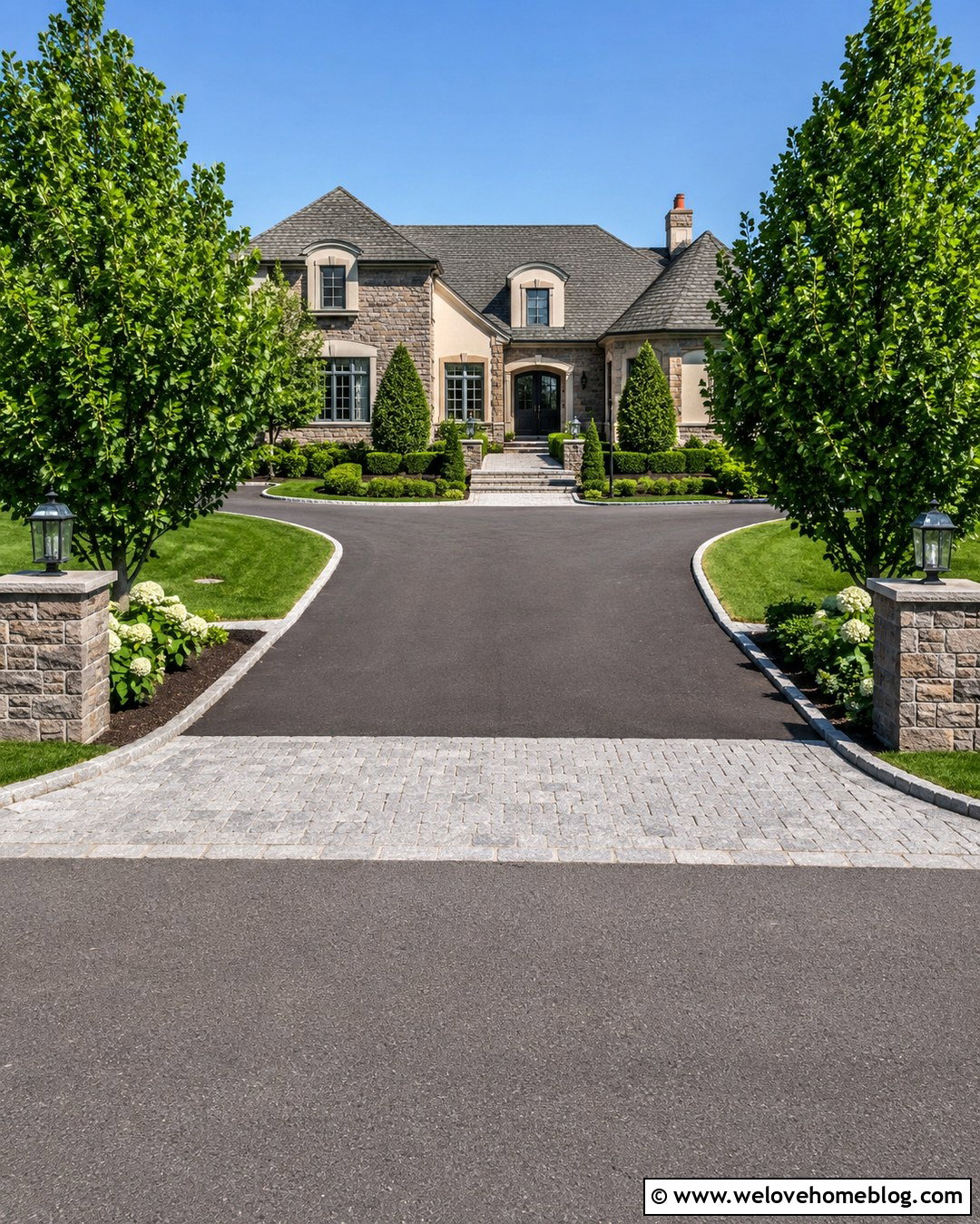
Granite pavers bring crisp lines and natural color variation to an asphalt driveway. Unlike irregular cobbles, sawn granite units can create a straight, even border suitable for formal or modern homes. Select light gray pavers to produce strong contrast or darker granite for a more understated edge. Lay the pavers lengthwise beside a narrow driveway to create a streamlined appearance. Around a wider parking court, install them perpendicular to the asphalt for a more prominent frame. A granite apron at the curb can visually anchor the entrance and withstand the busy appearance of the street transition. Complete the design with symmetrical trees, structured evergreen beds, and a walkway made from coordinating stone. This edging works beautifully with stone, stucco, and painted brick facades.
9. Limestone Asphalt Driveway Edging
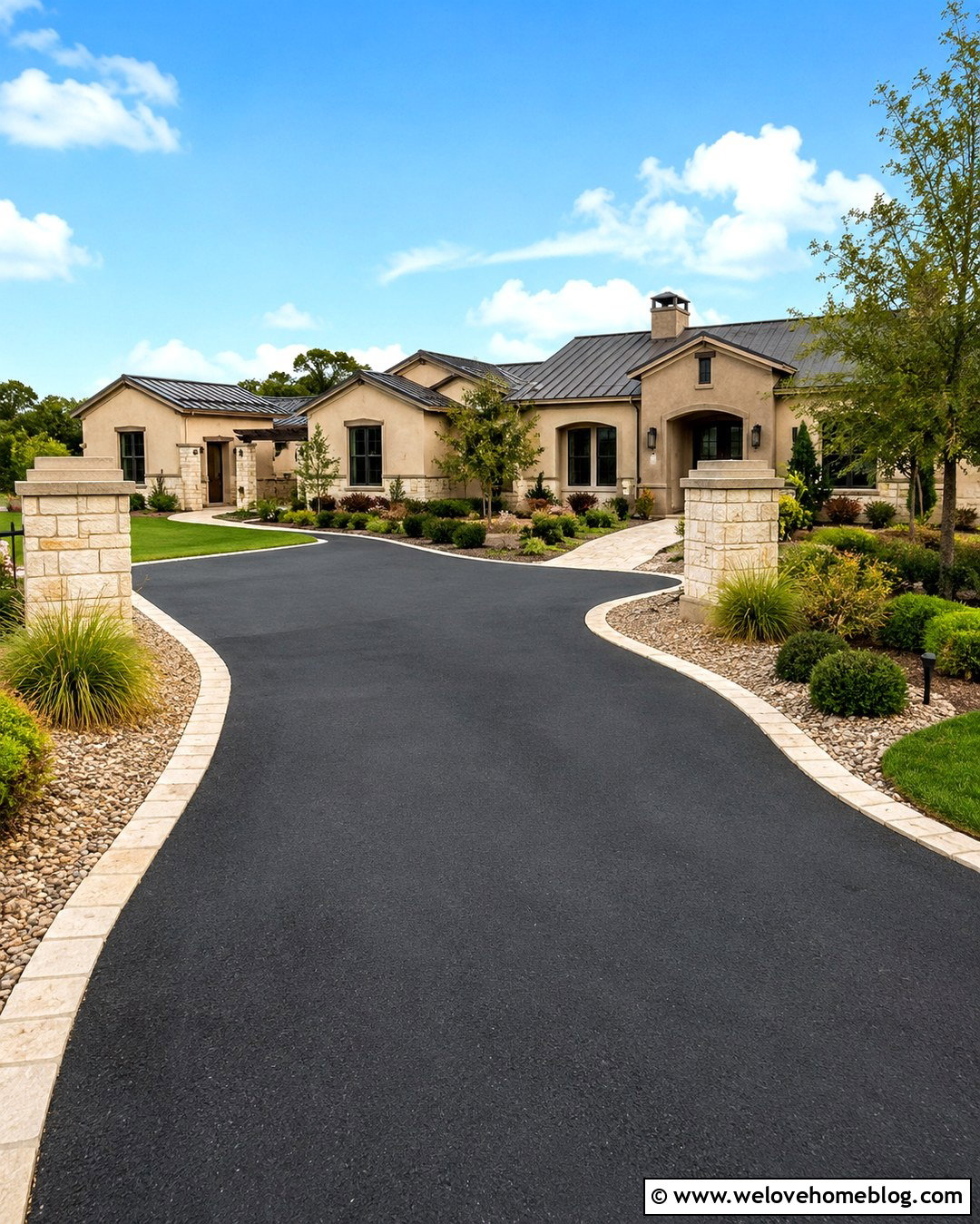
Cream and buff limestone can brighten an asphalt driveway while connecting it to warm exterior materials. Use rectangular limestone blocks in a flush or gently raised border along a broad, sweeping driveway. The pale edge clearly defines the black pavement, so keep the surrounding landscaping relatively simple. Drought-tolerant grasses, rounded shrubs, and beds covered with tan gravel create a cohesive palette without competing with the stone. Continue the limestone around a curved walkway or use larger matching pieces for entrance pillars. This complete combination works well with beige stucco, light brick, Texas limestone, and modern farmhouse exteriors. In climates with frequent freezing conditions, choose exterior-grade stone recommended for local weather and have the base prepared carefully to reduce unwanted shifting or uneven settlement.
10. Fieldstone Asphalt Driveway Edging
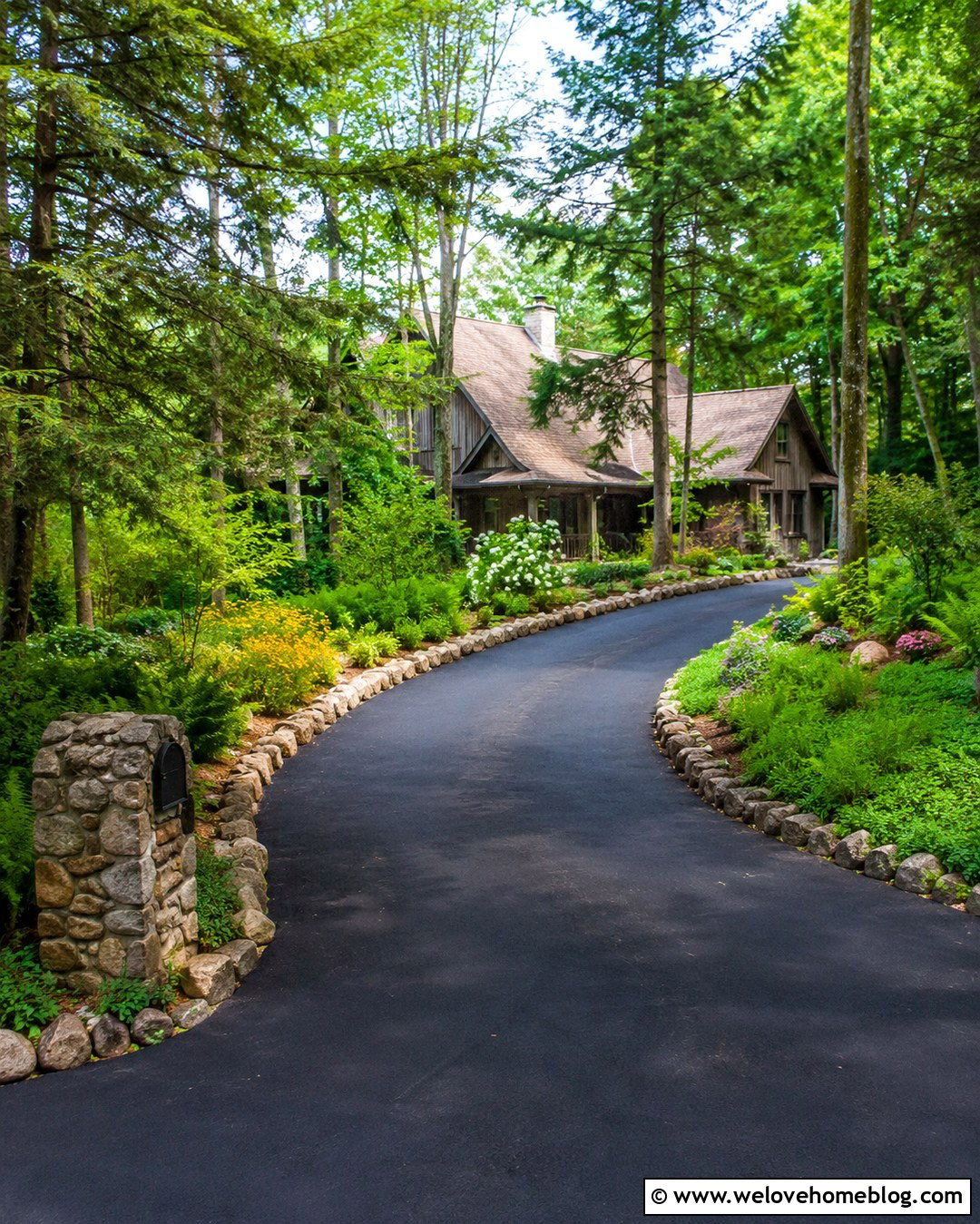
A fieldstone border helps an asphalt driveway settle naturally into a wooded or rural landscape. Choose medium-size stones with varied gray, brown, and mossy tones, then arrange them in a low, irregular line. Keep the stones close enough to create a continuous edge without making the border look like a formal masonry curb. This treatment works best beside a gently curved driveway where the stones can follow the land’s natural contours. Add native shrubs, ground covers, ferns, and shade trees instead of tightly clipped hedges. A fieldstone mailbox base or matching garden wall can repeat the material near the entrance. The completed look suits cabins, rustic ranch houses, cottages, and country homes surrounded by mature vegetation and informal planting beds.
11. River Rock Asphalt Driveway Edging
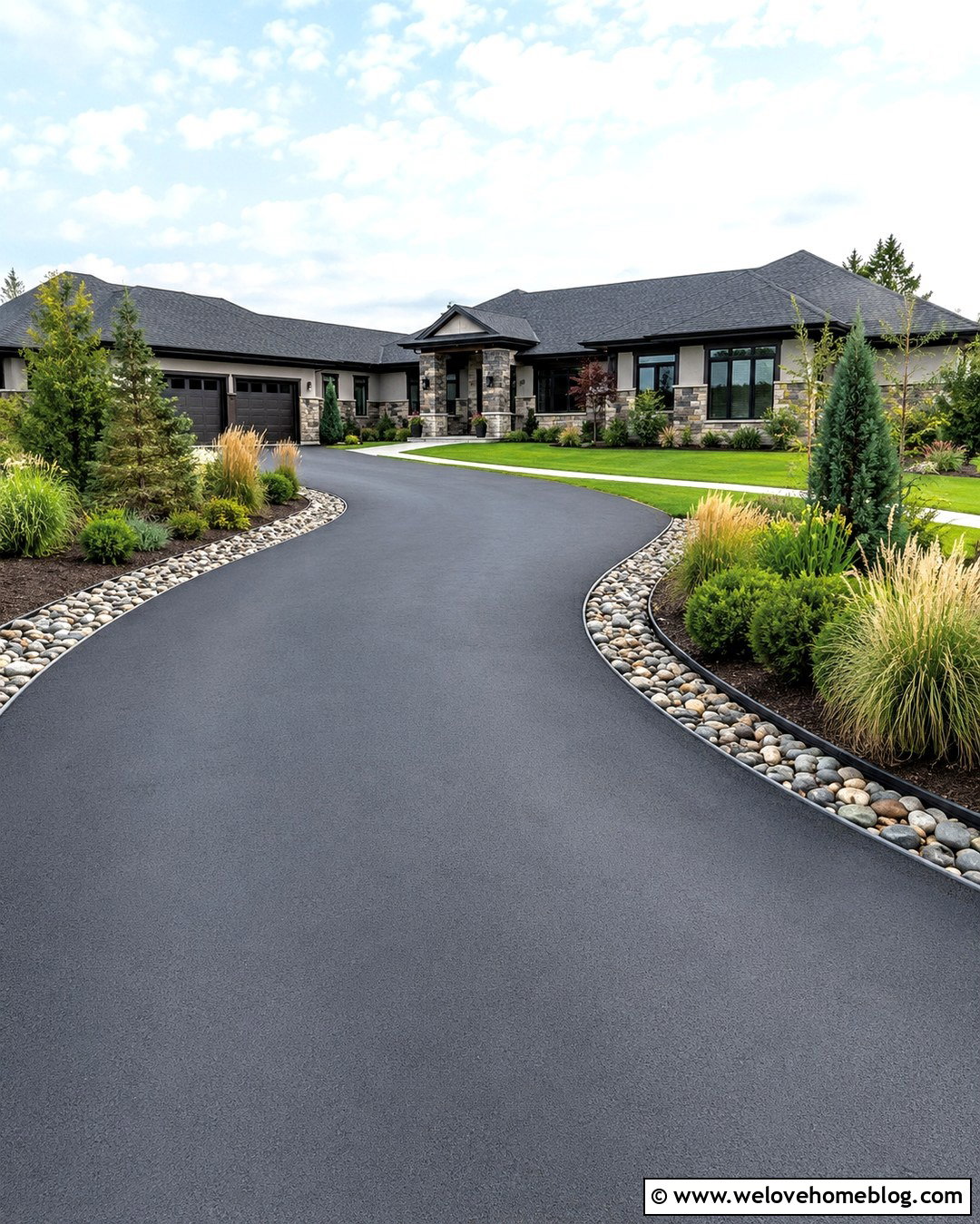
River rock provides a softer landscape transition, but it should be contained so loose stones do not migrate onto the asphalt. Create a shallow drainage-style strip beside the pavement and secure its outside edge with low steel, pavers, or buried landscape restraint. Fill the strip with smooth stones in gray, tan, and brown tones. The rock band can collect minor landscape runoff while visually separating the driveway from planting beds, although site drainage should still be professionally evaluated where water regularly pools. Use this border along a gently sloped asphalt driveway framed by ornamental grasses, evergreen shrubs, and native perennials. The relaxed finish pairs well with contemporary ranch homes, natural stone facades, and properties where a rigid raised curb would interrupt the flow of the landscape.
12. Pea Gravel Asphalt Driveway Edging
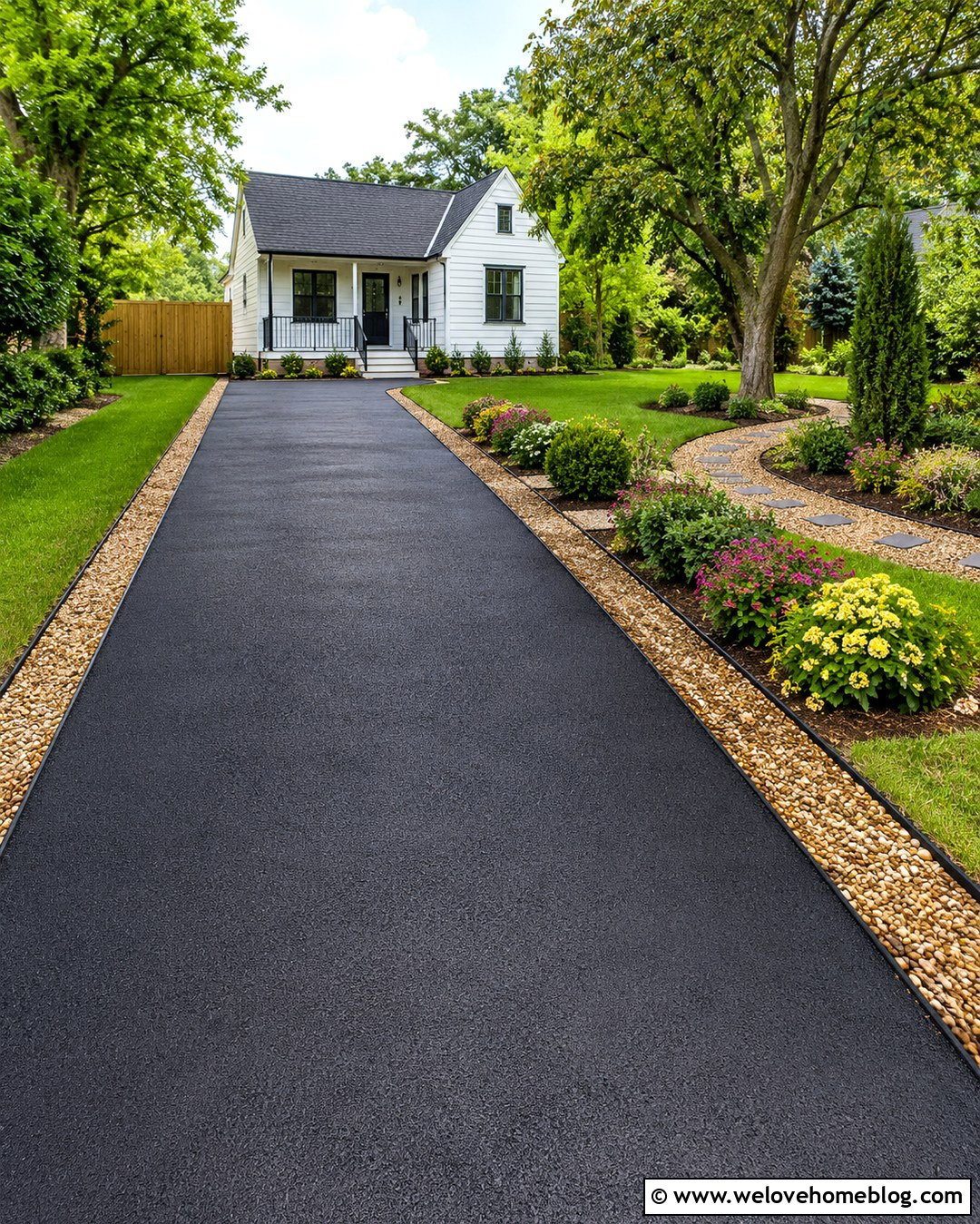
A narrow pea gravel strip is an affordable way to add color and texture beside black asphalt. Install a sturdy restraint along the outside of the strip so the small stones remain separated from lawn or mulch. The asphalt itself should still have a stable, properly compacted shoulder rather than relying on loose gravel for structural support. Choose tan pea gravel for a warm traditional home or gray gravel for a cooler modern palette. Frame a straight driveway with matching gravel beds, compact shrubs, and stepping stones leading toward a side gate or garden path. Keeping the gravel band consistent in width makes the treatment look deliberate. This complete design works particularly well for modest ranch homes, cottages, and budget-conscious front yard updates.
13. Corten Steel Asphalt Driveway Edging
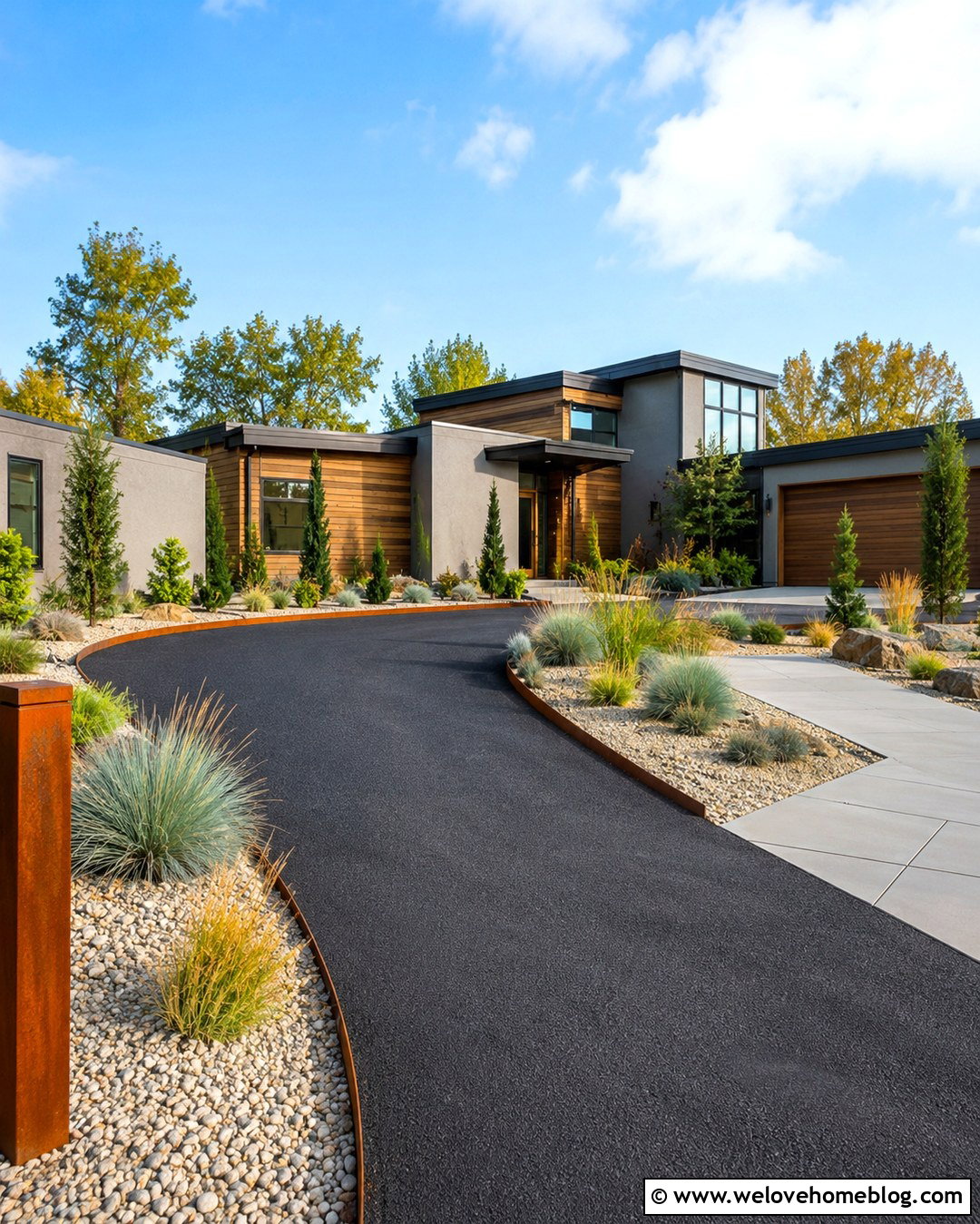
Corten steel creates a thin, rust-colored line that looks striking against deep black asphalt and green planting. Use it as a landscape separator immediately beyond a stable driveway shoulder rather than expecting a thin metal strip to support vehicle loads. The edging can follow straight lines or broad curves, making it suitable for modern layouts. Set the upper edge low enough to reduce tripping concerns near walkways and garage access points. Fill the adjacent beds with pale gravel, sculptural grasses, sedges, and compact evergreens. Weathered steel also works well around an address sign or mailbox feature near the driveway entrance. The finished scheme complements modern, industrial, and desert-inspired homes with wood, concrete, black metal, or neutral stucco exteriors.
14. Black Steel Asphalt Driveway Edging
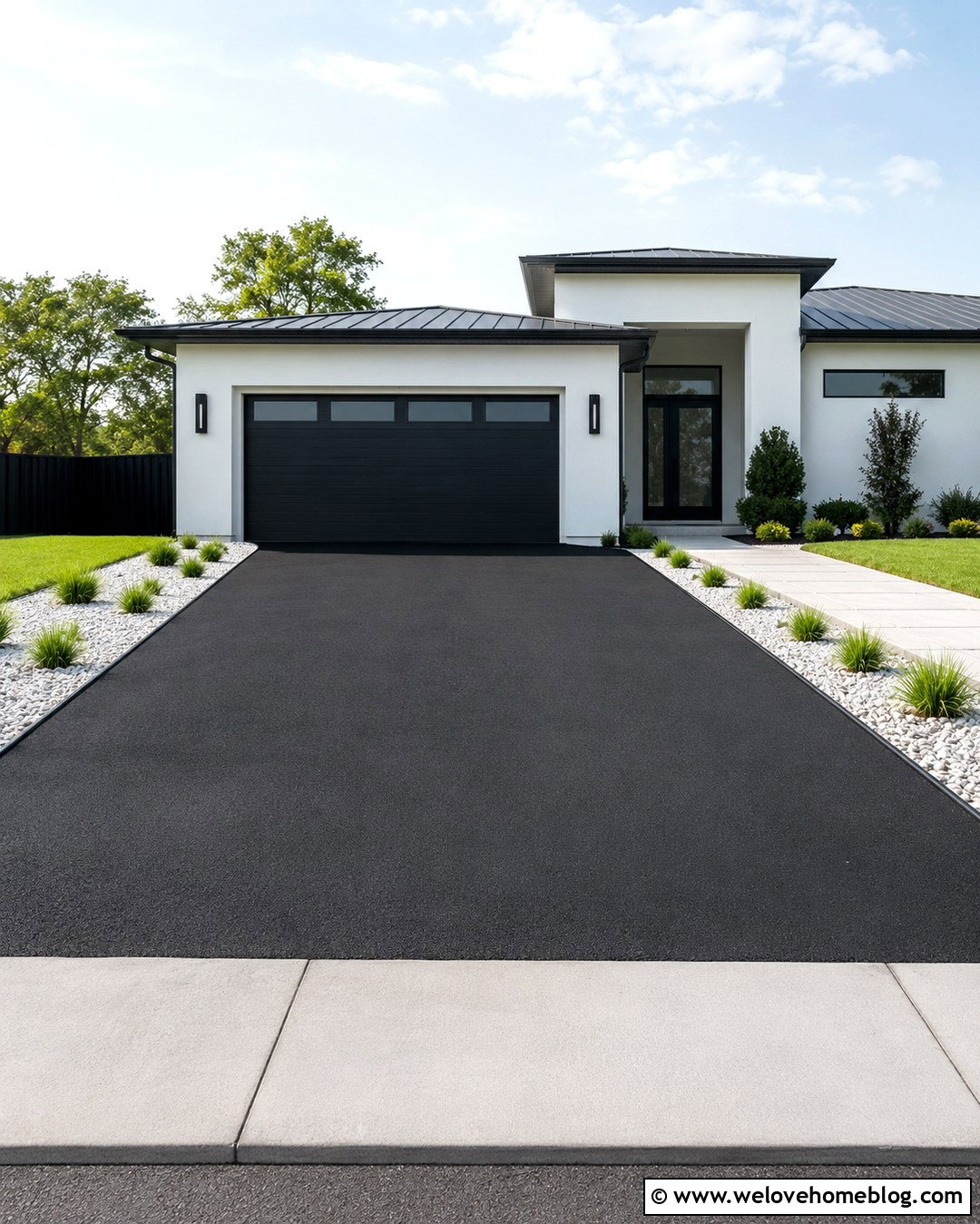
For an almost invisible boundary, black powder-coated steel can separate an asphalt driveway from decorative gravel or planted beds. The dark edging visually disappears beside the pavement, leaving the clean driveway shape and landscaping as the main features. Use this treatment around a straight or gently curved drive serving a minimalist home. Install the metal outside a supported asphalt edge and stake it securely according to the product requirements. White gravel, blue-green grasses, and neatly spaced shrubs will create sharp contrast against both the steel and asphalt. Continue the same edging around the front walkway beds for consistency. This understated design is especially effective for compact yards because it defines each surface without introducing a wide masonry border that could make the driveway feel narrower.

15. Timber Asphalt Driveway Edging
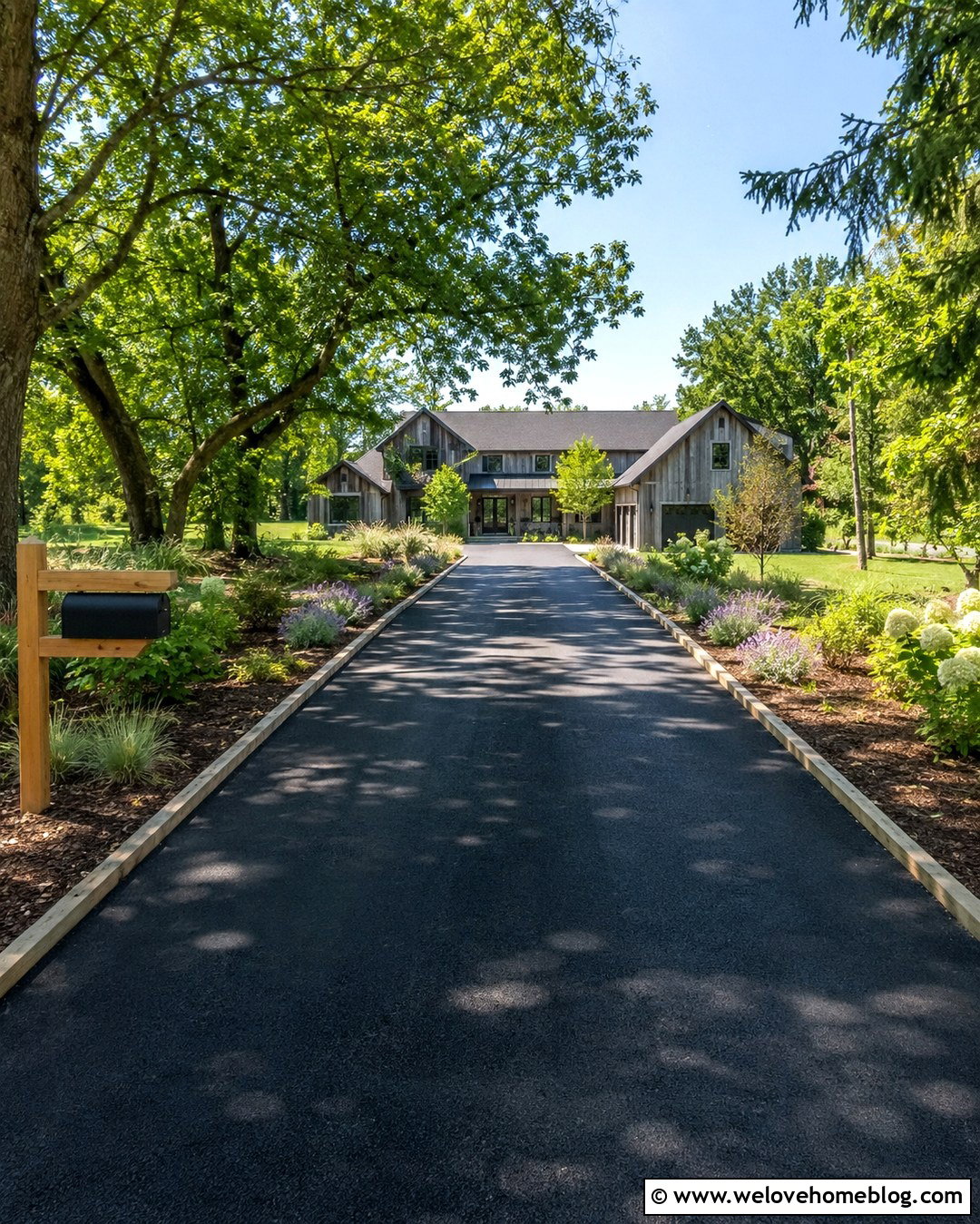
Pressure-treated landscape timbers introduce warm, rustic character beside an asphalt driveway. They work best as a separator between the driveway shoulder and planting beds, gravel, or mulch rather than as a decorative strip exposed to constant tire traffic. Install long timbers along a straight driveway, or use shorter sections to follow gentle curves. Keep the upper surface low and even for a tidy appearance. Complete the border with native grasses, flowering shrubs, and natural brown mulch. Timber entrance posts or a simple wood mailbox can repeat the material near the street. This coordinated look suits cabins, farmhouse properties, wooded ranch homes, and casual country landscapes. Plan for periodic inspection because wood typically requires more maintenance than granite, brick, or concrete edging.
16. Raised Brick Curb Asphalt Driveway Edging
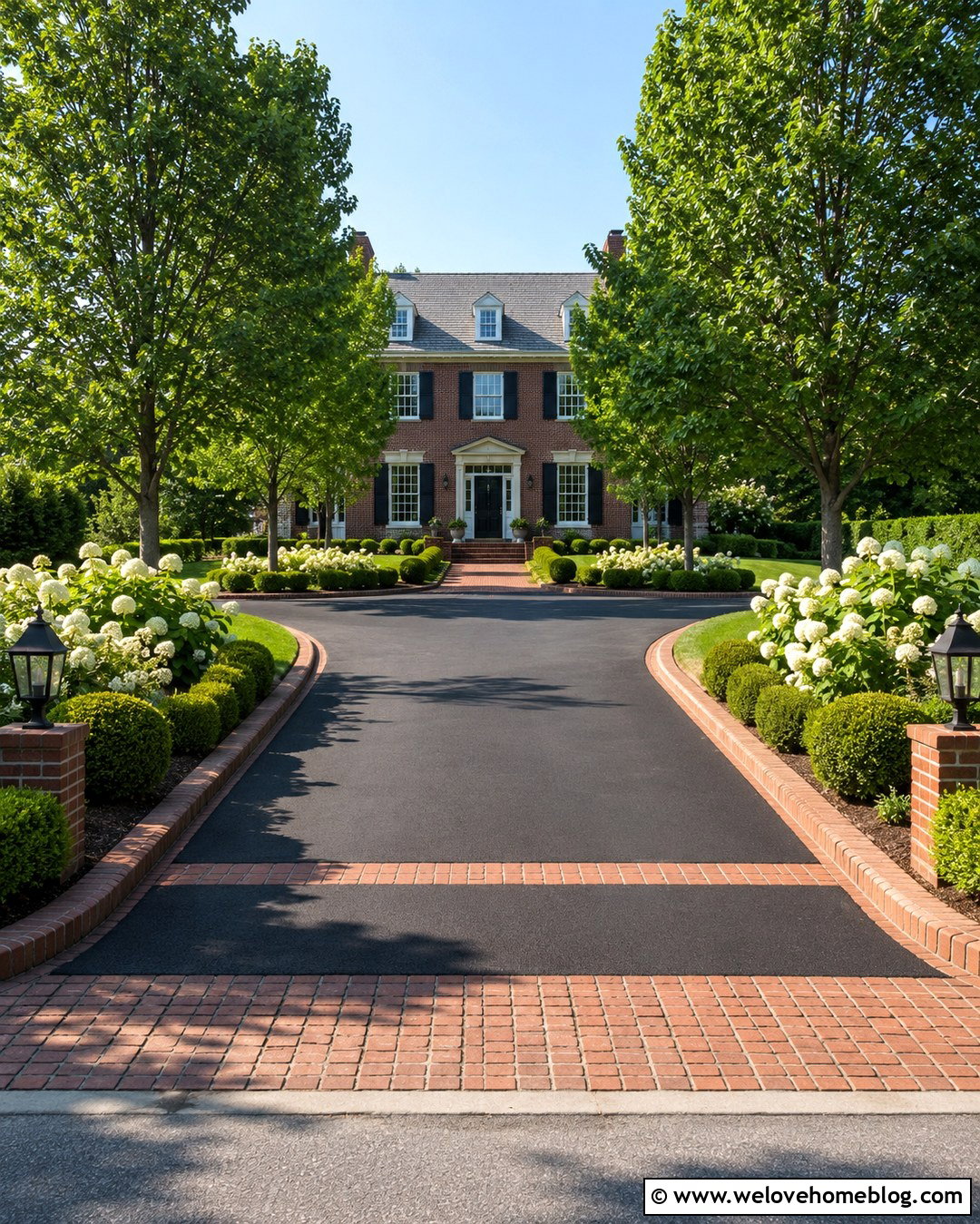
Raised brick curbing creates a stronger boundary than a flat brick border. Set the bricks on edge to form a low curb beside the asphalt, then use the raised side to contain mulch and garden soil. Deep red, burgundy, or brown brick can coordinate with the house, chimney, walkway, or front steps. This layout is especially attractive around a curved driveway with planting beds on both sides. Use compact shrubs near the pavement so branches do not reduce driving clearance. Where pedestrians cross the border, include flush transitions to prevent awkward steps. A matching brick apron near the street can make the entrance feel complete. The finished driveway works well with Georgian, Colonial, Tudor, and traditional homes featuring symmetrical architecture and established landscaping.
17. Double Paver Asphalt Driveway Edging
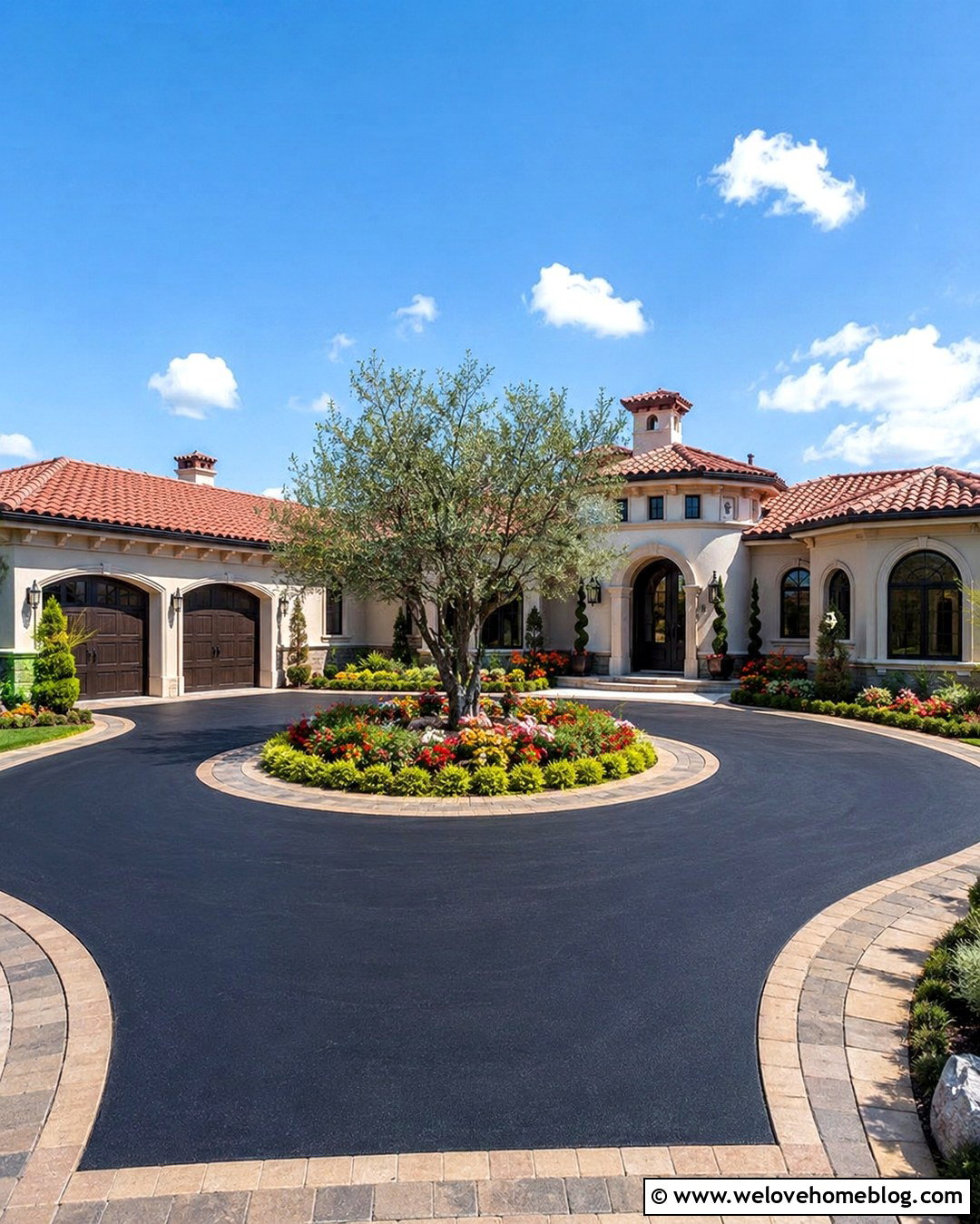
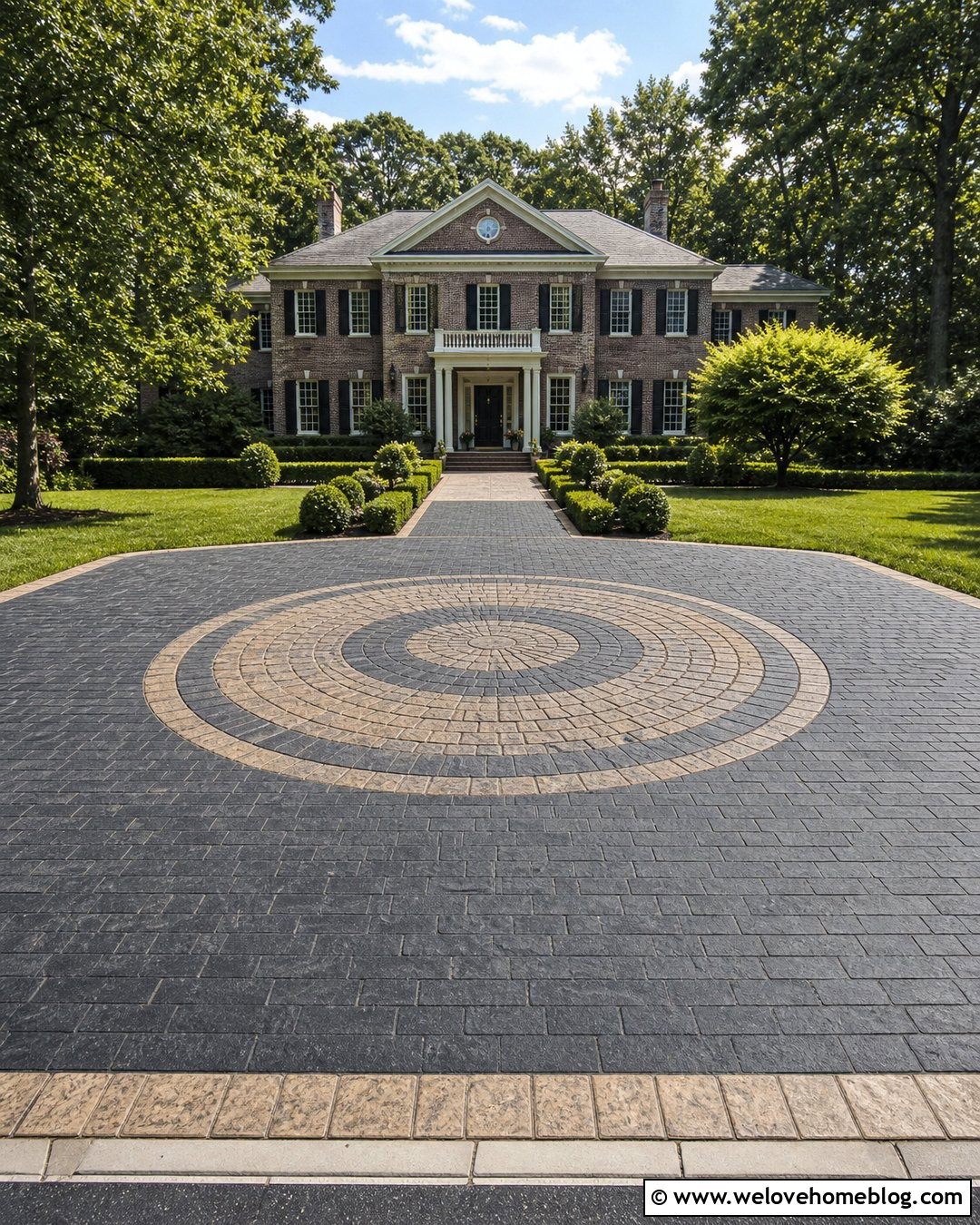
Two rows of concrete pavers make a more noticeable frame than a narrow single course. Choose complementary shades, such as tan and charcoal, or use one consistent color for a quieter appearance. Install the pavers flush with the asphalt and arrange them in a running bond or simple stacked pattern. On a large circular driveway, the wider edging helps define the curves and separates the driving surface from the central landscape island. Fill that island with a specimen tree, low shrubs, and seasonal flowers that will not block views across the driveway. Repeat the pavers in the walkway or entrance apron for continuity. This substantial border suits larger suburban homes, Mediterranean facades, and properties where the driveway is a major part of the front yard.
18. Brick And Cobblestone Asphalt Driveway Edging
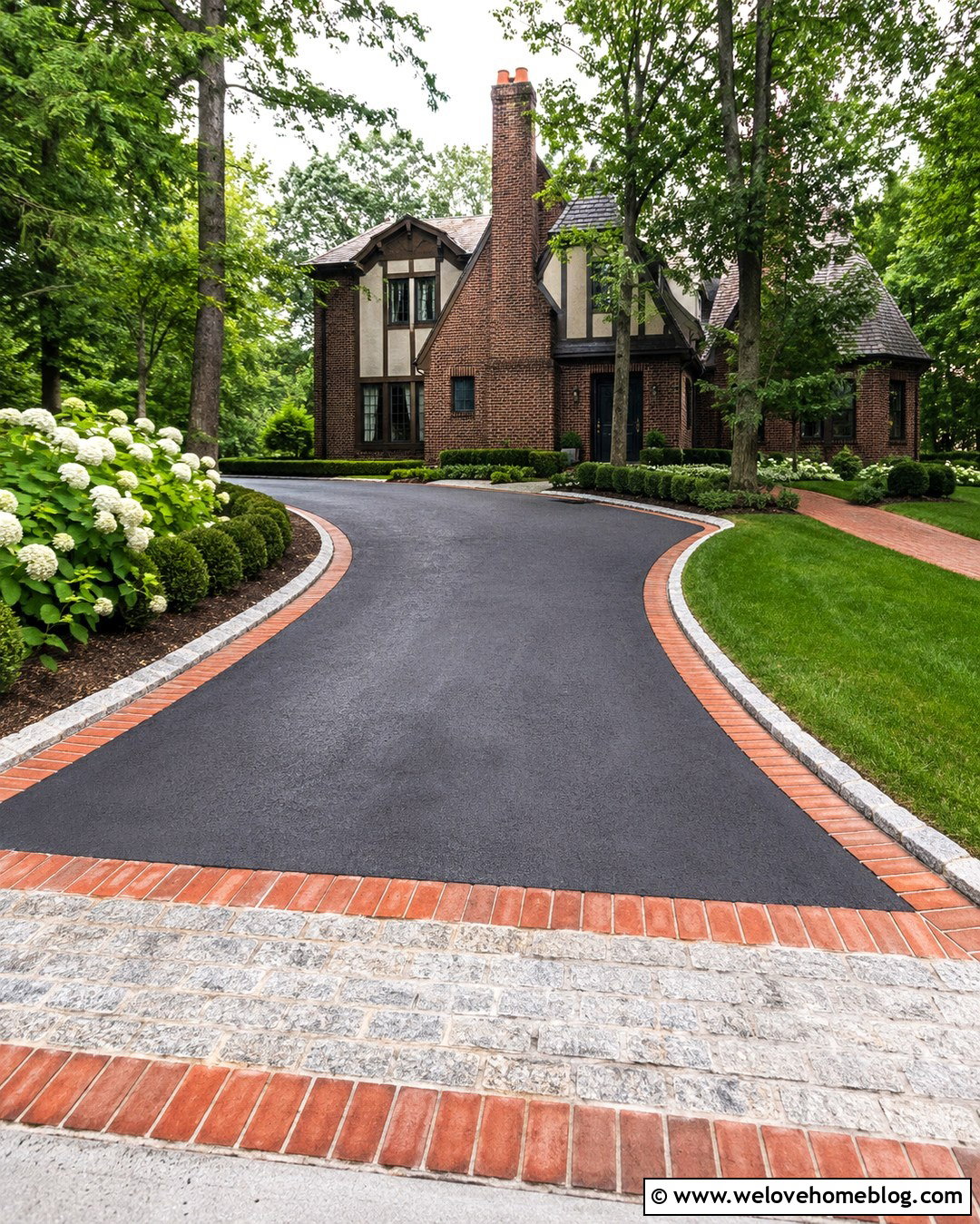
Combining two masonry materials can give a plain asphalt driveway more detail without replacing the entire surface. Use a narrow row of red brick next to the asphalt, followed by gray granite cobblestones along the landscape side. The brick connects with a traditional house facade, while the cobblestone adds texture and strength. Keep both rows flush near the garage and walkway crossings. They may rise slightly around planting beds where stronger separation is useful. A matching brick-and-stone apron at the street creates a memorable entrance and makes the layered border feel intentional. Complete the look with boxwoods, white hydrangeas, lawn, and a brick walkway. This combination is best suited to substantial Colonial, Tudor, and European-inspired homes with mixed exterior materials.
19. Paver Apron And Asphalt Driveway Edging
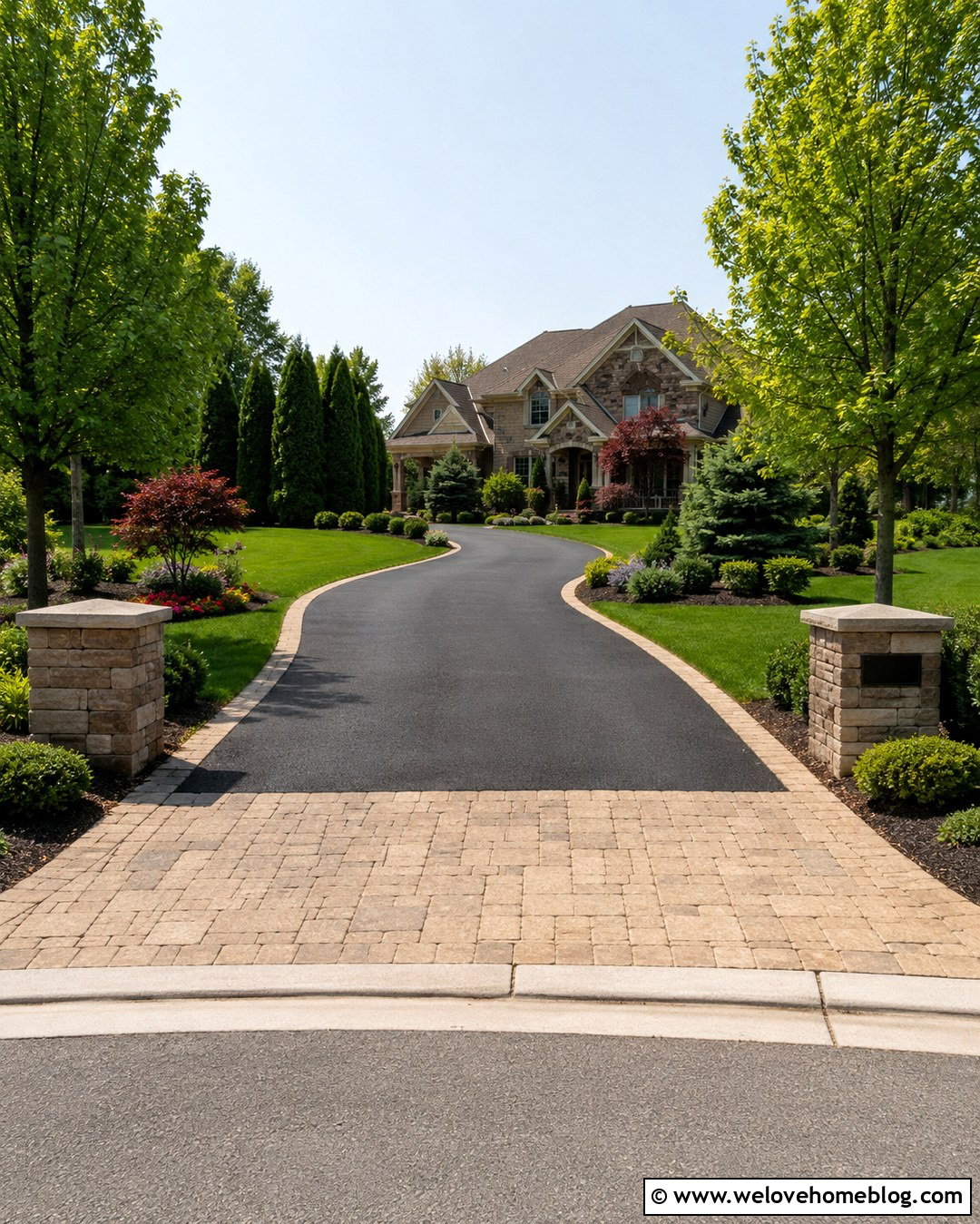
A paver apron can turn the edging into a complete entrance feature. Run concrete or clay pavers along both sides of the black asphalt, then widen the material across the driveway where it meets the street. This creates a clear threshold and adds pattern where it will be most visible from the curb. Choose pavers that coordinate with the house, walkway, or garage facade. Charcoal pavers feel contemporary, while red brick and tumbled tan units produce a more traditional effect. Frame the entrance with low planting beds, stone pillars, or a coordinated address marker without reducing driver visibility. The continuous border and apron work with straight, curved, or circular driveways and give an otherwise simple asphalt surface a more customized, carefully planned appearance.

20. Grass Strip Asphalt Driveway Edging
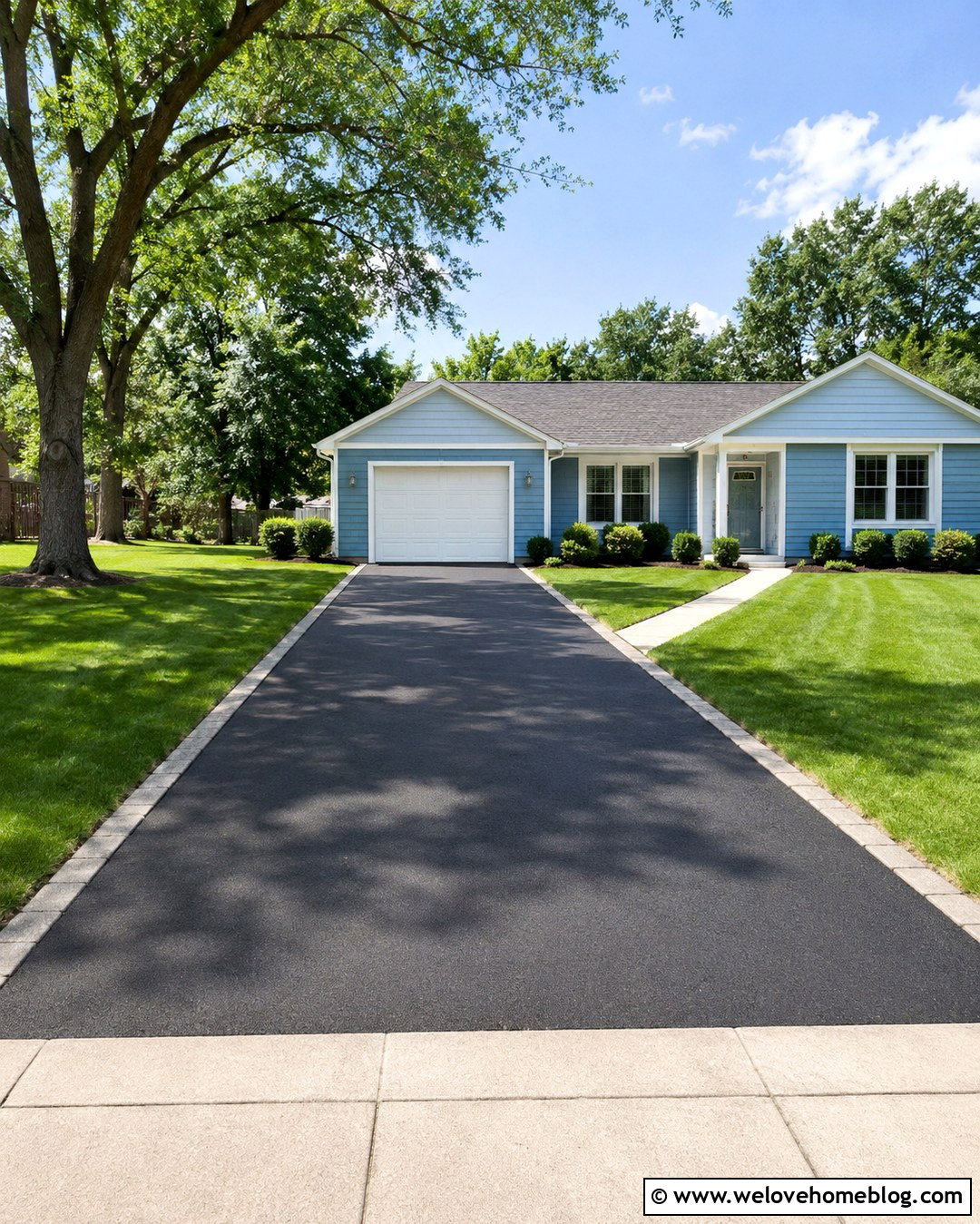
Sometimes the cleanest border is a neatly maintained strip of lawn. A grass edge works best when the asphalt has a stable base, a straight finished side, and no ongoing erosion problems. Maintain a crisp line with routine trimming, and keep the soil slightly below the pavement surface so dirt does not wash onto the driveway. For added support, a concealed restraint or flush paver mowing strip can sit between the asphalt and turf. Pair this simple edge with a wide lawn, evenly spaced shade trees, and a direct concrete walkway to the front door. The open design makes a small property feel less crowded and allows the black driveway to recede visually. It is an appealing choice for ranch, Cape Cod, and modest suburban homes.
Conclusion:
The right border can protect vulnerable pavement edges while making a driveway feel connected to the house and landscape. Belgian block, granite, concrete, and brick create substantial frames, while steel, gravel, timber, and grass offer lighter or more affordable treatments. Consider how the border will handle tires, runoff, lawn equipment, freeze-thaw movement, and snow removal before selecting a material. Colors and textures should also repeat something already present on the home, walkway, walls, or entrance. For long-lasting results, begin with a clean asphalt edge and a well-prepared base. These **20 asphalt driveway edging ideas** provide practical starting points for creating a stronger, cleaner, and more attractive residential entrance.

Related posts:


Leave a Reply