
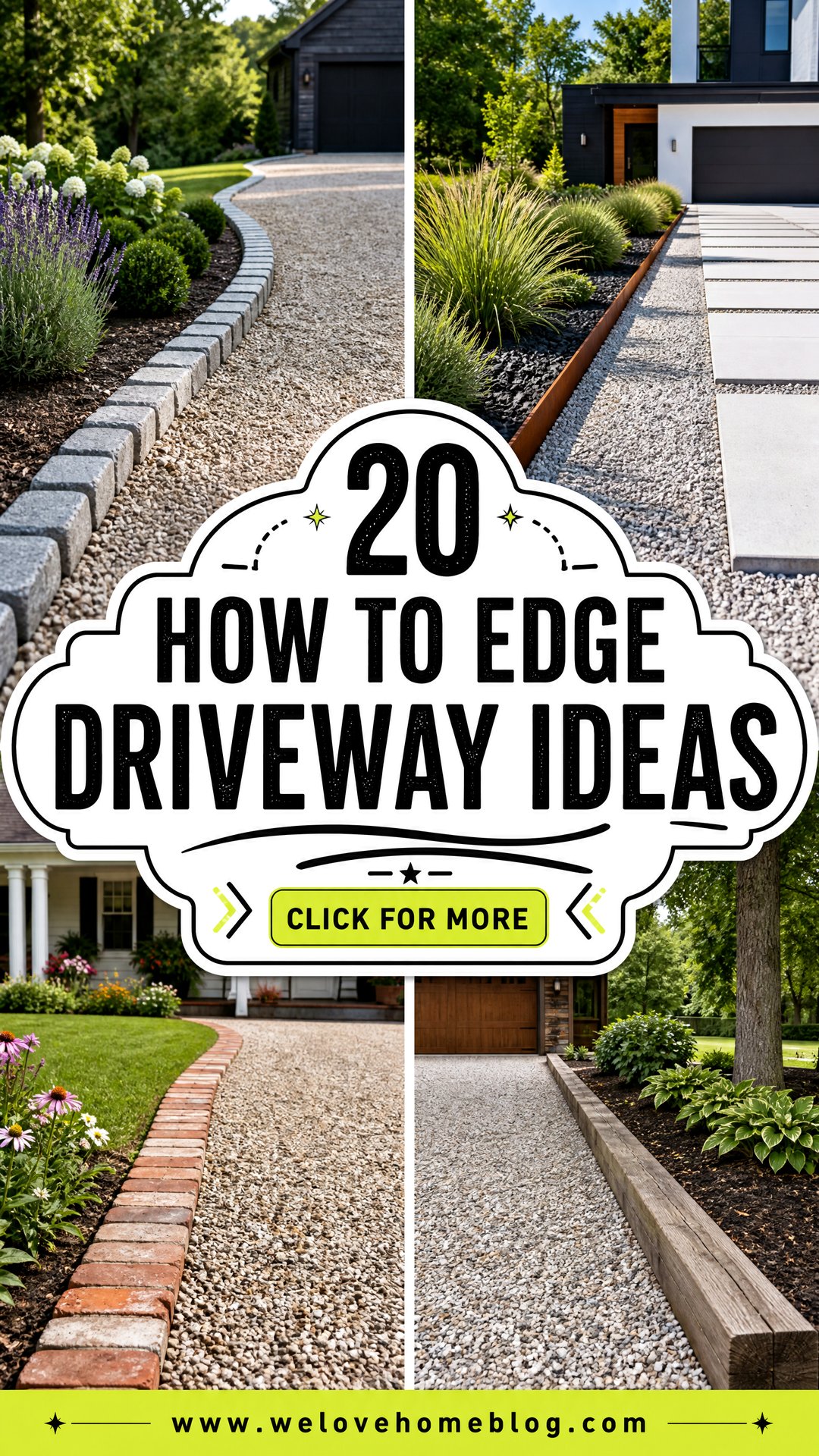
A well-defined driveway edge can make the entire front yard look cleaner, more intentional, and easier to maintain. These 20 How To Edge Driveway Ideas combine practical installation guidance with complete driveway designs for gravel, asphalt, concrete, brick, and paver surfaces. The right border can contain loose stones, protect vulnerable pavement edges, separate planting beds, and create a smoother transition to the lawn. It can also connect the driveway with your home’s architecture through coordinated colors and materials. Before choosing an option, consider vehicle traffic, drainage, climate, maintenance, and whether the border must be flush or raised. From affordable timber to durable granite blocks, the following 20 How To Edge Driveway Ideas offer solutions for different homes, budgets, and yard layouts.
1. How To Edge An Asphalt Driveway With Brick
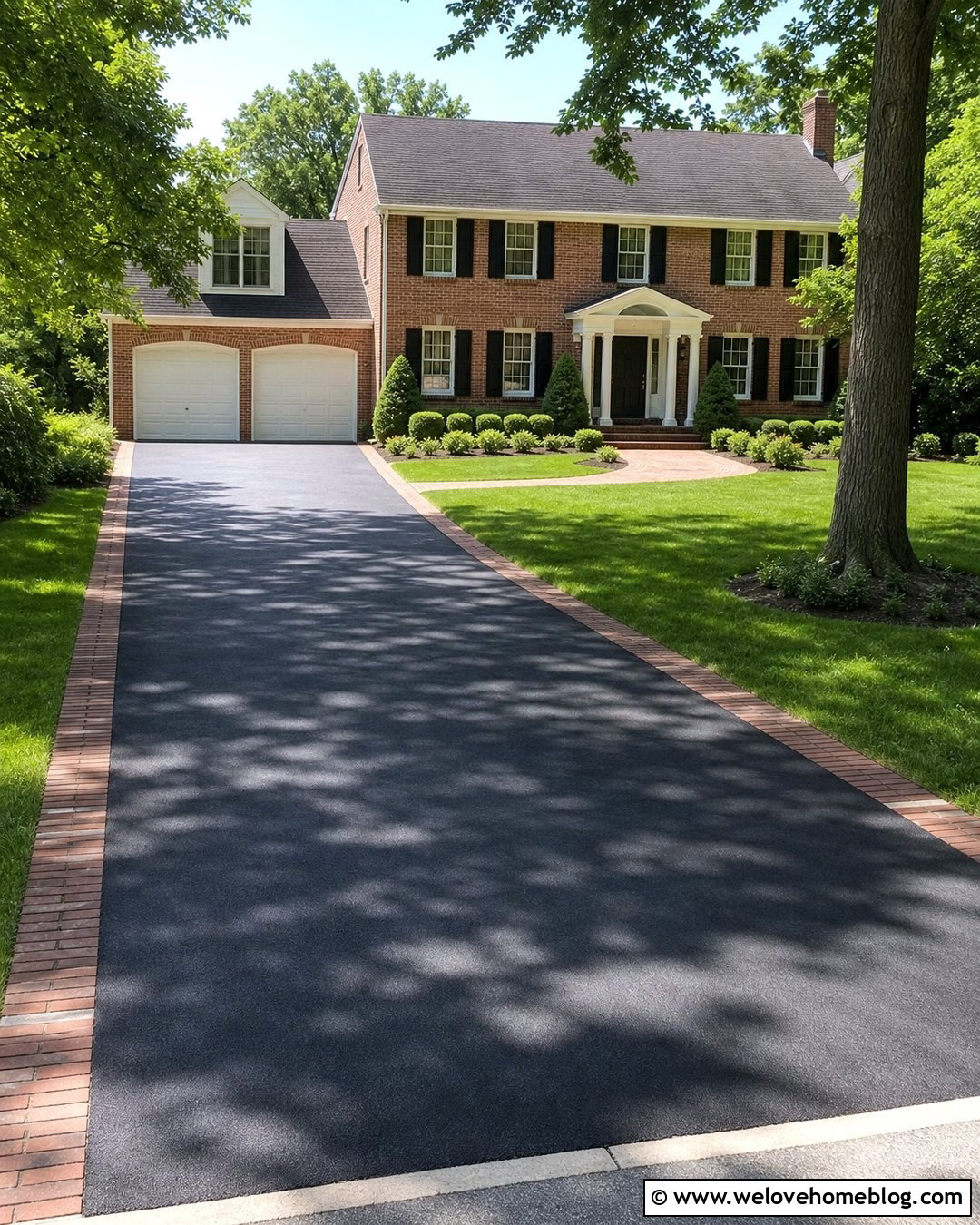
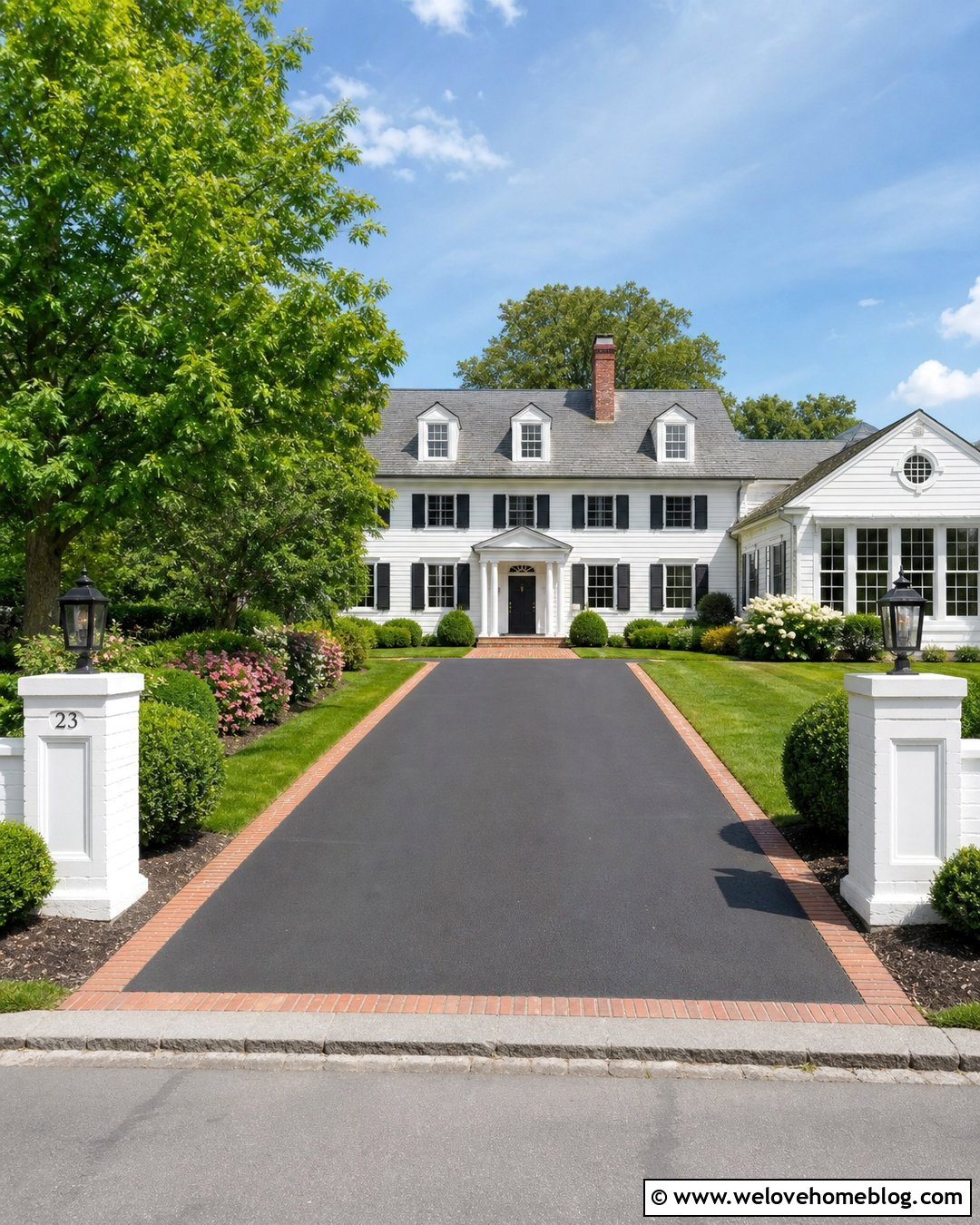
Red clay brick creates a warm, traditional frame around a smooth black asphalt driveway. Begin by marking straight border lines with stakes and string. Cut away uneven asphalt where necessary, then excavate a trench deep enough for a compacted crushed-stone base, bedding sand, and the bricks. Lay the bricks lengthwise for a narrow border or perpendicular to the driveway for a wider ribbon. Keep the finished surface flush or slightly above the asphalt so tires can cross it safely. Concrete haunching behind the outer row can improve stability in areas receiving frequent vehicle pressure. Complete the design with a straight layout, green lawn, foundation shrubs, and a matching brick walkway leading toward a colonial or Cape Cod home. ()
2. How To Edge A Gravel Driveway With Belgian Block
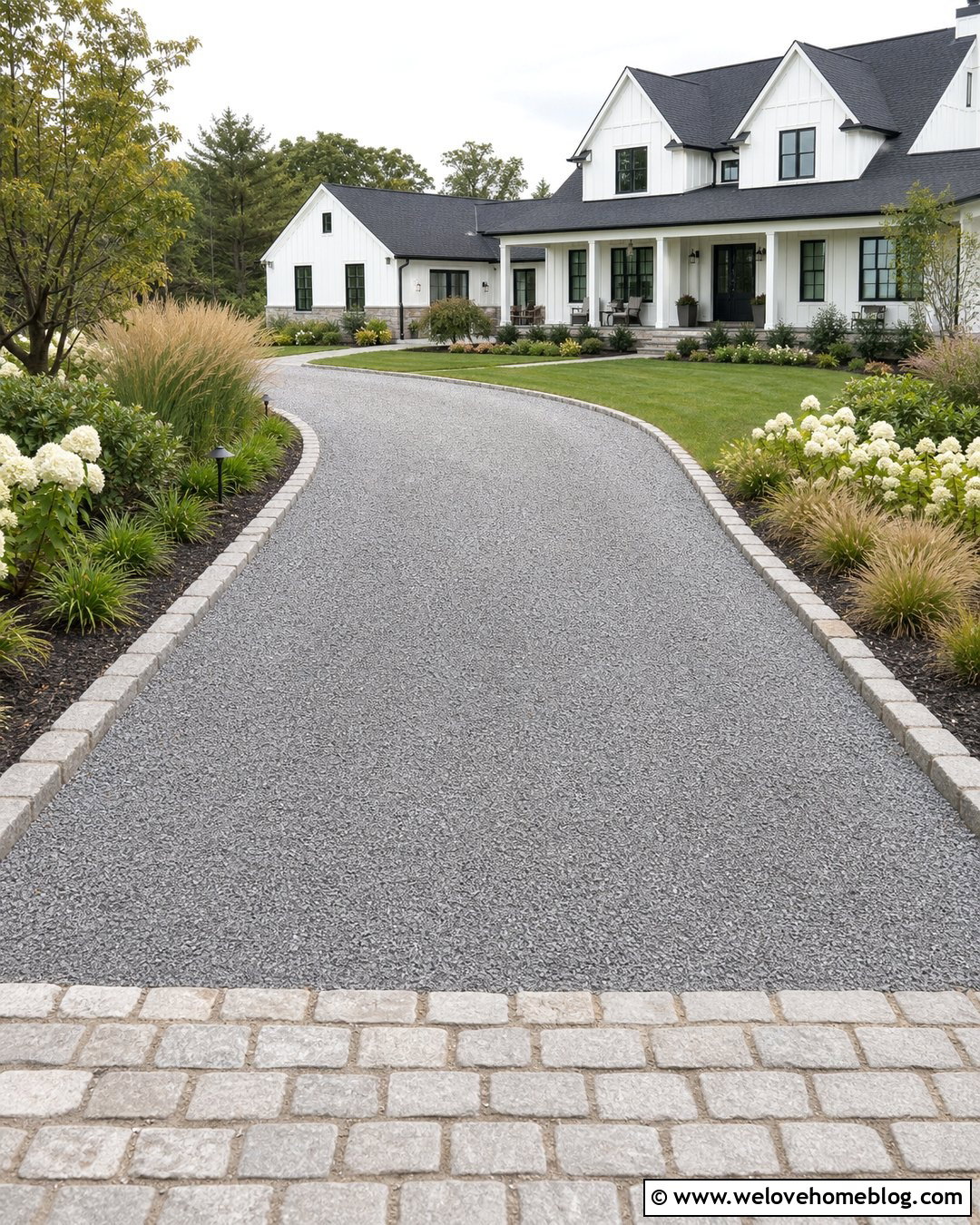
Loose gravel gains a stronger, more polished outline when paired with rugged Belgian block. This combination works especially well along a gently curved driveway approaching a farmhouse or country home. Excavate both sides and install a firm base of compacted crushed stone. Set each granite block closely together on bedding material, checking the height with a mason’s line. Leave enough block exposed to prevent gravel from migrating into the lawn, but avoid creating an unnecessarily high obstacle beside parking areas. Mortar or concrete placed behind the blocks can provide additional resistance against outward movement. Fill the driveway with angular gray gravel, compact it in layers, and rake it level. Finish the complete look with native grasses, flowering shrubs, and a cobblestone entrance apron. ()
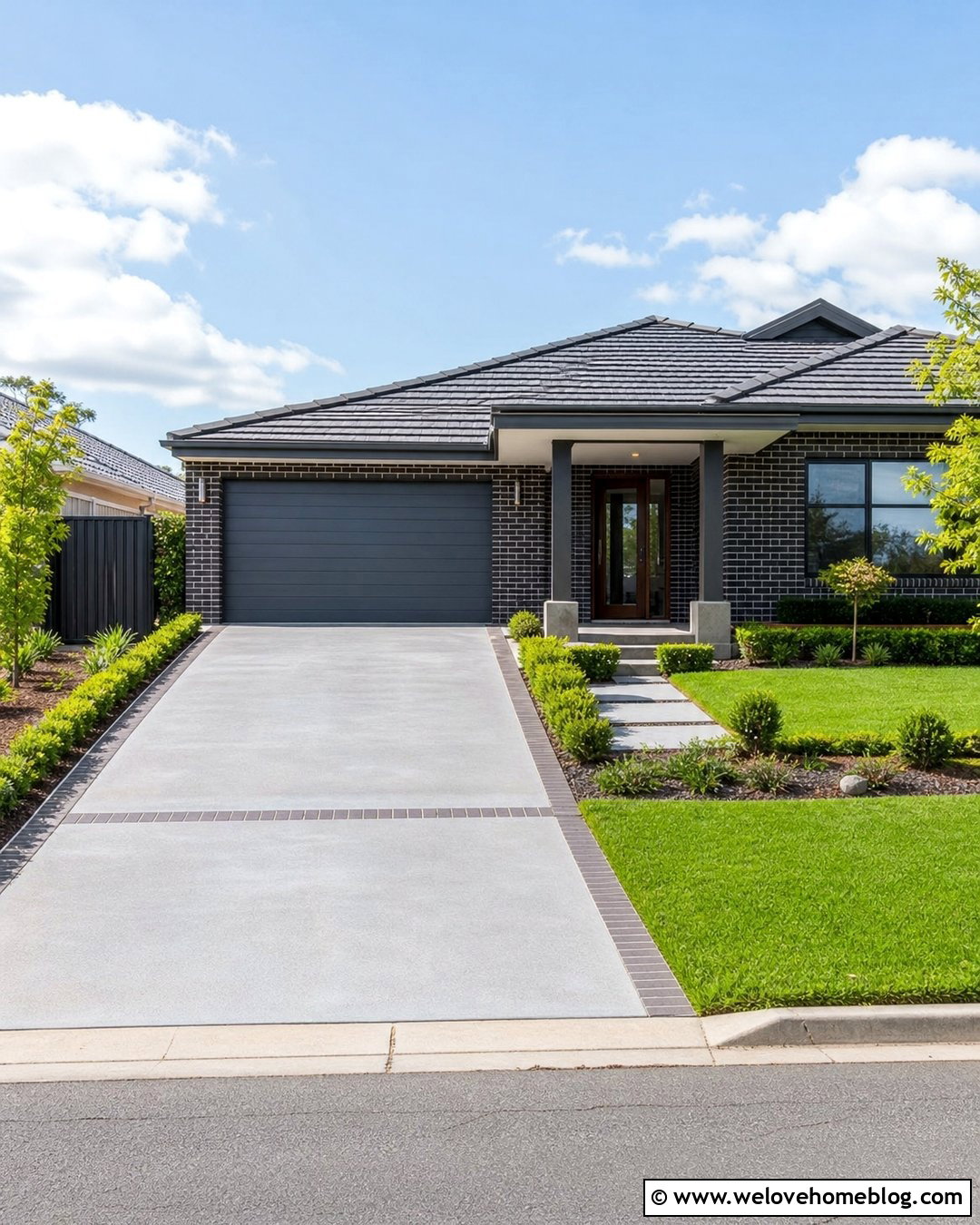
3. How To Edge A Concrete Driveway With Pavers
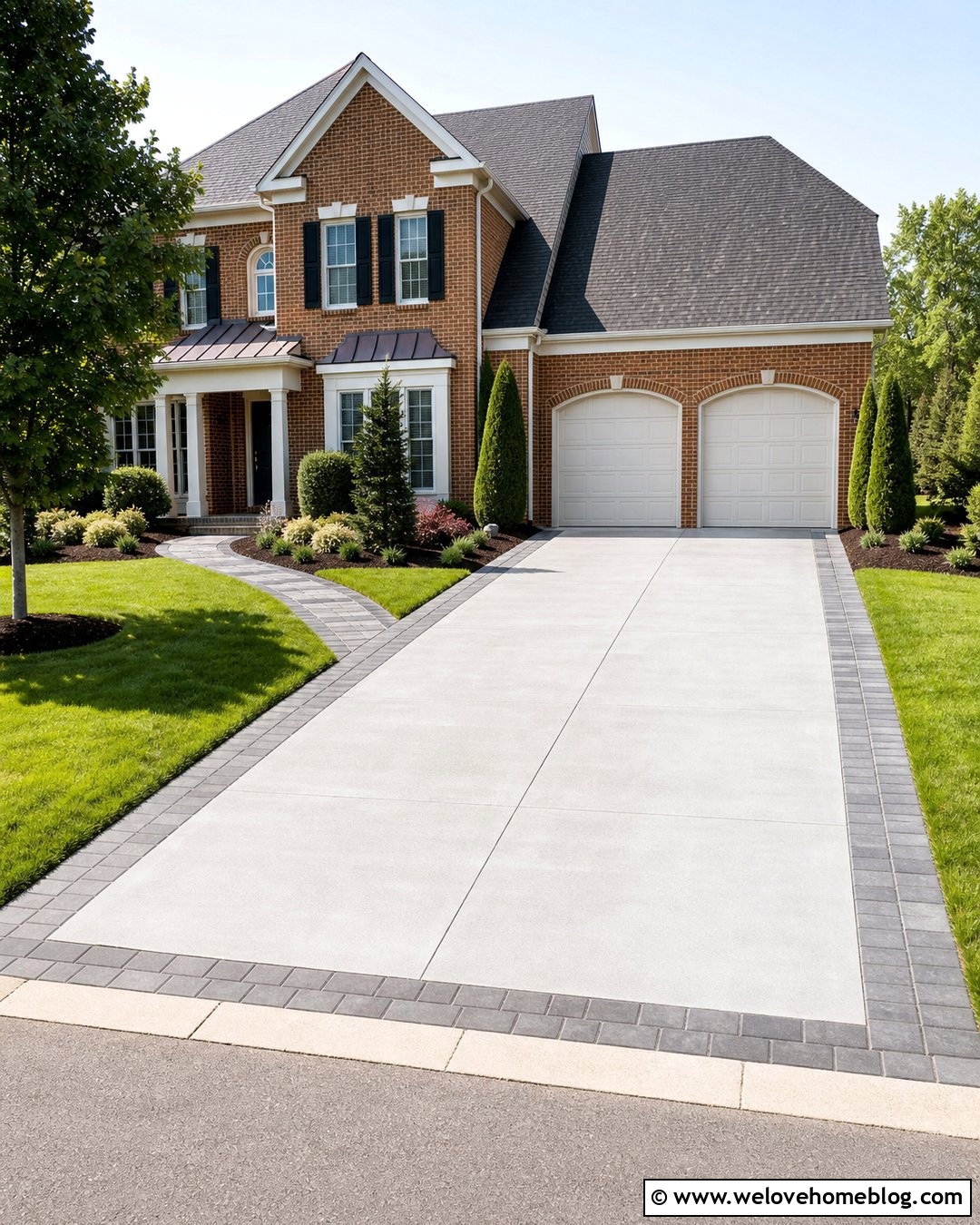
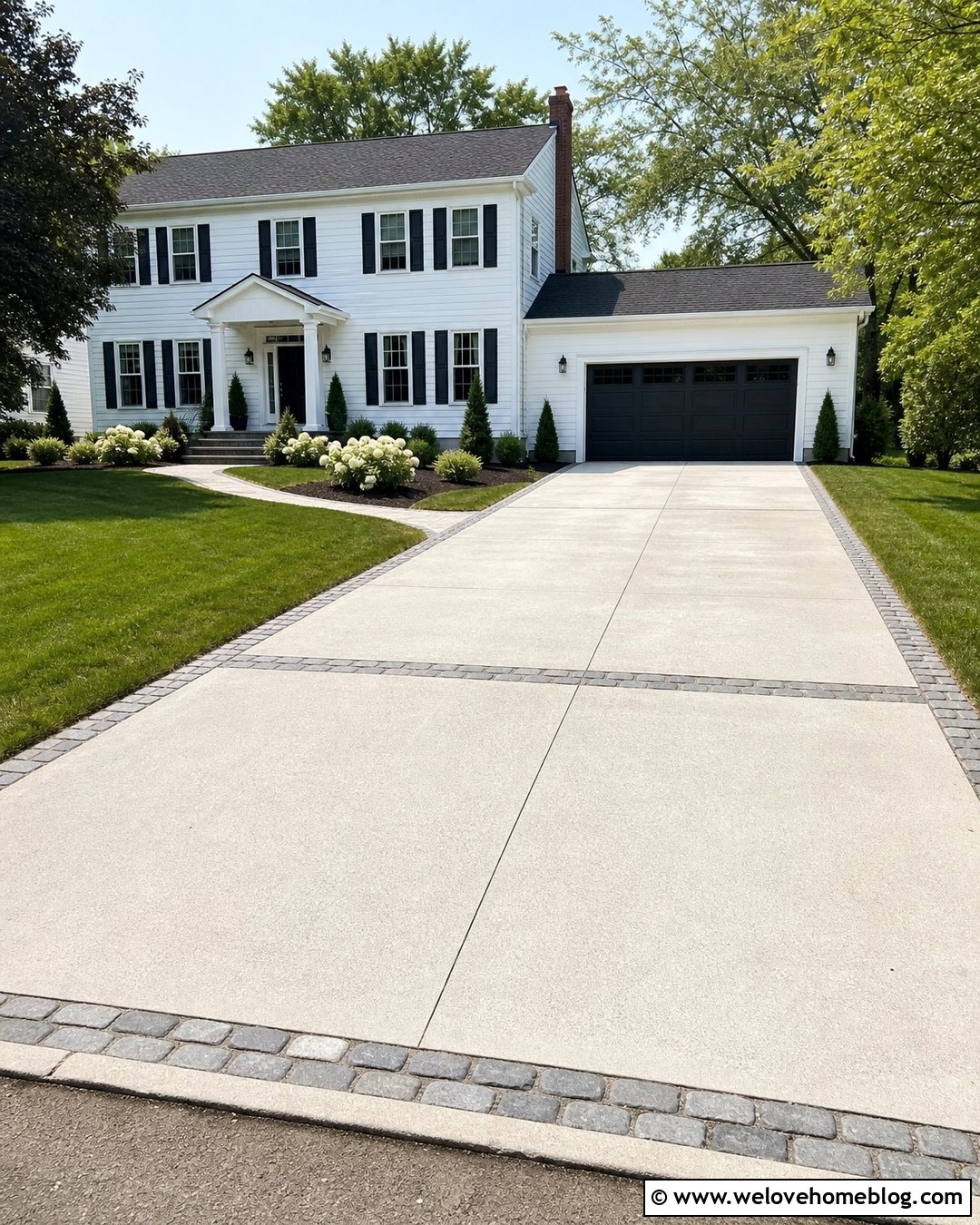
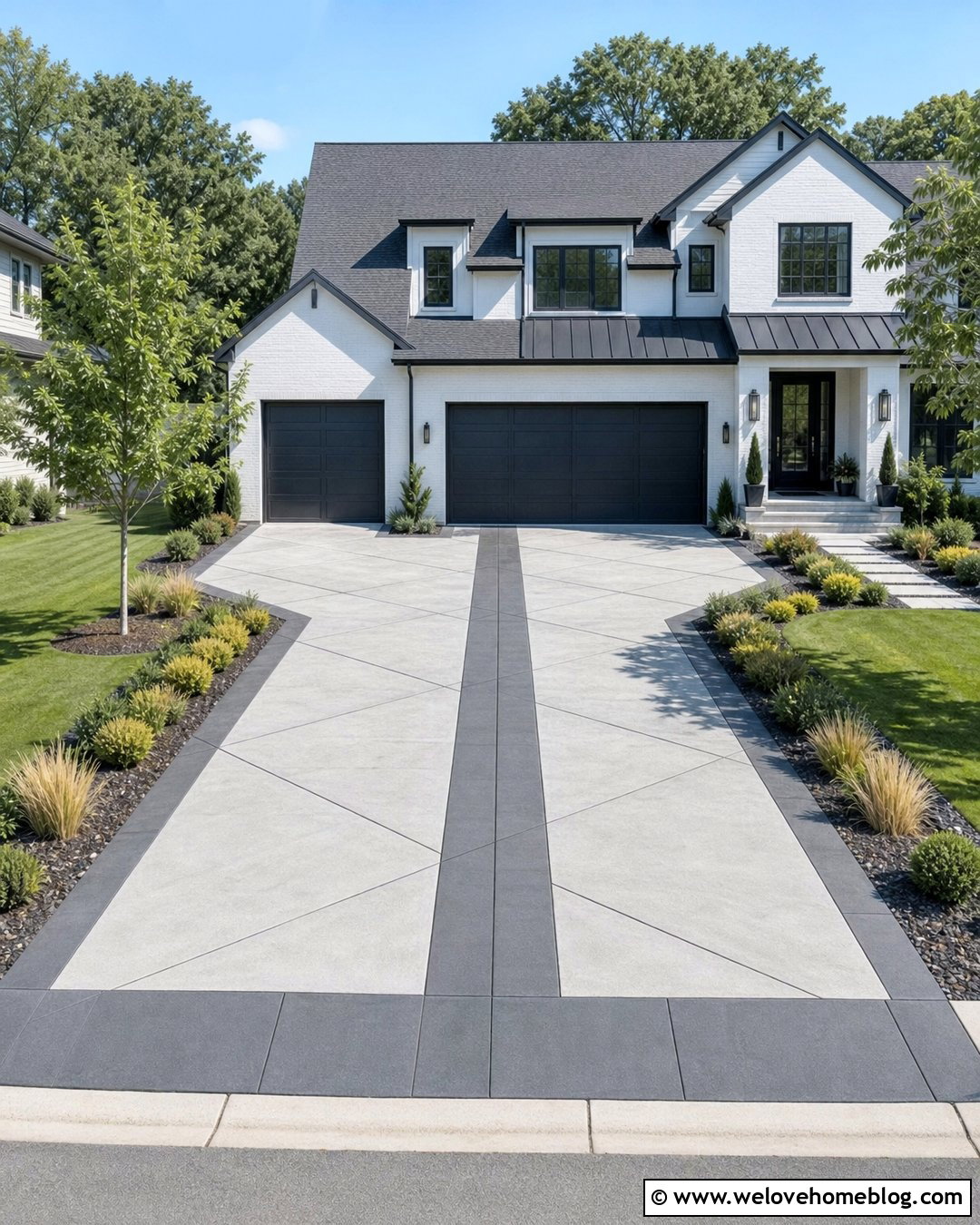
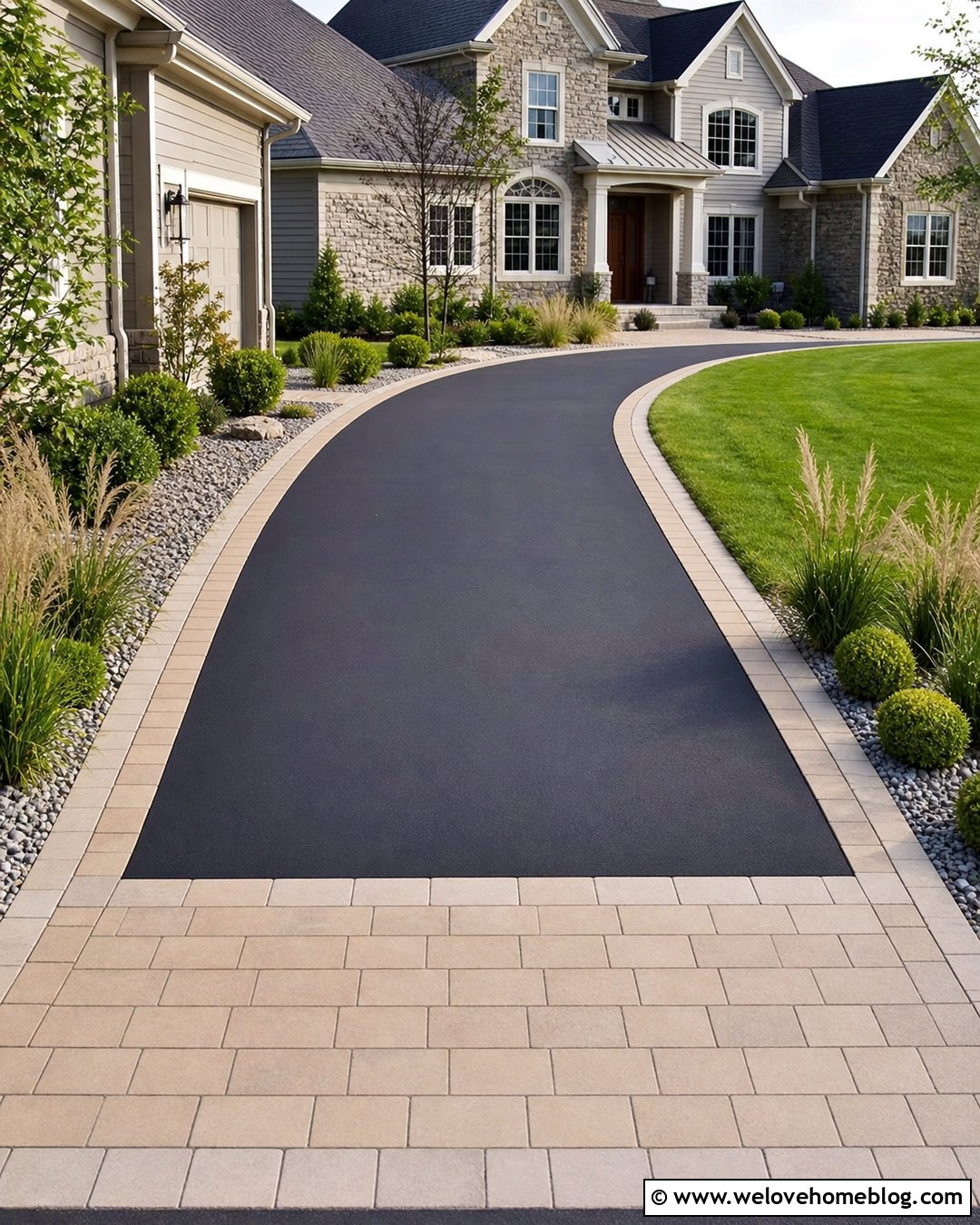
A paver ribbon can soften the plain appearance of a wide poured-concrete driveway without replacing the main surface. Choose concrete pavers that coordinate with the roof, brickwork, or front walkway. After establishing a straight line, excavate narrow trenches beside the slab and add compacted paver base. Spread and level bedding sand before placing the pavers in a single or double row. Install a proper exterior restraint or concrete backing so the border does not gradually spread. A charcoal paver edge gives pale gray concrete a crisp modern outline, while tan pavers create a gentler transition to traditional landscaping. Keep adjacent soil slightly below the border for drainage. Use symmetrical planting beds, low shrubs, and a matching paver walkway to unify the driveway and house entrance.
4. How To Edge A Gravel Driveway With Timber
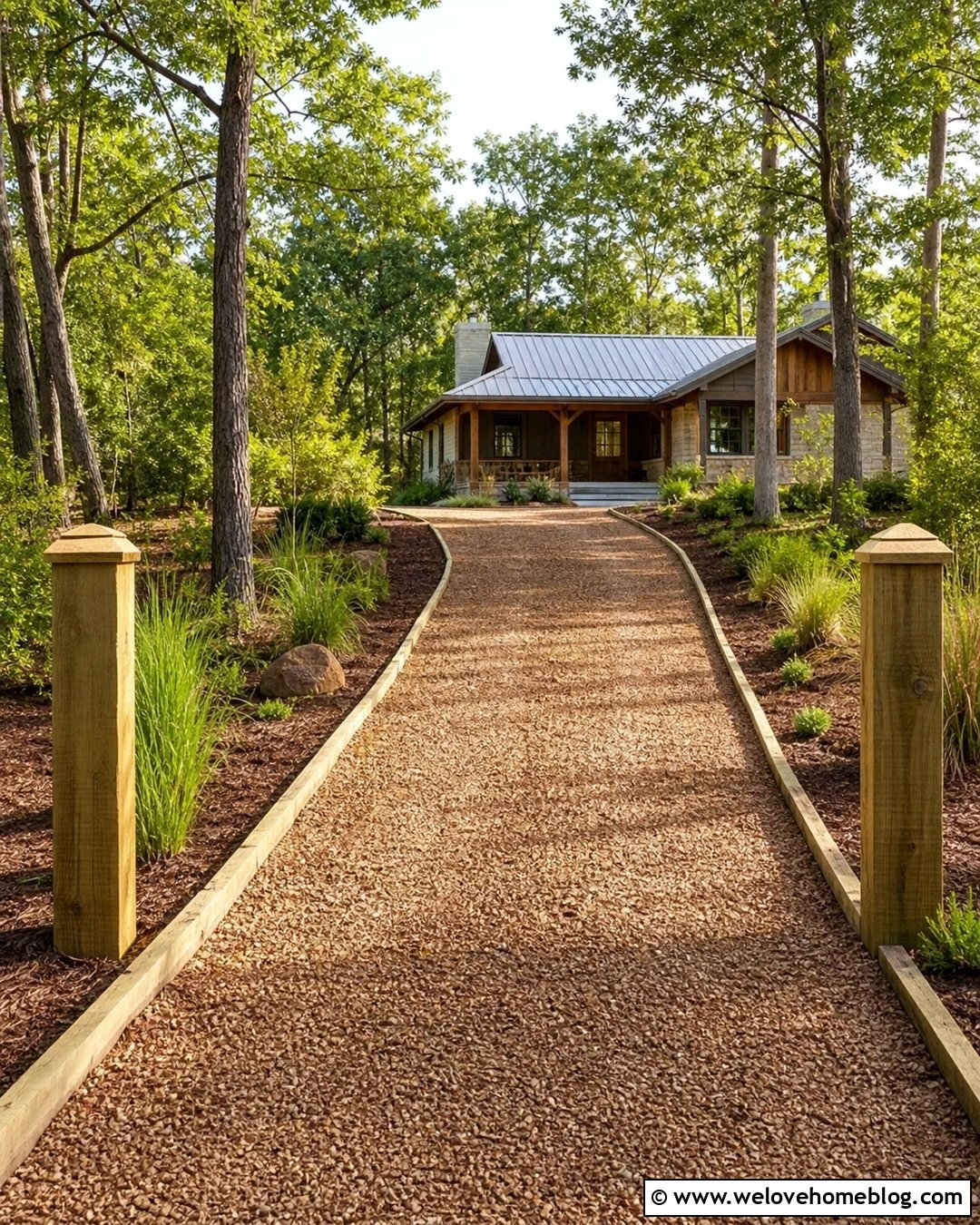
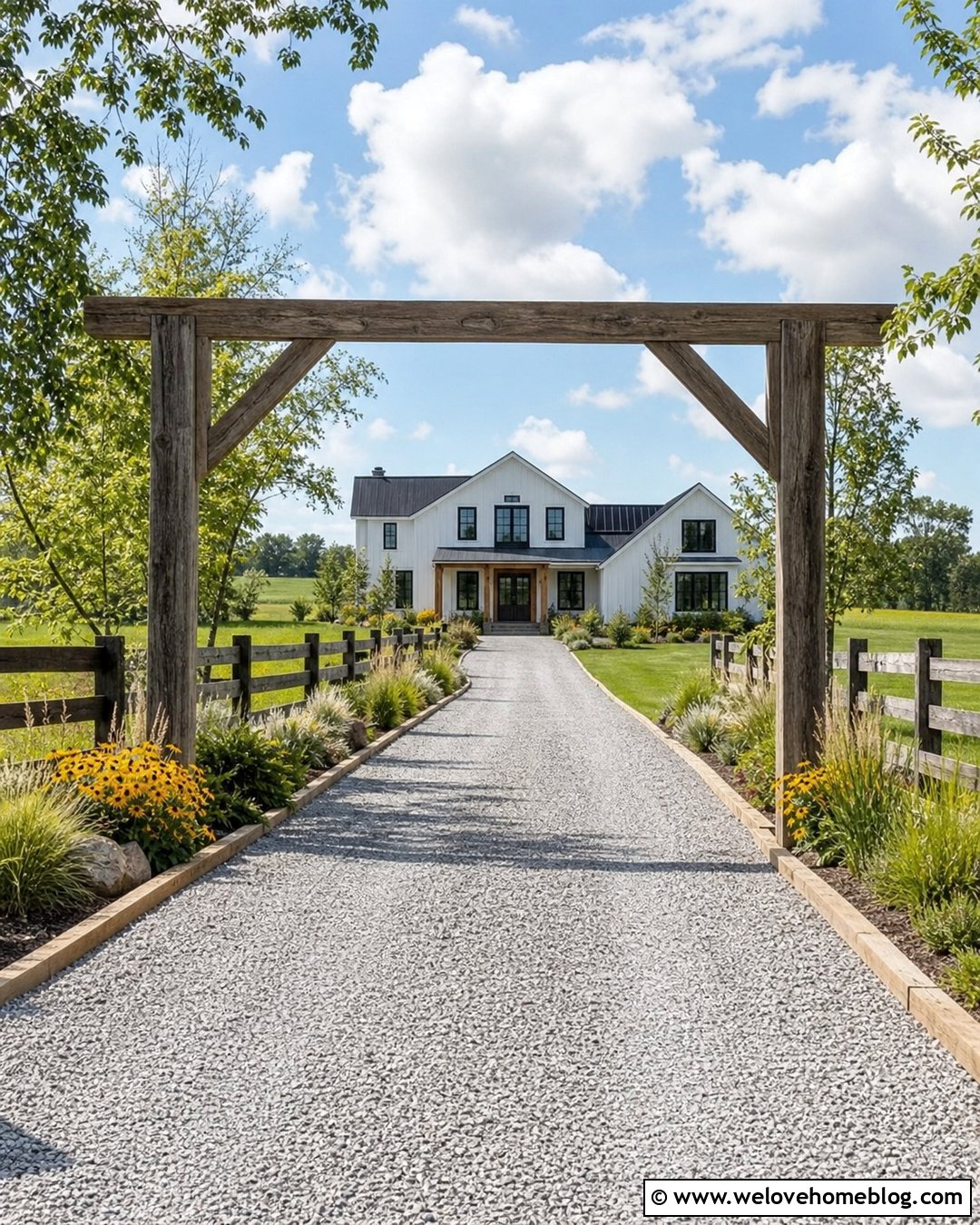
Pressure-treated landscape timber offers a simple, budget-conscious way to frame a straight gravel driveway. It looks most natural beside ranch houses, cabins, modern farmhouses, and wooded properties. Mark the desired border, remove the sod, and dig a level trench that allows part of each timber to sit below grade. Place the boards over compacted gravel, then secure them with long galvanized spikes or reinforcing rods driven through predrilled holes. Stagger joints where possible and seal freshly cut ends for added protection. Keep the timber high enough to contain the gravel but low enough to reduce tripping and tire hazards. Fill the drive with compacted crushed limestone or brown gravel. Mulched beds, ornamental grasses, and simple wooden entrance posts can complete the relaxed landscape.
5. How To Edge A Modern Driveway With Steel
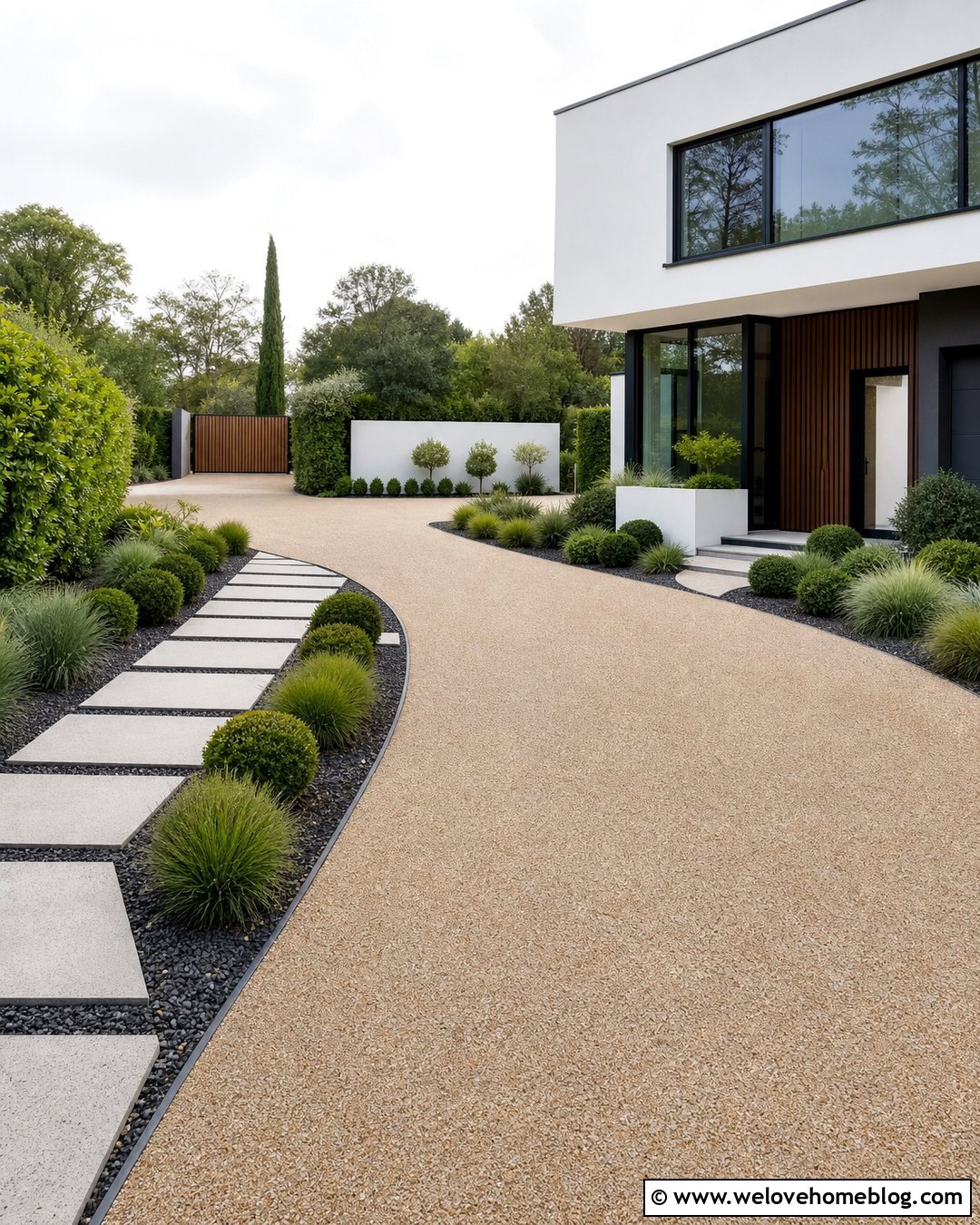
Slim steel edging creates a nearly invisible boundary for a minimalist residential driveway. It is particularly effective around resin-bound gravel, fine crushed stone, or decorative gravel where a bulky border would interrupt the clean design. Excavate a narrow channel, position the steel at a consistent height, and anchor it securely with the recommended stakes. Gentle curves should flow naturally instead of forming abrupt bends. Keep sharp upper edges away from areas where people regularly walk or open car doors. A dark powder-coated or weathering-steel finish can coordinate with black window frames and contemporary exterior details. Pair the edging with a curved buff resin-bound driveway, rectangular concrete stepping pads, clipped shrubs, and structured ornamental grasses. The resulting design feels precise while keeping attention on the house and landscaping.
6. How To Edge An Asphalt Driveway With Cobblestone
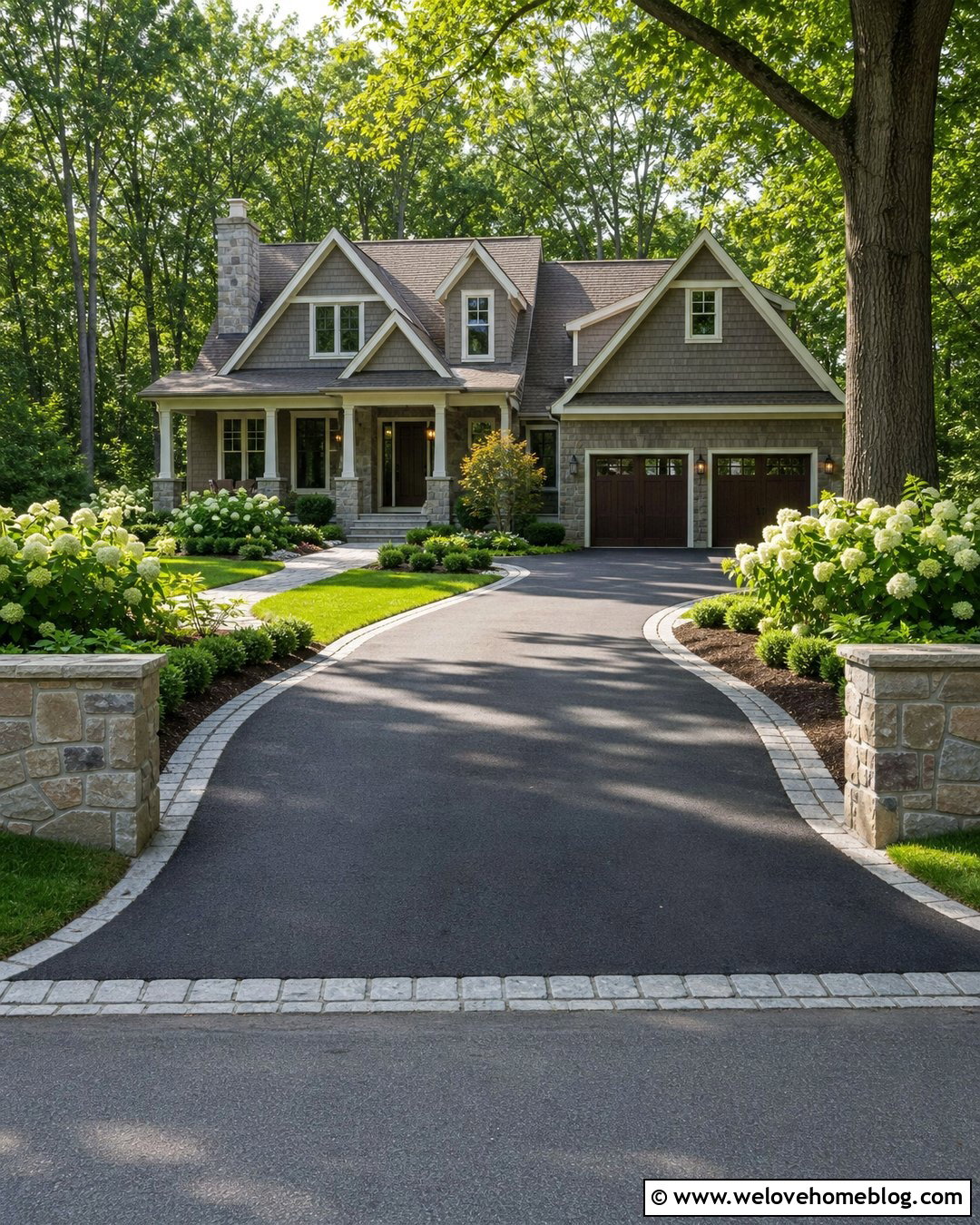
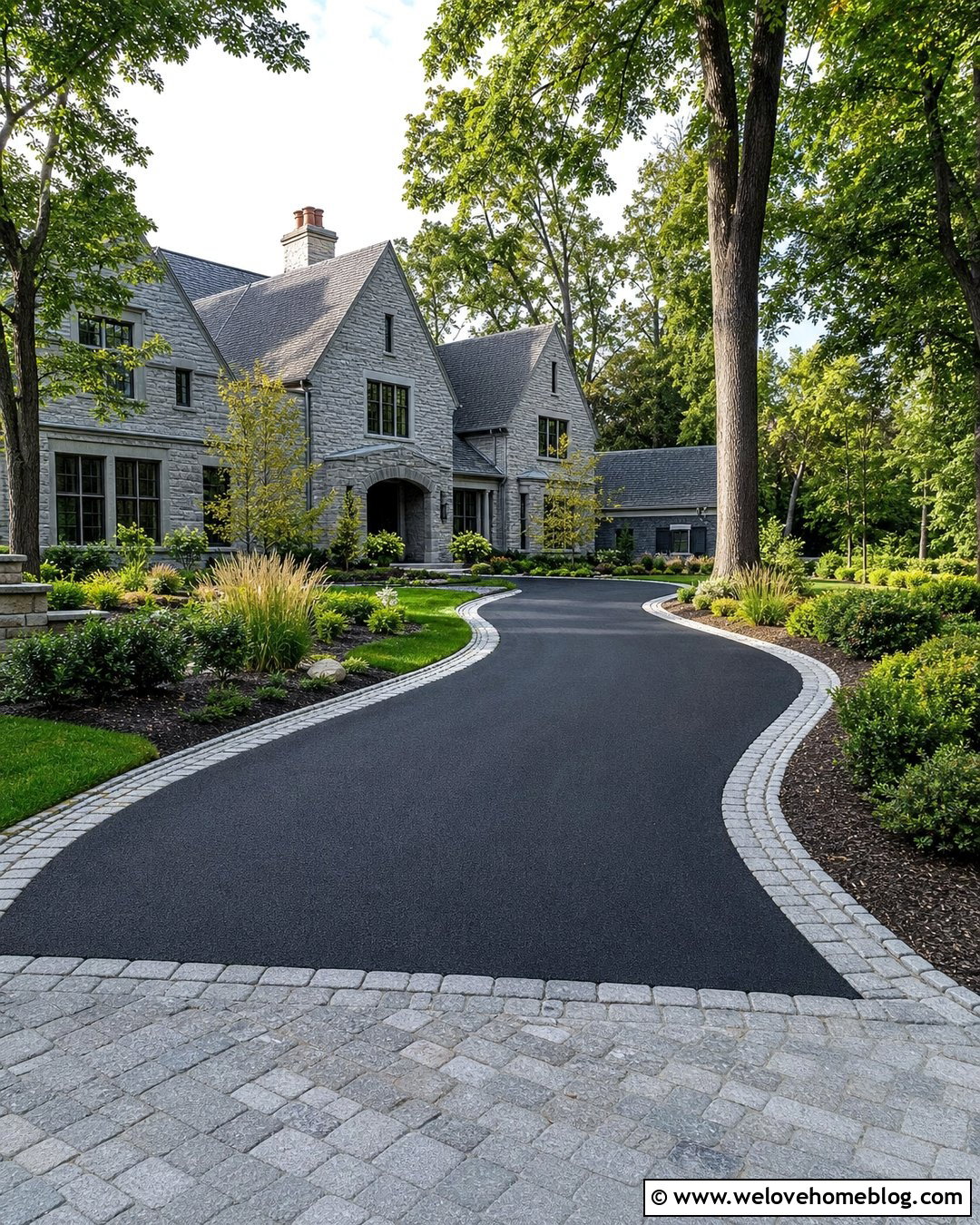
Cobblestone edging gives a basic asphalt driveway the character of a more expensive paved entrance. Start with a clean, accurately marked edge, especially if the existing asphalt is irregular. Dig a trench, compact the subbase, and set the cobblestones over concrete or a suitable bedding system. A single row creates subtle definition, while two or three rows form a stronger decorative band. Align the top near the asphalt surface along parking zones and raise it slightly where gravel or planting beds require containment. Repeat the cobblestone at the street apron to make the border feel integrated rather than added later. Dark asphalt, gray granite cobbles, curved planting beds, and flowering hydrangeas create an attractive transition toward a craftsman house. Properly installed stone also helps support vulnerable pavement edges. ()
7. How To Edge A Driveway With A Concrete Curb
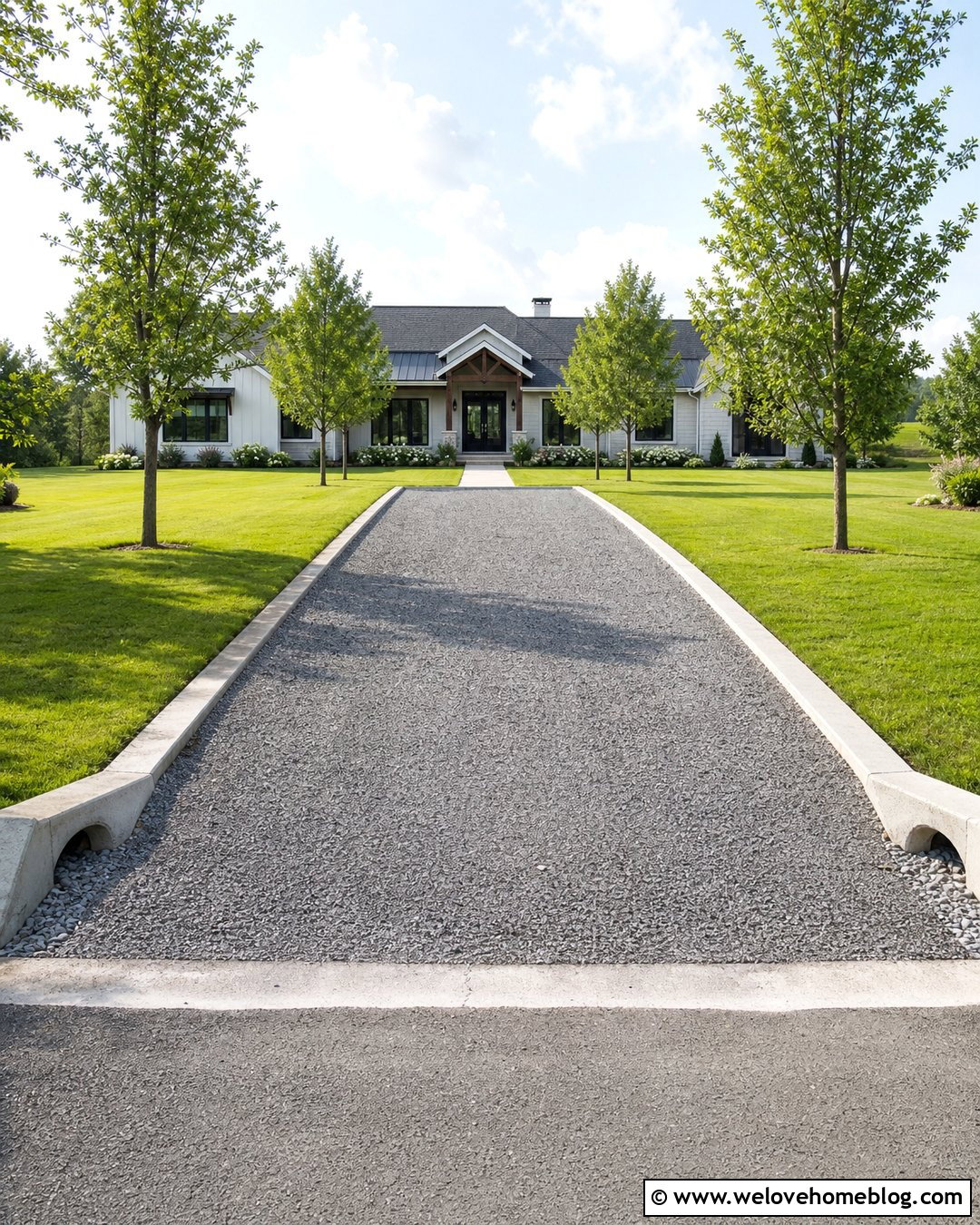
A poured concrete curb provides a strong border for driveways exposed to frequent traffic, erosion, or shifting gravel. Form the curb along a straight or sweeping driveway, following the existing grade so water can continue moving toward an appropriate drainage area. Excavate for a compacted base, build secure forms, and reinforce the curb where local conditions or project specifications require it. Use a rounded finishing tool on exposed corners to reduce chipping. The curb may match a gray concrete driveway or contrast with black asphalt and pale decorative stone. Keep it low near the garage and parking pad, then allow a slightly raised profile beside planting beds. Add a lawn, evenly spaced trees, and a concrete walkway to produce a clean suburban design with durable, easy-to-read boundaries.
8. How To Edge A Driveway With Natural Stone
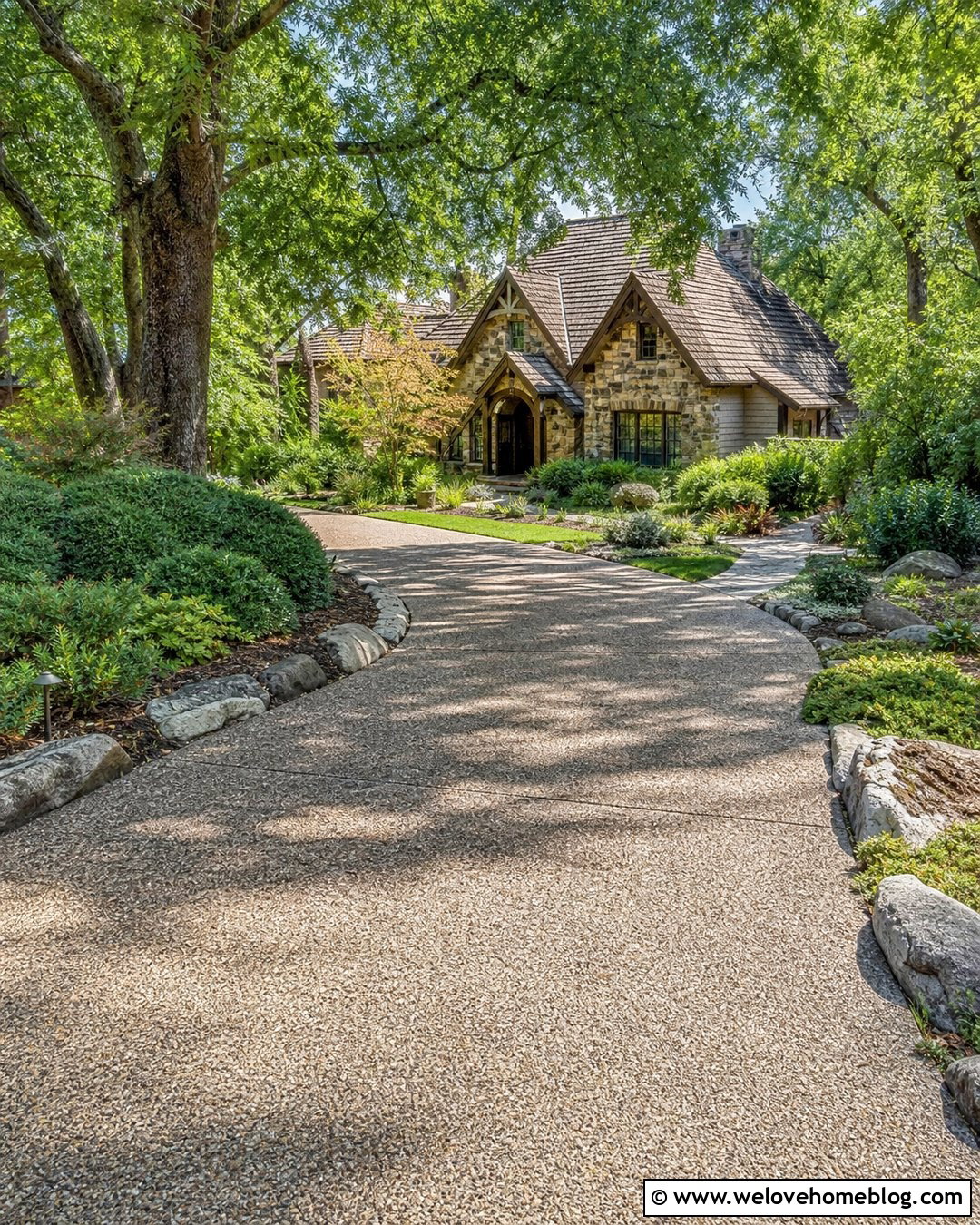
Irregular natural stone creates a relaxed driveway border that blends comfortably with mature landscaping. Select stones with reasonably flat tops and similar thicknesses, even when their faces and lengths vary. Along a curved exposed-aggregate driveway, excavate a broad trench and install compacted crushed stone beneath the border. Bed the stones securely and adjust each piece until the line feels organic but not uneven. Larger stones should sit near planting beds rather than tight parking areas where raised edges could interfere with doors or tires. Use gravel or soil to fill small exterior gaps, then plant creeping ground cover nearby without allowing it to spread across the driving surface. Fieldstone edging, woodland shrubs, shade trees, and a stone walkway work together beautifully around a rustic craftsman or cottage-style house.
9. How To Edge A Driveway With A Gravel Strip
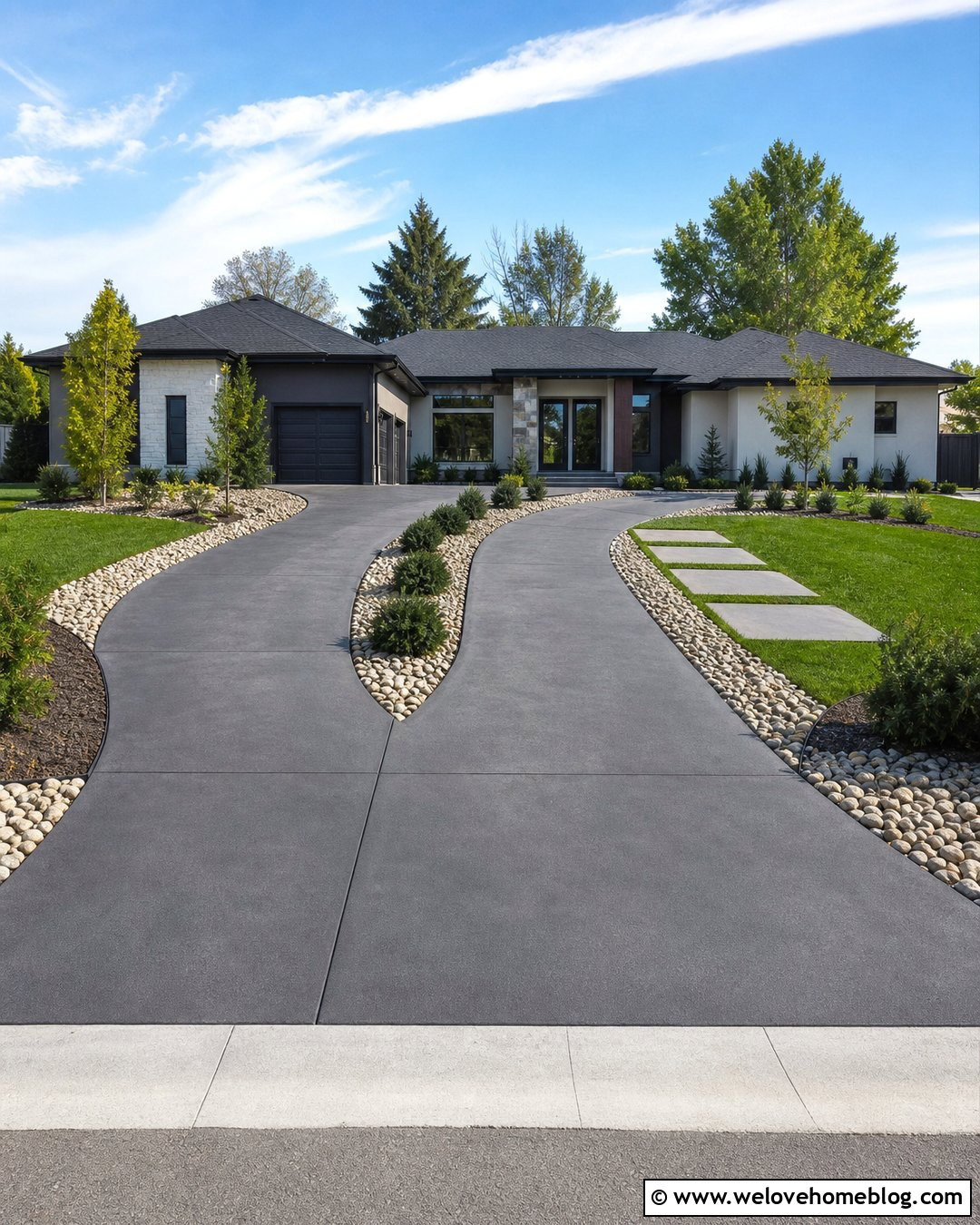
A decorative gravel strip offers an affordable transition between a solid driveway and surrounding lawn or planting beds. This design works particularly well beside light-gray poured concrete because the different textures create contrast without introducing a tall border. Excavate a strip approximately wide enough to remain visually noticeable, remove roots, and grade the soil away from structures. Install landscape fabric only where appropriate for the site, then add compacted crushed material and a finish layer of washed river rock or angular gravel. Use concealed steel, aluminum, or plastic restraint along the lawn side to prevent spreading. Choose stone that complements the home’s facade. Pale river rock, charcoal concrete, low evergreen shrubs, and rectangular walkway slabs can give a split driveway and modern ranch house a calm, coordinated appearance.
10. How To Edge A Circular Driveway With Brick
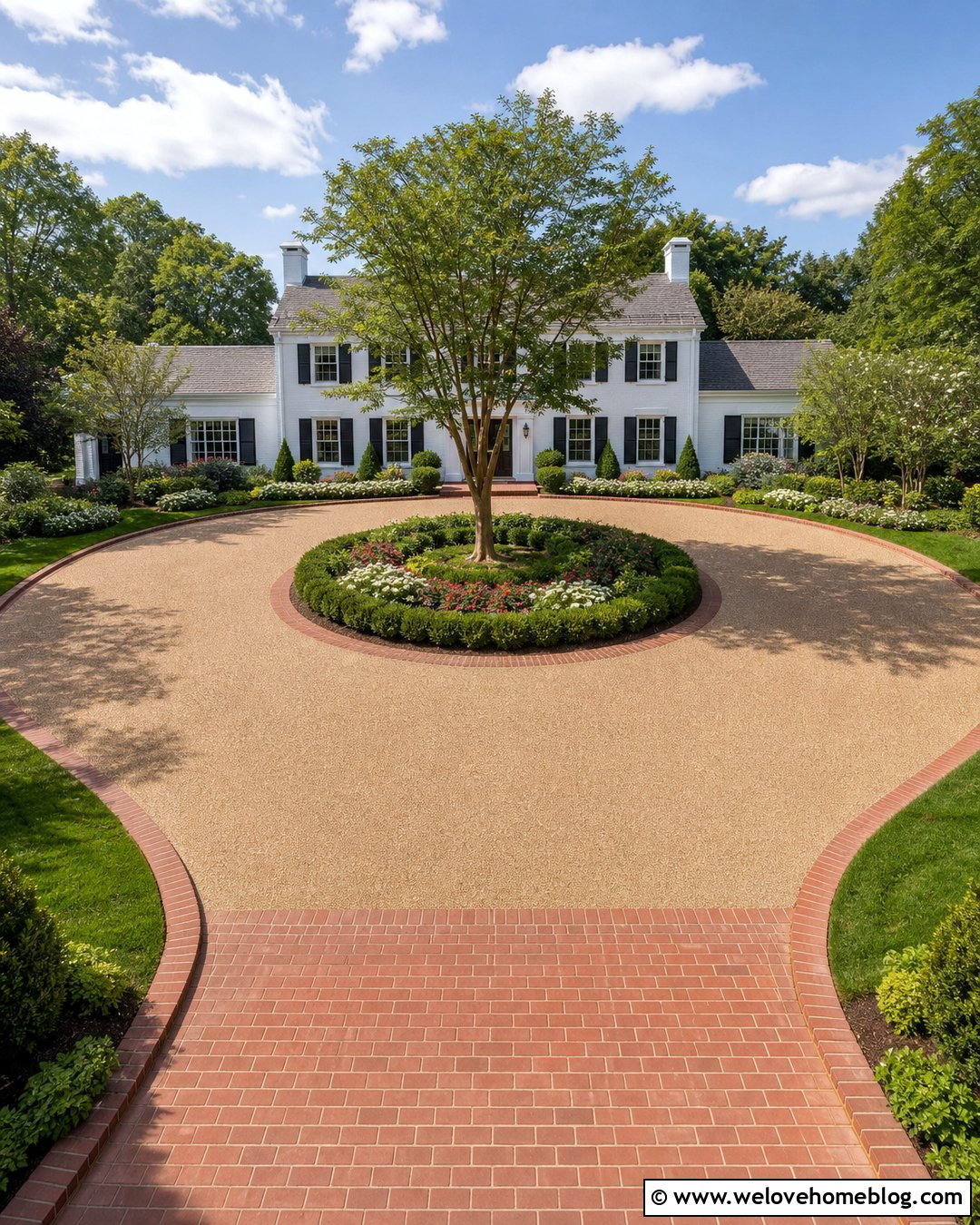
Brick edging helps a circular driveway hold a smooth, consistent curve while adding traditional curb appeal. Lay out the circle carefully with marking paint or flexible hoses before excavation. Use smaller bricks or tapered pavers where necessary to prevent oversized joints around tight sections. Build the border over a compacted aggregate base and bedding layer, then secure the outer edge with a suitable restraint or concrete haunch. A flush installation near vehicle paths makes turning easier, while a slightly raised inner border can separate the driveway from a landscaped center island. Combine warm clay brick with tan resin-bound gravel or exposed aggregate for noticeable contrast. Complete the circle with a specimen tree, low shrubs, seasonal flowers, and a brick walkway approaching a symmetrical colonial home.
11. How To Edge A Sloped Driveway With Granite Blocks
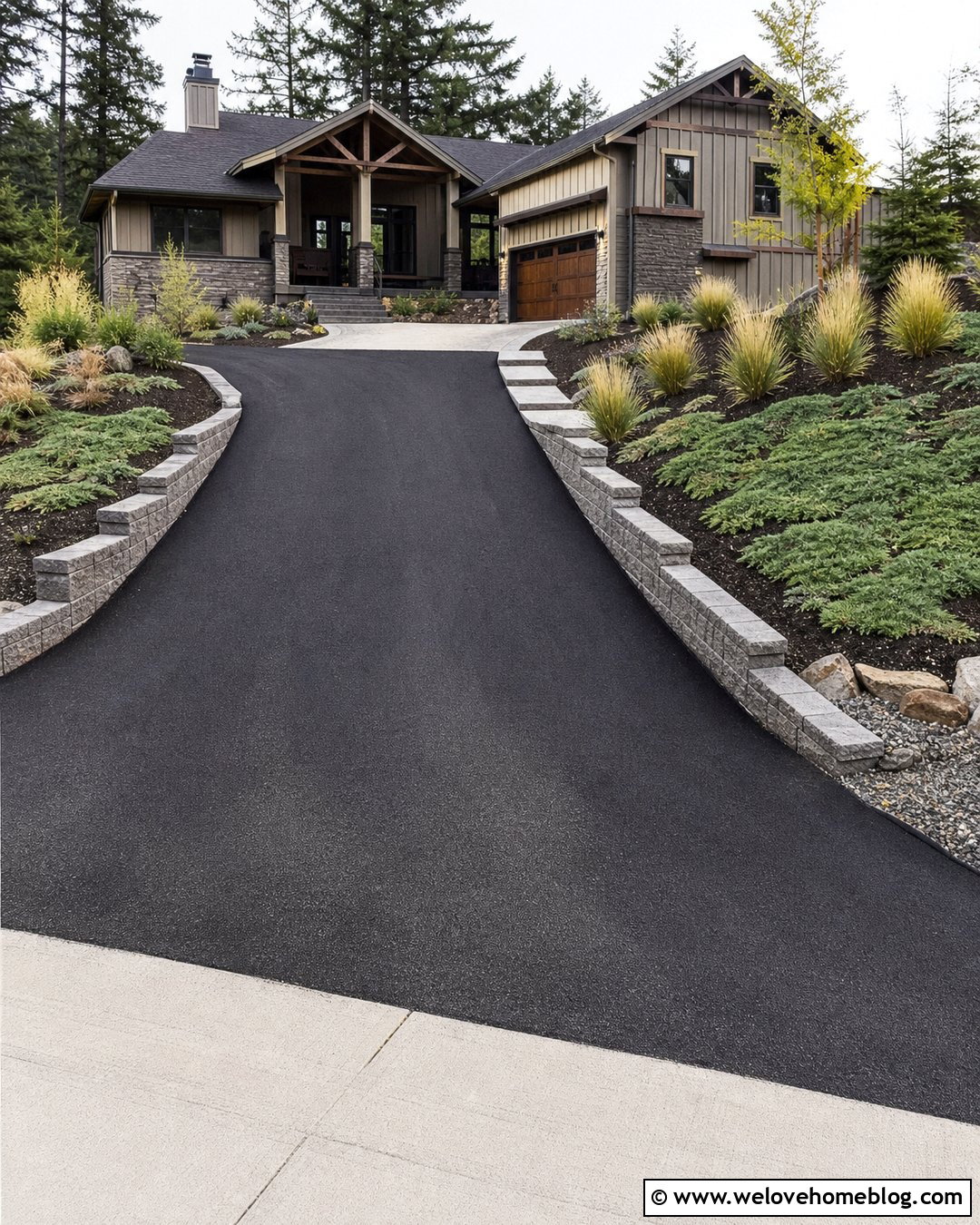
A sloped driveway needs edging that manages surface movement without trapping runoff in the wrong place. Granite blocks provide weight, durability, and a strong visual line along black asphalt or compacted gravel. Begin by studying where water currently travels, then plan openings, drainage channels, or lowered sections as needed. Step the blocks gradually with the slope rather than forcing an unnatural level line. Set them on a deep, well-compacted base and use concrete support where vehicle pressure is likely. Avoid placing a continuous raised curb where it could direct water toward the garage or neighboring property. A curved asphalt surface, gray granite border, erosion-resistant ground cover, and terraced planting beds create a practical hillside design. Professional grading may be necessary when runoff or slope stability is uncertain.
12. How To Edge A Driveway With Recycled Brick
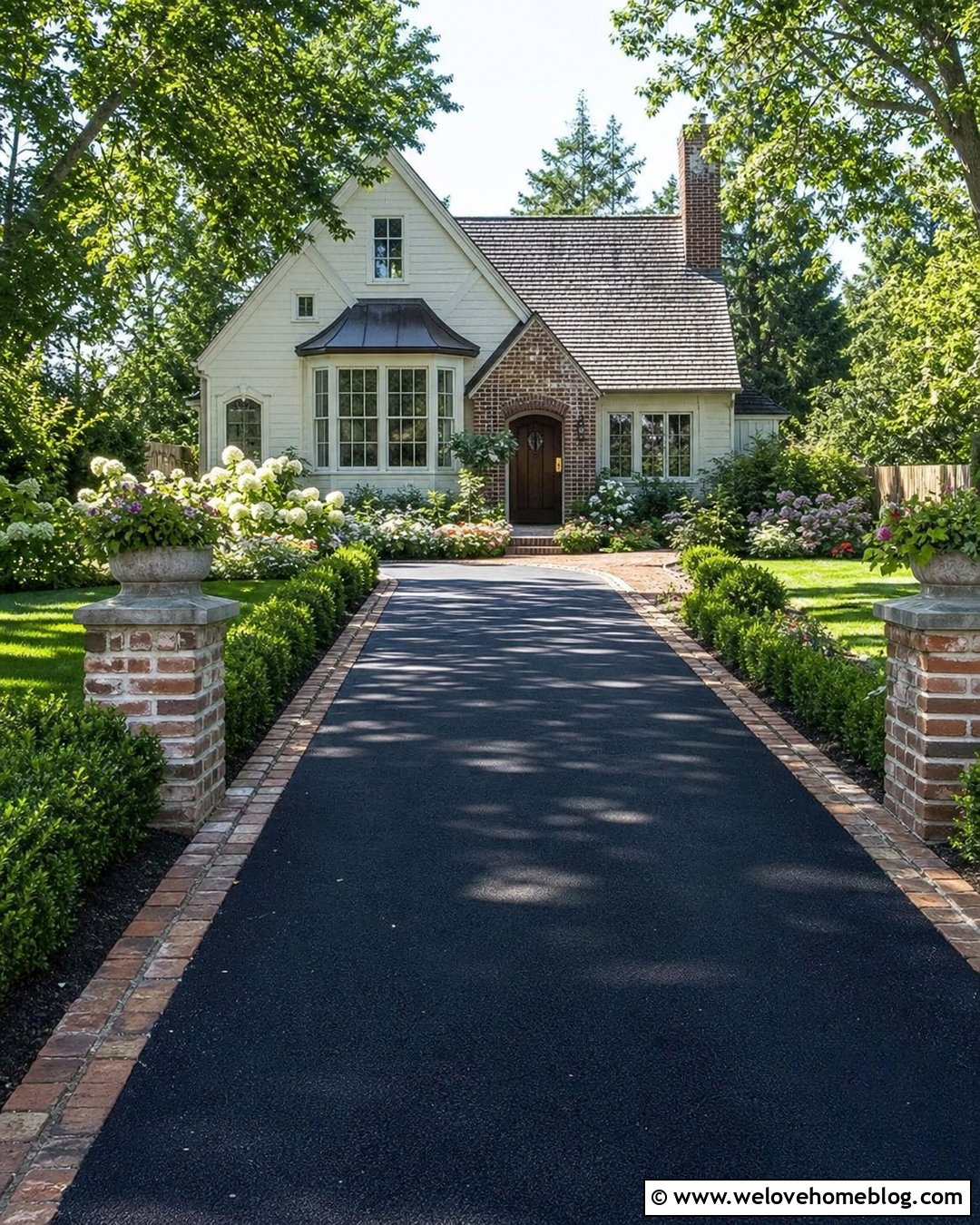
Reclaimed brick can bring warmth and history to a driveway while keeping material costs under control. Select solid pieces with limited cracking, then clean away dirt and old loose mortar. Arrange the bricks before installation so color variations are distributed naturally. A single flush row works beside concrete, while a wider basketweave or soldier-course band can add presence to dark asphalt. Excavate the border, compact a crushed-stone foundation, level the bedding layer, and install exterior restraint behind the bricks. Reused bricks often vary slightly in size, so check the line frequently rather than relying on identical joints. Pair the finished edge with a straight asphalt driveway, cottage planting beds, informal boxwood, and a brick front path. The variations will look deliberate when repeated elsewhere in the landscape.
13. How To Edge A Driveway With Raised Flower Beds
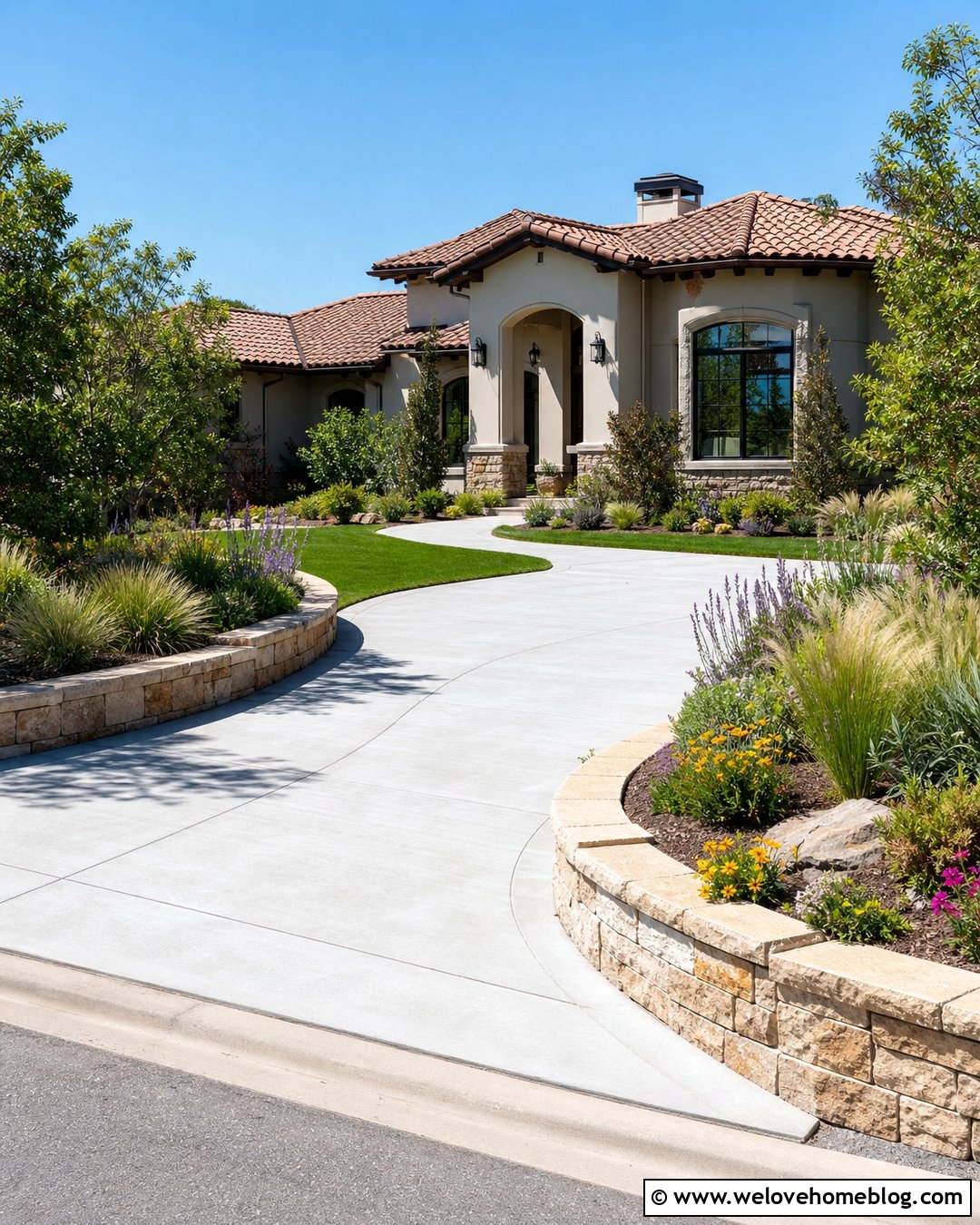
Raised flower beds can define a driveway while turning a hard boundary into a prominent landscape feature. Build low beds with brick, stone, or concrete block that complements both the driveway and house. Keep walls away from tight turning areas and leave comfortable clearance near doors, parking spaces, and trash-bin routes. Include openings or drainage provisions so water does not collect against the pavement. Along a wide concrete driveway, low tan stone walls can follow gentle curves toward the entrance. Fill the beds with compact shrubs, ornamental grasses, and flowers that tolerate reflected heat and occasional road spray. Avoid thorny, brittle, or oversized plants beside frequently used sections. Repeating the wall material at the walkway or porch creates a complete design rather than making the beds appear like unrelated containers.
14. How To Edge A Driveway With Landscape Timbers
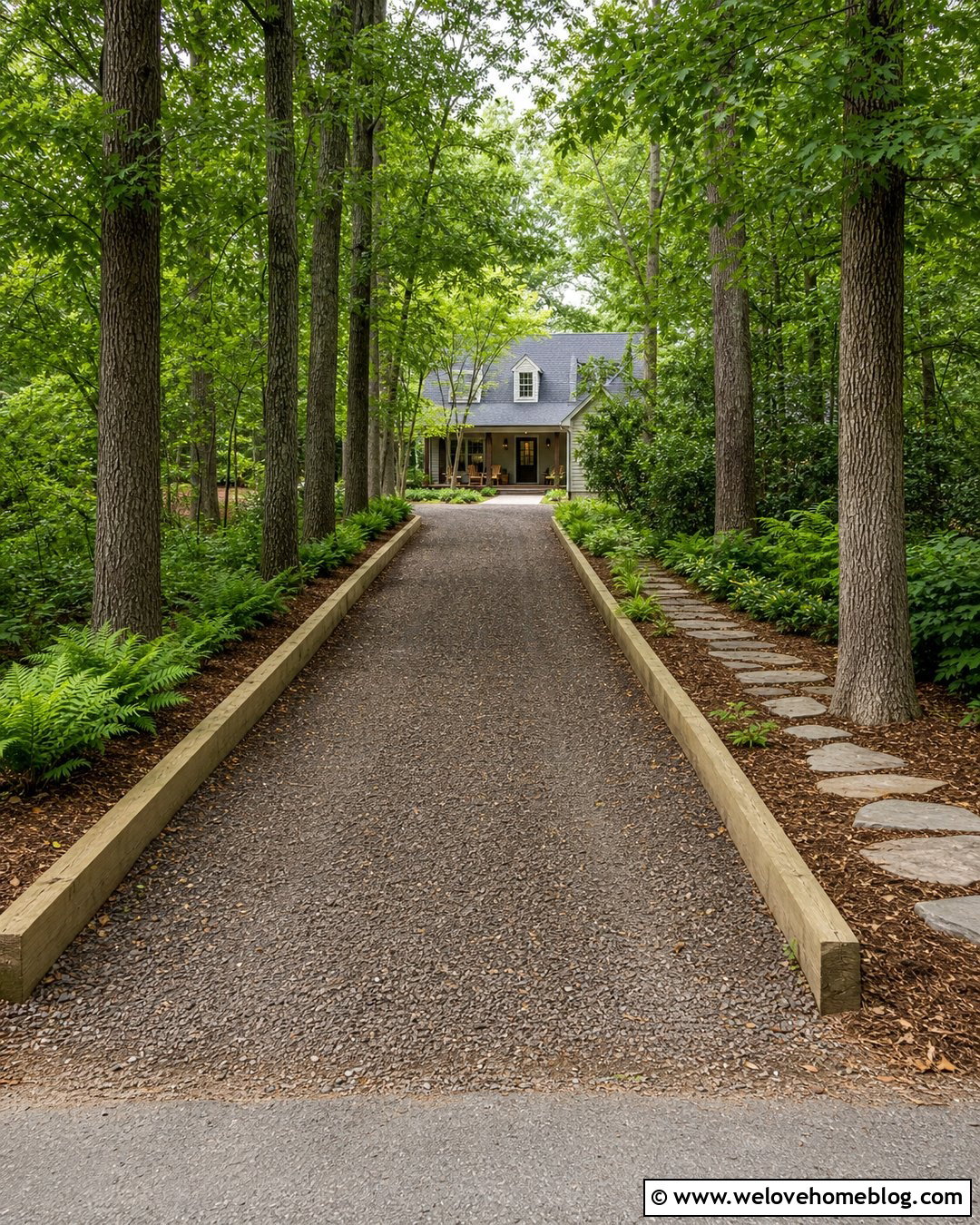
Landscape timbers can create a substantial border where a driveway meets deep mulch beds or a wooded front yard. Unlike thin boards, square timbers deliver a more visible edge and can manage gentle changes in grade. Dig a flat-bottomed trench, add compacted stone, and position the timbers in straight runs or short angled segments. Secure them with galvanized spikes or rebar, following appropriate safety and construction practices. If two courses are required, stagger the joints and fasten the layers together. Use pressure-treated lumber rated for ground contact, and protect cut ends according to the manufacturer’s instructions. Brown crushed-stone gravel, timber edging, fern-filled beds, and mature shade trees produce a cohesive approach to a country home. Keep the upper surface below vulnerable vehicle components and snow-removal equipment.
15. How To Edge A Driveway With Concrete Pavers
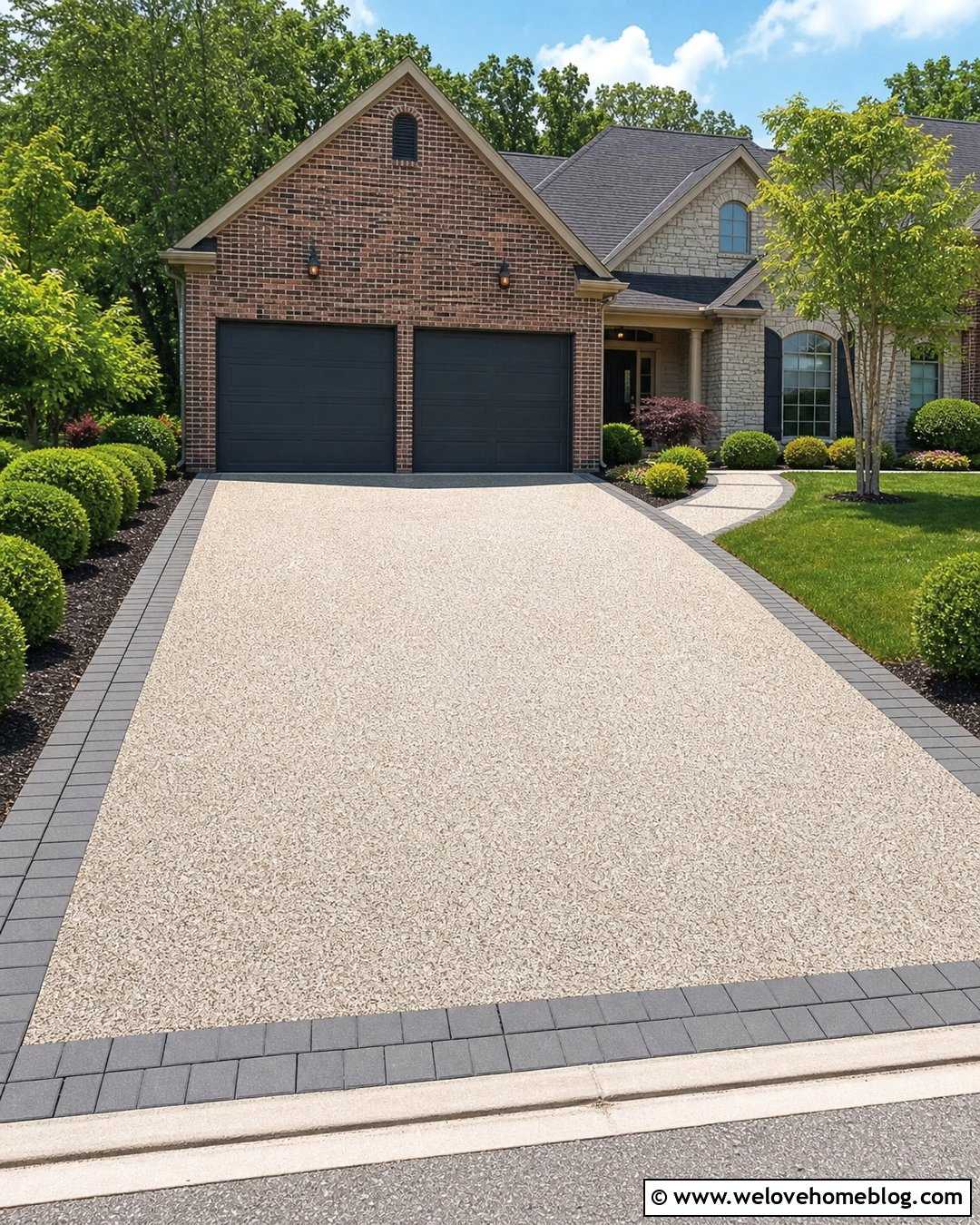
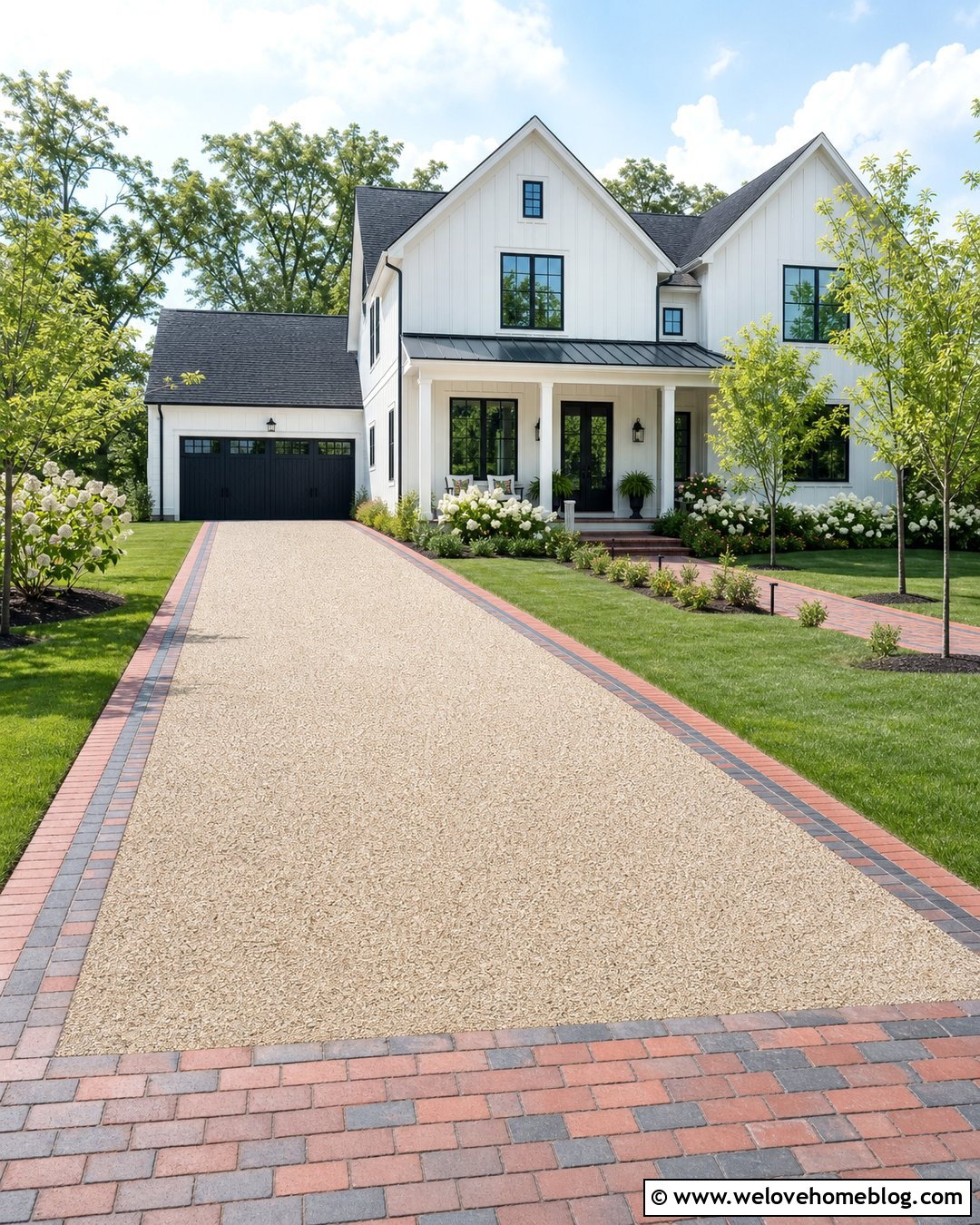
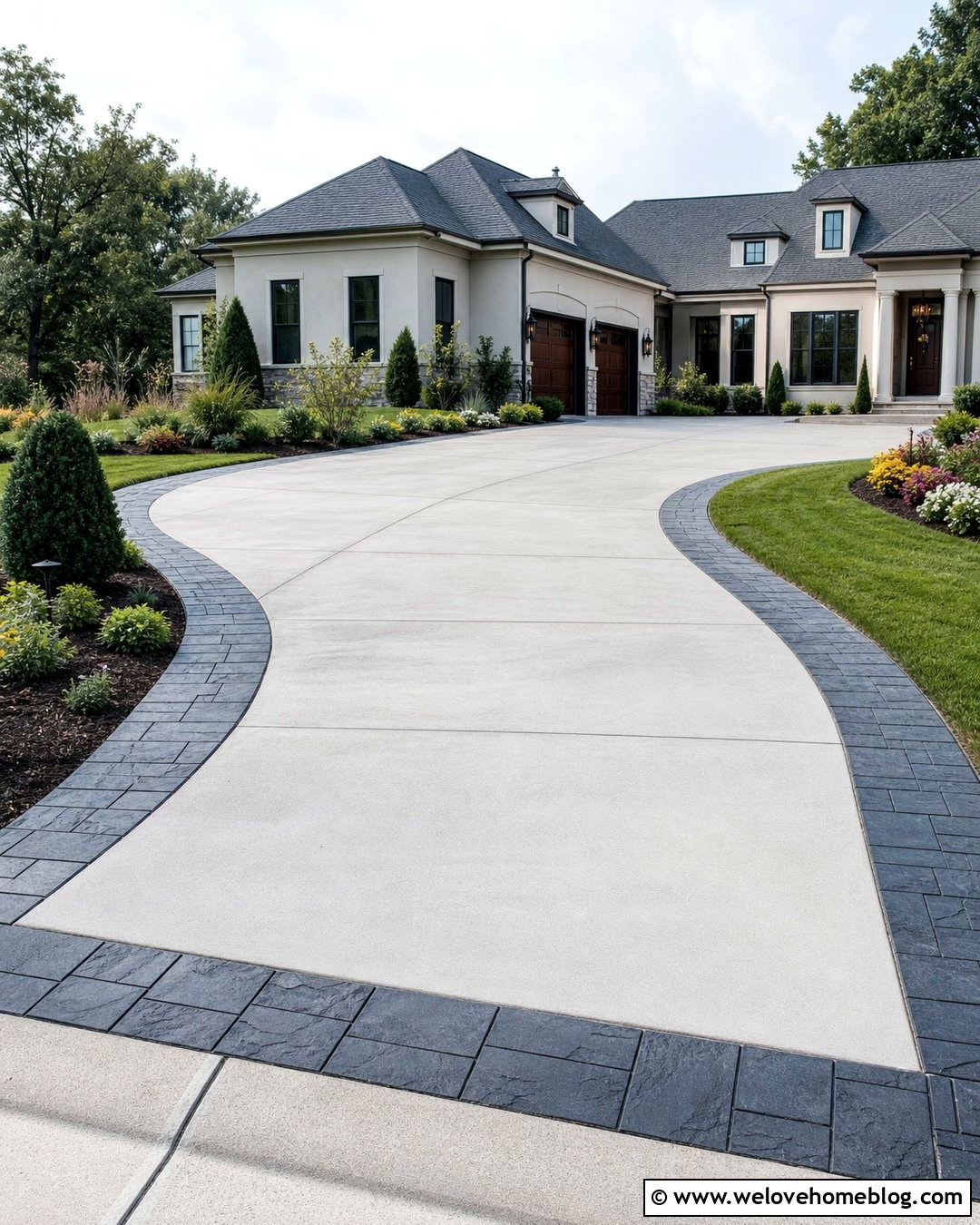
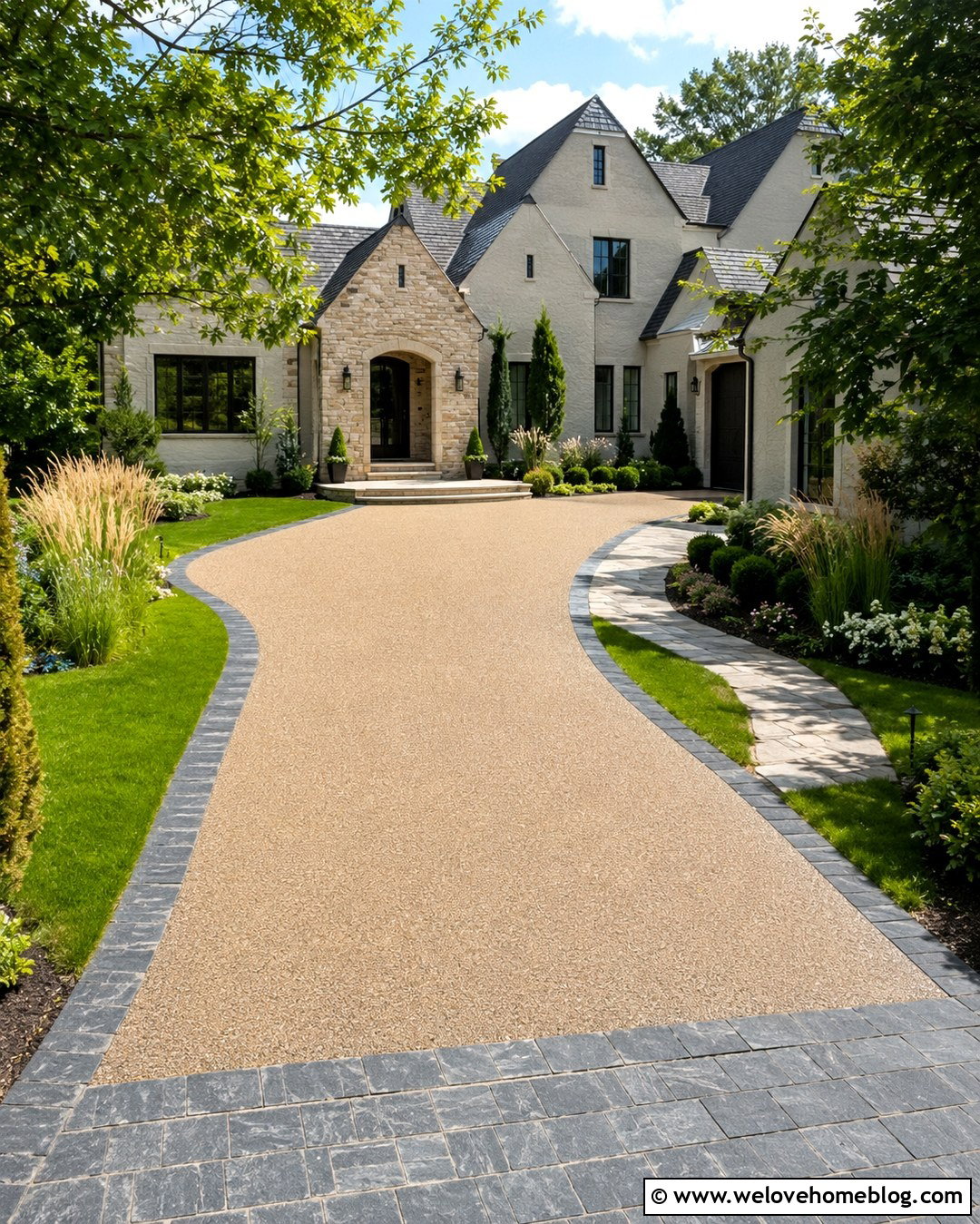
Concrete pavers offer extensive choices in color, size, and layout, making them suitable for nearly any driveway surface. For a broad suburban driveway, install a double row of charcoal rectangular pavers beside pale exposed aggregate. Mark the border, excavate to a consistent depth, and compact the aggregate base in layers. Screed the bedding material, position the pavers, and check alignment with a string line. Restrain the outer edge using a driveway-rated system supported on the prepared base. Fill joints with the specified sand and compact the finished band as recommended. Repeat the same paver at the sidewalk connection and garage threshold for continuity. Neatly trimmed lawn, rounded evergreen shrubs, and a paver walkway can connect the border visually with a brick-front traditional house. ()
16. How To Edge A Curved Driveway With Metal
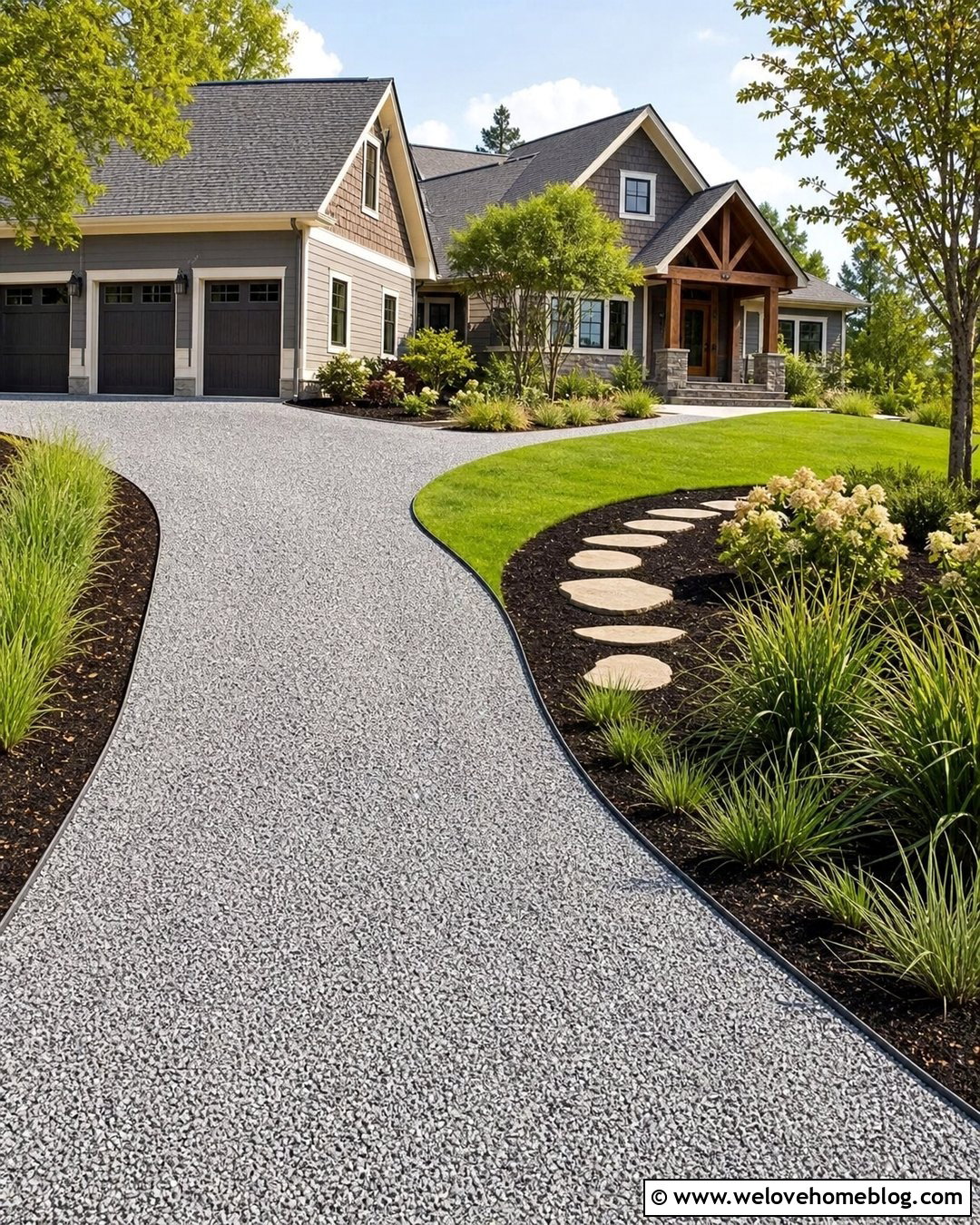
Flexible metal edging follows sweeping driveway curves without the wide joints sometimes created by rigid blocks. It works best where the edging mainly separates materials rather than supporting constant tire traffic. Lay out the curve with a garden hose, then mark and excavate the channel. Join metal sections securely and install stakes at the manufacturer’s required spacing, adding support around tighter curves. Position the top close to grade for a subtle appearance. On a curved gray gravel driveway, black steel edging can hold the stone while creating a clean division from mulched beds. Add flowing masses of ornamental grasses, compact flowering shrubs, and a curved stepping-stone path. The smooth border, layered planting, and contemporary craftsman facade will make the full approach feel intentional and balanced.
17. How To Edge A Paver Driveway With Hidden Restraint
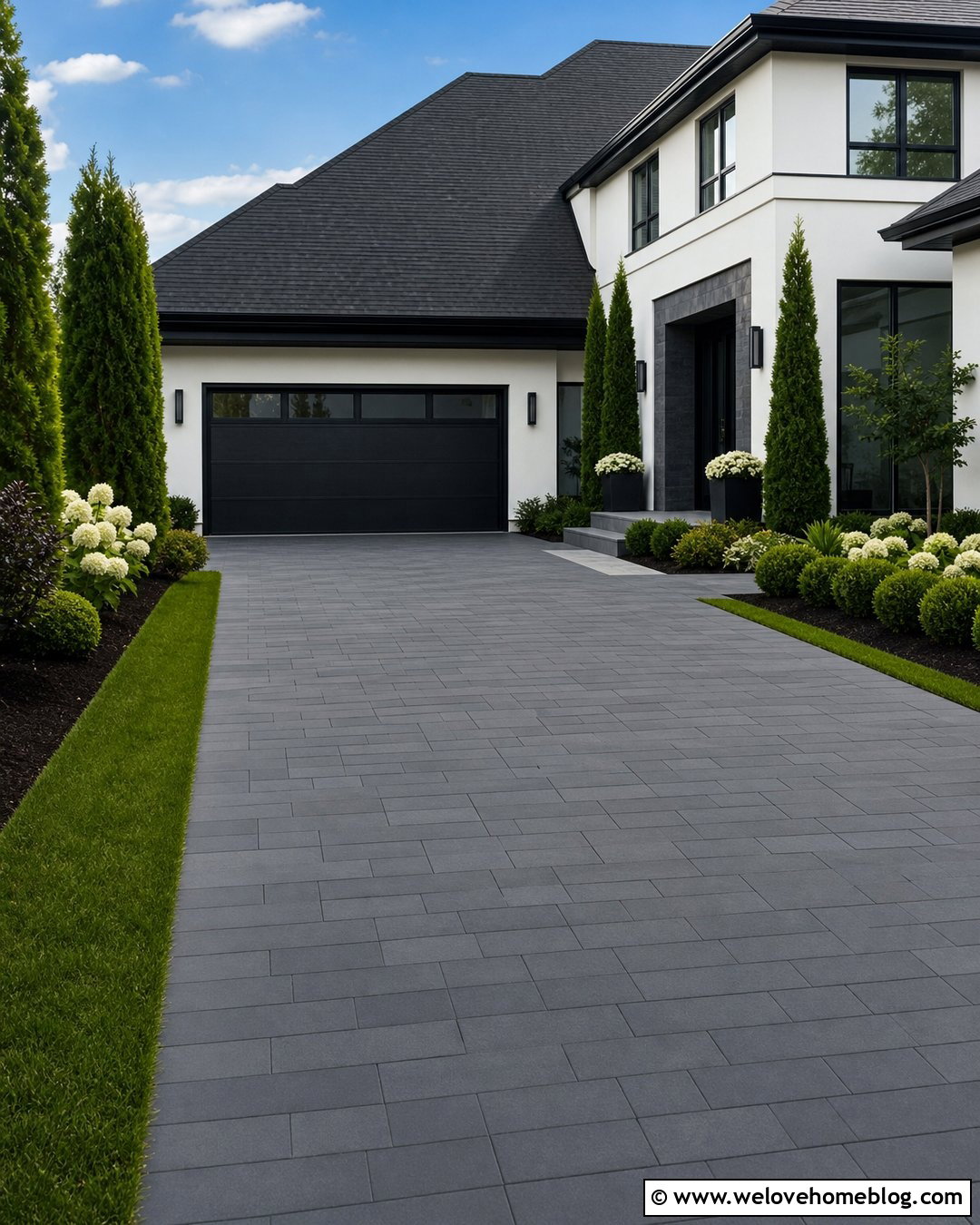
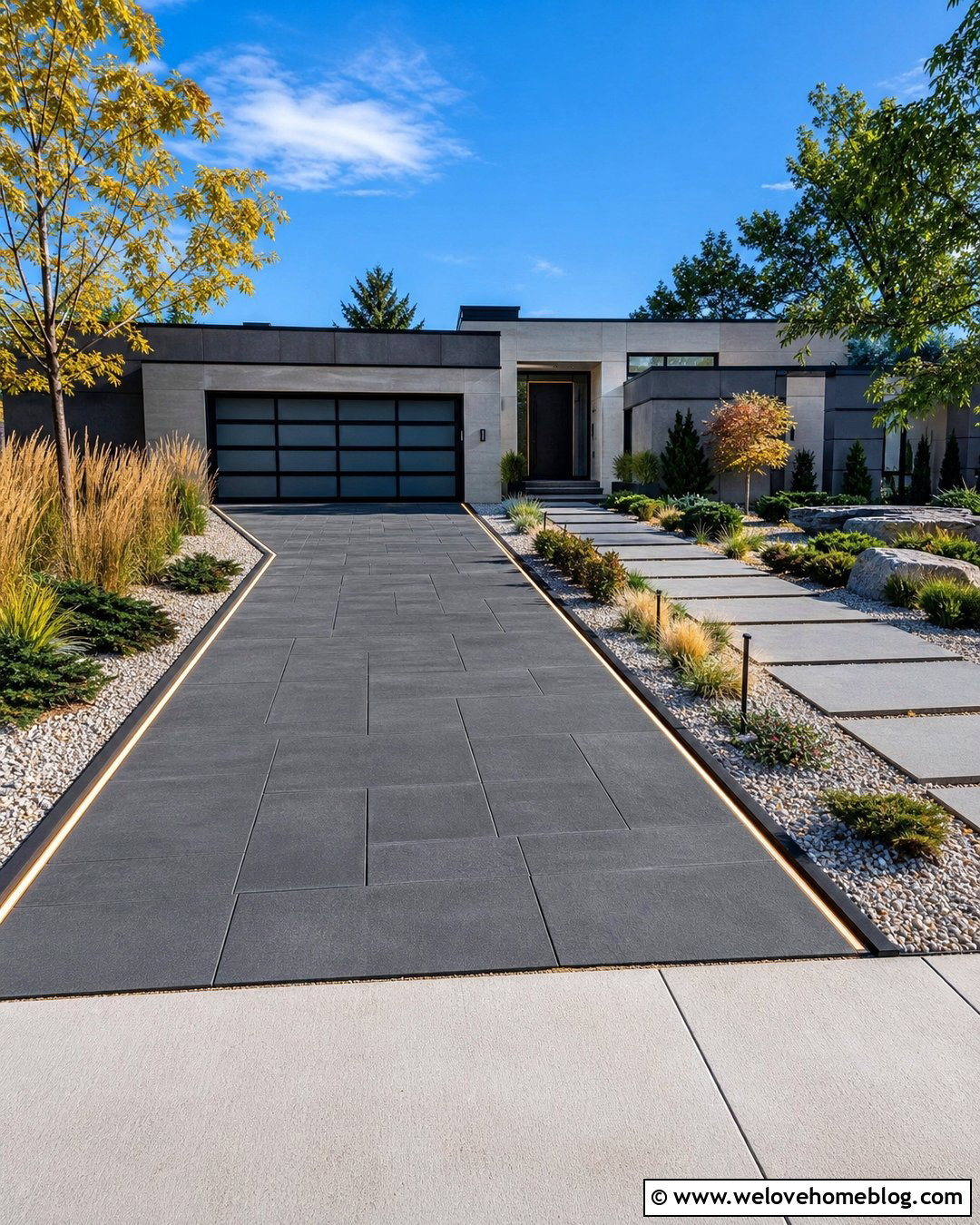
A paver driveway can appear borderless while still receiving the structural support it needs. Hidden plastic, aluminum, metal, or concrete restraint is installed against the outside pavers and covered by soil, sod, or mulch. The restraint must sit on the prepared, compacted base rather than loose topsoil. Secure it according to the system specifications, especially around curves and turning areas. This approach suits modern homes where a visible contrasting band would interrupt the minimal design. Use large-format charcoal concrete pavers in a straight layout, with the lawn meeting the outside edge cleanly. Add rectangular planting beds, columnar evergreens, and a matching paver walkway. Although the restraint disappears after landscaping, it helps prevent the outside units from spreading under vehicle loads. ()
18. How To Edge A Driveway With A Mowing Strip
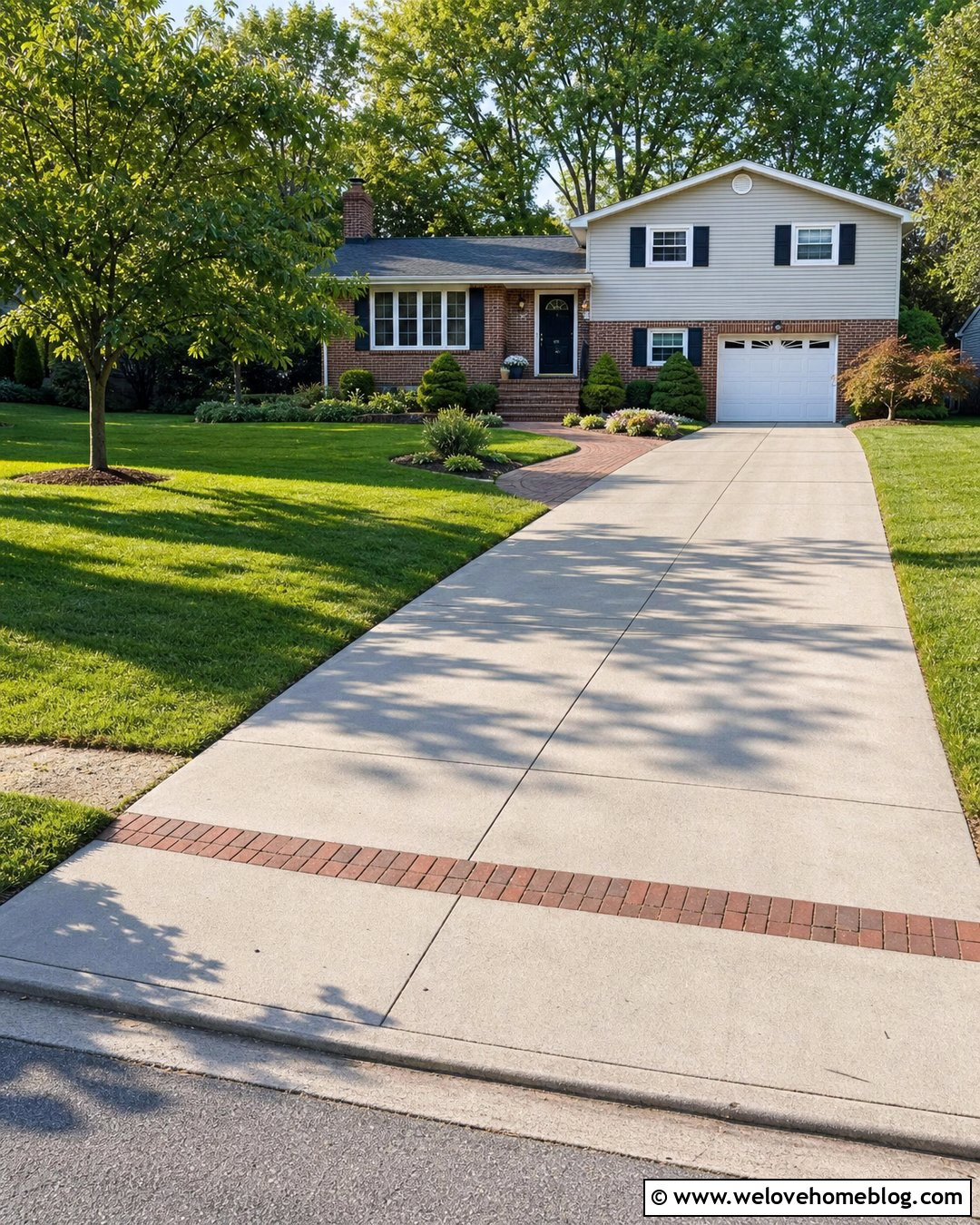
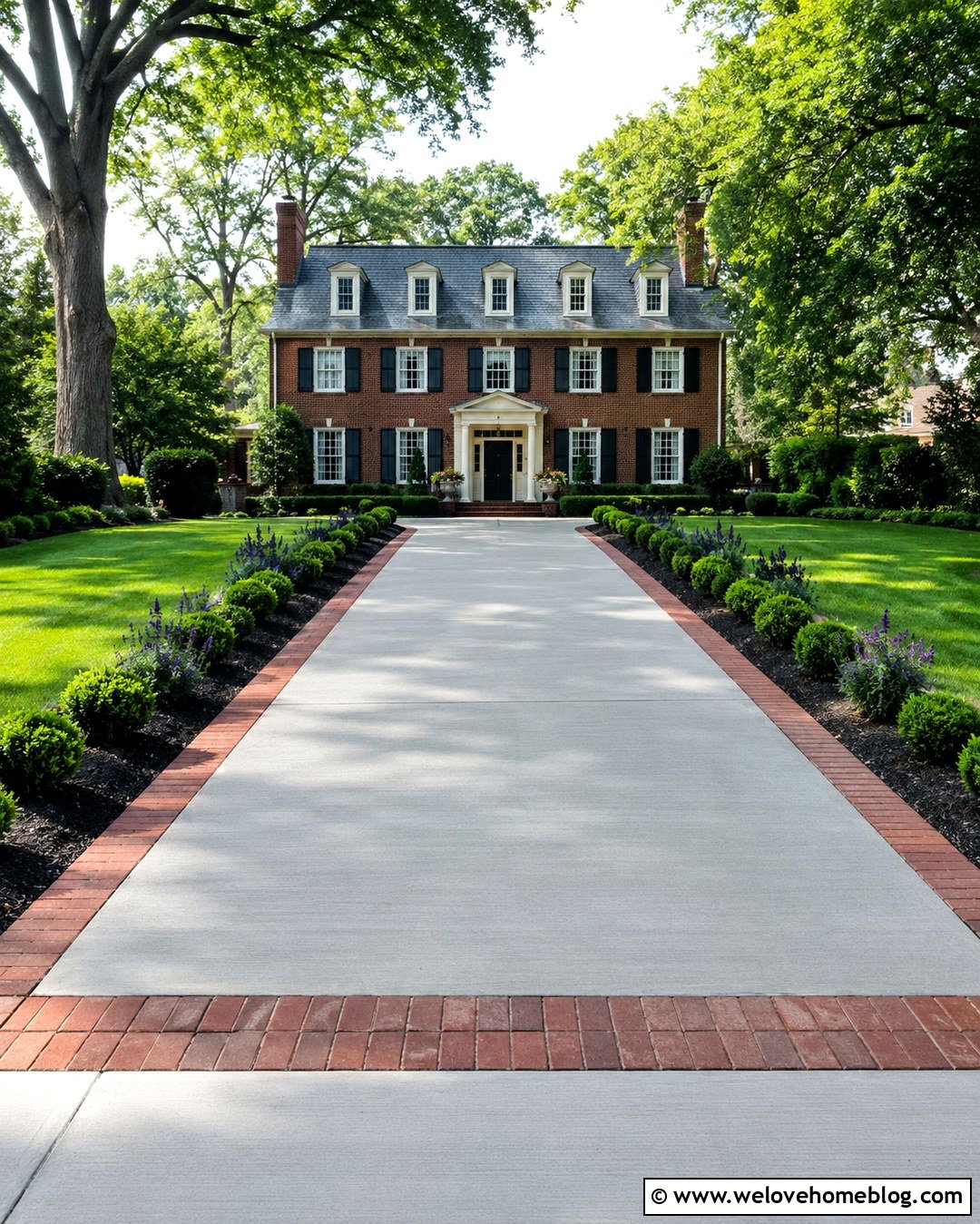
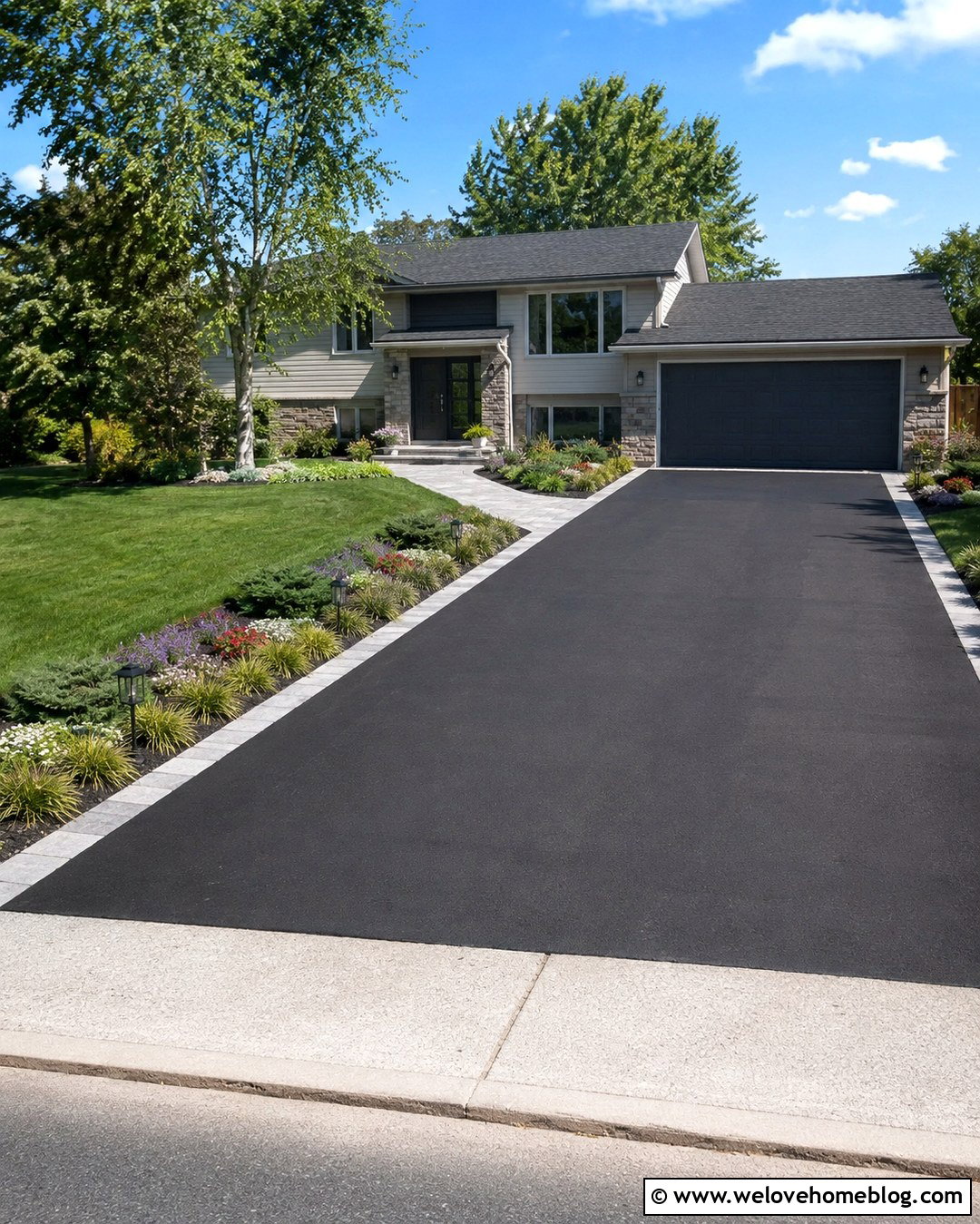
A flush mowing strip simplifies lawn care by creating a hard surface that mower wheels can travel over. Install a narrow band of brick, pavers, or poured concrete directly beside the driveway. Keep the strip level with the lawn and close to the driveway surface so it does not become a tripping point or interfere with drainage. For a traditional concrete drive, use red brick pavers laid perpendicular to the edge over compacted base and bedding sand. A secure exterior restraint prevents the units from shifting toward the grass. Extend the strip around nearby planting beds for a consistent landscape detail. Straight concrete, flush brick, neatly cut turf, small shade trees, and foundation plantings create a practical complete look for a ranch or split-level home.
19. How To Edge A Driveway Entrance With Stone Pillars
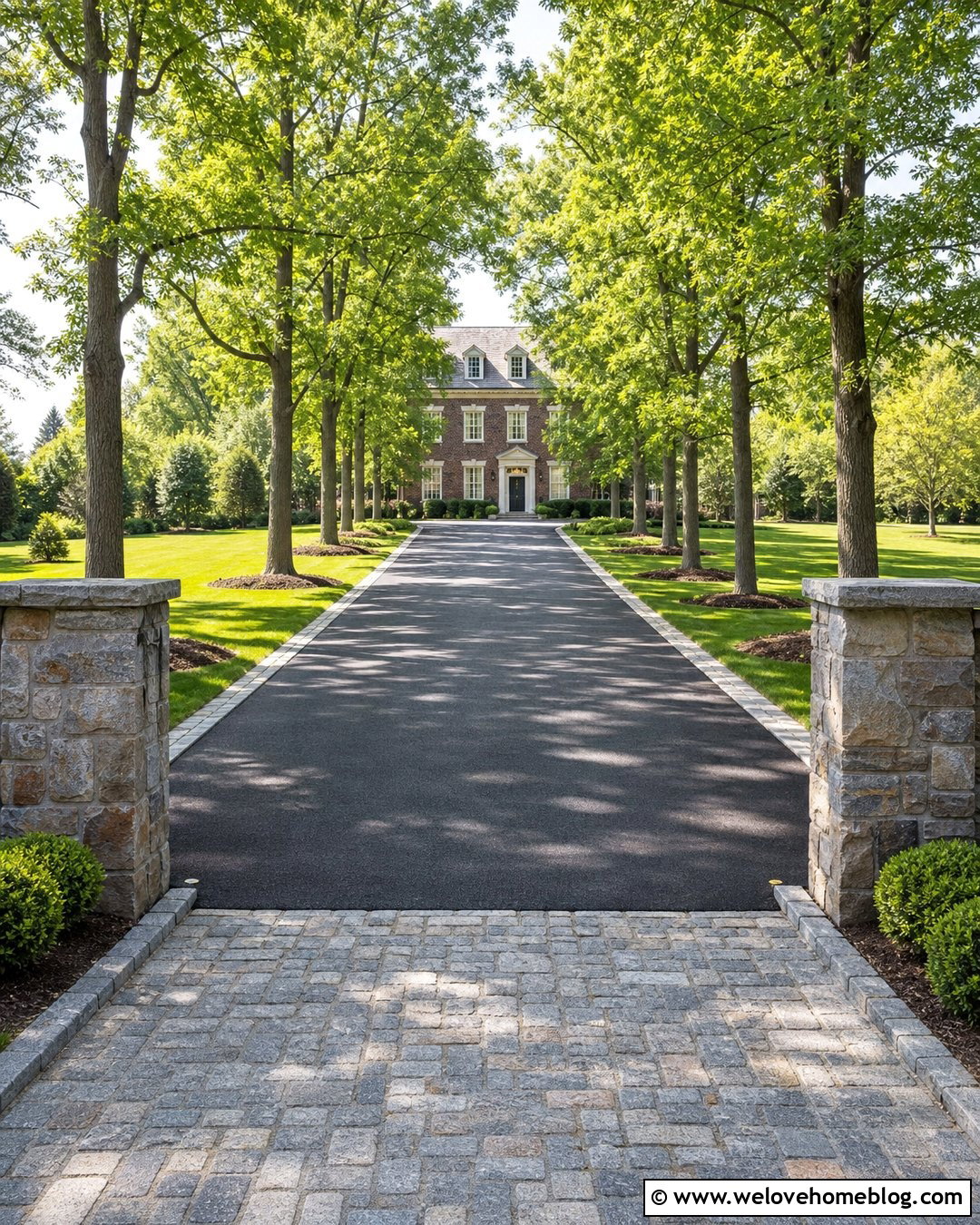
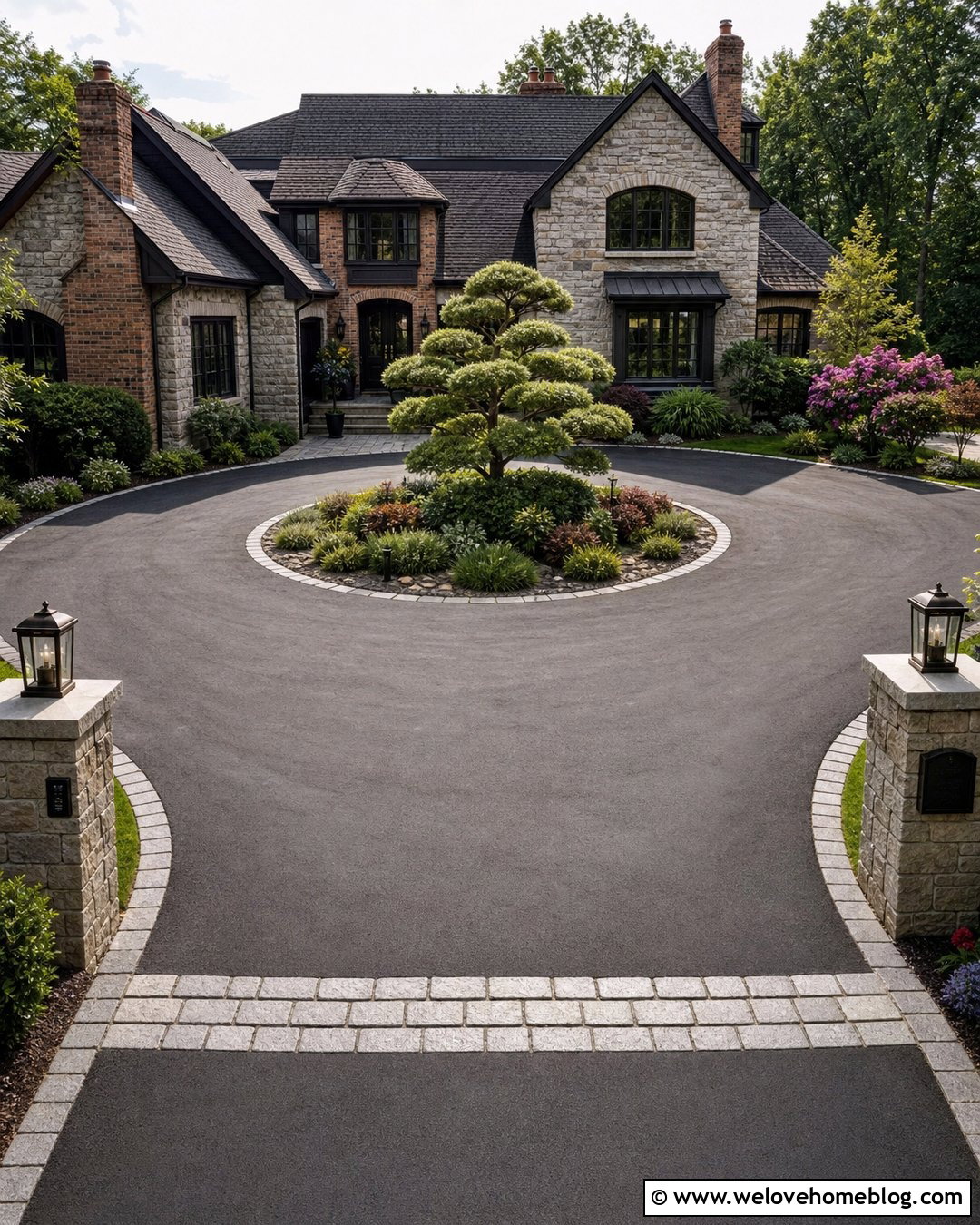
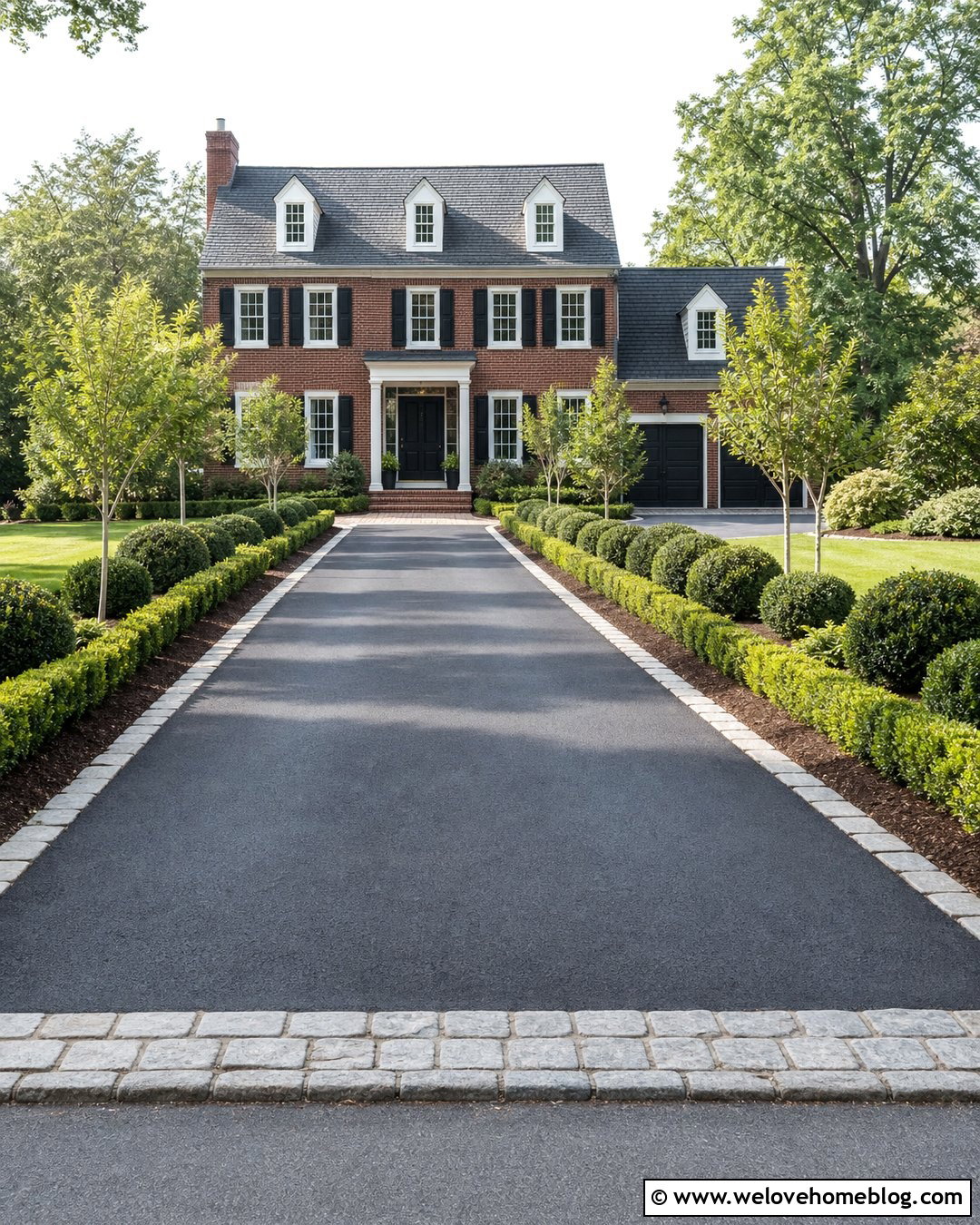
The driveway entrance deserves an edge treatment that clearly announces the transition from the street to the home. Start with a durable stone or paver border running along both sides of the driveway, then connect it visually to low masonry pillars. Keep pillars outside required visibility areas and far enough from the pavement for comfortable vehicle clearance. Local setback, utility, and right-of-way requirements should be checked before construction. A cobblestone apron can bridge the street and a long asphalt driveway, while granite edging continues toward the house. Add low shrubs around the pillars rather than tall plants that restrict views. Matching stone caps, a simple address plaque, lawn, and evenly spaced trees create a balanced entrance for a colonial, Georgian, or traditional brick home.
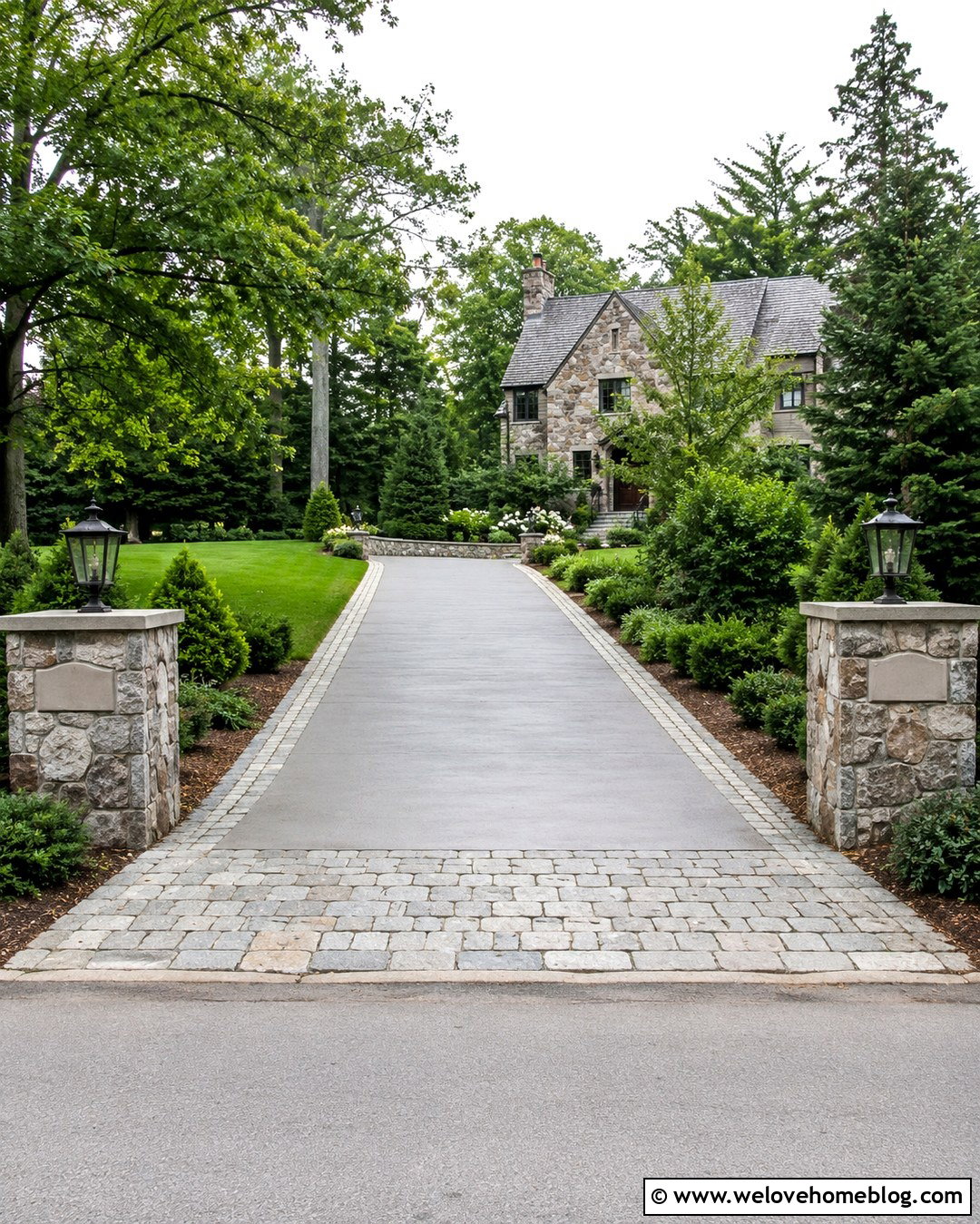
20. How To Edge A Driveway With Low Hedges
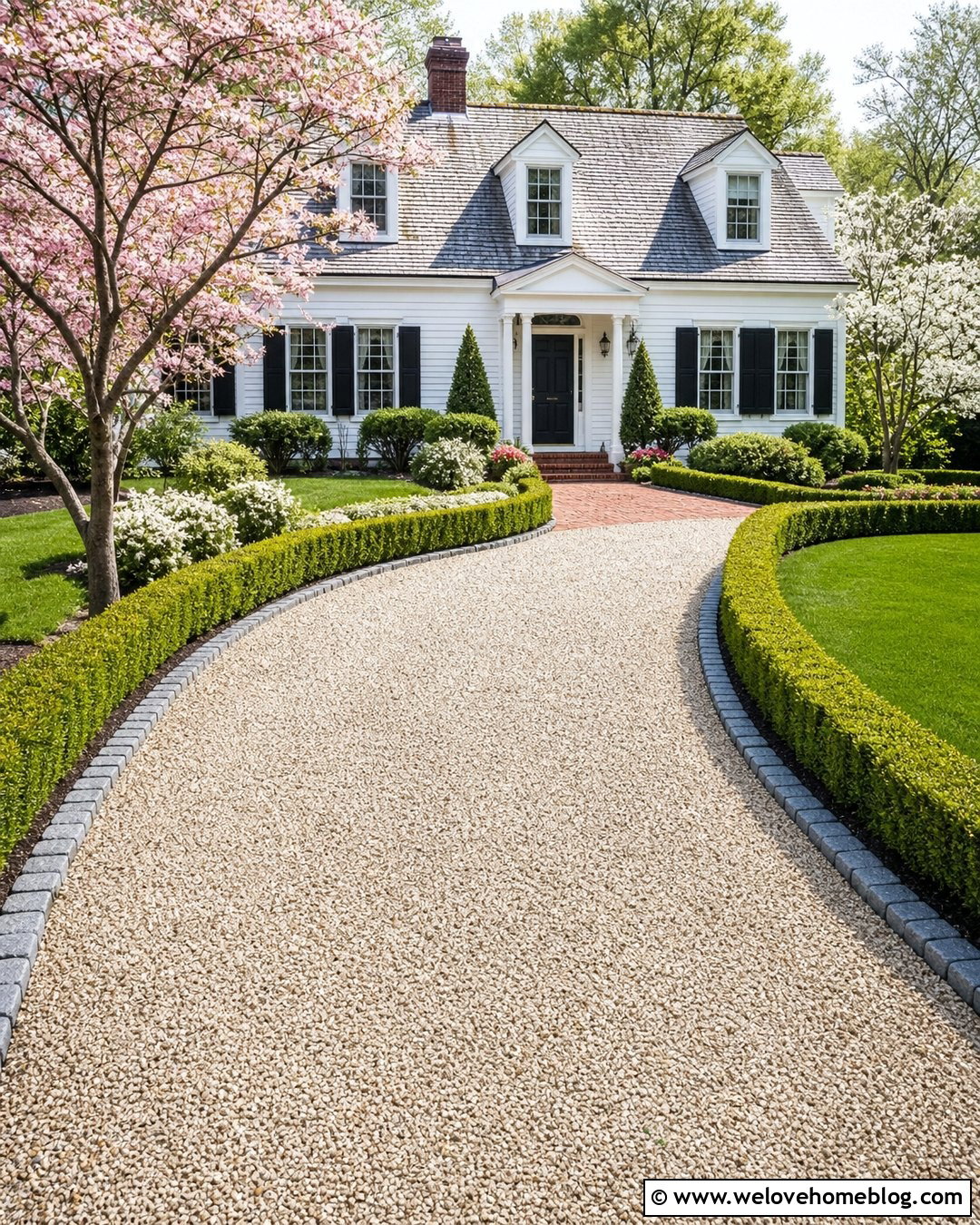
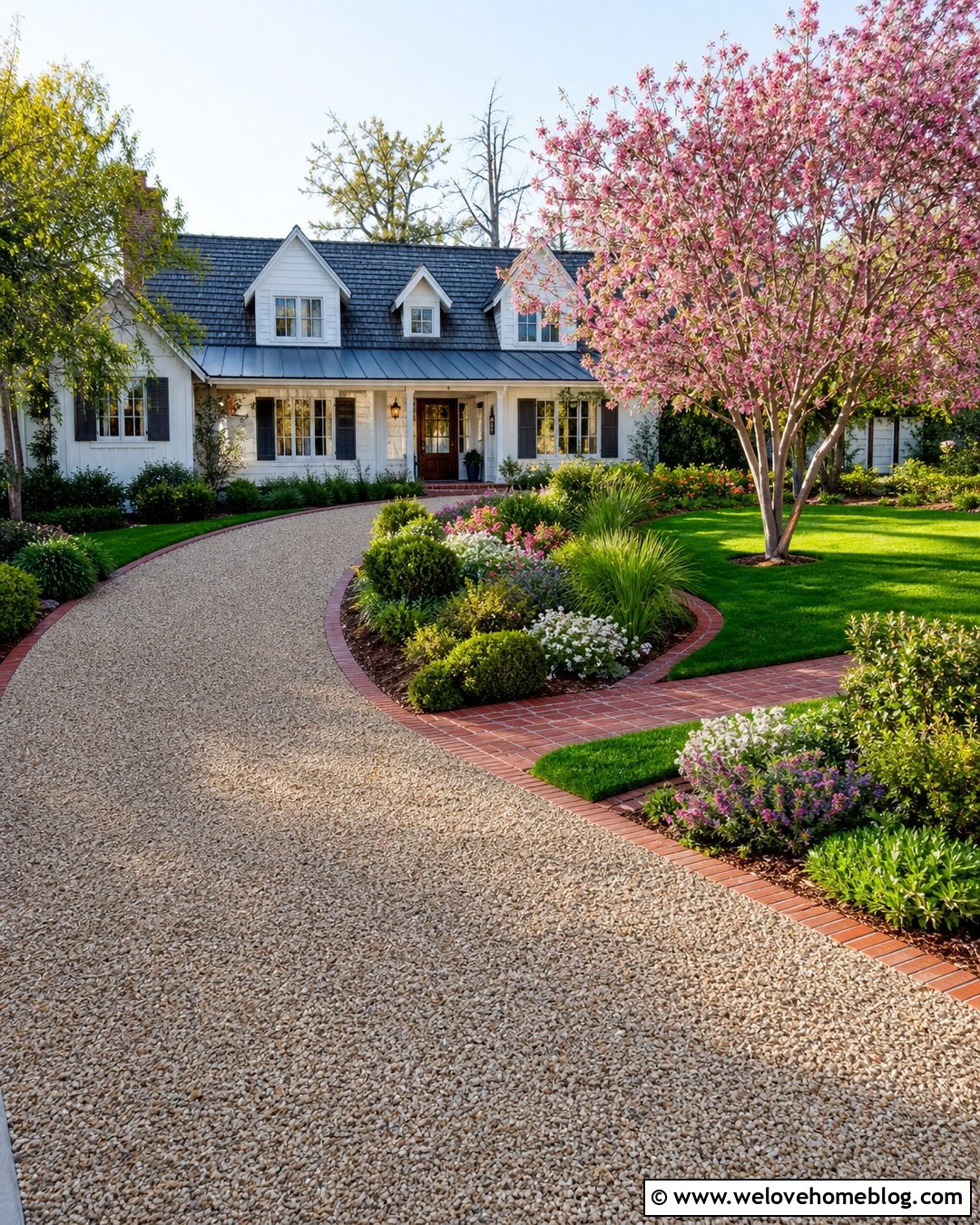
Low hedges provide a soft green frame, but they work best when combined with a structural edge. Install a flush brick, stone, or metal border first to contain the driveway and separate roots from the driving surface. Position the hedge behind this border with enough room for mature growth, pruning access, and winter maintenance. Compact varieties are generally easier to manage than wide, fast-growing shrubs. Along a pale pea-gravel driveway, gray cobblestones can restrain the loose surface while clipped evergreen hedges follow a gentle curve toward the house. Break the planting near walkways and parking areas to improve access. Finish the design with a brick entrance apron, small flowering trees, and a white Cape Cod home. Regular trimming keeps the hedge below sightlines and preserves the clean driveway outline.
Conclusion:
Choosing how to finish a driveway border involves more than selecting an attractive material. The edge should support the surface, manage transitions, accommodate drainage, and suit the way vehicles use the space. Brick and cobblestone bring traditional character, while steel and hidden restraints produce cleaner modern lines. Timber can suit a limited budget, and concrete curbs offer substantial strength where conditions demand it. Whatever design you choose, begin with accurate marking, careful excavation, and a stable compacted base. Coordinate the border with the walkway, house facade, and surrounding planting for a complete appearance. These 20 How To Edge Driveway Ideas can help you create a cleaner, more durable entrance with lasting curb appeal.

Related posts:
Leave a Reply