
A driveway takes up a large part of the front yard, so even small upgrades can reshape the first impression of your home. The best improvements treat the surface, borders, landscaping, entrance, and garage as one connected design. You might refresh worn concrete, define plain asphalt with pavers, add low planting beds, or create a clearer route to the front door. Current curb appeal trends also favor mixed materials, structured edging, restrained planting, and lighting that highlights useful features. () The right approach depends on your existing driveway, house style, maintenance preferences, and budget. The following **20 How To Enhance Driveway Curb Appeal Ideas** offer complete looks that can make your entrance feel cleaner, more welcoming, and thoughtfully finished.

1. Clean Concrete Driveway With Brick Edging
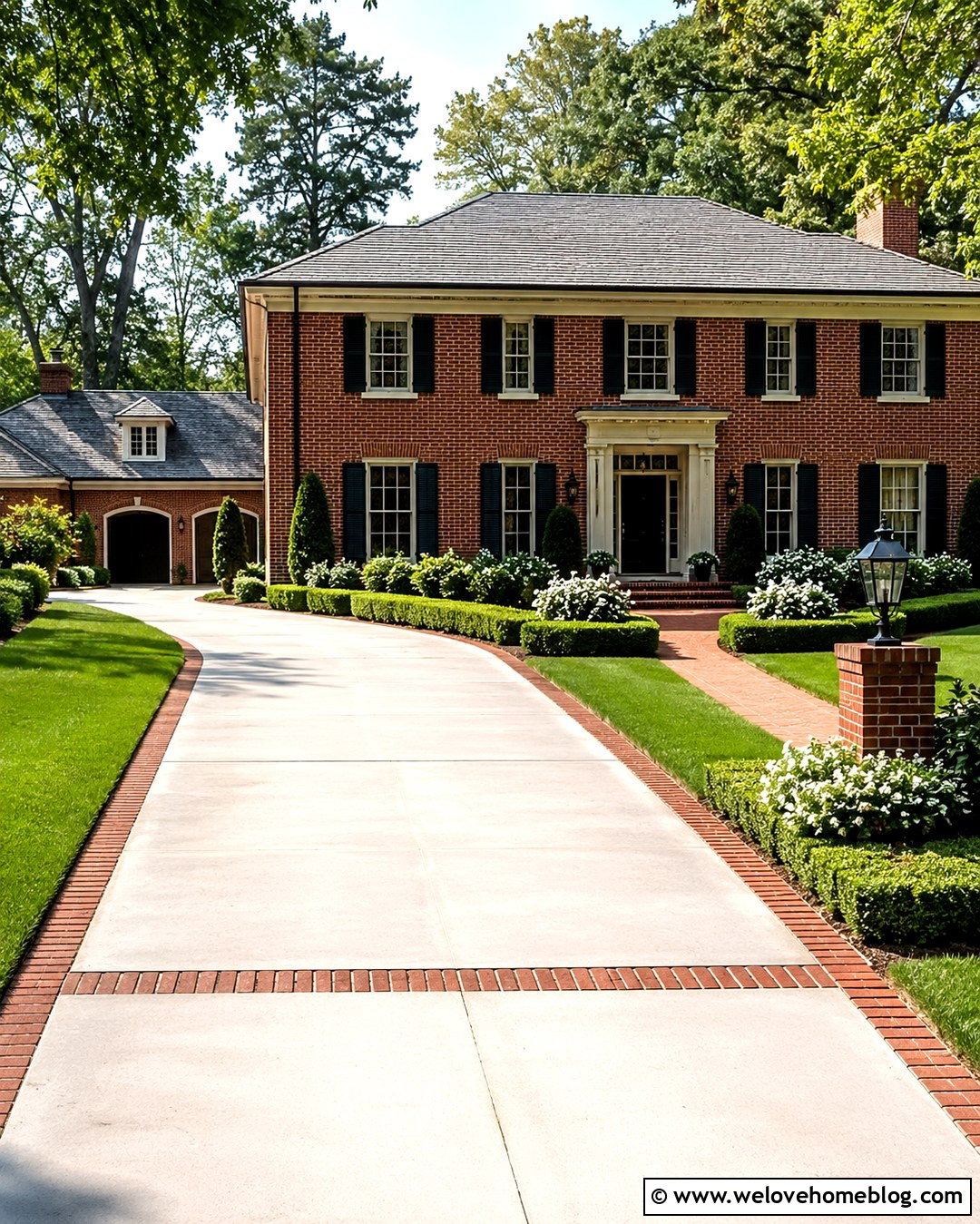
Start by giving a basic poured concrete driveway a sharper, more intentional frame. Deep cleaning can reveal the original color, while repaired cracks and a fresh protective sealer help the entire surface look cared for. Install a narrow red or charcoal brick border along both sides to add definition without replacing the concrete. Match the brick to the home’s chimney, foundation, or front walkway for visual continuity. Complete the look with neatly cut lawn edges and low flower beds near the garage. A straight driveway works especially well with symmetrical borders because the strong lines guide attention toward the house. Keep plants below vehicle mirrors and leave enough clearance for doors, tires, and snow removal equipment.
2. Black Asphalt Driveway With Paver Borders
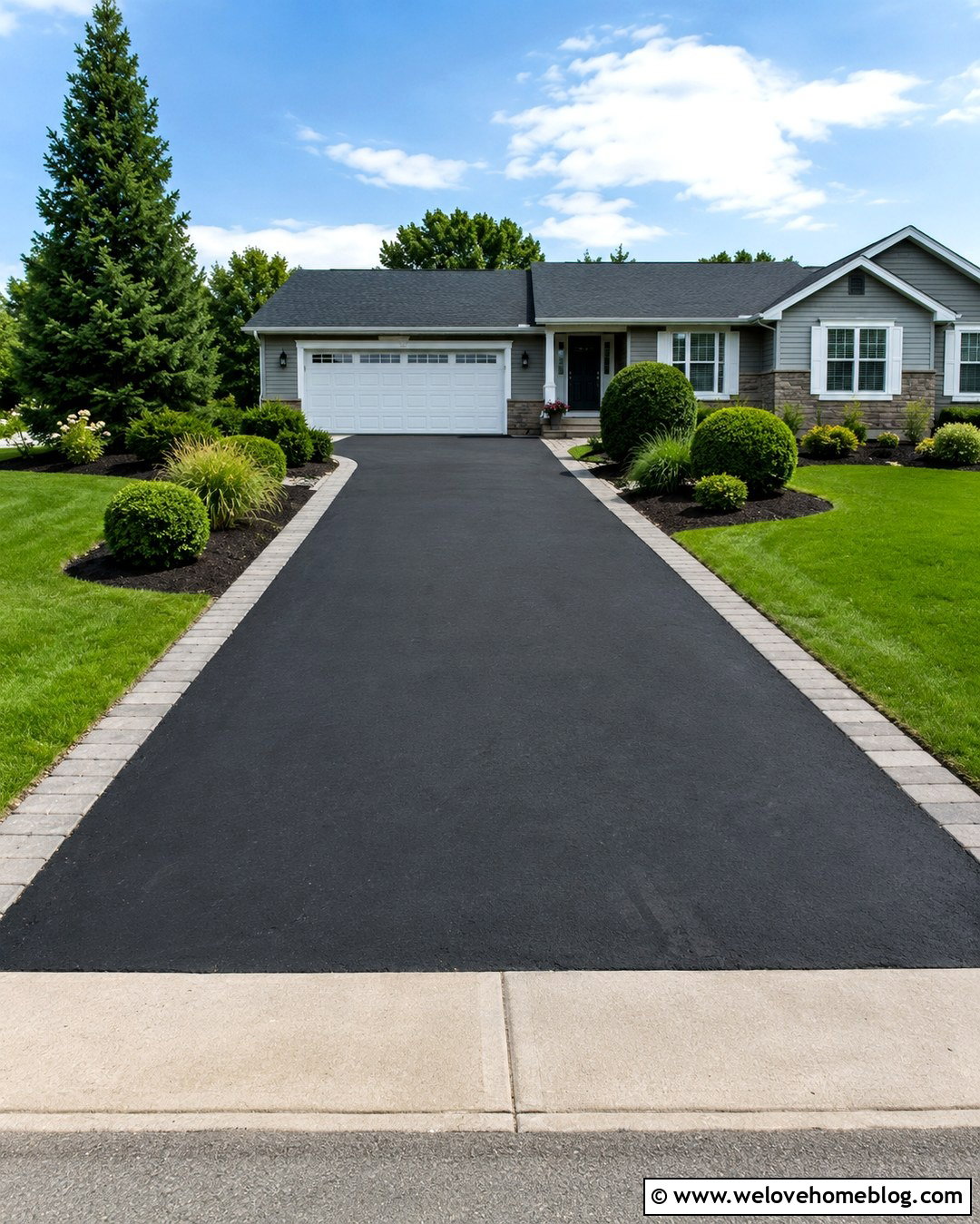
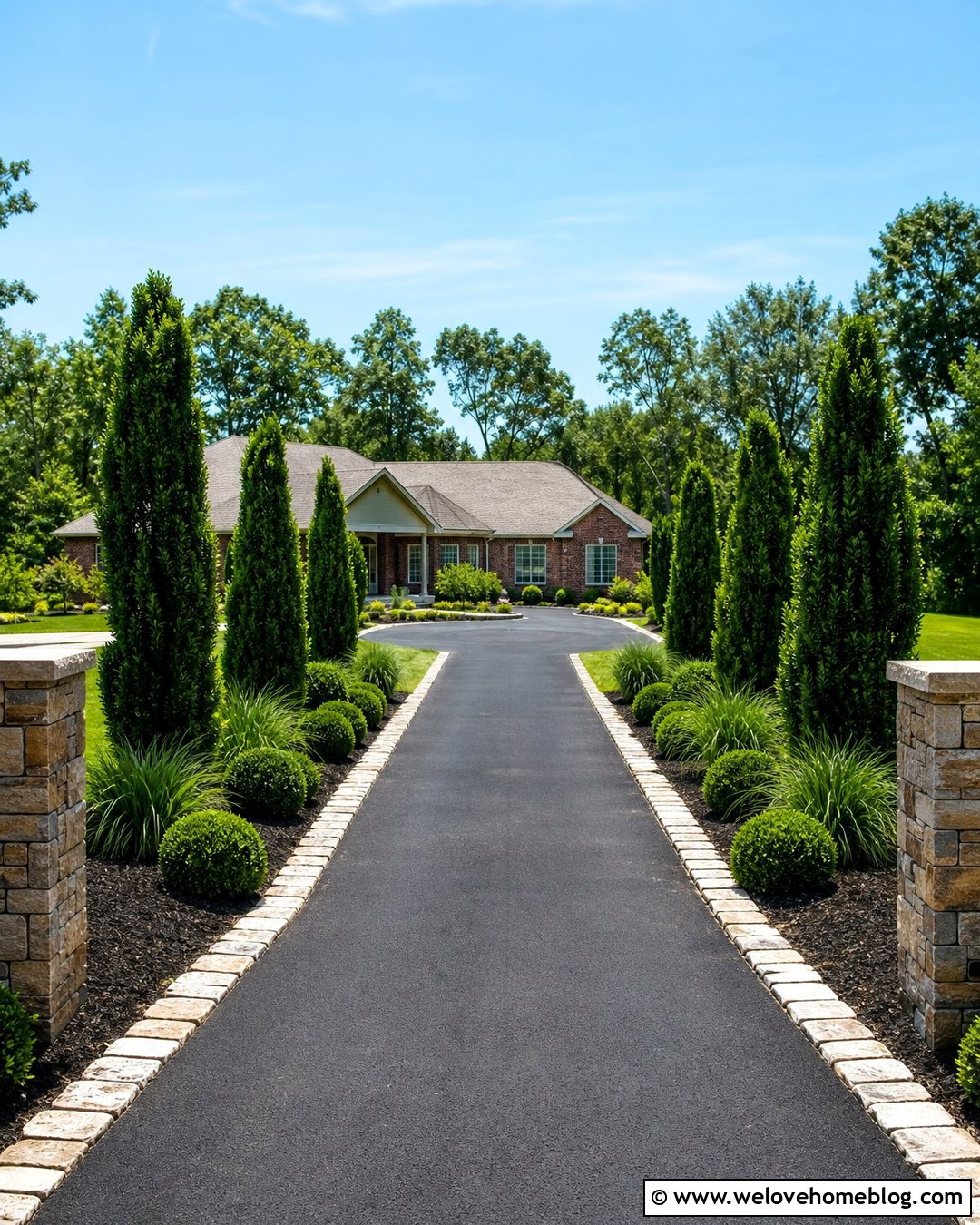
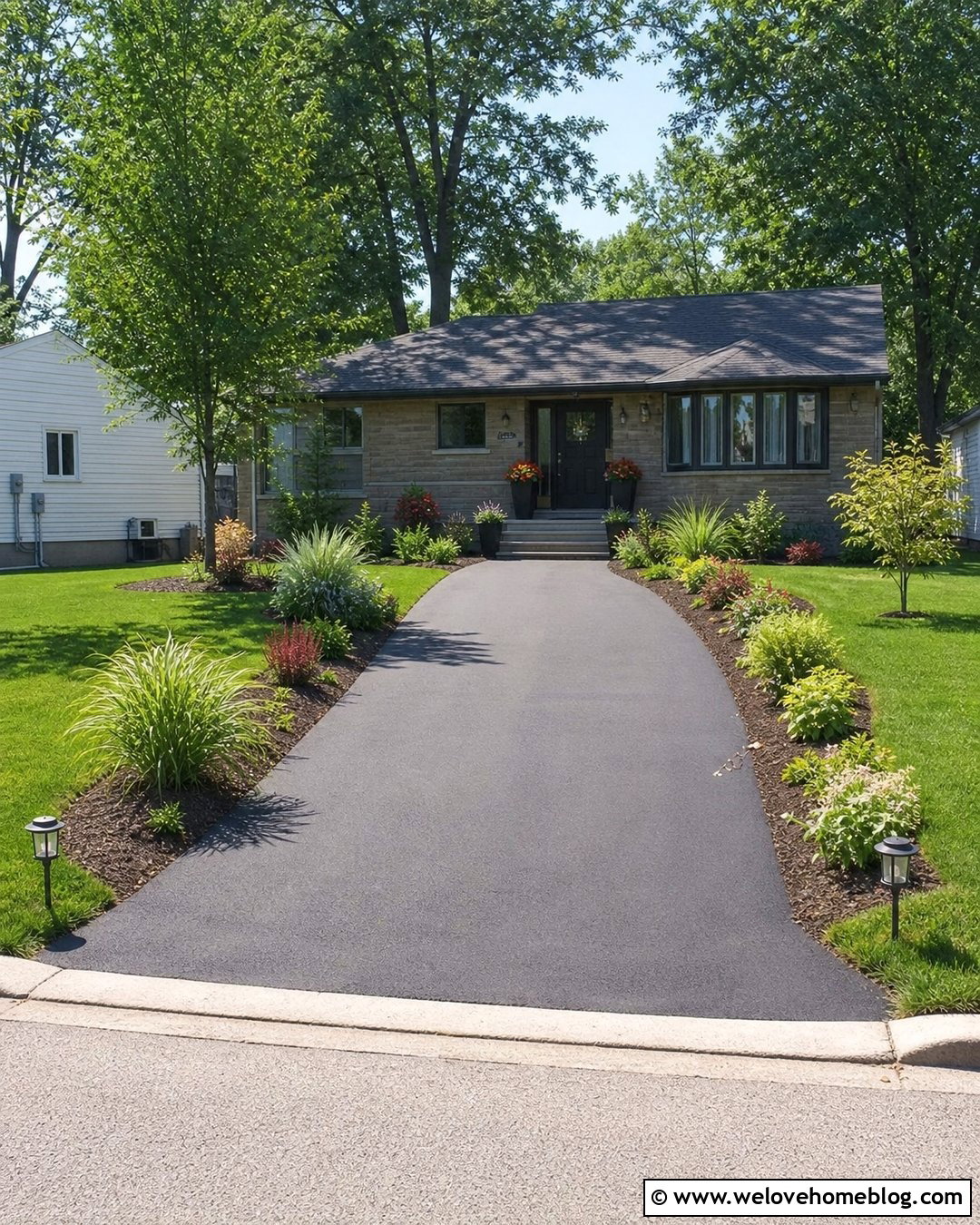
Fresh black asphalt creates a smooth, rich backdrop that can make surrounding colors appear brighter. Instead of leaving the edges unfinished, install light gray concrete pavers or warm tan cobblestones on both sides. The contrasting border makes an economical asphalt surface feel more customized and visually connects it to the front walk. Add simple mulch beds with rounded evergreen shrubs, ornamental grasses, and one seasonal accent color. A crisp transition at the garage and street is equally important, so repair broken edges before applying a new sealcoat. This complete driveway look suits ranch, colonial, and split-level homes. It is particularly effective when the paver color coordinates with the roof, garage door, stone veneer, or porch columns.
3. Concrete Driveway With Landscape Lighting
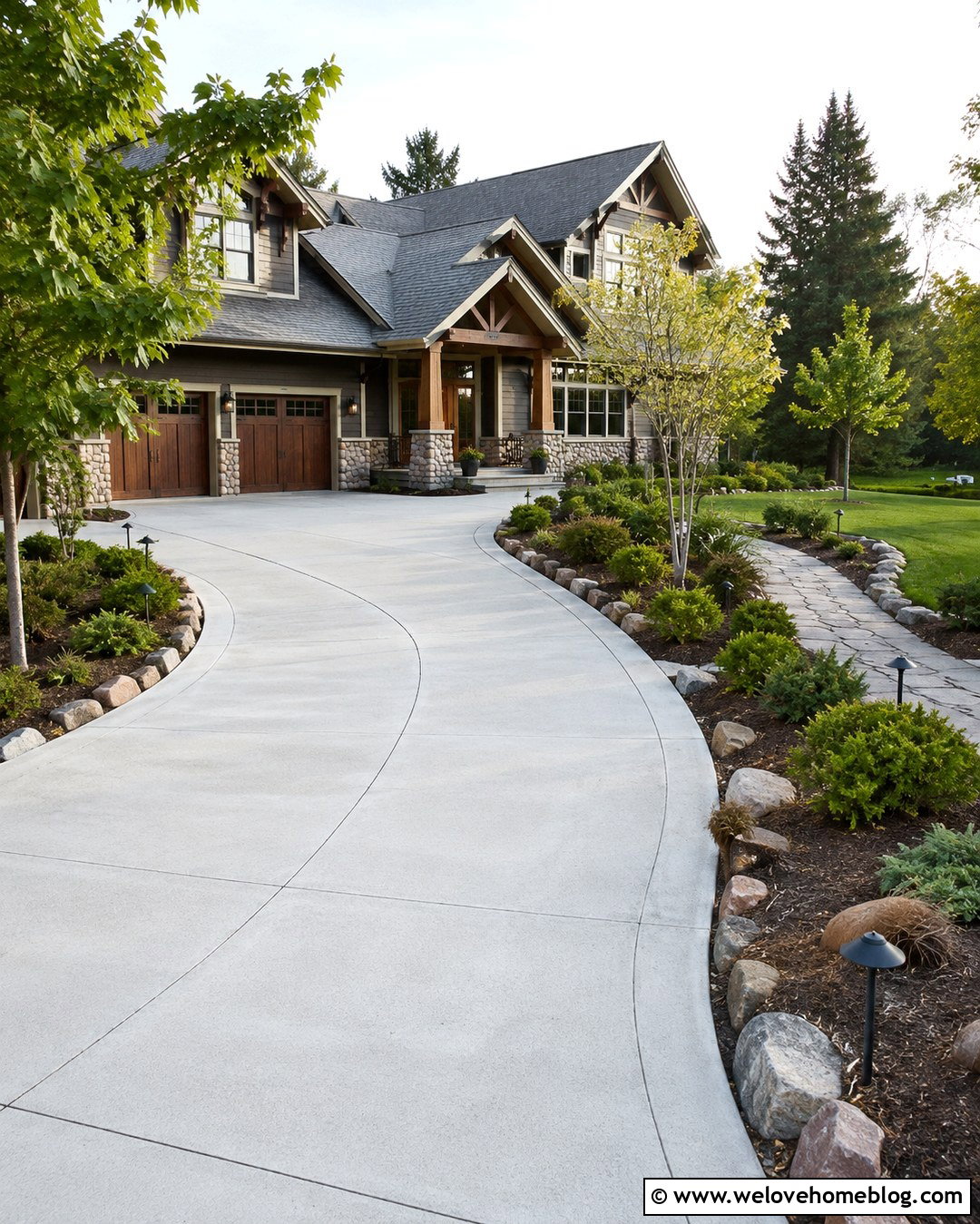
Imagine a clean line of discreet lights leading from the street to the garage. Low-voltage fixtures can define a wide concrete driveway while drawing attention to planting beds, trees, and architectural details after sunset. Use fewer, well-positioned fixtures rather than creating an overly bright runway effect. Place them near curves, walkway intersections, entrance beds, and changes in elevation. During the day, dark bronze or matte black fixtures should disappear into mulch and foliage. Pair the lighting with a pale gray poured concrete surface, narrow stone edging, and layered evergreen landscaping. Downward-facing and shielded fixtures can provide useful illumination while limiting glare. Driveway lighting is regularly recommended as both a curb appeal and visibility improvement. ()
4. Gravel Driveway With Stone Borders

A gravel driveway can look polished when every edge is controlled. Choose compacted gray crushed stone rather than mixing several unrelated gravel colors. Frame the surface with substantial cobblestones, granite setts, or locally sourced fieldstone to contain loose material and establish a finished outline. A gently curved layout adds character and slows the visual approach to the house. Plant lavender, catmint, compact grasses, or low evergreen shrubs outside the border, selecting varieties suited to your climate. At the garage, add a short paver apron to prevent gravel from scattering onto the floor. This combination works beautifully with farmhouse, cottage, Craftsman, and country homes. Regular raking and prompt weed removal will keep the driveway looking deliberate rather than neglected.
5. Driveway With Curved Garden Beds
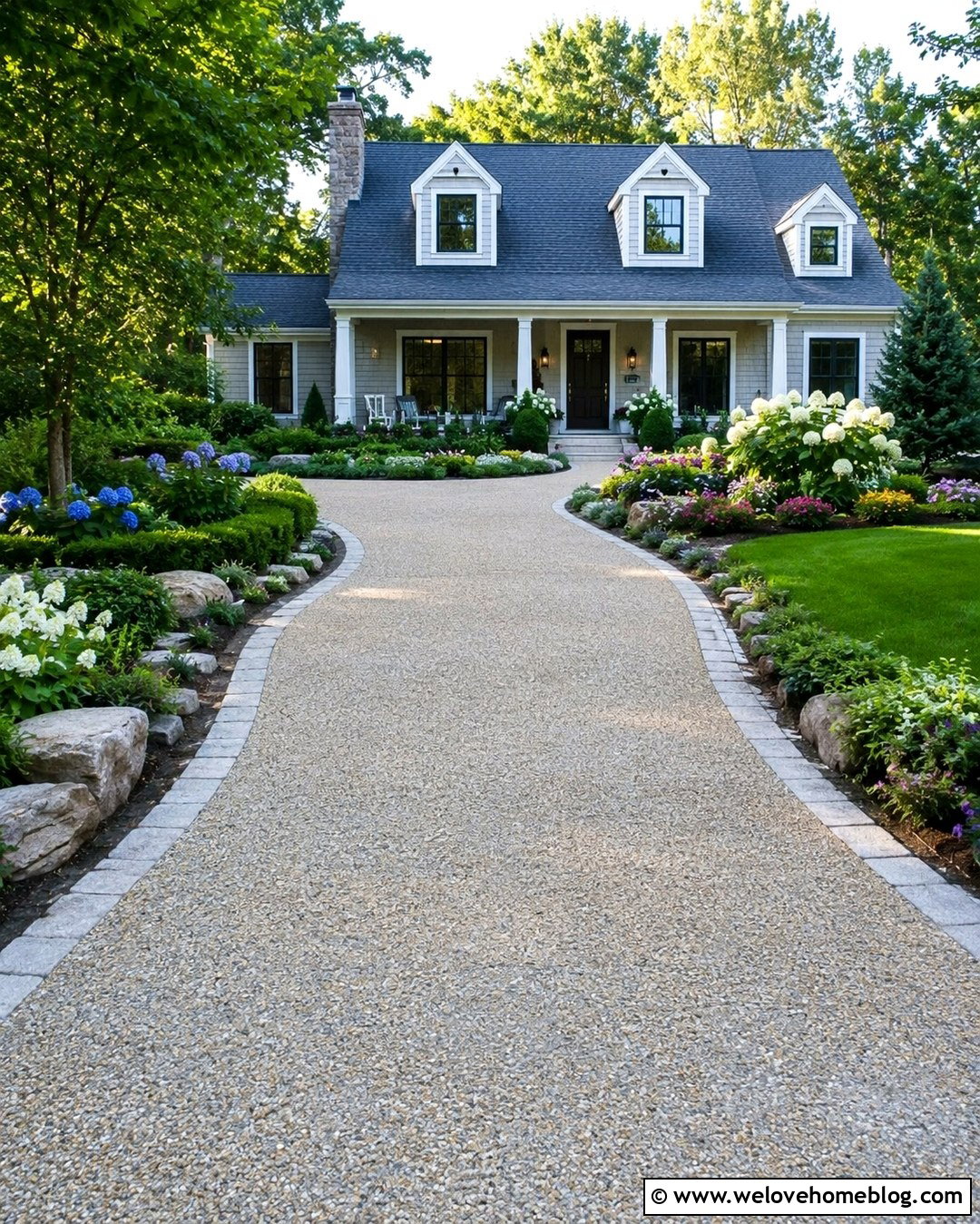
Does a long, straight driveway make the front yard feel too rigid? Curved garden beds can soften those hard lines without interfering with parking. Begin the beds near the street, gently widen them through the middle, and connect them visually to foundation landscaping near the house. A light exposed aggregate driveway provides a neutral surface, while natural stone edging reinforces the relaxed shape. Layer low ground cover at the front, flowering perennials in the middle, and compact shrubs toward the back. Repeat a limited selection of plants on both sides instead of using many unrelated varieties. Leave open sightlines around the street entrance. The flowing borders should guide the eye toward the house while keeping mature foliage safely away from the driving surface.
6. Driveway Entrance With Stone Pillars
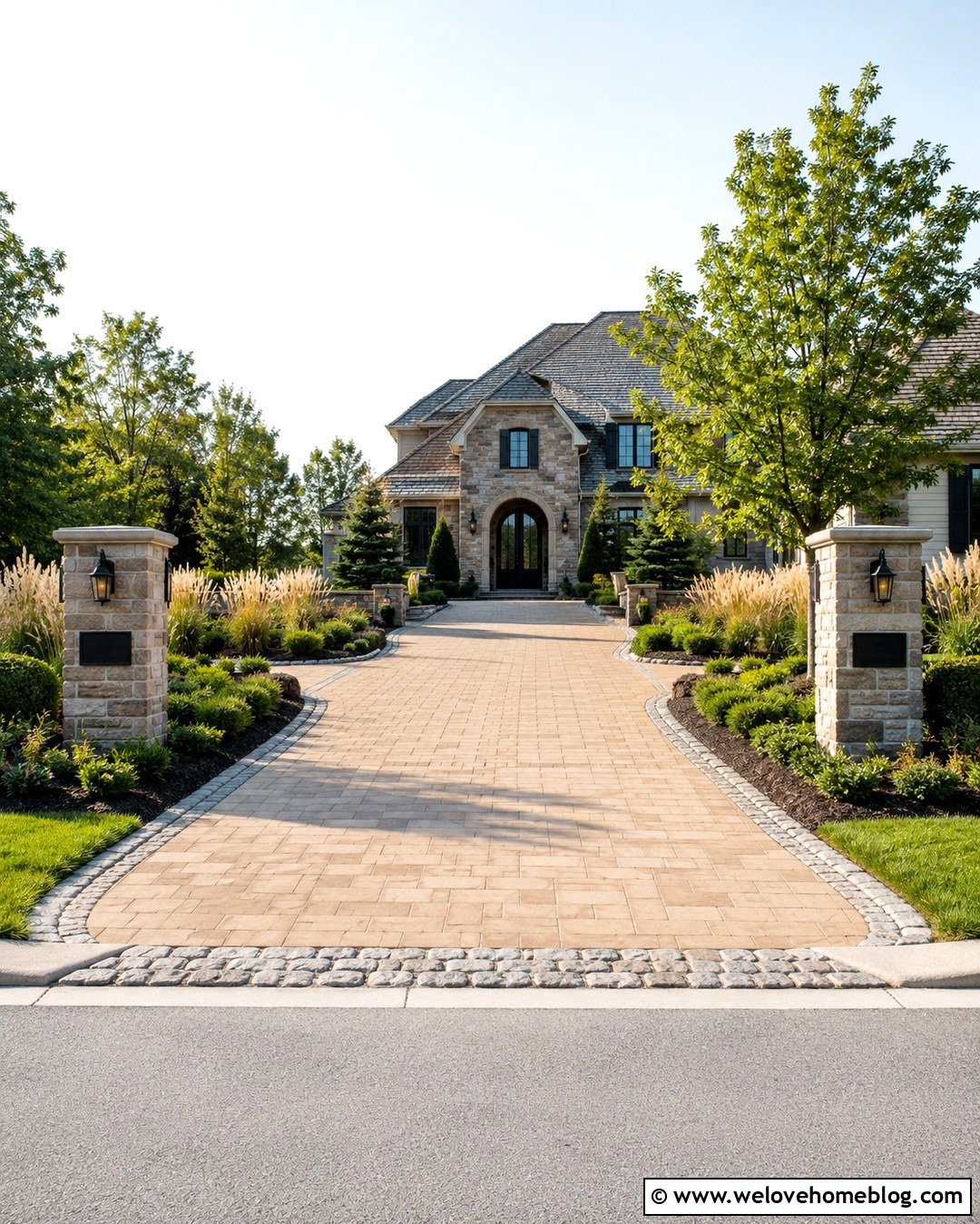
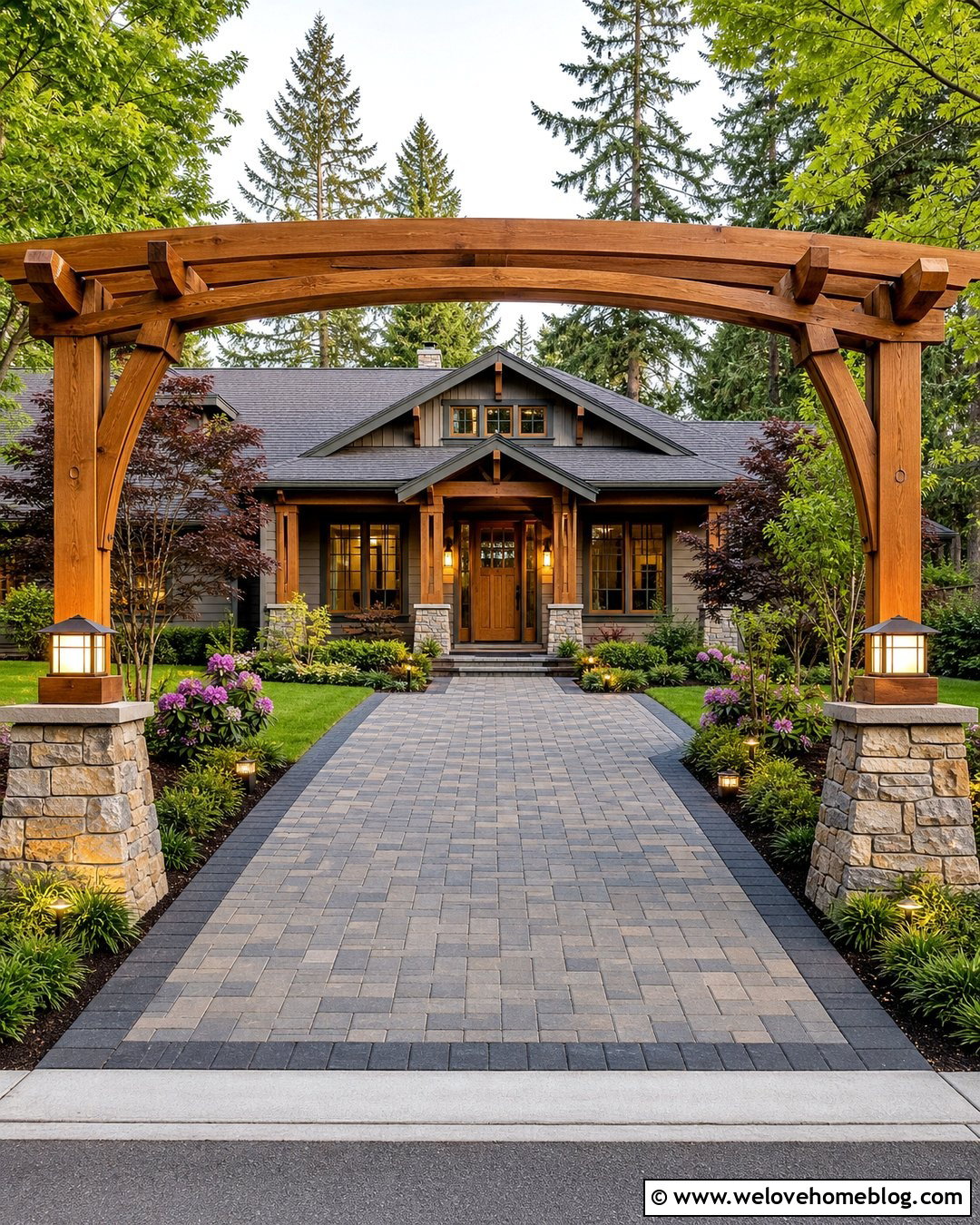
Well-proportioned entrance pillars can make an ordinary driveway feel established and easy to locate. Build the pillars from stone or brick already found on the home, then size them to suit the width of the driveway and surrounding yard. Oversized columns can overwhelm a small property, while narrow posts may look disconnected beside a large house. Pair the entrance with a smooth tan concrete paver driveway and low curved planting beds. Add compact shrubs, ornamental grasses, and ground cover around the pillar bases without hiding the masonry. Matching lanterns can provide a polished finishing touch. If local rules allow, integrate the house number into one pillar. Keep the entrance open enough for service vehicles, turning movements, and clear visibility in both directions.
7. Driveway With A Brick Paver Apron
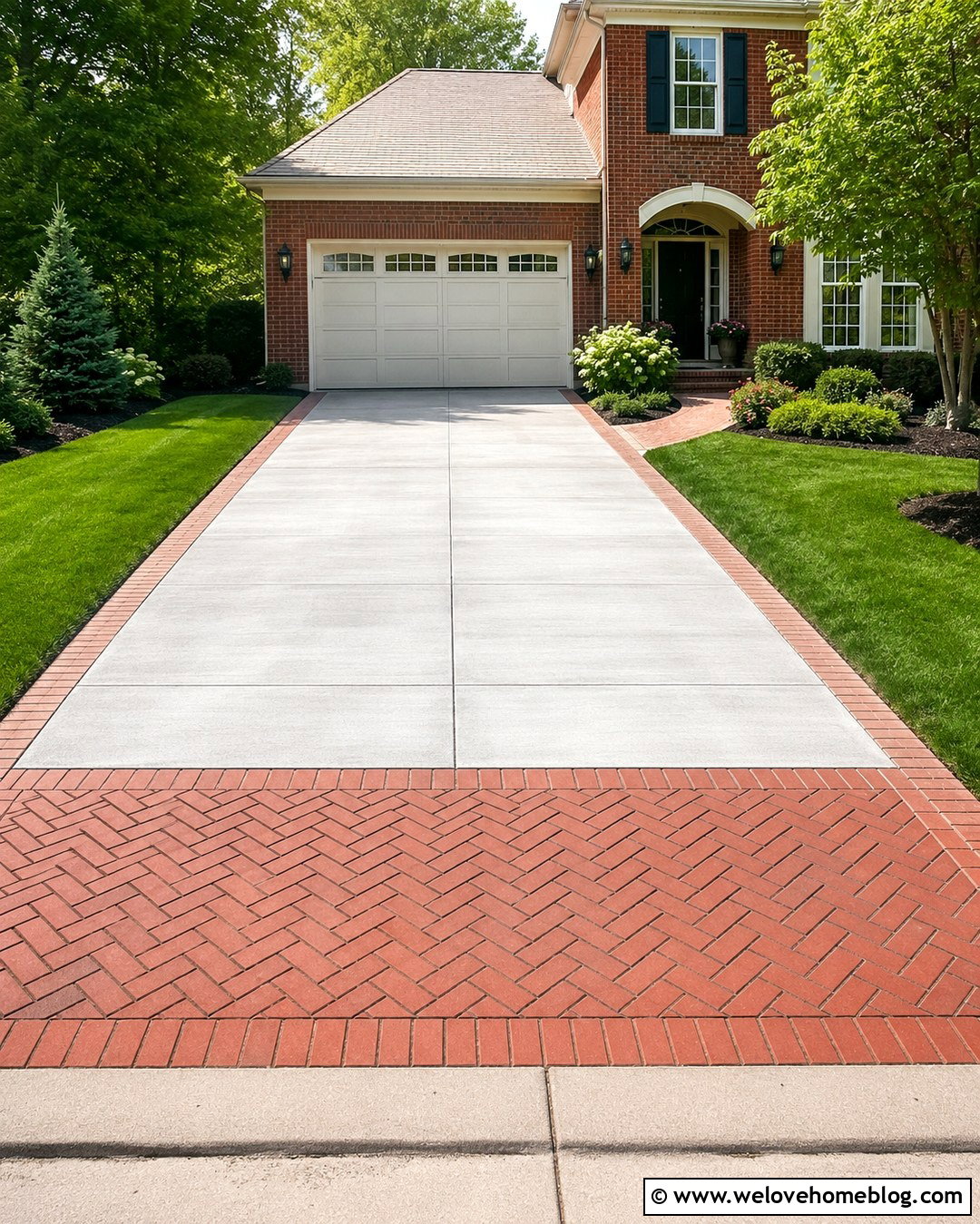
A brick paver apron introduces color and craftsmanship exactly where the driveway meets the street. It can also break up a large area of plain gray concrete without requiring complete replacement. Choose clay brick pavers in a herringbone or basketweave pattern, then repeat the same material as a narrow border or front walkway accent. Deep red brick complements traditional homes, while charcoal brick feels cleaner beside modern exteriors. Frame the driveway with maintained lawn and simple evergreen beds so the patterned apron remains the focal point. Proper base preparation and edge restraint are essential for keeping pavers aligned. The finished look should feel connected from the curb to the garage, not like a decorative patch added without reference to the house.
8. Driveway With A Matching Front Walkway
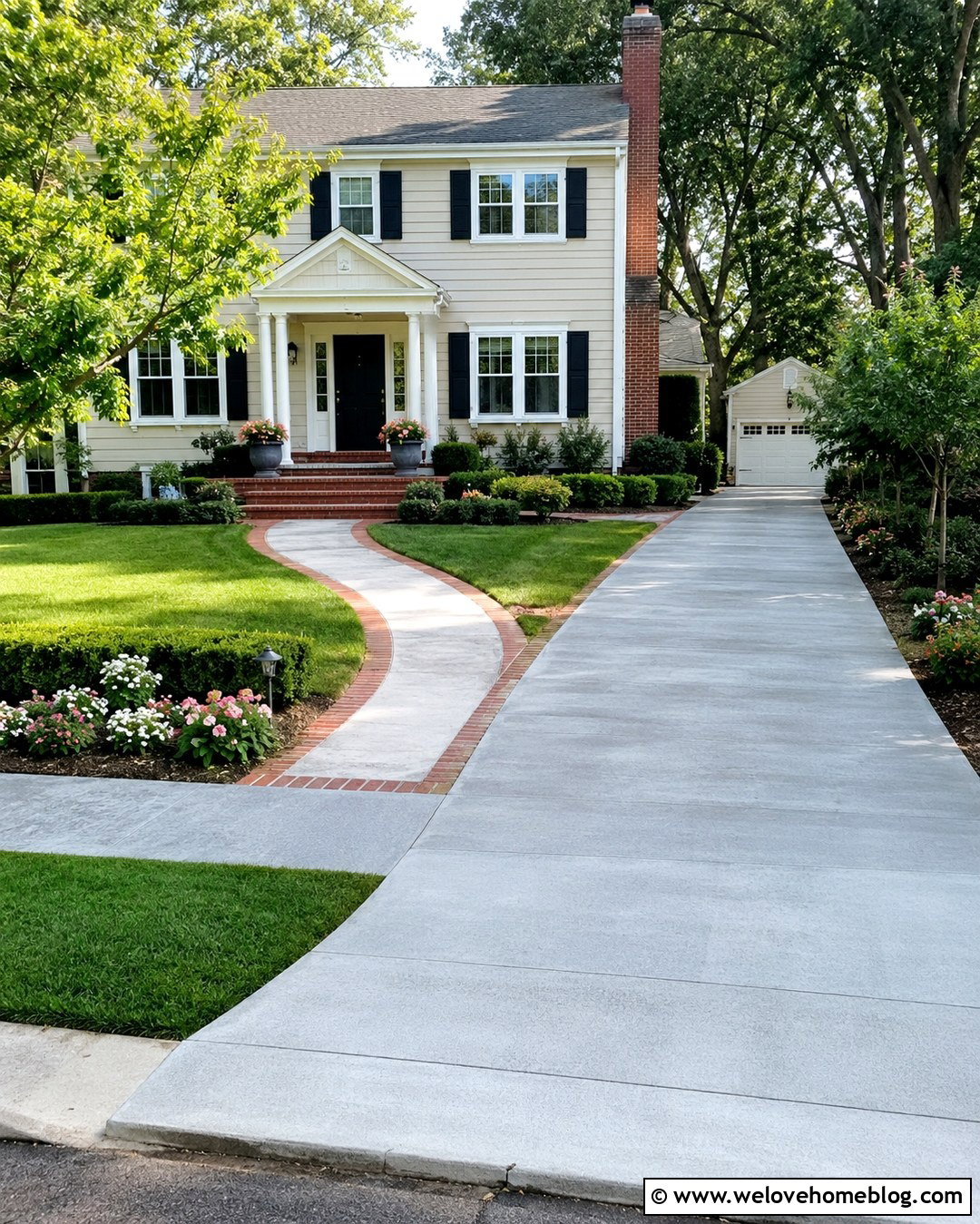
A beautiful driveway can still feel confusing when visitors cannot identify the path to the front door. Create a clear walkway connection using a material that coordinates with, rather than perfectly duplicates, the driveway surface. For example, combine a brushed concrete driveway with a brick-bordered concrete walk. Gently curve the path through a planting bed and make the intersection wide enough to feel welcoming. Use low shrubs near the driveway, then increase planting height farther from vehicle doors and sightlines. A small landing, paired planters, and matching porch lights can strengthen the destination. The driveway, walkway, and entry should read as one continuous arrival sequence. Avoid narrow stepping stones or abrupt turns that make the route appear secondary or difficult to navigate.
9. Permeable Paver Driveway With Grass Borders
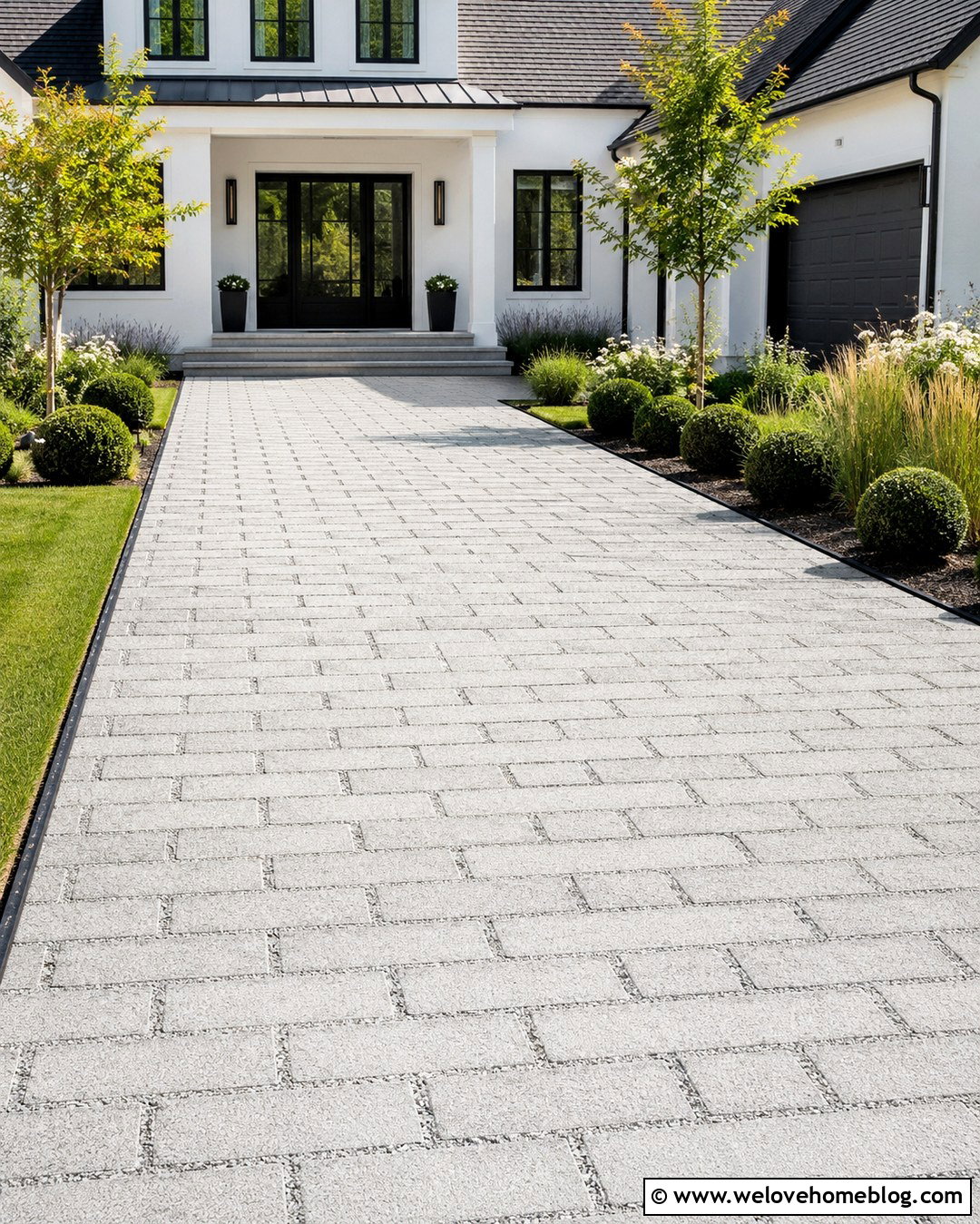
Permeable concrete pavers create an orderly surface with visible joints that add texture to a modern or transitional home. Select a soft gray or warm taupe tone that complements the facade, and use a straight or gently flared layout. Frame the driveway with healthy lawn strips, low ground cover, and crisp steel edging. Near the house, repeat the pavers in the front walkway to create a unified hardscape. Keep the planting palette restrained with evergreen spheres, native grasses, and one small ornamental tree. The structured grid of the pavers looks best when installation lines remain straight and the borders are carefully maintained. Confirm that the base, joint material, slope, and drainage design are suitable for the site before choosing a permeable system.
10. Circular Driveway With A Planted Island
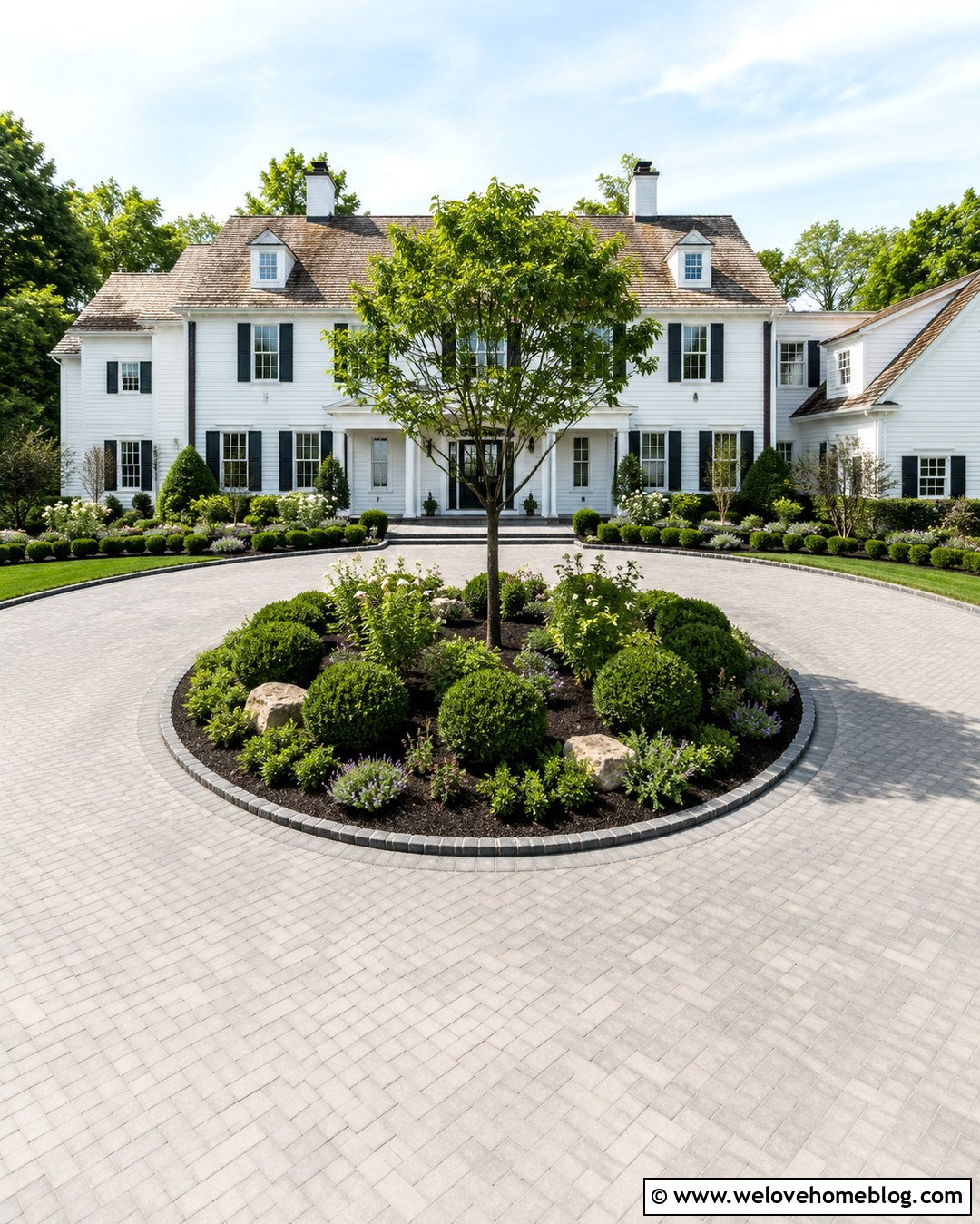
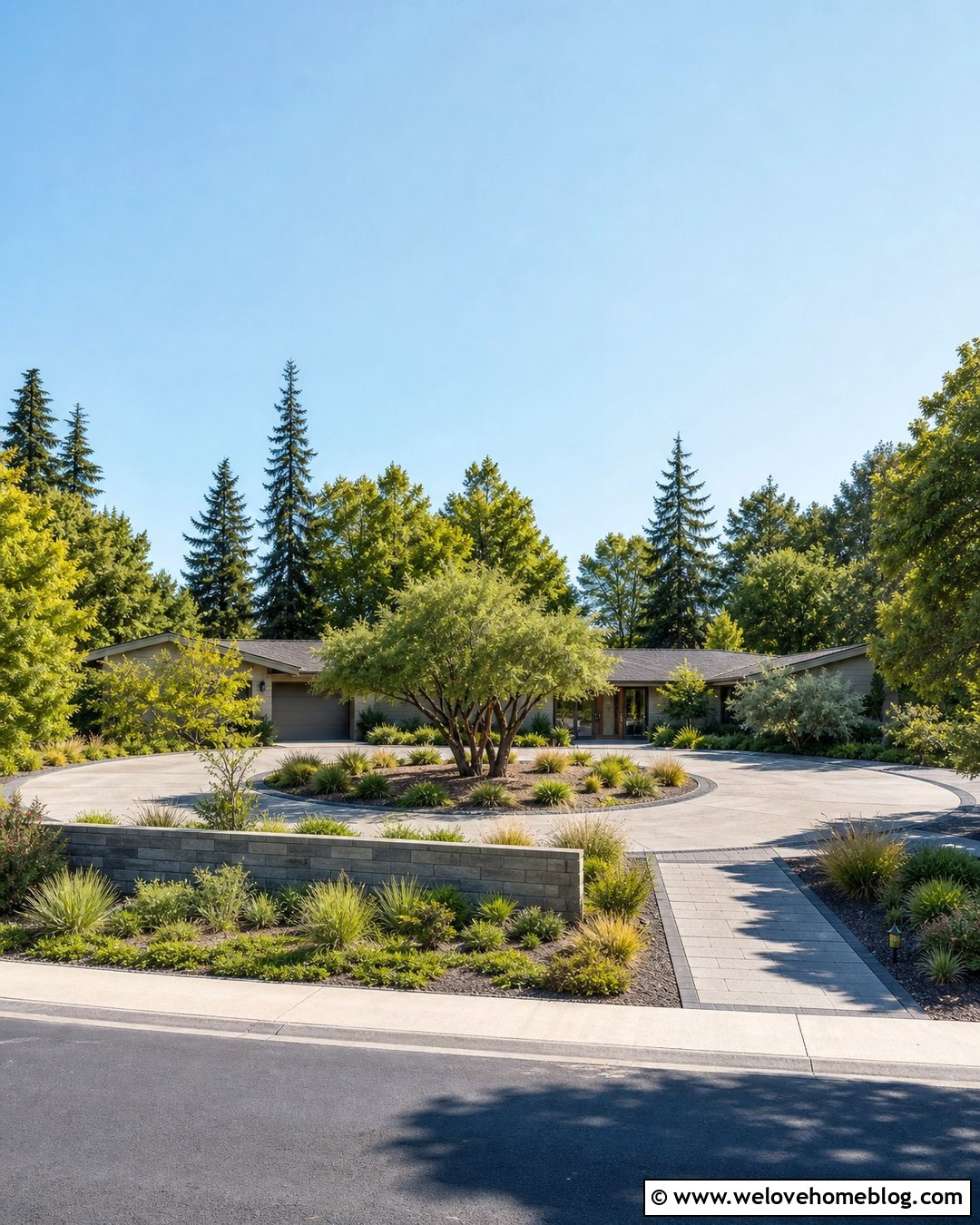
A circular driveway becomes a major front-yard feature, so its central island should contribute more than empty lawn. Surround a light gray concrete paver drive with a defined cobblestone edge, then build a layered island around one appropriately scaled ornamental tree. Add evergreen shrubs for year-round structure, flowering perennials for seasonal color, and ground cover to reduce exposed soil. Keep plants low near entrance and exit points so drivers can see approaching traffic. The island’s shape should echo the driveway curve rather than looking like an unrelated rectangle. Repeat selected plants near the home to connect both areas. Where space permits, subtle lighting or a low specimen boulder can provide a focal point without overcrowding the center or competing with the house.
11. Modern Concrete Driveway With Grass Strips
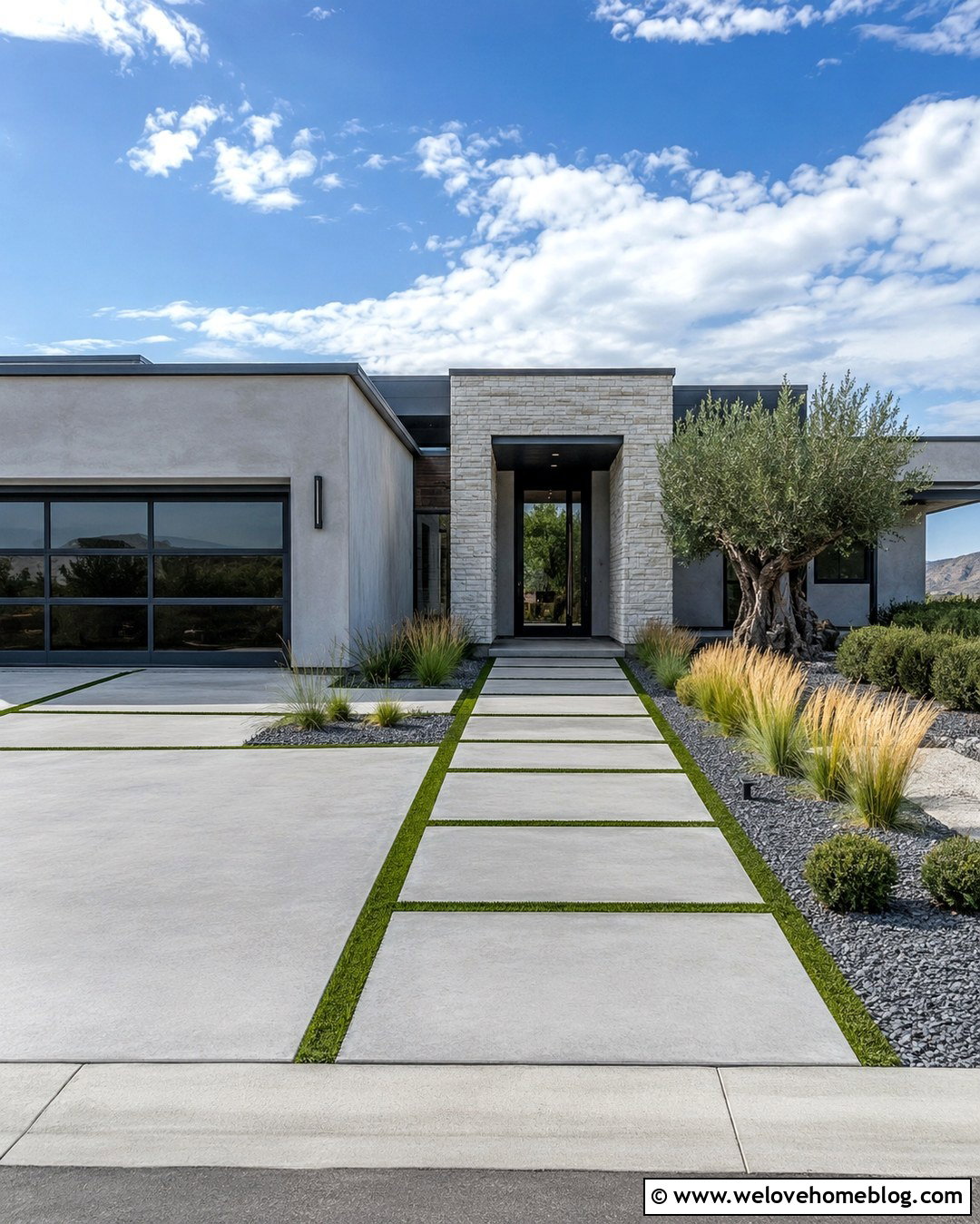
Large concrete slabs separated by narrow grass strips can visually reduce the scale of a wide modern driveway. Use smooth, medium-gray poured concrete panels arranged in a clean geometric grid. Keep every joint consistent and choose durable turf or low ground cover suited to local sun, moisture, and vehicle conditions. Continue the same linear pattern into the walkway for a cohesive approach. Minimal landscaping works best around this design. Try clipped evergreen shrubs, architectural grasses, and one sculptural tree set within rectangular beds. Black steel edging can create crisp transitions between lawn, gravel mulch, and planting areas. Because this look depends on precision, uneven joints and overgrown strips quickly become distracting. Plan irrigation, drainage, slab thickness, and maintenance access before installation.
12. Stamped Concrete Driveway With Stone Landscaping
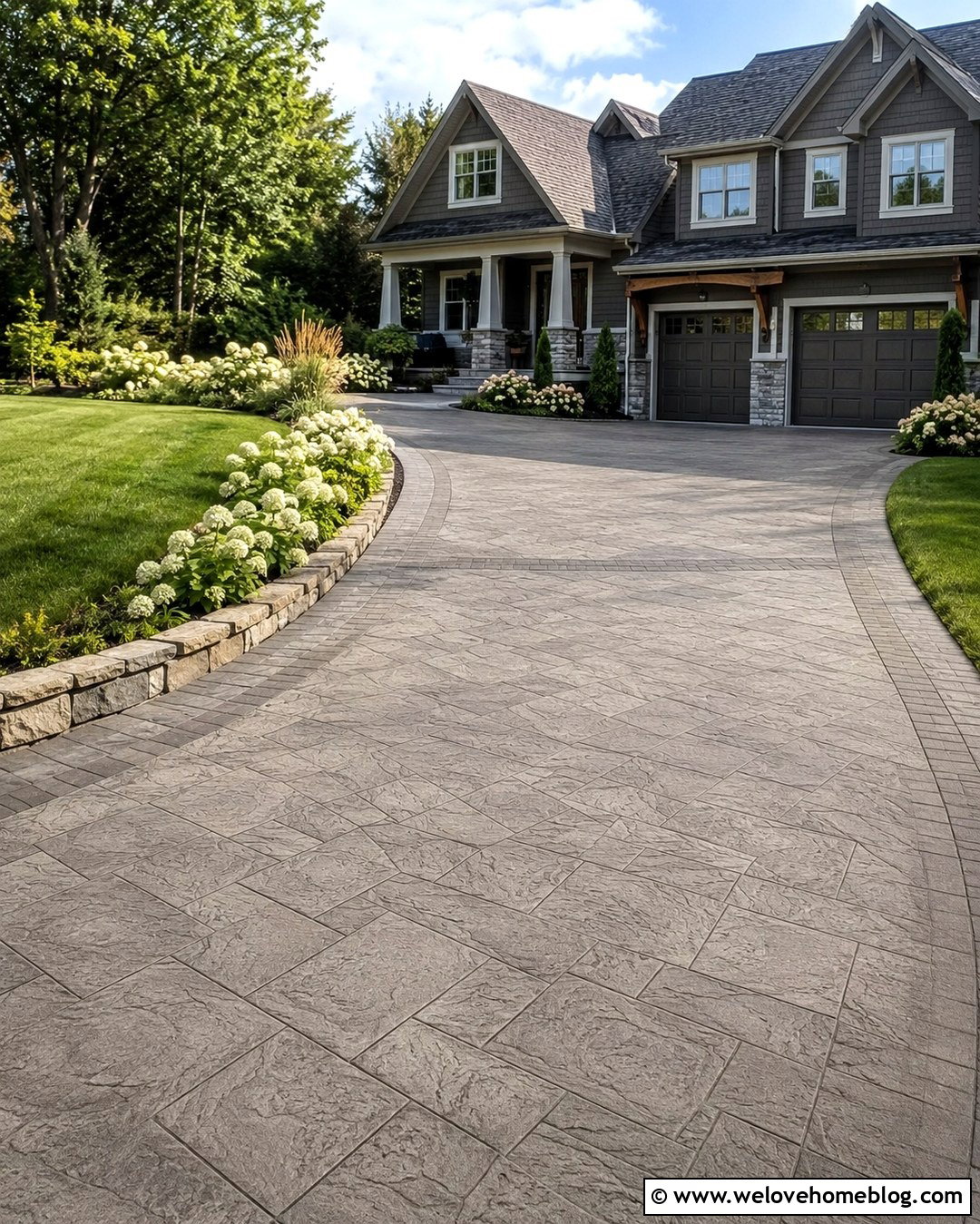
Stamped concrete can add texture to a driveway when the pattern and color remain compatible with the house. Choose a large ashlar slate or subtle stone pattern in warm gray, muted brown, or soft sandstone. Avoid strong color variations that compete with brick, siding, and roofing. Define the driveway with natural stone edging, then build broad planting beds containing compact evergreens, hydrangeas, and ornamental grasses. A gently curved layout helps the textured surface feel more natural. Near the garage, use a simple border band to create a tidy transition. Finish quality matters because repetitive stamping, poorly placed joints, and excessive gloss can make the surface appear artificial. Request physical samples and review completed projects before selecting a pattern, release color, and sealer.
13. Resin-Bound Driveway With Clean Edging
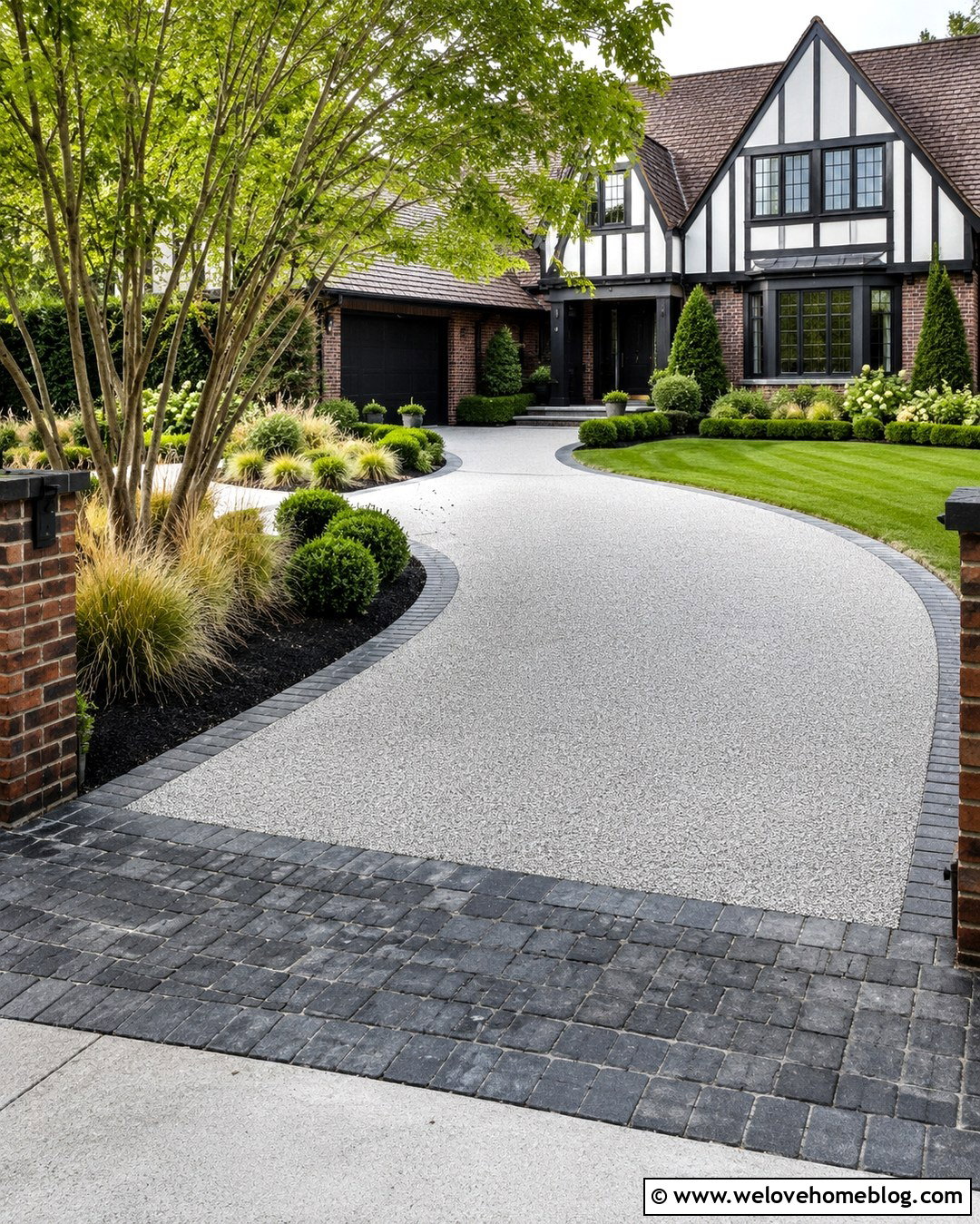
A resin-bound gravel driveway offers a smooth, visually consistent finish that suits contemporary and updated traditional homes. Select a blended aggregate in sandy beige, silver gray, or warm natural stone rather than a highly contrasting mix. Shape the driveway with a gentle curve and define it using dark granite setts or charcoal concrete pavers. Continue the border around adjacent planting beds to make the design feel connected. Use clipped shrubs, airy grasses, and a small multi-stem tree for balanced landscaping. A contrasting paver apron near the street can further strengthen the entrance. Because product suitability, installation methods, and weather requirements vary, consult an experienced installer. A clean substrate, careful drainage plan, and properly detailed edges are important to the finished appearance.
14. Cobblestone Driveway With Formal Landscaping
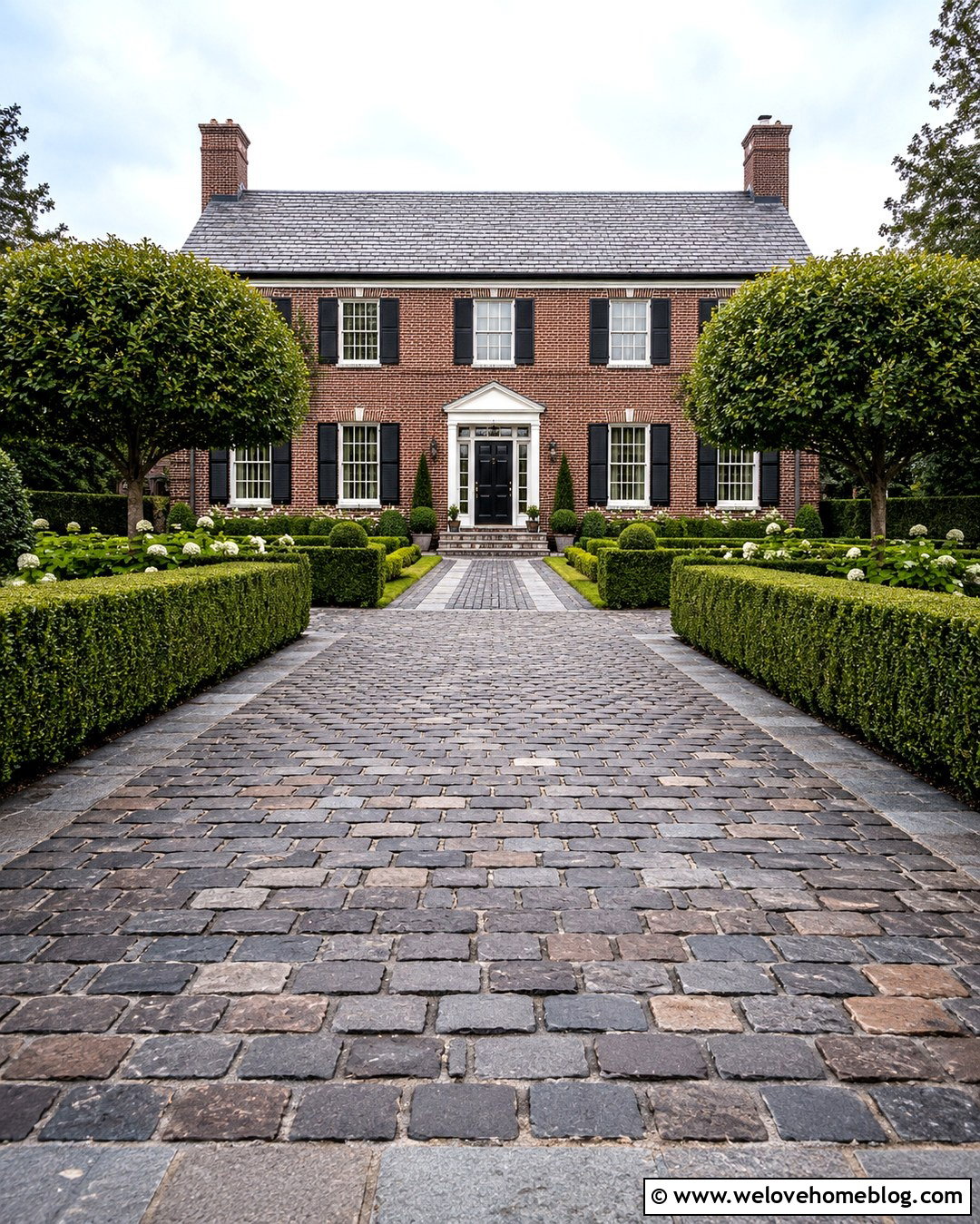
Cobblestone brings substantial texture and historical character to a colonial, Tudor, or European-inspired home. Use full cobblestone across a smaller driveway, or combine a cobblestone border and apron with smoother concrete pavers through the main parking area. A straight approach supports a formal layout, especially when framed by matched hedges, symmetrical planting beds, and twin ornamental trees. Choose stones in a controlled gray, charcoal, or muted brown palette to avoid visual clutter. The front walk can repeat the cobblestone as a narrow accent rather than competing with the driveway. Keep hedges carefully trimmed and leave generous vehicle clearance. Since uneven stones may affect accessibility and snow removal, consider flatter reclaimed-look pavers that provide cobblestone character with a more uniform driving surface.


15. Driveway With Low-Maintenance Native Landscaping
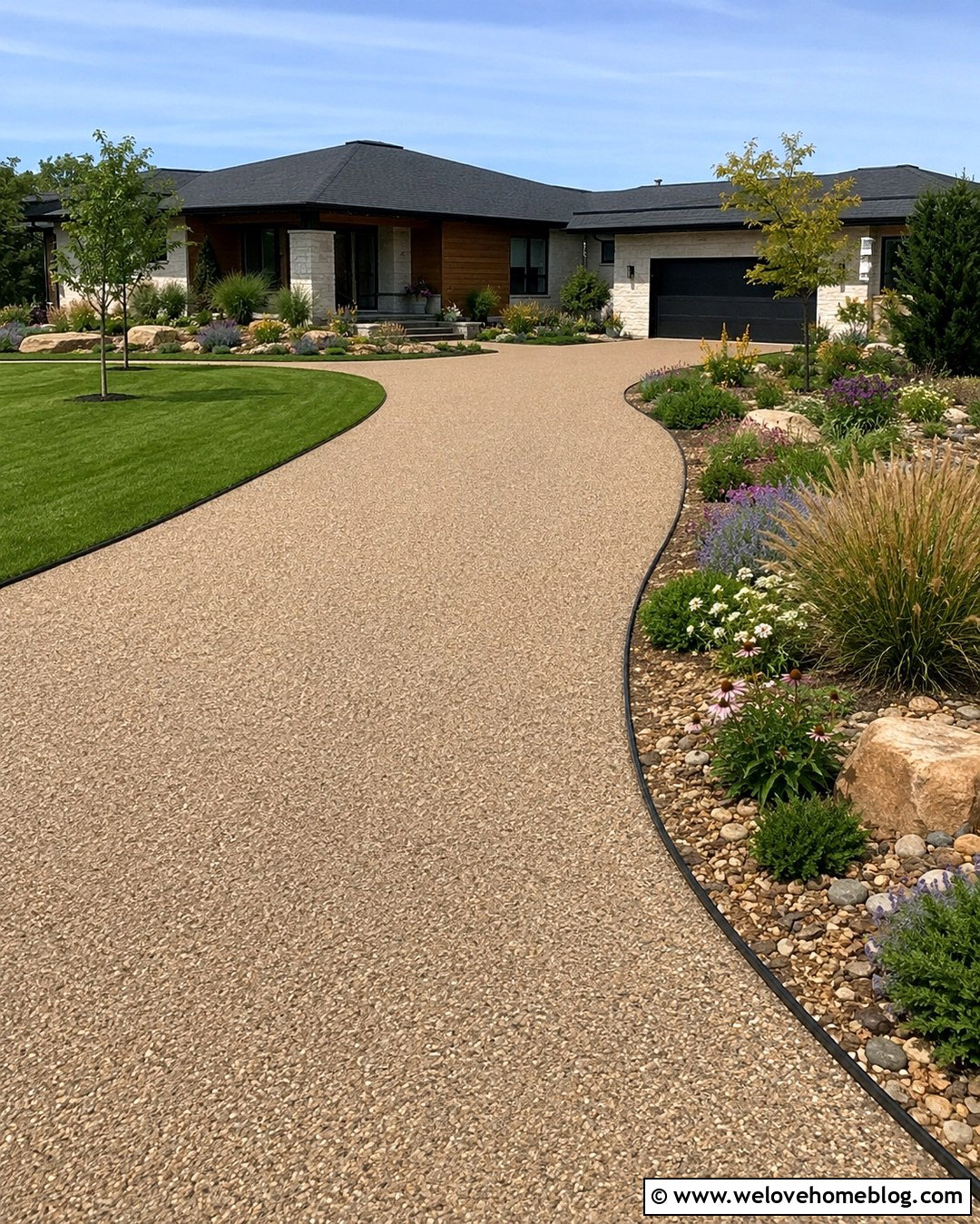
You do not need a flower-heavy border to make a driveway look inviting. Pair a warm exposed aggregate driveway with broad beds of native grasses, compact shrubs, flowering perennials, and stone mulch appropriate to your region. Group plants in repeated masses for a calmer appearance and easier maintenance. Position low varieties beside parking areas, with taller plants placed deeper into the yard. A gently curved steel edge can separate the beds from the driveway while following its shape. Add one or two specimen boulders to relate the landscape to the aggregate texture. Select plants according to mature size, sunlight, soil, and water needs rather than appearance alone. This complete look can reduce trimming demands while giving the driveway a natural, seasonally changing frame.
16. Driveway With A Coordinated Garage Door
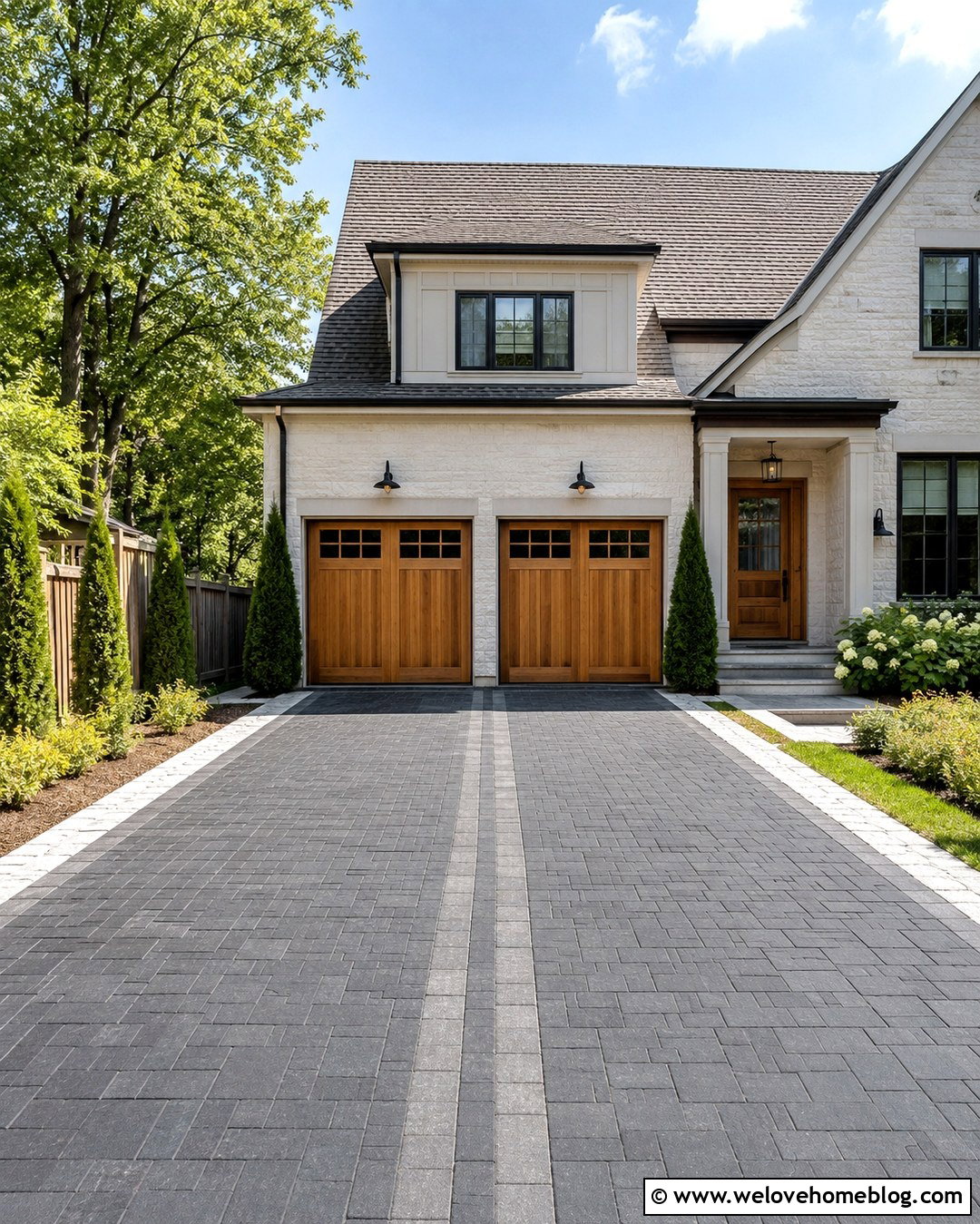
When the garage faces the street, its color and design directly affect how the driveway is perceived. Coordinate a charcoal concrete paver driveway with a garage door in warm wood, soft greige, deep bronze, or another tone drawn from the home’s exterior. Repeat the garage color in small details such as light fixtures, planter boxes, or the front door. Use a contrasting paver border to separate the driveway from foundation beds and lawn. Simple columnar shrubs can frame the garage without narrowing vehicle space. If the driveway is wide, divide the surface visually with subtle bands aligned to each garage bay. The goal is not to make every material match. Instead, use a controlled color palette that connects the curb, driveway, garage, and main entrance.
17. Sloped Driveway With A Retaining Wall
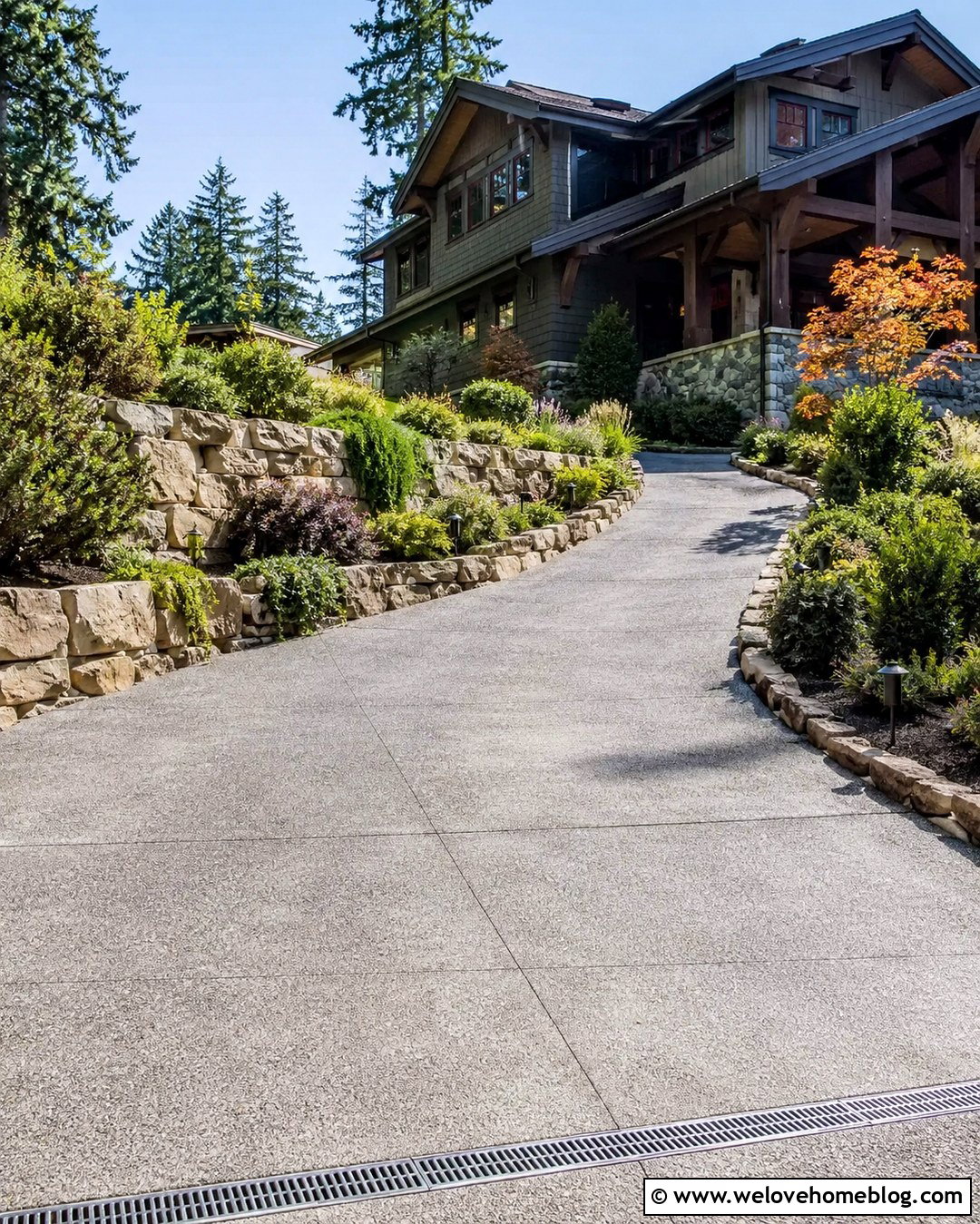
A sloped driveway can gain structure from a retaining wall that looks integrated with the home. Pair a textured gray concrete driveway with a low wall made from natural stone or architectural concrete blocks. Step the wall gradually with the grade instead of creating one tall, visually heavy barrier. Build planting pockets above it for trailing ground cover, compact shrubs, and erosion-conscious perennial masses. On the opposite driveway edge, repeat the wall material as a low border or walkway accent. Integrated drainage must be addressed so runoff does not stain the surface or damage the wall. Add shielded lights near turns and grade changes for better definition. Consult qualified professionals when wall height, soil pressure, drainage, utilities, or local permitting requirements make the project more complex.
18. Driveway With A Mailbox And Address Sign
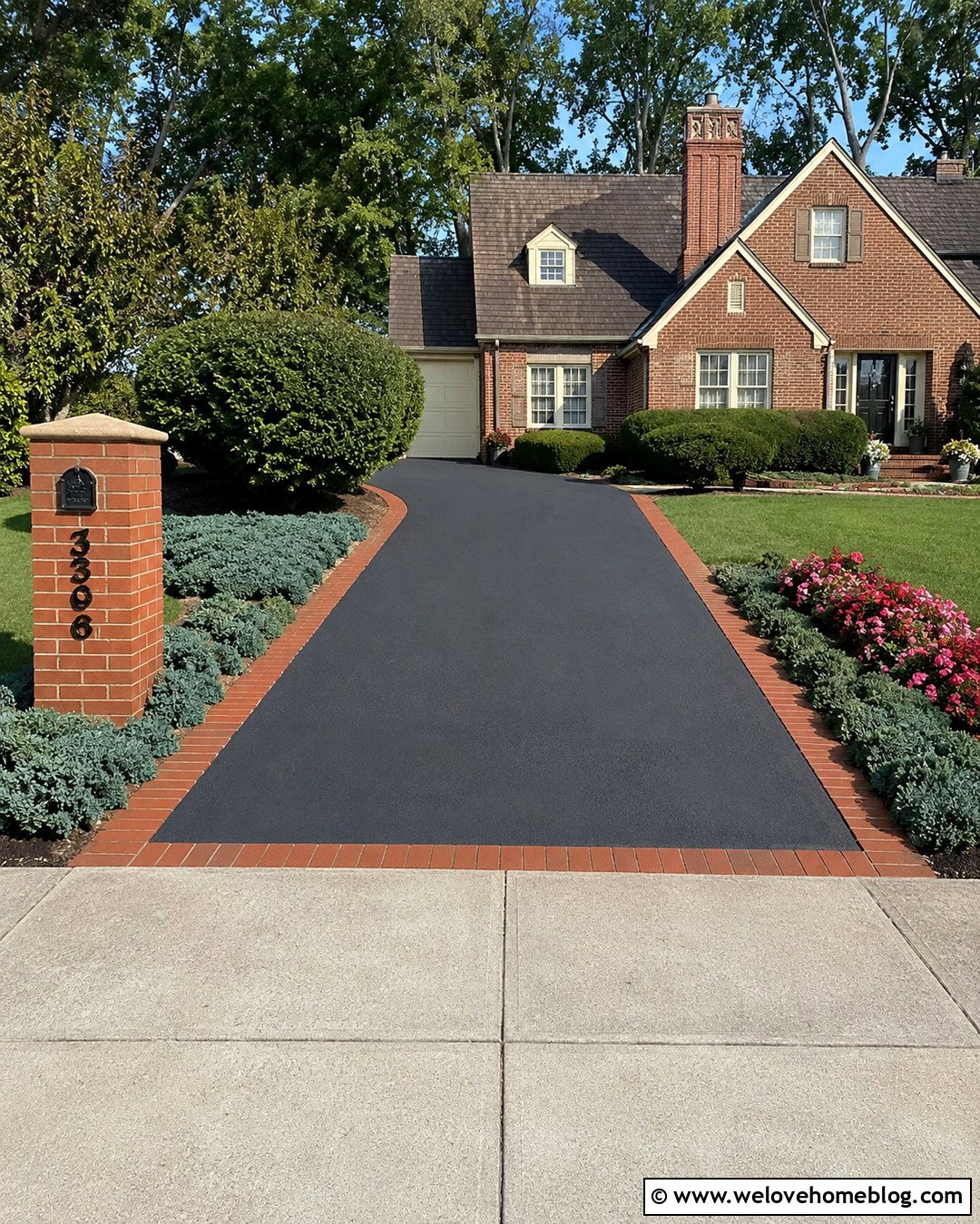
A coordinated mailbox and address sign can create a memorable focal point at the curb. Set a dark gray asphalt driveway inside a red brick border, then build a matching brick mailbox column at the entrance. Use large, high-contrast house numbers that are easy to see without adding unnecessary decoration. Surround the base with a compact curved bed of evergreen ground cover and seasonal flowers, leaving the mailbox accessible from the street. Repeat the same brick near the front walk or porch steps to connect the entrance feature to the house. Keep shrubs away from sightlines and avoid branches that could cover the numbers as they mature. The resulting driveway feels planned from its first visible point rather than beginning as an unmarked strip of pavement.
19. Driveway With A Decorative Gate
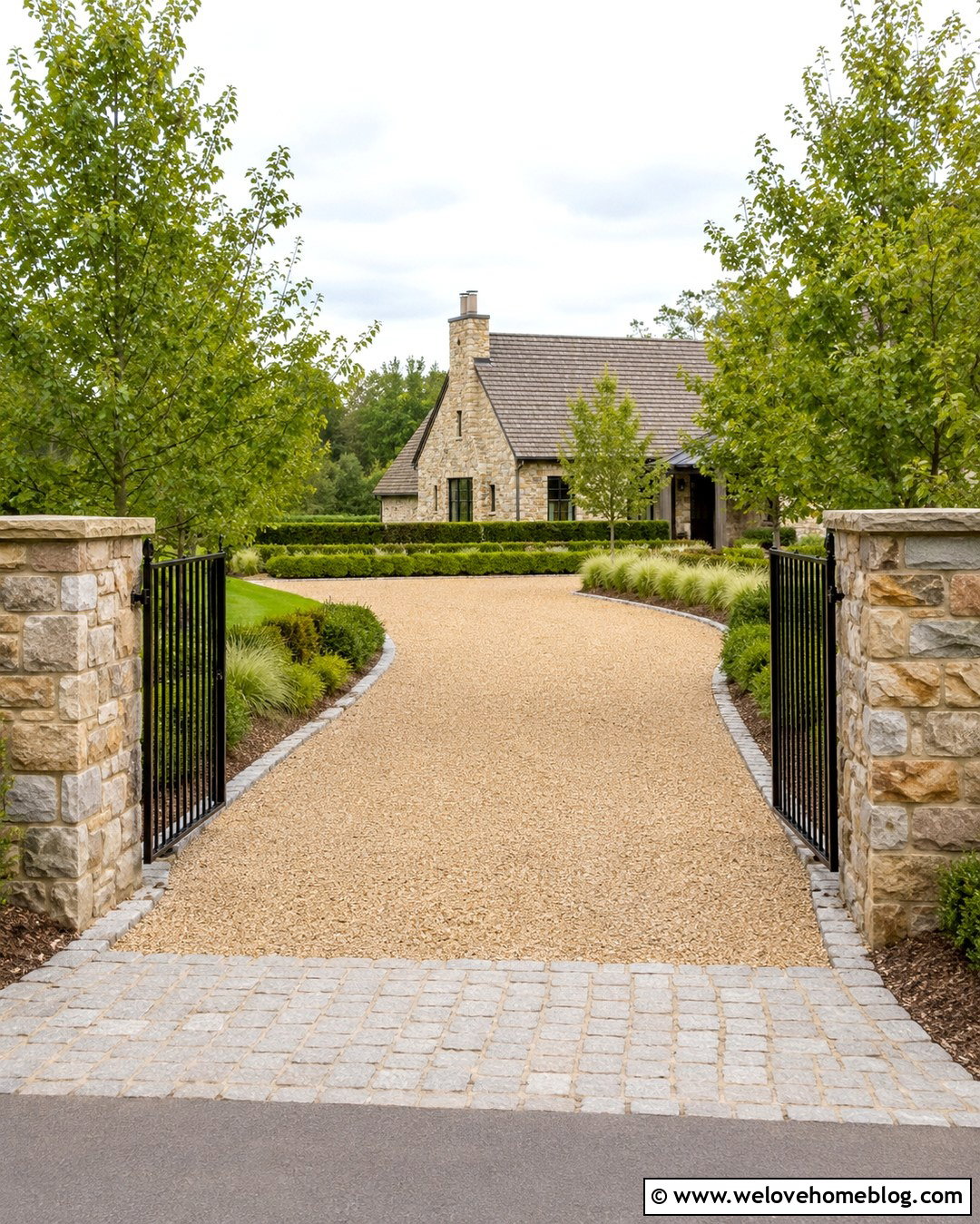
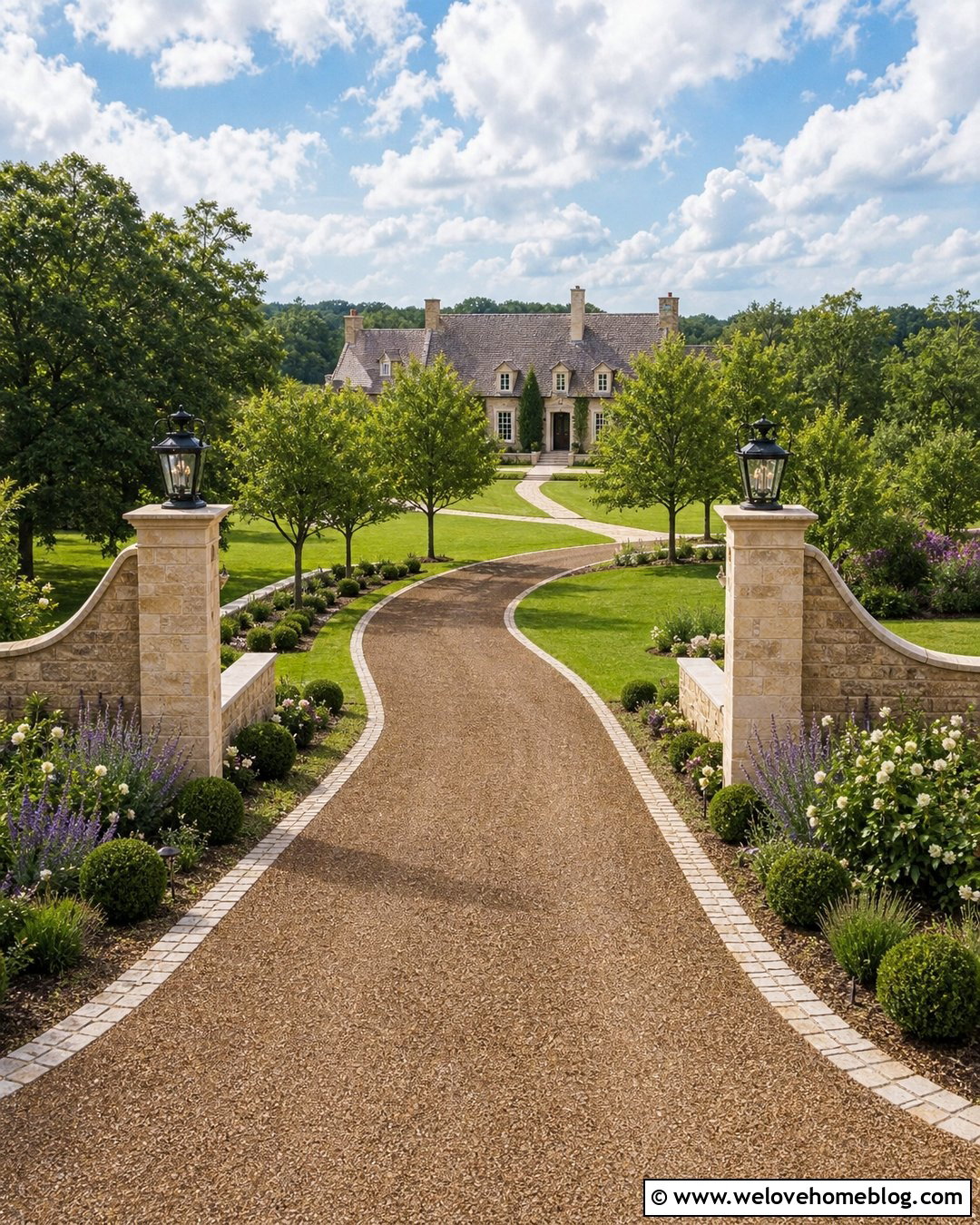
A decorative gate works best when it complements the driveway instead of overpowering it. Pair a buff-colored gravel driveway with simple black metal gates mounted between stone pillars. Set the gate far enough inside the property to provide a safe stopping area where site conditions permit. Curve the driveway gently beyond the entrance so the house appears gradually, then contain the gravel with granite setts. Use low hedges, ornamental grasses, and matched trees to frame the approach without obscuring visibility. Select a restrained gate pattern that reflects architectural details from the home. Lighting, access controls, drainage, utilities, emergency entry, and local requirements should be considered early. Even when the gate remains open, the pillars and surrounding landscaping should form a complete entrance composition.

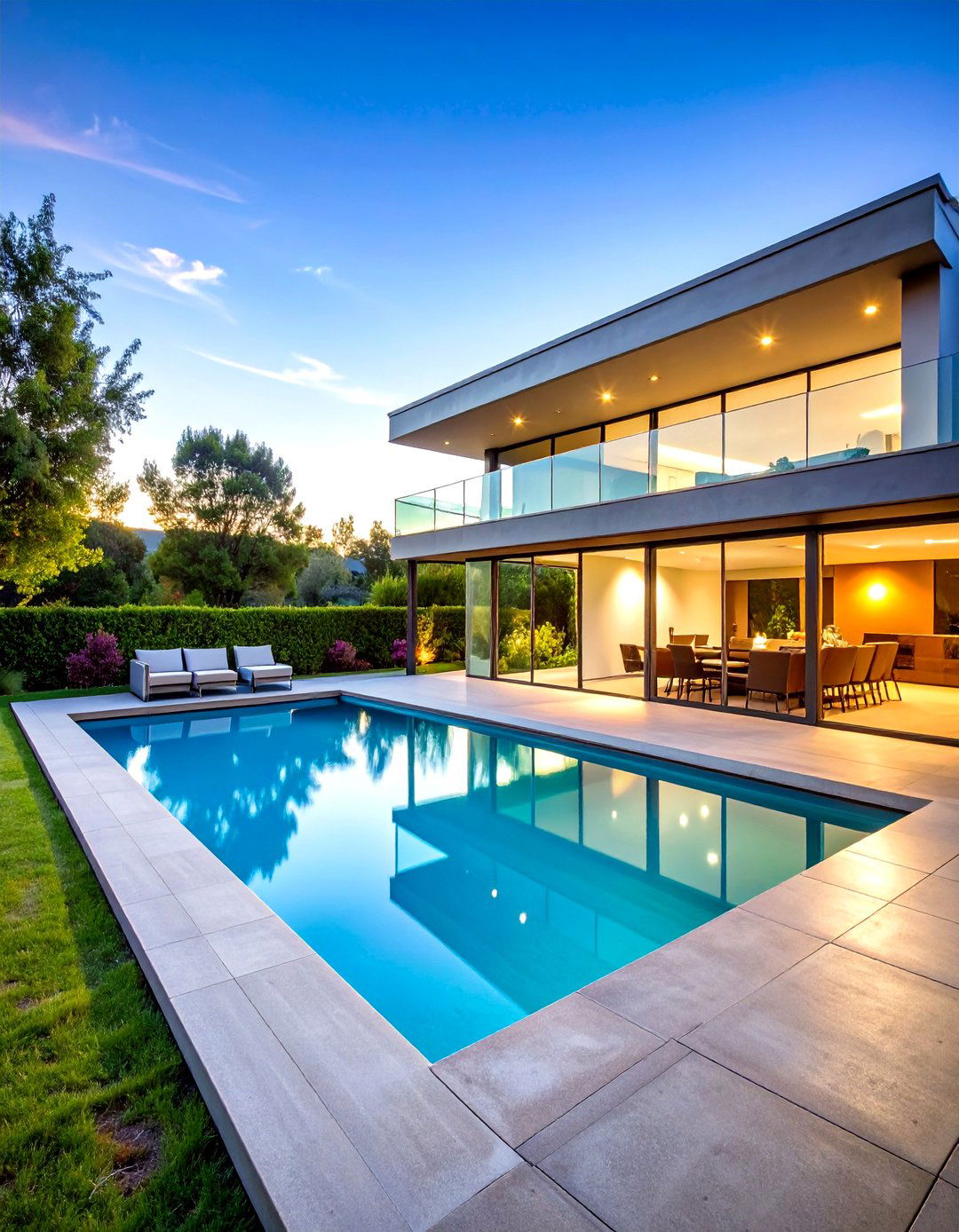

20. Mixed Material Driveway With Defined Zones
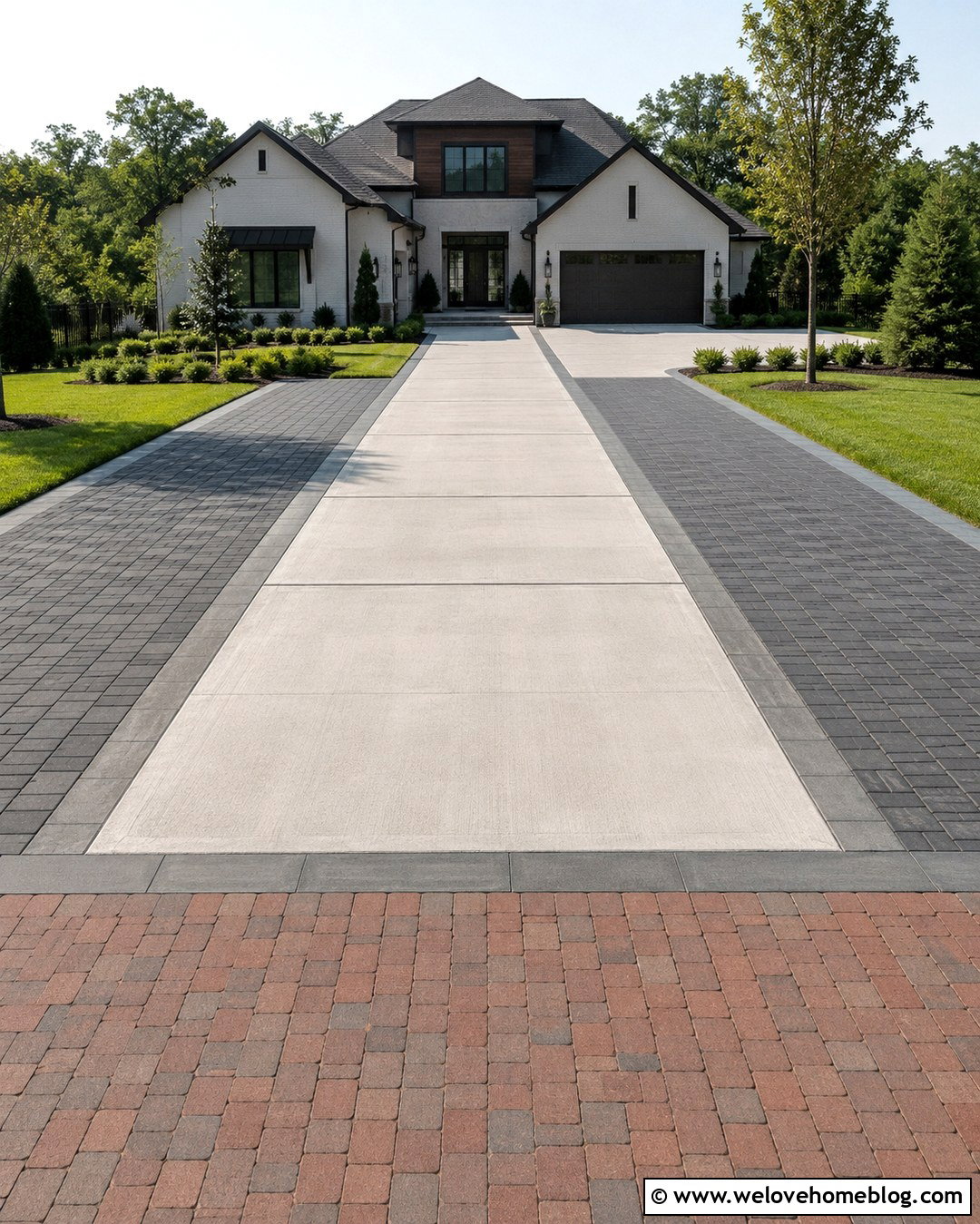
Mixing materials can make a large driveway feel more detailed and less expansive. Use light gray brushed concrete for the main driving lanes, charcoal concrete pavers around parking areas, and a clay brick apron near the street. Limit the palette to two or three coordinated materials so the surface stays visually organized. Align border bands with garage doors, walkway intersections, or changes in driveway direction. Surround the design with clipped lawn, layered planting beds, and one repeated edging material. Mixed surfaces are especially useful for identifying parking spaces and directing visitors toward the front entry. Driveway design guidance frequently highlights coordinated material combinations as a way to add definition and architectural interest. () Ensure each material has a suitable base and clean transition.
Conclusion:
Improving a driveway is not limited to installing an entirely new surface. Cleaning, repairing, edging, planting, lighting, and coordinating existing features can produce a meaningful transformation. Begin by viewing the driveway from the street and identifying what feels unfinished, confusing, or disconnected from the house. Then choose a consistent material and color palette that supports the architecture. Remember to protect driving clearance, drainage, visibility, and practical maintenance as you add decorative details. You can complete smaller changes first and build toward a larger plan over time. Use these **20 How To Enhance Driveway Curb Appeal Ideas** to create an entrance that looks attractive from the curb and remains comfortable for everyday use.

Related posts:



Leave a Reply