
A long driveway does more than connect the street to your home. It shapes the entire arrival experience. With the right surface, borders, plants, trees, lighting, and entrance details, that extended space can become one of your property’s strongest features. These 20 landscape long driveway ideas cover formal tree-lined approaches, relaxed country lanes, low-maintenance native borders, modern concrete designs, and budget-friendly gravel solutions. Each complete look considers how the driveway material, layout, edging, and surrounding yard work together. Before planting, check drainage, visibility, mature plant size, snow storage, and access for service vehicles. Whether your home is traditional, rural, or contemporary, the following 20 landscape long driveway ideas offer practical ways to create a welcoming approach.

1. Tree-Lined Long Gravel Driveway
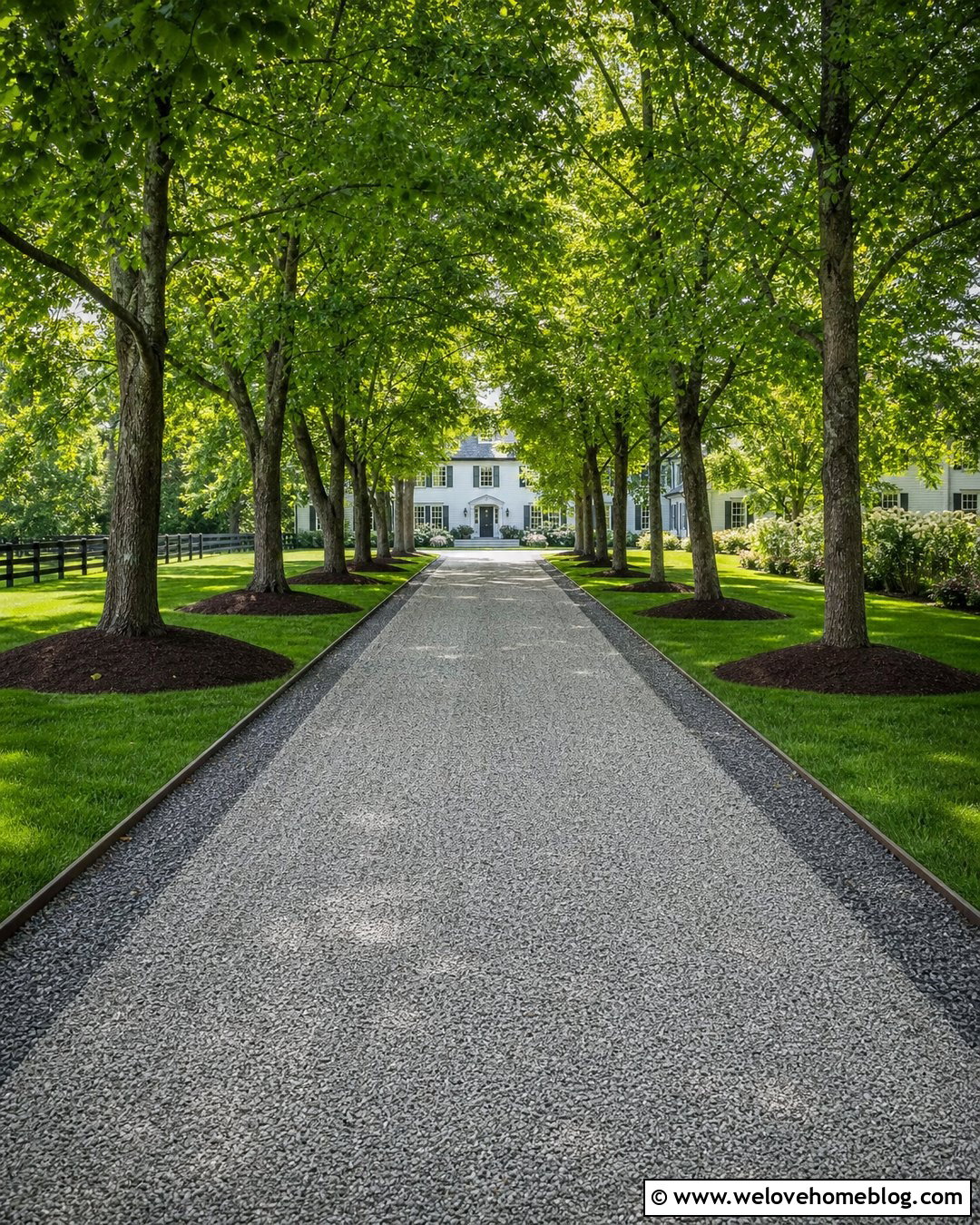
Few designs frame a property as effectively as a straight gravel driveway lined with evenly spaced trees. Use compacted gray crushed stone for a stable surface, then define both sides with simple steel edging or darker gravel shoulders. Plant matching deciduous trees at consistent intervals to establish rhythm without making the route feel crowded. Maples, oaks, and disease-resistant elms can create an impressive canopy where space allows. Keep trunks far enough from the driving area to accommodate mature roots and branches. A narrow strip of lawn beneath the trees gives the design a clean, open appearance. Near the house, widen the driveway slightly and repeat the same trees around the parking area to connect the entire landscape.
2. Curved Long Driveway With Native Plants
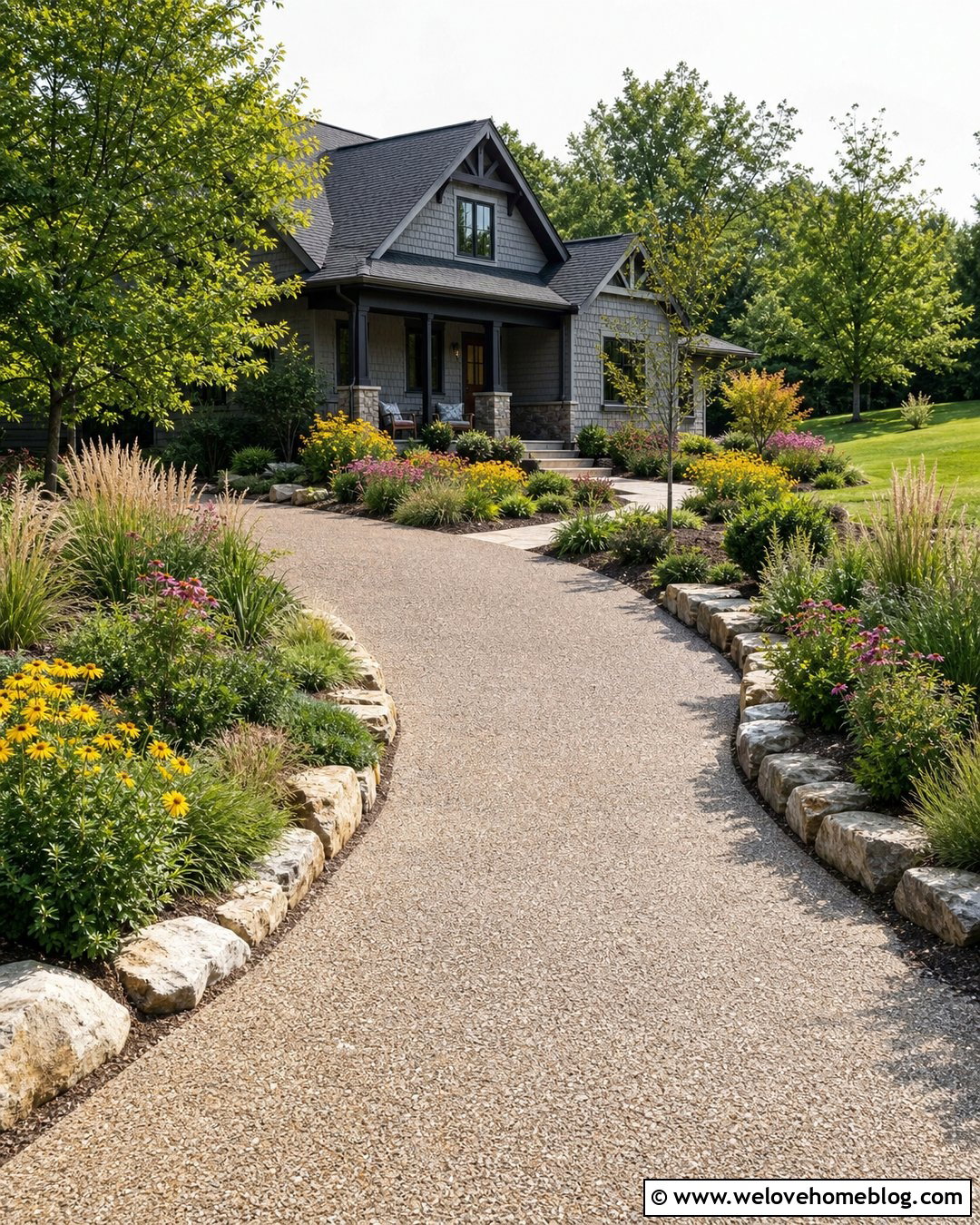
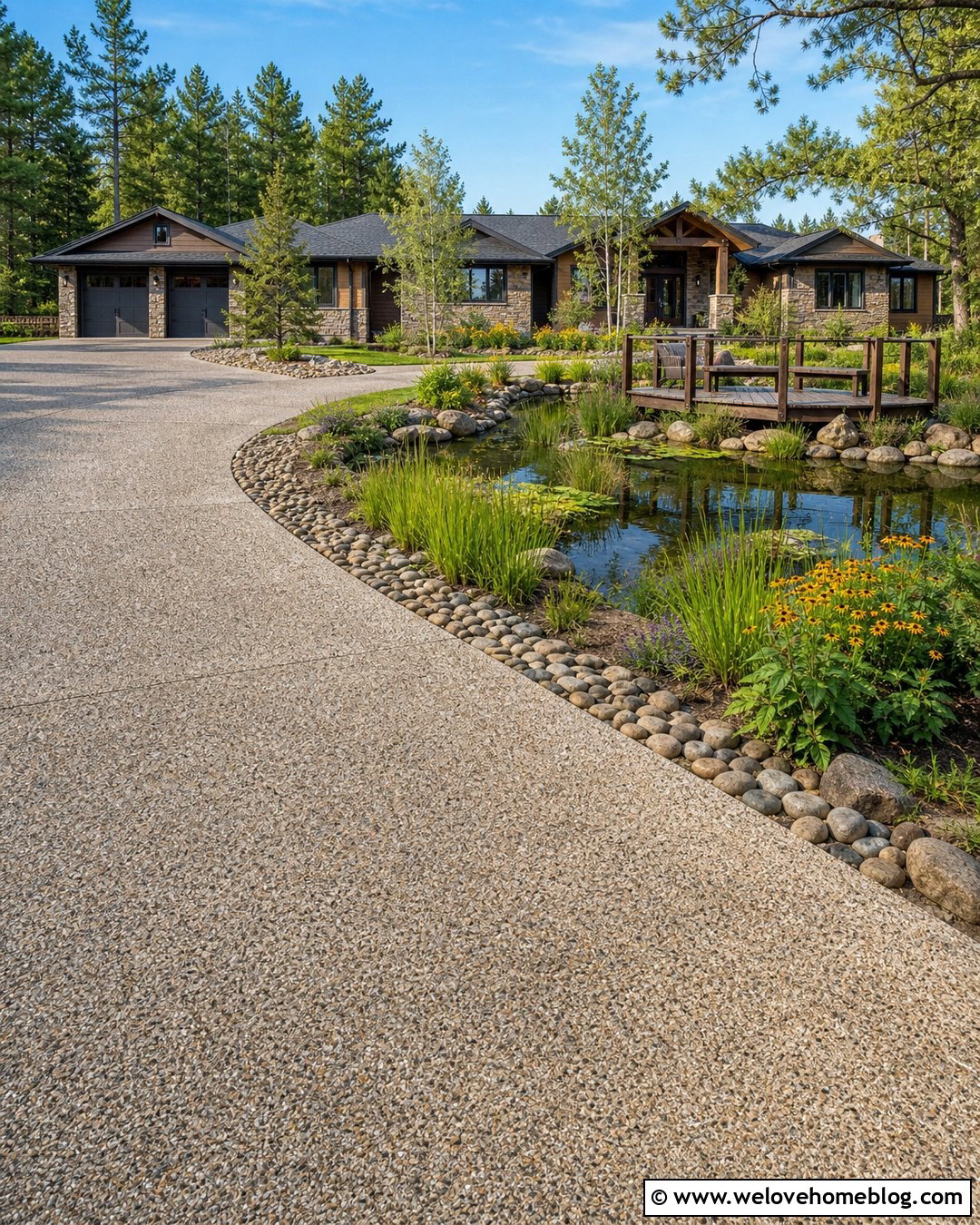
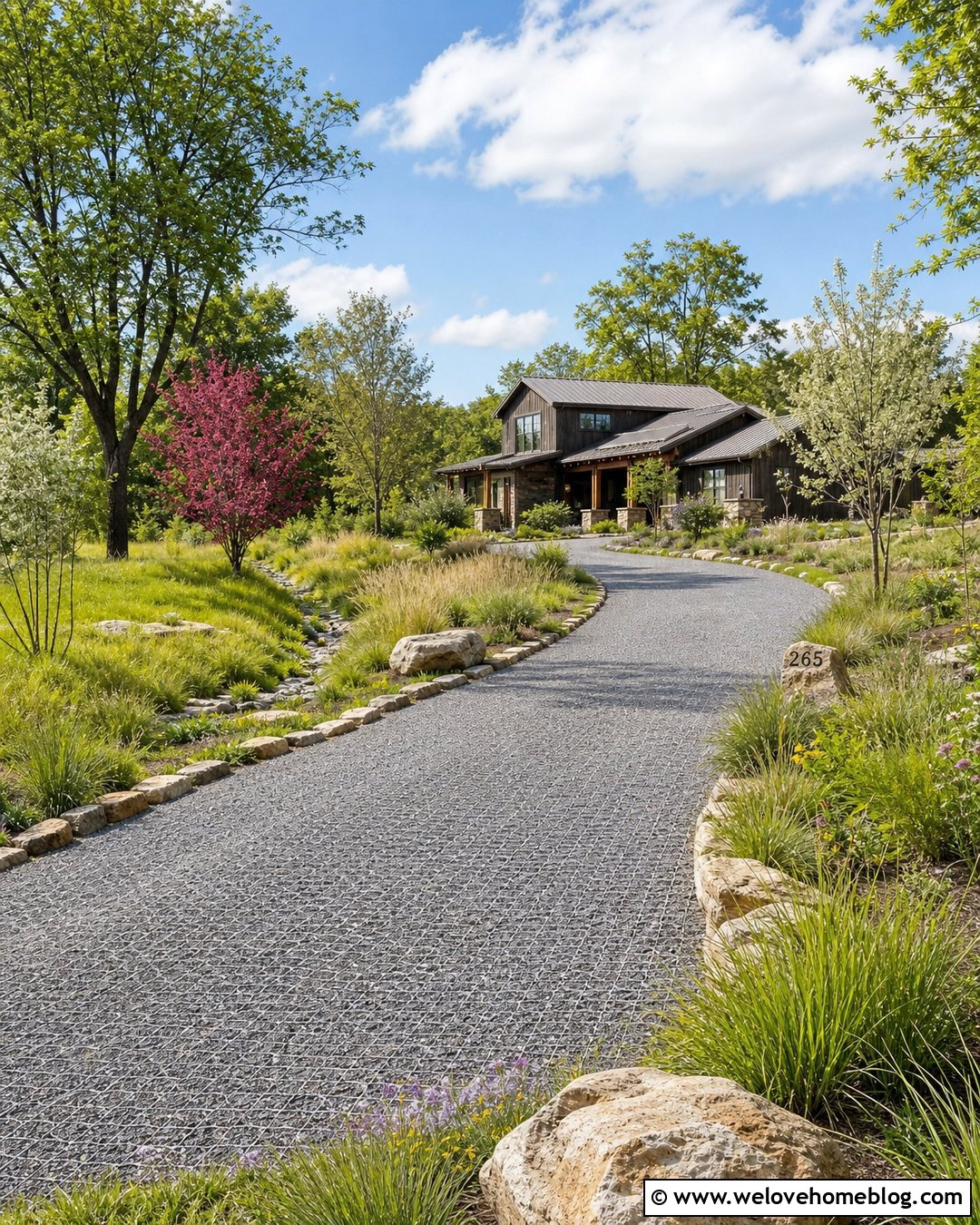
A gently curved driveway feels natural on a large or wooded lot because the house is revealed gradually. Choose warm-toned asphalt or exposed aggregate concrete, then soften the curves with broad beds of regionally appropriate native plants. Combine ornamental grasses, flowering perennials, compact shrubs, and a few small native trees for layered color and texture. Keep taller plants along the outside of each curve while using low ground covers near sightlines and intersections. Natural stone edging can hold mulch in place and protect the pavement edges. Repeating the same three or four plant varieties down the route creates continuity. This complete design suits homeowners who want an informal landscape that supports local conditions without looking messy or disconnected.
3. Long Asphalt Driveway With Evergreen Borders
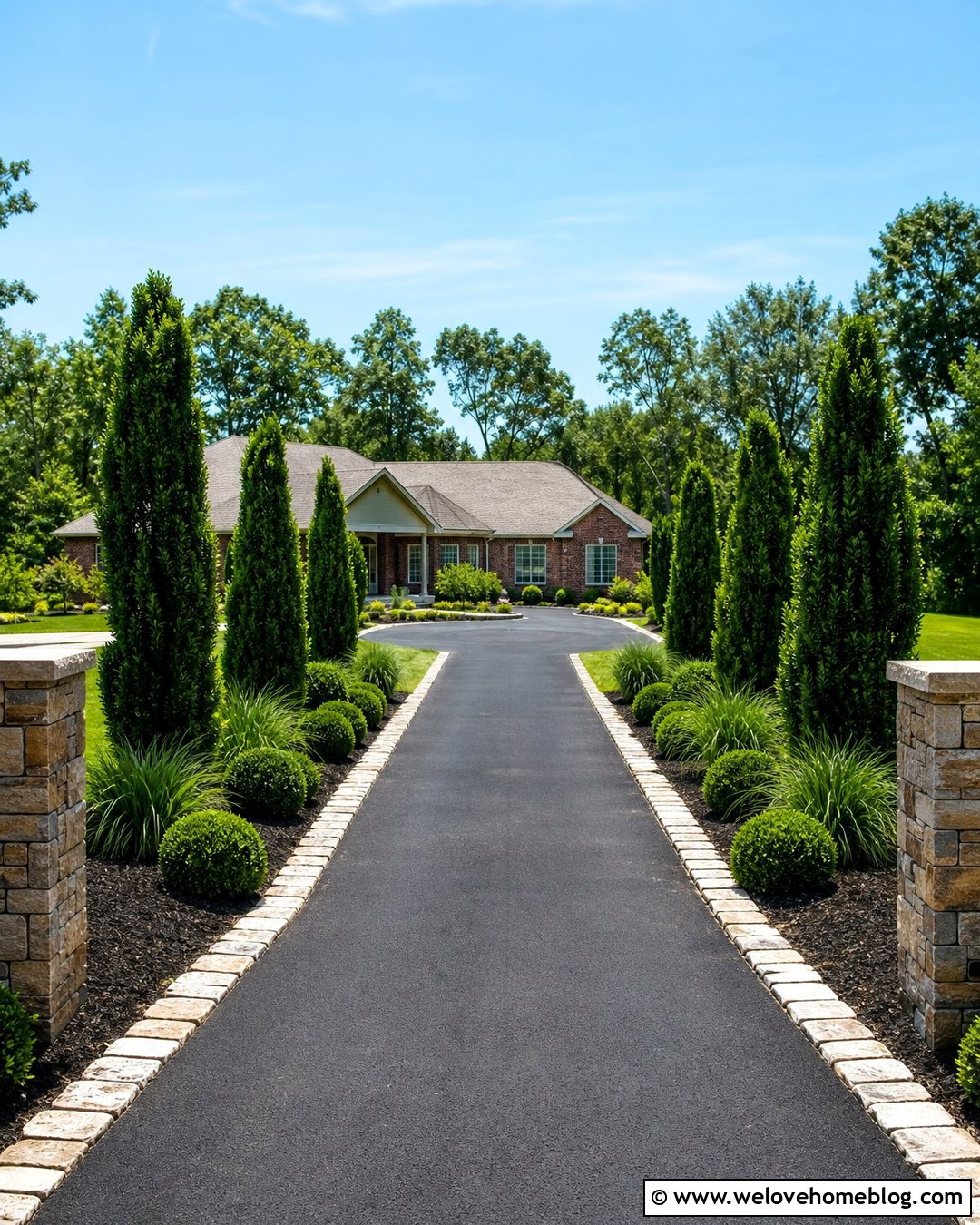
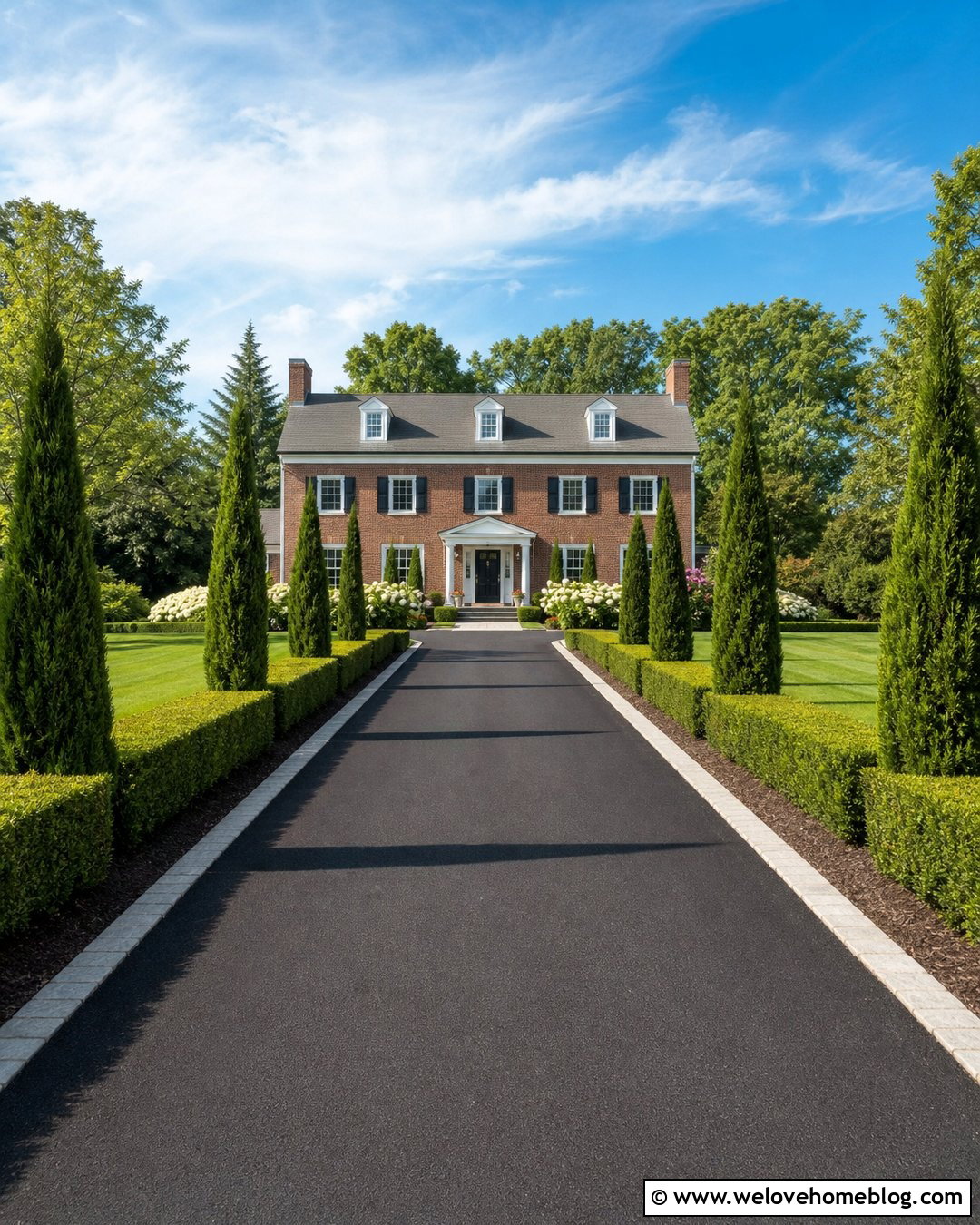
Do you want year-round structure without maintaining long flower beds? A black asphalt driveway bordered by staggered evergreens offers a practical answer. Use compact conifers, upright junipers, or clipped holly where they suit the local climate, alternating them with low ornamental grasses to prevent a rigid wall effect. A narrow cobblestone edge adds contrast and helps separate the dark pavement from mulch or lawn. Leave generous gaps between shrubs based on their mature width rather than their nursery size. At the entrance, place slightly taller evergreens behind stone pillars to create a strong focal point. Continue the same planting pattern toward the house, gradually reducing its density so the driveway opens into the main parking and walkway areas.
4. Long Concrete Driveway With Flower Borders
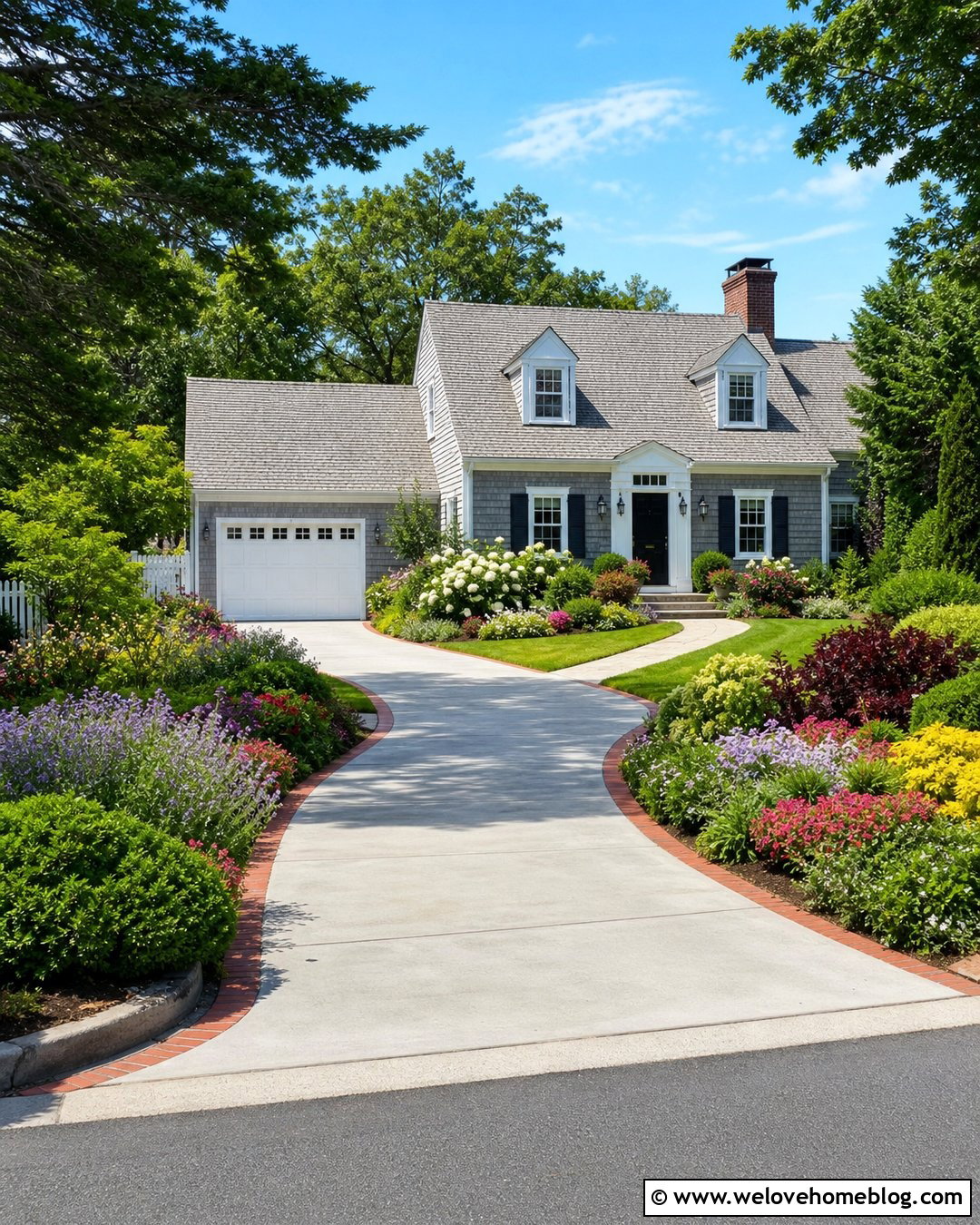
Bright flower borders can make a large concrete driveway feel more welcoming and less utilitarian. Start with light-gray brushed concrete divided into balanced sections by neat control joints. Along both sides, create sweeping beds edged with brick or natural stone. Use repeating clusters of long-blooming perennials, compact flowering shrubs, and evergreen ground covers rather than planting every available variety. This gives the lengthy landscape a consistent identity. Keep flowers low near the street entrance and any sharp turns to preserve visibility. Taller plants can sit farther back, where they will soften fences or open lawn. Match one or two flower colors to the home’s front door, shutters, or trim. The result feels colorful yet connected to the architecture.
5. Long Farmhouse Driveway With Split-Rail Fencing
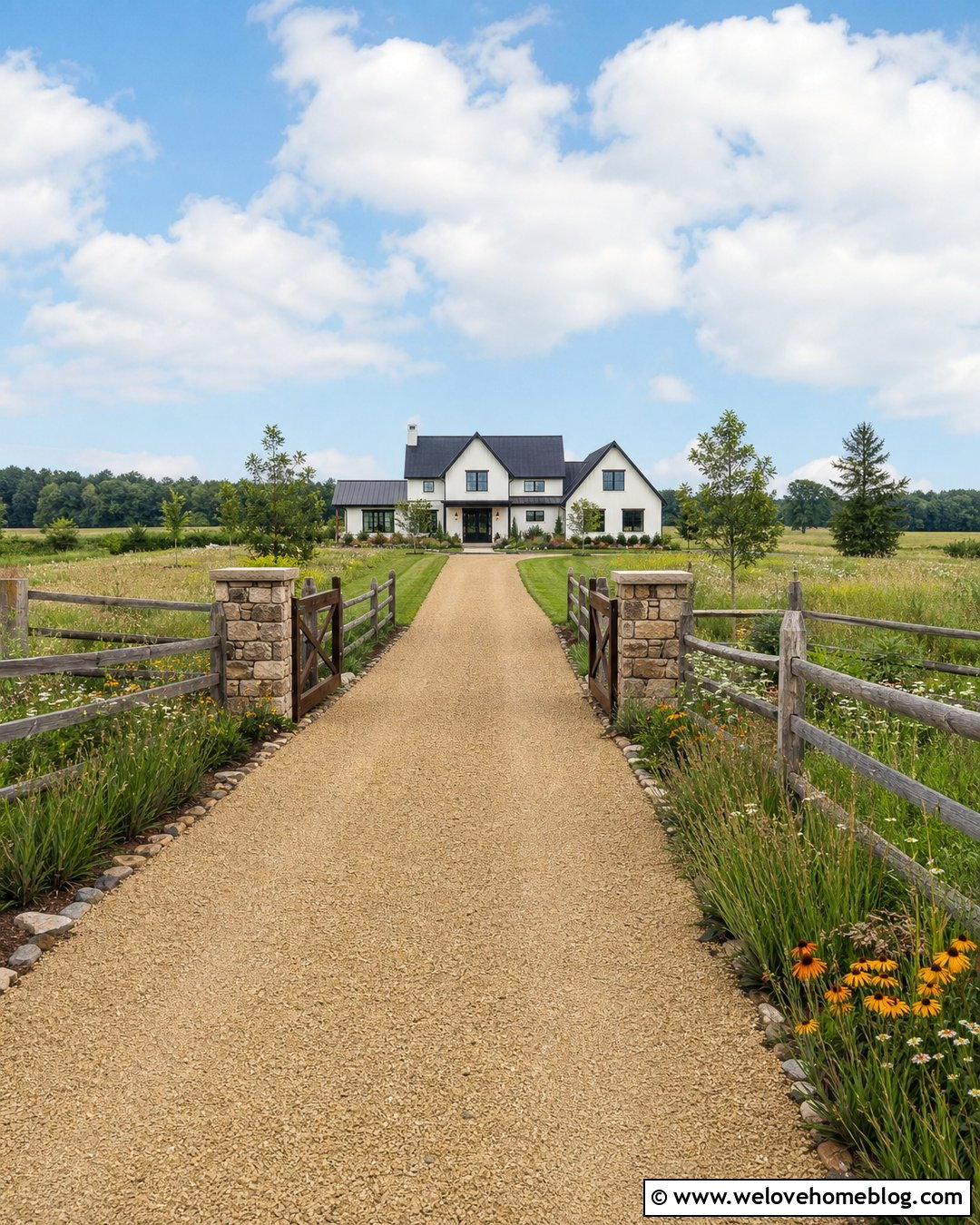
A long country driveway pairs naturally with split-rail fencing, meadow-style planting, and a durable gravel surface. Use tan crushed gravel for a warm, informal appearance, with compacted stone beneath it to reduce shifting and ruts. Run the fence along one side or both sides while leaving a practical shoulder between the rails and driving surface. Plant native grasses, black-eyed Susans, coneflowers, and scattered shrubs outside the fence for a relaxed farmhouse landscape. Avoid placing plants in a perfectly straight row; broad repeating drifts look more natural. A wooden farm gate and simple stone entry columns can mark the road without appearing overly formal. Near the house, transition the meadow planting into mown lawn and structured foundation beds for a tidy finish.
6. Long Modern Driveway With Ornamental Grasses
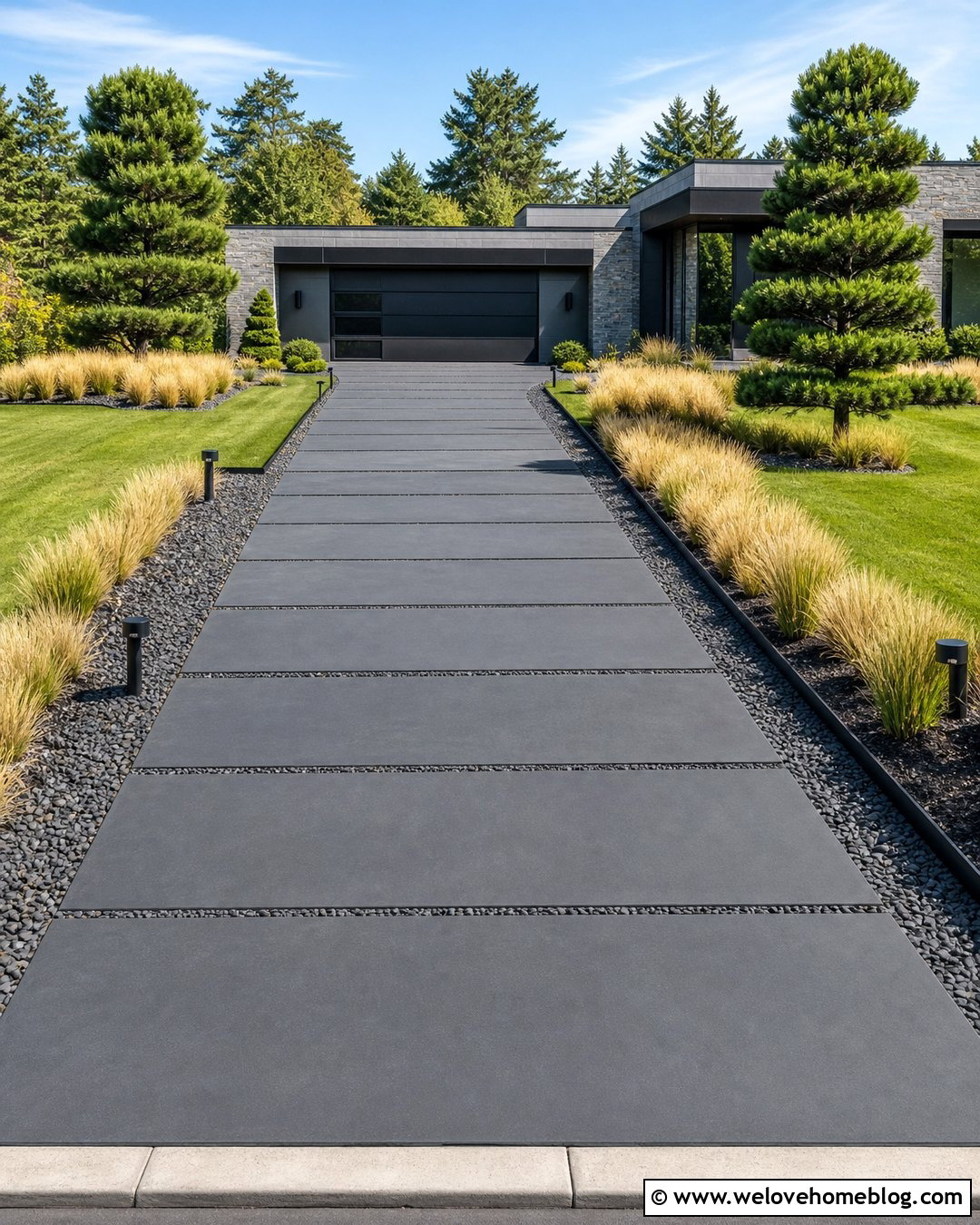
Clean lines and restrained planting can turn a long driveway into a striking feature for a modern home. Use large-format charcoal concrete pavers or smooth poured concrete separated by narrow gravel joints. Border the route with long bands of ornamental grasses planted in repeated blocks. Switchgrass, feather reed grass, and compact fountain grass provide movement while keeping the palette simple. Black metal edging creates a sharp transition between planting beds, gravel, and lawn. Rather than lining every inch, leave occasional open sections that reveal the architecture and make the landscape feel spacious. Add a few sculptural evergreen trees near the entrance and turning area. Low bollard lights placed at important curves provide guidance without creating an overly illuminated runway effect.
7. Long Brick Driveway With Boxwood Hedges
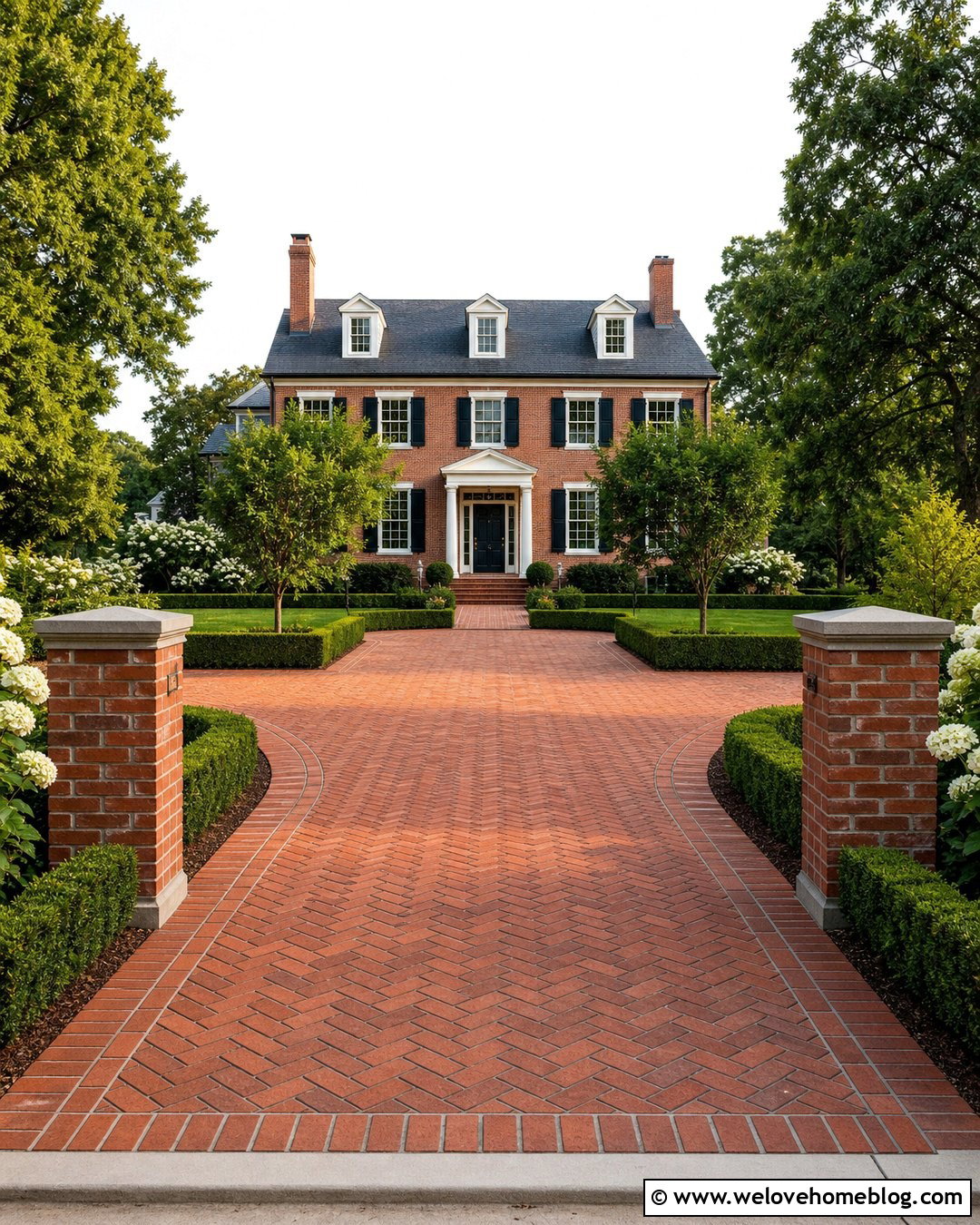
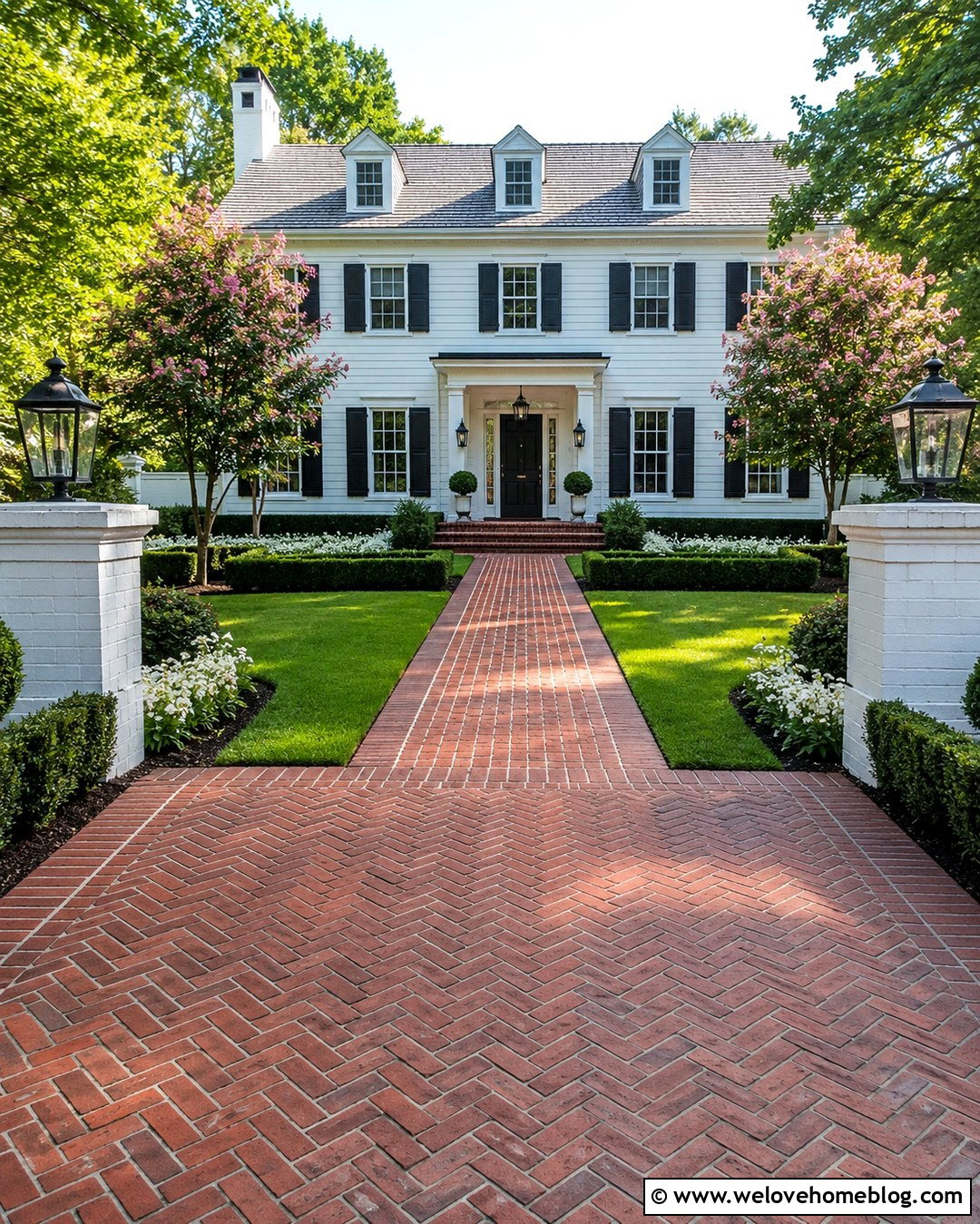
For a traditional home, a long brick driveway bordered by clipped boxwood creates an orderly and established approach. Choose clay brick pavers in a herringbone pattern, with a soldier-course border that clearly defines each edge. Run low hedges along the straight sections, but leave breaks near walkways, parking spaces, and drainage areas. Behind the boxwood, add flowering shrubs or small ornamental trees for seasonal interest and greater depth. Red brick works especially well with colonial, Georgian, and Cape Cod facades, while weathered brown brick produces a softer country appearance. At the street, matching brick pillars can support simple lanterns and an understated gate. Continue the brick into the front walkway so guests can easily understand the route to the door.
8. Long Paver Driveway With Stone Entrance Pillars
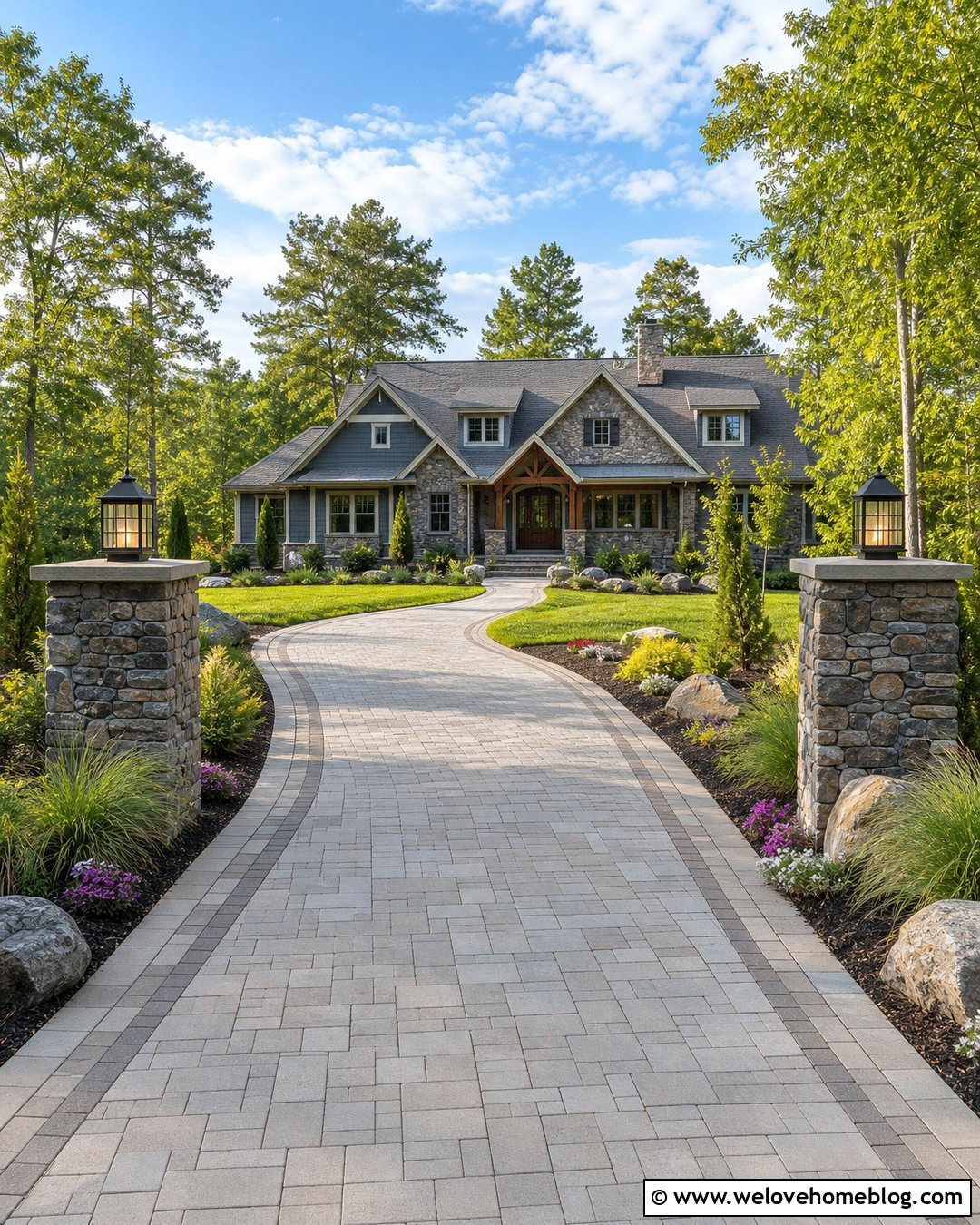
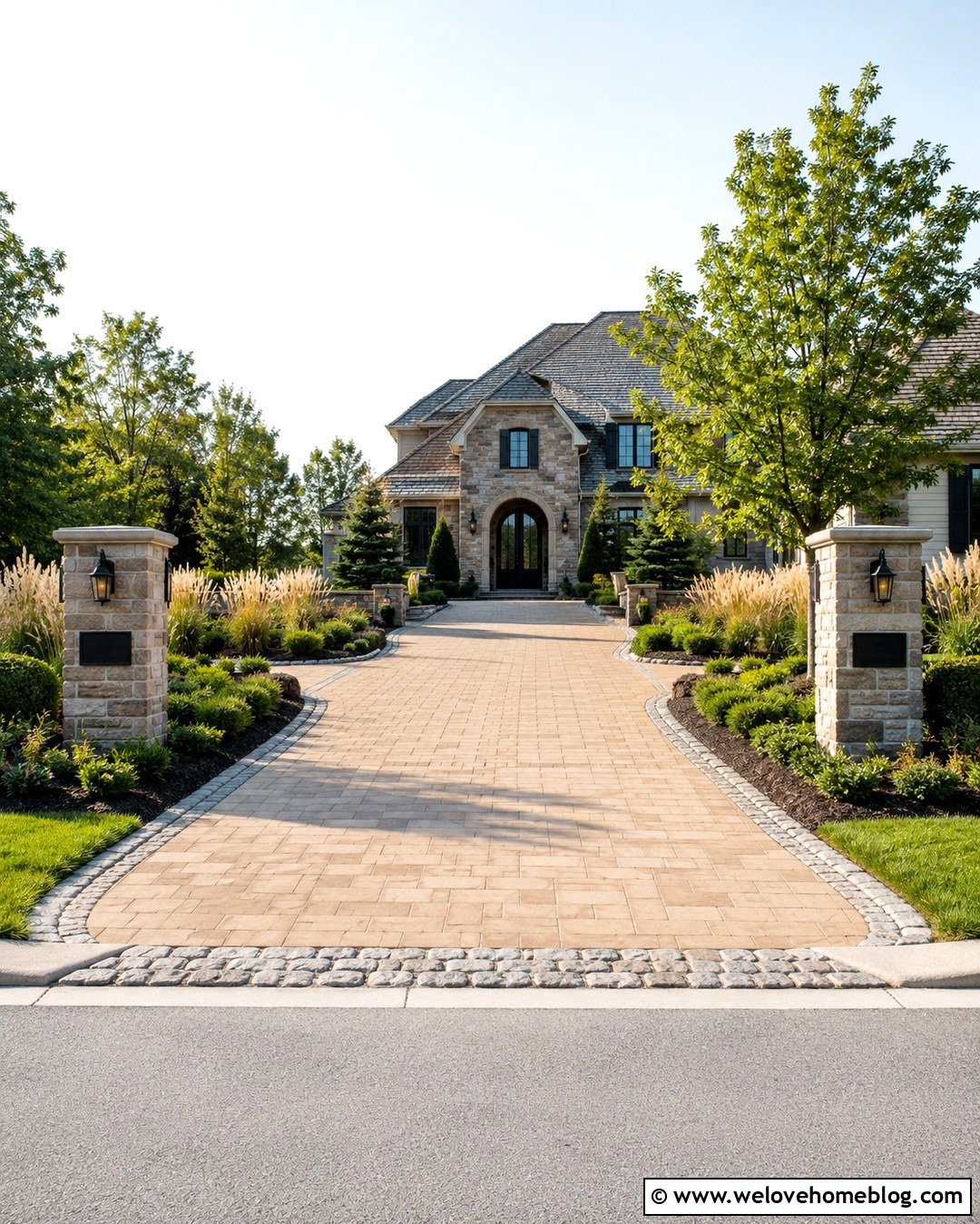
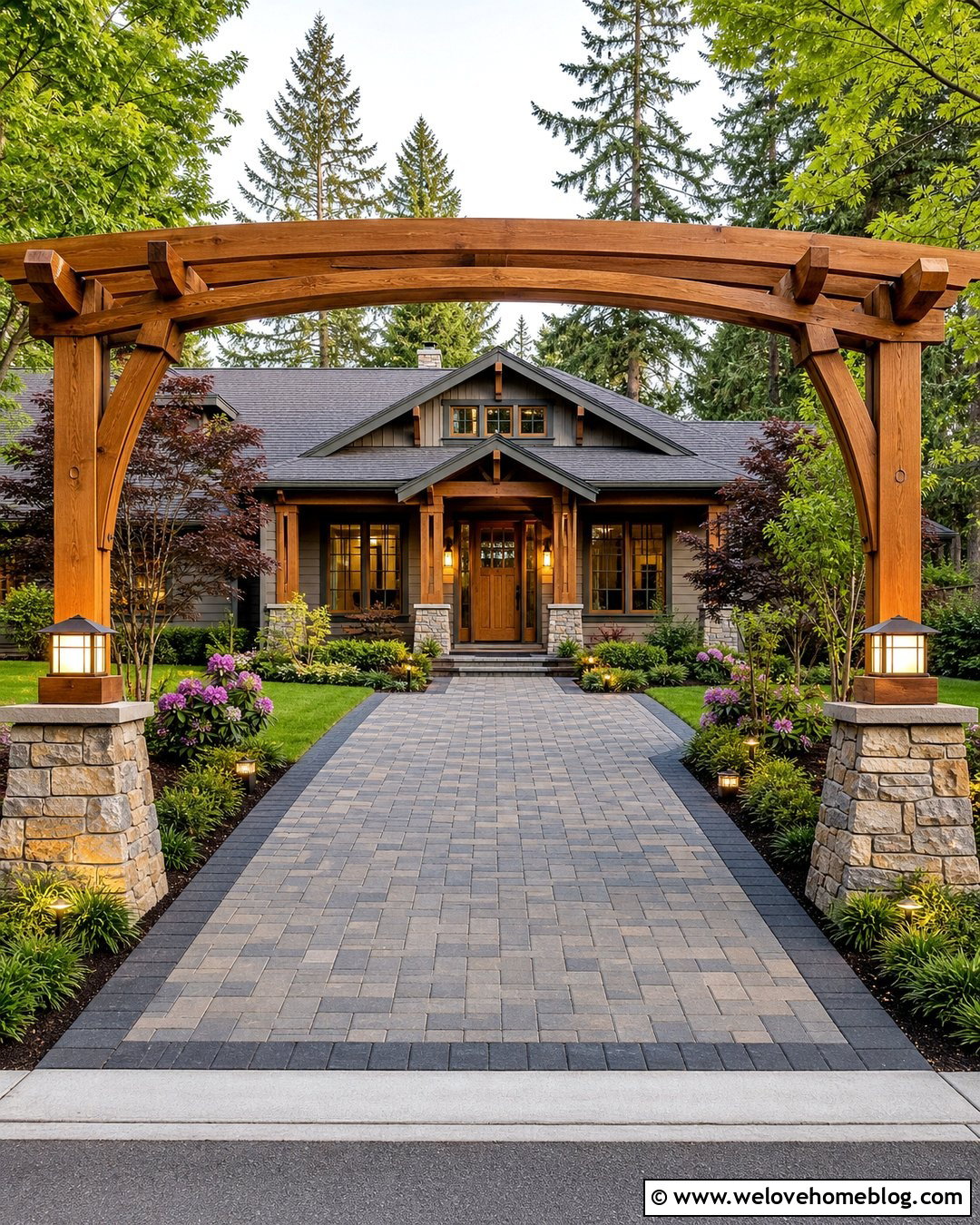
A defined entrance helps a long driveway feel intentional from the moment it leaves the street. Build substantial natural stone pillars on both sides, then continue into a driveway made from neutral concrete pavers. A curved or gently sweeping layout can soften the scale of the hardscape. Use matching stone as a narrow border or inlay so the entrance and driveway read as one coordinated design. Around the pillars, plant low evergreens, flowering ground covers, and small ornamental grasses that will not block approaching traffic. Farther along the route, repeat the stone through occasional boulders or low retaining edges. The home should remain the final focal point, so choose pillar dimensions and plantings that complement rather than overpower the facade in the distance.
9. Long Driveway With Low-Voltage Lighting
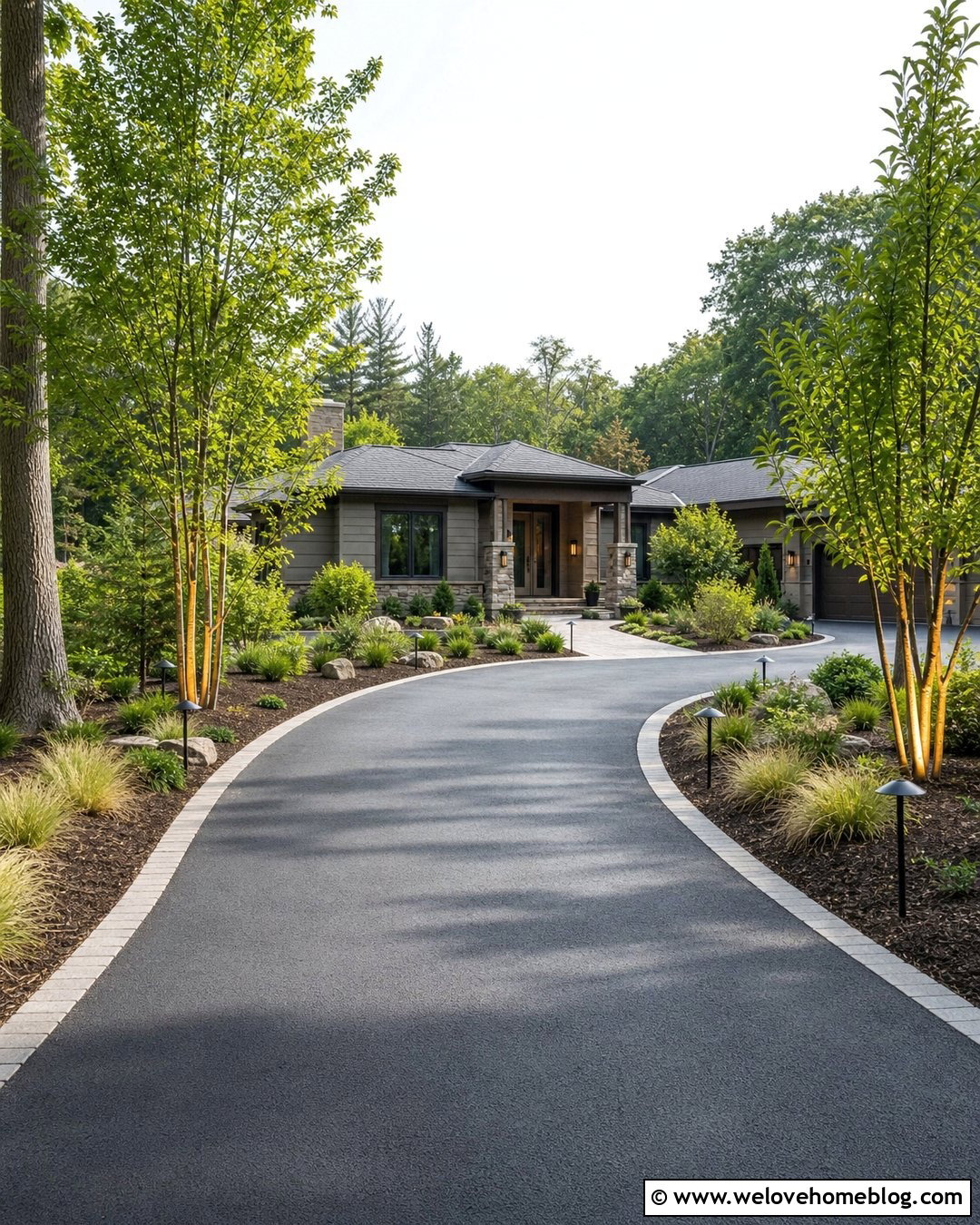
Lighting a lengthy driveway works best when fixtures guide movement and highlight landscaping instead of outlining every foot of pavement. Begin with a dark asphalt or gray paver surface framed by low planting beds. Place low-voltage path lights near curves, driveway intersections, drainage crossings, and the transition into the parking area. Uplight selected trees or entrance pillars to create vertical focal points. Keep fixtures spaced generously and hide them among grasses or ground covers whenever possible. This avoids a harsh runway appearance while preserving safe visual guidance. Use one fixture finish throughout, such as matte black or aged bronze, to maintain consistency. At the house, coordinate driveway lighting with walkway and porch fixtures so the entire arrival sequence feels connected and thoughtfully planned.

10. Long Driveway With Hydrangea Borders
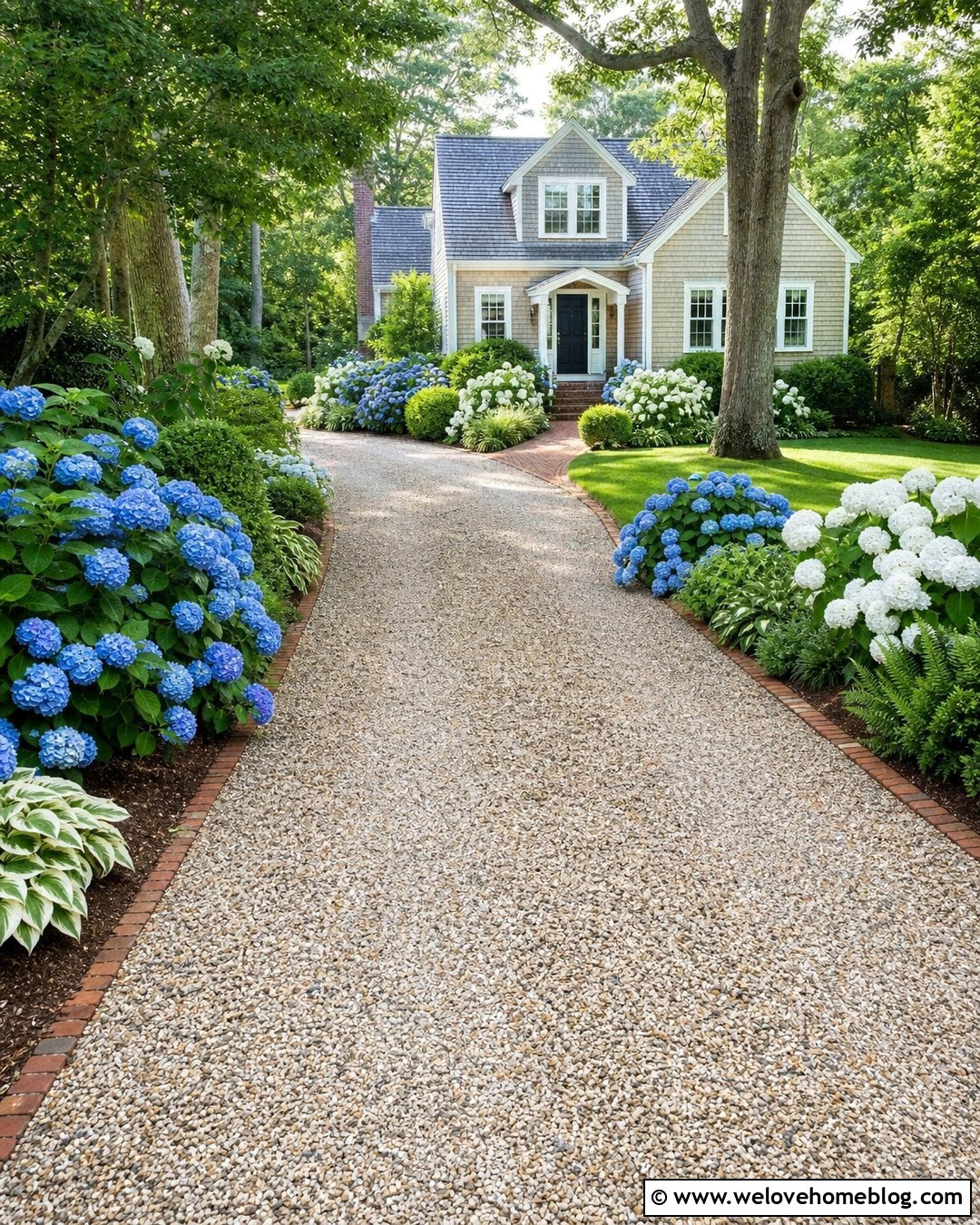
Large hydrangea borders can bring softness and seasonal color to a long driveway near a cottage, Craftsman, or traditional home. A pale pea gravel or light concrete surface provides a calm background for the flowers. Plant hydrangeas in generous repeated groups rather than one uninterrupted hedge, leaving space for airflow and mature growth. Fill the gaps with evergreen shrubs, ferns, or shade-tolerant ground covers based on the site’s light conditions. Brick edging keeps mulch from spilling onto the driveway and introduces a refined detail. Use shorter varieties near the entrance and taller shrubs closer to the house or woodland edge. Because hydrangeas may lose visual weight in winter, mix them with evergreen structure so the landscape remains attractive after the main flowering season ends.
11. Long Driveway With Lavender And Gravel Borders
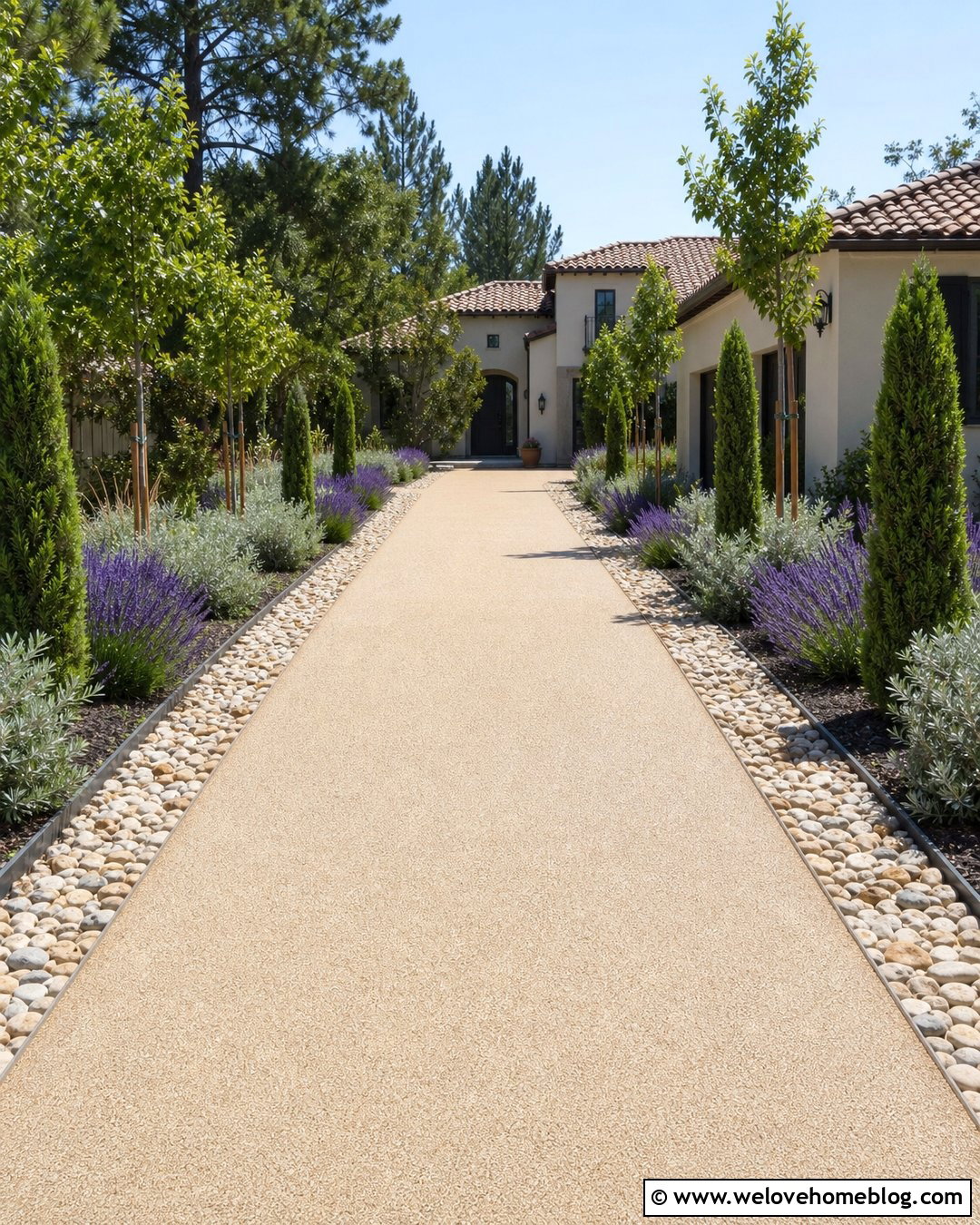
A sunny long driveway can become a fragrant, low-profile approach when lavender is paired with gravel and stone. Use warm beige resin-bound gravel or compacted fine gravel for the driving surface. Create wide side borders filled with washed river stone, then repeat lavender in measured groups along both edges. Small upright evergreens or ornamental pears can add height without competing with the simple planting scheme. Install metal edging between the driveway, stone mulch, and adjacent lawn to prevent materials from mixing. This design works especially well with stucco, Mediterranean-inspired, and modern farmhouse homes. Select lavender suited to the local climate and drainage conditions. Where lavender is unreliable, use visually similar drought-tolerant plants that maintain the same silvery foliage and repeated form.
12. Long Woodland Driveway With Ferns And Boulders
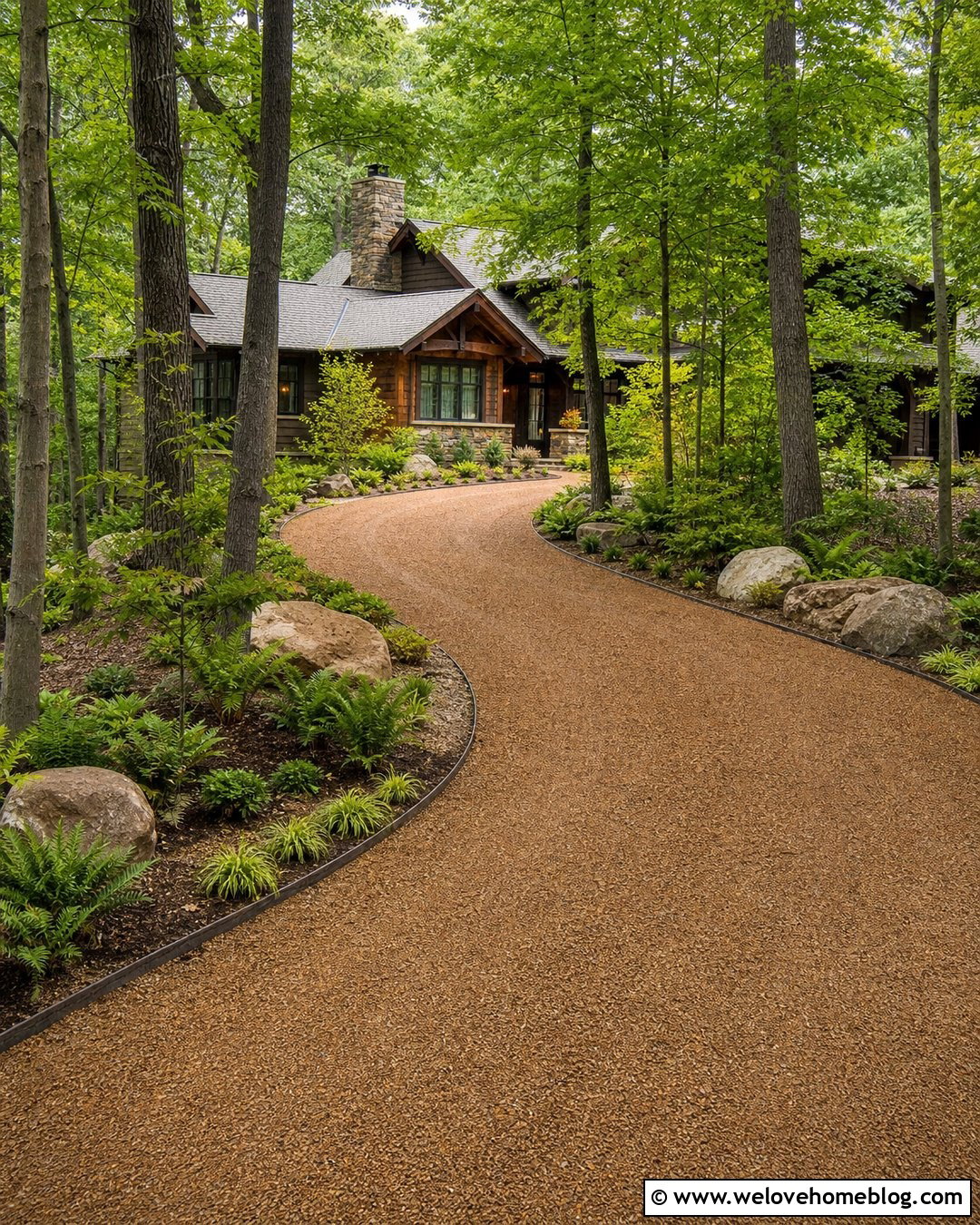
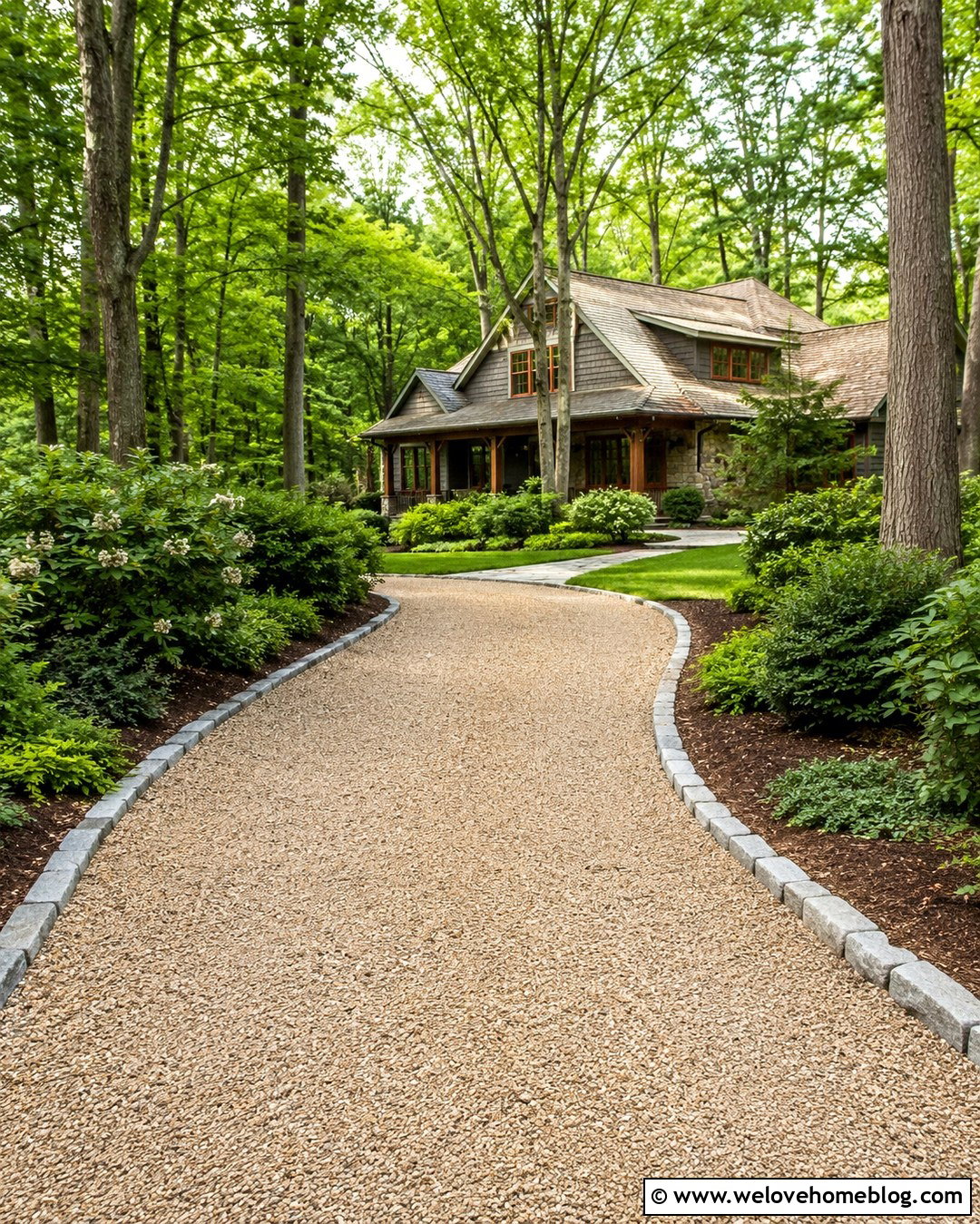
A shaded driveway surrounded by mature trees should feel integrated with the woodland rather than heavily landscaped. Choose brown crushed stone or permeable gravel that blends with tree trunks and fallen leaves. Preserve healthy existing trees, then shape irregular planting beds around their root zones without piling soil against the trunks. Use ferns, sedges, woodland ground covers, and shade-tolerant native shrubs in broad natural groups. Place several locally sourced boulders along the outer edges to protect planting areas and mark curves. Avoid continuous formal edging; a subtle steel edge can control gravel while remaining nearly invisible. Limited lighting aimed at key trees or bends is more appropriate than a long row of fixtures. The finished driveway should look calm, established, and connected to its surroundings.
13. Long Circular Driveway With Center Island Landscaping
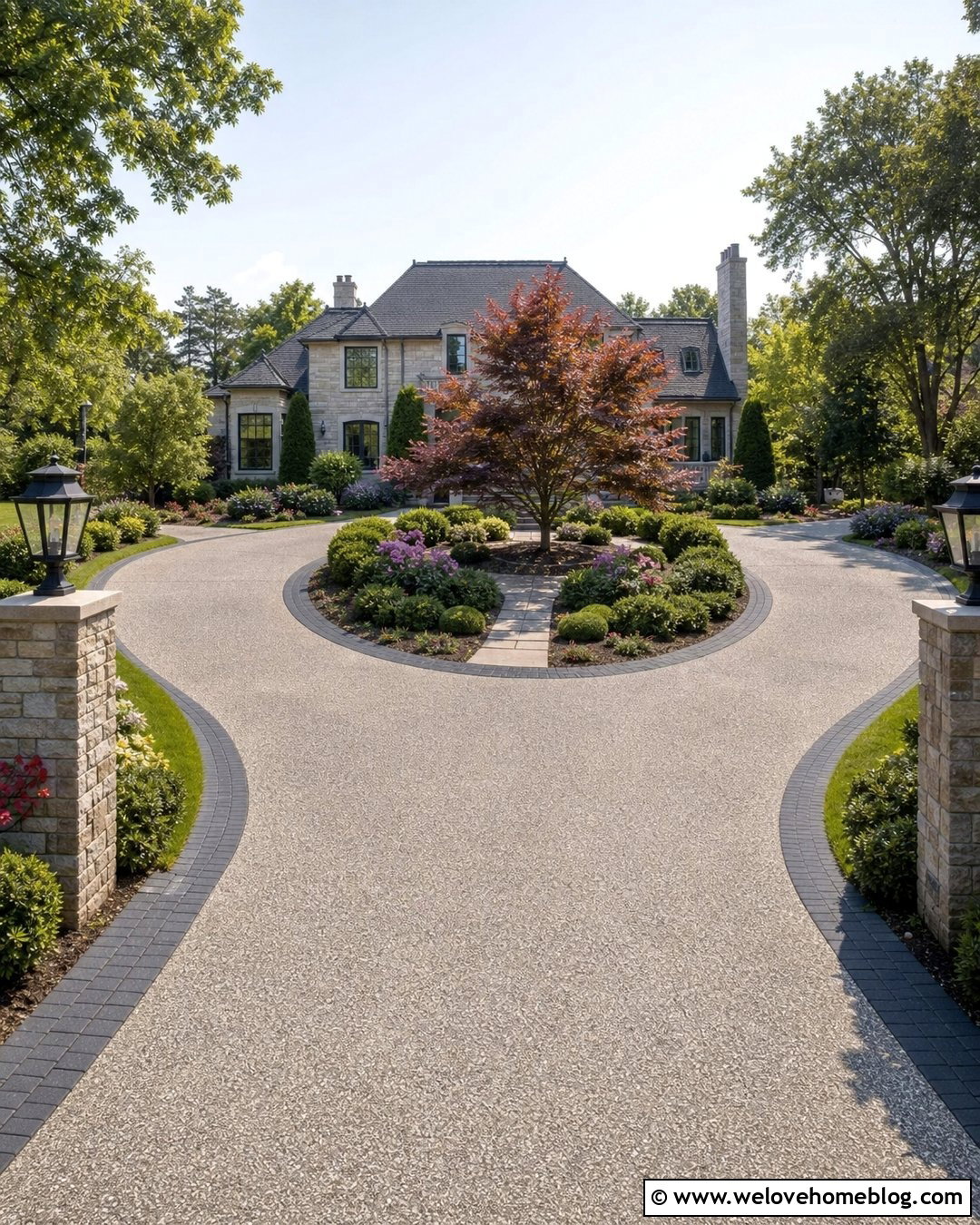
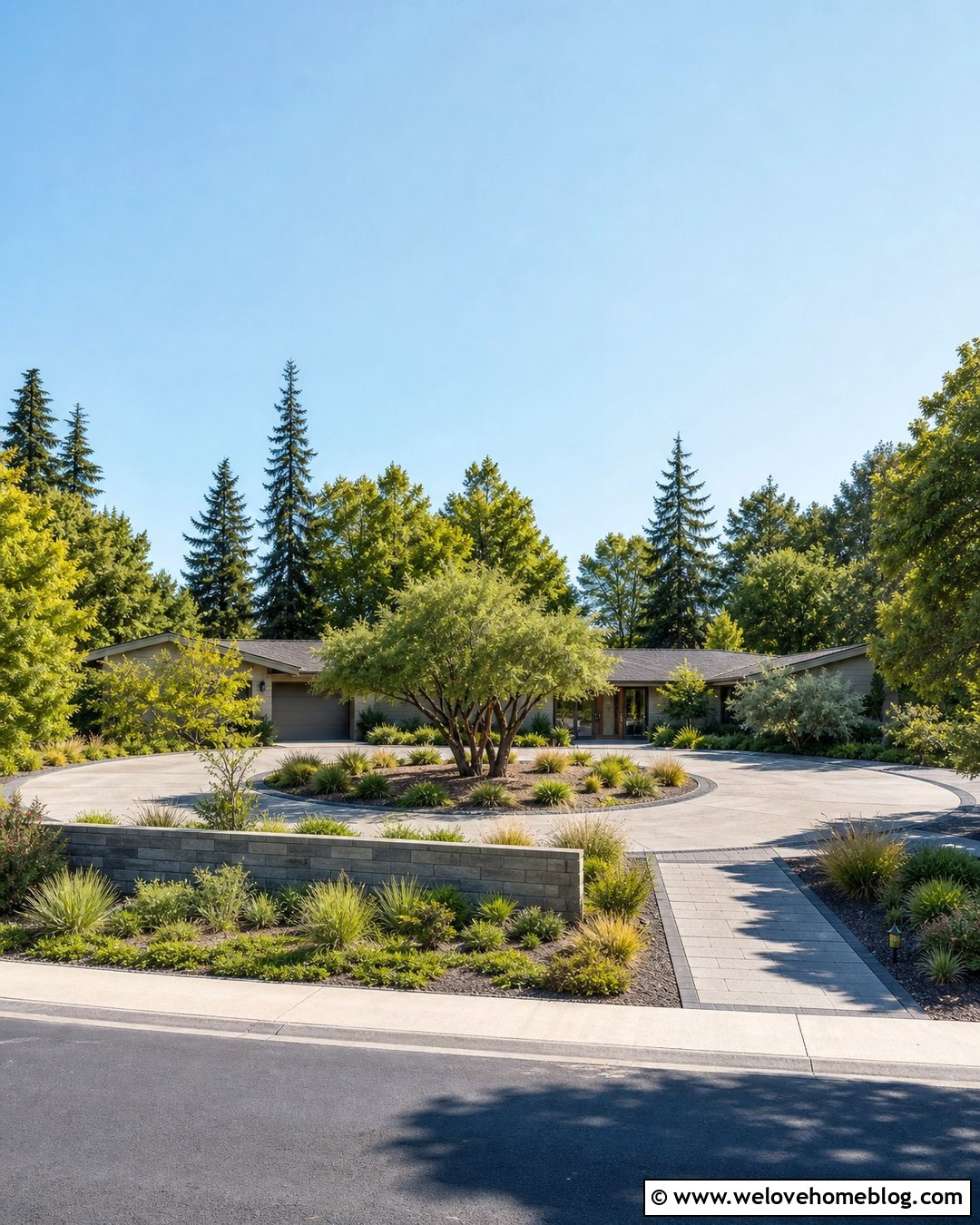
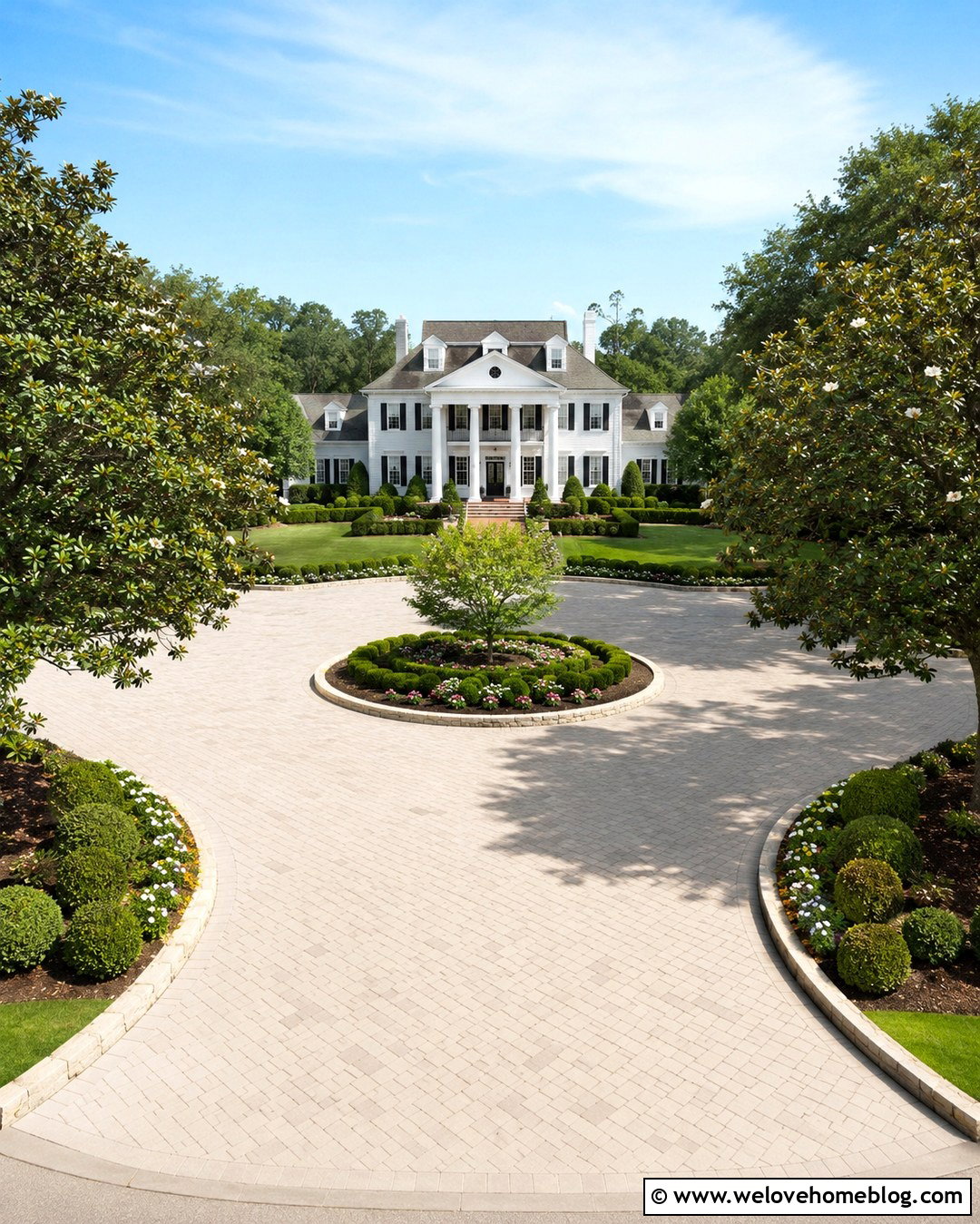
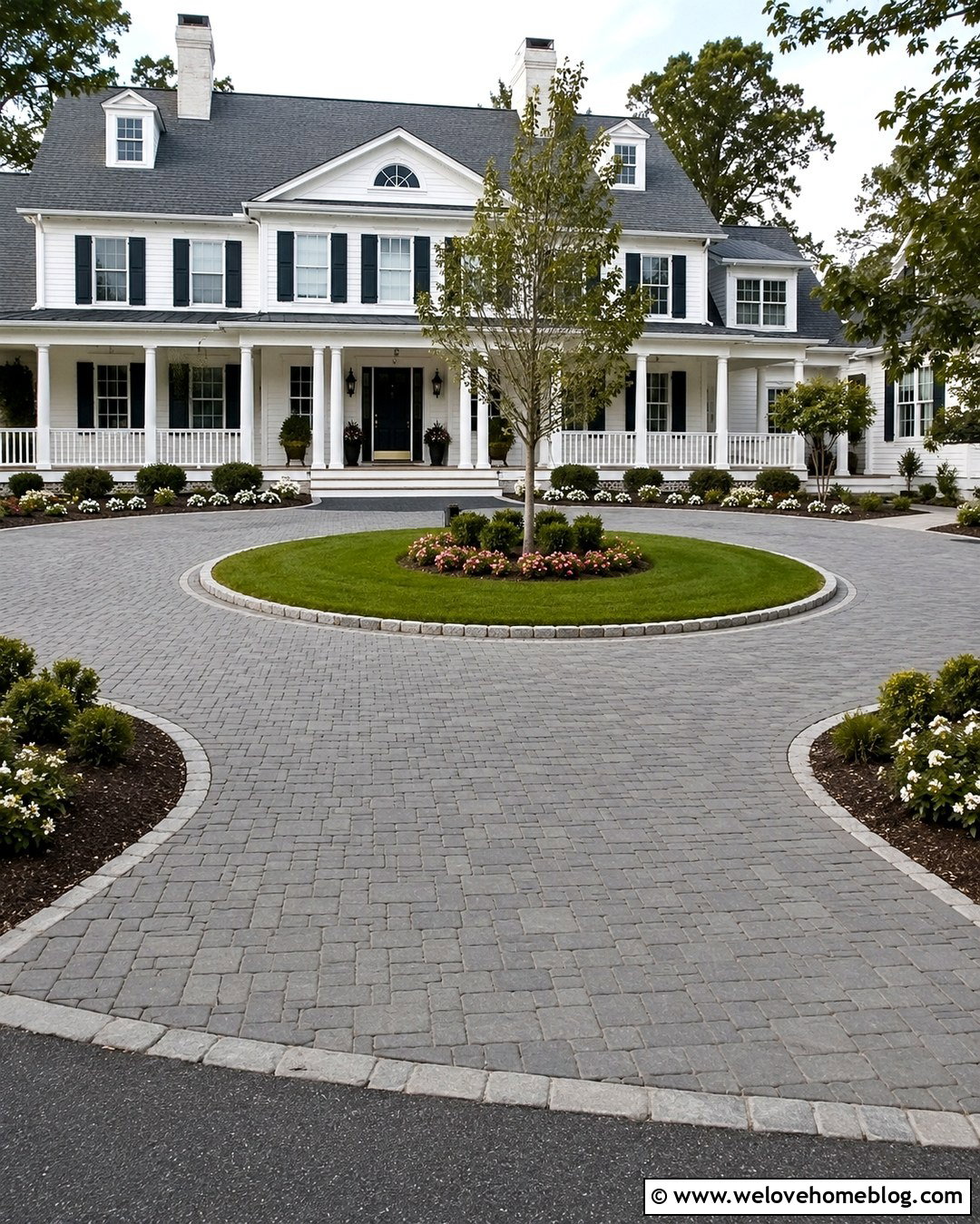
Where the front yard has enough space, a long circular driveway can provide a convenient turning route and a prominent central landscape. Use exposed aggregate concrete for the main surface, bordered by contrasting dark pavers that clarify the full curve. Fill the center island with one well-scaled ornamental tree, layered evergreen shrubs, flowering perennials, and low ground covers. Keep plants near entry and exit points short enough to preserve clear views. The island should be large enough to appear intentional but not so wide that it creates tight driving lanes. Repeat its plants in smaller beds near the house to unify the property. A walkway crossing the island can lead guests directly toward the front entrance without forcing them to walk around the entire circular drive.
14. Long Driveway With Natural Stone Retaining Walls
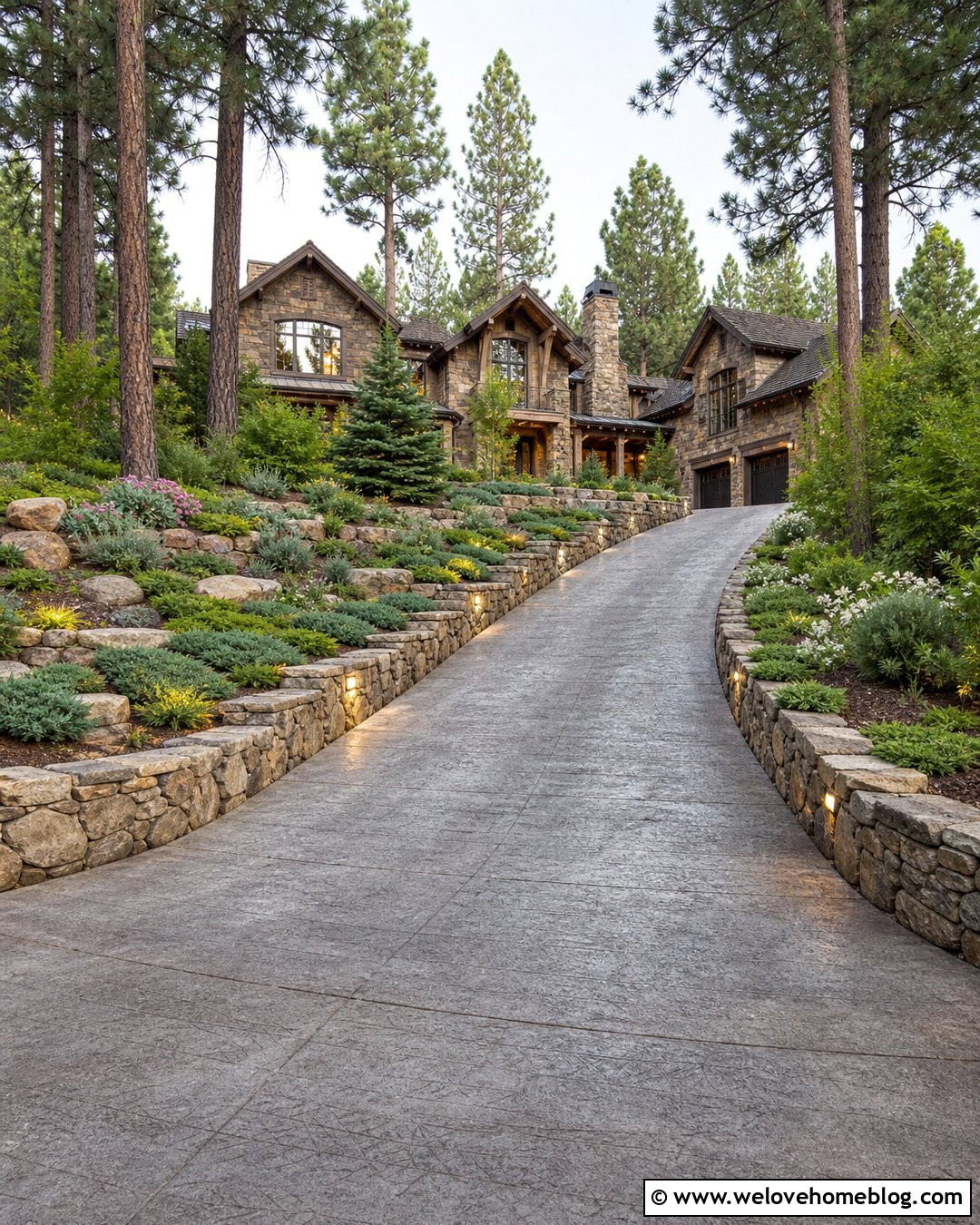
Sloped properties often need more than decorative planting along a long driveway. Low natural stone retaining walls can stabilize changes in grade while giving the route a strong visual structure. Pair the walls with a textured concrete or asphalt driveway that follows the land in broad, manageable curves. Build planting terraces above the walls for spreading junipers, ornamental grasses, flowering shrubs, and erosion-resistant ground covers. Use stones that relate to the home’s foundation, chimney, or facade for a cohesive result. Drainage behind retaining walls is essential, especially where runoff travels downhill toward the driveway. Add recessed wall lights only at important turns or elevation changes. This landscape makes difficult terrain feel deliberate while keeping soil, mulch, and plants from spilling into the driving area.
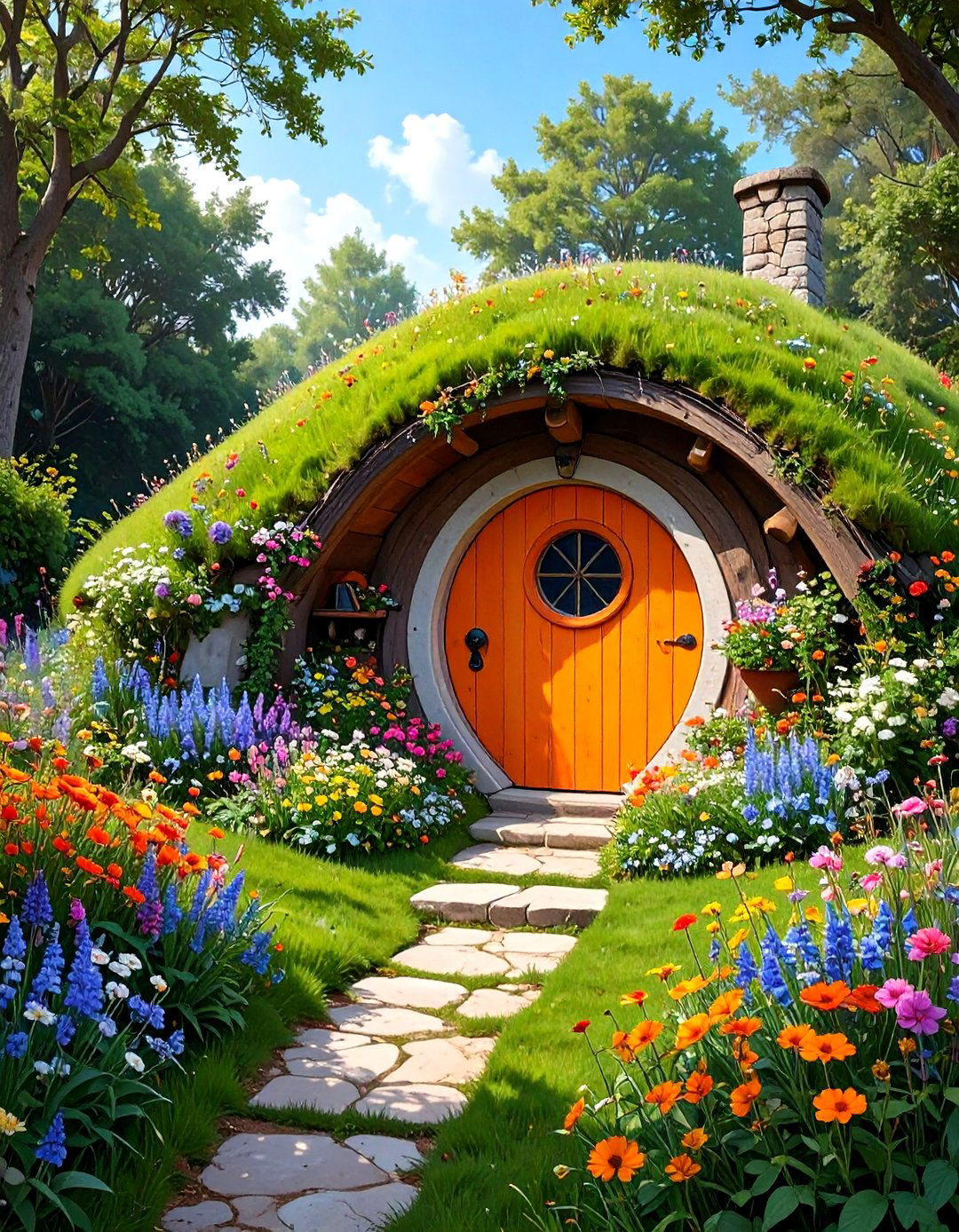
15. Long Driveway With White Fence And Flowering Trees
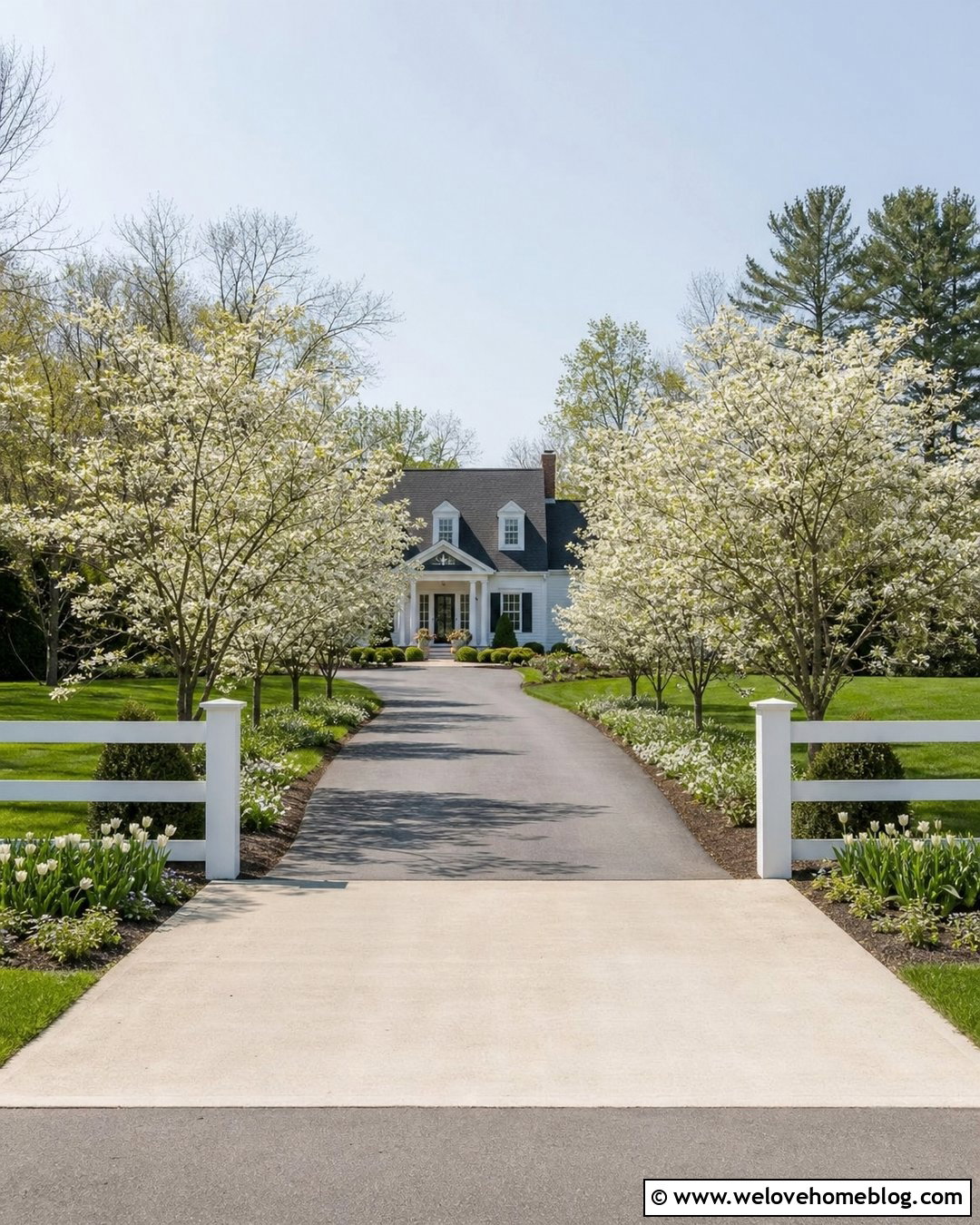
A white fence combined with flowering trees creates a recognizable residential approach without requiring dense planting along the entire drive. Use medium-gray asphalt with a pale concrete or brick apron at the street entrance. Set the fence back behind a green verge so vehicles have a forgiving shoulder and the layout remains open. Plant small flowering trees at regular intervals outside the fence, choosing varieties suitable for the available space and climate. Underplant them with a limited mixture of bulbs, ground covers, or low meadow flowers. The white fence can continue toward a porch or detached garage, visually linking the entrance to the home. Keep branches pruned above sightlines and away from delivery vehicles. This design feels especially appropriate for Cape Cod, cottage, and updated farmhouse properties.
16. Long Driveway With Drought-Tolerant Landscaping
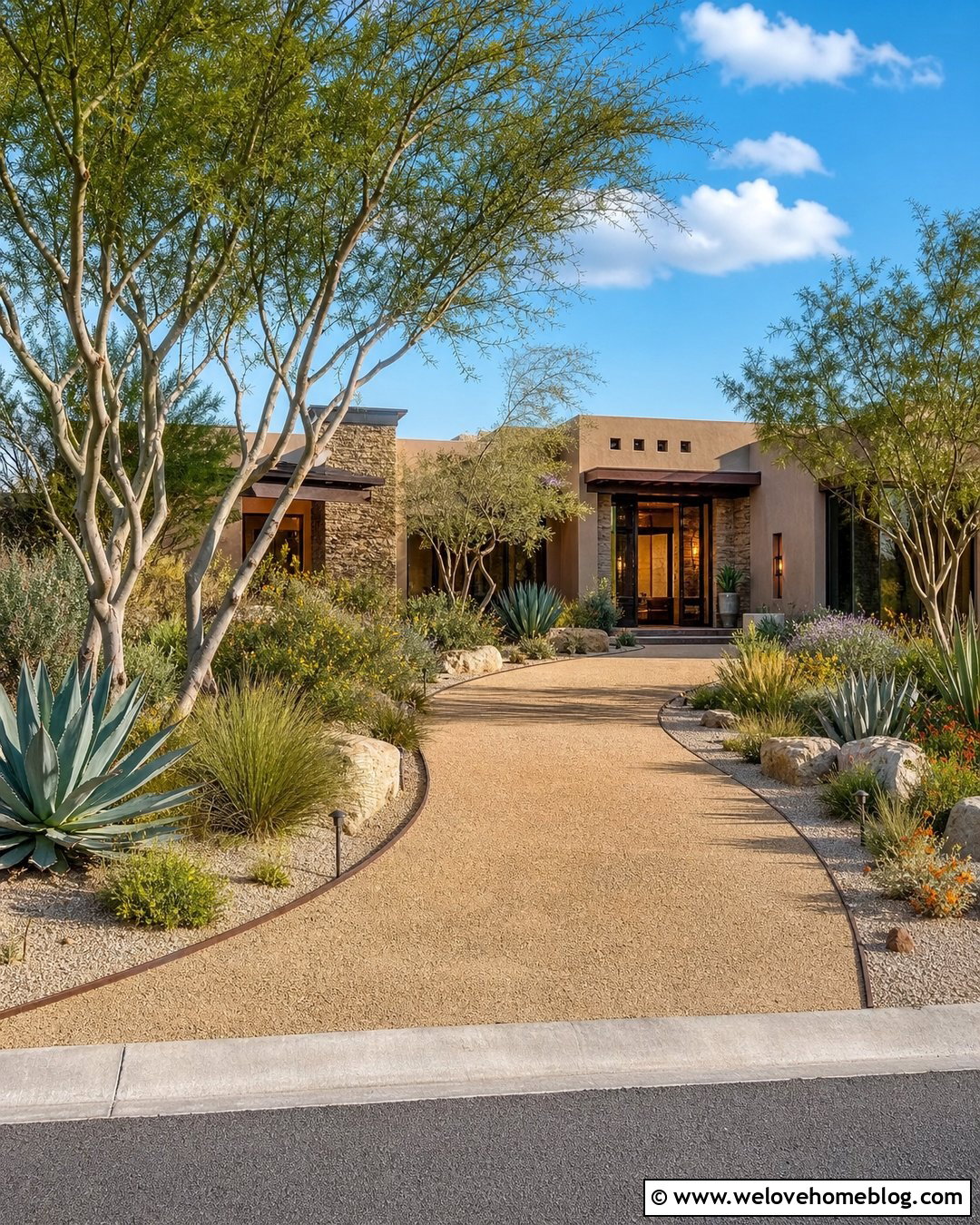
Hot, dry sites benefit from a landscape that looks complete without relying on thirsty lawn or continuous flower beds. Begin with light-colored permeable pavers or tan stabilized gravel, which complements muted foliage and warm stone. Border the driveway with decomposed granite beds containing agave, yucca, ornamental grasses, compact flowering shrubs, and sculptural native plants suited to the region. Arrange plants in repeating clusters with open gravel between them, allowing each form to remain visible. Use weathered steel or natural stone edging to hold the materials neatly in place. A few multi-trunk trees can provide shade and vertical interest near the entrance and house. Drip irrigation, thoughtful grading, and generous spacing help create a practical landscape that feels modern rather than sparse.
17. Long Driveway With Grass Paver Strips
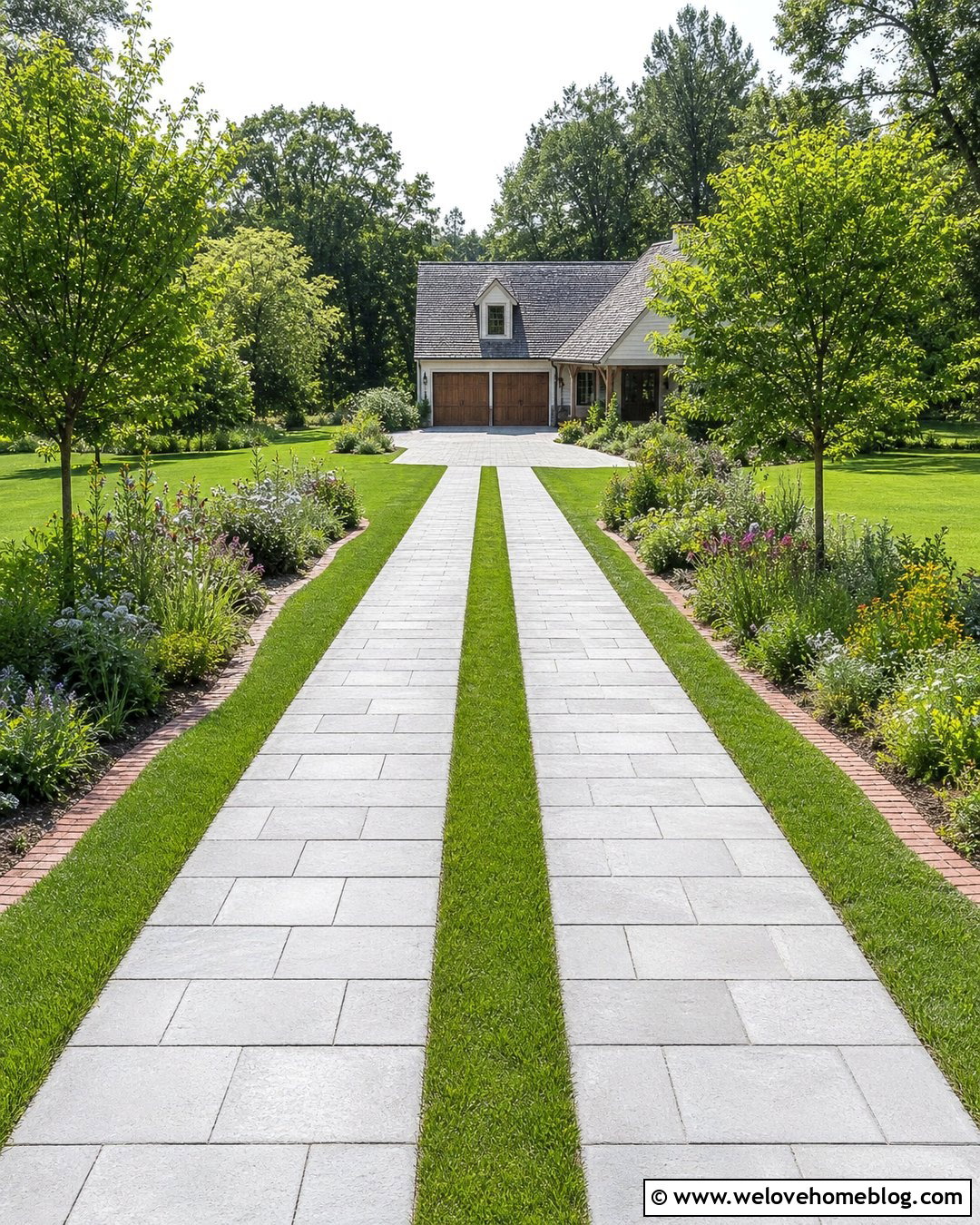
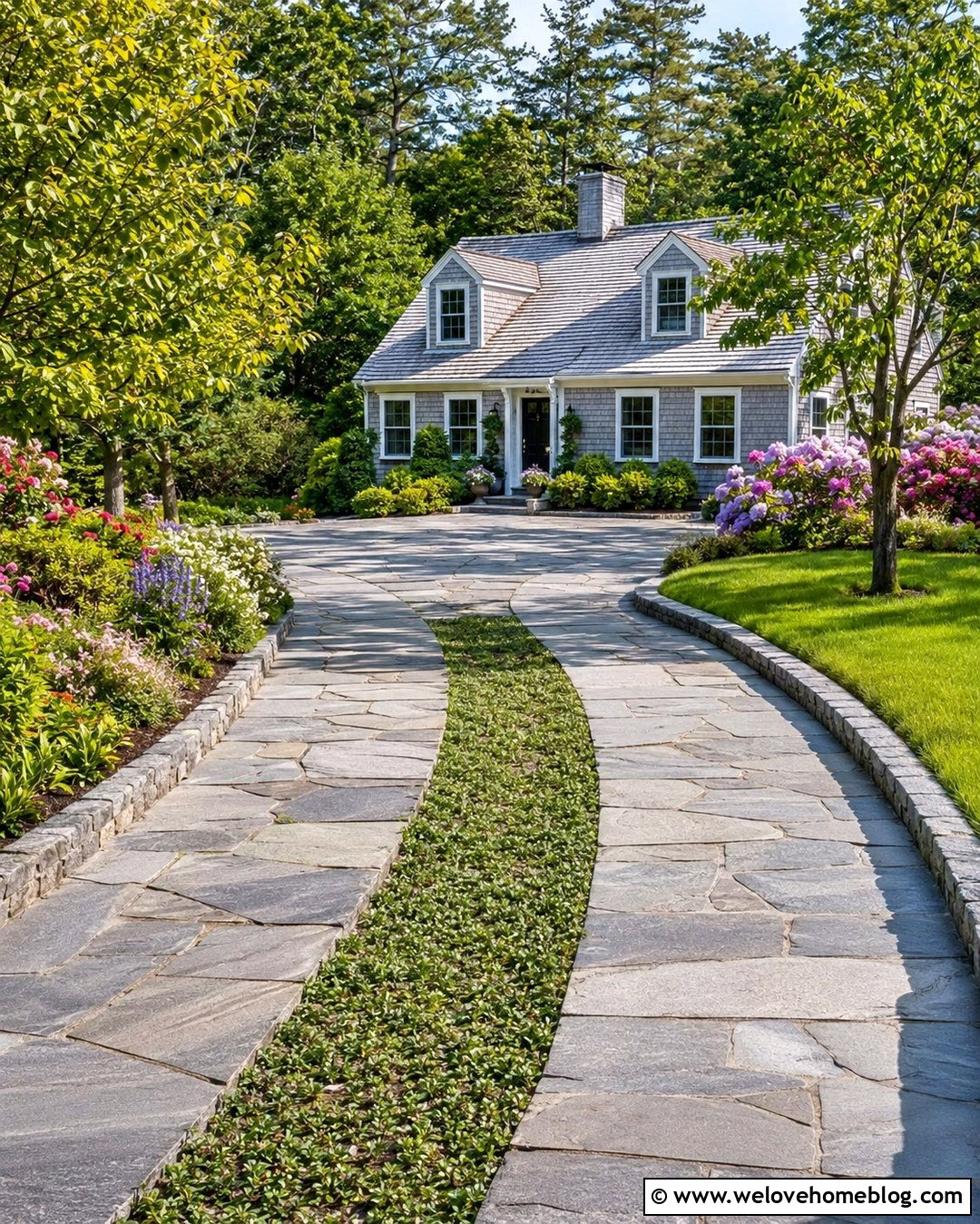
Grass strips can reduce the visual weight of a long paved route while preserving a clear and usable driving surface. Install concrete pavers in two broad wheel tracks, with reinforced grass or low ground cover between them and along the shoulders. This approach works best on relatively straight, lightly used residential driveways where the base and drainage are properly prepared. Frame the route with informal native beds, small trees, and sections of open lawn. Near the street and garage, transition to a fully paved apron that can handle turning, braking, and frequent vehicle movement. A narrow brick border can keep the grass edges defined. The combination feels greener than a solid pavement expanse and suits cottages, rural homes, and environmentally minded contemporary properties.
18. Long Driveway With Decorative Gravel Bands
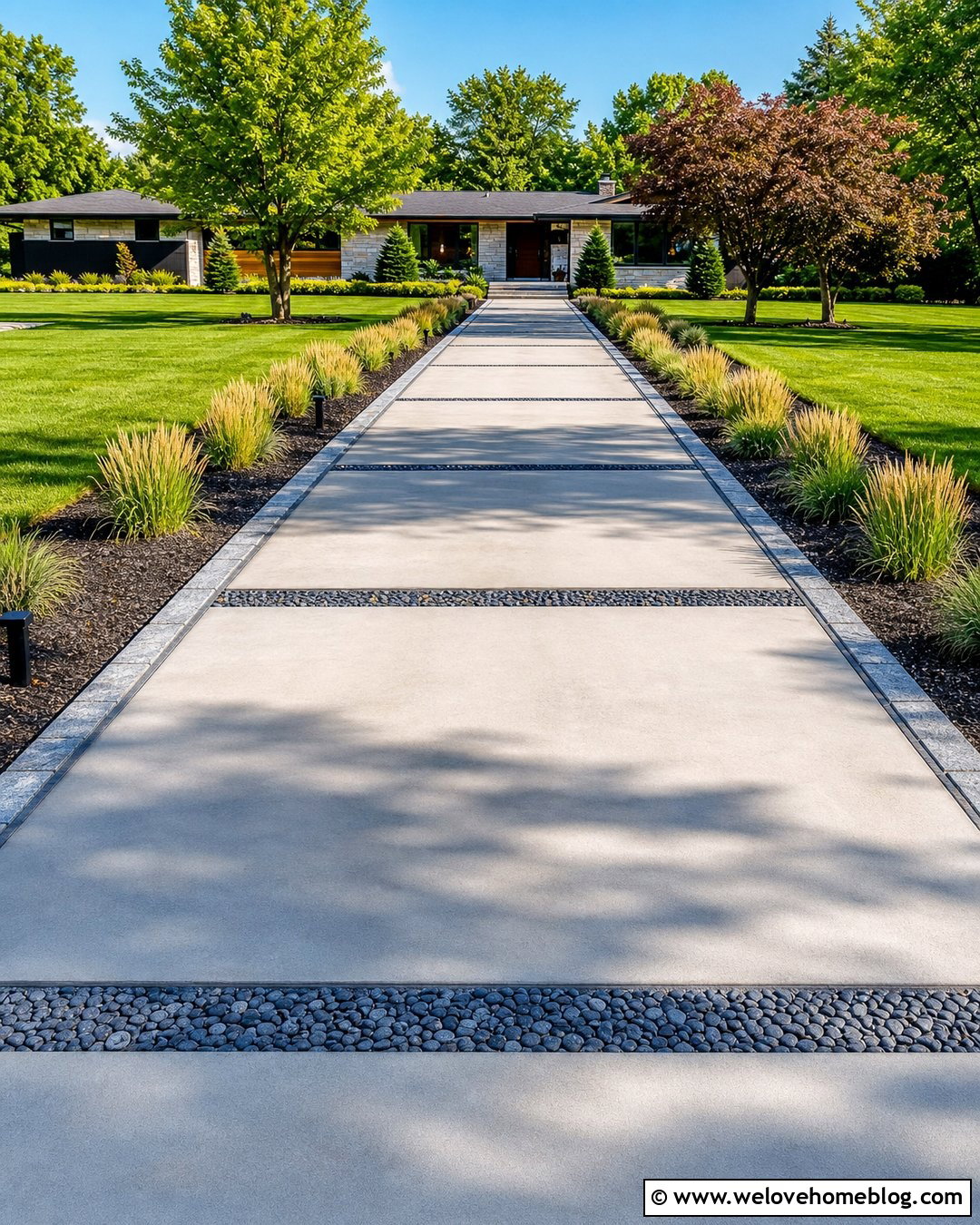
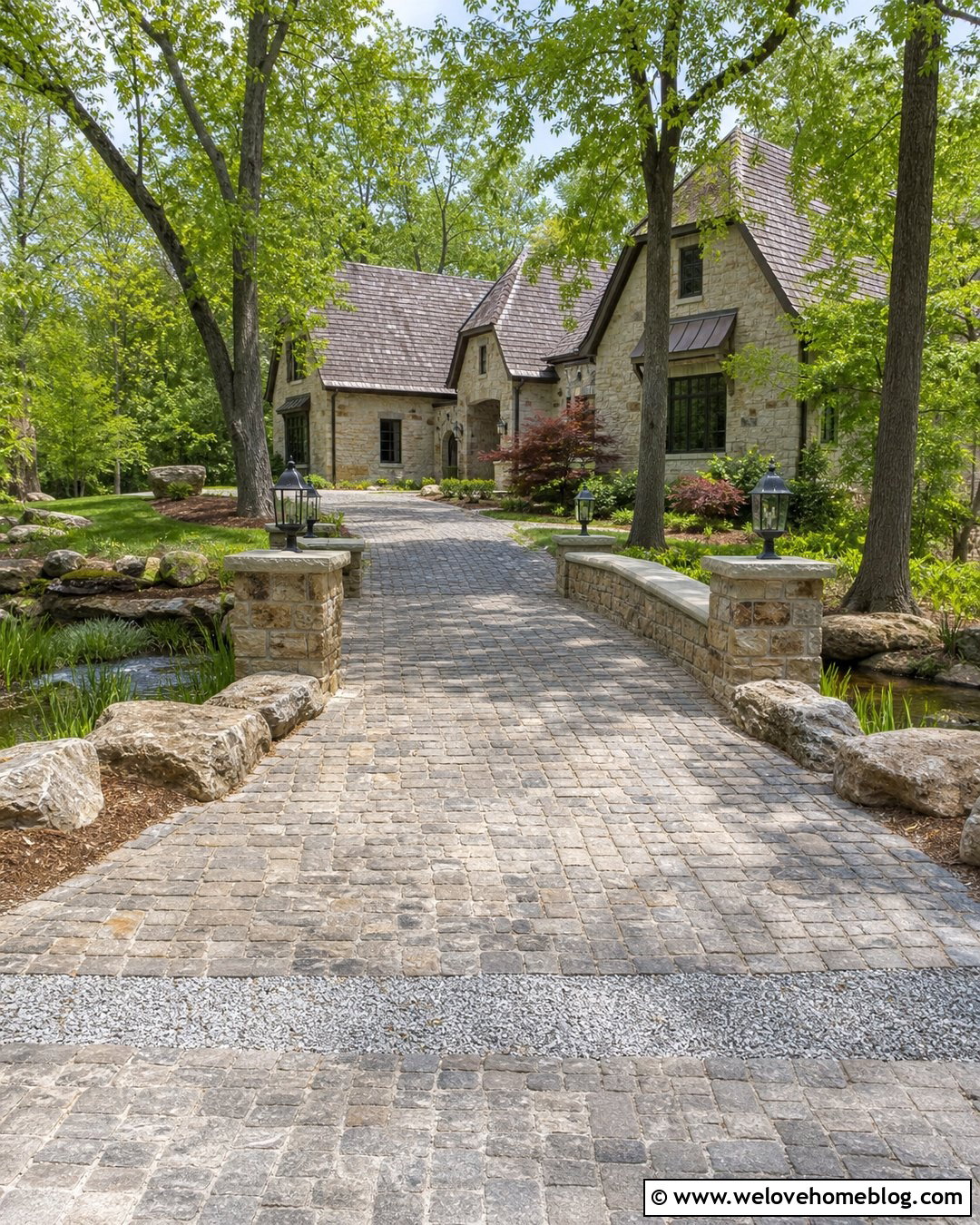
Decorative gravel bands offer an effective way to add detail to a long driveway without filling both sides with demanding plants. Use light-gray poured concrete for the main surface, interrupted by narrow transverse bands of dark river gravel or granite setts. Continue the darker material along the driveway edges to create a unified frame. Plant simple beds of evergreen shrubs and ornamental grasses at the entrance, midpoint, and arrival area rather than landscaping every linear foot. This measured repetition breaks the driveway into visually manageable sections. Place specimen trees near selected gravel bands to reinforce the rhythm. The restrained combination works well with ranch, midcentury, and modern homes. Properly secured bands and flush transitions ensure the decorative details do not interfere with comfortable driving or maintenance.
19. Long Driveway With A Landscaped Turnaround
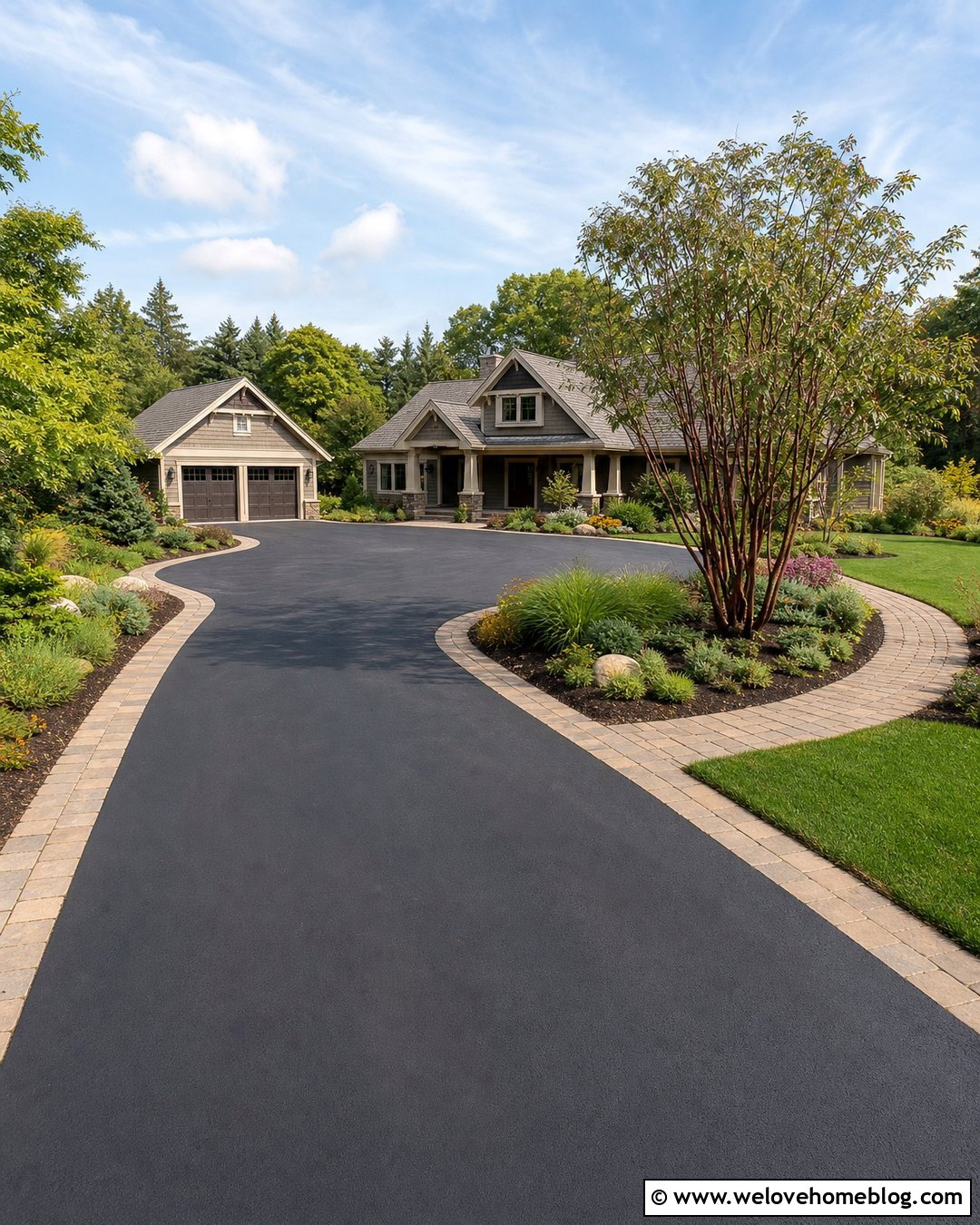
A turnaround can become an attractive destination instead of a plain paved extension near the house. Use a long asphalt approach that widens into a paver-edged turning court. At its center or outside curve, create a landscaped island containing a multi-trunk tree, low evergreen shrubs, ornamental grasses, and seasonal flowers. Keep the planting compact and maintain clear space for vehicles, deliveries, and emergency access. Repeat the paver border around the island and along the front walkway to connect all hardscape areas. A bench or decorative object can sit beyond the driving zone, framed by planting but never obstructing circulation. This complete layout gives the long driveway a clear endpoint while softening the large amount of pavement typically needed around garages and parking spaces.

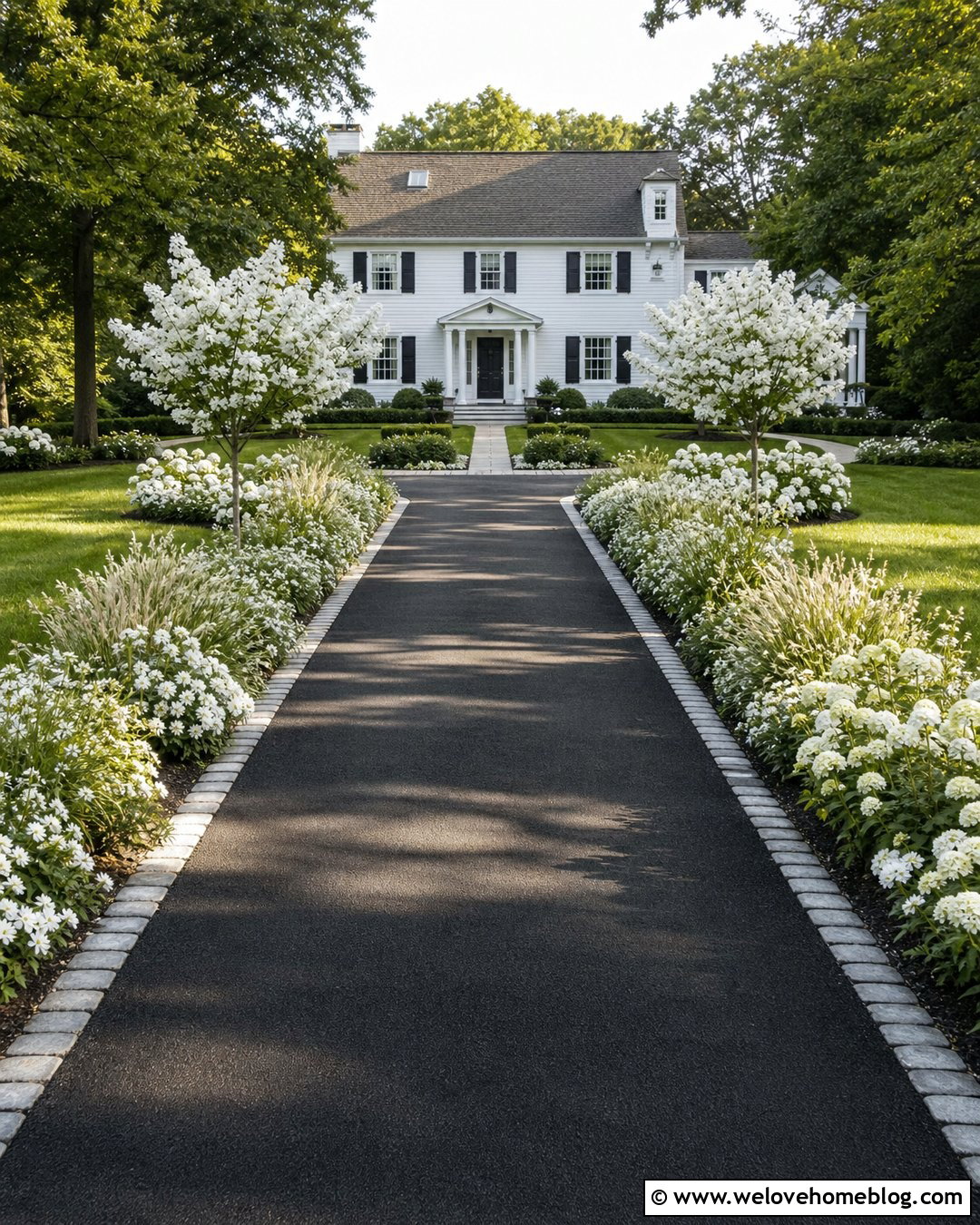
20. Long Driveway With A Gated Garden Entrance
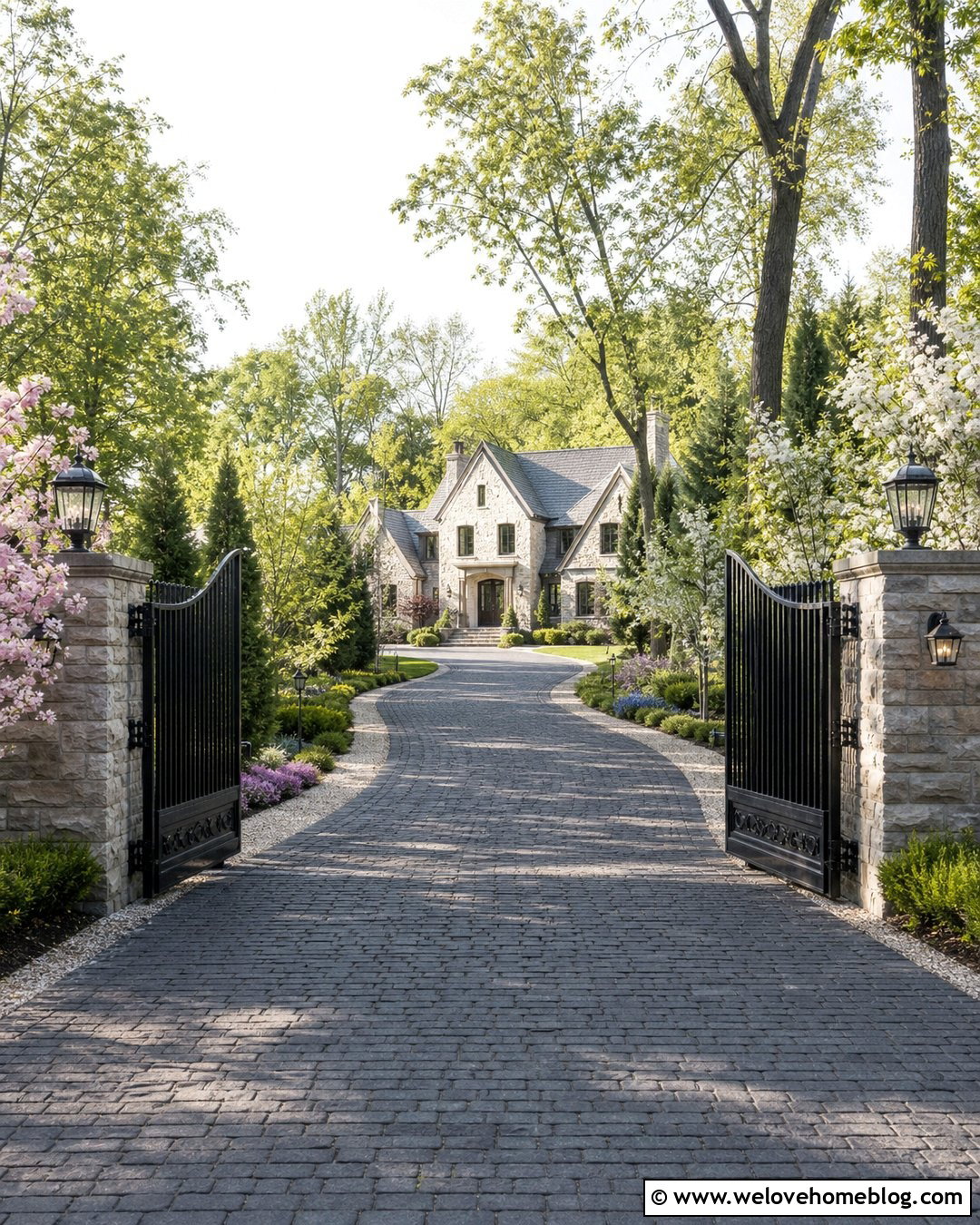
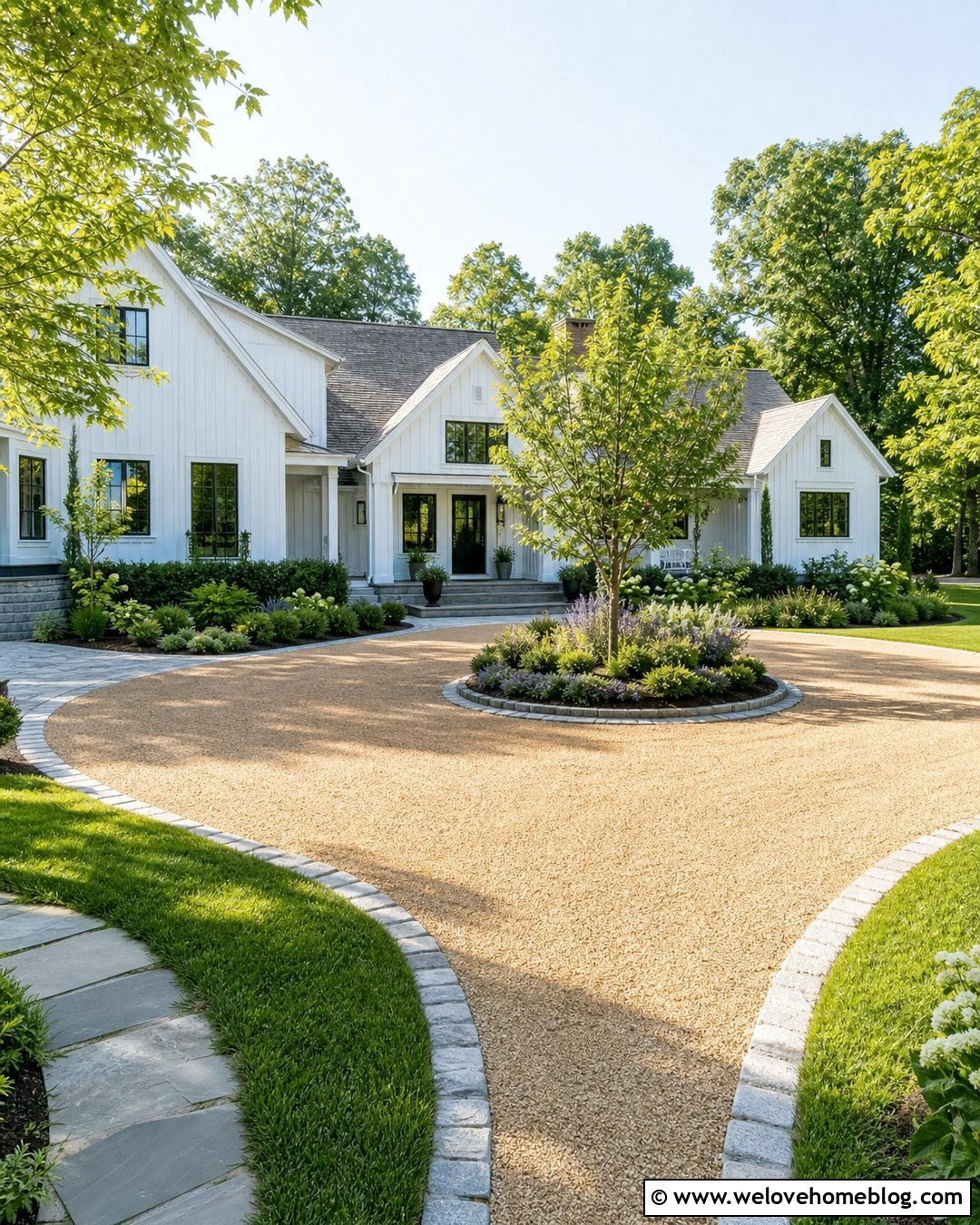
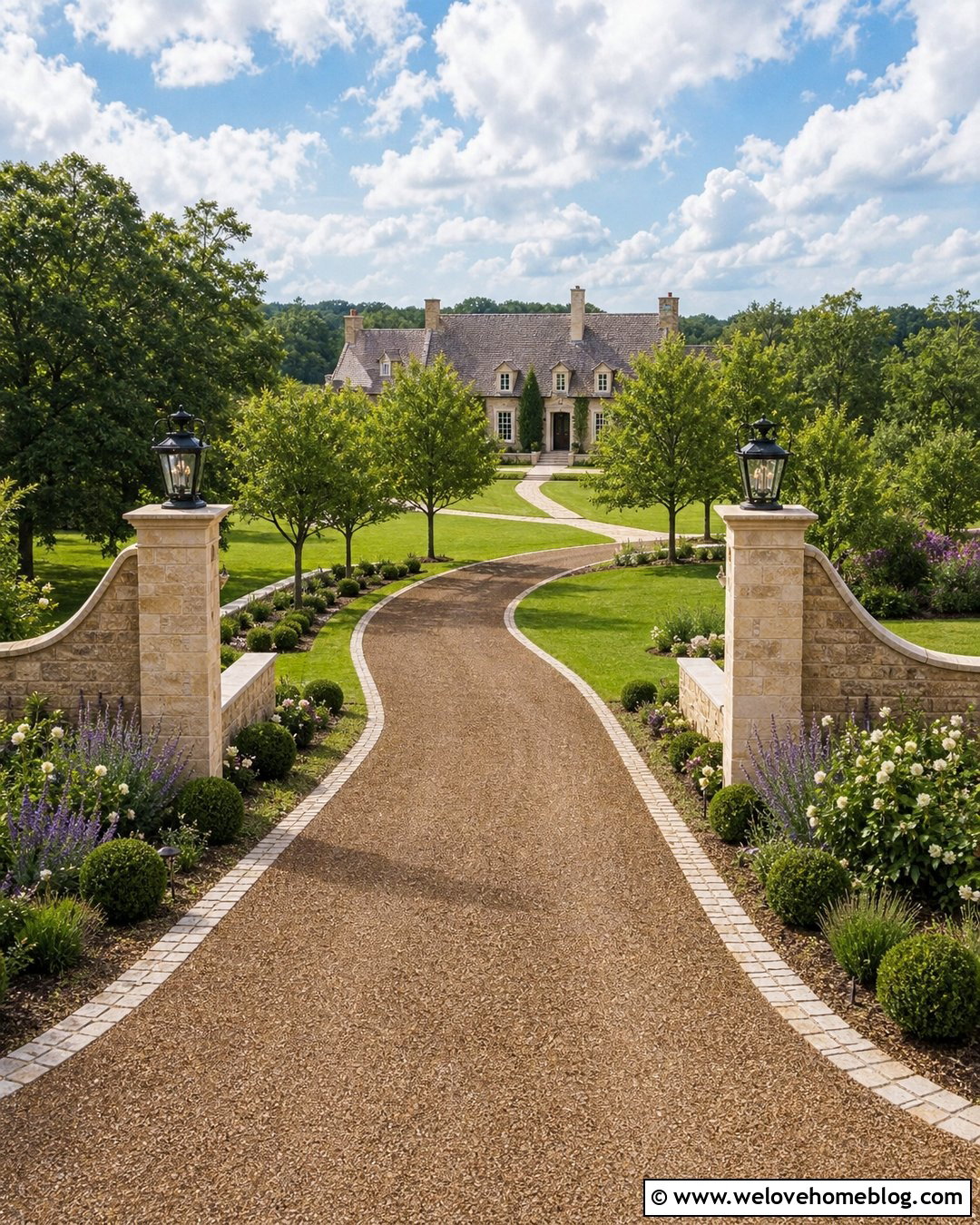
A gate can establish privacy and create a memorable threshold when it is integrated with the entire driveway landscape. Begin with a long cobblestone or dark paver driveway that curves gently toward the house. Install a simple metal gate between stone or brick pillars, leaving adequate room for vehicles to wait safely away from the road. Surround the entrance with layered evergreen shrubs, flowering trees, low perennials, and a clean lawn or gravel shoulder. Repeat the pillar material in driveway edging or a front walkway so the gate does not appear isolated. Beyond it, use spaced trees and understated lighting to draw the eye toward the home. The gate, plants, surface, and architecture should share a consistent scale, color palette, and level of formality.
Conclusion:
The best long driveway landscape balances appearance with everyday function. Start with a durable surface and safe layout, then add borders, trees, shrubs, lighting, and entrance features that suit the home and surrounding land. Repetition is especially useful because it gives an extended route a clear rhythm. At the same time, open spaces prevent the design from feeling crowded or overworked. Consider mature plant size, drainage, visibility, maintenance, climate, and vehicle access before installation begins. You can also complete the project in phases, starting at the street and working toward the house. Use these 20 landscape long driveway ideas to create an approach that feels cohesive, useful, and welcoming throughout every season.

Related posts:
Leave a Reply