
A circular driveway can make a front yard feel more welcoming, organized, and visually balanced. It creates a clear route toward the house while giving landscaping, lighting, and architectural details room to stand out. Circular layouts may also allow vehicles to enter and leave without reversing, although they typically require adequate frontage and careful placement. () The best design connects the surface material, center island, borders, walkways, and home exterior into one complete look. You can keep the layout relaxed with gravel and native plants or make it formal with brick, stone, gates, and clipped hedges. The following 30 Circular Driveway Design Ideas offer practical inspiration for different home styles, lot sizes, climates, and budgets.

1. Gravel Circular Driveway With Cobblestone Edging
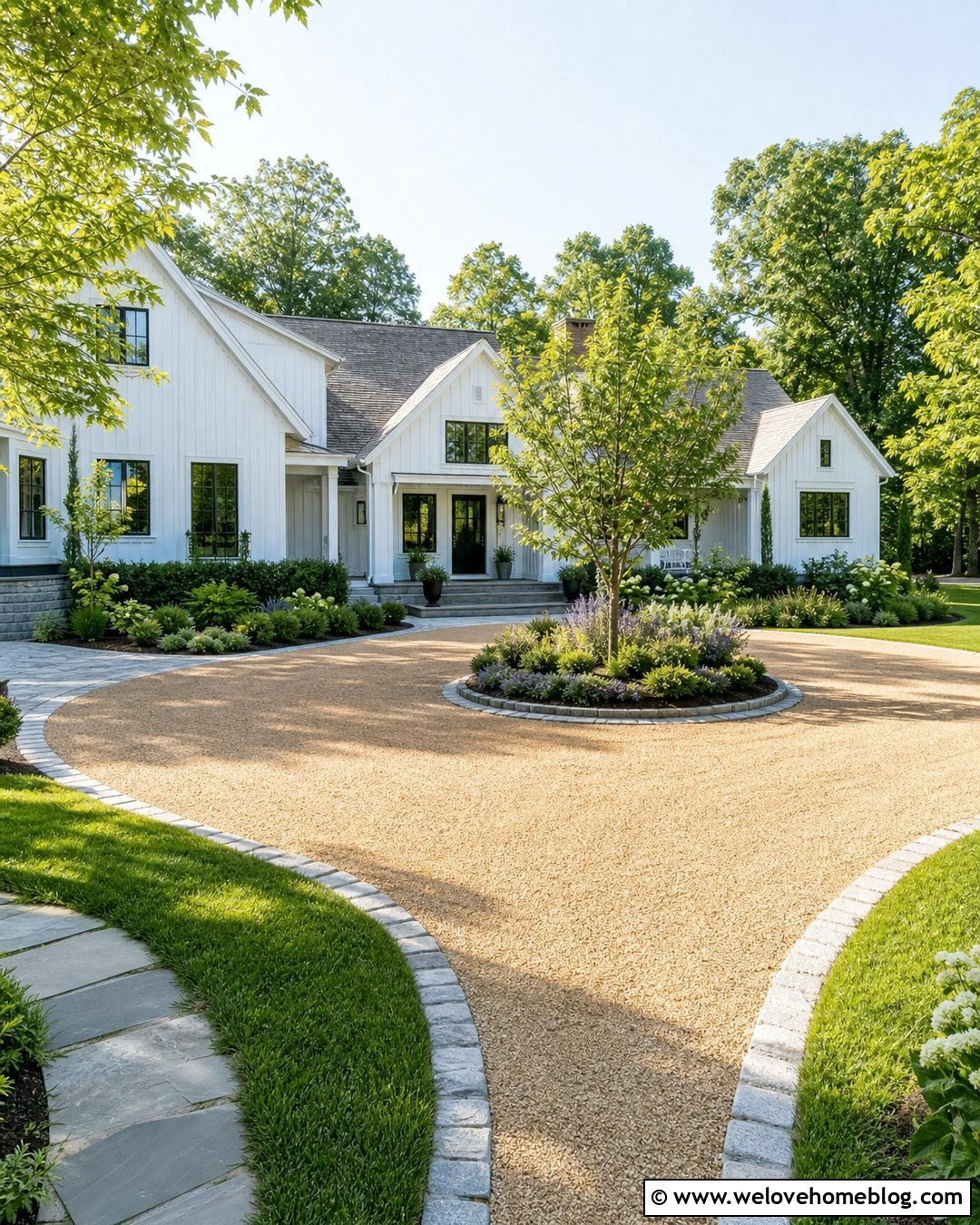
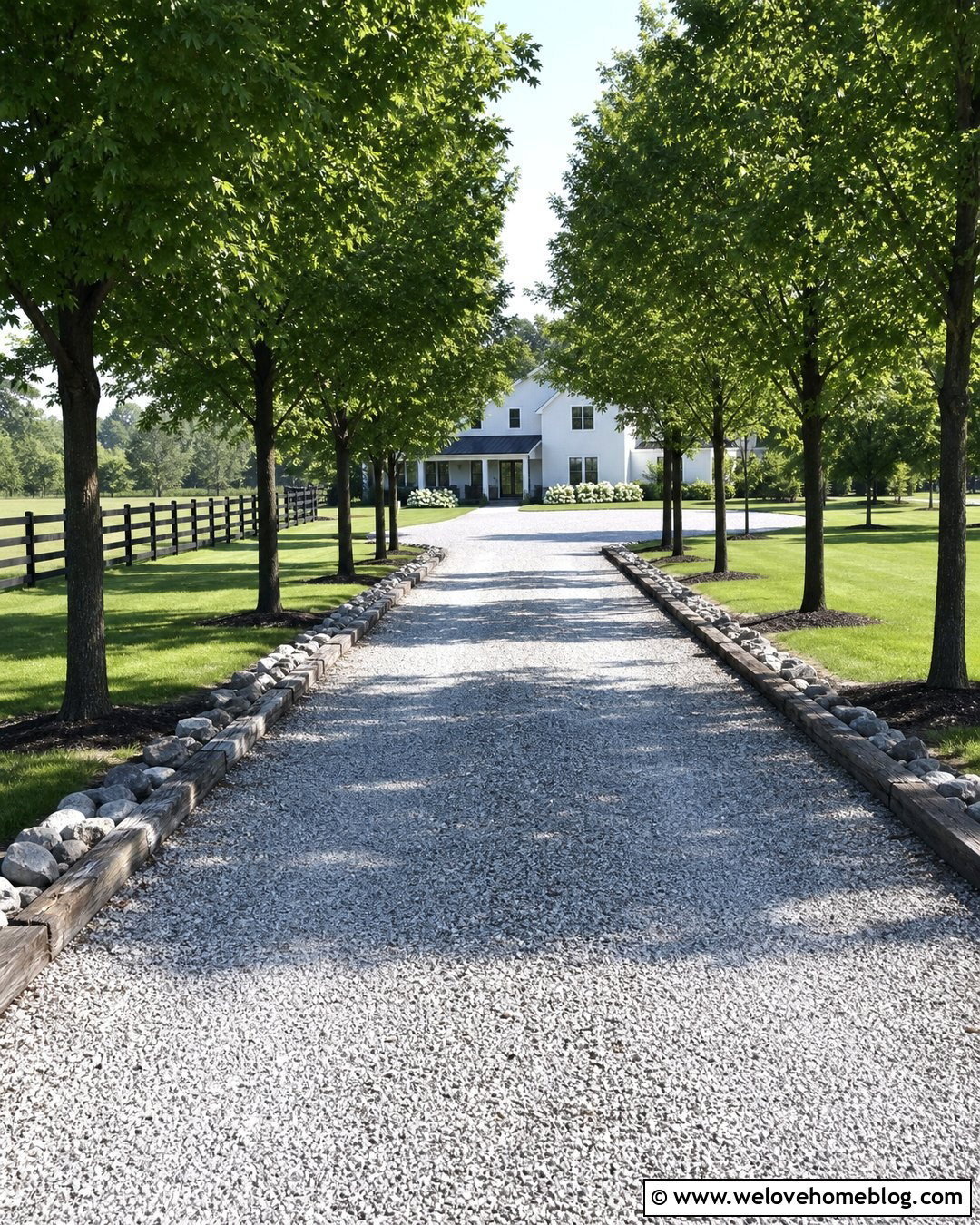
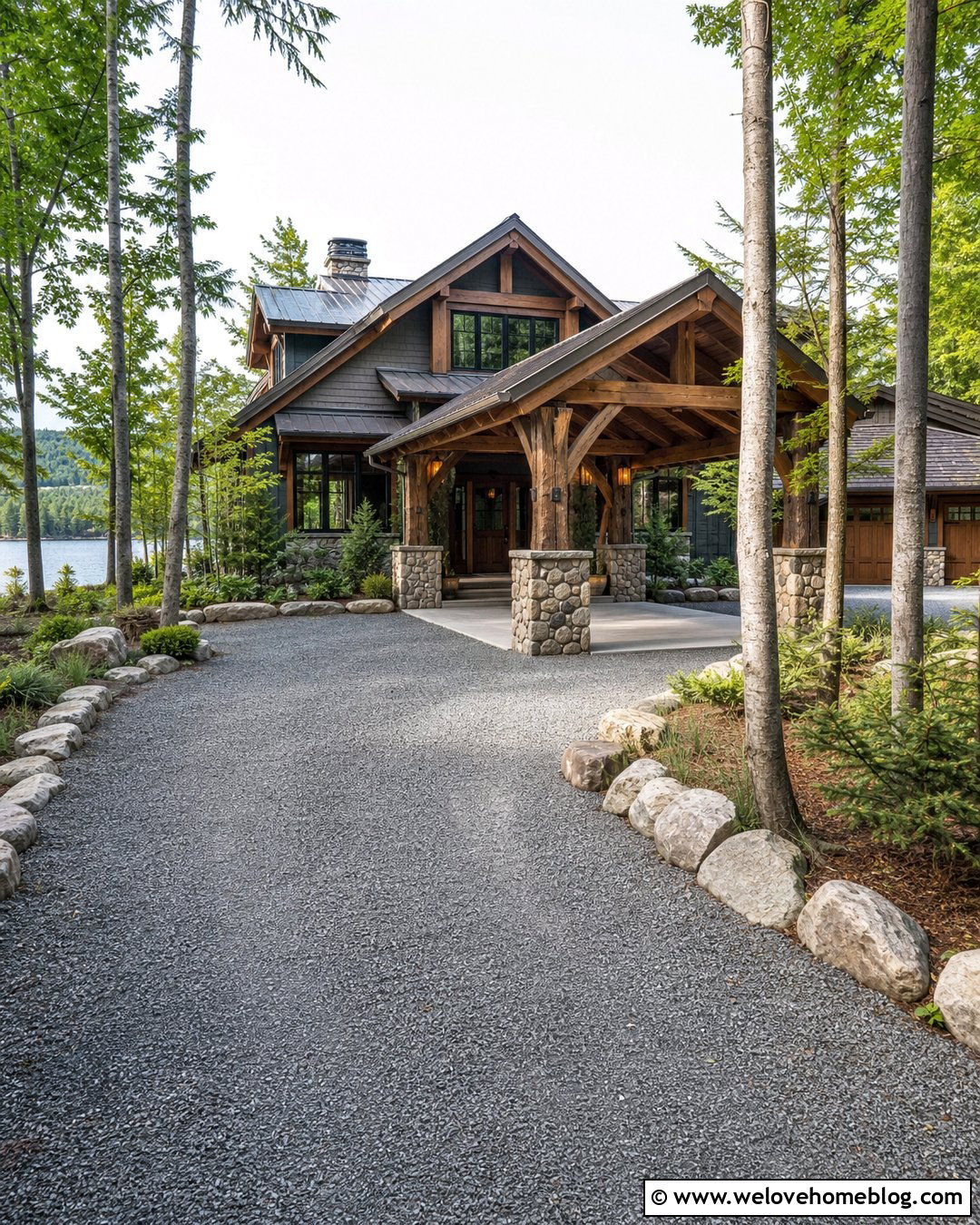
A warm gravel surface creates a relaxed circular driveway that feels especially natural around farmhouse, cottage, and country homes. Use compacted tan gravel for the main driving area, then contain it with sturdy gray cobblestone edging along both sides. A slightly raised center island can feature one ornamental tree, low shrubs, and sweeping ground cover. Keep plants away from tight turning areas so branches do not scrape passing vehicles. A matching gravel walkway can connect the driveway to the front porch, while larger stepping stones improve comfort near the entrance. This complete design feels informal without looking unfinished. The stone border defines the circular shape, holds loose material in place, and creates an attractive transition between gravel, planting beds, and lawn.
2. Asphalt Circular Driveway With Brick Border
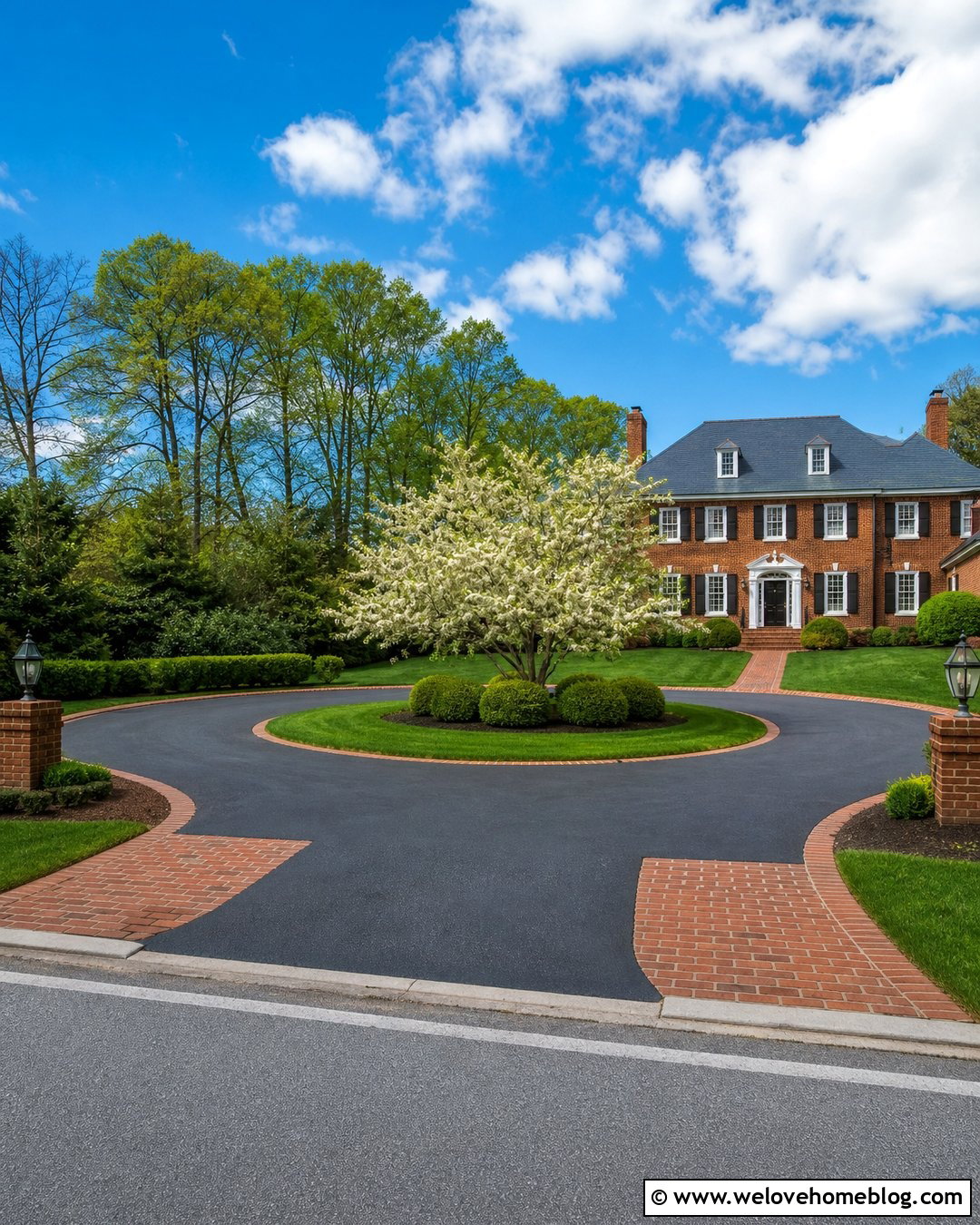
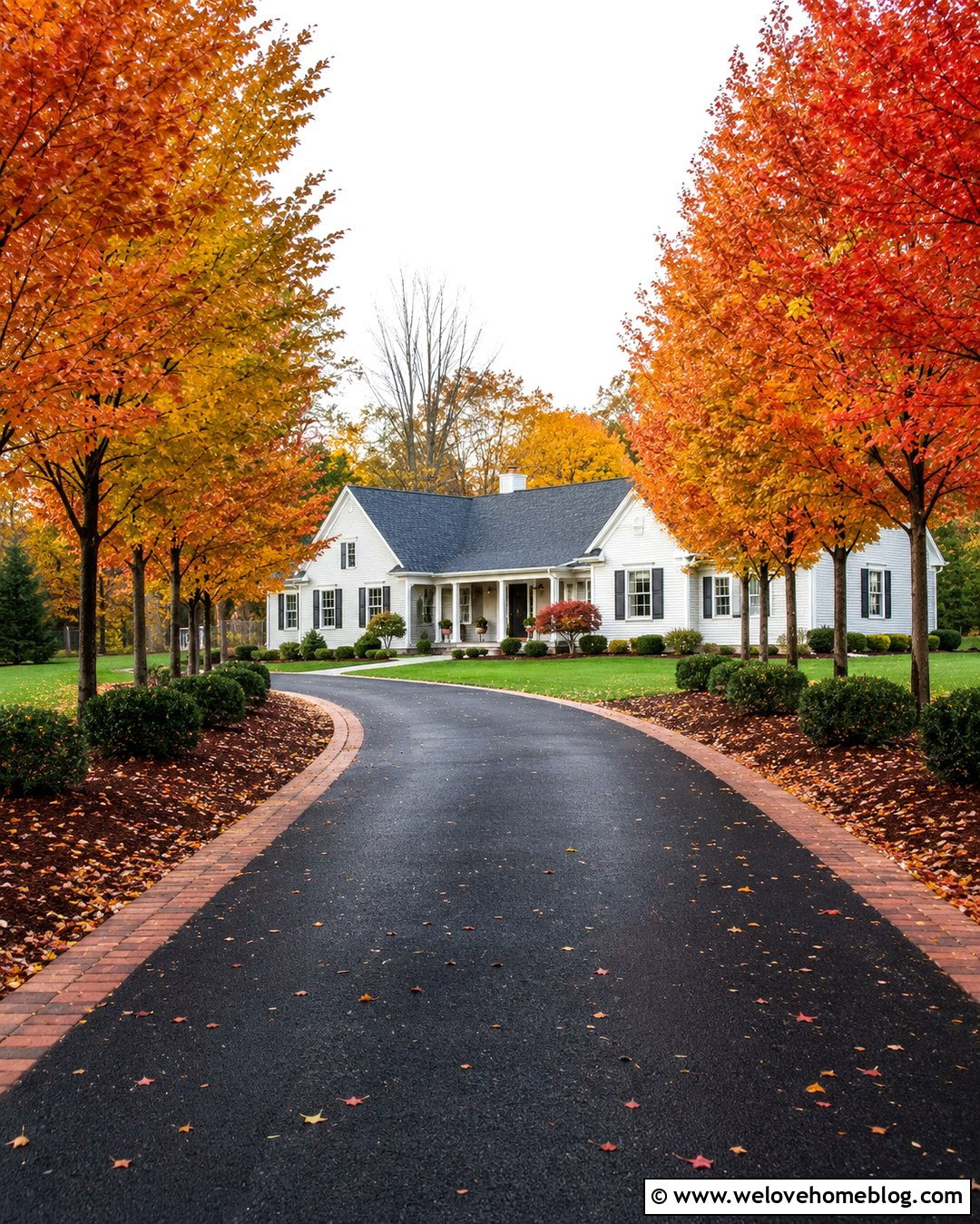
Smooth black asphalt offers a clean, practical foundation for a traditional circular driveway. To soften its dark appearance, frame the entire route with red or charcoal clay brick pavers. The brick border can continue across both street entrances as decorative aprons, helping the driveway look intentional from the curb. Place a neatly maintained lawn in the center island and add a small flowering tree for height. Around the outer curve, use simple foundation shrubs that complement the home without making the approach feel narrow. This combination works particularly well with red brick colonials, traditional ranch homes, and white-sided houses. The contrast between black asphalt and warm brick adds definition while keeping the overall design simple, orderly, and easy to coordinate with existing walkways.
3. Concrete Circular Driveway With Grass Island
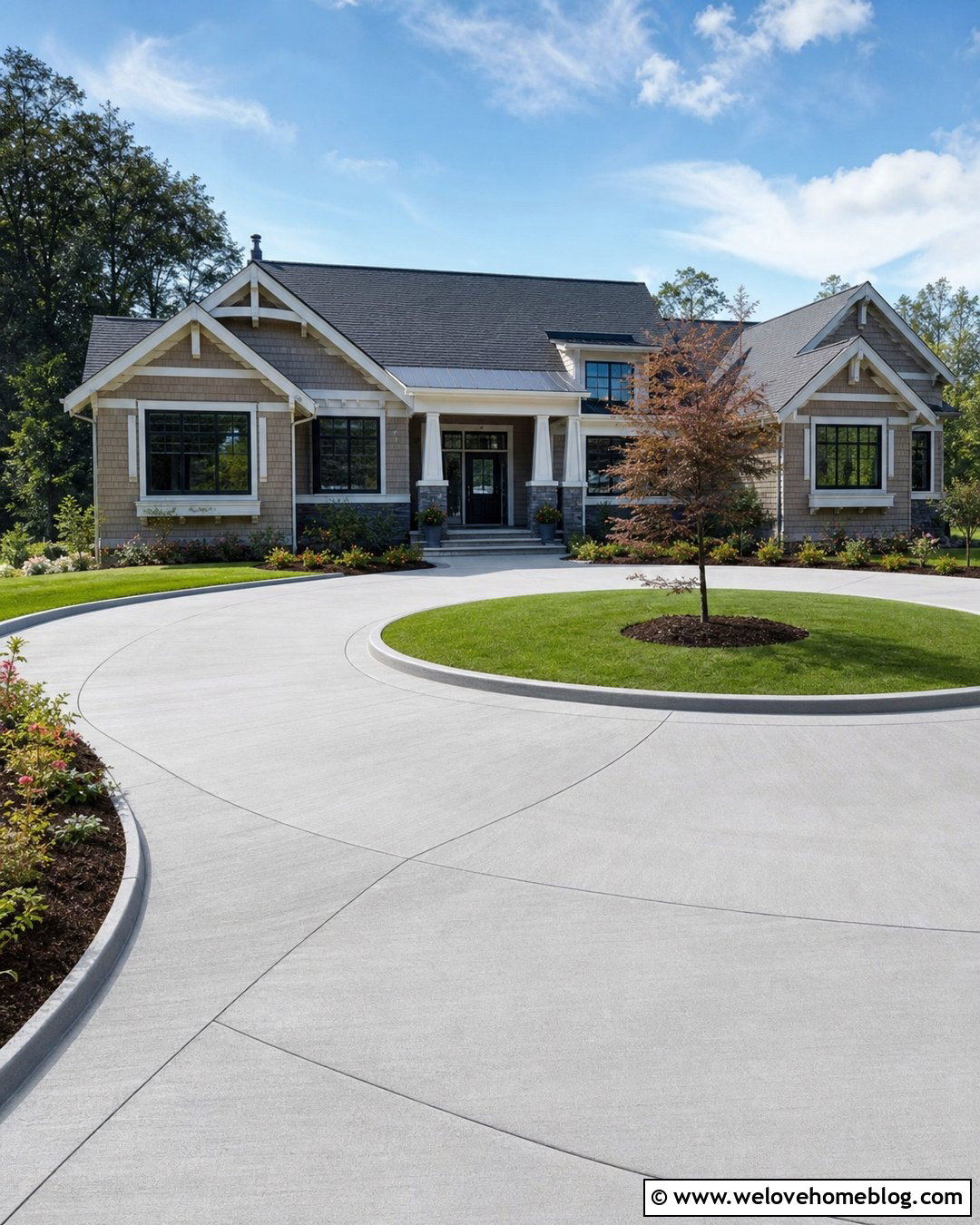
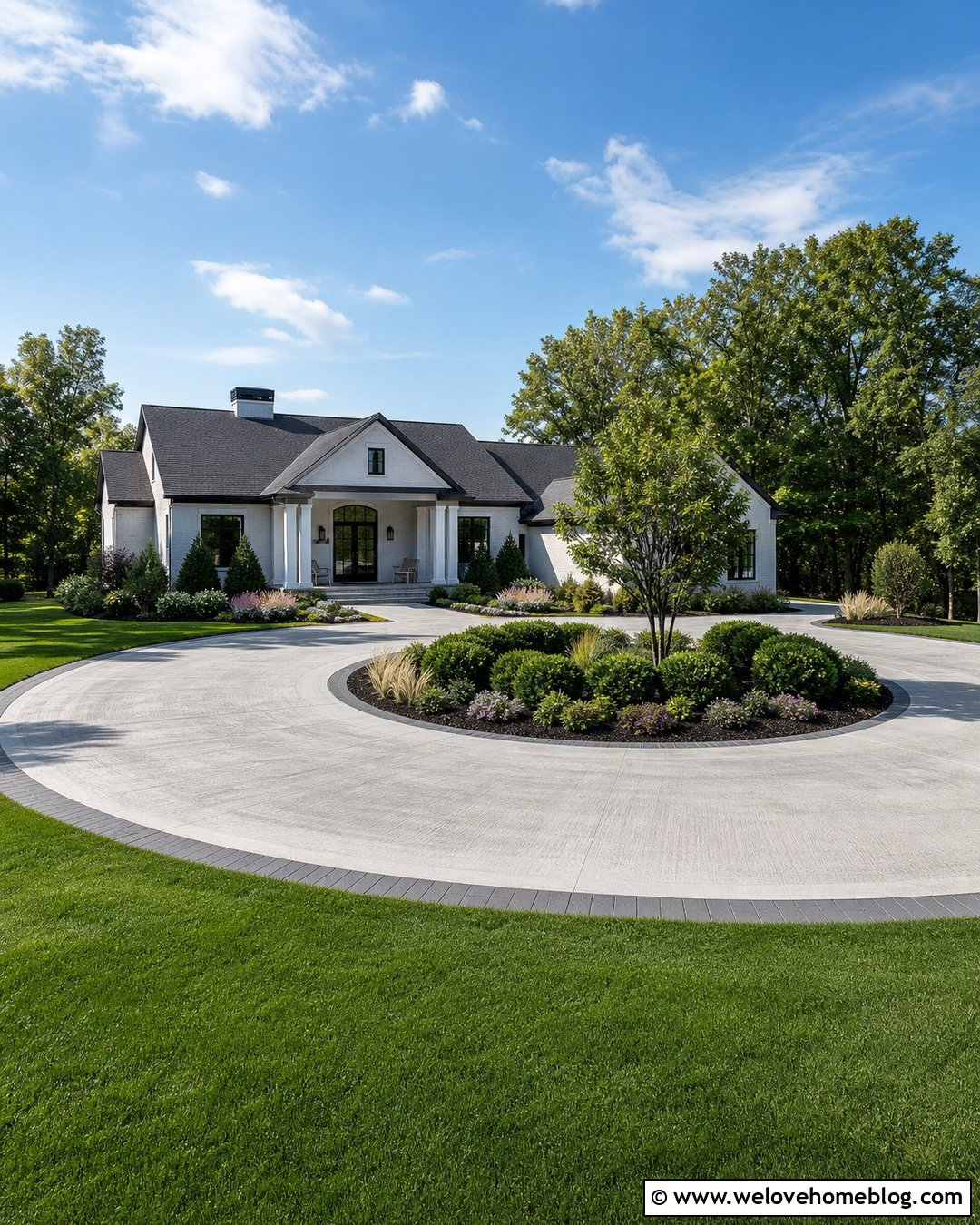
Light gray broom-finished concrete and a green center lawn create a fresh circular driveway with broad appeal. Divide the concrete into evenly sized sections using neat control joints that follow the curve instead of fighting it. A low concrete curb around the island keeps soil and grass from spreading onto the driving surface. In the center, an open lawn makes the front yard feel spacious and provides a calm foreground for the house. Add one modest planting bed near the front walkway rather than filling the island with too many features. This restrained approach suits ranch, Cape Cod, craftsman, and transitional homes. Repeating the same concrete finish on the entrance walkway creates continuity, while a narrow strip of shrubs near the house completes the balanced landscape.
4. Stamped Concrete Circular Driveway With Stone Borders
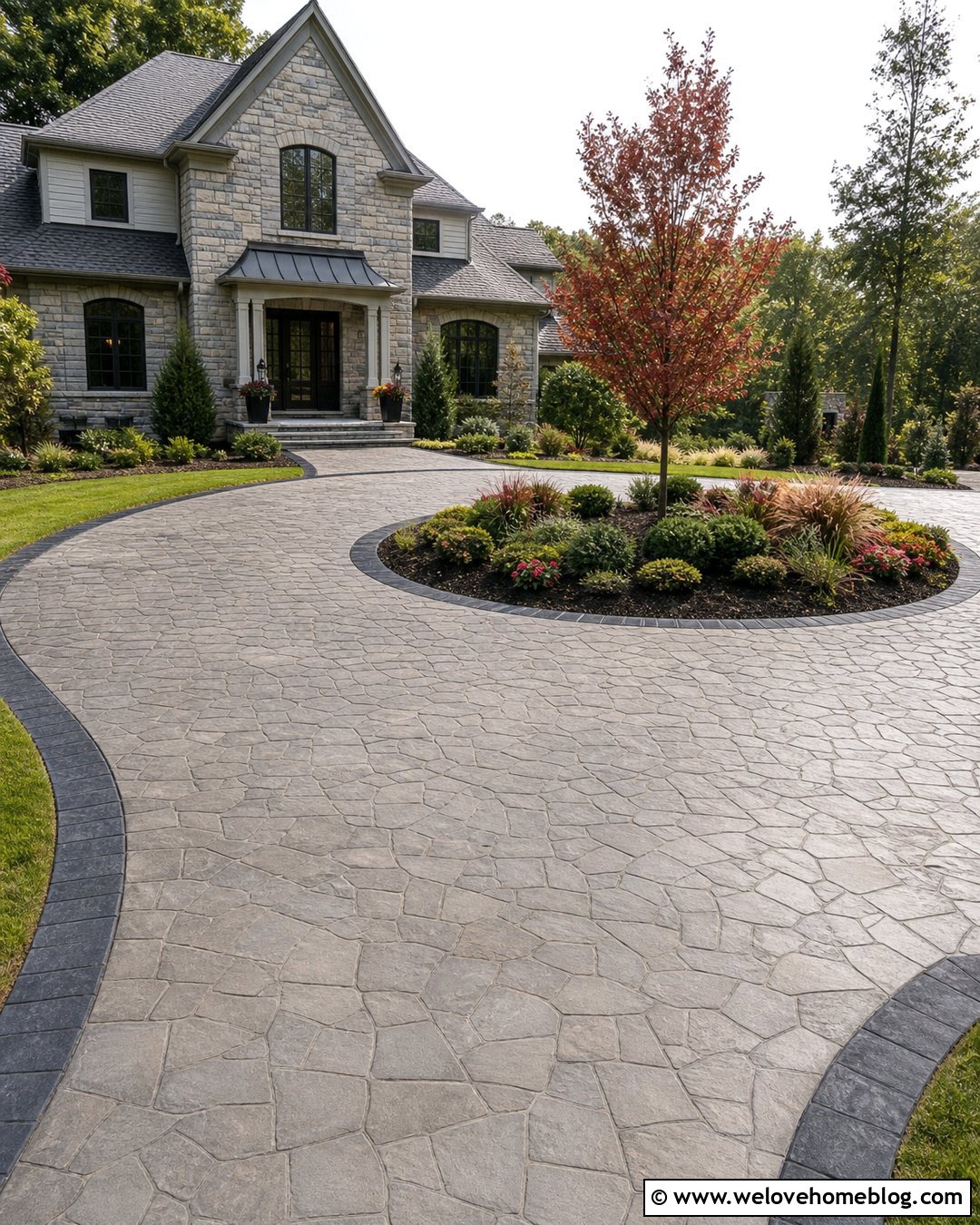
Stamped concrete can give a circular driveway the texture of natural masonry while maintaining a continuous paved surface. Choose a medium brown or warm gray stone pattern that coordinates with the roof, siding, or exterior masonry. Darker stamped borders can trace the inner and outer curves, making the driveway layout easier to read from the street. Fill the center island with layered evergreen shrubs, ornamental grasses, and seasonal flowers arranged around a small specimen tree. Avoid overly busy stamp patterns when the house already has detailed stonework. A simple field pattern with a defined border usually feels more cohesive. Carry one border color into the front walkway or porch steps so the driveway, entrance, and home appear connected rather than designed as separate features.
5. Brick Circular Driveway With Herringbone Pattern
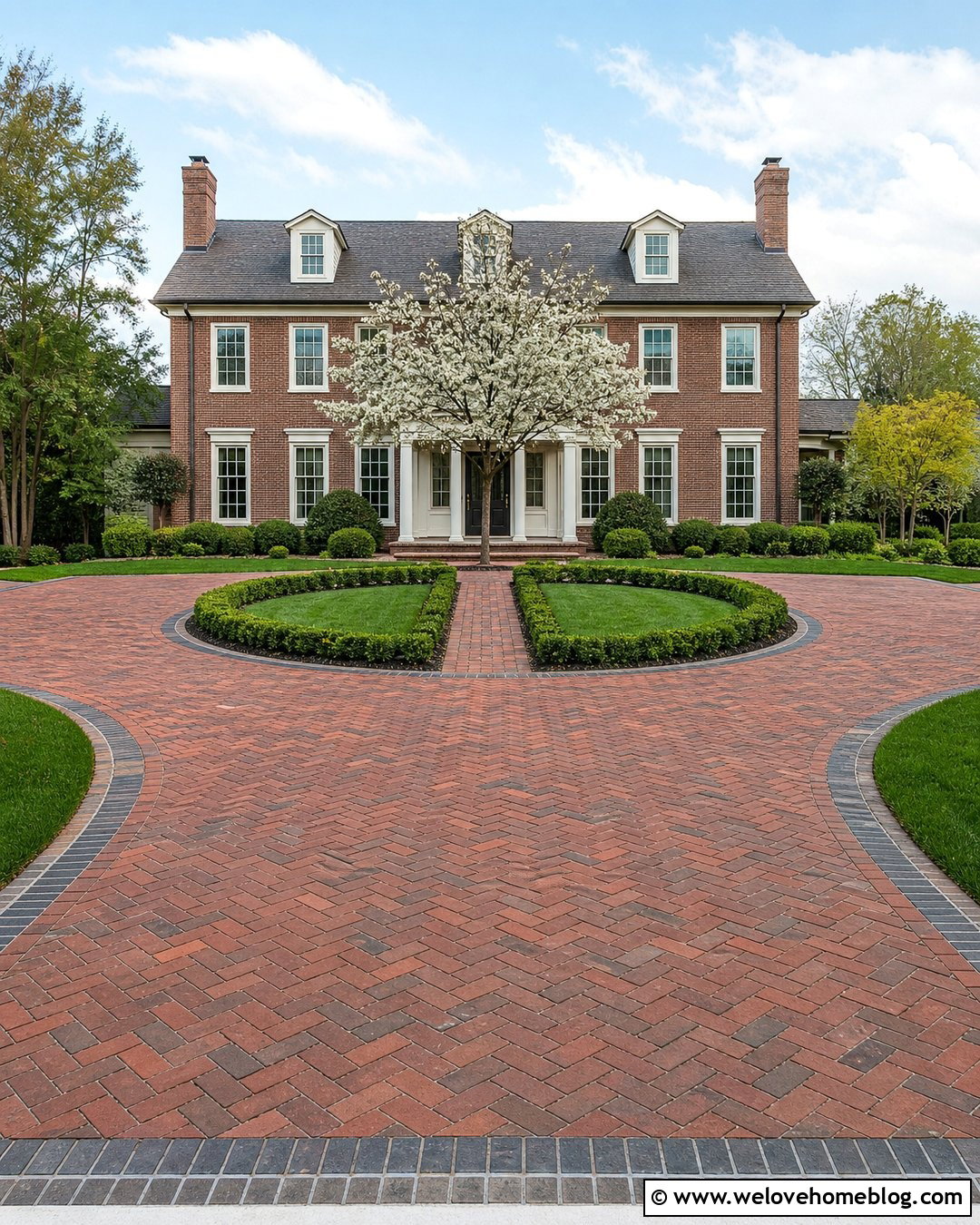
Clay brick pavers laid in a herringbone pattern give a circular driveway a classic, established appearance. Deep red, brown, and charcoal tones work beautifully with colonial, Georgian, Tudor, and traditional brick homes. Use a soldier-course brick border along the inner island and outer edge to create a strong visual frame. The center can hold a formal lawn, a clipped boxwood ring, or a single flowering tree surrounded by low ground cover. A straight brick walkway through the island provides a convenient path from guest parking to the front door. Keep the landscape symmetrical if the home has a formal facade. The repeating brick pattern, matching borders, and balanced planting arrangement create a polished entrance that looks attractive from every point along the curved approach.
6. Concrete Paver Circular Driveway With Dark Accents
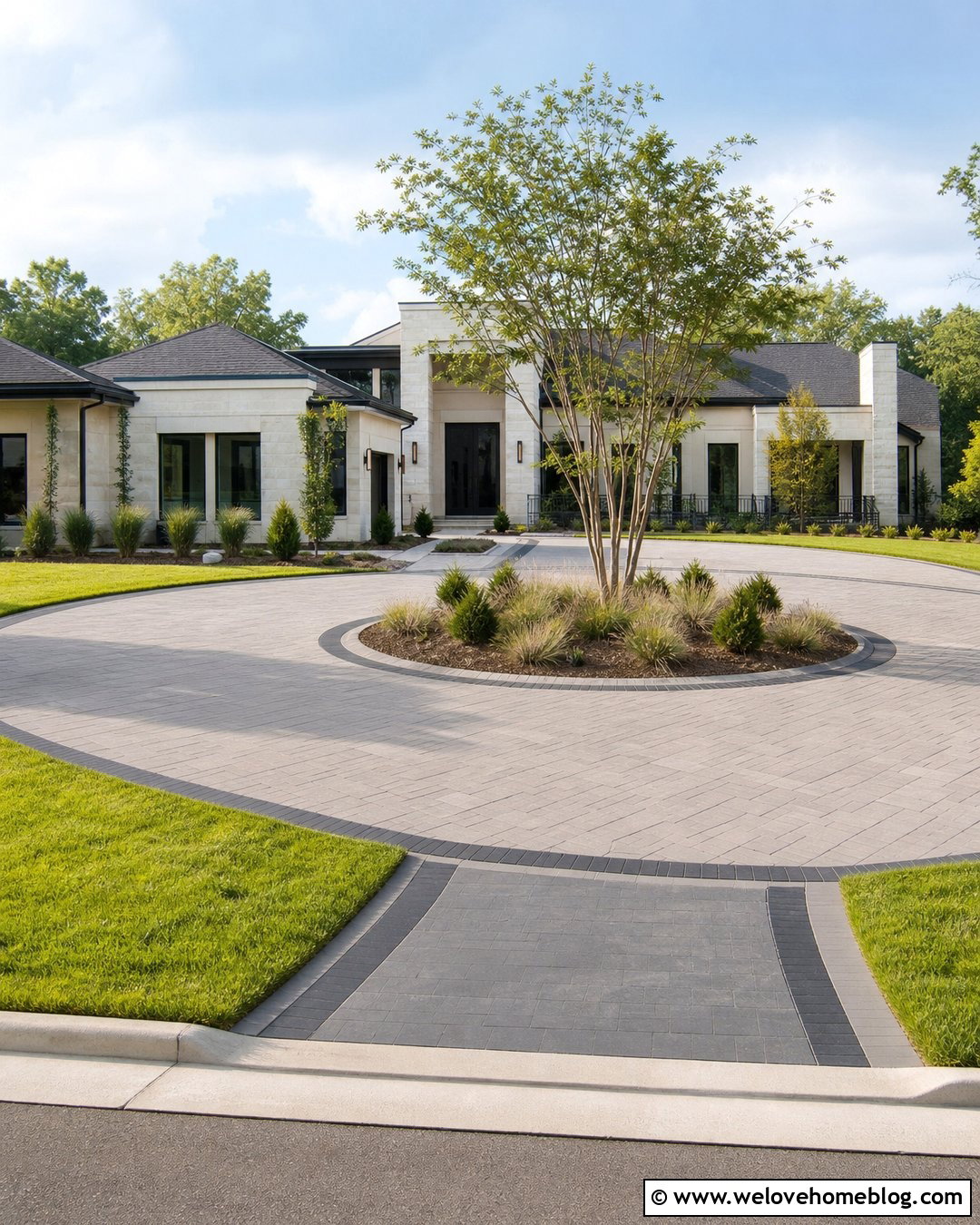
Large-format concrete pavers give a circular driveway a tailored look without making it feel overly traditional. Select warm gray or beige pavers for the main surface, then add charcoal paver bands around the edges and at each entrance. These contrasting ribbons emphasize the circular geometry and can visually separate parking zones from the main driving lane. A center island planted with sculptural grasses and compact evergreen shrubs adds movement without blocking the house. For a unified exterior, repeat the charcoal pavers on the front walkway or porch landing. This design complements contemporary, transitional, and updated suburban homes. Clean planting lines and limited material colors keep the wide driveway from appearing cluttered, while the darker accents create enough contrast to make the complete layout feel purposeful.
7. Exposed Aggregate Circular Driveway With Natural Stone
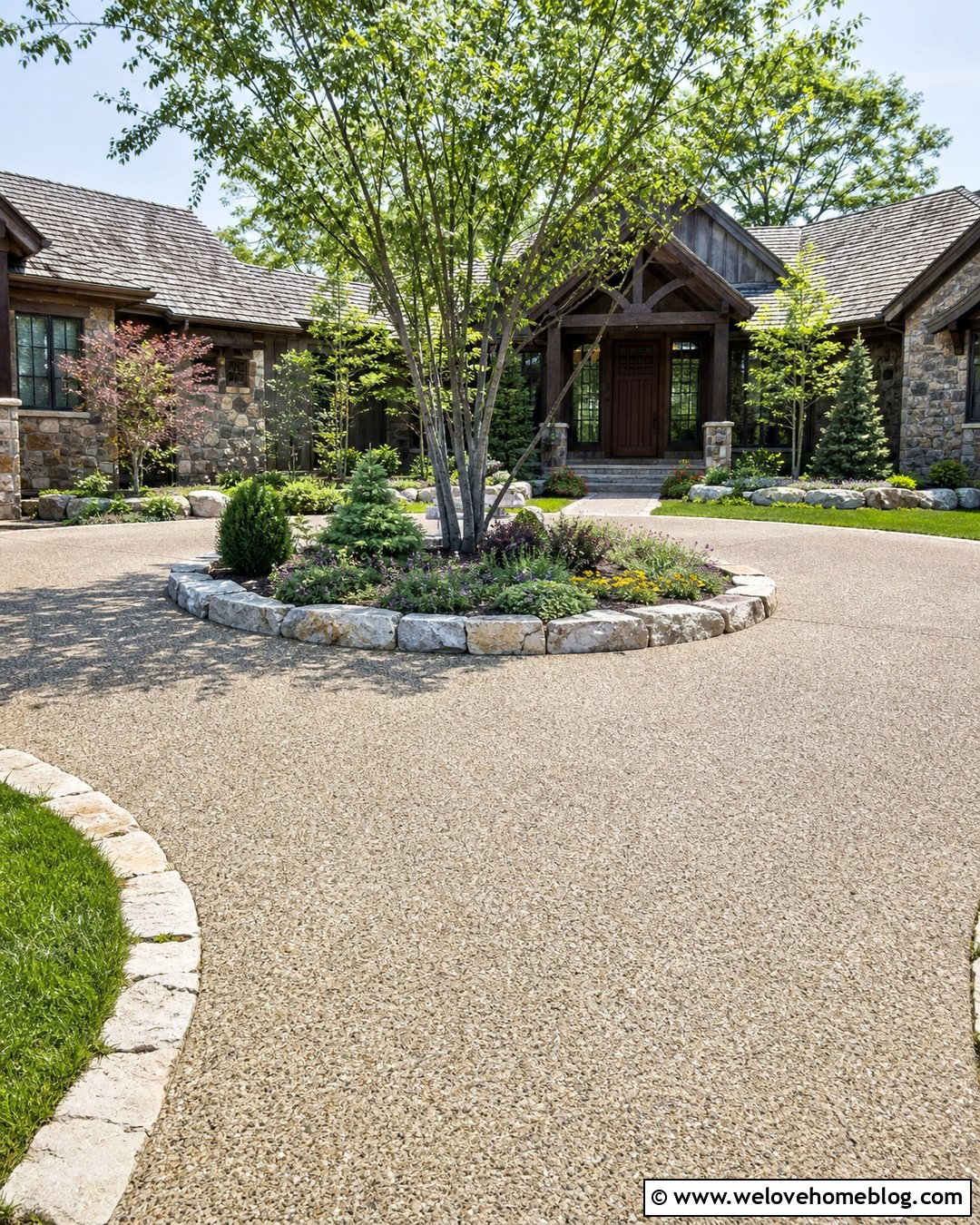
Exposed aggregate concrete brings subtle texture and varied color to a circular driveway. Choose a blend containing tan, cream, and gray stones so the surface coordinates naturally with nearby landscaping. Frame the inner island with irregular limestone or fieldstone curbing, then repeat the stone around planting beds near the house. A multi-stem ornamental tree can anchor the center, surrounded by flowering perennials and low evergreen ground cover. The aggregate surface works best when the concrete sections and joints follow the driveway’s curve in a consistent rhythm. Use a smoother coordinating concrete finish for the walkway to improve visual separation. This complete look suits craftsman, rustic contemporary, and stone-front homes, where natural textures help connect the building to the surrounding yard.
8. Resin-Bound Circular Driveway With Steel Edging
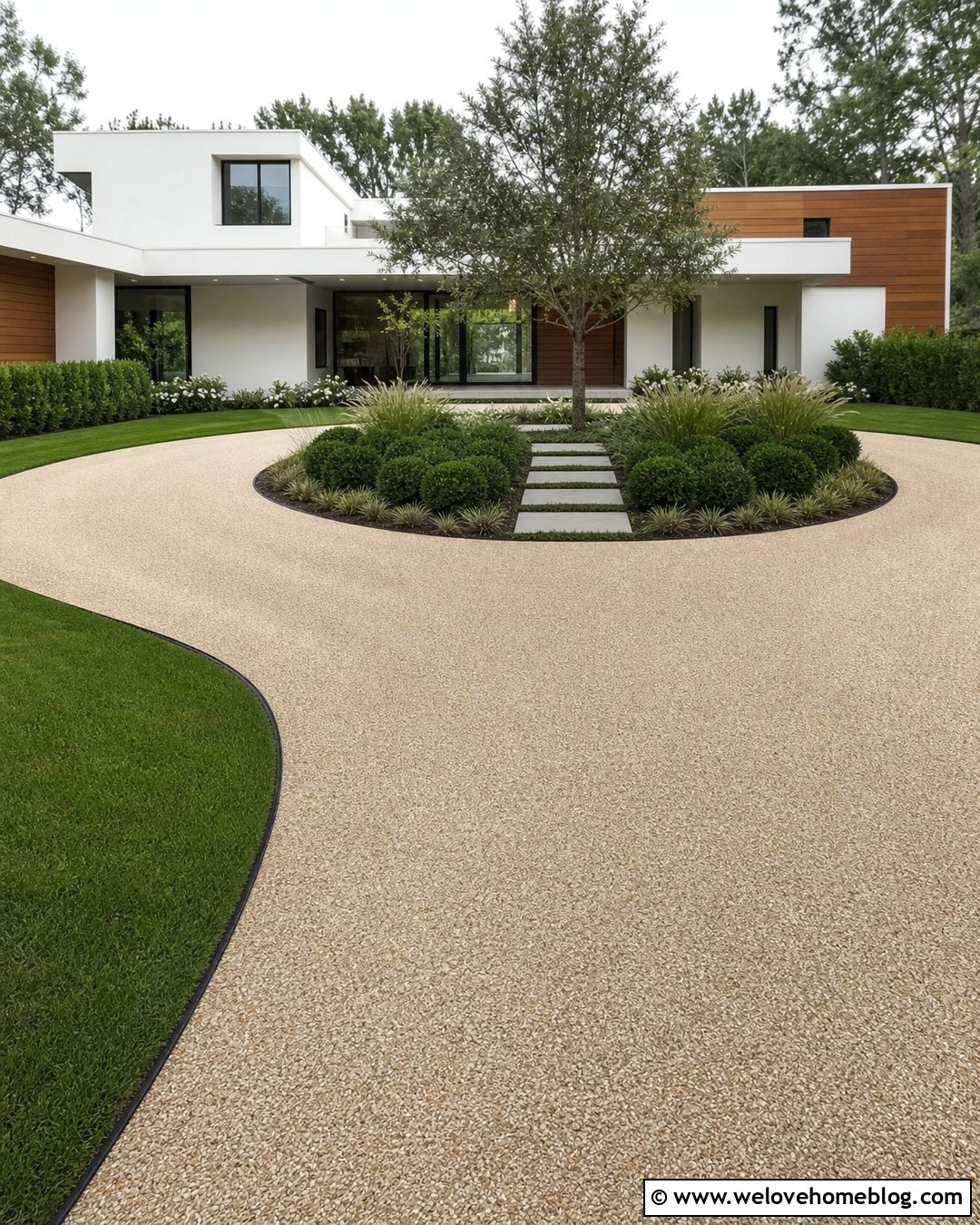
A resin-bound gravel surface creates a smooth, contemporary circular driveway with the natural appearance of small aggregate. Select light beige, silver-gray, or warm taupe stone to brighten the front yard and complement a modern exterior. Slim steel edging can define the inside and outside curves without introducing a bulky border. Plant the central island with clipped evergreens, airy ornamental grasses, and one sculptural tree for a controlled but organic focal point. Large concrete stepping slabs can cross the island and connect the drive to the front entrance. Keep the surrounding lawn and planting beds simple so the refined surface remains prominent. This combination works well for contemporary homes that need softer landscaping without losing their clean architectural character.
9. Cobblestone Circular Driveway With Formal Landscaping
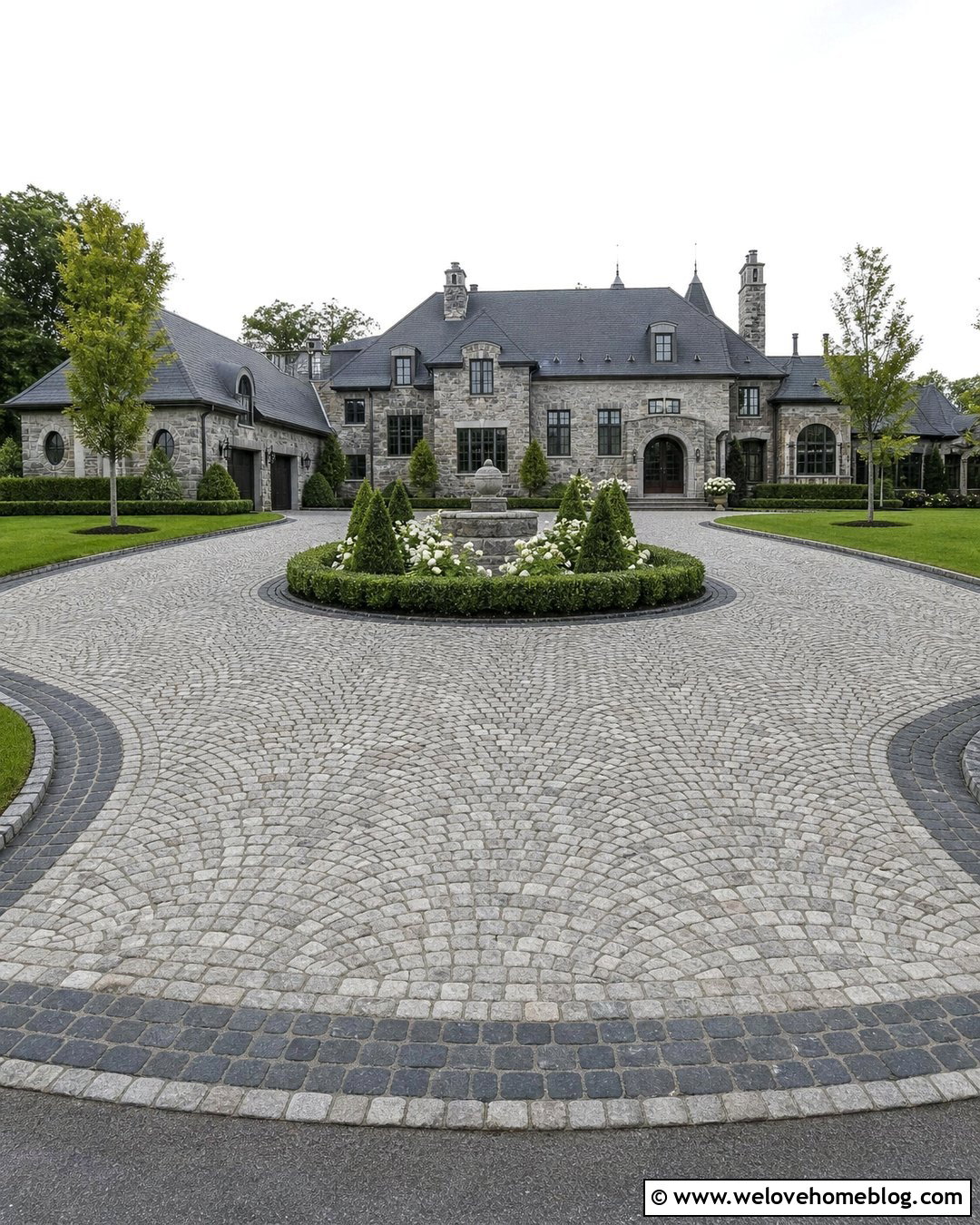
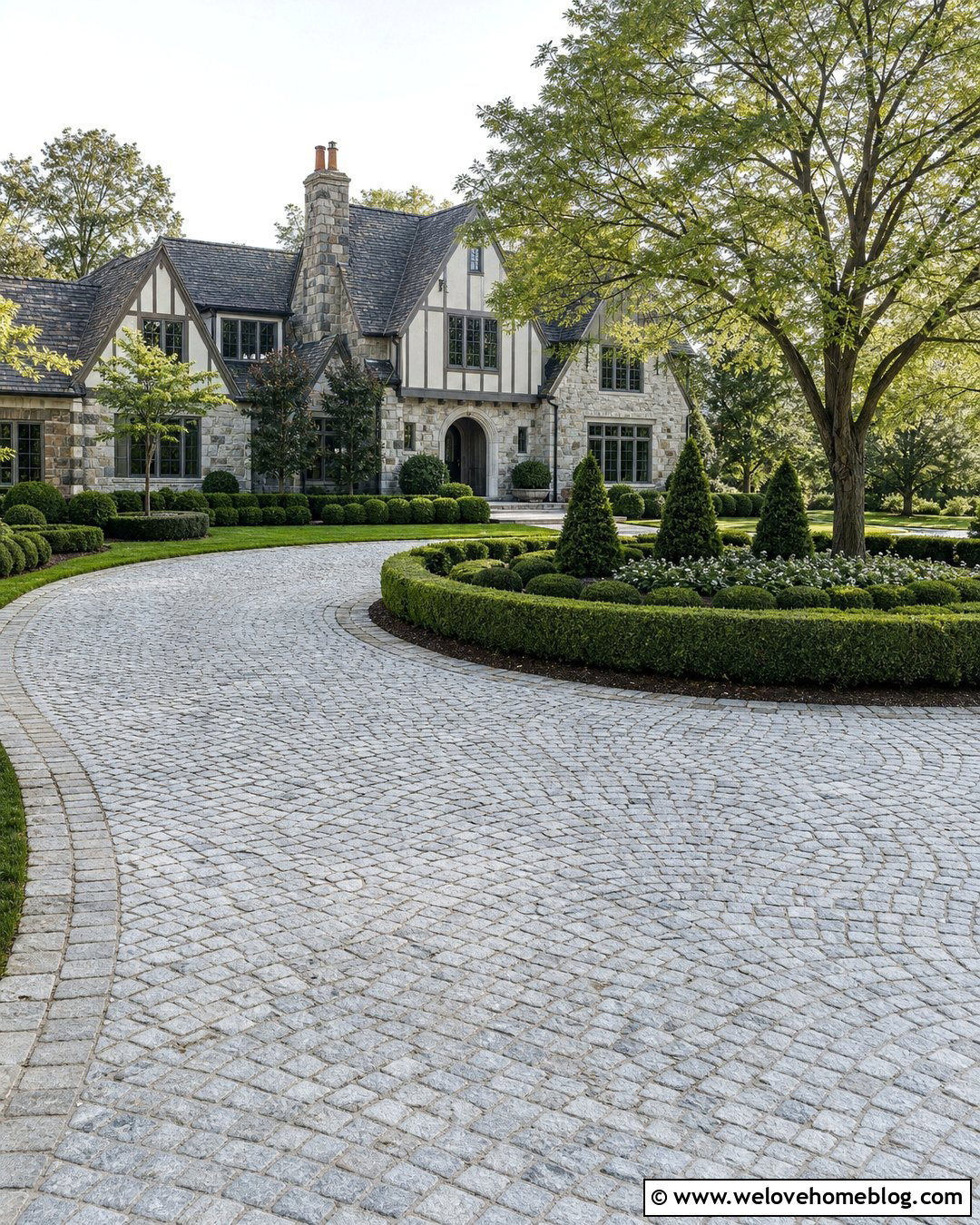
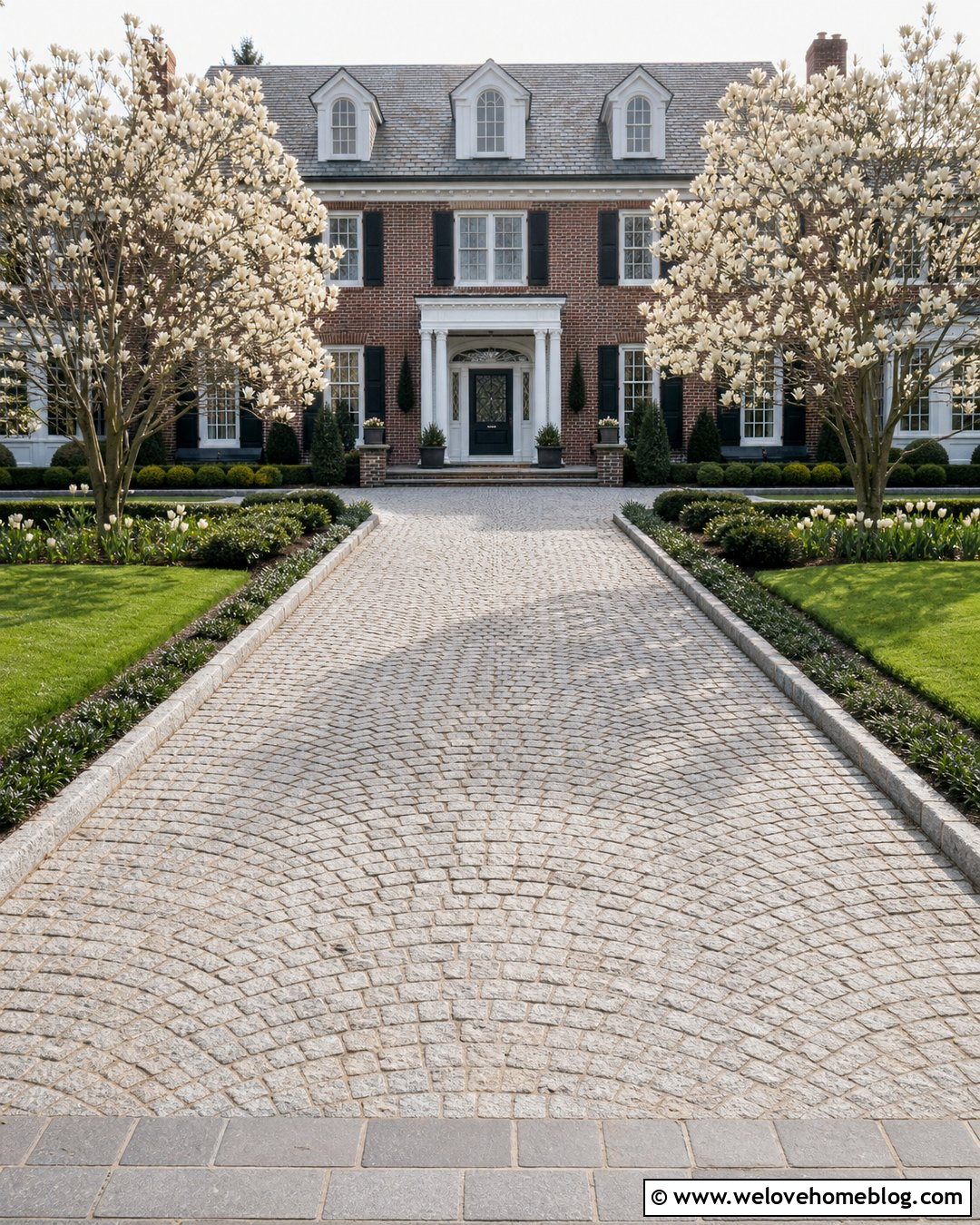
A full cobblestone circular driveway creates a substantial entrance that suits historic, European-inspired, and estate-style homes. Use granite cobbles in mixed gray tones, arranged in curved rows that follow the path of travel. A darker cobblestone border can outline both sides and form a defined apron near the road. In the center island, clipped boxwood hedges, symmetrical topiary, and a small stone feature reinforce the formal layout. Repeat the cobblestone in the walkway leading to the front steps for a seamless transition. Because cobblestone already has strong texture, keep nearby flower colors restrained and planting shapes organized. The completed design feels detailed but balanced, with the paving pattern, formal greenery, stone facade, and circular geometry supporting one cohesive entrance.
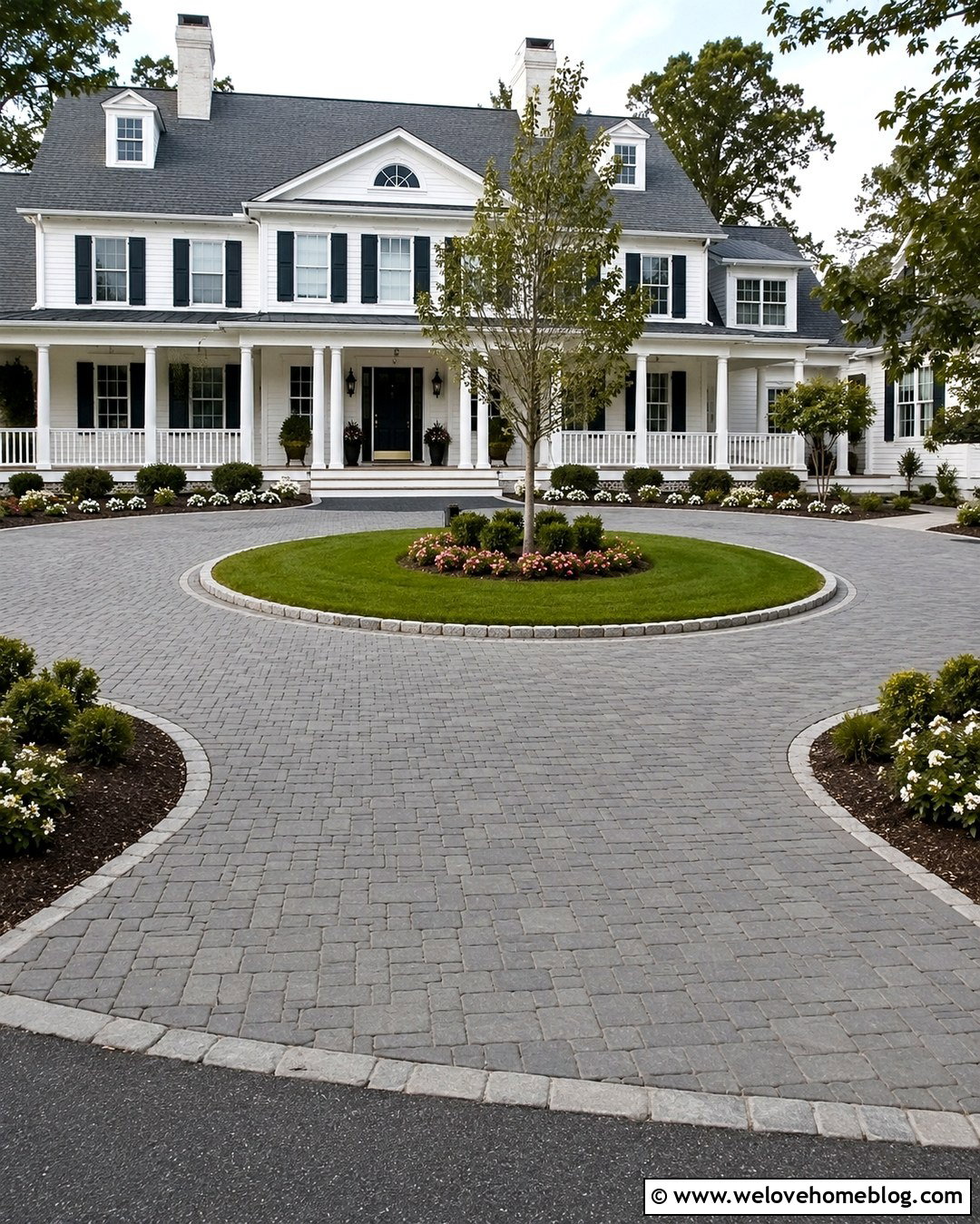
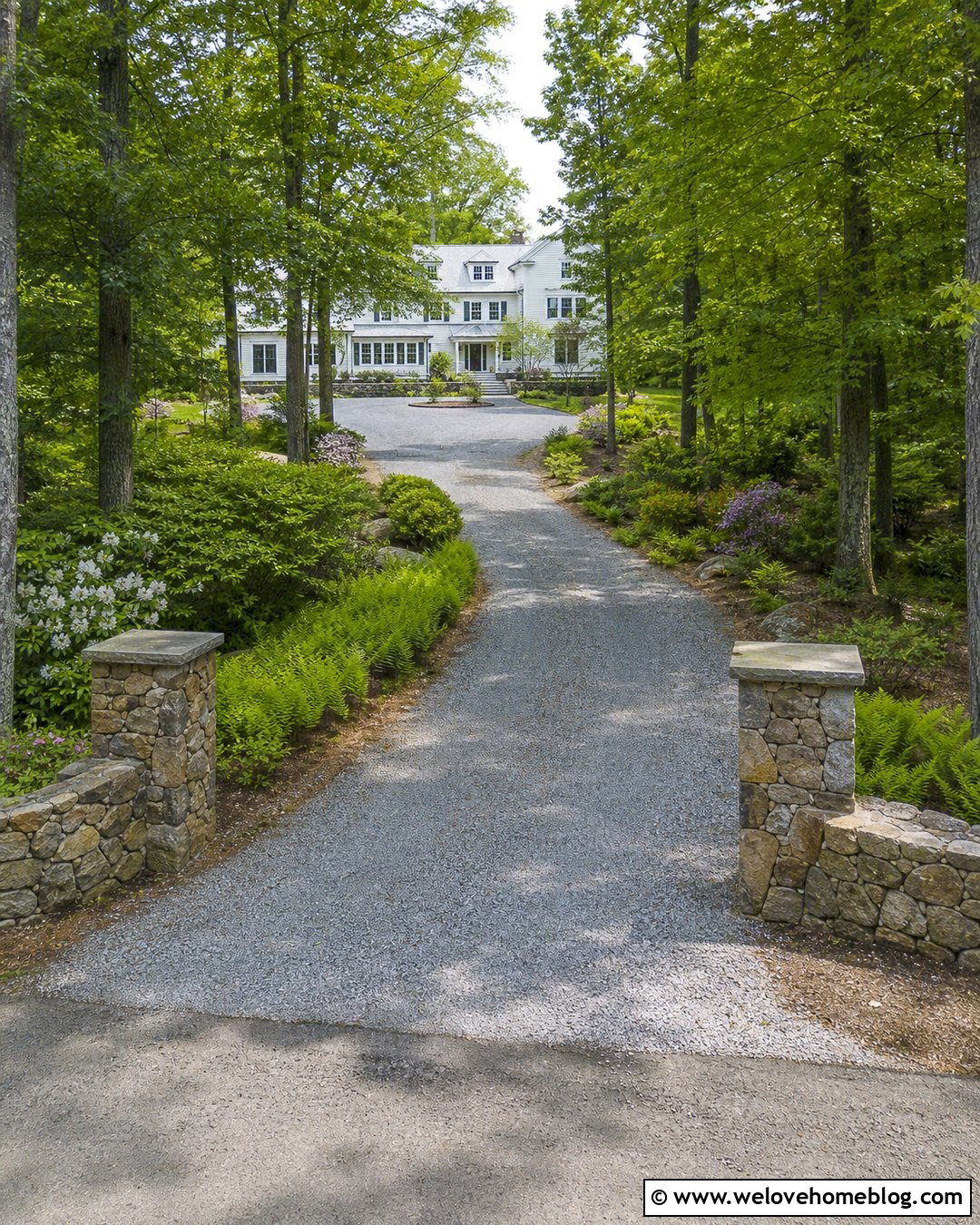
10. Decomposed Granite Circular Driveway With Timber Edging
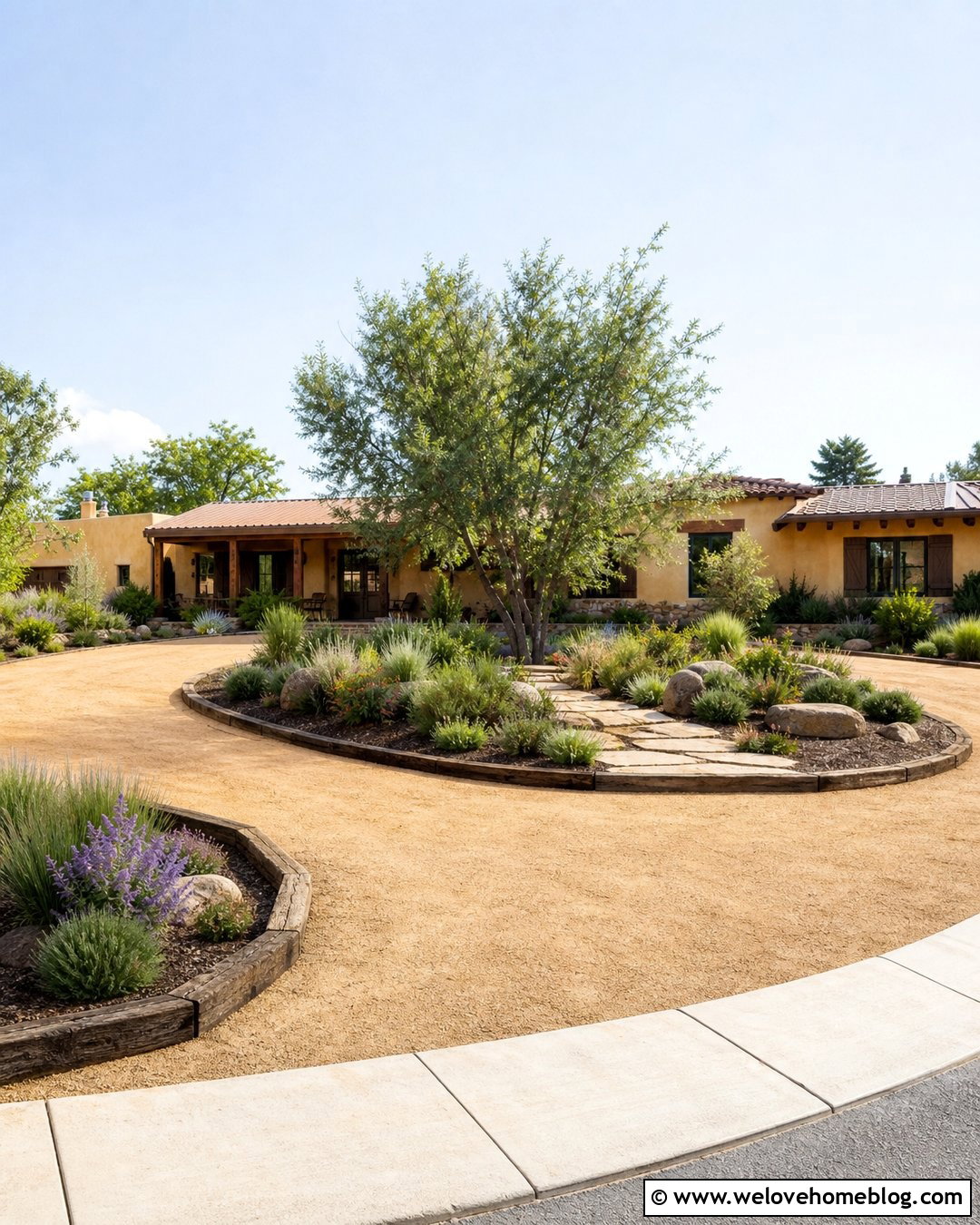
Golden decomposed granite brings warmth to a circular driveway serving a casual ranch, adobe, cottage, or country home. The fine-textured surface should be visually contained with heavy timber edging or low weathered steel borders. Build a broad central island with drought-tolerant grasses, flowering shrubs, and a shade tree positioned away from the turning lane. Large natural stone slabs can form a walkway across the island, preventing foot traffic from disturbing the granite. Repeat native plants near the two driveway entrances to frame the property consistently. This design looks best with softly curved planting beds rather than rigid geometric lines. Earthy paving, natural borders, and regionally appropriate landscaping help the driveway blend comfortably into a dry or informal residential setting.
11. Permeable Paver Circular Driveway With Grass Joints
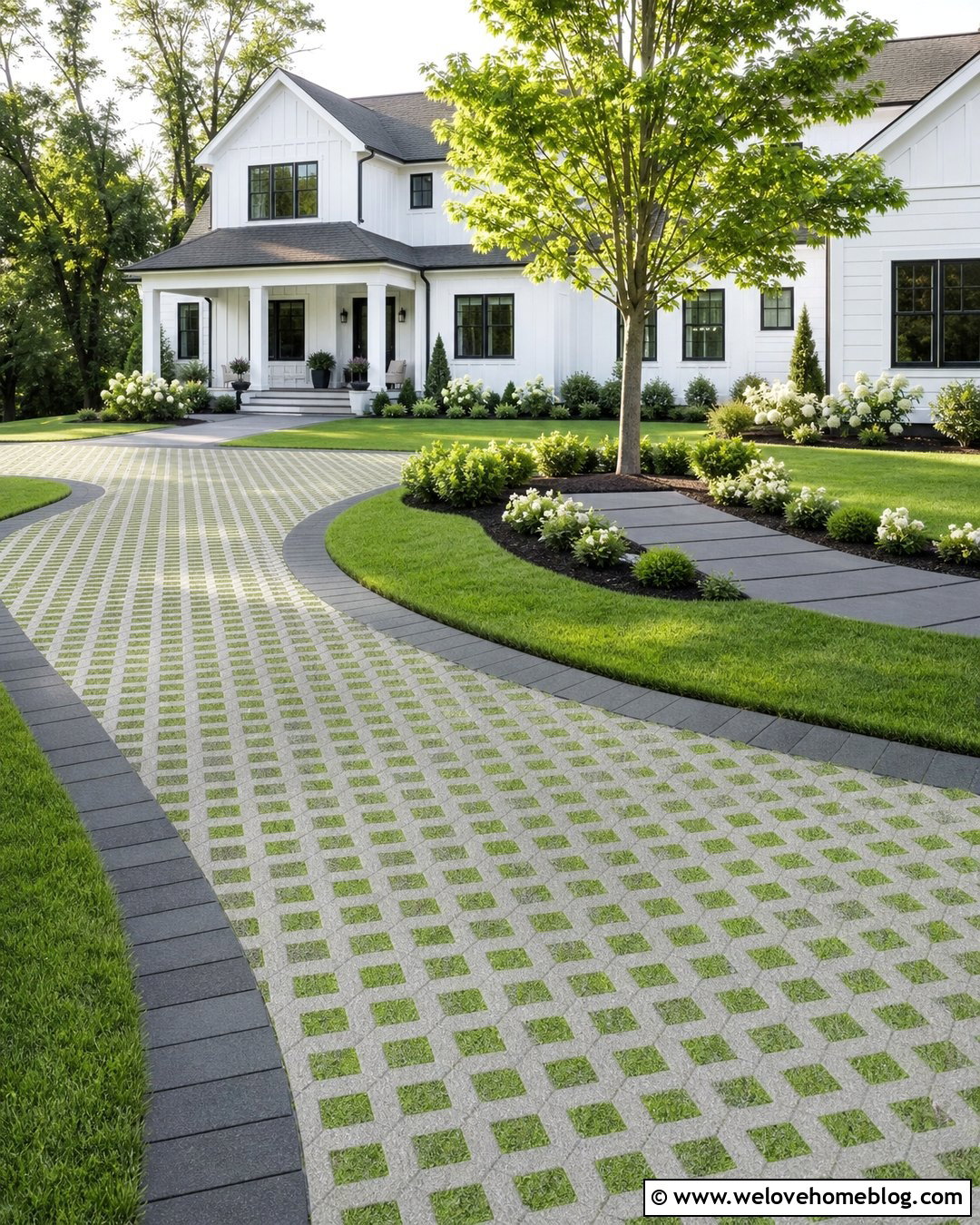
Permeable concrete pavers with green grass joints can make a large circular driveway feel less dominated by hardscape. Use a structured grid pattern for the driving surface, with solid paver bands placed along the edges and busiest turning areas. The center island can feature a broad shade tree, lawn, and simple planting beds that echo the grass growing between the pavers. A solid walkway should connect the driveway to the entrance so guests have an even path. This layout works well with modern farmhouse, contemporary, and eco-conscious landscape designs. Limit the color palette to natural gray pavers, green planting, and one darker border. The repeated grass strips visually connect the driveway to the yard while preserving the circular shape and orderly residential appearance.
12. Gravel Circular Driveway With Concrete Ribbons
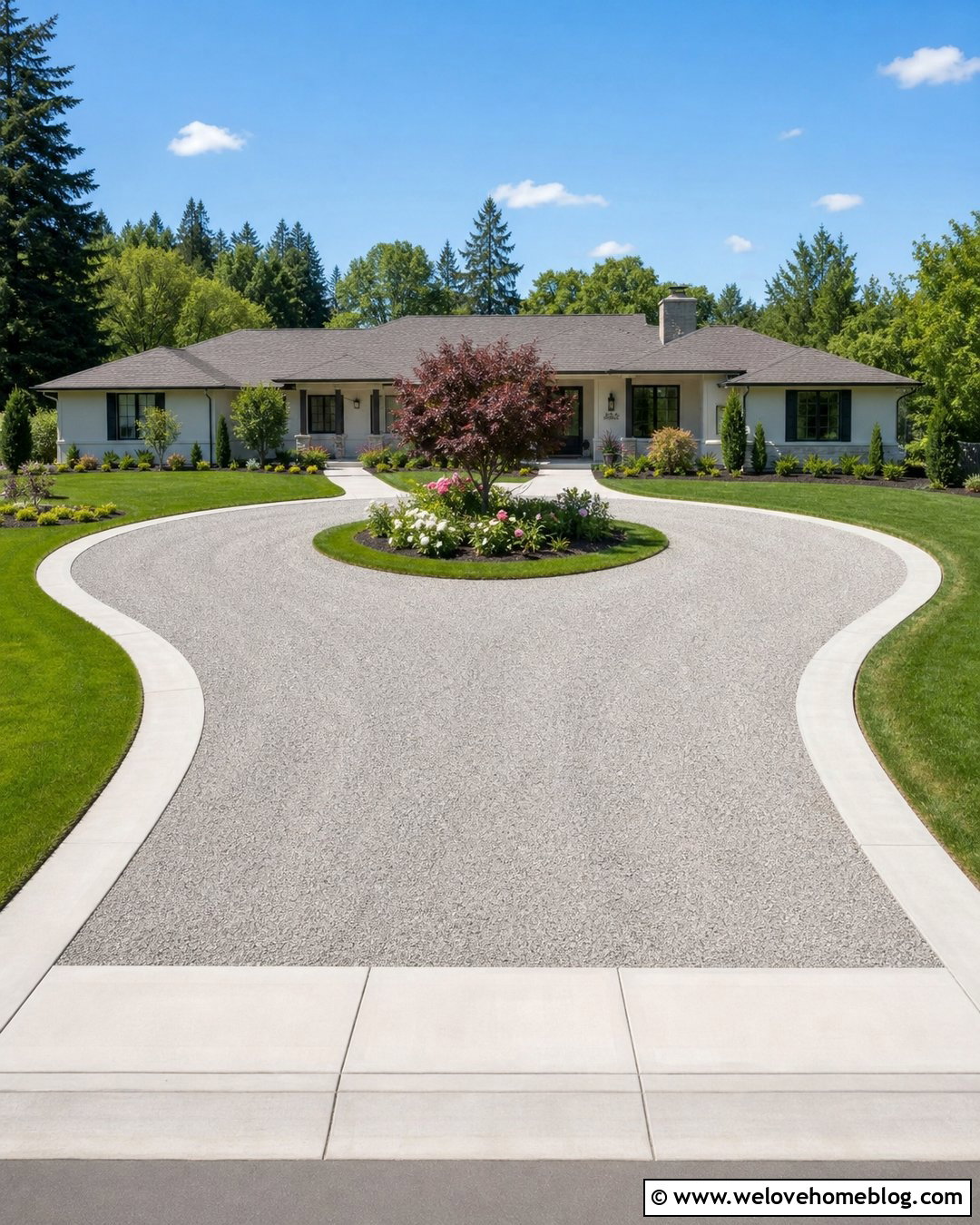
Pairing compacted gravel with poured concrete ribbons creates an attractive circular driveway with clear visual structure. Use light gray gravel across the main surface and install smooth concrete bands along the inner curve, outer edge, and two entrances. The ribbons keep the design visually organized while complementing a concrete front walkway. Fill the center island with a small lawn and a loose grouping of flowering shrubs rather than a perfectly formal arrangement. This combination is particularly suitable for modern ranch homes, updated cottages, and minimalist farmhouses. Choose a gravel color that contrasts gently with the concrete instead of matching it completely. The finished driveway feels casual and approachable, but the crisp concrete lines prevent the loose stone surface from appearing overly rustic or disconnected from the house.
13. White Gravel Circular Driveway With Farmhouse Landscaping
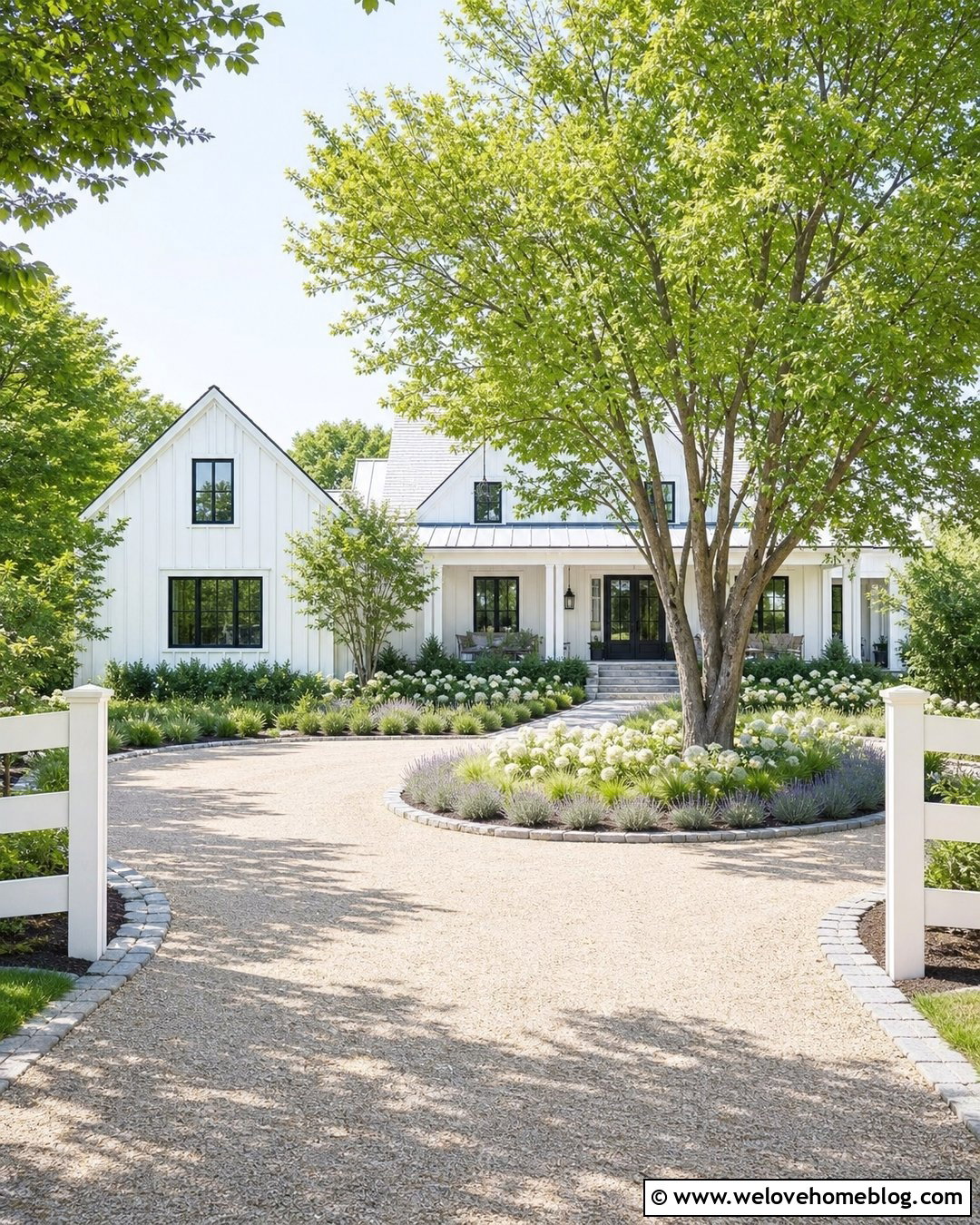
Bright white or pale cream gravel can give a circular driveway a clean farmhouse appearance. Define the curved lane with weathered gray stone edging, then plant the center island with a broad shade tree, white flowering shrubs, lavender, and soft ornamental grasses. Near the house, continue the same plant palette in deep foundation beds beside a simple gravel or flagstone walkway. White fencing at the street entrances can subtly frame the driveway without creating a fully enclosed property. This look pairs especially well with white board-and-batten siding, black windows, and a deep covered porch. Keep the gravel color slightly warm rather than stark blue-white. The softer tone reduces glare and allows the layered greenery, natural stone, and farmhouse facade to remain the visual focus.
14. Black Asphalt Circular Driveway With Modern Landscaping
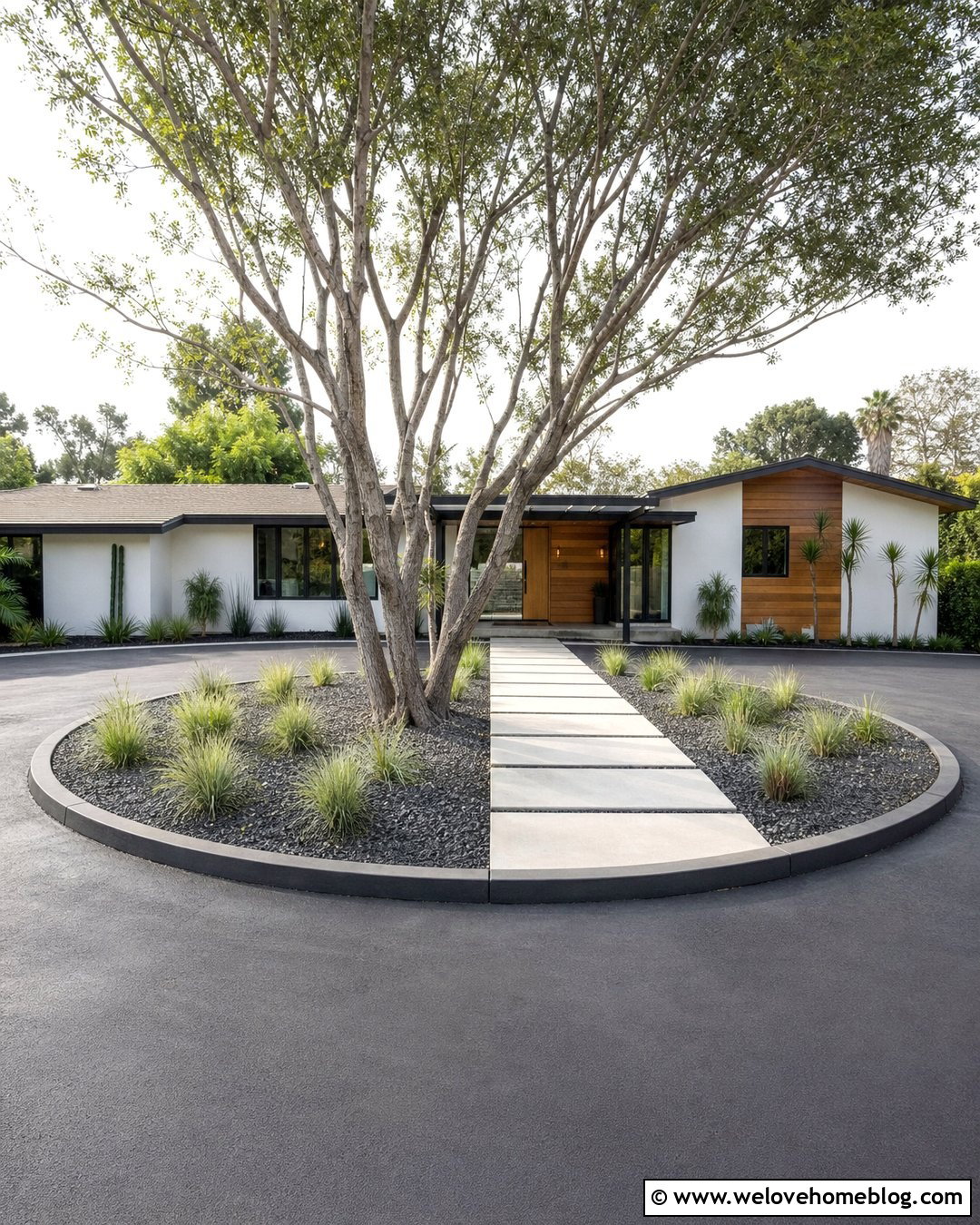
Fresh black asphalt can look surprisingly sophisticated when paired with simple modern landscaping. Create a wide circular route with crisp edges and narrow charcoal concrete curbs. In the central island, use a low rectangular planting bed containing one multi-stem tree, blocks of ornamental grass, and dark decorative gravel. Large concrete slabs can form a straight walkway through the island, introducing a deliberate contrast to the curved driveway. Repeat the concrete and dark gravel near the house for continuity. This complete design works best with flat-roofed, midcentury, or contemporary homes featuring simple exterior colors. Avoid crowded flower beds or highly decorative edging. Strong shapes, restrained planting, and the deep asphalt surface give the entrance a clean appearance while keeping attention on the architecture.
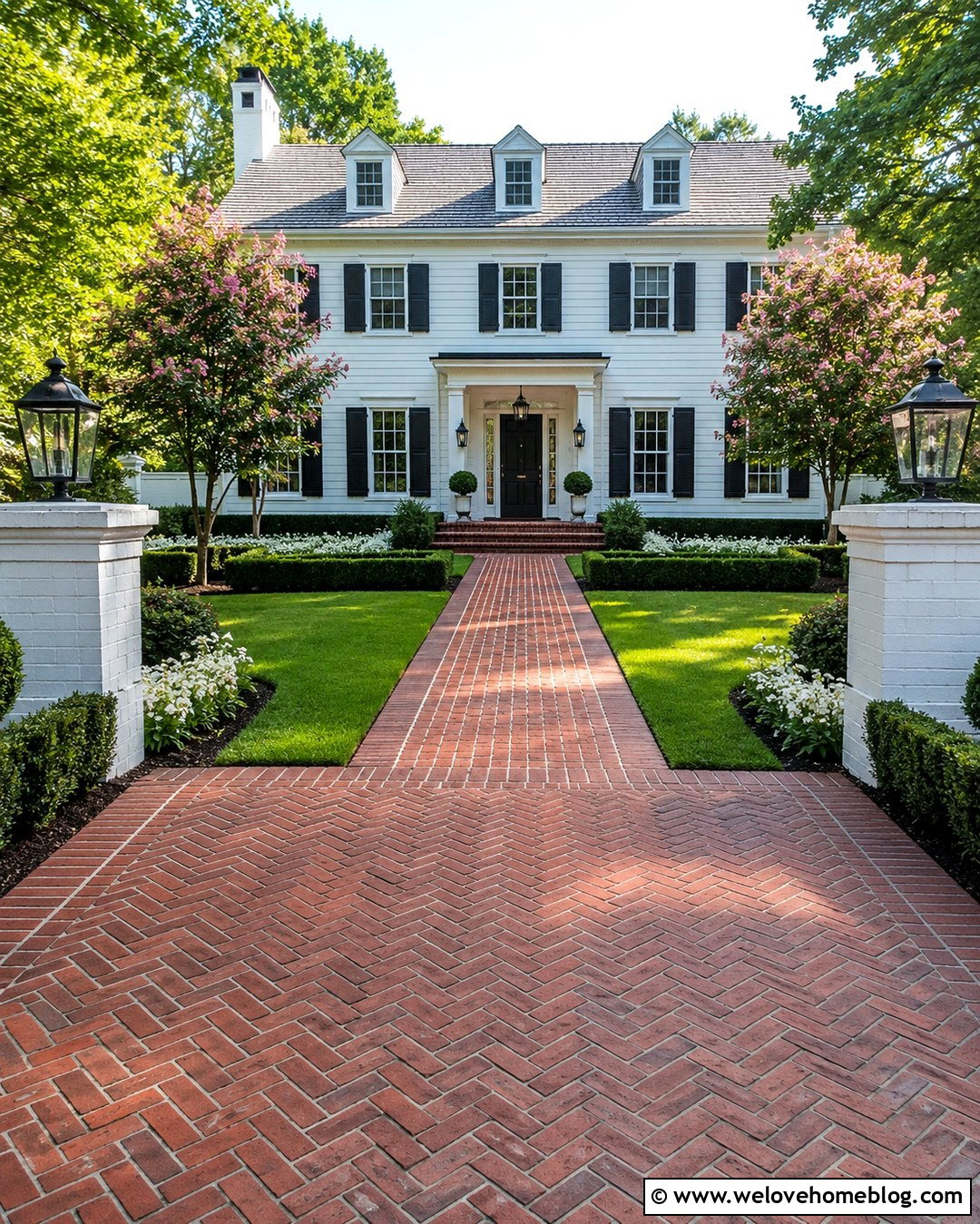
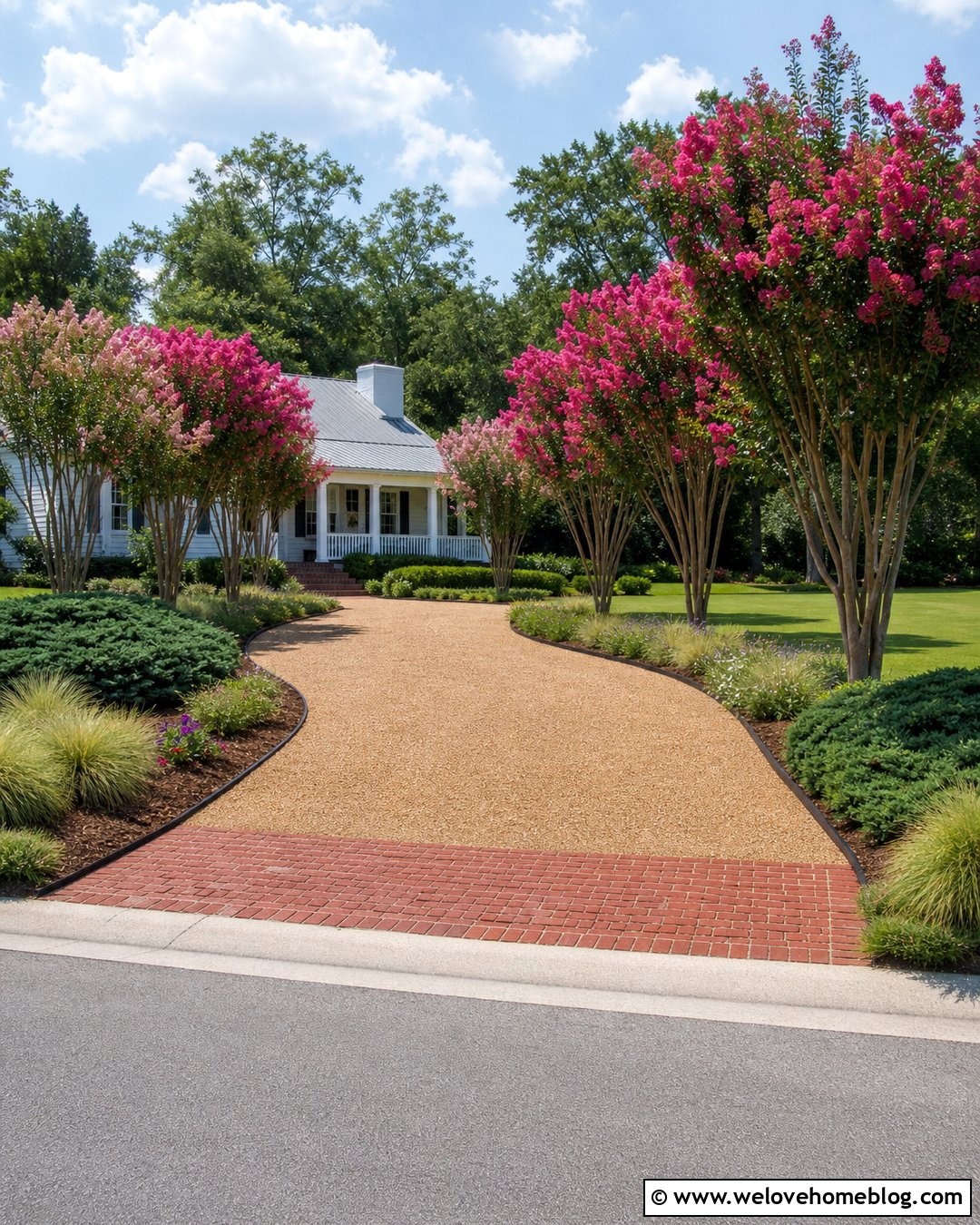
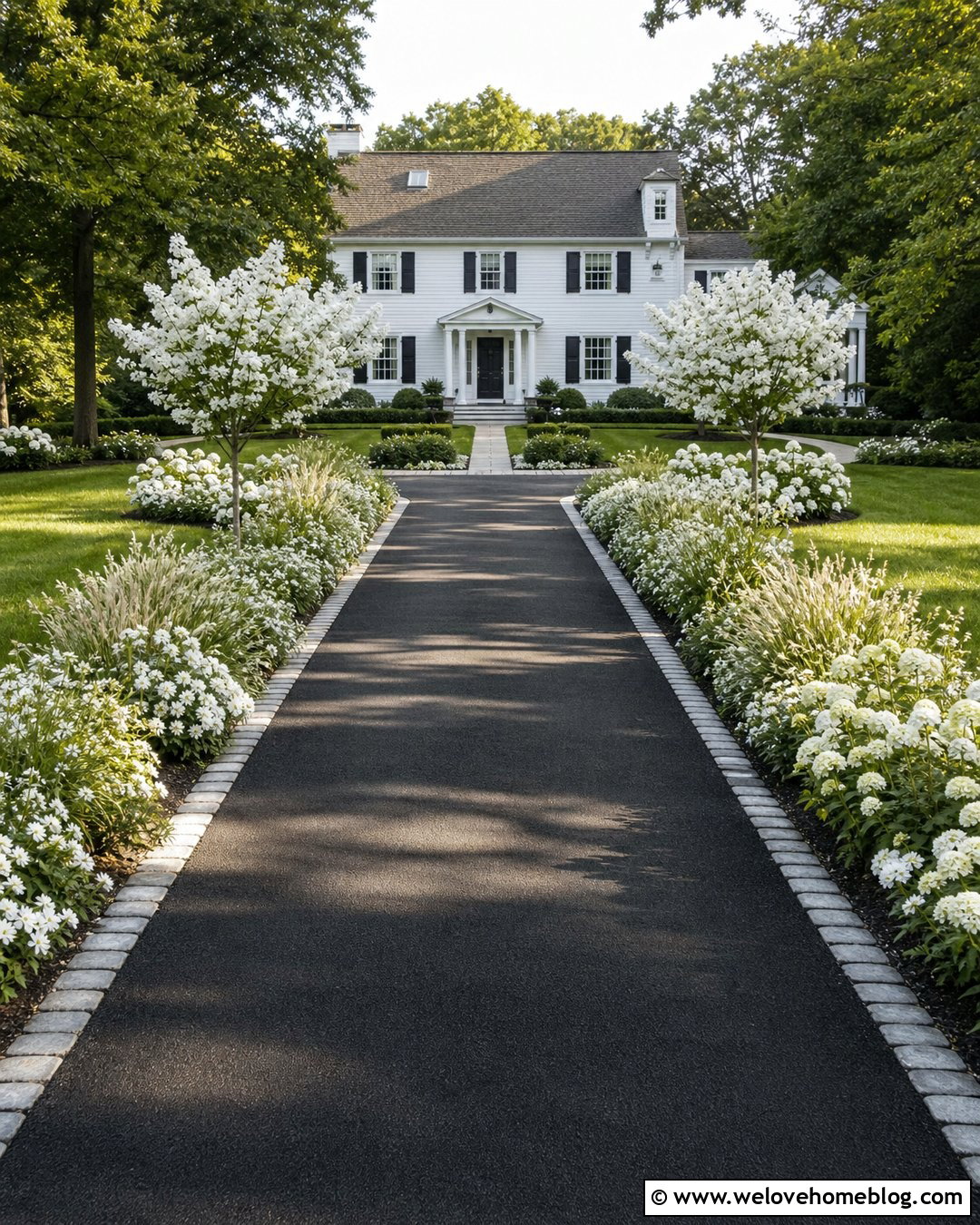
15. Red Brick Circular Driveway With Colonial Landscaping
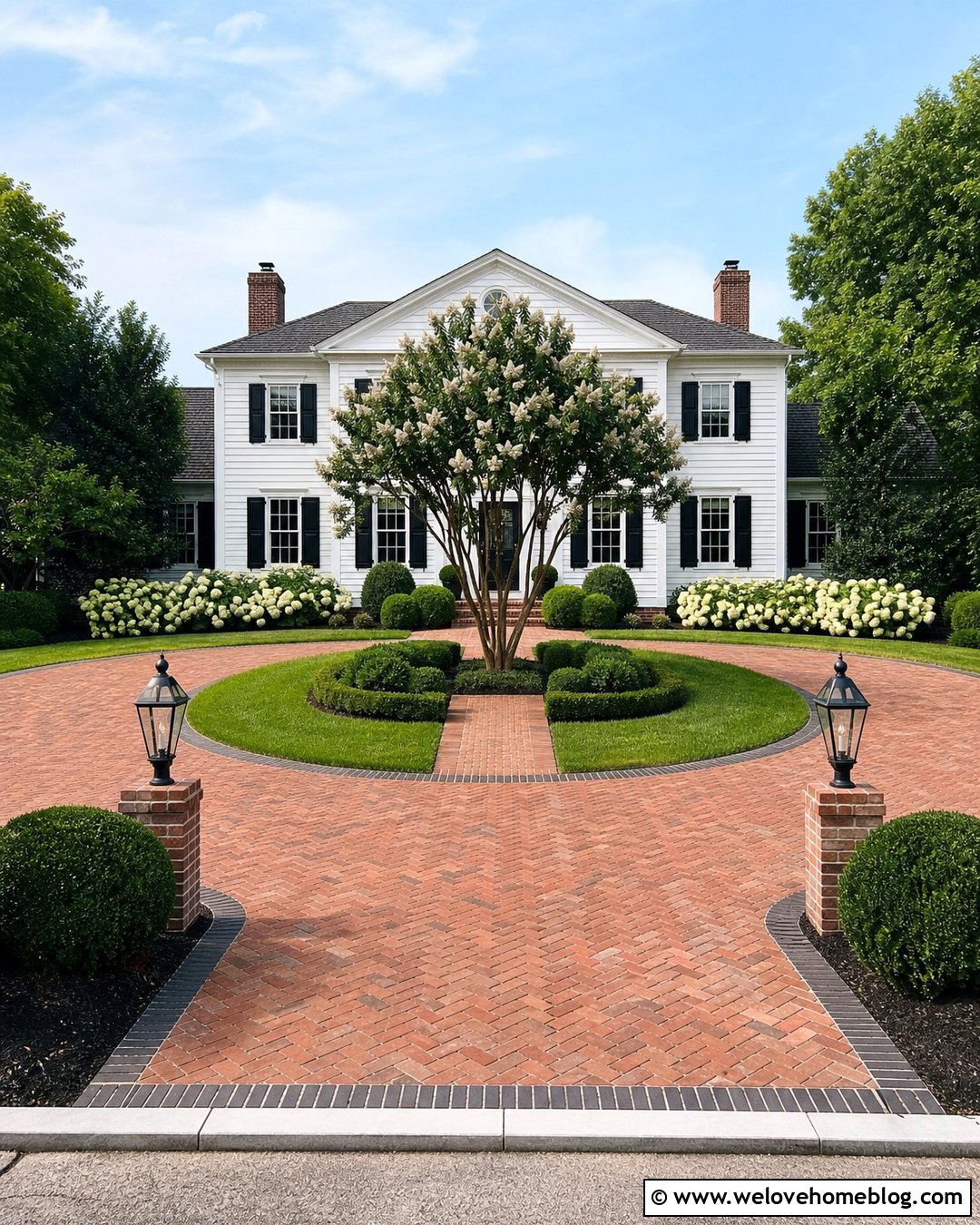
A red brick circular driveway naturally complements the symmetry of a colonial home. Lay traditional clay brick pavers in a herringbone pattern, then use darker bricks in a straight soldier course around both curves. Center the driveway on the front door whenever the property layout allows. A round lawn island with one flowering tree or a small clipped hedge creates an orderly focal point. Add matching planting beds on each side of the house using boxwood, hydrangeas, and seasonal flowers. A straight brick walkway through the island reinforces the formal axis between the street and front entrance. Black lanterns near the two driveway openings can echo shutters and hardware. The complete composition feels timeless because the driveway, landscape, walkway, and facade share consistent materials and proportions.
16. Travertine Circular Driveway With Mediterranean Landscaping
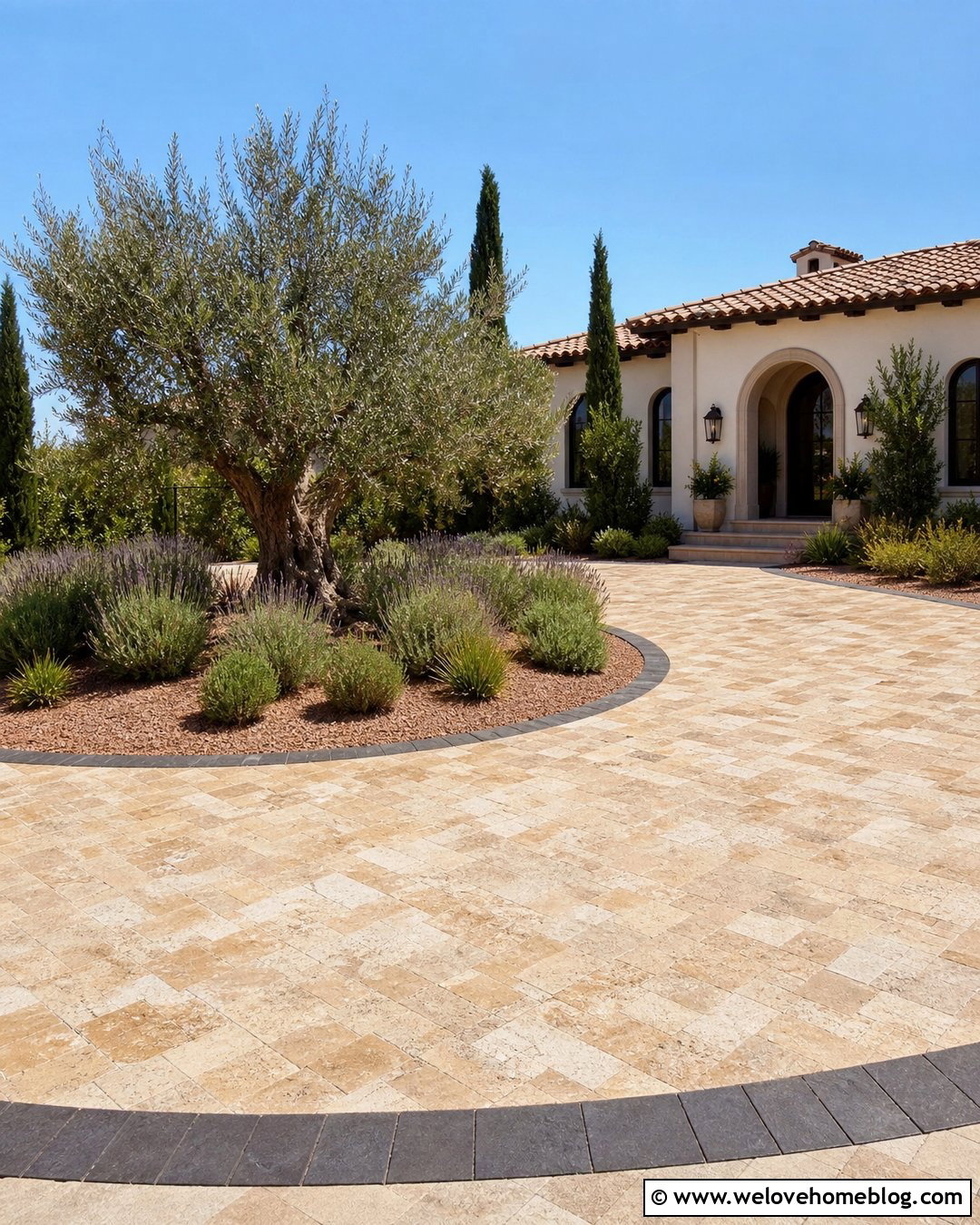
Warm travertine pavers give a circular driveway the sun-washed character associated with Mediterranean architecture. Select cream, sand, and light gold tones in a modular pattern, then define the edges with darker tumbled stone. The center island can feature an olive tree or similarly sculptural specimen surrounded by rosemary, lavender, and low evergreen shrubs. Use terracotta-colored gravel as mulch to complement a stucco facade and clay tile roof. A curved travertine walkway can lead from the driveway to an arched entrance without interrupting the island’s main planting area. Keep the landscape open and drought-conscious rather than densely planted. Together, the pale paving, warm border, aromatic greenery, and Mediterranean house details create an inviting circular approach with strong regional character.
17. Bluestone Circular Driveway With Traditional Planting
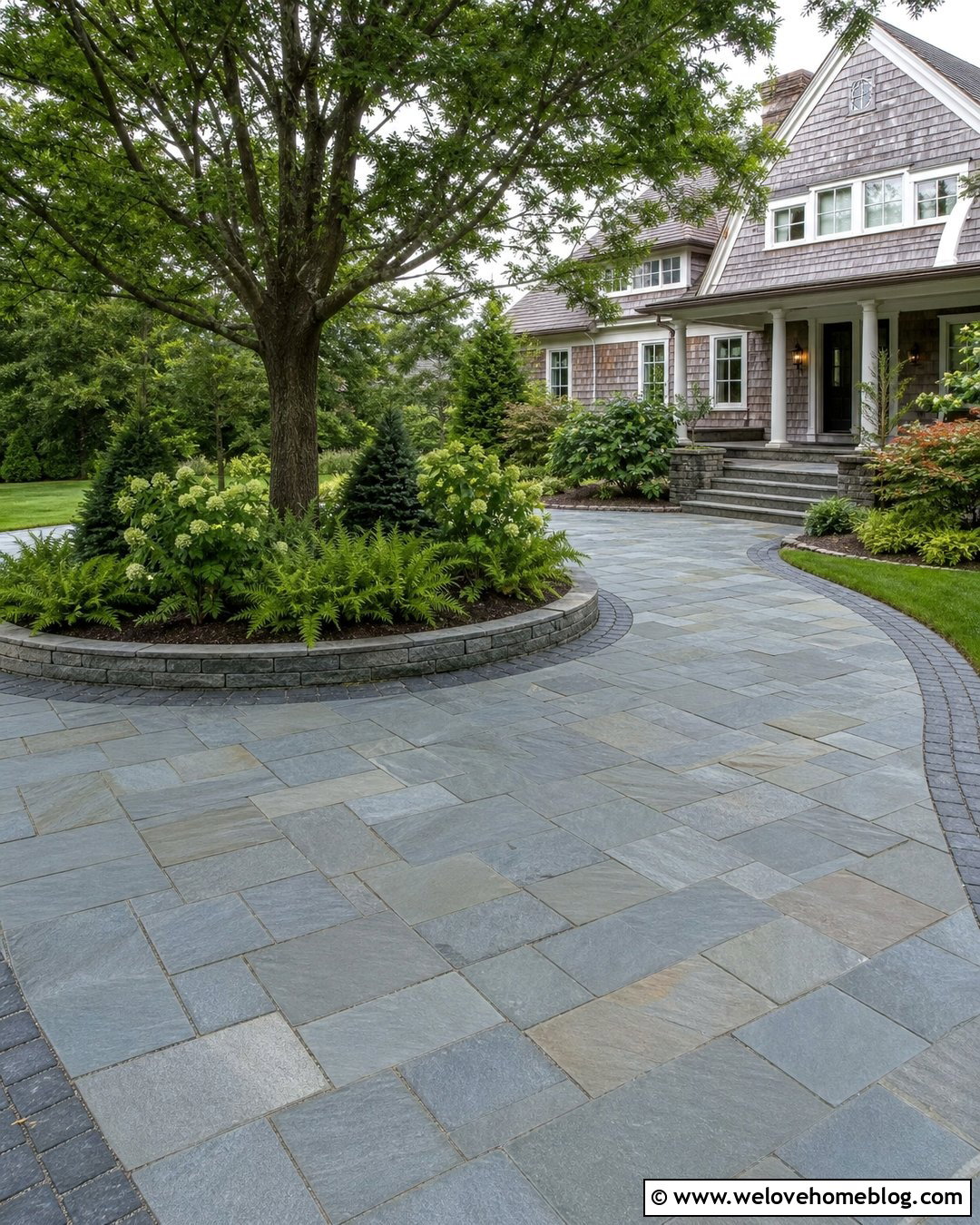
Bluestone pavers can transform a circular driveway into a refined extension of a traditional stone or shingle-style home. Use rectangular blue-gray stone in a random ashlar pattern, with darker granite setts forming the inner and outer borders. A raised center island edged in matching bluestone can hold a mature deciduous tree, ferns, hydrangeas, and low evergreen shrubs. Continue the material onto a broad front walkway and porch steps to create a natural visual progression. Since bluestone offers rich tonal variation, keep the surrounding landscape mostly green with limited seasonal color. The stone should also coordinate with the home’s roof and masonry. This restrained palette allows the textured paving and established planting to create a circular entrance that feels elegant, settled, and connected to the property.
18. Chip Seal Circular Driveway With Country Landscaping
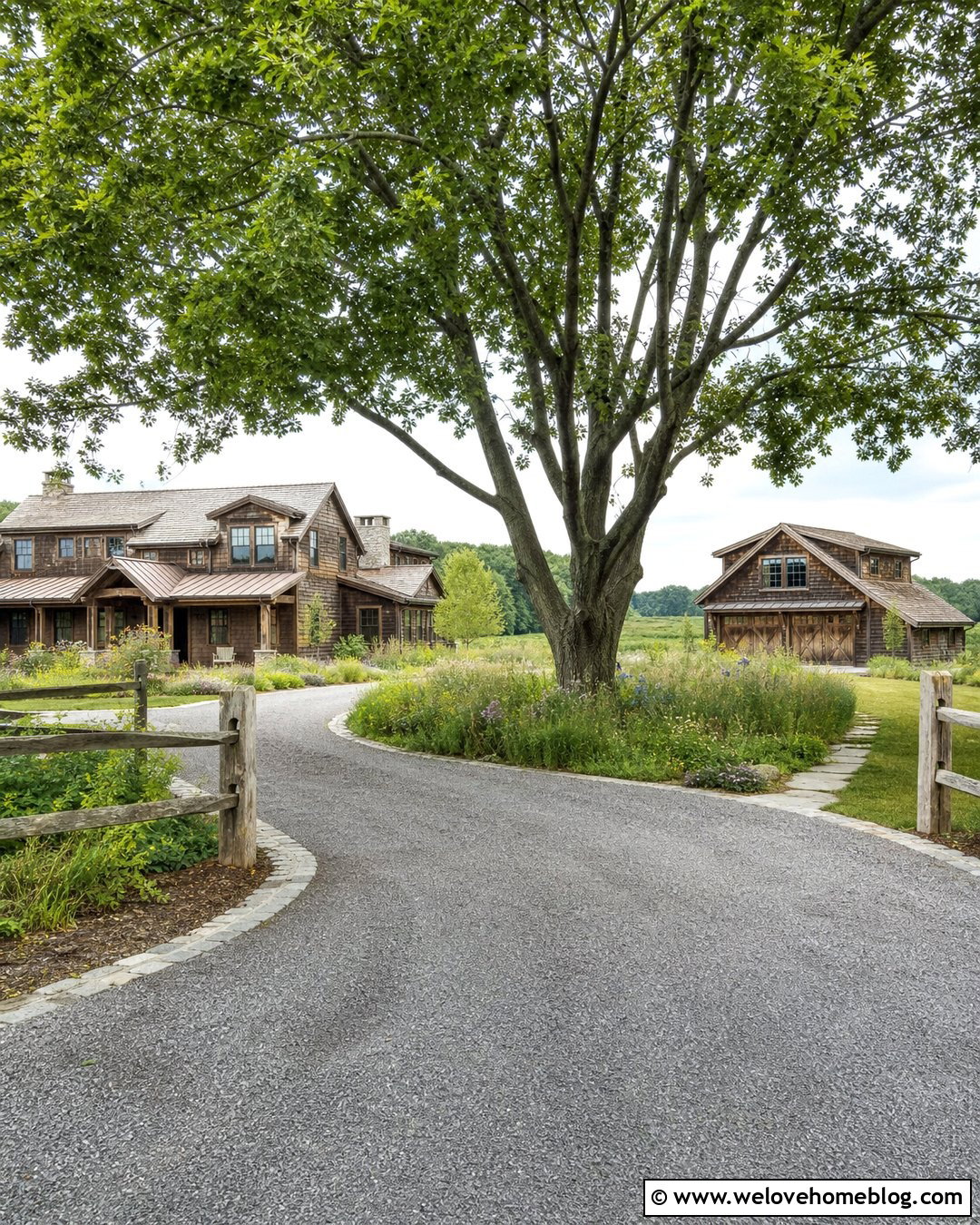
A chip seal surface combines the look of loose stone with the visual consistency of a paved circular driveway. Choose warm brown or medium gray aggregate to complement a country home, barn-style garage, or rustic craftsman exterior. Border the drive with flush natural stone or simple steel edging that maintains its relaxed appearance. The center island can feature a large shade tree, meadow grass, and an informal sweep of flowering perennials. Near the road, split-rail fencing and matching plant clusters can mark both entrances without making the property feel formal. A flagstone walkway through the island reinforces the natural material palette. The result is an understated driveway that fits a spacious rural yard while still providing a clearly defined and thoughtfully landscaped route to the house.
19. Crushed Shell Circular Driveway With Coastal Landscaping
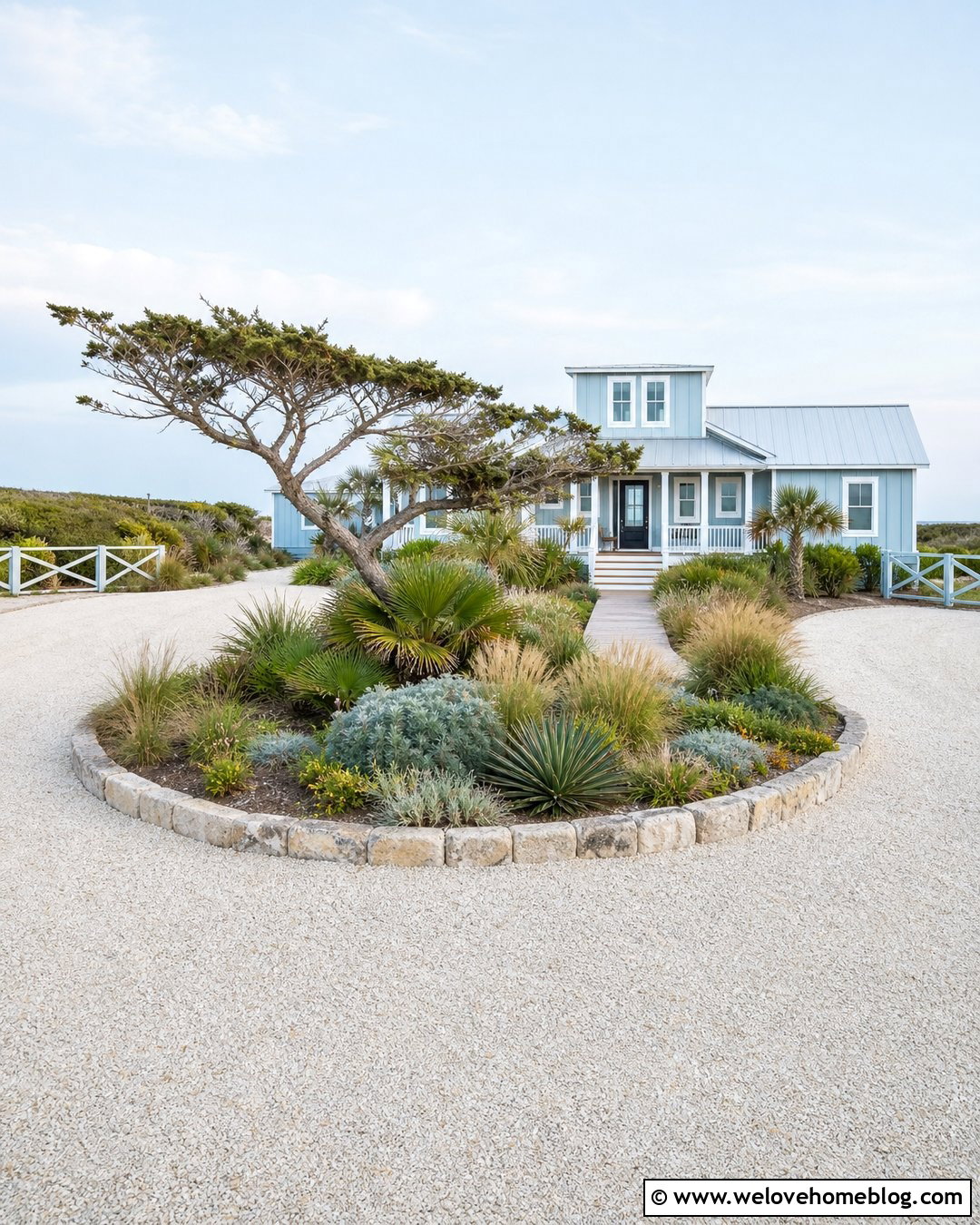
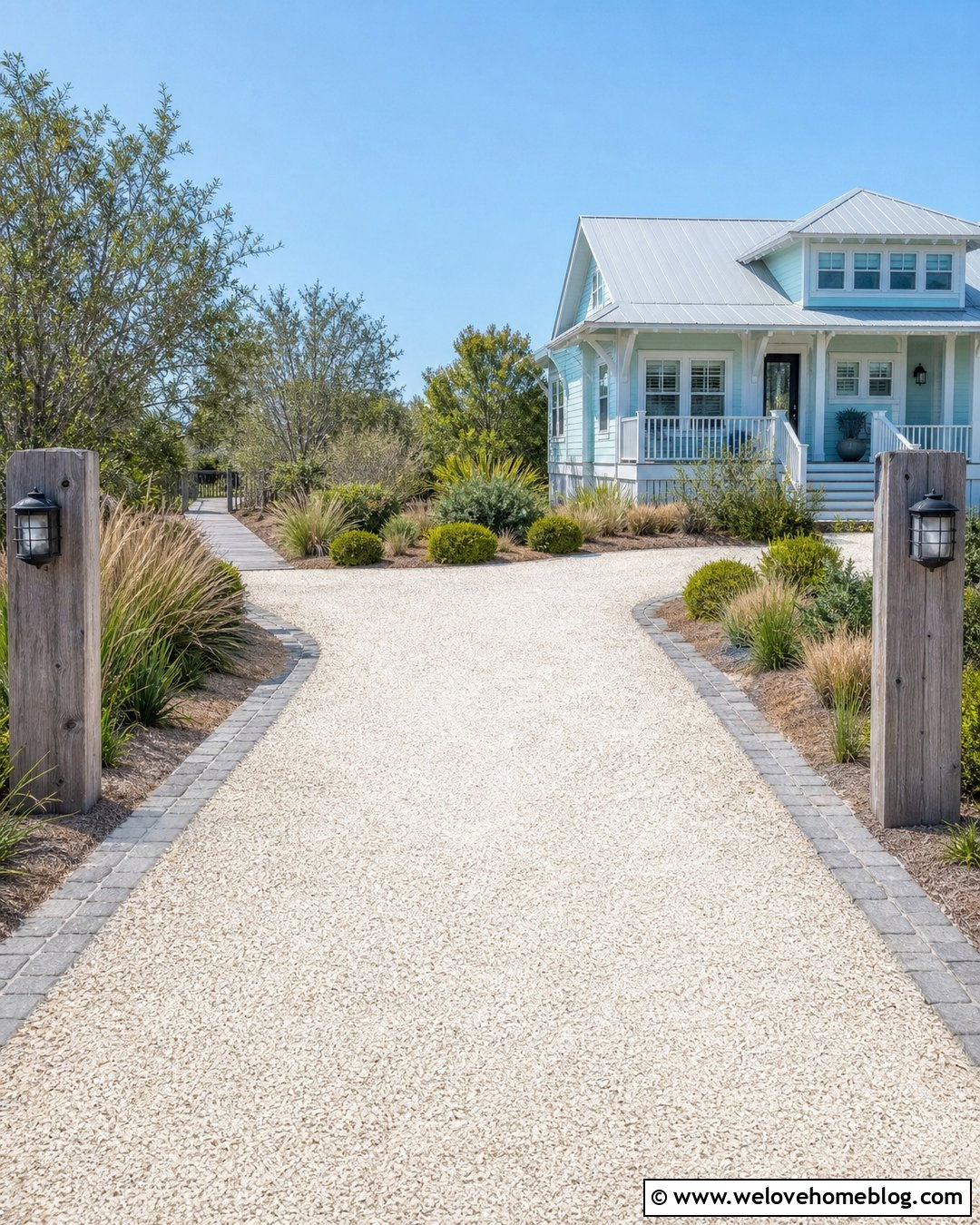
A pale crushed shell driveway creates a breezy circular approach for coastal cottages and beach-inspired homes. Use cream-colored shell material across the driving lane and contain it with low concrete or light stone borders. Plant the center island with a wind-shaped ornamental tree, native grasses, compact palms, and salt-tolerant flowering shrubs suited to the local setting. A boardwalk-style or large-paver walkway can cross the island and lead to the porch. Repeat blue-green foliage near both driveway openings to create a consistent arrival sequence. White fencing and a light exterior help maintain the coastal palette. Keep the landscape loose but uncluttered so the driveway remains easy to navigate. The complete look should feel bright, casual, and closely connected to the surrounding environment.
20. Basalt Gravel Circular Driveway With Contemporary Planting
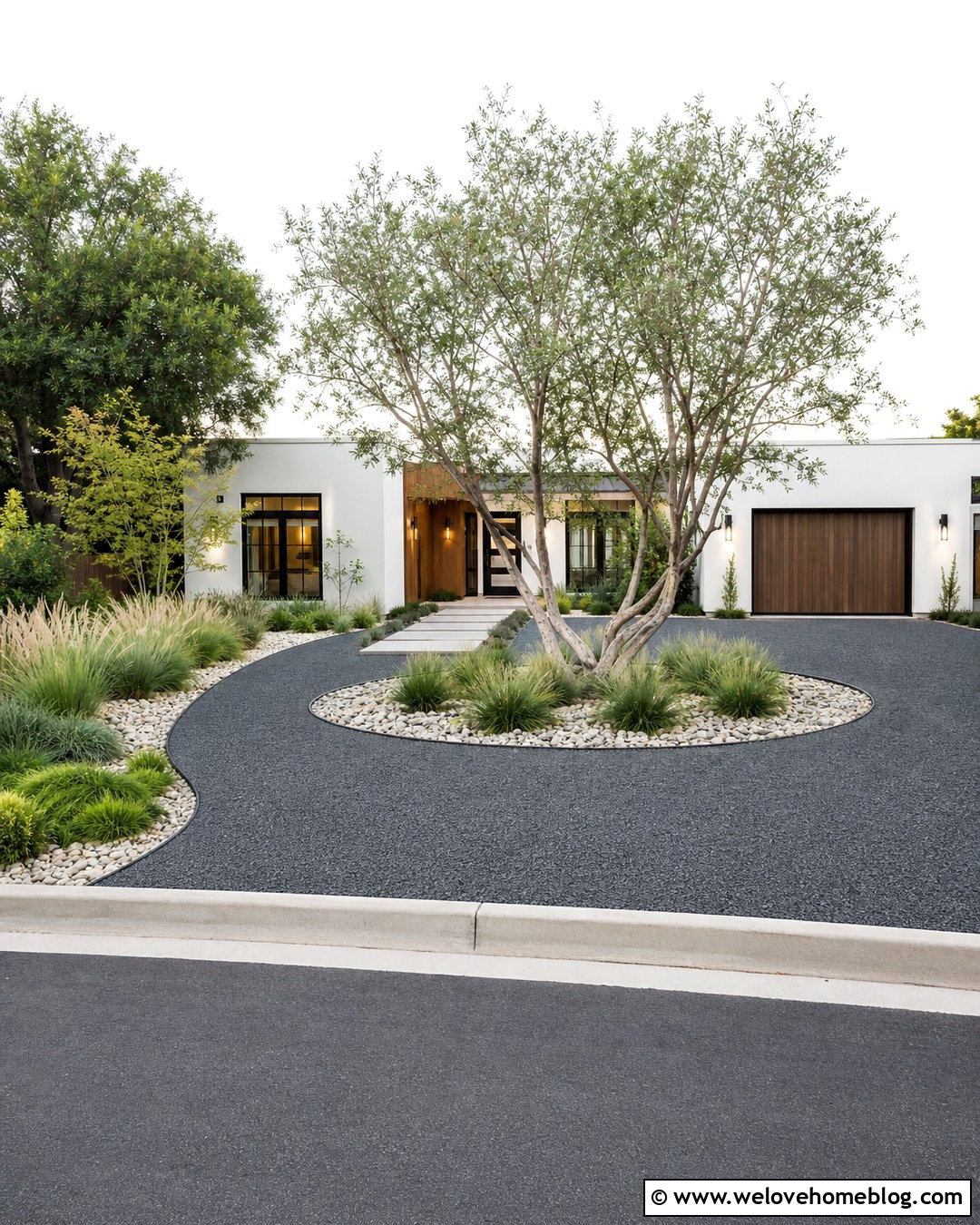
Dark basalt gravel gives a circular driveway a dramatic modern finish without the uniform appearance of asphalt. Hold the charcoal stone in place with black steel edging or flush concrete curbs. In the central island, combine pale decorative rock, sculptural grasses, and a multi-trunk tree to create contrast against the dark driveway. Large rectangular concrete slabs can form the entrance walkway and repeat as small crossing points near guest parking. This look works especially well with modern homes featuring white stucco, natural wood, or black metal accents. Keep foundation planting low and arranged in broad groups rather than scattered individual plants. The coordinated dark gravel, light hardscape, architectural greenery, and streamlined facade produce a circular driveway that feels bold but still welcoming.
21. Circular Driveway With Large Center Tree
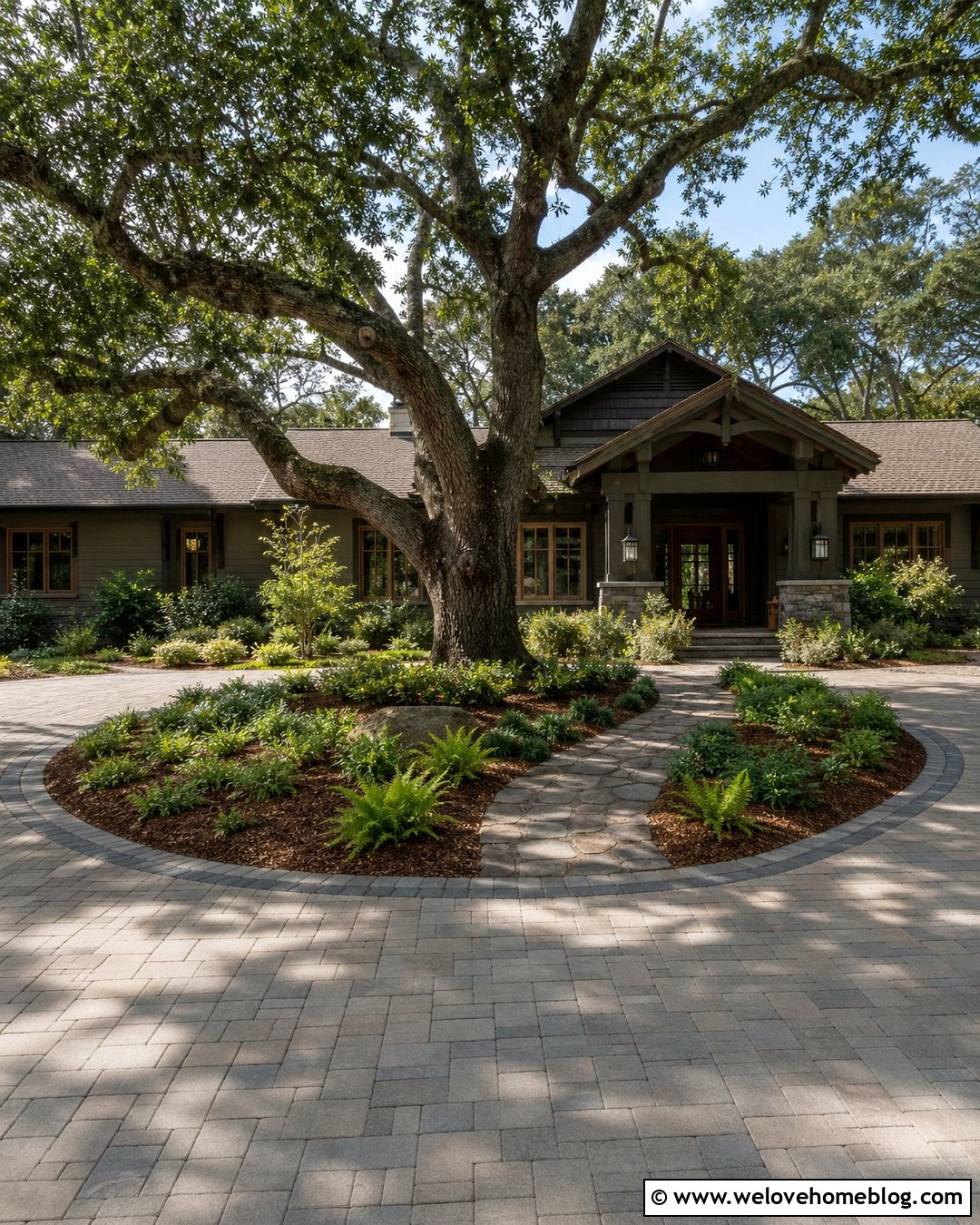
A mature tree can become the defining feature of a circular driveway when the surrounding design gives it enough breathing room. Use warm gray concrete pavers for the driving lane, edged with a darker paver border that neatly outlines the central island. Around the tree, create a wide mulched bed with shade-tolerant ground cover, ferns, and low shrubs rather than building up soil against the trunk. A gently curved walkway can pass through the island without cutting too close to major roots. Repeat the island’s plants near the house to connect the landscape visually. This layout suits traditional, craftsman, and woodland properties. The large canopy softens the paving, frames the facade, and makes the circular route feel like a natural part of an established yard.
22. Circular Driveway With Fountain Island
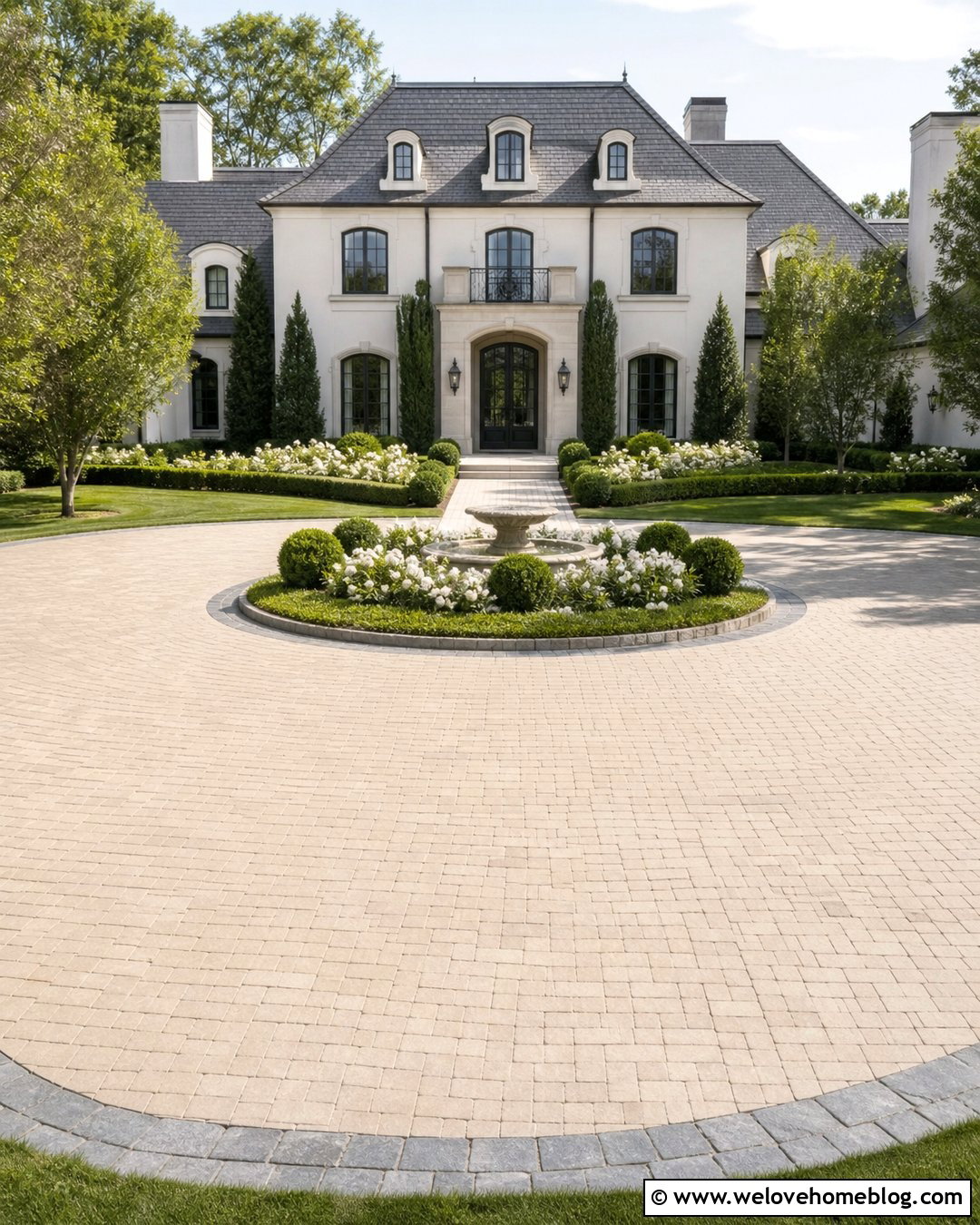
A fountain can create a memorable focal point when it is proportioned appropriately for the circular driveway and house. Use beige concrete pavers in a running bond pattern, bordered with warm gray stone around the full route. Position a low stone fountain in the center island, leaving generous planting space around it. Clipped evergreen shrubs, white flowers, and low ground cover can frame the feature without hiding it. A straight walkway should connect the guest drop-off area to the front entrance without forcing visitors to walk around the fountain. This formal arrangement works well with Mediterranean, French country, Georgian, and estate-style homes. Keeping the fountain relatively low preserves views of the facade while adding movement, symmetry, and a clear sense of arrival.
23. Circular Driveway With Native Meadow Island
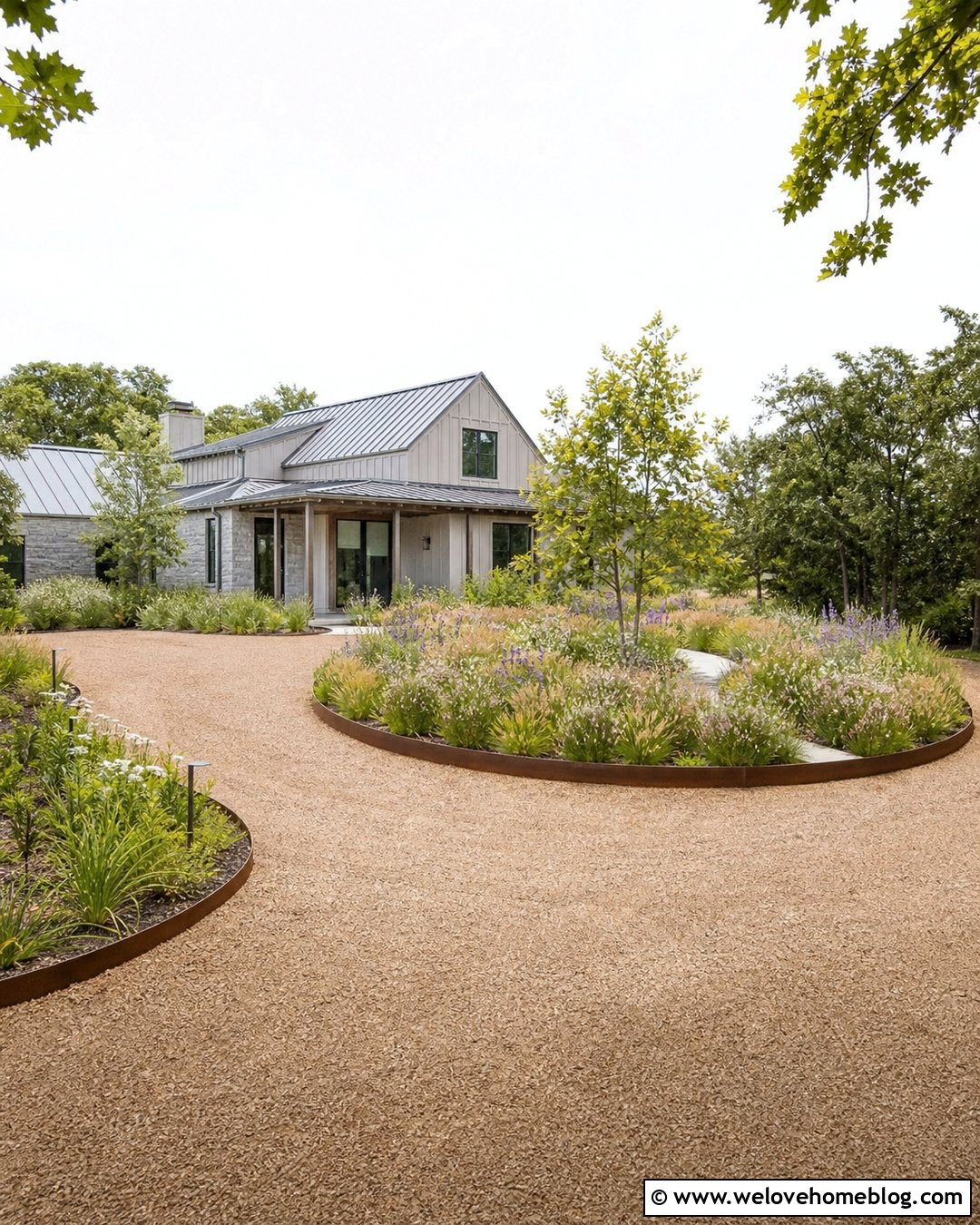
A native meadow island can soften a wide circular driveway and help the entrance blend with a naturalistic yard. Choose light brown gravel or permeable stone pavers for the surface, then use weathered steel edging to define the flowing curves. Fill the center with regionally suitable grasses, flowering perennials, and a small native tree. Arrange the plants in broad drifts rather than individual rows so the island feels intentional but relaxed. Maintain a lower planting zone beside the driveway to protect visibility around the curve. A simple stone walkway can pass through one side of the meadow and continue toward the porch. This design complements contemporary cottages, ranch homes, and woodland houses while introducing texture, seasonal color, and a more landscape-focused approach.
24. Circular Driveway With Boxwood Island
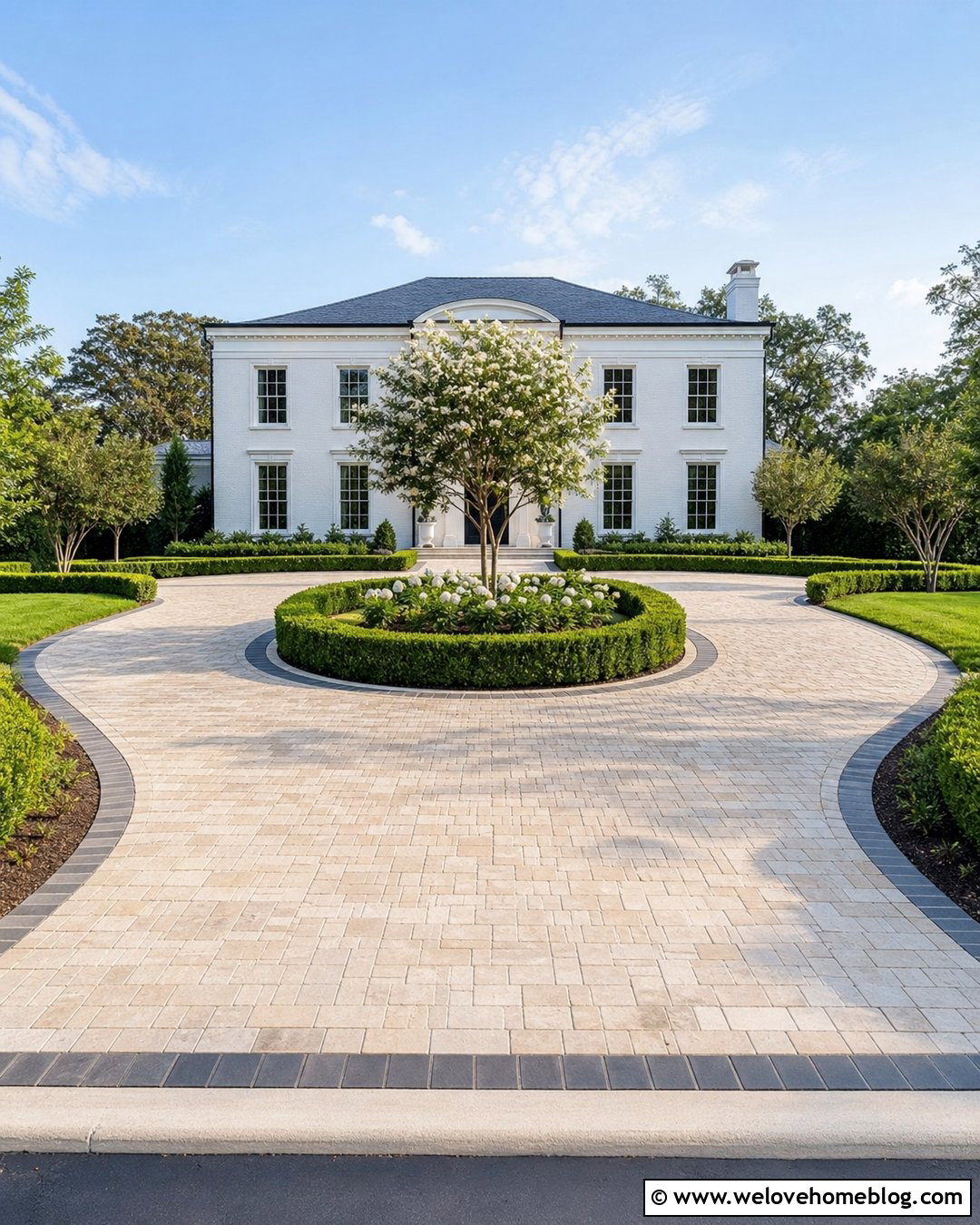
Crisp boxwood hedges can turn a simple circular driveway into a structured formal entrance. Use traditional red-brown brick pavers or warm beige concrete pavers for the driving surface, with a dark soldier-course border emphasizing the curve. Shape the center island into a clean oval and surround it with a low clipped boxwood hedge. Inside the hedge, plant a flowering tree, white roses, or an open lawn panel depending on the scale of the property. Continue the boxwood along the front walkway and near the house to tie the entire landscape together. This balanced design suits colonial, Georgian, and symmetrical traditional homes. The low hedge keeps sightlines open while giving the central island a finished shape that remains attractive throughout the year.
25. Circular Driveway With Xeriscape Island
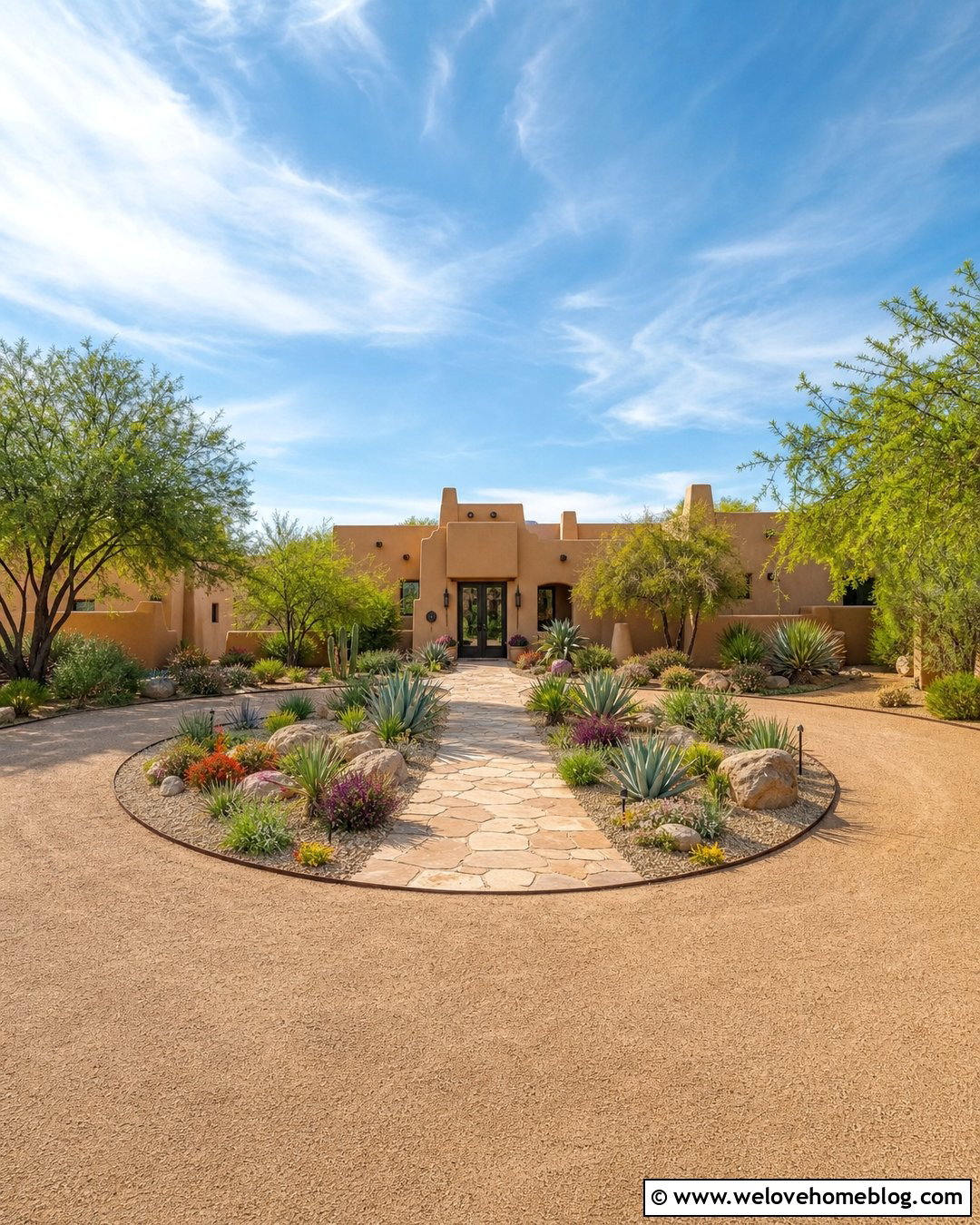
A xeriscape island gives a circular driveway strong color and texture without relying on a traditional lawn. Use stabilized decomposed granite or warm exposed aggregate concrete for the driving lane. Edge the center with rust-colored steel or low stacked stone, then arrange desert-adapted plants among tan gravel and several carefully placed boulders. Agave, yucca, flowering perennials, and airy grasses can create height without forming a solid visual barrier. A flagstone path through the island should match the home’s walkway and exterior stone. Repeat selected boulders and plants at both driveway entrances to frame the property. This complete design works particularly well with adobe, Southwestern, desert modern, and low-slung ranch homes, creating an entrance that feels appropriate to a sunny, dry landscape.
26. Sloped Circular Driveway With Retaining Walls
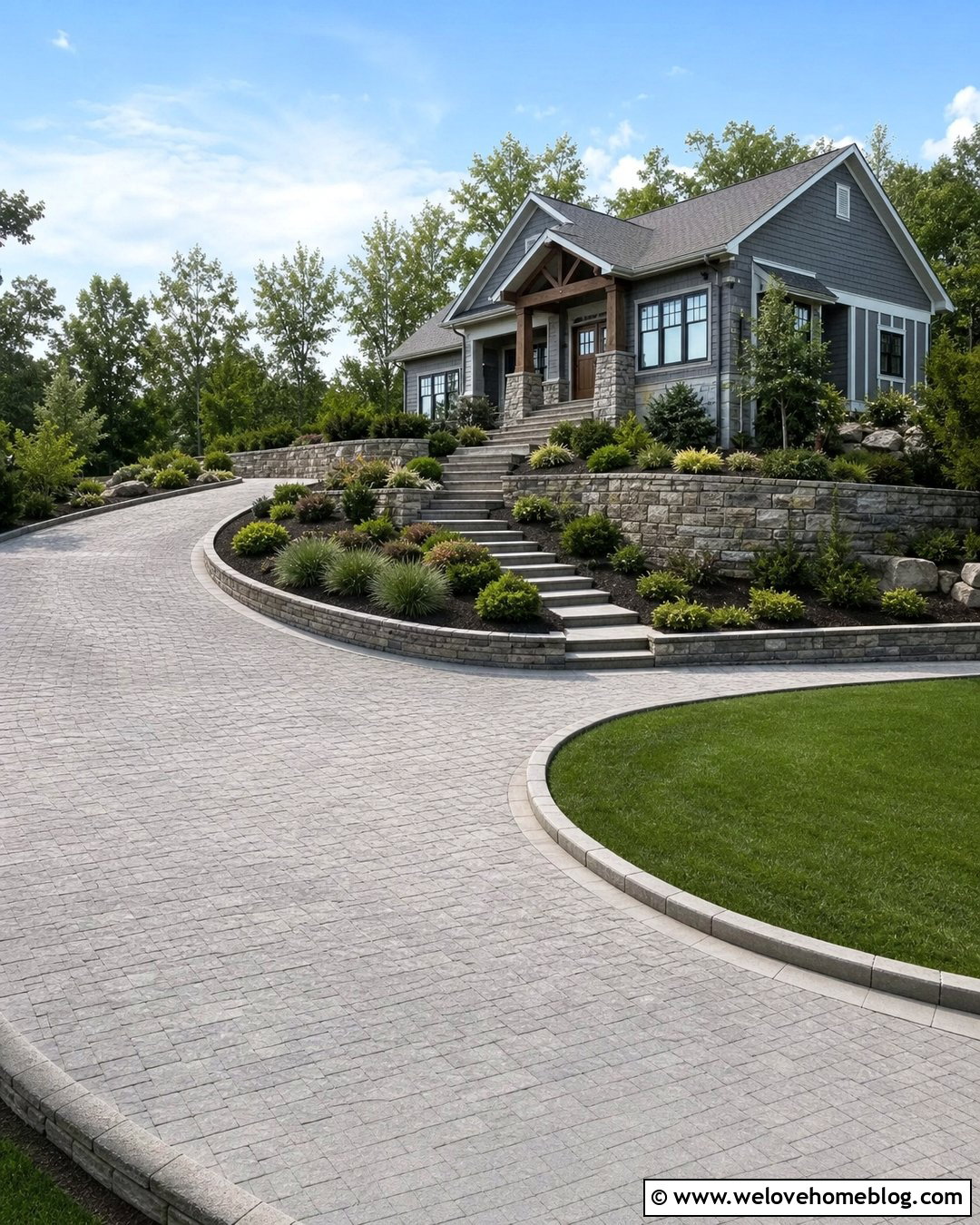
A sloped front yard can support a circular driveway when the elevation changes are treated as part of the design. Use textured gray concrete pavers for traction and create broad, gradual curves rather than tight turns. Low segmental stone retaining walls can follow the uphill side, holding terraced planting beds filled with compact shrubs and ornamental grasses. Along the lower edge, install a defined curb and open lawn that preserves visibility toward the street. Integrate wide stone steps into the center island to provide a direct pedestrian route to the front door. Match the retaining-wall color to the house foundation or exterior masonry. The coordinated paving, walls, grading, steps, and planting transform a challenging slope into an organized and attractive residential approach.
27. Small Semicircular Driveway With Simple Landscaping
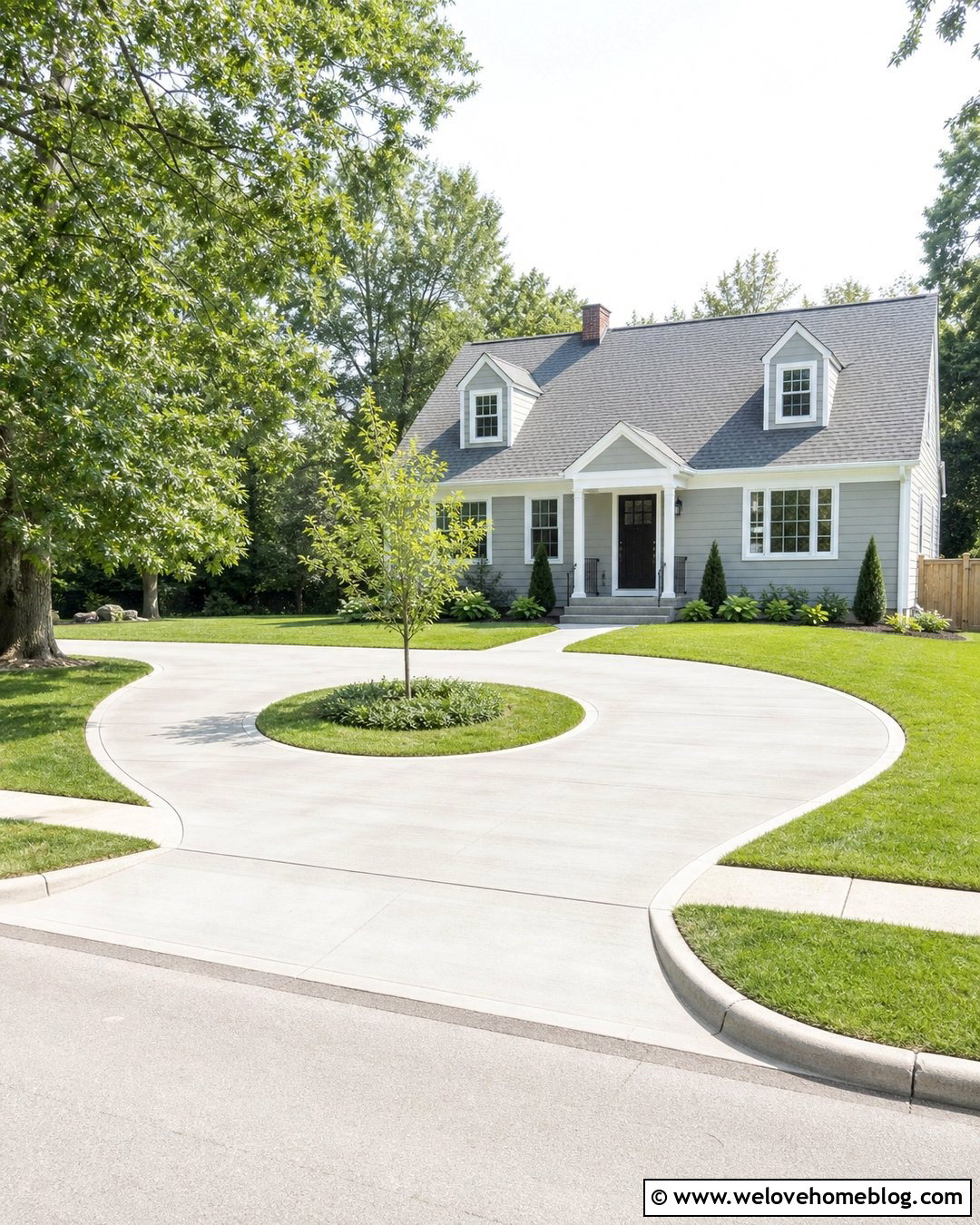
A compact semicircular driveway can create convenient circulation without consuming an entire small front yard. Use light gray poured concrete or small concrete pavers for the lane, keeping the curves broad enough to feel comfortable and visually balanced. A narrow center island with lawn, one compact ornamental tree, and low ground cover maintains greenery without crowding the driveway. Connect the nearest side of the loop to the garage, while the opposite side serves as the exit. A short walkway can branch directly from the driveway to the porch. Keep borders flush and planting heights low to make the yard appear more open. This efficient layout works well for cottages, bungalows, ranch homes, and suburban lots with enough street frontage for two carefully positioned entrances.
28. Gated Circular Driveway With Stone Pillars
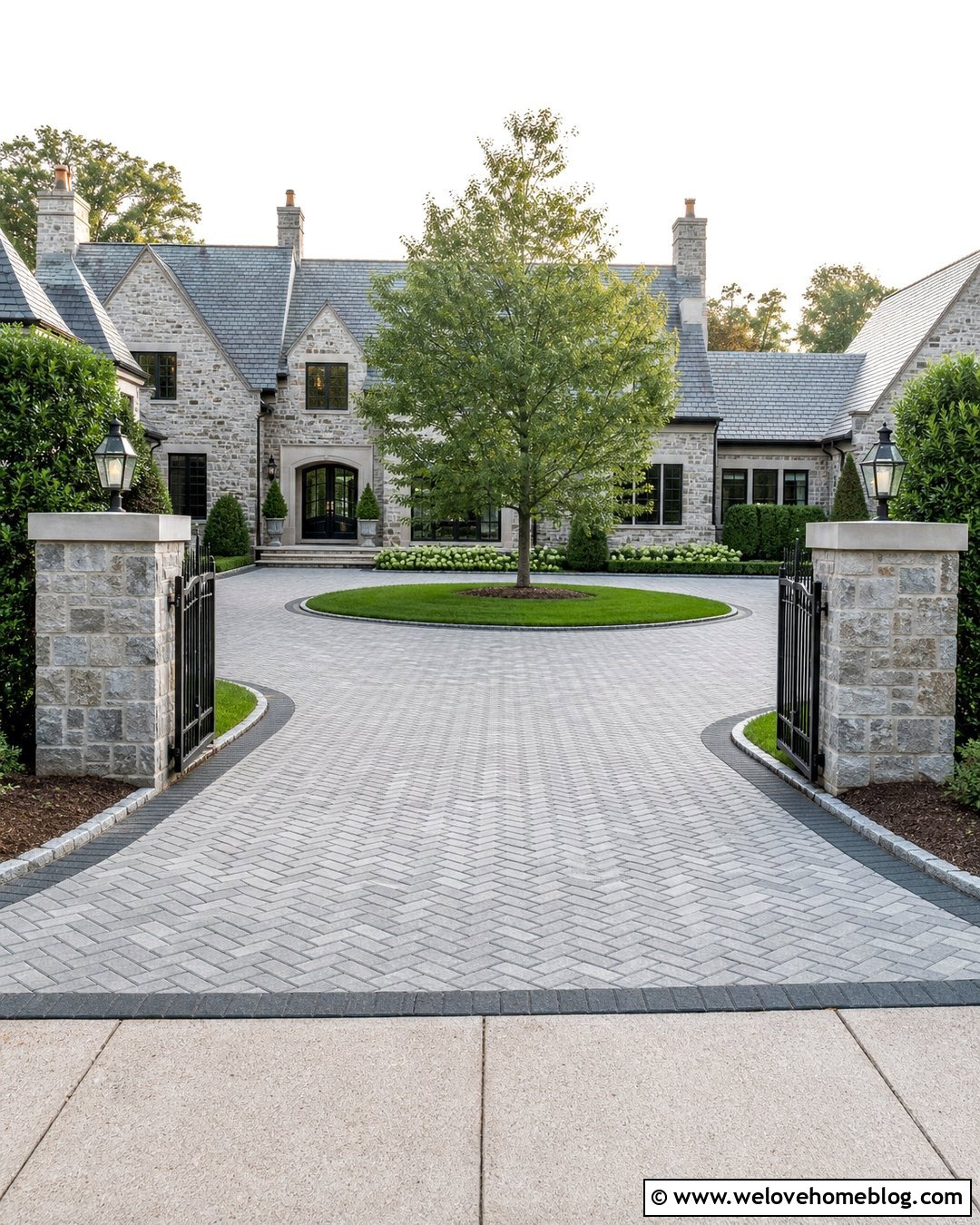
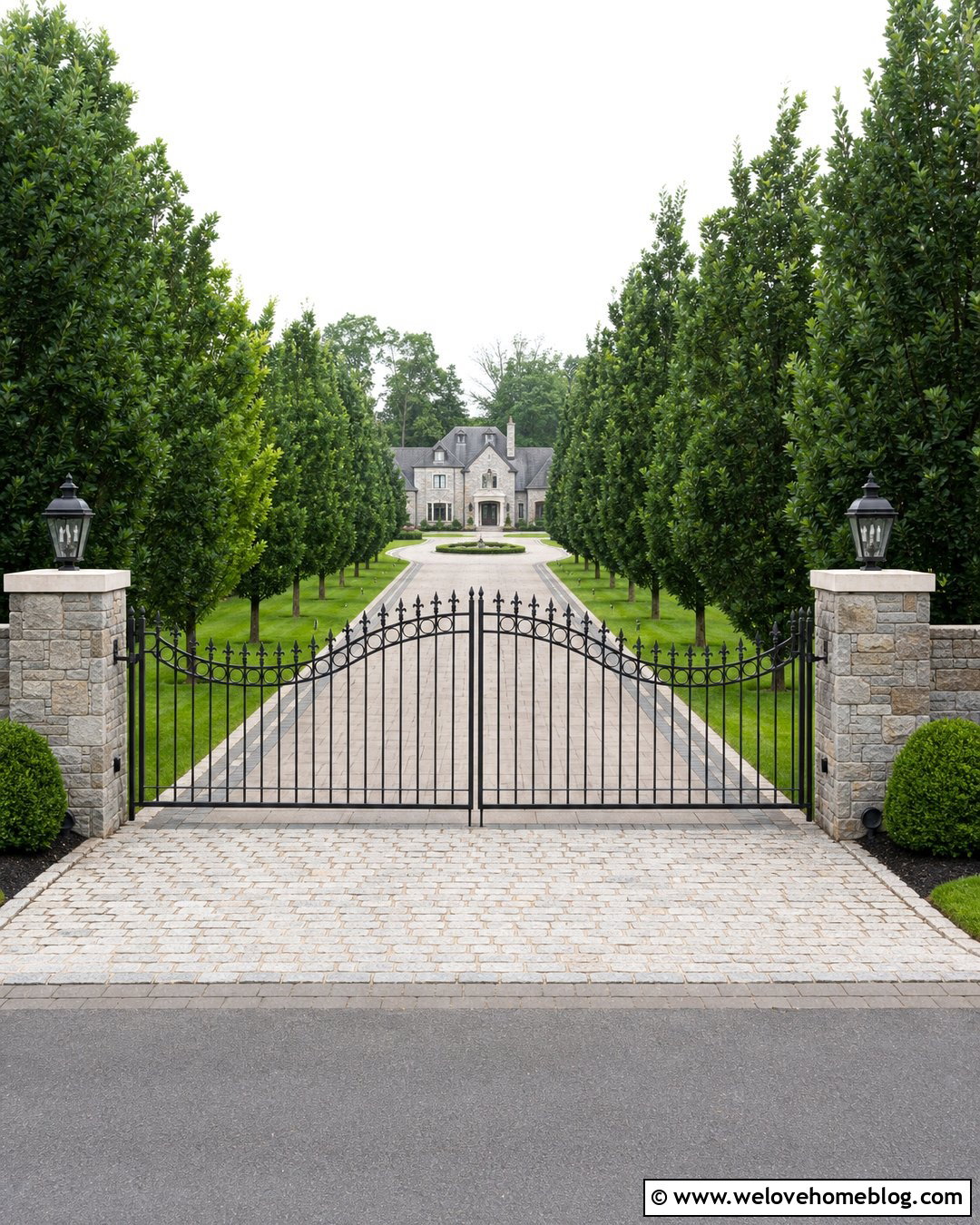
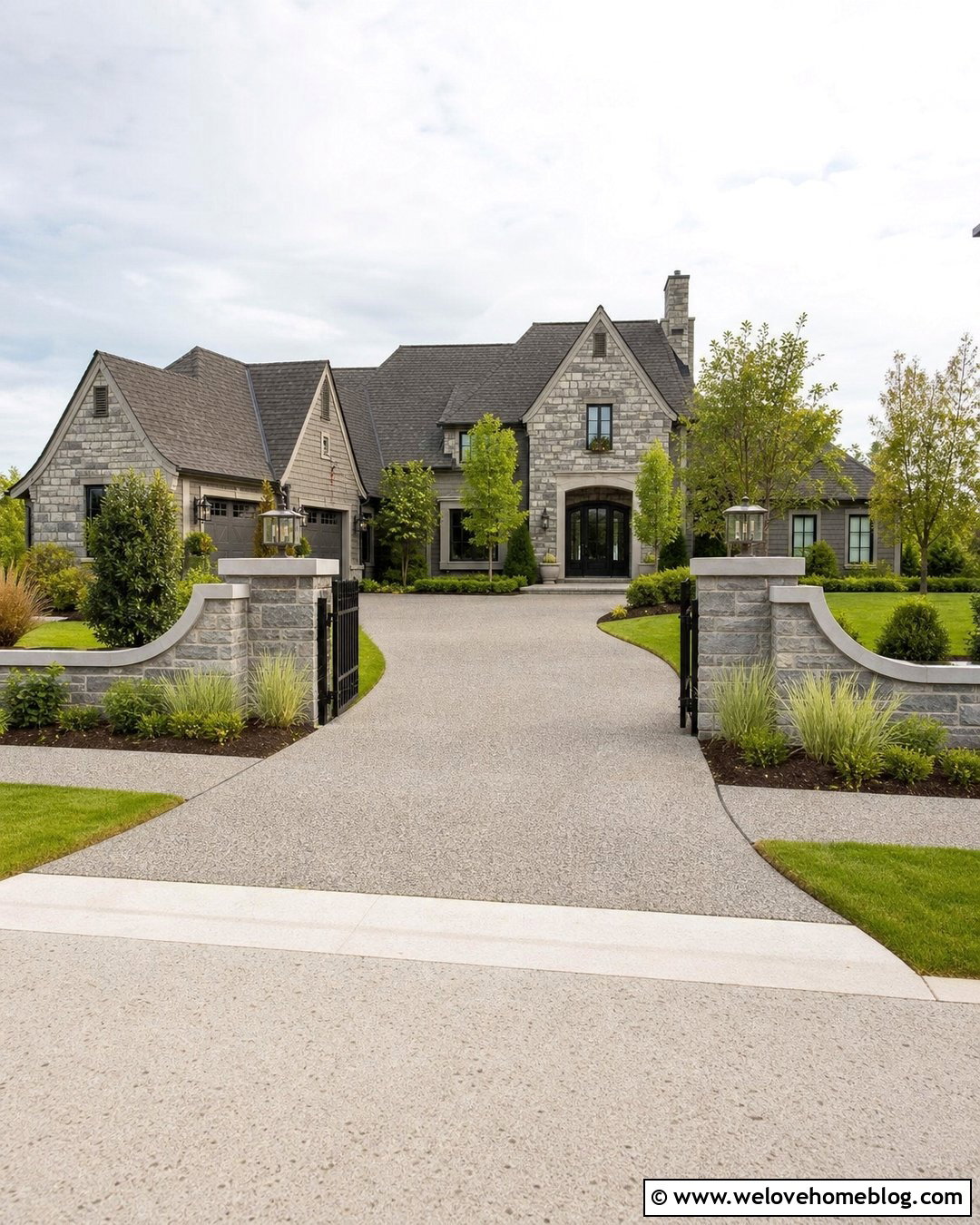
Matching gates and stone pillars can give a circular driveway a defined entrance without hiding the house. Use gray interlocking concrete pavers in a subtle herringbone pattern, edged with darker granite setts. Place stone pillars at both street connections so the entry and exit feel balanced. Simple black metal gates should follow the same design, while low masonry walls can transition into hedges or open fencing. In the center island, use a manicured lawn and one specimen tree to prevent the overall setting from becoming too busy. Add a broad paver apron inside each gate to emphasize the arrival point. This complete design fits traditional, craftsman, and estate homes, especially when the pillar stone repeats material already used on the facade or landscape walls.
29. Circular Driveway With Bollard Lighting
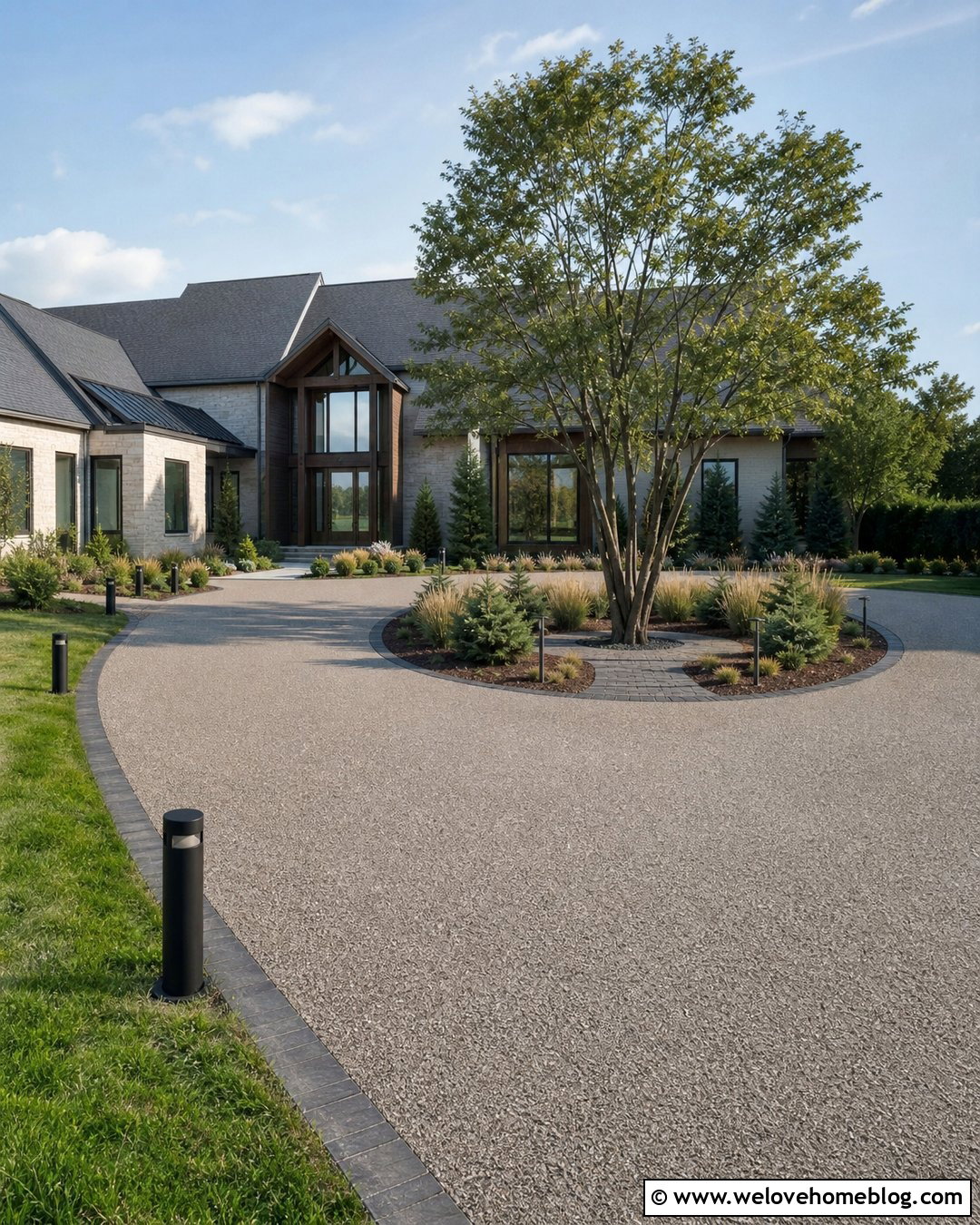
Well-positioned lighting can make a circular driveway easier to understand while adding a polished architectural rhythm. Use warm gray resin-bound gravel or concrete pavers for the surface, framed by dark stone edging. Install low, shielded bollard lights at regular intervals along the outer curve, keeping fixtures safely behind the border. Smaller path lights can lead through the center island toward the front entrance. Plant the island with a multi-stem tree, low evergreen shrubs, and ornamental grasses that remain below the light beams. Choose matte black or bronze fixtures that coordinate with exterior hardware. During the day, the repeated lights strengthen the driveway’s circular shape. The paving, borders, restrained landscaping, and matching fixtures create a complete entrance without relying on oversized decorative features.
30. Mixed Material Circular Driveway With Decorative Aprons
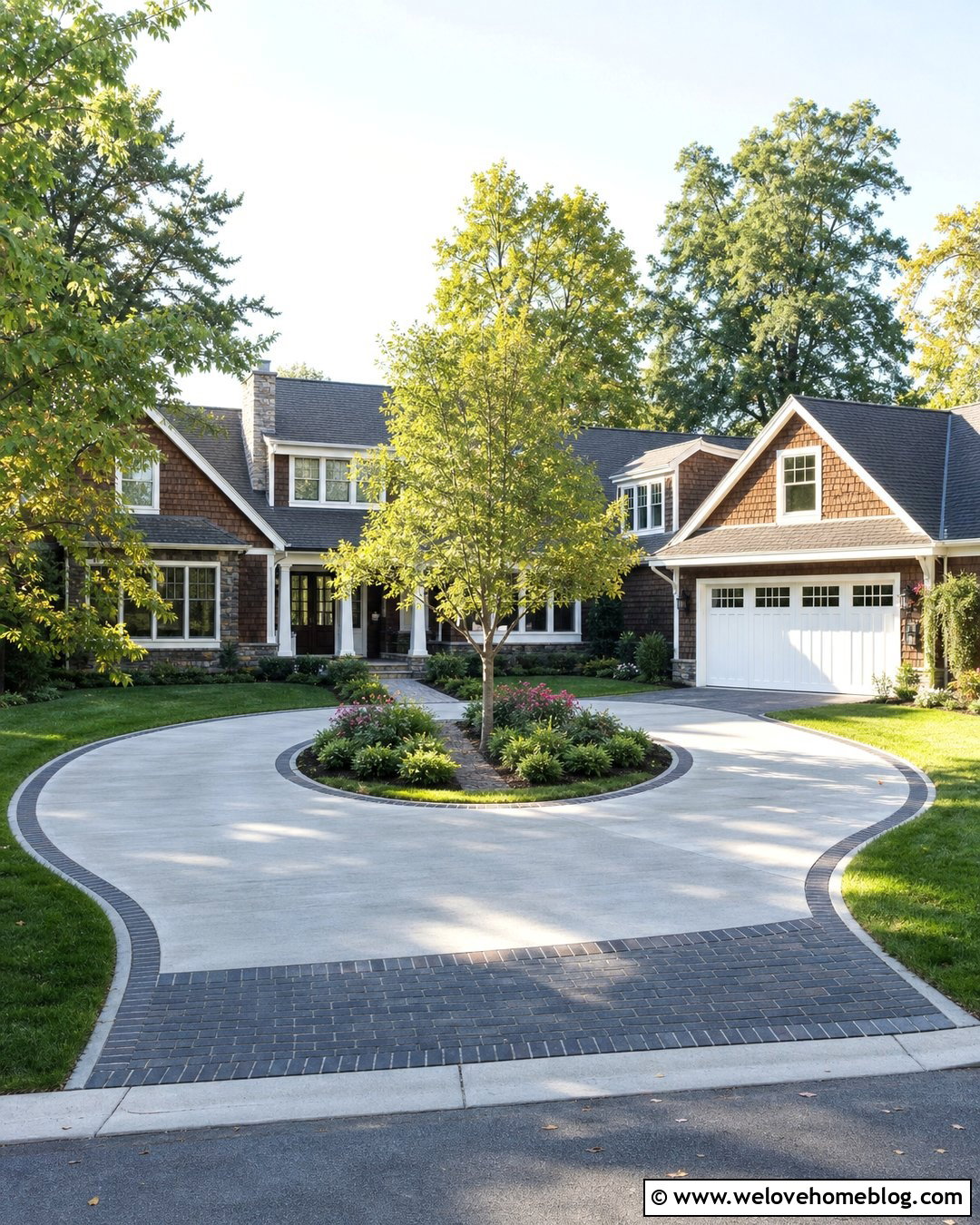
Combining materials can break up the scale of a large circular driveway and highlight important transition points. Use light gray broom-finished concrete for the main lane, then install charcoal brick paver aprons at both street entrances and near the garage. Continue narrow brick bands around the inner and outer curves so the contrasting sections feel connected. A landscaped center island with lawn, flowering shrubs, and one medium-size tree softens the wide paved area. Repeat the brick in the front walkway and porch border to tie the design to the house. This approach complements transitional, ranch, craftsman, and contemporary homes. Limiting the palette to two hardscape materials prevents visual clutter while giving the driveway greater detail, structure, and curb presence.
Conclusion:
The most successful circular driveway combines comfortable circulation with materials and landscaping that belong naturally beside the house. Gravel can create a relaxed country entrance, while brick, cobblestone, and stone pavers provide a more formal appearance. Concrete, asphalt, resin-bound gravel, and permeable pavers also offer plenty of room for customization through borders, aprons, planting, and lighting. Before selecting a layout, consider available frontage, turning space, drainage, pedestrian access, and local requirements. Then repeat colors or materials from the home to build a cohesive exterior. Whether you prefer a simple grass island or an elaborate gated entrance, these 30 Circular Driveway Design Ideas can help you create a practical and memorable approach.

Related posts:
Leave a Reply