
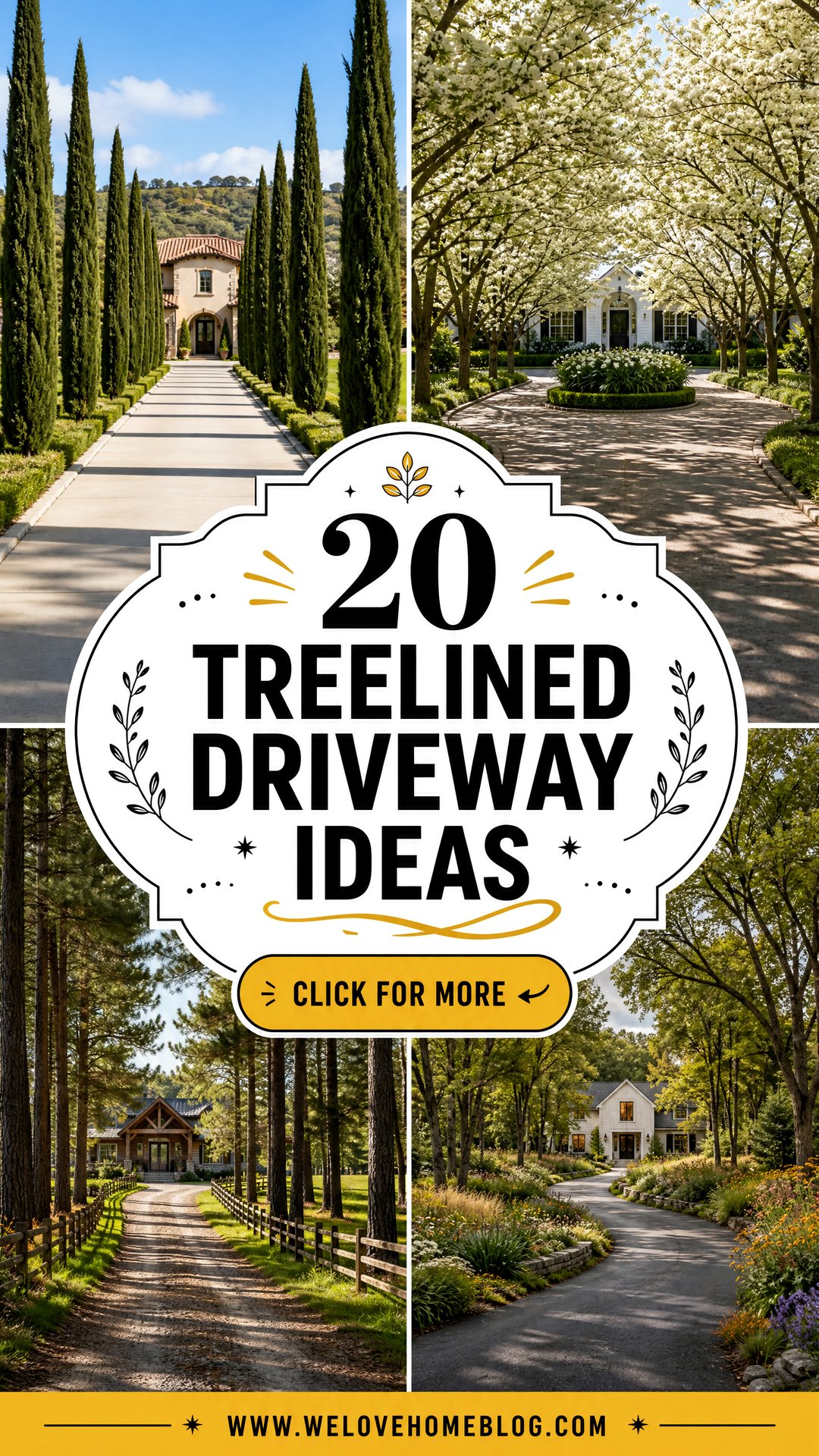
A tree-lined driveway turns a practical route into a welcoming landscape feature. The right combination of trees, surface materials, borders, and planting beds can frame your home while adding shade, privacy, seasonal color, and structure. These 20 Treelined Driveway Ideas cover formal entrances, relaxed country lanes, narrow suburban approaches, and drought-friendly designs. Before planting, consider the mature height and canopy width of each tree, along with root habits, overhead utilities, drainage, and driveway visibility. Select species suited to your USDA hardiness zone and available growing space. Thoughtful spacing may look open at first, but it prevents future crowding and pavement damage. Explore the complete driveway looks below to find practical inspiration from these 20 Treelined Driveway Ideas.
1. Oak Tree-Lined Gravel Driveway
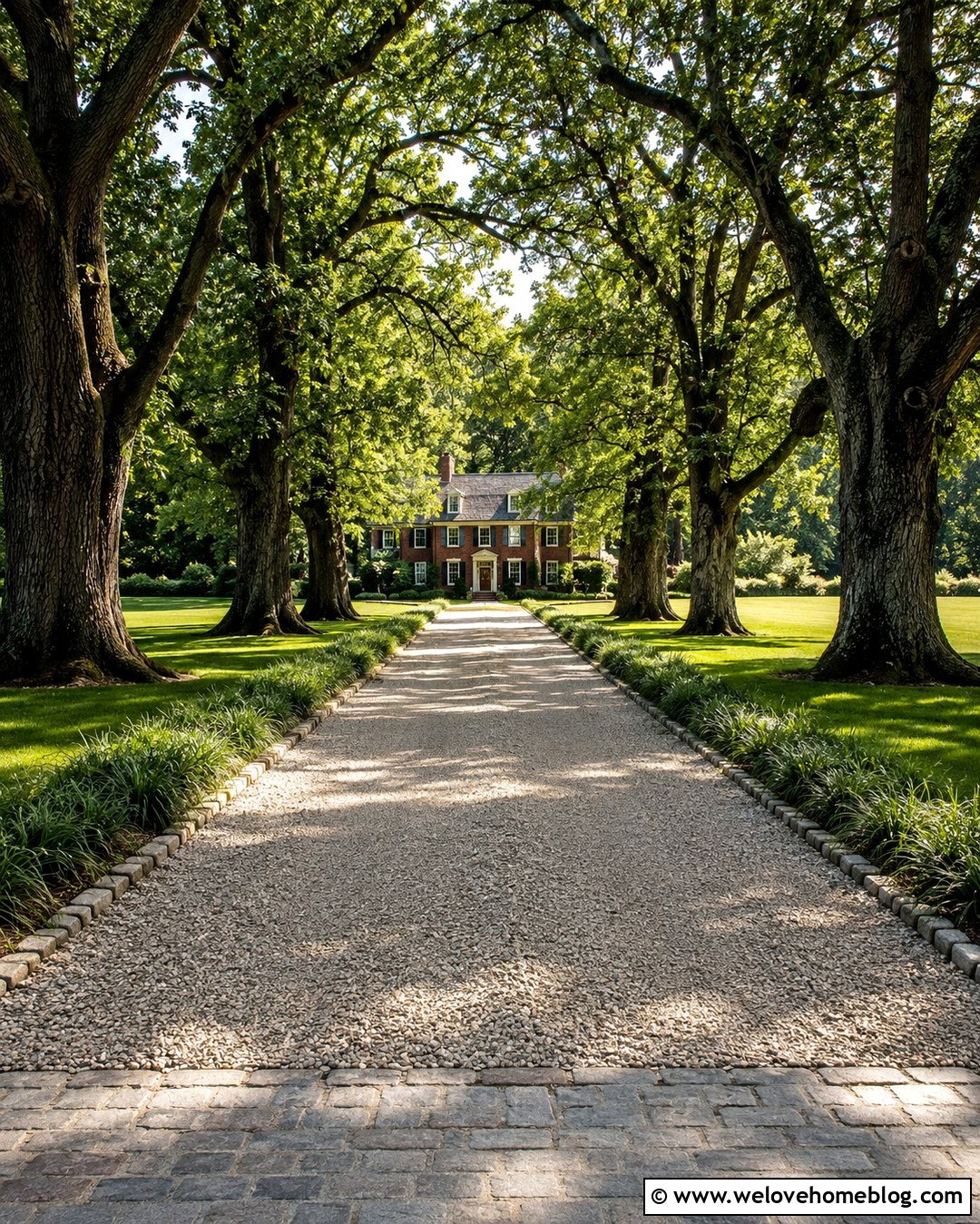
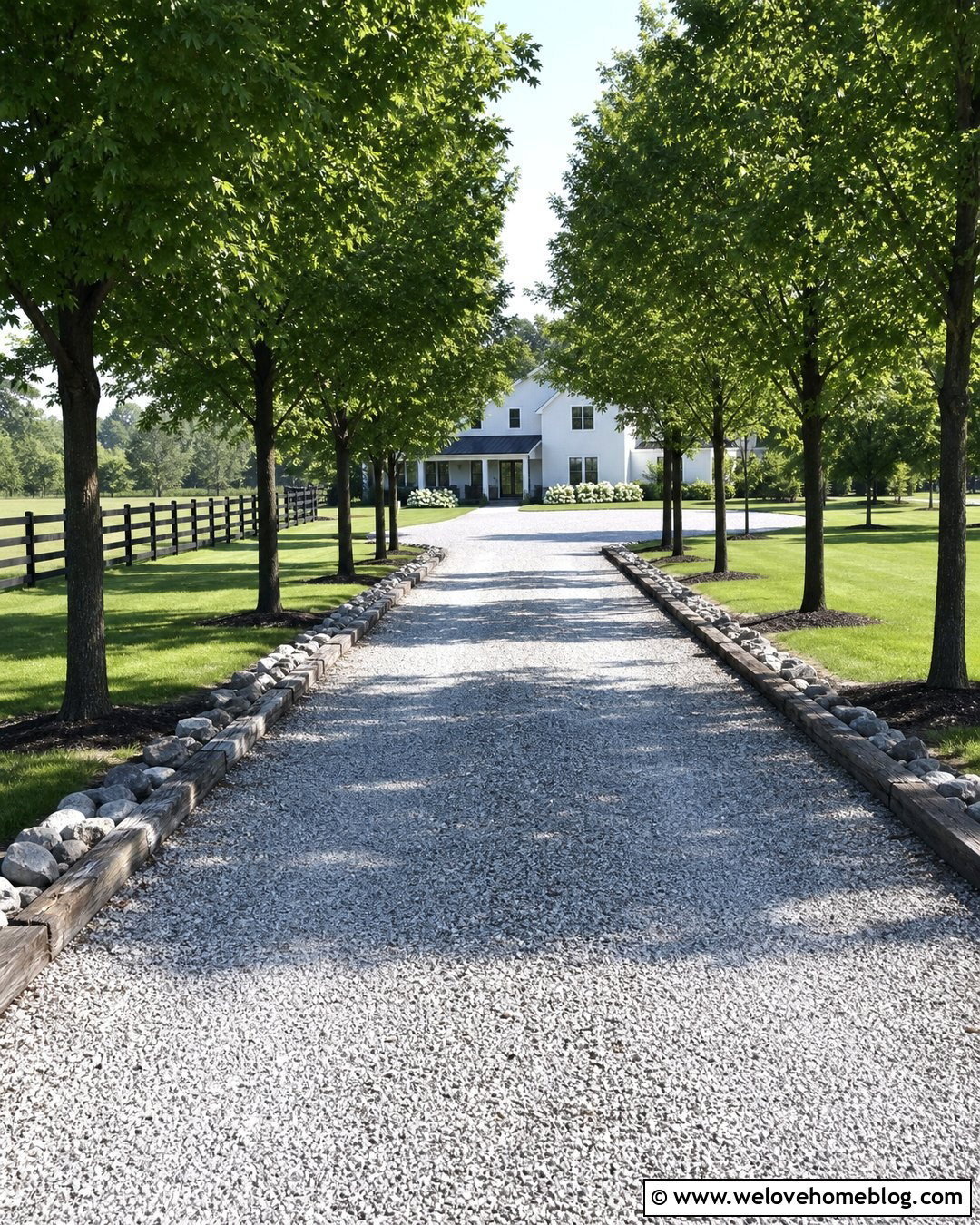
A long gravel driveway gains a strong sense of permanence when mature oak trees frame both sides. Use warm gray crushed gravel for a stable country surface, then contain it with weathered cobblestone edging. Wide grass strips between the driveway and trees protect trunks from vehicle traffic while giving spreading roots more room. Plant the oaks at consistent intervals to establish rhythm without forcing their future canopies into a tight corridor. Beneath them, use shade-tolerant native grasses or low ground covers rather than deep planting beds that could disturb roots. This complete look works beautifully with brick Colonials, country estates, and traditional farmhouses. Consult a local arborist about suitable oak varieties, mature dimensions, and safe planting distances before installation.
2. Maple Tree-Lined Asphalt Driveway
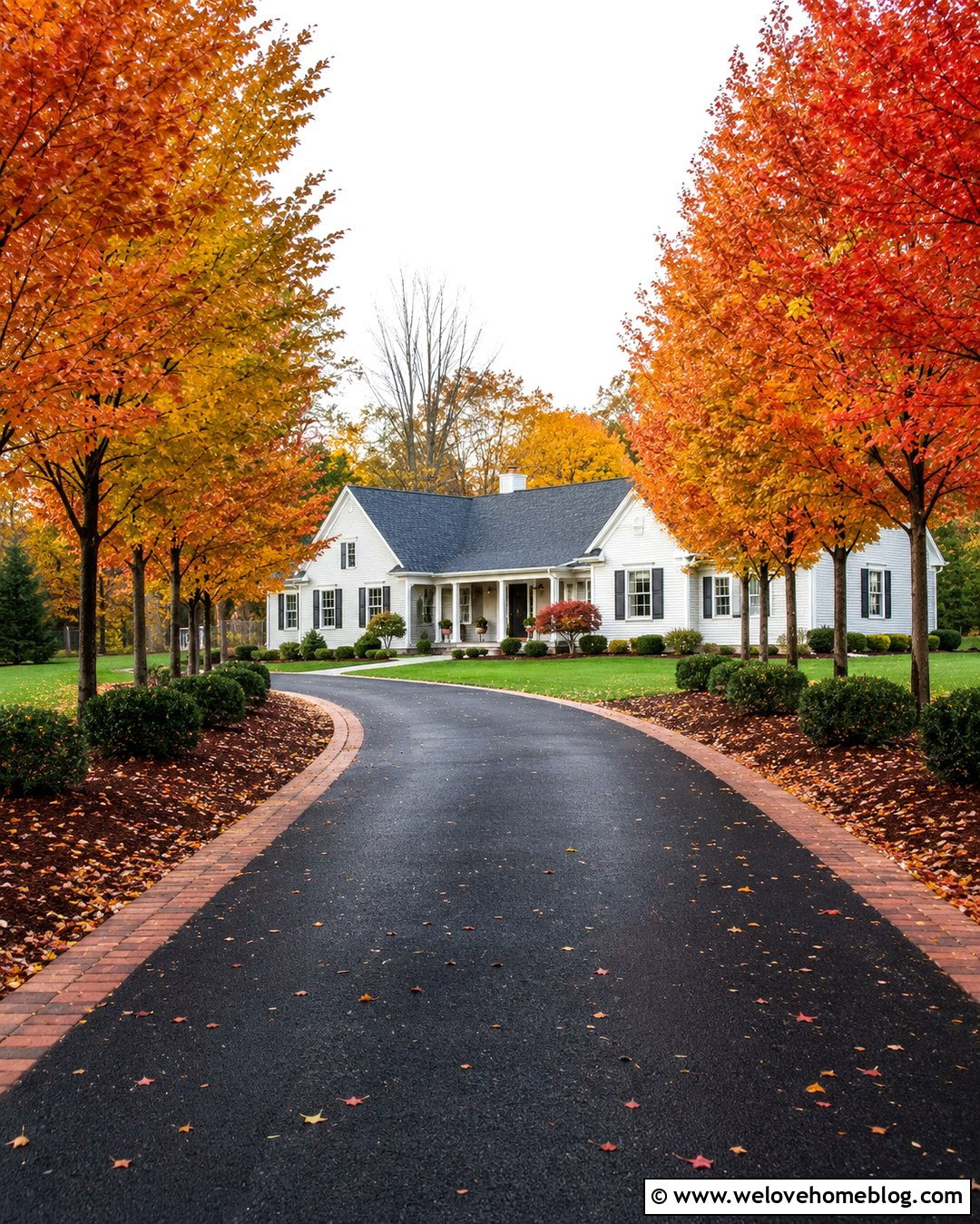
Imagine entering a home beneath rows of maple trees that shift from fresh spring green to brilliant fall color. A smooth black asphalt driveway provides a clean, practical base that makes the changing foliage stand out. Add a narrow red brick border to sharpen the edges and connect the drive visually to a brick or clapboard house. Keep mulched tree circles broad and shallow, leaving the trunk flare uncovered. Low evergreen shrubs near the house can maintain structure after the leaves drop. This design suits a straight or gently curving suburban driveway where seasonal interest is a priority. Choose maples recommended for your region, and avoid placing large-growing varieties too close to pavement, drainage pipes, utility lines, or the home’s foundation.
3. Birch Tree-Lined Curved Gravel Driveway
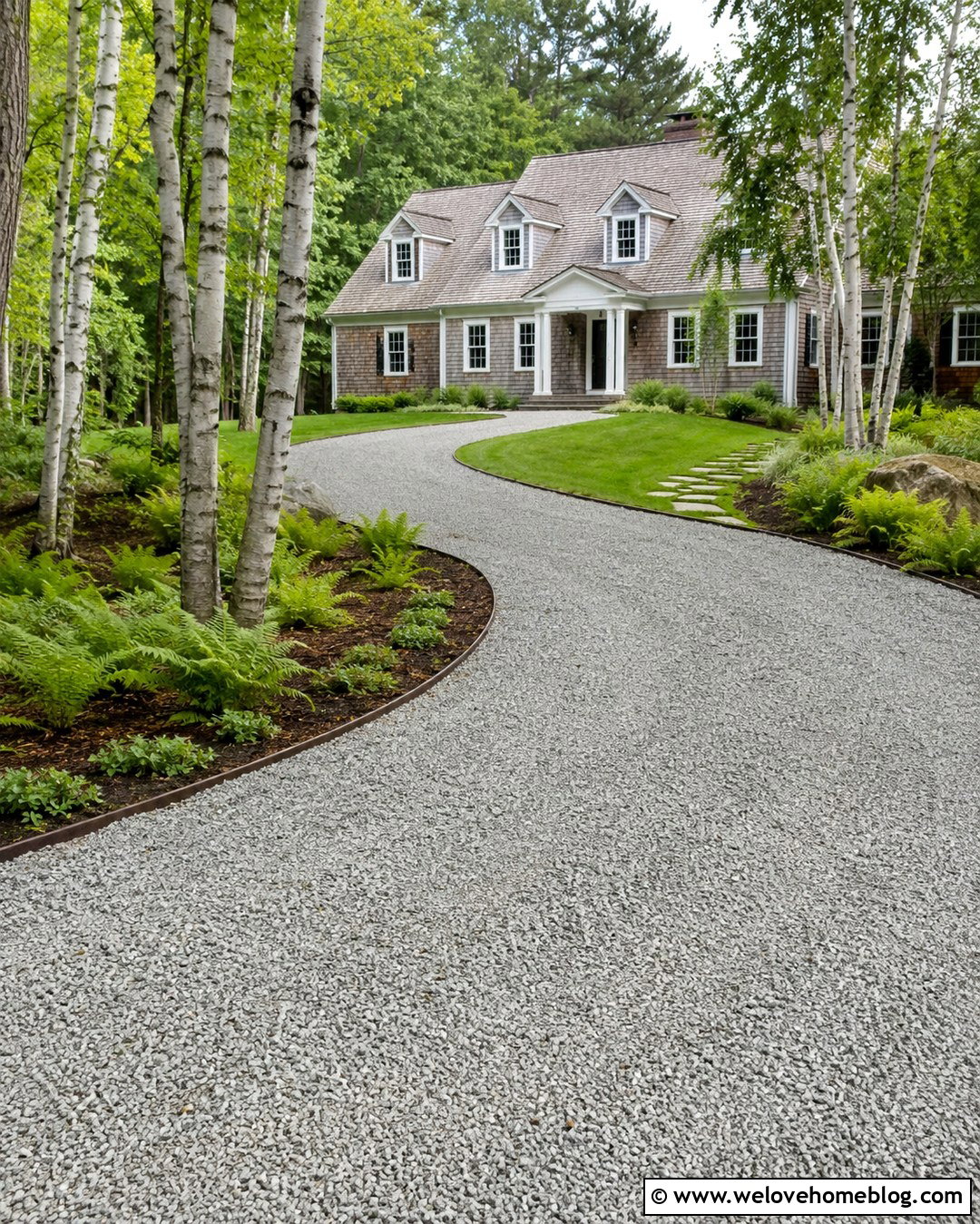
The pale trunks of birch trees can brighten a curved driveway and create a light woodland atmosphere. Pair them with fine gray gravel, a dark steel edge, and broad planting areas filled with ferns, sedges, and shade-tolerant ground covers. Instead of forcing the trees into perfectly rigid rows, arrange small groups along the outer curves while preserving clear views around each bend. This softer layout feels natural and works especially well beside a Cape Cod, cottage, or contemporary woodland home. Use a gravel stabilizing grid where extra surface support is needed. Birch health varies greatly by climate and species, so choose locally appropriate trees and provide suitable moisture. Ample setbacks also help keep branches, roots, and fallen leaves manageable.
4. Italian Cypress Tree-Lined Concrete Driveway
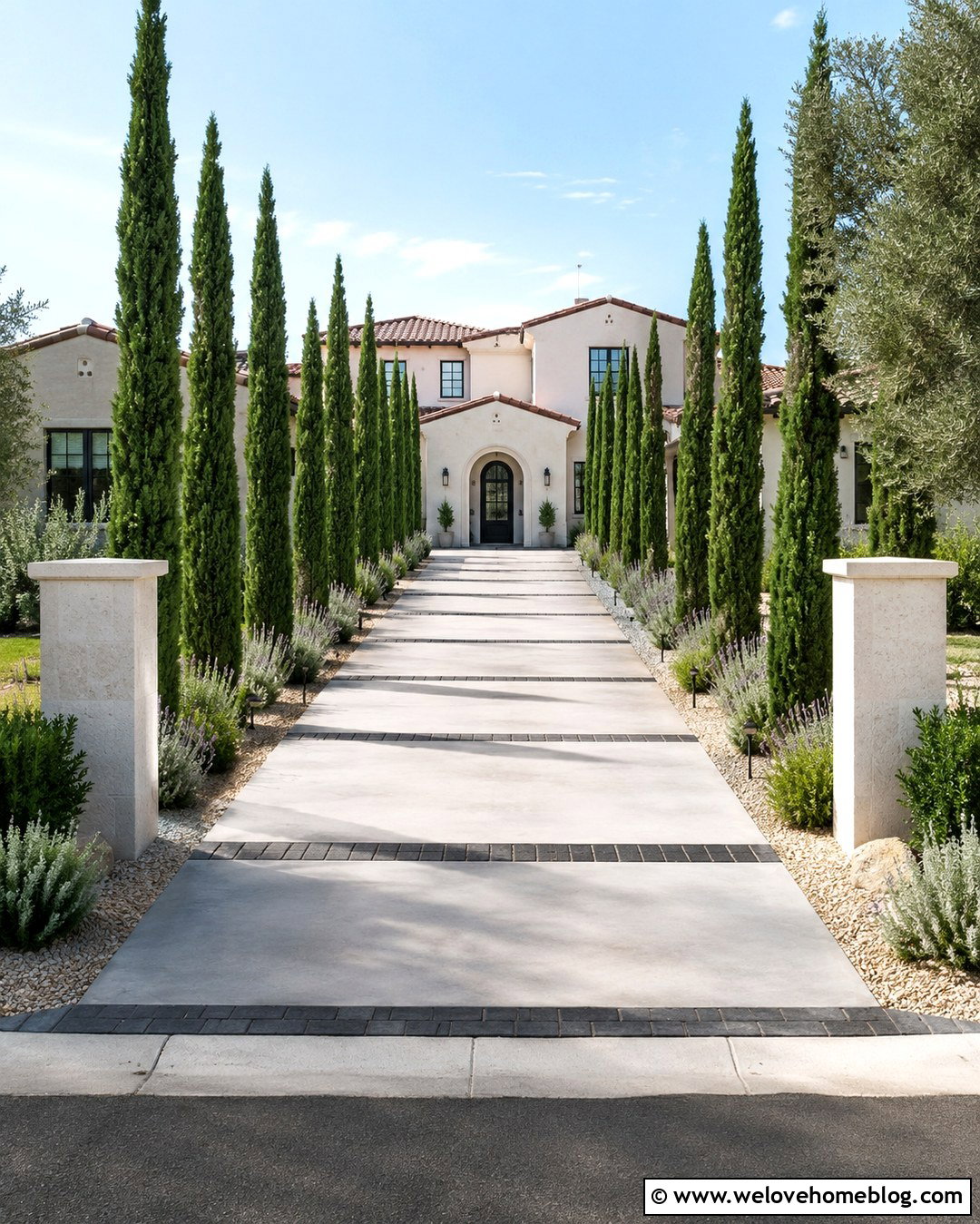
For a narrow, formal approach, Italian cypress trees bring height without creating an excessively broad canopy. Line a straight, light-gray poured concrete driveway with evenly spaced trees set inside long beds of pale gravel. Thin charcoal paver bands can break up the concrete and add a refined geometric detail. Near the entrance, simple stone pillars and low rosemary or lavender planting reinforce the Mediterranean character without hiding road visibility. This design pairs naturally with stucco, Spanish Revival, and Mediterranean-inspired homes. Italian cypress performs best in suitable warm climates and well-drained conditions, so local suitability matters. Keep irrigation directed away from the driveway base, and calculate mature tree dimensions before planting to preserve comfortable vehicle clearance and a balanced overall scale.
5. Crape Myrtle Tree-Lined Paver Driveway
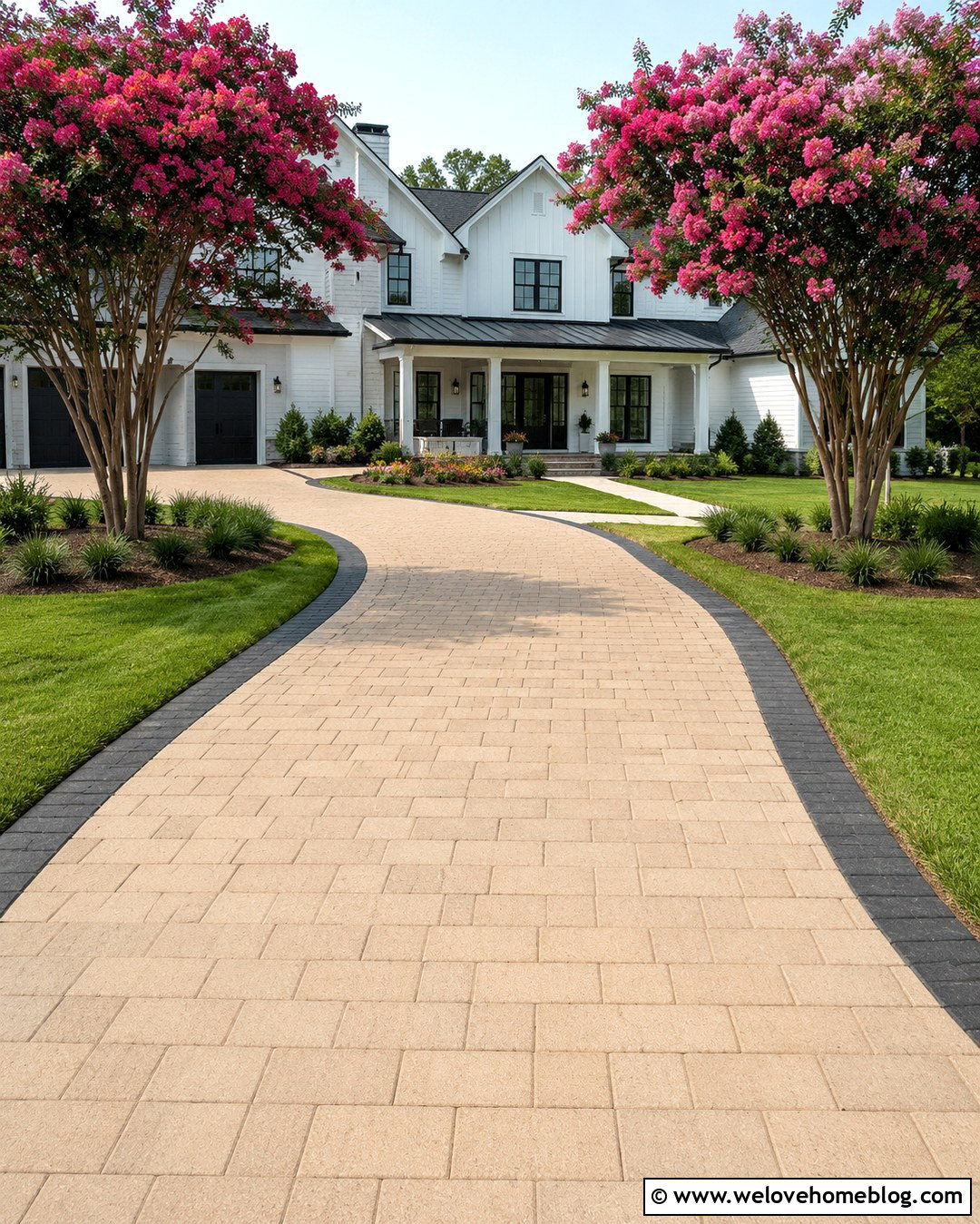
Crape myrtles bring summer flowers and sculptural trunks to a welcoming residential driveway. Use warm beige concrete pavers in a running-bond pattern, framed by a darker paver ribbon that visually contains the surface. Plant matching rows of single-trunk or carefully trained multi-trunk trees in generous lawn strips. Beneath them, low ornamental grasses can soften the transition without blocking the trunks. A gently curved layout makes the flowering canopy feel relaxed rather than overly formal. This combination works well with Southern cottages, painted brick homes, and modern farmhouses. Select a crape myrtle cultivar with a mature size appropriate for the available space instead of relying on repeated heavy pruning. Coordinated flower color can also complement the home’s shutters, door, or masonry.
6. Flowering Cherry Tree-Lined Brick Driveway
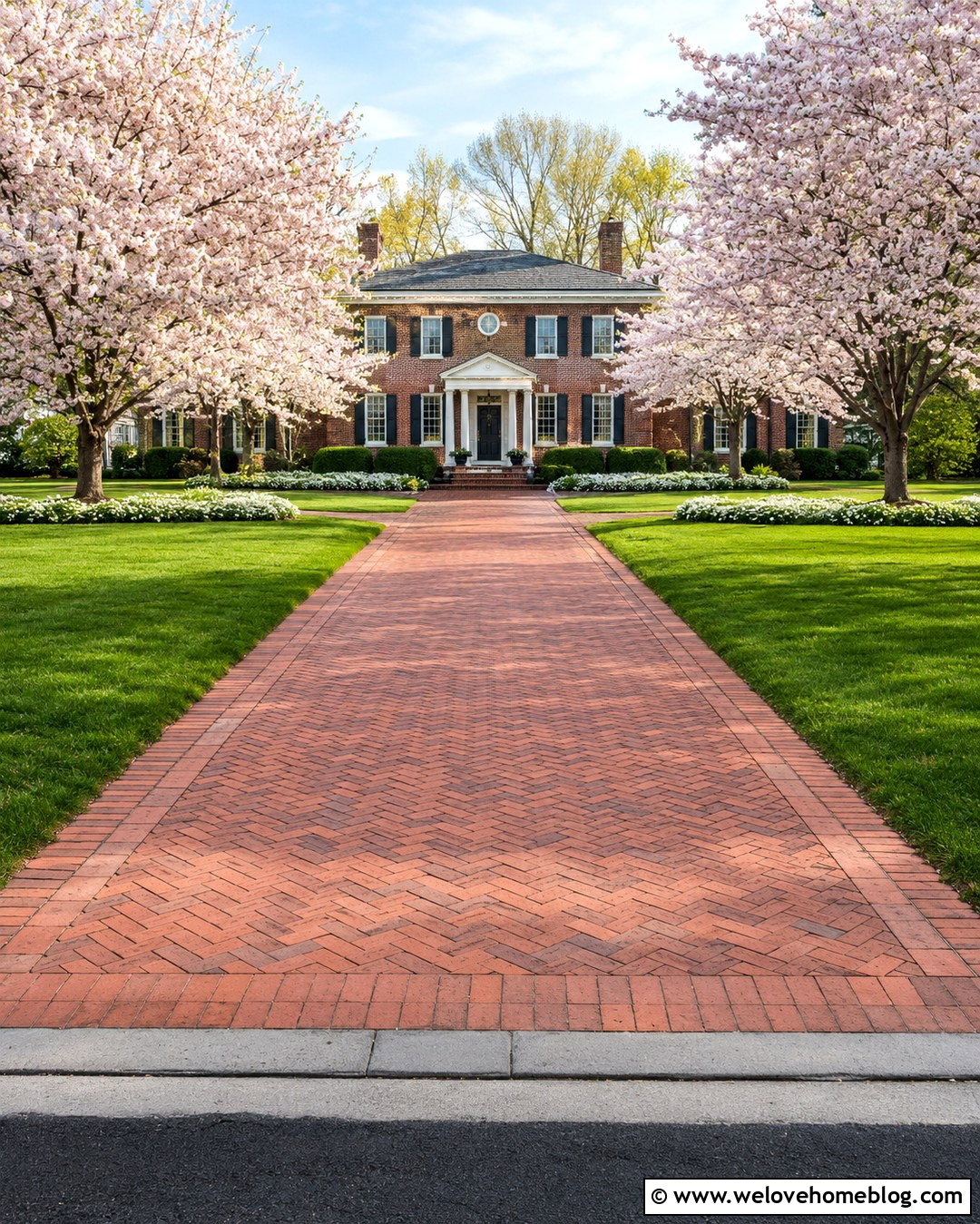
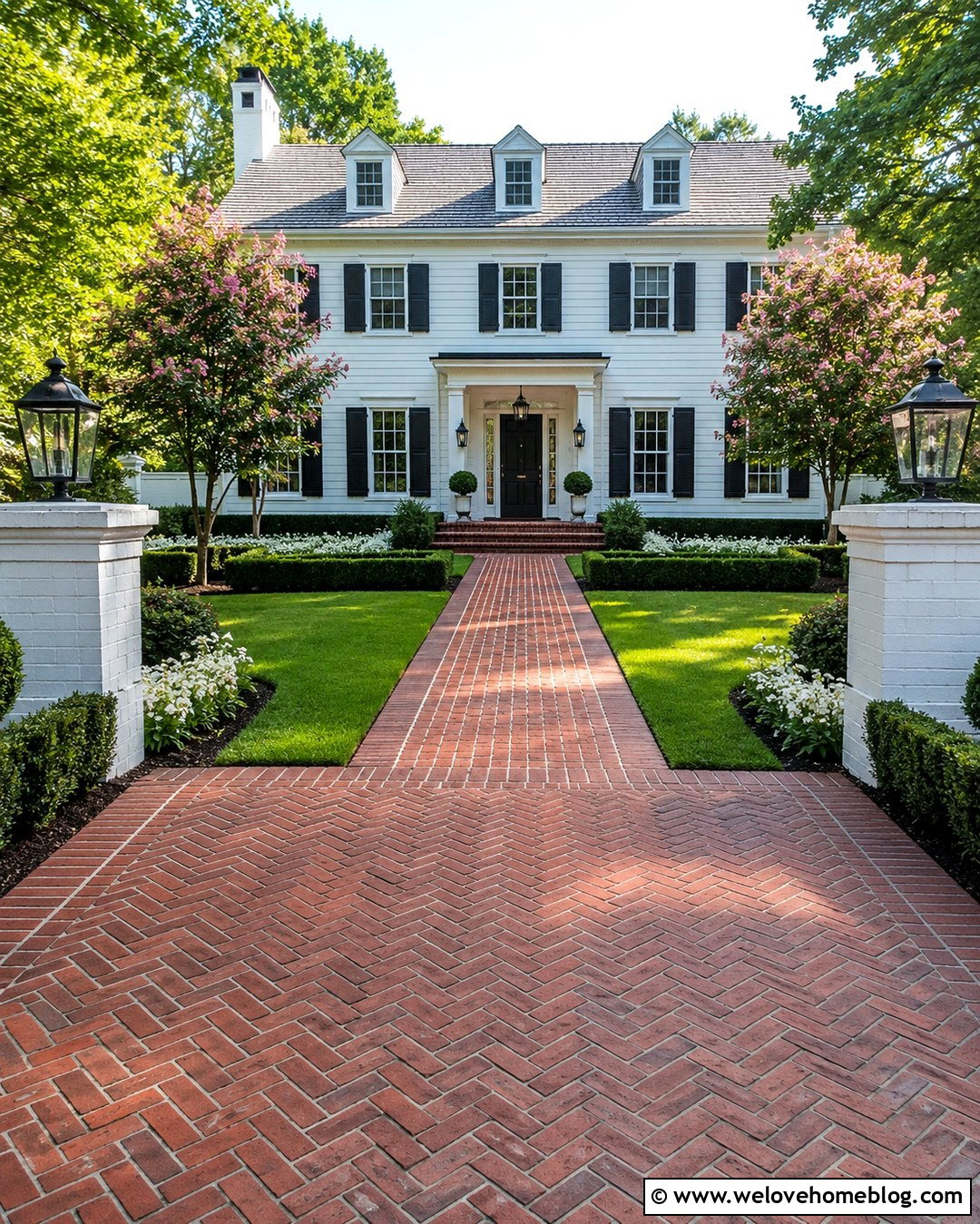
A brick driveway lined with flowering cherry trees creates a memorable spring approach while remaining attractive throughout the year. Choose clay brick pavers in a herringbone pattern to provide texture and a traditional appearance. Set the trees in wide lawn panels beyond a flush soldier-course brick border, allowing enough room for their spreading crowns. Low white-flowering ground covers can extend the spring display without competing with the trees. A straight layout emphasizes symmetry and leads the eye toward a Colonial or Georgian-style house. Because ornamental cherry trees vary in mature size, lifespan, and climate tolerance, select a locally recommended cultivar. Keep branches pruned for safe clearance, and place landscape lighting carefully so fixtures illuminate trunks without interfering with routine mowing or maintenance.
7. Dogwood Tree-Lined Circular Driveway
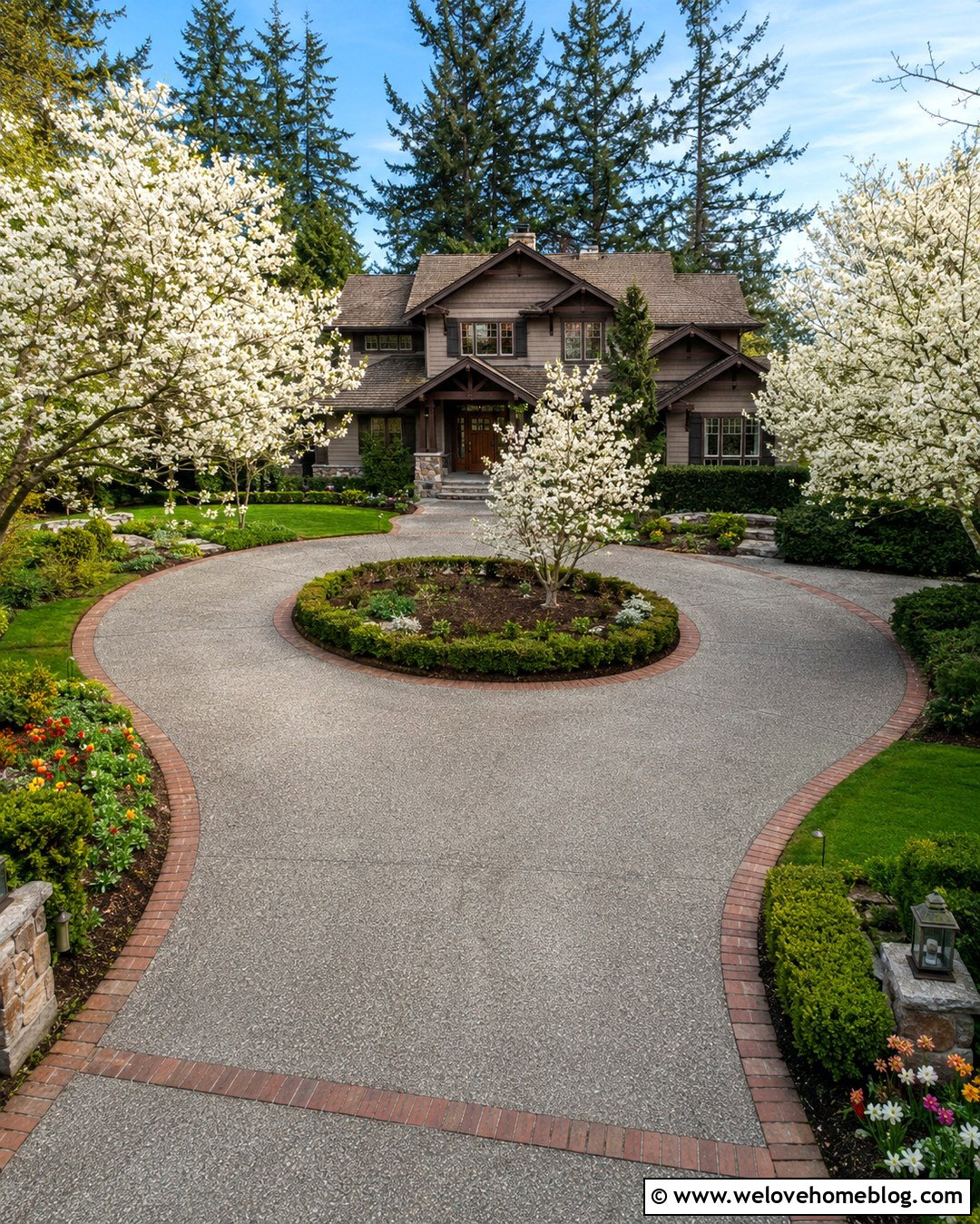
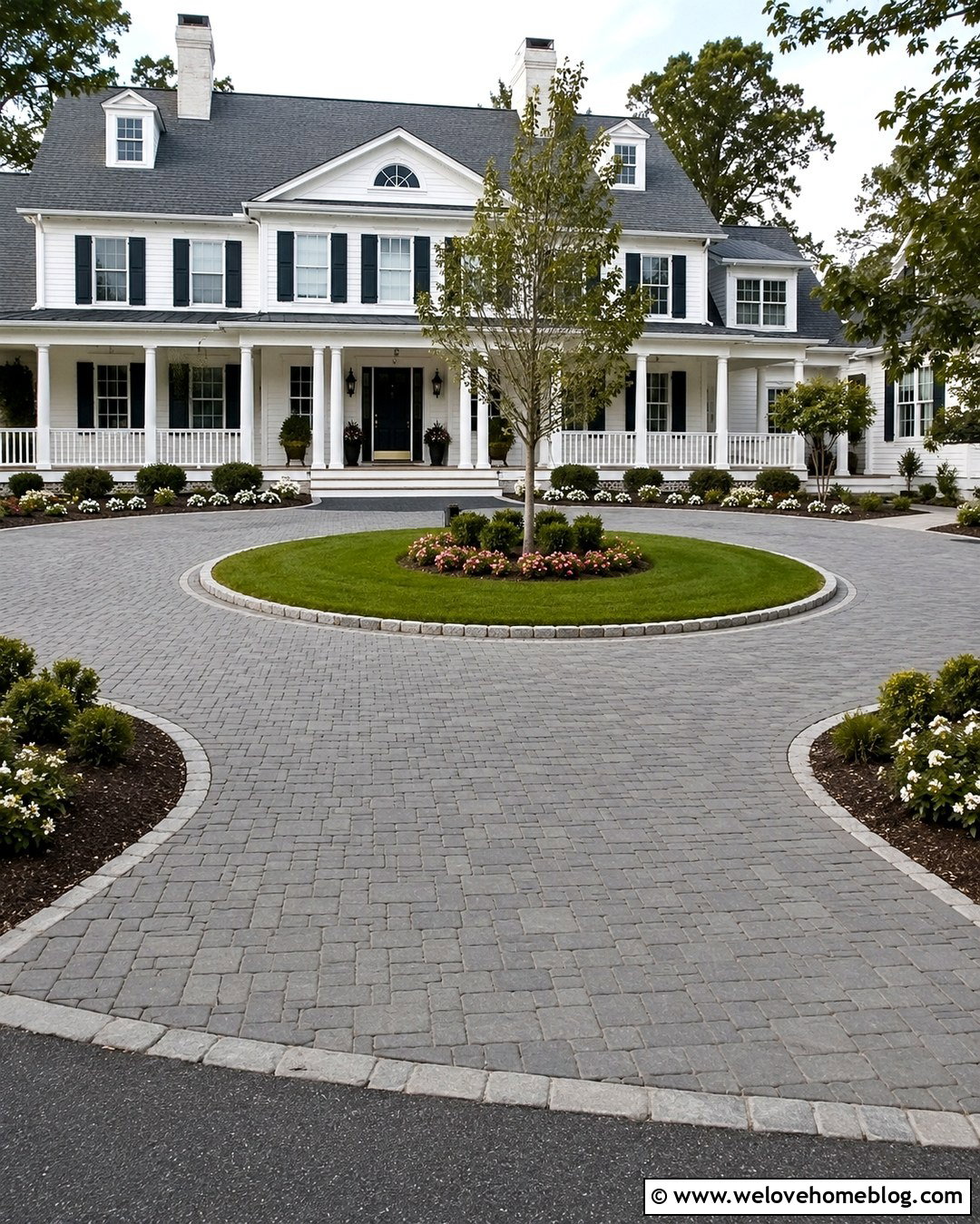
A circular driveway becomes softer and more residential when flowering dogwoods frame both the outer edge and central island. Use exposed aggregate concrete in a warm gray tone, finished with a clay brick border that defines the loop. In the middle, create a layered planting bed with one featured dogwood, evergreen shrubs, and low seasonal flowers. Continue smaller dogwoods around the outer lawn at comfortable intervals rather than crowding every available space. The result provides spring flowers, summer shade, and attractive branching near a Craftsman or traditional home. Maintain open sightlines where the loop meets the street. Dogwoods often perform best with appropriate soil, drainage, and protection from harsh exposure, so match the species to local conditions and avoid burying their root flares beneath mulch.
8. Magnolia Tree-Lined Farmhouse Driveway
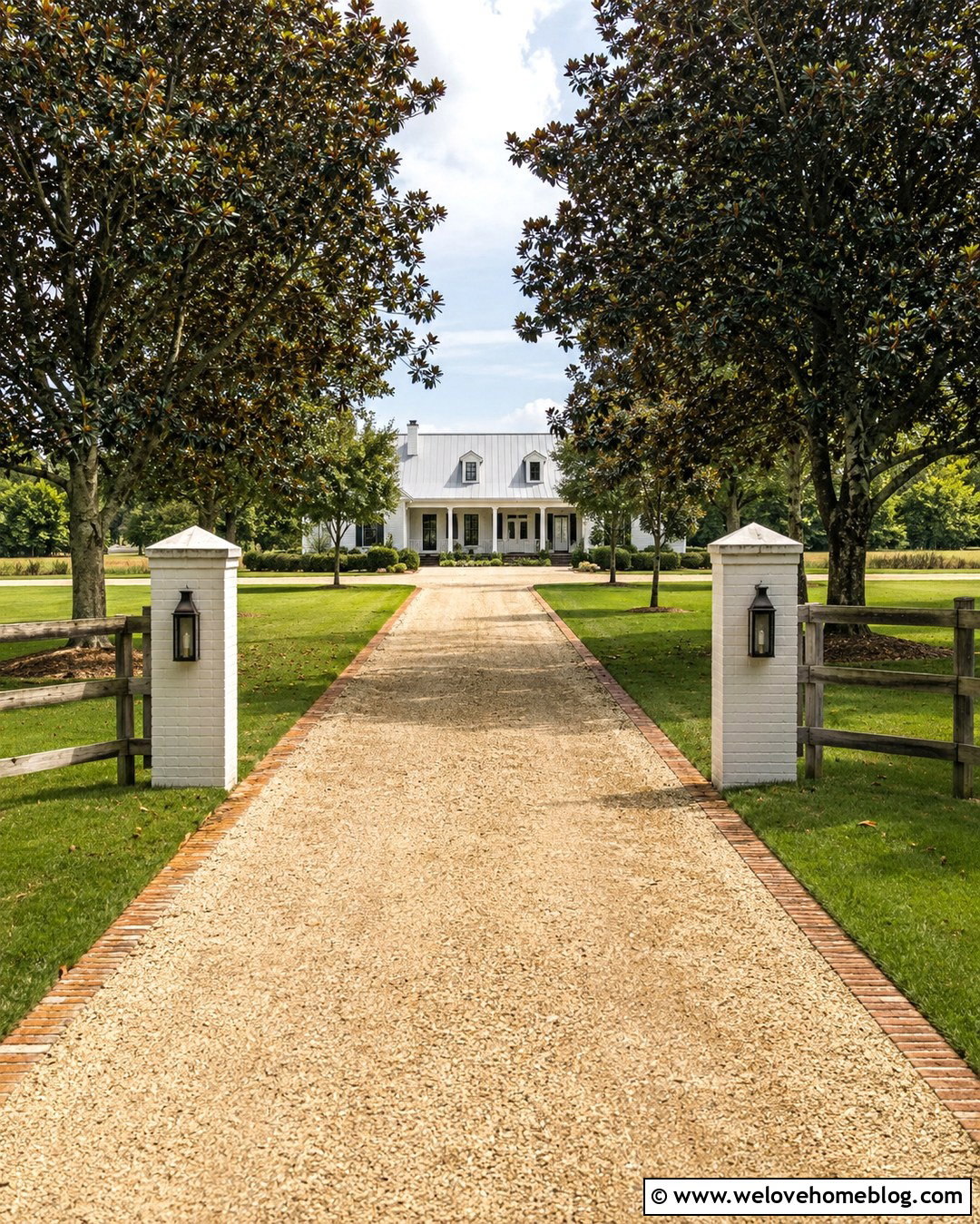
Large magnolias can transform a broad farmhouse driveway into a graceful Southern entrance. A pale crushed-limestone surface keeps the setting casual, while reclaimed brick edging prevents gravel from spreading into the surrounding lawn. Position magnolias well beyond the driveway edge, giving their mature crowns and surface roots ample space. Between the trees, simple stretches of turf keep the design calm and make maintenance easier. White gateposts at the road and a split-rail fence can reinforce the rural character without overwhelming the landscape. This look works best on a spacious property where the trees will not be squeezed against pavement or buildings. Consider evergreen or deciduous magnolias based on your climate, desired winter appearance, and the amount of leaf or flower cleanup you can manage.
9. Serviceberry Tree-Lined Suburban Driveway
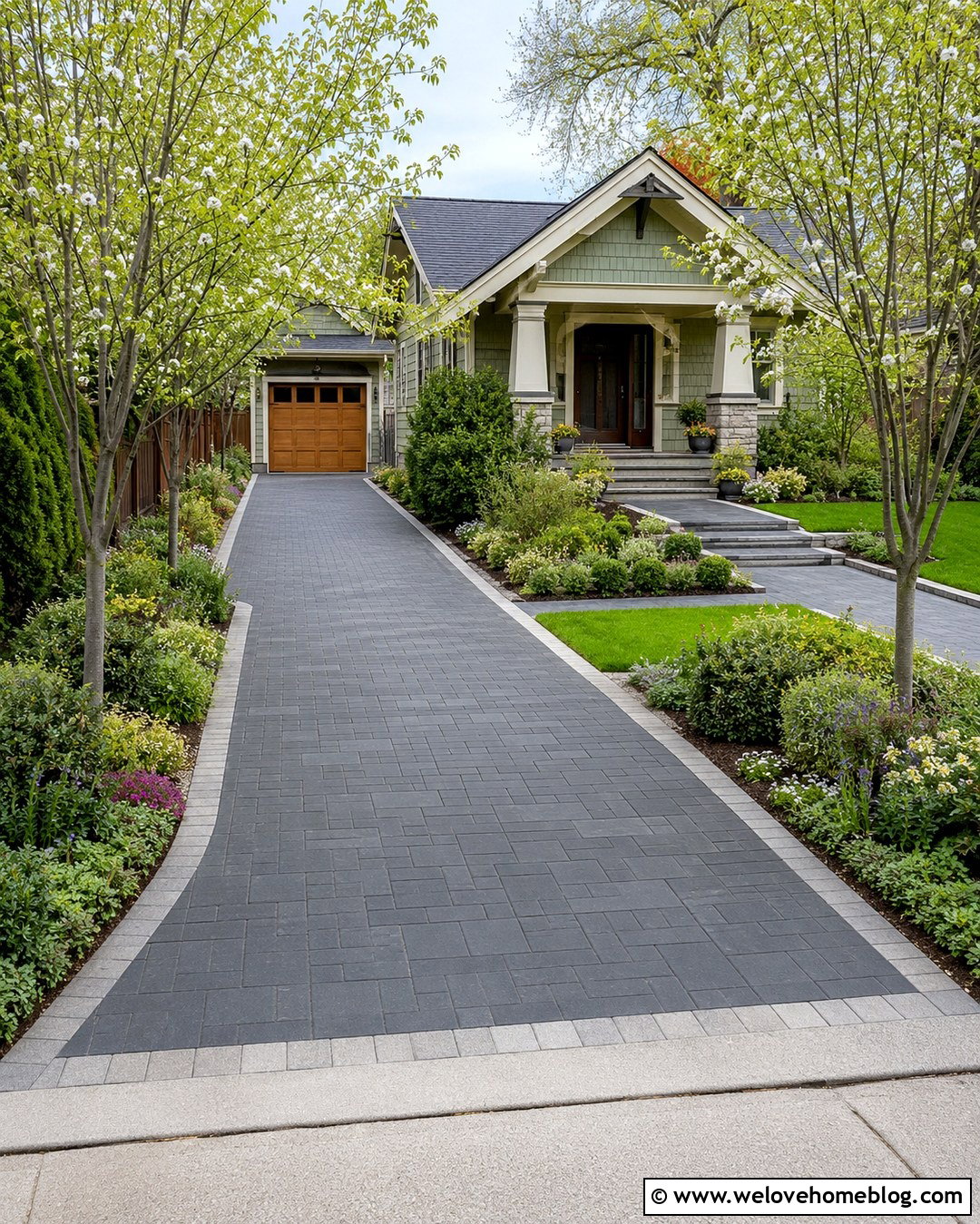
Need a tree-lined entrance for a smaller lot? Serviceberries offer spring flowers, summer berries, fall color, and a manageable woodland character. Pair them with a straight charcoal concrete-paver driveway bordered by a light-gray soldier course. Plant the trees in staggered beds rather than strict rows, using compact evergreen shrubs and native ground covers underneath. This arrangement adds privacy while preserving space for doors, walkways, and waste bins. It also looks natural beside a Craftsman bungalow or updated ranch house. Choose single-stem trees for a formal effect or multi-stem forms for a softer garden appearance. Before planting, verify mature width, local disease concerns, and utility locations. Maintain clear visibility near the sidewalk and street by keeping entrance planting lower and more open.

10. Olive Tree-Lined Resin Driveway
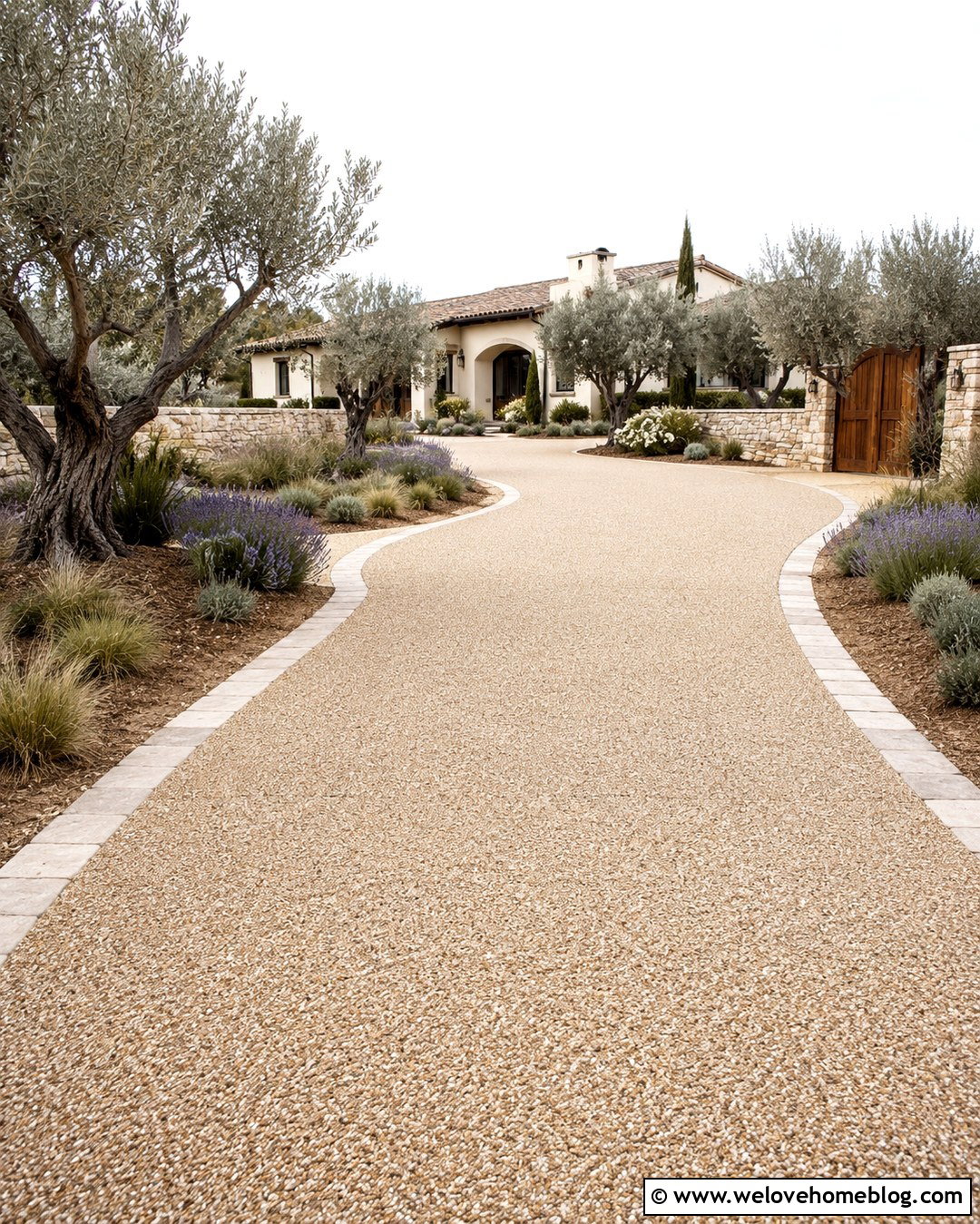
Silvery olive foliage looks especially striking beside a warm beige resin-bound gravel driveway. Give the drive a gentle curve, then define it with slim limestone setts that complement a light stucco home. Plant evenly spaced olive trees within beds of decomposed granite, lavender, thyme, and drought-tolerant grasses. Their muted colors create a cohesive Mediterranean palette while reducing the need for a conventional lawn. A simple wood gate and low stone walls can mark the entrance without making it feel heavy. This design is best suited to climates where olive trees can thrive outdoors year-round. Use a regionally appropriate selection and plan efficient drip irrigation. The resin surface, pale border, sculptural trunks, and restrained landscaping should work together as one bright, uncluttered approach.
11. Arborvitae Tree-Lined Narrow Driveway
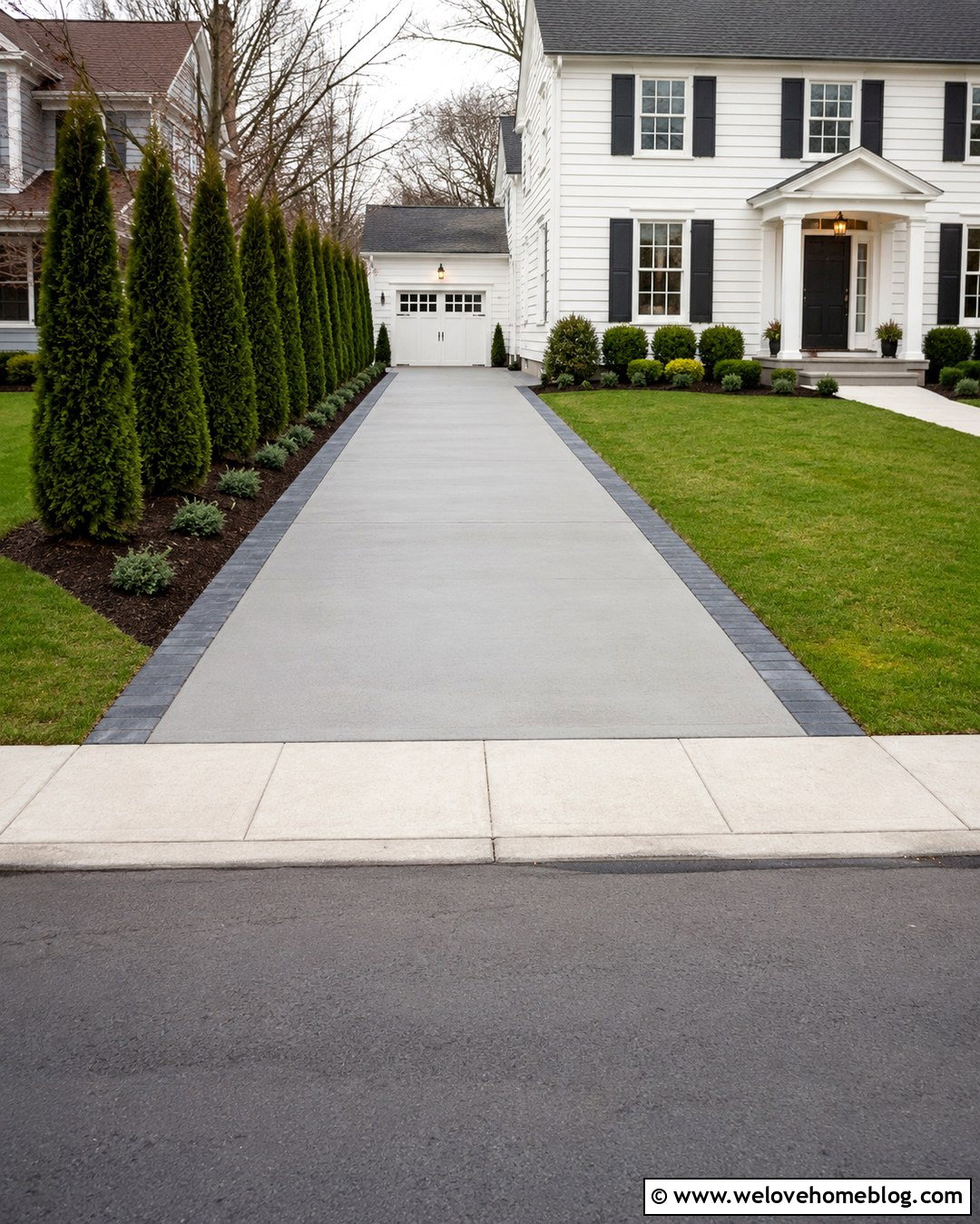
A narrow side driveway can gain privacy from columnar arborvitae without losing valuable driving space. Use smooth gray concrete with narrow charcoal paver borders to keep the surface crisp and easy to navigate. Place the evergreens in continuous mulched beds beyond the pavement edge, leaving sufficient room for their mature width. Low ground covers can conceal bare soil while maintaining a tidy appearance. Rather than forming a dark wall from curb to garage, interrupt the rows near the sidewalk and house with open lawn or smaller shrubs. This creates breathing room and improves visibility. The look suits compact Colonial, townhouse, and suburban properties. Select arborvitae suited to local weather, and protect them from deicing salt, poor drainage, and damage caused by snow storage or vehicle doors.
12. Pine Tree-Lined Country Driveway
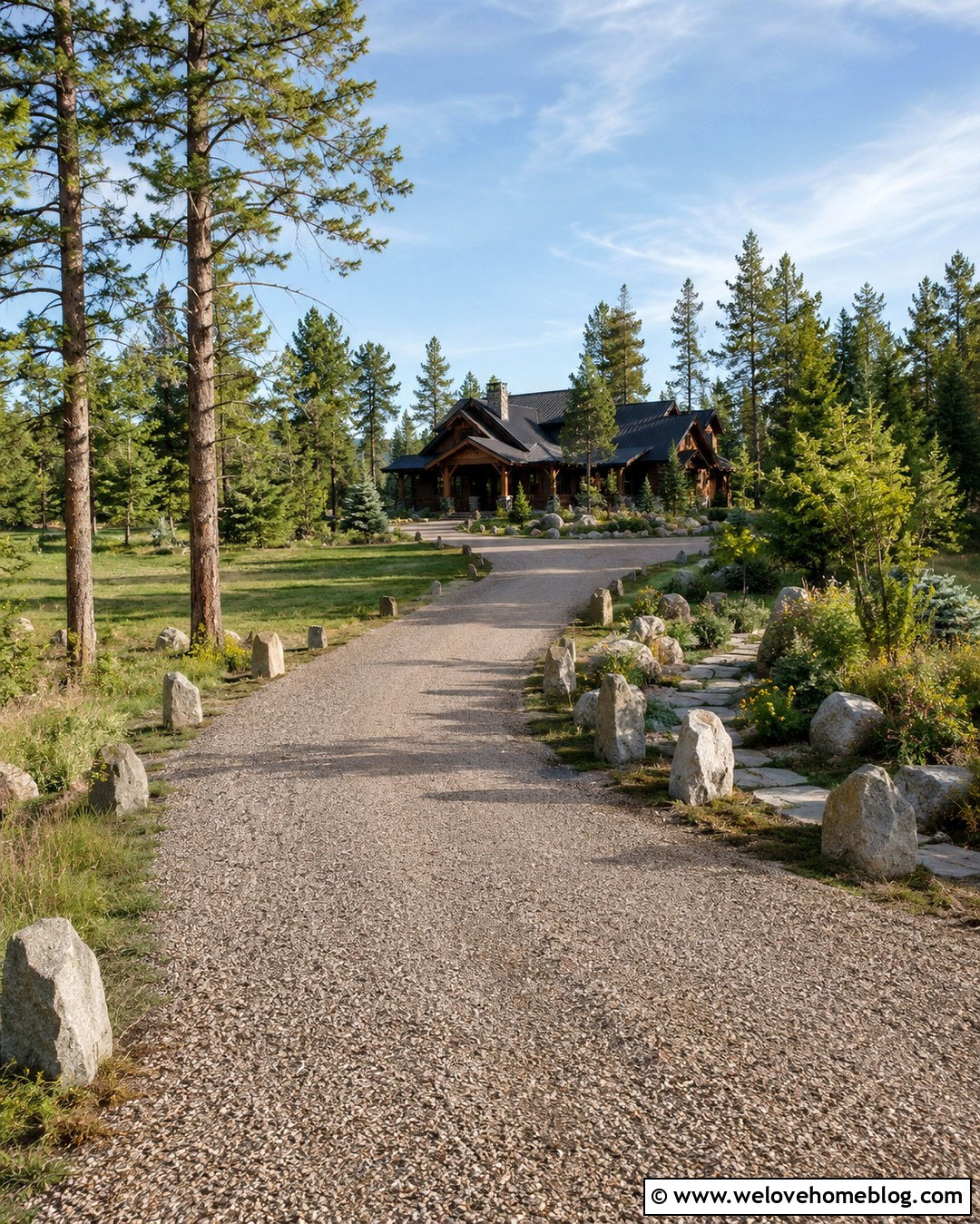
The scent and year-round color of pines can make a long country driveway feel sheltered and secluded. Begin with a durable brown-gray gravel surface that follows a relaxed curve through the property. Use rough granite blocks as occasional edge markers rather than installing a continuous formal border. Plant pines in broad, staggered groups, preserving natural gaps for meadow grasses, native shrubs, and views toward the house. This layout appears more established than two perfectly rigid rows and gives large trees room to develop. It suits log homes, mountain houses, and rustic farmhouses. Choose pine species adapted to the local soil and climate, and account for mature height, branch spread, needle drop, and wind exposure. Keep trunks well back from plowed or frequently traveled driveway edges.
13. Sycamore Tree-Lined Estate Driveway
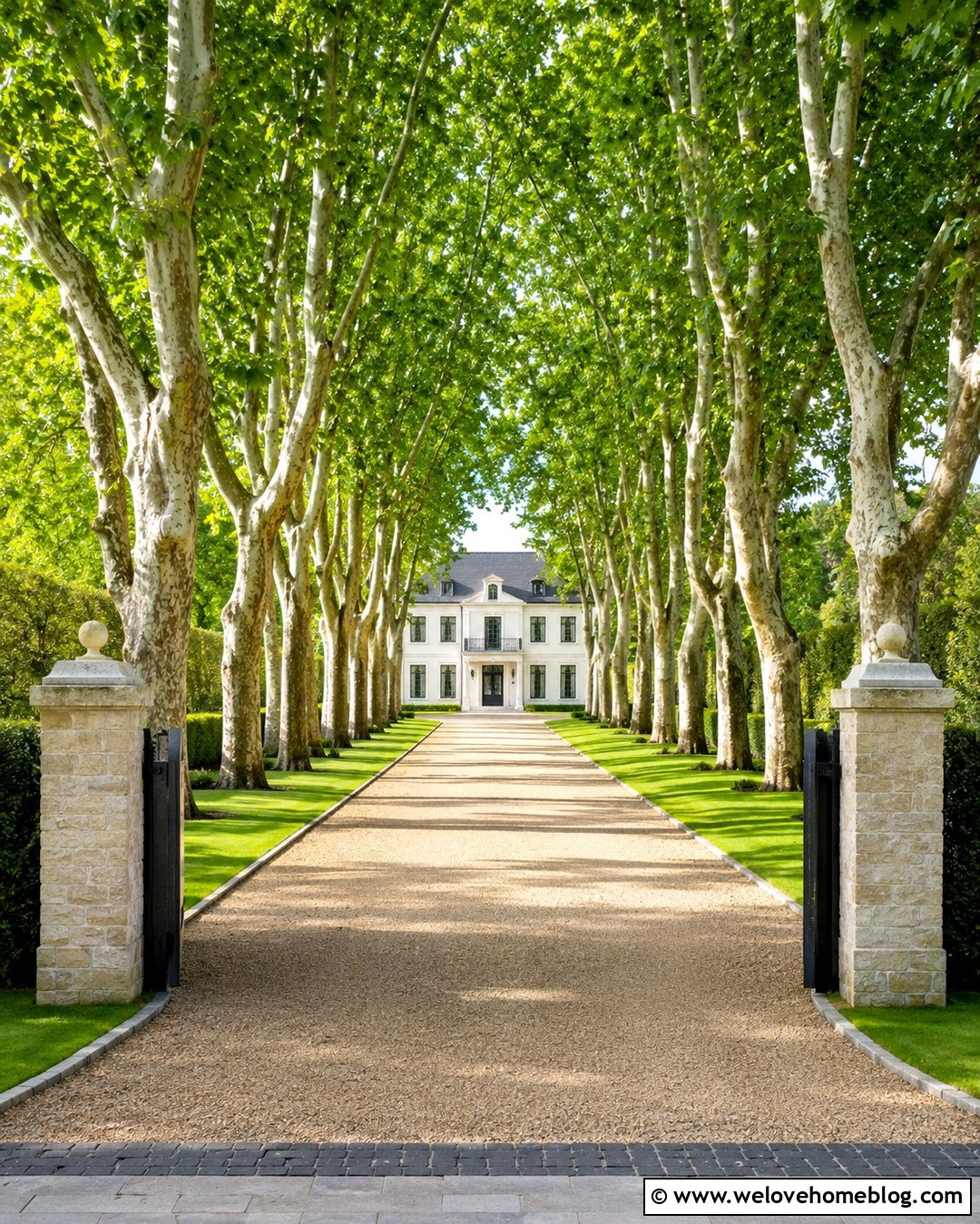
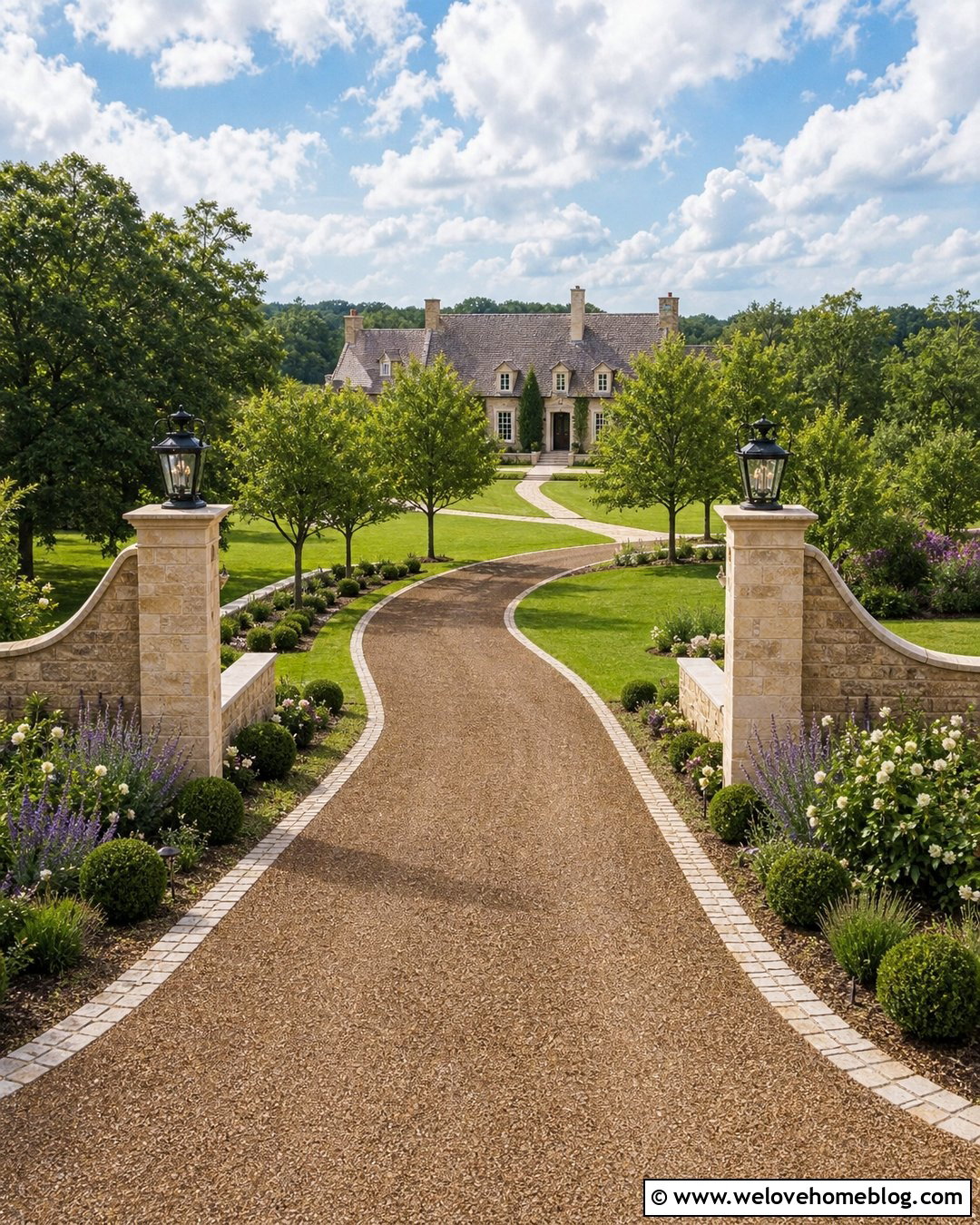
Few approaches feel as impressive as a broad driveway framed by tall sycamores. Create a straight buff-colored chip-seal drive with dark stone curbs and generous lawn verges on both sides. Consistent tree spacing establishes a formal avenue, while clipped hedges near the house transition the landscape toward a more architectural finish. Stone entrance pillars can repeat the home’s facade material and clearly mark the beginning of the drive. This arrangement needs substantial land because sycamores eventually develop large trunks, wide crowns, and extensive root zones. It is most appropriate for estate, Georgian, or large country homes. Work with a landscape professional to position the trees around utilities, drainage systems, and pavement construction. Plan for regular leaf, bark, and twig cleanup as part of long-term maintenance.
14. Hornbeam Tree-Lined Modern Driveway
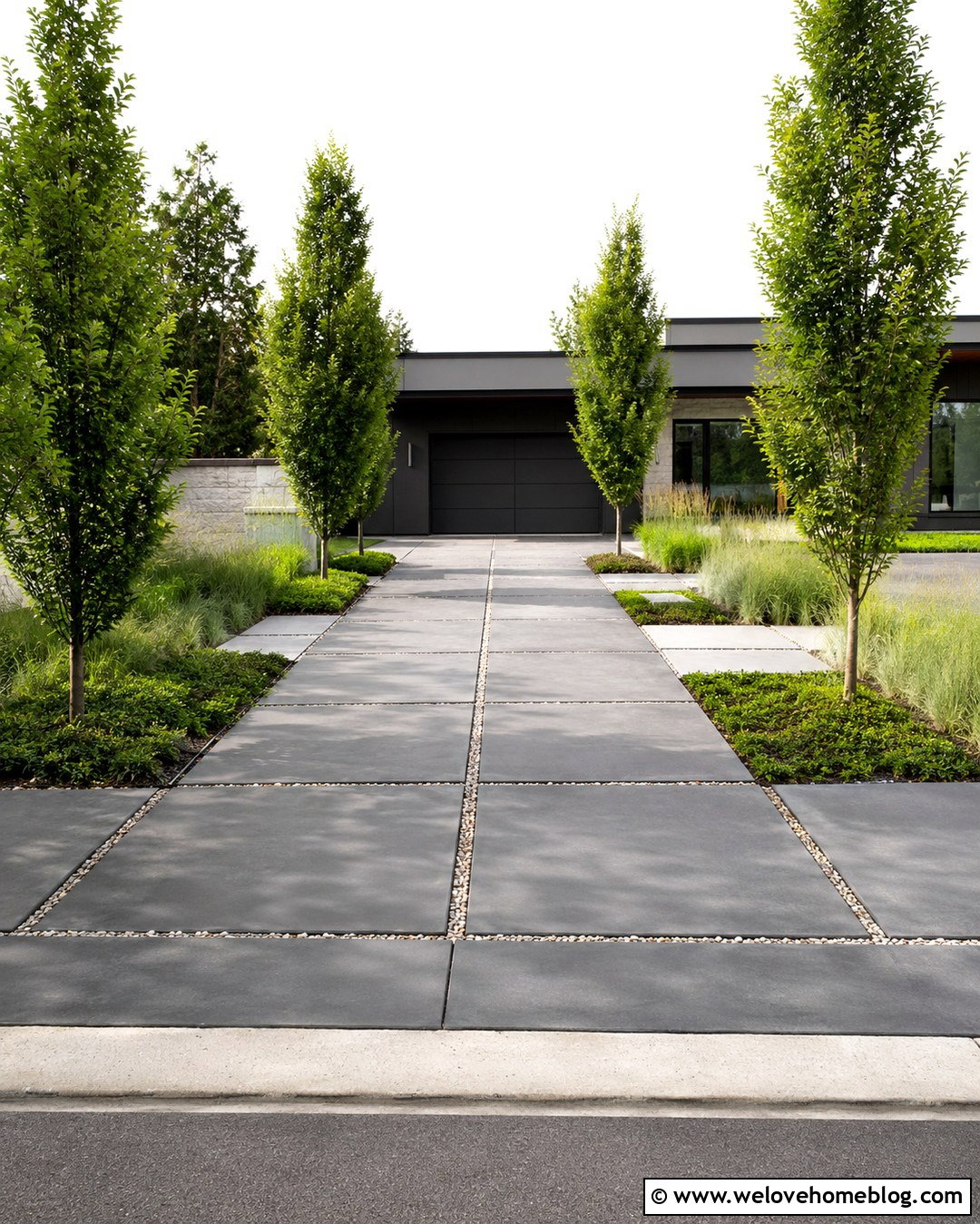
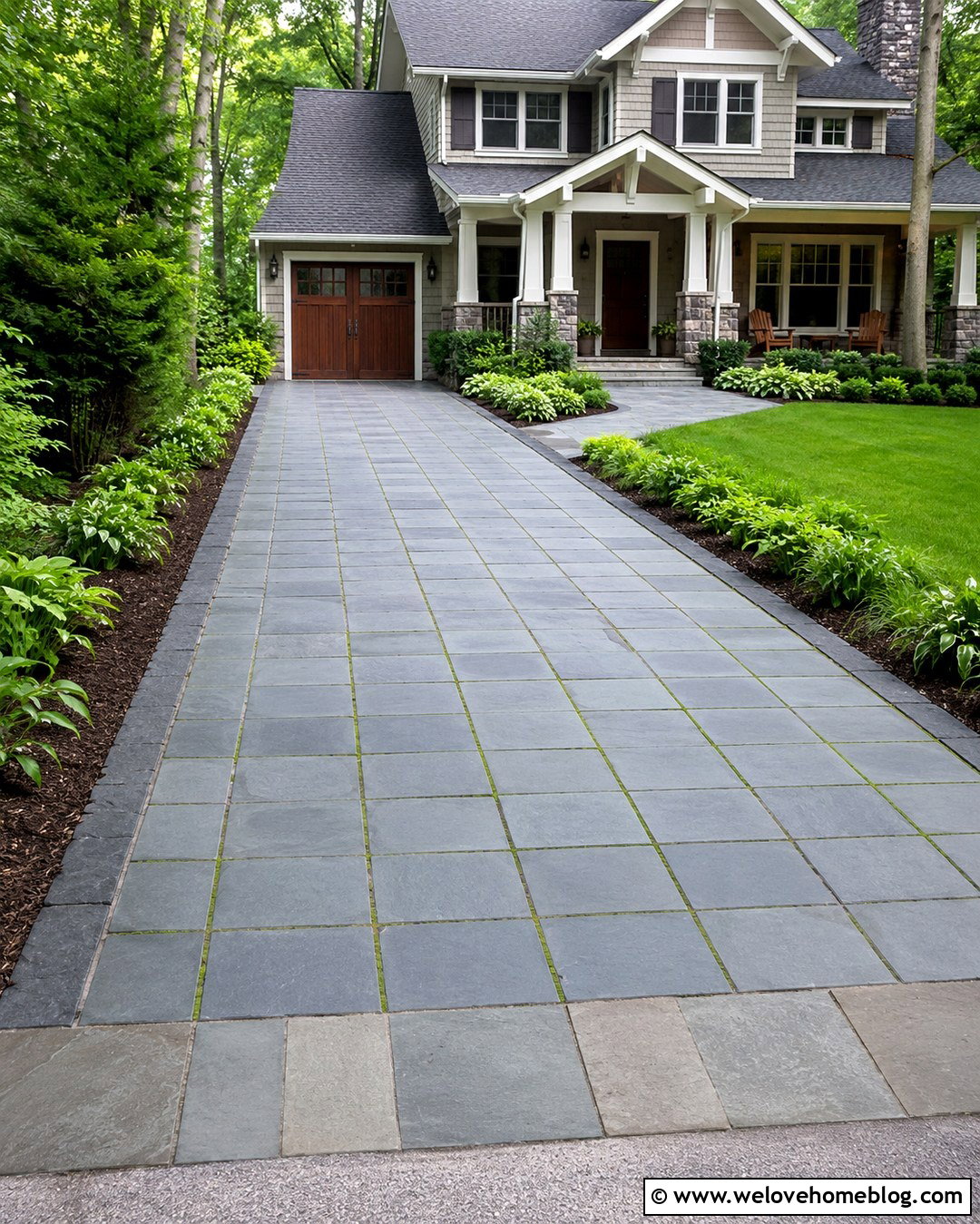
Hornbeams can form a tailored green corridor that complements clean modern architecture. Pair upright trees with large-format charcoal concrete pavers laid in a straight grid. Narrow gravel joints and flush steel edging keep the driveway streamlined, while rectangular planting beds repeat the geometry of the house. Plant the hornbeams at equal intervals in long strips of clipped ground cover or low ornamental grass. Their structured growth provides definition without requiring decorative borders or busy flower combinations. Near the garage, integrated concrete stepping pads can connect the driveway to the front walk. Select a hornbeam variety with the right mature form for the site, especially on compact properties. Allow adequate rooting space and use careful pruning to maintain clearance rather than forcing oversized trees into undersized planting beds.
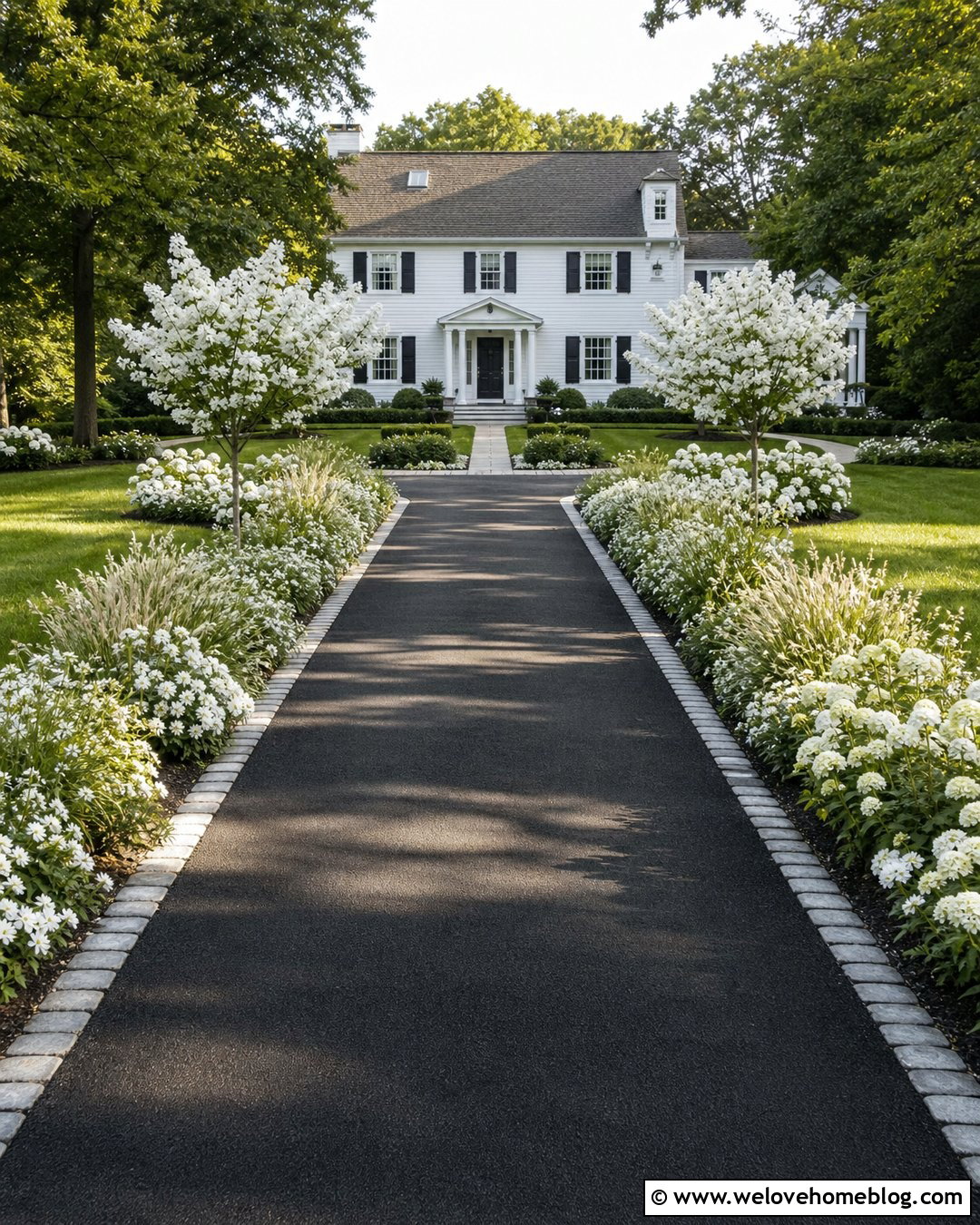
15. Linden Tree-Lined Brick Driveway
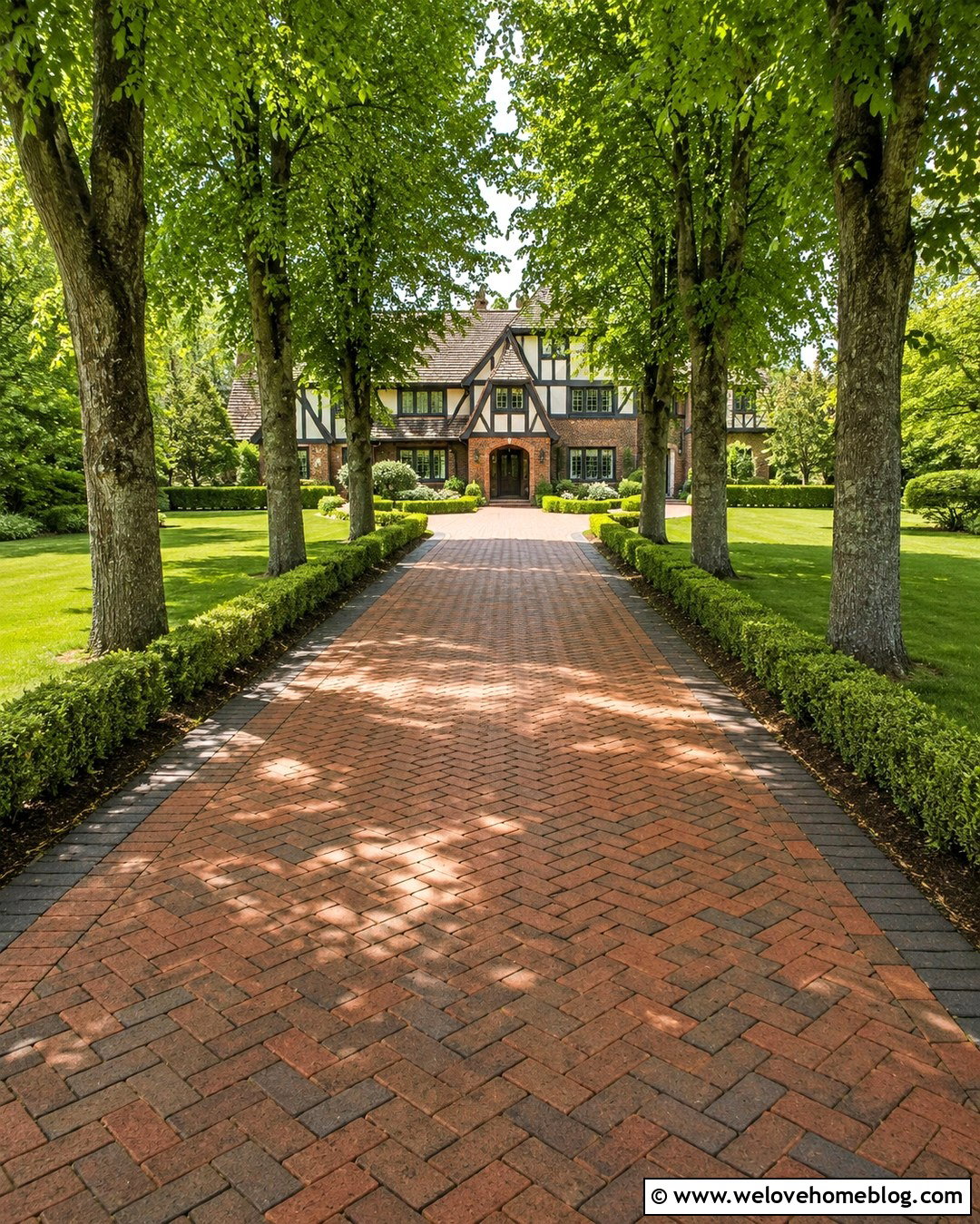
A linden-lined driveway can create the shaded, formal character often associated with established traditional homes. Use red and brown clay brick pavers in a basket-weave pattern, surrounded by a darker brick soldier course. Broad lawns on each side provide a simple setting for matching rows of lindens, while low hedges closer to the house guide the eye toward the entrance. Keep the tree spacing consistent, but base it on mature canopy width instead of the size of young nursery trees. This complete look suits Colonial Revival, Tudor, and classic brick residences. Because lindens can become substantial shade trees, they need generous setbacks from pavement and overhead lines. Ask a local tree professional about suitable cultivars, potential maintenance concerns, and how the species performs in your region before creating the avenue.
16. Redbud Tree-Lined Cottage Driveway
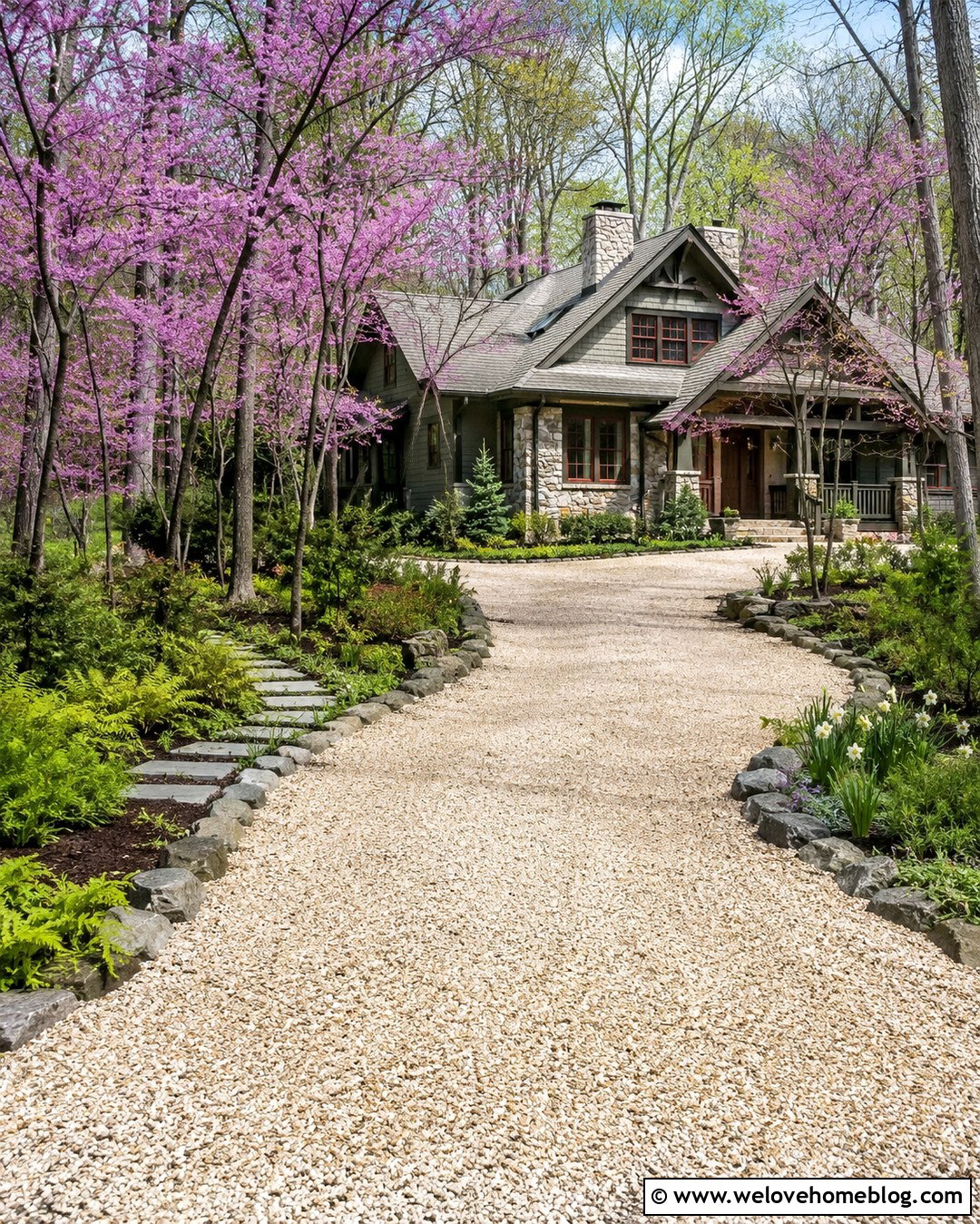
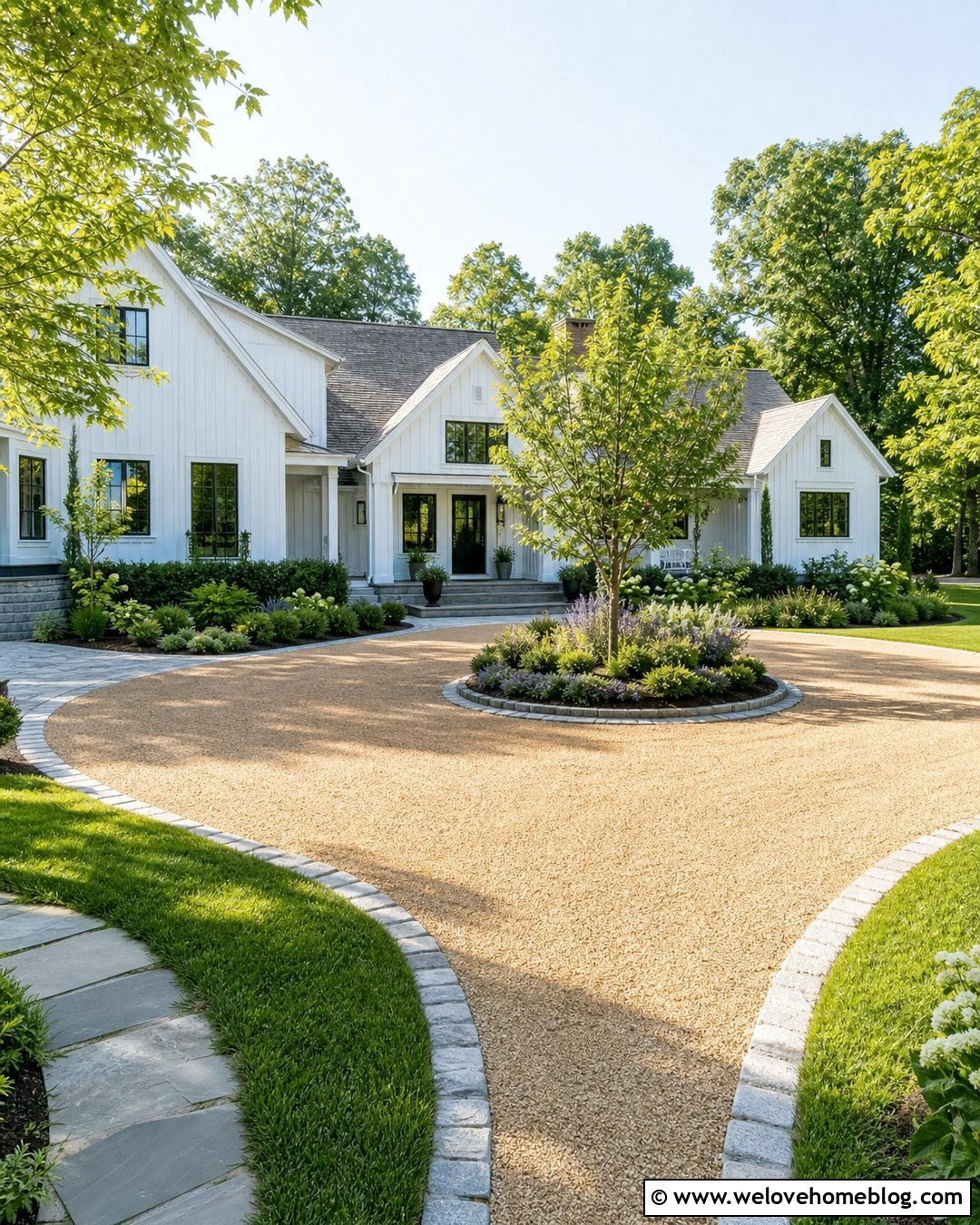
Clouds of spring color make redbuds a charming choice for a cottage driveway. Set a gently winding pea gravel drive between natural stone edges, then plant redbuds in informal groups along both sides. Mix them with ferns, woodland sedges, spring bulbs, and compact evergreen shrubs to provide interest after flowering ends. The driveway should appear to move through a garden rather than divide two empty lawns. Near the house, widen the gravel into a small parking court and connect it to the front porch with irregular flagstone stepping stones. This relaxed composition complements cottages, Craftsman homes, and woodland cabins. Choose redbud varieties suitable for local sun, soil, and winter conditions. Preserve open areas along tighter curves so branches and dense planting never reduce safe driving visibility.
17. Palm Tree-Lined Paver Driveway
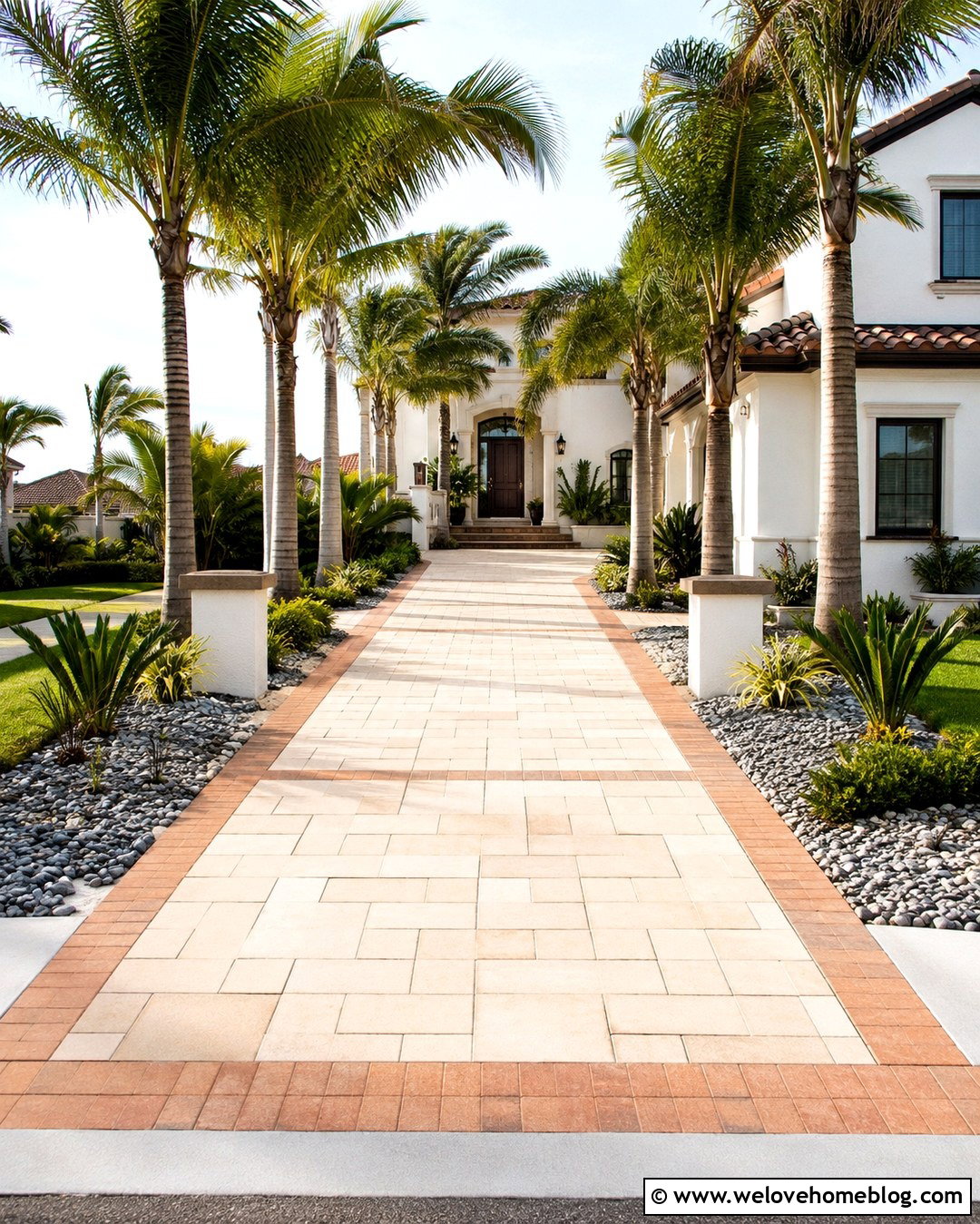
Rows of palms bring clear vertical structure to a warm-climate driveway without producing a dense overhead canopy. Use pale cream concrete pavers in a modular pattern, accented by a terracotta paver border. A straight layout strengthens the symmetrical effect and leads toward a coastal, Spanish, or contemporary stucco house. Position palms within wide beds filled with decorative gravel, cycads, low grasses, and restrained tropical foliage. Matching masonry pillars can frame the entrance, while low planting preserves clear views of pedestrians and traffic. Choose palm species according to mature trunk height, crown size, cold tolerance, and regional pest concerns. Avoid planting directly beside underground services or narrow pavement edges. Bright paving, repeated trunks, and drought-conscious beds will make the entire approach feel spacious, orderly, and resort-inspired.
18. Desert Tree-Lined Decomposed Granite Driveway
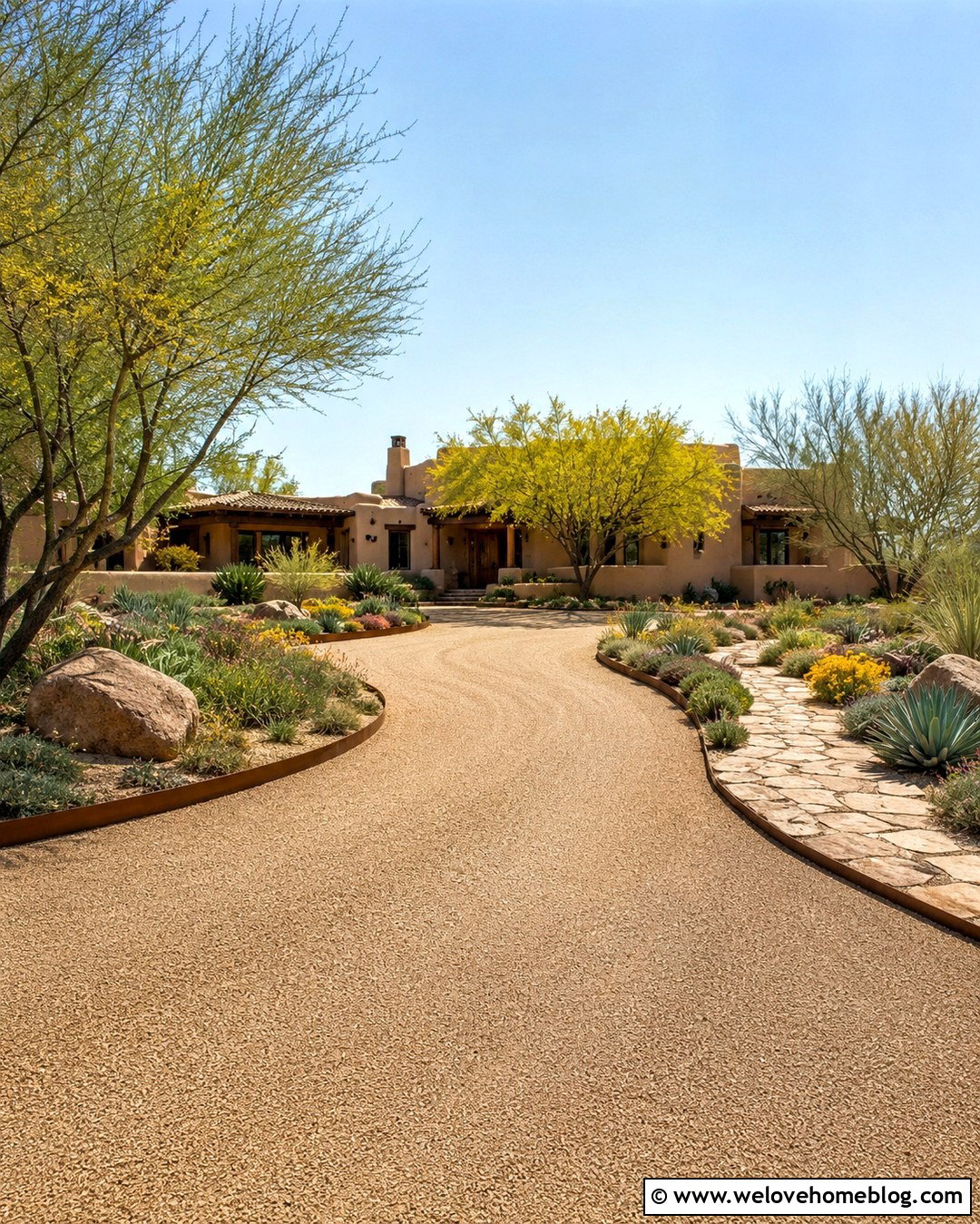
A tree-lined driveway can work beautifully in an arid landscape when every element responds to limited water. Build a curved, stabilized decomposed granite drive in a warm tan color and edge it with rust-toned steel. Line the route with desert willow, palo verde, mesquite, or another locally appropriate tree, choosing species that fit the site and local guidance. Arrange them in staggered clusters instead of water-intensive formal rows. Beds of boulders, agaves, flowering perennials, and native grasses can connect each planting area. This design feels natural beside an adobe, Southwestern, or desert-modern home. Use drip irrigation to establish new trees, preserve drainage paths during construction, and provide enough clearance for thorny branches where applicable. The result is shaded, practical, and visually grounded.
19. Mixed Native Tree-Lined Driveway
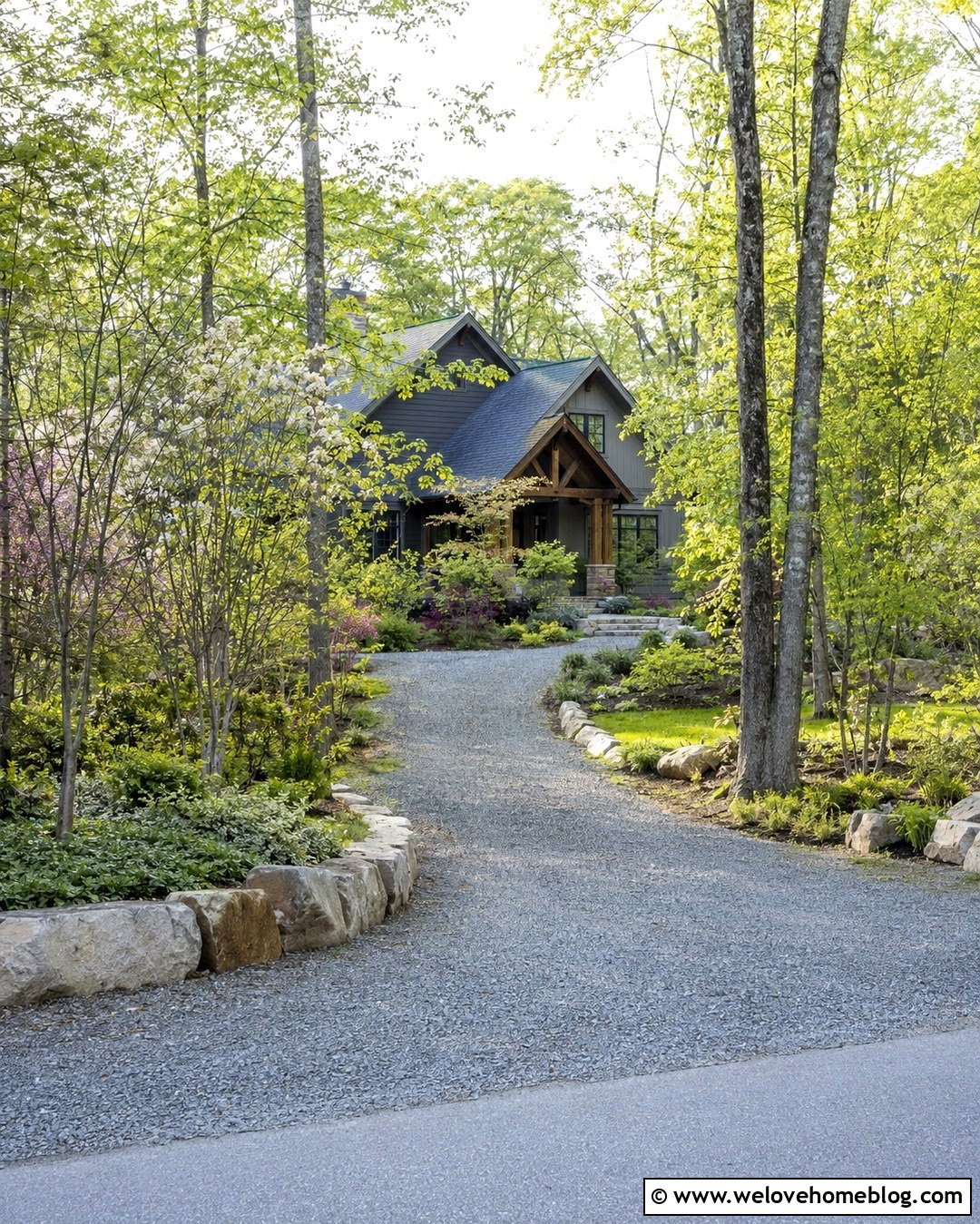
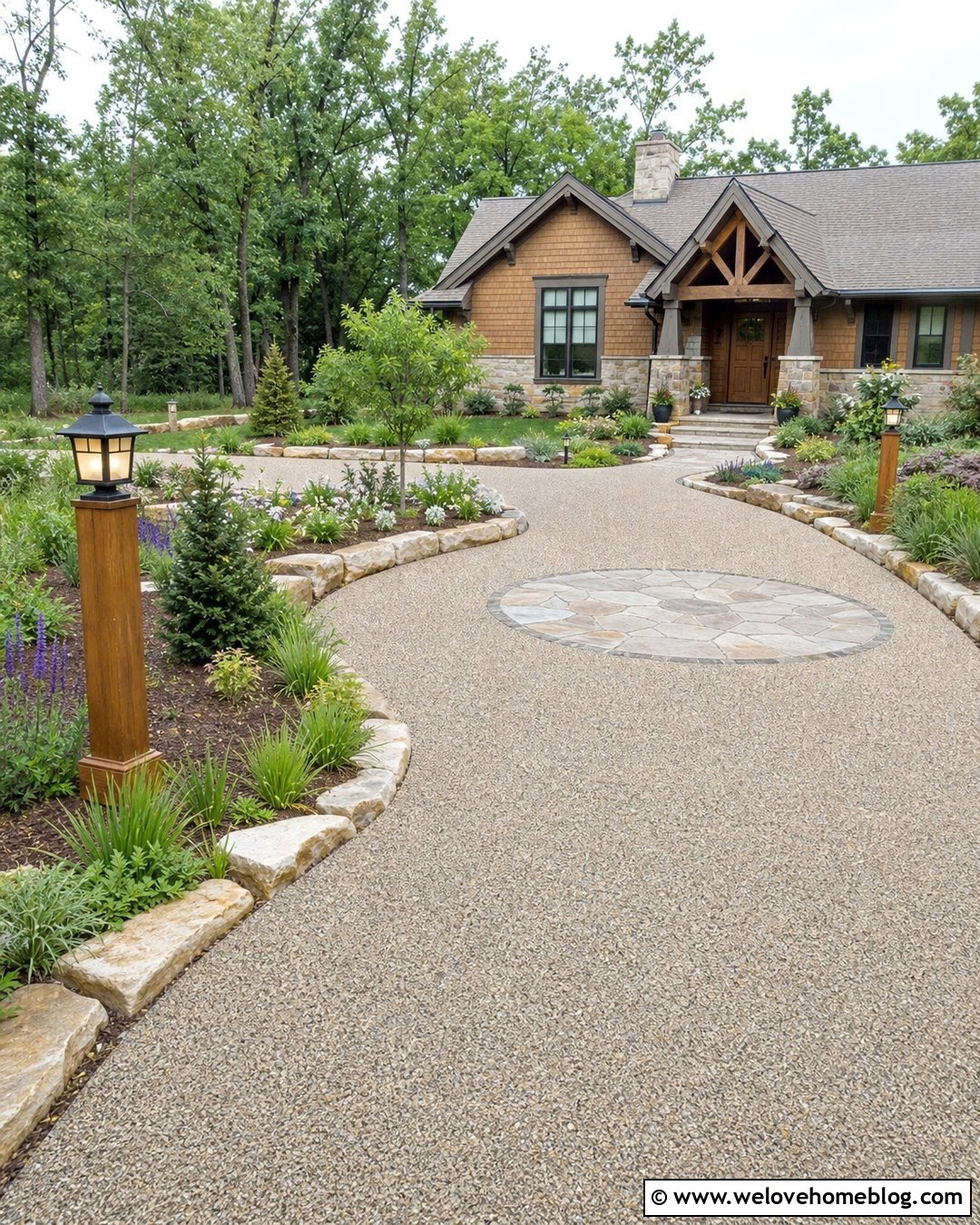
Using several native tree species can create a driveway that blends naturally into the surrounding landscape. Start with a permeable gray gravel drive bordered by locally sourced fieldstone. Arrange compatible canopy and understory trees in repeating groups rather than random individual placements. For example, larger shade trees can establish the main rhythm while smaller flowering trees mark curves or the transition toward the house. Add native shrubs, grasses, and ground covers beneath them to reduce large areas of bare mulch. This layered approach suits country, Craftsman, and woodland properties. Keep the plant palette limited enough to look intentional, and repeat key species along the route. A local native plant specialist can help match selections to soil moisture, sunlight, wildlife goals, and available space without creating future pavement conflicts.
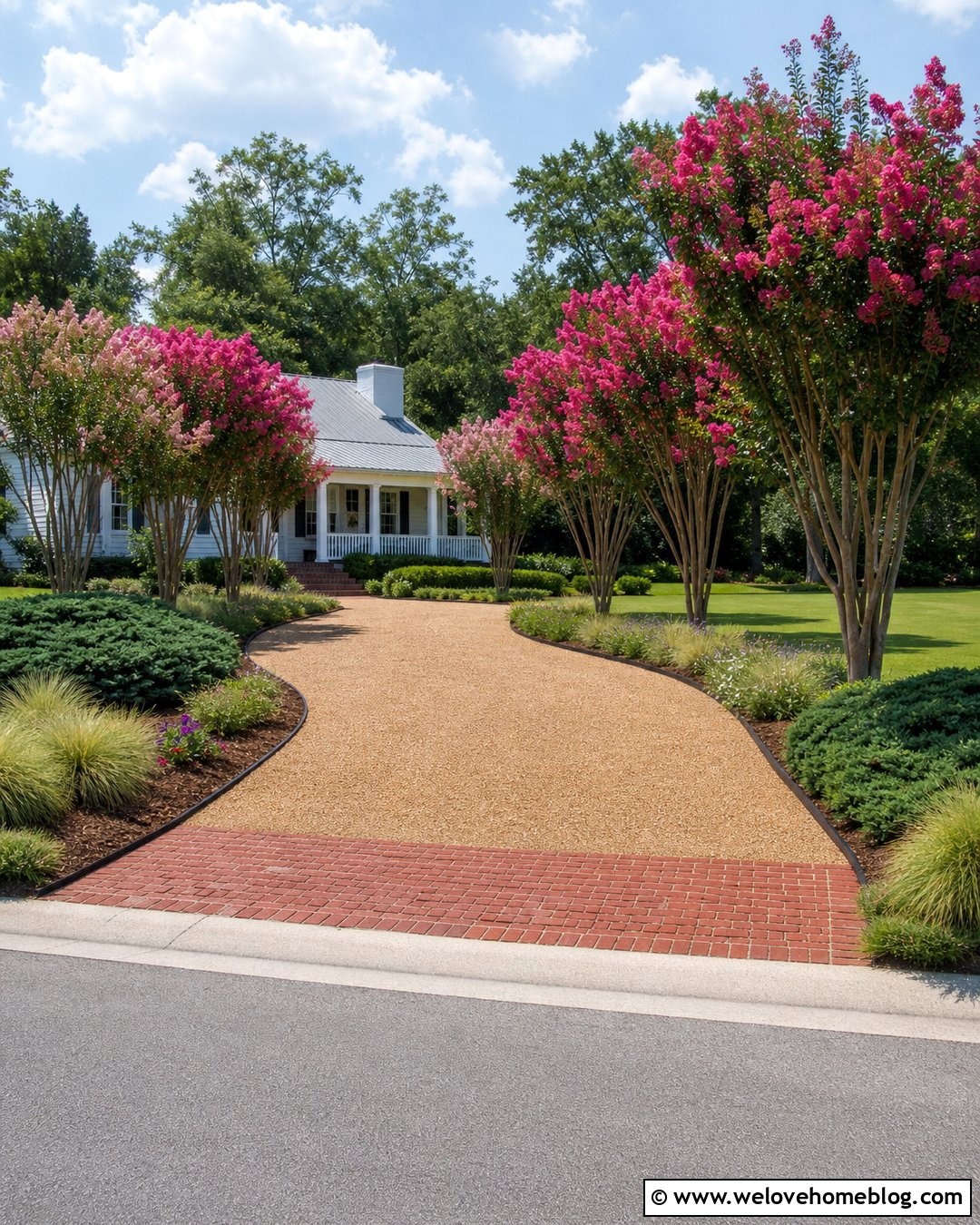
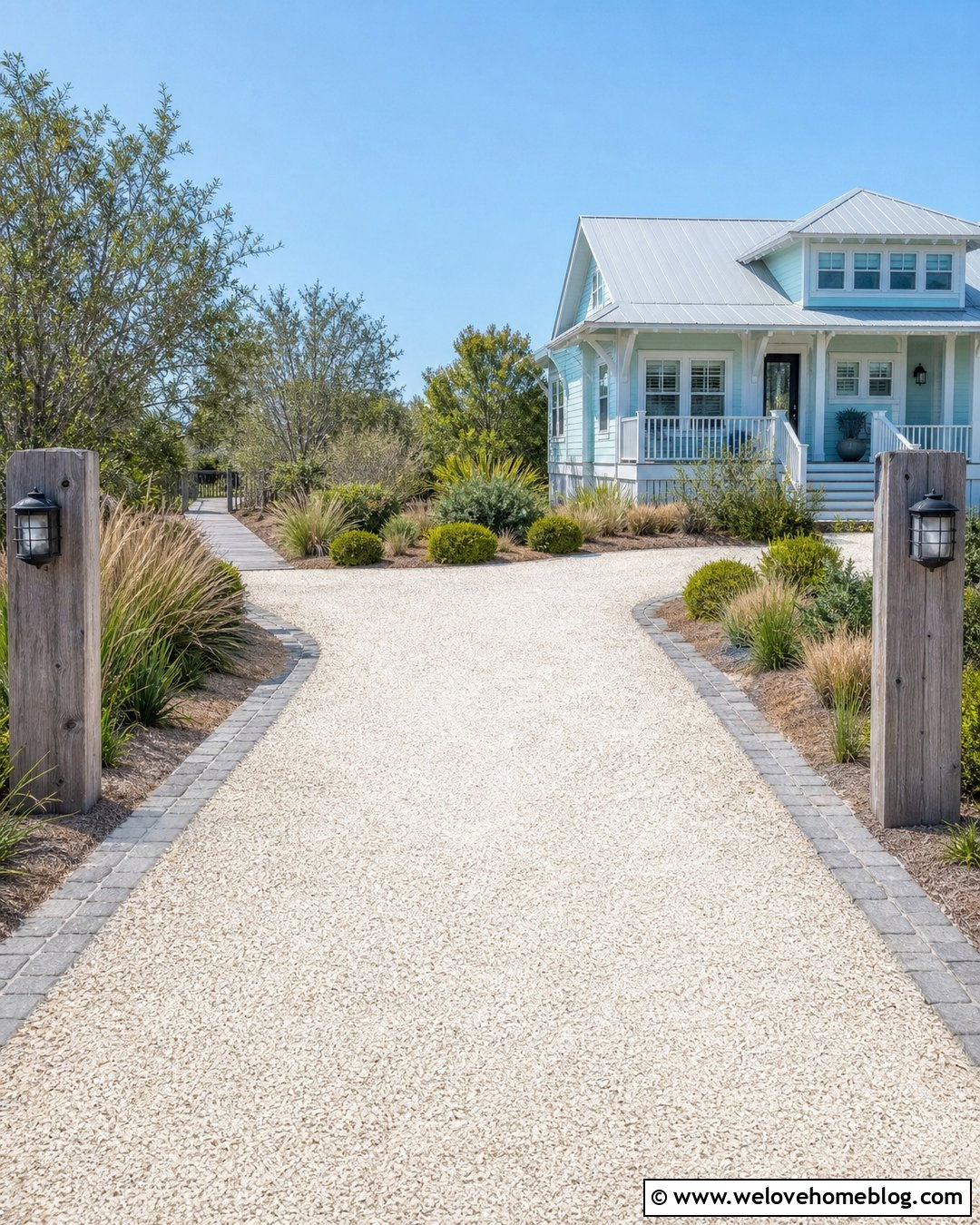
20. Existing Woodland Driveway
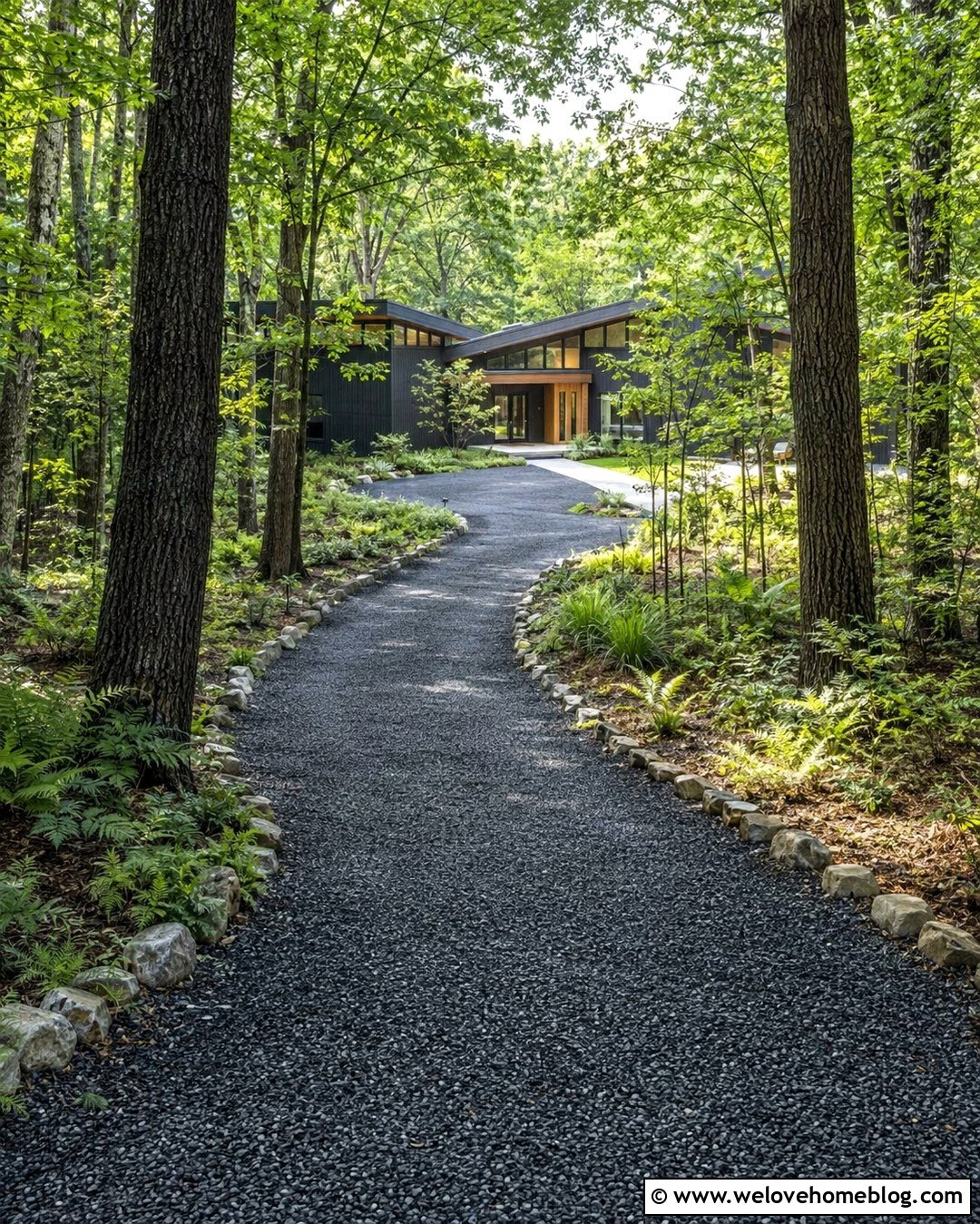
Sometimes the best tree-lined driveway begins with the mature trees already on the property. Rather than clearing a perfectly straight route, use a gently curving black asphalt or compacted gravel driveway that responds to existing trunks and major root zones. Add a restrained natural stone edge only where surface containment is necessary. Ferns, woodland grasses, and low native shrubs can repair disturbed areas while maintaining the established character. Keep the understory open around bends, entrance points, and pedestrian crossings for safer visibility. This approach works well with contemporary woodland homes, cabins, and secluded ranch houses. Before construction, have significant trees assessed and protected. Avoid changing soil levels around trunks, cutting major roots, or storing construction materials beneath canopies. Careful routing makes the driveway feel settled from its first day.
Conclusion:
These 20 Treelined Driveway Ideas show how trees can unify the driveway surface, layout, borders, landscaping, and home into one complete entrance. Formal rows create symmetry, while staggered native plantings produce a relaxed woodland look. Gravel, asphalt, concrete, brick, pavers, and resin surfaces can all work when their colors and edges support the surrounding landscape. The most important step is planning for mature tree size rather than today’s nursery dimensions. Consider roots, utilities, drainage, visibility, maintenance, and climate before planting. When possible, consult an arborist or landscape designer. With thoughtful spacing and suitable species, a tree-lined driveway can mature into a shaded, distinctive feature that strengthens curb appeal for years.

Related posts:
Leave a Reply