
Crepe myrtles can turn an ordinary driveway into a colorful, welcoming approach with strong seasonal character. Their summer flowers, sculptural trunks, fall foliage, and attractive bark offer more than a brief bloom display. The key is choosing cultivars by mature height and width rather than flower color alone. Crepe myrtles also perform best in sunny, well-drained locations, making many open driveways a natural fit. () A successful plan should coordinate the trees with the driveway material, layout, edging, house style, and surrounding beds. It should also leave enough clearance for vehicles and preserve visibility near the street. The complete looks below offer practical inspiration through 20 crepe myrtle lined driveway ideas.

1. White Crepe Myrtle Concrete Driveway
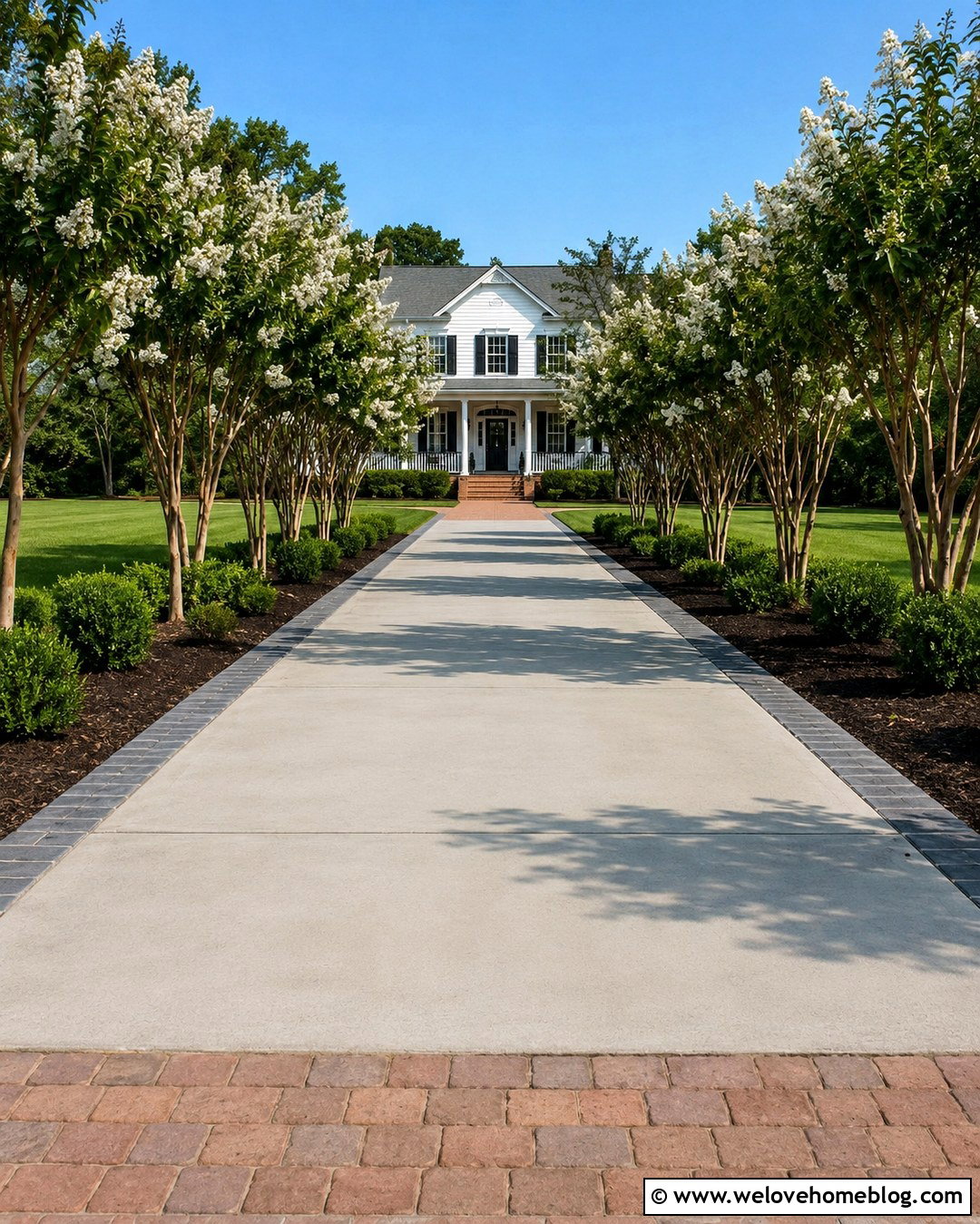
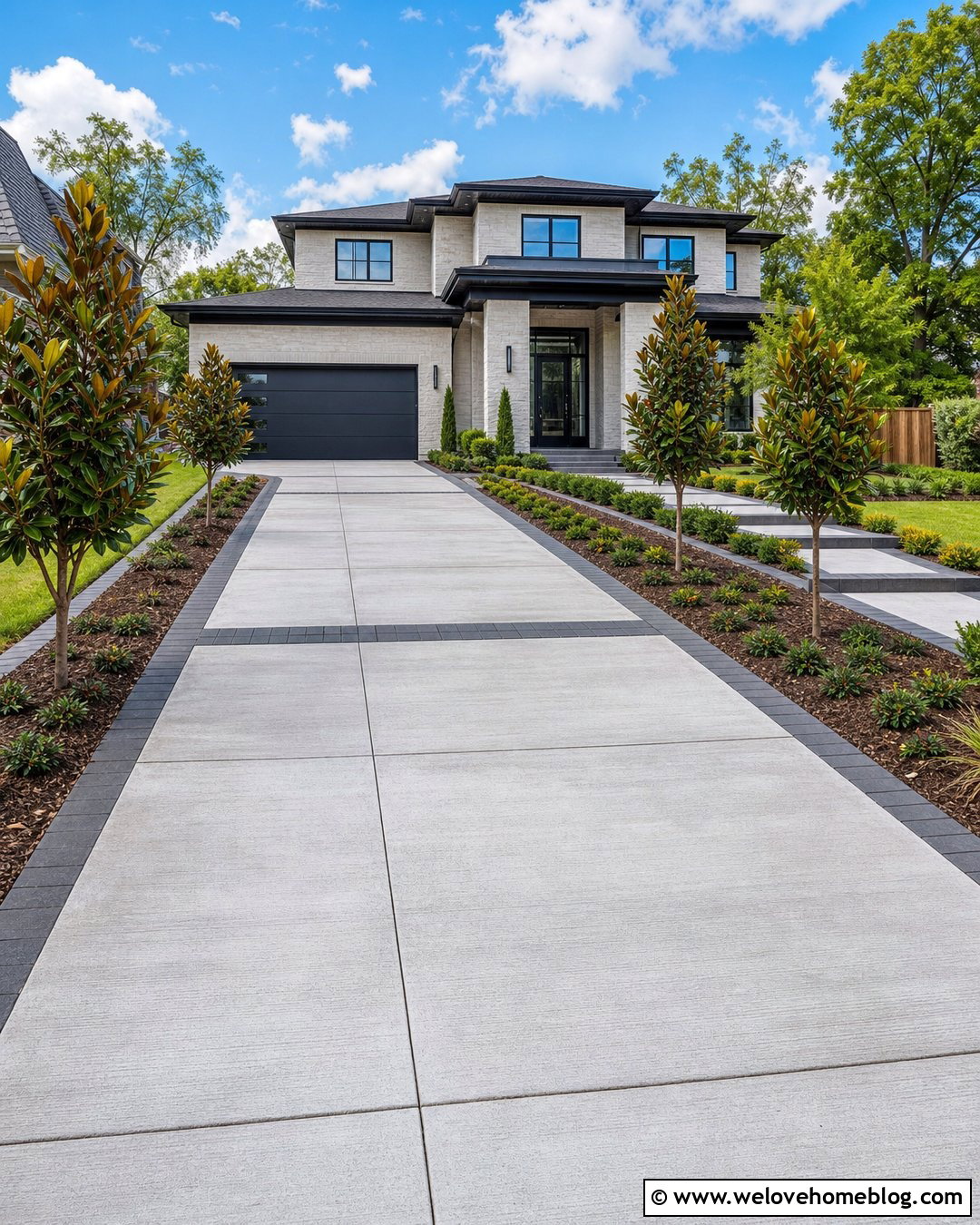
A straight, light-gray concrete driveway framed by white Natchez crepe myrtles creates a clean and elegant approach. The bright flowers complement white siding, pale brick, and dark shutters without making the front yard feel overly colorful. Use matching trees on both sides to establish a formal rhythm, then connect them with continuous beds of dark mulch and low evergreen shrubs. A simple brick or charcoal paver ribbon can give the concrete a more finished edge. Natchez is a large cultivar, so calculate setbacks and spacing from its expected mature canopy rather than its nursery size. Large crepe myrtles need enough room to develop naturally without scraping vehicles or crowding nearby structures. ()
2. Pink Crepe Myrtle Gravel Driveway
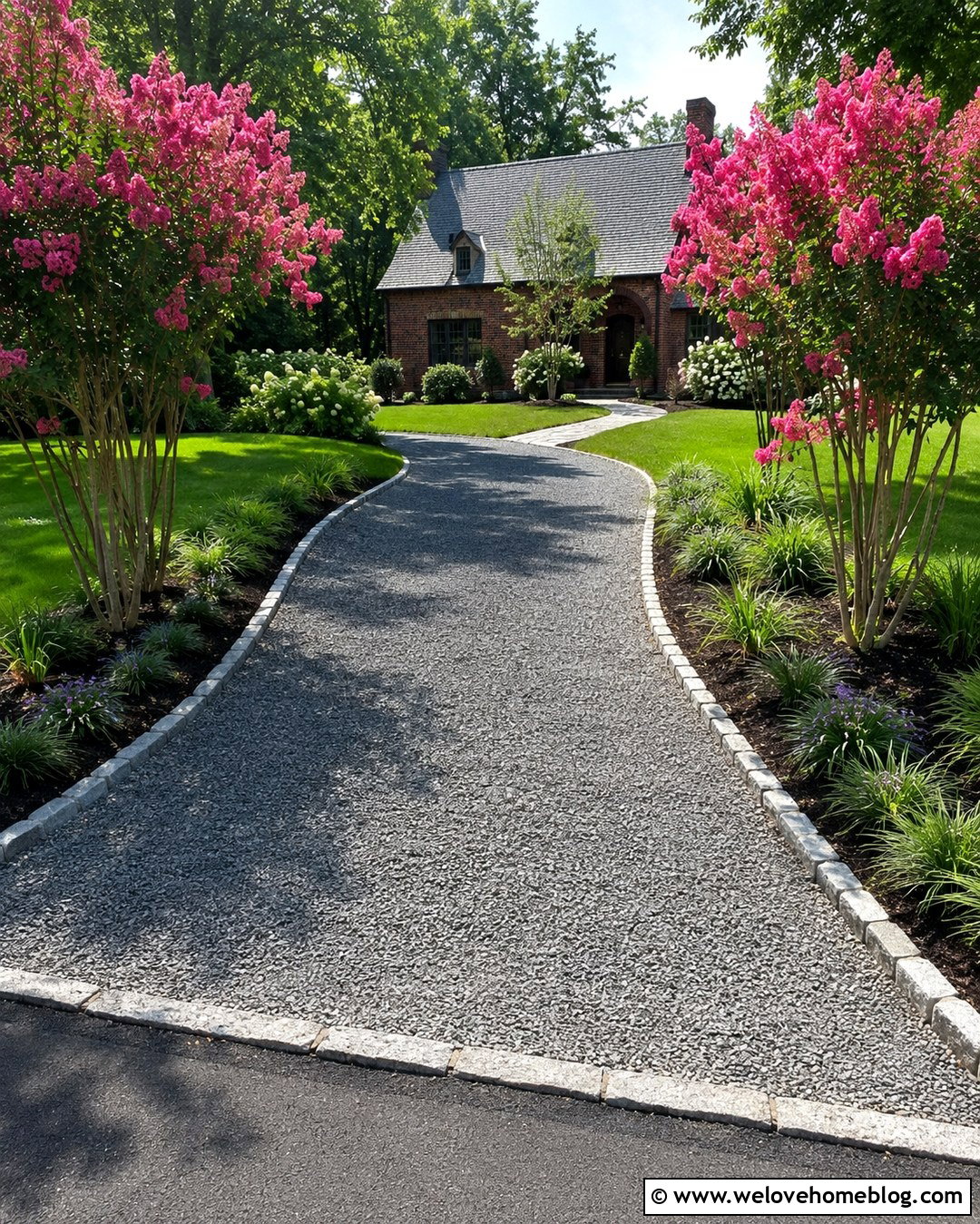
Can a relaxed gravel driveway still look polished? Soft pink crepe myrtles planted along both sides provide structure while preserving the easy character of the material. Choose compacted gray crushed stone for the driving surface and install steel or granite edging to keep loose gravel out of the planting beds. Pink-flowering Sioux crepe myrtles create a balanced look for a medium-length approach. Underplant them with liriope, dwarf ornamental grasses, or a single repeating ground cover. Keeping the plant palette simple allows the flowering canopy to remain the main feature. This combination works especially well with cottage homes, traditional brick houses, and casual Southern landscapes. A wider bed also provides useful separation between spreading branches and passing vehicles.
3. Red Crepe Myrtle Asphalt Driveway
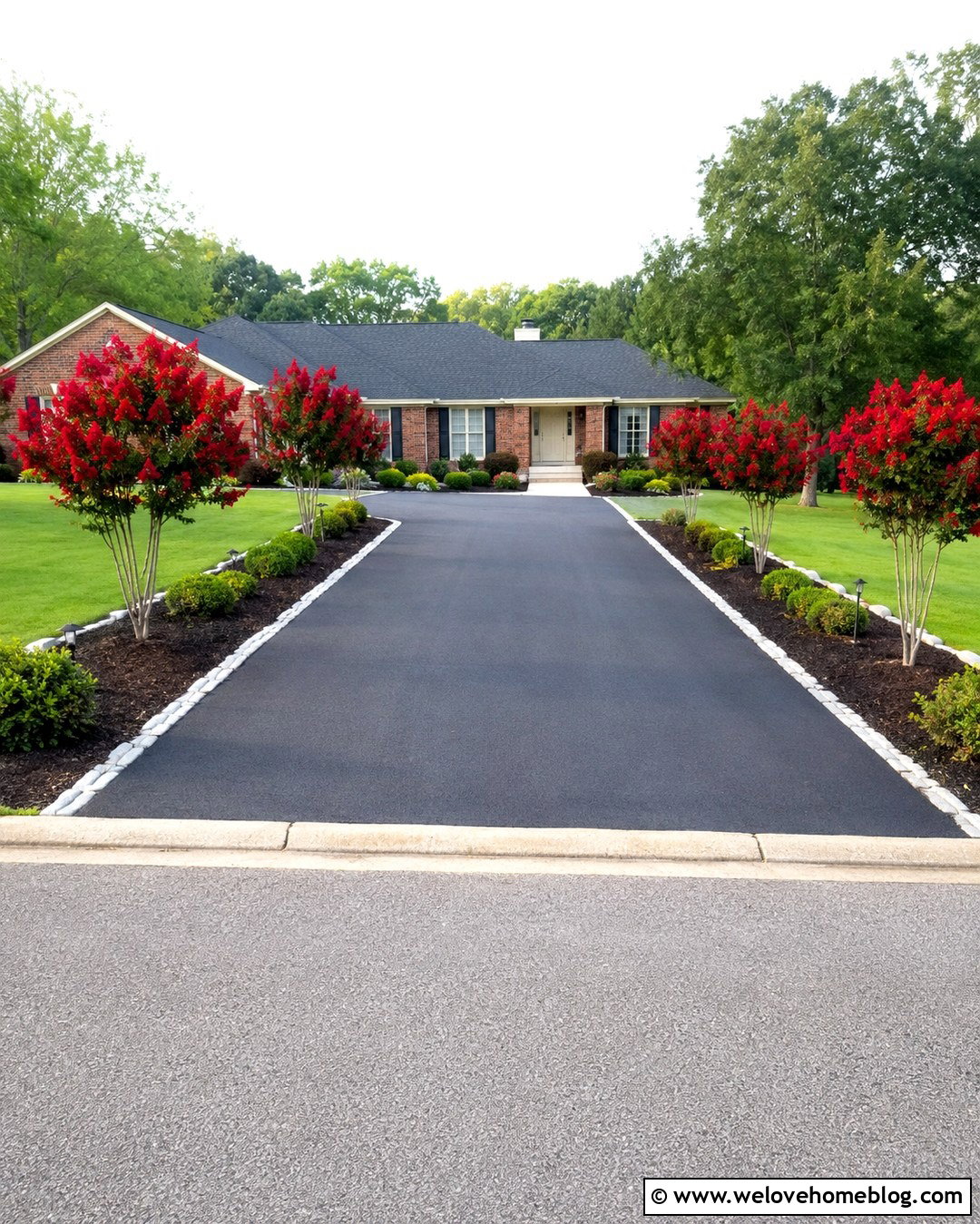
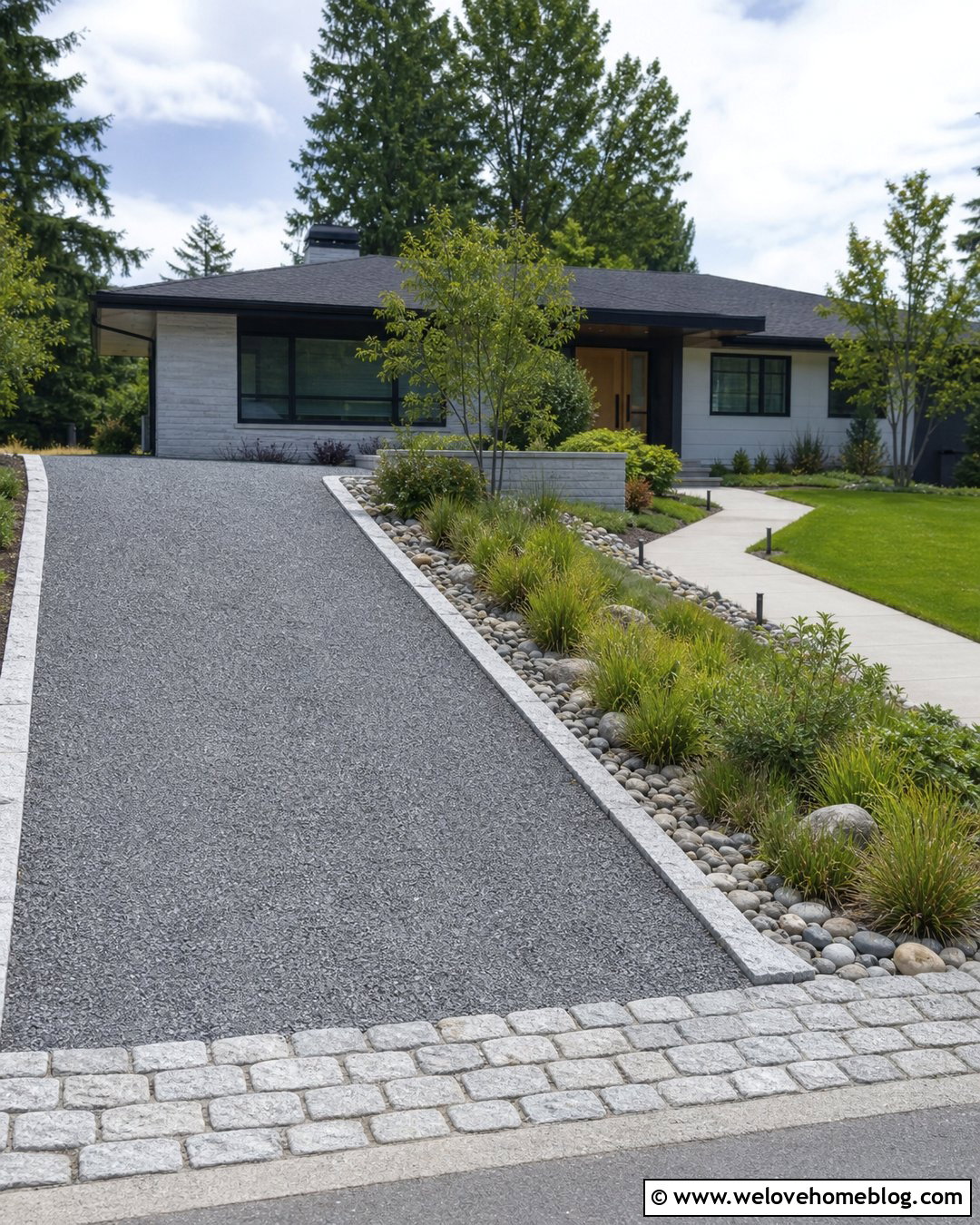
Bold red crepe myrtles can make a black asphalt driveway feel intentional rather than purely practical. Plant matching Dynamite or another appropriately sized red-flowering cultivar in evenly spaced beds along the approach. The dark pavement intensifies the flower color, while pale stone edging creates a crisp visual break between asphalt and soil. Add compact evergreen shrubs beneath the trees to maintain structure after the flowers and leaves fall. Near the street, keep plants low and position the first trees far enough back to protect sight lines. This driveway design suits ranch houses, red-brick homes, and properties with long front setbacks. Repeating the same tree, edging stone, and ground cover keeps the strong red-and-black color combination sophisticated instead of visually busy.
4. Lavender Crepe Myrtle Circular Driveway
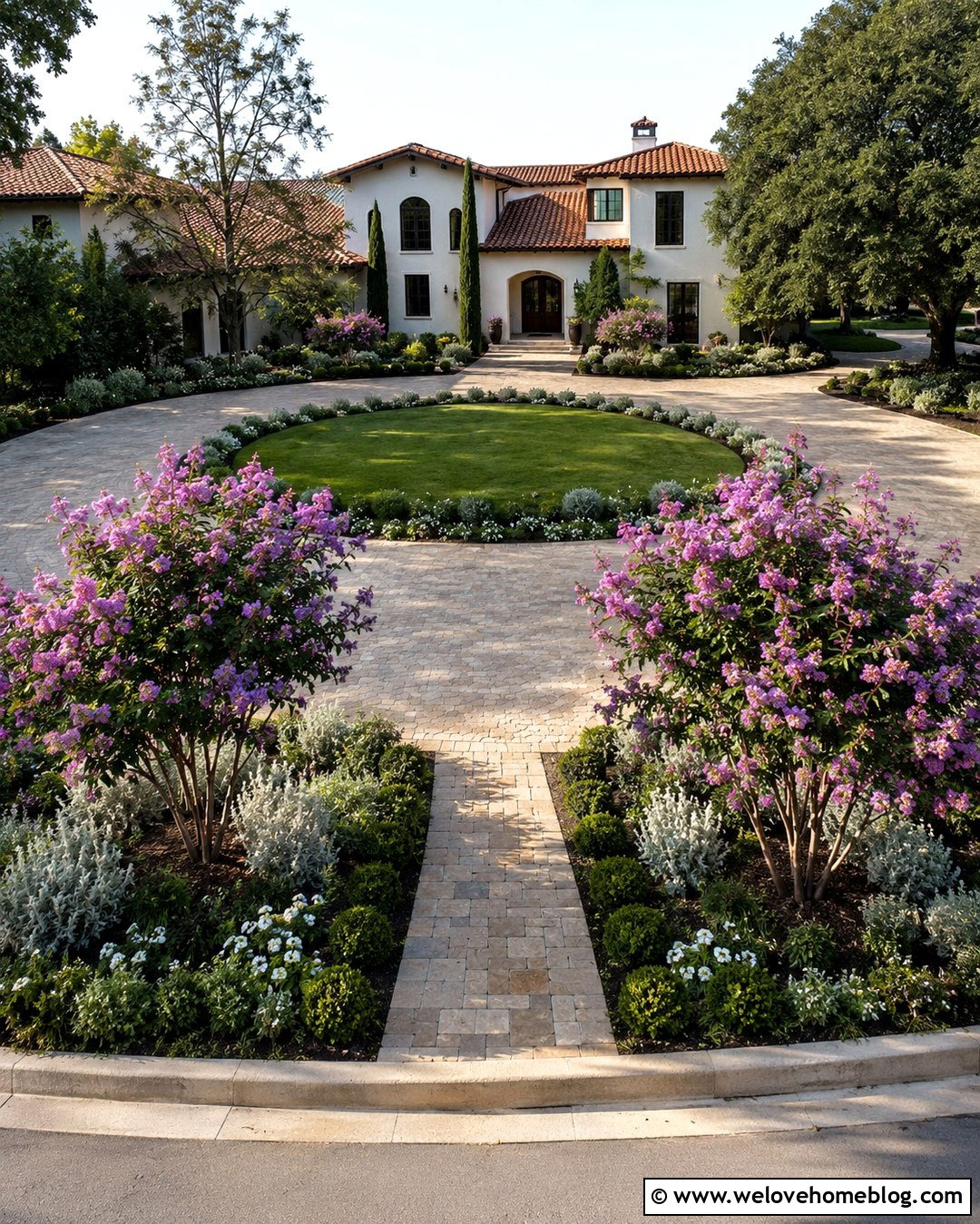
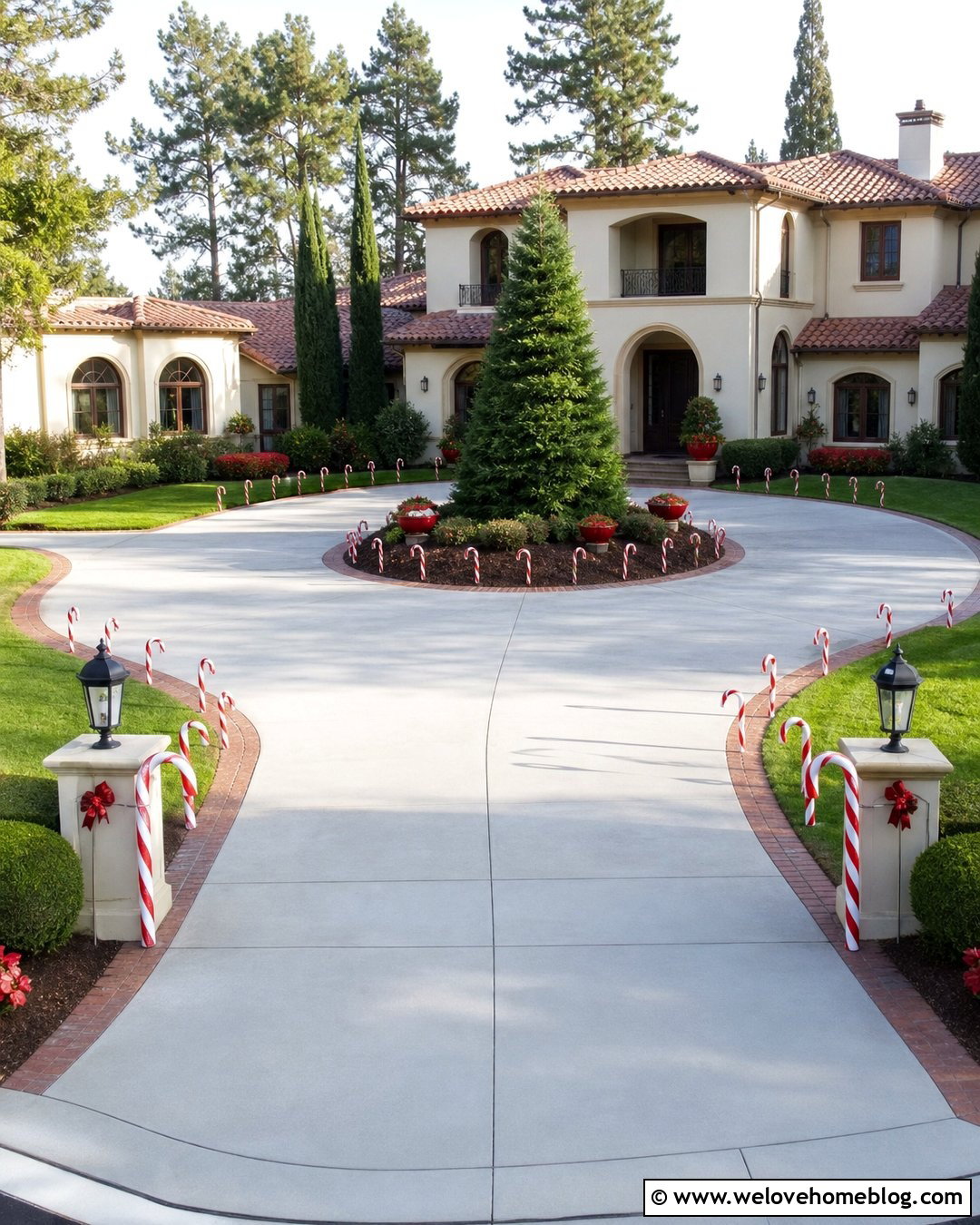
A circular driveway naturally creates a focal point, and lavender crepe myrtles can make that center space especially memorable. Use warm beige concrete pavers for the driveway and plant Muskogee crepe myrtles around the outside curve, leaving the center island more open. Inside the circle, one specimen tree, a low fountain, or a broad lawn panel can anchor the composition. Curved limestone edging should follow the driveway closely and reinforce its shape. Lavender blooms pair beautifully with gray-green foliage, white flowering perennials, and deep green boxwood. Keep taller plantings away from the inner turning area so drivers can see across the circle. The finished landscape feels graceful, spacious, and coordinated with traditional, Mediterranean, or light-stucco architecture.
5. White Crepe Myrtle Farmhouse Gravel Driveway
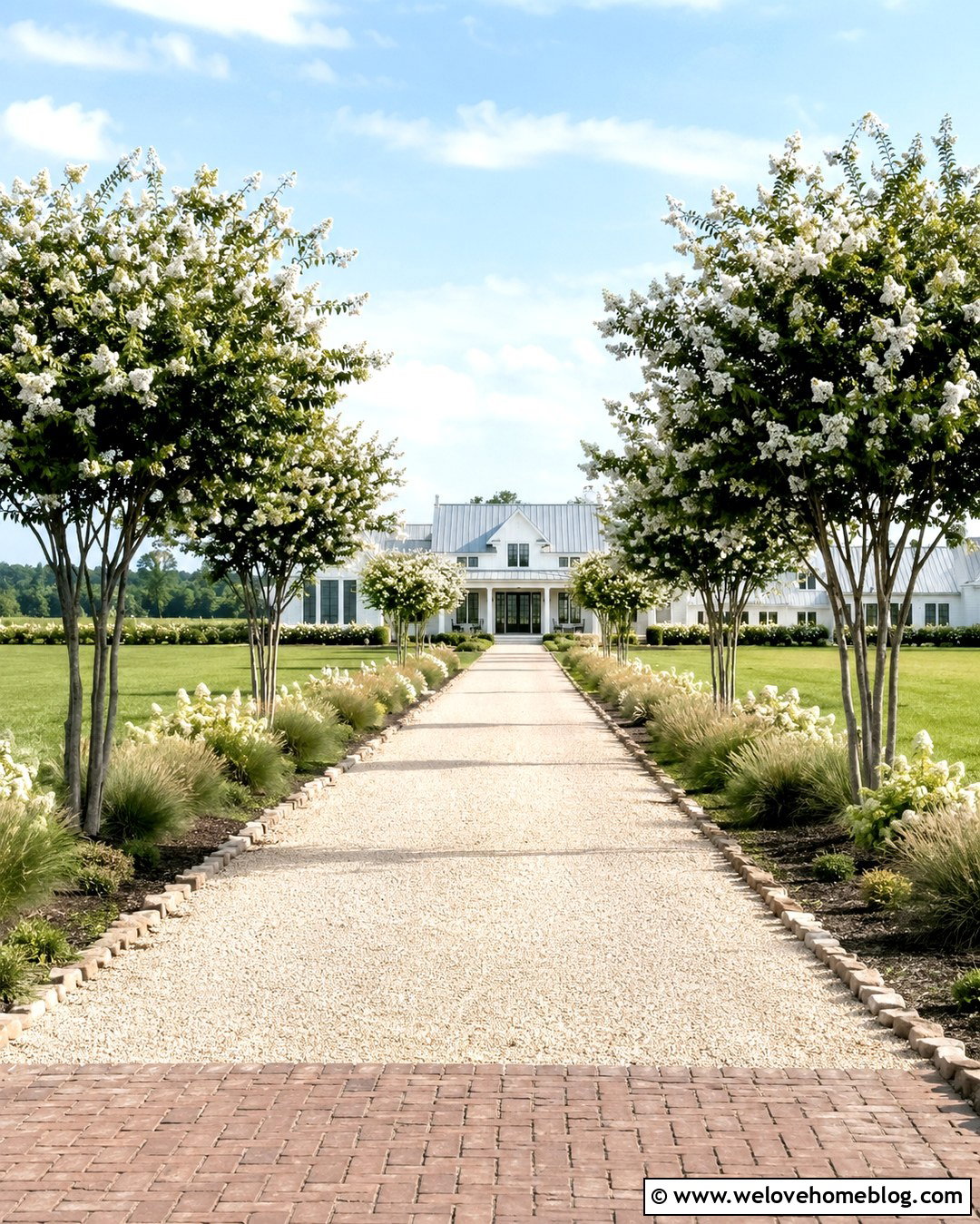
Picture a long pale gravel driveway leading toward a white modern farmhouse, with white crepe myrtles repeating along both sides. This restrained palette makes the entrance feel bright, organized, and connected to the home. Use compacted limestone gravel with natural fieldstone edging, then place the trees in broad lawn strips or mulched beds. White Natchez blooms reinforce the farmhouse siding, while their cinnamon-toned trunks add warmth during the cooler months. Clumps of fountain grass or low panicle hydrangeas can fill selected gaps without hiding the trunks. Add a simple concrete or brick apron at the road to contain gravel. The result offers country character, but the repeated spacing and limited materials keep the driveway neat enough for a newer farmhouse property.
6. Coral Crepe Myrtle Brick Driveway
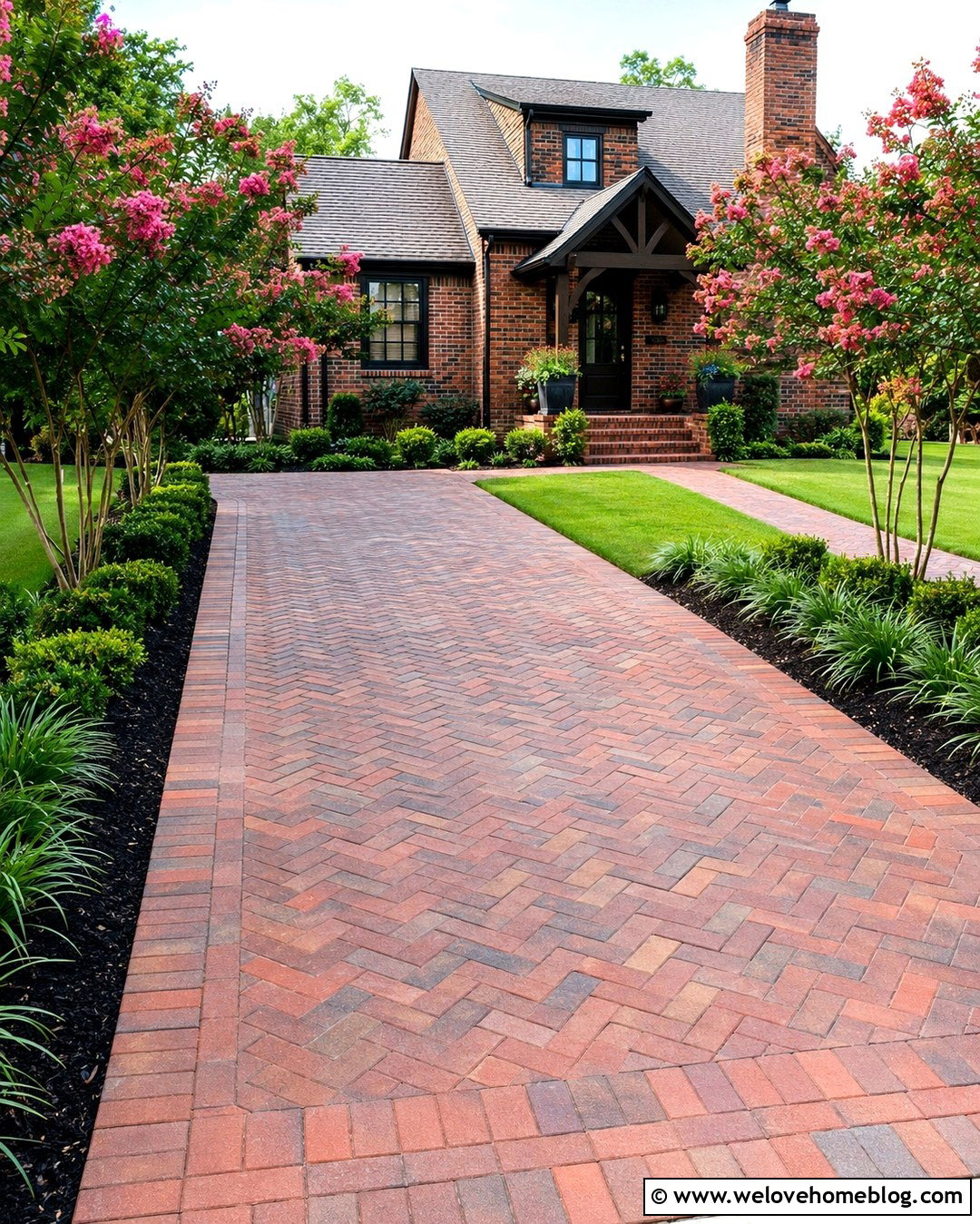
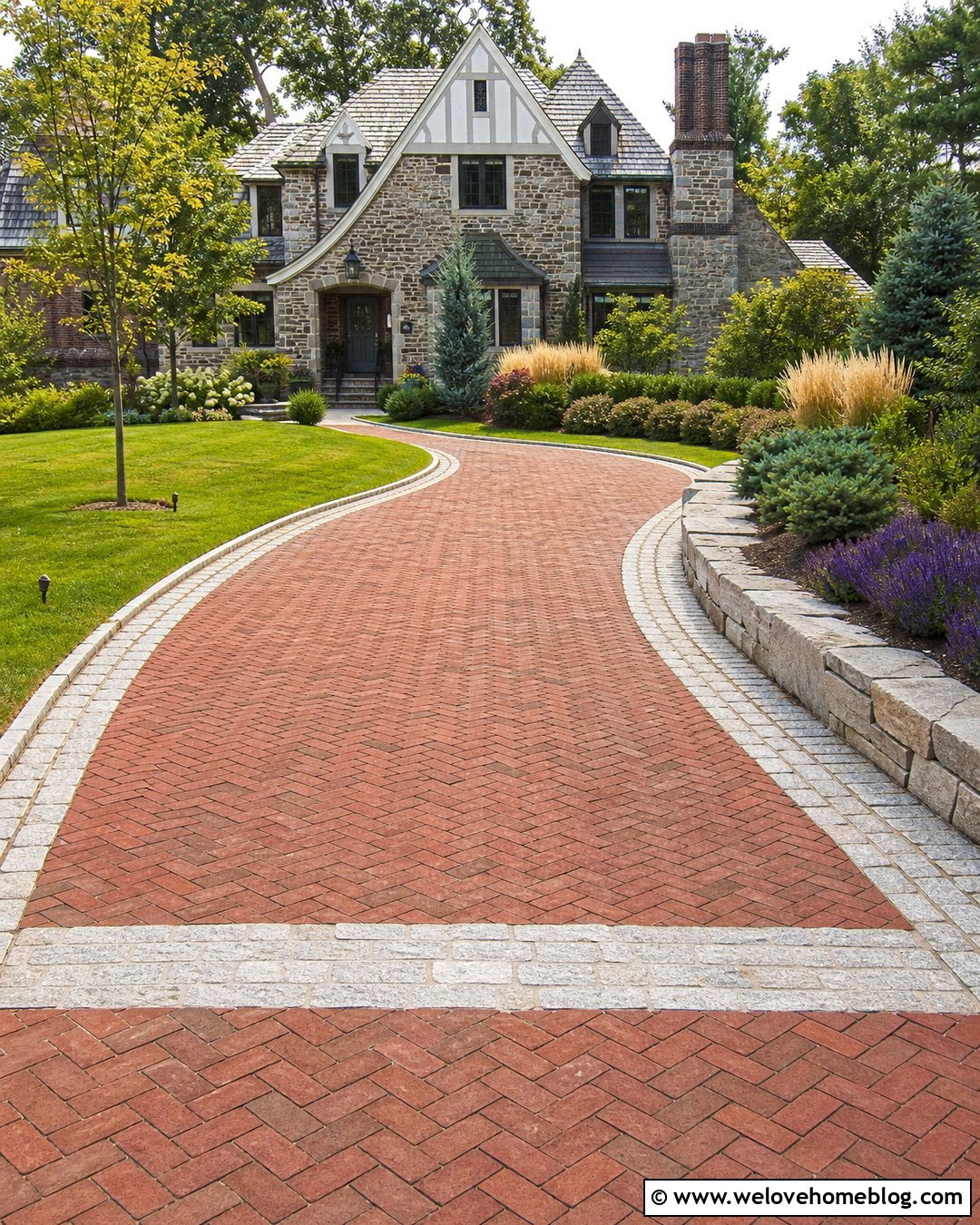
Warm coral-pink flowers look especially rich beside a red and brown brick driveway. Tuscarora crepe myrtles can form a colorful row that connects the paving to a traditional brick or craftsman-style house. Lay the driveway bricks in a herringbone pattern and use a soldier-course border to define the edges. Between the trees, choose simple beds of dark green dwarf yaupon holly, liriope, or low ornamental grasses. These quieter plants prevent the coral blooms and patterned surface from competing. If the driveway is narrow, plant only one tree row along the more spacious side and repeat smaller shrubs opposite it. This creates balance without forcing broad canopies into limited space. Coordinated brick walkways can complete the unified front-yard design.
7. Dwarf Crepe Myrtle Small Driveway
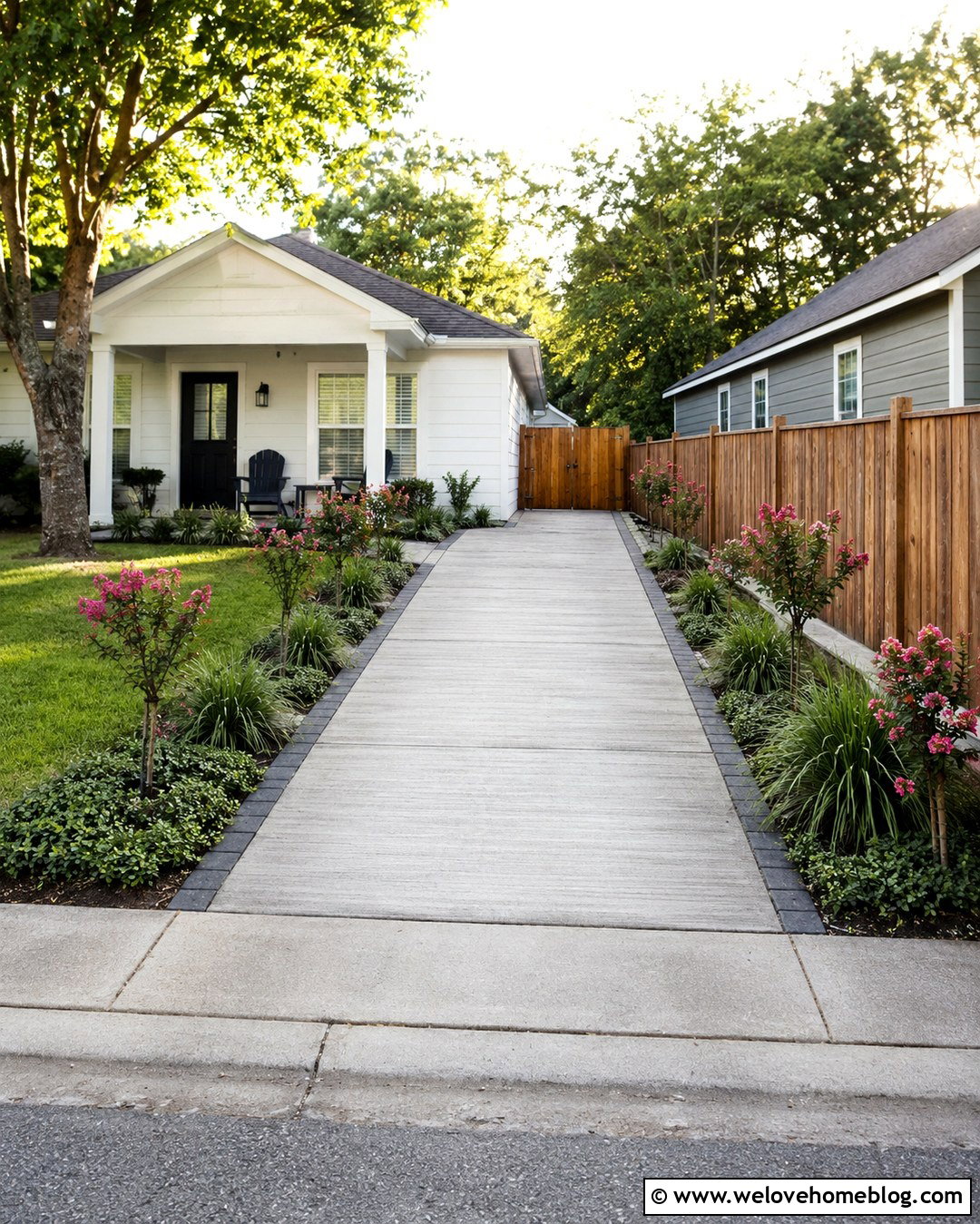
A compact front yard does not require giving up the crepe myrtle look. Dwarf or semi-dwarf cultivars can line a short driveway without overwhelming the house, sidewalk, or parking area. Crepe myrtle cultivars vary dramatically in mature size, from low shrubs to large trees, so checking the specific plant label is essential. () Pair rose-pink dwarf crepe myrtles with a narrow broom-finished concrete driveway and a low charcoal brick border. Place the plants in widened pockets rather than a continuous bed if space is tight. Add compact sedges or creeping ground cover below them. This scaled-down arrangement works well beside cottages, bungalows, and townhomes while still providing repeated color from the curb to the garage.
8. Dark Leaf Crepe Myrtle Modern Driveway
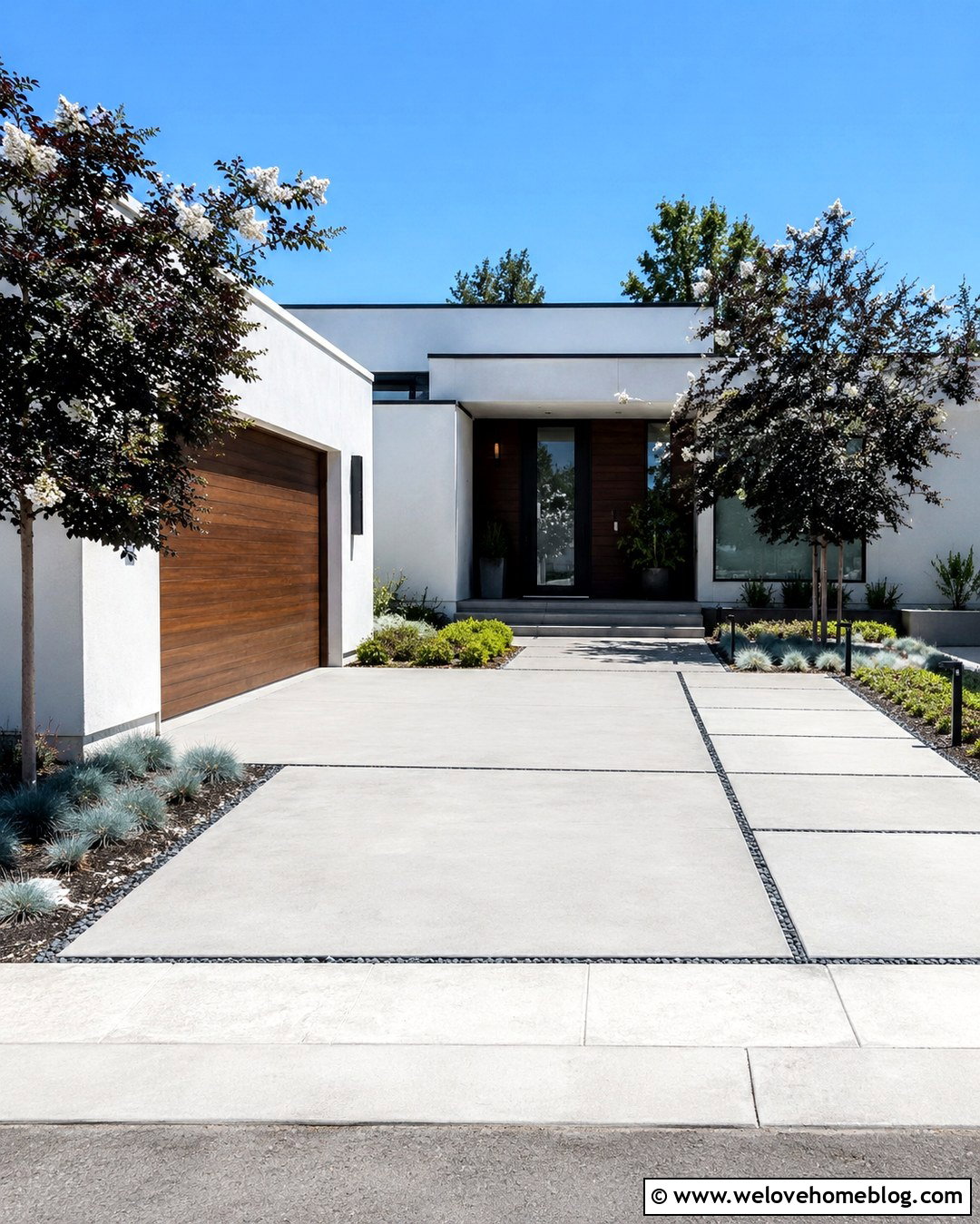
For a sharper contemporary look, combine dark-leaf crepe myrtles with large-format concrete driveway panels. Varieties with burgundy or near-black foliage provide strong contrast against pale gray concrete, white stucco, and natural wood siding. Separate the panels with narrow strips of dark gravel or neatly maintained grass. Plant the crepe myrtles in rectangular beds that match the geometry of the driveway and architecture. A restrained underplanting of blue fescue, dwarf lomandra, or low evergreen mounds keeps the overall design uncluttered. Choose one flower color, such as white or deep red, throughout the row. Slim black metal edging and simple rectangular path lights can reinforce the modern theme. Preserve open space around each trunk so its shape remains visible and architectural.
9. Crepe Myrtle Long Country Driveway
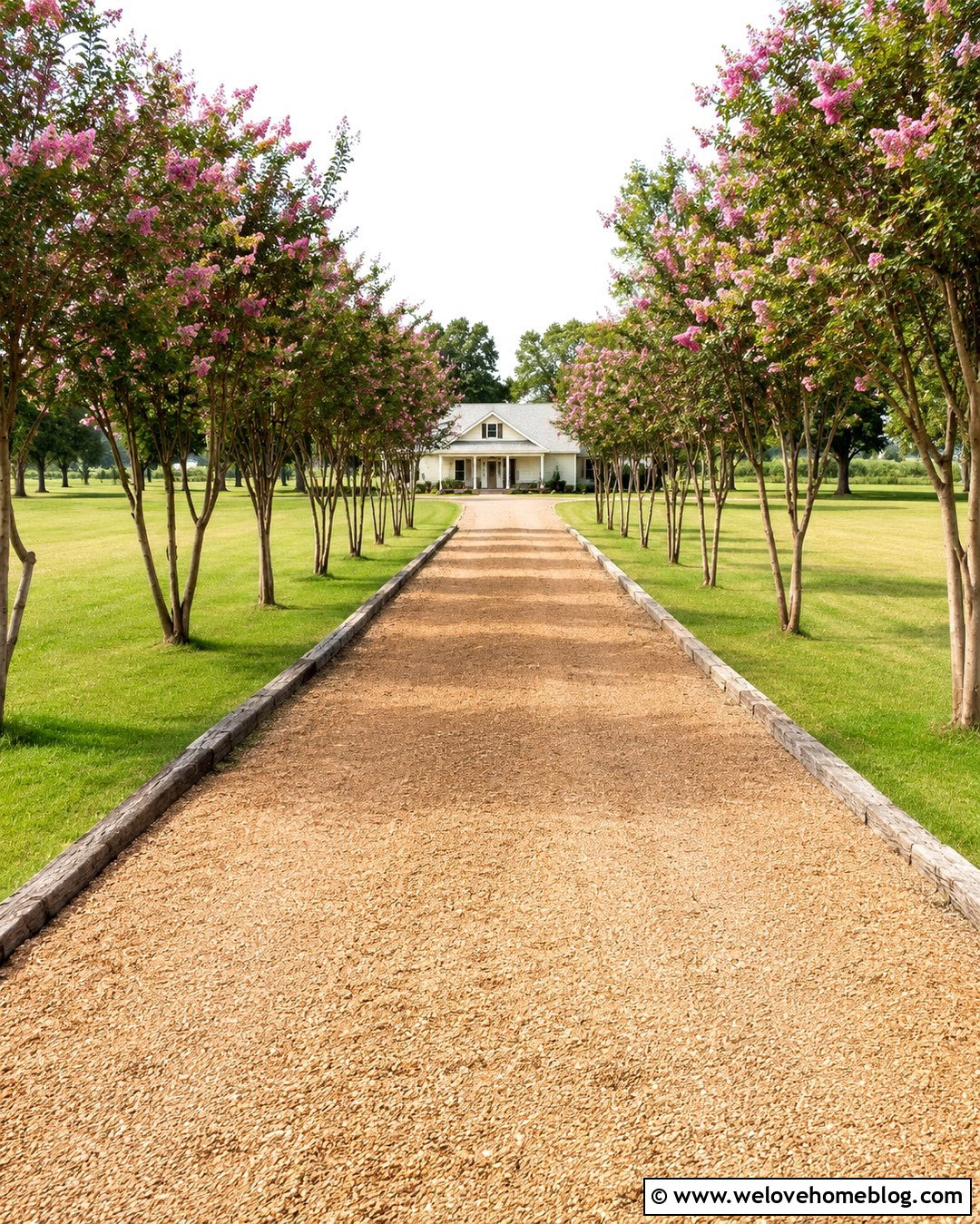
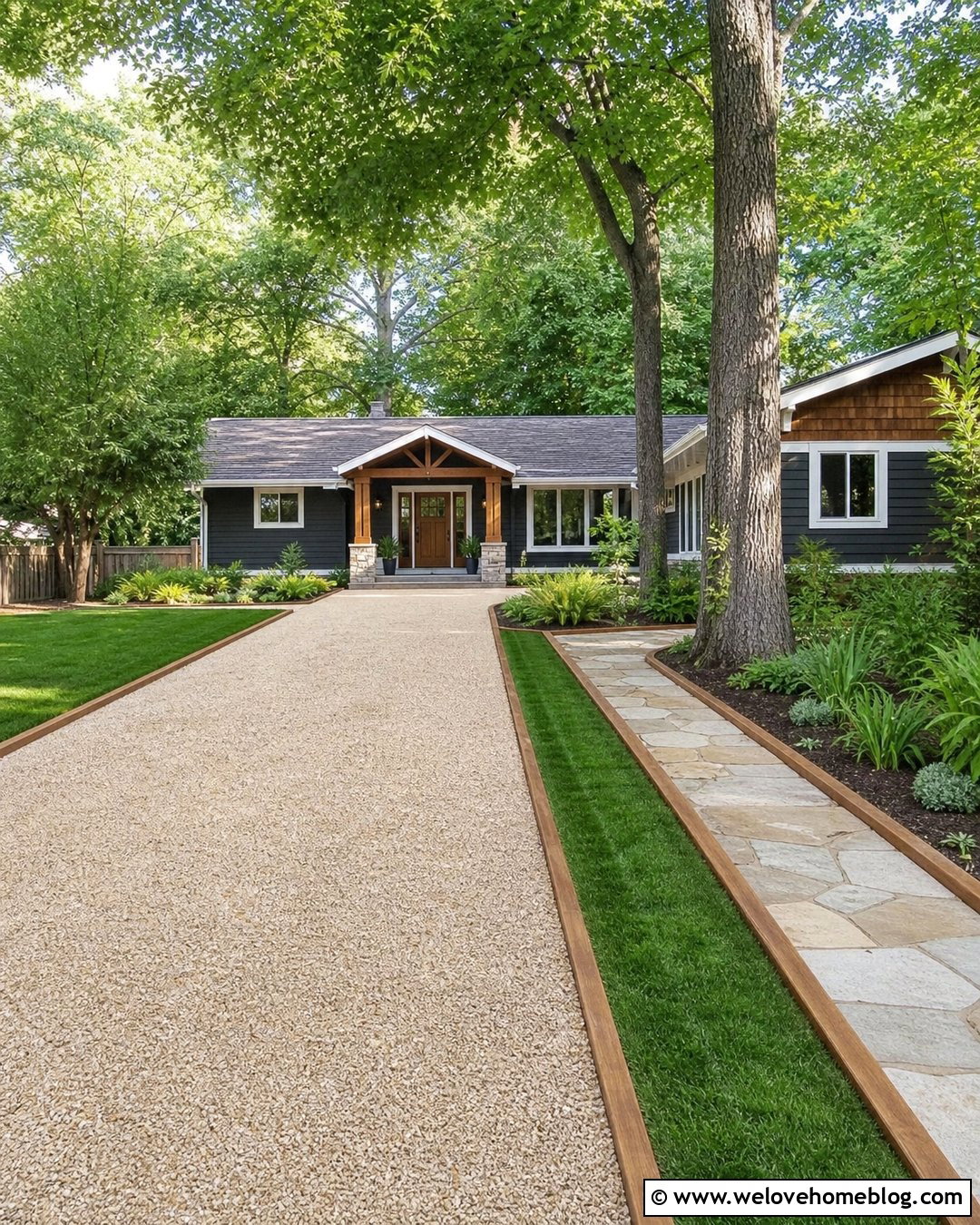
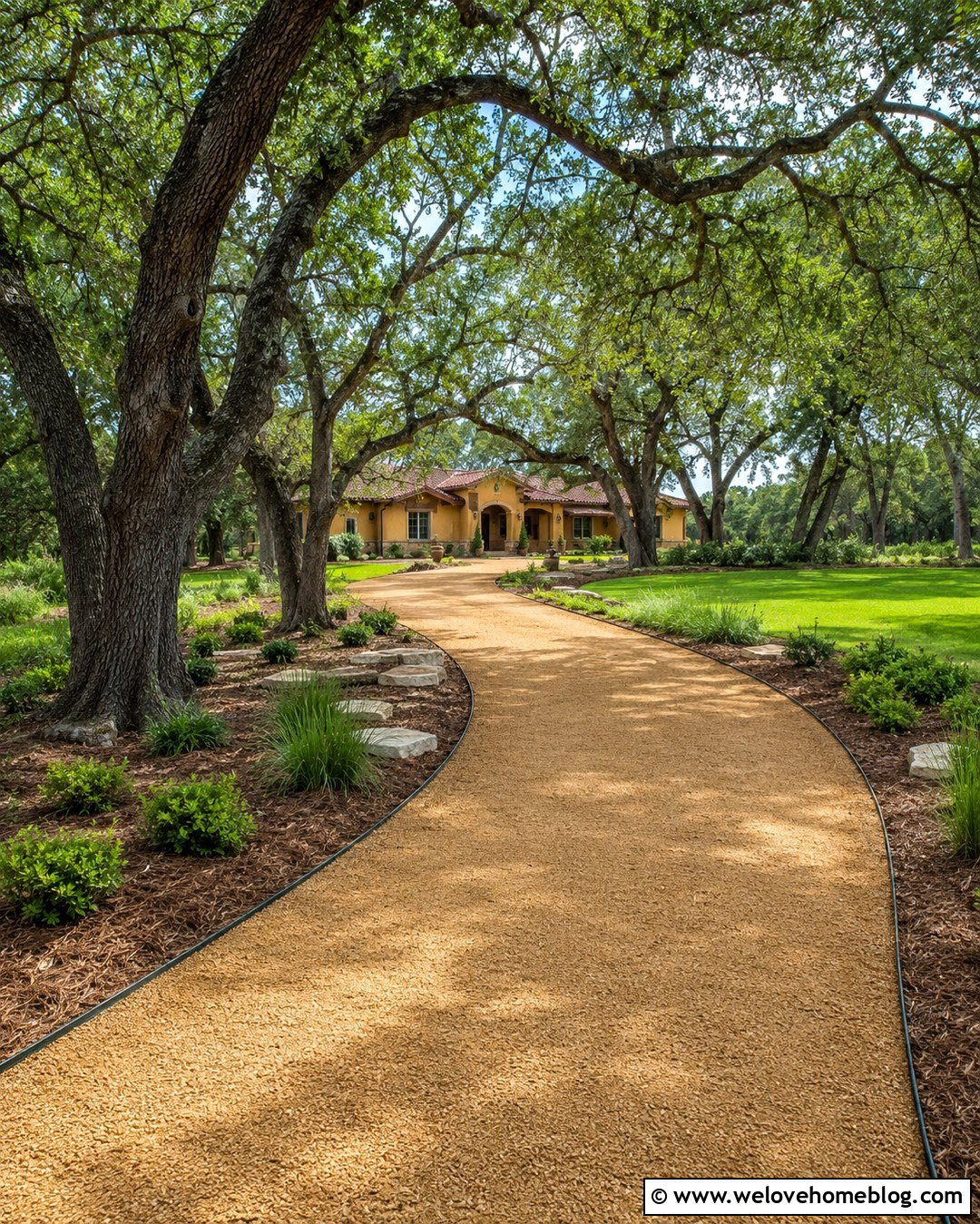
A long country driveway gains depth and direction from evenly repeated crepe myrtles. Use a warm tan crushed-gravel surface with timber or weathered stone edging to preserve the rural setting. Medium or large tree-form cultivars can create an allée effect when their mature canopies are carefully considered. For a lighter appearance, leave enough separation for individual trunks and crowns to remain distinct. For a more enclosed approach, position the rows so the canopies gradually frame the view without interfering with vehicles. Simple mown grass beneath the trees may be all the landscaping needed. At the house, transition the gravel into a generous parking court. Matching trees around that court help the entire driveway read as one planned landscape instead of a decorative row added later.
10. White Crepe Myrtle Coastal Driveway
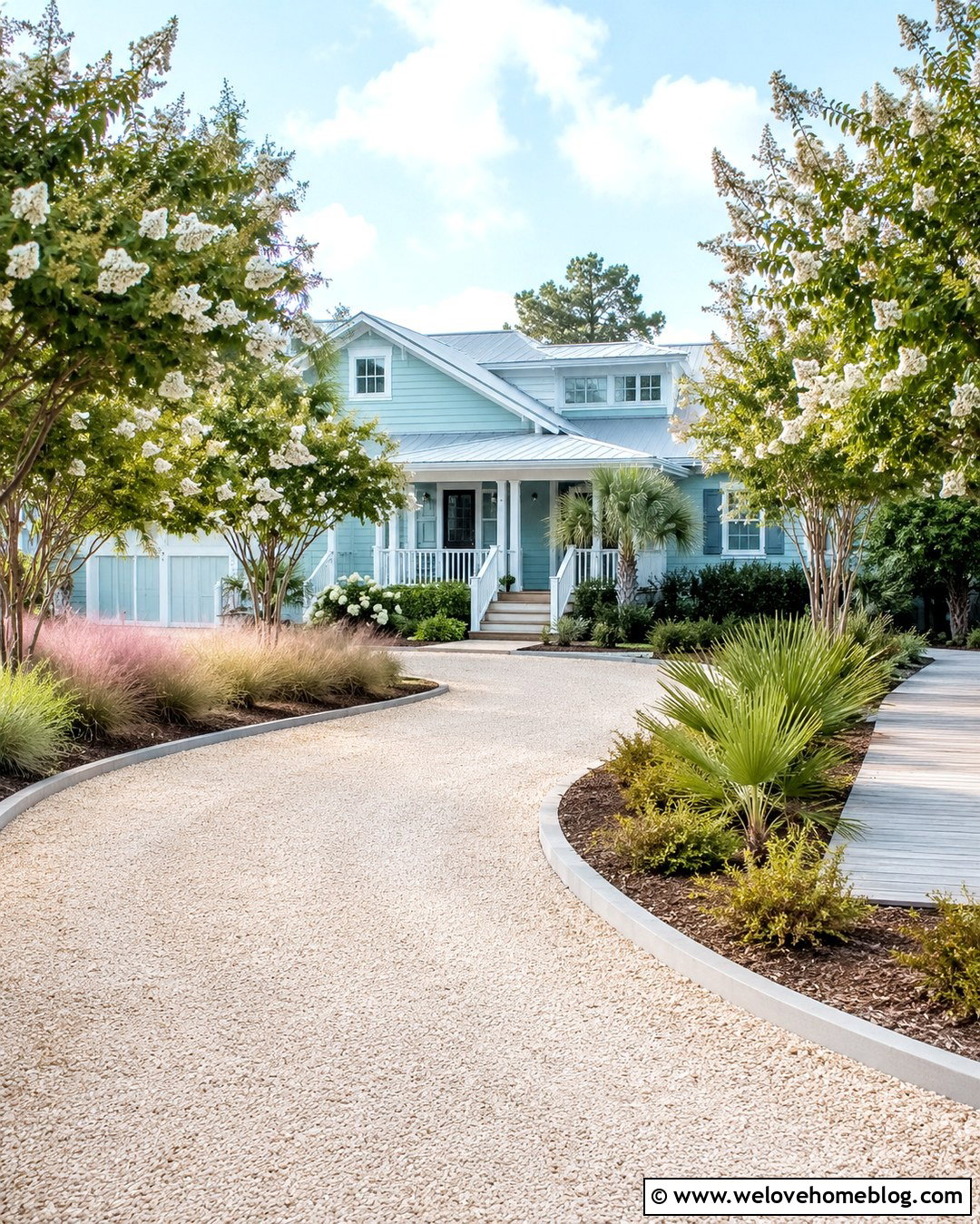
White crepe myrtles bring a fresh, airy quality to a coastal home without relying on an overly themed landscape. Start with a cream-colored shell or pale crushed-stone driveway that curves gently toward a weathered-shingle or light-blue house. Edge the driving surface with low concrete curbing to control loose material. Plant appropriately sized white-flowering crepe myrtles in mulched beds alongside wax myrtle, dwarf palmetto, muhly grass, and other plants suited to local coastal conditions. The soft foliage and white blooms keep the entrance visually cool and open. Use a generous tree setback where wind may spread branches toward the driveway. A simple boardwalk-style path can run beside the drive, creating safe pedestrian access while strengthening the relaxed coastal character.
11. Pink Crepe Myrtle Sloped Driveway
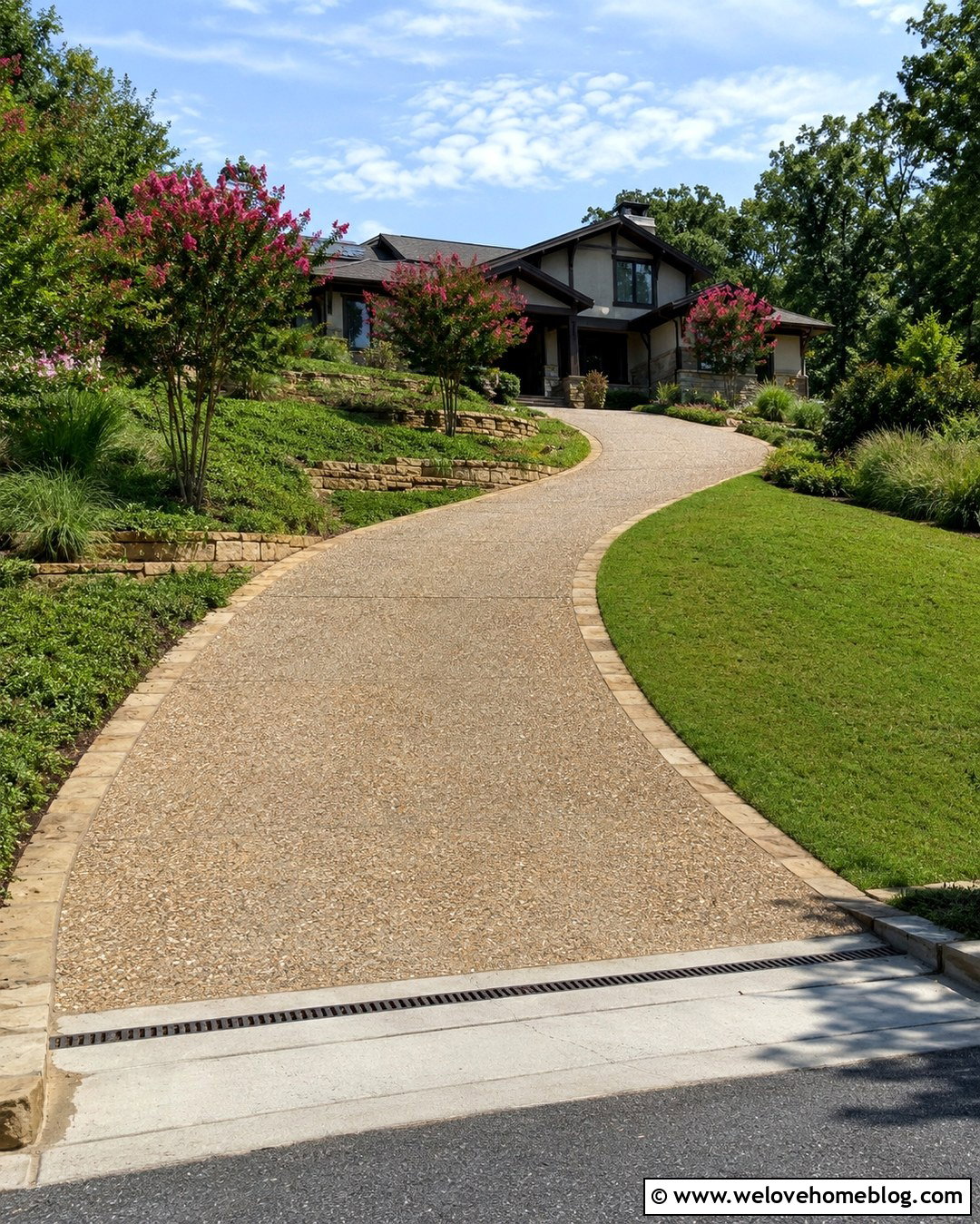
Sloped driveways need landscaping that follows the grade instead of fighting it. A textured exposed-aggregate concrete surface offers traction and natural color, while pink crepe myrtles soften the rising approach. Arrange the trees in staggered rows rather than trying to force them into a perfectly level visual line. Low stone retaining walls can form broad planting terraces around selected trees and control soil movement. Repeat the same stone as driveway edging to unify the design. Plant low ground covers on the banks so they do not block the trunks or make turning areas feel narrow. Direct runoff toward a suitable drainage system rather than into mulched beds. This complete look works particularly well with hillside ranch homes, split-level houses, and craftsman architecture featuring stone details.
12. Crepe Myrtle Ranch House Driveway
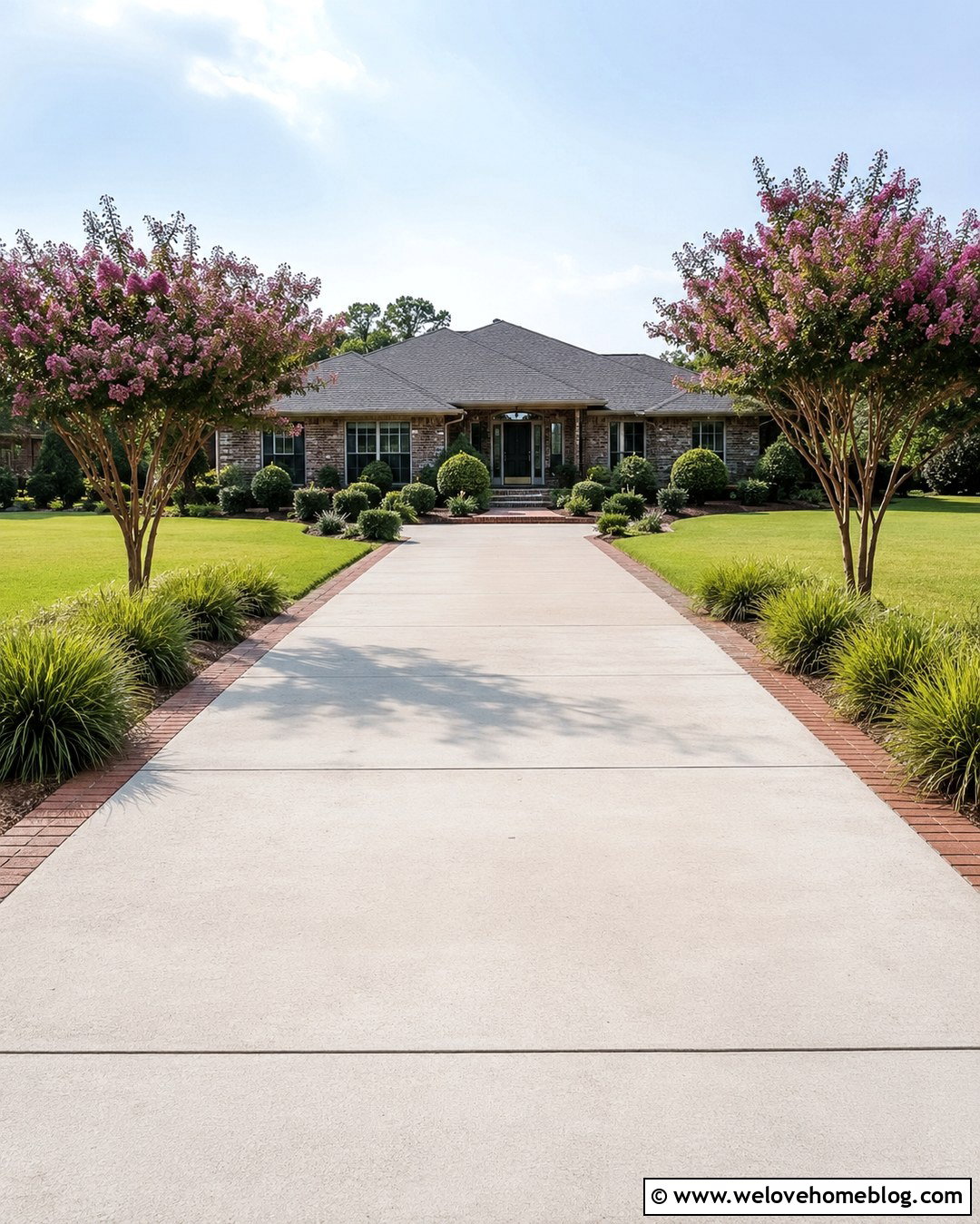
The broad horizontal shape of a ranch house pairs naturally with a simple row of medium-height crepe myrtles. Use a wide poured-concrete driveway with narrow red-brick ribbons along each edge. Soft pink or lavender flowering trees can be planted in generous lawn strips, giving their canopies room to spread above low foundation landscaping. Instead of filling the entire driveway with dense beds, group ornamental grasses and evergreen shrubs around every second or third tree. This creates breathing room and reduces maintenance. Continue one brick ribbon into the front walkway so the driveway and entry feel connected. Keep branches lifted enough for clear views from the street and garage. The final design adds vertical interest without overpowering the ranch home’s low roofline and straightforward architecture.
13. Crepe Myrtle Cobblestone Driveway
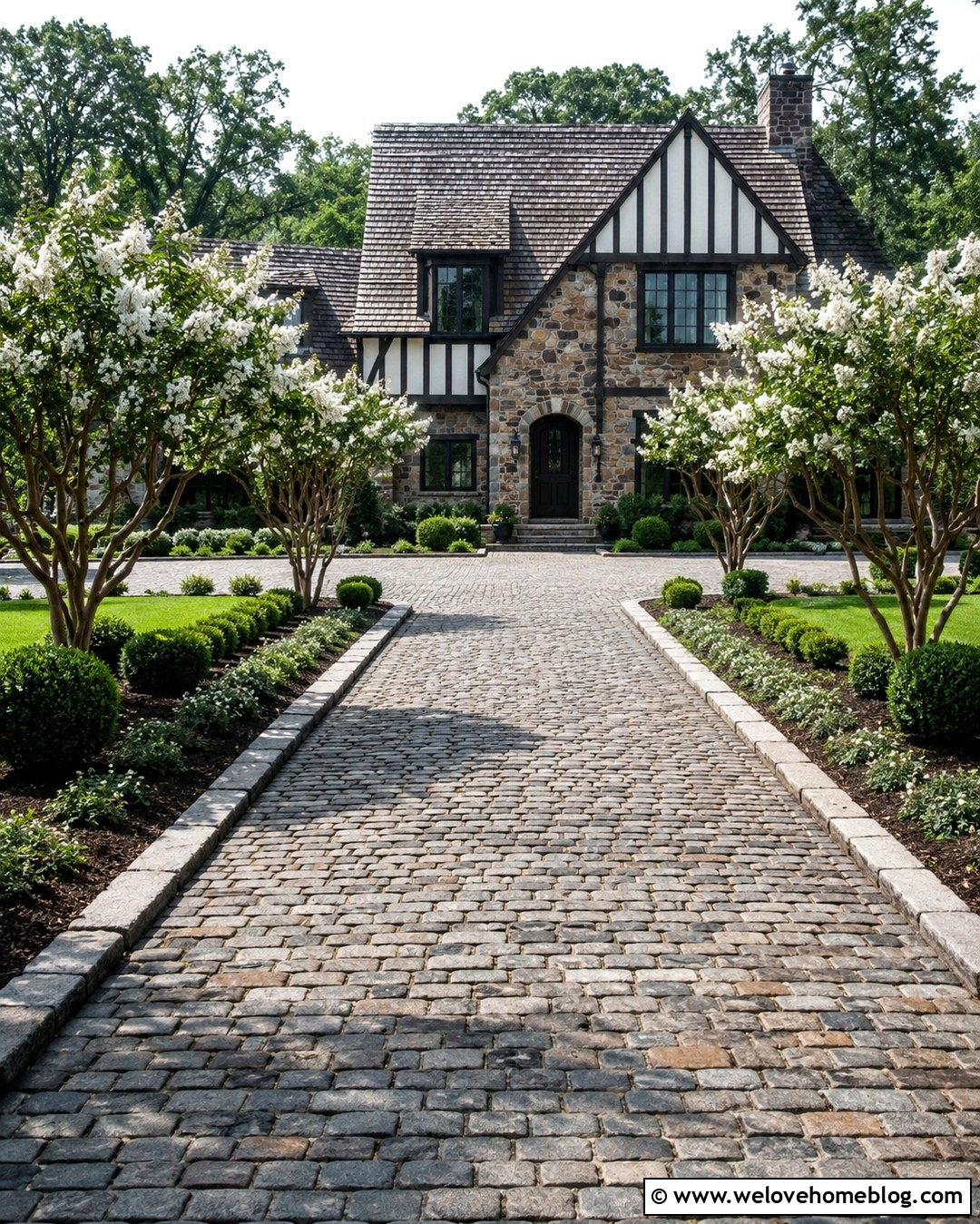
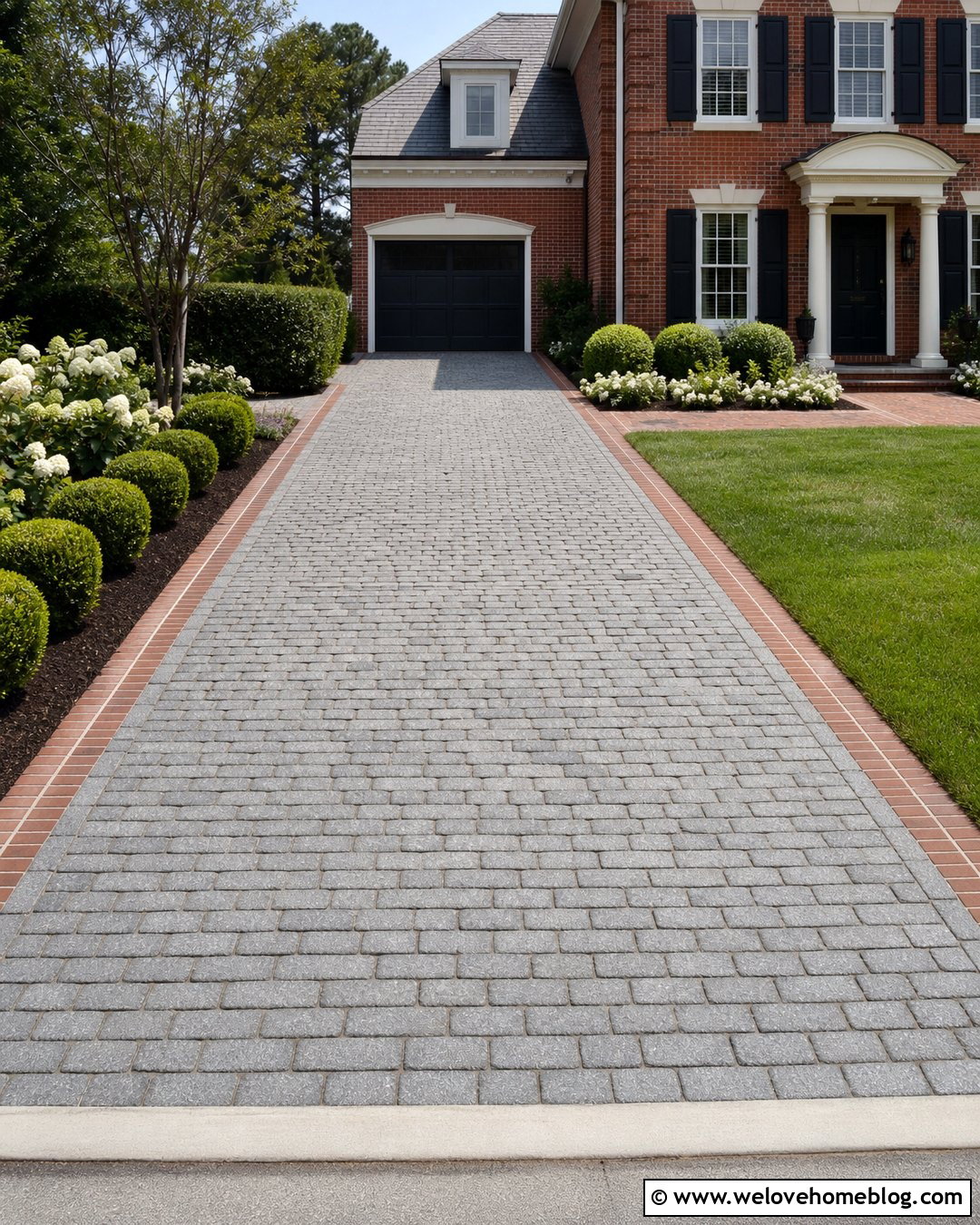
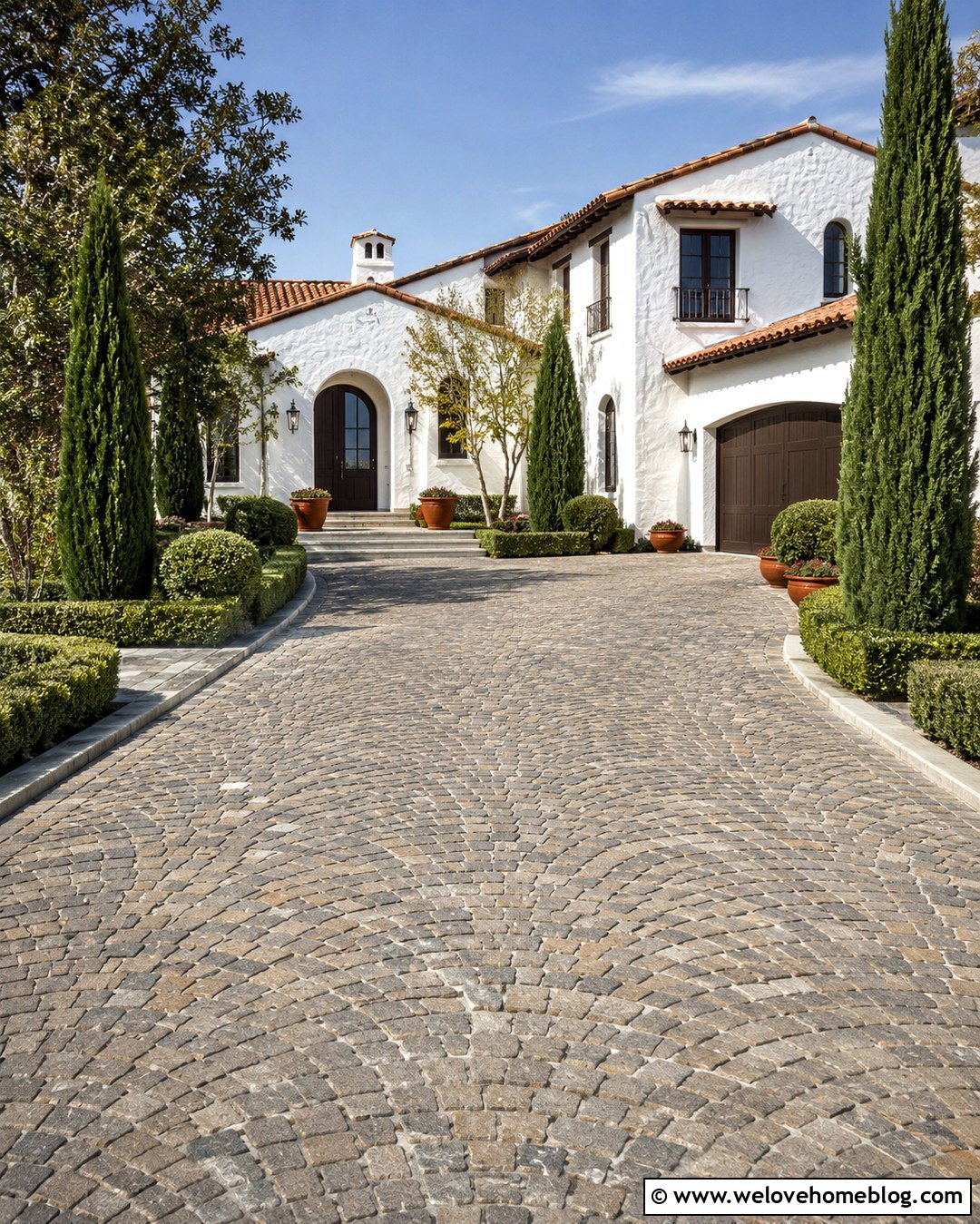
An aged cobblestone driveway becomes even more distinctive when lined with naturally shaped crepe myrtles. White or pale lavender blooms lighten the heavy texture of gray and tan stone, while multi-trunk forms complement the driveway’s traditional character. Use larger granite setts along the outer edges to contain the smaller cobbles and define planting beds. Shade-tolerant ground cover may be used beneath mature canopies, but leave open mulch around the trunks. This look suits colonial, Tudor, and European-influenced homes with substantial front yards. Slightly wider spacing keeps the design stately and allows each tree’s bark to be appreciated. At the garage, create a matching cobblestone parking court so the entrance remains visually consistent from the street through the full approach.
14. Crepe Myrtle Resin Driveway
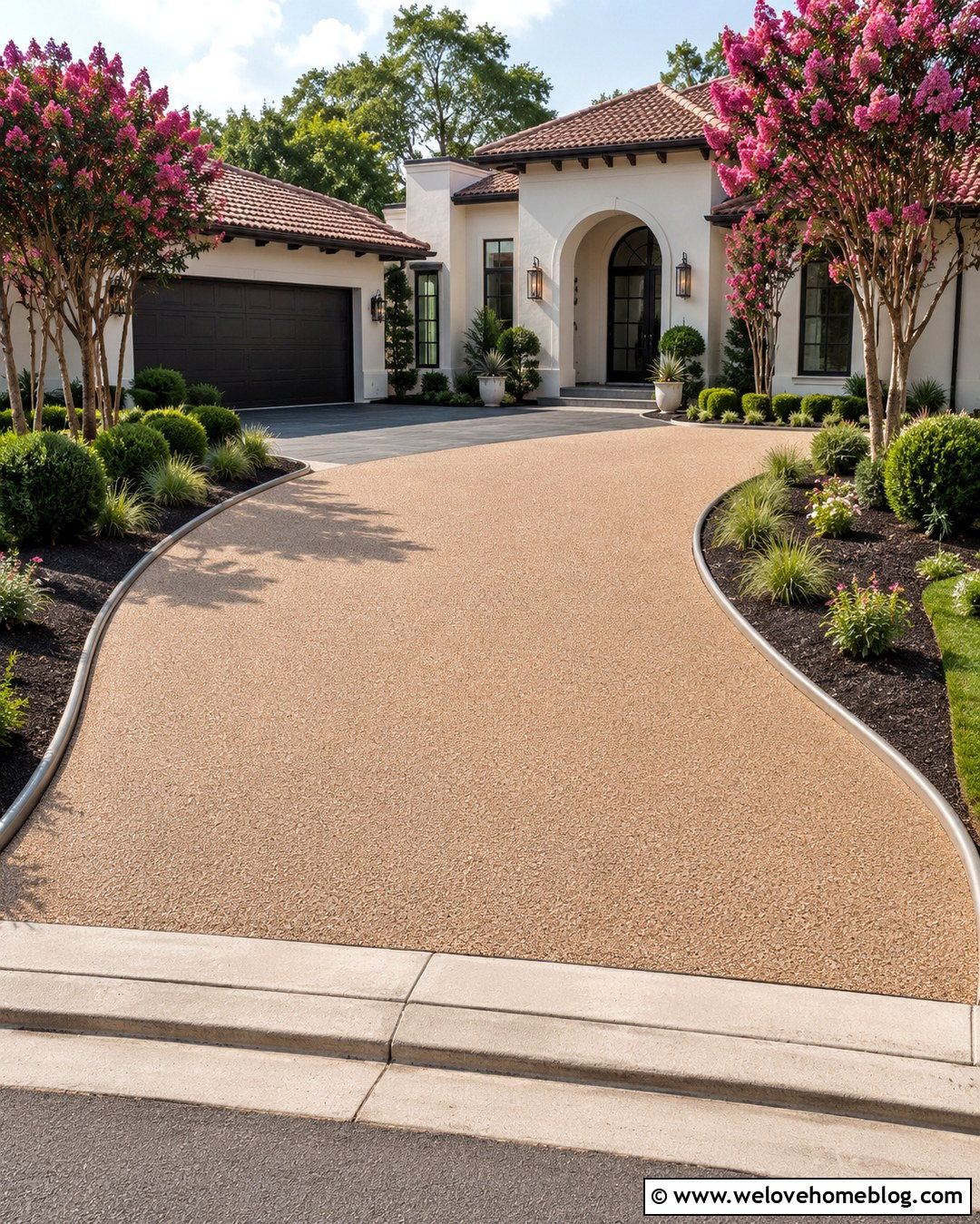
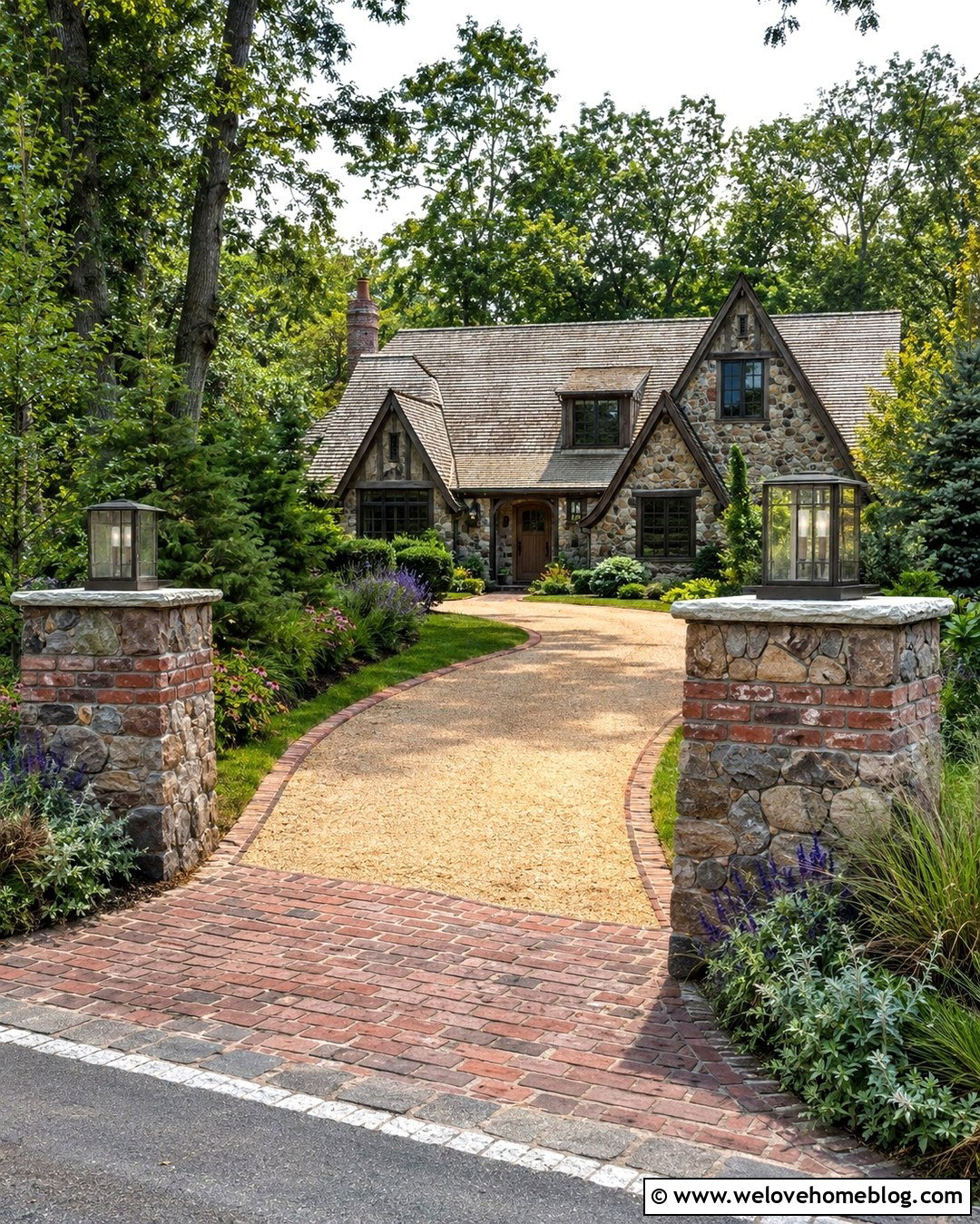
A resin-bound gravel driveway offers a smooth, tidy background for a colorful crepe myrtle border. Choose a warm beige or soft gray aggregate blend that complements the home rather than competing with the flowers. Mauve or purple crepe myrtles can line a gently curved layout, supported by crisp steel edging and wide planting beds. Repeat rounded evergreen shrubs and low ornamental grasses beneath the trees for a controlled, contemporary appearance. Because the surface reads as one continuous plane, changes in bed shape become especially noticeable. Use broad, gradual curves instead of small waves. A contrasting paver apron at the garage can protect the transition and add detail. This coordinated design works well with updated traditional homes, stucco houses, and modern suburban properties.
15. Crepe Myrtle Gated Driveway
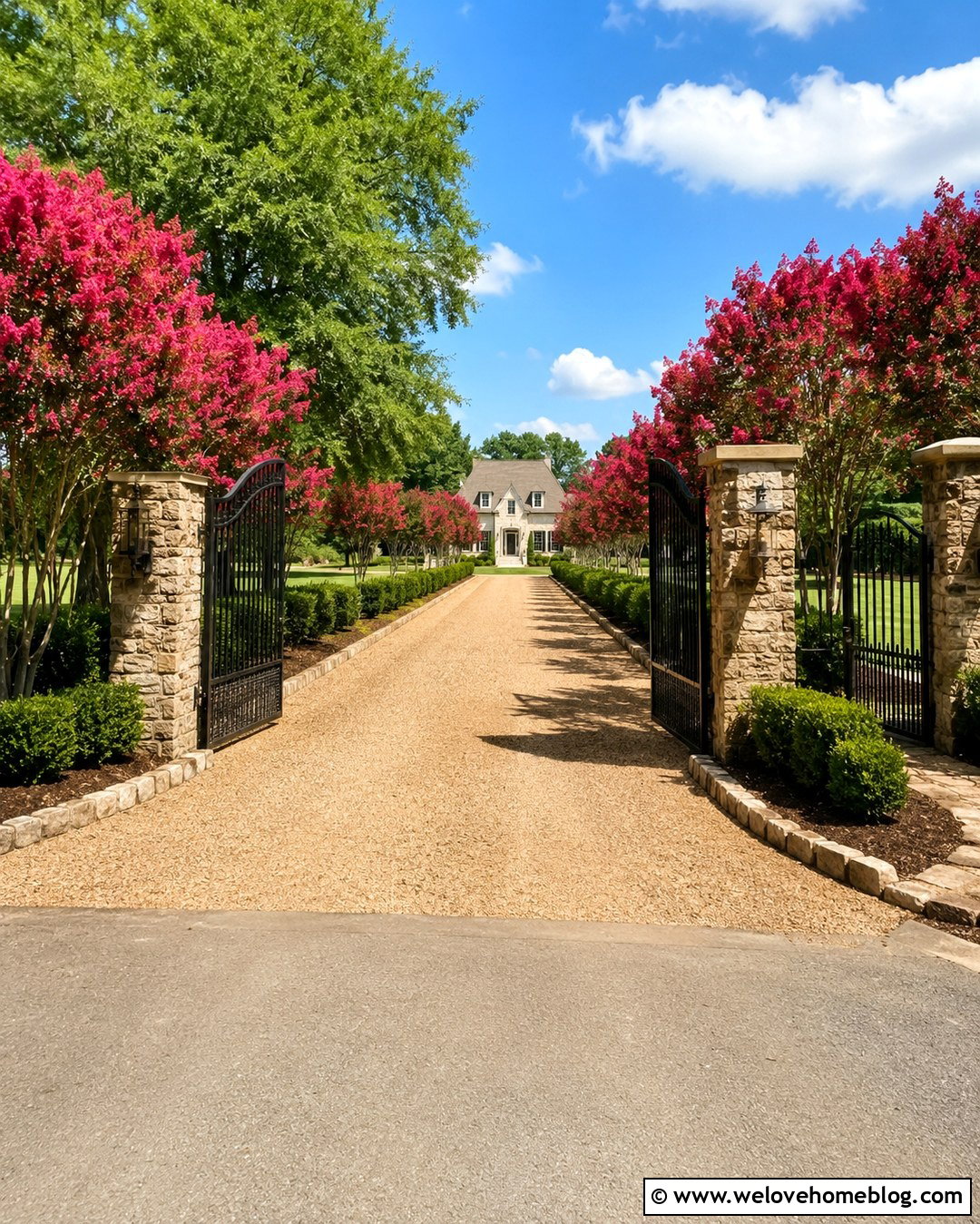
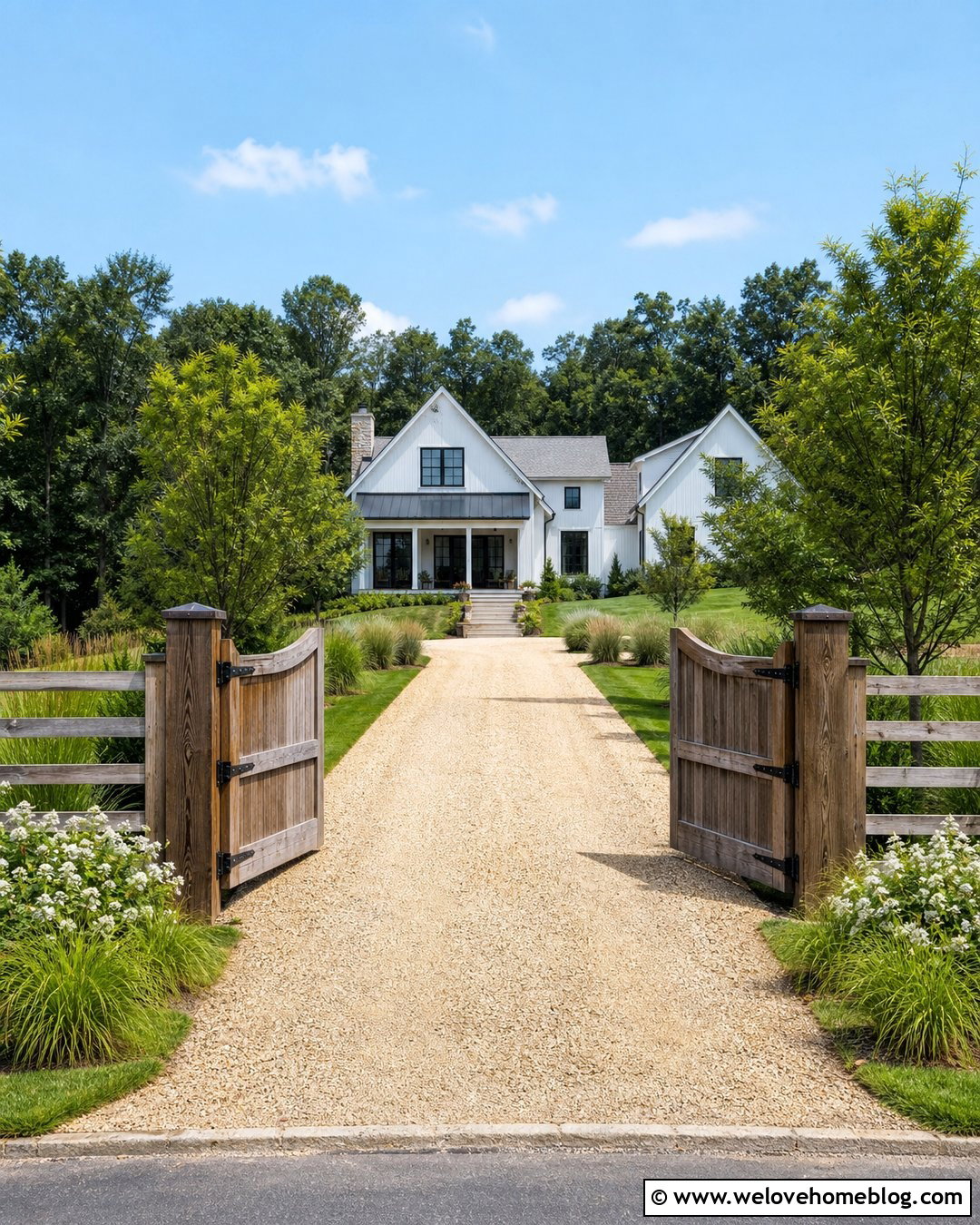
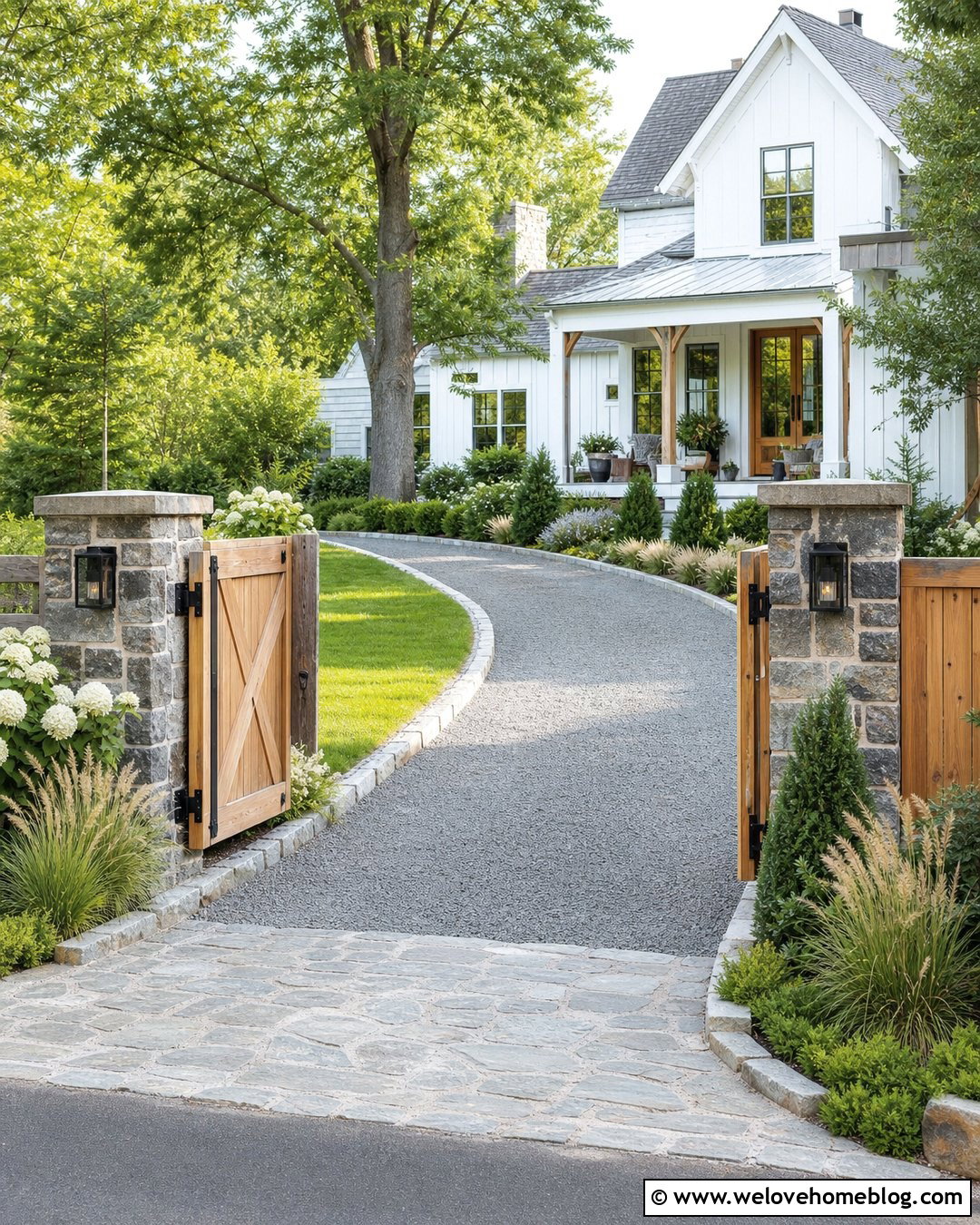
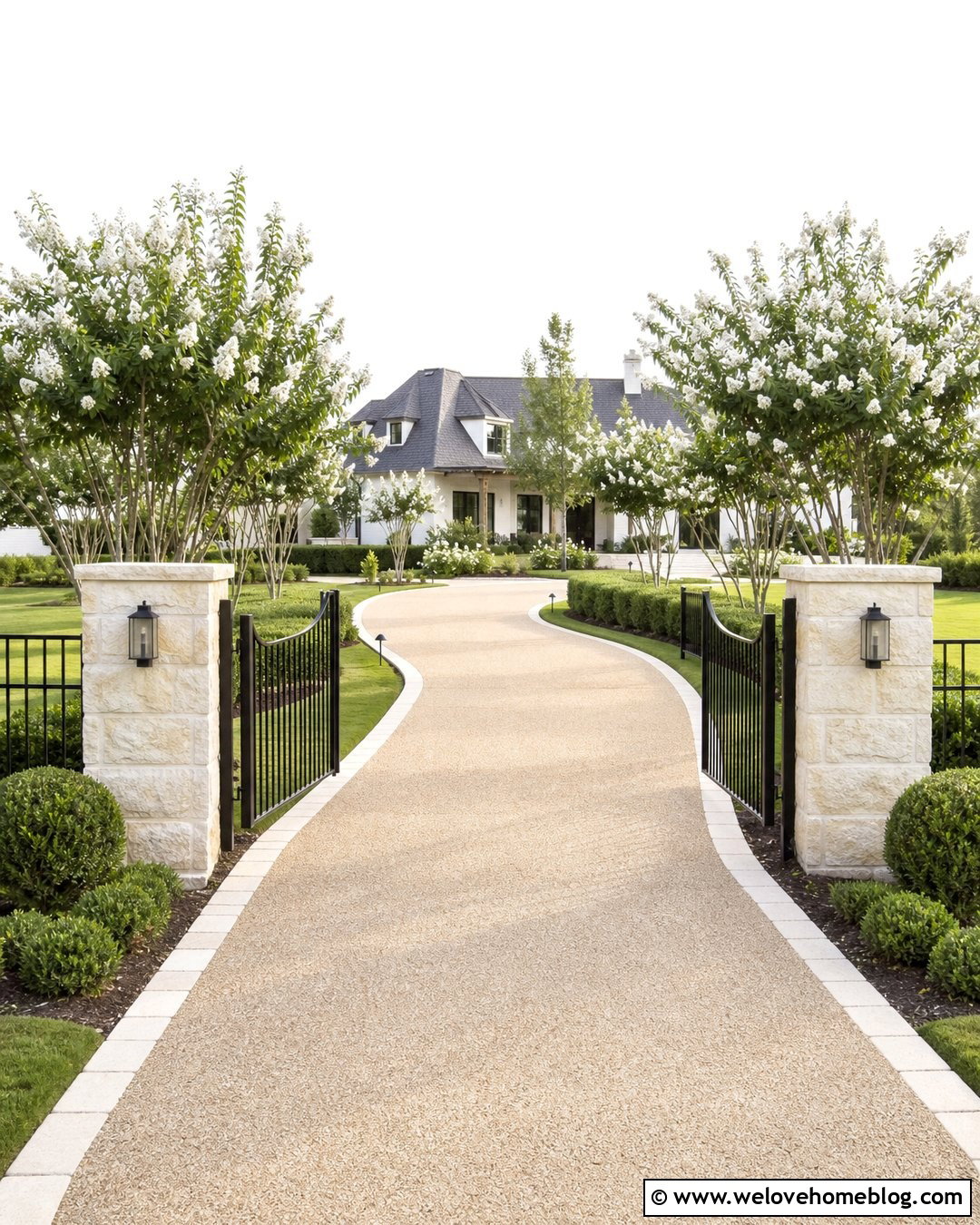
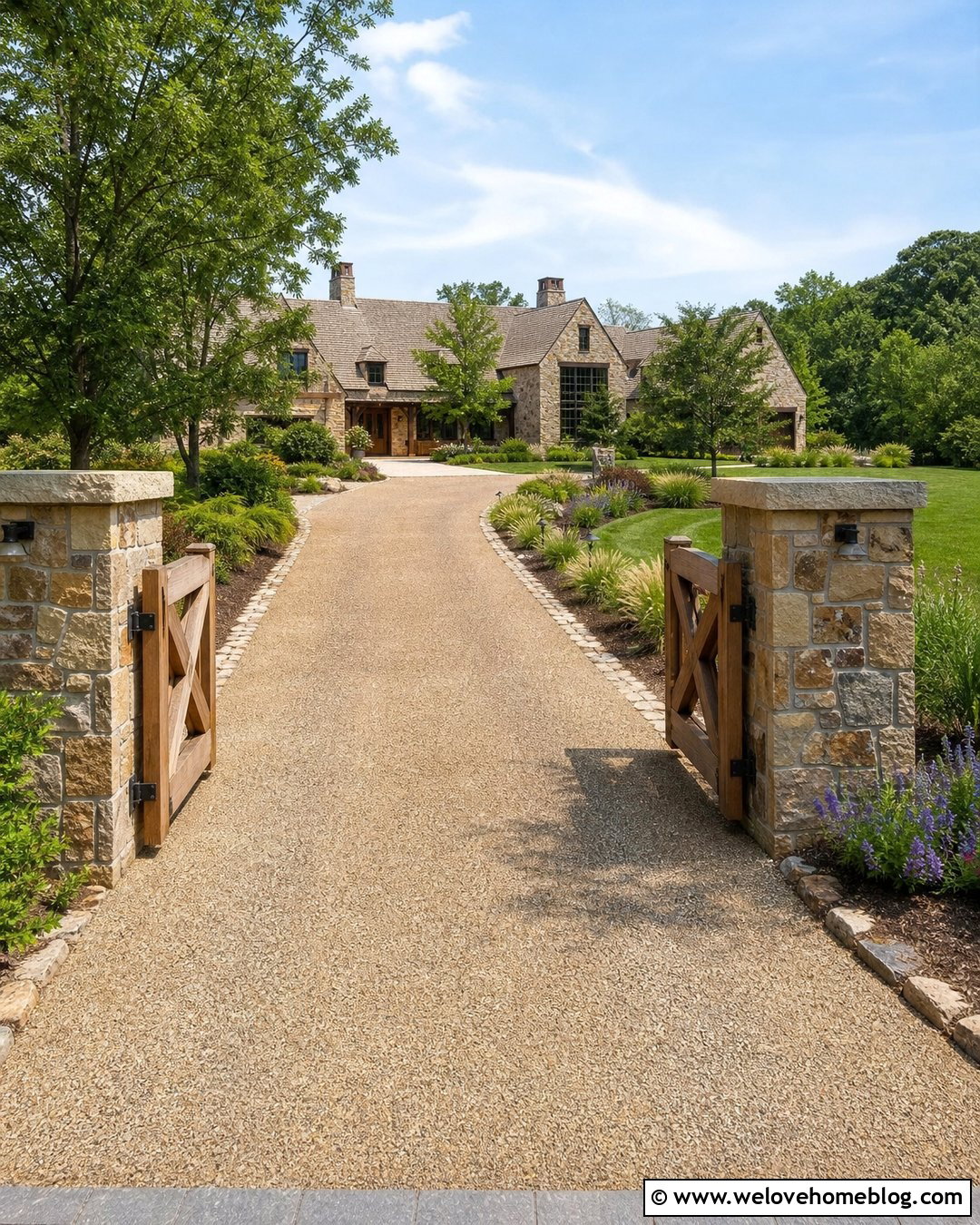
A driveway gate can become part of a larger flowering entrance instead of standing alone. Begin with a tan gravel or dark asphalt driveway framed by substantial stone pillars and a simple black metal gate. Position matching crepe myrtles beyond the pillars so their canopies visually continue the entrance without obscuring the gate. Red or coral flowers create a strong focal point, while low evergreen hedges guide the eye down the driveway. Use stone edging that matches the pillars to connect the entrance with the planting beds. Gate equipment, keypads, and opening paths require clear working space, so avoid placing trunks or dense shrubs too close. Continue the crepe myrtle rows toward the house to make the gate feel like the beginning of a complete arrival sequence.
16. Crepe Myrtle Driveway With Lighting
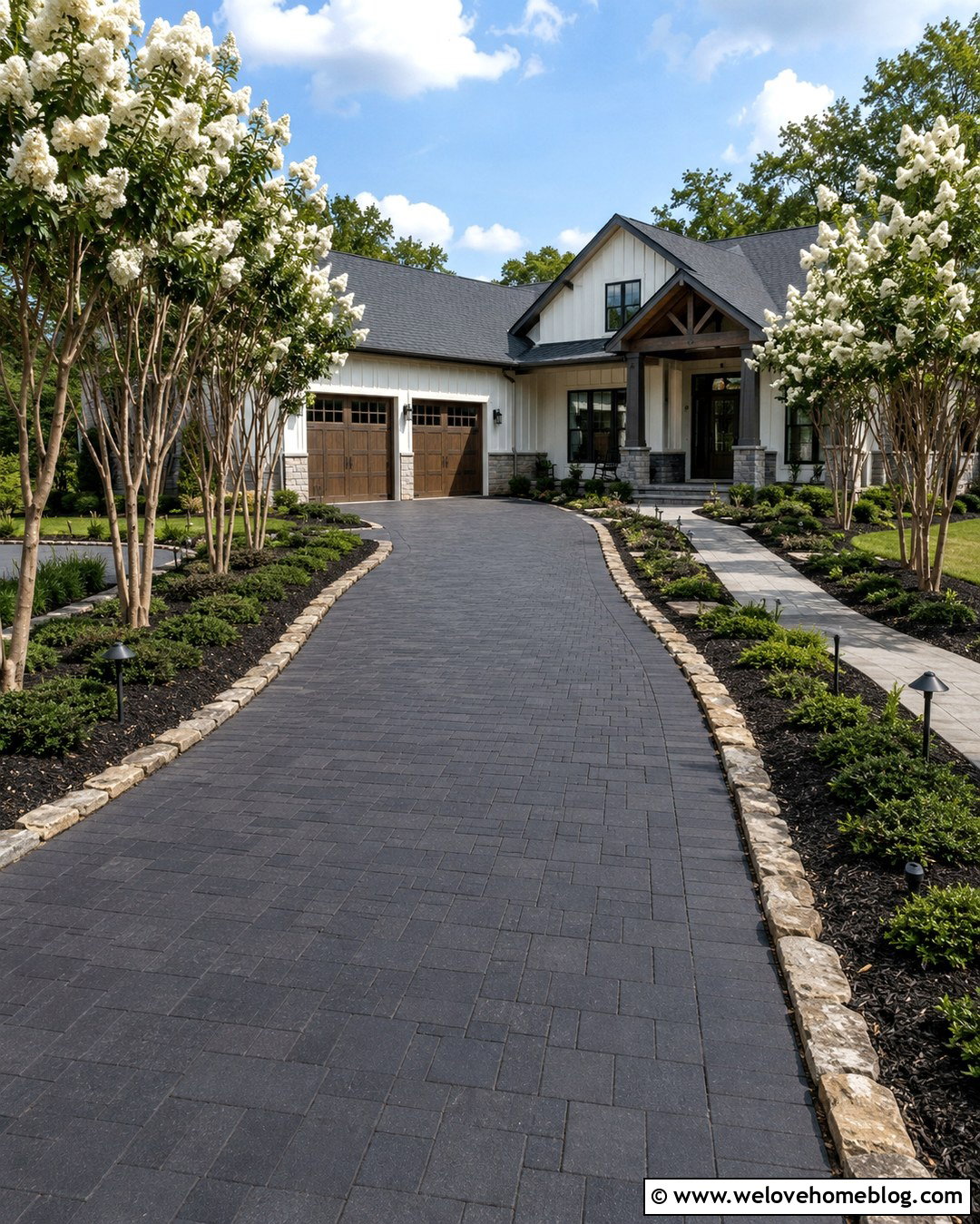
Thoughtful lighting can highlight the sculptural trunks of crepe myrtles while keeping the driveway useful and attractive. Pair a dark charcoal concrete-paver driveway with white-flowering trees planted in long, clean beds. Install low shielded fixtures near selected trunks, aiming the light toward the bark and canopy rather than toward drivers or neighboring windows. Add short path lights along the walkway instead of crowding both driveway edges with fixtures. During daylight, black housings should disappear against dark mulch and green foliage. The trees remain the central feature, supported by low evergreen ground cover and a narrow natural-stone border. This design suits a contemporary craftsman or transitional home and remains visually appealing even when the lights are off and the full paving pattern is visible.
17. Low Maintenance Crepe Myrtle Driveway
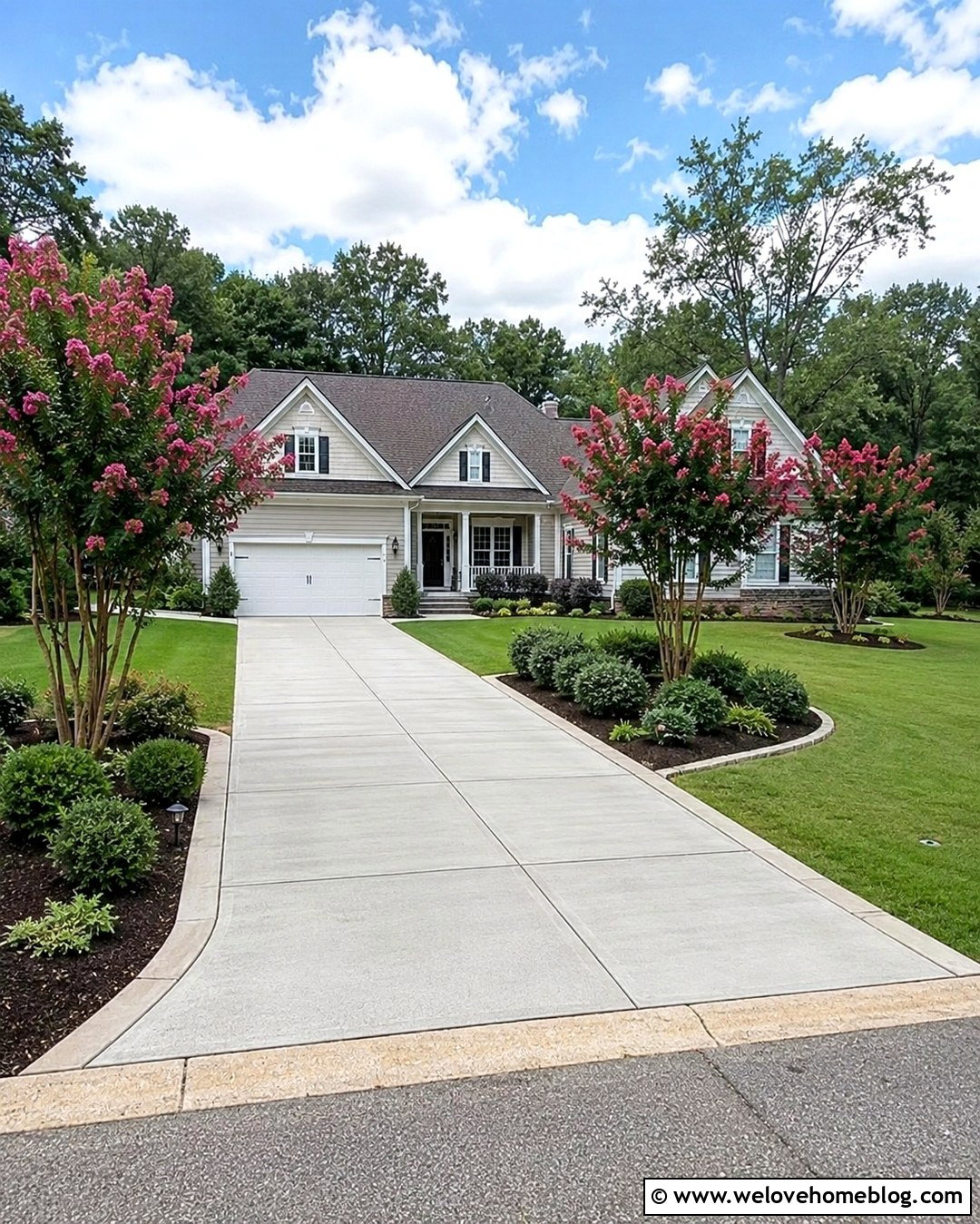
If easy upkeep is the priority, simplify every layer of the driveway landscape. Choose a durable broom-finished concrete surface, a metal or concrete edge, and one crepe myrtle cultivar repeated throughout the design. Install broad mulch beds beneath the trees rather than narrow strips of difficult-to-mow grass. A low, uniform ground cover can be added where local conditions support it, but avoid a complicated mixture of small plants. Most importantly, select a cultivar whose mature height and width fit the available space. Severe topping should not be needed when the correct size is chosen from the beginning. () Let the trees develop their natural form and limit pruning to dead, crossing, damaged, or poorly positioned growth.
18. Drought Tolerant Crepe Myrtle Driveway
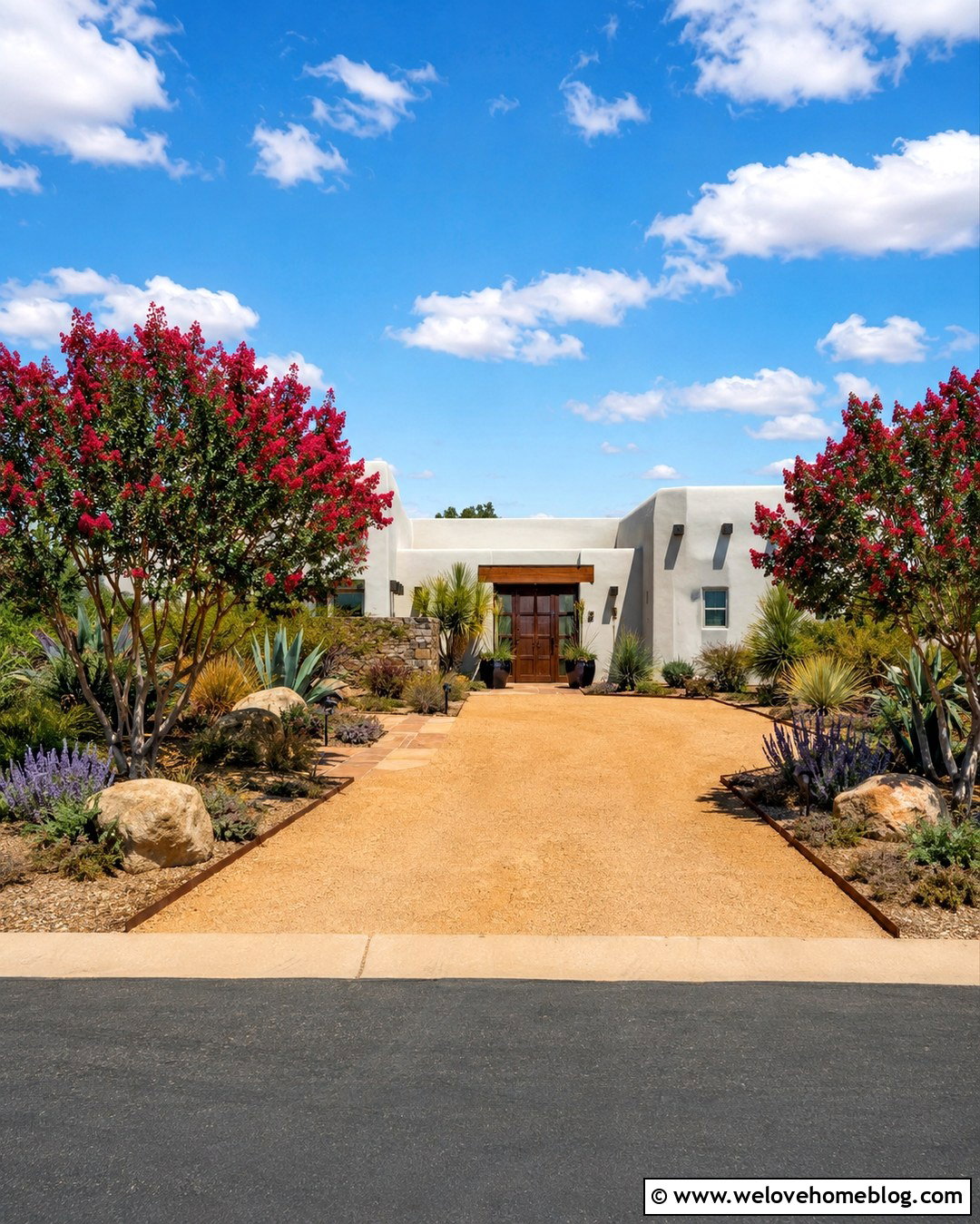
Sunlight flashes across pale gravel, silver foliage, and bright crepe myrtle flowers in this water-conscious driveway design. Use compacted decomposed granite for the surface and weathered steel edging for clean containment. Red or purple crepe myrtles can be planted in wide gravel-mulched beds with drought-tolerant companions selected for the local climate. Good options may include ornamental grasses, yucca, salvia, agave, or low flowering perennials where appropriate. Arrange plants in repeated groups rather than scattering individual specimens. Drip irrigation can support establishment while keeping water away from the driving surface. The warm gravel and sculptural planting suit Southwestern ranch homes, contemporary stucco houses, and sunny suburban yards. Maintain open visibility around the trunks so the landscape does not feel crowded or overplanted.
19. Crepe Myrtle Cottage Driveway
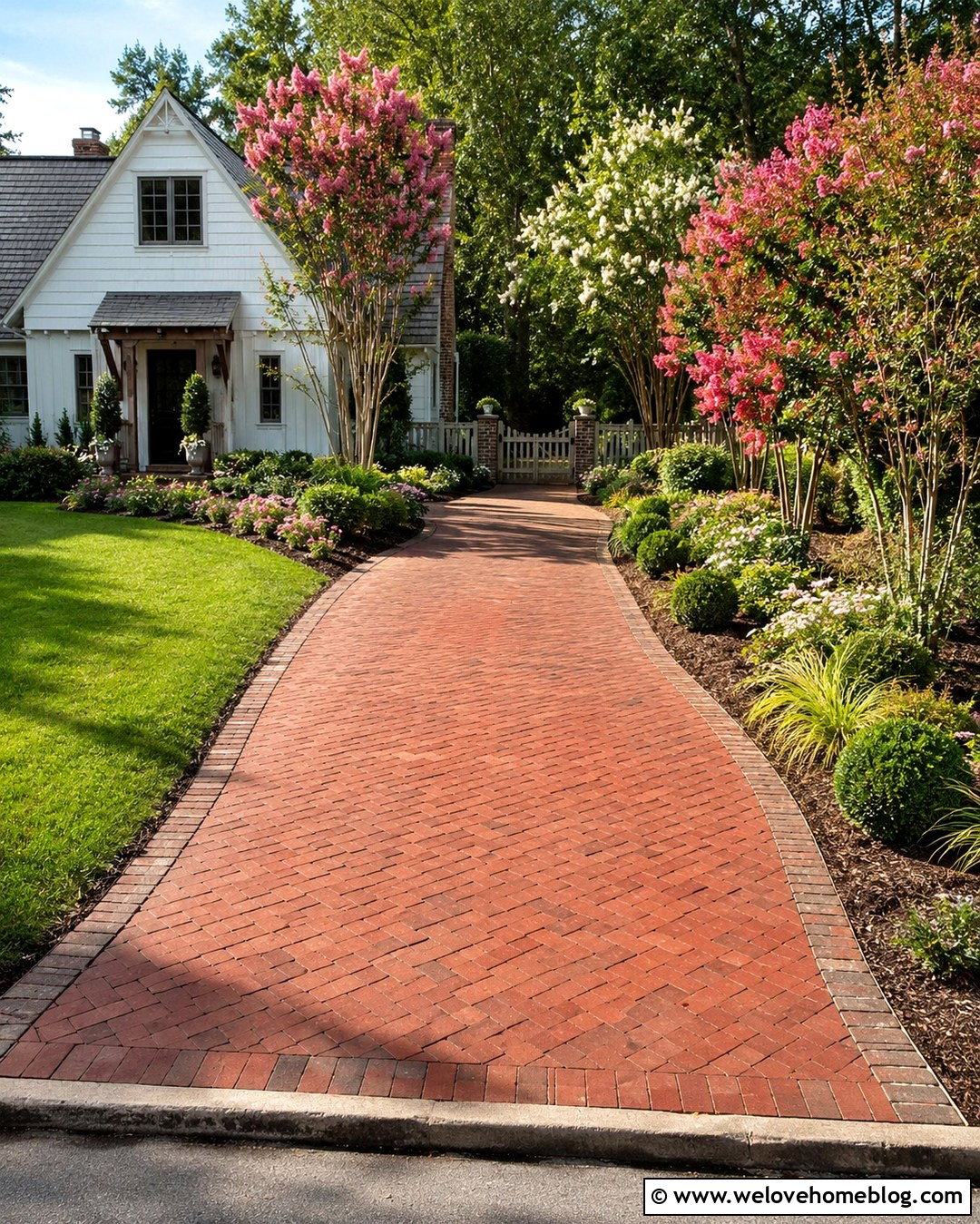
A cottage driveway can feel abundant without becoming messy when its structure remains clear. Start with warm clay brick pavers in a basketweave pattern and line the curved approach with compact pink or white crepe myrtles. Below them, create layered beds using rounded evergreen shrubs, ornamental grasses, and modest drifts of flowering perennials. A single repeated edging material, such as aged brick, keeps the softer planting under control. Allow plants to spill slightly toward the beds’ edges without covering the driving surface. Connect the driveway to the front porch with a matching brick walkway and a small garden gate. The crepe myrtles provide height and repetition, while the lower plants create the welcoming detail associated with cottage landscaping. Leave enough open mulch to prevent the border from becoming congested.
20. Mixed Color Crepe Myrtle Driveway
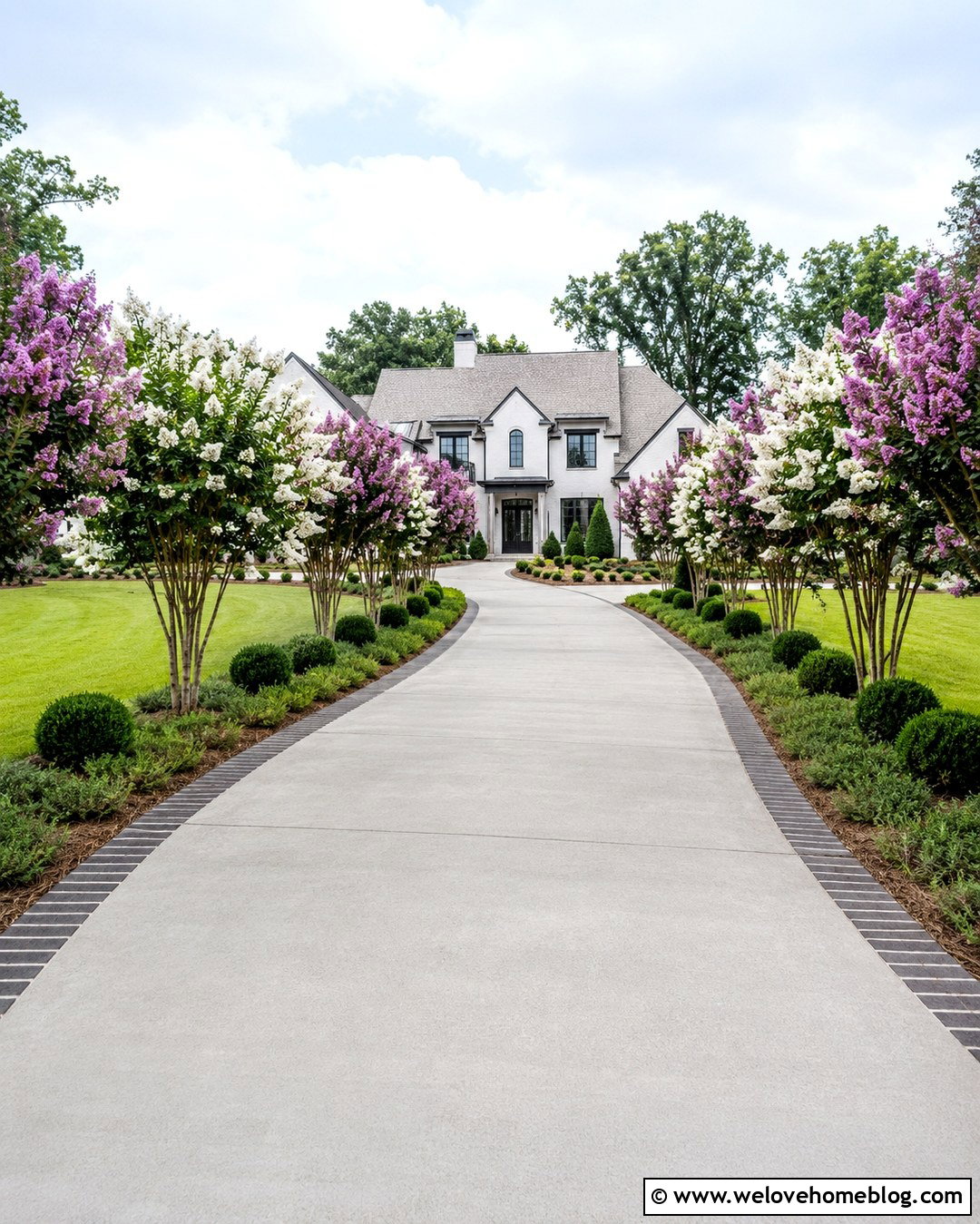
A mixed-color crepe myrtle row can work when the sequence is carefully planned. Rather than randomly combining every available flower shade, alternate two compatible colors such as white and lavender or pale pink and coral. Use the same cultivar size class so the mature canopies form a consistent line. A wide gray concrete driveway with a dark brick border provides a neutral foundation for the changing blooms. Repeat one ground cover and one evergreen shrub throughout both sides to unite the planting. This approach suits a large suburban property where there is enough distance to appreciate the pattern. Keep the driveway shape simple, preferably straight or gently curved. The controlled color rhythm produces a lively summer entrance while the matching trunks, beds, and borders maintain order during other seasons.
Conclusion:
The best crepe myrtle lined driveway ideas coordinate tree size, flower color, paving, borders, and surrounding landscaping as one complete design. Start by measuring the available planting area and checking the mature width of each cultivar. Then decide whether you want a formal allée, a relaxed country approach, a compact border, or a bold contemporary entrance. Concrete, gravel, brick, asphalt, cobblestone, and resin surfaces can all work when their colors complement the blooms and house facade. Protect vehicle clearance, street visibility, drainage, walkways, and gate operation during planning. With suitable spacing and a consistent plant palette, crepe myrtles can create a welcoming driveway that offers colorful flowers, attractive trunks, and memorable curb appeal.

Related posts:
Leave a Reply