
A driveway sign should do more than display an address. It should help guests identify the entrance, complement the home, and make the entire approach feel intentional. The best 20 Driveway Sign Ideas combine readable numbers with a coordinated driveway surface, border, landscaping, and architectural backdrop. For practical visibility, use clear characters, strong color contrast, and placement that can be seen from both directions along the road. Reflective finishes are especially helpful for rural properties or homes set far back from the street. () Whether your driveway is gravel, concrete, asphalt, brick, or pavers, there is a sign design that can strengthen its curb appeal without looking out of place.
Use these complete entrance looks as inspiration for 20 Driveway Sign Ideas.
1. Modern Metal Driveway Sign
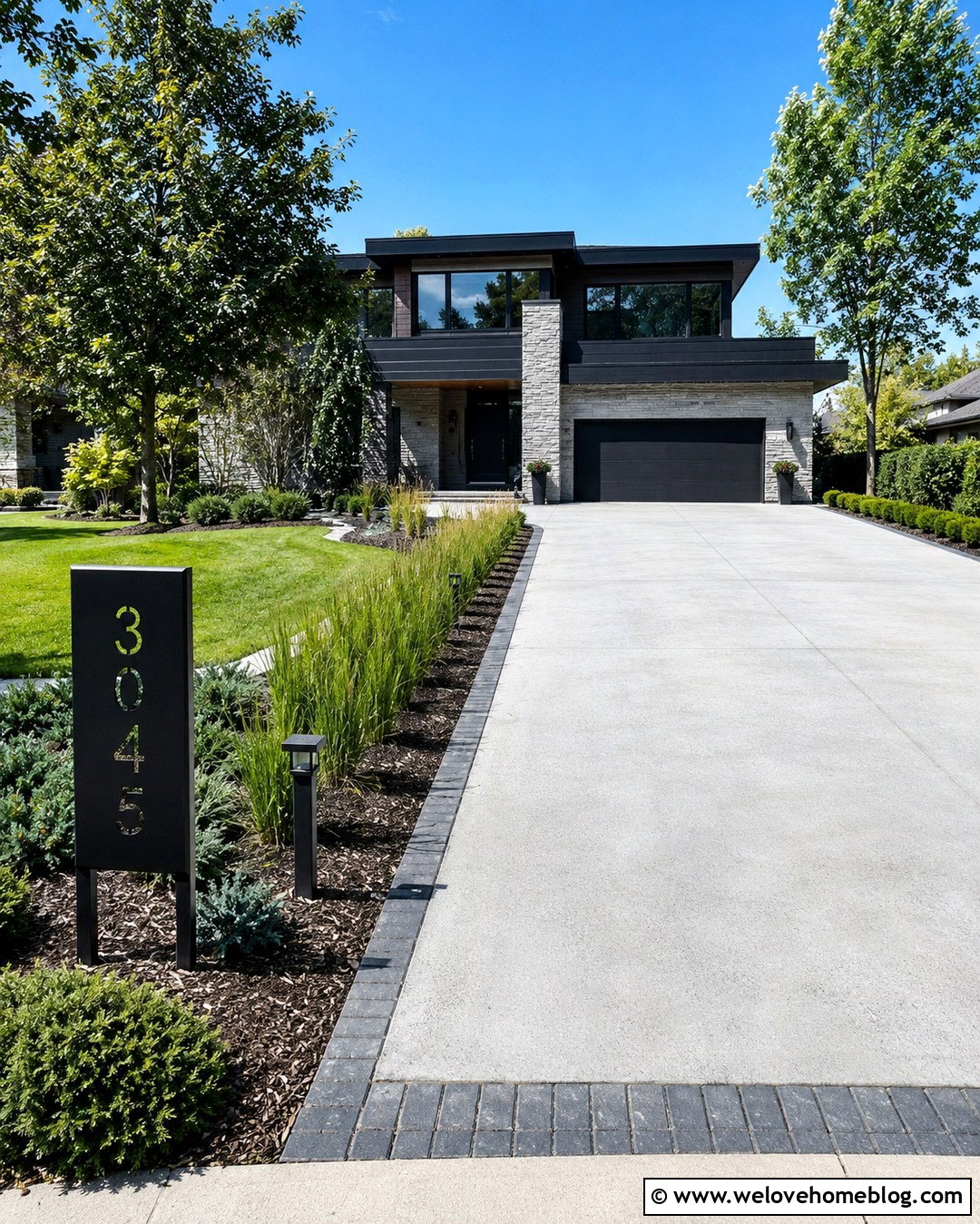
A matte black metal address sign creates a clean focal point beside a straight concrete driveway. Choose thick, simple numbers that remain easy to recognize from the road. Mount the sign on two narrow steel posts, or use a solid panel with the address cut directly into the metal. A pale poured-concrete driveway provides helpful contrast and reinforces the modern appearance. Frame the entrance with charcoal paver edging, ornamental grasses, and low evergreen shrubs rather than crowded flower beds. Square path lights can repeat the sign’s dark finish and guide the eye toward a contemporary home. Keep the surrounding lawn neat and open so landscaping does not eventually hide the numbers. This complete design feels polished, practical, and suitable for a suburban property.
2. Wooden Post Driveway Sign
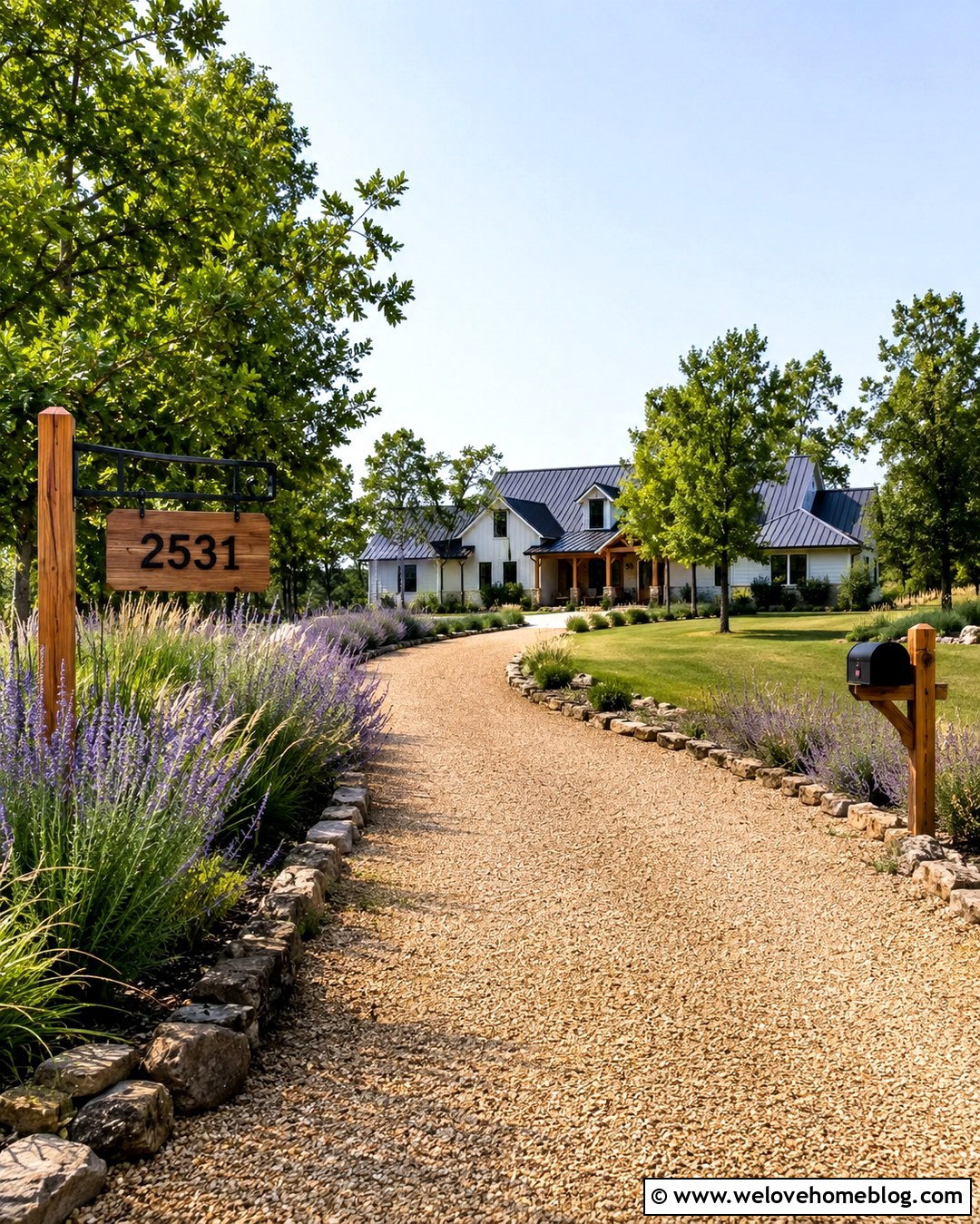
Warm cedar gives a driveway entrance the relaxed character associated with farmhouses, cabins, and country homes. Hang a rectangular address plaque from a sturdy horizontal arm secured to a substantial wooden post. Black metal brackets and raised black numbers create contrast without making the design overly decorative. Pair the sign with a gently curved tan gravel driveway bordered by natural fieldstone. Lavender, salvia, ornamental grasses, or clipped boxwood can soften the post while keeping the plaque visible. Add a matching timber mailbox or a small downward-facing light if the entrance needs another functional detail. Use exterior-rated wood and a protective finish suited to local weather. The finished entrance should appear coordinated, with the wood, gravel, stones, and planting forming one welcoming composition.
3. Stone Monument Driveway Sign
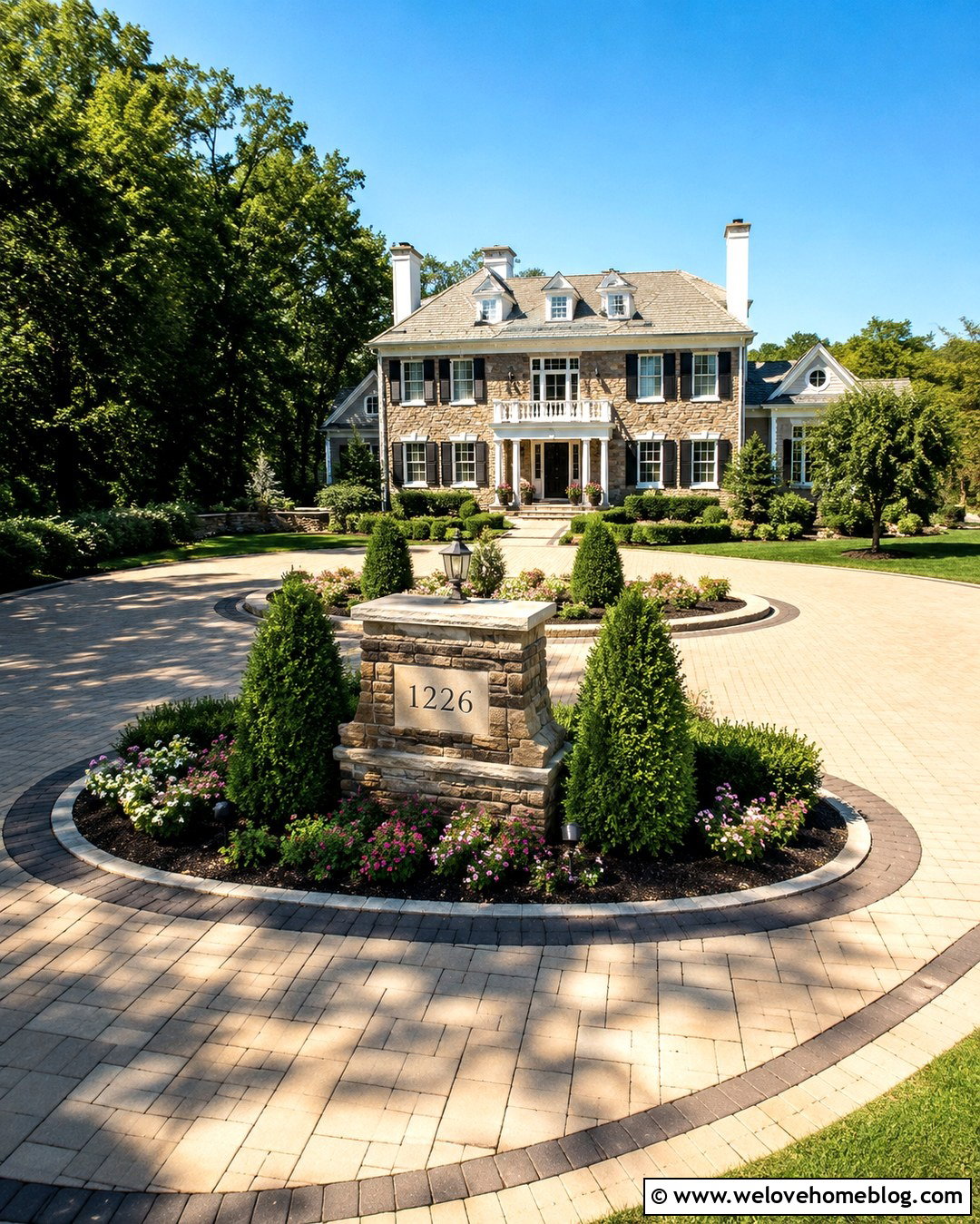
A low stone monument makes an address sign feel like a permanent part of the property. Build the base from the same stone used on the house, retaining walls, or driveway border for an especially unified look. A smooth limestone or dark metal plaque can be centered on the front, with large numbers arranged horizontally. This entrance works beautifully with a circular driveway made from warm concrete pavers. Outline the drive with a soldier-course border and place compact shrubs behind the monument rather than in front of it. Soft landscape lighting can illuminate the sign while preserving a tidy daytime appearance. Keep the monument proportionate to the yard and away from the vehicle turning area. The result is formal enough for a traditional home but simple enough for updated architecture.
4. Brick Pillar Driveway Sign
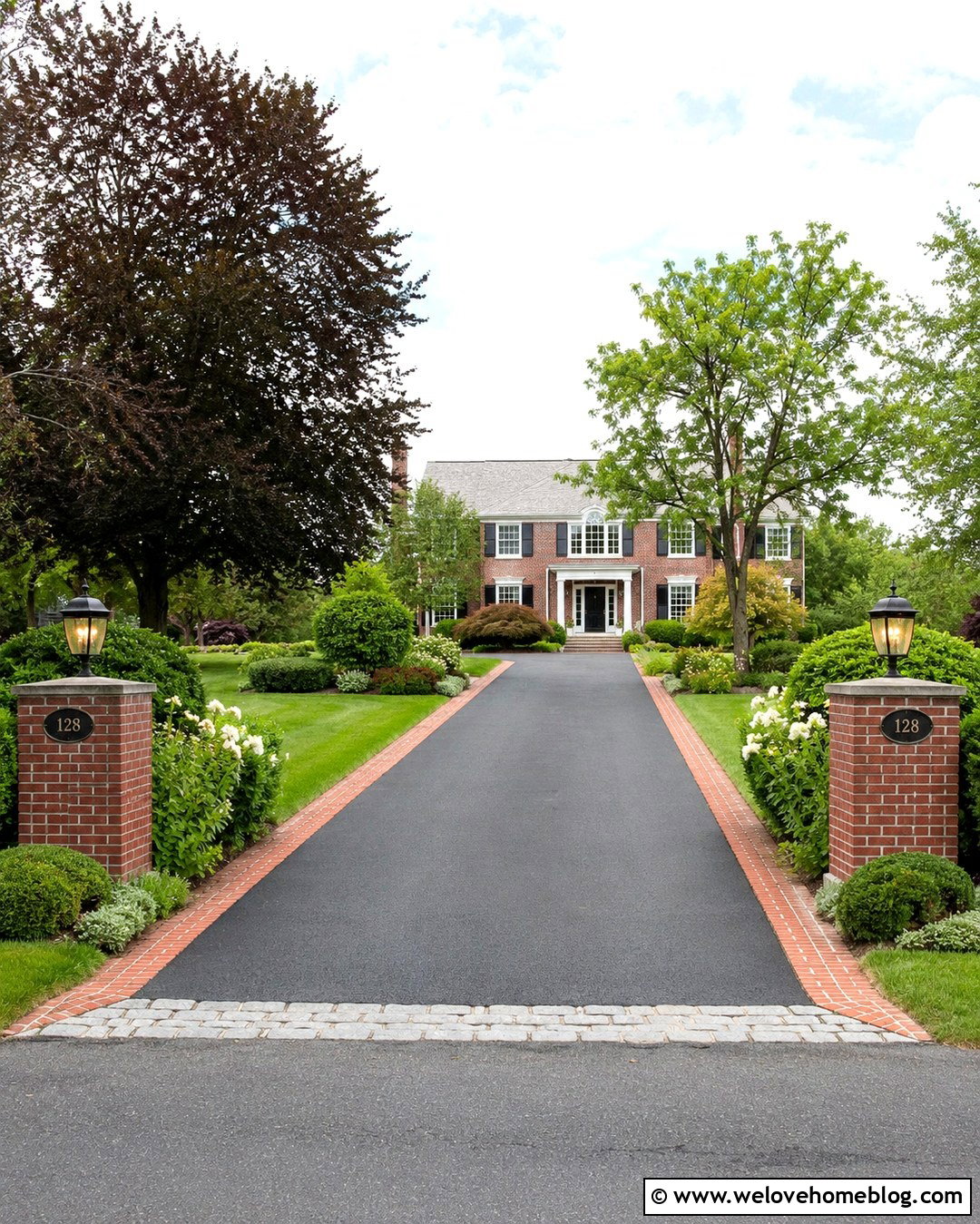
Does your home already feature red or brown brick? Matching pillars can carry that material to the driveway entrance and create a strong visual connection with the facade. Install a cast-metal address plaque on one pillar, or place individual numbers on both sides when drivers approach from different directions. A black asphalt driveway with a red brick ribbon provides a practical surface and repeats the entrance material. Low hedges can extend from the pillars, while flowering perennials add seasonal color without competing with the numbers. Traditional lanterns mounted on top provide another coordinated detail, although their scale should remain modest. This driveway sign design is especially effective for colonial, Georgian, and traditional suburban homes because it makes the entrance feel established, balanced, and easy to identify.
5. Corten Steel Driveway Sign
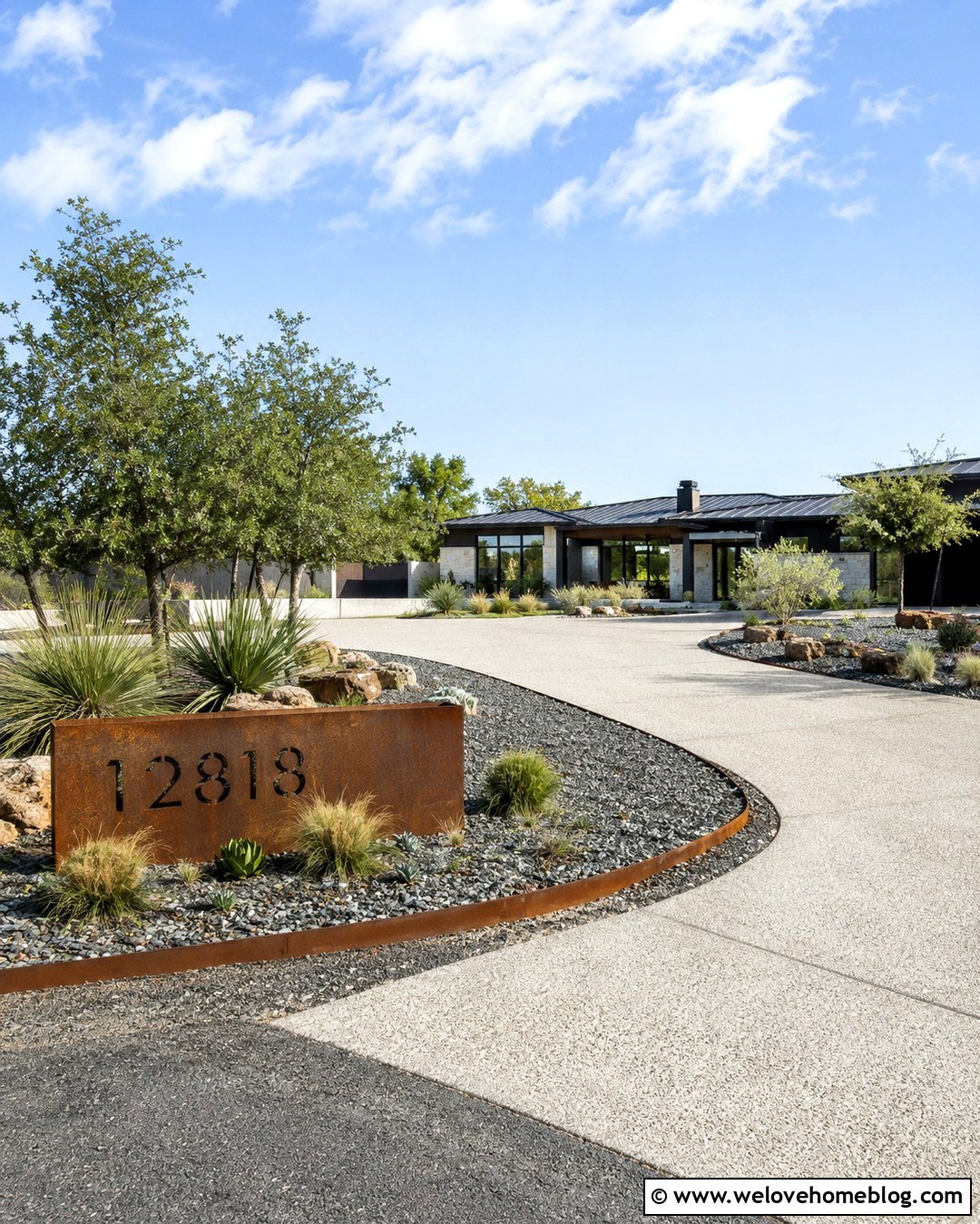
Corten steel brings earthy color and a sculptural quality to a contemporary driveway. Its warm rust-toned surface looks particularly striking beside pale exposed-aggregate concrete. Use a broad freestanding panel with large cutout numbers, allowing the lighter landscape behind it to improve readability. A slightly curved driveway can be edged with dark steel strips that repeat the sign material. Surround the entrance with drought-tolerant grasses, gravel mulch, yucca, or neatly spaced succulents. Keep plants below the address so the cutouts remain unobstructed as the garden matures. A modern ranch house with wood siding or dark window frames completes the look. Before installation, consider where weather runoff could travel and place the panel thoughtfully. The complete entrance feels natural, bold, and refreshingly low maintenance.
6. Hanging Cottage Driveway Sign
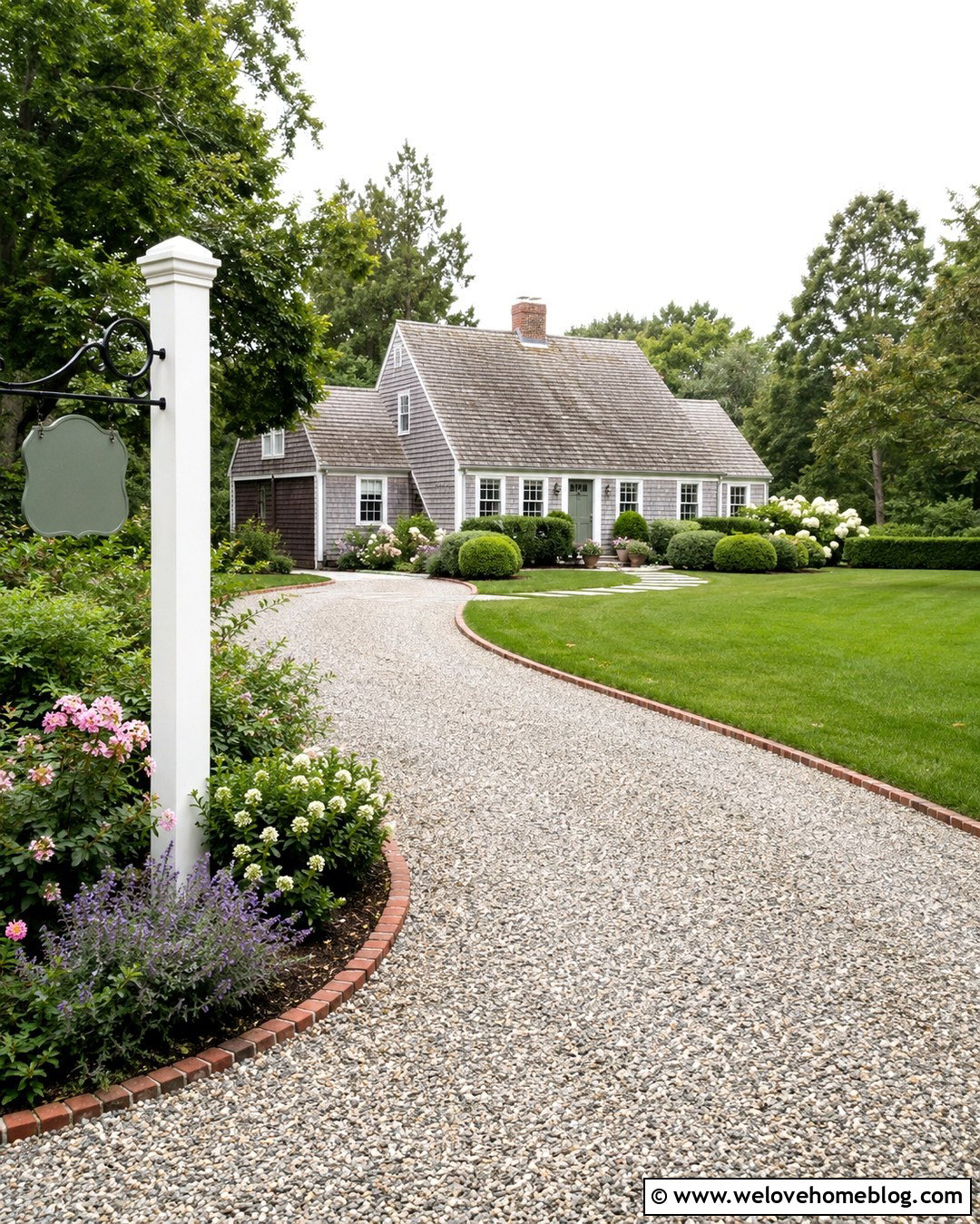
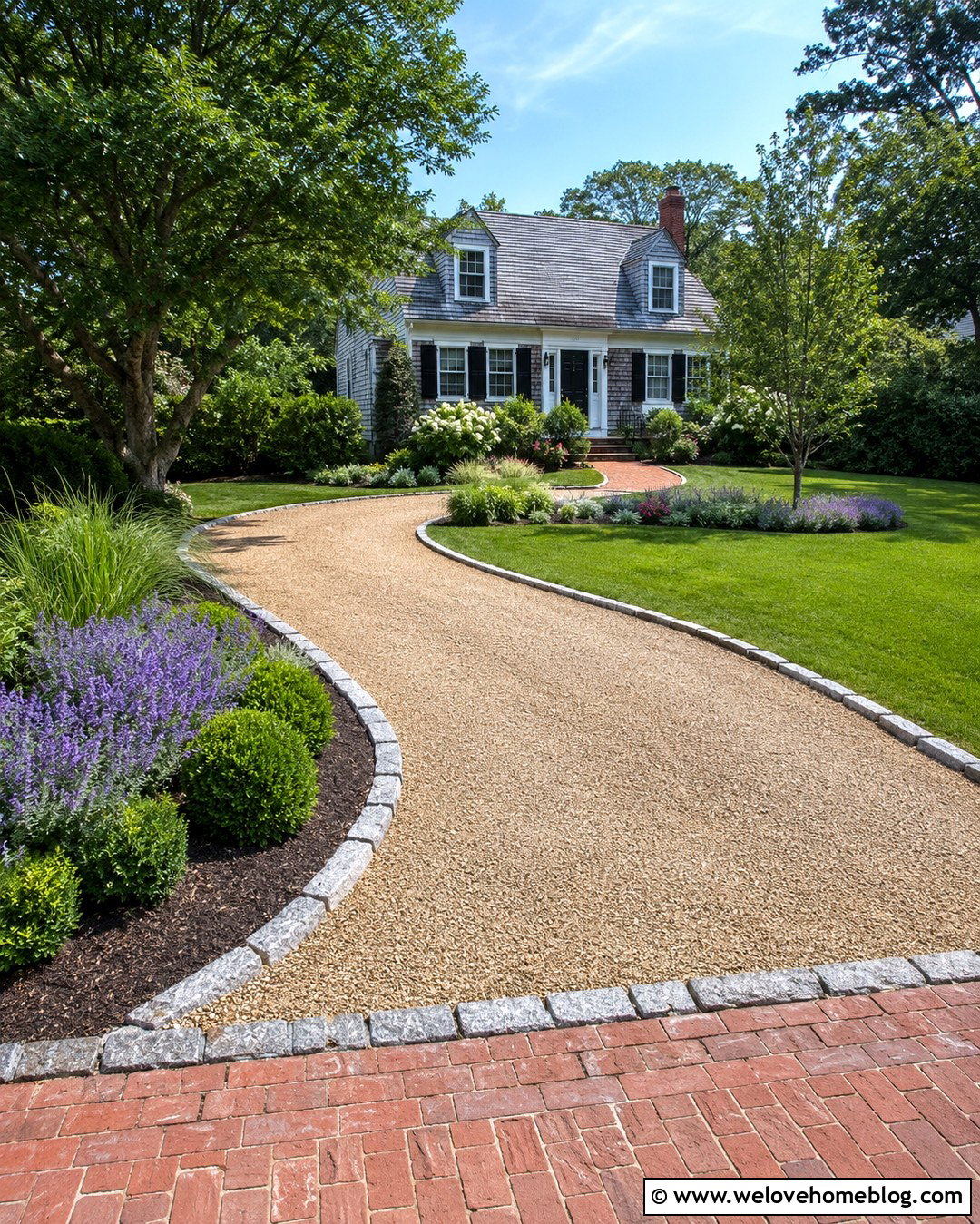
A small hanging sign can make a cottage driveway feel friendly without overwhelming the entrance. Select a painted wooden plaque with a simple house number, family name, or short property name. Suspend it beneath a white, sage green, or natural cedar post using weather-resistant black hardware. A curved pea gravel driveway complements the informal sign and creates a soft transition into the garden. Define the gravel with clay brick edging so loose stones stay visually contained. Hydrangeas, roses, catmint, and neatly trimmed shrubs can frame the entrance, but leave open space around the plaque. A stepping-stone walkway leading toward a porch adds another welcoming layer. This complete look suits Cape Cod homes, cottages, and small lots where a large monument sign would feel too heavy.
7. Solar Lighted Driveway Sign
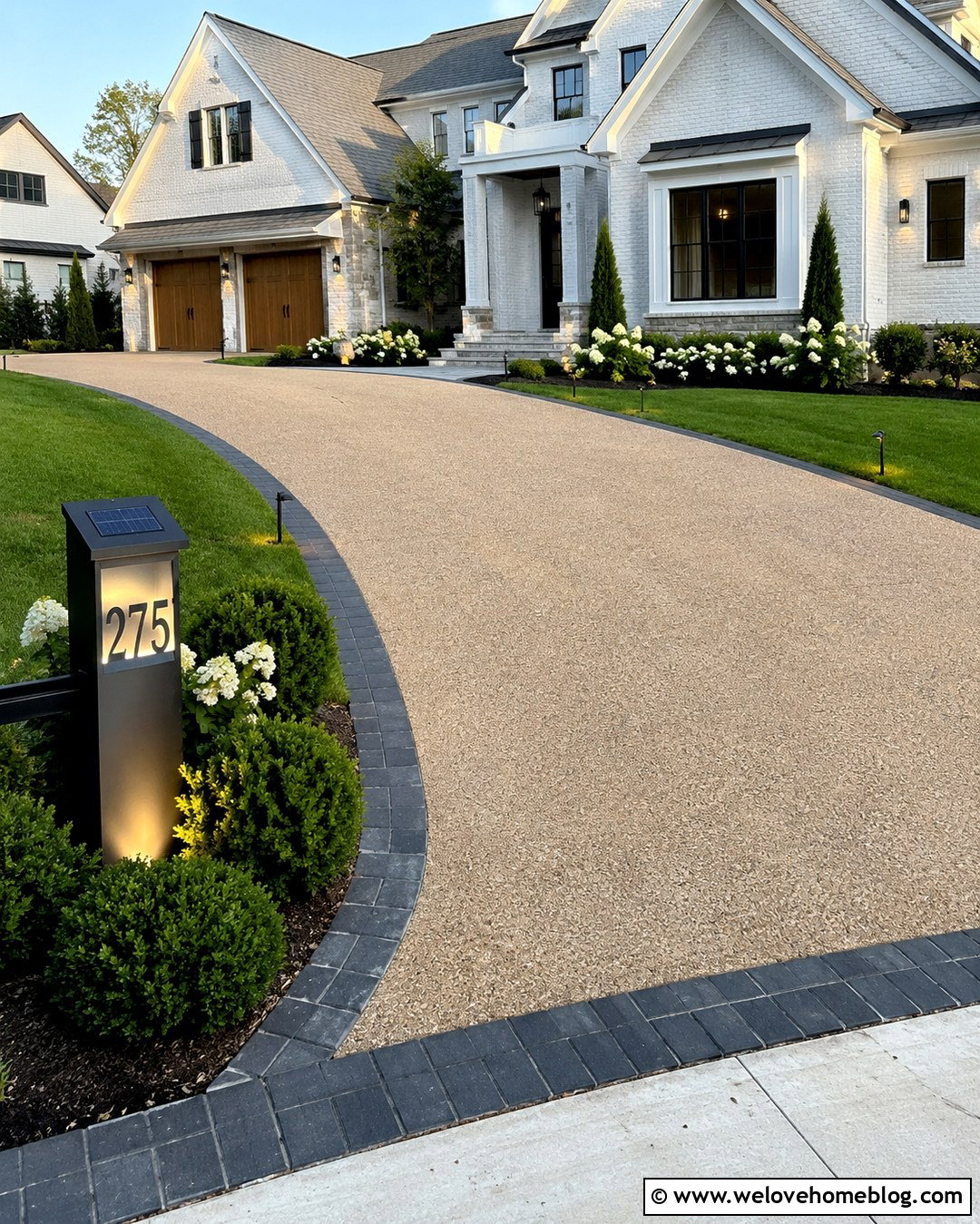
A lighted address sign improves the entrance after sunset while remaining attractive during the day. For a clean installation, choose a dark metal plaque with solar lighting concealed along the top or behind the numbers. Pair it with a warm beige resin-bound gravel driveway that offers a smooth, refined appearance. A straight or softly curved layout makes the illuminated marker easy to associate with the correct entrance. Edge the surface with charcoal pavers, then add low evergreen shrubs and white flowering plants around the sign base. Position the solar panel where it receives sufficient daylight and regularly check that nearby foliage does not shade it. During daylight, the design reads as a modern landscape feature. At night, the address becomes easier to locate without flooding the yard with harsh light.
8. Mailbox Driveway Sign
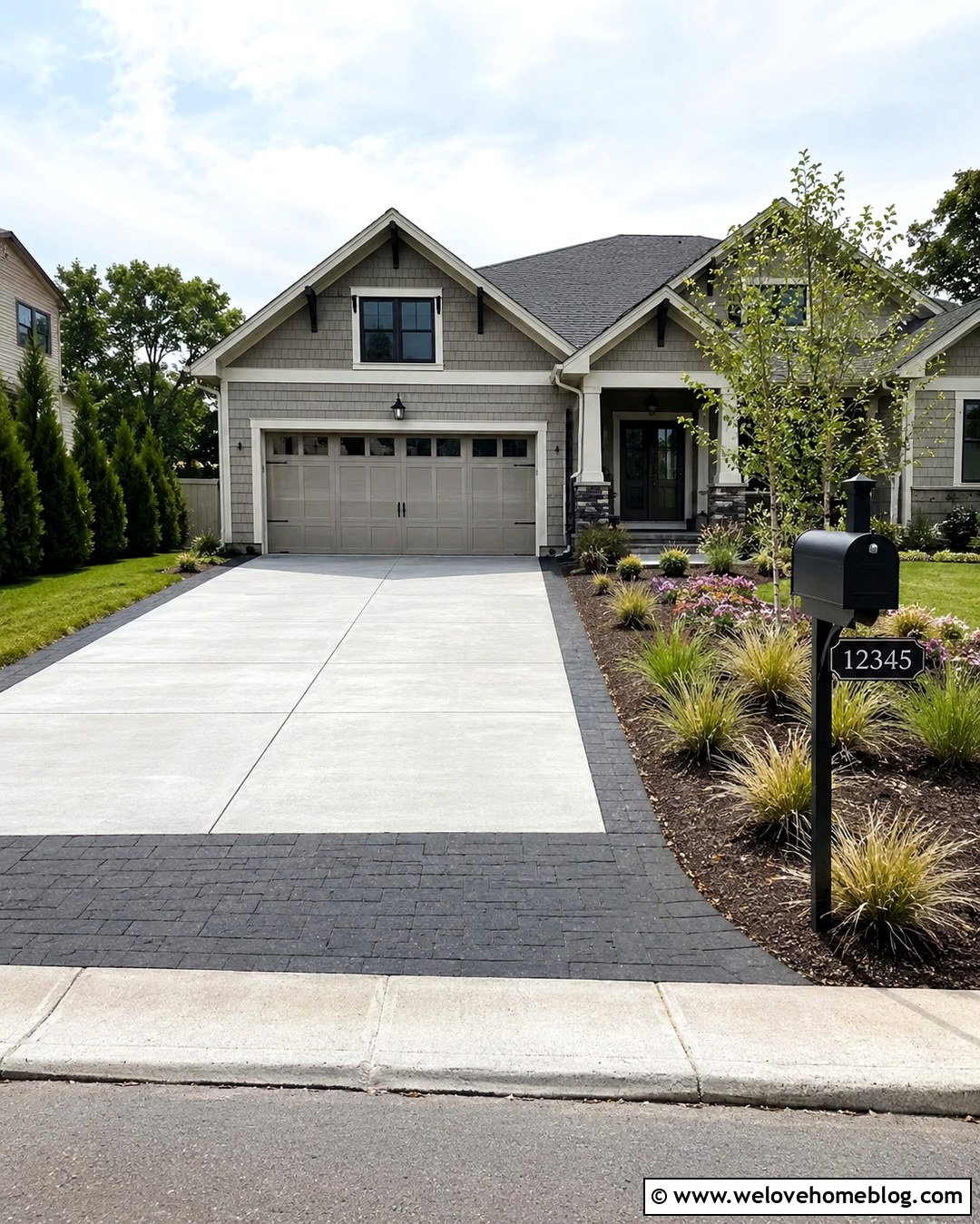
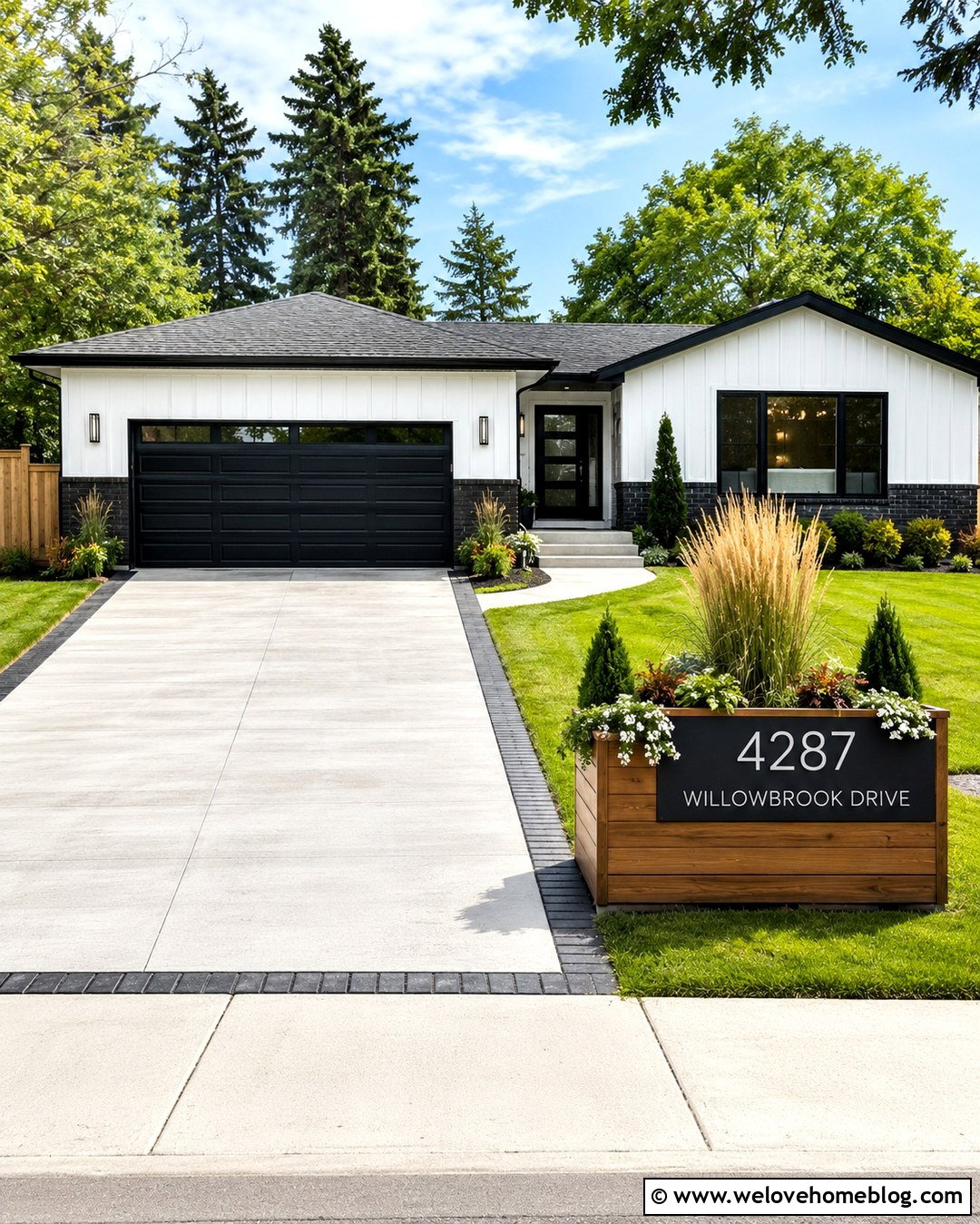
Combining the mailbox and driveway sign saves space and keeps roadside features visually organized. Choose one post system that carries both a locking mailbox and a large address panel. Black powder-coated metal suits a wide range of homes, while cedar works well for relaxed or rustic settings. Pair the unit with a light gray concrete driveway finished with a dark paver apron near the street. A small mulched planting bed can surround the post, using compact grasses or low flowers that will not interfere with mail access. Match the house numbers to exterior hardware, lighting, or window frames for a deliberate finish. Leave enough clearance for doors, snow removal, and vehicle movement. The entrance looks uncluttered because two practical elements are combined into one cohesive, readable feature.
9. Ranch Driveway Entrance Sign
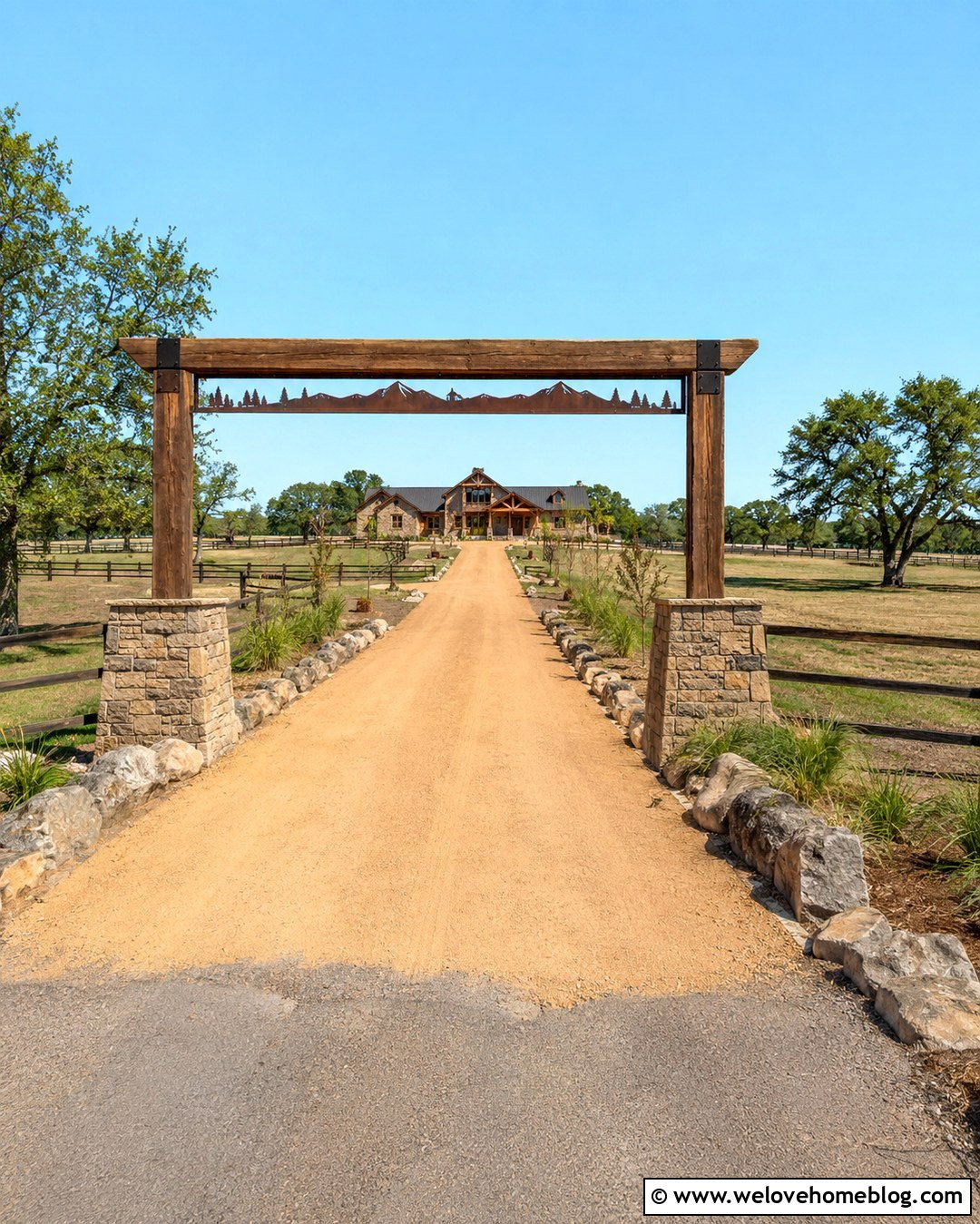
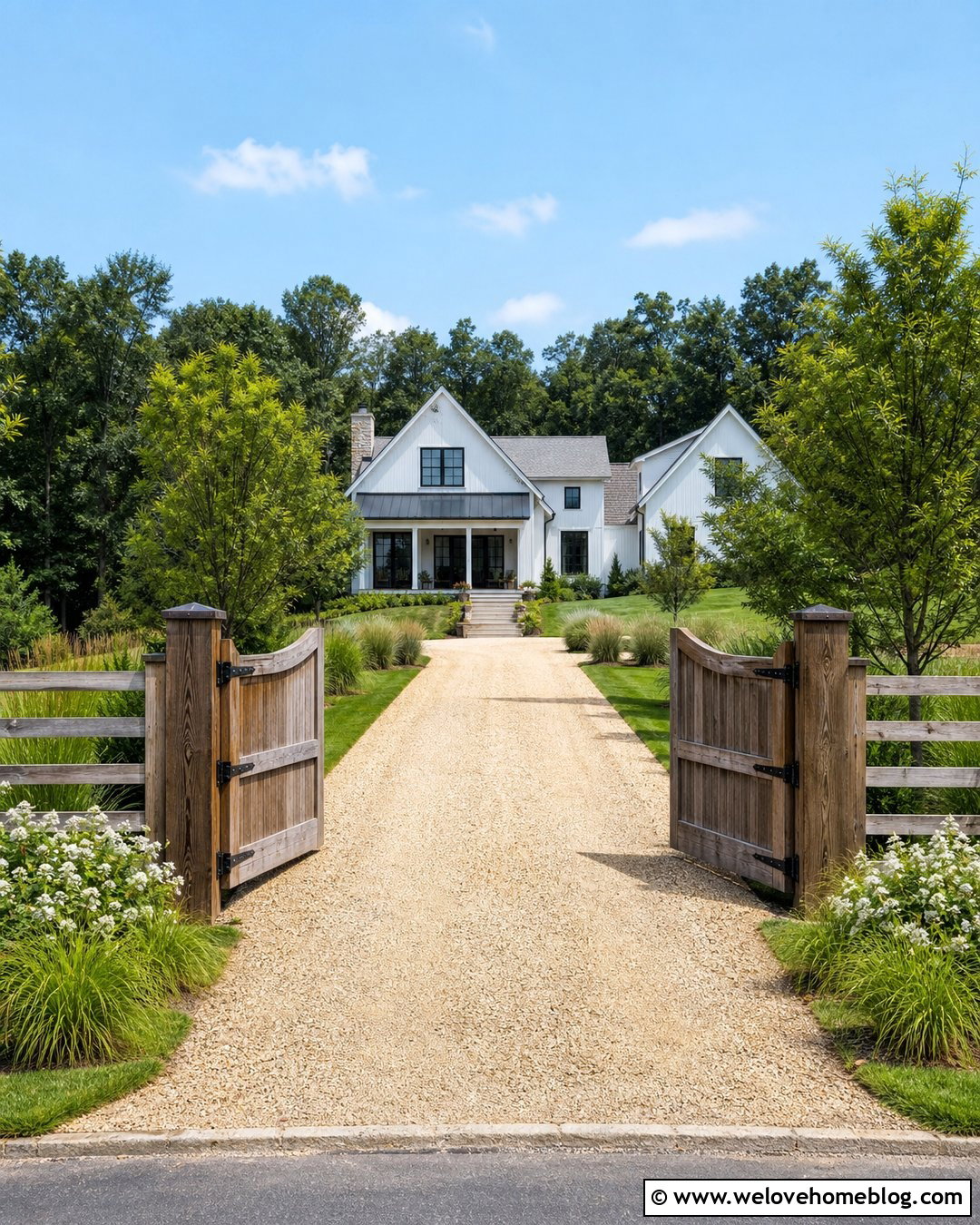
A wide ranch entrance can support a larger sign that would overpower an average suburban driveway. Use two heavy timber posts with a long wood or cut-metal panel displaying the property name and street number. Keep lettering simple enough to read while approaching rather than filling the panel with decorative details. A broad decomposed granite driveway works naturally with the rustic materials and can be edged with large stones or weathered steel. Native grasses, split-rail fencing, and a few well-spaced trees complete the rural setting. For a more formal ranch, add low stone bases beneath the timber posts. Make sure the sign is tall enough to remain visible above roadside vegetation. The resulting entrance feels substantial and memorable while still providing clear direction toward the house.
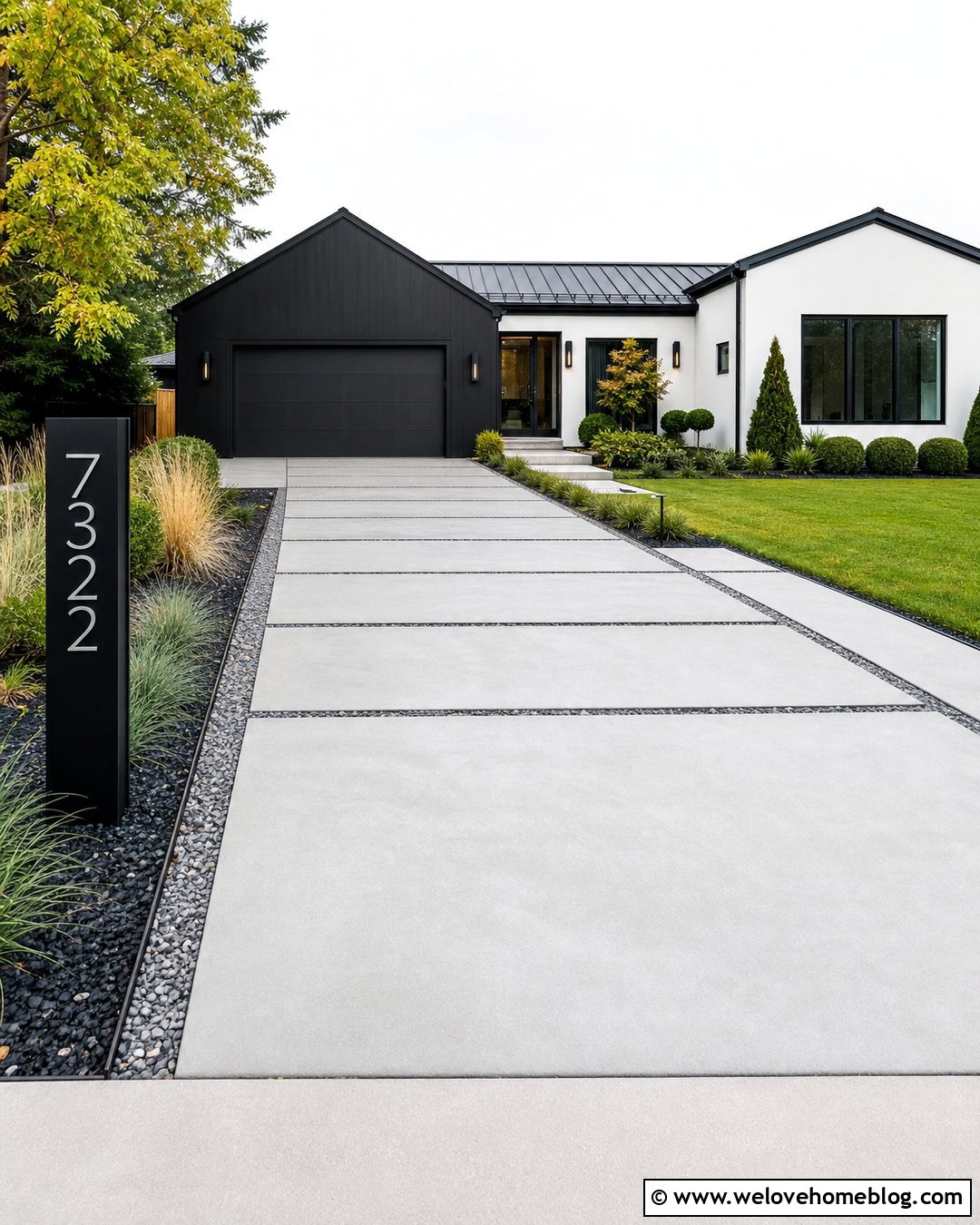
10. Vertical Driveway Number Sign
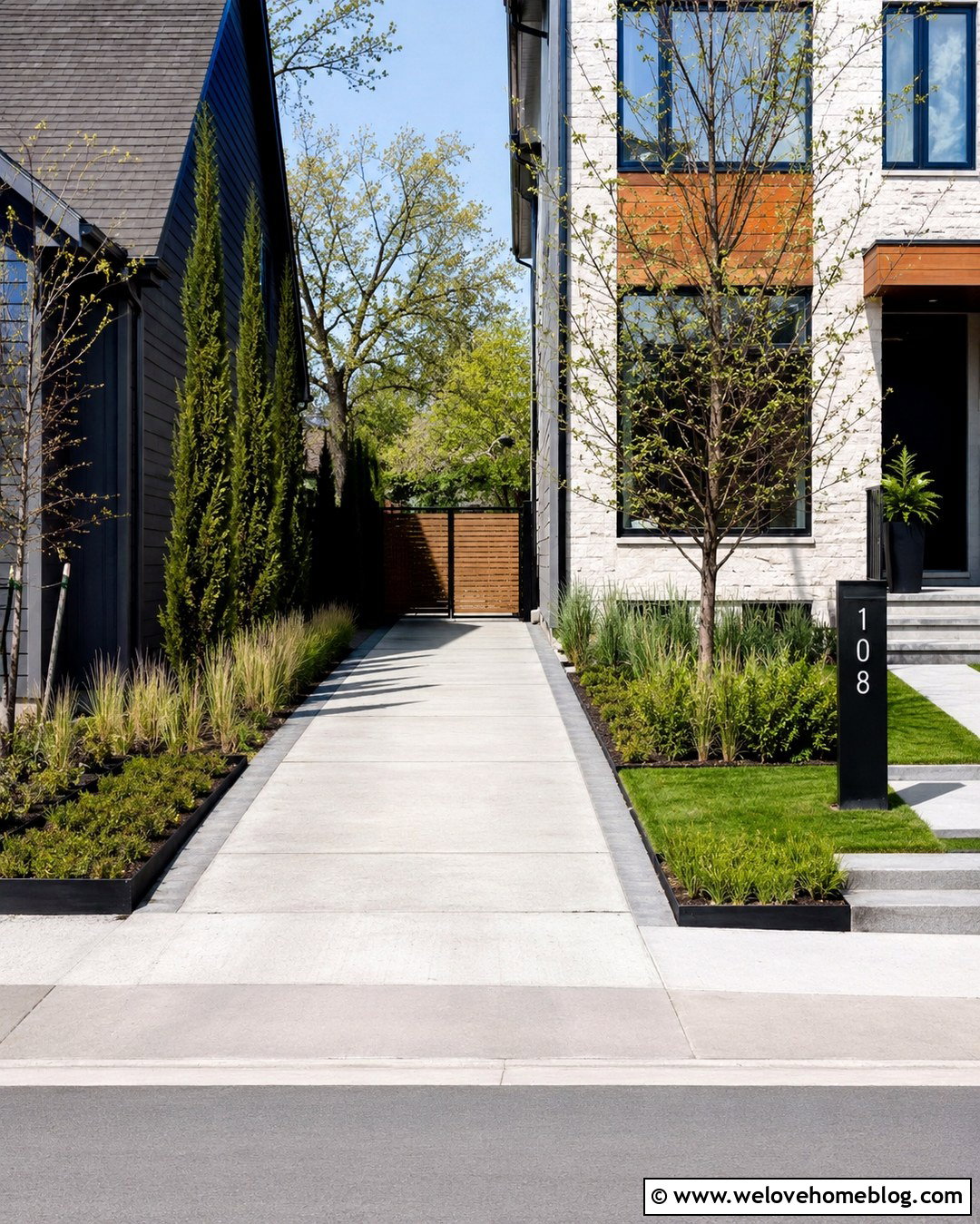
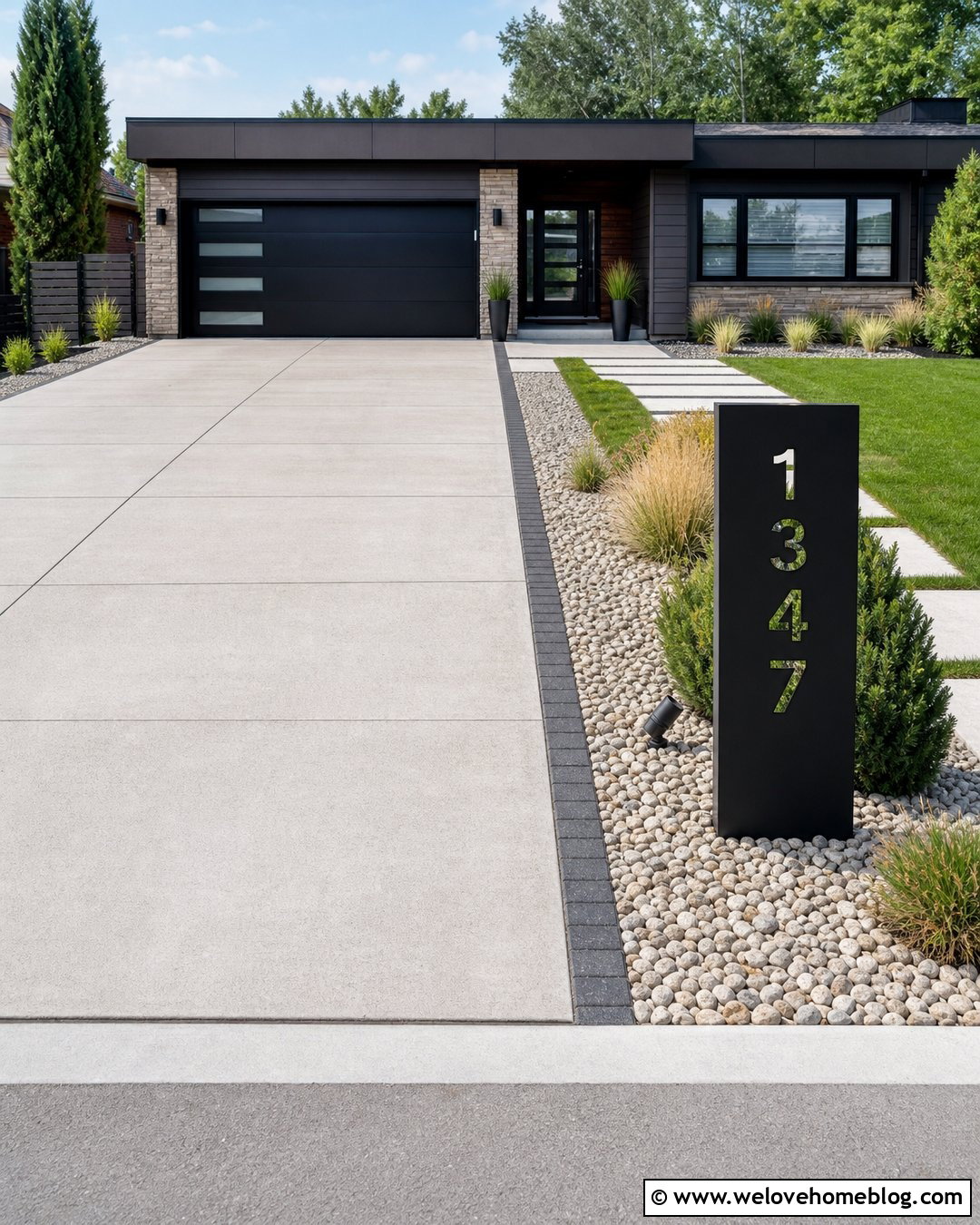
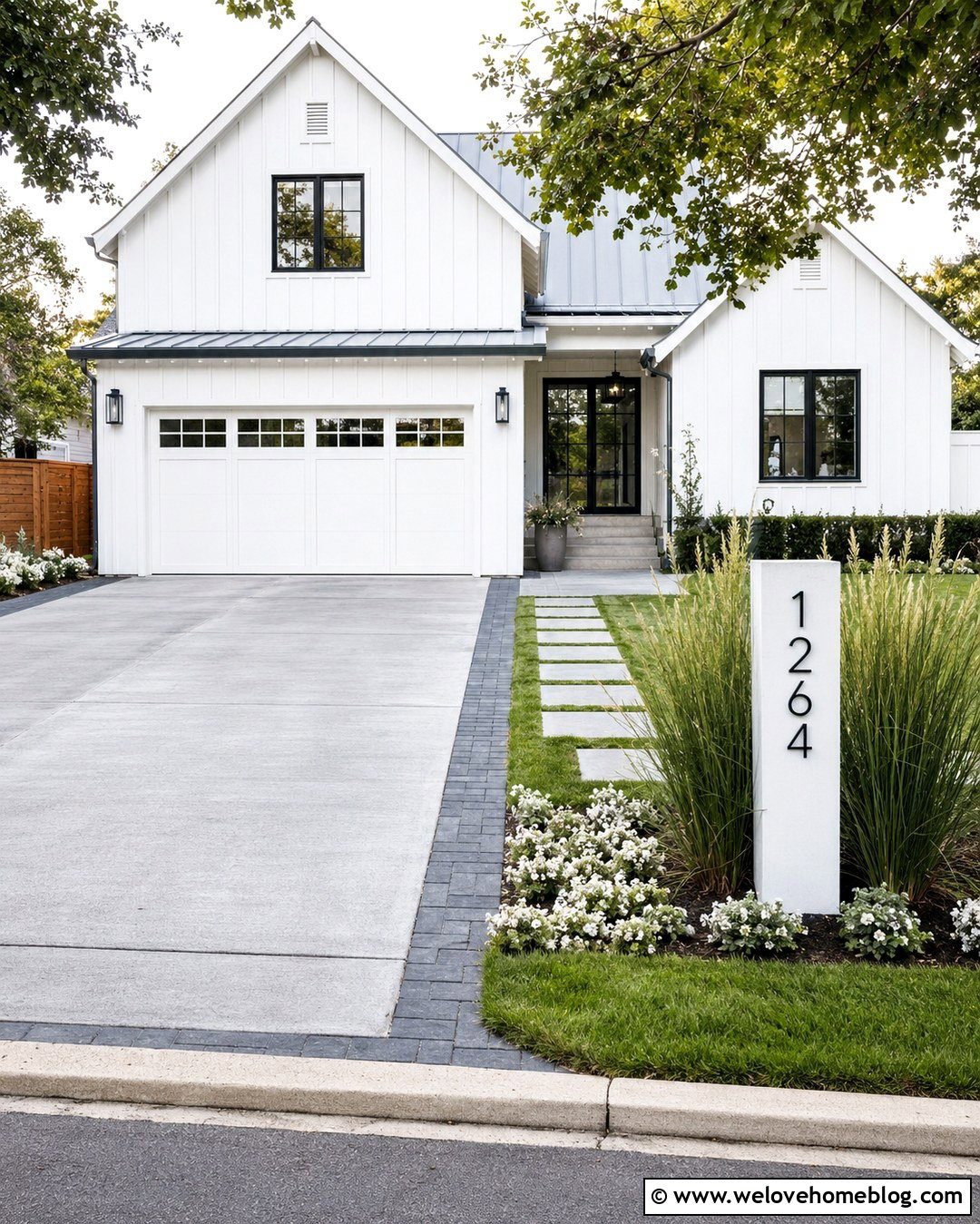
A vertical sign is useful beside a narrow driveway where a wide plaque would crowd the entrance. Mount large numbers down a tall, slim metal or wood panel, preserving enough spacing that the address remains easy to interpret. A straight brushed-concrete driveway with narrow grass strips can emphasize the same upright, streamlined appearance. Place the sign near a compact planting bed filled with columnar evergreens, ornamental grasses, and low ground cover. Dark steel edging will connect the landscape bed to a black metal panel. This layout suits townhomes, modern infill properties, and homes with limited street frontage. Avoid highly decorative number fonts, especially when numbers are stacked. The finished design uses vertical space efficiently while creating a distinctive marker that feels integrated with the architecture and driveway layout.
11. Engraved Boulder Driveway Sign
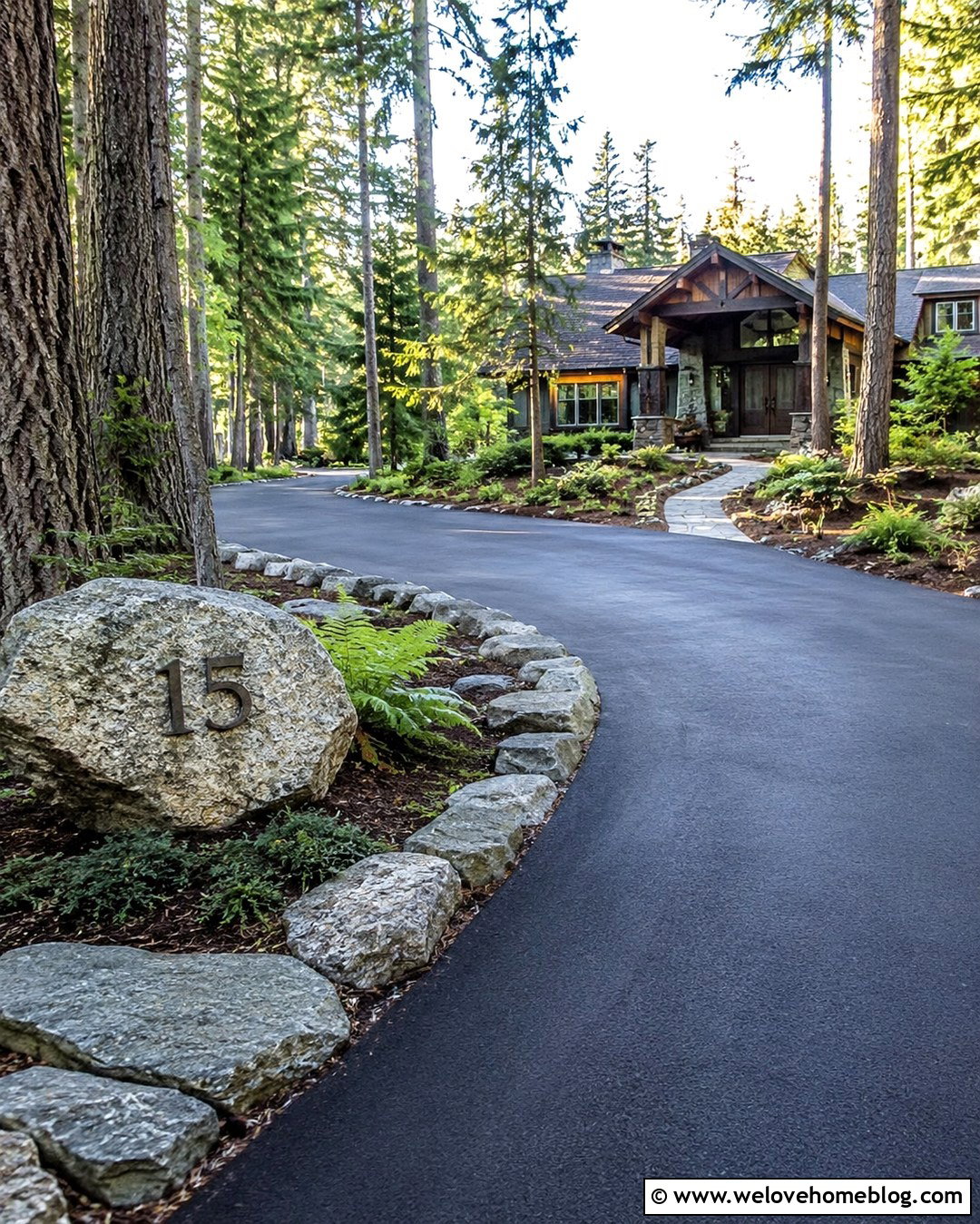
A locally sourced boulder can become a durable-looking address marker that blends naturally into a wooded or mountain setting. Select a stone with a broad, relatively flat face and add deeply engraved numbers finished in a contrasting color. Position it beside a curved black asphalt driveway bordered with smaller native rocks. Ferns, evergreen shrubs, and woodland ground cover can surround the base without covering the engraved surface. Repeating similar stone near the driveway apron or walkway helps the boulder appear intentionally placed rather than randomly dropped into the yard. Keep the sign close enough to the road for recognition but outside the path of turning vehicles and maintenance equipment. This entrance feels grounded and understated, making it well suited to cabins, craftsman homes, and rustic contemporary houses.
12. Driveway Gate Sign
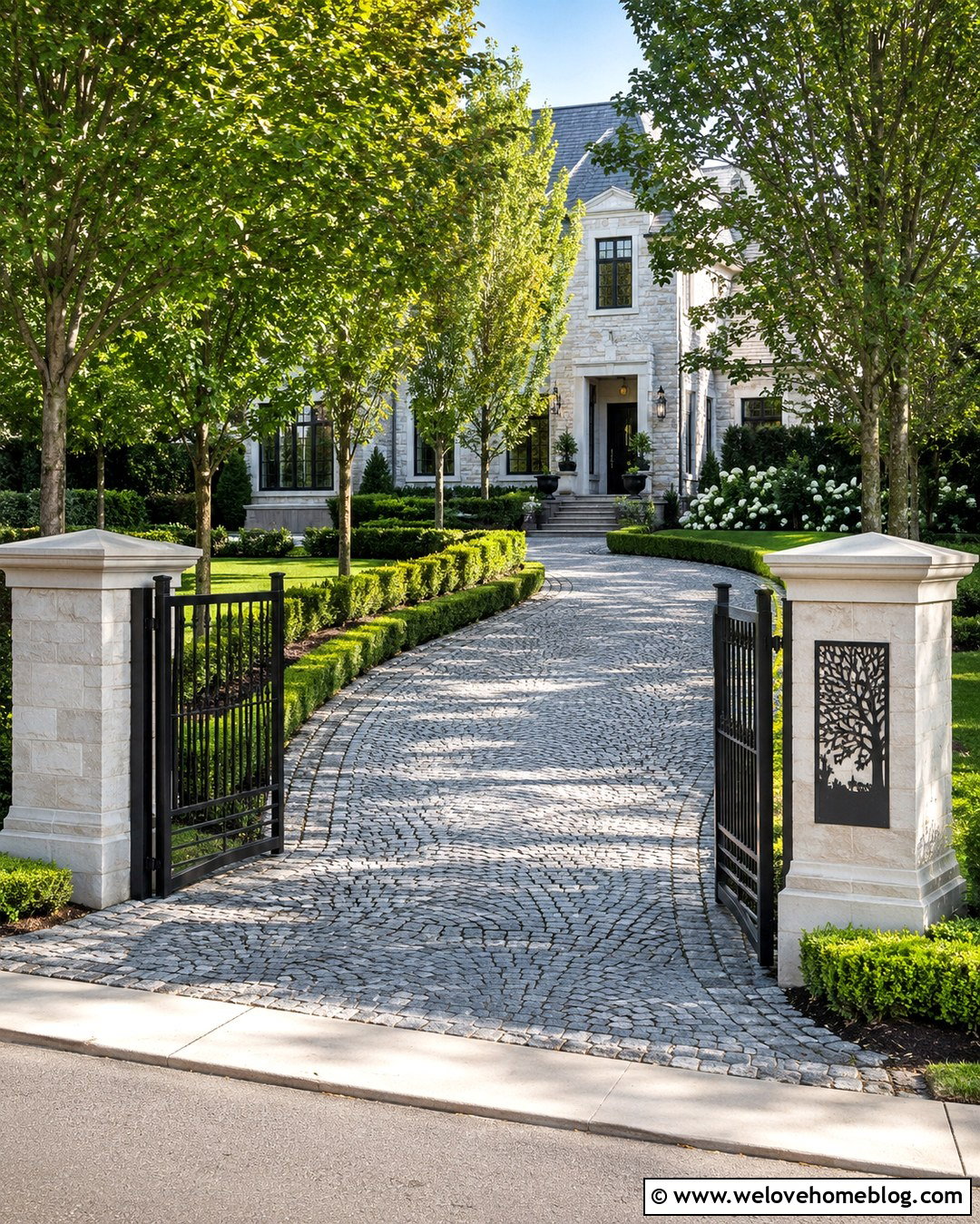
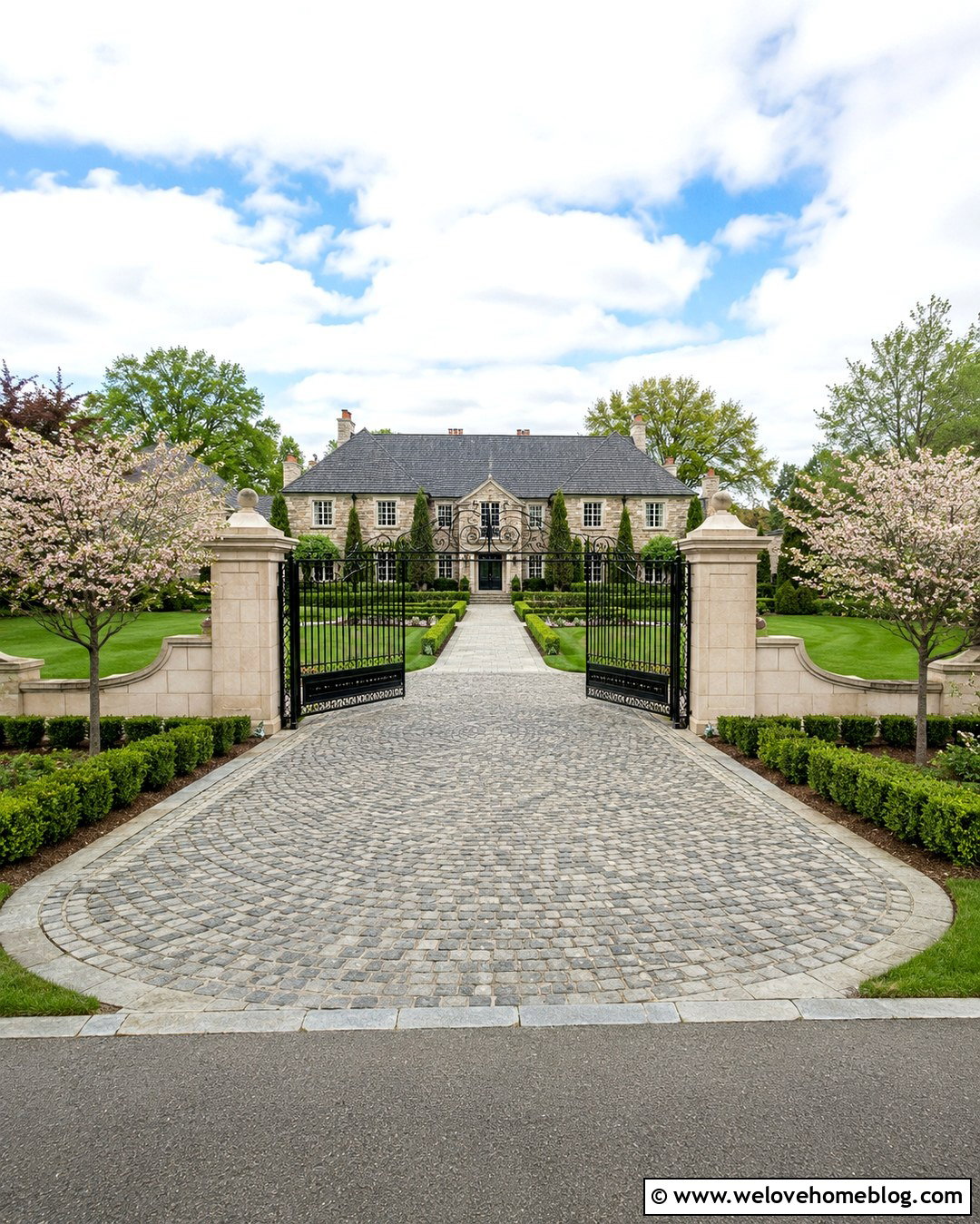
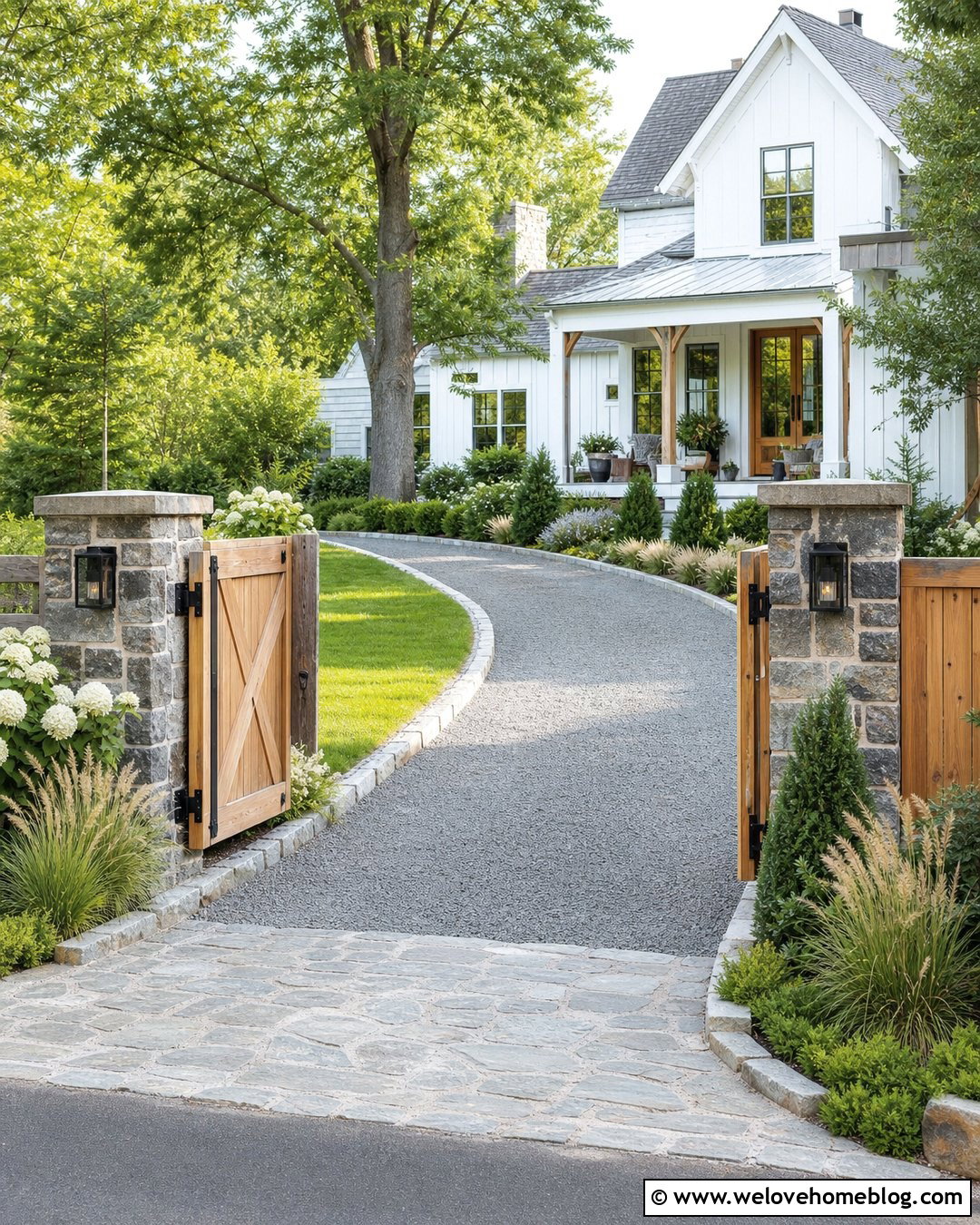
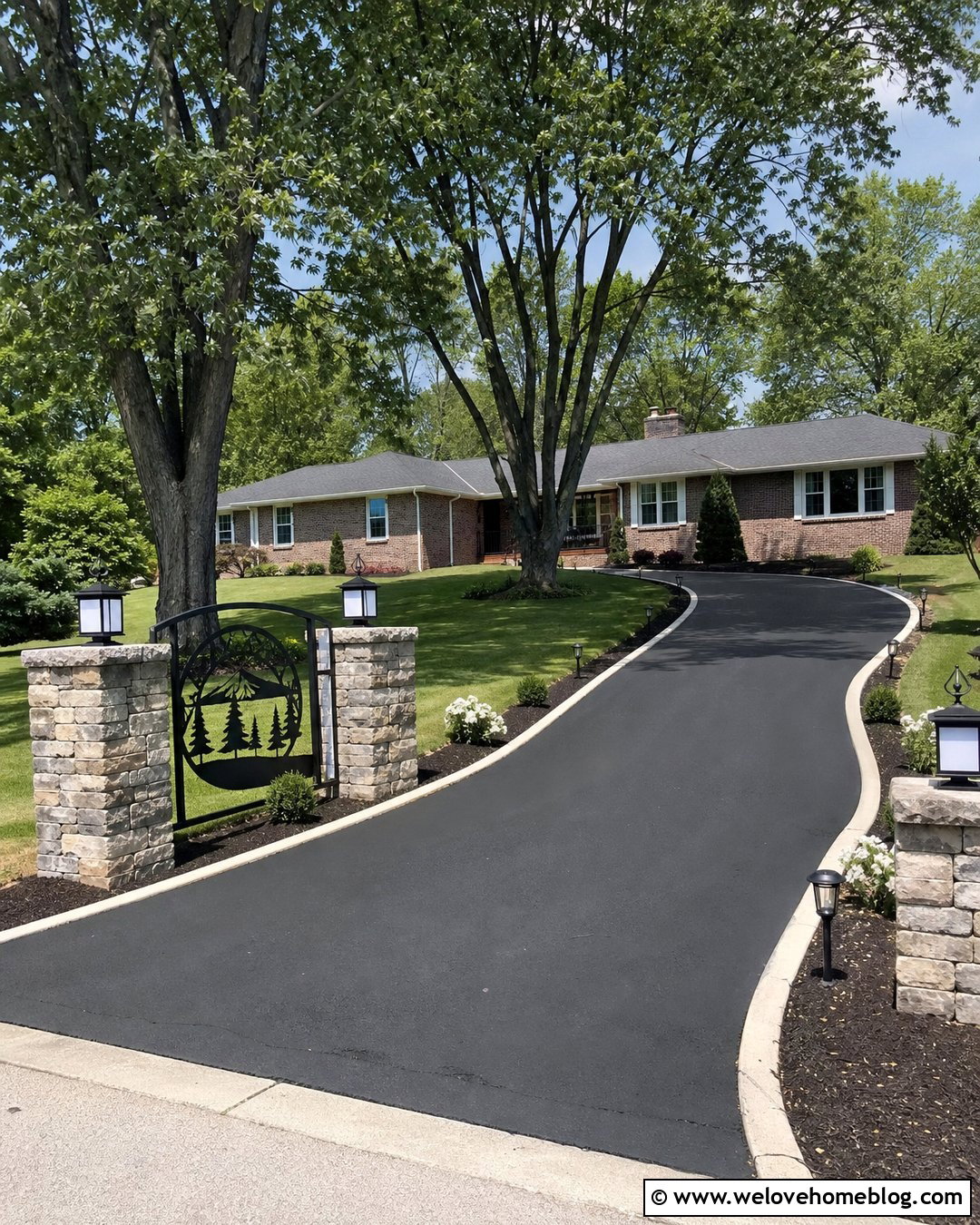
A sign incorporated into a driveway gate can create a clear identity without requiring another freestanding structure. Center a laser-cut metal panel within a simple gate, using the house number as the dominant feature and a family or property name as a secondary detail. Cobblestone paving gives the entrance a substantial base, while matching stone pillars visually anchor the gate. Continue the cobblestone into a curved approach so the sign, gate, and driveway read as one complete composition. Clipped hedges and evenly spaced trees can provide a formal frame. Choose an open pattern that preserves visibility through the gate and does not make the entrance feel closed off. Black, bronze, or dark gray metal offers useful contrast against light stone and works with both traditional and transitional homes.
13. Shared Driveway Direction Sign
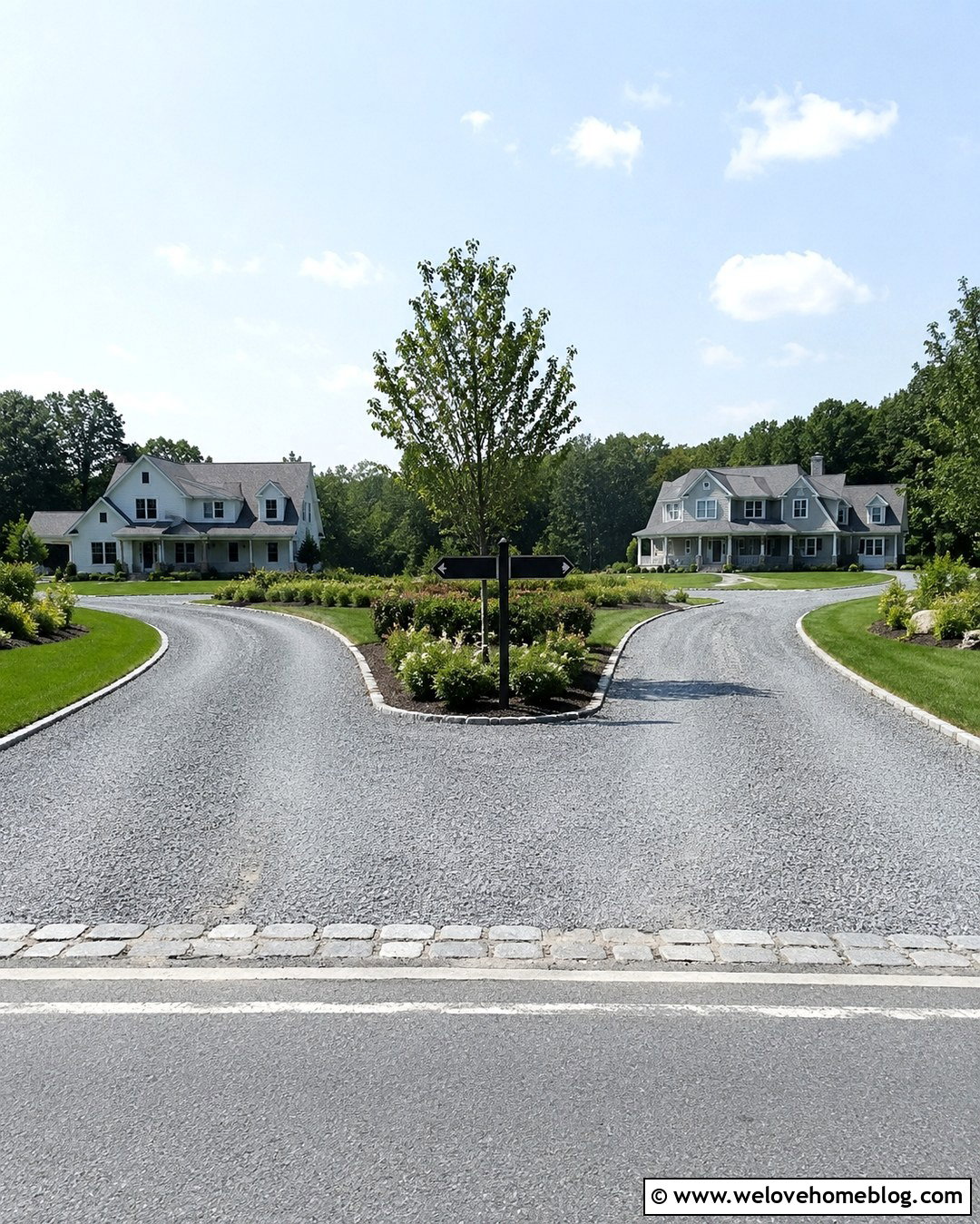
Shared driveways can be confusing when the homes are hidden or the route divides farther from the road. A simple direction sign can solve the problem while improving the appearance of the entrance. Install a double-sided panel listing each house number with a clear arrow pointing toward the correct branch. Pair it with a wide gray gravel driveway that divides into two curved lanes beyond a landscaped island. Granite cobbles can reinforce the edges and reduce the visual spread of loose gravel. Plant the center island with one small ornamental tree, low shrubs, and ground cover so the sign remains prominent. Use large, high-contrast numbers rather than elaborate lettering. This complete layout makes the shared entrance look planned, helping guests and delivery drivers understand the route before reaching the split.
14. Reflective Rural Driveway Sign
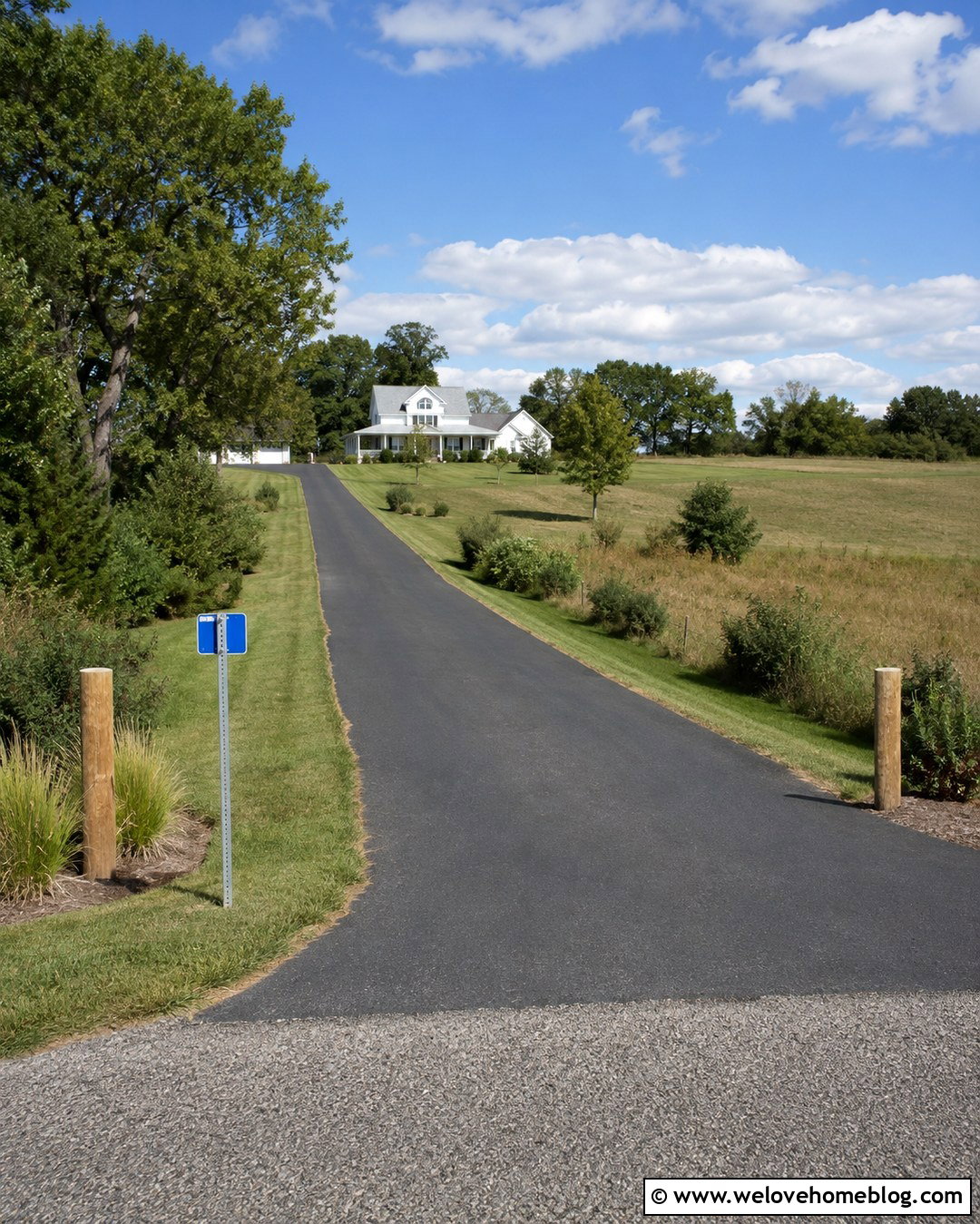
Long rural driveways need address numbers that can be recognized from the road rather than only near the house. A double-sided reflective sign mounted perpendicular to traffic can provide visibility from both travel directions. Emergency-address guidance commonly emphasizes reflective backgrounds, high-contrast block numbers, and placement that clearly identifies the correct driveway. () Pair the marker with a straight asphalt driveway bordered by mowed grass and simple timber posts. A few native shrubs can soften the base, but the area directly around the sign should remain open. Dark green, blue, or black backgrounds with light numbers create a straightforward appearance. This design is less decorative than a carved property sign, yet it can still coordinate with a country house through thoughtful post color, landscaping, and driveway edging.
15. Gabion Driveway Sign
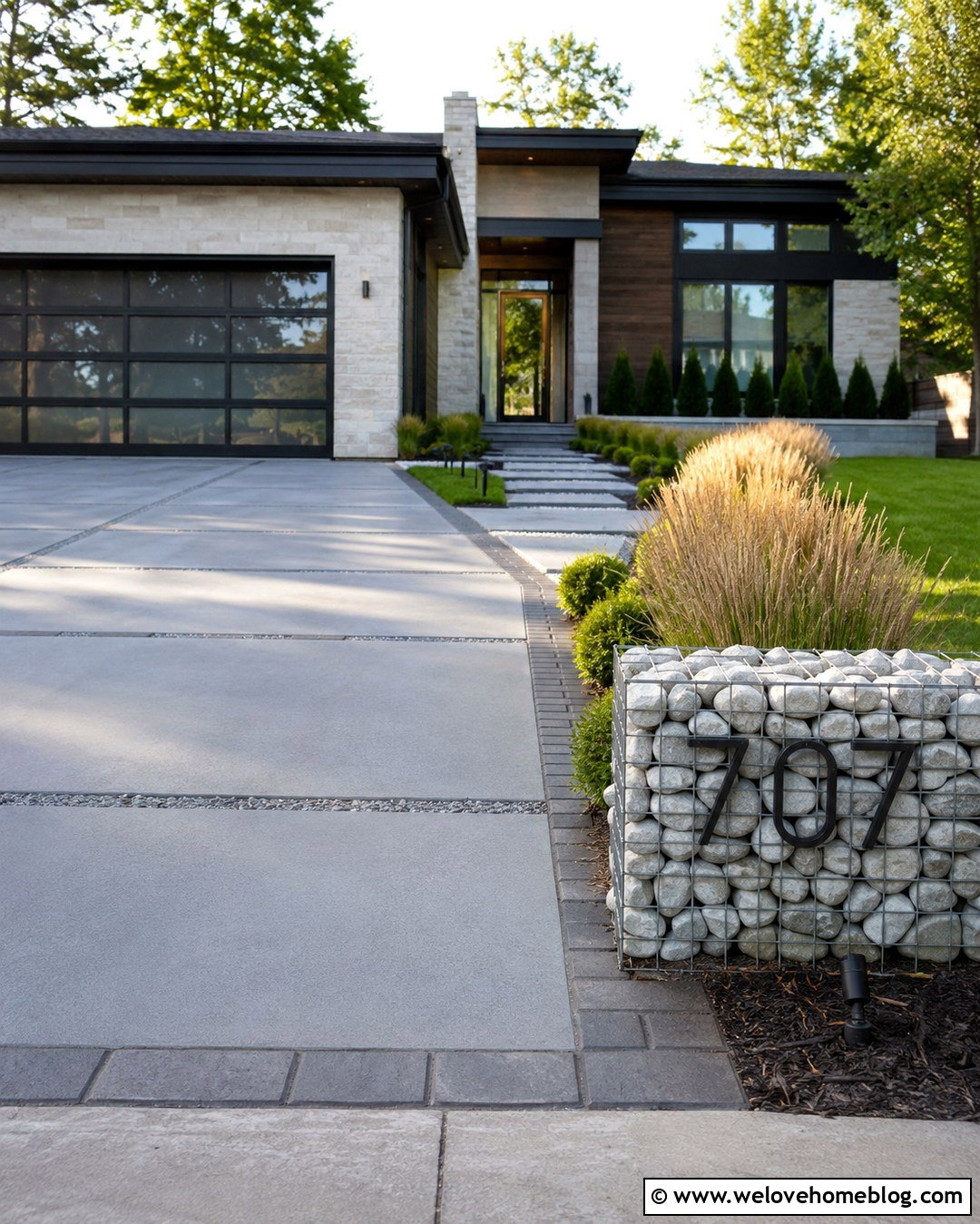
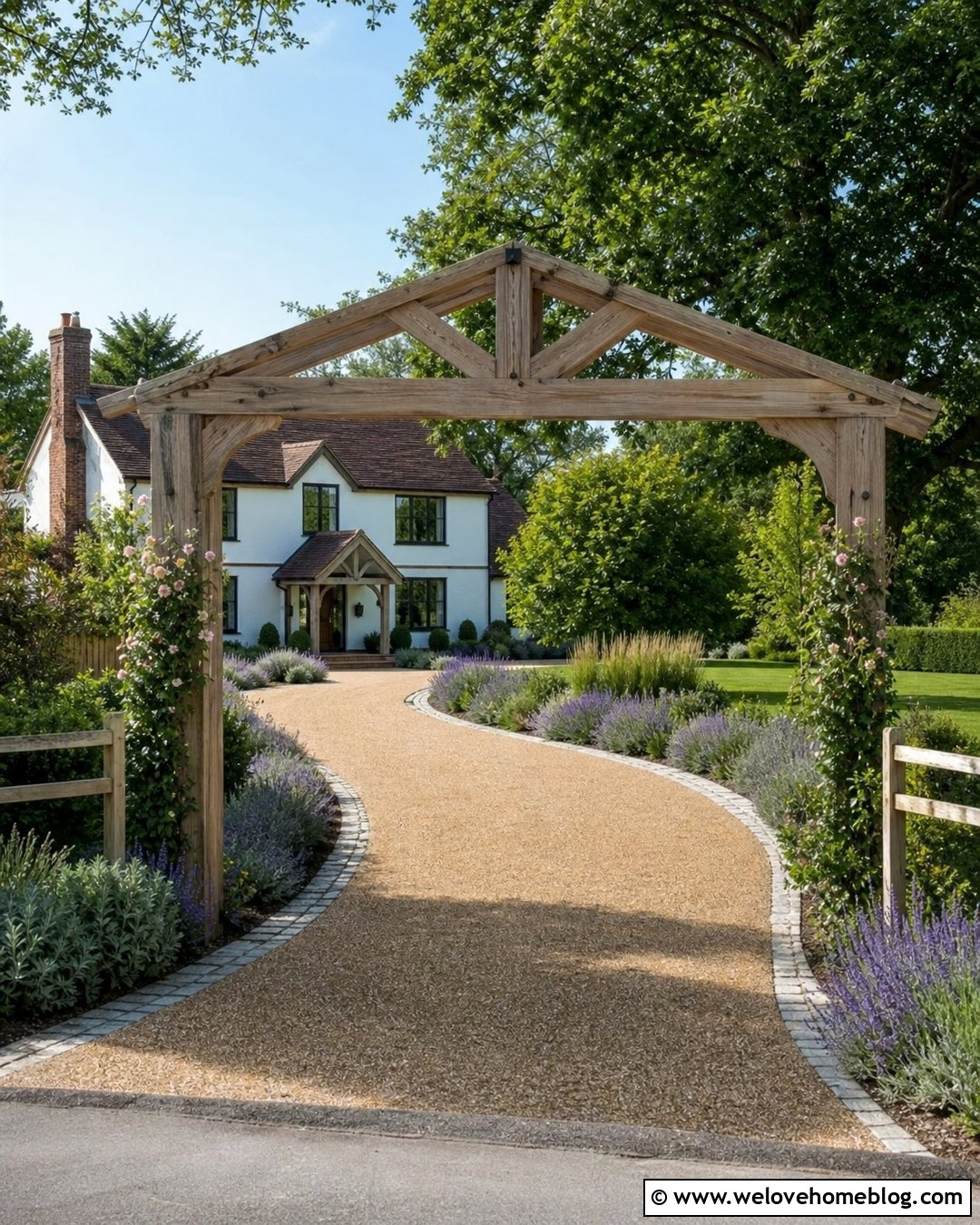
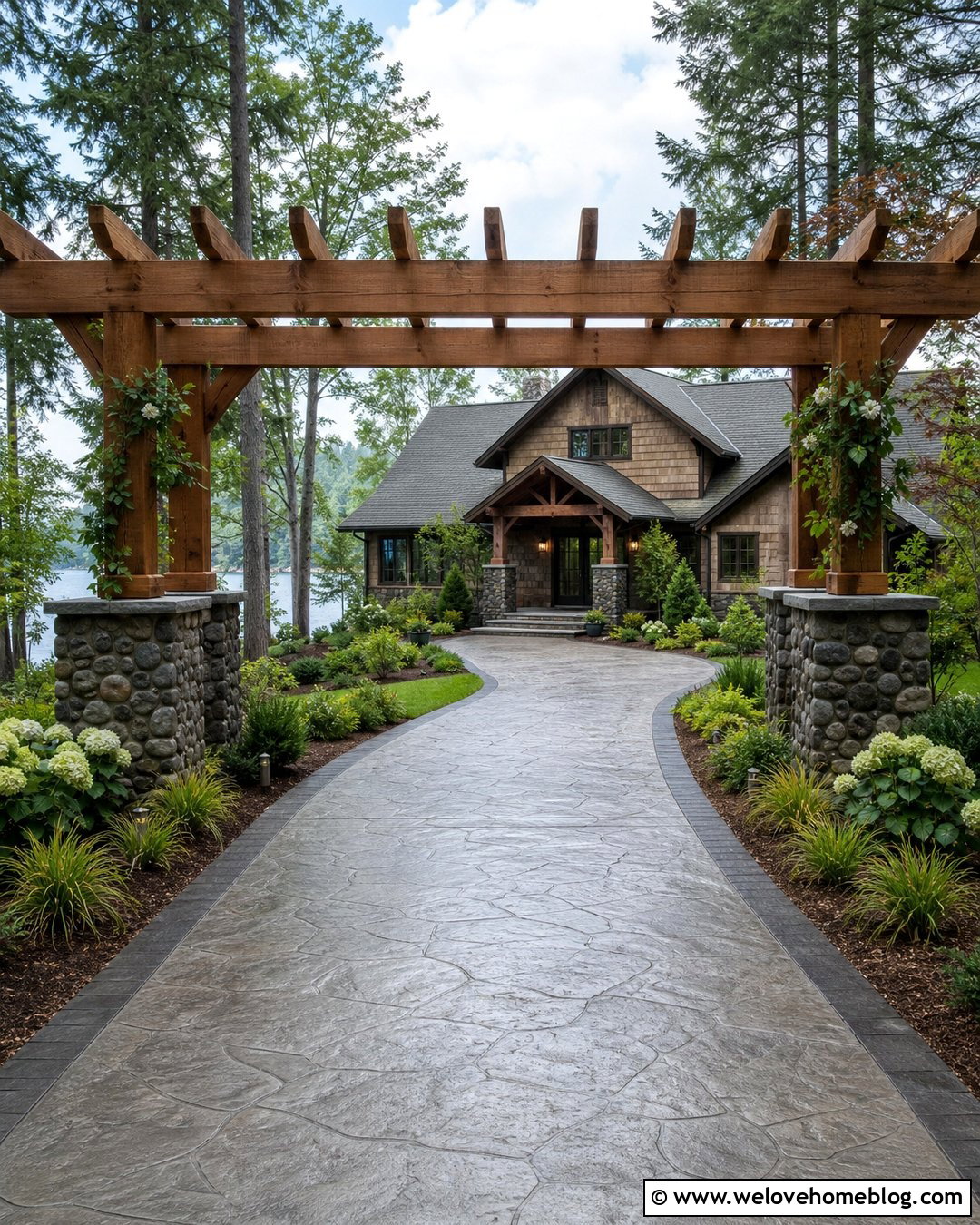
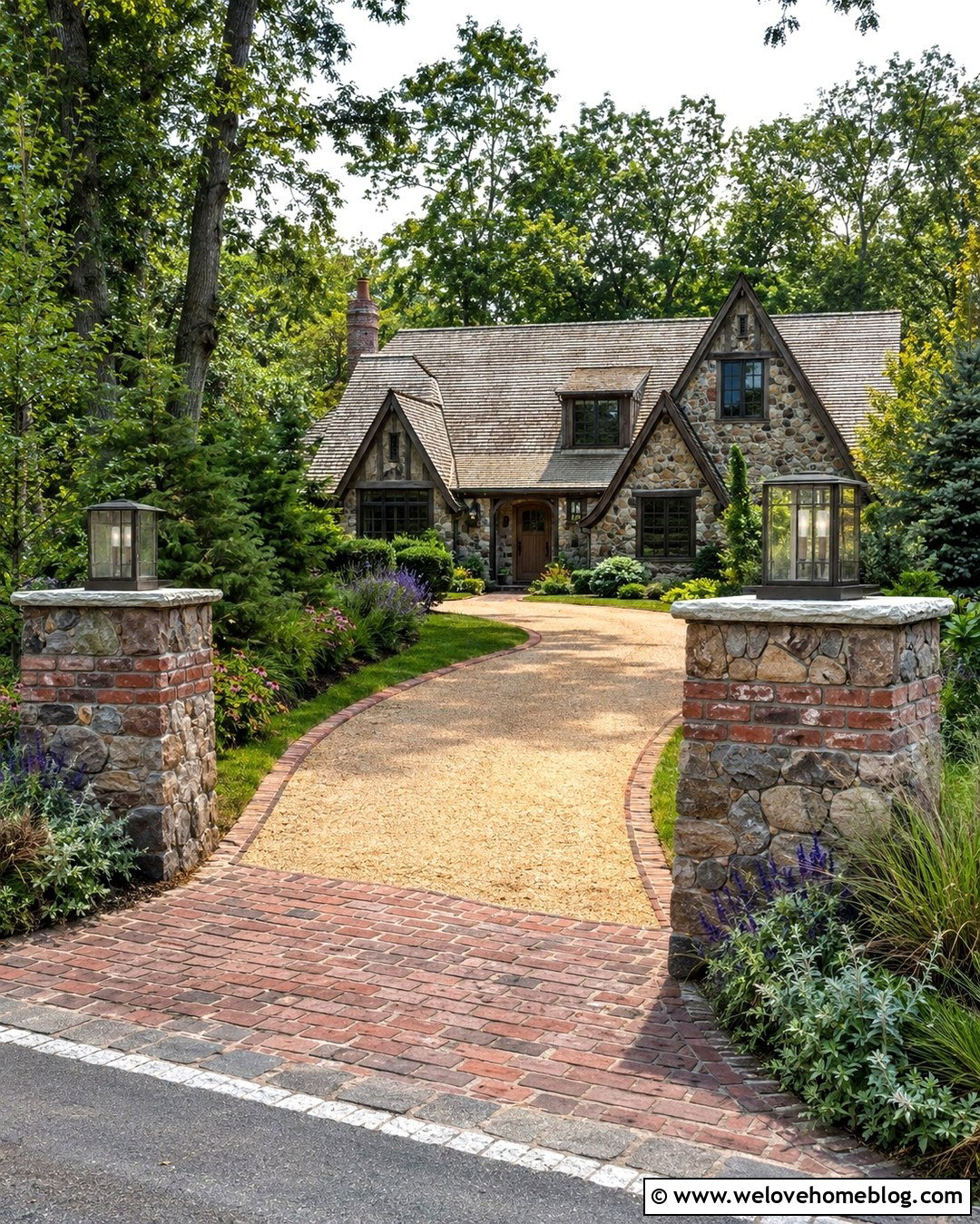
A gabion sign combines wire cages and natural stone to create a textured entrance for a contemporary home. Use one low rectangular gabion wall beside the driveway and mount smooth metal numbers on its street-facing side. Fill the cage with stones that relate to the house facade or nearby landscape, keeping the colors relatively consistent for a controlled appearance. A driveway made from large-format concrete pavers complements the sign’s geometric shape. Add narrow gravel joints or grass strips between sections to lighten the paved area. Ornamental grasses and compact shrubs can frame the wall without hiding its structure. Continue the same stones along a walkway or planting border for visual repetition. This complete design feels architectural and substantial while still allowing natural materials to soften the driveway entrance.
16. Floating Acrylic Driveway Sign
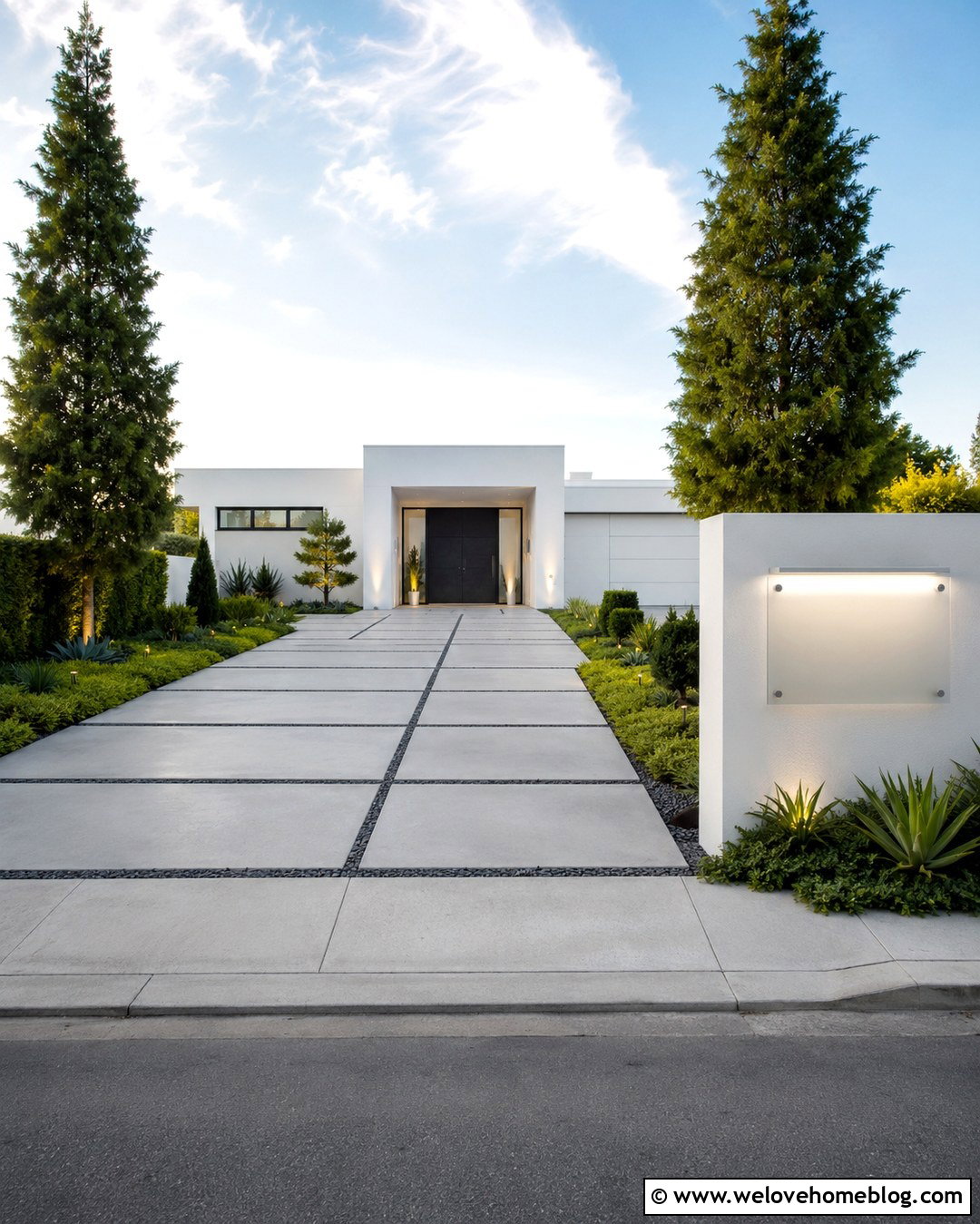
Clear or frosted acrylic can create an understated driveway sign for a sleek modern property. Mount the panel slightly in front of a white masonry wall so the address numbers appear to float. Use black or brushed-metal characters with generous spacing for a sharp, readable result. A wide driveway of smooth light gray poured concrete can lead toward a flat-roofed home with matching minimalist details. Separate large concrete sections with thin dark gravel joints, then frame the entrance with sculptural evergreens and low ground cover. Concealed white lighting beneath the sign cap can improve visibility without becoming a dominant feature. Acrylic should be thick, securely fixed, and intended for outdoor use. The completed entrance feels airy and refined because the sign, wall, driveway, and planting share a restrained visual language.
17. Mosaic Tile Driveway Sign
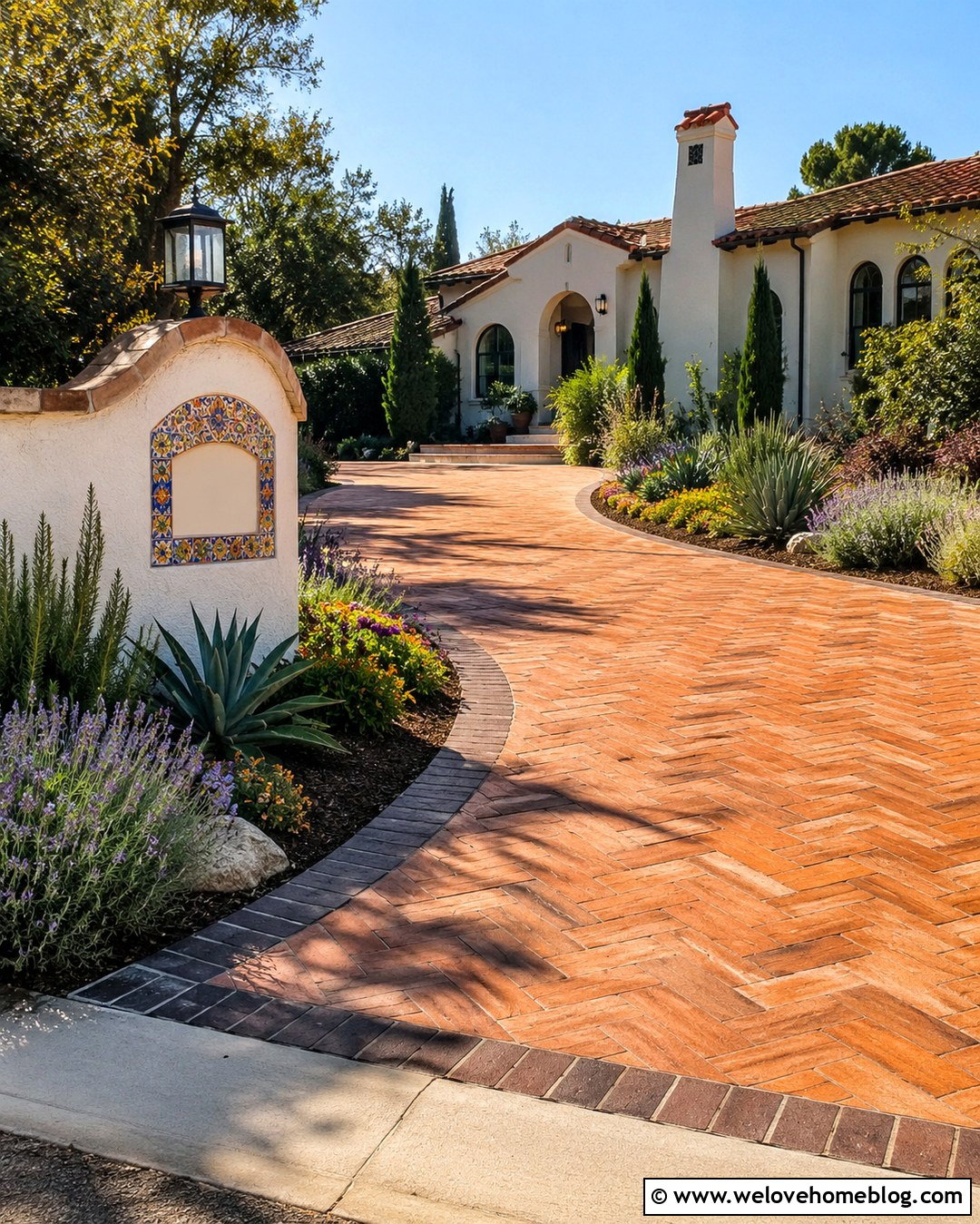
Colorful tile can turn an address marker into a distinctive feature for a Mediterranean, Spanish Revival, or Southwestern home. Set hand-painted ceramic numbers into a stucco monument with a simple curved top. Choose colors that repeat the roof tile, front door, or planting containers rather than introducing an unrelated palette. A driveway surfaced with clay brick pavers in a herringbone pattern strengthens the warm, handcrafted character. Use a darker brick border to define the curves and connect the driveway with the monument base. Rosemary, agave, lavender, and flowering perennials can surround the sign while remaining below the tiled address. Avoid an overly complicated mosaic that makes the numbers difficult to distinguish. This entrance works best when every detail feels coordinated, sunny, and rooted in the home’s architecture.
18. Low Landscape Driveway Sign
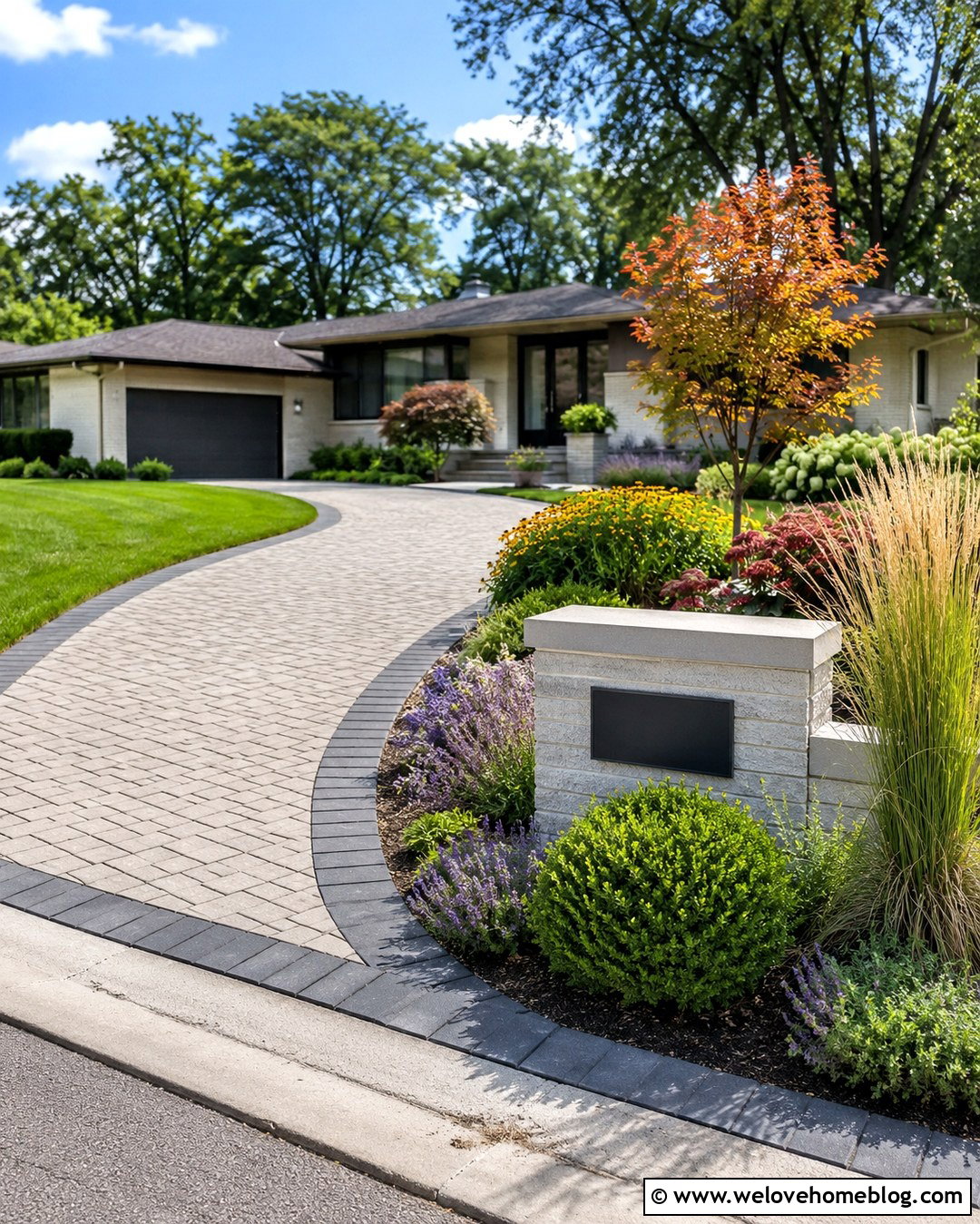
A low monument nestled into a planting bed can identify the driveway without blocking views across the yard. Choose a horizontal stone or rendered masonry base with a simple metal address plaque on the front. Pair it with a gently curved driveway made from permeable concrete pavers in a warm gray tone. A contrasting charcoal border can define the driving surface and connect visually with the plaque. Arrange low boxwood, fountain grass, sedum, and seasonal flowers behind and beside the monument, keeping the front completely clear. One small ornamental tree can anchor the wider bed without casting heavy shade over the numbers. This approach works especially well for ranch and midcentury homes with long horizontal lines. The sign becomes part of the landscape rather than a separate roadside object.
19. Fence Mounted Driveway Sign
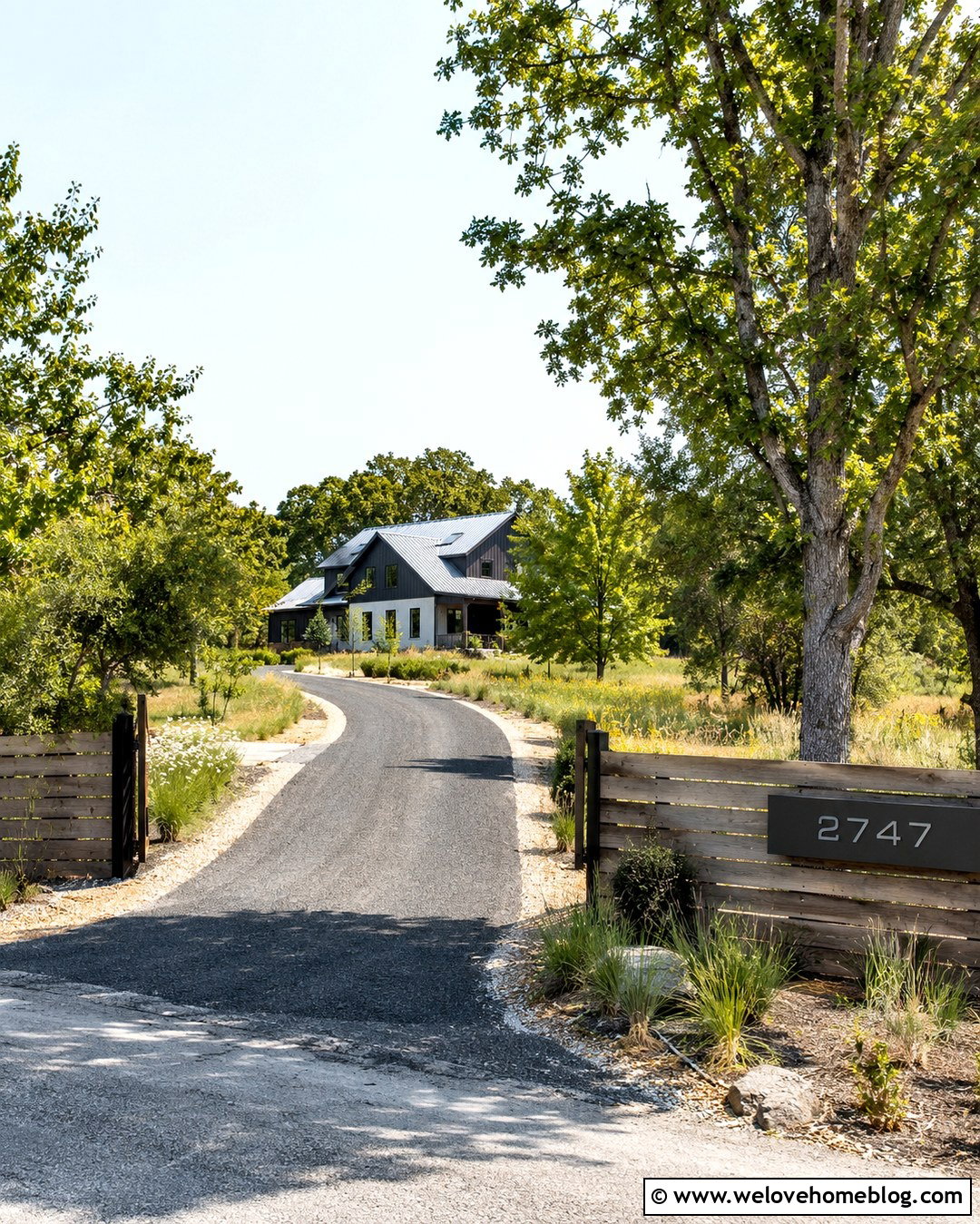
When a fence already frames the property, mounting the driveway sign directly to it can prevent unnecessary clutter. Choose a rectangular metal or carved wood plaque that contrasts with the fence color. A black sign stands out against natural cedar, while light numbers remain readable against dark painted boards. Pair the fence with a curved chip-seal driveway edged by grass and a neat gravel shoulder. Continue the fence on both sides of the entrance, but leave a generous opening for comfortable vehicle movement. Native shrubs and meadow-style planting can soften the long fence line while keeping the sign area clear. Position the plaque where it unmistakably relates to the driveway rather than a neighboring property. The completed entrance feels simple, economical, and thoughtfully connected to the surrounding boundary.
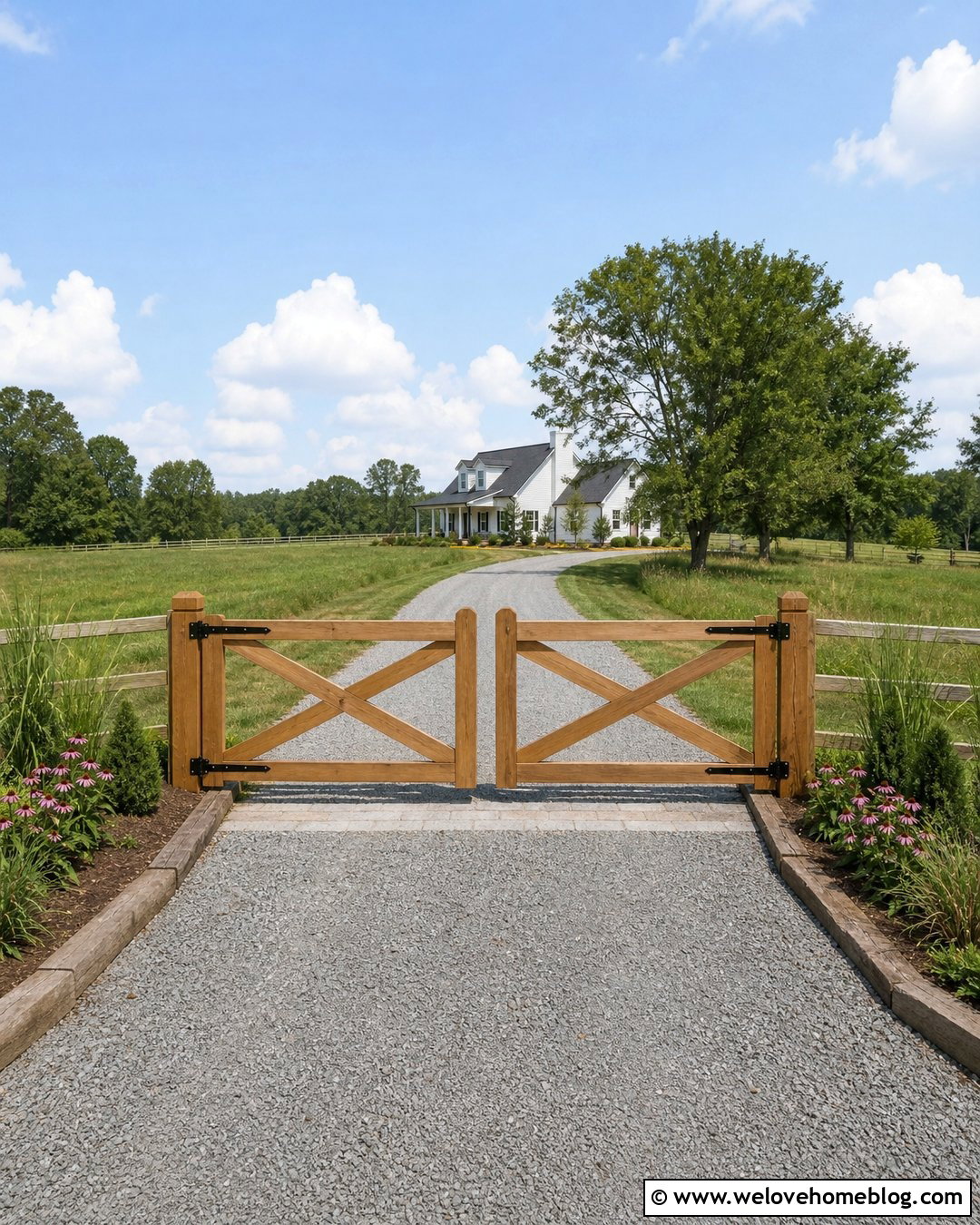
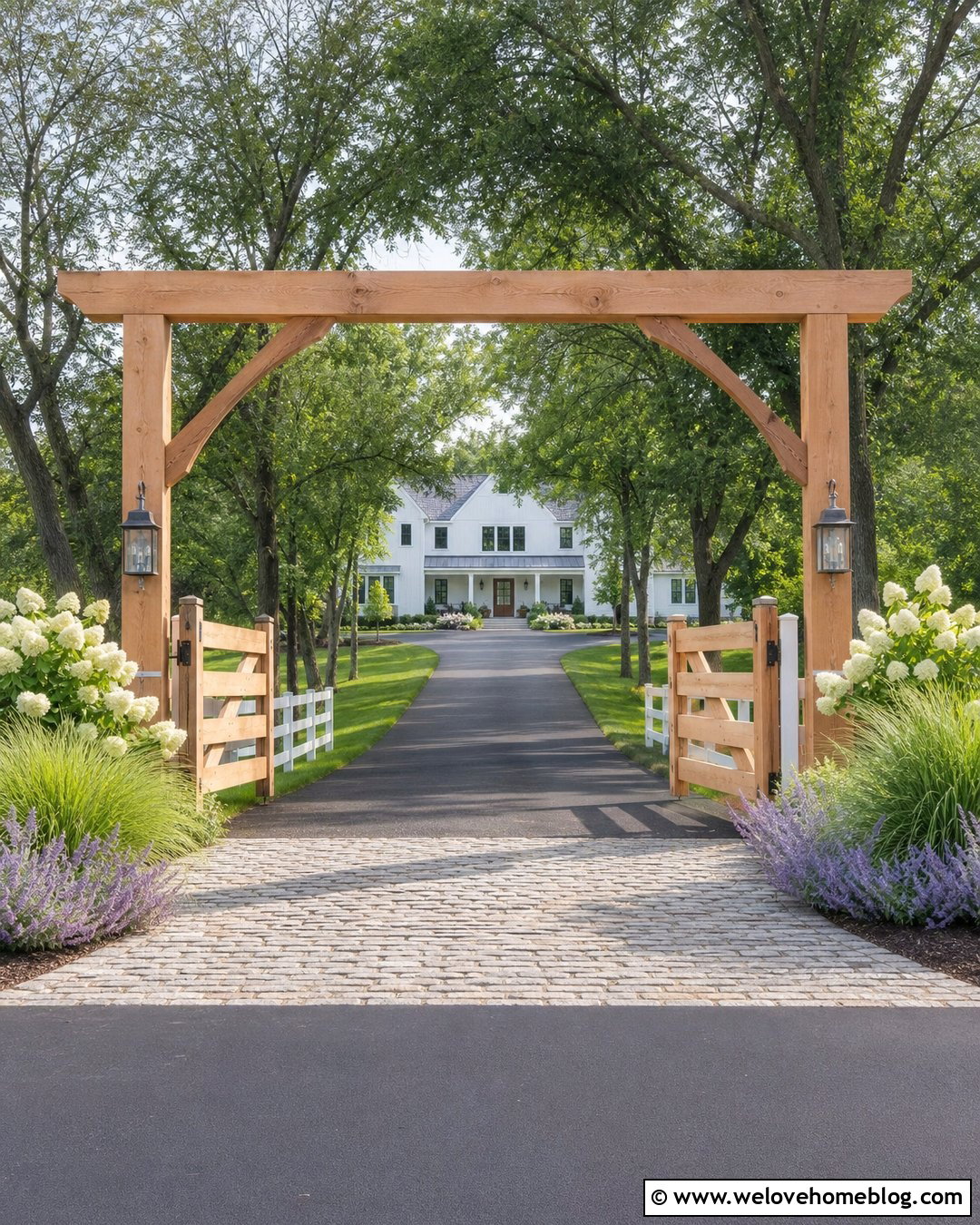
20. Coastal Driveway Sign
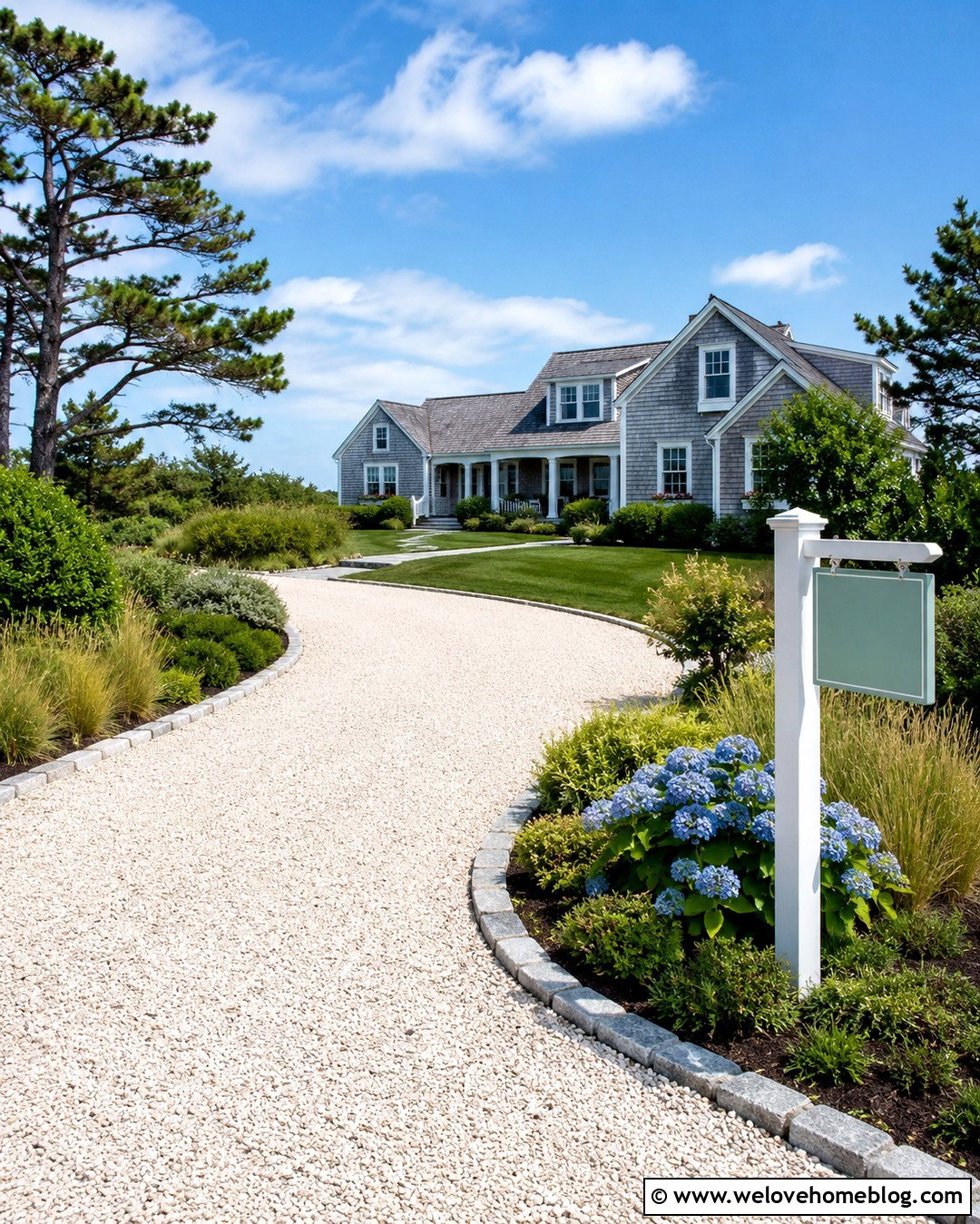
A coastal entrance can feel relaxed without relying on novelty decorations. Use a white-painted post with a navy, sea-glass green, or weathered gray address plaque. Raised white numbers offer a crisp finish, while corrosion-resistant hardware helps preserve the clean look. Pair the sign with a pale crushed-shell or white gravel driveway that curves toward a shingle-style or coastal cottage home. Edge the surface with cobblestones to keep the light material contained and add definition near the lawn. Beach grass, hydrangeas, dwarf evergreens, and salt-tolerant ground cover can frame the approach. Keep the palette restrained so the driveway does not feel themed. The complete design should appear bright, breezy, and practical, with the sign acting as a natural extension of the home and coastal landscape.
Conclusion:
The strongest driveway signs balance personality with clear communication. Large numbers, contrasting colors, sensible placement, and uncluttered landscaping make an entrance easier to recognize. Materials should also relate to the driveway and house. Metal complements contemporary concrete, timber suits gravel country lanes, and masonry works naturally beside brick or pavers. Before installing anything, check local address, setback, HOA, and right-of-way requirements. Then evaluate the sign from both directions along the street and consider how plants may grow around it. These 20 Driveway Sign Ideas show that even a practical address marker can improve the entire approach. Treat the driveway surface, sign, borders, lighting, and landscaping as one design for more polished curb appeal.

Related posts:
Leave a Reply