
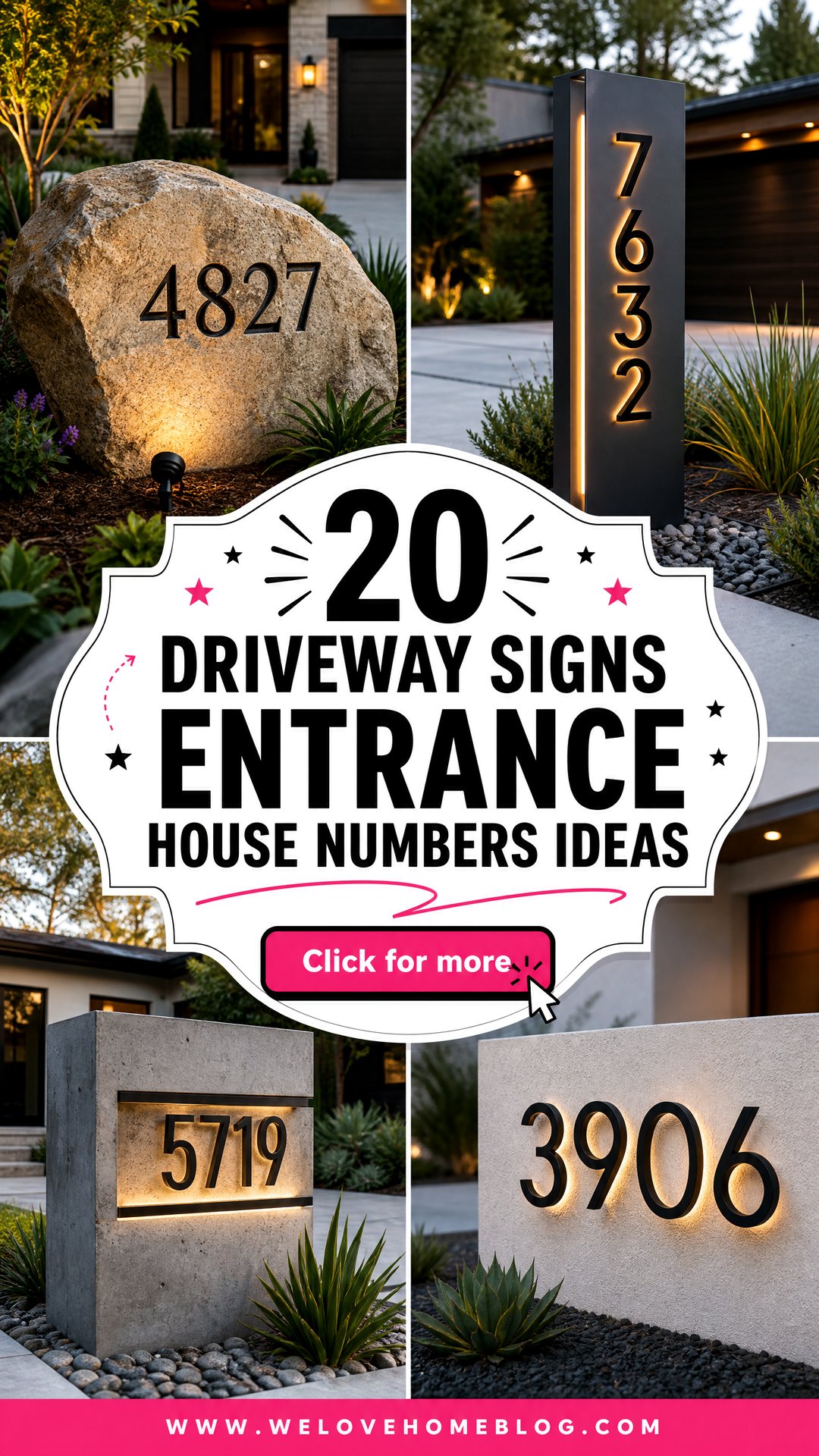
A driveway address sign should do more than display numbers. It should make the entrance easy to find while complementing the driveway, landscaping, and house. Today’s choices include laser-cut steel pillars, illuminated mailbox posts, engraved stone markers, reflective panels, and custom wood signs. () Clear placement near the main access point is especially helpful when a home sits far from the road or shares an entrance. () The best design uses large, contrasting numbers and durable materials that suit the property’s architecture. From modern concrete monuments to rustic cedar posts, these 20 Driveway Signs Entrance House Numbers Ideas combine visibility with a complete, attractive driveway design. Explore the practical looks below for 20 Driveway Signs Entrance House Numbers Ideas.
1. Modern Black Driveway Address Sign
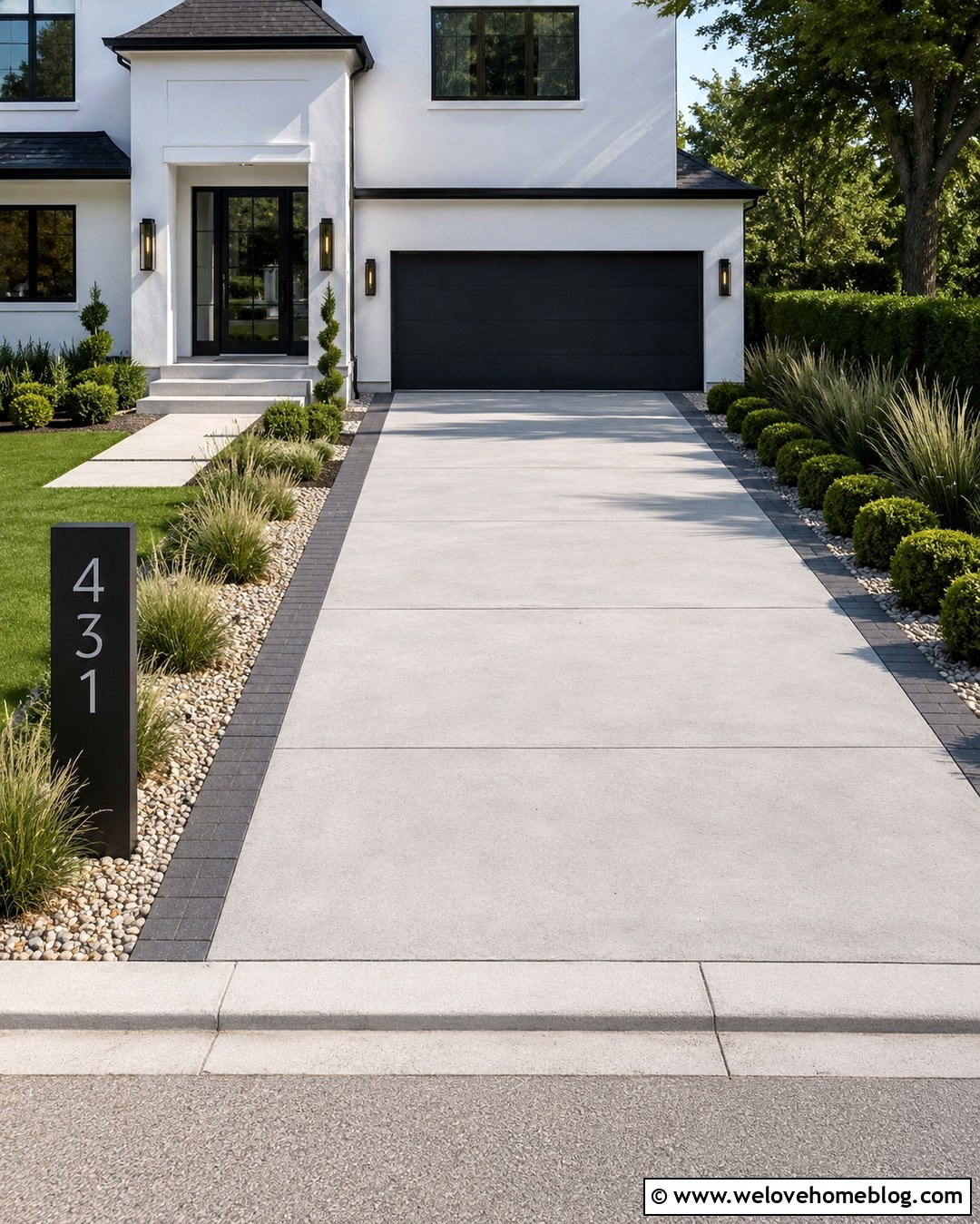
A slim black address sign gives a concrete driveway a crisp, contemporary focal point. Position a powder-coated steel panel beside the entrance, where it can be seen from both directions. Large white or stainless steel numbers create strong contrast without making the sign look busy. Pair it with a straight, light gray poured concrete driveway and narrow black paver borders. Ornamental grasses, low boxwoods, and pale river rock can soften the metal while preserving the clean layout. This combination works especially well with a modern house featuring white stucco, charcoal siding, or warm wood details. Add a discreet spotlight at the base if street lighting is limited. Keep nearby plants below the numbers so seasonal growth does not block the address.
2. Stone Driveway Pillar With House Numbers
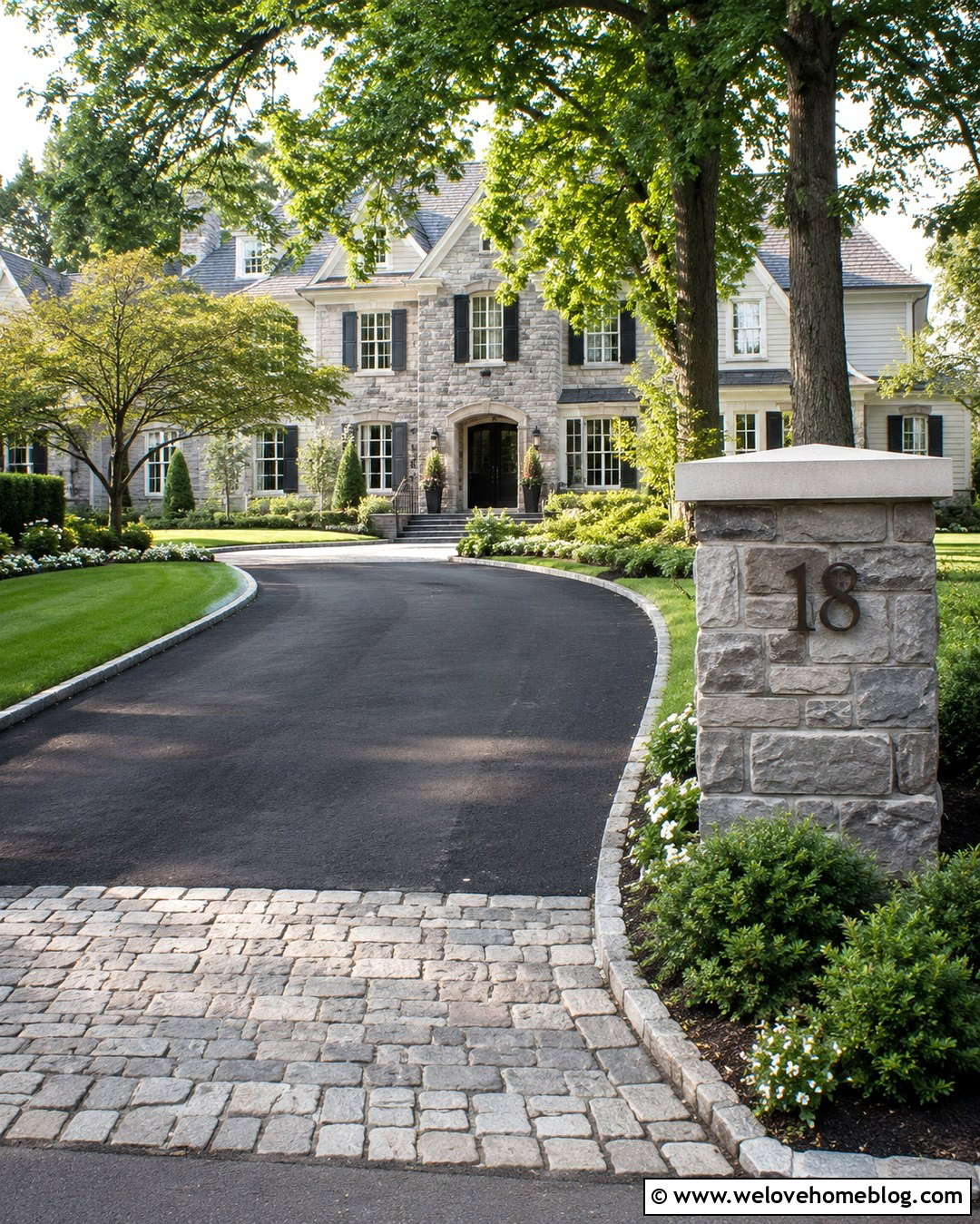
Stone pillars create a permanent-looking entrance that suits traditional and upscale homes. Build one substantial pillar beside a curved asphalt driveway, then mount dark bronze or black house numbers on its road-facing side. Select stone that repeats colors found on the house, retaining walls, or front walkway. Gray fieldstone, limestone, and warm ledgestone are versatile options. A limestone cap gives the pillar a neat finish and helps direct rainwater away from the masonry. Frame the entrance with low evergreen shrubs, flowering perennials, and a cobblestone driveway apron. Rather than covering the pillar with vines, leave open space around the address. The complete entrance will feel established and welcoming while remaining easy for visitors to identify from the road.
3. Solar Driveway Address Sign
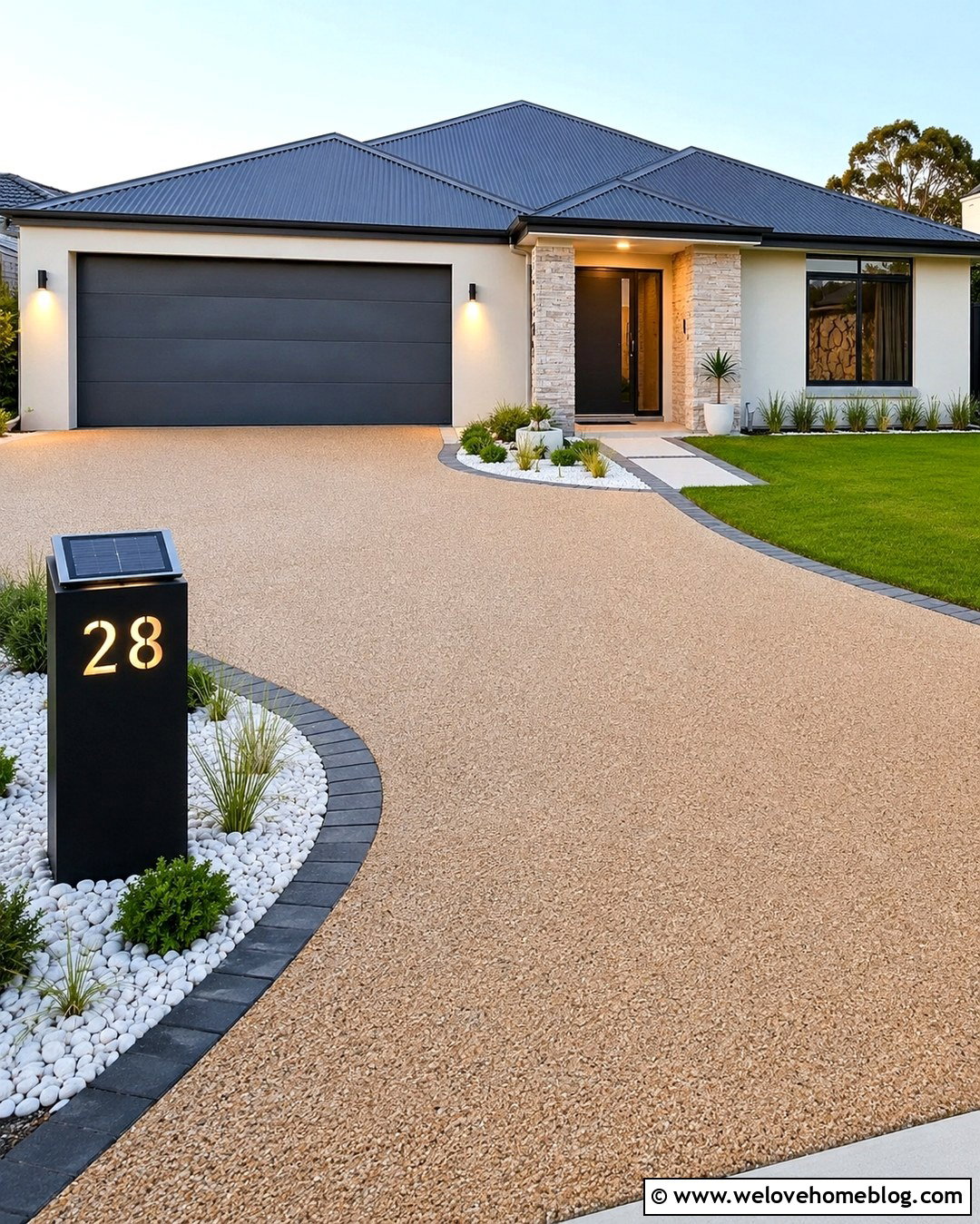
A solar address sign is useful when the entrance is far from an outdoor electrical connection. Choose a tall matte-black pillar with internally illuminated cutout numbers rather than a small garden stake that may disappear into the landscape. Place it beside a sweeping resin-bound gravel driveway with a contrasting charcoal border. The smooth surface and slender sign produce a polished look for a contemporary suburban property. Surround the base with white gravel, compact grasses, and low-growing ground cover, keeping the solar panel exposed to direct daylight. The sign should face approaching vehicles without creating an obstruction near the driveway. When comparing models, consider battery access, weather resistance, and the size of the illuminated numbers. Consistent lighting makes the entrance look intentional after sunset.
4. Farmhouse Wood Driveway Sign
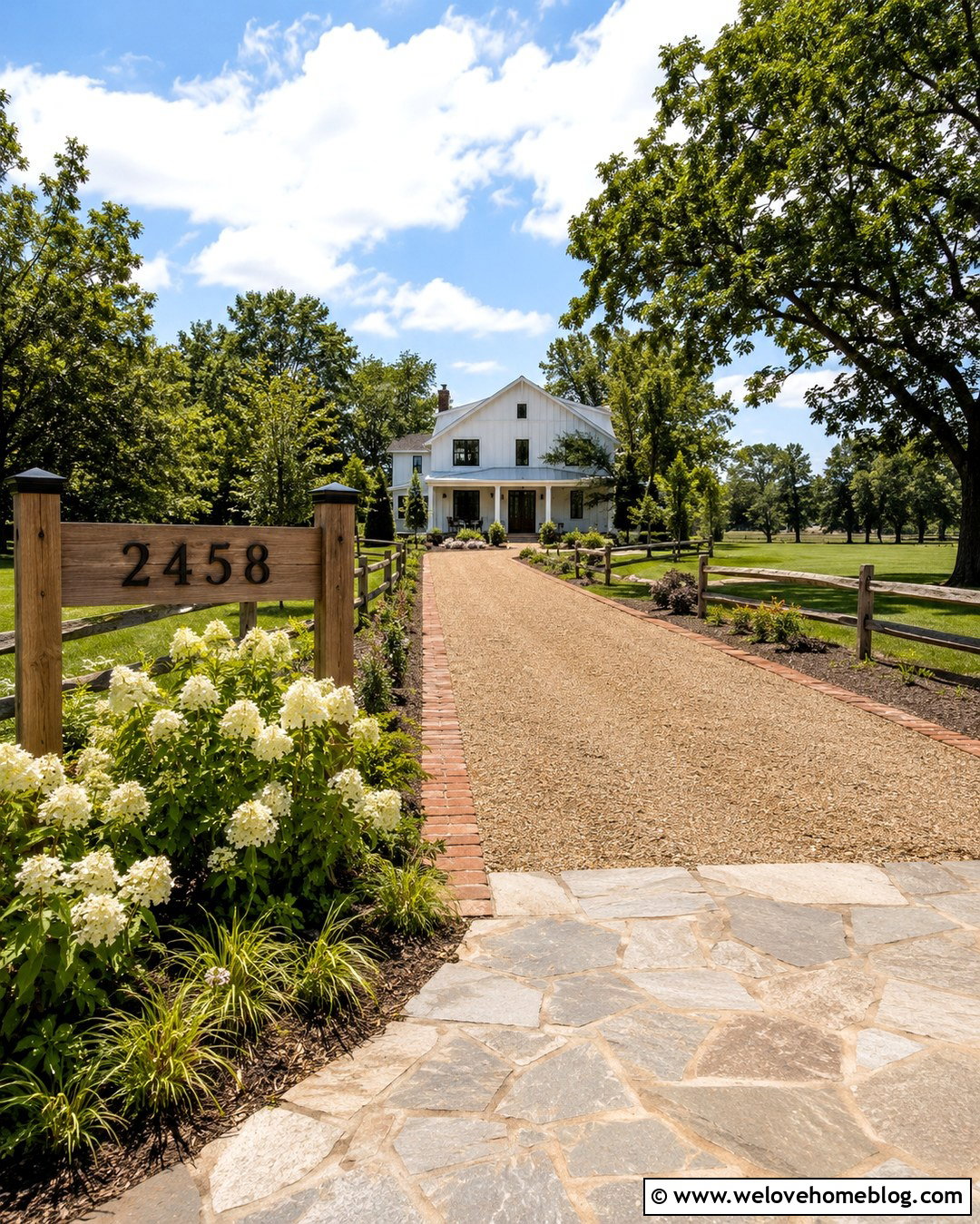
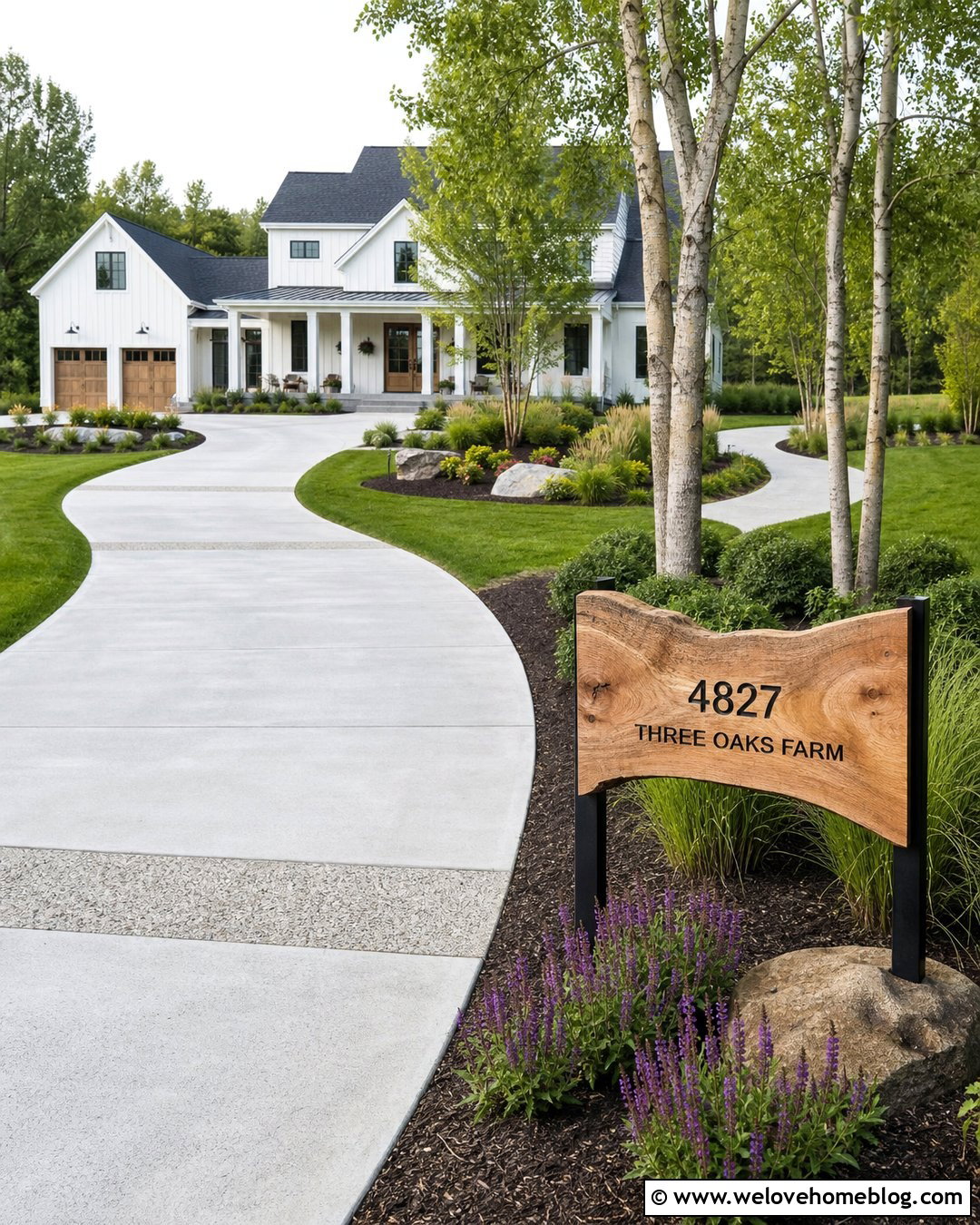
Warm cedar adds natural character to a farmhouse driveway entrance. Use a thick horizontal plank suspended between two sturdy timber posts, with large black metal numbers centered on the wood. A simple rectangular shape feels more authentic and readable than an overly decorative sign. Pair it with a straight pea gravel driveway edged in reclaimed brick. White hydrangeas, ornamental grasses, split-rail fencing, and a broad lawn can frame the entrance without hiding the sign. Stain the cedar in a medium brown that relates to the front door or porch columns. Exterior-rated metal hardware and sealed end grain will help the structure handle changing weather. This complete look suits a white modern farmhouse, country cottage, or renovated barn-style home with understated landscaping.
5. Brick Driveway Column Address Plaque
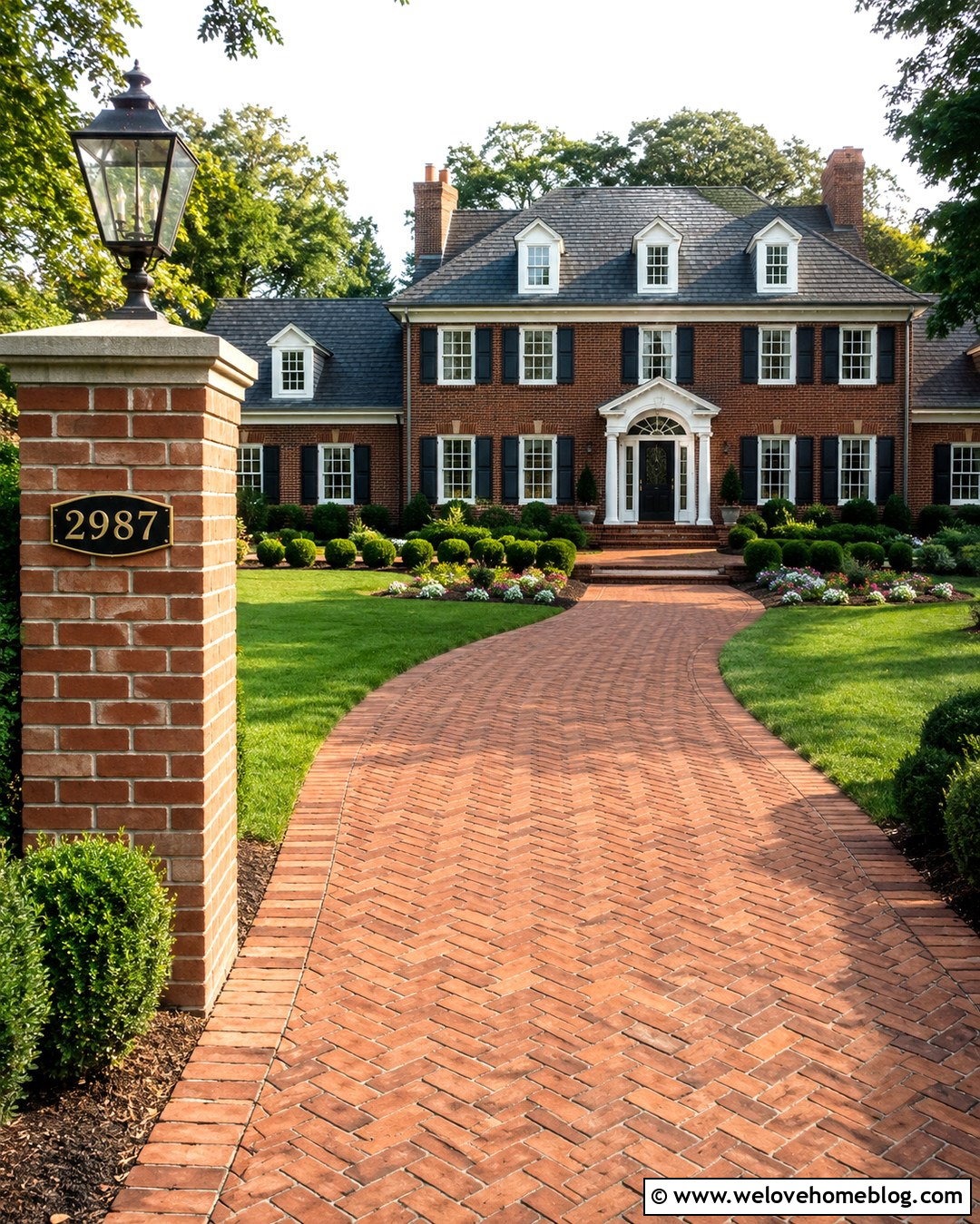
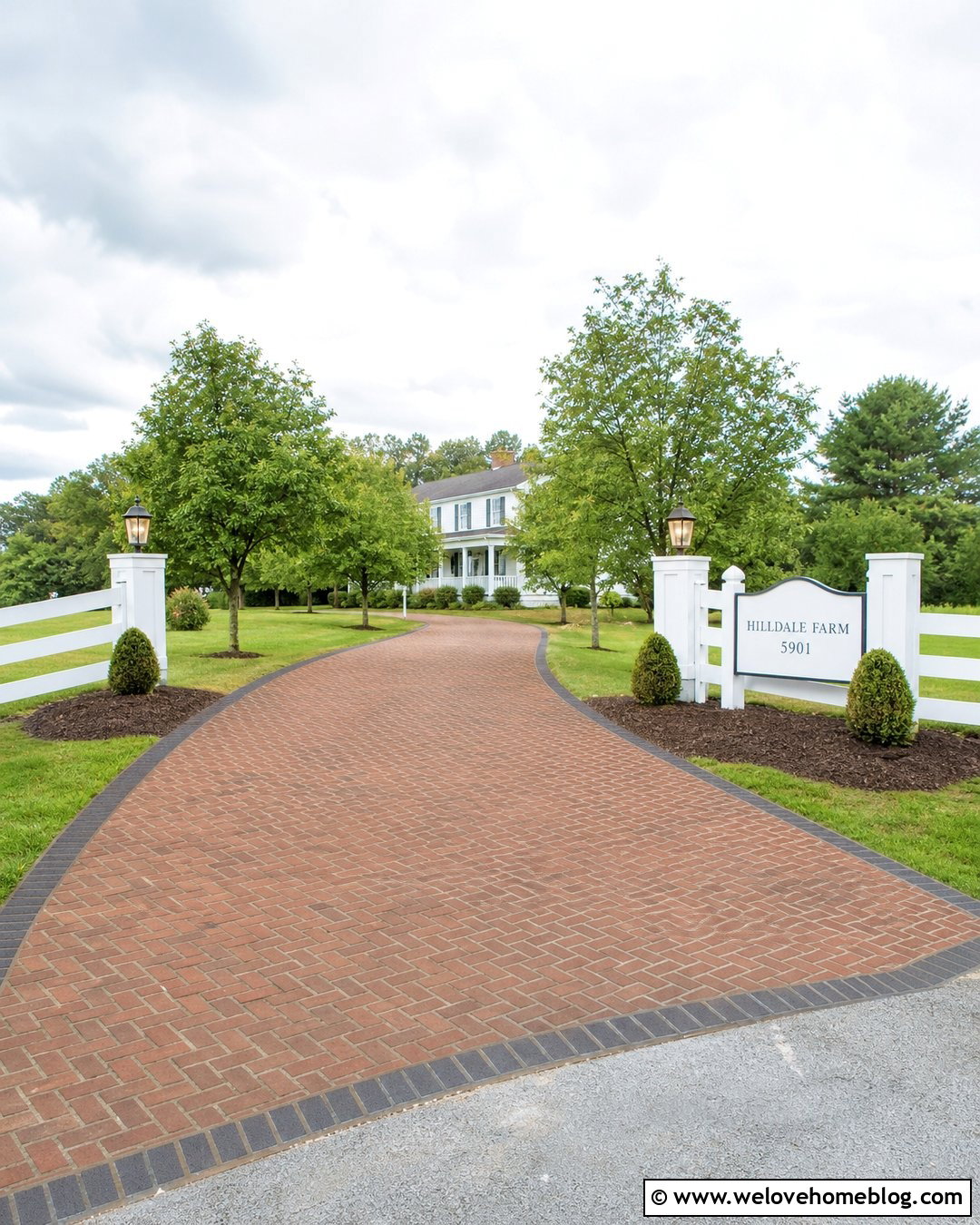
A brick column can connect the driveway entrance to a colonial, Georgian, or traditional brick home. Construct the column beside a herringbone clay brick driveway, using a slightly different brick tone to prevent the entrance from feeling too uniform. Install a rectangular cast-metal address plaque on the front, with raised light-colored numbers against a dark background. A precast stone cap and small integrated lantern complete the structure. Keep the surrounding planting symmetrical with clipped boxwoods, seasonal flowers, and a neat lawn edge. If the entrance has two columns, place the full address on the column that receives the clearest view from the road. Repeating brick in the driveway ribbon, walkway, and column creates a coordinated entrance rather than an isolated address marker.
6. Engraved Boulder Driveway Address
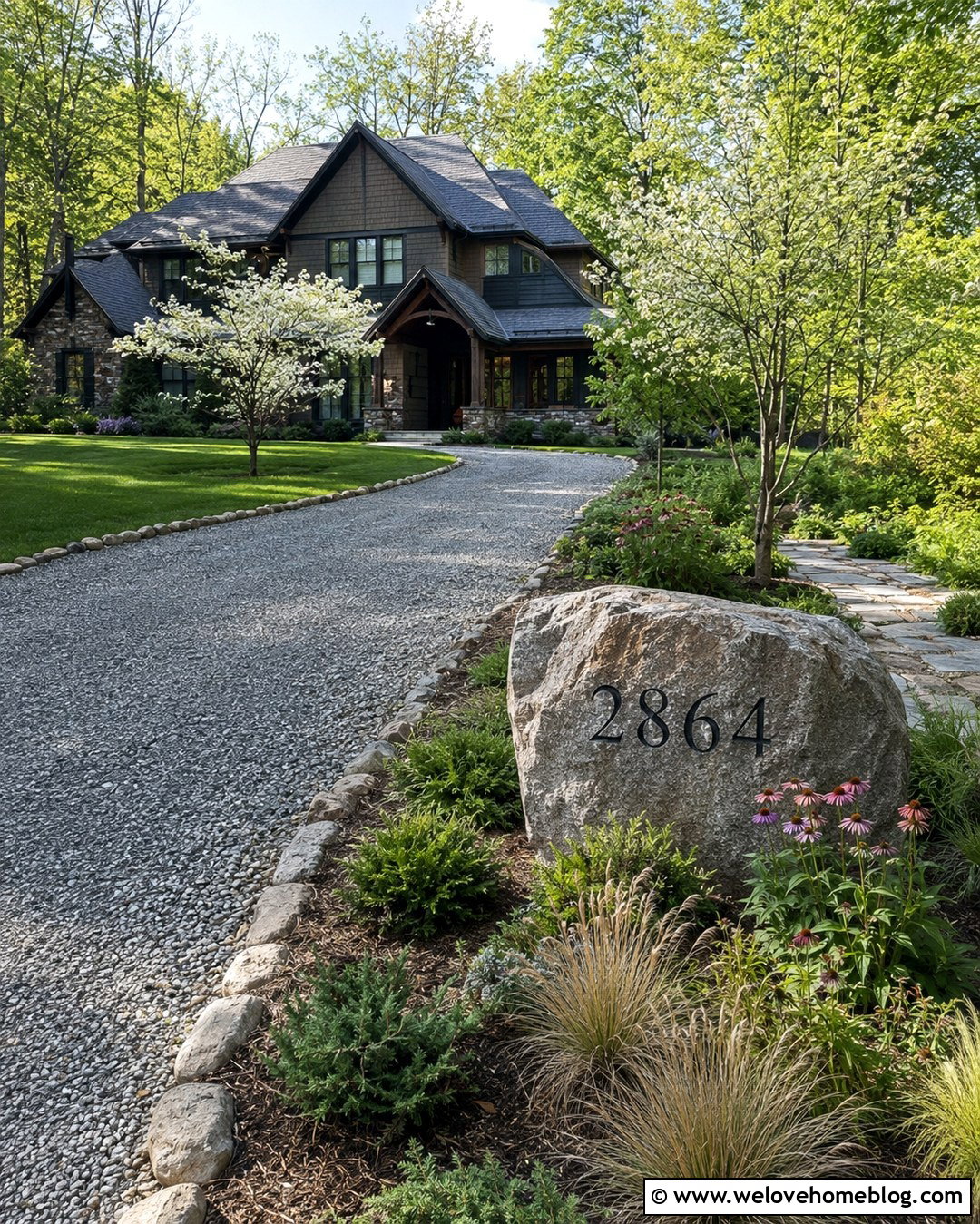
An engraved boulder feels at home in a natural landscape and requires little visual decoration. Select a stone with a broad, relatively flat face so the house numbers can be cut deeply and painted in a contrasting color. Position it beside a gently curved gray gravel driveway with natural stone edging. Native grasses, coneflowers, junipers, and small flowering trees can surround the marker while leaving the numbered face open. Choose a boulder color that relates to local stone or the house foundation. This look works beautifully with craftsman homes, mountain houses, ranch properties, and wooded lots. Avoid placing the rock too low in a ditch or behind tall plants. A restrained ground-level spotlight can improve visibility while highlighting the boulder’s shape and texture.
7. Vertical Metal Driveway Number Post
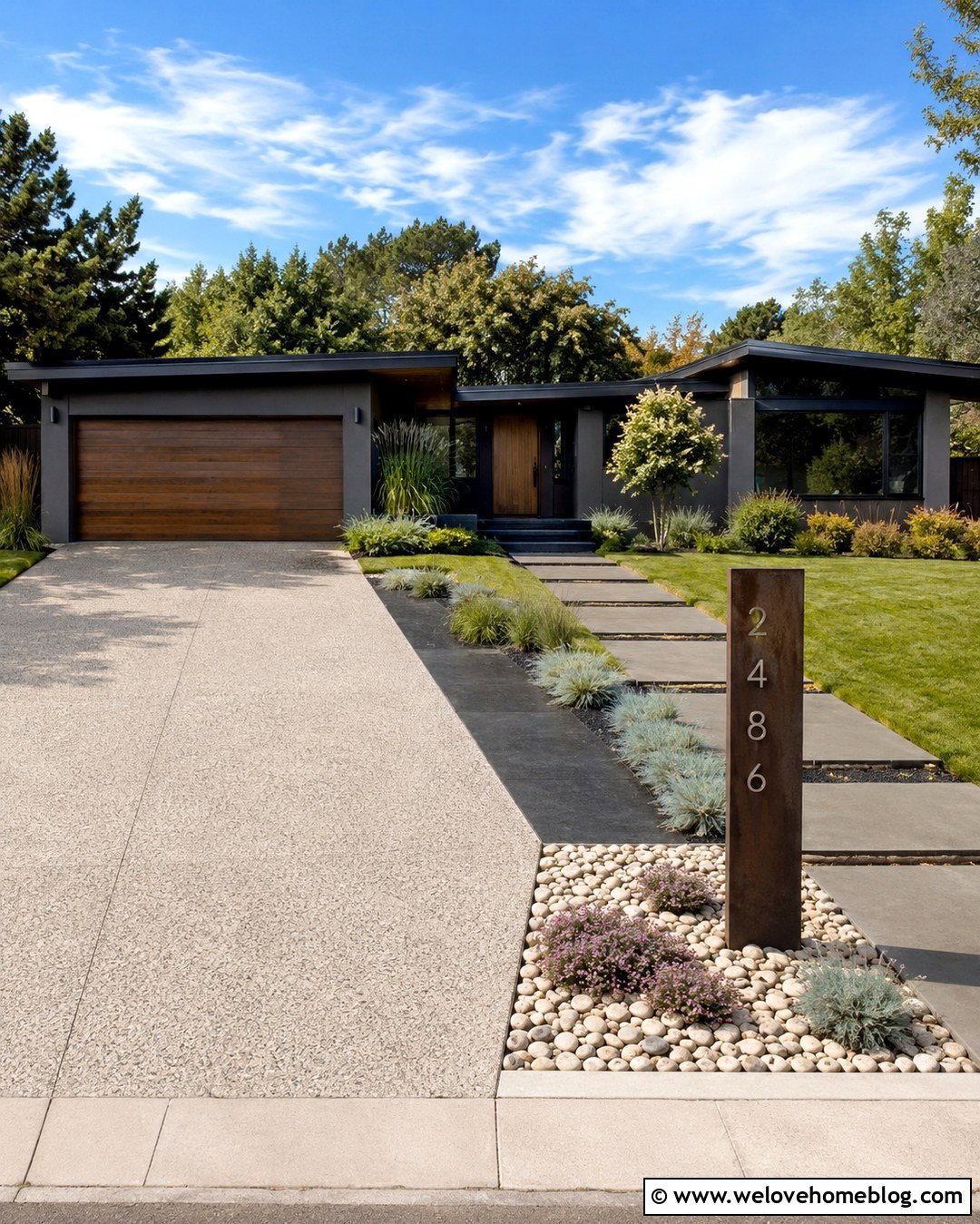
A vertical number post fits narrow entrances where a wide sign would crowd the landscape. Use a rectangular steel or aluminum column with the house numbers arranged from top to bottom. Make sure their order remains immediately understandable when viewed from the street. Place the post beside a straight exposed aggregate driveway with a dark concrete ribbon at the entrance. A bed of blue fescue, creeping thyme, and light decorative stone can provide contrast around the base. The post’s finish might be matte black, weathered steel, or dark bronze, depending on the home’s trim and hardware. This streamlined entrance looks especially cohesive with a midcentury modern or contemporary ranch house. Leave generous blank space around each numeral to maintain clarity from a moving vehicle.
8. Mailbox And Driveway Number Sign
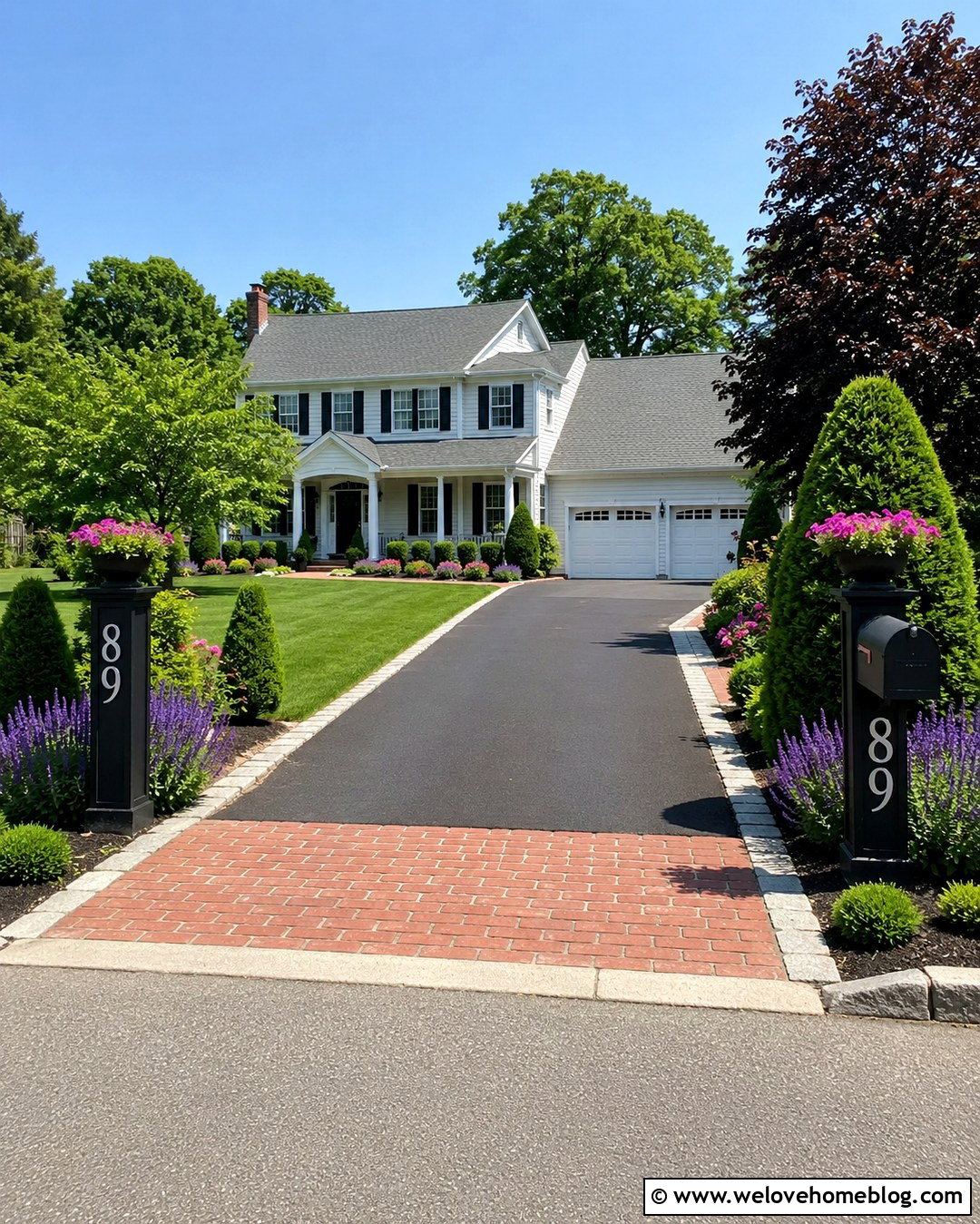
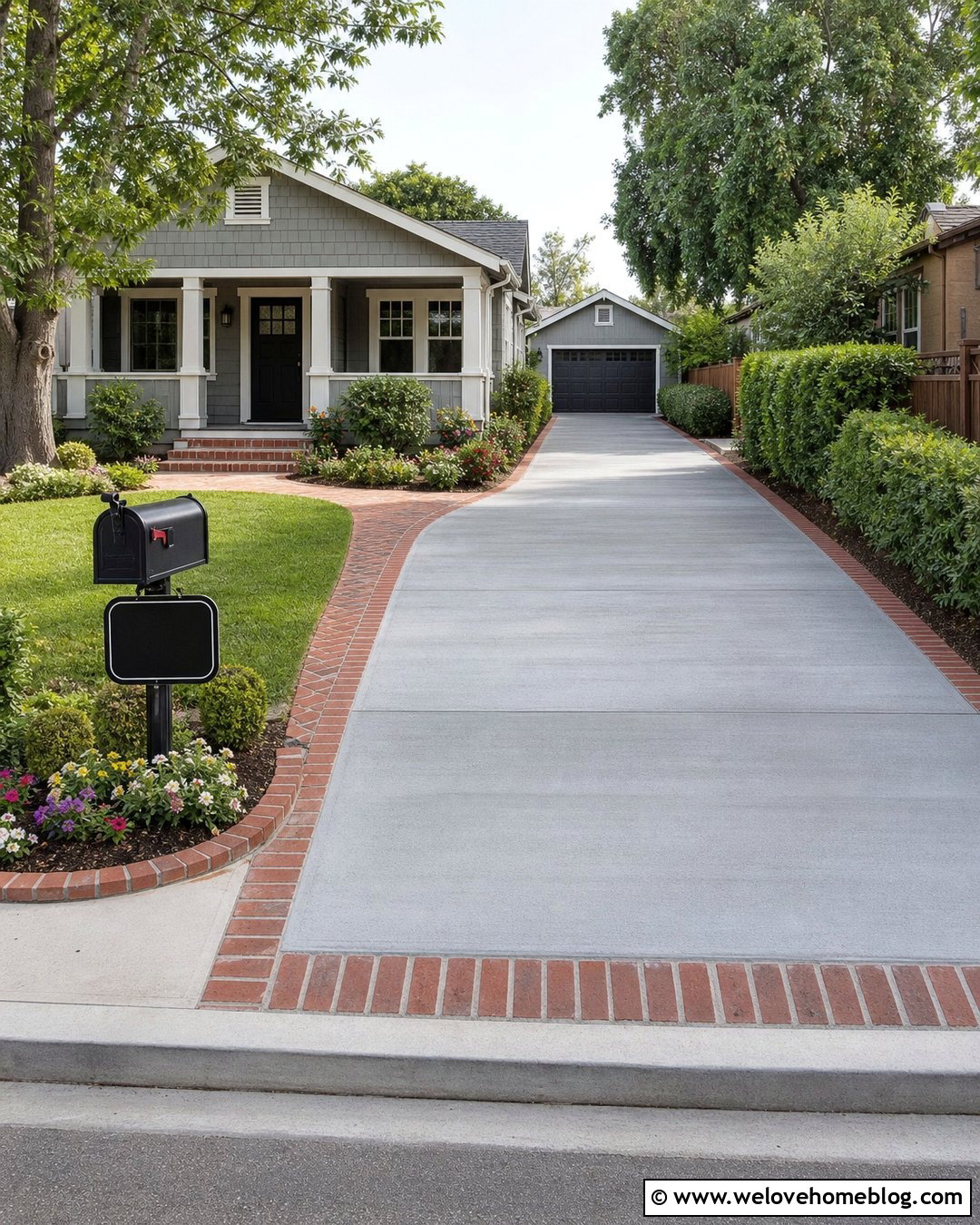
Combining the mailbox and address sign can reduce clutter around a compact suburban entrance. Choose a well-proportioned post system with large numbers on both sides so drivers approaching from either direction can identify the property. Pair a matte-black mailbox with a straight black asphalt driveway and a red brick apron. A narrow planting bed containing dwarf evergreens, salvia, and seasonal color can frame the post without interfering with mail delivery. Repeat the mailbox finish on porch lights, railings, or the front door hardware for a connected exterior palette. Keep the numbers separate from small decorative wording that may reduce readability. This arrangement is particularly practical when the mailbox already stands beside the driveway and there is limited space for an additional monument or pillar.
9. Concrete Driveway Address Monument
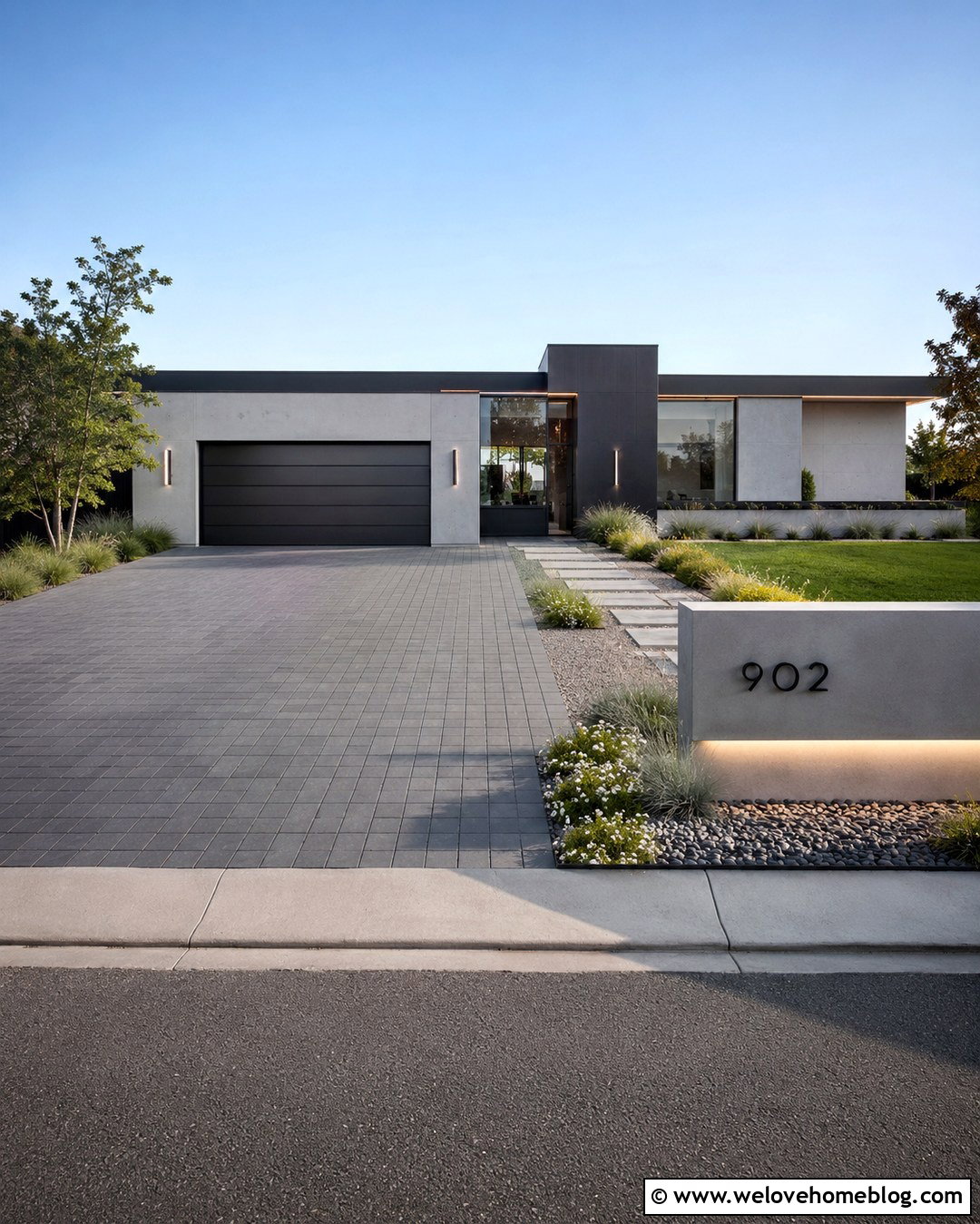
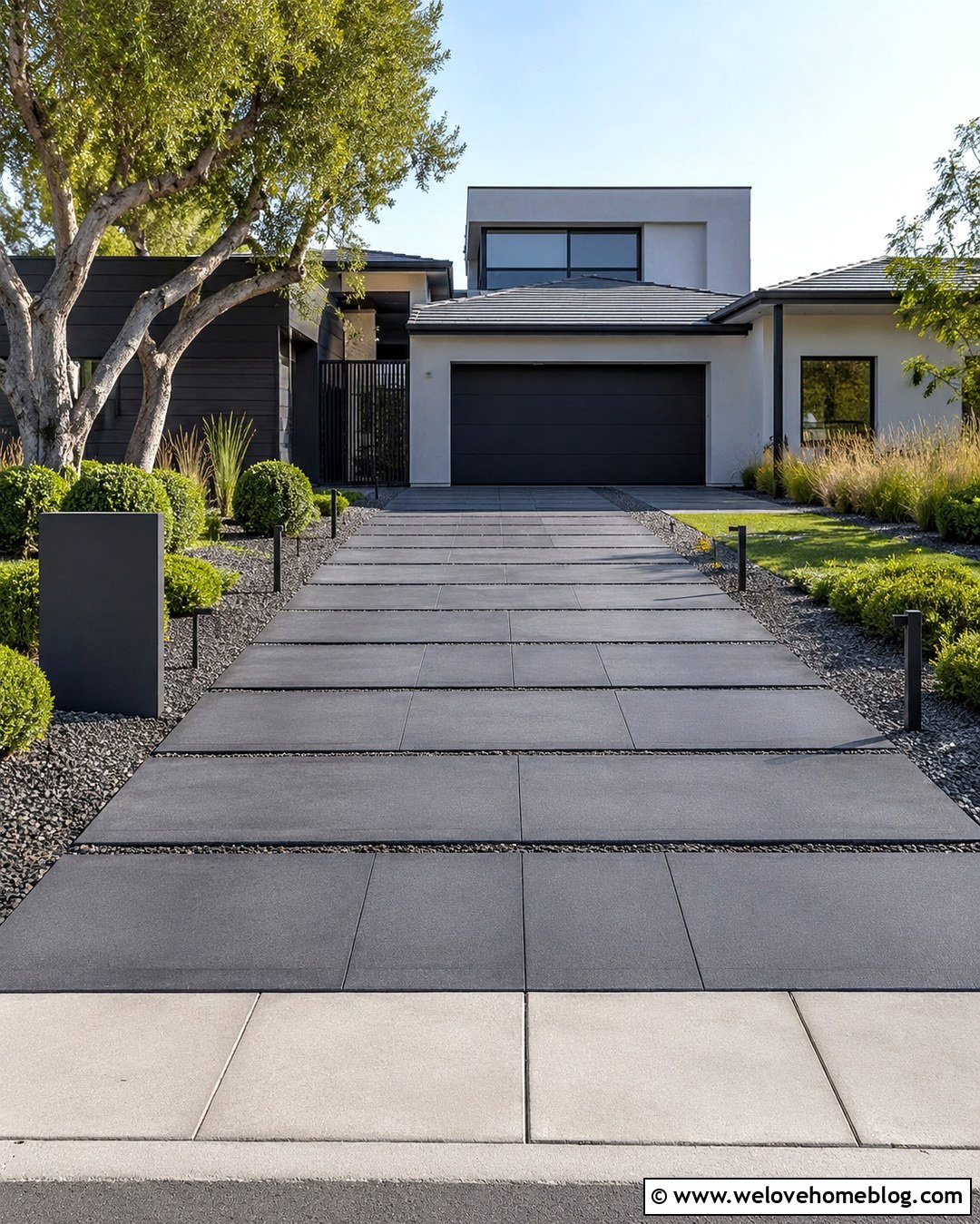
A low concrete monument brings architectural weight to a modern driveway without requiring a tall pillar. Form a smooth rectangular block beside a wide driveway made from large-format charcoal concrete pavers. Mount dimensional black numbers on a light warm-gray surface, or use stainless steel numerals against dark concrete. A recessed light beneath the top edge can provide even illumination without exposing a bulky fixture. Surround the monument with linear beds of ornamental grass, white flowering ground cover, and washed gravel. Keep the planting arrangement low and geometric to match the structure. This design works well with flat-roofed, minimalist, and desert-modern homes. Coordinate the monument’s dimensions with nearby walls and paver joints so it appears to be part of the original landscape plan.
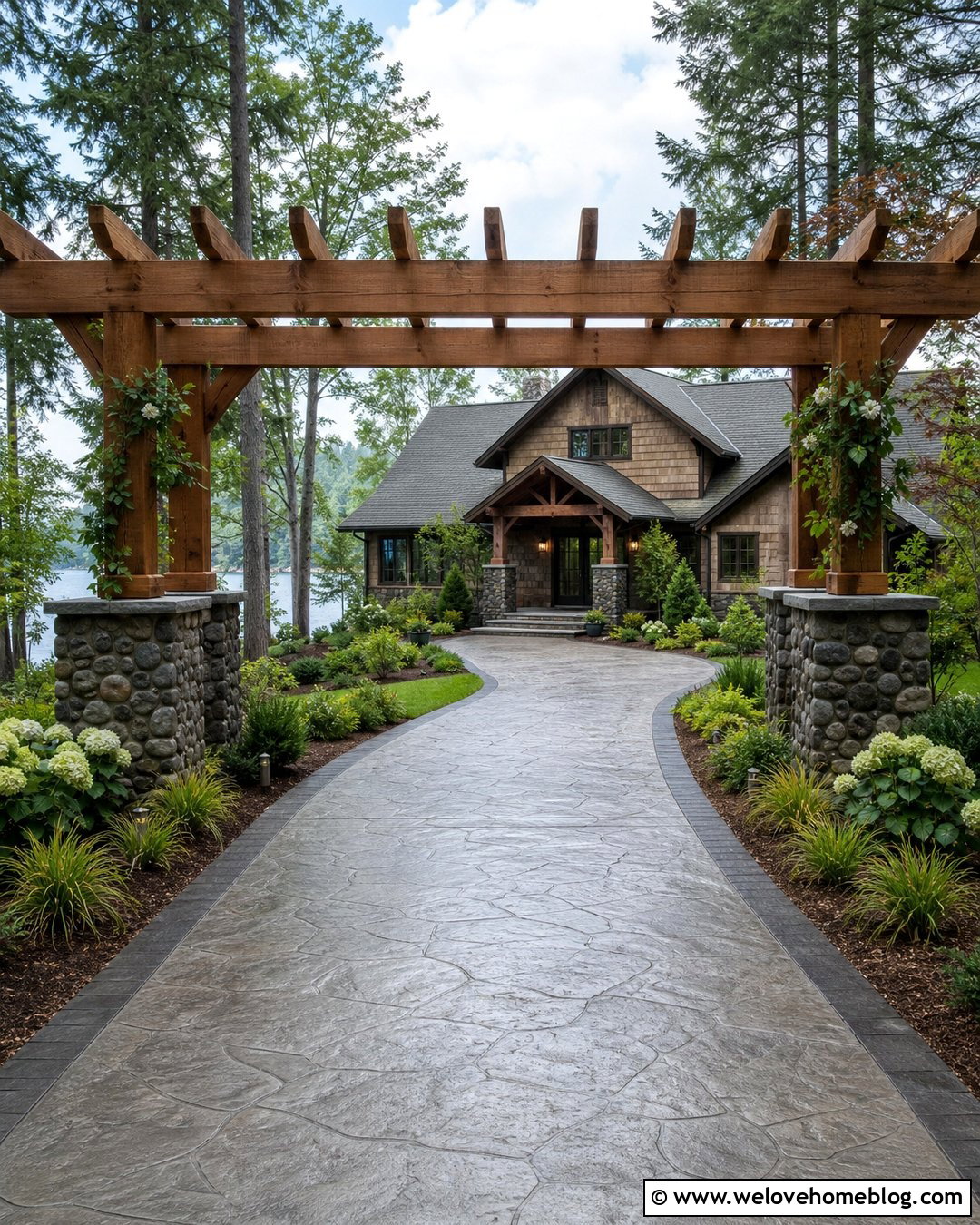
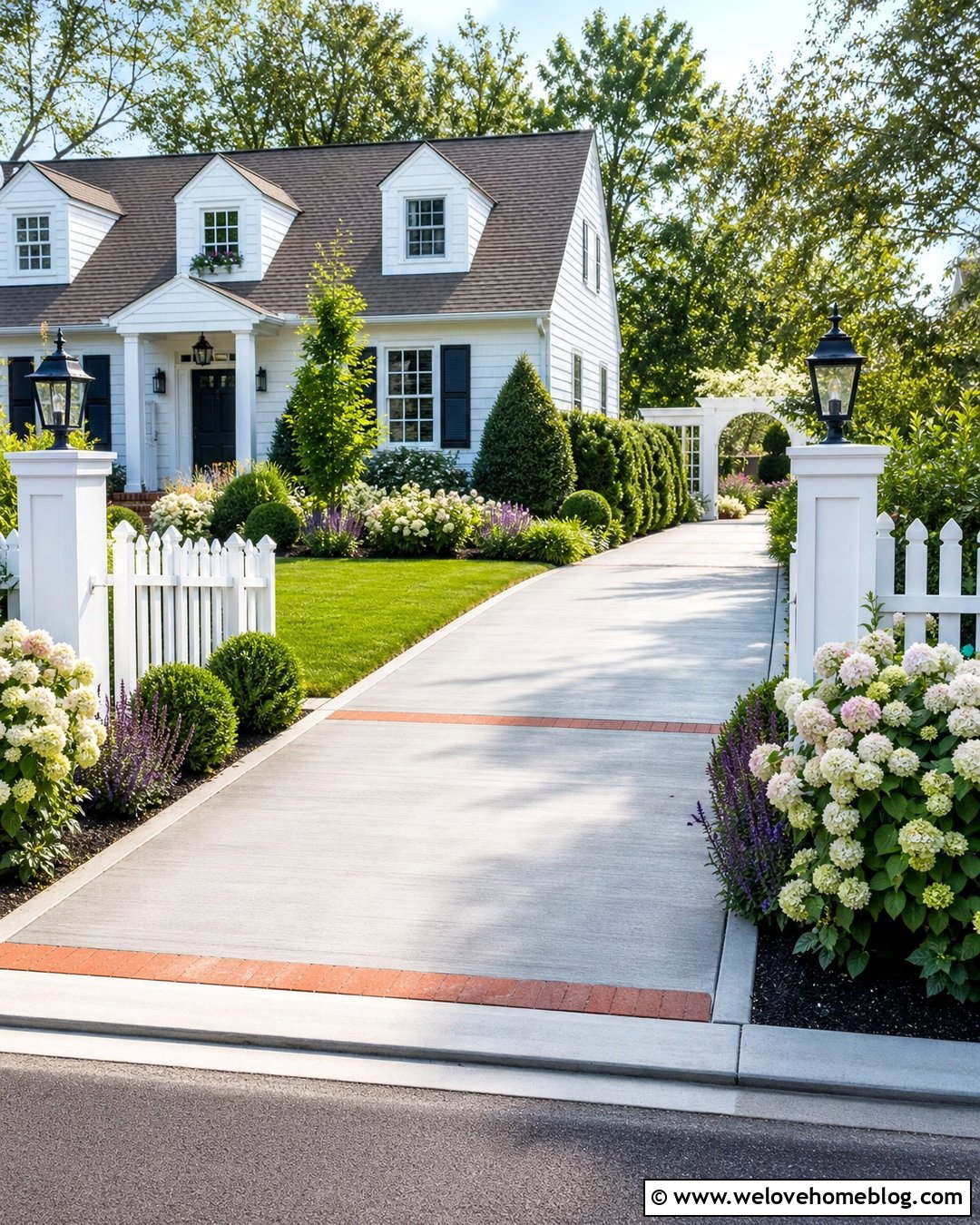
10. Rustic Hanging Driveway Sign
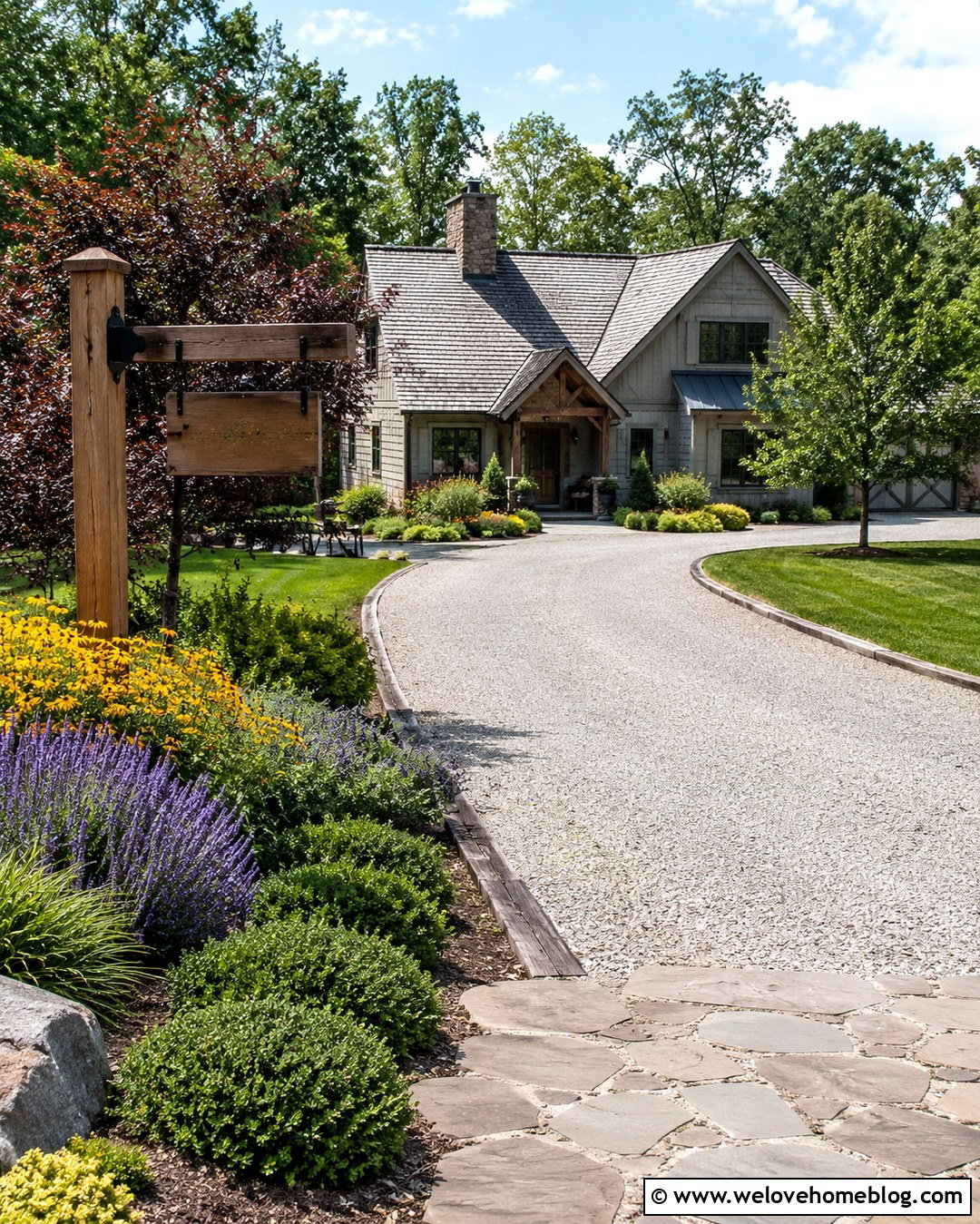
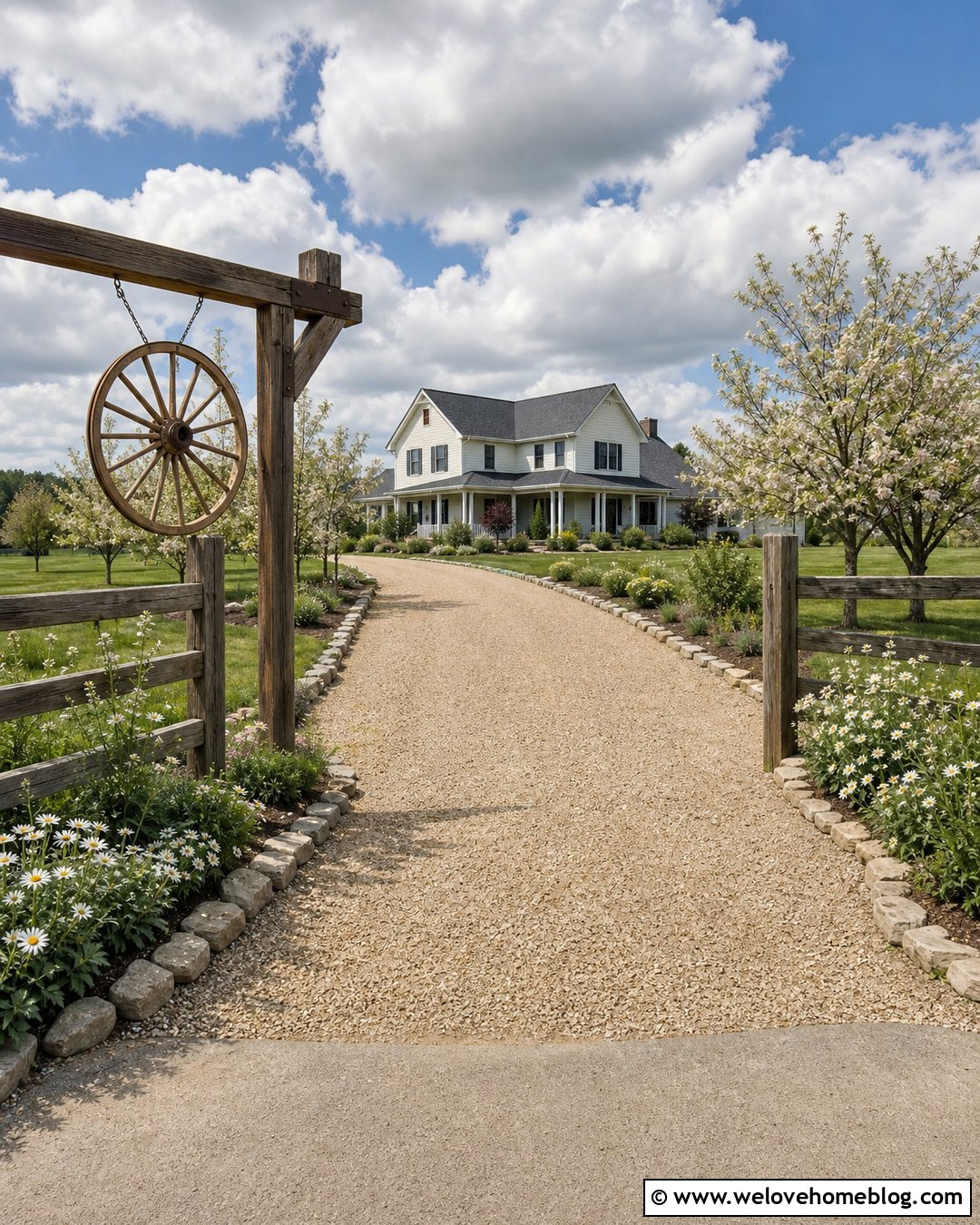
A hanging sign introduces an approachable country look at the entrance to a gravel driveway. Suspend a painted wood or metal address panel from a sturdy cedar post using two exterior-rated black brackets. The panel should remain stable enough that wind does not turn it away from approaching drivers. Pair the sign with a curved crushed limestone driveway bordered by timber and informal planting beds. Lavender, black-eyed Susans, compact shrubs, and a small ornamental tree create a soft transition toward a cottage or country home. Use simple, oversized numbers rather than a delicate script that becomes difficult to read. A small downward-facing solar fixture can illuminate the panel. This entrance feels personal and relaxed while still providing a clearly marked destination for guests and deliveries.
11. Driveway Gate With House Numbers
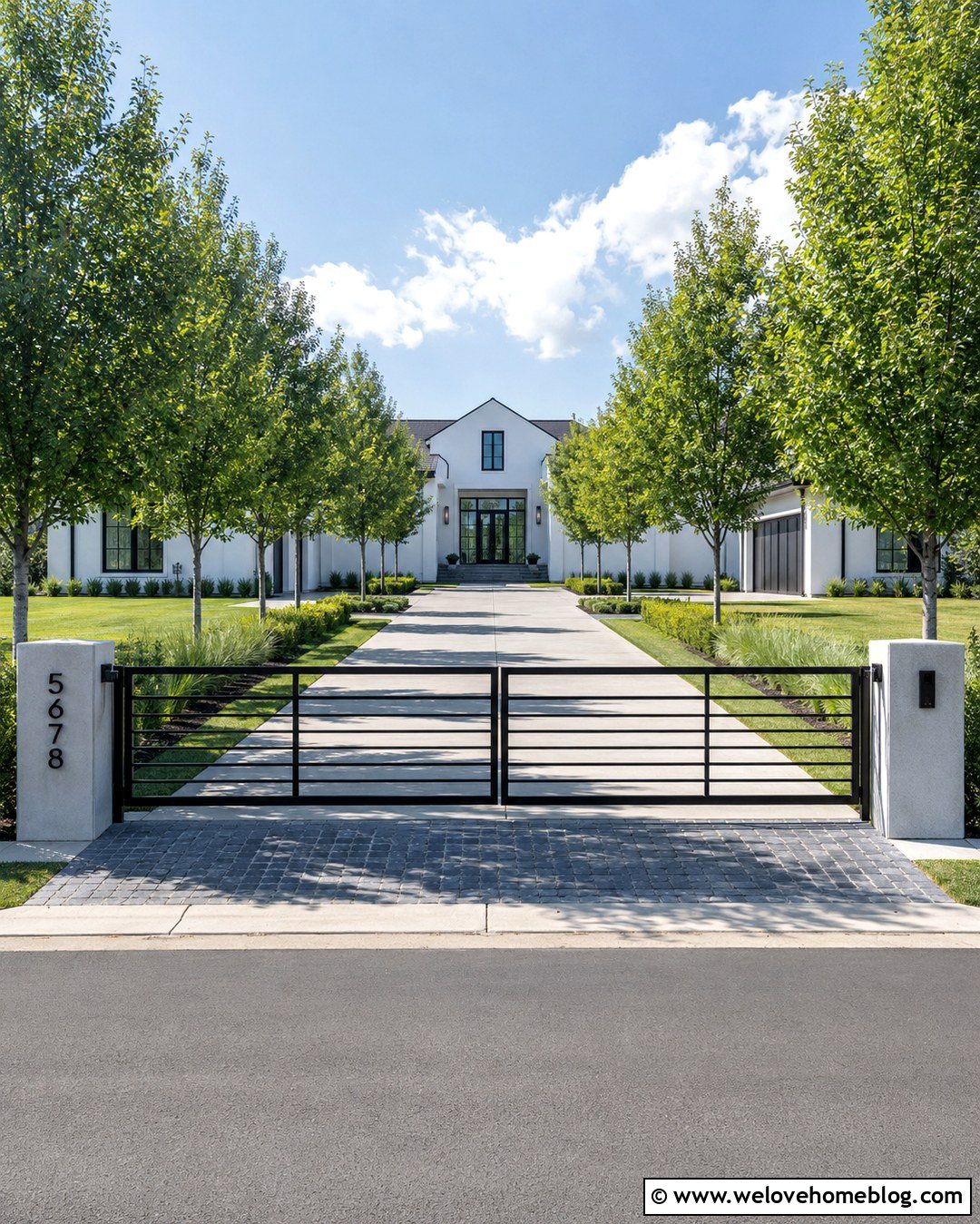
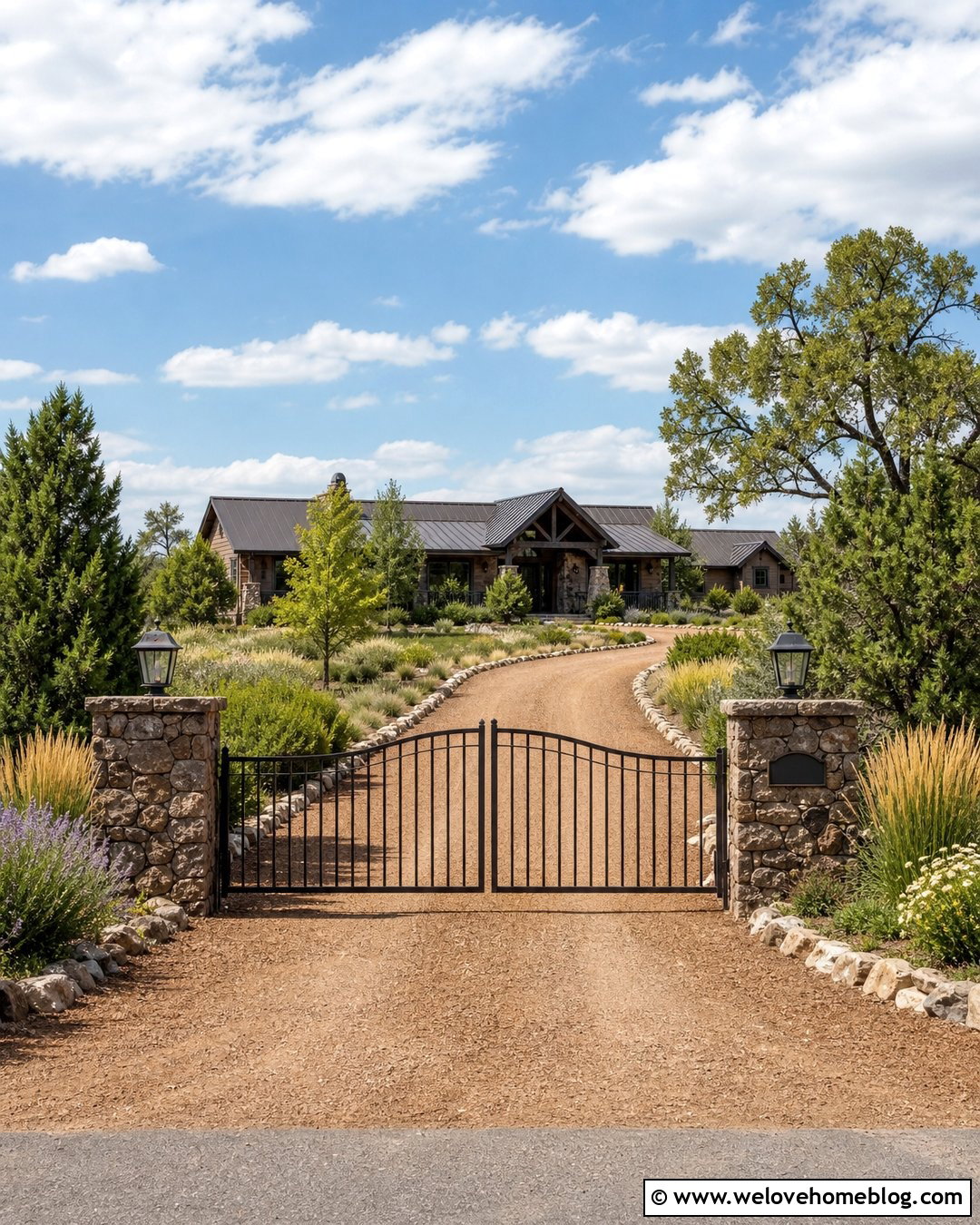
House numbers can be integrated into a driveway gate when they remain visible whether the gate is open or closed. Mount large metal numerals on a fixed stone or stucco pillar instead of relying only on the moving gate panels. A modern black aluminum gate pairs well with a straight light-gray concrete driveway and a dark paver apron. Add matching pillars on both sides, but place the full address on the side offering the clearest approach view. Low hedges, upright grasses, and evenly spaced trees can emphasize the entrance without creating blind spots. If the gate includes intercom equipment, organize the keypad, camera, and numbers within one tidy zone. Repeating the gate’s black finish on the house windows and exterior lights produces a unified modern entrance.
12. White Post Driveway Address Sign
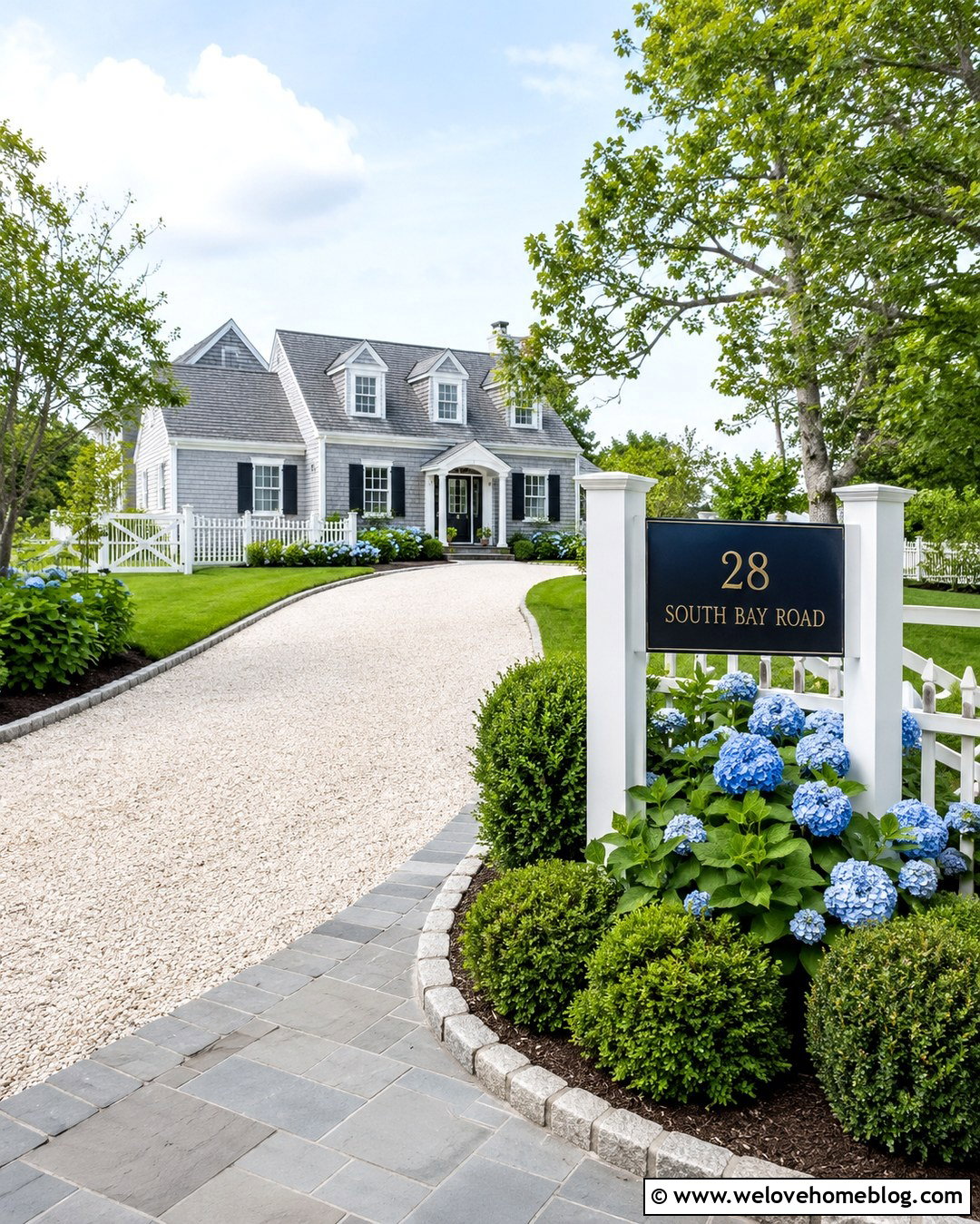
A white post sign creates a bright, familiar entrance for a Cape Cod, coastal, or cottage-style house. Use two square posts with simple caps to hold a dark navy or charcoal address panel. Crisp white numbers will stand out clearly against the darker background. Set the sign beside a pale shell gravel driveway with gray cobblestone edging and a gently curved approach. Blue hydrangeas, low evergreen shrubs, and a white picket fence can reinforce the coastal palette. Leave enough open lawn around the sign to prevent it from becoming lost among flowers. Choose rot-resistant material or cellular PVC when frequent repainting is undesirable. A small solar light placed above the panel adds nighttime function while preserving the clean, traditional character of the entrance.
13. Corten Steel Driveway Address Sign
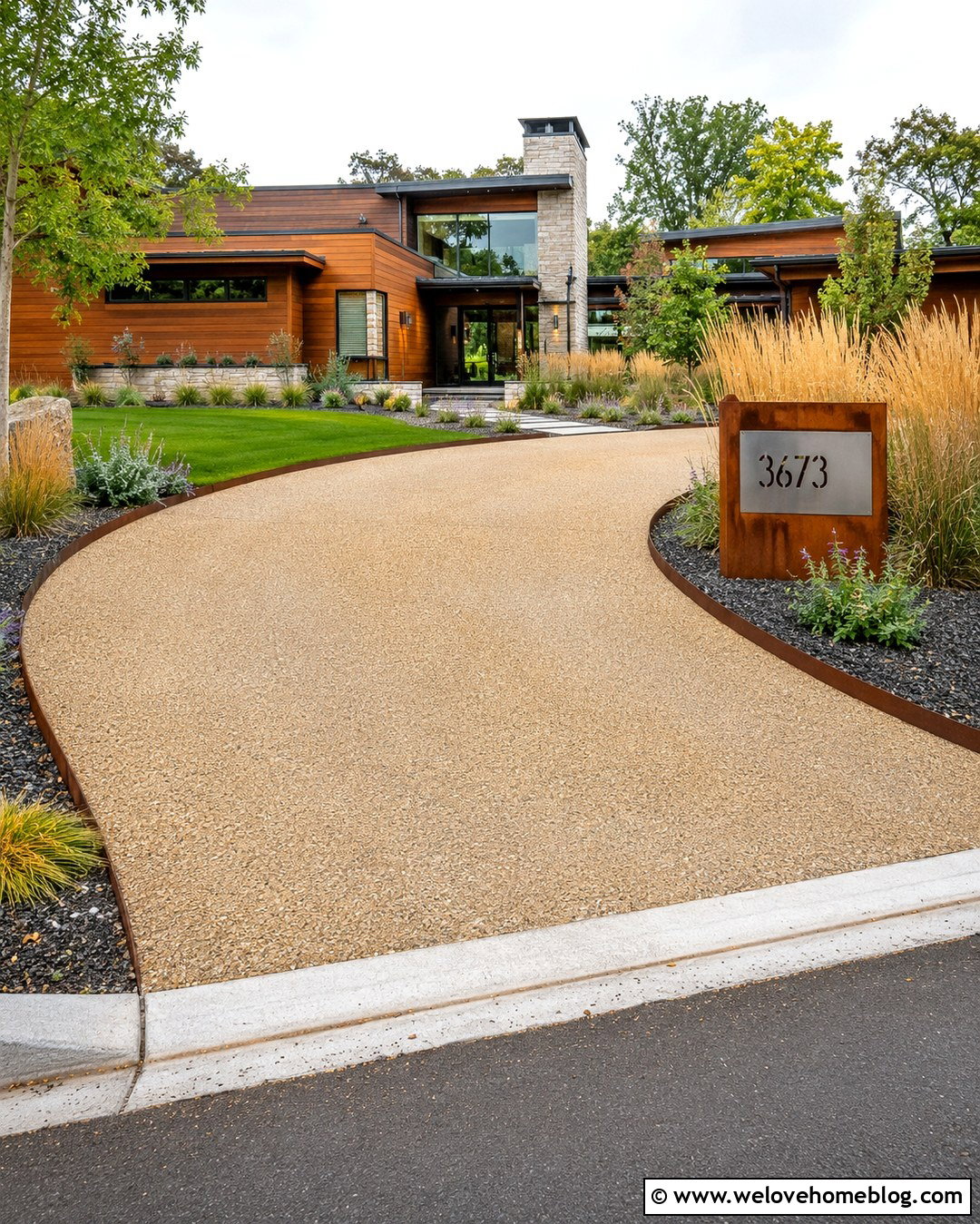
Corten steel offers a warm, weathered appearance that works well with modern landscaping and natural materials. Use a freestanding panel with laser-cut numbers and a pale backing that improves contrast through the openings. Place it beside a broad curved driveway made from tan resin-bound gravel with a dark steel edge. Feather reed grass, sedges, and drought-tolerant perennials can echo the sign’s earthy coloring. The rust-toned surface also coordinates naturally with cedar siding, stone walls, and bronze exterior details. Provide a gravel or concrete base so soil moisture and lawn equipment do not damage the installation. Because runoff from weathering steel may stain pale surfaces, leave a thoughtful gap between the sign and light paving. The finished entrance feels contemporary but not cold.
14. Driveway Lantern Post With Numbers
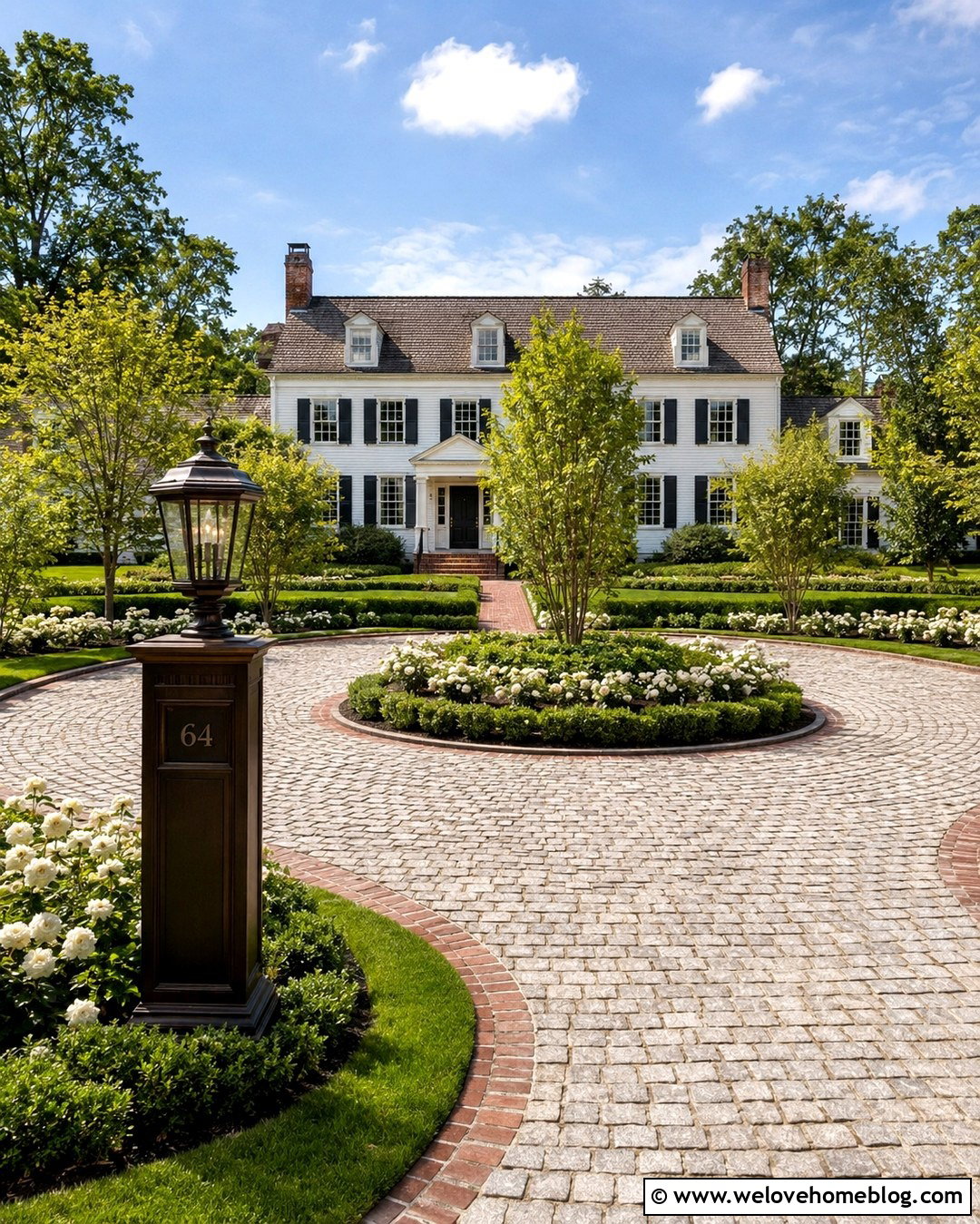
A traditional lantern post can display an address while lighting the driveway entrance. Select a substantial black or dark bronze post with a dedicated number panel below the fixture. Pair it with a circular cobblestone driveway and brick edging for an established, formal appearance. Twin planting beds containing boxwood, white roses, and small deciduous trees can frame the entrance symmetrically. The numbers should contrast with the panel and remain below the lantern’s glare, where they can be read without strong shadows. Match the post light to fixtures near the garage and front door. This coordinated design complements colonial, Tudor, and traditional homes. Before installation, verify that the post position will not interfere with turning vehicles, drainage, snow removal, or routine landscape maintenance.

15. Gabion Driveway Address Sign
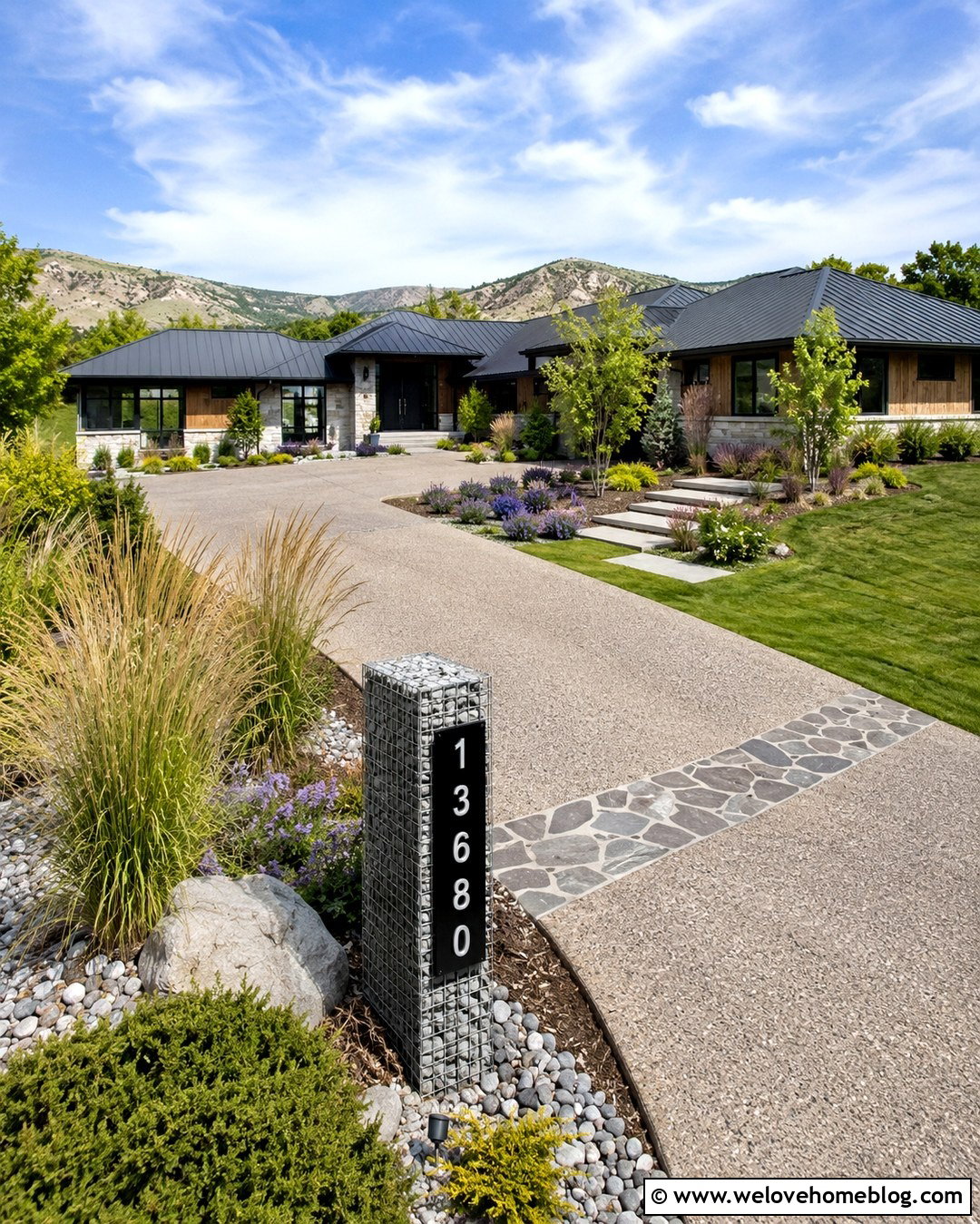
A gabion address monument adds strong texture to a contemporary or rural entrance. Fill a narrow galvanized steel cage with angular stone that repeats the color of the house or driveway border. Attach a smooth black number panel to the front so the address does not compete with the irregular rocks. Set the monument beside a wide exposed aggregate driveway with a matching stone band across the entrance. Mass plantings of grasses, low junipers, and drought-tolerant flowers can soften the industrial structure. This look suits modern ranch homes, woodland properties, and homes with metal siding. Keep the gabion carefully proportioned and securely anchored. A slim spotlight positioned away from traffic can illuminate the flat panel while allowing the stone texture to remain visible around it.
16. Double Driveway Pillars With Address Numbers
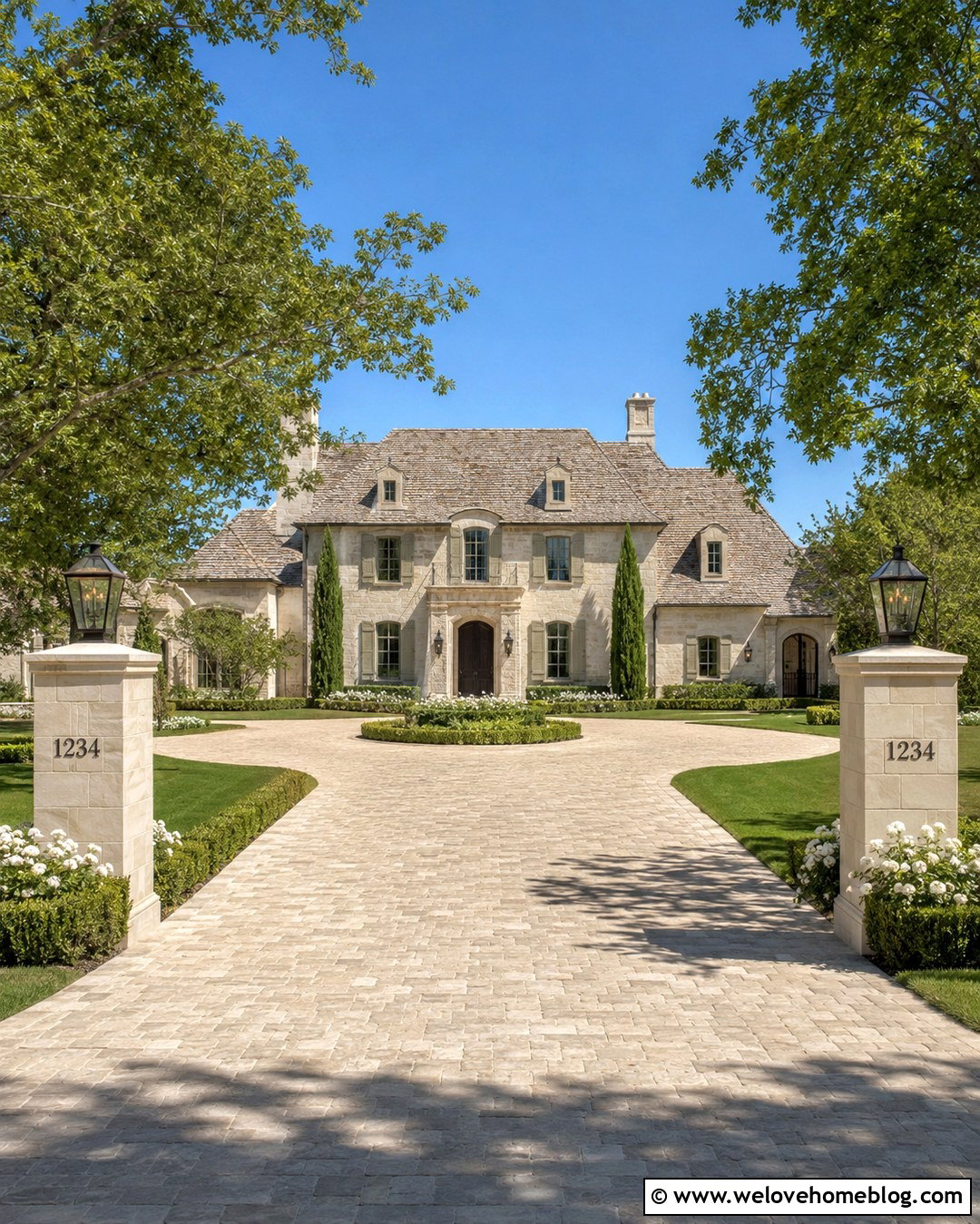
Two matching pillars can make a broad driveway feel balanced and clearly defined. Build them from light limestone or stone veneer and place the complete address on both road-facing sides, rather than dividing the digits between columns. This makes the number easier to understand from either direction. A horseshoe driveway paved in warm beige concrete pavers provides a formal foundation for the entrance. Top the pillars with simple black lanterns and surround them with low boxwoods, roses, and neat lawn panels. Keep the opening generous enough for comfortable vehicle movement. The stone color should coordinate with the home’s facade, walkway, or retaining walls. This complete layout works particularly well for Mediterranean, French country, and large traditional homes with symmetrical front elevations.
17. Reflective Driveway Number Sign
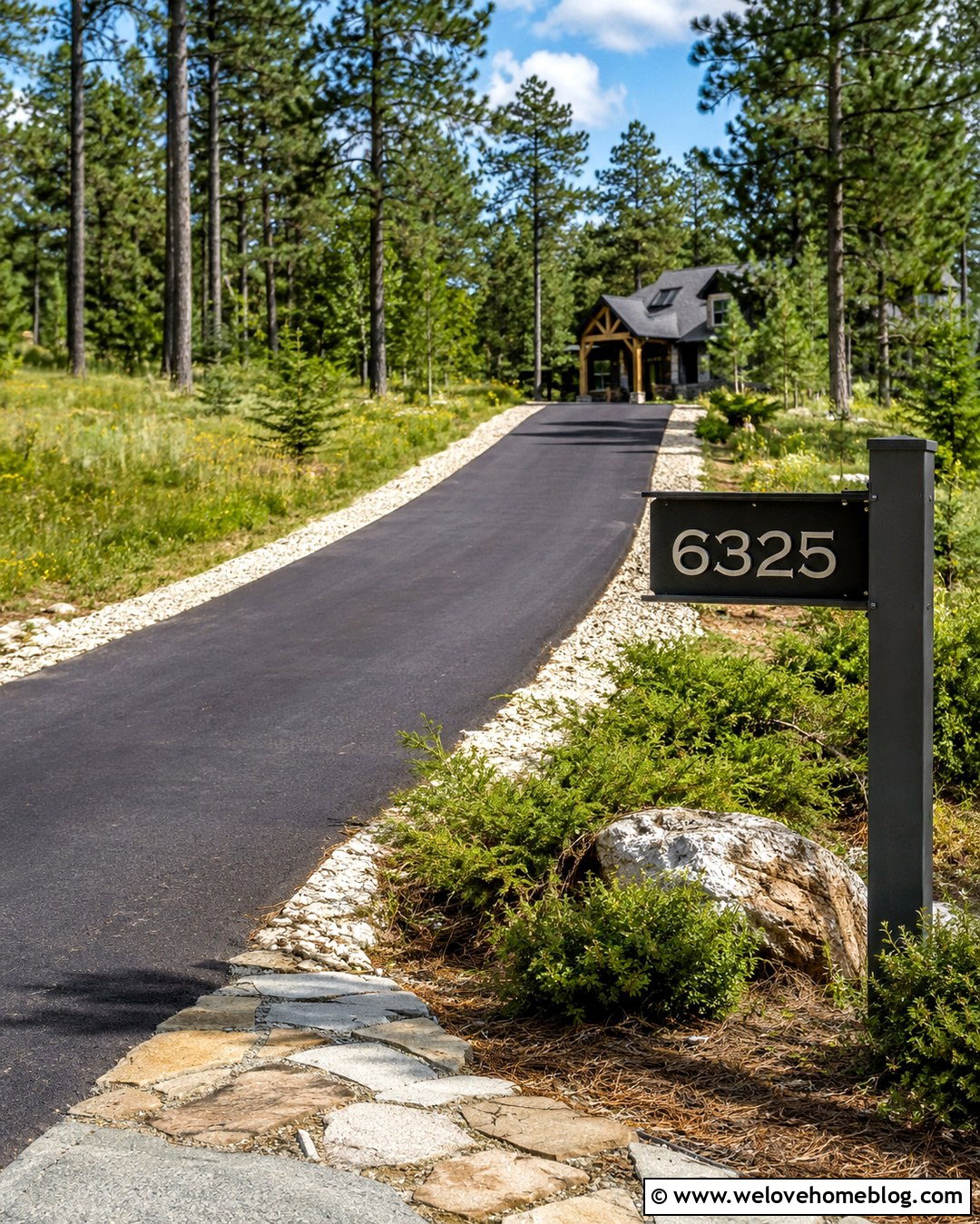
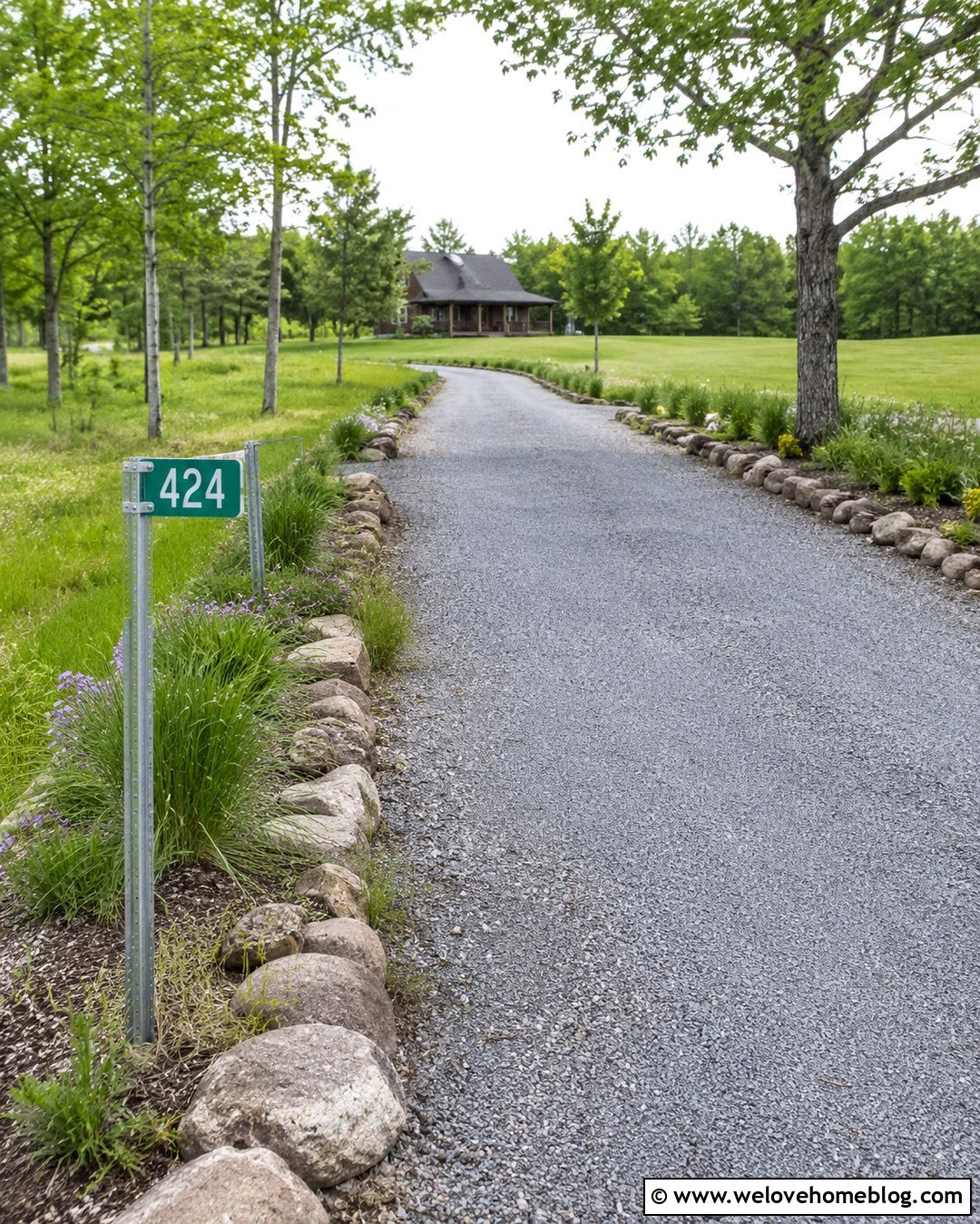
A reflective sign offers a practical solution for rural properties, wooded lots, and entrances with limited lighting. Choose a durable aluminum panel with large reflective numbers and a simple border. Mount it on a dark post beside a long black asphalt driveway with a pale gravel shoulder. The contrast helps the entrance stand out during the day, while reflective characters respond to approaching headlights after dark. Frame the marker with low native shrubs and remove branches that might conceal it from one direction. The sign does not need to resemble a road warning marker. A restrained shape, neutral colors, and coordinated post finish can complement a craftsman or cabin-style house. If the driveway forks, add a matching directional marker where visitors need further guidance.
18. House Number Fence Panel
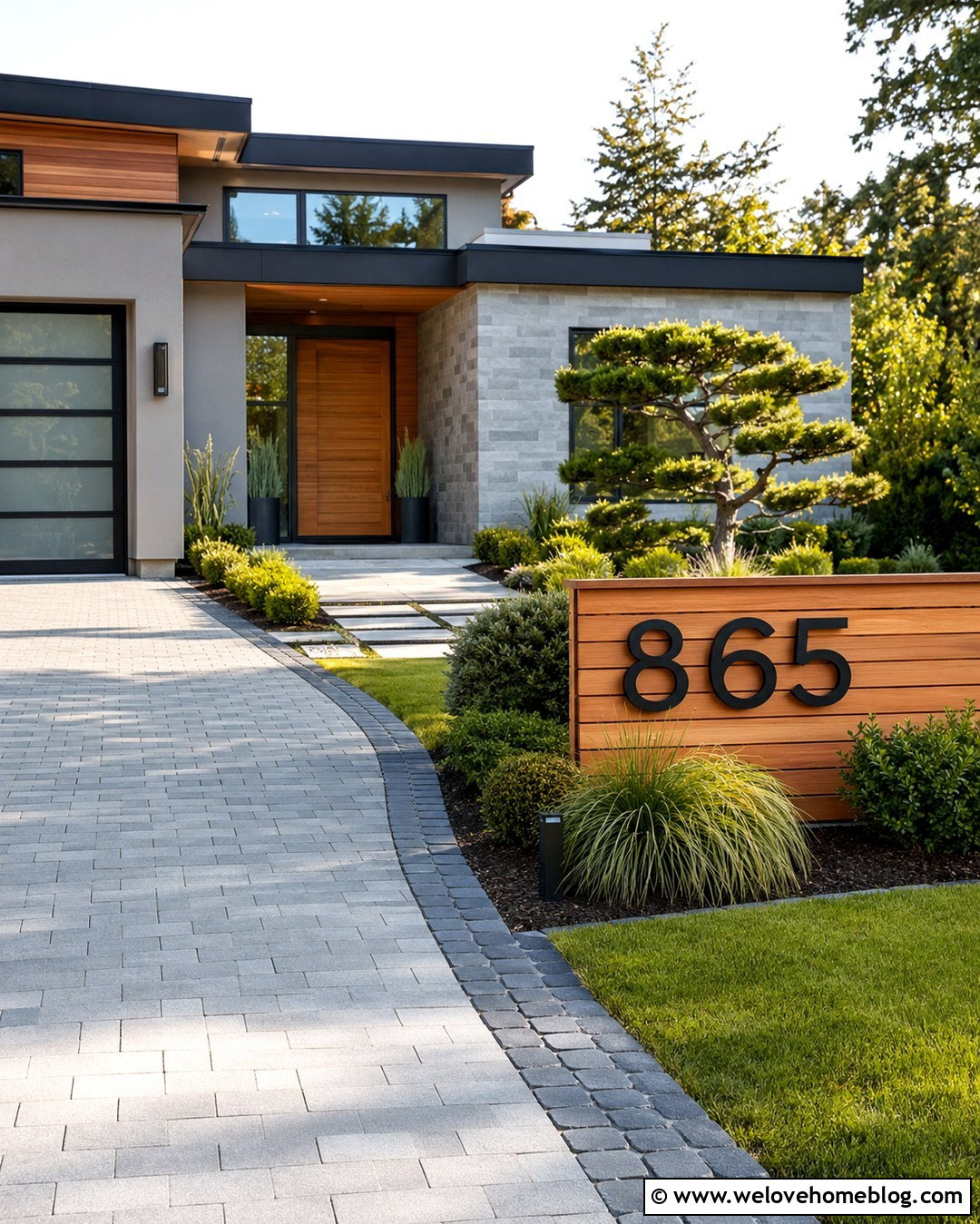
Integrating house numbers into a short entrance fence creates a strong horizontal feature. Use a cedar slat panel with oversized black numerals mounted near the end closest to the driveway. Pair it with a curved driveway of gray interlocking concrete pavers and a black cobblestone edge. The warm wood can relate to a modern home’s garage door, soffits, or front entry. Layer the landscape with clipped shrubs, grasses, and one sculptural tree, but keep plants below the numerals. A concealed low-voltage fixture can wash light evenly across the slats. This design also screens utility boxes or an exposed side yard when planned carefully. Keep the fence short enough to preserve visibility for vehicles leaving the property and pedestrians approaching along the sidewalk.
19. Mosaic Tile Driveway Number Marker
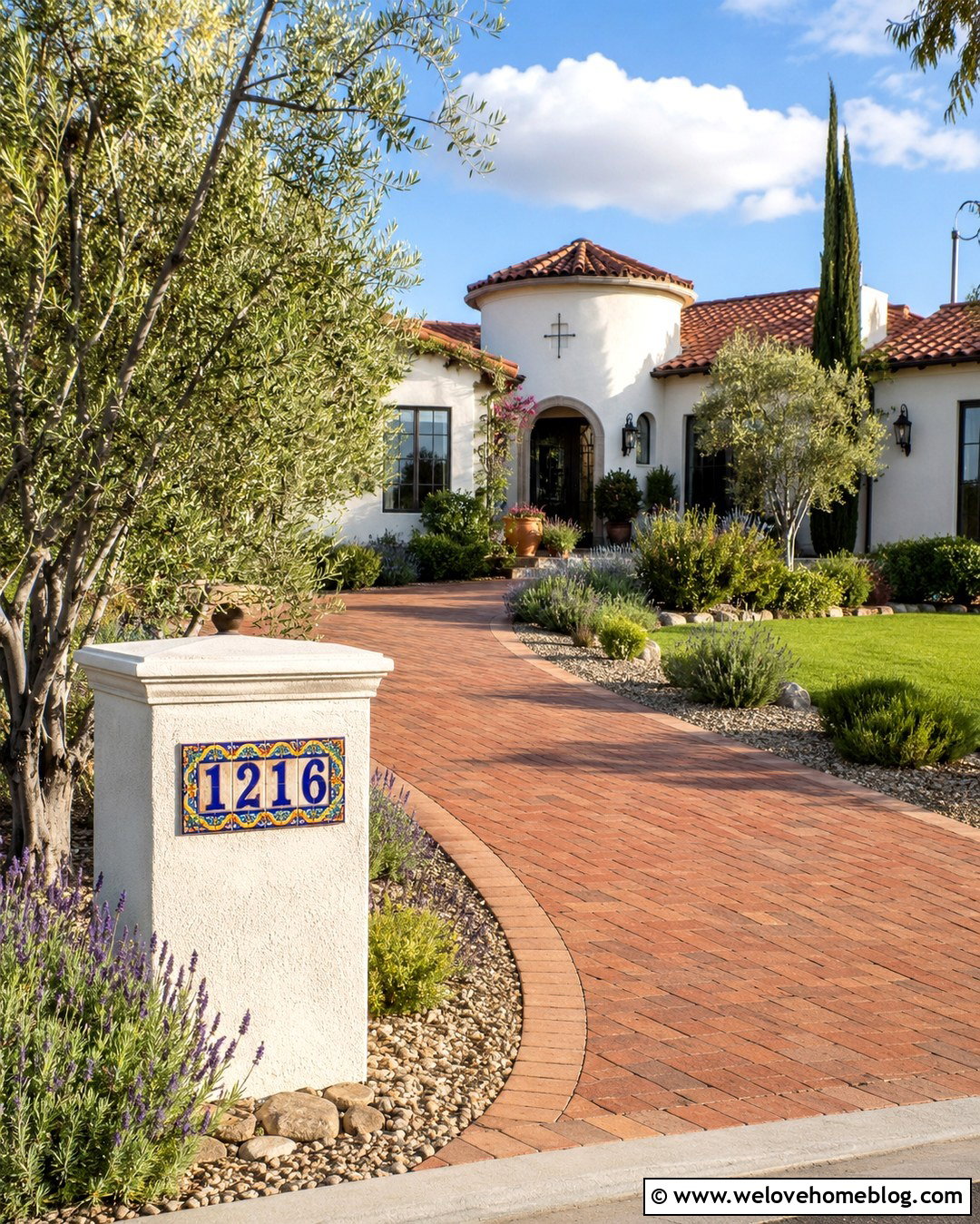
Colorful tile can turn an address monument into a distinctive Mediterranean entrance feature. Apply weather-resistant mosaic or hand-painted ceramic numbers to a smooth stucco pillar beside a driveway paved with warm terra-cotta brick. A gently curved approach, clay paver border, and matching front walkway can tie the entrance to the house. Surround the pillar with rosemary, lavender, olive-toned shrubs, and pale gravel for a dry-climate landscape. Limit the mosaic to a clean number panel so the address remains readable from the street. Colors such as cobalt, white, terracotta, and green complement Spanish and Southwestern facades. Finish the pillar with a clay or stone cap. A small directional spotlight can reveal the tile pattern without overwhelming the practical purpose of the marker.
20. Minimalist Floating Driveway Numbers
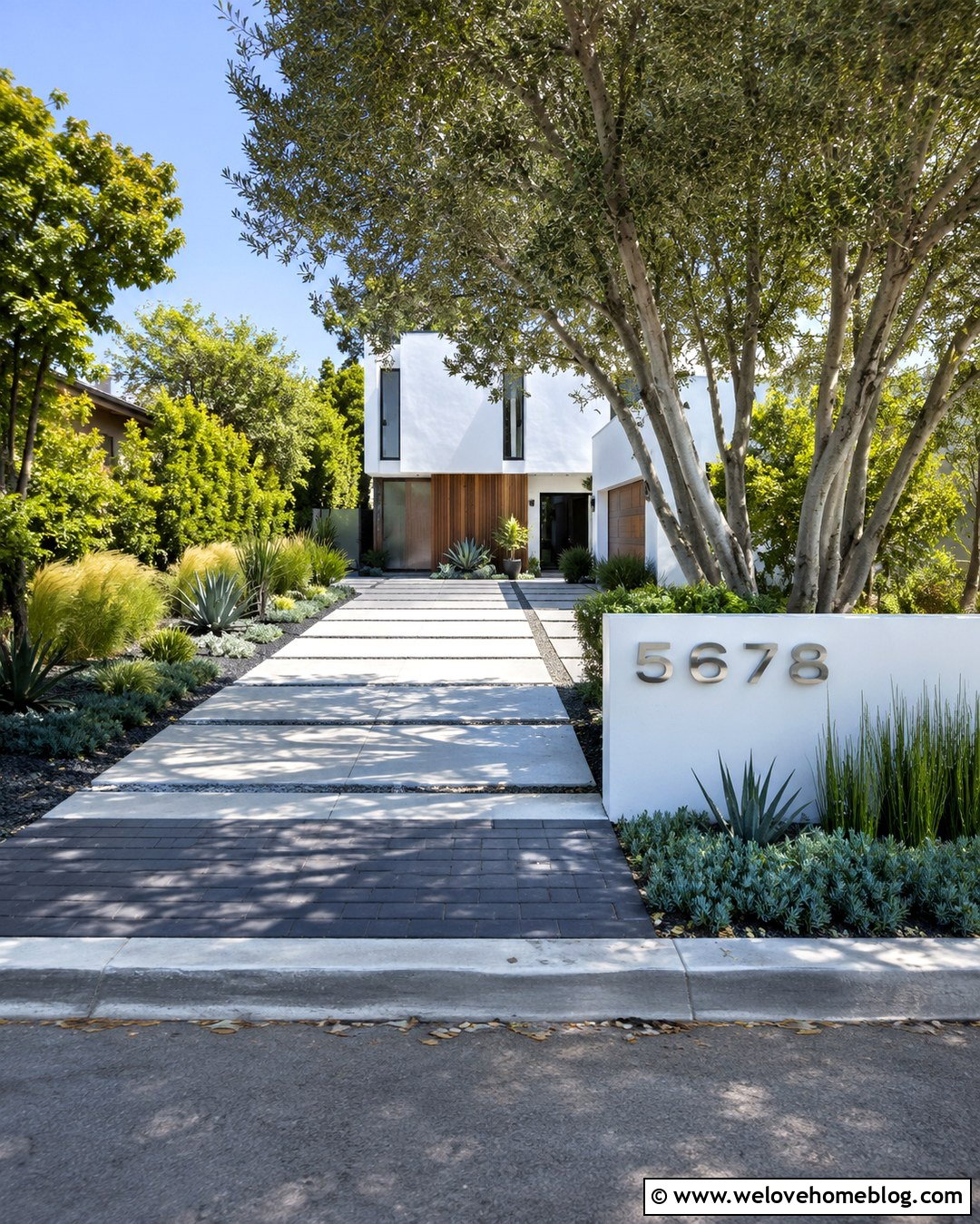
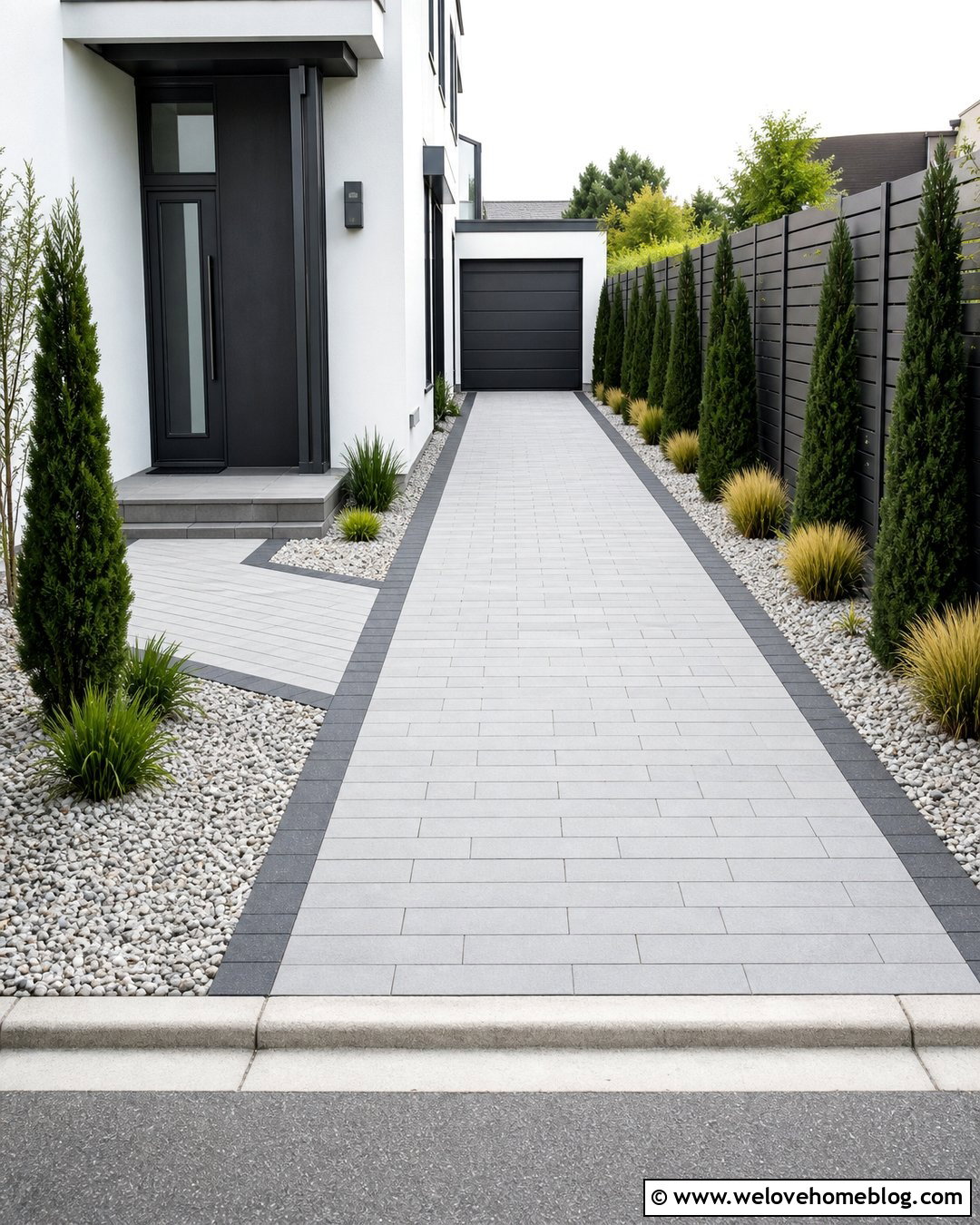
Floating numbers offer a clean finish for a simple masonry wall at the driveway entrance. Mount thick black or brushed-metal numerals slightly away from a white stucco surface to create subtle depth and shadow. Combine the wall with a straight driveway made from pale concrete slabs separated by narrow gravel joints. A black paver threshold can define the transition from the street. Use restrained landscaping such as upright grasses, sculptural agave, low ground cover, and a single multi-trunk tree. This arrangement looks particularly effective with a contemporary house that repeats white, black, and natural wood. Maintain wide spacing between numerals and avoid placing them across wall joints. Even illumination from above or below will improve visibility while emphasizing the elegant floating effect.
Conclusion:
The most successful driveway sign feels like a natural part of the property rather than a last-minute addition. Match its material to the house, driveway surface, gate hardware, or landscape walls. Then prioritize large numbers, clear contrast, an open viewing angle, and reliable illumination. A modern steel pillar may suit a concrete drive, while engraved stone can settle naturally beside gravel. Wood, brick, tile, and integrated mailbox signs offer equally attractive options for other house styles. Whichever look you choose, keep plants trimmed and check visibility from both road directions. Use these 20 Driveway Signs Entrance House Numbers Ideas to build an entrance that is attractive, easy to identify, and thoughtfully connected to your home.

Related posts:
Leave a Reply