
1. Stone Driveway Sign With Gravel Entrance
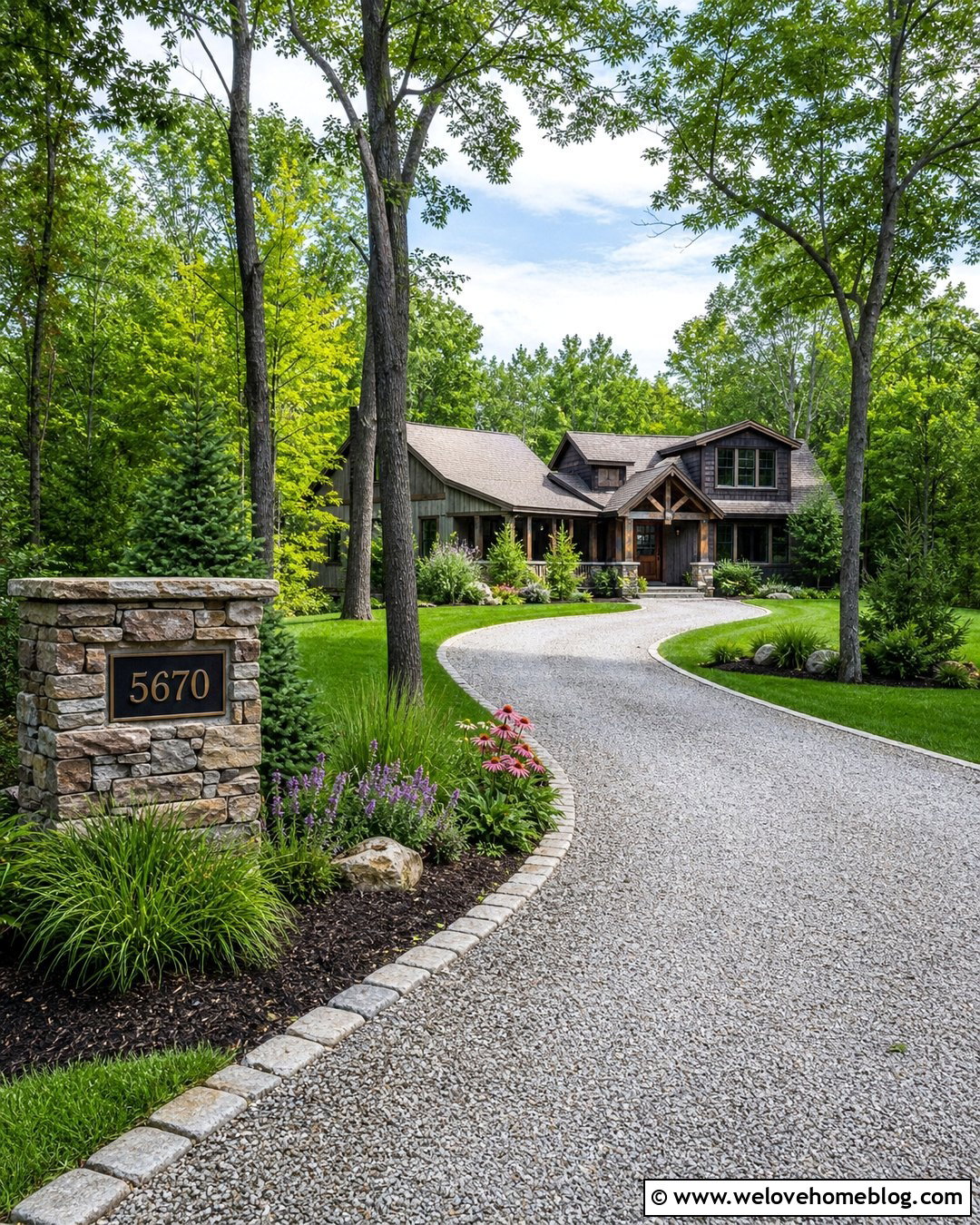
A stone monument sign gives a gravel driveway a permanent, established appearance. Use locally sourced fieldstone or stacked ledgestone that complements the house foundation. A smooth limestone or dark metal address panel creates a readable centerpiece. Position the monument several feet inside the property line, where it identifies the entrance without narrowing the turning area. Light gray crushed gravel keeps the approach relaxed, while cobblestone edging controls loose material near the road. Add ornamental grasses, compact evergreens, and low flowering perennials around the base. Keep taller plants behind the sign so they never cover the numbers. A curved walkway or stone border can visually connect the marker to a craftsman, ranch, or country-style home.
2. Modern Driveway Sign With Concrete Entrance
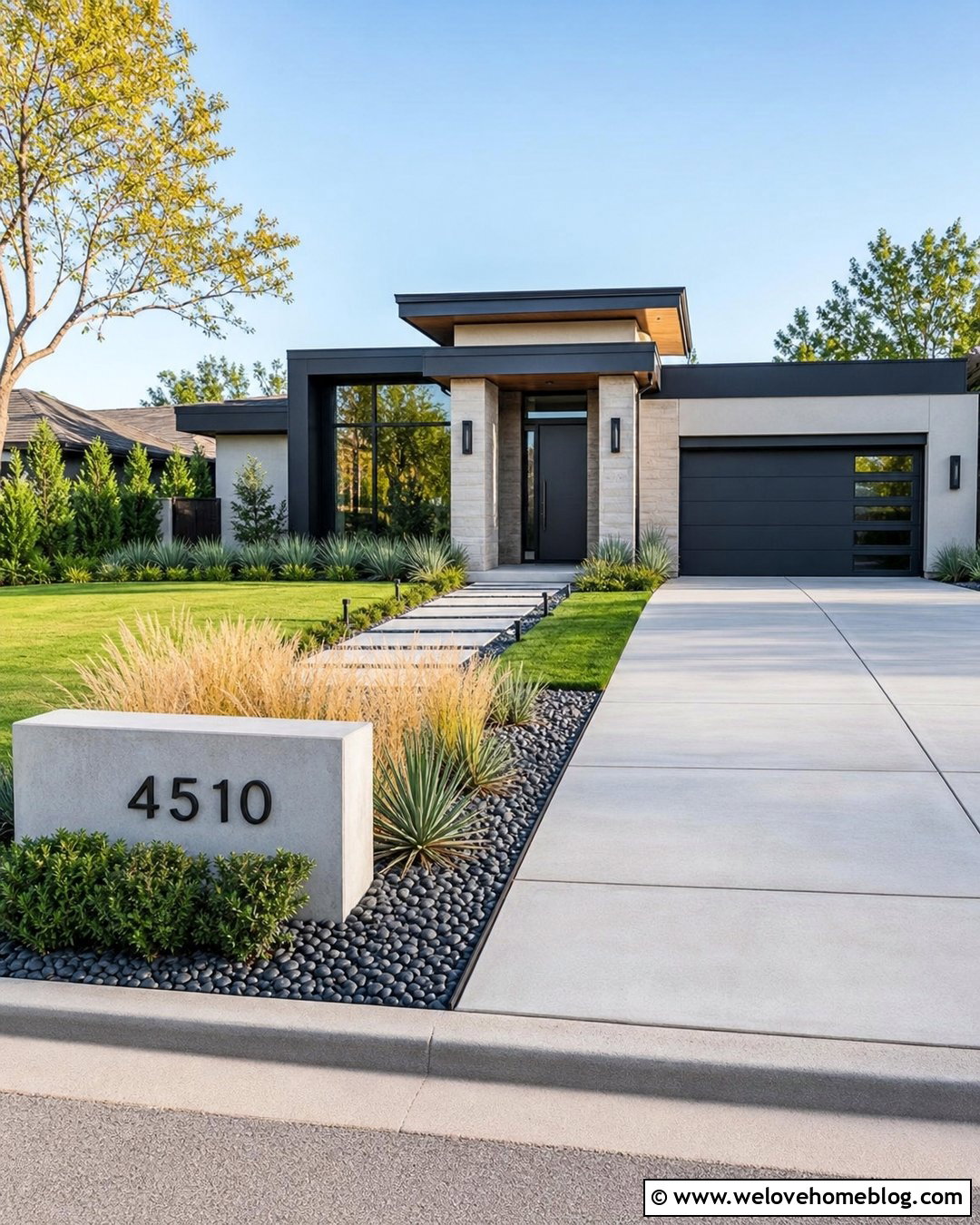
Clean lines make a modern driveway entrance feel organized before visitors even reach the house. Pair a smooth poured-concrete driveway with a rectangular concrete monument sign featuring raised black metal numbers. The sign can repeat the driveway’s pale gray tone while contrasting with dark window frames or siding. Place a narrow bed of black river rock around the monument to define it without adding visual clutter. A straight driveway layout strengthens the contemporary geometry. Use architectural plants such as feather reed grass, dwarf juniper, and yucca in carefully spaced groups. A slim integrated light can illuminate the address after dark. Keep the sign low enough to preserve street visibility but large enough for the numbers to be easily recognized from both directions.
3. Wood Driveway Sign With Farmhouse Entrance
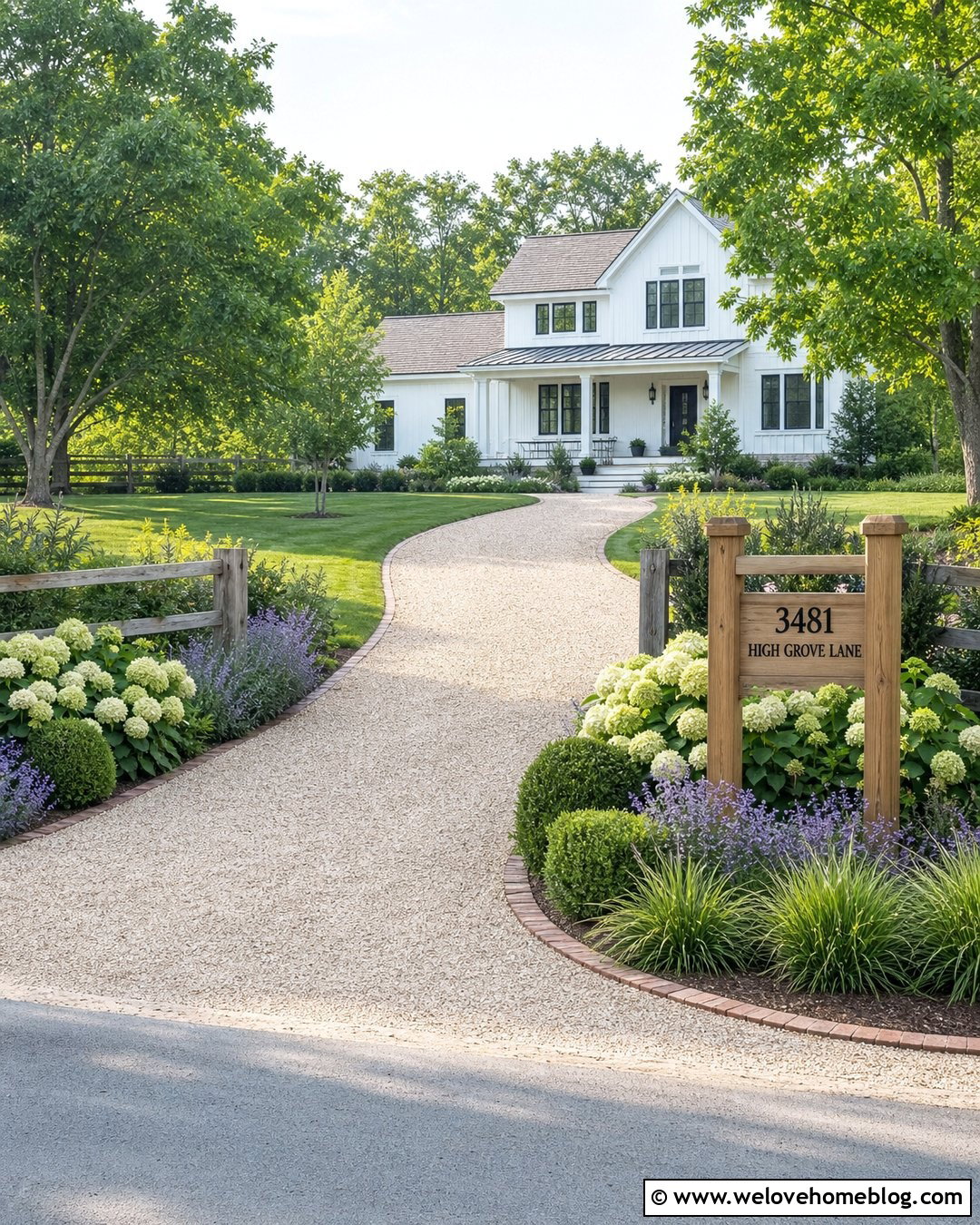
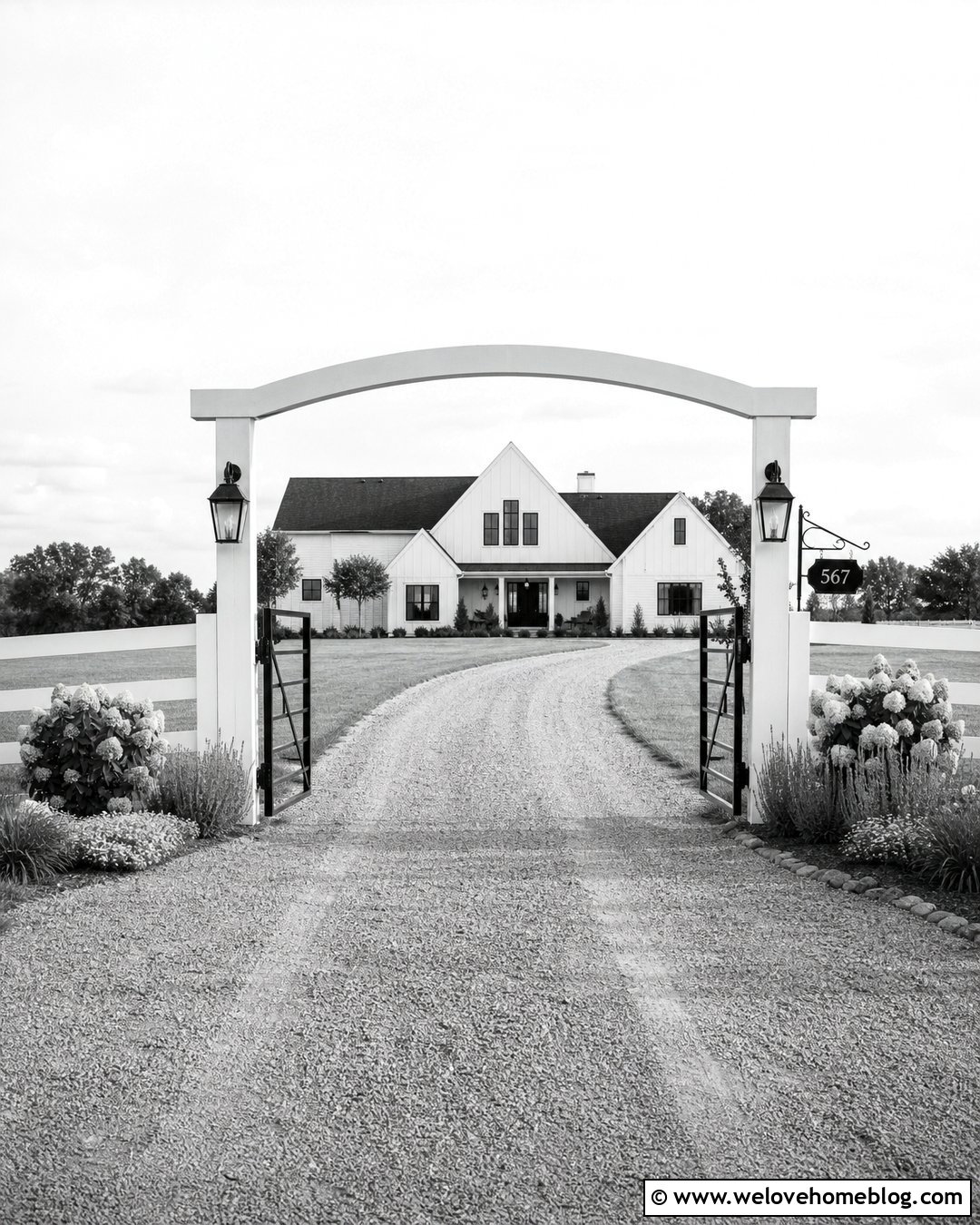
Warm wood creates a welcoming transition from the road to a modern farmhouse. Install a cedar or white oak driveway sign on two substantial posts beside a light-colored gravel entrance. Black raised letters provide contrast and coordinate with barn-style lighting, metal roofing, or dark window trim. A gently curved driveway feels softer than a rigid straight approach and allows the sign to sit naturally within a corner planting bed. Edge the gravel with reclaimed brick or weathered steel to reduce spreading. Surround the sign with hydrangeas, catmint, ornamental grasses, and low boxwood. Seal the wood with an exterior-grade finish and leave drainage space beneath it. The completed entrance should look relaxed and rural while remaining neat, readable, and easy to maintain.
4. Brick Driveway Sign With Colonial Entrance
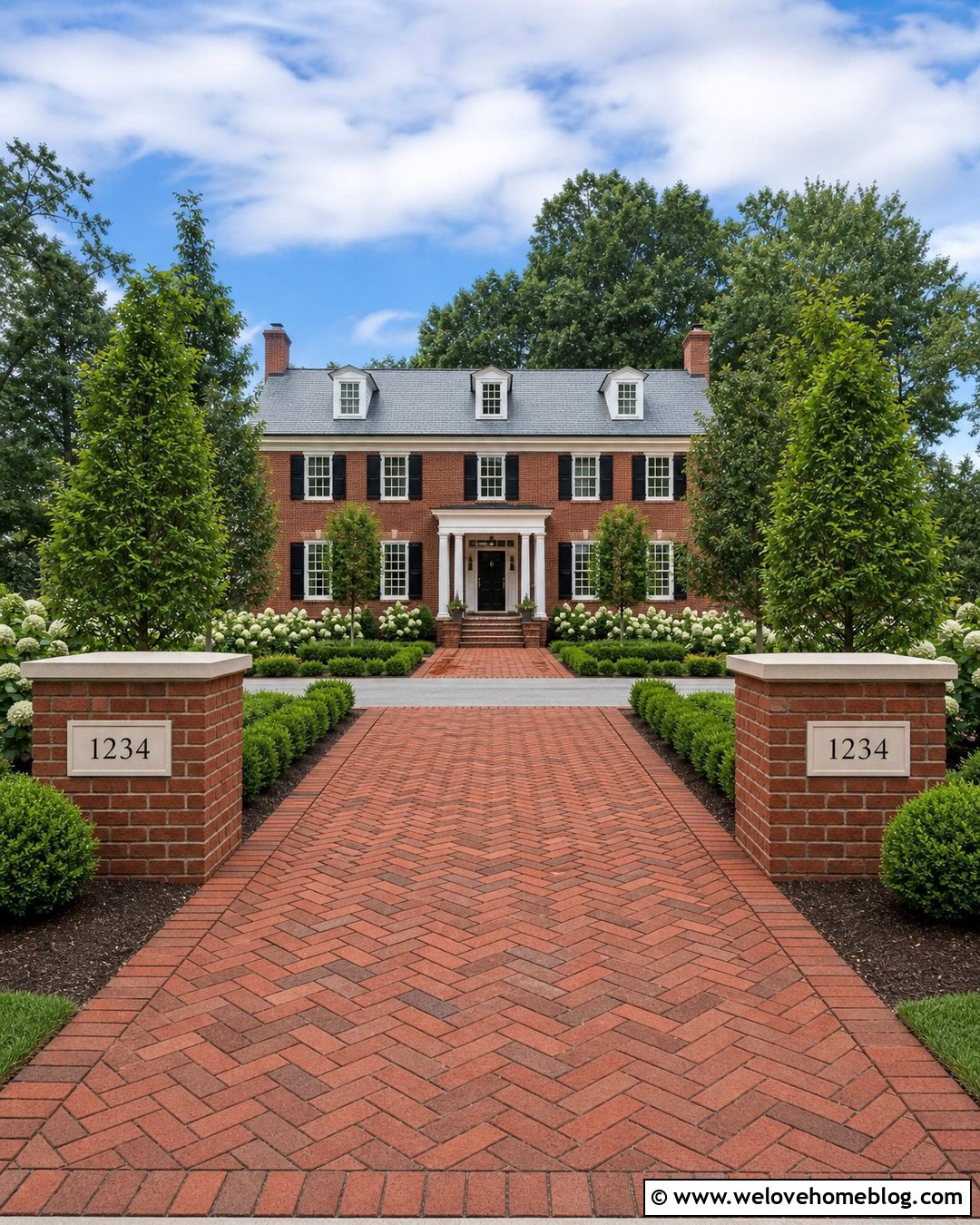
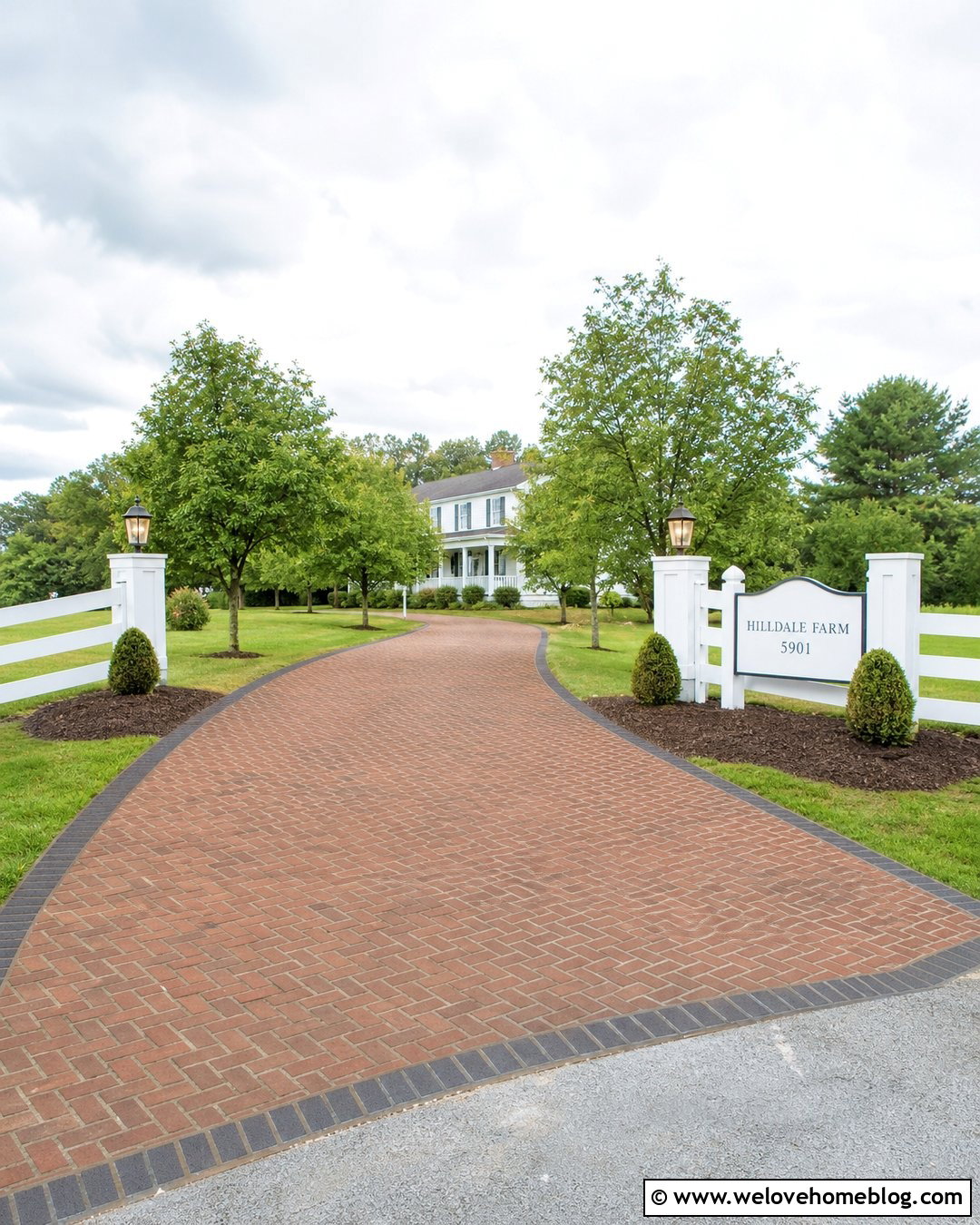
Does your colonial home need a driveway marker that looks original to the architecture? Build a compact brick monument using masonry that closely matches the house facade. Insert a light stone plaque with dark engraved numbers for a traditional, high-contrast display. A red clay brick driveway laid in a herringbone pattern creates a strong connection between the sign and entrance. Add a straight layout with narrow soldier-course borders to maintain a formal appearance. Symmetrical boxwood, white flowering shrubs, and two small ornamental trees can frame the approach. Low-voltage spotlights placed discreetly behind the planting illuminate the sign without dominating it. This coordinated design feels polished because the brickwork, driveway pattern, plant symmetry, and house materials all share the same traditional character.
5. Metal Driveway Sign With Asphalt Entrance
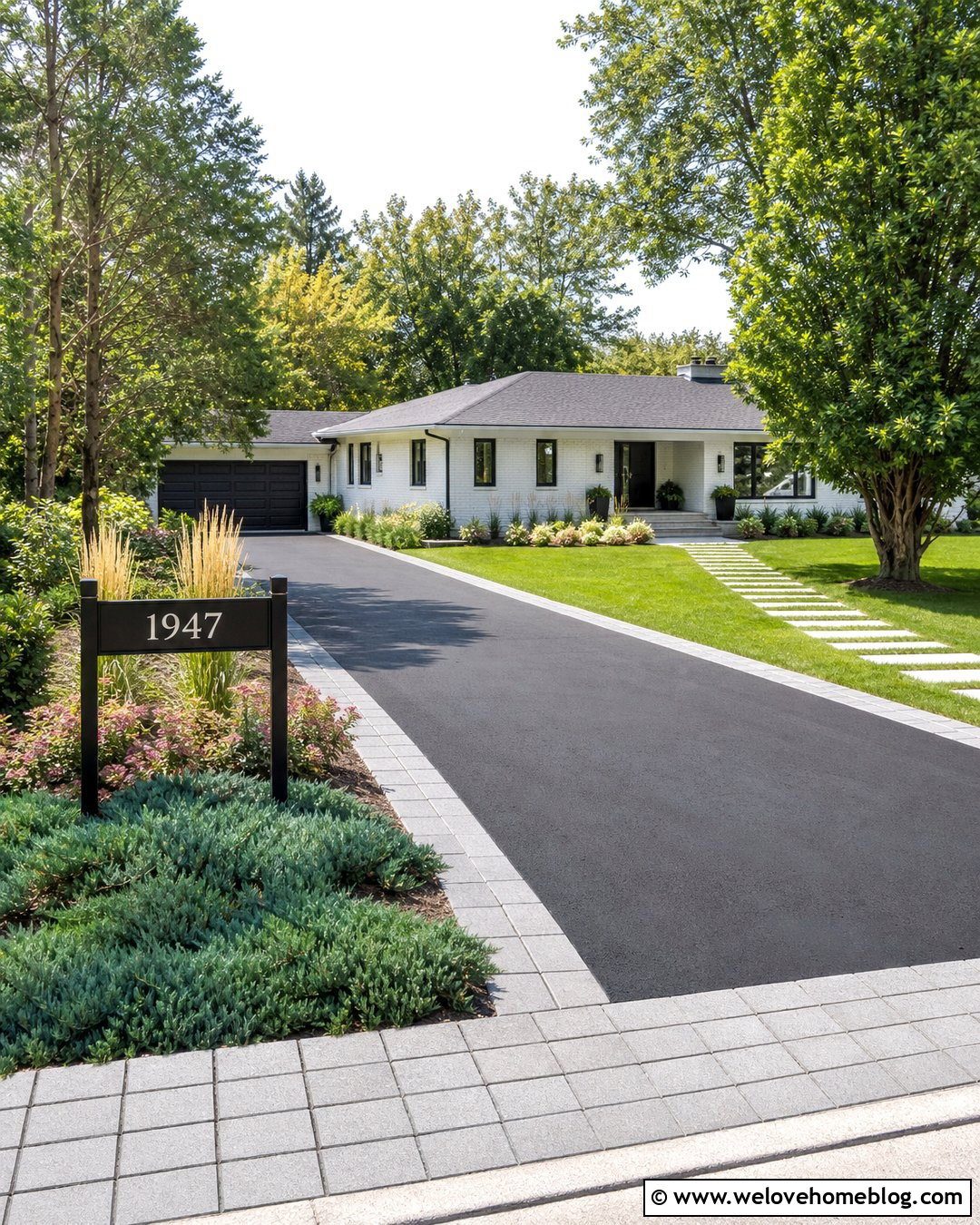
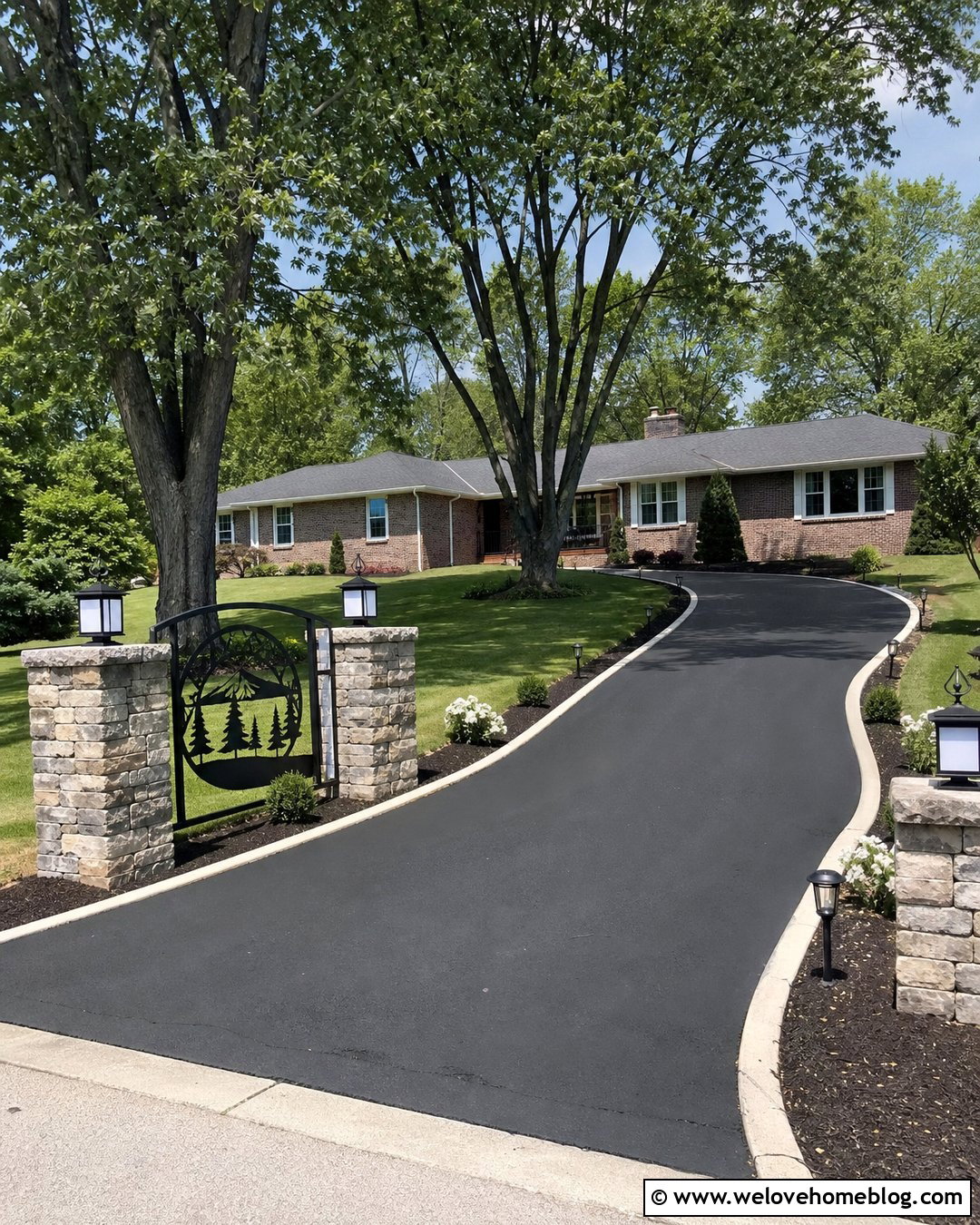
A black metal address sign can make an ordinary asphalt driveway look more intentional. Choose a powder-coated panel with laser-cut or raised numbers that remain visible against the landscape. Mount it between simple steel posts near the entrance, leaving generous clearance for vehicles, trailers, and snow removal equipment. Fresh black asphalt provides a crisp surface, while a charcoal paver apron creates an attractive transition at the street. Continue the pavers as narrow edge bands for a more finished outline. Low mounds of ornamental grass, spirea, and creeping juniper soften the metal structure without obscuring it. This practical combination suits ranch homes, contemporary cottages, and updated split-level properties. For nighttime visibility, add a shielded solar fixture aimed directly at the address panel.
6. Driveway Sign With Brick Pillars
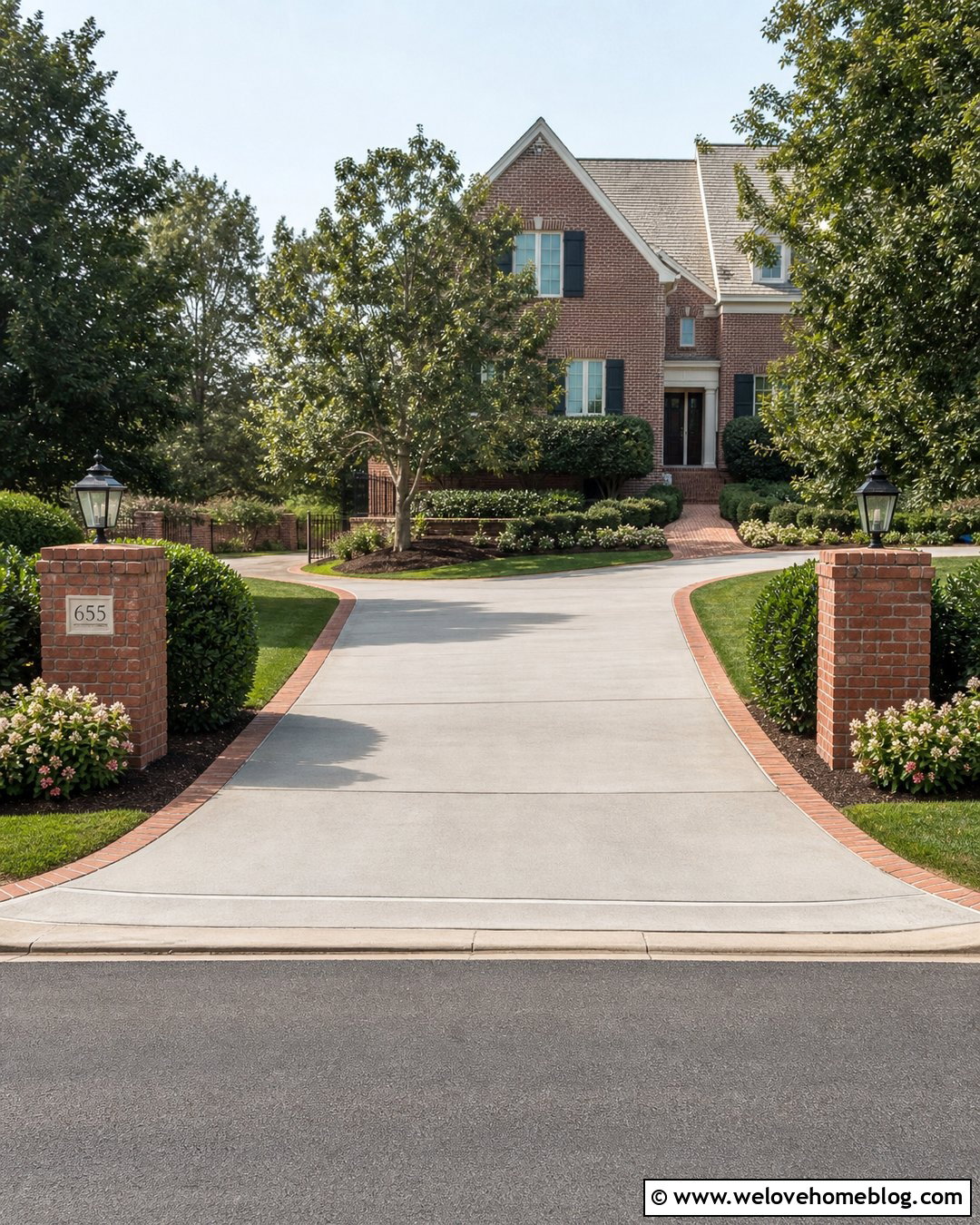
Brick pillars can turn a wide suburban driveway into a clearly defined entrance. Install a coordinated address plaque on one pillar and balance it with a matching lantern or decorative cap on the other. A gray concrete driveway with red brick ribbon borders ties the entrance structure to a traditional brick house. Slightly flare the driveway near the road to make turns easier and give the pillars sufficient clearance. Plant compact hollies or boxwood behind each column, then add seasonal perennials in lower front layers. Avoid thorny shrubs and spreading plants beside the driving surface. The address should face approaching traffic rather than pointing directly across the road. Repeating the same brick in the pillars, driveway borders, and front walkway produces a cohesive, custom-built result.
7. Driveway Sign With Stone Pillars
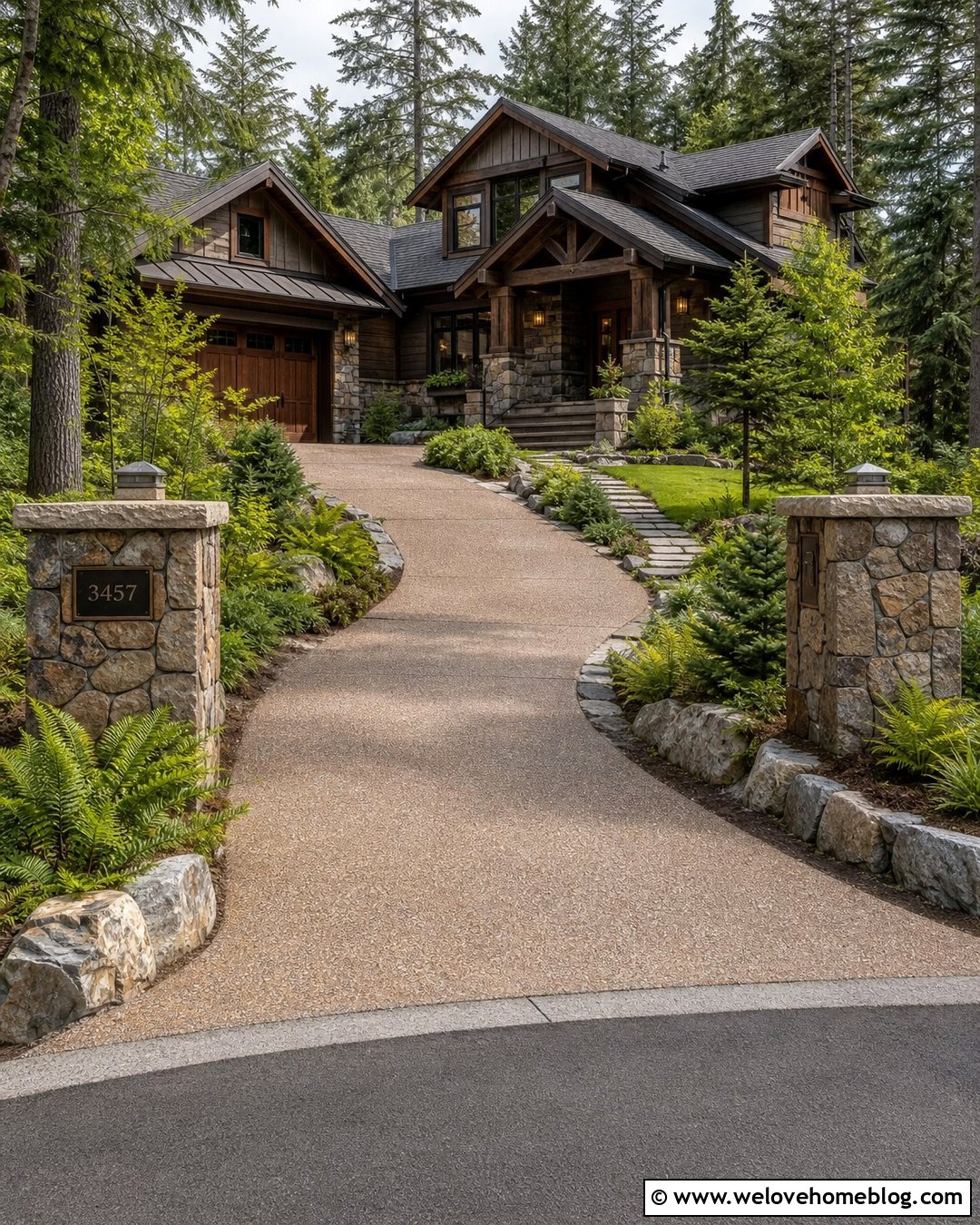
Natural stone pillars work especially well at a curved driveway leading to a craftsman or mountain-style house. Place a dark bronze address plate on the pillar closest to the normal direction of arrival. A tan exposed-aggregate driveway complements the varied colors of the stone while providing a textured, durable-looking surface. Use large stone curbs at the entrance, then transition to softer planted edges farther toward the house. Ferns, dwarf conifers, native grasses, and shade-tolerant ground covers help the pillars settle into the landscape. Matching caps keep the masonry neat and protect the top surfaces. If lanterns are included, select simple fixtures that do not compete with the stone. The entrance should feel substantial without resembling an oversized gated estate.
8. Solar Driveway Sign With Paver Entrance
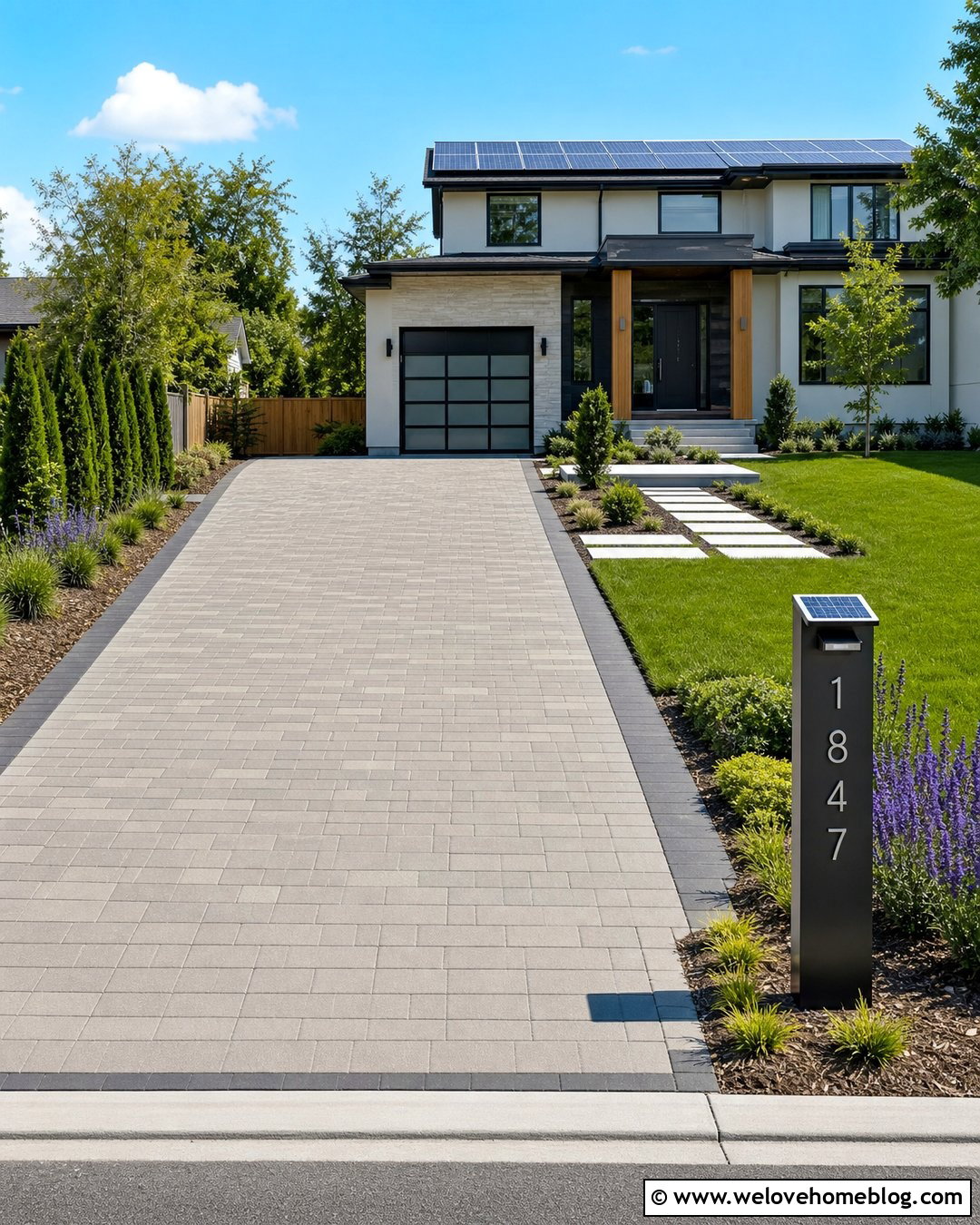
A solar-lit sign improves nighttime identification without requiring a long electrical run from the house. Combine it with a warm gray concrete paver driveway laid in a running-bond pattern. Mount the address numbers on a freestanding aluminum panel and place a small solar light above or below the display. Make sure nearby trees and structures do not block the panel’s access to daylight. A straight entrance with dark charcoal edging creates a neat frame and helps the lighter pavers stand out. Plant low sedges, salvia, and compact shrubs around the sign while keeping the solar panel exposed. The fixture should illuminate the address rather than shine toward the road. This entrance works particularly well for newer suburban homes with simple, energy-conscious landscaping.
9. Backlit Driveway Sign With Modern Entrance
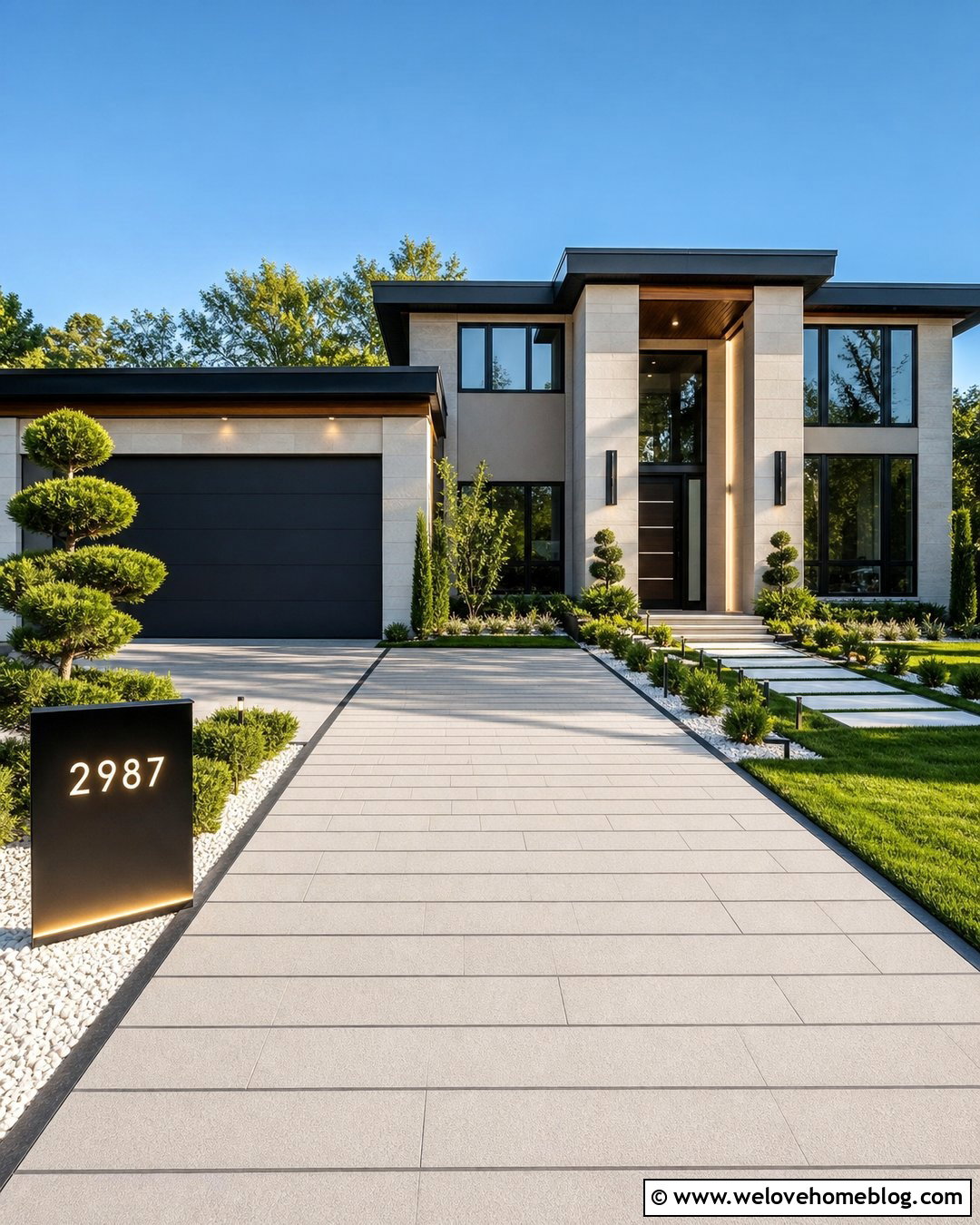
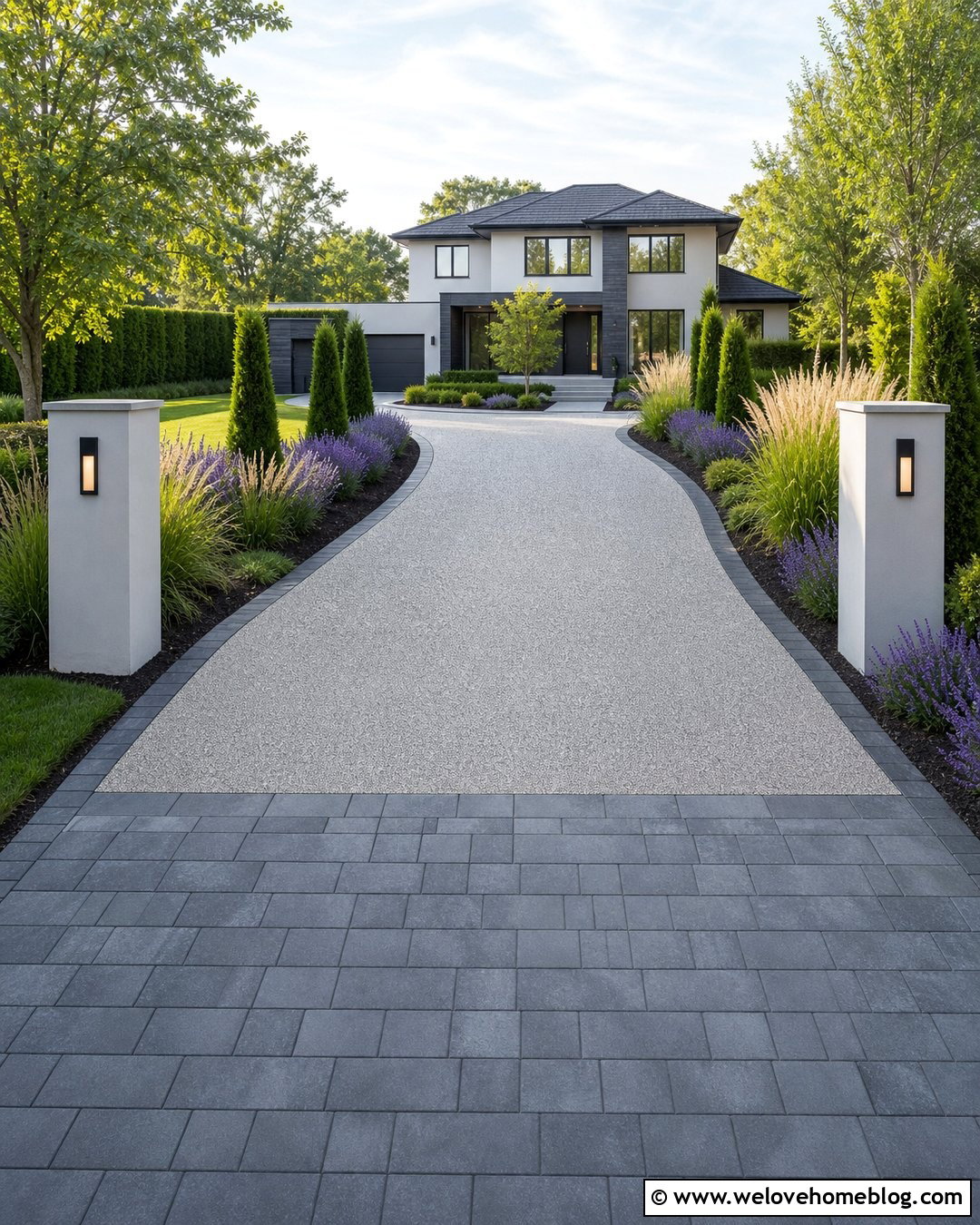
Soft backlighting turns an address marker into a refined focal point after sunset. Install large cutout numbers on a dark aluminum or steel panel, using a concealed white LED source to create a clear halo. Pair the sign with a wide driveway made from large-format concrete pavers separated by narrow dark joints. A straight or gently angled approach complements the sharp geometry of a modern house. Black steel edging, pale decorative gravel, and sculptural evergreen plants continue the restrained palette. During daylight, the sign should still have enough contrast to be readable without illumination. Keep the electrical components weather-protected and accessible for maintenance. The result is a complete modern entrance where lighting, hardscape, address display, and architecture support the same clean visual language.
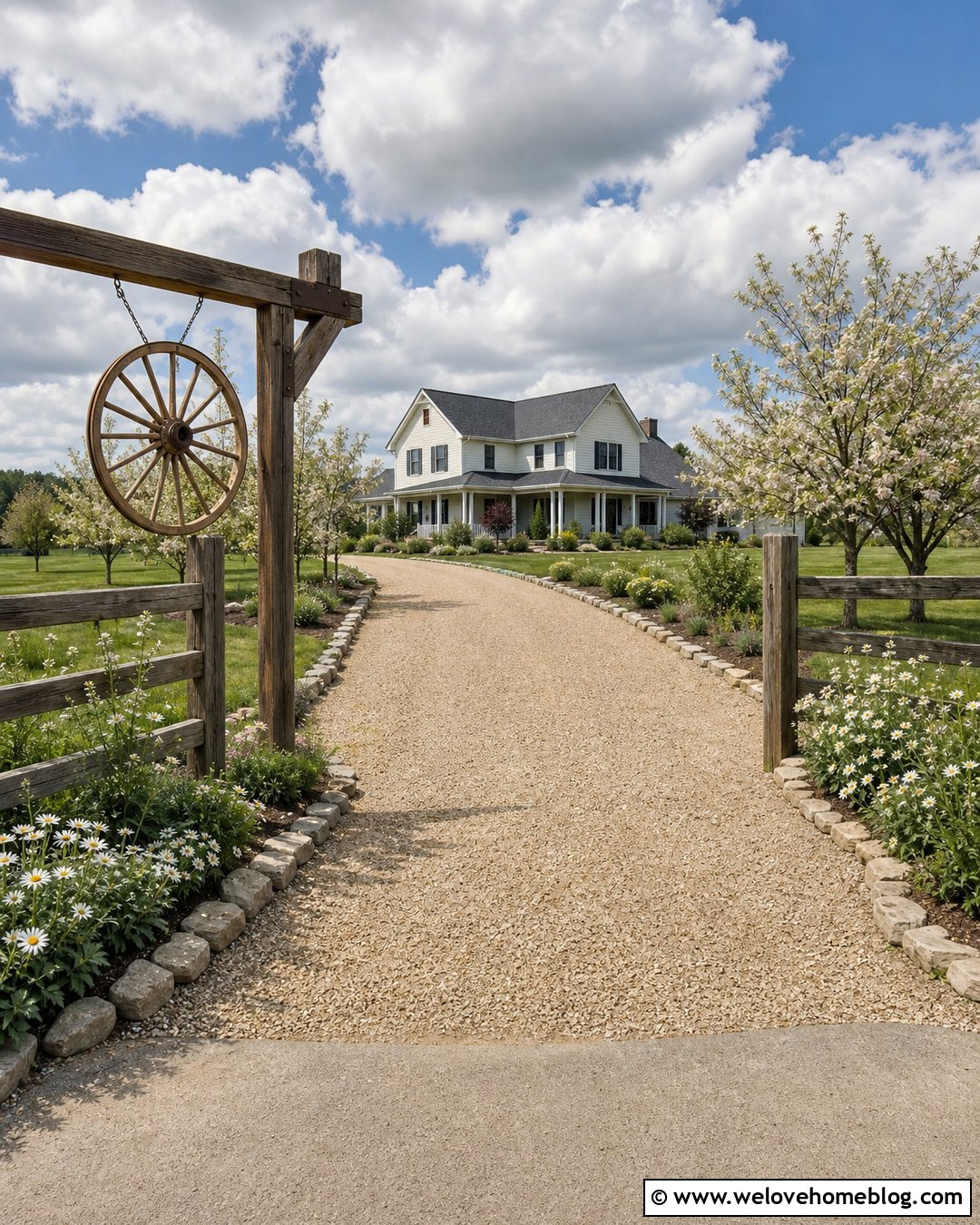
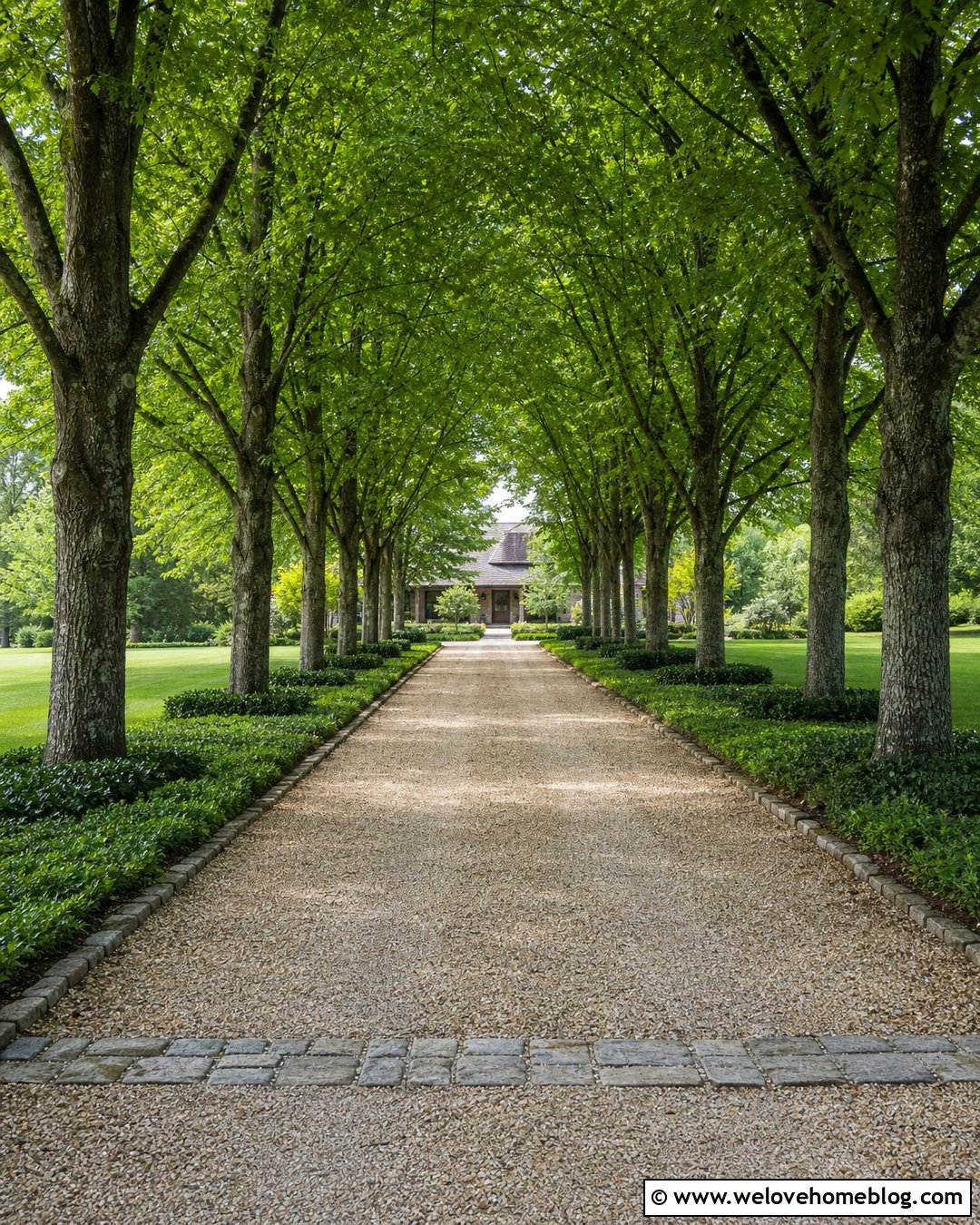
10. Hanging Driveway Sign With Country Entrance
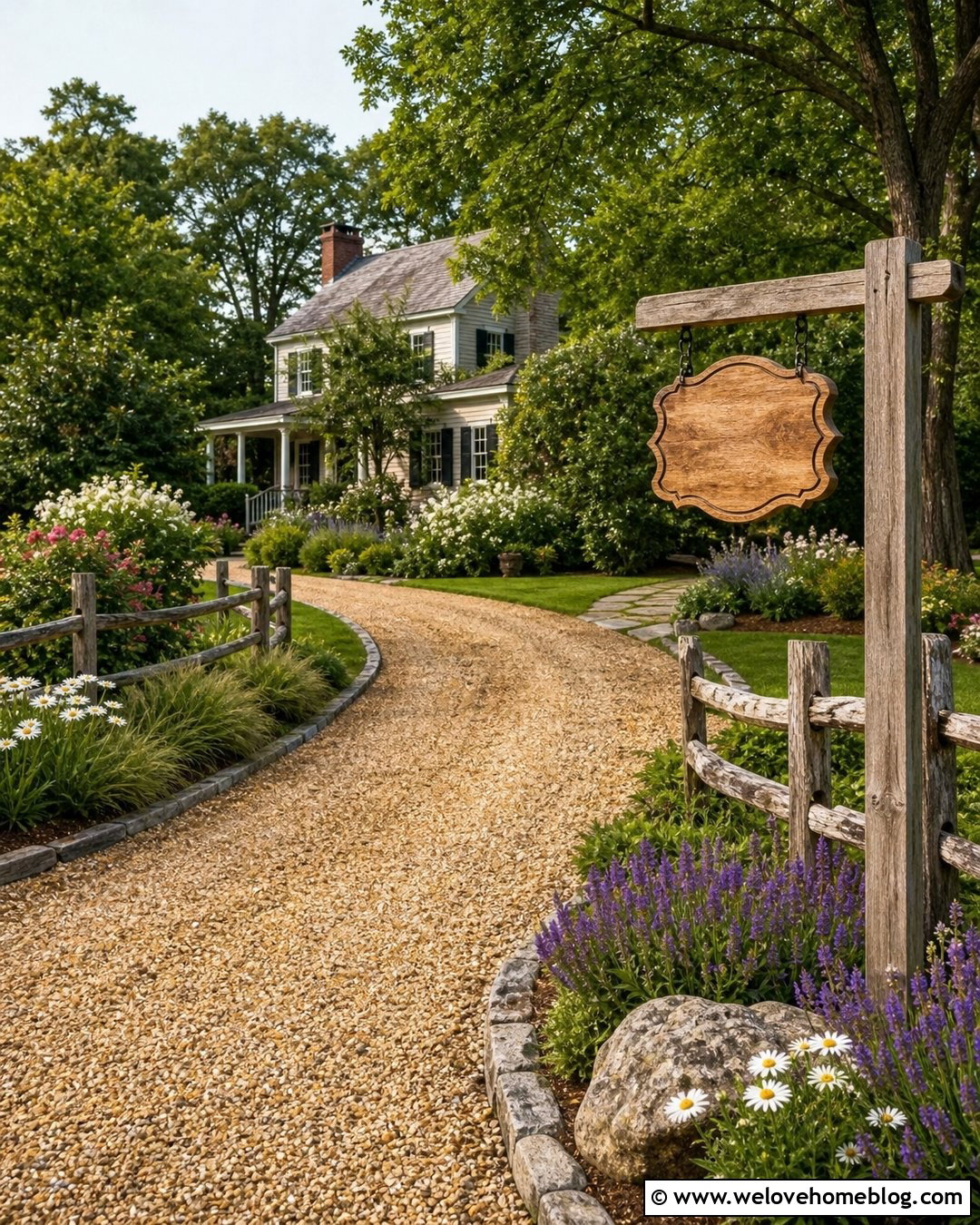
A hanging sign adds movement and character to a quiet country driveway. Suspend a carved wood or painted metal panel from a sturdy timber arm, making certain it cannot swing into the vehicle path. A golden pea gravel driveway with timber edging reinforces the relaxed rural setting. Curve the entrance gently between split-rail fencing and informal planting beds filled with lavender, daisies, grasses, and low roses. The sign can display the property name above a larger street number, but the lettering should remain simple and easy to read. Use corrosion-resistant hardware and secure both the post and hanging bracket against strong winds. A nearby downlight can improve visibility. This complete look feels personal without sacrificing the practical purpose of identifying the property.
11. Ranch Driveway Sign With Entrance Gate
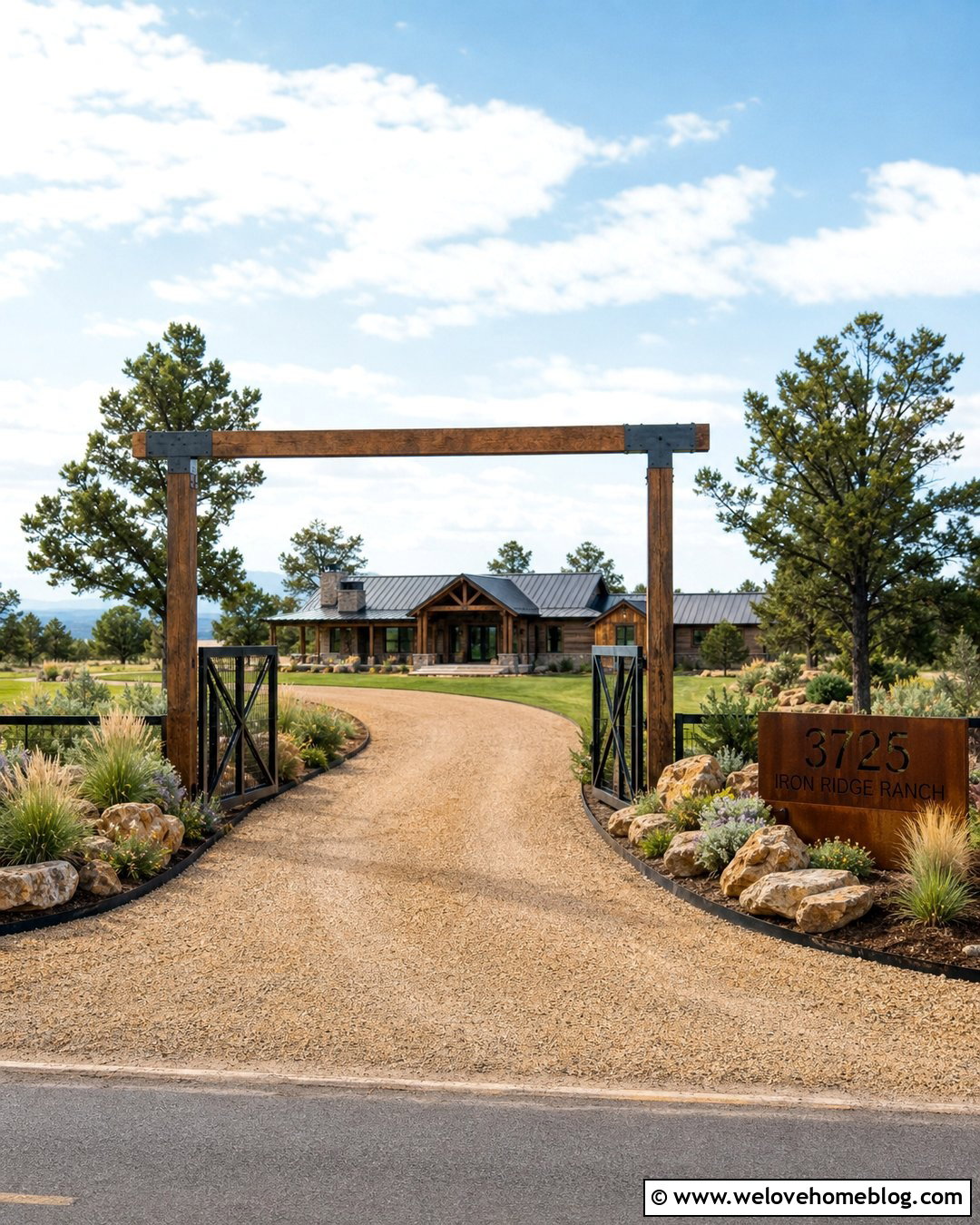
A ranch entrance needs enough scale to remain visible across an open landscape. Use a wide steel or timber gate with an oversized metal address sign mounted beside it rather than directly on a moving section. A compacted tan gravel driveway suits the rural setting and handles the visual weight of heavy posts. Flare the entrance near the road and add large natural boulders outside the turning zone. Native grasses, sage, and drought-tolerant shrubs can frame the sign without creating constant maintenance. Dark steel edging keeps the gravel contained around the entrance. If the property name appears on an overhead beam, repeat the street number at eye level for easier identification. The finished design should look strong, open, and appropriate for the surrounding acreage.
12. Driveway Sign With Wrought Iron Gate
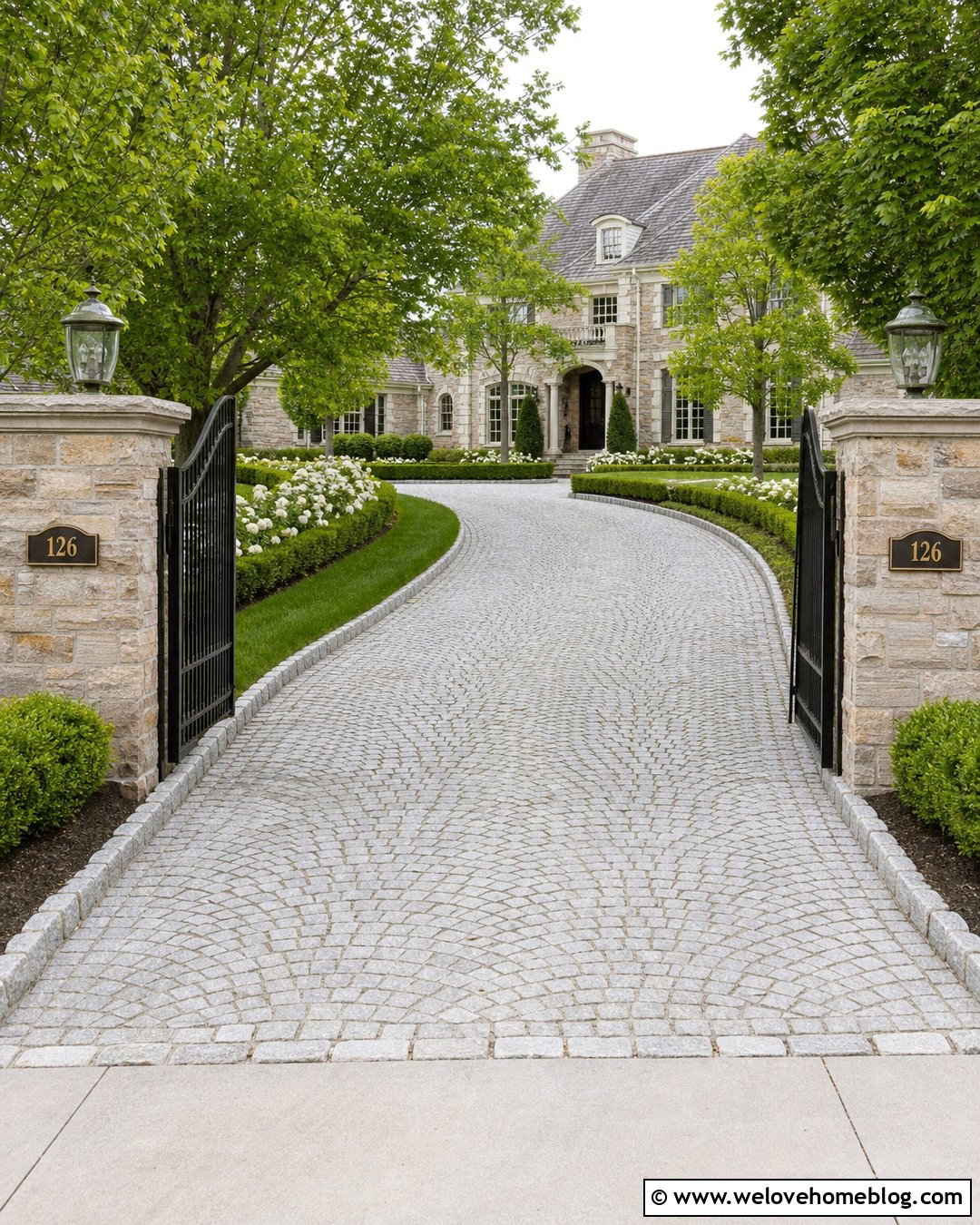
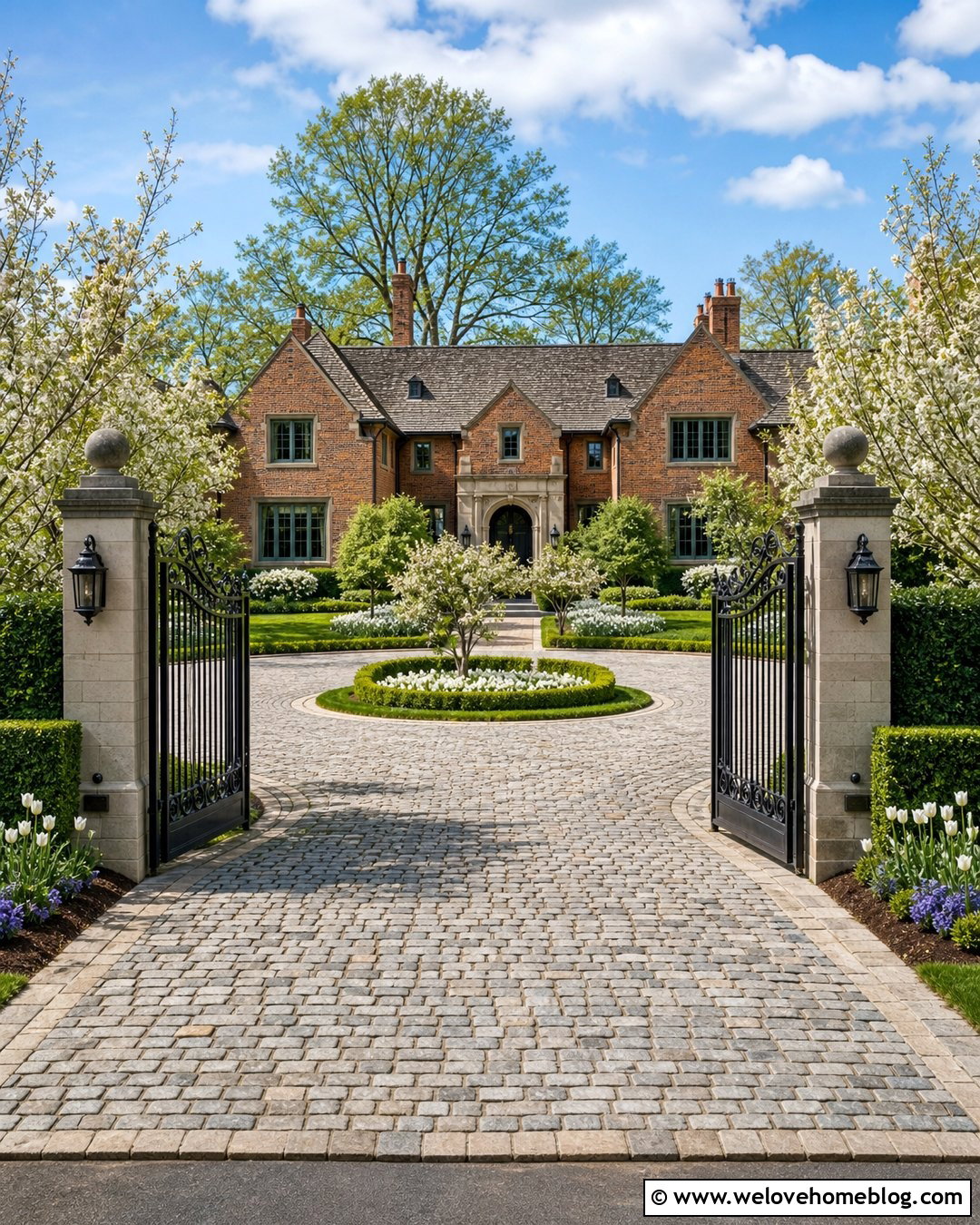
Wrought iron creates a formal entrance that suits brick, stone, and traditional stucco homes. Place a decorative address plaque on a masonry pier beside the gate so the numbers remain visible whether the gate is open or closed. A cobblestone driveway arranged in a fan pattern adds texture and old-world character. Use matching cobblestone curbs to define a gently curved approach and protect planting beds from vehicle tires. Clipped evergreen hedges, upright trees, and white flowering plants provide a structured landscape without overwhelming the ironwork. Choose gate details that echo the sign frame rather than mixing unrelated scroll patterns. Recessed pillar lights or small downlights can provide nighttime visibility. Together, the gate, signage, cobblestone, and symmetrical planting establish a graceful residential arrival.
13. Driveway Sign With Cedar Fence
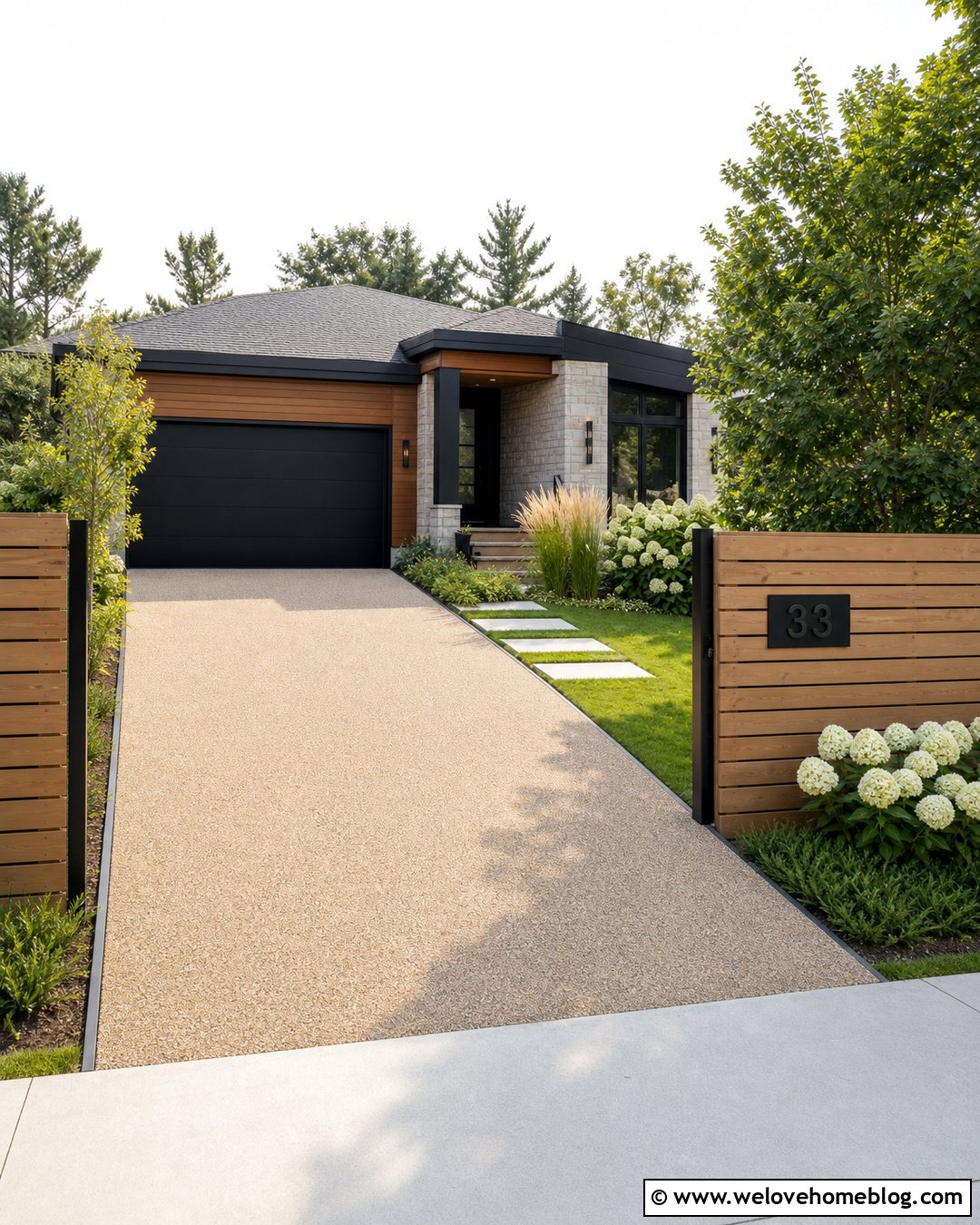
A cedar fence offers a warm background that makes dark address numbers easy to see. Install a horizontal slat panel beside a resin-bound gravel driveway, leaving an open section where the driveway meets the road. Mount matte black numbers directly on the cedar or attach them to a contrasting metal plate. The resin-bound surface can use a natural tan aggregate that coordinates with the wood while offering a smoother appearance than loose gravel. Continue the cedar as a short boundary screen, then soften it with grasses, white hydrangeas, and evergreen ground cover. A straight driveway works well with the fence’s horizontal lines. Keep the sign clear of gate hardware and overhanging plants. This entrance feels contemporary, private, and inviting rather than closed off.
14. Driveway Sign With White Picket Fence
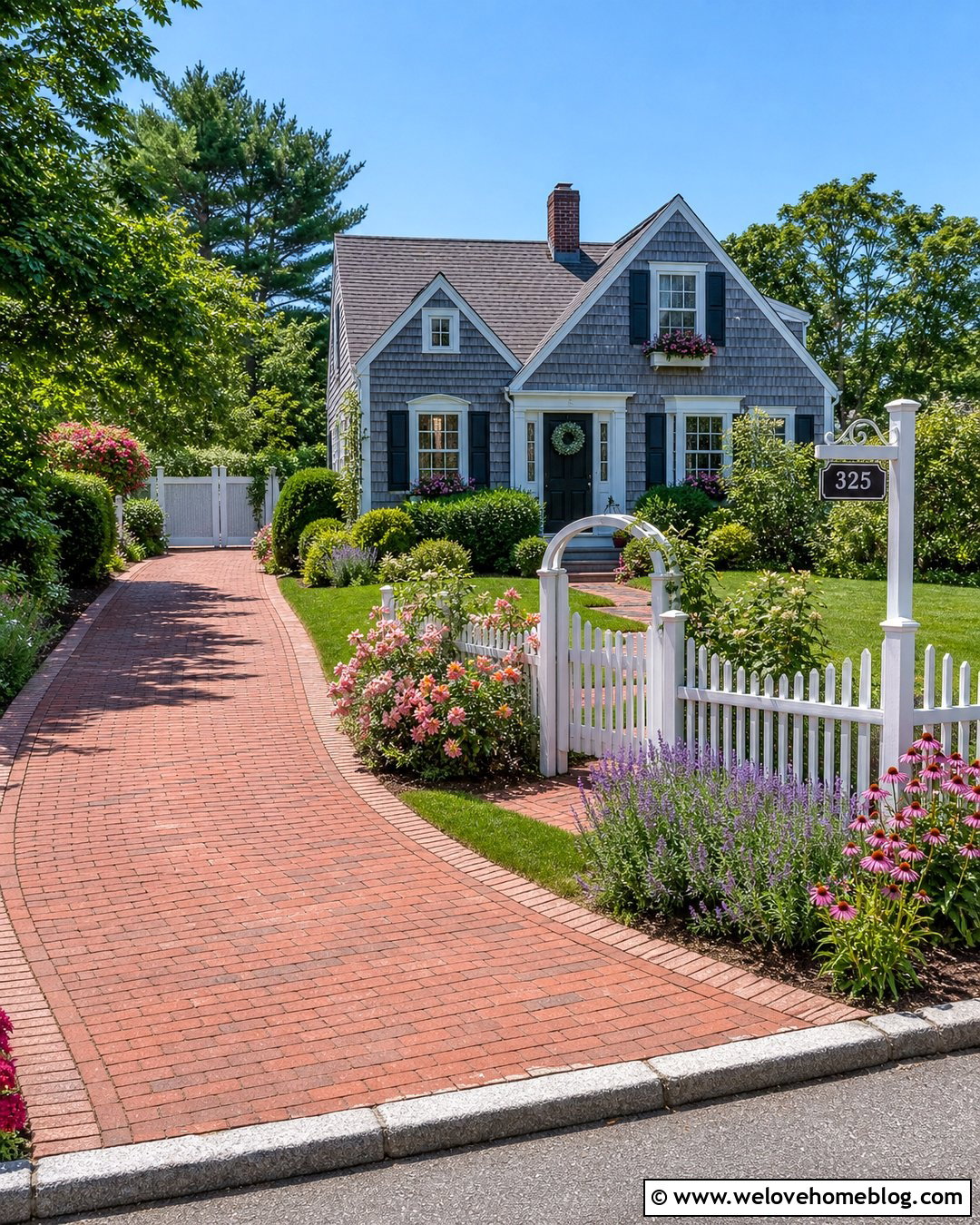
Few combinations feel as welcoming as a white picket fence, a clear address sign, and a cottage garden. Use a painted wood sign attached to a taller fence post beside a curved clay brick driveway. Dark green or black lettering provides strong contrast against the white background. Outline the driveway with a narrow brick soldier course and allow the planting beds to follow its gentle curve. Compact roses, catmint, coneflowers, and clipped shrubs create color without spilling into the vehicle path. A matching pedestrian gate can connect the driveway to the front walkway. Choose weather-resistant paint and keep the sign’s decorative details simple enough for quick reading. This complete entrance complements Cape Cod homes, cottages, and traditional houses with light siding.
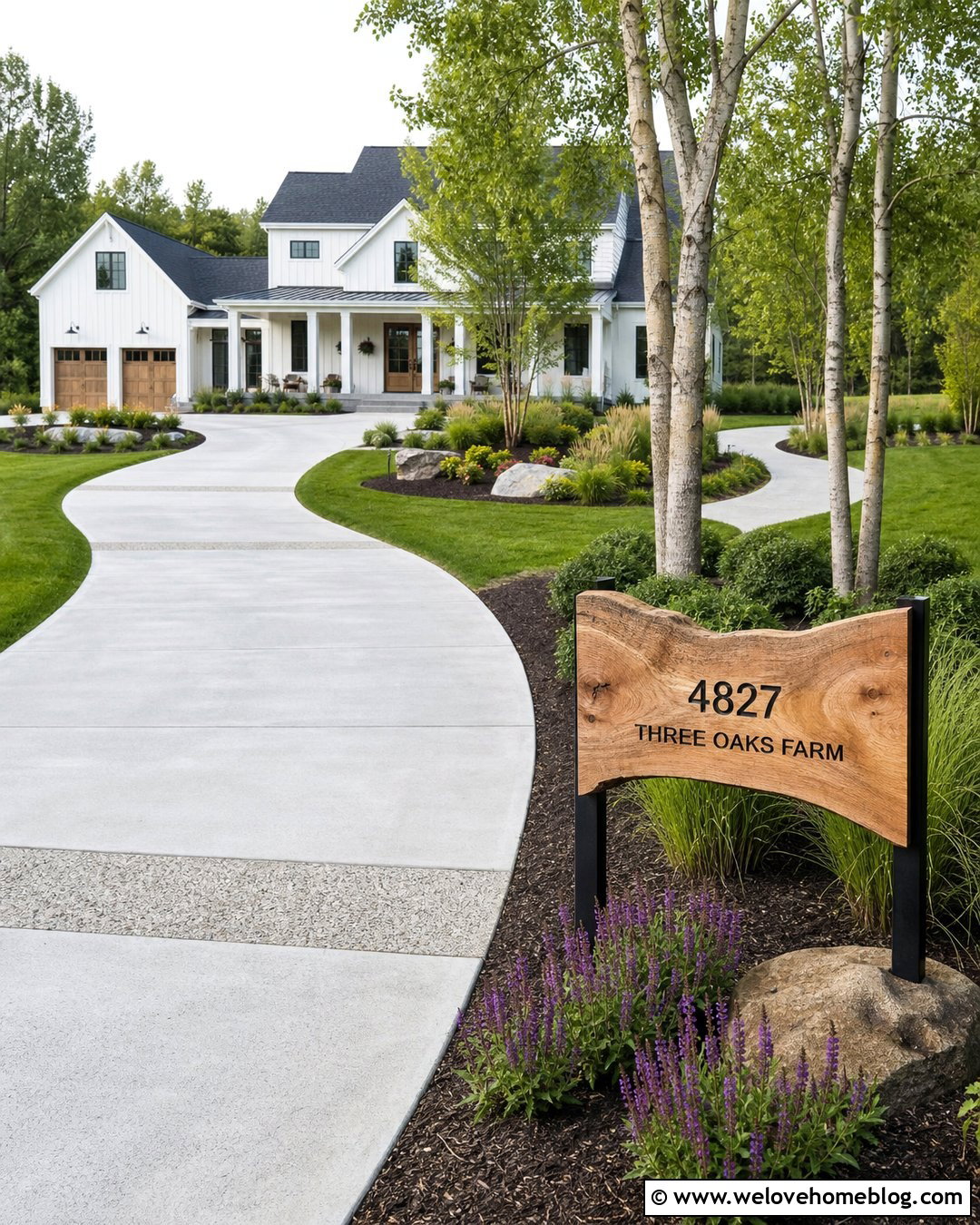


15. Driveway Sign With Boulder Address Marker
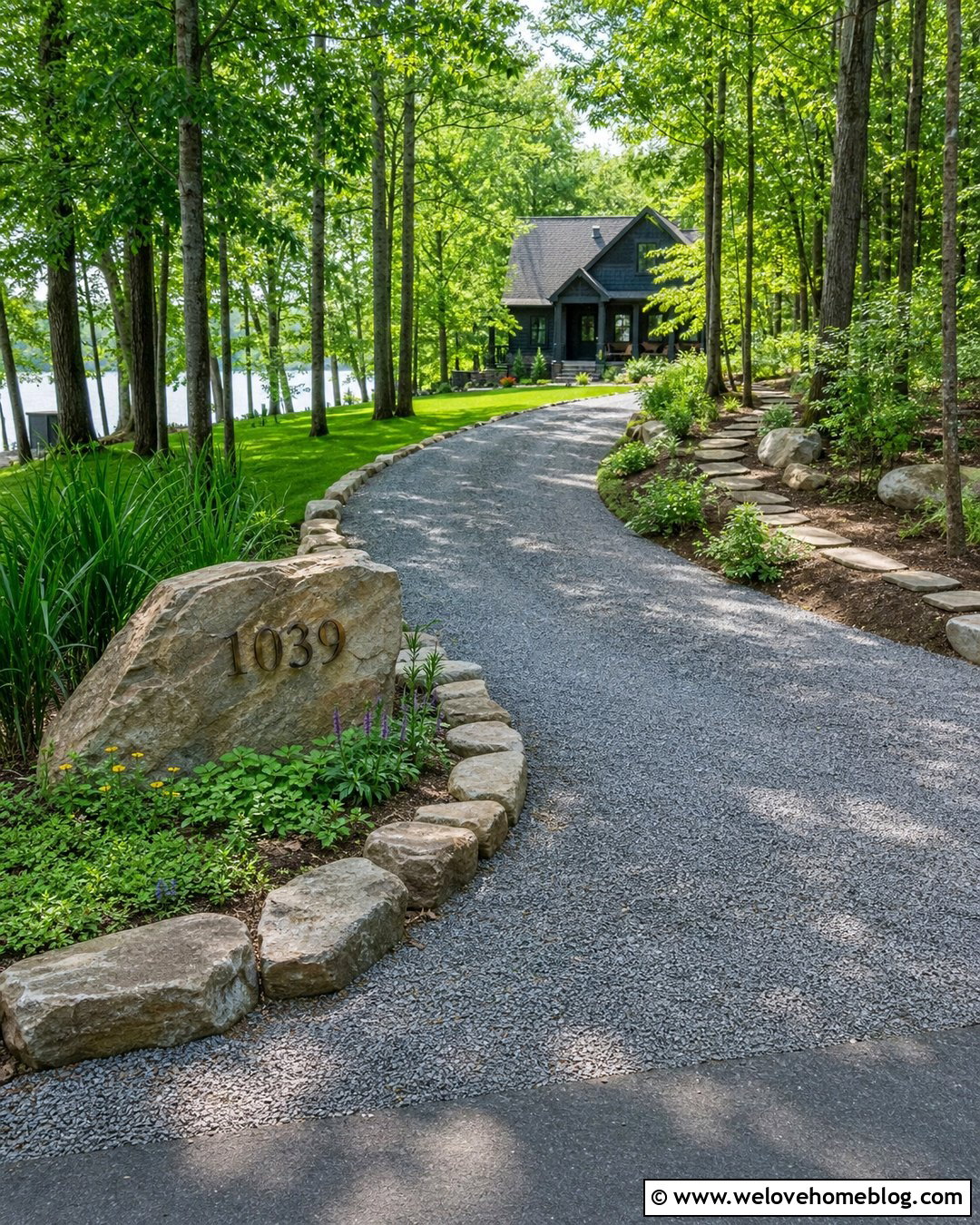
A large natural boulder can become an address marker without looking like a separate sign installation. Select a broad, stable stone with a relatively smooth face, then add engraved numbers or securely mounted metal characters. Position it outside the driveway’s turning area and partially settle it into a landscaped bed. A curved gray gravel driveway bordered by larger matching stones makes the marker feel connected to the entire entrance. Surround the boulder with low native grasses, creeping ground cover, and a few seasonal flowers. Avoid placing dense shrubs directly in front of the numbers. This low-profile solution suits wooded lots, lake houses, rustic ranch homes, and mountain properties. A small ground light can improve visibility while highlighting the stone’s natural surface texture.
16. Driveway Sign With Gabion Wall
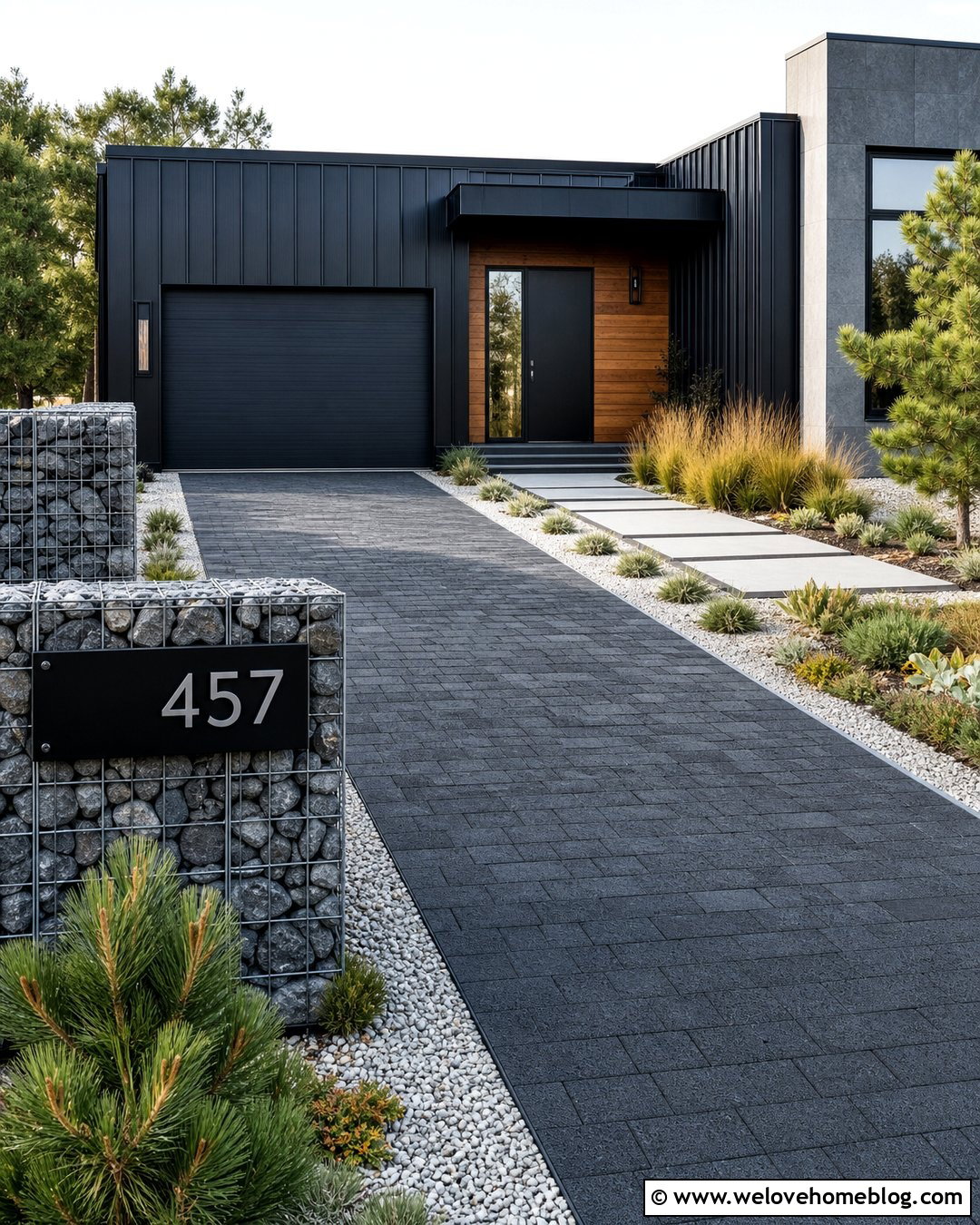
A gabion wall brings strong texture to a modern or industrial-inspired driveway entrance. Fill the steel mesh structure with clean, consistently sized stone that repeats colors found in the house facade. Attach a simple black or stainless-steel address plate to the front, using large numbers with clear spacing. Pair the wall with a charcoal permeable paver driveway and a straight entrance layout. A slim strip of pale gravel can separate the gabion from the paving and improve visual definition. Use structured grasses, compact pine, and low succulents around the base rather than dense flowering plants. Keep the wall at a sensible residential scale so it does not block sightlines. The mix of stone, metal, paving, and restrained planting creates a distinctive yet practical entrance.
17. Driveway Sign With Corten Steel
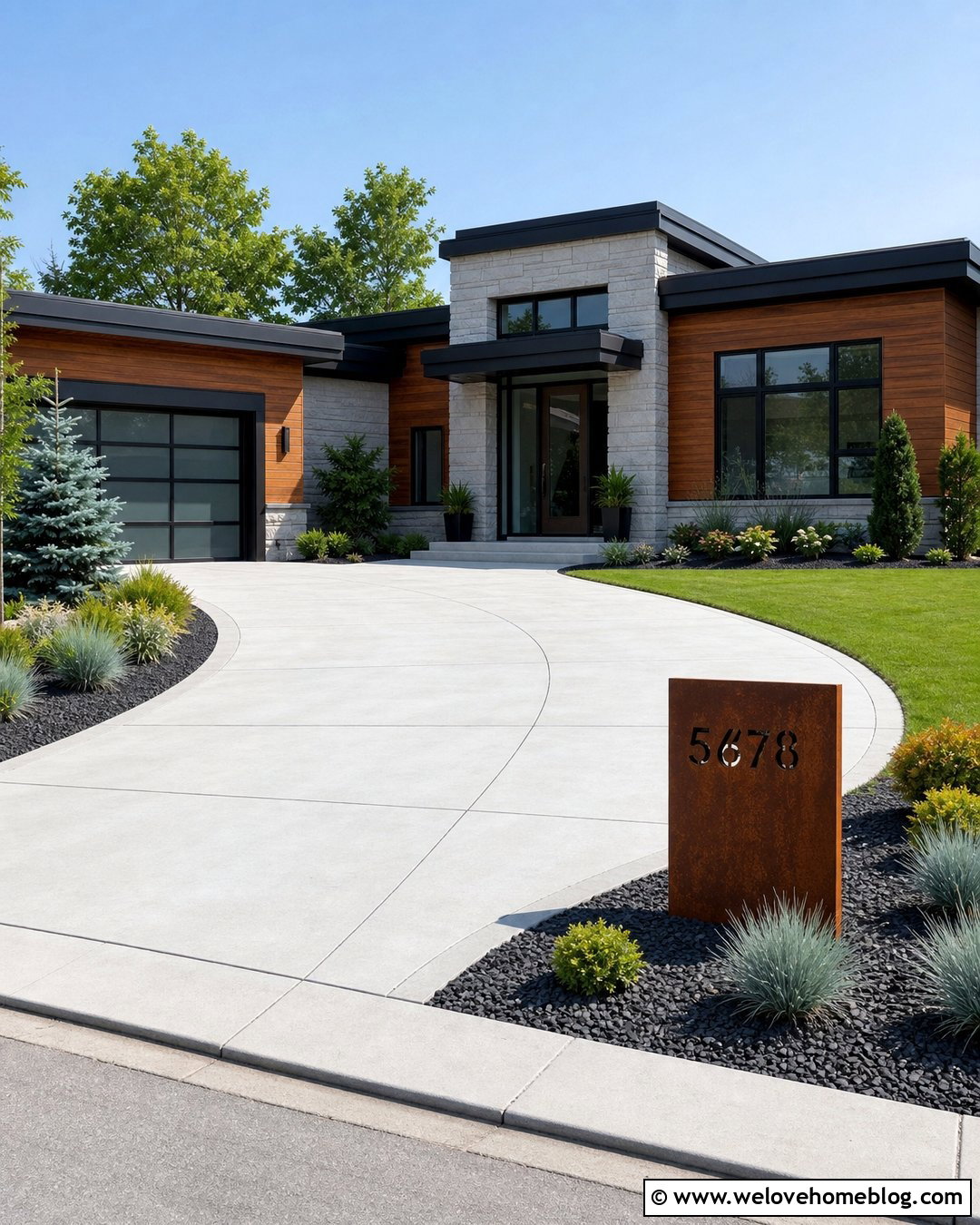
Weathering steel adds a rich rust-colored accent to a contemporary landscape. Choose a freestanding Corten steel address panel with precision-cut numbers, allowing the lighter background or internal backing to show through. Set it beside a pale gray poured-concrete driveway with a gently curved layout. Dark basalt gravel around the sign creates contrast and prevents soil from splashing onto the metal. Use blue-green grasses, compact evergreens, and drought-tolerant perennials to balance the warm steel color. Include concrete or steel edging to keep each material in its proper zone. Because weathering runoff can stain nearby surfaces during early exposure, provide separation between the panel and light paving. The final entrance feels artistic, but the numbers remain the clear functional focus.
18. Driveway Sign With Mailbox
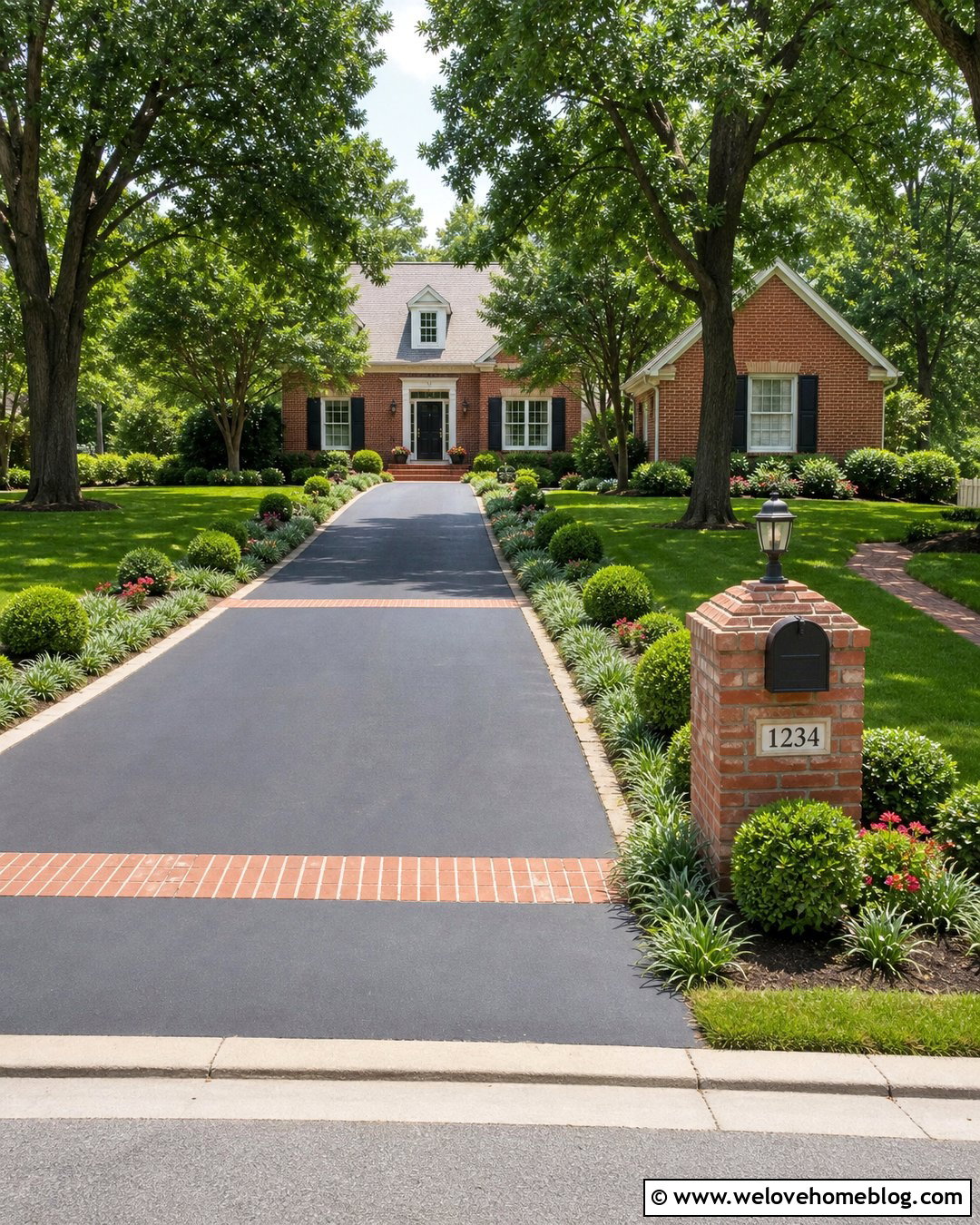
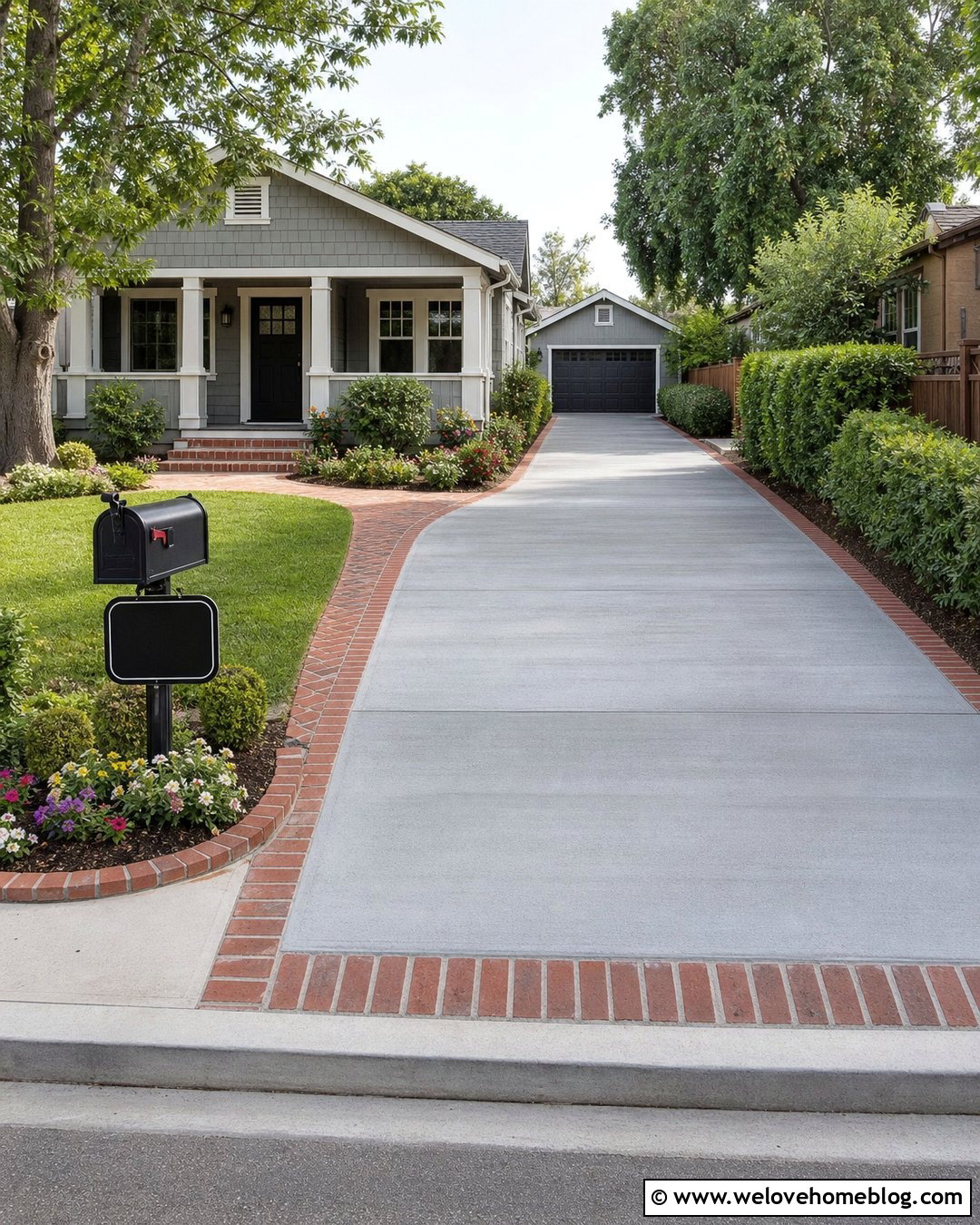
Combining the mailbox and driveway sign keeps a small entrance organized. Build one coordinated structure with a secure mailbox, large address numbers, and enough space for planting at the base. A red brick mailbox surround works naturally beside an asphalt driveway with matching brick entrance bands. For a lighter look, use a black metal mailbox on a cedar post next to pale concrete paving. Position the numbers where they are visible from both road directions, and avoid letting the mailbox door or flag cover them. Low boxwood, liriope, and compact flowering plants can soften the structure. Keep roots and irrigation away from the pavement edge. This efficient arrangement is especially useful for narrow suburban lots where separate signs, posts, and decorative features would create unnecessary clutter.
19. Driveway Sign In Flower Bed
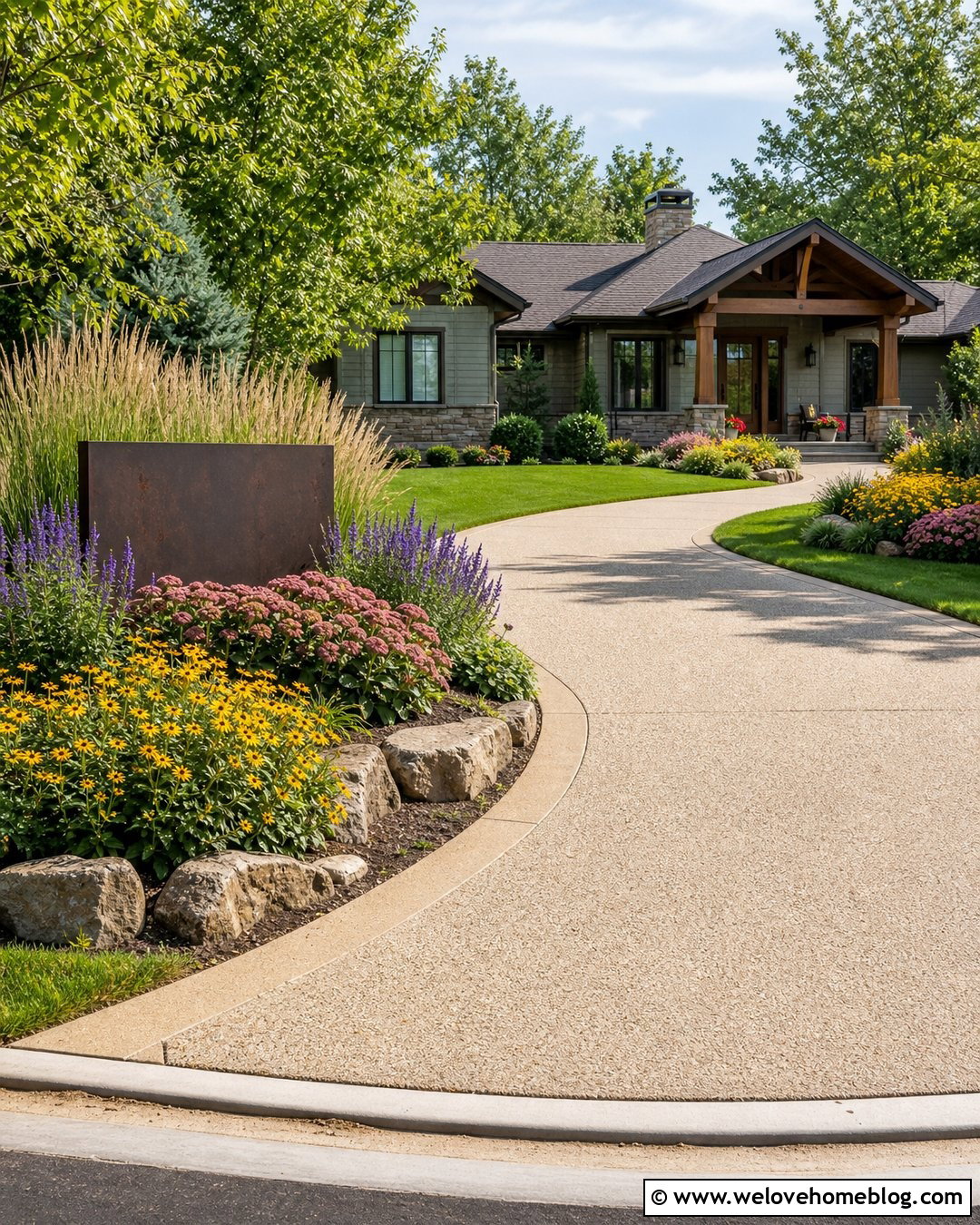
A driveway sign placed within a planting bed can feel integrated rather than added as an afterthought. Use a dark metal address panel surrounded by low flowers beside a light exposed-aggregate driveway. Shape the bed as a broad curve that echoes the driveway entrance and guides the eye toward the house. A natural stone border keeps mulch and soil from washing onto the driving surface. Plant taller ornamental grasses or evergreens behind the marker, then arrange salvia, coreopsis, sedum, or compact annuals in front. Maintain open space around every number so leaves and blooms do not reduce readability. Repeating several of the same plants farther along the driveway creates continuity. This approach gives a ranch or craftsman home a colorful, approachable first impression.


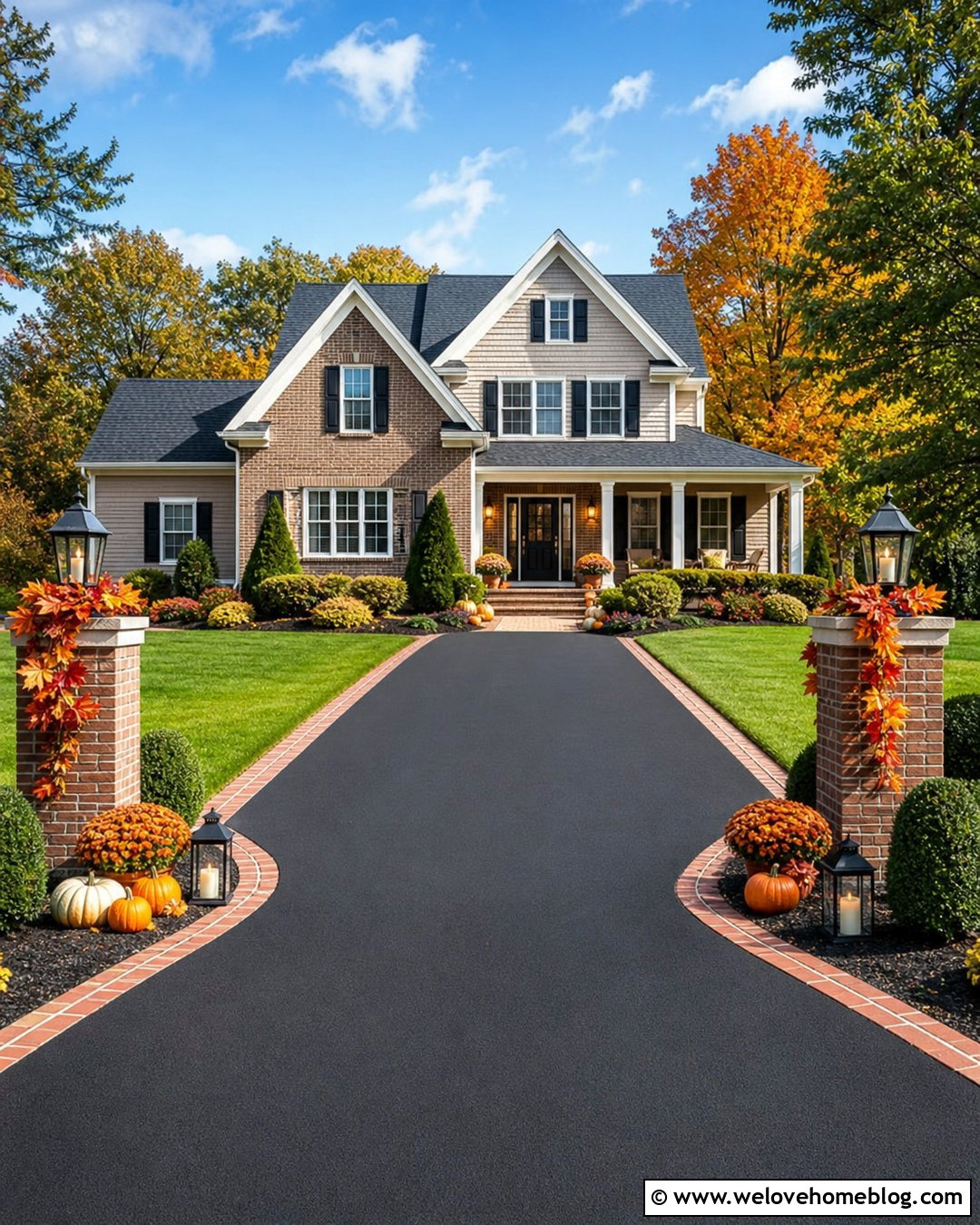
20. Driveway Sign With Planters
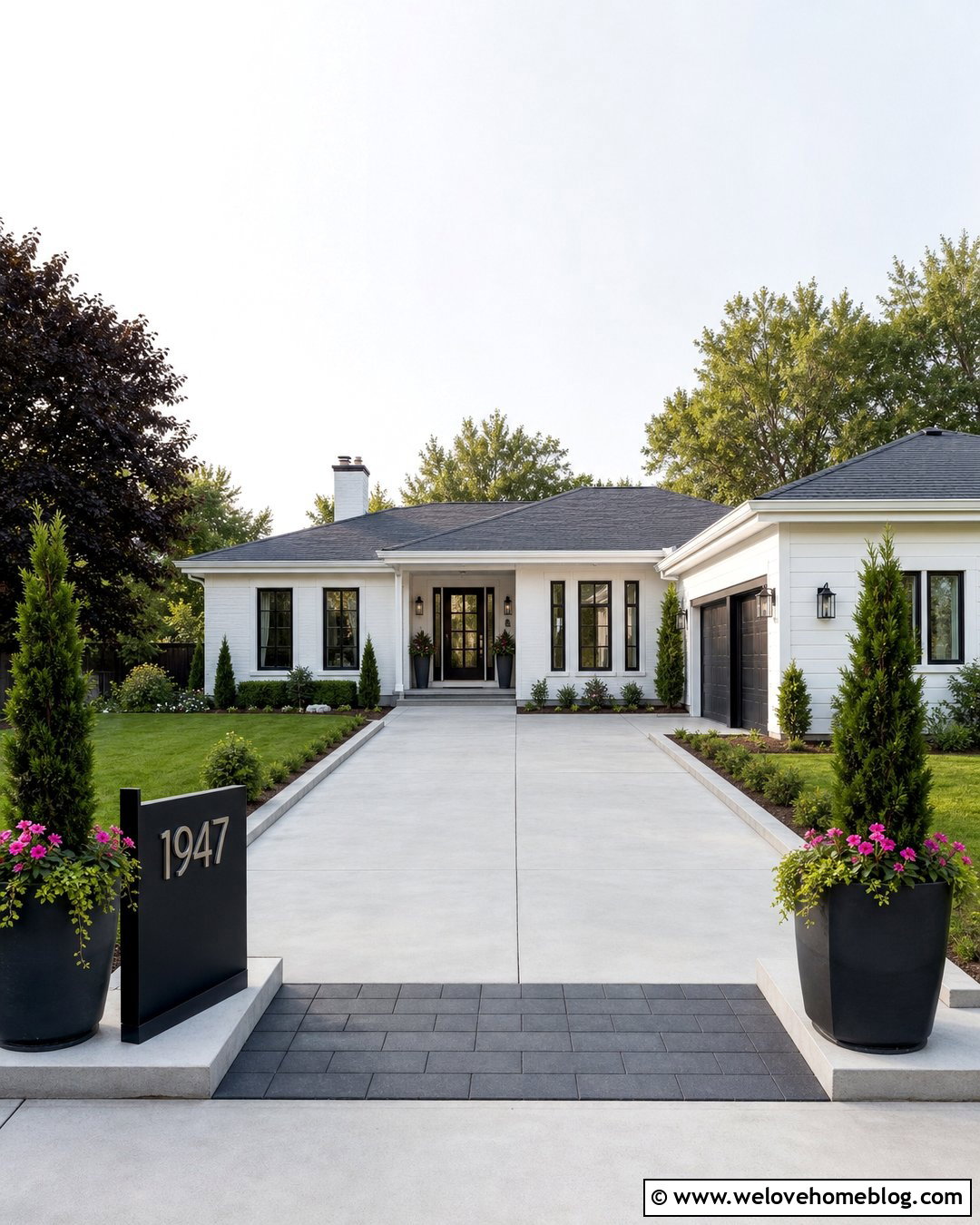
Large planters can give a portable driveway sign more presence without permanent masonry. Place a freestanding metal address panel between two substantial weatherproof containers at the entrance to a straight concrete driveway. Use planters that match the house trim, front door, or exterior lighting. Fill them with upright evergreens, trailing foliage, and heat-tolerant seasonal flowers, keeping the arrangement below the sign face. A dark paver apron and matching concrete borders help anchor the display. This solution works well when underground utilities, drainage, or budget limits make pillars impractical. Heavy planters also resist wind better than lightweight decorative pots. Leave comfortable clearance from vehicle mirrors and turning tires. The complete entrance can be refreshed over time while the core sign remains consistent and readable.
21. Driveway Sign With Pergola Entrance
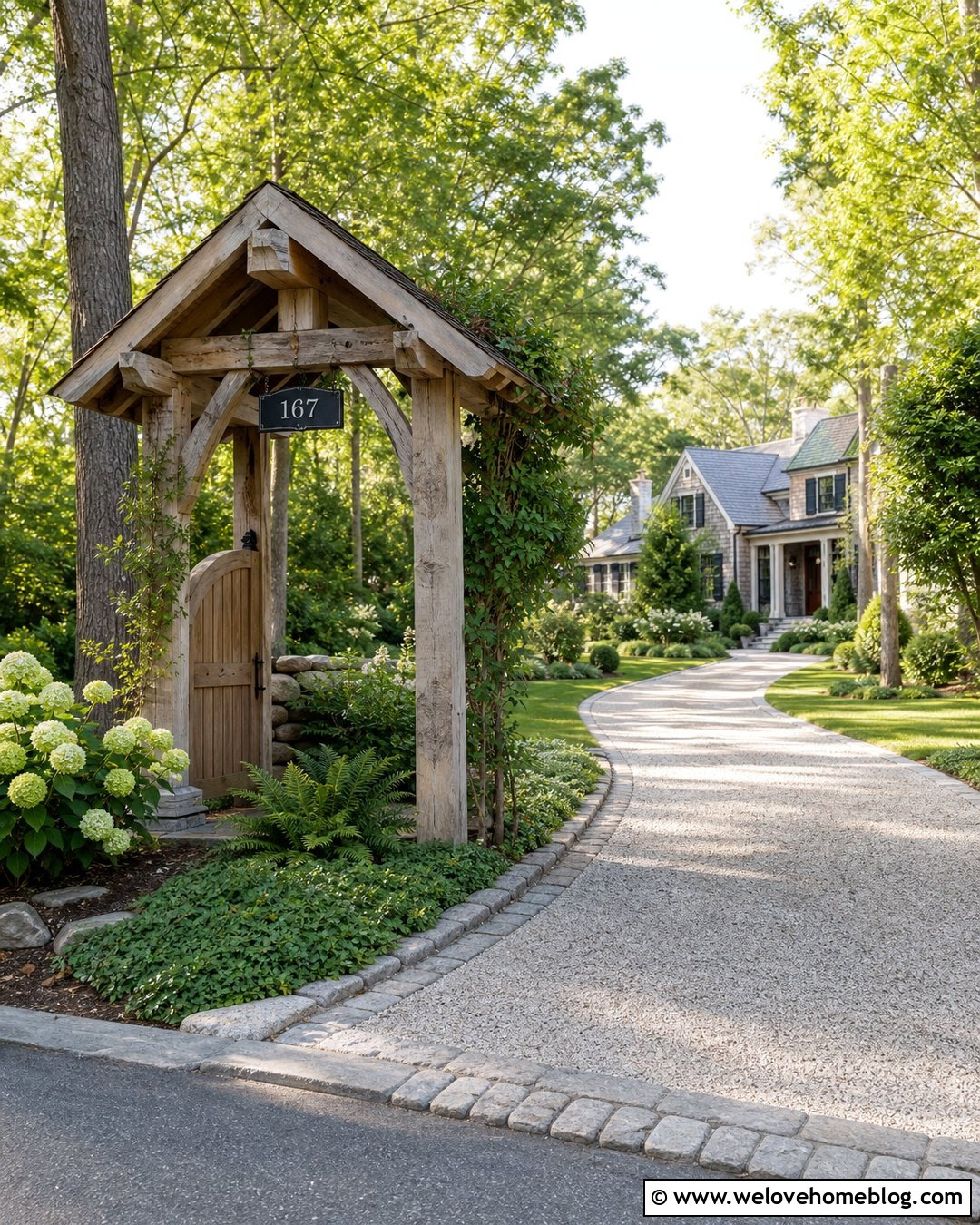
A small entrance pergola can frame a sign without spanning the entire driveway. Build a simple timber structure beside a wide crushed-stone entrance and mount the property name or address beneath its top beam. Keep the sign on the roadside face for immediate visibility. A curved gravel driveway bordered with reclaimed cobblestones gives the structure a relaxed estate or country-garden character. Train a restrained climbing plant on the outer side, but prevent vines from covering the lettering or weakening the structure. Add low hydrangeas, ferns, and shade-tolerant ground cover around the posts. A coordinating wood pedestrian gate can lead toward the front walkway. This complete design creates a memorable threshold while preserving a generous, unobstructed route for vehicles and service access.
22. Circular Driveway Sign With Center Island
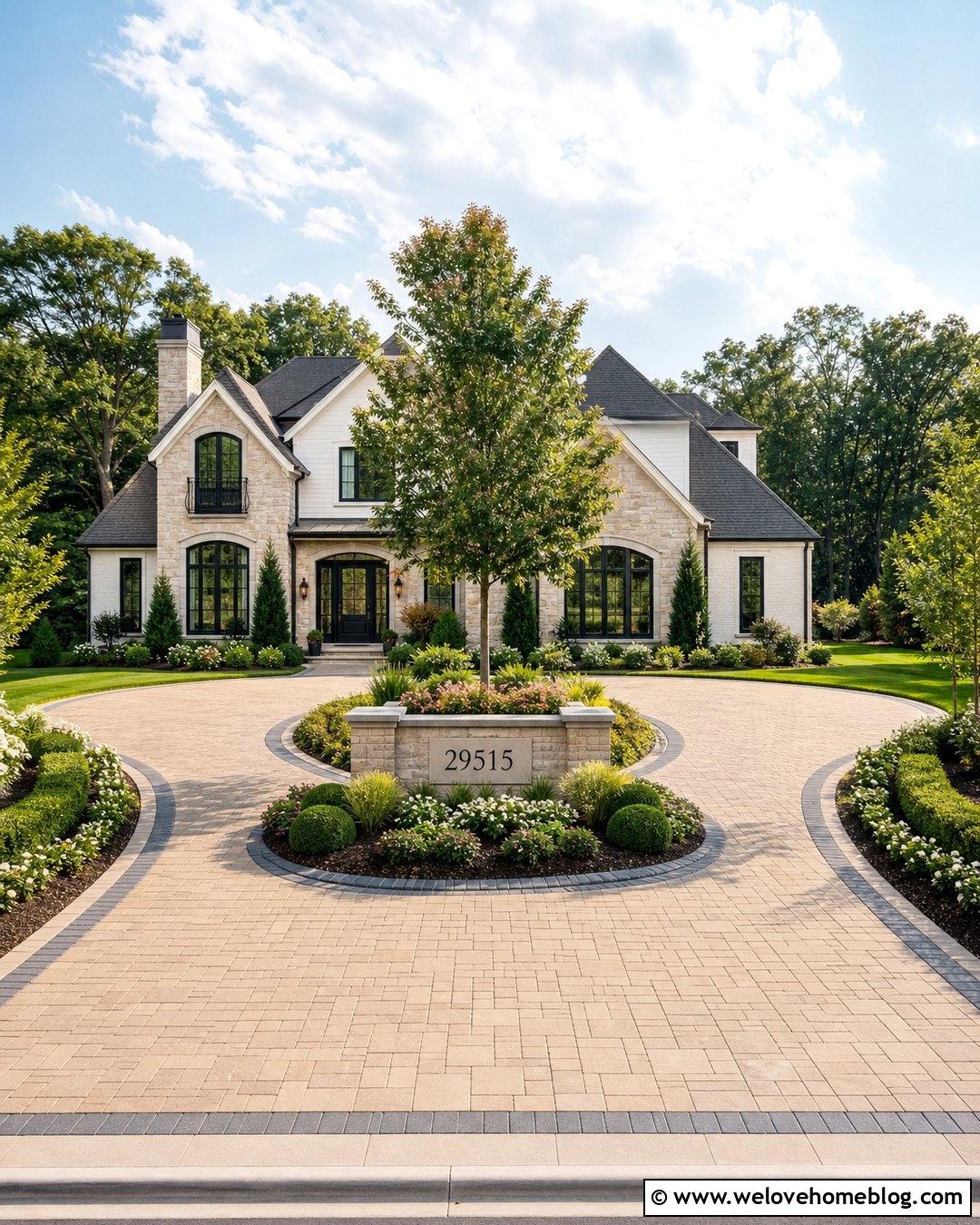
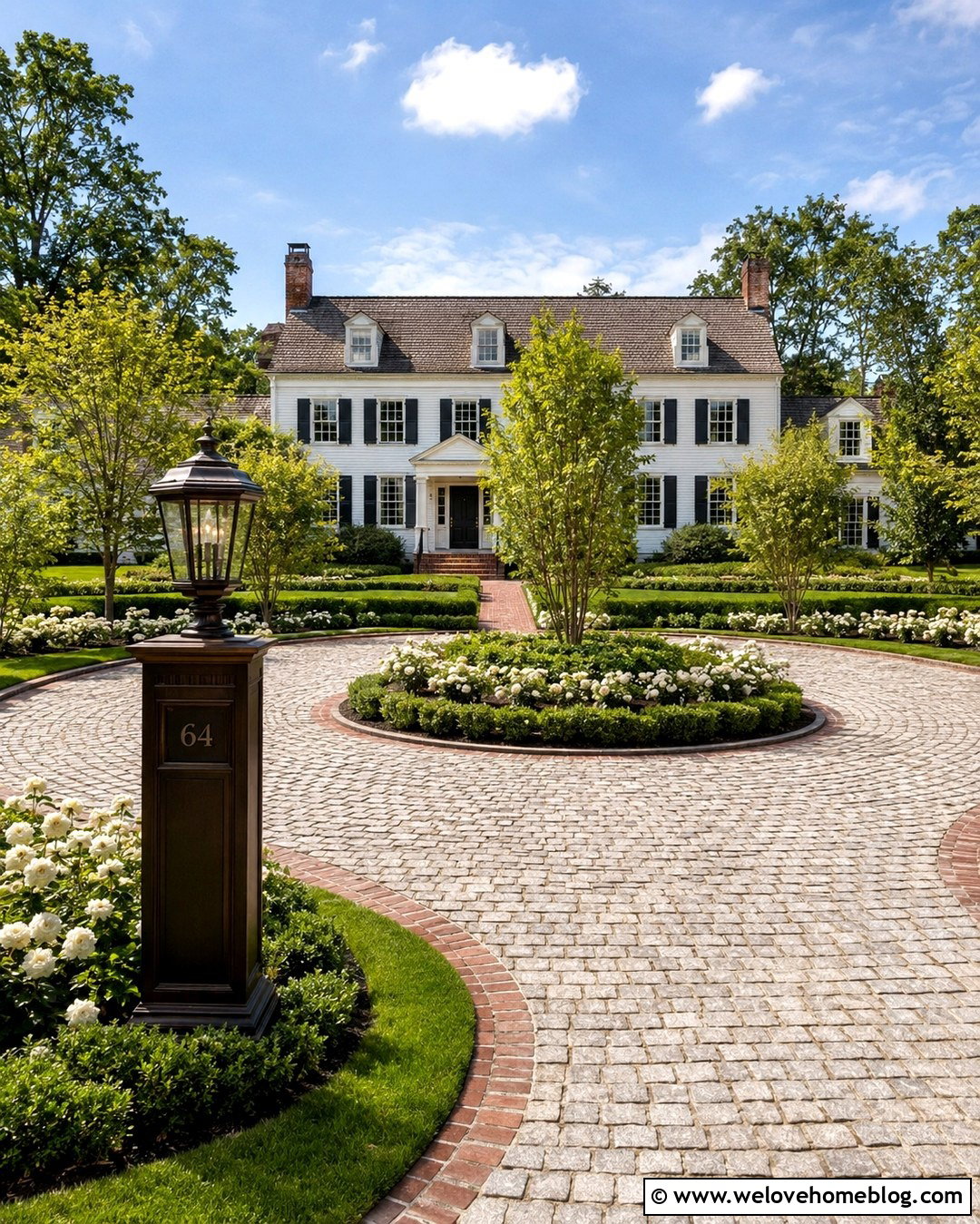
A circular driveway creates a natural setting for a prominent sign within the center island. Use a low stone monument displaying the address toward the road, ensuring it remains readable before visitors choose either side of the loop. Warm beige concrete pavers laid in a circular pattern emphasize the layout. A contrasting dark paver border defines the driving lane and protects the planted center. Arrange a small ornamental tree behind the sign, with compact shrubs, grasses, and ground cover layered toward the front. Keep branches high and plants low near important sightlines. Repeat the monument stone on the home’s front steps or foundation for continuity. The finished entrance feels grand, but careful proportions prevent the island and sign from overwhelming a moderately sized front yard.
23. Curved Driveway Sign With Landscape Wall
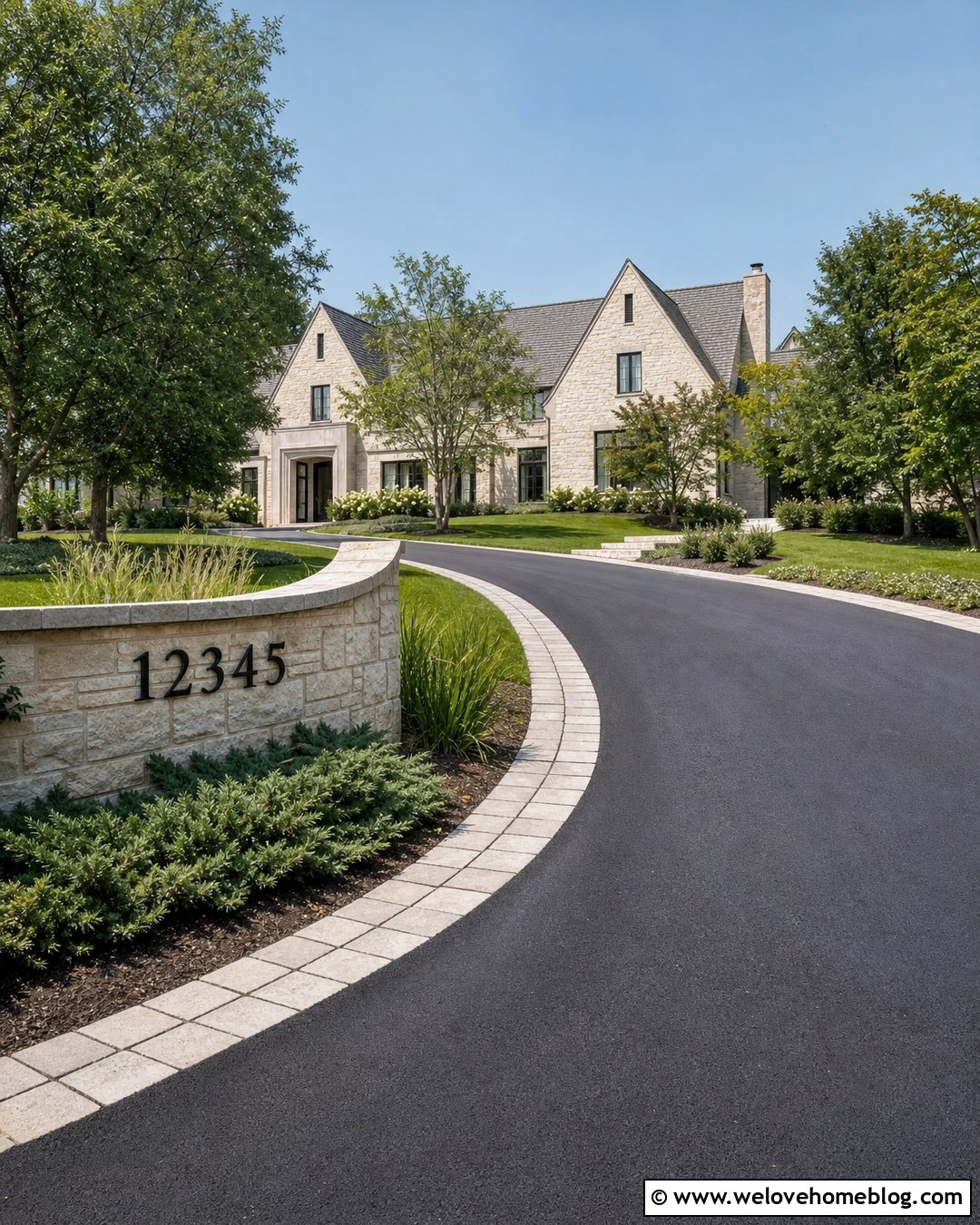
A low landscape wall can guide visitors naturally into a curved driveway while providing a strong place for an address plaque. Construct the wall from light limestone or concrete block that coordinates with the house exterior. A dark gray asphalt driveway creates contrast, while a stone paver border follows the curve and connects the roadway to the sign. Mount large black numbers near the wall’s entrance end rather than hiding them deeper on the property. Plant spreading juniper, ornamental grasses, and flowering shrubs behind the wall to soften its upper edge. Keep the roadside end low enough to preserve visibility. Ground lighting can wash across both the plaque and masonry. This design makes the curve appear deliberate and visually leads guests toward the house.
24. Shared Driveway Directional Sign
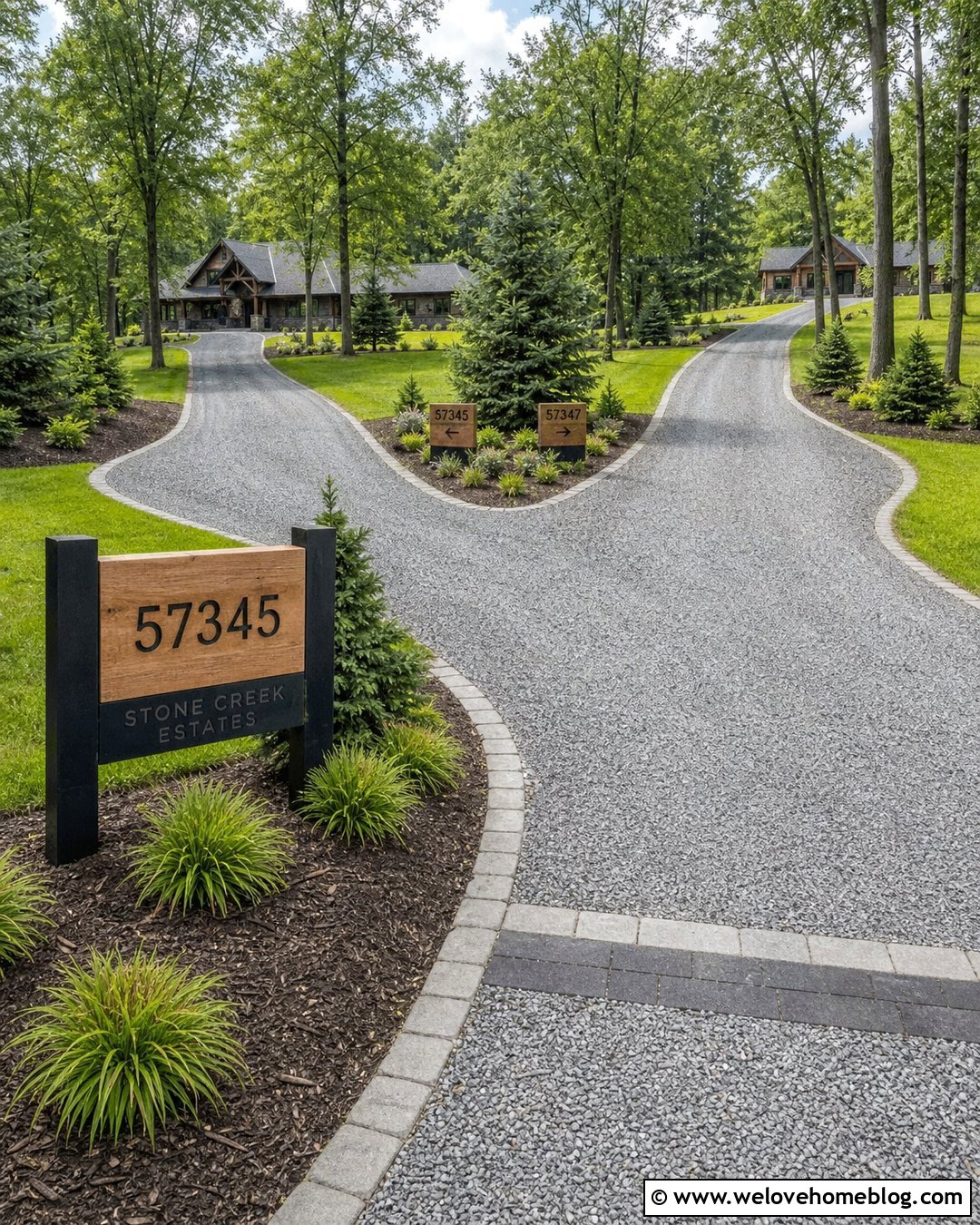
A shared driveway needs clear information before it divides. Install a durable directional sign near the road that lists each address with a simple arrow, then repeat individual address markers at the split. A compacted gray gravel driveway with timber or stone edging keeps the rural or semi-rural approach easy to understand. Place the first sign in a mulched island containing low grasses and small evergreen shrubs. Avoid decorative fonts, long property names, or crowded graphics that make directions harder to process. Where the driveway branches, use contrasting paver bands or small landscaped corners to emphasize each route. The signs, surface transitions, and planting should function as one navigation system. This prevents uncertainty while giving multiple homes a coordinated, attractive shared entrance.
25. Reflective Driveway Sign For Rural Homes
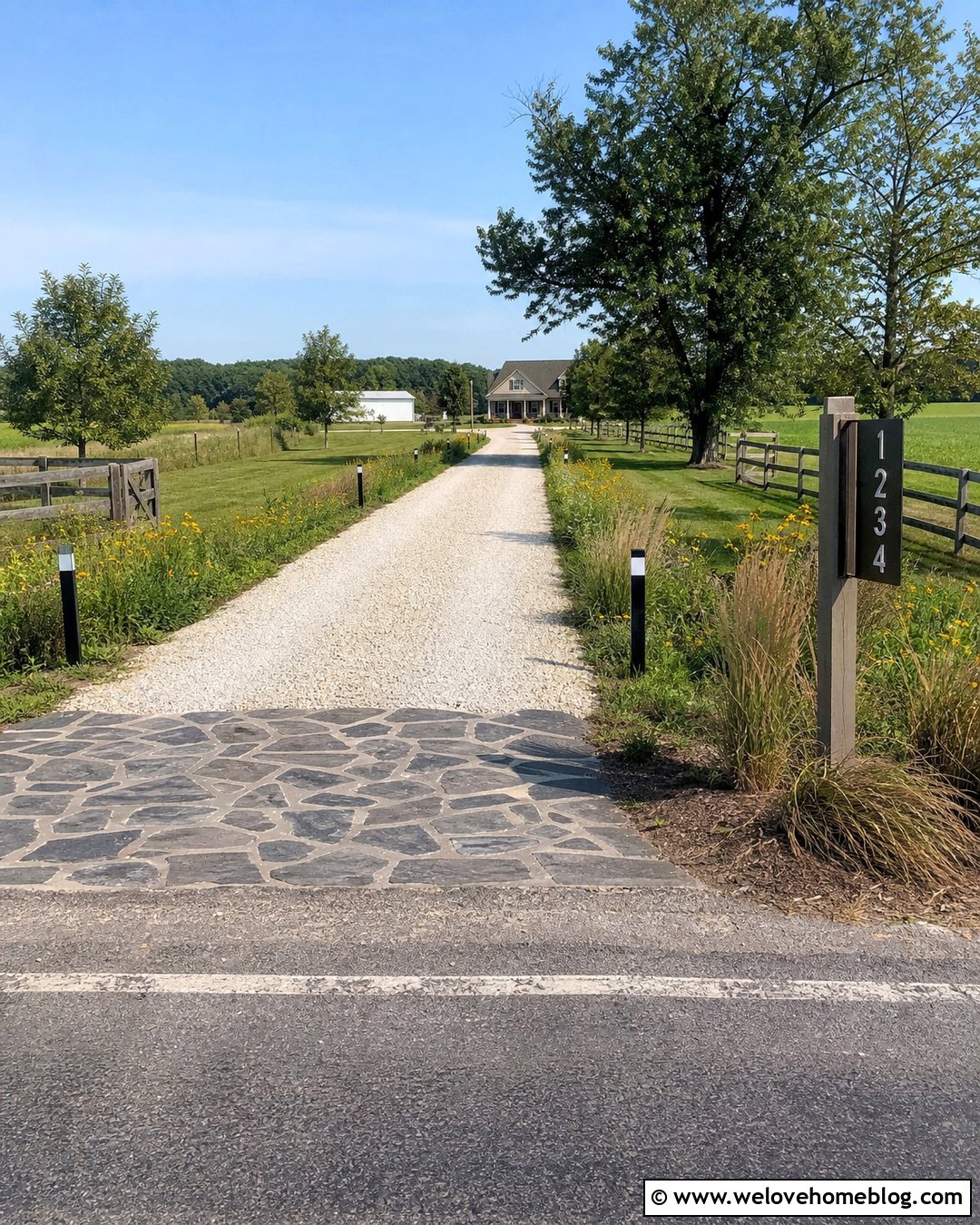
Long rural driveways benefit from reflective address numbers that remain visible in rain, darkness, and changing weather. Mount a double-sided reflective sign on a sturdy metal or treated wood post near the correct entrance. Pair it with a wide crushed-limestone driveway and a dark stone apron that clearly separates private access from the roadside. Low native grasses and wildflowers can soften the post, but maintain an open area around the reflective panel. If snowfall is common, install the marker high enough to remain uncovered while keeping it within an easy viewing range. () Add flexible delineators or low entrance lighting where the driveway edge is difficult to recognize. The finished design should prioritize clarity while still feeling appropriate for a farmhouse, cabin, or acreage property.
26. Coastal Driveway Sign With Shell Gravel
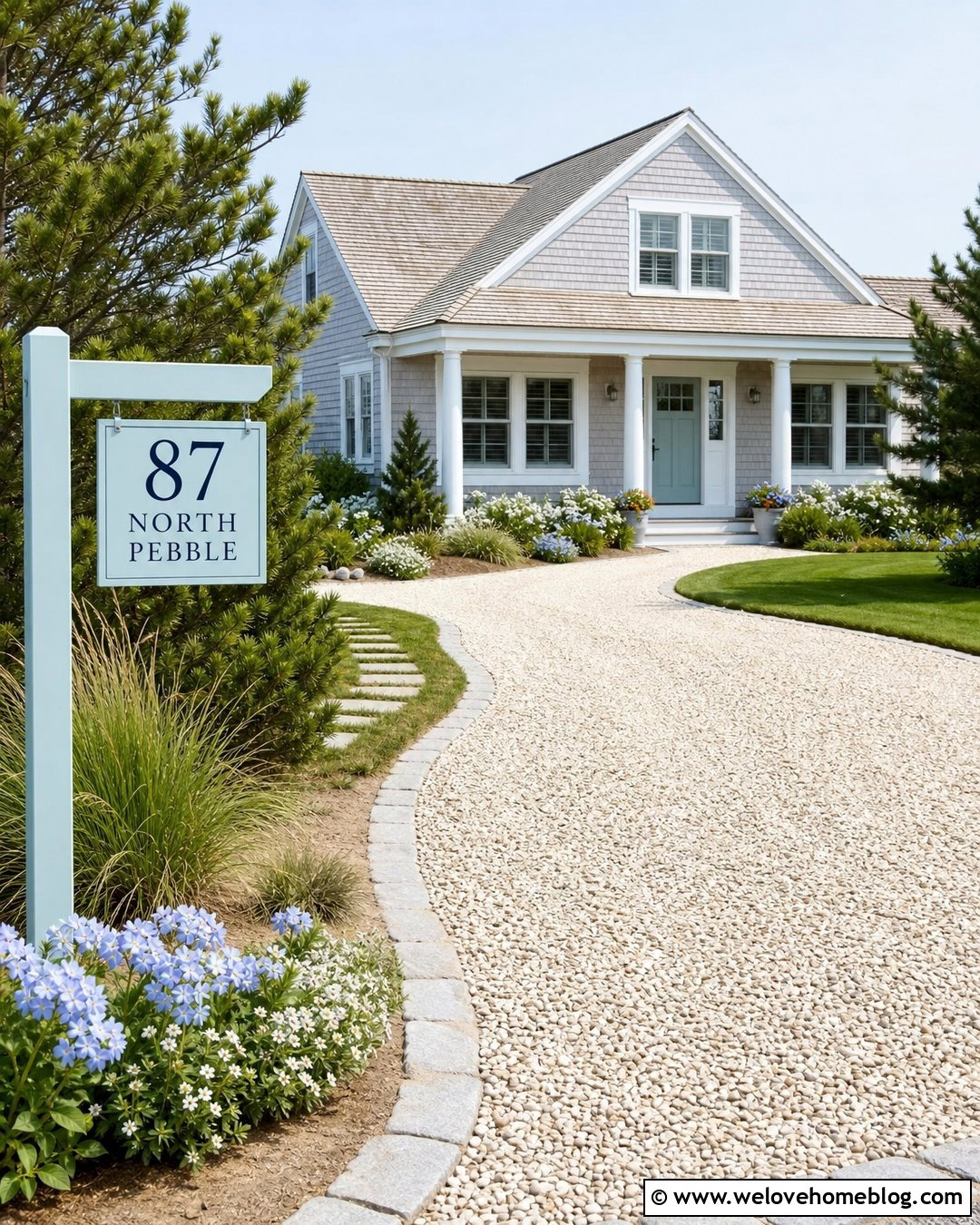
A coastal entrance looks best when the sign, paving, and planting use a light, breezy palette. Pair a white or pale blue wood address sign with a cream shell-gravel driveway. A gently curved layout feels informal and works well beside a coastal cottage or shingle-style home. Edge the driveway with light granite setts so the loose material stays contained near the street. Plant salt-tolerant grasses, low evergreen shrubs, and soft blue or white flowers around the sign. Stainless-steel or marine-grade hardware helps the sign withstand humid conditions. Keep lettering navy, charcoal, or black for clear contrast. A simple lantern-style fixture can provide illumination without making the entrance overly formal. Together, the pale materials and natural planting create relaxed, polished curb appeal.
27. Midcentury Driveway Sign With Concrete Blocks
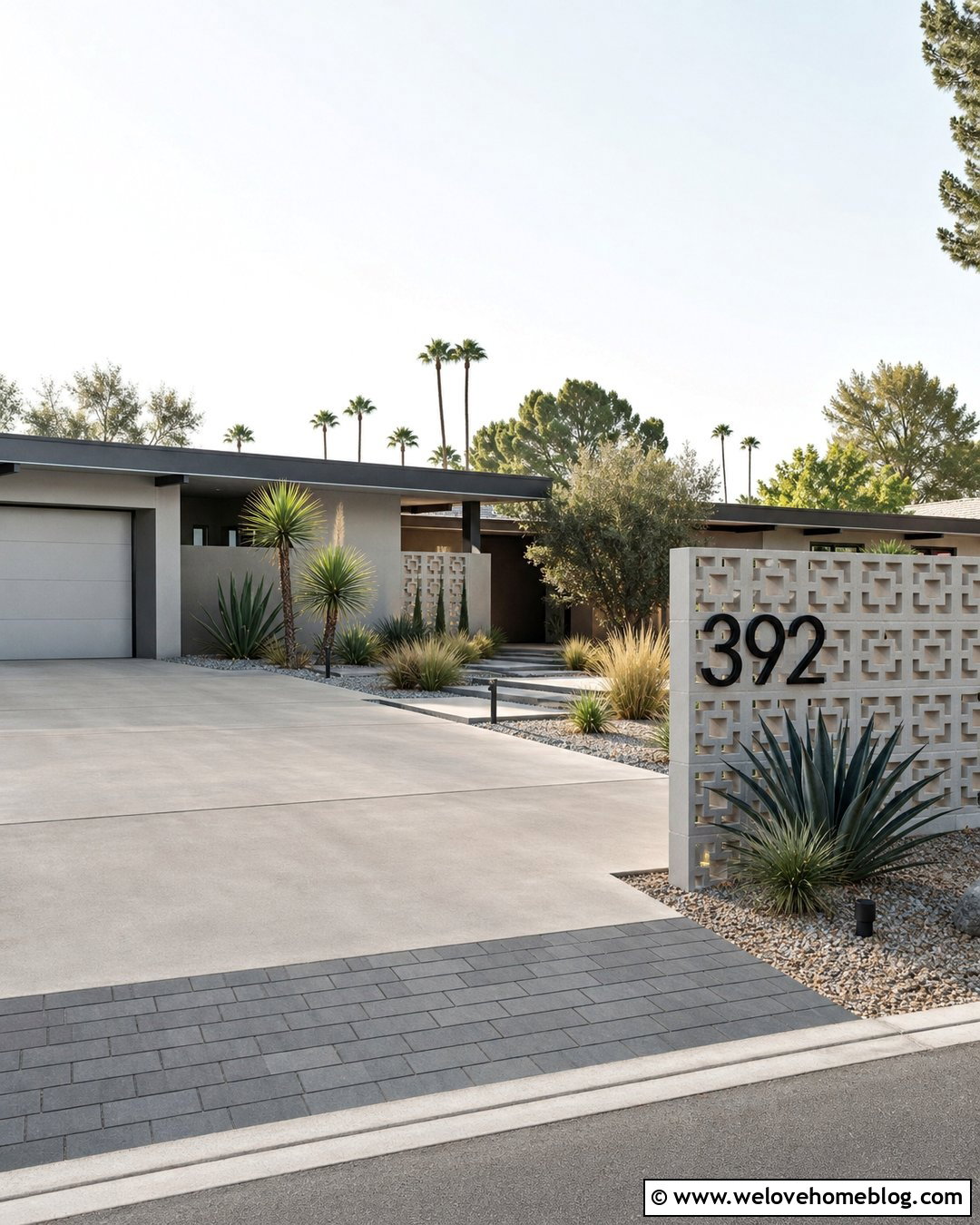
A midcentury entrance can use geometric concrete blocks to display the address while screening part of the front yard. Build a short breeze-block panel beside a warm gray concrete driveway, then mount oversized metal numbers on a solid end section. A broad straight layout or subtle angled approach complements the architecture’s horizontal form. Add a charcoal paver band across the entrance for contrast. Plant sculptural yucca, agave, ornamental grass, or compact evergreen shrubs in beds of tan gravel. Keep the arrangement asymmetrical but balanced, with enough open space to appreciate the block pattern. Choose house numbers in a simple period-inspired font rather than an ornate script. This coordinated look strengthens the home’s architectural identity while making the driveway easy to locate from the street.
28. Craftsman Driveway Sign With Timber And Stone
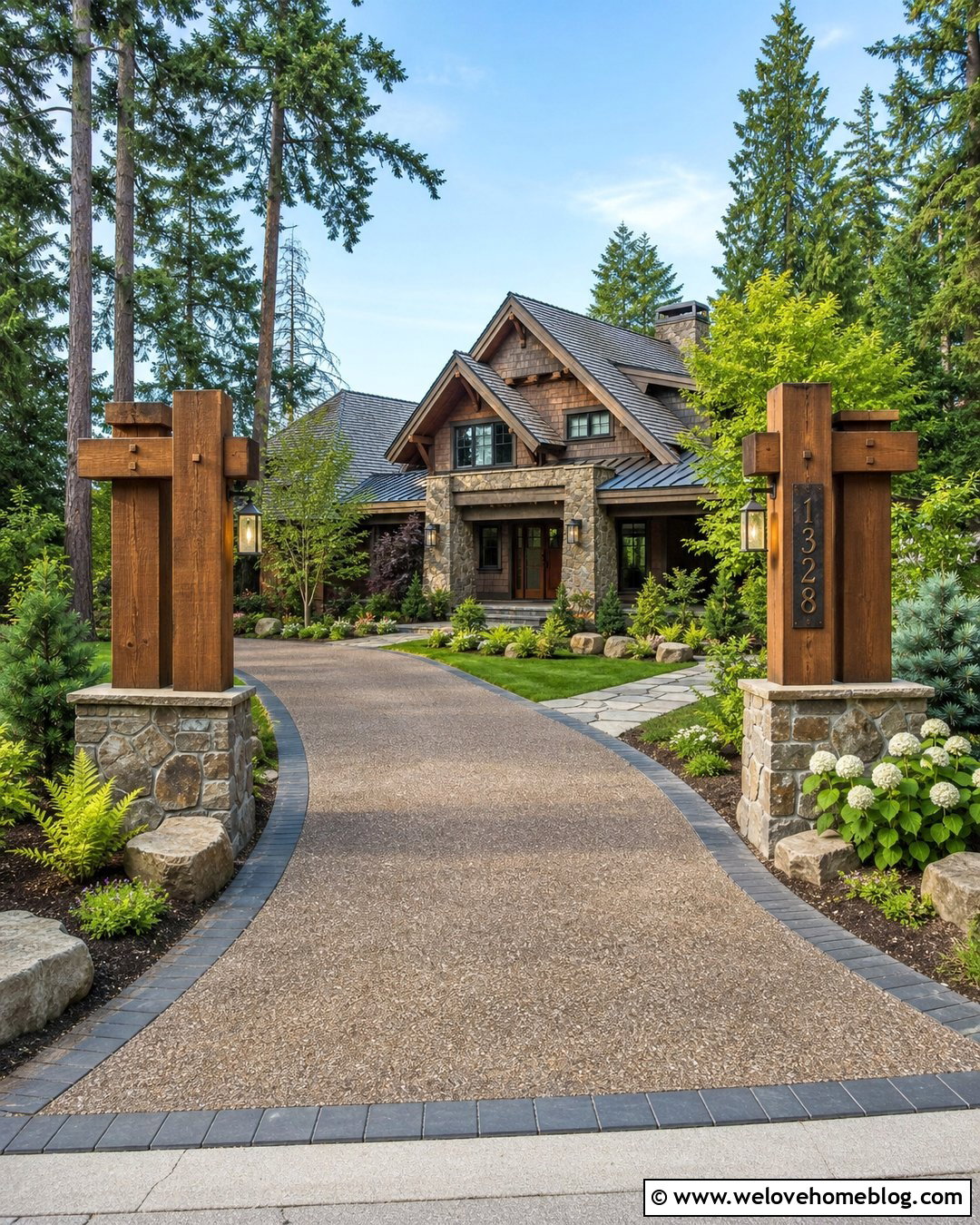
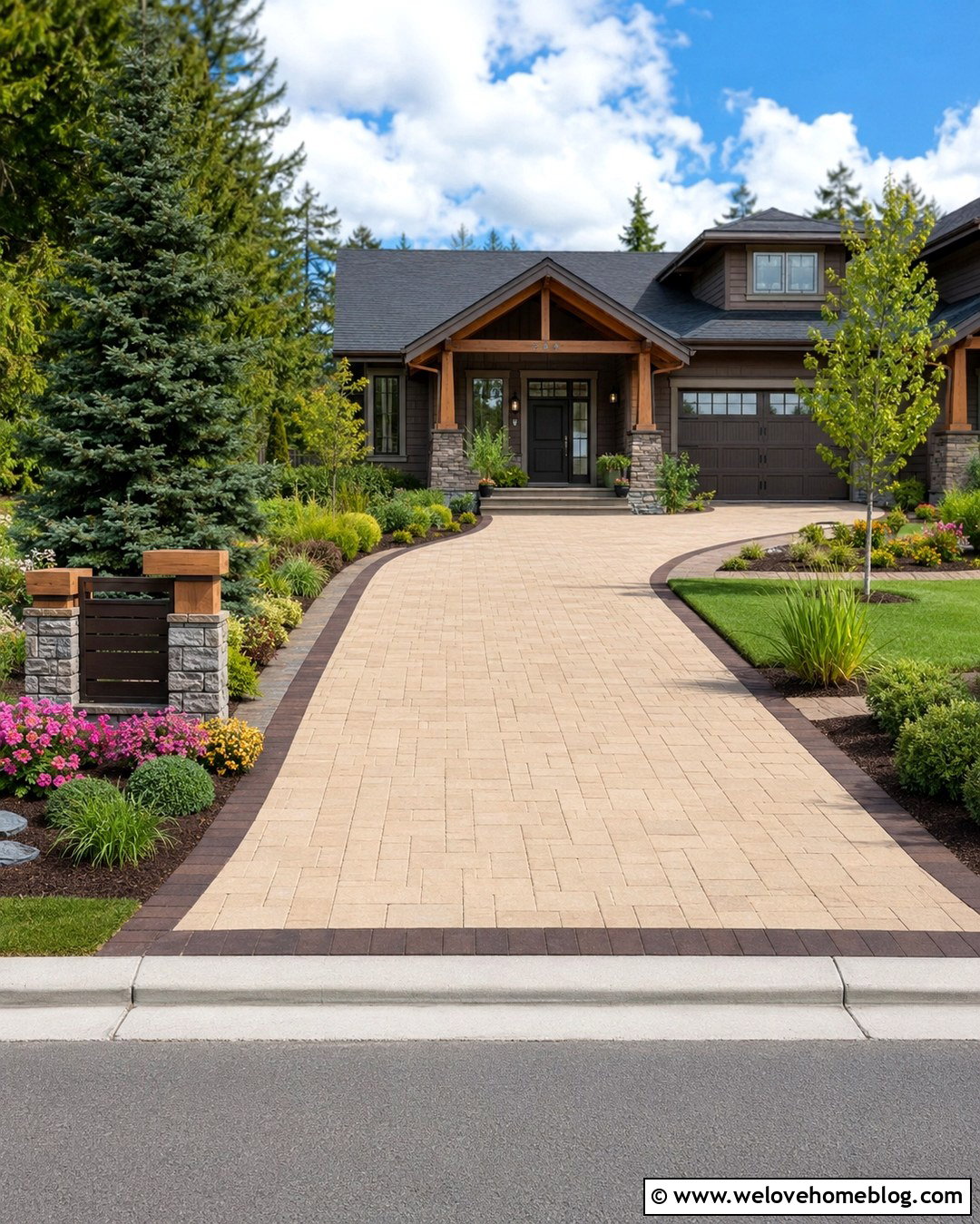
Craftsman homes benefit from natural materials and visible construction details. Create a driveway sign with thick stained timber posts set into low stone bases. A bronze or black metal address panel can hang between the posts or attach to a central wood board. Pair it with a brown-toned exposed-aggregate driveway bordered by dark clay pavers. A gentle curve through layered planting helps the entrance feel established rather than rigid. Use ferns, dwarf conifers, hydrangeas, and native ground covers that suit the home’s substantial porch and tapered columns. Lantern-style lighting on the stone bases can repeat fixtures near the front door. The combined timber, masonry, textured concrete, and informal planting gives the entire approach a cohesive handcrafted appearance.
29. Budget Driveway Sign With Painted Post
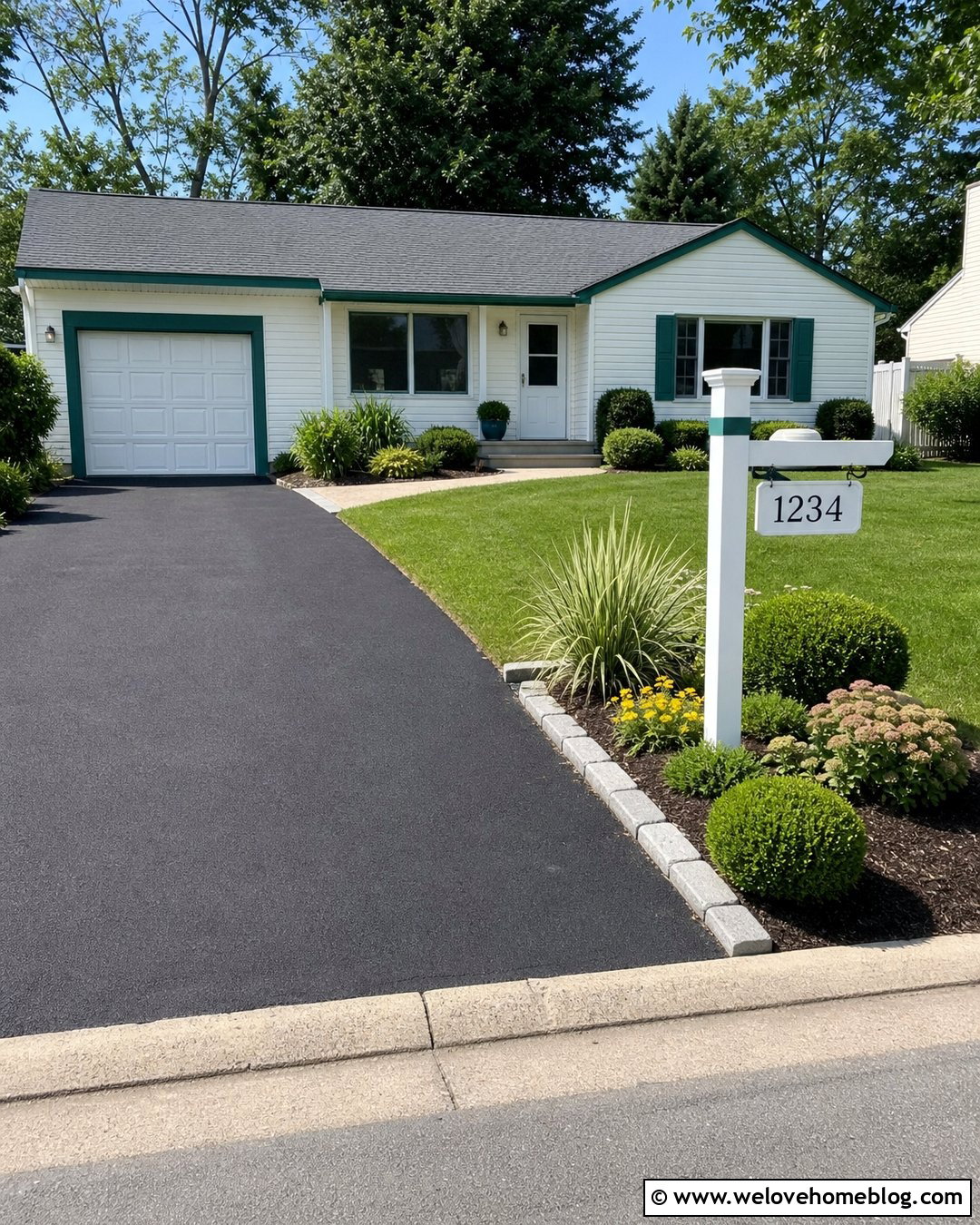
An attractive entrance does not require custom masonry or expensive metalwork. Paint a pressure-treated wood post in a color that matches the house trim, then attach a weather-resistant address plaque with bold contrasting numbers. Place it beside a clean black asphalt or compacted gravel driveway. A small bed edged with basic concrete pavers can anchor the post and keep lawn equipment away from it. Add three or four dependable plants, such as dwarf grass, sedum, daylilies, or compact boxwood, rather than using many unrelated varieties. A simple solar spotlight provides affordable illumination. Straighten the entrance edges and refresh the gravel or asphalt before installation. These modest improvements make the sign look like part of a planned driveway design instead of a temporary marker.
30. Double-Sided Driveway Sign With Split Entrance
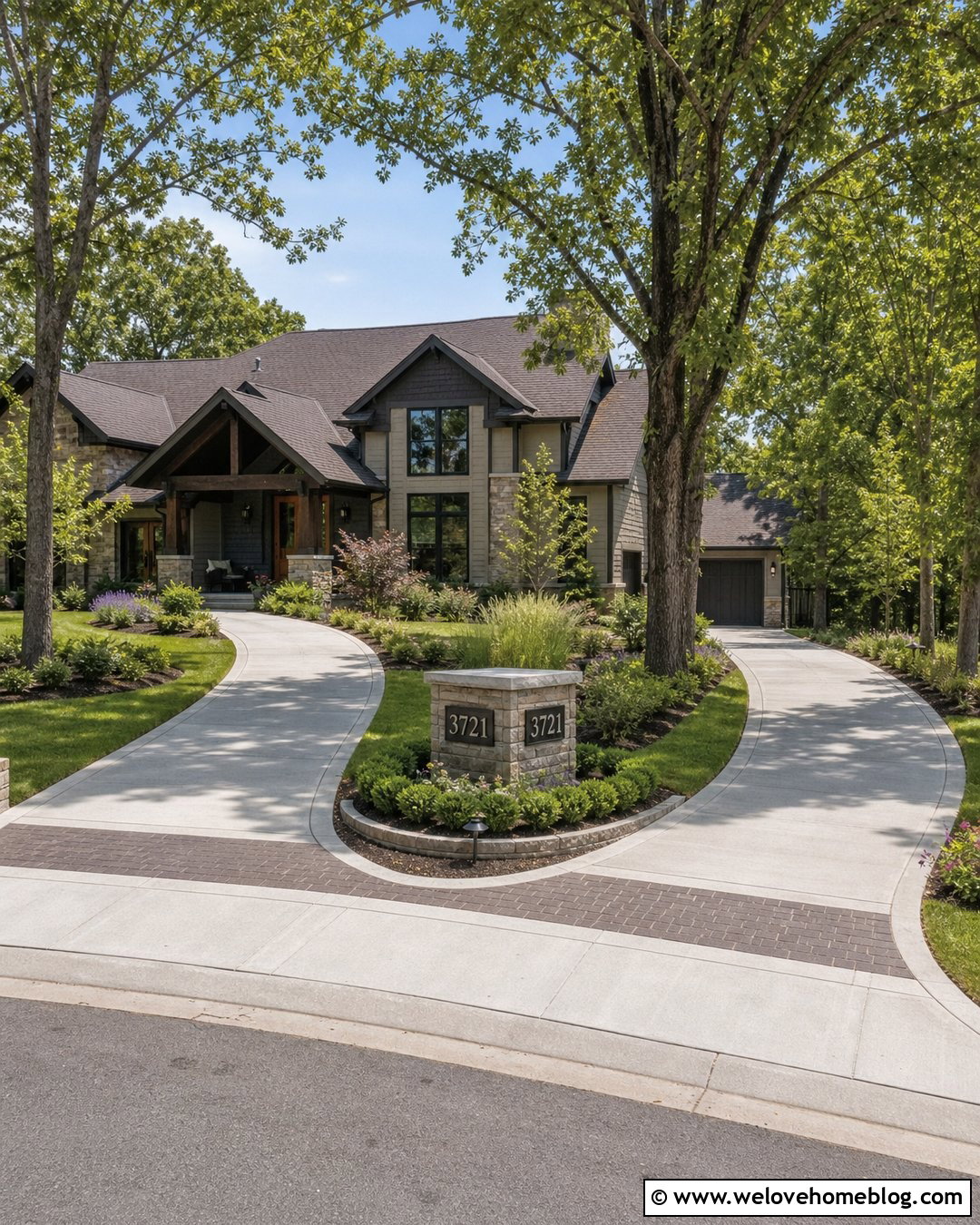
A double-sided sign is helpful when an entrance must be visible to traffic approaching from either direction. Mount the panel perpendicular to the road on a reinforced post or compact masonry base. Use the same large address numbers on both faces and avoid placing landscaping where it blocks one side. A split concrete-and-paver driveway can add distinction: smooth gray concrete forms the main driving surface, while dark brick bands mark the two entrance edges. Low boxwood, flowering perennials, and ornamental grasses create a balanced setting around the sign. If the driveway separates into guest and service routes, include small, simple directional labels farther inside. This complete entrance combines clear roadside identification, strong hardscape definition, and controlled planting without introducing unnecessary visual confusion.
Conclusion:
The strongest 30 Driveway Signs Entrance Ideas combine visibility, durability, and curb appeal rather than treating the sign as an isolated decoration. Start with a marker that fits the scale and architecture of your home. Then coordinate it with the driveway material, entrance shape, borders, lighting, and surrounding plants. Keep numbers large, uncluttered, and visible from the normal direction of travel. Leave sufficient clearance for turning vehicles and prevent shrubs, snow, or seasonal growth from covering the display. Materials such as stone, brick, cedar, steel, and concrete can all work beautifully when repeated elsewhere in the landscape. A coordinated entrance makes the property easier to find and gives every arrival a more polished first impression.

Related posts:
Leave a Reply