
A well-lit driveway entrance makes a home easier to find, safer to approach, and more welcoming after sunset. These 20 Solar Light Driveway Entrance Ideas combine practical illumination with complete curb appeal, including driveway surfaces, gates, pillars, borders, and landscaping. Solar fixtures can also simplify installation because they do not require electrical trenching, although their panels need reliable sunlight for strong nighttime performance. Current entrance-lighting designs favor layered placement, motion activation, shielded fixtures, and restrained brightness rather than excessive glare. () Whether your driveway is gravel, asphalt, concrete, brick, or pavers, the right arrangement can clearly define its opening and complement the house. Explore the following 20 Solar Light Driveway Entrance Ideas.

1. Stone Pillar Solar Light Driveway Entrance
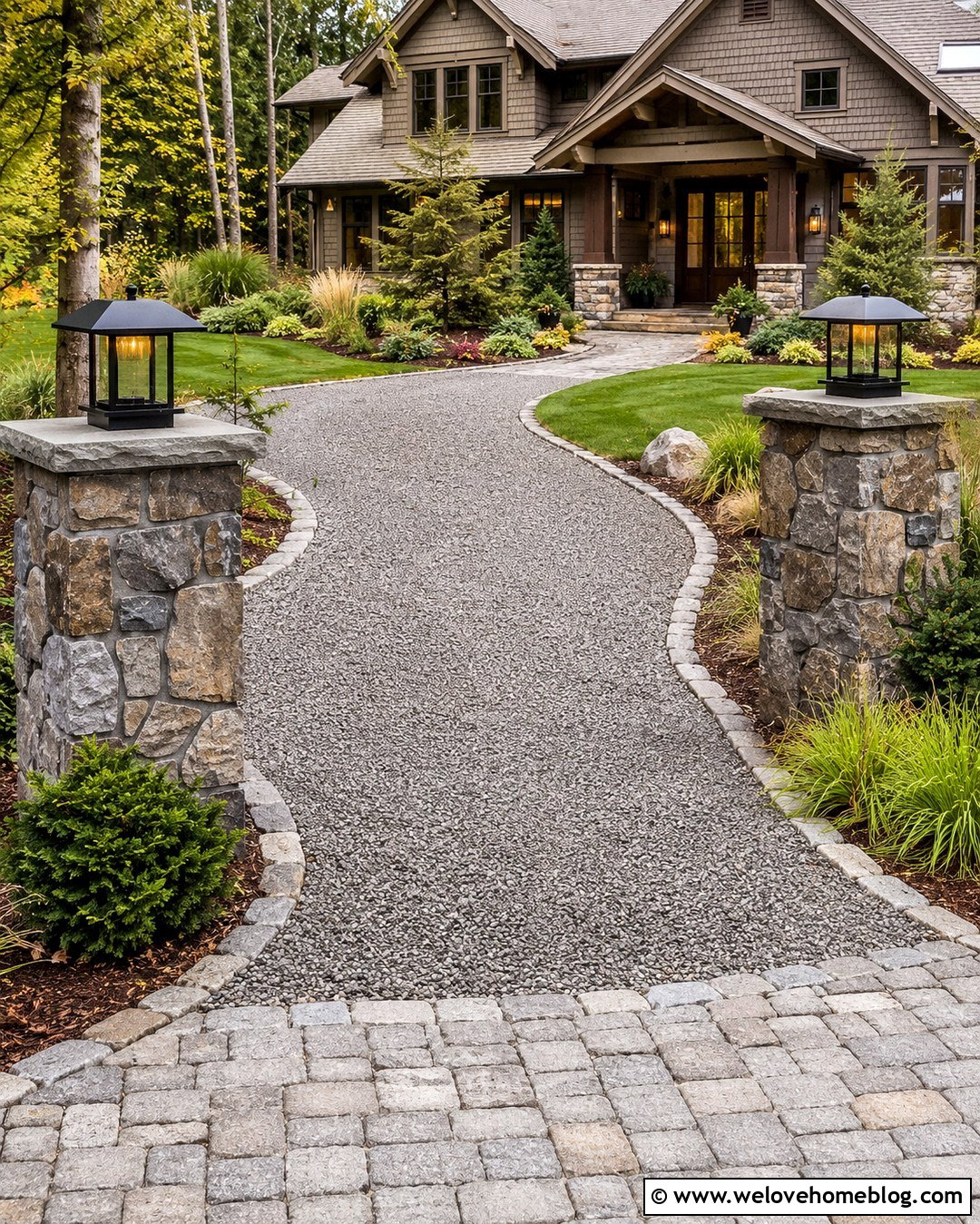
Substantial stone pillars create an entrance that feels established without looking overly formal. Top each pillar with a wide solar lantern that directs light downward toward the driveway opening. This arrangement works especially well with a curved gray gravel driveway leading to a Craftsman or country home. Match the pillars to stone used on the house, retaining walls, or front walkway for a connected appearance. Low beds of ornamental grasses, dwarf evergreens, and creeping ground cover can soften the masonry. Keep plants below the lanterns so they do not shade the solar panels. A cobblestone apron across the entrance adds another finished detail while helping contain loose gravel. Choose shielded lanterns that reveal the gateposts and pavement without creating harsh glare.
2. Brick Pillar Solar Light Driveway Entrance

Warm red brick pillars look especially natural beside a colonial, Cape Cod, or traditional ranch home. Pair them with black solar post lanterns and a straight asphalt driveway edged by matching brick ribbons. The repeated brick color visually connects the street, driveway, and house facade. For balanced proportions, use pillars that are broad enough to support the lanterns without appearing top-heavy. Plant compact boxwoods or inkberry holly around the bases, leaving open space where sunlight can reach each panel. A brick-paved entrance apron can make ordinary asphalt feel more customized while clearly marking the property boundary. Select lanterns with frosted or seeded lenses for gentle illumination. Their warm glow will highlight the masonry texture while preserving a comfortable residential atmosphere.
3. Modern Concrete Solar Light Driveway Entrance
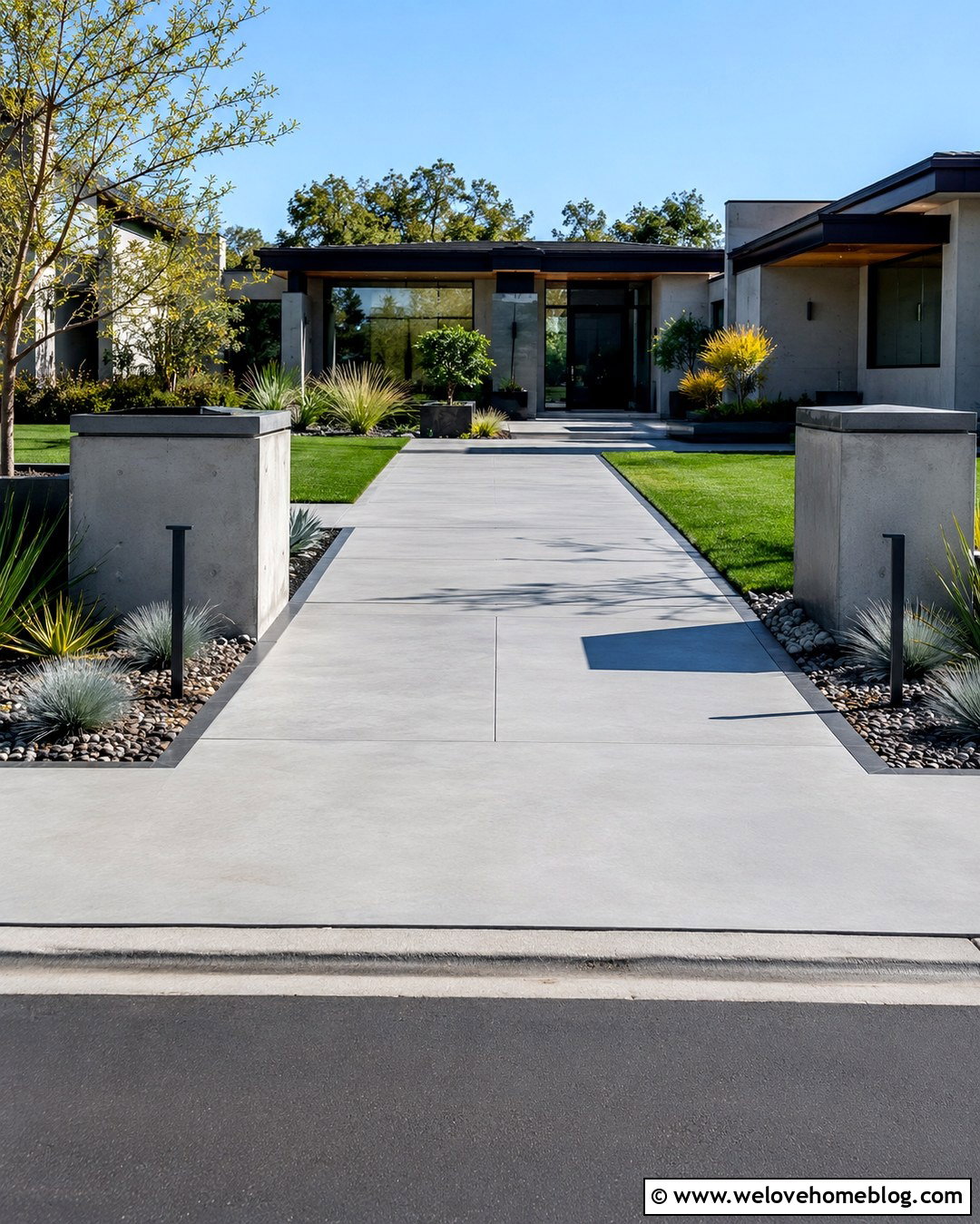
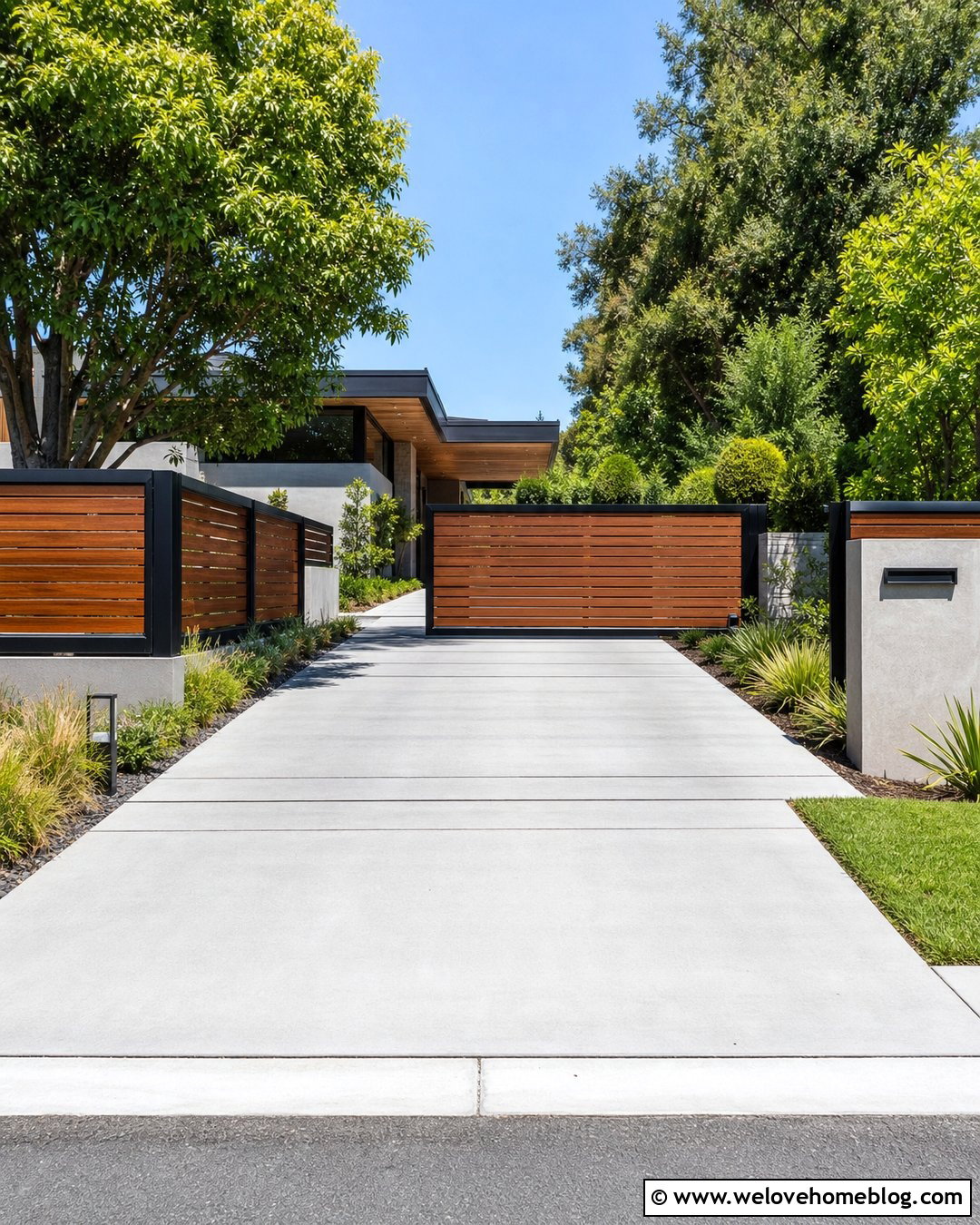
Clean lines give a modern entrance its distinctive strength. Start with a smooth light-gray poured concrete driveway and frame its opening with low concrete walls or rectangular pillars. Slim black solar bollards placed just inside the entrance continue the simple geometry without competing with the architecture. Use evenly spaced fixtures on both sides to establish a clear visual route toward a modern house. Narrow beds filled with river rock, blue fescue, agave, or upright ornamental grasses provide texture while maintaining an uncluttered layout. A darker concrete border can define the driveway edges and conceal minor staining near planting beds. Choose bollards that cast light downward across the pavement. This creates useful guidance while reducing glare for drivers, pedestrians, neighbors, and passing traffic.
4. Gravel Solar Light Driveway Entrance

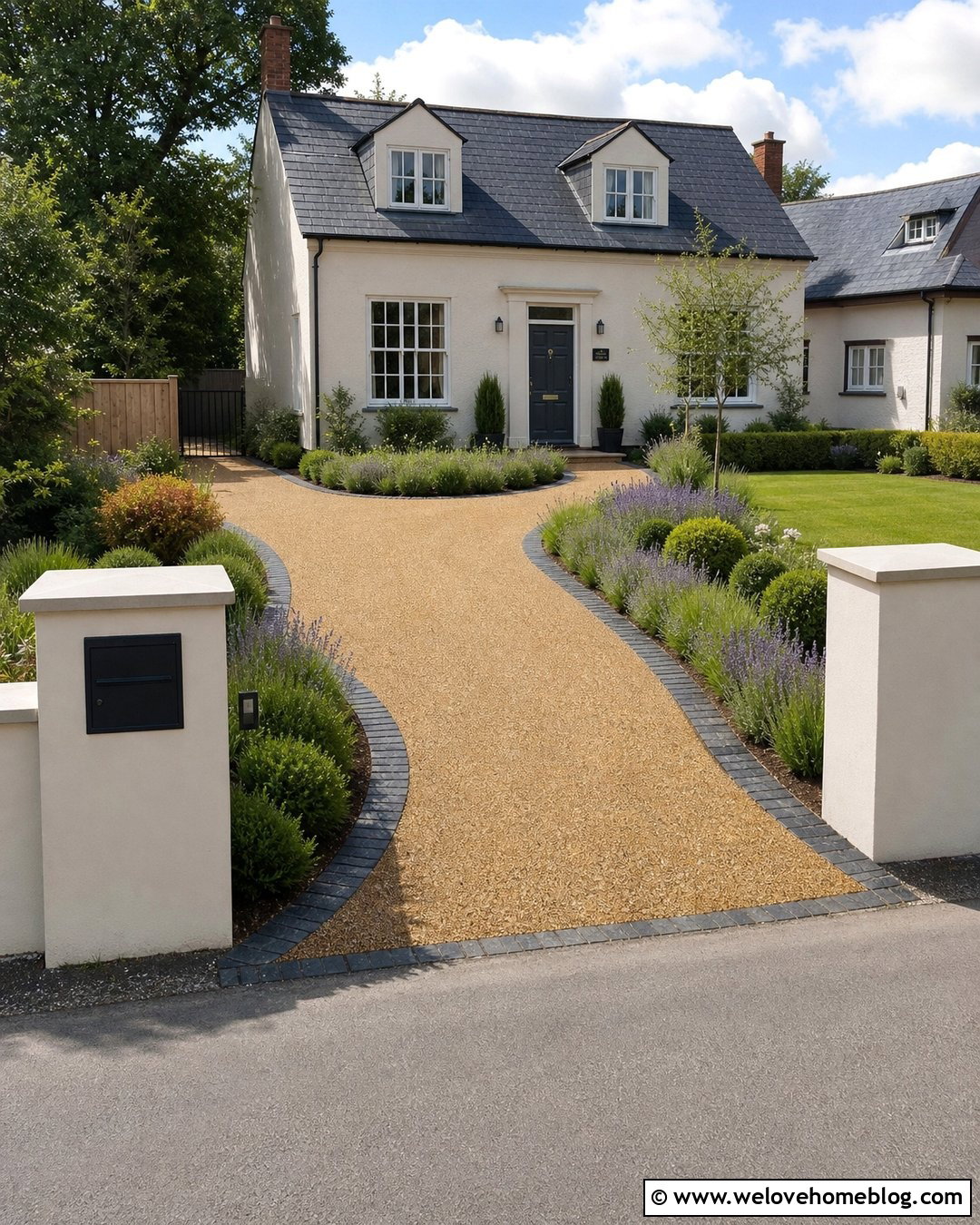
The soft texture of gravel pairs beautifully with simple, low-profile solar lighting. Use warm gray crushed stone for the driveway, then contain it with weathered cobblestone or dark steel edging. At the entrance, place sturdy solar bollards behind the border where tires cannot strike them. A slightly curved layout makes the illuminated route feel inviting and reveals more of the front landscape as visitors approach. Plant lavender, catmint, dwarf grasses, or low junipers along the sides for color without hiding the fixtures. Two natural stone marker posts can give the opening greater presence while preserving a relaxed country character. Use larger aggregate in the entrance apron to reduce gravel movement. This complete arrangement suits cottages, ranch homes, farmhouses, and wooded residential properties.
5. Farmhouse Solar Light Driveway Entrance

Picture a broad white farmhouse reached by a gently curving pea gravel driveway. At the road, white-painted timber posts with black solar lantern caps create a recognizable entrance that echoes the house exterior. Add a black farm gate or simple horizontal-board fence to frame the opening without making it feel closed off. Reclaimed brick edging can hold the gravel in place and introduce a warm, aged color. Surround the posts with hydrangeas, salvia, and compact ornamental grasses, keeping their mature height below the solar panels. A small gravel turnaround farther inside can repeat the same lighting pattern with additional lantern posts. This design feels welcoming because every component is coordinated: pale gravel, traditional fencing, dark lanterns, loose planting, and classic farmhouse architecture.
6. Black Gate Solar Light Driveway Entrance
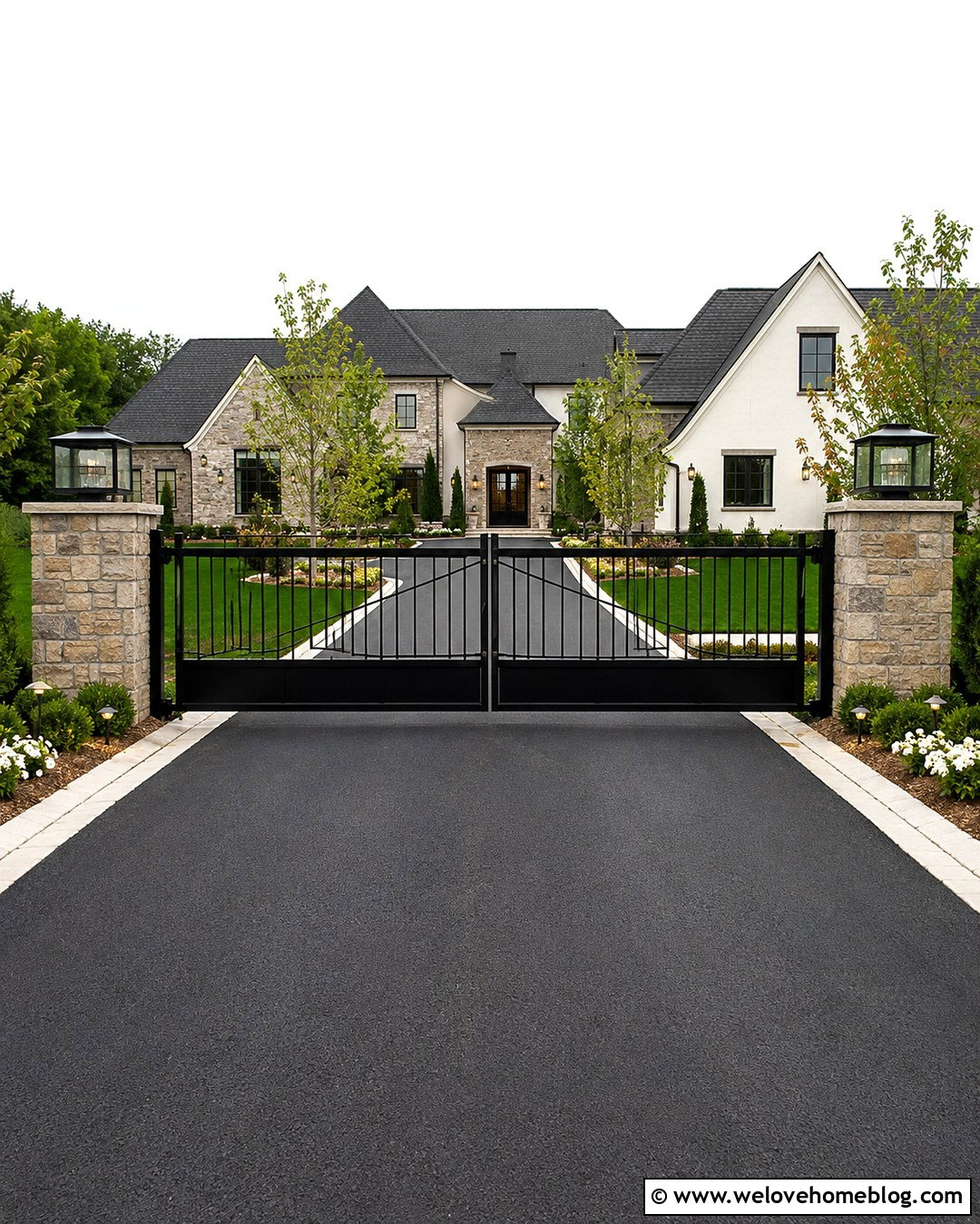
A black metal gate becomes easier to see and more attractive when solar lights are integrated into the complete entrance. Set the gate between masonry pillars topped with matching square solar lanterns. Behind it, a straight charcoal asphalt driveway can lead toward a brick or stucco home, with pale concrete curbs defining both sides. Use low solar marker lights near the gate’s swing or sliding path, but keep fixtures away from moving hardware. Clipped shrubs, white flowering perennials, and a symmetrical lawn reinforce the gate’s orderly appearance. If stronger visibility is needed, add discreet motion-sensor solar lights to the inside faces of the pillars. Downward-facing beams will illuminate the driveway threshold and gate controls without shining directly toward the street or neighboring windows.
7. Wood Gate Solar Light Driveway Entrance
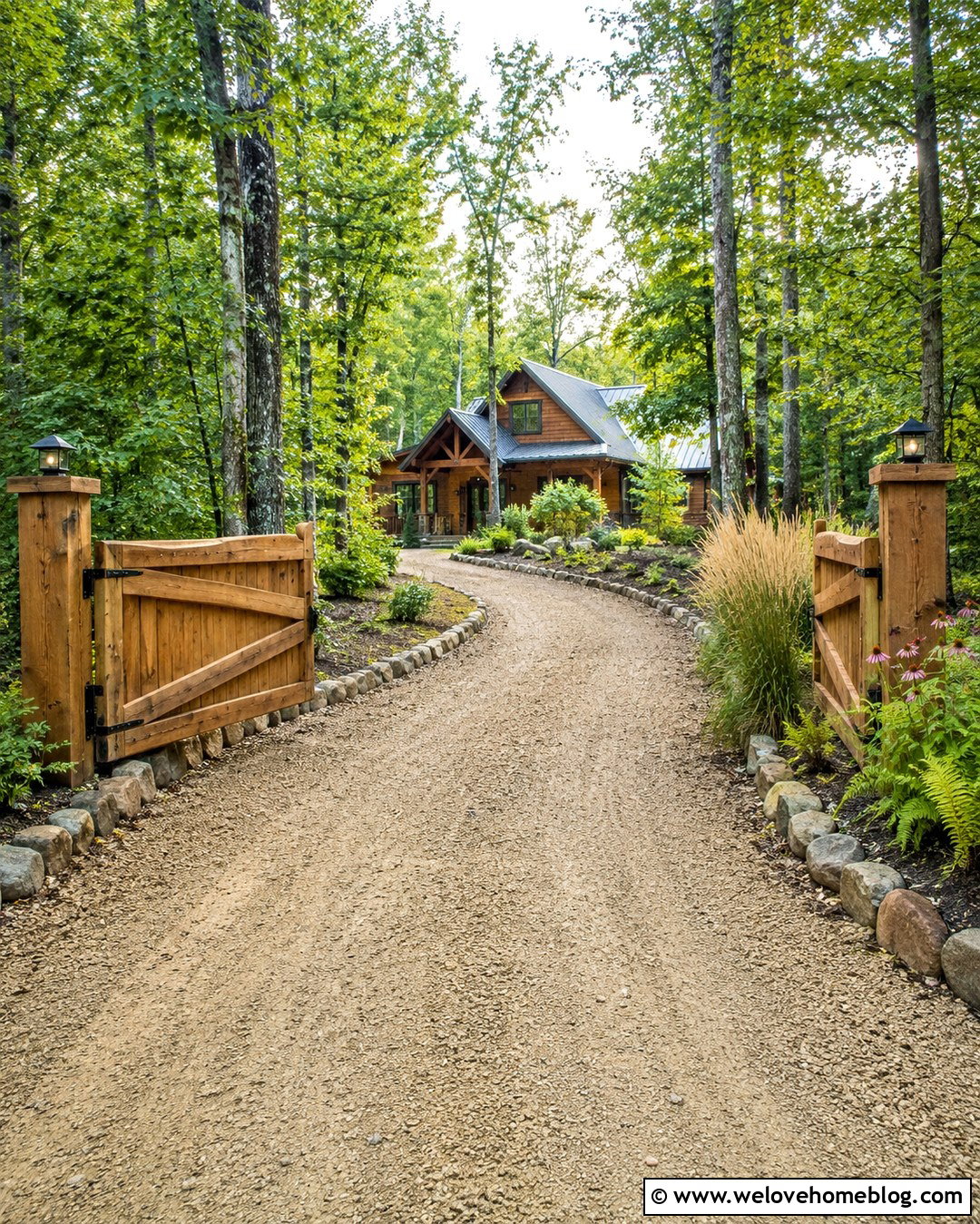
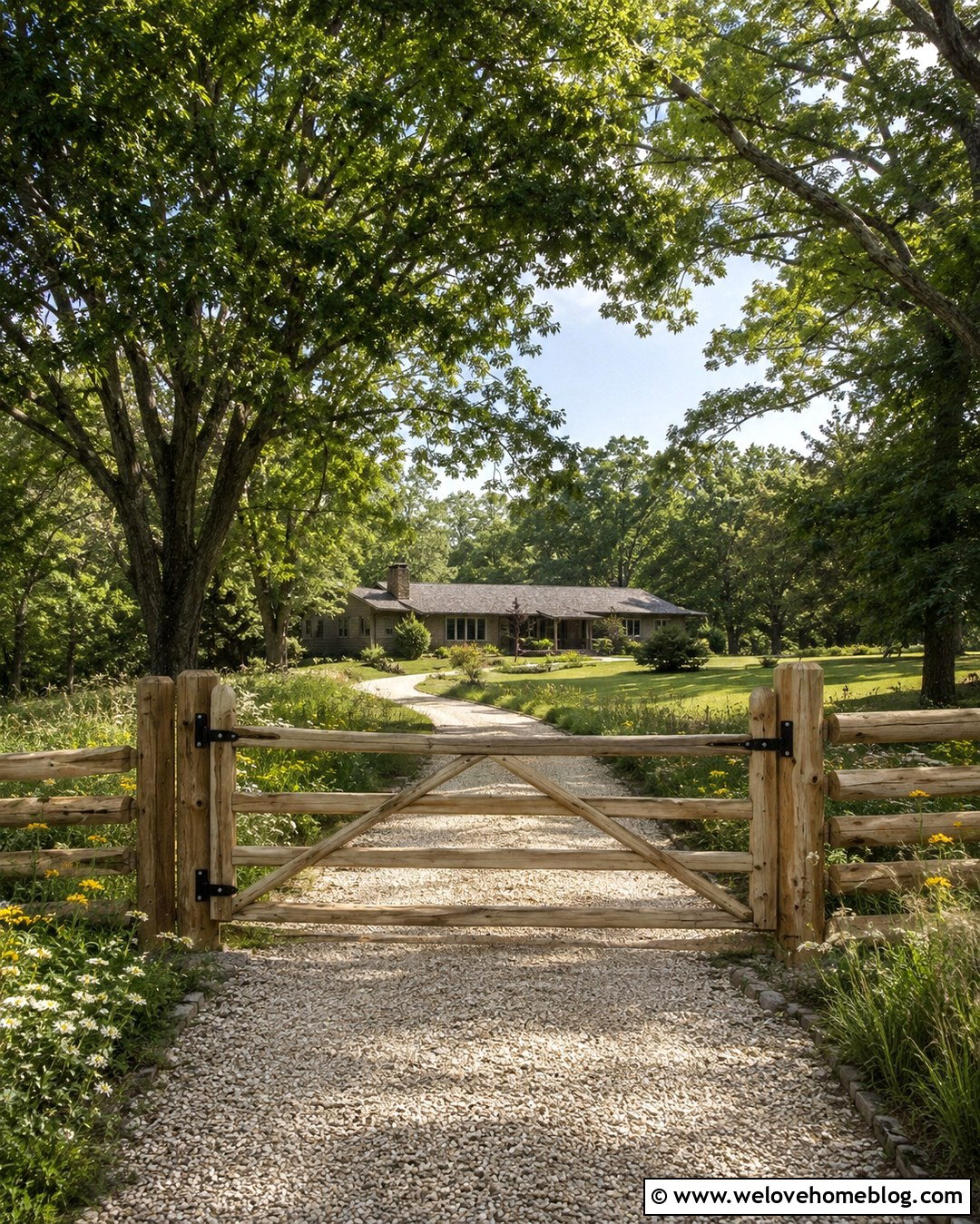
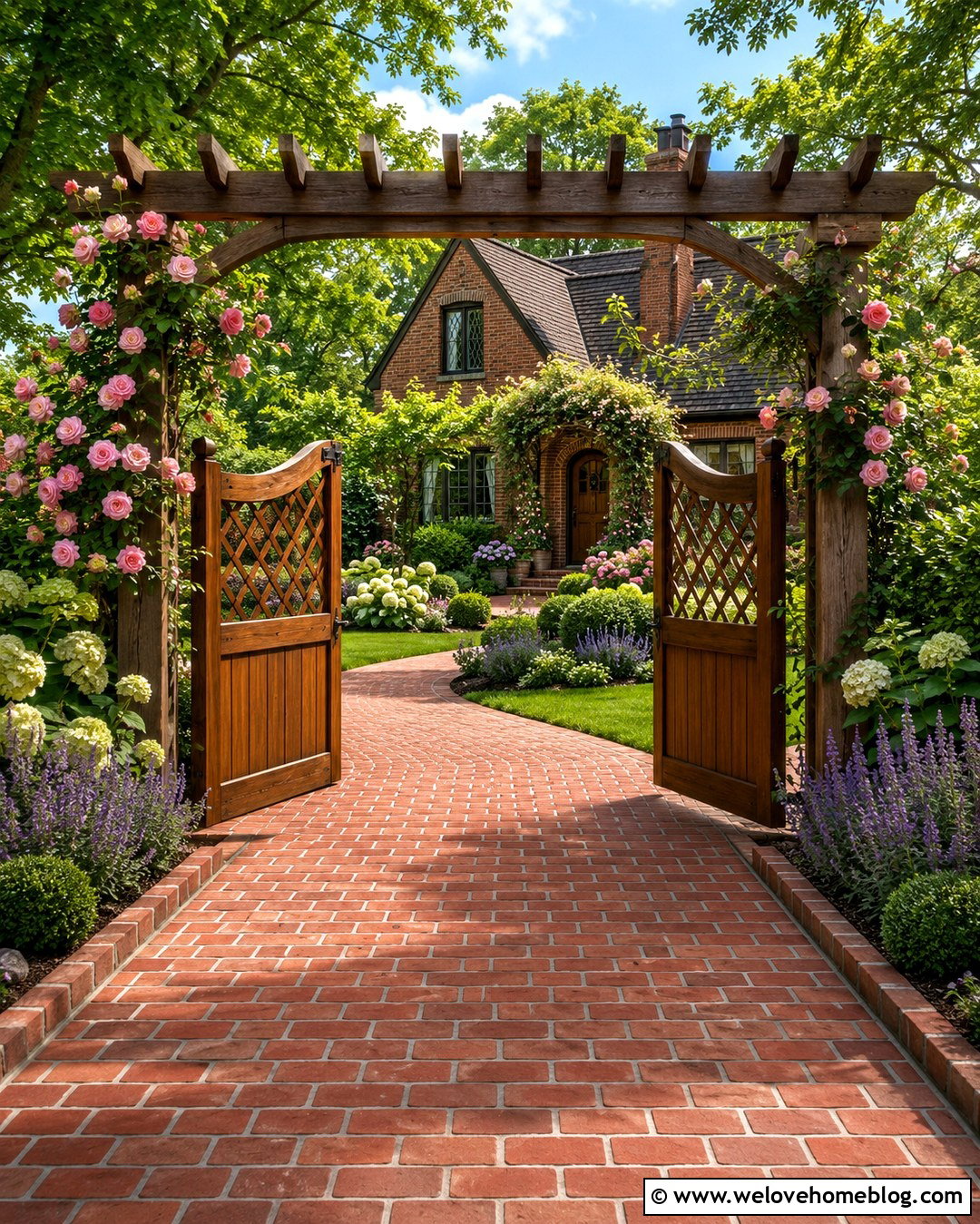
Natural wood brings warmth to a driveway entrance, especially in rural or wooded surroundings. Combine a cedar swing gate with chunky timber posts fitted with simple black solar cap lights. A tan crushed-granite driveway can curve gently through native grasses and mature trees toward a country house or cabin-inspired home. Border the first section with large fieldstones to keep vehicles from drifting into planting areas. Because tree cover may limit charging, position separate solar panels on the sunniest faces of the posts when possible. Ferns, sedges, coneflowers, and low shrubs can create a relaxed transition between the drive and woodland. The solar fixtures should be visually simple so the grain and color of the wood remain prominent. Regular sealing helps preserve the gate’s coordinated appearance.
8. Solar Bollard Light Driveway Entrance
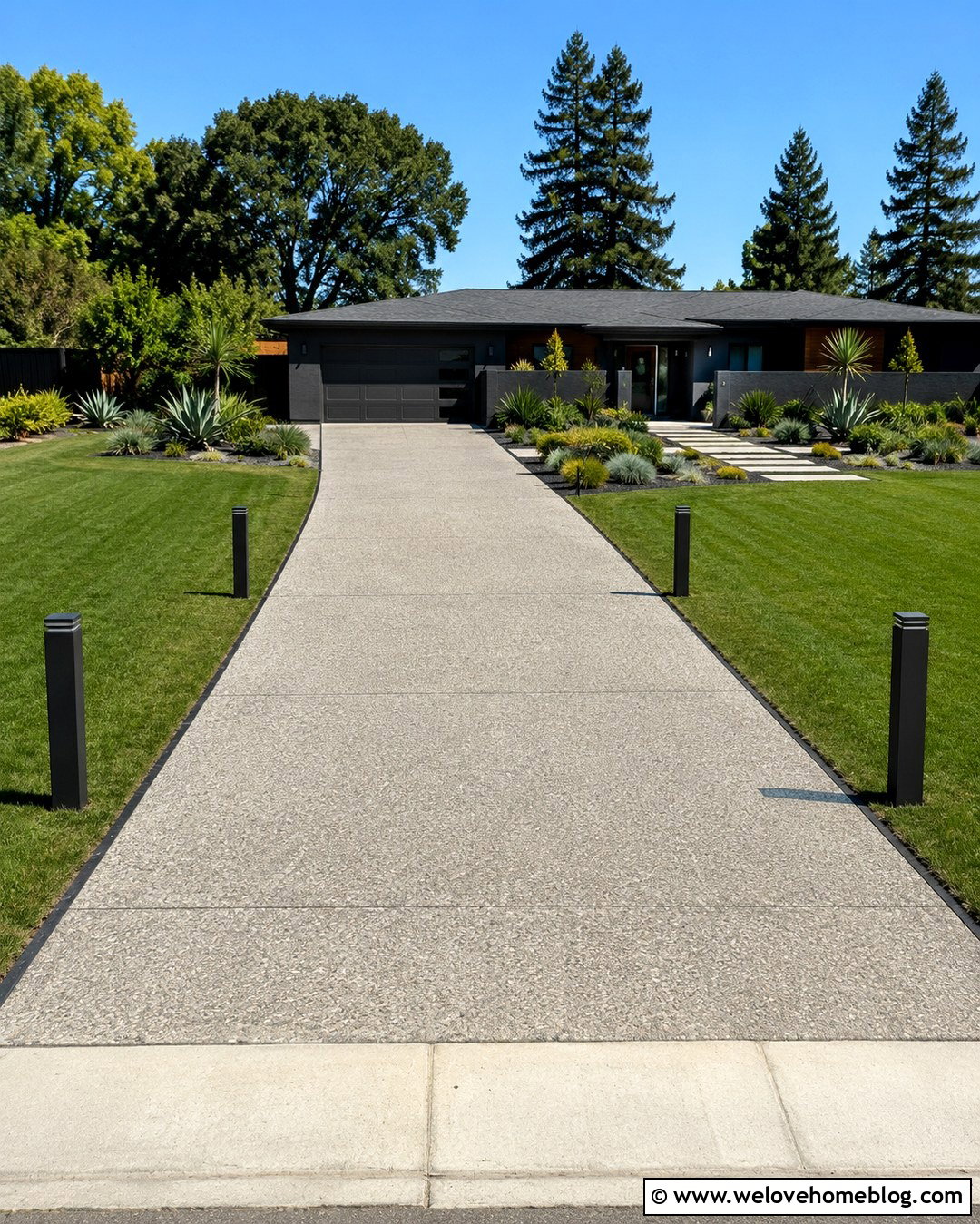
Solar bollards provide a strong contemporary look while clearly defining where the driveway begins. Use four medium-height fixtures, with one pair at the curb and another pair several feet inside the property. This staggered arrangement works well beside an exposed aggregate concrete driveway leading to a midcentury or modern ranch home. Black metal landscape edging can repeat the bollards’ finish, while broad grass strips keep the entrance open and visible. Add structured planting beds containing compact grasses, yucca, and low evergreen shrubs. Choose bollards with shielded downward illumination rather than exposed bulbs. The light should overlap gently across the entrance instead of forming isolated bright circles. Placing fixtures behind the driveway edge protects them from tires, snow-removal equipment, and accidental contact with lawn tools.
9. Solar Lantern Post Driveway Entrance

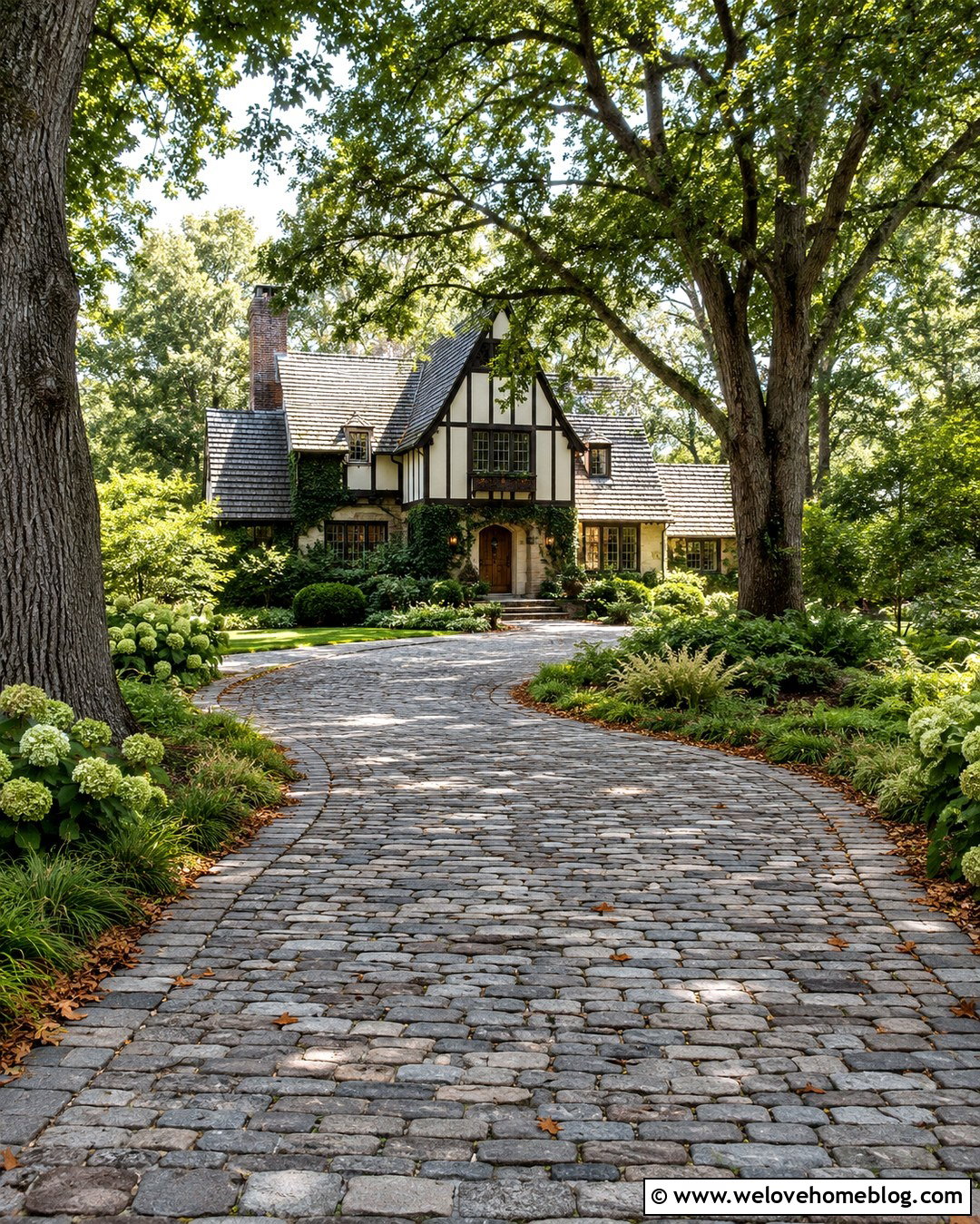
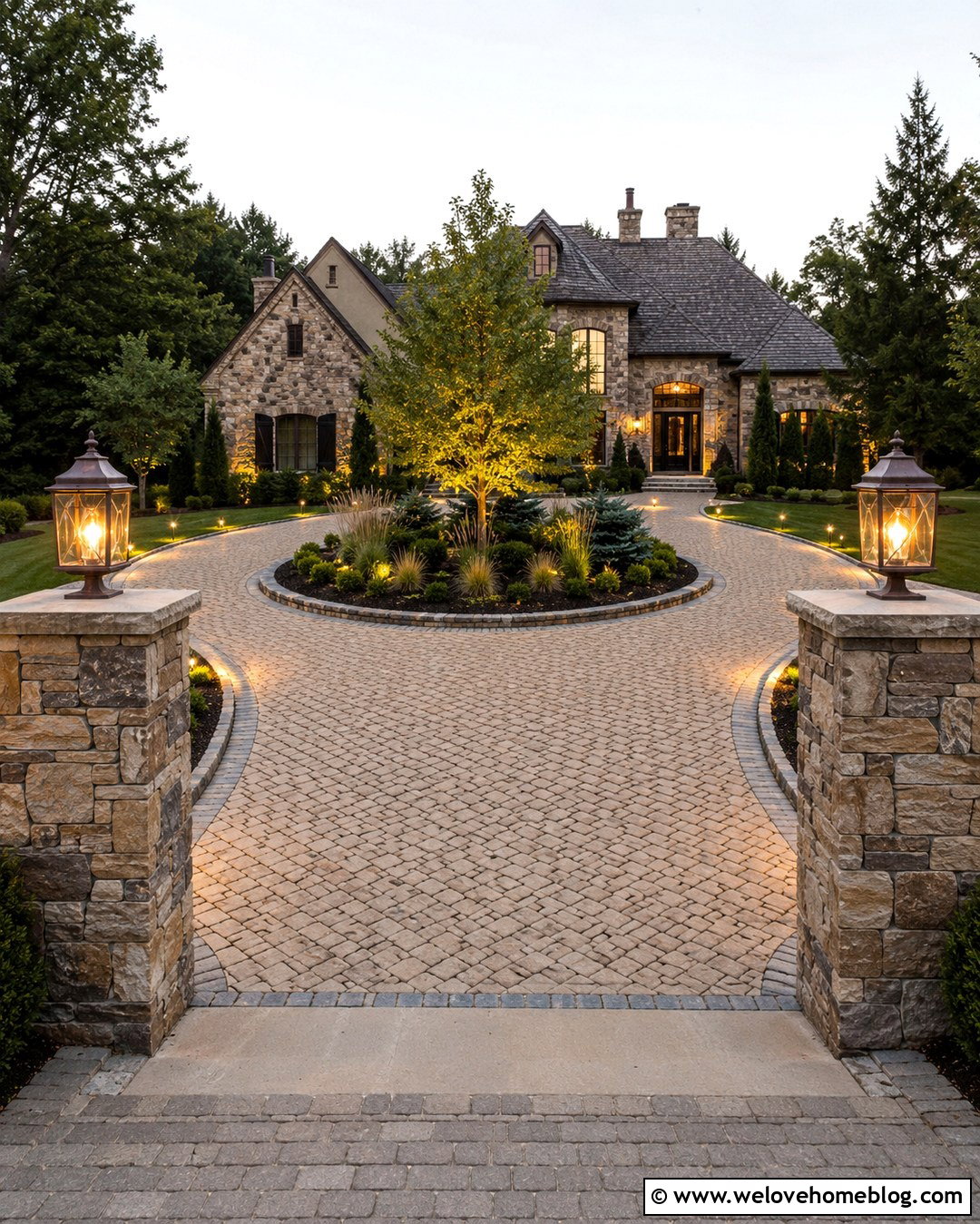
Traditional lantern posts can make a long driveway feel welcoming from the moment it meets the street. Place one tall solar lantern on each side of a curved resin-bound gravel driveway, using dark bronze posts for a softer alternative to black. Fieldstone edging and deep planting beds can anchor the fixtures within the landscape. Behind the entrance, repeat smaller solar path lights at wider intervals to guide visitors toward a traditional stone or shingle-style home. Select lanterns that are large enough to suit the width of the driveway but not so tall that they resemble commercial streetlights. Roses, nepeta, boxwoods, and ornamental pears can create an elegant layered border. Keep nearby branches trimmed so every solar panel receives direct daylight and remains easy to clean.
10. Solar Fence Light Driveway Entrance
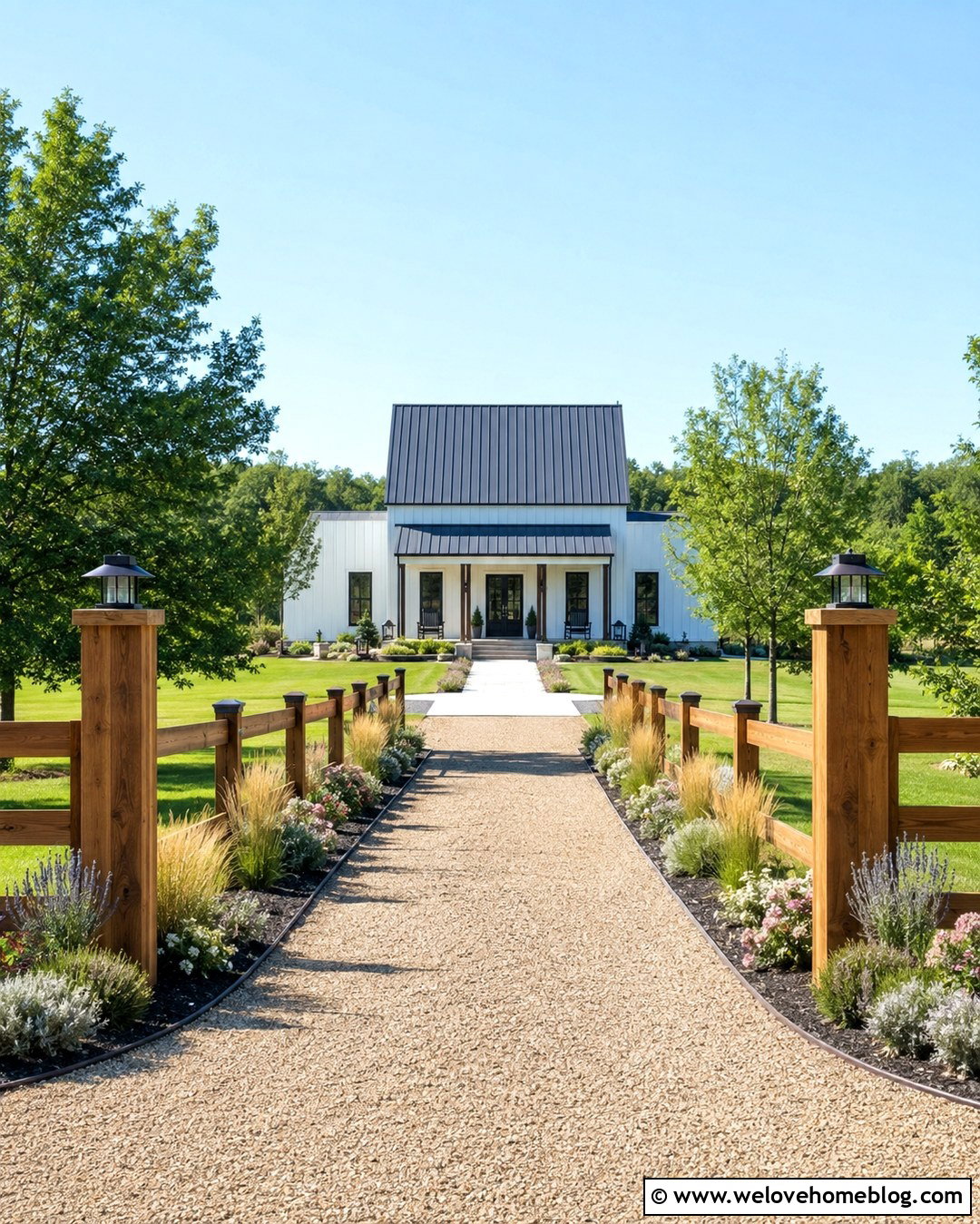
A fence-lined entrance offers several convenient surfaces for mounting solar fixtures. Install compact downward-facing solar lights on evenly spaced cedar fence posts beside a straight buff-colored gravel driveway. At the street, use taller end posts and slightly larger fixtures to make the opening easy to identify. The gradual change in light height naturally draws attention inward toward a modern farmhouse or ranch house. Steel edging can contain the gravel, while narrow beds of feather reed grass and drought-tolerant perennials soften the fence line. Mount each light on the driveway-facing side so the beam reaches the surface instead of disappearing into the yard. This layout avoids clusters of ground stakes and keeps mowing simpler. Consistent fixture spacing will also make the complete entrance appear more intentional.
11. Solar Paver Light Driveway Entrance
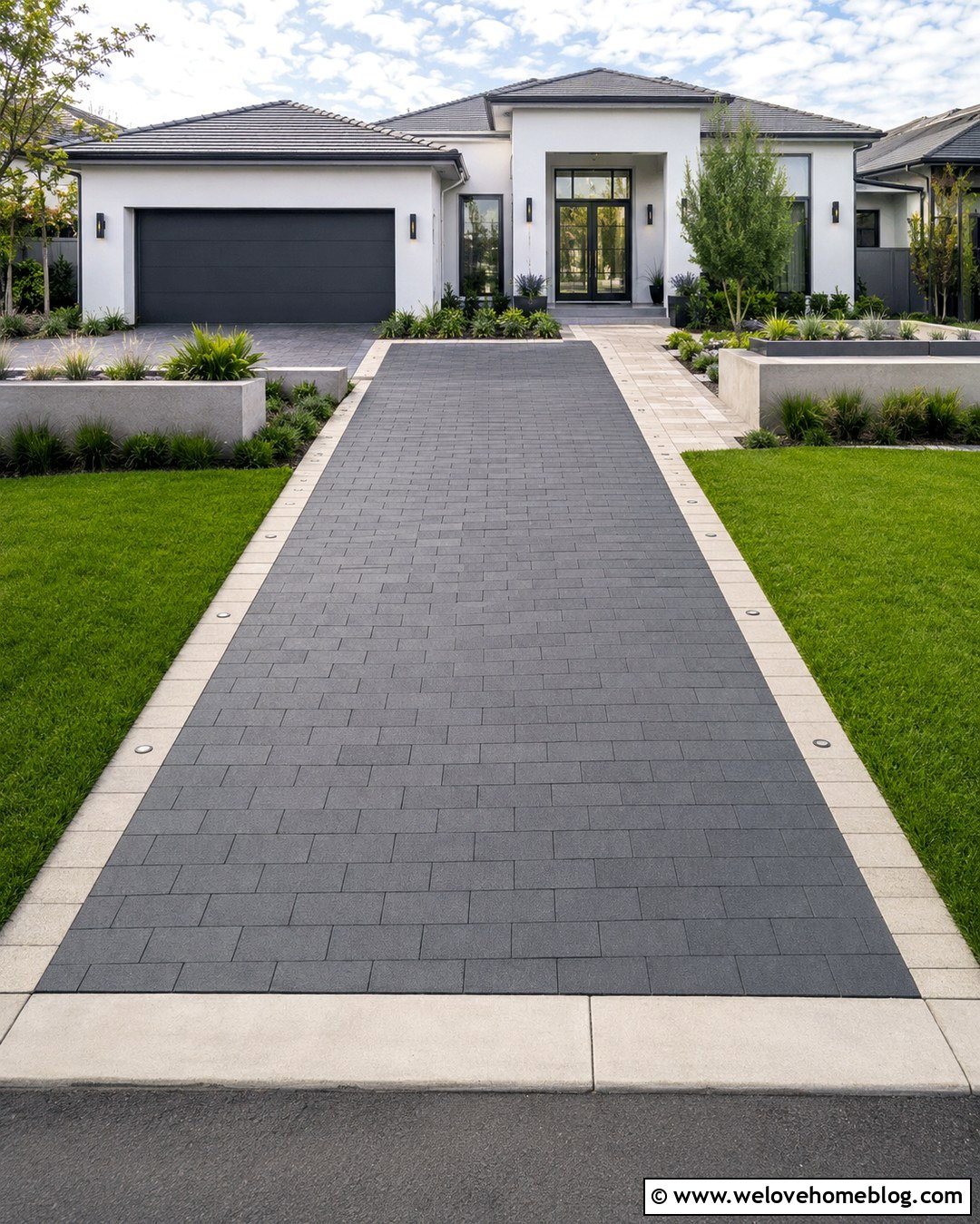
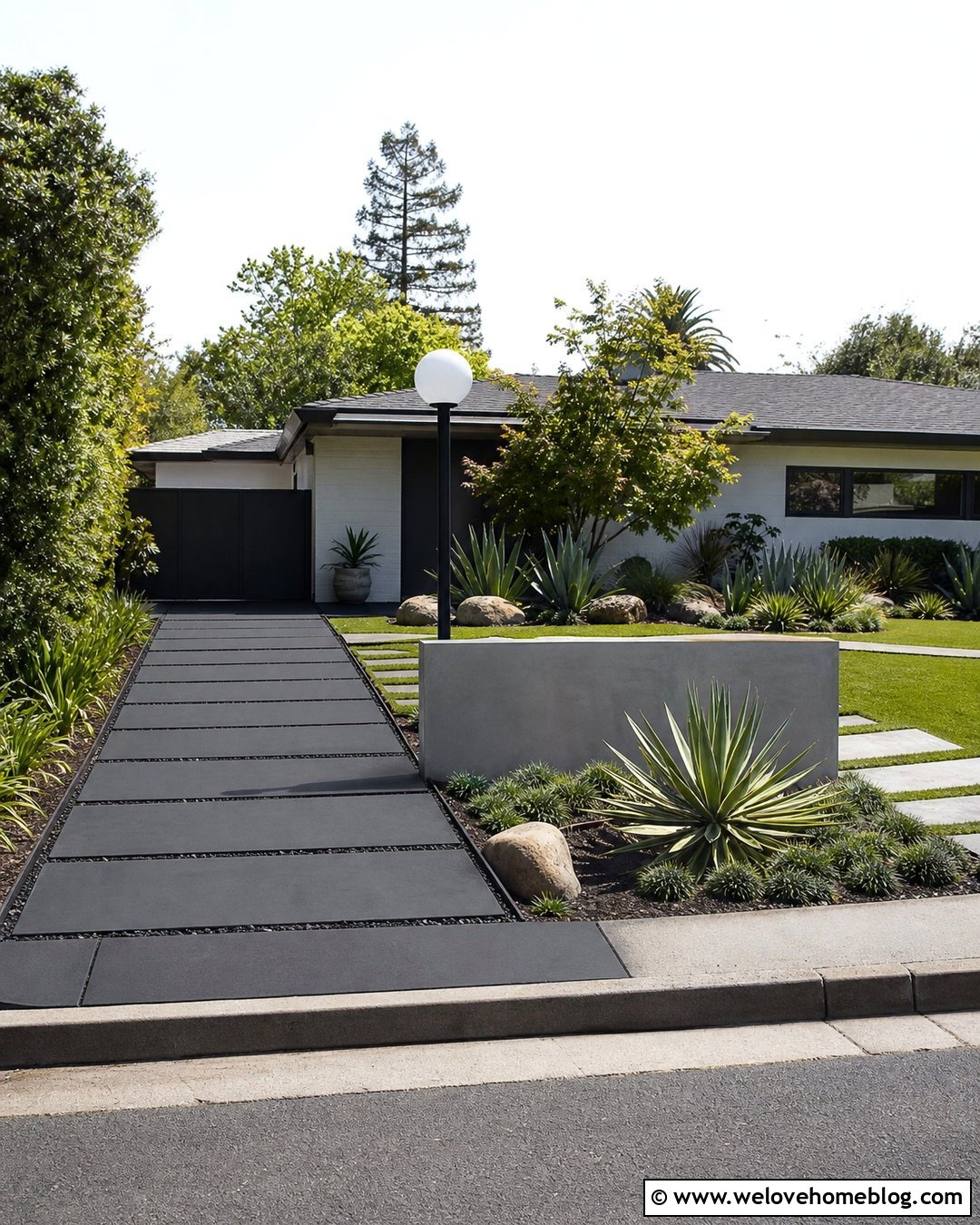
Integrated paver lights create a streamlined entrance because the fixtures sit close to the hardscape. Begin with a charcoal concrete paver driveway laid in a running-bond pattern, then add solar paver lights within pale border bands along both sides. Continue the illuminated bands several feet beyond the curb to emphasize the driveway’s full width. Low concrete planters filled with compact grasses can frame the opening without blocking sightlines. This arrangement complements a modern stucco, brick, or mixed-material home. Select fixtures specifically designed for outdoor ground installation and place them outside the regular tire path whenever possible. A contrasting paver apron adds another visual cue at the street. The finished look is clean and architectural, with lighting, pattern, borders, and landscaping functioning as one coordinated entrance.
12. Solar In-Ground Light Driveway Entrance
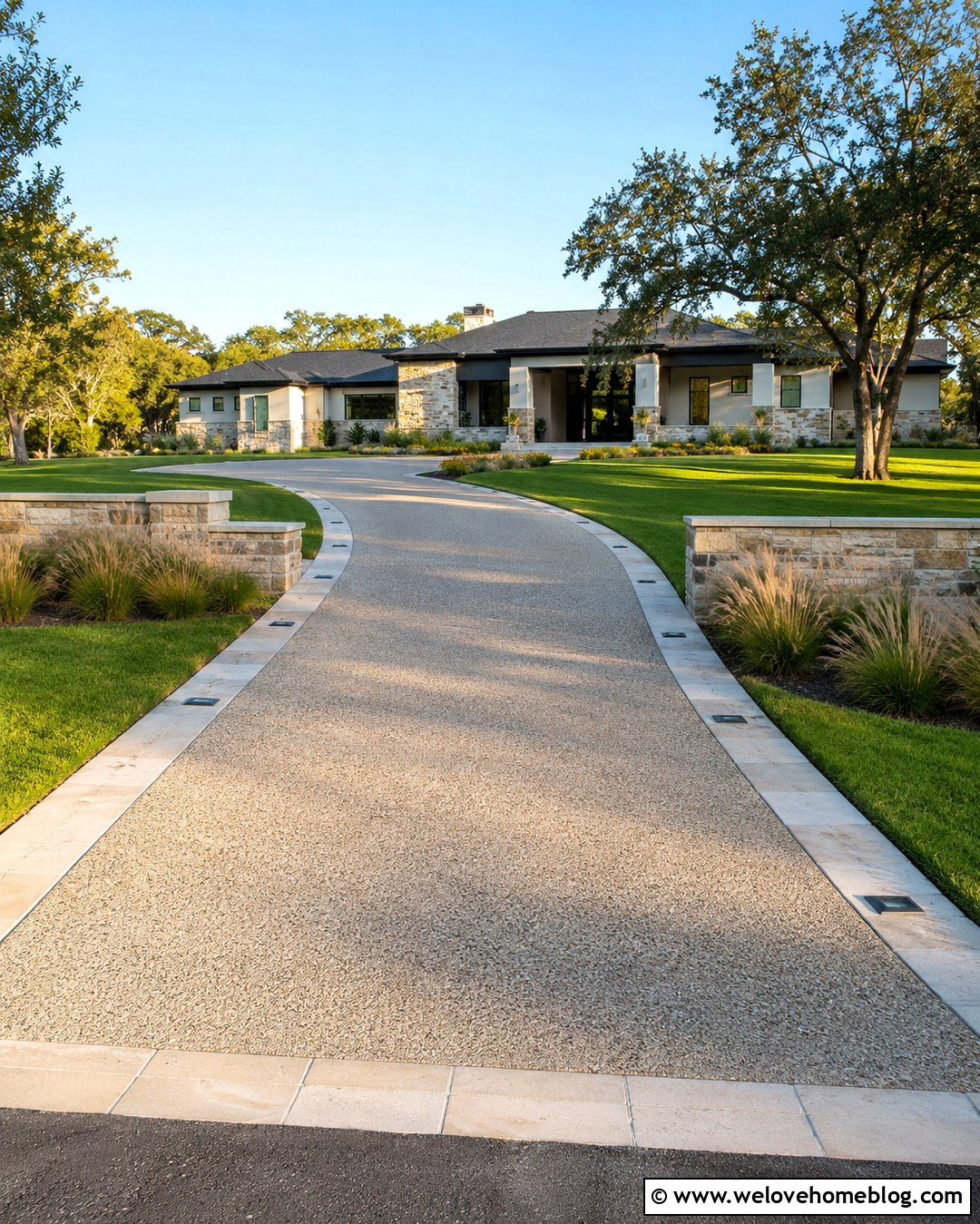
For a nearly invisible daytime installation, consider solar in-ground lights beside a sweeping driveway entrance. Arrange flush fixtures along the edges of a light exposed aggregate driveway, alternating them with rectangular limestone pavers. Their low position preserves open views across the lawn and suits a contemporary home with broad horizontal lines. Add two low stone walls at the entrance to provide structure, then plant soft drifts of fountain grass behind them. Keep the lights out of vehicle turning paths and areas where standing water collects. Fixtures with wide, diffused lenses create gentler guidance than narrow upward beams. During the day, the stone, aggregate, and grasses carry the design. After sunset, the repeated points of light reveal the curve and help visitors understand the driveway layout.
13. Solar Motion Light Driveway Entrance
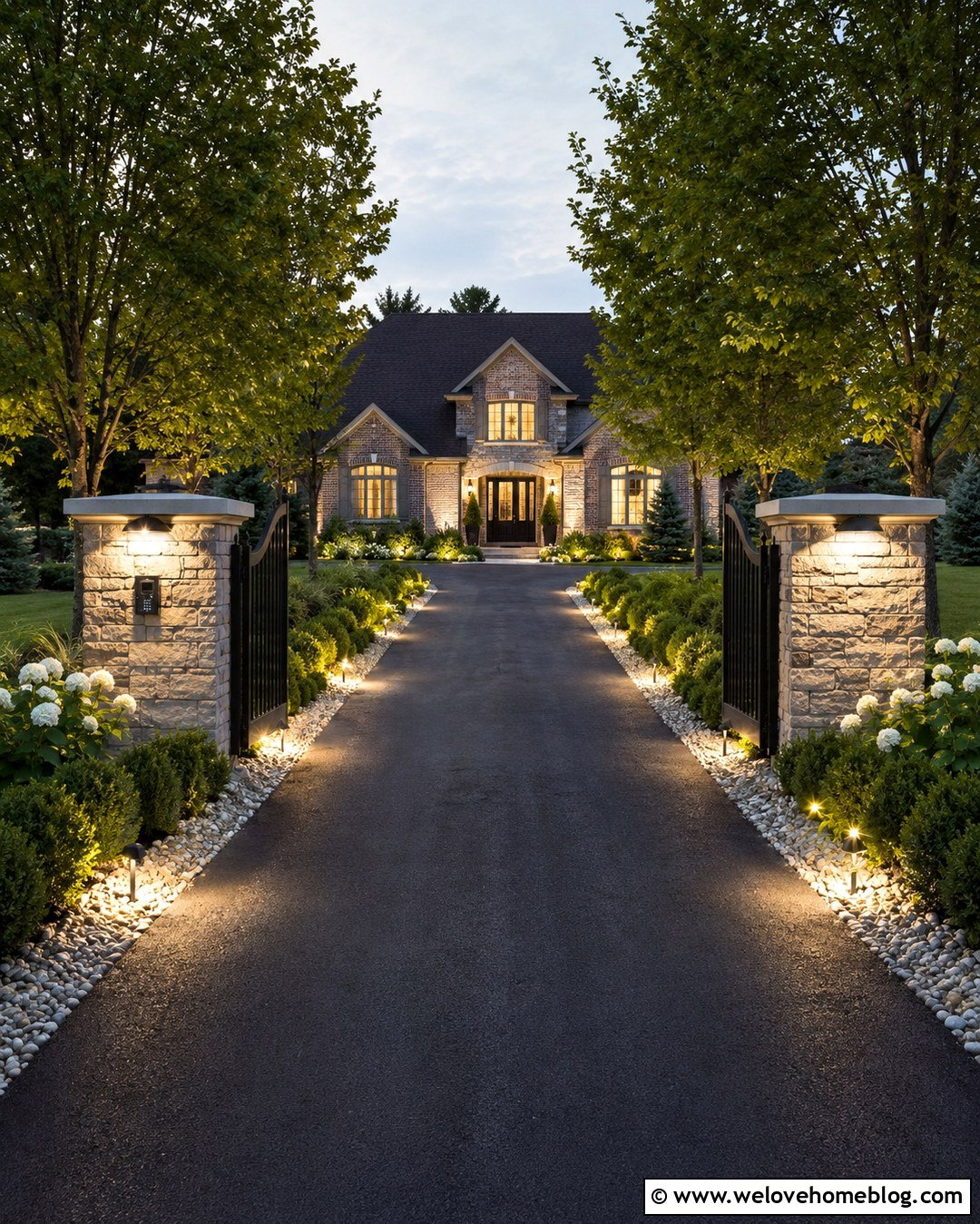
A motion-activated entrance can provide stronger light only when a vehicle or visitor approaches. Mount adjustable solar motion lights beneath the caps of stone or stucco pillars, aiming the beams downward across a black asphalt driveway. Pair them with dimmer dusk-to-dawn marker lights along the first section of the drive. This layered arrangement combines a visible nighttime outline with temporary task lighting near the gate, address marker, or keypad. Surround the entrance with low evergreen hedges and pale decorative gravel to reflect some of the light. Position sensors toward the driveway rather than the public sidewalk or street to reduce unwanted activation. Choose adjustable brightness and timing settings when available. The resulting design feels practical and polished rather than overly bright, especially beside a suburban brick or transitional-style home.
14. Solar Address Sign Driveway Entrance
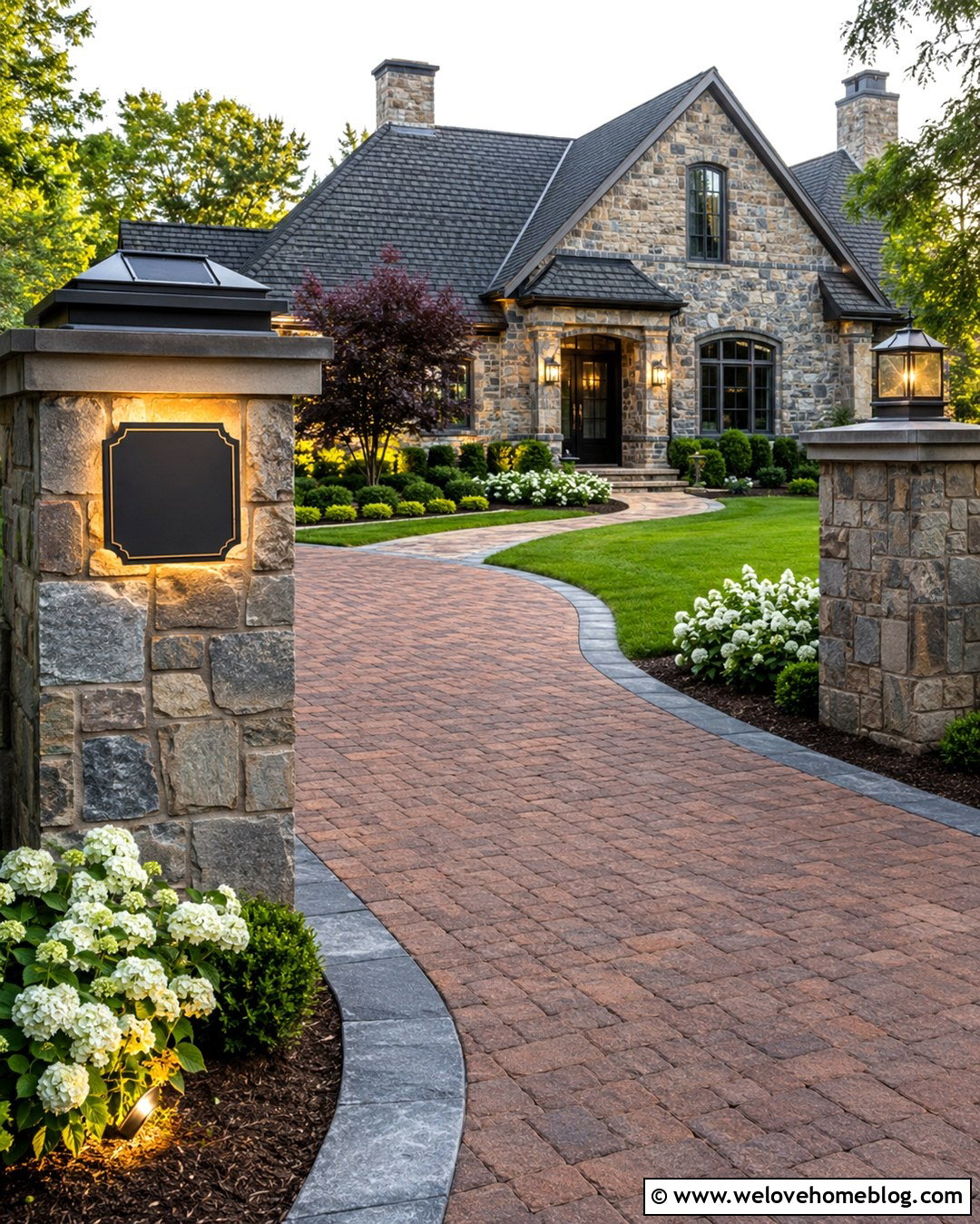
An illuminated address sign helps guests and service providers recognize the property while strengthening the overall entrance design. Mount a solar address plaque on a broad stone pillar beside a curved reddish-brown brick paver driveway. Balance it with a second pillar carrying a matching solar lantern. A bluestone border can outline the pavers and coordinate with the cool tones in the masonry. Keep shrubs low around the sign so numbers remain visible from the road and the panel stays exposed to sunlight. White flowering plants and dark green evergreens create useful contrast without overcrowding the structure. Set the sign at a readable angle for approaching traffic, following local placement rules. This asymmetrical arrangement feels more natural than two identical pillars while still giving the entrance a finished appearance.


15. Circular Solar Light Driveway Entrance

A circular driveway benefits from lighting that clearly identifies both the entrance and exit. Use matching solar lantern pillars at each opening, then continue low solar bollards along the outer curve. Light-gray concrete pavers can form the circular drive, while a darker charcoal ribbon emphasizes its shape. In the center island, plant a small ornamental tree with layered shrubs and ground cover, leaving enough open space for clear visibility. A colonial or traditional brick house provides a balanced backdrop for this formal layout. Keep the brightest fixtures at the two street connections and use softer lights inside the property. Matching pillar materials, fixture finishes, and border pavers will visually connect the separate openings. The completed design makes circulation understandable without covering the entire front yard in unnecessary illumination.
16. Curved Solar Light Driveway Entrance

Curves become much easier to follow when lighting emphasizes their direction from the entrance. Start with a pale resin-bound gravel driveway that bends through the front yard toward a contemporary Craftsman home. Place solar bollards on the outside of the curve, where they can outline the changing route without narrowing the usable pavement. At the street, two low stacked-stone pillars with integrated solar cap lights identify the beginning of the design. Use dark granite setts as edging to contrast with the pale driveway surface. Beds of switchgrass, coneflowers, and low mounding shrubs can follow the same sweeping line. Avoid placing tall plants directly in front of the fixtures. Repeating curved borders throughout the lawn makes the lighting, driveway, and landscape feel intentionally planned together.
17. Rustic Solar Light Driveway Entrance
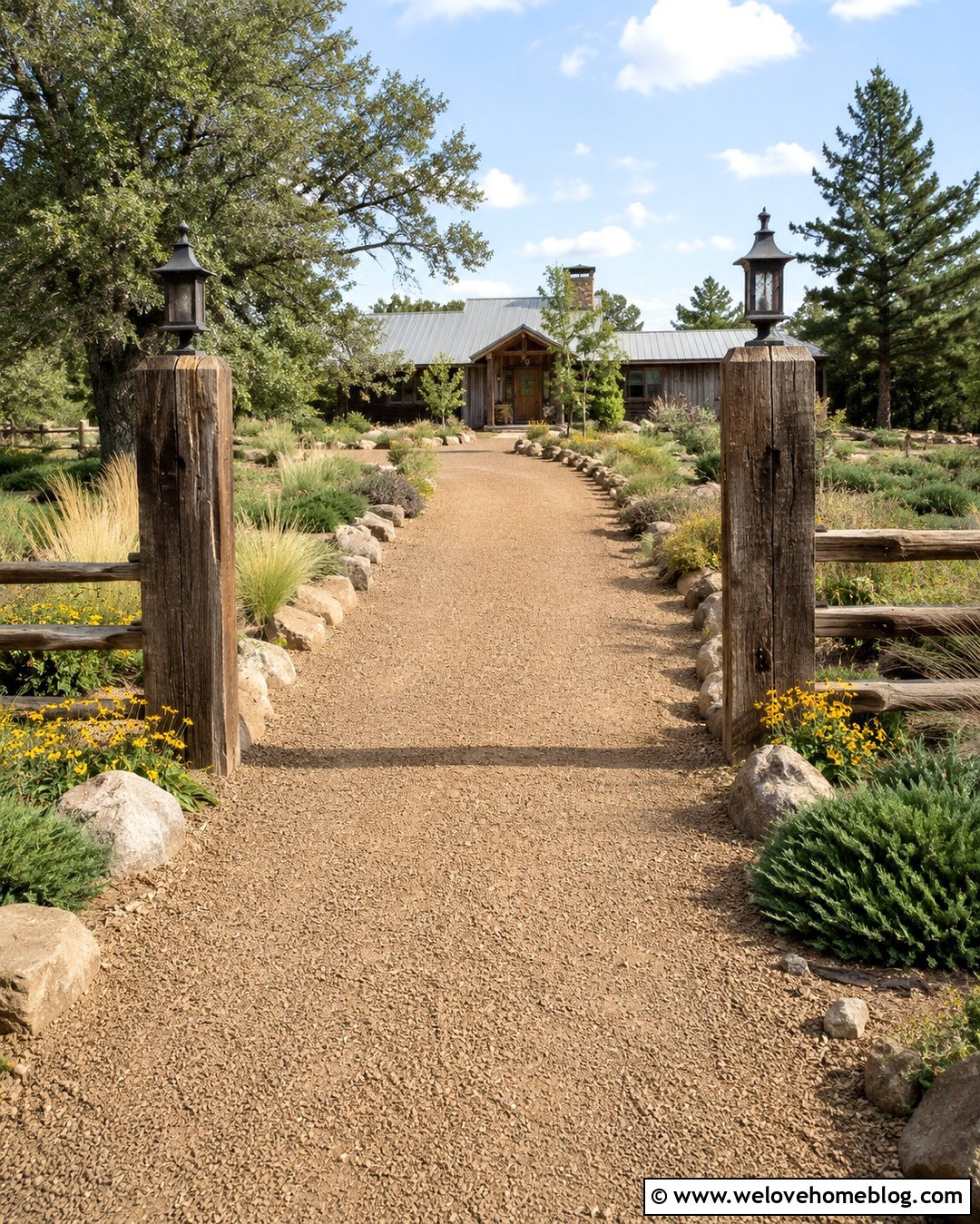
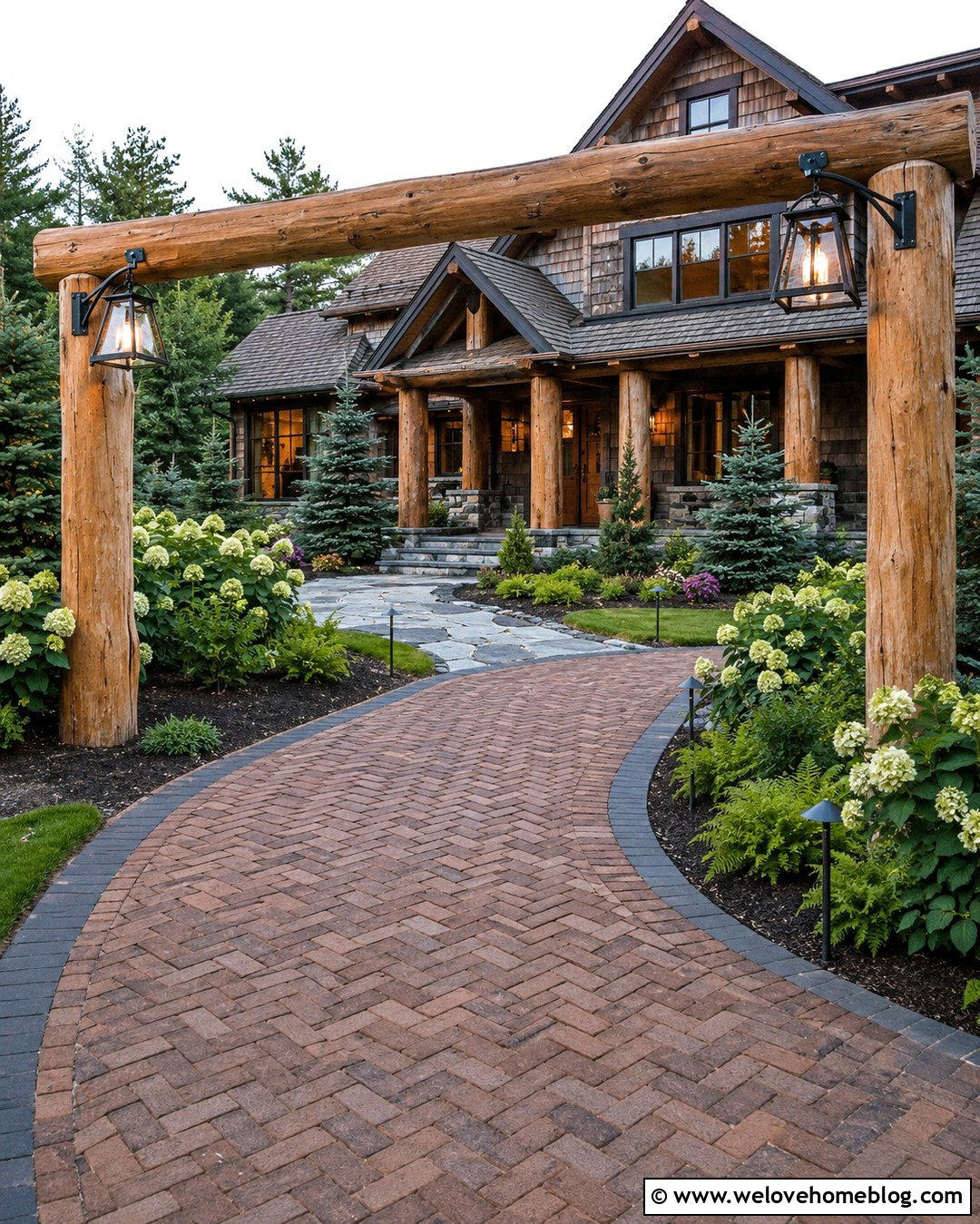
A rustic entrance should feel grounded in its setting rather than heavily decorated. Use a warm brown gravel driveway with rough fieldstone edging and thick reclaimed timber posts at the road. Mount bronze solar lanterns on the posts and connect them with short split-rail fence sections. Native grasses, black-eyed Susans, low junipers, and a few weathered boulders can blend the entrance into a spacious country yard. A ranch house, barn-style home, or stone cottage makes a suitable backdrop. Keep the gravel opening broad enough for comfortable turning, and position the posts well outside the driving path. Lanterns with simple rectangular frames complement the rugged materials. The combination of timber, natural stone, loose planting, and warm-toned gravel produces character without making the property entrance look themed or artificial.
18. Coastal Solar Light Driveway Entrance

Pale surfaces and salt-tolerant planting can give a driveway entrance a relaxed coastal appearance. Choose light oyster-shell gravel or pale crushed stone contained by gray cobblestone edging. White masonry pillars topped with corrosion-resistant solar lanterns can frame the opening, while a curved driveway leads toward a coastal cottage or shingle-style home. Plant blue fescue, beach grass, compact hydrangeas, and low evergreen ground cover in broad drifts. Dark navy or matte black lantern frames provide crisp contrast against the white pillars. Keep the fixture design enclosed and simple to reduce visual clutter in windy settings. A short cobblestone entrance apron helps stabilize the loose surface near the street. Together, the pale driveway, sculptural grasses, bright pillars, and solar lights create fresh curb appeal throughout the day.
19. Small Solar Light Driveway Entrance
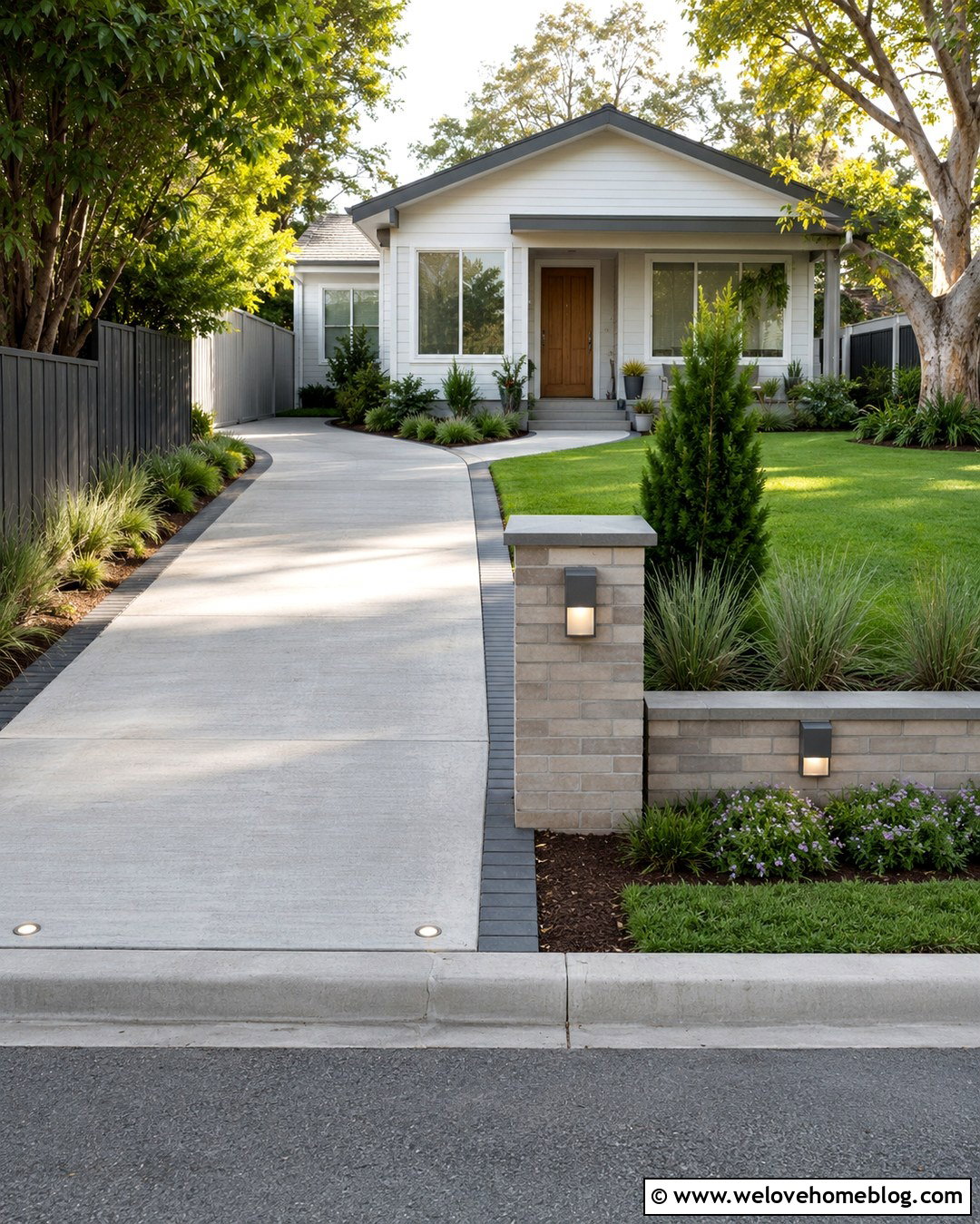
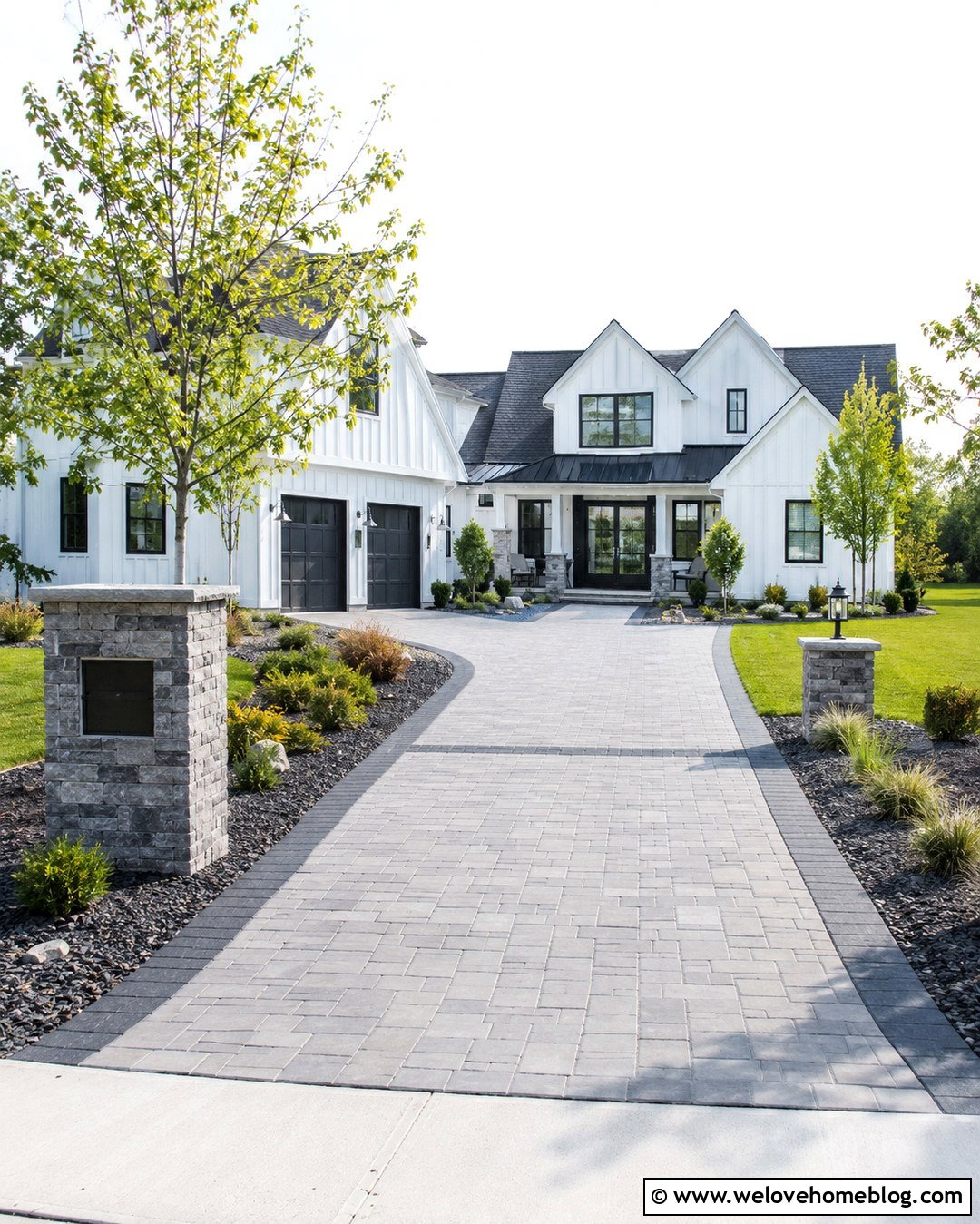
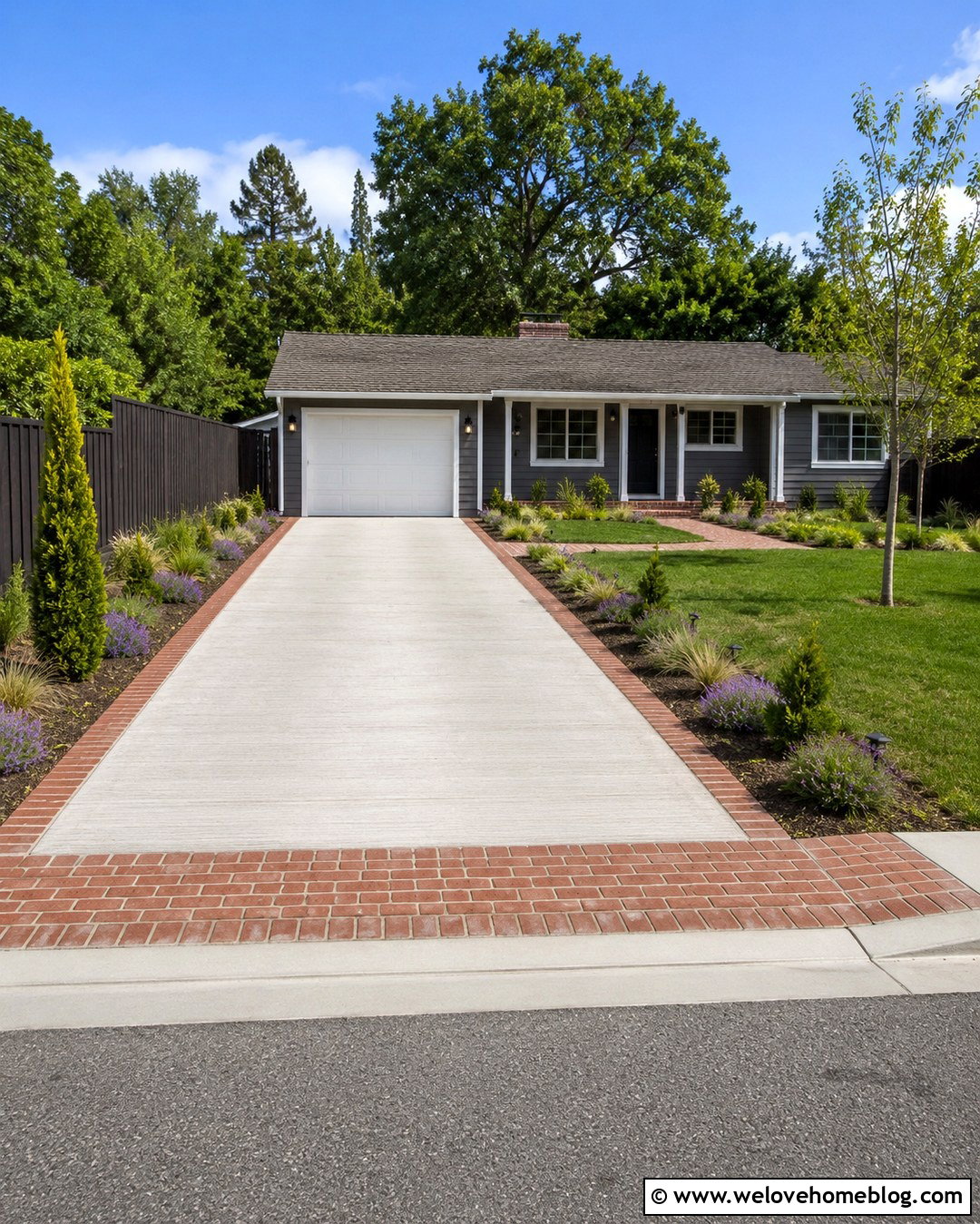
Even a narrow suburban driveway can have a defined entrance without losing valuable parking space. Use a straight broom-finished concrete driveway bordered by slim charcoal paver strips. Install compact solar wall lights on an existing brick mailbox pillar and the side of a low garden wall rather than adding bulky posts. Place two small in-ground markers just inside the property to reinforce the opening. Narrow planting beds filled with dwarf fountain grass, creeping thyme, and compact evergreen shrubs can soften the hardscape while keeping the route clear. This arrangement suits a small ranch, bungalow, or townhouse-style home. Keep fixtures close to the border and direct their light downward. The coordinated paver lines, low planting, and wall-mounted solar lights add detail without making the compact front yard feel crowded.



20. Long Solar Light Driveway Entrance
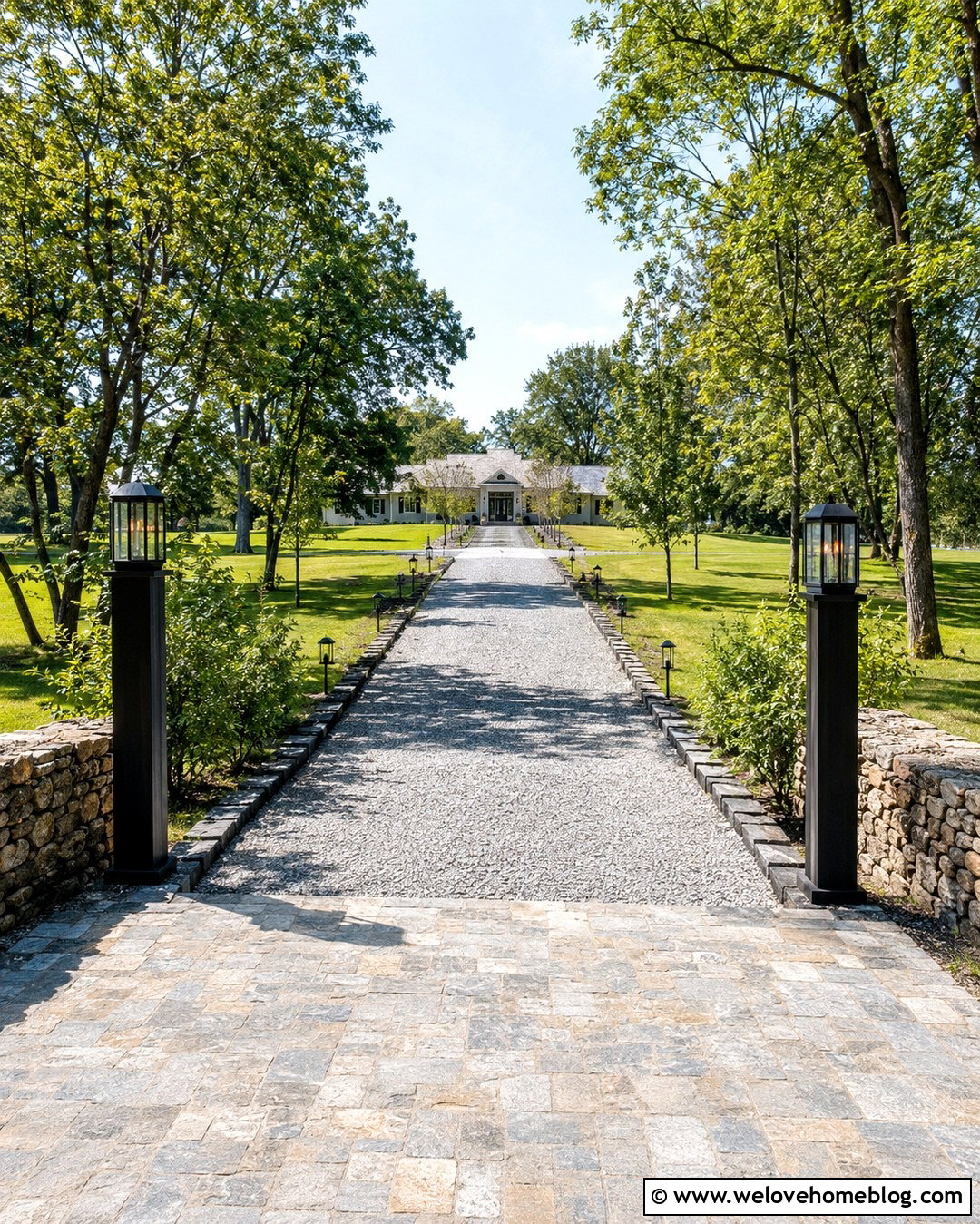
A long driveway needs an entrance that remains visually connected to the distant house. Begin with tall solar lantern posts at the road, then repeat lower marker lights at generous intervals along a straight crushed-stone drive. Use gray limestone gravel with dark granite edging so the route remains distinct during daylight. Rows of trees or loose native hedges can frame the approach, but position them far enough away to prevent shade from limiting solar charging. Near the entrance, add a wide stone apron and low fieldstone walls to create a durable, recognizable threshold. The fixtures do not need identical shapes, but their finish and light color should match. This layered design works particularly well for ranch properties, country homes, and large wooded lots where electrical trenching would be disruptive.
Conclusion:
The best 20 Solar Light Driveway Entrance Ideas do more than place a few fixtures near the road. They coordinate illumination with the driveway material, entrance shape, borders, planting, gates, pillars, and home architecture. Begin by identifying where drivers need guidance, then choose fixtures that direct light onto those areas without creating excessive glare. Check daily sun exposure before final installation, especially near trees, fences, and large masonry structures. Durable materials and protected placement will help prevent damage from tires, mowers, weather, and snow removal. Whether you prefer rustic timber posts, modern bollards, brick pillars, or integrated paver lights, a complete design will make the property feel safer, clearer, and more welcoming.

Related posts:




Leave a Reply