
A well-planned tree driveway entrance can make an ordinary front yard feel established, welcoming, and connected to the home. Trees add height, soften broad paved surfaces, and guide attention from the street toward the house. The strongest designs combine suitable trees with a clear driveway shape, durable edging, layered planting, and safe visibility near the road. Your climate, available planting space, mature tree size, and driveway material should guide every decision. Whether you prefer flowering ornamentals, stately shade trees, narrow evergreens, or relaxed native planting, the entrance should work as one complete landscape rather than a collection of separate features. Explore these practical and visually distinctive **25 Tree Driveway Entrance Ideas**.

1. Oak Tree Driveway Entrance
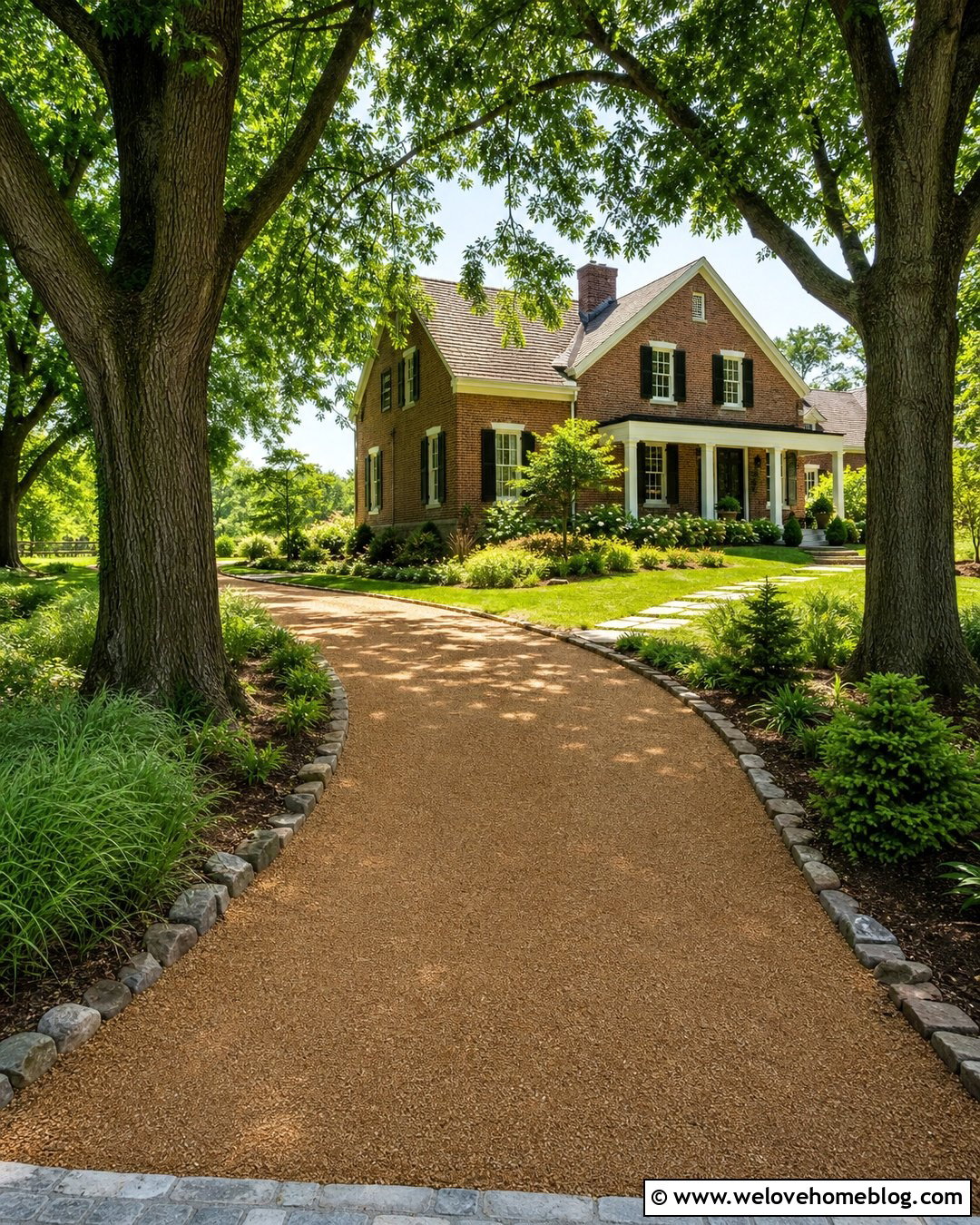
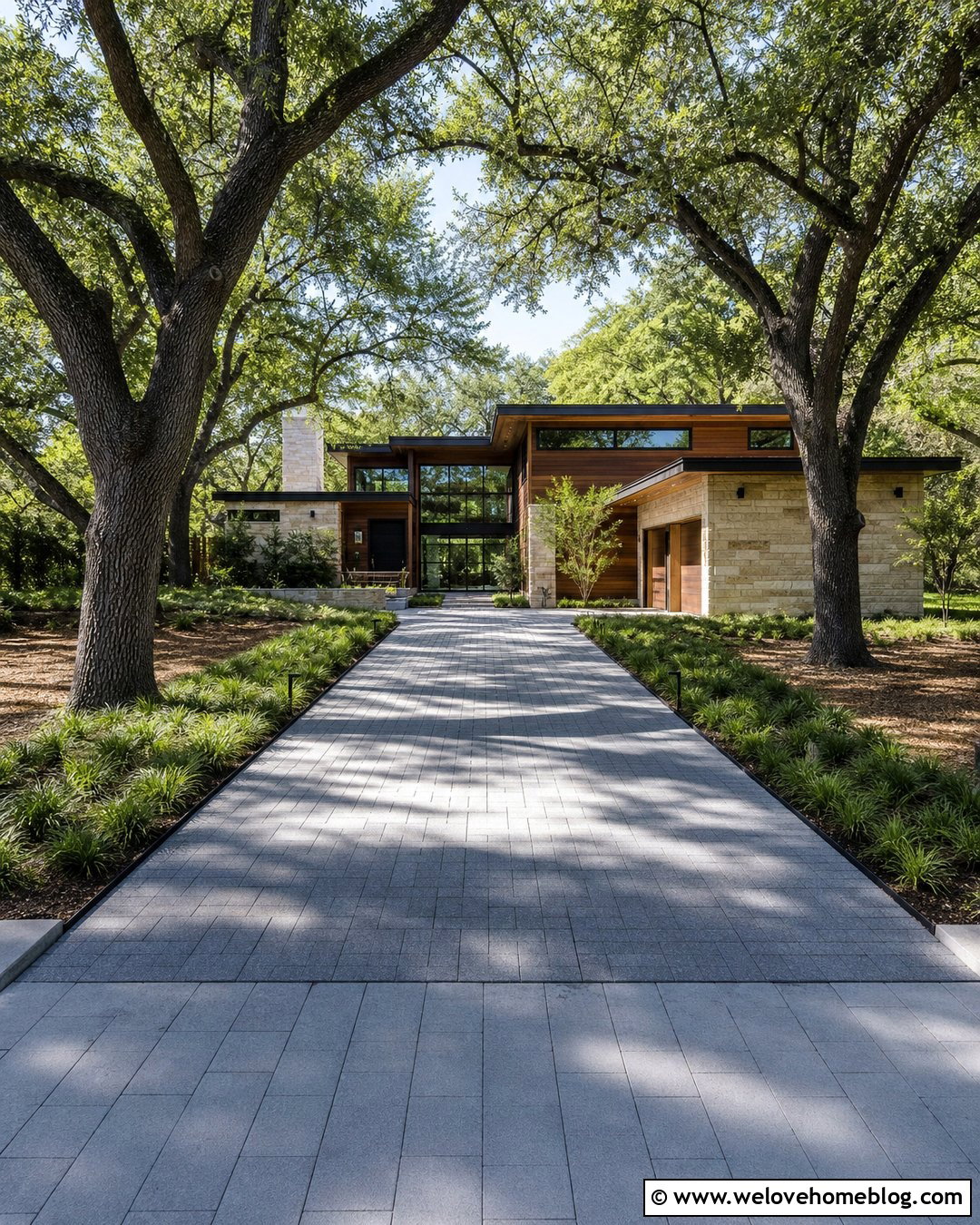
Matching oak trees can give a long driveway a balanced, established appearance. Place one tree on each side of the entrance, leaving generous space between the trunks, pavement, road, and overhead utilities. A curved tan gravel driveway works especially well with broad oak canopies and a natural landscape. Use large fieldstones as edging, then add sweeps of ornamental grass, native perennials, and low evergreen shrubs beneath the trees. Keep plants closest to the street short so drivers retain a clear view. The gravel can continue toward a brick or traditional farmhouse in the background. Because oaks eventually become substantial trees, this design suits a larger property where the roots and crowns have room to develop without crowding the driveway.
2. Flowering Dogwood Driveway Entrance
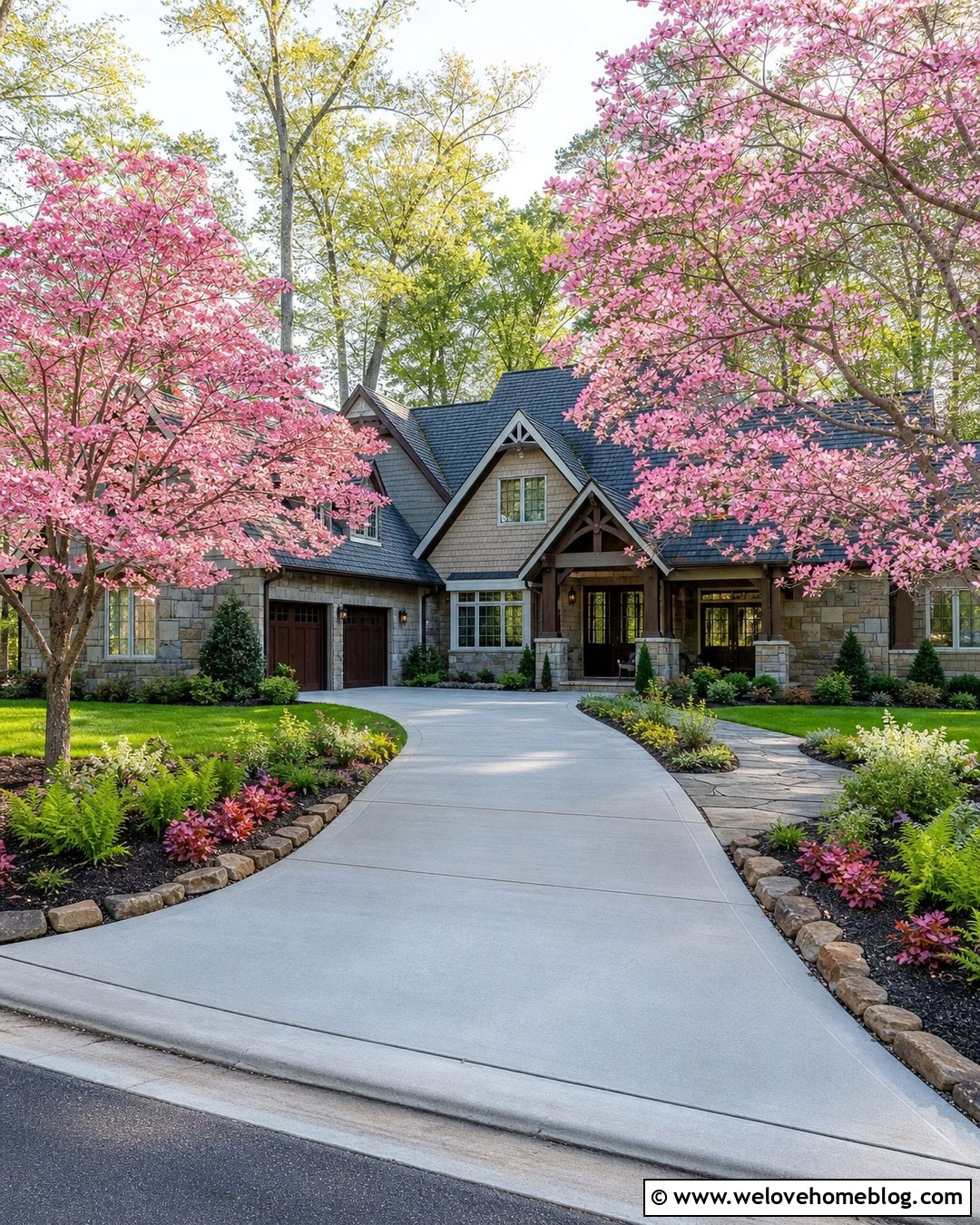
Spring flowers make a dogwood tree driveway entrance feel bright without requiring massive trees. Frame a straight gray concrete driveway with one flowering dogwood on each side, positioned within broad curved beds rather than narrow planting strips. Natural stone edging can define the beds and create a clean transition from concrete to lawn. Underplant the trees with ferns, coral bells, woodland phlox, and compact evergreen shrubs for layered color after flowering ends. Repeat a few of these plants near the house to connect the entrance with the foundation landscaping. This complete look complements a Craftsman, Cape Cod, or cottage-style home. Choose dogwoods suited to local soil and climate conditions, and preserve an open view near the road by keeping lower branches carefully managed.
3. Japanese Maple Driveway Entrance
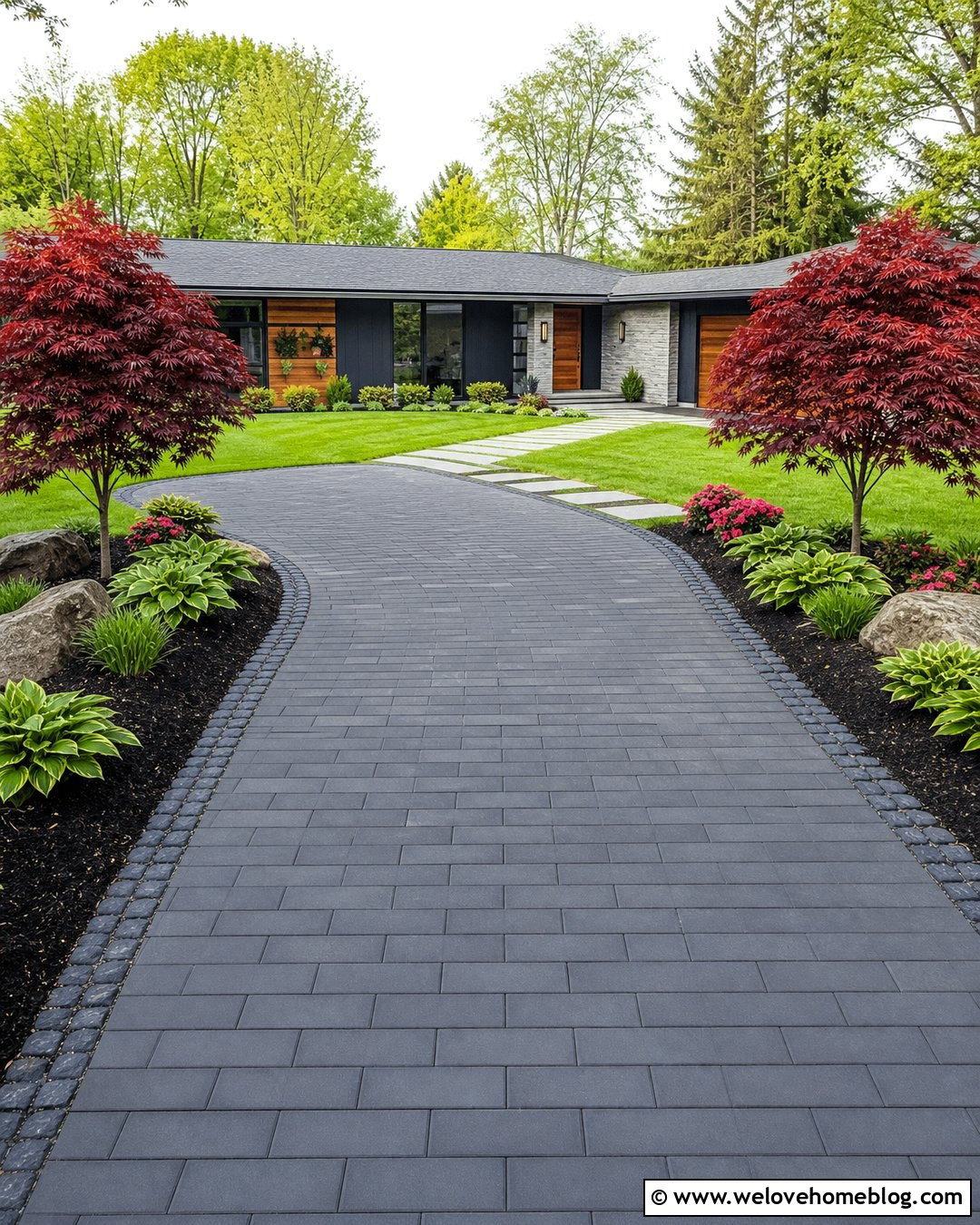
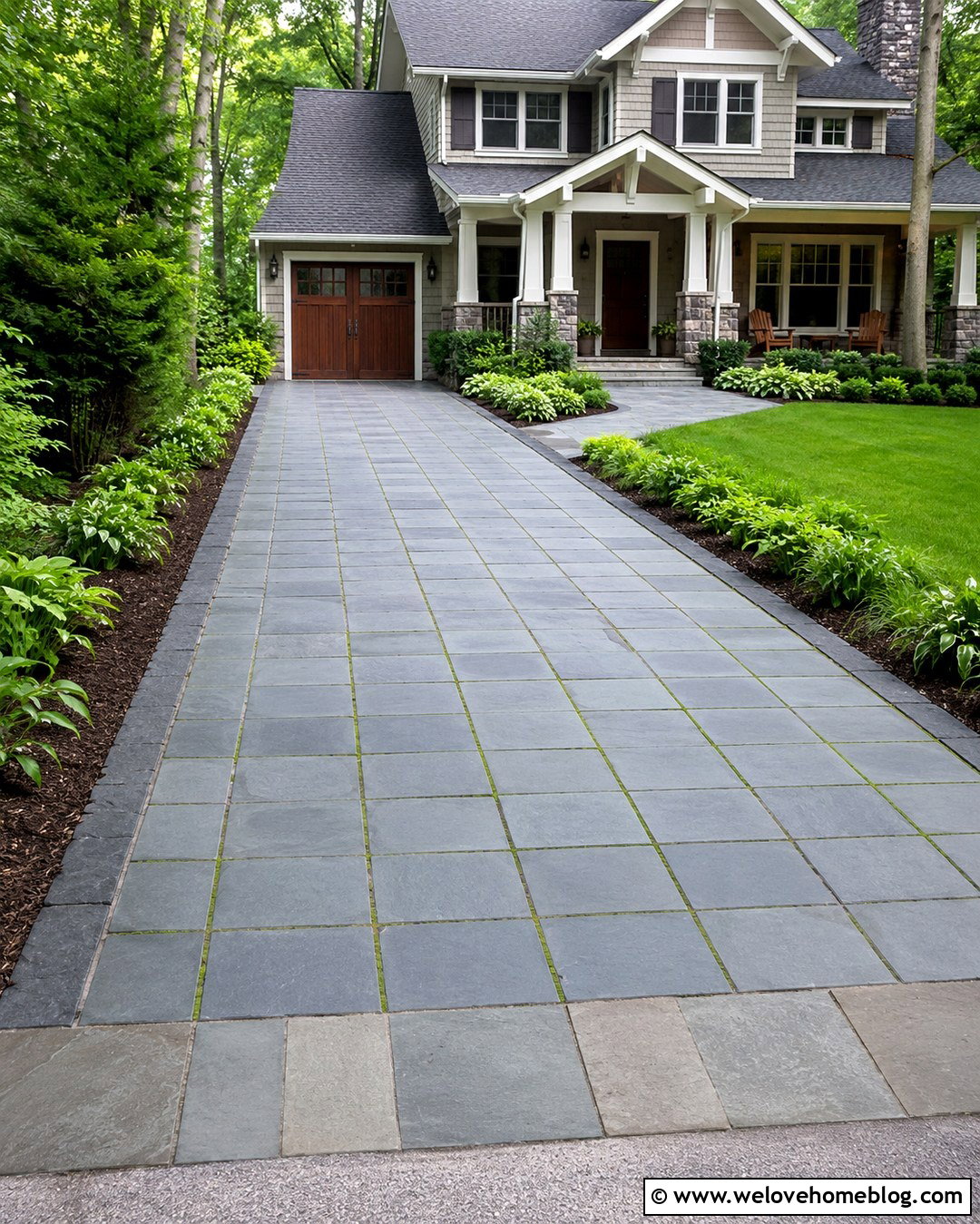
A pair of Japanese maples can bring rich color and sculptural form to a smaller driveway entrance. Use them beside a gently curved charcoal paver driveway, where their red or burgundy foliage will stand out against the restrained paving. Dark granite cobblestone edging can contain the surface and visually connect the trees to nearby planting beds. Surround each maple with low mounds of ornamental grass, hostas, compact azaleas, and a simple layer of dark mulch. Avoid filling the beds with too many colors, since the trees should remain the main feature. This arrangement works beautifully with a contemporary ranch or updated midcentury home. Give the maples enough distance from pavement and reflected heat, and select compact cultivars where front-yard space is limited.
4. Crape Myrtle Driveway Entrance
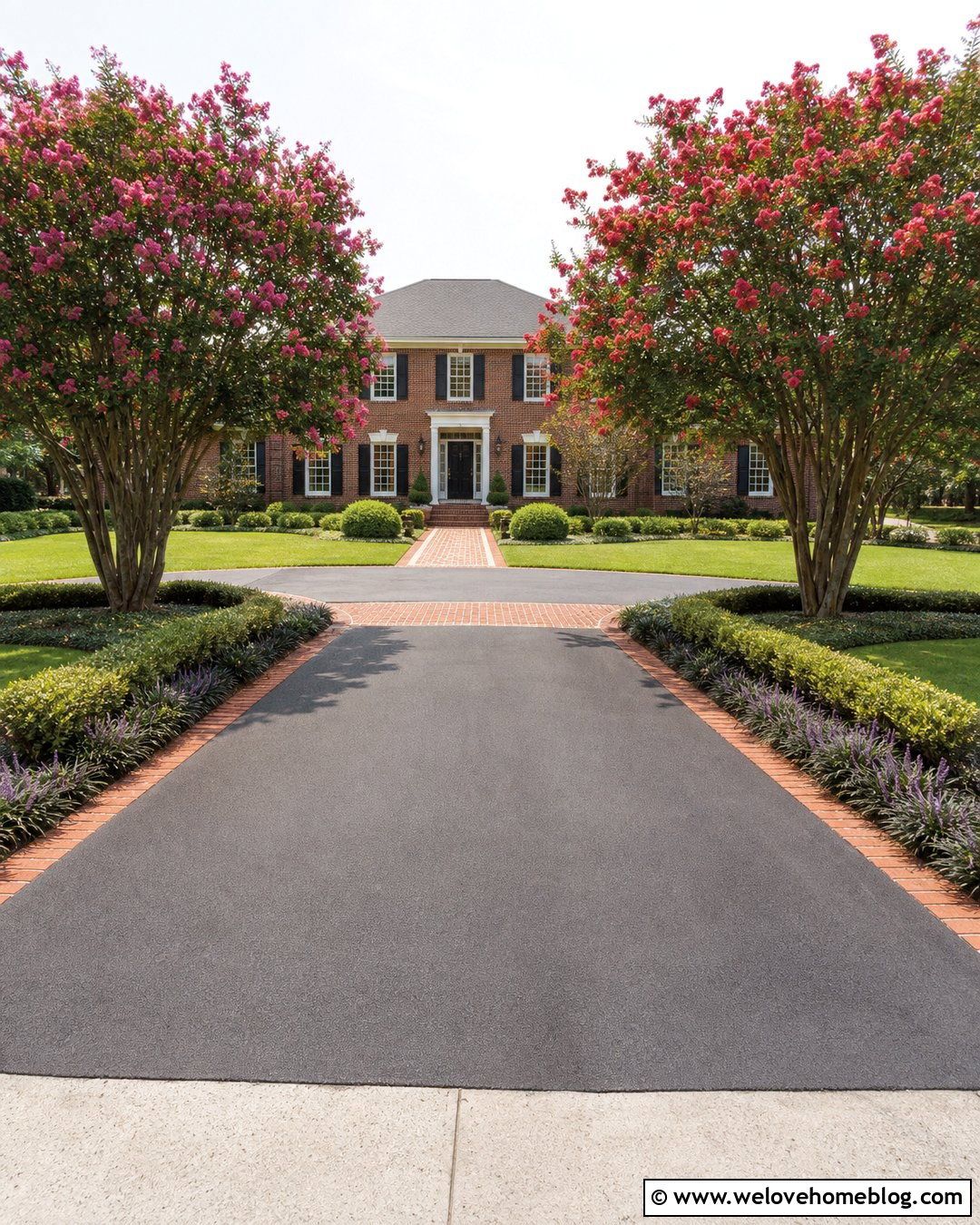
Crape myrtles can create a colorful driveway entrance with an airy canopy and attractive multi-stemmed trunks. Pair matching trees with a wide black asphalt driveway bordered by a narrow band of red clay brick pavers. Curved planting beds around the trees can include liriope, dwarf yaupon holly, salvia, and seasonal flowering plants. The brick ribbon adds definition while connecting the drive to a traditional Southern brick house. Position the trees where their mature crowns will not interfere with vehicles, utility lines, signs, or entrance lighting. Choose a cultivar with a mature size that fits the space rather than relying on severe annual pruning. The finished entrance should look open and orderly, with the trees framing the property instead of forming a visual barrier at the street.
5. White Birch Driveway Entrance
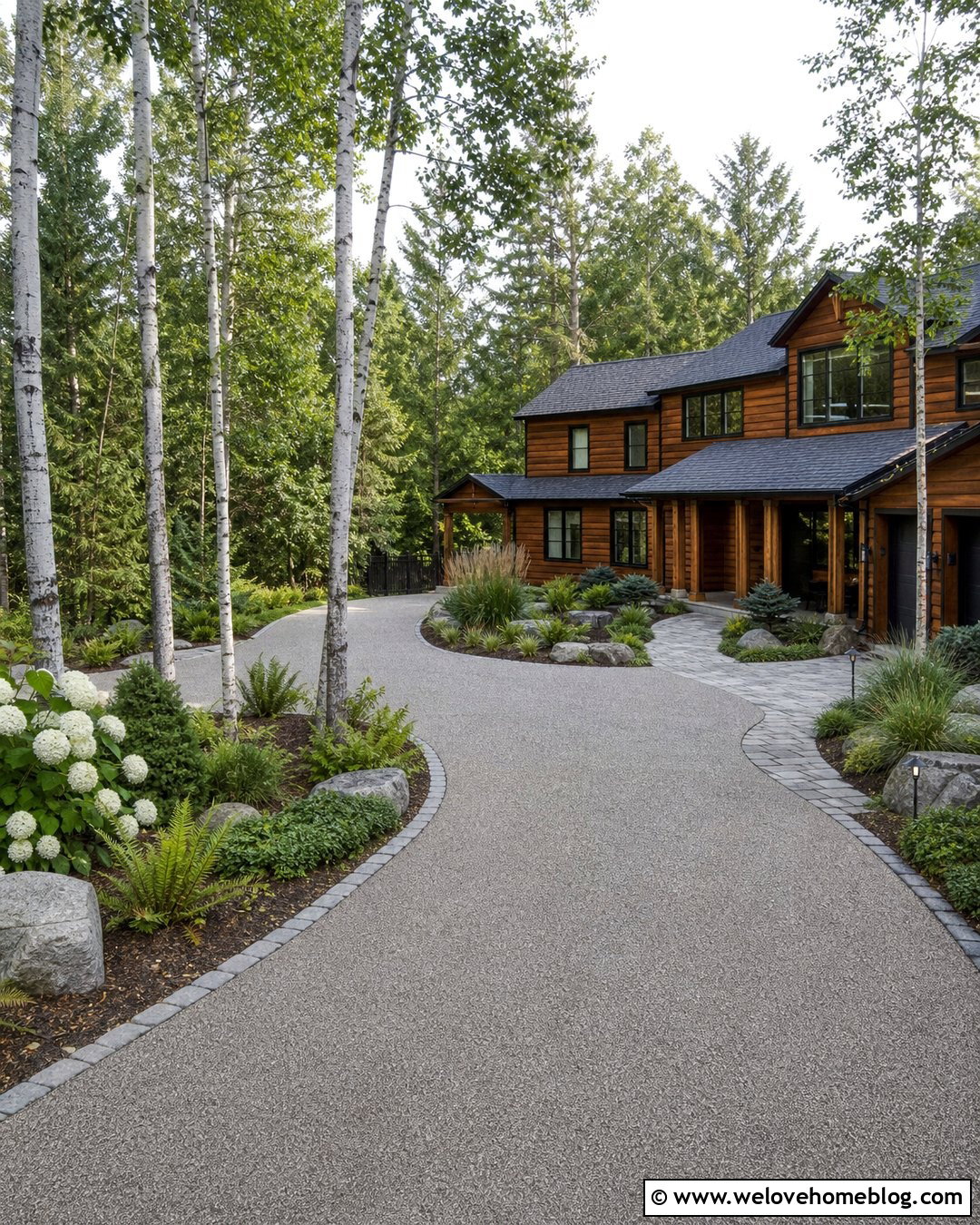
White-barked birch trees create a light, woodland-inspired entrance when grouped naturally rather than planted in a rigid row. A pale gray resin-bound gravel driveway provides a smooth-looking surface that complements the trunks. Form asymmetrical planting beds on both sides using weathered stone edging, evergreen ground cover, ferns, hydrangeas, and soft ornamental grasses. Groups of three slender trees can produce more visual depth than a single tree on each side, provided the site offers enough growing room. Continue the same stone along a walkway leading to a cedar-sided contemporary house. This driveway look feels especially suitable for a cool-climate property surrounded by existing woodland. Use birch species adapted to local conditions, and maintain a generous buffer between trunks and the driveway foundation.
6. Evergreen Tree Driveway Entrance
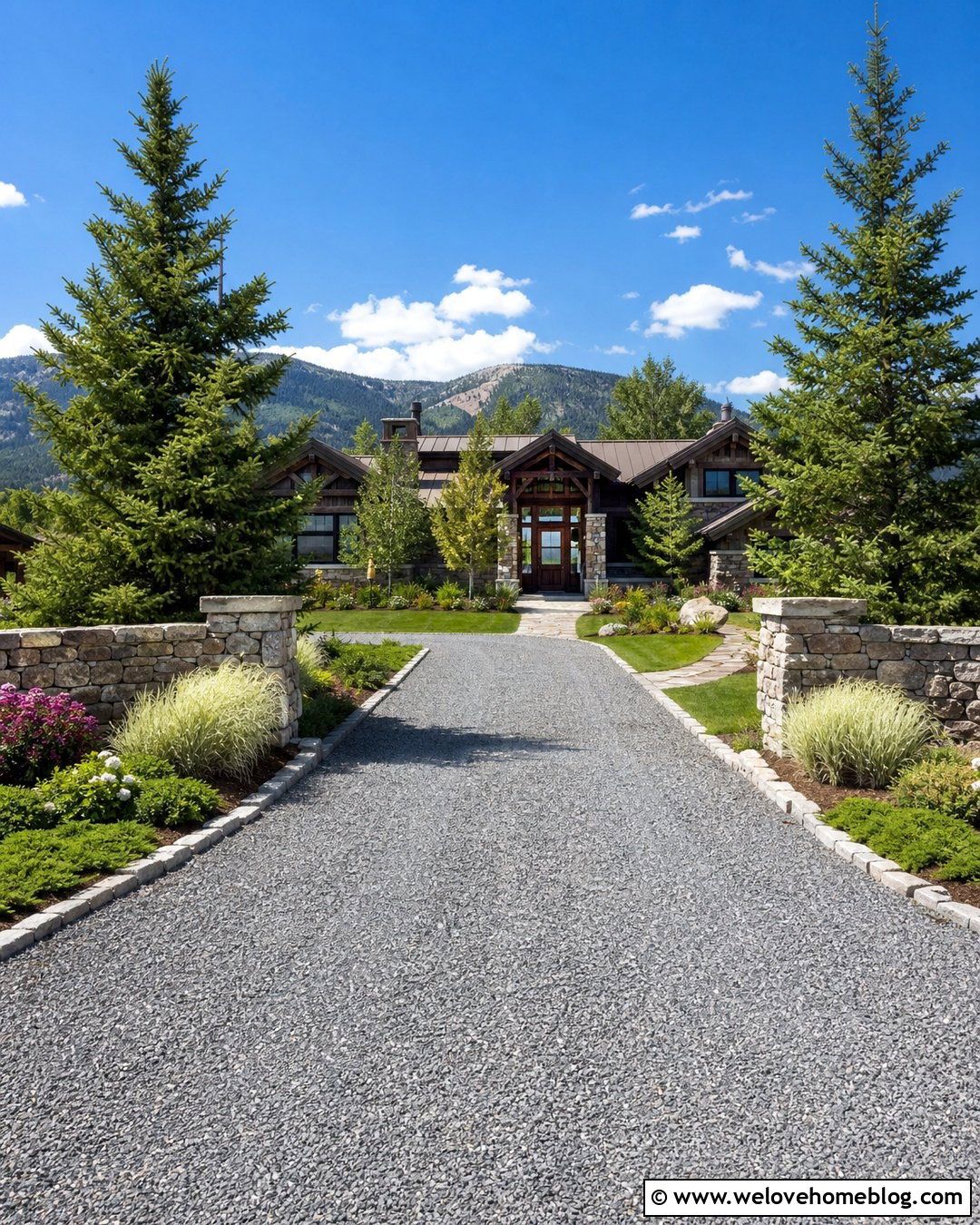
Evergreen trees give a driveway entrance structure through every season and can help visually separate the property from nearby homes. Place upright spruce or fir trees beyond low stone entrance walls, rather than immediately beside the pavement. A straight crushed gray gravel driveway with granite edging reinforces the simple, substantial character of the design. Add low junipers, native grasses, and clusters of flowering perennials around the tree bases so the entrance does not feel too heavy. Wide lawn areas can keep the approach open and bright. This complete look suits a mountain home, rustic lodge, or country property. Check the mature width of each evergreen before planting, since a small nursery tree may eventually extend much farther toward the driveway, road, or neighboring landscape.
7. Columnar Tree Driveway Entrance
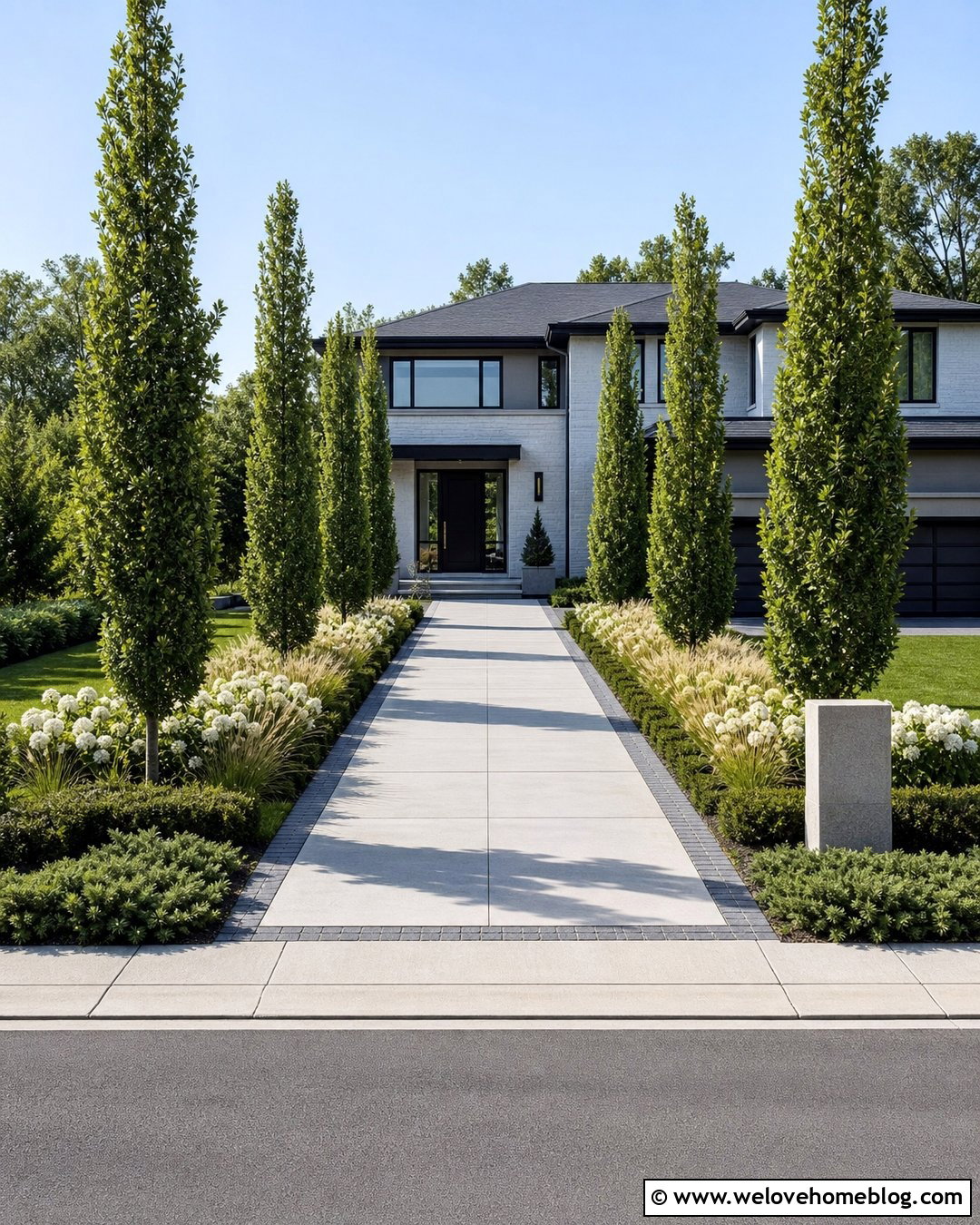
Columnar trees offer vertical impact where a narrow front yard cannot accommodate broad canopies. Line a compact straight driveway with a limited number of upright hornbeams, oaks, or maples placed in generous planting strips. Use light gray poured concrete with clean saw-cut joints and a contrasting charcoal paver border. Beneath the trees, keep the landscaping streamlined with clipped grasses, low evergreen ground cover, and white flowering perennials. A rectangular address monument can sit within one bed without blocking the trees or street view. This tailored entrance fits a modern two-story home or an urban infill property. Confirm the mature spread, root behavior, and regional suitability of any columnar cultivar. Consistent spacing will make the narrow trees feel intentional and visually guide the driveway toward the house.
8. Palm Tree Driveway Entrance
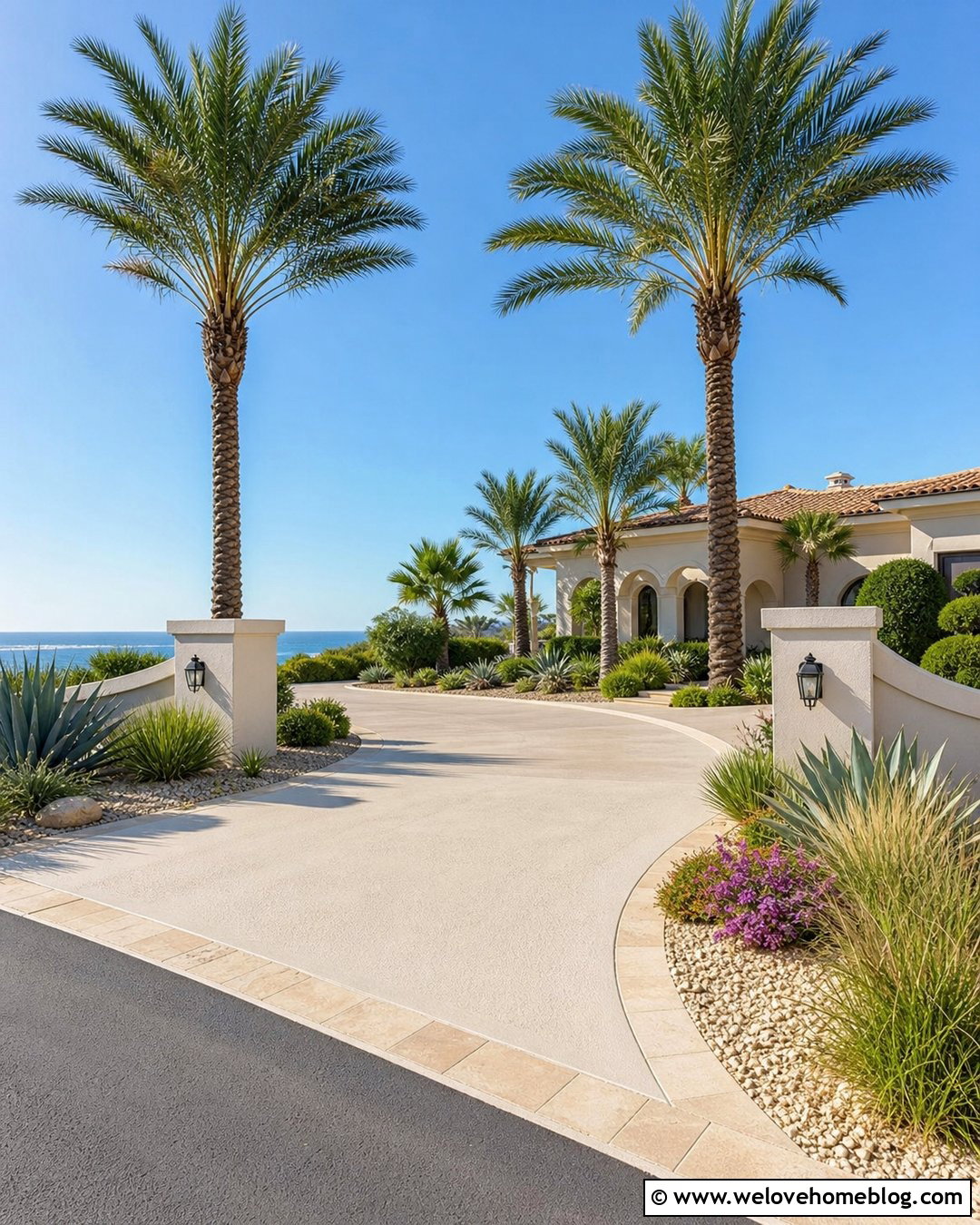
Tall palms can turn a sunny driveway into a relaxed coastal entrance while keeping the ground-level view relatively open. Place matching palms beyond stucco entrance walls on each side of a sweeping cream-colored concrete driveway. A border of warm beige travertine pavers can connect the driveway to the architecture of a Mediterranean or coastal home. Surround the palms with sculptural agave, dwarf palmetto, ornamental grass, and low flowering ground cover. Use pale decorative gravel between plants for a clean, water-conscious finish. Avoid overcrowding the entrance with many palm varieties; repeating one suitable species creates a calmer result. Before planting, select palms appropriate for local cold tolerance, wind exposure, and mature height, especially where overhead utilities or neighboring structures limit vertical space.
9. Olive Tree Driveway Entrance
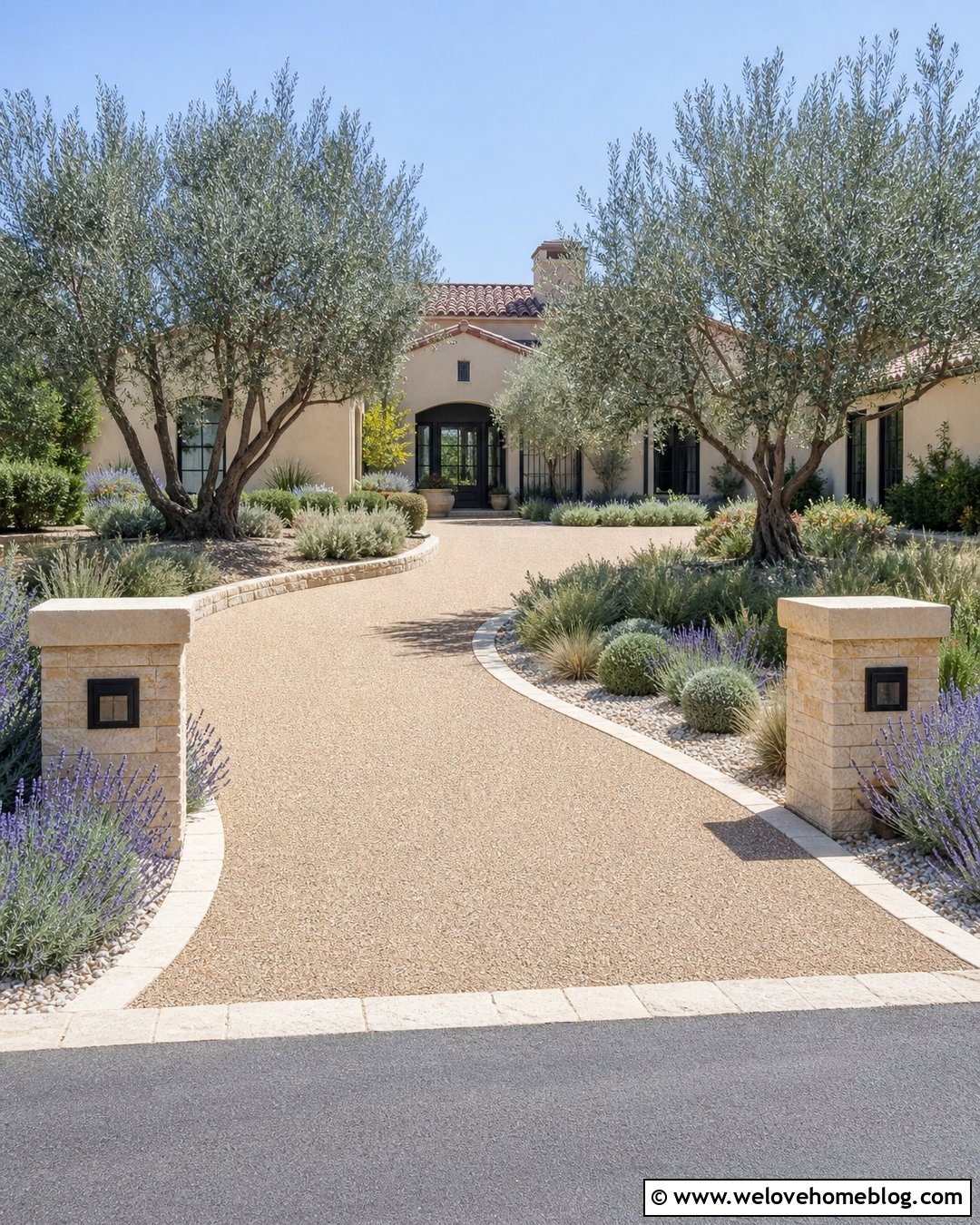
Silvery olive foliage pairs naturally with warm stone and creates a soft Mediterranean driveway entrance. Frame a gently curved buff-colored resin-bound gravel driveway with two multi-trunk olive trees set inside large, drought-conscious planting beds. Use limestone block edging and repeat the same stone on low entrance pillars. Lavender, rosemary, santolina, and compact ornamental grasses can surround the trees while keeping the road-facing area low and visible. A stucco house with a clay tile roof completes the cohesive look. Where fruit drop would be inconvenient, consider a locally appropriate fruitless selection. In colder regions, use another hardy tree with similarly fine, gray-green foliage. The key is combining an airy tree form, pale paving, restrained planting, and simple masonry into one unified entrance.
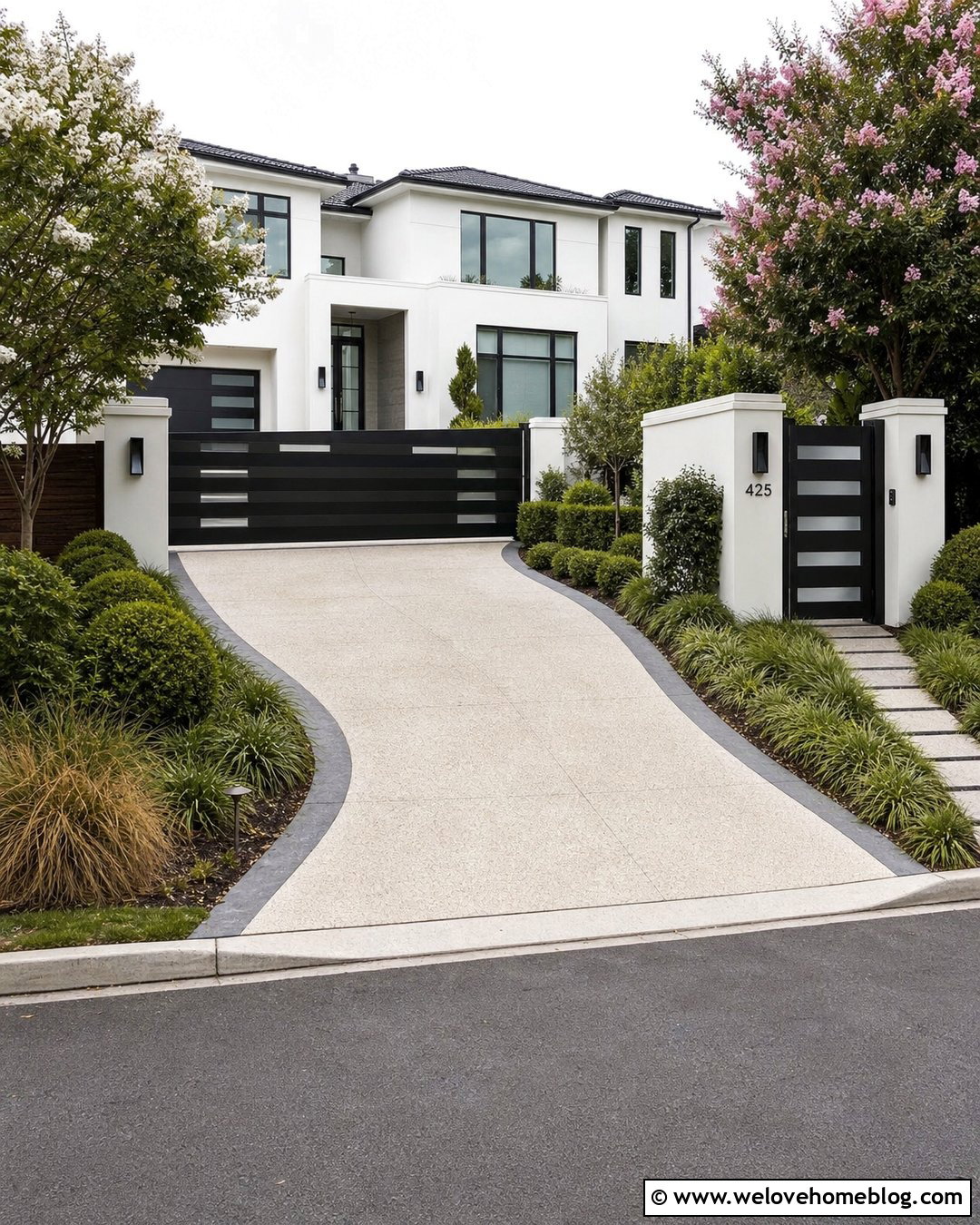
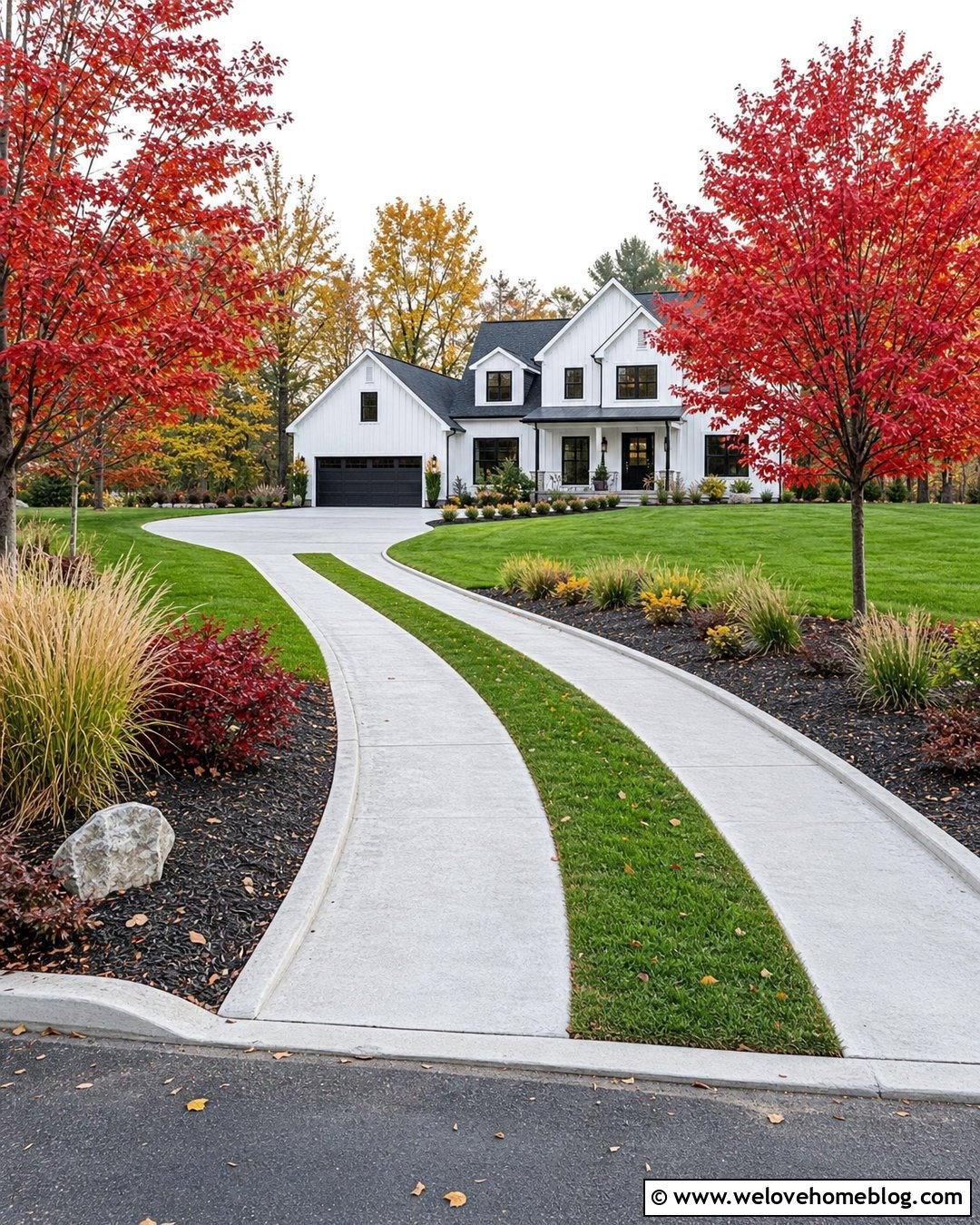
10. Magnolia Tree Driveway Entrance

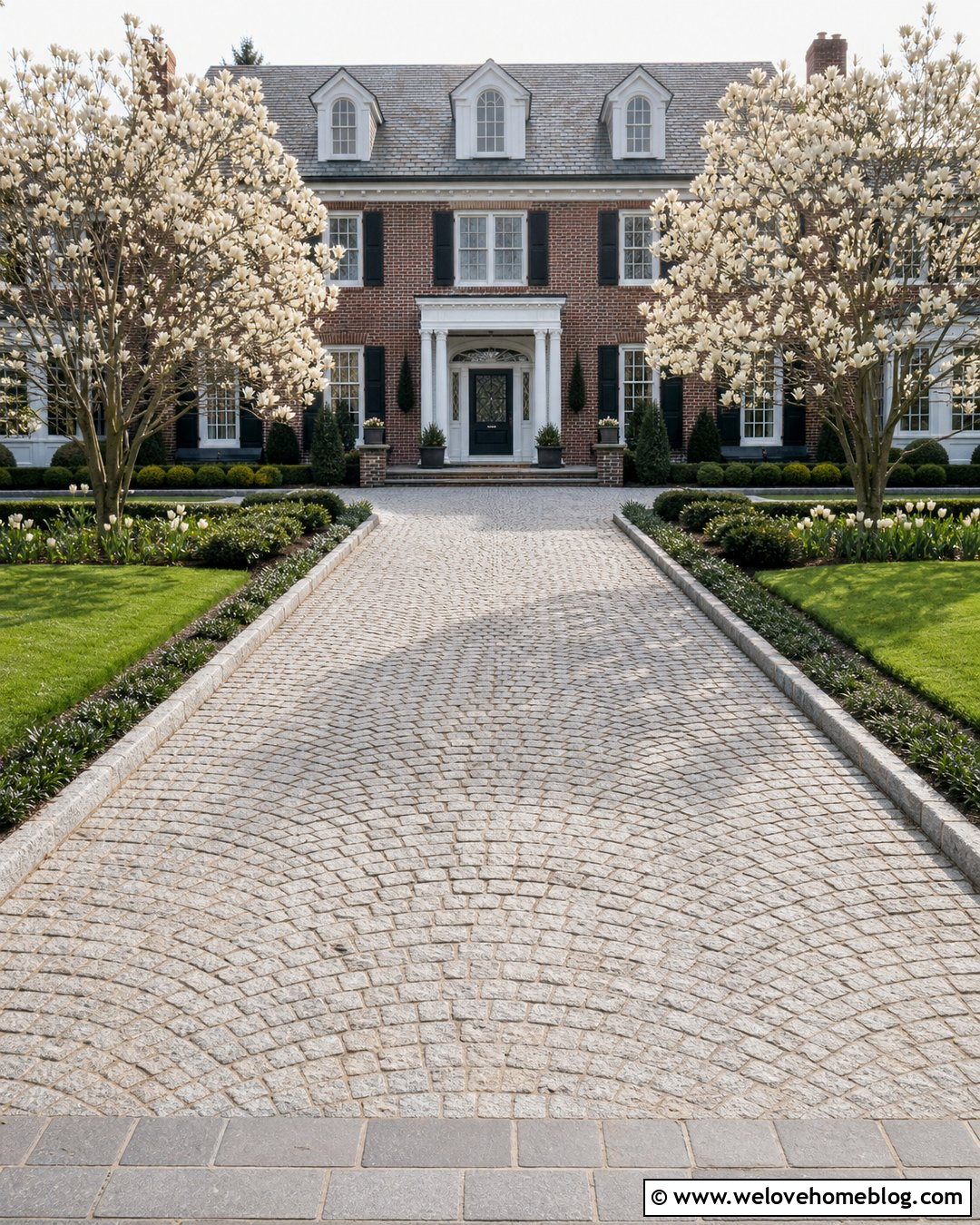
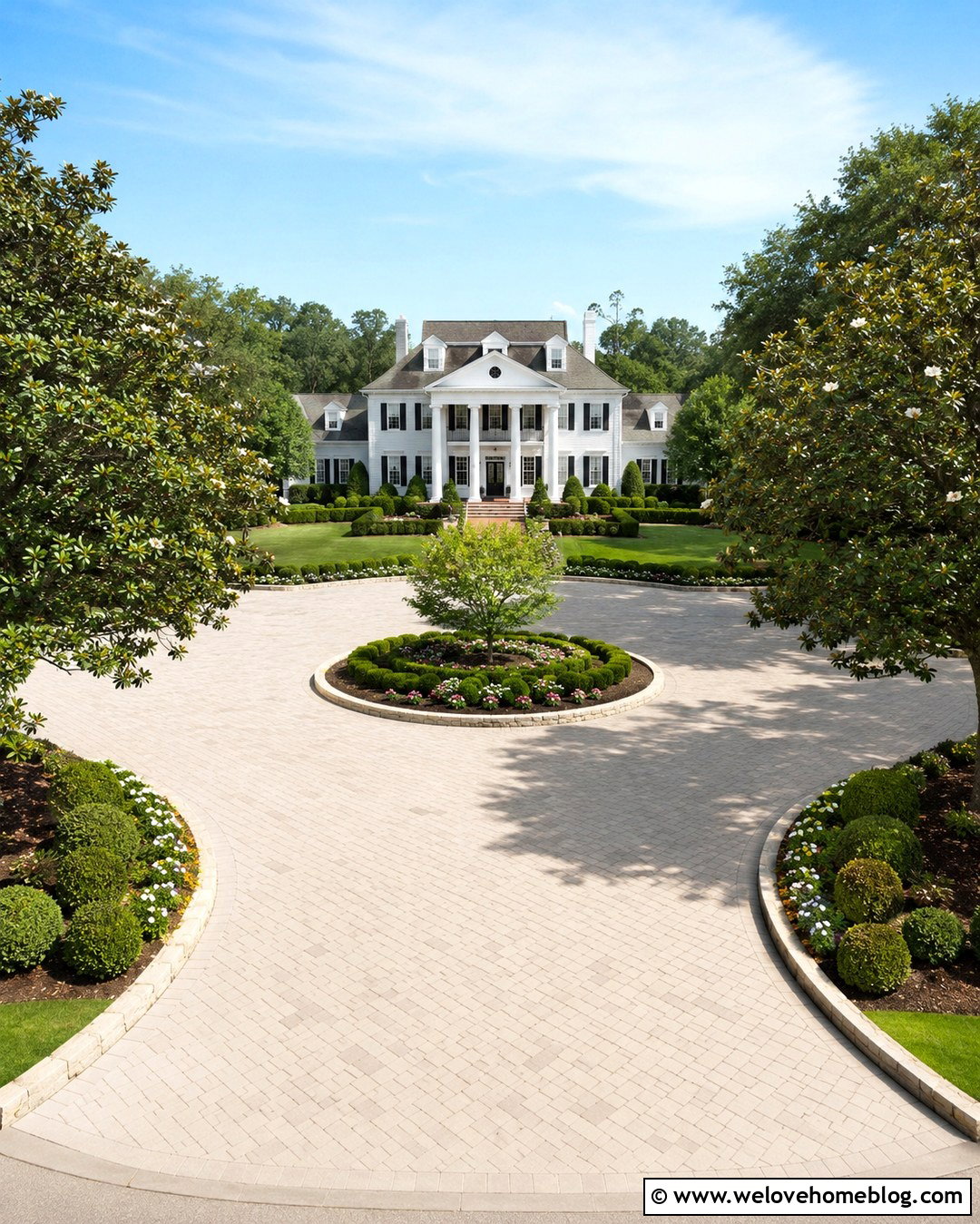
Large white flowers and glossy foliage can make magnolia trees impressive entrance features for a traditional property. Set one magnolia on each side of a broad circular concrete driveway, but place them well beyond the vehicle turning area. Edge the driveway with red brick pavers to coordinate with a Colonial or Southern-style house. Beneath the trees, create deep beds containing compact hollies, shade-tolerant ground cover, and drifts of white flowering perennials. Keep the planting symmetrical near the entrance, then allow it to become more relaxed toward the home. Smaller magnolia cultivars can provide a similar effect on moderate lots. Plan carefully around the mature canopy and root zone, since the entrance should remain spacious enough for vehicles while giving the trees room to develop naturally.
11. Redbud Tree Driveway Entrance
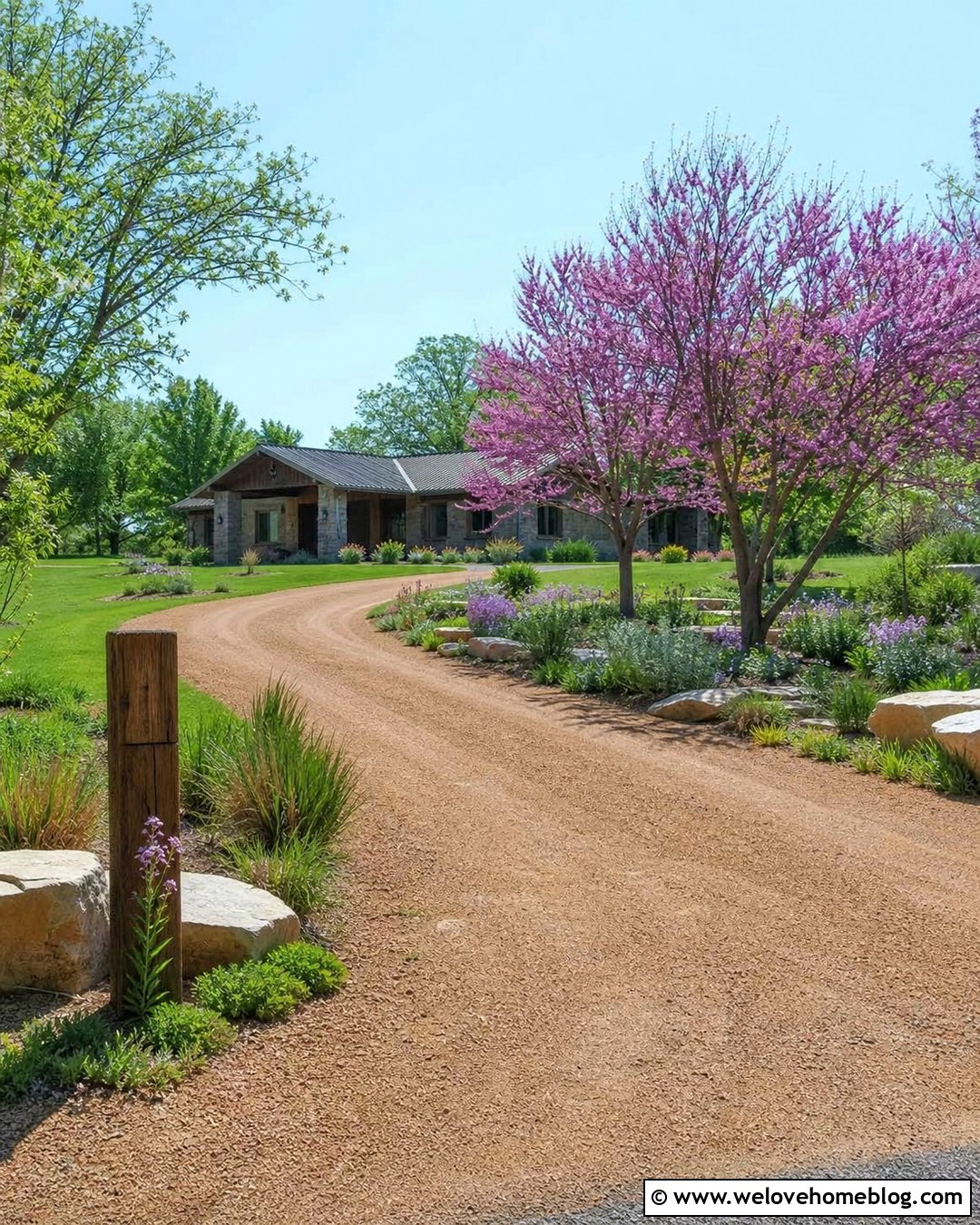
Redbuds can bring vivid early-season color to an informal driveway without overwhelming the front yard. Use one or three redbuds within a curved island beside a warm brown gravel driveway. Natural fieldstone edging can follow the curve, while native grasses, coneflowers, sedges, and low shrubs create a relaxed understory. On the opposite side, repeat a smaller planting bed to balance the entrance without forcing perfect symmetry. A timber address post can coordinate with a farmhouse or rustic ranch house in the distance. Leave open lawn around the road connection to preserve clear visibility. Redbuds are especially effective when their branching shape can be seen against a simple background, so avoid planting tall shrubs directly behind or beneath every section of the canopy.
12. Serviceberry Driveway Entrance
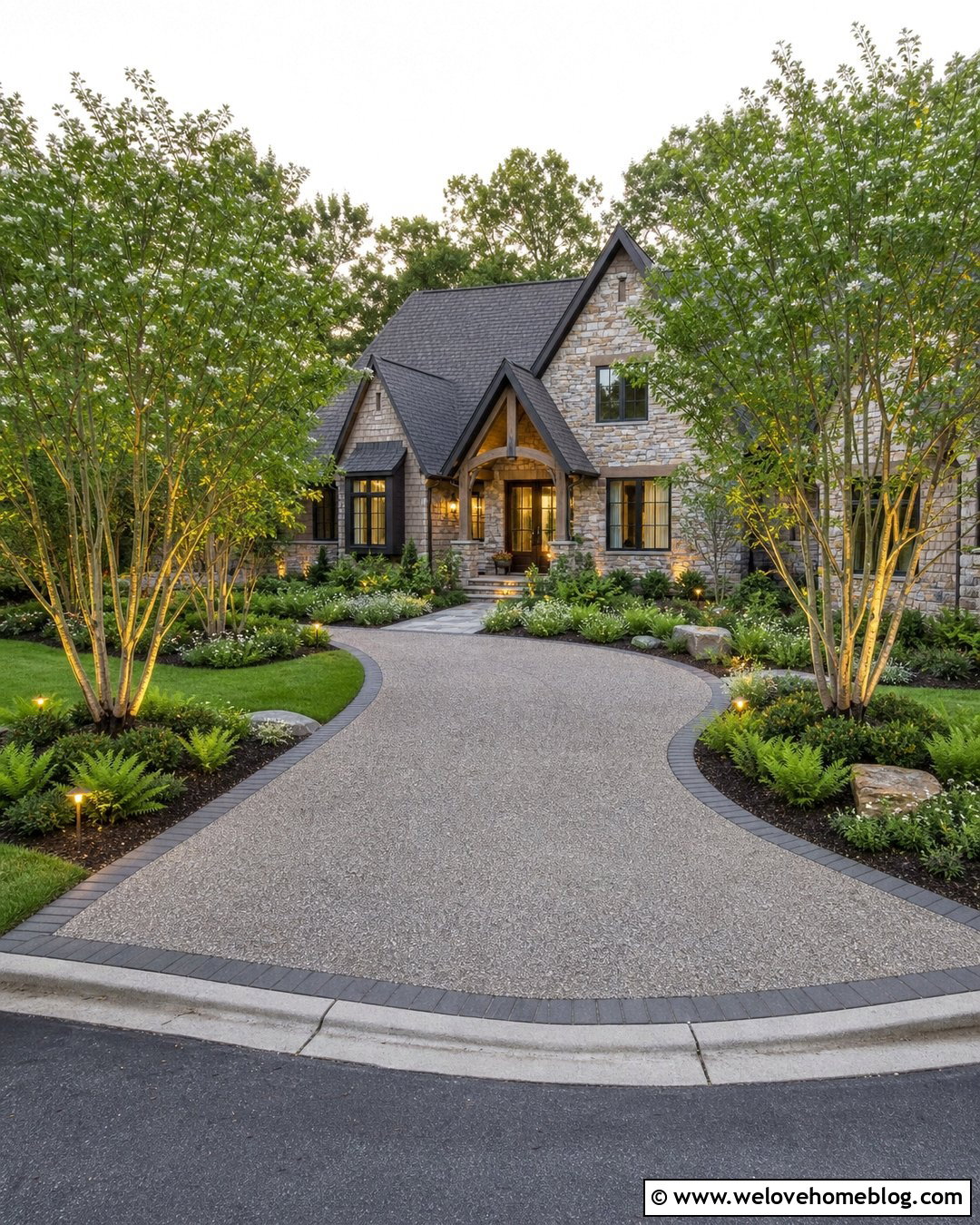
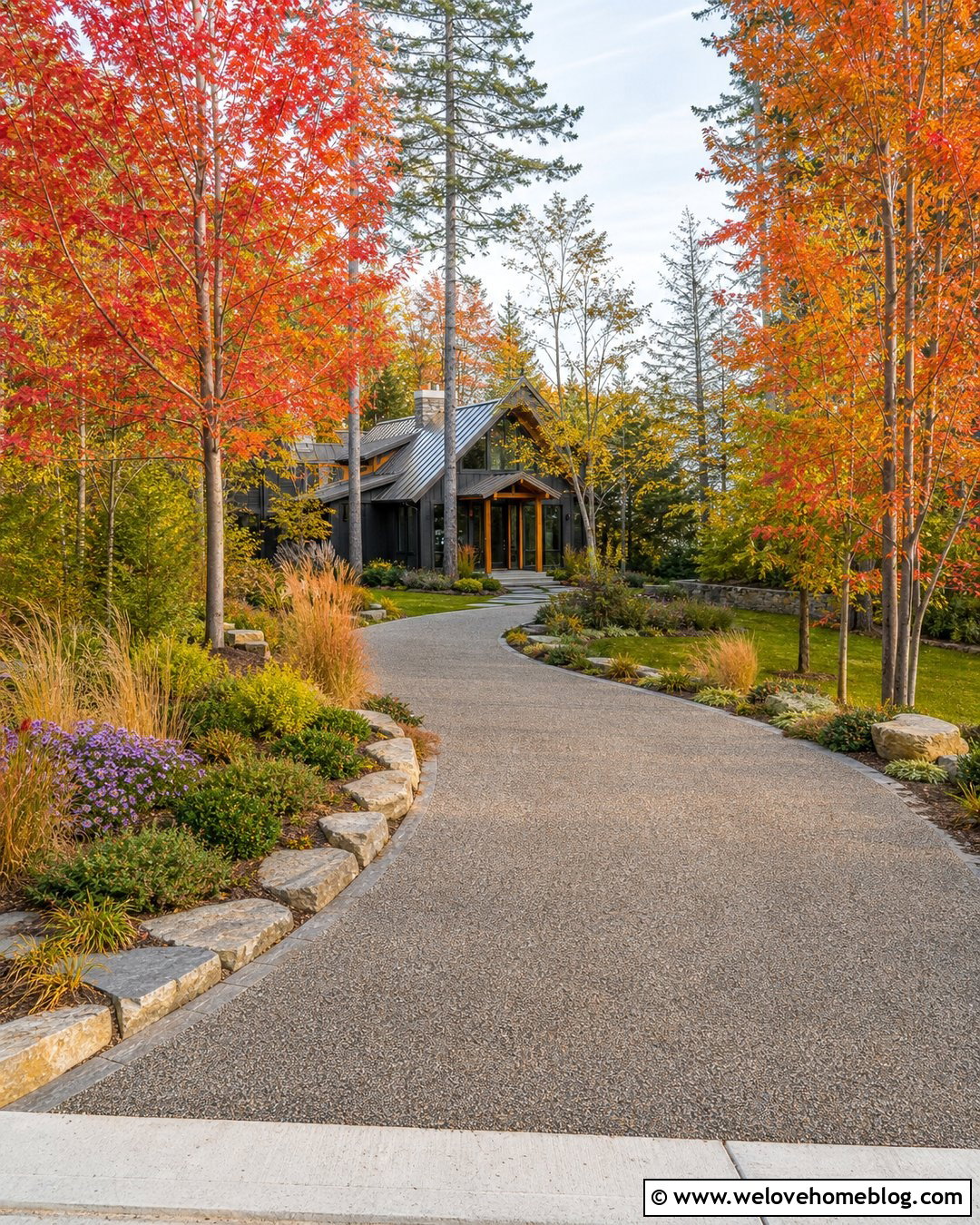
Serviceberry trees provide a graceful scale for a residential driveway entrance and blend well with naturalistic planting. Position multi-stemmed trees in broad beds beside a curved exposed aggregate concrete driveway. A flush border of charcoal concrete pavers can keep the edges tidy without making the design feel overly formal. Underplant with native ferns, sedges, inkberry, and seasonal perennials selected for local conditions. Continue the planting toward a stone walkway so the entrance and front door feel visually connected. This layout suits a Craftsman home, woodland cottage, or updated ranch. Keep the tree canopies back from the vehicle path and allow enough bed depth for future growth. Soft landscape lighting can highlight the trunks while remaining concealed among the low plants.
13. Crabapple Tree Driveway Entrance
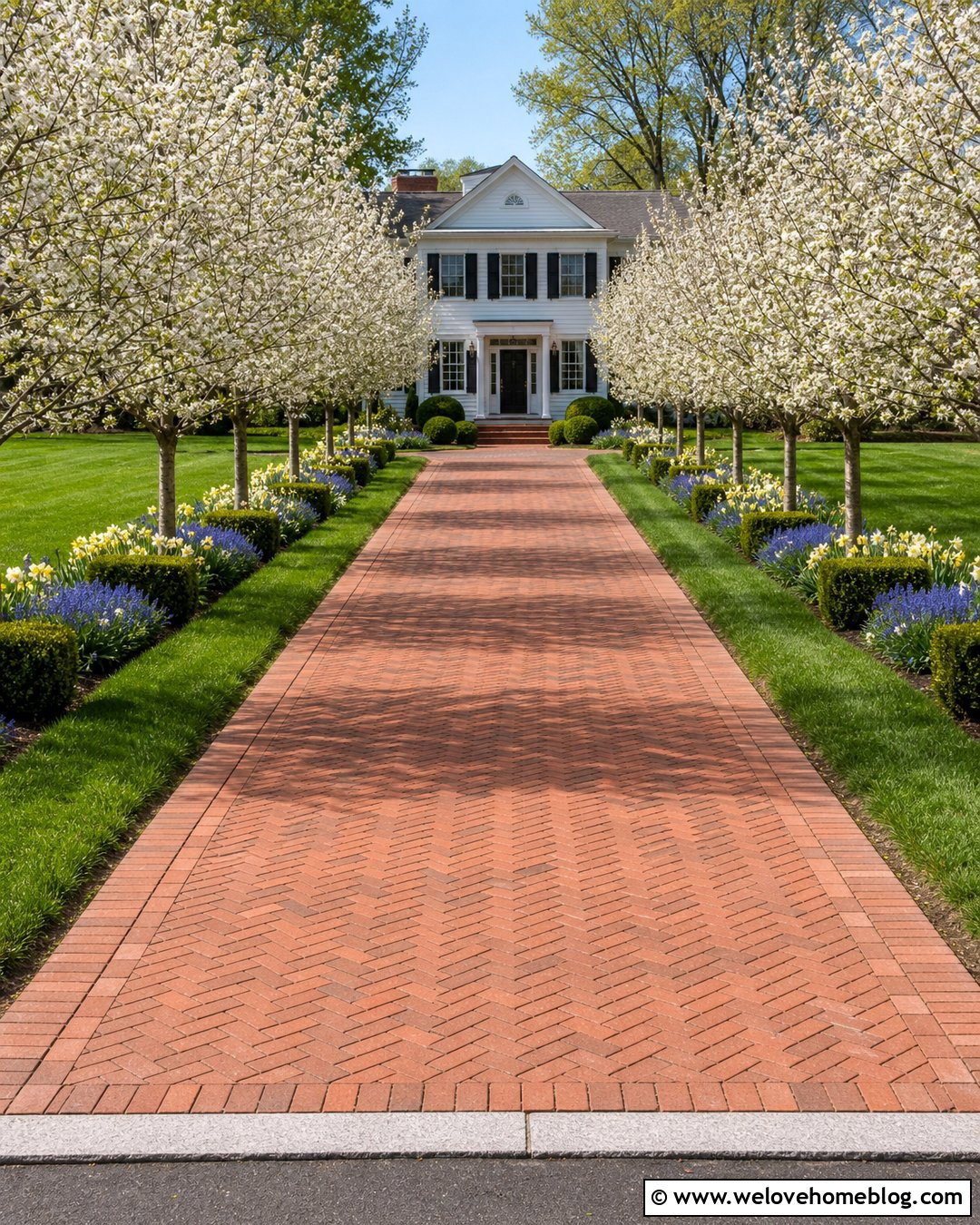
A crabapple-lined entrance can provide the appearance of a small flowering allée without requiring an estate-sized property. Plant matching disease-resistant cultivars along both sides of a straight clay brick paver driveway, using even spacing and wide turf strips around the trunks. Set the brick in a herringbone pattern with a soldier-course border for a crisp, traditional finish. Low boxwood, catmint, and spring bulbs can define the entrance beds without hiding the branching structure. This orderly design works particularly well with a white Colonial or Georgian-inspired house. Select trees with suitable mature dimensions and fruit characteristics for an area near paving. Prune only as needed for clearance and healthy form. The repeated trunks and consistent brick pattern should create one clear visual route to the home.
14. Maple Tree Lined Driveway Entrance
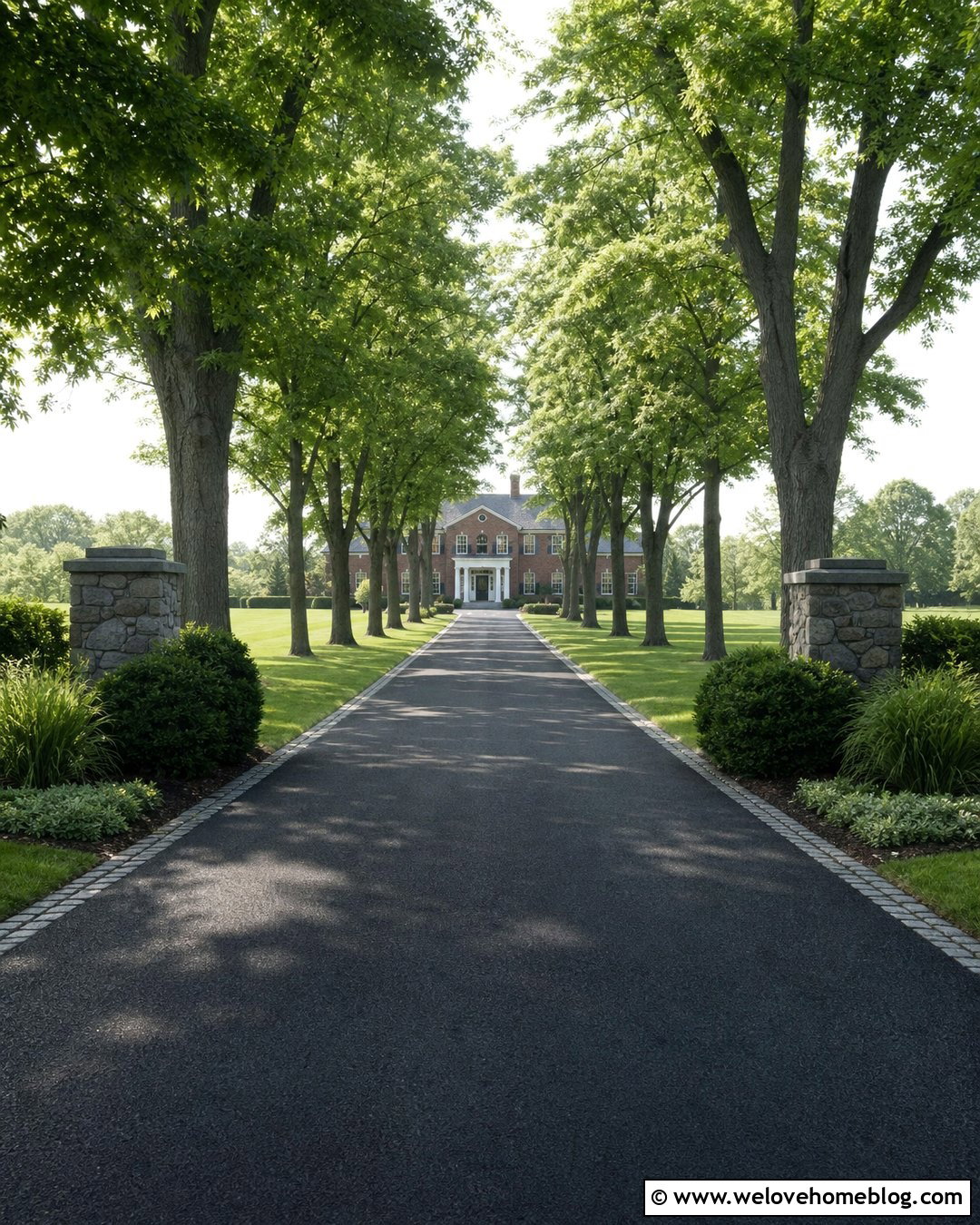
A long maple-lined driveway can create a strong sense of direction across a large front yard. Pair evenly spaced maples with a straight black asphalt drive bordered by flush granite cobblestones. Wide grass verges between the pavement and trees give roots and canopies more room while maintaining a clean, classic appearance. At the street, use low stone pillars and simple planting beds filled with compact evergreen shrubs and ornamental grasses. Continue the maples toward a traditional farmhouse or brick estate home, stopping before the parking and turning area becomes crowded. Choose a maple species suited to local weather, soil, and available space. Consistent alignment matters, but safe setbacks and mature dimensions should determine the final spacing rather than forcing too many trees into the landscape.
15. Existing Mature Tree Driveway Entrance
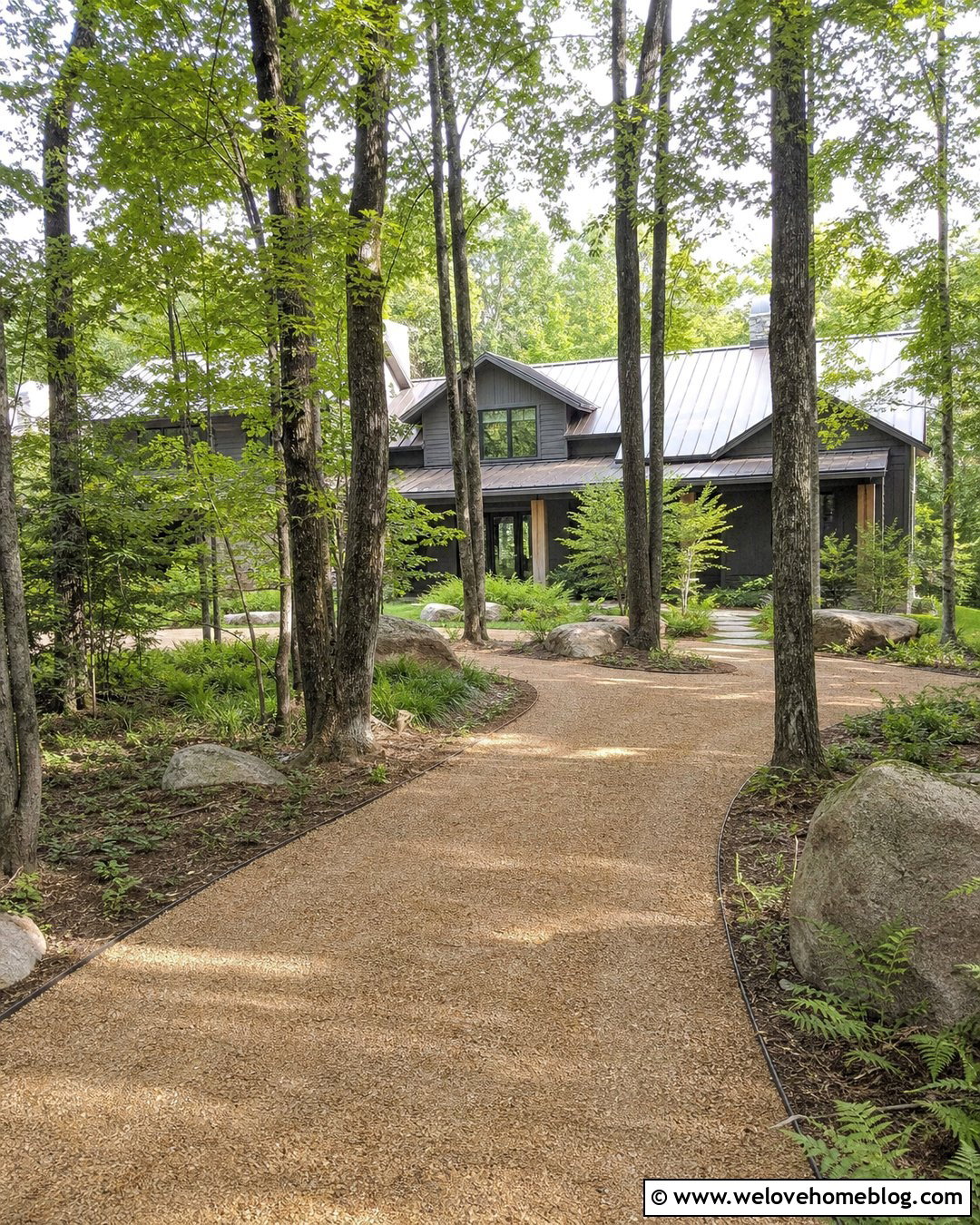
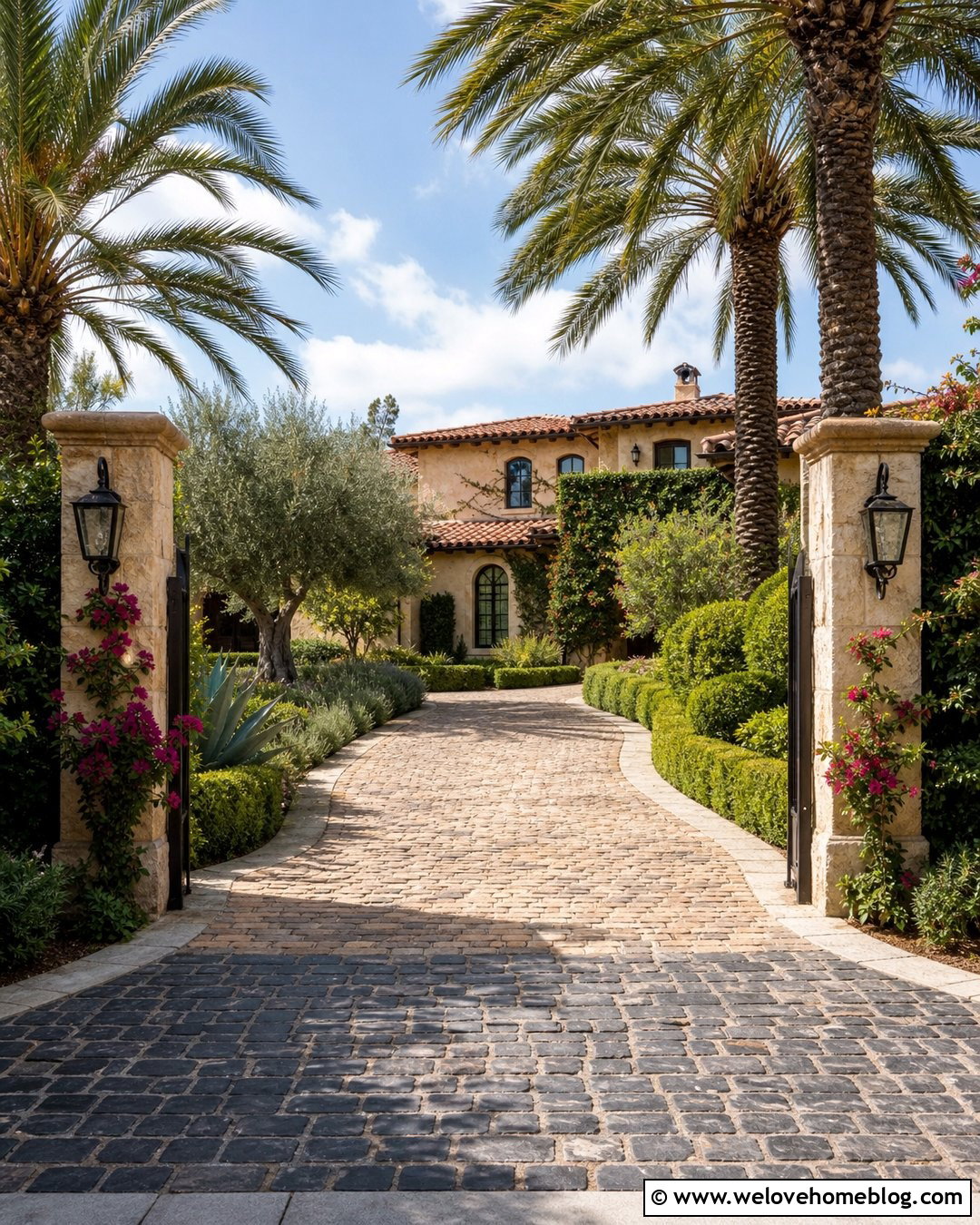
Existing mature trees can become the foundation of a distinctive driveway entrance instead of obstacles to remove. Curve a compacted tan gravel driveway gently between the trees while maintaining generous, unpaved root zones. Use steel edging or carefully placed fieldstones to contain the gravel without building raised beds against the trunks. Native ground cover, woodland sedges, ferns, and scattered boulders can fill disturbed areas while preserving a natural appearance. The approach may lead to a rustic contemporary home tucked behind the canopy. Avoid changing soil levels around established roots or directing heavy construction equipment across protected areas. An arborist and experienced driveway contractor can help refine the layout. The final design should appear shaped by the landscape, with the driveway following the trees rather than fighting them.
16. Curved Gravel Tree Driveway Entrance
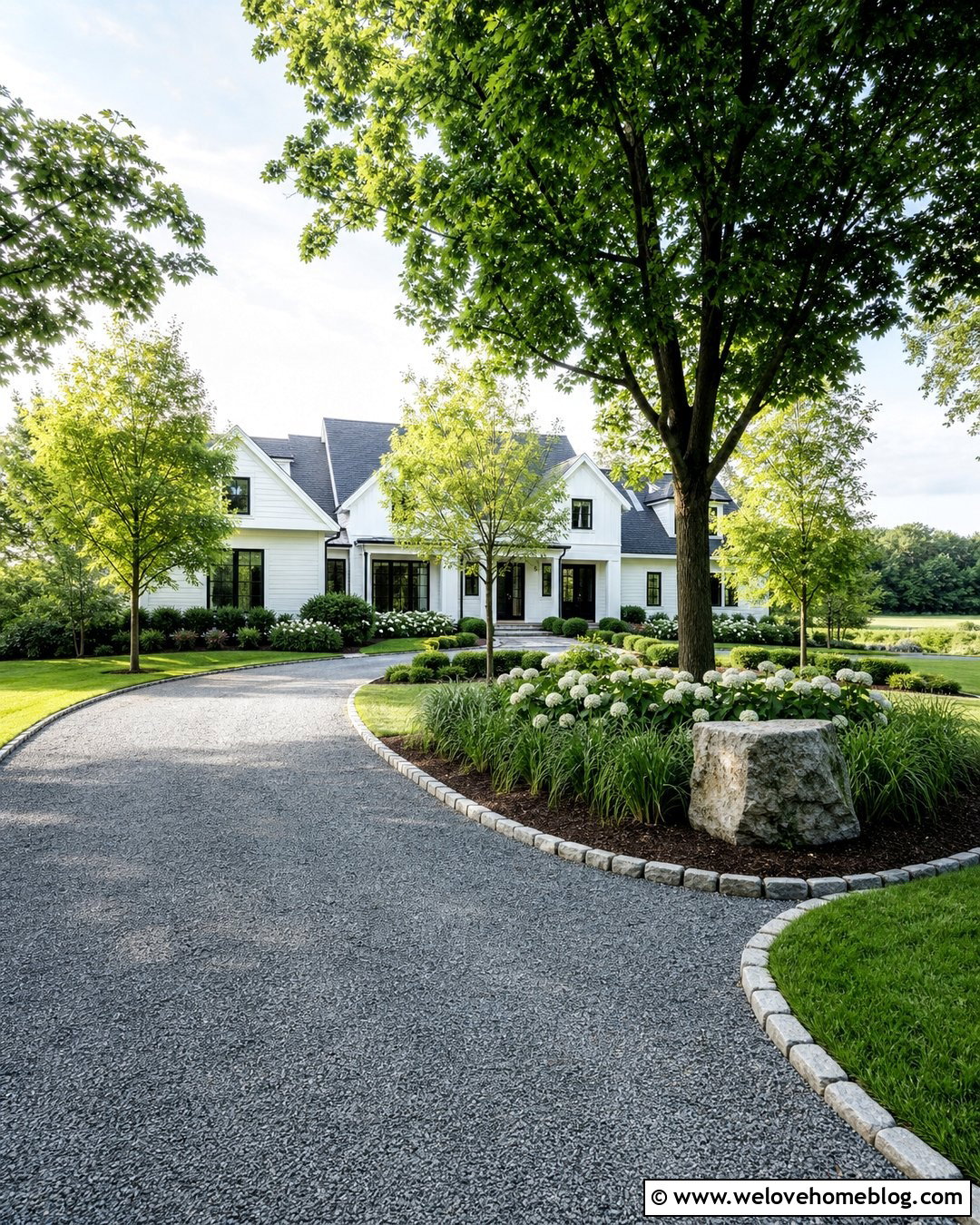
A curved gravel entrance feels relaxed and inviting when trees reveal the house gradually. Begin with a wide apron of compacted gray crushed stone, then bend the driveway around a landscaped island containing a mature shade tree. Granite cobblestone edging can hold the gravel in place and give the curve a crisp outline. On both sides, use staggered native trees, hydrangeas, ornamental grasses, and broad lawn areas instead of rigid matching rows. A simple stone address marker at the street can echo the edging material. This arrangement works well with a country house or modern farmhouse set back from the road. Maintain enough driveway width and clear space beneath branches so the curve remains functional for deliveries, guests, and everyday vehicle movement.
17. Circular Paver Tree Driveway Entrance
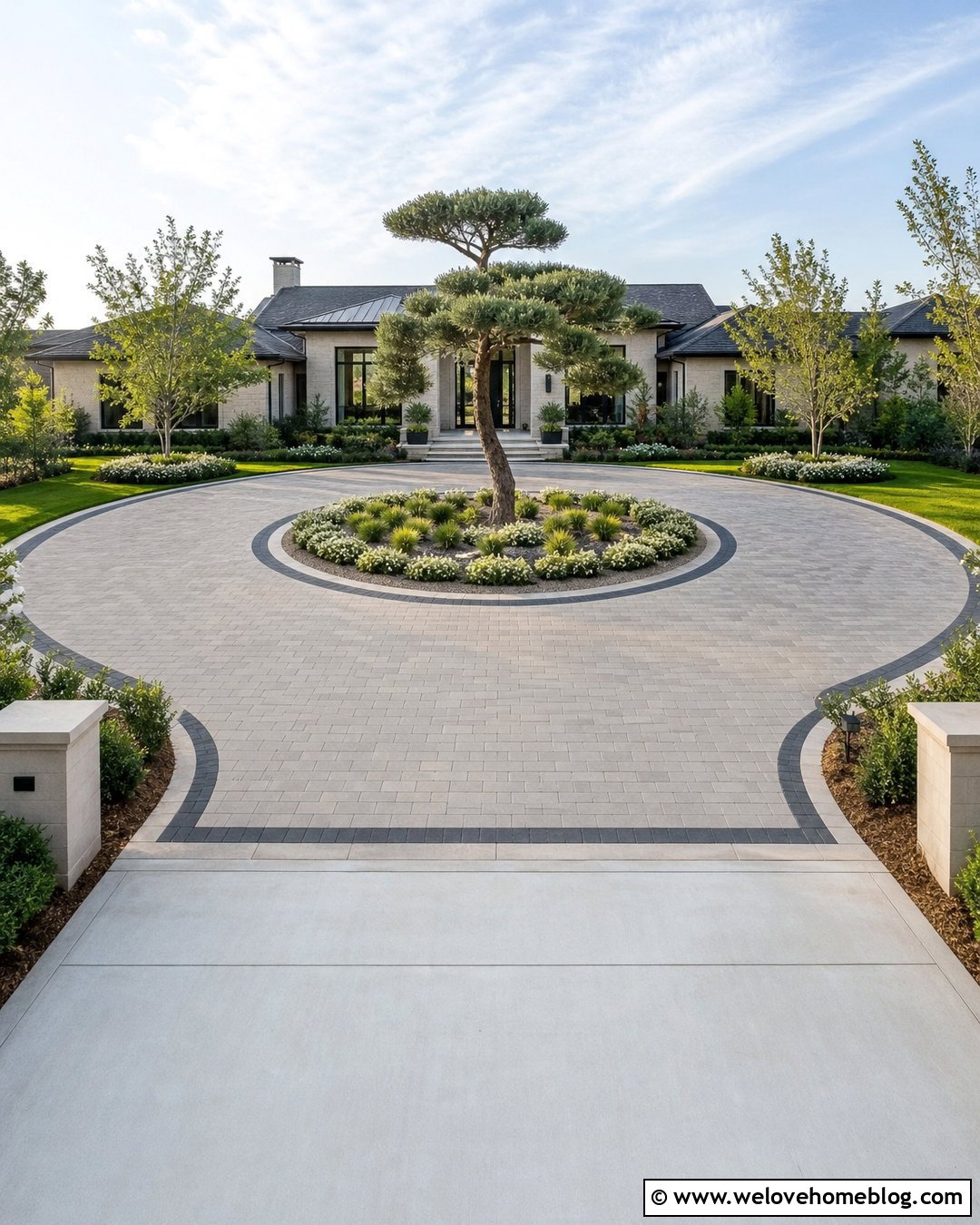
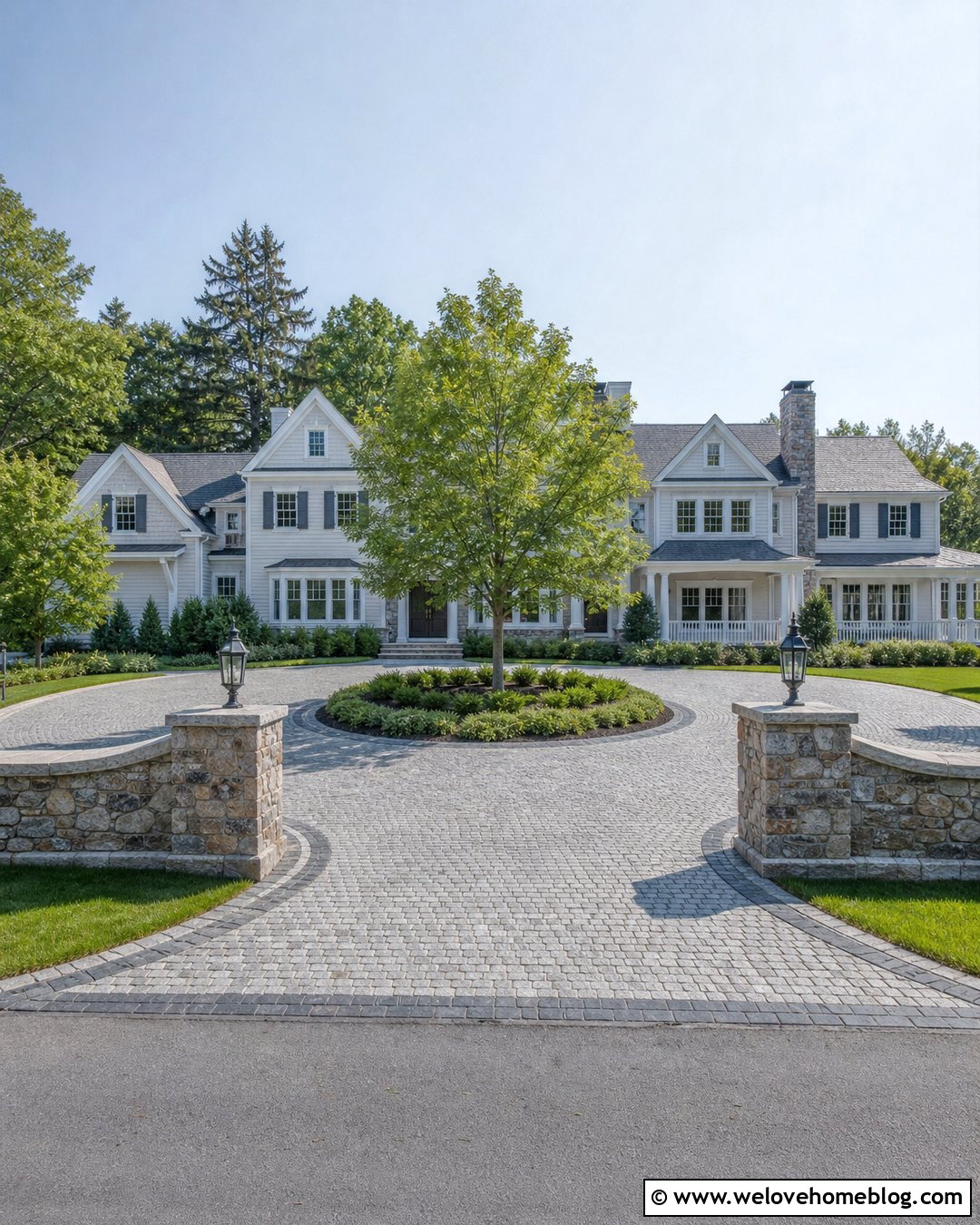
A circular driveway becomes more attractive when a central tree island anchors the entire layout. Use warm gray concrete pavers in a running bond pattern, with a darker paver band outlining the circle and both entrance lanes. Plant one well-proportioned specimen tree in the center island, surrounded by low evergreen shrubs, flowering ground cover, and ornamental grasses. Keep taller planting near the middle so drivers retain a clear view across the circle. Matching smaller trees can frame the two street openings without competing with the central focal point. This design suits a large ranch, Colonial, or contemporary home with a broad facade. Scale is crucial: the island, tree, driveway width, and house should look balanced when viewed together from the curb.
18. Farmhouse Tree Driveway Entrance
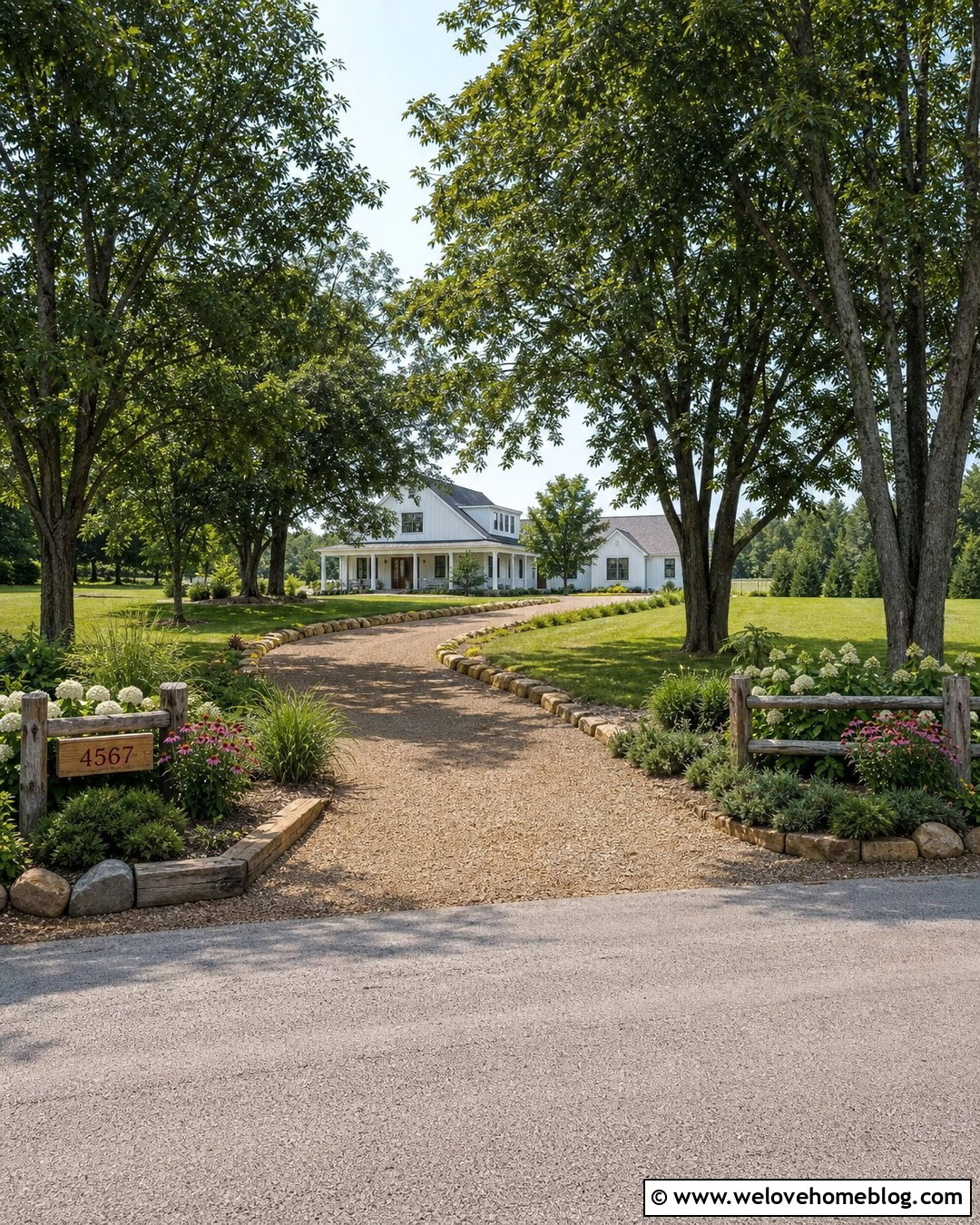
A farmhouse entrance should feel welcoming, practical, and connected to the surrounding land. Use a gently curved tan pea gravel driveway with heavy timber edging near the road and natural stone edging closer to the house. Frame the opening with native shade trees set behind split-rail fence sections. Informal beds of hydrangeas, ornamental grasses, coneflowers, and low evergreen shrubs can soften the fence corners. A simple wooden address sign adds function without making the entrance too formal. Continue scattered trees along the driveway rather than using a perfectly aligned row. The design should lead toward a white modern farmhouse with a broad porch and open lawn. Select durable regional trees that can handle the site’s wind, sun, soil, and available growing space.
19. Stone Pillar Tree Driveway Entrance
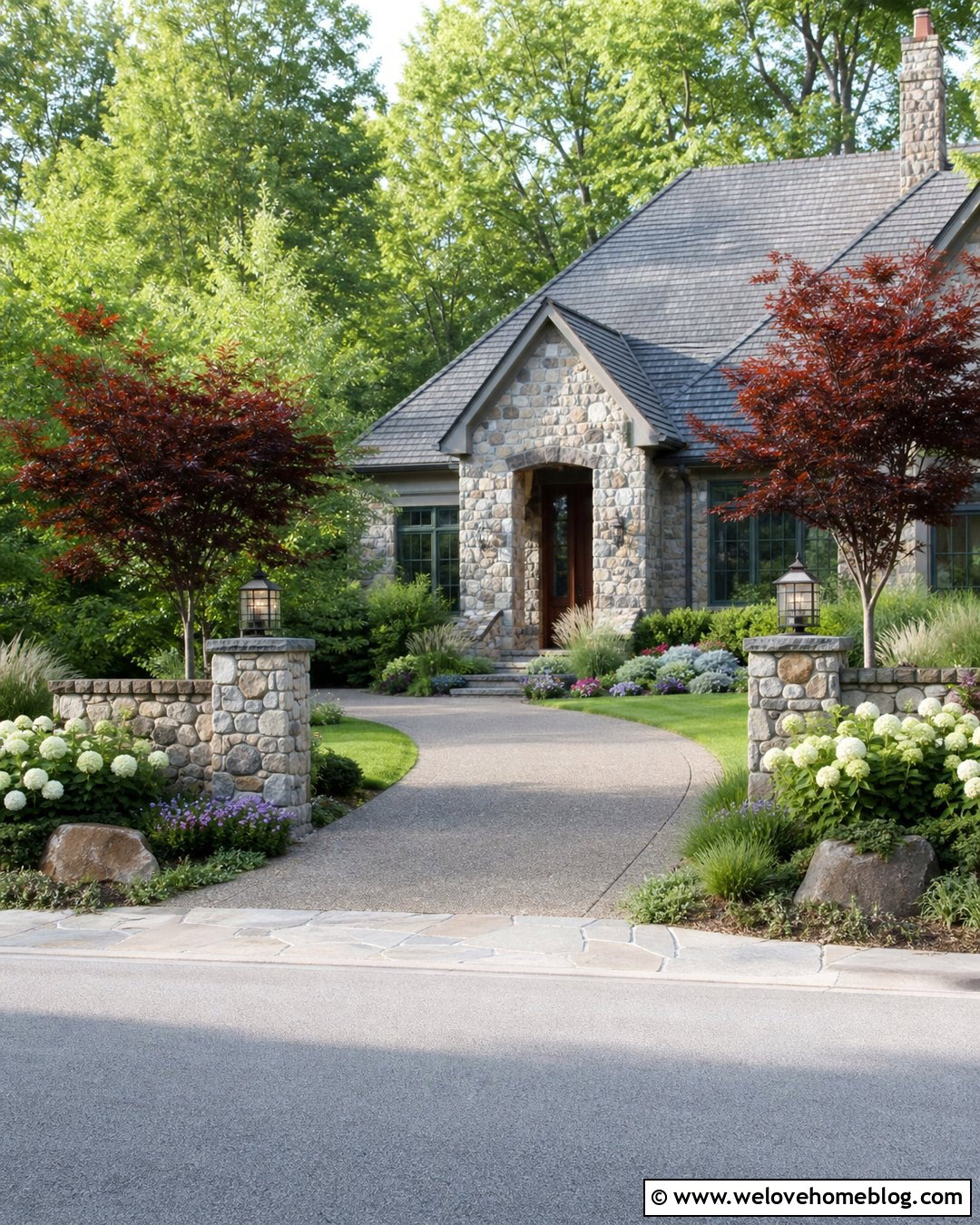
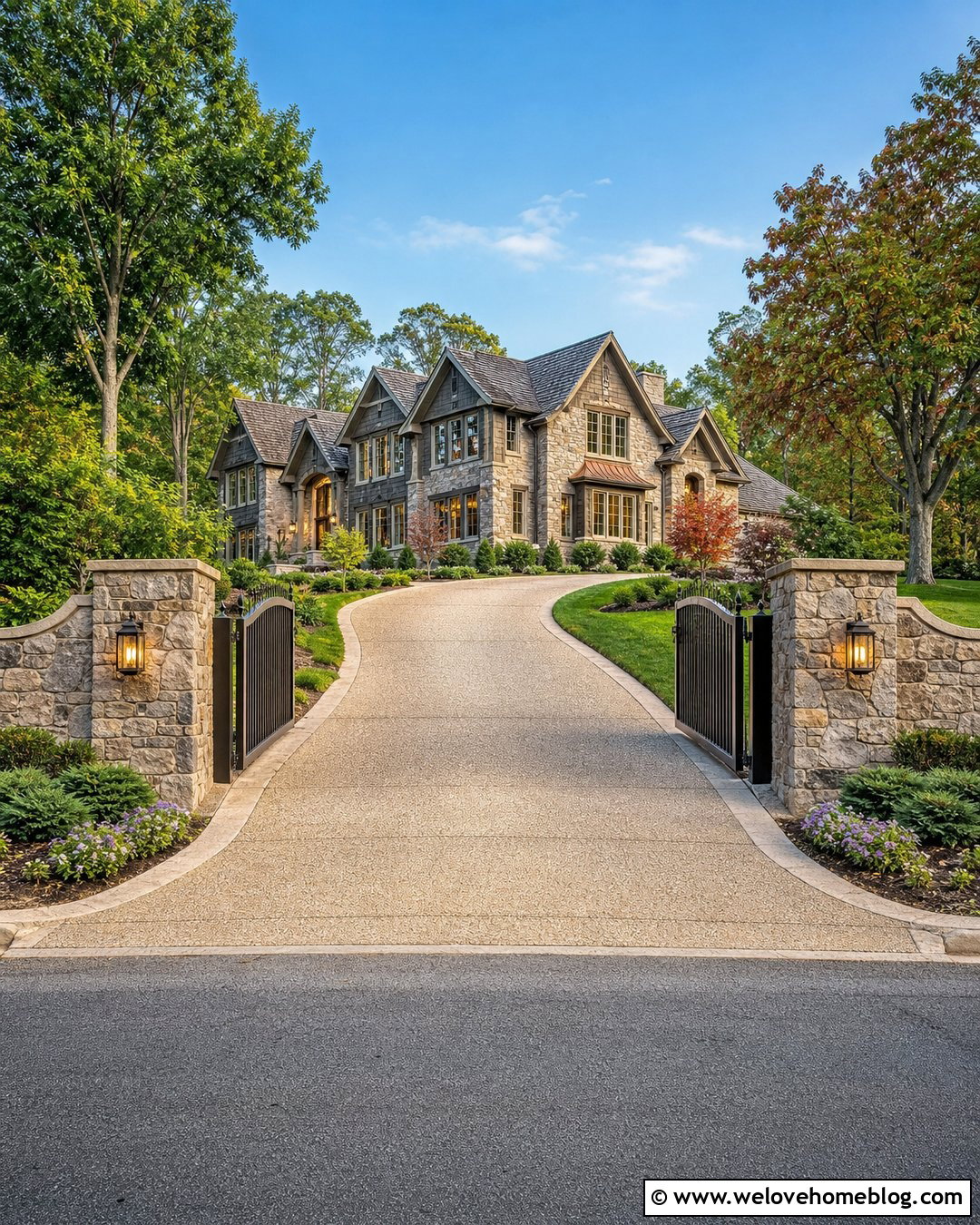
Stone pillars and matching trees can give a driveway entrance structure without requiring a full gate. Place substantial fieldstone pillars at the edges of a curved exposed aggregate driveway, then position ornamental trees several feet behind them in deep planting beds. Use a natural stone border around the beds to repeat the pillar material. Low junipers, hydrangeas, ornamental grasses, and seasonal flowers can fill the space between the masonry and trees. Lantern fixtures on the pillars add a clear arrival point while the trees provide height and softness. This complete look works with a stone Craftsman or traditional country home. Keep branches, shrubs, and pillar placement outside important sightlines. The masonry should feel proportional to the driveway rather than oversized or defensive.
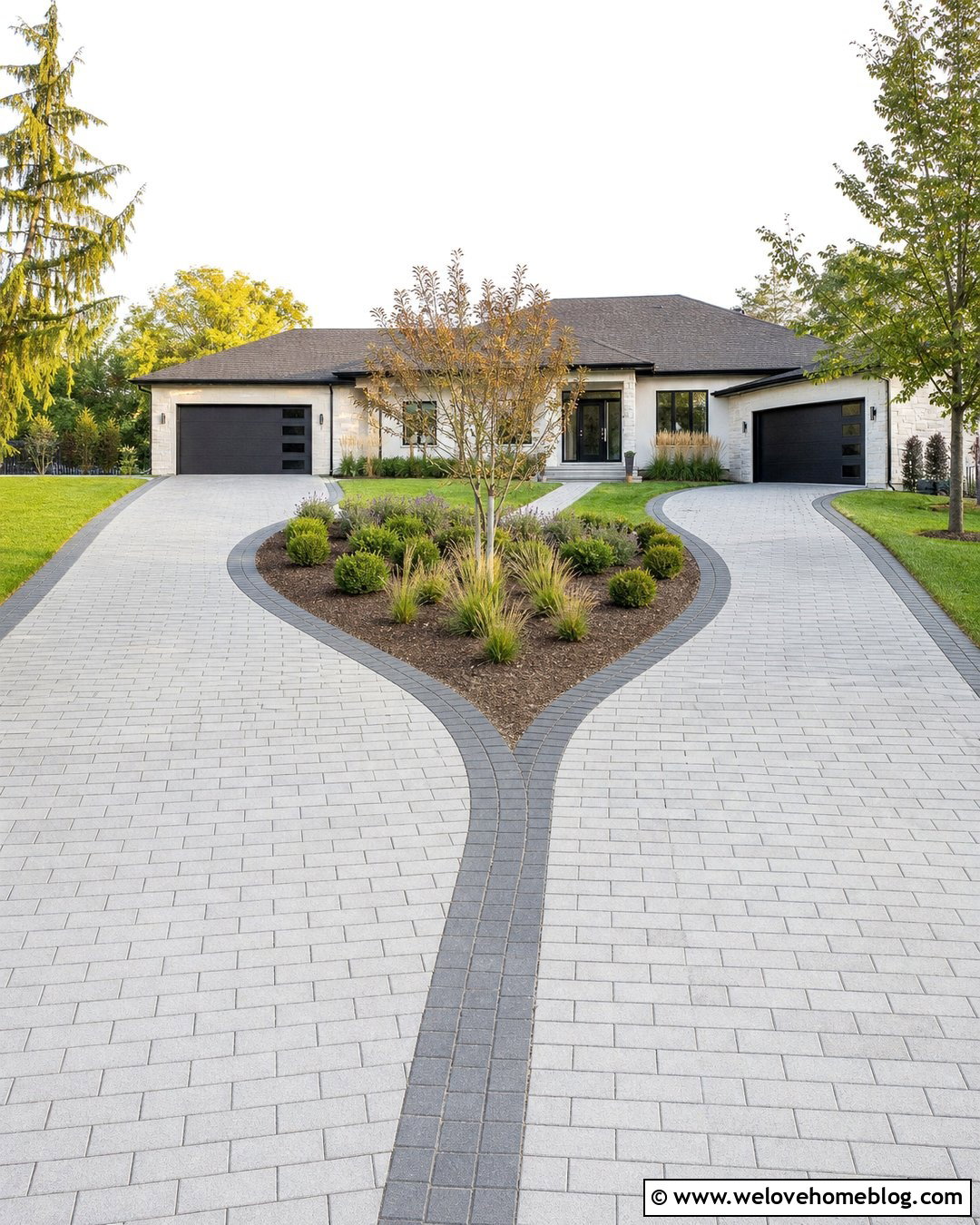
20. Brick Pillar Tree Driveway Entrance
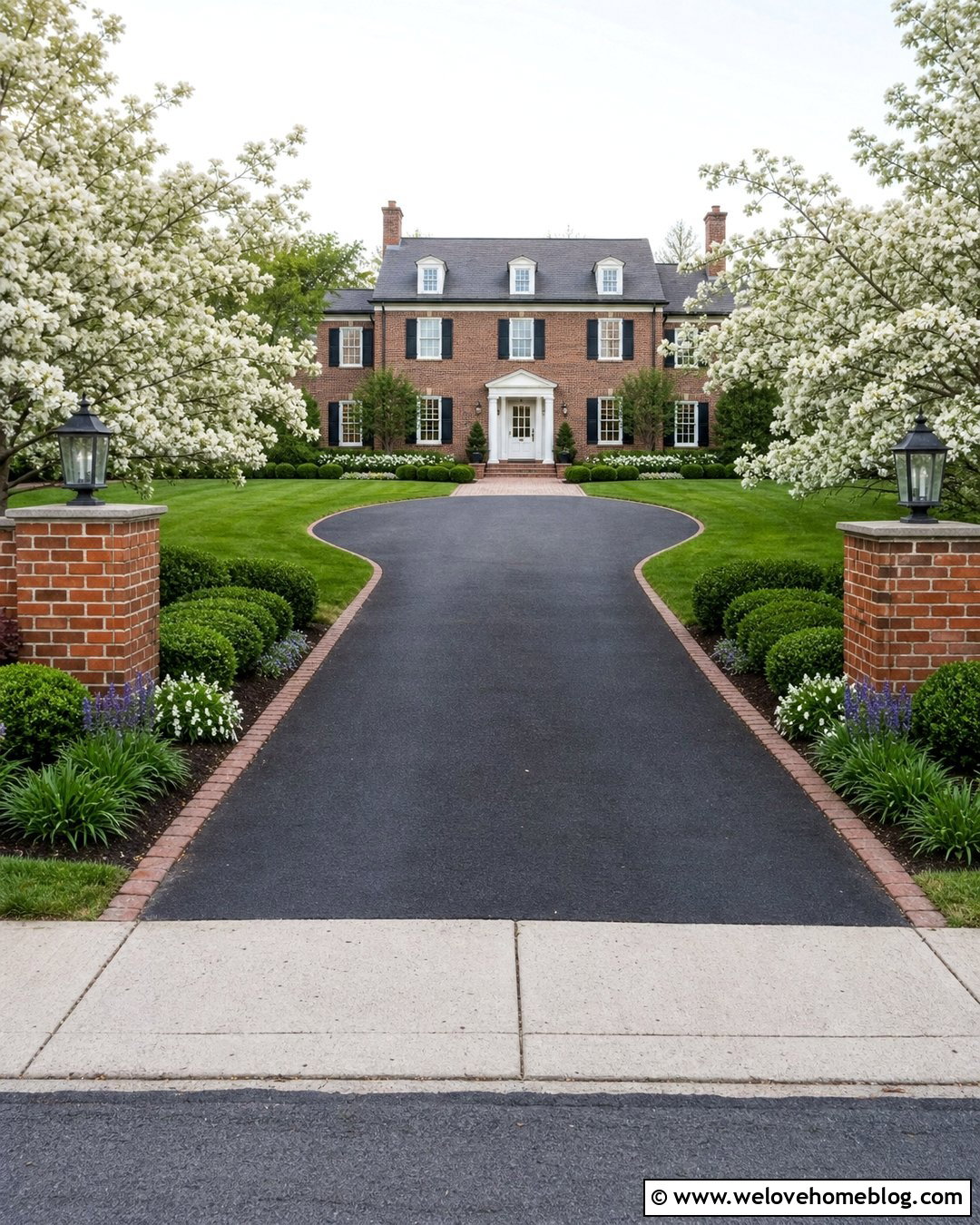
Brick entrance pillars look especially cohesive when they match details on the house and driveway border. Begin with a black asphalt driveway edged in red brick, then place two modest brick pillars at the street opening. Behind each pillar, plant a small flowering tree such as a locally suitable dogwood, redbud, or crabapple. Curved beds containing boxwood, catmint, dwarf grasses, and white flowers can tie the trees into the lawn. Use simple cap lights rather than overly ornate fixtures. A brick Colonial or traditional suburban home in the background completes the coordinated palette. Leave enough distance between the trees, pillars, and pavement for mature growth and easy maintenance. Repeating brick in controlled amounts keeps the entrance polished without making it visually busy.
21. Gated Tree Driveway Entrance
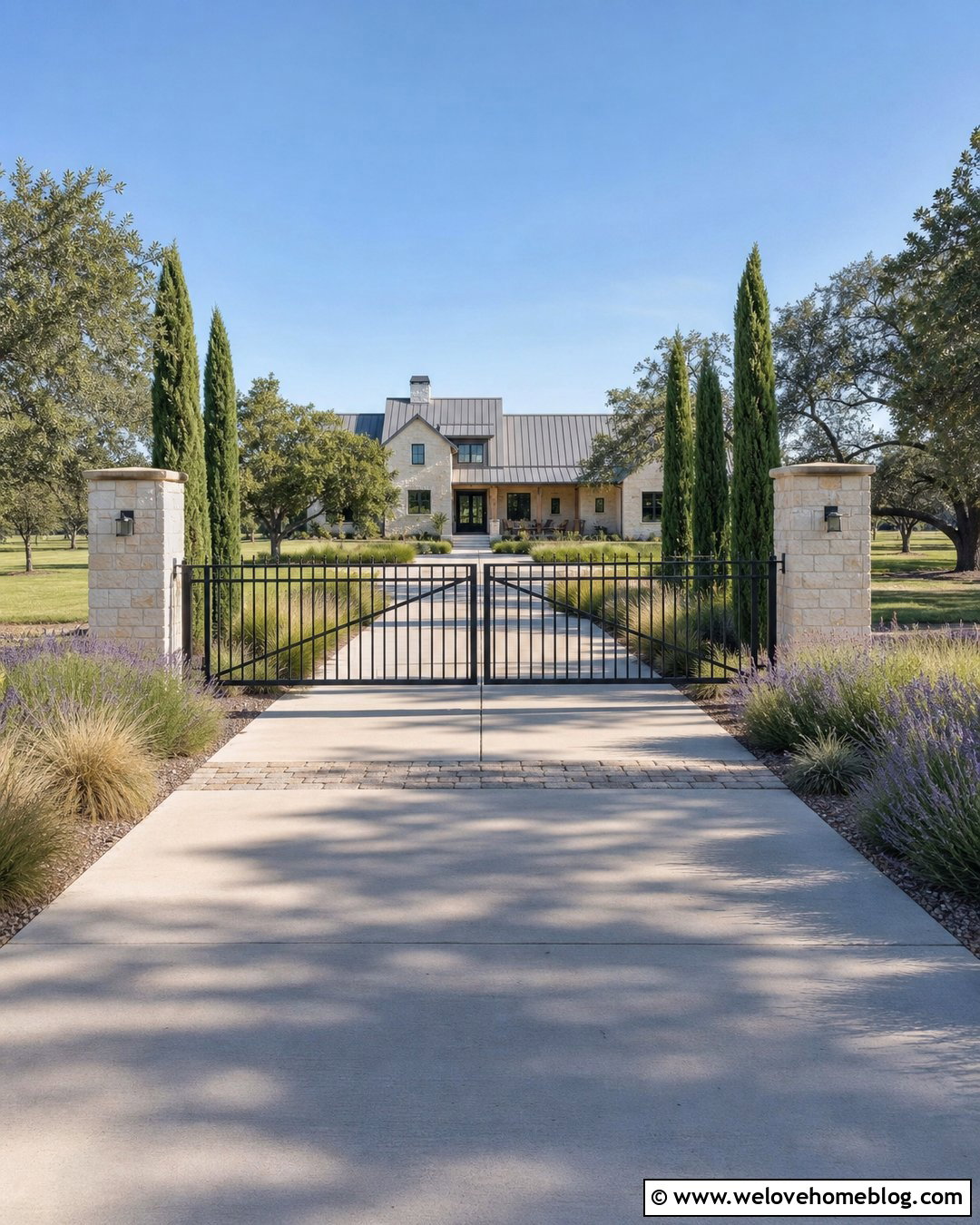
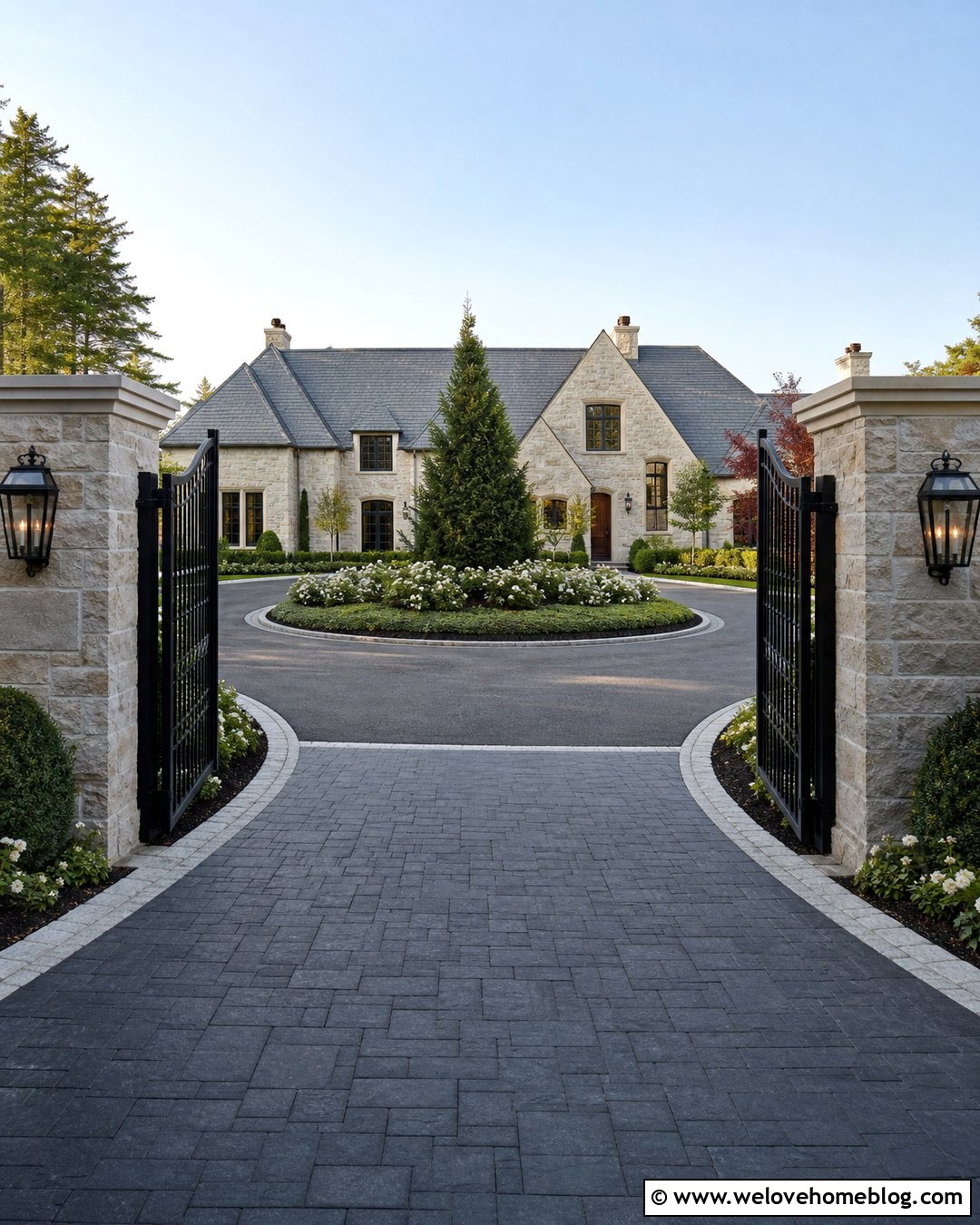
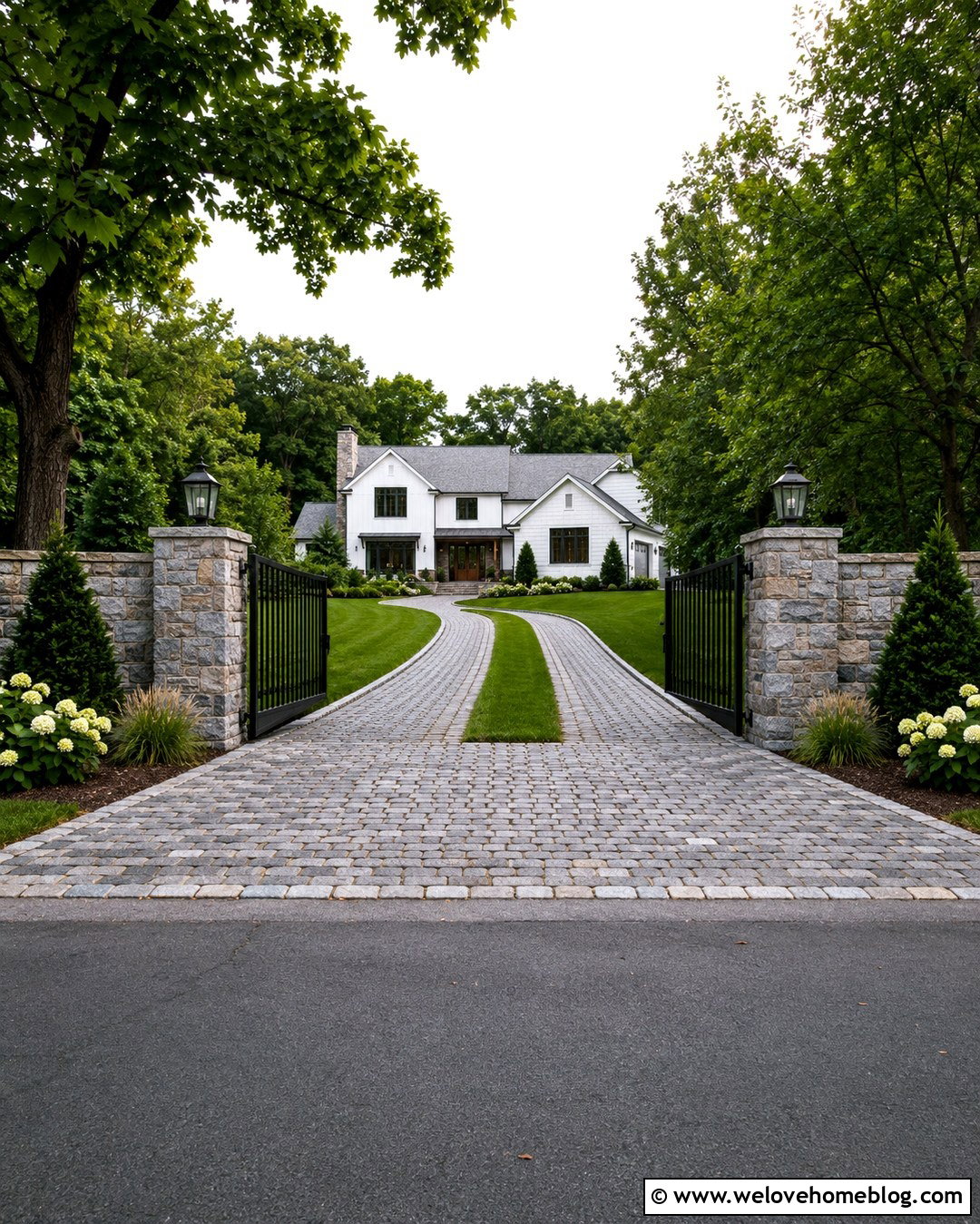
A gated entrance can still feel open and residential when trees and planting soften the hard materials. Pair a simple black metal swing gate with limestone pillars and a straight light-gray concrete driveway. Plant upright evergreen trees behind the pillars, set far enough back that their mature branches will not interfere with the gate mechanism. Add low ornamental grass, lavender, and compact shrubs around the bases while keeping the street edge clear. A narrow limestone paver ribbon can cross the concrete at the gate to mark the transition into the property. Continue scattered shade trees toward a modern country house. Coordinate the gate, trees, walls, lighting, and driveway as one composition, and plan adequate space for vehicles to wait safely without blocking the road.
22. Lighted Tree Driveway Entrance
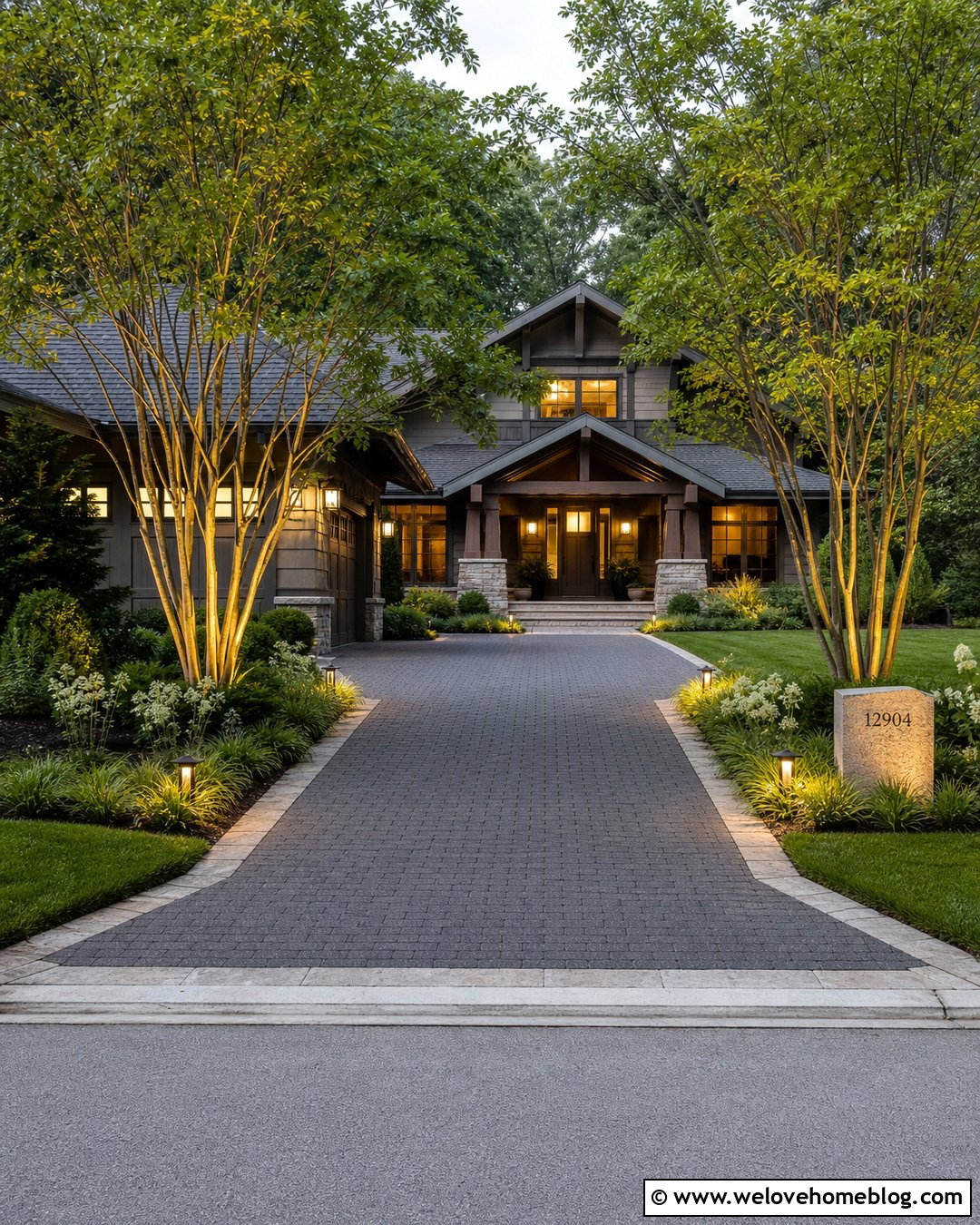
Landscape lighting can make entrance trees useful focal points after sunset, but the daytime design should remain equally attractive. Use a straight dark gray permeable paver driveway bordered with flush limestone blocks. Plant two multi-stemmed ornamental trees in generous lawn islands, then place discreet low-voltage uplights outside the main root flare. Low sedges, white flowering perennials, and compact evergreens can conceal the fixtures without blocking the light. At the street, short stone markers with shielded lights can identify the driveway edges. This refined layout suits a contemporary Craftsman home with warm wood and stone details. Aim fixtures carefully so they illuminate trunks and lower canopies rather than shining toward drivers, neighboring windows, or the road. Keep wiring accessible for future maintenance.
23. Boulder And Tree Driveway Entrance
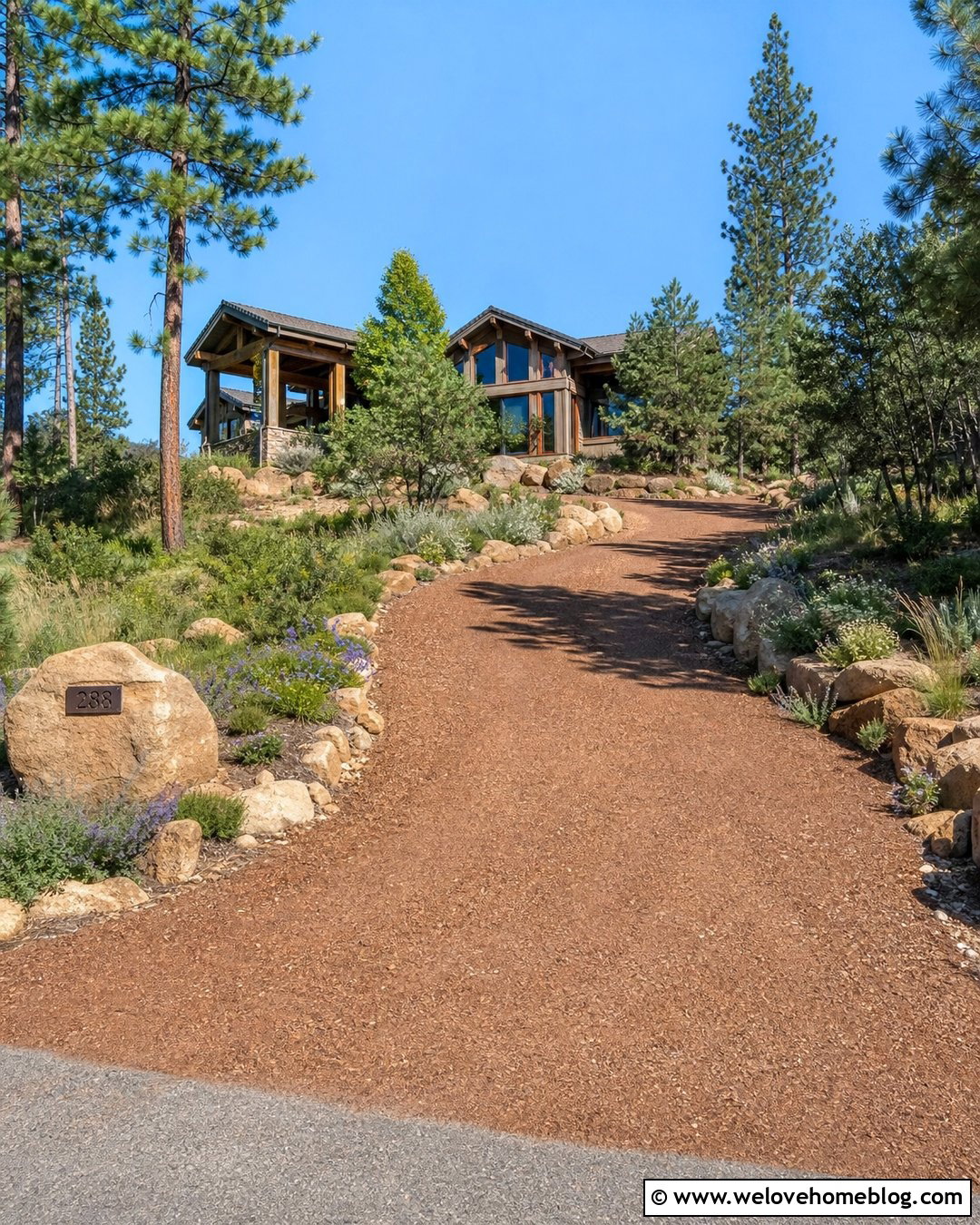
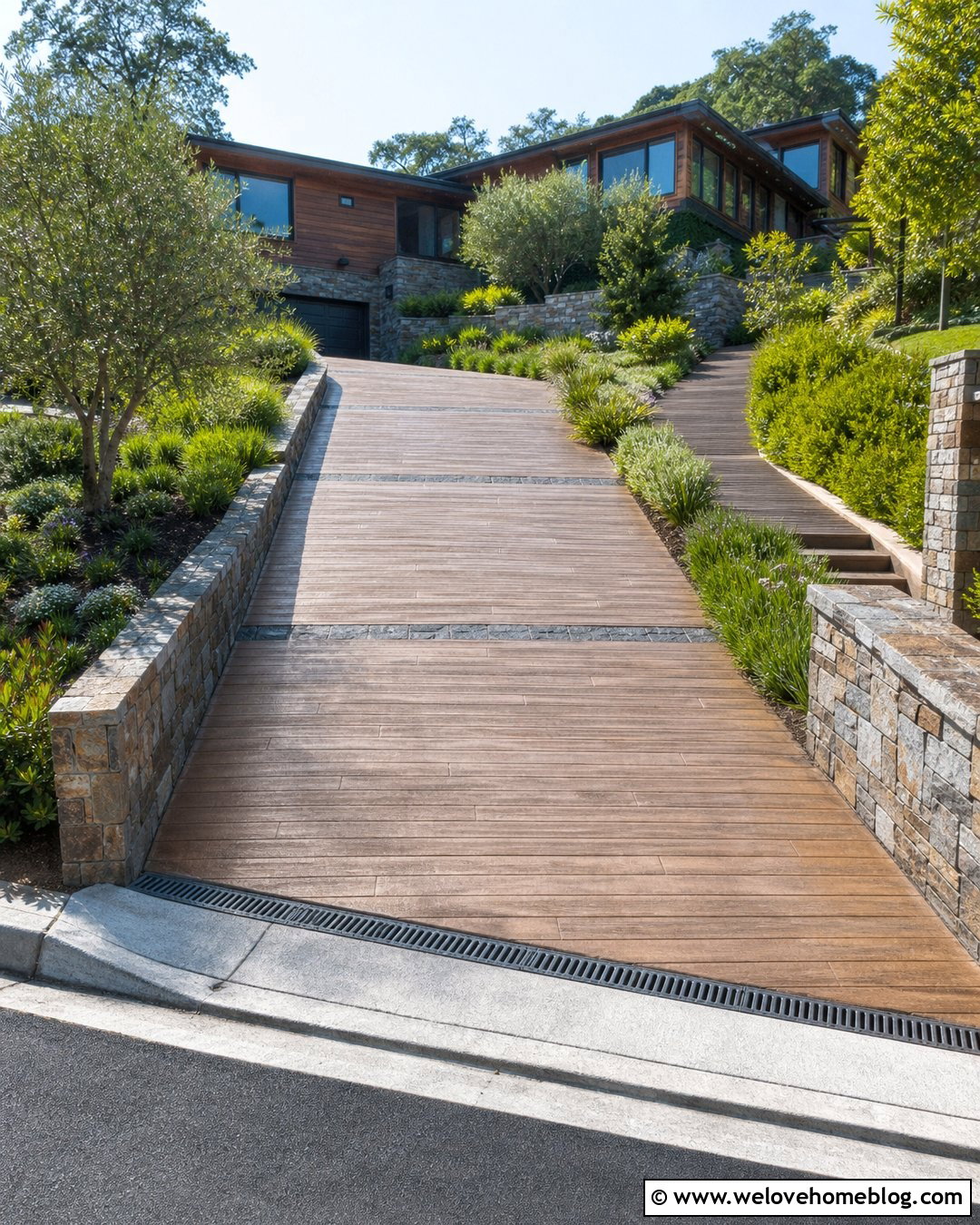
Boulders and native trees can create a rugged driveway entrance that looks appropriate on a wooded or sloping property. Use a curved driveway surfaced with compacted brown crushed stone and edged with irregular local rock. Place large boulders within broad planting beds, leaving enough open space that they do not become vehicle hazards. Stagger pine, oak, or other regionally suitable trees behind the rocks, then add native grasses, low shrubs, and flowering perennials around them. A simple metal address plaque can be mounted on one carefully positioned boulder. The driveway can climb gently toward a mountain-modern or timber-sided house. Repeat similar stone near the house so the entrance feels connected, and keep the roadside landscape low enough for clear visibility.
24. Small Yard Tree Driveway Entrance
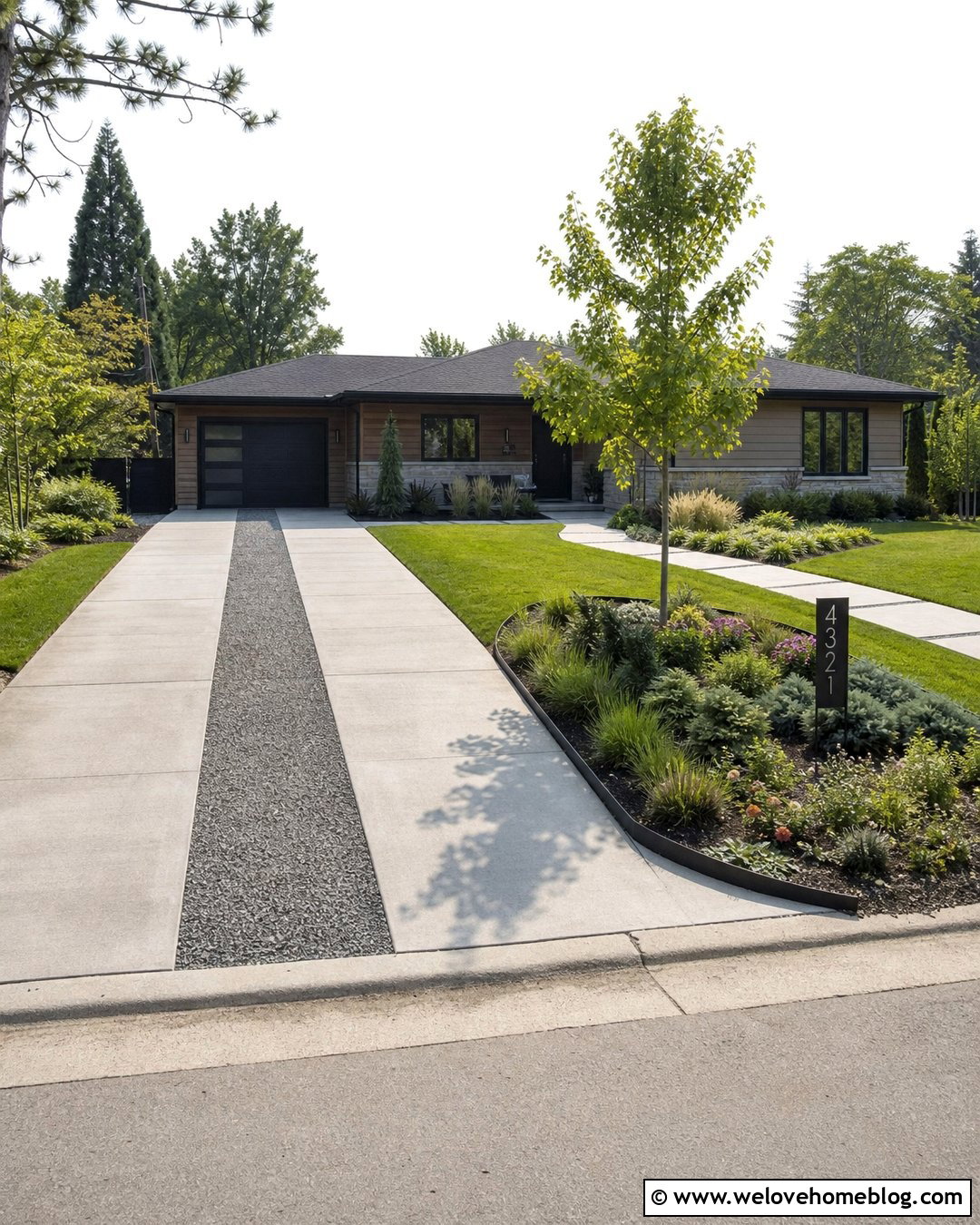
Even a small front yard can support a tree-focused entrance when the design uses space carefully. Start with a narrow straight driveway made from light gray concrete strips separated by a central band of low grass or permeable gravel. Plant one compact ornamental tree in a curved bed near the entrance rather than squeezing matching trees onto both sides. Use dark steel edging, dwarf evergreen shrubs, low grasses, and a limited selection of flowering perennials. A slim vertical address marker can share the bed without competing with the tree. Repeat the same plants beside the walkway leading to a compact modern ranch house. Choose a tree with a predictable mature size and place it where branches and roots will not crowd pavement, sidewalks, utilities, or neighboring property.
25. Mixed Tree Driveway Entrance
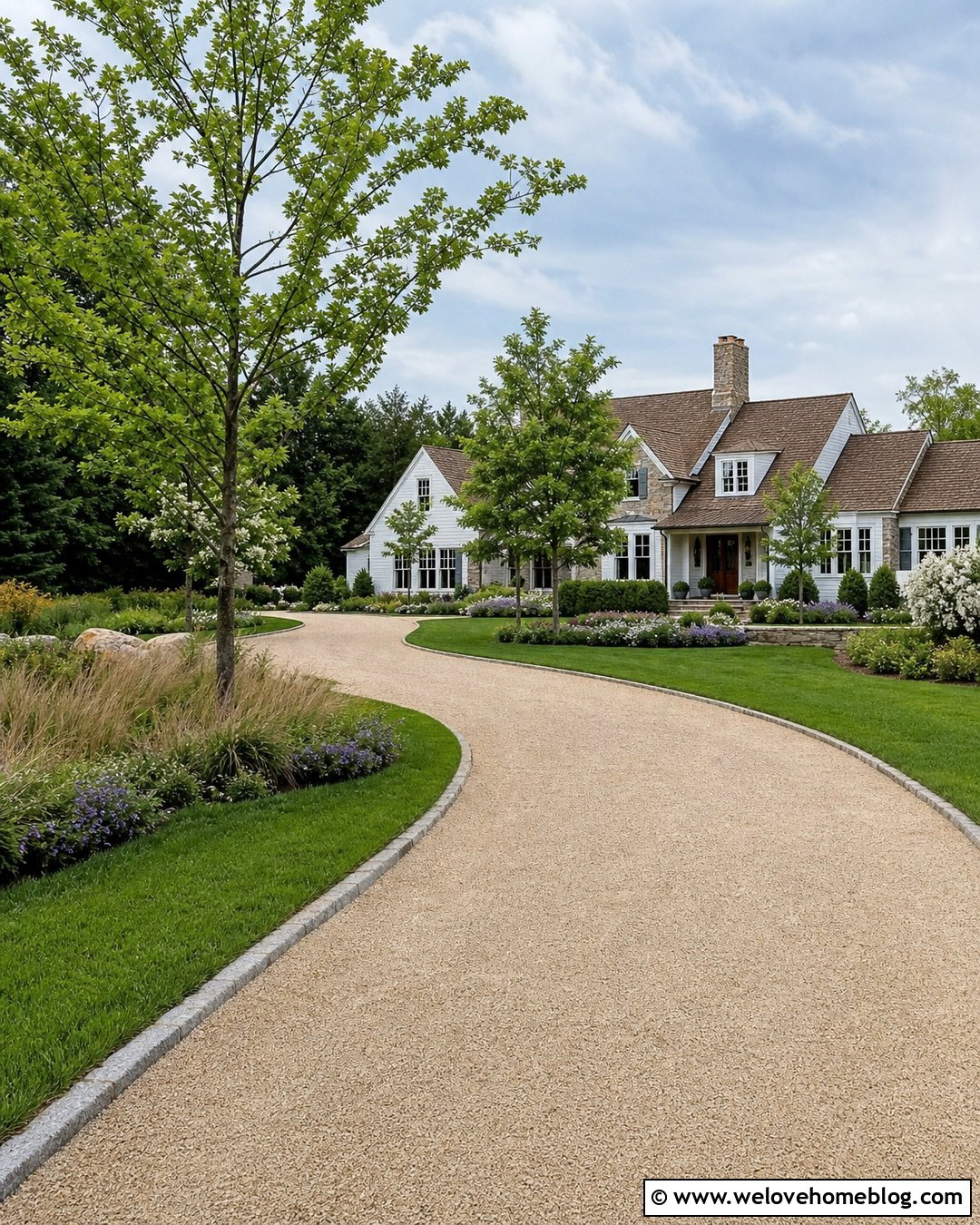
A mixed tree entrance can feel natural and resilient while still looking intentionally designed. Pair a sweeping beige gravel driveway with informal groups of evergreen, flowering, and deciduous trees arranged beyond a broad grass verge. Use low granite edging along the gravel and create layered planting beds at the street with native shrubs, ornamental grasses, and ground cover. One flowering tree can mark the entrance, while larger shade trees guide the approach farther into the property. Repeat tree groups asymmetrically so the landscape feels balanced without becoming rigid. This design works well for a large country, woodland, or transitional home. Limit the selection to a coordinated palette, and choose every tree according to mature size, site conditions, maintenance needs, and its relationship to the complete driveway layout.
Conclusion:
The best **25 Tree Driveway Entrance Ideas** combine attractive trees with safe circulation, appropriate spacing, and materials that complement the home. Start by studying the entrance from the road, including sightlines, utilities, drainage, sunlight, and available planting depth. Then choose trees for their mature size and regional suitability, not only their appearance at the nursery. Gravel, concrete, asphalt, brick, and pavers can all work beautifully when their colors connect with nearby edging, pillars, gates, and landscaping. Whether you plant one compact ornamental tree or develop a long tree-lined approach, keep the complete view balanced. A thoughtful plan will produce an entrance that becomes more distinctive as the landscape matures.

Related posts:
Leave a Reply