
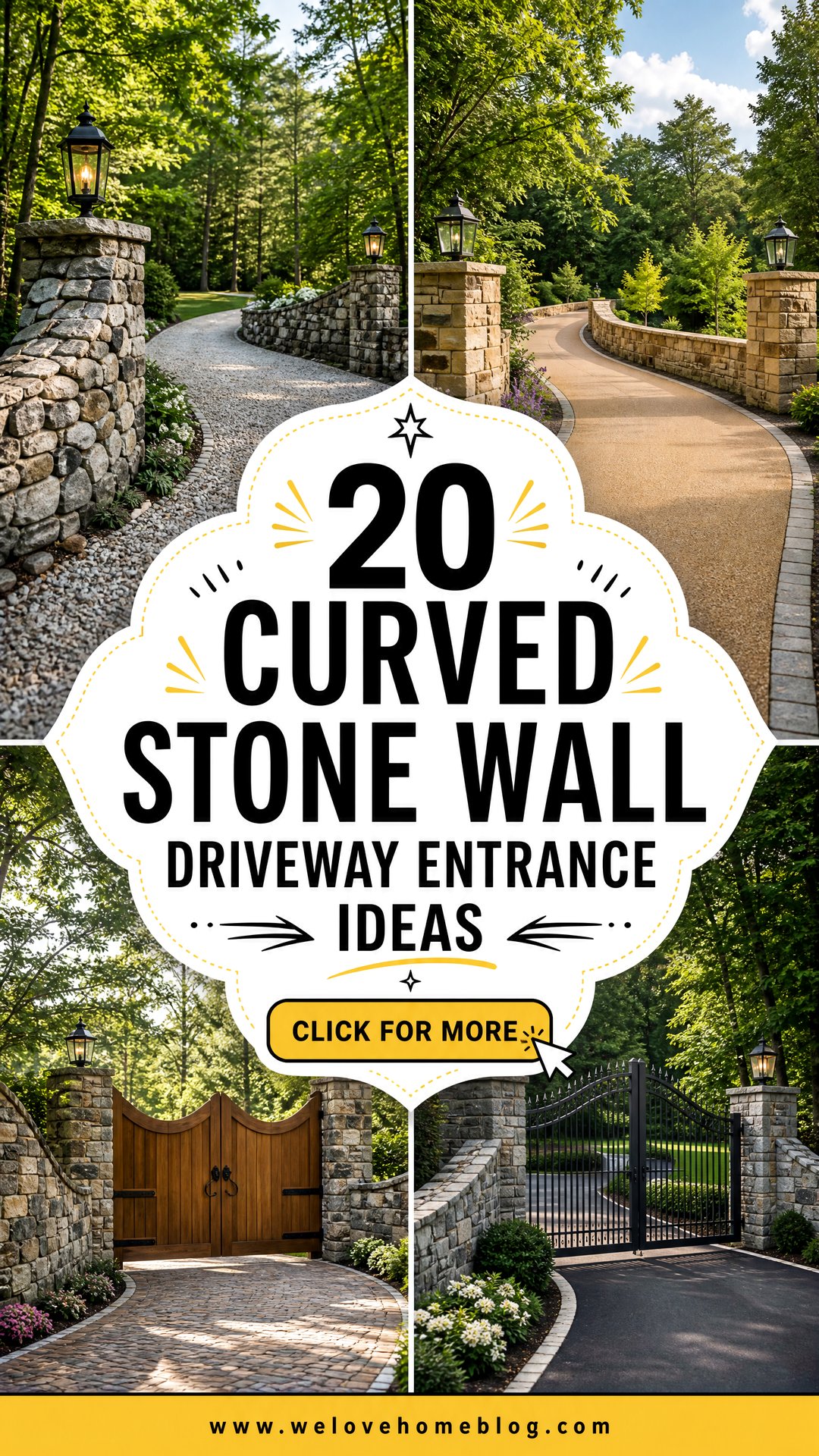
Curved stone walls create a graceful transition from the street to the home while giving an ordinary driveway more structure and presence. The best 20 Curved Stone Wall Driveway Entrance Ideas combine the wall with the driveway surface, entrance width, pillars, lighting, and surrounding landscape. Matching stonework across curved wing walls and pillars can make the entire composition feel cohesive, while low walls can frame gravel, pavers, concrete, or asphalt without overwhelming the yard. () Choose stone colors that relate to the home’s facade and shape the curves around comfortable vehicle access. Planting beds can then soften the masonry and connect it to the lawn. Explore these 20 Curved Stone Wall Driveway Entrance Ideas for practical ways to create a welcoming approach.
1. Curved Fieldstone Wall With Gravel Driveway
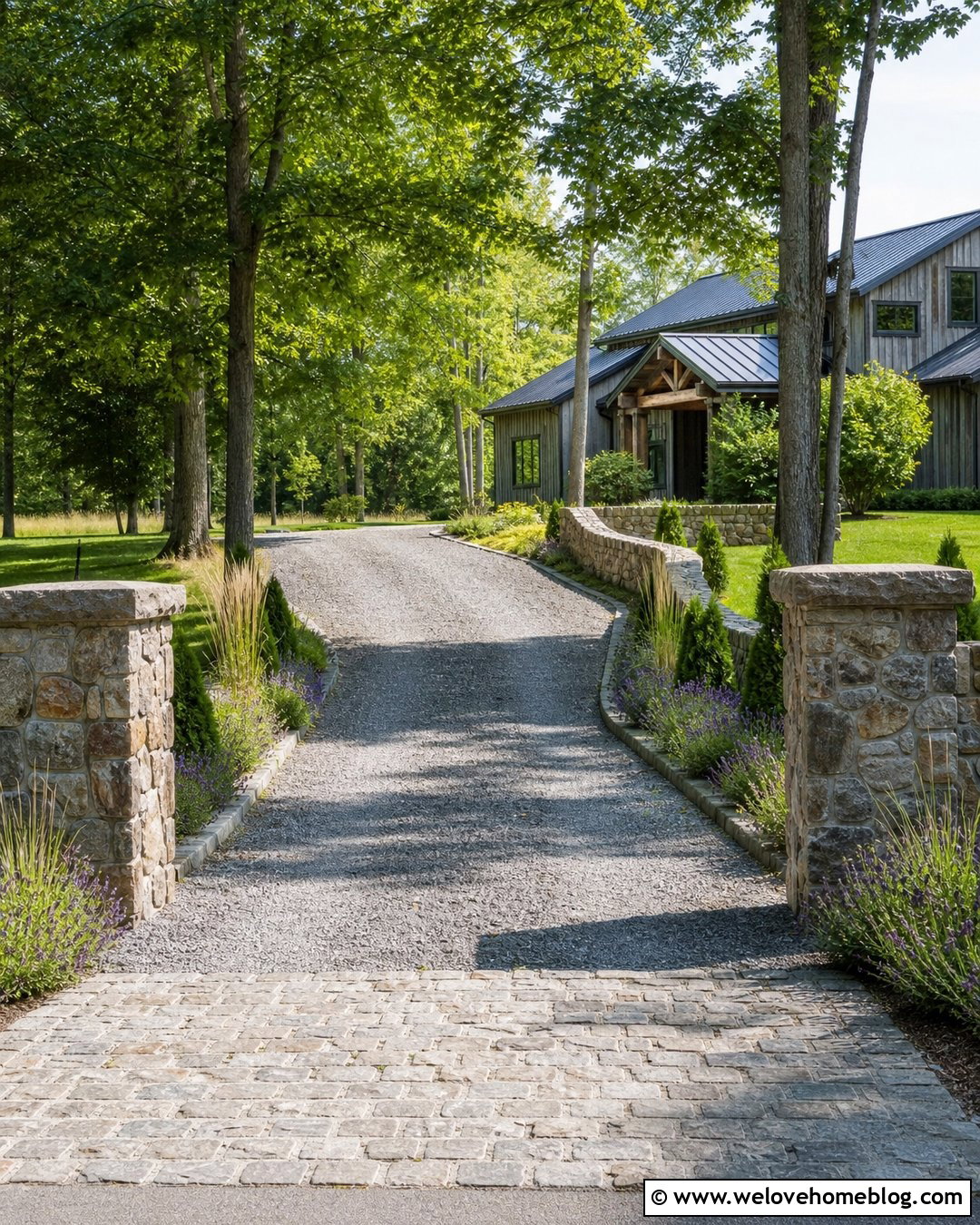
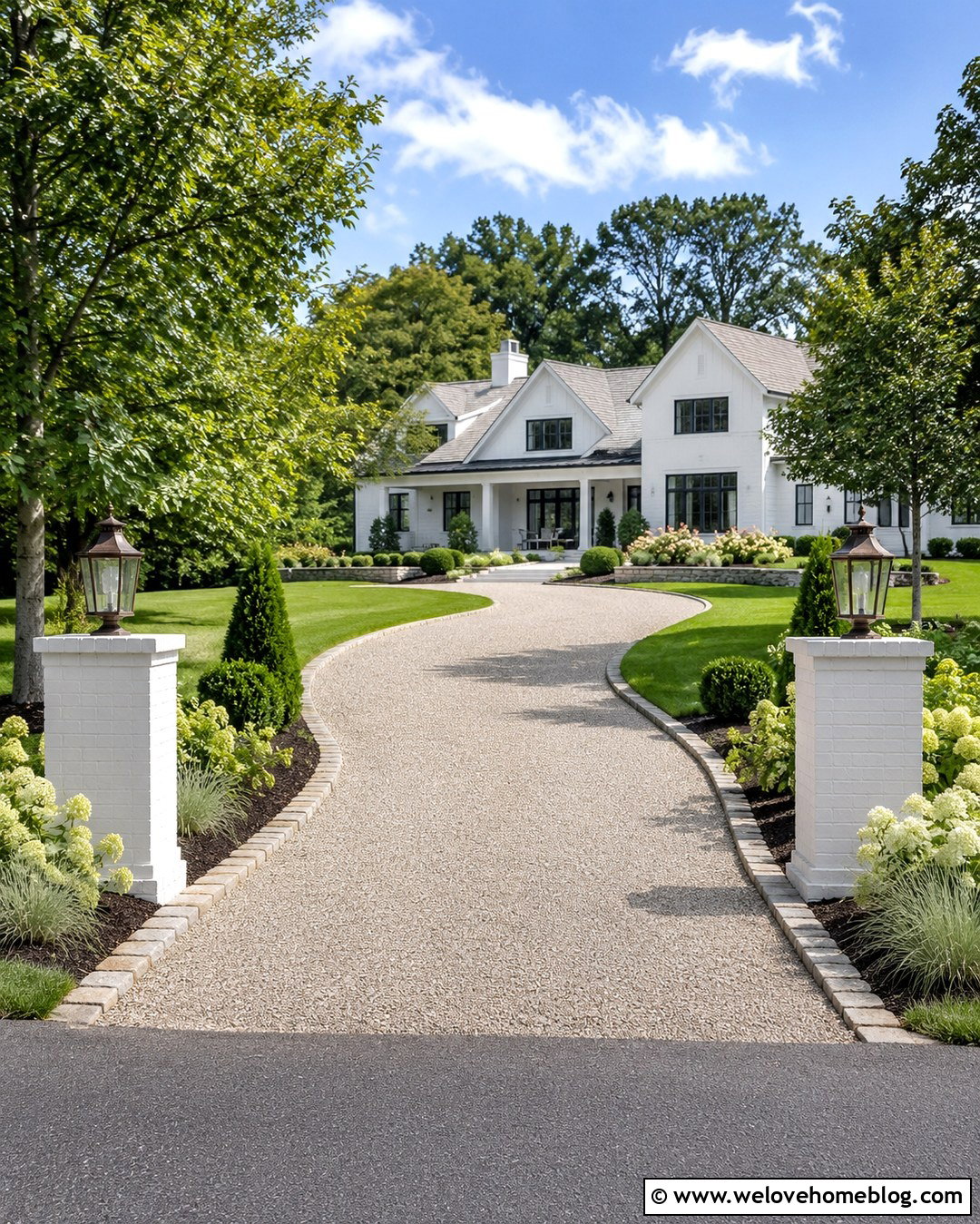
A loose gravel driveway feels more intentional when it passes between two low fieldstone walls. Use warm gray crushed gravel for the surface and build the walls from irregular stones in gray, tan, and muted brown. The walls should sweep outward toward the street, creating a broad and welcoming opening before narrowing gently along the driveway. Add substantial fieldstone pillars at the highest points for visual balance. Behind the walls, plant lavender, ornamental grasses, and compact evergreen shrubs that will not hide the stonework. A short cobblestone apron at the road helps define the transition into the gravel. This complete entrance works especially well with a country farmhouse, rustic ranch, or woodland home surrounded by mature trees.
2. Curved Limestone Wall With Concrete Driveway
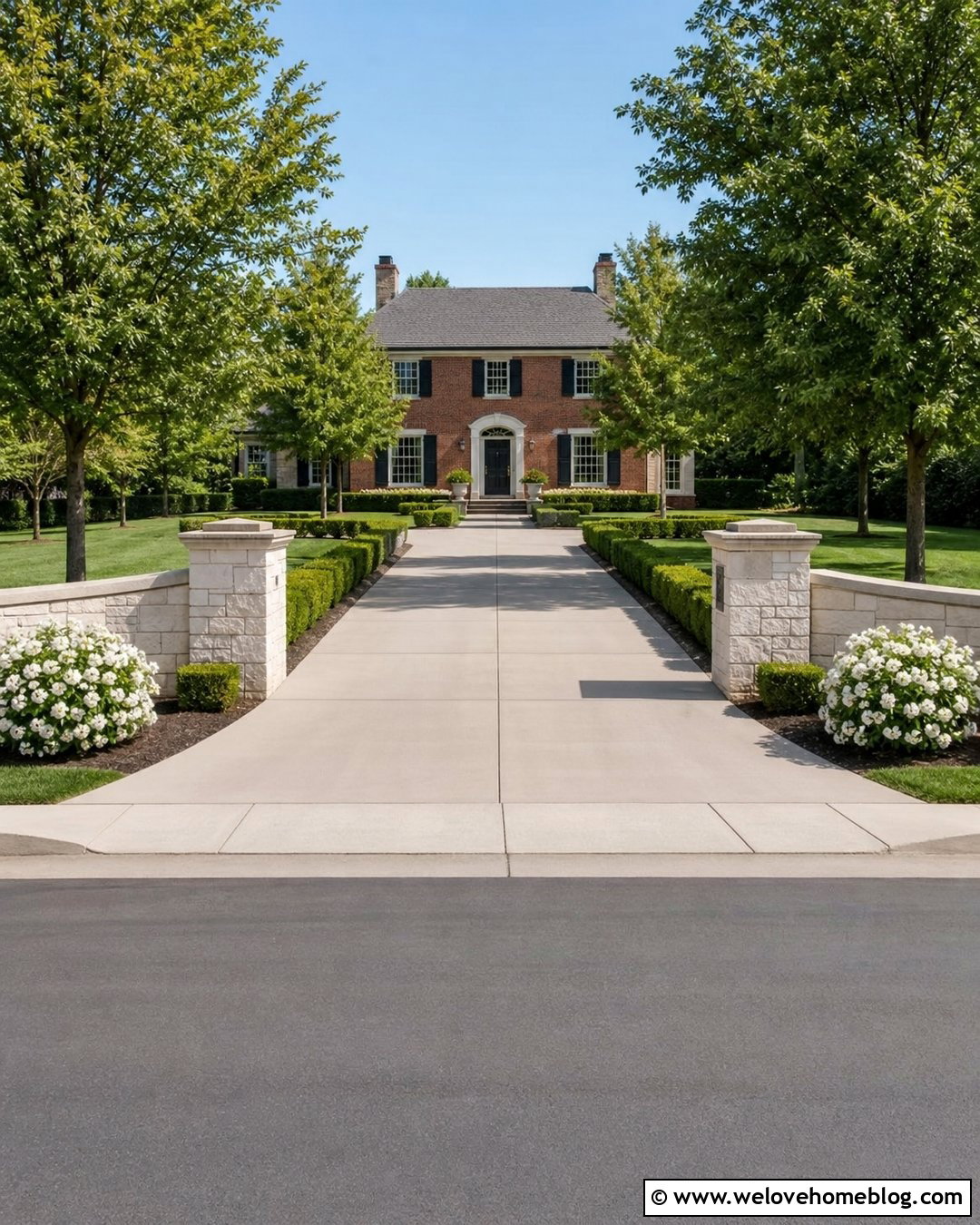
Light limestone can brighten the entrance to a traditional home without appearing too formal. Pair cream-colored limestone walls with a smooth, warm gray poured concrete driveway. Each wall can begin beside a square limestone pillar and curve inward along the driveway before stepping down toward the lawn. Choose broad limestone caps that project slightly beyond the wall faces for a finished appearance. Low boxwood hedges behind the masonry reinforce the curves without blocking the view from the road. White flowering shrubs and a clean concrete walkway can tie the entrance to the front door. This combination suits a brick colonial, French country house, or light stucco residence. Keep the mortar close to the limestone color so the entrance reads as one calm architectural feature.
3. Curved Stacked Stone Wall With Asphalt Driveway
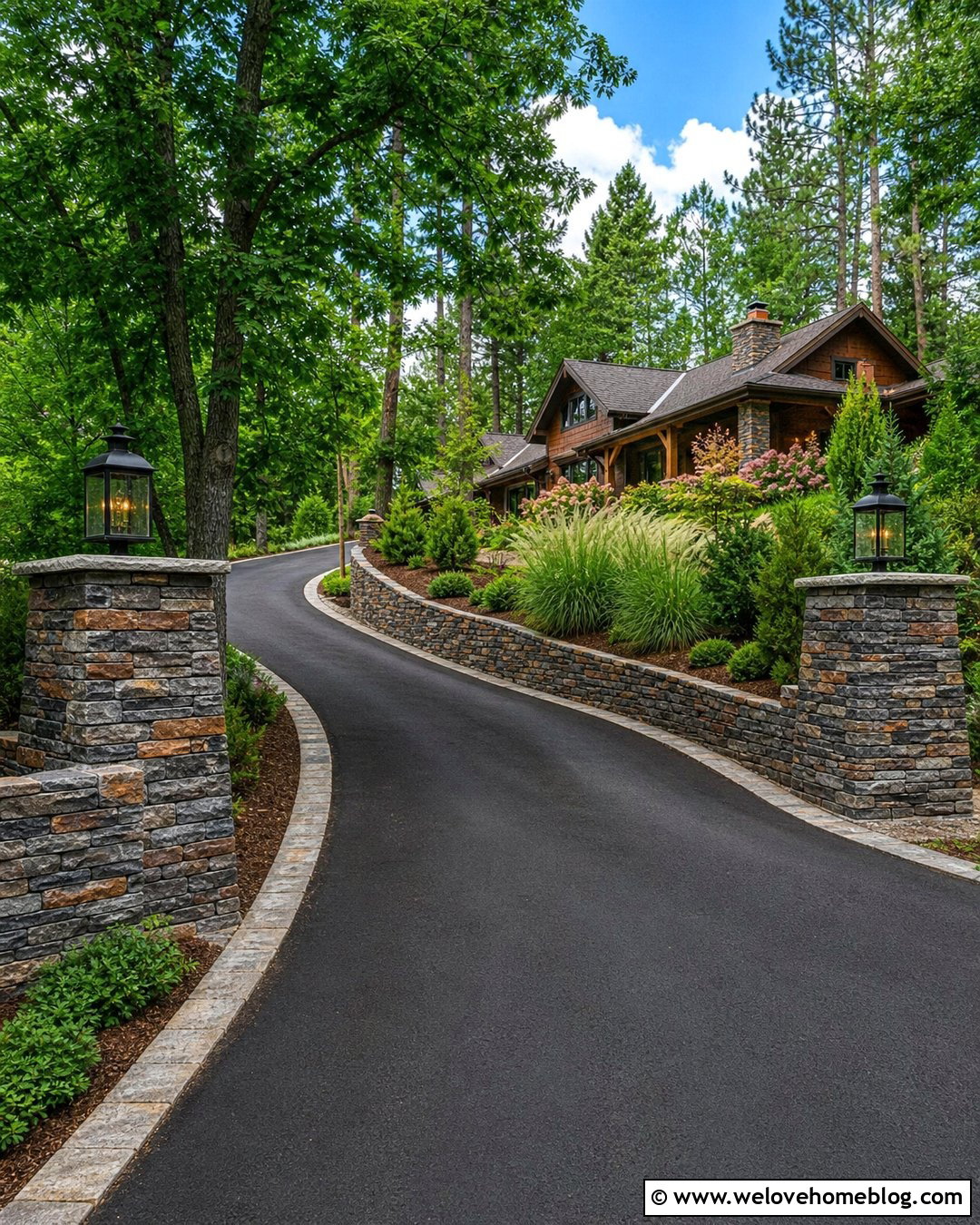
Black asphalt gains warmth and character when framed by curved stacked stone walls. Select ledgestone containing charcoal, rust, brown, and soft gray tones so the dark driveway does not dominate the entrance. Build the walls low near the road and gradually raise them toward two substantial pillars. A matching stone border along the asphalt can continue the entrance design farther into the property. Place spreading junipers, feather reed grass, and small flowering shrubs behind the walls to create layered landscaping. Simple black lanterns mounted on the pillars will complement the asphalt and provide a coordinated focal point. This rugged combination fits a craftsman, mountain, lodge, or wooded suburban home. Allow generous open space between the walls for comfortable turning and delivery access.
4. Curved Stone Wall With Paver Driveway
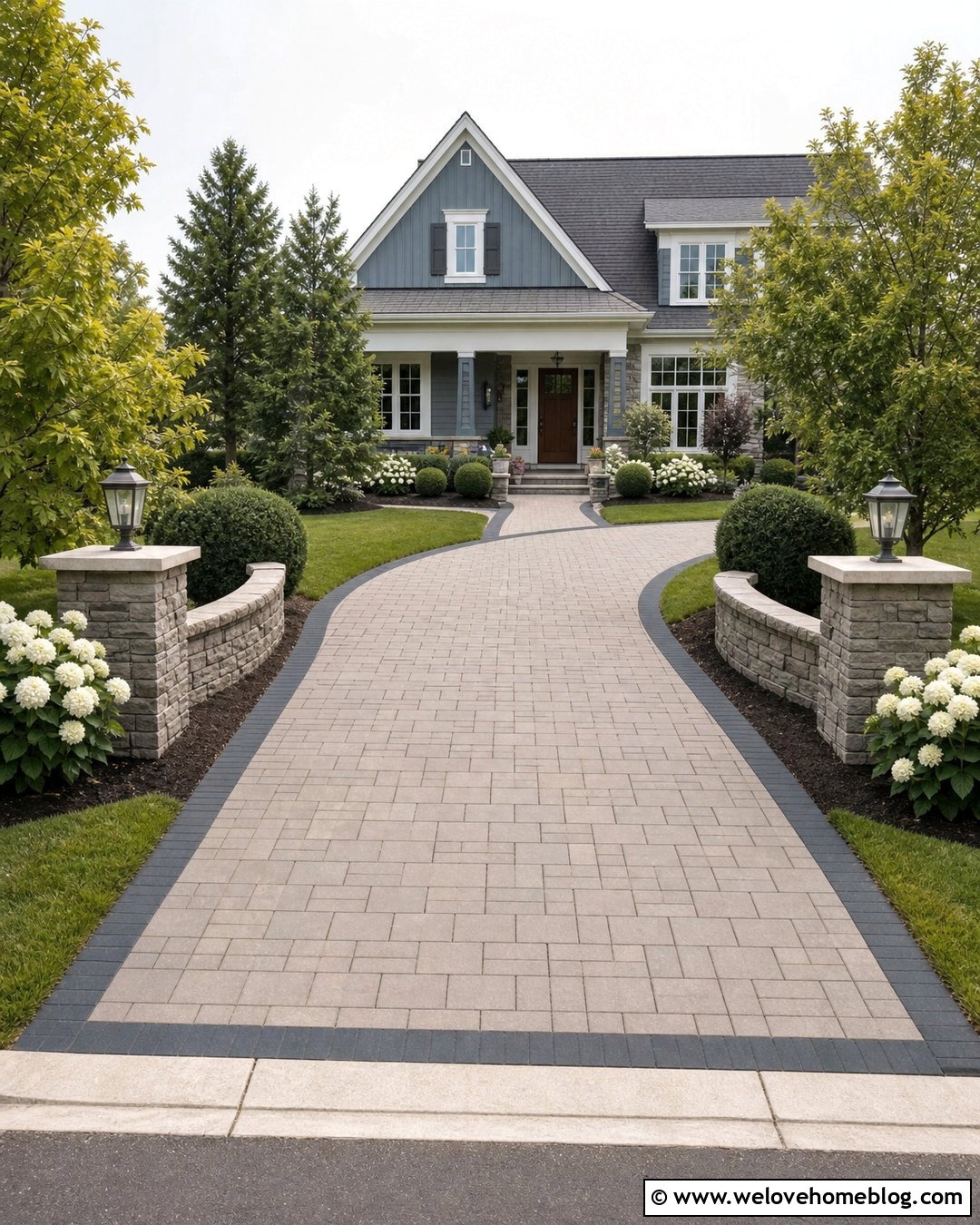
A paver driveway and curved stone entrance can create a polished look without making the front yard feel rigid. Choose taupe concrete pavers in a running bond pattern, then frame them with a dark charcoal paver border. Construct symmetrical curved walls from rectangular ashlar stone that shares the driveway’s beige and gray tones. Large pillars can anchor the street-facing ends, while the walls gradually become lower as they follow the driveway. Keep planting simple with rounded evergreens, white hydrangeas, and neatly maintained lawn. Clearly defined borders distinguish the driving surface from nearby planting areas and reinforce the curve. () This coordinated entrance looks especially natural in front of a craftsman or transitional home with stone veneer, neutral siding, and dark window trim.
5. Curved Cobblestone Wall With Brick Driveway
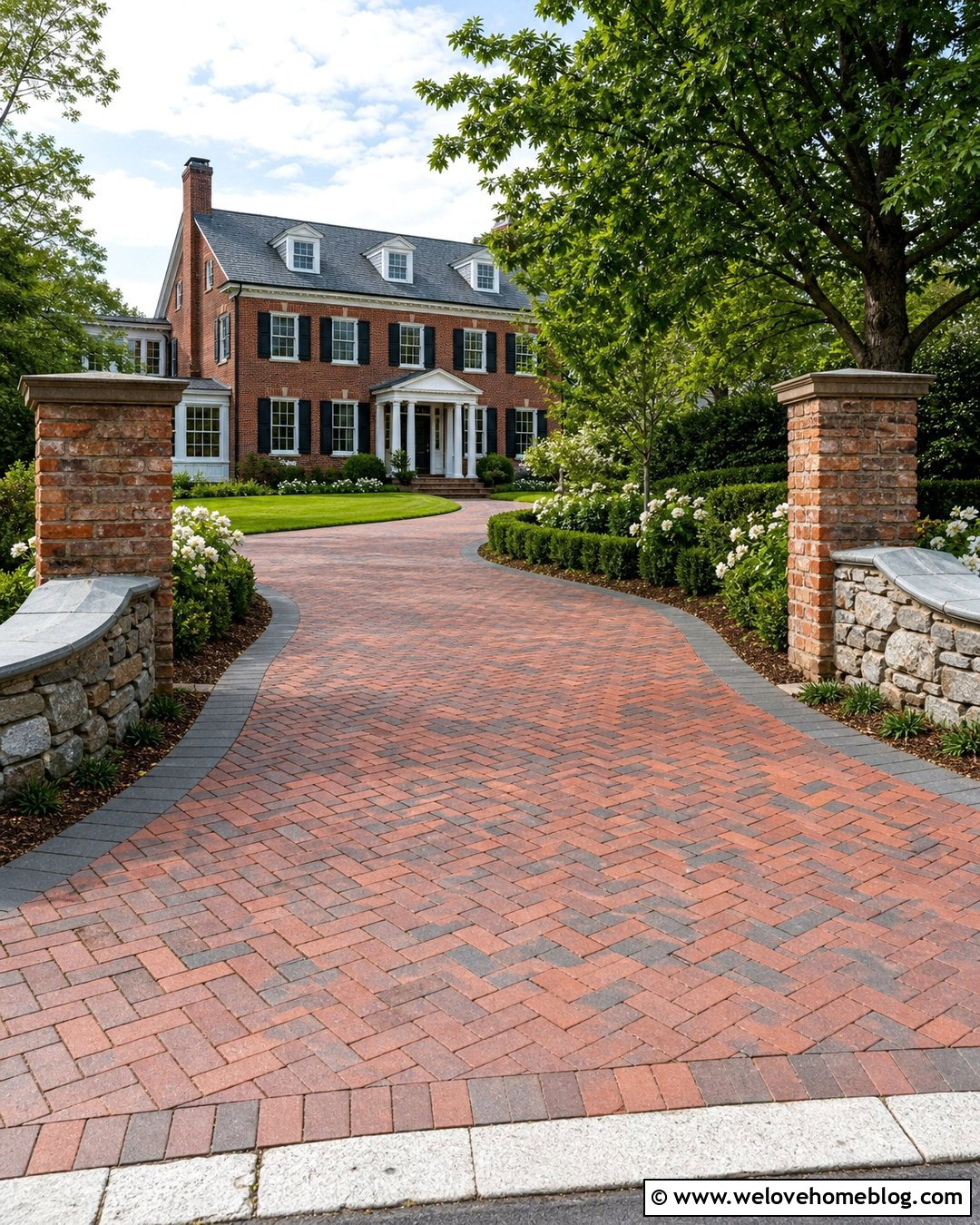
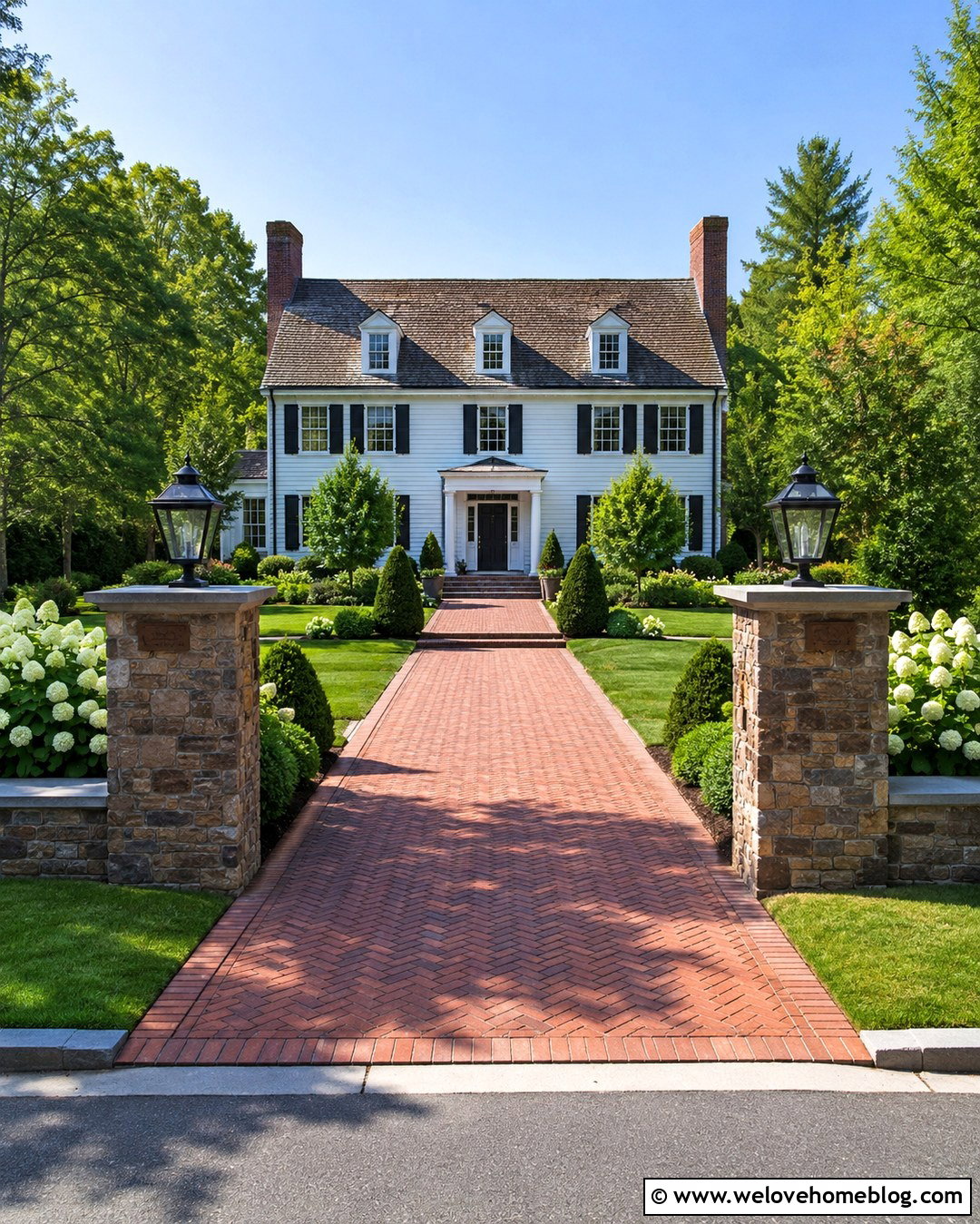
Rich brick paving pairs beautifully with a curved wall made from weathered cobblestone. Lay red and brown clay brick pavers in a herringbone pattern, adding a soldier-course border along both edges. Use rounded gray cobblestones for the low entrance walls, with smooth bluestone caps providing a stable horizontal line. The walls can curl inward around small planting beds filled with clipped boxwood, white roses, and seasonal flowers. Brick pillars topped with stone caps will connect the driveway surface to the wall without creating a heavy all-stone composition. This complete look complements Georgian, colonial, and Tudor homes. Repeating the brick near the pillars also makes the entrance feel connected to a brick facade, walkway, or front steps farther up the property.
6. Curved Sandstone Wall With Resin Driveway
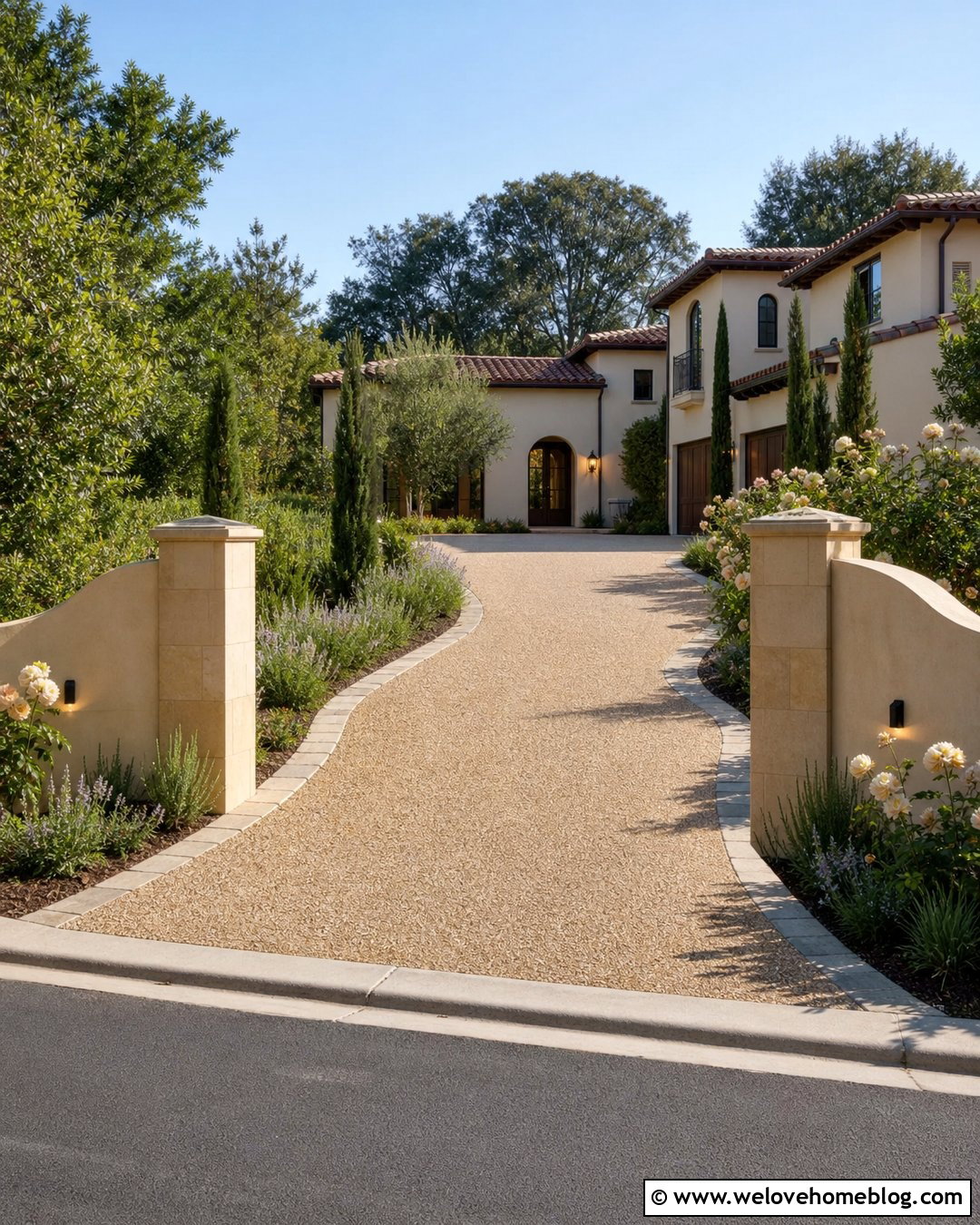
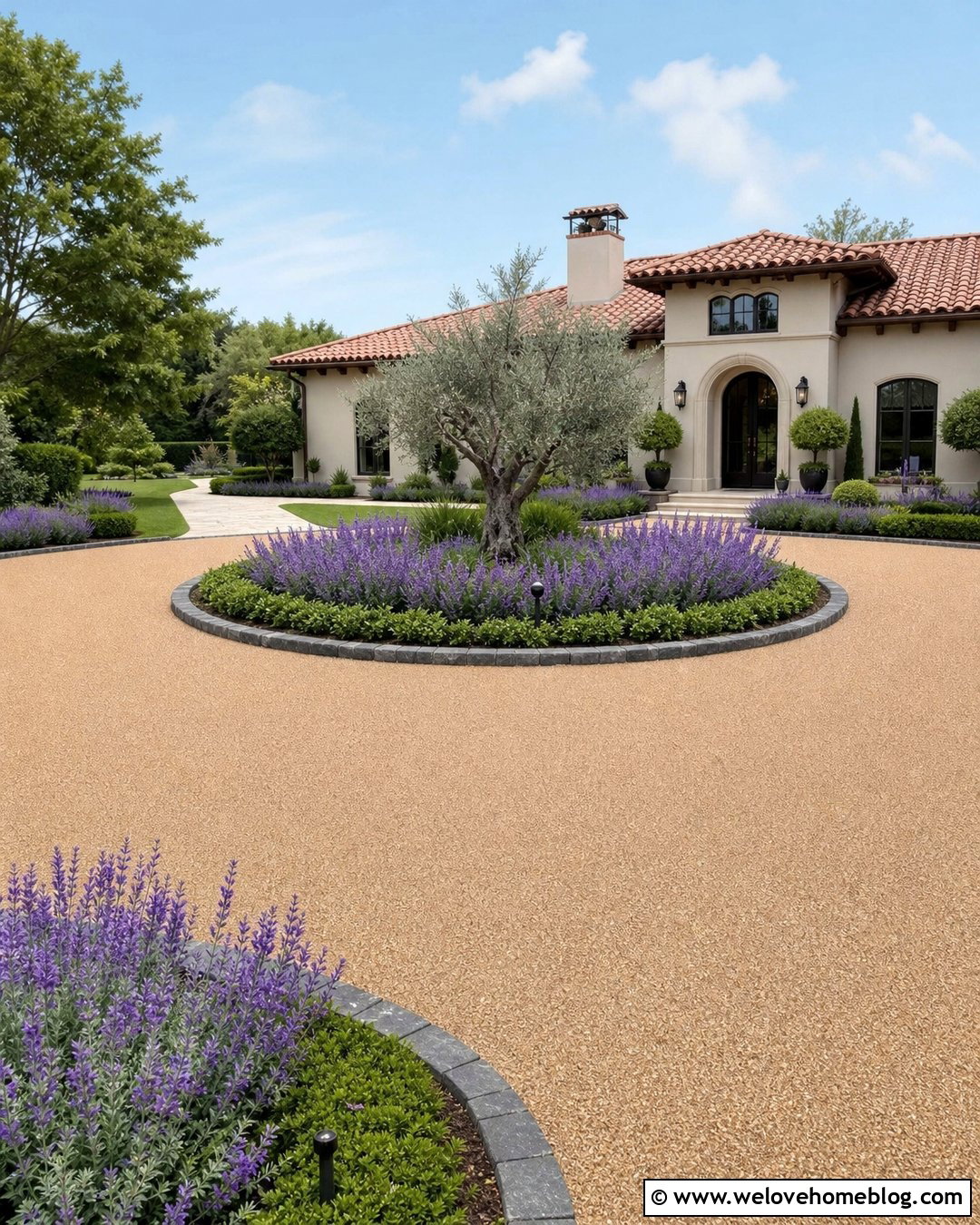
Warm sandstone can soften the clean appearance of a resin-bound gravel driveway. Select a honey-beige resin surface with fine natural aggregate, then edge it with narrow sandstone setts. At the street, construct two gently curved walls using buff sandstone in varied rectangular sizes. Let each wall sweep around a deep planting bed before joining a square entrance pillar. Rosemary, catmint, dwarf grasses, and cream-colored roses will echo the relaxed colors of the stone. Recessed wall lights can be fitted beneath selected capstones for subtle illumination without adding bulky fixtures. A beige stucco house or Mediterranean-inspired residence provides an ideal backdrop. The consistent golden palette makes the driveway, masonry, and landscaping feel connected while still allowing their individual textures to remain visible.
7. Curved Granite Wall With Circular Driveway
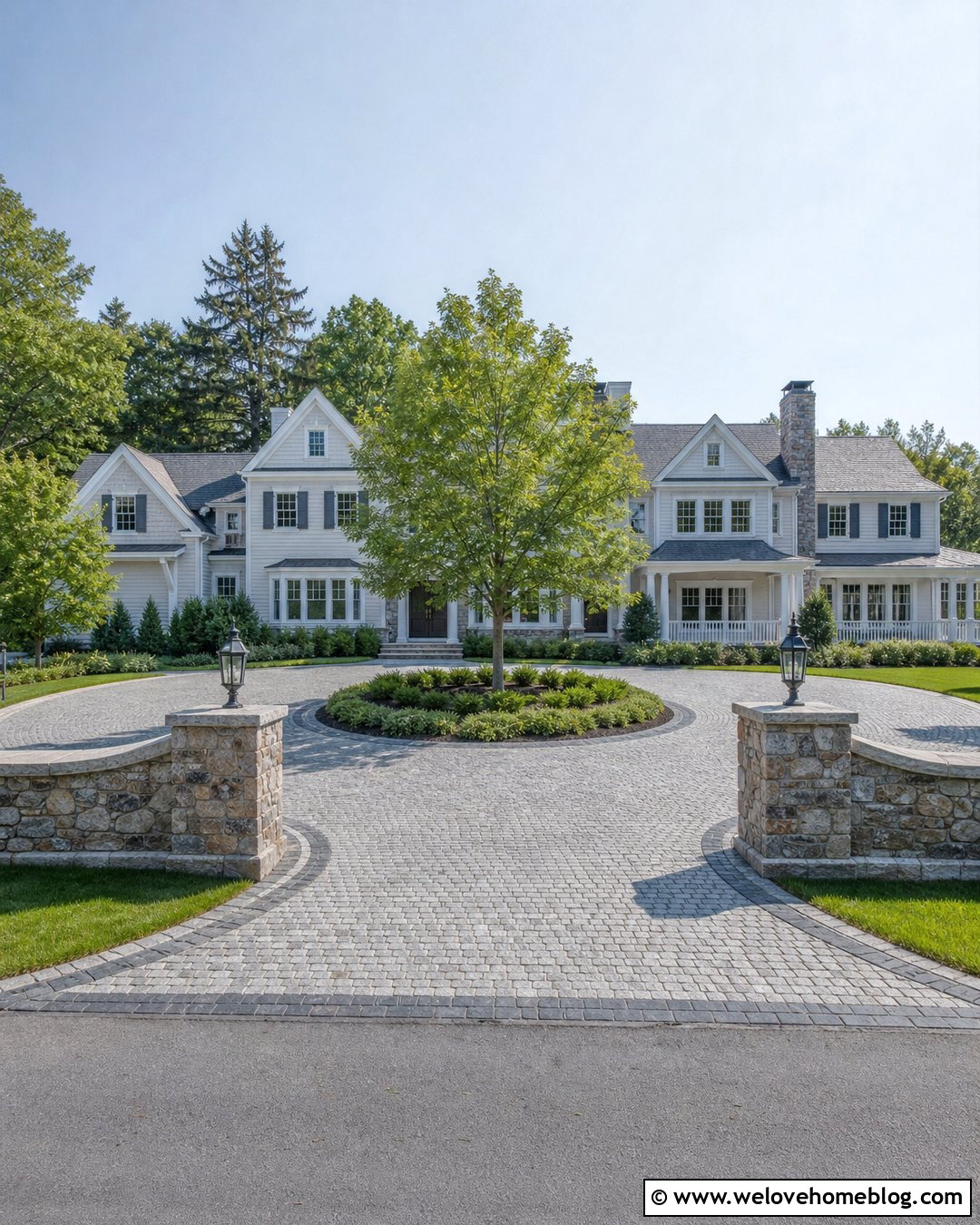
A circular driveway needs an entrance that clearly introduces its broad, flowing layout. Build curved granite walls that mirror the driveway’s movement and guide the eye toward the central landscape island. Medium gray granite setts can form the driving surface, while darker granite blocks create a defined outer border. Use rough-faced granite for the walls and smoother slabs for the caps. Instead of tall pillars, finish each wall with a wider terminal pier and a simple black lantern. Plant the island with a specimen tree, low shrubs, and ground cover so sightlines remain open across the circle. This strong, balanced arrangement works with a large colonial, stone manor, or New England home. Repeating granite throughout the entrance prevents the expansive driveway from looking disconnected.
8. Curved River Rock Wall With Concrete Driveway
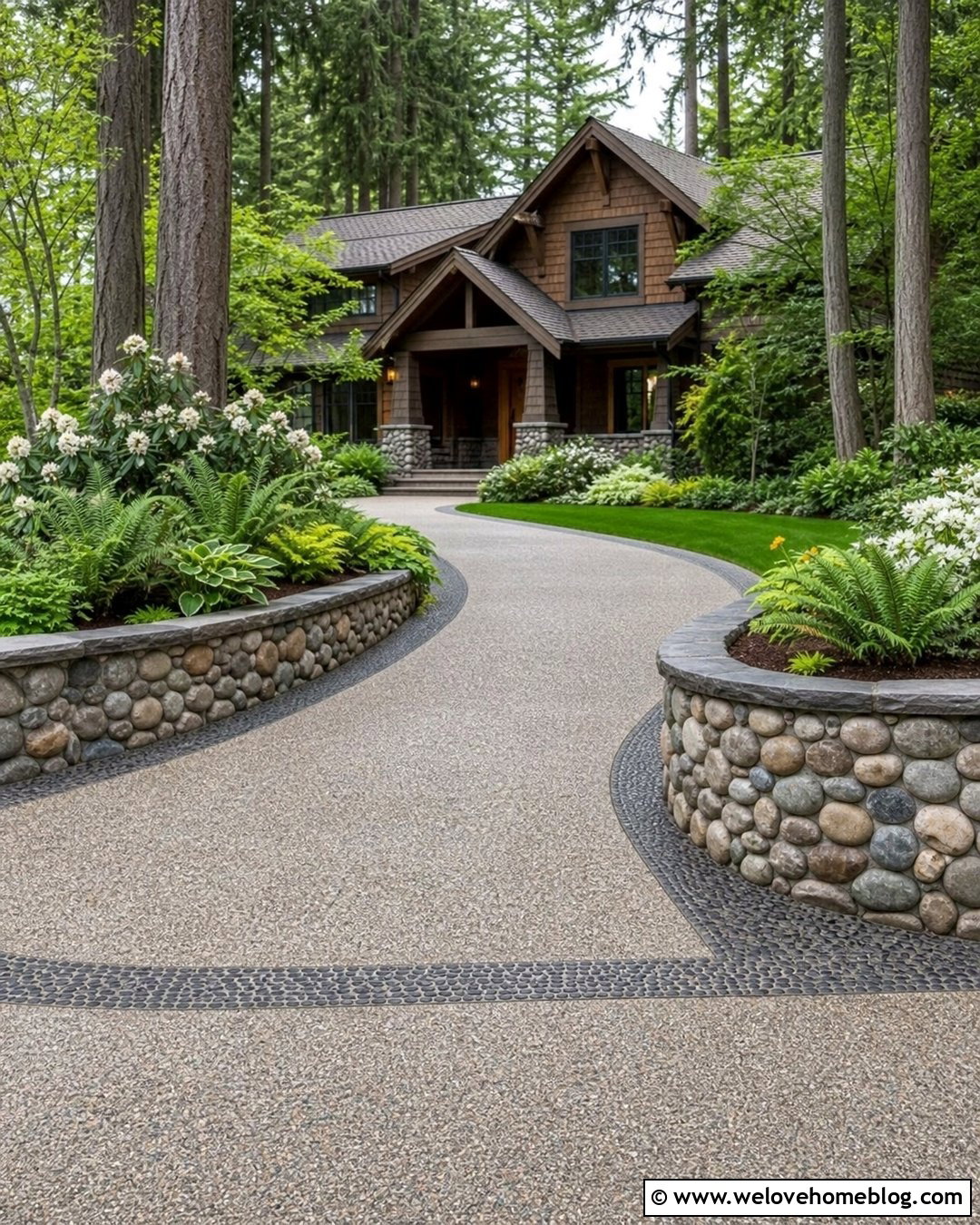
Rounded river rock brings an organic quality to a simple concrete driveway. Choose a lightly exposed aggregate surface in a warm gray tone, then add narrow bands of dark pebble aggregate at the road and garage transition. Construct the entrance walls from mixed river stones in gray, brown, cream, and rust. Their smooth shapes create a noticeable contrast with the flatter driveway finish. Sweep the walls outward toward broad mulched beds containing ferns, hostas, sedges, and compact rhododendrons. Thick natural stone caps will give the irregular walls a clean top edge. This entrance feels at home beside a craftsman bungalow, cabin-inspired residence, or wooded ranch. Maintain a restrained plant palette so the colorful stone remains the main feature rather than competing with overly busy landscaping.
9. Curved Bluestone Wall With Gravel Driveway
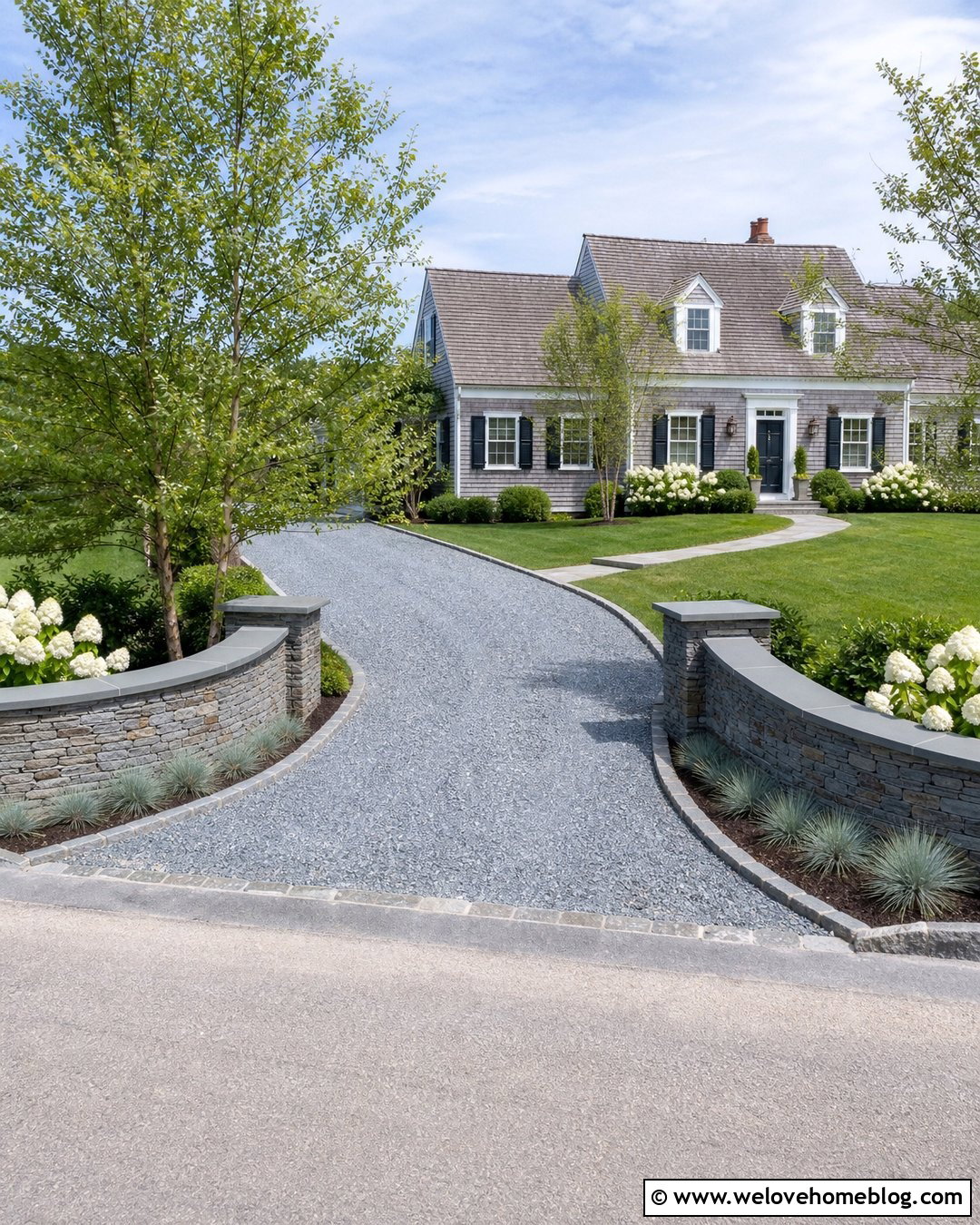
Cool bluestone offers a refined alternative to rustic fieldstone. Spread blue-gray crushed stone across a gently curved driveway and contain it with steel edging or dark granite setts. At the entrance, build low curved walls from irregular bluestone pieces laid in defined horizontal courses. Large thermal-finished bluestone slabs can form the caps, while matching square pillars mark the opening. Behind the walls, use white hydrangeas, inkberry holly, and blue fescue for a calm green-and-white landscape. A few multi-stem serviceberry trees can frame the entrance without creating a dense visual barrier. This design complements a gray-shingled Cape Cod, coastal home, or updated traditional residence. Repeating blue-gray tones across the gravel, walls, and house creates a cohesive approach with subtle texture.
10. Curved Dry Stack Wall With Country Driveway
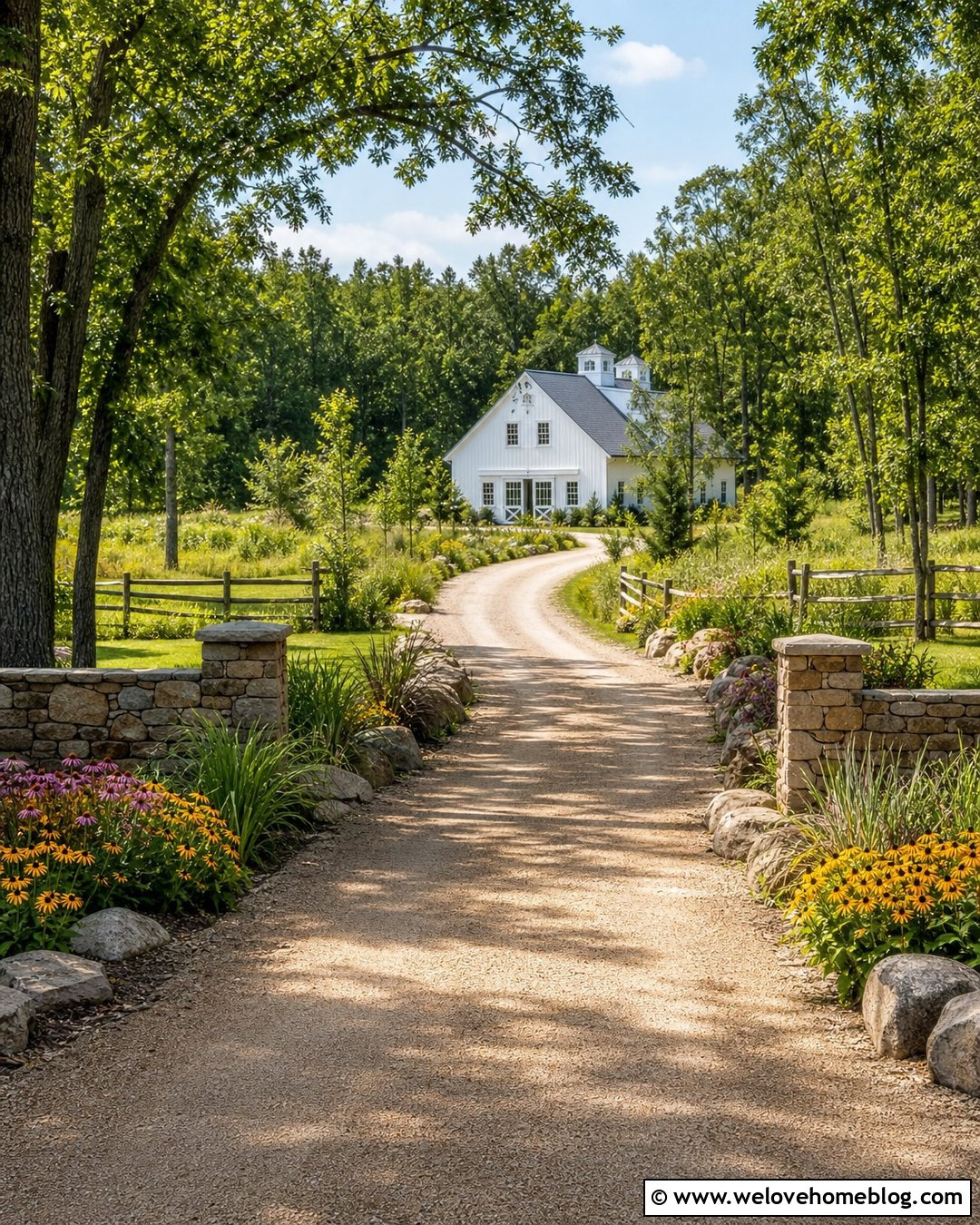
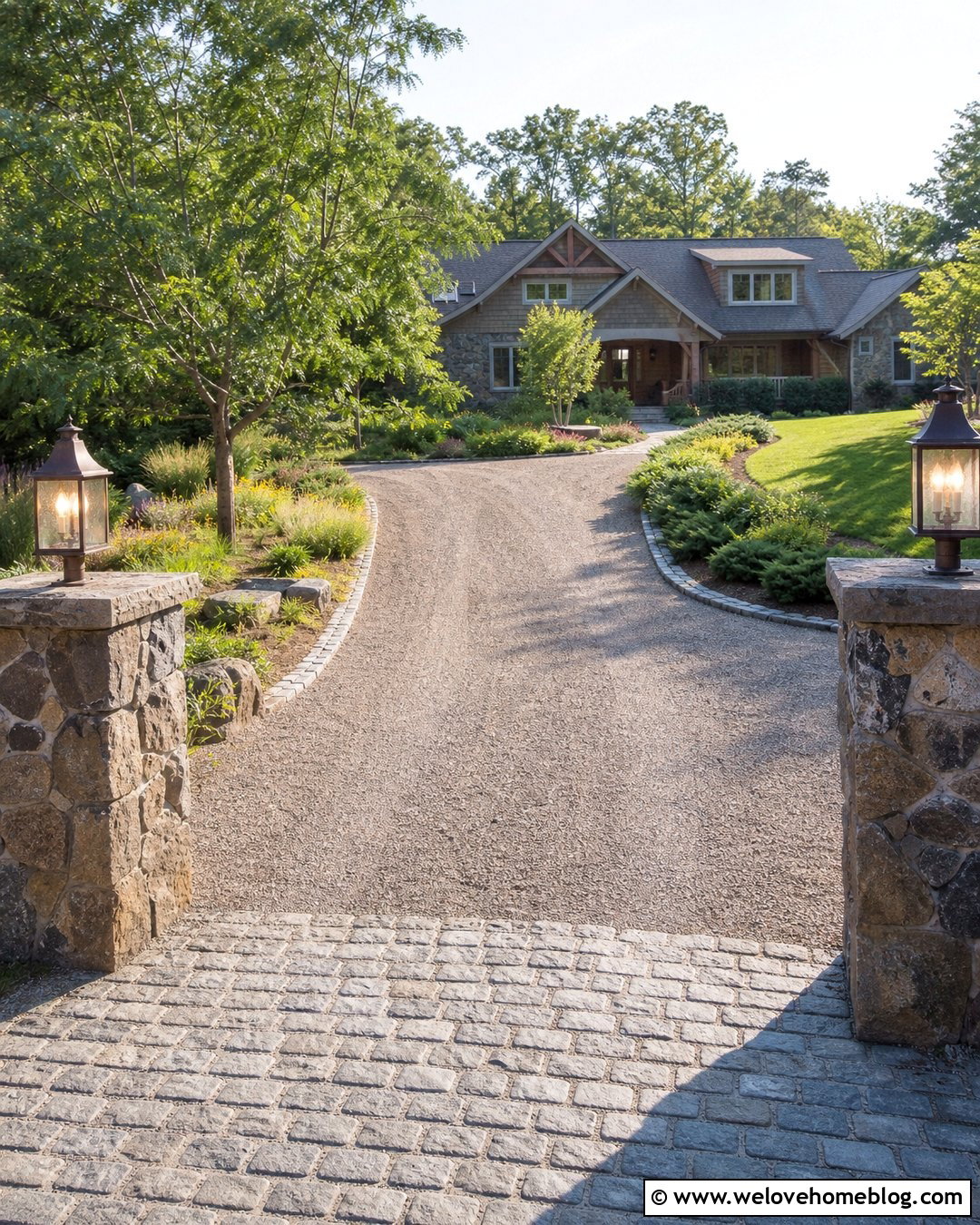
A dry-stacked stone wall gives a long country driveway an established, natural appearance. Use compacted tan crushed gravel for the driveway and place larger stone edging where the surface meets planting beds. Form the entrance walls from irregular local stone, allowing the curves to follow the contours of the land rather than creating perfect symmetry. The walls can begin low and rise gradually beside simple stone pillars with flat caps. Plant native grasses, coneflowers, black-eyed Susans, and low spreading shrubs around the masonry. A split-rail fence can extend from the wall ends to define the broader property boundary. This relaxed arrangement fits a farmhouse, barn-style home, or rural cottage. Its varied stone shapes and informal planting prevent the wide entrance from feeling overly constructed.
11. Curved Stone Wall With Wood Gate
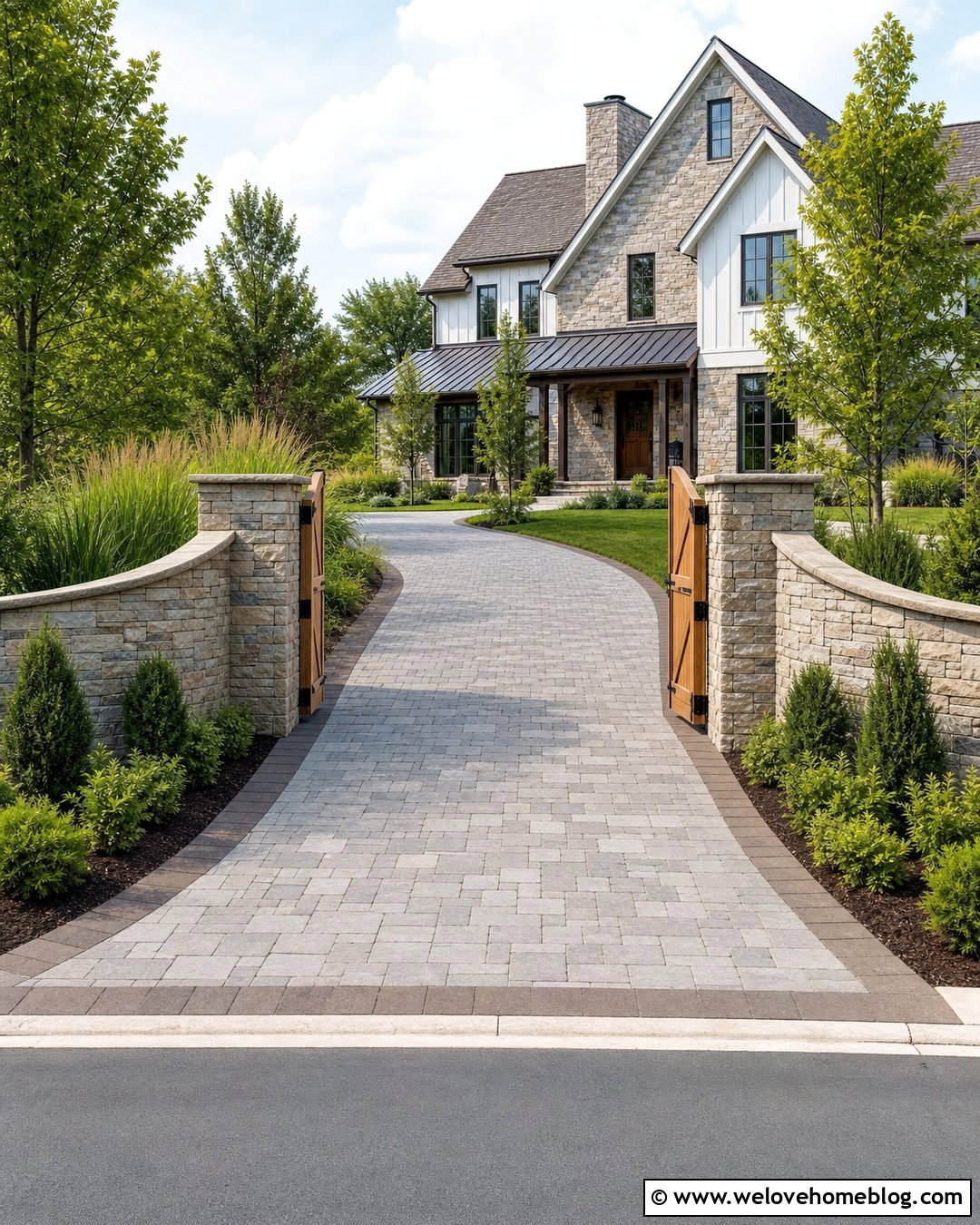
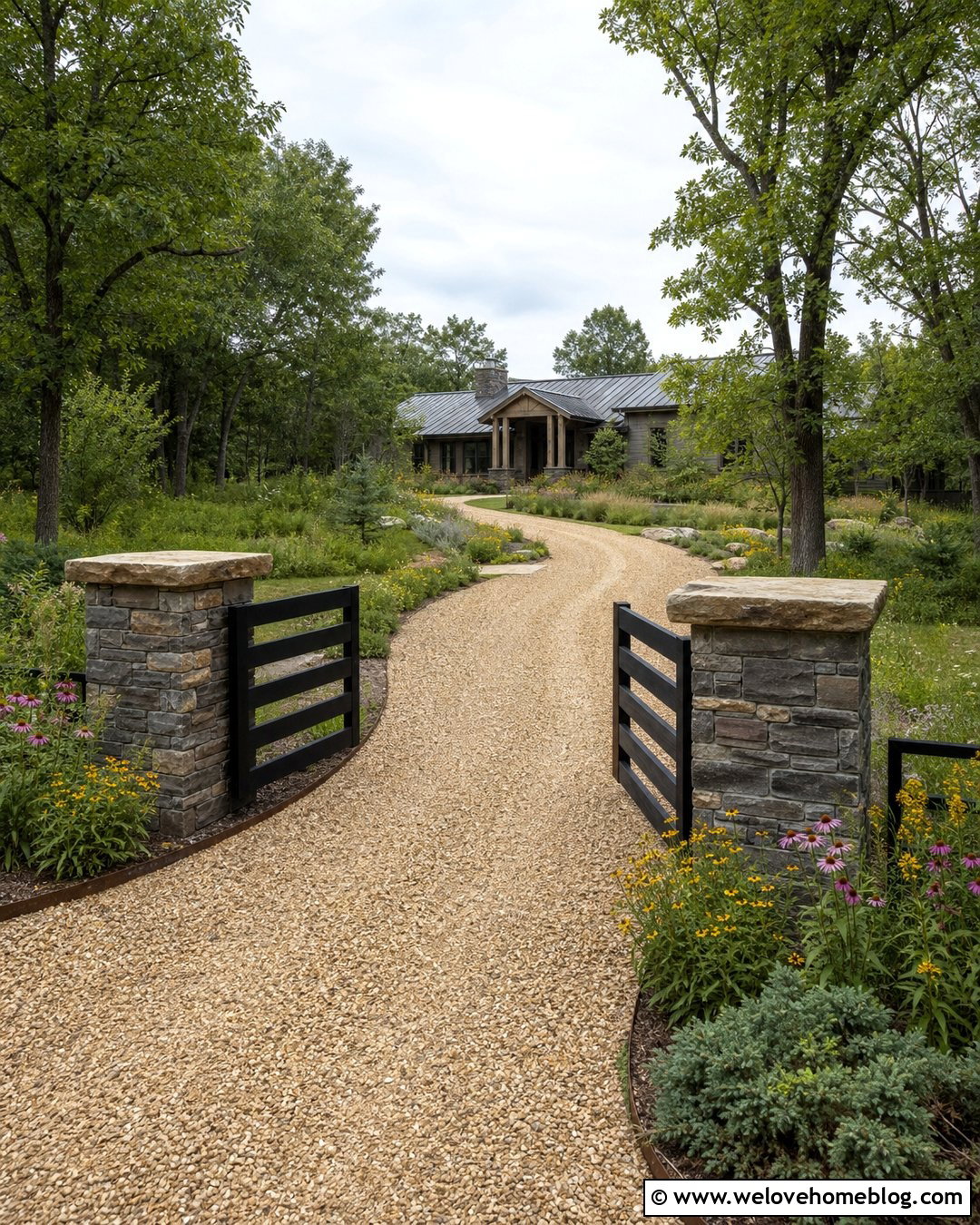
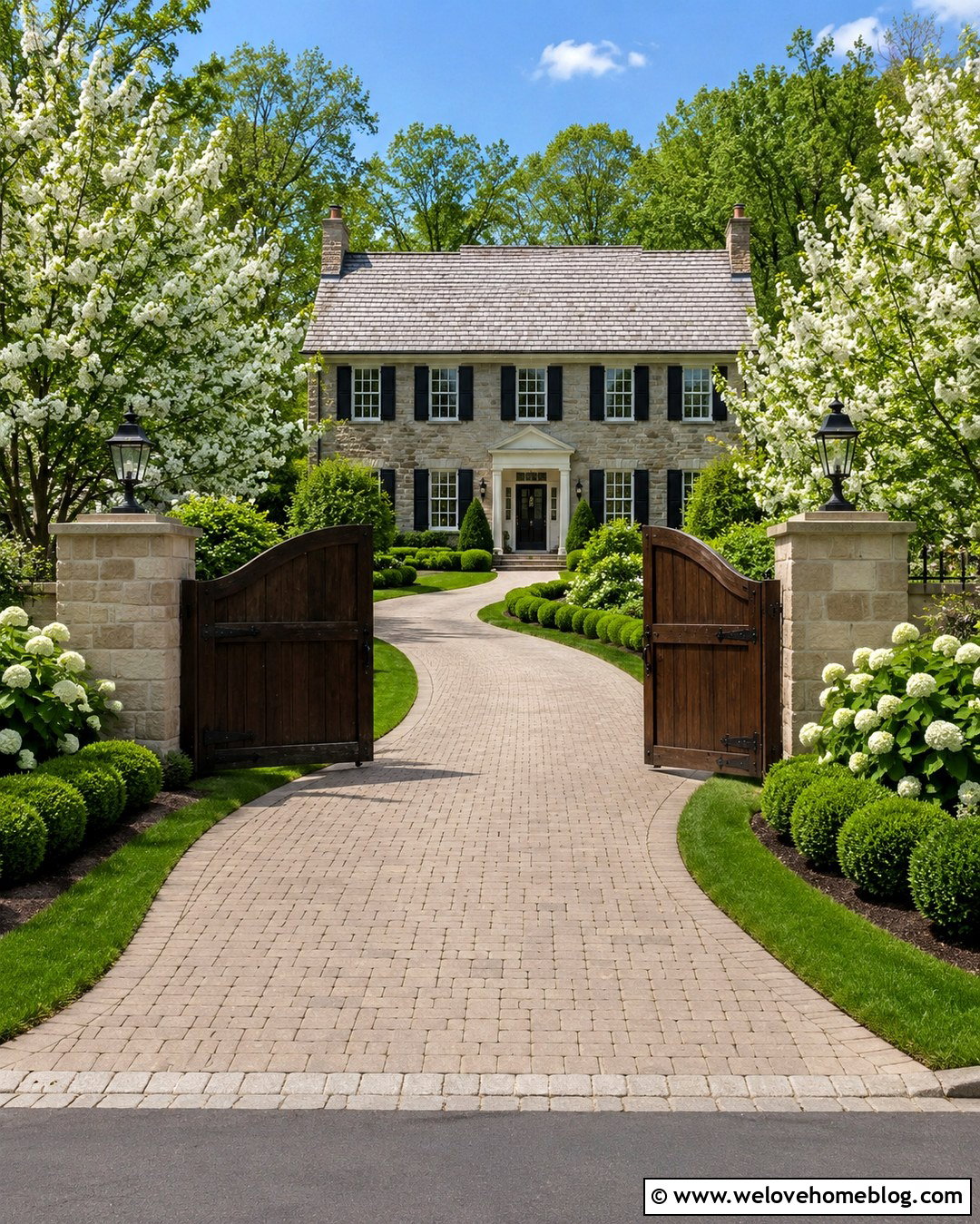
Combining curved stone walls with a wood gate creates a secure entrance that still feels warm and residential. Use medium gray concrete pavers for the driveway, arranging them in a running bond pattern with a brown paver border. Construct the walls from tan-gray ledgestone and curve them toward substantial gate pillars. A double-swing cedar gate with an open upper section will preserve views into the property while providing a strong focal point. Match the gate stain to wood siding, shutters, or garage doors on the house. Plant compact evergreens and sweeping ornamental grasses behind the walls, leaving clear areas around gate hardware. Low wall-mounted lighting can highlight the curve. This entrance suits a modern farmhouse, craftsman home, or upscale ranch on a spacious suburban lot.
12. Curved Stone Wall With Black Metal Gate
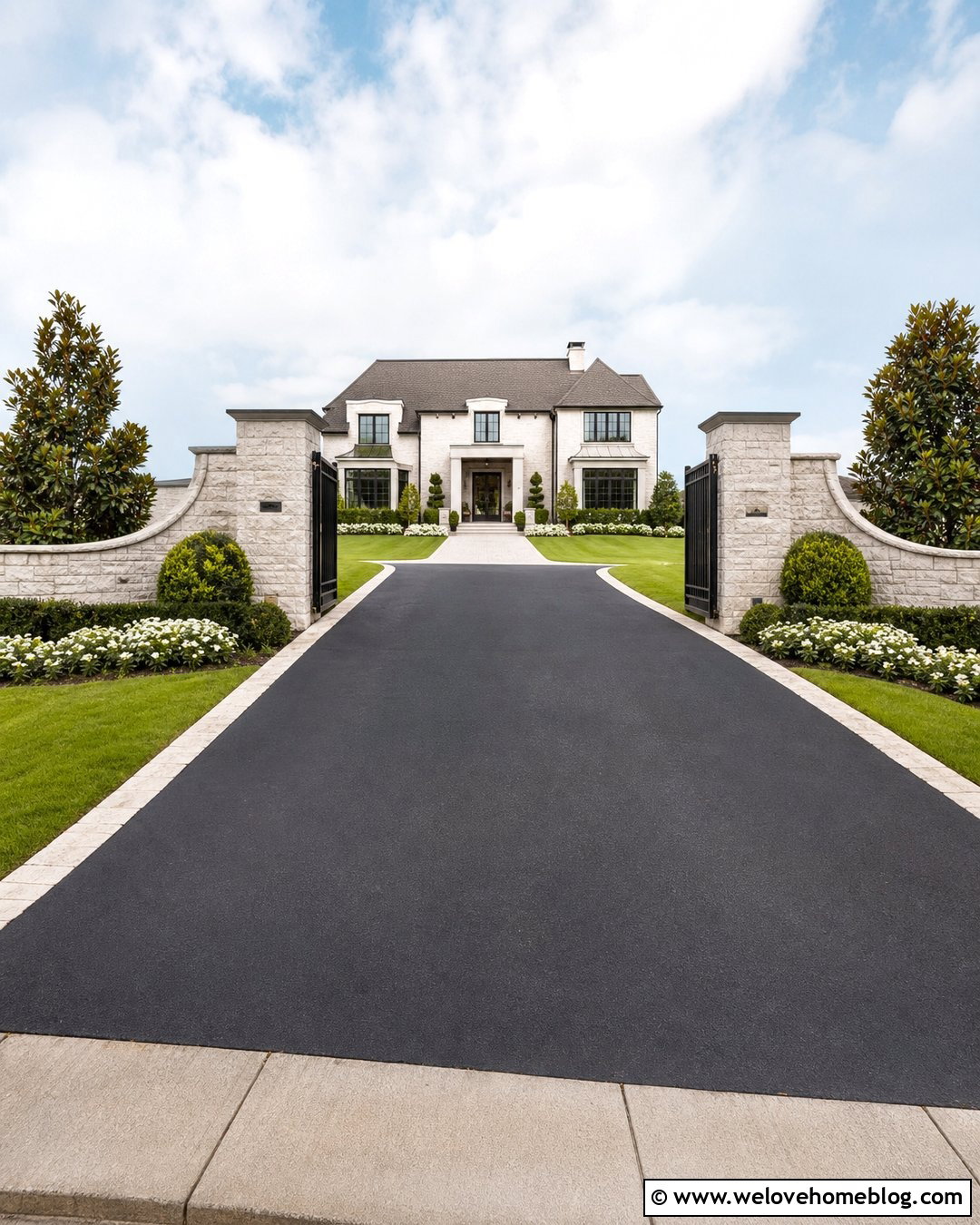
For a more formal entrance, pair symmetrical stone walls with a streamlined black metal gate. A black asphalt driveway provides a quiet surface that lets the masonry and gate stand out. Use light gray limestone or granite veneer for the walls, shaping each side into a broad curve that leads toward tall square pillars. Select a gate with simple vertical bars rather than elaborate scrollwork, especially for a transitional or contemporary home. Dark stone caps can visually connect the pale walls with the gate and driveway. Plant clipped evergreen spheres, upright hollies, and white flowering perennials in beds behind the curves. Keep these plants below eye level near the road. The finished entrance feels secure and substantial, yet its restrained colors prevent the gate and walls from looking overly ornate.
13. Curved Stone Wall With Lighted Pillars
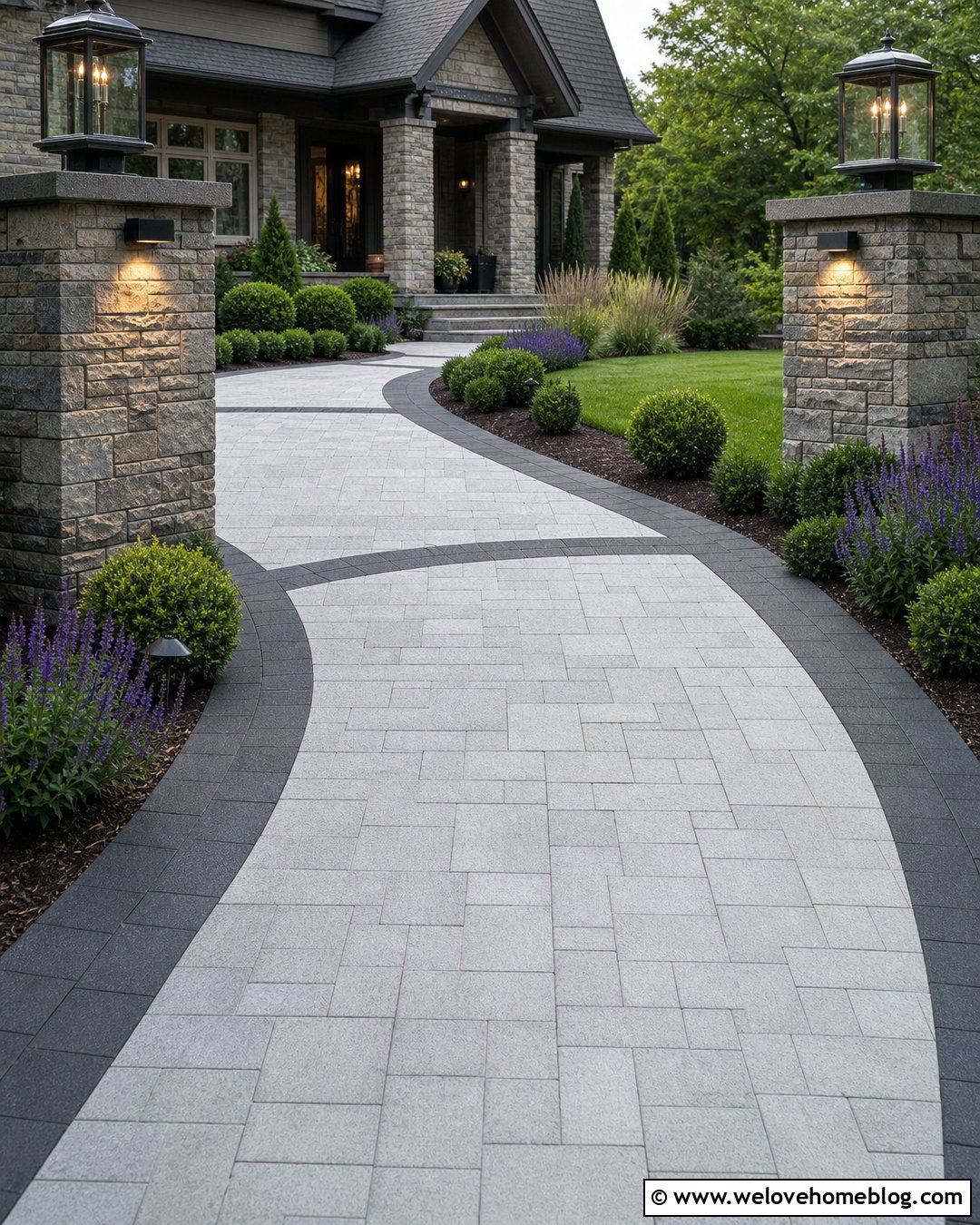
Pillar lighting makes a curved stone wall entrance easier to recognize while adding an attractive architectural detail. Start with a light gray interlocking concrete paver driveway framed by charcoal paver ribbons. Build warm gray ashlar walls that curve from the lawn toward two tall entrance pillars. Top each pillar with a simple square lantern featuring clear glass and a dark bronze frame. Additional recessed lights can be placed low in the walls to reveal their texture without creating excessive visual clutter. Surround the masonry with low boxwoods, salvia, and ornamental grasses that will not cover the fixtures. This complete design works well for a craftsman, transitional, or stone-front suburban house. During the day, consistent paver and stone colors keep the lighting hardware from dominating the entrance.
14. Curved Stone Wall With Address Sign
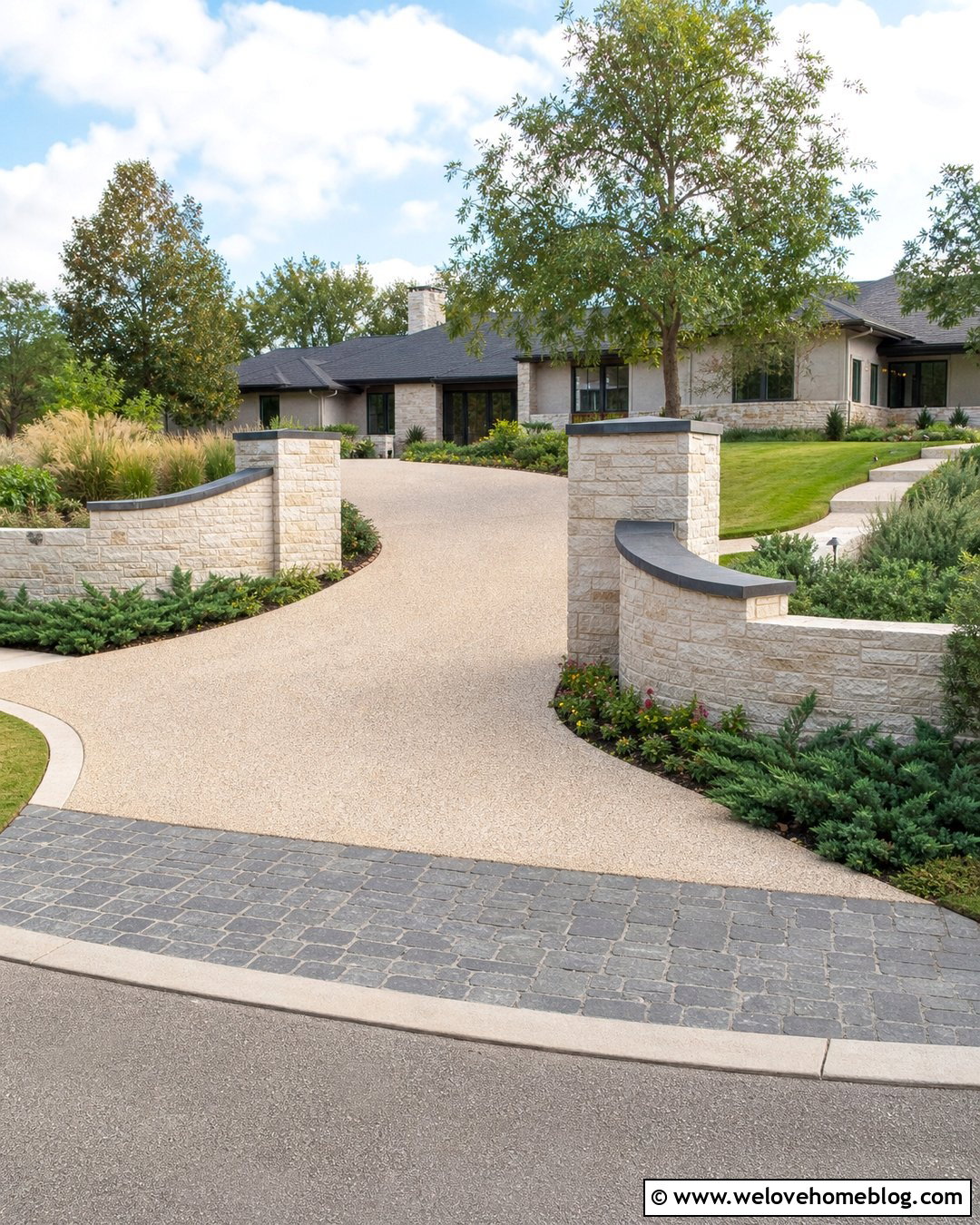
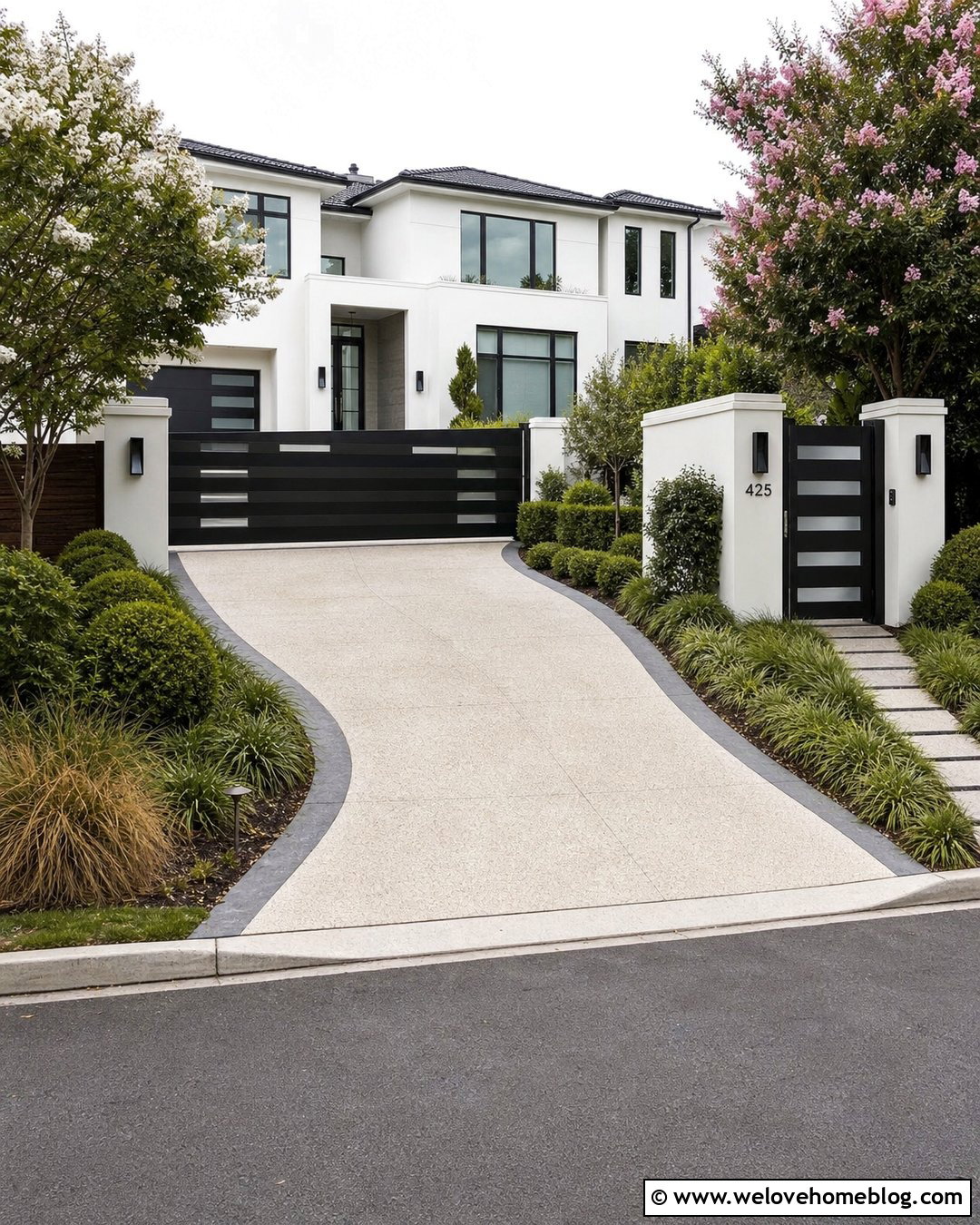
An integrated address sign can make a curved driveway entrance both practical and visually balanced. Choose a pale exposed aggregate concrete driveway with a dark gray cobblestone apron at the road. Build one curved wall slightly higher and longer so it can hold large, clearly visible metal address numbers. Balance it with a shorter wall on the opposite side rather than forcing exact symmetry. Use split-face limestone in beige and gray tones, topped with smooth charcoal caps. Plant low junipers, fountain grass, and seasonal flowers beneath the sign, keeping the numbers unobstructed. A narrow paver walkway can pass behind one wall and connect the curb to the house. This asymmetrical entrance is particularly effective for corner properties, angled driveways, and modern ranch homes with off-center garages.
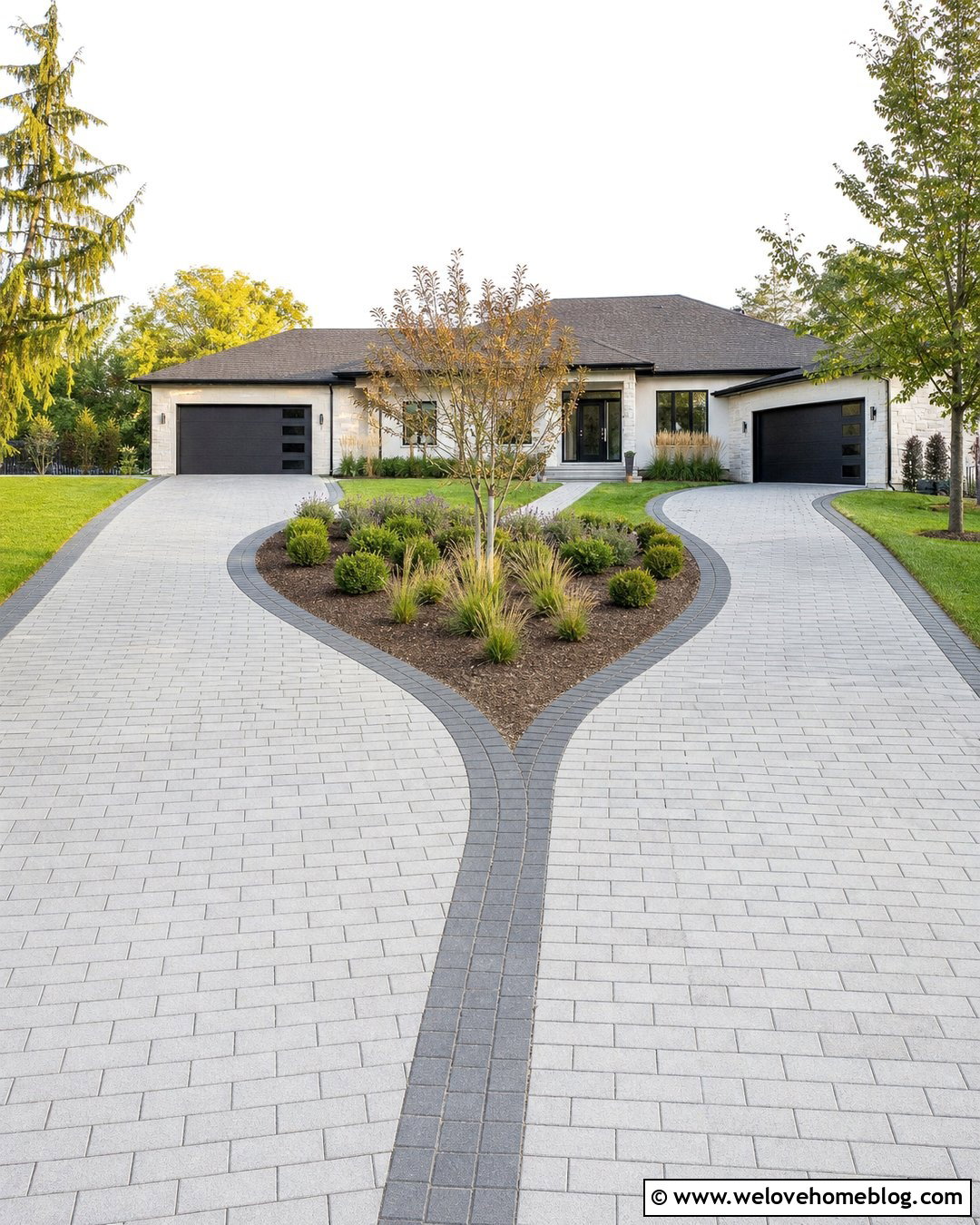
15. Curved Stone Wall With Flower Beds
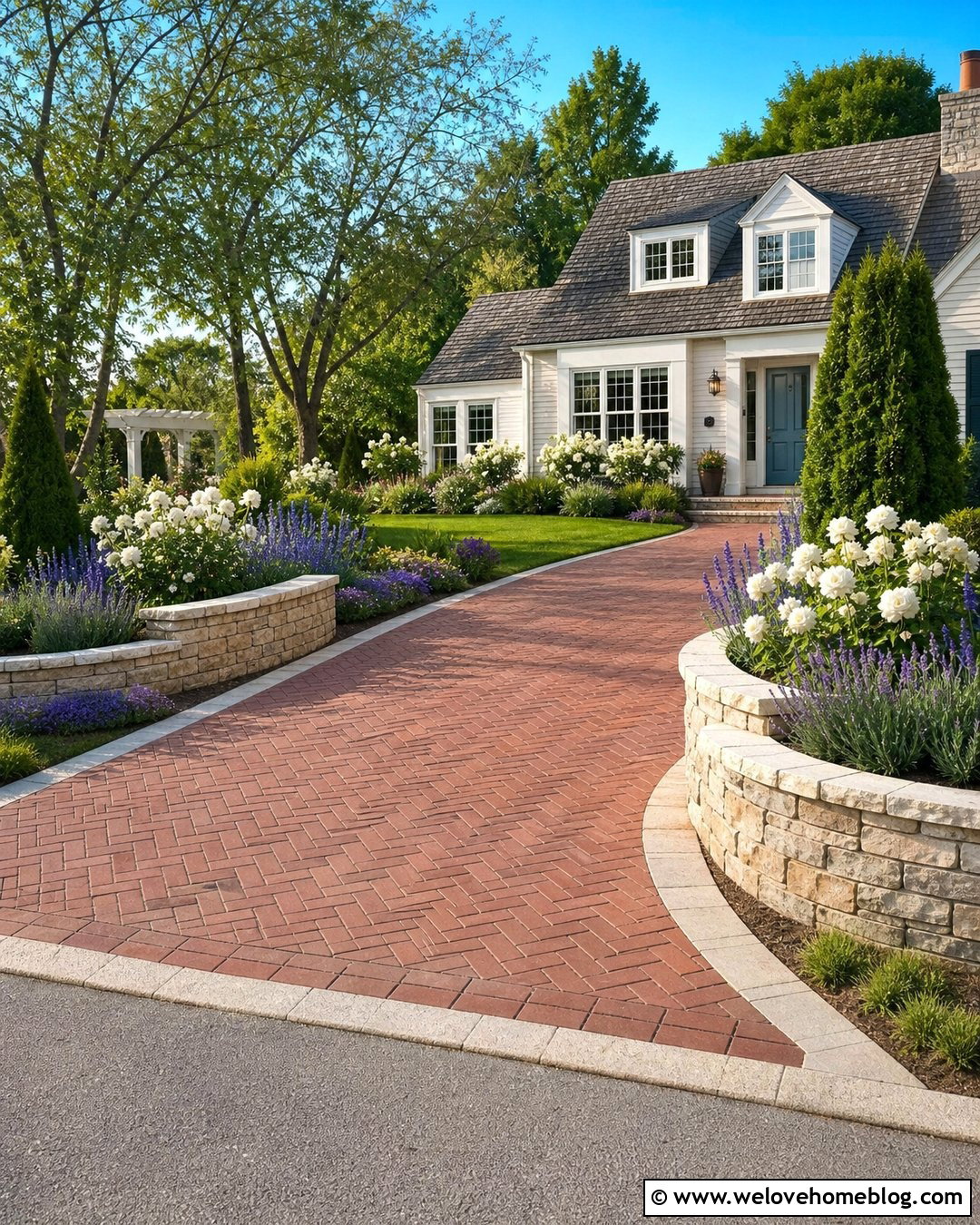
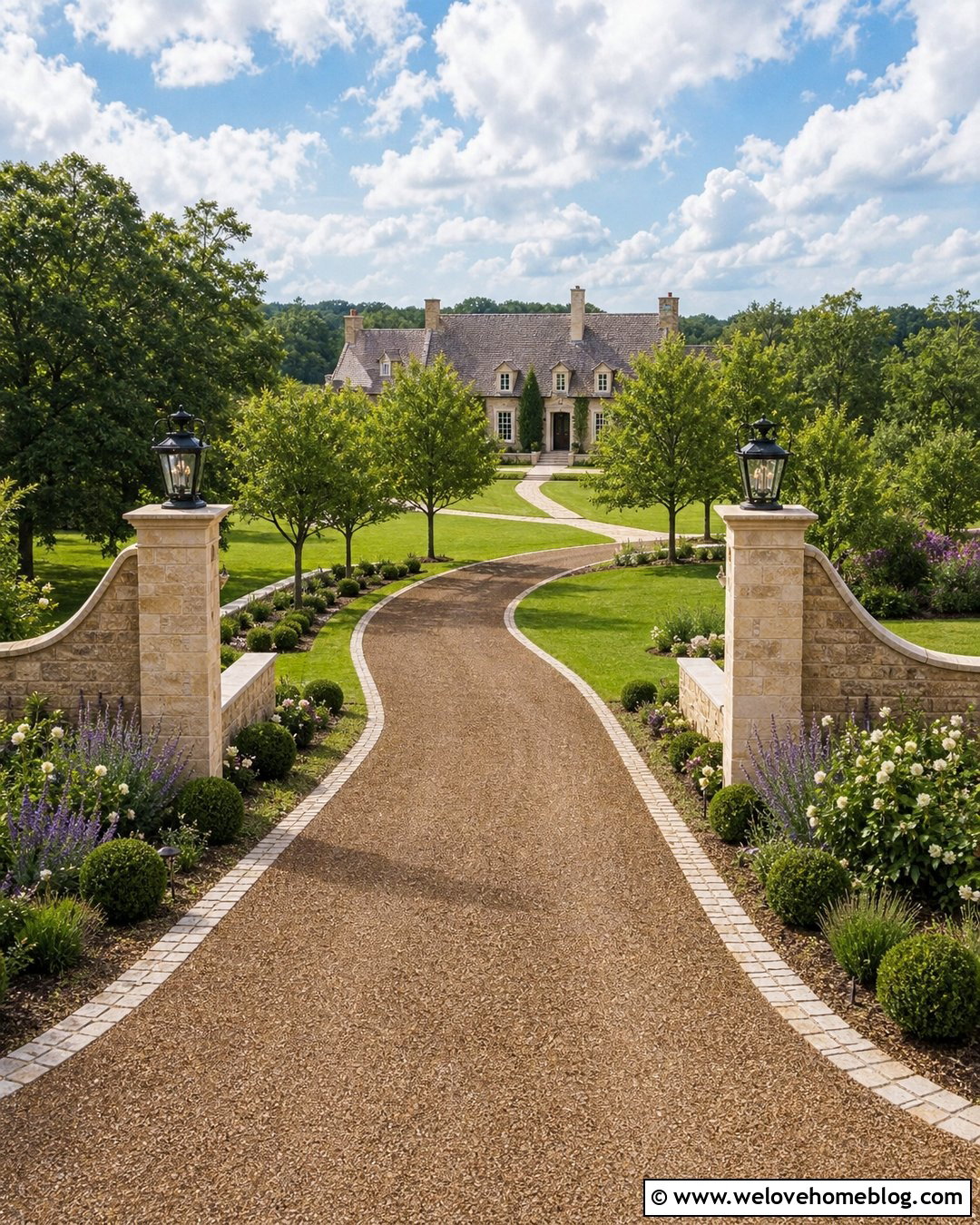
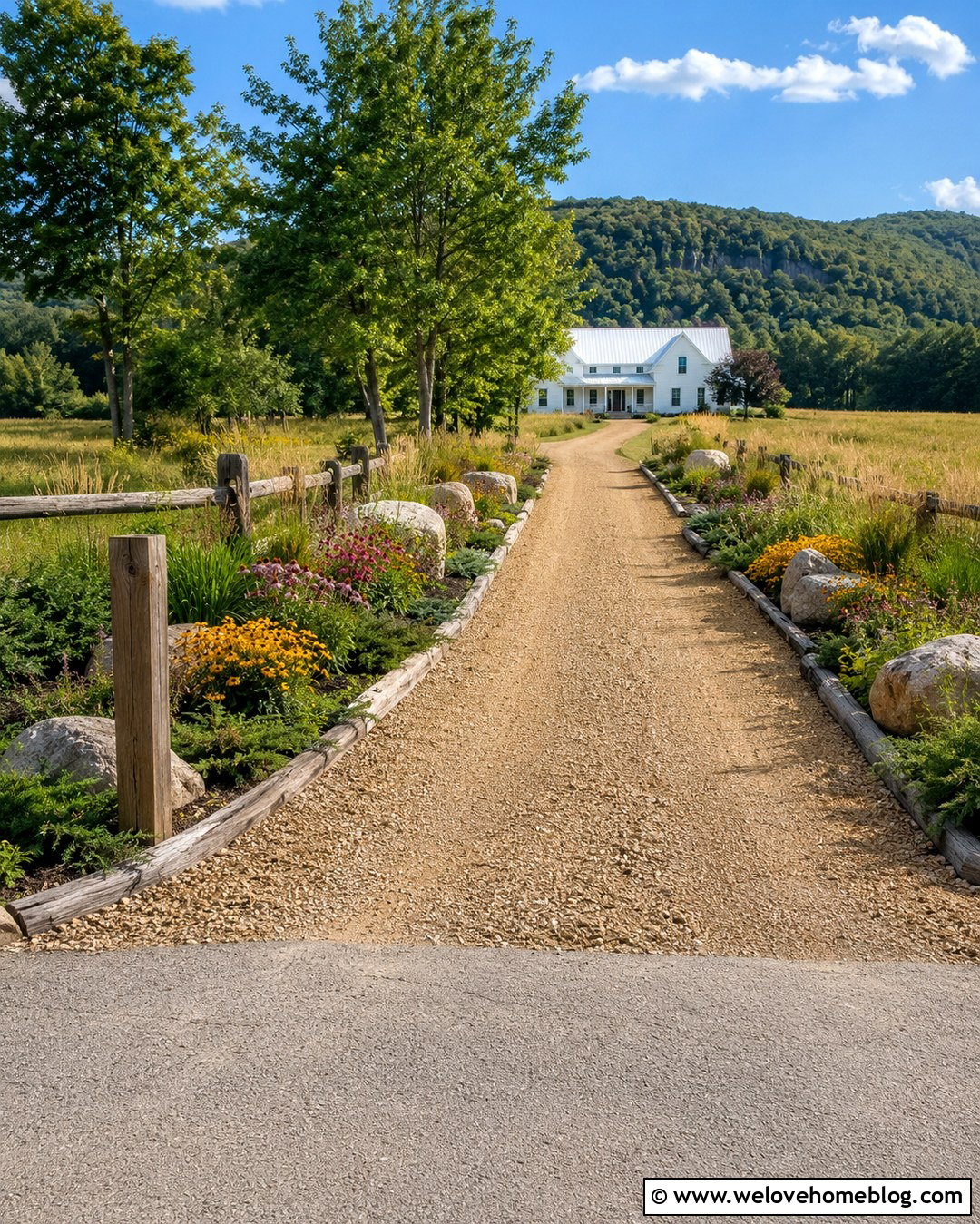
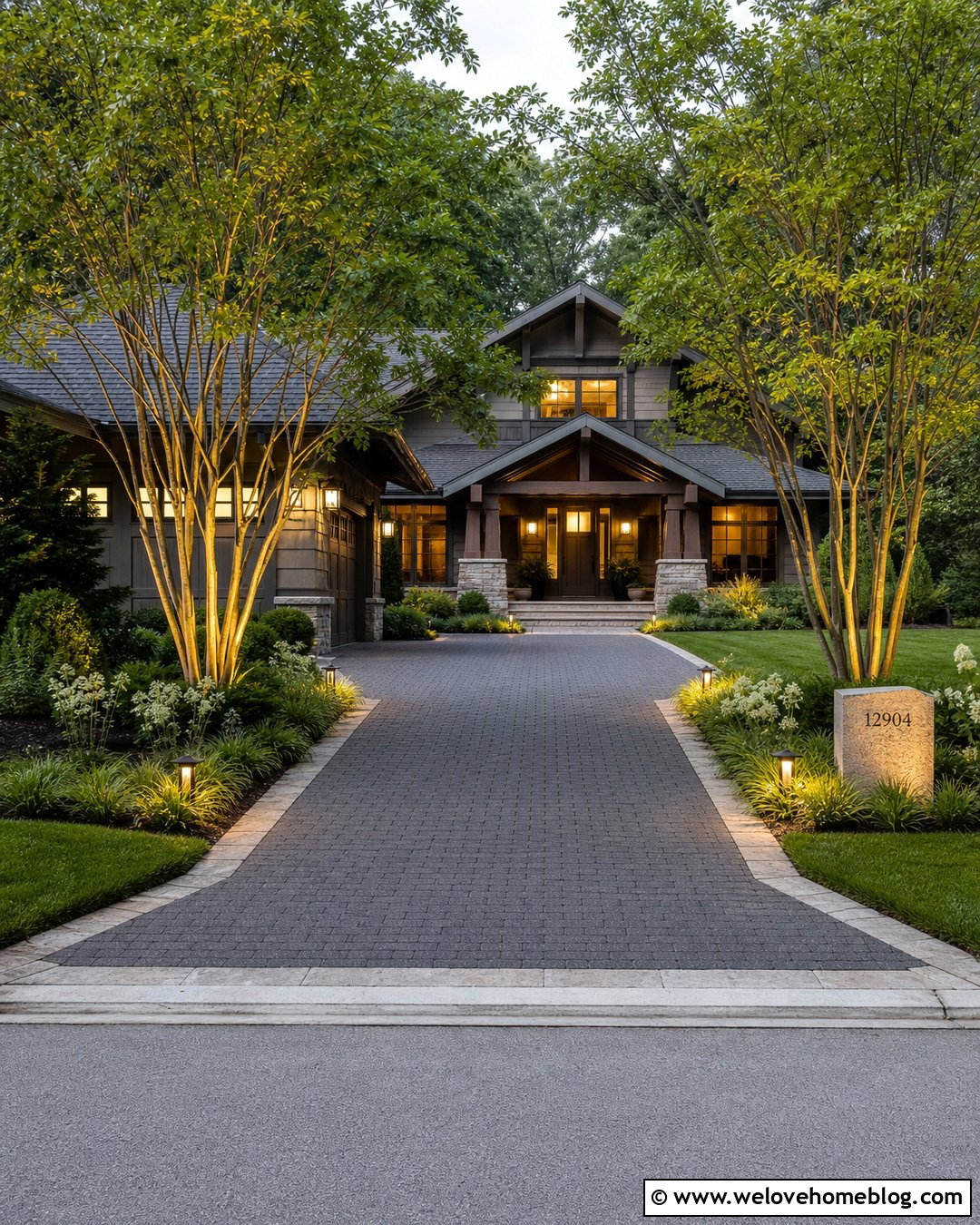
Colorful planting beds can turn solid masonry into a softer garden entrance. Use clay brick pavers in a muted red herringbone pattern for the driveway and build low walls from creamy limestone. Curve each wall around a generous bed rather than placing flowers in a narrow strip. Layer white roses at the back, lavender and salvia through the middle, and low creeping thyme near the stone caps. Small evergreen shrubs will maintain structure when flowering plants are not at their peak. A limestone border between the brick and planting beds can repeat the wall material. This complete entrance complements a cottage, Cape Cod, or English-inspired brick home. Limit the flower palette to two or three main colors so the beds enhance the curved walls without making the approach look cluttered.
16. Curved Stone Wall With Evergreen Landscaping
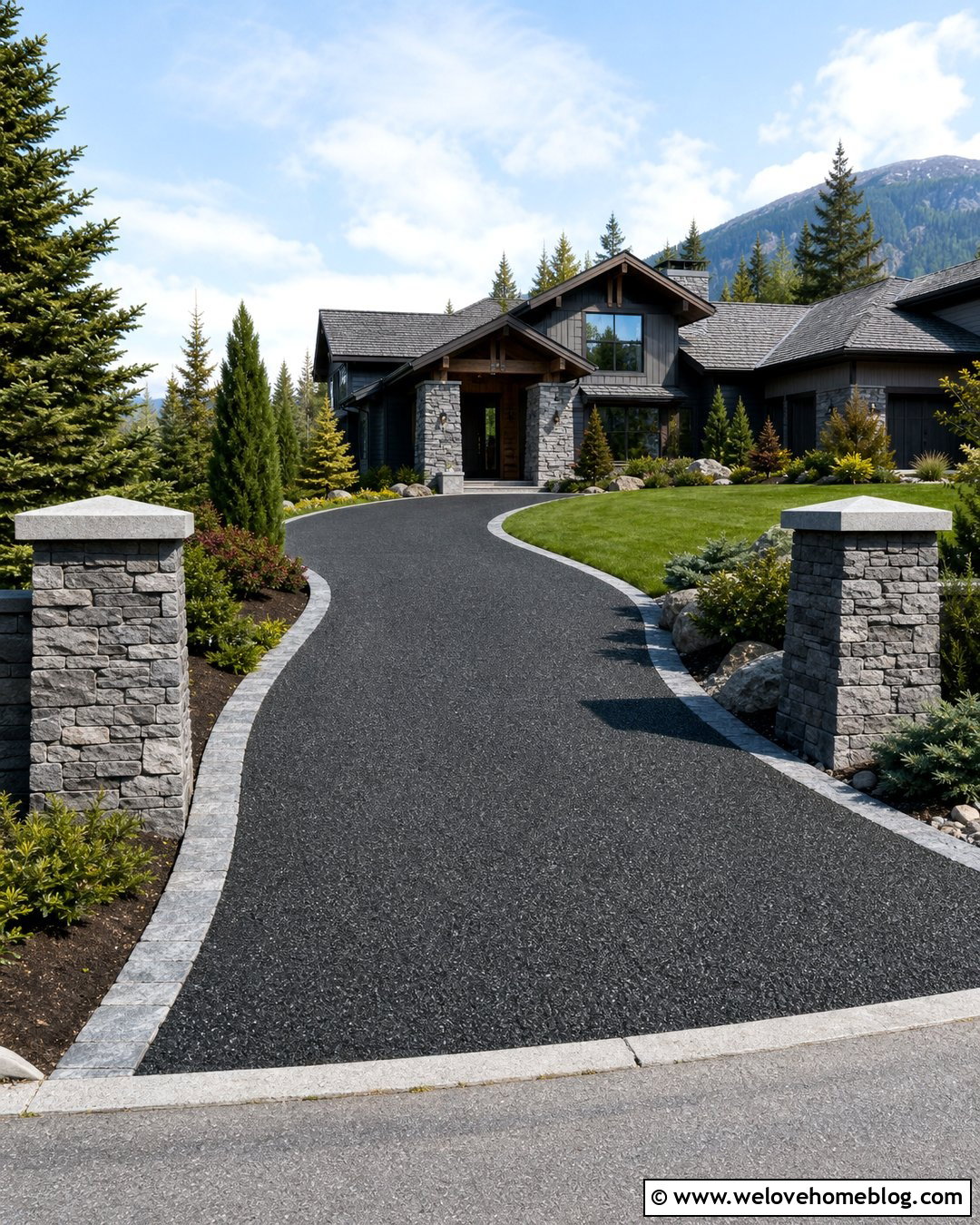
Evergreen landscaping gives curved entrance walls a clean frame throughout the year. Pair a charcoal resin-bound gravel driveway with low walls made from cool gray stacked stone. Let the walls arc inward from the property boundary and terminate beside broad square pillars. Behind them, arrange dwarf spruce, inkberry holly, spreading juniper, and compact ornamental grasses in layered groups. Avoid placing tall plants directly beside the driveway opening, where they could visually narrow the entrance. Pale stone caps and a silver-gray granite driveway border will prevent the dark palette from feeling too heavy. This design works especially well with modern, contemporary, and mountain-inspired houses. The combination of structured evergreens, dark paving, and linear stacked stone creates a composed entrance without depending on seasonal flowers for visual interest.
17. Curved Stone Wall With Sloped Driveway
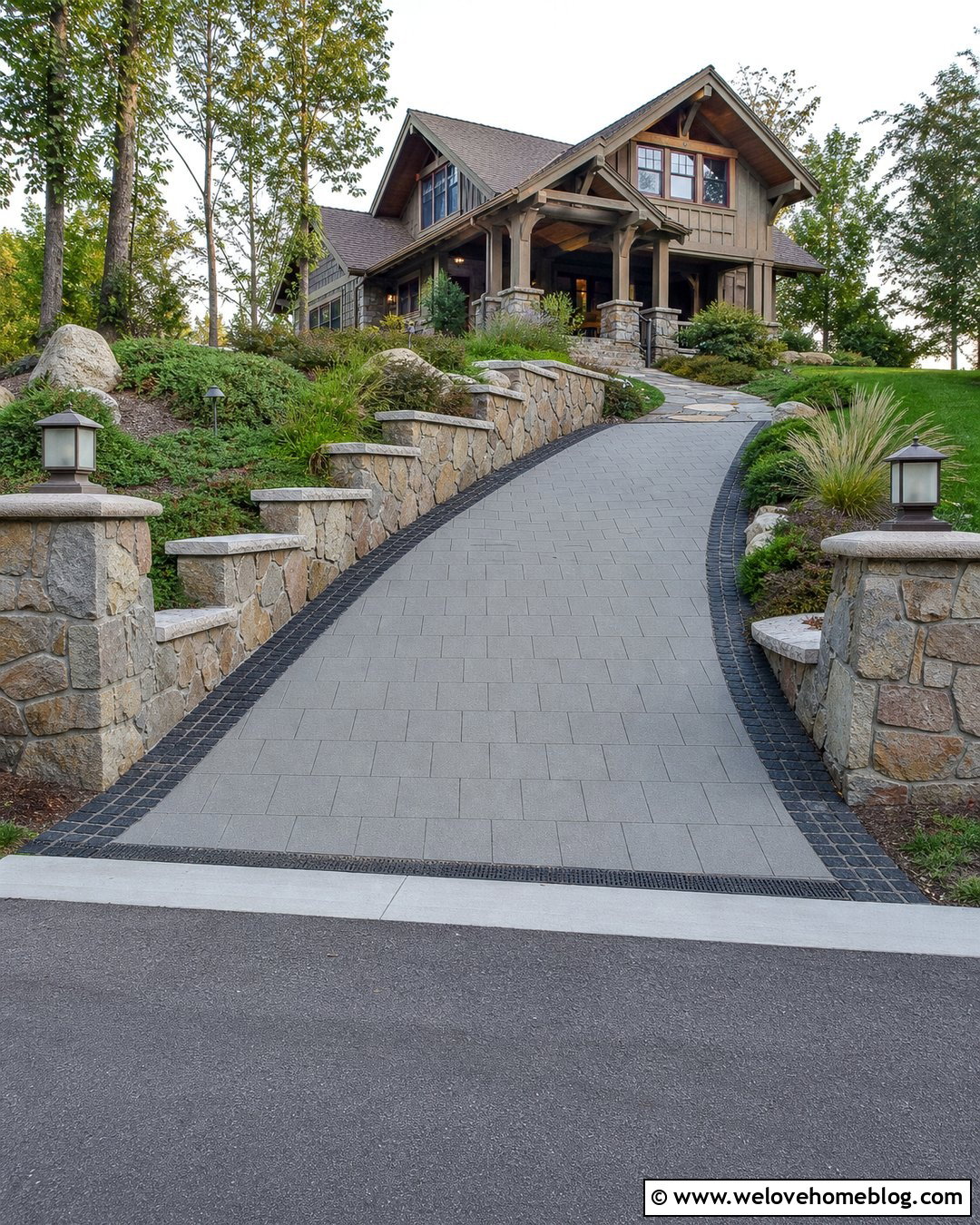
A sloped driveway benefits from walls that appear integrated with the changing grade. Use textured gray concrete pavers for traction and frame the surface with dark granite setts. At the entrance, begin with low curved stone walls that step upward gradually as the driveway climbs. Construct them from rectangular fieldstone in warm gray and tan, using broad caps at each level. Extend one wall slightly farther uphill where it can transition into a planted retaining edge. Ground-cover junipers, low grasses, and spreading cotoneaster will soften the slope while leaving the masonry visible. Include a discreet channel drain where site conditions require water management. This entrance suits a hillside craftsman or contemporary home. Professional grading and structural planning are important before walls are used to hold back significant soil.
18. Curved Stone Wall With Brick Pillars
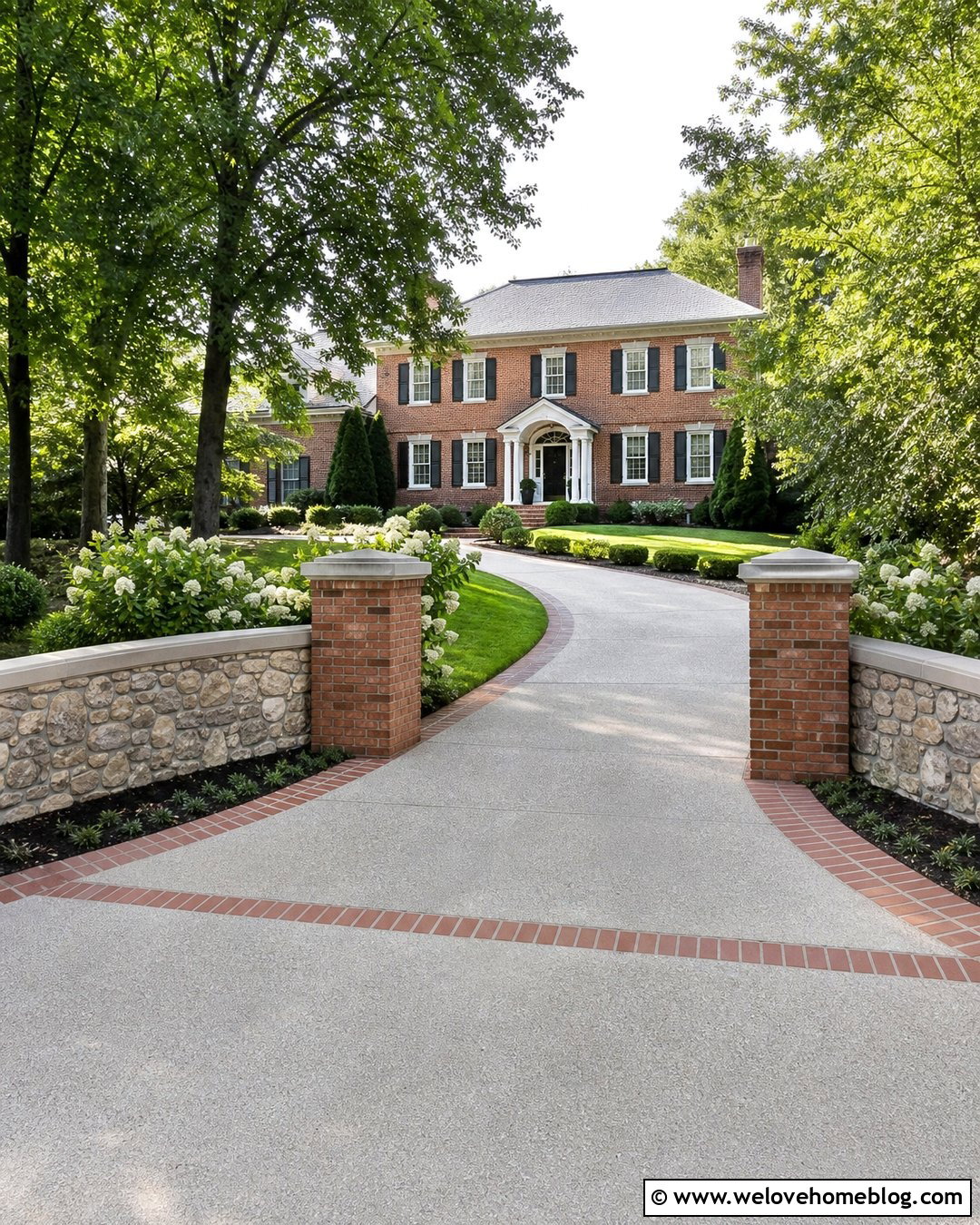
Brick pillars can connect a curved stone entrance directly to a brick house. Choose a warm gray poured concrete driveway with a red brick ribbon running across the entrance and along both edges. Build the curved walls from buff and gray fieldstone, then terminate them at square pillars made from the same red brick used on the home. Light limestone caps will unify the contrasting materials. Keep the wall curves broad and low so the brick pillars remain the main vertical features. Boxwoods, white hydrangeas, and neatly edged lawn provide a traditional landscape frame. This combination is particularly suitable for colonial, Georgian, and traditional ranch homes. Matching the brick closely is less important than selecting a complementary tone that looks intentional beside the existing facade.
19. Curved Low Stone Wall For Small Driveway
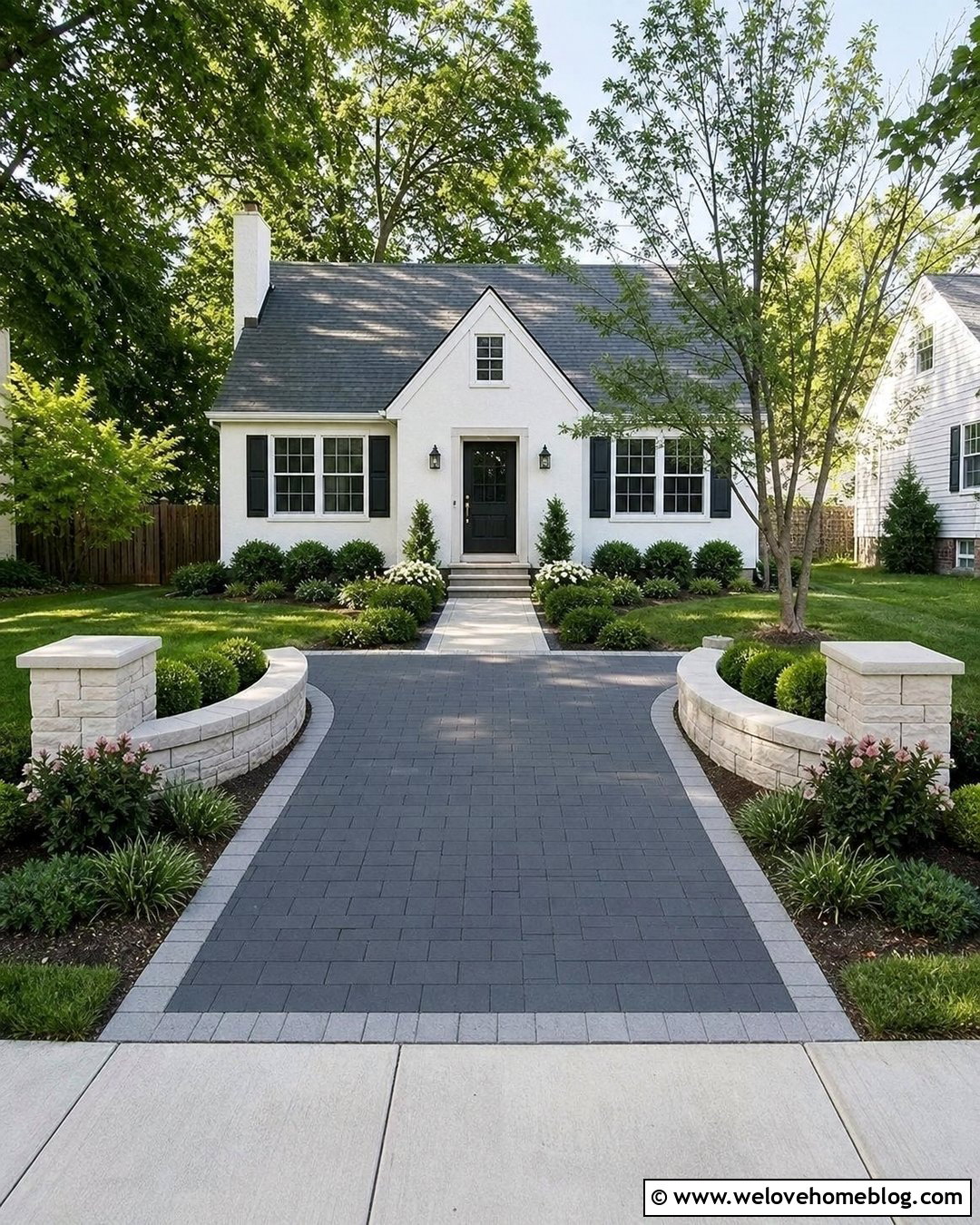
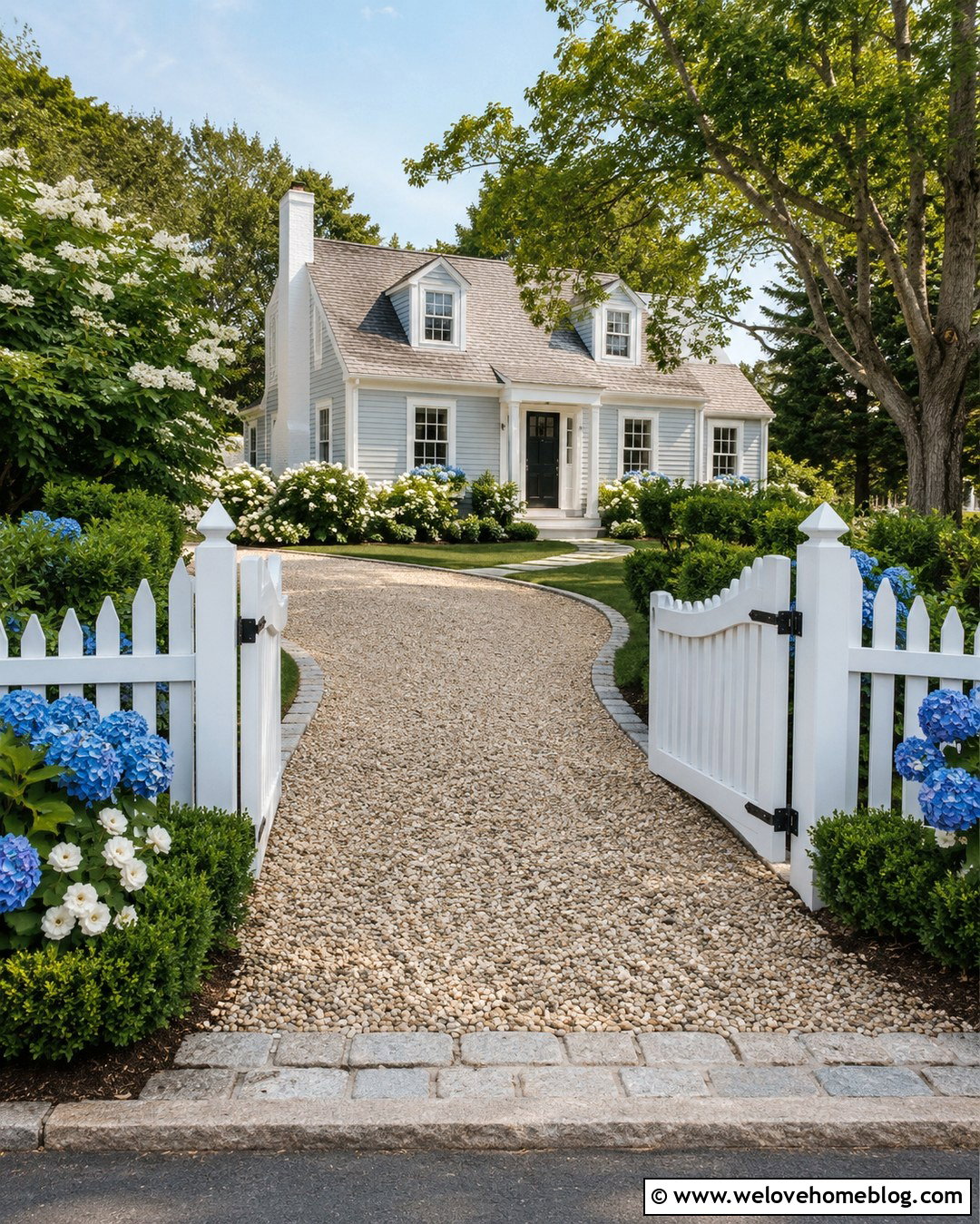
A small front yard does not need tall pillars or massive walls to create a defined entrance. Use compact charcoal concrete pavers in a simple running bond pattern and edge them with a narrow light gray border. Build two low limestone walls that flare outward near the curb, then end before they consume valuable parking space. Skip large pillars and finish the walls with slightly raised square ends instead. Small planting pockets can hold dwarf boxwoods, liriope, and compact flowering perennials. Keep the wall height restrained so the street, sidewalk, and driveway remain visually connected. Simple curved paving and clear borders can add definition without overwhelming a limited area. () This entrance works well for a bungalow, townhome, Cape Cod, or modest suburban ranch.
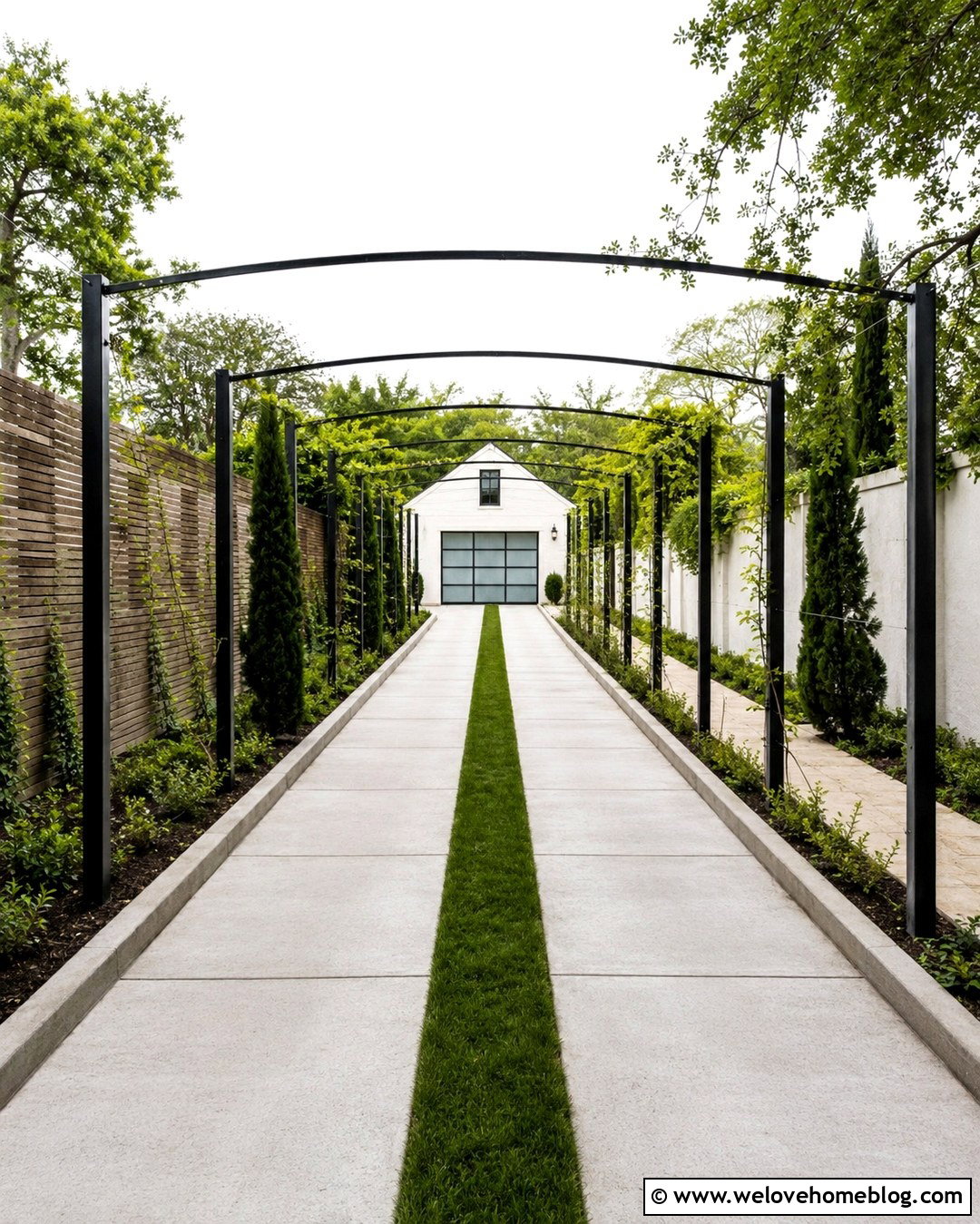
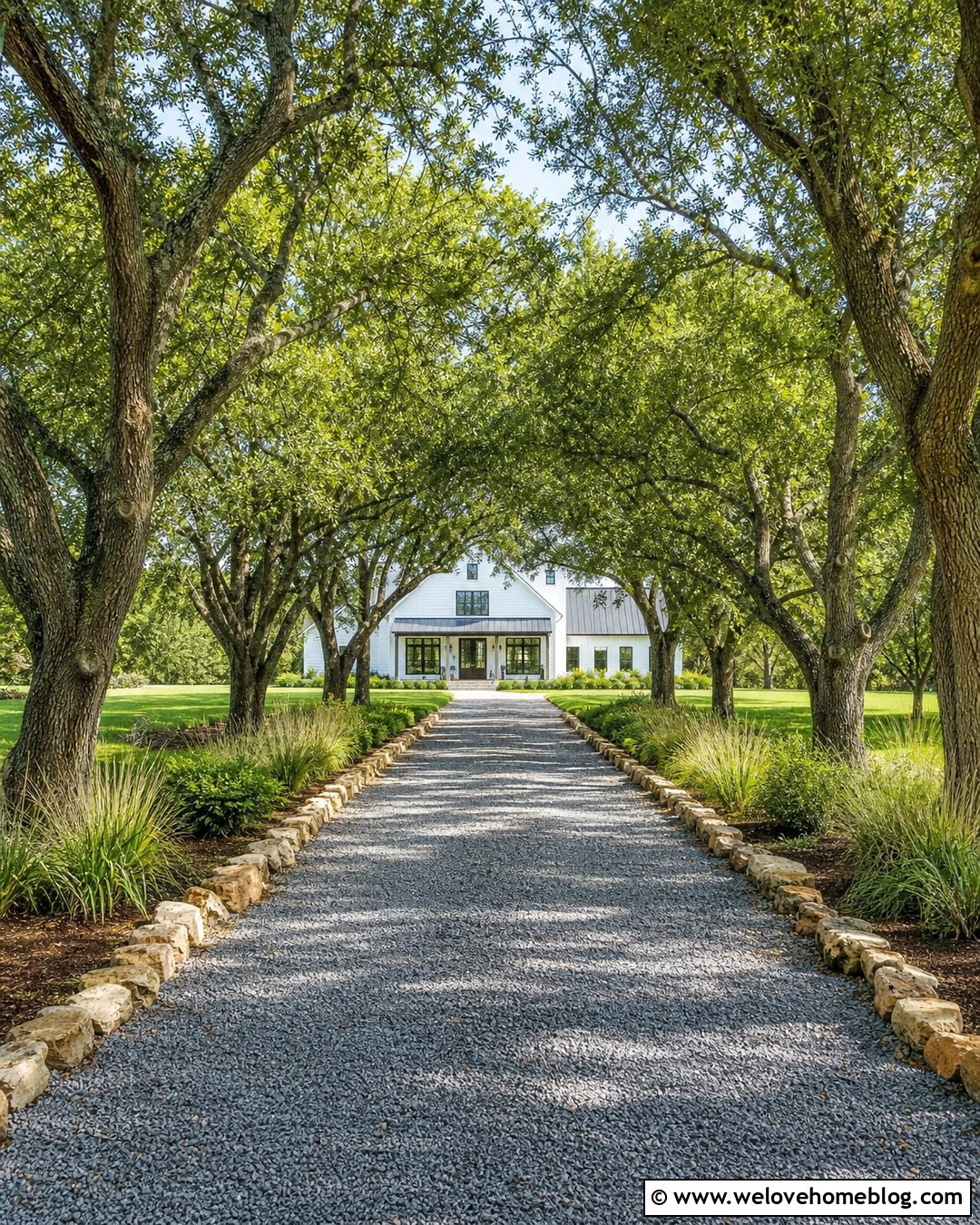
20. Curved Modern Stone Wall Entrance
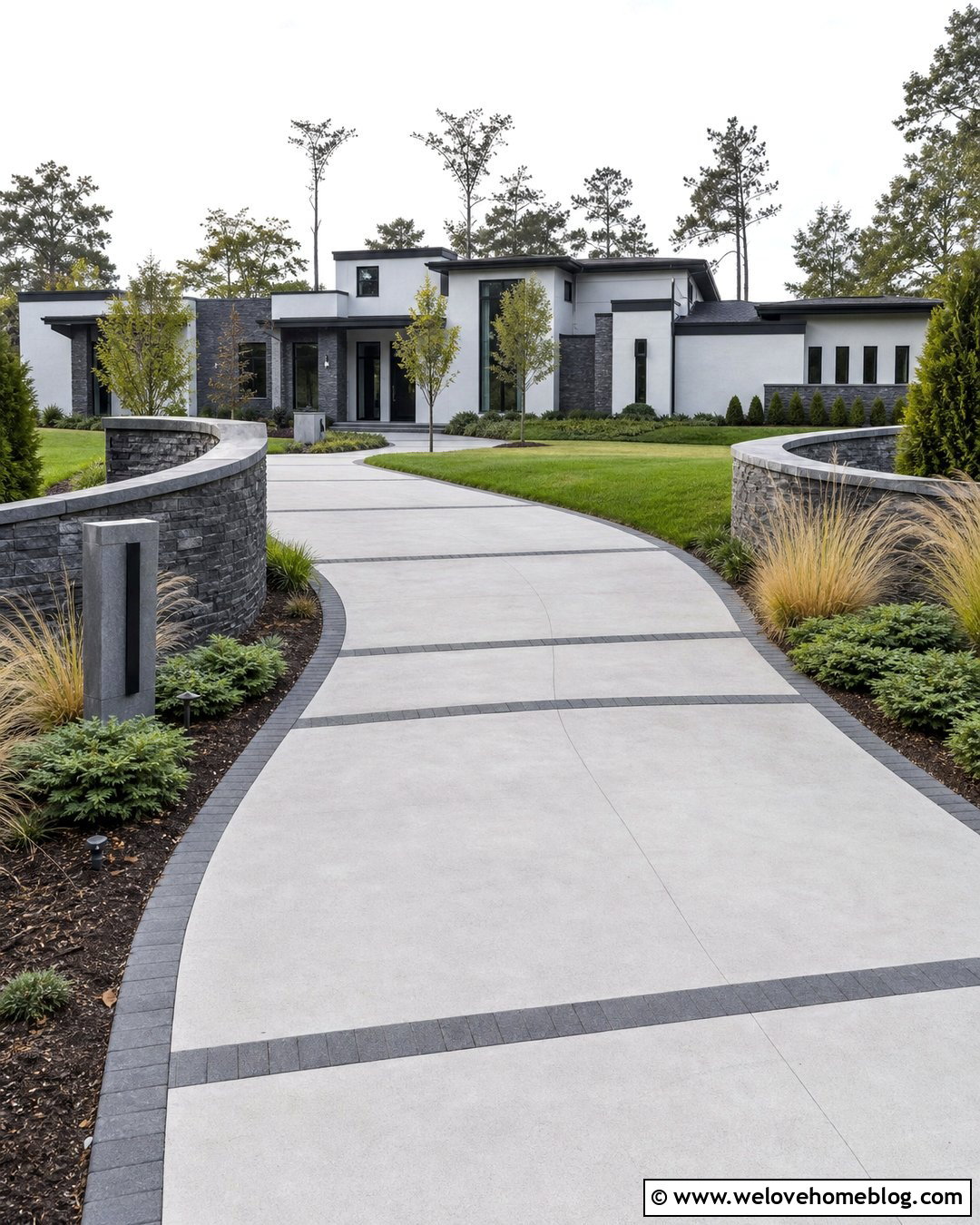
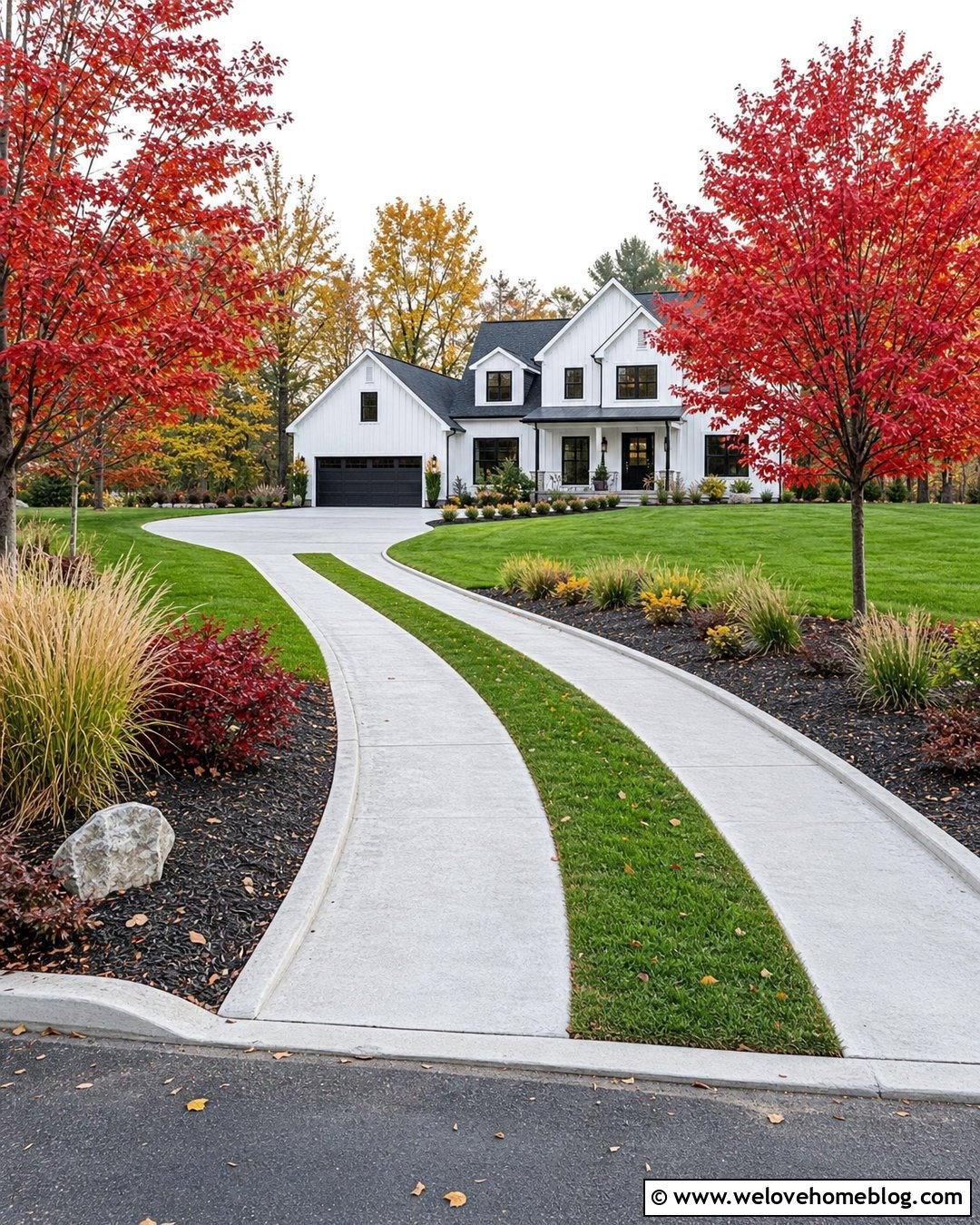
Clean geometry can give a curved stone wall a distinctly modern character. Install a smooth light gray poured concrete driveway with narrow grass strips or charcoal paver bands dividing the surface into large panels. Build asymmetrical curved walls from long-format charcoal stone veneer, keeping the joints straight and consistent. One wall can rise into an address monument, while the opposite side remains lower to maintain an open view. Use flat concrete caps instead of traditional overhanging stone. Landscaping should be simple and architectural, with feather reed grass, compact junipers, agave-like hardy plants, or clipped hedges arranged in broad groups. A modern home with white stucco, dark siding, and large windows completes the composition. The restrained materials allow the sweeping entrance shape to become the primary visual feature.
Conclusion:
The most successful curved entrance feels like a natural extension of the driveway, home, and front landscape. These 20 Curved Stone Wall Driveway Entrance Ideas demonstrate how fieldstone, limestone, granite, sandstone, river rock, and stacked stone can complement many paving materials and house styles. Begin by choosing a wall height and curve that suit the available space and preserve a comfortable driveway opening. Then coordinate the stone with the surface, pillars, caps, gate, and facade. Low planting beds can soften the masonry without hiding it. Lighting and address numbers add practical finishing details. Before construction, confirm local setback, drainage, visibility, and permit requirements, and use qualified professionals when walls retain soil or support heavy gates.

Related posts:

Leave a Reply