
A plant-lined driveway can turn a basic parking surface into a welcoming part of your front yard. These 20 Plant Lined Driveway Ideas combine attractive paving, practical borders, and layered landscaping to create complete designs rather than isolated planting strips. Some use neat evergreen hedges for structure, while others feature lavender, ornamental grasses, native flowers, or shade-loving foliage. The right look depends on your driveway material, available space, sunlight, climate, and preferred maintenance level. Plants should also remain clear of vehicle doors, sightlines, drainage paths, and snow-storage areas. From compact suburban entrances to long country approaches, each design below balances everyday access with stronger curb appeal. Explore these 20 Plant Lined Driveway Ideas to find a layout that fits your home and yard. ()

1. Lavender Lined Gravel Driveway
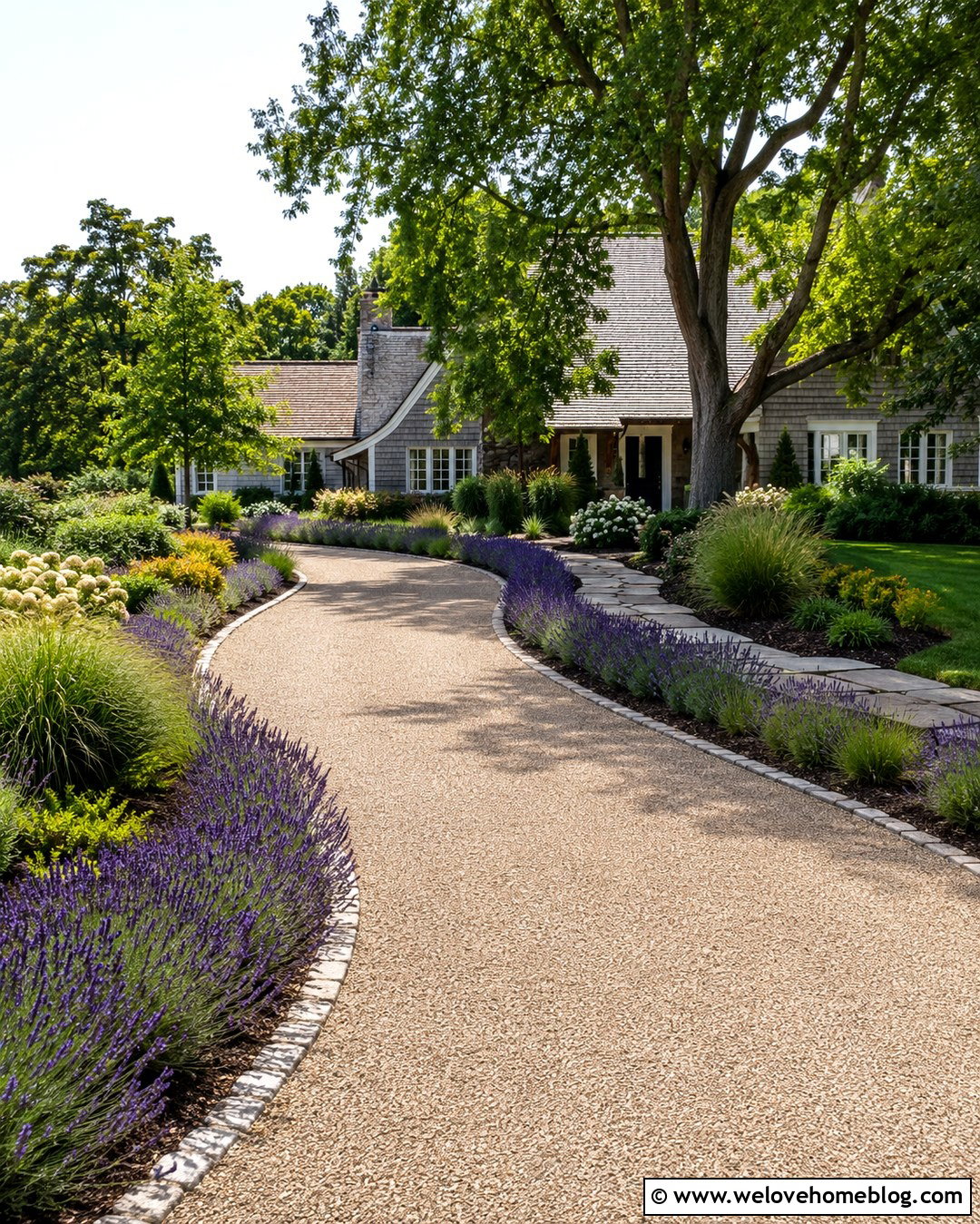
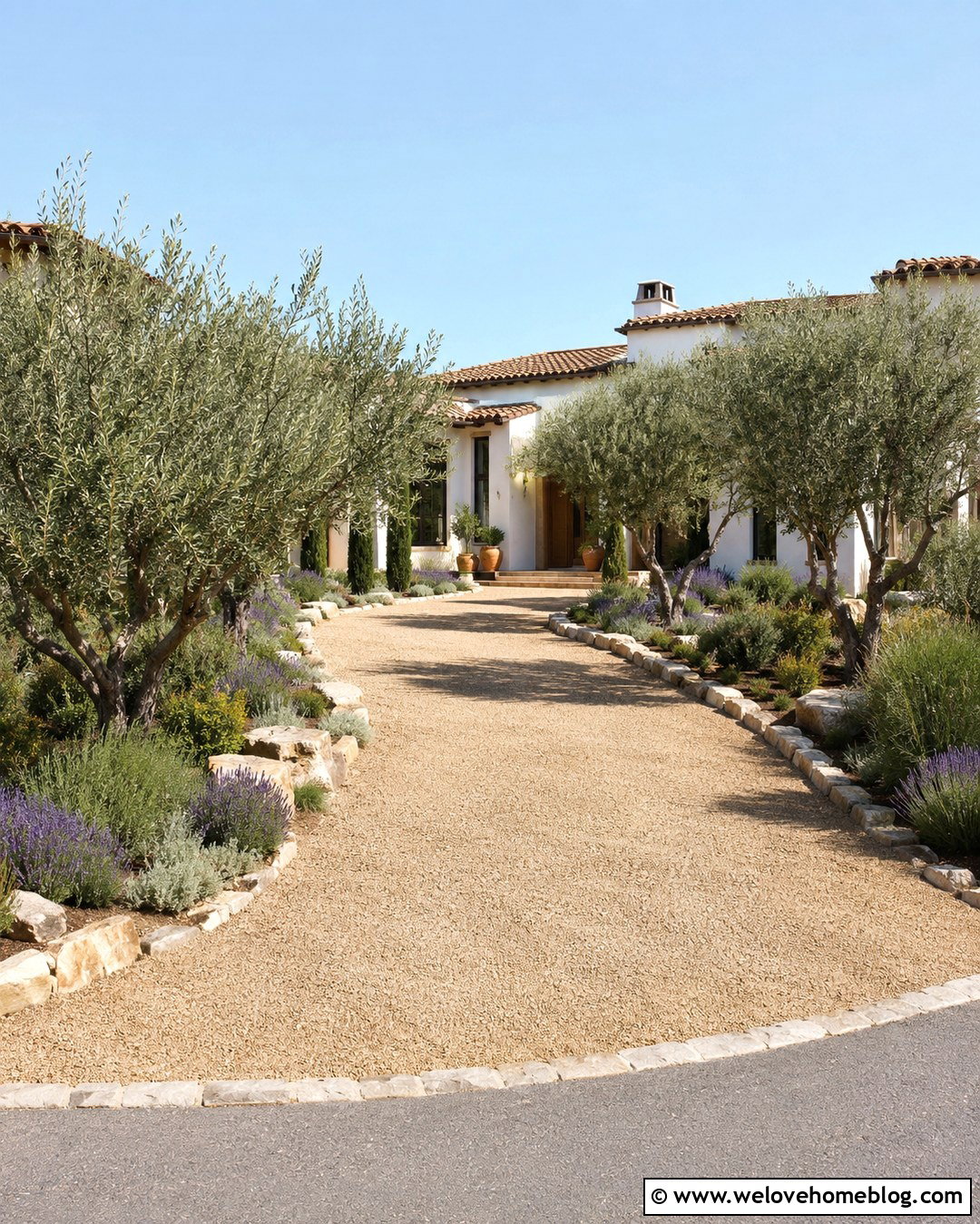
A curved pea gravel driveway feels especially welcoming when both sides are planted with repeating mounds of lavender. Use warm beige gravel to brighten the entrance, then contain it with cobblestone edging that separates the driving surface from the planting beds. Lavender brings soft purple color, fragrance, and movement without hiding the driveway’s shape. It works best in sunny locations with well-drained soil, so avoid placing it where runoff regularly leaves the ground wet. Add a few upright ornamental grasses near the house to create height without making the entire border feel busy. This complete look suits cottages, ranch houses, and casual modern farmhouses. Leave a narrow stone buffer beside the gravel to prevent branches from brushing vehicles. ()
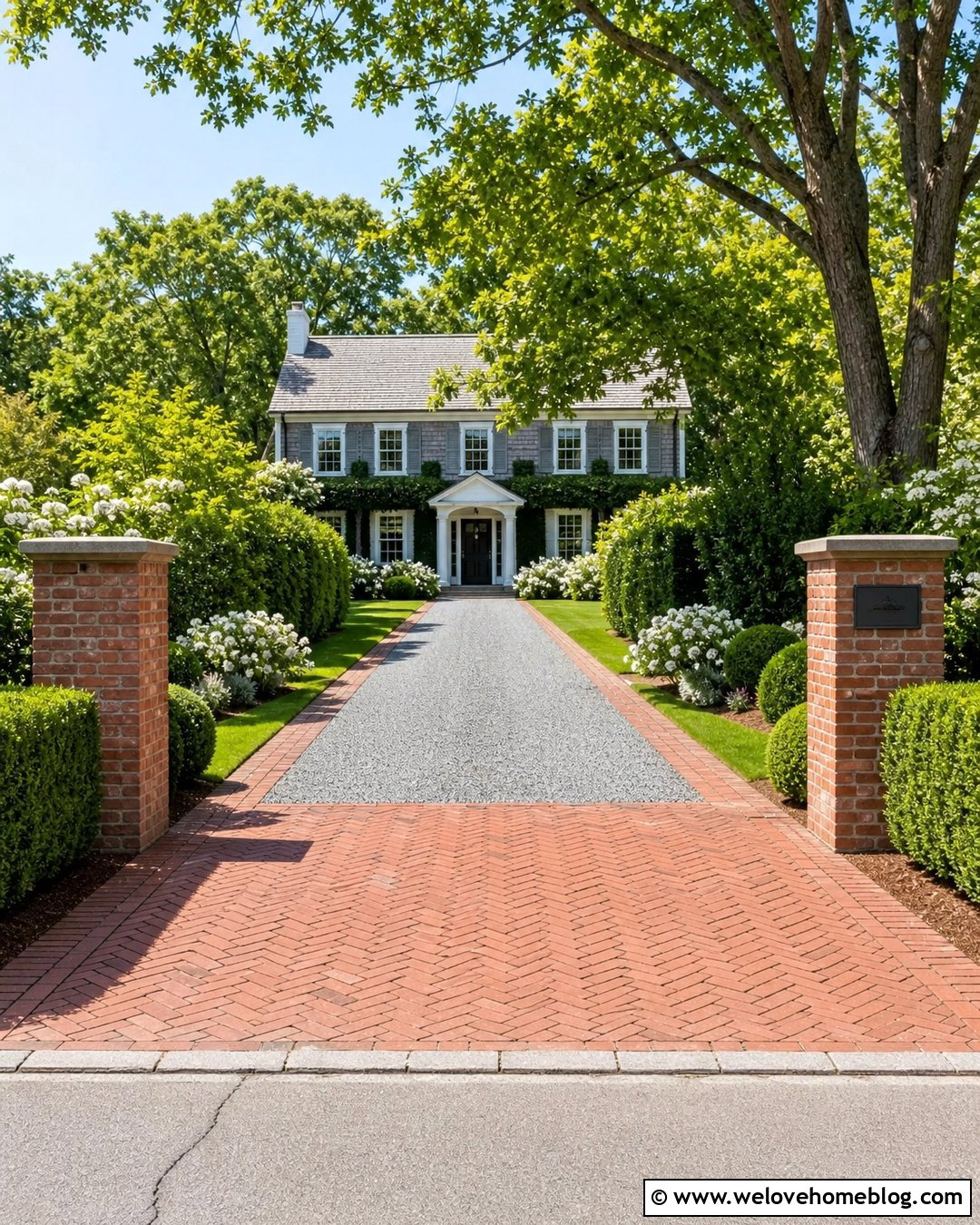
2. Boxwood Lined Brick Driveway
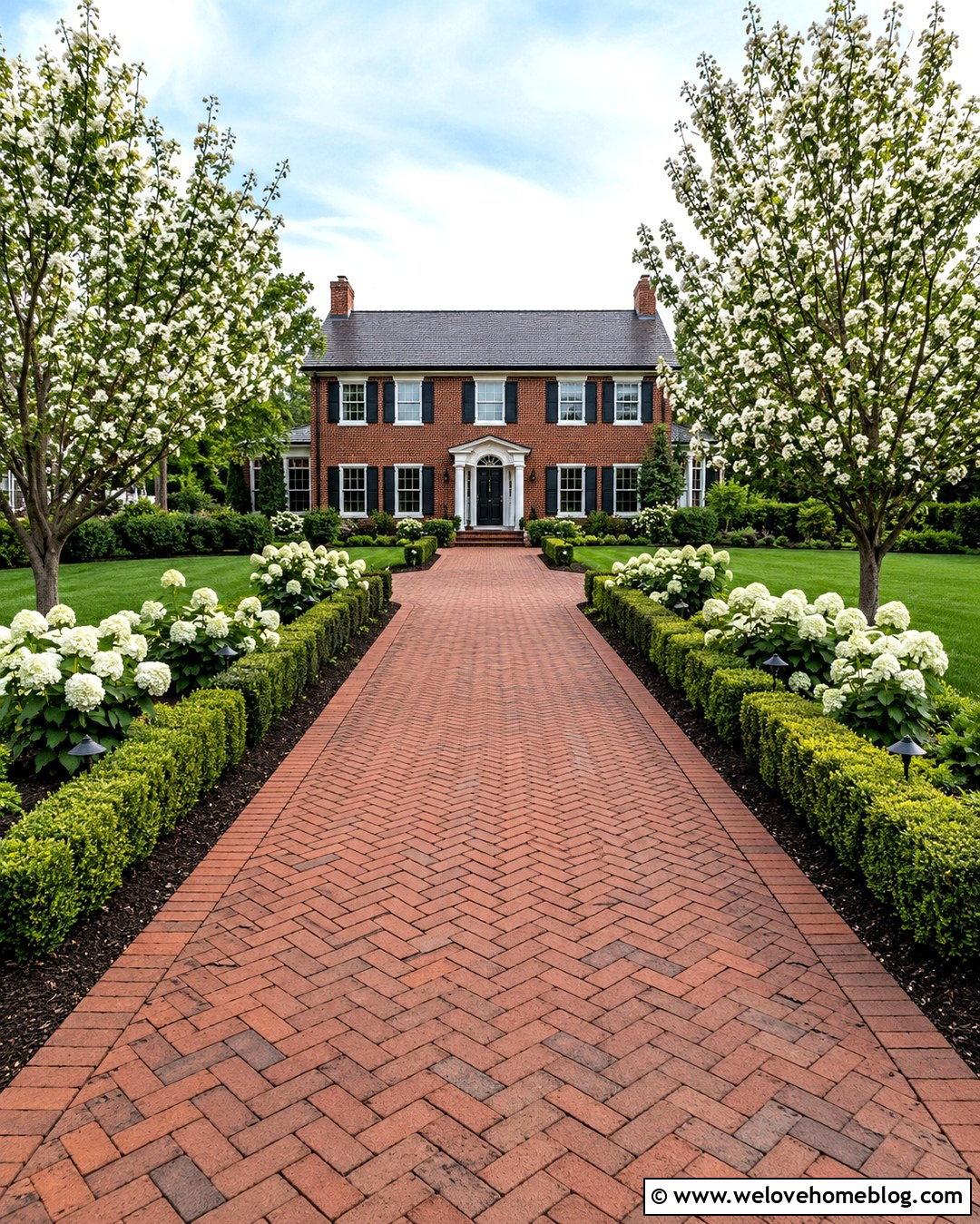
For a clean, traditional entrance, pair a straight herringbone brick driveway with low clipped boxwood hedges. The brick provides warm color and a detailed pattern, while the evergreens form a crisp frame throughout the year. Keep the hedges low enough to preserve visibility when drivers enter or leave the property. A narrow mulch bed between the boxwood and lawn makes trimming easier and gives the roots space to grow. Near the house, widen the beds and add white hydrangeas or small flowering trees for a layered finish. This plant-lined driveway works naturally with Colonial, Georgian, and red-brick homes. Check the mature width of each boxwood variety before planting so the hedge does not eventually crowd the driveway or nearby walkway. ()
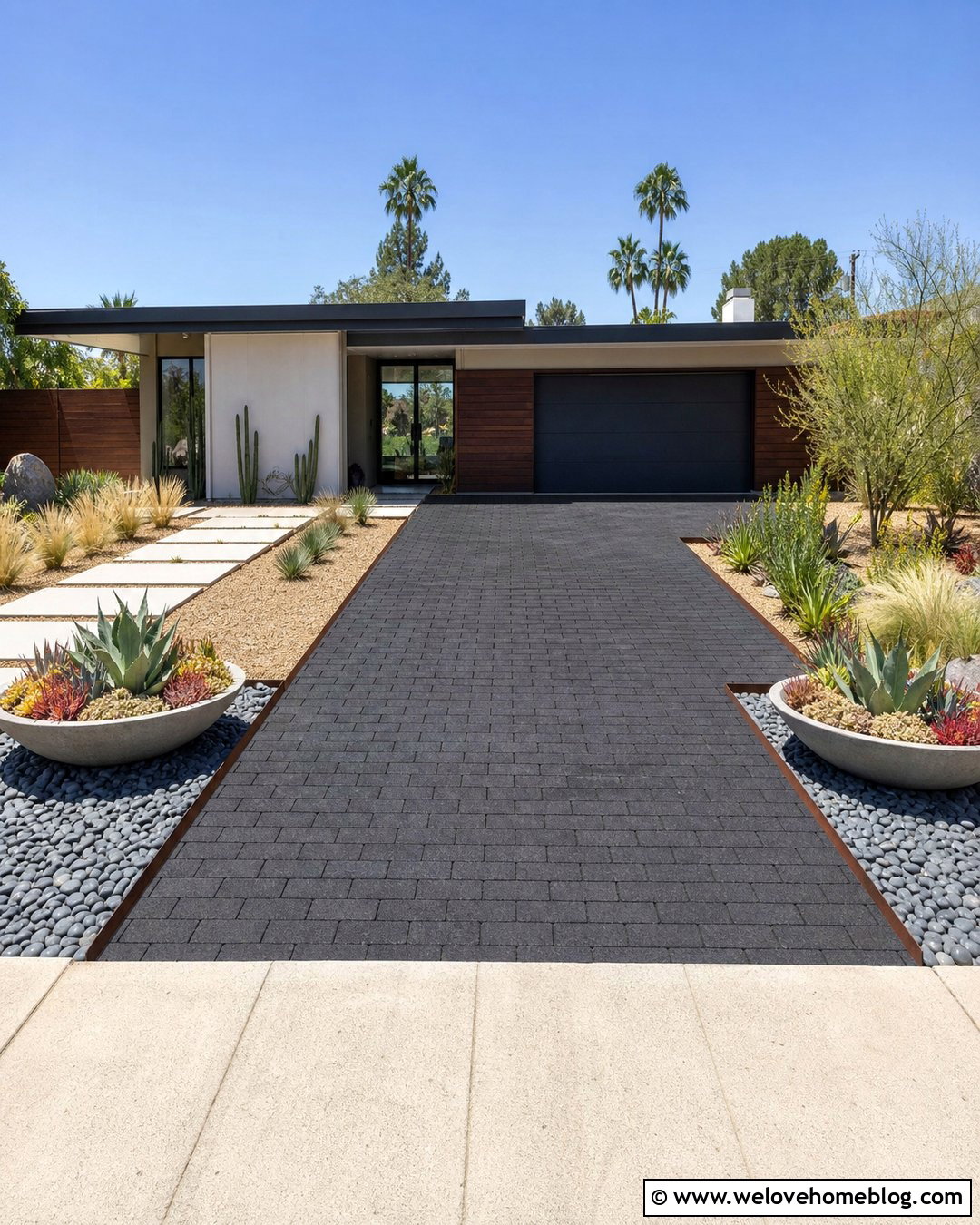
3. Ornamental Grass Lined Concrete Driveway
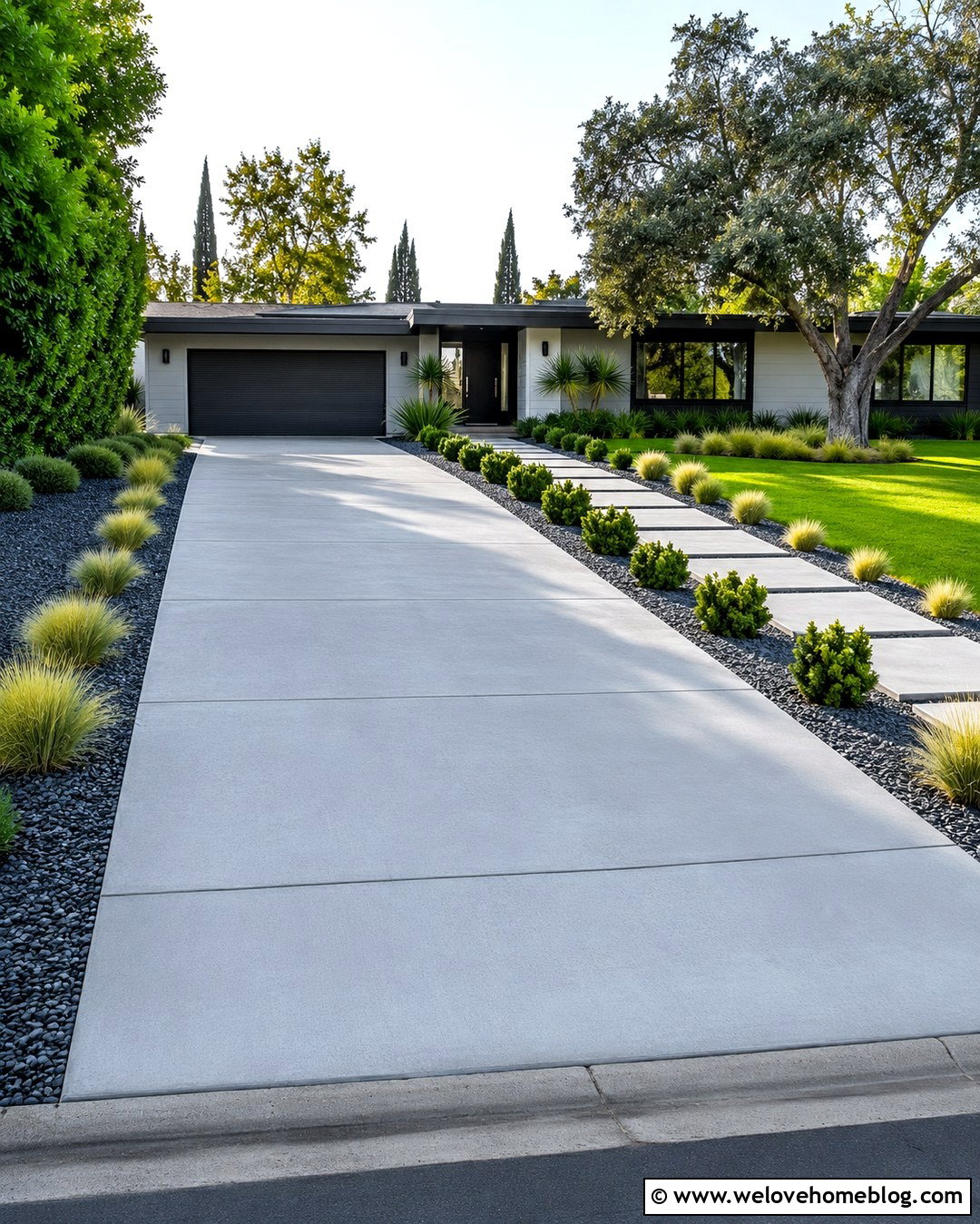
Can a concrete driveway look soft and inviting? A straight gray poured concrete surface becomes far more interesting when framed by repeating clumps of ornamental grass. Choose compact grasses that hold an upright shape instead of varieties that flop across the pavement. Dark steel edging creates a precise transition between the concrete and gravel-mulched planting beds. For a modern composition, alternate the grasses with low evergreen shrubs or rounded flowering perennials. Wider beds near the sidewalk can include one sculptural tree on each side of the entrance. This streamlined design complements modern, midcentury, and contemporary ranch homes. Allow enough setback for mature foliage, and position plants away from areas where passengers frequently open doors or step out of vehicles. ()
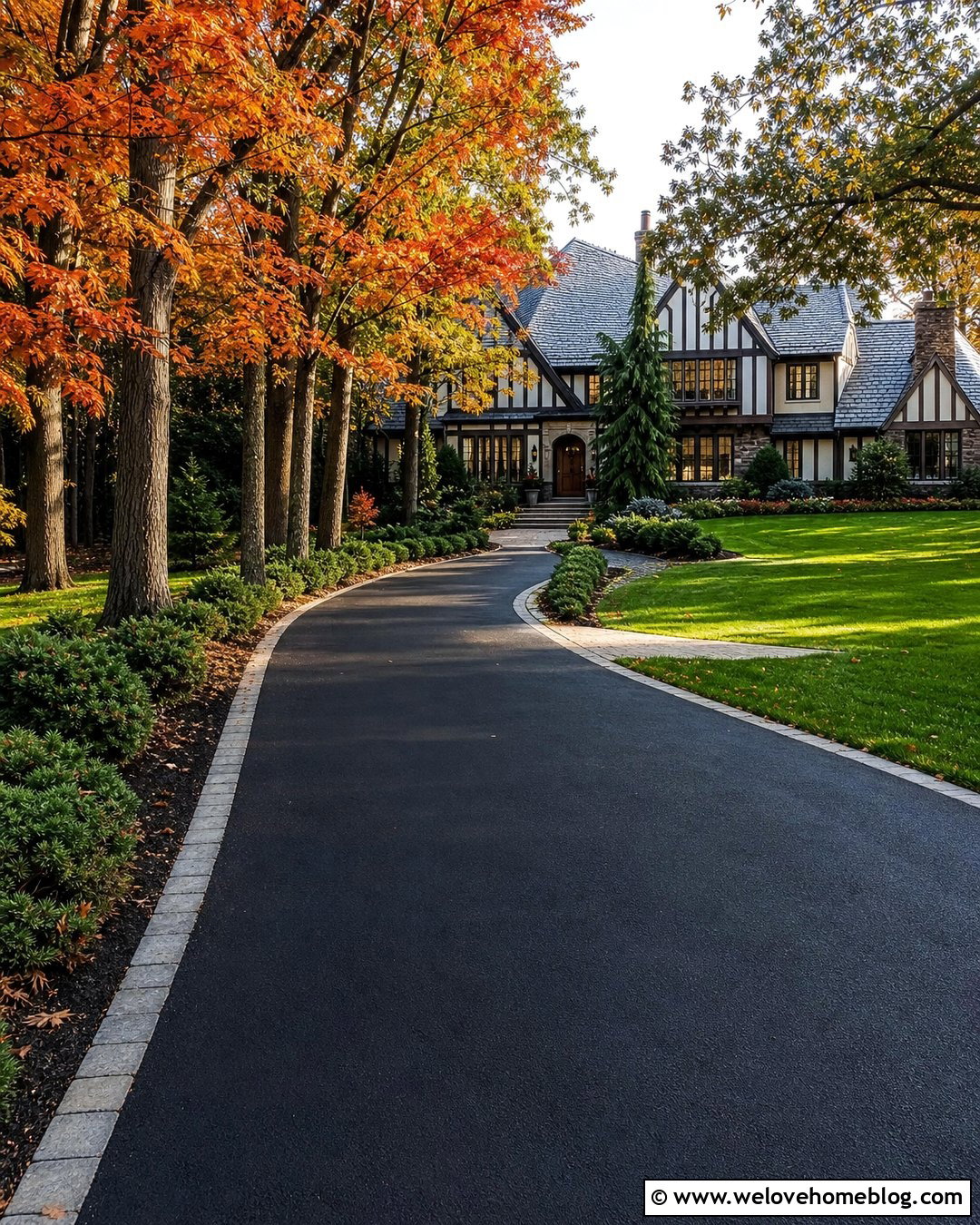
4. Hydrangea Lined Asphalt Driveway
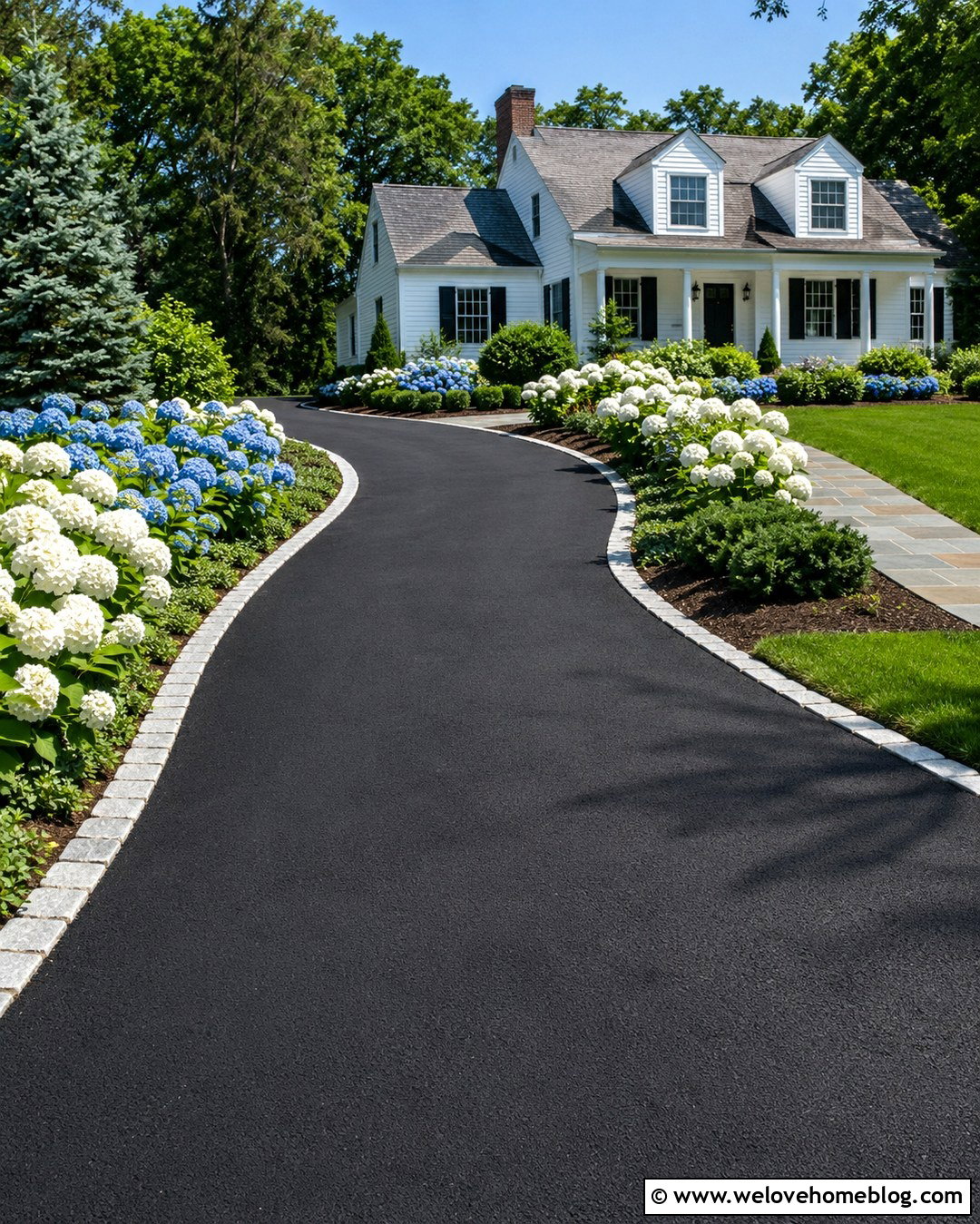
Large hydrangea borders can make a curved black asphalt driveway feel like a garden path leading toward the house. Place the shrubs in broad mulched beds rather than directly beside the pavement, giving their mature branches room to spread. A border of granite cobbles keeps soil and mulch from washing onto the asphalt. Add low ground covers along the front of each bed to soften the stone transition, then repeat small evergreen shrubs between hydrangeas for winter structure. This look works beautifully with Cape Cod, cottage, and traditional suburban homes. Select hydrangeas suited to your sunlight and local growing conditions. Keep the entrance plantings shorter than the sections near the house so drivers have open views of pedestrians, bicycles, and approaching traffic. ()
5. Succulent Lined Decomposed Granite Driveway
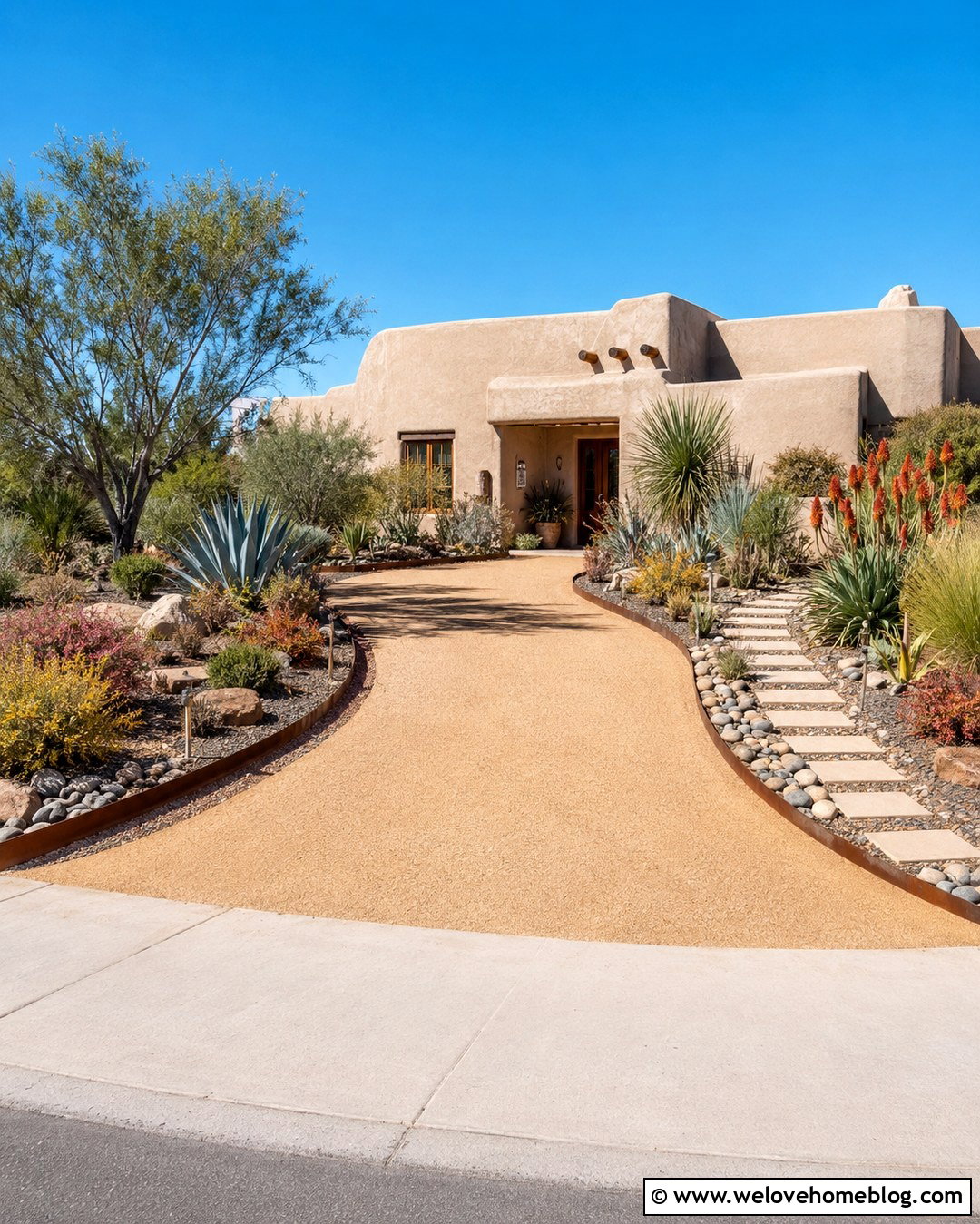
In a dry climate, a decomposed granite driveway surrounded by succulents creates strong curb appeal without looking overly formal. Use a gently curved layout with compacted golden granite and weathered steel edging. Along both sides, arrange agave, yucca, aloe, and low sedum in irregular groups rather than rigid rows. Decorative river rock can cover exposed soil and visually connect the plants to the driveway surface. Add several drought-tolerant ornamental grasses for softer texture and movement. This plant-lined design suits Southwestern, desert-modern, and stucco homes. Keep thorny or sharply pointed plants well back from parking and walking zones. It is also important to direct driveway runoff away from plant crowns, especially where occasional storms can send concentrated water through otherwise dry planting beds. ()
6. Rose Lined Cobblestone Driveway
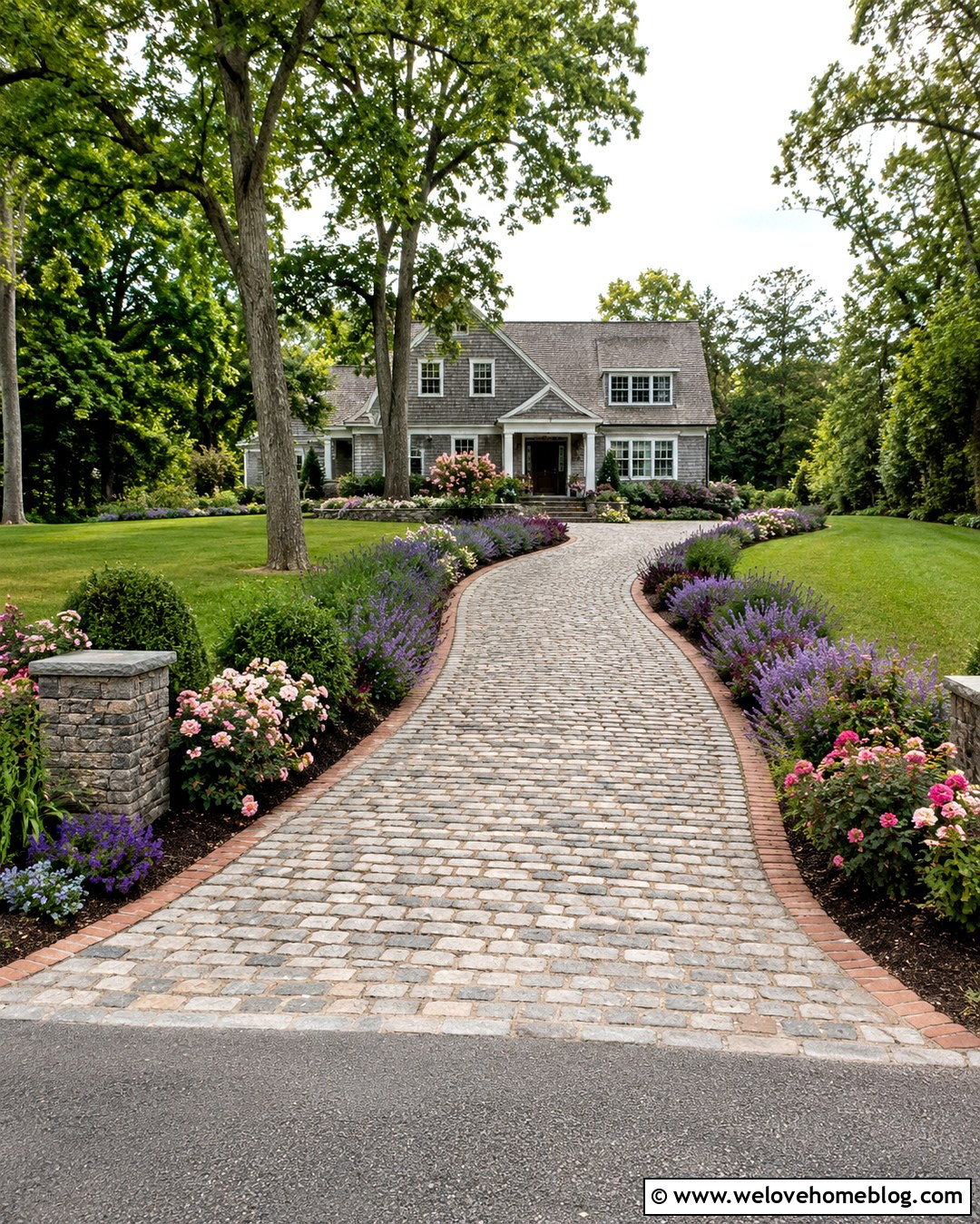
A cobblestone driveway bordered by shrub roses creates a relaxed country entrance with color through much of the growing season. Choose a straight or softly winding layout that leads toward a farmhouse, cottage, or Craftsman home. Install flush brick edging outside the cobblestones, followed by generous planting beds filled with disease-resistant roses, catmint, and compact salvia. The lower perennials hide bare rose stems while keeping the border visually open. Repeating the same rose color creates a calmer design than mixing many unrelated shades. Place taller plants near the house and shorter groupings beside parking areas. Because roses need airflow and maintenance access, leave enough space between the plants and pavement for pruning, cleanup, and safe movement around parked vehicles. ()
7. Salvia Lined Resin Driveway
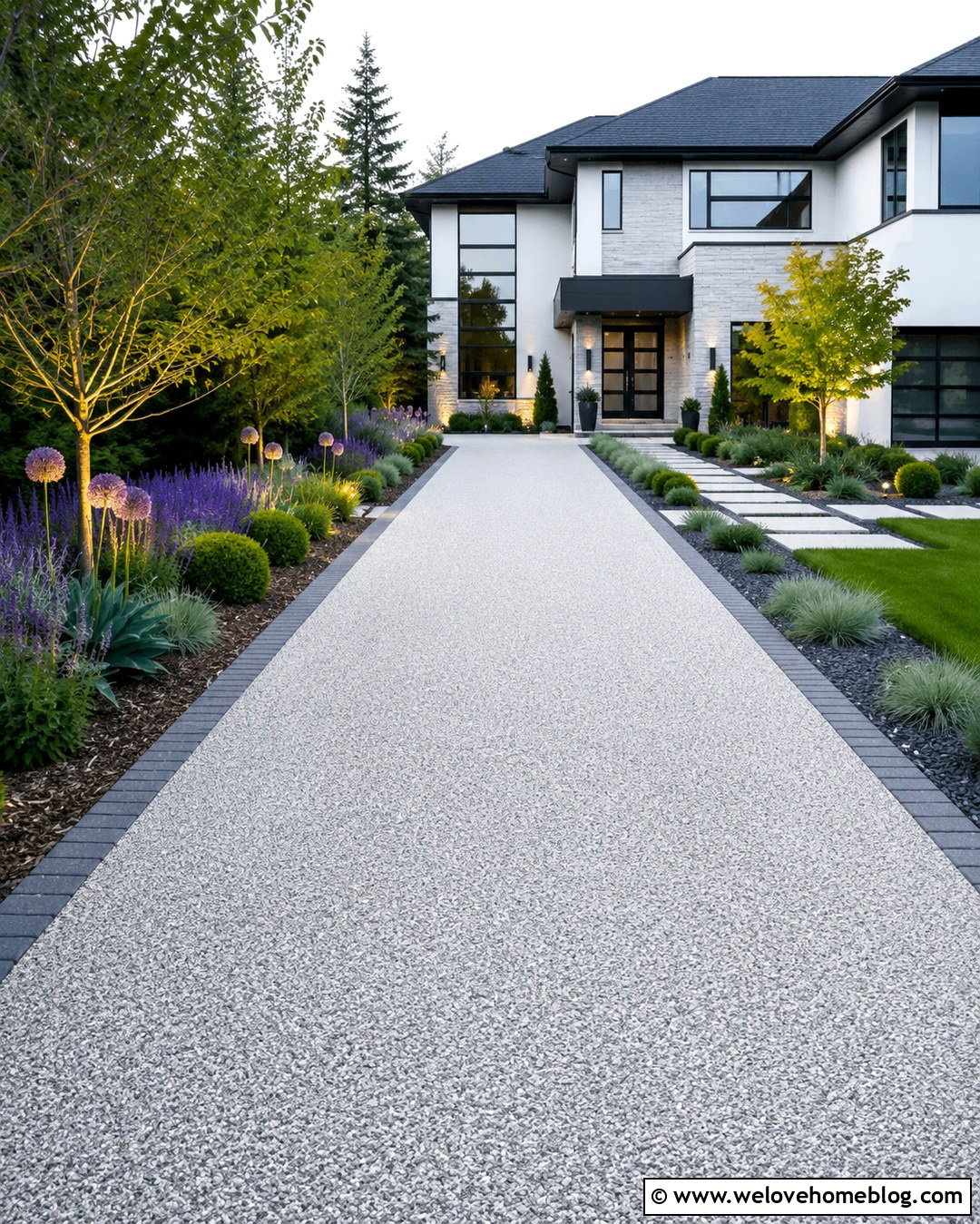
A smooth resin-bound gravel driveway pairs well with drifts of salvia and ornamental alliums. Choose a pale gray resin surface for a bright contemporary appearance, then outline it with a narrow charcoal paver ribbon. Plant the beds in repeating blocks so the flowers provide rhythm without making the entrance look unorganized. Low grasses and evergreen mounds can fill the gaps after the seasonal blooms fade. A straight driveway suits the simple planting pattern, although a shallow curve can make a wider front yard feel more dynamic. This design complements contemporary and transitional homes with restrained facades. Select compact varieties and remove fading flower stems when needed. Maintaining a clear strip beside the pavers keeps plants from leaning into tires, doors, and pedestrian routes. ()
8. Evergreen Lined Exposed Aggregate Driveway
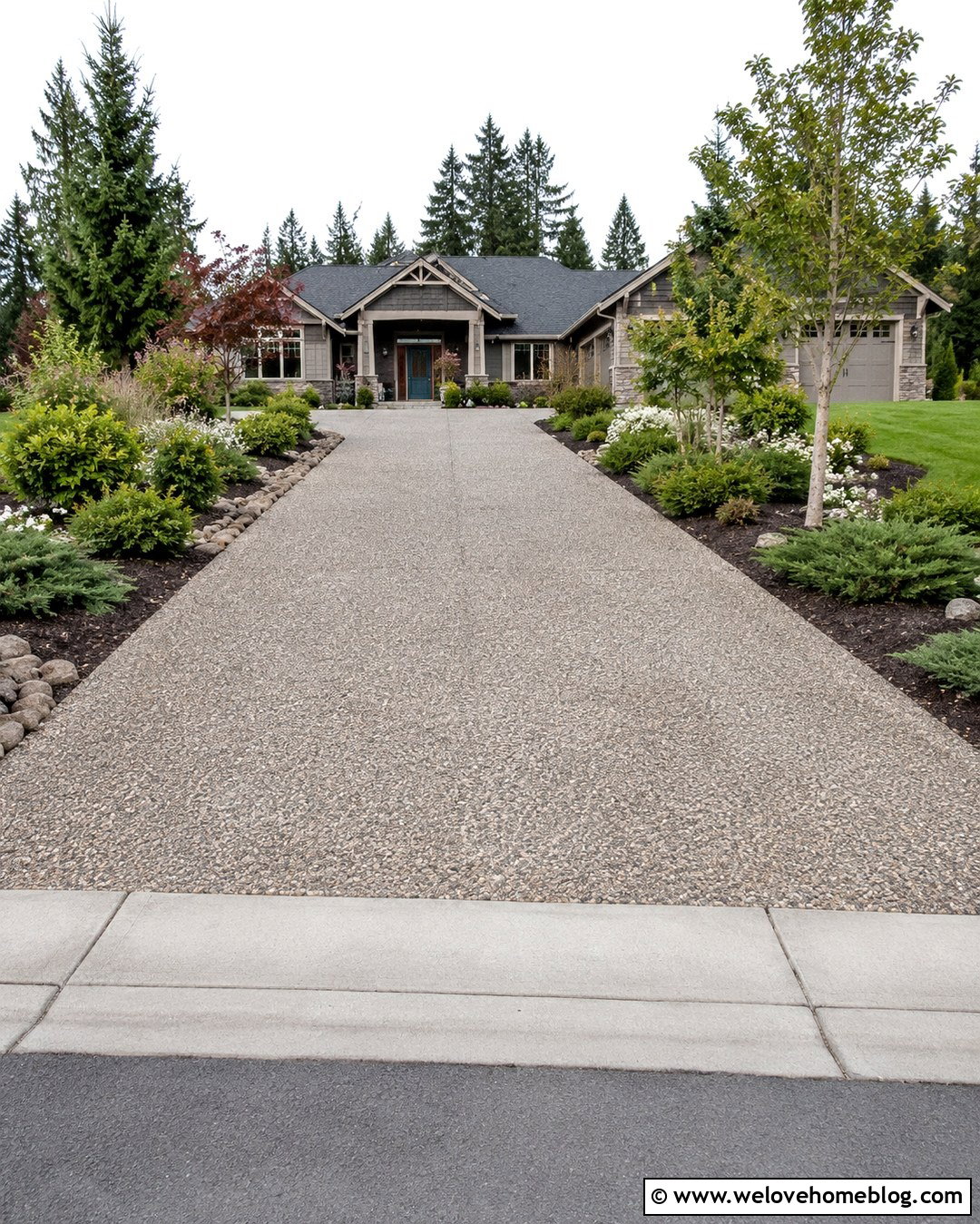
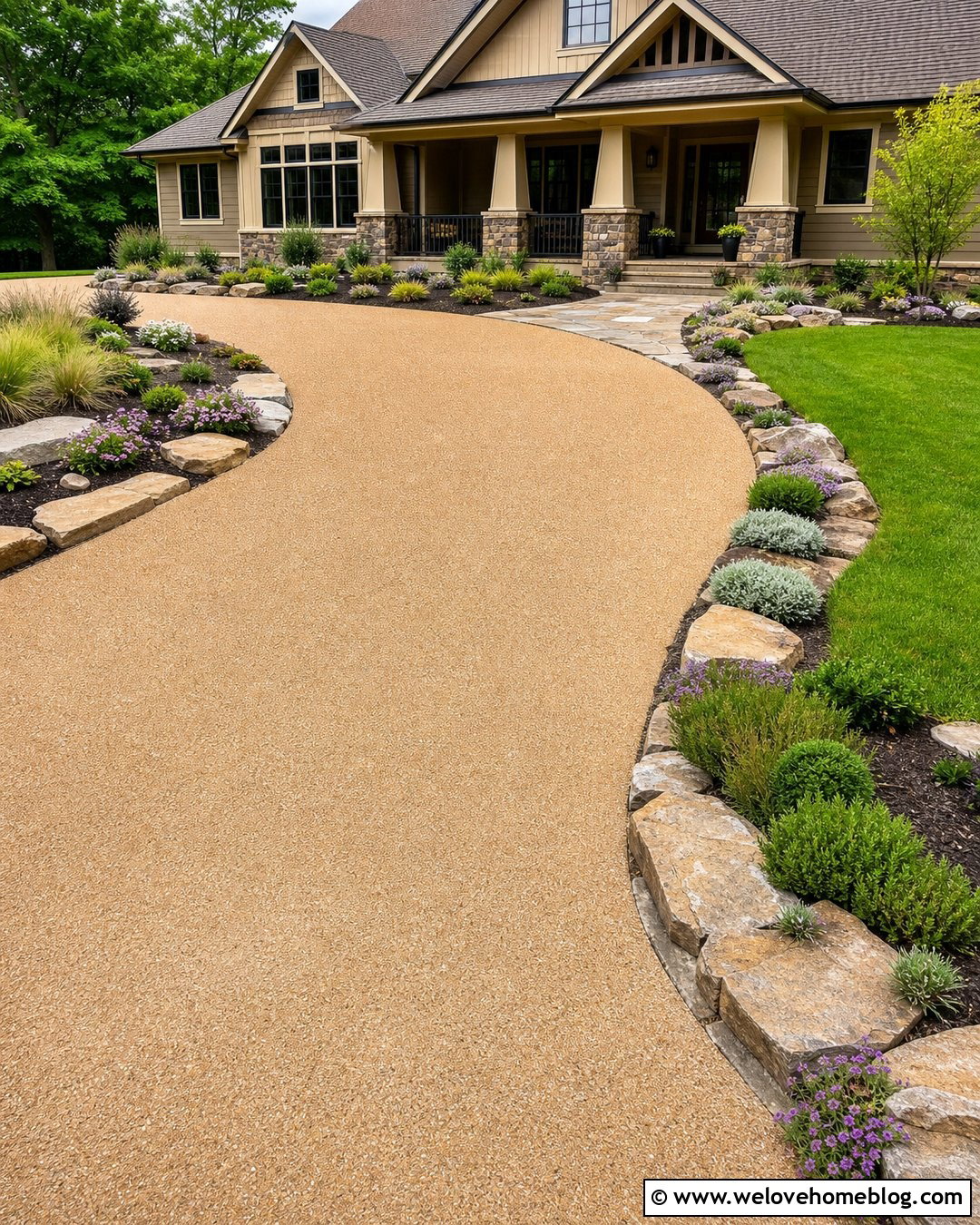
Imagine a broad exposed aggregate driveway framed by compact evergreens that maintain their form in every season. The textured tan and gray surface hides minor dirt while coordinating naturally with stone-edged planting beds. Use dwarf junipers, compact hollies, or other regionally suitable evergreen shrubs in staggered groups. Between them, add low flowering perennials for seasonal color. Instead of creating one unbroken hedge, leave measured openings that provide access to the lawn, mailbox, and front walkway. This arrangement works well with ranch, split-level, and Craftsman homes. Choose shrubs based on their mature size rather than their appearance in nursery containers. Proper spacing helps preserve airflow, reduces constant pruning, and prevents the plants from narrowing the usable driveway as they grow. ()
9. Native Flower Lined Limestone Driveway
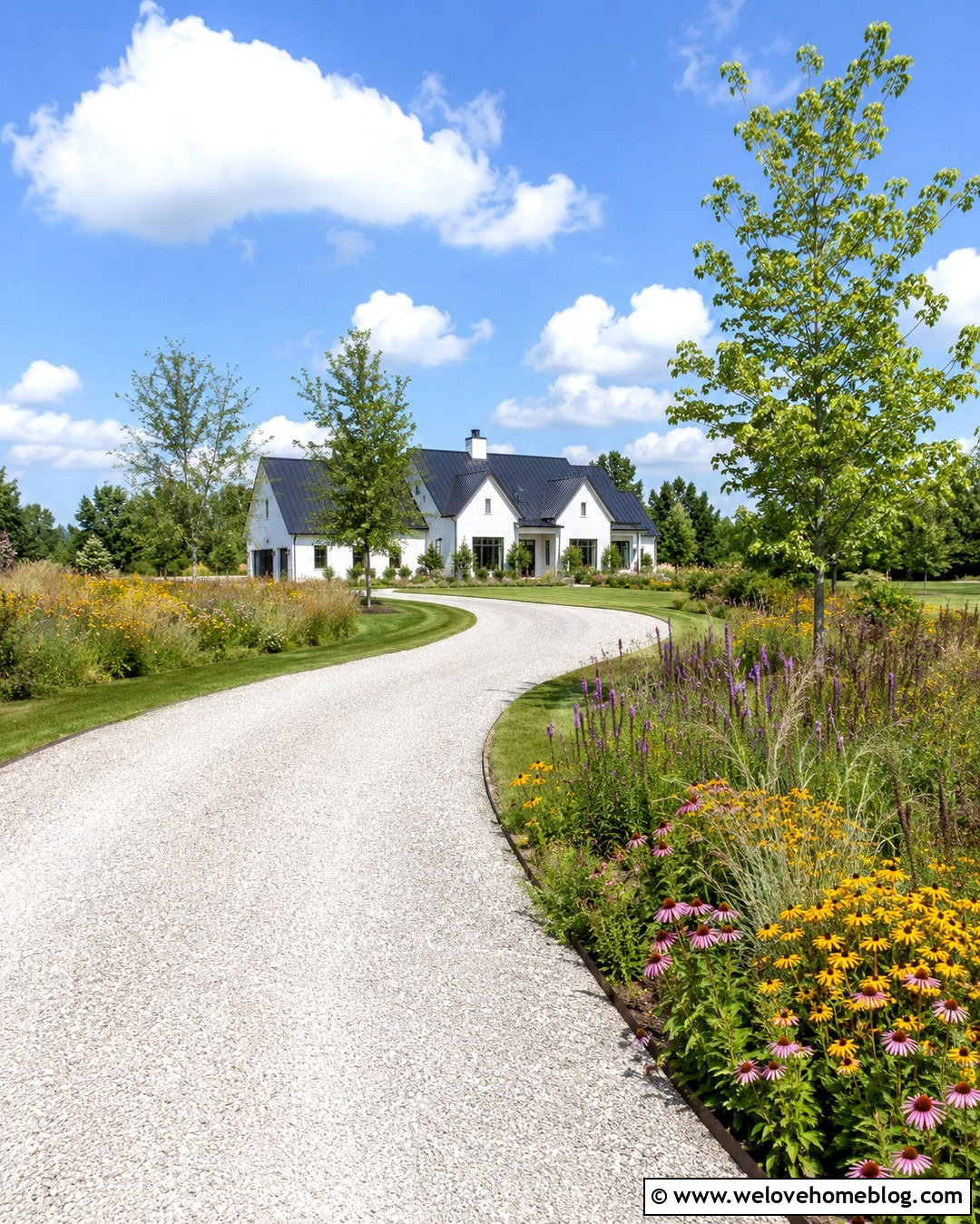
A crushed limestone driveway edged with native flowers can blend a long country approach into the surrounding landscape. Use pale limestone with simple timber or steel edging, then create broad planting strips containing regionally appropriate coneflowers, asters, black-eyed Susans, liatris, and native grasses. Arrange plants in generous drifts so the border reads as intentional from a distance. Near the road, keep vegetation low to maintain clear sightlines. Farther up the driveway, taller grasses and flowering plants can create a more immersive entrance. This natural design suits country houses, barns, cabins, and modern farmhouses. Local native plant resources can help match selections to your soil, rainfall, and sunlight. Include a mowed or gravel maintenance strip so growth does not spill onto the driving surface. ()
10. Rain Garden Lined Permeable Paver Driveway
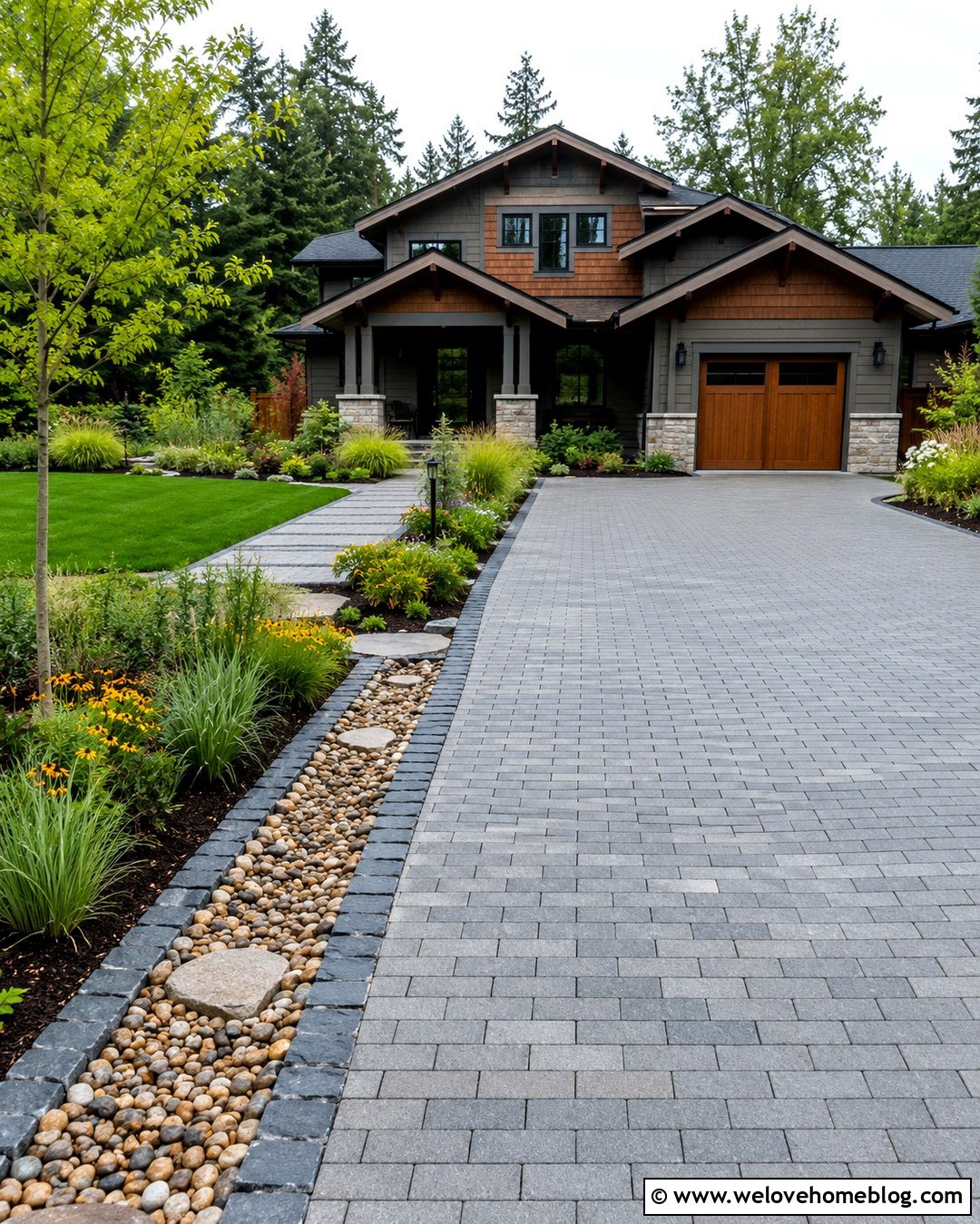
Where runoff is a concern, combine a permeable concrete paver driveway with shallow rain garden beds along the lower side. Use medium-gray pavers in a simple running pattern, bordered by dark cobbles that clearly define the vehicle area. Plant moisture-tolerant sedges, rushes, flowering perennials, and compact shrubs inside gently depressed beds. A narrow stone channel can guide water toward the planting without washing soil across the driveway. Keep the opposite border simpler with lawn or low ground cover to avoid overcrowding a small front yard. This environmentally focused design suits contemporary, Craftsman, and suburban homes. Before installation, confirm drainage direction, soil infiltration, underground utilities, and local requirements. The finished layout should manage water while preserving dependable vehicle access. ()
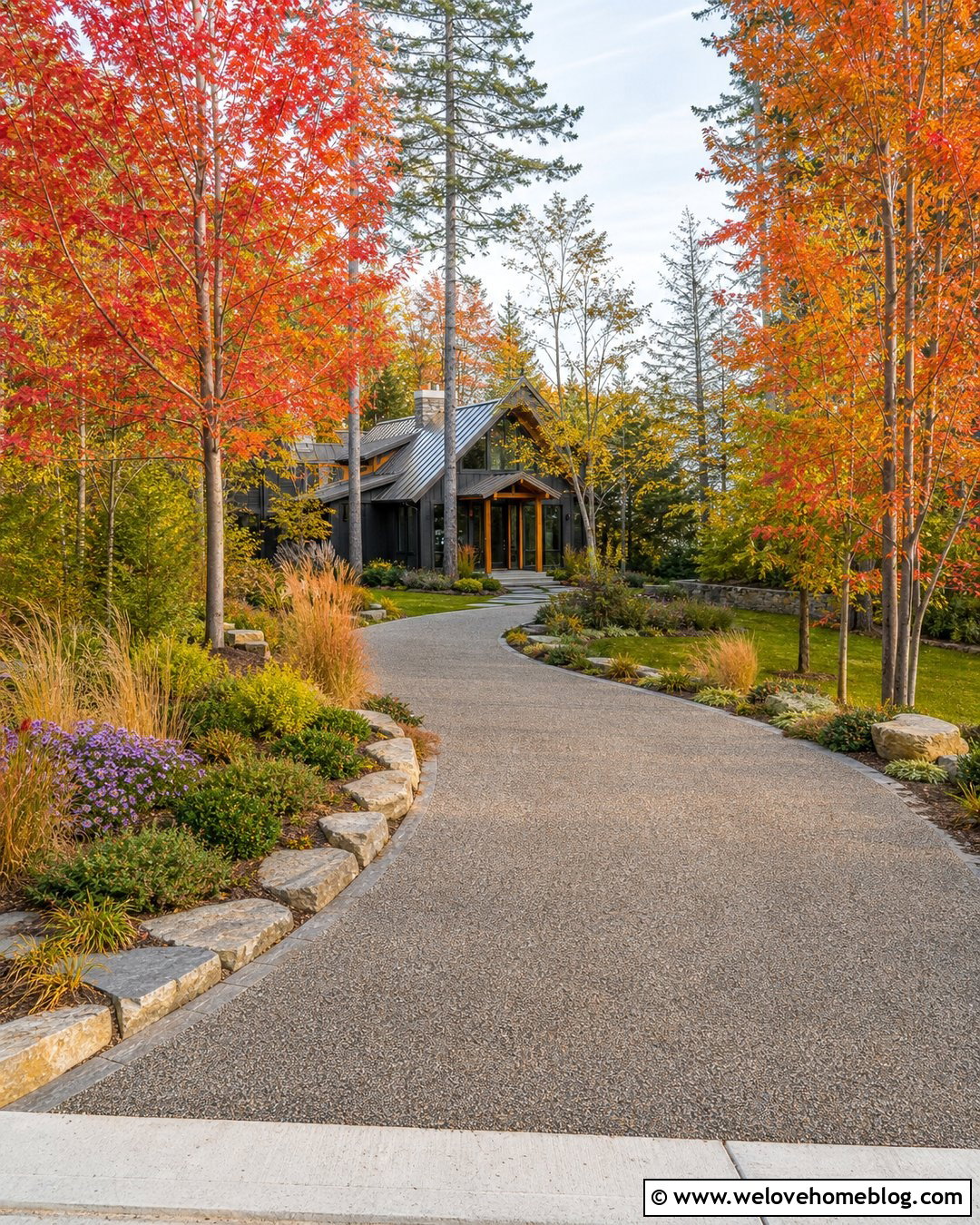
11. Tree Lined Asphalt Driveway
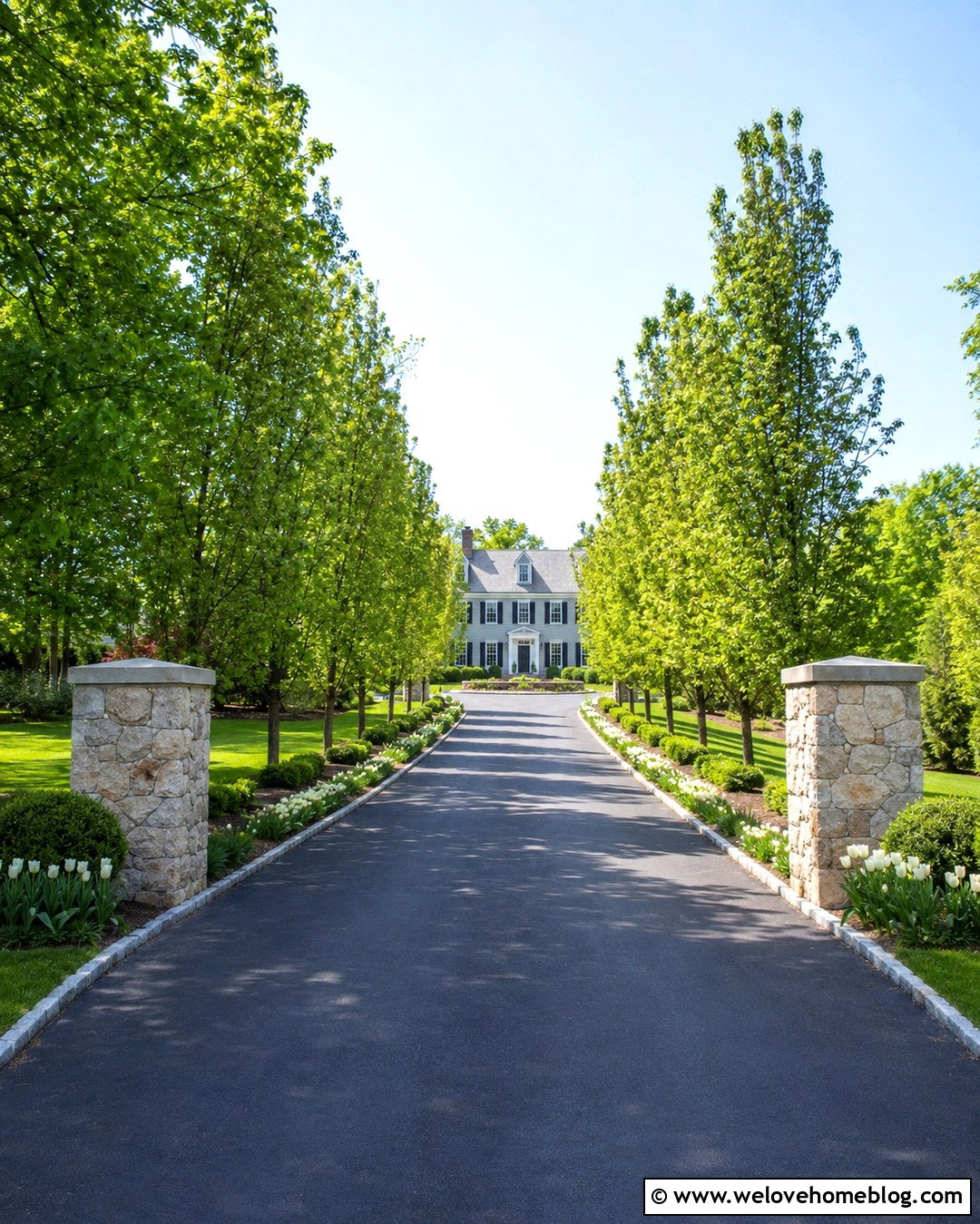
A long black asphalt driveway gains scale and presence when lined with evenly spaced ornamental trees. Choose trees with upright forms and canopies that can eventually rise above vehicles without blocking the route. Position them in lawn panels or wide mulched beds well beyond the pavement edge. Beneath each tree, repeat low shrubs, spring bulbs, or a simple ground cover to create a connected landscape. Stone entrance pillars can mark the beginning of the driveway and establish a formal rhythm. This approach works with large Colonial, farmhouse, and country properties. Avoid trees with aggressive surface roots, weak branches, or heavy fruit drop near the pavement. Planning for mature canopy width, utility lines, snow removal, and maintenance access will help the tree-lined entrance remain functional. ()
12. Hosta Lined Shaded Gravel Driveway
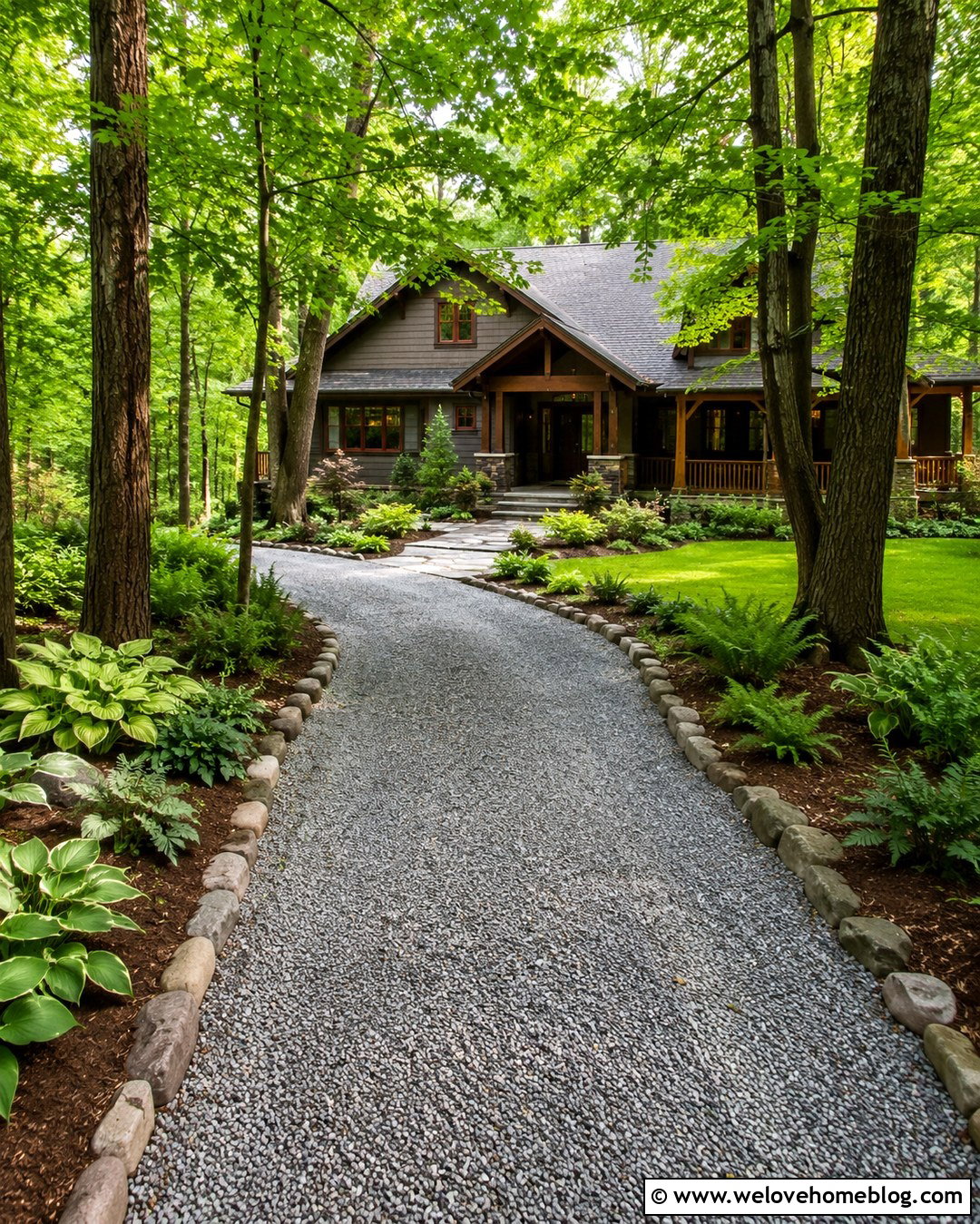
A shaded driveway beneath mature trees can still support a lush, layered border. Start with a straight gray gravel surface held neatly by natural stone edging. Plant hostas in repeated clusters, then mix in ferns, heuchera, and shade-tolerant ground covers for varied foliage. Silver, blue-green, and chartreuse leaves brighten areas where colorful flowers may be limited. Allow irregular curves in the planting beds so the design feels connected to the woodland setting. This driveway treatment complements cabins, Craftsman homes, and shaded suburban properties. Avoid placing large hostas where their leaves could extend over the driving edge. A gravel or mulch buffer gives them room to mature and simplifies cleanup when leaves fall from the overhead canopy. ()
13. Creeping Thyme Lined Concrete Driveway
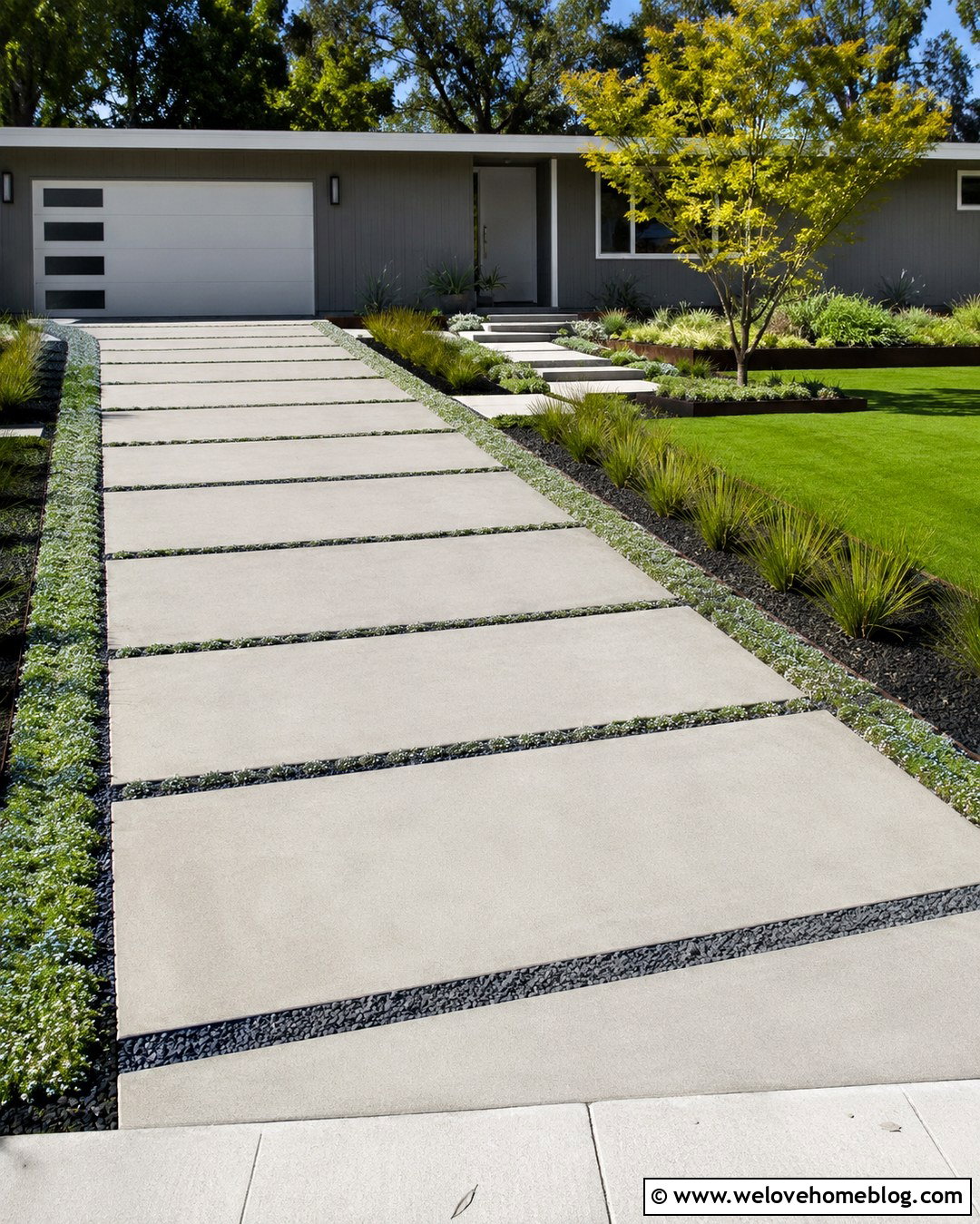
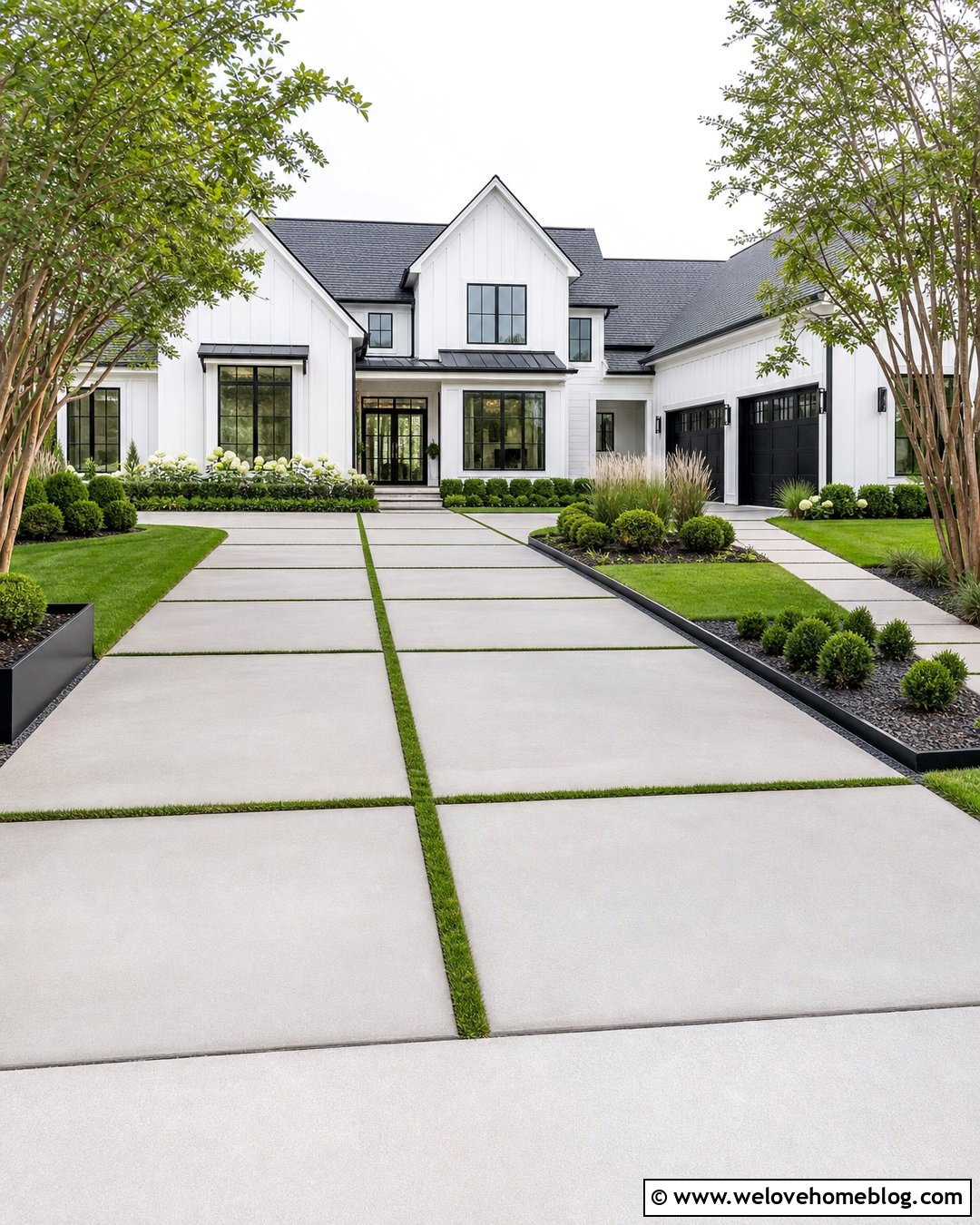
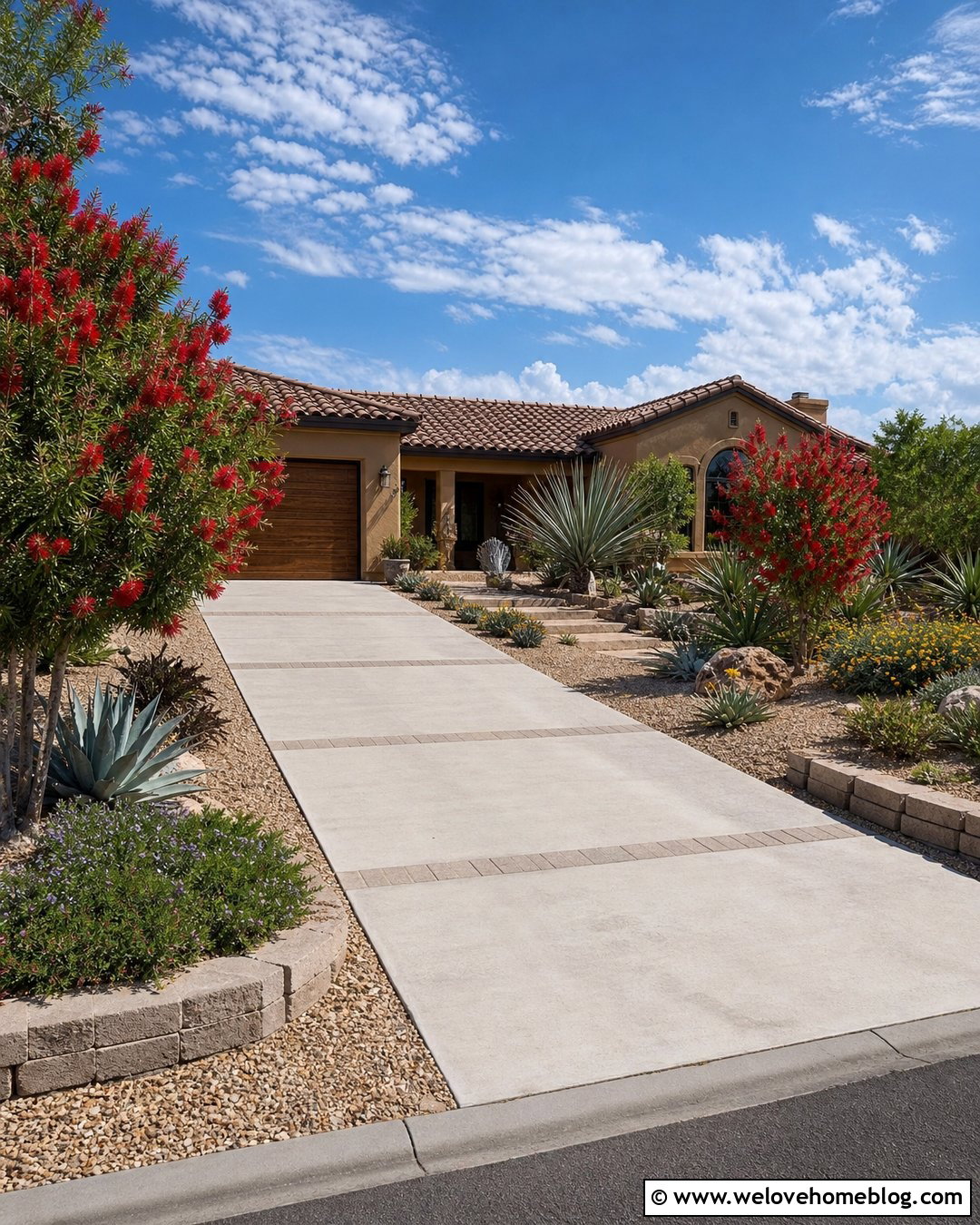
For a low-profile border, frame a modern concrete driveway with creeping thyme and narrow bands of decorative gravel. Use large rectangular slabs with dark gravel joints or planted strips that emphasize the driveway’s direction. Thyme can soften selected edges and release fragrance when lightly brushed, but it should not be expected to tolerate regular vehicle traffic. Add compact ornamental grasses near the sidewalk and one small tree near the front walkway to create height. The design works especially well for modern and midcentury homes with simple architecture. Keep the planting beds shallow but continuous, and use metal edging to maintain clean lines. Choose a ground cover suited to local temperatures, drainage, and sunlight before filling the entire border. ()
14. Magnolia Lined Circular Brick Driveway
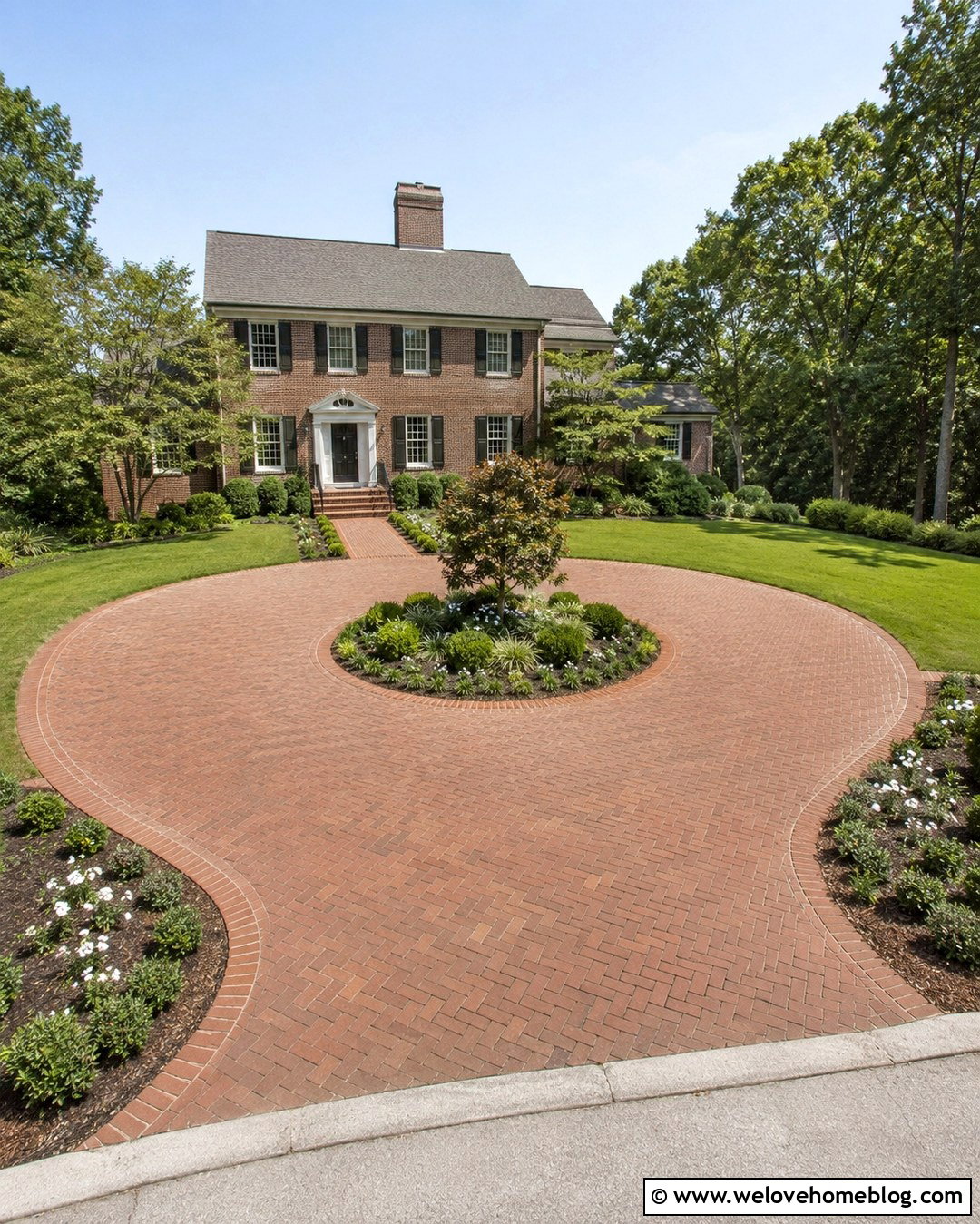
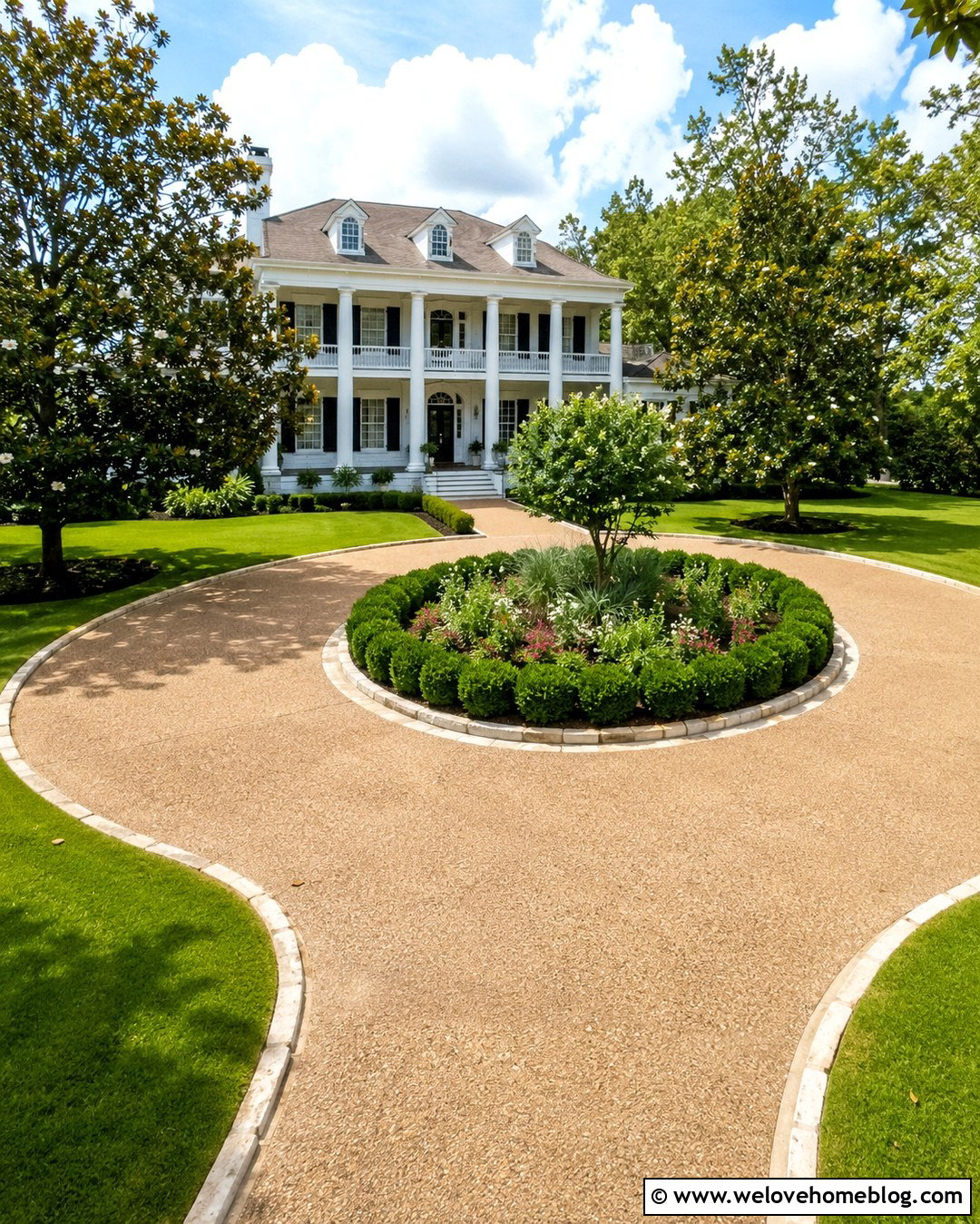
A circular clay brick driveway can become a memorable front-yard feature when its center island holds a small magnolia and layered planting. Lay warm red brick pavers in a herringbone pattern, then use a soldier-course brick border to strengthen the circle’s outline. In the island, place the tree slightly off-center and surround it with liriope, low evergreen shrubs, and seasonal bulbs. Continue smaller groups of the same plants along the outer edge to connect the island with the house. This formal arrangement suits Colonial, Georgian, and Southern traditional homes. Keep island plants low enough that drivers can see across the circle. The chosen magnolia should also have a mature size that fits the available space without overwhelming the facade. ()
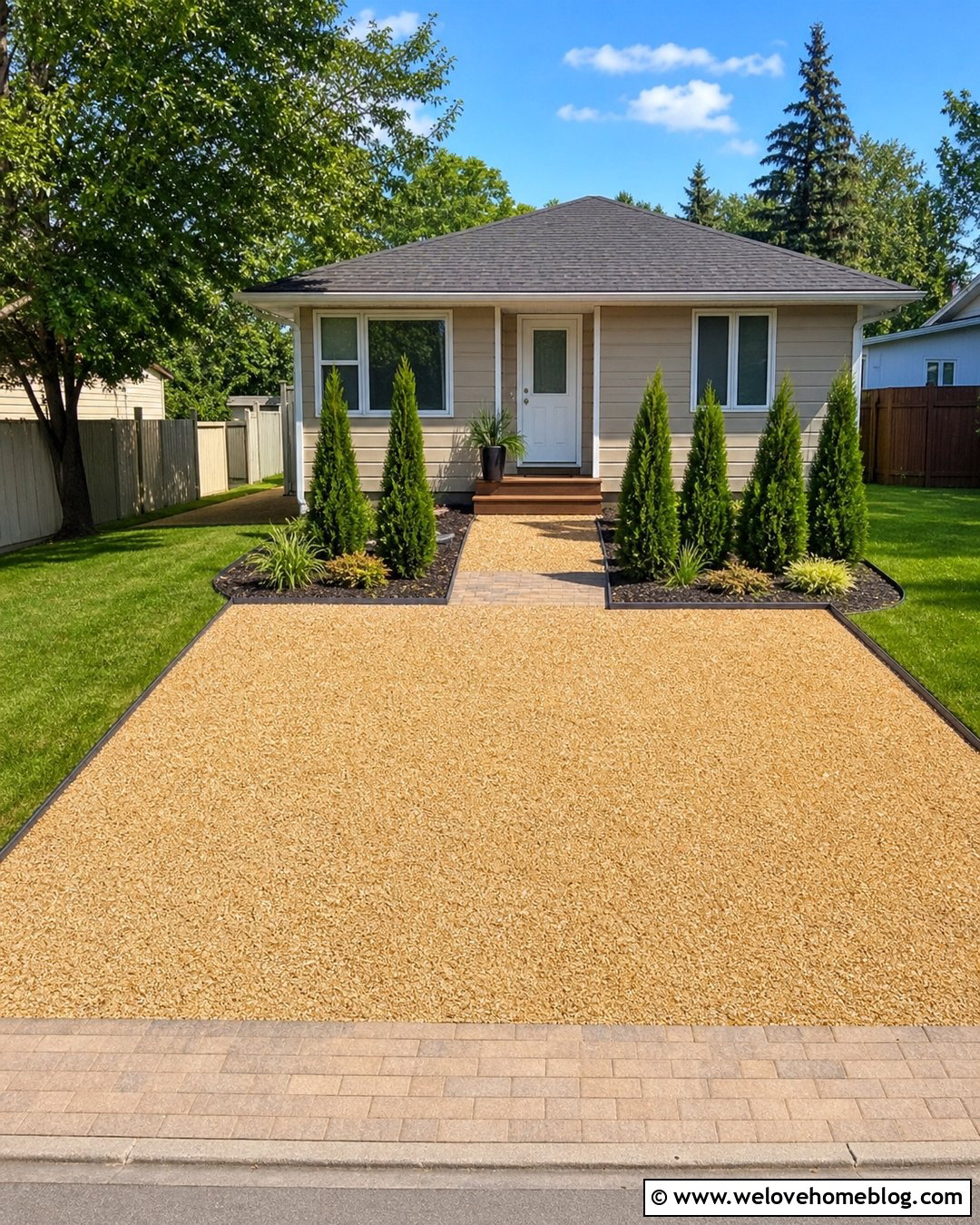
15. Cypress Lined White Gravel Driveway
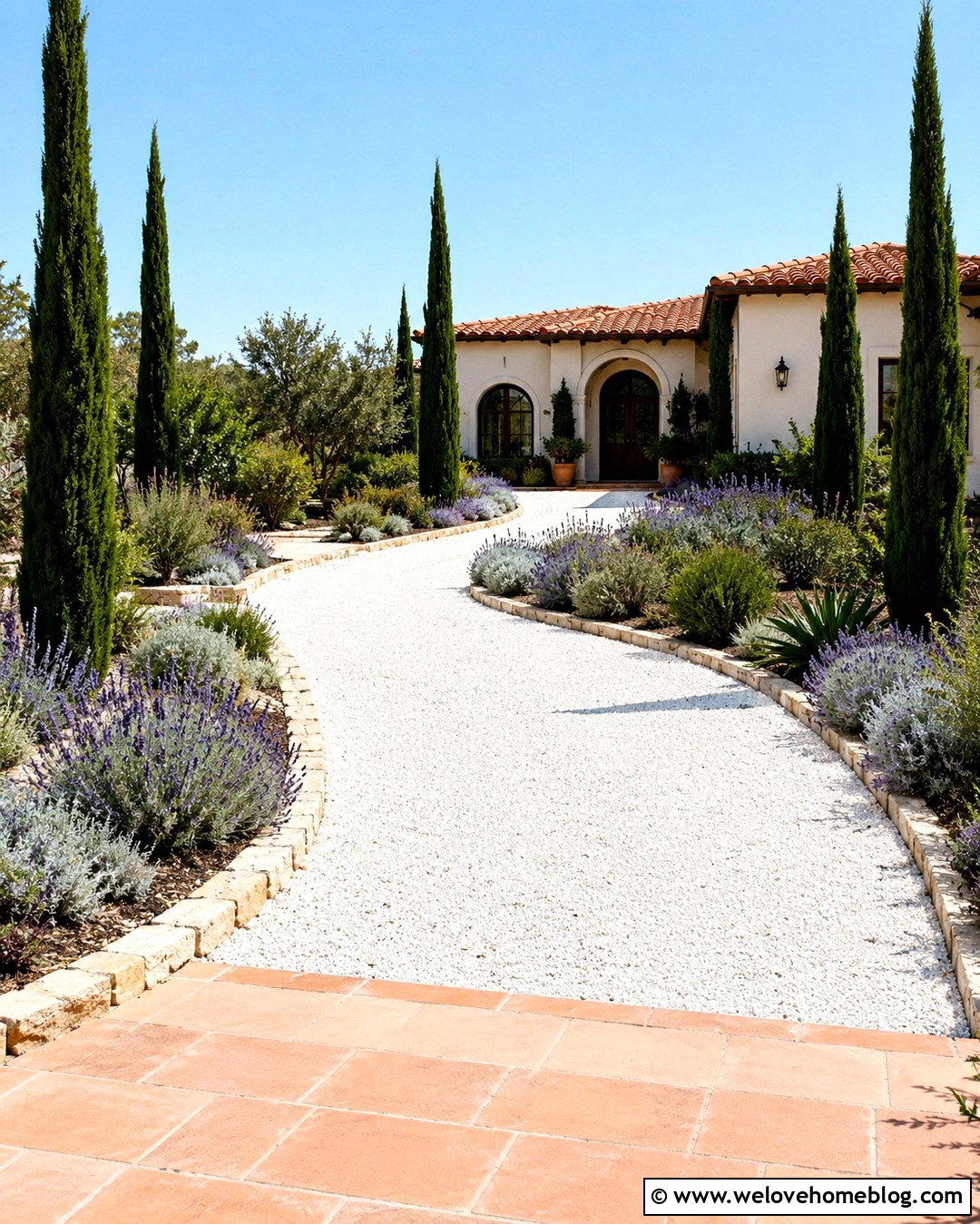
A white gravel driveway lined with slender evergreens creates a strong Mediterranean-inspired approach. Use a straight or gently curved surface of pale marble gravel contained by warm limestone blocks. Space upright cypress-like evergreens at regular intervals, then fill the spaces between them with rosemary, lavender, and silver-leaved ground covers. The repeating vertical forms guide the eye toward a stucco or Spanish-style house. Terracotta-toned pavers at the garage and walkway provide a warm transition from gravel to the building. Before choosing Italian cypress, check whether it suits your regional climate and available width. In colder or wetter areas, select a hardy upright evergreen with a similar shape. Keep plants set back so branches do not interfere with parking. ()
16. Daylily Lined Asphalt Driveway
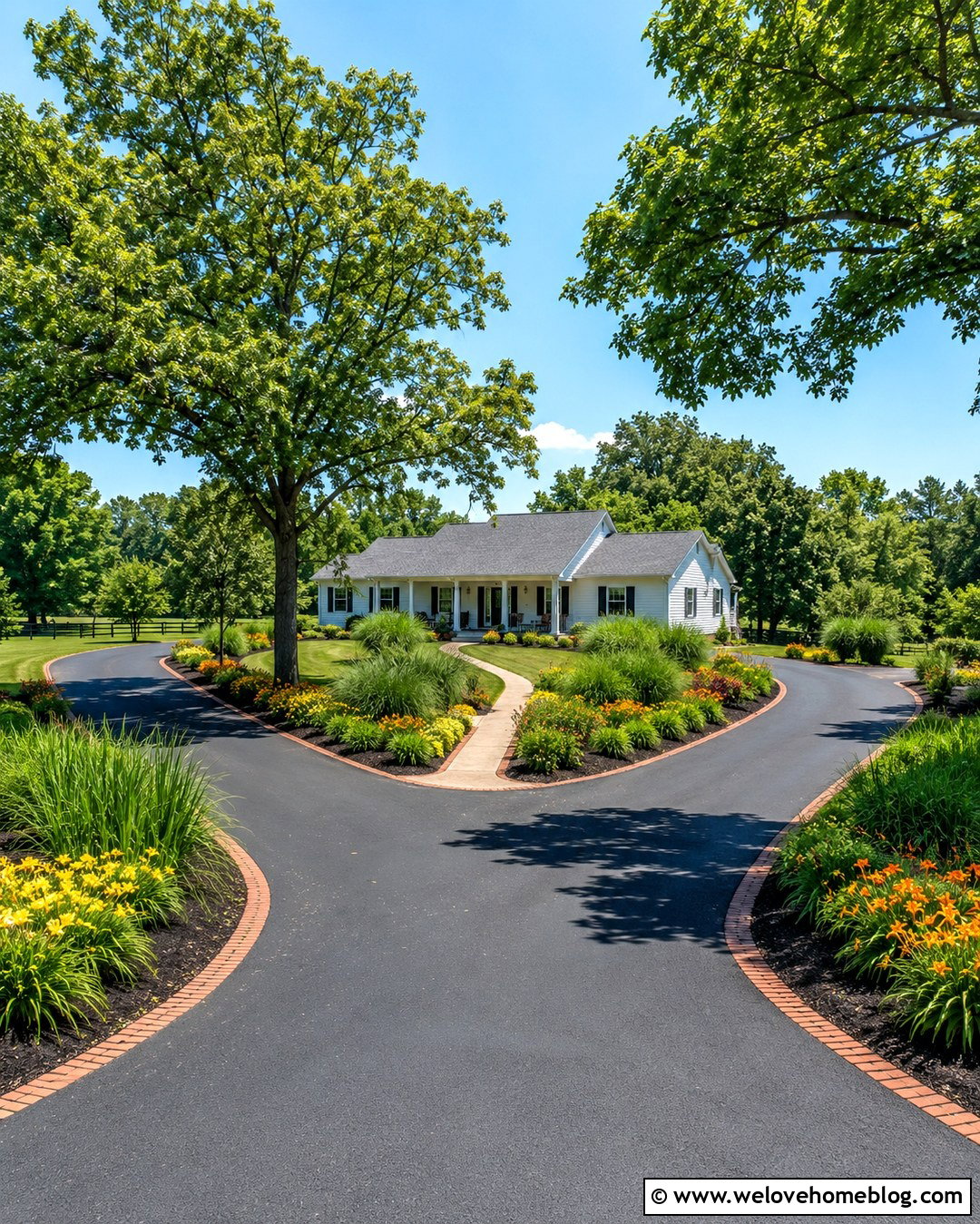
An affordable asphalt driveway can feel established when both sides are planted with dependable masses of daylilies and ornamental grasses. Use a horseshoe layout to create a convenient entrance and exit, then define the asphalt with a flush brick or concrete border. Plant daylilies in broad repeating groups, placing upright grasses between them for height and late-season texture. Mulch the entire bed for a unified appearance and easier weed control. This colorful but practical look suits ranch houses, traditional homes, and casual farmhouses. Choose plants that tolerate the sunlight, reflected heat, and roadside conditions on your property. Keep a clear gravel strip beside the asphalt so foliage does not trap debris or interfere with tires. Dividing crowded perennials periodically can help maintain an orderly border. ()
17. Mixed Perennial Lined Paver Driveway
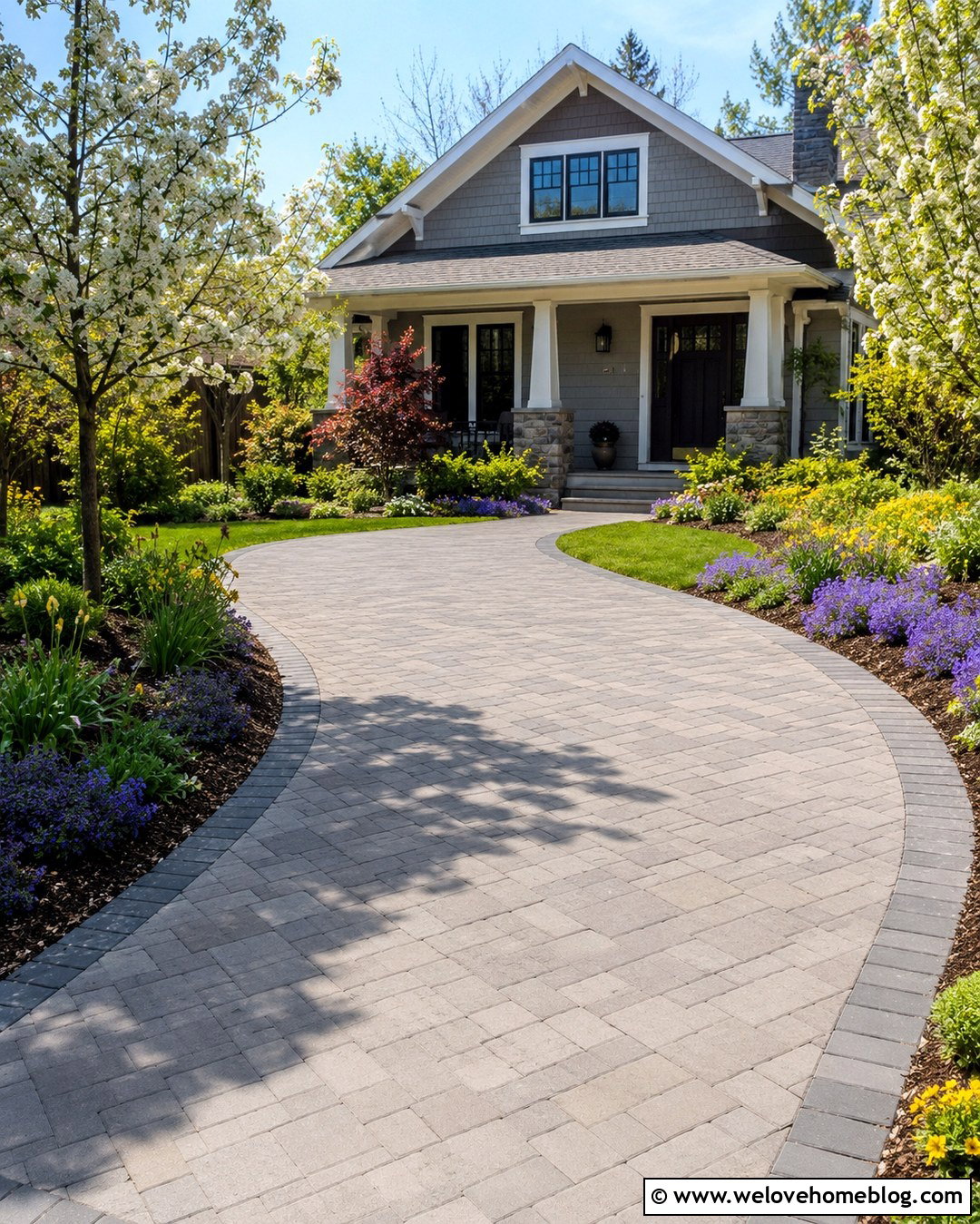
A warm gray paver driveway bordered by mixed perennials can provide changing color from spring through fall. Choose an angled or gently curved layout that leaves room for planting beds of different depths. Use a dark paver soldier course to contain the driveway, followed by layered beds with low ground covers in front, flowering perennials in the middle, and compact shrubs toward the back. Repeat several core plants throughout the border instead of placing every variety only once. This repetition keeps the planting cohesive while still offering seasonal interest. The design complements Craftsman, bungalow, and transitional homes. Select plants with compatible sunlight and watering needs. Maintain an open strip near parking areas so passengers can step out without crushing flowers or compacting the soil. ()
18. Hedge And Hydrangea Lined Gravel Driveway
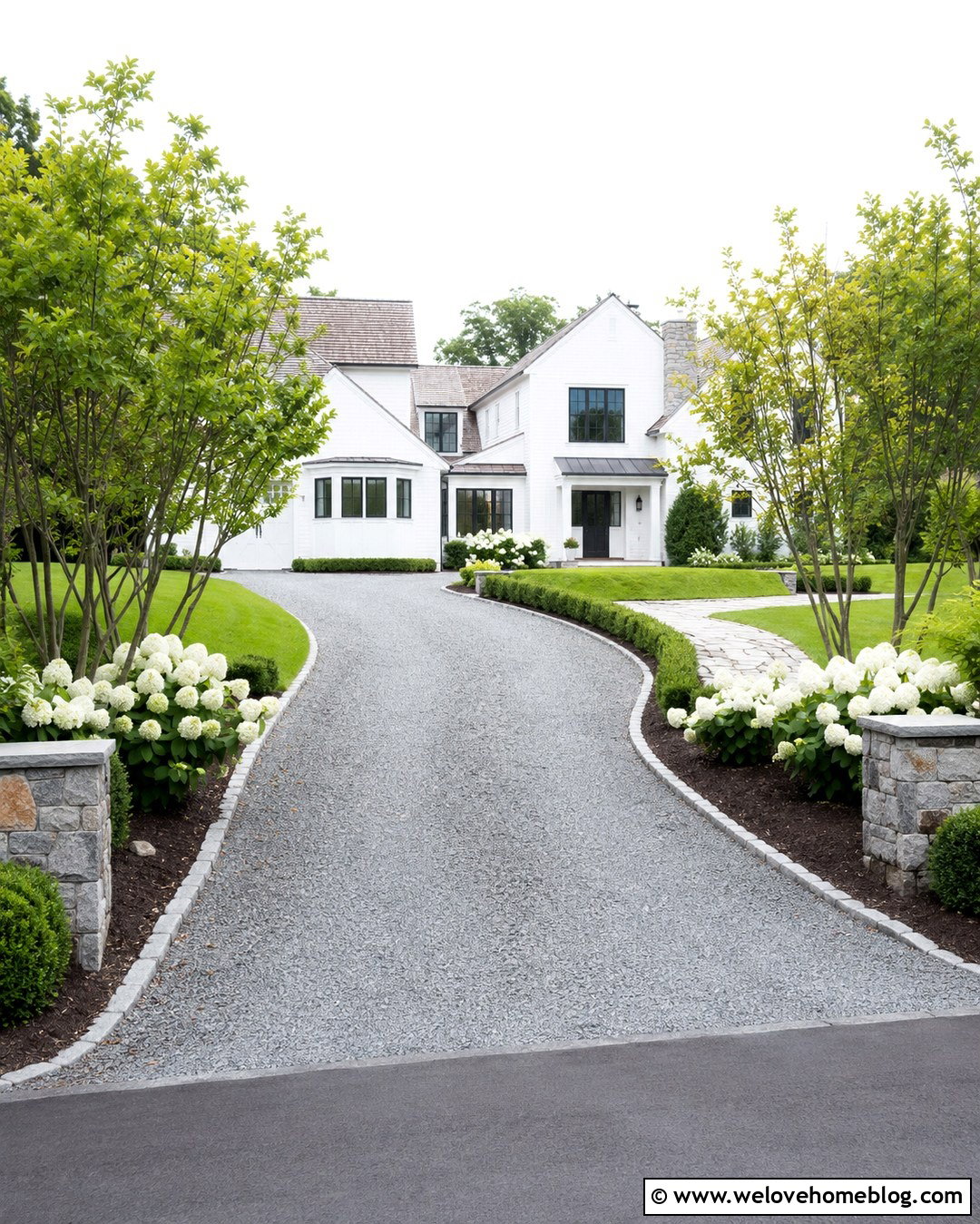
For a structured farmhouse entrance, combine a gray gravel driveway with low clipped hedges and groups of white hydrangeas. The hedge forms a consistent green line, while hydrangeas placed at the entrance, curves, and garage end create larger seasonal focal points. Use granite cobbles to hold the gravel in place and separate it from the planting beds. A softly curved driveway will make the repeated plantings feel more natural than a rigidly straight layout. Add small multi-stem trees near the house for another layer of height. This design works with modern farmhouse, country, and traditional architecture. Leave deliberate openings in the hedge for walkways, lawn access, and drainage. Regular pruning should preserve the shape without forcing the hedge into the vehicle clearance zone. ()
19. Sedge Lined Small Concrete Driveway
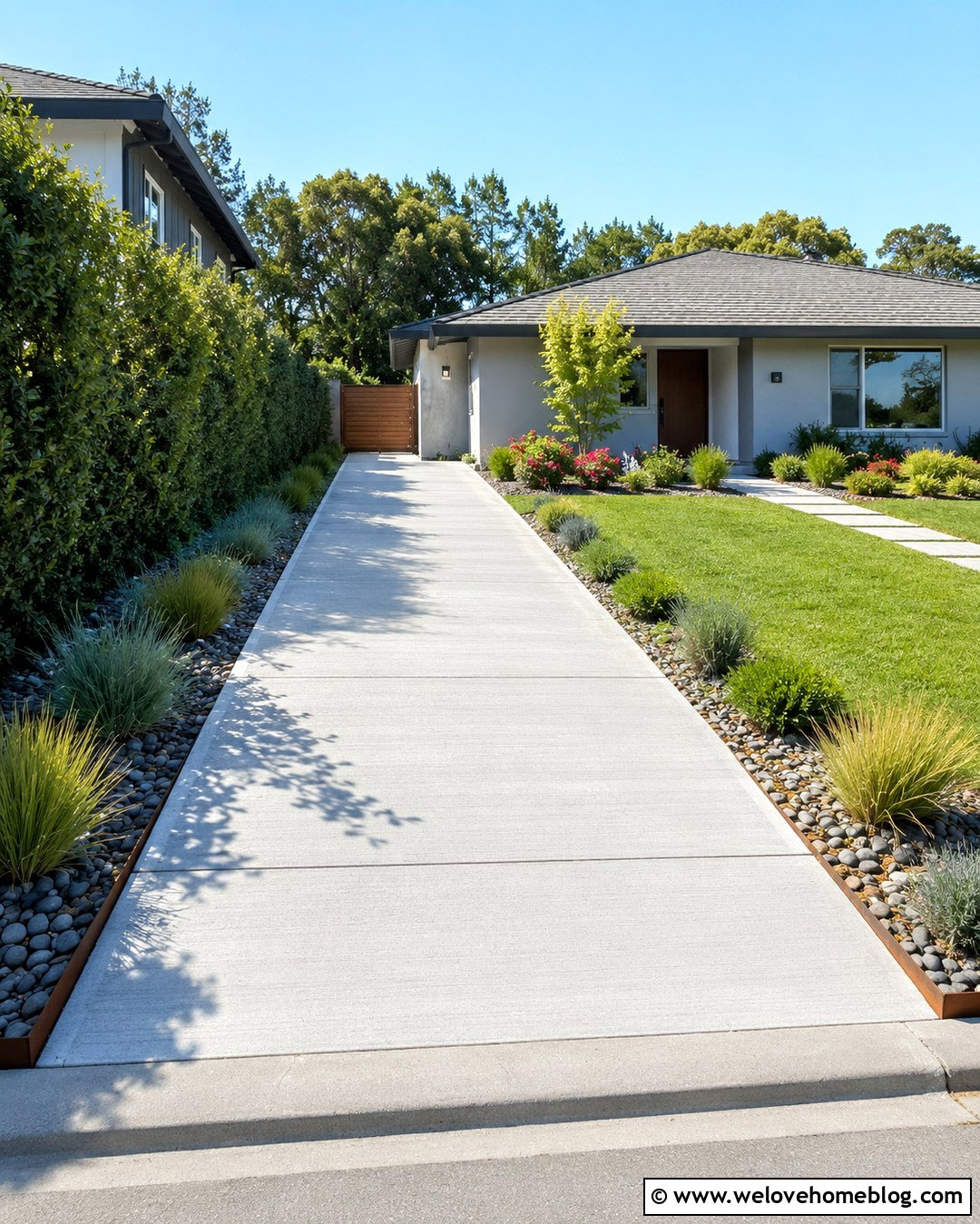
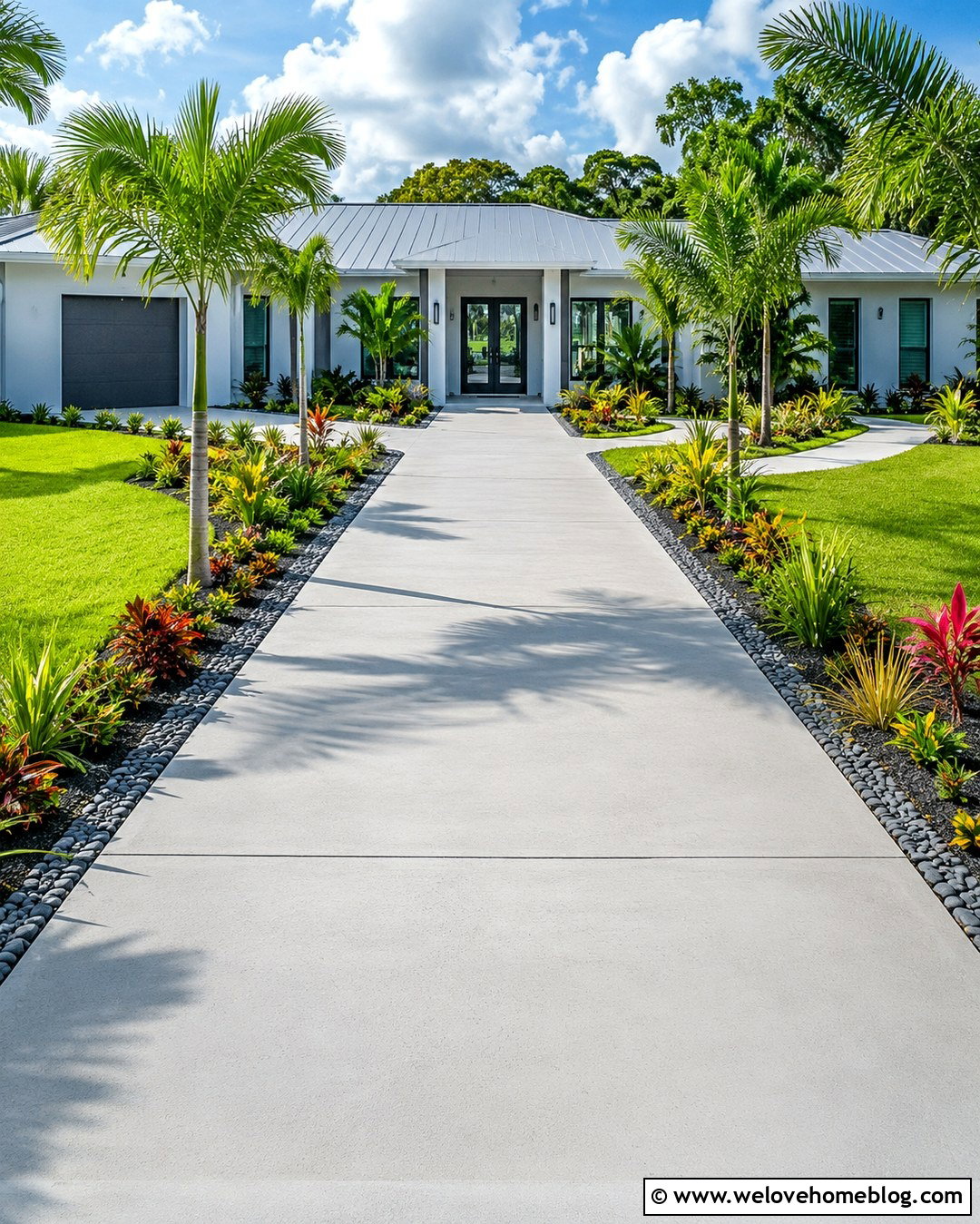
A narrow concrete driveway can support attractive planting without sacrificing useful parking space. Use smooth light-gray poured concrete with a simple broom finish, then create one slim river rock bed along each side. Plant compact sedges, dwarf grasses, and low evergreen mounds at measured intervals. Their fine foliage softens the pavement while remaining visually light. At the street, widen the beds slightly and add one small flowering shrub on each side to emphasize the entrance. This restrained layout works well with small ranch, contemporary, and townhouse-style homes. Avoid bulky shrubs where space is limited, and confirm mature plant width before buying. A crisp steel edge between the rock and lawn keeps the borders organized and prevents loose material from spreading across the concrete. ()

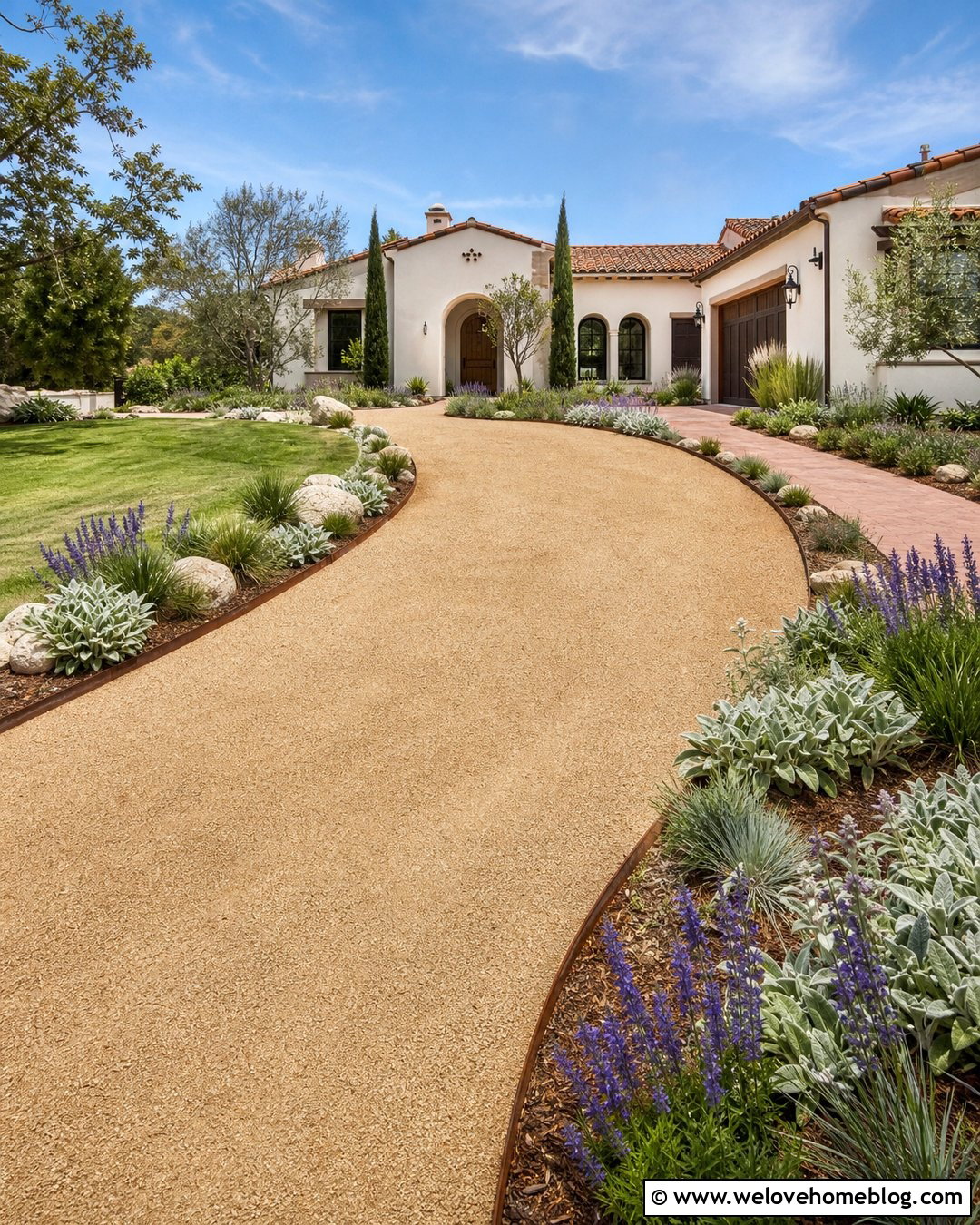
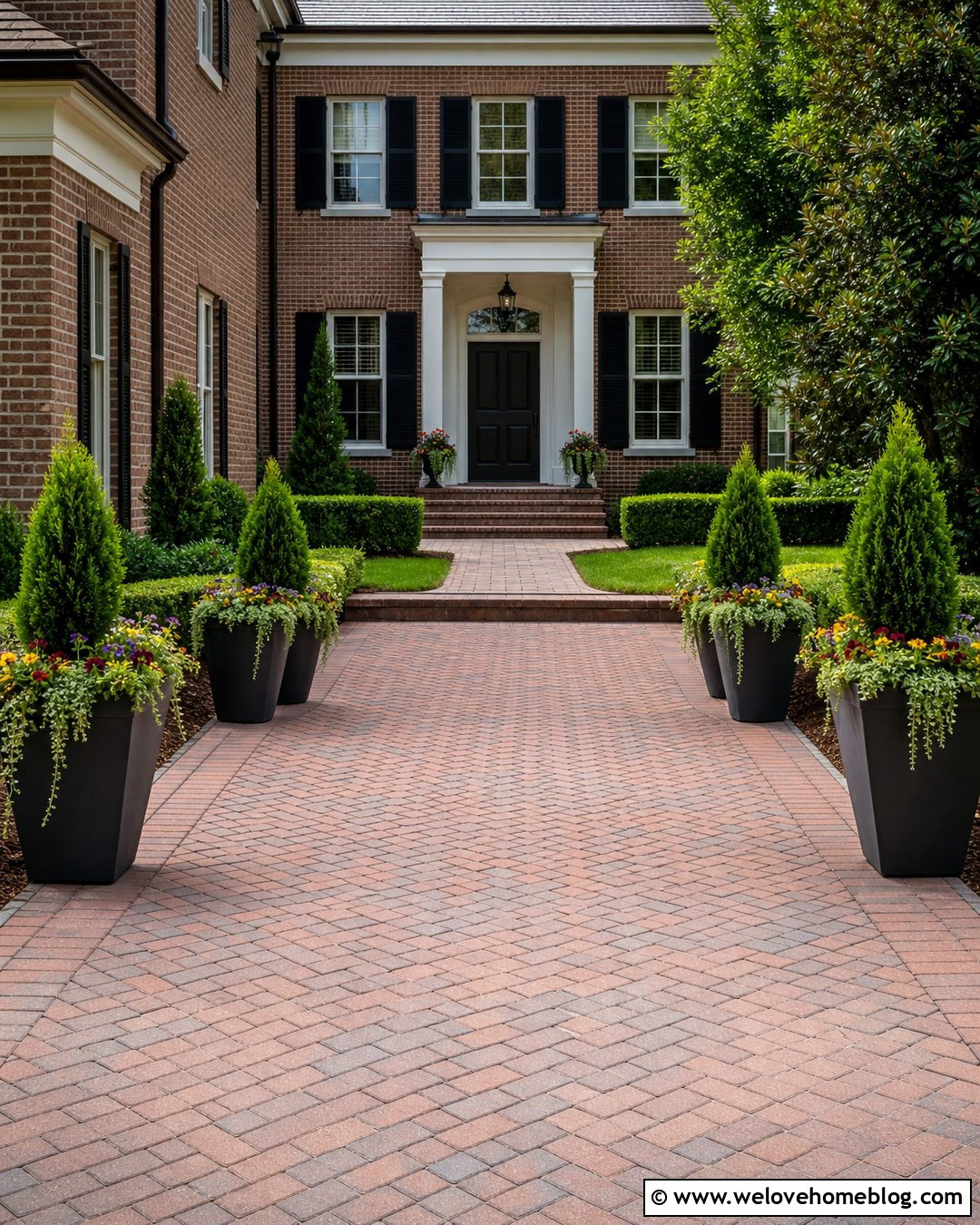
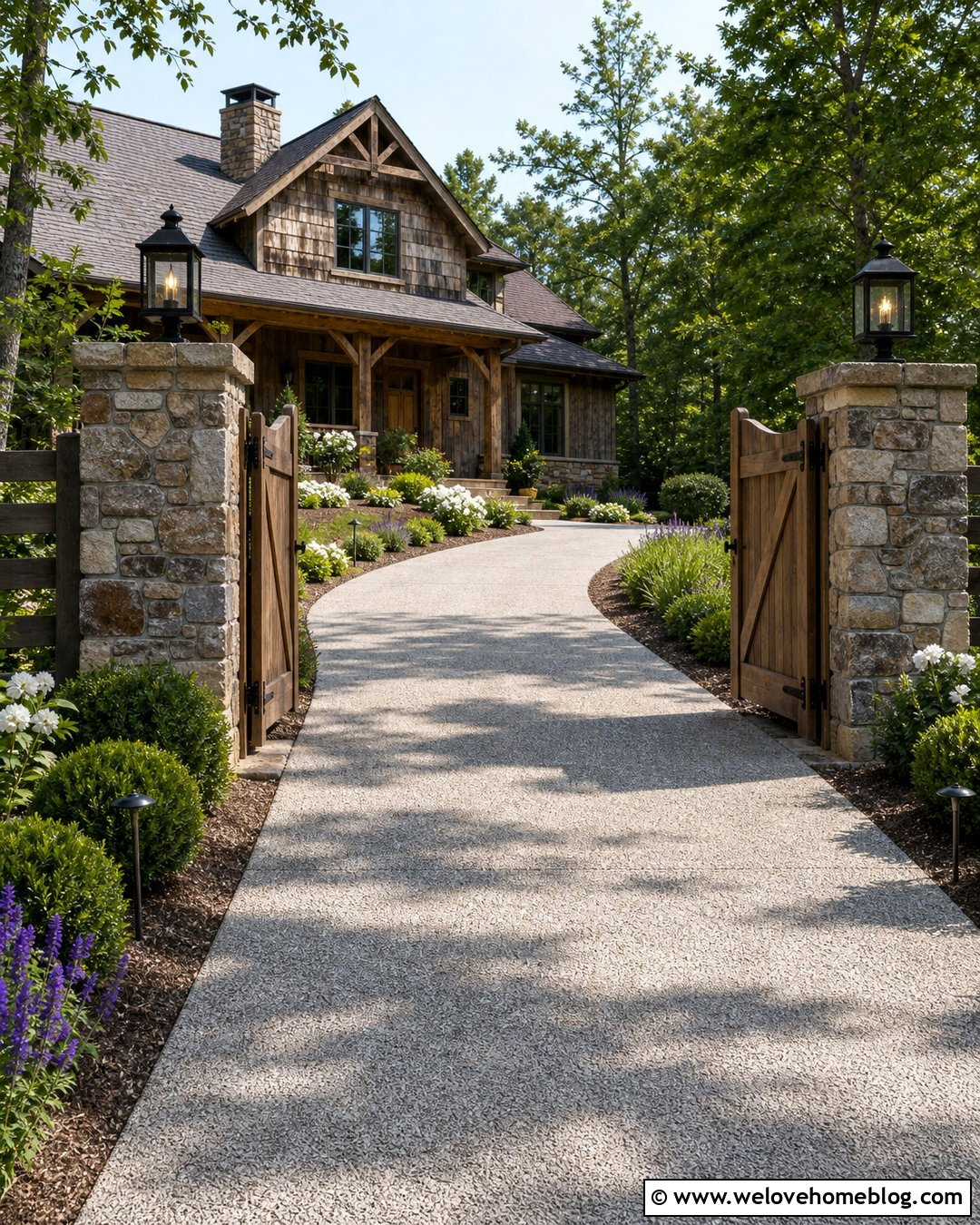
20. Native Shrub Lined Gated Driveway
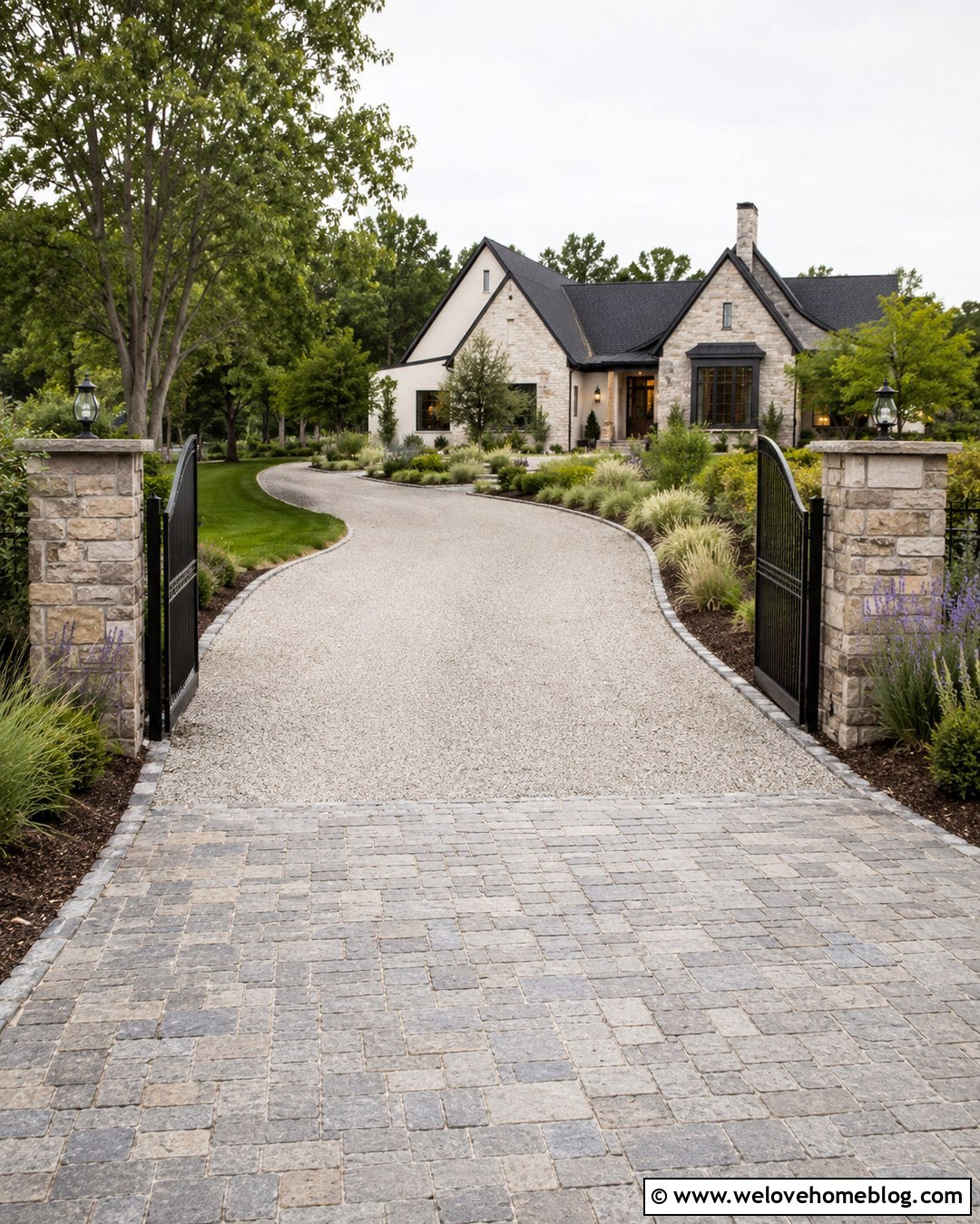
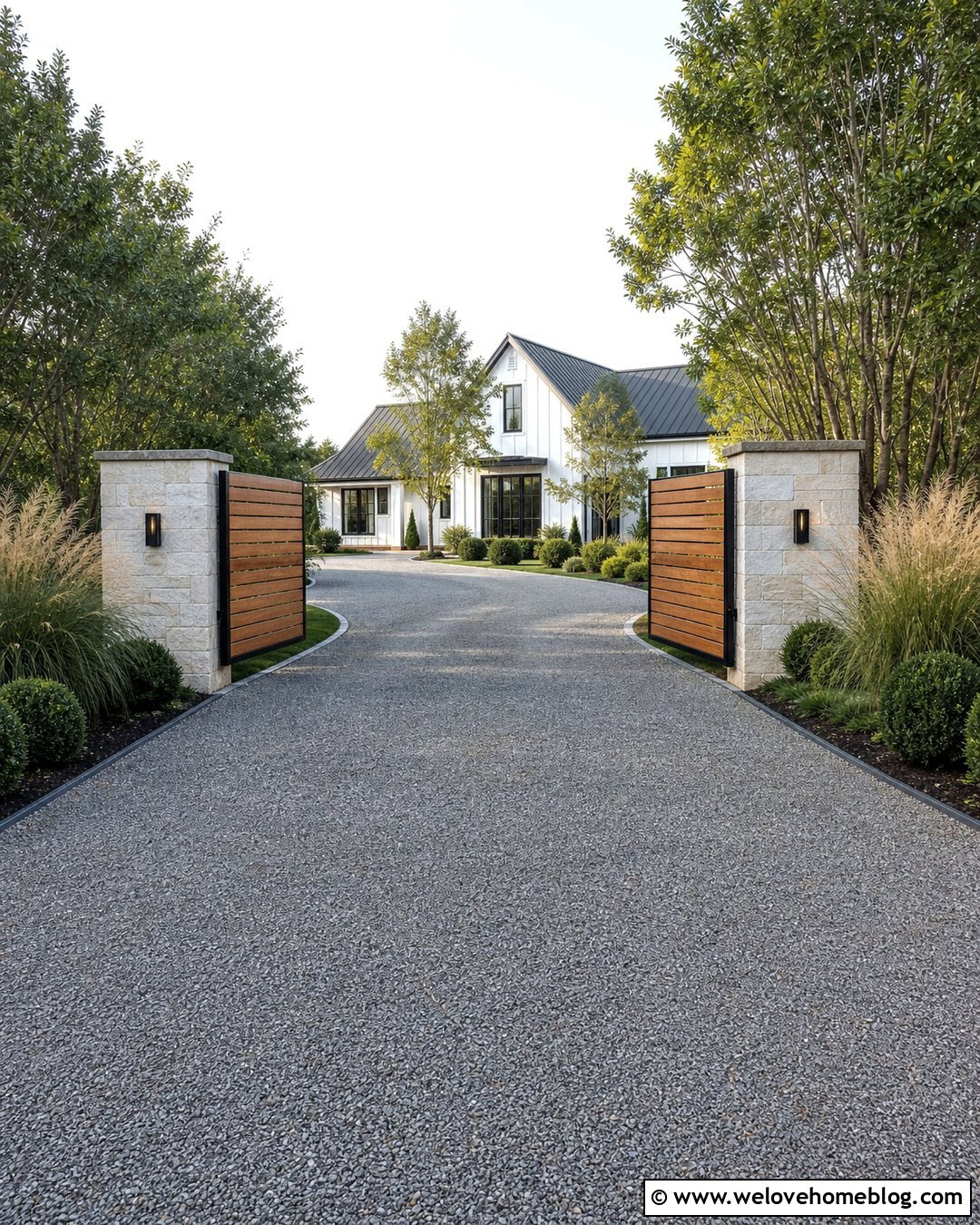
A gated driveway feels more connected to the landscape when native shrubs continue from the entrance pillars toward the house. Begin with a cobblestone apron at the road, transitioning into a curved resin-bound gravel driveway. On both sides of the gate, use layered beds with compact native shrubs, ornamental grasses, and low flowering perennials. Repeat selected plants along the driveway instead of filling every foot with dense growth. The open sections make maintenance easier and preserve views across the property. Stone pillars, a simple metal gate, and discreet address lighting complete the entrance without competing with the planting. This look suits Craftsman, country, and contemporary homes. Keep vegetation clear of gate mechanisms, sensors, sightlines, and utility access points. ()
Conclusion:
The best 20 Plant Lined Driveway Ideas treat paving, borders, plants, and the home as one connected design. Start by considering the driveway’s shape, material, sunlight, drainage, and available planting space. Then select plants that fit the local climate and remain manageable at maturity. Low ground covers suit tight spaces, clipped shrubs provide structure, and trees or grasses can bring scale to longer approaches. Durable edging will keep gravel, mulch, and soil from spreading onto the driving surface. Most importantly, preserve safe sightlines, door clearance, and maintenance access. With thoughtful spacing and repeated plant groupings, even a simple driveway can become an attractive, practical, and welcoming part of the landscape. ()

Related posts:
Leave a Reply