
A plain concrete driveway can look clean, welcoming, and thoughtfully designed without expensive stamping or bold colors. The key is to treat the driveway as part of the entire front yard. Its shape, control joints, borders, planting beds, walkway, and connection to the house should feel coordinated. A basic broom finish adds subtle texture, while planned joint lines can make a simple slab appear more structured. Borders and landscaping also help define the edges and soften large areas of gray concrete. () Whether you have a narrow suburban lot, a wide ranch home, or a sloped front yard, these complete designs offer practical inspiration. Below are 20 Plain Concrete Driveway Ideas.

1. Straight Plain Concrete Driveway With Clean Lawn Edges
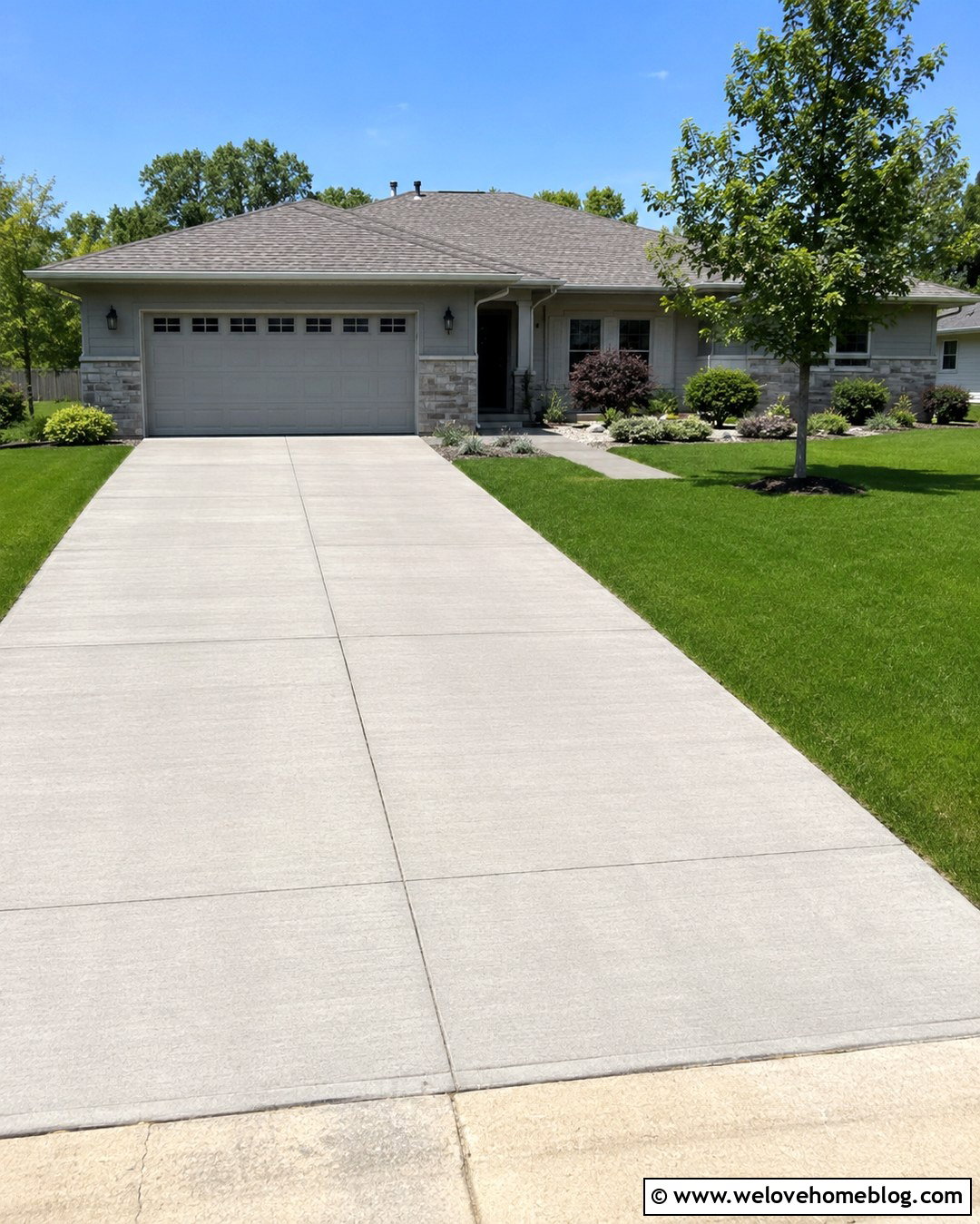
A straight driveway creates a simple, direct approach that works especially well for ranch, Cape Cod, and traditional suburban homes. Use plain gray concrete with a light broom finish for traction and a neat, understated appearance. Keep the slab rectangular, with evenly spaced control joints that align with the garage doors. Crisp lawn edges on both sides make the concrete look intentional rather than builder-basic. Add a narrow walkway branching toward the front porch, using the same concrete for continuity. Low foundation shrubs and one small ornamental tree can frame the house without crowding the driving area. This complete look is affordable, easy to understand visually, and relatively simple to maintain. Regular edging prevents grass from spreading across the concrete.
2. Curved Plain Concrete Driveway With Stone Edging
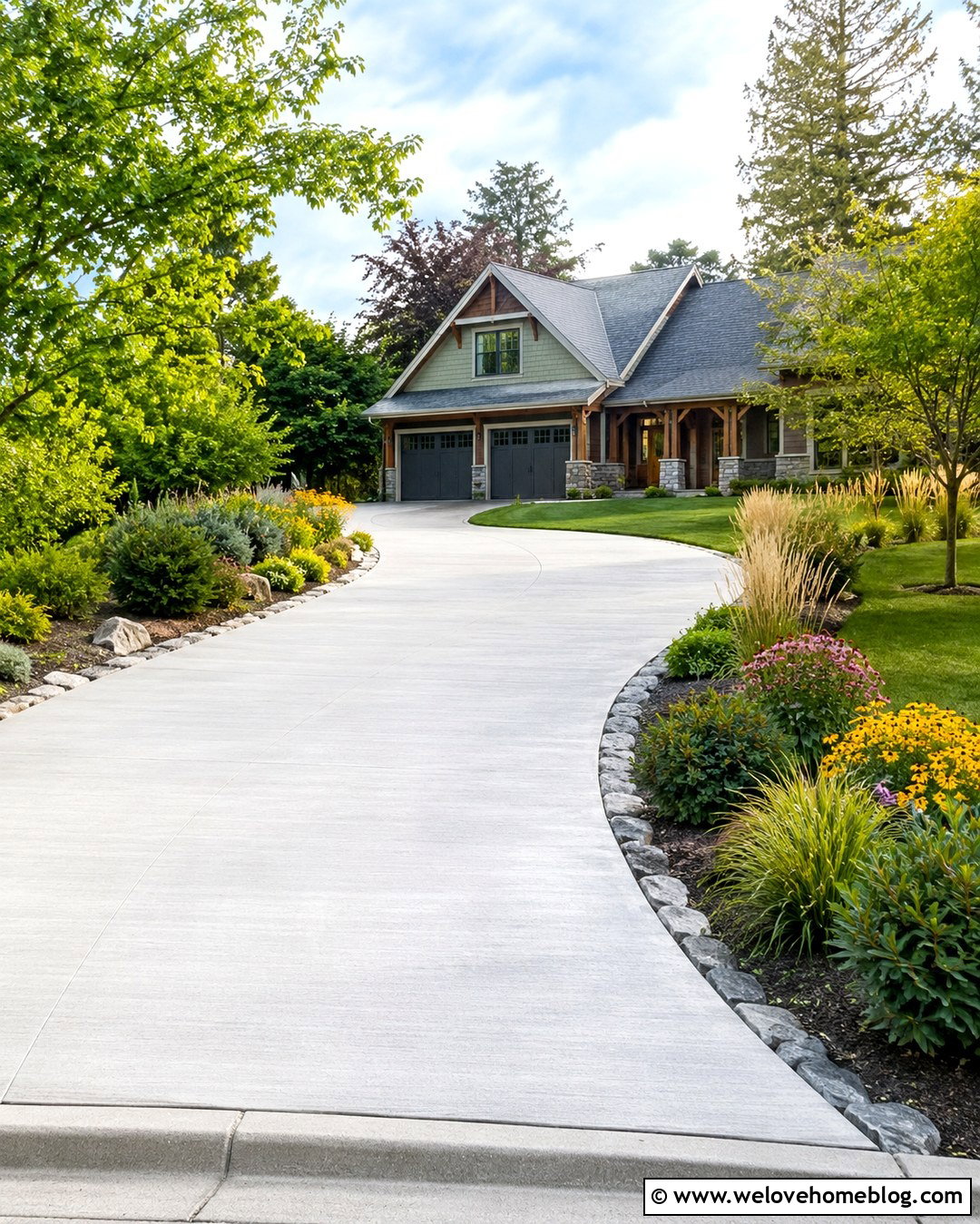
Soft curves can make a plain concrete driveway feel more graceful while helping it follow the natural shape of the front yard. Choose light gray poured concrete with a broom finish and use broad, gentle bends rather than tight turns. A row of natural gray fieldstone along the outer edge gives the driveway definition without making the surface itself decorative. On the inside curve, create a sweeping planting bed with ornamental grasses, compact evergreens, and seasonal flowers. Keep taller plants away from the street entrance so drivers can see approaching traffic. A curved walkway can continue from the driveway to a craftsman-style porch. This design works beautifully on wider lots where the driveway has enough room to bend naturally before reaching the garage.
3. Wide Plain Concrete Driveway With Paver Borders
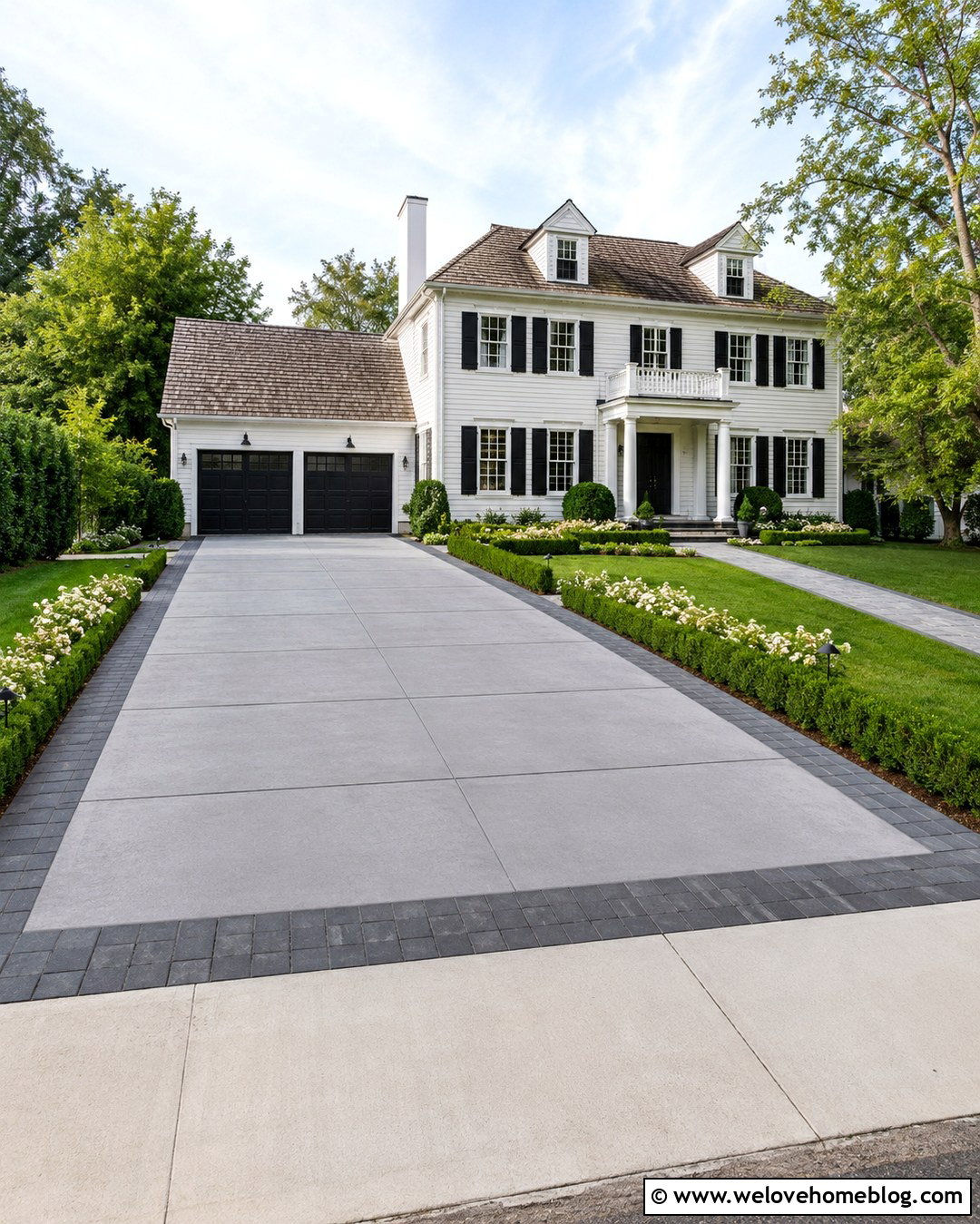
Does a large double-garage driveway look like an oversized gray slab? Framing it with pavers can break up the visual width while preserving a practical plain concrete center. Use medium-gray broom-finished concrete divided into balanced rectangular panels. Add a narrow charcoal concrete-paver border along both sides and across the street apron. The darker outline creates contrast and connects nicely with black shutters, a dark roof, or charcoal garage doors. Plant low boxwoods and white flowering perennials in beds outside the border to keep the layout polished. A matching paver ribbon can separate the driveway from the front walkway. Although the surface remains simple, the strong perimeter makes the entire driveway feel finished, structured, and appropriately scaled to a wide colonial or two-story home.
4. Narrow Plain Concrete Driveway With Gravel Borders
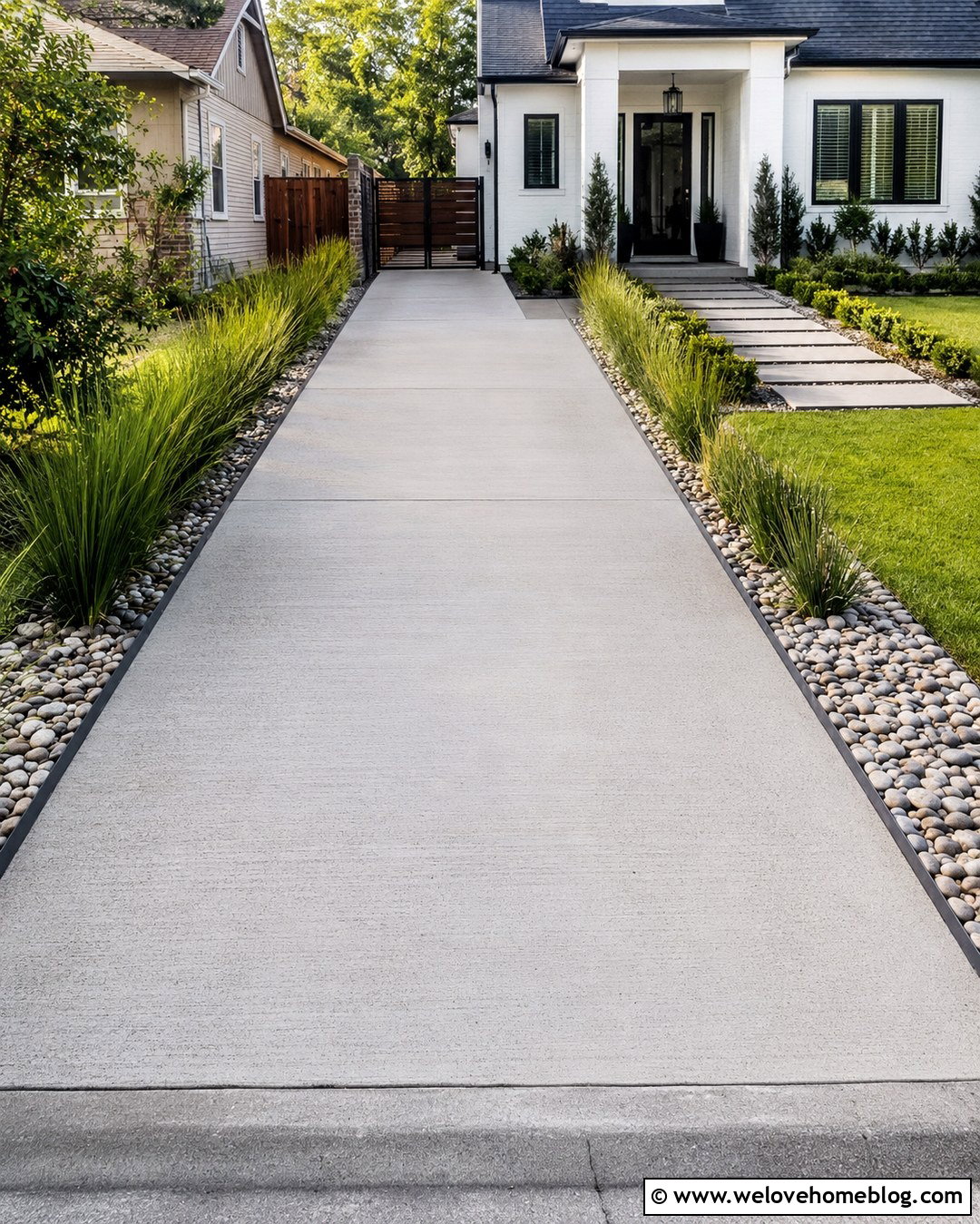
A narrow lot needs a driveway design that feels open without leaving the edges unfinished. Install a straight plain concrete driveway with a pale gray broom finish and simple perpendicular control joints. Add slim bands of washed river gravel along both sides to create visual breathing room between the concrete, lawn, and house. Metal edging can keep the stones contained and stop them from migrating onto the driving surface. Use upright shrubs or narrow ornamental grasses where planting space is limited. Near the garage, widen the driveway slightly to make parking and opening car doors easier. A compact stepping-stone path can cross the gravel border and connect to the entrance. This complete layout suits urban cottages, bungalows, and small suburban homes with tight side-yard setbacks.
5. Plain Concrete Driveway With Red Brick Border
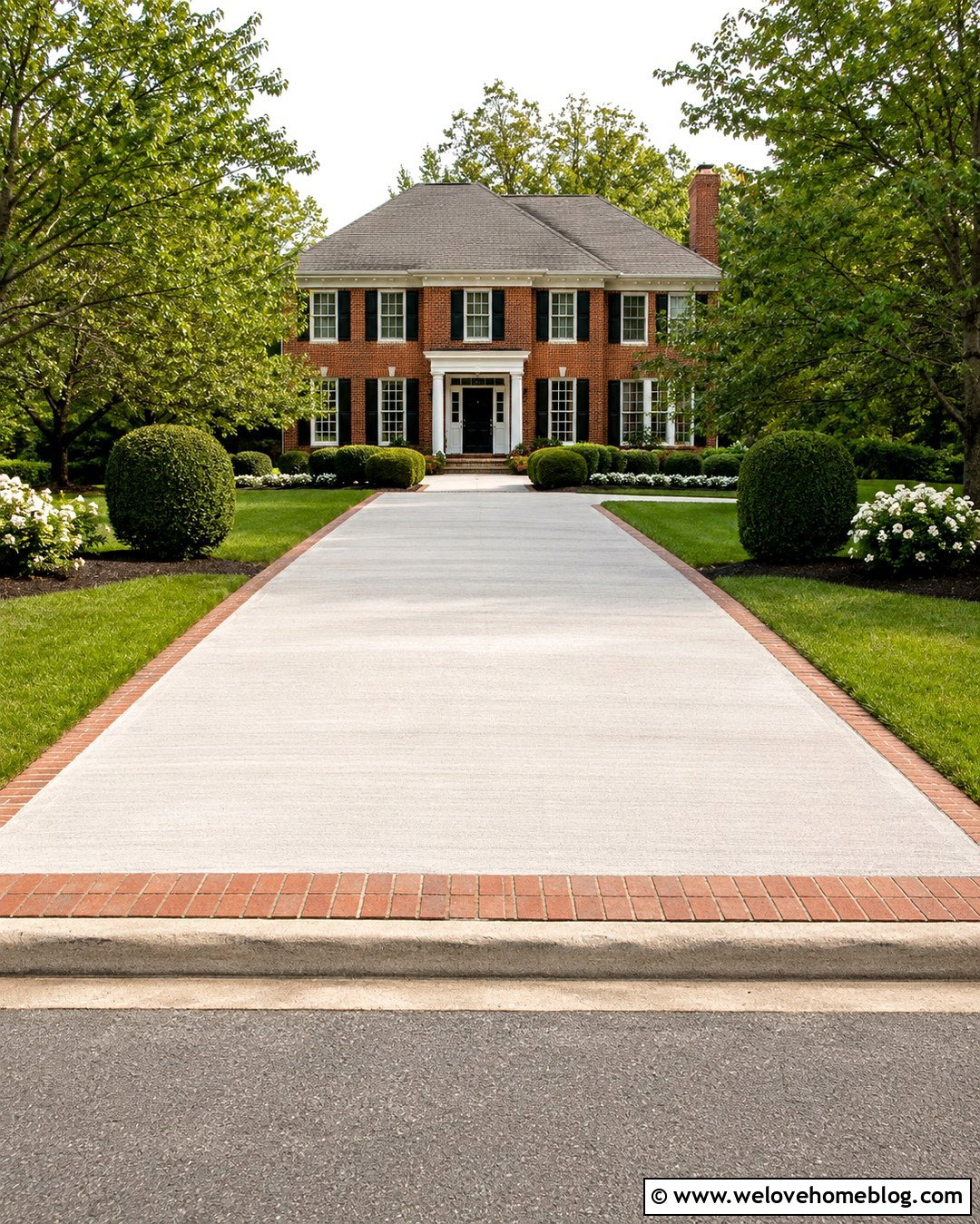
Warm red brick can give plain gray concrete a more traditional and welcoming appearance. Begin with a straight or gently flared broom-finished concrete driveway leading to a brick colonial, Georgian, or classic ranch house. Install a single or double brick border along the sides, using bricks that coordinate with the home’s facade rather than competing with it. Carry the border across the entrance apron to create a clear transition from the street. Neatly clipped shrubs, green lawn, and red or white flowering plants reinforce the established character. The plain center keeps the project practical and prevents the combination from becoming visually busy. Repeating the same brick around a walkway or mailbox bed makes the driveway feel connected to the rest of the landscape instead of treated as a separate feature.
6. Plain Concrete Driveway With Black Paver Edging
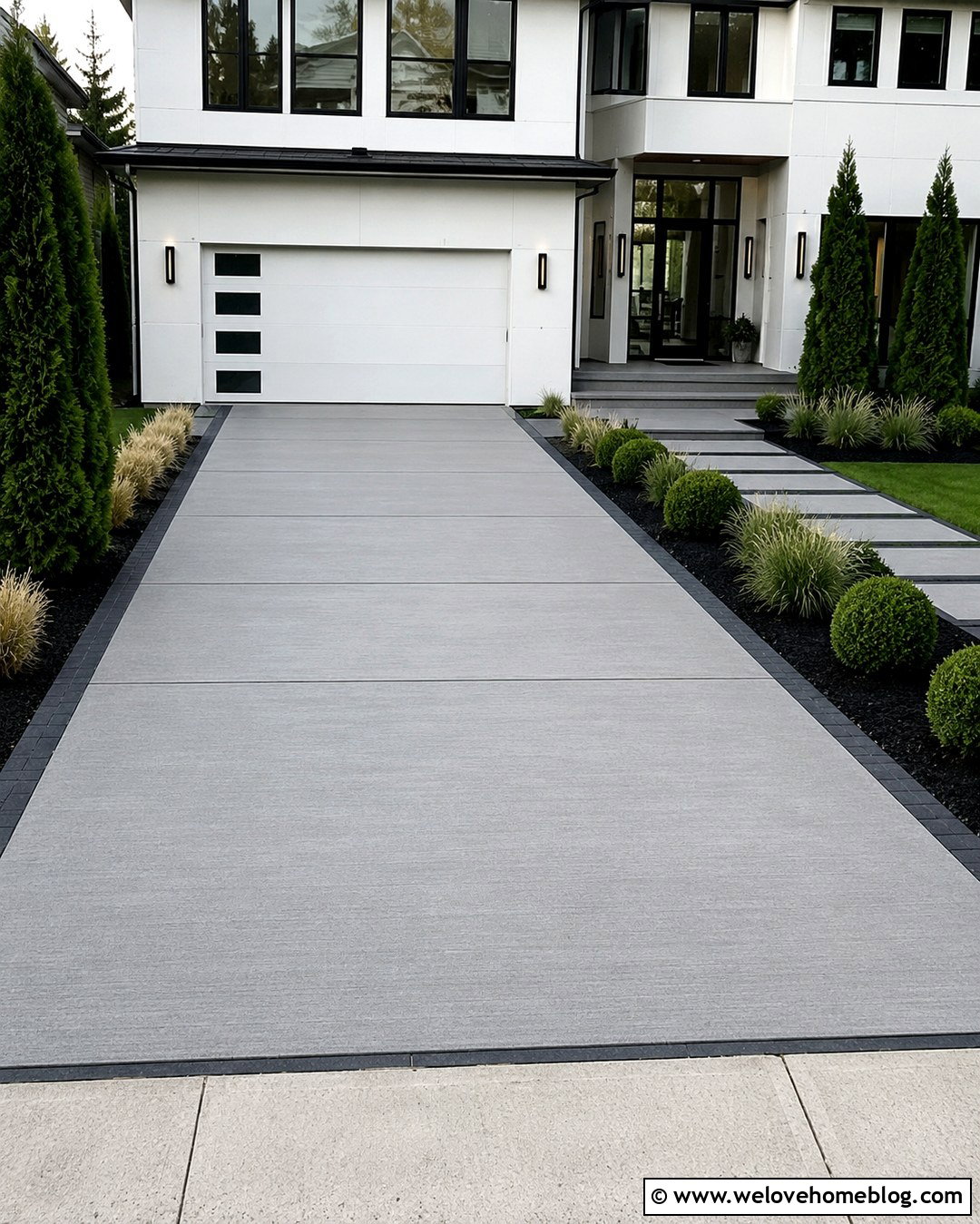
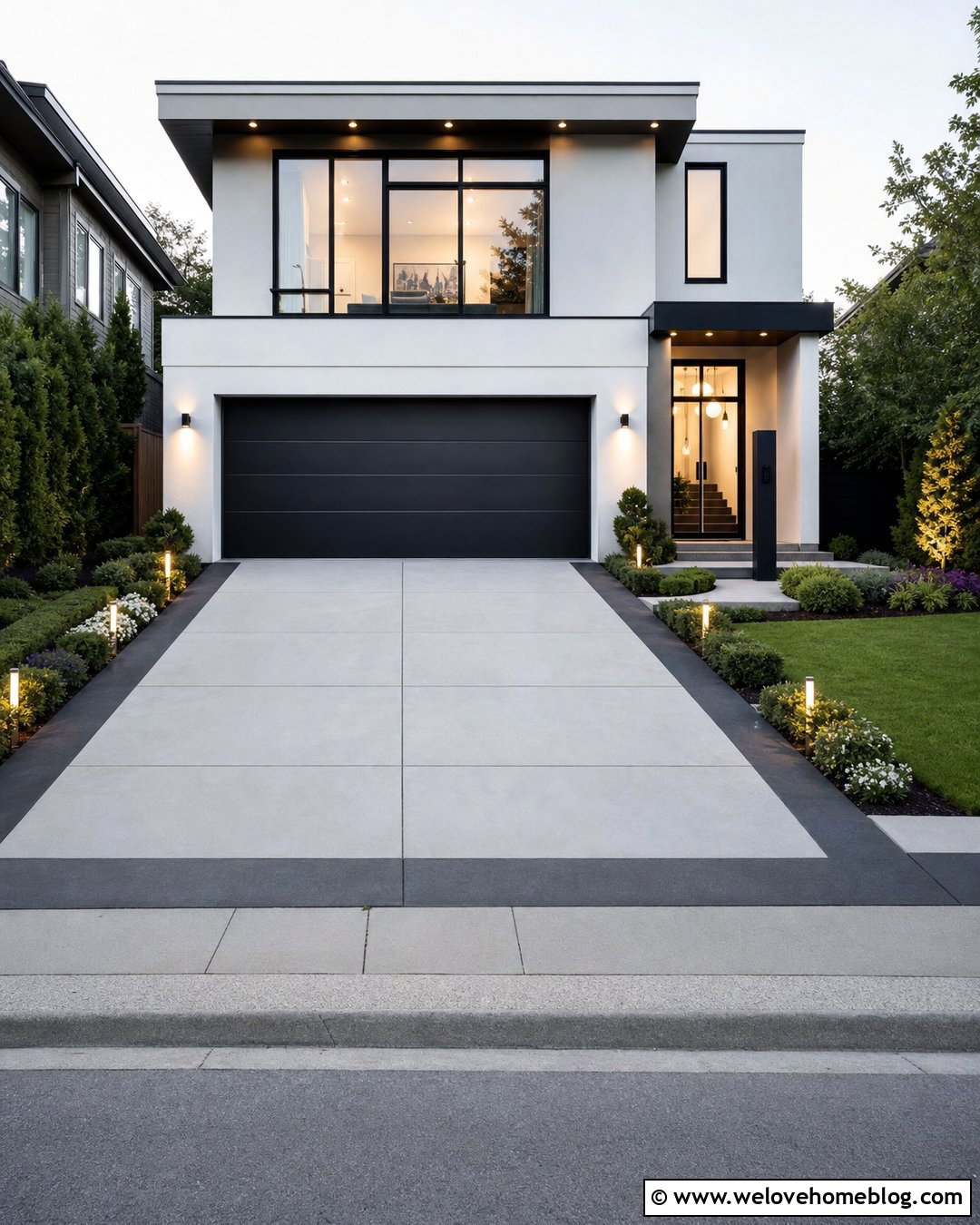
Strong black edging gives ordinary concrete a sharp, modern frame. Use smooth-looking plain gray poured concrete with a subtle broom texture, arranged as large rectangular sections on a straight driveway. Line the perimeter with narrow charcoal or black concrete pavers installed flush with the slab. The dark border works particularly well with a white contemporary house, black window frames, and a minimalist garage door. Keep the landscape equally simple by using blocks of ornamental grass, rounded evergreen shrubs, and dark mulch. A few large concrete stepping pads can lead toward the front entrance. Avoid adding too many colors or paving patterns, since the appeal comes from the clean contrast. The finished driveway feels modern and customized while retaining an uncomplicated, durable central driving surface.
7. Plain Concrete Driveway With Natural Stone Columns
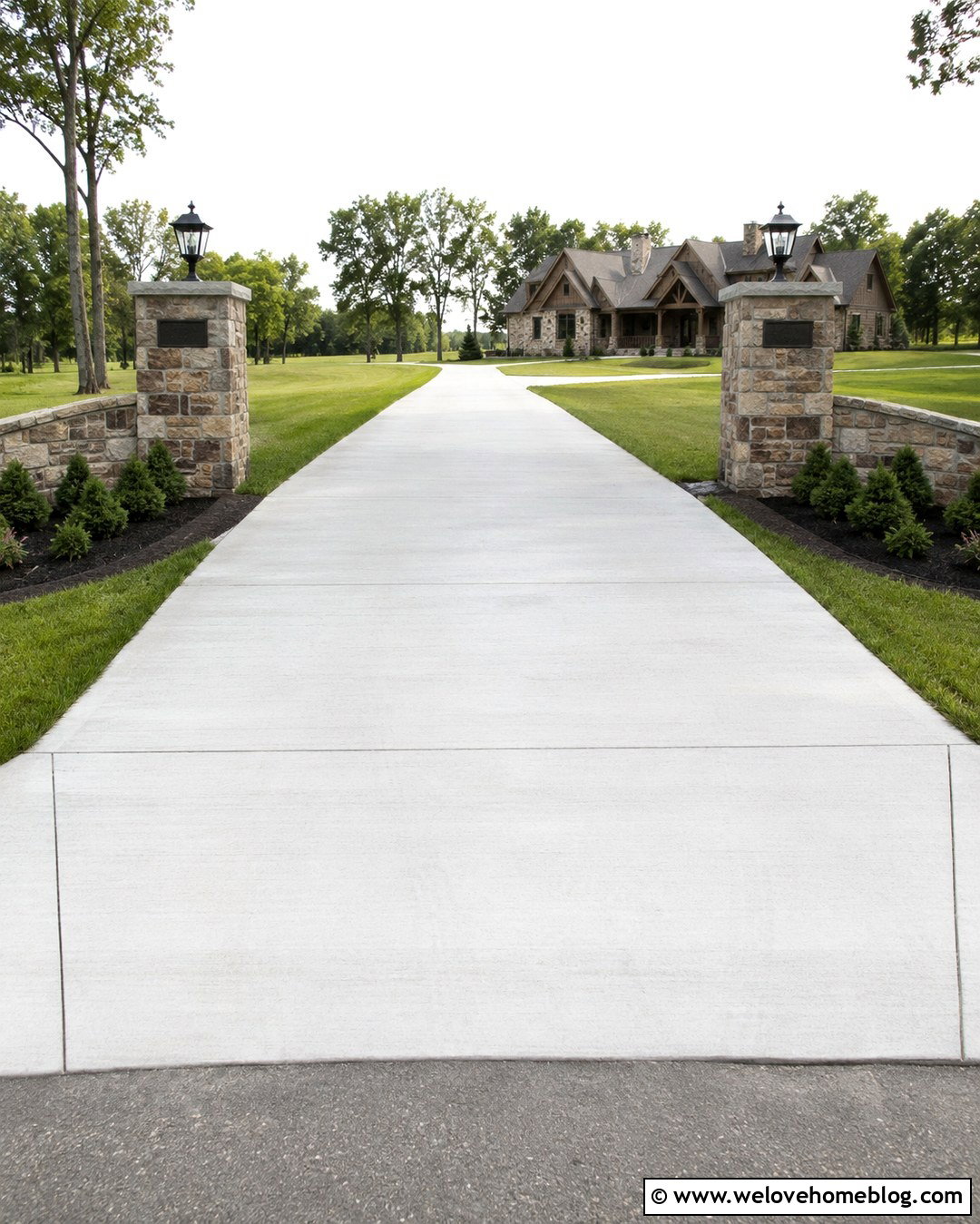
A defined entrance can transform a long plain concrete driveway without changing its basic surface. Pour a straight, light gray broom-finished driveway that begins with a subtle flare at the street. Place matching natural stone columns outside the driving clearance, with one supporting a simple address plaque or mailbox. Continue low stone edging for a short distance behind each column so the entrance feels connected to the driveway. Beyond that point, use lawn and broad planting beds to keep the approach relaxed. Small evergreen shrubs around the columns soften their bases, while canopy trees farther back frame the view of the house. This complete design works well for craftsman, country, and mountain-inspired homes because the rugged stone balances the clean simplicity of the concrete.
8. Plain Concrete Driveway With Lavender Borders
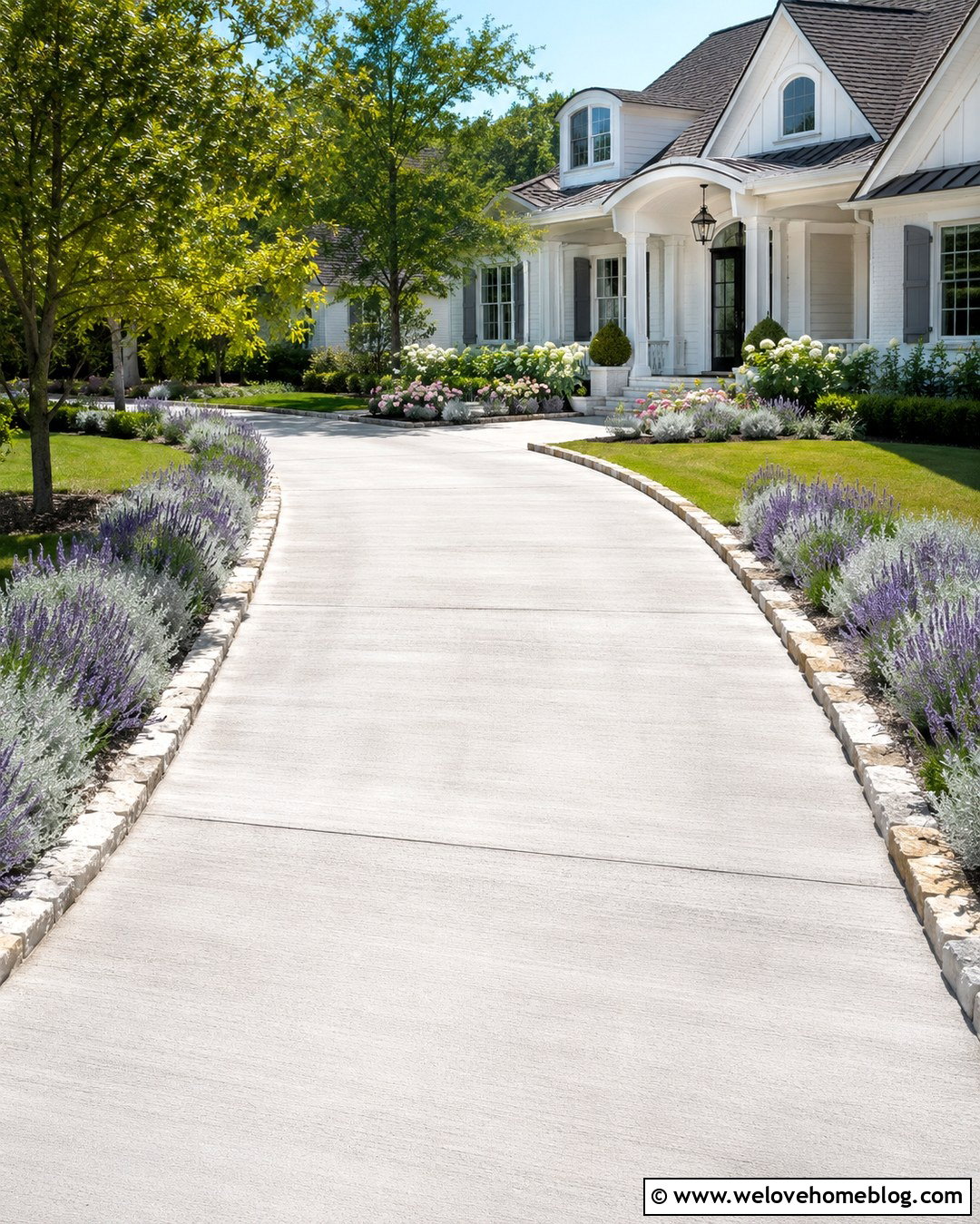
Imagine pale gray concrete framed by soft purple flowers and silvery green foliage. This design uses a straight or gently curved plain concrete driveway with a light broom finish and clean, saw-cut control joints. Narrow planting beds run along both sides, containing lavender, catmint, salvia, or climate-appropriate plants with a similar shape. A low stone curb keeps soil and mulch away from the driveway while providing a crisp edge. Space plants far enough back that mature growth will not obstruct parked vehicles. The planting can continue beside a coordinating concrete walkway leading to a cottage or modern farmhouse porch. Select species suited to local sunlight, rainfall, and winter conditions. The result is colorful and welcoming, yet the driveway itself remains simple, functional, and economical.
9. Plain Concrete Driveway With Boxwood Landscaping
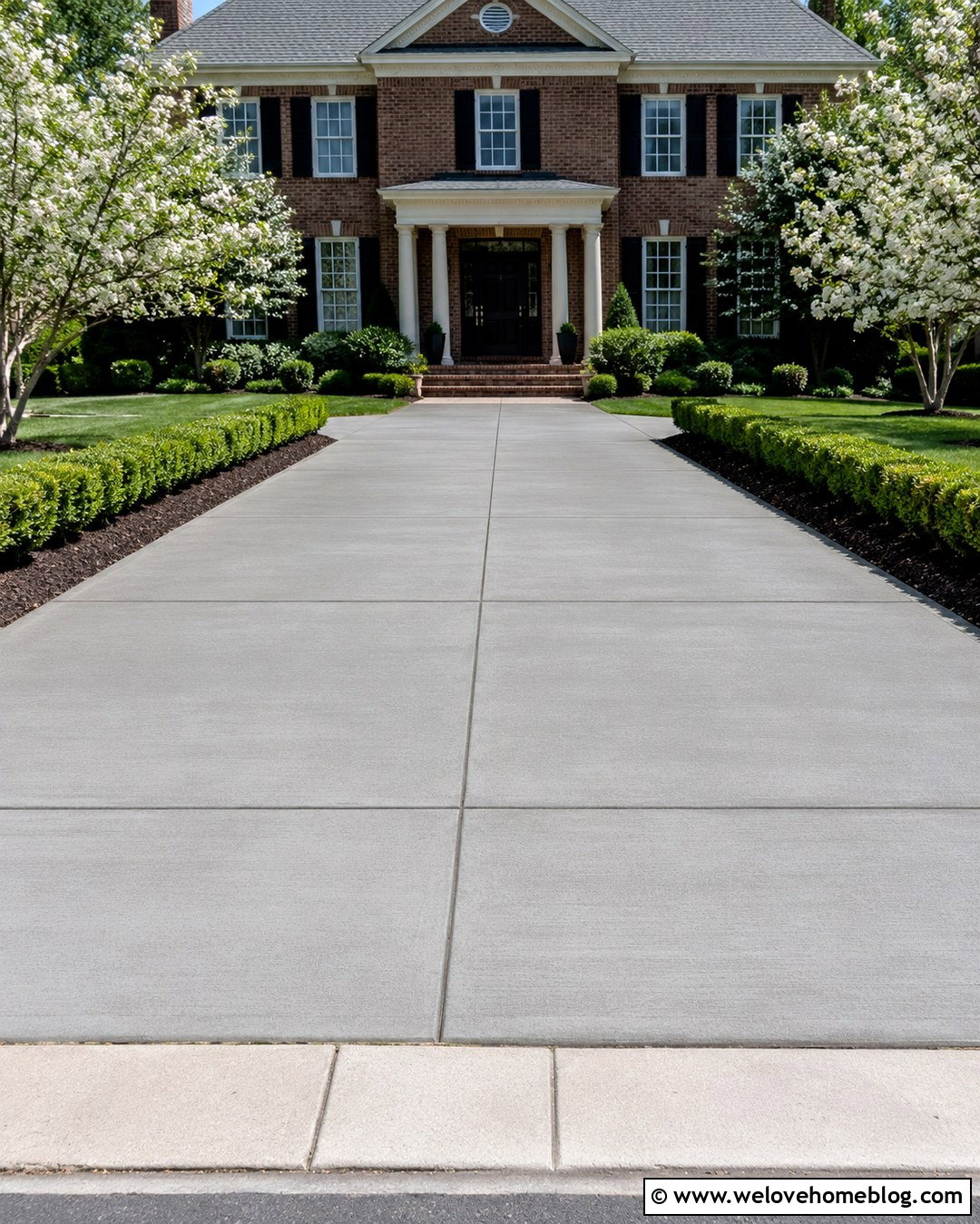
Orderly greenery can make a basic driveway feel formal and carefully maintained. Choose a symmetrical plain concrete driveway leading to a centered garage or side-facing parking court. Use a medium-gray broom finish with straight control joints arranged to reflect the home’s windows and architectural lines. Low boxwood hedges can border selected sections, but they should sit behind a narrow mulch or gravel strip to allow room for growth. Add matching shrubs around the walkway and front steps to create one continuous landscape plan. Small flowering trees placed near the lawn corners provide height without closing in the driveway. This complete look complements colonial, Georgian, and traditional brick homes. Regular pruning keeps the hedges below sight lines and prevents branches from scraping vehicles or narrowing the usable pavement.
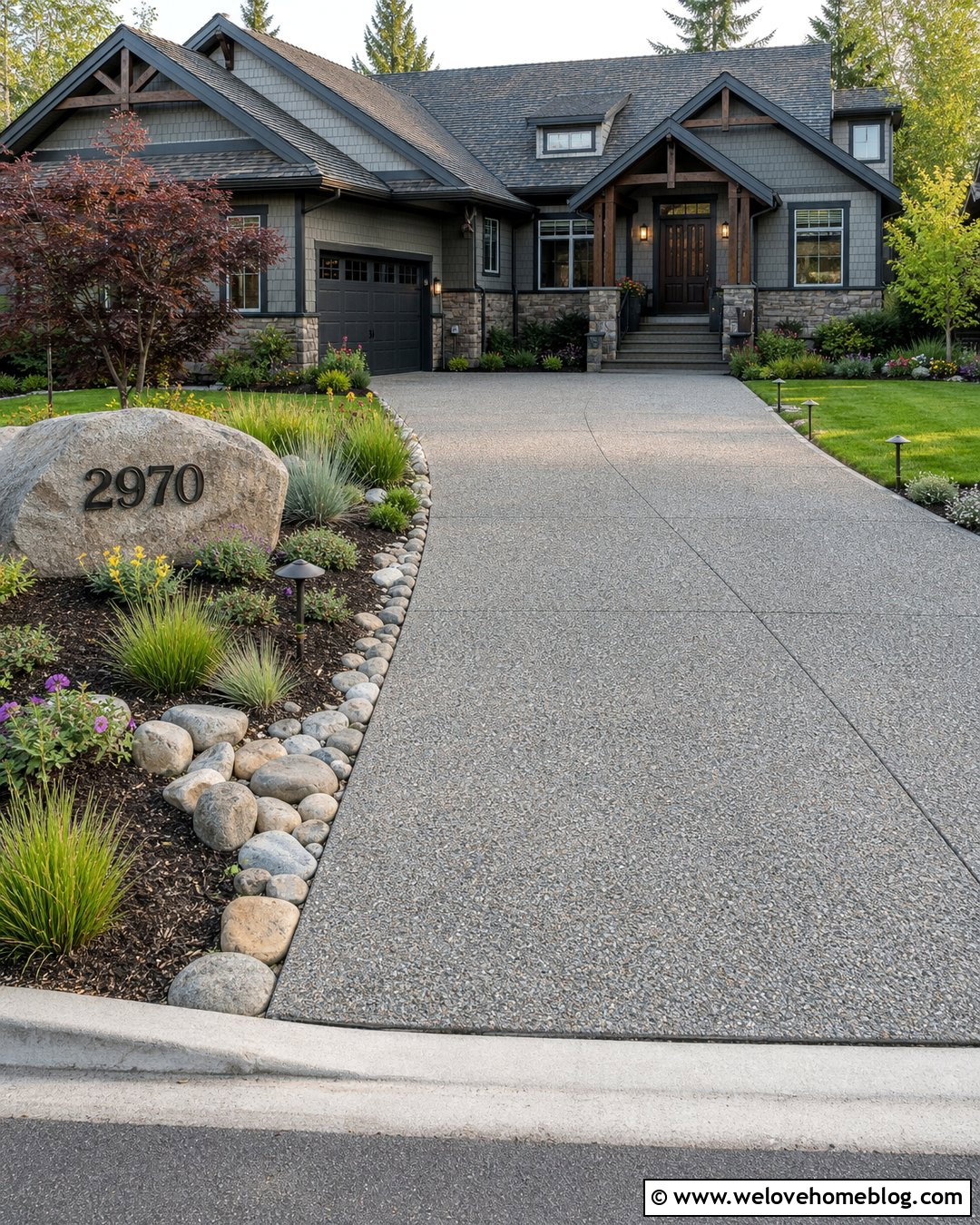
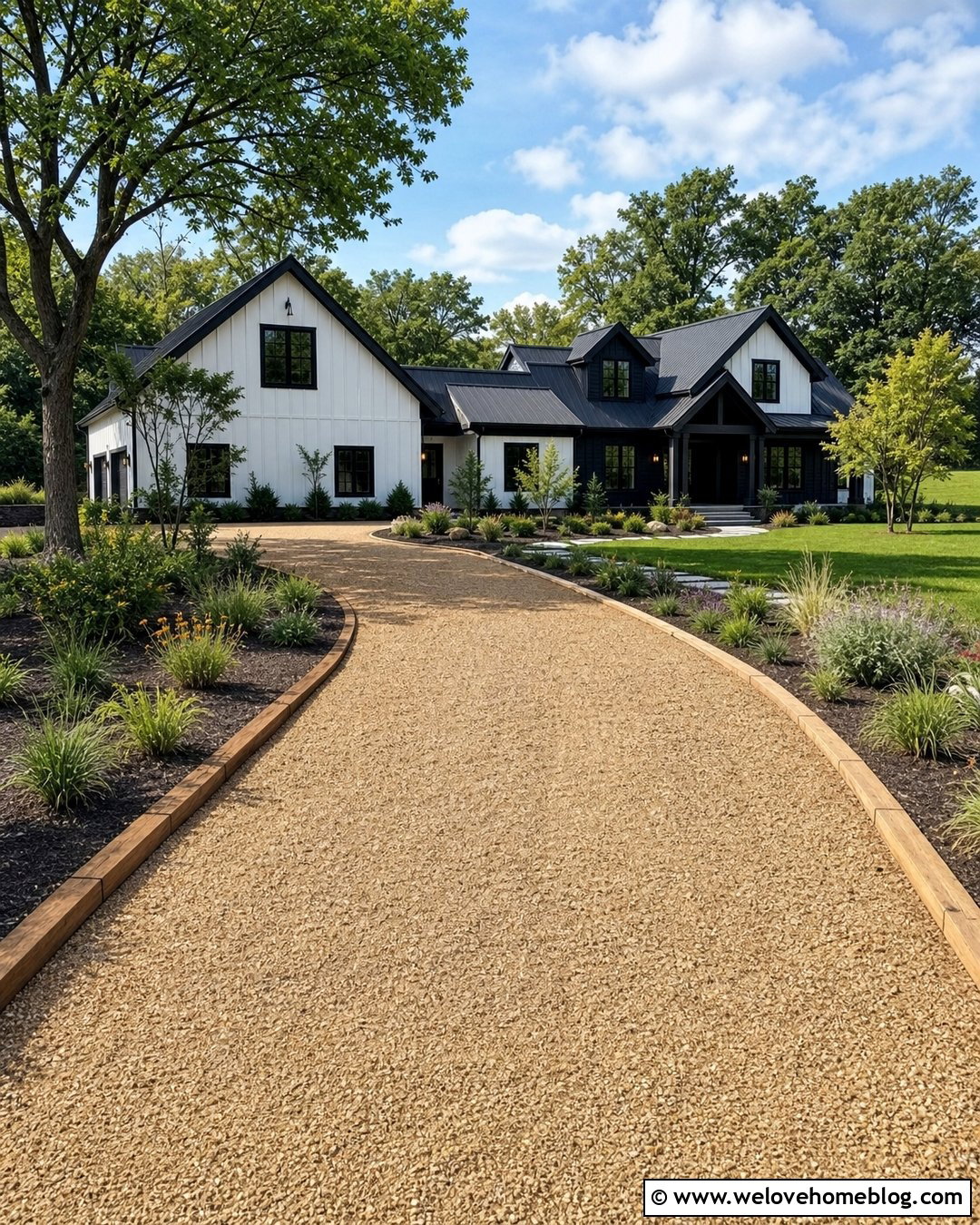
10. Plain Concrete Driveway With Native Plant Beds
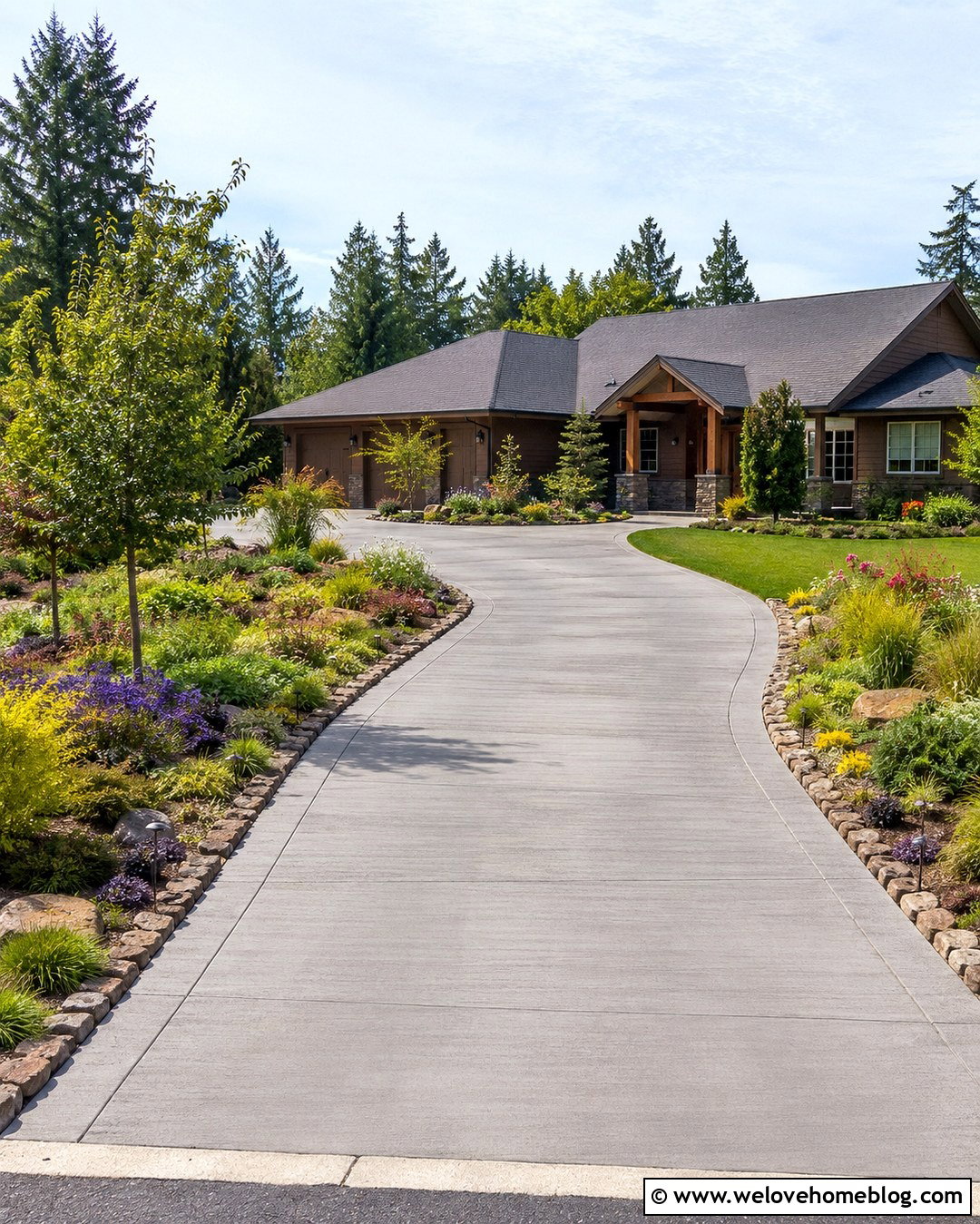
For a more relaxed front yard, surround a simple concrete driveway with layered native planting beds. Use plain gray poured concrete with a light broom finish and a gently curved layout that follows the property. Edge the slab with a narrow strip of local stone or compact gravel to catch mulch and create separation. Plant low ground covers near the pavement, medium-height perennials behind them, and compact shrubs toward the back. Choose locally adapted plants that suit the site’s sun exposure, soil, and moisture conditions. Leave clear visibility near the sidewalk and street. A naturalistic bed can also absorb the awkward spaces around a curve or driveway flare. Paired with a ranch, craftsman, or contemporary home, the planting adds movement and seasonal color to an otherwise restrained surface.
11. Plain Concrete Driveway With Grass Strips
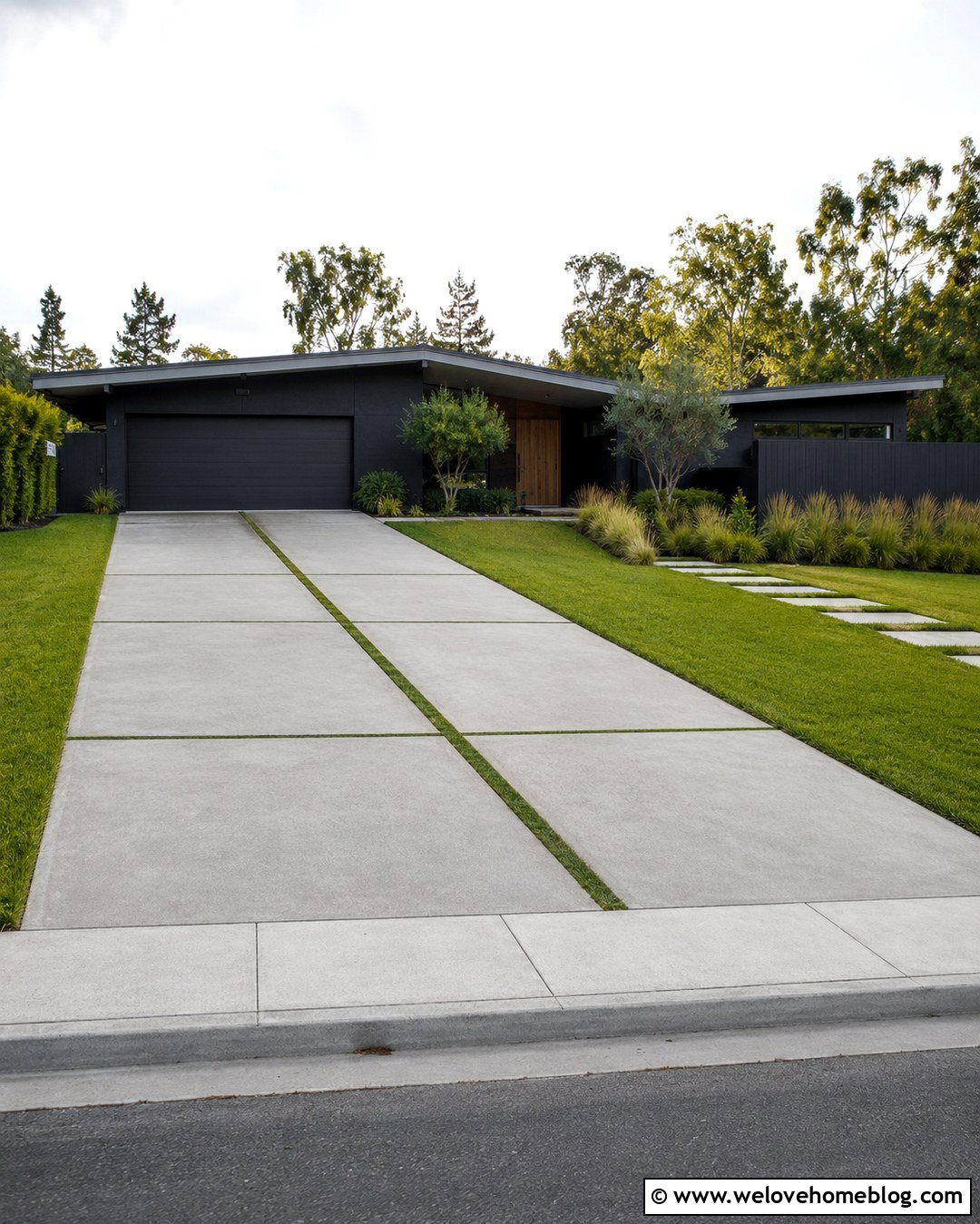
Grass strips introduce greenery without replacing the dependable concrete driving area. Divide a wide plain concrete driveway into two broad wheel lanes or several large rectangular slabs separated by narrow planted channels. Keep the layout simple and ensure each concrete section is wide enough for comfortable vehicle movement. The plain gray surface should have a light broom finish, while the grass remains level enough to reduce awkward edges. This look works best on relatively flat sites with suitable drainage and an irrigation plan. Repeat the green strips beside a modern walkway or within a small turnaround area for continuity. A low, open landscape of ornamental grasses and clipped shrubs complements the geometry. The result feels lighter than one continuous slab and suits contemporary or midcentury homes.
12. Plain Concrete Driveway With Decorative Control Joints
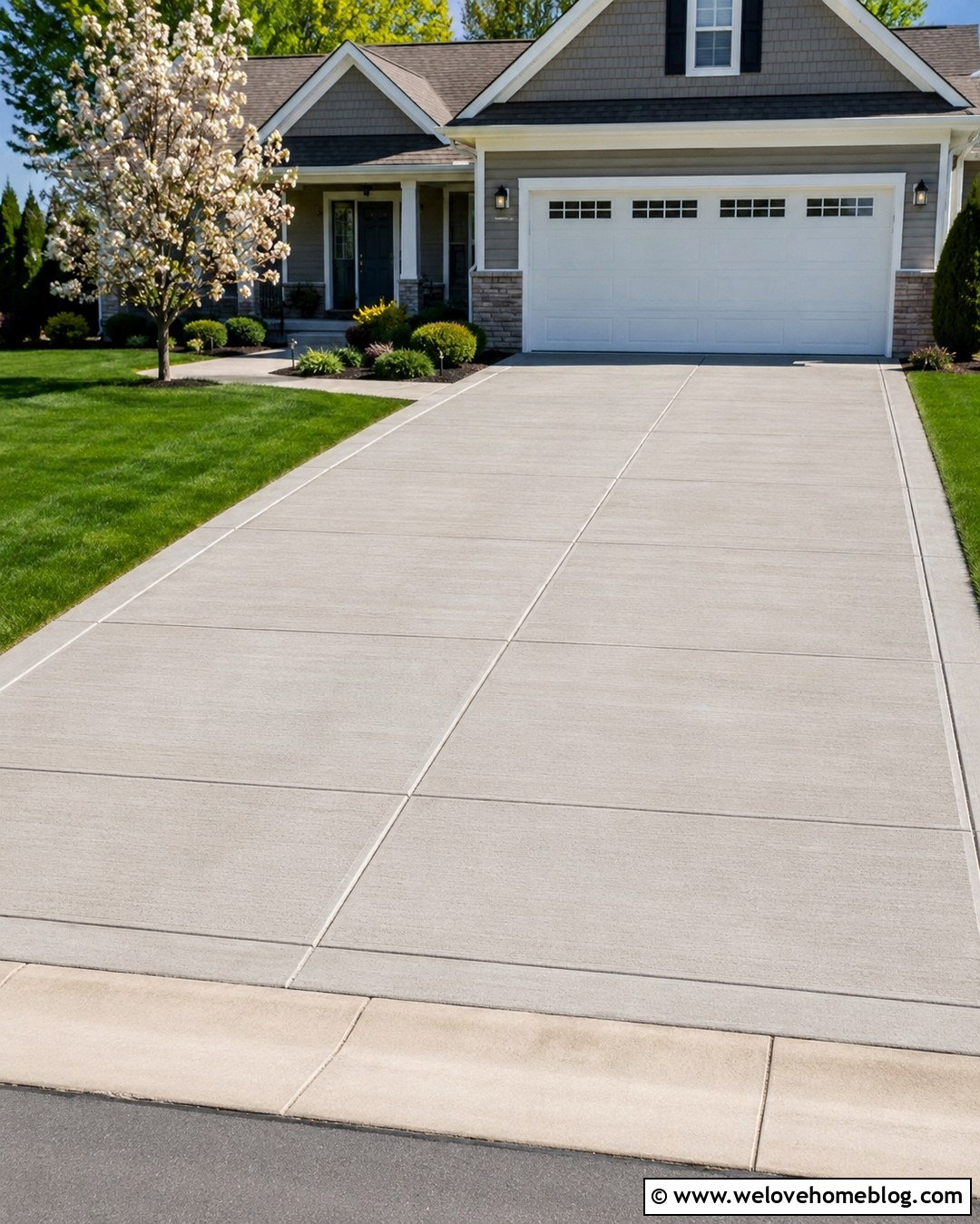
Carefully planned control joints can turn necessary construction details into an attractive grid. Pour a straight plain concrete driveway with a consistent gray broom finish, then arrange the joints in large squares or balanced rectangles. Align the pattern with the garage bays, walkway, and architectural features whenever possible. A narrow smooth concrete margin around the perimeter can create a subtle picture-frame effect without introducing another material. Keep the surrounding design restrained with green lawn, low foundation shrubs, and one well-placed ornamental tree. On a wide driveway, an additional lengthwise joint can help divide the surface visually. Joint layout should ultimately follow the contractor’s technical plan for the slab. When proportioned carefully, these simple lines bring order and rhythm to a practical, budget-conscious driveway.
13. Plain Concrete Driveway With a Flared Entrance
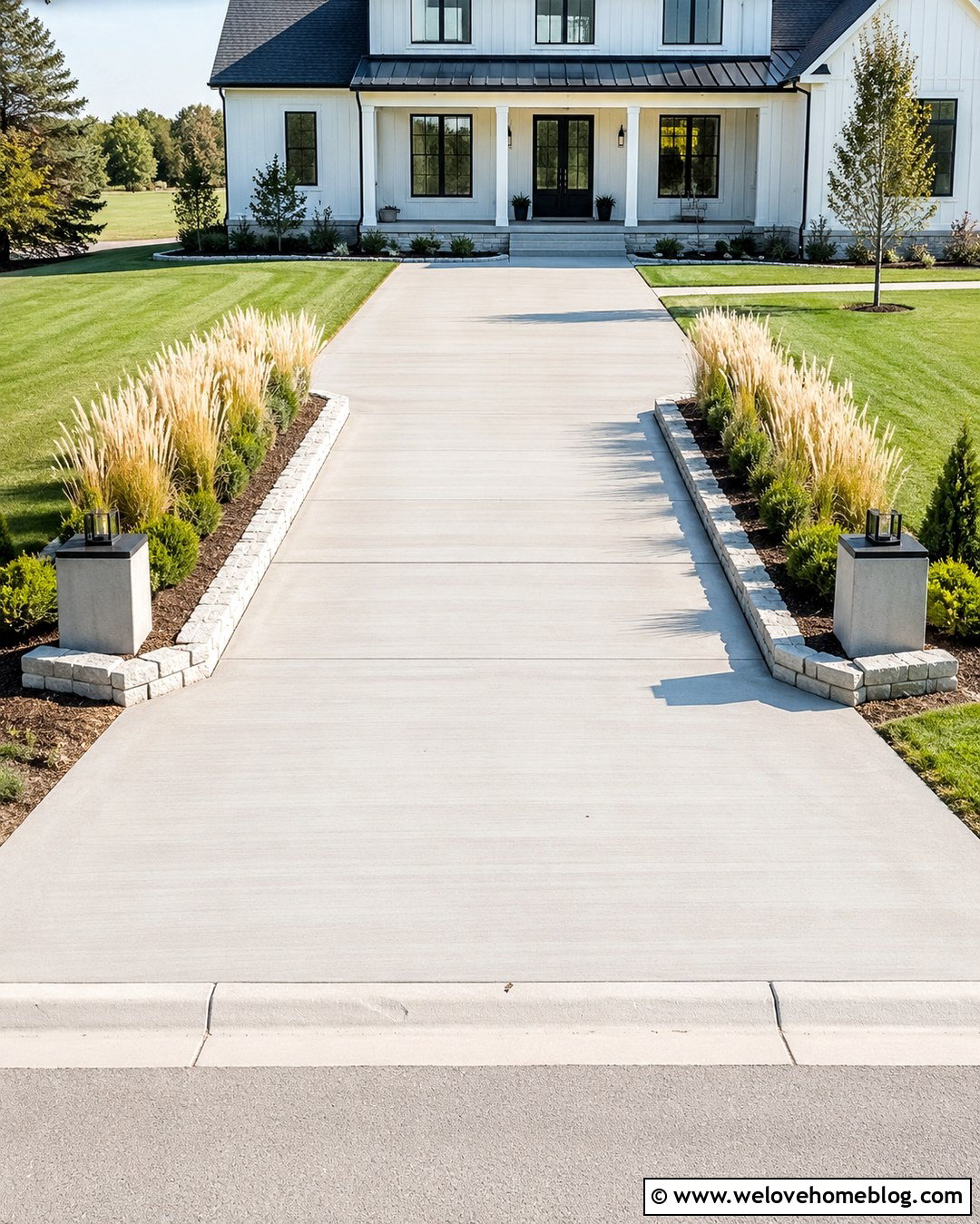
A flared entrance provides a more generous transition between the street and a narrow driveway. Start with plain gray broom-finished concrete that gradually widens near the curb, avoiding abrupt angles that look disconnected from the main slab. Frame the flare with low stone edging and compact planting beds that mirror each other. An address marker can sit within one bed, while the other contains matching grasses or evergreen shrubs. Continue the driveway in a straight line toward a ranch or modern farmhouse garage. Keep all plants and entrance features outside required visibility areas. A connecting front walkway can branch from the wider section closer to the house. The complete composition feels welcoming and balanced, and the broader opening makes the driveway visually easier to approach without requiring decorative concrete across the entire surface.
14. Plain Concrete Driveway With a Side Walkway
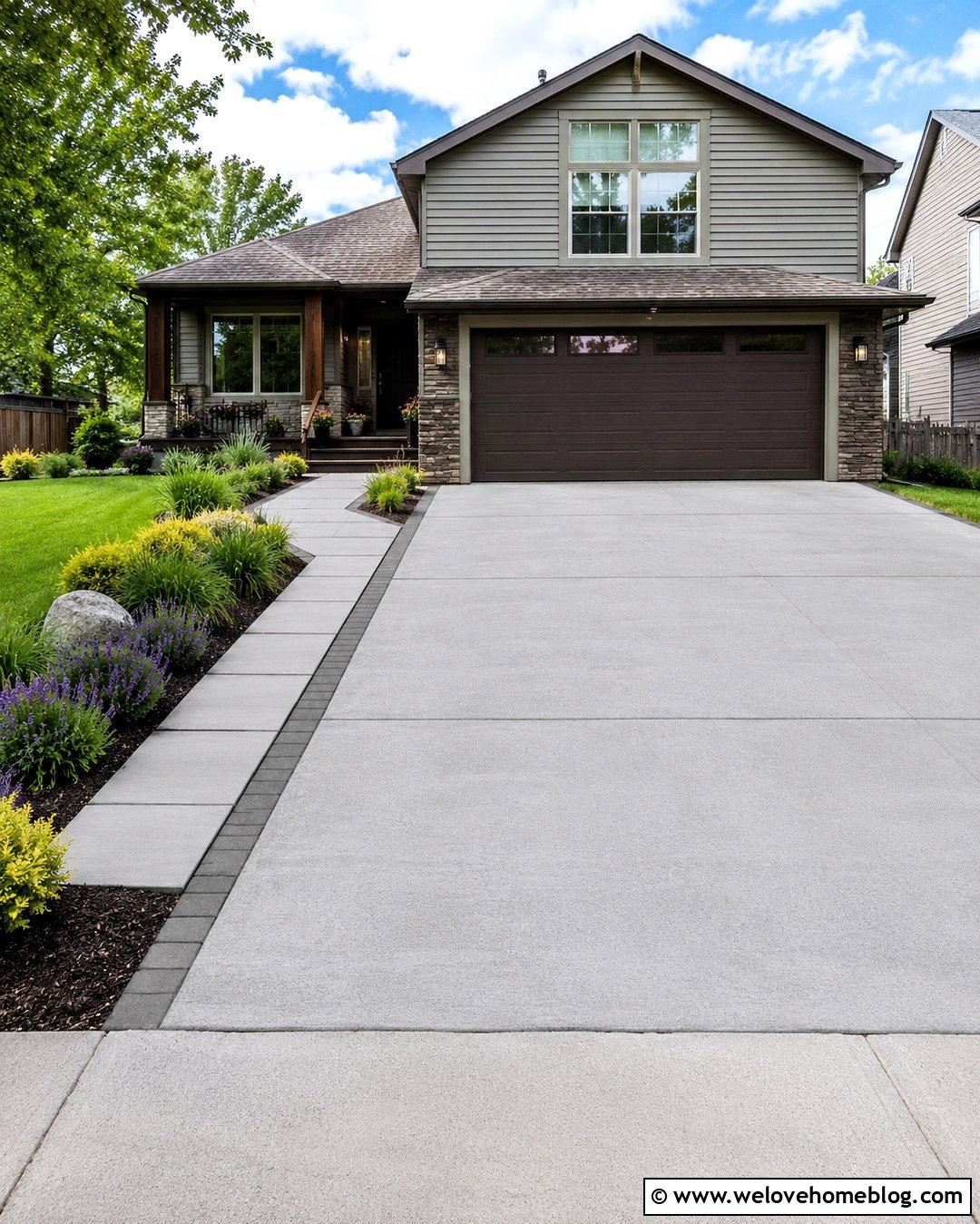
When the driveway sits close to the front door, coordinating the walkway can improve the entire facade. Use plain gray poured concrete for both surfaces, but separate them with a narrow planting strip or dark paver ribbon. The driveway can remain straight and broom finished, while the walkway uses smaller rectangular sections that guide attention toward the porch. Fill the dividing bed with low ground cover, compact grasses, and a few flowering perennials that will not spill onto either surface. Near the street, maintain a simple lawn edge for an uncluttered appearance. This layout is especially useful for bungalows, split-level homes, and suburban houses with front-facing garages. Repeating the same concrete color creates unity, while the landscape break prevents the driveway and walkway from becoming one oversized paved area.


15. Plain Concrete Driveway With a Parking Pad
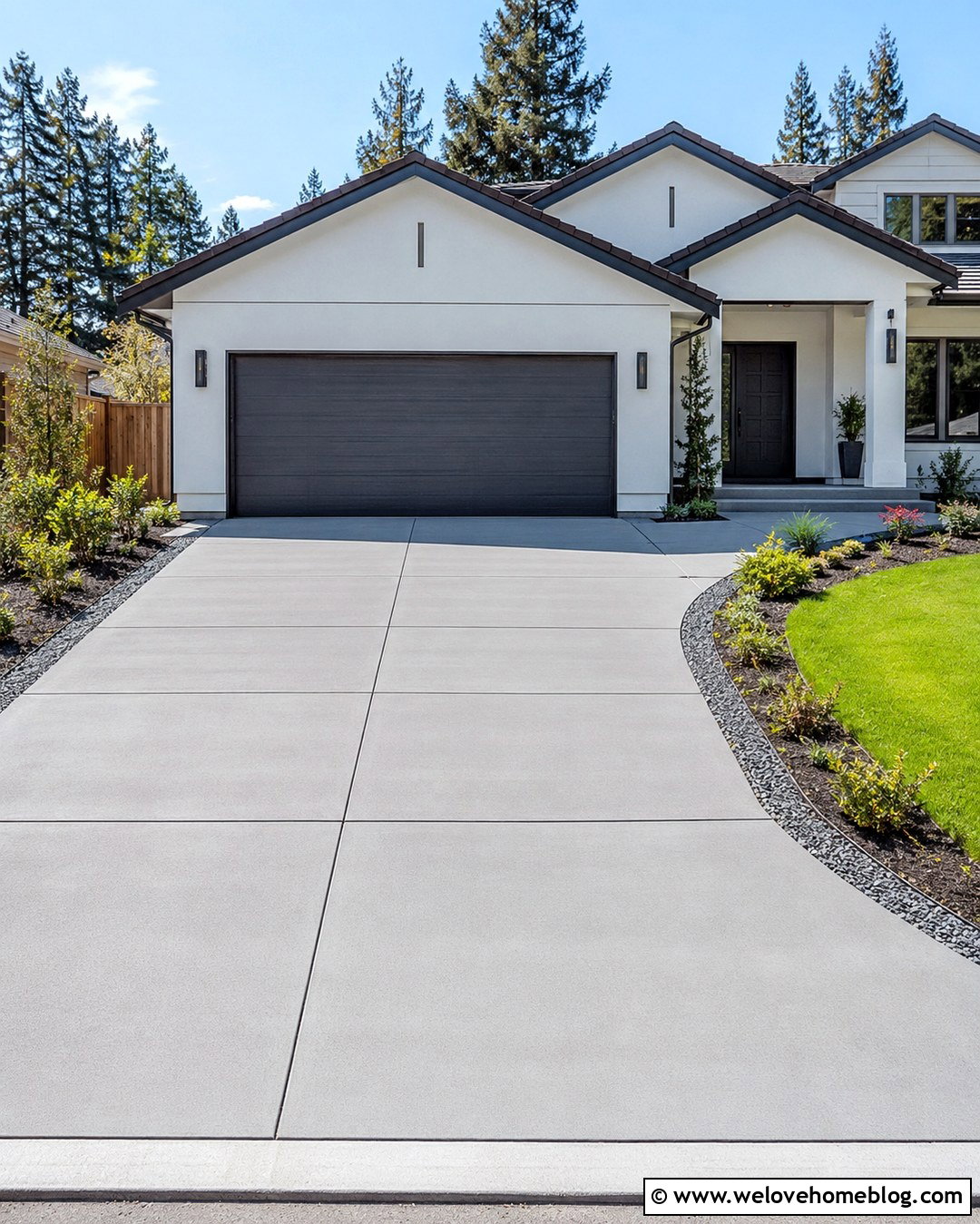
An extra parking pad can look integrated when its dimensions and joints relate to the original driveway. Use the same plain gray broom-finished concrete throughout, extending one side near the garage or farther back from the street. Avoid creating a random rectangular patch. Instead, align the pad with a garage wall, fence, or major control joint. A curved planting bed at the outer corner can soften the added pavement and help it blend into the yard. Frame the remaining edges with lawn, low shrubs, and a slim gravel drainage strip where appropriate. Keep the primary walkway clearly visible so visitors do not mistake the parking extension for the route to the door. This practical design suits households needing flexible space while maintaining a clean, organized curb view.
16. Circular Plain Concrete Driveway With a Center Garden
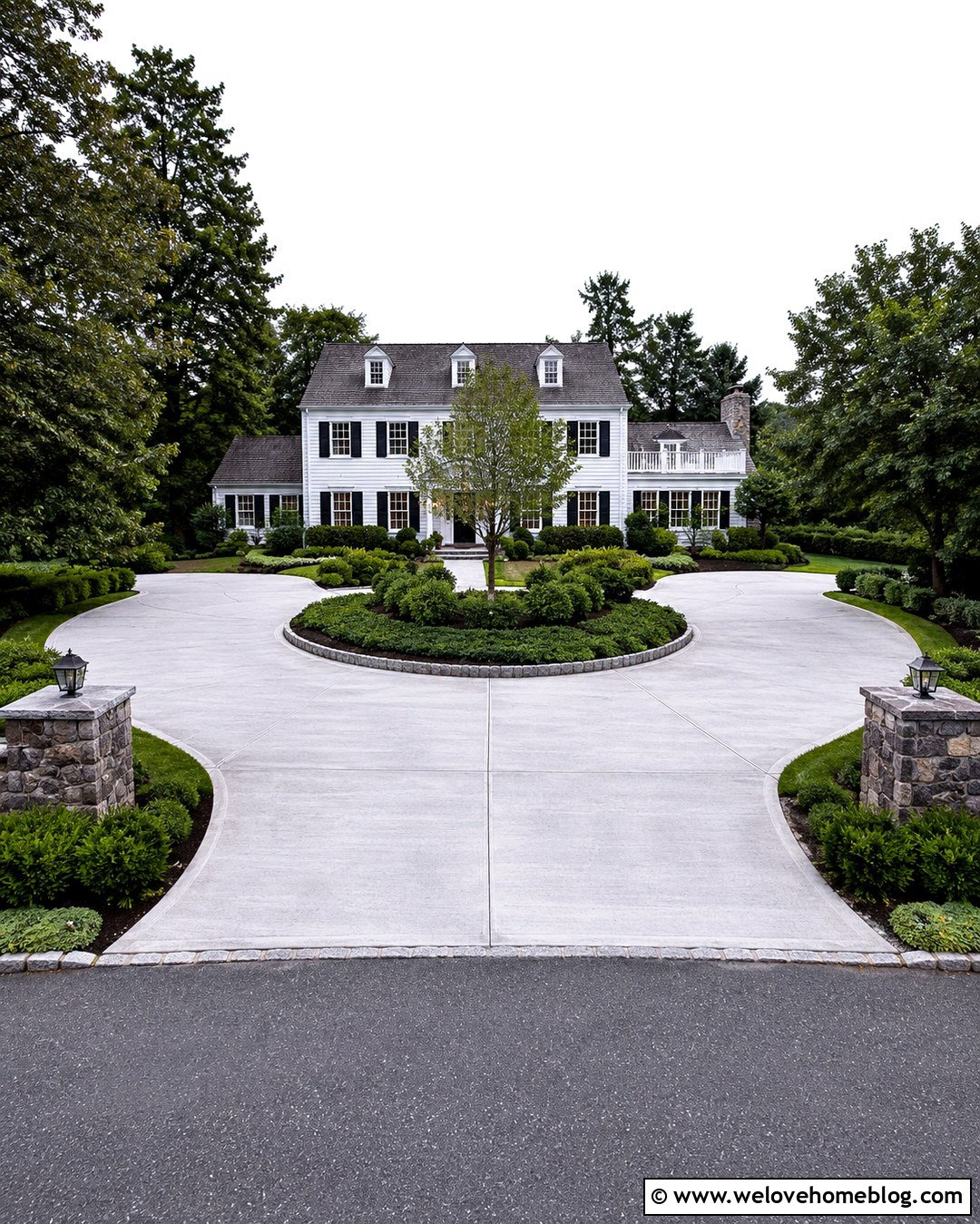
A circular driveway can remain understated when the concrete and landscaping are kept simple. Use plain light gray concrete with a broom finish to form a broad loop in front of a colonial, ranch, or country home. Create a central island with one ornamental tree, low evergreen shrubs, and ground-covering plants rather than a crowded flower display. Natural stone edging around the island provides separation and protects the planting soil. At the street, mark each entrance with matching beds or modest stone pillars so both openings appear connected. Control joints should follow the curve in balanced sections. The central garden breaks up the paved area and creates a strong focal point from the house. This layout requires substantial front-yard space but offers convenient vehicle circulation and an impressive approach.
17. Sloped Plain Concrete Driveway With Retaining Walls
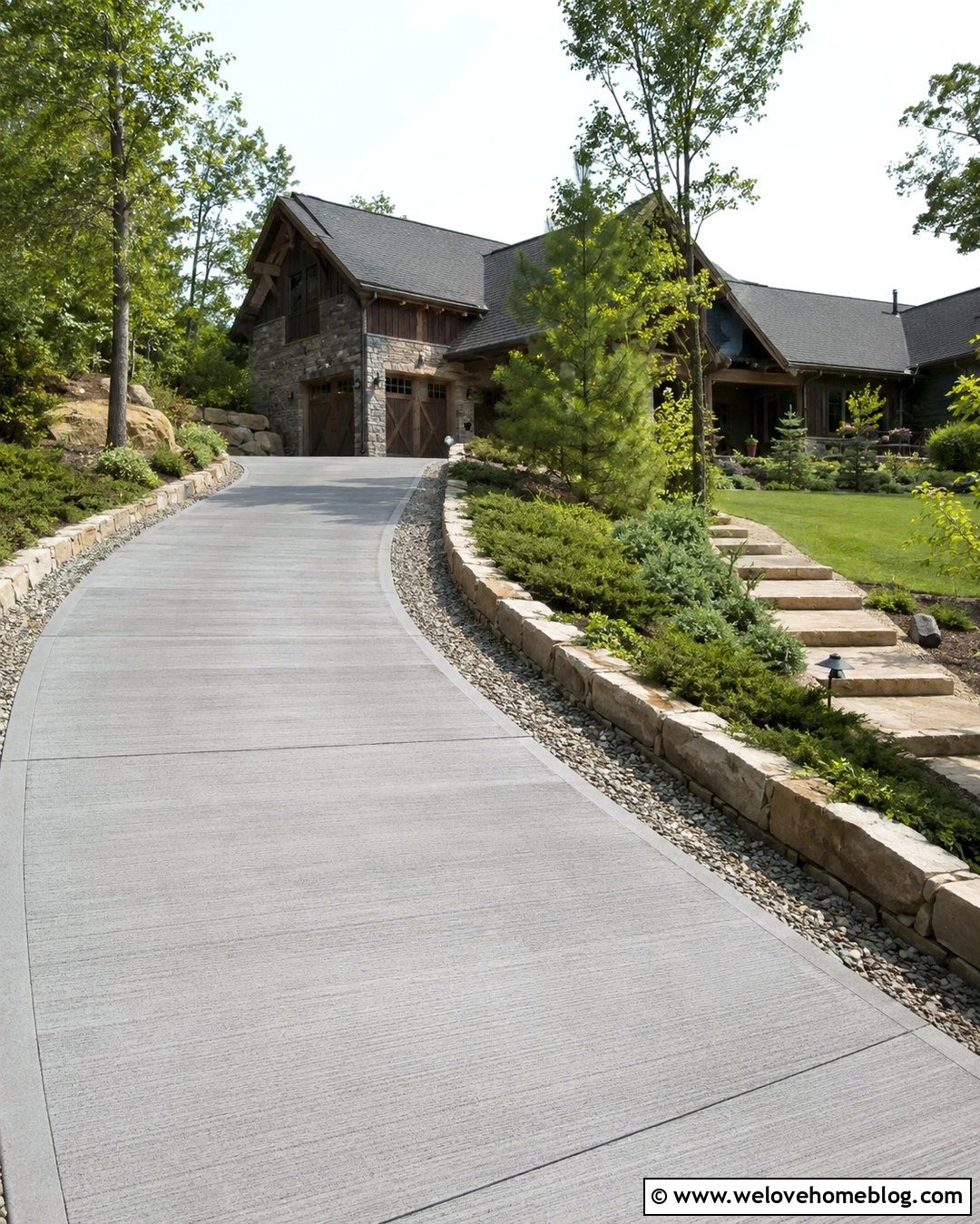
A sloping driveway needs visual structure as well as careful planning for drainage and traction. Choose plain gray concrete with a pronounced broom finish, laid in a straight or gently curving route toward the garage. Low retaining walls made from natural stone or concrete block can support raised planting beds along the uphill side. On the lower side, use a clean lawn edge or gravel drainage zone to keep the driveway visually open. Plant spreading ground covers and deeply rooted shrubs where they can help cover exposed soil without obstructing sight lines. Add a separate stepped walkway if the slope makes a shared pedestrian route uncomfortable. Drainage, base preparation, grade transitions, and local requirements should be handled by qualified professionals. The finished design should feel secure, uncluttered, and connected to the hillside.
18. Modern Plain Concrete Driveway With Gravel Channels
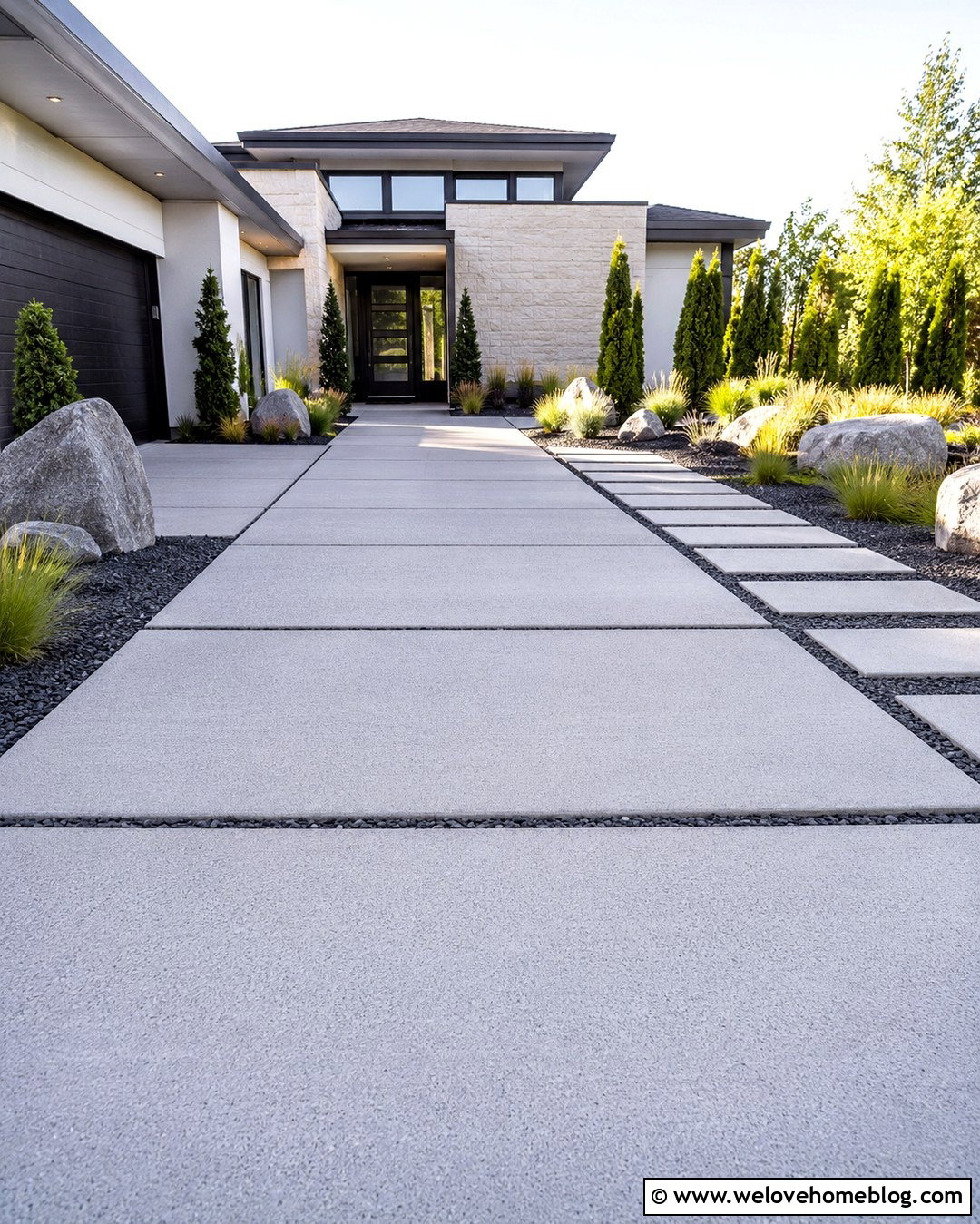
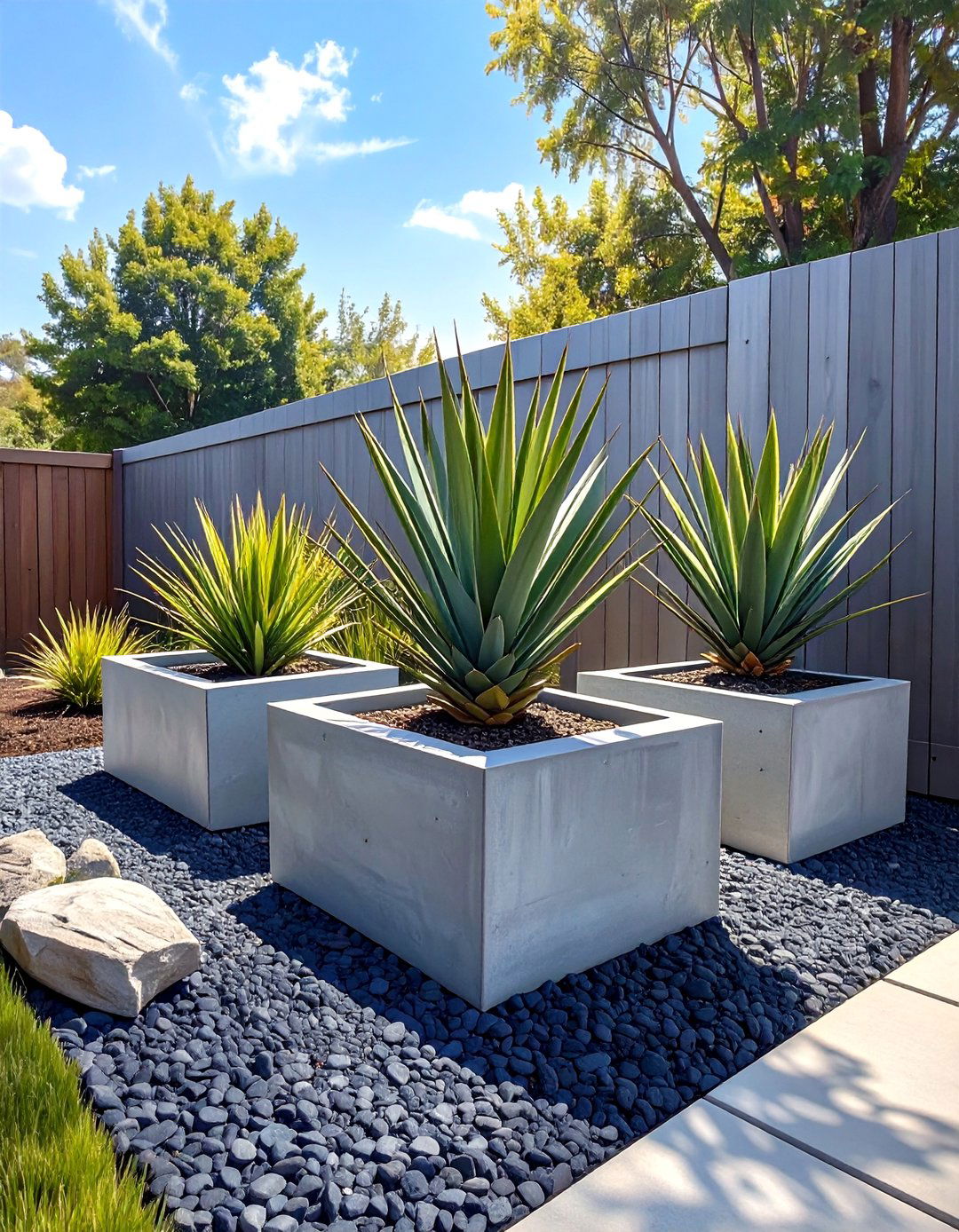
Large concrete sections separated by gravel channels create a contemporary look while preserving a plain surface. Use light gray poured concrete with a fine broom finish, divided into oversized rectangular panels on a straight approach. Fill narrow channels with charcoal crushed stone contained by concealed metal edging. Keep the joints and channels aligned with the garage doors and modern home facade. Landscape the sides with sculptural ornamental grasses, compact evergreens, and a few large boulders placed in simple groups. A matching concrete-pad walkway can cross the planting bed toward the entrance. Properly designed channels may also help organize surface runoff, though drainage requirements should be professionally evaluated. With limited materials and strong geometry, the entire driveway appears calm, spacious, and suited to a clean-lined contemporary house.
19. Farmhouse Plain Concrete Driveway With Timber Edging
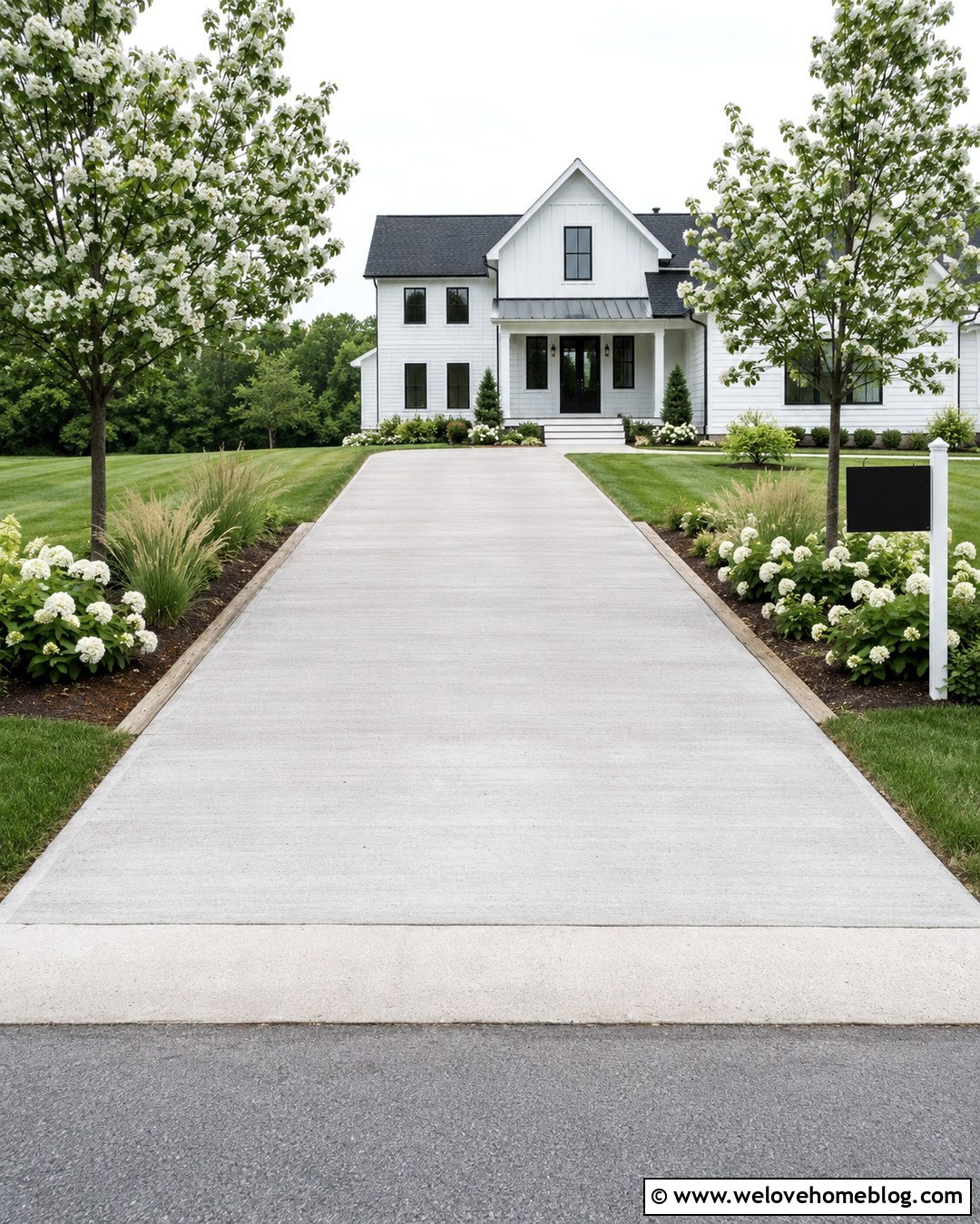
Plain concrete can complement a farmhouse when it is paired with warmer, more natural details. Pour a wide, straight driveway in light gray concrete with a traditional broom finish. Use pressure-treated landscape timbers along selected planting beds rather than surrounding every edge, which keeps the layout from feeling overly boxed in. Add loose rows of hydrangeas, ornamental grasses, and small flowering trees beside the approach. Near the garage, connect the driveway to a broad concrete walkway leading toward a covered porch. A simple post-mounted address sign and dark outdoor lights can repeat the home’s rustic accents. Keep the lawn edges crisp and allow generous open space around the driving lane. The result combines a practical paved surface with the welcoming softness associated with a modern farmhouse landscape.
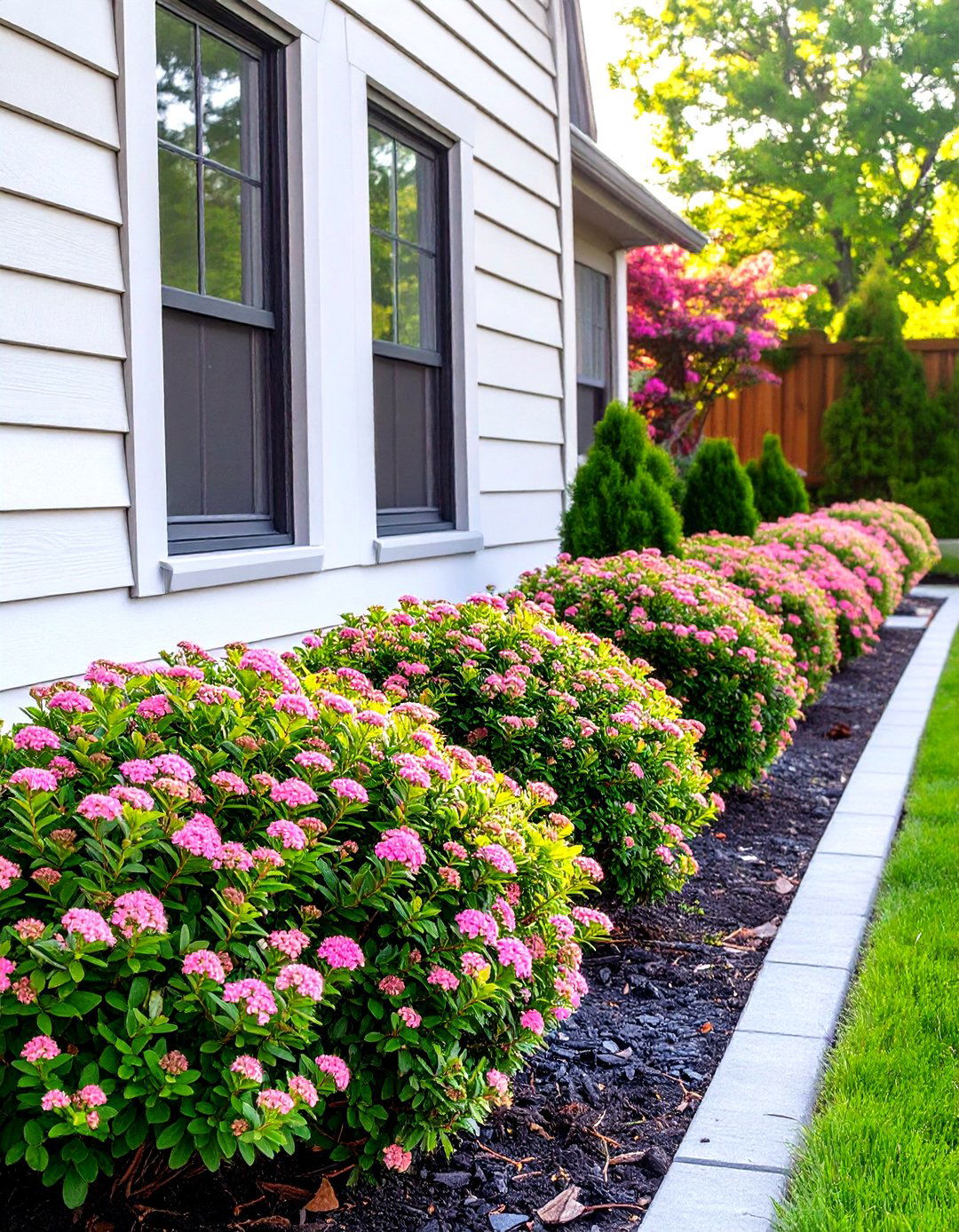
20. Budget Plain Concrete Driveway With Mulch Beds
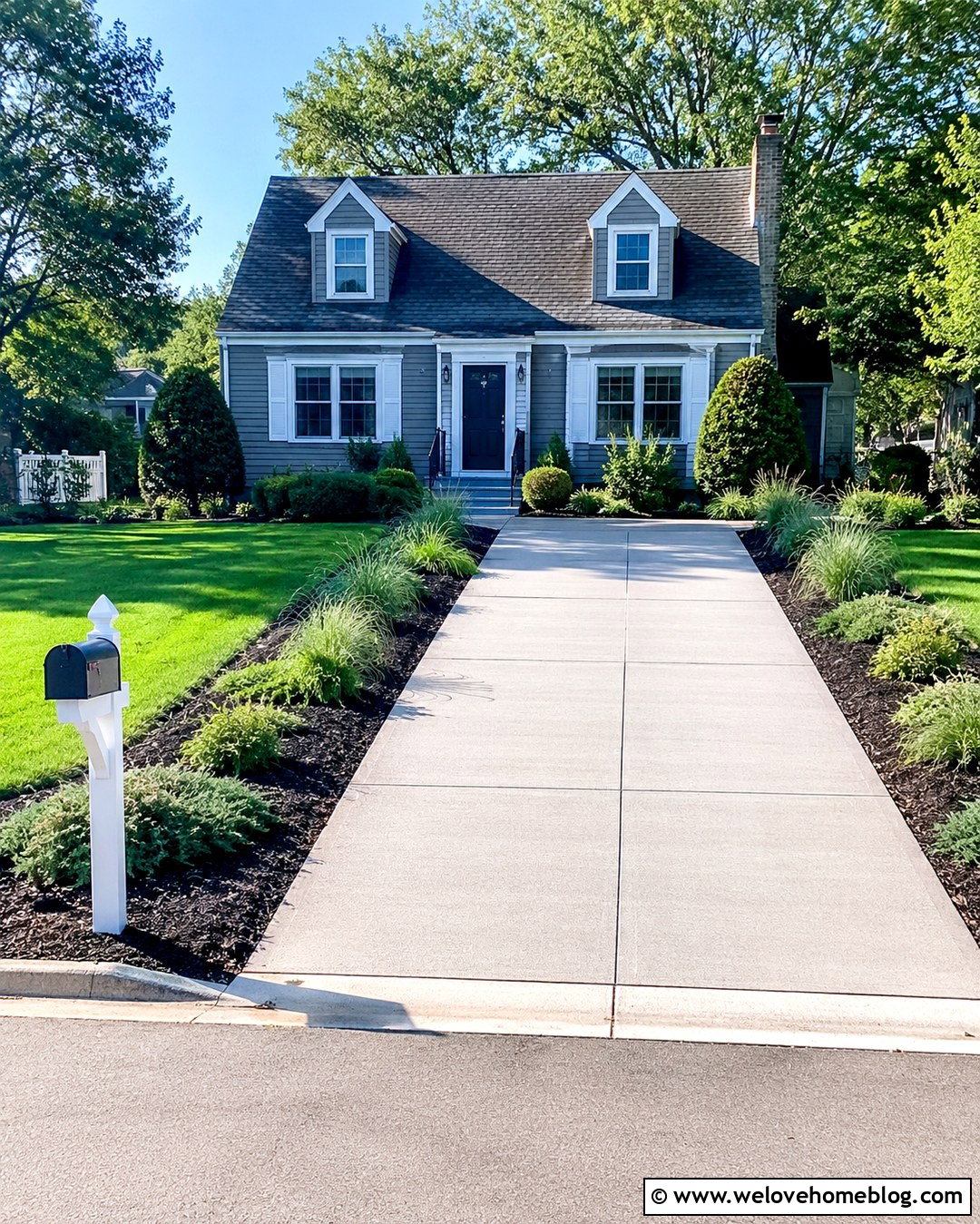
A limited budget does not mean the driveway must look unfinished. Begin with a basic rectangular driveway made from plain gray broom-finished concrete and use standard control joints in a clean, evenly spaced layout. Instead of costly masonry borders, create broad mulch beds along key sections near the house and driveway entrance. Define them with simple steel edging or a sharply cut trench edge. Fill the beds with a small number of durable shrubs, ornamental grasses, and spreading ground covers rather than many individual plants. Preserve open lawn along the middle portion to reduce installation and maintenance costs. A freshly painted mailbox and clearly visible address marker can complete the street view. This approach concentrates detail where it will have the greatest curb impact while keeping the main driveway straightforward.
Conclusion:
The best plain concrete driveway designs rely on proportion, clean edges, and a strong connection to the house and landscape. A basic gray surface can work with traditional brick, modern siding, rustic stone, or farmhouse architecture when the complete approach is planned carefully. Gentle curves create movement, while straight layouts emphasize order. Brick, pavers, gravel, stone, grass, and planting beds can add definition without overwhelming the concrete. Practical considerations such as drainage, traction, visibility, control joints, and vehicle clearance should guide every decision. Use these 20 Plain Concrete Driveway Ideas to create an affordable entrance that feels polished, functions comfortably, and improves the overall curb appeal of your home.

Related posts:


Leave a Reply