
A welcoming driveway does not need elaborate masonry or high-maintenance planting. The best **simple driveway entrance landscaping ideas** combine a practical surface with clear borders, well-scaled plants, and one or two features that guide the eye toward the house. Popular approaches include curved planting beds, evergreen shrubs, ornamental grasses, natural stone, lighting, and clearly defined walkways. These elements help the driveway feel connected to the front yard instead of looking like an isolated strip of pavement. They can also be adapted to narrow lots, large lawns, sloped properties, and modest budgets. The key is choosing a complete look that suits your driveway material, home exterior, climate, and available maintenance time. Explore these **20 simple driveway entrance landscaping ideas**.

1. Gravel Driveway Entrance With Mulch Beds
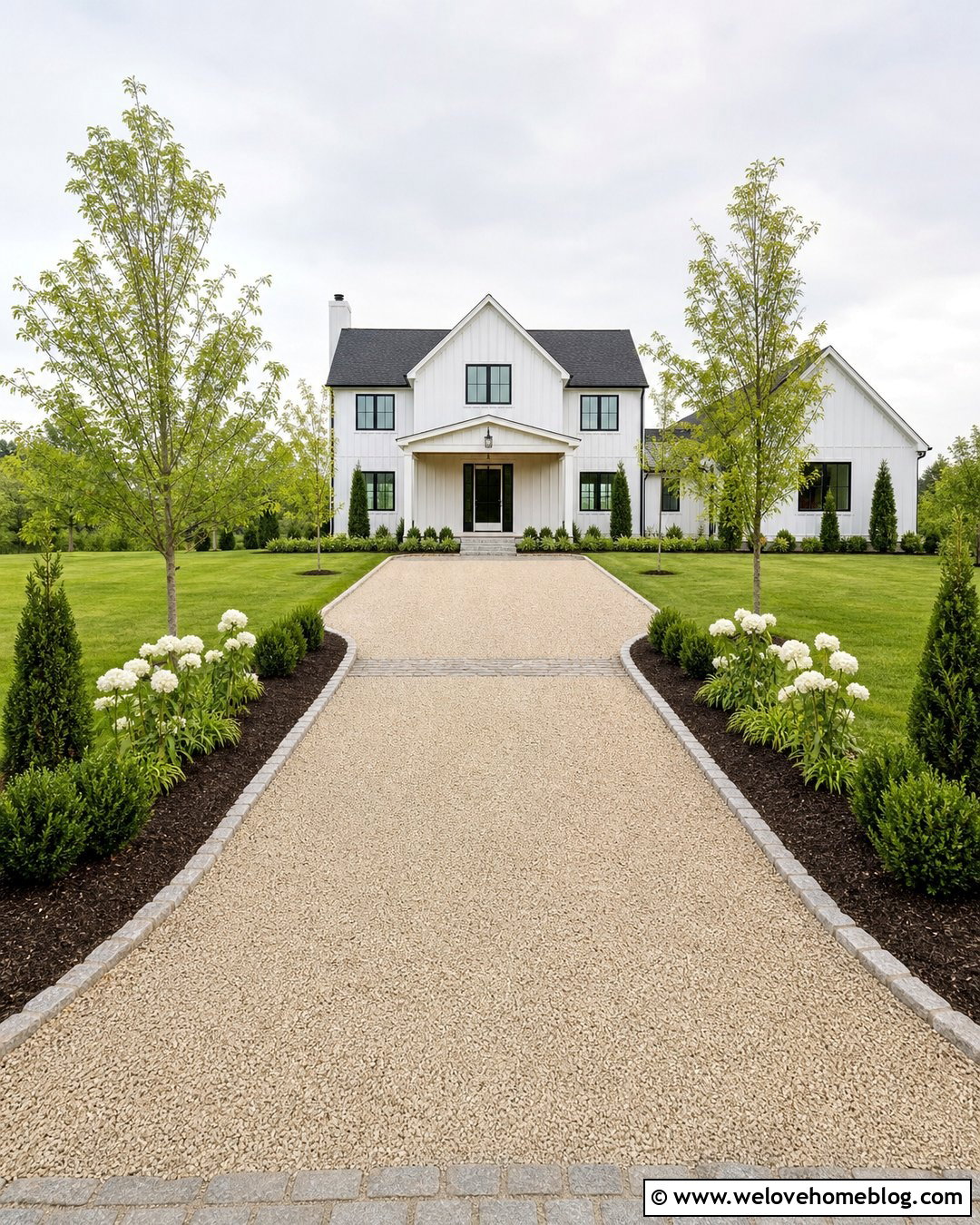
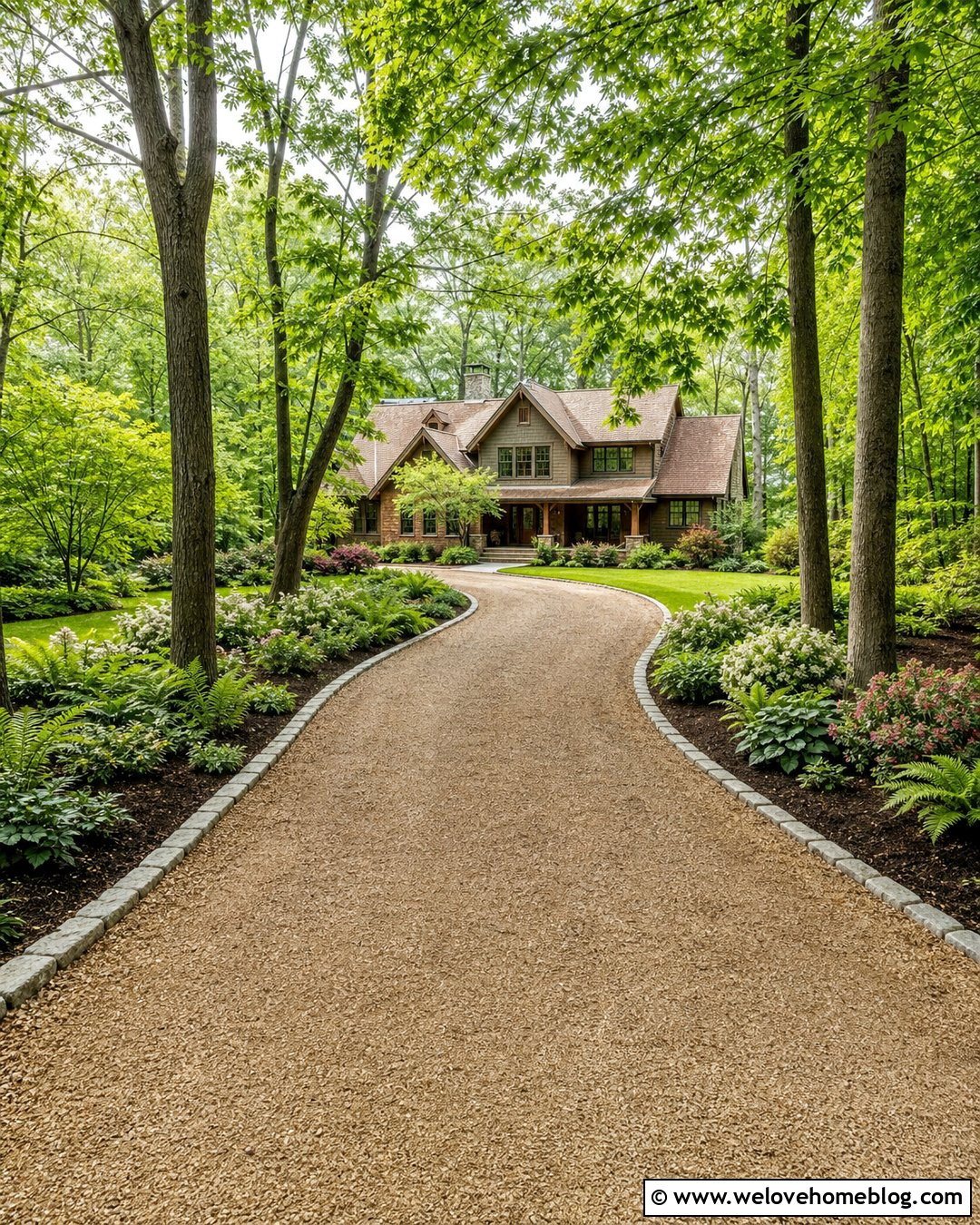
A light gravel driveway framed by dark mulch beds creates an attractive entrance without requiring complicated construction. Shape the beds into broad, gentle curves near the street, then narrow them slightly as they follow the driveway. A steel, brick, or stone edge will keep loose gravel from mixing with the mulch. Plant compact evergreen shrubs at the back and use low flowering perennials along the front. This layered arrangement provides structure while preserving clear views of the road. Choose a limited plant palette so the landscaping remains simple and coordinated. Repeating the same plants on both sides can make a basic ranch or farmhouse entrance feel more intentional. Finish the look with a clean gravel apron and a matching walkway toward the house.
2. Concrete Driveway Entrance With Boxwood Borders
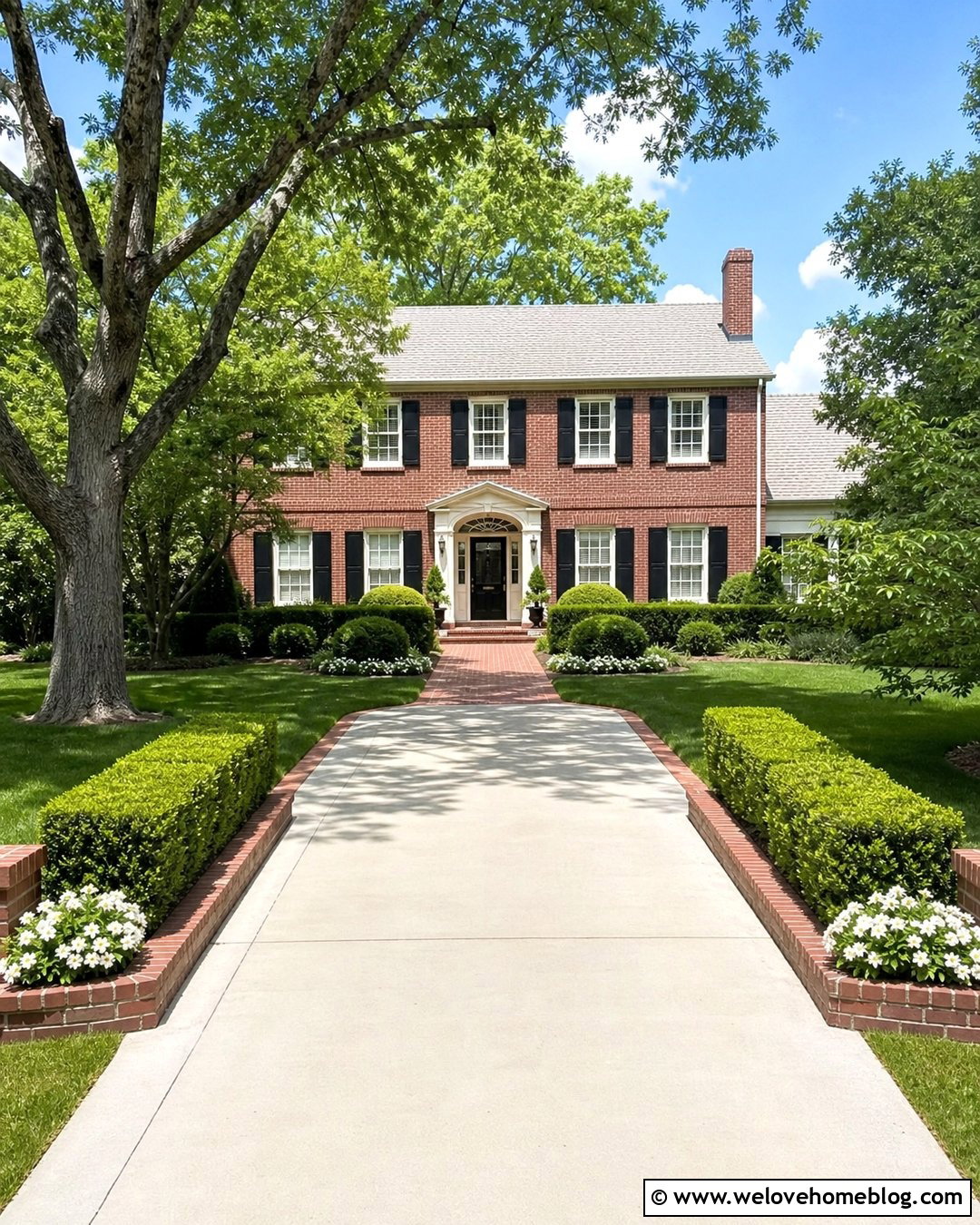
Neatly clipped boxwoods bring order and greenery to a plain poured-concrete driveway. Instead of running a continuous hedge along the entire pavement, create two short rectangular beds at the entrance. Border each bed with brick or dark metal edging that complements the home’s trim. Plant one row of compact boxwoods, leaving enough room for their mature width so they do not crowd vehicles. White flowers or pale decorative gravel can fill small gaps without making the beds look busy. This symmetrical arrangement works especially well with colonial, Cape Cod, and traditional brick homes. Keep shrubs low near the road to maintain visibility. The combination of smooth concrete, structured greenery, and balanced beds produces a polished entrance that is easy to understand from the curb.
3. Asphalt Driveway Entrance With Flowering Perennials
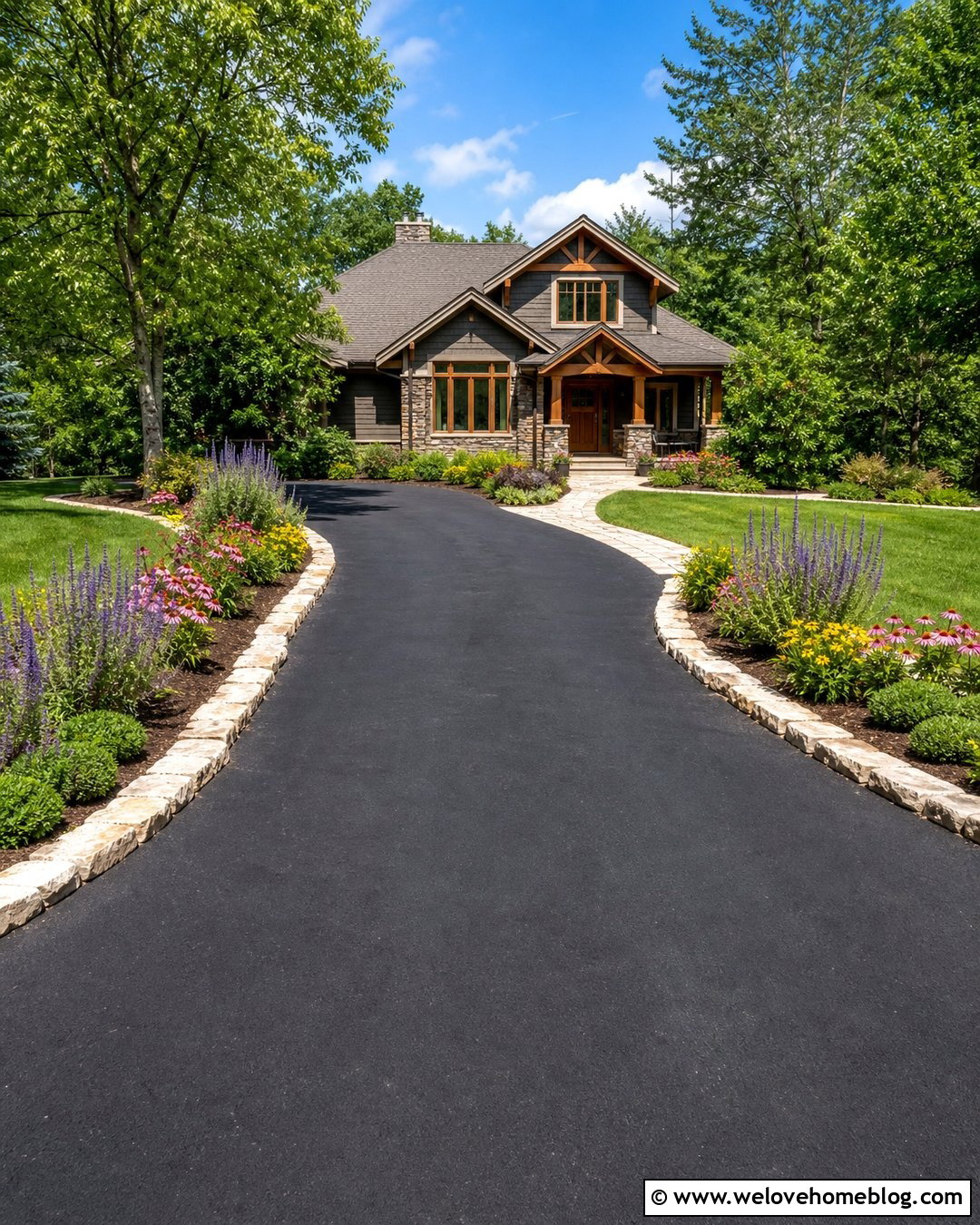
Black asphalt creates a strong background for colorful flowers and fresh green foliage. Build shallow planting beds on both sides of the driveway entrance, using a pale stone border to create contrast. Fill the beds with dependable perennials suited to local sunlight and soil conditions. Coneflowers, salvia, daylilies, catmint, and coreopsis can create long-lasting color in many regions, but local native alternatives may require less attention. Arrange taller flowers toward the back and ground-hugging plants near the pavement. Leave a narrow stone or mulch buffer beside the asphalt so stems do not flop into the driving area. Repeating two or three flower varieties gives the entrance rhythm without visual clutter. The result is cheerful, affordable, and especially appealing beside cottage or craftsman homes.
4. Paver Driveway Entrance With Ornamental Grasses
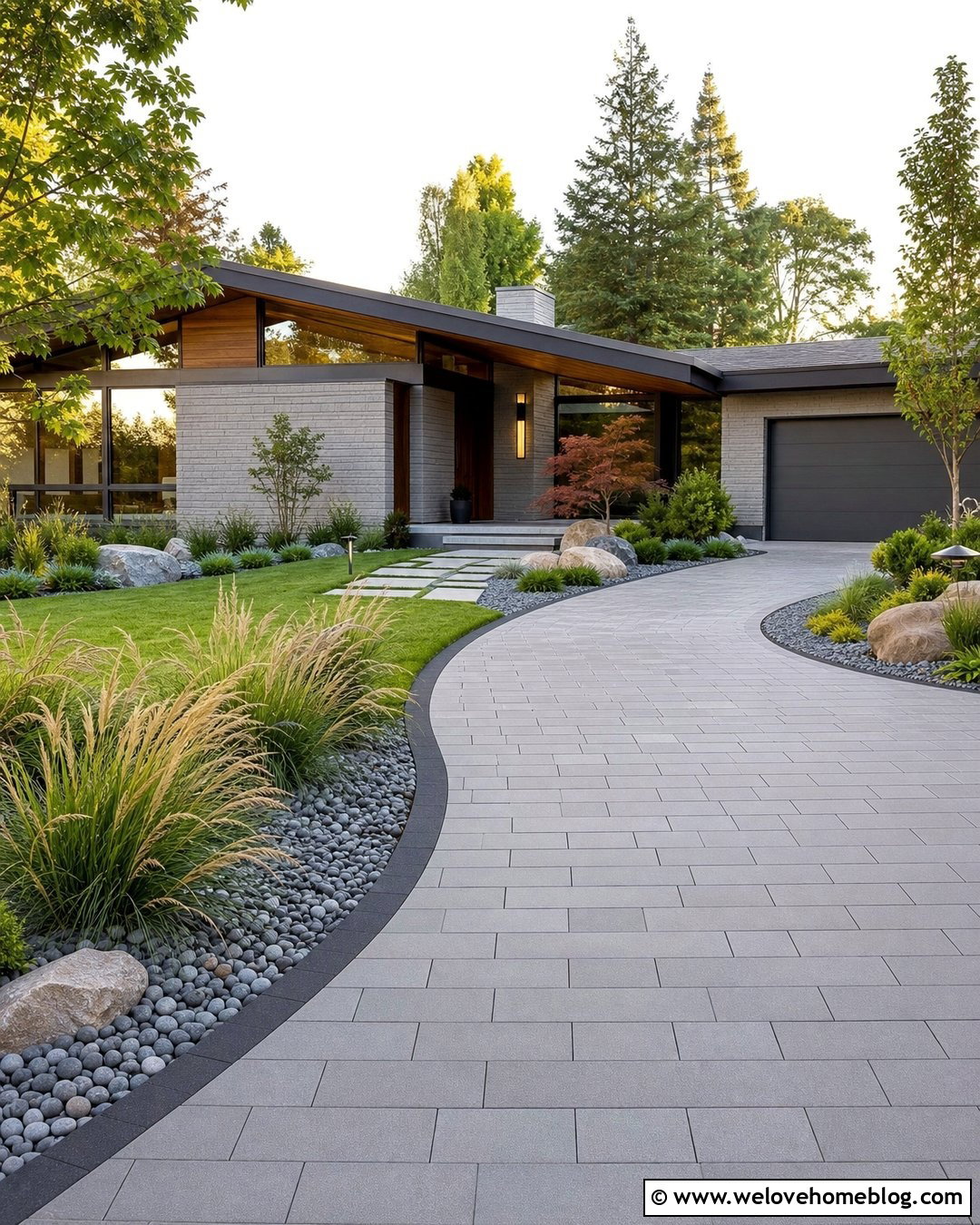
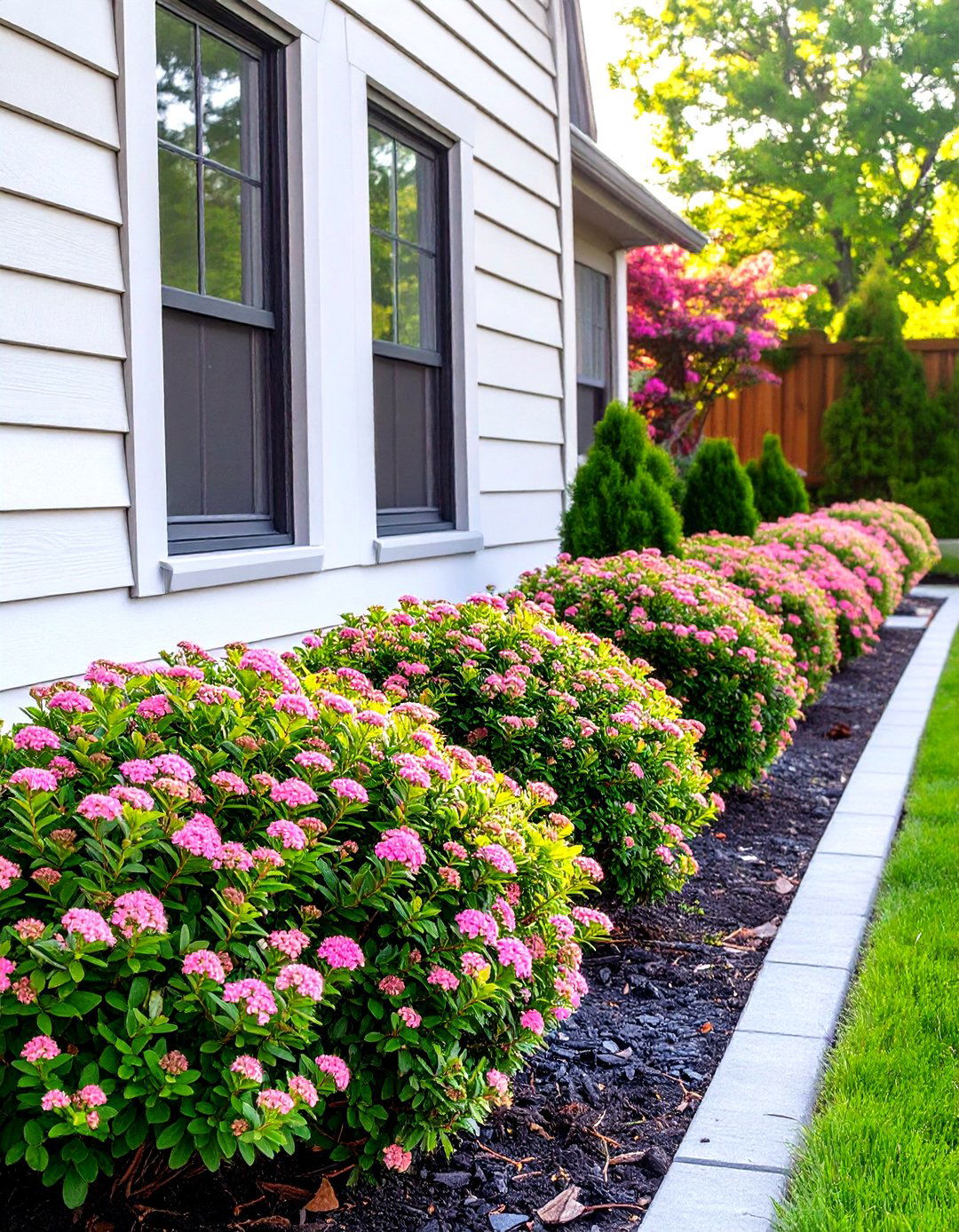
Can a low-maintenance entrance still look soft and inviting? A driveway made from concrete pavers pairs naturally with flowing ornamental grasses. Create wide, tapered beds that begin near the curb and follow the first section of the driveway. Use three or five grass clumps on each side rather than a long, dense row. Their movement contrasts with the clean lines of the pavers while preserving an open appearance. Add compact ground covers or decorative river rock beneath the grasses for a finished surface. Select noninvasive grasses that suit the mature scale of the space. Short varieties are safer near the street because they are less likely to block views. This complete look complements modern, transitional, and midcentury homes without demanding frequent trimming or seasonal color changes.
5. Brick Driveway Entrance With Hydrangea Beds
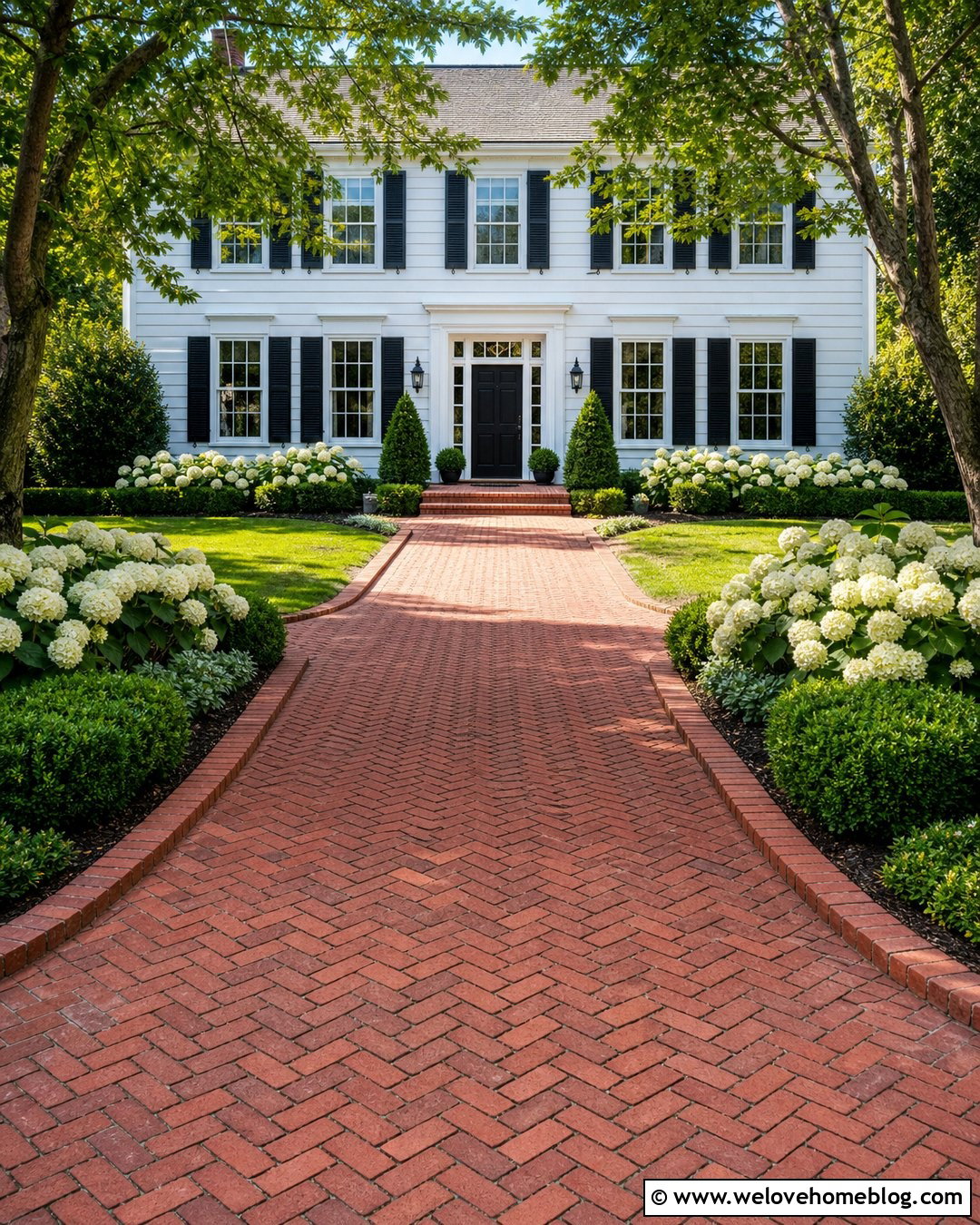
Soft hydrangea blooms can balance the strong color and pattern of a brick driveway. Frame the entrance with curved beds edged in matching clay brick, creating a smooth transition between the hardscape and lawn. Place hydrangeas farther back from the pavement where their mature growth will not narrow the driveway. Add compact evergreens for winter structure and low ground covers along the front edge. Choose a hydrangea type suited to the site’s sunlight, climate, and available space rather than selecting by flower color alone. A simple palette of green, white, and brick red gives the entrance a classic appearance. This arrangement works beautifully with colonial and traditional homes. The repeated brick edging also ties the planting beds to the driveway, making the entire entrance feel planned as one design.
6. Curved Driveway Entrance With Natural Stone Beds
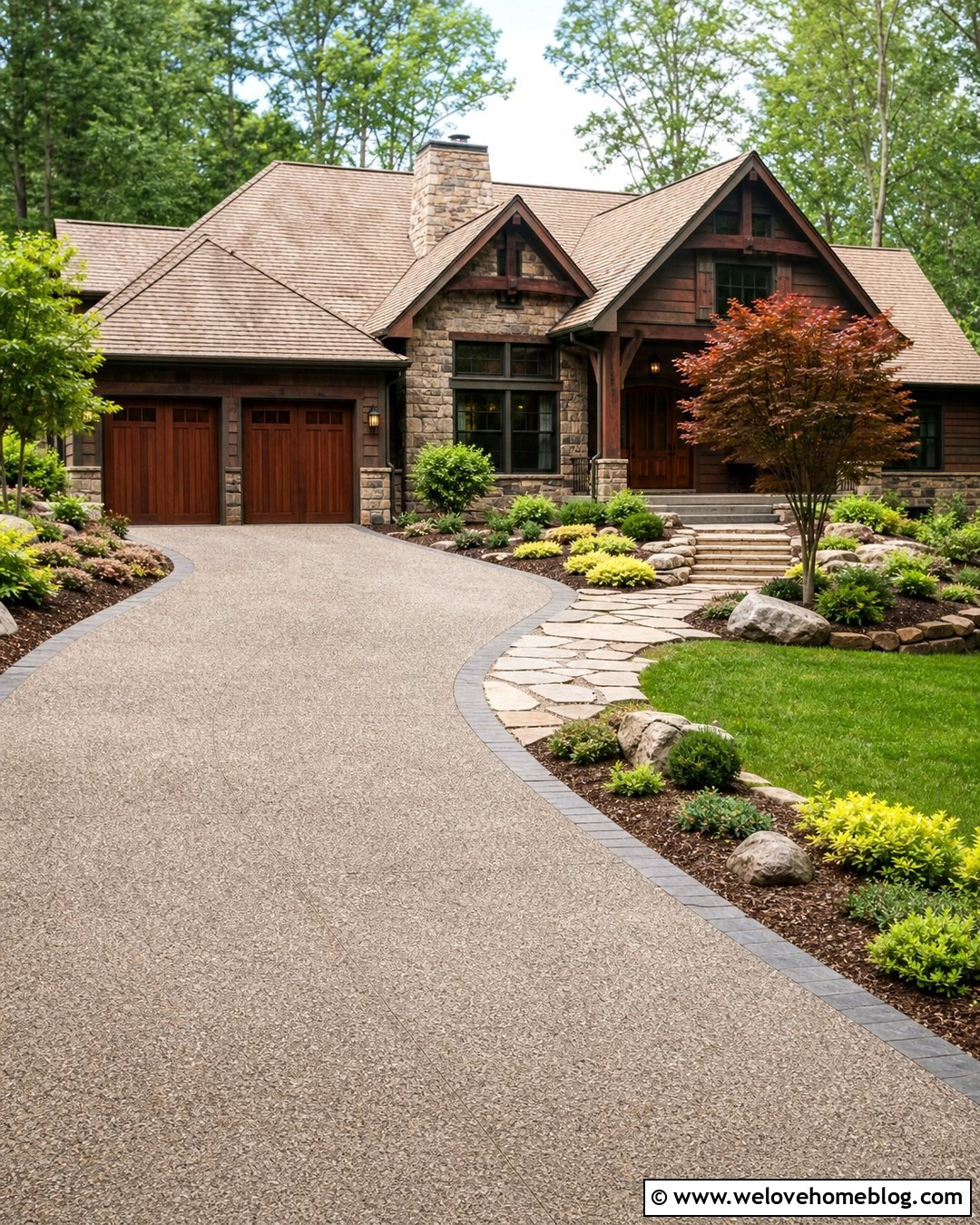
A curved driveway already has a graceful shape, so the landscaping should reinforce its movement. Use natural stone to outline sweeping beds on the outer and inner edges of the entrance. Extend the planting farther along the outside curve, where it can guide the eye toward the house. Low shrubs, spreading ground covers, and a small ornamental tree create height without hiding the driveway layout. Group rocks in a few natural-looking clusters instead of placing single stones at equal intervals. Mulch or fine gravel between the plants will simplify maintenance and highlight the stone border. This complete entrance suits wooded lots, country properties, and rustic homes. Keeping the planting slightly asymmetrical also helps the curved driveway blend naturally into the surrounding yard rather than appearing overly formal.
7. Driveway Entrance With Matching Planters
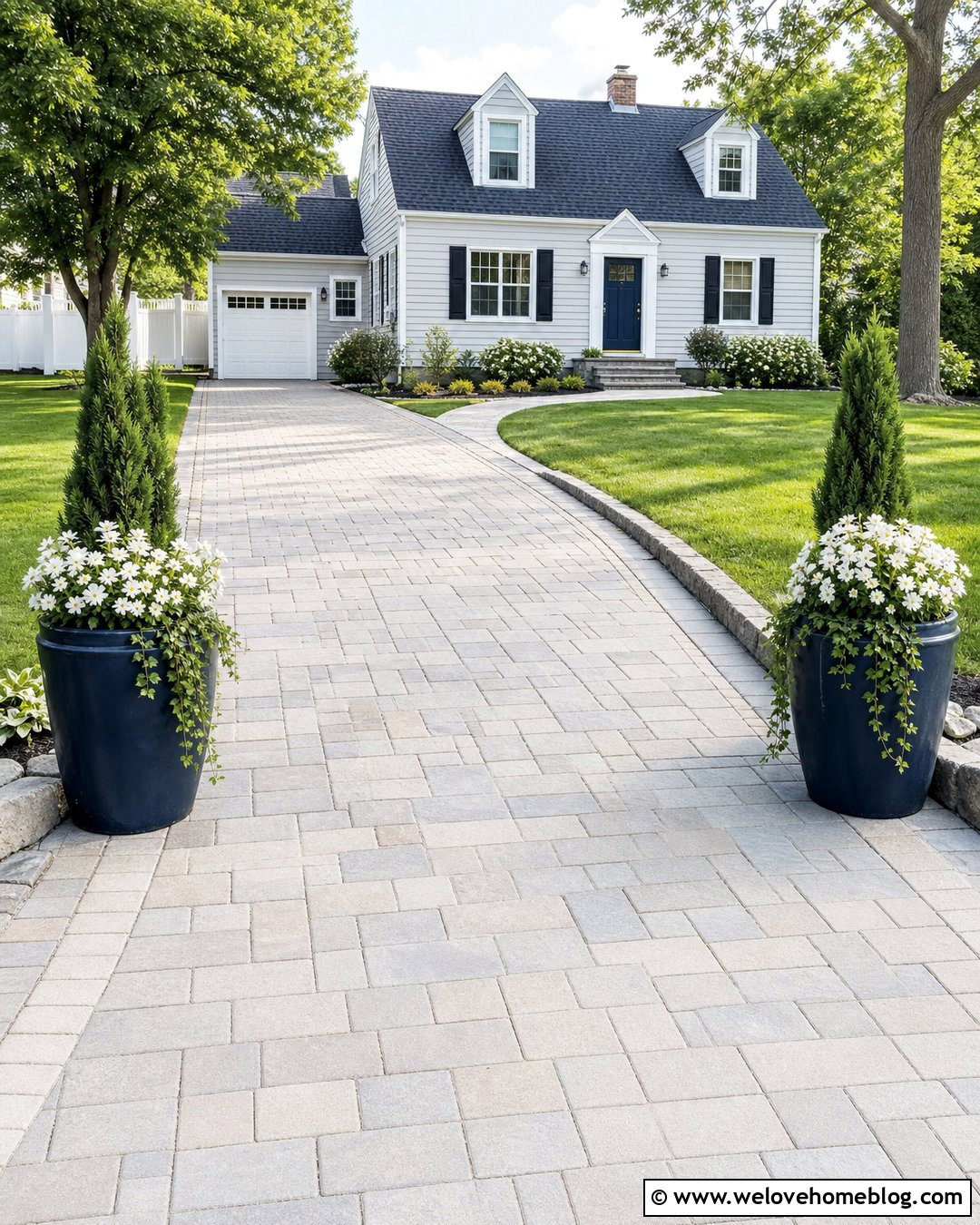
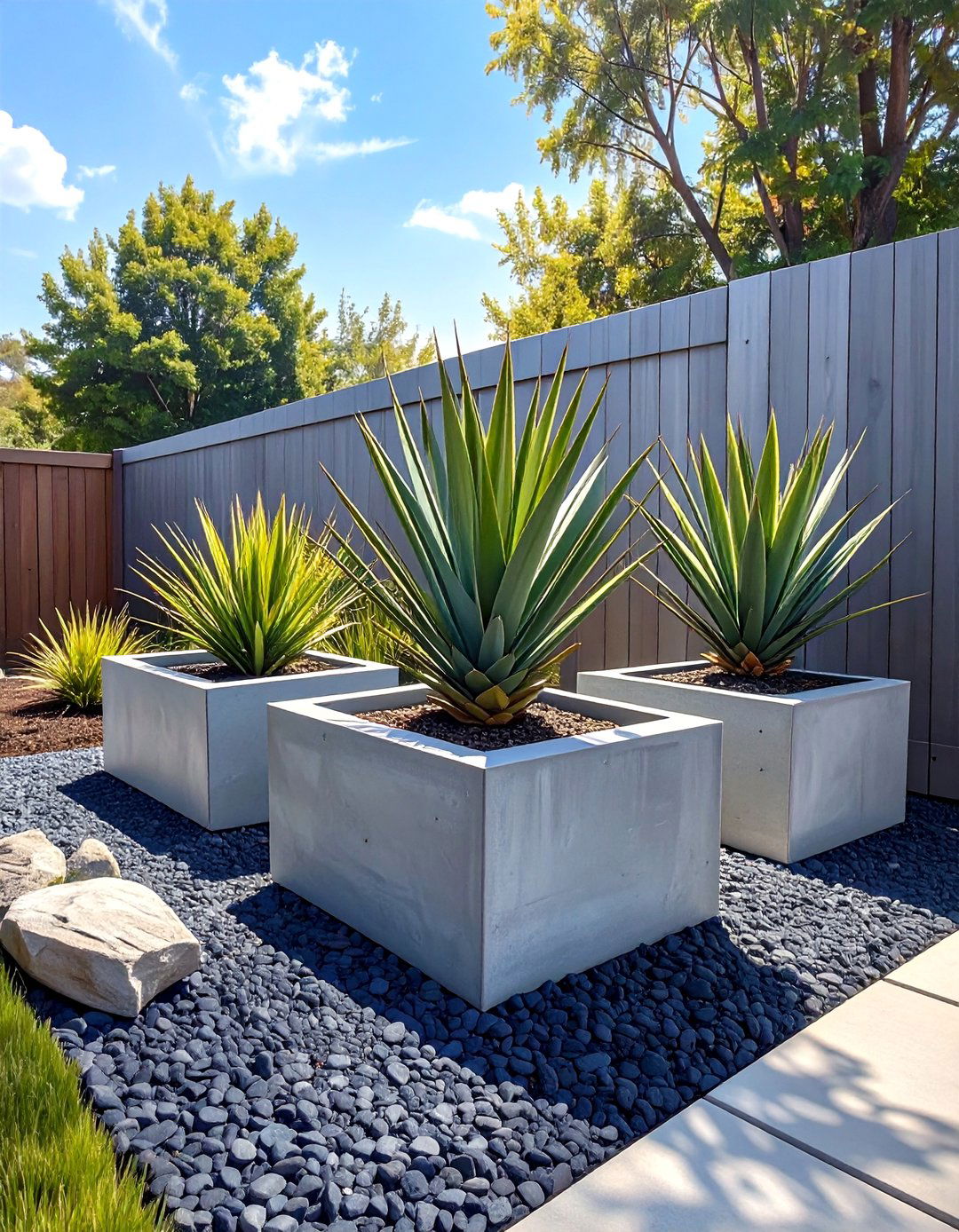
Large matching planters provide instant structure when there is little room for permanent garden beds. Position one container on each side of a concrete, paver, or asphalt entrance, but set them safely beyond the vehicle path. Choose planters that repeat a color from the house facade, front door, or garage. Fill each container with one upright evergreen, a middle layer of flowers, and a simple trailing plant. For easier upkeep, use fewer varieties and select plants suited to the site’s exposure. Tall containers can create symmetry and make an entrance more noticeable, particularly in a small front yard. () A short stone-edged bed beneath each planter will help anchor the arrangement. This flexible approach can also be refreshed seasonally without rebuilding the driveway landscape.
8. Driveway Entrance With Low Evergreen Shrubs
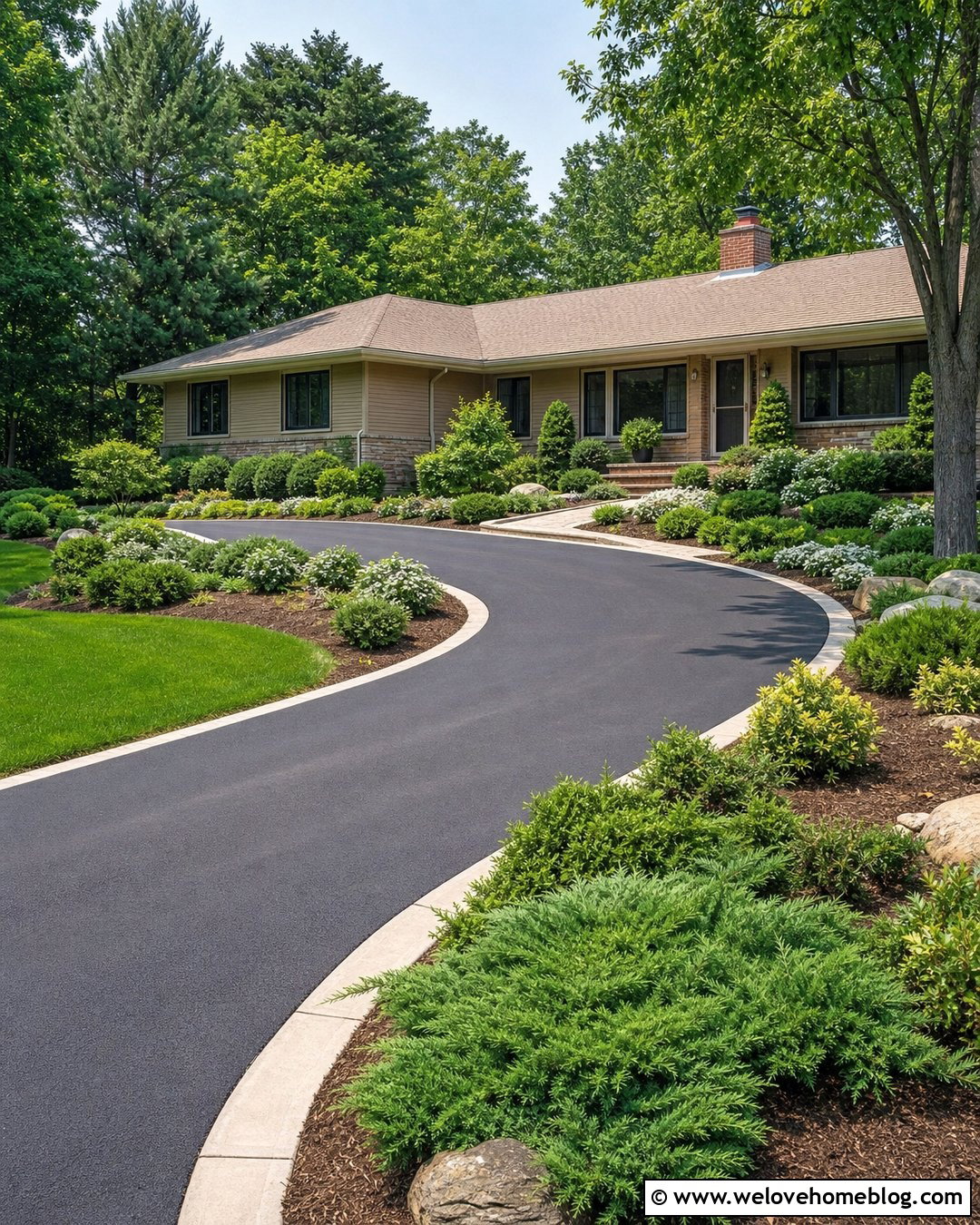
Evergreens keep an entrance looking finished even when flowers are not blooming. Create two broad beds that follow the shape of the driveway apron, then plant low mounded shrubs in repeated groups. Compact juniper, inkberry, dwarf holly, and small arborvitae may work, depending on regional climate and growing conditions. Avoid placing large shrubs where they could eventually reduce road visibility or scrape vehicles. Add a layer of mulch and a clean concrete, metal, or stone edge to separate each bed from the driveway. One small group of flowering perennials can provide seasonal interest without increasing maintenance too much. This restrained combination works with nearly any driveway surface. It is especially effective for homeowners who want reliable greenery, simple pruning, and a tidy entrance throughout the year.
9. Driveway Entrance With Small Flowering Trees
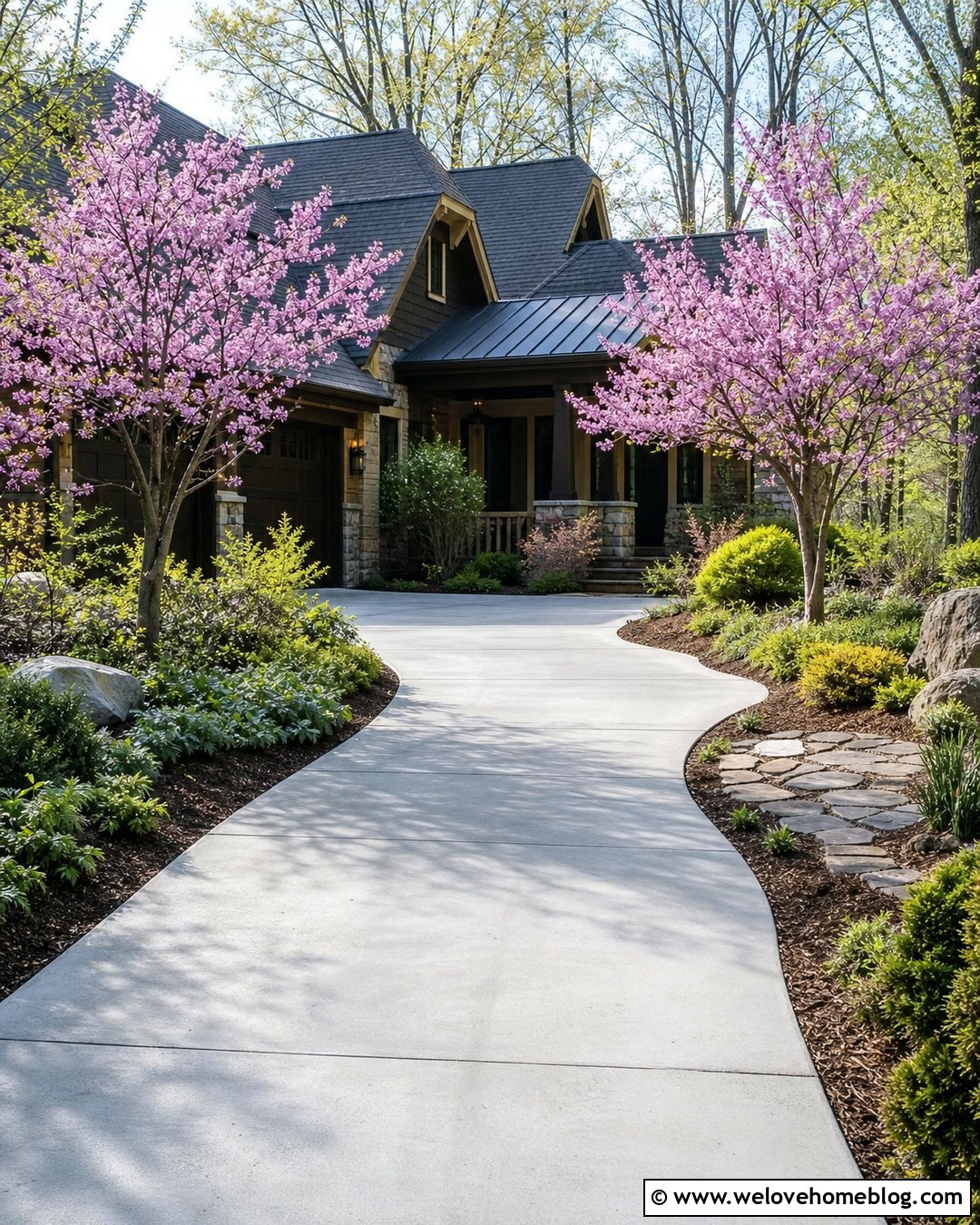
A pair of flowering trees can give an ordinary driveway a clear sense of arrival. Choose small species with roots, branches, and mature canopies suitable for planting near pavement. Redbuds, serviceberries, dogwoods, and crape myrtles may be appropriate in certain US regions, but local growing conditions should guide the final choice. Set each tree well back from the driving lane and surround it with a generous mulch bed. Low shrubs or ground covers can fill the lower level without competing with the trunks. Repeat the same border material on both sides to connect the trees visually. The driveway itself may be asphalt, gravel, or concrete, while the planting brings height and seasonal character. This layout looks welcoming beside craftsman, cottage, and suburban traditional homes.

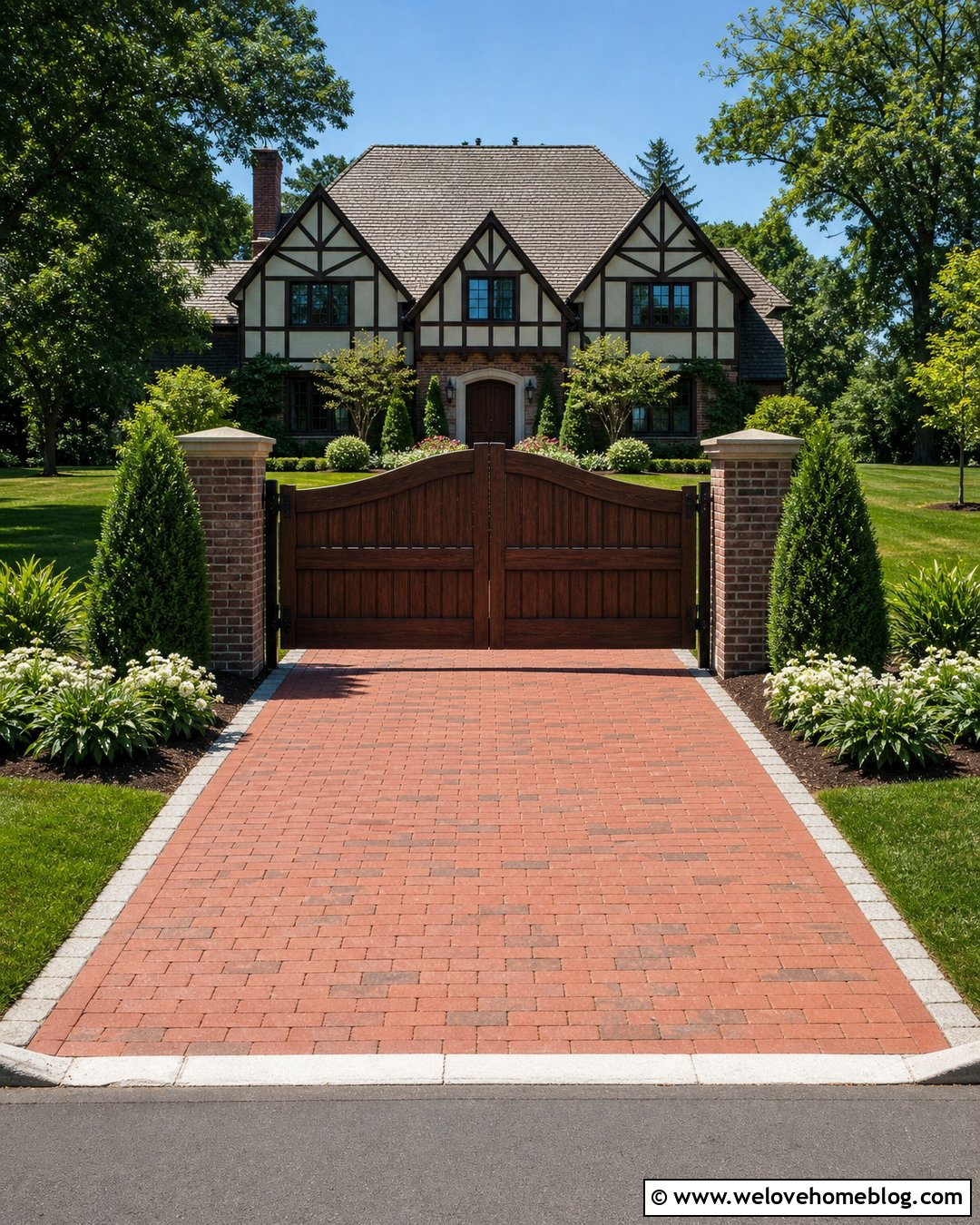
10. Driveway Entrance With River Rock Landscaping
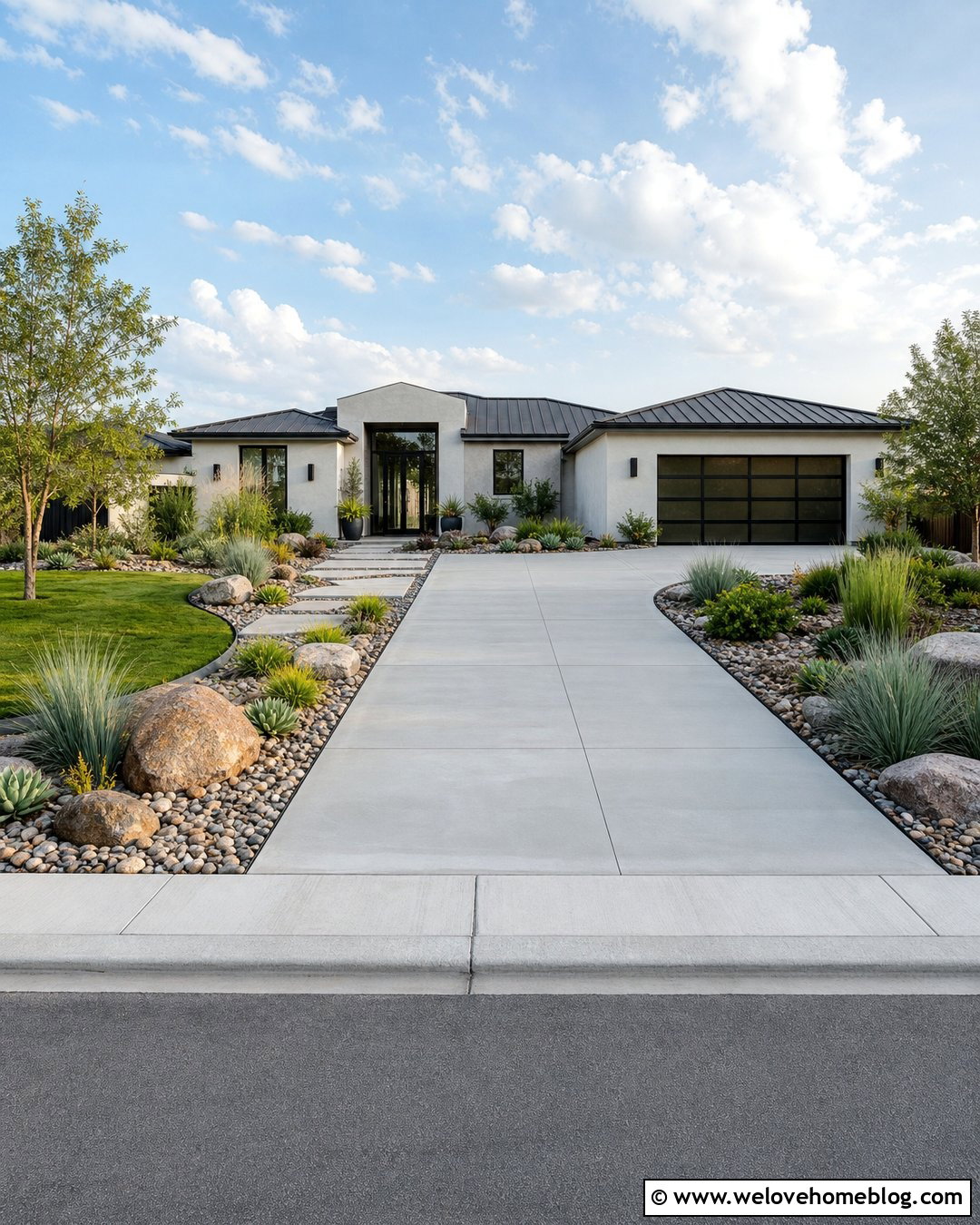
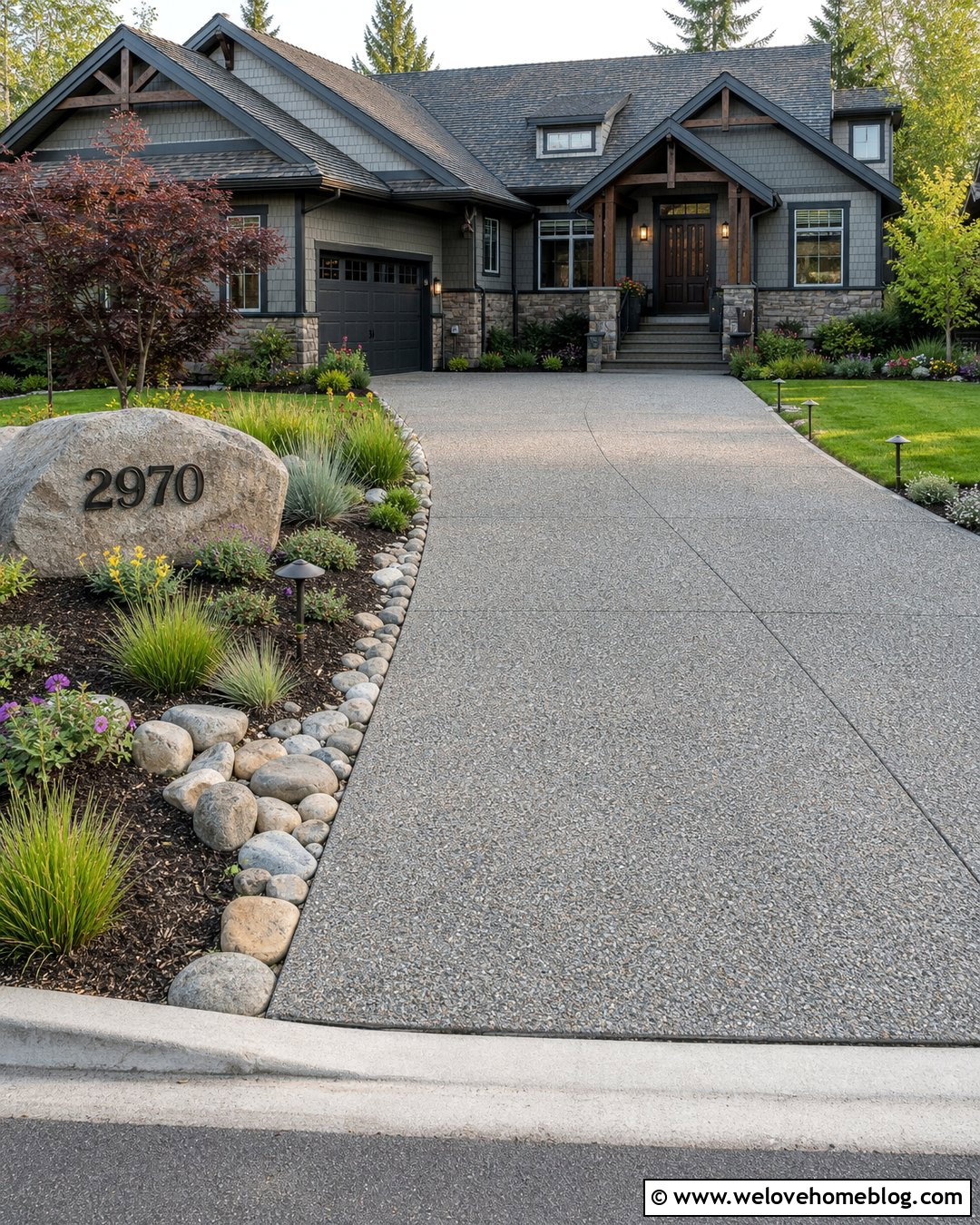
River rock is useful for creating clean entrance beds in dry areas or locations where mulch frequently washes away. Pair a gray poured-concrete driveway with curved beds filled with smooth stones in mixed neutral tones. Place several drought-tolerant shrubs, ornamental grasses, or sculptural evergreens through the rock rather than covering the area with too many small plants. Larger accent boulders can anchor the corners, but they should remain outside sightlines and vehicle clearance zones. Install a crisp steel or paver edge to stop stones from spreading onto the driveway. The contrast between smooth concrete, rounded rock, and simple greenery gives the entrance a modern but natural character. It also suits sloped front yards when proper grading and drainage are incorporated into the overall plan.
11. Driveway Entrance With Brick Pillars And Shrubs
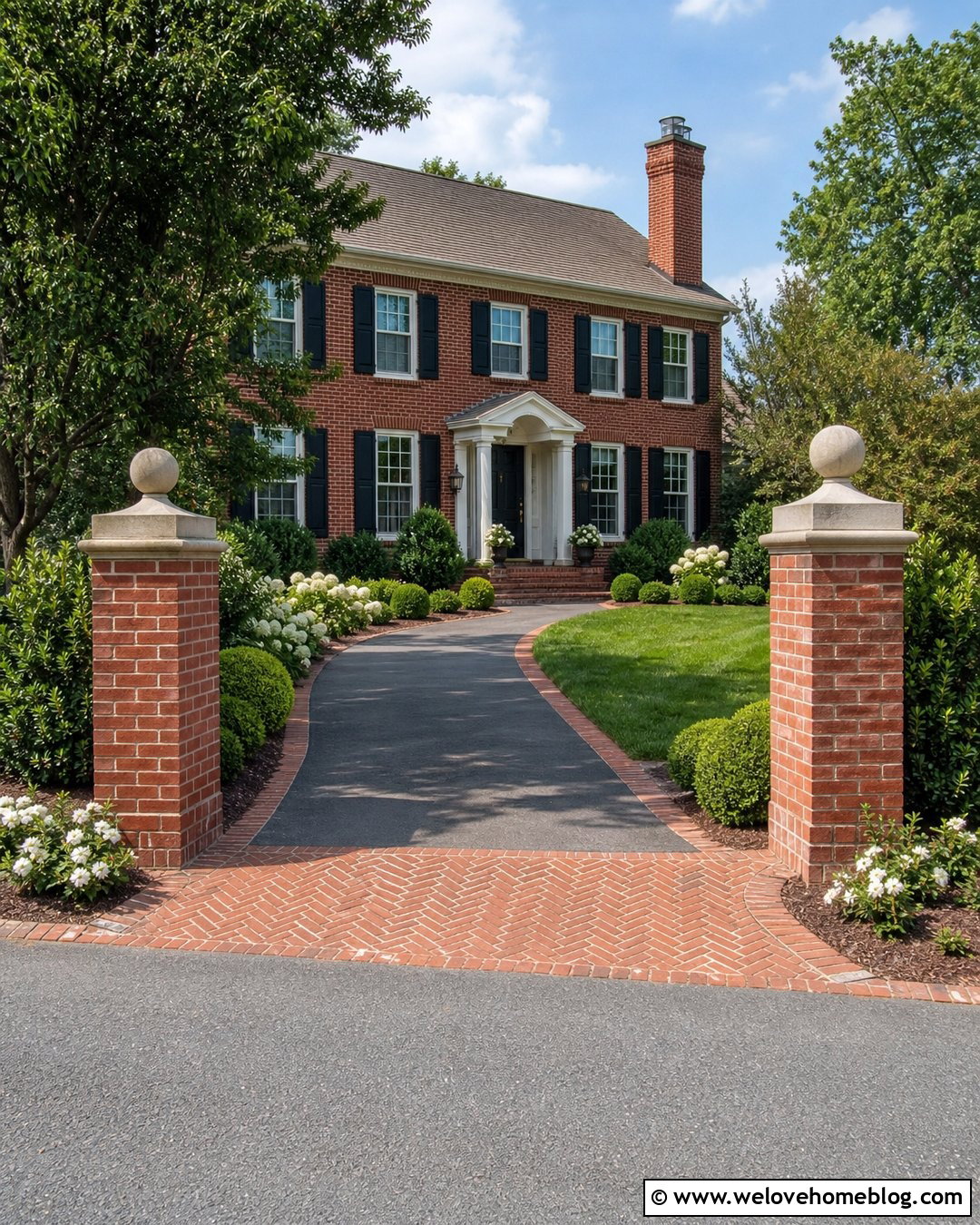
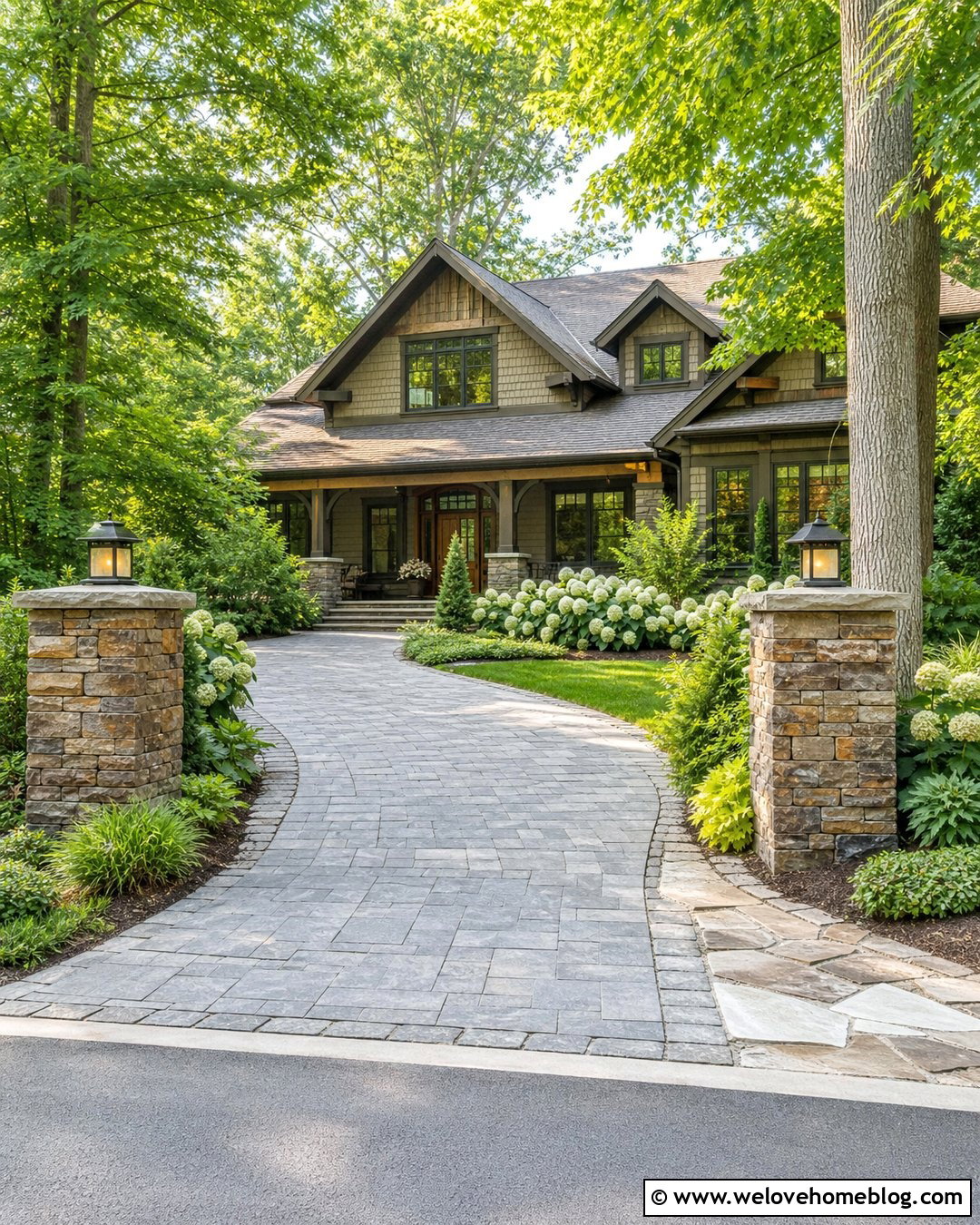
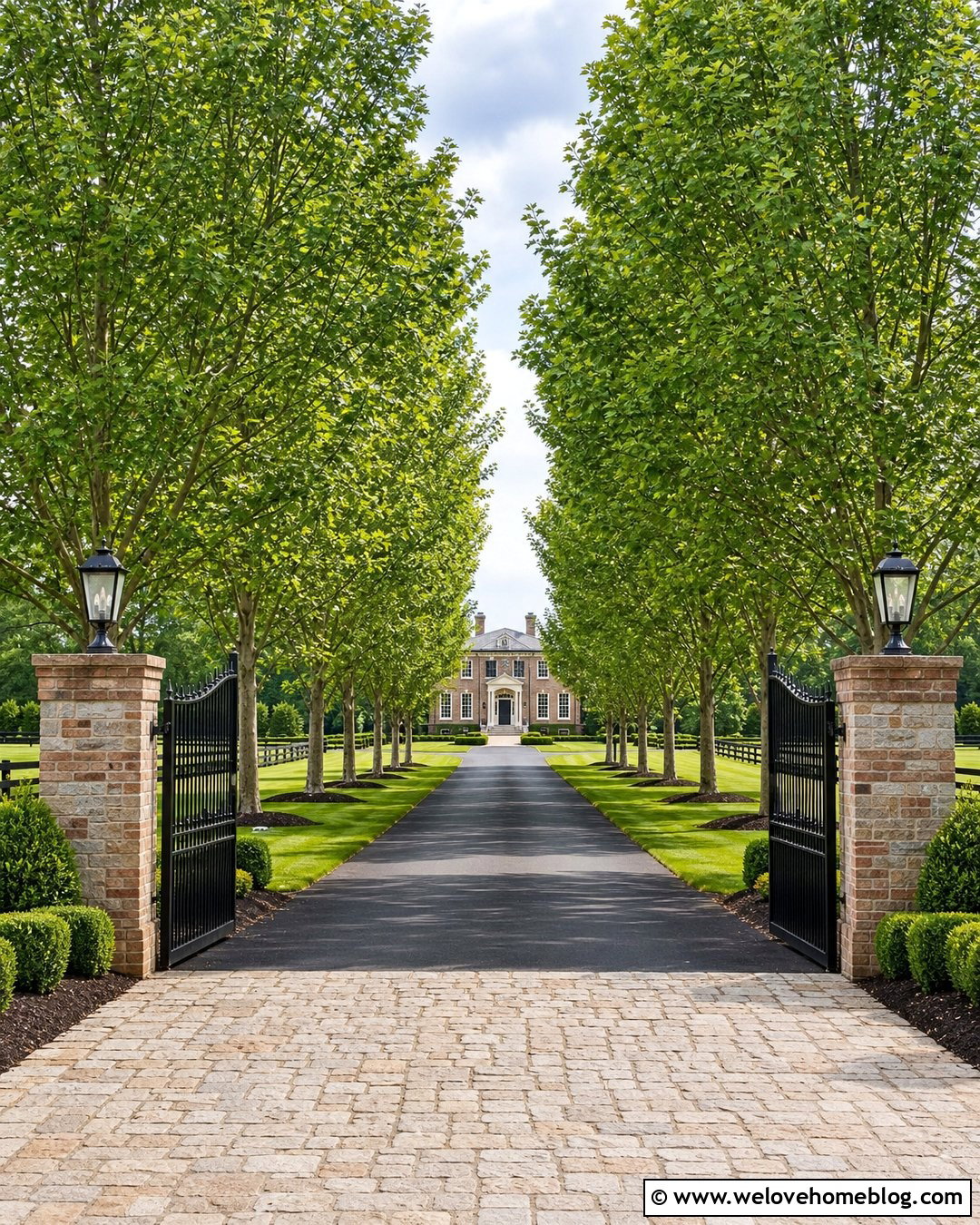
Brick pillars can define an entrance without requiring a full gate or masonry wall. Build one pillar on each side of the driveway, positioning both structures beyond the necessary vehicle clearance and local right-of-way. Match the brick to the home facade, chimney, or driveway border so the entrance feels connected to the property. Surround each pillar with a compact planting bed containing evergreen shrubs and one low flowering accent. Keep the plants below the pillar caps to preserve a strong silhouette from the street. A concrete or asphalt driveway can gain extra character from a narrow brick apron between the columns. Add simple cap lights only if electrical access and local requirements allow. The finished entrance feels substantial, balanced, and suitable for traditional or colonial architecture.
12. Driveway Entrance With Timber Edging And Native Plants
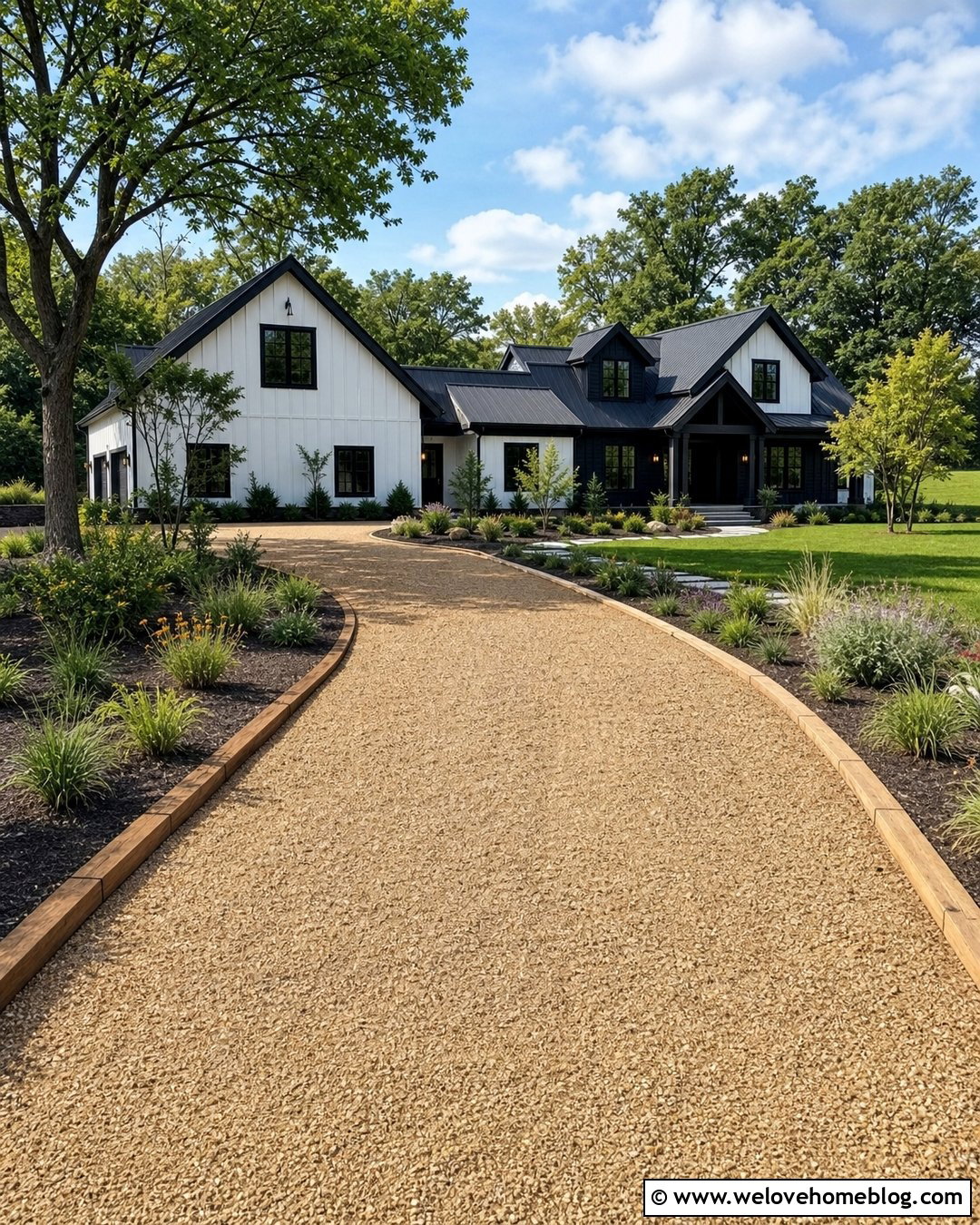
Warm timber edging works especially well with a gravel driveway and relaxed, natural planting. Use pressure-treated landscape timbers or another exterior-rated wood to outline shallow beds near the entrance. Follow the driveway’s shape instead of forcing the border into sharp corners. Fill the beds with native grasses, flowering perennials, and compact shrubs adapted to local rainfall and soil. Repeating a small selection of plants creates a calmer appearance and makes maintenance easier to organize. Keep tall or spreading plants farther from the driving lane. A simple mulch layer will emphasize the timber and reduce bare soil between young plants. This casual combination suits cabins, ranch houses, and modern farmhouses. It also creates a smoother visual transition between a loose gravel surface and an informal front yard.
13. Driveway Entrance With Lavender Borders
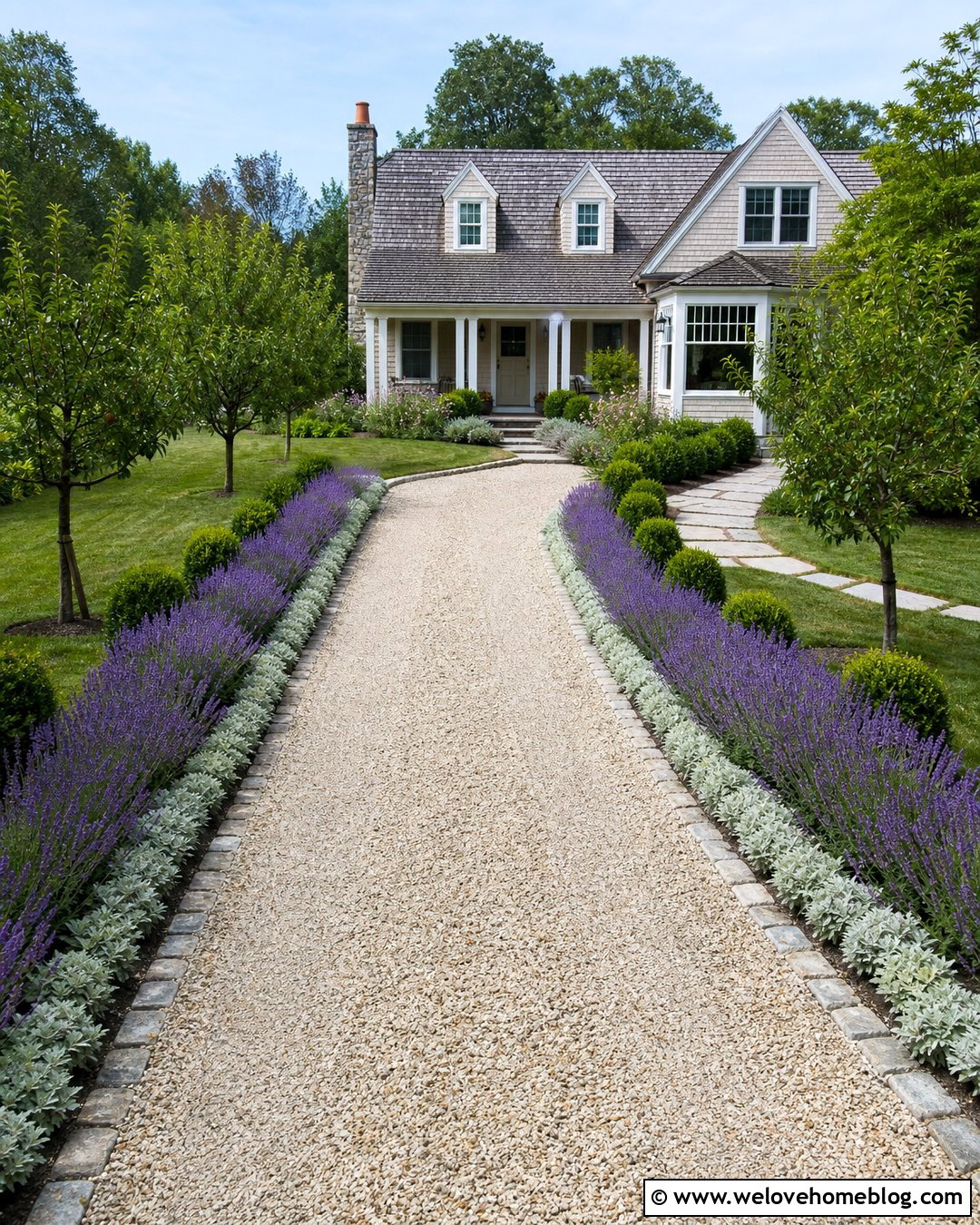
A lavender-lined entrance combines soft color with a neat, recognizable form. It works best beside a sunny gravel, brick, or pale concrete driveway with fast-draining soil. Rather than lining the entire drive, plant lavender in short repeated groups near the street and continue a smaller grouping closer to the house. Edge the beds with cobblestones or brick to keep the planting separate from the driveway surface. Add silver-leaved ground covers or compact evergreen shrubs for variety without introducing too many colors. In humid climates or heavy soil, choose a better-adapted plant with a similar mounded shape. Keep every plant far enough from tires and snow-clearing equipment. The final look feels relaxed yet organized, making it a natural match for cottages, Mediterranean-inspired homes, and modern farmhouses.
14. Driveway Entrance With A Simple Address Sign
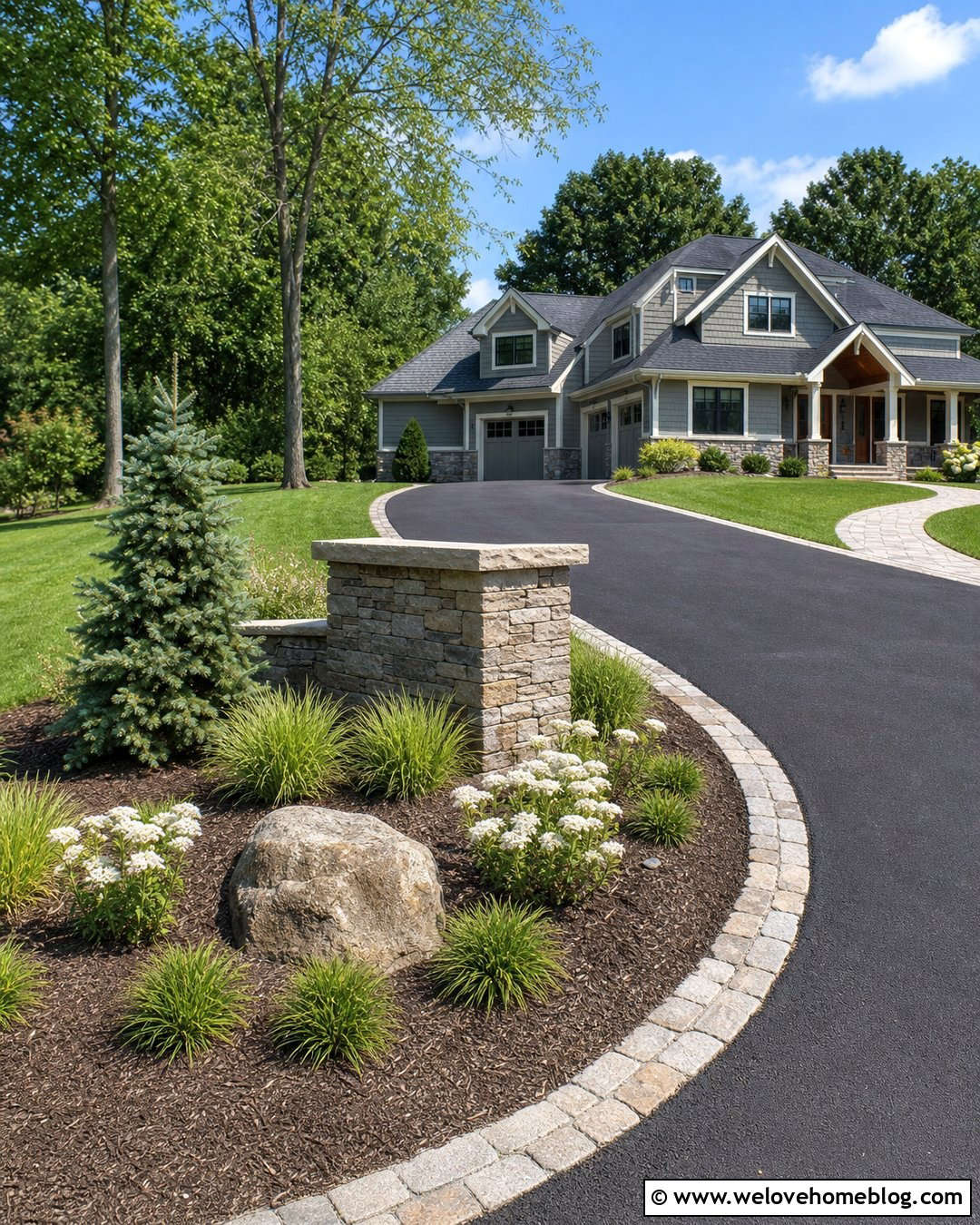
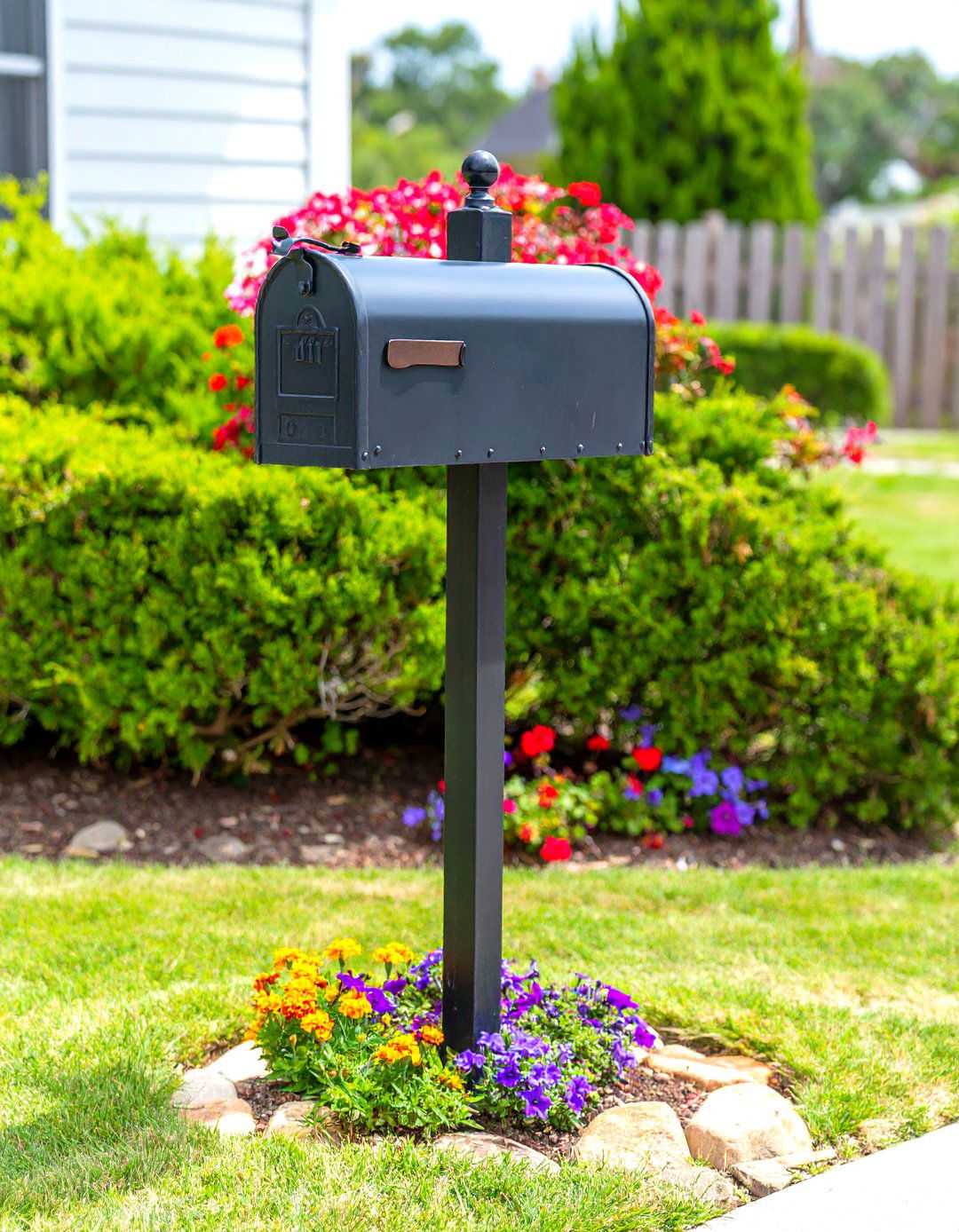
A visible address marker can become part of the landscape rather than standing alone in the lawn. Install a low stone, wood, or metal sign beside a black asphalt or exposed-aggregate driveway. Place it outside the clear driving area and confirm any local setback rules before installation. Build a simple curved bed around the base using mulch, ornamental grasses, and compact flowering plants. Keep the planting low enough that the address remains readable from the road. Repeat the sign material in the bed edging or mailbox post to create a connected appearance. One small evergreen can provide year-round structure behind the sign. This practical entrance works with almost every house style. It improves visual organization while giving the driveway a distinct, welcoming starting point from the curb.




15. Driveway Entrance With Solar Path Lights
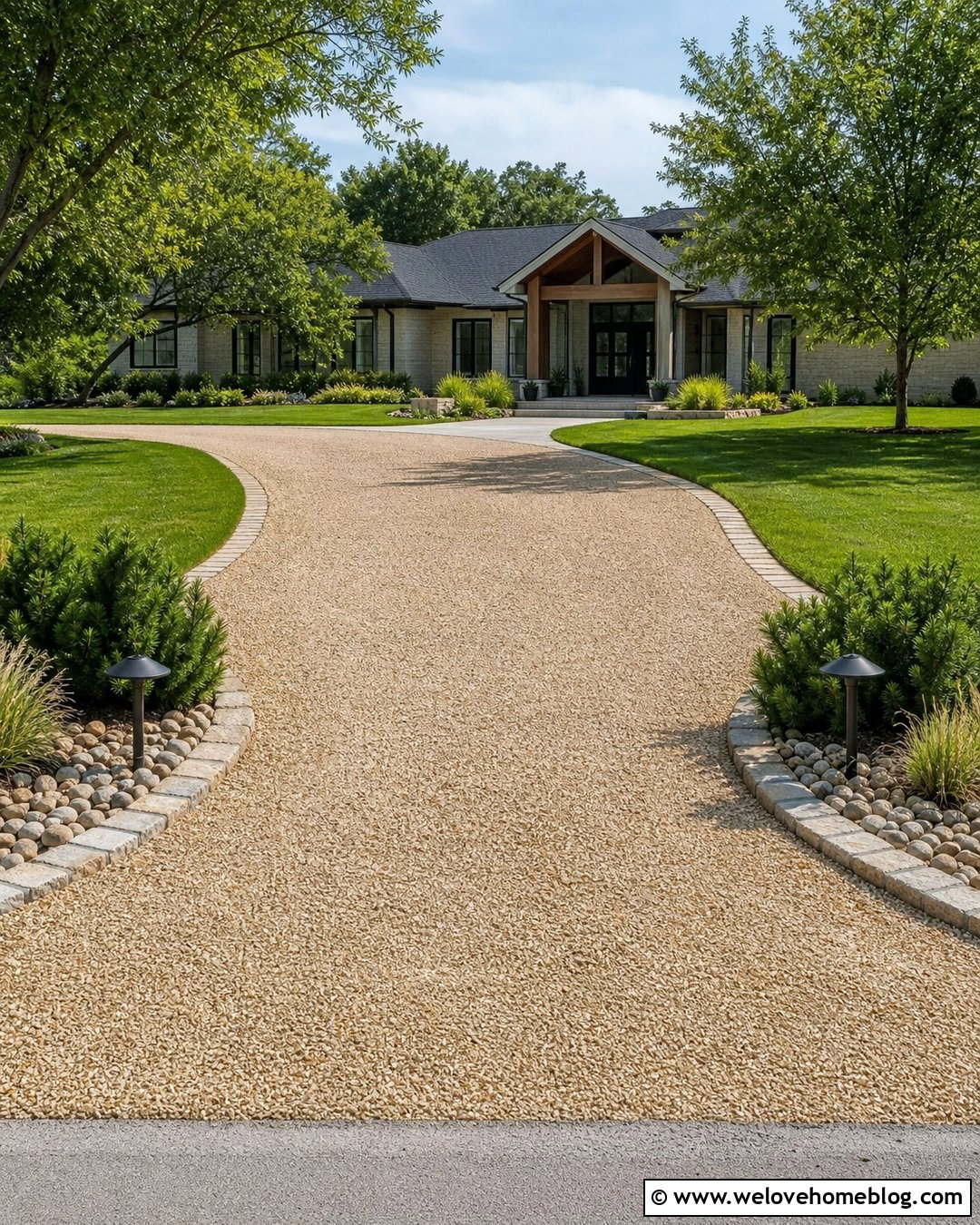
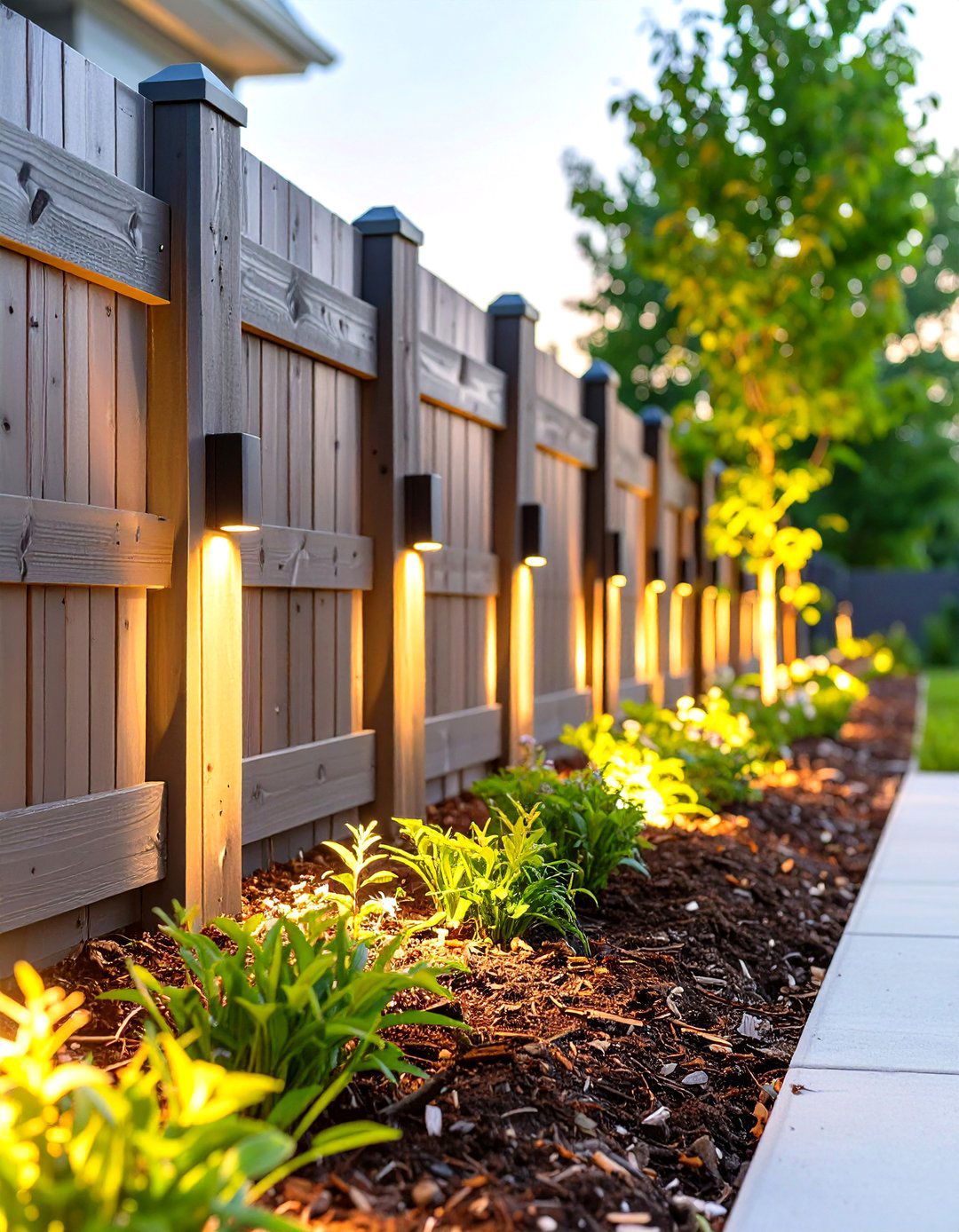
Lighting can make a driveway entrance easier to recognize while adding definition to the landscape. For a simple installation, place solar fixtures inside stone-edged beds rather than directly beside the pavement. Space them evenly enough to show the driveway direction without creating an airport-runway effect. Pair warm-looking fixtures with a pale gravel or concrete driveway, low evergreen shrubs, and a few ornamental grasses. Make sure nearby foliage will not block the solar panels as plants mature. At the curb, keep fixtures short and positioned away from tires, lawn equipment, and snowplows. Low landscape lighting is commonly used to highlight planted entrances and improve the sense of arrival. () Choose a fixture finish that matches the home’s exterior hardware for a coordinated daytime appearance.
16. Driveway Entrance With A Split Rail Fence
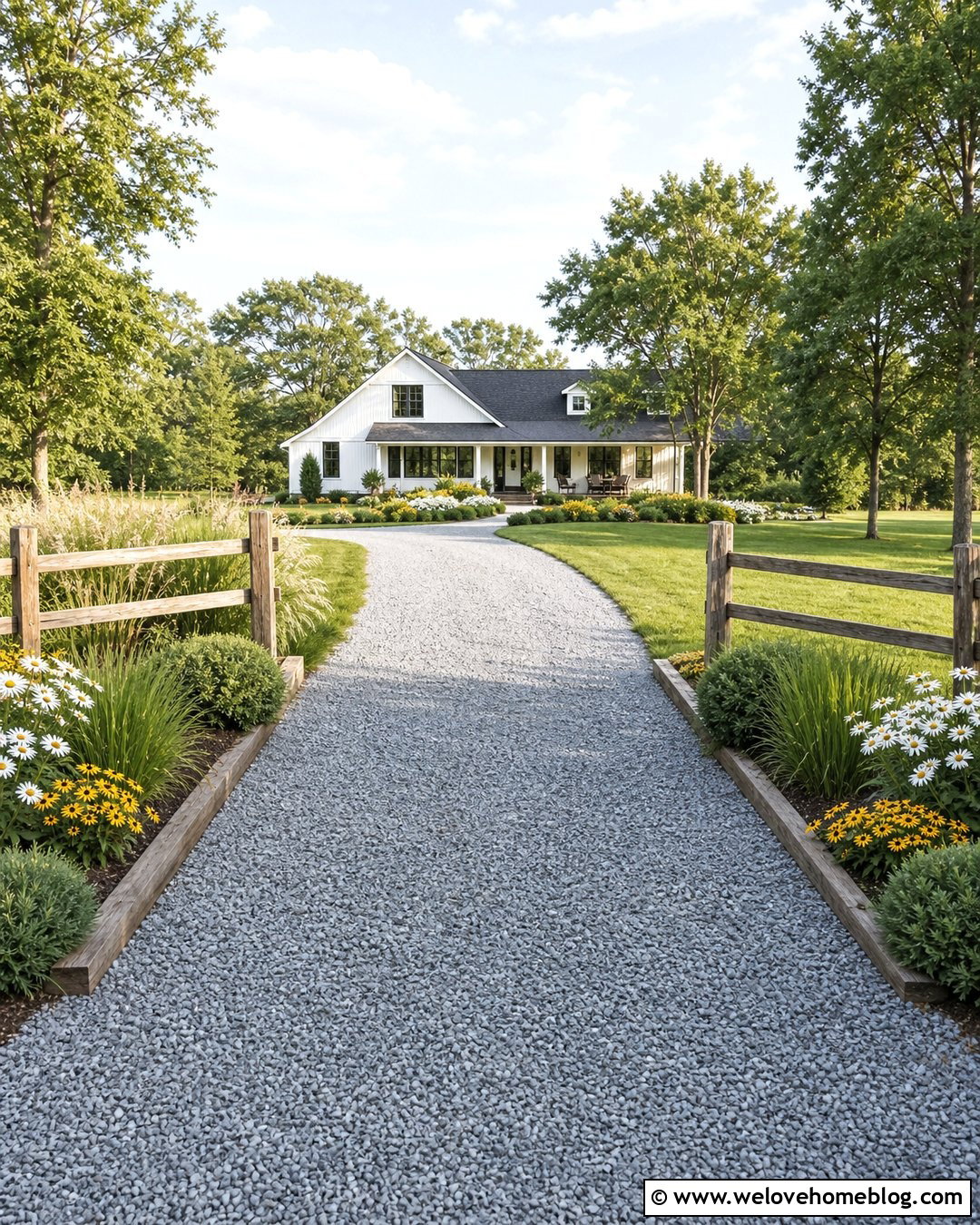
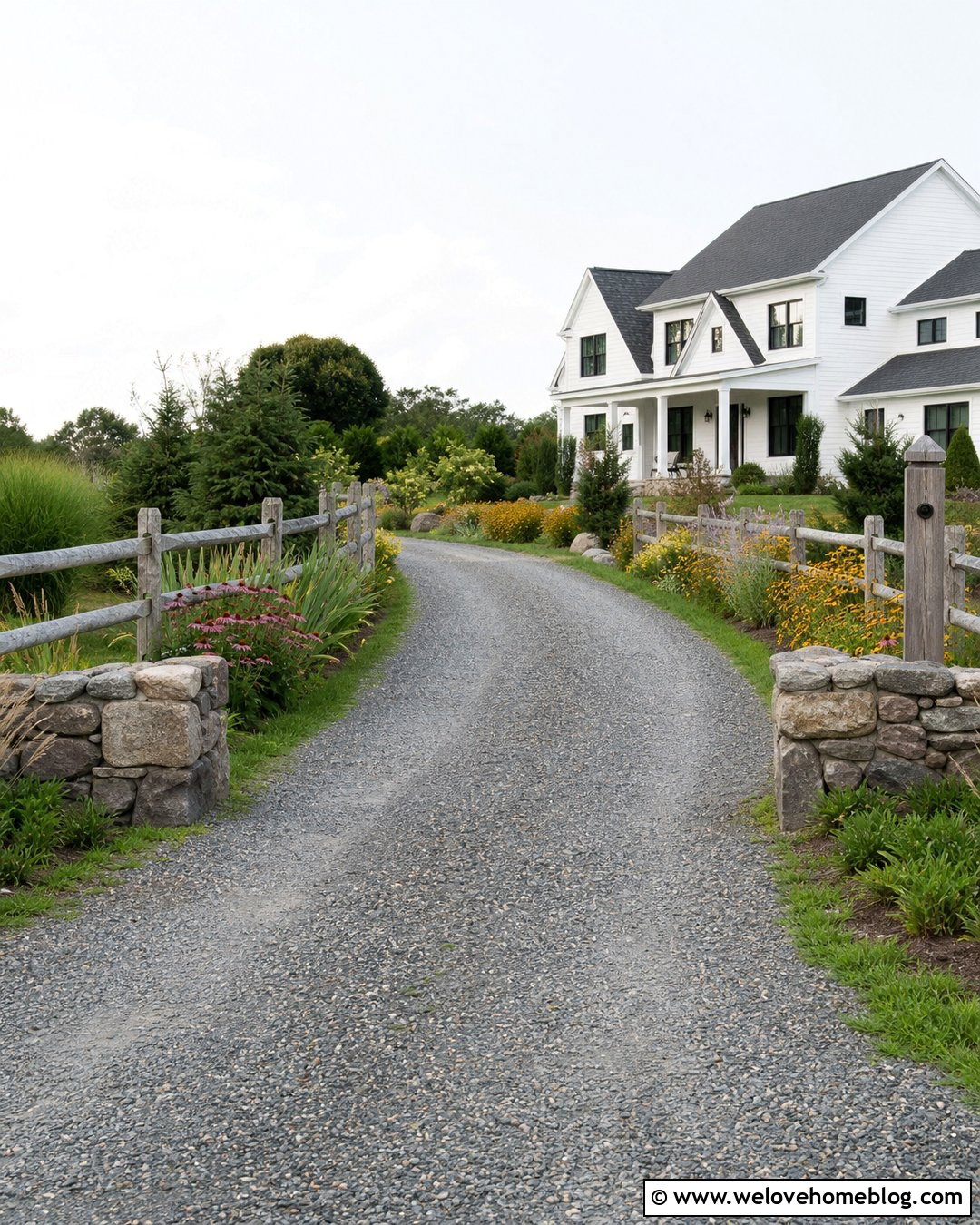
A short split rail fence can frame a wide country driveway without closing it off. Install one matching section on each side of a crushed-stone or gravel entrance. Set the fence back from the road and driving surface, then curve simple planting beds around the end posts. Native grasses, daisies, black-eyed Susans, and low shrubs can soften the wood while maintaining a relaxed rural character. Limit the planting to a few repeated varieties so the entrance does not look overgrown. A cobblestone or timber edge will contain the gravel where it meets the beds. This arrangement looks appropriate beside ranch homes, cabins, and modern farmhouses. The open fence preserves views across the yard while giving the driveway a clear beginning and a stronger connection to the surrounding landscape.
17. Driveway Entrance With A Rain Garden
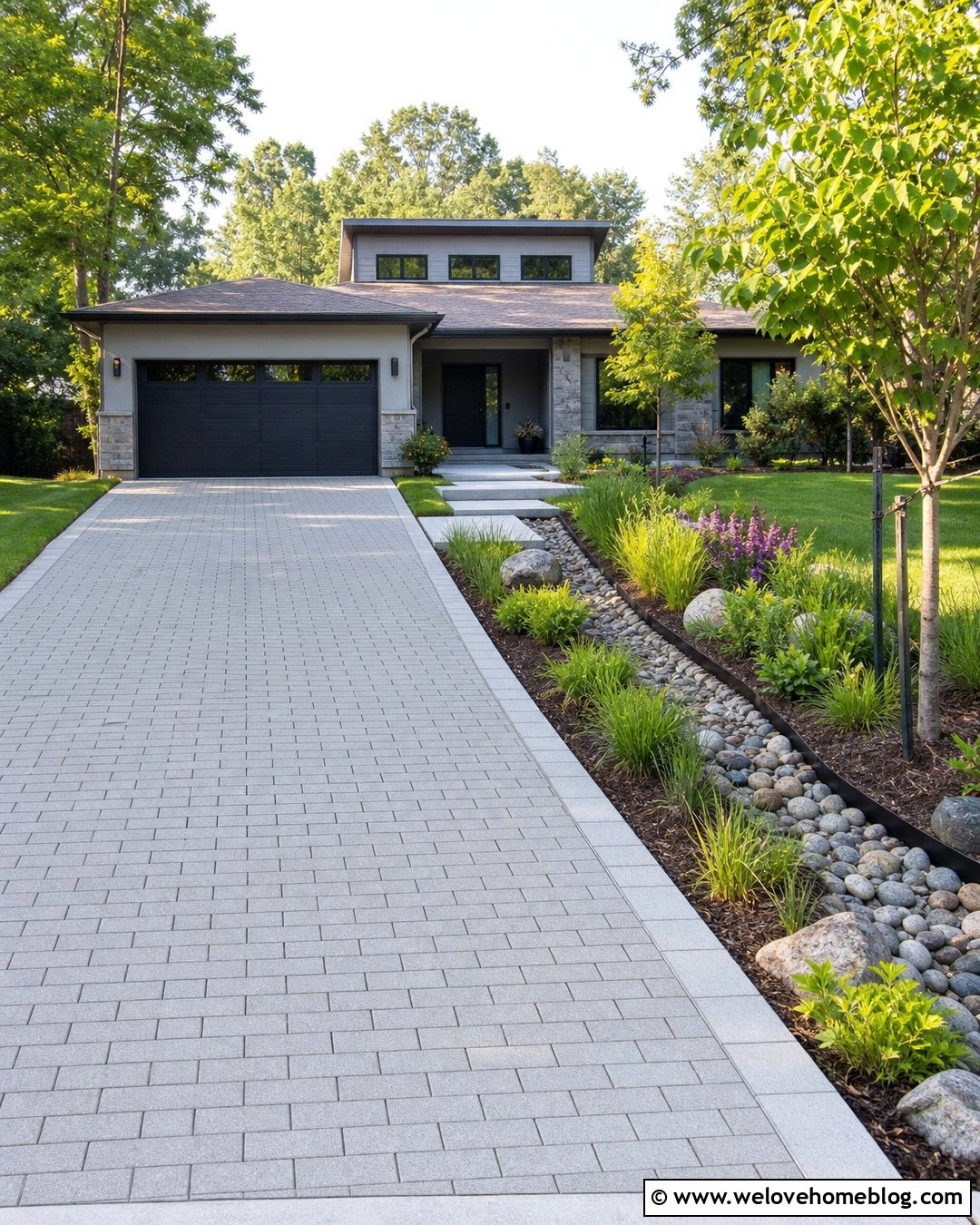
Where runoff naturally collects beside the driveway, a small rain garden can turn a problem area into an attractive feature. Shape a shallow planted basin near a permeable-paver or poured-concrete entrance, while keeping it safely away from foundations and underground utilities. Direct water toward the basin only after assessing the property’s grade and drainage needs. Fill it with plants that tolerate temporary wetness as well as drier periods between storms. A river-rock channel can mark the water path and add texture. Rain gardens may help receive runoff from hard driveway surfaces when correctly designed for the site. () Keep the street-facing planting low for visibility. The finished entrance combines greenery, stone, and practical water management in one cohesive landscape.
18. Driveway Entrance With A Low Stone Wall
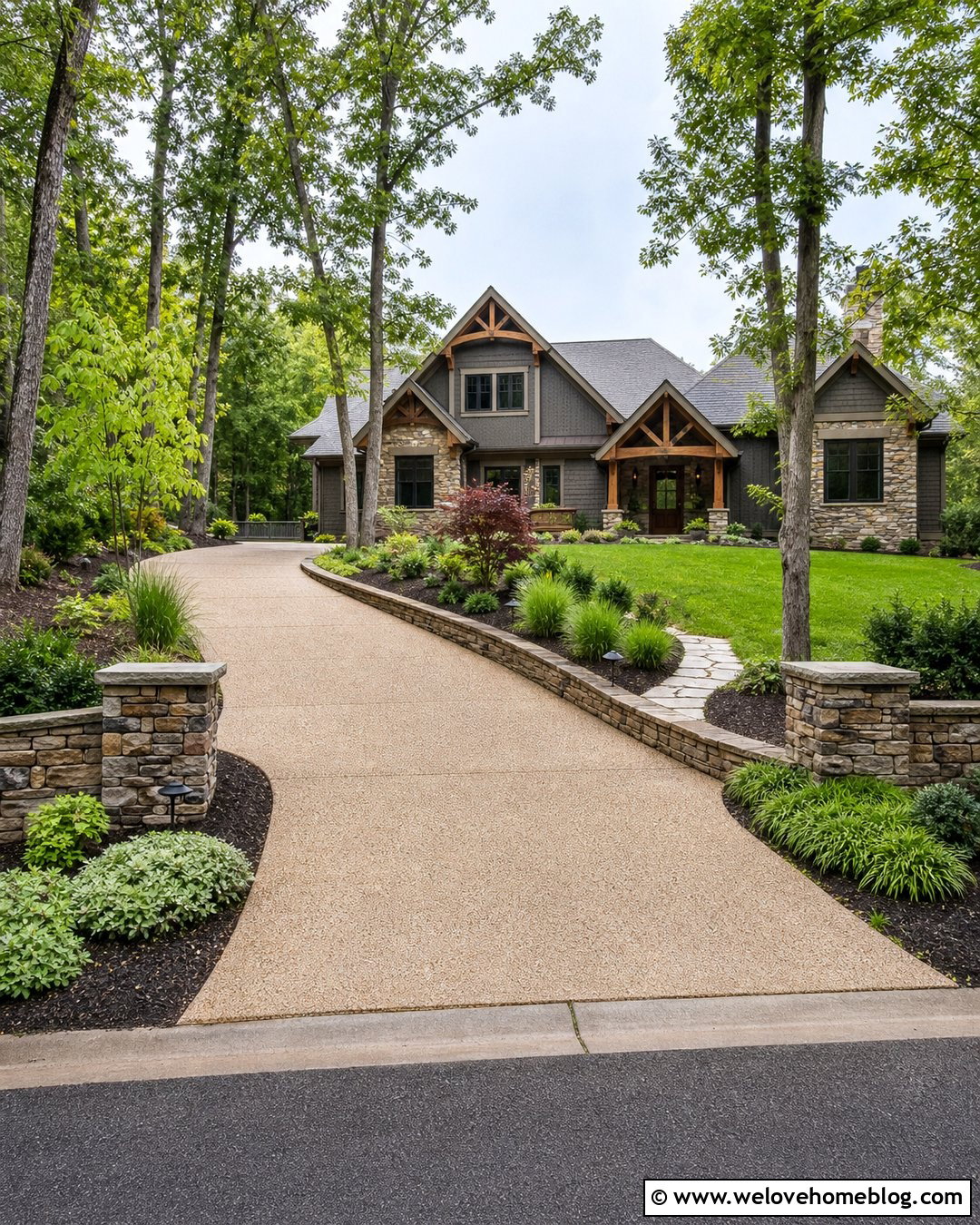
A low wall can define a sloped driveway entrance and create a strong planting edge. Use fieldstone, stacked stone, or smooth concrete block that complements the home’s facade. Follow the natural grade instead of building a wall that appears unnecessarily tall. Behind it, plant spreading ground covers, compact shrubs, and ornamental grasses that soften the hard surface without hiding the stonework. Pair the wall with an asphalt or exposed-aggregate driveway for clear material contrast. At the road, curve the wall away from the driveway to leave comfortable turning space and open views. Proper construction and drainage are important whenever the wall retains soil. The final design feels grounded and organized, making it especially suitable for craftsman homes, mountain properties, and front yards with noticeable elevation changes.
19. Driveway Entrance With Grass And Paver Strips
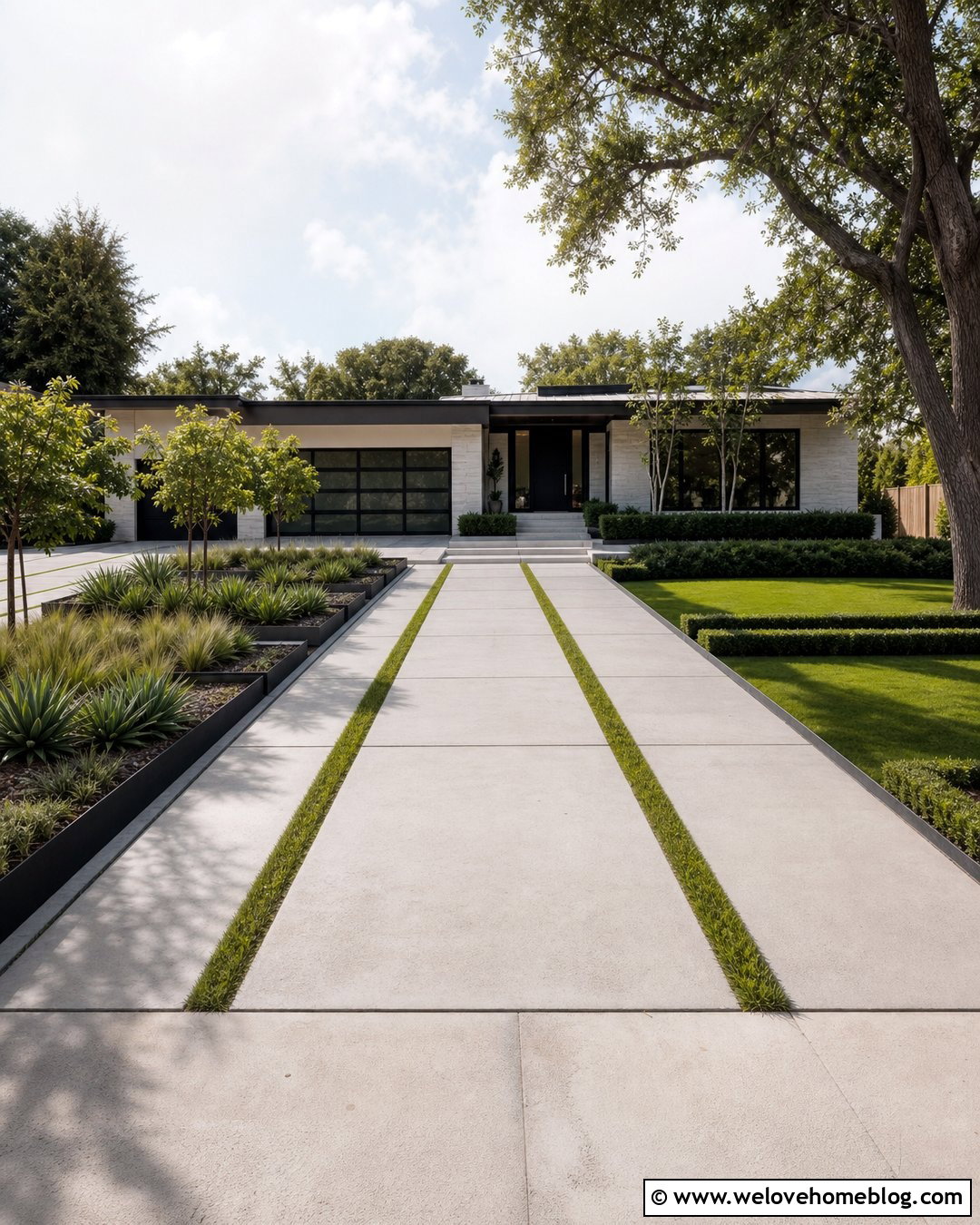
Grass strips can soften a broad driveway and reduce the sense of uninterrupted pavement. Start with a straight concrete or concrete-paver driveway, then create narrow planted bands near the entrance or between parallel wheel paths. The layout should match how vehicles actually enter and turn so tires do not repeatedly damage the grass. Use a durable turf type suited to local conditions, or substitute low ground cover where appropriate. Continue the green theme with simple lawn areas, rectangular shrub beds, and a paved walkway leading toward the front door. Concrete or metal edging will keep the planted strips neat. This fresh, geometric entrance pairs particularly well with modern and midcentury homes. It makes the driveway look integrated with the yard while maintaining a clear, functional route.
20. Circular Driveway Entrance With A Center Garden
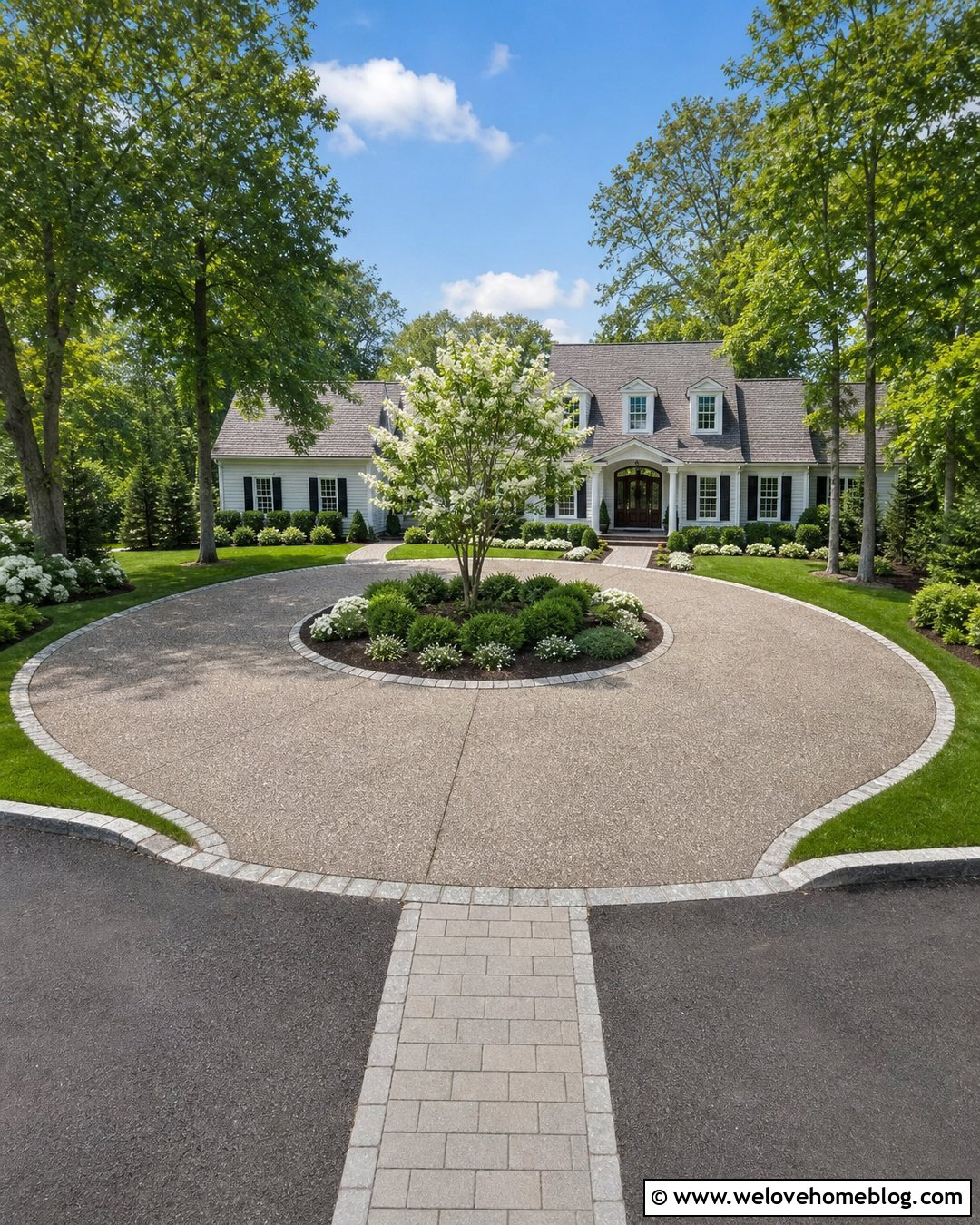
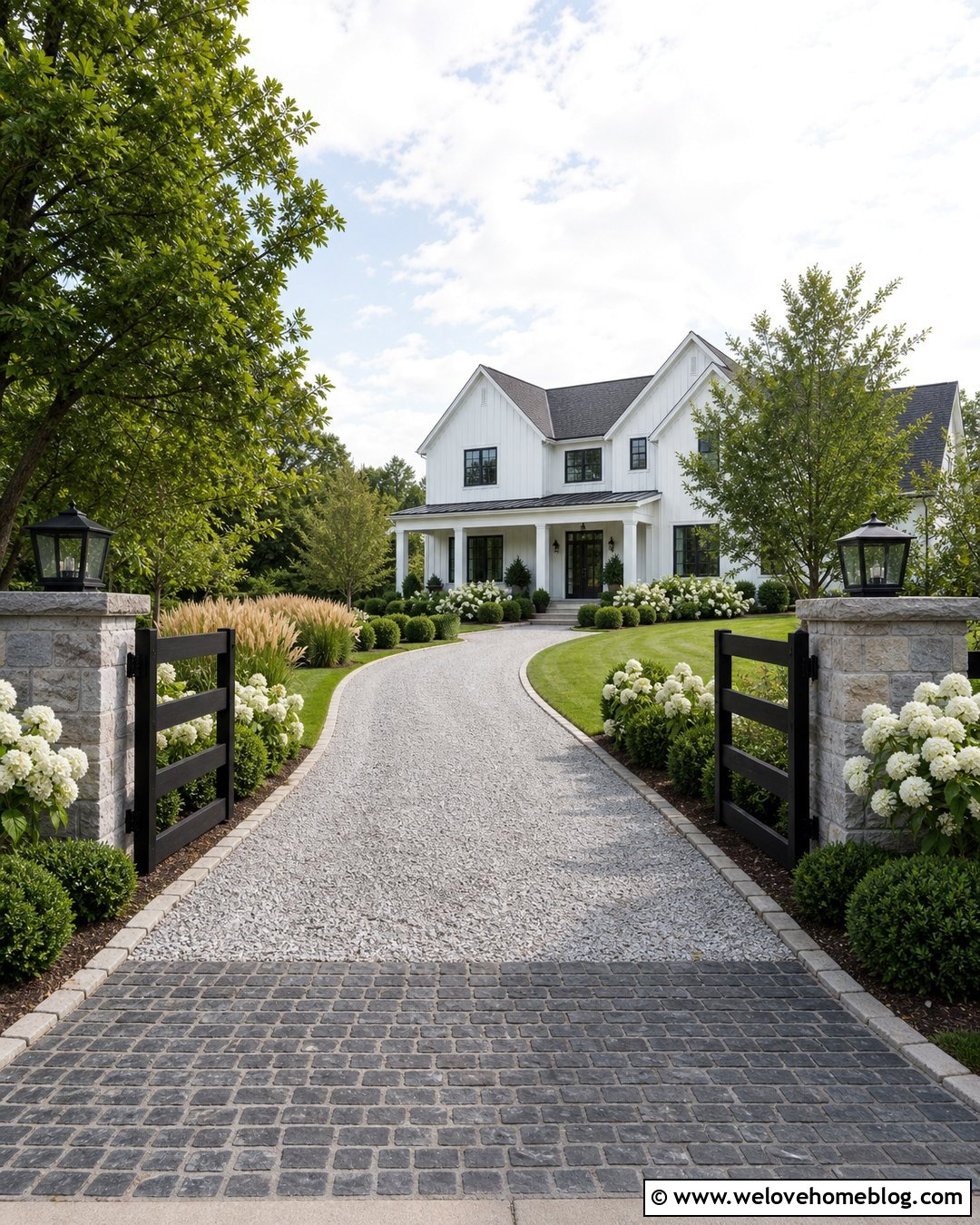
A small center garden gives a circular driveway a natural focal point and prevents the paved area from dominating the front yard. Use gravel, brick pavers, or exposed aggregate for the driveway, then repeat the same edging around the island. A single ornamental tree can anchor the center, surrounded by low evergreen shrubs, flowers, and mulch. Keep the outer plants short enough to preserve visibility across the circle. The island should be large enough to support healthy planting without making the driving lane feel tight. Circular gardens are a common way to landscape and visually organize this driveway layout. () Repeating a few island plants near both street entrances connects the complete design and creates a balanced approach to the house.
Conclusion:
The most effective **20 simple driveway entrance landscaping ideas** treat the pavement, borders, planting, lighting, and house as parts of one connected view. Start by improving the driveway edge and preserving safe sightlines. Then choose a small plant palette that fits the local climate and your preferred maintenance level. Mulch beds, evergreen shrubs, ornamental grasses, stone borders, address signs, and planters can all make a noticeable difference without overwhelming the yard. Match materials to the home exterior and leave enough space for mature plants, vehicles, drainage, and snow removal. Whether the driveway is gravel, asphalt, concrete, brick, or pavers, a clear and coordinated entrance can create lasting curb appeal.

Related posts:


Leave a Reply